Author Archives: Everette Hatcher III

My name is Everette Hatcher III. I am a businessman in Little Rock and have been living in Bryant since 1993. My wife Jill and I have four kids (Rett 24, Hunter 22, Murphey 16, and Wilson 14).

Dan Mitchell: Mirror, Mirror, on the Wall, Which Nation Punishes Success Most of All?

Mirror, Mirror, on the Wall, Which Nation Punishes Success Most of All?

Marginal tax rates (how much you are taxed for earning additional money) have a big impact on incentives to engage in productive activity such as work, saving, investment, and entrepreneurship.

This is why governments should keep tax rates at modest levels.

But as you can see from this map from the Tax Foundation, European governments generally cannot resist the temptation to impose onerous top tax rates on investors, entrepreneurs, business owners, and other successful taxpayers.

Congratulations to Hungary for having the lowest rate, followed by Estonia, the Czech Republic, and Slovakia.

And “congratulations” to Denmark for having the highest top tax rate, followed by France, Austria, and Spain.

At this point, a few caveats are necessary. A nation’s top income tax rate is important, but it’s not the only thing that matters for tax policy.

  • It’s also important to look at social insurance(payroll) taxes, particularly if they apply to all income.
  • It’s also important to look at the level of “double taxation” on income that is saved and invested.
  • It’s also important to look at VATs, which increase the wedge between pre-tax income and post-tax consumption.

Needless to say, other economic policies also matter. A nation might have a good tax system but very dirigiste policies in other areas. Or vice-versa.

For instance, even though Hungary has the lowest top tax rate on personal income and Denmark has the highest, there’s actually more overall economic liberty in Denmark.

Some readers may be wondering how the United States compares to the European nations shown in the above map.

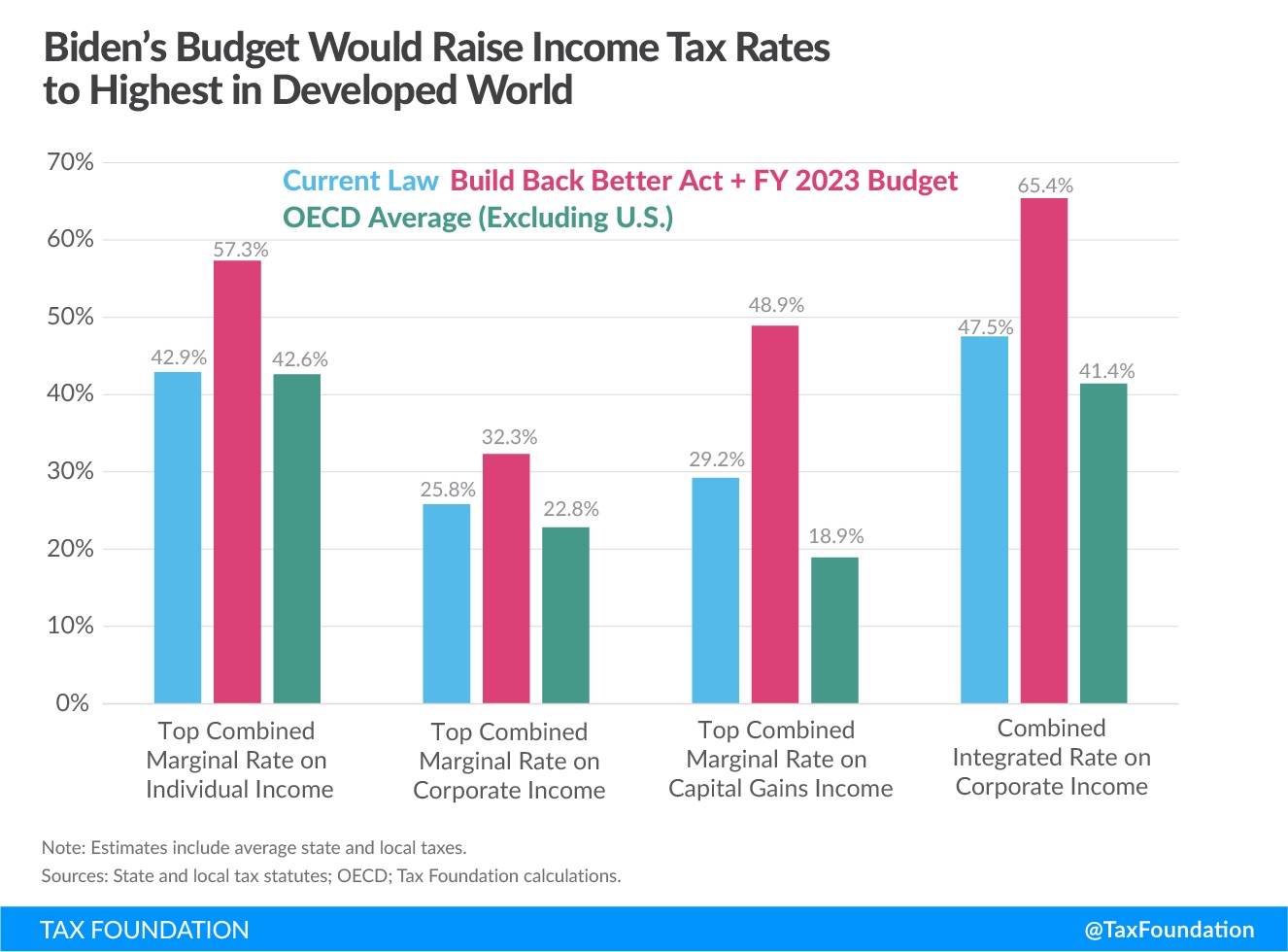
The good news (relatively speaking) is that the top tax rate in the United States is 42.9 percent, so that’s lower than the average in Europe.

The bad news is that the US would have the highest tax rate if Biden’s budget was approved.
However, the top income tax rate in the United States can vary substantially depending on state.

A resident of New York or California, for instance, will face a much higher top tax rate than a resident of a zero-income-tax state such as Texas or Florida.

The same thing is even more true in Switzerland, where top tax rates vary substantially.

A successful taxpayer in Zug pays a top tax rate of 22.22 percent, less than half as much as a similar taxpayer in Geneva.

I’ll close by noting that this map is another example of the advantages of genuine federalism.

When the central government is small and most government takes place at the state and local level (or, in the case of Switzerland, at the cantonal and municipal level), there is more diversity, choice, and jurisdictional competition.

That type of federalism still exists in Switzerland, but unfortunately is eroding in the United States.

The Big Question for Tories (and Republicans): What’s the Alternative to “Free-Market Fundamentalism”?

Because of her support for lower tax rates, I was excited when Liz Truss became Prime Minister of the United Kingdom.
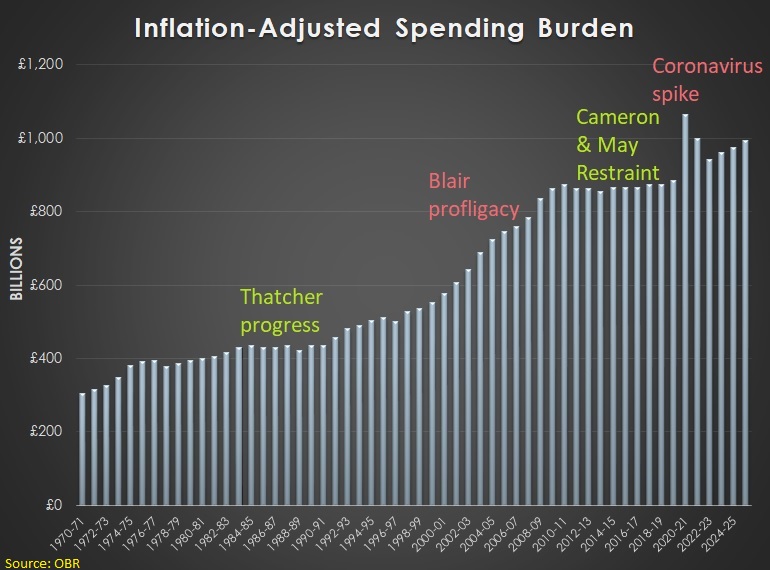
Especially since her predecessor, Boris Johnson, turned out to be an empty-suit populist who supported higher taxes and a bigger burden of government spending.

But I’m not excited anymore.

Indeed, it’s more accurate to say that I’m despondent since the Prime Minister is abandoning (or is being pressured to abandon) key parts of her pro-growth agenda.

For details, check out this Bloomberg report, written by Julian Harris, about the (rapidly disappearing) tax-cutting agenda of the new British Prime Minister.

Westminster’s most hard-line advocates of free markets and lower taxes are looking on in despair as their agenda crumbles… When Liz Truss became prime minister just over five weeks ago, she promised to deliver a radical set of policies rooted in laissez-faire economics — an attempt to boost the UK‘s sluggish rate of growth. Yet her chancellor of the exchequer, Kwasi Kwarteng, faced a quick reality check when his mini-budget, packed with unfunded tax cuts and unaccompanied by independent forecasts, …triggered mayhem… Truss fired Kwarteng and replaced him with Jeremy Hunt as she was forced into a dramatic u-turn over her tax plans. …Truss conceded…and dropped her plan to freeze corporation tax. …Still, some believers are sticking by “Trussonomics”…Patrick Minford,..a professor at Cardiff University, said..“Liz Truss’s policies for growth are absolutely right, and to be thrown off them by a bit of market turbulence is insane.” …Eamonn Butler, co-founder of the Adam Smith Institute, similarly insisted that Truss “is not the source of the problem — she’s trying to cure the problem.”

Eamonn is right.

The United Kingdom faces serious economic challenges. But the problems are the result of bad government policies that already exist rather than the possibility of some future tax cuts.

In a column for the Telegraph, Allister Heath says the U.K.’s central bank deserves a big chunk of the blame.

Liz Truss and Kwasi Kwarteng have been doubly unlucky. While almost everybody else in Britain remained in denial, they correctly identified this absurd game for the con-trick that it truly was, warned that it was about to implode and pledged to replace it with a more honest system. Instead of a zombie economy based on rising asset prices and fake, debt-fuelled growth, their mission was to encourage Britain to produce more real goods and services, to work harder and invest more by reforming taxes and regulation.What happened next is dispiriting in the extreme. …Truss and her Chancellor moved too quickly and, paradoxically, given their warnings about the rottenness of the system, ended up pulling out the last block from the Jenga tower, sending all of the pieces tumbling down. …they didn’t crash the economy – it was about to come tumbling down anyway – but they had the misfortune of precipitating and accelerating the day of reckoning. …Andrew Bailey, the Governor of the Bank of England…, has been deeply unimpressive in all of this, helping to keep interest rates too low… The idea, now accepted so widely, that the price of money must be kept extremely low and quantitative easing deployed at every opportunity has undermined every aspect of the economy and society. …Too few people realise how terribly the easy money, high tax, high regulation orthodoxy has failed.

Allister closes with some speculation about possible alternatives. If the Tories in the U.K. decide to reject so-called “free-market fundamentalism,” what’s their alternative?

He thinks the Labour Party will take control, and with very bad results. Jeremy Corbyn will not be in charge, but his economic policies will get enacted.

If Truss is destroyed, the alternative won’t even be social democracy: it will be Labour, the hard Left, the full gamut of punitive taxation, including of wealth and housing, and even more spending, culminating rapidly in economic oblivion.

That is an awful scenario. Basically turning the United Kingdom into Greece.

I want to take a different approach, though, and contemplate what will happen if the Conservative Party rejects the Truss approach and embraces big-government conservatism.

Here are some questions I’d like them to answer:

  • Do you want improved competitiveness and more economic growth?
  • If you want more growth, which of your spending increases will lead to those outcomes?
  • Which of your tax increases will lead to more competitiveness or more prosperity?
  • Will you reform benefit programs to avert built-in spending increases caused by an aging population?
  • If you won’t reform entitlements, which taxes will you increase to keep debt under control?
  • If you don’t plan major tax increases, do you think the economy can absorb endless debt?

I’m asking these questions for two reasons. First, there are no good answers and I’d like to shame big-government Tories into doing the right thing.

Second, these questions are also very relevant in the United States. Even since the Reagan years, opponents of libertarian economic policies have flitted from one trendy idea to another (national conservatism, compassionate conservatism, kinder-and-gentler conservatismcommon-good capitalism, reform conservatism, etc).
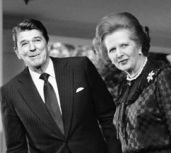
To be fair, they usually don’t try to claim their dirigiste policies will produce higher living standards. Instead, they blindly assert that it will be easier to win elections if Republicans abandon Reaganism.

So I’ll close by observing that Ronald Reagan won two landslide elections and his legacy was strong enough that voters then elected another Republican (the same can’t be said for big-government GOPers like Nixon, Bush, Bush, or Trump).

Switching back to the United Kingdom, Margaret Thatcher repeatedly won election and her legacy was strong enough that voters then elected another Conservative.

The bottom line is that good policy can lead to good political outcomes, whereas bad policy generally leads to bad political outcomes.

P.S. To be sure, there were times when Reagan’s poll numbers were very bad. And the same is true for Thatcher. But because they pursued good policies, economic growth returned and they reaped political benefits. Sadly, it appears that Truss won’t have a chance to adopt good policy, so we will never know if she also would have benefited from a similar economic renaissance.

Tax Cartels Mean Ever-Higher Tax Rates

When President Biden proposed a “global minimum tax” for businesses, I immediately warned that would lead to ever-increasing tax rates.

Ross Kaminsky of KHOW and I discussed how this is already happening.

I hate being right, but it’s always safe to predict that politicians and bureaucrats will embrace policies that give more power to government.

Especially when they are very anxious to stifle tax competition.

For decades, people in government have been upset that the tax cuts implemented by Ronald Reagan and Margaret Thatchertriggered a four-decade trend of lower tax rates and pro-growth tax reform.

That’s the reason Biden and his Treasury Secretary proposed a 15 percent minimum tax rate for businesses.

And it’s the reason they now want the rate to be even higher.

Though even I’m surprised that they’re already pushing for that outcome when the original pact hasn’t even been approved or implemented.

Here are some passages from a report by Reuters.

Treasury Secretary Janet Yellen will press G20 counterparts this week for a global minimum corporate tax rate above the 15% floor agreed by 130 countries last week…the global minimum tax rate…is tied to the outcome of legislation to raise the U.S. minimum tax rate, a Treasury official said.The Biden administration has proposed doubling the U.S. minimum tax on corporations overseas intangible income to 21% along with a new companion “enforcement” tax that would deny deductions to companies for tax payments to countries that fail to adopt the new global minimum rate. The officials said several countries were pushing for a rate above 15%, along with the United States.

Other kleptocratic governments naturally want the same thing.

A G7 proposal for a global minimum tax rate of 15% is too low and a rate of at least 21% is needed, Argentina’s finance minister said on Monday, leading a push by some developing countries… “The 15% rate is way too low,” Argentine Finance Minister Martin Guzman told an online panel hosted by the Independent Commission for the Reform of International Corporate Taxation. …”The minimum rate being proposed would not do much to countries in Africa…,” Mathew Gbonjubola, Nigeria’s tax policy director, told the same conference.

Needless to say, I’m not surprised that Argentina is on the wrong side.

And supporters of class warfare also are agitating for a higher minimum rate. Here are some excerpts from a column in the New York Times by Gabriel Zucman and Gus Wezerek.

In the decades after World War II, close to 50 percent of American companies’ earnings went to state and federal taxes. …it was a golden period. …President Biden should be applauded for trying to end the race to the bottom on corporate tax rates. But even if Congress approves the 15 percent global minimum corporate tax, it won’t be enough. …the Biden administration to give working families a real leg up, it should push Congress to enact a 25 percent minimum tax, which would bring in about $200 billion in additional revenue each year. …With a 25 percent minimum corporate tax, the Biden administration would begin to reverse decades of growing inequality. And it would encourage other countries to do the same, replacing a race to the bottom with a sprint to the top.

I can’t resist making two observations about this ideological screed.

  1. Even the IMF and OECD agree that the so-called race to the bottom has not led to a decline in corporate tax revenues, even when measured as a share of economic output.
  2. Since companies legally avoid rather than illegally evade taxes, the headline of the column is utterly dishonest – but it’s what we’ve learned to expect from the New York Times.

The only good thing about the Zucman-Wezerek column is that it includes this chart showing how corporate tax rates have dramatically declined since 1980.
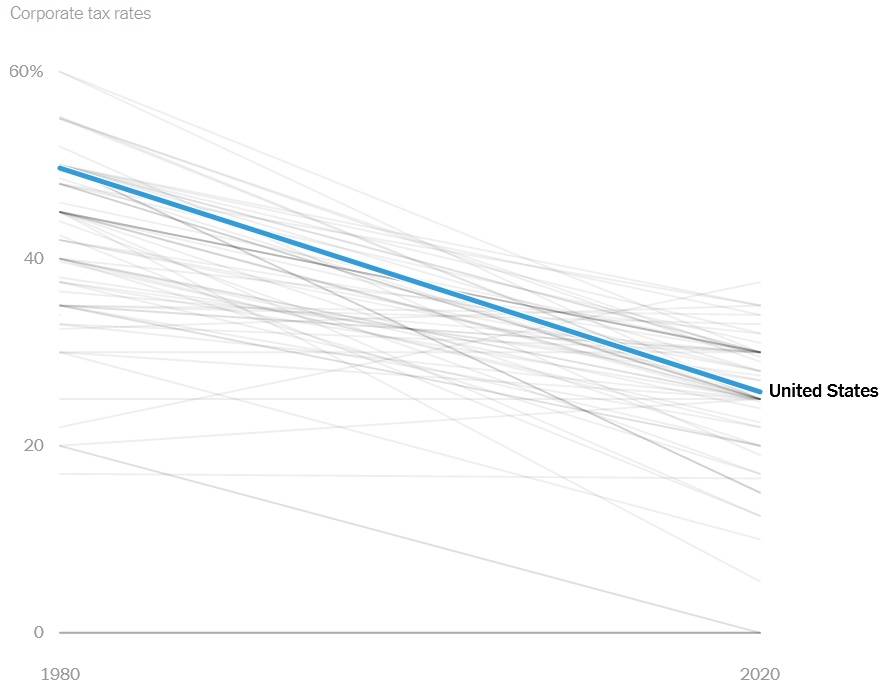
P.S. For those interested, the horizontal line at the bottom is for Bermuda, though other jurisdictions (such as Monaco and the Cayman Islands) also deserve credit for having no corporate income taxes.

P.P.S. If you want to know why high corporate tax rates are misguided, click here. And if you want to know why Biden’s plan to raise the U.S. corporate tax rate is misguided, click here. Or here. Or here.

P.P.P.S. And if you want more information about why Biden’s global tax cartel is bad, click here, here, and here.

I enjoyed this article below because it demonstrates that the Laffer Curve has been working for almost 100 years now when it is put to the test in the USA. I actually got to hear Arthur Laffer speak in person in 1981 and he told us in advance what was going to happen the 1980’s and it all came about as he said it would when Ronald Reagan’s tax cuts took place. I wish we would lower taxes now instead of looking for more revenue through raised taxes. We have to grow the economy:

What Mitt Romney Said Last Night About Tax Cuts And The Deficit Was Absolutely Right. And What Obama Said Was Absolutely Wrong.

Mitt Romney repeatedly said last night that he would not allow tax cuts to add to the deficit.  He repeatedly said it because over and over again Obama blathered the liberal talking point that cutting taxes necessarily increased deficits.

Romney’s exact words: “I want to underline that — no tax cut that adds to the deficit.”

Meanwhile, Obama has promised to cut the deficit in half during his first four years – but instead gave America the highest deficits in the history of the entire human race.

I’ve written about this before.  Let’s replay what has happened every single time we’ve ever cut the income tax rate.

The fact of the matter is that we can go back to Calvin Coolidge who said very nearly THE EXACT SAME THING to his treasury secretary: he too would not allow any tax cuts that added to the debt.  Andrew Mellon – quite possibly the most brilliant economic mind of his day – did a great deal of research and determined what he believed was the best tax rate.  And the Coolidge administration DID cut income taxes and MASSIVELY increased revenues.  Coolidge and Mellon cut the income tax rate 67.12 percent (from 73 to 24 percent); and revenues not only did not go down, but they went UP by at least 42.86 percent (from $700 billion to over $1 billion).

That’s something called a documented fact.  But that wasn’t all that happened: another incredible thing was that the taxes and percentage of taxes paid actually went UP for the rich.  Because as they were allowed to keep more of the profits that they earned by investing in successful business, they significantly increased their investments and therefore paid more in taxes than they otherwise would have had they continued sheltering their money to protect themselves from the higher tax rates.  Liberals ignore reality, but it is simply true.  It is a fact.  It happened.

Then FDR came along and raised the tax rates again and the opposite happened: we collected less and less revenue while the burden of taxation fell increasingly on the poor and middle class again.  Which is exactly what Obama wants to do.

People don’t realize that John F. Kennedy, one of the greatest Democrat presidents, was a TAX CUTTER who believed the conservative economic philosophy that cutting tax rates would in fact increase tax revenues.  He too cut taxes, and he too increased tax revenues.

So we get to Ronald Reagan, who famously cut taxes.  And again, we find that Reagan cut that godawful liberal tax rate during an incredibly godawful liberal-caused economic recession, and he increased tax revenue by 20.71 percent (with revenues increasing from $956 billion to $1.154 trillion).  And again, the taxes were paid primarily by the rich:

“The share of the income tax burden borne by the top 10 percent of taxpayers increased from 48.0 percent in 1981 to 57.2 percent in 1988. Meanwhile, the share of income taxes paid by the bottom 50 percent of taxpayers dropped from 7.5 percent in 1981 to 5.7 percent in 1988.”

So we get to George Bush and the Bush tax cuts that liberals and in particular Obama have just demonized up one side and demagogued down the other.  And I can simply quote the New York Times AT the time:

Sharp Rise in Tax Revenue to Pare U.S. Deficit By EDMUND L. ANDREWS Published: July 13, 2005

WASHINGTON, July 12 – For the first time since President Bush took office, an unexpected leap in tax revenue is about to shrink the federal budget deficit this year, by nearly $100 billion.

A Jump in Corporate Payments On Wednesday, White House officials plan to announce that the deficit for the 2005 fiscal year, which ends in September, will be far smaller than the $427 billion they estimated in February.

Mr. Bush plans to hail the improvement at a cabinet meeting and to cite it as validation of his argument that tax cuts would stimulate the economy and ultimately help pay for themselves.

Based on revenue and spending data through June, the budget deficit for the first nine months of the fiscal year was $251 billion, $76 billion lower than the $327 billion gap recorded at the corresponding point a year earlier.

The Congressional Budget Office estimated last week that the deficit for the full fiscal year, which reached $412 billion in 2004, could be “significantly less than $350 billion, perhaps below $325 billion.”

The big surprise has been in tax revenue, which is running nearly 15 percent higher than in 2004. Corporate tax revenue has soared about 40 percent, after languishing for four years, and individual tax revenue is up as well
.

And of course the New York Times, as reliable liberals, use the adjective whenever something good happens under conservative policies and whenever something bad happens under liberal policies: ”unexpected.”   But it WASN’T ”unexpected.”  It was EXACTLY what Republicans had said would happen and in fact it was exactly what HAD IN FACT HAPPENED every single time we’ve EVER cut income tax rates.

The truth is that conservative tax policy has a perfect track record: every single time it has ever been tried, we have INCREASED tax revenues while not only exploding economic activity and creating more jobs, but encouraging the wealthy to pay more in taxes as well.  And liberals simply dishonestly refuse to acknowledge documented history.

Meanwhile, liberals also have a perfect record … of FAILUREThey keep raising taxes and keep not understanding why they don’t get the revenues they predicted.

The following is a section from my article, “Tax Cuts INCREASE Revenues; They Have ALWAYS Increased Revenues“, where I document every single thing I said above:

The Falsehood That Tax Cuts Increase The Deficit

Now let’s take a look at the utterly fallacious view that tax cuts in general create higher deficits.

Let’s take a trip back in time, starting with the 1920s.  From Burton Folsom’s book, New Deal or Raw Deal?:

In 1921, President Harding asked the sixty-five-year-old [Andrew] Mellon to be secretary of the treasury; the national debt [resulting from WWI] had surpassed $20 billion and unemployment had reached 11.7 percent, one of the highest rates in U.S. history.  Harding invited Mellon to tinker with tax rates to encourage investment without incurring more debt. Mellon studied the problem carefully; his solution was what is today called “supply side economics,” the idea of cutting taxes to stimulate investment.  High income tax rates, Mellon argued, “inevitably put pressure upon the taxpayer to withdraw this capital from productive business and invest it in tax-exempt securities. . . . The result is that the sources of taxation are drying up, wealth is failing to carry its share of the tax burden; and capital is being diverted into channels which yield neither revenue to the Government nor profit to the people” (page 128).

Mellon wrote, “It seems difficult for some to understand that high rates of taxation do not necessarily mean large revenue to the Government, and that more revenue may often be obtained by lower taxes.”  And he compared the government setting tax rates on incomes to a businessman setting prices on products: “If a price is fixed too high, sales drop off and with them profits.”

And what happened?

“As secretary of the treasury, Mellon promoted, and Harding and Coolidge backed, a plan that eventually cut taxes on large incomes from 73 to 24 percent and on smaller incomes from 4 to 1/2 of 1 percent.  These tax cuts helped produce an outpouring of economic development – from air conditioning to refrigerators to zippers, Scotch tape to radios and talking movies.  Investors took more risks when they were allowed to keep more of their gains.  President Coolidge, during his six years in office, averaged only 3.3 percent unemployment and 1 percent inflation – the lowest misery index of any president in the twentieth century.

Furthermore, Mellon was also vindicated in his astonishing predictions that cutting taxes across the board would generate more revenue.  In the early 1920s, when the highest tax rate was 73 percent, the total income tax revenue to the U.S. government was a little over $700 million.  In 1928 and 1929, when the top tax rate was slashed to 25 and 24 percent, the total revenue topped the $1 billion mark.  Also remarkable, as Table 3 indicates, is that the burden of paying these taxes fell increasingly upon the wealthy” (page 129-130).

Now, that is incredible upon its face, but it becomes even more incredible when contrasted with FDR’s antibusiness and confiscatory tax policies, which both dramatically shrunk in terms of actual income tax revenues (from $1.096 billion in 1929 to $527 million in 1935), and dramatically shifted the tax burden to the backs of the poor by imposing huge new excise taxes (from $540 million in 1929 to $1.364 billion in 1935).  See Table 1 on page 125 of New Deal or Raw Deal for that information.

FDR both collected far less taxes from the rich, while imposing a far more onerous tax burden upon the poor.

It is simply a matter of empirical fact that tax cuts create increased revenue, and that those [Democrats] who have refused to pay attention to that fact have ended up reducing government revenues even as they increased the burdens on the poorest whom they falsely claim to help.

Let’s move on to John F. Kennedy, one of the most popular Democrat presidents ever.  Few realize that he was also a supply-side tax cutter.

Kennedy said:

“It is a paradoxical truth that tax rates are too high and tax revenues are too low and the soundest way to raise the revenues in the long run is to cut the rates now … Cutting taxes now is not to incur a budget deficit, but to achieve the more prosperous, expanding economy which can bring a budget surplus.”

– John F. Kennedy, Nov. 20, 1962, president’s news conference


“Lower rates of taxation will stimulate economic activity and so raise the levels of personal and corporate income as to yield within a few years an increased – not a reduced – flow of revenues to the federal government.”

– John F. Kennedy, Jan. 17, 1963, annual budget message to the Congress, fiscal year 1964

“In today’s economy, fiscal prudence and responsibility call for tax reduction even if it temporarily enlarges the federal deficit – why reducing taxes is the best way open to us to increase revenues.”

– John F. Kennedy, Jan. 21, 1963, annual message to the Congress: “The Economic Report Of The President”


“It is no contradiction – the most important single thing we can do to stimulate investment in today’s economy is to raise consumption by major reduction of individual income tax rates.”

– John F. Kennedy, Jan. 21, 1963, annual message to the Congress: “The Economic Report Of The President”


“Our tax system still siphons out of the private economy too large a share of personal and business purchasing power and reduces the incentive for risk, investment and effort – thereby aborting our recoveries and stifling our national growth rate.”

– John F. Kennedy, Jan. 24, 1963, message to Congress on tax reduction and reform, House Doc. 43, 88th Congress, 1st Session.


“A tax cut means higher family income and higher business profits and a balanced federal budget. Every taxpayer and his family will have more money left over after taxes for a new car, a new home, new conveniences, education and investment. Every businessman can keep a higher percentage of his profits in his cash register or put it to work expanding or improving his business, and as the national income grows, the federal government will ultimately end up with more revenues.”

– John F. Kennedy, Sept. 18, 1963, radio and television address to the nation on tax-reduction bill

Which is to say that modern Democrats are essentially calling one of their greatest presidents a liar when they demonize tax cuts as a means of increasing government revenues.

So let’s move on to Ronald Reagan.  Reagan had two major tax cutting policies implemented: the Economic Recovery Tax Act (ERTA) of 1981, which was retroactive to 1981, and the Tax Reform Act of 1986.

Did Reagan’s tax cuts decrease federal revenues?  Hardly:

We find that 8 of the following 10 years there was a surplus of revenue from 1980, prior to the Reagan tax cuts.  And, following the Tax Reform Act of 1986, there was a MASSIVE INCREASEof revenue.

So Reagan’s tax cuts increased revenue.  But who paid the increased tax revenue?  The poor?  Opponents of the Reagan tax cuts argued that his policy was a giveaway to the rich (ever heard that one before?) because their tax payments would fall.  But that was exactly wrong.  In reality:

“The share of the income tax burden borne by the top 10 percent of taxpayers increased from 48.0 percent in 1981 to 57.2 percent in 1988. Meanwhile, the share of income taxes paid by the bottom 50 percent of taxpayers dropped from 7.5 percent in 1981 to 5.7 percent in 1988.”

So Ronald Reagan a) collected more total revenue, b) collected more revenue from the rich, while c) reducing revenue collected by the bottom half of taxpayers, and d) generated an economic powerhouse that lasted – with only minor hiccups – for nearly three decades.  Pretty good achievement considering that his predecessor was forced to describe his own economy as a “malaise,” suffering due to a “crisis of confidence.” Pretty good considering that President Jimmy Carter responded to a reporter’s question as to what he would do about the problem of inflation by answering, “It would be misleading for me to tell any of you that there is a solution to it.”

Reagan whipped inflation.  Just as he whipped that malaise and that crisis of confidence.

________

The Laffer Curve, Part III: Dynamic Scoring

Dan Mitchell: Simply stated, the folks who oppose fixing entitlements – including so-called national conservatives and politicians such as Donald Trump– are in favor of giant tax increases on lower-income and middle-class Americans!

——

Big-Spending Republicans Are Big-Taxing Republicans

My Fifteenth Theorem of Government points out there is an “unavoidable choice” between entitlement reform and tax policy.

Simply stated, the folks who oppose fixing entitlements – including so-called national conservatives and politicians such as Donald Trump– are in favor of giant tax increases on lower-income and middle-class Americans.

They don’t admit their support for huge tax hikes on regular people, of course, but that’s the inevitable outcome if fiscal policy is left on autopilot. Even Paul Krugman admits that’s what will happen.

This process already is underway in the United Kingdom.

The Conservative Party became recklessly profligateunder Boris Johnson, causing a big bump in the country’s (already excessive) spending trajectory.

And bad spending policy is now leading to bad tax policy (the British pound no longer is the world’s reserve currency, so there’s not as much ability to finance ever-expanding spending by endlessly issuing new debt).

As explained in a Wall Street Journal editorial from last November, Prime Minister Rishi Sunak and his Chancellor of the Exchequer Jeremy Hunt have a tax agenda somewhat akin to Joe Biden’s.

The Chancellor and his boss, Prime Minister Rishi Sunak, are making a particular tax grab at highly mobile workers, especially in financial services, by reducing the threshold for the top 45% income-tax rate to £125,000 from £150,000. The Treasury pretends this will rake in an additional £3.8 billion in revenue over six years…Mr. Hunt is increasing the top corporate tax rate to 25% from 19% and imposing a global minimum tax not even the European Union has managed to implement. …Mr. Sunak’s Conservative Party ditched Ms. Truss’s supply-side tax and regulatory reforms in favor of this plan to tax and spend Britain to prosperity. One of those strategies boasts a proven track record of success and the other has a history of failure. The Tories can explain their choice to voters at the next election.

In a column for CapX, Conor Holohan made similar points, while also pointing out the corporate tax hike won’t raise nearly as much money and Sunak and Hunt are hoping to collect.

Hunt is right to want to balance the books and avoid passing on huge levels of debt to future generations. But to raise corporation tax on such a scale risks turning away those businesses which will be central to the growth and investment we need to generate the receipts that will pay the nation’s bills…. But that static approach doesn’t..reflect the fact that businesses are being discouraged from investing in Britain because of the planned increase in corporation tax. …The TaxPayers’ Alliance (TPA) dynamic tax model..suggests the planned corporation tax rise could cost £30.2bn of lost GDP after a decade. This slower growth would see almost two thirds of the expected revenue from the rise to be lost through lower receipts. …By raising corporation tax on this scale, the Government will be eroding that tax base, and we will see more companies like AstraZeneca deciding that there are more competitive places to be investing.

Steve Entin of the Tax Foundation also did some economic analysis and is not impressed with the Sunak-Hunt tax-and-spend agenda.

…the Sunak-Hunt tax plan will raise labor costs and reduce hours worked. It will increase tax hurdles for new corporate investment, discouraging capital formation. With less labor and capital, real output and employment will fall, increasing the economic pain… The system phases out the untaxed personal allowance for incomes between £100,000 and £125,140, at a rate of £1 for every £2 of income over £100,000.This results in a de facto 60 percent tax band in the middle of the 40 percent band. …The Sunak-Hunt plan…leaves the pending rise in the corporation tax in place. It raises the windfall profits tax on oil and gas producers and imposes a new tax on electricity generation, which will drive up the cost of energy, prompting the government to promise more spending on energy grants to consumers. …The Sunak-Hunt tax plan…estimates another 6 million workers will be pushed onto the tax roles due to the freezes. …History is clear. Lowering budget deficits via spending restraint frees resources for additional private output and jobs. …It is folly to think deficit reduction by means of a corporation tax increase would lower interest rates enough to spur investment despite the direct damage from the tax

Let’s close with a few passages from another Wall Street Journal editorial, this one published just yesterday.

U.K. Prime Minister Rishi Sunak promised economic expertise… British businesses think he needs a refresher. Witness the brewing revolt against the mammoth tax increases Mr. Sunak cooked up with Chancellor Jeremy Hunt. …they want to raise the top corporate tax rate to 25% from 19%; reduce the threshold for the top 45% personal income-tax rate to £125,140 from £150,000; and soak the middle class by freezing tax brackets…The ruling Conservatives have convinced themselves that only a balanced budget can induce businesses to invest in Britain. But…James Dyson of vacuum cleaner fame wrote in the Telegraph in January that the Tory policy of tax hikes and overregulation is “short-sighted” and “stupid.” …Pharma giant AstraZeneca last month said it will build a £320 million factory in low-tax Ireland instead of the U.K. “because the [U.K.] tax rate was discouraging.” Shell is reevaluating $25 billion in oil and gas investments after Mr. Hunt cranked up a windfall-profits tax on top of the regular corporate rate. …The business revolt is a warning that the taxes will be fiscal duds. …That may leave the Tories defending a record of slow growth, high taxes and more deficits and debt at the next election. A party of the right that loses its low-tax, pro-growth economic credibility is headed for defeat.

Some readers may not care about fiscal policy in the United Kingdom.

But today’s column is a warning sign about what will happen in the United States if Republicans surrenderon spending and entitlement programs are left on autopilot.

I won’t pretend that genuine entitlement reform will be politically easy. But my message to my Republicans friends is that a tax-increase agenda is not just economically destructive, but also politically suicidal.

A GOP that strays from Reagan-style classical liberalism is bad news.

———-

The Most Laughable Tweet of 2022

I’ve shared some notable tweets this year.

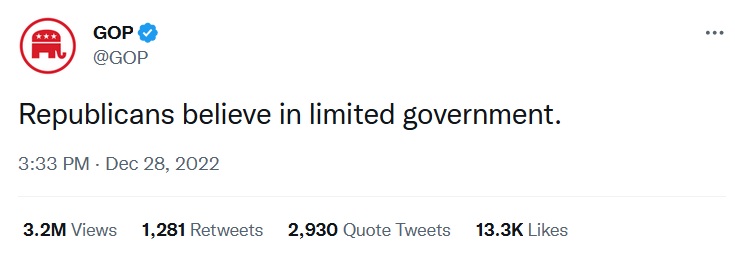
Today, we’re going to expand on this list with the “most laughable” tweet of 2022. But this tweet from the Republican National Committee is a case of accidental humor rather than deliberate humor.

As you might expect, the RNC did not bother trying to prove its statement.

That’s because the Republican party generally does a terrible job. Donald Trump expanded government. George W. Bush expanded government. And George H.W. Bush expanded government.

You have to go all the way back to Ronald Reagan to find a Republican who actually was on the side of taxpayers (and before him, you have to go all the way back to Coolidge).

Indeed, Republicans usually wind up expanding government faster than Democrats.

And that’s not because of the defense budget. Even when looking at just domestic spending, Republicans (other than Reagan) have a worse track record.

I have to wonder whether the folks at the RNC were doing hallucinogenic drugs when they sent out that tweet? Or was it a naive intern who heard a few speeches and was tricked into thinking the GOP actually cared about shrinking government.

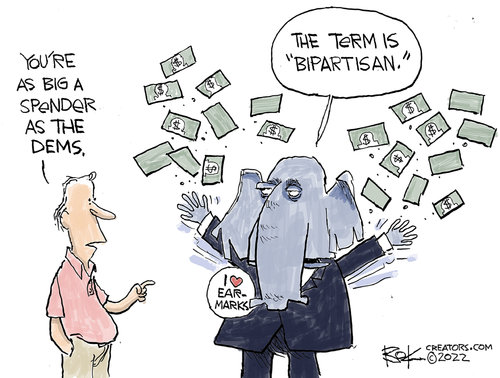
The latter possibility is a good excuse to share this cartoon.

But let’s also look at some serious analysis.

Here are some excerpts from a column in the Wall Street Journal by Kimberley Strassel. She was motivated by a pork-filled handout to the tech industry this past summer, but then proceeded to list many other sins.

The GOP that is assisting in this quarter-trillion-dollar spendathon is the same GOP that last year provided the votes for a $1 trillion infrastructure boondoggle. The same GOP that in 2020 signed on to not one, not two, three or four, but five Covid “relief” bills, to the tune of some $3.5 trillion. The same GOP that…blew through discretionary spending caps. The same GOP that has unofficially re-embraced earmarks. The party occasionally takes a breather—say to gripe about the Democrats’ $1.9 trillion Covid bill in 2021—but then it’s right back to the spending grindstone. When was the last time anyone heard a Republican talk about the need to reform Social Security or Medicare? That disappeared with the election of Donald Trump (opposed to both)… Instead, a growing faction of the party sees a future in buying the votes of working- and middle-class voters with costly new entitlement proposals of their own, such as expanded child tax credits.

I don’t know whether to laugh or cry.

But since laughing is more fun, here’s a cartoon about earmarks (which recently were endorsed by Republican lawmakers).

I’ll close with a tiny bit of optimism.

I’ve dealt with hundreds of politicians over the years, most of whom were Republicans.

By and large, they usually understand that big government is bad for prosperity. But there are two things that have an impact on their voting behavior.

  1. They are afraid of being rejected by voters who want freebies (especially the ones they already are receiving).
  2. But they might be willing to cast courageous votes if there is a real chance of a long-run change in policy.

To elaborate on the second point, there have been three periods of spending restraint in my lifetime: 1) the Reagan years, 2) the Clinton years, and 3) the Tea Party years.

In all three cases, there was a critical mass of lawmakers who were willing to do the right thing in spite of the usual incentives in Washington to do the wrong thing.

Is there a 4th period in our future? That depends on whether the GOP returns to Reaganism.

————

A.F. Branco for Oct 21, 2021

December 22, 2022

The Honorable t John Thune of Soth Dakota
United States Senate
Washington, D.C. 20510

Dear Senator John Thune,

The federal government debt is growing so much that it is endangering us because if things keep going like they are now we will not have any money left for the national defense because we are so far in debt as a nation.

We have been spending so much on our welfare state through food stamps and other programs that I am worrying that many of our citizens are becoming more dependent on government and in many cases they are losing their incentive to work hard because of the welfare trap the government has put in place. 

Other nations in Europe have gone down this road and we see what mess this has gotten them in. People really are losing their faith in big government and they want more liberty back.

It seems to me we have to get back to the founding  principles that made our country great.  We also need to realize that a big government will encourage waste and corruptionThe recent scandals in our government have proved my point.

We got to stop spending so much money and start paying off our national debt or the future of our children and grandchildren will be very sad indeed. Everyone knows that entitlement spending must be cut but it seems we are not brave enough to do it.

TRUE CONSERVATIVES are not the problem because they voted AGAINST THE OMNIBUS SPENDING BILL THAT DEMOCRATS AND RINO REPUBLICANS LIKE YOU IN THE SENATE HAVE VOTED FOR!!! Why did you betray your conservative supporters back home?


Kennedy votes against $1.7 trillion omnibus package

Dec 22 2022

Watch Kennedy’s statement here.

WASHINGTON – Sen. John Kennedy (R-La.) released the above statement after voting against the $1.7 trillion government appropriations package.

Key excerpts from the senator’s statement are below:

“Here’s the main reason I voted against the budget: Inflation. As I’ve said before, inflation is ravaging the American Dream. It’s a cancer on the American Dream, and we’re not going to get control of it until Congress stops spending so much money.”

“We’ve got to slow the rate of growth of spending and debt. Now, look, I’m not naive. There are many people here in Washington, not just on the Democratic side—there are many big-government Republicans as well—and their attitude is, ‘We can’t possibly spend enough money.’ If they ran out of money to spend and couldn’t borrow any more, they would think about taking out a reverse mortgage on Alaska to get the money. But there are enough Republicans on Capitol Hill for us to be able to slow the rate of growth and spending, and this bill didn’t do that.”

“The question becomes . . . What’s the best way to achieve the best budget? Do we sit down and do it now, or do we wait until we have a majority of Republicans in the House of Representatives? And I said all along, we should wait.” 

“Here’s what it comes down to: Would you rather have Nancy Pelosi decide what the federal budget is going to be, or would you rather wait until he’s sworn in as Speaker of the House and have Kevin McCarthy? And that, to me, is a no brainer, and there was never any doubt in my mind that the prudent decision, in terms of controlling spending, was to wait for Kevin McCarthy [instead of] allowing Speaker Pelosi to make the decision.”


Sincerely,

Everette Hatcher, everettehatcher@gmail.Com, cell 501-920-5733, http://www.thedailyhatch.org, PS:PLEASE RETURN TO YOUR CONSERVATIVE ROOTS!!!! I have always been a big fan of yours in the past!


—-

Related posts:

The 66 brave Tea Party Republicans who voted against the debt ceiling increase last time back in August of 2011!!!

January 2, 2013 – 8:15 am

President Ronald Reagan once said, “I have only one thing to say to the tax increasers: Go ahead, make my day.” ____________ Here below is a list of those 66 brave Republicans that voted against the debt ceiling increase listed below in August of 2011. The ones in blue are the ones that I have […]

By Everette Hatcher III | Posted in President ObamaSpeaker of the House John Boehnerspending out of controlTaxes | Edit | Comments (0)

Mission accomplished!!! Rick Crawford joins Tea Party Republicans and votes against kick the can down the road “fiscal cliff deal”

January 2, 2013 – 7:13 am

  _________________ President Ronald Reagan wisely said: “The federal government has taken too much tax money from the people, too much authority from the states, and too much liberty with the Constitution.” You would think that the Republicans who talk so much of cutting spending would try to get a plan that cuts spending 3 […]

By Everette Hatcher III | Posted in President ObamaSpeaker of the House John Boehnerspending out of controlTaxes | Edit | Comments (0)

Open letter to President Obama (Part 201)Tea Party favorite Representative links article “Prescott and Ohanian: Taxes Are Much Higher Than You Think”

December 21, 2012 – 9:47 am

    (Emailed to White House on 12-21-12.) President Obama c/o The White House 1600 Pennsylvania Avenue NW Washington, DC 20500 Dear Mr. President, I know that you receive 20,000 letters a day and that you actually read 10 of them every day. I really do respect you for trying to get a pulse on […]

By Everette Hatcher III | Posted in Milton FriedmanPresident Obamaspending out of controlTaxes | Edit | Comments (0)

Open letter to President Obama (Part 200.2)Tea Party Republican Representative takes on the President concerning fiscal cliff

December 21, 2012 – 9:37 am

(Emailed to White House on 12-21-12.) President Obama c/o The White House 1600 Pennsylvania Avenue NW Washington, DC 20500 Dear Mr. President, I know that you receive 20,000 letters a day and that you actually read 10 of them every day. I really do respect you for trying to get a pulse on what is […]

By Everette Hatcher III | Posted in Milton FriedmanPresident ObamaRonald Reaganspending out of controlTaxes | Edit | Comments (0)

Open letter to President Obama (Part 200.1)Tea Party favorite Representative shares link on facebook

December 21, 2012 – 5:10 am

(Emailed to White House on 12-21-12) President Obama c/o The White House 1600 Pennsylvania Avenue NW Washington, DC 20500 Dear Mr. President, I know that you receive 20,000 letters a day and that you actually read 10 of them every day. I really do respect you for trying to get a pulse on what is […]

By Everette Hatcher III | Posted in President ObamaRonald Reaganspending out of controlTaxes | EditComments (0)

Open letter to President Obama (Part 199) Tea Party favorite takes on President

December 20, 2012 – 3:09 pm

  The federal government has a spending problem and Milton Friedman came up with the negative income tax to help poor people get out of the welfare trap. It seems that the government screws up about everything. Then why is President Obama wanting more taxes? _______________ Milton Friedman – The Negative Income Tax Published on […]

By Everette Hatcher III | Posted in President Obamaspending out of controlTaxes | Edit | Comments (0)

Tea Party Heroes Rep. David Schweikert (R-AZ),Justin Amash (R-MI), Tim Huelskamp (R-KS) have been punished by Boehner

December 6, 2012 – 8:55 am

I was sad to read that the Speaker John Boehner has been involved in punishing tea  party republicans. Actually I have written letters to several of these same tea party heroes telling them that I have emailed Boehner encouraging him to listen to them. Rep. David Schweikert (R-AZ),Justin Amash (R-MI), and Tim Huelskamp (R-KS). have been contacted […]

By Everette Hatcher III | Posted in Current EventsSpeaker of the House John Boehnerspending out of control | Edit | Comments (0)

Some Tea Party heroes (Part 10)

November 9, 2012 – 7:47 am

Michael Tanner of the Cato Institute in his article, “Hitting the Ceiling,” National Review Online, March 7, 2012 noted: After all, despite all the sturm und drang about spending cuts as part of last year’s debt-ceiling deal, federal spending not only increased from 2011 to 2012, it rose faster than inflation and population growth combined. […]

By Everette Hatcher III | Posted in spending out of controlTaxes | Edit | Comments (0)

Some Tea Party heroes (Part 9)

November 9, 2012 – 7:42 am

Michael Tanner of the Cato Institute in his article, “Hitting the Ceiling,” National Review Online, March 7, 2012 noted: After all, despite all the sturm und drang about spending cuts as part of last year’s debt-ceiling deal, federal spending not only increased from 2011 to 2012, it rose faster than inflation and population growth combined. […]

By Everette Hatcher III | Posted in spending out of controlTaxes | Edit | Comments (0)

49 posts on Tea Party heroes of mine

November 9, 2012 – 7:33 am

Some of the heroes are Mo Brooks, Martha Roby, Jeff Flake, Trent Franks, Duncan Hunter, Tom Mcclintock, Devin Nunes, Scott Tipton, Bill Posey, Steve Southerland and those others below in the following posts. THEY VOTED AGAINST THE DEBT CEILING INCREASE IN 2011 AND WE NEED THAT TYPE OF LEADERSHIP NOW SINCE PRESIDENT OBAMA HAS BEEN […]

By Everette Hatcher III | Posted in spending out of controlTaxes | Edit | Comments (0)

Some Tea Party Republicans win and some lose

November 7, 2012 – 8:39 am

I hated to see that Allen West may be on the way out. ABC News reported: Nov 7, 2012 7:20am What Happened to the Tea Party (and the Blue Dogs?) Some of the Republican Party‘s most controversial House members are clinging to narrow leads in races where only a few votes are left to count. […]

By Everette Hatcher III | Posted in Current Events | Edit | Comments (0)

Some Tea Party heroes (Part 8)

November 6, 2012 – 7:59 am

Rep Himes and Rep Schweikert Discuss the Debt and Budget Deal Michael Tanner of the Cato Institute in his article, “Hitting the Ceiling,” National Review Online, March 7, 2012 noted: After all, despite all the sturm und drang about spending cuts as part of last year’s debt-ceiling deal, federal spending not only increased from 2011 […]

By Everette Hatcher III | Posted in spending out of controlTaxes | Edit | Comments (0)

Some Tea Party heroes (Part 7)

November 5, 2012 – 6:48 am

Michael Tanner of the Cato Institute in his article, “Hitting the Ceiling,” National Review Online, March 7, 2012 noted: After all, despite all the sturm und drang about spending cuts as part of last year’s debt-ceiling deal, federal spending not only increased from 2011 to 2012, it rose faster than inflation and population growth combined. […]

By Everette Hatcher III | Posted in spending out of controlTaxes | Edit | Comments (0)

Who are the Tea Party Heroes from the 87 Freshmen Republicans?

November 3, 2012 – 1:31 pm

Here is a study done on the votes of the 87 incoming freshman republicans frm the Club for Growth. Freshman Vote Study In the 2010 election, 87 freshmen House Republicans came to Washington pledging fealty to the Tea Party movement and the ideals of limited government and economic freedom. The mainstream media likes to say […]

By Everette Hatcher III | Posted in spending out of controlTaxes | Edit | Comments (0)

Max Brantley of Arkansas Times upset at Tea Party’s success

August 6, 2012 – 6:48 am

Stimulating the economy comes from giving the private sector incentive to grow or in other words cutting taxes for job creators and not class warfare. Sadly we have had too many RINOS out there. The Tea Party is the answer for that. The liberal Arkansas Times blog runned by Max Brantley is upset that the Tea […]

By Everette Hatcher III | Posted in Arkansas TimesCato InstituteMax Brantleyspending out of controlTaxes | Edit | Comments (0)

Tea Party Conservative Senator Mike Lee interview

July 16, 2012 – 6:42 am

Tea Party Conservative Senator Mike Lee interview Here is an excellent interview above with Senator Lee with a fine article below from the Heritage Foundation. Sen. Mike Lee (R-UT) came to Washington as the a tea-party conservative with the goal of fixing the economy, addressing the debt crisis and curbing the growth of the federal […]

By Everette Hatcher III | Posted in President Obamaspending out of control | Tagged balanced budget amendmentfreedom agendasaving social securitysenate ratificationsenator lee. | Edit | Comments (0)

Some Tea Party heroes (Part 6)

June 12, 2012 – 6:23 am

I feel so strongly about the evil practice of running up our national debt. I was so proud of Rep. Todd Rokita who voted against the Budget Control Act of 2011 on August 11, 2011. He made this comment:   For decades now, we have spent too much money on ourselves and have intentionally allowed our […]

By Everette Hatcher III | Posted in Social SecurityTaxes | Edit | Comments (0)

Some Tea Party heroes (Part 5)

June 8, 2012 – 6:28 am

Rep. Quayle on Fox News with Neil Cavuto __________________ We have to get people realize that the most important issue is the debt!!! Recently I read a comment by Congressman Ben Quayle (R-AZ) made  after voting against the amended Budget Control Act on August 1, 2011. He said it was important to compel “Congressional Democrats and […]

By Everette Hatcher III | Posted in spending out of controlTaxes | Edit | Comments (0)

Some Tea Party heroes (Part 4)

June 4, 2012 – 7:19 am

What future does our country have if we never even attempt to balance our budget. I read some wise words by Congressman Jeff Landry (R, LA-03) regarding the  debt ceiling deal that was passed on August 1, 2011:”Throughout this debate, the American people have demanded a real cure to America’s spending addiction – a Balanced Budget […]

By Everette Hatcher III | Posted in spending out of controlTaxes | Edit | Comments (0)

Some Tea Party heroes (Part 3)

May 25, 2012 – 11:46 am

I read some wise comments by Idaho First District Congressman Raúl R. Labrador concerning the passage of the Budget Control Act on August 1, 2011 and I wanted to point them out: “The legislation  lacks a rock solid commitment to passage of a balanced budget amendment, which I believe is necessary to saving our nation.” I just […]

By Everette Hatcher III | Posted in spending out of controlTaxes | Edit | Comments (0)


Gun control arguments just don’t make any sense, but President Obama still supports gun control

April 23, 2013 – 1:55 pm

Gun control arguments just don’t make any sense, but President Obama still supports gun control. Laughing at Obama’s Belly Flop on Gun Control April 23, 2013 by Dan Mitchell I’ve shared serious articles on gun control, featuring scholars such as John Lott and David Kopel. I also posted testimonials from gun experts and an honest liberal. […]

By Everette Hatcher III | Posted in Cato InstituteEconomist Dan MitchellGun ControlPresident Obama | Edit|Comments (2)

My favorite 10 videos on gun rights and gun control

April 19, 2013 – 12:48 pm

Gun Control explained Merry Christmas  from the 2nd Amendment Buy a Shotgun Joe Biden Lying AR-15 Make your own Gun Free Zone PRK Arms on CBS 47 news,  Fresno Suzanna Gratia Hupp explains meaning of 2nd Amendment! Penn and Teller – Gun Control and Columbine Somebody Picked the Wrong Girl 5 Facts About Guns, Schools, […]

By Everette Hatcher III | Posted in Cato InstituteEconomist Dan MitchellGun Control | Edit|Comments (0)

The United Nations is full of gun control nuts (includes gun poster)

April 15, 2013 – 1:06 pm


FRANCIS SCHAEFFER ANALYZES ART AND CULTURE PART 454 (Television) I have lots of young people come to us and [they] can’t find any meaning to life. It’s the meaning of the words “punk rock.” SCHAEFFER TAKES LOOK AT ECCLESIASTES AND THE ISSUE OF SEXUAL PROMISCUITY (Last Letter I Wrote To HUGH HEFNER) Featured artist is Allan McCollum

__

—-

Television is an American rock band from New York City, most notably active in the 1970s. The group was founded by Tom Verlaine, Richard Lloyd, Billy Ficca, and Richard Hell. An early fixture of CBGB and the 1970s New York rock scene, the band is considered influential in the development of punkand alternative music.[4][5][6]

—-

——

__

Francis Schaeffer noted:

I have lots of young people and older ones come to us from the ends of the earth. And as they come to us, they have gone to the end of this logically and they are not living in a romantic setting. They realize what the situation is. They can’t find any meaning to life. It’s the meaning to the black poetry. It’s the meaning of the black plays. It’s the meaning of all this. It’s the meaning of the words “punk rock.”

Where did young people turn most often in the 1960’s and 1970’s when they looked to escape? Unfortunately they many times look for meaning in life through new sexual relationships. Take a look at the lyrics from the song Venus:

It was a tight toy night, streets so bright
The world was so thin between my bones and skin
There stood another person who was a little surprised
To be face to face with a world so alive
How I fell (did you feel low?)
No (huh?)
I fell right into the arms of Venus De Milo
You know it’s all like some new kind of drug
My senses are sharp and my hands are like gloves
Broadway looked so medieval
It seemed to flap, like little pages
And I fell sideways laughing
With a friend from many stages
How we felt (did you feel low?)
Not at all (huh?)
I fell right into the arms of Venus De Milo
Suddenly my eyes went so soft and shaky
I knew there was pain but pain is not aching
Then Richie, Richie said
“Hey man, let’s dress up like cops, think of what we could do”
Something, something said “you better not”
And I fell (did you feel low?)
Nah (huh?)
I stood up, walked out of the arms of Venus De Milo
Source: LyricFind
Songwriters: Tom Verlaine
Venus lyrics © Universal Music Publishing Group

——

The Venus de Milo (Greek: Αφροδίτη της Μήλου, Aphroditi tis Milou) is an ancient Greek statue and one of the most famous works of ancient Greek sculpture. Initially it was attributed to the sculptor Praxiteles, but based on an inscription that was on its plinth, the statue is now thought to be the work of Alexandros of Antioch.[citation needed]

Venus de Milo
Greek: Αφροδίτη της Μήλου
Venus de Milo on display at the Louvre
Artist Alexandros of Antioch
Year Between 130 and 100 BC
Type Marble
Dimensions 203 cm (80 in)
Condition Arms broken off; otherwise intact
Location Louvre Museum, Paris, France
48.859958°N 2.337269°ECreated sometime between 130 and 100 BC, the statue is believed to depict Aphrodite, the Greek goddess of love and beauty. However, some scholars claim it is the sea-goddess Amphitrite, venerated on Milos.[1] It is a marble sculpture, slightly larger than life size at 203 cm (6 ft 8 in) high. Part of an arm and the original plinth were lost following the statue’s discovery. It is currently on permanent display at the Louvre Museum in Paris. The statue is named after Aphrodite’s Roman name, Venus, and the Greek island of Milos, where it was discovered.

Aphrodite[a] is an ancient Greek goddessassociated with love, beauty, pleasure, passion and procreation. She is identified with the planet Venus, which is named after the Roman goddess Venus, with whom Aphrodite was extensively syncretized. Aphrodite’s major symbols include myrtles, roses, doves, sparrows, and swans.

—-

“They are the natural outcome of a change from a Christian World View to a Humanistic one…
The result is a relativistic value system. A lack of a final meaning to life — that’s first. Why does human life have any value at all, if that is all that reality is? Not only are you going to die individually, but the whole human race is going to die, someday. It may not take the falling of the atom bombs, but someday the world will grow too hot, too cold. That’s what we are told on this other final reality, and someday all you people not only will be individually dead, but the whole conscious life on this world will be dead, and nobody will see the birds fly. And there’s no meaning to life.

As you know, I don’t speak academically, shut off in some scholastic cubicle, as it were. I have lots of young people and older ones come to us from the ends of the earth. And as they come to us, they have gone to the end of this logically and they are not living in a romantic setting. They realize what the situation is. They can’t find any meaning to life. It’s the meaning to the black poetry. It’s the meaning of the black plays. It’s the meaning of all this. It’s the meaning of the words “punk rock.” And I must say, that on the basis of what they are being taught in school, that the final reality is only this material thing, they are not wrong. They’re right! On this other basis there is no meaning to life and not only is there no meaning to life, but there is no value system that is fixed, and we find that the law is based then only on a relativistic basis and that law becomes purely arbitrary.

OUTLINE OF ECCLESIATES BY SCHAEFFER

_______

William Lane Craig on Man’s predicament if God doesn’t exist

Read Waiting for Godot by Samuel Beckett. During this entire play two men carry on trivial conversation while waiting for a third man to arrive, who never does. Our lives are like that, Beckett is saying; we just kill time waiting—for what, we don’t know.

Thus, if there is no God, then life itself becomes meaningless. Man and the universe are without ultimate significance.

Francis Schaeffer looks at Nihilism of Solomon and the causes of it!!!

Notes on Ecclesiastes by Francis Schaeffer

Solomon is the author of Ecclesiastes and he is truly an universal man like Leonardo da Vinci.

Two men of the Renaissance stand above all others – Michelangelo and Leonardo da Vinci and it is in them that one can perhaps grasp a view of the ultimate conclusion of humanism for man. Michelangelo was unequaled as a sculptor in the Renaissance and arguably no one has ever matched his talents.

The other giant of the Renaissance period was Leonardo da Vinci – the perfect Renaissance Man, the man who could do almost anything and does it better than most anyone else. As an inventor, an engineer, an anatomist, an architect, an artist, a chemist, a mathematician, he was almost without equal. It was perhaps his mathematics that lead da Vinci to come to his understanding of the ultimate meaning of Humanism. Leonardo is generally accepted as the first modern mathematician. He not only knew mathematics abstractly but applied it in his Notebooks to all manner of engineering problems. He was one of the unique geniuses of history, and in his brilliance he perceived that beginning humanistically with mathematics one only had particulars. He understood that man beginning from himself would never be able to come to meaning on the basis of mathematics. And he knew that having only individual things, particulars, one never could come to universals or meaning and thus one only ends with mechanics. In this he saw ahead to where our generation has come: everything, including man, is the machine.

Leonardo da Vinci compares well to Solomon and they  both were universal men searching for the meaning in life. Solomon was searching for a meaning in the midst of the details of life. His struggle was to find the meaning of life. Not just plans in life. Anybody can find plans in life. A child can fill up his time with plans of building tomorrow’s sand castle when today’s has been washed away. There is  a difference between finding plans in life and purpose in life. Humanism since the Renaissance and onward has never found it and it has never found it since. Modern man has not found it and it has always got worse and darker in a very real way.

We have here the declaration of Solomon’s universality:

1 Kings 4:30-34

English Standard Version (ESV)

30 so that Solomon’s wisdom surpassed the wisdom of all the people of the east and all the wisdom of Egypt. 31 For he was wiser than all other men, wiser than Ethan the Ezrahite, and Heman, Calcol, and Darda, the sons of Mahol, and his fame was in all the surrounding nations. 32 He also spoke 3,000 proverbs, and his songs were 1,005. 33 He spoke of trees, from the cedar that is in Lebanon to the hyssop that grows out of the wall. He spoke also of beasts, and of birds, and of reptiles, and of fish. 34 And people of all nations came to hear the wisdom of Solomon, and from all the kings of the earth, who had heard of his wisdom.

_________________________

Here is the universal man and his genius. Solomon is the universal man with a empire at his disposal. Solomon had it all.

Ecclesiastes 1:3

English Standard Version (ESV)

What does man gain by all the toil
    at which he toils under the sun?

Schaeffer noted that Solomon took a look at the meaning of life on the basis of human life standing alone between birth and death “under the sun.” This phrase UNDER THE SUN appears over and over in Ecclesiastes.

(Added by me:The Christian Scholar Ravi Zacharias noted, “The key to understanding the Book of Ecclesiastes is the term UNDER THE SUN — What that literally means is you lock God out of a closed system and you are left with only this world of Time plus Chance plus matter.” )

Man is caught in the cycle

Ecclesiastes 1:1-7

English Standard Version (ESV)

All Is Vanity

The words of the Preacher, the son of David, king in Jerusalem.

Vanity of vanities, says the Preacher,
    vanity of vanities! All is vanity.
What does man gain by all the toil
    at which he toils under the sun?
A generation goes, and a generation comes,
    but the earth remains forever.
The sun rises, and the sun goes down,
    and hastens to the place where it rises.
The wind blows to the south
    and goes around to the north;
around and around goes the wind,
    and on its circuits the wind returns.
All streams run to the sea,
    but the sea is not full;
to the place where the streams flow,
    there they flow again.

All things are full of weariness;
    a man cannot utter it;
the eye is not satisfied with seeing,
    nor the ear filled with hearing.
What has been is what will be,
    and what has been done is what will be done,
    and there is nothing new under the sun.
10 Is there a thing of which it is said,
    “See, this is new”?
It has been already
    in the ages before us.

_____________

Solomon is showing a high degree of comprehension of evaporation and the results of it. Seeing also in reality nothing changes. There is change but always in a set framework and that is cycle. You can relate this to the concepts of modern man. Ecclesiastes is the only pessimistic book in the Bible and that is because of the place where Solomon limits himself. He limits himself to the question of human life, life under the sun between birth and death and the answers this would give.

Ecclesiastes 1:4

English Standard Version (ESV)

A generation goes, and a generation comes,
    but the earth remains forever.

___________________

Ecclesiastes 4:16

English Standard Version (ESV)

16 There was no end of all the people, all of whom he led. Yet those who come later will not rejoice in him. Surely this also is vanity and a striving after wind.

__________________________

In verses 1:4 and 4:16 Solomon places man in the cycle. He doesn’t place man outside of the cycle. Man doesn’t escape the cycle. Man is only cycle. Birth and death and youth and old age. With this in mind Solomon makes this statement.

Ecclesiastes 6:12

12 For who knows what is good for a man during his lifetime, during the few years of his futile life? He will spend them like a shadow. For who can tell a man what will be after him under the sun?

____________________

There is no doubt in my mind that Solomon had the same experience in his life that I had as a younger man. I remember standing by the sea and the moon arose and it was copper and beauty. Then the moon did not look like a flat dish but a globe or a sphere since it was close to the horizon. One could feel the global shape of the earth too. Then it occurred to me that I could contemplate the interplay of the spheres and I was exalted because I thought I can look upon them with all their power, might, and size, but they could contempt nothing and I felt as man as God. Then came upon me a horror of great darkness because it suddenly occurred to me that although I could contemplate them and they could contemplate nothing yet they would continue to turn in ongoing cycles when I saw no more forever and I was crushed.

THIS IS SOLOMON’S FEELING TOO. The universal man, Solomon, beyond our intelligence with an empire at his disposal with the opportunity of observation so he could recite these words here in Ecclesiastes 6:12, “For who knows what is good for a man during his lifetime, during the few years of his futile life? He will spend them like a shadow. For who can tell a man what will be after him under the sun?”

Lack of Satisfaction in life

In Ecclesiastes 1:8 he drives this home when he states, “All things are wearisome; Man is not able to tell itThe eye is not satisfied with seeing, Nor is the ear filled with hearing.” Solomon is stating here the fact that there is no final satisfaction because you don’t get to the end of the thing. THERE IS NO FINAL SATISFACTION. This is related to Leonardo da Vinci’s similar search for universals and then meaning in life. 

In Ecclesiastes 5:11 Solomon again pursues this theme, When good things increase, those who consume them increase. So what is the advantage to their owners except to look on?”  Doesn’t that sound modern? It is as modern as this evening. Solomon here is stating the fact there is no reaching completion in anything and this is the reason there is no final satisfaction. There is simply no place to stop. It is impossible when laying up wealth for oneself when to stop. It is impossible to have the satisfaction of completion. 

Pursuing Learning

Now let us look down the details of his searching.

In Ecclesiastes 1: 13a we have the details of the universal man’s procedure. “And I set my mind to seek and explore by wisdom concerning all that has been done under heaven.”

So like any sensible man the instrument that is used is INTELLECT, and RAITIONALITY, and LOGIC. It is to be noted that even men who despise these in their theories begin and use them or they could not speak. There is no other way to begin except in the way they which man is and that is rational and intellectual with movements of that is logical within him. As a Christian I must say gently in passing that is the way God made him.

So we find first of all Solomon turned to WISDOM and logic. Wisdom is not to be confused with knowledge. A man may have great knowledge and no wisdom. Wisdom is the use of rationality and logic. A man can be very wise and have limited knowledge. Here he turns to wisdom in all that implies and the total rationality of man.

Works of Men done Under the Sun

After wisdom Solomon comes to the great WORKS of men. Ecclesiastes 1:14,  “I have seen all the works which have been done under the sun, and behold, all is [p]vanity and striving after wind.” Solomon is the man with an empire at this disposal that speaks. This is the man who has the copper refineries in Ezion-geber. This is the man who made the stables across his empire. This is the man who built the temple in Jerusalem. This is the man who stands on the world trade routes. He is not a provincial. He knew what was happening on the Phonetician coast and he knew what was happening in Egypt. There is no doubt he already knew something of building. This is Solomon and he pursues the greatness of his own construction and his conclusion is VANITY AND VEXATION OF SPIRIT.

Ecclesiastes 2:18-20

18 Thus I hated all the fruit of my labor for which I had labored under the sun, for I must leave it to the man who will come after me. 19 And who knows whether he will be a wise man or a fool? Yet he will have control over all the fruit of my labor for which I have labored by acting wisely under the sun. This too is vanity. 20 Therefore I completely despaired of all the fruit of my labor for which I had labored under the sun.

He looked at the works of his hands, great and multiplied by his wealth and his position and he shrugged his shoulders.

Ecclesiastes 2:22-23

22 For what does a man get in all his labor and in his striving with which he labors under the sun? 23 Because all his days his task is painful and grievous; even at night his mind does not rest. This too is vanity.

Man can not rest and yet he is never done and yet the things which he builds will out live him. If one wants an ironical three phrases these are they. There is a Dutch saying, “The tailor makes many suits but one day he will make a suit that will outlast the tailor.”

God has put eternity in our hearts but we can not know the beginning or the end of the thing from a vantage point of UNDER THE SUN

Ecclesiastes 1:16-18

16 I said to myself, “Behold, I have magnified and increased wisdom more than all who were over Jerusalem before me; and my mind has observed a wealth of wisdom and knowledge.” 17 And I set my mind to know wisdom and to know madness and folly; I realized that this also is striving after wind.18 Because in much wisdom there is much grief, and increasing knowledge results in increasing pain.

Solomon points out that you can not know the beginnings or what follows:

Ecclesiastes 3:11

11 He has made everything  appropriate in its time. He has also set eternity in their heart, yet so that man will not find out the work which God has done from the beginning even to the end.

Ecclesiastes 1:11

11 There is no remembrance of earlier things; And also of the later things which will occur, There will be for them no remembrance among those who will come later still.

Ecclesiastes 2:16

16 For there is no lasting remembrance of the wise man as with the fool, inasmuch as in the coming days all will be forgotten. And how the wise man and the fool alike die!

You bring together here the factor of the beginning and you can’t know what immediately follows after your death and of course you can’t know the final ends. What do you do and the answer is to get drunk and this was not thought of in the RUBAIYAT OF OMAR KAHAYYAM:

Ecclesiastes 2:1-3

I said to myself, “Come now, I will test you with pleasure. So enjoy yourself.” And behold, it too was futility. I said of laughter, “It is madness,” and of pleasure, “What does it accomplish?” I explored with my mind how to stimulate my body with wine while my mind was guiding me wisely, and how to take hold of folly, until I could see what good there is for the sons of men to do under heaven the few years of their lives.

The Daughter of the Vine:

You know, my Friends, with what a brave Carouse
I made a Second Marriage in my house;
Divorced old barren Reason from my Bed,
And took the Daughter of the Vine to Spouse.

from the Rubaiyat of Omar Khayyam (Translation by Edward Fitzgerald)

A perfectly good philosophy coming out of Islam, but Solomon is not the first man that thought of it nor the last. In light of what has been presented by Solomon is the solution just to get intoxicated and black the think out? So many people have taken to alcohol and the dope which so often follows in our day. This approach is incomplete, temporary and immature. Papa Hemingway can find the champagne of Paris sufficient for a time, but one he left his youth he never found it sufficient again. He had a lifetime spent looking back to Paris and that champagne and never finding it enough. It is no solution and Solomon says so too.

Ecclesiastes 2:4-11

I enlarged my works: I built houses for myself, I planted vineyards for myself; I made gardens and parks for myself and I planted in them all kinds of fruit trees; I made ponds of water for myself from which to irrigate a forest of growing trees. I bought male and female slaves and I had homeborn slaves. Also I possessed flocks and herds larger than all who preceded me in Jerusalem. Also, I collected for myself silver and gold and the treasure of kings and provinces. I provided for myself MALE AND  FEMALE SINGERS AND THE PLEASURES OF MEN–MANY CONCUBINES.

Then I became great and increased more than all who preceded me in Jerusalem. My wisdom also stood by me. 10 All that my eyes desired I did not refuse them. I did not withhold my heart from any pleasure, for my heart was pleased because of all my labor and this was my reward for all my labor.11 Thus I considered all my activities which my hands had done and the labor which I had exerted, and behold all was vanity and striving after wind and there was no profit under the sun.

He doesn’t mean there is no temporary profit but there is no real profit. Nothing that lasts. The walls crumble if they are as old as the Pyramids. You only see a shell of the Pyramids and not the glory that they were. This is what Solomon is saying. Look upon Solomon’s wonder and consider the Cedars of Lebanon which were not in his domain but at his disposal.

Ecclesiastes 6:2

a man to whom God has given riches and wealth and honor so that his soul lacks nothing of all that he desires; yet God has not empowered him to eat from them, for a foreigner enjoys them. This is vanity and a severe affliction.

Can someone stuff himself with food he can’t digest? Solomon came to this place of strife and confusion when he went on in his search for meaning.

 Oppressed have no comforter

Ecclesiastes 4:1

 Then I looked again at all the acts of oppression which were being done under the sun. And behold I saw the tears of the oppressed and that they had no one to comfort them; and on the side of their oppressors was power, but they had no one to comfort them.

Between birth and death power rules. Solomon looked over his kingdom and also around the world and proclaimed that right does not rule but power rules.

Ecclesiastes 7:14-15

14 In the day of prosperity be happy, but in the day of adversity consider—God has made the one as well as the other so that man will not discover anything that will be after him.

15 I have seen everything during my lifetime of futility; there is a righteous man who perishes in his righteousness and there is a wicked man who prolongs his life in his wickedness.

Ecclesiastes 8:14

14 There is futility which is done on the earth, that is, there are righteous men to whom it happens according to the deeds of the wicked. On the other hand, there are evil men to whom it happens according to the deeds of the righteous. I say that this too is futility.

We could say it in 20th century language, “The books are not balanced in this life.”

Pursuing Ladies

If one would flee to alcohol, then surely one may choose sexual pursuits to flee to. Solomon looks in this area too.

Ecclesiastes 7:25-28

25 I directed my mind to know, to investigate and to seek wisdom and an explanation, and to know the evil of folly and the foolishness of madness. 26 And I discovered more bitter than death the woman whose heart is snares and nets, whose hands are chains. One who is pleasing to God will escape from her, but the sinner will be captured by her.

27 “Behold, I have discovered this,” says the Preacher, “adding one thing to another to find an explanation, 28 I have looked for other answers but have found none. I found one man in a thousand that I could respect, but not one woman. (Good News Translation on verse 28)

One can understand both Solomon’s expertness in this field and his bitterness.

I Kings 11:1-3 (New American Standard Bible) 

11 Now King Solomon loved many foreign women along with the daughter of Pharaoh: Moabite, Ammonite, Edomite, Sidonian, and Hittite women, from the nations concerning which the Lord had said to the sons of Israel, “You shall not associate with them, nor shall they associate with you, for they will surely turn your heart away after their gods.” Solomon held fast to these in love. He had seven hundred wives, princesses, and three hundred concubines, and his wives turned his heart away.

An expert but also the reason for his bitterness. Certainly there have been many men over the centuries who have daydreamed of Solomon’s wealth in this area [of women], but at the end it was sorry, not only sorry but nothing and less than nothing. The simple fact is that one can not know woman in the real sense by pursuing 1000 women. It is not possible. Woman is not found this way. All that is left in this setting if one were to pursue the meaning of life in this direction is this most bitter word found in Ecclesiastes 7:28, “I have looked for other answers but have found none. I found one man in a thousand that I could respect, but not one woman.” (Good News Translation on verse 28) He was searching in the wrong way. He was searching for the answer to life in the limited circle of that which is beautiful in itself but not an answer finally in sexual life. More than that he finally tried to find it in variety and he didn’t even touch one woman at the end.

—-

Last letter I wrote to Hugh Hefner seen below:

Larry Joe Speaks  (August 20, 1947 to April 7, 2017)

Photo of Larry Joe Speaks

__

__

Image result for bill elliff

________

Image result for king solomon

____

Francis Schaeffer pictured above

_______

June 30, 2017

Hugh Hefner

Playboy Mansion16236 Charing Cross RoadLos Angeles, CA 90024

Dear Hugh,

I started these series of letters on the meaning of it all on April 7, 2017 when  my good friend Larry Speaks died. Larry’s favorite sermon was WHO  IS JESUS? by Adrian Rogers and he gave hundreds of CD copies of that sermon away. I actually ran the copies off  for him and since the sermon was only 37 minutes long and the CD went 60 minutes, I also put on there another sermon by Bill Elliff too called WHAT WILL HAPPEN AT THE END OF TIME? Later in this letter I want to share a portion of that message with you. All of these letters I have written you have dealt with what Solomon had to say concerning the search for satisfaction in life UNDER THE SUN (without God in the picture.) Probably his most disappointing discovery was that being a ladies man left him unsatisfied.

Ecclesiastes 2:8-10The Message (MSG)

I piled up silver and gold,
loot from kings and kingdoms.
I gathered a chorus of singers to entertain me with song,
and—most exquisite of all pleasures—
    voluptuous maidens for my bed.

9-10 Oh, how I prospered! I left all my predecessors in Jerusalem far behind, left them behind in the dust. What’s more, I kept a clear head through it all. Everything I wanted I took—I never said no to myself. I gave in to every impulse, held back nothing. I sucked the marrow of pleasure out of every task—my reward to myself for a hard day’s work!

1 Kings 11:1-3 English Standard Version (ESV)

11 Now King Solomon loved many foreign women, along with the daughter of Pharaoh: Moabite, Ammonite, Edomite, Sidonian, and Hittite women, from the nations concerning which the Lord had said to the people of Israel, “You shall not enter into marriage with them, neither shall they with you, for surely they will turn away your heart after their gods.” Solomon clung to these in love. He had 700 wives, who were princesses, and 300 concubines. And his wives turned away his heart.

Francis Schaeffer observed concerning Solomon, “You can not know woman but knowing 1000 women.”

King Solomon in Ecclesiastes 2:11 sums up his search for meaning in the area of the Sexual Revolution with these words, “…behold, all was vanity and a striving after wind, and there was nothing to be gained under the sun.”

__

In fact, the Book of Ecclesiastes shows that Solomon came to the conclusion that NOTHING in life gives true satisfaction without God including knowledge (1:16-18), LADIES and liquor (2:1-3, 8, 10, 11), and great building projects (2:4-6, 18-20). You can only find a lasting meaning to your life by looking above the sun and bring God back into the picture.

Solomon’s experiment was a search for meaning to life “under the sun.” Then in last few words in the Book of Ecclesiastes he looks above the sun and brings God back into the picture: “The conclusion, when all has been heard, is: Fear God and keep His commandments, because this applies to every person. For God will bring every act to judgment, everything which is hidden, whether it is good or evil.”

Keith Hefner and Hugh Hefner

According to the Bible God will bring every act to judgment!!! Below is a portion of Bill Elliff’s message that deals with this:

WHAT WILL HAPPEN AT THE END OF TIME? I want to look at this picture of what will happen to everyone of us at the end of time. Let’s read our scripture passage.

Luke 12:1-10 English Standard Version (ESV)

Beware of the Leaven of the Pharisees

12 In the meantime, when so many thousands of the people had gathered together that they were trampling one another, he began to say to his disciples first, “Beware of the leaven of the Pharisees, which is hypocrisy. Nothing is covered up that will not be revealed, or hidden that will not be known. Therefore whatever you have said in the dark shall be heard in the light, and what you have whispered in private rooms shall be proclaimed on the housetops.

Have No Fear

“I tell you, my friends, do not fear those who kill the body, and after that have nothing more that they can do. But I will warn you whom to fear: fear him who, after he has killed, has authority to cast into hell. Yes, I tell you, fear him! Are not five sparrows sold for two pennies?[b]And not one of them is forgotten before God. Why, even the hairs of your head are all numbered. Fear not; you are of more value than many sparrows.

Acknowledge Christ Before Men

“And I tell you, everyone who acknowledges me before men, the Son of Man also will acknowledge before the angels of God, but the one who denies me before men will be denied before the angels of God. 10 And everyone who speaks a word against the Son of Man will be forgiven, but the one who blasphemes against the Holy Spirit will not be forgiven.

___________

What will happen at the end of time?

FIRST OF ALL, Jesus says it will be a time of the revelation of the secrets of your life.

A great time of revealing and uncovering, when unknown things to some become known to all. There is coming a day when what you really are will be revealed.

There is something inside us that thinks we can hide things from each other and hide things from God. Have you ever played HIDE AND SEEK with a group of young children? They will hide in plain view but in their mind they are hidden. My smallest children will put their hands over their eyes and they think that since they can’t see me that they are hidden from my sight. But the truth of the matter is that I can see them so clearly and sometimes we think that because we can’t see God that He can’t see us. Last week we read Hebrews 4:13 that says, “And not a creature exists that is concealed from His sight, but all things are open and exposed, and revealed to the eyes of Him with whom we have to give account.” One day the secrets of our heart will be revealed. In the brief days of our life, 20, 30, 40, 50, 60, 70 years that God may give you, or maybe a few years beyond that, we may do a good job of hiding those secrets, but one day the secrets of our lives will be revealed before God.

NEXT after the revelation of the secrets of your life there will be a great revelation of God’s authority.

Do you know what a sovereign is? A sovereign is one who has complete authority. He has the authority and he has the authority to carry it out.

There are 3 kinds of authority. First, voluntary authority such as you choosing to work for an employer. Second, seized authority like a murderer. Third, God is an absolute authority and He is the sovereign and He is over everything. It is right for Him to be over everything because He made everything. He is a God of perfect love,  a God of perfect mercy, a God of perfect grace, a God of perfect compassion, but He is a God of perfect righteousness.  If He was any less than that then He wouldn’t be God. He is a God of perfect holiness and authority. He has wooed us and called us and given us every opportunity to come, but He is a God who one day who will reveal. He has absolute authority over your life.

Look again at verses 4 and 5:

“I tell you, my friends, do not fear those who kill the body, and after that have nothing more that they can do. But I will warn you whom to fear: fear him who, after he has killed, has authority to cast into hell. Yes, I tell you, fear him!

God has the authority to do that. There is coming a day when there will be a great separation and a great dividing. It is all over the scriptures. God has given us the moment of grace to come and trust in Him and give our lives to Him, but one day the door will be closed and then the division will come. He will say to some come into my kingdom that I have prepared for you and he will say to others you are headed to an eternity separated. You have chosen your fate for all eternity. There will permanent separation from God in hell.

FINALLY, it will be a day of the revelation of the substance of your relationship to God.

Look at verses 8 and 9: “And I tell you, everyone who acknowledges me before men, the Son of Man also will acknowledge before the angels of God, but the one who denies me before men will be denied before the angels of God.

The Pharisees said they had a relationship with God but they were hypocrites and there was no substance to their relationship. Jesus is saying that when the secrets of your heart are revealed God will determine the substance of your relationship to God and whether it is real or not.

The answer to find meaning in life is found in putting your faith and trust in Jesus Christ. The Bible is true from cover to cover and can be trusted. Below is a piece of that evidence given by Francis Schaeffer concerning the accuracy of the Bible.

Thanks for your time.

Sincerely,

Everette Hatcher, everettehatcher@gmail.com, http://www.thedailyhatch.org, cell ph 501-920-5733, Box 23416, LittleRock, AR 72221

—-

In 1978 I heard the song “Dust in the Wind” by Kansas when it rose to #6 on the charts. That song told me thatKerry Livgren the writer of that song and a member of Kansas had come to the same conclusion that Solomon had. I remember mentioning to my friends at church that we may soon see some members of Kansas become Christians because their search for the meaning of life had obviously come up empty even though they had risen from being an unknown band to the top of the music business and had all the wealth and fame that came with that. Furthermore, like Solomon and Coldplay, they realized death comes to everyone and “there must be something more.”

Livgren wrote:

“All we do, crumbles to the ground though we refuse to see, Dust in the Wind, All we are is dust in the wind, Don’t hang on, Nothing lasts forever but the Earth and Sky, It slips away, And all your money won’t another minute buy.”

Both Kerry Livgren and Dave Hope of Kansas became Christians eventually. Kerry Livgren first tried Eastern Religions and Dave Hope had to come out of a heavy drug addiction. I was shocked and elated to see their personal testimony on The 700 Club in 1981 and that same  interview can be seen on youtube today. Livgren lives in Topeka, Kansas today where he teaches “Diggers,” a Sunday school class at Topeka Bible Church. Hope is the head of Worship, Evangelism and Outreach at Immanuel Anglican Church in Destin, Florida.

The movie maker Woody Allen has embraced the nihilistic message of the song “Dust in the Wind” by Kansas. David Segal in his article, “Things are Looking Up for the Director Woody Allen. No?” (Washington Post, July 26, 2006), wrote, “Allen is evangelically passionate about a few subjects. None more so than the chilling emptiness of life…The 70-year-old writer and director has been musing about life, sex, work, death and his generally futile search for hope…the world according to Woody is so bereft of meaning, so godless and absurd, that the only proper response is to curl up on a sofa and howl for your mommy.”

The song “Dust in the Wind” recommends, “Don’t hang on.” Allen himself says, “It’s just an awful thing and in that context you’ve got to find an answer to the question: ‘Why go on?’ ”  It is ironic that Chris Martin the leader of Coldplay regards Woody Allen as his favorite director.

Lets sum up the final conclusions of these gentlemen:  Coldplay is still searching for that “something more.” Woody Allen has concluded the search is futile. Livgren and Hope of Kansas have become Christians and are involved in fulltime ministry. Solomon’s experiment was a search for meaning to life “under the sun.” Then in last few words in the Book of Ecclesiastes he looks above the sun and brings God back into the picture: “The conclusion, when all has been heard, is: Fear God and keep His commandments, because this applies to every person. For God will bring every act to judgment, everything which is hidden, whether it is good or evil.”

You can hear Kerry Livgren’s story from this youtube link:

(part 1 ten minutes)

(part 2 ten minutes)

Kansas – Dust In The Wind

Ecclesiastes 1

Published on Sep 4, 2012

Calvary Chapel Spring Valley | Sunday Evening | September 2, 2012 | Pastor Derek Neider

Featured artist is Allan McCollum

_____________________

Related posts

_________

__

FRANCIS SCHAEFFER ANALYZES ART AND CULTURE PART 453 My Letter to Travis Barker who appears in the video “God’s Gonna Cut You Down” by Johnny Cash Featured artist is Louise Despont

____

—-

3-9-16

To Travis Barker, From Everette Hatcher of Little Rock, AR

You and I have something in common and it is the song GOD’S GONNA CUT YOU DOWN. You were in the video and my post about that video entitled, People in the Johnny Cash video “God’s Gonna Cut You Down” is the most popular post I have done in recent years. It ranked #1 for all of 2015 and I have over 1,000,000 hits on my http://www.thedailyhatch.org blog site. The ironic thing is that I never knew what a big deal Johnny Cash was until he had died. I grew up in Memphis with his nephew Paul Garrett and we even went to the same school and church. Paul’s mother was Johnny Cash’s sister Margaret Louise Garrett.

Stu Carnall, an early tour manager for Johnny Cash, recalled, “Johnny’s an individualist, and he’s a loner….We’d be on the road for weeks at a time, staying at motels and hotels along the way. While the other members of the troupe would sleep in, Johnny would disappear for a few hours. When he returned, if anyone asked where he’d been, he’d answer straight faced, ‘to church.’”

Have you ever taken the time to read the words of the song?

You can run on for a long time
Run on for a long time
Sooner or later God’ll cut you down
Go tell that long tongue liar
Go and tell that midnight rider
Tell the rambler,
The gambler,
The back biter
Tell ’em that God’s gonna cut ’em down
Well my goodness gracious let me tell you the news
My head’s been wet with the midnight dew
I’ve been down on bended knee talkin’ to the man from Galilee
He spoke to me in the voice so sweet
I thought I heard the shuffle of the angel’s feet
He called my name and my heart stood still
When he said, “John go do My will!”

 Well you may throw your rock and hide your hand

Workin’ in the dark against your fellow man
But as sure as God made black and white
What’s down in the dark will be brought to the light
You can run on for a long time
Run on for a long time
Sooner or later God’ll cut you down
___
Johnny Cash sang this song of Judgment because he knew the Bible says in  Romans 6:23, “For the wages of sin is death; but the GIFT OF GOD IS ETERNAL LIFE THROUGH JESUS CHRIST OUR LORD.” The first part of this verse is about the judgment sinners must face if not pardoned, but the second part is about Christ who paid our sin debt!!! Did you know that Romans 6:23 is part of what we call the Roman Road to Christ. Here is how it goes:
  • Because of our sin, we are separated from God.
    For all have sinned and fall short of the glory of God.  (Romans 3:23)
  • The Penalty for our sin is death.
    For the wages of sin is death, but the gift of God is eternal life in Jesus Christ our Lord. (Romans 6:23)
  • The penalty for our sin was paid by Jesus Christ!
    But God demonstrates His own love toward us, in that while we were yet sinners, Christ died for us. (Romans 5:8)
  • If we repent of our sin, then confess and trust Jesus Christ as our Lord and Savior, we will be saved from our sins!
    For whoever calls on the name of the Lord shall be saved.  (Romans 10:13)
    …if you confess with your mouth the Lord Jesus and believe in your heart that God has raised Him from the dead, you will be saved. For with the heart one believes unto righteousness, and with the mouth confession is made unto salvation. (Romans 10:9,10)

The answer to find meaning in life is found in putting your faith and trust in Jesus Christ. The Bible is true from cover to cover and can be trusted.

Thanks for your time.

Everette Hatcher, everettehatcher@gmail.com, http://www.thedailyhatch.org, cell ph 501-920-5733, Box 23416, LittleRock, AR 72221

PS:If one repents and puts trust in Christ alone for eternal life then he or she will be forgiven. Francis Schaeffer noted, “If Satan tempts you to worry over it, rebuff him by saying I AM FORGIVEN ON THE BASIS OF THE WORK OF CHRIST AS HE DIED ON THE CROSS!!!

________________

Johnny Cash – God’s Gonna Cut You Down

Johnny Cash’s version of the traditional God’s Gonna Cut You Down, from the album “American V: A Hundred Highways”, was released as a music video on November 9 2006, just over three years after Cash died. Producer Rick Rubin opens the music video, saying, “You know, Johnny always wore black. He wore black because he identified with the poor and the downtrodden…”. What follows is a collection of black and white clips of well known pop artists wearing black, each interacting with the song in their own way. Some use religious imagery. Howard sits in his limo reading from Ezekiel 34, a Biblical passage warning about impending judgment for false shepherd. Bono leaning on a graffiti-filled wall between angel’s wings and a halo, pointing to the words, “Sinners Make The Best Saints. J.C. R.I.P.” A number of artists wear or hold crosses.

Faces in Johnny Cash God's Gonna Cut You Down music video

Artists appear in this order: Rick Rubin, Iggy Pop, Kanye West, Chris Martin, Kris Kristofferson, Patti Smith, Terence Howard, Flea (Red Hot Chili Peppers), Q-Tip, Adam Levine (Maroon 5), Chris Rock, Justin Timberlake, Kate Moss, Sir Peter Blake (Sgt Peppers Artist), Sheryl Crow, Denis Hopper, Woody Harrelson, Amy Lee of Evanescence, Tommy Lee, Natalie Maines, Emily Robison, Martie Maguire (Dixie Chicks), Mick Jones, Sharon Stone, Bono, Shelby Lynne, Anthony Kiedis, Travis Barker, Lisa Marie Presley, Kid Rock, Jay Z, Keith Richards, Billy Gibbons, Corinne Bailey Rae, Johnny Depp, Graham Nash, Brian Wilson, Rick Rubin and Owen Wilson. The video finishes with Rick Rubin traveling to a seaside cliff with friend Owen Wilson to throw a bouquet of flowers up in the air.

  • American singer and civil rights activist Odetta recorded a traditional version of the song. Musician Sean Michel covered the song during his audition on Season 6 of American Idol. Matchbox Twenty also used the song before playing “How Far We’ve Come” on their “Exile in America” tour.

  • The New Jersey rock band The Gaslight Anthem have also covered the song.[citation needed] Canadian rock band Three Days Grace has used the song in the opening of their live shows, as well as the rock band Staind . Bobbie Gentry recorded a version as “Sermon” on her album The Delta Sweete. Guitarist Bill Leverty recorded a version for his third solo project Deep South, a tribute album of traditional songs. Tom Jones recorded an up-tempo version which appears on his 2010 album Praise & BlamePow woW recorded a version with the Golden Gate Quartet for their 1992 album Regagner les Plaines and performed a live version with the quartet in 2008. A cover of the song by Blues Saraceno was used for the Season 8 trailer of the TV series DexterPedro Costarecorded a neo-blues version for the Discovery channel TV show Weed Country (2013). Virginia based folk rock band Carbon Leaf covered the song many times during their live shows.
  • Chart positions[edit]

    Moby version: “Run On”[edit]

    Chart (1999) Peak
    position
    UK Singles Chart 33

    Johnny Cash version[edit]

    Chart (2006) Peak
    position
    UK Singles Chart 77

  • American Idol contestant ministers in Chile

  • SANTIAGO, Chile (BP)–Sean Michel smiled through his distinctive, foot-long beard as he slid the guitar strap over his shoulder and greeted the crowd at El Huevo nightclub with what little Spanish he knows. The former American Idol contestant and his band then erupted into the sounds of Mississippi Delta blues-rock.But unlike other musicians who played that night, the Sean Michel band sang about every person’s need for God and the salvation that comes only through faith in Jesus Christ.”We came down [to Chile] to open doors that other ministries couldn’t,” said Jay Newman, Michel’s manager. “To get in places that only a rock band could — to create a vision for new church-planting movements among the underground, disenfranchised subcultures of Chile.”The Sean Michel band recently traveled through central Chile playing more than 15 shows in bars, churches, schools and parks. The group consists of Southern Baptists Sean Michel, lead singer; Alvin Rapien, lead guitarist; Seth Atchley, bass guitarist; and Tyler Groves, drummer.”Although we’re a blues rock ‘n’ roll band, we’re an extension of the church,” Michel said. “We’re kind of like ‘musicianaries,’ if you will.”MISSIONS-MINDED MUSICIANSThe band formed after Michel and Newman met as students at Ouachita Baptist University in Arkadelphia, Ark. While there, the two began recording and selling Michel’s music as a way to raise money for mission trips to Africa and Asia.”We were just trying to raise money for a mission trip, but we’d also seen God speaking to people through the music,” Michel said. “So we were like, ‘Well, maybe we need to do something with this,’ and we became a music ministry. But it’s always been rooted in missions and … in the Great Commission.”Michel graduated from Ouachita in 2001, Newman in 2004. In 2007, Newman talked Michel into auditioning for American Idol. The exposure Michel received through the television show gained a wider audience for their ministry.”The whole American Idol thing was so weird,” Michel said. “We just kind of went on a whim. But the Lord used it in a big way.”During his tryout, Michel belted out a soulful rendition of Johnny Cash’s “God’s Gonna Cut You Down.” The video of the audition went viral on the Internet.Soon he was doing radio interviews in which he identified himself as a Christian and directed listeners to the band’s Gospel-laden MySpace page. On their next mission trip to Asia, Michel and Newman found that being recognizable gave them access to venues they couldn’t have entered before.The band is now an official extension of First Southern Baptist Church of Bryant, Ark., where the musicians have long been active members serving in the music and youth ministries. Every mission trip they have taken has involved working with International Mission Board (IMB) missionaries.”We’re Southern Baptist,” Michel said. “That’s who we roll with.”TOUR DE FAITH”With short-term mission trips, you can plan, but you just got to be willing for your plans to change,” said Michel. When the band arrived in Chile, they were surprised to find that their schedule wasn’t nearly as full as expected. Almost no public venues had booked shows, and many rock-wary churches had declined to host the band.”The biggest barrier we had was the pastors,” said Cliff Case, an IMB missionary in Santiago, Chile, and a 1984 graduate of Ouachita Baptist. “The older pastors on two or three different occasions gave excuses for not doing it. It was a real frustration in that sense.”Disappointed by the lack of interest, the band prayed for God’s help. They met Jose Campos — or Pépe, as the band came to know him. Campos works with music and youth for the Ministry of the Down and Out, an independent Christian ministry that seeks to reach the often-overlooked demographics of Santiago.Campos was able to use his connections to book shows for the band in venues they wouldn’t have known about otherwise.”Had we met Pépe (Campos) two or three weeks before the group came, there’s no telling how many shows we might have done,” said Case, who met Newman at Ouachita when Case and his wife, Cinthy, were missionaries-in-residence there.Campos booked the show at El Huevo, possibly Chile’s most popular club. Playing there has given the band musical credibility among Chilean rockers. And, one Chilean church reported that a youth accepted Christ after hearing Newman talk before a show. The band already is contemplating a return tour next year.

    OPENING NEW DOORS

    Sharing the Gospel through their songs is only the beginning for the Sean Michel band. Their vision is to be a catalyst to help churches — and missionaries — connect with the lost people of their communities.

    “God is not saving the world through rock bands,” Michel said. “He’s saving the world through the church. And it will always be through the local body.”

    The band wants to see churches take ministry beyond the church doors.

    “If you’re going to want to legitimately reach lost people, you’re going to have to get out,” Michel said. “Go out into the dark places. Those are the places we need to be to reach out.”

    The band’s ministry in Chile opened new doors for IMB missionaries to reach the young, musical subculture of Chilean society.

    “They laid the groundwork for more opportunities,” Case said. “Now we have a network of who to talk to and how to get organized. We can focus on how to use the work they’re doing so we can win people to the Lord and plant some churches.”


    Tristan Taylor is an International Mission Board writer living in the Americas.

Featured artist is Louise Despont

Louise Despont According to the Universe | ART21 “New York Close Up”

Published on Nov 13, 2015

What is the source of inspiration?

Filmed in her Tribeca studio, Louise Despont peruses a vast reference library of images she began collecting in high school and maintains to this day. Drawn to geometry, energy waves, and universal symbols, Despont’s interests reveal a fascination with underlying patterns and cosmological draughtsmen: Rudolf Steiner, Carl Jung, Agnes Martin, Charles Burchfield, Martin Ramirez, Achilles G. Rizzoli, Adolf Wölfli, Hilma af Klint, Theosophy, Buddhist medical charts, Shaker gift drawings, seismographs, echolocation, mandalas, yantras, Tantric drawings, maps, gardens, fasciation in plants, beehives, kilim, ikat, Jantar Mantar, and masks. “What’s so interesting about the creative act is that you can access something completely outside yourself,” says Despont, who makes a distinction between consciously referencing subject matter in her artwork versus communing with a sense of unconscious awareness. “If you offer yourself up as the hands to make the work the relationship you form with what you communicate with has its own voice.” Featuring Despont’s drawings included in the exhibitions “Harmonic Tremor” (2015) at Nicelle Beauchene and “The Six-Sided Force” (2014) at Pioneer Works, as well as scenes from her stop-motion animation “Experiments in Moving Drawings, Parts I & II” (2007).

Louise Despont (b. 1983, New York, New York, USA) lives and works between New York and Bali, Indonesia. Learn more about the artist at: http://www.art21.org/newyorkcloseup/a…

CREDITS | ART21 “New York Close Up” Created & Produced by: Wesley Miller & Nick Ravich. Director: Wesley Miller. Editor: Brad Kimbrough. Cinematography: John Marton, Wesley Miller & Andrew Whitlatch. Sound: Wesley Miller. Design & Graphics: Open. Music: Jared C. Balogh. Thanks: Nicelle Beauchene, Catherine Despont, Thierry Despont, Gabriel Florenz, Pioneer Works, Inae Rurup & Dustin Yellen. An ART21 Workshop Production. © ART21, Inc. 2015. All rights reserved.

ART21 “New York Close Up” is supported, in part, by The Lambent Foundation; the New York City Department of Cultural Affairs in partnership with the City Council; The Andy Warhol Foundation for the Visual Arts; and by individual contributors.

Louise Despont

Louise Despont was born in 1983 in New York; she lives and works in New York and in Bali, Indonesia. Since discovering the potential of working with pencil and architectural stencils on paper, Despont has adopted an intuitive process in which she allows her drawings to develop as she creates them, resulting in an almost devotional object comprised of dense colors and shapes.

Preferring to draw on ledger paper with preexisting lines, Despont sees a parallel between the mathematical accounting the paper was designed to organize and the way that her practice is an accounting of her time spent. Even when Despont creates large-scale installations—such as for her 2016 solo exhibition at the Drawing Center, New York—her practice remains personally labor intensive. Having collected images for many years, Despont complements her broad visual references with her interest in energy and spirituality.

FRIEDMAN FRIDAY Milton Friedman’s Revenge

Milton Friedman’s Revenge

Milton Friedman in 2004. (Friedman Foundation for Educational Choice/Public Domain/via Wikimedia)
The specter of inflation haunts Joe Biden’s presidency.

Treasury Secretary Janet Yellen got into trouble Tuesday for telling the truth. That morning, at a conference sponsored by the Atlantic, she raised the possibility that one day the Federal Reserve may raise interest rates “to make sure our economy doesn’t overheat.”

Anyone with a basic understanding of economics knew what she was talking about. The combination of President Joe Biden’s gargantuan spending and the accelerating economic recovery may well lead to a rise in consumer prices and hikes in interest rates. But an end to the Federal Reserve’s program of easy money would hurt asset prices and possibly employment as well.

Which is not what most investors want to hear. When Yellen’s words reached Wall Street, the market tanked. By the afternoon she was in retreat, telling the Wall Street Journal CEO summit that she had been misunderstood. “So let me be clear,” she said. “That’s not something I’m predicting or recommending.”

No, of course not. But it still might happen anyway.

A specter is haunting the Biden administration — the specter of inflation. Past inflations have not only harmed consumers, savers, and people on fixed incomes. They have also brought down politicians. Among the risks to the Democratic congressional majority is a rise in prices that lifts inflation to near the top of voters’ concerns, coupled by the type of Fed rate increase that hits stocks and housing. Inflation is one more signpost on the road to Republican revival, along with illegal immigration, crime, and semi-closed public schools embracing far-left critical race theory.

The classic definition of inflation is too much money chasing too few goods. That might also describe America sometime soon — if not already. The economy has started its post-virus comeback. Jobs and growth are on the upswing. U.S. households sit on a trillion-dollar pile of savings. Over the last year, on top of its regular spending, the federal government has appropriated a mind-boggling amount of money: a $2 trillion CARES Act, a $900 billion COVID-19 relief bill, and a $2 trillion American Rescue Plan. And President Biden wants to spend about $4 trillion more.

Surging this incredible amount of cash into an economy that is rapidly approaching capacity may have unintended and harmful consequences. But the Biden administration is either unconcerned about inflation or afraid of bringing it up in public.

Why? Well, one reason is that earlier warnings, after the global financial crisis in particular, didn’t seem to come true. (The inflation may have shown up in the dramatic ascent in prices of stocks and bonds, as well as in odd places such as the market for high-end art.) Another reason is that some economists think a little bit of inflation would be a good thing. But the main explanation may be related to status-quo bias: Inflation hasn’t been a driving force in our economic and public life for decades, and so we blithely assume it won’t be in the future.

Which is why an experienced leader worries about repeating the mistakes of the past. And yet, for a politician who came to Washington in 1973, Joe Biden has a lackadaisical attitude toward inflationary fiscal and monetary policy. Was he paying attention? It was the great inflation of the ’60s and ’70s, caused in part by high spending, the Arab oil embargo, and spiraling wages and prices in a heavily regulated and unionized economy, that helped ruin the presidencies of Gerald Ford and Jimmy Carter.

Inflation led to bracket creep, with voters propelled into higher income-tax brackets by monetary forces over which they had no control. And bracket creep inspired the tax revolt, supply-side economics, and the Reaganite idea that, “in this present crisis, government is not the solution to our problem; government is the problem.” The eventual cure for inflation was the painful “shock therapy” administered by Federal Reserve chairman Paul Volcker and what at the time was the worst recession since the Great Depression.

Why anyone would want to repeat this experiment in the dismal science is a mystery. Biden, however, is fixated not on inflation but on repudiating the legacy of the man known for describing it as “always and everywhere a monetary phenomenon in the sense that it is and can be produced only by a more rapid increase in the quantity of money than in output.”

Milton Friedman, whose empiricism led him to embrace free-market public policy, was the most influential economist of the second half of the 20th century. But Biden has a weird habit of treating Friedman as a devilish spirit who must be exorcised from the nation’s capital. For Biden, Friedman represents deregulation, low taxes, and the idea that a corporation’s primary responsibility is not to a group of politicized “stakeholders” but to its shareholders. “Milton Friedman isn’t running the show anymore,” Biden told Politico last year. “When did Milton Friedman die and become king?” Biden asked in 2019. The truth is that Friedman, who died in 2006, has held little sway over either Democrats or Republicans for almost two decades. But Biden wants to mark the definitive end of Friedman and the “neoliberal” economics he espoused by unleashing a tsunami of dollars into the global economy and inundating Americans with new entitlements.

The irony is that Biden’s rejection of Friedman’s teachings on money, taxes, and spending may bring about the same circumstances that established Friedman’s preeminence. In a year or two, the American economy and Biden’s political fortunes may look considerably different than when Janet Yellen blurted out the obvious about inflation. Voters won’t like the combination of rising prices and declining assets. Biden’s experts might rediscover that it is difficult to control or stop inflation once it begins. And Milton Friedman will have his revenge.


Milton Friedman’s FREE TO CHOOSE “How to cure inflation” Transcript and Video (60 Minutes)

Image result for milton friedman free to choose

In 1980 I read the book FREE TO CHOOSE by Milton Friedman and it really enlightened me a tremendous amount.  I suggest checking out these episodes and transcripts of Milton Friedman’s film series FREE TO CHOOSE: “The Failure of Socialism” and “What is wrong with our schools?”  and “Created Equal”  and  From Cradle to Grave, and – Power of the Market.“If we could just stop the printing presses, we would stop inflation,” Milton Friedman says in “How to Cure Inflation” from the Free To Choose series. Now as then, there is only one cause of inflation, and that is when governments print too much money. Milton explains why it is that politicians like inflation, and why wage and price controls are not solutions to the problem.

http://www.freetochoosemedia.org/freetochoose/detail_ftc1980_transcript.php?page=9While many people have a fairly good grasp of what inflation is, few really understand its fundamental cause. There are many popular scapegoats: labor unions, big business, spendthrift consumers, greed, and international forces. Dr. Friedman explains that the actual cause is a government that has exclusive control of the money supply. Friedman says that the solution to inflation is well known among those who have the power to stop it: simply slow down the rate at which new money is printed. But government is one of the primary beneficiaries of inflation. By inflating the currency, tax revenues rise as families are pushed into higher income tax brackets. Thus, inflation transfers wealth and resources from the private to the public sector. In short, inflation is attractive to government because it is a way of increasing taxes without having to pass new legislation to raise tax rates. Inflation is in fact taxation without representation. Wage and price controls are not the cure for inflation because they treat only the symptom (rising prices) and not the disease (monetary expansion). History records that such controls do not work; instead, they have perverse effects on both prices and economic growth and undermine the fundamental productivity of the economy. There is only one cure for inflation: slow the printing presses. But the cure produces the painful side effects of a temporary increase in unemployment and reduced economic growth. It takes considerable political courage to undergo the cure. Friedman cites the example of Japan, which successfully underwent the cure in the mid-seventies but took five years to squeeze inflation out of the system. Inflation is a social disease that has the potential for destroying a free society if it is unchecked. Prolonged inflation undermines belief in the basic equity of the free market system because it tends to destroy the link between effort and reward. And it tears the social fabric because it divides society into winners and losers and sets group against group.(Taxation without representation: Getting knocked up to higher tax brackets because of inflation pt 1)http://www.youtube.com/watch?v=b1dTWDNKH3c

Volume 9 – How to Cure Inflation

Transcript:
Friedman: The Sierra Nevada’s in California 10,000 feet above sea level, in the winter temperatures drop to 40 below zero, in the summer the place bakes in the thin mountain air. In this unlikely spot the town of Body sprang up. In its day Body was filled with prostitutes, drunkards and gamblers part of a colorful history of the American West.
A century ago, this was a town of 10,000 people. What brought them here? Gold. If this were real gold, people would be scrambling for it. The series of gold strikes throughout the West brought people from all over the world, all kinds of people. They came here for one purpose and one purpose only, to strike it rich, quick. But in the process, they built towns, cities, in places where nobody would otherwise have dreamed of building a city. Gold built these cities and when the gold was exhausted, the cities collapsed and became ghost towns. Many of the people who came here ended up the way they began, broke and unhappy. But a few struck it rich. For them, gold was real wealth. But was it for the world as a whole. People couldn’t eat the gold, they couldn’t wear the gold, they couldn’t live in houses made of gold. Because there was more gold, they had to pay a little more gold to buy goods and services. The prices of things in terms of gold went up.
At tremendous cost, at sacrifice of lives, people dug gold out of the bowels of the earth. What happened to that gold? Eventually, at long last, it was transported to distant places only to be buried again under the ground. This time in the vaults of banks throughout the world. There is hardly anything that hasn’t been used for money; rock salt in Ethiopia, brass rings in West Africa, Calgary shells in Uganda, even a toy cannon. Anything can be used as money. Crocodile money in Malaysia, absurd isn’t it?
That beleaguered minority of the population that still smokes may recognize this stuff as the raw material from which their cigarettes are made. But in the early days of the colonies, long before the U.S. was established, this was money. It was the common money of Virginia, Maryland and the Carolinas. It was used for all sorts of things. The legislature voted that it could be used legally to pay taxes. It was used to buy food, clothing and housing. Indeed, one of the most interesting sites was to see the husky young fellows at that time, lug 100 pounds of it down to the docks to pay the costs of the passage of the beauteous young ladies who had come over from England to be their brides.
Now you know how money is. There’s a tendency for it to grow, for more and more of it to be produced and that’s what happened with this tobacco. As more tobacco was produced, there was more money. And as always when there’s more money, prices went up. Inflation. Indeed, at the very end of the process, prices were 40 times as high in terms of tobacco as they had been at the beginning of the process. And as always when inflation occurs, people complained. And as always, the legislature tried to do something. And as always, to very little avail. They prohibited certain classes of people from growing tobacco. They tried to reduce the total amount of tobacco grown, they required people to destroy part of their tobacco. But it did no good. Finally, many people took it into their own hands and they went around destroying other people’s tobacco fields. That was too much. Then they passed a law making it a capital offense, punishable by death, to destroy somebody else’s tobacco. Grecian’s Law, one of the oldest laws in economics, was well illustrated. That law says that cheap money drives out dear money and so it was with tobacco. Anybody who had a debt to pay, of course, tried to pay it in the worst quality of tobacco he had. He saved the good tobacco to sell overseas for hard money. The result was that bad money drove out good money.
Finally, almost a century after they had started using tobacco as money, they established warehouses in which tobacco was deposited in barrels, certified by an inspector according to his views as to it’s quality and quantity. And they issued warehouse certificates which people gave from one to another to pay for the bills that they accumulated.
These pieces of green printed paper are today’s counterparts of those tobacco certificates. Except that they bear no relation to any commodity. In this program I want to take you to Britain to see how inflation weakens the social fabric of society. Then to Tokyo, where the Japanese have the courage to cure inflation. To Berlin, where there is a lesson to be learned from the West Germans and how so called cures are often worse than the disease. And to Washington where our government keeps these machines working overtime. And I am going to show you how inflation can be cured.
The fact is that most people enjoy the early stages of the inflationary process. Britain, in the swinging 60’s, there was plenty of money around, business was brisk, jobs were plentiful and prices had not yet taken off. Everybody seemed happy at first. But by the early 70’s, as the good times rolled along, prices started to rise more and more rapidly. Soon, some of these people are going to lose their jobs. The party was coming to an end.
The story is much the same in the U.S. Only the process started a little later. We’ve had one inflationary party after another. Yet we still can’t seem to avoid them. How come?
Before every election our representatives would like to make us think we are getting a tax break. When they are able to do it, while at the same time actually raising our taxes because of a bit of magic they have in their kit bag. That magic is inflation. They reduced the tax rates but the taxes we have to pay go up because we are automatically shoved into higher brackets by the effective inflation. A neat trick. Taxation without representation.
_________________________________________
Pt 2 Many a political leader has been tempted to turn to wage and price controls despite their repeated failure in practice. On this subject they never seem to learn. But some lessons may be learned. That happened to British P
Bob Crawford: The more I work, it seems like the more they take off me. I know if I work an extra day or two extra days, what they take in federal income tax alone is almost doubled because apparently it puts you in a higher income tax bracket and it takes more off you.
Friedman: Bob Crawford lives with his wife and three children in a suburb of Pittsburgh. They’re a fairly average American family.
Mrs. Crawford: Don’t slam the door Daphne. Okay. Alright. What are you doing? Making your favorite dish.
Friedman: We went to the Crawford’s home after he had spent a couple of days working out his federal and state income taxes for the year. For our benefit, he tried to estimate all the other taxes he had paid as well. In the end, though, he didn’t discover much that would surprise anybody.
Bob Crawford: Inflation is going up, everything is getting more expensive. No matter what you do, as soon as you walk out of the house, everything went up. Your gas bills keep going up, electric bills, your gasoline, you can name a thousand things that are going up. Everything is going sky high. Your food. My wife goes to the grocery store. We used to live on say, $60 or $50 every two weeks just for our basic food. Now it’s $80 or $90 every two weeks. Things are just going out of sight as far as expense to live on. Like I say it’s getting tough. It seems like every month it gets worse and worse. And I don’t know where it’s going to end. At the end of the day that I spend nearly $6,000 of my earnings on taxes. That leaves me with a total of $12,000 to live on. It might seem like a lot of money, but five, six years ago I was earning $12,000.
Friedman: How does taxation without representation really effect how much the Crawford family has left to spend after it’s paid its income taxes. Well in 1972 Bob Crawford earned $12,000. Some of that income was not subject to income tax. After paying income tax on the rest he had this much left to spend. Six years later he was earning $18,000 a year. By 1978 the amount free from tax was larger. But he was now in a higher tax bracket so his taxes went up by a larger percentage than his income. However, those dollars weren’t worth anything like as much. Even his wages, let alone his income after taxes, hadn’t kept up with inflation. His buying power was lower than before. That is taxation without representation in practice.
Unnamed Individual: We have with us today you brothers that are sitting here today that were with us on that committee and I’d like to tell you….
Friedman: There are many traditional scapegoats blamed for inflation. How often have you heard inflation blamed on labor unions for pushing up wages. Workers, of course, don’t agree.
Unnamed Individual: But fellows this is not true. This is subterfuge. This is a myth. Your wage rates are not creating inflation.
Friedman: And he’s right. Higher wages are mostly a result of inflation rather than a cause of it. Indeed, the impression that unions cause inflation arises partly because union wages are slow to react to inflation and then there is pressure to catch up.
Worker: On a day to day basis, try to represent our own numbers. But that in fact is not the case. Not only can we not play catch up, we can’t even maintain a wage rate commensurate with the cost of living that’s gone up in this country.
Friedman: Another scapegoat for inflation is the cost of goods coming from abroad. Inflation, we’re told, is imported. Higher prices abroad driving up prices at home. It’s another way government can blame someone else for inflation. But this argument, too, is wrong. The prices of imports and the countries from which they come are not in terms of dollars, they are in terms of lira or yen or other foreign currencies. What happens to their prices in dollars depends on exchange rates which in turn reflect inflation in the United States.
Since 1973 some governments have had a field day blaming the Arabs for inflation. But if high oil prices were the cause of inflation, how is it that inflation has been less here in Germany, a country that must import every drop of oil and gas that it uses on the roads and in industry, then for example it is in the U.S. which produces half of its own oil. Japan has no oil of its own at all. Yet at the very time the Arabs were quadrupling oil prices, the Japanese people were bringing inflation down from 30 to less than 5% a year. The fallacy is to confuse particular prices like the price of oil, with prices in general. Back at home, President Nixon understood this.
Nixon: “Now here’s what I will not do. I will not take this nation down the road of wage and price controls however politically expedient that may seem. The pros of rationing may seem like an easy way out, but they are really an easy way in for more trouble. To the explosion that follows when you try to clamp a lid on a rising head of steam without turning down the fire under the pot, wage and price controls only postpone the day of reckoning. And in so doing, they rob every American of a very important part of his freedom.
Friedman: Now listen to this:
Nixon: “The time has come for decisive action. Action that will break the vicious circle of spiraling prices and costs. I am today ordering a freeze on all prices and wages throughout the United States for a period of 90 days. In addition, I call upon corporations to extend the wage price freeze to all dividends.”
Friedman: Many a political leader has been tempted to turn to wage and price controls despite their repeated failure in practice. On this subject they never seem to learn. But some lessons may be learned. That happened to British Prime Minister James Callahan who finally discovered that a very different economic myth was wrong. He told the Labor Party Conference about it in 1976.
James Callahan: “We used to think that you could use, spend your way out of a recession and increase employment by cutting taxes and boosting government spending. I tell you in all candor that option no longer exists. It only works on each occasion since the war by injecting a bigger dose of inflation into the economy followed by a higher level of unemployment as the next step. That’s the history of the last 20 years.”
Friedman: Well, it’s one thing to say it. One reason why inflation does so much harm is because it effects different groups differently. Some benefit and of course they attribute that to their own cleverness. Some are hurt, but of course they attribute that to the evil actions of other people. And the whole problem is made far worse by the false cures which government adopts, particularly wage and price control.
The garbage collectors in London felt justifiably aggrieved because their wages had not been permitted to keep pace with the cost of living. They struck, hurting not the people who impose the controls, but their friends and neighbors who had to live with mounting piles of rat infested garbage. Hospital attendants felt justifiably aggrieved because their wages had not been permitted to keep up with the cost of living. They struck, hurting not the people who impose the controls, but cancer patients who were turned out of hospital beds. The attendants behaved as a group in a way they never would have behaved as individuals. One group is set against another group. The social fabric of society is torn apart inflicting scars that it will take decades to heal and all to no avail because wage and price controls, far from being a cure for inflation, only make inflation worse.
Within the memory of most of our political leaders, there’s one vivid example of how economic ruin can be magnified by controls. And the classic demonstration of what to do when it happens.
_______________________________________________

(Wage and Price Controls don’t work)

Inflation is just like alcoholism. In both cases when you start drinking or when you start printing too much money, the good effects come first. The bad effects only come later.
That’s why in both cases there is a strong temptation to overdo it. To drink too much and to print too much money. When it comes to the cure, it’s the other way around. When you stop drinking or when you stop printing money, the bad effects come first and the good effects only come later.
Pt 3
Germany, 1945, a devastated country. A nation defeated in war. The new governing body was the Allied Control Commission, representing the United States, Britain, France and the Soviet Union. They imposed strict controls on practically every aspect of life including wages and prices. Along with the effects of war, the results were tragic. The basic economic order of the country began to collapse. Money lost its value. People reverted to primitive barter where they used cameras, fountain pens, cigarettes, whiskey as money. That was less than 40 years ago.
This is Germany as we know it today. Transformed into a place a lot of people would like to live in. How did they achieve their miraculous recovery? What did they know that we don’t know?
Early one Sunday morning, it was June 20, 1948, the German Minister of Economics, Ludwig Earhardt, a professional economist, simultaneously introduced a new currency, today’s Deutsche Mark, and in one fell swoop, abolished almost all controls on prices and wages. Why did he do it on a Sunday morning? It wasn’t as you might suppose because the Stock Markets were closed on that day, it was, as he loved to confess, because the offices of the American, the British, and the French occupation authorities were closed that day. He was sure that if he had done it when they open they would have countermanded the order. It worked like a charm. Within days, the shops were full of goods. Within months, the German economy was humming along at full steam. Economists weren’t surprised at the results, after all, that’s what a price system is for. But to the rest of the world it seemed an economic miracle that a defeated and devastated country could in little more than a decade become the strongest economy on the continent of Europe.
In a sense this city, West Berlin, is something of a unique economic test tube. Set as it is deep in Communist East Germany. Two fundamentally different economic systems collide here in Europe. Ours and theirs, separated by political philosophies, definitions of freedom and a steel and concrete wall.
To digress from inflation, economic freedom does not stand alone. It is part of a wider order. I wanted to show you how much difference it makes by letting you see how the people live on the other side of that Berlin Wall. But the East German authorities wouldn’t let us. The people over there speak the same language as the people over here. They have the same culture. They have the same for bearers. They are the same people. Yet you don’t need me to tell you how differently they live. There is one simple explanation. The political system over there cannot tolerate economic freedom. The political system over here could not exist without it.
But political freedom cannot be preserved unless inflation is kept in bounds. That’s the responsibility of government which has a monopoly over places like this. The reason we have inflation in the United States or for that matter anywhere in the world is because these pieces of paper and the accompanying book entry or their counterparts in other nations are growing more rapidly than the quantity of goods and services produced. The truth is inflation is made in one place and in one place only. Here in Washington. This is the only place were there are presses like this that turn out these pieces of paper we call money. This is the place where the power resides to determine how rapidly the amount of money shall increase.
What happened to all that noise? That’s what would happen to inflation if we stop letting the amount of money grow so rapidly. This is not a new idea. It’s not a new cure. It’s not a new problem. It’s happened over and over again in history. Sometimes inflation has been cured this way on purpose. Sometimes it’s happened by accident. During the Civil War the North, late in the Civil War, overran the place in the South where the printing presses were sitting up, where the pieces of paper were being turned out. Prior to that point, the South had a very rapid inflation. If my memory serves me right, something like 4% a month. It took the Confederacy something over two weeks to find a new place where they could set up their printing presses and start them going again. During that two week period, inflation came to a halt. After the two week period, when the presses started running again, inflation started up again. It’s that clear, that straightforward. More recently, there’s another dramatic example of the only effective way to deal with rampant inflation.
In 1973, Japanese housewives going to market were faced with an unpleasant fact. The cash in their purses seemed to be losing its value. Prices were starting to sore as the awful story of inflation began to unfold once again. The Japanese government knew what to do. What’s more, they were prepared to do it. When it was all over, economists were able to record precisely what had happened. In 1971 the quantity of money started to grow more rapidly. As always happens, inflation wasn’t affected for a time. But by late 1972 it started to respond. In early 73 the government reacted. It started to cut monetary growth. But inflation continued to soar for a time. The delayed reaction made 1973 a very tough year of recession. Inflation tumbled only when the government demonstrated its determination to keep monetary growth in check. It took five years to squeeze inflation out of the system. Japan attained relative stability. Unfortunately, there’s no way to avoid the difficult road the Japanese had to follow before they could have both low inflation and a healthy economy. First they had to live through a recession until slow monetary growth had its delayed effect on inflation.
Inflation is just like alcoholism. In both cases when you start drinking or when you start printing too much money, the good effects come first. The bad effects only come later.
That’s why in both cases there is a strong temptation to overdo it. To drink too much and to print too much money. When it comes to the cure, it’s the other way around. When you stop drinking or when you stop printing money, the bad effects come first and the good effects only come later. That’s why it’s so hard to persist with the cure. In the United States, four times in the 20 years after 1957, we undertook the cure. But each time we lacked the will to continue. As a result, we had all the bad effects and none of the good effects. Japan on the other hand, by sticking to a policy of slowing down the printing presses for five years, was by 1978 able to reap all the benefits, low inflation and a recovering economy. But there is nothing special about Japan. Every country that has had the courage to persist in a policy of slow monetary growth has been able to cure inflation and at the same time achieve a healthy economy.
___________________________________
Pt 4
The job of the Federal Reserve is not to run government spending; it’s not to run government taxation. The job of the Federal Reserve is to control the money supply and I believe, frankly, I have always believed as you know, that these are excuses and not reasons for the performance.
DISCUSSION
Participants: Robert McKenzie, Moderator; Milton Friedman; Congressman Clarence J. Brown; William M. Martin, Chairman of Federal Reserve 1951_1970; Beryl W. Sprinkel, Executive Vice President, Harris Bank, Chicago; Otmar Emminger, President, Ieutsche Bundesbank, Frankfurt West Germany
MCKENZIE: And here at the Harper Library of the University of Chicago, our distinguished guests have their own ideas, too. So, lets join them now.
BROWN: If you could control the money supply, you can certainly cut back or control the rate of inflation. I’d have to say that that prescription is a little bit easier to write than it is to fill. I think there are some other ways to do it and I would relate the money supply __ I think inflation is a measure of the relationship between money and the goods and services that money is meant to cover. And so if you can stimulate the goods, the production of goods and services, it’s helpful. It’s a little tougher to control the money supply, although I think it can be done, than just saying that you should control it, because we’ve got the growth of credit cards, which is a form of money; created, in effect, by the free enterprise system. It isn’t all just printed in Washington, but that may sound too defensive. I think he was right in saying that the inflation is Washington based.
MCKENZIE: Mr. Martin, nobody has been in the firing line longer than you, 17 years head of the Fed. Could you briefly comment on that and we’ll go around the group.
MARTIN: I want to say 19 years.
(Laughter)
MARTIN: I wouldn’t be out here if it weren’t for Milton Friedman, today. He came down and gave us advice from time to time.
FRIEDMAN: You’ve never taken it.
(Laughter)
MCKENZIE: He’s going to do some interviewing later, I warn you.
MARTIN: And I’m rather glad we didn’t take it __
(Laughter)
MARTIN: __ all the time.
SPRINKEL: In your 19 years as Chairman of the Federal Reserve, Bill, the average growth in the money supply was 3.1 percent per year. The inflation rate was 2.2 percent. Since you left, the money supply has exactly doubled. The inflation rate is average over 7 percent, and, of course, in recent times the money supply has been growing in double-digit territory as has our inflation rate.
EMMINGER: May I, first of all, confirm two facts which have been so vividly brought out in the film of Professor Friedman; namely, that at the basis of the relatively good performance of Western Germany were really two events. One, the establishment of a new sound money which we try to preserve sound afterwards. And, secondly, the jump overnight into a free market economy without any controls over prices and wages. These are the two fundamental facts. We have tried to preserve monetary stability by just trying to follow this prescription of Professor Friedman; namely, monetary discipline. Keeping monetary growth relatively moderate. I must, however, warn you it’s not so easy as it looks. If you just say, governments have to have the courage to persist in that course.
FRIEDMAN: Nobody does disagree with the proposition that excessive growth in money supply is an essential element in the inflationary process and that the real problem is not what to do, but how to have the courage and the will to do it. And I want to go and start, if I may, on that subject; because I think that’s what we ought to explore. Why is it we haven’t had the courage and don’t, and under what circumstances will we? And I want to start with Bill Martin because his experience is a very interesting experience. His 19 years was divided into different periods. In the first period, that average that Beryl Sprinkel spoke about, averaged two very different periods. An early period of very slow growth and slow inflation; a later period of what at the time was regarded as creeping inflation __ now we’d be delighted to get back to it. People don’t remember that at the time that Mr. Nixon introduced price and wage controls in 1971 to control an outrageous inflation, the rate of inflation was four-and-a-half percent per year. Today we’d regard that as a major achievement; but the part of the period when you were Chairman, was a period when the inflation rate was starting to creep up and money growth rate was also creeping up. Now if I go from your period, you were eloquent in your statements to the public, to the press, to everyone, about the evils of inflation, and about the determination on the Federal Reserve not to be the architect of inflation. Your successor, Arthur Burns, was just as eloquent. Made exactly the same kinds of statements as effectively, and again over and over again said the Federal Reserve will not be the architect of inflation. His successor, Mr. G. William Miller, made the same speeches, and the same statements, and the same protestations. His successor, Paul Volcker, he is making the same statements. Now my question to you is: Why is it that there has been such a striking difference between the excellent pronouncements of all Chairmen of the Fed, therefore it’s not personal on you. You have a lot of company, unfortunately for the country. Why is it that there has been such a wide diversion between the excellent pronouncements on the one hand and what I regard as a very poor performance on the other?
MARTIN: Because monetary policy is not the only element. Fiscal policy is equally important.
FRIEDMAN: You’re shifting the buck to the Treasury.
MARTIN: Yes.
FRIEDMAN: To the Congress. We’ll get to Mr. Brown, don’t worry.
MARTIN: Yeah, that’s right.
(Laughter)
MARTIN: The relationship of fiscal policy to monetary policy is one of the important things.
MCKENZIE: Would you remind us, the general audience, when you say “fiscal policy”, what you mean in distinction to “monetary policy”?
MARTIN: Well, taxation.
MCKENZIE: Yeah.
MARTIN: The raising revenue.
FRIEDMAN: And spending.
MARTIN: And spending.
FRIEDMAN: And deficits.
MARTIN: And deficits, yes, exactly. And I think that you have to realize that when I’ve talked for a long time about the independence of the Federal Reserve. That’s independence within the government, not independence of the government. And I’ve worked consistently with the Treasury to try to see that the government is financed. Now this gets back to spending. The government says they’re gonna spend a certain amount, and then it turns out they don’t spend that amount. It doubles.
FRIEDMAN: The job of the Federal Reserve is not to run government spending; it’s not to run government taxation. The job of the Federal Reserve is to control the money supply and I believe, frankly, I have always believed as you know, that these are excuses and not reasons for the performance.
MARTIN: Well that’s where you and I differ, because I think we would be irresponsible if we didn’t take into account the needs and what the government is saying and doing. I think if we just went on our own, irresponsibly, I say it on this, because I was in the Treasury before I came to this __
FRIEDMAN: I know. I know.
MARTIN: __ go to the Fed; and I know the other side of the picture. I think we’d be rightly condemned by the American people and by the electorate.
FRIEDMAN: Every central bank in this world, including the German Central Bank, including the Federal Reserve System, has the technical capacity to make the money supply do over a period of two or three or four months, not daily, but over a period, has the technical capacity to control it.
(Several people talking at once.)
FRIEDMAN: I cannot explain the kind of excessive money creation that has occurred, in terms of the technical incapacity of the Federal Reserve System or of the German Central Bank, or of the Bank of England, or any other central bank in the world.
EMMINGER: I wouldn’t say technically we are incapable of doing that, although we have never succeeded in controlling the money supply month that way. But I would say we can, technically, control it half yearly, from one half-year period to the next and that would be sufficient __
FRIEDMAN: That would be sufficient.
EMMINGER: __ for controlling inflation. But however I __
VOICE OFF SCREEN: It doesn’t move.
FRIEDMAN: I’m an economic scientist, and I’m trying to observe phenomena, and I observe that every Federal Reserve Chairman says one thing and does another. I don’t mean he does, the system does.
MCKENZIE: Yeah. How different is your setup in Germany? You’ve heard this problem of governments getting committed to spending and the Fed having, one way or the other, to accommodate itself to it. Now what’s your position on this very interesting problem?
EMMINGER: We are very independent of the government, from the government, but, on the other hand, we are an advisor of the government. Also on the budget deficits and they would not easily go before Parliament with a deficit which much of it is openly criticized and disapproved by the same bank. Why because we have a tradition in our country that we can also publicly criticize the government on his account. And second, as if happened in our case too, the government goes beyond what is tolerable for the sake of moral equilibrium. We have let it come through in the capital markets. That is to say they have enough interest rates that has drawn public criticism and that has had some effect on their attitude.
_________________________________________
Pt 5
 I think that is a very important point that Dr. Emminger just made because there is not a one-to-one relationship between government deficits and what happens to the money supply at all. The pressure on the Federal Reserve comes indirectly. It comes because large government deficits, if they are financed in the general capital market, will drive up interest rates and then we have the right patents in Congress and their successors pressuring the Federal Reserve to enter in and finance the deficit by printing money as a way of supposedly holding down interest rates. Now before I turn to Mr. Brown and ask him that, I just want to make one point which is very important. The Federal Reserve’s activities in trying to hold down interest rates have put us in a position where we have the highest interest rates in history. It’s another example of how, of the difference between the announced intentions of a policy, and the actual results. But now I want to come to Clarence Brown and ask him, shift the buck to him, and put him on the hot seat for a bit. The government spending has been going up rapidly, Republican administration or Democratic administration. This is a nonpartisan issue, it doesn’t matter. Government deficits have been going up rapidly. Republican administration or Democratic administration. Why is it that here again you have the difference between pronouncements and performance? There is no Congressman, no Senator, who will come out and say, “I am in favor of inflation.” There is not a single one who will say, “I am in favor of big deficits.” They’ll all say we want to balance the budget, we want to hold down spending, we want an economical government. How do you explain the difference between performance and talk on the side of Congress?
BROWN:
FRIEDMAN: I think that is a very important point that Dr. Emminger just made because there is not a one-to-one relationship between government deficits and what happens to the money supply at all. The pressure on the Federal Reserve comes indirectly. It comes because large government deficits, if they are financed in the general capital market, will drive up interest rates and then we have the right patents in Congress and their successors pressuring the Federal Reserve to enter in and finance the deficit by printing money as a way of supposedly holding down interest rates. Now before I turn to Mr. Brown and ask him that, I just want to make one point which is very important. The Federal Reserve’s activities in trying to hold down interest rates have put us in a position where we have the highest interest rates in history. It’s another example of how, of the difference between the announced intentions of a policy, and the actual results. But now I want to come to Clarence Brown and ask him, shift the buck to him, and put him on the hot seat for a bit. The government spending has been going up rapidly, Republican administration or Democratic administration. This is a nonpartisan issue, it doesn’t matter. Government deficits have been going up rapidly. Republican administration or Democratic administration. Why is it that here again you have the difference between pronouncements and performance? There is no Congressman, no Senator, who will come out and say, “I am in favor of inflation.” There is not a single one who will say, “I am in favor of big deficits.” They’ll all say we want to balance the budget, we want to hold down spending, we want an economical government. How do you explain the difference between performance and talk on the side of Congress?
BROWN: Well, first I think we have to make one point. I’m not so much with the government as I am against it.
FRIEDMAN: I understand.
BROWN: As you know, I’m a minority member of Congress.
FRIEDMAN: Again, I’m not __ I’m not directing this at you personally.
BROWN: I understand, of course; and while the administrations, as you’ve mentioned, Republican and Democratic administrations, have both been responsible for increases in spending, at least in terms of their recommendations. It is the Congress and only the Congress that appropriates the funds and determines what the taxes are. The President has no authority to do that and so one must lay it at the feet of the U.S. Congress. Now, I guess we’d have to concede that it’s a little bit more fun to give away things than it is to withhold them. And this is the reason that the Congress responds to a general public that says, “I want you to cut everybody else’s program but the one in which I am most particularly interested. Save money, but incidentally, my wife is taking care of the orphanages and so lets try to help the orphanages,” or whatever it is. Let me try to make a point, if I can, however, on what I think is a new spirit moving within the Congress and that is that inflation, as a national affliction, is beginning to have an impact on the political psychology of many Americans. Now the Germans, the Japanese and others have had this terrific postwar inflation. The Germans have been through it twice, after World War I and World War II, and it’s a part of their national psyche. But we are affected in this country by the depression. Our whole tax structure is built on the depression. The idea of the tax structure in the past has been to get the money out of the mattress where it went after the banks failed in this country and jobs were lost, and out of the woodshed or the tin box in the back yard, get it out of there and put it into circulation. Get it moving, get things going. And one of the ways to do that was to encourage inflation. Because if you held on to it, the money would depreciate; and the other way was to tax it away from people and let the government spend it. Now there’s a reaction to that and people are beginning to say, “Wait just a minute. We’re not afflicted as much as we were by depression. We’re now afflicted by inflation, and we’d like for you to get it under control.” Now you can do that in another way and that without reducing the money supply radically. I think the Joint Economic Committee has recommended that we do it gradually. But the way that you can do it is to reduce taxes and the impact of government, that is the weight of government and increase private savings so that the private savings can finance some of the debt that you have.
FRIEDMAN: There is no way you can do it without reducing, in my opinion, the rate of monetary growth. And I, recognizing the facts, even though they ought not to be that way, I wonder whether you can reduce the rate of monetary growth unless Congress actually does reduce government spending as well as government taxes.
BROWN: The problem is that every time we use demand management, we get into a kind of an iron maiden kind of situation. We twist this way and one of the spikes grabs us here, so we twist that way and a spike over here gets us. And every recession has had higher basic unemployment rates than the previous recession in the last several years and every inflation has had higher inflation. We’ve got to get that tilt out of the society.
MCKENZIE: Wouldn’t it be fair to say, though, that a fundamental difference is the Germans are more deeply fearful of a return to inflation, having had the horrifying experience between the wars, especially. We tend to be more afraid of recession turning into depression.
EMMINGER: I think there is something in it and in particular in Germany the government would have to fear very much in their electoral prospects if they went into such an election period with a high inflation rate. But there is another important difference.
MARTIN: We fear unemployment more than inflation it seems.
EMMINGER: You fear unemployment, but unemployment is feared with us, too, but inflation is just as much feared. But there is another difference; namely, once you have got into that escalating inflation, every time the base, the plateau is higher, it’s extremely difficult to get out of it. You must avoid getting into that, now that’s very cheap advice from me because you are now.
(Laughing)
EMMINGER: But we had, for the last fifteen, twenty years, always studied foreign experiences, and told ourselves we never must get into this vicious circle. Once you are in, it takes a long time to get out of it. That is what I am preaching now, that we should avoid at all costs to get again into this vicious circle as we had it already in ’73_’74. It took us, also, four years to get out of it, although we were only at eight percent inflation. Four years to get down to three percent. So you __
MCKENZIE: Those were __ yes.
EMMINGER: You have, I think, the question of whether you can do if in a gradualist way over many, many years, or whether you don’t need a sort of shock treatment.
____________________________________
her we go into a period of still higher unemployment later on and have it to do all over again. That’s the only choice we face. And when the public at large recognizes that, they will then elect people to Congress, and a President to office who is committed to less government spending and to less government printing of money and until that happens we will not cure inflation
Pt 6
SPRINKEL: The film said it took the Japanese _ what _ four years?
FRIEDMAN: Five years.
SPRINKEL: Five years. But one of my greatest concerns is that we haven’t suffered enough yet. Most of the nations that have finally got their inflations __
BROWN: Bad election speech.
SPRINKEL: __ well, I’m not running for office, Clarence.
(Laughter)
SPRINKEL: Most countries that finally got their inflation under control had 20, 30 percent or worse inflation. Germany had much worse and the public supports them. We live in a Democracy, and we’re getting constituencies that gain from inflation. You look at people that own real estate, they’ve done very well.
MCKENZIE: Yes.
SPRINKEL: And how can we get there without going through even more pain, and I doubt that we will.
FRIEDMAN: If you ask who are the constituencies that have benefited most from inflation there are no doubt, it is the homeowners.
SPRINKEL: Yes.
FRIEDMAN: But it’s also the __ it’s also the Congressmen who have been able to vote higher spending without having to vote higher taxes. They have in fact __
BROWN: That’s right.
FRIEDMAN: __ Congress has in fact voted for inflation. But you have never had a Congressman on record to that effect. It’s the government civil servants who have their own salaries are indexed and tied to inflation. They have a retirement benefit, a retirement pension that’s tied to inflation. They qualify, a large fraction of them, for Social Security as well, which is tied to inflation. So that the beneficial __
BROWN: Labor contracts that are indexed and many pricing things that are tied to it.
FRIEDMAN: But the one thing that isn’t tied to inflation and here I want to come back and ask why Congress has been so __ so bad in this area, is our taxes. It has been impossible to get Congress to index the tax system so that you don’t have the present effect where every one percent increase in inflation pushes people up into higher brackets and forces them to pay higher taxes.
BROWN: Well, as you know, I’m an advocate of that.
FRIEDMAN: I know you are.
MCKENZIE: Some countries do that, of course.
FRIEDMAN: Oh, of course.
MCKENZIE: Canada does that. Indexes the __
BROWN: And I went up to Canada on a little weekend seminar program on indexing and came back an advocate of indexing because I found out that the people who are delighted with indexing are the taxpayers.
FRIEDMAN: Absolutely.
BROWN: Because as the inflation rate goes up their tax level either maintains at the same level or goes down. The people who are least __ well, the people who are very unhappy with it are the people who have to plan government spending because it is reducing the amount of money that the government has rather than watching it go up by ten or twelve billion. You get a little dividend to spend in this country, the bureaucrats do every year, but the politicians are unhappy with it too, as Dr. Friedman points out because, you see, politicians don’t get to vote a tax reduction, it happens automatically.
MCKENZIE: Yeah.
BROWN: And so you can’t go back and in a praiseworthy way tell your constituents that I am for you, I voted a tax reduction. And I think we ought to be able to index the tax system so that tax reduction is automatic, rather than have what we’ve had in the past, and that is an automatic increase in the taxes. And the politicians say, “Well, we’re sorry about inflation, but __”.
FRIEDMAN: You’re right and I want to __ I want to go and make a very different point. I sit here and berate you and you as government officials, and so on, but I understand very well that the real culprits are not the politicians, are not the central bankers, but it’s I and my fellow citizens. I always say to people when I talk about this, “If you want to know who’s responsible for inflation, look in the mirror.” It’s not because of the way you spend you money. Inflation doesn’t arise because you got consumers who are spendthrifts; they’ve always been spendthrifts. It doesn’t arise because you’ve got businessmen who are greedy. They’ve always been greedy. Inflation arises because we as citizens have been asking you as politicians to perform an impossible task. We’ve been asking you to spend somebody else’s money on us, but not to spend our money on anybody else.
BROWN: You don’t want us to cut back those dollars for education, right?
FRIEDMAN: Right. And, therefore, __ well, no, I do.
MCKENZIE: We’ve already had a program on that.
FRIEDMAN: We’ve already had a program on that and there’s no viewer of these programs who will be in any doubt about my position on that. But the public at large has not and this is where we come to the political will that Dr. Emminger quite properly talked about. It is __ everybody talks against inflation, but what he means is that he wants the prices of the things he sells to go up and the prices of the things he buys to go down. But, sooner or later, we come to the point where it will be politically profitable to end inflation. This is the point that __
SPRINKEL: Yes.
FRIEDMAN: __ I think you were making.
SPRINKEL: The suffering idea.
FRIEDMAN: Where do you think the __ you know, what do you think the rate of inflation has to be and judged by the experience of other countries before we will be in that position and when do you think that will happen?
SPRINKEL: Well, the evidence says it’s got to be over 20 percent. Now you would think we could learn from others rather than have to repeat mistakes.
FRIEDMAN: Apparently nobody can learn from history.
SPRINKEL: But at the present time we’re going toward higher and not lower inflation.
MCKENZIE: You said earlier, if you want to see who causes inflation look in the mirror.
FRIEDMAN: Right.
MCKENZIE: Now, for everybody watching and taking part in this, there must be some moral to that. What does need __ what has to be the change of attitude of the man in the mirror you’re looking at before we can effectively implement what you call a tough policy that takes courage?
FRIEDMAN: I think that the man in the mirror has to come to recognize that inflation is the most destructive disease known to modern society. There is nothing which will destroy a society so thoroughly and so fully as letting inflation run riot. He must come to recognize that he doesn’t have any good choices. That there are no easy answers. That once you get in this situation where the economy is sick of this insidious disease, there’s gonna be no miracle drug which will enable them to be well tomorrow. That the only choices he has, do I go through a tough period for four or five years of relatively high unemployment, relatively low growth or do I try to push it off by taking some more of the hair of the dog that bit me and get around it now at the cost of still higher unemployment, as Clarence Brown said, later on. The only choice this country faces, is whether we have temporary unemployment for a short period, as a side effect of curling inflation or whether we go into a period of still higher unemployment later on and have it to do all over again. That’s the only choice we face. And when the public at large recognizes that, they will then elect people to Congress, and a President to office who is committed to less government spending and to less government printing of money and until that happens we will not cure inflation.
____________________________________
FRIEDMAN: And therefore the crucial thing is to cut down total government spending from the point of view of inflation. From the point of view of productivity, some of the other measures you were talking about are far more important.
BROWN
Pt 7
BROWN: But, Dr. Friedman, let me __
(Applause)
BROWN: Let me differ with you to this extent. I think it is important that at the time you are trying to get inflation out of the economy that you also give the man in the street, the common man, the opportunity to have a little bit more of his own resources to spend. And if you can reduce his taxes at that time and then reduce government in that process, you give him his money to spend rather than having to yield up all that money to government. If you cut his taxes in a way to encourage it, to putting that money into savings, you can encourage the additional savings in a private sense to finance the debt that you have to carry, and you can also encourage the stimulation of growth in the society, that is the investment into the capital improvements of modernization of plant, make the U.S. more competitive with other countries. And we can try to do it without as much painful unemployment as we can get by with. Don’t you think that has some merit?
FRIEDMAN: The only way __ I am all in favor, as you know, of cutting government spending. I am all in favor of getting rid of the counterproductive government regulation that reduces productivity and disrupts investment. But __
BROWN: And we do that, we can cut taxes some, can we not?
FRIEDMAN: We should __ taxes __ but you are introducing a confusion that has confused the American people. And that is the confusion between spending and taxes. The real tax on the American people is not what you label taxes. It’s total spending. If Congress spends fifty billion dollars more than it takes in, if government spends fifty billion dollars, who do you suppose pays that fifty billion dollars?
BROWN: Of course, of course.
FRIEDMAN: The Arab Sheiks aren’t paying it. Santa Claus isn’t paying it. The Tooth Fairy isn’t paying it. You and I as taxpayers are paying it indirectly through hidden taxation.
MCKENZIE: Your view __
FRIEDMAN: And therefore the crucial thing is to cut down total government spending from the point of view of inflation. From the point of view of productivity, some of the other measures you were talking about are far more important.
BROWN: But if you concede that inflation and taxes are both part and parcel of the same thing, and if you cut spending __
FRIEDMAN: They’re not part and parcel of the same thing.
BROWN: If you cut spending you __ well, but, you take the money from them in one way or another. The average citizen.
FRIEDMAN: Absolutely.
BROWN: To finance the growth of government.
FRIEDMAN: That’s right.
BROWN: So if you cut back the size of government, you can cut both their inflation and their taxes.
FRIEDMAN: That’s right.
BROWN: If you __
FRIEDMAN: I am all in favor of that.
BROWN: All right.
FRIEDMAN: All I am saying is don’t kid yourself into thinking that there is some painless way to do it. There just is not.
BROWN: One other way is productivity. If you can __ if you can increase production, then the impact of inflation is less because you have more goods chasing __
FRIEDMAN: Absolutely, but you have to have a sense of proportion. From the point of view of the real income of the American people, nothing is more important than increasing productivity. But from the point of view of inflation, it’s a bit actor. It would be a miracle if we could raise our productivity from three to five percent a year, that would reduce inflation by two percent.
BROWN: No question, it won’t happen overnight, but it’s part of the __ it’s part of a long range squeezing out of inflation.
FRIEDMAN: There is only one way to ease the __ in my opinion there is only one way to ease the pains of curing inflation and that way is not available. That way is to make it credible to the American people that you are really going to follow the policy you say you’re going to follow. Unfortunately I don’t see any way we can do that.
(Several people talking at once.)
EMMINGER: Professor Friedman, that’s exactly the point which I wanted to illustrate by our own experience. We also had to squeeze out inflation and there was a painful time of one-and-a-half years, but after that we had a continuous lowering of the inflation rate with a slow upward movement in the economy since 1975. Year by year inflation went down and we had a moderate growth rate which has led us now to full employment.
FRIEDMAN: That’s what __
EMMINGER: So you can shorten this period by just this credibility and by a consensus you must have, also with the trade unions, with the whole population that they acknowledge that policy and also play their part in it. Then the pains will be much less.
SPRINKEL: You see in our case, expectations are that inflation’s going to get worse because it always has. This means we must disappoint in a very painful way those expectations and it’s likely to take longer, at least the first time around. Now our real problem has not been that we haven’t tried. We have tried and brought inflation down. Our real problem was, we didn’t stick to it. And then you have it all to do over.
BROWN: Well I would __ I would concede that psychology plays a great, perhaps even the major part, but I do believe that if you have private savings stimulated by your tax system, rather than discouraged by your tax system, you can finance some of that public debt by private savings rather than by inflation and the result will be to ease to some degree the paint of that heavy unemployment that you seem to suggest is the only way to deal with the problem.
FRIEDMAN: The talk is fine, but the problem is that it’s used to evade the key issue: How do you make it credible to the public that you are really going to stick to a policy? Four times we’ve tried it and four times we’ve stopped before we’ve run the course.
(Several people talking at once.)
MCKENZIE: There we leave the matter for tonight, and next week’s concluding program in this series is not to be missed.
(Applause)
From Harper Library, goodbye.

Related posts:

“The Power of the Market” episode of Free to Choose in 1990 by Milton Friedman (Part 1)

Milton Friedman The Power of the Market 1-5 How can we have personal freedom without economic freedom? That is why I don’t understand why socialists who value individual freedoms want to take away our economic freedoms.  I wanted to share this info below with you from Milton Friedman who has influenced me greatly over the […]

“Friedman Friday,” EPISODE “The Failure of Socialism” of Free to Choose in 1990 by Milton Friedman (Part 1)

Milton Friedman: Free To Choose – The Failure Of Socialism With Ronald Reagan (Full) Published on Mar 19, 2012 by NoNationalityNeeded Milton Friedman’s writings affected me greatly when I first discovered them and I wanted to share with you. We must not head down the path of socialism like Greece has done. Abstract: Ronald Reagan […]

________________

“Friedman Friday” (“Free to Choose” episode 3 – Anatomy of a Crisis. part 3 of 7)

Worse still, America’s depression was to become worldwide because of what lies behind these doors. This is the vault of the Federal Reserve Bank of New York. Inside is the largest horde of gold in the world. Because the world was on a gold standard in 1929, these vaults, where the U.S. gold was stored, […]

By Everette Hatcher III | Also posted in Current Events | Edit | Comments (0)

“Friedman Friday” (Part 16) (“Free to Choose” episode 3 – Anatomy of a Crisis. part 2 of 7)

  George Eccles: Well, then we called all our employees together. And we told them to be at the bank at their place at 8:00 a.m. and just act as if nothing was happening, just have a smile on their face, if they could, and me too. And we have four savings windows and we […]

By Everette Hatcher III | Also posted in Current Events | Edit | Comments (0)

“Friedman Friday” (“Free to Choose” episode 3 – Anatomy of a Crisis. part 1of 7)

Milton Friedman’s Free to Choose (1980), episode 3 – Anatomy of a Crisis. part 1 FREE TO CHOOSE: Anatomy of Crisis Friedman Delancy Street in New York’s lower east side, hardly one of the city’s best known sites, yet what happened in this street nearly 50 years ago continues to effect all of us today. […]

By Everette Hatcher III | Also posted in Current Events | Edit | Comments (0)

____________________________

_____________


________________________________________________

_____________________________________________

Friedman Friday” Free to Choose by Milton Friedman: Episode “What is wrong with our schools?” (Part 3 of transcript and video)

Friedman Friday” Free to Choose by Milton Friedman: Episode “What is wrong with our schools?” (Part 3 of transcript and video) Here is the video clip and transcript of the film series FREE TO CHOOSE episode “What is wrong with our schools?” Part 3 of 6.   Volume 6 – What’s Wrong with our Schools Transcript: If it […]

Friedman Friday” Free to Choose by Milton Friedman: Episode “What is wrong with our schools?” (Part 2 of transcript and video)

Here is the video clip and transcript of the film series FREE TO CHOOSE episode “What is wrong with our schools?” Part 2 of 6.   Volume 6 – What’s Wrong with our Schools Transcript: Groups of concerned parents and teachers decided to do something about it. They used private funds to take over empty stores and they […]

By Everette Hatcher III | Also posted in Vouchers | Edit | Comments (1)

Friedman Friday” Free to Choose by Milton Friedman: Episode “What is wrong with our schools?” (Part 1 of transcript and video)

Here is the video clip and transcript of the film series FREE TO CHOOSE episode “What is wrong with our schools?” Part 1 of 6.   Volume 6 – What’s Wrong with our Schools Transcript: Friedman: These youngsters are beginning another day at one of America’s public schools, Hyde Park High School in Boston. What happens when […]

By Everette Hatcher III | Also posted in Vouchers | Tagged  | Edit | Comments (0)

Friedman Friday” Free to Choose by Milton Friedman: Episode “Created Equal” (Part 3 of transcript and video)

Friedman Friday” Free to Choose by Milton Friedman: Episode “Created Equal” (Part 3 of transcript and video) Liberals like President Obama want to shoot for an equality of outcome. That system does not work. In fact, our free society allows for the closest gap between the wealthy and the poor. Unlike other countries where free enterprise and other […]

Free to Choose by Milton Friedman: Episode “Created Equal” (Part 2 of transcript and video)

Free to Choose by Milton Friedman: Episode “Created Equal” (Part 2 of transcript and video) Liberals like President Obama want to shoot for an equality of outcome. That system does not work. In fact, our free society allows for the closest gap between the wealthy and the poor. Unlike other countries where free enterprise and other freedoms are […]

Free to Choose by Milton Friedman: Episode “Created Equal” (Part 1 of transcript and video)

 Milton Friedman and Ronald Reagan Liberals like President Obama (and John Brummett) want to shoot for an equality of outcome. That system does not work. In fact, our free society allows for the closest gap between the wealthy and the poor. Unlike other countries where free enterprise and other freedoms are not present.  This is a seven part series. […]

Milton Friedman Friday: (“Free to Choose” episode 4 – From Cradle to Grave, Part 3 of 7)

 I am currently going through his film series “Free to Choose” which is one the most powerful film series I have ever seen. PART 3 OF 7 Worse still, America’s depression was to become worldwide because of what lies behind these doors. This is the vault of the Federal Reserve Bank of New York. Inside […]

By Everette Hatcher III | Edit | Comments (0)

Milton Friedman Friday:(“Free to Choose” episode 4 – From Cradle to Grave, Part 2 of 7)

 I am currently going through his film series “Free to Choose” which is one the most powerful film series I have ever seen. For the past 7 years Maureen Ramsey has had to buy food and clothes for her family out of a government handout. For the whole of that time, her husband, Steve, hasn’t […]

Friedman Friday:(“Free to Choose” episode 4 – From Cradle to Grave, Part 1 of 7)

Friedman Friday:(“Free to Choose” episode 4 – From Cradle to Grave, Part 1 of 7) Volume 4 – From Cradle to Grave Abstract: Since the Depression years of the 1930s, there has been almost continuous expansion of governmental efforts to provide for people’s welfare. First, there was a tremendous expansion of public works. The Social Security Act […]

By Everette Hatcher III | Edit | Comments (0)

“Friedman Friday” (“Free to Choose” episode 1 – Power of the Market. part 3 of 7)

  _________________________   Pt3  Nowadays there’s a considerable amount of traffic at this border. People cross a little more freely than they use to. Many people from Hong Kong trade in China and the market has helped bring the two countries closer together, but the barriers between them are still very real. On this side […]

“Friedman Friday” (“Free to Choose” episode 1 – Power of the Market. part 2 of 7)

  Aside from its harbor, the only other important resource of Hong Kong is people __ over 4_ million of them. Like America a century ago, Hong Kong in the past few decades has been a haven for people who sought the freedom to make the most of their own abilities. Many of them are […]

“Friedman Friday” (“Free to Choose” episode 1 – Power of the Market. part 1of 7)

“FREE TO CHOOSE” 1: The Power of the Market (Milton Friedman) Free to Choose ^ | 1980 | Milton Friedman Posted on Monday, July 17, 2006 4:20:46 PM by Choose Ye This Day FREE TO CHOOSE: The Power of the Market Friedman: Once all of this was a swamp, covered with forest. The Canarce Indians […]

By Everette Hatcher III | Posted in Current EventsMilton Friedman | Edit | Comments (0)

“Friedman Friday,” EPISODE “The Failure of Socialism” of Free to Choose in 1990 by Milton Friedman (Part 1)

Milton Friedman: Free To Choose – The Failure Of Socialism With Ronald Reagan (Full) Published on Mar 19, 2012 by NoNationalityNeeded Milton Friedman’s writings affected me greatly when I first discovered them and I wanted to share with you. We must not head down the path of socialism like Greece has done. Abstract: Ronald Reagan […]

By Everette Hatcher III | Posted in Milton FriedmanPresident Obama | Edit | Comments (1)

The Monkees – “Pleasant Valley Sunday” – ORIGINAL VIDEO – HQ

_____

The comments that Francis Schaeffer makes below on SHE’s LEAVING HOME could have been made about this Monkey song below. Wikipedia notes: Cowriter Carole King stated in her autobiography that after she and her husband Gerry Goffin had earned enough money from songwriting royalties, they moved from New York City to West Orange, New Jersey. Goffin disliked their suburban life and wrote lyrics to document the feeling that became “Pleasant Valley Sunday”.[7] The lyrics are a social commentary on status symbols, creature comforts, life in suburbia and “keeping up with the Joneses“.

The Monkees – “Pleasant Valley Sunday” – ORIGINAL VIDEO – HQ

____

Pleasant Valley Sunday

Article Talk

Pleasant Valley Sunday” is a song by the Monkees, released in 1967. It was written by Gerry Goffin and Carole King. Inspired by a street named Pleasant Valley Way and their move to suburban West Orange, New Jersey, Goffin and King wrote the song about dissatisfaction with the life in the suburbs.[3]

“Pleasant Valley Sunday”
US single cover
Single by the Monkees
from the album Pisces, Aquarius, Capricorn & Jones Ltd.
B-sideWords
ReleasedJuly 1967
Recorded10, 11 & 13 June 1967
StudioRCA VictorHollywood
GenrePop rock[1]psychedelic rock[2]
Length3:10
LabelColgems No. 1007
Songwriter(s)Gerry GoffinCarole King
Producer(s)Chip Douglas
The Monkees singles chronology
A Little Bit Me, a Little Bit You” 
(1967)”Pleasant Valley Sunday” 
(1967)”Daydream Believer” 
(1967)

The Monkees’ version differs somewhat from Goffin and King’s demo, and their recording features a well-known guitar intro played by Michael Nesmithand a reverb ending.[4] Micky Dolenz sang the lead. It became one of the Monkees’ most successful singles, peaking at No. 3 and continuing their string of top 10 hits.[5] The song was included on Pisces, Aquarius, Capricorn & Jones Ltd.[6]

WritingEdit

Cowriter Carole King stated in her autobiography that after she and her husband Gerry Goffin had earned enough money from songwriting royalties, they moved from New York City to West Orange, New Jersey. Goffin disliked their suburban life and wrote lyrics to document the feeling that became “Pleasant Valley Sunday”.[7] The lyrics are a social commentary on status symbols, creature comforts, life in suburbia and “keeping up with the Joneses“.

Many alternative interpretations exist regarding the lyrics. In the book SuburbiaNation, Robert Beuka described the lyrics as “a wry commentary on the materialistic and anesthetized sensibilities of the adult generation in suburbia…”[8] Brian Ward wrote in The 1960s: A Documentary Reader that the song was more associated with the New Left and the counterculture.[9] Michael Nesmith jokingly stated in a 1978 interview with Blitz magazine that the song was written about “a mental institution.”[10][11]Deanna D. Sellnow, author of The Rhetorical Power of Popular Culture, commented that, despite so many definitions about the song’s meaning, its rhetorical message is actually “bleak.”[12]

RecordingEdit

King recorded a demo of “Pleasant Valley Sunday”, later included in the 2012 compilation album The Legendary Demos,[13] but the Monkees‘ version has a faster tempo and some alterations to the bridgelyrics (“Creature comfort goals/Can only numb my soul/I need a change of scenery/My thoughts all seem to stray/To places far away/I don’t ever want to see/Another Pleasant Valley Sunday….” was changed to “Creature comfort goals/They only numb my soul/And make it hard for me to see/My thoughts all seem to stray/To places far away/I need a change of scenery.”). The Monkees’ producer Chip Douglas, who was responsible for these changes, stated that King disapproved of them.[14]

“Pleasant Valley Sunday” was recorded during the Pisces, Aquarius, Capricorn & Jones Ltd. sessions. The Monkees, who had been fighting to exert more control over their records, and who had recorded an album, Headquarters, on which more of the instruments were played by themselves, used more session musicians for the album tracks. The basic track for “Pleasant Valley Sunday” was recorded on June 10, 1967 with Michael Nesmith on electric guitar, Peter Tork on piano, Douglas on bass guitar and session musician Eddie Hoh on drums.[15] Micky Dolenz was present at the session and may have played acoustic guitar.[4] The next day, Nesmith overdubbed another electric guitar part, while Hoh recorded percussion (shaker and conga) overdubs and Bill Chadwick, a friend of the Monkees, performed a second acoustic guitar portion.[4] The Monkees (including Davy Jones) recorded their vocals, with the possible participation of Douglas, on June 13. Nesmith played another guitar part, while Hoh overdubbed more percussion. Dolenz sang lead, with Nesmith harmonizing.[4]

The distinctive guitar intro (and the main riff) was played by Nesmith on a black Gibson Les Paul guitar through three Vox Super Beatle amplifiers.[16]Douglas wrote the intro based on the riff of the Beatles‘ “I Want to Tell You.”[17]

For the song’s ending, Douglas and engineer Hank Cicalo tried to “keep pushing everything up,” increasingly adding reverberation and echo until the sound became unrecognizable before fading out.[6]Separate mono and stereo versions were mixed for single and album records.

Release and receptionEdit

Billboard described the single as a “strong, easy rocker” that is “excitingly performed.”[18]  Cash Boxsaid that it’s “an up-tempo happy-flavored ditty celebrating summertime activities that are regarded as All-American and quaint.”[19] Tork praised the vocal performances of both Dolenz and Nesmith.[20]The single peaked at No. 3 on the Hot 100 and was repeatedly featured in the second season of their television series. The song also appeared on the fourth Monkees album, Pisces, Aquarius, Capricorn & Jones Ltd., in November 1967. While mono copies of the album included the same version heard on the single, stereo copies featured a version with a different take of the first verse and an additional backing vocal during the break. A different stereo mix, more closely replicating the single version, appeared on the 1991 Monkees box set Listen to the Band.

In February 1986, MTV aired a marathon of episodes of The Monkees titled Pleasant Valley Sunday, which sparked a second wave of interest in the band. Dolenz, Tork and Jones, already on tour, went from playing small venues to arenas and stadiums in the following weeks.

The B-side of the “Pleasant Valley Sunday” single, “Words“, was written by Boyce and Hart. On the Pisces album, the song is introduced by Tork’s brief spoken-word track “Peter Percival Patterson’s Pet Pig Porky.”

PersonnelEdit

Credits from Andrew Sandoval.[4]

Session musicians and production staffEdit

Chart performanceEdit

Weekly chartsEditChart (1967)Peak
positionAustralia Kent Music Report10Canada RPM1Germany18Ireland11New Zealand[22]2Norway4UK Singles Chart[23]11US Billboard Hot 100[24]3US Cash Box Top 1003
Year-end chartsEditChart (1967)RankCanada24US Billboard Hot 100[25]74US Cash Box62

In popular cultureEdit

References

Further reading

External links

__——

____
I have read over 40 autobiographies by ROCKERS and it seems to me that almost every one of those books can be reduced to 4 points. Once fame hit me then I became hooked on drugs. Next I became an alcoholic (or may have been hooked on both at same time). Thirdly, I chased the skirts and thought happiness would be found through more sex with more women. Finally, in my old age I have found being faithful to my wife and getting over addictions has led to happiness like I never knew before. (Almost every autobiography I have read from rockers has these points in it although Steven Tyler is still chasing the skirts!!). Paul was a playboy early on when with the Beatles but he settled down when he met Linda. Paul has not written an autobiography but I highly recommend the book PAUL MCCARTNEY: THE LIFE by Philip Norman. 

_

August 13, 2022

Paul McCartney

Dear Paul,

I was so pumped up to attend your fine concert in Little Rock in 2016. I got a big kick out of taking my family to see Ringo at Orange Beach, Alabama on July 4th, 2012. It was a great show. In fact, I have been so focused on the Beatles in recent years that I have done over a year worth of weekly posts on my blog http://www.thedailyhatch.org ever Thursday entitled FRANCIS SCHAEFFER ANALYZES ART AND CULTURE and posts 49 to 101 have been about the Beatles with more to come. In fact, if you google the words FRANCIS SCHAEFFER BEATLES you the first 10 items that pop up will be links to my blog posts on Thursdays about the Beatles and what Francis Schaeffer had to say about them. 

Let me give you a taste of post #67 FRANCIS SCHAEFFER ANALYZES ART AND CULTURE Part 64 THE BEATLES (Part P The Meaning of Stg. Pepper’s song SHE’S LEAVING HOME according to Schaeffer!!!!) (Featured artist Stuart Sutcliffe) 

Melanie Coe ran away from home in 1967 when she was 15. Paul McCartney read about her in the papers and wrote ‘She’s Leaving Home’ for Sgt.Pepper’s. Melanie didn’t know Paul’s song was about her, but actually, the two did meet earlier, when Paul was the judge and Melanie a contestant in Ready Steady Go!

The subtitles are produced live for The One Show, so some seconds late and with a few mistakes.

Melanie at 17 in the picture that made the front pages in 1967 and inspired the Beatles.

Melanie’s first moment of fame, receiving a prize from Paul McCartney for miming to Brenda Lee on Ready Steady Go! in 1963

Melanie in 2008

She’s Leaving Home
The Beatles
Sgt. Pepper’s

Wednesday morning at five o’clock as the day begins
Silently closing her bedroom door
Leaving the note that she hoped would say more
She goes downstairs to the kitchen clutching her hankerchief
Quietly turing the backdoor key
Stepping outside she is free.
She (We gave her most of our lives)
is leaving (Sacraficed most of our lives)
home (We gave her everything money could buy)
She’s leaving home after living alone
For so many years. Bye, bye
Father snores as his wife gets into her dressing gown
Picks up the letter that’s lying there
Standing alone at the top of the stairs
She breaks down and cries to her husband
Daddy our baby’s gone.
Why would she treat us so thoughtlessly
How could she do this to me.
She (We never though of ourselves)
Is leaving (Never a thought for ourselves)
home (We struggled hard all our lives to get by)
She’s leaving home after living alone
For so many years. Bye, bye
Friday morning at nine o’clock she is far away
Waiting to keep the appointment she made
Meeting a man from the motor trade.
She What did we do that was wrong
Is having We didn’t know it was wrong
Fun Fun is the one thing that money can’t buy
Something inside that was always denied
For so many years. Bye, Bye
She’s leaving home bye bye

Why is she leaving home? Francis Schaeffer noted on pages  15-17 in volume 4 of THE COMPLETE WORKS OF FRANCIS SCHAEFFER from the original book “The Church at the end of the 20th Century”  the reason she left and it was because of the bankruptcy of the materialistic views of her parents. Schaeffer points that for many years there was one message that the  media was promoting and that was since we now believe in the “UNIFORMITY OF NATURAL CAUSES IN A CLOSED SYSTEM we are left with only the impersonal plus time plus chance.” Schaeffer continued:What is taught is that there is no final truth,  no meaning, no absolutes, that it is only that we have not found truth and meaning, but that they do not exist. The student and the common man may not be able to analyze it, but day after day, day after day, they are being battered by this concept.  We have now had several generations exposed to this and we must not be blind to the fact that it is being excepted increasingly.In contrast, this way of thinking has not had as much influence on the middle class. Many of these keep thinking in the old way as a memory of the time before the Christian base was lost in this post-Christian world. However,  the majority in the middle-class have no real basis for their values since so many have given up the Christian viewpoint. They just function on the “memory.” This is why so many young people have felt that the middle class is ugly. They feel middle-class people are plastic,  ugly and plastic because they try to tell others what to do on the basis of their own values but with no ground for those values.They  have no base and they have no clear categories for their choices of right and wrong. Their choices tend to turn on what is for their material benefit. Take for example the fact faculty members who cheered when the student revolt struck against the administration  and who immediately began to howl when the students started to burn up faculty manuscripts. They have no categories to say this is right and that is wrong. Many such people still hang on to their old values by memory but they have no base for them at all. A few years ago John Gardner head of the urban coalition spoke in Washington to a group of student leaders. His topic was on restoring values in our culture. When he finished there was a dead silence then finally one man from Harvard stood up and in a moment of brilliance asked, “Sir upon what base do you build your values?” I have never felt more sorry for anybody in my life. He simply looked down and said, “I do not know.” I had spoken that same day about what I was writing in the first part of this book. It was almost too good an illustration of my lecture. Here was a man appealing to the young people for a return to values but he is offering nothing to build on.  man who was trying to tell his hearers not to drop out and yet giving no reason why they should not. Functioning only on a dim memory, these are the parents who have turned off their children when their children ask why and how. When their children crying out, “Yours is a plastic culture.” They are silent. We had the response so beautifully stated in the 1960s in the Beatles’ Sergeant Pepper’s song “She is leaving home.”  “We gave her everything money could buy.” This is the only answer many parents can give.They are bothered about what they read in the newspapers concerning the way the country and the culture are going. When they read of the pornographic plays, see pornographic films on TV, they are distressed. They have a vague unhappiness about it, feel threatened by all of it and yet have no base upon which to found their judgments. And tragically such people are everywhere. They constitute the largest body in our culture-northern Europe, Britain, and also in America and other countries as well. They are a majority-what is called for a time the “silent majority”–but they are weak as water. They are people who like the old ways because they are pleasant memories, because they give what to them is a comfortable way to live but they have no basis for their values. Education for example is excepted and pressed upon their children as the only thinkable thing to pursue. Success  is starting the child at the earliest possible age and then within the least possible years he is obtaining a Masters or PhD degree. Yet if the child asks why?, the only answers are first because it gives social status and then because statistics show that if you have a university or college education you will make more money. There is no base for real values are even the why of a real education. ________ When you think about the song SHE’S LEAVING HOME, you must come to the conclusion that the Beatles knew exactly what was going through the young person’s mind in the 1960’s. No wonder in the video THE AGE OF NON-REASON (which is on You Tube under the title HOW SHOULD WE THEN LIVE? EPISODE 7)  Schaeffer noted,  ” Sergeant Pepper’s Lonely Hearts Club Band…for a time it became the rallying cry for young people throughout the world. It expressed the essence of their lives, thoughts and their feelings.”


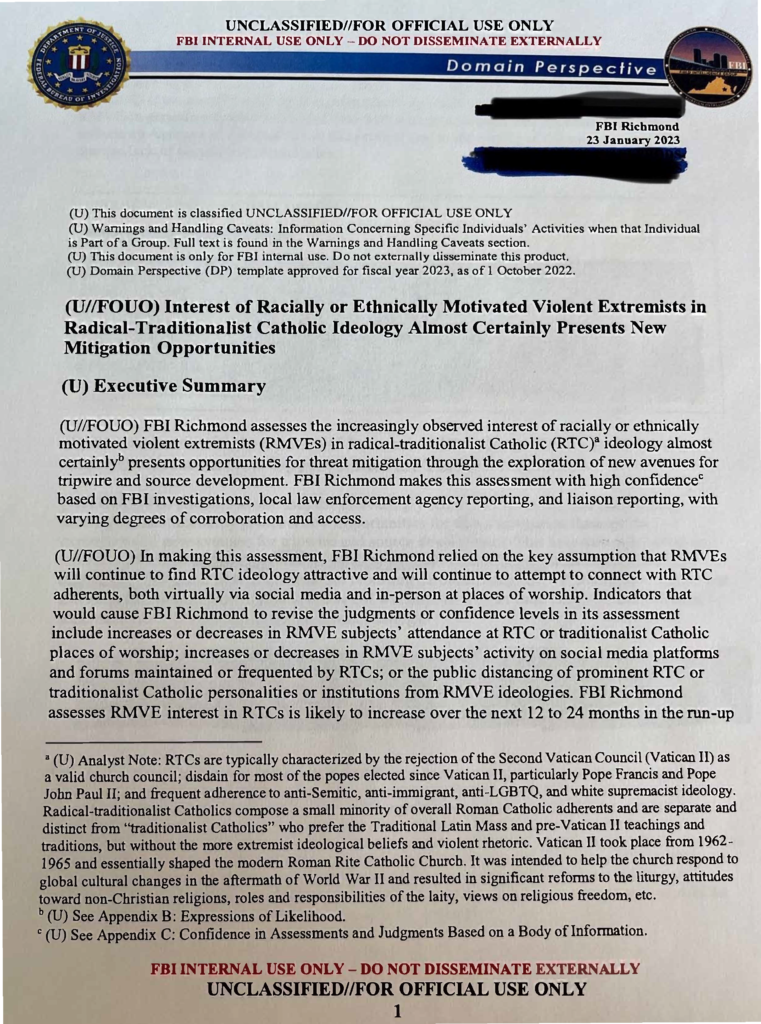
Billy Graham had a similar message to the young people in 1969 that they like the girl in SHE’S LEAVING HOME was right to Re just her parents materialism!!!

Billy Graham, hippies, and the rock concert

Posted on March 5, 2018 by Steve-O

The 1969 Miami Rock Music Festival featured the Grateful Dead, Santana, Canned Heat, Johnny Winter, Vanilla Fudge and, interestingly enough, Billy Graham.

What follows is Billy Graham’s description of his countercultural gospel message at the Miami Rock Music Festival found in his autobiography Just As I Am.

It was eleven o’clock on a Sunday morning, but I was most definitely not in church. Instead, to the horror of some, I was attending the 1969 Miami Rock Music Festival.

America in 1969 was in the midst of cataclysmic social upheaval. Stories of violent student protests against the Vietnam War filled the media. Images from the huge Woodstock music festival that took place just six months before the Miami event near Bethel, New York – for many a striking symbol of the anti-establishment feelings of a whole generation of rebellious youth – were still firmly etched in the public’s memory.

Concert promoter Norman Johnson perhaps hoped my presence would neutralize at least some of the fierce opposition he had encountered from Miami officials. Whatever his reasons, I was delighted for the opportunity to speak from the concert stage to young people who probably would have felt uncomfortable in the average church, and yet whose searching questions about life and sharp protests against society’s values echoed from almost every song.

“I gladly accept your kind invitation to speak to those attending the Miami Rock Festival on Sunday morning, December 28,” I wired him the day before Christmas. “They are the most exciting and challenging generation in American history.”

As I stepped onto the platform that Sunday morning, several thousand young people were lolling on the straw-covered ground or wandering around the concert site in the warm December sun, waiting for such groups as the Grateful Dead and Santana to make their appearance. A few were sleeping; the nonstop music had quit around four that morning.

In order to get a feel for the event, for a few hours the night before I put on a simple disguise and slipped into the crowd. My heart went out to them. Though I was thankful for their youthful exuberance, I was burdened by their spiritual searching and emptiness.

A bearded youth who had come all the way from California for the event recognized me. “Do me a favor,” he said to me with a smile, “and say a prayer to thank God for good friends and good weed.” Every evening at sunset, he confided to me, he got high on marijuana and other drugs.

“You can also get high on Jesus,” I replied.

That Sunday morning, I came prepared to be shouted down, but instead I was greeted with scattered applause. Most listened politely as I spoke. I told the young people that I had been listening carefully to the message of their music. We reject your materialism, it seemed to proclaim, and we want something of the soul. Jesus was a nonconformist, I reminded them, and He could fill their souls and give them meaning and purpose in life. “Tune in to God today, and let Him give you faith. Turn on to His power.”

Afterward two dozen responded by visiting a tent on the grounds set up by a local church as a means of outreach. During the whole weekend, the pastor wrote me later, 350 young people made commitments to Christ, and two thousand New Testaments were distributed.

As I have reflected on my own calling as an evangelist, I frequently recall the words of Christianity’s greatest evangelist, the Apostle Paul: “It has always been my ambition to preach the gospel where Christ was not known … ” (Romans 15:20). … I once told an interviewer that I would be glad to preach in Hell itself-if the Devil would let me out again!

Excerpted from Just As I Am: The Autobiography of Billy Graham (Harper Collins 1997).

Actually the answer to find meaning in life is found in putting your faith and trust in Jesus Christ. The Bible is true from cover to cover and can be trusted.

Thanks for your time.

Sincerely,

Everette Hatcher, everettehatcher@gmail.com, http://www.thedailyhatch.org, cell ph 501-920-5733, Box 23416, LittleRock, AR 72221

______________

Related posts:

MUSIC MONDAY The song LITTLE ONE sung by Rebecca St. James in the film SARAH’S CHOICE

May 30, 2016 – 12:39 am

Little One – From the Film, “Sarah’s Choice” Rebecca St James on faith and values – theDove.us Sarah’s Choice Trailer Sarah’s Choice – Behind the Scenes Rebecca St. James on Sarah’s Choice – CBN.com Rebecca St James Interview on Real Videos Sarah’s Choice – The Proposal Sarahs Choice Pregnancy Test Sarahs Choice Crossroad Sarah’s Choice […]By Everette Hatcher III | Posted in Current Events | Edit | Comments (0)

MUSIC MONDAY Rebecca St James

May 23, 2016 – 12:13 am

Lion – Rebecca St. James I will praise You – Rebecca St James Rebecca St James 1995 TBN – Everything I Do Rebecca St. James & Rachel Scott “Blessed Be Your Name” Rebecca St. James From Wikipedia, the free encyclopedia Rebecca St. James St. James in 2007 Background information Birth name Rebecca Jean Smallbone Also […]By Everette Hatcher III | Posted in Current Events | Edit | Comments (0)

MUSIC MONDAY “Foster the People” Cubbie Fink married to Rebecca St. James who is one of my favorite Christian singers!!!

May 16, 2016 – 7:13 am

Foster The People – Pumped up Kicks Foster the People From Wikipedia, the free encyclopedia Foster the People Foster the People at the 2011 MuchMusic Video Awards, from left to right: Pontius, Foster, and Fink Background information Origin Los Angeles, California, U.S. Genres Indie pop alternative rock indietronica alternative dance neo-psychedelia[1] Years active 2009–present Labels […]By Everette Hatcher III | Posted in Current Events | Edit | Comments (0)

MUSIC MONDAY ‘Apple gave me advice’: Coldplay’s Chris Martin turned to 11-year-old daughter for words of wisdom ahead of Superbowl 50 By DAILYMAIL.COM REPORTER PUBLISHED: 00:58 EST, 2 February 2016

May 9, 2016 – 1:12 am

‘Apple gave me advice’: Coldplay’s Chris Martin turned to 11-year-old daughter for words of wisdom ahead of Superbowl 50 By DAILYMAIL.COM REPORTER PUBLISHED: 00:58 EST, 2 February 2016 | UPDATED: 17:20 EST, 2 February 2016 n Facebook They’ve sold 80 million records and been around for 20 years. But Coldplay’s lead singer Chris Martin, 38, […]By Everette Hatcher III | Posted in Current Events | Edit | Comments (0)

MUSIC MONDAY Chris Martin, Lead Singer of Coldplay: 5 Fast Facts You Need to Know Published 3:44 pm EDT, February 7, 2016

May 2, 2016 – 1:05 am

__________ Chris Martin, Lead Singer of Coldplay: 5 Fast Facts You Need to Know Published 3:44 pm EDT, February 7, 2016 Updated 3:44 pm EDT, February 7, 2016 Comment By Lauren Weigle 17.6k (Getty) Chris Martin has been the front-man of the band Coldplay for about 20 years, though the band changed its name a […]By Everette Hatcher III | Posted in Current Events | Edit | Comments (0)

MUSIC MONDAY Christian Rock Pioneer Larry Norman’s Songs Part 14

April 25, 2016 – 12:57 am

Christian Rock Pioneer Larry Norman’s Songs Part 14 I posted a lot in the past about my favorite Christian musicians such as Keith Green (I enjoyed reading Green’s monthly publications too), and 2nd Chapter of Acts and others. Today I wanted to talk about one of Larry Norman’s songs. David Rogers introduced me to Larry […]By Everette Hatcher III | Posted in Current Events | Edit | Comments (0)

MUSIC MONDAY Christian Rock Pioneer Larry Norman’s Songs Part 13

April 18, 2016 – 12:56 am

Christian Rock Pioneer Larry Norman’s Songs Part 13 I posted a lot in the past about my favorite Christian musicians such as Keith Green (I enjoyed reading Green’s monthly publications too), and 2nd Chapter of Acts and others. Today I wanted to talk about one of Larry Norman’s songs. David Rogers introduced me to Larry […]By Everette Hatcher III | Posted in Current Events | Edit | Comments (0)

MUSIC MONDAY Christian Rock Pioneer Larry Norman’s Songs Part 12

April 11, 2016 – 1:30 am

Christian Rock Pioneer Larry Norman’s Songs Part 12 I posted a lot in the past about my favorite Christian musicians such as Keith Green (I enjoyed reading Green’s monthly publications too), and 2nd Chapter of Acts and others. Today I wanted to talk about one of Larry Norman’s songs. David Rogers introduced me to Larry […]By Everette Hatcher III | Posted in Current Events | Edit | Comments (0)

MUSIC MONDAY Christian Rock Pioneer Larry Norman’s Songs Part 11

April 4, 2016 – 1:23 am

Christian Rock Pioneer Larry Norman’s Songs Part 11 I posted a lot in the past about my favorite Christian musicians such as Keith Green (I enjoyed reading Green’s monthly publications too), and 2nd Chapter of Acts and others. Today I wanted to talk about one of Larry Norman’s songs. David Rogers introduced me to Larry […]By Everette Hatcher III | Posted in Current Events | Edit | Comments (0)

MUSIC MONDAY Christian Rock Pioneer Larry Norman’s Songs Part 10 more on Album “Only Visiting This Planet”

March 28, 2016 – 1:22 am

Christian Rock Pioneer Larry Norman’s Songs Part 10 more on Album “Only Visiting This Planet” I posted a lot in the past about my favorite Christian musicians such as Keith Green (I enjoyed reading Green’s monthly publications too), and 2nd Chapter of Acts and others. Today I wanted to talk about one of Larry Norman’s […]By Everette Hatcher III | Posted in Current Events | Edit | Comments (0)

Sen. Hawley grills AG Garland on anti-Catholic bias in the FBI, raid on pro-life family: ‘Give me an answer!’

Sen. Hawley grills AG Garland on anti-Catholic bias in the FBI, raid on pro-life family: ‘Give me an answer!’

Garland said he did not know specifically how many many FBI sources are embedded in Catholic churches

Sen. Josh Hawley, R-Mo., grilled Attorney General Merrick Garland over the FBI raid on a pro-life Christian man and asked whether the Department of Justice (DOJ) had an “anti-Catholic bias.”

“Our department protects all religions, all ideologies. It does not have any bias against any religion of any kind,” Garland said, fielding the question from Hawley during Wednesday’s Senate Judiciary Committee hearing.

Hawley then characterized the DOJ as an agency quick to expend resources and intelligence to be deployed against Catholics while “turning a blind eye” as people are executed in the streets of American cities.

“Your answer frankly surprises me,” Hawley added.

DOJ, FBI TARGETING CATHOLICS AS ‘VIOLENT EXTREMISTS’ UNDER SCRUTINY BY STATE AGS: ‘BIGOTRY’ IS ‘FESTERING’

U.S. Senator Josh Hawley, R-Mo., asks questions at a committee hearing on data security at Twitter.  

U.S. Senator Josh Hawley, R-Mo., asks questions at a committee hearing on data security at Twitter.   (Kevin Dietsch/Getty Images)

The Missouri senator then turned his attention to the story of Mark Houck.

In September, FBI agents arrested Houck in Kintnersville for allegedly violating the Freedom of Access to Clinic Entrances (FACE) Act, which makes it a federal crime to use force with the intent to injure, intimidate and interfere with anyone because that person produces reproductive health care.

The arrest stemmed from Houck’s alleged altercation with a Planned Parenthood escort in Philadelphia in October 2021. Houck was accused of pushing a 72-year-old man after the escort allegedly verbally harassed Houck’s 12-year-old son outside the clinic.

Days after the arrest, Hawley sent a letter to Garland, accused him of turning a “local dispute into a national case,” and criticized the FBI for executing the search warrant in “extreme a manner as one can imagine.”

According to an FBI source, the agents who came to Houck’s door had guns out and at the ready, but the guns were never pointed at Houck or his family and were lowered or holstered as soon as Houck was taken into custody.

“Why did the FBI do this?” Hawley asked Garland face-to-face during the Senate hearing. “Why did you send 20-30 SWAT-style agents, SWAT-style team to this guy’s house when everybody else had declined to prosecute and he offered to turn himself in?”

Garland said FBI agents on the ground determined how to engage with Houck in the “safest” and easiest way, adding that agents disagreed with Hawley’s description of what happened at the scene. A senior FBI source previously told Fox News that there may have been 15-20 agents at the scene but denied 25 were there.

FORMER FBI SPECIAL AGENT NICOLE PARKER SAYS BUREAU BECAME ‘POLITICALLY WEAPONIZED,’ TRICKLED DOWN FROM HQ

U.S. Attorney General Merrick Garland said the FBI denied Sen. Josh Hawley's characterization of the FBI raid on Mark Houck. 

U.S. Attorney General Merrick Garland said the FBI denied Sen. Josh Hawley’s characterization of the FBI raid on Mark Houck.  ( (Photo by Drew Angerer/Getty Images))

Hawley then asked if it was “objectively necessary” based on established protocol to send agents with long guns and ballistic shields to the home where Houck’s wife and children were at the time of the approach.

Garland again stated the decision was made by FBI agents on the ground. When Hawley asked if he was “abdicating responsibility,” Garland said no.

“Then give me the answer. Do you think, in your opinion, you are the attorney general of the United States. You are in charge of the Justice Department and yes, sir, you are responsible. So give me an answer.”

The two went back and forth for over a minute. Hawley repeatedly pushed for an answer from Garland on whether he thought the FBI raid was “reasonable,” but Garland punted the question and merely suggested the facts were not as Hawley described.

“What that the children weren’t there? That there weren’t long guns there? That there weren’t agents? What do you dispute? What’s the factual premise that you dispute?” Hawley said, clearly flustered.

Garland finally stated that the FBI disputed Hawley’s description of how many agents were at the scene and what their roles were.

TOP DEMOCRAT ON HOUSE WEAPONIZATION SUBCOMMITTEE BLASTS GOP-CREATED PANEL: ‘WEAPONIZATION OF CONGRESS’

Pro-life activist Mark Houck speaks out after jury acquits him in Planned Parenthood incident on 'Hannity.'

Pro-life activist Mark Houck speaks out after jury acquits him in Planned Parenthood incident on ‘Hannity.’ (Fox News)

“You used an unbelievable show of force with guns that I just note liberals usually decry. We’re supposed to hate long guns and assault-style weapons. You’re happy to deploy them against Catholics and innocent children. Happy to,” Hawley later said. “And then you haul them into court and a jury acquits him in one hour. I suggest to you that is a disgraceful performance by your Justice Department and a disgraceful use of resources.”

Hawley then said he “noticed a pattern” and referenced a January 23 memorandum from the FBI field office in Richmond, Virginia, that advocated for “the exploration of new avenues for tripwire and source development against traditionalist Catholics.”

“Attorney General, are you cultivating sources and spies in Latin mass parishes and other Catholic parishes across the country?” Hawley asked.

“The Justice Department does not do that and does not do investigations based on religion. I saw the document you sent. It’s appalling. It’s appalling. I’m in complete agreement with you. I understand that the FBI has withdrawn it and is looking into how this could ever have happened,” Garland replied.

Garland also called the document “inappropriate” and noted it did not reflect the methods the FBI is supposed to use. He added that agents should not be relying on any single organization without doing its own work.

When asked how many informants the FBI has in Catholic churches across America, Garland said, “I don’t know, and I don’t believe we have any informants aimed at Catholic churches. We have a rule against investigations based on First Amendment activity.”

Later he said, “I don’t know specifically” how many sources are embedded in Catholic churches.

Abortion: When Does Life Begin? – R.C. Sproul

Hawley Presses Garland on FBI Memo Targeting Catholics: ‘How Many Informants Do You Have in Catholic Churches?’

Josh Hawley gestures in a suit

Sen. Josh Hawley, R-Mo., seen here on Aug. 3, pressed Attorney General Merrick Garland on Wednesday on how many informants the FBI has in Catholic churches. He was asking about an FBI memo citing the Southern Poverty Law Center on “radical-traditional Catholicism.” Garland said, “The FBI is not targeting Catholics.”(Photo: Drew Angerer/Getty Images)

Sen. Josh Hawley on Wednesday pressed Attorney General Merrick Garland on the FBI memo urging agents to probe the alleged nexus between racially motivated violent extremists and “radical-traditional Catholics.”

“How many informants do you have in Catholic churches across America?” Hawley, R-Mo.,repeatedly asked during a Senate Judiciary Committee hearing.

Garland responded that the FBI does not launch investigations based on religion or on other activities protected by the First Amendment.

Hawley repeatedly cited a memo the FBI’s Richmond, Virginia, office published on Jan. 23, which urged agents to develop “sources with access,” including in “places of worship,” to probe an alleged relationship between “racially or ethnically motivated violent extremists” and “radical-traditional Catholic ideology.”

The FBI told The Daily Signal in a statement on Feb. 9 that it was rescinding the memo after FBI whistleblower Kyle Seraphin published it Feb. 8 on UncoverDC.com. The national FBI office claimed that the memo “does not meet the exacting standards of the FBI,” and promised to remove the document from its database and to “conduct a review of the basis for the document,” but it refused to answer further questions about the move.

The FBI memo cited the discredited Southern Poverty Law Center, including a list of organizations the SPLC brands “radical traditional Catholic hate groups.” As I explain in my book “Making Hate Pay: The Corruption of the Southern Poverty Law Center,” the SPLC took the program it used to bankrupt organizations associated with the Ku Klux Klan and weaponized that program against conservative groups, partially to scare donors into ponying up cash and partially to silence ideological opponents. The SPLC places conservative groups on a “hate map” along with KKK chapters.

Hawley quoted from the memo, noting that it advocated for “‘the exploration of new avenues for tripwire and source developments’ against traditionalist Catholics, including those who favor the Latin Mass.”

“Attorney general, are you cultivating sources and spies in Latin Mass parishes and other Catholic parishes around the country?” the Missouri lawmaker said.

“No, the Justice Department does not do that,” Garland responded. “It does not do investigations based on religion. I saw the document you have. It is appalling. It is appalling. I’m in complete agreement with you. I understand that the FBI has withdrawn it and is now looking into how this could ever have happened.”

Hawley asked Garland to explain how it happened, and the attorney general said, “That’s what they’re looking into.” He repeated his statement that the document is “appalling.”

“I will tell you how it happened,” the senator responded. “This memorandum, which is supposed to be intelligence, cites extensively the Southern Poverty Law Center, which goes on to identify all of these different Catholics as being part of hate groups.”

“Is this how the FBI, under your direction and leadership, is this how they do their intelligence work?” Hawley pressed. “They look at left-wing advocacy groups, to target Catholics? Is this what’s going on? Clearly, it is. How is this happening?”

“The FBI is not targeting Catholics, and as I’ve said, this is an inappropriate memorandum, and it doesn’t reflect the methods that the FBI is supposed to be using,” Garland responded. “It should not be relying on any single organization without doing its own work.”

Hawley asked again, “How many informants do you have in Catholic churches across America?”

“I don’t know, and I don’t believe we have any informants aimed at Catholic churches,” Garland responded. “We have a rule against investigations based on First Amendment activity, and Catholic churches are obviously First Amendment activity. I don’t know the specific answer.”

“You don’t know the specifics of anything, it seems,” Hawley said. “But apparently on your watch this Justice Department is targeting Catholics, targeting people of faith, specifically for their faith views. Mr. Attorney General, I’ll just say to you, it’s a disgrace.”

President Joe Biden has yet to address the memo or the fact that the organization it cited, the Southern Poverty Law Center, has suggested that the Catholic Church itself should be considered a “hate group.”

FBI whistleblowers have told The Daily Signal that the FBI repeatedly trained staff not to cite the SPLC, and then-Attorney General Jeff Sessions promised in 2018 that the Justice Department will not partner with groups such as the SPLC. It remains unclear why the FBI’s Richmond office did not follow this guidance.

Both The Daily Signal and former Vice President Mike Pence‘s Advancing American Freedom have filed Freedom of Information Act requests to get to the bottom of this issue.

Have an opinion about this article? To sound off, please email letters@DailySignal.com and we’ll consider publishing your edited remarks in our regular “We Hear You” feature. Remember to include the url or headline of the article plus your name and town and/or state.


Dr. Francis schaeffer – The flow of Materialism(from Part 4 of Whatever happened to human race? Co-authored by Francis Schaeffer and Dr. C. Everett Koop)

C. Everett Koop
C. Everett Koop, 1980s.jpg
13th Surgeon General of the United States
In office
January 21, 1982 – October 1, 1989

Abortion: What About Those Who Demand Their Rights? – R.C. Sproul

Whatever Happened To The Human Race? | Episode 1 | Abortion of the Human Race (2010)

Standing Strong Under Fire: Popular Abortion Arguments and Why They Fail

Whatever Happened To The Human Race? | Episode 2 | Slaughter of the Innocents (2010)

Ben Shapiro Obliterates Every Pro-Abortion Argument

Whatever Happened To The Human Race? | Episode 3 | Death by Someone’s Choice (2010)

Adrian Rogers: Innocent Blood [#1004] (Audio)

Whatever Happened To The Human Race? | Episode 5 | Truth and History (20…

Abortion: What Is Your Verdict? – R.C. Sproul

John MacArthur Abortion and the Campaign for Immorality (Selected Scriptures)

Arizona Dem gov nominee Katie Hobbs appears to support abortion up to birth

Hobbs accused her Republican opponent Kari Lake of misconstruing her position on late-term abortion, saying the procedure is ‘extremely rare’

Democratic Arizona gubernatorial candidate Katie Hobbs, during a Sunday appearance on CBS’ “Face the Nation,” appeared to suggest that she was in favor of no limits on abortion.

Host Major Garrett noted that her Republican opponent Kari Lake has labeled Hobbs as an “extremist” for her view on abortion. He asked Hobbs whether she supported the current 15-week ban in Arizona or would seek a higher limit as governor.

Hobbs, who currently serves as Arizona’s Secretary of State, said Lake had misconstrued her position and said late-term abortion is “extremely rare.”

FILE: Arizona Secretary of State Katie Hobbs speaks at a roundtable event in Phoenix, Monday, Sept. 19, 2022.

FILE: Arizona Secretary of State Katie Hobbs speaks at a roundtable event in Phoenix, Monday, Sept. 19, 2022. (AP Photo/Ross D. Franklin)

“If it’s being talked about, it’s because something has gone incredibly wrong in the pregnancy. A doctor’s not going to perform an abortion late in pregnancy just because somebody decided they want one. That is ridiculous,” Hobbs said before suggesting that Arizonans would have “government-mandated forced births that risk women’s lives” under a Kari Lake administration.

Asked what her administration’s week limit for abortion access would be, Hobbs evaded answering directly saying that abortion “is a very personal decision that belongs between a woman and her doctor.”

“The government and politicians don’t belong in that decision,” Hobbs said. “We need to let doctors perform the care that they are trained and take an oath to perform.”

DEM GUBERNATORIAL NOMINEE KATIE HOBBS FUMBLES QUESTION ON LATINO COMMUNITY IN HARD-TO-WATCH INTERVIEW

“So, if an Arizona voter were to conclude from your previous answer that you do not favor any specific week limit on abortion, would they be correct?” Garrett asked.

Hobbs repeated her initial answer: “I support leaving the decision between a woman and her doctor and leaving politicians entirely out of it.”

Fox News Digital has reached out to Hobbs’ campaign for comment.

Arizona gubernatorial candidates Katie Hobbs (D), left, and Kari Lake (R), right.

Arizona gubernatorial candidates Katie Hobbs (D), left, and Kari Lake (R), right. (Reuters)

Arizona doctors stopped performing abortions late last month after a judge in Tucson ruled that prosecutors can enforce a law dating to 1864 that bans abortion unless it’s necessary to save a woman’s life. Arizona also has a law passed this year that bans abortion after 15 weeks, creating speculation about what’s allowed.

Democrats have seized on the ruling, which revived the issue ahead of next month’s midterm elections. Democratic lawmakers sent a letter on Tuesday asking Republican Gov. Doug Ducey to call a special session of the Legislature to repeal the 1864 abortion ban.

CLICK HERE TO GET THE FOX NEWS APP

Lake has spoken positively of Arizona’s total ban on abortion, which she called “a great law that’s already on the books.” She has called abortion “the ultimate sin,” said abortion pills should be illegal and that she would sign a bill banning abortion as soon as fetal cardiac activity can be detected, usually around six weeks gestational age and before many women know they’re pregnant.

The Associated Press contributed to this report. 

John MacArthur on Romans 13

Image<img class=”i-amphtml-blurry-placeholder” src=”data:;base64,Edith Schaeffer with her husband, Francis Schaeffer, in 1970 in Switzerland, where they founded L’Abri, a Christian commune.

________________

______________________

September 25, 2021

President Biden  c/o The White House 1600 Pennsylvania Avenue NW Washington, DC 20500

Dear Mr. President,

I really do respect you for trying to get a pulse on what is going on out here. I know that you don’t agree with my pro-life views but I wanted to challenge you as a fellow Christian to re-examine your pro-choice view.

In the past I have spent most of my time looking at this issue from the spiritual side. In the film series “WHATEVER HAPPENED TO THE HUMAN RACE?” the arguments are presented  against abortion (Episode 1),  infanticide (Episode 2),   euthanasia (Episode 3), and then there is a discussion of the Christian versus Humanist worldview concerning the issue of “the basis for human dignity” in Episode 4 and then in the last episode a close look at the truth claims of the Bible.

Francis Schaeffer

__________________________

I truly believe that many of the problems we have today in the USA are due to the advancement of humanism in the last few decades in our society. Ronald Reagan appointed the evangelical Dr. C. Everett Koop to the position of Surgeon General in his administration. He partnered with Dr. Francis Schaeffer in making the video WHATEVER HAPPENED TO THE HUMAN RACE? which can be found on You Tube. It is very valuable information for Christians to have.

Today I want to respond to your letter to me on July 9, 2021. Here it is below:

THE WHITE HOUSE

WASHINGTON

July 9, 2021

Mr. Everette Hatcher III

Alexander, AR

Dear Mr. Hatcher,

Thank you for taking your time to share your thoughts on abortion. Hearing from passionate individuals like me inspires me every day, and I welcome the opportunity to respond to your letter

Our country faces many challenges, and the road we will travel together will be one of the most difficult in our history. Despite these tough times, I have never been more optimistic for the future of America. I believe we are better positioned than any country in the world to lead in the 21st century not just by the example of our power but by the power of our example.

As we move forward to address the complex issues of our time, I encourage you to remain an active participant in helping write the next great chapter of the American story. We need your courage and dedication at this critical time, and we must meet this moment together as the United States of America. If we do that, I believe that our best days still lie ahead.

Sincerely

Joe Biden

Mr. President, my wife was born in JEFFERSON MEMORIAL HOSPITAL in Pine Bluff, Arkansas and Adrian Rogers tells a story about another lady that was born in that same hospital: “They took that grocery sack and Maria home and one hour passed and two hours passed and that baby was still crying and panting for his life in that grocery sack. They took that little baby down to the hospital there in Pine Bluff, Arkansas, and they called an obstetrician and he called a pediatrician and they called nurses and they began to work on that little baby. Today that baby is alive and well and healthy, that little mass of protoplasm. That little thing that wasn’t a human being is alive and well. I want to tell you they spent $150,000 to save the life of that baby. NOW CAN YOU EXPLAIN TO ME HOW THEY CAN SPEND $150,000 TO SAVE THE LIFE OF SOMETHING THAT SOMEBODY WAS PAYING ANOTHER DOCTOR TO TAKE THE LIFE OF?”

_________________

Carl Sagan pictured below:

Image result for carl sagan

_________

_

Recently I have been revisiting my correspondence in 1995 with the famous astronomer Carl Sagan who I had the privilege to correspond with in 1994, 1995 and 1996. In 1996 I had a chance to respond to his December 5, 1995letter on January 10, 1996 and I never heard back from him again since his cancer returned and he passed away later in 1996. Below is what Carl Sagan wrote to me in his December 5, 1995 letter:

Thanks for your recent letter about evolution and abortion. The correlation is hardly one to one; there are evolutionists who are anti-abortion and anti-evolutionists who are pro-abortion.You argue that God exists because otherwise we could not understand the world in our consciousness. But if you think God is necessary to understand the world, then why do you not ask the next question of where God came from? And if you say “God was always here,” why not say that the universe was always here? On abortion, my views are contained in the enclosed article (Sagan, Carl and Ann Druyan {1990}, “The Question of Abortion,” Parade Magazine, April 22.)

I was introduced to when reading a book by Francis Schaeffer called HE IS THERE AND HE IS NOT SILENT written in 1968.

Image result for francis schaeffer

Francis Schaeffer

I was blessed with the opportunity to correspond with Dr. Sagan, and in his December 5, 1995 letter Dr. Sagan went on to tell me that he was enclosing his article “The Question of Abortion: A Search for Answers”by Carl Sagan and Ann Druyan. I am going to respond to several points made in that article. Here is a portion of Sagan’s article (here is a link to the whole article):

Image result for adrian rogers
(both Adrian Rogers and Francis Schaeffer mentioned Carl Sagan in their books and that prompted me to write Sagan and expose him to their views.

Image result for Ann Druyan

Carl Sagan and Ann Druyan pictured above

Related image

 “The Question of Abortion: A Search for Answers”

by Carl Sagan and Ann Druyan

For the complete text, including illustrations, introductory quote, footnotes, and commentary on the reaction to the originally published article see Billions and Billions.

The issue had been decided years ago. The court had chosen the middle ground. You’d think the fight was over. Instead, there are mass rallies, bombings and intimidation, murders of workers at abortion clinics, arrests, intense lobbying, legislative drama, Congressional hearings, Supreme Court decisions, major political parties almost defining themselves on the issue, and clerics threatening politicians with perdition. Partisans fling accusations of hypocrisy and murder. The intent of the Constitution and the will of God are equally invoked. Doubtful arguments are trotted out as certitudes. The contending factions call on science to bolster their positions. Families are divided, husbands and wives agree not to discuss it, old friends are no longer speaking. Politicians check the latest polls to discover the dictates of their consciences. Amid all the shouting, it is hard for the adversaries to hear one another. Opinions are polarized. Minds are closed.

Is it wrong to abort a pregnancy? Always? Sometimes? Never? How do we decide? We wrote this article to understand better what the contending views are and to see if we ourselves could find a position that would satisfy us both. Is there no middle ground? We had to weigh the arguments of both sides for consistency and to pose test cases, some of which are purely hypothetical. If in some of these tests we seem to go too far, we ask the reader to be patient with us–we’re trying to stress the various positions to the breaking point to see their weaknesses and where they fail.

In contemplative moments, nearly everyone recognizes that the issue is not wholly one-sided. Many partisans of differing views, we find, feel some disquiet, some unease when confronting what’s behind the opposing arguments. (This is partly why such confrontations are avoided.) And the issue surely touches on deep questions: What are our responses to one another? Should we permit the state to intrude into the most intimate and personal aspects of our lives? Where are the boundaries of freedom? What does it mean to be human?

Of the many actual points of view, it is widely held–especially in the media, which rarely have the time or the inclination to make fine distinctions–that there are only two: “pro-choice” and “pro-life.” This is what the two principal warring camps like to call themselves, and that’s what we’ll call them here. In the simplest characterization, a pro-choicer would hold that the decision to abort a pregnancy is to be made only by the woman; the state has no right to interfere. And a pro-lifer would hold that, from the moment of conception, the embryo or fetus is alive; that this life imposes on us a moral obligation to preserve it; and that abortion is tantamount to murder. Both names–pro-choice and pro-life–were picked with an eye toward influencing those whose minds are not yet made up: Few people wish to be counted either as being against freedom of choice or as opposed to life. Indeed, freedom and life are two of our most cherished values, and here they seem to be in fundamental conflict.

Let’s consider these two absolutist positions in turn. A newborn baby is surely the same being it was just before birth. There ‘s good evidence that a late-term fetus responds to sound–including music, but especially its mother’s voice. It can suck its thumb or do a somersault. Occasionally, it generates adult brain-wave patterns. Some people claim to remember being born, or even the uterine environment. Perhaps there is thought in the womb. It’s hard to maintain that a transformation to full personhood happens abruptly at the moment of birth. Why, then, should it be murder to kill an infant the day after it was born but not the day before?

As a practical matter, this isn’t very important: Less than 1 percent of all tabulated abortions in the United States are listed in the last three months of pregnancy (and, on closer investigation, most such reports turn out to be due to miscarriage or miscalculation). But third-trimester abortions provide a test of the limits of the pro-choice point of view. Does a woman’s “innate right to control her own body” encompass the right to kill a near-term fetus who is, for all intents and purposes, identical to a newborn child?

——-

End of Sagan Excerpt

When I was in high school the book and film series named WHATEVER HAPPENED TO THE HUMAN RACE? came out and it featured Doctor C. Everett Koop and Francis Schaeffer and they looked at the issues of abortion, infanticide, and youth euthanasia and they looked at comments from such scholars as Peter Singer and James D. Watson.

Image result for c. everett koop


C. Everett Koop pictured above and Peter Singer below

Peter Singer, an endowed chair at Princeton’s Center for Human Values, said, “Killing a disabled infant is not morally equivalent to killing a person. Very often it is not wrong at all.”

James D.Watson

In May 1973, James D. Watson, the Nobel Prize laureate who discovered the double helix of DNA, granted an interview to Prism magazine, then a publication of the American Medical Association. Time later reported the interview to the general public, quoting Watson as having said, “If a child were not declared alive until three days after birth, then all parents could be allowed the choice only a few are given under the present system. The doctor could allow the child to die if the parents so choose and save a lot of misery and suffering. I believe this view is the only rational, compassionate attitude to have.”

Carl Sagan

On August 30, 1995 I mailed a letter to Carl Sagan that probably prompted this discussion on abortion and it enclosed a lengthy story from Adrian Rogers about an abortion case in Pine Bluff, Arkansas that almost became an infanticide case:

An excerpt from the Sunday morning message (11-6-83) by Adrian Rogers in Memphis, TN.

I want to tell you that secular humanism and so-called abortion rights are inseparably linked together. We have been taught that our bodies and our children are the products of the evolutionary process, and so therefore human life may not be all that valuable to begin with. We have come today to where it is legal and even considered to be a good thing to put little babies to death…15 million little babies put to death since 1973 because of this philosophy of Secular Humanism.

How did the court make that type of decision? You would think it would be so obvious. You can’t do that! You can’t kill little babies! Why? Because the Bible says! Friend, they don’t give a hoot what the Bible says! There used to be a time when they talked about what the Bible says because there was a time that we as a nation had a constitution that was based in the Judeo-Christian ethic, but today if we say “The Bible says” or “God says “Separation of Church and State. Don’t tell us what the Bible says or what God says. We will tell you what we think!” Therefore, they look at the situation and they decide if it is right or wrong purely on the humanistic philosophy that right and wrong are relative and the situation says what is right or what is wrong.

This little girl just 19 years old went into the doctor’s office and he examined her. He said, “We can take take of you.” He gave her an injection in her arm that was to cause her to go into labor and to get rid of that protoplasm, that feud, that little mass that was in her, but she wasn’t prepared for the sound she was about to hear. It was a little baby crying. That little baby weighed 13 ounces. His hand the size of my thumbnail. You know what the doctor did. The doctor put that little baby in a grocery sack and gave it to Maria’s two friends who were with her in that doctor office and Said, “It will stop making those noises after a while.”

Image result for adrian rogers

(Adrian Rogers pictured above)

Image result for pine bluff arkansas 1983
Pine Bluff, Arkansas
Image result for jefferson county hospital, pine bluff, arkansas
My wife was born in main hospital in Pine Bluff, Arkansas

They took that grocery sack and Maria home and one hour passed and two hours passed and that baby was still crying and panting for his life in that grocery sack. They took that little baby down to the hospital there in Pine Bluff, Arkansas, and they called an obstetrician and he called a pediatrician and they called nurses and they began to work on that little baby. Today that baby is alive and well and healthy, that little mass of protoplasm. That little thing that wasn’t a human being is alive and well. I want to tell you they spent $150,000 to save the life of that baby. NOW CAN YOU EXPLAIN TO ME HOW THEY CAN SPEND $150,000 TO SAVE THE LIFE OF SOMETHING THAT SOMEBODY WAS PAYING ANOTHER DOCTOR TO TAKE THE LIFE OF? The same life!!! Are you going to tell me that is not a baby? Are you going to tell me that if that baby had been put to death it would not have been murder? You will never convince me of that. What has happened to us in America? We have been sold a bill of goods by the Secular Humanists!

Image result for carl sagan humanist of the year 1982
Carl Sagan was elected the HUMANIST OF THE YEAR in 1982 by the AMERICAN HUMANIST ASSOCIATION

Carl Sagan asked, “Does a woman’s “innate right to control her own body” encompass the right to kill a near-term fetus who is, for all intents and purposes, identical to a newborn child?”

This message “A Christian Manifesto” was given in 1982 by the late Christian Philosopher Francis Schaeffer when he was age 70 at D. James Kennedy’s Corral Ridge Presbyterian Church.
Listen to this important message where Dr. Schaeffer says it is the duty of Christians to disobey the government when it comes in conflict with God’s laws. So many have misinterpreted Romans 13 to mean unconditional obedience to the state. When the state promotes an evil agenda and anti-Christian statues we must obey God rather than men. Acts
I use to watch James Kennedy preach from his TV pulpit with great delight in the 1980’s. Both of these men are gone to be with the Lord now. We need new Christian leaders to rise up in their stead.
To view Part 2 See Francis Schaeffer Lecture- Christian Manifesto Pt 2 of 2 video
The religious and political freedom’s we enjoy as Americans was based on the Bible and the legacy of the Reformation according to Francis Schaeffer. These freedoms will continue to diminish as we cast off the authority of Holy Scripture.
In public schools there is no other view of reality but that final reality is shaped by chance.
Likewise, public television gives us many things that we like culturally but so much of it is mere propaganda shaped by a humanistic world and life view.

_____________________________

I was able to watch Francis Schaeffer deliver a speech on a book he wrote called “A Christian Manifesto” and I heard him in several interviews on it in 1981 and 1982. I listened with great interest since I also read that book over and over again. Below is a portion of one of Schaeffer’s talks  on a crucial subject that is very important today too.

A great talk by Francis Schaeffer:A Christian Manifesto
by Dr. Francis A. SchaefferThis address was delivered by the late Dr. Schaeffer in 1982 at the Coral Ridge Presbyterian Church, Fort Lauderdale, Florida. It is based on one of his books, which bears the same title._________

Infanticide and youth enthansia ———So what we find then, is that the medical profession has largely changed — not all doctors. I’m sure there are doctors here in the audience who feel very, very differently, who feel indeed that human life is important and you wouldn’t take it, easily, wantonly. But, in general, we must say (and all you have to do is look at the TV programs), all you have to do is hear about the increased talk about allowing the Mongoloid child — the child with Down’s Syndrome — to starve to death if it’s born this way. Increasingly, we find on every side the medical profession has changed its views.

Image result for Mongoloid child -- the child with Down's Syndrome  FRANCIS SCHAEFFER

The view now is, “Is this life worth saving?”I look at you… You’re an older congregation than I am usually used to speaking to. You’d better think, because — this — means — you! It does not stop with abortion and infanticide. It stops at the question, “What about the old person? Is he worth hanging on to?” Should we, as they are doing in England in this awful organization, EXIT, teach older people to commit suicide? Should we help them get rid of them because they are an economic burden, a nuisance? I want to tell you, once you begin chipping away the medical profession…

The intrinsic value of the human life is founded upon the Judeo-Christian concept that man is unique because he is made in the image of God, and not because he is well, strong, a consumer, a sex object or any other thing. That is where whatever compassion this country has is, and certainly it is far from perfect and has never been perfect. Nor out of the Reformation has there been a Golden Age, but whatever compassion there has ever been, it is rooted in the fact that our culture knows that man is unique, is made in the image of God. Take it away, and I just say gently, the stopper is out of the bathtub for all human life.

Image result for Mongoloid child -- the child with Down's Syndrome  FRANCIS SCHAEFFER

______________________________________

Thank you so much for your time. I know how valuable it is. I also appreciate the fine family that you have and your commitment as a father and a husband. Now I wanted to make some comments concerning our shared Christian faith.  I  respect you for putting your faith in Christ for your eternal life. I am pleading to you on the basis of the Bible to please review your religious views concerning abortion. It was the Bible that caused the abolition movement of the 1800’s and it also was the basis for Martin Luther King’s movement for civil rights and it also is the basis for recognizing the unborn children.

Sincerely,

Everette Hatcher III, 13900 Cottontail Lane, Alexander, AR 72002, ph 501-920-5733,

Related posts:

Al Mohler on Kermit Gosnell’s abortion practice

Francis Schaeffer: “Whatever Happened to the Human Race” (Episode 1) ABORTION OF THE HUMAN RACE Published on Oct 6, 2012 by AdamMetropolis ________________ Picture of Francis Schaeffer and his wife Edith from the 1930′s above. I was sad to read about Edith passing away on Easter weekend in 2013. I wanted to pass along this fine […]

A man of pro-life convictions: Bernard Nathanson (part4)

ABORTION – THE SILENT SCREAM 1 / Extended, High-Resolution Version (with permission from APF). Republished with Permission from Roy Tidwell of American Portrait Films as long as the following credits are shown: VHS/DVDs Available American Portrait Films Call 1-800-736-4567 http://www.amport.com The Hand of God-Selected Quotes from Bernard N. Nathanson, M.D., Unjust laws exist. Shall we […]

Abortionist Bernard Nathanson turned pro-life activist (part 11)

ABORTION – THE SILENT SCREAM 1 / Extended, High-Resolution Version (with permission from APF). Republished with Permission from Roy Tidwell of American Portrait Films as long as the following credits are shown: VHS/DVDs Available American Portrait Films Call 1-800-736-4567 http://www.amport.com The Hand of God-Selected Quotes from Bernard N. Nathanson, M.D., Unjust laws exist. Shall we […]

Abortionist Bernard Nathanson turned pro-life activist (part 9)(Donald Trump changes to pro-life view)

When I think of the things that make me sad concerning this country, the first thing that pops into my mind is our treatment of unborn children. Donald Trump is probably going to run for president of the United States. Tony Perkins of the Family Research Council recently had a conversation with him concerning the […]

Taking on Ark Times Bloggers on various issues Part U “Do men have a say in the abortion debate?” (includes the film SLAUGHTER OF THE INNOCENTS and editorial cartoon)

I have gone back and forth and back and forth with many liberals on the Arkansas Times Blog on many issues such as abortion, human rights, welfare, poverty, gun control  and issues dealing with popular culture. Here is another exchange I had with them a while back. My username at the Ark Times Blog is Saline […]

Taking on Ark Times Bloggers on various issues Part T “Abortion is a dirty business” (includes video “Truth and History” and editorial cartoon)

I have gone back and forth and back and forth with many liberals on the Arkansas Times Blog on many issues such as abortion, human rights, welfare, poverty, gun control  and issues dealing with popular culture. Here is another exchange I had with them a while back. My username at the Ark Times Blog is Saline […]

“Sanctity of Life Saturday” Abortion supporters lying in order to further their clause? Window to the Womb (includes video ABORTION OF THE HUMAN RACE)

It is truly sad to me that liberals will lie in order to attack good Christian people like state senator Jason Rapert of Conway, Arkansas because he headed a group of pro-life senators that got a pro-life bill through the Arkansas State Senate the last week of January in 2013. I have gone back and […]

Taking on Ark Times Bloggers on various issues Part D “If you can’t afford a child can you abort?”Francis Schaeffer Quotes part 4 includes the film ABORTION OF THE HUMAN RACE) (editorial cartoon)

I have gone back and forth and back and forth with many liberals on the Arkansas Times Blog on many issues such as abortion, human rights, welfare, poverty, gun control  and issues dealing with popular culture. Here is another exchange I had with them a while back. My username at the Ark Times Blog is Saline […]

Taking on Ark Times Bloggers on various issues Part C “Abortion” (Francis Schaeffer Quotes part 3 includes the film SLAUGHTER OF THE INNOCENTS) (editorial cartoon)

I have gone back and forth and back and forth with many liberals on the Arkansas Times Blog on many issues such as abortion, human rights, welfare, poverty, gun control  and issues dealing with popular culture. Here is another exchange I had with them a while back. My username at the Ark Times Blog is Saline […]

Taking on Ark Times Bloggers on various issues Part B “Gendercide” (Francis Schaeffer Quotes Part 2 includes the film ABORTION OF THE HUMAN RACE) (editorial cartoon)

I have gone back and forth and back and forth with many liberals on the Arkansas Times Blog on many issues such as abortion, human rights, welfare, poverty, gun control  and issues dealing with popular culture. Here is another exchange I had with them a while back. My username at the Ark Times Blog is Saline […]

SANCTITY OF LIFE SATURDAY “AngryOldWoman” blogger argues that she has no regrets about past abortion

Sometimes you can see evidences in someone’s life of how content they really are. I saw  something like that on 2-8-13 when I confronted a blogger that goes by the name “AngryOldWoman” on the Arkansas Times Blog. See below. Leadership Crisis in America Published on Jul 11, 2012 Picture of Adrian Rogers above from 1970′s […]

“Sanctity of Life Saturday” The Church Awakens: Whatever Happened to the Human Race? (includes the video ABORTION OF THE HUMAN RACE)

In the film series “WHATEVER HAPPENED TO THE HUMAN RACE?” the arguments are presented  against abortion (Episode 1),  infanticide (Episode 2),   euthenasia (Episode 3), and then there is a discussion of the Christian versus Humanist worldview concerning the issue of “the basis for human dignity” in Episode 4 and then in the last episode a close […]

Taking on Ark Times Bloggers on various issues Part H “Are humans special?” includes film ABORTION OF THE HUMAN RACE) Reagan: ” To diminish the value of one category of human life is to diminish us all”

I have gone back and forth and back and forth with many liberals on the Arkansas Times Blog on many issues such as abortion, human rights, welfare, poverty, gun control  and issues dealing with popular culture. Here is another exchange I had with them a while back. My username at the Ark Times Blog is Saline […]

Taking on Ark Times Bloggers on various issues Part G “How do moral nonabsolutists come up with what is right?” includes the film “ABORTION OF THE HUMAN RACE”)

I have gone back and forth and back and forth with many liberals on the Arkansas Times Blog on many issues such as abortion, human rights, welfare, poverty, gun control  and issues dealing with popular culture. Here is another exchange I had with them a while back. My username at the Ark Times Blog is Saline […]

Taking on Ark Times Bloggers on various issues Part E “Moral absolutes and abortion” Francis Schaeffer Quotes part 5(includes the film SLAUGHTER OF THE INNOCENTS) (editorial cartoon)

I have gone back and forth and back and forth with many liberals on the Arkansas Times Blog on many issues such as abortion, human rights, welfare, poverty, gun control  and issues dealing with popular culture. Here is another exchange I had with them a while back. My username at the Ark Times Blog is Saline […]

Francis Schaeffer’s “How should we then live?” Video and outline of episode 10 “Final Choices” (Schaeffer Sundays)

E P I S O D E 1 0   Dr. Francis Schaeffer – Episode X – Final Choices 27 min FINAL CHOICES I. Authoritarianism the Only Humanistic Social Option One man or an elite giving authoritative arbitrary absolutes. A. Society is sole absolute in absence of other absolutes. B. But society has to be […]

Francis Schaeffer’s “How should we then live?” Video and outline of episode 9 “The Age of Personal Peace and Affluence” (Schaeffer Sundays)

E P I S O D E 9 Dr. Francis Schaeffer – Episode IX – The Age of Personal Peace and Affluence 27 min T h e Age of Personal Peace and Afflunce I. By the Early 1960s People Were Bombarded From Every Side by Modern Man’s Humanistic Thought II. Modern Form of Humanistic Thought Leads […]

Francis Schaeffer’s “How should we then live?” Video and outline of episode 8 “The Age of Fragmentation” (Schaeffer Sundays)

E P I S O D E 8 Dr. Francis Schaeffer – Episode VIII – The Age of Fragmentation 27 min I saw this film series in 1979 and it had a major impact on me. T h e Age of FRAGMENTATION I. Art As a Vehicle Of Modern Thought A. Impressionism (Monet, Renoir, Pissarro, Sisley, […]

Francis Schaeffer’s “How should we then live?” Video and outline of episode 7 “The Age of Non-Reason” (Schaeffer Sundays)

E P I S O D E 7 Dr. Francis Schaeffer – Episode VII – The Age of Non Reason I am thrilled to get this film series with you. I saw it first in 1979 and it had such a big impact on me. Today’s episode is where we see modern humanist man act […]

Francis Schaeffer’s “How should we then live?” Video and outline of episode 6 “The Scientific Age” (Schaeffer Sundays)

E P I S O D E 6 How Should We Then Live 6#1 Uploaded by NoMirrorHDDHrorriMoN on Oct 3, 2011 How Should We Then Live? Episode 6 of 12 ________ I am sharing with you a film series that I saw in 1979. In this film Francis Schaeffer asserted that was a shift in […]

Francis Schaeffer’s “How should we then live?” Video and outline of episode 5 “The Revolutionary Age” (Schaeffer Sundays)

E P I S O D E 5 How Should We Then Live? Episode 5: The Revolutionary Age I was impacted by this film series by Francis Schaeffer back in the 1970′s and I wanted to share it with you. Francis Schaeffer noted, “Reformation Did Not Bring Perfection. But gradually on basis of biblical teaching there […]

Francis Schaeffer’s “How should we then live?” Video and outline of episode 4 “The Reformation” (Schaeffer Sundays)

Dr. Francis Schaeffer – Episode IV – The Reformation 27 min I was impacted by this film series by Francis Schaeffer back in the 1970′s and I wanted to share it with you. Schaeffer makes three key points concerning the Reformation: “1. Erasmian Christian humanism rejected by Farel. 2. Bible gives needed answers not only as to […]

“Schaeffer Sundays” Francis Schaeffer’s “How should we then live?” Video and outline of episode 3 “The Renaissance”

Francis Schaeffer’s “How should we then live?” Video and outline of episode 3 “The Renaissance” Francis Schaeffer: “How Should We Then Live?” (Episode 3) THE RENAISSANCE I was impacted by this film series by Francis Schaeffer back in the 1970′s and I wanted to share it with you. Schaeffer really shows why we have so […]

Francis Schaeffer’s “How should we then live?” Video and outline of episode 2 “The Middle Ages” (Schaeffer Sundays)

  Francis Schaeffer: “How Should We Then Live?” (Episode 2) THE MIDDLE AGES I was impacted by this film series by Francis Schaeffer back in the 1970′s and I wanted to share it with you. Schaeffer points out that during this time period unfortunately we have the “Church’s deviation from early church’s teaching in regard […]

Francis Schaeffer’s “How should we then live?” Video and outline of episode 1 “The Roman Age” (Schaeffer Sundays)

Francis Schaeffer: “How Should We Then Live?” (Episode 1) THE ROMAN AGE   Today I am starting a series that really had a big impact on my life back in the 1970′s when I first saw it. There are ten parts and today is the first. Francis Schaeffer takes a look at Rome and why […]

By Everette Hatcher III | Posted in Francis Schaeffer | Edit | Comments (0)

The Biden administration will “defend reproductive freedom” for all Americans “regardless of their gender” or “gender identity,” according to the proclamation. But subscribers to biological reality know that only one gender can get pregnant. PRESIDENT BIDEN NEEDS A CLASS IN BIOLOGY!!!

The Woke Zone Trilogy

John Stossel takes up for Babylon Bee and notes “Even a few left-leaning comedians like Ricky Gervais and Dave Chappelle are mocking the intolerant left!”

Joe Biden scratching ear in front of an American flag

President Joe Biden released a Women’s History Month Proclamation on Feb. 28 in which the president shows his confusion about who can get pregnant. Pictured: Biden speaks during the annual House Democrats Issues Conference on March 1, 2023, in Baltimore, Md. (Photo: Drew Angerer/Getty Images)

President Joe Biden claims women need abortion to be successful in his 2023 Women’s History Month Proclamation.

“[D]espite significant progress, women and girls continue to face systemic barriers to full and equal participation in our economy and society,” Biden’s proclamation, released Feb. 28, reads. “Last year, the Supreme Court overturned Roe v. Wade, stripping away a constitutional right from the American people and the ability of millions of women to make decisions about their own bodies, putting their health and lives at risk.”

The president mentioned abortion and “reproductive rights” five times in his announcement and cited women’s suffrage once. Yet, the president appears to be confused about who can have an abortion.

The Biden administration will “defend reproductive freedom” for all Americans “regardless of their gender” or “gender identity,” according to the proclamation. But subscribers to biological reality know that only one gender can get pregnant.

This is not the first time the Biden administration has misunderstood the definition of womanhood. The White House’s 2022 fiscal year budget replaced the word “mothers” with “birthing people.” The Democrats’ May 2022 abortion bill used the word “person” to refer to those who bear and give birth to children instead of the words “woman,” “women,” or “female.”

Health and Human Services Secretary Xavier Becerra appeared to become flustered when asked to define the term “birthing people.”

“I’ll check on the language there,” Becerra said, “but I think if we’re talking about those who give birth, I think we’re talking about—I don’t know how else to explain it.”

Biden’s proclamation highlights his administration’s work to further abortion. He mentioned his executive orders to “safeguard access to reproductive care, including medication abortion,” ensure women can receive “emergency medical care,” and protect patients’ access to information about their “reproductive rights.”

The president said he has called on Congress to pass a law securing “the right to choose” in every state, undoing the Supreme Court decision in Dobbs v. Jackson Women’s Health Organization, which returned the power to legislate abortion to the states by overruling Roe v. Wade. He also touted his Gender Policy Counsel and the so-called Respect for Marriage Act.

“Women continue to lead as advocates for reproductive rights, champions of racial justice, and LGBTQI+ equality,” the proclamation says.

Biden has chosen to intertwine women’s history with the history of abortion and the progress of women’s rights with securing a woman’s right to end the life of her child. All the while, he doesn’t know what makes a woman a woman.

Instead of pretending abortion is the keystone to the progress of women, the president should have dedicated his attention to the actual accomplishments women have made in America, progress which is worth celebrating every March.

Three sitting Supreme Court justices are women, and women constitute more than a quarter of the 118th Congress. The House of Representatives is more than 28% female, while women make up half of the Senate.

The Biden administration has demonstrated it cares more about ensuring abortion is legal than about what is actually best for women. If the president thinks abortion is an essential part of women’s history, he clearly doesn’t know what women are capable of.

Have an opinion about this article? To sound off, please email letters@DailySignal.com, and we’ll consider publishing your edited remarks in our regular “We Hear You” feature. Remember to include the URL or headline of the article plus your name and town and/or state.

Late night hosts like Stephen Colbert, seen speaking during the Montclair Film Festival on Oct. 23, passionately defend leftists to the point of lecturing, rather than providing comedic relief. (Photo: Manny Carabel/Getty Images)

A woman tells the cop who stopped her in a carpool lane she’s allowed to drive there because her pronouns are “they” and “them.”

That’s from a video by a conservative Christian satire site called the Babylon Bee. Their humor gets millions of views.

“Christian conservatives used to … be very dour and self-serious,” says Bee editor-in-chief Kyle Mann in my new video.

Today, he says, it’s the left who are self-serious. “They’re the ones that have trouble laughing at themselves.”

For example, late night hosts like Jimmy Kimmel and Stephen Colbert passionately defend COVID-19 vaccines.

“It is a lecture,” complains Mann.

“The left used to be anti-establishment,” adds Bee actress Chandler Juliet. Now, she says, ‘They’ve become the blob. … We’re super happy to be leading the comedic conversation on the right.”

One Babylon Bee video, “The Woke Zone,” makes fun of the way the media ignored violence and arson during the George Floyd protests.

“Do you ever feel gratitude to the left that they give you so much material?” I ask.

“We have to write things that are funnier than things they’re actually doing,” Mann responds. “That makes our job very difficult.”

One Bee sketch portrays its writers struggling to find new material.

“John Kerry warns that the war in Ukraine might distract from climate change!” suggests one.

Can’t do it, explains another. “It actually happened.” Yes, Kerry really did say that.

“Cosmo magazine features a morbidly obese woman on the cover as the picture of health” and, “Math professor says ‘two plus two equals four’ is racist!” are among other ideas that can’t be used as jokes.

“A math professor really said two plus two equals four is racist?” I ask.

It’s “a colonialist, white supremacist idea,” explains Mann.

Today the Bee reaches more people than The Onion. The establishment doesn’t like that, so some people actually sic so-called fact checkers on the Bee.

One article fact-checked by Snopes was titled, “Bernie Sanders Vows To Round Up Remaining ISIS Members, Allow Them To Vote.”

“Does Snopes not understand that you’re making jokes?” I ask.

“I think that they know what our intention is,” answers Juliet. “They just don’t like us.”

Recently, Twitter banned the Bee. Their offense was tweeting an article that named Assistant Secretary of Health Rachel Levine “Babylon Bee’s Man of the Year.”

Levine is a transgender woman. Calling her the man of the year is a joke I wouldn’t make. But it doesn’t need to be censored.

Twitter says they’ll allow the Bee back on the platform only if they delete the tweet. Mann says he won’t.

“Twitter has the capability to just delete the tweet themselves. They want us to bend the knee and be the ones to click, ‘Yes, we acknowledge hateful conduct.’ We’re not going to do that.”

Today, a lot of comedians attract sizable audiences by mocking the left. Some I found funny are JP Sears, Ryan Long and FreedomToons.

The culture is changing.

The highest rating late-night comic these days is often not Colbert, Kimmel or Fallon, but Greg Gutfeld of Fox.

Even a few left-leaning comedians like Ricky Gervais and Dave Chappelle are mocking the intolerant left.

“I talk about AIDS, famine, cancer, the Holocaust, rape, pedophilia … the one thing you mustn’t joke about is identity politics,” says Gervais in his recent Netflix special.

Professional media critics trashed him for that. But the special was hugely popular with the public.

The Rotten Tomatoes ratings are revealing. Critics gave Gervais’ special a 29% rating, calling it “terribly unfunny” and “a detestable combination of smug and obtuse.”

Viewers gave it a 92% rating.

The same is true of Chapelle’s latest special, “The Closer.” Critics give it just 40%. The audience gives it 95%.

Clearly, many people are tired of smug, condescending humor.

I’m glad the Babylon Bee, and others, give us an alternative.

COPYRIGHT 2022 BY JFS PRODUCTIONS INC.

The Daily Signal publishes a variety of perspectives. Nothing written here is to be construed as representing the views of The Heritage Foundation.

Have an opinion about this article? To sound off, please email letters@DailySignal.com and we’ll consider publishing your edited remarks in our regular “We Hear You” feature. Remember to include the url or headline of the article plus your name and town and/or state.

After Life 2 – Man identifies as an 8 year old girl

—-

After Life on Netflix

——

Before I get into the fine article by Brendan O’Neill which I present in its entirety, I wanted to quote Francis Schaeffer who spent his life examining the humanism that now Ricky Gervais embraces!

All humans have moral motions and that is why Ricky Gervais knows it is wrong to let biological men use ladies’ bathrooms!!!!!!

Francis Schaffer in his book THE GOD WHO IS THERE addresses these same issues:

“[in Christianity] there is a sufficient basis for morals. Nobody has ever discovered a way of having real “morals” without a moral absolute. If there is no moral absolute, we are left with hedonism (doing what I like) or some form of the social contract theory (what is best for society as a a hole is right). However, neither of these alternative corresponds to the moral motions that men have. Talk to people long enough and deeply enough, and you will find that they consider some things are really right and something are really wrong. Without absolutes, morals as morals cease to exist, and humanistic mean starting from himself is unable to find the absolute he needs. But because the God of the Bible is there, real morals exist. Within this framework I can say one action is right and another wrong, without talking nonsense.” 117

Francis Schaeffer in the film WHATEVER HAPPENED TO THE HUMAN RACE?

Francis and Edith Schaeffer

Brendan O’Neill

Ricky Gervais is guilty of blasphemy

He has mocked identity politics – the god of our times

I have long thought that if Life of Brian came out today, it wouldn’t be Christians kicking up a fuss about it — it would be trans activists.

When Monty Python’s classic tale of a man mistaken for a Messiah came to cinemas in 1979, people of faith weren’t happy. They saw it as taking the mick out of Christ and they aired their displeasure noisily. Nuns in New York picketed cinemas. In Ireland the film was banned for eight years.

In 2022 I reckon it would be a very different story. It wouldn’t be Monty Python’s ribbing of the gospels that would outrage the chattering classes — it would be their mockery of trans people.

Life of Brian was way ahead of time. It was Terf before Terf was even a thing. There is a brilliantly observed scene in which Stan of the People’s Front of Judea — or is it the Judean People’s Front? — says he wants to become Loretta.

‘I want to be a woman. From now on, I want you all to call me Loretta’, says Stan, played by Eric Idle. When the others push back and say he can’t just become a woman, he says: ‘It’s my right as a man.’ Which was remarkably perspicacious.

‘I want to have babies’, says Stan / Loretta. ‘You can’t have babies! You haven’t got a womb!’, barks John Cleese’s Reg. Transphobic or what? To calm things down, Francis (Michael Palin) says they should accept Stan’s desire to be Loretta as being ‘symbolic of our struggle against oppression’. ‘Symbolic of his struggle against reality…’ Reg mutters.

——

Imagine if a film or TV show did something like that today. Showed an aspiring ‘trans woman’ being mocked for not having the right body parts to be a woman. Showed a man who wants to be a woman being told — for laughs, remember — that the only thing he’s struggling against is reality.

The cancel-culture mob would kick into action. There’d be a Change.org petition, maybe even a physical protest outside the offices of the production company or streaming service that was foolish enough to broadcast such trans-poking humour. ‘Jokes kill!’, we would be told, day and night.

Hell, JK Rowling can’t even very politely say ‘men aren’t women’ without being subjected to weeks of hatred and violent threats — so heaven help the film company that tried to air a Stan / Loretta skit in these febrile times.

This week, my theory about Life of Brianin 2022 was kind of proven right. For we had the pretty extraordinary sight of Ricky Gervais getting a very free ride for his God-mocking while being dragged into the Twitter stocks for his gags about trans issues.

In his new Netflix special SuperNature, Gervais vents his atheistic spleen. The Christian God is cruel and perverted, he says. Those Christian fundamentalists who believe Aids is the Almighty’s way of punishing gay sex clearly believe in a God who’s up in heaven thinking, ‘I’m sick of all this bumming’. And so just as God once said ‘Let there be light’, according to Gervais in the 1980s He said, ‘Let there be Aids’. What a rotter.

This isn’t the first time Gervais has made fun of God and those who believe in him. He’s famously an atheist. He talks about it all the time. (Rather too much, in my view.) But God-bashing is fine these days. Cool, even. Christians tend to take it in their stride. Believers have mostly kept their counsel following Gervais’s latest mockery of their wicked, ridiculous God.

The same cannot be said of trans activists and their allies. Not even remotely. They have responded with fury to Gervais’s blasphemy against the new god of genderfluidity.

He’s been called all the usual names. Transphobe, Terf, bigot. His crime? Choosing not to adhere to the ideology of transgenderism, daring to dissent from that pseudo-religious mantra we are all now pressured into saying: ‘Trans women are women.’

What’s funny about this spittle-flecked response to Gervais’s trans jokes is that he was really only saying what trans activists themselves have said. He had a bit on ‘old-fashioned women’ — ‘you know, the ones with wombs’ — complaining about born males using their bathrooms. ‘What if he rapes me?’, these women say. To which Gervais, playing the trans activist, responds: ‘What if she rapes you, you… Terf whore.’

Cutting, yes. But also incredibly accurate. Some police forces and courts do indeed refer to rapists as ‘she’ and ‘her’, if that’s how they identify. And, as feminists have pointed out, this results in rape victims being pressured to refer to their rapist with female pronouns. As for the language, anyone who has spent more than five minutes online in recent years will know that that kind of thing is said to gender-critical women all the time.

Like all great blasphemous comics, Gervais is merely shining a light on things that really are said, and things which really do happen, and inviting us, his audience, to laugh and say: ‘Yeah, that is kind of ridiculous.’ Much as Monty Python did with the Bible, in fact.

But, say Gervais’s humourless critics, while the likes of Monty Python were punching up — against God, no less — Gervais is punching down, against vulnerable, marginalised trans people. I don’t buy this at all. Gervais has made it clear that he fully supports rights for trans people. His issue is with the excesses of trans activism and the authoritarianism of identity politics more broadly.

‘I talk about Aids, famine, cancer, the Holocaust, rape, paedophilia’, he says in SuperNature. ‘But no, the one thing you mustn’t joke about is identity politics.’

Absolutely. And that’s because identitarianism is the god of our times. It’s the new religion of the elites, their means of controlling and reprimanding the masses. Ridiculing identity politics is to the 21st century what questioning the authority of God was to the 15th. The woke rage against Gervais really does echo earlier outbursts of intolerant religious fury against anyone who dared to dissent from the Word of God.

A.F. Branco for Jan 12, 2022

—-

Dennett wearing a button-up shirt and a jacket

I was referred this subject by a tweet by Daniel Dennett which referenced a fine article by Robyn E. Blumner in defense of her boss at the RICHARD DAWKINS FOUNDATION and you can read my response at this link.
Richard Dawkins Cooper Union Shankbone.jpg

Ricky Gervais is a secular humanist just like his good friend Richard Dawkins and it is the humanists who have bought into this trans-identity politics and as a result the AMERICAN HUMANIST ASSOCIATION has stripped Dawkins of his 1996 HUMANIST OF THE YEAR award.

As an evangelical I have had the opportunity to correspond with more more secular humanists that have signed the Humanist Manifestos than any other evangelical alive (at least that has been one of my goals since reading Francis Schaeffer’s books and watching his films since 1979).

Not everyone I have corresponded with is a secular humanist but  many are the top scientists and atheist thinkers of today and hold this same secular views. Many of these scholars have taken the time to respond back to me in the last 20 years and some of the names  included are  Ernest Mayr (1904-2005), George Wald (1906-1997), Carl Sagan (1934-1996),  Robert Shapiro (1935-2011), Nicolaas Bloembergen (1920-),  Brian Charlesworth (1945-),  Francisco J. Ayala (1934-) Elliott Sober (1948-), Kevin Padian (1951-), Matt Cartmill (1943-) , Milton Fingerman (1928-), John J. Shea (1969-), , Michael A. Crawford (1938-), (Paul Kurtz (1925-2012), Sol Gordon (1923-2008), Albert Ellis (1913-2007), Barbara Marie Tabler (1915-1996), Renate Vambery (1916-2005), Archie J. Bahm (1907-1996), Aron S “Gil” Martin ( 1910-1997), Matthew I. Spetter (1921-2012), H. J. Eysenck (1916-1997), Robert L. Erdmann (1929-2006), Mary Morain (1911-1999), Lloyd Morain (1917-2010),  Warren Allen Smith (1921-), Bette Chambers (1930-),  Gordon Stein (1941-1996) , Milton Friedman (1912-2006), John Hospers (1918-2011), and Michael Martin (1932-), Harry Kroto (1939-), Marty E. Martin (1928-), Richard Rubenstein (1924-), James Terry McCollum (1936-), Edward O. WIlson (1929-), Lewis Wolpert (1929), Gerald Holton(1922-), Martin Rees (1942-), Alan Macfarlane (1941-),  Roald Hoffmann (1937-), Herbert Kroemer (1928-), Thomas H. Jukes(1906-1999) and  Ray T. Cragun (1976-). 

Let me make a few points about Ricky personally and then a few about this comedy routine by the secular humanist Ricky Gervais.

Notice below in AFTER LIFE how he suspects Anne of being a Christian when she tells him “We are not just here for us. We are here for others,“

After Life Ricky GervaisRicky Gervais and Penelope Wilton in ‘After Life’ (CREDIT: Netflix)
(Above) Tony (played by Ricky) and Anne on the bench at the graveyard where their spouses are buried.

In the fourth episode of season 1 of AFTER LIFE is the following discussion between Anne and Tony:

Tony: My brother-in-law wants me to try dating again.
Anne: Oh excellent! You need some tips.
Tony: why would I need some tips?

Anne: I imagine you are awful with women…Well all men are awful with women but grumpy selfish ones are the worst.

Tony: Let me take notes. This is dynamite.

Tony: I would just be honest. Tell them my situation and tell them what I am going through. Be honest up front.
Anne: So it is all about you then?

Tony: I can’t win can I? I don’t want to date again. I don’t want to live without Lisa.

Anne: But is not just about you is it? That is what I am saying. What if a nice date made her feel good? That might feel nice right? We are just here for us. We are here for others.

Tony: I don’t do the whole God thing I am afraid.

Anne: Neither do I. It is a load of rubbish. All we got is each other. We have to help each other struggle until we die then we are done. No point in felling sorry for ourselves and making everyone else unhappy too. Might as [kill] yourself if you feel that bad.
Tony: Are you sure you want to work for the Samaritans?

Christ came to this world and his followers have changed this world for the better more than any other group that ever existed. When Anne makes the assertions, “But is not just about you is it? That is what I am saying. What if a nice date made her feel good? That might feel nice right? We are not just here for us. We are here for others,” Tony assumes she is a Christian.

If you found yourself in a dark alley late at night, with a group of rough-looking, burly young men walking swiftly toward you, would you feel better knowing they were coming from a Bible study?

If we are only cosmic accidents, how can there be any meaning in our lives? If this is true, which it is in an atheistic world view, our lives are for nothing. It would not matter in the slightest bit if I ever existed. This is why the atheist, if honest and consistent, must face death with despair. Their life is for nothing. Once they are gone, they are gone forever.

I highly recommend Ricky Gervais series AFTER LIFE which is running on NETFLIX because it reminds me of King Solomon trying to find meaning in life UNDER THE SUN without God in the picture!!!

God put Solomon’s story in Ecclesiastes in the Bible with the sole purpose of telling people like Ricky that without God in the picture you  will find out the emptiness one feels when possessions are trying to fill the void that God can only fill.

Then in the last chapter of Ecclesiastes Solomon returns to looking above the sun and he says that obeying the Lord is the proper way to live your life. The  answer to find meaning in life is found in putting your faith and trust in Jesus Christ. The Bible is true from cover to cover and can be trusted. If you need more evidence then go to You Tube and watch the short video:

NOW TO RICKY’S COMEDY:

Brendan O’Neill noted above:

‘I want to have babies’, says Stan / Loretta. ‘You can’t have babies! You haven’t got a womb!’, barks John Cleese’s Reg. Transphobic or what? To calm things down, Francis (Michael Palin) says they should accept Stan’s desire to be Loretta as being ‘symbolic of our struggle against oppression’. ‘Symbolic of his struggle against reality…’ Reg mutters….

He’s been called all the usual names. Transphobe, Terf, bigot. His crime? Choosing not to adhere to the ideology of transgenderism, daring to dissent from that pseudo-religious mantra we are all now pressured into saying: ‘Trans women are women.’

What’s funny about this spittle-flecked response to Gervais’s trans jokes is that he was really only saying what trans activists themselves have said. He had a bit on ‘old-fashioned women’ — ‘you know, the ones with wombs’ — complaining about born males using their bathrooms. ‘What if he rapes me?’, these women say. To which Gervais, playing the trans activist, responds: ‘What if she rapes you, you… Terf whore.’

Ricky  is trying to use common sense (through sarcasm) on people that “GOD GAVE…OVER to depraved [minds]. Romans 1 states:

26 For this reason (M)GOD GAVE THEM OVER  to degrading passions; for their women exchanged the natural function for that which is unnatural…

28 And just as they did not see fit to acknowledge God any longer, GOD GAVE THEM OVER to a depraved mind, to do those things which are not proper, 29 being filled with all unrighteousness, wickedness, greed, evil; full of envy, murder, strife, deceit, malice; they are…inventors of evil,

—-

Francis Schaeffer.jpg

Francis Schaeffer later in this blog post discusses what the unbelievers in Romans 1 were rejecting, but first John MacArthur discusses what the unbelievers in the Democratic Party today are affirming and how these same activities were condemned 2000 years ago in Romans 1.

Christians Cannot And MUST Not Vote Democrat – John MacArthur

A Democrat witness testifying before the HouseJudiciary Committee on abortion rights Thursday declared that men can get pregnant and have abortions. This reminds of Romans chapter 1 and also John MacArthur’s commentary on the 2022 Agenda of the Democratic Party:

25 For they exchanged the truth of God for a lie and worshiped and served the creature rather than the Creator…26 For this reason (M)GOD GAVE THEM OVER  to degrading passions; for their women exchanged the natural function for that which is unnatural, 27 and in the same way also the men abandoned the natural function of the woman and burned in their desire toward one another, men with men committing indecent acts and receiving in their own persons the due penalty of their error.28 And just as they did not see fit to acknowledge God any longer, GOD GAVE THEM OVER to a depraved mind, to do those things which are not proper, 29 being filled with all unrighteousness, wickedness, greed, evil; full of envy, murder, strife, deceit, malice; they are…inventors of evil, disobedient to parents, 31 without understanding, untrustworthy, unloving, unmerciful; 32 but also give hearty approval to those who practice them.

Here is what John MacArthur had to say:

Now, all of a sudden, not only is this characteristic of our nation, but we now promote it. One of the parties, the Democratic Party, has now made Romans 1, the sins of Romans 1, their agenda. What God condemns, they affirm.

I know from last week’s message that there was some response from people who said, “Why are you getting political?”

Romans 1 is not politics. This has to do with speaking the Word of God through the culture in which we live….it’s about iniquity and judgment. And why do we say this? Because this must be recognized for what it is–sin, serious sin, damning sin, destructive sin.

Dem witness tells House committee men can get pregnant, have abortions

‘I believe that everyone can identify for themselves,’ Aimee Arrambide tells House Judiciary Committee

Aimee Arrambide, the executive director of the abortion rights nonprofit Avow Texas, was asked by Rep. Dan Bishop, R-N.C., to define what “a woman is,” to which she responded, “I believe that everyone can identify for themselves.”
“Do you believe that men can become pregnant and have abortions?” Bishop asked.

“Yes,” Arrambide replied.

The remarks from Arrambide followed a tense exchange between Bishop and Dr. Yashica Robinson, another Democrat witness, after he similarly asked her to define “woman.”

Aimee Arrambide testifies before the House Judiciary Committee on May 11, 2020.  (YouTube screenshot)

Aimee Arrambide testifies before the House Judiciary Committee on May 11, 2020.  (YouTube screenshot) (Screenshot/ House Committee on the Judiciary)

“Dr. Robinson, I noticed in your written testimony you said that you use she/her pronouns. You’re a medical doctor – what is a woman?” Bishop asked Robinson, an OBGYN and board member with Physicians for Reproductive Health.

“I think it’s important that we educate people like you about why we’re doing the things that we do,” Robinson responded. “And so the reason that I use she and her pronouns is because I understand that there are people who become pregnant that may not identify that way. And I think it is discriminatory to speak to people or to call them in such a way as they desire not to be called.”

“Are you going to answer my question? Can you answer the question, what’s a woman?” Bishop asked.

Donna Howard and Aimee Arrambide speaks at Making Virtual Storytelling and Activism Personal during the 2022 SXSW Conference and Festivals at Austin Convention Center on March 14, 2022 in Austin, Texas.

Donna Howard and Aimee Arrambide speaks at Making Virtual Storytelling and Activism Personal during the 2022 SXSW Conference and Festivals at Austin Convention Center on March 14, 2022 in Austin, Texas. (Photo by Hubert Vestil/Getty Images for SXSW)

“I’m a woman, and I will ask you which pronouns do you use?” Robinson replied. “If you tell me that you use she and her pronouns … I’m going to respect you for how you want me to address you.”

“So you gave me an example of a woman, you say that you are a woman, can you tell me otherwise what a woman is?” Bishop asked.

“Yes, I’m telling you, I’m a woman,” Robinson responded.

“Is that as comprehensive a definition as you can give me?” Bishop asked.

“That’s as comprehensive a definition as I will give you today,” Robinson said. “Because I think that it’s important that we focus on what we’re here for, and it’s to talk about access to abortion.”

CLICK HERE TO GET THE FOX NEWS APP

“So you’re not interested in answering the question that I asked unless it’s part of a message you want to deliver…” Bishop fired back.

Wednesday’s hearing, titled, “Revoking your Rights,” addressed the threat to abortion rights after the leaked Supreme Court draft opinion signaled the high court is poised to soon strike down Roe v. Wade.
John MacArthur explains God’s Wrath on unrighteousness from Romans Chapt…

First is what Romans says:

Romans 1:18-32

New American Standard Bible (NASB)

Unbelief and Its Consequences

18 For (A)the wrath of God is revealed from heaven against all ungodliness and unrighteousness of men who (B)suppress the truth [a]in unrighteousness, 19 because (C)that which is known about God is evident [b]within them; for God made it evident to them. 20 For (D)since the creation of the world His invisible attributes, His eternal power and divine nature, have been clearly seen, (E)being understood through what has been made, so that they are without excuse. 21 For even though they knew God, they did not [c]honor Him as God or give thanks, but they became (F)futile in their speculations, and their foolish heart was darkened. 22 (G)Professing to be wise, they became fools, 23 and (H)exchanged the glory of the incorruptible God for an image in the form of corruptible man and of birds and four-footed animals and [d]crawling creatures.

24 Therefore (I)God gave them over in the lusts of their hearts to impurity, so that their bodies would be (J)dishonored among them. 25 For they exchanged the truth of God for [e]a (K)lie, and worshiped and served the creature rather than the Creator, (L)who is blessed [f]forever. Amen.

26 For this reason (M)God gave them over to (N)degrading passions; for their women exchanged the natural function for that which is [g]unnatural, 27 and in the same way also the men abandoned the natural function of the woman and burned in their desire toward one another, (O)men with men committing [h]indecent acts and receiving in [i]their own persons the due penalty of their error.

28 And just as they did not see fit [j]to acknowledge God any longer, (P)God gave them over to a depraved mind, to do those things which are not proper, 29 being filled with all unrighteousness, wickedness, greed, evil; full of envy, murder, strife, deceit, malice; they are (Q)gossips, 30 slanderers, [k](R)haters of God, insolent, arrogant, boastful, inventors of evil, (S)disobedient to parents, 31 without understanding, untrustworthy, (T)unloving, unmerciful; 32 and although they know the ordinance of God, that those who practice such things are worthy of (U)death, they not only do the same, but also (V)give hearty approval to those who practice them.

Here is what John MacArthur had to say:

Now, all of a sudden, not only is this characteristic of our nation, but we now promote it. One of the parties, the Democratic Party, has now made Romans 1, the sins of Romans 1, their agenda. What God condemns, they affirm. What God punishes, they exalt. Shocking, really. The Democratic Party has become the anti-God party, the sin-promoting party. By the way, there are seventy-two million registered Democrats in this country who have identified themselves with that party and maybe they need to rethink that identification.

I know from last week’s message that there was some response from people who said, “Why are you getting political?”

Romans 1 is not politics. The Bible is not politics. This has nothing to do with politics. This has to do with speaking the Word of God through the culture in which we live. It has nothing to do with politics. It’s not about personalities; it’s about iniquity and judgment. And why do we say this? Because this must be recognized for what it is–sin, serious sin, damning sin, destructive sin.

WHAT HAS THE DEMOCRATIC PARTY REJECTED? THE ANSWER IS THE GOD WHO HAS REVEALED HIM SELF THROUGH THE BOOK OF NATURE AND THE BOOK OF SCRIPTURE!

God Is There And He Is Not Silent
Psalm 19
Intro. 1) Francis Schaeffer lived from 1912-1984. He was one of the Christian
intellectual giants of the 20th century. He taught us that you could be a Christian and not abandon the mind. One of the books he wrote was entitled He Is There And He Is Not Silent. In that work he makes a crucial and thought provoking statement, “The infinite- personal God is there, but also he is not silent; that changes the whole world…He is there and is not a silent, nor far-off God.” (Works of F.S., Vol 1, 276).
2) God is there and He is not silent. In fact He has revealed Himself to us in 2 books: the book of nature and the book of Scripture. Francis Bacon, a 15th century scientist who is credited by many with developing the scientific method said it this way: “There are 2 books laid before us to study, to prevent us from falling into error: first the volume to the Scriptures, which reveal the will of God; then the volume of the creation, which expresses His power.”
3) Psalm 19 addresses both of God’s books, the book of nature in vs 1-6 and the book of Scripture in vs. 7-14. Described as a wisdom Psalm, its beauty, poetry and splendor led C.S. Lewis to say, “I take this to be the greatest poem in the Psalter and one of the greatest lyrics in the world” (Reflections on the Psalms, 63).
Trans. God is there and He is not silent. How should we hear and listen to the God who talks?
I. Listen To God Speak Through Nature 19:1-6
God has revealed himself to ever rational human on the earth in two ways: 1) nature and 2) conscience. We call this natural or general revelation. In vs. 1-6 David addresses the wonder of nature and creation.

Whatever Happened To The Human Race? | Episode 5 | Truth and History

Related posts:

John MacArthur on Romans 1 and the Democratic Party

First is what Romans says: Romans 1:18-32 New American Standard Bible (NASB) Unbelief and Its Consequences 18 For (A)the wrath of God is revealed from heaven against all ungodliness and unrighteousness of men who (B)suppress the truth [a]in unrighteousness, 19 because (C)that which is known about God is evident [b]within them; for God made it evident to […]

Abortion and the Campaign for Immorality (Selected Scriptures) John MacArthur

Abortion and the Campaign for Immorality (Selected Scriptures) John MacArthur Published on Sep 30, 2012 by JohnMacArthurGTY http://www.gty.org/resources/sermons/90-448 What a privilege and joy it is to worship the Lord here at Grace Church. Patricia and I miss it when we’re not here. There’s no place like this. Our hearts are full to overflowing to be […]

John MacArthur: Fulfilled prophecy in the Bible? (Ezekiel 26-28 and the story of Tyre, video clips)

Prophecy–The Biblical Prophesy About Tyre.mp4 Uploaded by TruthIsLife7 on Dec 5, 2010 A short summary of the prophecy about Tyre and it’s precise fulfillment. Go to this link and watch the whole series for the amazing fulfillment from secular sources. http://www.youtube.com/watch?v=qvt4mDZUefo ________________ John MacArthur on the amazing fulfilled prophecy on Tyre and how it was fulfilled […]

Did God kill someone that I knew? What does I John 5:14-17 mean?

1 John 5:14-17 New American Standard Bible (NASB) 14 This is (A)the confidence which we have [a]before Him, that, (B)if we ask anything according to His will, He hears us. 15 And if we know that He hears us in whatever we ask, (C)we know that we have the requests which we have asked from […]

Hawley Presses Garland on FBI Memo Targeting Catholics: ‘How Many Informants Do You Have in Catholic Churches?’

Abortion: When Does Life Begin? – R.C. Sproul

Hawley Presses Garland on FBI Memo Targeting Catholics: ‘How Many Informants Do You Have in Catholic Churches?’

Josh Hawley gestures in a suit

Sen. Josh Hawley, R-Mo., seen here on Aug. 3, pressed Attorney General Merrick Garland on Wednesday on how many informants the FBI has in Catholic churches. He was asking about an FBI memo citing the Southern Poverty Law Center on “radical-traditional Catholicism.” Garland said, “The FBI is not targeting Catholics.”(Photo: Drew Angerer/Getty Images)

Sen. Josh Hawley on Wednesday pressed Attorney General Merrick Garland on the FBI memo urging agents to probe the alleged nexus between racially motivated violent extremists and “radical-traditional Catholics.”

“How many informants do you have in Catholic churches across America?” Hawley, R-Mo.,repeatedly asked during a Senate Judiciary Committee hearing.

Garland responded that the FBI does not launch investigations based on religion or on other activities protected by the First Amendment.

Hawley repeatedly cited a memo the FBI’s Richmond, Virginia, office published on Jan. 23, which urged agents to develop “sources with access,” including in “places of worship,” to probe an alleged relationship between “racially or ethnically motivated violent extremists” and “radical-traditional Catholic ideology.”

The FBI told The Daily Signal in a statement on Feb. 9 that it was rescinding the memo after FBI whistleblower Kyle Seraphin published it Feb. 8 on UncoverDC.com. The national FBI office claimed that the memo “does not meet the exacting standards of the FBI,” and promised to remove the document from its database and to “conduct a review of the basis for the document,” but it refused to answer further questions about the move.

The FBI memo cited the discredited Southern Poverty Law Center, including a list of organizations the SPLC brands “radical traditional Catholic hate groups.” As I explain in my book “Making Hate Pay: The Corruption of the Southern Poverty Law Center,” the SPLC took the program it used to bankrupt organizations associated with the Ku Klux Klan and weaponized that program against conservative groups, partially to scare donors into ponying up cash and partially to silence ideological opponents. The SPLC places conservative groups on a “hate map” along with KKK chapters.

Hawley quoted from the memo, noting that it advocated for “‘the exploration of new avenues for tripwire and source developments’ against traditionalist Catholics, including those who favor the Latin Mass.”

“Attorney general, are you cultivating sources and spies in Latin Mass parishes and other Catholic parishes around the country?” the Missouri lawmaker said.

“No, the Justice Department does not do that,” Garland responded. “It does not do investigations based on religion. I saw the document you have. It is appalling. It is appalling. I’m in complete agreement with you. I understand that the FBI has withdrawn it and is now looking into how this could ever have happened.”

Hawley asked Garland to explain how it happened, and the attorney general said, “That’s what they’re looking into.” He repeated his statement that the document is “appalling.”

“I will tell you how it happened,” the senator responded. “This memorandum, which is supposed to be intelligence, cites extensively the Southern Poverty Law Center, which goes on to identify all of these different Catholics as being part of hate groups.”

“Is this how the FBI, under your direction and leadership, is this how they do their intelligence work?” Hawley pressed. “They look at left-wing advocacy groups, to target Catholics? Is this what’s going on? Clearly, it is. How is this happening?”

“The FBI is not targeting Catholics, and as I’ve said, this is an inappropriate memorandum, and it doesn’t reflect the methods that the FBI is supposed to be using,” Garland responded. “It should not be relying on any single organization without doing its own work.”

Hawley asked again, “How many informants do you have in Catholic churches across America?”

“I don’t know, and I don’t believe we have any informants aimed at Catholic churches,” Garland responded. “We have a rule against investigations based on First Amendment activity, and Catholic churches are obviously First Amendment activity. I don’t know the specific answer.”

“You don’t know the specifics of anything, it seems,” Hawley said. “But apparently on your watch this Justice Department is targeting Catholics, targeting people of faith, specifically for their faith views. Mr. Attorney General, I’ll just say to you, it’s a disgrace.”

President Joe Biden has yet to address the memo or the fact that the organization it cited, the Southern Poverty Law Center, has suggested that the Catholic Church itself should be considered a “hate group.”

FBI whistleblowers have told The Daily Signal that the FBI repeatedly trained staff not to cite the SPLC, and then-Attorney General Jeff Sessions promised in 2018 that the Justice Department will not partner with groups such as the SPLC. It remains unclear why the FBI’s Richmond office did not follow this guidance.

Both The Daily Signal and former Vice President Mike Pence‘s Advancing American Freedom have filed Freedom of Information Act requests to get to the bottom of this issue.

Have an opinion about this article? To sound off, please email letters@DailySignal.com and we’ll consider publishing your edited remarks in our regular “We Hear You” feature. Remember to include the url or headline of the article plus your name and town and/or state.


Dr. Francis schaeffer – The flow of Materialism(from Part 4 of Whatever happened to human race? Co-authored by Francis Schaeffer and Dr. C. Everett Koop)

C. Everett Koop
C. Everett Koop, 1980s.jpg
13th Surgeon General of the United States
In office
January 21, 1982 – October 1, 1989

Abortion: What About Those Who Demand Their Rights? – R.C. Sproul

Whatever Happened To The Human Race? | Episode 1 | Abortion of the Human Race (2010)

Standing Strong Under Fire: Popular Abortion Arguments and Why They Fail

Whatever Happened To The Human Race? | Episode 2 | Slaughter of the Innocents (2010)

Ben Shapiro Obliterates Every Pro-Abortion Argument

Whatever Happened To The Human Race? | Episode 3 | Death by Someone’s Choice (2010)

Adrian Rogers: Innocent Blood [#1004] (Audio)

Whatever Happened To The Human Race? | Episode 5 | Truth and History (20…

Abortion: What Is Your Verdict? – R.C. Sproul

John MacArthur Abortion and the Campaign for Immorality (Selected Scriptures)

Arizona Dem gov nominee Katie Hobbs appears to support abortion up to birth

Hobbs accused her Republican opponent Kari Lake of misconstruing her position on late-term abortion, saying the procedure is ‘extremely rare’

Democratic Arizona gubernatorial candidate Katie Hobbs, during a Sunday appearance on CBS’ “Face the Nation,” appeared to suggest that she was in favor of no limits on abortion.

Host Major Garrett noted that her Republican opponent Kari Lake has labeled Hobbs as an “extremist” for her view on abortion. He asked Hobbs whether she supported the current 15-week ban in Arizona or would seek a higher limit as governor.

Hobbs, who currently serves as Arizona’s Secretary of State, said Lake had misconstrued her position and said late-term abortion is “extremely rare.”

FILE: Arizona Secretary of State Katie Hobbs speaks at a roundtable event in Phoenix, Monday, Sept. 19, 2022.

FILE: Arizona Secretary of State Katie Hobbs speaks at a roundtable event in Phoenix, Monday, Sept. 19, 2022. (AP Photo/Ross D. Franklin)

“If it’s being talked about, it’s because something has gone incredibly wrong in the pregnancy. A doctor’s not going to perform an abortion late in pregnancy just because somebody decided they want one. That is ridiculous,” Hobbs said before suggesting that Arizonans would have “government-mandated forced births that risk women’s lives” under a Kari Lake administration.

Asked what her administration’s week limit for abortion access would be, Hobbs evaded answering directly saying that abortion “is a very personal decision that belongs between a woman and her doctor.”

“The government and politicians don’t belong in that decision,” Hobbs said. “We need to let doctors perform the care that they are trained and take an oath to perform.”

DEM GUBERNATORIAL NOMINEE KATIE HOBBS FUMBLES QUESTION ON LATINO COMMUNITY IN HARD-TO-WATCH INTERVIEW

“So, if an Arizona voter were to conclude from your previous answer that you do not favor any specific week limit on abortion, would they be correct?” Garrett asked.

Hobbs repeated her initial answer: “I support leaving the decision between a woman and her doctor and leaving politicians entirely out of it.”

Fox News Digital has reached out to Hobbs’ campaign for comment.

Arizona gubernatorial candidates Katie Hobbs (D), left, and Kari Lake (R), right.

Arizona gubernatorial candidates Katie Hobbs (D), left, and Kari Lake (R), right. (Reuters)

Arizona doctors stopped performing abortions late last month after a judge in Tucson ruled that prosecutors can enforce a law dating to 1864 that bans abortion unless it’s necessary to save a woman’s life. Arizona also has a law passed this year that bans abortion after 15 weeks, creating speculation about what’s allowed.

Democrats have seized on the ruling, which revived the issue ahead of next month’s midterm elections. Democratic lawmakers sent a letter on Tuesday asking Republican Gov. Doug Ducey to call a special session of the Legislature to repeal the 1864 abortion ban.

CLICK HERE TO GET THE FOX NEWS APP

Lake has spoken positively of Arizona’s total ban on abortion, which she called “a great law that’s already on the books.” She has called abortion “the ultimate sin,” said abortion pills should be illegal and that she would sign a bill banning abortion as soon as fetal cardiac activity can be detected, usually around six weeks gestational age and before many women know they’re pregnant.

The Associated Press contributed to this report. 

John MacArthur on Romans 13

Image<img class=”i-amphtml-blurry-placeholder” src=”data:;base64,Edith Schaeffer with her husband, Francis Schaeffer, in 1970 in Switzerland, where they founded L’Abri, a Christian commune.

________________

______________________

September 25, 2021

President Biden  c/o The White House 1600 Pennsylvania Avenue NW Washington, DC 20500

Dear Mr. President,

I really do respect you for trying to get a pulse on what is going on out here. I know that you don’t agree with my pro-life views but I wanted to challenge you as a fellow Christian to re-examine your pro-choice view.

In the past I have spent most of my time looking at this issue from the spiritual side. In the film series “WHATEVER HAPPENED TO THE HUMAN RACE?” the arguments are presented  against abortion (Episode 1),  infanticide (Episode 2),   euthanasia (Episode 3), and then there is a discussion of the Christian versus Humanist worldview concerning the issue of “the basis for human dignity” in Episode 4 and then in the last episode a close look at the truth claims of the Bible.

Francis Schaeffer

__________________________

I truly believe that many of the problems we have today in the USA are due to the advancement of humanism in the last few decades in our society. Ronald Reagan appointed the evangelical Dr. C. Everett Koop to the position of Surgeon General in his administration. He partnered with Dr. Francis Schaeffer in making the video WHATEVER HAPPENED TO THE HUMAN RACE? which can be found on You Tube. It is very valuable information for Christians to have.

Today I want to respond to your letter to me on July 9, 2021. Here it is below:

THE WHITE HOUSE

WASHINGTON

July 9, 2021

Mr. Everette Hatcher III

Alexander, AR

Dear Mr. Hatcher,

Thank you for taking your time to share your thoughts on abortion. Hearing from passionate individuals like me inspires me every day, and I welcome the opportunity to respond to your letter

Our country faces many challenges, and the road we will travel together will be one of the most difficult in our history. Despite these tough times, I have never been more optimistic for the future of America. I believe we are better positioned than any country in the world to lead in the 21st century not just by the example of our power but by the power of our example.

As we move forward to address the complex issues of our time, I encourage you to remain an active participant in helping write the next great chapter of the American story. We need your courage and dedication at this critical time, and we must meet this moment together as the United States of America. If we do that, I believe that our best days still lie ahead.

Sincerely

Joe Biden

Mr. President, my wife was born in JEFFERSON MEMORIAL HOSPITAL in Pine Bluff, Arkansas and Adrian Rogers tells a story about another lady that was born in that same hospital: “They took that grocery sack and Maria home and one hour passed and two hours passed and that baby was still crying and panting for his life in that grocery sack. They took that little baby down to the hospital there in Pine Bluff, Arkansas, and they called an obstetrician and he called a pediatrician and they called nurses and they began to work on that little baby. Today that baby is alive and well and healthy, that little mass of protoplasm. That little thing that wasn’t a human being is alive and well. I want to tell you they spent $150,000 to save the life of that baby. NOW CAN YOU EXPLAIN TO ME HOW THEY CAN SPEND $150,000 TO SAVE THE LIFE OF SOMETHING THAT SOMEBODY WAS PAYING ANOTHER DOCTOR TO TAKE THE LIFE OF?”

_________________

Carl Sagan pictured below:

Image result for carl sagan

_________

_

Recently I have been revisiting my correspondence in 1995 with the famous astronomer Carl Sagan who I had the privilege to correspond with in 1994, 1995 and 1996. In 1996 I had a chance to respond to his December 5, 1995letter on January 10, 1996 and I never heard back from him again since his cancer returned and he passed away later in 1996. Below is what Carl Sagan wrote to me in his December 5, 1995 letter:

Thanks for your recent letter about evolution and abortion. The correlation is hardly one to one; there are evolutionists who are anti-abortion and anti-evolutionists who are pro-abortion.You argue that God exists because otherwise we could not understand the world in our consciousness. But if you think God is necessary to understand the world, then why do you not ask the next question of where God came from? And if you say “God was always here,” why not say that the universe was always here? On abortion, my views are contained in the enclosed article (Sagan, Carl and Ann Druyan {1990}, “The Question of Abortion,” Parade Magazine, April 22.)

I was introduced to when reading a book by Francis Schaeffer called HE IS THERE AND HE IS NOT SILENT written in 1968.

Image result for francis schaeffer

Francis Schaeffer

I was blessed with the opportunity to correspond with Dr. Sagan, and in his December 5, 1995 letter Dr. Sagan went on to tell me that he was enclosing his article “The Question of Abortion: A Search for Answers”by Carl Sagan and Ann Druyan. I am going to respond to several points made in that article. Here is a portion of Sagan’s article (here is a link to the whole article):

Image result for adrian rogers
(both Adrian Rogers and Francis Schaeffer mentioned Carl Sagan in their books and that prompted me to write Sagan and expose him to their views.

Image result for Ann Druyan

Carl Sagan and Ann Druyan pictured above

Related image

 “The Question of Abortion: A Search for Answers”

by Carl Sagan and Ann Druyan

For the complete text, including illustrations, introductory quote, footnotes, and commentary on the reaction to the originally published article see Billions and Billions.

The issue had been decided years ago. The court had chosen the middle ground. You’d think the fight was over. Instead, there are mass rallies, bombings and intimidation, murders of workers at abortion clinics, arrests, intense lobbying, legislative drama, Congressional hearings, Supreme Court decisions, major political parties almost defining themselves on the issue, and clerics threatening politicians with perdition. Partisans fling accusations of hypocrisy and murder. The intent of the Constitution and the will of God are equally invoked. Doubtful arguments are trotted out as certitudes. The contending factions call on science to bolster their positions. Families are divided, husbands and wives agree not to discuss it, old friends are no longer speaking. Politicians check the latest polls to discover the dictates of their consciences. Amid all the shouting, it is hard for the adversaries to hear one another. Opinions are polarized. Minds are closed.

Is it wrong to abort a pregnancy? Always? Sometimes? Never? How do we decide? We wrote this article to understand better what the contending views are and to see if we ourselves could find a position that would satisfy us both. Is there no middle ground? We had to weigh the arguments of both sides for consistency and to pose test cases, some of which are purely hypothetical. If in some of these tests we seem to go too far, we ask the reader to be patient with us–we’re trying to stress the various positions to the breaking point to see their weaknesses and where they fail.

In contemplative moments, nearly everyone recognizes that the issue is not wholly one-sided. Many partisans of differing views, we find, feel some disquiet, some unease when confronting what’s behind the opposing arguments. (This is partly why such confrontations are avoided.) And the issue surely touches on deep questions: What are our responses to one another? Should we permit the state to intrude into the most intimate and personal aspects of our lives? Where are the boundaries of freedom? What does it mean to be human?

Of the many actual points of view, it is widely held–especially in the media, which rarely have the time or the inclination to make fine distinctions–that there are only two: “pro-choice” and “pro-life.” This is what the two principal warring camps like to call themselves, and that’s what we’ll call them here. In the simplest characterization, a pro-choicer would hold that the decision to abort a pregnancy is to be made only by the woman; the state has no right to interfere. And a pro-lifer would hold that, from the moment of conception, the embryo or fetus is alive; that this life imposes on us a moral obligation to preserve it; and that abortion is tantamount to murder. Both names–pro-choice and pro-life–were picked with an eye toward influencing those whose minds are not yet made up: Few people wish to be counted either as being against freedom of choice or as opposed to life. Indeed, freedom and life are two of our most cherished values, and here they seem to be in fundamental conflict.

Let’s consider these two absolutist positions in turn. A newborn baby is surely the same being it was just before birth. There ‘s good evidence that a late-term fetus responds to sound–including music, but especially its mother’s voice. It can suck its thumb or do a somersault. Occasionally, it generates adult brain-wave patterns. Some people claim to remember being born, or even the uterine environment. Perhaps there is thought in the womb. It’s hard to maintain that a transformation to full personhood happens abruptly at the moment of birth. Why, then, should it be murder to kill an infant the day after it was born but not the day before?

As a practical matter, this isn’t very important: Less than 1 percent of all tabulated abortions in the United States are listed in the last three months of pregnancy (and, on closer investigation, most such reports turn out to be due to miscarriage or miscalculation). But third-trimester abortions provide a test of the limits of the pro-choice point of view. Does a woman’s “innate right to control her own body” encompass the right to kill a near-term fetus who is, for all intents and purposes, identical to a newborn child?

——-

End of Sagan Excerpt

When I was in high school the book and film series named WHATEVER HAPPENED TO THE HUMAN RACE? came out and it featured Doctor C. Everett Koop and Francis Schaeffer and they looked at the issues of abortion, infanticide, and youth euthanasia and they looked at comments from such scholars as Peter Singer and James D. Watson.

Image result for c. everett koop


C. Everett Koop pictured above and Peter Singer below

Peter Singer, an endowed chair at Princeton’s Center for Human Values, said, “Killing a disabled infant is not morally equivalent to killing a person. Very often it is not wrong at all.”

James D.Watson

In May 1973, James D. Watson, the Nobel Prize laureate who discovered the double helix of DNA, granted an interview to Prism magazine, then a publication of the American Medical Association. Time later reported the interview to the general public, quoting Watson as having said, “If a child were not declared alive until three days after birth, then all parents could be allowed the choice only a few are given under the present system. The doctor could allow the child to die if the parents so choose and save a lot of misery and suffering. I believe this view is the only rational, compassionate attitude to have.”

Carl Sagan

On August 30, 1995 I mailed a letter to Carl Sagan that probably prompted this discussion on abortion and it enclosed a lengthy story from Adrian Rogers about an abortion case in Pine Bluff, Arkansas that almost became an infanticide case:

An excerpt from the Sunday morning message (11-6-83) by Adrian Rogers in Memphis, TN.

I want to tell you that secular humanism and so-called abortion rights are inseparably linked together. We have been taught that our bodies and our children are the products of the evolutionary process, and so therefore human life may not be all that valuable to begin with. We have come today to where it is legal and even considered to be a good thing to put little babies to death…15 million little babies put to death since 1973 because of this philosophy of Secular Humanism.

How did the court make that type of decision? You would think it would be so obvious. You can’t do that! You can’t kill little babies! Why? Because the Bible says! Friend, they don’t give a hoot what the Bible says! There used to be a time when they talked about what the Bible says because there was a time that we as a nation had a constitution that was based in the Judeo-Christian ethic, but today if we say “The Bible says” or “God says “Separation of Church and State. Don’t tell us what the Bible says or what God says. We will tell you what we think!” Therefore, they look at the situation and they decide if it is right or wrong purely on the humanistic philosophy that right and wrong are relative and the situation says what is right or what is wrong.

This little girl just 19 years old went into the doctor’s office and he examined her. He said, “We can take take of you.” He gave her an injection in her arm that was to cause her to go into labor and to get rid of that protoplasm, that feud, that little mass that was in her, but she wasn’t prepared for the sound she was about to hear. It was a little baby crying. That little baby weighed 13 ounces. His hand the size of my thumbnail. You know what the doctor did. The doctor put that little baby in a grocery sack and gave it to Maria’s two friends who were with her in that doctor office and Said, “It will stop making those noises after a while.”

Image result for adrian rogers

(Adrian Rogers pictured above)

Image result for pine bluff arkansas 1983
Pine Bluff, Arkansas
Image result for jefferson county hospital, pine bluff, arkansas
My wife was born in main hospital in Pine Bluff, Arkansas

They took that grocery sack and Maria home and one hour passed and two hours passed and that baby was still crying and panting for his life in that grocery sack. They took that little baby down to the hospital there in Pine Bluff, Arkansas, and they called an obstetrician and he called a pediatrician and they called nurses and they began to work on that little baby. Today that baby is alive and well and healthy, that little mass of protoplasm. That little thing that wasn’t a human being is alive and well. I want to tell you they spent $150,000 to save the life of that baby. NOW CAN YOU EXPLAIN TO ME HOW THEY CAN SPEND $150,000 TO SAVE THE LIFE OF SOMETHING THAT SOMEBODY WAS PAYING ANOTHER DOCTOR TO TAKE THE LIFE OF? The same life!!! Are you going to tell me that is not a baby? Are you going to tell me that if that baby had been put to death it would not have been murder? You will never convince me of that. What has happened to us in America? We have been sold a bill of goods by the Secular Humanists!

Image result for carl sagan humanist of the year 1982
Carl Sagan was elected the HUMANIST OF THE YEAR in 1982 by the AMERICAN HUMANIST ASSOCIATION

Carl Sagan asked, “Does a woman’s “innate right to control her own body” encompass the right to kill a near-term fetus who is, for all intents and purposes, identical to a newborn child?”

This message “A Christian Manifesto” was given in 1982 by the late Christian Philosopher Francis Schaeffer when he was age 70 at D. James Kennedy’s Corral Ridge Presbyterian Church.
Listen to this important message where Dr. Schaeffer says it is the duty of Christians to disobey the government when it comes in conflict with God’s laws. So many have misinterpreted Romans 13 to mean unconditional obedience to the state. When the state promotes an evil agenda and anti-Christian statues we must obey God rather than men. Acts
I use to watch James Kennedy preach from his TV pulpit with great delight in the 1980’s. Both of these men are gone to be with the Lord now. We need new Christian leaders to rise up in their stead.
To view Part 2 See Francis Schaeffer Lecture- Christian Manifesto Pt 2 of 2 video
The religious and political freedom’s we enjoy as Americans was based on the Bible and the legacy of the Reformation according to Francis Schaeffer. These freedoms will continue to diminish as we cast off the authority of Holy Scripture.
In public schools there is no other view of reality but that final reality is shaped by chance.
Likewise, public television gives us many things that we like culturally but so much of it is mere propaganda shaped by a humanistic world and life view.

_____________________________

I was able to watch Francis Schaeffer deliver a speech on a book he wrote called “A Christian Manifesto” and I heard him in several interviews on it in 1981 and 1982. I listened with great interest since I also read that book over and over again. Below is a portion of one of Schaeffer’s talks  on a crucial subject that is very important today too.

A great talk by Francis Schaeffer:A Christian Manifesto
by Dr. Francis A. SchaefferThis address was delivered by the late Dr. Schaeffer in 1982 at the Coral Ridge Presbyterian Church, Fort Lauderdale, Florida. It is based on one of his books, which bears the same title._________

Infanticide and youth enthansia ———So what we find then, is that the medical profession has largely changed — not all doctors. I’m sure there are doctors here in the audience who feel very, very differently, who feel indeed that human life is important and you wouldn’t take it, easily, wantonly. But, in general, we must say (and all you have to do is look at the TV programs), all you have to do is hear about the increased talk about allowing the Mongoloid child — the child with Down’s Syndrome — to starve to death if it’s born this way. Increasingly, we find on every side the medical profession has changed its views.

Image result for Mongoloid child -- the child with Down's Syndrome  FRANCIS SCHAEFFER

The view now is, “Is this life worth saving?”I look at you… You’re an older congregation than I am usually used to speaking to. You’d better think, because — this — means — you! It does not stop with abortion and infanticide. It stops at the question, “What about the old person? Is he worth hanging on to?” Should we, as they are doing in England in this awful organization, EXIT, teach older people to commit suicide? Should we help them get rid of them because they are an economic burden, a nuisance? I want to tell you, once you begin chipping away the medical profession…

The intrinsic value of the human life is founded upon the Judeo-Christian concept that man is unique because he is made in the image of God, and not because he is well, strong, a consumer, a sex object or any other thing. That is where whatever compassion this country has is, and certainly it is far from perfect and has never been perfect. Nor out of the Reformation has there been a Golden Age, but whatever compassion there has ever been, it is rooted in the fact that our culture knows that man is unique, is made in the image of God. Take it away, and I just say gently, the stopper is out of the bathtub for all human life.

Image result for Mongoloid child -- the child with Down's Syndrome  FRANCIS SCHAEFFER

______________________________________

Thank you so much for your time. I know how valuable it is. I also appreciate the fine family that you have and your commitment as a father and a husband. Now I wanted to make some comments concerning our shared Christian faith.  I  respect you for putting your faith in Christ for your eternal life. I am pleading to you on the basis of the Bible to please review your religious views concerning abortion. It was the Bible that caused the abolition movement of the 1800’s and it also was the basis for Martin Luther King’s movement for civil rights and it also is the basis for recognizing the unborn children.

Sincerely,

Everette Hatcher III, 13900 Cottontail Lane, Alexander, AR 72002, ph 501-920-5733,

Related posts:

Al Mohler on Kermit Gosnell’s abortion practice

Francis Schaeffer: “Whatever Happened to the Human Race” (Episode 1) ABORTION OF THE HUMAN RACE Published on Oct 6, 2012 by AdamMetropolis ________________ Picture of Francis Schaeffer and his wife Edith from the 1930′s above. I was sad to read about Edith passing away on Easter weekend in 2013. I wanted to pass along this fine […]

A man of pro-life convictions: Bernard Nathanson (part4)

ABORTION – THE SILENT SCREAM 1 / Extended, High-Resolution Version (with permission from APF). Republished with Permission from Roy Tidwell of American Portrait Films as long as the following credits are shown: VHS/DVDs Available American Portrait Films Call 1-800-736-4567 http://www.amport.com The Hand of God-Selected Quotes from Bernard N. Nathanson, M.D., Unjust laws exist. Shall we […]

Abortionist Bernard Nathanson turned pro-life activist (part 11)

ABORTION – THE SILENT SCREAM 1 / Extended, High-Resolution Version (with permission from APF). Republished with Permission from Roy Tidwell of American Portrait Films as long as the following credits are shown: VHS/DVDs Available American Portrait Films Call 1-800-736-4567 http://www.amport.com The Hand of God-Selected Quotes from Bernard N. Nathanson, M.D., Unjust laws exist. Shall we […]

Abortionist Bernard Nathanson turned pro-life activist (part 9)(Donald Trump changes to pro-life view)

When I think of the things that make me sad concerning this country, the first thing that pops into my mind is our treatment of unborn children. Donald Trump is probably going to run for president of the United States. Tony Perkins of the Family Research Council recently had a conversation with him concerning the […]

Taking on Ark Times Bloggers on various issues Part U “Do men have a say in the abortion debate?” (includes the film SLAUGHTER OF THE INNOCENTS and editorial cartoon)

I have gone back and forth and back and forth with many liberals on the Arkansas Times Blog on many issues such as abortion, human rights, welfare, poverty, gun control  and issues dealing with popular culture. Here is another exchange I had with them a while back. My username at the Ark Times Blog is Saline […]

Taking on Ark Times Bloggers on various issues Part T “Abortion is a dirty business” (includes video “Truth and History” and editorial cartoon)

I have gone back and forth and back and forth with many liberals on the Arkansas Times Blog on many issues such as abortion, human rights, welfare, poverty, gun control  and issues dealing with popular culture. Here is another exchange I had with them a while back. My username at the Ark Times Blog is Saline […]

“Sanctity of Life Saturday” Abortion supporters lying in order to further their clause? Window to the Womb (includes video ABORTION OF THE HUMAN RACE)

It is truly sad to me that liberals will lie in order to attack good Christian people like state senator Jason Rapert of Conway, Arkansas because he headed a group of pro-life senators that got a pro-life bill through the Arkansas State Senate the last week of January in 2013. I have gone back and […]

Taking on Ark Times Bloggers on various issues Part D “If you can’t afford a child can you abort?”Francis Schaeffer Quotes part 4 includes the film ABORTION OF THE HUMAN RACE) (editorial cartoon)

I have gone back and forth and back and forth with many liberals on the Arkansas Times Blog on many issues such as abortion, human rights, welfare, poverty, gun control  and issues dealing with popular culture. Here is another exchange I had with them a while back. My username at the Ark Times Blog is Saline […]

Taking on Ark Times Bloggers on various issues Part C “Abortion” (Francis Schaeffer Quotes part 3 includes the film SLAUGHTER OF THE INNOCENTS) (editorial cartoon)

I have gone back and forth and back and forth with many liberals on the Arkansas Times Blog on many issues such as abortion, human rights, welfare, poverty, gun control  and issues dealing with popular culture. Here is another exchange I had with them a while back. My username at the Ark Times Blog is Saline […]

Taking on Ark Times Bloggers on various issues Part B “Gendercide” (Francis Schaeffer Quotes Part 2 includes the film ABORTION OF THE HUMAN RACE) (editorial cartoon)

I have gone back and forth and back and forth with many liberals on the Arkansas Times Blog on many issues such as abortion, human rights, welfare, poverty, gun control  and issues dealing with popular culture. Here is another exchange I had with them a while back. My username at the Ark Times Blog is Saline […]

SANCTITY OF LIFE SATURDAY “AngryOldWoman” blogger argues that she has no regrets about past abortion

Sometimes you can see evidences in someone’s life of how content they really are. I saw  something like that on 2-8-13 when I confronted a blogger that goes by the name “AngryOldWoman” on the Arkansas Times Blog. See below. Leadership Crisis in America Published on Jul 11, 2012 Picture of Adrian Rogers above from 1970′s […]

“Sanctity of Life Saturday” The Church Awakens: Whatever Happened to the Human Race? (includes the video ABORTION OF THE HUMAN RACE)

In the film series “WHATEVER HAPPENED TO THE HUMAN RACE?” the arguments are presented  against abortion (Episode 1),  infanticide (Episode 2),   euthenasia (Episode 3), and then there is a discussion of the Christian versus Humanist worldview concerning the issue of “the basis for human dignity” in Episode 4 and then in the last episode a close […]

Taking on Ark Times Bloggers on various issues Part H “Are humans special?” includes film ABORTION OF THE HUMAN RACE) Reagan: ” To diminish the value of one category of human life is to diminish us all”

I have gone back and forth and back and forth with many liberals on the Arkansas Times Blog on many issues such as abortion, human rights, welfare, poverty, gun control  and issues dealing with popular culture. Here is another exchange I had with them a while back. My username at the Ark Times Blog is Saline […]

Taking on Ark Times Bloggers on various issues Part G “How do moral nonabsolutists come up with what is right?” includes the film “ABORTION OF THE HUMAN RACE”)

I have gone back and forth and back and forth with many liberals on the Arkansas Times Blog on many issues such as abortion, human rights, welfare, poverty, gun control  and issues dealing with popular culture. Here is another exchange I had with them a while back. My username at the Ark Times Blog is Saline […]

Taking on Ark Times Bloggers on various issues Part E “Moral absolutes and abortion” Francis Schaeffer Quotes part 5(includes the film SLAUGHTER OF THE INNOCENTS) (editorial cartoon)

I have gone back and forth and back and forth with many liberals on the Arkansas Times Blog on many issues such as abortion, human rights, welfare, poverty, gun control  and issues dealing with popular culture. Here is another exchange I had with them a while back. My username at the Ark Times Blog is Saline […]

Francis Schaeffer’s “How should we then live?” Video and outline of episode 10 “Final Choices” (Schaeffer Sundays)

E P I S O D E 1 0   Dr. Francis Schaeffer – Episode X – Final Choices 27 min FINAL CHOICES I. Authoritarianism the Only Humanistic Social Option One man or an elite giving authoritative arbitrary absolutes. A. Society is sole absolute in absence of other absolutes. B. But society has to be […]

Francis Schaeffer’s “How should we then live?” Video and outline of episode 9 “The Age of Personal Peace and Affluence” (Schaeffer Sundays)

E P I S O D E 9 Dr. Francis Schaeffer – Episode IX – The Age of Personal Peace and Affluence 27 min T h e Age of Personal Peace and Afflunce I. By the Early 1960s People Were Bombarded From Every Side by Modern Man’s Humanistic Thought II. Modern Form of Humanistic Thought Leads […]

Francis Schaeffer’s “How should we then live?” Video and outline of episode 8 “The Age of Fragmentation” (Schaeffer Sundays)

E P I S O D E 8 Dr. Francis Schaeffer – Episode VIII – The Age of Fragmentation 27 min I saw this film series in 1979 and it had a major impact on me. T h e Age of FRAGMENTATION I. Art As a Vehicle Of Modern Thought A. Impressionism (Monet, Renoir, Pissarro, Sisley, […]

Francis Schaeffer’s “How should we then live?” Video and outline of episode 7 “The Age of Non-Reason” (Schaeffer Sundays)

E P I S O D E 7 Dr. Francis Schaeffer – Episode VII – The Age of Non Reason I am thrilled to get this film series with you. I saw it first in 1979 and it had such a big impact on me. Today’s episode is where we see modern humanist man act […]

Francis Schaeffer’s “How should we then live?” Video and outline of episode 6 “The Scientific Age” (Schaeffer Sundays)

E P I S O D E 6 How Should We Then Live 6#1 Uploaded by NoMirrorHDDHrorriMoN on Oct 3, 2011 How Should We Then Live? Episode 6 of 12 ________ I am sharing with you a film series that I saw in 1979. In this film Francis Schaeffer asserted that was a shift in […]

Francis Schaeffer’s “How should we then live?” Video and outline of episode 5 “The Revolutionary Age” (Schaeffer Sundays)

E P I S O D E 5 How Should We Then Live? Episode 5: The Revolutionary Age I was impacted by this film series by Francis Schaeffer back in the 1970′s and I wanted to share it with you. Francis Schaeffer noted, “Reformation Did Not Bring Perfection. But gradually on basis of biblical teaching there […]

Francis Schaeffer’s “How should we then live?” Video and outline of episode 4 “The Reformation” (Schaeffer Sundays)

Dr. Francis Schaeffer – Episode IV – The Reformation 27 min I was impacted by this film series by Francis Schaeffer back in the 1970′s and I wanted to share it with you. Schaeffer makes three key points concerning the Reformation: “1. Erasmian Christian humanism rejected by Farel. 2. Bible gives needed answers not only as to […]

“Schaeffer Sundays” Francis Schaeffer’s “How should we then live?” Video and outline of episode 3 “The Renaissance”

Francis Schaeffer’s “How should we then live?” Video and outline of episode 3 “The Renaissance” Francis Schaeffer: “How Should We Then Live?” (Episode 3) THE RENAISSANCE I was impacted by this film series by Francis Schaeffer back in the 1970′s and I wanted to share it with you. Schaeffer really shows why we have so […]

Francis Schaeffer’s “How should we then live?” Video and outline of episode 2 “The Middle Ages” (Schaeffer Sundays)

  Francis Schaeffer: “How Should We Then Live?” (Episode 2) THE MIDDLE AGES I was impacted by this film series by Francis Schaeffer back in the 1970′s and I wanted to share it with you. Schaeffer points out that during this time period unfortunately we have the “Church’s deviation from early church’s teaching in regard […]

Francis Schaeffer’s “How should we then live?” Video and outline of episode 1 “The Roman Age” (Schaeffer Sundays)

Francis Schaeffer: “How Should We Then Live?” (Episode 1) THE ROMAN AGE   Today I am starting a series that really had a big impact on my life back in the 1970′s when I first saw it. There are ten parts and today is the first. Francis Schaeffer takes a look at Rome and why […]

By Everette Hatcher III | Posted in Francis Schaeffer | Edit | Comments (0)

RESPONDING TO HARRY KROTO’S BRILLIANT RENOWNED ACADEMICS!! Part 8 Carl Sagan Mark Looy: In The Blind Watchmaker Dawkins attempts to counter the oft-used creationist argument that just as a watch is too complicated to have come about by accident, so, too, are living things—especially humans. He maintains that “natural selection, the blind, unconscious, automatic process, which Darwin discovered, is the mechanism that has brought about higher forms of life, and, by implication, the human brain.” This is pure SPECULATION, of course, on Dawkins’ part. No scientist has ever observed natural selection…Carl Sagan, has tackled the brain’s origin with lyrical (and very creative) writing in The Dragons of Eden Sagan’s subtitle reveals the non-scientific nature of his study: “Speculations on the Evolution of Human Intelligence”

On November 21, 2014 I received a letter from Nobel Laureate Harry Kroto and it said:

…Please click on this URL http://vimeo.com/26991975

and you will hear what far smarter people than I have to say on this matter. I agree with them.

Harry Kroto

I have attempted to respond to all of Dr. Kroto’s friends arguments and I have posted my responses one per week for over a year now. Here are some of my earlier posts:

Arif AhmedHaroon Ahmed,  Jim Al-Khalili, Sir David AttenboroughMark Balaguer, Horace Barlow, Michael BateSir Patrick BatesonSimon Blackburn, Colin Blakemore, Ned BlockPascal BoyerPatricia ChurchlandAaron CiechanoverNoam Chomsky, Brian CoxPartha Dasgupta,  Alan Dershowitz, Frank DrakeHubert Dreyfus, John DunnBart Ehrman, Mark ElvinRichard Ernst, Stephan Feuchtwang, Robert FoleyDavid Friend,  Riccardo GiacconiIvar Giaever , Roy GlauberRebecca GoldsteinDavid J. Gross,  Brian Greene, Susan GreenfieldStephen F Gudeman,  Alan Guth, Jonathan HaidtTheodor W. Hänsch, Brian Harrison,  Stephen HawkingHermann Hauser, Robert HindeRoald Hoffmann,  Bruce HoodGerard ‘t HooftCaroline HumphreyNicholas Humphrey,  Herbert Huppert,  Gareth Stedman Jones, Steve JonesShelly KaganMichio Kaku,  Stuart KauffmanMasatoshi Koshiba,  Lawrence KraussHarry Kroto, George Lakoff,  Rodolfo LlinasElizabeth Loftus,  Alan MacfarlaneDan McKenzie,  Mahzarin BanajiPeter MillicanMarvin MinskyLeonard Mlodinow,  P.Z.Myers,   Yujin NagasawaAlva NoeDouglas Osheroff, David Parkin,  Jonathan Parry, Roger Penrose,  Saul PerlmutterHerman Philipse,  Carolyn PorcoRobert M. PriceVS RamachandranLisa RandallLord Martin ReesColin RenfrewAlison Richard,  C.J. van Rijsbergen,  Oliver Sacks, John SearleMarcus du SautoySimon SchafferJ. L. Schellenberg,   Lee Silver Peter Singer,  Walter Sinnott-ArmstrongRonald de Sousa, Victor StengerJohn SulstonBarry Supple,   Leonard Susskind, Raymond TallisMax TegmarkNeil deGrasse Tyson,  Martinus J. G. Veltman, Craig Venter.Alexander Vilenkin, Sir John Walker, James D. WatsonFrank WilczekSteven Weinberg, and  Lewis Wolpert,

In  the 1st video below in the 45th clip in this series are his words and  my response is below them.
Carl Sagan. Credit: NASA

Carl Edward Sagan (/ˈsɡən/; SAY-gən; November 9, 1934 – December 20, 1996) was an American astronomer, planetary scientist, cosmologist, astrophysicist, astrobiologist, author, and science communicator. His best known scientific contribution is research on extraterrestrial life, including experimental demonstration of the production of amino acids from basic chemicals by radiation. Sagan assembled the first physical messages sent into space, the Pioneer plaque and the Voyager Golden Record, universal messages that could potentially be understood by any extraterrestrial intelligence that might find them. Sagan argued the hypothesis, accepted since, that the high surface temperatures of Venus can be attributed to, and calculated using, the greenhouse effect.[3]

50 Renowned Academics Speaking About God (Part 1)

Another 50 Renowned Academics Speaking About God (Part 2

A Further 50 Renowned Academics Speaking About God (Part 3)

CARL SAGAN interview with Charlie Rose:

“…faith is belief in the absence of evidence. To believe in the absence of evidence, in my opinion, is a mistake. The idea is to hold belief until there is compelling evidence. If the Universe does not comply with our previous propositions, then we have to change…Religion deals with history poetry, great literature, ethics, morals, compassion…where religion gets into trouble is when it pretends to know something about science,”

I would respond that there is evidence that Christianity is true. Biblical Archaeology is Silencing the critics! Significantly, even liberal theologians, secular academics, and critics generally cannot deny that archaeology has confirmed thebiblical record at many points. Rationalistic detractors of the Bible can attack it all day long, but they cannot dispute archaeological facts.

Francis Schaeffer wrote in 1981 in CHRISTIAN MANIFESTO chapter 3 The Destruction of Faith and Freedom:

Then there was a shift into materialistic science based on a philosophic change to the materialistic concept of final reality. This shift was based on no addition to the facts known. It was a choice, in faith, to see things that way. No clearer expression of this could be given than Carl Sagan’s arrogant statement on public television–made without any scientific proof for the statement–to 140 million viewers: “The cosmos is all that is or ever was or ever was or ever will be.” He opened the series, COSMOS, with this essentially creedal declaration and went on to build every subsequent conclusion upon it. 

“I Think, Therefore There Is a Supreme Thinker

BY MARK LOOY, M.A.   |

MONDAY, OCTOBER 01, 1990

Share Email Facebook Twitter Pinterest

“The exact contrary of what is generally believed is often the truth.”
—Jean de la Bruyere (17th century)

Even though the large majority of modern scientists still embrace an evolutionary view of origins, there is a significant and growing number of scientists who have abandoned evolution altogether and have accepted creation instead.1 This phenomenon of recent times has occurred not only because many scientists recognize the dearth of evidence from paleontology, biology, and other fields to support evolution, but also due to the realization that the world around us is incredibly complex and shows so many signs of design that it cries out for an Intelligent Designer. Man shares with animals the ability to integrate sensory information and to direct motor responses through a command center called the brain. In higher vertebrates, the brain has the ability to learn, and, in the case of humans, to think. The very fact that man possesses the capacity to even think about thinking sets him further apart from animals. So, too, does his brain’s incredibly complex structure, which makes thinking possible.

The adult brain—weighing only about three pounds and averaging about 1400 cubic centimeters—contains about ten billion (1010) neurons. The neuron (or nerve cell) is the basic unit of the brain. Each contains branching fibers, called dendrites, and each neuron is in dendritic contact with as many as 10,000 other neurons. Amazingly, the total number of neuron interconnections (also called “bits”) is approximately 1000 trillion (1015), and if the dendritic connections were laid end to end, they would circle the earth more than four times.

To put this in another perspective, one could compare the human brain to the most sophisticated of computers—the supercomputer. The Cray-2 Supercomputer has a speed of 109computations per second. More impressively, the brain’s speed is perhaps 1015. Furthermore, the Cray-2 has a storage capacity of 1011 bits, as compared to 1014 bits in the brain, making the brain equivalent to 1,000 supercomputers.2 Oxford Professor Roger Penrose, evolutionist and author of the 1989 book, The Emperor’s New Mind, cautions, however, against stating that the human brain is just a complex computer or that a computer will ever be able to think (i.e., artificial intelligence): “The very fact that the mind leads us to truths that are not computable convinces me that a computer can never duplicate the mind.”3 The brain’s sophistication has also prompted prolific science writer (and evolutionist) Isaac Asimov to acknowledge that “in Man is a three-pound brain which, as far as we know, is the most complex and orderly arrangement of matter in the universe.”4 In his iconoclastic volume, Evolution: A Theory in Crisis,evolutionist Michael Denton has offered the following descriptive observation and analogy regarding the brain’s 1015connections:

Numbers in the order of 1015are of course completely beyond comprehension. Imagine an area about half the size of the USA (one million square miles) covered in a forest of trees containing ten thousand trees per square mile. If each tree contained ten thousand leaves, the total number of leaves in the forest would be 1015, equivalent to the number of connections in the human brain.5

Although Dr. Denton is not a creationist, he argues a good case against the random chance (mindless) processes of evolution bringing about higher forms of life and a correspondingly complex brain, noting that the human brain contains a “forest of fibers [which] is not a chaotic random tangle but a highly organized network . . . [with] communication channels following their own specially ordained pathways through the brain”6 (emphasis ours). Denton also concludes that it “would take an eternity” for engineers to assemble an object remotely resembling the brain, using the most sophisticated engineering techniques.7Not only does the incredible design of the brain point to a Master Designer, but so, too, does the Law of Cause and Effect. Simply put, this law states that every phenomenon is an effect of a cause, and that no effect can be measurably greater than its cause. Therefore, using causal reasoning, the first cause of intelligence must be of supreme intelligence.

EVOLUTIONARY THEORIES ON THE ORIGIN OF THE BRAIN 

How, then, does the evolutionist explain the origin and function of the brain? Darwin, himself, conceded in Origin of Species that the formation of the eye—a part of the nervous system over which the brain is in charge—by natural selection “seems, I freely confess, absurd in the highest degree.”8 Yet he claimed that it must have happened anyway. In addition, evolutionary writer Lewis Thomas candidly admits regarding the brain’s operation: “We know a lot about the structure and function of the cells and fibers of the human brain, but we haven’t the ghost of an idea about how this extraordinary organ works to produce awareness.”9

Many evolutionists either avoid the question altogether—Nobel laureate and evolutionist John Eccles declared it to be “extraordinary that there has been so little publication on the brain’s development during the most important creative process of biological evolution”10—or offer bizarre theories.11But recently, some evolutionists have seriously endeavored to suggest possible mechanisms that could have produced something as complex as the brain, but their theories, frankly, perhaps only reveal that many evolutionary scientists are more right-brain (creative) than left-brain (cogitative) inclined. For example, in his recent book, Evolution of the Human Brain (1989), Eccles wrote that “while recognizing that much is unknown or only imperfectly known, I have been able to unfold the fascinating story of hominid evolution of the human brain using creative imagination restrained by rational criticism”12 (emphasis ours).

At any rate, the most common mechanisms cited are natural selection and mutations. In Richard Dawkins’ lucidly written, The Blind Watchmaker, he attempts to counter the oft-used creationist argument that just as a watch is too complicated and purposeful to have come about by accident, so, too, are living things—especially humans. Dawkins maintains that “natural selection, the blind, unconscious, automatic process, which Darwin discovered,13 is the mechanism that has brought about higher forms of life, and, by implication, the highest manifestation of life’s complexity: the human brain.” This is pure speculation, of course, on Dawkins’ part. No scientist has ever observed natural selection (also known as “survival of the fittest”) bringing about a new trait or animal.

Another evolutionist, Carl Sagan, has tackled the brain’s origin with lyrical (and very creative) writing in The Dragons of Eden.14 Sagan’s subtitle reveals the non-scientific nature of his study: “Speculations on the Evolution of Human Intelligence” (emphasis ours). Sagan declares that mutations—mistakes in the genetic makeup of a molecule—are the raw materials of evolutionary development.15

Genes, however, are very stable; they rarely change. Furthermore mutations, when they occur, are usually lethal and almost always harmfu1.16 The evolution of just one species into another would require hundreds (thousands? millions?) of accumulated beneficial mutations. Clearly the human brain could not be conceived as having been formed by such “mistakes.” Mindless evolution could never, even in a trillion years, produce the human brain. In fact, it is so overly complex that most of it remains unused, yet another conundrum for evolutionists.

Conclusion

It must be acknowledged that one cannot prove, scientifically, that the animal or human brain was created by a Supreme Intelligence. The question of origins—creation or evolution—is almost entirely outside the experimental domain of science, for whenever the first brain was formed, there were no human observers. Cognitively, however, and from observation, it is reasonable to conclude that the human brain was created, it certainly requires more faith to believe the brain was formed by mindless evolution than it does to believe it was created. It was the Apostle Paul who declared the obvious: “For the invisible things of Him from the creation of the world are clearly seen” (Romans 1:20).

The question of origins is of supreme importance even though ultimately it is outside the domain of experimental science. As we seek our identity in a vast universe, what we believe about origins will influence how we think and how we view our destiny. If we choose to believe that we are the product of chance, random processes (evolution), where man is perhaps merely of the highest order, then we will possess a materialistic and relativistic philosophy. On the other hand, if we choose to believe that our brain was created by a Master Intelligence, then we will have a theological world view, one which should prompt us to use our minds to understand His purpose for His creation. This was, after all, the conclusion of no less than Isaac Newton, a creationist, and, arguably, the greatest of all scientists, who declared that we had been created “to think God’s thoughts after Him.”

REFERENCES

[1] By evolution, we mean “macroevolution,” i.e., molecules-to-man evolution; we do not mean microevolution (variation, adaptation, which is not “vertical” in direction).
[2] Donald B. DeYoung and Richard B. Bliss. “Thinking About the Brain,” Acts & FactsImpact No. 200 (El Cajon, California: Institute for Creation Research, February 1990), p. ii.
[3] “Those Computers Are Dummies”, Time Vol. 135, No. 26, June 25, 1990, pp. 74-75.
[4] Isaac Asimov, “In the Game of Energy and Thermodynamics You Can’t Even Break Even,” Smithsonian 1 (August), p. 10.
[5] Michael Denton, Evolution: A Theory in Crisis (London: Burnett Books, Ltd., 1985), p. 330.
[6] Ibid.
[7] Ibid., p. 331.
[8] Charles Darwin, Origin of Species (New York: Avenel Books, 1979), p. 217.
[9] Lewis Thomas, “On Science and Uncertainty,” Discover (October 1980) p. 59.
[10] John C. Eccles, Evolution of the Human Brain: Creation of the Self (London: Routledge, 1989), p. xi.
[11] DeYoung and Bliss, “Thinking About the Brain,” p. iii.
[12] Eccles, Evolution of the Human Brain, p. xi.
[13] Richard Dawkins, The Blind Watchmaker (New York: W.W. Norton & Company, 1987), p. 5.
[14] Carl Sagan, The Dragons of Eden: Speculations on the Evolution of Human Intelligence (New York: Ballantine Books, 1977).
[15] Ibid., p. 27.
[16] Regarding the proposed evolutionary mechanisms of mutations and natural selection, evolutionist Jeffrey Wicken has written: “As a generative principle, providing the raw material for natural selection, random mutation is inadequate, both in scope and theoretical grounding.” (“The Generation of Complexity in Evolution: A Thermodynamic and Information-Theoretical Discussion.” Journal of Theoretical Biology, Vol. 77 (April 1979). p. 349).

* Mark Looy coordinates ICR’s “Back to Genesis” seminars and hosts the ICR radio broadcast, “Science, Scripture, and Salvation.” He holds an M.A. in history from San Diego State University, and is currently working on his doctorate in education.

Related posts:

FRANCIS SCHAEFFER ANALYZES ART AND CULTURE Part 52 THE BEATLES (Part D, There is evidence that the Beatles may have been exposed to Francis Schaeffer!!!) (Feature on artist Anna Margaret Rose Freeman )

______________   George Harrison Swears & Insults Paul and Yoko Lucy in the Sky with Diamonds- The Beatles The Beatles:   I have dedicated several posts to this series on the Beatles and I don’t know when this series will end because Francis Schaeffer spent a lot of time listening to the Beatles and talking […]

FRANCIS SCHAEFFER ANALYZES ART AND CULTURE Part 51 THE BEATLES (Part C, List of those on cover of Stg.Pepper’s ) (Feature on artist Raqib Shaw )

  The Beatles in a press conference after their Return from the USA Uploaded on Nov 29, 2010 The Beatles in a press conference after their Return from the USA. The Beatles:   I have dedicated several posts to this series on the Beatles and I don’t know when this series will end because Francis […]

FRANCIS SCHAEFFER ANALYZES ART AND CULTURE Part 50 THE BEATLES (Part B, The Psychedelic Music of the Beatles) (Feature on artist Peter Blake )

__________________   Beatles 1966 Last interview I have dedicated several posts to this series on the Beatles and I don’t know when this series will end because Francis Schaeffer spent a lot of time listening to the Beatles and talking and writing about them and their impact on the culture of the 1960’s. In this […]

FRANCIS SCHAEFFER ANALYZES ART AND CULTURE Part 49 THE BEATLES (Part A, The Meaning of Stg. Pepper’s Cover) (Feature on artist Mika Tajima)

_______________ The Beatles documentary || A Long and Winding Road || Episode 5 (This video discusses Stg. Pepper’s creation I have dedicated several posts to this series on the Beatles and I don’t know when this series will end because Francis Schaeffer spent a lot of time listening to the Beatles and talking and writing about […]

FRANCIS SCHAEFFER ANALYZES ART AND CULTURE PART 48 “BLOW UP” by Michelangelo Antonioni makes Philosophic Statement (Feature on artist Nancy Holt)

_______________ Francis Schaeffer pictured below: _____________________ I have included the 27 minute  episode THE AGE OF NONREASON by Francis Schaeffer. In that video Schaeffer noted,  ” Sergeant Pepper’s Lonely Hearts Club Band…for a time it became the rallying cry for young people throughout the world. It expressed the essence of their lives, thoughts and their feelings.” How Should […]

FRANCIS SCHAEFFER ANALYZES ART AND CULTURE Part 47 Woody Allen and Professor Levy and the death of “Optimistic Humanism” from the movie CRIMES AND MISDEMEANORS Plus Charles Darwin’s comments too!!! (Feature on artist Rodney Graham)

Crimes and Misdemeanors: A Discussion: Part 1 ___________________________________ Today I will answer the simple question: IS IT POSSIBLE TO BE AN OPTIMISTIC SECULAR HUMANIST THAT DOES NOT BELIEVE IN GOD OR AN AFTERLIFE? This question has been around for a long time and you can go back to the 19th century and read this same […]

FRANCIS SCHAEFFER ANALYZES ART AND CULTURE PART 46 Friedrich Nietzsche (Featured artist is Thomas Schütte)

____________________________________ Francis Schaeffer pictured below: __________ Francis Schaeffer has written extensively on art and culture spanning the last 2000years and here are some posts I have done on this subject before : Francis Schaeffer’s “How should we then live?” Video and outline of episode 10 “Final Choices” , episode 9 “The Age of Personal Peace and Affluence”, episode 8 […]

FRANCIS SCHAEFFER ANALYZES ART AND CULTURE Part 45 Woody Allen “Reason is Dead” (Feature on artists Allora & Calzadilla )

Love and Death [Woody Allen] – What if there is no God? [PL] ___________ _______________ How Should We then Live Episode 7 small (Age of Nonreason) #02 How Should We Then Live? (Promo Clip) Dr. Francis Schaeffer 10 Worldview and Truth Two Minute Warning: How Then Should We Live?: Francis Schaeffer at 100 Francis Schaeffer […]

FRANCIS SCHAEFFER ANALYZES ART AND CULTURE Part 44 The Book of Genesis (Featured artist is Trey McCarley )

___________________________________ Francis Schaeffer pictured below: ____________________________ Francis Schaeffer “BASIS FOR HUMAN DIGNITY” Whatever…HTTHR Dr. Francis schaeffer – The flow of Materialism(from Part 4 of Whatever happened to human race?) Dr. Francis Schaeffer – The Biblical flow of Truth & History (intro) Francis Schaeffer – The Biblical Flow of History & Truth (1) Dr. Francis Schaeffer […]

__

__