My name is Everette Hatcher III. I am a businessman in Little Rock and have been living in Bryant since 1993. My wife Jill and I have four kids (Rett 24, Hunter 22, Murphey 16, and Wilson 14).
Former President Trump took a personal swipe at CNN host Kaitlan Collins during Wednesday’s town hall, referring to her as a “nasty person.”
About an hour into the New Hampshire event, Collins grilled Trump over his handling of classified documents, which he defended by saying he had “the right” to declassify any records.
When Collins challenged him on why he held onto the documents despite a subpoena and requests from the National Archives, Trump lashed out.
Former President Trump lashed out at CNN’s Kaitlan Collins, calling her a “nasty person” during a heated exchange about his handling of classified documents. (Screenshot/CNN)
“Are you ready? Can I talk?” Trump asked.
“What’s the answer?” Collins shot back. “I would like you to answer the question.”
“It’s very simple to answer,” Trump responded.
“That’s why I asked it,” Collins told him.
“It’s very simple – you’re a nasty person, I’ll tell ya,” Trump said, which sparked cheers from his supporters in the audience.
Trump continued, “It’s very simple. I was negotiating and we were talking to NARA – that’s Washington, to bring whatever they want. They can have whatever they want. When we left Washington, we had the boxes lined up on the sidewalk outside for everybody. People were taking pictures, everybody knew we were taking those boxes and the GSA – government service, the GSA was the one taking them. They brought them down to Mar-a-Lago. We were negotiating with NARA. All of a sudden, they raid our house.”
Former President Trump defended his handling of classified documents, telling CNN’s Kaitlan Collins he had “the right” to declassify the presidential records he took as he left office in January 2021. ((Photo by Spencer Platt/Getty Images))
Both Trump and President Biden are under investigation by two separate special counsels over their handling of classified documents.
Collins opened the town hall with a series of questions grilling the former president about his claims that the 2020 presidential election was “rigged,” his involvement on Jan. 6, as well as the recent verdict that held him liable for defamation and battery against accuser E. Jean Carroll, who he continued to rail against.
CNN’s Kaitlan Collins grilled former President Trump on several topics including his claims that the 2020 presidential election was “rigged” and his involvement on Jan. 6. ( Tasos Katopodis/Getty Images for CBS News)
Trump’s town hall marked his first appearance on CNN since the 2016 presidential election. Liberal critics leading up to the event blasted CNN for giving the former president a platform despite the fact that he is the current frontrunner in the 2024 Republican primary race.
Joseph A. Wulfsohn is a media reporter for Fox News Digital. Story tips can be sent to joseph.wulfsohn@fox.com and on Twitter: @JosephWulfsohn.
The Sixty Six who resisted “Sugar-coated Satan Sandwich” Debt Deal (Part 19)
This post today is a part of a series I am doing on the 66 Republican Tea Party favorites that resisted eating the “Sugar-coated Satan Sandwich” Debt Deal. Actually that name did not originate from a representative who agrees with the Tea Party, but from a liberal.
Rep. Emanuel Clever (D-Mo.) called the newly agreed-upon bipartisan compromise deal to raise the debt limit “a sugar-coated satan sandwich.”
“This deal is a sugar-coated satan sandwich. If you lift the bun, you will not like what you see,” Clever tweeted on August 1, 2011.
Washington, Aug 1-Congressman Jack Kingston (R-GA) released the following statement after casting his vote against a proposal to increase the nation’s statutory debt limit“I commend the Speaker for fighting the good fight. We moved the debate from tax increases to spending caps and matched each dollar of debt limit increase to more than a dollar of spending cuts. But as far as we came, the deck was stacked against us. Controlling one-half of one-third of government limits the ability of small government conservatives to change the direction of our country overnight.
It is clear America has a long struggle ahead of her as we continue to rein in spending and get our fiscal house in order. I intend to continue the fight and work for the reforms and spending cuts we need so badly in America.”
People used to believe (and some still do) that the Great Depression was caused by capitalism and that President Roosevelt’s interventionsrescued the economy. Those people arewrong.
People used to believe (and some still do) that the 2008 financial crisis was caused by Wall Street “greed” and that laws such as Dodd-Frankwill protect us in the future. Those people arewrong.
Another narrative is that the industrial revolution was a horrible period in American economic history that produced immense wealth for so-called robber barons while leading to suffering and deprivation for everyone else.
Today, we will look at why that is nonsense.
We’ll start with this chart from Oxford University’s Our World in Data. As you can see, per-capita GDP increased sharply in the latter part of the 19th century (the period most associated with “robber barons” and the industrial revolution.
I’m motivated to address this topic today because of an excellent column I just read in the Wall Street Journal. The authors, former Senator Phil Gramm and renowned author Amity Shlaes, start by presenting the myth.
The rise of progressivism before the turn of the 20th century was fueled by the perception that “robber barons” of industry and finance had earned their fortunes from their monopoly power that allowed them to exploit the poor and middle class.…French economist Thomas Piketty concluded that the middle class “suffered a setback during the Gilded Age.” Likewise, in the teacher’s guide to his bestselling American history textbook, Howard Zinn writes that “ordinary people who lived through the Gilded Age…experienced tremendous hardships and losses… While they got poorer, the rich were getting richer.” …the Gilded Age suffered from monopolistic exploitation, as critics claim.
They then present the facts.
…the underlying economic claims are at variance with the facts. …Between 1870 and 1900, America’s inflation-adjusted gross national product expanded by an unprecedented 233%. Though the population nearly doubled, real per capita GNP surged by 90%. Real wages of nonfarm employees grew by 53%, and life’s staples, such as food, clothing and shelter, became more plentiful and much cheaper. Food prices plummeted by 63% and the cost of textiles, fuel and home furnishings fell by 70%, 65% and 70%, respectively. …In 1892 there were 4,050 millionaires, with less than 20% having inherited their wealth. The rest created it and in the process reduced poverty, expanded general societal prosperity… That mattered little to progressives, who were so obsessed by the 4,050 millionaires that they turned a blind eye to the 66 million Americans whose economic well-being improved faster than any people who had ever lived on earth. …On average, prices in the ostensibly monopolized industries fell three times as fast as the consumer price index. …progressivism is based on a myth and fueled by envy.
However, not all robber barons were admirable. As the title to this column suggests, only the ones competing in the market were good.
Those that got rich via government favoritism, by contrast, were bad.
Rachel Chiu made this point in her 2021 column for National Review.
…not all entrepreneurs during the Gilded Age were corrupt. Market entrepreneurs were successful because they offered superior products at low prices, while political entrepreneurs relied on the government to intercede on their behalf.For example, steamboat inventor Robert Fulton developed a successful commercial service because the New York legislature granted him a 30-year monopoly on the Hudson River. Cornelius Vanderbilt, on the other hand, built his steamboat empire without government-granted privileges. …abuses associated with the Gilded Age were enabled by an unhealthy relationship between government and capital that distorted the operation of free markets. “Political entrepreneurship” must be discouraged, but entrepreneurs (in the classic sense of that word) should not.
In a 2021 article for the Mises Institute, Antonis Giannakopoulos also recognized the difference between honest wealth and dishonest wealth.
According to popular “wisdom,” people like John D. Rockefeller, Cornelius Vanderbilt, and others made profits due to immoral and unethical competition practices that granted a monopoly status to their companies. …we must first of all make a distinction between,as historian Burton Folsom says ‘”the market entrepreneur and the political one.” …The famous steamship entrepreneur Cornelius Vanderbilt had to compete with political entrepreneurs who received subsidies and special privileges from the government. …Enemies of the free market have infiltrated the minds of the public with a mix of oversimplified history and facts, and bad economics.
P.S. I can’t resist sharing some scholarly analysis of why antitrust laws were first enacted.
Senator John Sherman of Ohio was motivated to introduce an antitrust bill in late 1889 partly as a way of enacting revenge on his political rival, General and former Governor Russell Alger of Michigan, because Sherman believed that Alger personally had cost him the presidential nomination at the 1888 Republican national convention.…Sherman repeatedly brought up Alger’s relationship, which in reality was rather tenuous, with the well-known Diamond Match Company. The point of mentioning Alger was to hurt Alger’s future political career and his presidential aspirations in 1892. …this paper reinforces previous public choice literature arguing that the 1890 Sherman Act was not passed in the public interest, but instead advanced private interests.
In other words, antitrust laws were enacted for the benefit of politicians and their cronies, not for the benefit of consumers.
P.P.S. In a two-part interview with John Stossel, I gave my two cents about monopolies and robber barons.
The hard part about being a libertarian is that there are endless opportunities to be frustrated. Especially if you’re job is trying to convince politicians to restrain the size and scope of government when that’s not in their self interest.
One of my special frustrations, though, is that many people don’t understand economic history.
Today, let’s talk about another example of bad economic history. Many people think corporations are rapacious entities that – in the absence of wise government – will create monopolies that screw workers with sweatshop conditions and screw consumers with ever-higher prices.
Much of this mythology goes back to the era of supposed “Robber Barons” in the late 1800s.
Fortunately, in a column for FEE, Professor Burton Folsom shared an excerpt from his book on the topic. He notes that there was considerable economic liberty – and considerable economic progress – during that era.
The years…from 1865 to the early 1900s, saw the U.S. encourage entrepreneurs indirectly by limiting government. Slavery was abolished and so was the income tax. Federal spending was slashed… American politicians learned from the past. They had dabbled in federal subsidies from steamships to transcontinental railroads, and those experiments dismally failed. Politicians then turned to free markets as a better strategy for economic development. The world-dominating achievements of Cornelius Vanderbilt, James J. Hill, John D. Rockefeller, and Charles Schwab validated America’s unprecedented limited government.
Yet that’s not the story you find in most history books.
Professor Folsom explores why there’s such a poor understanding and finds bias in the academy, as well as an inability to understand the difference between honest wealth and politically connected wealth.
Why is it, then, that for so many years, most historians have been teaching the opposite lesson? …most historians have preached that many, if not all, entrepreneurs were “robber barons.” They did not enrich the U.S. with their investments; instead, they bilked the public and corrupted political and economic life in America. The catalyst for this negative view of American entrepreneurs was historian Matthew Josephson, who wrote a landmark book, The Robber Barons. …Josephson began research for his book in 1932, the nadir of the Great Depression. Businessmen were a handy scapegoat for that crisis, and Josephson embraced a Marxist view that the Great Depression was perhaps the last phase in the fall of capitalism and the triumph of communism. …“I am not a complete Marxist,” Josephson insisted, “But what I took to heart for my own project was his theory of the process of industrial concentration… Josephson missed the distinction between market entrepreneurs like Vanderbilt, Hill, and Rockefeller and political entrepreneurs like Collins, Villard, and Gould. …Most of Josephson’s ire is directed toward political entrepreneurs. The subsidized Henry Villard of the Northern Pacific Railroad, with his “bad grades and high interest charges”… But it never occurs to Josephson that the subsidies government gave these railroads created the incentives. …If Josephson’s research was so sloppy, and his interpretation so biased, how did his Robber Baron view come to prevail in the writing of U.S. history? …Progressive historians had begun to dominate the writing of history and they were eager to blame a new generation of robber barons for the collapse of the American economy.
Now let’s take a closer look at two infamous companies.
We’ll begin with Standard Oil, which has a modern-day reputation of being a greedy monopolist.
Yet as David Weinberger explained for FEE, that’s an odd way of describing a company that continuously lowered prices.
In 1870, when it was in its early years, Standard Oil owned just 4 percent of the petroleum market. John D. Rockefeller, however, obsessed over improving efficiency and cutting costs. Through economies of scale and vertical integration, he vastly improved oil-refining efficiency. His business grew as a result. By 1874, his share of the petroleum market jumped to 25 percent, and by 1880 it skyrocketed to about 85 percent. Meanwhile, the price of oil plummeted from 30 cents per gallon in 1869 to eight cents in 1885. …His business was a model of free-market efficiency.
The government ultimately used antitrust laws to dismantle the company, but it’s worth noting that the courts never found any evidence of actual monopolistic behavior.
In 1911, the court declared Standard Oil a monopoly and ordered its breakup. …economist John S. McGee reviewed over 11,000 pages of trial testimony, including the charges brought by Standard Oil’s competitors. Publishing his findings in the Journal of Law and Economics, he concluded that there was “little to no evidence” of wrongdoing, adding that “Standard Oil did not use predatory price cutting to acquire or keep monopoly power.” Furthermore, and also in contradiction to monopoly theory, Standard Oil’s share of the market had declined from close to 90 percent in the late 1800s to about 65 percent at the time of the court’s ruling. …In other words, Standard Oil did precisely the opposite of what monopoly theory maintains—it reduced rather than raised prices, it increased rather than cut production, it lost rather than “controlled” market share, and it paid its employees more rather than less than its competitors—yet the theory that Standard Oil engaged in “predatory practices” and “exploited” consumers has prevailed in our history books.
Now let’s look at the United Fruit Corporation, which history tells us was a master of brutal exploitation.
Yet a new academic study by Esteban Mendez-Chacon and Diana Van Patten discovered that the workers of Costa Rica were beneficiaries (h/t: Alex Tabarrok).
These excerpts from the abstract provide a very good summary of what really happened.
The United Fruit Company (UFC)…was given a large land concession in Costa Rica — one of the so-called “Banana Republics”— from 1889 to 1984. Using administrative census data with census-block geo-references from 1973 to 2011, we implement a geographic regression discontinuity (RD) design that exploits a quasi-random assignment of land. We find that the firm had a positive and persistent effect on living standards. Regions within the UFC were 26% less likely to be poor in 1973 than nearby counterfactual locations, with only 63% of the gap closing over the following 3 decades. Company documents explain that a key concern at the time was to attract and maintain a sizable workforce, which induced the firm to invest heavily in local amenities that likely account for our result. We then build a dynamic spatial model in which a firm’s labor market power within a region depends on how mobile workers are across locations and run couterfactual exercises. The model is consistent with observable spatial frictions and the RD estimates, and shows that the firm increases aggregate welfare by 2.9%.
Here’s a look at the data showing lower poverty rates based on proximity to company lands.
And here are other measures of well-being for populations on either side of those boundaries.
What’s especially interesting is that the benefits have remained even several decades after the company’s concession ended.
By the way, I’m not saying that the United Fruit Company was motivated by anything other than profits.
Nor am I saying that Standard Oil was guided by anything beyond making money.
What I am saying, however, is that Adam Smith was right. The pursuit of self interest (whether by companies, workers, entrepreneurs, etc) is what creates mass prosperity. And what enabled an end to child labor.
Here are two videos for those who want further background. Here’s Professor Brian Domitrovic analyzing the “Gilded Age.”
And here’s an excerpt of the great Milton Friedman discussing the so-called Robber Barons.
P.S. By today’s standards, workers didn’t have great lives in the 1800s. But it’s important to understand that what we perceive today as “sweatshop conditions” were actually a big improvement over the grinding poverty of subsistence agriculture. Similarly, working conditions in modern-era third world sweatshops seem awful, but they are an avenue of upward mobility for people who otherwise would suffer unimaginable material deprivation.
Michael Harrington: If you don’t have the expertise, the knowledge technology today, you’re out of the debate. And I think that we have to democratize information and government as well as the economy and society. FRIEDMAN: I am sorry to say Michael Harrington’s solution is not a solution to it. He wants minority rule, I […]
By Everette Hatcher III | Posted in Current Events, Milton Friedman | Edit | Comments (0)
PETERSON: Well, let me ask you how you would cope with this problem, Dr. Friedman. The people decided that they wanted cool air, and there was tremendous need, and so we built a huge industry, the air conditioning industry, hundreds of thousands of jobs, tremendous earnings opportunities and nearly all of us now have air […]
By Everette Hatcher III | Posted in Current Events, Milton Friedman | Edit | Comments (0)
Part 5 Milton Friedman: I do not believe it’s proper to put the situation in terms of industrialist versus government. On the contrary, one of the reasons why I am in favor of less government is because when you have more government industrialists take it over, and the two together form a coalition against the ordinary […]
By Everette Hatcher III | Posted in Current Events, Milton Friedman | Edit | Comments (0)
The fundamental principal of the free society is voluntary cooperation. The economic market, buying and selling, is one example. But it’s only one example. Voluntary cooperation is far broader than that. To take an example that at first sight seems about as far away as you can get __ the language we speak; the words […]
By Everette Hatcher III | Posted in Current Events, Milton Friedman | Edit | Comments (0)
_________________________ Pt3 Nowadays there’s a considerable amount of traffic at this border. People cross a little more freely than they use to. Many people from Hong Kong trade in China and the market has helped bring the two countries closer together, but the barriers between them are still very real. On this side […]
By Everette Hatcher III | Posted in Current Events, Milton Friedman | Edit | Comments (0)
Aside from its harbor, the only other important resource of Hong Kong is people __ over 4_ million of them. Like America a century ago, Hong Kong in the past few decades has been a haven for people who sought the freedom to make the most of their own abilities. Many of them are […]
By Everette Hatcher III | Posted in Current Events, Milton Friedman | Edit | Comments (0)
“FREE TO CHOOSE” 1: The Power of the Market (Milton Friedman) Free to Choose ^ | 1980 | Milton Friedman Posted on Monday, July 17, 2006 4:20:46 PM by Choose Ye This Day FREE TO CHOOSE: The Power of the Market Friedman: Once all of this was a swamp, covered with forest. The Canarce Indians […]
If you would like to see the first three episodes on inflation in Milton Friedman’s film series “Free to Choose” then go to a previous post I did. Ep. 9 – How to Cure Inflation [4/7]. Milton Friedman’s Free to Choose (1980) Uploaded by investbligurucom on Jun 16, 2010 While many people have a fairly […]
Charlie Rose interview of Milton Friedman My favorite economist: Milton Friedman : A Great Champion of Liberty by V. Sundaram Milton Friedman, the Nobel Prize-winning economist who advocated an unfettered free market and had the ear of three US Presidents – Nixon, Ford and Reagan – died last Thursday (16 November, 2006 ) in San Francisco […]
By Everette Hatcher III | Posted in Milton Friedman | Edit | Comments (0)
Stearns Speaks on House Floor in Support of Balanced Budget Amendment Uploaded by RepCliffStearns on Nov 18, 2011 Speaking on House floor in support of Balanced Budget Resolution, 11/18/2011 ___________ Below are some of the main proposals of Milton Friedman. I highly respected his work. David J. Theroux said this about Milton Friedman’s view concerning […]
By Everette Hatcher III | Posted in Milton Friedman | Edit | Comments (0)
Milton Friedman: Free To Choose – The Failure Of Socialism With Ronald Reagan (Full) Published on Mar 19, 2012 by NoNationalityNeeded Milton Friedman’s writings affected me greatly when I first discovered them and I wanted to share with you. We must not head down the path of socialism like Greece has done. Abstract: Ronald Reagan […]
By Everette Hatcher III | Posted in Milton Friedman, President Obama | Edit | Comments (1)
What a great defense of Milton Friedman!!!! Defaming Milton Friedman by Johan Norberg This article appeared in Reason Online on September 26, 2008 PRINT PAGE CITE THIS Sans Serif Serif Share with your friends: ShareThis In the future, if you tell a student or a journalist that you favor free markets and limited government, there is […]
and you will hear what far smarter people than I have to say on this matter. I agree with them.
Harry Kroto
I have attempted to respond to all of Dr. Kroto’s friends arguments and I have posted my responses one per week for over a year now. Here are some of my earlier posts:
nitially an associate professor at Harvard, Sagan later moved to Cornell where he would spend the majority of his career as the David Duncan Professor of Astronomy and Space Sciences. Sagan published more than 600 scientific papers and articles and was author, co-author or editor of more than 20 books.[5] He wrote many popular science books, such as The Dragons of Eden, Broca’s Brain, Pale Blue Dot and narrated and co-wrote the award-winning 1980 television series Cosmos: A Personal Voyage. The most widely watched series in the history of American public television, Cosmos, has been seen by at least 500 million people in 60 countries.[6] The book Cosmos was published to accompany the series. He also wrote the 1985 science fiction novel Contact, the basis for a 1997 film of the same name. His papers, containing 595,000 items,[7] are archived at The Library of Congress.[8]
In the 1st video below in the 45th clip in this series are his words and my response is below them.
50 Renowned Academics Speaking About God (Part 1)
Another 50 Renowned Academics Speaking About God (Part 2
A Further 50 Renowned Academics Speaking About God (Part 3)
–
CARL SAGAN interview with Charlie Rose:
“…faith is belief in the absence of evidence. To believe in the absence of evidence, in my opinion, is a mistake. The idea is to hold belief until there is compelling evidence. If the Universe does not comply with our previous propositions, then we have to change…Religion deals with history poetry, great literature, ethics, morals, compassion…where religion gets into trouble is when it pretends to know something about science,”
I would respond that there is evidence that Christianity is true. The accuracy of the Bible has been confirmed by archaeology over and over in the past and one of the amazing finds was in 1948 when the Dead Sea Scrolls had copies from every Old Testament Book except Esther! One of the most powerful recent discoveries involved the bones of the high priest Caiaphas who questioned Christ in 30 AD.
______________ George Harrison Swears & Insults Paul and Yoko Lucy in the Sky with Diamonds- The Beatles The Beatles: I have dedicated several posts to this series on the Beatles and I don’t know when this series will end because Francis Schaeffer spent a lot of time listening to the Beatles and talking […]
The Beatles in a press conference after their Return from the USA Uploaded on Nov 29, 2010 The Beatles in a press conference after their Return from the USA. The Beatles: I have dedicated several posts to this series on the Beatles and I don’t know when this series will end because Francis […]
__________________ Beatles 1966 Last interview I have dedicated several posts to this series on the Beatles and I don’t know when this series will end because Francis Schaeffer spent a lot of time listening to the Beatles and talking and writing about them and their impact on the culture of the 1960’s. In this […]
_______________ The Beatles documentary || A Long and Winding Road || Episode 5 (This video discusses Stg. Pepper’s creation I have dedicated several posts to this series on the Beatles and I don’t know when this series will end because Francis Schaeffer spent a lot of time listening to the Beatles and talking and writing about […]
_______________ Francis Schaeffer pictured below: _____________________ I have included the 27 minute episode THE AGE OF NONREASON by Francis Schaeffer. In that video Schaeffer noted, ” Sergeant Pepper’s Lonely Hearts Club Band…for a time it became the rallying cry for young people throughout the world. It expressed the essence of their lives, thoughts and their feelings.” How Should […]
Crimes and Misdemeanors: A Discussion: Part 1 ___________________________________ Today I will answer the simple question: IS IT POSSIBLE TO BE AN OPTIMISTIC SECULAR HUMANIST THAT DOES NOT BELIEVE IN GOD OR AN AFTERLIFE? This question has been around for a long time and you can go back to the 19th century and read this same […]
____________________________________ Francis Schaeffer pictured below: __________ Francis Schaeffer has written extensively on art and culture spanning the last 2000years and here are some posts I have done on this subject before : Francis Schaeffer’s “How should we then live?” Video and outline of episode 10 “Final Choices” , episode 9 “The Age of Personal Peace and Affluence”, episode 8 […]
Love and Death [Woody Allen] – What if there is no God? [PL] ___________ _______________ How Should We then Live Episode 7 small (Age of Nonreason) #02 How Should We Then Live? (Promo Clip) Dr. Francis Schaeffer 10 Worldview and Truth Two Minute Warning: How Then Should We Live?: Francis Schaeffer at 100 Francis Schaeffer […]
___________________________________ Francis Schaeffer pictured below: ____________________________ Francis Schaeffer “BASIS FOR HUMAN DIGNITY” Whatever…HTTHR Dr. Francis schaeffer – The flow of Materialism(from Part 4 of Whatever happened to human race?) Dr. Francis Schaeffer – The Biblical flow of Truth & History (intro) Francis Schaeffer – The Biblical Flow of History & Truth (1) Dr. Francis Schaeffer […]
1. Describe the current impasse regarding the debt ceiling.
Treasury Secretary Janet Yellen warns that the federal government may no longer be able to meet its obligations if the debt ceiling is not raised by June 1. The result: default, with financial chaos to follow. Despite that stark warning, the debate over spending cuts continues. Democrats want a stand‐alone “clean” vote on raising the ceiling. Republicans want to use the debt ceiling as leverage to force spending reductions. Political compromise remains elusive.
2. What do legal experts say about default?
Enter a handful of imaginative lawyers who promise to save us from economic ruination – not by spending less or taxing more, but by applying the Public Debt Clause in section four of the 14th Amendment. Essentially, they claim the Constitution forbids default and, consequently, a debt ceiling that triggers default is itself unconstitutional.
3. What does the Public Debt Clause of the 14th Amendment say?
The Public Debt Clause says “The validity of the public debt of the United States, authorized by law, … shall not be questioned.” That 1868 provision was intended primarily to prevent repudiation of Civil War debts. But the Supreme Court in Perry v. United States (1935) held that all federal debt is covered: The constitutional text applies “to the government bonds in question, and to others duly authorized by the Congress.” Still, that leaves several unanswered questions: First, what constitutes “public debt … authorized by law”? Second, is default comparable to repudiation in its effect on the debt’s “validity”? Third, even if default is unconstitutional, does that mean a debt ceiling is also unconstitutional?
4. What constitutes “public debt authorized by law”?
Perry plainly states that authorized and existing public debt must be paid. But proponents of the debt ceiling argue that Perry is irrelevant because the ceiling refers to new obligations that haven’t yet been authorized or issued. The counter‐argument, to which I subscribe, is that Congress’s appropriation of funds for subsequent expenditure is equivalent to authorizing debt that would finance the expenditure. In other words, Congress has implicitly authorized the executive branch to borrow; and a statutory ceiling on that borrowing – even though signed by the executive – cannot be harmonized with the spending directive.
5. Would default be the same as repudiation in questioning the validity of our debt?
Debt ceiling advocates assert that Perryinvolves repudiation, which is more draconian than merely defaulting. Repudiation is a declaration that the money is not owed. A default, by contrast, declares inability to pay, which may even be accompanied by an acknowledgment that the debt remains valid. As long as the debt is not formally repudiated, so the argument goes, default does not automatically render one’s debt invalid. Once again, I subscribe to the counter‐argument: If a friend refused to repay my loan when due, while assuring me that he would get around to it at an indefinite future date, I would be hard‐pressed to intuit that his default – although not a repudiation – left me with a debt of unquestioned validity. As the Supreme Court said in Perry, “[T]he expression ‘the validity of the public debt’ [embraces] whatever concerns the integrity of the public obligations.”
6. What about the constitutionality of excessive spending, which can also affect the integrity of our debt?
A few devil’s advocates have argued that section 4 of the 14th Amendment might also mandate higher taxes, sales of public property, and budget cuts. Without those funding sources, the validity of the public debt might also be called into question. Yet, clearly, enactment of those policies is not constitutionally decreed. Instead, consider this more plausible interpretation: Congress is precluded from capping all sources of funds that could be used to pay the debt, but not from capping some sources. Accordingly, a debt ceiling is constitutional as long as other funding is not statutorily barred. That means, of course, Congress and the president would be compelled eitherto reduce spending, raise taxes, sell the Treasury’s mortgage‐backed securities or gold, or delay principal and interest on debt held by the Federal Reserve. The choices to avoid default are numerous, notwithstanding a debt ceiling.
7. What’s the bottom line?
Here are my conclusions, tempered by awareness that legal authorities across the ideological spectrum have wide‐ranging views: First, duly enacted appropriations are legally the counterpart of “public debt … authorized by law.” Second, default on public debt, like repudiation, casts doubt on the debt’s “validity,” and therefore is unconstitutional under the Public Debt Clause. Third, a congressional ban on all funding sources to pay principal and interest would lead ineluctably to default, and is thus unconstitutional as well. But fourth, a debt ceiling that forecloses only one source of funding, leaving open several alternative sources, passes constitutional muster. On the other hand, if default loomed because Congress and the president were unable to agree on a solution, I believe the president would be justified in breaching the debt ceiling.
8. Who would have legal standing to challenge the president if he borrowed above the ceiling?
As a practical matter, I suspect no one has legal standing to challenge an executive decision to borrow in excess of the ceiling. Standing to sue entails a showing of imminent, concrete, and particularized injury to the plaintiff – distinct from injury to the broader public. Perhaps Congress as a whole could claim such injury, but that would require a joint resolution, which would never pass the Democratic‐controlled Senate. Moreover, even if someone had standing, the Supreme Court would likely treat the debt ceiling dispute as non‐justiciable – that is, as a political question lacking legal criteria by which a court can resolve the impasse.
9. Where do we go from here?
Finally, there is one subject on which legal scholars seem to agree: Nothing good can come from an attempt to invoke the Public Debt Clause. The constitutional implications for separation‐of‐powers, the effect on capital markets, and the status of the dollar as the world’s reserve currency– those considerations should convince the Biden administration and Congress that they, not the courts, must restore fiscal sanity.
This post is an updated version of “Defaults, Debt Limits, and the 14th Amendment,” Daily Caller, July 7, 2011.
RELATED TAGS
Open letter to President Obama (Part 704)
(Emailed to White House on 6-25-13.)
President Obama c/o The White House 1600 Pennsylvania Avenue NW Washington, DC 20500
Remember the debt? That $17 trillion problem? Some in Washington seem to think it’s gone away.
The Washington Post reported that “the national debt is no longer growing out of control.” Lawmakers and liberal inside-the-Beltway organizations are floating the notion that it’s not a high priority any more.
We beg to differ, so we came up with 17 reasons that $17 trillion in debt is still a big, bad deal.
Some families and businesses won’t be able to borrow money because of high interest rates on mortgages, car loans, and more – the dream of starting a business could be out of reach.
5.High debt and high spending won’t help the economy.
8. Jeopardizes the stability of Medicare, Social Security, and Medicaid.
Millions of people depend on Medicare, Medicaid, and Social Security, but these programs are also the main drivers of the growing debt. Congress has yet to take the steps needed to make these programs affordable and sustainable to preserve benefits for those who need them the most.
9. Washington collects a lot, and then spends a ton. Where are your tax dollars going?
In 2012, Washington collected $2.4 trillion in taxes—more than $20,000 per household. But it wasn’t enough for Washington’s spending habits. The federal government actually spent $3.5 trillion.
College students from all over the country got together in February at a “Millennial Meetup” to talk about how the national debt impacts their generation.
14. Makes us more vulnerable to the next economic crisis.
According to the Congressional Budget Office’s 2012 Long-Term Budget Outlook, “growing federal debt also would increase the probability of a sudden fiscal crisis.”
15. Washington racked up $300 billion in more debt in less than four months.
Read the Morning Bell and more en español every day at Heritage Libertad.
_____________
Thank you so much for your time. I know how valuable it is. I also appreciate the fine family that you have and your commitment as a father and a husband.
Sincerely,
Everette Hatcher III, 13900 Cottontail Lane, Alexander, AR 72002, ph 501-920-5733, lowcostsqueegees@yahoo.com
“The credit of the United States ‘is not a bargaining chip,’ Obama said on 1-14-13. However, President Obama keeps getting our country’s credit rating downgraded as he raises the debt ceiling higher and higher!!!! Washington Could Learn a Lot from a Drug Addict Just spend more, don’t know how to cut!!! Really!!! That is not […]
We got to stop all the red ink. New Video Is a Strong Indictment of Obama’s Dismal Record on Spending August 13, 2012 by Dan Mitchell The burden of federal spending in the United States was down to 18.2 percent of gross domestic product when Bill Clinton left office. But this progress didn’t last long. Thanks […]
In One Year, Spending on Interest on the National Debt Is Greater Than Funding for Most Programs Everyone wants to know more about the budget and here is some key information with a chart from the Heritage Foundation and a video from the Cato Institute. In 2010, the U.S. spent more on interest on the national debt than […]
National Debt Set to Skyrocket Everyone wants to know more about the budget and here is some key information with a chart from the Heritage Foundation and a video from the Cato Institute. In the past, wars and the Great Depression contributed to rapid but temporary increases in the national debt. Over the next few decades, runaway spending […]
Each American’s Share of National Debt Is Growing Everyone wants to know more about the budget and here is some key information with a chart from the Heritage Foundation and a video from the Cato Institute. As Washington continues to spend more than it can afford, future generations of taxpayers will be on the hook for increasing levels […]
I have been writing President Obama letters and have not received a personal response yet. (He reads 10 letters a day personally and responds to each of them.) However, I did receive a form letter in the form of an email on May 9, 2012. I don’t know which letter of mine generated this response so I have […]
Uploaded by PBS on Jan 4, 2008 Thousands of media outlets descended on Iowa, erecting a powerful wall of TV cameras and reporters between the voters and candidates. Bill Moyers talks with Ron Paul who knows well the power of the press to set expectations and transform the agenda. ____________________________ We should not be running […]
Liam Fox Issues a Warning to America Uploaded by HeritageFoundation on Feb 28, 2012 Britain’s Liam Fox has a warning for America: Fix the debt problem now or suffer the consequences of less power on the world stage. The former U.K. secretary of state for defense visited Heritage to explain why the America’s debt is […]
Liam Fox Issues a Warning to America Uploaded by HeritageFoundation on Feb 28, 2012 Britain’s Liam Fox has a warning for America: Fix the debt problem now or suffer the consequences of less power on the world stage. The former U.K. secretary of state for defense visited Heritage to explain why the America’s debt is […]
Each American’s Share of National Debt Is Growing Everyone wants to know more about the budget and here is some key information with a chart from the Heritage Foundation and a video from the Cato Institute. As Washington continues to spend more than it can afford, future generations of taxpayers will be on the hook for increasing levels […]
That’s true in the United States, and it’s true everywhere else in the world.
And now we have even more evidence thanks to a new National Bureau of Economic Research study by Shang-Jin Wei, Jianhuan Xu, Ge Yin and Xiaobo Zhang. Here’s a description of their methodology.
In this paper, we study the consequence of a relatively mild form of government failure – bureaucrats simply being average and not omniscient – on the success or failure of an industrial policy. For example, when a firm applying for a subsidy presents a set of recent patents as proof of its innovation ability to a government committee that reviews the application, the bureaucrats in the committee can count the patents but may not be able to differentiate their quality. …We study these questions in the context of China’s largest pro-innovation industrial policy. The program is known as InnoCom and offers a large subsidy – a 10 percentage points reduction in the corporate income tax rate to successful applicant firms. A major policy change in 2008 expanded the scale of the program greatly… the 2008 policy shock has induced the initially less innovative firms – those with fewer than six patents – in the targeted industries to rush to achieve the desired level of patents for subsidy applications. In addition, a rising share of the new patents owned by them appears to be of low quality. …we study how the patent trade has changed following the 2008 policy shock. In particular, the share of patents sold to initially less innovative firms in the targeted industries exhibits the fastest growth after 2008. This is especially true for patents sold by either the firms outside the targeted industries, which are not eligible for a subsidy anyway, or by the firms in the targeted industries that already had more than six patents before the policy shock and hence do not need more to compete for a subsidy.
What did they find?
As shown in Figure 2, firms responded by having more patents, but those patents had much less value.
Indeed, 98 percent of the patents were low quality.
Even more important, the overall program has destroyed wealth, as measured by a negative net social return.
After calibrating the model to the data, we find that although the subsidy leads to an increase in the patent count by 33%, 98% of the increase is of low quality. This implies a notable decline in the average quality of the new patents. …By comparing the welfare levels in the model with and without the subsidy program, we estimate the net social return to the subsidy to be -19.7%. That is, the society would be better off without this subsidy program. …the thought experiment serves to confirm that the presence of even a mild government failure could convert an…industrial policy from success to failure.
Here’s another visual, this one showing negative rates of return regardless of assumptions of technological spillovers.
One final point that’s worth sharing.
The authors note that industrial policy also causes damage because taxes produce deadweight loss.
…because public funding is financed through distortionary taxation, it costs the society more than 1 RMB to fund 1 RMB worth of subsidy.
Some fans of industrial policy claim that China is an example of successful industrial policy, but that’s nonsense. Total nonsense. Utter nonsense. Unless there are sweeping pro-market reforms, China will continue to lag way behind the United States.
So what’s all that mean? Well, when you start with awful policy, then take a few steps in the right direction, only to then move back in the wrong direction, you probably won’t be an economic powerhouse.
And that’s exactly what we see in the data.
Here’s a chart showing that there is a huge gap between per-capita economic output in the United States and China. And that gap exists whether we rely on data from either the IMF, Maddison,* the UN, or World Bank.
That chart is the bad news (and it may be even worse than shown in the above data).
The good news is that China is no longer a miserably poor nation, like it was during the fully communist years under Mao.
But it also looks like China will never become a rich nation.
Especially when the government penalizes success. Which has very negative effects, as reported by the Economist.
Regulatory crackdowns have devastated once-thriving sectors like private education. Officials rage against “money worship”… China’s wealthy…have been looking to leave. …in 2022 some 10,800 high-net-worth individuals, who have an average wealth of $6m, left the country, with the flow accelerating at the end of the year as covid controls eased. …Even more are expected to leave in 2023… In recent years, Singapore has been favoured. The city-state is the top destination for Chinese billionaires considering emigration… According to data from Singapore’s central bank, …it is likely that as many as 750 Chinese family offices were registered in Singapore.
That being said, the problems in China go well beyond class warfare.
The country has a major problem with cronyism (a.k.a., industrial policy).
But I’ve written many times about that issue, so let’s look at another example of China’s bad policy. Li Yuan has an article in The New York Times about wasteful spending and excessive debt in the nation’s cities.
As part of the ruling Communist Party’s all-in push for economic growth this year, local governments already in debt from borrowing to pay for massive infrastructure are taking on additional debt. They’re building more roads, railways and industrial parks even though the economic returns on that activity are increasingly meager. …China’s local governments..are in fiscal disarray. …According to official data, China’s 31 provincial governments owed around $5.1 trillion at the end of 2022, an increase of 66 percent from three years earlier. An International Monetary Fund report puts the number at $9.5 trillion, equivalent to half the country’s economy. …China is full of wasteful infrastructure that the government likes to brag about but that doesn’t serve the most urgent needs of the public. …The Chinese government likes to say the country has the longest and fastest high-speed railways in the world. But…most lines operate below capacity and at a great loss.
The bottom line is that China’s economy is both weak and fragile.
Which is unfortunate. A thriving China presumably is more likely to be a friendly China.
* The Maddison data is for 2018, and uses $2011 dollars rather than current dollars, which explains why it seems significantly different than the other sources.
The net result of these three periods is that China did enjoy some growth thanks to partial liberalization. The good news is that the wrenching destitution and suffering of the Mao years is now just an unpleasant memory.
But the bad news is that China is still not a rich nation.
Writing for National Review, Veronique de Rugy noted that Chinese officials are sabotaging the nation with industrial policy – and she warns against similar mistakes in the United States.
…some of us were always skeptical of the notion that China would achieve great economic success after having reversed its move toward market liberalization in 2012 and returned to central planning for its industrial policy. …The idea that a country can become rich through central planning is a myth. …malinvestment, economic distortion, and politically driven policies replete with special-interest-driven handouts, all of which are characteristic features of central planning, eventually inflict a sizeable economic toll that’s impossible to hide. When this happens, the economy slows, companies collapse. …we have a deep historical record that shows repeatedly that state direction of economic activity impoverishes rather than enriches. Many people in America today — on the left and right — still have faith that central planning can work economic marvels, and that we should therefore emulate China’s policies. …Too many politicians, economists, and pundits are invested in the illusion that — equipped with models that can ostensibly predict the future — they can design clever plans to organize the economy.
It’s no surprise that bad policy has bad economic consequences. But it also appears that bad policy has adverse psychological effects as well.
Here are some excerpts from a Washington Postcolumn by Nicholas Eberstadt of the American Enterprise Institute.
China is in the midst of a quiet but stunning nationwide collapse of birthrates. …China’s nosedive in childbearing is a silent alarm. It signals deep disaffection with the bleak future the regime is engineering for its subjects. In this land without democracy, the birth collapse can be read as a landslide vote of no confidence in President Xi Jinping’s rule. …Since 2013 — the year Xi completed his ascent to power — the rate of first marriages in China has fallen by well over half. Headlong flights from bothchildbearing and marriage are taking place in China today. …Birth shocks of this order almost never occur under stable modern governments during peacetime. …“the birth of a baby,” in the words of the government-run publication People’s Daily, remains “a state affair.” But now Beijing wants morebabies from its subjects. A dictatorship may use bayonets to depress birthrates — but it is much trickier to deploy police state tactics to force birthrates up. …The dictatorship has brought this demographic defiance upon itself.
Unhappy and pessimistic people don’t have children.
And some of them also will vote with their feet, as reported by Jason Douglas, Keith Zhai, and Stella Yifan Xie for the Wall Street Journal.
Well-heeled Chinese are leaving China for Singapore, attracted by the city-state’s low taxes and high-quality education, amid anxiety over China’s direction under leader Xi Jinping. …Around 10,800 wealthy Chinese left the country in 2022, according to estimates from New World Wealth, a research firmthat tracks the movements and spending habits of the world’s high-net-worth citizens.…Singapore…has particular attractions for Chinese citizens. It is relatively close to Hong Kong and the Chinese mainland, Mandarin is widely spoken alongside English, and the city boasts excellent schools and a financial sector heavily focused on wealth management. …permanent residency and a fast-track route to Singaporean citizenship are available for those willing to invest at least 2.5 million Singapore dollars ($1.9 million) in new or existing Singapore businesses. …another factor driving Chinese nationals to move abroad is unease over a darkening climate for accumulating wealth in China, as Mr. Xi talks up the need for greater redistribution in his drive for a more egalitarian society.
I’m not surprised that class warfare discourages entrepreneurs. That’s true everywhere in the world.
The exodus from China also was addressed by Li Yuan in an article for the New York Times.
They went to Singapore, Dubai, Malta, London, Tokyo and New York — anywhere but their home country of China, where they felt that their assets, and their personal safety, were increasingly at the mercy of the authoritarian government. …Many of them are still scarred by the last few years, during which China’s leadership went after the country’s biggest private enterprises, vilified its most celebrated entrepreneurs, decimated entire industries with arbitrary regulation… Singapore works because about three million of its citizens, or three-quarters, are ethnic Chinese, and many speak Mandarin. They also like that it is business-friendly and global-minded and, most of all, upholds the rule of law. …For decades, Hong Kong played the role of safe haven for mainland entrepreneurs because of its autonomy from China. That crumbled after Beijing introduced a national security law in the territory in 2020.
I’ll close by observing that China’s economic outlook may be even worse than we think because of dishonest data. And if China follows bad advice from the IMF and OECD, the outlook will become even gloomier.
Testing Milton Friedman: Free Markets – Full Video
Can you name, after all, another government in the world that brags about how little it spends on redistribution programs andhow few people are dependent on government?
And how many jurisdictions adopt private Social Security systems to help make sure the burden of government spending doesn’t climb above 20 percent of GDP?
Here is some additional evidence of Hong Kong’s sensible approach. Below is a slide from a presentation by Hong Kong government officials, quoting the current Financial Secretary and all his predecessors, covering both the period of Chinese sovereignty and British sovereignty. As you can see, the one constant theme is free markets and small government.
For additional background, let’s enjoy the insight of one of these men.
In a column for Reason, my Cato Institute colleague Marian Tupy reminisces on his meeting with John Cowperthwaite, one of the British-appointed economic advisers.
…a young Scottish civil servant named John Cowperthwaite arrived in the colony to oversee its economic development. Some 50 years later, I met Cowperthwaite in St Andrews, Scotland, where I was a student and he was enjoying his retirement. As he told me, “I came to Hong Kong and found the economy working just fine. So, I left it that way.” …Of all the policies that we discussed, one stands out in my mind. I asked him to name the one reform that he was most proud of. “I abolished the collection of statistics,” he replied. Cowperthwaite believed that statistics are dangerous, because they enable social engineers of all stripes to justify state intervention in the economy. At some point during our first conversation I managed to irk him by suggesting that he was chiefly known “for doing nothing.” In fact, he pointed out, keeping the British political busy-bodies from interfering in Hong Kong’s economic affairs took up a large portion of his time.
I especially like Cowperthwaite’s insight about the downside risk of letting governments collect a lot of data.
But let’s not get sidetracked. Economic freedom in Hong Kong is today’s topic. With that in mind, here’s a chart from Marian’s column. It shows that Hong Kong used to be much poorer than the United Kingdom. But after decades of faster growth (thanks to good policy), Hong Kong is now more prosperous than its former colonial master.
In other words, Hong Kong didn’t just converge with one of the world’s richest countries, which by itself would be a remarkable and unusual achievement. It actually became richer.
This is tremendous evidence on the benefits of good policy and the importance of strong, long-run growth.
Let’s close by looking at this issue of growth and development. Here’s a video from Marginal Revolution, narrated by Professor Alex Tabarrok of George Mason University. You should watch it from start to finish, but if you’re pressed for time, make sure to at least watch the first 2:10.
Puzzle of Growth: Rich Countries and Poor Countries
There are two things that are worth emphasizing from the video.
By the way, there are two sins of omission in the video. If you watch the whole thing, you’ll notice it mentions that strong economic performance is linked to therule of law, property rights, free trade, and sensible regulation.
But I’m nitpicking. Let’s close with another video from Marginal Revolution. You should once again watch the entire video, but for those in a rush, I adjusted the settings so it starts at the most important part.
Growth Rates Are Crucial
The video uses GDP data that is adjusted for both inflation and population, which is a very useful approach. But the key lesson, as Professor Tabarrok explained, is that even small sustained changes in growth have enormous implications for long-run prosperity.
Indeed, that’s why Hong Kong is now richer than the United Kingdom. And it’s also worth noting that Hong Kong (and Singapore) are passing the United States.
Milton Friedman’s FREE TO CHOOSE “The Tyranny of Control” Transcript and Video (60 Minutes) In 1980 I read the book FREE TO CHOOSE by Milton Friedman and it really enlightened me a tremendous amount. I suggest checking out these episodes and transcripts of Milton Friedman’s film series FREE TO CHOOSE: “The Failure of Socialism” and […]
In 1980 I read the book FREE TO CHOOSE by Milton Friedman and it really enlightened me a tremendous amount. I suggest checking out these episodes and transcripts of Milton Friedman’s film series FREE TO CHOOSE: “The Failure of Socialism” and “What is wrong with our schools?” and “Created Equal” and From Cradle to Grave, […]
In 1980 I read the book FREE TO CHOOSE by Milton Friedman and it really enlightened me a tremendous amount. I suggest checking out these episodes and transcripts of Milton Friedman’s film series FREE TO CHOOSE: “The Failure of Socialism” and “What is wrong with our schools?” and “Created Equal” and From Cradle to Grave, […]
In 1980 I read the book FREE TO CHOOSE by Milton Friedman and it really enlightened me a tremendous amount. I suggest checking out these episodes and transcripts of Milton Friedman’s film series FREE TO CHOOSE: “The Failure of Socialism” and “What is wrong with our schools?” and “Created Equal” and From Cradle to Grave, […]
In 1980 I read the book FREE TO CHOOSE by Milton Friedman and it really enlightened me a tremendous amount. I suggest checking out these episodes and transcripts of Milton Friedman’s film series FREE TO CHOOSE: “The Failure of Socialism” and “What is wrong with our schools?” and “Created Equal” and From Cradle to Grave, […]
In 1980 I read the book FREE TO CHOOSE by Milton Friedman and it really enlightened me a tremendous amount. I suggest checking out these episodes and transcripts of Milton Friedman’s film series FREE TO CHOOSE: “The Failure of Socialism” and “What is wrong with our schools?” and “Created Equal” and From Cradle to Grave, […]
In 1980 I read the book FREE TO CHOOSE by Milton Friedman and it really enlightened me a tremendous amount. I suggest checking out these episodes and transcripts of Milton Friedman’s film series FREE TO CHOOSE: “The Failure of Socialism” and “What is wrong with our schools?” and “Created Equal” and From Cradle to Grave, […]
In 1980 I read the book FREE TO CHOOSE by Milton Friedman and it really enlightened me a tremendous amount. I suggest checking out these episodes and transcripts of Milton Friedman’s film series FREE TO CHOOSE: “The Failure of Socialism” and “What is wrong with our schools?” and “Created Equal” and From Cradle to Grave, […]
Open letter to President Obama (Part 654) (Emailed to White House on July 22, 2013) President Obama c/o The White House 1600 Pennsylvania Avenue NW Washington, DC 20500 Dear Mr. President, I know that you receive 20,000 letters a day and that you actually read 10 of them every day. I really do respect you […]
Open letter to President Obama (Part 650) (Emailed to White House on July 22, 2013) President Obama c/o The White House 1600 Pennsylvania Avenue NW Washington, DC 20500 Dear Mr. President, I know that you receive 20,000 letters a day and that you actually read 10 of them every day. I really do respect you […]
To be succinct, I fear that a non-trivial share of the population would exit the labor force if they received a big chunk of guaranteed money from government.
But there’s another side to the fiscal equation, which is the tax burden would be needed to finance a basic income.
Thanks to some research from Germany, we have at least one answer to that question.
But I suspect that most people won’t like the results, which were put together by a team led by Professor Frank C. Englmann of the Institute of Economics and Law (IVR) at the University of Stuttgart.
…introducing a UBI that guarantees a livelihood while eliminating social benefits (e.g., unemployment benefits, old age security, and family allowance) would considerably simplify the German social system and greatly reduce the administrative burden.However, compared with the legal status in 2021, state transfer payments would have to be greatly increased. “According to our calculations, public expenditure on a living UBI would be up to EUR 900 billion. Considerable tax increases would be necessary in order to finance this,” says Professor Frank C. Englmann of the IVR. If the state introduced a flat tax of 66.1% for all citizens, a UBI of EUR 1,000 per month for adults and EUR 500 for children could be financed. …Compared with the status quo, there would be a considerable redistribution.
How many people – either in Germany or any other nation – would choose to work when faced with such punishment? Especially when instead they could sit on a couch all day and collect a basic income?
P.S. Joe Biden at one point understood the downsides of universal payments. Given his supportfor per-child handouts, he’s obviously since moved in the wrong direction.
Indeed, I have an entire collection of socialism humor (along with jabs at communism, its authoritarian cousin).
For what it’s worth, I think the meme should have targeted Bernie Sanders (a true believer) rather than Joe Biden (a run-of-the-mill careerist politician).
Speaking of Sanders, he and AOC have a starring role in this joke.
Sticking with that theme, the Babylon Beesatirically explainsthat our socialist friends are incapable of learning from real-world experience. And not just in the field of economics.
Local socialist man Brandon Paul was doing some gardening in his front yard this morning when he had a really good idea: to step on a rake.He’d previously stepped on 79 other rakes, each time resulting in the gardening implement smacking him in the face. But those times weren’t “real stepping on a rake,” he insisted. …Paul stepped on the rake, and sure enough, the handle came flying up and conked him on the face. …At publishing time, Paul had decided he would try democratic stepping on a rake, where his friends all vote on whether he steps on the rake, and then he steps on it and smacks his face.
Ouch, figuratively and literally.
Socialist nations are famous for empty shelves in supermarkets. As this next meme illustrates, they also have empty bookshelves.
Some of my left-leaning readers are probably saying, “Wait, what about Denmark?” And my response is, “Well, what about it?”
As per my tradition, I’ve saved my favorite example for the conclusion.
What makes this final meme both amusing and unfortunate is that it does capture the inherent problem in systems where the link between effort and reward is weakened or broken.
Washington Post congressional reporter Erica Werner is reporting, more or less live on Twitter, about a conference call among House Democrats discussing why the 2020 elections did not go anywhere near as well as they expected. Apparently Virginia congresswoman Abigail Spanberger, who is narrowly ahead in her race, is quite angry with the more outspoken members of the progressive wing of her party:
Spanberger on the Dem caucus call: We lost races we shouldn’t have lost. Defund police almost cost me my race bc of an attack ad. Don’t say socialism ever again. Need to get back to basics. (Is yelling.)
It is rather refreshing to hear a congressional Democrat vehemently opposed to Democratic candidates touting socialism, even if it is just for purposes of campaigning. Maybe in the near future, we can see elected Democrats proclaiming, “America will never be a socialist country.”
This might make it tougher for Republicans to win races against Democrats, but we’re all better off if enthusiasm for socialism returns to the graveyard of political ideas.
Around 150 violent demonstrators participated in a march called “Capitalism is Scary” in Portland, Oregon, Saturday night. Pictured: Police detain passengers in a mutual aid van during an Indigenous Peoples Day of Rage protest Oct. 11, 2020, in Portland. Protesters tore down statues of two U.S. presidents and broke windows of downtown businesses before police intervened. (Photo: Nathan Howard/ Stringer/Getty Images)
Violent demonstrators smashed windows and police declared a riot during an anti-capitalist march in Portland Saturday night.
Around 150 violent demonstrators participated in a march called “Capitalism is Scary,” according to The Oregonian.
Rioters destroyed the windows of 10 separate businesses, including multiple phone stores, a coffee shop, a computer storefront, a hotel, a bank, a pair of realty offices, and a restaurant with patrons inside, a report from the Portland Police Bureau revealed.
Individuals donning black clothing were seen on video attempting to destroy a local business’ storefront, as the sound of glass shattering was audible, according to footage obtained by the local outlet.
Law enforcement declared the march a riot and demanded members of the group vacate the area or be exposed to non-lethal munitions, the Portland Police Bureau wrote.
“This is the Portland Police Bureau,” officers announced via a loudspeaker, according to the department’s report. “To those marching on NE Martin Luther King Jr Blvd: This has been declared a riot. Members of this group have been observed damaging multiple businesses along NE Martin Luther King Jr. Blvd.”
“All persons must immediately leave the area. Failure to adhere to this order may subject you to arrest, citation, or crowd control agents, including, but not limited to, tear gas and/or impact weapons. Disperse immediately.”
Cops quelled the crowd around 8:30 p.m. and no arrests were made, according to the release. Authorities are investigating the vandalism and future apprehensions are possible, the department concluded.
Content created by The Daily Caller News Foundation is available without charge to any eligible news publisher that can provide a large audience. For licensing opportunities of this original content, email licensing@dailycallernewsfoundation.org.
In Kenosha, Portland, Seattle, and Chicago, city officials have tolerated criminal activity performed by mobs for politically motivated reasons. Philadelphia appears to be the next hotspot for mob violence to go unchecked. Pictured: A barricade is set on fire during a night of looting and violence in Philadelphia on Oct. 27. (Photo: Gabriella Audi/AFP/Getty Images)
James Jay Carafano, a leading expert in national security and foreign policy challenges, is The Heritage Foundation’s vice president for foreign and defense policy studies, E. W. Richardson fellow, and director of the Kathryn and Shelby Cullom Davis Institute for International Studies. Read his research.
Like the replay of a bad movie, a law enforcement incident in Philadelphia triggered an excuse for violence and looting. It remains to be seen whether the City of Brotherly Love will become the next “Kenosha,” where city officials moved quickly to restore order and seek state and federal support—though sadly after 48 hours of opportunistic looting, violence, and destruction devastated the city.
Or perhaps Philadelphia will be the next Portland, Seattle, or Chicago, where systemic attacks seem to be a daily occurrence.
Police in Philadelphia are fully capable of restoring peace. The open question is whether the mayor and Larry Krasner, the former defense attorney-turned elected rogue prosecutor, will do their job and hold people accountable for their crimes.
When local, state, and federal governments work together, act quickly, and demonstrate no tolerance for organized violence to advance radical agendas, communities are kept safe and equal protection under the law is afforded for all citizens.
The left is actively working to undermine the integrity of our elections. Read the plan to stop them now. Learn more now >>
On the other hand, when local officials, the media, and politicians ignore, excuse, normalize, and enable violence, everyday Americans pay the price.
There is a plague sweeping this country that many don’t want to talk about: The deliberate use of street violence to advance radical political agendas, often under a smoke screen of campaigning for civil liberties. The evidence of organized criminal activity at the root of the outbreaks in American cities is mounting.
The list of people enabling this violence sadly includes some public officials, who are principally responsible for ensuring public safety. For example, a growing threat to peaceful communities is “rogue prosecutors,” former criminal defense attorneys recruited and funded by liberal billionaire backers, who—once elected—abuse their office by refusing to prosecute entire categories of crimes.
These rogue prosecutors are usurping the power of the legislature in the process, and ignoring victim’s rights—all to advance their politics.
Baltimore is a perfect example. Since being sworn into office, under the watch of Baltimore City State’s Attorney Marilyn J. Mosby.
Rogue prosecutors fuel street violence by refusing to prosecute rioters and looters. When confronted with the rising crimes rates, Mosby called the statistics “rhetoric.”
The only way to break the cycle of violence is for local and state officials to work with each other, and if necessary, the federal government. They need to stop enabling the destruction of property and lives on their streets, and start investigating and prosecuting the individuals (and organizations) behind the riots.
It’s time to start shaming and calling out the media, politicians, and advocates who excuse and normalize the violence.
There is a proven action plan for making our streets safe. It is past time for officials to start following this blueprint.
There is no time—zero time to waste. There are already fears of more violence in our streets, regardless of the outcome of the national elections.
In my hometown of Washington, D.C., downtown buildings are already boarding up in anticipation of violence on our streets after the election. If Trump wins, violence. If Biden wins, violence. This makes no sense, and it’s time for it to stop.
It is time for every official and public figure, every political party, in every part of the country to publically reject violence on American streets as a legitimate form of protected speech. Violence is not protected speech, period.
The notion of deliberately destroying the lives and property of our neighbors to advance a radical political agenda is abhorrent. American leaders—of all stripes—should stand up now as one and reject these violent acts. It has gone on for too long, well before the death of George Floyd.
Leaders in Philadelphia and across America must take a principled stand to demand the end to this violence, and they need to do it before the election. In one voice, they should demand: “Leave our streets alone.”
Looters hit businesses in Philadelphia on Tuesday for a second straight night, as authorities struggled to contain civil unrest sparked by a video showing police fatally shooting Walter Wallace Jr., a Black man who was holding a knife.
Police said late Tuesday about a thousand people were looting businesses northeast of downtown, miles from the West Philadelphia neighborhood where the violence was concentrated a night earlier.
Police urged residents in several parts of the city to stay indoors because those areas were experiencing widespread demonstrations that had turned violent with looting.
Police had arrested 91 people late Monday and early Tuesday, most in connection with looting of pharmacies, shoe stores and other retail outlets, police said. Thirty officers were injured, mostly from hurled bricks and other projectiles, police said, and a sergeant’s leg was broken when she was hit by a pickup truck.
Like other large U.S. cities, Philadelphia had already been preparing for potential violence around the Nov. 3 election, Police Commissioner Danielle Outlaw said at a news conference Tuesday. The city is the most-populous in Pennsylvania, a state viewed as key to deciding the presidential election.
Ms. Outlaw said unrest caused by Monday’s shooting of Mr. Wallace could spill into election-related disturbances. “There may be some bleeding together, just given the timeline, as far as how close we are to Election Day and the days after,” she said.
To help manage tensions, city officials have requested assistance from law-enforcement agencies in surrounding counties and from the state government. The Pennsylvania National Guard said Tuesday it was sending several hundred members to Philadelphia at the request of Gov. Tom Wolf.
“We are exploring all of our options at this time to do everything that we can to ensure that all of our PPD resources are focused on what’s in front of us, whether it’s the actual civil unrest or even again the crime that continues to occur throughout the city,” Ms. Outlaw said.
The White House said the Trump administration would deploy federal resources if requested.
Bystander video that captured the episode in West Philadelphia was distributed on social media. The video shows Mr. Wallace standing on a sidewalk with two police officers pointing their guns at him. At one point a woman appeared to try to stop Mr. Wallace as he crossed the street. Officers fired several times when he re-emerged onto the street from between two parked cars and walked toward them.
A demonstrator shouts at police during a protest near where Walter Wallace, Jr. was killed.PHOTO: MARK MAKELA/GETTY IMAGES
A police spokesman said officers ordered Mr. Wallace to drop the knife before they fired their guns.
The two officers, whose names haven’t been released, each fired about seven rounds, police Chief Inspector Frank Vanore said. He said he didn’t know how many bullets struck Mr. Wallace. Mr. Vanore said police received a call about a man who was screaming and armed with a knife.
Speaking at a news conference Tuesday evening, Shaka Johnson, a lawyer for the Wallace family, said Mr. Wallace had mental health problems and was taking lithium under a doctor’s care.
“The man was suffering,” he said. “When you come to a scene where somebody is in a mental crisis, [and] the only tool you have to deal with it is a gun, that’s a problem.”
Mr. Johnson said police had been called to the Wallace home twice earlier Monday. Their third appearance, which ended with the deadly confrontation, came after Mr. Wallace’s brother had requested an ambulance, Mr. Johnson said, but the police officers got there first.
Mr. Wallace’s father, Walter Wallace Sr., decried the looting and called for justice for his son. “I can’t even sleep at night,” he said. “Every time I close my eyes, I get flashbacks about multiple shots.”
Ms. Outlaw, noting that the two officers hadn’t yet been interviewed, didn’t answer a number of questions about the incident, such as whether the officers had any information ahead of time about possible mental-health concerns and whether police had contact with Mr. Wallace before Monday.
“There are many questions that demand answers. Residents have my assurance that those questions will be fully addressed by the investigation,” Ms. Outlaw said. “Everyone involved, including the officers, will forever be impacted by this tragedy.”
District Attorney Larry Krasner said his office will investigate the incident along with the police department.
Law enforcement and the state of U.S. cities have drawn attention in this year’s presidential election. Speaking in West Salem, Wis., on Tuesday, President Trump said he supported “the heroes of law enforcement.”
“Last night Philadelphia was torn up by Biden-supporting radicals,” he said.
Former Vice President and Democratic presidential candidate Joe Biden and his running mate, Sen. Kamala Harris, said in a statement Tuesday, “Walter Wallace’s life, like too many others,’ was a Black life that mattered—to his mother, to his family, to his community, to all of us.” At the same time, they said, there was no excuse for attacking police officers and vandalizing businesses.
Philadelphia Mayor Jim Kenney said that he had spoken with Mr. Wallace’s wife and parents.
“I have watched the video of this tragic incident, and it presents difficult questions that must be answered,” he said. “We need a speedy and transparent resolution for the sake of Mr. Wallace, his family, the officers and for all Philadelphia.”
John McNesby, president of the local police union, asked the public for patience while the investigation proceeds.
“Our police officers are being vilified this evening for doing their job and keeping the community safe, after being confronted by a man with a knife,” Mr. McNesby said Monday. “We support and defend these officers, as they too are traumatized by being involved in a fatal shooting.”
Demonstrators in Philadelphia confront police during a march Tuesday protesting the death of Walter Wallace.PHOTO: MATT SLOCUM/ASSOCIATED PRESS
As word of the incident spread late Monday, protesters took to the streets. Looters hit businesses around the city, including on 52nd Street, a West Philadelphia commercial corridor that sustained major damage on May 31 and June 1 during protests over the killing of George Floyd in Minneapolis. Ms. Outlaw said the people who gathered to protest the incident weren’t the same people whom police later arrested.
Among the businesses hit were five SunRay pharmacies in West Philadelphia, said owner Marc Tancredi. In June, two SunRay locations were looted, including the one on 52nd Street.
“They broke into the pharmacy and stole the drugs like they did last time,” Mr. Tancredi said Tuesday. “Not as much physical damage to the location.”
Some looting was still occurring at 8 a.m. Tuesday, said Jabari Jones, president of the West Philadelphia Corridor Collaborative, a business association. He said he had examined the damage.
“It’s just another day where unfortunately the situation has boiled to the point where people have resorted to vandalism and looting,” he said.
Mr. Jones described the video of Mr. Wallace’s killing as “sickening” and wondered why officers didn’t take less-lethal steps to resolve the situation.
“I can understand the pent-up anger and rage,” Mr. Jones said. But he said damaging businesses hurts owners and residents who rely on them. “It is a balance of making sure neighborhood stores and places that provide products and services for residents in the community can still be open and provide those things.”
A looted store following protests in Philadelphia.PHOTO: DAVID DELGADO/REUTERS
Portland absorbed another night of violent protests Sunday that resulted in the toppling of two statues in the city and reports of numerous buildings with their windows smashed in, including the Oregon Historical Society.
The unrest was reportedly tied to the “Day of Rage” on the eve of Columbus Day.
Andy Ngo, a journalist who has been documenting the unrest in the city, posted images of the destruction on Twitter. The Oregonian reported that protesters managed to bring down statues of Abraham Lincoln and Theodore Roosevelt.
Justin “Jussie” Smollett[1] (/ˈdʒʌsi/JUSS-ee,born June 21, 1982)[1] is an American actor and singer. He began his career as a child actor in 1987 acting in films including The Mighty Ducks (1992) and Rob Reiner‘s North (1994). In 2015, Smollett portrayed musician Jamal Lyon in the Fox drama series Empire, a role that was hailed as groundbreaking for its positive depiction of a black gay man on television. Smollett has also appeared in Ridley Scott‘s science fiction film Alien: Covenant (2017) as Ricks and in Marshall (2017) as Langston Hughes.
Smollett was indicted in February 2019, for disorderly conduct for allegedly staging a fake hate crime assault;[2] the charges were dropped the following month.[3] In February 2020, he was indicted on six counts of making false police reports.[4][5][6]
On January 29, 2019, Smollett told police that he was attacked outside his apartment building by two men in ski masks. He reported they called him racialand homophobic slurs and said “this is MAGA country,” a reference to President Donald Trump‘s slogan “Make America Great Again.”[36] He claimed they used their hands, feet, and teeth as weapons in the assault.[37][38] According to a statement released by the Chicago Police Department, the two suspects then “poured an unknown liquid” on Smollett and put a noose around his neck.[39]Smollett said that he fought them off. Smollett was treated at Northwestern Memorial Hospital; not seriously injured, he was released “in good condition” later that morning.[36][40][41] The police were called after 2:30 a.m.;[42] when they arrived around 2:40 am, Smollett had a white rope around his neck.[43] Smollett said that the attack may have been motivated by his criticism of the Trump administration[44] and that he believed that the alleged assault was linked to the threatening letter that was sent to him earlier that month.[35]
On February 20, 2019, Smollett was charged by a grand jury with a class 4 felony for filing a false police report.[45][46][47] The next day, Smollett surrendered himself at the Chicago Police Department’s Central Booking station.[48] Shortly thereafter, CPD spokesman Anthony Guglielmi stated that Smollett “is under arrest and in the custody of detectives”.[49] On March 26, 2019, all charges filed against Smollett were dropped, with Judge Steven Watkins ordering the public court file sealed.[3][50] First Assistant State’s Attorney Joseph Magats said the office reached a deal with Smollett’s defense team in which prosecutors dropped the charges upon Smollett performing 16 hours of community service[51][52][53] and forfeiting his $10,000 bond.[54][55][56]
On April 12, 2019, the city of Chicago filed a lawsuit in the Circuit Court of Cook County against Smollett for the cost of overtime authorities expended investigating the alleged attack, totalling $130,105.15.[57][58][6][59] In November 2019, Smollett filed a counter-suit against the city of Chicago alleging he was the victim of “mass public ridicule and harm” and arguing he should not be made to reimburse the city for the cost of the investigation.[60] On February 11, 2020, after further investigation by a special prosecutor was completed, Smollett was indicted again by a Cook County grand jury on six counts pertaining to making four false police reports.[4][6] On June 12, 2020, a judge struck down Smollett’s claim that his February charge violated the principle of double jeopardy.[61]
Ocasio-Cortez also appeared bothered by what she saw as “gender dynamics” at work during the debate, in which Pence was the only male participant. She accused Pence of demanding answers for the questions he posed to Harris, while trying to avoid directly answering questions put to him by the debate moderator, Susan Page of USA Today.
“Why is it that Mike Pence doesn’t seem to have to answer any of the questions asked of him in this debate?” she wrote.
“Pence demanding that Harris answer *his* own personal questions when he won’t even answer the moderator’s is gross, and exemplary of the gender dynamics so many women have to deal with at work,” she added.
But perhaps the most touchy subject for Ocasio-Cortez – a member of so-called “Squad” of far-left lawmakers on Capitol Hill — was climate change.
During the debate, Pence had suggested that the Green New Deal – the signature legislative proposal of Ocasio-Cortez – was a product of “climate alarmists” that would be expensive and cost many Americans their jobs. Estimates have placed the deal’s price tag at more than $90 trillion.
Pence claimed that the Democratic presidential ticket of former Vice President Joe Biden and Harris would fully embrace the plan if elected.
“Now, Joe Biden and Kamala Harris would put us back in the Paris climate accord, they’d impose the Green New Deal, which would crush American energy, would increase the energy costs of American families in their homes, and literally crush American jobs,” Pence said.
Ocasio-Cortez responded by claiming the Green New Deal “has been lied about nonstop.”
“It’s a massive job-creation and infrastructure plan to decarbonize & increase quality of work and life,” she wrote.
The vice president also accused Biden and Harris of wanting to steer the U.S. away from traditional energy sources and ban fracking – a process that has helped contribute to the nation’s resurgence in the energy sector but has been a divisive topic among Democrats, who are split between the economic benefits of the process and what many see as its potentially harmful environmental impact.
The debate performance of Vice President Mike Pence drew close scrutiny by U.S. Rep. Alexandria Ocasio-Cortez, D-N.Y.
Harris quickly shot down Pence’s assertion about fracking.
“The American people know Joe Biden will not ban fracking,” Harris said. “That is a fact. That is a fact.”
Ocasio-Cortez – perhaps mindful of accusations that she was less than enthusiastic for the Biden-Harris ticket after preferring progressive Sen. Bernie Sanders for president earlier in the campaign – kept her fracking response limited to a single sentence.
“Fracking is bad, actually,” she wrote.Dom Calicchio is a Senior Editor at FoxNews.com. Reach him at dom.calicchio@foxnews.com.
—-
Amy Coney Barrett was appointed to the U.S. Court of Appeals for the Seventh Circuit in November 2017. She serves on the faculty of the Notre Dame Law School, teaching on constitutional law, federal courts, and statutory interpretation, and previously served on the Advisory Committee for the Federal Rules of Appellate Procedure. She earned her bachelor’s degree from Rhodes College in 1994 and her J.D. from Notre Dame Law School in 1997. Following law school, Barrett clerked for Judge Laurence Silberman of the U.S. Court of Appeals for the D.C. Circuit and for Associate Justice Antonin Scalia of the U.S. Supreme Court. She also practiced law with Washington, D.C. law firm Miller, Cassidy, Larroca & Lewin.
I have gone back and forth and back and forth with many liberals on the Arkansas Times Blog on many issues such as abortion, human rights, welfare, poverty, gun control and issues dealing with popular culture. Here is another exchange I had with them a while back. My username at the Ark Times Blog is Saline […]By Everette Hatcher III | Posted in Francis Schaeffer, Prolife | Edit | Comments (0)
I have gone back and forth and back and forth with many liberals on the Arkansas Times Blog on many issues such as abortion, human rights, welfare, poverty, gun control and issues dealing with popular culture. Here is another exchange I had with them a while back. My username at the Ark Times Blog is Saline […]By Everette Hatcher III | Posted in Francis Schaeffer, President Obama, Prolife | Edit | Comments (0)
I have gone back and forth and back and forth with many liberals on the Arkansas Times Blog on many issues such as abortion, human rights, welfare, poverty, gun control and issues dealing with popular culture. Here is another exchange I had with them a while back. My username at the Ark Times Blog is Saline […]By Everette Hatcher III | Posted in Francis Schaeffer, President Obama, Prolife | Edit | Comments (0)
I have gone back and forth and back and forth with many liberals on the Arkansas Times Blog on many issues such as abortion, human rights, welfare, poverty, gun control and issues dealing with popular culture. Here is another exchange I had with them a while back. My username at the Ark Times Blog is Saline […]By Everette Hatcher III | Posted in Francis Schaeffer, Prolife | Edit | Comments (0)
I have gone back and forth and back and forth with many liberals on the Arkansas Times Blog on many issues such as abortion, human rights, welfare, poverty, gun control and issues dealing with popular culture. Here is another exchange I had with them a while back. My username at the Ark Times Blog is Saline […]By Everette Hatcher III | Posted in Francis Schaeffer, Prolife | Edit | Comments (0)
I have gone back and forth and back and forth with many liberals on the Arkansas Times Blog on many issues such as abortion, human rights, welfare, poverty, gun control and issues dealing with popular culture. Here is another exchange I had with them a while back. My username at the Ark Times Blog is Saline […]By Everette Hatcher III | Posted in Francis Schaeffer, Prolife | Edit | Comments (3)
I have gone back and forth and back and forth with many liberals on the Arkansas Times Blog on many issues such as abortion, human rights, welfare, poverty, gun control and issues dealing with popular culture. Here is another exchange I had with them a while back. My username at the Ark Times Blog is Saline […]By Everette Hatcher III | Posted in Francis Schaeffer, Prolife | Edit | Comments (2)
It is truly sad to me that liberals will lie in order to attack good Christian people like state senator Jason Rapert of Conway, Arkansas because he headed a group of pro-life senators that got a pro-life bill through the Arkansas State Senate the last week of January in 2013. I have gone back and […]By Everette Hatcher III | Posted in Arkansas Times, Francis Schaeffer, Max Brantley, Prolife | Edit | Comments (0)
I have gone back and forth and back and forth with many liberals on the Arkansas Times Blog on many issues such as abortion, human rights, welfare, poverty, gun control and issues dealing with popular culture. Here is another exchange I had with them a while back. My username at the Ark Times Blog is Saline […]By Everette Hatcher III | Posted in Francis Schaeffer, Prolife | Edit | Comments (0)
The country became famous for its system of personal retirement accounts,but there were many other reforms that liberalized the economy. Everything from free trade to privatization.
In 2022, the pendulum swung back to the right as voters overwhelmingly rejected a left-wing constitution.
Now, in 2023, the right enjoyed another big victory in yesterday’s election for a Constitutional Council.
In a report for Bloomberg, Matthew Malinowski and Valentina Fuentes explain what just happened.
Chile’s political right dealt a crushing blow to the government of President Gabriel Boric that will undermine the young leader’s progressive agenda…right-wing candidates won 33 seats Sunday in a Constitutional Council in charge of drafting a new charter.This is above the three-fifths majority needed to push through articles at will… Left-wing contenders obtained 17 spots… A prior attempt to rewrite the charter was overwhelmingly rejected in a September referendum out of concern it went to far to the left, overhauling the foundations of Chile’s free-market economy…and weakening political checks and balances. …The election serves as a harsh reality check for Boric’s left-wing administration as it seeks to revive its progressive agenda, including plans to increase taxes on the rich.
I started today’s column by noting that Chile was interesting for fans of economic freedom and then shifted to explaining why it was an interesting country for fans of political drama.
Let’s close by revisiting the implications for economic policy.
The obvious good news is that there presumably no longer is any danger that Chile will be saddled with a leftist constitution (filled with “rights” to other people’s money).
But I’m more interested in whether yesterday’s election results indicate a rebirth in support for free enterprise.
The shift toward free markets, which began in the mid-1970s, was especially beneficial for the less fortunate (see here, here, and here).
But it’s quite common for critics to assert that Chile is a bad example because many of the reforms were enacted by General Augusto Pinochet, a dictator who seized power in 1973. And some of those critics also attack Milton Friedman for urging Pinochet to liberalize the economy and reduce the burden of government.
Are these critics right?
To answer that question, I very much recommend the following cartoon strip by Peter Bagge. Published by Reason, it accurately depicts the efforts of reformers to get good reforms from a bad government.
It starts in 1973, with a group of Chilean economists, known as the “Chicago Boys,” who wanted free markets.
In 1975, they invited Milton Friedman to help make the case for economic reform.
This 1982 strip shows some of the controversies that materialized.
But by the time we got to the 21st century, everything Friedman said turned out to be true.
First, I’ll be able to share it with people who want to delegitimize Chile’s transition to a market-oriented democracy (ranked #14 according to the most-recent edition of Economic Freedom of the World). Simply stated, it was bad that Chile had a dictatorship, but it was good that the dictatorship allowed pro-market reforms (particularly when compared to the alternative of a dictatorship with no reforms). And it was great that Chile became a democracy (a process presumably aided by mass prosperity).
Second, we should encourage engagement with distasteful governments. I certainly don’t endorse China’s government or Russia’s government, but I’ve advised government officials from both nations. Heck, I would even give advice to Cuba’s government or North Korea’s government (not that I’m expecting to be asked). My goal is to promote more liberty and it would make me very happy if I could have just a tiny fraction of Friedman’s influence in pursuing that goal.
P.S. Here’s Milton Friedman discussing his role in Chile.
P.P.S. While I disagree, it’s easy to understand why some people try to delegitimize Chile’s reforms by linking them to Pinochet. What baffles me are the folks who try to argue that the reforms were a failure. See, for instance, Prof. Dani Rodrik and the New York Times.
José Niño is a graduate student based in Santiago, Chile. A citizen of the world, he has lived in Venezuela, Colombia, and the United States. He is currently an international research analyst with the Acton Circle of Chile. Follow@JoseAlNino.
EspañolThe power of ideas to help shape political movements has been grossly underestimated over the years. In truth, some of the largest political transformations in human history have come from ideas that were developed in the secluded confines of an intellectual’s home or in obscure academic institutes. Regardless of the origins, ideas can snowball into powerful vehicles of social change.+
As Friedrich Hayek noted in one of his most powerful works, Intellectuals and Socialism,the triumph of socialist ideas can largely be attributed to the ideas first put forward by various intellectuals. They began with relatively well-off intellectuals and then made their way to “second-hand dealers” — journalists, scientists, doctors, teachers, ministers, lecturers, radio commentators, fiction writers, cartoonists, and artists — who then spread those ideas to the masses.+
Intellectuals like Milton Friedman took it upon themselves to reverse this trend and create an environment that was more favorable to free markets. Steadfast in his beliefs in the power of ideas, Friedman knew that big changes usually start out in small venues.+
It was in Chile where Friedman’s vision was first implemented on a large scale. The results were nothing short of spectacular, as Chile was able to escape a veritable economic collapse and experience an unprecedented boom.+
Chile’s economic success was no mere coincidence; it was the product of ideas that Milton Friedman put forward in the 1950s. To understand how such a radical change was brought about, one must first look at the origins of the Chicago Boys, the group of Chilean economists that played a pivotal role in the transformation of Chile’s economy during the 1970s and 1980s.+
The Chicago Boys
Under the tutelage of the United States Agency for International Development (USAID), the University of Chicago signed a modest agreement with the Pontifical Catholic University of Chile in the 1950s to provide a group of Chilean students training in economics.+
In exchange, the University of Chicago would send four faculty members to help the Catholic University build up their economics department. Of these four faculty members, Arnold Harberger would serve as the Chicago Boys’ principal mentor.+
What at first looked liked just another exchange program between universities would play a substantial role in Chile’s economic rise.+
A Country Mired By Statism
At the start of this program, Chile’s economy was in the doldrums. Another victim of Raúl Prebisch’s Import Substitution Industrialization (ISI) policy, Chile had a very loose central banking policy, featured 15 different exchange rates, heavy tariffs, and a number of import and export controls. Subsequent governments maintained the same neo-mercantilist structure up until the 1970s.+
During this era of economic malaise, the Chicago Boys constructed El Ladrillo(The Brick), a text primarily shaped by economist Sergio de Castro which advocated for economic liberalization in all sectors of the Chilean economy. Sadly, this text was largely ignored at that time.+
It wasn’t until the presidency of Salvador Allende that the Chicago Boys’ talents would be desperately needed.+
On the Road to Cuba 2.0
Though democratically elected by a narrow margin in 1970, Salvador Allende was determined to turn Chile into the next Cuba by undermining all of its democratic institutions. Through price controls, arbitrary expropriations, and lax monetary policy, Allende put the Chilean economy on the verge of collapse. By 1973, inflation reached 606 percent and per capita GDP dropped 7.14 percent.+
Under the command of General Augusto Pinochet, the military deposed Allende’s government. Despite this tumultuous change, the military ruler did not have a clear economic vision for Chile.+
Enter Milton Friedman
Milton Friedman’s visit to Chile in March 1975 proved to be quite fateful. Friedman was on a week-long lecture tour for various think thanks. Eventually, Friedman sat down with the general himself for 45 minutes. Right off the bat, Friedman recognized that Pinochet had very little knowledge of economics. After their meeting, Friedman sent Pinochet a letter with a list of policy recommendations.+
Friedman was blunt is his diagnosis of Chile’s economy: for the country to recover, it had to truly embrace free-market measures.+
Ideas Put in Action
Cooler heads prevailed and Pinochet let the Chicago School disciples occupy various posts in the military government. In April 1975, El Plan de Recuperación Económica (The Economic Recovery Plan) was implemented. Soon Chile curbed its inflation, opened up its markets, privatized state-owned industries, and cut government spending. By the 1990s, Chile was experiencing the largest economic boom in its history.+
A principled libertarian, Friedman criticized Pinochet’s repressive political measures. Friedman understood that economic and political freedoms are not mutually exclusive. The principles laid in Friedman’s book Capitalism and Freedom inspired José Piñera, a notable Chilean reformer, to become a part of Chile’s classical liberal revolution.+
Like Friedman, Piñera understood the link between economic and political freedom. This motivated him to help ratify the Chilean Constitution of 1980. The most classically liberal constitution in Latin America’s history, it established the transition towards free elections and Chile’s return to democracy.+
Additionally, Piñera was the architect of Chile’s private social security system that empowered millions of workers and has fostered the growth of an ownership society. This model has been exported to dozens of countries abroad and has served as a market-based alternative to government-run pension systems.+
The “Chilean Miracle” represented the first major triumph against communism during the Cold War. Chile’s classical-liberal revolution subsequently inspired the Thatcher Revolution of 1979 and the Reagan Revolution of 1980. These ideas had resounding effects all over the globe and marked the beginning of the end for Soviet-style models of economic organization.+
There is still much work to do, as the illegitimate children of Marxist and Keynesian thought still run loose these days throughout Latin America. But one thing is absolutely certain: an idea whose time has come is unstoppable.+
RIP Milton Friedman
Milton Friedman is the short one!!!
Milton Friedman’s Free to Choose (1980), episode 3 – Anatomy of a Crisis. part 1
Milton Friedman The Power of the Market 5-5 How can we have personal freedom without economic freedom? That is why I don’t understand why socialists who value individual freedoms want to take away our economic freedoms. I wanted to share this info below with you from Milton Friedman who has influenced me greatly over the […]
The Beatles Anthology project was a huge undertaking and to complement the historical and archival material that was made available both on CD and on video, the band recorded two new tracks. Released in December 1995, ‘Free As A Bird’ was the first of the new songs. Instead of recording a completely new composition together, Paul, George and Ringo created a track based on John’s 1977 demo, recorded at his and Yoko’s home in the Dakota in New York City.
Jeff Lynne, a good friend of George Harrison’s and a fellow member of the Travelling Wilburys, was drafted in to help with production. The ‘Free As A Bird’ video had it’s first public outing on America’s ABC TV on Sunday November 19th 1995, and the track was subsequently aired on BBC Radio 1 the day after – the day before Anthology came out. The single release followed two weeks later and made No.2 on the UK charts, while in the US ‘Free As A Bird’ enjoyed an 11-week run on the best-seller list, peaking at No.5.
Joe Pytka, a talented American filmmaker who had made several music videos with Michael Jackson, directed the beautiful video. The visual concept was a ‘bird’s-eye-view’ of countless Beatles songs.
This article is about the Beatles song. For the album by Supertramp, see Free as a Bird (album). For the Lynyrd Skynyrd song, see Free Bird. For the concept in Germanic law, see Vogelfrei.
The single was released as part of the promotion for The Beatles Anthology video documentary and the band’s Anthology 1compilation album. For the Anthology project, McCartney asked Lennon’s widow Yoko Ono for unreleased material by Lennon to which the three remaining ex-Beatles could contribute. “Free as a Bird” was one of two such songs (along with “Real Love“) for which McCartney, Harrison, and Starr contributed additional instrumentation, vocals, and arrangements. Jeff Lynne of Electric Light Orchestra, who had worked with Harrison on Harrison’s album Cloud Nine and as part of the Traveling Wilburys, was asked to co-produce the record.
The Dakota building, where Lennon lived and composed, and where he recorded a demo of the song on cassette
McCartney, Harrison and Starr originally intended to record some incidental background music, as a trio, for the Anthology project, but later realised, according to Starr, that they wanted to record “new music”.[2] According to Harrison, they had always agreed that if one of them was not in the band, the others would never replace them and, “… go out as the Beatles”, and that the “only other person that could be in it was John.”[3]
McCartney then asked Ono if she had any unreleased recordings by Lennon, so she sent him cassette tapes of four songs.[4] “Free as a Bird” was recorded by Lennon in 1977,[5] in his and Ono’s Dakota building apartment in New York City, but was not complete. Lennon introduced the song on the cassette by imitating a New York accent and saying, “Free—as a boid” (bird).[6][7][8] The other songs were “Grow Old With Me“, “Real Love“, and “Now and Then“.[9] Ono says that it was Harrison and former Beatles road manager Neil Aspinall who initially asked her about the concept of adding vocals and instrumentation to Lennon’s demo tapes. Ono stated: “People have said it was all agreed when Paul came over to New York to induct John into the Rock and Roll Hall of Fame, but it was all settled before then. I just used that occasion to hand over the tapes personally to Paul.”[10]
McCartney went to Ono’s home after the induction ceremony at the Rock and Roll Hall of Fame to listen to, and receive, the Lennon demo tapes; he recalls the meeting with Ono:
She was there with Sean … and she played us a couple of tracks. There were two newies on mono cassettes which he did at home … [s]o I checked it out with Sean, because I didn’t want him to have a problem with it. He said, “Well, it’ll be weird hearing a dead guy on lead vocal. But give it a try.” I said to them both, “If it doesn’t work out, you can veto it.” When I told George and Ringo I’d agreed to that they were going, “What? What if we love it?” It didn’t come to that, luckily. I said to Yoko, “Don’t impose too many conditions on us, it’s really difficult to do this, spiritually. We don’t know, we may hate each other after two hours in the studio and just walk out. So don’t put any conditions, it’s tough enough.”[11]
During an interview for the Anthology project, McCartney revealed that he was surprised to learn that Lennon’s demos of “Grow Old With Me” and “Real Love” had already been released and were well known by Lennon fans.[6][12] Starr admitted that when he first listened to the recording he found it very emotional.[13]
George Martin, who had produced most of the Beatles’ 1960s recordings, turned down an invitation to produce “Free as a Bird” due to hearing problems (though he subsequently managed to produce and direct the Anthology series). Harrison, in turn, suggested Lynne as producer (co-producer of his 1987 album, Cloud Nine) and work commenced at McCartney’s studio in February 1994.[14]Geoff Emerick and Jon Jacobs were chosen to engineer the new tracks.
The original 1977 tape of Lennon singing the song was recorded on a mono cassette, with vocals and piano on the same track.[15] They were impossible to separate, so Lynne had to produce the track with voice and piano together, but commented that it was good for the integrity of the project, as Lennon was not only singing occasional lines, but also playing on the song.[16]
Although Lennon had died in 1980, Starr said that the three remaining Beatles agreed they would pretend that Lennon had “gone for lunch”, or had gone for a “cup of tea”.[17] The remaining Beatles recorded a track around Lennon’s basic song idea, but which had gaps they had to fill in musically.[18] Some chords were changed, and the arrangement was expanded to include breaks for McCartney and Harrison to sing extra lines. Harrison played slide guitar in the solo.[19]
The Beatles’ overdubs and production were recorded between February and March 1994 in Sussex, England, at McCartney’s home studio.[20] It ends with a slight coda including a strummed ukulele by Harrison (an instrument he was known to have played often) and the voice of John Lennon played backwards.[21] The message, when played in reverse, is “Turned out nice again”, which was the catchphrase of George Formby.[8] The final result sounds like “made by John Lennon”, which, according to McCartney, was unintentional and was only discovered after the surviving Beatles reviewed the final mix.[22] When Starr heard McCartney and Harrison singing the harmonies, and later the finished song, he said that it sounded just like them [the Beatles]. He explained his comment by saying that he looked at the project as “an outsider”.[23] Lynne fully expected the finished track to sound like the Beatles, as that was his premise for the project, but Harrison added: “It’s gonna sound like them if it is them… It sounds like them now.”[24]
McCartney, Harrison and Starr all agreed that the recording process was more pleasurable than when they later recorded “Real Love” (the second song chosen for release); as it was almost finished, they had very little input, and felt like sidemen for Lennon.[25]
The music video for “Free as a Bird” was produced by Vincent Joliet and directed by Joe Pytka and depicts, from the point of view of a bird in flight, many references to Beatles songs, such as “Penny Lane”, “Paperback Writer”, “A Day in the Life”, “Eleanor Rigby”, “Helter Skelter”, “Piggies”, “The Continuing Story of Bungalow Bill”, “Strawberry Fields Forever”, “Doctor Robert”, and “The Fool on The Hill”. Between 80 and 100 allusions to the Beatles’ story, music and lyrics in the video have been estimated.[26] Although the bird can be heard at the beginning of the video, it is never seen. Neil Aspinall (Apple Records executive at the time) said that this was because no-one could agree on what kind of bird it should be.[27] Pytka had to send his ideas to McCartney, Harrison and Starr, as well as Ono, to make sure they all agreed before he could proceed with the filming of the video. Derek Taylor (ex-Apple Records executive) sent a two-page letter to Pytka confirming that he could proceed, and personally encouraged and supported Pytka’s ideas.[28] The video was filmed in as many authentic locations as possible: Penny Lane was made by Pytka’s art department to look as it was in the 1950s, and other locations filmed were The Liver Building, and Liverpool Docks (as a reference to Lennon’s father Alfred Lennon).[29]
Although Pytka fixed the ideas on a storyboard, he abandoned it as soon as filming began, and followed ideas based on what angles and perspectives the steadycam camera produced. One instance was the filming of the car crash, which Pytka filmed for hours from above, but realised that a steadycam shot on the ground was a much better idea.[30] Archive footage was used by imposing it on scenes shot by Pytka, who utilised a greenscreen stage to digitally blend it into the finished film, such as Paul’s Old English Sheepdog in the graveyard, and the elephant in the ballroom procession scene.[31] The elephant was put in last, as Aspinall phoned Pytka and said that Starr liked the scene, but insisted an elephant be put in it, which Pytka later did, as he had already put a sitar in at the request of Harrison.[32] Apart from the steadycam shots, Pytka used a Russian-made Akil-crane for sweeping overhead shots, such as the Abbey Road zebra crossing shot at the end, as well as a remote-controlled toy helicopter with a camera added to it for intricate aerial shots.[33] To make it more interesting, two Blue Meanies make cameos.
Harrison played the ukulele in the studio for the song, and asked to appear as the ukulele player seen only from behind at the very end of the video. Pytka resisted this, as he felt it would be wrong for any contemporary members of the Beatles to appear on screen. Pytka later stated that it was “heartbreaking” that Harrison had not played the role, particularly after Harrison’s death in 2001 and upon discovering that the ukulele was not a sample of an old song as Pytka had assumed.[34] The video won the Grammy Award for Best Short Form Music Video in 1997.[8]
On 6 November 2015, Apple Records released a new deluxe version of the 1 album in different editions and variations (known as 1+). Most of the tracks on 1 have been remixed from the original multi-track masters by Giles Martin. Giles Martin, with Jeff Lynne also remixed “Free as a Bird” to accompany the music video for the DVD and Blu-ray releases. The remix of “Free as a Bird” cleans up Lennon’s vocal further, and uses a different take of Harrison’s vocal phrase, replacing the lyric “whatever happened to the life that we once knew” with “whatever happened to love that we once knew”. Towards the end of the track, this version also contains a clip of Lennon stating the phrase “turned out nice again” played forward – which was played backwards in the original mix of the song. McCartney’s lead vocal, buried in the original mix to serve as a double track for Lennon’s own vocal, can now be heard more prominently in the second verse.
“Free as a Bird” was premiered on BBC Radio 1 in the early hours of 20 November 1995.[35] It was released as a single in the UK on 4 December 1995, two weeks after its appearance on the Anthology 1 album. The single sold 120,000 copies in its first week, entering the UK Singles Chart at No. 2. It remained on the chart for eight weeks.[36] In the US, the song reached No. 6 on the Billboard Hot 100, becoming The Beatles’ 34th Top 10 single in America.[7][37] It was the group’s first Top 10 song in the U.S. in nineteen and a half years, the longest span for the group between Top 10 hits since first charting in America in 1964.
“Free as a Bird” marked the first time a single containing new material had been released under the Beatles’ name since “The Long and Winding Road” in the United States in 1970.[6][7] The promotional video was broadcast during episode one of The Beatles Anthology that aired on ITV in the UK and ABC in the US.[38][39]
“Free as a Bird” was greeted with mixed reviews. Its release was criticised by Caroline Sullivan in The Guardian as a publicity gimmick, exploiting the Beatles brand, and owing less to the Beatles than to Lynne.[40] Andy Gill in The Independent called the song “disappointingly low-key. … George’s guitar weeps gently enough when required, but the overall effect is of a dirge.”[41]Ian MacDonald, writer of Revolution in the Head, declared it to be a “dreary song” that stood no comparison with the Beatles’ sixties music.[14]Chris Carter, now the host of Breakfast with the Beatles, commented: “I would value any song (especially if it was great) performed by John, Paul, George and Ringo, no matter how (or when) it was recorded.”[42] “Free as a Bird” later won the 1997 Grammy Award for Best Pop Performance by a Duo or Group with Vocal.[7]
This version (take 9) was recorded after the version released on the album Please Please Me (take 1). The introductory count-in from take 9 was edited onto the start of take 1 for the album.
Sawyers, June Skinner (editor) (2006). Read the Beatles: Classic and New Writings on the Beatles, Their Legacy, and Why They Still Matter. USA: Penguin (Non-Classics). ISBN978-0-14-303732-3.
Free as a bird
It’s the next best thing to be
Free as a bird
La, la, la, la
Home and dry
Like a homing bird I fly
As a bird on wings
Whatever happened to the life that we once knew Can we really live without each other? Where did we lose the touch That seemed to mean so much It always made me feel so
Free as a bird
It’s the next best thing to be
Free as a bird
La, la, la, la
Home and dry
Like a homing bird I fly
As a bird on wings
Whatever happened to
The life that we once knew?
Always made me feel so free
Free as a bird
It’s the next best thing to be
Free as a bird
__________________ A Funny Press Interview of The Beatles in The US (1964) Funny Pictures of The Beatles Published on Oct 23, 2012 funny moments i took from the beatles movie; A Hard Days Night ___________________ Scene from Help! The Beatles Funny Clips and Outtakes (Part 1) The Beatles * Wildcat* (funny) Uploaded on Mar 20, […]
_____________________ Great article on Dylan and Sergeant Pepper’s Lonely Hearts Club Band Cover: A famous album by the fab four – The Beatles – is “Sergeant peppers lonely hearts club band“. The album itself is one of the must influential albums of all time. New recording techniques and experiments with different styles of music made this […]
__________________________ Beatles 1966 Last interview 69 THE BEATLES TWO OF US As a university student, Karl Marx (1818-1883) joined a movement known as the Young Hegelians, who strongly criticized the political and cultural establishments of the day. He became a journalist, and the radical nature of his writings would eventually get him expelled by the […]
____________ Aleister Crowley on cover of Stg. Pepper’s: _______________ I have dedicated several posts to this series on the Beatles and I don’t know when this series will end because Francis Schaeffer spent a lot of time listening to the Beatles and talking and writing about them and their impact on the culture of the 1960’s. […]
It this the year of school choice or the decade of school choice? The answer is yes to both. Look at the statewide school choice plans that have been recently enacted.
The Wall Street Journal has a celebratory editorialabout the big news from the Hoosier State.
…the latest good news comes from Indiana. Hoosier lawmakers passed the state budget last week, and it expands the school voucher program so nearly all students will be eligible. …The new law raises the income cap to 400% of the free- and reduced-price lunch income level, which is now about $220,000 for a family of four.The bill also removes the other criteria for eligibility so that any family under the income limit can apply. …“We would say it’s universal,” Betsy Wiley of the Institute for Quality Education told the Indiana Capital Chronicle. Early estimates suggest only 3.5% of families with school-age children in Indiana would not be eligible for the program under the new income limit… The principle at work here is that taxpayer education money for grades K-12 should follow the child, rather than school districts.
The new law doesn’t provide school choice to every family, but I’ll take a victory that provides choice to more than 96 percent of children.
What’s especially amusing is that this progress almost certainly would not have occurred if it was not for teacher unions. They got too arrogant and their leftist agenda has now backfired.
P.S. I can’t wait to see what this map looks like next year.
Man protesting in front of the Minnesota Department of Education to stop the masking and vaccines for the children going to school, St. Paul, Minnesota. November 3, 2021. (Photo: Michael Siluk/Universal Images Group/Getty Images)
Jason Bedrick is a research fellow with The Heritage Foundation’s Center for Education Policy.
Education choice is on the march.
So far this year, four states have enacted education choice policies that will be available to all K-12 students. Arkansas, Florida, Iowa, and Utah have now joined Arizona and West Virginia in making every child eligible for education savings accounts (ESAs) or ESA-like policies that allow families to choose the learning environments that align with their values and work best for their children.
The education choice movement has already made more progress this year than ever before—and the year is far from over. Late last week, three state legislatures gave final approval to bills that would create new education choice policies or significantly expand existing ones.
States With Newly Passed Bills
Indiana
The final budget deal struck by the Republican majorities in both chambers of the Indiana state legislature will expand eligibility for the state’s school voucher program to nearly every K-12 student.
The bill increases the income eligibility threshold from 300% of the free-and-reduced-price lunch program’s income limit to 400%, which means that more than 95% of K-12 students in Indiana will now be eligible.
The budget will also expand eligibility for Indiana’s two other education choice programs, a tax-credit scholarship and an education savings account policy. Gov. Eric Holcomb, a Republican, said that he would “gladly sign” the budget, which passed along party lines.
Montana
The Montana legislature sent the Students with Special Needs Equal Opportunity Act to Republican Gov. Greg Gianforte’s desk. The bill would create an ESA for students with special needs worth between $5,000 and $8,000.
“Every parent knows each child is unique,” said Gianforte during his State of the State address in February, “Let’s ensure each child’s education best meets his or her individual needs.”
Gianforte is expected to sign the bill.
South Carolina
The South Carolina legislature sent Republican Gov. Henry McMaster a bill to create the Education Scholarship Trust Fund, which will make ESAs available to low- and middle-income families.
By year three, families earning up to 400% of the federal poverty line (currently $120,000 for a family of four) will be eligible for ESAs worth up to $6,000 that they can use for a wide variety of education expenses, including private school tuition, tutoring, textbooks, homeschool curriculum, online learning, and more. McMaster is expected to sign the legislation.
“It gives the parent an option,” said the bill’s sponsor, Republican Sen. Larry Grooms, “It lets the parent decide what is best for their child instead of the government deciding what is best for a child based on the zip code in which you happen to live.”
States Where Progress Is Being Made
Several other states are also making progress toward enacting new education choice policies or significantly expanding existing ones, including:
The bill will need to clear one additional legislative hurdle before heading to the desk of Gov. Jim Pillen, a Republican, who said that the Opportunity Scholarships Act would “give parents, who have kids with the greatest needs, the means to choose a school that serves them best and allows them to thrive.”
New Hampshire
The New Hampshire House of Representatives passed a bill raising the income eligibility threshold for the state’s Education Freedom Accounts from 300% of the federal poverty line to 350%.
The bill is expected to pass the state senate and has the support of Republican Gov. Chris Sununu, who declared in his state of the state address in February that the accounts are “finally ensuring that the system works for families and that the system meets the needs of the child — not the other way around.”
North Carolina
On Wednesday, the North Carolina Senate Education Committee passed a bill that would expand the state’s ESA policy to all K-12 students.
“This legislation is about kids first, about families being able to make the best decisions for their child,” declared the bill’s primary sponsor, Rep. Tricia Cotham, who recently switched her party registration from Democrat to Republican.
Democratic Gov. Roy Cooper has threated to veto the ESA bill, but all of the North Carolina General Assembly’s Republicans have signed onto the bill—enough to override a veto.
If enacted, North Carolina would become the seventh state to make education choice available to the families of all K-12 students.
Oklahoma
After months of negotiations, amendments, and not infrequent recriminations, on Wednesday the Oklahoma House of Representatives passedRepublican Gov. Kevin Stitt’s compromise education plan.
The plan includes a refundable personal-use tax credit worth $5,000 per student in the first year, with priority going to families earning less than $250,000 per year.
A total of up to $200 million in tax credits would be available. By year thee, the tax credits would be worth $6,500 per pupil and the caps on income and total tax credits available would be eliminated. As a part of the deal, the state would spend about $600 million more on public schools, including funds earmarked for teacher pay raises.
Once again, the Oklahoma Senate responded with their own plan. On Thursday, the senate passed a similar proposal that would give larger tax credits (up to $7,500) to lower-income families, which are reduced as income rises to $5,000 per pupil, with a household income cap of $250,000.
In an effort to pressure the legislature to reach a compromise, Stitt has vetoed 20 unrelated bills. In a veto message, Stitt explained his reasoning:
[U]ntil the people of Oklahoma have a tax cut, until every teacher in the state gets the pay raise they deserve, until parents get a tax credit to send their child to the school of their choice, I am vetoing this unrelated policy and will continue to veto any and all legislation authored by Senators who have not stood with the people of Oklahoma and supported this plan.
Previously, the school choice movement almost exclusively made its case in terms that appealed to libertarians (freedom, markets, competition, etc.) or liberals (equity, expanding opportunity for the most disadvantaged, etc.), but avoided making values-based arguments that appealed to conservatives out of a fear of alienating potential allies on the left.
However, the teachers’ unions’ lock on the Democratic party prevented the school choice movement from garnering meaningful support from Democratic legislators. In years past, Democratic support for choice legislation has rarely been decisive. Moreover, attempting to appeal to the Democrats came at a significant policy cost as it often entailed proposing relatively small school choice programs targeted toward low-income families or other disadvantaged groups.
Meanwhile, the school choice movement was not doing enough to appeal to conservative rural Republicans who were skeptical of school choice. As my colleague Jay P. Greene and I observed recently in National Review, “the best prospects for additional universal programs this year are all in states with Republican governors and legislatures.”
As we explained, the school choice movement could not afford to continue ignoring conservatives:
The main opposition to these programs in Republican-dominated states has come from rural superintendents, who remind their representatives that the local public school is often the largest employer in small towns. They threaten that anything that undermines the biggest industry in their district is politically dangerous for rural legislators.
The solution to this political challenge is to help inform and organize families in suburban and rural areas who are concerned about the kinds of values their children are being taught in public schools. Radical academic content and school practices are not confined to large urban school districts on the coasts. Even in small towns across America’s heartland, public-school staffs have become emboldened to impose values on students that are strongly at odds with those preferred by parents.
Highlighting the ways in which public schools are pushing values and ideas that are anathema to the median red-state parent has increased public support for policies that allow all families to choose the learning environments that align with their values and have public education funding follow their child.
The greater GOP voter intensity in support of education choice has translated into the most massive wave of choice victories ever.
As in years past, nearly all the bills passed in any legislative chamber this year have been with strong Republican support and few if any Democrats. The difference is that there is now sufficient Republican support to pass robust education choice legislation.
Have an opinion about this article? To sound off, please email letters@DailySignal.com and we’ll consider publishing your edited remarks in our regular “We Hear You” feature. Remember to include the url or headline of the article plus your name and town and/or state.
Back in 2013, I shared some research showing how school choice produced good results. Not just in terms of student achievement, but also benefits for taxpayers as well.
It seems that some lawmakers have learned the right lessons from these studies. Over the past three years, statewide school choice has been enacted in West Virginia, Arizona, Iowa, Utah, Arkansas, and Florida.
In his Wall Street Journal column, Bill McGurn celebrates this wave of victories.
It’s been a good year for Milton Friedman. The Nobel Prize-winning economist has been dead for nearly two decades. But the moment has come for the idea that may prove his greatest legacy: Parents should decide where the public funds for educating their children go. Already this year, four states have adopted school choice for everyone—and it’s only April.…Florida is the most populous state to embrace full school choice. It follows Iowa, Utah and Arkansas, which passed their own legislation this year. These were preceded by West Virginia in 2021 and Arizona in 2022. More may be coming. Four other states—Oklahoma, Ohio, Wyoming and Texas—have legislation pending. …Corey DeAngelis, a senior fellow with the American Federation for Children, says the mood has shifted. …“I wish Milton Friedman were alive today to see his ideas finally come to fruition,” Mr. DeAngelis says. “The dominos are falling and there’s nothing Randi Weingarten and the teachers unions can do about it.”
My fingers are crossed that Texas approves school choice in the few days, but rest assured I’ll celebrate if Oklahoma, Ohio, or Wyoming is the next domino.
P.S. I’m writing today about school choice in part because I’m in Europe as part of the Free Market Road Show and one of the other speakers is Admir Čavalić, who is both an academic and a member of parliament from Bosnia and Herzegovina. Along with two other scholars, Damir Bećirović, and Amela Bešlagić, he did research on support for school choice in the Balkans. Here are some of the responses from parents.
It’s very encouraging to find Serbs, Croats, and Bosnians agreeing on an issue. Maybe their governments eventually will adopt school choice, thus joining Sweden, Chile, Canada, and the Netherlands.
A massive expansion of Florida’s school-choice programs that would make all students eligible for taxpayer-backed vouchers is headed to Gov. Ron DeSantis… DeSantis already has pledged to sign the proposal, which includes removing income-eligibility requirements that are part of current voucher programs. …Under the bill, students would be eligible to receive vouchers if they are “a resident of this state” and “eligible to enroll in kindergarten through grade 12” in a public school.
The Florida Senate gave final approval Thursday to a bill creating universal school vouchers… Republican state lawmakers, who hold a supermajority in the Legislature, want to open state voucher programsthat currently provide scholarships to more than 252,000 children with disabilities or from low-income families to all of the 2.9 million school-age children in Florida… The bill would give any parent the choice to receive a voucher for their child to be used for private school tuition or homeschooling services and supplies — as long as that student was not enrolled in public school. DeSantis has been a supporter of the programs.
Let’s conclude with some excerpts from a Wall Street Journaleditorial.
Florida has long been a leader on K-12 choice, vying with Arizona to offer the most expansive options in the nation. On Thursday Florida caught up with Arizona’s universal education savings account program by making its existing school choice offerings available to any student in the state.…The legislation…would remove income eligibility limits on the state’s current school voucher programs. It would also expand the eligible uses for the roughly $7,500 accounts to include tutoring, instructional materials and other education expenses, making these true ESAs rather than simply tuition vouchers. The bill prioritizes lower-income families and provides for home-schooled students to receive funds. Gov. Ron DeSantis, who has greatly advanced school choice in his state, is expected to sign.
By the way, the WSJ notes that Georgia may fall short in the battle to give families better educational options. As a rabid Georgia Bulldog who likes nothing better than stomping on the Florida Gators, it galls me that a handful of bad Republican legislators in the Peach State are standing in the proverbial schoolhouse door.
I’ll close by noting that there already are many reasons for Americans to migrate to Florida, such as no state income tax.
Assuming courts are doing their job, it doesn’t matterif 90 percent of voters support restrictions on free speech.
Assuming courts are doing their job, it doesn’t matter if 90 percent of voters support gun confiscation.
Assuming courts are doing their job, it doesn’t matter if 90 percent of voters support warrantless searches.
That being said, a constitutional republic is a democratic form of government. And if government is staying within proper boundaries, political decisions should be based on majority rule, as expressed through elections.
In some cases, that will lead to decisions I don’t like. For instance, the (tragic) 16th Amendment gives the federal government the authority to impose an income tax and voters repeatedly have elected politicians who have opted to exercise that authority.
Needless to say, I will continue my efforts to educate voters and lawmakers in hopes that eventually there will be majorities that choose a different approach. That’s how things should work in a properly functioning democracy.
But not everyone agrees.
A report in the New York Times, authored by Elizabeth Harris and Alexandra Alter, discusses the controversy over which books should be in the libraries of government schools.
The Keller Independent School District, just outside of Dallas, passed a new rule in November: It banned books from its libraries that include the concept of gender fluidity. …recently, the issue has been supercharged by a rapidly growing and increasingly influential constellation of conservative groups.The organizations frequently describe themselves as defending parental rights. …“This is not about banning books, it’s about protecting the innocence of our children,” said Keith Flaugh, one of the founders of Florida Citizens Alliance, a conservative group focused on education… The restrictions, said Emerson Sykes, a First Amendment litigator for the American Civil Liberties Union, infringe on students’ “right to access a broad range of material without political censorship.” …In Florida, parents who oppose book banning formed the Freedom to Read Project.
As indicated by the excerpt, some people are very sloppy with language.
If a school decides not to buy a certain book for its library, that is not a “book ban.” Censorship only exists when the government uses coercion to prevent people from buying books with their own money.
As I wrote earlier this year, “The fight is not over which books to ban. It’s about which books to buy.”
And this brings us back to the issue of democracy.
School libraries obviously don’t have the space or funds to stock every book ever published, so somebody has to make choices. And voters have the ultimate power to make those choices since they elect school boards.
I’ll close by noting that democracy does not please everyone. Left-leaning parents in Alabama probably don’t always like the decisions of their school boards,just like right-leaning parents in Vermont presumably don’t always like the decisions of their school boards.
And the same thing happens with other contentious issues, such as teaching critical race theory.
Which is why school choice is the best outcome. Then, regardless of ideology, parents can choose schools that have the curriculum (and books) that they think will be best for their children.
P.S. If you want to peruse a genuine example of censorship, click here.
In a study published by the National Bureau of Economic Research, Professors David N. Figlio, Cassandra M.D. Hart & Krzysztof Karbownikfound that school choice led to benefits even for kids who remained stuck in government schools.
They enjoyed better academic outcomes, which is somewhat surprising, but even I was pleasantly shocked to see improved behavioral outcomes as well.
School choice programs have been growing in the United States and worldwide over the past two decades, and thus there is considerable interest in how these policies affect students remaining in public schools. …the evidence on the effects of these programs as they scale up is virtually non-existent. Here, we investigate this question using data from the state of Florida where, over the course of our sample period, the voucher program participation increased nearly seven-fold.We find consistent evidence that as the program grows in size, students in public schools that faced higher competitive pressure levels see greater gains from the program expansion than do those in locations with less competitive pressure. Importantly, we find that these positive externalities extend to behavioral outcomes— absenteeism and suspensions—that have not been well-explored in prior literature on school choice from either voucher or charter programs. Our preferred competition measure, the Competitive Pressure Index, produces estimates implying that a 10 percent increase in the number of students participating in the voucher program increases test scores by 0.3 to 0.7 percent of a standard deviation and reduces behavioral problems by 0.6 to 0.9 percent. …Finally, we find that public school students who are most positively affected come from comparatively lower socioeconomic background, which is the set of students that schools should be most concerned about losing under the Florida Tax Credit Scholarship program.
It’s good news that competition from the private sector produces better results in government schools.
But it’s great news that those from disadvantaged backgrounds disproportionately benefit when there is more school choice.
Wonkier readers will enjoy Figure A2, which shows the benefits to regular kids on the right and disadvantaged kids on the left.
Since the study looked at results in Florida, I’ll close by observing that Florida is ranked #1 for education freedom and ranked #3 for school choice.
P.S. Here’s a video explaining the benefits of school choice.
P.P.S. There’s international evidence from Sweden, Chile, Canada, and the Netherlands, all of which shows superior results when competition replaces government education monopolies.
———-
Milton Friedman chose the emphasis on school choice and school vouchers as his greatest legacy and hopefully the Supreme Court will help that dream see a chance!
Monopoly government school systems cost a lot of moneyand do a bad job.The interests of the education bureaucracy rank higherthan the educational needs of kids. Poor families are especially disadvantaged.
But 2022 may be a good year as well. That’s because the Supreme Court is considering whether to strike down state laws that restrict choice by discriminating against religious schools.
Michael Bindas of the Institute for Justice and Walter Womack of the Southern Christian Leadership Conference make the case for a level playing field in a column for the New York Times.
In 2002, the Supreme Court held that the Constitution allows school choice programs to include schools that provide religious instruction, so long as the voucher program also offers secular options. The question now before the court is whether a state may nevertheless exclude schools that provide religious instruction. The case, Carson v. Makin, …concerns Maine’s tuition assistance program. In that large and sparsely populated state, over half of the school districts have no public high schools. If a student lives in such a district, and it does not contract with another high school to educate its students, then the district must pay tuition for the student to attend the school of her or his parents’ choice. …But one type of school is off limits: a school that provides religious instruction. That may seem unconstitutional, and we argue that it is. Only last year, the Supreme Court, citing the free exercise clause of the Constitution, held that states cannot bar students in a school choice program from selecting religious schools when it allows them to choose other private schools. …The outcome will be enormously consequential for families in public schools that are failing them and will go a long way toward determining whether the most disadvantaged families can exercise the same control over the education of their children as wealthier citizens.
The Wall Street Journaleditorialized on this issue earlier this week.
Maine has one of the country’s oldest educational choice systems, a tuition program for students who live in areas that don’t run schools of their own. Instead these families get to pick a school, and public funds go toward enrollment. Religious schools are excluded, however, and on Wednesday the Supreme Court will hear from parents who have closely read the First Amendment.…Maine argues it isn’t denying funds based on the religious “status” of any school… The state claims, rather, that it is merely refusing to allocate money for a “religious use,” specifically, “an education designed to proselytize and inculcate children with a particular faith.” In practice, this distinction between “status” and “use” falls apart. Think about it: Maine is happy to fund tuition at an evangelical school, as long as nothing evangelical is taught. Hmmm. …A state can’t subsidize tuition only for private schools with government-approved values, and trying to define the product as “secular education” gives away the game. …America’s Founders knew what they were doing when they wrote the First Amendment to protect religious “free exercise.”
What does the other side say?
Rachel Laser, head of Americans United for Separation of Church and State, doesn’t want religious schools to be treated equally under school choice programs.
…two sets of parents in Maine claim that the Constitution’s promise of religious freedom actually requires the state to fund religious education at private schools with taxpayer dollars — as a substitute for public education. This interpretation flips the meaning of religious freedom on its head and threatens both true religious freedom and public education.…The problem here is even bigger than public funds paying for praying, as wrong as that is. Unlike public schools, private religious schools often do not honor civil rights protections, especially for LGBTQ people, women, students with disabilities, religious minorities and the nonreligious. …If the court were to agree with the parents, it would also be rejecting the will of three-quarters of the states, which long ago enacted clauses in their state constitutions and passed statutes specifically prohibiting public funding of religious education. …It is up to parents and religious communities to educate their children in their faith. Publicly funded schools should never serve that purpose.
These arguments are not persuasive.
The fact that many state constitutions include so-called Blaine amendments actually undermines her argument since those provisions were motivated by a desire to discriminate against parochial schools that provided education to Catholic immigrants.
And it’s definitely not clear why school choice shouldn’t include religious schools that follow religious teachings, unless she also wants to argue that student grants and loans shouldn’t go to students at Notre Dame, Brigham Young, Liberty, and other religiously affiliated colleges.
The good news is that Ms. Laser’s arguments don’t seem to be winning. Based on this report from yesterday’s Washington Post, authored by Robert Barnes, there are reasons to believe the Justices will make the right decision.
Conservatives on the Supreme Court seemed…critical of a Maine tuition program that does not allow public funds to go to schools that promote religious instruction. The case involves an unusual program in a small state that affects only a few thousand students. But it could have greater implications… The oral argument went on for nearly two hours and featured an array of hypotheticals. …But the session ended as most suspected it would, with the three liberal justices expressing support for Maine and the six conservatives skeptical that it protected religious parents from unconstitutional discrimination.
I can’t resist sharing this additional excerpt about President Biden deciding to side with teacher unions instead of students.
The Justice Department switched its position in the case after President Biden was inaugurated and now supports Maine.
Instead, let’s close with some uplifting thoughts about what might happen if we get a good decision from the Supreme Court when decisions are announced next year.
Maybe I’m overly optimistic, but I think we’re getting close to a tipping point. As more and more states and communities shift to choice, we will have more and more evidence that it’s a win-win for both families and taxpayers.
Which will lead to more choice programs, which will produce more helpful data.
Libertarians and others are often torn about school choice. They may wish to see the government schooling monopoly weakened, but they may resist supporting choice mechanisms, like vouchers and education savings accounts, because they don’t go far enough. Indeed, most current choice programs continue to rely on taxpayer funding of education and don’t address the underlying compulsory nature of elementary and secondary schooling.
Skeptics may also have legitimate fears that taxpayer-funded education choice programs will lead to over-regulation of previously independent and parochial schooling options, making all schooling mirror compulsory mass schooling, with no substantive variation.
Friedman Challenged Compulsory Schooling Laws
Milton Friedman had these same concerns. The Nobel prize-winning economist is widely considered to be the one to popularize the idea of vouchers and school choice beginning with his 1955 paper, “The Role of Government in Education.” His vision continues to be realized through the important work of EdChoice, formerly the Friedman Foundation for Education Choice, that Friedman and his economist wife, Rose, founded in 1996.
July 31 is Milton Friedman’s birthday. He died in 2006 at the age of 94, but his ideas continue to have an impact, particularly in education policy.
Friedman saw vouchers and other choice programs as half-measures. He recognized the larger problems of taxpayer funding and compulsion, but saw vouchers as an important starting point in allowing parents to regain control of their children’s education. In their popular book, Free To Choose, first published in 1980, the Friedmans wrote:
We regard the voucher plan as a partial solution because it affects neither the financing of schooling nor the compulsory attendance laws. We favor going much farther. (p.161)
They continued:
The compulsory attendance laws are the justification for government control over the standards of private schools. But it is far from clear that there is any justification for the compulsory attendance laws themselves. (p. 162)
The Friedmans admitted that their “own views on this have changed over time,” as they realized that “compulsory attendance at schools is not necessary to achieve that minimum standard of literacy and knowledge,” and that “schooling was well-nigh universal in the United States before either compulsory attendance or government financing of schooling existed. Like most laws, compulsory attendance laws have costs as well as benefits. We no longer believe the benefits justify the costs.” (pp. 162-3)
Still, they felt that vouchers would be the essential starting point toward chipping away at monopoly mass schooling by putting parents back in charge. School choice, in other words, would be a necessary but not sufficient policy approach toward addressing the underlying issue of government control of education.
Vouchers as a First Step
In their book, the Friedmans presented the potential outcomes of their proposed voucher plan, which would give parents access to some or all of the average per-pupil expenditures of a child enrolled in public school. They believed that vouchers would help create a more competitive education market, encouraging education entrepreneurship. They felt that parents would be more empowered with greater control over their children’s education and have a stronger desire to contribute some of their own money toward education. They asserted that in many places “the public school has fostered residential stratification, by tying the kind and cost of schooling to residential location” and suggested that voucher programs would lead to increased integration and heterogeneity. (pp. 166-7)
To the critics who said, and still say, that school choice programs would destroy the public schools, the Friedmans replied that these critics fail to
explain why, if the public school system is doing such a splendid job, it needs to fear competition from nongovernmental, competitive schools or, if it isn’t, why anyone should object to its “destruction.” (p. 170)
What I appreciate most about the Friedmans discussion of vouchers and the promise of school choice is their unrelenting support of parents. They believed that parents, not government bureaucrats and intellectuals, know what is best for their children’s education and well-being and are fully capable of choosing wisely for their children—when they have the opportunity to do so.
They wrote:
Parents generally have both greater interest in their children’s schooling and more intimate knowledge of their capacities and needs than anyone else. Social reformers, and educational reformers in particular, often self-righteously take for granted that parents, especially those who are poor and have little education themselves, have little interest in their children’s education and no competence to choose for them. That is a gratuitous insult. Such parents have frequently had limited opportunity to choose. However, U.S. history has demonstrated that, given the opportunity, they have often been willing to sacrifice a great deal, and have done so wisely, for their children’s welfare. (p. 160).
Today, school voucher programs exist in 15 states plus the District of Columbia. These programs have consistently shown that when parents are given the choice to opt-out of an assigned district school, many will take advantage of the opportunity. In Washington, D.C., low-income parents who win a voucher lottery send their children to private schools.
The most recent three-year federal evaluationof voucher program participants found that while student academic achievement was comparable to achievement for non-voucher students remaining in public schools, there were statistically significant improvements in other important areas. For instance, voucher participants had lower rates of chronic absenteeism than the control groups, as well as higher student satisfaction scores. There were also tremendous cost-savings.
In Wisconsin, the Milwaukee Parental Choice Program has served over 28,000 low-income students attending 129 participating private schools.
According to Corey DeAngelis, Director of School Choice at the Reason Foundation and a prolific researcher on the topic, the recent analysis of the D.C. voucher program “reveals that private schools produce the same academic outcomes for only a third of the cost of the public schools. In other words, school choice is a great investment.”
In Wisconsin, the Milwaukee Parental Choice Program was created in 1990 and is the nation’s oldest voucher program. It currently serves over 28,000 low-income students attending 129 participating private schools. Like the D.C. voucher program, data on test scores of Milwaukee voucher students show similar results to public school students, but non-academic results are promising.
Increased Access and Decreased Crime
Recent research found voucher recipients had lower crime rates and lower incidences of unplanned pregnancies in young adulthood. On his birthday, let’s celebrate Milton Friedman’s vision of enabling parents, not government, to be in control of a child’s education.
According to Howard Fuller, an education professor at Marquette University, founder of the Black Alliance for Educational Options, and one of the developers of the Milwaukee voucher program, the key is parent empowerment—particularly for low-income minority families.
In an interview with NPR, Fuller said: “What I’m saying to you is that there are thousands of black children whose lives are much better today because of the Milwaukee parental choice program,” he says. “They were able to access better schools than they would have without a voucher.”
Putting parents back in charge of their child’s education through school choice measures was Milton Friedman’s goal. It was not his ultimate goal, as it would not fully address the funding and compulsion components of government schooling; but it was, and remains, an important first step. As the Friedmans wrote in Free To Choose:
The strong American tradition of voluntary action has provided many excellent examples that demonstrate what can be done when parents have greater choice. (p. 159).
On his birthday, let’s celebrate Milton Friedman’s vision of enabling parents, not government, to be in control of a child’s education.
Michael Harrington: If you don’t have the expertise, the knowledge technology today, you’re out of the debate. And I think that we have to democratize information and government as well as the economy and society. FRIEDMAN: I am sorry to say Michael Harrington’s solution is not a solution to it. He wants minority rule, I […]
By Everette Hatcher III | Posted in Current Events, Milton Friedman | Edit | Comments (0)
PETERSON: Well, let me ask you how you would cope with this problem, Dr. Friedman. The people decided that they wanted cool air, and there was tremendous need, and so we built a huge industry, the air conditioning industry, hundreds of thousands of jobs, tremendous earnings opportunities and nearly all of us now have air […]
By Everette Hatcher III | Posted in Current Events, Milton Friedman | Edit | Comments (0)
Part 5 Milton Friedman: I do not believe it’s proper to put the situation in terms of industrialist versus government. On the contrary, one of the reasons why I am in favor of less government is because when you have more government industrialists take it over, and the two together form a coalition against the ordinary […]
By Everette Hatcher III | Posted in Current Events, Milton Friedman | Edit | Comments (0)
The fundamental principal of the free society is voluntary cooperation. The economic market, buying and selling, is one example. But it’s only one example. Voluntary cooperation is far broader than that. To take an example that at first sight seems about as far away as you can get __ the language we speak; the words […]
By Everette Hatcher III | Posted in Current Events, Milton Friedman | Edit | Comments (0)
_________________________ Pt3 Nowadays there’s a considerable amount of traffic at this border. People cross a little more freely than they use to. Many people from Hong Kong trade in China and the market has helped bring the two countries closer together, but the barriers between them are still very real. On this side […]
By Everette Hatcher III | Posted in Current Events, Milton Friedman | Edit | Comments (0)
Aside from its harbor, the only other important resource of Hong Kong is people __ over 4_ million of them. Like America a century ago, Hong Kong in the past few decades has been a haven for people who sought the freedom to make the most of their own abilities. Many of them are […]
By Everette Hatcher III | Posted in Current Events, Milton Friedman | Edit | Comments (0)
“FREE TO CHOOSE” 1: The Power of the Market (Milton Friedman) Free to Choose ^ | 1980 | Milton Friedman Posted on Monday, July 17, 2006 4:20:46 PM by Choose Ye This Day FREE TO CHOOSE: The Power of the Market Friedman: Once all of this was a swamp, covered with forest. The Canarce Indians […]
If you would like to see the first three episodes on inflation in Milton Friedman’s film series “Free to Choose” then go to a previous post I did. Ep. 9 – How to Cure Inflation [4/7]. Milton Friedman’s Free to Choose (1980) Uploaded by investbligurucom on Jun 16, 2010 While many people have a fairly […]
Charlie Rose interview of Milton Friedman My favorite economist: Milton Friedman : A Great Champion of Liberty by V. Sundaram Milton Friedman, the Nobel Prize-winning economist who advocated an unfettered free market and had the ear of three US Presidents – Nixon, Ford and Reagan – died last Thursday (16 November, 2006 ) in San Francisco […]
By Everette Hatcher III | Posted in Milton Friedman | Edit | Comments (0)
Stearns Speaks on House Floor in Support of Balanced Budget Amendment Uploaded by RepCliffStearns on Nov 18, 2011 Speaking on House floor in support of Balanced Budget Resolution, 11/18/2011 ___________ Below are some of the main proposals of Milton Friedman. I highly respected his work. David J. Theroux said this about Milton Friedman’s view concerning […]
By Everette Hatcher III | Posted in Milton Friedman | Edit | Comments (0)
Milton Friedman: Free To Choose – The Failure Of Socialism With Ronald Reagan (Full) Published on Mar 19, 2012 by NoNationalityNeeded Milton Friedman’s writings affected me greatly when I first discovered them and I wanted to share with you. We must not head down the path of socialism like Greece has done. Abstract: Ronald Reagan […]
By Everette Hatcher III | Posted in Milton Friedman, President Obama | Edit | Comments (1)
What a great defense of Milton Friedman!!!! Defaming Milton Friedman by Johan Norberg This article appeared in Reason Online on September 26, 2008 PRINT PAGE CITE THIS Sans Serif Serif Share with your friends: ShareThis In the future, if you tell a student or a journalist that you favor free markets and limited government, there is […]
As our new School Choice Timeline shows, calls for public funding to follow students to a variety of educational options date back centuries. However, Nobel Prize‐winning economist Milton Friedman is often considered the father of the modern school choice movement.
In a 1955 essay, The Role of Government in Education, Friedman acknowledged some justifications for government mandates and funding when it comes to education. However, he said it’s difficult to justify government administration of education. He suggested governments could provide parents with vouchers worth a specified maximum sum per child per year to be spent on “approved” educational services.
Friedman would return to this idea repeatedly over the years in his writings and his popular Free to Choose television series. But he did more than just write and talk about his idea. In 1996, he and his wife Rose, who was also a noted economist, started the Milton and Rose D. Friedman Foundation for Educational Choice. Their original plan included the eventual removal of their name from the foundation, which happened in 2016; the organization is now known as EdChoice and is the go‐to source for up‐to‐date information on school choice in America.
Milton Friedman had a remarkable life. He was born in Brooklyn in 1912 to parents who emigrated to the U.S. from eastern Europe. His father died during his senior year in high school, leaving his mother and older sisters to support the family. He managed to attend Rutgers University through a combination of scholarships and various jobs. After earning a degree in economics, he was awarded a scholarship to pursue a graduate degree at the University of Chicago, where he met his future wife, Rose. The Friedmans had two children, a son and a daughter.
Friedman’s list of accomplishments is astonishingly long. In addition to his 1976 Nobel Prize for Economic Science, he was awarded the Presidential Medal of Freedom and the National Medal of Science in 1988. He was a Senior Research Fellow at Stanford University’s Hoover Institution from 1977 to 2006, a distinguished economics professor at the University of Chicago from 1946 to 1976, and a researcher at the National Bureau of Economic Research from 1937 to 1981. He was a prolific writer of newspaper and magazine columns, essays, and books.
Milton Friedman’s focus on education choice made perfect sense in light of his other work. He had a consistent focus on preserving and expanding individual freedom. He saw parental control and the ability to choose the environment that worked best for individual children as essential to a quality education. His 1962 book Capitalism and Freedom included chapters on economic and political freedom, trade, fiscal policy, occupational licenses, and poverty, along with his earlier essay on the role of government in education.
In 1980, Milton and Rose released Free to Choose, a discussion of economics and freedom, as a book and a television series. One segment/chapter asked, “What’s Wrong with Our Schools?” and then explained the importance of parents being able to choose what works for their individual children.
When the Friedman Foundation was launched, there were five education choice programs in the U.S. with fewer than 10,000 students participating. Today, according to EdChoice, there are 74 programs in 32 states, Washington, D.C., and Puerto Rico, with 670,000 students participating.
While there is a long and deep history of individuals and organizations calling for various forms of school choice, it is clear that Milton Friedman played an enormous role in its advance in the U.S. He helped lay the intellectual groundwork for the programs in place today, and his relatable writings and videos helped explain his ideas to parents, policymakers, and thought leaders. As we celebrate National School Choice Week—and Cato’s new School Choice Timeline—it’s a great time to commemorate Milton Friedman’s important contributions to the movement.
Man protesting in front of the Minnesota Department of Education to stop the masking and vaccines for the children going to school, St. Paul, Minnesota. November 3, 2021. (Photo: Michael Siluk/Universal Images Group/Getty Images)
Jason Bedrick is a research fellow with The Heritage Foundation’s Center for Education Policy.
Education choice is on the march.
So far this year, four states have enacted education choice policies that will be available to all K-12 students. Arkansas, Florida, Iowa, and Utah have now joined Arizona and West Virginia in making every child eligible for education savings accounts (ESAs) or ESA-like policies that allow families to choose the learning environments that align with their values and work best for their children.
The education choice movement has already made more progress this year than ever before—and the year is far from over. Late last week, three state legislatures gave final approval to bills that would create new education choice policies or significantly expand existing ones.
States With Newly Passed Bills
Indiana
The final budget deal struck by the Republican majorities in both chambers of the Indiana state legislature will expand eligibility for the state’s school voucher program to nearly every K-12 student.
The bill increases the income eligibility threshold from 300% of the free-and-reduced-price lunch program’s income limit to 400%, which means that more than 95% of K-12 students in Indiana will now be eligible.
The budget will also expand eligibility for Indiana’s two other education choice programs, a tax-credit scholarship and an education savings account policy. Gov. Eric Holcomb, a Republican, said that he would “gladly sign” the budget, which passed along party lines.
Montana
The Montana legislature sent the Students with Special Needs Equal Opportunity Act to Republican Gov. Greg Gianforte’s desk. The bill would create an ESA for students with special needs worth between $5,000 and $8,000.
“Every parent knows each child is unique,” said Gianforte during his State of the State address in February, “Let’s ensure each child’s education best meets his or her individual needs.”
Gianforte is expected to sign the bill.
South Carolina
The South Carolina legislature sent Republican Gov. Henry McMaster a bill to create the Education Scholarship Trust Fund, which will make ESAs available to low- and middle-income families.
By year three, families earning up to 400% of the federal poverty line (currently $120,000 for a family of four) will be eligible for ESAs worth up to $6,000 that they can use for a wide variety of education expenses, including private school tuition, tutoring, textbooks, homeschool curriculum, online learning, and more. McMaster is expected to sign the legislation.
“It gives the parent an option,” said the bill’s sponsor, Republican Sen. Larry Grooms, “It lets the parent decide what is best for their child instead of the government deciding what is best for a child based on the zip code in which you happen to live.”
States Where Progress Is Being Made
Several other states are also making progress toward enacting new education choice policies or significantly expanding existing ones, including:
The bill will need to clear one additional legislative hurdle before heading to the desk of Gov. Jim Pillen, a Republican, who said that the Opportunity Scholarships Act would “give parents, who have kids with the greatest needs, the means to choose a school that serves them best and allows them to thrive.”
New Hampshire
The New Hampshire House of Representatives passed a bill raising the income eligibility threshold for the state’s Education Freedom Accounts from 300% of the federal poverty line to 350%.
The bill is expected to pass the state senate and has the support of Republican Gov. Chris Sununu, who declared in his state of the state address in February that the accounts are “finally ensuring that the system works for families and that the system meets the needs of the child — not the other way around.”
North Carolina
On Wednesday, the North Carolina Senate Education Committee passed a bill that would expand the state’s ESA policy to all K-12 students.
“This legislation is about kids first, about families being able to make the best decisions for their child,” declared the bill’s primary sponsor, Rep. Tricia Cotham, who recently switched her party registration from Democrat to Republican.
Democratic Gov. Roy Cooper has threated to veto the ESA bill, but all of the North Carolina General Assembly’s Republicans have signed onto the bill—enough to override a veto.
If enacted, North Carolina would become the seventh state to make education choice available to the families of all K-12 students.
Oklahoma
After months of negotiations, amendments, and not infrequent recriminations, on Wednesday the Oklahoma House of Representatives passedRepublican Gov. Kevin Stitt’s compromise education plan.
The plan includes a refundable personal-use tax credit worth $5,000 per student in the first year, with priority going to families earning less than $250,000 per year.
A total of up to $200 million in tax credits would be available. By year thee, the tax credits would be worth $6,500 per pupil and the caps on income and total tax credits available would be eliminated. As a part of the deal, the state would spend about $600 million more on public schools, including funds earmarked for teacher pay raises.
Once again, the Oklahoma Senate responded with their own plan. On Thursday, the senate passed a similar proposal that would give larger tax credits (up to $7,500) to lower-income families, which are reduced as income rises to $5,000 per pupil, with a household income cap of $250,000.
In an effort to pressure the legislature to reach a compromise, Stitt has vetoed 20 unrelated bills. In a veto message, Stitt explained his reasoning:
[U]ntil the people of Oklahoma have a tax cut, until every teacher in the state gets the pay raise they deserve, until parents get a tax credit to send their child to the school of their choice, I am vetoing this unrelated policy and will continue to veto any and all legislation authored by Senators who have not stood with the people of Oklahoma and supported this plan.
Previously, the school choice movement almost exclusively made its case in terms that appealed to libertarians (freedom, markets, competition, etc.) or liberals (equity, expanding opportunity for the most disadvantaged, etc.), but avoided making values-based arguments that appealed to conservatives out of a fear of alienating potential allies on the left.
However, the teachers’ unions’ lock on the Democratic party prevented the school choice movement from garnering meaningful support from Democratic legislators. In years past, Democratic support for choice legislation has rarely been decisive. Moreover, attempting to appeal to the Democrats came at a significant policy cost as it often entailed proposing relatively small school choice programs targeted toward low-income families or other disadvantaged groups.
Meanwhile, the school choice movement was not doing enough to appeal to conservative rural Republicans who were skeptical of school choice. As my colleague Jay P. Greene and I observed recently in National Review, “the best prospects for additional universal programs this year are all in states with Republican governors and legislatures.”
As we explained, the school choice movement could not afford to continue ignoring conservatives:
The main opposition to these programs in Republican-dominated states has come from rural superintendents, who remind their representatives that the local public school is often the largest employer in small towns. They threaten that anything that undermines the biggest industry in their district is politically dangerous for rural legislators.
The solution to this political challenge is to help inform and organize families in suburban and rural areas who are concerned about the kinds of values their children are being taught in public schools. Radical academic content and school practices are not confined to large urban school districts on the coasts. Even in small towns across America’s heartland, public-school staffs have become emboldened to impose values on students that are strongly at odds with those preferred by parents.
Highlighting the ways in which public schools are pushing values and ideas that are anathema to the median red-state parent has increased public support for policies that allow all families to choose the learning environments that align with their values and have public education funding follow their child.
The greater GOP voter intensity in support of education choice has translated into the most massive wave of choice victories ever.
As in years past, nearly all the bills passed in any legislative chamber this year have been with strong Republican support and few if any Democrats. The difference is that there is now sufficient Republican support to pass robust education choice legislation.
Have an opinion about this article? To sound off, please email letters@DailySignal.com and we’ll consider publishing your edited remarks in our regular “We Hear You” feature. Remember to include the url or headline of the article plus your name and town and/or state.
Back in 2013, I shared some research showing how school choice produced good results. Not just in terms of student achievement, but also benefits for taxpayers as well.
It seems that some lawmakers have learned the right lessons from these studies. Over the past three years, statewide school choice has been enacted in West Virginia, Arizona, Iowa, Utah, Arkansas, and Florida.
In his Wall Street Journal column, Bill McGurn celebrates this wave of victories.
It’s been a good year for Milton Friedman. The Nobel Prize-winning economist has been dead for nearly two decades. But the moment has come for the idea that may prove his greatest legacy: Parents should decide where the public funds for educating their children go. Already this year, four states have adopted school choice for everyone—and it’s only April.…Florida is the most populous state to embrace full school choice. It follows Iowa, Utah and Arkansas, which passed their own legislation this year. These were preceded by West Virginia in 2021 and Arizona in 2022. More may be coming. Four other states—Oklahoma, Ohio, Wyoming and Texas—have legislation pending. …Corey DeAngelis, a senior fellow with the American Federation for Children, says the mood has shifted. …“I wish Milton Friedman were alive today to see his ideas finally come to fruition,” Mr. DeAngelis says. “The dominos are falling and there’s nothing Randi Weingarten and the teachers unions can do about it.”
My fingers are crossed that Texas approves school choice in the few days, but rest assured I’ll celebrate if Oklahoma, Ohio, or Wyoming is the next domino.
P.S. I’m writing today about school choice in part because I’m in Europe as part of the Free Market Road Show and one of the other speakers is Admir Čavalić, who is both an academic and a member of parliament from Bosnia and Herzegovina. Along with two other scholars, Damir Bećirović, and Amela Bešlagić, he did research on support for school choice in the Balkans. Here are some of the responses from parents.
It’s very encouraging to find Serbs, Croats, and Bosnians agreeing on an issue. Maybe their governments eventually will adopt school choice, thus joining Sweden, Chile, Canada, and the Netherlands.
A massive expansion of Florida’s school-choice programs that would make all students eligible for taxpayer-backed vouchers is headed to Gov. Ron DeSantis… DeSantis already has pledged to sign the proposal, which includes removing income-eligibility requirements that are part of current voucher programs. …Under the bill, students would be eligible to receive vouchers if they are “a resident of this state” and “eligible to enroll in kindergarten through grade 12” in a public school.
The Florida Senate gave final approval Thursday to a bill creating universal school vouchers… Republican state lawmakers, who hold a supermajority in the Legislature, want to open state voucher programsthat currently provide scholarships to more than 252,000 children with disabilities or from low-income families to all of the 2.9 million school-age children in Florida… The bill would give any parent the choice to receive a voucher for their child to be used for private school tuition or homeschooling services and supplies — as long as that student was not enrolled in public school. DeSantis has been a supporter of the programs.
Let’s conclude with some excerpts from a Wall Street Journaleditorial.
Florida has long been a leader on K-12 choice, vying with Arizona to offer the most expansive options in the nation. On Thursday Florida caught up with Arizona’s universal education savings account program by making its existing school choice offerings available to any student in the state.…The legislation…would remove income eligibility limits on the state’s current school voucher programs. It would also expand the eligible uses for the roughly $7,500 accounts to include tutoring, instructional materials and other education expenses, making these true ESAs rather than simply tuition vouchers. The bill prioritizes lower-income families and provides for home-schooled students to receive funds. Gov. Ron DeSantis, who has greatly advanced school choice in his state, is expected to sign.
By the way, the WSJ notes that Georgia may fall short in the battle to give families better educational options. As a rabid Georgia Bulldog who likes nothing better than stomping on the Florida Gators, it galls me that a handful of bad Republican legislators in the Peach State are standing in the proverbial schoolhouse door.
I’ll close by noting that there already are many reasons for Americans to migrate to Florida, such as no state income tax.
Assuming courts are doing their job, it doesn’t matterif 90 percent of voters support restrictions on free speech.
Assuming courts are doing their job, it doesn’t matter if 90 percent of voters support gun confiscation.
Assuming courts are doing their job, it doesn’t matter if 90 percent of voters support warrantless searches.
That being said, a constitutional republic is a democratic form of government. And if government is staying within proper boundaries, political decisions should be based on majority rule, as expressed through elections.
In some cases, that will lead to decisions I don’t like. For instance, the (tragic) 16th Amendment gives the federal government the authority to impose an income tax and voters repeatedly have elected politicians who have opted to exercise that authority.
Needless to say, I will continue my efforts to educate voters and lawmakers in hopes that eventually there will be majorities that choose a different approach. That’s how things should work in a properly functioning democracy.
But not everyone agrees.
A report in the New York Times, authored by Elizabeth Harris and Alexandra Alter, discusses the controversy over which books should be in the libraries of government schools.
The Keller Independent School District, just outside of Dallas, passed a new rule in November: It banned books from its libraries that include the concept of gender fluidity. …recently, the issue has been supercharged by a rapidly growing and increasingly influential constellation of conservative groups.The organizations frequently describe themselves as defending parental rights. …“This is not about banning books, it’s about protecting the innocence of our children,” said Keith Flaugh, one of the founders of Florida Citizens Alliance, a conservative group focused on education… The restrictions, said Emerson Sykes, a First Amendment litigator for the American Civil Liberties Union, infringe on students’ “right to access a broad range of material without political censorship.” …In Florida, parents who oppose book banning formed the Freedom to Read Project.
As indicated by the excerpt, some people are very sloppy with language.
If a school decides not to buy a certain book for its library, that is not a “book ban.” Censorship only exists when the government uses coercion to prevent people from buying books with their own money.
As I wrote earlier this year, “The fight is not over which books to ban. It’s about which books to buy.”
And this brings us back to the issue of democracy.
School libraries obviously don’t have the space or funds to stock every book ever published, so somebody has to make choices. And voters have the ultimate power to make those choices since they elect school boards.
I’ll close by noting that democracy does not please everyone. Left-leaning parents in Alabama probably don’t always like the decisions of their school boards,just like right-leaning parents in Vermont presumably don’t always like the decisions of their school boards.
And the same thing happens with other contentious issues, such as teaching critical race theory.
Which is why school choice is the best outcome. Then, regardless of ideology, parents can choose schools that have the curriculum (and books) that they think will be best for their children.
P.S. If you want to peruse a genuine example of censorship, click here.
In a study published by the National Bureau of Economic Research, Professors David N. Figlio, Cassandra M.D. Hart & Krzysztof Karbownikfound that school choice led to benefits even for kids who remained stuck in government schools.
They enjoyed better academic outcomes, which is somewhat surprising, but even I was pleasantly shocked to see improved behavioral outcomes as well.
School choice programs have been growing in the United States and worldwide over the past two decades, and thus there is considerable interest in how these policies affect students remaining in public schools. …the evidence on the effects of these programs as they scale up is virtually non-existent. Here, we investigate this question using data from the state of Florida where, over the course of our sample period, the voucher program participation increased nearly seven-fold.We find consistent evidence that as the program grows in size, students in public schools that faced higher competitive pressure levels see greater gains from the program expansion than do those in locations with less competitive pressure. Importantly, we find that these positive externalities extend to behavioral outcomes— absenteeism and suspensions—that have not been well-explored in prior literature on school choice from either voucher or charter programs. Our preferred competition measure, the Competitive Pressure Index, produces estimates implying that a 10 percent increase in the number of students participating in the voucher program increases test scores by 0.3 to 0.7 percent of a standard deviation and reduces behavioral problems by 0.6 to 0.9 percent. …Finally, we find that public school students who are most positively affected come from comparatively lower socioeconomic background, which is the set of students that schools should be most concerned about losing under the Florida Tax Credit Scholarship program.
It’s good news that competition from the private sector produces better results in government schools.
But it’s great news that those from disadvantaged backgrounds disproportionately benefit when there is more school choice.
Wonkier readers will enjoy Figure A2, which shows the benefits to regular kids on the right and disadvantaged kids on the left.
Since the study looked at results in Florida, I’ll close by observing that Florida is ranked #1 for education freedom and ranked #3 for school choice.
P.S. Here’s a video explaining the benefits of school choice.
P.P.S. There’s international evidence from Sweden, Chile, Canada, and the Netherlands, all of which shows superior results when competition replaces government education monopolies.
———-
Milton Friedman chose the emphasis on school choice and school vouchers as his greatest legacy and hopefully the Supreme Court will help that dream see a chance!
Monopoly government school systems cost a lot of moneyand do a bad job.The interests of the education bureaucracy rank higherthan the educational needs of kids. Poor families are especially disadvantaged.
But 2022 may be a good year as well. That’s because the Supreme Court is considering whether to strike down state laws that restrict choice by discriminating against religious schools.
Michael Bindas of the Institute for Justice and Walter Womack of the Southern Christian Leadership Conference make the case for a level playing field in a column for the New York Times.
In 2002, the Supreme Court held that the Constitution allows school choice programs to include schools that provide religious instruction, so long as the voucher program also offers secular options. The question now before the court is whether a state may nevertheless exclude schools that provide religious instruction. The case, Carson v. Makin, …concerns Maine’s tuition assistance program. In that large and sparsely populated state, over half of the school districts have no public high schools. If a student lives in such a district, and it does not contract with another high school to educate its students, then the district must pay tuition for the student to attend the school of her or his parents’ choice. …But one type of school is off limits: a school that provides religious instruction. That may seem unconstitutional, and we argue that it is. Only last year, the Supreme Court, citing the free exercise clause of the Constitution, held that states cannot bar students in a school choice program from selecting religious schools when it allows them to choose other private schools. …The outcome will be enormously consequential for families in public schools that are failing them and will go a long way toward determining whether the most disadvantaged families can exercise the same control over the education of their children as wealthier citizens.
The Wall Street Journaleditorialized on this issue earlier this week.
Maine has one of the country’s oldest educational choice systems, a tuition program for students who live in areas that don’t run schools of their own. Instead these families get to pick a school, and public funds go toward enrollment. Religious schools are excluded, however, and on Wednesday the Supreme Court will hear from parents who have closely read the First Amendment.…Maine argues it isn’t denying funds based on the religious “status” of any school… The state claims, rather, that it is merely refusing to allocate money for a “religious use,” specifically, “an education designed to proselytize and inculcate children with a particular faith.” In practice, this distinction between “status” and “use” falls apart. Think about it: Maine is happy to fund tuition at an evangelical school, as long as nothing evangelical is taught. Hmmm. …A state can’t subsidize tuition only for private schools with government-approved values, and trying to define the product as “secular education” gives away the game. …America’s Founders knew what they were doing when they wrote the First Amendment to protect religious “free exercise.”
What does the other side say?
Rachel Laser, head of Americans United for Separation of Church and State, doesn’t want religious schools to be treated equally under school choice programs.
…two sets of parents in Maine claim that the Constitution’s promise of religious freedom actually requires the state to fund religious education at private schools with taxpayer dollars — as a substitute for public education. This interpretation flips the meaning of religious freedom on its head and threatens both true religious freedom and public education.…The problem here is even bigger than public funds paying for praying, as wrong as that is. Unlike public schools, private religious schools often do not honor civil rights protections, especially for LGBTQ people, women, students with disabilities, religious minorities and the nonreligious. …If the court were to agree with the parents, it would also be rejecting the will of three-quarters of the states, which long ago enacted clauses in their state constitutions and passed statutes specifically prohibiting public funding of religious education. …It is up to parents and religious communities to educate their children in their faith. Publicly funded schools should never serve that purpose.
These arguments are not persuasive.
The fact that many state constitutions include so-called Blaine amendments actually undermines her argument since those provisions were motivated by a desire to discriminate against parochial schools that provided education to Catholic immigrants.
And it’s definitely not clear why school choice shouldn’t include religious schools that follow religious teachings, unless she also wants to argue that student grants and loans shouldn’t go to students at Notre Dame, Brigham Young, Liberty, and other religiously affiliated colleges.
The good news is that Ms. Laser’s arguments don’t seem to be winning. Based on this report from yesterday’s Washington Post, authored by Robert Barnes, there are reasons to believe the Justices will make the right decision.
Conservatives on the Supreme Court seemed…critical of a Maine tuition program that does not allow public funds to go to schools that promote religious instruction. The case involves an unusual program in a small state that affects only a few thousand students. But it could have greater implications… The oral argument went on for nearly two hours and featured an array of hypotheticals. …But the session ended as most suspected it would, with the three liberal justices expressing support for Maine and the six conservatives skeptical that it protected religious parents from unconstitutional discrimination.
I can’t resist sharing this additional excerpt about President Biden deciding to side with teacher unions instead of students.
The Justice Department switched its position in the case after President Biden was inaugurated and now supports Maine.
Instead, let’s close with some uplifting thoughts about what might happen if we get a good decision from the Supreme Court when decisions are announced next year.
Maybe I’m overly optimistic, but I think we’re getting close to a tipping point. As more and more states and communities shift to choice, we will have more and more evidence that it’s a win-win for both families and taxpayers.
Which will lead to more choice programs, which will produce more helpful data.
Libertarians and others are often torn about school choice. They may wish to see the government schooling monopoly weakened, but they may resist supporting choice mechanisms, like vouchers and education savings accounts, because they don’t go far enough. Indeed, most current choice programs continue to rely on taxpayer funding of education and don’t address the underlying compulsory nature of elementary and secondary schooling.
Skeptics may also have legitimate fears that taxpayer-funded education choice programs will lead to over-regulation of previously independent and parochial schooling options, making all schooling mirror compulsory mass schooling, with no substantive variation.
Friedman Challenged Compulsory Schooling Laws
Milton Friedman had these same concerns. The Nobel prize-winning economist is widely considered to be the one to popularize the idea of vouchers and school choice beginning with his 1955 paper, “The Role of Government in Education.” His vision continues to be realized through the important work of EdChoice, formerly the Friedman Foundation for Education Choice, that Friedman and his economist wife, Rose, founded in 1996.
July 31 is Milton Friedman’s birthday. He died in 2006 at the age of 94, but his ideas continue to have an impact, particularly in education policy.
Friedman saw vouchers and other choice programs as half-measures. He recognized the larger problems of taxpayer funding and compulsion, but saw vouchers as an important starting point in allowing parents to regain control of their children’s education. In their popular book, Free To Choose, first published in 1980, the Friedmans wrote:
We regard the voucher plan as a partial solution because it affects neither the financing of schooling nor the compulsory attendance laws. We favor going much farther. (p.161)
They continued:
The compulsory attendance laws are the justification for government control over the standards of private schools. But it is far from clear that there is any justification for the compulsory attendance laws themselves. (p. 162)
The Friedmans admitted that their “own views on this have changed over time,” as they realized that “compulsory attendance at schools is not necessary to achieve that minimum standard of literacy and knowledge,” and that “schooling was well-nigh universal in the United States before either compulsory attendance or government financing of schooling existed. Like most laws, compulsory attendance laws have costs as well as benefits. We no longer believe the benefits justify the costs.” (pp. 162-3)
Still, they felt that vouchers would be the essential starting point toward chipping away at monopoly mass schooling by putting parents back in charge. School choice, in other words, would be a necessary but not sufficient policy approach toward addressing the underlying issue of government control of education.
Vouchers as a First Step
In their book, the Friedmans presented the potential outcomes of their proposed voucher plan, which would give parents access to some or all of the average per-pupil expenditures of a child enrolled in public school. They believed that vouchers would help create a more competitive education market, encouraging education entrepreneurship. They felt that parents would be more empowered with greater control over their children’s education and have a stronger desire to contribute some of their own money toward education. They asserted that in many places “the public school has fostered residential stratification, by tying the kind and cost of schooling to residential location” and suggested that voucher programs would lead to increased integration and heterogeneity. (pp. 166-7)
To the critics who said, and still say, that school choice programs would destroy the public schools, the Friedmans replied that these critics fail to
explain why, if the public school system is doing such a splendid job, it needs to fear competition from nongovernmental, competitive schools or, if it isn’t, why anyone should object to its “destruction.” (p. 170)
What I appreciate most about the Friedmans discussion of vouchers and the promise of school choice is their unrelenting support of parents. They believed that parents, not government bureaucrats and intellectuals, know what is best for their children’s education and well-being and are fully capable of choosing wisely for their children—when they have the opportunity to do so.
They wrote:
Parents generally have both greater interest in their children’s schooling and more intimate knowledge of their capacities and needs than anyone else. Social reformers, and educational reformers in particular, often self-righteously take for granted that parents, especially those who are poor and have little education themselves, have little interest in their children’s education and no competence to choose for them. That is a gratuitous insult. Such parents have frequently had limited opportunity to choose. However, U.S. history has demonstrated that, given the opportunity, they have often been willing to sacrifice a great deal, and have done so wisely, for their children’s welfare. (p. 160).
Today, school voucher programs exist in 15 states plus the District of Columbia. These programs have consistently shown that when parents are given the choice to opt-out of an assigned district school, many will take advantage of the opportunity. In Washington, D.C., low-income parents who win a voucher lottery send their children to private schools.
The most recent three-year federal evaluationof voucher program participants found that while student academic achievement was comparable to achievement for non-voucher students remaining in public schools, there were statistically significant improvements in other important areas. For instance, voucher participants had lower rates of chronic absenteeism than the control groups, as well as higher student satisfaction scores. There were also tremendous cost-savings.
In Wisconsin, the Milwaukee Parental Choice Program has served over 28,000 low-income students attending 129 participating private schools.
According to Corey DeAngelis, Director of School Choice at the Reason Foundation and a prolific researcher on the topic, the recent analysis of the D.C. voucher program “reveals that private schools produce the same academic outcomes for only a third of the cost of the public schools. In other words, school choice is a great investment.”
In Wisconsin, the Milwaukee Parental Choice Program was created in 1990 and is the nation’s oldest voucher program. It currently serves over 28,000 low-income students attending 129 participating private schools. Like the D.C. voucher program, data on test scores of Milwaukee voucher students show similar results to public school students, but non-academic results are promising.
Increased Access and Decreased Crime
Recent research found voucher recipients had lower crime rates and lower incidences of unplanned pregnancies in young adulthood. On his birthday, let’s celebrate Milton Friedman’s vision of enabling parents, not government, to be in control of a child’s education.
According to Howard Fuller, an education professor at Marquette University, founder of the Black Alliance for Educational Options, and one of the developers of the Milwaukee voucher program, the key is parent empowerment—particularly for low-income minority families.
In an interview with NPR, Fuller said: “What I’m saying to you is that there are thousands of black children whose lives are much better today because of the Milwaukee parental choice program,” he says. “They were able to access better schools than they would have without a voucher.”
Putting parents back in charge of their child’s education through school choice measures was Milton Friedman’s goal. It was not his ultimate goal, as it would not fully address the funding and compulsion components of government schooling; but it was, and remains, an important first step. As the Friedmans wrote in Free To Choose:
The strong American tradition of voluntary action has provided many excellent examples that demonstrate what can be done when parents have greater choice. (p. 159).
On his birthday, let’s celebrate Milton Friedman’s vision of enabling parents, not government, to be in control of a child’s education.
Michael Harrington: If you don’t have the expertise, the knowledge technology today, you’re out of the debate. And I think that we have to democratize information and government as well as the economy and society. FRIEDMAN: I am sorry to say Michael Harrington’s solution is not a solution to it. He wants minority rule, I […]
By Everette Hatcher III | Posted in Current Events, Milton Friedman | Edit | Comments (0)
PETERSON: Well, let me ask you how you would cope with this problem, Dr. Friedman. The people decided that they wanted cool air, and there was tremendous need, and so we built a huge industry, the air conditioning industry, hundreds of thousands of jobs, tremendous earnings opportunities and nearly all of us now have air […]
By Everette Hatcher III | Posted in Current Events, Milton Friedman | Edit | Comments (0)
Part 5 Milton Friedman: I do not believe it’s proper to put the situation in terms of industrialist versus government. On the contrary, one of the reasons why I am in favor of less government is because when you have more government industrialists take it over, and the two together form a coalition against the ordinary […]
By Everette Hatcher III | Posted in Current Events, Milton Friedman | Edit | Comments (0)
The fundamental principal of the free society is voluntary cooperation. The economic market, buying and selling, is one example. But it’s only one example. Voluntary cooperation is far broader than that. To take an example that at first sight seems about as far away as you can get __ the language we speak; the words […]
By Everette Hatcher III | Posted in Current Events, Milton Friedman | Edit | Comments (0)
_________________________ Pt3 Nowadays there’s a considerable amount of traffic at this border. People cross a little more freely than they use to. Many people from Hong Kong trade in China and the market has helped bring the two countries closer together, but the barriers between them are still very real. On this side […]
By Everette Hatcher III | Posted in Current Events, Milton Friedman | Edit | Comments (0)
Aside from its harbor, the only other important resource of Hong Kong is people __ over 4_ million of them. Like America a century ago, Hong Kong in the past few decades has been a haven for people who sought the freedom to make the most of their own abilities. Many of them are […]
By Everette Hatcher III | Posted in Current Events, Milton Friedman | Edit | Comments (0)
“FREE TO CHOOSE” 1: The Power of the Market (Milton Friedman) Free to Choose ^ | 1980 | Milton Friedman Posted on Monday, July 17, 2006 4:20:46 PM by Choose Ye This Day FREE TO CHOOSE: The Power of the Market Friedman: Once all of this was a swamp, covered with forest. The Canarce Indians […]
If you would like to see the first three episodes on inflation in Milton Friedman’s film series “Free to Choose” then go to a previous post I did. Ep. 9 – How to Cure Inflation [4/7]. Milton Friedman’s Free to Choose (1980) Uploaded by investbligurucom on Jun 16, 2010 While many people have a fairly […]
Charlie Rose interview of Milton Friedman My favorite economist: Milton Friedman : A Great Champion of Liberty by V. Sundaram Milton Friedman, the Nobel Prize-winning economist who advocated an unfettered free market and had the ear of three US Presidents – Nixon, Ford and Reagan – died last Thursday (16 November, 2006 ) in San Francisco […]
By Everette Hatcher III | Posted in Milton Friedman | Edit | Comments (0)
Stearns Speaks on House Floor in Support of Balanced Budget Amendment Uploaded by RepCliffStearns on Nov 18, 2011 Speaking on House floor in support of Balanced Budget Resolution, 11/18/2011 ___________ Below are some of the main proposals of Milton Friedman. I highly respected his work. David J. Theroux said this about Milton Friedman’s view concerning […]
By Everette Hatcher III | Posted in Milton Friedman | Edit | Comments (0)
Milton Friedman: Free To Choose – The Failure Of Socialism With Ronald Reagan (Full) Published on Mar 19, 2012 by NoNationalityNeeded Milton Friedman’s writings affected me greatly when I first discovered them and I wanted to share with you. We must not head down the path of socialism like Greece has done. Abstract: Ronald Reagan […]
By Everette Hatcher III | Posted in Milton Friedman, President Obama | Edit | Comments (1)
What a great defense of Milton Friedman!!!! Defaming Milton Friedman by Johan Norberg This article appeared in Reason Online on September 26, 2008 PRINT PAGE CITE THIS Sans Serif Serif Share with your friends: ShareThis In the future, if you tell a student or a journalist that you favor free markets and limited government, there is […]


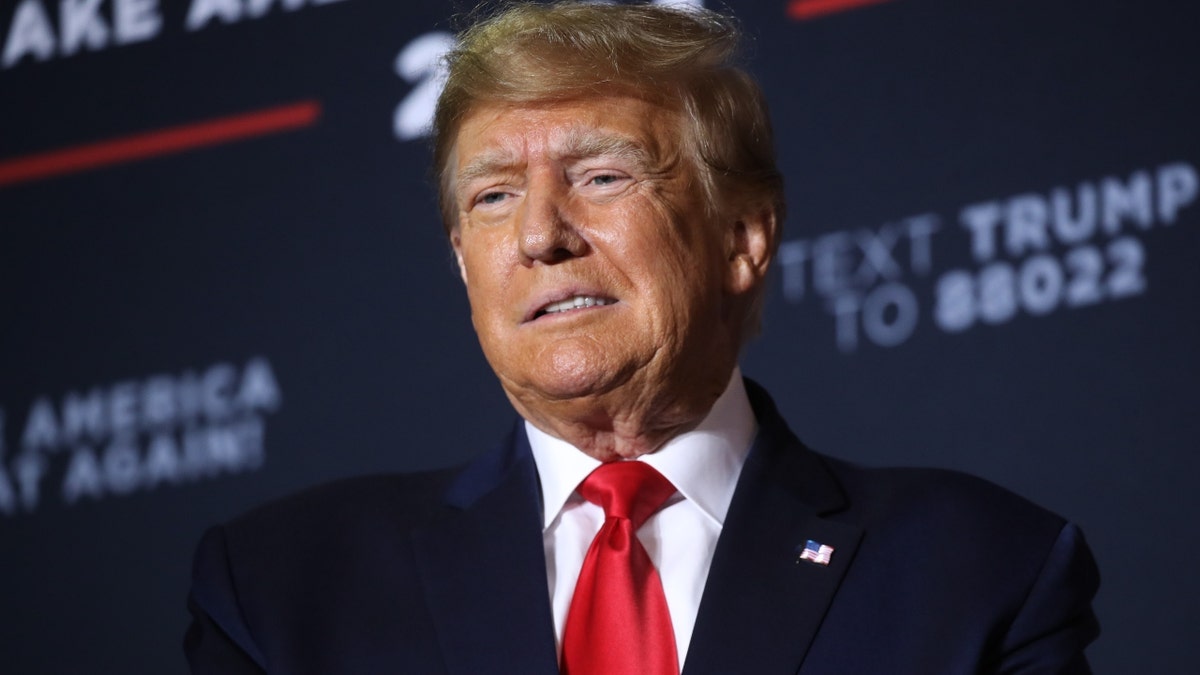
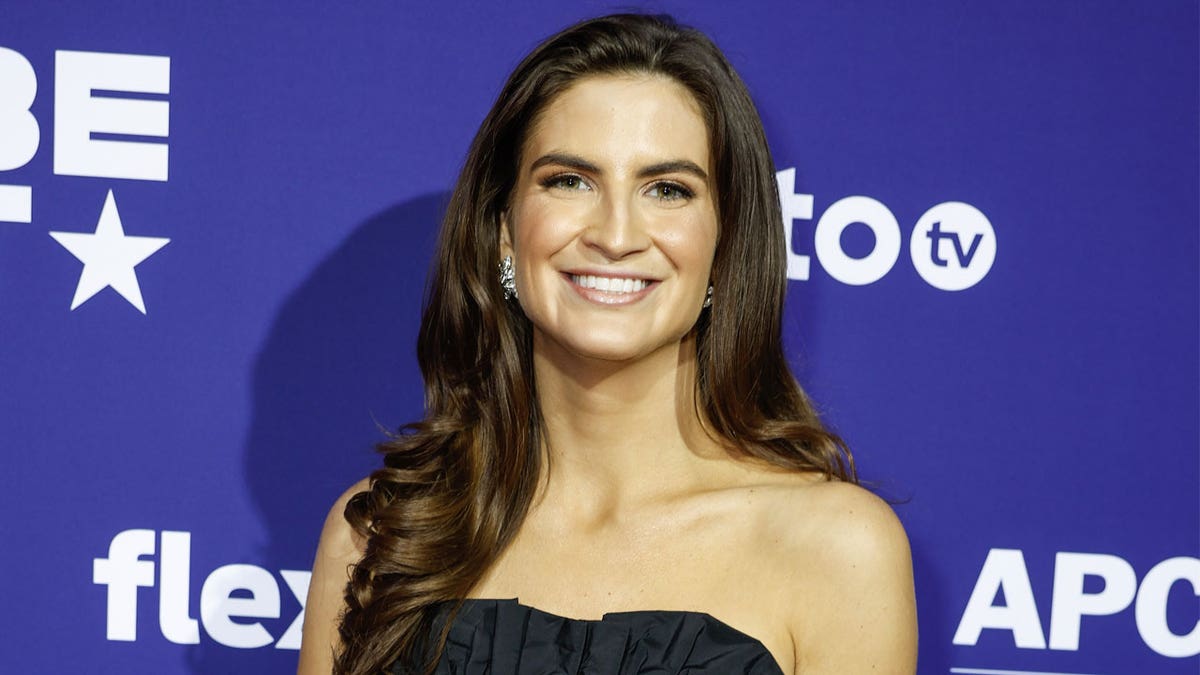


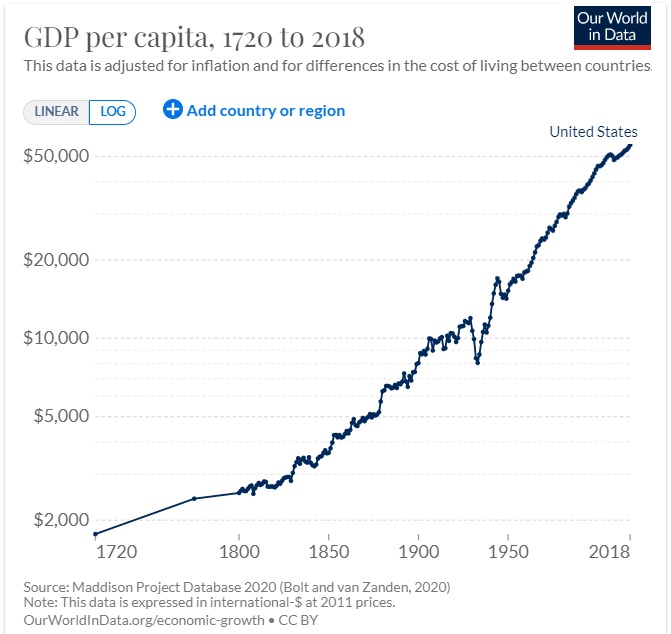



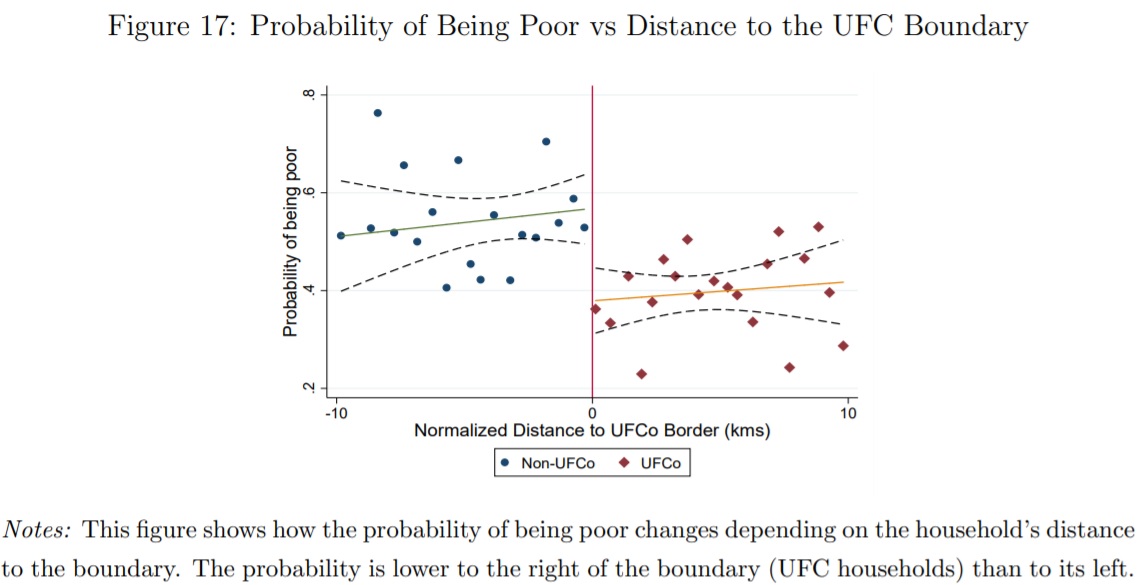


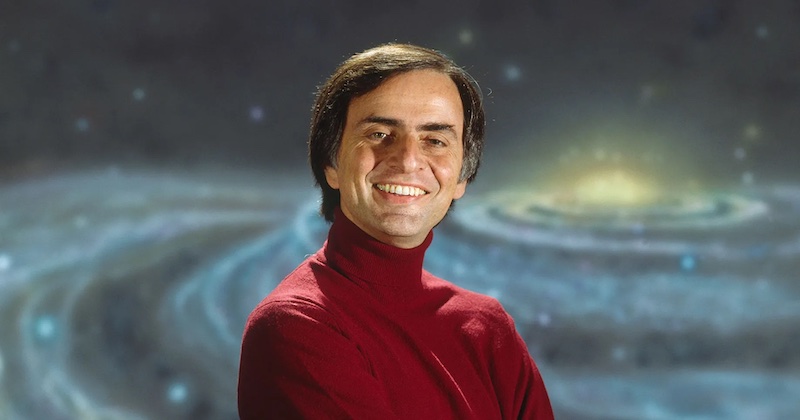

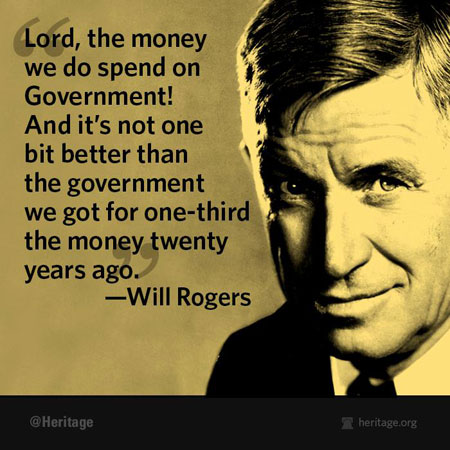
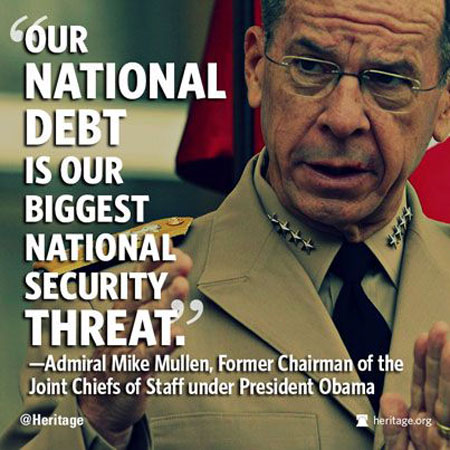

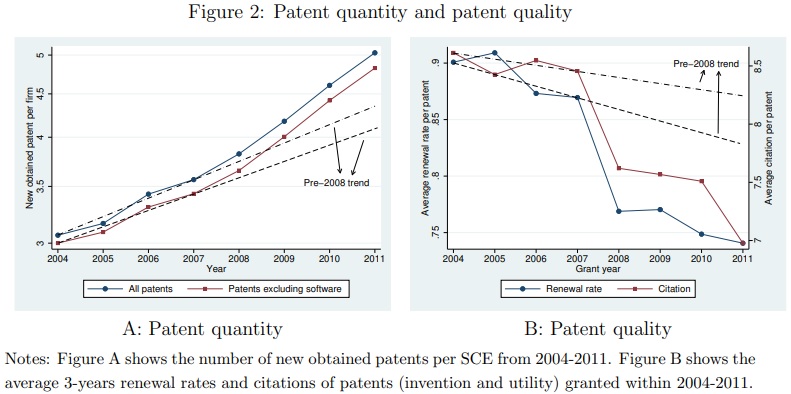
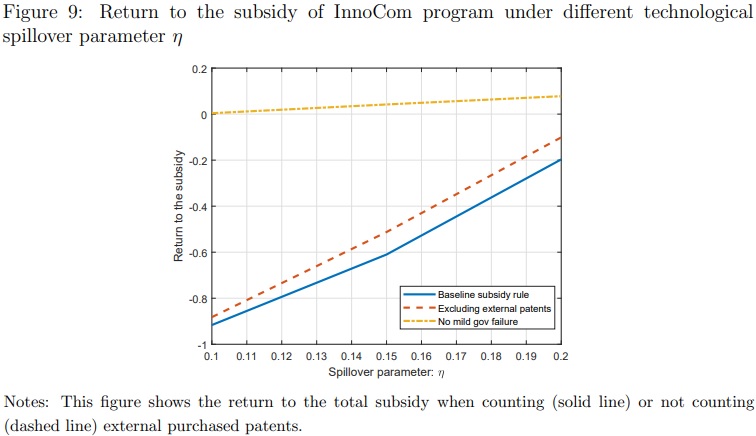
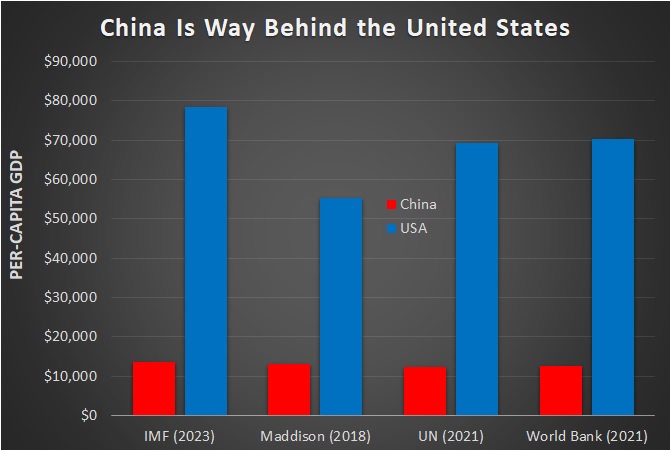







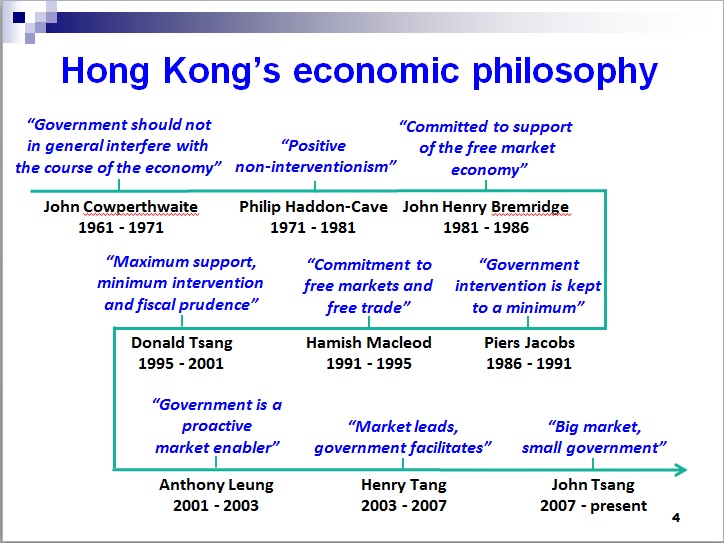

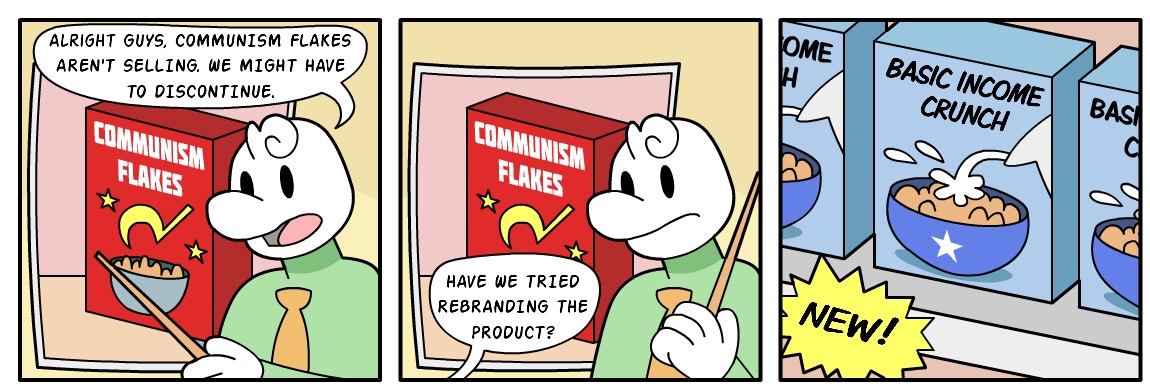

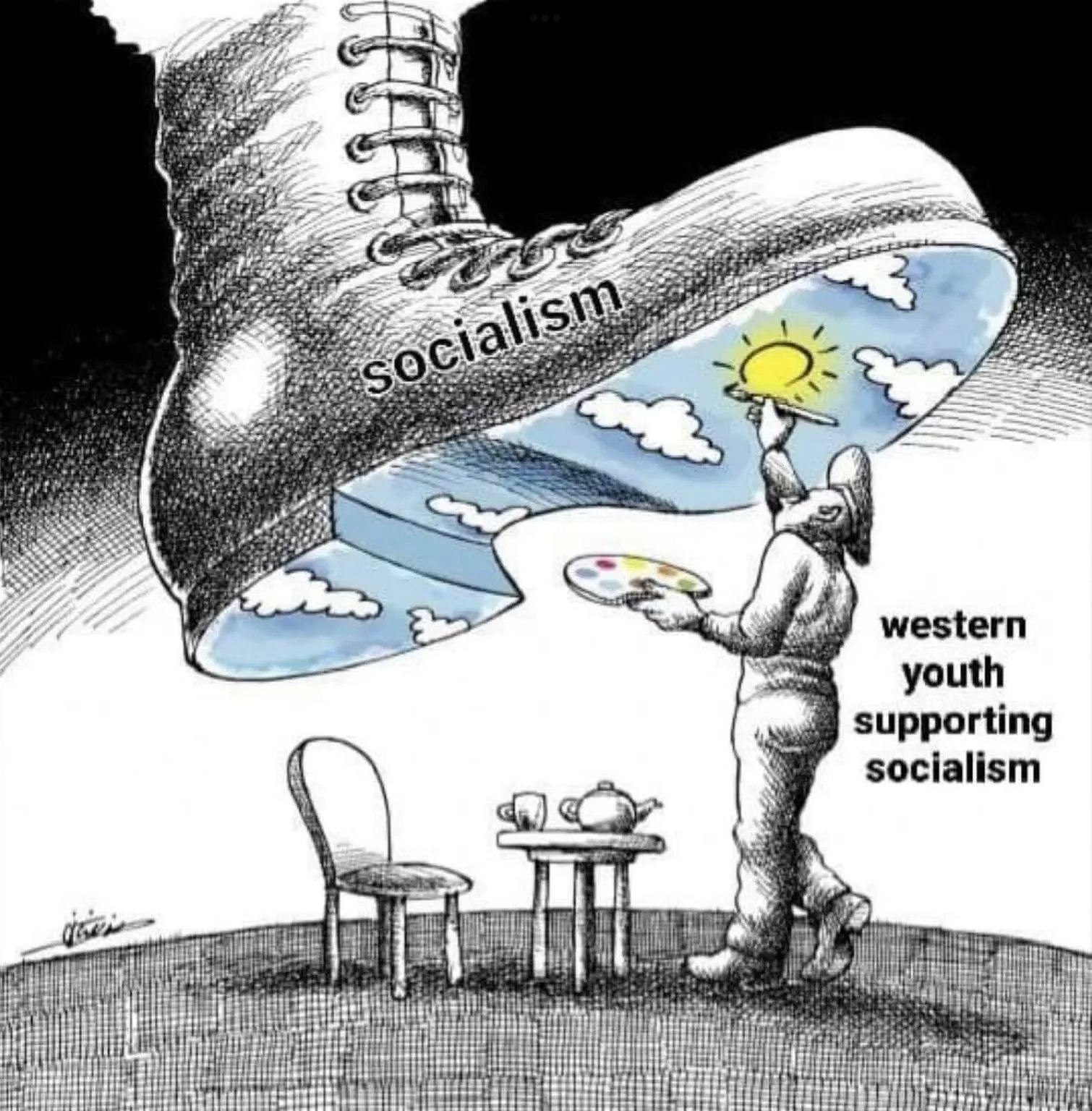
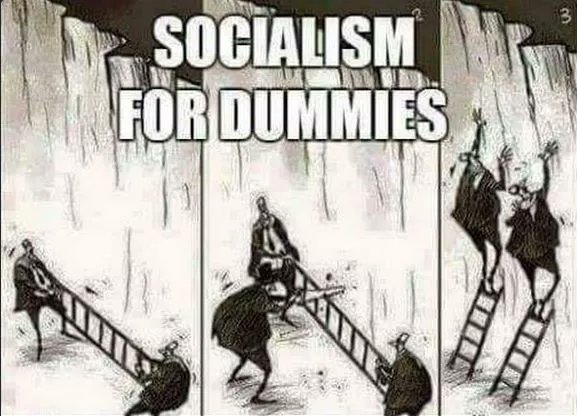
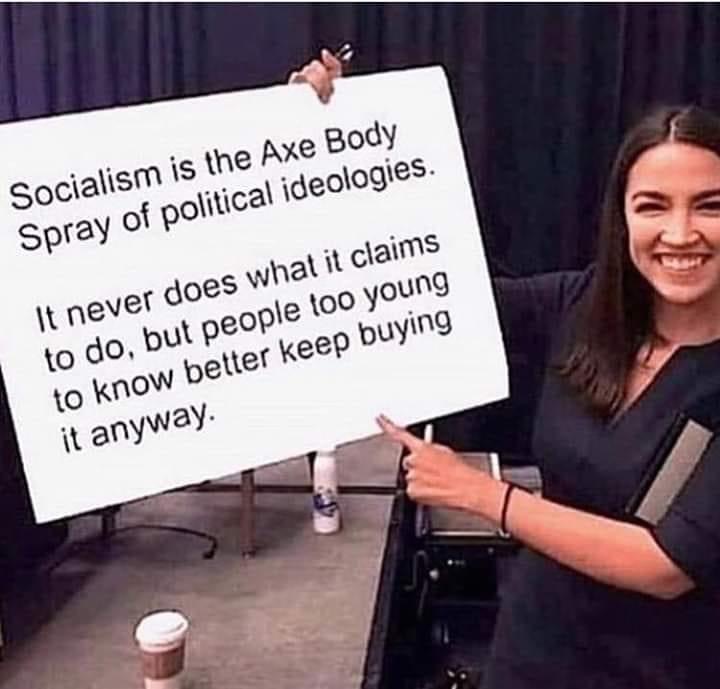
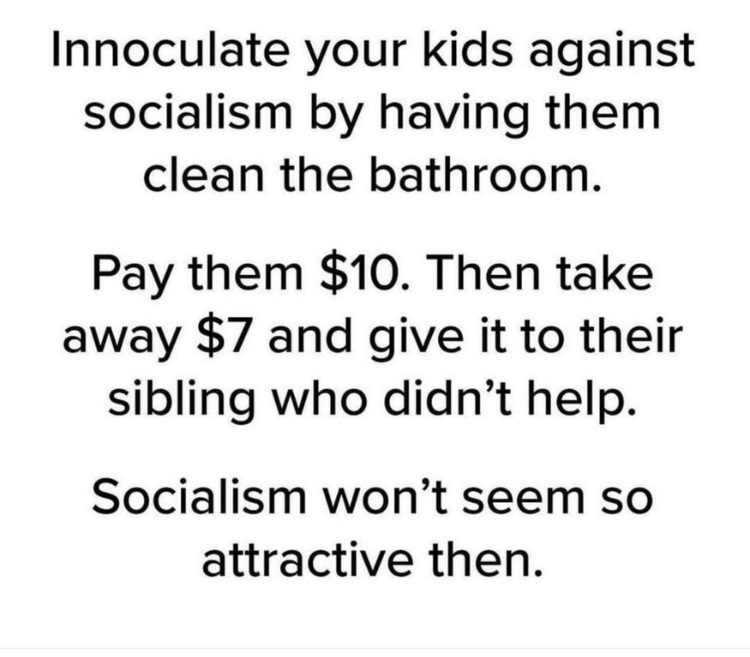
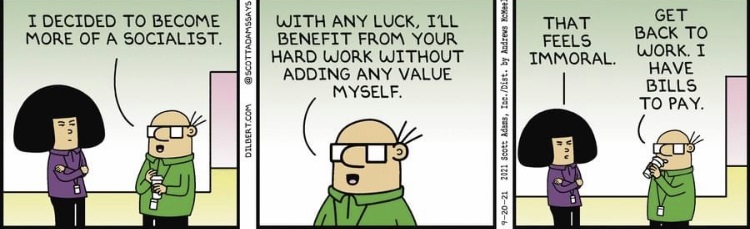
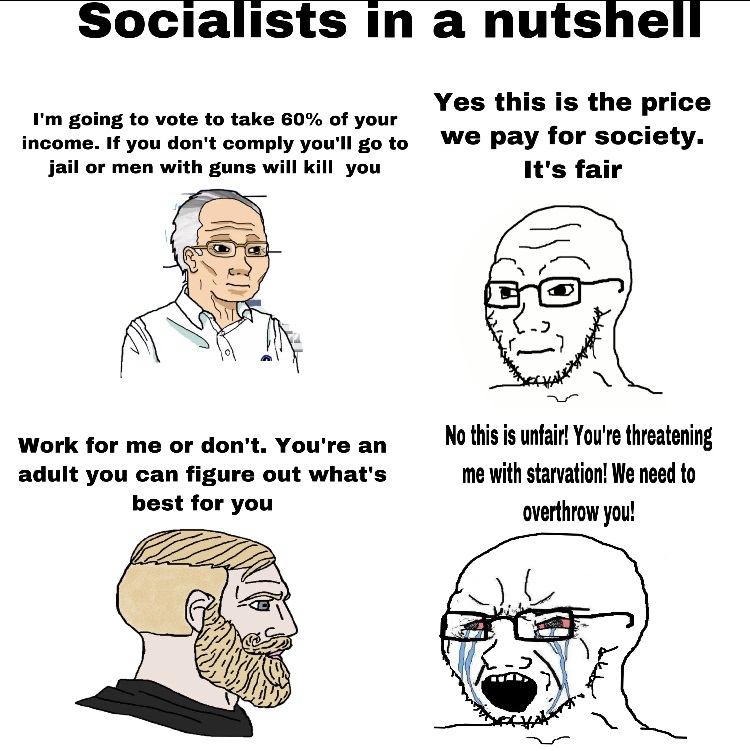
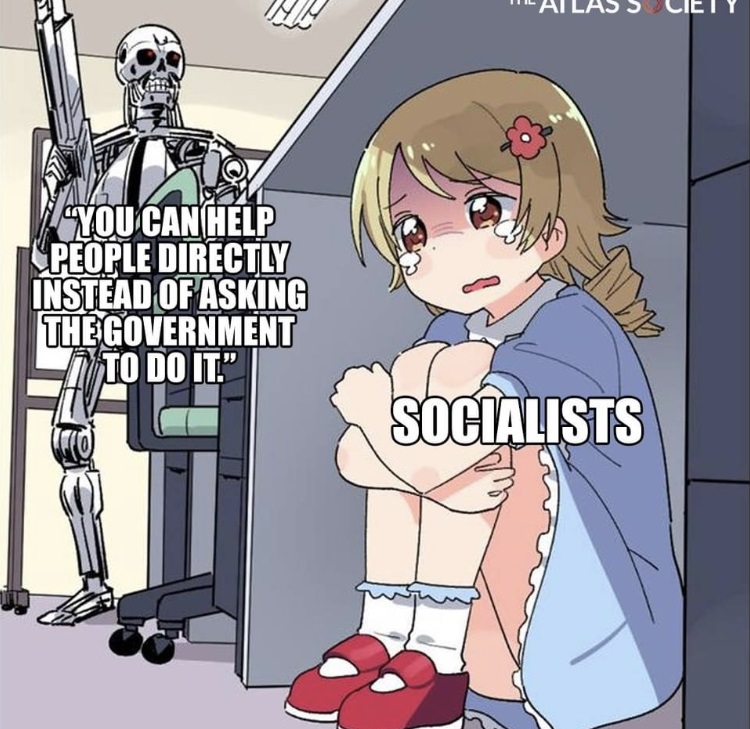

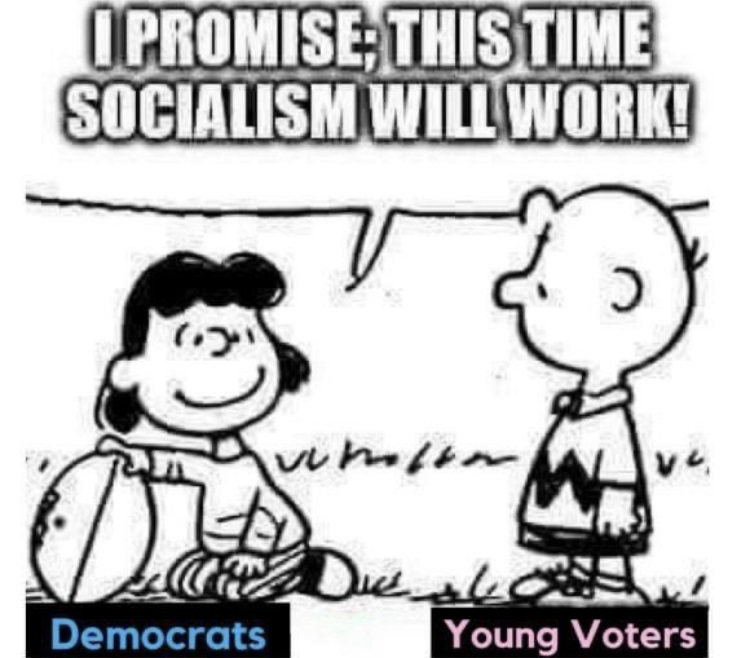

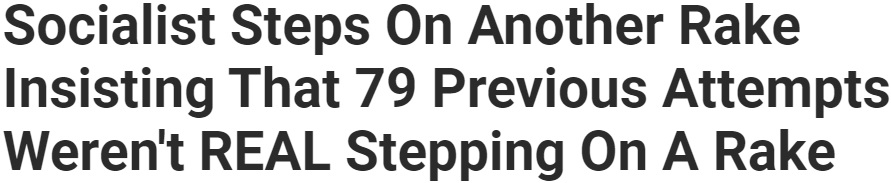

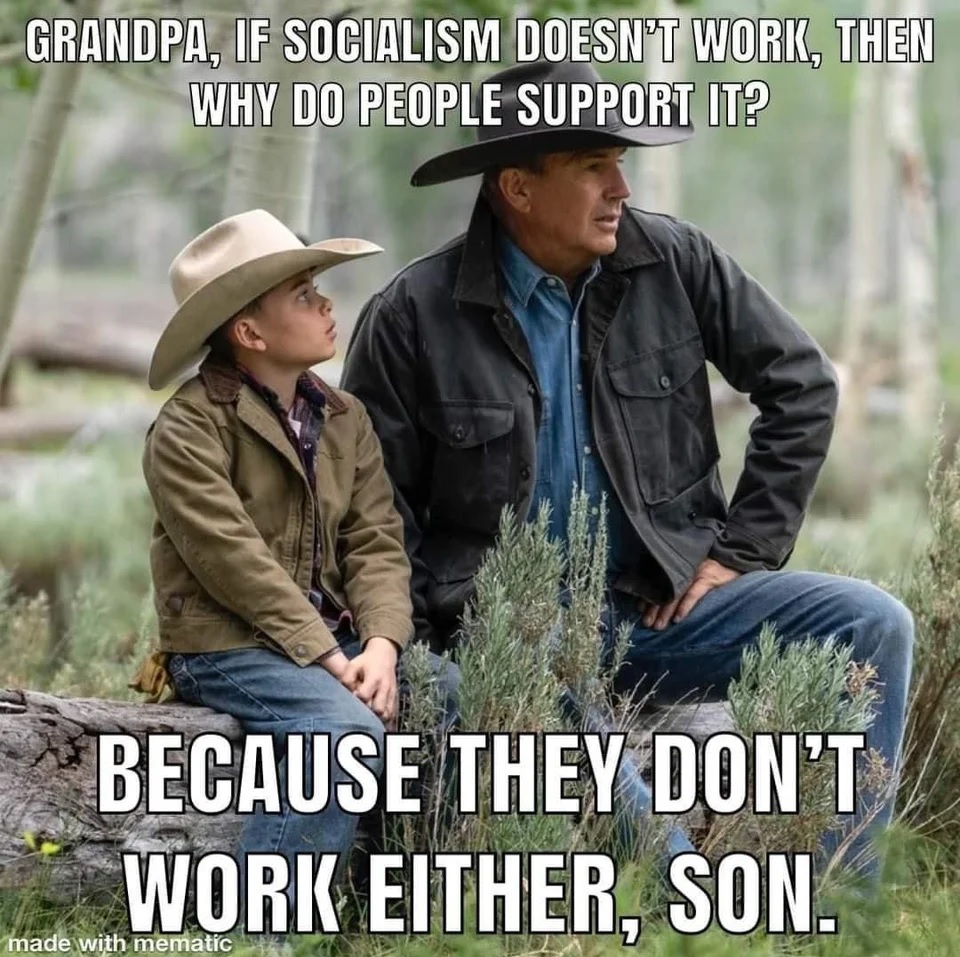


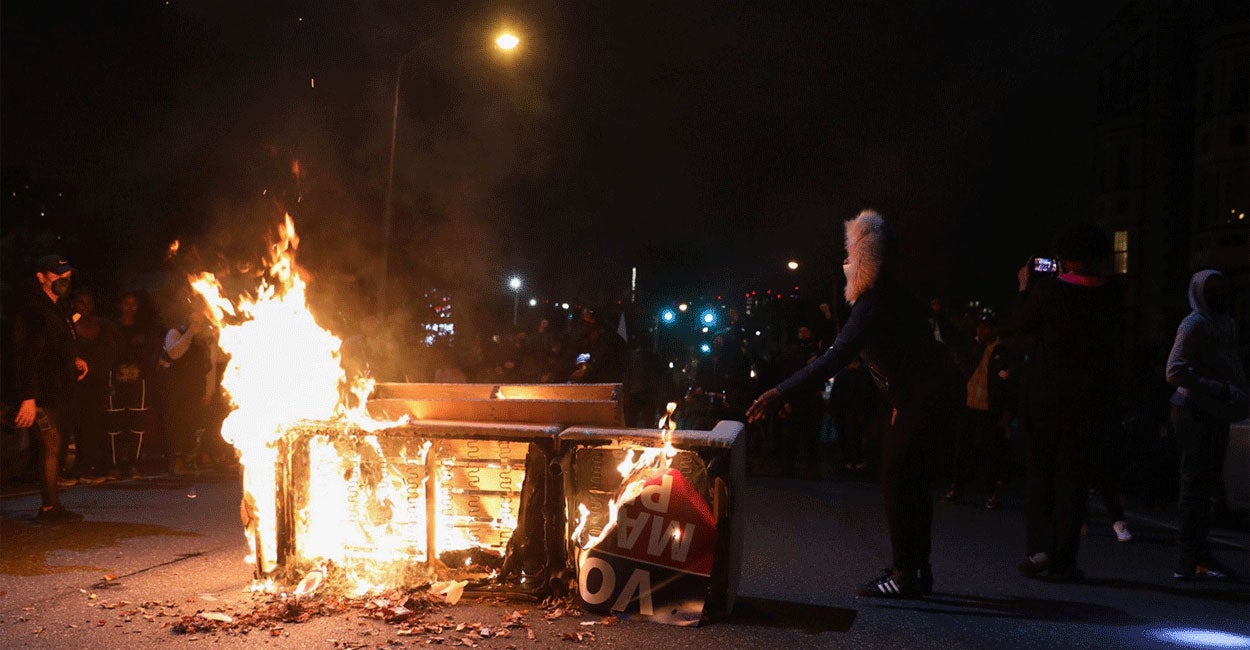


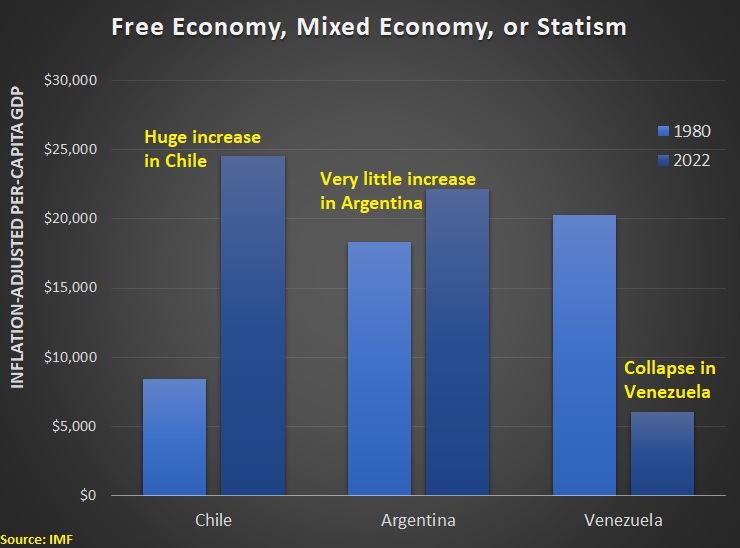

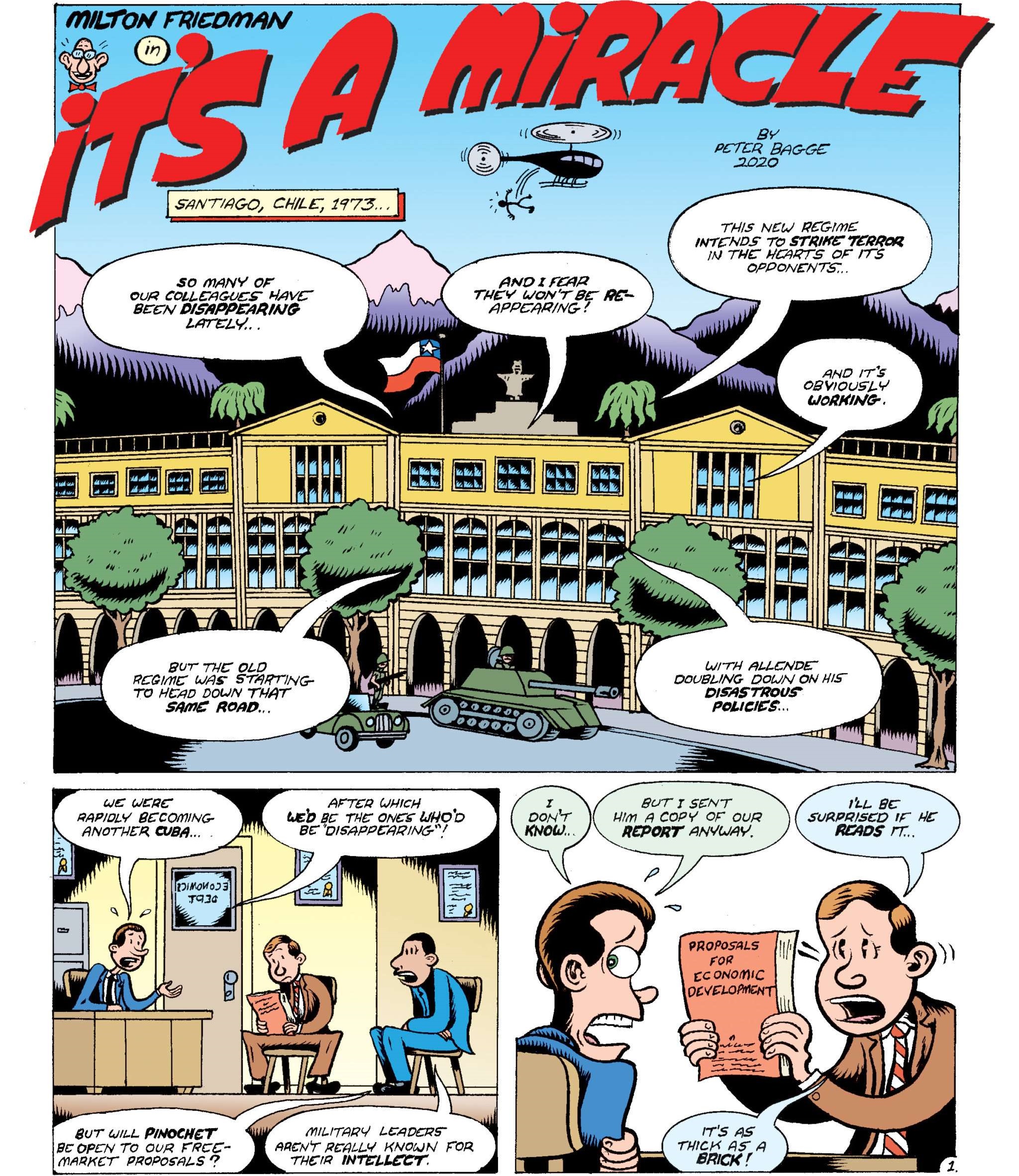
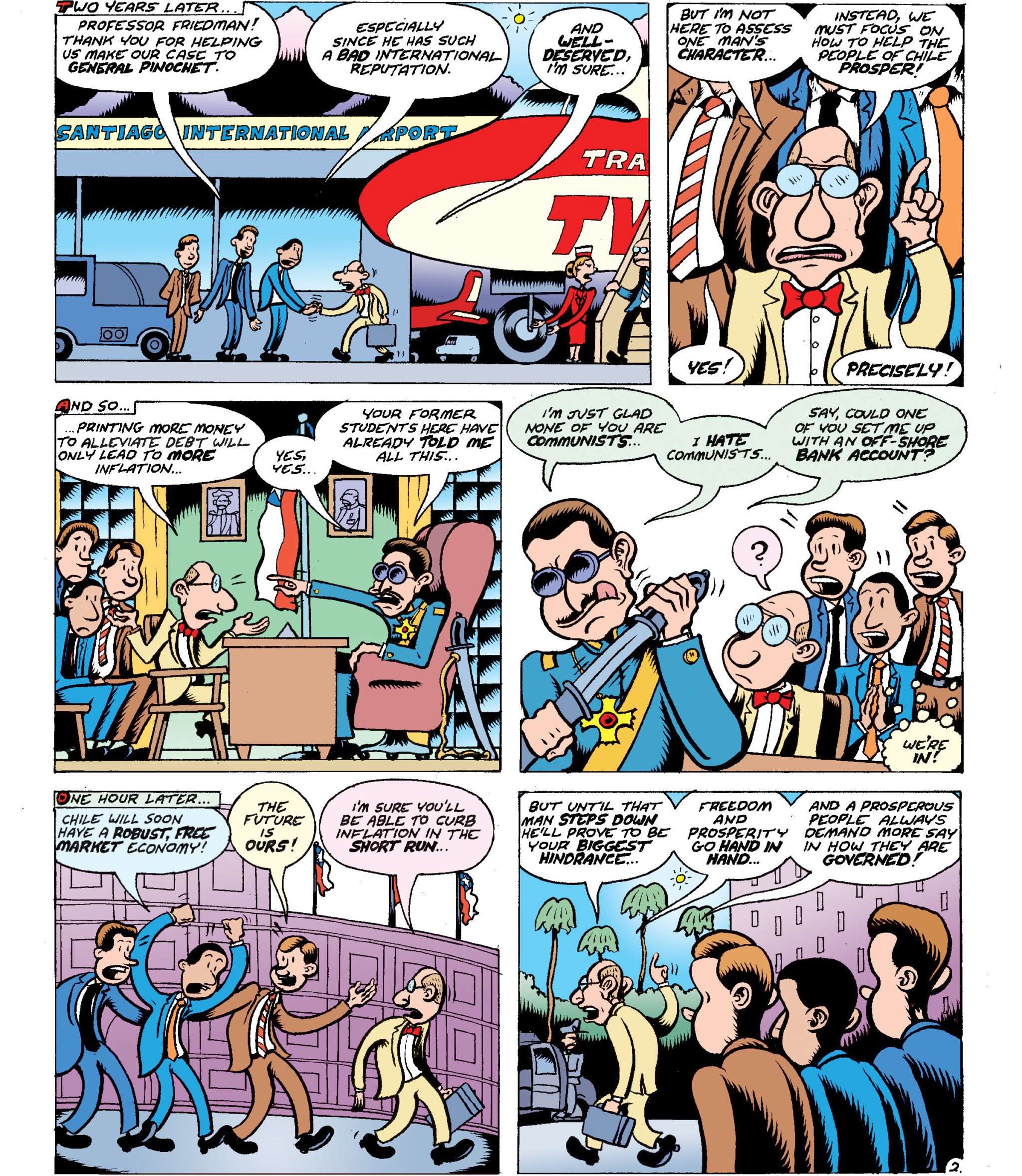
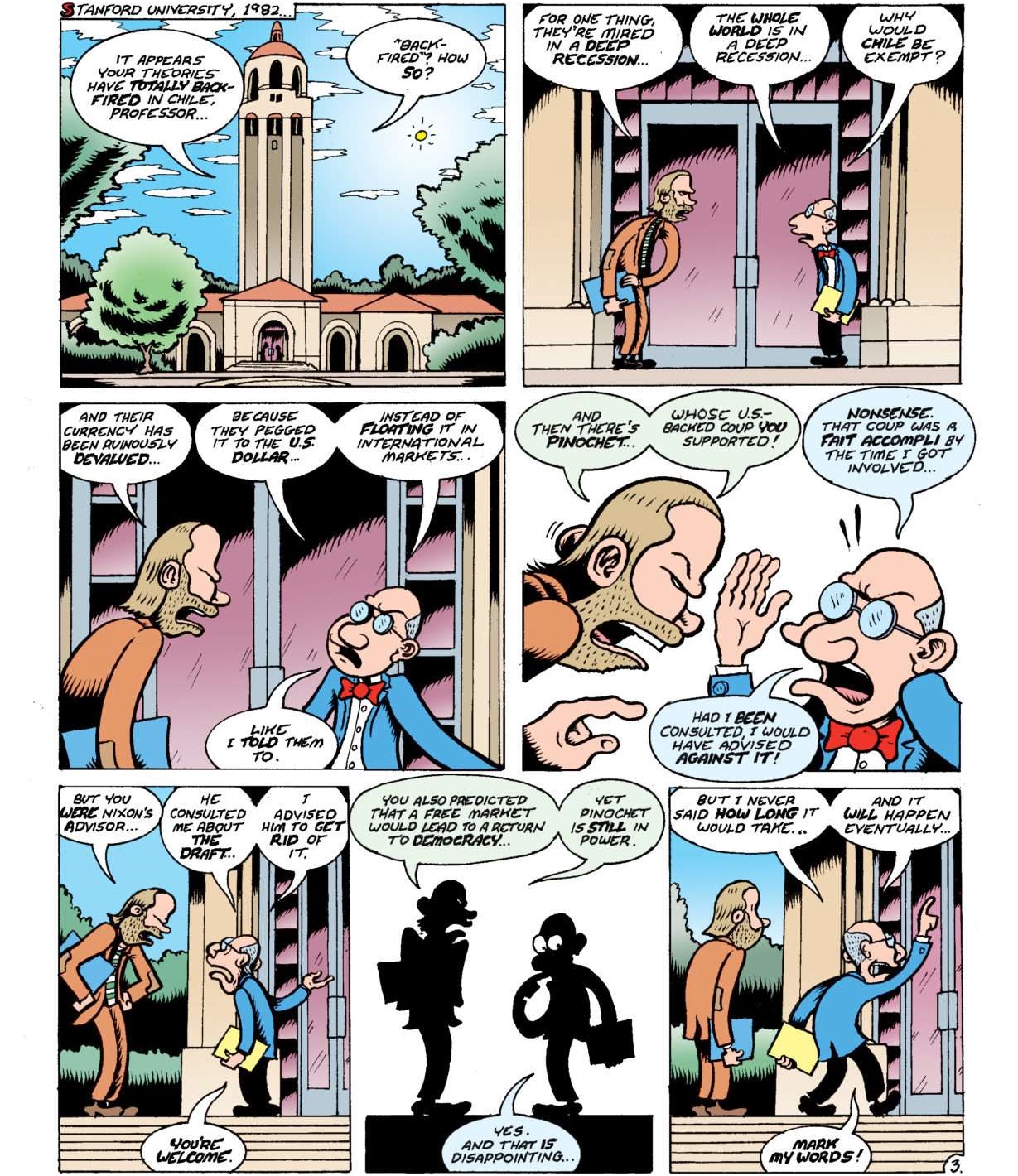
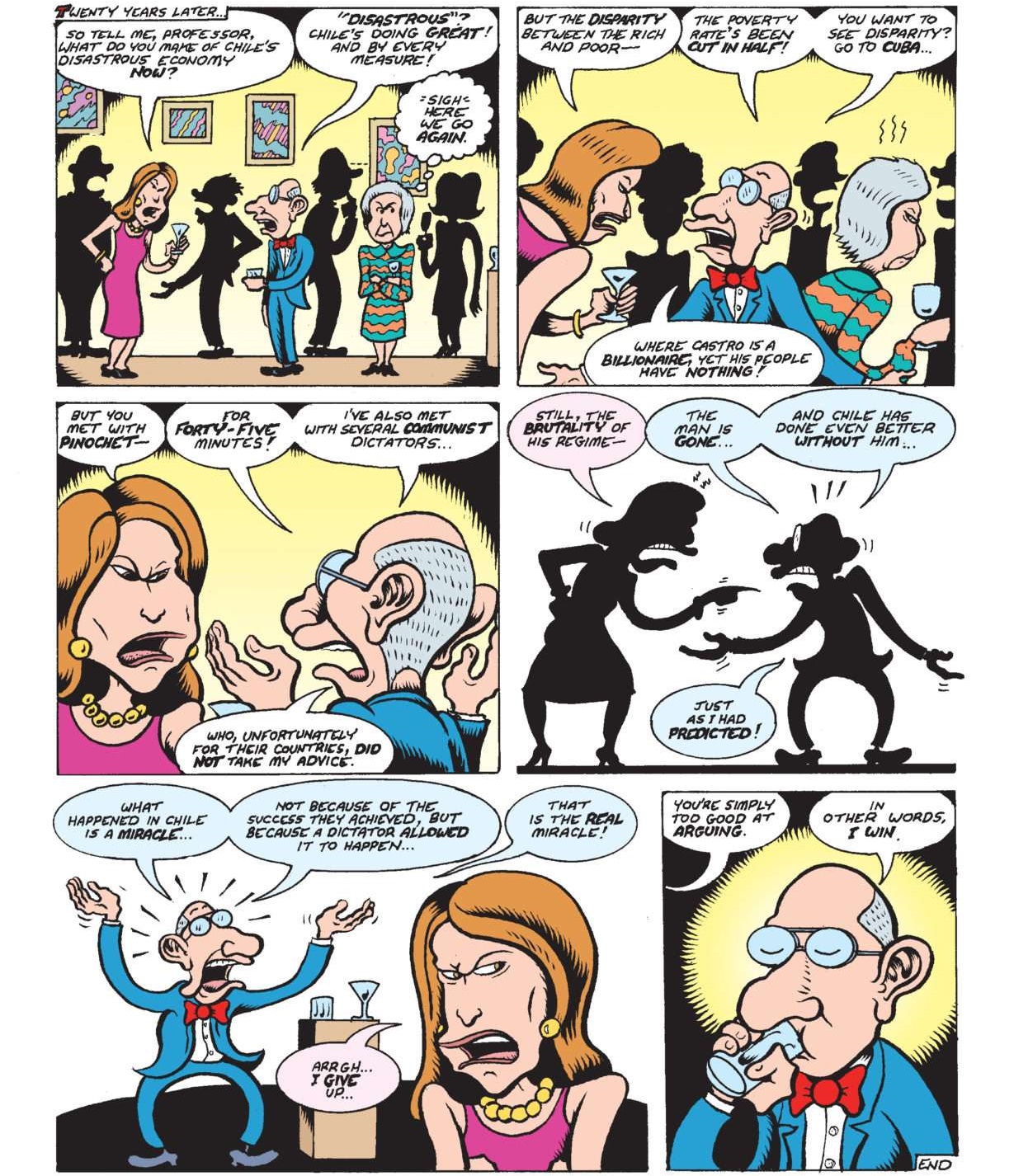


_by_David_Shankbone.jpg)



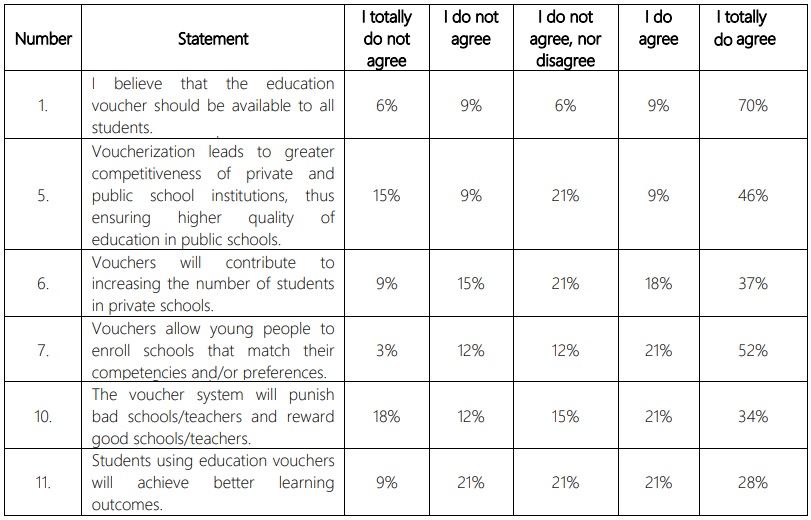


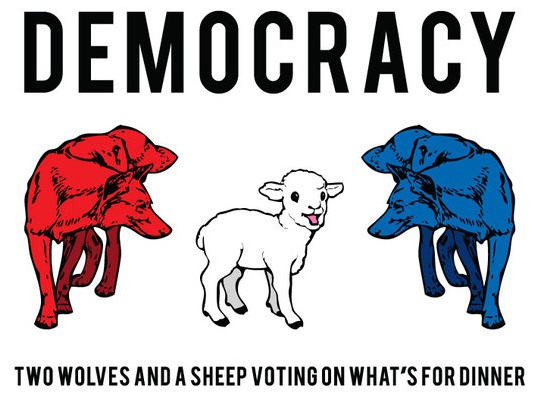


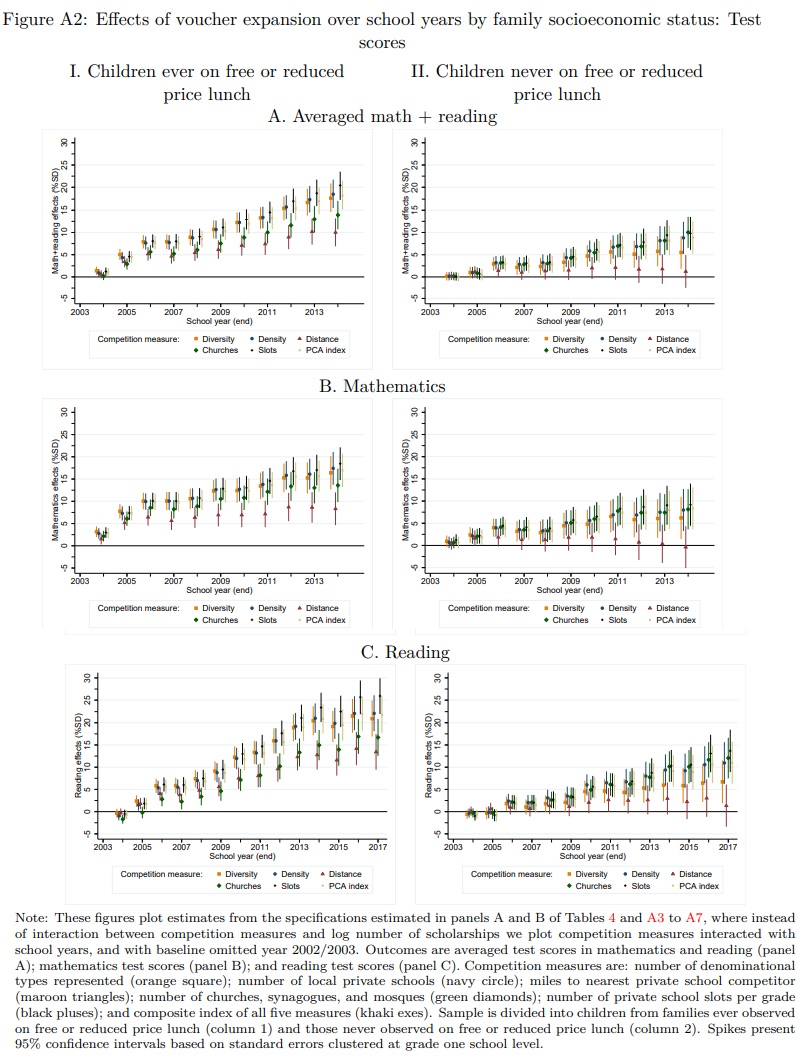




 The Daily Hatch
.jpg)