Author Archives: Everette Hatcher III

My name is Everette Hatcher III. I am a businessman in Little Rock and have been living in Bryant since 1993. My wife Jill and I have four kids (Rett 24, Hunter 22, Murphey 16, and Wilson 14).

In AFTER LIFE Ricky Gervais has 50 year old plumber choose to identify as a 8 year old girl (Plus HUMANIST award taken away from Richard Dawkins) 

________________

Made for Comedy Ricky Gervais has 50 year old plumber choose to identify as a 8 year old girl (Plus HUMANIST award taken away from Richard Dawkins)

After Life 2 – Man identifies as an 8 year old girl

A.F. Branco for Jan 12, 2022

4:20 am 4/10/21

In 2015, Rachel Dolezal, a white chapter president of NAACP, was vilified for identifying as Black. Some men choose to identify as women, and some women choose to identify as men. You will be vilified if you deny that they literally are what they identify as.

Discuss.

4/12/21 12:46pm

I do not intend to disparage trans people. I see that my academic “Discuss” question has been misconstrued as such and I deplore this. It was also not my intent to ally in any way with Republican bigots in US now exploiting this issue .

Richard Dawkins … ‘Attempts at clarification inadequate,’ says AHA.Show captionBooks

Richard Dawkins loses ‘humanist of the year’ title over trans comments

American Humanist Association criticises academic for comments about identity using ‘the guise of scientific discourse’, and withdraws its 1996 honourAlison FloodTue 20 Apr 2021 08.56 EDT

The American Humanist Association has withdrawn its humanist of the year award from Richard Dawkins, 25 years after he received the honour, criticising the academic and author for “demean[ing] marginalised groups” using “the guise of scientific discourse”.

The AHA honoured Dawkins, whose books include The Selfish Gene and The God Delusion, in 1996 for his “significant contributions” in communicating scientific concepts to the public. On Monday, it announced that it was withdrawing the award, referring to a tweet sent by Dawkins earlier this month, in which he compared trans people to Rachel Dolezal, the civil rights activist who posed as a black woman for years.

“In 2015, Rachel Dolezal, a white chapter president of NAACP, was vilified for identifying as Black,” wrote Dawkins on Twitter. “Some men choose to identify as women, and some women choose to identify as men. You will be vilified if you deny that they literally are what they identify as. Discuss.”

Dawkins later responded to criticism, writing: “I do not intend to disparage trans people. I see that my academic ‘Discuss’ question has been misconstrued as such and I deplore this. It was also not my intent to ally in any way with Republican bigots in US now exploiting this issue.”

Among his critics was Alison Gill, vice president for legal and policy at American Atheists and a trans woman. She said Dawkins’ comments reinforce dangerous and harmful narratives. She said: “Given the repercussions for the millions of trans people in this country, in this one life we have to live, as an atheist and as a trans woman, I hope that Professor Dawkins treats this issue with greater understanding and respect in the future.”

In 2015, Dawkins also wrote: “Is trans woman a woman? Purely semantic. If you define by chromosomes, no. If by self-identification, yes. I call her “she” out of courtesy.”

In a statement from its board, the AHA said that Dawkins had “over the past several years accumulated a history of making statements that use the guise of scientific discourse to demean marginalised groups, an approach antithetical to humanist values”.

The evolutionary biologist’s latest comment, the board said, “implies that the identities of transgender individuals are fraudulent, while also simultaneously attacking Black identity as one that can be assumed when convenient”, while his “subsequent attempts at clarification are inadequate and convey neither sensitivity nor sincerity”.

“Consequently, the AHA Board has concluded that Richard Dawkins is no longer deserving of being honored by the AHA, and has voted to withdraw, effective immediately, the 1996 Humanist of the Year award,” said the organisation.

The Guardian has reached out to Dawkins for comment.

Last year, the author JK Rowling returned an award given to her by the Robert F Kennedy Human Rights organisation, after its president, Kennedy’s daughter Kerry Kennedy, criticised her views on transgender issues. “I am deeply saddened that RFKHR has felt compelled to adopt this stance, but no award or honour, no matter my admiration for the person for whom it was named, means so much to me that I would forfeit the right to follow the dictates of my own conscience,” said Rowling in a statement at the time.

Tribute to Horace Barlow

Steven Dakin @StevenDakin

Elegant & important psychophysics from @TheKwonLab. Retinal ganglion cell dysfunction (not death) limits contrast sensitivity in glaucoma. Sidenote: credit to late/great Horace Barlow for the equivalent noise paradigm.
—-

November 2, 2019

November 2, 2019

Dr. Horace Barlow, Cambridge CB3 9AX, England
Dear Dr. Barlow,

I have enjoyed reading the book OUTGROWING GOD by your friend Richard Dawkins, and he certainly has much respect for you great grandfather Charles Darwin. However, he has not studied the Bible as extensively as Darwin did because many of Dawkins’ criticisms of the Bible don’t seem to be valid. For instance, on page 53 he states:

Genesis says Abraham owned camels, but archaeological evidence shows that the camel was not domesticated until many centuries after Abraham 

Did Camels Exist in Biblical Times?

5 reasons why domesticated camels likely existedMegan Sauter November 12, 2018  16 Comments 2730 views  Share

Did camels exist in Biblical times?

Some Biblical texts, such as Genesis 12 and 24, claim that Abraham owned camels. Yet archaeological researchshows that camels were not domesticated in the land of Canaan until the 10th century B.C.E.—about a thousand years after the time of Abraham. This seems to suggest that camels in these Biblical stories are anachronistic.
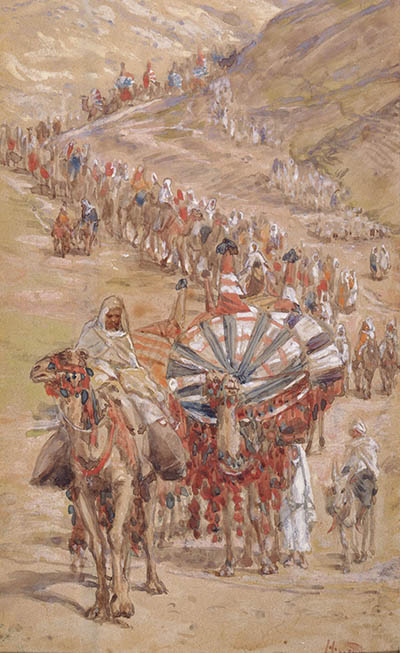
The Caravan of Abram

Abraham’s Camels. Did camels exist in Biblical times? Camels appear with Abraham in some Biblical texts—and depictions thereof, such as The Caravan of Abram by James Tissot, based on Genesis 12. When were camels first domesticated? Although camel domestication had not taken place by the time of Abraham in the land of Canaan, it had in Mesopotamia. Photo: PD-1923.Mark W. Chavalas explores the history of camel domestication in his Biblical Views column “Did Abraham Ride a Camel?”published in the November/December 2018 issue of Biblical Archaeology Review. Although he agrees that camel domestication likely did not take place in Canaan until the 10th century B.C.E., he notes that Abraham’s place of origin was not Canaan—but Mesopotamia. Thus, to ascertain whether Abraham’s camels are anachronistic, we need to ask: When were camels first domesticated in Mesopotamia?

Chavalas explains that the events in the Biblical accounts of the Patriarchs and Matriarchs (Abraham and Sarah, Isaac and Rebekah, and Israel and Rachel) have been traditionally dated to c. 2000–1600 B.C.E. (during the Middle Bronze Age). Camels appear in Mesopotamian sources in the third millennium B.C.E.—before this period. However, the mere presence of camels in sources does not necessarily mean that camels were domesticated.

The question remains: When were camels domesticated in Mesopotamia?

In his examination of camel domestication history, Chavalas looks at a variety of textual, artistic, and archaeological sources from Mesopotamia dating to the third and second millennia. We will examine five of these sources here:

1. One of the first pieces of evidence for camel domestication comes from the site of Eshnunna in modern Iraq: A plaque from the mid-third millennium shows a camel being ridden by a human.

2. Another source is a 21st-century B.C.E. text from Puzrish-Dagan in modern Iraq that may record camel deliveries.

3. Third, an 18th-century B.C.E. text (quoting from an earlier third millennium text) from Nippur in modern Iraq says, “the milk of the camel is sweet.” Chavalas explains why he thinks this likely refers to a domesticated camel:

Having walked in many surveys through camel herds in Syria along the Middle Euphrates River, I believe that this text is describing a domesticated camel; who would want to milk a “wild camel”? At the very least, the Bactrian camel was being used for dairy needs at this time.

4. Next, an 18th-century B.C.E. cylinder seal depicts a two-humped camel with riders. Although this seal’s exact place of origin is unknown, it reputedly comes from Syria, and it resembles other seals from Alalakh (a site in modern Turkey near Turkey’s southern border with Syria).

5. Finally, a 17th-century text from Alalakh includes camels in a list of domesticated animals that required food.

syria-camel-seal

Camel Domestication. When were camels first domesticated? This impression of an 18th-century B.C.E. cylinder seal from Syria depicts a two-humped camel with riders. The seal and other archaeological discoveries shed light on camel domestication history, suggesting that camel domestication had occurred in Mesopotamia by the second millennium B.C.E. Photo: ©The Walters Art Museum, Baltimore.

Although domesticated camels may not have been widespread in Mesopotamia in the second millennium, these pieces of evidence show that by the second millennium, there were at least some domesticated camels. Thus, camel domestication had taken place in Mesopotamia by the time of Abraham. Accordingly, Chavalas argues that the camels in the stories of Abraham in Genesis are not anachronistic.

Learn more about the history of camel domestication in Mark W. Chavalas’s Biblical Views column “Did Abraham Ride a Camel?” published in the November/December 2018 issue of Biblical Archaeology Review.——————

Subscribers: Read the full Biblical Views column “Did Abraham Ride a Camel?” by Mark W. Chavalas in the November/December 2018 issue of Biblical Archaeology Review.

—-

Francis Schaeffer noted concerning Charles Darwin’s loss of faith:

This is very sad. He lies on his bunk and the Beagle tosses and turns and he makes daydreams, and his dreams and hopes are that someone would find in Pompeii or some place like this, an old manuscript by a distinguished Roman that would put his stamp of authority on it, which would be able to show that Christ existed. This is undoubtedly what he is talking about. Darwin gave up this hope with great difficulty.

Dr. Barlow you have an advantage of 150 years over your great grandfather and the archaeologist’s spade has continued to dig. Take a look at this piece of evidence from the book WHATEVER HAPPENED TO THE HUMAN RACE? by Francis Schaeffer and C. Everett Koop:

TRUTH AND HISTORY (chapter 5 of WHATEVER HAPPENED TO THE HUMAN RACE?)

In the previous chapter we saw that the Bible gives us the explanation for the existence of the universe and its form and for the mannishness of man. Or, to reverse this, we came to see that the universe and its form and the mannishness of man are a testimony to the truth of the Bible. In this chapter we will consider a third testimony: the Bible’s openness to verification by historical study.

Christianity involves history. To say only that is already to have said something remarkable, because it separates the Judeo-Christian world-view from almost all other religious thought. It is rooted in history.

The Bible tells us how God communicated with man in history. For example, God revealed Himself to Abraham at a point in time and at a particular geographical place. He did likewise with Moses, David, Isaiah, Daniel and so on. The implications of this are extremely important to us. Because the truth God communicated in the Bible is so tied up with the flow of human events, it is possible by historical study to confirm some of the historical details.

It is remarkable that this possibility exists. Compare the information we have from other continents of that period. We know comparatively little about what happened in Africa or South America or China or Russia or even Europe. We see beautiful remains of temples and burial places, cult figures, utensils, and so forth, but there is not much actual “history” that can be reconstructed, at least not much when compared to that which is possible in the Middle East.

When we look at the material which has been discovered from the Nile to the Euphrates that derives from the 2500-year span before Christ, we are in a completely different situation from that in regard to South America or Asia. The kings of Egypt and Assyria built thousands of monuments commemorating their victories and recounting their different exploits. Whole libraries have been discovered from places like Nuzu and Mari and most recently at Elba, which give hundreds of thousands of texts relating to the historical details of their time. It is within this geographical area that the Bible is set. So it is possible to find material which bears upon what the Bible tells us.

The Bible purports to give us information on history. Is the history accurate? The more we understand about the Middle East between 2500 B.C. and A.D. 100, the more confident we can be that the information in the Bible is reliable, even when it speaks about the simple things of time and place.

TRUTH AND HISTORY (chapter 5 of WHATEVER HAPPENED TO THE HUMAN RACE?, under footnote #94)

So the story goes on. We have stopped at only a few incidents in the sweep back to the year 1000 B.C. What we hope has emerged from this is a sense of the historical reliability of the Bible’s text. When the Bible refers to historical incidents, it is speaking about the same sort of “history” that historians examine elsewhere in other cultures and periods. This borne out by the fact that some of the incidents, some of the individuals, and some of the places have been confirmed by archaeological discoveries in the past hundred years has swept away the possibility of a naive skepticism about the Bible’s history. And what is particularly striking is that the tide has built up concerning the time before the year 1000 B.C. Our knowledge about the years 2500 B.C. to 1000 B.C. has vastly increased through discoveries sometimes of whole libraries and even of hitherto unknown people and languages.

There was a time, for example, when the Hittite people, referred to in the early parts of the Bible, were treated as fictitious by critical scholars. Then came the discoveries after 1906 at Boghaz Koi (Boghaz-koy) which not only gave us the certainty of their existence but stacks of details from their own archives!

Sincerely,

Everette Hatcher, everettehatcher@gmail.comhttp://www.thedailyhatch.org, cell ph 501-920-5733, 13900 cottontail lane, Alexander, AR 72002

Thought provoking article below:

Harvard Magazine

Harvard Magazine
Main Menu · Search ·Current Issue ·Contact ·Archives ·Centennial ·Letters to the Editor ·FAQs

The author as publicist. Darwin, above, wrote to influential scientists worldwide, begging their attention to his new book. This is from his letter to Asa Gray. The photograph of Darwin is by his son, William Erasmus Darwin, and was sent to Asa Gray in 1861. It, and Darwin’s letter, are in the Gray Herbarium. ARCHIVES AT THE GRAY HERBARIUM, HARVARD UNIVERSITY

Of the several thousand letters that charles darwin wrote during his lifetime, few were more important than one he sent on September 5, 1857, to Harvard botanist Asa Gray. Darwin wrote in his semi-legible scrawl: “I will enclose the briefest abstract of my notions on the means by which nature makes her species….I ask you not to mention my doctrine.” Asa Gray thus became the first person in North America to learn about Darwin’s ideas on natural selection.

Darwin revealed his theory to the general public two years later in his revolutionary book, On the Origin of Species. Its publication prompted fierce debate in this country. On one side arose Gray, Darwin’s friend and supporter, a taciturn man best known as a cataloguer and collector of plants. In opposition stood Gray’s Harvard colleague Louis Agassiz, a charming, brilliant lecturer and the most popular scientist in the land. Harvard thus became the most important battleground in the initial American engagement with natural selection.

~~~

Asa Gray was Fisher professor of natural history at Harvard from 1842 till 1873. Although he was originally trained as a medical doctor, his passion was plants. His reputation as a taxonomist helped him establish one of America’s premier collections of dried plants, which contained material from collectors who had traveled in the United States and around the world. By the early 1860s, his personal herbarium totaled almost 200,000 specimens.

Gray and Darwin’s epistolary relationship began in 1855, when Darwin wrote Gray. As usual with Darwin, he was humble, and he wanted information. The Englishman asked the American about alpine plants in the United States and their relationship to plants in Europe and Asia. During the next few years, Gray used his vast collection to provide much-needed information on two topics essential to Darwin’s theory–the distribution of plants, and variation in wild, non-domesticated species.

Gray in 1865. His copy of Origin, with marginalia, is in the Gray Herbarium. ARCHIVES AT THE GRAY HERBARIUM, HARVARD UNIVERSITY

Despite Gray’s world renown as a botanist, his colleague Louis Agassiz, professor of zoology and geology, commanded most of the scientific attention in Cambridge. Respected by scientists and liked by the general public, Agassiz was also friends with the Boston literati, among them Ralph Waldo Emerson, James Russell Lowell, and Oliver Wendell Holmes. Of Swiss origin, Agassiz had made his mark in science in 1840 with his best-known book, Études sur les glaciers. In it he proposed the then-unorthodox theory that great glaciers had once covered and carved northern Europe.

Agassiz first came to this country in 1846, to present a series of lectures in Boston. As many as 5,000 people a night attended his talks on subjects as diverse as fossil fishes, the Ice Age, and embryology. In 1847, Harvard wooed him away from Europe. The most important North American scientific periodical of the day, the American Journal of Science, reported, “Every scientific man in America will be rejoiced to hear so unexpected a piece of news.” In the following years, Agassiz continued to make science accessible to the public through lectures, books, and articles.

~~~

On November 11, 1859, Darwin began the arduous task of gaining support for the imminent publication of Origin of Species. (Not that sales mattered to him financially; he was independently wealthy. Nevertheless, he would receive two-thirds of the net profit!) Like any modern author, he asked his publisher, John Murray of London, to send presentation copies to potential reviewers.

He also wrote personal notes to 11 of the most important scientists of the day. The majority of these letters acknowledged that the recipient would not support Darwin’s theory of natural selection. In one letter he wrote: “How savage you will be, if you read it, and how you will long to crucify me alive!!” But Darwin also tried to push the veracity of his theory by writing later in the same letter, “I am fully convinced that you will become year after year, less fixed in your belief in the immutability of species.”

Two of Darwin’s November 11 letters crossed the Atlantic to Harvard. One went to Asa Gray and the other to Louis Agassiz. The letters are now preserved in the Gray Herbarium Library and the Houghton Library.

Agassiz’s letter is short, only three sentences. Darwin knew that Agassiz would not agree with his theory. He wrote: “As the conclusions at which I have arrived on several points differ so widely from yours,…I hope that you will at least give me credit, however erroneous you may think my conclusion, for having earnestly endeavored to arrive at the truth.” Agassiz did not reply to Darwin, who did not send him another letter until 1868.

In contrast, the letter to Gray (at top right) covers almost two full pages. Again Darwin is humble, and seeks out Gray’s approval, but he is also proud of the book. “If ever you do read it, & can screw out the time to send me…however short a note…I should be extremely grateful,” he writes. In a postscript Darwin adds “…I cannot possibly believe that a false theory would explain so many classes of facts.”

Agassiz, about 1861, and a page from his copy, at the Museum of Comparative Zoology. ERNST MAYR LIBRARY OF THE MUSEUM OF COMPARATIVE ZOOLOGY, HARVARD UNIVERSITY

Agassiz and Gray received their copies of Origin in late December. Gray peppered the margins of the small green book with “Yes,” “Well put,” and numerous exclamation points. He clearly approved of Darwin’s overall tone and reasoning. On the other hand, Agassiz’s marginalia range from “This is truly monstrous” to “The mistake of Darwin…” to “A sentence likely to mislead!”– notes that he elaborated on later in his more formal criticism of Darwin and his theory.

Professionally, the two men generally kept their comments about each other’s reaction to Darwin’s theory on a high level. Personally, they remained distant, indulging in a few caustic remarks to friends. On January 5, 1860, for example, Gray wrote a detailed letter about the American response to Origin of Species to the English botanist Joseph Hooker. In describing his own feelings, Gray wrote: “It is crammed full of most interesting matter–thoroughly digested–well expressed–close, cogent; and taken as a system it makes out a better case than I had supposed possible.” Several paragraphs later he described a much different response from Agassiz: “…when I saw him last, [he] had read but part of it. He says it is poor–very poor!! (entre nous). The fact [is] he growls over it much like a well cudgeled dog [and] is very much annoyed by it.”

~~~

Agassiz launched his public attack on Darwin at the American Academy of Arts and Sciences, Boston’s most important learned society. He told the group gathered on January 10, 1860, that modern species and fossil species had no genetic relationship. This tenet was central to the theory of special creationism, which held that God had created each and every species in its current location. Species did not change through time, but they did become extinct. Great catastrophes, like floods or the glaciers described by Agassiz in Études, had periodically destroyed life on earth. The fossil record indicated at least 48 successive periods of change, according to Agassiz.

He clarified his position a month later and condemned one of Darwin’s pivotal themes–variation within species. America’s foremost zoologist denied the “existence of varieties, properly so called, in the animal kingdom.” Instead, Agassiz viewed variation within species as merely a stage of growth or a cycle of development. God had created the species; therefore they were immutable. In addition to this line of attack, Agassiz categorically rejected Darwin’s use of domesticated animals as an example of change over time.

By mid summer Agassiz had clearly defined his position: he stood resolutely on the side of special creationism and against Darwin. Agassiz realized that some would question his statements, but knew that “after mature examination of the facts they would be generally received.” In July 1860, he concluded his review of Origin of Species in the American Journal of Science by writing, “I shall therefore consider the transmutation theory a scientific mistake, untrue in facts, unscientific in its methods, and mischievous in its tendency.”

Gray began his public defense of Darwin, also in the American Journal of Science, with a positive review of Origin in the March 1860 issue. He wrote that Darwin’s ideas on variation within plants and animals were “general, and even universal.” He supported the English naturalist’s use of domesticated animals as examples, and believed that Darwin’s various associations of facts “[seem] fair and natural.”

Although Gray vigorously defended Darwin and natural selection in this review, in a three-part series in the Atlantic Monthly, and throughout the springtime debates at Boston’s learned societies, he, like Agassiz, maintained a link between a supreme power and natural selection. Gray did not support Agassiz’s brand of special creationism, but did believe “that variation has been led along certain beneficial lines” by the hands of a creator. Natural selection occurred, but God played some not clearly defined role in the process.

Darwin never supported these statements on the role of a higher power. He wrote Gray: “I grieve to say that I am in an utterly hopeless muddle. I cannot think that the world, as we see it, is the result of chance; & yet I cannot look at each separate thing as a result of Design.”

Darwin did, however, realize the importance of Gray’s thesis in the developing battle between religion and science. (The bishop of Oxford popularized this debate in June 1860 by asking Darwin’s main supporter in England, Thomas Huxley, “Was it through his grandfather or his grandmother
that he claimed his descent from a monkey?”) With Darwin’s assistance, Gray’s Atlantic pieces, which contained his most cogent explanations for natural selection and Design, reached England as a small pamphlet bearing the Darwin-suggested motto, “Natural Selection not inconsistent with Natural Theology.”

Despite Gray’s strong religious feelings, he was at heart a scientist. Unlike Agassiz, he could separate his faith and his science. Gray ultimately concluded that “The work [Origin] is a scientific one…and by its science it must stand or fall.”

~~~

For Gray, 1860 was the most important year of the Darwinian debate. He would continue occasionally to write and speak out on the subject, but never as vigorously as during the first eight months of the decade. The controversy had taken him away from his beloved plants. He returned to his work of identifying and cataloguing, and to the next edition of his and John Torrey’s Manual of Botany. In 1864 he donated his library and plant specimens to Harvard; they became the nucleus of the Gray Herbarium. He continued to correspond with Darwin, whose work began to address many botanical problems, including carnivorous plants. They remained friends until Darwin died in 1882.

As a committed anti-evolutionist, Agassiz continued to oppose Darwin for the rest of his career. He presented three lecture courses and published 21 articles and three books between 1861 and 1866 extolling special creationism. None of these, however, were in professional or scientific journals. Despite his growing popularity with the general public, Agassiz’s influence in the scientific debate over evolution faded. When he died, in 1873, he was one of the last, and certainly the most important, of the scientists who subscribed to special creationism.

Ironically, Agassiz is one of the main reasons that Harvard remains a center for evolutionary studies. The worldwide scope of the animal and fossil collections at the Museum of Comparative Zoology, which Agassiz established and directed, combined with the specimens housed in the Gray Herbarium, facilitate ongoing research into questions of natural selection and speciation. In spite of their differences, both Gray and Agassiz shared a profound respect for the scientific method. Their rigorous examination of plants and animals laid the groundwork for the eventual acceptance of Charles Darwin’s theory of evolution.


Freelance writer David B. Williams likes to explore the historical as well as the natural parts of natural history. His “Lessons in Stone,” a geological tour of Harvard buildings, appeared in the November-December 1997 issue.

__

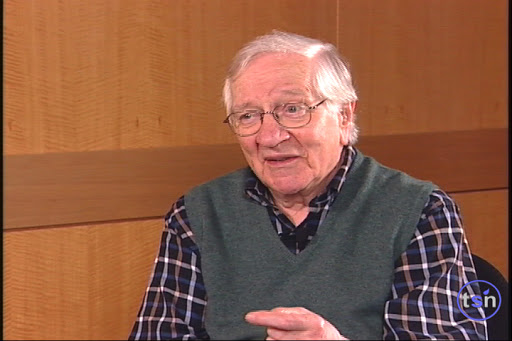
Horace Barlow pictured below:

_____________

I found Dr. Barlow to be a true gentleman and he was very kind to take the time to answer the questions that I submitted to him. In the upcoming months I will take time once a week to pay tribute to his life and reveal our correspondence. In the first week I noted:

 Today I am posting my first letter to him in February of 2015 which discussed Charles Darwin lamenting his loss of aesthetic tastes which he blamed on Darwin’s own dedication to the study of evolution. In a later return letter, Dr. Barlow agreed that Darwin did in fact lose his aesthetic tastes at the end of his life.

In the second week I look at the views of Michael Polanyi and share the comments of Francis Schaeffer concerning Polanyi’s views.

In the third week, I look at the life of Brandon Burlsworth in the November 28, 2016 letter and the movie GREATER and the problem of evil which Charles Darwin definitely had a problem with once his daughter died.

On the 4th letter to Dr. Barlow looks at Darwin’s admission that he at times thinks that creation appears to look like the expression of a mind. Francis Schaeffer discusses Darwin’s own words in 1968 sermon at this link.

My Fifth Letter concerning Charles Darwin’s views on MORAL MOTIONS Which was mailed on March 1, 2017. Francis Schaeffer discusses Darwin’s own words concerning moral motions in Schaeffer’s 1968 sermon at this link.

6th letter on May 1, 2017 in which Charles Darwin’s hopes are that someone would find in Pompeii an old manuscript by a distinguished Roman that would show that Christ existed! Francis Schaeffer discusses Darwin’s own words concerning the possible manuscript finds in Schaeffer’s 1968 sermon at this link  

7th letter on Darwin discussing DETERMINISM  dated 7-1-17 . Francis Schaeffer discusses Darwin’s own words concerning determinism in Schaeffer’s 1968 sermon at this link.

8th letter responds to Dr. Barlow’s letter to me concerning  Francis Schaeffer discussing Darwin’s own words concerning chance in Schaeffer’s 1968 sermon at this link.

9th letter in response to 11-22-17 letter I received from Professor Horace Barlow was mailed on 1-2-18 and included Charles Darwin’s comments on William Paley. Francis Schaeffer discusses Darwin’s own words concerning William Paley in Schaeffer’s 1968 sermon at this link.

10th letter in response to 11-22-17 letter I received from Professor Horace Barlow was mailed on 2-2-18 and includes Darwin’s comments asking for archaeological evidence for the Bible! Francis Schaeffer discusses Darwin’s own words concerning His desire to see archaeological evidence supporting the Bible’s accuracy  in Schaeffer’s 1968 sermon at this link.

11th letterI mailed on 3-2-18  in response to 11-22-17 letter from Barlow that asserted: It is also sometimes asked whether chance, even together with selection, can define a “MORAL CODE,” which the religiously inclined say is defined by their God. I think the answer is “Yes, it certainly can…” Francis Schaeffer discusses Darwin’s own words concerning A MORAL CODE in Schaeffer’s 1968 sermon at this link.

12th letter on March 26, 2018 breaks down song DUST IN THE WIND “All we do, crumbles to the ground though we refuse to see, Dust in the Wind, All we are is dust in the wind, Don’t hang on, Nothing lasts forever but the Earth and Sky, It slips away, And all your money won’t another minute buy.”

In 13th letter I respond to Barlow’s November 22, 2017 letter and assertion “He {Darwin} clearly did not lose his sense of the VALUE of TRUTH, and of the importance of FOREVER SEARCHING it out.”

In 14th letter to Dr. Barlow on 10-2-18, I assert: “Let me demonstrate how the Bible’s view of the origin of life fits better with the evidence we have from archaeology than that of gradual evolution.”

In 15th letter in November 2, 2018 to Dr. Barlow I quote his relative Randal Keynes Who in the Richard Dawkins special “The Genius of Darwin” makes this point concerning Darwin, “he was, at different times, enormously confident in it,
and at other times, he was utterly uncertain.”
In 16th Letter on 12-2-18 to Dr. Barlow I respond to his letter that stated, If I am pressed to say whether I think belief in God helps people to make wise and beneficial decisions I am bound to say (and I fear this will cause you pain) “No, it is often very disastrous, leading to violence, death and vile behaviour…Muslim terrorists…violence within the Christian church itself”
17th letter sent on January 2, 2019 shows the great advantage we have over Charles Darwin when examining the archaeological record concerning the accuracy of the Bible
In the 18th letter I respond to the comment by Charles Darwin: “My mind seems to have become a kind of machine for grinding general laws out of large collections of facts, but why this should have caused the atrophy of that part of the brain alone, on which the higher tastes depend, I cannot conceive….The loss of these tastes is a loss of happiness.” Francis Schaeffer discusses Darwin’s own words on his loss of aesthetic tastes  in Schaeffer’s 1968 sermon at this link.

In 19th letter on 2-2-19  I discuss Steven Weinberg’s words,  But if language is to be of any use to us, we ought to try to preserve the meanings of words, and “God” historically has not meant the laws of nature. It has meant an interested personality.

In the 20th letter on 3-2-19 I respond to Charles Darwin’s comment, “At the present day the most usual argument for the existence of an intelligent God is drawn from the deep [#1] inward conviction and feelings which are experienced by most persons...Formerly I was led by feelings such as those…to the firm conviction of the existence of God, and of the immortality of the soul. In my Journal I wrote that [#2] whilst standing in the midst of the grandeur of a Brazilian forest, ‘it is not possible to give an adequate idea of the higher feelings of wonder, admiration, and devotion which fill and elevate the mind.’ I well remember my conviction that there is more in man than the mere breath of his body. [#3] But now the grandest scenes would not cause any such convictions and feelings to rise in my mind. It may be truly said that I am like a man who has become colour-blind.” Francis Schaeffer discusses Darwin’s own words concerning his former belief in God in Schaeffer’s 1968 sermon at this link.

In the 21st letter on May 15, 2019 to Dr Barlow I discuss the writings of Francis Schaeffer who passed away the 35 years earlier on May 15, 1985. Francis Schaeffer discusses Darwin’s own words at length in Schaeffer’s 1968 sermon at this link.

In the 22nd letter I respond to Charles Darwin’s words, “I can indeed hardly see how anyone ought to wish Christianity to be true; for if so the plain language of the text seems to show that the men who do not believe…will be everlastingly punished. And this is a damnable doctrine.” Francis Schaeffer discusses Darwin’s own words about hell  in Schaeffer’s 1968 sermon at this link.

In 23rd postcard sent on 7-2-19 I asked Dr Barlow if he was a humanist. Sir Julian Huxley, founder of the American Humanist Association noted, “I use the word ‘humanist’ to mean someone who believes that man is just as much a natural phenomenon as an animal or plant; that his body, mind and soul were not supernaturally created but are products of evolution, and that he is not under the control or guidance of any supernatural being.”

In my 24th letter on 8-2-19 I quote Jerry  Bergman who noted Jean Louis Agassiz (1807-1873) is regarded as one of the greatest scientists of the 19th century. A founding father of the modern American scientific establishment, Agassiz was also a lifelong opponent of Charles Darwin’s theory of evolution. Agassiz “ruled in professorial majesty at Harvard’s Museum of Comparative Zoology.”

In my 25th letter on 9-2-19 I respond to Charles Darwin’s assertion,  “This argument would be a valid one if all men of ALL RACES had the SAME INWARD CONVICTION of the existence of one God; but we know that this is very far from being the case.” Francis Schaeffer discusses Darwin’s own words concerning MORAL MOTIONS in Schaeffer’s 1968 sermon at this link.

In my 26th letter on 10-2-19 I quoted Bertrand Russell’s daughter’s statement, “I believe myself that his whole life was a search for God…. Indeed, he had first taken up philosophy in hope of finding proof of the evidence of the existence of God … Somewhere at the back of my father’s mind, at the bottom of his heart, in the depths of his soul  there was an empty space that had once been filled by God, and he never found anything else to put in it”

In my 27th letter on 11-2-19 I disproved Richard Dawkins’ assertion, “Genesis says Abraham owned camels, but archaeological evidence shows that the camel was not domesticated until many centuries after Abraham.” Furthermore, I gave more evidence indicating the Bible is historically accurate. 

On November 21, 2014 I received a letter from Nobel Laureate Harry Kroto and it said:

…Please click on this URL http://vimeo.com/26991975

and you will hear what far smarter people than I have to say on this matter. I agree with them.

Harry Kroto

Image result for harry kroto

__________________________

There are 3 videos in this series and they have statements by 150 academics and scientists and I hope to respond to all of them. Wikipedia notes Horace Basil Barlow FRS was a British visual neuroscientist.

Barlow was the son of the civil servant Sir Alan Barlow and his wife Lady Nora (née Darwin), and thus the great-grandson of Charles Darwin (see Darwin — Wedgwood family). He earned an M.D. at Harvard University in 1946.

In 1953 Barlow discovered that the frog brain has neurons which fire in response to specific visual stimuli. This was a precursor to the work of Hubel and Wiesel on visual receptive fields in the visual cortex. He has made a long study of visual inhibition, the process whereby a neuron firing in response to one group of retinal cells can inhibit the firing of another neuron; this allows perception of relative contrast.

In 1961 Barlow wrote a seminal article where he asked what the computational aims of the visual system are. He concluded that one of the main aims of visual processing is the reduction of redundancy. While the brightnesses of neighbouring points in images are usually very similar, the retina reduces this redundancy. His work thus was central to the field of statistics of natural scenes that relates the statistics of images of real world scenes to the properties of the nervous system.

Barlow and his co-workers also did substantial work in the field of factorial codes. The goal was to encode images with statistically redundant components or pixels such that the code components are statistically independent. Such codes are hard to find but highly useful for purposes of image classification etc.

Barlow was a fellow of Trinity College, University of Cambridge. He was elected a Fellow of the Royal Society in 1969 and was awarded their Royal Medal in 1993.[1] He received the 1993 Australia Prize for his research into the mechanisms of visual perception and the 2009 Swartz Prize for Theoretical and Computational Neuroscience from the Society for Neuroscience.

________________

His comments can be found on the 3rd video and the 128th clip in this series. Below the videos you will find his words.

50 Renowned Academics Speaking About God (Part 1)

Another 50 Renowned Academics Speaking About God (Part 2)

A Further 50 Renowned Academics Speaking About God (Part 3)

_______________

Interview of Horace Barlow – part 1

Published on Jun 18, 2014

Interviewed and filmed by Alan Macfarlane on 5 March 2012

______________________

Interview of Horace Barlow – part 2

Horace Barlow’s quote taken from interview with Alan Macfarlane:

HAS RELIGION EVER BEEN IMPORTANT TO YOU? IS IT IMPORTANT TO YOU? No, it is not important to me. Saying you don’t believe in God is a very foolish thing to say as it doesn’t explain why so many people talk about it, there has got to be more to it than that; also I think one has to respect what some godly people say and some of the things they do; I wish one could make more sense of it but I don’t think the godly people have done a very good job; I was never baptized or confirmed so have never been a practitioner, and I don’t miss it; DO YOU THINK THAT SCIENCE HAS DIS-PROVEN RELIGION AS DAWKINS ARGUES? I think it [science] provides some hope of acting rationally to handle the social and political problems we have to deal with on a personal level and one a worldwide level. Religion is a way of perpetuating a way of thought that might have otherwise been lost, and I imagine that is fine.   

Dr. Barlow’s only three solid claims in this response to Alan Macfarlane is that science is #1 the best help today with our social problems,(which is in the original clip), #2 Saying you don’t believe in God (position of atheism) is foolish, and #3 we need an explanation for why so many people talk about [God.]

My response to #1 is to look at how the secular humanists have messed up so many things in the past and I include Barlow’s personal family friend Margaret Mead in that. My responses to #2 and #3 were both covered in my earlier response to Roald Hoffmann

(Roald Hoffmann is a Nobel Prize winner who I have had the honor of corresponding with in the past. Pictured below)

Image result for Roald Hoffmann.

(This July 1933 photo shows [left to right] anthropologist Gregory Bateson with Margaret Mead)

Image result for margaret mead husband

Horace Barlow’s words  from interview conducted by Alan Macfarlane:

I don’t ever remember going to Bateson’s house in Granchester as a child; William Bateson’s wife was a friend of my mother’s; when Gregory Bateson was out in Bali he met Margaret Mead; Beatrice Bateson, his mother, felt she was too old to go out and inspect her so she sent my mother instead; she flew off in an Imperial Airlines plane and we saw her off from Hendon; that must have been 1937-8; my mother got on very well with Margaret Mead – she was not altogether convinced by her, but very impressed by her breadth of knowledge and energy; she came and stayed with us many times; I was even more sceptical than my mother and thought she was a very impressive person; Gregory was born 1904 and my mother, in 1886, so there was quite a big age difference between them; I never got on close intellectual terms with Gregory even though we were to some extent interested in the same sort of thing, both in cybernetics and psychology, and his ideas were always interesting; however, my model of a scientist was taken from my mother and not from Gregory; my mother was interested in genetics and the paper for which she was famous was on the reproductive system in plants like cowslips; my mother reasoned like a scientist whereas Gregory was a guru – he liked to think things out for himself; he obviously influenced many others too; I saw him once or twice when I went to Berkeley

Postscript:

I was sad to see that Jon Stewart is stepping down from the DAILY SHOW so I wanted to include one of the best clips I have ever seen on his show and it is a short debate between the brilliant scientists  Edward J. Larson (an evolutionist), William A. Dembski (an Intelligent Design Proponent), and then he threw in a nutball in for laughs,  Ellie Crystal (a metaphysical theorist). Dembski gives several great examples of design and it reminded me of many of the words of Darwin show above in my letter to Horace Barlow.

William Dembski on The Jon Stewart Show

Uploaded on Nov 15, 2010

Wednesday September 14, 2005 – Jon Stewart’s “Evolution, Schmevolution” segment with panelists Edward J. Larson (an evolutionist), William A. Dembski (an Intelligent Design Proponent), and Ellie Crystal (a metaphysical theorist).

—-

—-

Related posts:

Taking on Ark Times Bloggers on various issues Part F “Carl Sagan’s views on how God should try and contact us” includes film “The Basis for Human Dignity”

I have gone back and forth and back and forth with many liberals on the Arkansas Times Blog on many issues such as abortion, human rights, welfare, poverty, gun control  and issues dealing with popular culture. Here is another exchange I had with them a while back. My username at the Ark Times Blog is Saline […]

Carl Sagan v. Nancy Pearcey

On March 17, 2013 at our worship service at Fellowship Bible Church, Ben Parkinson who is one of our teaching pastors spoke on Genesis 1. He spoke about an issue that I was very interested in. Ben started the sermon by reading the following scripture: Genesis 1-2:3 English Standard Version (ESV) The Creation of the […]

Review of Carl Sagan book (Part 4 of series on Evolution)

Review of Carl Sagan book (Part 4 of series on Evolution) The Long War against God-Henry Morris, part 5 of 6 Uploaded by FLIPWORLDUPSIDEDOWN3 on Aug 30, 2010 http://www.icr.org/ http://store.icr.org/prodinfo.asp?number=BLOWA2http://store.icr.org/prodinfo.asp?number=BLOWASGhttp://www.fliptheworldupsidedown.com/blog _______________________ I got this from a blogger in April of 2008 concerning candidate Obama’s view on evolution: Q: York County was recently in the news […]

Review of Carl Sagan book (Part 3 of series on Evolution)

Review of Carl Sagan book (Part 3 of series on Evolution) The Long War against God-Henry Morris, part 4 of 6 Uploaded by FLIPWORLDUPSIDEDOWN3 on Aug 30, 2010 http://www.icr.org/ http://store.icr.org/prodinfo.asp?number=BLOWA2http://store.icr.org/prodinfo.asp?number=BLOWASGhttp://www.fliptheworldupsidedown.com/blog______________________________________ I got this from a blogger in April of 2008 concerning candidate Obama’s view on evolution: Q: York County was recently in the news […]

Carl Sagan versus RC Sproul

At the end of this post is a message by RC Sproul in which he discusses Sagan. Over the years I have confronted many atheists. Here is one story below: I really believe Hebrews 4:12 when it asserts: For the word of God is living and active and sharper than any two-edged sword, and piercing as far as the […]

Review of Carl Sagan book (Part 4 of series on Evolution)jh68

Review of Carl Sagan book (Part 4 of series on Evolution) The Long War against God-Henry Morris, part 5 of 6 Uploaded by FLIPWORLDUPSIDEDOWN3 on Aug 30, 2010 http://www.icr.org/ http://store.icr.org/prodinfo.asp?number=BLOWA2http://store.icr.org/prodinfo.asp?number=BLOWASGhttp://www.fliptheworldupsidedown.com/blog _______________________ This is a review I did a few years ago. THE DEMON-HAUNTED WORLD: Science as a Candle in the Dark by Carl […]

Review of Carl Sagan book (Part 3 of series on Evolution)

Review of Carl Sagan book (Part 3 of series on Evolution) The Long War against God-Henry Morris, part 4 of 6 Uploaded by FLIPWORLDUPSIDEDOWN3 on Aug 30, 2010 http://www.icr.org/ http://store.icr.org/prodinfo.asp?number=BLOWA2http://store.icr.org/prodinfo.asp?number=BLOWASGhttp://www.fliptheworldupsidedown.com/blog______________________________________ I was really enjoyed this review of Carl Sagan’s book “Pale Blue Dot.” Carl Sagan’s Pale Blue Dot by Larry Vardiman, Ph.D. […]

Atheists confronted: How I confronted Carl Sagan the year before he died jh47

In today’s news you will read about Kirk Cameron taking on the atheist Stephen Hawking over some recent assertions he made concerning the existence of heaven. Back in December of 1995 I had the opportunity to correspond with Carl Sagan about a year before his untimely death. Sarah Anne Hughes in her article,”Kirk Cameron criticizes […]

My correspondence with George Wald and Antony Flew!!!

FRANCIS SCHAEFFER ANALYZES ART AND CULTURE Part 41 Sarvepalli Radhakrishnan (Featured artist is Marina Abramović)

FRANCIS SCHAEFFER ANALYZES ART AND CULTURE Part 40 Timothy Leary (Featured artist is Margaret Keane)

FRANCIS SCHAEFFER ANALYZES ART AND CULTURE Part 39 Tom Wolfe (Featured artist is Richard Serra)

FRANCIS SCHAEFFER ANALYZES ART AND CULTURE Part 38 Woody Allen and Albert Camus “There is but one truly serious philosophical problem, and that is suicide” (Feature on artist Hamish Fulton Photographer )

FRANCIS SCHAEFFER ANALYZES ART AND CULTURE Part 37 Mahatma Gandhi and “Relieving the Tension in the East” (Feature on artist Luc Tuymans)

FRANCIS SCHAEFFER ANALYZES ART AND CULTURE Part 36 Julian Huxley:”God does not in fact exist, but act as if He does!” (Feature on artist Barry McGee)

FRANCIS SCHAEFFER ANALYZES ART AND CULTURE Part 35 Robert M. Pirsig (Feature on artist Kerry James Marshall)

FRANCIS SCHAEFFER ANALYZES ART AND CULTURE Part 34 Aleksandr Solzhenitsyn (Feature on artist Shahzia Sikander)

FRANCIS SCHAEFFER ANALYZES ART AND CULTURE Part 33 Aldous Huxley (Feature on artist Matthew Barney )

FRANCIS SCHAEFFER ANALYZES ART AND CULTURE Part 32 Steven Weinberg and Woody Allen and “The Meaningless of All Things” (Feature on photographer Martin Karplus )

FRANCIS SCHAEFFER ANALYZES ART AND CULTURE Part 31 David Hume and “How do we know we know?” (Feature on artist William Pope L. )

FRANCIS SCHAEFFER ANALYZES ART AND CULTURE Part 30 Rene Descartes and “How do we know we know?” (Feature on artist Olafur Eliasson)

FRANCIS SCHAEFFER ANALYZES ART AND CULTURE Part 29 W.H. Thorpe and “The Search for an Adequate World-View: A Question of Method” (Feature on artist Jeff Koons)

FRANCIS SCHAEFFER ANALYZES ART AND CULTURE Part 28 Woody Allen and “The Mannishness of Man” (Feature on artist Ryan Gander)

FRANCIS SCHAEFFER ANALYZES ART AND CULTURE Part 27 Jurgen Habermas (Featured artist is Hiroshi Sugimoto)

FRANCIS SCHAEFFER ANALYZES ART AND CULTURE Part 26 Bettina Aptheker (Featured artist is Krzysztof Wodiczko)

FRANCIS SCHAEFFER ANALYZES ART AND CULTURE Part 25 BOB DYLAN (Part C) Francis Schaeffer comments on Bob Dylan’s song “Ballad of a Thin Man” and the disconnect between the young generation of the 60’s and their parents’ generation (Feature on artist Fred Wilson)

FRANCIS SCHAEFFER ANALYZES ART AND CULTURE Part 24 BOB DYLAN (Part B) Francis Schaeffer comments on Bob Dylan’s words from HIGHWAY 61 REVISITED!! (Feature on artist Susan Rothenberg)

FRANCIS SCHAEFFER ANALYZES ART AND CULTURE Part 23 BOB DYLAN (Part A) (Feature on artist Josiah McElheny)Francis Schaeffer on the proper place of rebellion with comments by Bob Dylan and Samuel Rutherford

FRANCIS SCHAEFFER ANALYZES ART AND CULTURE Part 22 “The School of Athens by Raphael” (Feature on the artist Sally Mann)

FRANCIS SCHAEFFER ANALYZES ART AND CULTURE Part 21 William B. Provine (Feature on artist Andrea Zittel)

FRANCIS SCHAEFFER ANALYZES ART AND CULTURE Part 20 Woody Allen and Materialistic Humanism: The World-View of Our Era (Feature on artist Ida Applebroog)

FRANCIS SCHAEFFER ANALYZES ART AND CULTURE Part 19 Movie Director Luis Bunuel (Feature on artist Oliver Herring)

FRANCIS SCHAEFFER ANALYZES ART AND CULTURE Part 18 “Michelangelo’s DAVID is the statement of what humanistic man saw himself as being tomorrow” (Feature on artist Paul McCarthy)

FRANCIS SCHAEFFER ANALYZES ART AND CULTURE Part 17 Francis Schaeffer discusses quotes of Andy Warhol from “The Observer June 12, 1966″ Part C (Feature on artist David Hockney plus many pictures of Warhol with famous friends)

FRANCIS SCHAEFFER ANALYZES ART AND CULTURE Part 16 Francis Schaeffer discusses quotes of Andy Warhol from “The Observer June 12, 1966″ Part B (Feature on artist James Rosenquist plus many pictures of Warhol with famous friends)

FRANCIS SCHAEFFER ANALYZES ART AND CULTURE Part 15 Francis Schaeffer discusses quotes of Andy Warhol from “The Observer June 12, 1966″ Part A (Feature on artist Robert Indiana plus many pictures of Warhol with famous friends)

FRANCIS SCHAEFFER ANALYZES ART AND CULTURE Part 14 David Friedrich Strauss (Feature on artist Roni Horn )

FRANCIS SCHAEFFER ANALYZES ART AND CULTURE Part 13 Jacob Bronowski and Materialistic Humanism: The World-View of Our Era (Feature on artist Ellen Gallagher )

FRANCIS SCHAEFFER ANALYZES ART AND CULTURE Part 12 H.J.Blackham and Materialistic Humanism: The World-View of Our Era (Feature on artist Arturo Herrera)

FRANCIS SCHAEFFER ANALYZES ART AND CULTURE Part 11 Thomas Aquinas and his Effect on Art and HOW SHOULD WE THEN LIVE? Episode 2: THE MIDDLES AGES (Feature on artist Tony Oursler )

FRANCIS SCHAEFFER ANALYZES ART AND CULTURE Part 10 David Douglas Duncan (Feature on artist Georges Rouault )

FRANCIS SCHAEFFER ANALYZES ART AND CULTURE Part 9 Jasper Johns (Feature on artist Cai Guo-Qiang )

FRANCIS SCHAEFFER ANALYZES ART AND CULTURE Part 8 “The Last Year at Marienbad” by Alain Resnais (Feature on artist Richard Tuttle and his return to the faith of his youth)

FRANCIS SCHAEFFER ANALYZES ART AND CULTURE Part 7 Jean Paul Sartre (Feature on artist David Hooker )

FRANCIS SCHAEFFER ANALYZES ART AND CULTURE Part 6 The Adoration of the Lamb by Jan Van Eyck which was saved by MONUMENT MEN IN WW2 (Feature on artist Makoto Fujimura)

FRANCIS SCHAEFFER ANALYZES ART AND CULTURE Part 5 John Cage (Feature on artist Gerhard Richter)

FRANCIS SCHAEFFER ANALYZES ART AND CULTURE Part 4 ( Schaeffer and H.R. Rookmaaker worked together well!!! (Feature on artist Mike Kelley Part B )

FRANCIS SCHAEFFER ANALYZES ART AND CULTURE Part 3 PAUL GAUGUIN’S 3 QUESTIONS: “Where do we come from? What art we? Where are we going? and his conclusion was a suicide attempt” (Feature on artist Mike Kelley Part A)

FRANCIS SCHAEFFER ANALYZES ART AND CULTURE Part 2 “A look at how modern art was born by discussing Monet, Renoir, Pissaro, Sisley, Degas,Cezanne, Van Gogh, Gauguin, Seurat, and Picasso” (Feature on artist Peter Howson)

FRANCIS SCHAEFFER ANALYZES ART AND CULTURE Part 1 HOW SHOULD WE THEN LIVE? “The Roman Age” (Feature on artist Tracey Emin)

_________________

___

Education Secretary Cardona facing calls to resign after email shows he solicited controversial NSBA letter 

—-

Education Secretary Cardona facing calls to resign after email shows he solicited controversial NSBA letter

‘The truth comes out,’ Sen. Rick Scott says

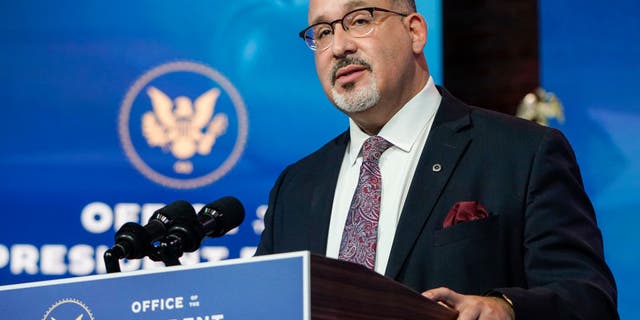
Education Secretary Miguel Cardona is facing calls to resign after it was revealed Tuesday that, according to a National School Boards Association official, he had solicited the controversial letter from the NSBA last year that compared protesting parents to domestic terrorists. 

The NSBA’s Oct. 22 letter, which it has since apologized for, called for federal action to address hostilities toward school boards as possible acts of “domestic terrorism” and suggested using the Patriot Act against parents.

EDUCATION SECRETARY CARDONA SOLICITED NSBA LETTER COMPARING PROTESTING PARENTS TO DOMESTIC TERRORISTS: EMAIL

Miguel Cardona speaks after President-elect Joe Biden announced his nomination for education secretary on Dec. 23, 2020, in Wilmington, Delaware. 

Miguel Cardona speaks after President-elect Joe Biden announced his nomination for education secretary on Dec. 23, 2020, in Wilmington, Delaware.  (Joshua Roberts)

President Biden’s Department of Justice relied on the NSBA letter in creating its own Oct. 4 memo directing the FBI and U.S. attorney’s offices to investigate “threats of violence” at school board meetings in order to combat what it called a “disturbing trend” of harassment of school officials.

Previous emails had revealed that the NSBA was in contact with the White House and Justice Department in the weeks before it publicly sent its letter, but an email exchange obtained by the parents group Parents Defending Education through a Freedom of Information Act (FOIA) request and reviewed by Fox News Digital indicates the Education Department was more involved with the letter’s creation than previously known. 

In a Oct. 5 email, NSBA Secretary-Treasurer Kristi Swett recounted that NSBA interim CEO Chip Slaven “told the officers he was writing a letter to provide information to the White House, from a request by Secretary Cardona.”

“Stunning,” Sen. Ted Cruz, R-Texas, reacted on Twitter. “The original source of the letter lobbying the Biden admin to use the Patriot Act to target parents as domestic terrorists? THE BIDEN ADMIN ITSELF. Biden Education Secretary: in effect, ‘Please ask us to treat Moms & Dads as terrorists.’”

Rep. Mike Johnson, R-La., tweeted, “We now know where the idea for the NSBA letter to the Biden Administration labeling parents as domestic terrorists originated: The Biden Administration.”

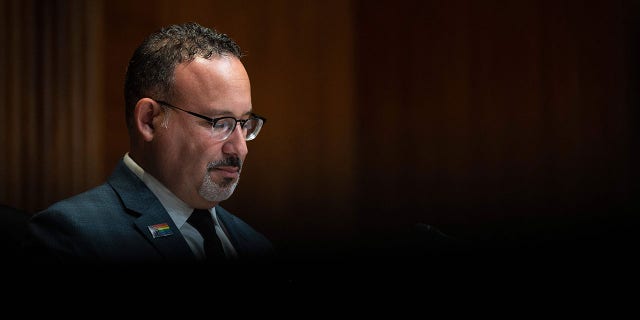
Education Secretary Miguel Cardona testifies before the Labor, Health and Human Services, Education and Related Agencies Subcommittee on Capitol Hill in Washington on June 16, 2021.

Education Secretary Miguel Cardona testifies before the Labor, Health and Human Services, Education and Related Agencies Subcommittee on Capitol Hill in Washington on June 16, 2021. (Jim Watson/AFP via Getty Images)

Sen. Rick Scott, R-Fla., and Rep. Jim Banks, R-Ind., called on Cardona to resign.

“The truth comes out,” Scott tweeted. “Woke @SecCardona asked @NSBAPublicEd to write the letter @TheJusticeDept used to mobilize the FBI to begin treating parents like domestic terrorists. Cardona should resign.”

It appears Biden’s Education Secretary may have helped initiate the NSBA’s now-retracted letter to the DOJ requesting they spy on parents under the Patriot Act,” Banks tweeted. “If true, he needs to resign.”

CLICK HERE TO GET THE FOX NEWS APP

A Department of Education spokesperson denied that Cardona solicited the NSBA letter, despite the email indicating he did. 

While the Secretary did not solicit a letter from NSBA, to understand the views and concerns of stakeholders, the Department routinely engages with students, teachers, parents, district leaders and education associations,” the spokesperson told Fox News Digital.

Fox News’ Peter Hasson contributed to this report.


The Honorable Representative Fred Upton of Michigan Washington D.C.

Dear Representative Fred Upton, 

I noticed that you are a pro-life representative that has a long record of standing up for unborn babies! It was in the 1970’s when I was first introduced to the works of Francis Schaeffer and Dr. C. Everett Koop and I wanted to commend their writings and films to you.

I recently read about your pro-life record:

Voted YES on making it a crime to harm a fetus during another crime.

Vote to pass a bill that would make it a criminal offense to harm or kill a fetus during the commission of a violent crime. The measure would set criminal penalties, the same as those that would apply if harm or death happened to the pregnant woman, for those who harm a fetus. It is not required that the individual have prior knowledge of the pregnancy or intent to harm the fetus. This bill prohibits the death penalty from being imposed for such an offense. The bill states that its provisions should not be interpreted to apply a woman’s actions with respect to her pregnancy.

Reference: Unborn Victims of Violence Act; Bill HR 1997 ; vote number 2004-31 on Feb 26, 2004

Voted YES on banning partial-birth abortion except to save mother’s life.

Partial-Birth Abortion Ban Act of 2003: Vote to pass a bill banning a medical procedure, which is commonly known as “partial-birth” abortion. The procedure would be allowed only in cases in which a women’s life is in danger, not for cases where a women’s health is in danger. Those who performed this procedure, would face fines and up to two years in prison, the women to whom this procedure is performed on are not held criminally liable.

Reference: Bill sponsored by Santorum, R-PA; Bill S.3 ; vote number 2003-530 on Oct 2, 2003

It seems you have a grudge against President Trump while our freedoms under President Biden are being taken away. I recommend to you the article below:

The January 6 Insurrection Hoax

 • Volume 50, Number 9 • Roger Kimball

Roger Kimball
Editor and Publisher, The New Criterion

Mr. Kimball concludes his article with these words: 

That’s one melancholy lesson of the January 6 insurrection hoax: that America is fast mutating from a republic, in which individual liberty is paramount, into an oligarchy, in which conformity is increasingly demanded and enforced.

Another lesson was perfectly expressed by Donald Trump when he reflected on the unremitting tsunami of hostility that he faced as President. “They’re after you,” he more than once told his supporters. “I’m just in the way.”


Bingo.

You can google and get Roger Kimball article “The January 6 Insurrection Hoax”

NOW WHAT DID YOU DO TO TURN YOUR BACK ON OUR LIBERTY AND PERPETUATE THE HOAX THAT JANUARY 6TH WAS AN INSURRECTION? Read below!! 

9 Republicans voted to hold Trump aide Bannon in contempt of Congress


There were a few Republicans Thursday who surprised observers when they voted in support of holding former Trump adviser Steve Bannon in contempt of Congress and referring him to the Justice Department for criminal prosecution.

Prior to the vote, four Republicans were considered a lock to approve the criminal referral, according to Capitol Hill sources: Reps. Liz Cheney of Wyoming, Adam Kinzinger of Illinois, Fred Upton of Michigan and Anthony Gonzalez of Ohio.


Cheney and Kinzinger are on the House select committee investigating the Jan. 6 insurrection at the U.S. Capitol, and have for months stood alone as the only two House Republicans willing to speak out against former President Donald Trump’s continued lies about the 2020 election. They were the only two House Republicans to vote for the formation of the select committee on June 30.

House Speaker Nancy Pelosi formed the select committee after Republicans rejected a bipartisan commission that would have been evenly split between five Democrats and five Republicans. Only 35 Republicans voted for that measure when itpassed the House of Representatives, and it was defeated by a GOP filibuster in the Senate.

WASHINGTON, DC - JULY 27:  (L-R) Rep. Jamie Raskin (D-MD), Rep. Liz Cheney (R-WY) and Rep. Adam Kinzinger (R-IL) arrive for the House Select Committee hearing investigating the January 6 attack on the U.S. Capitol on July 27, 2021 at the Canon House Office Building in Washington, DC. Members of law enforcement will testify about the attack by supporters of former President Donald Trump on the U.S. Capitol. According to authorities, about 140 police officers were injured when they were trampled, had objects thrown at them, and sprayed with chemical irritants during the insurrection. (Photo by Drew Angerer/Getty Images)


More

Upton has served in the House for more than three decades, since 1987, and will face a primary challenge next year because of his willingness to stand up to Trump.

Gonzalez is retiring from Congress next year, after only four years in the House. “While my desire to build a fuller family life is at the heart of my decision, it is also true that the current state of our politics, especially many of the toxic dynamics inside our own party, is a significant factor in my decision,” Gonzalez said in September when heannounced he would not seek another term.


The remaining five Republicans included three who voted for impeachment — Peter Meijer of Michigan, John Katko of New York and Jaime Herrera Beutler of Washington — and two House Republicans who did not vote to impeach Trump: Nancy Mace of South Carolina and Brian Fitzpatrick of Pennsylvania.

FROM TUCKER CARLSON SHOW OF SEPTEMBER 24, 2021:

Now, we’ve watched this happen all this year in real time, we’re living through distorted history as we watch the offense of January 6th described by everyone. Here is how the media describe what happened that day that day.

(BEGIN VIDEO CLIP)

TARA SETMAYER, CNN POLITICAL COMMENTATOR: That day will be another day that lives in infamy in American History similar to Pearl Harbor and 9/11.

SEN. CHUCK SCHUMER (D-NY): We can now add January 6, 2021 to that very short list of dates in American History that will live forever in infamy.

JOE BIDEN (D), PRESIDENT OF THE UNITED STATES: The worst attack on our democracy since the Civil War.

ANDERSON COOPER, CNN HOST: A hundred and fifty days since the worst single act of political violence since the Civil War.

CHRIS HAYES, MSNBC HOST: The worst attack on American democracy arguably probably since the Civil War.

Do you realize that Americans rights are being taken away from them and would you like an example? I am going to quote Mr. Kimball again.  You can google and get Roger Kimball article “The January 6 Insurrection Hoax”

Trump seems never to have discerned what a viper’s nest our politics has become for anyone who is not a paid-up member of The Club. 

Maybe Trump understands this now. I have no insight into that question. I am pretty confident, though, that the 74 plus million people who voted for him understand it deeply. It’s another reason that The Club should be wary of celebrating its victory too expansively. 

Friedrich Hayek took one of the two epigraphs for his book, The Road to Serfdom, from the philosopher David Hume. “It is seldom,” Hume wrote, “that liberty of any kind is lost all at once.” Much as I admire Hume, I wonder whether he got this quite right. Sometimes, I would argue, liberty is erased almost instantaneously.

I’d be willing to wager that Joseph Hackett, confronted with Hume’s observation, would express similar doubts. I would be happy to ask Mr. Hackett myself, but he is inaccessible. If the ironically titled “Department of Justice” has its way, he will be inaccessible for a long, long time—perhaps as long as 20 years. 

Joseph Hackett, you see, is a 51-year-old Trump supporter and member of an organization called the Oath Keepers, a group whose members have pledged to “defend the Constitution against all enemies foreign and domestic.” The FBI does not like the Oath Keepers—agents arrested its leader in January and have picked up many other members in the months since. Hackett traveled to Washington from his home in Florida to join the January 6 rally. According to court documents, he entered the Capitol at 2:45 that afternoon and left some nine minutes later, at 2:54. The next day, he went home. On May 28, he was apprehended by the FBI and indicted on a long list of charges, including conspiracy, obstruction of an official proceeding, destruction of government property, and illegally entering a restricted building. 

As far as I have been able to determine, no evidence of Hackett destroying property has come to light. According to his wife, it is not even clear that he entered the Capitol. But he certainly was in the environs. He was a member of the Oath Keepers. He was a supporter of Donald Trump. Therefore, he must be neutralized.

Joseph Hackett is only one of hundreds of citizens who have beenbranded as “domestic terrorists” trying to “overthrow the government” and who are now languishing, in appalling conditions, jailed as political prisoners of an angry state apparat.

—-

I want to recommend to you a video on YOU TUBE that runs 28 minutes and 39 seconds by Francis Schaeffer entitled because it discusses the founding of our nation and what the FOUNDERS believed: 

How Should We Then Live | Season 1 | Episode 5 | The Revolutionary Age


Thank you for your time, and again I want to thank you for your support of the unborn little babies!

Sincerely,

Everette Hatcher, 13900 Cottontail Lane, AR 72002, cell 501-920-5733, everettehatcher@gmail.com, http://www.thedailyhatch.org

——————————————————————————————

——

Dr. Francis schaeffer How Should We Then Live | Season 1 | Episode 5 | The Revolutionary Age


– Whatever happened to human race? PART 1 Co-authored by Francis Schaeffer and Dr. C. Everett Koop)

C. Everett Koop
C. Everett Koop, 1980s.jpg
 
13th Surgeon General of the United States
In office
January 21, 1982 – October 1, 1989

Dr. Francis Schaeffer – Whatever Happened To The Human Race? | Episode 2 | Slaughter of the Innocents

Francis Schaeffer – Whatever Happened To The Human Race? | Episode 3 | Death by Someone’s Choice

Mr. Hentoff with the clarinetist Edmond Hall in 1948 at the Savoy, a club in Boston.

Dr. Francis Schaeffer – Whatever Happened To The Human Race? | Episode 4 | The Basis for Human Dignity 

Image<img class=”i-amphtml-blurry-placeholder” src=”data:;base64,Edith Schaeffer with her husband, Francis Schaeffer, in 1970 in Switzerland, where they founded L’Abri, a Christian commune.

________________

______________________

March 23, 2021

President Biden c/o The White House 1600 Pennsylvania Avenue NW Washington, DC 20500

Dear Mr. President,

I really do respect you for trying to get a pulse on what is going on out here. I know that you don’t agree with my pro-life views but I wanted to challenge you as a fellow Christian to re-examine your pro-choice view. Although we are both Christians and have the Bible as the basis for our moral views, I did want you to take a close look at the views of the pro-life atheist Nat Hentoff too.  Hentoff became convinced of the pro-life view because of secular evidence that shows that the unborn child is human. I would ask you to consider his evidence and then of course reverse your views on abortion.

___________________

The pro-life atheist Nat Hentoff wrote a fine article below I wanted to share with you.

Nat Hentoff is an atheist, but he became a pro-life activist because of the scientific evidence that shows that the unborn child is a distinct and separate human being and even has a separate DNA. His perspective is a very intriguing one that I thought you would be interested in. I have shared before many   cases (Bernard Nathanson, Donald Trump, Paul Greenberg, Kathy Ireland)    when other high profile pro-choice leaders have changed their views and this is just another case like those. I have contacted the White House over and over concerning this issue and have even received responses. I am hopeful that people will stop and look even in a secular way (if they are not believers) at this abortion debate and see that the unborn child is deserving of our protection.That is why the writings of Nat Hentoff of the Cato Institute are so crucial.

In the film series “WHATEVER HAPPENED TO THE HUMAN RACE?” the arguments are presented  against abortion (Episode 1),  infanticide (Episode 2),   euthanasia (Episode 3), and then there is a discussion of the Christian versus Humanist worldview concerning the issue of “the basis for human dignity” in Episode 4 and then in the last episode a close look at the truth claims of the Bible.

Francis Schaeffer

__________________________

I truly believe that many of the problems we have today in the USA are due to the advancement of humanism in the last few decades in our society. Ronald Reagan appointed the evangelical Dr. C. Everett Koop to the position of Surgeon General in his administration. He partnered with Dr. Francis Schaeffer in making the video below. It is very valuable information for Christians to have.  Actually I have included a video below that includes comments from him on this subject.

Francis Schaeffer Whatever Happened to the Human Race (Episode 1) ABORTION

_____________________________________


Dr. Francis schaeffer – from Part 5 of Whatever happened to human race?) Whatever Happened To The Human Race? | Episode 5 | Truth and History

Dr. Francis Schaeffer – A Christian Manifesto – Dr. Francis Schaeffer Lecture

Francis Schaeffer – A 700 Club Special! ~ Francis Schaeffer 1982

Dr. Francis Schaeffer – 1984 SOUNDWORD LABRI CONFERENCE VIDEO – Q&A With Francis & Edith Schaeffer

________________

Jewish World Review June 12, 2006/ 16 Sivan, 5766


Insisting on life

http://www.NewsandOpinion.com | A longtime friend of mine is married to a doctor who also performs abortions. At the dinner table one recent evening, their 9-year-old son — having heard a word whose meaning he didn’t know — asked, “What is an abortion?” His mother, choosing her words carefully, described the procedure in simple terms.

“But,” said her son, “that means killing the baby.” The mother then explained that there are certain months during which an abortion cannot be performed, with very few exceptions. The 9-year-old shook his head. “But,” he said, “it doesn’t matter what month. It still means killing the babies.”

Hearing the story, I wished it could be repeated to the justices of the Supreme Court, in the hope that at least five of them might act on this 9-year-old’s clarity of thought and vision.

The boy’s spontaneous insistence on the primacy of life also reminded me of a powerful pro-life speaker and writer who, many years ago, helped me become a pro-lifer. He was a preacher, a black preacher. He said: “There are those who argue that the right to privacy is of a higher order than the right to life.

“That,” he continued, “was the premise of slavery. You could not protest the existence or treatment of slaves on the plantation because that was private and therefore out of your right to be concerned.”

This passionate reverend used to warn: “Don’t let the pro-choicers convince you that a fetus isn’t a human being. That’s how the whites dehumanized us … The first step was to distort the image of us as human beings in order to justify what they wanted to do — and not even feel they’d done anything wrong.”

That preacher was Jesse Jackson. Later, he decided to run for the presidency — and it was a credible campaign that many found inspiring in its focus on what still had to be done on civil rights. But Jackson had by now become “pro-choice” — much to the appreciation of most of those in the liberal base.

The last time I saw Jackson was years later, on a train from Washington to New York. I told him of a man nominated, but not yet confirmed, to a seat on a federal circuit court of appeals. This candidate was a strong supporter of capital punishment — which both the Rev. Jackson and I oppose, since it involves the irreversible taking of a human life by the state.

I asked Jackson if he would hold a press conference in Washington, criticizing the nomination, and he said he would. The reverend was true to his word; the press conference took place; but that nominee was confirmed to the federal circuit court. However, I appreciated Jackson’s effort.

On that train, I also told Jackson that I’d been quoting — in articles, and in talks with various groups — from his compelling pro-life statements. I asked him if he’d had any second thoughts on his reversal of those views.

Usually quick to respond to any challenge that he is not consistent in his positions, Jackson paused, and seemed somewhat disquieted at my question. Then he said to me, “I’ll get back to you on that.” I still patiently await what he has to say.

As time goes on, my deepening concern with the consequences of abortion is that its validation by the Supreme Court, as a constitutional practice, helps support the convictions of those who, in other controversies — euthanasia, assisted suicide and the “futility doctrine” by certain hospital ethics committees — believe that there are lives not worth continuing.

Around the time of my conversation with Jackson on the train, I attended a conference on euthanasia at Clark College in Worcester, Mass. There, I met Derek Humphry, the founder of the Hemlock Society, and already known internationally as a key proponent of the “death with dignity” movement.

He told me that for some years in this country, he had considerable difficulty getting his views about assisted suicide and, as he sees it, compassionate euthanasia into the American press.

“But then,” Humphry told me, “a wonderful thing happened. It opened all the doors for me.”

“What was that wonderful thing?” I asked.

“Roe v. Wade,” he answered.

The devaluing of human life — as the 9-year-old at the dinner table put it more vividly — did not end with making abortion legal, and therefore, to some people, moral. The word “baby” does not appear in Roe v. Wade — let alone the word “killing.”

And so, the termination of “lives not worth living” goes on.


______________________

Thank you so much for your time. I know how valuable it is. I also appreciate the fine family that you have and your commitment as a father and a husband. Now after presenting the secular approach of Nat Hentoff I wanted to make some comments concerning our shared Christian faith.  I  respect you for putting your faith in Christ for your eternal life. I am pleading to you on the basis of the Bible to please review your religious views concerning abortion. It was the Bible that caused the abolition movement of the 1800’s and it also was the basis for Martin Luther King’s movement for civil rights and it also is the basis for recognizing the unborn children.

Sincerely,

Everette Hatcher III, 13900 Cottontail Lane, Alexander, AR 72002, ph 501-920-5733,

Related posts:

Al Mohler on Kermit Gosnell’s abortion practice

Francis Schaeffer: “Whatever Happened to the Human Race” (Episode 1) ABORTION OF THE HUMAN RACE Published on Oct 6, 2012 by AdamMetropolis ________________ Picture of Francis Schaeffer and his wife Edith from the 1930′s above. I was sad to read about Edith passing away on Easter weekend in 2013. I wanted to pass along this fine […]

Taking on Ark Times Bloggers on various issues Part U “Do men have a say in the abortion debate?” (includes the film SLAUGHTER OF THE INNOCENTS and editorial cartoon)

I have gone back and forth and back and forth with many liberals on the Arkansas Times Blog on many issues such as abortion, human rights, welfare, poverty, gun control  and issues dealing with popular culture. Here is another exchange I had with them a while back. My username at the Ark Times Blog is Saline […]

Taking on Ark Times Bloggers on various issues Part T “Abortion is a dirty business” (includes video “Truth and History” and editorial cartoon)

I have gone back and forth and back and forth with many liberals on the Arkansas Times Blog on many issues such as abortion, human rights, welfare, poverty, gun control  and issues dealing with popular culture. Here is another exchange I had with them a while back. My username at the Ark Times Blog is Saline […]

“Sanctity of Life Saturday” Abortion supporters lying in order to further their clause? Window to the Womb (includes video ABORTION OF THE HUMAN RACE)

It is truly sad to me that liberals will lie in order to attack good Christian people like state senator Jason Rapert of Conway, Arkansas because he headed a group of pro-life senators that got a pro-life bill through the Arkansas State Senate the last week of January in 2013. I have gone back and […]

Taking on Ark Times Bloggers on various issues Part D “If you can’t afford a child can you abort?”Francis Schaeffer Quotes part 4 includes the film ABORTION OF THE HUMAN RACE) (editorial cartoon)

I have gone back and forth and back and forth with many liberals on the Arkansas Times Blog on many issues such as abortion, human rights, welfare, poverty, gun control  and issues dealing with popular culture. Here is another exchange I had with them a while back. My username at the Ark Times Blog is Saline […]

Taking on Ark Times Bloggers on various issues Part C “Abortion” (Francis Schaeffer Quotes part 3 includes the film SLAUGHTER OF THE INNOCENTS) (editorial cartoon)

I have gone back and forth and back and forth with many liberals on the Arkansas Times Blog on many issues such as abortion, human rights, welfare, poverty, gun control  and issues dealing with popular culture. Here is another exchange I had with them a while back. My username at the Ark Times Blog is Saline […]

Taking on Ark Times Bloggers on various issues Part B “Gendercide” (Francis Schaeffer Quotes Part 2 includes the film ABORTION OF THE HUMAN RACE) (editorial cartoon)

I have gone back and forth and back and forth with many liberals on the Arkansas Times Blog on many issues such as abortion, human rights, welfare, poverty, gun control  and issues dealing with popular culture. Here is another exchange I had with them a while back. My username at the Ark Times Blog is Saline […]


SANCTITY OF LIFE SATURDAY “AngryOldWoman” blogger argues that she has no regrets about past abortion

Sometimes you can see evidences in someone’s life of how content they really are. I saw  something like that on 2-8-13 when I confronted a blogger that goes by the name “AngryOldWoman” on the Arkansas Times Blog. See below. Leadership Crisis in America Published on Jul 11, 2012 Picture of Adrian Rogers above from 1970′s […]


“Sanctity of Life Saturday” The Church Awakens: Whatever Happened to the Human Race? (includes the video ABORTION OF THE HUMAN RACE)

In the film series “WHATEVER HAPPENED TO THE HUMAN RACE?” the arguments are presented  against abortion (Episode 1),  infanticide (Episode 2),   euthenasia (Episode 3), and then there is a discussion of the Christian versus Humanist worldview concerning the issue of “the basis for human dignity” in Episode 4 and then in the last episode a close […]

Taking on Ark Times Bloggers on various issues Part H “Are humans special?” includes film ABORTION OF THE HUMAN RACE) Reagan: ” To diminish the value of one category of human life is to diminish us all”

I have gone back and forth and back and forth with many liberals on the Arkansas Times Blog on many issues such as abortion, human rights, welfare, poverty, gun control  and issues dealing with popular culture. Here is another exchange I had with them a while back. My username at the Ark Times Blog is Saline […]

Taking on Ark Times Bloggers on various issues Part G “How do moral nonabsolutists come up with what is right?” includes the film “ABORTION OF THE HUMAN RACE”)

I have gone back and forth and back and forth with many liberals on the Arkansas Times Blog on many issues such as abortion, human rights, welfare, poverty, gun control  and issues dealing with popular culture. Here is another exchange I had with them a while back. My username at the Ark Times Blog is Saline […]

Taking on Ark Times Bloggers on various issues Part E “Moral absolutes and abortion” Francis Schaeffer Quotes part 5(includes the film SLAUGHTER OF THE INNOCENTS) (editorial cartoon)

I have gone back and forth and back and forth with many liberals on the Arkansas Times Blog on many issues such as abortion, human rights, welfare, poverty, gun control  and issues dealing with popular culture. Here is another exchange I had with them a while back. My username at the Ark Times Blog is Saline […]

Francis Schaeffer’s “How should we then live?” Video and outline of episode 10 “Final Choices” (Schaeffer Sundays)

E P I S O D E 1 0   Dr. Francis Schaeffer – Episode X – Final Choices 27 min FINAL CHOICES I. Authoritarianism the Only Humanistic Social Option One man or an elite giving authoritative arbitrary absolutes. A. Society is sole absolute in absence of other absolutes. B. But society has to be […]

Francis Schaeffer’s “How should we then live?” Video and outline of episode 9 “The Age of Personal Peace and Affluence” (Schaeffer Sundays)

E P I S O D E 9 Dr. Francis Schaeffer – Episode IX – The Age of Personal Peace and Affluence 27 min T h e Age of Personal Peace and Afflunce I. By the Early 1960s People Were Bombarded From Every Side by Modern Man’s Humanistic Thought II. Modern Form of Humanistic Thought Leads […]

Francis Schaeffer’s “How should we then live?” Video and outline of episode 8 “The Age of Fragmentation” (Schaeffer Sundays)

E P I S O D E 8 Dr. Francis Schaeffer – Episode VIII – The Age of Fragmentation 27 min I saw this film series in 1979 and it had a major impact on me. T h e Age of FRAGMENTATION I. Art As a Vehicle Of Modern Thought A. Impressionism (Monet, Renoir, Pissarro, Sisley, […]

Francis Schaeffer’s “How should we then live?” Video and outline of episode 7 “The Age of Non-Reason” (Schaeffer Sundays)

E P I S O D E 7 Dr. Francis Schaeffer – Episode VII – The Age of Non Reason I am thrilled to get this film series with you. I saw it first in 1979 and it had such a big impact on me. Today’s episode is where we see modern humanist man act […]

Francis Schaeffer’s “How should we then live?” Video and outline of episode 6 “The Scientific Age” (Schaeffer Sundays)

E P I S O D E 6 How Should We Then Live 6#1 Uploaded by NoMirrorHDDHrorriMoN on Oct 3, 2011 How Should We Then Live? Episode 6 of 12 ________ I am sharing with you a film series that I saw in 1979. In this film Francis Schaeffer asserted that was a shift in […]

Francis Schaeffer’s “How should we then live?” Video and outline of episode 5 “The Revolutionary Age” (Schaeffer Sundays)

E P I S O D E 5 How Should We Then Live? Episode 5: The Revolutionary Age I was impacted by this film series by Francis Schaeffer back in the 1970′s and I wanted to share it with you. Francis Schaeffer noted, “Reformation Did Not Bring Perfection. But gradually on basis of biblical teaching there […]

Francis Schaeffer’s “How should we then live?” Video and outline of episode 4 “The Reformation” (Schaeffer Sundays)

Dr. Francis Schaeffer – Episode IV – The Reformation 27 min I was impacted by this film series by Francis Schaeffer back in the 1970′s and I wanted to share it with you. Schaeffer makes three key points concerning the Reformation: “1. Erasmian Christian humanism rejected by Farel. 2. Bible gives needed answers not only as to […]

“Schaeffer Sundays” Francis Schaeffer’s “How should we then live?” Video and outline of episode 3 “The Renaissance”

Francis Schaeffer’s “How should we then live?” Video and outline of episode 3 “The Renaissance” Francis Schaeffer: “How Should We Then Live?” (Episode 3) THE RENAISSANCE I was impacted by this film series by Francis Schaeffer back in the 1970′s and I wanted to share it with you. Schaeffer really shows why we have so […]

Francis Schaeffer’s “How should we then live?” Video and outline of episode 2 “The Middle Ages” (Schaeffer Sundays)

  Francis Schaeffer: “How Should We Then Live?” (Episode 2) THE MIDDLE AGES I was impacted by this film series by Francis Schaeffer back in the 1970′s and I wanted to share it with you. Schaeffer points out that during this time period unfortunately we have the “Church’s deviation from early church’s teaching in regard […]

Francis Schaeffer’s “How should we then live?” Video and outline of episode 1 “The Roman Age” (Schaeffer Sundays)

Francis Schaeffer: “How Should We Then Live?” (Episode 1) THE ROMAN AGE   Today I am starting a series that really had a big impact on my life back in the 1970′s when I first saw it. There are ten parts and today is the first. Francis Schaeffer takes a look at Rome and why […]

By Everette Hatcher III | Posted in Francis Schaeffer | Edit | Comments (0)

RESPONDING TO HARRY KROTO’S BRILLIANT RENOWNED ACADEMICS!! Part 166D PAUSING to look at the life of Sir John Sulston (My 4-23-16 email to Dr. Sulston about John Fletcher Redman, M. D. and his similar experience with his religious father)

I was saddened to learn of the passing of Sir John Sulston on March 6, 2018  and I wanted to spend time on several posts concentrating on him. Probably the best video tribute to him I have found is this video below, but the best interview of Dr. Sulston ever done was by Alan Macfarlane and it is below too.

______

Interview of Sir John Sulston – part one

Uploaded on Jun 24, 2010

An Interview on the life and work of Sir John Sulston, Nobel Prize winner, who organized the team which sequenced the human genome for the first time. For a higher quality, downloadable, version, with a detailed summary please see http://www.alanmacfarlane.com

Interview of Sir John Sulston – part two

Uploaded on Jun 24, 2010

An Interview on the life and work of Sir John Sulston, Nobel Prize winner, who organized the team which sequenced the human genome for the first time. For a higher quality, downloadable, version, with a detailed summary please see http://www.alanmacfarlane.com

_________

QUOTE from Dr. Sulston:

I see that we have enormous amounts to discover as a strategy for going forward as human beings; I believe atheism makes coherent sense; all the religions are in conflict with each other; they have different stories, based on insubstantial records, but justify them with saying that there was some direct communication with a deity in the past which has led them to this belief; I find those unconvincing, particularly because of the conflict; this was my main argument in discussions with my father and he found it hard to answer that.

EMAILED HIM ON 4-23-16,

From Everette Hatcher, My 3 responses to your assertions on RENOWNED ACADEMICS You Tube Interview, BTW I agree with your parents!!!

April 23, 2016

Dear Dr. Sulston,

I really enjoyed your interviews on You Tube with Alan MacFarlane. They were very informative.

In my correspondence with Harry Kroto he suggested that I check out the You Tube series “RESPONDING TO HARRY KROTO’S BRILLIANT RENOWNED ACADEMICS!!” and since then I have been responding to all 150 academics one at a time. Today I finally got around to responding to what you said and here is my response on my blog post.
I sent you a letter last week that actually was my response but something in your interview reminded me of my good friend Dr. John Redmond here in Little Rock. This is what you said:
My mother was my confidant and my rock as I was growing up; I could come home from school and talk; she had been a teacher of English at Watford Grammar School for Girls; throughout the time I was losing my links with my father over religion, my mother was always the neutral party; although she clearly was a believer and strongly supported my father she never indicated to me that she thought I was going off the rails as he did; she was the go-between; the most extraordinary event was that after her death, among her possessions was a letter to me saying how sad she was that I had lost my faith and her hope that one day I would regain it; it shocked me, it was a second bereavement, as here was this person who I had thought of as being at the unbelieving end of Anglicanism, and I had disappointed her…
Dr. Redman also had to deal with a stack a letters that he had never read from his father. However, he opened them after his father’s death and it impacted him greatly. Below is his story:

Another Special Life in Christ

John Fletcher Redman, M. D.:

Born about 1938, he resides in Little Rock, Arkansas. He graduated from the UAMS medical school there in 1963 & won the distinguished faculty award in 1993. He was the 2014 UAMS Hall of Fame inductee, HERE. Long before the 1990’s, Dr. John Redman had reached the pinnacle of success!  By the age of 55, he had written every textbook but one in the field of Urology, and had received every national and international award that a medical professional in his field could receive.  Dr. Redman was known and highly respected around the world, and had been serving for 25 years as the Chairman of the Department of Urology at the University of Arkansas for Medical Sciences in Little Rock, Arkansas.  His brilliance was renowned, reflected by his being asked in 1973 (at a younger age than ever before in the history of the school ) to take on the position of Urology Department Chairman.  You didn’t get any higher up the professional ladder in the field of medicine than Dr. Redman had achieved!  

Although his professional reputation was sterling, he also had a broad reputation for being foul-mouthed, a lady’s man, and a  party specialist.  His lifestyle outside of his professional career was fast and wild.  Full of himself, John often bragged about his escapades, including being responsible for starting the Poker Club at the Medical School.  He had several failed marriages behind him, and no relationship at all with his parents, who were devout Christians.  Dr. Redman had been exposed to Christianity at an early age, but rejected it as a life plan for weaklings (see Ted Turner).  And he viewed himself as anything but weak!  He had a world to conquer, and no namby-pamby, goody-two-shoes religion was going to slow him down!

One day Dr. Redman was ‘speed walking’ around a track in Little Rock, and found himself cooling down next to one of Arkansas’s most famous joggers, then-Governor Bill Clinton!  They chatted for a few moments, and that was that.  Several years later, when Bill Clinton became the President of the United States, one of Dr. Redman’s friends made note of that encounter by commenting that John had formerly been talking with the most powerful man in the world. John considered that encounter to be no big deal, since he saw himself as having also reached the top of his field!  There was no shortage of arrogance at the Redman household!      

Dr. Redman had, many years previously, estranged himself from his parents as a result of their efforts to guide him toward the spiritual straight and narrow.  He was determined to live life his way.  And then his world was crushed when his mother died.  Ironically, John’s mother died at about the same time as Bill Clinton’s mother died [Clinton’s mom’s grave] and her story, HERE).  The two funerals were held on the same day, at approximately the same time.  This ‘coincidence’ ultimately had a life-changing impact on John’s life.

While Dr. Redman was sitting at the tiny graveside service, a scripture was quoted that he had heard as a small boy…”What does it profit a man if he gains the whole world, but loses his own soul?”  He began to consider the fact that both he and the most powerful man in the world were both doing the same thing at the same time, i.e., burying their mothers (Jan. 1994).  At that point, he realized that no matter what level of success you achieve on this earth, you are still going to be put in the ground someday.  All of your success and the adulation from others would one day end.  And what then?

Dr. Redman soon came to realize that he was a lost soul with no hope of eternal life with his parents or with God.  And that began to bring great turmoil into his life.  His heart was under great conviction, but he didn’t know how to fix his problem.  Knowing that this was a spiritual problem (but still incredibly full of pride), Dr. Redman wasn’t about to humble himself to go and talk with a preacher!  So he spent several restless nights tossing and turning, unable to sleep.  One Saturday, he went to his office to work because his heart was so burdened with the lostness of his soul’s condition.

AS HE WAS CLEANING OUT HIS DESK, HE CAME ACROSS A STACK OF UNOPENED LETTERS SENT TO HIM BY HIS FATHER BEFORE HE DIED FOUR YEARS PREVIOUSLY.   When John had received them, because he knew that they would be full of religious comments, he simply threw them (unopened) into the bottom drawer of his desk. 

But now he was more than eager to read the legacy left by his father!  As he opened each letter, he discovered the pathway for his soul to eternal salvation!  Privately in his office, he cried out to God and admitted his rebellion.  He asked for forgiveness and expressed a willingness to turn his life around.  He now understood that Jesus had already paid the penalty for his sins by sacrificing his life on a cross.  So Dr. Redman humbled himself, asking Jesus to take up residence in his heart.  He followed his father’s written advice to surrender his life totally to the leadership and guidance of Jesus Christ, the living son of God.

And his life began to change dramatically!  Shortly thereafter, as a result of the difference she saw in John’s behavior, Anna (John’s live-in girlfriend) also gave her life to Christ, and they were married!   They then followed the Lord’s leadership to outwardly demonstrate (1) their rejection of the old way of life and (2) their new commitment to follow the Spirit of the living God through the act of baptism!  And there is no question in anyone’s mind (of those who know them) that these two physicians have experienced a radical life change!

Since that time, Dr. Redman has extensively exercised the gift of evangelism that the Lord blessed him with.  He has become a powerful speaker for the Lord, and has allowed his new Spiritual Father to position him in many high-level positions to share his testimony of how the Lord can bring salvation to even the most hardened sinner.  In similar fashion, Anna utilizes every opportunity to share the good news of life through Jesus Christ, even being blessed to lead some of her patients to Christ in her office!

This is truly a victory story of reaching the pinnacle of what the world has to offer, coming up empty, and finding the pathway that leads to real life [written for me 7 Jan. 2004 by my…and Dr. Redmond’s…friendD. O.].

I was at church the day that Dr. Redmond joined and he gave his testimony in about 6 minutes and it was an amazing story. Thank you for your time. I know how busy you are.
Everette Hatcher, cell ph 501-920-5733
Below: Urology Department Chair Rodney Davis, M.D., (left) nominated John Redman, M.D., for induction into the college’s Hall of Fame.


On November 21, 2014 I received a letter from Nobel Laureate Harry Kroto and it said:

…Please click on this URL http://vimeo.com/26991975

and you will hear what far smarter people than I have to say on this matter. I agree with them.

Harry Kroto

Nick Gathergood, David-Birkett, Harry-Kroto

I have attempted to respond to all of Dr. Kroto’s friends arguments and I have posted my responses one per week for over a year now. Here are some of my earlier posts:

Arif Ahmed, Sir David AttenboroughMark Balaguer, Horace Barlow, Michael BatePatricia ChurchlandAaron CiechanoverNoam Chomsky,Alan DershowitzHubert Dreyfus, Bart Ehrman, Stephan FeuchtwangDavid Friend,  Riccardo GiacconiIvar Giaever , Roy GlauberRebecca GoldsteinDavid J. Gross,  Brian Greene, Susan GreenfieldStephen F Gudeman,  Alan Guth, Jonathan HaidtTheodor W. Hänsch, Brian Harrison,  Hermann HauserRoald Hoffmann,  Bruce HoodHerbert Huppert,  Gareth Stedman Jones, Steve JonesShelly KaganMichio Kaku,  Stuart Kauffman,  Lawrence KraussHarry Kroto, George LakoffElizabeth Loftus,  Alan MacfarlanePeter MillicanMarvin MinskyLeonard Mlodinow,  Yujin NagasawaAlva NoeDouglas Osheroff,  Jonathan Parry,  Saul PerlmutterHerman Philipse,  Carolyn PorcoRobert M. PriceLisa RandallLord Martin Rees,  Oliver Sacks, John SearleMarcus du SautoySimon SchafferJ. L. Schellenberg,   Lee Silver Peter Singer,  Walter Sinnott-ArmstrongRonald de Sousa, Victor StengerBarry Supple,   Leonard Susskind, Raymond TallisNeil deGrasse Tyson,  .Alexander Vilenkin, Sir John WalkerFrank WilczekSteven Weinberg, and  Lewis Wolpert,

In  the second video below in the 61st clip in this series are his words but today I just wanted to pause and look at this life. 

50 Renowned Academics Speaking About God (Part 1)

Another 50 Renowned Academics Speaking About God (Part 2)

A Further 50 Renowned Academics Speaking About God (Part 3)

__

Related posts:

FRANCIS SCHAEFFER ANALYZES ART AND CULTURE Part 53 THE BEATLES (Part E, Stg. Pepper’s and John Lennon’s search in 1967 for truth was through drugs, money, laughter, etc & similar to King Solomon’s, LOTS OF PICTURES OF JOHN AND CYNTHIA) (Feature on artist Yoko Ono)

The John Lennon and the Beatles really were on a long search for meaning and fulfillment in their lives  just like King Solomon did in the Book of Ecclesiastes. Solomon looked into learning (1:12-18, 2:12-17), laughter, ladies, luxuries, and liquor (2:1-2, 8, 10, 11), and labor (2:4-6, 18-20). He fount that without God in the picture all […]

FRANCIS SCHAEFFER ANALYZES ART AND CULTURE Part 52 THE BEATLES (Part D, There is evidence that the Beatles may have been exposed to Francis Schaeffer!!!) (Feature on artist Anna Margaret Rose Freeman )

______________   George Harrison Swears & Insults Paul and Yoko Lucy in the Sky with Diamonds- The Beatles The Beatles:   I have dedicated several posts to this series on the Beatles and I don’t know when this series will end because Francis Schaeffer spent a lot of time listening to the Beatles and talking […]

FRANCIS SCHAEFFER ANALYZES ART AND CULTURE Part 51 THE BEATLES (Part C, List of those on cover of Stg.Pepper’s ) (Feature on artist Raqib Shaw )

  The Beatles in a press conference after their Return from the USA Uploaded on Nov 29, 2010 The Beatles in a press conference after their Return from the USA. The Beatles:   I have dedicated several posts to this series on the Beatles and I don’t know when this series will end because Francis […]

FRANCIS SCHAEFFER ANALYZES ART AND CULTURE Part 50 THE BEATLES (Part B, The Psychedelic Music of the Beatles) (Feature on artist Peter Blake )

__________________   Beatles 1966 Last interview I have dedicated several posts to this series on the Beatles and I don’t know when this series will end because Francis Schaeffer spent a lot of time listening to the Beatles and talking and writing about them and their impact on the culture of the 1960’s. In this […]

FRANCIS SCHAEFFER ANALYZES ART AND CULTURE Part 49 THE BEATLES (Part A, The Meaning of Stg. Pepper’s Cover) (Feature on artist Mika Tajima)

_______________ The Beatles documentary || A Long and Winding Road || Episode 5 (This video discusses Stg. Pepper’s creation I have dedicated several posts to this series on the Beatles and I don’t know when this series will end because Francis Schaeffer spent a lot of time listening to the Beatles and talking and writing about […]

FRANCIS SCHAEFFER ANALYZES ART AND CULTURE PART 48 “BLOW UP” by Michelangelo Antonioni makes Philosophic Statement (Feature on artist Nancy Holt)

_______________ Francis Schaeffer pictured below: _____________________ I have included the 27 minute  episode THE AGE OF NONREASON by Francis Schaeffer. In that video Schaeffer noted,  ” Sergeant Pepper’s Lonely Hearts Club Band…for a time it became the rallying cry for young people throughout the world. It expressed the essence of their lives, thoughts and their feelings.” How Should […]

FRANCIS SCHAEFFER ANALYZES ART AND CULTURE Part 47 Woody Allen and Professor Levy and the death of “Optimistic Humanism” from the movie CRIMES AND MISDEMEANORS Plus Charles Darwin’s comments too!!! (Feature on artist Rodney Graham)

Crimes and Misdemeanors: A Discussion: Part 1 ___________________________________ Today I will answer the simple question: IS IT POSSIBLE TO BE AN OPTIMISTIC SECULAR HUMANIST THAT DOES NOT BELIEVE IN GOD OR AN AFTERLIFE? This question has been around for a long time and you can go back to the 19th century and read this same […]

FRANCIS SCHAEFFER ANALYZES ART AND CULTURE PART 46 Friedrich Nietzsche (Featured artist is Thomas Schütte)

____________________________________ Francis Schaeffer pictured below: __________ Francis Schaeffer has written extensively on art and culture spanning the last 2000years and here are some posts I have done on this subject before : Francis Schaeffer’s “How should we then live?” Video and outline of episode 10 “Final Choices” , episode 9 “The Age of Personal Peace and Affluence”, episode 8 […]

FRANCIS SCHAEFFER ANALYZES ART AND CULTURE Part 45 Woody Allen “Reason is Dead” (Feature on artists Allora & Calzadilla )

Love and Death [Woody Allen] – What if there is no God? [PL] ___________ _______________ How Should We then Live Episode 7 small (Age of Nonreason) #02 How Should We Then Live? (Promo Clip) Dr. Francis Schaeffer 10 Worldview and Truth Two Minute Warning: How Then Should We Live?: Francis Schaeffer at 100 Francis Schaeffer […]

FRANCIS SCHAEFFER ANALYZES ART AND CULTURE Part 44 The Book of Genesis (Featured artist is Trey McCarley )

___________________________________ Francis Schaeffer pictured below: ____________________________ Francis Schaeffer “BASIS FOR HUMAN DIGNITY” Whatever…HTTHR Dr. Francis schaeffer – The flow of Materialism(from Part 4 of Whatever happened to human race?) Dr. Francis Schaeffer – The Biblical flow of Truth & History (intro) Francis Schaeffer – The Biblical Flow of History & Truth (1) Dr. Francis Schaeffer […]

____________

____

__

January 11, 2022 READING A PROVERB A DAY (PROVERBS 11)

Verse 28 is my favorite verse: Trust in your money and down you go!
    But the godly flourish like leaves in spring.


Proverbs 11 New Living Translation

Proverbs 11New Living Translation

11 The Lord detests the use of dishonest scales,
    but he delights in accurate weights.

Pride leads to disgrace,
    but with humility comes wisdom.

Honesty guides good people;
    dishonesty destroys treacherous people.

Riches won’t help on the day of judgment,
    but right living can save you from death.

The godly are directed by honesty;
    the wicked fall beneath their load of sin.

The godliness of good people rescues them;
    the ambition of treacherous people traps them.

When the wicked die, their hopes die with them,
    for they rely on their own feeble strength.

The godly are rescued from trouble,
    and it falls on the wicked instead.

With their words, the godless destroy their friends,
    but knowledge will rescue the righteous.

10 The whole city celebrates when the godly succeed;
    they shout for joy when the wicked die.

11 Upright citizens are good for a city and make it prosper,
    but the talk of the wicked tears it apart.

12 It is foolish to belittle one’s neighbor;
    a sensible person keeps quiet.

13 A gossip goes around telling secrets,
    but those who are trustworthy can keep a confidence.

14 Without wise leadership, a nation falls;
    there is safety in having many advisers.

15 There’s danger in putting up security for a stranger’s debt;
    it’s safer not to guarantee another person’s debt.

16 A gracious woman gains respect,
    but ruthless men gain only wealth.

17 Your kindness will reward you,
    but your cruelty will destroy you.

18 Evil people get rich for the moment,
    but the reward of the godly will last.

19 Godly people find life;
    evil people find death.

20 The Lord detests people with crooked hearts,
    but he delights in those with integrity.

21 Evil people will surely be punished,
    but the children of the godly will go free.

22 A beautiful woman who lacks discretion
    is like a gold ring in a pig’s snout.

23 The godly can look forward to a reward,
    while the wicked can expect only judgment.

24 Give freely and become more wealthy;
    be stingy and lose everything.

25 The generous will prosper;
    those who refresh others will themselves be refreshed.

26 People curse those who hoard their grain,
    but they bless the one who sells in time of need.

27 If you search for good, you will find favor;
    but if you search for evil, it will find you!

28 Trust in your money and down you go!
    But the godly flourish like leaves in spring.

29 Those who bring trouble on their families inherit the wind.
    The fool will be a servant to the wise.

30 The seeds of good deeds become a tree of life;
    a wise person wins friends.[a]

31 If the righteous are rewarded here on earth,
    what will happen to wicked sinners?[b]

Only The Righteous Have a Secure Future – Proverbs 11:26 – 11:31

Adrian Rogers – Going Through Security

There are certain things when your in a foreign country that you can’t bring back into the United States. Adrian Rogers tells of a time when he was coming back into this country and he was going thru security. Their was a man in front of Adrian Rogers who had some gourmet cheese. The inspector said, “I’m sorry sir, you cannot bring this cheese into this country.” The man and the inspector argued for a few minutes, until finally the man said, ‘oh yes, I am going to bring it into this country you just watch.” Walked to the back of the line and ate the cheese then walked right on thru. They may say we can’t take Jesus into the public schools but as long as He is in us we’re taking Him everywhere we go. (Source Unknown, Lou Nicholes – Missionary/Author).

January 10, 2022 READING A PROVERB A DAY (PROVERBS 10) Postcard to Hugh Hefner in 2016 from Vegas

_____

Proverbs 10New Living Translation

The Proverbs of Solomon

10 The proverbs of Solomon:

A wise child[a] brings joy to a father;
a foolish child brings grief to a mother.

Tainted wealth has no lasting value,
but right living can save your life.

The Lord will not let the godly go hungry,
but he refuses to satisfy the craving of the wicked.

Lazy people are soon poor;
hard workers get rich.

A wise youth harvests in the summer,
but one who sleeps during harvest is a disgrace.

The godly are showered with blessings;
the words of the wicked conceal violent intentions.

We have happy memories of the godly,
but the name of a wicked person rots away.

The wise are glad to be instructed,
but babbling fools fall flat on their faces.

People with integrity walk safely,
but those who follow crooked paths will be exposed.

10 People who wink at wrong cause trouble,
but a bold reproof promotes peace.[b]

11 The words of the godly are a life-giving fountain;
the words of the wicked conceal violent intentions.

12 Hatred stirs up quarrels,
but love makes up for all offenses.

13 Wise words come from the lips of people with understanding,
but those lacking sense will be beaten with a rod.

14 Wise people treasure knowledge,
but the babbling of a fool invites disaster.

15 The wealth of the rich is their fortress;
the poverty of the poor is their destruction.

16 The earnings of the godly enhance their lives,
but evil people squander their money on sin.

17 People who accept discipline are on the pathway to life,
but those who ignore correction will go astray.

18 Hiding hatred makes you a liar;
slandering others makes you a fool.

19 Too much talk leads to sin.
Be sensible and keep your mouth shut.

20 The words of the godly are like sterling silver;
the heart of a fool is worthless.

21 The words of the godly encourage many,
but fools are destroyed by their lack of common sense.

22 The blessing of the Lord makes a person rich,
and he adds no sorrow with it.

23 Doing wrong is fun for a fool,
but living wisely brings pleasure to the sensible
.

24 The fears of the wicked will be fulfilled;
the hopes of the godly will be granted.

25 When the storms of life come, the wicked are whirled away,
but the godly have a lasting foundation.

26 Lazy people irritate their employers,
like vinegar to the teeth or smoke in the eyes.

27 Fear of the Lord lengthens one’s life,
but the years of the wicked are cut short.

28 The hopes of the godly result in happiness,
but the expectations of the wicked come to nothing.

29 The way of the Lord is a stronghold to those with integrity,
but it destroys the wicked.

30 The godly will never be disturbed,
but the wicked will be removed from the land.

31 The mouth of the godly person gives wise advice,
but the tongue that deceives will be cut off.

32 The lips of the godly speak helpful words,
but the mouth of the wicked speaks perverse words.

My favorite verse is verse 23: Doing wrong is fun for a fool,
but living wisely brings pleasure to the sensible
.

Andy Stanley in his book THE NEW RULES FOR LOVE, SEX AND DATING wrote: When we ignore God’s relational purpose for sex…when we rip sex out of its divinely designed relational context…we hurt ourselves. 

I started this series on my letters and postcards to Hugh Hefner back in September when I read of the passing of Mr. Hefner. There are many more to come. It is my view that he may have taken time to look at glance at one or two of them since these postcards were short and from one of Hef’s favorite cities!!!!

Playboy founder Hugh Hefner, his son Marston Hefner, and his girlfriend, October 2010 Playboy Playmate of the Month Claire Sinclair, pose with a group of Playboy Playmates as they celebrate Hugh Hefner‘s 85th birthday and Marston Hefner’s 21st birthday at the Palms Casino Resort April 9, 2011 in Las Vegas, Nevada.

Image result for hugh hefner las vegas

__

Image result for hope community church las vegas

__

Below is the postcard I sent:

_

Image result for postcards glorious vegas

___
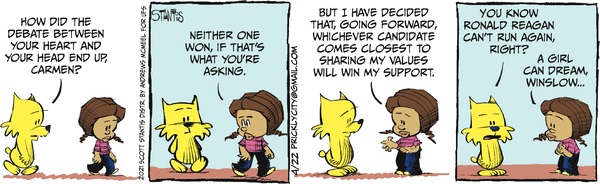
8-28-16

Dear Hugh,

While in Las Vegas I always try to go to church and my favorite church is HOPE COMMUNITY CHURCH where I heard the message THE TALK:AN HONEST CONVERSATION ABOUT GOD’S DESIGN FOR SEX just last September. The pastor Vance Pittman is from Memphis where I grew up. You can google this message and listen to it yourself. I thought of you when Vance said:

How has the GREAT SEXUAL REVOLUTION OF THE 1960’s brought great transformation to our society? Why do so many even in our secular society look back to the 1950’s as the GOOD OLE DAYS! It is because of all the HURT, PAIN and SCARS since then. Proverbs 5:18-19 says:

18 Let your fountain be blessed,
    and rejoice in the wife of your youth,
19     a lovely deer, a graceful doe.
Let her breasts fill you at all times with delight;
    be intoxicated[a] always in her love.

Andy Stanley in his book THE NEW RULES FOR LOVE, SEX AND DATING wrote: When we ignore God’s relational purpose for sex…when we rip sex out of its divinely designed relational context…we hurt ourselves. 

From Everette Hatcher, P.O.Box 23416, Little Rock, AR 72221, PS: Jesus loves you Hugh and I do too! If your mother GRACE was here she would be telling the same thing too!!!!!

Image result for hope community church vance pitman

__________________

I wrote to Hefner in an earlier letter these words:

Don’t you see that Solomon was right  when he observed life UNDER THE SUN without God in the picture and he then concluded  in Ecclesiastes 2:11:

“All was vanity and a striving after wind, and there was nothing to be gained UNDER THE SUN.”

Notice this phrase UNDER THE SUN since it appears about 30 times in Ecclesiastes. Francis Schaeffer noted that Solomon took a look at the meaning of life on the basis of human life standing alone between birth and death “under the sun.” This phrase UNDER THE SUN appears over and over in Ecclesiastes. The Christian Scholar Ravi Zacharias noted, “The key to understanding the Book of Ecclesiastes is the term UNDER THE SUN — What that literally means is you lock God out of a closed system and you are left with only this world of Time plus Chance plus matter.”

The answer to find meaning in life is found in putting your faith and trust in Jesus Christ. The Bible is true from cover to cover and can be trusted.

Image result for king solomon

Hugh Hefner Hedonist: How Many Souls Did He Lead Astray?

Lord God only knows how many souls Hefner lead astray by his promotion of hedonism.

Pic source: slideshare.net/SammieGSmith/03-march-9-2014-proverbs-solomon-when-wisdom-was-not-enough-32359140

Sinful Solomon: “……..Let us hear the conclusion of the whole matter: Fear God, and keep his commandments: for this is the whole duty of man.” [Ecclesiastes 12:13]

“…….Rejoice, O young man, in thy youth; and let thy heart cheer thee in the days of thy youth, and walk in the ways of thine heart, and in the sight of thine eyes: but know thou, that for all these things God will bring thee into judgment……” [Ecclesiastes 9:11]

The God / Man Holy Christ:“………For whosoever will save his life shall lose it; but whosoever shall lose his life for my sake and the gospel’s, the same shall save it.

For what shall it profit a man, if he shall gain the whole world, and lose his own soul?

Or what shall a man give in exchange for his soul?………” [Gospel of Mark 8:35-37]

“………Thou shalt love the Lord thy God with all thy heart, and with all thy soul, and with all thy mind.

This is the first and great commandment.

And the second is like unto it, Thou shalt love thy neighbour as thyself………” [Gospel of Matthew 22: 37-39]

__

Avoiding Emotional Adultery

As I began to delve once again into God’s Word, I recognized three steps I should have taken when faced with the temptation.

by Judy Starr

In her book, The Enticement of the Forbidden, Judy Starr tells about the intense attraction she felt toward another man during a mission trip in the Caribbean. She and her husband, Stottler, had begun the mission trip together, and she stayed on after he left because of other responsibilities. Her story here begins at the point when she returned home from the project.

My decision before God to remain faithful and return home came solely from my will, because my heart ached to stay with Eric. As I moved through the motions of boarding the plane home, numbness overtook my senses. Nothing seemed real.

The plane finally touched down in California. The grace of God, along with the counsel and prayers of others, had brought me home. It was one of the hardest things I’d ever done. As if moving through a haze, I staggered down the ramp to meet my husband. The weight of despondency dragged at every step. I had phoned Stottler, revealing part of the story, and I told him I was coming home. Now it was time to face him. By God’s grace there had been nothing physical between Eric and me, but emotional infidelity seemed equally as painful.

When we arrived at our house, Stottler and I sat tensely on the couch, my legs shaking with fear, anticipation, and exhaustion. Weary of the battle against God, I yearned for His fellowship again. I missed having a tender heart that could sense His leading. I also hurt over the anguish I had caused my sweet husband. But the healing of my relationships with God and Stottler was only possible if I began making right choices.

When we choose to sin, problems and sufferings will drag behind us like a ball and chain. The only way to break the chain is to deal with the root cause—confess the sin. So I told Stottler how I felt about Eric. I told him that I had seriously considered staying in the Caribbean. Then I asked for his forgiveness.

I am enormously blessed to have a godly husband. We cried together many times, and we began the process of rebuilding what I had so quickly torn down. Yet for a time, my emotions continued to bleed.

Addiction and withdrawal

Much like a drug addict in isolation, I experienced withdrawal symptoms from Eric. In many ways, an affair is similar to an alcohol or drug addiction. The process of breaking free brings intense feelings of pain, anxiety, and depression. For several months I longed to be with Eric, and a continual dull throb lodged in my heart. Life often seemed bleak, and the future uninviting.

Although I don’t remember having thoughts of suicide, they are not uncommon for people mired in affairs. A woman can’t imagine life without her lover, yet she also recognizes the grief she is causing her family. Suicide may seem the only way out. But time does heal wounds. As the days wore into months, my internal hemorrhaging slowed to a drip, then finally began to close.

It was a slow process back. I had constructed a brick wall between God, Stottler, and myself through one bad choice at a time. Now I needed to make good choices one at a time to tear down that wall. Although the process was painful, each day became a little easier—as long as I stayed away from Eric.

What I should have done

As I began to delve once again into God’s Word, the Lord clearly showed me three steps I should have taken when faced with the temptation toward Eric. These steps also apply to any woman who chooses to rebuild her marriage after making poor choices.

Step 1: Be honest with yourself. Looking back on my entire scenario in the Caribbean, I wondered if the romance with Eric was unavoidable. I alone was responsible for the preparations and daily operations of the boat project. Therefore, each day I had to work closely with a charming captain while being surrounded by an enticing, seductive setting. Was all the heartache avoidable? The answer: absolutely! I could have stopped myself before the infatuation ever began.

Through my disastrous choices, I learned a very important truth: Never underestimate the power of attraction! When attracted to a man, it’s easy to convince ourselves that the feelings could never really grow, so we try to rationalize them away.

Yet we can so quickly begin daydreaming about this attraction: I wonder where he is right now. I really enjoyed our conversation yesterday. When can we talk again? Of course, this friendship is harmless. I would never want anything to happen—I just enjoy his company.

I had those thoughts. They are an open door to a roomful of deadly cobras. The enemy wants you to believe those little lies so that he can slowly ease you into the room. And once you’re in, you will be bitten. Playing with poison will ruin your life.

As we begin toying with an attraction, by necessity we hide our feelings and actions from our husband. The Lord says, “Deceit is in the heart of those who devise evil” (Proverbs 12:20). Deceit always leads to further deceit as sin takes us further and further into danger. It’s so much easier to close the door and never step into the snake pit in the first place!

Step 2: Be honest with God. I believe that what made me the most vulnerable for my involvement with Eric was my lack of daily time in God’s presence. Nothing in my life has had the consistent power to transform me more than my daily times of reading the Bible and praying.

For several months previous to the Caribbean project, I had been ignoring God’s daily call to come away with Him for a time of refreshment and renewal. By the time I arrived on the boat and met the captain, I had a wall of poor choices blocking my sensitivity to the Lord. Because I had allowed my heart to become spiritually insensitive, I refused to bring my feelings toward Eric to the Lord. I refused to acknowledge His conviction, seek His perspective, and rely on His strength to resist my wandering emotions. It was a recipe for disaster.

I am convinced that the most critical element in protecting your marriage is your personal time alone with God. It is irreplaceable. There are no substitutes—not listening to Christian music or Christian radio, not going to church or attending Bible studies. Only as we spend regular one-on-one time in prayer with the Father and time reading His Word will we keep our heart sensitive to obeying His voice in the face of temptation.

Step 3: Be honest with your husband. Once Stottler and I were aboard the boat, it was only a matter of days before I knew a strong attraction existed between Eric and me. But I failed to use the protection that God had provided to help me lock the door on temptation—honesty with my husband.

As soon as I felt that excitement of attraction toward Eric, I should have told Stottler. Telling your husband is a marvelous way to dispel the mystery of a secret intrigue. As long as no one knows, you nurture that attraction, create romantic scenarios in your mind, and dream the fantasy. But as soon as you invite your husband into the fantasy bubble, it bursts. Its ugliness is exposed. And though revealing the temptation to your husband may feel uncomfortable at the time, doing so will save you both from incredible long-term heartache.

God gives our husbands to us as an umbrella of protection. Their prayers for us are God-ordained coverings of shelter. If I had told Stottler immediately upon sensing my attraction to Eric, my thoughts would have been exposed and Stottler could have prayed for me. His prayers and wisdom could have strengthened me to remain sensitive to God’s leading throughout my dealings with Eric. My accountability friends should have been told as well. Giving an account to others is a wonderful deterrent to disobedience.

I also should have determined never to be alone with Eric and sought Stottler’s accountability on this as well. When the need arose to work with Eric, my husband or one of the team members should have been included.

No secrets

Upon returning home to California, I developed a “No Secrets Policy” toward Stottler. What a relief it was to have the closet door opened and all the darkness exposed! My No Secrets Policy relates to any area of my marriage or my walk with God that will affect my relationship with Stottler. For example, feelings of attraction to another man, past moral indiscretions, impure fantasies, and a stagnant fellowship with the Lord can all create a wedge in a marriage if not dealt with immediately.

Honesty, however, is not an excuse for a lack of restraint in our words. The No Secrets Policy does not give me the right to say anything to my husband that pops into my head, especially on those days when I feel like spitting nails. Spewing every negative thought I may have toward Stottler in a moment of anger or physical depression is a sure way to drive a wedge into our relationship. Those moments require self-control.

Honesty protects both our husbands and us. It helps our husbands know our predisposition toward certain temptations so that they can help us face those challenges. By revealing to Stottler any current temptation I may be facing, he can help me to avoid further disasters. And if I continue pursuing the temptation, I will have to tell him. What a wonderful deterrent that is! It’s easier to just resist the temptation in the first place than to reveal my failure to my husband after the fact.

If establishing honesty in your marriage means exposing an affair from your past, proceed carefully. Make sure you have confessed your sin to the Lord and that your heart is broken over your wrongdoing. Then think through how to reveal this news, knowing that it will most likely elicit strong emotions.

When you reveal a previous or current indiscretion, your husband will very likely be upset. Therefore, you may want to talk with a pastor or a Christian counselor first to receive his wisdom on how to share a dark secret. If your husband has been known to be abusive, ask someone to accompany you. Although building a foundation of honesty may be frightening, keep in mind the words of Dr. Willard Harley: “As painful as it is to discover an affair, very few ever divorce because of it. In most cases, both spouses make adjustments that help avoid a repeat. But without the truth, there is little assurance that it will not happen again.”

Adapted by permission from The Enticement of the Forbidden by Judy Starr. Published by LifeConneXions, a ministry of Campus Crusade for Christ, Copyright ©2004 by Judy Starr. All rights reserved.

FamilyLife is a donor-supported ministry offering practical and biblical resources and events to help you build a godly marriage and family.

Related posts:

Ecclesiastes 2 — The Quest For Meaning and the failed examples of Howard Hughes and Hugh Hefner

Ecclesiastes 2-3 Published on Sep 19, 2012 Calvary Chapel Spring Valley | Sunday Evening | September 16, 2012 | Derek Neider _____________________________ I have written on the Book of Ecclesiastes and the subject of the meaning of our lives on several occasions on this blog. In this series on Ecclesiastes I hope to show how secular […]

FRANCIS SCHAEFFER ANALYZES ART AND CULTURE PART 162 A look at the BEATLES Breaking down the song ALL WE NEED IS LOVE Part C (Featured artist is Grace Slick)

 Is Love All You Need? Jesus v. Lennon Posted on January 19, 2011 by Jovan Payes 0 On June 25, 1967, the Beatles participated in the first worldwide TV special called “Our World”. During this special, the Beatles introduced “All You Need is Love”; one of their most famous and recognizable songs. In it, John Lennon […]

FRANCIS SCHAEFFER ANALYZES ART AND CULTURE Part 158 THE BEATLES (breaking down the song WHY DON’T WE DO IT IN THE ROAD?) Photographer Bob Gomel featured today!

___________________ Something happened to the Beatles in their journey through the 1960’s and although they started off wanting only to hold their girlfriend’s hand it later evolved into wanting to smash all previous sexual standards. The Beatles: Why Don’t We Do It in the Road? _______ Beatle Ringo Starr, and his girlfriend, later his wife, […]

FRANCIS SCHAEFFER ANALYZES ART AND CULTURE PART 142 Marvin Minsky Part G (Featured artist is Red Grooms)

__________ Marvin Minsky __ I was sorry recently  to learn of the passing of one of the great scholars of our generation. I have written about Marvin Minsky several times before in this series and today I again look at a letter I wrote to him in the last couple of years. It is my […]

FRANCIS SCHAEFFER ANALYZES ART AND CULTURE Part 118 THE BEATLES (Why was Tony Curtis on cover of SGT PEP?) (Feature on artist Jeffrey Gibson )

Why was Tony Curtis on the cover of SGT PEPPERS? I have no idea but if I had to hazard a guess I would say that probably it was because he was in the smash hit SOME LIKE IT HOT.  Above from the  movie SOME LIKE IT HOT __ __ Jojo was a man who […]

FRANCIS SCHAEFFER ANALYZES ART AND CULTURE Part 101 BEATLES,(MANY CHRISTIANS ATTACKED THE BEATLES WHILE FRANCIS SCHAEFFER STUDIED THEIR MUSIC! Part B) Artist featured today is Cartoonist Gahan Wilson

__ Francis Schaeffer did not shy away from appreciating the Beatles. In fact, SERGEANT PEPPER’S LONELY HEARTS CLUB BAND album was his favorite and he listened to it over and over. I am a big fan of Francis Schaeffer but there are detractors that attack him because he did not have all the degrees that they […]

10 YEARS AGO ADRIAN ROGERS WENT TO GLORY BUT HIS SERMONS ARE STILL SHARING CHRIST LOVE TODAY!!!

On 11-15-05 Adrian Rogers passed over to glory and since it is the 10th anniversary of that day I wanted to celebrate his life in two ways. First, I wanted to pass on some of the material from Adrian Rogers’ sermons I have sent to prominent atheists over the last 20 years. Second, I wanted […]

FRANCIS SCHAEFFER ANALYZES ART AND CULTURE Part 65 THE BEATLES ( The 1960’s SEXUAL REVOLUTION was on the cover of Sgt. Pepper’s!) (Featured artist is Pauline Boty)

Looking back on his life as a Beatle Paul  said at a  certain age you start to think “Wow, I have to get serious. I can’t just be a playboy all of my life.” It is true that the Beatles wrote a lot about girls!!!!!! The Beatles – I Want To Hold your Hand [HD] Although […]

__

MUSIC MONDAY “Fortunate Son” by CCR

Creedence Clearwater Revival: Fortunate Son

Some folks are born made to wave the flag
They’re red, white and blue
And when the band plays “Hail to the Chief”
They point the cannon at you, Lord
It ain’t me, it ain’t me
I ain’t no senator’s son, son
It ain’t me, it ain’t me
I ain’t no fortunate one
Some folks are born silver spoon in hand
Lord, don’t they help themselves, yeah
But when the taxman comes to the door
The house look a like a rummage sale
It ain’t me, it ain’t me
I ain’t no millionaire’s son, no, no
It ain’t me, it ain’t me
I ain’t no fortunate one
Yeah, some folks inherit star-spangled eyes
They send you down to war
And when you ask ’em, “How much should we give?”
They only answer, “More, more, more”
It ain’t me, it ain’t me
I ain’t no military son, son
It ain’t me, it ain’t me
I ain’t no fortunate one, one
It ain’t me, it ain’t me
I ain’t no fortunate one
It ain’t me, it ain’t me
I ain’t no fortunate one
Source: Musixmatch

Barry McGuire – Eve Of Destruction

Machine Gun by Jimi Hendrix

Marvin Gaye ” What’s Going On ” Live 1972

Bob Dylan – Knockin’ On Heaven’s Door

“Blowin’ in the Wind” – Bob Dylan | Vietnam War Montage

Edwin Starr – War (Original Video – 1969)

Uploaded on Dec 6, 2007

Original video of Edwin Starr singing his famous song: “War” [Original Music video from 1969]

Originally written under the Motown label, and first performed by The Temptations, “War” was later re-released as a single with Edwin Starr as vocals. This version is considered a more emotional version and has become the most popular protest song ever.

Lyrics:

War, huh yeah
What is it good for?
Absolutely nothing, oh hoh, oh
War huh yeah
What is it good for?
Absolutely nothing, say it again y’all
War, huh good God
What is it good for?
Absolutely nothing, listen to me

Oh, war, I despise
‘Cause it means destruction of innocent lives
War means tears to thousands of mothers eyes
When their sons go off to fight and lose their lives

I said
War, huh good God y’all
What is it good for?
Absolutely nothing, just say it again
War whoa Lord
What is it good for?
Absolutely nothing, listen to me
War, it ain’t nothin’ but a heartbreaker
War, friend only to the undertaker

Oh war, is an enemy to all mankind
The thought of war blows my mind
War has caused unrest within the younger generation
Induction, then destruction who wants to die

War, good God, y’all
What is it good for?
Absolutely nothing, say it, say it, say it
War, uh huh, yeah, huh
What is it good for?
Absolutely nothing, listen to me
War, it ain’t nothin’ but a heartbreaker
War, it’s got one friend that’s the undertaker

Oh, war has shattered many young man’s dreams
Made him disabled bitter and mean
Life is much to short and precious to spend fighting wars these days
War can’t give life it can only take it away, ooh

War, huh, good God y’all
What is it good for?
Absolutely nothing, say it again
War, whoa, Lord
What is it good for?
Absolutely nothing, listen to me
War, it ain’t nothin’ but a heartbreaker
War, friend only to the undertaker

Peace love and understanding tell me
Is there no place for them today
They say we must fight to keep our freedom
But Lord knows there’s got to be a better way

War, huh, good God y’all
What is it good for?
You tell ’em, say it, say it, say it, say it
War, good Lord, huh
What is it good for?
Stand up and shout it, nothing
War, it ain’t nothin’ but a heartbreaker

Best of 60s and 70s Music Songs | Vietnam War Music | Psychedelic Music | Hippie Music Mix

Published on Mar 16, 2017

Vietnam War Music
Vietnam War Music 1 Hour Mix
Vietnam War Music Playlist

Hey Guys ^^

My latest Vietnam War Mix is out. Enjoy 😀

Link: https://www.youtube.com/watch?v=YdA44…

__ Playlist __

00:01 The Bob Seger System – 2 + 2 =
02:48 Creedence Clearwater Revival – Fortunate Son
05:11 The Rolling Stones – Sympathy for The Devil
11:30 The Animals – House of The Rising Sun
15:48 Janis Joplin – Mercedes Benz
17:34 Creedence Clearwater Revival – Bad Moon Rising
19:51 Johnny Wright – Hello Vietnam
22:57 The Rolling Stones – Paint it Black
26:40 Alice Cooper – Eighteen x ( muted )
29:32 The Moody Blues – Nights in White Satin
33:54 Steppenwolf – Born to Be Wild
37:07 Creedence Clearwater Revival – Have you Ever seen The Rain (1x)
39:45 The Rolling Stones – Gimme Shelter
44:17 Creedence Clearwater Revival – Have you Ever seen The Rain (2x) Very Nice Song 😀
46:55 Creedence Clearwater Revival – Hello Mary Lou

Barry McGuire Eve of Destruction [1965]

Related posts:

MUSIC MONDAY Rolling Stones New Album Part 8 Blue & Lonesome is the album any Rolling Stones fan would have wished for – review Neil McCormick, music critic

MUSIC MONDAY Rolling Stones New Album Part 8 Rolling Stones – Hoo Doo Blues Blue & Lonesome is the album any Rolling Stones fan would have wished for – review 9 Comments Evergreen: The Rolling Stones perform in Cuba earlier this year CREDIT: REX FEATURES Neil McCormick, music critic 22 NOVEMBER 2016 • 12:19PM The Rolling […]

MUSIC MONDAY Rolling Stones New Album Part 7 The Rolling Stones Alexis Petridis’s album of the week The Rolling Stones: Blue & Lonesome review – more alive than they’ve sounded for years

MUSIC MONDAY Rolling Stones New Album Part 7 Rolling Stones – Everybody Knows About My Good Thing The Rolling Stones Alexis Petridis’s album of the week The Rolling Stones: Blue & Lonesome review – more alive than they’ve sounded for years 4/5stars Mick Jagger’s voice and harmonica drive an album of blues covers that returns […]

MUSIC MONDAY Rolling Stones New Album Part 6 Music Review: ‘Blue & Lonesome’ by the Rolling Stones By Gregory Katz | AP November 29

MUSIC MONDAY Rolling Stones New Album Part 6 Rolling Stones – Just Like I Treat You   Music Review: ‘Blue & Lonesome’ by the Rolling Stones By Gregory Katz | AP November 29 The Rolling Stones, “Blue & Lonesome” (Interscope) It shouldn’t be a surprise, really, but still it’s a bit startling to hear just how well […]

MUSIC MONDAY Rolling Stones New Album Part 5 Review: The Rolling Stones make blues magic on ‘Blue & Lonesome’ Maeve McDermott , USATODAY6:07 p.m. EST November 30, 2016

MUSIC MONDAY Rolling Stones New Album Part 5 Rolling Stones – Everybody Knows About My Good Thing Review: The Rolling Stones make blues magic on ‘Blue & Lonesome’ Maeve McDermott , USATODAY6:07 p.m. EST November 30, 2016 (Photo: Frazer Harrison, Getty Images) Before the Rolling Stones were rock icons, before its members turned into sex […]

MUSIC MONDAY Rolling Stones New Album Part 4 Rolling Stones, ‘Blue & Lonesome’: Album Review By Michael Gallucci November 30, 2016 1:34 PM

MUSIC MONDAY Rolling Stones New Album Part 4 Rolling Stones – Little Rain       Rolling Stones, ‘Blue & Lonesome’: Album Review By Michael Gallucci November 30, 2016 1:34 PM Read More: Rolling Stones, ‘Blue & Lonesome’: Album Review | http://ultimateclassicrock.com/rolling-stones-blue-lonesome-review/?trackback=tsmclip The Rolling Stones were never really a thinking band. A shrewd one, for sure, […]

MUSIC MONDAY Rolling Stones New Album Part 3 Rolling Stones – ‘Blue & Lonesome’ Review Barry Nicolson 12:52 pm – Dec 2, 2016

MUSIC MONDAY Rolling Stones New Album Part 3 The Rolling Stones Mick Jagger chats about new album “Blue & Lonesome” on BBC Breakfast 02 Dec 2016 Rolling Stones – I Gotta Go     Rolling Stones – ‘Blue & Lonesome’ Review Barry Nicolson 12:52 pm – Dec 2, 2016 57shares The Stones sound their youngest […]

MUSIC MONDAY Rolling Stones New Album Part 2 Review The Rolling Stones’ new blues album is an amplified death wheeze. And it rules

MUSIC MONDAY Rolling Stones New Album Part 1 Review: The Rolling Stones Reinvigorate the Blues on ‘Blue and Lonesome’ Our take on rock legends’ first LP since 2005

MUSIC MONDAY Rolling Stones New Album Part 1 The Rolling Stones – Ride ‘Em On Down Published on Dec 1, 2016 Taken from Blue & Lonesome, the brand new album out now. Buy it at http://www.rollingstones.com/blueandl&#8230;. Directed by François Rousselet http://www.riffrafffilms.tv/video/dir&#8230; Produced by Natalie Arnett Riff Raff Films http://www.riffrafffilms.tv http://www.rollingstones.com/http://www.facebook.com/therollingstones http://twitter.com/RollingStoneshttp://www.rollingstones.com/newsletter Rolling Stones […]

MUSIC MONDAY Karen Carpenter’s tragic story

_____________ Carpenters Close To You Karen Carpenter’s tragic story Karen Carpenter’s velvet voice charmed millions in the 70s… but behind the wholesome image she was in turmoil. Desperate to look slim on stage – and above all desperate to please the domineering mother who preferred her brother – she became the first celebrity victim of […]

MUSIC MONDAY The Carpenters!!!

carpenters -We’ve Only Just Begun The Carpenters – Yesterday Once More (INCLUDES LYRICS) The Carpenters – There’s a kind of hush The Carpenters – Greatest Hits Related posts: MUSIC MONDAY Paul McCartney Mull Of Kintyre November 13, 2016 – 10:29 am Paul McCartney Mull Of Kintyre-Original Video-HQ Uploaded on Nov 25, 2011 Paul McCartney Mull Of […]

__

Jan. 6 is not the greatest threat to America — it’s the Democrat Party: Mark Levin 

—-

Jan. 6 is not the greatest threat to America — it’s the Democrat Party: Mark Levin

Mark Levin said Democrats only believe in power, not American values

Mark Levin blasted the Democrats for attempting to compare Jan. 6 Capitol riot to the Civil War and said that the left-wing party is the greatest threat to America on Sunday’s “Life, Liberty & Levin.”  

“Look how the Washington establishment, the media, the Democrat Party, Democrats in Congress, academia and all have all joined together the same organizations, the same people that pushed Russia collusion, … impeachments, and coups … Now they’re telling us that Jan. 6 is [and] … was the greatest threat to America since the Civil War. Of course, that’s a flatout lie. The greatest threat to America is the Democrat Party,” Levin said.

President Biden with Senate Majority Leader Chuck Schumer, and House Speaker Nancy Pelosi at the U.S. Capitol to mark one year since Jan. 6.

President Biden with Senate Majority Leader Chuck Schumer, and House Speaker Nancy Pelosi at the U.S. Capitol to mark one year since Jan. 6. (Stefani Reynolds/Pool via AP)

The Fox host went on to highlight what he believed was Democrats’ grand scheme. 

“Whether it’s slavery or segregation, whether it’s Jim Crow, whether it’s what they call democratic socialismor what is really American Marxism. They want to destroy and nationalize our electoral system, so they can turn the whole country into California. And Republicans can never win,” Levin continued. 

The left-wing media is working in tandem with the Democrats to bring about this socialist revolution and to conspire against the individual, according to Levin. 

“They want to eliminate the capitalist system and replace it with … a socialist system. They want a centralized government, even though our Constitution is set up as a federalist system to divide power to protect us. And the whole focus of the revolution, the whole focus of the declaration, is on the unalienable rights of the individual. The whole focus of Biden and the Democrats in the media is against the individual.”

Vice President Harris speaks at the U.S. Capitol to mark one year since the Jan. 6.

Vice President Harris speaks at the U.S. Capitol to mark one year since the Jan. 6. (AP Photo/Andrew Harnik)

In order for the Democrats to bring about this revolution, they target free speech, Levin said.

“If you have a different viewpoint, you dare not mention it in the classroom today. You dare not mention it on social media. You will be censored. You will be banned. You will be destroyed. That’s the nature of totalitarian regimes, not Americanism.”

President Biden wipes his eyes as Vice President Kamala Harris speaks at the U.S. Capitol to mark one year since Jan. 6.

President Biden wipes his eyes as Vice President Kamala Harris speaks at the U.S. Capitol to mark one year since Jan. 6. (Drew Angerer/Pool via AP)


Levin didn’t excuse the violence that occurred on Jan. 6 and said those who were violent and attacked cops should be prosecuted, but he highlighted, what he believes, is bias in the justice system. 

“So what’s happened to Black Lives Matter? What’s happened to Antifa? … One city after another destroyed people, killed people, [and] maimed. Oh yes, yes! – but it was mostly peaceful, according to the press,” he said. “We conservatives, we oppose violence. We believe in civil society. We believe in law and order. Jan. 6 is a demonstration of what the Democrats believe in. What do they believe in? They believe in power.”


The Honorable Representative John Katko of New York,  Washington D.C.

Dear Representative John Katko, 

I noticed that you are a pro-life representative that has a long record of standing up for unborn babies! It was in the 1970’s when I was first introduced to the works of Francis Schaeffer and Dr. C. Everett Koop and I wanted to commend their writings and films to you.

I recently read about your impressive pro-life record:

Katko opposes abortion, except in cases of rape and incest, or if the health of the mother is at risk. He said during one debate in 2014 that he would reverse the Supreme Court decision in Roe v. Wade if given the opportunity.

It seems you have a grudge against President Trump while our freedoms under President Biden are being taken away. I recommend to you the article below:

The January 6 Insurrection Hoax

 • Volume 50, Number 9 • Roger Kimball

Roger Kimball
Editor and Publisher, The New Criterion

Mr. Kimball concludes his article with these words: 

That’s one melancholy lesson of the January 6 insurrection hoax: that America is fast mutating from a republic, in which individual liberty is paramount, into an oligarchy, in which conformity is increasingly demanded and enforced.

Another lesson was perfectly expressed by Donald Trump when he reflected on the unremitting tsunami of hostility that he faced as President. “They’re after you,” he more than once told his supporters. “I’m just in the way.”


Bingo.

You can google and get Roger Kimball article “The January 6 Insurrection Hoax”

NOW WHAT DID YOU DO TO TURN YOUR BACK ON OUR LIBERTY AND PERPETUATE THE HOAX THAT JANUARY 6TH WAS AN INSURRECTION? Read below!! 

9 Republicans voted to hold Trump aide Bannon in contempt of Congress


There were a few Republicans Thursday who surprised observers when they voted in support of holding former Trump adviser Steve Bannon in contempt of Congress and referring him to the Justice Department for criminal prosecution.

Prior to the vote, four Republicans were considered a lock to approve the criminal referral, according to Capitol Hill sources: Reps. Liz Cheney of Wyoming, Adam Kinzinger of Illinois, Fred Upton of Michigan and Anthony Gonzalez of Ohio.


Cheney and Kinzinger are on the House select committee investigating the Jan. 6 insurrection at the U.S. Capitol, and have for months stood alone as the only two House Republicans willing to speak out against former President Donald Trump’s continued lies about the 2020 election. They were the only two House Republicans to vote for the formation of the select committee on June 30.

House Speaker Nancy Pelosi formed the select committee after Republicans rejected a bipartisan commission that would have been evenly split between five Democrats and five Republicans. Only 35 Republicans voted for that measure when itpassed the House of Representatives, and it was defeated by a GOP filibuster in the Senate.

WASHINGTON, DC - JULY 27:  (L-R) Rep. Jamie Raskin (D-MD), Rep. Liz Cheney (R-WY) and Rep. Adam Kinzinger (R-IL) arrive for the House Select Committee hearing investigating the January 6 attack on the U.S. Capitol on July 27, 2021 at the Canon House Office Building in Washington, DC. Members of law enforcement will testify about the attack by supporters of former President Donald Trump on the U.S. Capitol. According to authorities, about 140 police officers were injured when they were trampled, had objects thrown at them, and sprayed with chemical irritants during the insurrection. (Photo by Drew Angerer/Getty Images)


More

Upton has served in the House for more than three decades, since 1987, and will face a primary challenge next year because of his willingness to stand up to Trump.

Gonzalez is retiring from Congress next year, after only four years in the House. “While my desire to build a fuller family life is at the heart of my decision, it is also true that the current state of our politics, especially many of the toxic dynamics inside our own party, is a significant factor in my decision,” Gonzalez said in September when heannounced he would not seek another term.


The remaining five Republicans included three who voted for impeachment — Peter Meijer of Michigan, John Katko of New York and Jaime Herrera Beutler of Washington — and two House Republicans who did not vote to impeach Trump: Nancy Mace of South Carolina and Brian Fitzpatrick of Pennsylvania.

Sen. Johnson warns of ‘unequal application of justice’ as Capitol riot suspects sit in jail, vs Antifa, BLM

Homeland security committee member says DOJ failing to hold Antifa to same prosecutorial standard as Jan 6 suspects.


Senate Homeland Security Committee member Ron Johnson, R-Wis., railed against the “unequal application of justice” he sees between the suspects involved in the Jan. 6 U.S. Capitol riot and those involved in Antifa and Black Lives Matter protests in cities like Philadelphia, Portland, New York City and Washington over the past year that devolved into criminal activity.

On “Life, Liberty & Levin,” host Mark Levin pointed to a letter authored by Johnson, along with Sen. Tommy Tuberville, R-Ala., and three other Republicans that formally questioned Attorney General Merrick Garland on the discrepancies in “potential unequal justice” under the law being applied to both camps.

Johnson and Tuberville’s letter noted in part that of the hundreds of suspects catalogued in a DOJ online database chronicling Capitol riot arrests, no such focus has been given to the suspects involved in repeated acts of alleged criminal behavior during the Black Lives Matter demonstrations across the country after the May 2020 death of George Floyd.

Referencing how some Capitol riot suspects have been held in strict confinement conditions, the letter also sought to have Garland publicize the conditions Antifa suspects are or were held in.

Johnson told Levin that he, Tuberville, Sens. Mike Lee of Utah, Rick Scott of Florida and Ted Cruz of Texas, were the only signatories to the letter likely because the media tends to “slaughter and attack” whoever voices concerns or a contrasting narrative to the one put out by Democrats about such events.

“The fact that I just question the narrative that there were thousands of armed insurrections intent on overthrowing the government; you’ve seen how that’s worked out for me,” he remarked.

“So our colleagues say look at that and decide they don’t want to touch that issue with a 10-foot pole. But this is highly alarming. Every American should be concerned when we see the unequal administration of justice.”

Johnson praised Fox News host Tucker Carlson for chronicling the urban violence wracking New York, Philadelphia and elsewhere over the summer and fall of 2020, pointing out that the press rightfully covered attacks on police by right-wing Capitol riot suspects, but have had little to say about attacks on the NYPD and other officers throughout the past several months by left-wing rioters and Antifa members.

“Tucker has shown these videos of people being beaten to a pulp during the summer riots, and it doesn’t even get covered,” he said, tabulating 500 separate left-wing riots compared to the singular incursion at the Capitol.

“They want to sweep all that under the rug and just concentrate on what we all condemned, by the way, what happened in the Capitol. I wasn’t happy with that. I found that [Capitol] violence repugnant, and the racial slurs repulsive. I condemn those actions. I want those individuals prosecuted the full extent of the law,” Johnson reaffirmed.

“But I don’t want the media and I don’t want Democrats and politicians painting with a broad brush that just because, you know, in a hundred or a couple of hundred people assaulted law enforcement, that somehow 75 million Americans that voted for Donald Trump are somehow suspected domestic terrorists.”

Johnson also voiced concern over the death of Ashli Babbitt, a veteran and protester who illegally broke into the Capitol among the rest of the suspects on Jan. 6.

“She wasn’t carrying a weapon. She wasn’t threatening anybody. She was in the Capitol building and she was killed,” Levin noted, adding that the law enforcement officer who shot and killed her has not been identified and reportedly cleared of wrongdoing.

“Well, we certainly didn’t hear that when the tables were turned,” replied Johnson. “Again, it’s the concern about the unequal application of justice and a lot of concern.” 

CLICK HERE TO GET THE FOX NEWS APP

The Wisconsin lawmaker, who hasn’t said if he will seek reelection in 2022, went on to note that much of the activism and property damage committed by Black Lives Matter and Antifa was “celebrated.”

“Black Lives Matter is a violent Marxist, anti-American organization and has done precious little to go into the Black communities and help Black communities build; help Black communities with school choice, [and] help Black communities at all,” he said.

It wants to overthrow the country,” Johnson added of BLM.

Johnson condemned city officials who have painted their streets with “Black Lives Matter” – which has happened in Orlando, New York City, Washington and elsewhere across the country. 

In Orlando, the BLM mural on Rosalind Avenue downtown was defaced at least twice by drivers who appeared to do a burnout to apply treadmarks to the words, while in New York, Mayor Bill de Blasio helped paint the slogan in the 700 block of Fifth Avenue – outside the business headquarters of his frequent critic, former President Donald Trump.

Trump later condemned de Blasio, saying the street painting was an affront to the NYPD and denigrated “this luxury avenue” that also features the Plaza Hotel, St. Patrick’s Cathedral and several high end shopping attractions.

“When you have mayors painting the name of Black Lives Matter in the streets, when you have the [President Joe Biden] saying the gravest threat we face as a nation is White supremacy, and then you see how they’re treating these could be up to 400 people at the Department of Justice [arrested after the Capitol riot] as if they’re all Klansmen or they’re all neo-Nazis.”

Johnson predicted the “vast majority” of Capitol riot suspects are not members of the KKK or similar groups, and noted that a previous, related narrative about Trump forcibly clearing Lafayette Park behind the White House to visit St. John’s Church while clutching a Bible, was misreported by the media according to a new document released by Department of the Interior Inspector General Mark Lee Greenblatt.


Do you realize that Americans rights are being taken away from them and would you like an example? I am going to quote Mr. Kimball again.  You can google and get Roger Kimball article “The January 6 Insurrection Hoax”

Trump seems never to have discerned what a viper’s nest our politics has become for anyone who is not a paid-up member of The Club. 

Maybe Trump understands this now. I have no insight into that question. I am pretty confident, though, that the 74 plus million people who voted for him understand it deeply. It’s another reason that The Club should be wary of celebrating its victory too expansively. 

Friedrich Hayek took one of the two epigraphs for his book, The Road to Serfdom, from the philosopher David Hume. “It is seldom,” Hume wrote, “that liberty of any kind is lost all at once.” Much as I admire Hume, I wonder whether he got this quite right. Sometimes, I would argue, liberty is erased almost instantaneously.

I’d be willing to wager that Joseph Hackett, confronted with Hume’s observation, would express similar doubts. I would be happy to ask Mr. Hackett myself, but he is inaccessible. If the ironically titled “Department of Justice” has its way, he will be inaccessible for a long, long time—perhaps as long as 20 years. 

Joseph Hackett, you see, is a 51-year-old Trump supporter and member of an organization called the Oath Keepers, a group whose members have pledged to “defend the Constitution against all enemies foreign and domestic.” The FBI does not like the Oath Keepers—agents arrested its leader in January and have picked up many other members in the months since. Hackett traveled to Washington from his home in Florida to join the January 6 rally. According to court documents, he entered the Capitol at 2:45 that afternoon and left some nine minutes later, at 2:54. The next day, he went home. On May 28, he was apprehended by the FBI and indicted on a long list of charges, including conspiracy, obstruction of an official proceeding, destruction of government property, and illegally entering a restricted building. 

As far as I have been able to determine, no evidence of Hackett destroying property has come to light. According to his wife, it is not even clear that he entered the Capitol. But he certainly was in the environs. He was a member of the Oath Keepers. He was a supporter of Donald Trump. Therefore, he must be neutralized.

Joseph Hackett is only one of hundreds of citizens who have beenbranded as “domestic terrorists” trying to “overthrow the government” and who are now languishing, in appalling conditions, jailed as political prisoners of an angry state apparat.

—-

I want to recommend to you a video on YOU TUBE that runs 28 minutes and 39 seconds by Francis Schaeffer entitled because it discusses the founding of our nation and what the FOUNDERS believed: 

How Should We Then Live | Season 1 | Episode 5 | The Revolutionary Age


Thank you for your time, and again I want to thank you for your support of the unborn little babies!

Sincerely,

Everette Hatcher, 13900 Cottontail Lane, AR 72002, cell 501-920-5733, everettehatcher@gmail.com, http://www.thedailyhatch.org

——————————————————————————————

——

Dr. Francis schaeffer How Should We Then Live | Season 1 | Episode 5 | The Revolutionary Age


– Whatever happened to human race? PART 1 Co-authored by Francis Schaeffer and Dr. C. Everett Koop)

C. Everett Koop
C. Everett Koop, 1980s.jpg
 
13th Surgeon General of the United States
In office
January 21, 1982 – October 1, 1989

Dr. Francis Schaeffer – Whatever Happened To The Human Race? | Episode 2 | Slaughter of the Innocents

Francis Schaeffer – Whatever Happened To The Human Race? | Episode 3 | Death by Someone’s Choice

Mr. Hentoff with the clarinetist Edmond Hall in 1948 at the Savoy, a club in Boston.

Dr. Francis Schaeffer – Whatever Happened To The Human Race? | Episode 4 | The Basis for Human Dignity 

Image<img class=”i-amphtml-blurry-placeholder” src=”data:;base64,Edith Schaeffer with her husband, Francis Schaeffer, in 1970 in Switzerland, where they founded L’Abri, a Christian commune.

________________

______________________

March 23, 2021

President Biden c/o The White House 1600 Pennsylvania Avenue NW Washington, DC 20500

Dear Mr. President,

I really do respect you for trying to get a pulse on what is going on out here. I know that you don’t agree with my pro-life views but I wanted to challenge you as a fellow Christian to re-examine your pro-choice view. Although we are both Christians and have the Bible as the basis for our moral views, I did want you to take a close look at the views of the pro-life atheist Nat Hentoff too.  Hentoff became convinced of the pro-life view because of secular evidence that shows that the unborn child is human. I would ask you to consider his evidence and then of course reverse your views on abortion.

___________________

The pro-life atheist Nat Hentoff wrote a fine article below I wanted to share with you.

Nat Hentoff is an atheist, but he became a pro-life activist because of the scientific evidence that shows that the unborn child is a distinct and separate human being and even has a separate DNA. His perspective is a very intriguing one that I thought you would be interested in. I have shared before many   cases (Bernard Nathanson, Donald Trump, Paul Greenberg, Kathy Ireland)    when other high profile pro-choice leaders have changed their views and this is just another case like those. I have contacted the White House over and over concerning this issue and have even received responses. I am hopeful that people will stop and look even in a secular way (if they are not believers) at this abortion debate and see that the unborn child is deserving of our protection.That is why the writings of Nat Hentoff of the Cato Institute are so crucial.

In the film series “WHATEVER HAPPENED TO THE HUMAN RACE?” the arguments are presented  against abortion (Episode 1),  infanticide (Episode 2),   euthanasia (Episode 3), and then there is a discussion of the Christian versus Humanist worldview concerning the issue of “the basis for human dignity” in Episode 4 and then in the last episode a close look at the truth claims of the Bible.

Francis Schaeffer

__________________________

I truly believe that many of the problems we have today in the USA are due to the advancement of humanism in the last few decades in our society. Ronald Reagan appointed the evangelical Dr. C. Everett Koop to the position of Surgeon General in his administration. He partnered with Dr. Francis Schaeffer in making the video below. It is very valuable information for Christians to have.  Actually I have included a video below that includes comments from him on this subject.

Francis Schaeffer Whatever Happened to the Human Race (Episode 1) ABORTION

_____________________________________


Dr. Francis schaeffer – from Part 5 of Whatever happened to human race?) Whatever Happened To The Human Race? | Episode 5 | Truth and History

Dr. Francis Schaeffer – A Christian Manifesto – Dr. Francis Schaeffer Lecture

Francis Schaeffer – A 700 Club Special! ~ Francis Schaeffer 1982

Dr. Francis Schaeffer – 1984 SOUNDWORD LABRI CONFERENCE VIDEO – Q&A With Francis & Edith Schaeffer

________________

Jewish World Review June 12, 2006/ 16 Sivan, 5766


Insisting on life

http://www.NewsandOpinion.com | A longtime friend of mine is married to a doctor who also performs abortions. At the dinner table one recent evening, their 9-year-old son — having heard a word whose meaning he didn’t know — asked, “What is an abortion?” His mother, choosing her words carefully, described the procedure in simple terms.

“But,” said her son, “that means killing the baby.” The mother then explained that there are certain months during which an abortion cannot be performed, with very few exceptions. The 9-year-old shook his head. “But,” he said, “it doesn’t matter what month. It still means killing the babies.”

Hearing the story, I wished it could be repeated to the justices of the Supreme Court, in the hope that at least five of them might act on this 9-year-old’s clarity of thought and vision.

The boy’s spontaneous insistence on the primacy of life also reminded me of a powerful pro-life speaker and writer who, many years ago, helped me become a pro-lifer. He was a preacher, a black preacher. He said: “There are those who argue that the right to privacy is of a higher order than the right to life.

“That,” he continued, “was the premise of slavery. You could not protest the existence or treatment of slaves on the plantation because that was private and therefore out of your right to be concerned.”

This passionate reverend used to warn: “Don’t let the pro-choicers convince you that a fetus isn’t a human being. That’s how the whites dehumanized us … The first step was to distort the image of us as human beings in order to justify what they wanted to do — and not even feel they’d done anything wrong.”

That preacher was Jesse Jackson. Later, he decided to run for the presidency — and it was a credible campaign that many found inspiring in its focus on what still had to be done on civil rights. But Jackson had by now become “pro-choice” — much to the appreciation of most of those in the liberal base.

The last time I saw Jackson was years later, on a train from Washington to New York. I told him of a man nominated, but not yet confirmed, to a seat on a federal circuit court of appeals. This candidate was a strong supporter of capital punishment — which both the Rev. Jackson and I oppose, since it involves the irreversible taking of a human life by the state.

I asked Jackson if he would hold a press conference in Washington, criticizing the nomination, and he said he would. The reverend was true to his word; the press conference took place; but that nominee was confirmed to the federal circuit court. However, I appreciated Jackson’s effort.

On that train, I also told Jackson that I’d been quoting — in articles, and in talks with various groups — from his compelling pro-life statements. I asked him if he’d had any second thoughts on his reversal of those views.

Usually quick to respond to any challenge that he is not consistent in his positions, Jackson paused, and seemed somewhat disquieted at my question. Then he said to me, “I’ll get back to you on that.” I still patiently await what he has to say.

As time goes on, my deepening concern with the consequences of abortion is that its validation by the Supreme Court, as a constitutional practice, helps support the convictions of those who, in other controversies — euthanasia, assisted suicide and the “futility doctrine” by certain hospital ethics committees — believe that there are lives not worth continuing.

Around the time of my conversation with Jackson on the train, I attended a conference on euthanasia at Clark College in Worcester, Mass. There, I met Derek Humphry, the founder of the Hemlock Society, and already known internationally as a key proponent of the “death with dignity” movement.

He told me that for some years in this country, he had considerable difficulty getting his views about assisted suicide and, as he sees it, compassionate euthanasia into the American press.

“But then,” Humphry told me, “a wonderful thing happened. It opened all the doors for me.”

“What was that wonderful thing?” I asked.

“Roe v. Wade,” he answered.

The devaluing of human life — as the 9-year-old at the dinner table put it more vividly — did not end with making abortion legal, and therefore, to some people, moral. The word “baby” does not appear in Roe v. Wade — let alone the word “killing.”

And so, the termination of “lives not worth living” goes on.


______________________

Thank you so much for your time. I know how valuable it is. I also appreciate the fine family that you have and your commitment as a father and a husband. Now after presenting the secular approach of Nat Hentoff I wanted to make some comments concerning our shared Christian faith.  I  respect you for putting your faith in Christ for your eternal life. I am pleading to you on the basis of the Bible to please review your religious views concerning abortion. It was the Bible that caused the abolition movement of the 1800’s and it also was the basis for Martin Luther King’s movement for civil rights and it also is the basis for recognizing the unborn children.

Sincerely,

Everette Hatcher III, 13900 Cottontail Lane, Alexander, AR 72002, ph 501-920-5733,

Related posts:

Al Mohler on Kermit Gosnell’s abortion practice

Francis Schaeffer: “Whatever Happened to the Human Race” (Episode 1) ABORTION OF THE HUMAN RACE Published on Oct 6, 2012 by AdamMetropolis ________________ Picture of Francis Schaeffer and his wife Edith from the 1930′s above. I was sad to read about Edith passing away on Easter weekend in 2013. I wanted to pass along this fine […]

Taking on Ark Times Bloggers on various issues Part U “Do men have a say in the abortion debate?” (includes the film SLAUGHTER OF THE INNOCENTS and editorial cartoon)

I have gone back and forth and back and forth with many liberals on the Arkansas Times Blog on many issues such as abortion, human rights, welfare, poverty, gun control  and issues dealing with popular culture. Here is another exchange I had with them a while back. My username at the Ark Times Blog is Saline […]

Taking on Ark Times Bloggers on various issues Part T “Abortion is a dirty business” (includes video “Truth and History” and editorial cartoon)

I have gone back and forth and back and forth with many liberals on the Arkansas Times Blog on many issues such as abortion, human rights, welfare, poverty, gun control  and issues dealing with popular culture. Here is another exchange I had with them a while back. My username at the Ark Times Blog is Saline […]

“Sanctity of Life Saturday” Abortion supporters lying in order to further their clause? Window to the Womb (includes video ABORTION OF THE HUMAN RACE)

It is truly sad to me that liberals will lie in order to attack good Christian people like state senator Jason Rapert of Conway, Arkansas because he headed a group of pro-life senators that got a pro-life bill through the Arkansas State Senate the last week of January in 2013. I have gone back and […]

Taking on Ark Times Bloggers on various issues Part D “If you can’t afford a child can you abort?”Francis Schaeffer Quotes part 4 includes the film ABORTION OF THE HUMAN RACE) (editorial cartoon)

I have gone back and forth and back and forth with many liberals on the Arkansas Times Blog on many issues such as abortion, human rights, welfare, poverty, gun control  and issues dealing with popular culture. Here is another exchange I had with them a while back. My username at the Ark Times Blog is Saline […]

Taking on Ark Times Bloggers on various issues Part C “Abortion” (Francis Schaeffer Quotes part 3 includes the film SLAUGHTER OF THE INNOCENTS) (editorial cartoon)

I have gone back and forth and back and forth with many liberals on the Arkansas Times Blog on many issues such as abortion, human rights, welfare, poverty, gun control  and issues dealing with popular culture. Here is another exchange I had with them a while back. My username at the Ark Times Blog is Saline […]

Taking on Ark Times Bloggers on various issues Part B “Gendercide” (Francis Schaeffer Quotes Part 2 includes the film ABORTION OF THE HUMAN RACE) (editorial cartoon)

I have gone back and forth and back and forth with many liberals on the Arkansas Times Blog on many issues such as abortion, human rights, welfare, poverty, gun control  and issues dealing with popular culture. Here is another exchange I had with them a while back. My username at the Ark Times Blog is Saline […]


SANCTITY OF LIFE SATURDAY “AngryOldWoman” blogger argues that she has no regrets about past abortion

Sometimes you can see evidences in someone’s life of how content they really are. I saw  something like that on 2-8-13 when I confronted a blogger that goes by the name “AngryOldWoman” on the Arkansas Times Blog. See below. Leadership Crisis in America Published on Jul 11, 2012 Picture of Adrian Rogers above from 1970′s […]


“Sanctity of Life Saturday” The Church Awakens: Whatever Happened to the Human Race? (includes the video ABORTION OF THE HUMAN RACE)

In the film series “WHATEVER HAPPENED TO THE HUMAN RACE?” the arguments are presented  against abortion (Episode 1),  infanticide (Episode 2),   euthenasia (Episode 3), and then there is a discussion of the Christian versus Humanist worldview concerning the issue of “the basis for human dignity” in Episode 4 and then in the last episode a close […]

Taking on Ark Times Bloggers on various issues Part H “Are humans special?” includes film ABORTION OF THE HUMAN RACE) Reagan: ” To diminish the value of one category of human life is to diminish us all”

I have gone back and forth and back and forth with many liberals on the Arkansas Times Blog on many issues such as abortion, human rights, welfare, poverty, gun control  and issues dealing with popular culture. Here is another exchange I had with them a while back. My username at the Ark Times Blog is Saline […]

Taking on Ark Times Bloggers on various issues Part G “How do moral nonabsolutists come up with what is right?” includes the film “ABORTION OF THE HUMAN RACE”)

I have gone back and forth and back and forth with many liberals on the Arkansas Times Blog on many issues such as abortion, human rights, welfare, poverty, gun control  and issues dealing with popular culture. Here is another exchange I had with them a while back. My username at the Ark Times Blog is Saline […]

Taking on Ark Times Bloggers on various issues Part E “Moral absolutes and abortion” Francis Schaeffer Quotes part 5(includes the film SLAUGHTER OF THE INNOCENTS) (editorial cartoon)

I have gone back and forth and back and forth with many liberals on the Arkansas Times Blog on many issues such as abortion, human rights, welfare, poverty, gun control  and issues dealing with popular culture. Here is another exchange I had with them a while back. My username at the Ark Times Blog is Saline […]

Francis Schaeffer’s “How should we then live?” Video and outline of episode 10 “Final Choices” (Schaeffer Sundays)

E P I S O D E 1 0   Dr. Francis Schaeffer – Episode X – Final Choices 27 min FINAL CHOICES I. Authoritarianism the Only Humanistic Social Option One man or an elite giving authoritative arbitrary absolutes. A. Society is sole absolute in absence of other absolutes. B. But society has to be […]

Francis Schaeffer’s “How should we then live?” Video and outline of episode 9 “The Age of Personal Peace and Affluence” (Schaeffer Sundays)

E P I S O D E 9 Dr. Francis Schaeffer – Episode IX – The Age of Personal Peace and Affluence 27 min T h e Age of Personal Peace and Afflunce I. By the Early 1960s People Were Bombarded From Every Side by Modern Man’s Humanistic Thought II. Modern Form of Humanistic Thought Leads […]

Francis Schaeffer’s “How should we then live?” Video and outline of episode 8 “The Age of Fragmentation” (Schaeffer Sundays)

E P I S O D E 8 Dr. Francis Schaeffer – Episode VIII – The Age of Fragmentation 27 min I saw this film series in 1979 and it had a major impact on me. T h e Age of FRAGMENTATION I. Art As a Vehicle Of Modern Thought A. Impressionism (Monet, Renoir, Pissarro, Sisley, […]

Francis Schaeffer’s “How should we then live?” Video and outline of episode 7 “The Age of Non-Reason” (Schaeffer Sundays)

E P I S O D E 7 Dr. Francis Schaeffer – Episode VII – The Age of Non Reason I am thrilled to get this film series with you. I saw it first in 1979 and it had such a big impact on me. Today’s episode is where we see modern humanist man act […]

Francis Schaeffer’s “How should we then live?” Video and outline of episode 6 “The Scientific Age” (Schaeffer Sundays)

E P I S O D E 6 How Should We Then Live 6#1 Uploaded by NoMirrorHDDHrorriMoN on Oct 3, 2011 How Should We Then Live? Episode 6 of 12 ________ I am sharing with you a film series that I saw in 1979. In this film Francis Schaeffer asserted that was a shift in […]

Francis Schaeffer’s “How should we then live?” Video and outline of episode 5 “The Revolutionary Age” (Schaeffer Sundays)

E P I S O D E 5 How Should We Then Live? Episode 5: The Revolutionary Age I was impacted by this film series by Francis Schaeffer back in the 1970′s and I wanted to share it with you. Francis Schaeffer noted, “Reformation Did Not Bring Perfection. But gradually on basis of biblical teaching there […]

Francis Schaeffer’s “How should we then live?” Video and outline of episode 4 “The Reformation” (Schaeffer Sundays)

Dr. Francis Schaeffer – Episode IV – The Reformation 27 min I was impacted by this film series by Francis Schaeffer back in the 1970′s and I wanted to share it with you. Schaeffer makes three key points concerning the Reformation: “1. Erasmian Christian humanism rejected by Farel. 2. Bible gives needed answers not only as to […]

“Schaeffer Sundays” Francis Schaeffer’s “How should we then live?” Video and outline of episode 3 “The Renaissance”

Francis Schaeffer’s “How should we then live?” Video and outline of episode 3 “The Renaissance” Francis Schaeffer: “How Should We Then Live?” (Episode 3) THE RENAISSANCE I was impacted by this film series by Francis Schaeffer back in the 1970′s and I wanted to share it with you. Schaeffer really shows why we have so […]

Francis Schaeffer’s “How should we then live?” Video and outline of episode 2 “The Middle Ages” (Schaeffer Sundays)

  Francis Schaeffer: “How Should We Then Live?” (Episode 2) THE MIDDLE AGES I was impacted by this film series by Francis Schaeffer back in the 1970′s and I wanted to share it with you. Schaeffer points out that during this time period unfortunately we have the “Church’s deviation from early church’s teaching in regard […]

Francis Schaeffer’s “How should we then live?” Video and outline of episode 1 “The Roman Age” (Schaeffer Sundays)

Francis Schaeffer: “How Should We Then Live?” (Episode 1) THE ROMAN AGE   Today I am starting a series that really had a big impact on my life back in the 1970′s when I first saw it. There are ten parts and today is the first. Francis Schaeffer takes a look at Rome and why […]

By Everette Hatcher III | Posted in Francis Schaeffer | Edit | Comments (0)

Dan Mitchell: “Just as poor people aren’t poor because of rich people (at least the ones that get rich by markets rather than cronyism), poor nations aren’t poor because of rich nations”

The Zero-Sum Fallacy

There are many well-meaning people who support statist policies such as punitive taxation because they believe in the zero-sum fallacy, which is explained in this short video by Madsen Pirie of London’s Adam Smith Institute.

The zero-sum fallacy is especially noxious because it naturally leads to all sorts of misguided policies. Not just class-warfare taxation, but also protectionism and the welfare state.

But I can understand why people are drawn to such ideas. If they sincerely believe that people like Jeff Bezos and Elon Musk only become richer because the rest of us become poorer, it’s hard to blame them.

This is why I repeatedly share evidence showing that the zero-sum fallacy is, well, a fallacy.

Indeed, one very powerful lesson from the above examples is that poor people have been huge winners from economic growth.

As shown by U.S. Census Bureau data, there’s a strong correlation between rising income and falling income among all groups.

Given the importance of this issue, let’s take a closer look at the zero-sum fallacy.

In an article for the Foundation for Economic Education, John Williams used the example of a poker game to explain this cornerstone of bad economics.

Economic activity is depicted in terms of a poker game. One player’s chips are observed to have increased. Immediately one concludes that some other player has lost chips. Poker is, as they say, a zero-sum game: Gains enjoyed by one party must be balanced by losses suffered by another. So it is, people embracing the fallacies of “static wealth” and “the zero-sum game” insist,with economic exchanges. “Winners” must be balanced by corresponding “losers.” …According to the mercantilists, wealth was a constant, a given—like the chips in a poker game. If one community—and typically the mercantilists thought in terms of communities—improved its overall economic situation, another community must have lost out. …What Adam Smith perceived, essentially, was first that “wealth” was not something static and given like gold, or, indeed, poker chips, but rather consisted of goods and services that could be created, and second that both parties to an economic exchange could improve their respective situations. …There are two winners, not one. This is a positive-sum, rather than a gem-sum game.

This type of thinking may even be hard-wired in our brains, as explained by Professor Paul Rubin of Emory University in a column for the Wall Street Journal.

…the worldview of Marxists and woke leftists alike is fundamentally primitive. …It is the economic view of the world that evolved in our brains before the development of the modern economy. …Zero-sum thinking was well-adapted to this world. Since there was no economic growth, incomes and wealth didn’t grow. If one person had access to more food or other goods, or greater access to females,it was likely because of expropriation from others. Since there was little capital, a “labor theory of value”—the idea that all value is created by labor alone—would have been appropriate… Adam Smith and other economists challenged this worldview in the 18th century. They taught that specialization of labor was valuable, that capital was productive, and that labor and capital could work together to increase income. …the creation of wealth would benefit everyone in a society, not only the wealthy. …Members of the woke left want to return to policies based on this primitive economic thinking. One of their major errors is thinking that the world is zero-sum. …Dislike of the rich makes sense in a world where one can become rich only by exploiting others, but not in a society full of creativity and useful inventions.

Prof. Rubin also wrote about this topic back in 2010.

P.S. The good news is that very few left-leaning economists believe in the zero-sum fallacy. They recognize that growth benefits all income groups. Where they go wrong is thinking that bigger government is needed for growth and/or thinking that less growth is okay if rich people suffer more than poor people (they tend to be so fixated on inequality that they overlook very good news).

P.P.S. Just as poor people aren’t poor because of rich people (at least the ones that get rich by markets rather than cronyism), poor nations aren’t poor because of rich nations.

Sloppy or Dishonest Fiscal Analysis from the Washington Post

Good fiscal policy means low tax rates and spending restraint.

And that’s a big reason why I’m a fan of Reaganomics.

Unlike other modern presidents (including other Republicans), Reagan successfully reduced the tax burden while also limiting the burden of government spending.

President Biden wants to take the opposite approach.

A few days ago, Dan Balz of the Washington Post provided some “news analysis” about Biden’s fiscal agenda. Some of what he wrote was accurate, noting that the president wants to increase spending by an additional $6 trillion over the next 10 years.

…the scope and implications of his domestic agenda have come sharply into focus. Together they represent the most dramatic shift in federal economic and social welfare policy since Ronald Reagan was elected 40 years ago.…The politics of redistribution, which are at the heart of what Biden is proposing, could test decades of assumptions that Democrats should be afraid of being tagged as the party of big government. …Together, the already approved coronavirus relief plan, the infrastructure proposal that was unveiled a few weeks ago and the newly proposed plan to invest in social welfare programs would total roughly $6 trillion.

But Mr. Balz then decided to be either sloppy or dishonest, writing that we’ve had decades of Reagan-style policies that have squeezed domestic spending and disproportionately lowered tax burden for rich people.

Reagan’s small-government philosophy resulted in a decades-long squeeze on the federal government, especially domestic spending, and on tax policies that mainly benefited the wealthiest Americans. …Government spending on social safety-net programs has been reduced compared with previous years.

Balz is wrong, wildly wrong.

You don’t have to take my word for it. Here’s a chart, taken from an October 2020 report by the Congressional Budget Office. As you can see, people in the lowest income quintile have been the biggest winners,, with their average tax rate dropping from about 10 percent to about 2 percent..

Here’s a chart showing marginal tax rates from a January 2019 CBO report. As you can see, Reagan lowered marginal tax rates for everyone, but Balz’s assertion that the rich got the lion’s share of the benefits is hard to justify considering that people in the bottom quintile now have negative marginal tax rates.

Balz’s mistakes on tax policy are significant.

But his biggest error (or worst dishonesty) occurred when he wrote about a “decades-long squeeze” on domestic spending and asserted that “spending on social safety-net programs has been reduced.”

A quick visit to the Office of Management and Budget’s Historical Tables is all that’s needed to debunk this nonsense. Here’s a chart, based on Table 8.2, showing the inflation-adjusted growth of entitlements and domestic discretionary programs.

Call me crazy, but I’m seeing a rapid increase in domestic spending after Reagan left office.

P.S. There’s a pattern of lazy/dishonest fiscal reporting at the Washington Post.

P.P.S. I also can’t resist noting that Balz wrote how Biden wants to “invest” in social welfare programs, as if there’s some sort of positive return from creating more dependency. Reminds me of this Chuck Asay cartoon from the Obama years.

March 3, 2021

President Biden c/o The White House
1600 Pennsylvania Avenue NW
Washington, DC 20500

Dear Mr. President,

______________________________

Dan Mitchell shows how ignoring the Laffer Curve is like running a stop sign!!!!

I’m thinking of inventing a game, sort of a fiscal version of Pin the Tail on the Donkey.

Only the way it will work is that there will be a map of the world and the winner will be the blindfolded person who puts their pin closest to a nation such asAustralia or Switzerland that has a relatively low risk of long-run fiscal collapse.

That won’t be an easy game to win since we have data from the BISOECD, and IMF showing that government is growing far too fast in the vast majority of nations.

We also know that many states and cities suffer from the same problems.

A handful of local governments already have hit the fiscal brick wall, with many of them (gee, what a surprise) from California.

The most spectacular mess, though, is about to happen in Michigan.

The Washington Post reports that Detroit is on the verge of fiscal collapse.

After decades of sad and spectacular decline, it has come to this for Detroit: The city is $19 billion in debt and on the edge of becoming the nation’s largest municipal bankruptcy. An emergency manager says the city can make good on only a sliver of what it owes — in many cases just pennies on the dollar.

This is a dog-bites-man story. Detroit’s problems are the completely predictable result of excessive government. Just as statism explains the problems of Greece. And the problems of California. And the problems of Cyprus. And theproblems of Illinois.

I could continue with a long list of profligate governments, but you get the idea. Some of these governments are collapsing at a quicker pace and some at a slower pace. But all of them are in deep trouble because they don’t follow my Golden Rule about restraining the burden of government spending so that it grows slower than the private sector.

Detroit obviously is an example of a government that is collapsing sooner rather than later.

Why? Simply stated, as the size and scope of the public sector increased, that created very destructive economic and political dynamics.

More and more people got lured into the wagon of government dependency, which puts an ever-increasing burden on a shrinking pool of producers.

Meanwhile, organized interest groups such as government bureaucrats used their political muscle to extract absurdly excessive compensation packages, putting an even larger burden of the dwindling supply of taxpayers.

But that’s not the main focus of this post. Instead, I want to highlight a particular excerpt from the article and make a point about how too many people are blindly – perhaps willfully – ignorant of the Laffer Curve.

Check out this sentence.

Property tax collections are down 20 percent and income tax collections are down by more than a third in just the past five years — despite some of the highest tax rates in the state.

This is a classic “Fox Butterfield mistake,” which occurs when someone fails to recognize a cause-effect relationship. In this case, the reporter should have recognized that tax collections are down because Detroit has very high tax rates.

The city has a lot more problems than just high tax rates, of course, but can there be any doubt that productive people have very little incentive to earn and report taxable income in Detroit?

And that’s the essential insight of the Laffer Curve. Politicians can’t – or at least shouldn’t – assume that a 20 percent increase in tax rates will lead to a 20 percent increase in tax revenue. They also have to consider the degree to which a higher tax rate will cause a change in taxable income.

In some cases, higher tax rates will discourage people from earning more taxable income.

In some cases, higher tax rates will discourage people from reporting all the income they earn.

In some cases, higher tax rates will encourage people to utilize tax loopholes to shrink their taxable income.

In some cases, higher tax rates will encourage migration, thus causing taxable income to disappear.

Here’s my three-part video series on the Laffer Curve. Much of this is common sense, though it needs to be mandatory viewing for elected officials (as well as the bureaucrats at the Joint Committee on Taxation).

The Laffer Curve, Part I: Understanding the Theory

Uploaded by  on Jan 28, 2008

The Laffer Curve charts a relationship between tax rates and tax revenue. While the theory behind the Laffer Curve is widely accepted, the concept has become very controversial because politicians on both sides of the debate exaggerate. This video shows the middle ground between those who claim “all tax cuts pay for themselves” and those who claim tax policy has no impact on economic performance. This video, focusing on the theory of the Laffer Curve, is Part I of a three-part series. Part II reviews evidence of Laffer-Curve responses. Part III discusses how the revenue-estimating process in Washington can be improved. For more information please visit the Center for Freedom and Prosperity’s web site: http://www.freedomandprosperity.org

Part 2

Part 3

P.S. Just in case it’s not clear from the videos, we don’t want to be at the revenue-maximizing point on the Laffer Curve.

P.P.S. Amazingly, even the bureaucrats at the IMF recognize that there’s a point when taxes are so onerous that further increases don’t generate revenue.

P.P.P.S. At least CPAs understand the Laffer Curve, probably because they help their clients reduce their tax exposure to greedy governments.

P.P.P.P.S. I offered a Laffer Curve lesson to President Obama, but I doubt it had any impact.

___________________________

Thank you so much for your time. I know how valuable it is. I also appreciate the fine family that you have and your commitment as a father and a husband.

Sincerely,

Everette Hatcher III, 13900 Cottontail Lane, Alexander, AR 72002, ph 501-920-5733,

Williams with Sowell – Minimum Wage

Thomas Sowell

Thomas Sowell – Reducing Black Unemployment

By WALTER WILLIAMS

—-

Ronald Reagan with Milton Friedman
Milton Friedman The Power of the Market 2-5

Related posts:

Dan Mitchell: Question of the Week: Has the European Fiscal Crisis Ended?

We got to cut spending or we will be in a fiscal crisis like Greece!!! Question of the Week: Has the European Fiscal Crisis Ended? January 12, 2013 by Dan Mitchell I’ve frequently commented on Europe’s fiscal mess and argued that excessive government spending is responsible for both the sovereign debt crisis and the economic stagnation […]

Taxes made simple by Dan Mitchell of the Cato Institute

The Flat Tax: How it Works and Why it is Good for America Uploaded by afq2007 on Mar 29, 2010 This Center for Freedom and Prosperity Foundation video shows how the flat tax would benefit families and businesses, and also explains how this simple and fair system would boost economic growth and eliminate the special-interest […]

Cartoons from Dan Mitchell’s blog that demonstrate what Obama is doing to our economy (Obama’s out of control spending not helped by raising taxes on rich)

I have put up lots of cartoons from Dan Mitchell’s blog before and they have got lots of hits before. Many of them have dealt with the economy, eternal unemployment benefits, socialism,  Greece,  welfare state or on gun control. President Obama really does think that all his answers lie in raising taxes on the rich when the […]

Dan Mitchell of the Cato Institute gives overview of economic policy and he praises Clinton and Reagan

__________ President Reagan, Nancy Reagan, Tom Selleck, Dudley Moore, Lucille Ball at a Tribute to Bob Hope’s 80th birthday at the Kennedy Center. 5/20/83. __________________________ Dan Mitchell is very good at giving speeches and making it very simple to understand economic policy and how it affects a nation. Mitchell also talks about slowing the growth […]

Cartoons from Dan Mitchell’s blog that demonstrate what Obama is doing to our economy (cartoon on entitlements)

The Laffer Curve – Explained Uploaded by Eddie Stannard on Nov 14, 2011 This video explains the relationship between tax rates, taxable income, and tax revenue. The key lesson is that the Laffer Curve is not an all-or-nothing proposition, where we have to choose between the exaggerated claim that “all tax cuts pay for themselves” […]

Open letter to President Obama (Part 296) (Laffer curve strikes again!!)

President Obama c/o The White House 1600 Pennsylvania Avenue NW Washington, DC 20500 Dear Mr. President, I know that you receive 20,000 letters a day and that you actually read 10 of them every day. I really do respect you for trying to get a pulse on what is going on out here. The way […]

Open letter to President Obama (Part 282, How the Laffer Curve worked in the 20th century over and over again!!!)

Dan Mitchell does a great job explaining the Laffer Curve President Obama c/o The White House 1600 Pennsylvania Avenue NW Washington, DC 20500 Dear Mr. President, I know that you receive 20,000 letters a day and that you actually read 10 of them every day. I really do respect you for trying to get a […]

Laffer curve hits tax hikers pretty hard (includes cartoon)

I have put up lots of cartoons from Dan Mitchell’s blog before and they have got lots of hits before. Many of them have dealt with the economy, eternal unemployment benefits, socialism,  Greece,  welfare state or on gun control. Today’s cartoon deals with the Laffer curve. Revenge of the Laffer Curve…Again and Again and Again March 27, 2013 […]

Editorial cartoon from Dan Mitchell’s blog on California’s sorry state of affairs

I have put up lots of cartoons from Dan Mitchell’s blog before and they have got lots of hits before. Many of them have dealt with the sequester, economy, eternal unemployment benefits, socialism,  minimum wage laws, tax increases, social security, high taxes in California, Obamacare,  Greece,  welfare state or on gun control. President Obama’s favorite state must be California because […]

Portugal and the Laffer Curve

Class Warfare just don’t pay it seems. Why can’t we learn from other countries’ mistakes? Class Warfare Tax Policy Causes Portugal to Crash on the Laffer Curve, but Will Obama Learn from this Mistake? December 31, 2012 by Dan Mitchell Back in mid-2010, I wrote that Portugal was going to exacerbate its fiscal problems by raising […]

Political arguments against higher taxes from Dan Mitchell

Republicans would be stupid to raise taxes. Don’t Get Bamboozled by the Fiscal Cliff: Five Policy Reasons and Five Political Reasons Why Republicans Should Keep their No-Tax-Hike Promises December 6, 2012 by Dan Mitchell The politicians claim that they are negotiating about how best to reduce the deficit. That irks me because our fiscal problem is […]

President Obama ignores warnings about Laffer Curve

The Laffer Curve – Explained Uploaded by Eddie Stannard on Nov 14, 2011 This video explains the relationship between tax rates, taxable income, and tax revenue. The key lesson is that the Laffer Curve is not an all-or-nothing proposition, where we have to choose between the exaggerated claim that “all tax cuts pay for themselves” […]

Dan Mitchell looks at Obama’s tax record

Dan Mitchell’s article and the video from his organization takes a hard look at President Obama’s tax record. Dissecting Obama’s Record on Tax Policy October 30, 2012 by Dan Mitchell The folks at the Center for Freedom and Prosperity have been on a roll in the past few months, putting out an excellent series of videos […]

Dan Mitchell: “Romney is Right that You Can Lower Tax Rates and Reduce Tax Preferences without Hurting the Middle Class”

The Laffer Curve, Part I: Understanding the Theory Uploaded by afq2007 on Jan 28, 2008 The Laffer Curve charts a relationship between tax rates and tax revenue. While the theory behind the Laffer Curve is widely accepted, the concept has become very controversial because politicians on both sides of the debate exaggerate. This video shows […]

The Laffer Curve Wreaks Havoc in the United Kingdom

I got to hear Arthur Laffer speak back in 1981 and he predicted what would happen in the next few years with the Reagan tax cuts and he was right with every prediction. The Laffer Curve Wreaks Havoc in the United Kingdom July 1, 2012 by Dan Mitchell Back in 2010, I excoriated the new […]

By Everette Hatcher III | Posted in Cato Institute | Tagged  | Edit | Comments (0)

Dan Mitchell: Maryland to Texas, but Not Okay to Move from the United States to Singapore?

You can’t blame someone for leaving one state for another if they have a better an opportunity to make money. Maryland to Texas, but Not Okay to Move from the United States to Singapore? July 12, 2012 by Dan Mitchell I’ve commented before about entrepreneurs, investors, and small business owners migrating from high tax states such […]

Liberals act like the Laffer Curve does not exist.

Raising taxes will not work. Liberals act like the Laffer Curve does not exist. The Laffer Curve Shows that Tax Increases Are a Very Bad Idea – even if They Generate More Tax Revenue April 10, 2012 by Dan Mitchell The Laffer Curve is a graphical representation of the relationship between tax rates, tax revenue, and […]

Dan Mitchell shows why soak-the-rich tax policy does not work

Dan Mitchell of the Cato Institute shows why Obama’s plan to tax the rich will not solve our deficit problem.   Explaining in the New York Post Why Obama’s Soak-the-Rich Tax Policy Is Doomed to Failure April 17, 2012 by Dan Mitchell I think high tax rates on certain classes of citizens are immoral and discriminatory. If the […]

Dan Mitchell of the Cato Institute takes on liberals on PBS

You want the rich to pay more? Dan Mitchell observed:I explained that “rich” taxpayers declared much more income and paid much higher taxes after Reagan reduced the top tax rate from 70 percent to 28 percent. Liberals don’t understand good tax policies. Against 3-1 Odds, Promoting Good Tax Policy on Government TV April 12, 2012 by […]

Dan Mitchell of the Cato Institute takes on the Buffett Rule

Class warfare again from President Obama.  Rejecting the Buffett Rule and Fighting Obama’s Class Warfare on CNBC April 10, 2012 by Dan Mitchell I’ve already explained why Warren Buffett is either dishonest or clueless about tax policy. Today, on CNBC, I got to debate the tax scheme that President Obama has named after the Omaha investor. […]

By Everette Hatcher III | Posted in Cato InstituteTaxes | Edit | Comments (0)

Dan Mitchell article: The Case for Capitalism, Part VI

[

The Case for Capitalism, Part VI

I have shared five videos (Part I, Part II, Part III, Part IV, and Part V) that make the case for capitalism.

Here’s a sixth example.

The video notes that poverty was the natural condition for humanity (notwithstanding the economic illiteracy of Congresswoman Pressley).

But then, starting a couple of hundred years ago, capitalism gained a foothold and – for the first time in world history – there were nations with mass prosperity.

We learn about how various places became rich, including the United States, Hong Kong, and New Zealand.

The narrator also pointed out that Ireland experienced a period of dramatic market-driven growth.

Which gives me a good excuse to make the following comparison, which shows the dramatic divergence between Ireland and Greece beginning in the mid-1980s.

Why the stunning divergence (one of many examples I’ve collected)?

Ireland controlled spending and cut tax rates and now routinely ranks among the nations with the most economic liberty.

Greece, by contrast, has imposed more and more government over time.

Let’s close with this tweet, which nicely summarizes Walter Williams’ famous observation.

P.S. This comparison of Sweden and Greece also makes the key point about the superiority of markets over statism.

P.P.S. Don Boudreaux and Deirdre McCloskey have must-watch videos on how capitalism enabled (some) nations to escape poverty.

The Best President in Recent History

Since I view Ronald Reagan as an honorary libertarian, I was very happy back in 2013 to see that he won a landslide victory over Barack Obama in a hypothetical poll.

This meant that voters either were old enough to personally experience the benefits of Reaganomics, or they managed to learn some history (in spite of a biased education establishment).

Well, now I have another reason to be happy. According to a new poll shared by Paul Bedard of the Washington Examiner, nearly 70 percent of respondents have a favorable impression of Reagan, easily the best result for all recent presidents.

Reagan also is disliked by the smallest percentage of respondents, a fact that almost surely irks some of my Reagan-hating friends.

And definitely irks Paul Krugman.

My two cents for today is that the current fight between Trumpism and establishment Republicanism is merely stylistic. If you crunch the numbers, you’ll see that both camps are big spenders.

I much prefer Reaganism.

Let’s wrap up with this cartoon strip that captures my sentiments.

P.S. Here’s an amusing story from Reagan about socialism (h/t: Don Boudreaux).

Not quite as good as this video, and it’s not even good enough to get added to this collection of Reagan videos, but it is a good description of why socialism is a failure.

P.S. There was one other president in the 20th century who deserves praise and applause.

Tax Cartels Mean Ever-Higher Tax Rates

When President Biden proposed a “global minimum tax” for businesses, I immediately warned that would lead to ever-increasing tax rates.

Ross Kaminsky of KHOW and I discussed how this is already happening.

I hate being right, but it’s always safe to predict that politicians and bureaucrats will embrace policies that give more power to government.

Especially when they are very anxious to stifle tax competition.

For decades, people in government have been upset that the tax cuts implemented by Ronald Reagan and Margaret Thatchertriggered a four-decade trend of lower tax rates and pro-growth tax reform.

That’s the reason Biden and his Treasury Secretary proposed a 15 percent minimum tax rate for businesses.

And it’s the reason they now want the rate to be even higher.

Though even I’m surprised that they’re already pushing for that outcome when the original pact hasn’t even been approved or implemented.

Here are some passages from a report by Reuters.

Treasury Secretary Janet Yellen will press G20 counterparts this week for a global minimum corporate tax rate above the 15% floor agreed by 130 countries last week…the global minimum tax rate…is tied to the outcome of legislation to raise the U.S. minimum tax rate, a Treasury official said.The Biden administration has proposed doubling the U.S. minimum tax on corporations overseas intangible income to 21% along with a new companion “enforcement” tax that would deny deductions to companies for tax payments to countries that fail to adopt the new global minimum rate. The officials said several countries were pushing for a rate above 15%, along with the United States.

Other kleptocratic governments naturally want the same thing.

A G7 proposal for a global minimum tax rate of 15% is too low and a rate of at least 21% is needed, Argentina’s finance minister said on Monday, leading a push by some developing countries… “The 15% rate is way too low,” Argentine Finance Minister Martin Guzman told an online panel hosted by the Independent Commission for the Reform of International Corporate Taxation. …”The minimum rate being proposed would not do much to countries in Africa…,” Mathew Gbonjubola, Nigeria’s tax policy director, told the same conference.

Needless to say, I’m not surprised that Argentina is on the wrong side.

And supporters of class warfare also are agitating for a higher minimum rate. Here are some excerpts from a column in the New York Times by Gabriel Zucman and Gus Wezerek.

In the decades after World War II, close to 50 percent of American companies’ earnings went to state and federal taxes. …it was a golden period. …President Biden should be applauded for trying to end the race to the bottom on corporate tax rates. But even if Congress approves the 15 percent global minimum corporate tax, it won’t be enough. …the Biden administration to give working families a real leg up, it should push Congress to enact a 25 percent minimum tax, which would bring in about $200 billion in additional revenue each year. …With a 25 percent minimum corporate tax, the Biden administration would begin to reverse decades of growing inequality. And it would encourage other countries to do the same, replacing a race to the bottom with a sprint to the top.

I can’t resist making two observations about this ideological screed.

  1. Even the IMF and OECD agree that the so-called race to the bottom has not led to a decline in corporate tax revenues, even when measured as a share of economic output.
  2. Since companies legally avoid rather than illegally evade taxes, the headline of the column is utterly dishonest – but it’s what we’ve learned to expect from the New York Times.

The only good thing about the Zucman-Wezerek column is that it includes this chart showing how corporate tax rates have dramatically declined since 1980.

P.S. For those interested, the horizontal line at the bottom is for Bermuda, though other jurisdictions (such as Monaco and the Cayman Islands) also deserve credit for having no corporate income taxes.

P.P.S. If you want to know why high corporate tax rates are misguided, click here. And if you want to know why Biden’s plan to raise the U.S. corporate tax rate is misguided, click here. Or here. Or here.

P.P.P.S. And if you want more information about why Biden’s global tax cartel is bad, click here, here, and here.

I enjoyed this article below because it demonstrates that the Laffer Curve has been working for almost 100 years now when it is put to the test in the USA. I actually got to hear Arthur Laffer speak in person in 1981 and he told us in advance what was going to happen the 1980’s and it all came about as he said it would when Ronald Reagan’s tax cuts took place. I wish we would lower taxes now instead of looking for more revenue through raised taxes. We have to grow the economy:

What Mitt Romney Said Last Night About Tax Cuts And The Deficit Was Absolutely Right. And What Obama Said Was Absolutely Wrong.

Mitt Romney repeatedly said last night that he would not allow tax cuts to add to the deficit.  He repeatedly said it because over and over again Obama blathered the liberal talking point that cutting taxes necessarily increased deficits.

Romney’s exact words: “I want to underline that — no tax cut that adds to the deficit.”

Meanwhile, Obama has promised to cut the deficit in half during his first four years – but instead gave America the highest deficits in the history of the entire human race.

I’ve written about this before.  Let’s replay what has happened every single time we’ve ever cut the income tax rate.

The fact of the matter is that we can go back to Calvin Coolidge who said very nearly THE EXACT SAME THING to his treasury secretary: he too would not allow any tax cuts that added to the debt.  Andrew Mellon – quite possibly the most brilliant economic mind of his day – did a great deal of research and determined what he believed was the best tax rate.  And the Coolidge administration DID cut income taxes and MASSIVELY increased revenues.  Coolidge and Mellon cut the income tax rate 67.12 percent (from 73 to 24 percent); and revenues not only did not go down, but they went UP by at least 42.86 percent (from $700 billion to over $1 billion).

That’s something called a documented fact.  But that wasn’t all that happened: another incredible thing was that the taxes and percentage of taxes paid actually went UP for the rich.  Because as they were allowed to keep more of the profits that they earned by investing in successful business, they significantly increased their investments and therefore paid more in taxes than they otherwise would have had they continued sheltering their money to protect themselves from the higher tax rates.  Liberals ignore reality, but it is simply true.  It is a fact.  It happened.

Then FDR came along and raised the tax rates again and the opposite happened: we collected less and less revenue while the burden of taxation fell increasingly on the poor and middle class again.  Which is exactly what Obama wants to do.

People don’t realize that John F. Kennedy, one of the greatest Democrat presidents, was a TAX CUTTER who believed the conservative economic philosophy that cutting tax rates would in fact increase tax revenues.  He too cut taxes, and he too increased tax revenues.

So we get to Ronald Reagan, who famously cut taxes.  And again, we find that Reagan cut that godawful liberal tax rate during an incredibly godawful liberal-caused economic recession, and he increased tax revenue by 20.71 percent (with revenues increasing from $956 billion to $1.154 trillion).  And again, the taxes were paid primarily by the rich:

“The share of the income tax burden borne by the top 10 percent of taxpayers increased from 48.0 percent in 1981 to 57.2 percent in 1988. Meanwhile, the share of income taxes paid by the bottom 50 percent of taxpayers dropped from 7.5 percent in 1981 to 5.7 percent in 1988.”

So we get to George Bush and the Bush tax cuts that liberals and in particular Obama have just demonized up one side and demagogued down the other.  And I can simply quote the New York Times AT the time:

Sharp Rise in Tax Revenue to Pare U.S. Deficit By EDMUND L. ANDREWS Published: July 13, 2005

WASHINGTON, July 12 – For the first time since President Bush took office, an unexpected leap in tax revenue is about to shrink the federal budget deficit this year, by nearly $100 billion.

A Jump in Corporate Payments On Wednesday, White House officials plan to announce that the deficit for the 2005 fiscal year, which ends in September, will be far smaller than the $427 billion they estimated in February.

Mr. Bush plans to hail the improvement at a cabinet meeting and to cite it as validation of his argument that tax cuts would stimulate the economy and ultimately help pay for themselves.

Based on revenue and spending data through June, the budget deficit for the first nine months of the fiscal year was $251 billion, $76 billion lower than the $327 billion gap recorded at the corresponding point a year earlier.

The Congressional Budget Office estimated last week that the deficit for the full fiscal year, which reached $412 billion in 2004, could be “significantly less than $350 billion, perhaps below $325 billion.”

The big surprise has been in tax revenue, which is running nearly 15 percent higher than in 2004. Corporate tax revenue has soared about 40 percent, after languishing for four years, and individual tax revenue is up as well
.

And of course the New York Times, as reliable liberals, use the adjective whenever something good happens under conservative policies and whenever something bad happens under liberal policies: ”unexpected.”   But it WASN’T ”unexpected.”  It was EXACTLY what Republicans had said would happen and in fact it was exactly what HAD IN FACT HAPPENED every single time we’ve EVER cut income tax rates.

The truth is that conservative tax policy has a perfect track record: every single time it has ever been tried, we have INCREASED tax revenues while not only exploding economic activity and creating more jobs, but encouraging the wealthy to pay more in taxes as well.  And liberals simply dishonestly refuse to acknowledge documented history.

Meanwhile, liberals also have a perfect record … of FAILUREThey keep raising taxes and keep not understanding why they don’t get the revenues they predicted.

The following is a section from my article, “Tax Cuts INCREASE Revenues; They Have ALWAYS Increased Revenues“, where I document every single thing I said above:

The Falsehood That Tax Cuts Increase The Deficit

Now let’s take a look at the utterly fallacious view that tax cuts in general create higher deficits.

Let’s take a trip back in time, starting with the 1920s.  From Burton Folsom’s book, New Deal or Raw Deal?:

In 1921, President Harding asked the sixty-five-year-old [Andrew] Mellon to be secretary of the treasury; the national debt [resulting from WWI] had surpassed $20 billion and unemployment had reached 11.7 percent, one of the highest rates in U.S. history.  Harding invited Mellon to tinker with tax rates to encourage investment without incurring more debt. Mellon studied the problem carefully; his solution was what is today called “supply side economics,” the idea of cutting taxes to stimulate investment.  High income tax rates, Mellon argued, “inevitably put pressure upon the taxpayer to withdraw this capital from productive business and invest it in tax-exempt securities. . . . The result is that the sources of taxation are drying up, wealth is failing to carry its share of the tax burden; and capital is being diverted into channels which yield neither revenue to the Government nor profit to the people” (page 128).

Mellon wrote, “It seems difficult for some to understand that high rates of taxation do not necessarily mean large revenue to the Government, and that more revenue may often be obtained by lower taxes.”  And he compared the government setting tax rates on incomes to a businessman setting prices on products: “If a price is fixed too high, sales drop off and with them profits.”

And what happened?

“As secretary of the treasury, Mellon promoted, and Harding and Coolidge backed, a plan that eventually cut taxes on large incomes from 73 to 24 percent and on smaller incomes from 4 to 1/2 of 1 percent.  These tax cuts helped produce an outpouring of economic development – from air conditioning to refrigerators to zippers, Scotch tape to radios and talking movies.  Investors took more risks when they were allowed to keep more of their gains.  President Coolidge, during his six years in office, averaged only 3.3 percent unemployment and 1 percent inflation – the lowest misery index of any president in the twentieth century.

Furthermore, Mellon was also vindicated in his astonishing predictions that cutting taxes across the board would generate more revenue.  In the early 1920s, when the highest tax rate was 73 percent, the total income tax revenue to the U.S. government was a little over $700 million.  In 1928 and 1929, when the top tax rate was slashed to 25 and 24 percent, the total revenue topped the $1 billion mark.  Also remarkable, as Table 3 indicates, is that the burden of paying these taxes fell increasingly upon the wealthy” (page 129-130).

Now, that is incredible upon its face, but it becomes even more incredible when contrasted with FDR’s antibusiness and confiscatory tax policies, which both dramatically shrunk in terms of actual income tax revenues (from $1.096 billion in 1929 to $527 million in 1935), and dramatically shifted the tax burden to the backs of the poor by imposing huge new excise taxes (from $540 million in 1929 to $1.364 billion in 1935).  See Table 1 on page 125 of New Deal or Raw Deal for that information.

FDR both collected far less taxes from the rich, while imposing a far more onerous tax burden upon the poor.

It is simply a matter of empirical fact that tax cuts create increased revenue, and that those [Democrats] who have refused to pay attention to that fact have ended up reducing government revenues even as they increased the burdens on the poorest whom they falsely claim to help.

Let’s move on to John F. Kennedy, one of the most popular Democrat presidents ever.  Few realize that he was also a supply-side tax cutter.

Kennedy said:

“It is a paradoxical truth that tax rates are too high and tax revenues are too low and the soundest way to raise the revenues in the long run is to cut the rates now … Cutting taxes now is not to incur a budget deficit, but to achieve the more prosperous, expanding economy which can bring a budget surplus.”

– John F. Kennedy, Nov. 20, 1962, president’s news conference


“Lower rates of taxation will stimulate economic activity and so raise the levels of personal and corporate income as to yield within a few years an increased – not a reduced – flow of revenues to the federal government.”

– John F. Kennedy, Jan. 17, 1963, annual budget message to the Congress, fiscal year 1964

“In today’s economy, fiscal prudence and responsibility call for tax reduction even if it temporarily enlarges the federal deficit – why reducing taxes is the best way open to us to increase revenues.”

– John F. Kennedy, Jan. 21, 1963, annual message to the Congress: “The Economic Report Of The President”


“It is no contradiction – the most important single thing we can do to stimulate investment in today’s economy is to raise consumption by major reduction of individual income tax rates.”

– John F. Kennedy, Jan. 21, 1963, annual message to the Congress: “The Economic Report Of The President”


“Our tax system still siphons out of the private economy too large a share of personal and business purchasing power and reduces the incentive for risk, investment and effort – thereby aborting our recoveries and stifling our national growth rate.”

– John F. Kennedy, Jan. 24, 1963, message to Congress on tax reduction and reform, House Doc. 43, 88th Congress, 1st Session.


“A tax cut means higher family income and higher business profits and a balanced federal budget. Every taxpayer and his family will have more money left over after taxes for a new car, a new home, new conveniences, education and investment. Every businessman can keep a higher percentage of his profits in his cash register or put it to work expanding or improving his business, and as the national income grows, the federal government will ultimately end up with more revenues.”

– John F. Kennedy, Sept. 18, 1963, radio and television address to the nation on tax-reduction bill

Which is to say that modern Democrats are essentially calling one of their greatest presidents a liar when they demonize tax cuts as a means of increasing government revenues.

So let’s move on to Ronald Reagan.  Reagan had two major tax cutting policies implemented: the Economic Recovery Tax Act (ERTA) of 1981, which was retroactive to 1981, and the Tax Reform Act of 1986.

Did Reagan’s tax cuts decrease federal revenues?  Hardly:

We find that 8 of the following 10 years there was a surplus of revenue from 1980, prior to the Reagan tax cuts.  And, following the Tax Reform Act of 1986, there was a MASSIVE INCREASEof revenue.

So Reagan’s tax cuts increased revenue.  But who paid the increased tax revenue?  The poor?  Opponents of the Reagan tax cuts argued that his policy was a giveaway to the rich (ever heard that one before?) because their tax payments would fall.  But that was exactly wrong.  In reality:

“The share of the income tax burden borne by the top 10 percent of taxpayers increased from 48.0 percent in 1981 to 57.2 percent in 1988. Meanwhile, the share of income taxes paid by the bottom 50 percent of taxpayers dropped from 7.5 percent in 1981 to 5.7 percent in 1988.”

So Ronald Reagan a) collected more total revenue, b) collected more revenue from the rich, while c) reducing revenue collected by the bottom half of taxpayers, and d) generated an economic powerhouse that lasted – with only minor hiccups – for nearly three decades.  Pretty good achievement considering that his predecessor was forced to describe his own economy as a “malaise,” suffering due to a “crisis of confidence.” Pretty good considering that President Jimmy Carter responded to a reporter’s question as to what he would do about the problem of inflation by answering, “It would be misleading for me to tell any of you that there is a solution to it.”

Reagan whipped inflation.  Just as he whipped that malaise and that crisis of confidence.

________

The Laffer Curve, Part III: Dynamic Scoring

Dan Mitchell article: Which Nations Do Best at Providing Rule of Law…and Why It Matters

_____________

Which Nations Do Best at Providing Rule of Law…and Why It Matters

Back in 2014, I shared a video explaining why the “rule of law” is important for a just and free society.

Here’s another video on the same point.

When I discuss rule of law (generally when explaining the various components that are used to calculate rankings of economic freedom), I often use a shortcut definition – namely that rule of law exists when government officials don’t have arbitrary power.

In other words, rule of law is present when even politicians and bureaucrats have to adhere to laws and rules.

Where is the rule of law strongest?

According to the World Justice Project, Scandinavian nations are at the top, led by Denmark.

Other European nations – and European offshoot nations – dominate the rankings (there is a benefit to Western Civilization).

A handful of East Asian jurisdictions also get good scores.

And you’ll notice I had to include 27 nations in order to see where the United States ranks.

That’s depressing, especially considering that the U.S. ranked #19 when I first wrote about this report back in 2014.

But at least we’re not Venezuela (gee, what a surprise), which is in last place of the 139 nations included in the rankings.

Readers also should note that the dismal rankings of some other major nations, most notably China (#98) and Russia (#101).

Now let’s consider the economic implications.

In a new working paper from the University of Rome, Esther Acquah, Lorenzo Carbonari, Alessio Farcomeni, and Giovanni Trovato estimate the impact of rule of law on economic outcomes.

We estimate the impact that our measures of institutional quality have on the level and the growth rate of per capita GDP, using a large sample of countries over the period 1980-2015.…Institutions matter especially in low and middle-income countries, and not all institutions are alike for economic development. For this group of countries, we find: i) a positive correlation between our main institutional index and the GDP growth and ii) that improvement in the reliability and fairness of the legal system leads to a higher long-run per capita GDP level. We also document non-linearities in the causal effects that different institutions have on growth, and the presence of threshold effects.

For what it’s worth, I sometimes state in my speeches that rule of law is akin to the foundation of a building.

It needs to be solid in order for the rest of the building (fiscal policy, trade policy, regulatory policy, and monetary policy) to be livable.

One final point is that you don’t necessarily get more rule of law by enacting additional laws. Indeed, that may actually reduce the rule of law because politicians and bureaucrats then can engage in capricious enforcement.

As pointed out back in the 1800s by the great Frederic Bastiat.

Simply stated, over-criminalization is not a good thing.

P.S. In the are of economic development, there’s a big discussion over whether there needs to be more “state capacity” if we want more growth.

I’ve criticized some advocates because they use “state capacity” as an excuse to push for bigger government.

But it is true that very weak and incompetent governments do a poor job of providing rule of law, so it’s also true that there are instances where it would be good to boost state capacity. Assuming the term is properly defined.

Image result for francis schaeffer roman bridge

Francis Schaeffer noted:

In the French Revolution, human reason was made supreme and christianity was pushed aside. In 1789, with the French Revolution at its height, the members of the National Assembly swore to establish a constitution: The Declaration of the Rights of Man. To make their outlook clear, the French changed the calendar and called 1792 the “year one,” and destroyed many of the things of the past, even suggesting the destruction of the cathedral at Chartres. They proclaimed the goddess of Reason in Notre-Dame Cathedral in Paris and in other churches in France, including Chartres. In Paris, the goddess was personified by an actress, Demoiselle Candeille, carried shoulder high into the cathedral by men dressed in Roman costumes.
 Like the humanists of the Renaissance, the men of the Enlightenment pushed aside the Christian base and heritage and looked back to the old pre-Christian times. When the French Revolution tried to reproduce the English conditions without the Reformation base, but rather on Voltaire’s humanistic base, the result was a bloodbath and a rapid breakdown into the authoritarian rule of Napoleon Bonaparte (1769-1821).

Image result for Napoleon Bonaparte
 In Sept. 1792 began the massacre in which some 1,300 prisoners were killed. Before it was all over, the government and its agents killed 40,000 people, many of them peasants. Maximilien Robespierre (1758-1794), the revolutionary leader, was himself executed in July 1794. This destruction came not from outside the system; it was produced by the system.
 The influence of the Declaration of the Rights of Man, as seen within the context of the French Revolution, can hardly be overestimated. Within a period of two years, an extreme form of democracy had been established and all titles of privilege abolished. In subsequent decades, based on the achievements of the revolution, political theorists began suggesting even more dramatic changes in government–changes that in the 20th century are called socialism, Communism, and anarchism. It is no exaggeration to say that subsequent revolutions in Europe, especially the Russian Revolution of 1917, had their antecedent in the ideas and practices that were spawned by the French Revolution.

________________

__________________________________________

December 09, 2007

___________________

Janine Antoni: Milagros | “Exclusive” | Art21

Janine Antoni

Janine Antoni was born in Freeport, Bahamas, in 1964. She received her BA from Sarah Lawrence College in New York, and earned her MFA from the Rhode Island School of Design in 1989. Antoni’s work blurs the distinction between performance art and sculpture. Transforming everyday activities such as eating, bathing, and sleeping into ways of making art, Antoni’s primary tool for making sculpture has always been her own body. She has chiseled cubes of lard and chocolate with her teeth, washed away the faces of soap busts made in her own likeness, and used the brainwave signals recorded while she dreamed at night as a pattern for weaving a blanket the following morning.

In the video, Touch, Antoni appears to perform the impossible act of walking on the surface of water. She accomplished this magician’s trick, however, not through divine intervention, but only after months of training to balance on a tightrope that she then strung at the exact height of the horizon line. Balance is a key component in the related piece, Moor, where the artist taught herself how to make a rope out of unusual and often personal materials donated by friends and relatives. By learning to twist the materials together so that they formed a rope that was neither too loose nor too tight, Antoni created an enduring life-line that united a disparate group of people into a unified whole.

Antoni has had major exhibitions of her work at the Whitney Museum of American Art, New York; Solomon R. Guggenheim Museum, New York; S.I.T.E. Santa Fe; and Irish Museum of Modern Art, Dublin. The recipient of several prestigious awards, including a John D. and Catherine T. MacArthur Fellowship in 1998 and the Larry Aldrich Foundation Award in 1999, Janine Antoni currently resides in New York.

________________

________________