
Adrian Rogers: Does a Loving God Believe in Capital Punishment? [#2183] (Audio)
Kenneth D. Williams was executed at 11:05 pm in Grady, Arkansas on April 27, 2017. In this post I want to take a short look at Adrian Rogers’ sermon THE BIBLE AND CAPITAL PUNISHMENT and then look at the life of Kenneth D. Williams and a close look at the peace that passeth all understanding that is available to anyone who puts their faith in Christ.

(Kenneth D. Williams in 2017 pictured below)

Adrian Rogers on Capital Punishment
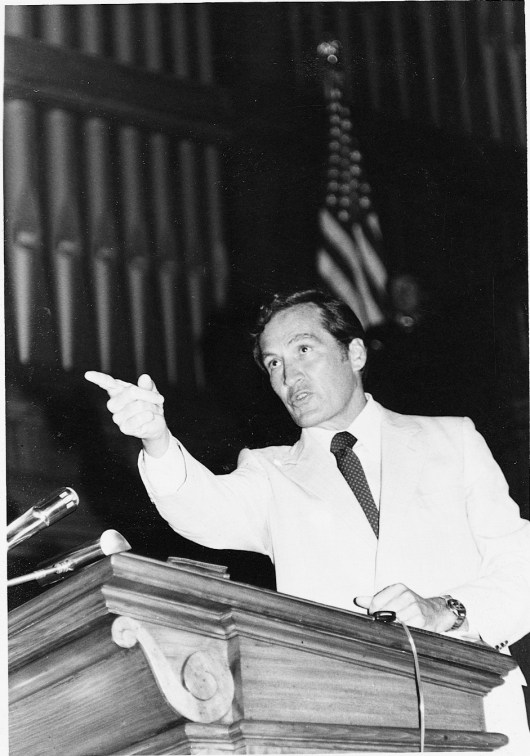
There are four reasons why capital punishment is necessary.
FIRST, to obey God. (Genesis 9:6).
SECOND, to protect society. Romans 12:9 says, “Love is to be sincere and active [the real thing—without guile and hypocrisy]. Hate what is evil [detest all ungodliness, do not tolerate wickedness]; hold on tightly to what is good.” Much today is called LOVE but has no resemblance to TRUE LOVE. Because God loves us, He doesn’t want us raped or murdered and He has put something in place to stop it. Softness to the criminal is cruelty to the community.
THIRD, for the good of the criminals.
The death penalty should also be practiced for the welfare of the criminals….When the principle of restraint is taken away, you have not served the criminal. You have been cruel to him because he does not realize the judgment that should come to him. The death sentence in a sense is a kindness to him because it reminds him that there is a God of justice that he must face.
IF A MAN HAS COMMITTED A CAPITAL CRIME AND HE KNOWS THAT HE IS GOING TO DIE FOR THAT CRIME, IT MAY BRING HIM TO REPENTANCE.
Many of those who are executed go into the chamber saying that they have repented and have accepted Christ as their personal savior. They know that in a short while they are going to face almighty God.
The Bible says that the government’s authority is there for good and there should be terror in the hearts and minds of evil doers. If we transgress, we ought to be afraid.
Romans 13:3, “For [civil] authorities are not a source of fear for [people of] good behavior, but for [those who do] evil.”
FOURTH, another reason for the death penalty is because of the justice of God. God is a holy God. There is sin and retribution.
The death of Jesus was capital punishment. Our sin deserved death, and He took our death for us. Jesus actually bore the wrath of God against sin on the cross.
_
Let us see if what Adrian Rogers said has any validity in the experience here in Arkansas.
I googled the name Kenneth D. Williams and found this article, “Arkansas death row inmate says he killed a fourth person,” June 15, 2005:
An inmate sentenced to death for a killing committed during a 1999 escape from a sentence for an earlier slaying has confessed to yet another killing in a letter to the editor of the Pine Bluff Commercial.
Along with a man killed in a traffic accident in Missouri during inmate Kenneth D. Williams’ 1999 escape, the slaying to which he has now confessed would make him responsible for the deaths of four people.
Williams, 26, says in a 512-page letter to the newspaper that he shot and killed Jerrell Jenkins, 36, of Pine Bluff on Dec. 13, 1998, the same day that he fatally shot Dominique Hurd, a cheerleader at the University of Arkansas at Pine Bluff. Police had listed Jenkins’ death as unsolved.

“I take full responsibility for my actions and whatever consequences my peers see fit,” Williams wrote.
Williams said he was a born-again Christian and wanted to confess his sins.
__
On April 27, 2017 Kenneth D. Williams was executed and according to the article, “KENNETH WILLIAMS EXECUTED THURSDAY AT CUMMINS,” b
Death row inmate Kenneth Williams of Pine Bluff was executed Thursday night at the Cummins Unit for the 1999 murder of Grady resident Cecil Boren.
Williams, 38, was pronounced dead at 11:05 p.m.
Williams was responsible for the deaths of four people in total and was sentenced to life in prison after he kidnapped and fatally shot 19-year-old University of Arkansas at Pine Bluff student Dominique Hurd in 1998. He was sentenced to death after escaping the Department of Correction’s Cummins Unit in 1999 and murdering Boren, 57, a former assistant warden at the unit.
Williams was captured only after causing a fatal auto collision with water-delivery driver Michael Greenwood, 24, in southern Missouri. In 2005 letter to the Commercial, Williams admitted to murdering Jerrell Jenkins, 36, in Pine Bluff on the same day he killed Hurd.
Greenwood’s widow and daughter bought plane tickets for Williams’ daughter and granddaughter to visit the prison before his scheduled execution.
According to an email distributed to the news media Thursday, Williams contacted freelance journalist Deborah Robinson on Thursday afternoon and provided an 1,808-word statement titled “Last Words.”
Williams credited the mother of Hurd and the daughter of Michael Greenwood with planting the seed so he could become a born-again Christian.
“I have been forever changed, forever grateful because of ‘Extreme Grace Unmerited,’” he wrote. “Amen.”
The Rev. Dewitt Hill, pastor of First Trinity Church of God in Pine Bluff, said he received a letter from Williams on Wednesday. In the letter, Williams wrote that he felt the execution was not going to happen, according to Hill, but if it did he was at peace. Williams wrote that he felt he was able to convert “most of the people on death row to God,” Hill said, adding that Williams had become a “student” of the Bible.
Boren’s niece, Terri Grimes, who attended Williams’ trial for the killing of her uncle, said she saw little remorse in him during that time.
“When I looked into his eyes during the trial, they were empty like he didn’t have a soul,” she told the Warren Eagle-Democrat. When I looked at them (his eyes) during the clemency hearings, they looked different.”
__
Lastly I read today this article, “Among the last words from Kenneth Williams: ‘Finger Lickin’ Good Fried Chicken’.” Posted By Max Brantley on Thu, Apr 27, 2017 at 4:48 PM:
On the eve of my scheduled April 27th execution, the Light burned brighter than I’ve ever Known it to! Only once before did it blind me so. It first happened in 1999. I was the twenty year old defendant in a capital murder case where the death penalty was rolled out against me. Mrs. Williams (No relation to me), the mother of the late 19-year-old Dominique Hurd, whom I senselessly murdered, took the stand having suffered great loss, and she shared these words, “I forgive Kenneth Williams. My daughter, Dominique ‘Nikki’ Hurd, was a forgiven person.” She said, ”I do not wish for him to be put to death. His death won’t bring my daughter back.” She went on to say, ”I pray that before Kenneth Williams leaves this world he will give his heart to Jesus.” On the other hand, yet not without understanding, the father of Dominique was full of indignation. He wanted me to feel his pain. Pain was my Language. It was my thing. But what I couldn’t comprehend; what could not be reconciled in my mind, was this woman’s pure act of grace, Love, mercy, and forgiveness. For someone who had taken away her child from her in the worst of ways.
The light shined into the darkness and the darkness did not comprehend it. John 1:5

- LIFELONG BOND: Kayla Greenwood (right) and Jasmine Johnson at Arkansas prison Wednesday for Johnson’s meeting with her father, Death Row inmate Kenneth Williams.
That marvelous light that shined forth that day out of Mrs. Williams acted as a planted seed into the soil of my life. Years later it would yield something special and God-bred. And when I could not think such a greater act of kindness, Love, and forgiveness could be expressed, I stood corrected. Thanks to Kayla Greenwood. She’s the daughter of the late Michael Greenwood, a man whose death I caused. His daughter, Kayla Greenwood, was just a child when her father was taken in a car wreck caused by me after I escaped prison. I was serving a life without sentence for killing Dominique. After 17 years of imprisonment and being on death row for also killing Cecil Boren during my escape, away from my own now 21-year-old daughter and never having seen before granddaughter, my death sentence finally had an April 27th date. A wish that burned within me was to see again my child and grandchild, possibly for the final time; first and last time. It had been over 17 years since I last saw my four-year-old child.

- DEATH PENALTY ACTION/TWITTER
- PRISON MEETING: Kenneth Williams with his daughter Jasmine Johnson and granddaughter
The word got out about my desire. The last person(s) I would have ever thought it possible answered my call. Kayla Greenwood, the daughter of the late Michael Greenwood, and her family reached out to prison officials. Kayla said, “I would like to speak with him on good terms and put closure between us and let him know my family and I forgive him. I would also like to pay for his daughter and granddaughter to go see him and want to figure out how I can get in contact with her to make it happen. I am not looking for anything else but closure and giving his daughter and granddaughter a chance I don’t get because I know how important it is.” Not only had this family forgiven me, which would have been going the extra mile, but within a short period of time they paid and arranged for my baby and grand babe to come to Arkansas from the West Coast to visit with me, which included picking them up from the airport and driving them to the prison over 40 miles away. We had the most amazing and heart-felt visit that left a former cold-blooded killer in tears of gratitude. Had officials permitted it, Kayla and I would have met with no objections from me. My heart has never known a greater deal of respect and admiration for another human being than for Kayla and her family, and Mrs. Williams, the mother of Dominique Hurd. I will also include my daughter Jasmine and son Marqevion for forgiving me for my abandonment and any shame I may have brought upon them because of my wrongs. If tomorrow be my last day here on earth, then Mrs. Williams’ prayer she made at my trial that I GIVE MY LIFE TO JESUS before I leave this world, would be answered. I have been forever changed, forever grateful because of ”Extreme Grace Unmerited.” Amen.
Min. Kenneth D. Williams
Arkansas Death Row
Death Watch
Adrian Rogers: The Simplicity of Salvation [#2221] (Audio)
The Simplicity of Salvation
Jesus said, “For the Son of man is come to seek and to save that which was lost” (Luke 19:10). Do you want to know how to be saved? Or want to know how you can tell others how to be saved? Then, let’s look at Romans 10:1-10:
1 Brethren, my heart’s desire and prayer to God for Israel is, that they might be saved. 2 For I bear them record that they have a zeal of God, but not according to knowledge. 3 For they being ignorant of God’s righteousness, and going about to establish their own righteousness, have not submitted themselves unto the righteousness of God. 4 For Christ is the end of the law for righteousness to every one that believeth. 5 For Moses describeth the righteousness which is of the law, That the man which doeth those things shall live by them. 6 But the righteousness which is of faith speaketh on this wise, Say not in thine heart, Who shall ascend into heaven? that is, to bring Christ down from above: 7 Or, Who shall descend into the deep? that is, to bring up Christ again from the dead. 8 But what saith it? The word is nigh thee, even in thy mouth, and in thy heart: that is, the word of faith, which we preach; 9 That if thou shalt confess with thy mouth the Lord Jesus, and shalt believe in thine heart that God hath raised Him from the dead, thou shalt be saved. 10 For with the heart man believeth unto righteousness; and with the mouth confession is made unto salvation.
When a person tries to be righteous by keeping the Ten Commandments or by doing good deeds, God rejects that. Why would God do that? Because God is holy and man is sinful at his best. The best that we can do is not enough.
We don’t have what it takes to keep the Ten Commandments in our own strength. If you’re hanging over a fire by a chain of ten links and nine of them are forged steel and one of them is made of paper, how safe are you?
That’s the reason the Bible says if we should keep the whole law and yet offend in one point, we are guilty of all. God demands perfection and we just can’t supply it. Salvation is not a reward for the righteous; it is a gift for the guilty. Salvation is not a goal to be achieved; it is a gift to be received.
The Righteousness That God Reveals
You believe in who He says He is — the God made flesh who died and rose again for you to be reconciled to God. Then, you repent of your sins and confess Christ as Lord of your life.
If Jesus is not the Lord of your life, then He is not your Savior. Salvation is not a cafeteria line where we say, “Well, I believe I’ll have a little Savior today, but no Lordship. Thank you.” No! Jesus is Lord.
Romans 3:21 says, “This righteousness from God comes through faith in Jesus Christ to all who believe.” Romans 10:10 says, “For with the heart man believeth unto righteousness; and with the mouth confession is made unto salvation.”
Do you know what it means to believe and confess that Jesus is Lord? It literally means that you agree with God. In this context, it also means that you will tell others about this confession. And that means you will not be ashamed. There are only two ways to be saved: If you live a sinless life (which no one has done, except Jesus) or you ask the Jesus to take the payment of your sin for you (which He did on the cross), and accept His righteousness on your behalf. 2 Corinthians 5:21 says, “For He [God] hath made Him to be sin for us, who knew no sin; that we might be made the righteousness of God in Him.”
Adrian Rogers – Simplicity of Salvation (1 4)
___
Adrian Rogers: How to Be Saved and Know It [#1726] (Audio)
Related posts:
FRANCIS SCHAEFFER AND ADRIAN ROGERS ARE MY TWO SPIRITUAL HEROES BECAUSE THEY DEFENDED THE ACCURACY OF THE BIBLE!
Francis Schaeffer I remember like yesterday hearing my pastor Adrian Rogers in 1979 going through the amazing fulfilled prophecy of Ezekiel 26-28 and the story of the city of Tyre. In 1980 in my senior year (taught by Mark Brink) at Evangelical Christian High School, I watched the film series by Francis Schaeffer called WHATEVER HAPPENED […]
__


.jpg)











 “Suppose we are climbing in the Alps and are very high on the bare rock, and suddenly the fog shuts down. The guide turns to us and says that the ice is forming and there is no hope; before morning we will all freeze to death here on the shoulder of the mountain. Simply to keep warm the guide keeps us moving in the dense fog further out on the shoulder until none of us have any idea where we are. After an hour or so, someone says to the guide, ‘Suppose I dropped and hit a ledge ten feet down in the fog. What would happen then?’ The guide would say that you might make it until the morning and thus live. So, with absolutely no knowledge or any reason to support his action, one of the group hangs and drops into the fog. This would be one kind of faith, a leap of faith.Suppose, however, after we have worked out on the shoulder in the midst of the fog and the growing ice on the rock, we had stopped and we heard a voice which said, ‘You cannot see me, but I know exactly where you are from your voices. I am on another ridge. I have lived in these mountains, man and boy, for over sixty years and I know every foot of them. I assure you that ten feet below you there is a ledge. If you hang and drop, you can make it through the night and I will get you in the morning.’I would not hang and drop at once, but would ask questions to try to ascertain if the man knew what he was talking about and if he was not my enemy. In the Alps, for example, I would ask him his name. If the name he gave me was the name of a family from that part of the mountains, it would count a great deal to me. In the Swiss Alps there are certain family names that indicate mountain families of that area. In my desperate situation, even though time would be running out, I would ask him what to me would be the adequate and sufficient questions, and when I became convinced by his answers, then I would hang and drop.This is faith, but obviously it has no relationship to the other use of the word. As a matter of fact, if one of these is called faith, the other should not be designated by the same word. The historic Christian faith is not a leap of faith in the post-Kierkegaardian sense because [God] is not silent, and I am invited to ask the adequate and sufficient questions, not only in regard to details, but also in regard to the existence of the universe and its complexity and in regard to the existence of man. I am invited to ask adequate and sufficient questions and then believe Him and bow before Him metaphysically in knowing that I exist because He made man, and bow before Him morally as needing His provision for me in the substitutionary, propitiatory death of Christ.” – Francis Schaeffer, Francis A. Schaeffer Trilogy: The God Who Is There, Escape From Reason, He Is There and He Is Not Silent__________________________In the 1960’s when so many young people from the USA jumped into eastern religions Francis Schaeffer called it a leap into non-reason and Schaeffer also asserted:


 Eighteen countries agreed to provide live contributions to this program with thirteen additional countries agreeing to broadcast the event (although seven countries pulled out just days before it aired). A projected 500 million viewers were anticipated, making this the most ambitious and historic television program of its time. In the U.S., the show was to be aired on the National Educational Television (NET) network of 113 affiliate stations.
 With this in mind, it was hardly a surprise to most that on May 18th, 1967, it was announced that The Beatles would be highlighted as the concluding segment of the “Artistic Excellence” section of the program, being one of two British contributions to the show. They were to perform live in EMI Studios recording a song written especially for the occasion. “In what has since been described, with some justification, as the greatest single moment in the history of popular music,” relates Mark Lewisohn in his book “The Complete Beatles Chronicle,” “The Beatles, now at their absolute zenith, performed ‘All You Need Is Love’…From playing skiffle music in an abattoir workers’ social club in 1957 to instructing 350 million people, live across the globe ten years later that ‘love is all you need‘ is a leap in scale so colossal that it’s still hard to comprehend.”
 In a mid 1967 interview, Paul explained to DJ Kenny Everett, “What happened was, a fellow from the BBC, an organization which I’m sure you have heard of, asked us to get together a song for this. So we said, ‘We’d get one together, with nice easy words, so that everyone can understand it.’ So he said, ‘Oh, all right then. We’ll see you in a couple weeks.’ So we went away, and we just played Monopoly for a bit, and then the fellow said, ‘Now, where’s the song?’ So we said, ‘Ah! Don’t worry Derek.’ His name was Derek Burrell-Davis. ‘We’ll soon have a song for you.’”
 Geoff Emerick, in his book “Here, There And Everywhere,” gives some first-hand details about the group being introduced to the project. “A couple of months previously, while we were still wrapped up with the job of completing ‘
 “He looked around the room expectantly,” Emerick continues. “I almost thought he was getting ready to take a bow. To his utter dismay, the group’s response was…to yawn. Ringo fidgeted at the back of the room, anxious to return to the game of chess he was playing with Neil (Aspinall), and George resumed tuning his guitar. John and Paul exchanged blank looks for a moment. Paul didn’t seem all that interested; I guess he was probably just too focused on finishing up ‘
 “Brian was incensed at their casual reaction. ‘Aren’t you excited? Don’t you realize what this means to us? Don’t you have any idea how much hard work and effort I put into making this deal?’ Lennon cut him off with an acidic comment: ‘Well, Brian, that’s what you get for committing us to doing something without asking us first.’ Epsteinlooked close to tears. At a loss for words, he stomped out of the studio in a snit. From the studio chatter that followed after he had gone. I gathered that, rather than viewing this as a coup, the four Beatles saw it as a violation of their self-declared intent to never perform live again. What’s more, they resented the fact that their manager had presented it to them as a fait accompli. They were at a point where they wanted to take control of their own career.”
 “With that, the issue was forgotten…until, some weeks later, during one of the ‘You Know My Name‘ sessions, Paul happened to ask John casually, ‘How are you getting on with that song for the television broadcast? Isn’t it coming up fairly soon?’ John looked questioningly at Neil, who was the keeper of the band’s diary. ‘Couple of weeks time, looks like,’ Neil responded after consulting his tattered book. ‘Oh God, is it that close? Well, then I suppose I’d better write something.’” With the above information, we can narrow down the time of writing “All You Need Is Love” as between June 7th and 14th, 1967.
 Shortly before his death, Brian Epstein had this to say about the “All You Need Is Love” project: “I’ve never had a moment’s worry that they wouldn’t come up with something marvelous. The commitment for the TV program was arranged some months ago. The time got nearer and nearer, and they still hadn’t written anything. Then, about three weeks before the program, they sat down to write. The record was completed in ten days. This is an inspired song, because they wrote it for a worldwide program and they really wanted to give the world a message. It could hardly have been a better message. It is a wonderful, beautiful, spine-chilling record.”
 “Even The Beatles, who were seldom overawed by anything, were a bit bomb-happy about it,” George Martin relates in his book “All You Need Is Ears.” “’But you can’t just go off the cuff,’ I pleaded with them. ‘We’ve got to prepare something.’ So they went away to get something together, and John came up with ‘All You Need Is Love.’ It had to be kept terribly secret, because the general idea was that the television viewers would actually see The Beatles at work recording their new single…John came up with the idea of the song, which was ideal, lovely…They work best under pressure. It is a fairly simple love song.”
 “So John and I just got together,” Paul continues, “and thought and I wrote one, and John wrote one, and we went to the session and we just decided to do his first. By the time that we had done the backing track for John’s, we suddenly realized that his was the one…So we’ve still got mine, ready to do for the next one, which is of a similar nature in its simplicity, but with a different message.” Although Paul’s intended contribution has never been confirmed, many feel it was the very next song The Beatles recorded, namely, “
 In his book “Many Years From Now,” Paul elaborates: “’All You Need I Love’ was John’s song. I threw in a few ideas, as did the other members of the group, but it was largely ad libs like singing ‘She Loves you’…or silly little things at the end and we made those up on the spot. The chorus ‘All you need is love‘ is simple, but the verse is quite complex, in fact I never really understood it, the message is rather complex.”
 George Harrison seemed to understand the lyrics, however, as he explained in the “Beatles Anthology” book about his overall experience in The Beatles: “If we weren’t in The Beatles we would have been in something else, not necessarily another rock’n’roll band. Karma is: what you sow, you reap. Like John said in ‘All You Need Is Love’: ‘There’s nowhere you can be that isn’t where you’re meant to be,’ because you yourself have carved out your own destiny by your previous actions. I always had a feeling that something was going to happen.”
 In any event, Ringo says it well in the book “Beatles Anthology”: “The writers of the song were masters at hitting the nail on the head!..It was for love. It was for love and bloody peace. It was a fabulous time. I even get excited now when I realize that’s what it was for: Peace and love, people putting flowers in guns.”

 With only eleven days until the television show was due for broadcast, The Beatles entered Olympic Sound Studios on June 14th, 1967 (time unknown) to record the rhythm track for “All You Need Is Love.” In Geoff Emerick’s absence, Eddie Kramer(future producer of Jimi Hendrix and Kiss) was engineer along with George Chkiantz as tape operator and, as usual, George Martin as producer. Eddie Kramer remembers: “They came in and it was, ‘Well, what are we going to do now?’ John had the idea for ‘All You Need Is Love’ and he sat next to me in the control room. We rigged the talkback mike so that it could be used for vocals, and he sang through that.”
 But this was hardly a typical recording session, as John himself explained back in 1967: “We just put a track down, because I knew the chords. I played a harpsichordand George played a violin, because we felt like doing it like that and Paul played a double bass. They can’t play them, so we got some nice noises coming out and then you can hear it going on, because it sounded like an orchestra, but it’s just those two playing the violin.” Eddie Kramer recalls: “There was a bunch of instruments left over in the studio from previous sessions, including a double-bass that Paul played.” An invoice from that session revealed a fee of ten guineas being paid for John’s use of the harpsichord. George Martin states: “I remember that one of the minor problems was that George had got hold of a violin which he wanted to try to play, even though he couldn’t!”
 With Ringo on his usual drum kit, the group went through a total of 33 takes of the rhythm track for the song with this unusual instrumentation, John’s vocal being the only voice heard intended as a guide vocal only. The book “The Beatles Recording Sessions” explains, “Right from the beginning of take one ‘La Marseillaise’ (the French national anthem) was a vital part of the song, emphasizing the international flavor of the occasion.” Engineer George Chkiantz relates: “The Beatles were very opportunistic and very positive. At one point we accidentally made a curious sound on the tape and they not only wanted to keep it on the recording they also asked us to deliberately repeat that same sound again. Other groups would have been annoyed but The Beatles capitalized on the mistake.”
 Eddie Kramer explains: “They did the song from beginning to end for a good half-hour. They’d get to the end of the song and John would count it off again without stopping, doing it again and again until they got the one that they liked.” It was determined that ‘take 10’ was the best, so a tape reduction was prepared of this take to be brought to EMI Studios for additional recording. “They did a four-track to four-track mixdown,” George Chkiantz continues, “with curiously little care we all thought – and George Martin specifically told me to keep any little chatter before the take began.”
 The first mono mix created for the song was done on June 21st, 1967 in Room 53 of EMI Studios between 4:30 and 5 pm by George Martin and engineers Malcolm Addey and Phil McDonald. This mono mix, however, was only of the rhythm track recorded at Olympic Studios (omitting the above mentioned overdubs done on June 19th) and was documented as “remix 1.” Later that evening, in the control room of EMI Studio Three, a similar mono mix, this one unnumbered, was prepared by the team of Martin, Emerick and Lush between the hours of 7 and 11:30 pm. An acetate of this mono mix was given to Derek Burrell Davis, director of the BBC broadcast team, in preparation for the upcoming June 25th show.
 “So then we thought, ‘Ah well, we’ll have some more orchestra around this little three-piece with a drum,’” explained John in 1967. George Martin relates in his book “All You Need Is Ears,” “I did a score for the song, a fairly arbitrary sort of arrangement since it was at such short notice.” The orchestra was planned to be a part of the live television event, but they recorded a sizable portion of their contribution beforehand, on June 23rd, 1967 in EMI Studio One between 8 and 11 pm.
 Around this time, some very brave decisions were made regarding the actual live broadcast. “In a fit of bravado,” relates Geoff Emerick, “Lennon announced that he was going to do his lead vocal live during the broadcast, which prompted the ever competitive Paul to respond that if John was going to do that, he would play bass live, too. It seemed to me to be a foolhardy – though brave – decision. What if one of them sang or played a bad note in front of millions of viewers? But they were supremely confident, and they could not be dissuaded by George Martin, who was adamantly opposed, but as was usual by this point, had no real authority.”
 “In an act of further defiance,” Emerick continues, “John and Paul even talked George Harrison into doing his guitar solo live, which we all knew was a tricky proposition. To my surprise, Harrison gave in without a whole lot of argument; my sense was that he was afraid of being embarrassed in front of his bandmates. Only Ringo was completely safe, for technical reasons: if the drums were played live, there would be too much leakage onto the microphones that were going to be picking up the sound of the orchestra. Ringo nodded his head solemnly when I explained that to him. I couldn’t tell whether he was relieved at being absolved of the responsibility of playing live, or whether he felt left out.”
 It was during this rehearsal that managerBrian Epstein “came in and held a meeting with George Martin and the band,” Geoff Emerick recalls, “during which they debated the wisdom of rush-releasing the upcoming performance as a single. John, of course, was keen – it was his song, after all – and it didn’t take much effort to talk Paul into it, either…Only George Harrison was reluctant; presumably he was worried that he might muff his solo, even though it was only four bars long. He was finally persuaded when George Martin assured him that we could stay late afterward and do any necessary repair work.”
 After this camera rehearsal was complete, four more takes of overdubbing (takes 44 – 47) were recorded for “All You Need Is Love” in preparation for this days’ decision to release the song as The Beatles next single as soon after the broadcast as possible. Although we don’t know for sure what these overdubs consisted of, Geoff Emerick’s book “Here, There And Everywhere” may shed some light on this. “Adding to the chaos was John’s insistence on making a last minute change to the arrangement, which sentGeorge Martin into a tizzy – he was doing the orchestral score and had to rapidly come up with new sheet music for the musicians, who milled around impatiently waiting for him. To his credit, George came up with a spectacular arrangement, especially considering the very limited time he had to do it in and the odd meters that characterized the song.” These overdubs took place in EMI Studio One between 5 and 8 pm, they all leaving then to get a good night’s rest before the eventful next day.
 The day of reckoning arrived; June 25th, 1967. The Beatles, the orchestra, the engineering team, the BBC crew and everyone else involved arrived at EMI Studio One at around 2 pm for what became an arduous and nerve-wracking day of activity. Much rehearsal (all recorded) and trouble-shooting was needed before the live transmission would take place later that evening.
 At some point, possibly during these rehearsals, another last minute addition was made to the orchestral score. “George Martin…wrote the end of ‘All You Need Is Love,” Paul explains. “It was a hurried session and we said, ‘There’s the end, we want it to go on and on.’ Actually, what he wrote was much more disjoined, so when we put all the bits together, we said, ‘Could we have “Greensleeves” right on top of the little Bach thing?’ And on top of that, we had the ‘In The Mood’ bit.” Trumpeter David Mason remembers, “We played bits of Bach’s Brandenburg concerto in the fade-out.”
 “When it came to the end of their fade-away as the song closed,” George Martin relates, “I asked them: ‘How do you want to get out of it?’ ‘Write absolutely anthing you like, George,’ they said. ‘Put together any tunes you fancy, and just play it out like that.’ The mixture I came up with was culled from the ‘Marseillaise,’ a Bach two-part invention, ‘Greensleeves,’ and the little lick from ‘In The Mood.’ I wove them all together, at slightly different tempos so that they all still worked as separate entities.”
 But there was only one problem with this arrangement. “Unfortunately, there was a sting in the tail for me,” George Martin continues. “I was being paid the princely sum of fifteen pounds for arranging the music and writing the bits for the…ending, and I had chosen the tunes for the mixture in the belief that they were all out of copyright. More fool me. It turned out that although ‘In The Mood’ itself was out of copyright, the Glenn Miller arrangement of it was not. The little bit I had chosen was the arrangement, not the tune itself, and as a result EMI were asked by its owners for a royalty. The Beatles, quite rightly I suppose, said: ‘We’re not going to give up our copyright royalty.’ SoKen East, the man who had by then become managing director of EMI Records, came to me and said: “Look here, George, you did the arrangement on this. They’re expecting money for it.’ ‘You must be out of your mind,’ I said. ‘I get fifteen pounds for doing that arrangement. Do you mean to say I’ve got to pay blasted copyright out of my fifteen quid?’ His answer was short and unequivocal. ‘Yes.’ In the end, of course, EMI had to settle with the publishers.”
 Three rehearsal takes were recorded first (takes 48 – 50), then three rehearsal takes for the BBC were recorded (numbered 1 – 3), then back to more dry run rehearsals (takes 51-53). “Paul had requested a working microphone so that he could shout out ad-libs,” remembers Geoff Emerick. “The problem was that the mic I had set up blocked Paul’s face on the camera angle they wanted to use. In the end, I acceded to the director’s request that a smaller mic be substituted even thought it was not the mic I would normally have employed. I felt it was unlikely that whatever Paul ended up ad-libbing would be of significant importance to the record, and even if it turned out that it was, it was something we could easily overdub later.
 There apparently was an hour or two break from rehearsals which allowed the engineering crew to leave for a well deserved dinner. When they arrived back at around 6 pm, they saw that a large group of celebrity friends had arrived for the broadcast, all dressed in the colorful clothes of the day. According to reports, these friends included Mick Jagger, Marianne Faithfull, Keith Richard, Keith Moon, Eric Clapton, Pattie Harrison, Jane Asher, Mike McCartney, Graham Nash, Gary Leeds, Hunter Davies, Terry Condon, Allistair Taylor and Brian Epstein. “I had Keith Moon next to me,” Ringo remembers. “We decided to get some people in who looked like the ‘love generation’,” George Harrison recalls. “If you look closely at the floor, I know that Mick Jagger is there. But there’s also an Eric Clapton, I believe, in full psychedelic regalia and permed hair, sitting right there.”
 Author George Gunby, in his book “Hello Goodbye, The Story Of ‘Mr. Fixit’,” recounts the eyewitness recollections of Brian Epstein’s assistant Allistair Taylor: “Throughout the afternoon and early evening the musicians and technicians rehearsed constantly. It must have been the most rehearsed spontaneous performance ever! The party guests arrived…they sat on the studio floor and waited as the clock ticked remorselessly towards 9:30 pm, the time set for the live transmission. Despite the relaxing effects of the ‘whacky baccy’ being smoked throughout the studio and the building, tempers became frayed and nerves raw. Then John threw everything out of kilter by claiming that he had lost his voice. Paul laughed at him and gently ribbed his songwriting partner. A glass of water and a few more barbed comments from McCartney put things right.”
 “Paul strode into the control room at one point,” Geoff Emerickstates, “and spent some time working on the bass sound with me. It struck me as a smart thing to do. Not only was he making certain that his instrument would come across the way he wanted it to, but getting out of the studio, away from the others and out of the line of fire, had a calming effect on both of us. It gave us both a little sanctuary where we could focus on just one specific thing and not think about the monumental technical feat we would soon be attempting to pull off.”
 Four more rehearsal takes were recorded (takes 54 – 57) while they were waiting for the cue from the BBC that they were ready for broadcast. After some last minute technical problems regarding lost communication with the BBC truck parked outside (and the frantic hiding of glasses and a bottle of scotch in the control room during a last minute toast between the engineering crew), the intercom speaker unexpectedly proclaimed “Going on air…NOW!” The live broadcast caught ‘take 57’ of their rehearsal midstream, which was duly interrupted by George Martin in the control room, thanking The Beatles for their work on the “vocal backing,” and instructing the tape operator: “Run back the tape please, Richard.” While the group waited for the tape to be rewound and cued up, and in between announcer Steve Race’s comments to the viewing audience, The Beatles were heard nervously goofing around with their instruments with John singing “She loves you, yeah, yeah, yeah.” (During rehearsals, John is also heard singing “
 After John takes a sip of milk, roadie Mal Evans collects some empty tea cups, and the orchestra enters into the studio and takes their seats, the previously recorded tape is cued up and begins to be played. So starts ‘take 58,’ the official take of the song for the “Our World” broadcast which spanned the globe thanks to the Early Bird ‘space booster’ and Lana Bird and ATS/B satellites.
 The make-up of the four-track tape was as follows: ‘Track One’ contained the prerecorded rhythm track, ‘Track Two’ contained the live bass guitar, lead guitar and drums (they ended up being miked in order for Ringo to perform a live snare drum roll at the beginning of the song), ‘Track Three’ had the live orchestra, and ‘Track Four’ had the live vocals from John and Paul.
 “The Beatles themselves gave an inspiring performance,” Geoff Emerick relates, “though you could see the look of relief on all their faces as they got to the fadeout and realized that they’d actually pulled it off. John came through like a trouper, delivering an amazing vocal despite his nervousness and the plug of chewing gum in his mouth that he forgot to remove just before we went on air. Paul’s playing, as always, was solid, with no gaffs, and even George Harrison’s solo was reasonably good, though he did hit a clunker at the end. Unsurprisingly, despite the complicated score and tricky time changes, the orchestral players came through like the pros they were, with no fluffs whatsoever, even on the most demanding brass riffs.”
 Shortly after the momentous broadcast was complete, the engineers took off to the nearby Abbey Tavern for a celebratory drink while the orchestra, BBC crew and all the guests left for the evening. When they got back just before 11 pm, they worked with George Martin and maintenance engineer Martin Benge to put the finishing touches on the song in preparation for the soon-to-be-released single.
 Geoff Emerick relates: “From the very first playback, the four Beatles were knocked out by what they were hearing. Harrison winced a little during his guitar solo, butRichard (Lush) took the initiative and reassured him, saying, ‘It’ll be fine; we’ll put a little wobble on it and it will be great.’ In the end, all we had to do was add the effect and duck the last bad note.” John related at the time: “There was no conception about how it should sound like at the end until we did it that day.”
 Emerick continues: “John’s vocal needed only two lines dropped in in the second verse, where, sure enough, he flubbed a lyric. The only other remaining task was to redo the snare drum roll that Ringo played in the song’s introduciotn; it had been a last-minute decision for him to do it live during the broadcast, and George Martin felt it could be done a bit better…The only things that were replaced on ‘All You Need Is Love’ for the record release were the snare roll at the beginning, and two lines of the lead vocal.” After these overdubs took place, the studio doors were finally shut by around 1 am the following morning.
 Later that day, June 26th, 1967, the engineering team of Martin, Emerick and Lush entered the control room of EMI Studio Two refreshed and ready to create the releasable mono mix of the song. While mixing out John’s tambourine shaking at the beginning of the song, they made nine attempts at creating this crucial mix, only five of which were complete. Their fourth attempt was deemed the best, this being given to a young Ken Scott (who was apprenticing as a mastering engineer and would become a sought after producer in his own right) to be transferred to vinyl. “Funnily enough,” stated George Martin, “although John had added a new vocal, Ringo had added a drum roll and we had done a new mix, few people realized the single was any different to the TV version of the song.”
 There was no intention to put out “All You Need Is Love” on an album at this point, so no stereo version was prepared yet. Capitol Records, however, did intend to include the song on their makeshift album “
 In preparation for the soundtrack album release of “Yellow Submarine,” a stereo mix of “All You Need Is Love” was now deemed necessary. This was done on October 29th, 1968 in the control room of EMI Studio Three by Geoff Emerick and 2nd engineer Graham Kirkby (no producer was present). There are many notable differences between this stereo mix and the released mono mix. In this stereo mix, the brass is quieter, the drums are louder, the piano is heard more prominently, and a voice that appears to say “Check!” is heard at about the 25 second mark. George’s guitar solo is a little quieter here and has a little less of the “wobble” effect. This guitar solo also cuts off just after the flubbed note in the fifth measure in the mono mix while it continues to be heard throughout the fifth and sixth measure in this stereo mix. The stereo mix is also substantially shorter that the released mono mix, also omitting the second playing of “Greensleeves.”
 Sometime in early 1999, a brand new mix of “All You Need Is Love” was created in EMI Studios for the album “Yellow Submarine Songtrack” which was put together to coincide with the re-release of the film that year. This new vibrant mix has the “
 Also, sometime presumably in early 2006, George Martin and son Giles Martin met in EMI Studios (now Abbey Road Studios) to create yet another stereo mix of “All You Need Is Love” for the album and project “Love.” This mix is generally the same as the original stereo mix until the fade out which combines elements of “
 A short three-measure introduction is heard first which mostly comprises the orchestra playing “La Marseillaise” along with Ringo’s overdubbed snare drum roll. Lennon also played this French National Anthem on harpsichord during the initial rhythm track but it is virtually, if not totally, indecipherable on the finished product. This introduction sets the 4/4 meter as a template for the rest of the song.
 The first proper verse starts afterwards as Paul’s bass guitar bounces in and John’s lead vocals wind throughout. The “love, love, love” backing vocals are still present as are the strings playing nearly the same arrangement as in the introductory verse. There are some unidentified percussion-like sounds heard throughout this verse that possibly were made by George on violin in the rhythm track (or from John’s banjo overdub). The second vocal verse comes next which is quite similar to the previous one except for a more elaborate orchestral arrangement, a combination of the prerecorded score with a different live broadcast score. We can also hear George playing some actual bowed violin in the final measure.
 The first chorus then appears, which is also eight measures long. All of the measures are in 4/4 time except for the eighth measure which is in 2/4. John’s lead vocal is double-tracked throughout the chorus while the verses are all single-tracked. Lennon’s is the only voice heard in this chorus while the orchestral score plays a much more melodic and dominant role, mimicking in part what John originally played on the harpsichord in the rhythm track. Lennon’s live tambourine is also heard somewhat more prominently in this chorus.
 The next verse that follows is used as the instrumental section of the song, the first four measures highlighted by George’s live guitar solo, the flubbed chord heard at the beginning of the fifth measure. The “love, love, love” backing vocals reappear here as the orchestra continues to be featured dramatically, especially with the staccato sixteenth-notes heard in the seventh measure. The tambourine is still present throughout as is George’s violin noodling in the eighth measure. The second chorus then follows which is primarily identical to the first chorus except for Paul’s adlib “whoop”s heard in the third and fourth measure.
 The chorus is now repeated twice, the orchestral arrangement altering once again from the choruses previously heard. Various additional elements are heard here, including an accordion, George Martin’s barrel-house piano playing, backing vocals from Paul and George, and more fluid bass work from McCartney. The last chorus is noteworthy for featuring Paul’s “all together now” in the second measure and “everybody” in the fourth measure. The strings climax in the fifth through eighth measures by playing ascending triplet patterns until they reach their highest pitch in the eighth measure which is then played with a swing beat into the first four measures of the conclusion.
 This conclusion consists of 30 measures in the common stereo version and 34 measures in the mono version. Vocally, this conclusion consists of John repeating “love is all you need” with a prerecorded John, Paul and George harmonizing the same line afterwards continually in a ‘row, row, row your boat’ fashion. This vocalization continues this way until the twelfth measure, Paul yelling “woo-hoo” in the eleventh measure which encourages John to reply “yee-hay!” The prerecorded harmony vocals of John, Paul and George continue through the rest of the song but, with John’s solo vocals abandoned, it allows him to adlib whatever came to mind, singing “Yesterday” in the 14th measure and shouting “Woah!” in the 15th measure. Paul shouts “Oh yeah” in the 17th and 18th measures which prompts John to sing “She loves you, yeah, yeah, yeah” twice within measures 19 and 22. Paul yells “woo-hoo” both in measures 24 and 25 and an “ah” in measure 26, after which we hear some indecipherable mumblings until the song fades away.
 Orchestral insertions in the conclusion consist of David Mason playing Bach’s “Brandenburg Concerto” in measures five through eight, tenor saxophonists playing the introduction to “In The Mood” in measures nine and ten and then again in measures twelve and thirteen. The strings play “Greensleeves” for the first time in measures 15 through 20, which is quickly followed by David Mason’s repeat of “Brandenburg Concerto” in measures 20 through 24. Then comes “In The Mood” two more times in measures 24 and 25 and then 27 and 28. Then, as heard in the mono mix, “Greensleeves” is repeated through measures 29 through 34 until the recording finally fades away.
 As was usually the case, John puts in a stellar performance for one of his own compositions, propelling the proceedings with his harpsichord work from the rhythm track. His vocal work is performed with great aplomb and his tambourine is simple but nicely done. We can’t exactly say the same thing for his banjo playing since it’s buried too far in the mix. Paul’s bowed double-bass isn’t very discernible either, but his bass guitar is proficiently performed as is his backing vocals. George’s nerves brought out a suitable live guitar solo for the recording and even his violin playing wasn’t too bad. Ringo’s role may have been rudimentary but his overdubbed snare roll worked very nicely. George Martin’s piano work in the final choruses are up to his usual high standards and are placed suitably low in the mix as not to detract from the simple message of the song. Coming off of the extravagant production of the “

 The song appeared on an American album for the first time only a few months later, on November 27th, 1967, on the Capitol concocted release “
 January 13th, 1969, was the next release of the song on the soundtrack album to the movie “Yellow Submarine.” This album featured the newly created stereo mix which was noticeably shorter than the version we all were used to hearing before this time. The first compact disc version of this album was released on October 25th, 1987 and then in a remastered condition on September 9th, 2009.
 The next release of the song was on October 15th, 1982 on the single album “20 Greatest Hits.” Then in February of 1994, Capitol Cema re-released the single on pink vinyl as a “for jukebox only” 45. Then came the newly mixed version of the song as released on the album “Yellow Submarine Songtrack,” which was released on September 13th, 1999. This was followed by the November 14th, 2000 release of the album “Beatles 1,” “All You Need Is Love” earning its spot here because of its topping the charts in both Britain and America. This album was released in a remastered condition in September of 2011, and then as a remixed album on November 6th, 2015.
 Next came the album “Love,” released on November 21st, 2006, which featured a newly created mash-up mix of the song featuring elements of many other Beatles songs during its conclusion (as described above). And if die-hard fans felt that the original lengthened mono mix of “All You Need Is Love” had gotten lost in the shuffle, the box set “The Beatles In Mono” rectified the situation, this set being released on September 9th, 2009.
 Surprisingly, Paul McCartney decided to include a medley of two Beatles songs with a similar lyrical theme, both considered Lennon staples, on his lengthy “On The Run” tour. Paul and his band performed the entire song “
 This quote from Paul McCartney during the interviews from the Anthology documentary sums up nicely how the song “All You Need Is Love” was viewed by the group as the overall message The Beatles were trying to convey to the world. They weren’t trying to subvert the morals of young minds in the sixties, as many thought. They were just being themselves, artistically expressing their honest thoughts and/or beliefs at any given time. George described the song as “a kind of subtle bit of PR for God, basically.”
 While the sentiments of “All You Need Is Love” weren’t overtly political, the message can easily be interpreted as a salve for any unrest of any age if all the complications could somehow be stripped away. It reveals the underlying truth that inner peace needs to be attained first for each one of us individually before a bigger universal picture can emerge. “You can learn to be YOU in time,” John sings, instead of being who you are conditioned to be from your societal and/or religious upbringing onward. It may appear to be a herculean task to accomplish this but, promises John, “It’s easy!” And, once this is done on an individual basis, our united focus on true unadulterated “love” can accomplish anything.


 The Daily Hatch