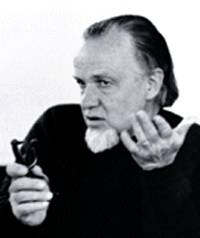
SCHAEFFER SUNDAY Good review of Schaeffer’s episode “The Scientific Age:”

Francis Schaeffer “BASIS FOR HUMAN DIGNITY” Whatever…HTTHR

Francis Schaeffer – How Should We Then Live – 06.The Scientific Age

Dr. Francis schaeffer – The flow of Materialism(from Part 4 of Whatever happened to human race?)

The video of THE SCIENTIFIC AGE  can accessed at this link.

December 16, 2007

Related posts:

FRANCIS SCHAEFFER ANALYZES ART AND CULTURE PART 48 “BLOW UP” by Michelangelo Antonioni makes Philosophic Statement (Feature on artist Nancy Holt)

_______________ Francis Schaeffer pictured below: _____________________ Why am I doing this series FRANCIS SCHAEFFER ANALYZES ART AND CULTURE? John Fischer probably expressed it best when he noted: Schaeffer was the closest thing to a “man of sorrows” I have seen. He could not allow himself to be happy when most of the world was desperately lost […]

FRANCIS SCHAEFFER ANALYZES ART AND CULTURE Part 47 Woody Allen and Professor Levy and the death of “Optimistic Humanism” from the movie CRIMES AND MISDEMEANORS Plus Charles Darwin’s comments too!!! (Feature on artist Rodney Graham)

Crimes and Misdemeanors: A Discussion: Part 1 ___________________________________ Today I will answer the simple question: IS IT POSSIBLE TO BE AN OPTIMISTIC SECULAR HUMANIST THAT DOES NOT BELIEVE IN GOD OR AN AFTERLIFE? This question has been around for a long time and you can go back to the 19th century and read this same […]

FRANCIS SCHAEFFER ANALYZES ART AND CULTURE PART 46 Friedrich Nietzsche (Featured artist is Thomas Schütte)

____________________________________ Francis Schaeffer pictured below: ______________ Francis Schaeffer has written extensively on art and culture spanning the last 2000years and here are some posts I have done on this subject before : Francis Schaeffer’s “How should we then live?” Video and outline of episode 10 “Final Choices” , episode 9 “The Age of Personal Peace and Affluence”, episode 8 […]

FRANCIS SCHAEFFER ANALYZES ART AND CULTURE Part 45 Woody Allen “Reason is Dead” (Feature on artists Allora & Calzadilla )

Love and Death [Woody Allen] – What if there is no God? [PL] ___________   _______________ How Should We then Live Episode 7 small (Age of Nonreason) #02 How Should We Then Live? (Promo Clip) Dr. Francis Schaeffer 10 Worldview and Truth Two Minute Warning: How Then Should We Live?: Francis Schaeffer at 100 Francis […]

FRANCIS SCHAEFFER ANALYZES ART AND CULTURE Part 44 The Book of Genesis (Featured artist is Trey McCarley )

___________________________________ Francis Schaeffer pictured below: ____________________________ Francis Schaeffer “BASIS FOR HUMAN DIGNITY” Whatever…HTTHR Dr. Francis schaeffer – The flow of Materialism(from Part 4 of Whatever happened to human race?) Dr. Francis Schaeffer – The Biblical flow of Truth & History (intro) Francis Schaeffer – The Biblical Flow of History & Truth (1) Dr. Francis Schaeffer […]

WOODY WEDNESDAY Francis Schaeffer’s term the “Mannishness of Man” and how it relates to Woody Allen and Charles Darwin!!!

___________ Dr. Francis Schaeffer – The Naturalistic, Materialistic, World View Francis Schaeffer and  Gospel of Christ in the pages of the Bible   Francis Schaeffer’s term the “Mannishness of Man” and how it relates to Woody Allen and Charles Darwin!!! Schaeffer noted that everyone has these two things constantly pulling at them. First, it is […]

FRANCIS SCHAEFFER ANALYZES ART AND CULTURE Part 43 “Freedom within Form” (Featured artist is Jan Fabre)

________________ Francis Schaeffer “BASIS FOR HUMAN DIGNITY” Whatever…HTTHR Dr. Francis schaeffer – The flow of Materialism(from Part 4 of Whatever happened to human race?) Dr. Francis Schaeffer – The Biblical flow of Truth & History (intro) Francis Schaeffer – The Biblical Flow of History & Truth (1) Dr. Francis Schaeffer – The Biblical Flow of […]

FRANCIS SCHAEFFER ANALYZES ART AND CULTURE Part 42 Historical Adam and Eve (Featured artist is Banks Violette)

_______________________________________________ Francis Schaeffer “BASIS FOR HUMAN DIGNITY” Whatever…HTTHR Dr. Francis schaeffer – The flow of Materialism(from Part 4 of Whatever happened to human race?) Dr. Francis Schaeffer – The Biblical flow of Truth & History (intro) Francis Schaeffer – The Biblical Flow of History & Truth (1) Dr. Francis Schaeffer – The Biblical Flow of […]

FRANCIS SCHAEFFER ANALYZES ART AND CULTURE Part 41 Sarvepalli Radhakrishnan (Featured artist is Marina Abramović)

______________________ Francis Schaeffer pictured below:   _________ How Should We then Live Episode 7 small (Age of Nonreason) #02 How Should We Then Live? (Promo Clip) Dr. Francis Schaeffer 10 Worldview and Truth Two Minute Warning: How Then Should We Live?: Francis Schaeffer at 100 Francis Schaeffer “BASIS FOR HUMAN DIGNITY” Whatever…HTTHR Francis Schaeffer has […]

FRANCIS SCHAEFFER ANALYZES ART AND CULTURE Part 40 Timothy Leary (Featured artist is Margaret Keane)

__________ A Christian Manifesto Francis Schaeffer Published on Dec 18, 2012 A video important to today. The man was very wise in the ways of God. And of government. Hope you enjoy a good solis teaching from the past. The truth never gets old. The Roots of the Emergent Church by Francis Schaeffer How Should […]

________________

FRIEDMAN FRIDAY Milton Friedman’s “Free to Choose” film transcripts and videos here on www.thedailyhatch.org

Volume 1: Power of the Market Volume 2: The Tyranny of Control
Volume 3: Anatomy of a Crisis
Volume 4: From Cradle to Grave
Volume 5: Created Equal
Volume 6: What’s Wrong With Our Schools?
Volume 7: Who Protects the Consumer?
Volume 8: Who Protects the Worker?
Volume 9: How to Cure Inflation
Volume 10: How to Stay Free

Updated 1990 Series:
Volume 1: The Power of the Market
Volume 2: The Tyranny of Control
Volume 3: Freedom & Prosperity
Volume 4: The Failure of Socialism
Volume 5: Created Equal

Milton Friedman’s “Free to Choose” film transcripts and videos here on http://www.thedailyhatch.org

I have many posts on my blog that include both the transcript and videos of Milton Friedman’s film series “Free to Choose” and here are the episodes that I have posted.

_____________

Here are the posts and you can find the links in order below this.

The Power of the Market from 1990

The Failure of Socialism from 1990

The Anatomy of a Crisis from 1980

What is wrong with our schools?  from 1980

Created Equal from 1980

From Cradle to Grave from 1980

The Power of the Market 1980

Debate on Inflation from 1980

Milton Friedman is the short one!!!

Milton Friedman’s Free to Choose (1980), episode 3 – Anatomy of a Crisis. part 1

“The Power of the Market” episode of Free to Choose in 1990 by Milton Friedman (Part 5)

Milton Friedman The Power of the Market 5-5 How can we have personal freedom without economic freedom? That is why I don’t understand why socialists who value individual freedoms want to take away our economic freedoms.  I wanted to share this info below with you from Milton Friedman who has influenced me greatly over the […]

“The Power of the Market” episode of Free to Choose in 1990 by Milton Friedman (Part 4)

Milton Friedman The Power of the Market 4-5 How can we have personal freedom without economic freedom? That is why I don’t understand why socialists who value individual freedoms want to take away our economic freedoms.  I wanted to share this info below with you from Milton Friedman who has influenced me greatly over the […]

“The Power of the Market” episode of Free to Choose in 1990 by Milton Friedman (Part 3)

Milton Friedman The Power of the Market 3-5 How can we have personal freedom without economic freedom? That is why I don’t understand why socialists who value individual freedoms want to take away our economic freedoms.  I wanted to share this info below with you from Milton Friedman who has influenced me greatly over the […]

“The Power of the Market” episode of Free to Choose in 1990 by Milton Friedman (Part 2)

Milton Friedman The Power of the Market 2-5 How can we have personal freedom without economic freedom? That is why I don’t understand why socialists who value individual freedoms want to take away our economic freedoms.  I wanted to share this info below with you from Milton Friedman who has influenced me greatly over the […]

“The Power of the Market” episode of Free to Choose in 1990 by Milton Friedman (Part 1)

Milton Friedman The Power of the Market 1-5 How can we have personal freedom without economic freedom? That is why I don’t understand why socialists who value individual freedoms want to take away our economic freedoms.  I wanted to share this info below with you from Milton Friedman who has influenced me greatly over the […]

“Friedman Friday” EPISODE “The Failure of Socialism” of Free to Choose in 1990 by Milton Friedman (Part 5)

Milton Friedman: Free To Choose – The Failure Of Socialism With Ronald Reagan (Full) Published on Mar 19, 2012 by NoNationalityNeeded Milton Friedman’s writings affected me greatly when I first discovered them and I wanted to share with you. Abstract: Ronald Reagan introduces this program, and traces a line from Adam Smith’s “The Wealth of […]

“Friedman Friday” EPISODE “The Failure of Socialism” of Free to Choose in 1990 by Milton Friedman (Part 4)

Milton Friedman: Free To Choose – The Failure Of Socialism With Ronald Reagan (Full) Published on Mar 19, 2012 by NoNationalityNeeded Milton Friedman’s writings affected me greatly when I first discovered them and I wanted to share with you. Abstract: Ronald Reagan introduces this program, and traces a line from Adam Smith’s “The Wealth of […]

“Friedman Friday” EPISODE “The Failure of Socialism” of Free to Choose in 1990 by Milton Friedman (Part 3)

Milton Friedman: Free To Choose – The Failure Of Socialism With Ronald Reagan (Full) Published on Mar 19, 2012 by NoNationalityNeeded Milton Friedman’s writings affected me greatly when I first discovered them and I wanted to share with you. Abstract: Ronald Reagan introduces this program, and traces a line from Adam Smith’s “The Wealth of […]

“Friedman Friday” EPISODE “The Failure of Socialism” of Free to Choose in 1990 by Milton Friedman (Part 2)

Milton Friedman: Free To Choose – The Failure Of Socialism With Ronald Reagan (Full) Published on Mar 19, 2012 by NoNationalityNeeded Milton Friedman’s writings affected me greatly when I first discovered them and I wanted to share with you. Abstract: Ronald Reagan introduces this program, and traces a line from Adam Smith’s “The Wealth of […]

“Friedman Friday,” EPISODE “The Failure of Socialism” of Free to Choose in 1990 by Milton Friedman (Part 1)

Milton Friedman: Free To Choose – The Failure Of Socialism With Ronald Reagan (Full) Published on Mar 19, 2012 by NoNationalityNeeded Milton Friedman’s writings affected me greatly when I first discovered them and I wanted to share with you. We must not head down the path of socialism like Greece has done. Abstract: Ronald Reagan […]

________________

“Friedman Friday” (“Free to Choose” episode 3 – Anatomy of a Crisis. part 7of 7)

TEMIN: We don’t think the big capital arose before the government did? VON HOFFMAN: Listen, what are we doing here? I mean __ defending big government is like defending death and taxes. When was the last time you met anybody that was in favor of big government? FRIEDMAN: Today, today I met Bob Lekachman, I […]

“Friedman Friday” (“Free to Choose” episode 3 – Anatomy of a Crisis. part 6of 7)

worked pretty well for a whole generation. Now anything that works well for a whole generation isn’t entirely bad. From the fact __ from that fact, and the undeniable fact that things are working poorly now, are we to conclude that the Keynesian sort of mixed regulation was wrong __ FRIEDMAN: Yes. LEKACHMAN: __ or […]

“Friedman Friday” (“Free to Choose” episode 3 – Anatomy of a Crisis. part 5 of 7)

MCKENZIE: Ah, well, that’s not on our agenda actually. (Laughter) VOICE OFF SCREEN: Why not? MCKENZIE: I boldly repeat the question, though, the expectation having been __ having been raised in the public mind, can you reverse this process where government is expected to produce the happy result? LEKACHMAN: Oh, no way. And it would […]

By Everette Hatcher III | Also posted in Current Events | Edit | Comments (0)

“Friedman Friday” (“Free to Choose” episode 3 – Anatomy of a Crisis. part 4 of 7)

The massive growth of central government that started after the depression has continued ever since. If anything, it has even speeded up in recent years. Each year there are more buildings in Washington occupied by more bureaucrats administering more laws. The Great Depression persuaded the public that private enterprise was a fundamentally unstable system. That […]

“Friedman Friday” (“Free to Choose” episode 3 – Anatomy of a Crisis. part 3 of 7)

Worse still, America’s depression was to become worldwide because of what lies behind these doors. This is the vault of the Federal Reserve Bank of New York. Inside is the largest horde of gold in the world. Because the world was on a gold standard in 1929, these vaults, where the U.S. gold was stored, […]

“Friedman Friday” (Part 16) (“Free to Choose” episode 3 – Anatomy of a Crisis. part 2 of 7)

  George Eccles: Well, then we called all our employees together. And we told them to be at the bank at their place at 8:00 a.m. and just act as if nothing was happening, just have a smile on their face, if they could, and me too. And we have four savings windows and we […]

“Friedman Friday” (“Free to Choose” episode 3 – Anatomy of a Crisis. part 1of 7)

Milton Friedman’s Free to Choose (1980), episode 3 – Anatomy of a Crisis. part 1 FREE TO CHOOSE: Anatomy of Crisis Friedman Delancy Street in New York’s lower east side, hardly one of the city’s best known sites, yet what happened in this street nearly 50 years ago continues to effect all of us today. […]

By Everette Hatcher III | Also posted in Current Events | Edit | Comments (0)

____________________________

_____________


________________________________________________

_____________________________________________

Friedman Friday” Free to Choose by Milton Friedman: Episode “What is wrong with our schools?” (Part 6 of transcript and video)

Here is the video clip and transcript of the film series FREE TO CHOOSE episode “What is wrong with our schools?” Part 6 of 6.   Volume 6 – What’s Wrong with our Schools Transcript: FRIEDMAN: But I personally think it’s a good thing. But I don’t see that any reason whatsoever why I shouldn’t have been required […]

Friedman Friday” Free to Choose by Milton Friedman: Episode “What is wrong with our schools?” (Part 5 of transcript and video)

Here is the video clip and transcript of the film series FREE TO CHOOSE episode “What is wrong with our schools?” Part 5 of 6.   Volume 6 – What’s Wrong with our Schools Transcript: Are your voucher schools  going to accept these tough children? COONS: You bet they are. (Several talking at once.) COONS: May I answer […]

Free to Choose by Milton Friedman: Episode “What is wrong with our schools?” (Part 4 of transcript and video)

Here is the video clip and transcript of the film series FREE TO CHOOSE episode “What is wrong with our schools?” Part 4 of 6.   Volume 6 – What’s Wrong with our Schools Transcript: It seems to me that if one is truly interested in liberty, which I think is the ultimate value that Milton Friedman talks […]

Friedman Friday” Free to Choose by Milton Friedman: Episode “What is wrong with our schools?” (Part 3 of transcript and video)

Friedman Friday” Free to Choose by Milton Friedman: Episode “What is wrong with our schools?” (Part 3 of transcript and video) Here is the video clip and transcript of the film series FREE TO CHOOSE episode “What is wrong with our schools?” Part 3 of 6.   Volume 6 – What’s Wrong with our Schools Transcript: If it […]

Friedman Friday” Free to Choose by Milton Friedman: Episode “What is wrong with our schools?” (Part 2 of transcript and video)

Here is the video clip and transcript of the film series FREE TO CHOOSE episode “What is wrong with our schools?” Part 2 of 6.   Volume 6 – What’s Wrong with our Schools Transcript: Groups of concerned parents and teachers decided to do something about it. They used private funds to take over empty stores and they […]

By Everette Hatcher III | Also posted in Vouchers | Edit | Comments (1)

Friedman Friday” Free to Choose by Milton Friedman: Episode “What is wrong with our schools?” (Part 1 of transcript and video)

Here is the video clip and transcript of the film series FREE TO CHOOSE episode “What is wrong with our schools?” Part 1 of 6.   Volume 6 – What’s Wrong with our Schools Transcript: Friedman: These youngsters are beginning another day at one of America’s public schools, Hyde Park High School in Boston. What happens when […]

By Everette Hatcher III | Also posted in Vouchers | Tagged , , , , | Edit | Comments (0)

Free to Choose by Milton Friedman: Episode “Created Equal” (Part 7 of transcript and video)

Liberals like President Obama want to shoot for an equality of outcome. That system does not work. In fact, our free society allows for the closest gap between the wealthy and the poor. Unlike other countries where free enterprise and other freedoms are not present.  This is a seven part series. Created Equal [7/7]. Milton Friedman’s Free to Choose […]

Free to Choose by Milton Friedman: Episode “Created Equal” (Part 6 of transcript and video)

Liberals like President Obama want to shoot for an equality of outcome. That system does not work. In fact, our free society allows for the closest gap between the wealthy and the poor. Unlike other countries where free enterprise and other freedoms are not present.  This is a seven part series. Created Equal [6/7]. Milton Friedman’s Free to Choose […]

“Friedman Friday” Free to Choose by Milton Friedman: Episode “Created Equal” (Part 5 of transcript and video)

Liberals like President Obama want to shoot for an equality of outcome. That system does not work. In fact, our free society allows for the closest gap between the wealthy and the poor. Unlike other countries where free enterprise and other freedoms are not present.  This is a seven part series. Created Equal [5/7]. Milton Friedman’s Free to Choose […]

Free to Choose by Milton Friedman: Episode “Created Equal” (Part 4 of transcript and video)

Liberals like President Obama want to shoot for an equality of outcome. That system does not work. In fact, our free society allows for the closest gap between the wealthy and the poor. Unlike other countries where free enterprise and other freedoms are not present.  This is a seven part series. Created Equal [4/7]. Milton Friedman’s Free to Choose […]

Friedman Friday” Free to Choose by Milton Friedman: Episode “Created Equal” (Part 3 of transcript and video)

Friedman Friday” Free to Choose by Milton Friedman: Episode “Created Equal” (Part 3 of transcript and video) Liberals like President Obama want to shoot for an equality of outcome. That system does not work. In fact, our free society allows for the closest gap between the wealthy and the poor. Unlike other countries where free enterprise and other […]

Free to Choose by Milton Friedman: Episode “Created Equal” (Part 2 of transcript and video)

Free to Choose by Milton Friedman: Episode “Created Equal” (Part 2 of transcript and video) Liberals like President Obama want to shoot for an equality of outcome. That system does not work. In fact, our free society allows for the closest gap between the wealthy and the poor. Unlike other countries where free enterprise and other freedoms are […]

Free to Choose by Milton Friedman: Episode “Created Equal” (Part 1 of transcript and video)

 Milton Friedman and Ronald Reagan Liberals like President Obama (and John Brummett) want to shoot for an equality of outcome. That system does not work. In fact, our free society allows for the closest gap between the wealthy and the poor. Unlike other countries where free enterprise and other freedoms are not present.  This is a seven part series. […]

Milton Friedman The Power of the Market 2-5

Milton Friedman Friday:(“Free to Choose” episode 4 – From Cradle to Grave, Part 7 of 7)

I am currently going through his film series “Free to Choose” which is one the most powerful film series I have ever seen. TEMIN: We don’t think the big capital arose before the government did? VON HOFFMAN: Listen, what are we doing here? I mean __ defending big government is like defending death and taxes. […]


Milton Friedman Friday:(“Free to Choose” episode 4 – From Cradle to Grave, Part 6 of 7)

I am currently going through his film series “Free to Choose” which is one the most powerful film series I have ever seen worked pretty well for a whole generation. Now anything that works well for a whole generation isn’t entirely bad. From the fact __ from that fact, and the undeniable fact that things […]

Milton Friedman Friday:(“Free to Choose” episode 4 – From Cradle to Grave, Part 5 of 7)

 I am currently going through his film series “Free to Choose” which is one the most powerful film series I have ever seen. PART 5 of 7 MCKENZIE: Ah, well, that’s not on our agenda actually. (Laughter) VOICE OFF SCREEN: Why not? MCKENZIE: I boldly repeat the question, though, the expectation having been __ having […]

Milton Friedman Friday: (“Free to Choose” episode 4 – From Cradle to Grave, Part 4 of 7)

 I am currently going through his film series “Free to Choose” which is one the most powerful film series I have ever seen. PART 4 of 7 The massive growth of central government that started after the depression has continued ever since. If anything, it has even speeded up in recent years. Each year there […]

By Everette Hatcher III | Edit | Comments (0)

Milton Friedman Friday: (“Free to Choose” episode 4 – From Cradle to Grave, Part 3 of 7)

 I am currently going through his film series “Free to Choose” which is one the most powerful film series I have ever seen. PART 3 OF 7 Worse still, America’s depression was to become worldwide because of what lies behind these doors. This is the vault of the Federal Reserve Bank of New York. Inside […]

By Everette Hatcher III | Edit | Comments (0)

Milton Friedman Friday:(“Free to Choose” episode 4 – From Cradle to Grave, Part 2 of 7)

 I am currently going through his film series “Free to Choose” which is one the most powerful film series I have ever seen. For the past 7 years Maureen Ramsey has had to buy food and clothes for her family out of a government handout. For the whole of that time, her husband, Steve, hasn’t […]

Friedman Friday:(“Free to Choose” episode 4 – From Cradle to Grave, Part 1 of 7)

Friedman Friday:(“Free to Choose” episode 4 – From Cradle to Grave, Part 1 of 7) Volume 4 – From Cradle to Grave Abstract: Since the Depression years of the 1930s, there has been almost continuous expansion of governmental efforts to provide for people’s welfare. First, there was a tremendous expansion of public works. The Social Security Act […]

By Everette Hatcher III | Edit | Comments (0)

“Friedman Friday” (“Free to Choose” episode 1 – Power of the Market. part 7 of 7)

  Michael Harrington:  If you don’t have the expertise, the knowledge technology today, you’re out of the debate. And I think that we have to democratize information and government as well as the economy and society. FRIEDMAN: I am sorry to say Michael Harrington’s solution is not a solution to it. He wants minority rule, I […]

“Friedman Friday” (“Free to Choose” episode 1 – Power of the Market. part 6 of 7)

PETERSON: Well, let me ask you how you would cope with this problem, Dr. Friedman. The people decided that they wanted cool air, and there was tremendous need, and so we built a huge industry, the air conditioning industry, hundreds of thousands of jobs, tremendous earnings opportunities and nearly all of us now have air […]

“Friedman Friday” (“Free to Choose” episode 1 – Power of the Market. part 5 of 7)

Part 5 Milton Friedman: I do not believe it’s proper to put the situation in terms of industrialist versus government. On the contrary, one of the reasons why I am in favor of less government is because when you have more government industrialists take it over, and the two together form a coalition against the ordinary […]

“Friedman Friday” (“Free to Choose” episode 1 – Power of the Market. part 4 of 7)

The fundamental principal of the free society is voluntary cooperation. The economic market, buying and selling, is one example. But it’s only one example. Voluntary cooperation is far broader than that. To take an example that at first sight seems about as far away as you can get __ the language we speak; the words […]

“Friedman Friday” (“Free to Choose” episode 1 – Power of the Market. part 3 of 7)

  _________________________   Pt3  Nowadays there’s a considerable amount of traffic at this border. People cross a little more freely than they use to. Many people from Hong Kong trade in China and the market has helped bring the two countries closer together, but the barriers between them are still very real. On this side […]

“Friedman Friday” (“Free to Choose” episode 1 – Power of the Market. part 2 of 7)

  Aside from its harbor, the only other important resource of Hong Kong is people __ over 4_ million of them. Like America a century ago, Hong Kong in the past few decades has been a haven for people who sought the freedom to make the most of their own abilities. Many of them are […]

“Friedman Friday” (“Free to Choose” episode 1 – Power of the Market. part 1of 7)

“FREE TO CHOOSE” 1: The Power of the Market (Milton Friedman) Free to Choose ^ | 1980 | Milton Friedman Posted on Monday, July 17, 2006 4:20:46 PM by Choose Ye This Day FREE TO CHOOSE: The Power of the Market Friedman: Once all of this was a swamp, covered with forest. The Canarce Indians […]

By Everette Hatcher III | Posted in Current Events, Milton Friedman | Edit | Comments (0)

Milton Friedman The Power of the Market 1-5

Debate on Milton Friedman’s cure for inflation

If you would like to see the first three episodes on inflation in Milton Friedman’s film series “Free to Choose” then go to a previous post I did. Ep. 9 – How to Cure Inflation [4/7]. Milton Friedman’s Free to Choose (1980) Uploaded by investbligurucom on Jun 16, 2010 While many people have a fairly […]


FRANCIS SCHAEFFER ANALYZES ART AND CULTURE PART 100 (MANY CHRISTIANS ATTACKED THE BEATLES WHILE FRANCIS SCHAEFFER STUDIED THEIR MUSIC! Part A) Featured Artist is Klaus Voormann

__

Alistair Begg is critical of Christians in the 1960’s who rejected the Beatles without looking deeper into their music. However, Francis Schaeffer did not shy away from the Beatles music but actually studied up on it. Nancy Pearcey noted, “This small, intense man from the Swiss mountains delivered a message unlike any heard in evangelical circles in the mid-1960s. At Wheaton College, students were fighting to show films like Bambi, while Francis was talking about the films of Bergman and Fellini. Administrators were censoring existential themes out of student publications, while Francis was discussing Camus, Sartre, and Heidegger. He quoted Dylan Thomas, knew the artwork of Salvador Dali, listened to the music of THE BEATLES and John Cage.”


The Beatles Money (That’s What I Want) (Live) [HD]

The Beatles – Can’t Buy Me Love (Live)

The Beatles – From Me to You

In the last several years, writers and academics have begun to seriously analyze what pop culture icons say through their worldviews. Books have explored the philosophy of The Matrix, Buffy the Vampire Slayer, and Seinfeld and the gospel according to Tony Soprano and The Simpsons.

Alistair Begg, pastor of Ohio’s Parkside Church and the author of Made For His Pleasure (Moody), has been a longtime fan of The Beatles. He doesn’t suggest the band had a solid theology or an admirable worldview. Instead, he feels the band is important to look at now because it asked a lot of pertinent question in its music—and too many of those questions went unanswered.

Why is it important to understand what The Beatles were saying during their era?

They were on the forefront of a generation’s thinking. At the same time, they were able to articulate things and were given a voice. Without fully understanding it themselves, originally, they found themselves the mouthpiece of a generation. They were actually interpreting some of the angst, the hopes, and the fears of teenagers with mothers and fathers who didn’t understand.

Did The Beatles simply reflect culture or did they shape it?

For good or for ill, they were shaping culture. That’s true if you take the development of the music alone. Everything that they did pushed the frontiers out. This wasn’t only true in terms of the way in which they were recording material or the way in which they were writing melody lines, but it was actually in the lyrical content as well. Think about what Elvis Presley was singing about, or about what Chuck Berry was doing. It was all about love and different things like that. The Beatles got into a whole new business the further they went.

The Beatles first said money was everything (in the song “Money“), then they said that love could give you anything you want onFrom Me to You“, and then they recordCan’t Buy Me Love“. What do you see in this progression?

An American journalist asked Paul in 1966 if “Can’t Buy Me Love” was actually about prostitution. There is this morbid fascination with the idea that these guys were coming from the bottom level of everything. It is a shame. It carried over into fundamentalist/evangelical response to their music at that time.

I’m not suggesting that The Beatles had a wonderful theology, or that their worldview was perfect. It clearly wasn’t. It left them high and dry on just about every front, eventually. But they weren’t simply writing cute little tunes. They were beginning to take seriously the platform that they’d been given. That’s why so many people found them offensive; it was because of the things that they were prepared to tackle.

What do you see when looking closely at what The Beatles were saying or looking for in their songs?

If you take Lennon’s “IN MY LIFE,” you have the tender side of John Lennon coming out, a side that many people missed completely.

When they went in and got Lennon’s belongings after his untimely death, one of the closest family friends found a huge notebook, which contained virtually all of Lennon’s handwritten lyrics for everything he’d done, including this song. It was clear that what had happened to Lennon is that as the fame thing had come, a sense of nostalgia crept into his life. He started to remember the places in the past.

It was always sad to me that people couldn’t see that he was crying out for something. I just always felt that in Lennon you had this guy who every so often would open the door to himself ever so slightly. Every time he opened up, it never seemed to be a Christian response to say, “Hey, we’ve got an angle on that. We’d love to talk to you about that.” It was always, “Hey, get out of here, you long-haired nuisance. You’re destroying the youth of Great Britain and corrupting the life of America.” We did this in the ’60s and, frankly, we’re doing it again now.

Speaking of the religious community’s reaction to Lennon, there was a huge fervor after his comment that The Beatles were bigger than Jesus. But in an interview after that event, he said, “I wasn’t saying The Beatles are better than Jesus or God or Christianity, I was using the name Beatles … as an example. But I could have said TV or cinema or anything else that’s popular. Or motor cars are bigger than Jesus.”

It’s a shame that it served the agenda of certain people to misunderstand the quote. What Lennon was saying is what people might justifiably say today about all kinds of idols and icons in relationship to young people in particular. He was in some ways bemoaning the fact. He was honest enough to say what has happened here is a phenomenon that is way beyond anything that we could ever have conceived. The response, of course, was not particularly attractive—such as when the band hit Dallas and all those youth pastors came out to welcome them with bonfires.

While there were things that needed to be addressed in pop culture—and there always will be—I think we missed an opportunity. Later on, we see them involved with a maharishi yogi. You see Harrison’s interest in mysticism. While we can’t lay the charge at the feet of the Christians, nevertheless it is a sad thing that there was nobody there who had gained a platform to them at a time when they were willing to listen. The interviewer asked about the song “Help.” He said, “I wrote “Help” in ’65, and people hailed it as another advance in rock & roll. It was the cry of my heart and nobody came to answer.”

This is just a picture of what we’re dealing with every day in all of our lives. Lennon, the drummer in Smashing Pumpkins, and Kurt Cobain are only big, dramatic examples of the interaction that all of us have with kids. I want to encourage Christians to get serious about being real about Jesus Christ. Listen to music so that you can talk to people about it rather than sloganeering and banging the drum for the same old stuff.

In the video THE AGE OF NON-REASON Schaeffer noted,  ” Sergeant Pepper’s Lonely Hearts Club Band…for a time it became the rallying cry for young people throughout the world. It expressed the essence of their lives, thoughts and their feelings.” 

How Should We then Live Episode 7 small (Age of Nonreason)

_______________

The Beatles- In My Life-HQ

Uploaded on Oct 30, 2011

THE BEATLES
“In My Life”
(Lennon/McCartney)
There are places I remember
All my life though some have changed
Some forever not for better
Some have gone and some remain
All these places have their moments
With lovers and friends I still can recall
Some are dead and some are living
In my life I’ve loved them all
But of all these friends and lovers
There is no one compares with you
And these memories lose their meaning
When I think of love as something new
Though I know I’ll never lose affection
For people and things that went before
I know I’ll often stop and think about them
In my life I love you more
Though I know I’ll never lose affection
For people and things that went before
I know I’ll often stop and think about them
In my life I love you more

In My Life – Sean Connery

________________

Featured artist today is Klaus Voorman

Klaus Voormann

From Wikipedia, the free encyclopedia
Klaus Voormann
ManfredMannDaveBerry.jpg

Tom McGuinness, Dave Berry, Klaus Voormann, Mike Hugg, Manfred Mann, Mike d’Abo (Schiphol Airport, 1967)
Background information
Born 29 April 1938 (age 77)
Berlin, Germany
Origin Hamburg, Germany
Genres Rock ‘n’ roll, rhythm and blues
Occupation(s) Musician, record producer,graphic artist
Instruments Bass guitar, upright bass, guitar, flute, saxophone, keyboards
Years active 1964–present
Labels Apple, EMI, Fontana, Zapple,Epic, Sony, RCA Victor
Associated acts The Beatles, Paddy, Klaus & Gibson, Manfred Mann, Plastic Ono Band, George Harrison,Badfinger, Ringo Starr, Harry Nilsson, Carly Simon
Website www.klaus-voormann.com

Klaus Voormann (born 29 April 1938) is a German artist, musician, and record producer. He designed artwork for many bands including the Beatles, the Bee Gees, Wet Wet Wet and Turbonegro. His most notable work as a producer was his work with the band Trio, including their worldwide hit “Da Da Da“. As a musician, Voormann is best known for being the bassist for Manfred Mann from 1966 to 1969, and for performing as a session musician on a host of recordings, including many by former members of the Beatles.

His association with the Beatles dated back to their time in Hamburg in the early 1960s. He lived in the band’s London flat with George Harrison and Ringo Starr after John Lennon and Paul McCartney moved out to live with their respective partners, and designed the cover of their album Revolver,[1] for which he won a Grammy. Following the band’s split, rumours circulated of the formation of a group named the Ladders, consisting of Lennon, Harrison, Starr and Voormann. This failed to materialise, outside of all four Ladders (plus Billy Preston) performing on the Ringo Starr track “I’m the Greatest“, although Voormann did play on albums by Lennon, Harrison and Starr, and was for a time a member of the Plastic Ono Band.[1] In the 1990s, he designed the artwork for the Beatles Anthology albums.

In 2009, he released his debut solo album A Sideman’s Journey, which featured many notable musicians, including the two surviving members of the Beatles, performing as “Voormann and Friends”.

Early years[edit]

Klaus Voormann was born in Berlin, Germany, and raised in the suburbs of North Berlin. His father was a physician and he was one of six brothers. In his July 2010 interview on “Talking Germany”, Voormann discussed his dyslexia.[2]

The Voormann family were interested in art, classical music, and books, with a feeling for history and tradition. His parents decided that instead of studying music it would be best for Klaus to studycommercial art in Berlin at the “Meisterschule für Grafik und Buchgewerbe.” He later moved to Hamburg to study at the “Meisterschule für Gestaltung,” but before finishing his education in thegraphic arts, Voormann started work as a commercial artist, graphic designer and illustrator, spending eight months in Düsseldorf working for magazines.[3]

Hamburg poster for Rory Storm and the Beatles

It was in Hamburg that Voormann first met Astrid Kirchherr. After an argument with her and Jürgen Vollmer one day, Voormann wandered down the Reeperbahn, in the St. Pauli district of Hamburg, and heard music coming from the Kaiserkeller club. He walked in on a performance by Rory Storm and the Hurricanes. The next group to play was the Beatles. Voormann was left “speechless” by the performances. Voormann had never heard rock ‘n’ roll before, having previously only listened to traditional jazz, with some Nat King Cole and Platters mixed in.[4] Voormann invited Kirchherr and Vollmer to watch the performances the next day. After joining Voormann at a performance, the trio decided upon spending as much time as possible close to the group and immersing themselves in the music.[5]

The St. Pauli district was a dangerous section of town with typical illicit behaviour commonplace; an area where prostitutes were to be found, and anyone that looked different from the usual clientele hanging about took a risk. As a trio, Voormann, Kirchherr and Vollmer stood out in the Kaiserkeller, dressed in suede coats, wool sweaters, jeans and round-toed shoes, when most of the customers had greased-backTeddy boy hairstyles and wore black leather jackets and pointed boots.[6] During a break, Voormann tried to talk (in faltering English) to Lennon, and pressed a crumpled record sleeve he had designed into Lennon’s hands. Lennon took little interest, and brushed Voormann off, suggesting that he talk to Stuart Sutcliffe, who, Lennon said, “is the artist ’round here”.[6]

Sutcliffe did not share Lennon’s attitude, and was fascinated by the trio, who he thought looked like “real bohemians“. He later wrote that he could hardly take his eyes off them, and had tried to talk to them during the next break, but they had already left the club.[6] Sutcliffe managed to meet them eventually, and learned that all three had attended the “Meisterschule für Mode,” which was the Hamburg equivalent of the Liverpool art college that both Sutcliffe and Lennon had attended. Lennon dubbed the trio the Exies, as a joke about their affection for existentialism.[4]

Voormann was in a relationship with Kirchherr at the time, and lived just around the corner from her parents’ upper-class home in the Altona district of Hamburg. Kirchherr’s bedroom, which was all in black, including the walls and furniture, was decorated especially for Voormann. After the visits to the Kaiserkeller their relationship became purely platonic, as Astrid started dating Sutcliffe, who was fascinated by her, although she always remained a close friend of Voormann.[7]

London[edit]

In the early 1960s, Voormann decided to leave Germany and move to London. George Harrison invited him to live in the Green Street flat in London’s Mayfair, formerly shared by all four members of the Beatles, Lennon and McCartney having moved out: Lennon to live with his wife Cynthia Lennon, and McCartney to live in the attic of the home of Jane Asher‘s parents. Voormann lived with Harrison and Ringo Starr for a time before finding work as a commercial artist and renting an apartment of his own. He returned to Hamburg in 1963, where he founded a band with Paddy Chambers (guitar/vocals), Voormann (bass/vocals) and Gibson Kemp (drums) called Paddy, Klaus & Gibson.[8]

In 1966, Voormann returned to London and was asked by Lennon to design the sleeve for the album Revolver. Klaus had a style of “scrapbook collage” art in mind. When showing his efforts to the band and their manager, Brian Epstein, the band loved it, although Voormann’s payment for the album cover was £40.[citation needed] For this work, Klaus won the Grammy Award for Best Album Cover, Graphic Arts. Voormann later designed the cover art for Harrison’s 1988 single, “When We Was Fab“, which included the image of Harrison from the cover of Revolver along with an updated drawing in the same style.

Around the same time, another group was about to release their international debut album. The Bee Gees had recorded their first album, Bee Gees 1st, and Klaus was hired to design the cover for that album. The album cover featured all five group members standing above a colourful, psychedelic collage painted by Voormann. The following year, artwork by Klaus graced the front cover of the American edition of The Bee Gees‘ album Idea. In 1973, Voormann created the album sleeve and booklet artwork for Ringo Starr’s album Ringo, on which he also played bass.

Bassist[edit]

In 1966, at the same time that he was designing the cover of Revolver, Voormann became a member of the 1960s band Manfred Mann,[9] having turned down offers by The Hollies and The Moody Blues.[10][11] Voormann did substitute for Eric Haydock on a couple of TV shows (see List of The Hollies band members). He mentions his negotiations with the group in his biography: Warum spielst Du Imagine nicht auf dem weißen Klavier, John? Voormann played bass and flutes for Manfred Mann from 1966 to 1969, appearing on all their UK hits from “Just Like a Woman” (July 1966) to their final single “Ragamuffin Man” (April 1969) and including the 1968 international hit “The Mighty Quinn” (#1 UK, No. 10 US).[9]

After that, he became a session musician, playing on solo projects by Lou Reed, Carly Simon, James Taylor, and Harry Nilsson amongst others. Voormann was a member of Yoko Ono and Lennon’s Plastic Ono Band, with Ono, Alan White(future Yes drummer) and Eric Clapton, which played on the Live Peace in Toronto 1969 album, recorded in Toronto on 13 September 1969 prior to the break-up of the Beatles.[12]

In 1971 he moved to Los Angeles. In an interview with EMI about his album Walls and Bridges, Lennon was asked who was playing bass on the album. Lennon answered with a hard German accent: “Klaus Voormann. We all know Klaus, ja“. He also played in Harrison’s assembled band at the 1971 The Concert for Bangladesh; Harrison fittingly introduced him to the audience by saying, “There’s somebody on bass who many people have heard about, but they’ve never actually seen him – Klaus Voormann.”[13] After Harrison died, Voorman played bass as part of the supporting band on the song “All Things Must Pass“, in the Concert for George on 29 November 2002.

After the Beatles disbanded, there were rumours of them reforming as the Ladders, with Voormann on bass as a replacement for Paul McCartney.[14] An announcement to this effect filtered out of the Apple offices in 1971, but was ultimately withdrawn before it got very far.[14] This line-up (Voormann, Lennon, Harrison and Starr) did perform in various combinations on Lennon’s albums, John Lennon/Plastic Ono Band (1970) (Voormann, Lennon, and Starr) and Imagine (1971) (Voormann, Lennon & Harrison) as well as on Ringo Starr’s eponymous album Ringo, in 1973, and Yoko Ono’s Yoko Ono/Plastic Ono Band (1970) (Voormann, Lennon, Starr, and Ono). Starr’s album features the Lennon-penned “I’m The Greatest“, which is the only song on which all four musicians appear together, joined by Billy Preston. He also played on Lennon’s “Instant Karma!” single.[1]

In 1979 Voormann moved back to Germany; he had a cameo as Von Schnitzel the Conductor in the 1980 film adaptation of Popeye. He produced three studio albums and a live album by the German band Trio. He also produced their worldwide hit “Da Da Da”. After Trio broke up in 1986, he produced the first solo album by their singer Stephan Remmler and played bass on some songs of the album. The following year he produced a single by former Trio drummer Peter Behrens.

Retirement[edit]

Voormann retired from the music business in 1989, spending time with his family. He lives at Lake Starnberg,[15] near Munich with his second wife Christine and their two children, born in 1989 and 1991. From time to time he appears on TV shows, mainly when the shows are about the 1960s in general or the Beatles in particular, or when he is asked to talk about his famous album sleeve for Revolver. In 1995 Klaus was asked by Apple Records to design the covers for theBeatles Anthology albums. He painted the covers along with his friend, fellow artist Alfons Kiefer. In the 1994 movie Backbeat, about the Hamburg days of the Beatles, Voormann was portrayed by the German actor Kai Wiesinger.

In April 2003, Voormann designed the cover of Scandinavian Leather for the Norwegian band Turbonegro. In October 2003, Voormann published his autobiography, Warum spielst du Imagine nicht auf dem weißen Klavier, John? Erinnerungen an die Beatles und viele andere Freunde (Why Don’t You Play “Imagine” on the White Piano, John?: Memories of the Beatles and Many Other Friends). The book gives special focus to the 1960s and 1970s, and covers Voormann’s close friendship with the Beatles and other musicians and artists, as well as his private life. A 2005 BBC documentary, Stuart Sutcliffe: The Lost Beatle features interviews with Voormann and shows drawings he made of the Beatles in Hamburg. Also that year his book “For Track Stories” which contains his experiences with The Beatles during the Hamburg days, and stories narrated both in English and German, and pictures made by him. In 2007, Voormann designed the sleeve for the album Timeless by Wet Wet Wet. In 2008 he recorded the song “For What It’s Worth” with Eric Burdon and Max Buskohl.[citation needed]

On 17 July 2009 Klaus released his first solo album called A Sideman’s Journey. It was credited to “Voormann & Friends” and featured Paul McCartney, Ringo Starr, Yusuf Islam (formerly known as Cat Stevens), Don Preston, Dr. John, The Manfreds, Jim Keltner, Van Dyke Parks, Joe Walsh and many others. The album has been available in a limited number of audio CDs, vinyl LPs, and deluxe box sets with original (and signed) graphics by Voormann. It included new versions of old songs such as “My Sweet Lord“, “All Things Must Pass”, “Blue Suede Shoes“, “You’re Sixteen” and Bob Dylan‘s “Quinn the Eskimo (The Mighty Quinn)”. A bonus DVD of Making of a Sideman’s Journey was released with the album.

On 30 June 2010 Franco-German TV network ARTE released a 90-minute documentary called “All You Need is Klaus” which features footage from the “Voormann & Friends” sessions as well as interview footage with Voormann and some of the artists he had collaborated with in his storied career.

In 2014, Voormann designed the cover to Japanese rock band Glay‘s album Music Life. The image depicting the face of each member of the band is strongly reminiscent of the cover to The Beatles’ Revolver.[16]

Discography[edit]

As Voormann & Friends:

With Manfred Mann:

UK Albums:

US Albums:

  • Up the Junction (Original Soundtrack Recording)
  • Mighty Garvey!

With The Plastic Ono Band:

With John Lennon:

With George Harrison:

With Ringo Starr:

Other artists:

Categories:

Hamburg St. Pauli 1960-1962

This is a sketch of our stompin’ ground in Hamburg.

Astrid’s Home Getting Ready

Astrid’s home, us getting ready to go to the Reeperbahn.

The Bambi Years 

This is the main entrance to the Bambi Kino. The back entrance to the Beatles rooms was round the corner.

George is feeling very cold!

They lived at the bottom of a narrow twenty-yard corridor – which Paul christened ‘the canal’ – in two tiny storage rooms in which you could just about swing a cat, so long as the cat had no tail!

Somehow two camp-beds were jammed into these ugly concrete rooms which were windowless and illuminated by bare lightbulbs that hung from the ceiling. Without even a hook to hang a coat on, the boys had to live out of their suitcases, and were especially disappointed since this was where they were not only expected to sleep during the day, but also to spend all their free time.

The Bambi wash room was a men’s room and wash room in one. So it could happen that a cinema guest would come for a piss while they were having their morning shave.

Kaiserkeller

It was extreme at the Kaiserkeller. There was always that threat contained in being different. It was just a matter of how we dressed against how they dressed. Kids – as we all were then – can be very cruel, and very class-conscious, looking down on people who aren’t part of the same culture. There was an attitude of not deigning to notice all these people people around us. Actually two or three of the rockers at the Kaiserkeller looked very good for their style, though I never had any desire to connect with them. For me there was also a feeling of fear of this new environment. In fact our legs were trembling as we descended into the Kaiserkeller on that first night. We were about the first in the audience, so we had a good view of the club. The room had a very low ceiling and the dance floor was surrounded by columns. Fishermen’s nets and other maritime bric-a-brac made the place look like a seaman’s tavern. The waiter hung around the left corner of the bar.

The first band plugged in their instruments and the show started. From our lifeboat we were able to watch nearly everything on the stage. I could see the drummer – Ringo Starr – very clearly and I was impressed. Then the blond-curled Rory Storm entered the stage and did all his tricks with the mic stand again.

From then on we were more often in this cellar than at home. Each time we took more of our friends with us and grew more at ease in those surroundings. Soon our crew packed the whole lifeboat. By and by the members of the band began to notice us. I know that everybody was very timid and too shy to go up to them. Jürgen suggested approaching The Beatles. He didn’t dare do it himself, so I had to.

I had an idea…. I’d designed the sleeve for a cover version by ’’The Typhoons’’ of The Ventures Walk Don’t Run.  I took the cover to the Kaiserkeller and waited all that night until John Lennon sat at the edge of the stage for a moment.  John was very polite and introduced me to Stuart Sutcliffe, whom he called the artist in the band. Everybody in the boat was delighted about the contact. We didn’t speak English very well, but from that day on our friendship grew very fast.

Grosse Freiheit

These are two of the doorman, standing in front of the St. Pauli clubs.

Koschmider, the owner of the Kaiserkeller had them arrested for burning a condom on a nail on a concrete wall in a corridor outside their room. The Beatles and Koschmider were quarreling at that time as the boys had decided to play the Top Ten Club.

Paul and Pete getting arrested just about 100 yards after they left the Bambi Kino. The police drove them to the Davidswache and put them in custody.

“Die Grosse Freiheit”, one of Hamburg’s small side streets off the Reeperbahn, means the Great Freedom.

Paul shows the scene of the crime in a little drawing he sent me.

Tabu

I remember going around their place one weekend, and entering the bedroom to find John being prepared for something which instantly made me very curious. He was dressed in a pair of underpants and a white shirt which, for some unknown reason, he wore back to front.

Then he was handed a black jacket which he put on in the same way. Now he picked up a crucifix which was, no doubt, one of his own creations. As soon as he had hold of his crucifix he started talking like a preacher. With his arm outstretched he went straight to the window which looked out on Grosse Freiheit and, kneeling down on a chair, leaned out and showed the cross to the people in the street.  With his voice lifted to the top of its range, he carried on his preaching to the people below.

I have no idea what the people of the Grosse Freiheit thought, but this was more than just a little laugh.

Chug-ou

A very cheap Chinese restaurant called Chug-ou was one of our favourites. Some of the musicians who ate there, like The Beatles, were attracted to the pancakes the restaurant was known for, and its massive twomark servings of chicken and rice, but mainly the place was frequented by the elderly of St. Pauli, and the many battle-scarred war veterans who were still around. Paul recalls one old customer, who “parked” his wooden leg in the corner of the restaurant, while he ate at Chug-ou.

John and Stuart on their way to Chug-ou’s for a bite to eat. Chug-ou’s is just about where the VW is parked.

Star Club

George In The Rain – The Star-Club was no problem for The Beatles at all. They had played enough places up to that point to feel comfortable in a bigger venue. Sometimes after or while a concert when George felt hungry, he just went out this old cinema, going around the corner for a bite to eat.


John And Bettina – Often late at night, John was hanging over the bar, dead tired and sad. Bettina tried to cheer him up.


This was one of those nights. The Beatles were playing great, the people were dancing and having a good time. In the middle of the door stood this seductive looking creature with her back towards the band, desperately trying to look cool. John took a long and marine look over her shoulder and than, cautiously set down behind her.  “Got you!”  He quickly wrapped his legs around the girl’s belly and all we saw next was John raise his hands as if he was going to dive into her dress…

This band, more than any other I have seen, was never very well behaved. If the boys took a step too far, they would soon be on their way back to good old England. Those John Days… times when he would act outrageously, just out of sheer frustration, and play jokes which left you torn between laughing and crying would usually leave Paul with having to repair the damage with a thousand apologies and promises.

Top Ten


It was a strange feeling to be in the Top Ten in the early hours of the morning. The overtiredness would sometimes create a wound-up atmosphere, a very strong and tremendously intensive feeling which has stuck with me until this day. It was the quiet feeling of togetherness and friendship.


Suddenly, somebody goes to the door of the Top Ten and opens it, and then … Woompf! Daylight slams inside and fights its way through thick swathes of smoke. The sun glistens on the table, shining like crazy. Everything changes to pallid sobriety. What minutes ago felt comfortable and safe, a world wrapped-up, far away from the here and now, suddenly comes to a blinding dead end.


Rosa, sometimes known as Muttchen, presided over the toilet of the Top Ten. From her drawer she dealt out everything one might need to master life: condoms, handkerchiefs, toilet paper and a good assortment of pills. When Rosa’s Pauli came by to get his Prellies she was particularly happy. Rosa would sit in there smiling, with her heart of gold, amongst the kissing lovers and pissing drunks, and they would have a nice little natter.

Davidswache


These four boys were treated like outcasts by the establishment, mainly because of their looks, and the fact that they were musicians and artists. They were watched closely and deported at the first available opportunity. A few poor lads filed away as criminals; this was such a strange over-reaction to a little rascal’s prank. In fact, the authorities’ response had little to do with the actual offense. The police and the entire establishment saw something dangerous and obscene in these musicians who screamed their souls into microphones: they were seen as a threat to middle-class morality. So the imprisonment of Paul was especially unjust.

Boulevard Of Broken Strings

John after a long night of playing and drinking stumbling home, or is someone going to entice him to stumble yet into another adventure?

I tried to capture an early morning, rainy atmosphere on St. Pauli’s Reeperbahn. Have a good look at the detail.

Breakfast With John

One very late night into the early morning hours after everyone else had gone, we were having breakfast when suddenly John fell face first into his plate, fast asleep while still holding his burning cigarette!  Eventually when the cigarette burned down to his fingers, John awoke, sat up, and continued on as if nothing had happened!

_____________

Image result for sergent peppers album cover

Francis Schaeffer’s favorite album was SGT. PEPPER”S and he said of the album “Sergeant Pepper’s Lonely Hearts Club Band…for a time it became the rallying cry for young people throughout the world. It expressed the essence of their lives, thoughts and their feelings.”  (at the 14 minute point in episode 7 of HOW SHOULD WE THEN LIVE? ) 

Image result for francis schaeffer how should we then live

How Should We Then Live – Episode Seven – 07 – Portuguese Subtitles

Francis Schaeffer

Image result for francis schaeffer

______

FRANCIS SCHAEFFER ANALYZES ART AND CULTURE PART 202 the BEATLES’ last song FREE AS A BIRD (Featured artist is Susan Weil )

February 15, 2018 – 1:45 am

FRANCIS SCHAEFFER ANALYZES ART AND CULTURE Part 200 George Harrison song HERE ME LORD (Featured artist is Karl Schmidt-Rottluff )

FRANCIS SCHAEFFER ANALYZES ART AND CULTURE PART 184 the BEATLES’ song REAL LOVE (Featured artist is David Hammonds )

FRANCIS SCHAEFFER ANALYZES ART AND CULTURE Part 170 George Harrison and his song MY SWEET LORD (Featured artist is Bruce Herman )

FRANCIS SCHAEFFER ANALYZES ART AND CULTURE Part 168 George Harrison’s song AWAITING ON YOU ALL Part B (Featured artist is Michelle Mackey )

FRANCIS SCHAEFFER ANALYZES ART AND CULTURE Part 167 George Harrison’s song AWAITING ON YOU Part A (Artist featured is Paul Martin)

RESPONDING TO HARRY KROTO’S BRILLIANT RENOWNED ACADEMICS!! Part 133 Louise Antony is UMass, Phil Dept, “Atheists if they commit themselves to justice, peace and the relief of suffering can only be doing so out of love for the good. Atheist have the opportunity to practice perfect piety”

FRANCIS SCHAEFFER ANALYZES ART AND CULTURE Part 166 George Harrison’s song ART OF DYING (Featured artist is Joel Sheesley )

FRANCIS SCHAEFFER ANALYZES ART AND CULTURE Part 165 George Harrison’s view that many roads lead to Heaven (Featured artist is Tim Lowly)

FRANCIS SCHAEFFER ANALYZES ART AND CULTURE Part 164 THE BEATLES Edgar Allan Poe (Featured artist is Christopher Wool)

PART 163 BEATLES Breaking down the song LONG AND WINDING ROAD (Featured artist is Charles Lutyens )

FRANCIS SCHAEFFER ANALYZES ART AND CULTURE PART 162 A look at the BEATLES Breaking down the song ALL WE NEED IS LOVE Part C (Featured artist is Grace Slick)

PART 161 A look at the BEATLES Breaking down the song ALL WE NEED IS LOVE Part B (Featured artist is Francis Hoyland )


FRANCIS SCHAEFFER ANALYZES ART AND CULTURE PART 160 A look at the BEATLES Breaking down the song ALL WE NEED IS LOVE Part A (Featured artist is Shirazeh Houshiary)

FRANCIS SCHAEFFER ANALYZES ART AND CULTURE Part 159 BEATLES, Soccer player Albert Stubbins made it on SGT. PEP’S because he was sport hero (Artist featured is Richard Land)

FRANCIS SCHAEFFER ANALYZES ART AND CULTURE Part 158 THE BEATLES (breaking down the song WHY DON’T WE DO IT IN THE ROAD?) Photographer Bob Gomel featured today!

FRANCIS SCHAEFFER ANALYZES ART AND CULTURE Part 118 THE BEATLES (Why was Tony Curtis on cover of SGT PEP?) (Feature on artist Jeffrey Gibson )

FRANCIS SCHAEFFER ANALYZES ART AND CULTURE Part 117 THE BEATLES, Breaking down the song WITHIN YOU WITHOUT YOU Part B (Featured artist is Emma Amos )

Related posts:

FRANCIS SCHAEFFER ANALYZES ART AND CULTURE PART 85 (Breaking down the song “When I’m Sixty-Four” Part B) Featured Photographer and Journalist is Bill Harry

One would think that the young people of the 1960’s thought little of death but is that true? The most successful song on the  SGT PEPPER’S album was about the sudden death of a close friend and the album cover was pictured in front of a burial scene.   Francis Schaeffer’s favorite album was SGT. […]

FRANCIS SCHAEFFER ANALYZES ART AND CULTURE PART 84 (Breaking down the song “When I’m Sixty-Four”Part A) Featured Photographer is Annie Leibovitz

_________ I think it is revolutionary for a 18 year old Paul McCartney to write a song about an old person nearing death. This demonstrates that the Beatles did really think about the process of life and its challenges from birth to day in a  complete way and the possible answer. Solomon does that too […]

FRANCIS SCHAEFFER ANALYZES ART AND CULTURE Part 83 THE BEATLES (Why was Karlheinz Stockhausen on the cover of Sgt. Pepper’s? ) (Feature on artist Nam June Paik )

_____________ Karlheinz Stockhausen was friends with both Lennon and McCartney and he influenced some of their music. Today we will take a close look at his music and his views and at some of the songs of the Beatles that he influenced.   Dr. Francis Schaeffer: How Should We Then Live? Episode 9 (Promo Clip) […]

FRANCIS SCHAEFFER ANALYZES ART AND CULTURE Part 82 THE BEATLES, Breaking down the song DEAR PRUDENCE (Photographer featured is Bill Eppridge)

Mia and Prudence Farrow both joined the Beatles in their trip to India to check out Eastern Religions. Francis Schaeffer noted, ” The younger people and the older ones tried drug taking but then turned to the eastern religions. Both drugs and the eastern religions seek truth inside one’s own head, a negation of reason. […]

FRANCIS SCHAEFFER ANALYZES ART AND CULTURE Part 81 THE BEATLES Why was Dylan Thomas put on the cover of SGT PEPPERS? (Featured artist is sculptor David Wynne)

    Dylan Thomas was included on SGT PEPPER’S cover because of words like this, “Too proud to cry, too frail to check the tears, And caught between two nights, blindness and death.” Francis Schaeffer noted: This is sensitivity crying out in darkness. But it is not mere emotion; the problem is not on this […]

FRANCIS SCHAEFFER ANALYZES ART AND CULTURE Part 80 THE BEATLES (breaking down the song “Lucy in the Sky with Diamonds” ) (Featured artist is Saul Steinberg)

John Lennon was writing about a drug trip when he wrote the song LUCY IN THE SKY WITH DIAMONDS and Paul later confirmed that many years later. Francis Schaeffer correctly noted that the Beatles’ album Sgt. Pepper’s brought the message of drugs and Eastern Religion to the masses like no other means of communication could. Today […]

FRANCIS SCHAEFFER ANALYZES ART AND CULTURE Part 79 THE BEATLES (Why was William Burroughs on Sgt. Pepper’s cover? ) (Feature on artist Brion Gysin)

______________ Why was William S. Burroughs put on the cover of Sgt. Pepper’s Lonely Hearts Club Band? Burroughs was challenging the norms of the 1960’s but at the same time he was like the Beatles in that he was also searching for values and he never found the solution. (In the last post in this […]

FRANCIS SCHAEFFER ANALYZES ART AND CULTURE PART 78 THE BEATLES (Breaking down the song TOMORROW NEVER KNOWS) Featured musical artist is Stuart Gerber

The Beatles were “inspired by the musique concrète of German composer and early electronic music pioneer Karlheinz Stockhausen…”  as SCOTT THILL has asserted. Francis Schaeffer noted that ideas of  “Non-resolution” and “Fragmentation” came down German and French streams with the influence of Beethoven’s last Quartets and then the influence of Debussy and later Schoenberg’s non-resolution which is in total contrast […]

FRANCIS SCHAEFFER ANALYZES ART AND CULTURE Part 77 THE BEATLES (Who got the Beatles talking about Vietnam War? ) (Feature on artist Nicholas Monro )

It was the famous atheist Bertrand Russell who pointed out to Paul McCartney early on that the Beatles needed to bring more attention to the Vietnam war protests and Paul promptly went back to the group and reported Russell’s advice. We will take a closer look at some of Russell’s views and break them down […]

FRANCIS SCHAEFFER ANALYZES ART AND CULTURE Part 76 THE BEATLES (breaking down the song STRAWBERRY FIELDS FOREVER) (Artist featured is Jamie Wyeth)

Francis Schaeffer correctly noted: In this flow there was also the period of psychedelic rock, an attempt to find this experience without drugs, by the use of a certain type of music. This was the period of the Beatles’ Revolver (1966) and Strawberry Fields Forever (1967). In the same period and in the same direction […]

_______________

_____________

“Woody Wednesday” ECCLESIASTES AND WOODY ALLEN’S FILMS: SOLOMON “WOULD GOT ALONG WELL WITH WOODY!” (Part 16 MIDNIGHT IN PARIS Part O Ernest Hemingway 4th part “Happiness in intelligent people is the rarest thing I know”)

_

Ernest Hemingway was arguably the greatest American writer of all time although some would say William Faulkner or  Mark Twain.  He was very brilliant. Notice in MIDNIGHT IN PARIS the awe Gil Pender has for Hemingway.

Hemingway & Fitzgerald Clip – Midnight in Paris

HEMINGWAY:Hemingway.

GIL PENDER:Hemingway?

HEMINGWAY:You liked my book?

GIL PENDER:Liked? I loved! All your work.

HEMINGWAY:Yes, it was a good book,because it was an honest book,and that’s what war does to men.And there’s nothing fine and noble about dying in the mud,unless you die gracefully,and then it’s not only noble, but brave.

ZELDA FITZGERALD:Did you read my story? What’d you think?

HEMINGWAY:There was some fine writing in it, but it was unfulfilled.-

___________

Later in the film Gil Pender asked Hemingway to read and criticize his own manuscript and give him some pointers:

GIL PENDER:I’m not gonna be competitive with you.

HEMINGWAY:You’re too self-effacing.It’s not manly.If you’re a writer, declare yourself the best writer!But you’re not, as long as I’m around. Unless you want to put the gloves on and settle it?

___

The next morning he tells his girlfriend of his night before with Hemingway and Fitzgerald.

___________

INEZ: Good thing you didn’t go last night. You would’ve hated the music, and the crowd,but I had fun.What’re you thinking about?You seem like you’re in a daze.

GIL PENDER: If I was to tell you that I spent last night with Ernest Hemingway and Scott Fitzgerald,- what would you say?-

INEZ: Is that what you were dreaming about?Your literary idols?

GIL PENDER:  Yeah, but if I wasn’t dreaming…What does that mean?If I was with Hemingway, and Fitzgerald,and Cole Porter.

INEZ:I’d be thinking brain tumor.

GIL PENDER: And when I tell you,Zelda Fitzgerald is exactly as we’ve come to know her through everything we’ve read in books and articles.You know, charming,but all over the map.You know, she does not like Hemingway one bit.and Scott knows Hemingway is right about her, but you can see how conflicted he is because he loves her!

INEZ: Come on! Get up! We should quit the idle chatter,because we’re gonna be late.

GIL PENDER: You know, I’m not gonna…I think I’m gonna stay here and do some work on my novel,’cause there’s a little polishing I wanna do.

INEZ: No. You can do that later. Mom said we can use her decorator’s discount. Get up!

Midnight in Paris OST – 03 – Recado

___

Midnight in Paris Beat Sheet End of Act One Turn

Parlez-moi d’amour – Midnight in Paris Soundtrack

Woody Allen talks ‘Midnight in Paris’

AT THE 27 MIN MARK Woody Allen says:

I have never gotten to the point where I can give an optimistic view of anything. I have these ideas for stories that I hope are entertaining and I am always criticized for being pessimistic or nihilistic. To me this is just a realistic appraisal of life. There are these little Oasis’s these little distractions you get. Last night I was caught up in the Bulls and Heat basketball game on television and for the time being I was thinking about who was going to win. I wasn’t thinking about my mortality or the fact that I am finite and aging. That was not on my mind. Labron James was on my mind and the game. That is the best you can do is get a little  detraction. What I have learned over the years is that there is no other solution to it. There is no satisfying answer. There is no optimistic answer I can give anybody.

The outcome of that basketball game is no less meaningful or no more meaningful than human life if you take the long view of it. You could look at the earth and say who cares about those creatures running around there and just brush it. Ernest Hemingway in one of his stories ( A FAREWELL TO ARMS) is looking at a burning log with ants running on it. This is the kind of thinking that has over powered me over the years and slips into my stories.

I have always been an odd mixture, completely accidentally, I was a nightclub comic joke writer whose two biggest influences were Groucho Marx, who I have always adored and he still makes me laugh  and Igmar Bergman. I have always had a morbid streak in my work and I when I do something that works , it works to my advantage because it gives some substance and depth to the story, but I when I fail the thing could be too grim or too moralizing or not interesting enough. Then someone will say we only like you when you are funny.

___________

Ecclesiastes, Education, and the Pursuit of Meaning

July 08, 2015 | By

This post is adapted from a sermon delivered by Pastor Dave Gustavsen at Jacksonville Chapel on June 7, 2015. A previous sermon by Pastor Gustavsen was published by us this February, and can be found here.

Ecclesiastes is part of the Hebrew wisdom literature. It is traditionally ascribed to King Solomon of Israel, who lived and ruled in the 9th century BC. Yet the questions with which the writer wrestled are still relevant, 3,000 years later. It’s the same stuff that college students, songwriters, philosophers, and lay people still wrestle with today.

There’s a word that’s repeated all through the book—some translations use the word “meaningless”; some translations use the word “vanity”; but the most literal translation of the Hebrew word is “vapor”—like your breath on a winter day. Which means at least two things: First of all, everything in life is very temporary. Like your breath—you see it, and then it’s gone. And then also, it means that just like you can’t grasp your breath, there is a universal tendency to try to grasp and understand life, and yet every time we try to do that, it seems to elude us. So listen for that concept today.

Solomon was passionate to find meaning and happiness in life, and in today’s passage he talks about one way that he tried to do that. So let’s look at this passage. Actually it’s two passages—Ecclesiastes 1:12-18 and chapter 2:12-17. Here’s what Solomon wrote…

12 I, the Teacher, was king over Israel in Jerusalem. 13 I applied my mind to study and to explore by wisdom all that is done under the heavens. What a heavy burden God has laid on mankind! 14 I have seen all the things that are done under the sun; all of them are meaningless, a chasing after the wind.

15 What is crooked cannot be straightened;
    what is lacking cannot be counted.

16 I said to myself, “Look, I have increased in wisdom more than anyone who has ruled over Jerusalem before me; I have experienced much of wisdom and knowledge.” 17 Then I applied myself to the understanding of wisdom, and also of madness and folly, but I learned that this, too, is a chasing after the wind.

18 For with much wisdom comes much sorrow;
    the more knowledge, the more grief.

And then in chapter two, he picks up this same theme:

12 Then I turned my thoughts to consider wisdom,
    and also madness and folly.
What more can the king’s successor do
    than what has already been done?
13 I saw that wisdom is better than folly,
    just as light is better than darkness.
14 The wise have eyes in their heads,
    while the fool walks in the darkness;
but I came to realize
    that the same fate overtakes them both.

15 Then I said to myself,

“The fate of the fool will overtake me also.
    What then do I gain by being wise?”
I said to myself,
    “This too is meaningless.”
16 For the wise, like the fool, will not be long remembered;
    the days have already come when both have been forgotten.
Like the fool, the wise too must die!

17 So I hated life, because the work that is done under the sun was grievous to me. All of it is meaningless, a chasing after the wind.

The two main ideas I want to address are  Pursuing Wisdom and Redefining Wisdom.

First: Pursuing Wisdom. In all of the Bible, the person who’s most famous for his wisdom is Solomon. This is his claim to fame! The most famous example of that is in 1 Kings chapter 3. Two young women who lived in the same house and who both had an infant son came to Solomon for help. One of the women claimed that the other woman accidentally smothered her own son while they were sleeping and then switched the two babies to make it look like the living child was hers. The other woman said, “No—the living baby is mine—I did not swap the babies.” And they brought their case before Solomon.

So he called for a sword. And he said, “There’s only one fair solution: we’ll cut the baby in half, and each of you gets half.” And the boy’s true mother said, “No! Give the baby to her, just don’t kill him!” And the other woman said, “No—it shouldn’t belong to either of us. Go ahead and split it.” And Solomon said, “This is the real mother. Because the true mother would never let her child be hurt.” And the case was solved. That’s pretty good, right?

Solomon was a street-smart, savvy person. He was also well-educated because he grew up in the home of a king. The point is that he was highly qualified—probably as qualified as anyone has been—to understand life from an intellectual perspective.

And under this first point of Pursuing Wisdom, he talks about three things. First, Its Scope. In verse 13, Solomon specifically defines the realm, or the scope of his search—look what he says: “I applied my mind to study and to explore by wisdom all that is done under the heavens.” And then in verse 14 he says “I have seen all the things that are done under the sun.” Solomon uses that phrase “under the sun” over and over in this book—and here’s what he’s saying, “I limited my search to what I could see with my eyes and perceive with my senses. So I’m talking about things that are empirically provable.”

And maybe you’re thinking, “Wait a minute—are you telling me King Solomon of Israel didn’t have God as part of his worldview?” And I think the answer is, in Ecclesiastes, he’s talking about a time in his life when he was either doubting deeply (which can happen to anyone); or possibly, he was so confident in his intellectual ability that he tried to make life work without any assistance from God.

And because of that, Solomon is a great example of where our culture is rapidly moving. Did you see the Pew Research report that came out a couple of weeks ago? There is a growing group of Americans who say, “I don’t identify with any faith; I reject the concept of faith.” And many of those same people say that the only source of really reliable knowledge is science. Peter Atkins, who was a chemistry professor at Oxford, represents this view well—he said, “There is no reason to believe that science cannot deal with every aspect of existence.”

So even though Solomon lived well before the age of modern science, this is basically the approach he took. He says, “I’m not going to rely on some outside, supernatural source. I’m going to leverage my mind and my education and the power of human reasoning to find happiness and meaning in life.”

But when he threw himself into that, he found out that approach has its limits. And he expresses that in two ways. The first way is in chapter one verse 15. He says: “What is crooked cannot be straightened…” Which is a very poetic way to say: Life is confusing—it’s crooked; messed up; twisted …and there are questions in this life that even a brilliant person like me can’t get straight. And then he says “what is lacking cannot be counted.” In other words, “This thing I was searching for—meaning in life—was still lacking. And you can’t count or add up or build anything when you’re starting with nothing.

He also expresses the limits of this search in chapter two, verse 16: “For the wise, like the fool, will not be long remembered; the days have already come when both have been forgotten. Like the fool, the wise too must die!” This is depressing, isn’t it? He says, “Look—consider a guy who gets an elite education and devotes himself to lifelong learning and then consider another guy who watches reality television all day, and both of them will wind up the same in the end: dead.” Right? No matter how wise you are, you’re going to die. They’re going to put you in a box or burn you up, and after a few generations no one will even know you existed. Unless they’re doing some genealogical family tree project for school, and my great, great, great grandchildren are going to ask their parents, “Who was this Dave Gustavsen?” And their parents will say, “I have no idea. Just do your homework.”

The most brilliant thinking will not unravel life’s biggest questions, and it won’t help us avoid death.

And therefore, when that’s the realm we function in, here’s how that affects us personally—let’s talk about its End Result. We’re looking at these two passages today, and the last verse in each passage is really a summary of each passage. So look at the last verse in chapter one—verse 18: “For with much wisdom comes much sorrow; the more knowledge, the more grief.” What a poignant thing to say! In some ways, the more we learn about the world, the more sadness we will have. So if this is true, that means the most brilliant, educated people might be some of the least happy people. It’s like they know too much. Ernest Hemingway once said, “Happiness in intelligent people is the rarest thing I know.”

And then at the end of the second passage—look at Ecclesiastes 2:17,“So I hated life, because the work that is done under the sun was grievous to me. All of it is meaningless, a chasing after the wind.” Like a vapor that you just can’t grab. And I hated life.

There was a really interesting opinion piece written in the Harvard student newspaper a couple of years ago, in February 2013. And the author, who was an economics major, was trying to figure out why Harvard students have higher-than-average rates of depression and suicide. And his theory was: it’s because they’re so smart. And he quotes something that Woody Allen said: “It’s very hard to keep your spirits up. You’ve got to keep selling yourself a bill of goods, and some people are better at lying to themselves than others. If you face reality too much, it kills you.” And then this Harvard student writes: “My hunch is that being intelligent makes it harder to sell yourself a bill of goods.” Do you see what he’s saying? Less intelligent people can kind of deceive themselves and convince themselves that life has some meaning. But really smart people know better. They look at the universe, and they know in their gut that it has no meaning. And that realization is terrifying and so empty that it can lead to depression, and sometimes to suicide. With much wisdom comes much sorrow; the more knowledge, the more grief.

We have a little terrier/cockapoo mix named Maggie. And Maggie is a great dog, but just really not smart. A couple of years ago, we put in a little doggie door, right next to the sliding glass door that leads to our backyard. So Maggie can go in and out without us having to open a door for her—it’s great. The problem is, about once a day, Maggie stands in front of the sliding glass door and waits to be let out or let in. And her doggie door is right next to it; but she forgets. She’s like Dory—remember on Finding Nemo? Every day she forgets everything she ever knew. And every time we have to say, “Maggie—use your door!” And she tilts her head, like, “What?” And then finally she goes over, like, “Hey—there’s a little dog-size door right here!” So you see my point, right? She’s low on the IQ scale. But…she’s so happy. I mean, she’s always wagging her tail and licking people and chasing squirrels. She loves life!

And there is a part of me—and I think there was a part of Solomon—that thought this: I’d rather be dumb and happy—like my dog—rather than being smart and miserable. Because that way, I just wouldn’t know any better, and I could live out my life in blissful ignorance. So when all my Ivy League friends are worrying about global warming and world peace and the emptiness of life, I would just say, “Whatever, dude. It’s happy hour!”

So maybe that’s the answer: wisdom is overrated; stop thinking so much; and you’ll be happy!

But as tempting as that is, I don’t like that answer. Because in my heart, I know wisdom is not a bad thing. I know knowledge is a good thing. And we Christians need to be very careful here. Because sometimes Christians have a reputation—and sometimes we deserve it—for being anti-intellectual. When we say, “I don’t care what science has discovered; I’m going to stick with the Bible.” That’s a dangerous and foolish attitude. Because if we’re really interested in pursuing truth, we should be grateful for biology and chemistry and physics and all the other beautiful tools for understanding our world. And if we believe Scripture is true, we should have no fear of exploring truth through science and other scholarly pursuits. Our friend, Jennifer Wiseman, is such a great example of this spirit—because she is a brilliant astronomer with an advanced education and all of her learning hasn’t weakened her faith; it’s strengthened it.

If you read Ecclesiastes carefully, Solomon is not saying that knowledge and learning are bad; he’s saying they’re incomplete. So maybe if my wisdom and knowledge are leading me to depression, there’s something I’m missing. So let’s talk about Redefining Wisdom.

Remember the way Solomon defined his search? He limited it to things you can experience and prove with your natural perception, with human reason, under the sun. But something huge happened in history: God chose to enter into our closed system, in the flesh of Jesus Christ. And in the teaching of Jesus, and in the pages of the Bible, we are invited into this larger reality.

Specifically, the New Testament defines wisdom much differently than Solomon did in Ecclesiastes. And the classic place that’s explained is in 1 Corinthians, chapter one, starting in verse 20. Listen to this:

20 Where is the wise person? Where is the scholar? Where is the philosopher of this age? Has not God made foolish the wisdom of the world? 21 For since in the wisdom of God the world through its wisdom did not know him, God was pleased through the foolishness of what was preached to save those who believe. 22 Jews demand signs and Greeks look for wisdom, 23 but we preach Christ crucified: a stumbling block to Jews and foolishness to Gentiles, 24 but to those whom God has called, both Jews and Greeks, Christ the power of God and the wisdom of God.

See, according to the Christian faith, the essence of wisdom is not how much you know; it’s Whom you know. The essence of wisdom is not a philosophical system; it’s a Person. So Paul, who wrote this, says, “We preach Christ crucified.” That’s the center of our message. That’s the core of wisdom. Jesus, giving up his life on the cross. When you see that—when you make that personal and make that the center of your life, you’ll become truly wise.”

Why? What does “Christ crucified” have to do with being wise? That’s a whole sermon series in itself. But let me just give you a few quick thoughts.

When I realize that Jesus came to do that for me, I realize there’s a God who loves me, and so my life must have value and meaning. It’s not just an empty vapor.

When I realize that my problem was so serious that someone needed to die for me, it makes me profoundly humble and aware of my own capacity for darkness.

When I realize that God was satisfied with the death of Jesus in my place, and based on that he forgave me of all the ways I’ve offended him, it makes me quick to forgive people who offend me.

When I realize that Jesus didn’t stay dead, but rose again on the third day, it gives me hope for the future—because even though I will physically die, just like Solomon reminded me, I know that’s not the end.

Do you see how “Christ crucified” has the power to change the way we think about life? And Paul says that message is so simple that it’s offensive to people. It’s sounds foolish and dumb. Some people will say, “That’s it? That’s all you’ve got?” But it’s the essence of real wisdom.

Now I’m going to be completely honest: what I just said, I can’t prove. I can’t scientifically or logically prove that Jesus is the missing piece that we need in our lives. I can show you evidence for the life of Jesus. I can give you historical support for the reliability of the New Testament documents. I can talk about the unlikely growth and survival of the early church within the Roman Empire in the first couple of centuries A.D. I can point to the ways I’ve seen Jesus affect the lives of people I know in extremely positive ways. But I can’t prove it.

Ultimately, there’s a step of faith required. Not a blind leap. But a step of faith.

Some of you have read Yann Martel’s book, Life of Pi. About a boy who survives a shipwreck and winds up on a little life boat with a tiger and some other animals. And in the book, the main character, Pi, says there are really two ways you can look at life. You can view it as a closed system—with no supernatural involvement—everything’s limited to what we can prove and verify. Or you can choose to embrace what he calls “the better story.” You can recognize that life just doesn’t make sense without a larger perspective, where God is behind it and involved in it. That’s the better story. And even though he doesn’t land on a purely Christian view of reality, he makes a valid point: the nature of life is that all of us have to choose which story of reality we’ll embrace.

Now, does that mean that if we embrace Jesus Christ all the mysteries of life will be solved? All our questions will be answered? No. But they look different. I like the way C.S. Lewis said it: “I believe in Christianity as I believe that the sun has risen: not only because I see it, but because by it I see everything else.” When Christ is at the center, life just looks different. You don’t have all the answers, but you have value and self-knowledge and forgiveness and hope, to name just a few things. And best of all, you have a relationship with the living God.

So, please hear the warning of Solomon, even if you have an elite education and an intimidating level of intelligence: apart from God it will not make you happy or satisfied. In fact, it might lead to misery. So if you’re feeling some of that emptiness, maybe it’s God calling you to consider the better story of Jesus Christ, crucified for you.

__

Dave Gustavsen is the Senior Pastor at Jacksonville Chapel in Lincoln Park, NJ. He is committed to grace-oriented, gospel-centered ministry that resonates with skeptical, educated people in the New York City area. He blogs atdavegustavsen.com, tweets at @pastordavegus, and is excited about the recent launch of Acts 17, an organization that offers the hope of Christ in the public square by promoting intelligent conversations about key cultural issues. – See more at: http://biologos.org/blogs/archive/ecclesiastes-education-and-the-pursuit-of-meaning#sthash.LW9MN2ea.dpuf

– See more at: http://biologos.org/blogs/archive/ecclesiastes-education-and-the-pursuit-of-meaning#sthash.LW9MN2ea.dpuf

__

Midnight in Paris OST – 02 – Je Suis Seul Ce Soir

______

When I think about Gil Pender, Woody Allen’s lead character in MIDNIGHT IN PARIS, it reminds me of all the atheists that try their best to come to grips with the fact that without God in the picture more knowledge does bring more worries. Jeffrey Fisher’s article below is a perfect example. Here is a portion of his article below:

“For in much wisdom is much grief: and he that increaseth knowledge increaseth sorrow.” -Ecclesiastes 1:18

tl;dr – Don’t worry, be happy. Eat, drink, and be merry, for tomorrow we’ll die. Or, whatever flavor you choose. Whatever variation of that theme suits you best…

For as long as I can remember, I’ve wanted to ‘know.’ I’ve wanted to know how things work, where things come from, how they get there, why we’re here, what it all means… and it has lead me to become a non-believer; an atheist. Not because I have anything against religions necessarily, and definitely not because I ‘set out to prove religions wrong’ or any other such thing. I simply wanted to know the truth, and the stories religions told me didn’t make sense. They didn’t provide meaningful answers.

But in finding the truth, I have also found an answer that I have a hard time dealing with. The truth is, there is no meaning. There is no purpose. We’re all just here because certain chemicals under certain circumstances react to each other in ways that ultimately leads to once inanimate objects thinking about how they’re thinking. Of course, a higher power could have pushed that original domino but then who created that higher power that pushed that first domino? There are no answers there, and I don’t think it really matters either way.

Ernest Hemingway said, “Happiness in intelligent people is the rarest thing I know.” I’m not claiming to be ‘intelligent’ by any means (there are some smart people out there!), but I do believe that my understanding of the universe is correct in the sense that life has no ultimate meaning; thereby knowing this fact elicits a level of inherit hopelessness and/or depression. I’ve been through much inner turmoil for many years now as I’ve tried to find ways of coping with that knowledge. I’ve been forced, as many others have before me, to find my own meaning and purpose in this meaningless existence – which I have. My meaning basically boils down to being a good friend and neighbor, husband and father; to love as much as I can and to be as happy as possible in this limited time I have here on this tiny ball of dust in the vastness of eternity. Easier said than done…

I’ve only recently began to really devote substantial time and energy into the idea of ‘being happy.’ It sounds counter-intuitive right? I mean, why would you have to work to be happy? Why not just be happy? Well, for me I can’t, so I have to work at it. I’ve begun to really try and let things go, to not worry so much about what I’m not accomplishing, to accept the fact that I do only have a limited time here and that fretting about what standards I’m not living up to shouldn’t count. We should only compare ourselves to ourselves, not others, and improve ourselves today from what we were yesterday. And don’t forget about the Joneses, be happy for the Joneses! They are finding their way through this thing just like you and me. We are not to judge…

In doing this, I’ve been able to let a lot of little things go that would normally get to me on a regular basis. You know when you’re an adult when you can be right without the other person being wrong. I’m still working on that, but I’m getting better. Walking away from certain situations can be very foreign and uncomfortable when you first try but after a while, a deeper fulfillment can emerge from such confrontations that you could never get from engaging in a winnerless battle….

__

Let me just take a few moments and challenge the atheists to come to grips to several facts.

1. Woody Allen correctly noted in his movie CRIMES AND MISDEMEANORS that without God in the picture there is no good reason why Judah should not have his troublesome mistress killed since his brother was a mob hit man and Judah could get away with it.

2.  Francis Schaeffer in his book “HOW SHOULD WE THEN LIVE?” stated that according to Alfred North Whitehead and J. Robert Oppenheimer, both renowned philosophers and scientists of our era (but not Christians themselves), modern science was born out of the Christian world view.

3. According to Romans 1 there is no such thing as an atheist but all people know in their hearts that God exists.

4. The song DUST IN THE WIND released by KANSAS in 1978 correctly notes humanist man’s nihilistic outlook on life and 3 years later Kerry Livgren and Dave Hope from KANSAS admitted the message of the song was from ECCLESIASTES and they both put their faith in Christ.

Livgren wrote:

All we do, crumbles to the ground though we refuse to see, Dust in the Wind, All we are is dust in the wind, Don’t hang on, Nothing lasts forever but the Earth and Sky, It slips away, And all your money won’t another minute buy.”


5. There is evidence that indicates the Bible is accurate and can be trusted. Here are some of the posts I have done in the past on the subject: 1. The Babylonian Chronicleof Nebuchadnezzars Siege of Jerusalem2. Hezekiah’s Siloam Tunnel Inscription. 3. Taylor Prism (Sennacherib Hexagonal Prism)4. Biblical Cities Attested Archaeologically. 5. The Discovery of the Hittites6.Shishak Smiting His Captives7. Moabite Stone8Black Obelisk of Shalmaneser III9A Verification of places in Gospel of John and Book of Acts., 9B Discovery of Ebla Tablets10. Cyrus Cylinder11. Puru “The lot of Yahali” 9th Century B.C.E.12. The Uzziah Tablet Inscription13. The Pilate Inscription14. Caiaphas Ossuary14 B Pontius Pilate Part 214c. Three greatest American Archaeologists moved to accept Bible’s accuracy through archaeology.


___________

Midnight in Paris OST – 16 – Le Parc De Plaisir

Ernest Hemingway Quotes: On His Birthday, 14 Memorable Sayings, Photos To Remember Author Born In 1898

RTXJ2TO
Ernest Hemingway (center) posed with his family in this file photo from 1918 at his boyhood home at 339 N. Oak Park Place Ave in Oak Park, Illinois. The Hemingway family with Ernest are (from left to right) his father, Dr. Clarence; his mother, Mrs. Grace, Ernest; Madeliane; Ursula; Marcelline and Leicester and Carol in front.PHOTO: REUTERS

Nobel Prize-winning author Ernest Hemingway was born exactly 116 years ago on Tuesday. The author known for his terse, matter-of-fact prose was born July 21, 1899 in Oak Park, Illinois.

Hemingway — who served as a volunteer ambulance driver for Italy on the front lines of World War I — began his career as a journalist and eventually ventured into fiction, often addressing war in his writing. Hemingway also often wrote detailed descriptions of hunting, bull-fighting, fishing and eating/drinking.

He wrote the classic novels “The Sun Also Rises,” “A Farewell to Arms” and “For Whom the Bell Tolls,” and later wrote the popular short story, “The Old Man and the Sea.” Along with his successful novels, Hemingway also wrote a number of short stories that were well-received, such as “Hills Like White Elephants,” “A Clean Well-Lighted Place,” and a series about a character named Nick Adams.

Hemingway, also known for his hard-drinking and bullish nature, was an adventurer who traveled about the world. He suffered in his later years from a number of injuries and mental health struggles. Hemingway took his own life in Ketchum, Idaho on July 2, 1961.

His writing has remained popular, punctuated by simple sentences and a direct style often referenced and imitated. His story structure, in which he often added to the story through the omission of key details, has been praised, as well. Below are pictures of the writer and quotes from Hemingway on the anniversary of his birthday. The quotes, which were either spoken or written, were compiled from Brainy Quote and Goodreads.

RTXJ2TPErnest Hemingway posed with fish that he caught in Wallon Lake in Michigan, 1916.PHOTO: REUTERS

1. “Courage is grace under pressure.”

2. “There is nothing to writing. All you do is sit down at a typewriter and bleed.”

3. “There is no friend as loyal as a book.”

4. “Always do sober what you said you’d do drunk. That will teach you to keep your mouth shut.”

5. “All you have to do is write one true sentence. Write the truest sentence that you know.”

6. “Every day is a new day. It is better to be lucky. But I would rather be exact. Then when luck comes you are ready.”

7. “Courage is grace under pressure.”

8. “If people bring so much courage to this world the world has to kill them to break them, so of course it kills them. The world breaks every one and afterward many are strong at the broken places. But those that will not break it kills. It kills the very good and the very gentle and the very brave impartially. If you are none of these you can be sure it will kill you too but there will be no special hurry.”

9. “If a writer knows enough about what he is writing about, he may omit things that he knows. The dignity of movement of an iceberg is due to only one ninth of it being above water.”

10. “Never confuse movement with action.”

11. “Every man’s life ends the same way. It is only the details of how he lived and how he died that distinguish one man from another.”

12. “There’s no one thing that’s true. It’s all true.”

13. “Happiness in intelligent people is the rarest thing I know.”

14. “But man is not made for defeat. A man can be destroyed but not defeated.”

______

Gertrude Stein with Jack “Bumby” Hemingway, Paris

_____


Hemingway en 1928 devant la librairie Shakespeare and Company,

_____________

Ernest Hemingway compared Paris to a moveable feast because no matter what time it is, Paris is always the magnificent city of lights.

___

_____


This series deals with the Book of Ecclesiastes and Woody Allen films.  The first post  dealt with MAGIC IN THE MOONLIGHT and it dealt with the fact that in the Book of Ecclesiastes Solomon does contend like Hobbes  and Stanley that life is “nasty, brutish and short” and as a result has no meaning UNDER THE SUN.

The movie MIDNIGHT IN PARIS offers many of the same themes we see in Ecclesiastes. The second post looked at the question: WAS THERE EVER A GOLDEN AGE AND DID THE MOST TALENTED UNIVERSAL MEN OF THAT TIME FIND TRUE SATISFACTION DURING IT?

In the third post in this series we discover in Ecclesiastes that man UNDER THE SUN finds himself caught in the never ending cycle of birth and death. The SURREALISTS make a leap into the area of nonreason in order to get out of this cycle and that is why the scene in MIDNIGHT IN PARIS with Salvador Dali, Man Ray, and Luis Bunuel works so well!!!! These surrealists look to the area of their dreams to find a meaning for their lives and their break with reality is  only because they know that they can’t find a rational meaning in life without God in the picture.

The fourth post looks at the solution of WINE, WOMEN AND SONG and the fifth and sixth posts look at the solution T.S.Eliot found in the Christian Faith and how he left his fragmented message of pessimism behind. In the seventh post the SURREALISTS say that time and chance is all we have but how can that explain love or art and the hunger for God? The eighth  post looks at the subject of DEATH both in Ecclesiastes and MIDNIGHT IN PARIS. In the ninth post we look at the nihilistic worldview of Woody Allen and why he keeps putting suicides into his films.

In the tenth post I show how Woody Allen pokes fun at the brilliant thinkers of this world and how King Solomon did the same thing 3000 years ago. In the eleventh post I point out how many of Woody Allen’s liberal political views come a lack of understanding of the sinful nature of man and where it originated. In the twelfth post I look at the mannishness of man and vacuum in his heart that can only be satisfied by a relationship with God.

In the thirteenth post we look at the life of Ernest Hemingway as pictured in MIDNIGHT AND PARIS and relate it to the change of outlook he had on life as the years passed. In the fourteenth post we look at Hemingway’s idea of Paris being a movable  feast. The fifteenth and sixteenth posts both compare Hemingway’s statement, “Happiness in intelligent people is the rarest thing I know…”  with Ecclesiastes 2:18 “For in much wisdom is much vexation, and he who increases knowledge increases sorrow.”

Related posts:

A list of the most viewed posts on the historical characters mentioned in the movie “Midnight in Paris”

Characters referenced in Woody Allen’s movie “Midnight in Paris” (Part 38,Alcoholism and great writers and artists)

The characters referenced in Woody Allen’s movie “Midnight in Paris” (Part 36, Alice B. Toklas, Woody Allen on the meaning of life)

Characters referenced in Woody Allen’s movie “Midnight in Paris” (Part 35, Recap of historical figures, Notre Dame Cathedral and Cult of Reason)

The characters referenced in Woody Allen’s movie “Midnight in Paris” (Part 34, Simone de Beauvoir)

The characters referenced in Woody Allen’s movie “Midnight in Paris” (Part 33,Cezanne)

The characters referenced in Woody Allen’s movie “Midnight in Paris” (Part 32, Jean-Paul Sartre)

The characters referenced in Woody Allen’s movie “Midnight in Paris” (Part 31, Jean Cocteau)

The characters referenced in Woody Allen’s movie “Midnight in Paris” (Part 30, Albert Camus)

The Characters referenced in Woody Allen’s “Midnight in Paris” (Part 29, Pablo Picasso)

The Characters referenced in Woody Allen’s “Midnight in Paris” (Part 8, Henri Toulouse Lautrec)

The Characters referenced in Woody Allen’s “Midnight in Paris” (Part 7 Paul Gauguin)

The Characters referenced in Woody Allen’s “Midnight in Paris” (Part 6 Gertrude Stein)

The Characters referenced in Woody Allen’s “Midnight in Paris” (Part 5 Juan Belmonte)

The Characters referenced in Woody Allen’s “Midnight in Paris” (Part 4 Ernest Hemingway)

The Characters referenced in Woody Allen’s “Midnight in Paris” (Part 3 Scott and Zelda Fitzgerald)

The Characters referenced in Woody Allen’s “Midnight in Paris” (Part 2 Cole Porter)

The Characters referenced in Woody Allen’s “Midnight in Paris” (Part 1 William Faulkner)

MUSIC MONDAY Cole Porter “Let’s Do it, Let’s Fall in Love” in the movie MIDNIGHT IN PARIS

_____________

RESPONDING TO HARRY KROTO’S BRILLIANT RENOWNED ACADEMICS!! Part 66 Stephan Feuchtwang, London School of Economics, “I am deeply respectful, as well as utterly sceptical, of what people say they have as their spiritual experience including what they say about God”

_______

On November 21, 2014 I received a letter from Nobel Laureate Harry Kroto and it said:

…Please click on this URL http://vimeo.com/26991975

and you will hear what far smarter people than I have to say on this matter. I agree with them.

Harry Kroto

_________________

Below you have picture of Dr. Harry Kroto:

Professor Stephan Feuchtwang

FeuchtwangProfessor Stephan Feuchtwang is an emeritus professor of the Department. He has been engaged in research on popular religion and politics in mainland China and Taiwan since 1966, resulting in a number of publications on charisma, place, temples and festivals, and civil society. He has recently been engaged in a comparative project exploring the theme of the recognition of catastrophic loss, including the loss of archive and recall, which in Chinese cosmology and possibly elsewhere is pre-figured in the category of ghosts. Most recently he has been pursuing a project on the comparison of civilisations and empires.

Selected publications:

2011. Feuchtwang, Stephan  After the event: the transmission of grievous loss in Germany, China and Taiwan. Berghahn Books, London, UK. ISBN 9780857450869

2011. Feuchtwang, Stephan  Exhibition and awe: regimes of visibility in the presentation of an emperor. Journal of material culture, 16 (1). pp. 64-79. ISSN 1359-1835

2011. Feuchtwang, Stephan Afterword. In: Shih, Fang-Long and Thompson, Stuart and Tremlett, Paul-François, (eds.) Re-writing culture in Taiwan. Routledge, London, UK. ISBN 9780415602938

2010. Feuchtwang, Stephan Recalling the Great Leap Famine and recourse to irony.In: Zhang, Everett and Kleinman, Arthur and Tu, Weiming, (eds.) Governance of life in Chinese moral experience: the quest for an adequate life. Routledge, London, UK. ISBN 9780415597197

In  the third video below in the 135th clip in this series are his words and  my response is below them. 

An interview of Stefan Feuchtwang, part 1

Uploaded on Jun 29, 2009

An interview with the anthropologist of China Stefan Feuchtwang, made by Alan Macfarlane on 12th March 2009
For a higher quality, downloadable, version with a summary, please see http://www.alanmacfarlane.com

An interview of Stephan Feuchtwang, part 2

50 Renowned Academics Speaking About God (Part 1)

Another 50 Renowned Academics Speaking About God (Part 2)

A Further 50 Renowned Academics Speaking About God (Part 3)

_________________________________________

October 9, 2015

Professor Stephan Feuchtwang, LSE (London School of Economics and Political Science),
London


Dear Dr. Feuchtwang,

I really enjoyed your lengthy interview with Dr. Alan Macfarlane. He does the best in depth scholarly interviews on the internet. Thank you for agreeing to give him an interview. I think I have watched almost all of the interviews he has ever done and that is over 100 by now. I have even gone back and watched many of them over and over. I actually did a post on my blog about  Alan Macfarlane.

In that interview you noted:

I think I was always an atheist; I had to ask myself what is God all the time; however, I am deeply respectful, as well as utterly sceptical, of what people say they have as their spiritual experience including what they say about God or gods; I have a preference for polytheism. I come from a psycho-analytically inclined family culture; my mother was psycho-analysed and did graphology, and I am married to a psycho-analytic therapist; what Freud calls an oceanic experience, the emotion of religiosity that goes with a belief in God, I think I can detect in myself; I have never had an epiphany but have had oceanic experiences, the sense of wonder, as the arch-atheist, Richard Dawkins, himself has; I think that is part of one’s human heritage. 

Although you claim that you are a firm atheist I am hopeful that you will take a look at the archaeological evidence I provided at the end of this letter in favor of the Bible’s historicity.

On November 21, 2014 I received a letter from Nobel Laureate Harry Kroto  who I have been corresponding with and it said:

…Please click on this URL http://vimeo.com/26991975

and you will hear what far smarter people than I have to say on this matter. I agree with them.

Harry Kroto

__________________________

There are 3 videos in this series and they have statements by 150 academics and scientists and I saw that you were featured in this film series. I have been responding to some of the statements concerning God and I plan on responding to what you have said on this issue too.

Now on to the other topics I wanted to discuss with you today. I wanted to write you today for two reasons. First, do you think there is a categorical difference between humans and animals or are they just different in degrees?   Second, I wanted to point out some scientific evidence that caused Antony Flew to switch from an atheist (as you are now) to a theist. Twenty years I had the opportunity to correspond with two individuals that were regarded as two of the most famous atheists of the 20th Century, Antony Flew and Carl Sagan. (I have enclosed some of those letters between us.) I had read the books and seen the films of the Christian philosopher Francis Schaeffer and he had discussed the works of both of these men. I sent both of these gentlemen philosophical arguments from Schaeffer in these letters and in the first letter I sent a cassette tape of my pastor’s sermon IS THE BIBLE TRUE? (CD is enclosed also.) You may have noticed in the news a few years ago that Antony Flew actually became a theist in 2004 and remained one until his death in 2010. Carl Sagan remained a skeptic until his dying day in 1996.

You will notice in the enclosed letter from June 1, 1994 that Dr. Flew commented, “Thank you for sending me the IS THE BIBLE TRUE? tape to which I have just listened with great interest and, I trust, profit.” It would be a great honor for me if you would take time and drop me a note and let me know what your reaction is to this same message.

Dr. John J. Shea appeared on the TV series APE MAN with Walter Cronkite back in the 1990’s and claimed that there is only a degree of difference between monkeys and humans and not a categorical difference. After that program aired I had the opportunity to correspond with Dr. Shea and he was kind enough to send me a two page response to my questions. (This correspondence took place back in 1994 and 1995.)

Dr. Shea also suggested that I read SHADOWS OF FORGOTTEN ANCESTORS by Carl Sagan and his wife Ann Druyan, and I did so. Here are my thoughts on the question.

First, only humans lie in the sense we are held morally responsible. Sagan wrote, “Deception in the social relations of animals…is an emerging and productive topic in biology…” (p. 379). This may be true, but are animals responsible to God? I think not. Romans 3:23 teaches that “All MEN have sinned and fall short of the glory of God.” Animals may deceive but they are not morally responsible.

Second, only men feel guilt. Sagan refers briefly to the fact that men feel guilt (p. 4.14), but he does not spend a lot of time on this. Romans 1:19 asserts, “For that which is known about God is evident to them and made plain in their inner consciousness, because God has show it to them” (Amplified Bible).  Here Sagan turns to  Thomas Henry Huxley who he quotes:

On all sides, I shall hear the cry–“We are men and women, not a mere better sort of apes, a little longer in the leg, more compact in the foot, and bigger in brain than your brutal Chimpanzees and Gorillas. The power of knowledge–the conscience of good and evil--the pitiful tenderness of human affections, raise us out of all real fellowship with the brutes, however, closely they may seem to approximate us.”

To this I can reply that the exclamation would be just and would be most just and would have my entire sympathy, if it were only relevant. But, it is not I who seek to base Man’s dignity upon this great toe, or insinuate that we are lost if an Ape has a hippocampus minor (in its brain). On the contrary, I have done my best to sweep away this vanity… 

WHY DID SAGAN AND HUXLEY FACE SUCH A LARGE CHORUS THAT WAS OBJECTING TO THIS VIEW THAT WE DON’T HAVE A GOD-GIVEN CONSCIENCE? The answer is very simple and it deals with the consequences of Social Darwinism. Chuck Colson said that Larry King was not very impressed with his long talk on the historical accuracy of the scriptures, but when he touched on this subject things got interesting:

Larry King invited me to dinner. “I don’t believe in God,” Larry told me straight out. “But tell me why you believe.” I responded, “Have you seen Woody Allen‘s movie CRIMES AND MISDEMEANORS

Yes, he loved it, in fact. It’s about a doctor who is haunted by GUILT after hiring a killer to murder his mistress. His Jewish father has taught him that God will surely bring justice. In the end the doctor suppresses his GUILT, convincing himself that LIFE IS AN DARWINIAN STRUGGLE WHERE ONLY THE RUTHLESS SURVIVE.

I asked Larry, “Is that our only choice–to be tormented by GUILT or else kill our conscience? Larry, how do you deal with your conscience?” He dropped his fork. I said, “What do you do with the GUILT that is in here? What do you do with what you know you have done wrong?

Then he was ready to listen. I went on and shared with him from Romans which teaches about the voice of conscience that God has given us. 

__________

Third, men have a longing for significance which expresses itself most clearly in the fear of non being.

Fourth, I would point to the fact that only people worship.

Fifth, men are not satisfied unless they have their spiritual needs met. Carl Sagan quotes the poet Walt Whitman, “Not one (animal) is dissatisfied…Not one is respectable or unhappy over the whole earth…” Sagan comments, “On this basis of the evidence presented in this book, we doubt if any of Whitman’s  six purported differences between other animals and humans is true…” (p. 389).

I read Sagan’s book cover to cover and made over 15 pages of notes, and I have yet to find any of the “evidence” that Sagan speaks of on page 389. I find the comments of NOAM CHOMSKY more logical. He calls animal language an “evolutionary miracle” akin to “finding an island of humans who could be taught to fly.”

I like Francis Schaeffer‘s term “Mannishness” of man. He defines it as those aspects of man, such as significance, love, rationality and the fear of non being, which mark him off from animals and machines and give evidence of his being created in the image of a personal God.

The scientist Blaise Pascal is quoted by Sagan on page 364 and then Sagan notes, “Most of the philosophers adjudged great in the history of western thought held that humans are fundamentally different from other animals…”

As you know Pascal was the inventor of the barometer and he lived from 1623 to 1662. Pascal also observed, “There is a God-shaped vacuum in the heart of every man,and only God can fill it.”

What is the solution? “For God so loved the world that He gave his one and only Son, that whoever believes in him should not perish but have eternal life” (John 3:16). The scriptural directive is not for us to work harder to achieve God’s favor (Romans 3:20), but to accept God’s mercy through our repentance and receiving Christ as a free gift (Ephesians 2:8-10).

Thank you again for your time and I know how busy you are.

Everette Hatcher, everettehatcher@gmail.com, http://www.thedailyhatch.org, cell ph 501-920-5733, Box 23416, LittleRock, AR 72221

_______________________________________________________

PS:

Is the Bible historically accurate? If you want to know then google these ancient subjects. Here are some of the posts I have done in the past on the subject: 1. The Babylonian Chronicleof Nebuchadnezzars Siege of Jerusalem2. Hezekiah’s Siloam Tunnel Inscription. 3. Taylor Prism (Sennacherib Hexagonal Prism)4. Biblical Cities Attested Archaeologically. 5. The Discovery of the Hittites6.Shishak Smiting His Captives7. Moabite Stone8Black Obelisk of Shalmaneser III9A Verification of places in Gospel of John and Book of Acts., 9B Discovery of Ebla Tablets10. Cyrus Cylinder11. Puru “The lot of Yahali” 9th Century B.C.E.12. The Uzziah Tablet Inscription13. The Pilate Inscription14. Caiaphas Ossuary14 B Pontius Pilate Part 214c. Three greatest American Archaeologists moved to accept Bible’s accuracy through archaeology.

Related posts:

FRANCIS SCHAEFFER ANALYZES ART AND CULTURE Part 53 THE BEATLES (Part E, Stg. Pepper’s and John Lennon’s search in 1967 for truth was through drugs, money, laughter, etc & similar to King Solomon’s, LOTS OF PICTURES OF JOHN AND CYNTHIA) (Feature on artist Yoko Ono)

The John Lennon and the Beatles really were on a long search for meaning and fulfillment in their lives  just like King Solomon did in the Book of Ecclesiastes. Solomon looked into learning (1:12-18, 2:12-17), laughter, ladies, luxuries, and liquor (2:1-2, 8, 10, 11), and labor (2:4-6, 18-20). He fount that without God in the picture all […]

FRANCIS SCHAEFFER ANALYZES ART AND CULTURE Part 52 THE BEATLES (Part D, There is evidence that the Beatles may have been exposed to Francis Schaeffer!!!) (Feature on artist Anna Margaret Rose Freeman )

______________   George Harrison Swears & Insults Paul and Yoko Lucy in the Sky with Diamonds- The Beatles The Beatles:   I have dedicated several posts to this series on the Beatles and I don’t know when this series will end because Francis Schaeffer spent a lot of time listening to the Beatles and talking […]

FRANCIS SCHAEFFER ANALYZES ART AND CULTURE Part 51 THE BEATLES (Part C, List of those on cover of Stg.Pepper’s ) (Feature on artist Raqib Shaw )

  The Beatles in a press conference after their Return from the USA Uploaded on Nov 29, 2010 The Beatles in a press conference after their Return from the USA. The Beatles:   I have dedicated several posts to this series on the Beatles and I don’t know when this series will end because Francis […]

FRANCIS SCHAEFFER ANALYZES ART AND CULTURE Part 50 THE BEATLES (Part B, The Psychedelic Music of the Beatles) (Feature on artist Peter Blake )

__________________   Beatles 1966 Last interview I have dedicated several posts to this series on the Beatles and I don’t know when this series will end because Francis Schaeffer spent a lot of time listening to the Beatles and talking and writing about them and their impact on the culture of the 1960’s. In this […]

FRANCIS SCHAEFFER ANALYZES ART AND CULTURE Part 49 THE BEATLES (Part A, The Meaning of Stg. Pepper’s Cover) (Feature on artist Mika Tajima)

_______________ The Beatles documentary || A Long and Winding Road || Episode 5 (This video discusses Stg. Pepper’s creation I have dedicated several posts to this series on the Beatles and I don’t know when this series will end because Francis Schaeffer spent a lot of time listening to the Beatles and talking and writing about […]

FRANCIS SCHAEFFER ANALYZES ART AND CULTURE PART 48 “BLOW UP” by Michelangelo Antonioni makes Philosophic Statement (Feature on artist Nancy Holt)

_______________ Francis Schaeffer pictured below: _____________________ I have included the 27 minute  episode THE AGE OF NONREASON by Francis Schaeffer. In that video Schaeffer noted,  ” Sergeant Pepper’s Lonely Hearts Club Band…for a time it became the rallying cry for young people throughout the world. It expressed the essence of their lives, thoughts and their feelings.” How Should […]

FRANCIS SCHAEFFER ANALYZES ART AND CULTURE Part 47 Woody Allen and Professor Levy and the death of “Optimistic Humanism” from the movie CRIMES AND MISDEMEANORS Plus Charles Darwin’s comments too!!! (Feature on artist Rodney Graham)

Crimes and Misdemeanors: A Discussion: Part 1 ___________________________________ Today I will answer the simple question: IS IT POSSIBLE TO BE AN OPTIMISTIC SECULAR HUMANIST THAT DOES NOT BELIEVE IN GOD OR AN AFTERLIFE? This question has been around for a long time and you can go back to the 19th century and read this same […]

FRANCIS SCHAEFFER ANALYZES ART AND CULTURE PART 46 Friedrich Nietzsche (Featured artist is Thomas Schütte)

____________________________________ Francis Schaeffer pictured below: __________ Francis Schaeffer has written extensively on art and culture spanning the last 2000years and here are some posts I have done on this subject before : Francis Schaeffer’s “How should we then live?” Video and outline of episode 10 “Final Choices” , episode 9 “The Age of Personal Peace and Affluence”, episode 8 […]

FRANCIS SCHAEFFER ANALYZES ART AND CULTURE Part 45 Woody Allen “Reason is Dead” (Feature on artists Allora & Calzadilla )

Love and Death [Woody Allen] – What if there is no God? [PL] ___________ _______________ How Should We then Live Episode 7 small (Age of Nonreason) #02 How Should We Then Live? (Promo Clip) Dr. Francis Schaeffer 10 Worldview and Truth Two Minute Warning: How Then Should We Live?: Francis Schaeffer at 100 Francis Schaeffer […]

__

____

“”Truth Tuesday” Here is Wikipedia entry on Schaeffer’s book “He is There and He is not silent”

Here is Wikipedia entry on Schaeffer’s book “He is There and He is not silent”

_______________

Episode VII – The Age of Non Reason

____________________

Episode 8: The Age Of Fragmentation

Published on Jul 24, 2012

Dr. Schaeffer’s sweeping epic on the rise and decline of Western thought and Culture

_______________________

I love the works of Francis Schaeffer and I have been on the internet reading several blogs that talk about Schaeffer’s work and the work below was really helpful. Schaeffer’s film series “How should we then live?  Wikipedia notes, “According to Schaeffer, How Should We Then Live traces Western history from Ancient Rome until the time of writing (1976) along three lines: the philosophic, scientific, and religious.[3] He also makes extensive references to art and architecture as a means of showing how these movements reflected changing patterns of thought through time. Schaeffer’s central premise is: when we base society on the Bible, on the infinite-personal God who is there and has spoken,[4] this provides an absolute by which we can conduct our lives and by which we can judge society.  Here are some posts I have done on this series: Francis Schaeffer’s “How should we then live?” Video and outline of episode 10 “Final Choices” episode 9 “The Age of Personal Peace and Affluence”episode 8 “The Age of Fragmentation”episode 7 “The Age of Non-Reason” episode 6 “The Scientific Age”  episode 5 “The Revolutionary Age” episode 4 “The Reformation” episode 3 “The Renaissance”episode 2 “The Middle Ages,”, and  episode 1 “The Roman Age,” .

Here is Wikipedia entry on Schaeffer’s book “He is There and He is not silent”:

He Is There and He Is Not Silent

From Wikipedia, the free encyclopedia
Jump to: navigation, search

He Is There and He Is Not Silent is a philosophical work written by American apologist and Christian theologian Francis A. Schaeffer, Wheaton, IL:Tyndale House, first published in 1972. It is Book Three in Volume One of The Complete Works of Francis A. Schaeffer A Christian Worldview. Westchester, IL:Crossway Books, 1982. This is the third book of Francis Schaeffer’s “Trilogy.”

Contents

[hide]

[edit] Overview

He Is There and He Is Not Silent is divided into four chapters, followed by two appendices. The first of these chapters deals with metaphysics; the second, morals; and the third and fourth, epistemology. The first appendix concerns revelation and the second the concept of faith. To give the reader an idea of what the book is about, an overview of “Chapter 1. The Metaphysical Necessity” is presented.

[edit] Table of contents

Introduction

Chapter 1. The Metaphysical Necessity

In the opening chapter, Schaeffer, after briefly defining “metaphysics,” states two dilemmas concerning humankind. First, he claims that humans exhibit “mannishness” and have a personal nature, separating them from the impersonal, but that humans are also finite. Second, he points out the contrast between the nobility and the cruelty of man. He then presents his view of the two classes of answers to these dilemmas.

First, what Schaeffer calls the “Line of Despair” (and associates with existentialism): that there is no logical answer to the dilemmas, and that all is “chaotic, irrational, and absurd.” Schaeffer characterizes this view as impossible to hold in practice, because order is necessary for life. Schaeffer also accuses advocates of this viewpoint of utilizing logic when it suits their arguments, but attacking logic when it is convenient.

The second class of answers Schaeffer postulates is that logic exists, and that the subject of metaphysics is open to rational discussion. Within this category, Schaeffer discusses three specific answers: first, existence ex nihilo, that all that exists “has come out of absolutely nothing.” Schaeffer labels this answer “unthinkable.” Second, Schaeffer lists the “impersonal beginning,” and along with it, “reductionism.” His criticism is that such an answer fails to give meaning or significance to particulars. Furthermore, he alleges that there is no proof that an impersonal beginning could produce complexity or personality. Schaeffer also attacks pantheism in this vein, which he labels “paneverythingism,” propounding that while it provides an answer for unity and universals, it fails to explain the origin of diversity and particulars.

Finally, Schaeffer introduces the answer of the personal beginning. In addition to providing an explanation for both complexity and personality, Schaeffer writes that the answer to the dilemma of both unity/universals and diversity/particulars may be found in the doctrine of the Trinity.

Returning to the two dilemmas given at the beginning of the chapter, Schaeffer describes what he calls the “Personal-Infinite God.” On the side of personality, Schaeffer posits a “chasm” between God and Man, on the one side, and the animal, the flower, and the machine on the other. On the side of infiniteness, Schaeffer moves the chasm to between God and Man. The existence of this “complete chasm,” Schaeffer says, is the origin of our confusion on issues of metaphysics.

Schaeffer finishes the chapter by concluding that there is a “God who is there,” reprising the titular phrase of his book, The God Who Is There. However, he extends beyond this by describing revelatory knowledge, via the idea that God has spoken: “He is not silent.”

Chapter 2. The Moral Necessity

Chapter 3. The Epistemological Necessity: The Problem

Chapter 4. The Epistemological Necessity: The Answer

Appendix A. Is Propositional Revelation Nonsense?

Appendix B. “Faith” Versus Faith

[edit] References

[edit] External links

MUSIC MONDAY Christian Rock Pioneer Larry Norman’s Songs Part 5

Christian Rock Pioneer Larry Norman’s Songs Part 5

I posted a lot in the past about my favorite Christian musicians such as Keith Green (I enjoyed reading Green’s monthly publications too), and 2nd Chapter of Acts and others. Today I wanted to talk about one of Larry Norman’s songs. David Rogers introduced me to Larry Norman’s music in the 1970’s and his album IN ANOTHER LAND came out in 1976 and sold an enormous amount of copies for a Christian record back then.

Larry Norman – 13 – One Way – In Another Land (1976)

Words and Music by: Larry Norman

One way One way to Heaven,Hold up high your hand,One way Free and forgiven Children of the Lamb.Two roads diverged in the middle of my lifeI heard a wise man sayAnd I took the one less traveled byAnd that’s made the differenceEvery night and every daySo I say…One way One way to Heaven Hold your heads up high FollowFree and forgiven Children of the sky Children of the sky Children of the sky

Larry Norman – 14 – Song for A Small Circle Of Friends – In Another Land (1976)

Larry Norman – 15 – Hymn To The Last Generation – In Another Land (1976)

Track List1    The Rock That Doesn’t Roll2    I Love You3    U.F.O.4    I’ve Searched All Around5    Righteous Rocker #36    Déjà Vu (If God Is My Father)7    Why Don’t You Look Into Jesus8    I Am A Servant9    The Sun Began To Rain10  Shot Down11  Six, Sixty, Six12  Diamonds13  One Way14  Song For A Small Circle Of Friends15  Hymn To The Last GenerationExtra tracks on CD releases16  Looking For The Footprints17  Strong Love, Strange Peace18  Dreams On A Grey Afternoon – (Instrumental)19  Let That Tape Keep Rolling (Live from Greenbelt 1979)

1978 Prolife Pamphlet from Keith Green’s ministry has saved the lives of many babies!!!!

Francis Schaeffer Whatever Happened to the Human Race (Episode 1) ABORTION _____________________________________ 1978 Prolife Pamphlet from Keith Green’s ministry has saved the lives of many babies!!!! Francis Schaeffer “BASIS FOR HUMAN DIGNITY” Whatever…HTTHR Dr. Francis schaeffer – The flow of Materialism(from Part 4 of Whatever happened to human race?) Dr. Francis Schaeffer – The Biblical […]

Tribute to Keith Green who died 32 years ago today!!!

This is a tribute to Keith Green who died 32 years ago today!!! On July 28, 1983 I was sitting by the radio when CBS radio news came on and gave the shocking news that Keith Green had been killed by an airplane crash in Texas with two of his children. 7 months later I […]

“Music Monday” My favorite Christian music artist of all time is Keith Green.

My favorite Christian music artist of all time is Keith Green. Sunday, May 5, 2013 You Are Celled To Go – Keith Green Keith Green – (talks about) Jesus Commands Us To Go! (live) Uploaded on May 26, 2008 Keith Green talks about “Jesus Commands Us To Go!” live at Jesus West Coast ’82 You can find […]

MUSIC MONDAY:Keith Green Story, and the song that sums up his life (Part 10)

To me this song below sums up Keith Green’s life best. 2nd Chapter of Acts – Make My Life A Prayer to You Make my life a prayer to You I want to do what You want me to No empty words and no white lies No token prayers, no compromise I want to shine […]

MUSIC MONDAY:Keith Green Story (Part 9)

Keith Green – Easter Song (live) Uploaded by monum on May 25, 2008 Keith Green performing “Easter Song” live from The Daisy Club — LA (1982) ____________________________ Keith Green was a great song writer and performer.  Here is his story below: The Lord had taken Keith from concerts of 20 or less — to stadiums […]

MUSIC MONDAY:Keith Green Story, includes my favorite song (Part 8)

Keith Green – Asleep In The Light Uploaded by keithyhuntington on Jul 23, 2006 keith green performing Asleep In The Light at Jesus West Coast 1982 __________________________ Keith Green was a great song writer and performer and the video clip above includes my favorite Keith Green song. Here is his story below: “I repent of […]

Keith Green’s article “Grumbling and Complaining–So You Wanna Go Back to Egypt?” (Part 4)

Keith Green – So You Wanna Go Back To Egypt (live) Uploaded by monum on May 25, 2008 Keith Green performing “So You Wanna Go Back To Egypt” live at West Coast 1980 ____________ This song really shows Keith’s humor, but it really has great message. Keith also had a great newsletter that went out […]

Keith Green’s article “Grumbling and Complaining–So You Wanna Go Back to Egypt?” (Part 3)

Keith Green – So You Wanna Go Back To Egypt (live) Uploaded by monum on May 25, 2008 Keith Green performing “So You Wanna Go Back To Egypt” live at West Coast 1980 ____________ This song really shows Keith’s humor, but it really has great message. Keith also had a great newsletter that went out […]

MUSIC MONDAY:Keith Green Story (Part 7)

Keith Green – Your Love Broke Through Here is something I got off the internet and this website has lots of Keith’s great songs: Keith Green: His Music, Ministry, and Legacy My mom hung up the phone and broke into tears. She had just heard the news of Keith Green’s death. I was only ten […]

Keith Green’s article “Grumbling and Complaining–So You Wanna Go Back to Egypt?” (Part 2)

Keith Green – So You Wanna Go Back To Egypt (live) Uploaded by monum on May 25, 2008 Keith Green performing “So You Wanna Go Back To Egypt” live at West Coast 1980 ____________ This song really shows Keith’s humor, but it really has great message. Keith also had a great newsletter that went out […]

SCHAEFFER SUNDAY Top Fifteen Must Have Books on Apologetics OCTOBER 2, 2009 by C Michael Patton →

_____________

Again Schaeffer’s book THE GOD WHO IS THERE is picked for a top 15 list.

Top Fifteen Must Have Books on Apologetics

In my opinion, these are some of the best apologetics works that Christian and seekers need to read.

If you are having trouble with your belief, “apologetics” is the defense of the Christian faith. Each of these books defends the Christian faith in different ways, from different perspectives, from different people, dealing with a variety of issues.

Apologetics alone will never convince anyone of the truth of Christianity because people’s beliefs are not determined by reason and human wisdom, but as reason and human wisdom are used by the Holy Spirit to change a life. These works qualify as those that follow the path of 2 Pet. 3:15 “Always be ready to give an answer to anyone who asks for a reason for the hope that is in you.” God uses apologetics to changed the the hardened heart.

These are numbered one to fifteen in importance. Drum roll please . . .

15. Pensees, Blaise Pascal (can be read through Peter Kreeft, Christianity of Modern Pagans)

Pascal’s book is as timeless and as relevant as many ancient proverbs. In fact, it serves more like a proverbial apologetic work with short pithy statements of life and truth designed to get one to think. Not an apologetic work in the classic sense,  but one for those who are looking for a different approach through the path of wisdom before reason. Pascal was Catholic, but, as one Catholic has put it, too Protestant to be Catholic.

14. Letters from a Skeptic, Gregory Boyd

An incredibly engaging work that is a published account of Greg’s letters back and forth with his father who was an unbeliever at the time. While I disagree with Boyd’s contention that God does not know the future in his defense of evil, it is a great book and will make you think and believe more deeply.

13. How Do You Know You’re Not Wrong, Paul Copan

Paul Copan deals with common objections to Christianity that most Christians find hard to answer. From “Animals have rights just like humans do” to “You can’t prove that scientifically” Paul helps the Christian as well as the skeptic get answers that represent a Christian worldview.

12. Reasonable Faith, William Craig

A master at dealing with the existence of God, Craig provides a good, readable apologetic at an intermediate level.

11. Scaling the Secular City, J. P. Moreland

This is a general apologetic work that comes from a philosophical perspective. J.P. Moreland is one of the most prolific and able defenders of the faith and this work is his most comprehensive achievement in the area of apologetics.

10. Baker Encyclopedia of Christian Apologetics, Norman Geisler

This represents a lifetime tour de force of Norman Geisler. Just about every topic in Apologetics is covered in this massive work, from “Presuppositionalism” to “Resurrection Claims in Non-Christian Religions.” This is a significant reference work no matter what tradition you are from.

9. Case for Christ, Lee Strobel

This is a great book for the Christian or the seeker. It is probably the most popular apologetic work over the last decade, taking the title away from Evidence that Demands a Verdict.

8. Reason for God, Tim Keller

According to many, this apologetic work by Keller is the apologetic for the postmodern generation. Whether this is true or not, it presents a solid, popular-level work that can be given to non-believers.

7. Evidence that Demands a Verdict, Josh McDowell

Although not as popular as it once was, for the last quarter of a century this work has served as the primary “go-to” apologetic for Evangelical Christianity. It is still a must have.

6. The Analytic Theist, Alvin Plantinga

This will be a much more advanced work for those who are dealing with deep philosophical thinking. Plantinga has been hailed as one of the world’s greatest living philosophers. This is a basic reader to get you familiar with his works.

5. The God Who is There, Francis Schaeffer

Schaeffer’s works could all be put on this list, but this particular work is representative of a timeless defense from a timeless scholar.

4. Faith Has its Reasons, Rob Bowman and Kenneth Boa

The best book for one who’s desire it is to understand not only what apologetics is, but how it is to be done. The authors give a great overview of all the different Christian apologetic methods asking the question “How are we to defend the faith?” They then discuss and defend Presuppositionalism, Fideism, Evidentialism, and Classical approaches to the defense of the faith. For the young, aspiring apologist, this is the first book that should be read.

3. The Resurrection of the Son of God, N. T. Wright

Simply put, this is the most comprehensive work on the resurrection of Christ ever produced. Whatever you think of N. T. Wright, there is no debate that this is an immensely valuable contribution to the Christian witness.

2. The Case for the Resurrection of Jesus, Habermas and Licona

Simply a must have for everyone. The resurrection of Christ is the central issue of Christianity. If Christ rose from the grave, Christianity is true; if he did not, it is false. Everyone needs to have a good defense of the resurrection and this work represents the best of the popular options. Get it!

1. Mere Christianity, C. S. Lewis

How can I do justice to what might be the most significant and influential apologetic work in all of Christianity? All I can say is that if you have not readMere Christianity, shame on you.

Did I miss any? Please make your list (I don’t care how many).

About C Michael Patton

Th.M. Founder/President of Credo House Ministries and creator of the Theology Program. He is the most frequent writer for the Parchment and Pen. Michael is married to Kristie and they have 2 daughters and 2 sons.


_______

FRIEDMAN FRIDAY How to Cure Health Care: What We Can Learn from Milton Friedman 2 years ago Kurt Jaros

How to Cure Health Care: What We Can Learn from Milton Friedman

I recently read about Michael Ciampi, a doctor from Maine who has stopped accepting payments from insurance companies, both private and public. The article states:

…the decision to do away with insurance allows Ciampi to practice medicine the way he sees fit, he said. Insurance companies no longer dictate how much he charges. He can offer discounts to patients struggling with their medical bills. He can make house calls.

One benefit to his new style of business is that patients who are self-employed, lack insurance or those with a high deductible will see Ciampi as having competitive prices for their medical needs. This is because the doctor has “cut [his] prices in half because [his] overhead will be so much less.

I’m not a health care expert, but for quite some time I have been skeptical of insurance companies. I see insurance companies as playing the role of middle man, which in most other areas of economics creates higher costs.

My esteemed economist Milton Friedman also recognized this. In his article “How to Cure Health Care” Friedman argues that third parties are (at least, partly) responsible for the rise in medical costs. He writes:

Two simple observations are key to explaining both the high level of spending on medical care and the dissatisfaction with that spending. The first is that most payments to physicians or hospitals or other caregivers for medical care are made not by the patient but by a third party—an insurance company or employer or governmental body. The second is that nobody spends somebody else’s money as wisely or as frugally as he spends his own … No third party is involved when we shop at a supermarket. We pay the supermarket clerk directly: the same for gasoline for our car, clothes for our back, and so on down the line. Why, by contrast, are most medical payments made by third parties?

Friedman goes on to explain how this came about back during World War II when employers first began offering medical coverage to employees (because the government placed wage control upon employers; hence employers offered other ways of payment to get around the regulation). The government quickly pounced on this to regulate it, but people objected. Thus, employers’ medical expenditures were treated as a tax-deductible expense instead being given as the employee’s income and subject to the income tax.

Additionally, in 1965 the birth of Medicaid and Medicare brought another third-party into the marketplace of healthcare insurance: the government. In my next post I’ll write on how and why the government’s cost has gone from “an eighth of the total in 1919 to a quarter in 1965 to nearly half in 1997,” according to Friedman.

Milton Friedman on Medical Care (Full Lecture)

Published on Feb 2, 2014

I have written about Obamacare over and over again on this blog. Dan Mitchell has shared many funny cartoons about Obamacare too. Milton Friedman has spoken out about government healthcare many times in the past and his film series FREE TO CHOOSE is on You Tube and I encourage you to watch it. It is clear that the federal government debt is growing so much that it is endangering us because if things keep going like they are now we will not have any money left for the national defense because we are so far in debt as a nation.

We have been spending so much on our welfare state through food stamps and other programs that I am worrying that many of our citizens are becoming more dependent on government and in many cases they are losing their incentive to work hard because of the welfare trap the government has put in place. Other nations in Europe have gone down this road and we see what mess this has gotten them in. People really are losing their faith in big government and they want more liberty back. It seems to me we have to get back to the founding  principles that made our country great.  We also need to realize that a big government will encourage waste and corruption. Also raising taxes on the job creators is a very bad idea too. The Laffer Curve clearly demonstrates that when the tax rates are raised many individuals will move their investments to places where they will not get taxed as much.

In 1980 I read the book FREE TO CHOOSE by Milton Friedman and it really enlightened me a tremendous amount.  I suggest checking out these episodes and transcripts of Milton Friedman’s film series FREE TO CHOOSE: “The Failure of Socialism” and “The Anatomy of a Crisis” and “What is wrong with our schools?”  and “Created Equal”  and  From Cradle to Grave, and – Power of the Market.

Milton Friedman – Health Care Reform (1992) pt 1/4

Milton Friedman – Health Care Reform (1992) pt 2/4

Milton Friedman – Health Care Reform (1992) pt 3/4

Milton Friedman – Health Care Reform (1992) pt 4/4

_____________________

Related posts:

Dan Mitchell on Obamacare Supreme Court Decision: “I’m disgusted that the Supreme Court once again has decided to put politics above the Constitution!” (Includes lots of videos and cartoons)

__________ Enzi statement on the Supreme Court’s King Vs. Burwell decision 5 Takeaways From Today’s Supreme Court Ruling on Obamacare Wicker Comments on King v Burwell Supreme Court Decision Senator Lankford Discusses the King v. Burwell Supreme Court Decision Congressman Steve King Response to SCOTUS King v. Burwell Ruling Obamacare and the Odious Anti-Constitutionalism of […]

Open letter to President Obama (Part 718) Cartoonists Go to War against Obamacare

Open letter to President Obama (Part 718) (Emailed to White House on 6-25-13.) President Obama c/o The White House 1600 Pennsylvania Avenue NW Washington, DC 20500 Dear Mr. President, I know that you receive 20,000 letters a day and that you actually read 10 of them every day. I really do respect you for trying to get […]

The Region – Banking and Policy Issues Magazine – Interview with Milton Friedman June 1992

______ Milton Friedman’s Free to Choose (1980), episode 3 – Anatomy of a Crisis. part 1 The Region – Banking and Policy Issues Magazine – Interview with Milton Friedman June 1992 In his new book, Money Mischief, economist Milton Friedman compares inflation to alcoholism; blames the rise of Chinese communism, in large part, on an […]

NEW RIVER MEDIA INTERVIEW WITH: MILTON FRIEDMAN Professor Emeritus of Economics, University of Chicago Senior Fellow, Hoover Institution

______ Milton Friedman – A Conversation On Minimum Wage Milton Friedman Interview Milton Friedman is Professor Emeritus of Economics at the University of Chicago and Senior Fellow at the Hoover Institution.Dr. Friedman received the 1976 Nobel Memorial Prize for Economic Science. Member of the research staff of the National Bureau of Economic Research from 1937 […]

Walter E. Williams: “Milton Friedman was an economist’s economist” Wednesday, Dec. 6 2006 1

________ Milton Friedman on Donahue – 1979 Uploaded on Aug 26, 2009 Dr. Milton Friedman, Nobel Laureate, promoting “Free to Choose” on the show Donahue. Walter E. Williams: Milton Friedman was an economist’s economist Print Font [+] [-] Leave a comment » By Walter E. Williams Published: Wednesday, Dec. 6 2006 12:00 a.m. MST Walter […]

FRIEDMAN FRIDAY 40 Years Later: Milton Friedman’s Legacy in Chile “Chilean Miracle” Struck a Blow against Communism When Needed Most José Niño April 22, 2015

_______ José Niño José Niño is a graduate student based in Santiago, Chile. A citizen of the world, he has lived in Venezuela, Colombia, and the United States. He is currently an international research analyst with the Acton Circle of Chile. Follow@JoseAlNino. 40 Years Later: Milton Friedman’s Legacy in Chile “Chilean Miracle” Struck a Blow […]

FRIEDMAN FRIDAY Milton Friedman came up with the NEGATIVE INCOME TAX

____ Milton Friedman – The Negative Income Tax The Conservative Case for a Guaranteed Basic Income NOAH GORDON AUG 6, 2014 Creating a wage floor is an effective way to fight poverty—and it would reduce government spending and intrusion. Swiss backers of a minimum income spread out coins in Bern. Denis Balibouse/Reuters Last week, my […]

FRIEDMAN FRIDAY Which Fed Bill Would Milton Friedman Have Liked? Posted on March 10, 2015by John Taylor

________________ Which Fed Bill Would Milton Friedman Have Liked? Posted on March 10, 2015by John Taylor Writing last week on the Cato at Liberty blog, Steve Hanke argued that Milton Friedman would have supported the “Audit the Fed” bill recently introduced in the Senate.  Steve’s reasoning is based on Friedman’s 1962 essay “Should there be an […]

5 myths that conceal reality by Milton Friedman

A great speech below: Here are the myths:Robber Baron Myth, The Cause of Great Depression Myth, The Demand for Government Service Myth, The Free Lunch Smith, and The Robin Hood Myth. 1) the Robber Baron Myth, 2) the Great Depression Myth, 3) the Demand for Government Service Myth, 4) the Free Lunch Myth, and 5) […]

FRIEDMAN FRIDAY SEPTEMBER 4, 2006 An Interview with Milton Friedman

_______________ FEATURED ARTICLE | SEPTEMBER 4, 2006 An Interview with Milton Friedman Milton Friedman* I recently sat down with Milton Friedman, a few days before his 94th birthday, to discuss the impact of two of his most important contributions to economics and liberty: A Monetary History of the United States, 1870-1960 [co-written] with Anna Schwartz, […]

FRIEDMAN FRIDAY The Social Responsibility of Business is to Increase its Profits by Milton Friedman The New York Times Magazine, September 13, 1970.

Milton Friedman on Self-Interest and the Profit Motive 1of2 Milton Friedman on Self-Interest and the Profit Motive 2of2 The Social Responsibility of Business is to Increase its Profits by Milton FriedmanThe New York Times Magazine, September 13, 1970. Copyright @ 1970 by The New York Times Company. When I hear businessmen speak eloquently about the […]

FRIEDMAN FRIDAY Levin on Milton Friedman: ‘One Thing to Have Free Immigration to Jobs, Another for Welfare’ By Michael Morris | January 16, 2015

____________ Levin on Milton Friedman: ‘One Thing to Have Free Immigration to Jobs, Another for Welfare’ By Michael Morris | January 16, 2015 | 5:12 PM EST During his show on January 15, 2015, Nationally syndicated radio host Mark Levin recalled the famed economist Milton Friedman and explored an important reason why open immigration, despite […]

FRANCIS SCHAEFFER ANALYZES ART AND CULTURE Part 99 THE BEATLES (Breaking down the song “Penny Lane”Part B) Featured artist is Clive Barker

In the book THE GOD WHO IS THERE, Francis Schaeffer noted:

In this flow there was also the period of psychedelic rock, an attempt to find this experience without drugs, by the use of a certain type of music. This was the period of the Beatles’ Revolver (1966) and Strawberry Fields Forever (1967). In the same period and in the same direction was Blonde on Blond (1966) by Bob Dylan….No great illustration could be found of the way these concepts were carried to the masses than “pop” music and especially the work of the BEATLES. The Beatles moved through several stages, including the concept of the drug and psychedelic approach. The psychedelic began with their records REVOLVER, STRAWBERRY FIELDS FOREVER, AND PENNY LANE. This was developed with great expertness in their record SERGEANT PEPPER’S LONELY HEARTS CLUB BAND in which psychedelic music, with open statements concerning drug-taking, was knowingly presented as a religious answer. The religious form was the same vague pantheism which predominates much of the new mystical thought today. One indeed does not have to understand in a clear way the modern monolithic thought in order to be infiltrated by it. SERGEANT PEPPER’S LONELY HEARTS CLUB BAND was an ideal example of the manipulating power of the new forms of “total art.” This concept of total art increases the infiltrating power of the message involved.

I love the music of the Beatles, but I realize that they did not have a Christian Worldview and they did very often pointed their audiences to the empty answers the world usually gives. I would hope that both Ringo and Paul would turn to Christ like both Kerry Livgren and Dave Hope of the rock group KANSAS did. The answer to find meaning in life is found in putting your faith and trust in Jesus Christ. The Bible is true from cover to cover and can be trusted.  

______________

__________________

The Beatles Penny Lane


___________

Great Album


Paul McCartney- Penny Lane (Live)

Here is an excerpt of a fine article about Schaeffer’s take on the Beatles’ album:

Soli Deo Gloria

Wednesday, January 8, 2014

Music and The General Culture’s Shift Away From Absolute Truth

By

Pastor Stephen Feinstein

Two days ago, I wrote about artists plunging below the line of despair soon after the philosophers. By way of reminder, the line of despair, according Francis Schaeffer, is when people abandon the idea of absolutes and instead see reality as being relative to each individual. Relativity makes sense in a godless, accidental universe. Since many philosophers and artists bought into the philosophy of atheism, they gave up absolute truth with it. The end result is everyone can make up their own truth since ultimately everyone is wrong anyway.

Well, after the artists went below the line of despair, music went next, and then the general culture was soon to follow. Thus, today I will talk about the plunge of music and general culture below the line. As I have said before, the things that Schaffer points out are even more relevant for our day than his.

Just as Hegel was the doorway for philosophy and Impressionism was the doorway for art, Debussy (1862-1918) was the doorway for music to drop below the line of despair. He abandoned traditional musical Musique Concrete. Sound was seriously and deliberately distorted. They would take real sounds, but break them up, rearrange the parts, and throw them back together in any chaotic way they chose. Their message was loud and clear. Everything is relative, all things are in change, and nothing (not even sound) is absolute. This seems to be the uniform message of postmodern man. They see us as arising by chance and chaos, and eventually all will return to that state. So in the meantime, they say we must reject all meaning since there is no purpose or plan that unifies all of the particulars in the universe. For those who are interested, Schaffer gives some very interesting examples on page 36 of The God Who is There, of real samples from these types of composers, scales, eschewed tone in unnatural ways, and utilized chromaticism to alter music’s basic diatonic organization. In other words, our ears naturally make sense out of patterned scales and predictable tones, but he decided to jumble these around allowing for nonsensical sounds. This opened the door for music composers to deliberately go below the line of despair, as seen by the first large movement to do so. That movement was, well, it did not stop with music. This progression below the line moved onto a fourth step—general culture. Schaeffer covers the different elements of general culture in this chapter to make his point. He begins with literature and claims that Henry Miller (1891-1980) started to move the general culture below the line. His writings were certainly pornographic, but his purpose was more philosophical than perverse. His goal was to smash everything, including sex. He rejected that there is any meaning, so his goal was to smash all traditional thoughts of meaning, and he even sought to show that sex is meaningless. Without meaning or standards, he can write about whatever he wants, no matter how perverse…

Next Schaeffer moves onto drama and focuses in on John Osborne (1929-1980). As brilliant as a playwright as this man was, he too was part of this movement towards absurdity. In his famous play Martin Luther, he deliberately distorts history to promote his view of truth. Luther was a man that was absolutely committed to truth and he was convinced that he was right in his doctrinal stances against the Roman Catholic Church. Well, in Osborne’s play, the story ends with one of Luther’s old Catholic mentors asking, “Martin, do you know you are right?” And contrary to all history, Osborne has Luther answer, “Let’s hope so.” The curtain rolls, and the audience is left with the mood that nothing is certain. What a moving way to end a play! If someone missed the point in a philosophy textbook, they certainly would have gotten it from the emotional pit in their stomach after watching the play. This is how drama works. It has the unique power, like music, to bypass the intellect and go straight for the emotions.

Poetry also fell below the line. Dylan Thomas (1914-1953) wrote a poem called Elegy, which is a depressing verbal expression of total meaningless. They are the words of a tortured soul. He put to poetic form the musings of the philosophers, and in so doing he capture the emotional torment caused by such a worldview. Once again, his poetic form could speak to more people than the philosophers could ever hope to.

Modern Cinema is no different. Good movies are not labeled as good because they are morally right, but instead because they are technically good with good camera shots, artistic flavor, and a philosophical message. It is much the same today. Often the movies that win the awards are the movies that the general public did not care for. The general public often likes to see a good guy overcome a bad guy amidst a two hour roller coaster of action and suspense. But in the opinion of the cultural elites, this is nothing more than bad writing and bad filming meant to appease the masses with romantic illusions of escape. The elites want none of that!  Instead, the films that are dubbed as “good” are almost always created by people who agree with the postmodern view of man. Their films have plots that ultimately blur morality, certainty, and truth. They are at their core existentialist.

If you were to explain the drift of modern thought to the average person, they probably would not understand what you are talking about, but as Schaeffer points out, it does not mean they are not influenced by the things they see and hear in movies and on TV, and what they sing along to in pop music. In fact, it is from these areas that the masses have probably been most influenced. It is in these areas that the average “Joe” fell below the line of despair, whether he realized it or not.

For example, the psychedelic music of the Beatles were a deliberate attempt to destroy antithesis, promote relativism, undermined the truths of Christianity, and promote New Age Spirituality and drug use. The musicians that followed them simply brought more of the wickedness. Since the message was set to catchy tunes and directed toward drug-battered minds, an entire generation bought into the counterculture movement of the 1960s, and we are still living in the ramifications of it today. Music has only become more relative and meaningless. It has only promoted more drug use, violence, and sexual promiscuity…

This all stems from the fact that fallen man rejects absolute truth because they reject the God of the Bible. In the past, they clung to idolatry so that they could appeal to some authority other than God in order to account for their absolute standards. But when the chief thinkers rejected any purpose or meaning to things, and instead insisted upon an atheistic existence, absolute standards were rejected. The philosophers wrote and articulated it, the artists painted it on canvas, the musicians promoted it with their new styles, and the general culture (literature, poetry, drama, cinema, TV, and pop music) unwittingly accepted it. Now this is the default mode of thinking for the people of Western Civilization. People reject absolutes even if they don’t know why. Most people would not call themselves atheists, but their entire view of truth and reality stems from an atheist worldview. It is amazing how the absurd ideas of a few philosophers were able to change the way of thought for the entire modern world.

So Christian, what is your view on truth? In a world where antithesis is rejected, we need to push the antithesis again and again until the culture understands they cannot escape it. There are ways to do this, and perhaps they will be shared in later posts. We know that it is impossible to live without absolutes. We know the universe does have meaning. Therefore we are not hypocritical or inconsistent when we live as such. But the culture is hypocritical and inconsistent when it rejects God’s absolutes and yet forms its own, while with the same breath claiming such absolutes do not really exist. We need to confront them with God’s absolute truth, which is the only absolute truth that exists.

Penny Lane

From Wikipedia, the free encyclopedia
For other uses, see Penny Lane (disambiguation).

Coordinates: 53°23′13″N 2°55′10″W

“Penny Lane”

US picture sleeve
Single by The Beatles
A-side Strawberry Fields Forever
Released 13 February 1967 (US)
17 February 1967 (UK)
Format 7″
Recorded 29 November 1966 –
17 January 1967
EMI Studios, London
Genre
Length 3:03
Label Parlophone (UK)
Capitol (US)
Writer(s) Lennon–McCartney
Producer(s) George Martin
Certification Gold (RIAA)[4]
The Beatles singles chronology
Yellow Submarine” / “Eleanor Rigby
(1966)
Strawberry Fields Forever” / “Penny Lane
(1967)
All You Need Is Love
(1967)
Music sample
MENU
0:00
Magical Mystery Tour track listing

Penny Lane” is a song by The Beatles.[5] It was written by Paul McCartney but credited to the Lennon–McCartney songwriting partnership. The song was created in response to John Lennon’s “Strawberry Fields Forever“, and its lyrics refer to a real street in Liverpool, England.

Recorded during the Sgt. Pepper sessions, “Penny Lane” was released in February 1967 as one side of a double A-sided single, along with “Strawberry Fields Forever”. The single was the result of the record company wanting a new release after several months of no new Beatles releases. Although the song did not top the charts in Britain, it was still a top ten hit across Europe. The song was later included on the band’s US album, Magical Mystery Tour, despite not appearing on the British double EP of the same name.

In 2004, Rolling Stone ranked “Penny Lane” at number 456 on its list of the 500 Greatest Songs of All Time.[6]

Background[edit]

‘Penny Lane’ was kind of nostalgic, but it was really a place that John and I knew; it was actually a bus terminus. I’d get a bus to his house and I’d have to change at Penny Lane, or the same with him to me, so we often hung out at that terminus, like a roundabout. It was a place that we both knew, and so we both knew the things that turned up in the story.[7]

– Paul McCartney, discussing “Penny Lane” in a 2009 interview with Clashmagazine

The song’s title is derived from the name of a street near Lennon’s childhood home for his first five years (9 Newcastle Road, just off Church Road), in the band’s hometown, Liverpool, England. McCartney and Lennon would meet at Penny Lane junction to catch a bus into the centre of the city. During the 1960s, this was a significant bus terminus for several routes, and buses with “Penny Lane” displayed were common throughout Liverpool. The name Penny Lane is also used for the area that surrounds its junction withSmithdown Road, Smithdown Place (where the terminus was located) and Allerton Road, including a busy shopping area. Penny Lane is believed to be named after James Penny, an 18th-century slave trader.[8]

The street is an important landmark, sought out by many Beatles fans touring Liverpool. In the past, street signs saying “Penny Lane” were constant targets of tourist theft and had to be continually replaced. Eventually, city officials gave up and simply began painting the street name on the sides of buildings. This practice was stopped in 2007 and more theft-resistant “Penny Lane” street signs have since been installed, although some are still stolen.[9]

Recording[edit]

Production began in Studio 2 at Abbey Road on 29 December 1966 with piano as the main instrument.[10] On 17 January 1967, trumpet player David Mason recorded the piccolo trumpet solo.[11] The solo, inspired by a performance of Johann Sebastian Bach‘s second Brandenburg Concerto,[12] is in a mock-Baroque style for which the piccolo trumpet (a small instrument built about one octave higher than the standard instrument) is particularly suited, having a clean and clear sound which penetrates well through thicker midrange textures.[13] According to lead sound engineer Geoff Emerick, David Mason “nailed it” at some point during the recording; Paul McCartney tried to get him to do another take but producer George Martin insisted it wasn’t necessary, sensing Mason’s fatigue. This is known[by whom?] as one of the few times the producer’s decision overruled that of the already superstar Beatles. Emerick also notes in his book that prior to this recording, the high “E” was considered unobtainable by trumpet players and has been expected of them since said performance on the record. Mason was paid 27 pounds and 10 shillings for his performance on the recording. “Penny Lane”‘s production effects include percussion effects and piano through a Vox guitar amplifier with added reverb.[14]

The original US promo single mix of “Penny Lane” had an additional flourish of piccolo trumpet notes at the end of the song. This mix was quickly superseded by one without the last trumpet passage, but not before a handful of copies had been pressed and sent to radio stations. These recordings are among the rarest and most valuable Beatles collectibles. A stereo mix of the song with the additional trumpet added back in was included on the USRarities compilation and the UK album: The Beatles Box in 1980, and is included on an alternate take of the song released on Anthology 2 in 1996.

Composition[edit]

The song has a double tonic structure of B major verse (in I-vi-ii-V cycles) and A major chorus connected by formal pivoting dominant chords.[15] In the opening bars in B major, after singing “In Penny Lane” (in an F#-B-C#-D# melody note ascent) McCartney sings the major third of the first chord in the progression (on “Lane”) and major 7th (on “barber”) then switches to a Bm chord, singing the flattened 3rd notes (on “know” with a i7 [Bm7] chord) and flattened 7th notes (on “come and go” [with a ♭VImaj7 [Gmaj7] chord] and “say hello” [with a V7sus4 [F#7sus4] chord]).[16] This has been described as a profound and surprising innovation involving abandoning mid-cycle what initially appears to be a standard I-vi-ii-V Doo Wop pop chord cycle.[17] To get from the verse “In the pouring rain – very strange” McCartney uses an E chord as a pivot, (it is a IV chord in the preceding B key and a V in the looming A key) to take listeners back into the chorus (“Penny Lane is in my ears …”). Likewise to get back from the chorus of “There beneath the blue suburban skies I sit, and meanwhile back … , McCartney uses an F#7 pivot chord (which is a VI in the old A key and a V in the new B key). The lyrics “very strange” and “meanwhile back” can be viewed as hinting at these complex tonal changes.[18]

A feature of the song was the piccolo trumpet solo played by Mason. This is thought to be the first use of this instrument (a distinctive, speciality instrument, pitched an octave higher than the standard B-flat trumpet) in pop music. Martin later wrote, “The result was unique, something which had never been done in rock music before.”[19] McCartney was dissatisfied with the initial attempts at the song’s instrumental fill (one of which, featuring cors anglais, was released on Anthology 2), and was inspired to use the instrument after seeing Mason’s performance on a BBC television broadcast of the second Brandenburg Concerto by Johann Sebastian Bach.[20][21]

The song features contrasting verse-chorus form.[22] Lyrically there are several ambiguous and surreal images. The song is seemingly narrated on a fine summer day (“beneath the blue suburban skies”), yet at the same time it is raining (“the fireman rushes in from the pouring rain”) and approaching winter (“selling poppies from a tray” implies Remembrance Day, 11 November). Ian MacDonald has stated: “Seemingly naturalistic, the lyric scene is actually kaleidoscopic. As well as raining and shining at the same time, it is simultaneously summer and winter.”.[23] Macdonald suggests an LSD influence, and that the lyrical imagery points to McCartney first taking LSD in late 1966. However, he also cites a different story, which dates McCartney’s first LSD trip to 21 March 1967. Macdonald finishes with the comment: “Despite its seeming innocence, there are few more LSD-redolent phrases in the Beatles’ output than the line … in which the Nurse ‘feels as if she’s in a play’ … and ‘is anyway’.”

Context[edit]

A Liverpool Penny Lane street sign

The “shelter in the middle of the roundabout” refers to the old bus shelter, later developed into a cafe/restaurant with a Beatles theme, but now derelict and abandoned, despite its popularity as a tourist attraction. This is also Penny Lane Bus Terminus, where the numbers 46 (Penny Lane to Walton) and 99 (Penny Lane to Old Swan) buses terminated and is officially on Smithdown Place.

The mysterious lyrics “Four of fish and finger pies” are British slang. “A four of fish” refers to fourpennyworth of fish and chips, while “finger pie” is sexual slang of the time, apparently referring to intimate fondlings between teenagers in the shelter, which was a familiar meeting place. The combination of “fish and finger” also puns on fish fingers.[24] The lyrics as printed on the compilation album The Beatles: 1967–1970, however, are “Full of fish and finger pies” which are incorrect[citation needed]. In the remastered version, the lyrics read as “For a fish and finger pies”, which is also incorrect[citation needed].

Release[edit]

When a new Beatles single was requested for by manager Brian Epstein, producer George Martin told him that the band had recorded “Penny Lane” and “Strawberry Fields Forever”, which Martin considered to be the band’s best songs up to that point.[25] At the suggestion of Epstein, the two songs were released as a double A-side single, in a fashion identical to that of their previous single, “Yellow Submarine” / “Eleanor Rigby“. Released in the US on 13 February 1967 and in the United Kingdom on 17 February 1967, the single failed to top the British charts, making it the first time since “Love Me Do” in 1962 for a Beatles single to peak lower than number one. The song stalled at number two, one place below Engelbert Humperdinck‘s “Release Me“.[26] On the national chart compiled by Melody Maker magazine, however, the combination topped the singles list for three weeks.[27] In the United States, the song became the band’s 13th single to reach number 1 on the Billboard Hot 100, doing so for a week before being knocked off by the Turtles‘ song “Happy Together“.

Since the Beatles usually did not include songs released as singles on their British albums, both songs were left off the Sgt. Pepper’s Lonely Hearts Club Band album, a decision Martin later regretted.[28] Both songs were later included on the US Magical Mystery Tour album in November 1967.

This was also the first single by the Beatles to be sold with a picture sleeve in the UK, a practice rarely used there at that time but common in the US and various other countries (such as Japan).

Penny Lane today[edit]

A view down Penny Lane at the opposite end from the roundabout, approaching the junction with Greenbank Road near to Sefton Park.

Tony Slavin (the white building on the corner) now occupies the location of the original Bioletti’s barbershop mentioned in the song as “barber showing photographs / of every head he’s had the pleasure to know”.

Prior to securing international fame, Penny Lane’s chief renown was as the terminus for the No 46 and No 99 bus routes to Walton, Old Swan and the city centre. The terminus included a purpose-built bus shelter, with waiting room and toilets for waiting passengers. The shelter is located on its own “island” which is the mentioned “shelter on the roundabout” in the Beatles song. In the 1980s, the shelter was bought privately and converted to the Sergeant Pepper’s Bistro, though it has since closed and now stands in the middle of its roundabout looking in a very sorry state. The shelter is actually situated in Smithdown Place, though the terminus was named Penny Lane because of its proximity to Penny Lane.

Towards the end of the 1970s, businesses in Penny Lane included Penny Lane Records and a wine bar known in the early years as Harper’s Bizarre, now called Penny Lane Wine Bar (this was actually a doctors’ surgery, previously Drs Walton, Endbinder and Partners); the practice moved to Smithdown Place in the 1980s. Following privatisation, the Merseyside Passenger Transport Executive bus depot, slightly up the hill past Bioletti’s, was demolished and replaced with a shopping precinct complete with a supermarket and a public house.

Since then, the general Penny Lane area has acquired a distinct trendiness and desirability.[citation needed] The “alternative” businesses (wholefood outlets, charity shops), the now expanded array of cafés, bars, bistros, and takeaway food emporiums, as well as handily located traditional businesses (WHSmiths and Clarke’s cake shop), make the neighbourhood the most sought-after among Liverpool’s large student population.[citation needed] Though the song refers to Penny Lane junction on Smithdown Road, the street itself also leads down at the other end to the University of Liverpool‘s student halls of residence, near Sefton Park.

In July 2006, a Liverpool Councillor proposed renaming certain streets because their names were linked to the slave trade. It was soon discovered that Penny Lane, named after James Penny, a wealthy 18th-century slave ship owner and strong opponent of abolitionism, was one of these streets. Ultimately, city officials decided to forgo the name change and re-evaluate the entire renaming process. On 10 July 2006, it was revealed that Liverpool officials said they would modify the proposal to exclude Penny Lane.[29]

According to Barry Miles, the fireman and fire engine referred to in the lyrics are based upon the fire station at Mather Avenue, which is “about half a mile down the road” from Penny Lane.[30] The station is still in use today.

Promotional film[edit]

This is the “shelter in the middle of the roundabout.” As of March 2008, it is in a state of disrepair.

The promotional film for “Penny Lane” was, together with the video for “Strawberry Fields Forever“, one of the first examples of what later became known as a music video.[31] The music video for the song was not filmed at Penny Lane, as the Beatles were reluctant to travel to Liverpool. Street scenes were filmed in and around Angel Lane in London’s East End. The broken sequence of Lennon walking alone was filmed on the King’s Road (at Markham Square) in Chelsea. The outdoor scenes were filmed at Knole Park in Sevenoaks on 30 January 1967. The promotional film for “Strawberry Fields Forever” was also shot at the same location, during the same visit.[32] Both films – directed by the Swede Peter Goldmann – were selected by New York‘s MoMA to be among the most influential promotional music films of the late 1960s. Film of “Penny Lane” was included – with some scenes of green Liverpool buses and a brief overhead view of the bus shelter – but none of the Beatles attended.

Song ownership[edit]

Northern Songs, the publishing company that owned all but four of the Beatles songs, was acquired by ATV – a media company owned by Lew Grade in 1969. By 1985 the company was being run by serial Australian entrepreneur Robert Holmes à Court, who decided to sell the catalogue to Michael Jackson.

Before the sale, he offered his 16-year-old daughter Catherine the chance to keep any song “in her name” from the catalogue. She chose “Penny Lane” as it was her favourite – despite her father’s urging to choose “Yesterday”, which was by far the biggest royalty-earning song on the books (and is in the top four global royalty earning songs of all time).

Catherine Holmes à Court-Mather is still the owner of “Penny Lane”‘s copyright today, one of only five Beatles songs not owned by Sony/ATV Music Publishing.[33]

  • ______

_

Image result for beatles

The Beatles – In my Life

Published on Feb 25, 2011

Image result for beatles

Here Comes The Sun – The Beatles Tribute

Not sung by George but good nonetheless!!

Francis Schaeffer’s favorite album was SGT. PEPPER”S and he said of the album “Sergeant Pepper’s Lonely Hearts Club Band…for a time it became the rallying cry for young people throughout the world. It expressed the essence of their lives, thoughts and their feelings.”  (at the 14 minute point in episode 7 of HOW SHOULD WE THEN LIVE? ) 

Image result for francis schaeffer how should we then live

How Should We Then Live – Episode Seven – 07 – Portuguese Subtitles

Francis Schaeffer

Image result for francis schaeffer

_

_

Image result for beatles

The Beatles – Revolution

Published on Oct 20, 2015

Image result for beatles
_

CLIVE BAKER IS FEATURED ARTIST TODAY!!!

Continue reading