The Royal Society Featuring: Professor Sir Harry Kroto, Alexei Leonov, Dr Richard Dawkins, Dr Brian May, Professor Stephen Hawking, Professor Garik Israelian
640 × 422Images may be subject to copyright. Learn More
In the first video below in the 15th clip in this series are Hawking’s words and my response is was given in an earlier post.
In the popular You Tube video “Renowned Academics Speaking About God” Professor Hawking made the following statement:
“M-Theory doesn’t disprove God, but it does make him unnecessary. It predicts that the universe will be spontaneously created out of nothing without the need for a creator.” –Stephen Hawking, Cambridge theoretical physicist
and you will hear what far smarter people than I have to say on this matter. I agree with them.
Harry Kroto
__
(Harry Kroto pictured below)
50 Renowned Academics Speaking About God (Part 1)
Another 50 Renowned Academics Speaking About God (Part 2)
A Further 50 Renowned Academics Speaking About God (Part 3)
__
_
This is the second portion of my 5-15-94 letter to Stephen Hawking and last week I posted the first portion and next week I will post the third portion.
SECTION #1 Evolution is discussed by these scholars: H.G.Wells, Antony Flew, Neal Gillespie, Carl Sagan, Richard Dawkins, Joseph McCabe, Louis Russell, Leo Hickey, Francis Crick, Michael Ruse, Norman D. Newell, Robert C. Cowen, Jeremy Rifkin, Francis Schaeffer, H.J.Blackham, Paul Churchland, J.W.Burrow, Douglas Futuyma, William Provine, and Bertrand Russell!!!!______________________ I am trying in this letter to show that the following statements are true and can not be refuted logically.1. Theistic evolution is not rational.2. Evolution has been considered a fact by the vast majority of leading scholars worldwide for many years now.3. There has been a drift from belief to agnosticism caused by science in recent years.4. The vast majority of leading scientists today do not consider creationism scientific.5. There are philosophical implications of Darwinism.—————— 1. Theistic evolution is not rational.http://creation.mobi/hg-wells-evolution-and-the-gospelH G Wells
‘If all the animals and man had been evolved in this ascendant manner, then there had been no first parents, no Eden, and no Fall. And if there had been no fall, then the entire historical fabric of Christianity, the story of the first sin and the reason for an atonement, upon which the current teaching based Christian emotion and morality, collapsed like a house of cards.’—-Antony Flew
It is obviously impossible to square any evolutionary account of the origin of the species with a substantially literal reading of the first chapters of Genesis.—- 2.Evolution has been considered a fact by the vast majority of leading scholars worldwide for many years now.—- Humanist Manifesto II (1973): Science affirms that the human species is an emergence from natural evolutionary forces.—Neal Gillespie Darwin’s rejection of special creation was part of the transformation of biology into a positive science, one committed to thoroughly naturalistic explanations based on material causes and the uniformity of nature…——Carl Sagan
Evolution is fact, not a theory—-Lee Dembart of the Los Angeles Times commenting on the book by Richard Dawkins called “The Blind Watchmaker”:The book cuts through the nonsense about the origin of life and leaves it for dead….He demonstrates beyond a shadow of a doubt that evolution is the only possible explanation for the world we see around us. In this work Dawkins refutes the argument that the complexity of life cannot be random, this implying a designer or creator.—- Joseph McCabe in a debate with George Mccready Price: Something over 50 years ago a great man of science launched the doctrine of evolution upon the world. Generation by generation , decade by decade, scientific men have fought out that issue. I say that there is not an university professor in the world today who does not emphatically endorse the doctrine of evolution ….100 years ago, in the days of Lamarck and Darwin, men looked across that broad river and there was nothing between (man and ape)….Now we men of the Stone Age carrying us nearer to the ape; the pilot down man, and one or two others, going as far again in the direction of the ape.—-Louis S Russell, director, Royal Ontario Museum, It’s completely false to say that there’s a lacking of transitional forms. We have plenty of them —-more than sometimes we can deal with.—-Leo Hickey, former director, Yale Peabody Museum, There are myriad transitional forms. There’s really no problem finding them.—-
250 × 275Images may be subject to copyright. Learn More
Francis Crick: The ultimate aim of the modern movement in biology is, in fact, to explain all biology in terms of physics and chemistry.—- 3. There has been a drift from belief to agnosticism caused by science in recent years———————- Dr Huston Smith: One reason education undoes belief (in God) is it’s teaching of evolution; Darwin’s own drift from orthodoxy to agnosticism was symptomatic.—-Asa Gray (1810-1888), a Harvard professor of botony was a supporter of theistic evolution. He tried to persuade Darwin to adopt the position of theistic evolution. Darwin quickly struck down Gray’s argument, “The view that each variation has been providentially arranged seems to me to make natural selection entirely superfluous, and indeed takes the whole case of the appearance of new species out of the range of science. ——Michael Denton “ today it is perhaps the Darwinian view of nature more than any other that is responsible for the agnostic and sceptical outlook of the twentieth century…(It is) a theory that literally changed the world.”
PAGE 2
Vincent Sarich in a debate with Mr Gish said, “As far as I am concerned it was not God that created man, but quite clearly and obviously man that in ultimate example of his overwhelming pride created an omnipotent God in his own idealized image of himself and in doing so thought to make himself all powerful and independent of any laws but those of his own making.”—-4. Leading scientists worldwide today do not believe creationism is scientific.Michael Ruse – “And, I learnt what a hollow sham modern day creationism really is : crude, dogmatic, biblical literal-ism masquerading as genuine science.” Norman D. Newell – “Finally I should like to define the word science, and explain why scientific creationism cannot be included in its definition. Science is characterized by the willingness of an investigator to follow evidence wherever it leads.”Robert C. Cowen– It is this many-faceted on-going science story that should be told in public school biology courses. Creationists want those courses to include the possibility of – and the “scientific” evidence for – a creator as well. There is no such “scientific” evidence. The concept of a supernatural creator is inherently religious. It has no place in a science class.
Jeremy Rifkin – “Evolutionary theory has been enshrined as the centerpiece of our educational system, and elaborate walls have been erected around it to protect it from unnecessary abuse.”5.There are philosophical implications of Darwinism.Francis Schaeffer in his book WHATEVER HAPPENED TO THE HUMAN RACE? co-authored by C. Everett Koop in 1979 said this, “Humanism: 1. Rejects the doctrine of creation. 2. Therefore rejects the idea that there is anything stable or ‘given’ about human nature. 3. Sees human nature as part of a long, unfolding process of development in which everything is changing. 4. Casts around for some solution to the problem of despair that this determinist-evolutionist vision induces…
The humanist H. J. Blackham has expressed this with a dramatic illustration: “On humanist assumptions, life leads to nothing, and every pretense that it does not is a deceit. If there is a bridge over a gorge which spans only half the distance and ends in mid-air, and if the bridge is crowded with human beings pressing on, one after the other they fall into the abyss. The bridge leads nowhere, and those who are pressing forward to cross it are going nowhere….It does not matter where they think they are going, what preparations for the journey they may have made, how much they may be enjoying it all. The objection merely points out objectively that such a situation is a model of futility“( H. J. Blackham, et al., Objections to Humanism (Riverside, Connecticut: Greenwood Press, 1967). Mr. Schaeffer comments, “One does not have to be highly educated to understand this. It follows directly from the starting point of the humanists’ position, namely, that everything is just matter. That is, that which has exited forever and in ever is only some form of matter or energy, and everything in our world now is this and only this in a more or less complex form.”Paul Churchland – “The important point about the standard evolutionary story is that the human species and all of its features are the wholly physical outcome of a purely physical process. If this is the correct account of our origin, then there seems neither need nor room to fit any nonphysical substances or properties into our theoretical accounts of ourselves. We are creatures of matter.”J.W.Burrow – “Nature, according to Darwin, was the product of blind chance and a blind struggle, and man a lonely, intelligent mutation, scrambling with the brutes for his sustenance. To some the sense of loss was irrevocable; It was as if an umbilical cord had been cut, and men found themselves part of a cold passionless universe.”
200 × 284Images may be subject to copyright. Learn More
Douglas Futuyma – “Whether people are explicitly religious or not they tend to imagine that humans are in some sense the center of the universe. And what evolution does is to remove humans from the center of the universe. We are just one product of a very long historical process that has given rise to an enormous amount of organisms, and we are just one of them. So in one sense there is nothing special about us.”William B. Provine in “The End of Ethics?” article in HARD CHOICES (a magazine companion to the television series HARD CHOICES) wrote:Even though it is often asserted that science is fully compatible with our Judeo-Christian tradition, in fact it is not… To be sure, even in antiquity, the mechanistic view of life–that chance was responsible for the shape of the world– had a few adherents. But belief in overarching order was dominant; it can be seen as easily in such scientists as Newton, Harvey, and Einstein as in the theologians Augustine, Luther, and Tillich. But beginning with Darwin, biology has undermined that tradition. Darwin in effect asserted that all living organisms had been created by a combination of chance and necessity–natural selection.In the twentieth century, this view of life has been reinforced by a whole series of discoveries…Mind is the only remaining frontier, but it would be shortsighted to doubt that it can, one day, be duplicated in the form of thinking robots or analyzed in terms of the chemistry and electricity of the brain. The extreme mechanic view of life, which every new discovery in biology tends to confirm, has certain implications. First, God has no role in the physical world…Second, except for the laws of probability and cause and effect, there is no organizing principle in the world, and no purpose.
Bertrand Russell – “That Man is the product of causes which had no prevision of the end they were achieving; that his origin, his growth, his hopes and fears, his loves and his beliefs, are but the outcome of accidental collocations of atoms; that no fire, no heroism, no intensity of thought and feeling, can preserve an individual life beyond the grave; that all the labours of the ages, all the devotion, all the inspiration, all the noonday brightness of human genius, are destined to extinction in the vast death of the solar system, and that the whole temple of Man’s achievement must inevitably be buried beneath the débris of a universe in ruins—all these things, if not quite beyond dispute, are yet so nearly certain, that no philosophy which rejects them can hope to stand. Only within the scaffolding of these truths, only on the firm foundation of unyielding despair, can the soul’s habitation henceforth be safely built.”(Bertrand Russell, Free Man’s Worship)
I have gone back and forth and back and forth with many liberals on the Arkansas Times Blog on many issues such as abortion, human rights, welfare, poverty, gun control and issues dealing with popular culture. Here is another exchange I had with them a while back. My username at the Ark Times Blog is Saline […] By Everette Hatcher III | Posted in Francis Schaeffer, Prolife | Edit | Comments (0)
__________________ Beatles 1966 Last interview I have dedicated several posts to this series on the Beatles and I don’t know when this series will end because Francis Schaeffer spent a lot of time listening to the Beatles and talking and writing about them and their impact on the culture of the 1960’s. In this […]By Everette Hatcher III | Posted in Francis Schaeffer | Tagged George Harrison, John Lennon, Paul MacCartney, Peter Blake, Ringo Starr | Edit | Comments (1)
_______________ The Beatles documentary || A Long and Winding Road || Episode 5 (This video discusses Stg. Pepper’s creation I have dedicated several posts to this series on the Beatles and I don’t know when this series will end because Francis Schaeffer spent a lot of time listening to the Beatles and talking and writing about […]By Everette Hatcher III | Posted in Francis Schaeffer | Tagged Beatles, Mika Tajima | Edit|Comments (0)
_______________ Francis Schaeffer pictured below: _____________________ I have included the 27 minute episode THE AGE OF NONREASON by Francis Schaeffer. In that video Schaeffer noted, ” Sergeant Pepper’s Lonely Hearts Club Band…for a time it became the rallying cry for young people throughout the world. It expressed the essence of their lives, thoughts and their feelings.” How Should […]By Everette Hatcher III | Posted in Francis Schaeffer | Tagged Blow Up, David Hemmings,Michelangelo Antonioni, Nancy Holt, Sarah Miles., Vanessa Redgrave | Edit |Comments (0)
Crimes and Misdemeanors: A Discussion: Part 1 ___________________________________ Today I will answer the simple question: IS IT POSSIBLE TO BE AN OPTIMISTIC SECULAR HUMANIST THAT DOES NOT BELIEVE IN GOD OR AN AFTERLIFE? This question has been around for a long time and you can go back to the 19th century and read this same […]By Everette Hatcher III | Posted in Francis Schaeffer, Woody Allen | Tagged alan alda, Anjelica Huston, mia farrow, Sam Waterston | Edit | Comments (0)
I have read over 40 autobiographies by ROCKERS and it seems to me that almost every one of those books can be reduced to 4 points. Once fame hit me then I became hooked on drugs. Next I became an alcoholic (or may have been hooked on both at same time). Thirdly, I chased the skirts and thought happiness would be found through more sex with more women. Finally, in my old age I have found being faithful to my wife and getting over addictions has led to happiness like I never knew before. (Almost every autobiography I have read from rockers has these points in it although Steven Tyler is still chasing the skirts!!).
Ringo did not write an autobiography but I enjoyed reading an extensive biography written about him (ironically written by a guy with the last name Starr).
Francis Schaeffer pictured below)
Painting of King Solomon below:
__
‘
Lawrence of Arabia on a Brough Superior he called George V. Lawrence owned eight Broughs: 1922: Boa (short for Boanerges)
The driver of the Facel-Vega FV3B car, Michel Gallimard, who was Camus’ publisher and close friend, also died in the accident.
(Is it a world of time and chance? Tara Browne is killed and his girlfriend walks away with minor bruises)
Brian Jones, Suki Poitier (centre) and Tara Browne (right), 1966
Ringo and Mick
__
March 11, 2016
Ringo Starr
Dear Ringo,
I have been a big fan of yours for a long time and have been blogging about the Beatles for over two years now on my blog THEDAILYHATCH.ORG and I have now gone over the 1,000,000 mark in views. Let me share a short post that I have just scheduled.
According to Elvis Costello and many others A DAY IN THE LIFE was the greatest song from the greatest album. It was drug induced song about a drug induced crash that included the solution of escaping into drug trips.
Francis Schaeffer noted that King Solomon took a long look at life UNDER THE SUN without God in the picture and Solomon notes that death can arrive unexpectedly at anytime in Ecclesiastes 9:11-13:
11 Again I saw that under the sun the race is not to the swift, nor the battle to the strong, nor bread to the wise, nor riches to the intelligent, nor favor to those with knowledge, but time and chance happen to them all.12 For man does not know his time. Like fish that are taken in an evil net, and like birds that are caught in a snare, so the children of man are snared at an evil time, when it suddenly falls upon them. 13 I have also seen this example of wisdom under the sun, and it seemed great to me.
______
Death can come at anytime. Albert Camus in a speeding car with a pretty girl, then Camus dead. Lawrence of Arabia coming over the crest of a hill at 100 mph on his motorcycle and some boy stands in the road and Lawrence turns aside and dies.
According to the article, “100 Greatest Beatles Songs,” September 19, 2011, By Elvis Costello, the greatest Beatles song is A DAY IN THE LIFE. Here is a portion of that article:
Writers: Lennon-McCartney Recorded: January 19 and 20, February 3, 10 and 22, 1967 Released: June 2, 1967 Not released as a single
“A Day in the Life” is the sound of the Beatles on a historic roll. “It was a peak,” John Lennon told Rolling Stone in 1970, recalling the Sgt. Pepper period. It’s also the ultimate Lennon-McCartney collaboration: “Paul and I were definitely working together, especially on ‘A Day in the Life,'” said Lennon.
After their August 29th, 1966, concert in San Francisco, the Beatles left live performing for good. Rumors of tension within the group spread as the Beatles released no new music for months. “People in the media sensed that there was too much of a lull,” Paul McCartney said later, “which created a vacuum, so they could bitch about us now. They’d say, ‘Oh, they’ve dried up,’ but we knew we hadn’t.”
With Sgt. Pepper, the Beatles created an album of psychedelic visions; coming at the end, “A Day in the Life” sounds like the whole world falling apart. Lennon sings about death and dread in his most spectral vocal, treated with what he called his “Elvis echo” — a voice, as producer George Martin said in 1992, “which sends shivers down the spine.”
In April, two months before Sgt. Pepper came out, McCartney visited San Francisco, carrying a tape with an unfinished version of “A Day in the Life.” He gave it to members of the Jefferson Airplane, and the tape ended up at a local free-form rock station, KMPX, which put it into rotation, blowing minds all over the Haight-Ashbury community. The BBC banned the song for the druggy line “I’d love to turn you on.” They weren’t so far off base: “When [Martin] was doing his TV program on Pepper,” McCartney recalled later, “he asked me, ‘Do you know what caused Pepper?’ I said, ‘In one word, George, drugs. Pot.’ And George said, ‘No, no. But you weren’t on it all the time.’ ‘Yes, we were.’ Sgt. Pepper was a drug album.”
__
Francis Schaeffer in his film series HOW SHOULD WE THEN LIVE? Episode 7 (which can be found on You Tube) noted:
The drug culture and the mentality that went with it had it’s own vehicle that crossed the frontiers of the world which were otherwise almost impassible by other means of communication. This record, Sergeant Pepper’s Lonely Hearts Club Band,became the rallying cry for young people throughout the world. It expressed the essence of their lives, thoughts and their feelings. Later came psychedelic rock an attempt to find this experience without drugs. The younger people and the older ones tried drug taking but then turned to the eastern religions. Both drugs and the eastern religions seek truth inside one’s own head, a negation of reason. The central reason of the popularity of eastern religions in the west is a hope for a non-rational meaning to life and values.
Francis Schaeffer is holding the album Beatles’ album SGT PEP in the film series HOW SHOULD WE THEN LIVE? episode 7 “The Age of Non-Reason” in which he discusses the Beatles’ 1960’s generation and their search for meanings and values!
It is reported that John Lennon wrote the major part of A DAY IN THE LIFE and John believed that we live in materialistic universe of time and chance and in this song he tells the sad story of his friend Tara Browne. “I read the news today, oh boy, About a lucky man who made the grade, And though the news was rather sad, Well I just had to laugh, I saw the photograph. He blew his mind out in a car, He didn’t notice that the red lights had changed.”
How do people cope if there is no purpose for our lives in this secular world of time and chance? They do it by trying to by escaping into the area of NON-REASON. Francis Schaeffer wrote about this in his 1968 book ESCAPE FROM REASON and Schaeffer pointed out that one of the way that is done is through drugs. Look at the drug references below in A DAY IN THE LIFE.
I read the news today, oh boy About a lucky man who made the grade And though the news was rather sad Well I just had to laugh I saw the photograph.
He blew his mind out in a car He didn’t notice that the red lights had changed A crowd of people stood and stared They’d seen his face before Nobody was really sure If he was from the House of Lords.
I saw a film today, oh boy The English army had just won the war A crowd of people turned away But I just had to look Having read the book I’d love to turn you on.
Woke up, fell out of bed, Dragged a comb across my head Found my way downstairs and drank a cup, And looking up I noticed I was late.
Found my coat and grabbed my hat Made the bus in seconds flat Found my way upstairs and had a smoke, Somebody spoke and I went into a dream.
I read the news today oh boy Four thousand holes in Blackburn, Lancashire And though the holes were rather small They had to count them all Now they know how many holes it takes to fill the Albert Hall. I’d love to turn you on.
WHY IS SOLOMON CAUGHT IN DESPAIR IN THE BOOK OF ECCLESIASTES? Christian scholar Ravi Zacharias has noted, “The key to understanding the Book of Ecclesiastes is the term ‘UNDER THE SUN.’ What that literally means is you lock God out of a closed system, and you are left with only this world of time plus chance plus matter.” THIS IS EXACT POINT SCHAEFFER SAYS SECULAR ARTISTS ARE PAINTING FROM TODAY BECAUSE THEY BELIEVED ARE A RESULT OF MINDLESS CHANCE.
By the way, the final chapter of Ecclesiastes finishes with Solomon emphasizing that serving God is the only proper response of man. Solomon LOOKS ABOVE THE SUN AND BRINGS GOD BACK INTO THE PICTURE in the final chapter of the book in Ecclesiastes 12:13-14, “ Now all has been heard; here is the conclusion of the matter: Fear God and keep his commandments, for this is the whole duty of man. For God will bring every deed into judgment, including every hidden thing, whether it is good or evil.”
Little One – From the Film, “Sarah’s Choice” Rebecca St James on faith and values – theDove.us Sarah’s Choice Trailer Sarah’s Choice – Behind the Scenes Rebecca St. James on Sarah’s Choice – CBN.com Rebecca St James Interview on Real Videos Sarah’s Choice – The Proposal Sarahs Choice Pregnancy Test Sarahs Choice Crossroad Sarah’s Choice […]By Everette Hatcher III | Posted in Current Events | Edit | Comments (0)
Lion – Rebecca St. James I will praise You – Rebecca St James Rebecca St James 1995 TBN – Everything I Do Rebecca St. James & Rachel Scott “Blessed Be Your Name” Rebecca St. James From Wikipedia, the free encyclopedia Rebecca St. James St. James in 2007 Background information Birth name Rebecca Jean Smallbone Also […]By Everette Hatcher III | Posted in Current Events | Edit | Comments (0)
Foster The People – Pumped up Kicks Foster the People From Wikipedia, the free encyclopedia Foster the People Foster the People at the 2011 MuchMusic Video Awards, from left to right: Pontius, Foster, and Fink Background information Origin Los Angeles, California, U.S. Genres Indie pop alternative rock indietronica alternative dance neo-psychedelia[1] Years active 2009–present Labels […]By Everette Hatcher III | Posted in Current Events | Edit | Comments (0)
‘Apple gave me advice’: Coldplay’s Chris Martin turned to 11-year-old daughter for words of wisdom ahead of Superbowl 50 By DAILYMAIL.COM REPORTER PUBLISHED: 00:58 EST, 2 February 2016 | UPDATED: 17:20 EST, 2 February 2016 n Facebook They’ve sold 80 million records and been around for 20 years. But Coldplay’s lead singer Chris Martin, 38, […]By Everette Hatcher III | Posted in Current Events | Edit | Comments (0)
__________ Chris Martin, Lead Singer of Coldplay: 5 Fast Facts You Need to Know Published 3:44 pm EDT, February 7, 2016 Updated 3:44 pm EDT, February 7, 2016 Comment By Lauren Weigle 17.6k (Getty) Chris Martin has been the front-man of the band Coldplay for about 20 years, though the band changed its name a […]By Everette Hatcher III | Posted in Current Events | Edit | Comments (0)
Christian Rock Pioneer Larry Norman’s Songs Part 14 I posted a lot in the past about my favorite Christian musicians such as Keith Green (I enjoyed reading Green’s monthly publications too), and 2nd Chapter of Acts and others. Today I wanted to talk about one of Larry Norman’s songs. David Rogers introduced me to Larry […]By Everette Hatcher III | Posted in Current Events | Edit | Comments (0)
Christian Rock Pioneer Larry Norman’s Songs Part 13 I posted a lot in the past about my favorite Christian musicians such as Keith Green (I enjoyed reading Green’s monthly publications too), and 2nd Chapter of Acts and others. Today I wanted to talk about one of Larry Norman’s songs. David Rogers introduced me to Larry […]By Everette Hatcher III | Posted in Current Events | Edit | Comments (0)
Christian Rock Pioneer Larry Norman’s Songs Part 12 I posted a lot in the past about my favorite Christian musicians such as Keith Green (I enjoyed reading Green’s monthly publications too), and 2nd Chapter of Acts and others. Today I wanted to talk about one of Larry Norman’s songs. David Rogers introduced me to Larry […]By Everette Hatcher III | Posted in Current Events | Edit | Comments (0)
Christian Rock Pioneer Larry Norman’s Songs Part 11 I posted a lot in the past about my favorite Christian musicians such as Keith Green (I enjoyed reading Green’s monthly publications too), and 2nd Chapter of Acts and others. Today I wanted to talk about one of Larry Norman’s songs. David Rogers introduced me to Larry […]By Everette Hatcher III | Posted in Current Events | Edit | Comments (0)
Christian Rock Pioneer Larry Norman’s Songs Part 10 more on Album “Only Visiting This Planet” I posted a lot in the past about my favorite Christian musicians such as Keith Green (I enjoyed reading Green’s monthly publications too), and 2nd Chapter of Acts and others. Today I wanted to talk about one of Larry Norman’s […]By Everette Hatcher III | Posted in Current Events | Edit | Comments (0)
“What a Christian portrays in his art is the totality of life. Art is not to be solely a vehicle for some sort of self-conscious evangelism.” ― Francis A. Schaeffer, Art and the Bible
Sometimes I am asked by other actors, mostly Christians, but not all, how do I go about deciding whether I should act in a certain play. “How can you play certain characters?” ”What about plays that have ‘questionable’ content?” Some will ask because of their own personal scruples; perhaps they find a certain subject matter taboo. Others ask because they believe the very idea of acting in a play to be in and of itself a frivolous, even sinful thing to do. There are also those who enjoy theatre and film, and are sincerely curious about the process; how we thespians reconcile our faith with our art, especially when there’s the potential for compromise. And then there are those who are themselves actors who are serious about the creative work they do. They want to live in the freedom God has granted them as artists, but still remain faithful witnesses in the marketplace. So they’re looking for principles they believe will help them in their decision making process.
“If one good deed in all my life I did, I do repent it from my very soul.” – Aaron (fromTitus Andronicus by William Shakespeare)
I recently started rehearsals for a stage production of William Shakespeare’s Titus Andronicus, Shakespeare’s first attempt at writing a tragedy. Andronicus is a “Revenge Play” – a very bloody revenge play. In it’s time it was one of the Bards most popular plays, probably because of all of the bloody vengeance, but during the Victorian era the play was maligned as too gory and violent. In the past, critics have often been divided as to its value as a tragedy, especially when compared to the later and greater tragedies like Hamlet and King Lear. Nevertheless, most agree that it is definitely Shakespeare’s darkest, bloodiest, and most disturbing play. With knowledge of this, a friend asked me, ”Can you do this play? As a Christian, how can you play this character?” I asked myself the same thing, so I wasn’t put off by the question. About twenty-five years ago I read a small booklet written by Frances A. Schaeffer called Art and the Bible.
“Christian art is the expression of the whole life of the whole person as a Christian. What a Christian portrays in his art is the totality of life. Art is not to be solely a vehicle for some sort of self-conscious evangelism.” ― Francis A. Schaeffer, Art and the Bible
In section two of the book he offers four standards of judgment for Christian Art (art consistent with a Christian world view). I’ve been using these standards as guidlines for over twenty years; they’ve been quite helpful and I’ve internalized them as my own, incorporating them in my decision making process when judging whether or not to take on a role or be a part of any stage production. I would like to review the standards with you, applying them to Titus Andronicus to give readers an idea of my process in choosing a role. I’m not a scholar; I’m writing as a practitioner who has shared this same info with other professional artists who have found it to be of some help. Since I’m not giving a review of this book, I’m only going to focus on section two, and briefly refer to his four standards of judging art:
1. Technical excellence
2. Validity
3. World View
4. Suitability of form to content
These principles must be seen as a unit, not one in isolation from the other. It must also be applied to one’s own situation and discipline. So, using Shakespeare’s Titus Andronicus and my own creative discipline of acting, lets see how these principles work for me in the situation I find myself in.
Technical Excellence: This refers to the quality of the material, the skill to which the artist is able to realize his vision, and the ability that they’re able to bring to the medium, the tools used, and how the various elements are used. This one is easy. William Shakespeare easily passes muster. He’s considered the greatest english speaking playwright to ever live. Period. So I don’t even wonder whether or not his material will be technically proficient or excellently crafted; I’ve read them all and know they are. And excellence is important! I try not do perform in bad plays (and a play having a Christian message is no exception). I stay away from religious material that is poorly crafted because its a bad witness, but I will do a non-religious play that is well crafted if it meets these four standards.
Regarding technical excellence, my own skill (or lack thereof) must be taken into account. Just as a musician must be able to read a score, interpret a song, and be technically proficient enough on his instrument in order to bring a certain piece of music to life, so must I as the actor portraying a character. I too must know how to “score” my script, understand it, interpret it, less I perform ”off key”. But I myself, am my own instrument, and I must have the technical ability – vocally, physically, emotionally – to bring the role to life. I’m a trained actor who has also been trained in the classics, so the role that was offered to me was one that I felt I could handle reasonably well, with some skill and emotional depth. Though I’m not afraid to take a risk and “stretch”, I try not to accept a role if I do not feel I am right for the part. As I once heard a legendary jazz musician say, “I try to play within myself”.
Validity: This refers to motives; the reason behind doing the work. Is it a work of authenticity, consistent with one’s purpose and world view? Or is it taken on for purely commercial success. I do not act in plays, or take on roles I don’t believe in. I refuse to pander, nor do I enjoy being used in propaganda, or pander to sentimentality. And by “believe in”, I do not mean that I must personally agree with what the character says and does, but rather, I must agree with the purpose he serves in the life of the play and it’s overall message.
I had to give this one some thought when choosing whether or not to do this play. Andonicus has often been accused of pandering to audiences thirst for blood, and depending on the vision of the director of any given production, the blood, and violence contained in this play could be handled in such a fashion that does indeed pander rather than reveal; heightening the blood, sex, and violence in a gratuitous fashion, instead of than revealing something about the nature of evil and revenge.
And then there is the issue of ego. The character I’m playing is problematic for me because most actors will tell you that they would love to play a villain because they’re so much “fun” to play, and the character I’m playing, Aaron, is one of the greatest villains Shakespeare ever wrote. So, when deciding whether to take the role, I had to take care that my desire for a meaty role did not cloud my discernment, or cause me to overlook problems with the role and the play simply because my ego was being stroked. That’s a poor motivation for taking a role and it doesn’t pass the validity test.
“Our highest purpose in theatre is to represent culture’s need to address the question, ‘How can I live in a world in which I am doomed to die?’” – David Mamet
World View: Don’t be fooled. If it’s “Art”, it reflects a world view – Biblical or otherwise. As a Christian, I seek to create work that reflect themes consistent with a Christian world view (as I understand it), AND reality. Schaeffer says that art can be Biblical or not, it can reflect truth or not. The Pulitzer winning playwright David Mamet (Glengarry Glen Ross, The Untouchables) has said: “The theatre is the place where we go to hear the truth.” The work of an artist can be judged, just as we’re called to judge anything else. I do not believe that art must be used only for utilitarian purposes; it can indeed exist simply for the sake of beauty. And yet, art that reflects a Christian world view is also art that corresponds with reality, even if the work of art never uses Biblical or Christian symbolsor words in it’s portrayal.
“We should realize that if something untrue or immoral is stated in great art, it can be far more devastating than if it is expressed in poor art. The greater the artistic expression, the more important it is to consciously bring it and it’s worldview under the judgment of Christ and the Bible. The common reaction among many however, is just the opposite. Ordinarily, many seem to feel that the greater the art, the less we ought to be critical of its worldview. This we must reverse.”― Francis A. Schaeffer, Art & the Bible
However, Schaeffer points out that for the artist’s art and world view to be Christian and correspond to reality, it must also portray the reality of both the Major and Minor themes of life. The Minor Theme expresses the brokenness of our world and our humanity. We have all gone astray and cant find our way back to Eden. Having lost sight of God’s ultimate intention for our lives, lives that are wounded, sinful, and bent toward evil. It is a reality that this world is darkened, filled with violence, wickedness, abuse, and bloodshed. Even the best of us, Christian or otherwise, experience sorrow, loss, and defeat, and we will never experience total victory this side of eternity. We want to return to Eden, because things are not the way they’re supposed to be; God’s creation has been vandalized. This is the Minor Theme of the Bible. Art that is rooted in reality will be honest about this truth. Too often “Christian” art fails to honestly address minor themes, and as a result is dismissed as sentimental propaganda. Non-Christians reject it as out of touch, and not corresponding to reality.
Then there is the Major Theme of the Bible. The major theme reminds us that God has not left us alone. It is a Christian belief that God came and lived among us. He now lives within the believer continuing his work among those who were also created in His image. Things are dark, but we live in the already/not yet, Kingdom of God, so there is also light, and the world is full of faith, hope, and love.
Also remember that one play can’t always explore both major and minor themes adequately; artists can’t always give “equal air time”. But a body of work will portray both minor and major themes, sometimes in the same work, but not out of necessity. Just as we do not judge a pastor based on one sermon, or the Holy Bible based on one book, say the book of Lamentations (or the rape, mutilation, and other atrocities portrayed in the Book of Judges); in the same way we do not judge the world view of an artist, be they actor, musician, or a playwright such as Shakespeare, based on the treatment of one play.
In my opinion, a work of art is not truly “Christian” in an authentic sense, no matter how hopeful, if it has no room for minor themes. It is merely sentimental – not reflecting our true condition. Just as the Christian Bible portrays man acting out all manner of atrocities, so can an artist with a “Christian” world view explore some of these same minor themes. But ultimately the body of the artist’s creative work will hopefully reveal a world view that reflects faith, hope, and love, or the longing for such, after all, “The law was brought in so that the trespass might increase. But where sin increased, grace increased all the more.” – Romans 5:20
Suitability of form to content: Is the medium used appropriate; does it do a good job at communicating the message or vision of the artist? This is the final standard of judgment, and I think history has shown the impact drama has in communicating truth. Themes in action, whether on stage or in film are powerful. I also believe that the form to content question has to do with taste. There is much in art and it’s presentation that some Christians believe to be sin issues, that are often times a matter of taste or personal scruples, i.e., “Don’t eat, don’t touch”. I’m fortunate to be working with a director who seems concerned about balancing risk with “Good Taste” (for those of you who know the play, I hope you appreciated that pun). I also believe that there is no better artistic medium than theatre to address the question, “How can I live in a world in which I am doomed to die?” We get a chance to live vicariously through the characters as we watch theologies (questions about God, the nature of good and evil, etc.) and world views put to the test in action onstage, albeit vicariously:
“There is no more searching test of a theology than to submit it to dramatic handling; nothing so glaringly exposes inconsistencies in a character, a story, or a philosophy as to put it upon the stage and allow it to speak for itself. Any theology that will stand the rigorous pulling and hauling of the dramatist is pretty tough in its texture…I can only affirm that at no point have I yet found artistic truth and theological truth at variance.” – Dorothy Sayers
So for me, TitusAndronicus passes muster on these four guidelines. Yes, it is a dark play. I’ve always felt that for good to be seen as truly good, then evil must be seen as truly evil, not merely “disordered”. What makes the play and the character portrayals consistent with a Christian worldview is that the play says the same thing about sin and evil that scripture says about sin and evil. Evil isn’t portrayed as noble or heroic. Revenge, though easy to justify from a merely human point of view, is shown for what it is, an evil that motivates others to greater acts of evil.
Though dark, Titus does reflect a Biblical perspective regarding the minor theme of life, no matter how disruptive. The wicked are punished, and the one leader left standing is the one who happens to have a conscience. As rehearsals progress, I’ll continue to share my thoughts and experiences. Who knows? Maybe my views will change or I’ll gain some new insights on the nature of evil. Keep me in your prayers.
_____
Review | Art And The Bible By Francis Schaeffer
The Story of Francis and Edith Schaeffer and Swiss L’Abri
Francis Schaeffer: Art and the Bible
_
How Should We Then Live – Episode 8 – The Age of Fragmentation
Book Summary of Art in the Bible by Francis Schaeffer
_
How Should We Then Live – Episode Seven – 07 – Portuguese Subtitles
_
Francis Schaeffer – How Should We Then Live – 03.The Renaissance
Lonnie Holley was born in 1950 in Birmingham, Alabama. One of the South’s preeminent self-taught artists, Holley lives and works in Atlanta, Georgia. His practice extends from assemblage and sculpture to music. He made his debut as a recording artist in 2012, at sixty-two years old; he has since worked with such figures as Bon Iver, the Dirty Projectors, and Animal Collective.
After a wild and unsettled youth, Holley started making sand sculptures at age twenty-nine and in time began working with found objects and painting. His assemblages, which bring together recycled and natural materials, remain his most widely known works. Holley was included in the 2006 book, The Last Folk Hero: A True Story of Race and Art, Power and Profit, about the collector Bill Arnett, and was featured in the landmark 1981 exhibition, More than Land and Sky: Art From Appalachia, at the National Museum of American Art.
I have gone back and forth and back and forth with many liberals on the Arkansas Times Blog on many issues such as abortion, human rights, welfare, poverty, gun control and issues dealing with popular culture. Here is another exchange I had with them a while back. My username at the Ark Times Blog is Saline […]
On March 17, 2013 at our worship service at Fellowship Bible Church, Ben Parkinson who is one of our teaching pastors spoke on Genesis 1. He spoke about an issue that I was very interested in. Ben started the sermon by reading the following scripture: Genesis 1-2:3 English Standard Version (ESV) The Creation of the […]
STARMUS panel announces ground-breaking Stephen Hawking Medals for Science Communication at the The Royal Society Featuring: Professor Sir Harry Kroto, Alexei Leonov, Dr Richard Dawkins, Dr Brian May, Professor Stephen Hawking, Professor Garik Israelian
–
_
451 × 266Images may be subject to copyright.Learn More
and you will hear what far smarter people than I have to say on this matter. I agree with them.
Harry Kroto
__
(Harry Kroto pictured below)
I have attempted to respond to all of Dr. Kroto’s friends arguments and I have posted my responses one per week for over a year now. Here are some of my earlier posts:
In the first video below in the 15th clip in this series are Hawking’s words and my response is was given in an earlier post.
In the popular You Tube video “Renowned Academics Speaking About God” Professor Hawking made the following statement:
“M-Theory doesn’t disprove God, but it does make him unnecessary. It predicts that the universe will be spontaneously created out of nothing without the need for a creator.” –Stephen Hawking, Cambridge theoretical physicist
Stephen Jay Gould is the scholar I will look at today.In the third video below in the 147th clip in this series are his words “If I were a bacteria I would be quite satisfied that I was dominating the planet…I don’t know why consciousness should be seen as any state of higher being especially if you use the evolutionist primary criterion of success measured by duration” and I have responded directly to this quote in any earlier post.
50 Renowned Academics Speaking About God (Part 1)
Another 50 Renowned Academics Speaking About God (Part 2)
A Further 50 Renowned Academics Speaking About God (Part 3)
__
_
This is the first portion of my 5-15-94 letter to Stephen Hawking and next week I will have the second part.
On May 15, 1994 on the 10th anniversary of the passing of Francis Schaeffer I mailed the following letter to Stephen Hawking.
Could you take 3 minutes and attempt to refute the nihilistic message of the song which appears at the beginning of the enclosed tape? Back in 1980 I watched the series COSMOS and on May 5, 1994 I again sat down to watch it again. In this letter today I will tell you of 3 GENTLEMEN who contemplated the world around them. The first one is an evolutionist by the name of Carl Sagan. Mr. Sagan is what I would call a humanist full of optimism.
The second man also sought to contemplate the world around him and this man was King Solomon of Israel. In the Book of Ecclesiastes, Solomon limits himself to the question of human life lived “under the sun” between birth and death and what answers this would give (that is exactly what Mr. Sagan has done in COSMOS).It is this belief that life is only between birth and death that eventually causes Solomon to embrace nihilism. In the first few words of Ecclesiastes he observes the continual cycles of the earth and makes some very interesting conclusions”…to search for understanding about everything in the universe.”
The third man I want to mention is Francis Schaeffer who I believe was the greatest Christian philosopher of the 20th century. However, when he was a young agnostic many years ago he also had an experience similar to King Solomon’s when he contemplated the world and universe around him.contemplated the world and the universe around him.CARL SAGAN:”Our contemplations of the Cosmos stir us. There is a tingling in the spine, a catch in the voice, a faint sensation as if a distant memory of falling from a great height. We know we are approaching the grandest of mysteries.”KING SOLOMON: Ecclesiastes 1:2-11;3:18-19 (Living Bible): 2 In my opinion, nothing is worthwhile; everything is futile. 3-7 For what does a man get for all his hard work?Generations come and go, but it makes no difference.[b] The sun rises and sets and hurries around to rise again. The wind blows south and north, here and there, twisting back and forth, getting nowhere.* The rivers run into the sea, but the sea is never full, and the water returns again to the rivers and flows again to the sea . .everything is unutterably weary and tiresome. No matter how much we see, we are never satisfied; no matter how much we hear, we are not content. History merely repeats itself…For men and animals both breathe the same air, and both die. So mankind has no real advantage over the beasts; what an absurdity!—-What Solomon said ties into this following statement by evolutionist Douglas Futuyma – “Whether people are explicitly religious or not they tend to imagine that humans are in some sense the center of the universe. And what evolution does is to remove humans from the center of the universe. We are just one product of a very long historical process that has given rise to an enormous amount of organisms, and we are just one of them. So in one sense there is nothing special about us.”
———-FRANCIS SCHAEFFER: There is no doubt in my mind that Solomon had the same experience in his life that I had as a younger man (at the age of 18 in 1930). I remember standing by the sea and the moon arose and it was copper and beauty. Then the moon did not look like a flat dish but a globe or a sphere since it was close to the horizon. One could feel the global shape of the earth too. Then it occurred to me that I could contemplate the interplay of the spheres and I was exalted because I thought I can look upon them with all their power, might, and size, but they could contempt nothing. Then came upon me a horror of great darkness because it suddenly occurred to me that although I could contemplate them and they could contemplate nothing yet they would continue to turn in ongoing cycles when I saw no more forever and I was crushed.
__________________PAGE 1 B
Solomon died 3000 years ago and Francis Schaeffer passed away on May 15, 1984 exactly 10 years ago.I firmly believe Solomon was correct when he said in Ecclesiastes 7:2 “It is better to spend your time at funerals than at festivals. For you are going to die, and it is a good thing to think about it while there is time.”Suppose that you to learn that you only had just one year to live—the number of your days would be 365. What would you do with the precious few days that remained to you? With death stalking you, you would have little interest in trivial subjects and would instead be concerned with essentials. I know that is what I did when I was bed ridden in a hospital in Memphis at age 15. I was told that I may not live. My thoughts turned to spiritual things. Thank you for your time.Sincerely,Everette Hatcher III, P.O. Box 23426, Little Rock, AR 72221TIME MAGAZINE May 28, 1984:DIED, Francis Schaeffer, 72. Christian theologian and a leading scholar of evangelical Protestantism; of cancer; in Rochester, Minn. Schaeffer, a Philadelphia-born Presbyterian, and his wife in 1955 founded L’Abri (French for ‘the shelter’), a chalet in the Swiss Alps known among students and intellectuals for a reasoned rather than emotional approach to religious counseling. His 23 philosophical books include the bestseller How Should We Then Live? (1976).” (January 30, 1912-May 15, 1985)
Adrian Rogers is pictured below and Francis Schaeffer above.
Watching the film HOW SHOULD WE THEN LIVE? in 1979 impacted my life greatly
Francis Schaeffer in the film WHATEVER HAPPENED TO THE HUMAN RACE?
Francis and Edith Schaeffer
_____
Kerry Livgren/Dave Hope: 700 Club Interview (Kansas) Part 2
__________________ Beatles 1966 Last interview I have dedicated several posts to this series on the Beatles and I don’t know when this series will end because Francis Schaeffer spent a lot of time listening to the Beatles and talking and writing about them and their impact on the culture of the 1960’s. In this […]By Everette Hatcher III | Posted in Francis Schaeffer | Tagged George Harrison, John Lennon, Paul MacCartney, Peter Blake, Ringo Starr | Edit | Comments (1)
_______________ The Beatles documentary || A Long and Winding Road || Episode 5 (This video discusses Stg. Pepper’s creation I have dedicated several posts to this series on the Beatles and I don’t know when this series will end because Francis Schaeffer spent a lot of time listening to the Beatles and talking and writing about […]By Everette Hatcher III | Posted in Francis Schaeffer | Tagged Beatles, Mika Tajima | Edit|Comments (0)
_______________ Francis Schaeffer pictured below: _____________________ I have included the 27 minute episode THE AGE OF NONREASON by Francis Schaeffer. In that video Schaeffer noted, ” Sergeant Pepper’s Lonely Hearts Club Band…for a time it became the rallying cry for young people throughout the world. It expressed the essence of their lives, thoughts and their feelings.” How Should […]By Everette Hatcher III | Posted in Francis Schaeffer | Tagged Blow Up, David Hemmings,Michelangelo Antonioni, Nancy Holt, Sarah Miles., Vanessa Redgrave | Edit |Comments (0)
Crimes and Misdemeanors: A Discussion: Part 1 ___________________________________ Today I will answer the simple question: IS IT POSSIBLE TO BE AN OPTIMISTIC SECULAR HUMANIST THAT DOES NOT BELIEVE IN GOD OR AN AFTERLIFE? This question has been around for a long time and you can go back to the 19th century and read this same […]By Everette Hatcher III | Posted in Francis Schaeffer, Woody Allen | Tagged alan alda, Anjelica Huston, mia farrow, Sam Waterston | Edit | Comments (0)
Love and Death [Woody Allen] – What if there is no God? [PL] ___________ _______________ How Should We then Live Episode 7 small (Age of Nonreason) #02 How Should We Then Live? (Promo Clip) Dr. Francis Schaeffer 10 Worldview and Truth Two Minute Warning: How Then Should We Live?: Francis Schaeffer at 100 Francis Schaeffer […]By Everette Hatcher III | Posted in Francis Schaeffer, Woody Allen | Tagged Allora & Calzadilla |Edit| Comments (0)
___________________________________ Francis Schaeffer pictured below: ____________________________ Francis Schaeffer “BASIS FOR HUMAN DIGNITY” Whatever…HTTHR Dr. Francis schaeffer – The flow of Materialism(from Part 4 of Whatever happened to human race?) Dr. Francis Schaeffer – The Biblical flow of Truth & History (intro) Francis Schaeffer – The Biblical Flow of History & Truth (1) Dr. Francis Schaeffer […]By Everette Hatcher III | Posted in Francis Schaeffer | Tagged Trey McCarley | Edit | Comments (0)
I have really enjoyed reading several biographies and autobiographies on Johnny Cash. I read that Sheryl Crow actually sang at Johnny Cash’s funeral and she appears in the “God’s Gonna Cut You Down” Video by Johnny Cash.
Johnny Cash’s version of the traditional God’s Gonna Cut You Down, from the album “American V: A Hundred Highways”, was released as a music video on November 9 2006, just over three years after Cash died. Producer Rick Rubin opens the music video, saying, “You know, Johnny always wore black. He wore black because he identified with the poor and the downtrodden…”. What follows is a collection of black and white clips of well known pop artists wearing black, each interacting with the song in their own way. Some use religious imagery. Howard sits in his limo reading from Ezekiel 34, a Biblical passage warning about impending judgment for false shepherd. Bono leaning on a graffiti-filled wall between angel’s wings and a halo, pointing to the words, “Sinners Make The Best Saints. J.C. R.I.P.” A number of artists wear or hold crosses.
Artists appear in this order: Rick Rubin, Iggy Pop, Kanye West, Chris Martin, Kris Kristofferson, Patti Smith, Terence Howard, Flea (Red Hot Chili Peppers), Q-Tip, Adam Levine (Maroon 5), Chris Rock, Justin Timberlake, Kate Moss, Sir Peter Blake (Sgt Peppers Artist), Sheryl Crow, Denis Hopper, Woody Harrelson, Amy Lee of Evanescence, Tommy Lee, Natalie Maines, Emily Robison, Martie Maguire (Dixie Chicks), Mick Jones, Sharon Stone, Bono, Shelby Lynne, Anthony Kiedis, Travis Barker, Lisa Marie Presley, Kid Rock, Jay Z, Keith Richards, Billy Gibbons, Corinne Bailey Rae, Johnny Depp, Graham Nash, Brian Wilson, Rick Rubin and Owen Wilson. The video finishes with Rick Rubin traveling to a seaside cliff with friend Owen Wilson to throw a bouquet of flowers up in the air.
American singer and civil rights activist Odetta recorded a traditional version of the song. Musician Sean Michel covered the song during his audition on Season 6 of American Idol.Matchbox Twenty also used the song before playing “How Far We’ve Come” on their “Exile in America” tour.
The New Jersey rock band The Gaslight Anthem have also covered the song.[citation needed] Canadian rock band Three Days Grace has used the song in the opening of their live shows, as well as the rock band Staind . Bobbie Gentry recorded a version as “Sermon” on her album The Delta Sweete. Guitarist Bill Leverty recorded a version for his third solo project Deep South, a tribute album of traditional songs. Tom Jones recorded an up-tempo version which appears on his 2010 album Praise & Blame. Pow woW recorded a version with the Golden Gate Quartet for their 1992 album Regagner les Plaines and performed a live version with the quartet in 2008. A cover of the song by Blues Saraceno was used for the Season 8 trailer of the TV series Dexter. Pedro Costarecorded a neo-blues version for the Discovery channel TV show Weed Country (2013). Virginia based folk rock band Carbon Leaf covered the song many times during their live shows.
_______________
Actually this was an email below that I sent to Sheryl Crow and not a letter.
3-9-16
To Sheryl Crow, From Everette Hatcher of Little Rock, AR
You and I have something in common and it is the song GOD’S GONNA CUT YOU DOWN. You were in the video and my post about that video entitled, People in the Johnny Cash video “God’s Gonna Cut You Down” is the most popular post I have done in recent years. It ranked #1 for all of 2015 and I have over 1,000,000 hits on my http://www.thedailyhatch.org blog site. The ironic thing is that I never knew what a big deal Johnny Cash was until he had died. I grew up in Memphis with his nephew Paul Garrett and we even went to the same school and church. Paul’s mother was Johnny Cash’s sister Margaret Louise Garrett.
Stu Carnall, an early tour manager for Johnny Cash, recalled, “Johnny’s an individualist, and he’s a loner….We’d be on the road for weeks at a time, staying at motels and hotels along the way. While the other members of the troupe would sleep in, Johnny would disappear for a few hours. When he returned, if anyone asked where he’d been, he’d answer straight faced, ‘to church.’”
There were two sides to Johnny Cash and he expressed that best when he said, “There is a spiritual side to me that goes real deep, but I confess right up front that I’m the biggest sinner of them all.”
Have you ever taken the time to read the words of the song?You can run on for a long timeRun on for a long timeRun on for a long timeSooner or later God’ll cut you downSooner or later God’ll cut you downGo tell that long tongue liarGo and tell that midnight riderTell the rambler,The gambler,The back biterTell ’em that God’s gonna cut ’em downTell ’em that God’s gonna cut ’em downWell my goodness gracious let me tell you the newsMy head’s been wet with the midnight dewI’ve been down on bended knee talkin’ to the man from GalileeHe spoke to me in the voice so sweetI thought I heard the shuffle of the angel’s feetHe called my name and my heart stood stillWhen he said, “John go do My will!”
Well you may throw your rock and hide your handWorkin’ in the dark against your fellow manBut as sure as God made black and whiteWhat’s down in the dark will be brought to the lightYou can run on for a long timeRun on for a long timeSooner or later God’ll cut you down___Johnny Cash sang this song of Judgment because he knew the Bible says in Romans 6:23, “For the wages of sin is death; but the GIFT OF GOD IS ETERNAL LIFE THROUGH JESUS CHRIST OUR LORD.” The first part of this verse is about the judgment sinners must face if not pardoned, but the second part is about Christ who paid our sin debt!!! Did you know that Romans 6:23 is part of what we call the Roman Road to Christ. Here is how it goes:
Because of our sin, we are separated from God. For all have sinned and fall short of the glory of God. (Romans 3:23)
The Penalty for our sin is death. For the wages of sin is death, but the gift of God is eternal life in Jesus Christ our Lord.(Romans 6:23)
The penalty for our sin was paid by Jesus Christ! But God demonstrates His own love toward us, in that while we were yet sinners, Christ died for us. (Romans 5:8)
If we repent of our sin, then confess and trust Jesus Christ as our Lord and Savior, we will be saved from our sins! For whoever calls on the name of the Lord shall be saved. (Romans 10:13) …if you confess with your mouth the Lord Jesus and believe in your heart that God has raised Him from the dead, you will be saved. For with the heart one believes unto righteousness, and with the mouth confession is made unto salvation. (Romans 10:9,10)
PS:If one repents and puts trust in Christ alone for eternal life then he or she will be forgiven. Francis Schaeffer noted, “If Satan tempts you to worry over it, rebuff him by saying I AM FORGIVEN ON THE BASIS OF THE WORK OF CHRIST AS HE DIED ON THE CROSS!!!”
Little One – From the Film, “Sarah’s Choice” Rebecca St James on faith and values – theDove.us Sarah’s Choice Trailer Sarah’s Choice – Behind the Scenes Rebecca St. James on Sarah’s Choice – CBN.com Rebecca St James Interview on Real Videos Sarah’s Choice – The Proposal Sarahs Choice Pregnancy Test Sarahs Choice Crossroad Sarah’s Choice […]By Everette Hatcher III | Posted in Current Events | Edit | Comments (0)
Lion – Rebecca St. James I will praise You – Rebecca St James Rebecca St James 1995 TBN – Everything I Do Rebecca St. James & Rachel Scott “Blessed Be Your Name” Rebecca St. James From Wikipedia, the free encyclopedia Rebecca St. James St. James in 2007 Background information Birth name Rebecca Jean Smallbone Also […]By Everette Hatcher III | Posted in Current Events | Edit | Comments (0)
Foster The People – Pumped up Kicks Foster the People From Wikipedia, the free encyclopedia Foster the People Foster the People at the 2011 MuchMusic Video Awards, from left to right: Pontius, Foster, and Fink Background information Origin Los Angeles, California, U.S. Genres Indie pop alternative rock indietronica alternative dance neo-psychedelia[1] Years active 2009–present Labels […]By Everette Hatcher III | Posted in Current Events | Edit | Comments (0)
‘Apple gave me advice’: Coldplay’s Chris Martin turned to 11-year-old daughter for words of wisdom ahead of Superbowl 50 By DAILYMAIL.COM REPORTER PUBLISHED: 00:58 EST, 2 February 2016 | UPDATED: 17:20 EST, 2 February 2016 n Facebook They’ve sold 80 million records and been around for 20 years. But Coldplay’s lead singer Chris Martin, 38, […]By Everette Hatcher III | Posted in Current Events | Edit | Comments (0)
__________ Chris Martin, Lead Singer of Coldplay: 5 Fast Facts You Need to Know Published 3:44 pm EDT, February 7, 2016 Updated 3:44 pm EDT, February 7, 2016 Comment By Lauren Weigle 17.6k (Getty) Chris Martin has been the front-man of the band Coldplay for about 20 years, though the band changed its name a […]By Everette Hatcher III | Posted in Current Events | Edit | Comments (0)
Christian Rock Pioneer Larry Norman’s Songs Part 14 I posted a lot in the past about my favorite Christian musicians such as Keith Green (I enjoyed reading Green’s monthly publications too), and 2nd Chapter of Acts and others. Today I wanted to talk about one of Larry Norman’s songs. David Rogers introduced me to Larry […]By Everette Hatcher III | Posted in Current Events | Edit | Comments (0)
Christian Rock Pioneer Larry Norman’s Songs Part 13 I posted a lot in the past about my favorite Christian musicians such as Keith Green (I enjoyed reading Green’s monthly publications too), and 2nd Chapter of Acts and others. Today I wanted to talk about one of Larry Norman’s songs. David Rogers introduced me to Larry […]By Everette Hatcher III | Posted in Current Events | Edit | Comments (0)
Christian Rock Pioneer Larry Norman’s Songs Part 12 I posted a lot in the past about my favorite Christian musicians such as Keith Green (I enjoyed reading Green’s monthly publications too), and 2nd Chapter of Acts and others. Today I wanted to talk about one of Larry Norman’s songs. David Rogers introduced me to Larry […]By Everette Hatcher III | Posted in Current Events | Edit | Comments (0)
Christian Rock Pioneer Larry Norman’s Songs Part 11 I posted a lot in the past about my favorite Christian musicians such as Keith Green (I enjoyed reading Green’s monthly publications too), and 2nd Chapter of Acts and others. Today I wanted to talk about one of Larry Norman’s songs. David Rogers introduced me to Larry […]By Everette Hatcher III | Posted in Current Events | Edit | Comments (0)
Christian Rock Pioneer Larry Norman’s Songs Part 10 more on Album “Only Visiting This Planet” I posted a lot in the past about my favorite Christian musicians such as Keith Green (I enjoyed reading Green’s monthly publications too), and 2nd Chapter of Acts and others. Today I wanted to talk about one of Larry Norman’s […]By Everette Hatcher III | Posted in Current Events | Edit | Comments (0)
Published in Colin Duriez: Francis Schaeffer. An Authentic Life, Crossway Books – Wheaton Ill, 2008.
1. The first meeting between Francis Schaeffer and Hans Rookmaaker:
The meeting place for the Amsterdam conference of the International Council of Christian Churches in 1948 was heavy with symbolism. It was the Kloosterkerk, the church favored by the Puritan Pilgrim Fathers as a place of worship before they set out for the New World. (…) The ancient building (it was built in 1400) was also the setting for one of the most remarkable encounters in Fran’s life. Edith remembered the moment vividly.
Leaning against this historic wall, a young art critic for two Dutch newspapers, who was still taking his studies for his doctorate, chewed on his pipe and thoughtfully began to talk to Fran about art. They talked about art and history, art and philosophy, art and art, and the time went by and the recording secretary was missing from his meeting … a small blaze had started as two minds set each other on fire! It was Hans Rookmaaker’s and Francis Schaeffer’s first conversation, and Hans in student brashness had remarked, “These people in here,” pointing with his pipe, “don’t understand anything. But you and I, we can talk and understand each other.”1
Rookmaaker, ten years Fran’s junior and still an undergraduate, was not an official delegate, though it is likely that later he attended some sessions. He had dropped in on his fiancée to escort her home, a young Dutch woman named Anky Huitker. She was one of several people who had been recruited to work temporarily for the international conference. The event was a turning point for her, too, as she also got to know and become friends with the Schaeffers. Looking back, near the end of her life, she remembered:
I was helping in the office, and one night [Hans] came to the office to pick me up, and he saw there an American. Hans was very fond of negro music. So he said to me, “I go to that man” -that was Schaeffer- “and ask him about jazz music.” Then they started to talk, and they left without me. They walked the whole time through Amsterdam, and they came home at 4 o’c1ock [A.M.], I think. They never talked about American jazz music, but they had all other kind of things to talk about, mostly about religion, and art, of course. I think it started the interest of Dr. Schaeffer in art …. Mrs. Schaeffer was there [at the conference] also, and she talked to me about the work with children, Children for Christ, and she got me enthusiastic for it, because I had for years a group of children coming to my house hearing about the Bible.2
As Fran and Hans Rookmaaker paced the empty night streets, crossing the frequent canal bridges and eventually going to Hans’s student lodging to continue their discussion, they found a meeting of minds, though much about them was different. The range and depths of Hans Rookmaaker’s brilliance can only now be gauged, with the publication of the six extensive volumes of his Complete Works, ranging from art criticism and theory, to learned philosophical aesthetics, to Bible study, to popular music and jazz. A deep friendship was forged that, not surprisingly, began with a conversation, like so much in Francis Schaeffer’s life. The two men were shaped and enriched by each other’s ideas and biblical understanding. Both had been converted in isolation largely by reading through the Bible with philosophical questions in mind. Rookmaaker’s questions had been sharpened by his agony over the fate of Jewish people, including his close friend. At the time of the meeting with Schaeffer, Hans and Anky did not know of Riki Spetter’s fate. They waited years before getting engaged in the hope that she would return. Later he and his wife Anky were to become members of L’ Abri Fellowship, leading its distinctive and influential work in the Netherlands.
L’Abri was not even a dream in 1948, but the spiritual unity between the two men was real, potent with the future. Many years later, in his inaugural lecture for the Chair of Art History at the Free University in Amsterdam in 1968, Rookmaaker paid public tribute to his friend:
It seems to me a token, not only of our friendship but also of our spiritual unity, that you have come from Switzerland for this occasion. Since the first time we met, in 1948, we have had many long talks about faith, philosophy, reality, art, the modern world and their mutual relations. I owe very much to these discussions, which have helped to shape my thoughts on these subjects. I want to express my deep gratitude, and consider it a great honour and joy to be a member of L’Abri Fellowship.3
In a subsequent interview Rookmaaker told me of the tangible unity that bore so much fruit:
It was in 1948 that I met Schaeffer …. I was a bit dissatisfied with Dutch Christianity, which I felt was in some cases below what it should be, particularly on the level of personal faith and way of walking with the Lord. On the other hand, I feel that Anglo-Saxon Christianity really lacks the intellectual insight we have developed in Holland. In a way, what Dr. Schaeffer and I have tried to do is to fuse the two things, to make them into something new.4
He revealed more about that first meeting in a lecture he gave many years later while doing one of his regular summer stints tutoring and lecturing at L’Abri in Switzerland:
I came out of the prisoner-of-war camp as a Christian and with quite a bit of training in philosophy. After the war I started my studies in art history and began to wrestle with the problems of modern art which I traced back to the existentialist outlook on life that lies behind modern art. In 1948, as a young student, I happened to meet Dr Schaeffer. Humanly speaking we met by chance. At an international conference in Amsterdam I was looking for an American who could answer same of my questions about Negro spirituals, so I was looking for an intelligent-looking American, and I came across Dr Schaeffer and said, “May I speak to you?” He said, “Yes, I have half an hour before we start again at 7 p.m.” So we went out of the building and he left my room the next morning at 4 a.m.! We just talked on and on. We discussed modern art and that brought us together. 5
It was not as if either the older or the younger man dominated the conversation. Fran had already looked closely at art and paintings hanging in galleries in Philadelphia, St. Louis, and more recently all across Europe. He was already convinced that somehow understanding art was an important key to understanding a society. Hans, in his turn, had developed a philosophical understanding of biblical faith. Whereas Fran was steeped in Van Til, Hans was so knowledgeable of Groen Van Prinsterer, Abraham Kuyper, and Herman Dooyeweerd that he could discuss them with friends who were philosophers. Hans also at heart was a historian, who saw contemporary events as a direct consequence of the eighteenth-century Enlightenment.
Francis Schaeffer had spent three months travelling across Europe the previous year, trying to assess the situation faced by its churches at a time of unparalleled change. Now he was back again and would soon make his base in Switzerland. He had learned a lot from his survey of Europe. He could give illustrated talks about it. Getting to know Hans Rookmaaker, however, introduced him to the soul of Europe.
1. Edith Schaeffer, The Tapestry, 285. Edith’s memory is mistaken here-at this time Hans was an undergraduate at the University of Amsterdam and had not yet started reviewing for Trouw. He was much older than the normal undergraduate and mature even beyond his actual years, having passed through the fire and waters of wartime, imprisonment, and grievous personal loss of a loved one.
2. Interview with Anky Rookmaaker.
3. Hans R. Rookmaaker, Art and the Publie Today, second edition (Huémoz-sur-Ollon, Switzerland: L’Abri Fellowship, 1969).
4. Colin Duriez, “Interview with H. R. Rookmaaker,” Crusade, April 1972. A fuller version is published in “Interviews”, in Hengelaar-Rookmaaker, editor, Our Calling and God’s Hand in History: The Complete Works of Hans Rookmaaker, Vol. 6, 150-153.
5. “A Dutch Christian’s View of Philosophy,” in Marleen Hengelaar-Rookmaaker; editor; The Complete Works of Hans R. Rookmaaker, Vol. 6 (Carlisle, UK: Piquant, 2003), 178.
2. Francis Schaeffer, Herman Dooyeweerd and Hans Rookmaaker:
Because of striking similarities between Schaeffer’s structural patterns of change in the development of Western thought and Dooyeweerd’s, Schaeffer has been charged with employing Dooyeweerd’s analysis without acknowledgment. However, Schaeffer considered that he owed no debt to Dooyeweerd, an outstanding twentieth-century philosopher, except for a single unnamed article on nature and grace. I was in the habit of sending him pieces I had written, on which he would comment. After sending him an article on Dooyeweerd’s thought, tentatively suggesting affinities with Schaeffer’s, he responded:
I am really not sure that I have much relationship to Dooyeweerd. Most of my thought was developed prior to my detailed contacts with Hans Rookmaaker and in our detailed contacts I do not think that what we exchanged had so much to do with Dooyeweerd at all, but simply our own thoughts which undoubtedly we have shared backwards and forwards to our mutual advantage for the 20 years. As for Van Til, I do not think he would appreciate being linked with Dooyeweerd at all. Van Til was helpful to me simply with his emphasis on presuppositions as such rather than anything detailed from his work. I think this is clear because he really does not seem to agree with the thrust of my apologetic work, although I know he is thankful for L’Abri and its work among the young people of our generation. Dooyeweerd did write one thing which was helpful to me. It was a very short article with a very clear exposition of nature and grace. When I read this it was helpful as I was already working in these areas in my own thinking …. Let me quickly say that I am not minimizing his work, or even saying that I do or do not agree with it (that would be another matter to write about), but rather that his work and mine really have very little contact.
I increasingly realize that really I have very little interest in theoretical apologetics at all. Recently someone wrote a rather lengthy and involved study of my books and asked me to comment on it and I could only write back and say that really I had no interest in doing so because to me apologetics only had value in so far as it was related to evangelism. Of course I was thinking of evangelism in the wide sense here and not in a narrow one. In this same direction I have no interest ever in writing another book on philosophy after He Is There and He Is Not Silent. I might write short things, but the reason I do not expect to write another book after the trilogy of The God Who Is There, Escape from Reason and He Is There and He Is Not Silent is because from this point on it would become a more abstract apologetic and abstract philosophy and while I believe others may be called to this I am quite sure it is not my calling from the Lord.1
In the letter Schaeffer’s reference to Rookmaaker is significant, as the latter believed that there were affinities between his friend’s thinking and that of Dooyeweerd’s. In a L’Abri lecture, published after his death, Rookmaaker says:
Dooyeweerd himself wrote a good and short introduction to his work called [In] The Twilight of Western Thought. In the first part of that book he asks the question how Western thought is to be approached. Is it really Christian and if not, what is it? Escape from Reason is Schaeffer’s version of what Dooyeweerd develops in those chapters. They both talk for instance about nature and grace and about the influence of Greek concepts. Dooyeweerd tries to trace the various ways of thinking in Western history to their starting points. A starting point can be defined as the basic answers that are given to basic questions like: What is the world? Who is God? or What is the source of this world? The answers given to those questions color the answers that are given to all other questions. The second part of Dooyeweerd’s book deals with a truly Christian approach to reality. Firstly it is basic to such an approach that we begin with a world that is created. Secondly we hold that this world is fallen, it is not perfect. But thirdly we say that this is not the end, there is redemption as Christ came to redeem this world. On the basis of these truths we can try to grasp reality and analyze how this world is made. Dooyeweerd then proceeds to give such an analysis.2
This apparent contradiction between the views of Schaeffer and Rookmaaker on the influence of Dooyeweerd is fascinating, and this book is not the place to discuss it, but only to point it out as part of the complex origins of Schaeffer’s thinking. It is certainly true that Schaeffer’s work does not resemble at all the usual writings of those who follow Dooyeweerd. While Rookmaaker was a self-confessed pupil of Dooyeweerd’s, he developed his ideas selectively and in his own way (for example, in his emphasis upon meaning). He also drew on other Dutch scholars, such as Groen Van Prinsterer, J. P. A. Mekkes, and Abraham Kuyper. These represent a family of thinkers. For those within the family, the differences look great, while for those outside the similarities seem obvious. In my view Schaeffer was influenced by this family of thinkers, for example, through Van Til and Rookmaaker, rather than by Dooyeweerd’s epic system of thought. In Schaeffer, for instance, there is no discussion of ordinary, pre-theoretical knowledge, so pivotal to Dooyeweerd’s thought.
1. Francis A. Schaeffer, unpublished letter to Colin Duriez, June 16, 1972.
2. Hans Rookmaaker, “A Dutch Christian View of Philosophy,” in Our Calling and God’s Hand in History: The Complete Works of Hans Rookmaaker, Vol. 6 (Carlisle: Piquant, 2003), 179.
___
Francis Schaeffer: Art and the Bible
_
How Should We Then Live – Episode 8 – The Age of Fragmentation
Book Summary of Art in the Bible by Francis Schaeffer
_
How Should We Then Live – Episode Seven – 07 – Portuguese Subtitles
_
Francis Schaeffer – How Should We Then Live – 03.The Renaissance
Elliott Hundley was born in 1975 in Greensboro, North Carolina. Hundley draws inspiration for his paintings from diverse sources, but especially from his Southern heritage, steeped in family history. Many of his works also contain references to Greek tragedy and classical mythology, and to Japanese woodblock prints. He also stages improvisational photo shoots to generate imagery for his multi-panel tableaus, casting friends and family in roles from antiquity and various other sources.
With these and other images anchored by thousands of pins to bulletin-board-like surfaces, his shallow reliefs form a palimpsest that teems with humble materials such as cut-up magazines, string, plastic, gold leaf, and other ephemera. He frequently recycles leftover scraps from one work to the next and uses images of completed paintings as substructures for new projects, creating continuity between old and new.
Elliot Hundley received a BFA from the Rhode Island School of Design (1997), an MFA from UCLA (2005), and has been awarded residencies at Fine Arts Work Center (2001), Vermont Studio Center (2002), Skowhegan School of Painting and Sculpture (2002), and the Bemis Center for Contemporary Art (2003). His work has appeared in major exhibitions at Nasher Sculpture Center (2012); Wexner Center for the Arts (2011); and the Hammer Museum (2006); and has been included in exhibitions at the ICP Triennial (2013); Pérez Art Museum Miami (2013); Museum of Contemporary Art, Los Angeles (2011); LACMA (2011); SFMOMA (2010); New Museum (2010); Louisiana Museum of Modern Art, Denmark (2009); Las Vegas Art Museum (2009); Guggenheim Museum (2007); DESTE Foundation for Contemporary Art (2007); Saatchi Gallery (2006); and ICA, Philadelphia (2003). Elliott Hundley lives and works in Los Angeles, California.
I have gone back and forth and back and forth with many liberals on the Arkansas Times Blog on many issues such as abortion, human rights, welfare, poverty, gun control and issues dealing with popular culture. Here is another exchange I had with them a while back. My username at the Ark Times Blog is Saline […]
On March 17, 2013 at our worship service at Fellowship Bible Church, Ben Parkinson who is one of our teaching pastors spoke on Genesis 1. He spoke about an issue that I was very interested in. Ben started the sermon by reading the following scripture: Genesis 1-2:3 English Standard Version (ESV) The Creation of the […]
and you will hear what far smarter people than I have to say on this matter. I agree with them.
Harry Kroto
__
Harold W. Kroto (left) receives the Nobel Prize in chemistry from Swedish King Carl XVI Gustaf in Stockholm, in 1996.
Soren Andersson/AP
__
I have attempted to respond to all of Dr. Kroto’s friends arguments and I have posted my responses one per week for over a year now. Here are some of my earlier posts:
In the first video below in the 14th clip in this series are his words and I will be responding to them in the next few weeks since Sir Bertrand Russell is probably the most quoted skeptic of our time, unless it was someone like Carl Sagan or Antony Flew.
50 Renowned Academics Speaking About God (Part 1)
Another 50 Renowned Academics Speaking About God (Part 2)
A Further 50 Renowned Academics Speaking About God (Part 3)
__
Quote from Bertrand Russell:
Q: Why are you not a Christian?
Russell: Because I see no evidence whatever for any of the Christian dogmas. I’ve examined all the stock arguments in favor of the existence of God, and none of them seem to me to be logically valid.
Q: Do you think there’s a practical reason for having a religious belief, for many people?
Russell: Well, there can’t be a practical reason for believing what isn’t true. That’s quite… at least, I rule it out as impossible. Either the thing is true, or it isn’t. If it is true, you should believe it, and if it isn’t, you shouldn’t. And if you can’t find out whether it’s true or whether it isn’t, you should suspend judgment. But you can’t… it seems to me a fundamental dishonesty and a fundamental treachery to intellectual integrity to hold a belief because you think it’s useful, and not because you think it’s true._
From WHATEVER HAPPENED TO THE HUMAN RACE?
The Unveiling of Truth
The famous Hindu writer and statesman Sarvepalli Radhakrishnan once wrote, “The altars erected to the unknown gods in the Graeco-Roman world were but an expression of man’s ignorance of the divine nature. The sense of failure in man’s quest for the unseen is symbolized by them. When asked to define the nature of God, the seer of the Upanishad sat silent, and when pressed to answer claimed that the Absolute is silence.”
By contrast, the Apostle Paul, speaking in the context of the very same altars to unknown gods in Athens, said, “…Now what you worship as something unknown I am going to proclaim to you” (Acts 17:23). And again, writing to the Corinthians not far away, “However, as it is written: `No eye has seen, nor ear has heard, no mind has conceived …’ but God has revealed it to us …” (1 Corinthians 2:9,10). This claim is common to the whole Bible. God has not waited for us to stumble to Him in the dark (which would be impossible anyway), but has revealed Himself to us. The word revelation in Greek is apokalupsis which means literally “unveiling”; so God has “unveiled” to us the things we could not know because of our finiteness and sin.
This revelation or unveiling to finite and sinful people is the Bible as the written Word. This is the claim of the whole Bible. Moreover, through the Bible we learn of the life and teaching of the Second Person of the Trinity, who became man at a point in history and so became the Living Word of the Godhead: “For in Christ all the fullness of the Deity lives in bodily form” (Colossians 2:9).
In this claim the dilemma of all humanistic systems is overcome at a stroke. The infinite God has spoken. None of the many finite attempts to define truth, doomed to failure as we have seen, is necessary. God has communicated to man, the infinite to the finite. God has communicated, in addition, in words that are understandable to us. The One who made man capable of language in the first place has communicated to man in language. Also, God has communicated truth about both spiritual reality and physical reality, about both the nature of God and the nature of man, about both events in past history and events in the future. Where all humanistic systems of thought are unable to give an adequate explanation of things, the Bible as God’s statement is adequate.
It is equally important to note that the Bible’s answer does not have to be believed blindly. There are good and sufficient reasons for seeing that it is true. It is the key that fits into the lock of what we know best about ourselves and the universe around us.
To change the metaphor: Imagine a book which has been mutilated, leaving just one inch of printed matter on each page. Although it would obviously be impossible to piece together and understand the book’s story, few people would imagine that the printing which was left on those one-inch portions had come together by chance. However, if the torn pieces of each page were found in a trunk and were added in the right places, then the story could be read and would make sense.
So it is with Christianity. The ripped pages remaining in the book correspond to the universe and its form and to the mannishness of man. The parts of the pages discovered in the trunk correspond to the Scriptures, which are God’s propositional communication to mankind. Neither the universe nor personality can give the answer to the whole meaning of the created order. Yet both are important as a testimony in helping us know that the Scriptures, God’s communication to man, are what they claim to be. The question is whether the communication given by God completes and explains the portions we had before and especially whether it explains what was open to observation before (though without an explanation), that is, that the existence of the universe and its form and the mannishness of man are not just chance configurations of the printer’s scrambled type.
This illustration is important for several reasons. First, it emphasizes that Christians do not start out from themselves autonomously, as the humanists try to do. God gives the pages, and thus God gives the answers. Second, it helps us see the proper place of man’s reason. Just as a scientist does not create the order in the universe but does recognize it, so reason does not create the answer but simply recognizes it. Of course this does not mean that reason will necessarily receive the answer. Each person has to choose to receive God’s truth. But God’s truth is clear. The individual must acknowledge that he (and mankind) is not autonomous, not the center of all things, and he must acknowledge that he has many times done what he knows to be wrong and thus needs the work of Christ for himself. Those who refuse to back down from the position of autonomy make it impossible for themselves to receive the truth, even though there are good and sufficient reasons for knowing that it is the truth.
_________________
Now to pages 119 to 123 of THE GOD WHO IS THERE in chapter 5 (How Do We Know It Is True?) of section three (How Historic Christianity Differs from the New Theology).
All men on their own level face a problem. Confronted with the existence and form of the external universe and the “mannishness” of man, how does it fit together, and what sense does it make?
(Then Schaeffer goes on and talks about propositional communication from the personal God before us, not only the things of the cosmos and history match up… a moral absolute and morals; the universal point of reference and the particulars, and the emotional and aesthetic realities of man as well.)
The Nature of Proof
In dealing with the question of proof which has been raised by the illustration of the book, I want to suggest that scientific proof, philosophical proof and religious proof follow the same rules. We may have any problem before us which we wish to solve; it may concern a chemical reaction or the meaning of man. After the question has been defined, in each case proof consists of two steps:
A. The theory must be non-contradictory and must give an answer to the phenomenon in question.
B. We must be able to live consistently with our theory.
…Then there is the negative consideration. After a careful definition has weeded out the trivial, the other possible answers that do not involve a mystical leap of faith are of the following nature:
That the impersonal plus time plus chance have produced a personal man. But this theory is against all experience and thus usually the advocates of this theory end with a leap of faith, often hidden by connotation words.
That man is not personal, but dead;that he is in reality a machine, and therefore personality is an illusion. This theory could fit the first criterion of being non-contradictory, but it will not fit the second, for man simply cannot life as though he were a machine. This may be observed as far back in the history of man as we have evidence–for example, from the art and artifacts of the caves or from man’s burial rites….Although man may say that he is no more than a machine, his whole life denies it.
That in the future man will find another reasonable answer. Firstly, this could be said about any answer to anything and would bring all thought and science to an end. It must be seen to be an evasion and an especially weak reply if the person using it applies it only to this one question. Secondly, no one can live with this answer, for it simply is not possible to hold one’s breath and wait until some solution is found in the future. Continually the individual makes moral judgments which affect himself and others, and he must be using some working hypothesis from which to start. Thus, if a person offers this seriously as an alternative theory, he should be prepared to go into deep freeze and stop making judgments which touch on the problem of man. Bertrand Russell, for example, should have stopped making sociological decisions which involved others. This position is only possible if one stops the clock.
That the scientific theory of relativity may in the future prove to be a sufficient answer for human life. But the scientific theory of relativity cannot be applied to human life in this way. The scientific theory is constantly being tested, both as a theory and by measurement. Therefore it does not mean that “anything goes,” as it does when relativity is applied to human values. Moreover, in science the speed of light in a vacuum is considered an absolute standard. Therefore, scientific relativity does not imply that all scientific laws are in a constant state of flux. To use scientific relativity to buttress the concept of relativity in regard to human life and human values is completely invalid.
I mailed this above to Clarke Schiebe who I have a lot of respect for and asked a few questions and he gave me permission to post this response of his:
Dear Everette,
Thank you for your email and for your thoughtful reflection. Schaeffer had such a good mind and was an effective communicator. His work has been tremendously helpful to me and to the work here in Canada.
Your question: Is he saying that Bertrand Russell has taken the position that we cannot know anything is true unless there is an absolute and since Russell does not have one then he should be quiet. Or is Schaeffer saying that Russell has taken the position that we don’t have a unified field of knowledge but one day we will so Russell should shut up today?
A direct answer to your question: more the former than the latter, but both are implied. As I read these excerpts, Schaeffer is saying that if one accepts that true absolute knowledge is not yet possible, then one cannot go forward with any confidence in their search for coherent Truth, because who knows if the new knowledge found is actually true or relevant; and also one should not go forward with recommendations for society, because who knows, your recommendations today could go against what is considered true tomorrow, and who is to say who is right. At one point homosexuality was considered a mental illness and now it is considered something to be celebrated. From what moral framework can we say either position is absolutely true? If we say that true absolute knowledge is not possible, or not yet possible, we should not put forward decisions to which society should conform – in either case! Yet in us, we cannot stop ourselves from making those moral decisions. This theory of knowledge (as seen in Schaeffer’s 3rd point) cuts against human experience or human desire, since those like Bertrand Russell want to make moral decisions for society, while at the same time saying that absolute morality is not possible or not yet possible. Therefore, one should “stop making judgments which touch on the problem of man.”
It is so with all who spend their lives in the quest of something elusive, and yet omnipresent, and at once subtle and infinite. One seeks it in music, and the sea, and sunsets; at times I have seemed very near it in crowds when I have been feeling strongly what they were feeling; one seeks it in love above all. But if one lets oneself imagine one has found it, some cruel irony is sure to come and show one that it is not really found. The outcome is that one is a ghost, floating through the world without any real contact. Even when one feels nearest to other people, something in one seems obstinately to belong to God and to refuse to enter into any earthly communion—at least that is how I should express it if I thought there was a God. It is odd isn’t it? I care passionately for this world, and many things and people in it, and yet…what is it all? There must be something more important, one feels, though I don’t believe there is. I am haunted—some ghost, from some extra-mundane region, seems always trying to tell me something that I am to repeat to the world, but I cannot understand the message.
There was evidence during Bertrand Russell’s own life that indicated that the Bible was true and could be trusted.
Here is some below:
TRUTH AND HISTORY (chapter 5 of WHATEVER HAPPENED TO THE HUMAN RACE?, under footnotes #97 and #98) written by Francis Schaeffer and C. Everett Koop
A common assumption among liberal scholars is that because the Gospels are theologically motivated writings–which they are–they cannot also be historically accurate. In other words, because Luke, say (when he wrote the Book of Luke and the Book of Acts), was convinced of the deity of Christ, this influenced his work to the point where it ceased to be reliable as a historical account. The assumption that a writing cannot be both historical and theological is false.
The experience of the famous classical archaeologist Sir William Ramsay illustrates this well. When he began his pioneer work of exploration in Asia Minor, he accepted the view then current among the Tubingen scholars of his day that the Book of Acts was written long after the events in Paul’s life and was therefore historically inaccurate. However, his travels and discoveries increasingly forced upon his mind a totally different picture, and he became convinced that Acts was minutely accurate in many details which could be checked.
Bertrand Russell pictured above and Francis Schaeffer below:
Francis Schaeffer noted in his book HOW SHOULD WE THEN LIVE? (p. 182 in Vol 5 of Complete Works) in the chapter The Breakdown in Philosophy and Science:
In his lecture at Acapulco, George Wald finished with only one final value. It was the same one with which English philosopher Bertrand Russell (1872-1970) was left. For Wald and Russell and for many other modern thinkers, the final value is the biological continuity of the human race. If this is the only final value, one is left wondering why this then has importance.
Now having traveled from the pride of man in the High Renaissance and the Enlightenment down to the present despair, we can understand where modern people are. They have no place for a personal God. But equally they have no place for man as man, or for love, or for freedom, or for significance. This brings a crucial problem. Beginning only from man himself, people affirm that man is only a machine. But those who hold this position cannot live like machines! If they could, there would have been no tensions in their intellectual position or in their lives. But even people who believe they are machines cannot live like machines, and thus they must “leap upstairs” against their reason and try to find something which gives meaning to life, even though to do so they have to deny their reason.
Francis Schaeffer in another place worded it like this:
The universe was created by an infinite personal God and He brought it into existence by spoken word and made man in His own image. When man tries to reduce [philosophically in a materialistic point of view] himself to less than this [less than being made in the image of God] he will always fail and he will always be willing to make these impossible leaps into the area of nonreason even though they don’t give an answer simply because that isn’t what he is. He himself testifies that this infinite personal God, the God of the Old and New Testament is there.
We all know deep down that God exists and even atheists have to grapple with that knowledge.
Solomon wisely noted in Ecclesiastes 3:11 “God has planted eternity in the heart of men…” (Living Bible). No wonder Bertrand Russell wrote in his autobiography, “It is odd, isn’t it? I feel passionately for this world and many things and people in it, and yet…what is it all? There must be something more important, one feels, though I don’t believe there is. I am haunted. Some ghosts, for some extra mundane regions, seem always trying to tell me something that I am to repeat to the world, but I cannot understand that message.”
Take a look at this 7th episode from Schaeffer’s series “HOW SHOULD WE THEN LIVE? The Age of Nonreason”:
How Should We Then Live – Episode Seven – 07 – Portuguese Subtitles
_
Instead of making a leap into the area of nonreason the better choice would be to investigate the claims that the Bible is a historically accurate book and that God created the universe and reached out to humankind with the Bible.
Schaeffer then points to the historical accuracy of the Bible in Chapter 5 of the book WHATEVER HAPPENED TO THE HUMAN RACE?
The Bible and Archaeology – Is the Bible from God? (Kyle Butt 42 min)
Today we look at the 3rd letter in the Kroto correspondence and his admiration of Bertrand Russell. (Below The Nobel chemistry laureates Harold Kroto, Robert Curl and Richard Smalley) It is with sadness that I write this post having learned of the death of Sir Harold Kroto on April 30, 2016 at the age of […]
On November 21, 2014 I received a letter from Nobel Laureate Harry Kroto and it said: …Please click on this URL http://vimeo.com/26991975 and you will hear what far smarter people than I have to say on this matter. I agree with them. Harry Kroto _________________ Below you have picture of Dr. Harry Kroto: Gareth Stedman […]
Top 10 Woody Allen Movies __________ John Piippo makes the case that Bertrand Russell would have loved Woody Allen because they both were atheists who don’t deny the ramifications of atheism!!! Monday, August 06, 2012 (More On) Woody Allen’s Atheism As I wrote in a previous post, I like Woody Allen. I have long admired his […]
______ Top 10 Woody Allen Movies PBS American Masters – Woody Allen A Documentary 01 PBS American Masters – Woody Allen A Documentary 02 __________ John Piippo makes the case that Bertrand Russell would have loved Woody Allen because they both were two atheists who don’t deny the ramifications of atheism!!! Monday, August 06, 2012 […]
THE MORAL ARGUMENT BERTRAND RUSSELL But aren’t you now saying in effect, I mean by God whatever is good or the sum total of what is good — the system of what is good, and, therefore, when a young man loves anything that is good he is loving God. Is that what you’re […]
Great debate Fr. Frederick C. Copleston vs Bertrand Russell – Part 1 Uploaded by riversonthemoon on Jul 15, 2009 BBC Radio Third Programme Recording January 28, 1948. BBC Recording number T7324W. This is an excerpt from the full broadcast from cassette tape A303/5 Open University Course, Problems of Philosophy Units 7-8. Older than 50 years, […]
Uploaded by riversonthemoon on Jul 15, 2009 BBC Radio Third Programme Recording January 28, 1948. BBC Recording number T7324W. This is an excerpt from the full broadcast from cassette tape A303/5 Open University Course, Problems of Philosophy Units 7-8. Older than 50 years, out of UK/BBC copyright. Pardon the hissy audio. It was recorded 51 […]
Fr. Frederick C. Copleston vs Bertrand Russell – Part 1 Uploaded by riversonthemoon on Jul 15, 2009 BBC Radio Third Programme Recording January 28, 1948. BBC Recording number T7324W. This is an excerpt from the full broadcast from cassette tape A303/5 Open University Course, Problems of Philosophy Units 7-8. Older than 50 years, out of […]
THE MORAL ARGUMENT BERTRAND RUSSELL But aren’t you now saying in effect, I mean by God whatever is good or the sum total of what is good — the system of what is good, and, therefore, when a young man loves anything that is good he is loving God. Is that what you’re […]
Fr. Frederick C. Copleston vs Bertrand Russell – Part 1 Uploaded by riversonthemoon on Jul 15, 2009 BBC Radio Third Programme Recording January 28, 1948. BBC Recording number T7324W. This is an excerpt from the full broadcast from cassette tape A303/5 Open University Course, Problems of Philosophy Units 7-8. Older than 50 years, out of […]
I highly recommend Pete Townshend’s autobiography.
I have read over 40 autobiographies by ROCKERS and it seems to me that almost every one of those books can be reduced to 4 points. Once fame hit me then I became hooked on drugs. Next I became an alcoholic (or may have been hooked on both at same time). Thirdly, I chased the skirts and thought happiness would be found through more sex with more women. Finally, in my old age I have found being faithful to my wife and getting over addictions has led to happiness like I never knew before. (Almost every autobiography I have read from rockers has these points in it although Steven Tyler is still chasing the skirts!!).
____
____
_
Letter to Pete Townshend
MJ, artist Andy Warhol and Aerosmith singer Steven Tyler at the famous Studio 54 nightclub
(Francis Schaeffer pictured below)
Victims of the Mississippi River flood of 1927 camping on a levee, Arkansas City,
_
_
January 1, 2018
Pete Townshend
Dear Pete,
I really enjoyed reading your autobiography recently, WHO AM I: A MEMOIR and it caused me to get on the internet and look some more about your life and I ran across this picture of you and Andy Warhol.
I live in Arkansas and I just can’t get enough of the CRYSTAL BRIDGES MUSEUM in Bentonville. In 1981 I visited 20 European countries on a college trip and I was hooked on art.
Francis Schaeffer is one of my favorite writers and he was constantly talking about modern culture and art in his books and that really got me interested in finding out what it was all about. Actually on my blog http://www.thedailyhatch.org I devote my blog every Thursday to the series called FRANCIS SCHAEFFER ANALYZES ART AND CULTURE and I examine the work of a modern day artist.
Here is an alphabetical list of those I have featured so far:
Since you knew Andy Warhol. Let me share with you some of what Francis Schaeffer wrote about Andy Warhol’s art and interviews:
The Observer June 12, 1966 does a big spread on Warhol. Andy is a mass communicator. Someone has described pop art as Dada plus Madison Avenue or commercialism and I think that is a good definition. Dada was started in Zurich and came along in modern art. Dada means nothing. The word “Dada” means rocking horse, but it was chosen by chance. The whole concept Dada is everything means nothing. Pop Art has been said to be the Dada concept put forth in modern commercialization.
Everything in his work is being leveled down to an universal monotony which he can always sell for $8000.00.
Andy Warhol says, “It stops you thinking about things. I wish I were a machine. I don’t want to be heard. I don’t want human emotions. I have never been touched by a painting. I don’t want to think. The world would be easier to live in if we all were machines. It is nothing in the end anyway.”
Notice Andy Warhol’s words very closely concerning the time he takes to make his movies:
“It stops you thinking about things. I wish I were a machine. I don’t want to be heard. I don’t want human emotions. I have never been touched by a painting. I don’t want to think. The world would be easier to live in if we all were machines. It is nothing in the end anyway.”
Francis Schaeffer said that modern man may say that we all are the results of chance plus time and there is no life beyond the grave but then people can’t live that way because of the “mannishness of man.” We all have significance and the ability to love and be loved and we have the ability of rational thought that distinguishes us from machines and animals and that indicates that we were man in the image of God.
YOU HAVE LOVED AND DEEP DOWN YOU KNOW THAT GOD PUT YOU ON THIS EARTH FOR A PURPOSE AND THAT IS WHY WE HAVE ART TO BEGIN WITH BECAUSE OF MAN’S CREATIVITY!!
In your autobiography you point out what types of music have influenced yours. A lot of the great groups of the 1960’s came from Memphis and of course the blues did!!!!!
Your music reminds me a lot about the Memphis Blues. I thought of your music when I heard the news a while back, “In 2 days, Mississippi River has risen 10 feet north of St. Louis.”
Everybody is now educating themselves on the great flood of 1927. The 1927 Great Mississippi Flood was the most destructive river flood in the history of the United States, causing over $400million in damages and killing 246 people in seven states and displaced 700,000 people.
My grandfather moved to Memphis in 1927 and he told me about this flood. There was a lady named Memphis Minnie and she wrote about this flood. I always heard that there was lots of great blues music that had come out of Memphis, but I always thought that was
overstated and that the Blues was not a significant form of music. (Live and learn, the Blues music out of Memphis had a GREAT AFFECT ON MUSIC WORLDWIDE!!!)
However, at the same time I was listening to groups like Led Zeppelin and the ROLLING STONES, I had no idea that many of their songs were based on old Blues songs out of Memphis.
One of my favorite Led Zeppelin songs was “When the Levee breaks.” It was based on a song by Memphis Minnie.
When I examine the Blues they are really an expression of one’s desperation to deal with the hard realities we face in life. Some seek escapism through alcohol or drugs. In fact, many famous Blues musicians have died from from addictions to drugs or alcohol!!
PS: I enclosed a short tract called HAPPY HOUR since it tells you can have a true HAPPY HOUR with your kids today. Take them to church!!!
CONTENTS COVER TITLE PAGE FRONTISPIECE ACT ONE – WAR MUSIC 1 – I WAS THERE 2 – IT’S A BOY! 3 – YOU DIDN’T SEE IT 4 – A TEENAGE KIND OF VENGEANCE 5 – THE DETOURS 6 – THE WHO 7 – I CAN’T EXPLAIN 8 – SUBSTITOOT 9 – ACID IN THE AIR 10 – GOD CHECKS IN TO A HOLIDAY INN 11 – AMAZING JOURNEY 12 – TOMMY: THE MYTHS, THE MUSIC, THE MUD ACT TWO – A REALLY DESPERATE MAN 13 – LIFEHOUSE AND LONELINESS 14 – THE LAND BETWEEN 15 – CARRIERS 16 – A BEGGAR, A HYPOCRITE 17 – BE CAREFUL WHAT YOU PRAY FOR 18 – THE UNDERTAKER 19 – GROWING INTO MY SKIN 20 – ROCK STAR FUCKUP ACT THREE – PLAYING TO THE GODS 21 – THE LAST DRINK 22 – STILL LOONY 23 – IRON MAN 24 – PSYCHODERELICT 25 – RELAPSE 26 – NOODLING 27 – A NEW HOME 28 – LETTER TO MY EIGHT-YEAR-OLD SELF 29 – BLACK DAYS, WHITE KNIGHTS 30 – TRILBY’S PIANO 31 – INTERMEZZO 32 – WHO I AM APPENDIX – A FAN LETTER FROM 1967 CODA PHOTOGRAPHIC SECTION I PHOTOGRAPHIC SECTION II INDEX ACKNOWLEDGEMENTS ABOUT THE AUTHOR CREDITS COPYRIGHT ABOUT THE PUBLISHER
Little One – From the Film, “Sarah’s Choice” Rebecca St James on faith and values – theDove.us Sarah’s Choice Trailer Sarah’s Choice – Behind the Scenes Rebecca St. James on Sarah’s Choice – CBN.com Rebecca St James Interview on Real Videos Sarah’s Choice – The Proposal Sarahs Choice Pregnancy Test Sarahs Choice Crossroad Sarah’s Choice […]By Everette Hatcher III | Posted in Current Events | Edit | Comments (0)
Lion – Rebecca St. James I will praise You – Rebecca St James Rebecca St James 1995 TBN – Everything I Do Rebecca St. James & Rachel Scott “Blessed Be Your Name” Rebecca St. James From Wikipedia, the free encyclopedia Rebecca St. James St. James in 2007 Background information Birth name Rebecca Jean Smallbone Also […]By Everette Hatcher III | Posted in Current Events | Edit | Comments (0)
Foster The People – Pumped up Kicks Foster the People From Wikipedia, the free encyclopedia Foster the People Foster the People at the 2011 MuchMusic Video Awards, from left to right: Pontius, Foster, and Fink Background information Origin Los Angeles, California, U.S. Genres Indie pop alternative rock indietronica alternative dance neo-psychedelia[1] Years active 2009–present Labels […]By Everette Hatcher III | Posted in Current Events | Edit | Comments (0)
‘Apple gave me advice’: Coldplay’s Chris Martin turned to 11-year-old daughter for words of wisdom ahead of Superbowl 50 By DAILYMAIL.COM REPORTER PUBLISHED: 00:58 EST, 2 February 2016 | UPDATED: 17:20 EST, 2 February 2016 n Facebook They’ve sold 80 million records and been around for 20 years. But Coldplay’s lead singer Chris Martin, 38, […]By Everette Hatcher III | Posted in Current Events | Edit | Comments (0)
__________ Chris Martin, Lead Singer of Coldplay: 5 Fast Facts You Need to Know Published 3:44 pm EDT, February 7, 2016 Updated 3:44 pm EDT, February 7, 2016 Comment By Lauren Weigle 17.6k (Getty) Chris Martin has been the front-man of the band Coldplay for about 20 years, though the band changed its name a […]By Everette Hatcher III | Posted in Current Events | Edit | Comments (0)
Christian Rock Pioneer Larry Norman’s Songs Part 14 I posted a lot in the past about my favorite Christian musicians such as Keith Green (I enjoyed reading Green’s monthly publications too), and 2nd Chapter of Acts and others. Today I wanted to talk about one of Larry Norman’s songs. David Rogers introduced me to Larry […]By Everette Hatcher III | Posted in Current Events | Edit | Comments (0)
Christian Rock Pioneer Larry Norman’s Songs Part 13 I posted a lot in the past about my favorite Christian musicians such as Keith Green (I enjoyed reading Green’s monthly publications too), and 2nd Chapter of Acts and others. Today I wanted to talk about one of Larry Norman’s songs. David Rogers introduced me to Larry […]By Everette Hatcher III | Posted in Current Events | Edit | Comments (0)
Christian Rock Pioneer Larry Norman’s Songs Part 12 I posted a lot in the past about my favorite Christian musicians such as Keith Green (I enjoyed reading Green’s monthly publications too), and 2nd Chapter of Acts and others. Today I wanted to talk about one of Larry Norman’s songs. David Rogers introduced me to Larry […]By Everette Hatcher III | Posted in Current Events | Edit | Comments (0)
Christian Rock Pioneer Larry Norman’s Songs Part 11 I posted a lot in the past about my favorite Christian musicians such as Keith Green (I enjoyed reading Green’s monthly publications too), and 2nd Chapter of Acts and others. Today I wanted to talk about one of Larry Norman’s songs. David Rogers introduced me to Larry […]By Everette Hatcher III | Posted in Current Events | Edit | Comments (0)
Christian Rock Pioneer Larry Norman’s Songs Part 10 more on Album “Only Visiting This Planet” I posted a lot in the past about my favorite Christian musicians such as Keith Green (I enjoyed reading Green’s monthly publications too), and 2nd Chapter of Acts and others. Today I wanted to talk about one of Larry Norman’s […]By Everette Hatcher III | Posted in Current Events | Edit | Comments (0)
In order to learn lessons from the ancient times, Francis Schaeffer begins with Rome because of her strong influence on the western world. Schaeffer tracks Roman movement from away from a society built upon the city-state polis and toward a society built upon gods. In classical Athens, all values had meaning in reference to the polis because allegiance to an elitist republic was intrinsic to Roman citizenship. When the polis system failed, however, Rome, in partial imitation of the Greeks, turned to a society built upon gods that were little more than amplified human men and women with amplified feelings and flaws. “Since the gods depended on the society which made them, all of their gods put together could not give them a sufficient base for life, morals, and values and consequently when this society collapsed the gods tumbled with it.”
The Romans eventually accepted an authoritarian government centered on Caesar himself out of desperation for a chance to breathe after too many civil conflicts. “[Caesar’s] power now was not only absolute, but perpetual, too.” Plutarch writes about this time of political corruption when the emperors ruled as gods in his famous Lives of the Noble Greeks and Romans. But, as Schaeffer writes, a human god is a poor foundation and Rome fell.
Civilization is delicate and humanity is fragile. Without a strong foundation, it is only a matter of time before the inevitable collapse comes under pressure.
Christianity gradually came to Rome and with it came a totally different vision for culture. The Church brought with her an objective standard for truth, beauty, and goodness that completely uprooted all governments, all politics, and all societies founded on anything but the Triune God. The Romans burned their dead, the Christians buried theirs. The Romans aborted their babies or left them for dead on the streets, the Christians preserved all human life. The Romans practiced homosexuality, sodomy, bestiality, and pedophilia, the Christians restored marriage and sex to their redeemed purpose in the Kingdom of God.
But Rome was cruel and Christians were thrown to the beasts. Why were the Christians killed? They were not killed because they worshipped Jesus or because they loved their neighbors as themselves. They were killed because they worshiped Jesus as God and the infinite-personal God only, and because they had an absolute, universal standard by which to judge both personal morals and the State itself. A Schaeffer puts it, “nobody cared who worshipped whom so long as the worshiper did not disrupt the unity of the state, centered in the formal worship of Caesar.” In other words, Rome kept peace because peace depended upon the pluralism of Roman society. When Christianity disrupted society with the gospel’s implication to render Caesar unto God, things got messy.
Near the end of the Roman Empire, Francis Schaeffer argues that art, music, architecture, intellectual livelihood, and the economy suffered due to the apathy that had been growing in the minds of the Romans. Even after Constantine ended the persecution of Christians and made Christianity a legal religion in 313 A.D., pluralism soon took its toll on the health of society. “Rome did not fall because of external forces such as the invasion by the barbarians. Rome had no sufficient inward base; the barbarians only completed the breakdown – and Rome gradually became a ruin.”
If Rome only came to the logical conclusions of its worldview, Lord have mercy on America.
Teresa Hubbard was born in Dublin, Ireland, in 1965; Alexander Birchler was born in Baden, Switzerland, in 1962. Teresa Hubbard and Alexander Birchler live and work in Austin, Texas, as life partners and artist-collaborators. Both received MFAs from the Nova Scotia College of Art and Design, Halifax, Canada. Hubbard and Birchler make short films and photographs about the construction of narrative time and space, without the context of a traditional story line; their open-ended, enigmatic narratives elicit multiple readings. They began their collaboration in the mid-1990s, making sculpture, installation, photography, and performance-based work. In an early photographic series, they created film-still-like images of people interacting with objects and architecture in ways that questioned simplistic narrative resolution.
Their interest in the construction and negotiation of space, architecture, and the function of objects in three dimensions still plays a primary role in their work. In the video installations Detached Building (2001) and Eight (2001), the camera moves in and out of buildings in seamless loops, blurring the physical and chronological borders between here and there, before and after. Their productions reveal a strong sense of carefully constructed mise-en-scène that owes as much to natural-history-museum dioramas as to cinematic directorial techniques. These works seem to be spliced from a larger narrative, but the artists are unwilling to lead the viewer toward any specific apprehension of what that story might be.
Hubbard and Birchler cite as influences Hitchcock, Malick, Mamet, Kafka, Flaubert, and Hopper—all of whom are notable for use of the psycho-spatial dimension. Hubbard/Birchler’s work has been shown at Whitney Museum of American Art at Altria, New York; Centro Galego de Arte Contemporánea, Santiago de Compostela; Museum of Contemporary Art, Berlin; Foundation for Photography, Amsterdam; Center for Photography, Salamanca; Venice Biennale (1999); and National Gallery, Prague.
I have gone back and forth and back and forth with many liberals on the Arkansas Times Blog on many issues such as abortion, human rights, welfare, poverty, gun control and issues dealing with popular culture. Here is another exchange I had with them a while back. My username at the Ark Times Blog is Saline […]
On March 17, 2013 at our worship service at Fellowship Bible Church, Ben Parkinson who is one of our teaching pastors spoke on Genesis 1. He spoke about an issue that I was very interested in. Ben started the sermon by reading the following scripture: Genesis 1-2:3 English Standard Version (ESV) The Creation of the […]
In the film MIDNIGHT IN PARIS Gertrude Stein tells Gil Pender what she thinks about his book, “Now, about your book,it’s very unusual, indeed.I mean, in a way, it’s almost like science fiction.We all fear death, and question our place in the universe.The artist’s job is not to succumb to despair,but to find an antidote for the emptiness of existence.You have a clear and lively voice. Don’t be such a defeatist.”
Open Letter to Woody Allen
March 6, 2019
Woody Allen
c/o XXXXXXX
New York, NY 10016
Dear Mr. Woody Allen,
I feel like I know you personally. I have read several books about you and seen all of your movies and many of them over and over. I am one of your biggest fans and I have told many people about your movies.
I have done about 1,000 posts on your movies, but among the top most popular posts I have ever done deal with looking at the historical lives of the characters mentioned in the movie MIDNIGHT IN PARIS.
“There’s an old joke, um, two elderly women are at a Catskill Mountain resort, and one of ’em says, ‘Boy, the food at this place is really terrible.’ The other one says, ‘Yeah, I know. And such small portions.’ Well, that’s essentially how I feel about life. Full of loneliness and misery and suffering and unhappiness, and it’s all over much too quickly.” So begins the famous monologue at the beginning of Woody Allen’s best-known work, Annie Hall.
(Adrian Rogers)
There is one book in the Bible that deals with death more than any other and it is the Book of Ecclesiastes. I have been interested in studying the Book of Ecclesiastes since I heard a message by Adrian Rogers on it in 1976 at my Junior High Chapel Service at school.
Let me start off by discussing what the book says about death.
Francis Schaeffer comments on the Book of Ecclesiastes and the subject of death:
Ecclesiastes 9:11
11 Again I saw that under the sun the race is not to the swift, nor the battle to the strong, nor bread to the wise, nor riches to the intelligent, nor favor to those with knowledge, but time and chance happen to them all.
Chance rules. If a man starts out only from himself and works outward it must eventually if he is consistent seem so that only chance rules and naturally in such a setting you can not expect him to have anything else but finally a hate of life.
Ecclesiastes 2:17-18a
17 So I hated life, because what is done under the sun was grievous to me, for all is vanity and a striving after wind. 18 I hated all my toil in which I toil under the sun…
That first great cry “So I hated life.” Naturally if you hate life you long for death and you find him saying this in Ecclesiastes 4:2-3:
2 And I thought the dead who are already dead more fortunate than the living who are still alive.3 But better than both is he who has not yet been and has not seen the evil deeds that are done under the sun.
He lays down an order. It is best never have to been. It is better to be dead, and worse to be alive. But like all men and one could think of the face of Vincent Van Gogh in his final paintings as he came to hate life and you watch something die in his self portraits, the dilemma is double because as one is consistent and one sees life as a game of chance, one must come in a way to hate life. Yet at the same time men never get beyond the fear to die. Solomon didn’t either. So you find him in saying this.
Ecclesiastes 2:14-15
14 The wise person has his eyes in his head, but the fool walks in darkness. And yet I perceived that the same event happens to all of them.15 Then I said in my heart, “What happens to the fool will happen to me also. Why then have I been so very wise?” And I said in my heart that this also is vanity.
The Hebrew is stronger than this and it says “it happens EVEN TO ME,” Solomon on the throne, Solomon the universal man. EVEN TO ME, even to Solomon.
Ecclesiastes 3:18-21
18 I said in my heart with regard to the children of man that God is testing them that they may see that they themselves are but beasts.19 For what happens to the children of man and what happens to the beasts is the same; as one dies, so dies the other. They all have the same breath, and man has no advantage over the beasts, for all is vanity.[n]20 All go to one place. All are from the dust, and to dust all return.21 Who knows whether the spirit of man goes upward and the spirit of the beast goes down into the earth?
What he is saying is as far as the eyes are concerned everything grinds to a stop at death.
Ecclesiastes 4:16
16 There was no end of all the people, all of whom he led. Yet those who come later will not rejoice in him. Surely this also is vanity and a striving after wind.
That is true. There is no place better to feel this than here in Switzerland. You can walk over these hills and men have walked over these hills for at least 4000 years and when do you know when you have passed their graves or who cares? It doesn’t have to be 4000 years ago. Visit a cemetery and look at the tombstones from 40 years ago. Just feel it. IS THIS ALL THERE IS? You can almost see Solomon shrugging his shoulders.
Ecclesiastes 8:8
8 There is no man that hath power over the spirit to retain the spirit; neither hath he power in the day of death: and there is no discharge in that war; neither shall wickedness deliver those that are given to it. (King James Version)
A remarkable two phrase. THERE IS NO DISCHARGE IN THAT WAR or you can translate it “no casting of weapons in that war.” Some wars they come to the end. Even the THIRTY YEARS WAR (1618-1648) finally finished, but this is a war where there is no casting of weapons and putting down the shield because all men fight this battle and one day lose. But more than this he adds, WICKEDNESS WON’T DELIVER YOU FROM THAT FIGHT. Wickedness delivers men from many things, from tedium in a strange city for example. But wickedness won’t deliver you from this war. It isn’t that kind of war. More than this he finally casts death in the world of chance.
These facts inspired the author of the song DUST IN THE WIND. Kerry Livgren of KANSAS, who wrote the song noted, “I happened to be reading a book of American Indian poetry and somewhere in it I came across the line, ‘We’re just dust in the wind.’ I remembered in the BOOK of ECCLESIASTES where it said, ‘All is vanity,’ ” Livgren said of the passage that it reminds man he came from dust and will return to dust.
I remember a visit in 1976 that Adrian Rogers made to our Junior High Chapel service at EVANGELICAL CHRISTIAN SCHOOL, and it was that day that I personally began a lifelong interest in King Solomon’s life, and his search for satisfaction as pictured in the Book of Ecclesiastes.
(Kerry Livgren, Dave Hope in back)
Solomon was searching for meaning and satisfaction in life in what Rogers called the 6 big L words in the Book of Ecclesiastes. He looked into Learning (1:16-18), Laughter, Ladies, Luxuries, and Liquor (2:1-3, 8, 10, 11), and Labor (2:4-6, 18-20).
Ecclesiastes 2:8-10The Message (MSG)
I piled up silver and gold, loot from kings and kingdoms. I gathered a chorus of singers to entertain me with song, and—most exquisite of all pleasures— voluptuous maidens for my bed.
9-10 Oh, how I prospered! I left all my predecessors in Jerusalem far behind, left them behind in the dust. What’s more, I kept a clear head through it all. Everything I wanted I took—I never said no to myself. I gave in to every impulse, held back nothing. I sucked the marrow of pleasure out of every task—my reward to myself for a hard day’s work!
(Edward John Poynter Painting below of Solomon)
Francis Schaeffer observed concerning Solomon, “You can not know woman by knowing 1000 women.”
King Solomon in Ecclesiastes 2:11 sums up his search for meaning with these words, “…behold, all was vanity and a striving after wind, and there was nothing to be gained under the sun.”
After hearing the sermon by Adrian Rogers in 1976, I took a special interest in the Book of Ecclesiastes and then the next year I bought the album POINT OF KNOW RETURN by the group rock group KANSAS. On that album was the song “Dust in the Wind” and it rose to #6 on the charts in 1978. That song told me that Kerry Livgren the writer of that song had come to the same conclusion that Solomon had. I remember mentioning to my friends at church that we may soon see some members of KANSAS become Christians because their search for the meaning of life had obviously come up empty even though they had risen from being an unknown band to the top of the music business and had all the wealth and fame that came with that. Furthermore, Solomon realized death comes to everyone and there must be something more. I was hoping the members of KANSAS would keep looking for something more than just material pursuits UNDER THE SUN.
Livgren wrote:
“All we do, crumbles to the ground though we refuse to see, Dust in the Wind, All we are is dust in the wind, Don’t hang on, Nothing lasts forever but the Earth and Sky, It slips away, And all your money won’t another minute buy.”
Both Kerry Livgren and the bass player DAVE HOPE of KANSAS became Christians eventually. Kerry Livgren first tried Eastern Religions and DAVE HOPE had to come out of a heavy drug addiction. I was elated to see their personal testimony on The 700 Club in 1981 and that same interview can be seen on youtube today. Livgren lives in Topeka, Kansas today where he teaches “Diggers,” a Sunday school class at Topeka Bible Church. DAVE HOPE is the head of Worship, Evangelism and Outreach at Immanuel Anglican Church in Destin, Florida.
Those who reject God must accept three realities of their life UNDER THE SUN. FIRST, death is the end and SECOND, chance and time are the only guiding forces in this life. FINALLY, power reigns in this life and the scales are never balanced. In contrast, Dave Hope and Kerry Livgren believe death is not the end and the Christian can face death and also confront the world knowing that it is not determined by chance and time alone and finally there is a judge who will balance the scales.
Solomon’s experiment was a search for meaning to life “UNDER the sun.” Notice this phrase UNDER THE SUN since it appears about 30 times in Ecclesiastes. Francis Schaeffer noted that Solomon took a look at the meaning of life on the basis of human life standing alone between birth and death “under the sun.”
The Christian Scholar Ravi Zacharias noted, “The key to understanding the Book of Ecclesiastes is the term UNDER THE SUN — What that literally means is you lock God out of a closed system and you are left with only this world of Time plus Chance plus matter.”
Even though this phrase is used over and over in Ecclesiastes, Solomon omits the phrase in the 12th and final chapter of Ecclesiastes. In Ecclesiastes 12 he looks ABOVE the sun and brings God back into the picture: “The conclusion, when all has been heard, is: Fear God and keep His commandments, because this applies to every person. For God will bring every act to judgment, everything which is hidden, whether it is good or evil.”
(Adrian Rogers below)
Kerry Livgren/Dave Hope: 700 Club Interview (Kansas) Part 1
____
Kerry Livgren/Dave Hope: 700 Club Interview (Kansas) Part 2
Instead of making a leap into the area of nonreason the better choice would be to investigate the claims that the Bible is a historically accurate book and that God created the universe and reached out to humankind with the Bible. Below is a piece of that evidence given by Francis Schaeffer concerning the accuracy of the Bible.
TRUTH AND HISTORY (chapter 5 of WHATEVER HAPPENED TO THE HUMAN RACE?, under footnote #94)
We looked earlier at the city of Lachish. Let us return to the same period in Israel’s history when Lachich was besieged and captured by the Assyrian King Sennacherib. The king of Judah at the time was Hezekiah.
Perhaps you remember the story of how Jesus healed a blind man and told him to go and wash in the Pool of Siloam. It is the same place known by King Hezekiah, approximately 700 years earlier. One of the remarkable things about the flow of the Bible is that historical events separated by hundreds of years took place in the same geographic spots, and standing in these places today, we can feel that flow of history about us. The crucial archaeological discovery which relates the Pool of Siloam is the tunnel which lies behind it.
One day in 1880 a small Arab boy was playing with his friend and fell into the pool. When he clambered out, he found a small opening about two feet wide and five feet high. On examination, it turned out to be a tunnel reaching back into the rock. But that was not all. On the side of the tunnel an inscribed stone (now kept in the museum in Istanbul) was discovered, which told how the tunnel had been built originally. The inscription in classical Hebrew reads as follows:
The boring through is completed. And this is the story of the boring: while yet they plied the pick, each toward his fellow, and while there were yet three cubits [4 14 feet] to be bored through, there was heard the voice of one calling to the other that there was a hole in the rock on the right hand and on the left hand. And on the day of the boring through the workers on the tunnel struck each to meet his fellow, pick upon pick. Then the water poured from the source to the Pool 1,200 cubits [about 600 yards] and a 100 cubits was the height of the rock above the heads of the workers in the tunnel.
We know this as Hezekiah’s Tunnel. The Bible tells us how Hezekiah made provision for a better water supply to the city:Now the rest of the acts of Hezekiah and all his might, and how he made the pool and the conduit and brought water into the city, are they not written in the Book of the Chronicles of the Kings of Judah?(II Kings 20:20). We know here three things: the biblical account, the tunnel itself of which the Bible speaks, and the original stone with its inscription in classical Hebrew.
From the Assyrian side, there is additional confirmation of the incidents mentioned in the Bible. There is a clay prism in the British Museum called the Taylor Prism (British Museum, Ref. 91032). It is only fifteen inches high and was discovered in the Assyrian palace at Nineveh. This particular prism dates from about 691 B.C. and tells about Sennacherib’s exploits. A section from the prism reads, “As for Hezekiah, the Jew, who did not submit to my yoke, forty-six of his strong walled cities, as well as small cities in their neighborhood I have besieged and took…himself like a caged bird, I shut up in Jerusalem, his royal city. Earthworks I threw up against him,” Thus, there is a three-way confirmation concerning Hezekiah’s tunnel from the Hebrew side and this amazing confirmation from the Assyrian side.
672 × 372Images may be subject to copyright.Learn More
____
XXXXXXXXXXXX
End of Open Letter to Woody Allen
Below is a previous post I did on Picasso and the issue of death and it was one of my most popular posts:
Both Solomon in Ecclesiastes and Picasso in his painting had an obsession with the issue of their impending death!!!
Does anyone not know the name Picasso? Based on sales of his works at auctions, he holds the title of top ranked artist according to the Art Market Trends report. He was also a prolific artist with estimates of 50,000 works of art producedin his lifetime. (This includes paintings, drawings, sculptuers, etc).
Pablo Picasso worked up until the day he died at age 91; literally painting till 3 am on Sunday, April 8th, which was just hours before his death.
His last well known self-portriat was done a little less than a year before his death, entitled Self Portrait Facing Death (June 30, 1972).
The piece is done with crayon on paper, and took several months to complete. A friend, Pierre Daix, tells of his memory of the piece on a visit to Picasso, “[Picasso] held the drawing beside his face to show that the expression of fear was a contrivance.” Then on another visit 3 months later, Pierre recalled that the harsh colored lines were even deeper, and Pierre writes, “He did not blink. I had the sudden impression that he was staring his own death in the face, like a good Spaniard”
There is much comentary about this piece. People talk about the fear of death Picasso had and how terrified his eyes look. They comment on the deep lines of age, and the work symbolizing Picasso’s confrontation of death.
Interestingly, as I researched this post I found a complete catolgue of Picasso’s works, in sequential order. It appears that just days prior and days after the piece above, he did several other self portraits.
I’m placing them in order, and wonder if there is a comment in the progression, I certainly feel there is a change with each. Below, copyright Estate of Pablo Picasso/Artists Rights Society (ARS), New York, are Self Portrait (June 28, 1972), Self Portrait (July 2, 1972), and Self Portrait (July 3, 1972)
In all his works through the next months before his death, I saw no further self portraits, these above were done in a burst, as if when done with these, he was done contemplating self and death.
Picasso’s death itself was sudden, waking on the morning of the 8th with an inabilty to get out of bed, calling for his wife, and dying 10 mins later. His cause of death was likely a heart attack with complications from heart failure.
I am happy to have stummbled upon the other portraits, giving us different glimpses of the idea of himself. Having such different works done in such a short time, gives testament to the complexity of all of our own self concepts. Just as I see the feelings of chaos, fear and acceptance in the works above, my own patients contemplating death can bounce from chaos, fear and acceptance sometimes in the span of a few hours.
“Love the sort of Van Goh poster”
a.k.a “The title card is too simple (not that I’m complaining)”
While vacationing in Paris with his fiancée Inez (Rachel McAdams), Hollywood screenwriter Gil (Owen Wilson) falls in love with the city and dreams of, in his opinion, its golden age in the 1920s. Drunk and lost on his way back to his hotel, the city clock strikes 12 and Gil rides a vintage car to the era he loves in the city he adores. That’s when the rest of the movie begins, the romance flourishes, and the smiles chime in.
“A scene to tease and to deceive. Why? Watch.”
a.k.a. “A kiss is always a good start to a movie”
Like Before Sunrise (also a love story set in Europe) or Vicky Cristina Barcelona (also written and directed by Woody Allen, but less whimsical than this one), the movie carries the same tone all three movies share—very spontaneous and carefree. But while it’s a love story on many levels, it’s also a fantasy adventure, kind of a time-traveling, self-reflection story of a guy who seeks more in life.
“I said “more in life”. not more girls in life” a.k.a “Owen is one lucky guy” (left: with Marion Cotillard); right: with Lea Seydoux)
Part of the mystique is having world-renowned artists and literary giants portrayed by current actors. If you paid attention during your art and literature classes, you’ll spot them easily and get their drift and the narrative slightly better than those who flunked the subject.
“Star-studded cast both past and current” a.k.a. “The only few I know”
Clockwise from top left: The Fritzgeralds (Alison Pill, Tom Hiddleston), Hemingway (Corey Stoll),
Gertrude Stein (Kathy Bates), Picasso (Marcial Di Fonzo Bo), and Dali (Adrien Brody)
I love how all the movie’s themes cut across time, also proving that old school can still be relevant in this day and age. Plus, to be so taken by the breathtaking sights of Paris—spectacular yet not very tourist-y, as Allen captured it—is always a pleasure. The film’s premise and story is simple but profound, yet such a breeze to watch. And if you don’t take with you romance or lessons, you should have at least bagged a good, genuine smile.
Midnight in Paris gets a seven-point-five out of ten for giving us a very timeless upgrade: romance with a hint of modern and a dash of nostalgia in the city of love.
You don’t have to be an art lover to know the name Pablo Picasso (1881-1973). But few would think to associate a Harlequin-esque character with the cubist legend.
The character of “Harlequin” shows up in a countless number of Picasso’s paintings (especially his Rose Period) and became the ideal personality onto which he could project his ponderings of life and death. One of the most powerful paintings of Harlequin is Death of Harlequin (1905), which shows a somber funeral scene after the entertainer’s death.
Why choose to work through Harlequin? He is, after all, a character who had no resemblance to the painter himself. The physical traits of Harelquin are far from discreet: his face eclipsed in white, while his body constantly overwhelmed by the gaudiness of his clothes. As far as we know, Picasso was never seen running around in a 15th century romper.
“Why choose to work through Harlequin? He is, after all, a character who had no resemblance to the painter himself.”
“Death of Harlequin” (1905) by Pacblo Picasso. Credit: cultured.com
There are endless academic and arty ponderings as to why Picasso chose to paint Harlequin in his tableaux. A mythological perspective notes that Harlequin was “a mysterious character with classical origins,” who “had long been associated with the god Mercury and with Alchemy and the Underworld.” Perhaps Picasso was drawn to Harlequin for the dark undertones of the character’s peppy visage – it presented an opportunity for him to explore a harsh duality.
Pablo Picasso (Paris, 1937). (Photo credit: Recuerdos de Pandora)
According the Met Museum, “Picasso has revealed the private sadness behind the public face of [Harlequin],” through “an interpretation that has greater resonance when one considers that the artist often regarded his clowns as representations of his alter ego.” In a way, Picasso played a similar role to Harlequin; he was never an entertainer per-se, but was expected to perform on a certain level as an artist for the public.
Death of Harlequin could very well show the exhaustion Picasso felt from such pressure. The image of Harlequin reclined in his garb, but also succumbed to death, represents the metaphorical death Picasso’s inspiration from time to time. With the constant pressure to “perform” well as a painter, it becomes easier to see the empathy Picasso could have felt with clowns like Harlequin. Another piece of information worth noting, says the Met, is the fact that Picasso was quite depressed at the time he painted Death of Harlequin, as his dear friend Carlos Casagemas had just committed suicide.
“As far as we know, Picasso was never seen running around in a 15th century romper.”
The tone of the painting is a bit undecided, walking the line between sadness and tranquility; helplessness and relief in the face of death. Harlequin and his mourners are bathed in white halos that seem to extend from their own face paint. The viewer doesn’t even see the legs of the table Harlequin is placed upon; instead he seems to float upon a cool, white portion of Picasso’s under-painting. Is Harlequin experiencing a peaceful death? Is he filled with regret after a life of tireless performance, or fulfillment? The wonderful thing about the work is, perhaps, its malleability: depending on our own mood, we can see a man reposed in peace, or surrendered to a life – and inspiration — exhausted.
What do you see in the face of Harlequin? We look forward to your comments below.
20th Century Artist: Pablo Picasso
Title and Year: Death of Casagemas, 1901
Size: 27cm x 35cm
Medium: Oil on Canvas
Collection: Musée Picasso, Paris, France
Subject: Portraits, Male Portraits, Self Portraits
More
This deathbed painting of Carlos Casagemas is an intimate portrait of a friend that committed suicide over a lover. Casagemas also appears in the melancholy La Vie painting of 1903.
The thick, expressive brushstrokes and complimentary colors are reminiscent of Vincent van Gogh.
Francis Schaeffer comments on the Book of Ecclesiastes and the subject of death:
Ecclesiastes 9:11
11 Again I saw that under the sun the race is not to the swift, nor the battle to the strong, nor bread to the wise, nor riches to the intelligent, nor favor to those with knowledge, but time and chance happen to them all.
Chance rules. If a man starts out only from himself and works outward it must eventually if he is consistent seem so that only chance rules and naturally in such a setting you can not expect him to have anything else but finally a hate of life.
Ecclesiastes 2:17-18a
17 So I hated life, because what is done under the sun was grievous to me, for all is vanity and a striving after wind. 18 I hated all my toil in which I toil under the sun…
That first great cry “So I hated life.” Naturally if you hate life you long for death and you find him saying this in Ecclesiastes 4:2-3:
2 And I thought the dead who are already dead more fortunate than the living who are still alive.3 But better than both is he who has not yet been and has not seen the evil deeds that are done under the sun.
He lays down an order. It is best never have to been. It is better to be dead, and worse to be alive. But like all men and one could think of the face of Vincent Van Gogh in his final paintings as he came to hate life and you watch something die in his self portraits, the dilemma is double because as one is consistent and one sees life as a game of chance, one must come in a way to hate life. Yet at the same time men never get beyond the fear to die. Solomon didn’t either. So you find him in saying this.
Ecclesiastes 2:14-15
14 The wise person has his eyes in his head, but the fool walks in darkness. And yet I perceived that the same event happens to all of them.15 Then I said in my heart, “What happens to the fool will happen to me also. Why then have I been so very wise?” And I said in my heart that this also is vanity.
The Hebrew is stronger than this and it says “it happens EVEN TO ME,” Solomon on the throne, Solomon the universal man. EVEN TO ME, even to Solomon.
Ecclesiastes 3:18-21
18 I said in my heart with regard to the children of man that God is testing them that they may see that they themselves are but beasts.19 For what happens to the children of man and what happens to the beasts is the same; as one dies, so dies the other. They all have the same breath, and man has no advantage over the beasts, for all is vanity.[n]20 All go to one place. All are from the dust, and to dust all return.21 Who knows whether the spirit of man goes upward and the spirit of the beast goes down into the earth?
What he is saying is as far as the eyes are concerned everything grinds to a stop at death.
Ecclesiastes 4:16
16 There was no end of all the people, all of whom he led. Yet those who come later will not rejoice in him. Surely this also is vanity and a striving after wind.
That is true. There is no place better to feel this than here in Switzerland. You can walk over these hills and men have walked over these hills for at least 4000 years and when do you know when you have passed their graves or who cares? It doesn’t have to be 4000 years ago. Visit a cemetery and look at the tombstones from 40 years ago. Just feel it. IS THIS ALL THERE IS? You can almost see Solomon shrugging his shoulders.
Ecclesiastes 8:8
8 There is no man that hath power over the spirit to retain the spirit; neither hath he power in the day of death: and there is no discharge in that war; neither shall wickedness deliver those that are given to it. (King James Version)
A remarkable two phrase. THERE IS NO DISCHARGE IN THAT WAR or you can translate it “no casting of weapons in that war.” Some wars they come to the end. Even the THIRTY YEARS WAR (1618-1648) finally finished, but this is a war where there is no casting of weapons and putting down the shield because all men fight this battle and one day lose. But more than this he adds, WICKEDNESS WON’T DELIVER YOU FROM THAT FIGHT. Wickedness delivers men from many things, from tedium in a strange city for example. But wickedness won’t deliver you from this war. It isn’t that kind of war. More than this he finally casts death in the world of chance.
Full Name: Pablo Diego José Francisco de Paula Juan Nepomuceno María de los Remedios Cipriano de la Santísima Trinidad Clito Ruiz y Picasso
Born October 25, 1881 – Died April 8, 1973.
“Everyone wants to understand art. Why don’t we try to understand the song of a bird? Why do we love the night, the flowers, everything around us, without trying to understand them? But in the case of a painting, people think they have to understand. If only they would realize above all that an artist works of necessity, that he himself is only an insignificant part of the world, and that no more importance should be attached to him than to plenty of other things which please us in the world though we can’t explain them; people who try to explain pictures are usually barking up the wrong tree.” – Picasso
After WWII, The Late Works: 1946-1973
In 1944, after the liberation of Paris, Picasso joined the Communist Party and became an active participant of the Peace Movement. In 1949, the Paris World Peace Conference adopted a dove created by Picasso as the official symbol of the various peace movements. The USSR awarded Picasso the International Stalin Peace Prize twice, once in 1950 and for the second time in 1961 (by this time, the award had been renamed the International Lenin Peace Prize, as a result of destalinization) . He protested against the American intervention in Korea and against the Soviet occupation of Hungary. In his public life, he always expressed humanitarian views.
After WWII, Françoise gave birth to two children: Claude (1947) and Paloma (1949). Paloma is the Spanish word for “dove” — the girl was named after the peace symbol.
Picasso would not settle down, and more women would come into his life, some coming and going, like Sylvette David; and some staying longer, like Jacqueline Rogue. Picasso would remain sexually active and seeking throughout most of his life; it wasn’t that he was looking for something better than what he had had previously; the artist had a passion for the new and untried, evident in his travels, his art and, of course, his women. For him, it was a way of staying young.
In the summer of 1955, Picasso bought “La Californie”, a large villa near Cannes. From his studio, he had a view of the enormous garden, which he filled with his sculptures. The south and the Mediterranean were just right for his mentality; they reminded of Barcelona, his childhood and youth. There, he painted “Studio ‘La Californie’ at Cannes” (1956) and Jacqueline in the Studio (1956). By 1958, however “La Californie” had become a tourist attraction. There had been a constantly increasing stream of admirers and of people trying to catch a glimpse of the painter at his work, and Picasso, who disliked public attention, chose to move house. Picasso bought the Chateau Vauvenargues, near Aix-en-Provence, and this was reflected in his art with an increasing reduction of his range of colors to black, white and green.
The mass media turned Picasso into a celebrity, and the public deprived him of privacy and wanted to know his every step, but his later art was given very little attention and was regarded as no more than the hobby of an aging genius who could do nothing but talk about himself in his pictures. Picasso’s late works are an expression of his final refusal to fit into categories. He did whatever he wanted in art and did not arouse a word of criticism.
With his adaptation of “Las Meninas” by Velászquez and his experiments with Manet’s Luncheon on the Grass, was Picasso still trying to discover something new, or was he just laughing at the public, its stupidity and its inability to see the obvious.
A number of elements had become characteristic in his art of this period: Picasso’s use of simplified imagery, the way he let the unpainted canvas shine through, his emphatic use of lines, and the vagueness of the subject. In 1956, the artist would comment, referring to some schoolchildren: “When I was as old as these children, I could draw like Raphael, but it took me a lifetime to learn to draw like them.”
In the last years of his life, painting became an obsession with Picasso, and he would date each picture with absolute precision, thus creating a vast amount of similar paintings — as if attempting to crystallize individual moments of time, but knowing that, in the end, everything would be in vain.
The movie MIDNIGHT IN PARISoffers many of the same themes we see in Ecclesiastes. The second postlooked at the question: WAS THERE EVER A GOLDEN AGE AND DID THE MOST TALENTED UNIVERSAL MEN OF THAT TIME FIND TRUE SATISFACTION DURING IT?
In the third post in this series we discover in Ecclesiastes that man UNDER THE SUN finds himself caught in the never ending cycle of birth and death. The SURREALISTS make a leap into the area of nonreason in order to get out of this cycle and that is why the scene in MIDNIGHT IN PARIS with Salvador Dali, Man Ray, and Luis Bunuel works so well!!!! These surrealists look to the area of their dreams to find a meaning for their lives and their break with reality is only because they know that they can’t find a rational meaning in life without God in the picture.
The fourth post looks at the solution of WINE, WOMEN AND SONG and the fifthandsixth posts look at the solution T.S.Eliot found in the Christian Faith and how he left his fragmented message of pessimism behind. In theseventh post the SURREALISTS say that time and chance is all we have but how can that explain love or art and the hunger for God? The eighth post looks at the subject of DEATH both in Ecclesiastes and MIDNIGHT IN PARIS. In the ninth post we look at the nihilistic worldview of Woody Allen and why he keeps putting suicides into his films.
In the tenth post I show how Woody Allen pokes fun at the brilliant thinkers of this world and how King Solomon did the same thing 3000 years ago. In theeleventh postI point out how many of Woody Allen’s liberal political views come a lack of understanding of the sinful nature of man and where it originated. In thetwelfth post I look at the mannishness of man and vacuum in his heart that can only be satisfied by a relationship with God.
In the thirteenth postwe look at the life of Ernest Hemingway as pictured in MIDNIGHT AND PARIS and relate it to the change of outlook he had on life as the years passed. In the fourteenth post we look at Hemingway’s idea of Paris being a movable feast. The fifteenth andsixteenth posts both compare Hemingway’s statement, “Happiness in intelligent people is the rarest thing I know…” with Ecclesiastes 2:18 “For in much wisdom is much vexation, and he who increases knowledge increases sorrow.” The seventeenth post looks at these words Woody Allen put into Hemingway’s mouth, “We fear death because we feel that we haven’t loved well enough or loved at all.”
In MIDNIGHT IN PARIS Hemingway and Gil Pender talk about their literary idol Mark Twain and the eighteenth post is summed up nicely by Kris Hemphill‘swords, “Both Twain and [King Solomon in the Book of Ecclesiastes] voice questions our souls long to have answered: Where does one find enduring meaning, life purpose, and sustainable joy, and why do so few seem to find it? The nineteenth postlooks at the tension felt both in the life of Gil Pender (written by Woody Allen) in the movie MIDNIGHT IN PARIS and in Mark Twain’s life and that is when an atheist says he wants to scoff at the idea THAT WE WERE PUT HERE FOR A PURPOSE but he must stay face the reality of Ecclesiastes 3:11 that says “God has planted eternity in the heart of men…” and THAT CHANGES EVERYTHING! Therefore, the secular view that there is no such thing as love or purpose looks implausible. The twentieth post examines how Mark Twain discovered just like King Solomon in the Book of Ecclesiastes that there is no explanation for the suffering and injustice that occurs in life UNDER THE SUN. Solomon actually brought God back into the picture in the last chapter and he looked ABOVE THE SUN for the books to be balanced and for the tears to be wiped away.
The twenty-first post looks at the words of King Solomon, Woody Allen and Mark Twain that without God in the picture our lives UNDER THE SUN will accomplish nothing that lasts. The twenty-second postlooks at King Solomon’s experiment 3000 years that proved that luxuries can’t bring satisfaction to one’s life but we have seen this proven over and over through the ages. Mark Twain lampooned the rich in his book “The Gilded Age” and he discussed get rich quick fever, but Sam Clemens loved money and the comfort and luxuries it could buy. Likewise Scott Fitzgerald was very successful in the 1920’s after his publication of THE GREAT GATSBY and lived a lavish lifestyle until his death in 1940 as a result of alcoholism.
In the twenty-third postwe look at Mark Twain’s statement that people should either commit suicide or stay drunk if they are “demonstrably wise” and want to “keep their reasoning faculties.” We actually see this play out in the film MIDNIGHT IN PARIS with the character Zelda Fitzgerald. In the twenty-fourth, twenty-fifth and twenty-sixth posts I look at Mark Twain and the issue of racism. In MIDNIGHT IN PARIS we see the difference between the attitudes concerning race in 1925 Paris and the rest of the world.
The twenty-seventh and twenty-eighth posts are summing up Mark Twain. In the 29th post we ask did MIDNIGHT IN PARIS accurately portray Hemingway’s personality and outlook on life? and in the 30th postthe life and views of Hemingway are summed up.
In the 31st post we will observe that just like Solomon Picasso slept with many women. Solomon actually slept with over 1000 women ( Eccl 2:8, I Kings 11:3), and both men ended their lives bitter against all women and in the 32nd post we look at what happened to these former lovers of Picasso. In the 33rd post we see that Picasso deliberately painted his secular worldview of fragmentation on his canvas but he could not live with the loss of humanness and he reverted back at crucial points and painted those he loved with all his genius and with all their humanness!!! In the 34th post we notice that both Solomon in Ecclesiastes and Picasso in his painting had an obsession with the issue of their impending death!!!
Woody Allen believes that we live in a cold, violent and meaningless universe and it seems that his main character (Gil Pender, played by Owen Wilson) in the movie MIDNIGHT IN PARIS shares that view. Pender’s meeting with the Surrealists is by far the best scene in the movie because they are ones who can […]
In the last post I pointed out how King Solomon in Ecclesiastes painted a dismal situation for modern man in life UNDER THE SUN and that Bertrand Russell, and T.S. Eliot and other modern writers had agreed with Solomon’s view. However, T.S. Eliot had found a solution to this problem and put his faith in […]
In MIDNIGHT IN PARIS Gil Pender ponders the advice he gets from his literary heroes from the 1920’s. King Solomon in Ecclesiastes painted a dismal situation for modern man in life UNDER THE SUN and many modern artists, poets, and philosophers have agreed. In the 1920’s T.S.Eliot and his house guest Bertrand Russell were two of […]
Ernest Hemingway and Scott Fitzgerald left the prohibitionist America for wet Paris in the 1920’s and they both drank a lot. WINE, WOMEN AND SONG was their motto and I am afraid ultimately wine got the best of Fitzgerald and shortened his career. Woody Allen pictures this culture in the first few clips in the […]
In the film MIDNIGHT IN PARIS Woody Allen the best scene of the movie is when Gil Pender encounters the SURREALISTS!!! This series deals with the Book of Ecclesiastes and Woody Allen films. The first post dealt with MAGIC IN THE MOONLIGHT and it dealt with the fact that in the Book of Ecclesiastes Solomon does contend […]
In the film MIDNIGHT IN PARIS Woody Allen is really looking at one main question through the pursuits of his main character GIL PENDER. That question is WAS THERE EVER A GOLDEN AGE AND DID THE MOST TALENTED UNIVERSAL MEN OF THAT TIME FIND TRUE SATISFACTION DURING IT? This is the second post I have […]
I am starting a series of posts called ECCLESIASTES AND WOODY ALLEN’S FILMS: SOLOMON “WOULD GOT ALONG WELL WITH WOODY!” The quote from the title is actually taken from the film MAGIC IN THE MOONLIGHT where Stanley derides the belief that life has meaning, saying it’s instead “nasty, brutish, and short. Is that Hobbes? I would have […]

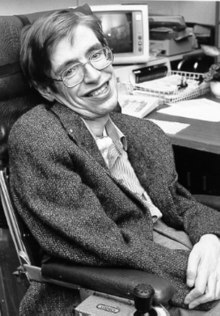

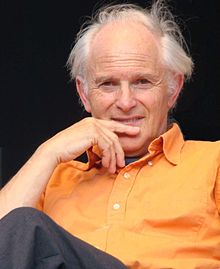


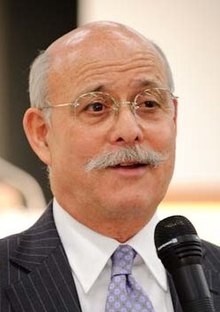
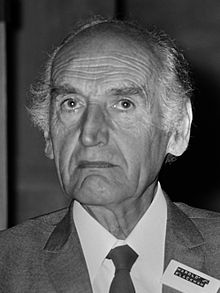


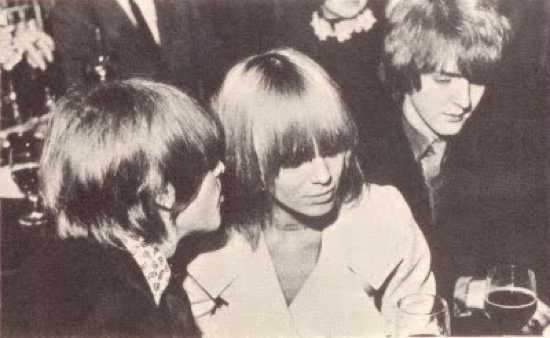


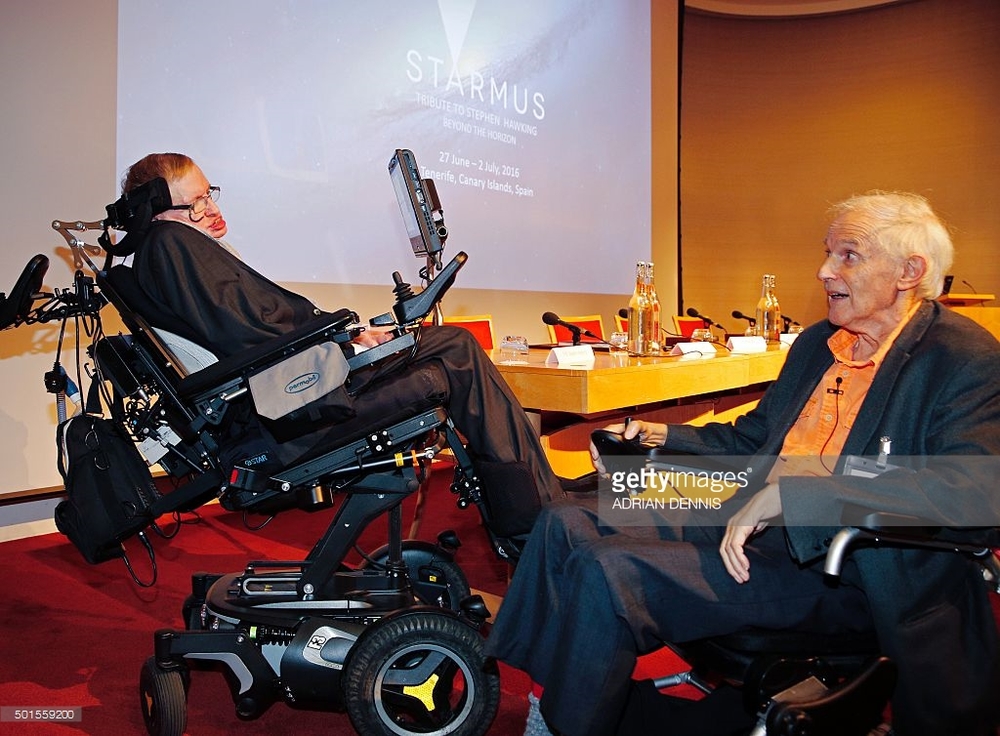
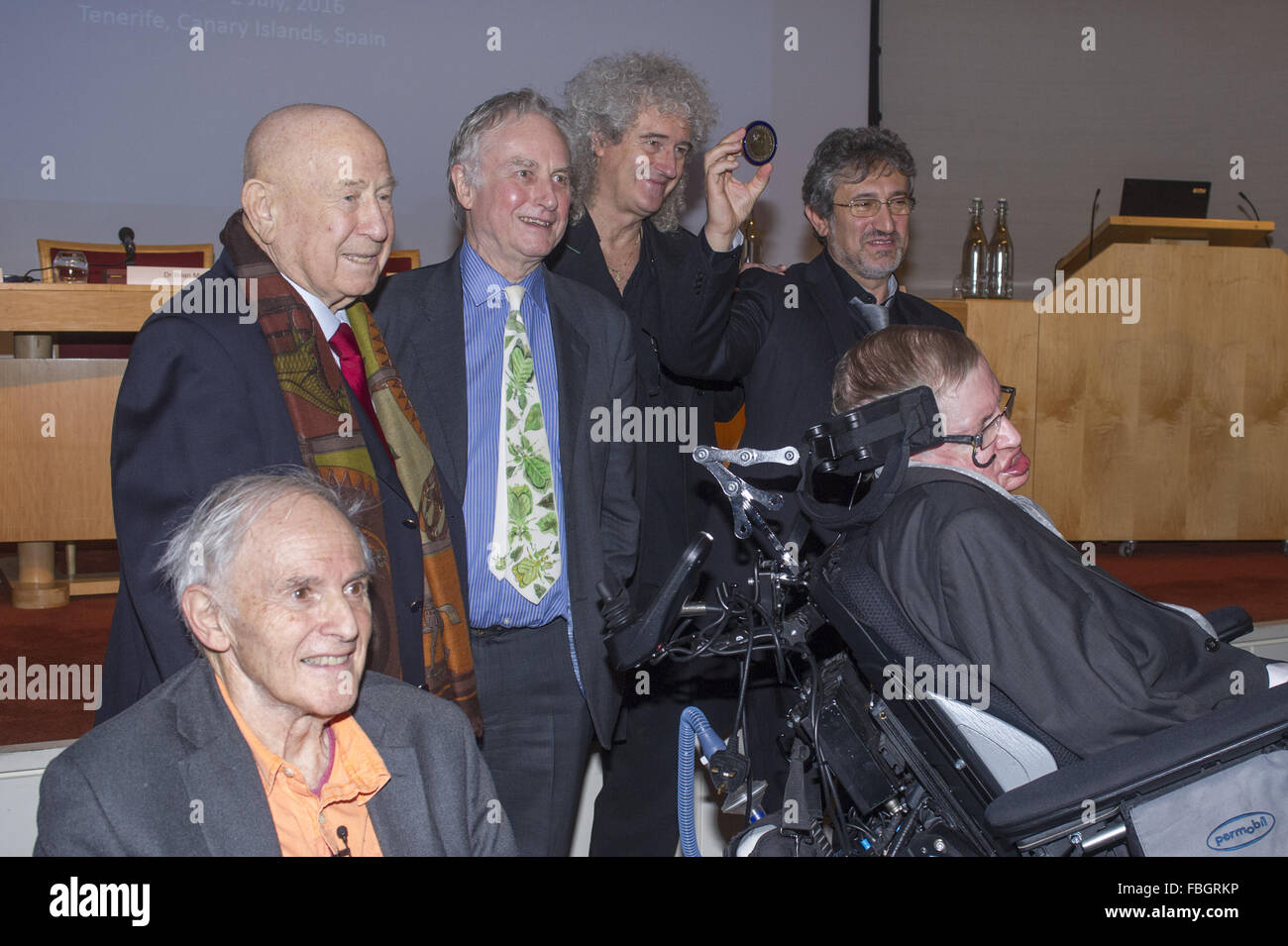



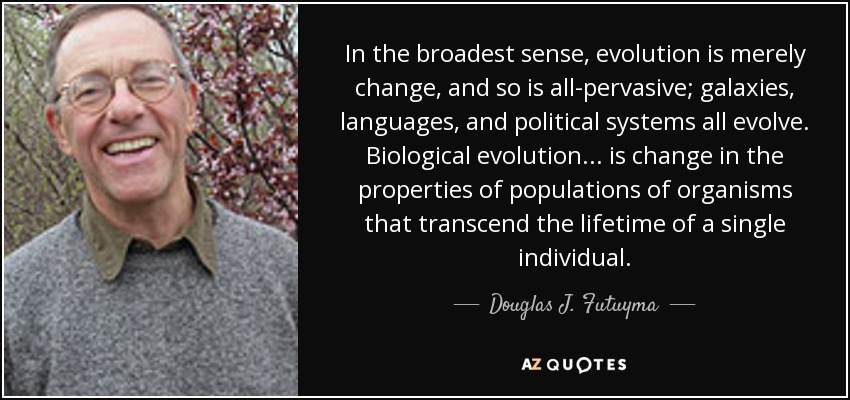

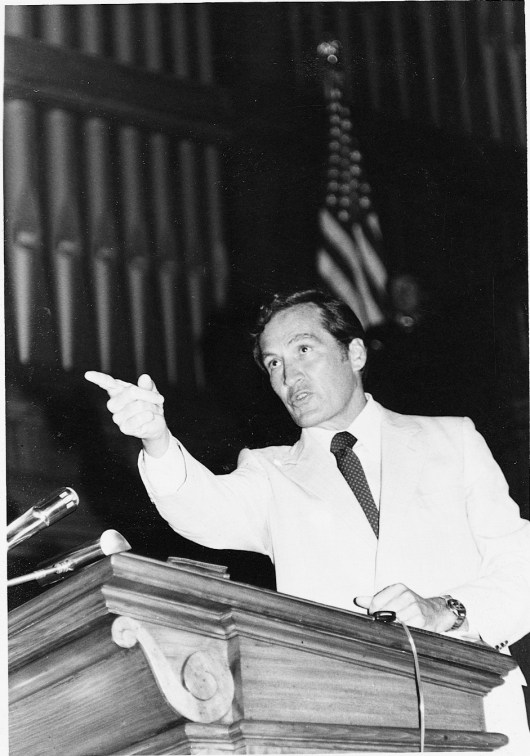

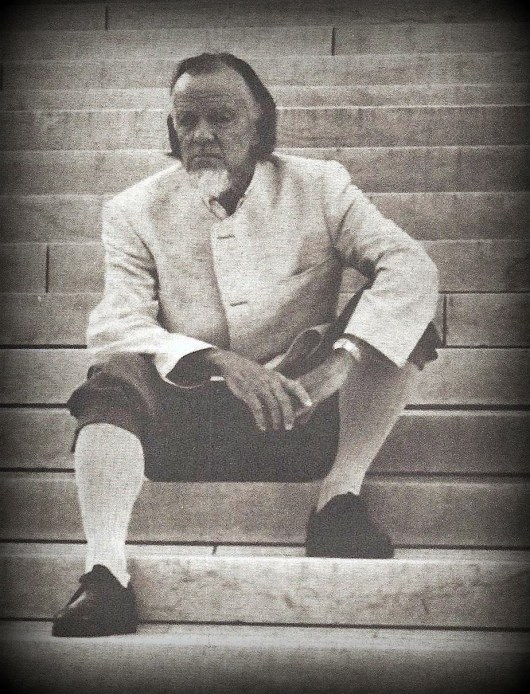


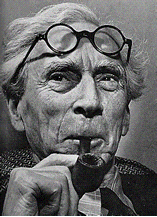



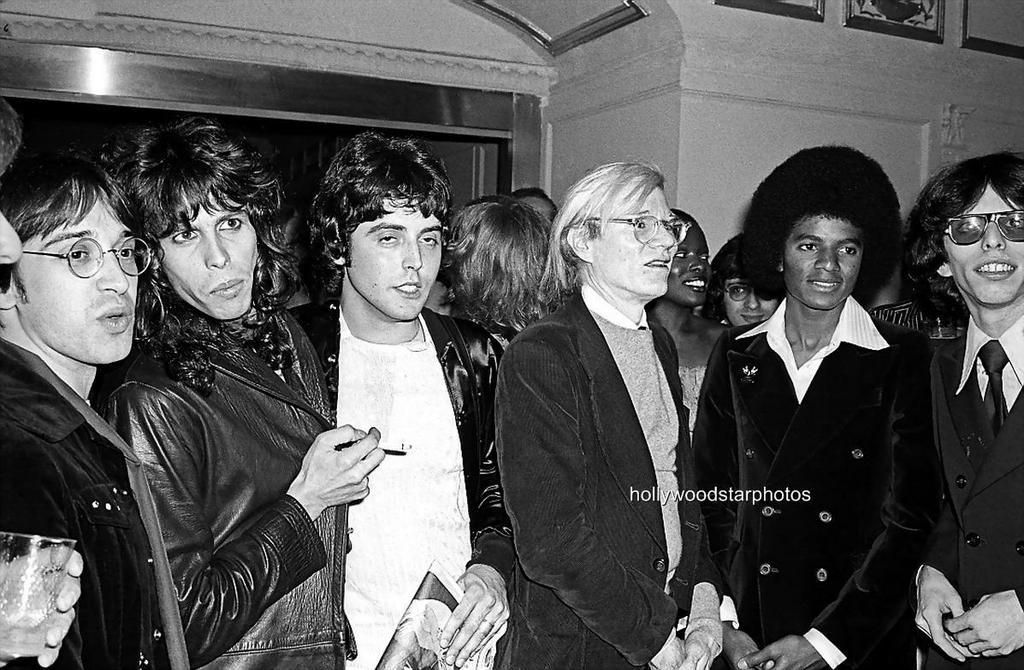





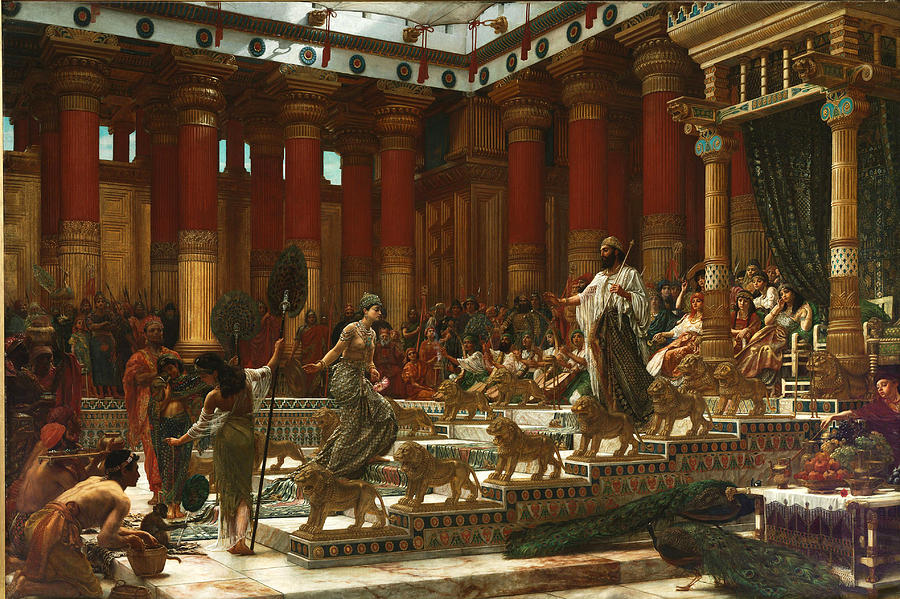


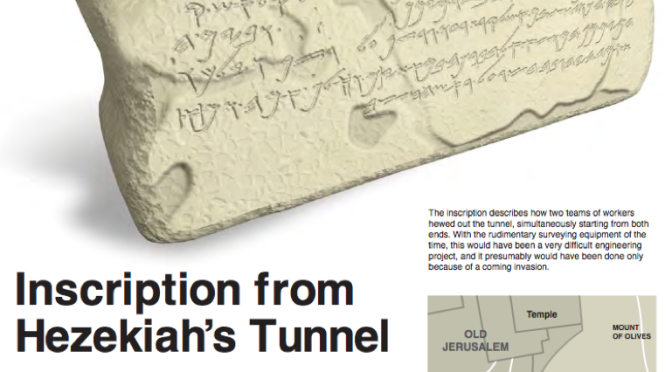

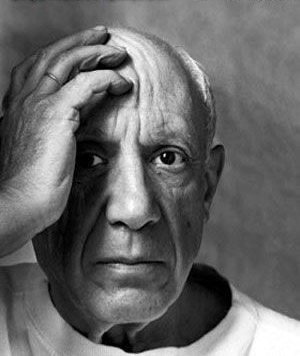
 The piece is done with crayon on paper, and took several months to complete. A friend, Pierre Daix, tells of his memory of the piece on a visit to Picasso, “[Picasso] held the drawing beside his face to show that the expression of fear was a contrivance.” Then on another visit 3 months later, Pierre recalled that the harsh colored lines were even deeper, and Pierre writes, “He did not blink. I had the sudden impression that he was staring his own death in the face, like a good Spaniard”
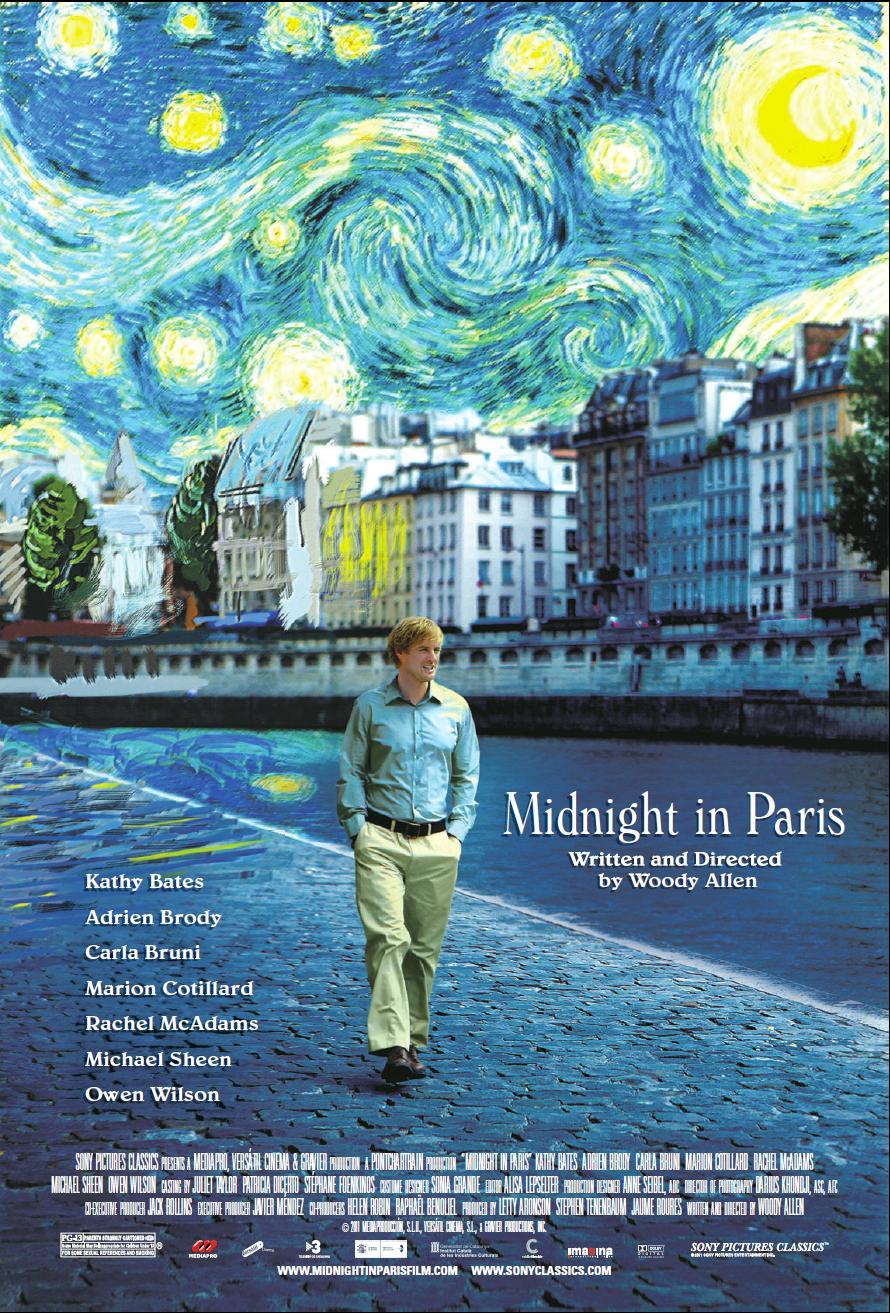

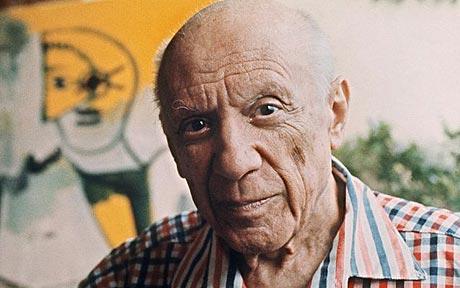
,_gouache_and_pencil_on_board,_68.5_x_96_cm,_private_collection.jpg)