icon The Daily Hatch

www.TheDailyHatch.org with Everette Hatcher

RESPONDING TO HARRY KROTO’S BRILLIANT RENOWNED ACADEMICS!! Part 151e Sir Bertrand Russell: We may define “faith” as a firm belief in something for which there is no evidence!

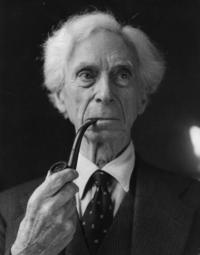
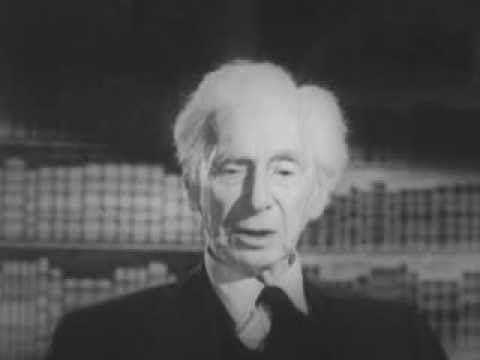
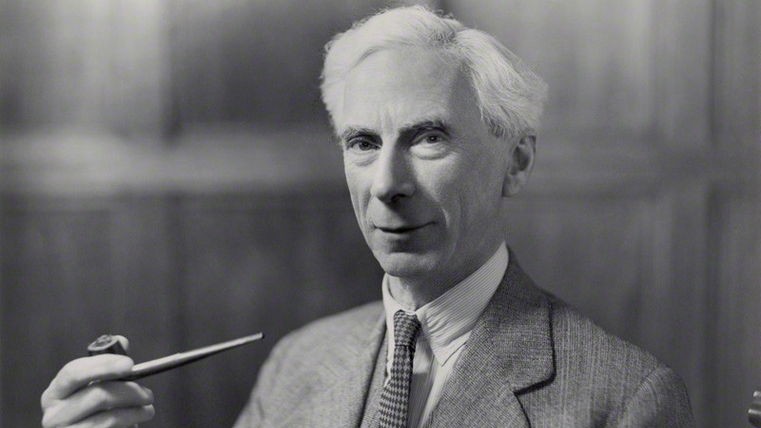
Image result for bertrand russellBertrand Russell as a child.Image result for bertrand russellWe may define “faith” as a firm belief in something for which there is no evidence! These are the words Bertrand Russell. If Russell was here today I would say to him, “Bertie read on if you want some evidence!”On November 21, 2014 I received a letter from Nobel Laureate Harry Kroto and it said:…Please click on this URL http://vimeo.com/26991975and you will hear what far smarter people than I have to say on this matter. I agree with them.Harry KrotoI have attempted to respond to all of Dr. Kroto’s friends arguments and I have posted my responses one per week for over a year now. Here are some of my earlier posts:Arif Ahmed, Sir David Attenborough, Mark Balaguer, Horace Barlow, Michael Bate, Patricia Churchland, Aaron Ciechanover, Noam Chomsky,Alan Dershowitz, Hubert Dreyfus, Bart Ehrman, Stephan Feuchtwang, David Friend,  Riccardo Giacconi, Ivar Giaever , Roy Glauber, Rebecca Goldstein, David J. Gross,  Brian Greene, Susan Greenfield, Stephen F Gudeman,  Alan Guth, Jonathan Haidt, Theodor W. Hänsch, Brian Harrison,  Hermann Hauser, Roald Hoffmann,  Bruce Hood, Herbert Huppert,  Gareth Stedman Jones, Steve Jones, Shelly Kagan, Michio Kaku,  Stuart Kauffman,  Lawrence Krauss, Harry Kroto, George Lakoff, Elizabeth Loftus,  Alan Macfarlane, Peter Millican, Marvin Minsky, Leonard Mlodinow,  Yujin Nagasawa, Alva Noe, Douglas Osheroff,  Jonathan Parry,  Saul Perlmutter, Herman Philipse,  Carolyn Porco, Robert M. Price, Lisa Randall, Lord Martin Rees,  Oliver Sacks, John Searle, Marcus du Sautoy, Simon Schaffer, J. L. Schellenberg,   Lee Silver,  Peter Singer,  Walter Sinnott-Armstrong, Ronald de Sousa, Victor Stenger, Barry Supple,   Leonard Susskind, Raymond Tallis, Neil deGrasse Tyson,  .Alexander Vilenkin, Sir John Walker, Frank Wilczek, Steven Weinberg, and  Lewis Wolpert,In  the first video below in the 14th clip in this series are his words and I will be responding to them in the next few weeks since Sir Bertrand Russell is probably the most quoted skeptic of our time, unless it was someone like Carl Sagan or Antony Flew.  

50 Renowned Academics Speaking About God (Part 1)

Another 50 Renowned Academics Speaking About God (Part 2)

A Further 50 Renowned Academics Speaking About God (Part 3)

__

Quote from Bertrand Russell:

Q: Why are you not a Christian?Russell: Because I see no evidence whatever for any of the Christian dogmas. I’ve examined all the stock arguments in favor of the existence of God, and none of them seem to me to be logically valid.Q: Do you think there’s a practical reason for having a religious belief, for many people?Russell: Well, there can’t be a practical reason for believing what isn’t true. That’s quite… at least, I rule it out as impossible. Either the thing is true, or it isn’t. If it is true, you should believe it, and if it isn’t, you shouldn’t. And if you can’t find out whether it’s true or whether it isn’t, you should suspend judgment. But you can’t… it seems to me a fundamental dishonesty and a fundamental treachery to intellectual integrity to hold a belief because you think it’s useful, and not because you think it’s true.__

Image result for francis schaeffer
300 × 335Images may be subject to copyright. Learn More

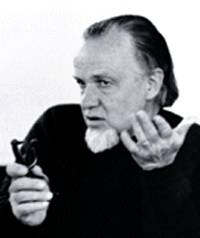
Francis Schaeffer noted concerning the IMPLICIT FAITH of Bertrand Russell:I was lecturing at the University of St. Andrews one night and someone put forth the question, “If Christianity is so clear and reasonable then why doesn’t Bertrand Russell then become a Christian? Is it because he hasn’t discovered theology?”It wasn’t a matter of studying theology that was involved but rather that he had too much faith. I was surrounded by humanists and you could hear the gasps. Bertrand Russell and faith; Isn’t this the man of reason? I pointed out that this is a man of high orthodoxy who will hold his IMPLICIT FAITH on the basis of his presuppositions no matter how many times he has to zig and zag because it doesn’t conform to the facts.You must understand what the term IMPLICIT FAITH  means. In the old Roman Catholic Church when someone who became a Roman Catholic they had to promise implicit faith. That meant that you not only had to believe everything that Roman Catholic Church taught then but also everything it would teach in the future. It seems to me this is the kind of faith that these people have in the uniformity of natural causes in a closed system and they have accepted it no matter what it leads them into. I think that these men are men of a high level of IMPLICIT FAITH in their own set of presuppositions. Paul said (in Romans Chapter One) they won’t carry it to it’s logical conclusion even though they hold a great deal of the truth and they have revolted and they have set up a series of universals in themselves which they won’t transgress no matter if they conform to the facts or not.Here below is the Romans passage that Schaeffer is referring to and verse 19 refers to what Schaeffer calls “the mannishness of man” and verse 20 refers to Schaeffer’s other point which is “the universe and it’s form.”Romans 1:18-20 Amplified Bible :18 For God’s [holy] wrath and indignation are revealed from heaven against all ungodliness and unrighteousness of men, who in their wickedness repress and hinder the truth and make it inoperative. 19 For that which is known about God is evident to them and made plain in their inner consciousness, because God [Himself] has shown it to them. 20 For ever since the creation of the world His invisible nature and attributes, that is, His eternal power and divinity, have been made intelligible and clearly discernible in and through the things that have been made (His handiworks). So [men] are without excuse [altogether without any defense or justification].We can actually see the two points makes playing themselves out in Bertrand Russell’s own life.Image result for bertrand russell[From a letter dated August 11, 1918 to Miss Rinder when Russell was 46]It is quite true what you say, that you have never expressed yourself—but who has, that has anything to express? The things one says are all unsuccessful attempts to say something else—something that perhaps by its very nature cannot be said. I know that I have struggled all my life to say something that I never shall learn how to say. And it is the same with you. It is so with all who spend their lives in the quest of something elusive, and yet omnipresent, and at once subtle and infinite. One seeks it in music, and the sea, and sunsets; at times I have seemed very near it in crowds when I have been feeling strongly what they were feeling; one seeks it in love above all. But if one lets oneself imagine one has found it, some cruel irony is sure to come and show one that it is not really found.
The outcome is that one is a ghost, floating through the world without any real contact. Even when one feels nearest to other people, something in one seems obstinately to belong to God and to refuse to enter into any earthly communion—at least that is how I should express it if I thought there was a God. It is odd isn’t it? I care passionately for this world, and many things and people in it, and yet…what is it all? There must be something more important, one feels, though I don’t believe there is. I am haunted—some ghost, from some extra-mundane region, seems always trying to tell me something that I am to repeat to the world, but I cannot understand the message. But it is from listening to the ghost that one comes to feel oneself a ghost. I feel I shall find the truth on my deathbed and be surrounded by people too stupid to understand—fussing about medicines instead of searching for wisdom. Love and imagination mingled; that seems the main thing so far.During Bertrand Russell’s lifetime (1872-1970) there lived another scholar who also doubted that the Bible was true and his name was Sir William Mitchell Ramsay (1851-1939. Ramsay taught from 1885 to until his retirement in 1911 but he continued writing books.Wikipedia notes:In 1880 Ramsay received an Oxford studentship for travel and research in Greece. At Smyrna, he met Sir C. W. Wilson, then British consul-general in Anatolia, who advised him on inland areas suitable for exploration. Ramsay and Wilson made two long journeys during 1881-1882.He traveled widely in Asia Minor and rapidly became the recognized authority on all matters relating to the districts associated with St Paul’s missionary journeys and on Christianity in the early Roman Empire. Greece and Turkey remained the focus of Ramsay’s research for the remainder of his academic career. In 1883, he discovered the world’s oldest complete piece of music, the Seikilos epitaph. He was known for his expertise in the historic geographyand topography of Asia Minor and of its political, social, cultural, and religious history. He was Fellow of Exeter College, Oxford, in 1882.From 1885 to 1886 Ramsay held the newly created Lincoln and Merton professorship of classical archaeology and art at Oxford and became a fellow of Lincoln College (honorary fellow 1898). In 1886 Ramsay was appointed Regius Professor of Humanity at the University of Aberdeen. He remained affiliated with Aberdeen until his retirement in 1911. What information did William Ramsay find out about the accuracy of the Bible? Francis Schaeffer discusses Ramsay’s life below:

TRUTH AND HISTORY (chapter 5 of WHATEVER HAPPENED TO THE HUMAN RACE?, under footnotes #97 and #98)

A common assumption among liberal scholars is that because the Gospels are theologically motivated writings–which they are–they cannot also be historically accurate. In other words, because Luke, say (when he wrote the Book of Luke and the Book of Acts), was convinced of the deity of Christ, this influenced his work to the point where it ceased to be reliable as a historical account. The assumption that a writing cannot be both historical and theological is false.The experience of the famous classical archaeologist Sir William Ramsay illustrates this well. When he began his pioneer work of exploration in Asia Minor, he accepted the view then current among the Tubingen scholars of his day that the Book of Acts was written long after the events in Paul’s life and was therefore historically inaccurate. However, his travels and discoveries increasingly forced upon his mind a totally different picture, and he became convinced that Acts was minutely accurate in many details which could be checked.What is even more interesting is the way “liberal” modern scholars today deal with Ramsay’s discoveries and others like them. In the NEW TESTAMENT : THE HISTORY OF THE INVESTIGATION OF ITS PROBLEMS, the German scholar Werner G. Kummel made no reference at all to Ramsay. This provoked a protest from British and American scholars, whereupon in a subsequent edition Kummel responded. His response was revealing. He made it clear that it was his deliberate intention to leave Ramsay out of his work, since “Ramsay’s apologetic analysis of archaeology [in other words, relating it to the New Testament in a positive way] signified no methodologically essential advance for New Testament research.” This is a quite amazing assertion. Statements like these reveal the philosophic assumptions involved in much liberal scholarship.A modern classical scholar, A.N.Sherwin-White, says about the Book of Acts: “For Acts the confirmation of historicity is overwhelming…Any attempt to reject its basic historicity, even in matters of detail, must not appear absurd. Roman historians have long taken this for granted.”When we consider the pages of the New Testament, therefore, we must remember what it is we are looking at. The New Testament writers themselves make abundantly clear that they are giving an account of objectively true events.(Under footnote #98)Acts is a fairly full account of Paul’s journeys, starting in Pisidian Antioch and ending in Rome itself. The record is quite evidently that of an eyewitness of the events, in part at least. Throughout, however, it is the report of a meticulous historian. The narrative in the Book of Acts takes us back behind the missionary journeys to Paul’s famous conversion on the Damascus Road, and back further through the Day of Pentecost to the time when Jesus finally left His disciples and ascended to be with the Father.But we must understand that the story begins earlier still, for Acts is quite explicitly the second part of a continuous narrative by the same author, Luke, which reaches back to the birth of Jesus.Luke 2:1-7 New American Standard Bible (NASB)2 Now in those days a decree went out from Caesar Augustus, that a census be taken of all [a]the inhabited earth. 2 [b]This was the first census taken while[c]Quirinius was governor of Syria. 3 And everyone was on his way to register for the census, each to his own city. 4 Joseph also went up from Galilee, from the city of Nazareth, to Judea, to the city of David which is called Bethlehem, because he was of the house and family of David, 5 in order to register along with Mary, who was engaged to him, and was with child. 6 While they were there, the days were completed for her to give birth. 7 And she gave birth to her firstborn son; and she wrapped Him in cloths, and laid Him in a [d]manger, because there was no room for them in the inn.In the opening sentences of his Gospel, Luke states his reason for writing:Luke 1:1-4 New American Standard Bible (NASB)1 Inasmuch as many have undertaken to compile an account of the things[a]accomplished among us, 2 just as they were handed down to us by those whofrom the beginning [b]were eyewitnesses and [c]servants of the [d]word, 3 it seemed fitting for me as well, having [e]investigated everything carefully from the beginning, to write it out for you in consecutive order, most excellentTheophilus; 4 so that you may know the exact truth about the things you have been [f]taught.In Luke and Acts, therefore, we have something which purports to be an adequate history, something which Theophilus (or anyone) can rely on as its pages are read. This is not the language of “myths and fables,” and archaeological discoveries serve only to confirm this.For example, it is now known that Luke’s references to the titles of officials encountered along the way are uniformly accurate. This was no mean achievement in those days, for they varied from place to place and from time to time in the same place. They were proconsuls in Corinth and Cyprus, asiarchs at Ephesus, politarches at Thessalonica, and protos or “first man” in Malta. Back in Palestine, Luke was careful to give Herod Antipas the correct title of tetrarch of Galilee. And so one. The details are precise.The mention of Pontius Pilate as Roman governor of Judea has been confirmed recently by an inscription discovered at Caesarea, which was the Roman capital of that part of the Roman Empire. Although Pilate’s existence has been well known for the past 2000 years by those who have read the Bible, now his governorship has been clearly attested outside the Bible.Image result for bertrand russell__

ARCHAEOLOGICAL DISCOVERIES THAT DEBUNKED FALSE ALLEGATIONS AGAINST THE BIBLE

1. Tel Dan Stele (Discovery: 1993-1994)

http://www.biblicalarchaeology.org/daily/ancient-cultures/ancient-israel/meet-the-house-ofdavid-at-the-met/
13-by-16 inch c. 830 BC rock
What is clear is that the Aram-Damascene king Hazael brags of having killed 70 kings, including
of Israel and of the “House of David” (The round number, scholars agree, is probably
exaggerated, although Hazael did have a reputation for being ruthless and successful).
That the nation of Judah is referred to as the “House of David” is significant because it is the
only archaeological evidence of a historical David—a belief that had been hotly debated
prior to this discovery—thus substantiating part of the Biblical narrative.
1 Kings 19:15 (Hazael); 2 Kings 8:13 (Hazael)

2. Lysanias tetrarch of Abilene (Discovery: 1737)

http://formerthings.com/lysanias.htm
Archeologists found an inscription of the time of Jesus concerning Lysanias who was tetrarch of
Abila
Scholars at one time were skeptical of Luke being accurate in referring to Lysanius being
the tetrarch of Abilene around A. D. 27 when John the Baptist began his ministry. They could
only find one Lysanius in Roman records and he was the ruler of Chalcia fifty years
before the one Luke mentions.
However, the credibility of Luke’s gospel record continues to be reinforced by archeological
discoveries. An inscription was found on a temple from the time of Tiberius (the Roman emperor
from 14 – 37 AD), which named Lysanias as the Tetrach of Abila near Damascus, just as Luke
has written.
The temple inscription reads:
“For the salvation of the August lords and of all their household, Nymphaeus, freedman of Eagle
Lysanias tetrarch established this street and other things.”
The reference to August lords is a joint title given only to the emperor Tiberius (son of Augustus)
and his mother Livia (widow of Augustus). This reference establishes the date of the inscription
to between A.D. 14 and 29. The year 14 was the year of Tiberius’ accession and the year 29
was the year of Livia’s death.

3. Ebla archive (Discovery: 1974-1975)

http://www.christiananswers.net/q-abr/abr-a008.html
Documents written on clay tablets from around 2300 B.C. demonstrate that personal and place
names in the Patriarchal accounts are genuine. The name “Canaan” was in use in Ebla, a name
critics once said was not used at that time and was used incorrectly in the early chapters of the
Bible. The word tehom (“the deep”) in Genesis 1:2 was said to be a late word
demonstrating the late writing of the creation story. “Tehom” was part of the vocabulary at
Ebla, in use some 800 years before Moses.

4. Hittites (City of Hattusa discovered 20th century)

http://www.ancient-wisdom.co.uk/turkeyhattusa.htm
The Hittites were once thought to be a Biblical legend, until their capital and records were
discovered at Bogazkoy, Turkey.
The re-discovery of the city of Hattusa and a script referring to the ‘Great King’ of the Hittites has
led to confirmation that they were the fourth, great civilisation of ancient times.5. King Sargon (Discovery: 19th-20th century)http://www.cemml.colostate.edu/cultural/09476/iraq05-042.html
It was once claimed there was no Assyrian king named Sargon as recorded in Isaiah 20:1,
because this name was not known in any other record. Then, Sargon’s palace was discovered
in Khorsabad, Iraq. The very event mentioned in Isaiah 20, his capture of Ashdod, was recorded
on the palace walls. What is more, fragments of a stela memorializing the victory were found at
Ashdod itself.6. Pool of Siloam (Discovered 2004)http://creation.com/focus-281#siloam
‘Scholars have said that there wasn’t a pool of Siloam and that John was using a
religious conceit’ (to illustrate a point) said James H. Charlesworth of Princeton Theological
Seminary. ‘Now we have found the pool of Siloam … exactly where John said it was.’ A Gospel
that was thought to be ‘pure theology is now shown to be grounded in history’, he said.

Image result for sir william ramsay archaeologist
320 × 144Images may be subject to copyright. Learn More

7. Sir William Mitchell Ramsay, Historical Accuracy of Luke-Acts (19th-20th century)

https://books.google.com/books?id=NC9VAAAAMAAJ&printsec=frontcover&source=gbs_ge_su
mmary_r&cad=0#v=onepage&q&f=false
http://www.wayoflife.org/database/bibles_proof.html
William Ramsay, a Scottish archaeologist, went to Asia Minor with the expressed purpose of
proving the BIBLE was historically inaccurate. As he painstakingly poured over the ancient
artifacts and details, to his amazement he found that the BIBLE was accurate down to the
tiniest detail. The evidence was so convincing that Sir Ramsay himself became a Christian and
a great Biblical scholar.
“The more I have studied the narrative of the Acts, and the more I have learned year after year
about Graeco-Roman society and thoughts and fashions, and organization in those provinces,
the more I admire and the better I understand. I set out to look for truth on the borderland where
Greece and Asia meet, and found it here. You may press the words of Luke in a degree beyond
any other historian’s, and they stand the keenest scrutiny and the hardest treatment, provided
always that the critic knows the subject and does not go beyond the limits of science and of
justice.”
MORE ARCHAEOLOGICAL DISCOVERIES THAT
CONFIRM THE HISTORICAL RELIABILITY OF THE
BIBLEImage result for sir william ramsay archaeologist

8. Nebo-Sarsekim – chief officer of Nebuchadnezzar (Discovery: 19th century)

http://www.biblearchaeology.org/post/2008/04/28/Nebo-Sarsekim-Found-in-BabylonianTablet.aspx
http://creation.com/new-archaeological-find-affirms-old-testament-historicity
Dr Irving Finkel, a British Museum expert, said, ‘This is a fantastic discovery, a world-class find.
If Nebo-Sarsekim existed, which other lesser figures in the Old Testament existed? A
throwaway detail in the Old Testament turns out to be accurate and true. I think that it means
that the whole of the narrative [of Jeremiah] takes on a new kind of power.’
Michael Jursa, a visiting professor from Vienna, made the discovery. The name on the tablet,
Nabu-sharrussu-ukin, seemed familiar and he recalled that Jeremiah 39:3 mentions ‘NeboSarsekim
a chief officer’ of Nebuchadnezzar who came into Jerusalem when Jerusalem was
besieged and conquered.

9. Sennacherib’s Campaign Against Judah

http://www.truth-that-matters.com/assyria.htm
http://www.bible-history.com/empires/prism.html
Campaign of the Assyrian king Sennacherib against Judah (2 Kings 18:13-16), as recorded on
the Taylor Prism
– “Because Hezekiah, king of Judah, would not submit to my yoke, I came up against him,
and by force of arms and by the might of my power I took 46 of his strong fenced cities;
and of the smaller towns which were scattered about, I took and plundered a countless
number. From these places I took and carried off 200,156 persons, old and young, male
and female, together with horses and mules, asses and camels, oxen and sheep, a
countless multitude; and Hezekiah himself I shut up in Jerusalem, his capital city, like a
bird in a cage, building towers round the city to hem him in, and raising banks of earth
against the gates, so as to prevent escape… Then upon Hezekiah there fell the fear of
the power of my arms, and he sent out to me the chiefs and the elders of Jerusalem with
30 talents of gold and 300 talents of silver, and diverse treasures, a rich and immense
booty… All these things were brought to me at Nineveh, the seat of my government.”
– As recorded by Josephus, Josephus’ Jewish Antiquities, book ten, verses 21-23 relate
an account by the Babylonian historian Berossus, in which Berossus claims a disease
befell an Assyrian army led by the Rabshakeh, and one hundred and eighty-five
thousand men were lost. Earlier in the book, the account of Herodotus is also
mentioned.
The differences in these accounts from the Biblical account is normal, considering the fact that
the Assyrian/Babylonian historians would try to paint a positive picture of this story, instead of
choosing to recognize the divine intrusion in favor of their enemies (Kingdom of Judah).
WHYRelated posts:

RESPONDING TO HARRY KROTO’S BRILLIANT RENOWNED ACADEMICS!! Pausing to take a look at the life of HARRY KROTO Part C (Kroto’s admiration of Bertrand Russell examined)

June 21, 2016 – 1:12 am

Today we look at the 3rd letter in the Kroto correspondence and his admiration of Bertrand Russell. (Below The Nobel chemistry laureates Harold Kroto, Robert Curl and Richard Smalley) It is with sadness that I write this post having learned of the death of Sir Harold Kroto on April 30, 2016 at the age of […]

By Everette Hatcher III | Posted in Atheists Confronted | Tagged .Alexander Vilenkin, Aaron Ciechanover, Alan Dershowitz, Alan Guth, Alan Macfarlane, Alison Richard, Alva Noe, Arif Ahmed, Barry Supple, Bart Ehrman, Brian Greene, Brian Harrison, Bruce Hood, C.J. van Rijsbergen, Carolyn Porco, David Friend, David J. Gross, Douglas Osheroff, Elizabeth Loftus, Frank Wilczek, Gareth Stedman Jones, George Lakoff, Haroon Ahmed, Harry Kroto, Herbert Huppert, Herman Philipse, Hermann Hauser, Horace Barlow, Hubert Dreyfus, Ivar Giaever, J. L. Schellenberg, John Searle, John Sulston, Jonathan Haidt, Jonathan Parry, Lawrence Krauss, Lee Silver, Leonard Mlodinow, Leonard Susskind, Lewis Wolpert, Lisa Randall, Lord Martin Rees, Marcus du Sautoy, Mark Balaguer, Marvin Minsky, Michael Bate, Michio Kaku, Neil deGrasse Tyson, Noam Chomsky, Oliver Sacks, Patricia Churchland, Peter Millican, Peter Singer, Raymond Tallis, Rebecca Goldstein, Riccardo Giacconi, Roald Hoffmann, Robert M. Price, Ronald de Sousa, Roy Glauber, Saul Perlmutter, Shelly Kagan, Simon Schaffer, Sir David Attenborough, Sir John Walker, Sir Patrick Bateson, Stephan Feuchtwang, Stephen F Gudeman, Steve Jones, Steven Weinberg, Stuart Kauffman, Susan Greenfield, Theodor W. Hänsch, Victor Stenger, Walter Sinnott-Armstrong, Yujin Nagasawa | Edit | Comments (0)

RESPONDING TO HARRY KROTO’S BRILLIANT RENOWNED ACADEMICS!! Part 52 The views of Hegel and Bertrand Russell influenced Gareth Stedman Jones of Cambridge!!

November 17, 2015 – 5:37 am

On November 21, 2014 I received a letter from Nobel Laureate Harry Kroto and it said: …Please click on this URL http://vimeo.com/26991975 and you will hear what far smarter people than I have to say on this matter. I agree with them. Harry Kroto _________________ Below you have picture of Dr. Harry Kroto:   Gareth Stedman […]

By Everette Hatcher III | Posted in Atheists Confronted | Tagged (Paul Kurtz (1925-2012), Alan Macfarlane (1941-), Albert Ellis (1913-2007), Archie J. Bahm (1907-1996), Aron S “Gil” Martin ( 1910-1997), Barbara Marie Tabler (1915-1996), Bette Chambers (1930-), Brian Charlesworth (1945-), Carl Sagan (1934-1996), Christopher C. French (1956-) Walter R. Rowe, Edward O. WIlson (1929-), Ernest Mayr (1904-2005), Francisco J. Ayala (1934-) Elliott Sober (1948-), Geoff Harcourt (1931-), George Wald (1906-1997), Gerald Holton (1922-), Glenn Branch, Gordon Stein (1941-1996), H. J. Eysenck (1916-1997), Harry Kroto (1939-), Herbert Kroemer (1928-), James Terry McCollum (1936-), John Hospers (1918-2011), John J. Shea (1969-), John R. Cole (1942-), Kevin Padian (1951-), Lewis Wolpert (1929), Lloyd Morain (1917-2010), Martin Rees (1942-), Marty E. Martin (1928-), Mary Morain (1911-1999), Matt Cartmill (1943-), Matthew I. Spetter (1921-2012), Michael A. Crawford (1938-), Michael Martin (1932-)., Milton Fingerman (1928-), Milton Friedman (1912-2006), Nicolaas Bloembergen (1920-), Paul Quincey, Ray T. Cragun (1976-)., Renate Vambery (1916-2005), Richard Rubenstein (1924-), Roald Hoffmann (1937-), Robert L. Erdmann (1929-2006), Robert Shapiro (1935-2011), Sol Gordon (1923-2008), Susan Blackmore (1951-), Thomas Gilovich (1954-), Thomas H. Jukes (1906-1999), Warren Allen Smith (1921-), Wolf Roder |Edit | Comments (0)

WOODY WEDNESDAY John Piippo makes the case that Bertrand Russell would have loved Woody Allen because they both were atheists who don’t deny the ramifications of atheism!!!

October 28, 2015 – 12:00 am

Top 10 Woody Allen Movies __________ John Piippo makes the case that Bertrand Russell would have loved Woody Allen because they both were  atheists who don’t deny the ramifications of atheism!!! Monday, August 06, 2012 (More On) Woody Allen’s Atheism As I wrote in a previous post, I like Woody Allen. I have long admired his […]

By Everette Hatcher III | Posted in Atheists Confronted, Woody Allen | Edit | Comments (0)

John Piippo makes the case that Bertrand Russell would have loved Woody Allen because they both were two atheists who don’t deny the ramifications of atheism!!!

September 24, 2015 – 12:55 am

______ Top 10 Woody Allen Movies PBS American Masters – Woody Allen A Documentary 01 PBS American Masters – Woody Allen A Documentary 02 __________ John Piippo makes the case that Bertrand Russell would have loved Woody Allen because they both were two atheists who don’t deny the ramifications of atheism!!! Monday, August 06, 2012 […]

By Everette Hatcher III | Posted in Woody Allen | Edit | Comments (0)

Bertrand Russell v. Frederick Copleston debate transcript (Part 4)

January 7, 2013 – 4:55 am

THE MORAL ARGUMENT     BERTRAND RUSSELL But aren’t you now saying in effect, I mean by God whatever is good or the sum total of what is good — the system of what is good, and, therefore, when a young man loves anything that is good he is loving God. Is that what you’re […]

By Everette Hatcher III | Posted in Current Events | Edit | Comments (0)

Bertrand Russell v. Frederick Copleston debate transcript (Part 3)

January 5, 2013 – 4:52 am

Great debate Fr. Frederick C. Copleston vs Bertrand Russell – Part 1 Uploaded by riversonthemoon on Jul 15, 2009 BBC Radio Third Programme Recording January 28, 1948. BBC Recording number T7324W. This is an excerpt from the full broadcast from cassette tape A303/5 Open University Course, Problems of Philosophy Units 7-8. Older than 50 years, […]

By Everette Hatcher III | Posted in Atheists Confronted, Current Events | Edit | Comments (0)

Bertrand Russell v. Frederick Copleston debate transcript and audio (Part 2)

January 3, 2013 – 4:48 am

Uploaded by riversonthemoon on Jul 15, 2009 BBC Radio Third Programme Recording January 28, 1948. BBC Recording number T7324W. This is an excerpt from the full broadcast from cassette tape A303/5 Open University Course, Problems of Philosophy Units 7-8. Older than 50 years, out of UK/BBC copyright. Pardon the hissy audio. It was recorded 51 […]

By Everette Hatcher III | Posted in Atheists Confronted, Current Events | Edit | Comments (0)

Bertrand Russell v. Frederick Copleston debate transcript and audio (Part 1)

January 1, 2013 – 4:43 am

Fr. Frederick C. Copleston vs Bertrand Russell – Part 1 Uploaded by riversonthemoon on Jul 15, 2009 BBC Radio Third Programme Recording January 28, 1948. BBC Recording number T7324W. This is an excerpt from the full broadcast from cassette tape A303/5 Open University Course, Problems of Philosophy Units 7-8. Older than 50 years, out of […]

By Everette Hatcher III | Posted in Atheists Confronted, Current Events | Edit | Comments (0)

Bertrand Russell v. Frederick Copleston debate transcript (Part 4)

June 21, 2012 – 7:12 am

THE MORAL ARGUMENT     BERTRAND RUSSELL But aren’t you now saying in effect, I mean by God whatever is good or the sum total of what is good — the system of what is good, and, therefore, when a young man loves anything that is good he is loving God. Is that what you’re […]

By Everette Hatcher III | Posted in Atheists Confronted, Current Events | Edit | Comments (0)

Bertrand Russell v. Frederick Copleston debate transcript (Part 3)

June 20, 2012 – 6:48 am

Fr. Frederick C. Copleston vs Bertrand Russell – Part 1 Uploaded by riversonthemoon on Jul 15, 2009 BBC Radio Third Programme Recording January 28, 1948. BBC Recording number T7324W. This is an excerpt from the full broadcast from cassette tape A303/5 Open University Course, Problems of Philosophy Units 7-8. Older than 50 years, out of […]

By Everette Hatcher III | Posted in Atheists Confronted, Current Events | Edit | Comments (0)
March 5, 2019 – 1:41 am Categories: Francis Schaeffer | Post a comment

Tagged .Alexander Vilenkin, Aaron Ciechanover, Alan Dershowitz, Alan Guth, Alan Macfarlane, Alva Noe, Arif Ahmed, Barry Supple, Bart Ehrman, Brian Greene, Brian Harrison, Bruce Hood, Carolyn Porco, David Friend, David J. Gross, Douglas Osheroff, Elizabeth Loftus, Frank Wilczek, Gareth Stedman Jones, George Lakoff, Harry Kroto, Herbert Huppert, Herman Philipse, Hermann Hauser, Horace Barlow, Hubert Dreyfus, Ivar Giaever, J. L. Schellenberg, John Searle, Jonathan Haidt, Jonathan Parry, Lawrence Krauss, Lee Silver, Leonard Mlodinow, Leonard Susskind, Lisa Randall, Lord Martin Rees, Marcus du Sautoy, Mark Balaguer, Marvin Minsky, Michael Bate, Michio Kaku, Neil deGrasse Tyson, Noam Chomsky, Oliver Sacks, Patricia Churchland, Peter Millican, Peter Singer, Raymond Tallis, Rebecca Goldstein, Riccardo Giacconi, Roald Hoffmann, Robert M. Price, Ronald de Sousa, Roy Glauber, Saul Perlmutter, Shelly Kagan, Simon Schaffer, Sir David Attenborough, Sir John Walker, Stephan Feuchtwang, Stephen F Gudeman, Steve Jones, Steven Weinberg, Stuart Kauffman, Susan Greenfield, Theodor W. Hänsch, Victor Stenger, Walter Sinnott-Armstrong, Yujin Nagasawa |

Music Monday My letter to Mick Jagger

________

____

____

Cxx

x

x

x

x

Pablo Picasso: Midnight in Paris

___

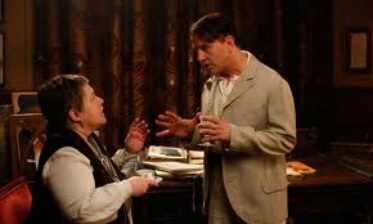
Gertrude Stein (Kathy Bates) and Marical e Fonzo Bo (Picasso) in ‘Midnight in Paris’.

(In the movie MIDNIGHT IN PARIS you have the may character Gil Pender very interested in Picasso’s mistress Adriana,  played by Marion Cotillard. PICTURED ABOVE.)

Francis Schaeffer pictured below:

______

I have read over 40 autobiographies by ROCKERS and it seems to me that almost every one of those books can be reduced to 4 points. Once fame hit me then I became hooked on drugs. Next I became an alcoholic (or may have been hooked on both at same time). Thirdly, I chased the skirts and thought happiness would be found through more sex with more women. Finally, in my old age I have found being faithful to my wife and getting over addictions has led to happiness like I never knew before. (Almost every autobiography I have read from rockers has these points in it although Steven Tyler is still chasing the skirts!!). Now that I think about it Mick may be falling into the same trap as Steven Tyler!!!

Mick did not write an autobiography but I read the biography by Philip Norman!!!

February 20,  2017

Sir M.P. Jagger

London, UK 

Dear Mick,

I really enjoyed reading the book “Mick Jagger” by  Philip Norman, and I wanted to comment on something you said in that book:

“I only did it (got married) for something to do… I’ve never been madly, deeply in love with anyone. I’m not an emotional person.

  I want to recommend the Woody Allen movie MIDNIGHT IN PARIS to you  because I think you would find Picasso’s character in the story very intriguing, and I wanted to compare Picasso to King Solomon and to you in this letter since they both tried to get sexual satisfaction by the sheer volume of their sexual conquests.  According to the Bible Solomon actually slept with  over 1000 women ( Eccl 2:8, I Kings 11:3).

Woody Allen made it known that his pessimistic view on life started at a young age when he learned about man’s mortality. But in the Bible Solomon’s first book was the SONG OF SOLOMON which was written in his early 20’s and is very upbeat. The Book of PROVERBS was written probably when he was in the middle of his life. Finally,  the Book of ECCLESIASTES was written at the end of his life and is extremely pessimistic!

Concerning the Book of Ecclesiastes Francis Schaeffer noted: 

Solomon was searching for a meaning in the midst of the details of life. His struggle was to find the meaning of life. Not just plans in life. Anybody can find plans in life. A child can fill up his time with plans of building tomorrow’s sand castle when today’s has been washed away. There is  a difference between finding plans in life and purpose in life. Humanism since the Renaissance and onward has never found it and it has never found it. Modern man has not found it and it has always got worse and darker in a very real way.

Ecclesiastes is the only pessimistic book in the Bible and that is because of the place where Solomon limits himself. He limits himself to the question of human life, life under the sun between birth and death and the answers this would give.

Ecclesiastes 2:4-11

4 I enlarged my works: I built houses for myself, I planted vineyards for myself; 5 I made gardens and parks for myself and I planted in them all kinds of fruit trees; 6 I made ponds of water for myself from which to irrigate a forest of growing trees. 7 I bought male and female slaves and I had homeborn slaves. Also I possessed flocks and herds larger than all who preceded me in Jerusalem. 8 Also, I collected for myself silver and gold and the treasure of kings and provinces. I provided for myself MALE AND  FEMALE SINGERS AND THE PLEASURES OF MEN–MANY CONCUBINES.

9 Then I became great and increased more than all who preceded me in Jerusalem. My wisdom also stood by me. 10 All that my eyes desired I did not refuse them. I did not withhold my heart from any pleasure…

If one would flee to alcohol, then surely one may choose sexual pursuits to flee to. Solomon looks in this area too.

Ecclesiastes 7:25-28

25 I directed my mind to know, to investigate and to seek wisdom and an explanation, and to know the evil of folly and the foolishness of madness. 26 And I discovered more bitter than death the woman whose heart is snares and nets, whose hands are chains. One who is pleasing to God will escape from her, but the sinner will be captured by her.

27 “Behold, I have discovered this,” says the Preacher, “adding one thing to another to find an explanation, 28 I have looked for other answers but have found none. I found one man in a thousand that I could respect, but not one woman. (Good News Translation on verse 28)

One can understand both Solomon’s expertness in this field and his bitterness.

I Kings 11:1-3 (New American Standard Bible) 

11 Now King Solomon loved many foreign women along with the daughter of Pharaoh: Moabite, Ammonite, Edomite, Sidonian, and Hittite women, 2 from the nations concerning which the Lord had said to the sons of Israel, “You shall not associate with them, nor shall they associate with you, for they will surely turn your heart away after their gods.” Solomon held fast to these in love. 3 He had seven hundred wives, princesses, and three hundred concubines, and his wives turned his heart away.

An expert but also the reason for his bitterness. Certainly there have been many men over the centuries who have daydreamed of Solomon’s wealth in this area [of women], but at the end it was sorry, not only sorry but nothing and less than nothing. The simple fact is that one can not know woman in the real sense by pursuing 1000 women. It is not possible. Woman is not found this way. All that is left in this setting if one were to pursue the meaning of life in this direction is this most bitter word found in Ecclesiastes 7:28, “I have looked for other answers but have found none. I FOUND ONE MAN IN A THOUSAND THAT I COULD RESPECT, BUT NOT ONE WOMAN.” (Good News Translation on verse 28) He was searching in the wrong way. He was searching for the answer to life in the limited circle of that which is beautiful in itself but not an answer finally in sexual life. More than that he finally tried to find it in variety and HE DIDN’T EVEN TOUCH ONE WOMAN AT THE END.

______________

MICK, may I be bold enough to ask you this same question? Through your whole life you have bedded many women but have you even touched one women the way that God designed man to do? In the Book of Ecclesiastes Solomon looked into  learning (1:16-18), laughter, ladies, luxuries,  and liquor (2:1-3, 8, 10, 11), and labor (2:4-6, 18-20) and he concluded that his search UNDER THE SUN was just a striving after the wind!!Then in last few words in the Book of Ecclesiastes he looks above the sun and brings God back into the picture: “The conclusion, when all has been heard, is: Fear God and keep His commandments, because this applies to every person. For God will bring every act to judgment, everything which is hidden, whether it is good or evil.” I have enclosed a gospel tract called HAPPY HOUR and I hope you have time to read it.   Sincerely,     Everette Hatcher, cell ph 501-920-5733, everettehatcher@gmail.com, P.O.Box 23416, Little Rock, AR 72221,

________

___

___

Related posts:

MUSIC MONDAY The song LITTLE ONE sung by Rebecca St. James in the film SARAH’S CHOICE

May 30, 2016 – 12:39 am

Little One – From the Film, “Sarah’s Choice” Rebecca St James on faith and values – theDove.us Sarah’s Choice Trailer Sarah’s Choice – Behind the Scenes Rebecca St. James on Sarah’s Choice – CBN.com Rebecca St James Interview on Real Videos Sarah’s Choice – The Proposal Sarahs Choice Pregnancy Test Sarahs Choice Crossroad Sarah’s Choice […]By Everette Hatcher III | Posted in Current Events | Edit | Comments (0)

MUSIC MONDAY Rebecca St James

May 23, 2016 – 12:13 am

Lion – Rebecca St. James I will praise You – Rebecca St James Rebecca St James 1995 TBN – Everything I Do Rebecca St. James & Rachel Scott “Blessed Be Your Name” Rebecca St. James From Wikipedia, the free encyclopedia Rebecca St. James St. James in 2007 Background information Birth name Rebecca Jean Smallbone Also […]By Everette Hatcher III | Posted in Current Events | Edit | Comments (0)

MUSIC MONDAY “Foster the People” Cubbie Fink married to Rebecca St. James who is one of my favorite Christian singers!!!

May 16, 2016 – 7:13 am

Foster The People – Pumped up Kicks Foster the People From Wikipedia, the free encyclopedia Foster the People Foster the People at the 2011 MuchMusic Video Awards, from left to right: Pontius, Foster, and Fink Background information Origin Los Angeles, California, U.S. Genres Indie pop alternative rock indietronica alternative dance neo-psychedelia[1] Years active 2009–present Labels […]By Everette Hatcher III | Posted in Current Events | Edit | Comments (0)

MUSIC MONDAY ‘Apple gave me advice’: Coldplay’s Chris Martin turned to 11-year-old daughter for words of wisdom ahead of Superbowl 50 By DAILYMAIL.COM REPORTER PUBLISHED: 00:58 EST, 2 February 2016

May 9, 2016 – 1:12 am

‘Apple gave me advice’: Coldplay’s Chris Martin turned to 11-year-old daughter for words of wisdom ahead of Superbowl 50 By DAILYMAIL.COM REPORTER PUBLISHED: 00:58 EST, 2 February 2016 | UPDATED: 17:20 EST, 2 February 2016 n Facebook They’ve sold 80 million records and been around for 20 years. But Coldplay’s lead singer Chris Martin, 38, […]By Everette Hatcher III | Posted in Current Events | Edit | Comments (0)

MUSIC MONDAY Chris Martin, Lead Singer of Coldplay: 5 Fast Facts You Need to Know Published 3:44 pm EDT, February 7, 2016

May 2, 2016 – 1:05 am

__________ Chris Martin, Lead Singer of Coldplay: 5 Fast Facts You Need to Know Published 3:44 pm EDT, February 7, 2016 Updated 3:44 pm EDT, February 7, 2016 Comment By Lauren Weigle 17.6k (Getty) Chris Martin has been the front-man of the band Coldplay for about 20 years, though the band changed its name a […]By Everette Hatcher III | Posted in Current Events | Edit | Comments (0)

MUSIC MONDAY Christian Rock Pioneer Larry Norman’s Songs Part 14

April 25, 2016 – 12:57 am

Christian Rock Pioneer Larry Norman’s Songs Part 14 I posted a lot in the past about my favorite Christian musicians such as Keith Green (I enjoyed reading Green’s monthly publications too), and 2nd Chapter of Acts and others. Today I wanted to talk about one of Larry Norman’s songs. David Rogers introduced me to Larry […]By Everette Hatcher III | Posted in Current Events | Edit | Comments (0)

MUSIC MONDAY Christian Rock Pioneer Larry Norman’s Songs Part 13

April 18, 2016 – 12:56 am

Christian Rock Pioneer Larry Norman’s Songs Part 13 I posted a lot in the past about my favorite Christian musicians such as Keith Green (I enjoyed reading Green’s monthly publications too), and 2nd Chapter of Acts and others. Today I wanted to talk about one of Larry Norman’s songs. David Rogers introduced me to Larry […]By Everette Hatcher III | Posted in Current Events | Edit | Comments (0)

MUSIC MONDAY Christian Rock Pioneer Larry Norman’s Songs Part 12

April 11, 2016 – 1:30 am

Christian Rock Pioneer Larry Norman’s Songs Part 12 I posted a lot in the past about my favorite Christian musicians such as Keith Green (I enjoyed reading Green’s monthly publications too), and 2nd Chapter of Acts and others. Today I wanted to talk about one of Larry Norman’s songs. David Rogers introduced me to Larry […]By Everette Hatcher III | Posted in Current Events | Edit | Comments (0)

MUSIC MONDAY Christian Rock Pioneer Larry Norman’s Songs Part 11

April 4, 2016 – 1:23 am

Christian Rock Pioneer Larry Norman’s Songs Part 11 I posted a lot in the past about my favorite Christian musicians such as Keith Green (I enjoyed reading Green’s monthly publications too), and 2nd Chapter of Acts and others. Today I wanted to talk about one of Larry Norman’s songs. David Rogers introduced me to Larry […]By Everette Hatcher III | Posted in Current Events | Edit | Comments (0)

MUSIC MONDAY Christian Rock Pioneer Larry Norman’s Songs Part 10 more on Album “Only Visiting This Planet”

March 28, 2016 – 1:22 am

Christian Rock Pioneer Larry Norman’s Songs Part 10 more on Album “Only Visiting This Planet” I posted a lot in the past about my favorite Christian musicians such as Keith Green (I enjoyed reading Green’s monthly publications too), and 2nd Chapter of Acts and others. Today I wanted to talk about one of Larry Norman’s […]By Everette Hatcher III | Posted in Current Events | Edit | Comments (0)

March 4, 2019 – 2:45 am Categories: Uncategorized | Post a comment

FRIEDMAN FRIDAY 22 Quotes to Celebrate Milton Friedman Day by Samantha Reinis August 01, 2015

–

22 Quotes to Celebrate Milton Friedman Day

Samantha Reinis / @samantha_reinis / August 01, 2015 / 0 Comments

July 31 is known as a day to honor conservative economist Milton Friedman, as he would have been 103 years old if he were still living today.

Friedman was awarded the Nobel Prize for his work in economics, specifically for “his achievements in the field of consumption analysis, monetary history and theory, and for his demonstration of the complexity of stabilization policy.”

He served as an advisor to President Nixon in the White House and was the president of the American Economic Association before becoming a senior research fellow at the Hoover Institution at Stanford University. Friedman was known for his defense of the free market and call for school choice through a voucher programs.

To honor this great man, here are 22 of his most notable quotes regarding the economy, government, and life.

The liberal Left continue to push their radical agenda against American values. The good news is there is a solution. Find out more >>

  1. “If you put the federal government in charge of the Sahara Desert, in 5 years there’d be a shortage of sand.”
  2. “The great achievements of civilization have not come from government bureaus. Einstein didn’t construct his theory under order from a bureaucrat. Henry Ford didn’t revolutionize the automobile industry that way.”
  3. “Governments never learn. Only people learn.”
  4. “Many people want the government to protect the consumer. A much more urgent problem is to protect the consumer from the government.”
  5. “One of the great mistakes is to judge policies and programs by their intentions rather than their results.”
  6. “There is no such thing as a free lunch.”
  7. “I am in favor of cutting taxes under any circumstance and for any excuse, for any reason, whenever it’s possible.”
  8. “A society that puts equality before freedom will get neither. A society that puts freedom before equality will get a high degree of both.”
  9. “If all we want are jobs, we can create any number—for example, have people dig holes and then fill them up again, or perform other useless tasks. Work is sometimes its own reward. Mostly, however, it is the price we pay to get the things we want. Our real objective is not just jobs but productive jobs—jobs that will mean more goods and services to consume.”
  10. “The most important single central fact about a free market is that no exchange takes place unless both parties benefit.”
  11. “When everybody owns something, nobody owns it, and nobody has a direct interest in maintaining or improving its condition. That is why buildings in the Soviet Union—like public housing in the United States—look decrepit within a year or two of their construction.”
  12. “Hell hath no fury like a bureaucrat scorned.”
  13. “The lack of balance in governmental activity reflects primarily the failure to separate sharply the question what activities it is appropriate for government to finance from the question what activities it is appropriate for government to administer—a distinction that is important in other areas of government activity as well.”
  14. “Nothing is so permanent as a temporary government program.”
  15. “Is there some society you know that doesn’t run on greed? You think Russia doesn’t run on greed? You think China doesn’t run on greed? What is greed? Of course, none of us are greedy, it’s only the other fellow who’s greedy.”
  16. “I think the government solution to a problem is usually as bad as the problem and very often makes the problem worse.”
  17. “The Great Depression, like most other periods of severe unemployment, was produced by government mismanagement rather than by any inherent instability of the private economy.”
  18. “Underlying most arguments against the free market is a lack of belief in freedom itself.”
  19. “I think that the Internet is going to be one of the major forces for reducing the role of government.”
  20. “Concentrated power is not rendered harmless by the good intentions of those who create it.”
  21. “Inflation is taxation without legislation.”
  22. “Nobody spends somebody else’s money as carefully as he spends his own. Nobody uses somebody else’s resources as carefully as he uses his own. So if you want efficiency and effectiveness, if you want knowledge to be properly utilized, you have to do it through the means of private property.”

Related posts:

FREE TO CHOOSE WITH MILTON FRIEDMAN

Milton Friedman and Margaret Thatcher were two of my heroes and I know that you can learn a great deal from their lives and their economic philosophies. Ronald Reagan and Margaret Thatcher were both were influenced by Milton Friedman. I suggest checking out these episodes of Milton Friedman’s film series FREE TO CHOOSE: “The Failure of Socialism” and “What is wrong with our schools?”  and “Created Equal”  and  From Cradle to Grave, and – Power of the Market.

Related posts:Milton Friedman’s “Free to Choose” film transcripts and videos here on http://www.thedailyhatch.org

I have many posts on my blog that include both the transcript and videos of Milton Friedman’s film series “Free to Choose” and here are the episodes that I have posted.

_____________

Here are the posts and you can find the links in order below this.

The Power of the Market from 1990

The Failure of Socialism from 1990

The Anatomy of a Crisis from 1980

What is wrong with our schools?  from 1980

Created Equal from 1980

From Cradle to Grave from 1980

The Power of the Market 1980

Debate on Inflation from 1980

Milton Friedman is the short one!!!

Milton Friedman’s Free to Choose (1980), episode 3 – Anatomy of a Crisis. part 1

“The Power of the Market” episode of Free to Choose in 1990 by Milton Friedman (Part 5)

July 5, 2012 – 10:29 am

Milton Friedman The Power of the Market 5-5 How can we have personal freedom without economic freedom? That is why I don’t understand why socialists who value individual freedoms want to take away our economic freedoms.  I wanted to share this info below with you from Milton Friedman who has influenced me greatly over the […] By Everette Hatcher III | Posted in Milton Friedman | Edit | Comments (0)

“The Power of the Market” episode of Free to Choose in 1990 by Milton Friedman (Part 4)

July 2, 2012 – 9:39 am

Milton Friedman The Power of the Market 4-5 How can we have personal freedom without economic freedom? That is why I don’t understand why socialists who value individual freedoms want to take away our economic freedoms.  I wanted to share this info below with you from Milton Friedman who has influenced me greatly over the […] By Everette Hatcher III | Posted in Milton Friedman | Edit | Comments (0)

“The Power of the Market” episode of Free to Choose in 1990 by Milton Friedman (Part 3)

June 28, 2012 – 6:41 am

Milton Friedman The Power of the Market 3-5 How can we have personal freedom without economic freedom? That is why I don’t understand why socialists who value individual freedoms want to take away our economic freedoms.  I wanted to share this info below with you from Milton Friedman who has influenced me greatly over the […] By Everette Hatcher III | Posted in Milton Friedman | Edit | Comments (0)

“The Power of the Market” episode of Free to Choose in 1990 by Milton Friedman (Part 2)

June 25, 2012 – 7:55 am

Milton Friedman The Power of the Market 2-5 How can we have personal freedom without economic freedom? That is why I don’t understand why socialists who value individual freedoms want to take away our economic freedoms.  I wanted to share this info below with you from Milton Friedman who has influenced me greatly over the […] By Everette Hatcher III | Posted in Milton Friedman | Edit | Comments (0)

“The Power of the Market” episode of Free to Choose in 1990 by Milton Friedman (Part 1)

June 21, 2012 – 7:39 am

Milton Friedman The Power of the Market 1-5 How can we have personal freedom without economic freedom? That is why I don’t understand why socialists who value individual freedoms want to take away our economic freedoms.  I wanted to share this info below with you from Milton Friedman who has influenced me greatly over the […] By Everette Hatcher III | Posted in Milton Friedman | Tagged arnold schwarzenegger. | Edit | Comments (0)

Milton Friedman’s Free to Choose (1980), episode 3 – Anatomy of a Crisis. part 1

“Friedman Friday” EPISODE “The Failure of Socialism” of Free to Choose in 1990 by Milton Friedman (Part 5)

January 4, 2013 – 1:35 am

Milton Friedman: Free To Choose – The Failure Of Socialism With Ronald Reagan (Full) Published on Mar 19, 2012 by NoNationalityNeeded Milton Friedman’s writings affected me greatly when I first discovered them and I wanted to share with you. Abstract: Ronald Reagan introduces this program, and traces a line from Adam Smith’s “The Wealth of […] By Everette Hatcher III | Posted in Milton Friedman, spending out of control | Edit | Comments (0)

“Friedman Friday” EPISODE “The Failure of Socialism” of Free to Choose in 1990 by Milton Friedman (Part 4)

December 28, 2012 – 1:27 am

Milton Friedman: Free To Choose – The Failure Of Socialism With Ronald Reagan (Full) Published on Mar 19, 2012 by NoNationalityNeeded Milton Friedman’s writings affected me greatly when I first discovered them and I wanted to share with you. Abstract: Ronald Reagan introduces this program, and traces a line from Adam Smith’s “The Wealth of […] By Everette Hatcher III | Posted in Milton Friedman, spending out of control | Edit | Comments (0)

“Friedman Friday” EPISODE “The Failure of Socialism” of Free to Choose in 1990 by Milton Friedman (Part 3)

December 21, 2012 – 1:22 am

Milton Friedman: Free To Choose – The Failure Of Socialism With Ronald Reagan (Full) Published on Mar 19, 2012 by NoNationalityNeeded Milton Friedman’s writings affected me greatly when I first discovered them and I wanted to share with you. Abstract: Ronald Reagan introduces this program, and traces a line from Adam Smith’s “The Wealth of […] By Everette Hatcher III | Posted in Milton Friedman, President Obama | Edit | Comments (0)

“Friedman Friday” EPISODE “The Failure of Socialism” of Free to Choose in 1990 by Milton Friedman (Part 2)

December 14, 2012 – 1:09 am

Milton Friedman: Free To Choose – The Failure Of Socialism With Ronald Reagan (Full) Published on Mar 19, 2012 by NoNationalityNeeded Milton Friedman’s writings affected me greatly when I first discovered them and I wanted to share with you. Abstract: Ronald Reagan introduces this program, and traces a line from Adam Smith’s “The Wealth of […] By Everette Hatcher III | Posted in Milton Friedman, President Obama | Edit | Comments (0)

“Friedman Friday,” EPISODE “The Failure of Socialism” of Free to Choose in 1990 by Milton Friedman (Part 1)

December 7, 2012 – 5:55 am

Milton Friedman: Free To Choose – The Failure Of Socialism With Ronald Reagan (Full) Published on Mar 19, 2012 by NoNationalityNeeded Milton Friedman’s writings affected me greatly when I first discovered them and I wanted to share with you. We must not head down the path of socialism like Greece has done. Abstract: Ronald Reagan […] By Everette Hatcher III | Posted in Milton Friedman, President Obama | Edit | Comments (1)

March 1, 2019 – 1:50 am Categories: Uncategorized | Post a comment

FRANCIS SCHAEFFER ANALYZES ART AND CULUTURE Part 256 Review by Slim Jim : Art and the Bible: Two Essays by Francis A. Schaeffer (Featured artist is Brian Jungen)

________________

Review: Art and the Bible: Two Essays by Francis A. Schaeffer

December 11, 2012 by SLIMJIM

This is one of the books I recommended for this year’s Christian worldview and apologetics presents suggestion.

art-and-the-bible1

This is a good introduction to a Christian view on art. They say don’t judge a book by it’s cover and for this work I would also add that neither should you judge a book by it’s size–the book turned out to be better than I expected. Francis Schaeffer delivers in this work that’s really two chapters/essay that lays the foundation for the development of a Christian view of art. In the first chapter, Schaeffer attempts to establish Biblically that art is a godly pursuit. He begins his case with the Lordship of Christ, in which Christ and God is in charge of every area of the Christian life including their creative pursuits. Acknowledging that some Christians invoke the Ten commandments of not having graven images as an objection towards art, Schaeffer has a beautiful and powerful presentation of the Biblical data that this cannot be what the prohibition means since the Bible has arts. Schaeffer surveys the Tabernacle, the Temple and Solomon’s temple for evidence that God approves of art and even biblically backs up a case for poetry, dance and drama. In chapter two, Schaeffer goes over ten principles concerning the direction of how Christians ought to pursue their venture with art and how to evaluate art. I thoroughly enjoyed and appreciated his four criteria of evaluating art: 1.) Technical abilities (artistic skills), 2.) validity (Schaeffer meant whether they are attempting to really show what the artist believed, or whether they have become mercenaries in their art), 3.) their worldview intellectual content and 4.) message’s relationship to the artistic vehicle. Delineating these four criteria proves to be helpful and can help us as Christians become more nuance when we say what we mean when we dislike a work of art and/or why we like it though not everything is good about it. Excellent work, I thoroughly recommend it.

____

Review | Art And The Bible By Francis Schaeffer

The Story of Francis and Edith Schaeffer and Swiss L’Abri

Francis Schaeffer: Art and the Bible

_

How Should We Then Live – Episode 8 – The Age of Fragmentation

Book Summary of Art in the Bible by Francis Schaeffer

_

How Should We Then Live – Episode Seven – 07 – Portuguese Subtitles

_

Francis Schaeffer – How Should We Then Live – 03.The Renaissance

_

HowShouldweThenLive Episode 6

_

Featured artist is Brian Jungen

Brian Jungen

Brian Jungen was born in Fort St. John, British Columbia, Canada in 1970. He draws from his family’s ranching and hunting background, as well as his Dane-zaa heritage, when disassembling and recombining consumer goods into whimsical sculptures. Jungen transforms plastic chairs into whale skeletons, garbage bins into a giant turtle carapace, sewing tables into a basketball court, golf bags into towering totem poles, and collectible Nike Air Jordan shoes into objects resembling both the ceremonial masks of British Columbian coastal tribes and abstract modernist sculptures.

At once direct and disarming, Jungen’s sculptures are entirely familiar in their material and assembly and yet still trick the eye through complex and deft illusions. He has created many works involving animals, from habitats and playgrounds for household pets, to paintings and drums utilizing stretched and tanned hides—demonstrating an interdependence between people and other species as well as between aesthetic form and function. While exquisite for their craftsmanship and graphic use of pattern and color, Jungen’s works also contain subtle critiques of labor practices, global capitalism, and cultural stereotypes.

Brian Jungen attended Emily Carr College of Art + Design (BFA, 1992). Jungen’s awards and residencies include the Gershon Iskowitz Prize (2010), Capp Street Project (2004), Sobey Art Award (2002), and The Banff Centre for the Arts residency (1998). Jungen has had major exhibitions at Hannover Kunstverein (2013); Bonner Kunstverein (2013); Art Gallery of Ontario (2013, 2011); Documenta (2012); Shanghai Biennial (2012); Smithsonian Institute—National Museum of the American Indian (2009); Sydney Biennale (2008); Witte de With, Rotterdam (2007); Lyon Biennial (2007); Musée d’art contemporain de Montréal (2006); Tate Modern, London (2006); Vancouver Art Gallery (2006); New Museum, New York (2005); and the Vienna Secession (2003), among others. Brian Jungen lives and works in North Okanagan, BC, Canada.

_____

February 28, 2019 – 1:24 am Categories: Francis Schaeffer | Comments (1)

RESPONDING TO HARRY KROTO’S BRILLIANT RENOWNED ACADEMICS!! Part 151d Sir Bertrand Russell placed absolute faith in the doctrine of uncertainty and he rejected the notion of absolute truth, except when it came to his firm belief in his doctrine of doubt!


Image result for bertrand russell
900 × 889Images may be subject to copyright. Learn More


Image result for bertrand russell
200 × 255Images may be subject to copyright. Learn More

On November 21, 2014 I received a letter from Nobel Laureate Harry Kroto and it said:

…Please click on this URL http://vimeo.com/26991975

and you will hear what far smarter people than I have to say on this matter. I agree with them.

Harry Kroto

__

Harry Kroto

Image result for harry kroto
538 × 379Images may be subject to copyright. Learn More

I have attempted to respond to all of Dr. Kroto’s friends arguments and I have posted my responses one per week for over a year now. Here are some of my earlier posts:

Arif Ahmed, Sir David Attenborough, Mark Balaguer, Horace Barlow, Michael Bate, Patricia Churchland, Aaron Ciechanover, Noam Chomsky,Alan Dershowitz, Hubert Dreyfus, Bart Ehrman, Stephan Feuchtwang, David Friend,  Riccardo Giacconi, Ivar Giaever , Roy Glauber, Rebecca Goldstein, David J. Gross,  Brian Greene, Susan Greenfield, Stephen F Gudeman,  Alan Guth, Jonathan Haidt, Theodor W. Hänsch, Brian Harrison,  Hermann Hauser, Roald Hoffmann,  Bruce Hood, Herbert Huppert,  Gareth Stedman Jones, Steve Jones, Shelly Kagan, Michio Kaku,  Stuart Kauffman,  Lawrence Krauss, Harry Kroto, George Lakoff, Elizabeth Loftus,  Alan Macfarlane, Peter Millican, Marvin Minsky, Leonard Mlodinow,  Yujin Nagasawa, Alva Noe, Douglas Osheroff,  Jonathan Parry,  Saul Perlmutter, Herman Philipse,  Carolyn Porco, Robert M. Price, Lisa Randall, Lord Martin Rees,  Oliver Sacks, John Searle, Marcus du Sautoy, Simon Schaffer, J. L. Schellenberg,   Lee Silver,  Peter Singer,  Walter Sinnott-Armstrong, Ronald de Sousa, Victor Stenger, Barry Supple,   Leonard Susskind, Raymond Tallis, Neil deGrasse Tyson,  .Alexander Vilenkin, Sir John Walker, Frank Wilczek, Steven Weinberg, and  Lewis Wolpert,

_


In  the first video below in the 14th clip in this series are his words and I will be responding to them in the next few weeks since Sir Bertrand Russell is probably the most quoted skeptic of our time, unless it was someone like Carl Sagan or Antony Flew.  

50 Renowned Academics Speaking About God (Part 1)

Another 50 Renowned Academics Speaking About God (Part 2)

A Further 50 Renowned Academics Speaking About God (Part 3)

__

Quote from Bertrand Russell:

Q: Why are you not a Christian?

Russell: Because I see no evidence whatever for any of the Christian dogmas. I’ve examined all the stock arguments in favor of the existence of God, and none of them seem to me to be logically valid.

Q: Do you think there’s a practical reason for having a religious belief, for many people?

Russell: Well, there can’t be a practical reason for believing what isn’t true. That’s quite… at least, I rule it out as impossible. Either the thing is true, or it isn’t. If it is true, you should believe it, and if it isn’t, you shouldn’t. And if you can’t find out whether it’s true or whether it isn’t, you should suspend judgment. But you can’t… it seems to me a fundamental dishonesty and a fundamental treachery to intellectual integrity to hold a belief because you think it’s useful, and not because you think it’s true._

Bertrand Russell’s Greatest Paradox was His Faith

Share On Facebook Share On Twitter

By Dan Delzell , Christian Post Contributor | Nov 4, 2011 9:53 AM
The views expressed by the author do not necessarily reflect the editorial opinion of The Christian Post or its editors.

Bertrand Russell was a British philosopher, logician, mathematician, and social critic. He is recognized as one of the most important logicians of the 20th Century. He is also credited for showing that the naive set theory created by Georg Cantor leads to a contradiction. This is known as “Russell’s paradox.”

Seemingly unbeknownst to Russell however, his greatest paradox was actually his faith. He was a man who placed absolute faith in the doctrine of uncertainty. He rejected the notion of absolute truth, except when it came to his firm belief in his doctrine of doubt. Russell explained it this way: “In all affairs it’s a healthy thing now and then to hang a question mark on the things you have long taken for granted.” Jesus, on the other hand, taught his disciples to always rest certain of His Word and His love for them. Russell taught people to reject any sense of certainty. He said, “I would never die for my beliefs because I might be wrong.” That worship of uncertainty was Russell’s undoing and his ultimate paradox.

On March 6, 1927, he delivered a lecture entitled, “Why I Am Not a Christian.” It is a revealing presentation which clearly shows the difference between the mind of natural man and the enlightened mind of a Christian believer. In this lecture, Russell accused religion of being “based primarily and mainly upon fear.” Not only was he mistaken on that account, but ironically he was the one actually basing his own philosophy on the fear of being wrong. He was terrified to place absolute trust in something because in his mind, it might eventually be proven false. That fear kept him bound in chains to his skepticism. This is where his longing for rationality made him irrational. He was the poster child for fear-based living. It consumed him. It enslaved him. And it motivated him to reject Christ.

Interestingly, Russell’s doubts led him to place tremendous confidence in his own intelligence. It is a very proud and misguided position. As the Scripture says, “There is a way that seems right to a man, but in the end it leads to death.” (Proverbs 14:12) For Russell, the world needs man much more than man needs God. In explaining why he was not a Christian, he said the world “needs hope for the future, not looking back all the time toward a past that is dead, which we trust will be far surpassed by the future that our intelligence can create.”

Christians trust in Jesus Christ as their personal Savior. Bertrand Russell trusted in his intelligence as his personal savior. The problem is that his savior cannot truly save. His savior is very weak when compared to God. His savior is limited to human reason and man’s understanding. There is a higher level of reason which man desperately needs to acquire. This higher level of sanctified reason is only reached after you trust Jesus Christ to forgive your sins and save your soul. Up until that point, man is basing his conclusions on a limited amount of information and an uninspired level of human reason. “For the foolishness of God is wiser than man’s wisdom, and the weakness of God is stronger than man’s strength.” (1 Corinthians 1:25)

No wonder Russell, amidst all of his intelligence, never found any ultimate satisfaction in life. He repeatedly refused to humble himself before the Lord. Yet he found himself often trying to explain away the very God which he argued wasn’t needed or real. He had made a conscious decision during his teenage years to reject God and the Bible once and for all. From that period forward, it was obvious that Russell had an axe to grind with God. There was a chip on his shoulder and Jesus Christ was one of his favorite targets.

In fact, Russell went so far as to say: “Historically it is quite doubtful whether Christ ever existed at all, and if he did we do not know anything about him.” It is astounding that a man with his intellect could be so ignorant regarding the historicity of Jesus of Nazareth. That is how far into the realm of irrationality he was driven by his doctrine of uncertainty. It is truly mind-boggling.

His rejection of Christ was very much related to his denial of his own sinful condition. In his 1927 lecture he said, “When you hear people in church debasing themselves and saying that they are miserable sinners, and all the rest of it, it seems contemptible and not worthy of self-respecting human beings.”

Rather than it being an illuminated insight, Russell’s rejection of personal sin was his Achilles’ heel. He respected himself too much to bring himself to admit before God that he was a sinner and in need of salvation. In the end, his deep struggle was not really an intellectual one. It was a moral struggle. It was a moral refusal to admit fault, blame, sin, and the need for God to save him. Therefore, he resorted to trusting his own intelligence to save him not from sin, but from fear. Even then, Russell found that his savior could not deliver him from the very thing he dreaded the most.

By the end of his earthly journey, Russell’s savior left him no different than before. He was just as fearful, if not more so. If any rational person today wants to see where “self-respecting intelligence” ultimately leads, just examine Bertrand Russell. No real hope. No real peace. And absolutely no certainty. A mind is a beautiful thing to waste. And it sure makes a sorry excuse for a savior.

Bertrand Russell was a walking paradox. His life was a permanent contradiction. He ended up doing the very thing he was most afraid of doing, and he trusted in something which he should have known would fail him. His pride blinded him to the contradiction that was his life. It became an infinite loop. A mathematician of Russell’s caliber should have been able to recognize such a thing. This loop has continued for him beyond the grave. His worst fears have now been realized.

In fear he ran from fear. In fear he also ran from God. In so doing, Russell became locked in his own mental contradiction. He couldn’t, or wouldn’t, get out of it. He lived and died without trusting in the One Person who could have delivered him from his paradoxical and misplaced faith. What a sad life and tragic end for a man who had so much human potential. If anyone could ever have been saved by logic alone, it was Bertrand Russell.

God said, “I will destroy the wisdom of the wise; the intelligence of the intelligent I will frustrate.” (1 Corinthians 1:19) Bertrand Russell experienced that frustration more than most. Unfortunately, his life’s message was seen as foolishness from the grandstand of heaven. The message of heaven is only understood by those who become humble before their Creator. “For the message of the cross is foolishness to those who are perishing, but to us who are being saved it is the power of God.” (1 Corinthians 1:18)

Bertrand Russell was too proud to allow himself to be “saved” from anything, least of all his sin before a holy God. He rejected that doctrine as being beneath his dignity and mental superiority. After all, he was Bertrand Russell. Even his four wives and many mistresses over the years seemed to do little if anything to ever make him feel personally guilty for any wrongdoing. He was too self-absorbed to sincerely love God or to truly love a woman. “He seemed detached in mind and body,” one mistress wrote, “but all the furies of hell raged in his eyes.”

With God out of the way, Russell felt free to explore relationships with many women without being burdened down by any absolute set of sexual ethics. His lustful romantic relationships were every bit as paradoxical as his faith in the doctrine of uncertainty. In fact, they fed off each other and fueled even more exploration and an unwillingness to make a lifetime commitment to one woman or to God’s one set of values. At the end of the day, the driving forces of his life were passionate sex with multiple partners and passionate uncertainty in multiple disciplines.

Bertrand Russell is a classic example of how radical skeptics come and go. Meanwhile, “God looks down from heaven on the sons of men to see if there are any who understand, any who seek God.” (Psalm 53:2) When will man wise up and recognize the limitations and contradictions of his own intelligence?

Dan Delzell is the pastor of Wellspring Lutheran Church in Papillion, Neb. He is a regular contributor to The Christian Post.

Image result for bertrand russell

Bertrand Russell pictured above and Francis Schaeffer below:

Image result for francis schaeffer

Francis Schaeffer noted in his book HOW SHOULD WE THEN LIVE? (p. 182 in Vol 5 of Complete Works) in the chapter The Breakdown in Philosophy and Science:

In his lecture at Acapulco, George Wald finished with only one final value. It was the same one with which English philosopher Bertrand Russell (1872-1970) was left. For Wald and Russell and for many other modern thinkers, the final value is the biological continuity of the human race. If this is the only final value, one is left wondering why this then has importance. 

Now having traveled from the pride of man in the High Renaissance and the Enlightenment down to the present despair, we can understand where modern people are. They have no place for a personal God. But equally they have no place for man as man, or for love, or for freedom, or for significance. This brings a crucial problem. Beginning only from man himself, people affirm that man is only a machine. But those who hold this position cannot live like machines! If they could, there would have been no tensions in their intellectual position or in their lives. But even people who believe they are machines cannot live like machines, and thus they must “leap upstairs” against their reason and try to find something which gives meaning to life, even though to do so they have to deny their reason. 

Francis Schaeffer in another place worded it like this:

The universe was created by an infinite personal God and He brought it into existence by spoken word and made man in His own image. When man tries to reduce [philosophically in a materialistic point of view] himself to less than this [less than being made in the image of God] he will always fail and he will always be willing to make these impossible leaps into the area of nonreason even though they don’t give an answer simply because that isn’t what he is. He himself testifies that this infinite personal God, the God of the Old and New Testament is there. 

We all know deep down that God exists and even atheists have to grapple with that knowledge.

Solomon wisely noted in Ecclesiastes 3:11 “God has planted eternity in the heart of men…” (Living Bible). No wonder Bertrand Russell wrote in his autobiography, “It is odd, isn’t it? I feel passionately for this world and many things and people in it, and yet…what is it all? There must be something more important, one feels, though I don’t believe there is. I am haunted. Some ghosts, for some extra mundane regions, seem always trying to tell me something that I am to repeat to the world, but I cannot understand that message.”

Take a look at this 7th episode from Schaeffer’s series “HOW SHOULD WE THEN LIVE? The Age of Nonreason”:

How Should We Then Live – Episode Seven – 07 – Portuguese Subtitles

_

Instead of making a leap into the area of nonreason the better choice would be to investigate the claims that the Bible is a historically accurate book and that God created the universe and reached out to humankind with the Bible.

Schaeffer then points to the historical accuracy of the Bible in Chapter 5 of the book WHATEVER HAPPENED TO THE HUMAN RACE?

The Bible and Archaeology – Is the Bible from God? (Kyle Butt 42 min)

You want some evidence that indicates that the Bible is true? Here is a good place to start and that is taking a closer look at the archaeology of the Old Testament times. Is the Bible historically accurate? Here are some of the posts I have done in the past on the subject: 1. The Babylonian Chronicle, of Nebuchadnezzars Siege of Jerusalem, 2. Hezekiah’s Siloam Tunnel Inscription. 3. Taylor Prism (Sennacherib Hexagonal Prism), 4. Biblical Cities Attested Archaeologically. 5. The Discovery of the Hittites, 6.Shishak Smiting His Captives, 7. Moabite Stone, 8. Black Obelisk of Shalmaneser III, 9A Verification of places in Gospel of John and Book of Acts., 9B Discovery of Ebla Tablets. 10. Cyrus Cylinder, 11. Puru “The lot of Yahali” 9th Century B.C.E., 12. The Uzziah Tablet Inscription, 13. The Pilate Inscription, 14. Caiaphas Ossuary, 14 B Pontius Pilate Part 2, 14c. Three greatest American Archaeologists moved to accept Bible’s accuracy through archaeology., 

____


Related posts:


RESPONDING TO HARRY KROTO’S BRILLIANT RENOWNED ACADEMICS!! Pausing to take a look at the life of HARRY KROTO Part C (Kroto’s admiration of Bertrand Russell examined)

June 21, 2016 – 1:12 am

Today we look at the 3rd letter in the Kroto correspondence and his admiration of Bertrand Russell. (Below The Nobel chemistry laureates Harold Kroto, Robert Curl and Richard Smalley) It is with sadness that I write this post having learned of the death of Sir Harold Kroto on April 30, 2016 at the age of […]

By Everette Hatcher III | Posted in Atheists Confronted | Tagged .Alexander Vilenkin, Aaron Ciechanover, Alan Dershowitz, Alan Guth, Alan Macfarlane, Alison Richard, Alva Noe, Arif Ahmed, Barry Supple, Bart Ehrman, Brian Greene, Brian Harrison, Bruce Hood, C.J. van Rijsbergen, Carolyn Porco, David Friend, David J. Gross, Douglas Osheroff, Elizabeth Loftus, Frank Wilczek, Gareth Stedman Jones, George Lakoff, Haroon Ahmed, Harry Kroto, Herbert Huppert, Herman Philipse, Hermann Hauser, Horace Barlow, Hubert Dreyfus, Ivar Giaever, J. L. Schellenberg, John Searle, John Sulston, Jonathan Haidt, Jonathan Parry, Lawrence Krauss, Lee Silver, Leonard Mlodinow, Leonard Susskind, Lewis Wolpert, Lisa Randall, Lord Martin Rees, Marcus du Sautoy, Mark Balaguer, Marvin Minsky, Michael Bate, Michio Kaku, Neil deGrasse Tyson, Noam Chomsky, Oliver Sacks, Patricia Churchland, Peter Millican, Peter Singer, Raymond Tallis, Rebecca Goldstein, Riccardo Giacconi, Roald Hoffmann, Robert M. Price, Ronald de Sousa, Roy Glauber, Saul Perlmutter, Shelly Kagan, Simon Schaffer, Sir David Attenborough, Sir John Walker, Sir Patrick Bateson, Stephan Feuchtwang, Stephen F Gudeman, Steve Jones, Steven Weinberg, Stuart Kauffman, Susan Greenfield, Theodor W. Hänsch, Victor Stenger, Walter Sinnott-Armstrong, Yujin Nagasawa | Edit | Comments (0)

RESPONDING TO HARRY KROTO’S BRILLIANT RENOWNED ACADEMICS!! Part 52 The views of Hegel and Bertrand Russell influenced Gareth Stedman Jones of Cambridge!!

November 17, 2015 – 5:37 am

On November 21, 2014 I received a letter from Nobel Laureate Harry Kroto and it said: …Please click on this URL http://vimeo.com/26991975 and you will hear what far smarter people than I have to say on this matter. I agree with them. Harry Kroto _________________ Below you have picture of Dr. Harry Kroto:   Gareth Stedman […]

By Everette Hatcher III | Posted in Atheists Confronted | Tagged (Paul Kurtz (1925-2012), Alan Macfarlane (1941-), Albert Ellis (1913-2007), Archie J. Bahm (1907-1996), Aron S “Gil” Martin ( 1910-1997), Barbara Marie Tabler (1915-1996), Bette Chambers (1930-), Brian Charlesworth (1945-), Carl Sagan (1934-1996), Christopher C. French (1956-) Walter R. Rowe, Edward O. WIlson (1929-), Ernest Mayr (1904-2005), Francisco J. Ayala (1934-) Elliott Sober (1948-), Geoff Harcourt (1931-), George Wald (1906-1997), Gerald Holton (1922-), Glenn Branch, Gordon Stein (1941-1996), H. J. Eysenck (1916-1997), Harry Kroto (1939-), Herbert Kroemer (1928-), James Terry McCollum (1936-), John Hospers (1918-2011), John J. Shea (1969-), John R. Cole (1942-), Kevin Padian (1951-), Lewis Wolpert (1929), Lloyd Morain (1917-2010), Martin Rees (1942-), Marty E. Martin (1928-), Mary Morain (1911-1999), Matt Cartmill (1943-), Matthew I. Spetter (1921-2012), Michael A. Crawford (1938-), Michael Martin (1932-)., Milton Fingerman (1928-), Milton Friedman (1912-2006), Nicolaas Bloembergen (1920-), Paul Quincey, Ray T. Cragun (1976-)., Renate Vambery (1916-2005), Richard Rubenstein (1924-), Roald Hoffmann (1937-), Robert L. Erdmann (1929-2006), Robert Shapiro (1935-2011), Sol Gordon (1923-2008), Susan Blackmore (1951-), Thomas Gilovich (1954-), Thomas H. Jukes (1906-1999), Warren Allen Smith (1921-), Wolf Roder |Edit | Comments (0)

WOODY WEDNESDAY John Piippo makes the case that Bertrand Russell would have loved Woody Allen because they both were atheists who don’t deny the ramifications of atheism!!!

October 28, 2015 – 12:00 am

Top 10 Woody Allen Movies __________ John Piippo makes the case that Bertrand Russell would have loved Woody Allen because they both were  atheists who don’t deny the ramifications of atheism!!! Monday, August 06, 2012 (More On) Woody Allen’s Atheism As I wrote in a previous post, I like Woody Allen. I have long admired his […]

By Everette Hatcher III | Posted in Atheists Confronted, Woody Allen | Edit | Comments (0)

John Piippo makes the case that Bertrand Russell would have loved Woody Allen because they both were two atheists who don’t deny the ramifications of atheism!!!

September 24, 2015 – 12:55 am

______ Top 10 Woody Allen Movies PBS American Masters – Woody Allen A Documentary 01 PBS American Masters – Woody Allen A Documentary 02 __________ John Piippo makes the case that Bertrand Russell would have loved Woody Allen because they both were two atheists who don’t deny the ramifications of atheism!!! Monday, August 06, 2012 […]

By Everette Hatcher III | Posted in Woody Allen | Edit | Comments (0)

Bertrand Russell v. Frederick Copleston debate transcript (Part 4)

January 7, 2013 – 4:55 am

THE MORAL ARGUMENT     BERTRAND RUSSELL But aren’t you now saying in effect, I mean by God whatever is good or the sum total of what is good — the system of what is good, and, therefore, when a young man loves anything that is good he is loving God. Is that what you’re […]

By Everette Hatcher III | Posted in Current Events | Edit | Comments (0)

Bertrand Russell v. Frederick Copleston debate transcript (Part 3)

January 5, 2013 – 4:52 am

Great debate Fr. Frederick C. Copleston vs Bertrand Russell – Part 1 Uploaded by riversonthemoon on Jul 15, 2009 BBC Radio Third Programme Recording January 28, 1948. BBC Recording number T7324W. This is an excerpt from the full broadcast from cassette tape A303/5 Open University Course, Problems of Philosophy Units 7-8. Older than 50 years, […]

By Everette Hatcher III | Posted in Atheists Confronted, Current Events | Edit | Comments (0)

Bertrand Russell v. Frederick Copleston debate transcript and audio (Part 2)

January 3, 2013 – 4:48 am

Uploaded by riversonthemoon on Jul 15, 2009 BBC Radio Third Programme Recording January 28, 1948. BBC Recording number T7324W. This is an excerpt from the full broadcast from cassette tape A303/5 Open University Course, Problems of Philosophy Units 7-8. Older than 50 years, out of UK/BBC copyright. Pardon the hissy audio. It was recorded 51 […]

By Everette Hatcher III | Posted in Atheists Confronted, Current Events | Edit | Comments (0)

Bertrand Russell v. Frederick Copleston debate transcript and audio (Part 1)

January 1, 2013 – 4:43 am

Fr. Frederick C. Copleston vs Bertrand Russell – Part 1 Uploaded by riversonthemoon on Jul 15, 2009 BBC Radio Third Programme Recording January 28, 1948. BBC Recording number T7324W. This is an excerpt from the full broadcast from cassette tape A303/5 Open University Course, Problems of Philosophy Units 7-8. Older than 50 years, out of […]
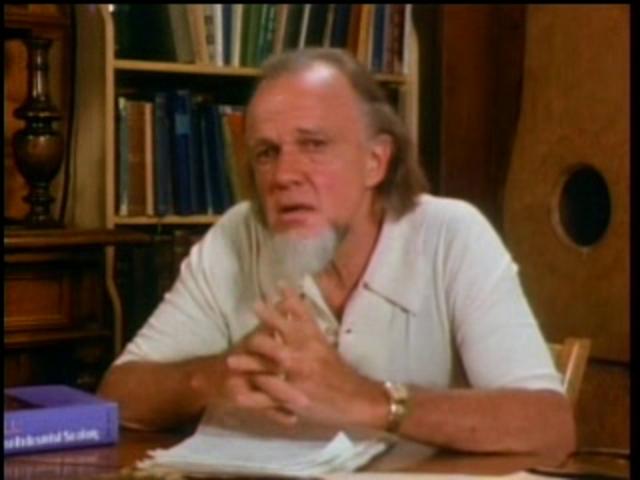
By Everette Hatcher III | Posted in Atheists Confronted, Current Events | Edit | Comments (0)

Bertrand Russell v. Frederick Copleston debate transcript (Part 4)

June 21, 2012 – 7:12 am

THE MORAL ARGUMENT     BERTRAND RUSSELL But aren’t you now saying in effect, I mean by God whatever is good or the sum total of what is good — the system of what is good, and, therefore, when a young man loves anything that is good he is loving God. Is that what you’re […]

By Everette Hatcher III | Posted in Atheists Confronted, Current Events | Edit | Comments (0)

Bertrand Russell v. Frederick Copleston debate transcript (Part 3)

June 20, 2012 – 6:48 am

Fr. Frederick C. Copleston vs Bertrand Russell – Part 1 Uploaded by riversonthemoon on Jul 15, 2009 BBC Radio Third Programme Recording January 28, 1948. BBC Recording number T7324W. This is an excerpt from the full broadcast from cassette tape A303/5 Open University Course, Problems of Philosophy Units 7-8. Older than 50 years, out of […]

By Everette Hatcher III | Posted in Atheists Confronted, Current Events | Edit | Comments (0)
February 26, 2019 – 1:41 am Categories: Francis Schaeffer | Post a comment

Tagged .Alexander Vilenkin, Aaron Ciechanover, Alan Dershowitz, Alan Guth, Alan Macfarlane, Alva Noe, and Lewis Wolpert, Arif Ahmed, Barry Supple, Bart Ehrman, Brian Greene, Brian Harrison, Bruce Hood, Carolyn Porco, David Friend, David J. Gross, Douglas Osheroff, Elizabeth Loftus, Frank Wilczek, Gareth Stedman Jones, George Lakoff, Harry Kroto, Herbert Huppert, Herman Philipse, Hermann Hauser, Horace Barlow, Hubert Dreyfus, Ivar Giaever, J. L. Schellenberg, John Searle, Jonathan Haidt, Jonathan Parry, Lawrence Krauss, Lee Silver, Leonard Mlodinow, Leonard Susskind, Lisa Randall, Lord Martin Rees, Marcus du Sautoy, Mark Balaguer, Marvin Minsky, Michael Bate, Michio Kaku, Neil deGrasse Tyson, Noam Chomsky, Oliver Sacks, Patricia Churchland, Peter Millican, Peter Singer, Raymond Tallis, Rebecca Goldstein, Riccardo Giacconi, Roald Hoffmann, Robert M. Price, Ronald de Sousa, Roy Glauber, Saul Perlmutter, Shelly Kagan, Simon Schaffer, Sir David Attenborough, Sir John Walker, Stephan Feuchtwang, Stephen F Gudeman, Steve Jones, Steven Weinberg, Stuart Kauffman, Susan Greenfield, Theodor W. Hänsch, Victor Stenger, Walter Sinnott-Armstrong, Yujin Nagasawa |

Music Monday My letter to Graham Nash

_______

_____

____

I have read over 40 autobiographies by ROCKERS and it seems to me that almost every one of those books can be reduced to 4 points. Once fame hit me then I became hooked on drugs. Next I became an alcoholic (or may have been hooked on both at same time). Thirdly, I chased the skirts and thought happiness would be found through more sex with more women. Finally, in my old age I have found being faithful to my wife and getting over addictions has led to happiness like I never knew before. (Almost every autobiography I have read from rockers has these points in it although Steven Tyler is still chasing the skirts!!).

Graham Nash has written a very good autobiography called WILD TALES and it certainly does include a lot of wild tales!!!!

_

_

November 16, 2018

Graham Nash,

Dear Mr. Nash, 

Your music reminds me a lot about the Memphis Blues. I thought of your music when I heard the news today, “In 2 days, Mississippi River has risen 10 feet north of St. Louis.”

Everybody is now educating themselves on the great flood of 1927. The 1927 Great Mississippi Flood was the most destructive river flood in the history of the United States, causing over $400 million in damages and killing 246 people in seven states and displaced 700,000 people.

My grandfather moved to Memphis in 1927 and he told me about this flood. There was a lady named Memphis Minnie and she wrote about this flood. I always heard that there was lots of great blues music that had come out of Memphis, but I always thought that was overstated and that the Blues was not a significant form of music. (Live and learn, the Blues music out of Memphis had a GREAT AFFECT ON MUSIC WORLDWIDE!!!)

However, at the same time I was listening to groups like Led Zeppelin and the ROLLING STONES, I had no idea that many of their songs were based on old Blues songs out of Memphis.

One of my favorite Led Zeppelin songs was “When the Levee breaks.” It was based on a song by Memphis Minnie.

There are many paths that people can take to deal with the Blues but the one found by many people in this area is to repent of their sins and embrace the gospel. Actually the answer to find meaning in life is found in putting your faith and trust in Jesus Christ. The Bible is true from cover to cover and can be trusted.

When I examine the Blues they are really an expression of one’s desperation to deal with the hard realities we face in life. Some seek escapism through alcohol or drugs. In fact, many famous Blues musicians have died from from addictions to drugs or alcohol!!

In your book WILD TALES is this passage:

During the Stones’ set a fan was  fatally stabbed by a HELLS ANGEL a short distance from the front of the stage which more or less signaled the end of the Woodstock era. The minute we finished, we grabbed our guitars and took off for the helicopter at a dead run. 

Francis Schaeffer wrote something about this incident and it seems to agree with your assessment:

At about the same time as the Berkeley Free Speech Move- 
ment came a heavy participation in drugs. The beats had not 
been deeply into drugs the way the hippies were. But soon 
after 1964 the drug scene became the hallmark of young 
people.
The philosophic basis for the drug scene came from Aldous 
Huxley's concept that, since, for the rationalist, reason is not 
taking us anywhere, we should look for a final experience, one 
that can be produced "on call," one that we do not need to 
wait for. The drug scene, in other words, was at first an ideol- 
ogy, an ideology that had very practical consequences. Some of 
us at L'Abri have cried over the young people who have blown 
their minds. But many of them thought, like Alan Watts, Gary 
Snyder, Alan Ginsberg and Timothy Leary, that if you could 
simply turn everyone on, there would be an answer to man's 
longings. It wasn't just the far-out freaks who suggested that 
you could put drugs in the drinking water and turn on a whole 
city so that the "pigs" and the kids would all have flowers in 
their hair. In those days it really was an optimistic ideological 
concept. 

So two things have to be said here. FIRST, the young people's 
analysis of culture was right, and, SECOND, they really thought 
they had an answer to the problem. Up through Woodstock 
(1969) the YOUNG PEOPLE WERE OPTIMISTIC CONCERNING DRUGS-- 
BEING THE IDEOLOGICAL ANSWER. The desire for community and 
togetherness that was the impetus for Woodstock was not wrong, of course. God has made us in his own image, and he 
means for us to be in a strong horizontal relationship with each 
other. While Christianity appeals and applies to the individual, 
it is not individualistic. God means for us to have community. 
There are really two orthodoxies: an orthodoxy of doctrine 
and an orthodoxy of community, and both go together. So the 
longing for community in Woodstock was right. But the path 
was wrong. 

AFTER WOODSTOCK TWO EVENTS "ENDED THE AGE OF INNOCENCE," 
to use the expression of Rolling Stone magazine. The FIRST 
occurred at Altamont, California, where the ROLLING STONES put 
on a festival and hired the Hell's Angels (for several barrels of 
beer) to police the grounds. Instead, the Hell's Angels killed 
people without any cause, and it was a bad scene indeed. But 
people thought maybe this was a fluke, maybe it was just 
California! IT TOOK A SECOND EVENT TO BE CONVINCING. 

On the Isle of Wight, 450,000 people assembled, and it was 
totally ugly. A number of people from L'Abri were there, and I 
know a man closely associated with the rock world who knows 
the organizer of this festival. Everyone agrees that the situation 
was just plain hideous. 

THUS, AFTER THESE TWO ROCK FESTIVALS THE PICTURE CHANGED. IT IS  
NOT THAT KIDS HAVE STOPPED TAKING DRUGS, FOR MORE ARE TAKING  
DRUGS ALL THE TIME. And what the eventual outcome will be is 
certainly unpredictable. I know that in many places, California 
for example, drugs are down through the high schools and on 
into the heads of ten- and eleven-year-olds. But drugs are not 
considered a philosophic expression anymore; among the very 
young they are just a peer group thing. It's like permissive 
sexuality. You have to sleep with a certain number of boys or 
you're not in; you have to take a certain kind of drug or you're 
not in. THE OPTIMISTIC IDEOLOGY HAS DIED. 

I was curious what you thought of these assertions. Thank you for your time and keep up the good work on your music. I have enjoyed it a great deal .

Everette Hatcher, cell phone 501-920-5733, everettehatcher@gmail.com

Image result for Stones' set a fan was actually fatally stabbed by the HELL'S ANGELS

_

photo: Graham Nash, David Crosby and Neil Young of CSNY at Altamont

Image result for altamont crosby stills nash

919 × 677Images may be subject to copyright. Learn More CSN&Y – LONG TIME GONE- ALTAMONT SPEEDWAY (RARE 8mm & 16mm VIDEO) – YouTube

Image result for altamont crosby stills nash

CD

______________

Related posts:

MUSIC MONDAY The song LITTLE ONE sung by Rebecca St. James in the film SARAH’S CHOICE

May 30, 2016 – 12:39 am

Little One – From the Film, “Sarah’s Choice” Rebecca St James on faith and values – theDove.us Sarah’s Choice Trailer Sarah’s Choice – Behind the Scenes Rebecca St. James on Sarah’s Choice – CBN.com Rebecca St James Interview on Real Videos Sarah’s Choice – The Proposal Sarahs Choice Pregnancy Test Sarahs Choice Crossroad Sarah’s Choice […]By Everette Hatcher III | Posted in Current Events | Edit | Comments (0)

MUSIC MONDAY Rebecca St James

May 23, 2016 – 12:13 am

Lion – Rebecca St. James I will praise You – Rebecca St James Rebecca St James 1995 TBN – Everything I Do Rebecca St. James & Rachel Scott “Blessed Be Your Name” Rebecca St. James From Wikipedia, the free encyclopedia Rebecca St. James St. James in 2007 Background information Birth name Rebecca Jean Smallbone Also […]By Everette Hatcher III | Posted in Current Events | Edit | Comments (0)

MUSIC MONDAY “Foster the People” Cubbie Fink married to Rebecca St. James who is one of my favorite Christian singers!!!

May 16, 2016 – 7:13 am

Foster The People – Pumped up Kicks Foster the People From Wikipedia, the free encyclopedia Foster the People Foster the People at the 2011 MuchMusic Video Awards, from left to right: Pontius, Foster, and Fink Background information Origin Los Angeles, California, U.S. Genres Indie pop alternative rock indietronica alternative dance neo-psychedelia[1] Years active 2009–present Labels […]By Everette Hatcher III | Posted in Current Events | Edit | Comments (0)

MUSIC MONDAY ‘Apple gave me advice’: Coldplay’s Chris Martin turned to 11-year-old daughter for words of wisdom ahead of Superbowl 50 By DAILYMAIL.COM REPORTER PUBLISHED: 00:58 EST, 2 February 2016

May 9, 2016 – 1:12 am

‘Apple gave me advice’: Coldplay’s Chris Martin turned to 11-year-old daughter for words of wisdom ahead of Superbowl 50 By DAILYMAIL.COM REPORTER PUBLISHED: 00:58 EST, 2 February 2016 | UPDATED: 17:20 EST, 2 February 2016 n Facebook They’ve sold 80 million records and been around for 20 years. But Coldplay’s lead singer Chris Martin, 38, […]By Everette Hatcher III | Posted in Current Events | Edit | Comments (0)

MUSIC MONDAY Chris Martin, Lead Singer of Coldplay: 5 Fast Facts You Need to Know Published 3:44 pm EDT, February 7, 2016

May 2, 2016 – 1:05 am

__________ Chris Martin, Lead Singer of Coldplay: 5 Fast Facts You Need to Know Published 3:44 pm EDT, February 7, 2016 Updated 3:44 pm EDT, February 7, 2016 Comment By Lauren Weigle 17.6k (Getty) Chris Martin has been the front-man of the band Coldplay for about 20 years, though the band changed its name a […]By Everette Hatcher III | Posted in Current Events | Edit | Comments (0)

MUSIC MONDAY Christian Rock Pioneer Larry Norman’s Songs Part 14

April 25, 2016 – 12:57 am

Christian Rock Pioneer Larry Norman’s Songs Part 14 I posted a lot in the past about my favorite Christian musicians such as Keith Green (I enjoyed reading Green’s monthly publications too), and 2nd Chapter of Acts and others. Today I wanted to talk about one of Larry Norman’s songs. David Rogers introduced me to Larry […]By Everette Hatcher III | Posted in Current Events | Edit | Comments (0)

MUSIC MONDAY Christian Rock Pioneer Larry Norman’s Songs Part 13

April 18, 2016 – 12:56 am

Christian Rock Pioneer Larry Norman’s Songs Part 13 I posted a lot in the past about my favorite Christian musicians such as Keith Green (I enjoyed reading Green’s monthly publications too), and 2nd Chapter of Acts and others. Today I wanted to talk about one of Larry Norman’s songs. David Rogers introduced me to Larry […]By Everette Hatcher III | Posted in Current Events | Edit | Comments (0)

MUSIC MONDAY Christian Rock Pioneer Larry Norman’s Songs Part 12

April 11, 2016 – 1:30 am

Christian Rock Pioneer Larry Norman’s Songs Part 12 I posted a lot in the past about my favorite Christian musicians such as Keith Green (I enjoyed reading Green’s monthly publications too), and 2nd Chapter of Acts and others. Today I wanted to talk about one of Larry Norman’s songs. David Rogers introduced me to Larry […]By Everette Hatcher III | Posted in Current Events | Edit | Comments (0)

MUSIC MONDAY Christian Rock Pioneer Larry Norman’s Songs Part 11

April 4, 2016 – 1:23 am

Christian Rock Pioneer Larry Norman’s Songs Part 11 I posted a lot in the past about my favorite Christian musicians such as Keith Green (I enjoyed reading Green’s monthly publications too), and 2nd Chapter of Acts and others. Today I wanted to talk about one of Larry Norman’s songs. David Rogers introduced me to Larry […]By Everette Hatcher III | Posted in Current Events | Edit | Comments (0)

MUSIC MONDAY Christian Rock Pioneer Larry Norman’s Songs Part 10 more on Album “Only Visiting This Planet”

March 28, 2016 – 1:22 am

Christian Rock Pioneer Larry Norman’s Songs Part 10 more on Album “Only Visiting This Planet” I posted a lot in the past about my favorite Christian musicians such as Keith Green (I enjoyed reading Green’s monthly publications too), and 2nd Chapter of Acts and others. Today I wanted to talk about one of Larry Norman’s […]By Everette Hatcher III | Posted in Current Events | Edit | Comments (0)

February 25, 2019 – 2:47 am Categories: Uncategorized | Post a comment

FRANCIS SCHAEFFER ANALYZES ART AND CULTURE Part 255 My May 15, 1994 letter to Hans Bethe Part D (Featured Artist is Nicholas Hlobo )

_

Hans Bethe

Nuclear Physicist, Los Alamos, NMMIT, Trinity Site, University of California, BerkeleyBorn Jul 2 1906European Refugee, Manhattan Project Veteran, Postwar Nuclear Program, Hydrogen Bomb, Scientist, Nobel Prize Winner, Spouse to Manhattan Project Worker, Trinity Test Eyewitness

Hans Bethe

LISTEN TO HANS BETHE’S ORAL HISTORY ON VOICES OF THE MANHATTAN PROJECT

Hans Bethe

Hans Bethe (1906-2005) was a German-American nuclear physicist and winner of the 1967 Nobel Prize in Physics. 

After becoming an American citizen and gaining his security clearance, war work took him to the Radiation Laboratory at MIT, working on microwave radar. After spending the summer of 1942 at the University of California, Berkeley working on a design for the atomic bomb, Bethe was selected by J. Robert Oppenheimer to lead the T (Theoretical) Division of Los Alamos. He and his wife Rose moved to Los Alamos in 1943. Their son, Henry, was born at Los Alamos.

As theory chief, Bethe oversaw and coordinated the work of the various theory groups working on creating a model for how neutrons diffuse through a critical mass, figuring out how to calculate the efficiency of nuclear explosions, determining critical masses and the limits of sub-critical ones, understanding how liquids and gases behaved in fractions of micro-seconds at immense temperatures and pressures, and designing an initiator. 

Bethe completed the theoretical work on the implosion method used in the Trinity test and “Fat Man” weapon dropped on Nagasaki, which validated his results.  He also studied the hydrodynamic aspects of implosion, the neutron initiator, and radiation propagation from an exploding atomic bomb.

SCIENTIFIC CONTRIBUTIONS

Bethe was a professor at Cornell for his entire career, except for two sabbatical leaves and his absence during World War II when he worked on the Manhattan Project. At the end of World War II, Bethe worked on the United States’ development of the hydrogen bomb, although he was opposed to the weapon’s development and hoped that he would show that the H-bomb was impossible to build.

Between 1956 and 1964, he served on the President’s Science Advisory Committee, and in 1958 he headed a presidential study of nuclear disarmament. He helped to negotiate the 1963 Limited Test Ban Treaty with the Soviet Union, and acted as an informal advisor to Presidents Eisenhower, Kennedy, and Johnson. Later, he campaigned against President Ronald Reagan’s proposed Strategic Defense Initiative missile system and advocated for the peaceful use of nuclear energy. 

In 1967, Bethe was awarded the Nobel Prize in Physics for his work on how stars produce energy. For more information on Bethe’s scientific research and achievements, visit theNobel Prize website. 

Hans Bethe’s Timeline

  • 1906 Jul 2nd Born in Strasbourg, Alsace-Lorraine.
  • 1924 to 1926 Studied at the University of Frankfurt.
  • 1928 Jul Studied at Munich, and obtained his Ph.D. in theoretical physics with Professor Arnold Sommerfeld.
  • LOAD MORE

Gallery

  • Hans Bethe’s ID badge at Los Alamos
  • Hans and Rose Bethe at the 1967 Nobel Prize Ceremony

This is the fourth part of the letter to Hans Bethe, but the third part was posted last week on my blog.

The 5 Conclusions of Humanism according to King Solomon of Israel in the Book of Ecclesiastes!!!!!

Image result for king solomon

The Humanistic world view tells us there is no afterlife and all we have is this life “under the sun.”

Image result for francis schaeffer

SECTION 3 A Study in the Book of Ecclesiastes done by Francis Schaeffer(Christian Philosopher). Solomon limits himself to “under the sun” – In other words the meaning of life on the basis of human life standing alone between birth and death. It is indeed the book of modern man. Solomon is the universal man with unlimited resources who says let us see where I go. Ravi Zacharias –

Image result for ravi zacharias

“The key to understanding the Book of Ecclesiastes is the term ‘under the sun.’ What that literally means is you lock God out of a closed system and you are left with only this world of time plus chance plus us (Matter)”

1st Conclusion: Nothing in life truly satisfies and that includes wisdom, great works and pleasure. A) Will wisdom satisfy someone under the sun? We know it is good in its proper place. Take a look at this quote by Mike Malone: “Knowing God is the deepest longing of the human heart. It is knowledge so high and lofty that it transcends language, which can never exhaust the glorious reality of God. The wise man would take you by the hand and lead you to the fountain, where you may drink to your heart’s content, never tasting enough, yet never failing to be satisfied.” But what did Solomon find out about wisdom “under the sun”? Ecclesiastes 1:16-18 (Living Bible): I said to myself, ‘Look, I am better educated than any of the kings before me in Jerusalem. I have greater wisdom and knowledge.’So I worked hard to be wise instead of foolish[c]—but now I realize that even this was like chasing the wind. For the more my wisdom, the more my grief; to increase knowledge only increases distress.”

B) Do great works of men bring satisfaction?Ecclesiastes 2:4-6, 18-20: Then I tried to find fulfillment by inaugurating a great public works program: homes, vineyards, gardens, parks, and orchards for myself, and reservoirs to hold the water to irrigate my plantations.And I am disgusted about this—that I must leave the fruits of all my hard work to others. 19 And who can tell whether my son will be a wise man or a fool? And yet all I have will be given to him—how discouraging!So I turned in despair from hard work as the answer to my search for satisfaction.C) Does pleasure give lasting satisfaction?

Image result for hugh hefner


KJV and Living Bible Ecclesiastes 2:1-3, 8, 10, 11: I said in mine heart, Go to now, I will prove thee with mirth, therefore enjoy pleasure: and, behold, this also is vanity.2 I said of laughter, It is mad: and of mirth, What doeth it? 3 I sought in mine heart to give myself unto wine, yet acquainting mine heart with wisdom; and to lay hold on folly,And then there were my many beautiful concubines.10 Anything I wanted I took and did not restrain myself from any joy…11 But as I looked at everything I had tried, it was all so useless, a chasing of the wind, and there was nothing really worthwhile anywhere…
2nd Conclusion: Power reigns in this life and the scales are not balanced!!!!!Ecclesiastes 4:1 (King James Version): So I returned, and considered all the oppressions that are done under the sun: and behold the tears of such as were oppressed, and they had no comforter; and on the side of their oppressors there was power; but they had no comforter.
Ecclesiastes 7:15 (King James Version) All things have I seen in the days of my vanity: there is a just man that perisheth in his righteousness, and there is a wicked man that prolongeth his life in his wickedness.If you are a humanist you must admit that men like Hitler will not be punished in the afterlife because you deny there is an afterlife? Right?

Image result for hitler

3rd Conclusion – Death is the great equalizer. Just as the beasts will not be remembered so ultimately brilliant men will not be remembered. Ecclesiastes 3:20 “All go unto one place; All are of the dust, and all turn to dust again.” Here Solomon comes to the same point that Kerry Livgren came to in January of 1978 when he wrote the hit song DUST IN THE WIND. Can you refute the nihilistic claims of this song within the humanistic world view? Solomon couldn’t but maybe you can.

Image result for rock band kansas dust in the wind

4th Conclusion – Chance and time plus matter (us) has determined the past and it will determine the future.By the way, what are the ingredients that make evolution work? George Wald – “Time is the Hero.”

Image result for george wald

 Jacques Monod – “Pure chance, absolutely free but blind, is at the root of the stupendous edifice of evolution.”

Image result for manod jac nobel prize

496 × 744Images may be subject to copyright. Learn More

Image result for movie on the beach 1959

182 × 268Images may be subject to copyright. Learn More

 I can not think of a better illustration of this in action than the movie ON THE BEACH by Nevil Shute. On May 4, 1994 I watched the movie for the first time and again I thought of the humanist who believes that history is not heading somewhere with a purpose but is guided by pure chance, absolutely free but blind. I thought of the passage Ecclesiastes 9:10-12 Whatsoever thy hand findeth to do, do it with thy might; for there is no work, nor device, nor knowledge, nor wisdom, in the grave, whither thou goest.11 I returned, and saw under the sun, that the race is not to the swift, nor the battle to the strong, neither yet bread to the wise, nor yet riches to men of understanding, nor yet favour to men of skill; but time and chance happeneth to them all.12 For man also knoweth not his time: as the fishes that are taken in an evil net, and as the birds that are caught in the snare; so are the sons of men snared in an evil time, when it falleth suddenly upon them.

5th Conclusion – Life is just a series ofcontinual and unending cycles and man is stuck in the middle of the cycle. Youth, old age, Death.
Does Solomon at this point embrace nihilism? Yes!!! He exclaims that the hates life (Ecclesiastes 2:17), he longs for death (4:2-3) Yet he stills has a fear of death (2:14-16). How do you want your life to go the next million years? The humanist world view has no answer (see H. J. Blackham earlier quote). Ecclesiastes2:15-16: 15 Then said I in my heart, As it happeneth to the fool, so it happeneth even to me; and why was I then more wise? Then I said in my heart, that this also is vanity.16 For there is no remembrance of the wise more than of the fool for ever; seeing that which now is in the days to come shall all be forgotten. And how dieth the wise man? as the fool.(Also refer to the lyrics of the song DUST IN THE WIND by the group KANSAS).Can you refute any of the conclusions of Solomon? Will you ridicule this material. In 1988 in the September-October of the HUMANIST MAGAZINE a 3 page article was devoted to cutting Schaeffer down to size, but even in that article which was called FRANCIS SCHAEFFER: A LOOK AT ONE OF THE FOREMOST FIGURES IN THE CRUSADE AGAINST HUMANISM the writer gave Schaeffer his due by saying “Schaeffer’s books are not the typical hodge-podge of newspaper headlines and obscure  Biblical prophecies, as in Hal Lindsey’s books. Schaeffer demonstrates a familiarity with the major theologians and some understanding of philosophy, art and literature. His books are clearly in a different league from the typical evangelical Christian reading matter…:” Why did I write about the meaning of life in this letter addressed to you?????? The answer is very simple: You have a spiritual need that must be met, and only Christ can meet it!!!! In the introduction of the book A SHATTERED VISAGE, Ravi Zacharias said this “The most telling aspect of the afternoon I spoke to a group of scientists at the Bell Lab in Holmdel, NJ was the nature of the questions that were raised following the address. None had to do with the technical or scientific expertise that the audience represented. They all had to do with the heart searching questions of men and women in pursuit of meaning of life. I have found these same questions asked time and time again in a variety of settings. After the intellectual that comes to the fore.” Ecclesiastes 3:11b “God has planted eternity in the hearts of men.” 

Image result for charles spurgeon

Charles Spurgeon “The soul is insatiable till it finds the savoir.”I want to finish with a prediction: There is coming a time in your life that the most important thing to you will be to get your prayer answered by God. When I was ridden in a hospital many years ago I was told that I may not live. My thoughts turned to spiritual things. Does it take a tragic situation for you to wake up? I will pray that you see the humanistic worldview for what it is, and that you would honestly pursue the Bible. Thank you for your time

Related posts:

______________  

FRANCIS SCHAEFFER ANALYZES ART AND CULTURE Part 51 THE BEATLES (Part C, List of those on cover of Stg.Pepper’s ) (Feature on artist Raqib Shaw )

March 19, 2015 – 12:21 am

  The Beatles in a press conference after their Return from the USA Uploaded on Nov 29, 2010 The Beatles in a press conference after their Return from the USA. The Beatles:   I have dedicated several posts to this series on the Beatles and I don’t know when this series will end because Francis […]By Everette Hatcher III | Posted in Francis Schaeffer | Tagged George Harrison, John Lennon, Paul MacCartney, Raqib Shaw, Ringo Starr | Edit | Comments (0)

FRANCIS SCHAEFFER ANALYZES ART AND CULTURE Part 50 THE BEATLES (Part B, The Psychedelic Music of the Beatles) (Feature on artist Peter Blake )

__

Featured artist is Nicholas Hlobo

Nicholas Hlobo’s Post-Apartheid Sculpture Art | Brilliant Ideas Ep. 58

Preview: Nicholas Hlobo in Season 9 of Art21 “Art in the Twenty-First Century” (2018) https://www.youtube.com/watch?v=sQ462yJFwDI Nicholas Hlobo Nicholas Hlobo was born in Cape Town, South Africa, in 1975 and grew up in Transkei, South Africa. His works on paper, sculptures, installations, and performances utilize rubber, ribbon, leather, and a variety of domestic objects to explore both his identity as a gay Xhosa man and issues of masculinity, sexuality, and ethnicity in South African culture. Subtly and subversively weaving together bodily innuendos and historical references, Hlobo uses raw materials to represent female and male forms and question gender roles. Interested in the history of colonization in South Africa and the broad and subtle ways that colonization occurs in contemporary life, Hlobo cuts and stitches materials back together, to represent the idea of the healing that follows a tearing apart. Nicholas Hlobo received a fine-art degree from the Technikon Witwatersrand (2002). His awards and residencies include the Rolex Visual Arts Protégé (2010–11); Standard Bank Young Artist Award (2009); and Tollman Award for Visual Art (2006). He has had major exhibitions at Uppsala Konstmuseum, Sweden (2017); Museum Beelden aan Zee, The Hague (2016); Smithsonian National Museum of African Art, Washington DC (2015); Savannah College of Art and Design (2014, 2010, 2007); Museum fur Moderne Kunst, Frankfurt (2014); Locust Project, Miami (2013); Biennale of Sydney (2012); La Triennale at the Palais de Tokyo, Paris (2012); Venice Biennale (2011); National Museum of Art, Architecture and Design, Oslo (2011); Liverpool Biennial (2010); Tate Modern, London (2008); Institute of Contemporary Art, Boston (2008); Guangzhou Triennial, China (2008); and Studio Museum in Harlem (2008). Hlobo lives and works in Johannesburg.

Related posts:

   ___

February 21, 2019 – 3:17 am Categories: Uncategorized | Post a comment

RESPONDING TO HARRY KROTO’S BRILLIANT RENOWNED ACADEMICS!! Part 151c Bertrand Russell’s  perfect unshakable implicit faith in an uniformity of natural causes in a closed system

Image result for bertrand russell
620 × 342Images may be subject to copyright. Learn More

Bertrand Russell as a child.

Image result for bertrand russell

On November 21, 2014 I received a letter from Nobel Laureate Harry Kroto and it said:

…Please click on this URL http://vimeo.com/26991975

and you will hear what far smarter people than I have to say on this matter. I agree with them.

Harry Kroto

Image result for harry kroto

I have attempted to respond to all of Dr. Kroto’s friends arguments and I have posted my responses one per week for over a year now. Here are some of my earlier posts:

Arif Ahmed, Sir David Attenborough, Mark Balaguer, Horace Barlow, Michael Bate, Patricia Churchland, Aaron Ciechanover, Noam Chomsky,Alan Dershowitz, Hubert Dreyfus, Bart Ehrman, Stephan Feuchtwang, David Friend,  Riccardo Giacconi, Ivar Giaever , Roy Glauber, Rebecca Goldstein, David J. Gross,  Brian Greene, Susan Greenfield, Stephen F Gudeman,  Alan Guth, Jonathan Haidt, Theodor W. Hänsch, Brian Harrison,  Hermann Hauser, Roald Hoffmann,  Bruce Hood, Herbert Huppert,  Gareth Stedman Jones, Steve Jones, Shelly Kagan, Michio Kaku,  Stuart Kauffman,  Lawrence Krauss, Harry Kroto, George Lakoff, Elizabeth Loftus,  Alan Macfarlane, Peter Millican, Marvin Minsky, Leonard Mlodinow,  Yujin Nagasawa, Alva Noe, Douglas Osheroff,  Jonathan Parry,  Saul Perlmutter, Herman Philipse,  Carolyn Porco, Robert M. Price, Lisa Randall, Lord Martin Rees,  Oliver Sacks, John Searle, Marcus du Sautoy, Simon Schaffer, J. L. Schellenberg,   Lee Silver,  Peter Singer,  Walter Sinnott-Armstrong, Ronald de Sousa, Victor Stenger, Barry Supple,   Leonard Susskind, Raymond Tallis, Neil deGrasse Tyson,  .Alexander Vilenkin, Sir John Walker, Frank Wilczek, Steven Weinberg, and  Lewis Wolpert,

In  the first video below in the 14th clip in this series are his words and I will be responding to them in the next few weeks since Sir Bertrand Russell is probably the most quoted skeptic of our time, unless it was someone like Carl Sagan or Antony Flew.  

50 Renowned Academics Speaking About God (Part 1)

Another 50 Renowned Academics Speaking About God (Part 2)

A Further 50 Renowned Academics Speaking About God (Part 3)

__

Quote from Bertrand Russell:

Q: Why are you not a Christian?

Russell: Because I see no evidence whatever for any of the Christian dogmas. I’ve examined all the stock arguments in favor of the existence of God, and none of them seem to me to be logically valid.

Q: Do you think there’s a practical reason for having a religious belief, for many people?

Russell: Well, there can’t be a practical reason for believing what isn’t true. That’s quite… at least, I rule it out as impossible. Either the thing is true, or it isn’t. If it is true, you should believe it, and if it isn’t, you shouldn’t. And if you can’t find out whether it’s true or whether it isn’t, you should suspend judgment. But you can’t… it seems to me a fundamental dishonesty and a fundamental treachery to intellectual integrity to hold a belief because you think it’s useful, and not because you think it’s true.

__

Image result for francis schaeffer

Francis Schaeffer noted concerning the IMPLICIT FAITH of Bertrand Russell:

I was lecturing at the University of St. Andrews one night and someone put forth the question, “If Christianity is so clear and reasonable then why doesn’t Bertrand Russell then become a Christian? Is it because he hasn’t discovered theology?”

It wasn’t a matter of studying theology that was involved but rather that he had too much faith. I was surrounded by humanists and you could hear the gasps. Bertrand Russell and faith; Isn’t this the man of reason? I pointed out that this is a man of high orthodoxy who will hold his IMPLICIT FAITH on the basis of his presuppositions no matter how many times he has to zig and zag because it doesn’t conform to the facts.

You must understand what the term IMPLICIT FAITH  means. In the old Roman Catholic Church when someone who became a Roman Catholic they had to promise implicit faith. That meant that you not only had to believe everything that Roman Catholic Church taught then but also everything it would teach in the future. It seems to me this is the kind of faith that these people have in the uniformity of natural causes in a closed system and they have accepted it no matter what it leads them into. 

I think that these men are men of a high level of IMPLICIT FAITH in their own set of presuppositions. Paul said (in Romans Chapter One) they won’t carry it to it’s logical conclusion even though they hold a great deal of the truth and they have revolted and they have set up a series of universals in themselves which they won’t transgress no matter if they conform to the facts or not.

Here below is the Romans passage that Schaeffer is referring to and verse 19 refers to what Schaeffer calls “the mannishness of man” and verse 20 refers to Schaeffer’s other point which is “the universe and it’s form.”

Romans 1:18-20 Amplified Bible :

18 For God’s [holy] wrath and indignation are revealed from heaven against all ungodliness and unrighteousness of men, who in their wickedness repress and hinder the truth and make it inoperative. 19 For that which is known about God is evident to them and made plain in their inner consciousness, because God [Himself] has shown it to them. 20 For ever since the creation of the world His invisible nature and attributes, that is, His eternal power and divinity, have been made intelligible and clearly discernible in and through the things that have been made (His handiworks). So [men] are without excuse [altogether without any defense or justification].

We can actually see the two points makes playing themselves out in Bertrand Russell’s own life.

Image result for bertrand russell
400 × 400Images may be subject to copyright. Learn More

[From a letter dated August 11, 1918 to Miss Rinder when Russell was 46]

It is quite true what you say, that you have never expressed yourself—but who has, that has anything to express? The things one says are all unsuccessful attempts to say something else—something that perhaps by its very nature cannot be said. I know that I have struggled all my life to say something that I never shall learn how to say. And it is the same with you. It is so with all who spend their lives in the quest of something elusive, and yet omnipresent, and at once subtle and infinite. One seeks it in music, and the sea, and sunsets; at times I have seemed very near it in crowds when I have been feeling strongly what they were feeling; one seeks it in love above all. But if one lets oneself imagine one has found it, some cruel irony is sure to come and show one that it is not really found.
The outcome is that one is a ghost, floating through the world without any real contact. Even when one feels nearest to other people, something in one seems obstinately to belong to God and to refuse to enter into any earthly communion—at least that is how I should express it if I thought there was a God. It is odd isn’t it? I care passionately for this world, and many things and people in it, and yet…what is it all? There must be something more important, one feels, though I don’t believe there is. I am haunted—some ghost, from some extra-mundane region, seems always trying to tell me something that I am to repeat to the world, but I cannot understand the message. But it is from listening to the ghost that one comes to feel oneself a ghost. I feel I shall find the truth on my deathbed and be surrounded by people too stupid to understand—fussing about medicines instead of searching for wisdom. Love and imagination mingled; that seems the main thing so far.

During Bertrand Russell’s lifetime (1872-1970) there lived another scholar who also doubted that the Bible was true and his name was Sir William Mitchell Ramsay (1851-1939. Ramsay taught from 1885 to until his retirement in 1911 but he continued writing books.

Wikipedia notes:

In 1880 Ramsay received an Oxford studentship for travel and research in Greece. At Smyrna, he met Sir C. W. Wilson, then British consul-general in Anatolia, who advised him on inland areas suitable for exploration. Ramsay and Wilson made two long journeys during 1881-1882.

He traveled widely in Asia Minor and rapidly became the recognized authority on all matters relating to the districts associated with St Paul’s missionary journeys and on Christianity in the early Roman Empire. Greece and Turkey remained the focus of Ramsay’s research for the remainder of his academic career. In 1883, he discovered the world’s oldest complete piece of music, the Seikilos epitaph. He was known for his expertise in the historic geographyand topography of Asia Minor and of its political, social, cultural, and religious history. He was Fellow of Exeter College, Oxford, in 1882.

From 1885 to 1886 Ramsay held the newly created Lincoln and Merton professorship of classical archaeology and art at Oxford and became a fellow of Lincoln College (honorary fellow 1898). In 1886 Ramsay was appointed Regius Professor of Humanity at the University of Aberdeen. He remained affiliated with Aberdeen until his retirement in 1911. 

What information did William Ramsay find out about the accuracy of the Bible? 

Francis Schaeffer discusses Ramsay’s life below:

TRUTH AND HISTORY (chapter 5 of WHATEVER HAPPENED TO THE HUMAN RACE?, under footnotes #97 and #98)

A common assumption among liberal scholars is that because the Gospels are theologically motivated writings–which they are–they cannot also be historically accurate. In other words, because Luke, say (when he wrote the Book of Luke and the Book of Acts), was convinced of the deity of Christ, this influenced his work to the point where it ceased to be reliable as a historical account. The assumption that a writing cannot be both historical and theological is false.

The experience of the famous classical archaeologist Sir William Ramsay illustrates this well. When he began his pioneer work of exploration in Asia Minor, he accepted the view then current among the Tubingen scholars of his day that the Book of Acts was written long after the events in Paul’s life and was therefore historically inaccurate. However, his travels and discoveries increasingly forced upon his mind a totally different picture, and he became convinced that Acts was minutely accurate in many details which could be checked.

What is even more interesting is the way “liberal” modern scholars today deal with Ramsay’s discoveries and others like them. In the NEW TESTAMENT : THE HISTORY OF THE INVESTIGATION OF ITS PROBLEMS, the German scholar Werner G. Kummel made no reference at all to Ramsay. This provoked a protest from British and American scholars, whereupon in a subsequent edition Kummel responded. His response was revealing. He made it clear that it was his deliberate intention to leave Ramsay out of his work, since “Ramsay’s apologetic analysis of archaeology [in other words, relating it to the New Testament in a positive way] signified no methodologically essential advance for New Testament research.” This is a quite amazing assertion. Statements like these reveal the philosophic assumptions involved in much liberal scholarship.

A modern classical scholar, A.N.Sherwin-White, says about the Book of Acts: “For Acts the confirmation of historicity is overwhelming…Any attempt to reject its basic historicity, even in matters of detail, must not appear absurd. Roman historians have long taken this for granted.”

When we consider the pages of the New Testament, therefore, we must remember what it is we are looking at. The New Testament writers themselves make abundantly clear that they are giving an account of objectively true events.

(Under footnote #98)

Acts is a fairly full account of Paul’s journeys, starting in Pisidian Antioch and ending in Rome itself. The record is quite evidently that of an eyewitness of the events, in part at least. Throughout, however, it is the report of a meticulous historian. The narrative in the Book of Acts takes us back behind the missionary journeys to Paul’s famous conversion on the Damascus Road, and back further through the Day of Pentecost to the time when Jesus finally left His disciples and ascended to be with the Father.

But we must understand that the story begins earlier still, for Acts is quite explicitly the second part of a continuous narrative by the same author, Luke, which reaches back to the birth of Jesus.

Luke 2:1-7 New American Standard Bible (NASB)

2 Now in those days a decree went out from Caesar Augustus, that a census be taken of all [a]the inhabited earth. 2 [b]This was the first census taken while[c]Quirinius was governor of Syria. 3 And everyone was on his way to register for the census, each to his own city. 4 Joseph also went up from Galilee, from the city of Nazareth, to Judea, to the city of David which is called Bethlehem, because he was of the house and family of David, 5 in order to register along with Mary, who was engaged to him, and was with child. 6 While they were there, the days were completed for her to give birth. 7 And she gave birth to her firstborn son; and she wrapped Him in cloths, and laid Him in a [d]manger, because there was no room for them in the inn.

In the opening sentences of his Gospel, Luke states his reason for writing:

Luke 1:1-4 New American Standard Bible (NASB)

1 Inasmuch as many have undertaken to compile an account of the things[a]accomplished among us, 2 just as they were handed down to us by those whofrom the beginning [b]were eyewitnesses and [c]servants of the [d]word, 3 it seemed fitting for me as well, having [e]investigated everything carefully from the beginning, to write it out for you in consecutive order, most excellentTheophilus; 4 so that you may know the exact truth about the things you have been [f]taught.

In Luke and Acts, therefore, we have something which purports to be an adequate history, something which Theophilus (or anyone) can rely on as its pages are read. This is not the language of “myths and fables,” and archaeological discoveries serve only to confirm this.

For example, it is now known that Luke’s references to the titles of officials encountered along the way are uniformly accurate. This was no mean achievement in those days, for they varied from place to place and from time to time in the same place. They were proconsuls in Corinth and Cyprus, asiarchs at Ephesus, politarches at Thessalonica, and protos or “first man” in Malta. Back in Palestine, Luke was careful to give Herod Antipas the correct title of tetrarch of Galilee. And so one. The details are precise.

The mention of Pontius Pilate as Roman governor of Judea has been confirmed recently by an inscription discovered at Caesarea, which was the Roman capital of that part of the Roman Empire. Although Pilate’s existence has been well known for the past 2000 years by those who have read the Bible, now his governorship has been clearly attested outside the Bible.

Image result for bertrand russell

__


XXXXXXXX

Image result for sir william ramsay archaeologistLuke’s Accuracy 
Introduction: 
Luke was a physician and historian who authored the Gospel that bears his name and the book of Acts which is the story of the fledgling church. Together these two books make up close to one quarter of the New Testament. The fact that Luke was obviously an intelligent and educated man who wrote very eloquently in near classical Greek takes a back seat to whether or not he was an accurate historian. In other words, was Luke a credible witness to the events he wrote about.The fact that Luke was so meticulous about recording dates, names, titles, locations and other details, makes it relatively easy to check his facts. However, all too many times, scholars and critics pooh-poohed something Luke wrote, only to have him proved right by a subsequent archaeological discovery.Lysanius
For example, Luke was extremely precise about when John the Baptist’s ministry began…Now in the fifteenth year of the reign of Tiberius Caesar, when Pontius Pilate was governor of Judea, and Herod was tetrarch of Galilee, and his brother Philip was tetrarch of the region of Ituraea and Trachonitis, and Lysanias was tetrarch of Abilene, ….  (Luke 3:1 NASB)Many critics scoffed at the idea that Lysanius was tetrarch of Abilene, because the only known Lysanius was ruler of Chalcis (a town on the island of Euboea in Greece) about 50-60 years earlier. However, the discovery of an inscriptions from Abila (northwest of Damascus) showed that an official named Lysanias was tetrarch of Abilene between the years AD 14 and 29. Apparently there were two government officials with the same name.Sergius Paulus
Similarly, in Acts 13:7, Luke also said the proconsul was an intelligent man called Sergius Paulus. This was also rejected by critics, until an 1887 discovery of an inscription which said a Sergius Paulus was appointed as proconsul in A.D. 47.

Related posts:


RESPONDING TO HARRY KROTO’S BRILLIANT RENOWNED ACADEMICS!! Pausing to take a look at the life of HARRY KROTO Part C (Kroto’s admiration of Bertrand Russell examined)

June 21, 2016 – 1:12 am

Today we look at the 3rd letter in the Kroto correspondence and his admiration of Bertrand Russell. (Below The Nobel chemistry laureates Harold Kroto, Robert Curl and Richard Smalley) It is with sadness that I write this post having learned of the death of Sir Harold Kroto on April 30, 2016 at the age of […]

By Everette Hatcher III | Posted in Atheists Confronted | Tagged .Alexander Vilenkin, Aaron Ciechanover, Alan Dershowitz, Alan Guth, Alan Macfarlane, Alison Richard, Alva Noe, Arif Ahmed, Barry Supple, Bart Ehrman, Brian Greene, Brian Harrison, Bruce Hood, C.J. van Rijsbergen, Carolyn Porco, David Friend, David J. Gross, Douglas Osheroff, Elizabeth Loftus, Frank Wilczek, Gareth Stedman Jones, George Lakoff, Haroon Ahmed, Harry Kroto, Herbert Huppert, Herman Philipse, Hermann Hauser, Horace Barlow, Hubert Dreyfus, Ivar Giaever, J. L. Schellenberg, John Searle, John Sulston, Jonathan Haidt, Jonathan Parry, Lawrence Krauss, Lee Silver, Leonard Mlodinow, Leonard Susskind, Lewis Wolpert, Lisa Randall, Lord Martin Rees, Marcus du Sautoy, Mark Balaguer, Marvin Minsky, Michael Bate, Michio Kaku, Neil deGrasse Tyson, Noam Chomsky, Oliver Sacks, Patricia Churchland, Peter Millican, Peter Singer, Raymond Tallis, Rebecca Goldstein, Riccardo Giacconi, Roald Hoffmann, Robert M. Price, Ronald de Sousa, Roy Glauber, Saul Perlmutter, Shelly Kagan, Simon Schaffer, Sir David Attenborough, Sir John Walker, Sir Patrick Bateson, Stephan Feuchtwang, Stephen F Gudeman, Steve Jones, Steven Weinberg, Stuart Kauffman, Susan Greenfield, Theodor W. Hänsch, Victor Stenger, Walter Sinnott-Armstrong, Yujin Nagasawa | Edit | Comments (0)

RESPONDING TO HARRY KROTO’S BRILLIANT RENOWNED ACADEMICS!! Part 52 The views of Hegel and Bertrand Russell influenced Gareth Stedman Jones of Cambridge!!

November 17, 2015 – 5:37 am

On November 21, 2014 I received a letter from Nobel Laureate Harry Kroto and it said: …Please click on this URL http://vimeo.com/26991975 and you will hear what far smarter people than I have to say on this matter. I agree with them. Harry Kroto _________________ Below you have picture of Dr. Harry Kroto:   Gareth Stedman […]

By Everette Hatcher III | Posted in Atheists Confronted | Tagged (Paul Kurtz (1925-2012), Alan Macfarlane (1941-), Albert Ellis (1913-2007), Archie J. Bahm (1907-1996), Aron S “Gil” Martin ( 1910-1997), Barbara Marie Tabler (1915-1996), Bette Chambers (1930-), Brian Charlesworth (1945-), Carl Sagan (1934-1996), Christopher C. French (1956-) Walter R. Rowe, Edward O. WIlson (1929-), Ernest Mayr (1904-2005), Francisco J. Ayala (1934-) Elliott Sober (1948-), Geoff Harcourt (1931-), George Wald (1906-1997), Gerald Holton (1922-), Glenn Branch, Gordon Stein (1941-1996), H. J. Eysenck (1916-1997), Harry Kroto (1939-), Herbert Kroemer (1928-), James Terry McCollum (1936-), John Hospers (1918-2011), John J. Shea (1969-), John R. Cole (1942-), Kevin Padian (1951-), Lewis Wolpert (1929), Lloyd Morain (1917-2010), Martin Rees (1942-), Marty E. Martin (1928-), Mary Morain (1911-1999), Matt Cartmill (1943-), Matthew I. Spetter (1921-2012), Michael A. Crawford (1938-), Michael Martin (1932-)., Milton Fingerman (1928-), Milton Friedman (1912-2006), Nicolaas Bloembergen (1920-), Paul Quincey, Ray T. Cragun (1976-)., Renate Vambery (1916-2005), Richard Rubenstein (1924-), Roald Hoffmann (1937-), Robert L. Erdmann (1929-2006), Robert Shapiro (1935-2011), Sol Gordon (1923-2008), Susan Blackmore (1951-), Thomas Gilovich (1954-), Thomas H. Jukes (1906-1999), Warren Allen Smith (1921-), Wolf Roder |Edit | Comments (0)

WOODY WEDNESDAY John Piippo makes the case that Bertrand Russell would have loved Woody Allen because they both were atheists who don’t deny the ramifications of atheism!!!

October 28, 2015 – 12:00 am

Top 10 Woody Allen Movies __________ John Piippo makes the case that Bertrand Russell would have loved Woody Allen because they both were  atheists who don’t deny the ramifications of atheism!!! Monday, August 06, 2012 (More On) Woody Allen’s Atheism As I wrote in a previous post, I like Woody Allen. I have long admired his […]

By Everette Hatcher III | Posted in Atheists Confronted, Woody Allen | Edit | Comments (0)

John Piippo makes the case that Bertrand Russell would have loved Woody Allen because they both were two atheists who don’t deny the ramifications of atheism!!!

September 24, 2015 – 12:55 am

______ Top 10 Woody Allen Movies PBS American Masters – Woody Allen A Documentary 01 PBS American Masters – Woody Allen A Documentary 02 __________ John Piippo makes the case that Bertrand Russell would have loved Woody Allen because they both were two atheists who don’t deny the ramifications of atheism!!! Monday, August 06, 2012 […]

By Everette Hatcher III | Posted in Woody Allen | Edit | Comments (0)

Bertrand Russell v. Frederick Copleston debate transcript (Part 4)

January 7, 2013 – 4:55 am

THE MORAL ARGUMENT     BERTRAND RUSSELL But aren’t you now saying in effect, I mean by God whatever is good or the sum total of what is good — the system of what is good, and, therefore, when a young man loves anything that is good he is loving God. Is that what you’re […]

By Everette Hatcher III | Posted in Current Events | Edit | Comments (0)

Bertrand Russell v. Frederick Copleston debate transcript (Part 3)

January 5, 2013 – 4:52 am

Great debate Fr. Frederick C. Copleston vs Bertrand Russell – Part 1 Uploaded by riversonthemoon on Jul 15, 2009 BBC Radio Third Programme Recording January 28, 1948. BBC Recording number T7324W. This is an excerpt from the full broadcast from cassette tape A303/5 Open University Course, Problems of Philosophy Units 7-8. Older than 50 years, […]

By Everette Hatcher III | Posted in Atheists Confronted, Current Events | Edit | Comments (0)

Bertrand Russell v. Frederick Copleston debate transcript and audio (Part 2)

January 3, 2013 – 4:48 am

Uploaded by riversonthemoon on Jul 15, 2009 BBC Radio Third Programme Recording January 28, 1948. BBC Recording number T7324W. This is an excerpt from the full broadcast from cassette tape A303/5 Open University Course, Problems of Philosophy Units 7-8. Older than 50 years, out of UK/BBC copyright. Pardon the hissy audio. It was recorded 51 […]

By Everette Hatcher III | Posted in Atheists Confronted, Current Events | Edit | Comments (0)

Bertrand Russell v. Frederick Copleston debate transcript and audio (Part 1)

January 1, 2013 – 4:43 am

Fr. Frederick C. Copleston vs Bertrand Russell – Part 1 Uploaded by riversonthemoon on Jul 15, 2009 BBC Radio Third Programme Recording January 28, 1948. BBC Recording number T7324W. This is an excerpt from the full broadcast from cassette tape A303/5 Open University Course, Problems of Philosophy Units 7-8. Older than 50 years, out of […]

By Everette Hatcher III | Posted in Atheists Confronted, Current Events | Edit | Comments (0)

Bertrand Russell v. Frederick Copleston debate transcript (Part 4)

June 21, 2012 – 7:12 am

THE MORAL ARGUMENT     BERTRAND RUSSELL But aren’t you now saying in effect, I mean by God whatever is good or the sum total of what is good — the system of what is good, and, therefore, when a young man loves anything that is good he is loving God. Is that what you’re […]

By Everette Hatcher III | Posted in Atheists Confronted, Current Events | Edit | Comments (0)

Bertrand Russell v. Frederick Copleston debate transcript (Part 3)

June 20, 2012 – 6:48 am

Fr. Frederick C. Copleston vs Bertrand Russell – Part 1 Uploaded by riversonthemoon on Jul 15, 2009 BBC Radio Third Programme Recording January 28, 1948. BBC Recording number T7324W. This is an excerpt from the full broadcast from cassette tape A303/5 Open University Course, Problems of Philosophy Units 7-8. Older than 50 years, out of […]

By Everette Hatcher III | Posted in Atheists Confronted, Current Events | Edit | Comments (0)
February 19, 2019 – 1:02 am Categories: Francis Schaeffer | Post a comment

Tagged .Alexander Vilenkin, Aaron Ciechanover, Alan Dershowitz, Alan Guth, Alan Macfarlane, Alva Noe, Arif Ahmed, Barry Supple, Bart Ehrman, Brian Greene, Brian Harrison, Bruce Hood, Carolyn Porco, David Friend, David J. Gross, Douglas Osheroff, Elizabeth Loftus, Frank Wilczek, Gareth Stedman Jones, George Lakoff, Harry Kroto, Herbert Huppert, Herman Philipse, Hermann Hauser, Horace Barlow, Hubert Dreyfus, Ivar Giaever, J. L. Schellenberg, John Searle, Jonathan Haidt, Jonathan Parry, Lawrence Krauss, Lee Silver, Leonard Mlodinow, Leonard Susskind, Lisa Randall, Lord Martin Rees, Marcus du Sautoy, Mark Balaguer, Marvin Minsky, Michael Bate, Michio Kaku, Neil deGrasse Tyson, Noam Chomsky, Oliver Sacks, Patricia Churchland, Peter Millican, Peter Singer, Raymond Tallis, Rebecca Goldstein, Riccardo Giacconi, Roald Hoffmann, Robert M. Price, Ronald de Sousa, Roy Glauber, Saul Perlmutter, Shelly Kagan, Simon Schaffer, Sir David Attenborough, Sir John Walker, Stephan Feuchtwang, Stephen F Gudeman, Steve Jones, Steven Weinberg, Stuart Kauffman, Susan Greenfield, Theodor W. Hänsch, Victor Stenger, Walter Sinnott-Armstrong, Yujin Nagasawa |

Music Monday My letter to Elton John concerning Ryan White’s Faith

__

__

__

__

__

Image result for c. everett koop cartoon

__

Image result for ryan white c. everett koop

Ryan White’s mother Jeanne White Ginder (left) and William L. Yarber of Indiana University (right) present the former U.S. Surgeon General C. Everett Koop with the 2010 Ryan White Distinguished Leadership Award. The award is given by the Rural Center for AIDS/STD Prevention at IU.

Image result for elton john c. everett koop

__

(seen below) Sean Michel made it  to Hollywood in the 2007 AMERICAN IDOL COMPETITION while singing the Johnny Cash song GOD’S GONNA CUT YOU DOWN

Image result for sean michel arkansas american idol

Simon was taken back by the song GOD’S GONNA CUT YOU DOWN

Image result for american idol judges 2007

Check out on You Tube the song THIS IS AMAZING GRACE (It has about 30 million views)9

__

April 9, 2017

Dear Elton,

I have just completed reading your book  “LOVE IS THE CURE: On Life, Loss, and the End of AIDS.” I know that over and over in this book  that you say  that ignorance is the problem and all  we need is more education. I agree with you that education will help and it will  tell us how to extend our lives further. But the real problem of the human condition is a spiritual problem and  our quest to find a lasting meaning for lives. Nevertheless, let me address the first point.

In your book you point out that Ryan White was a Christian and he put his faith in  Christ for his salvation.  Likewise you quote the evangelical C. Everett Koop on pages 44-45:

The idea of mandatory testing was surprisingly discredited by, of all people, C. Everett Koop, Ronald Reagan’s archconservative surgeon general. Known mostly to the public for his antiabortion views, Koop’s 1986 report on AIDS was a revelation. The report didn’t just dismiss mandatory testing as impractical and counterproductive. It called for AIDS education at “the earliest grade possible…” This was heady stuff. Five years into  the epidemic, the surgeon general’s report represented the first major governmental effort to educate the public about AIDS. The fundamentalists were furious at Koop’s frank discussion of the disease and the sexual behavior that spread it, but to his credit, he stood by his findings. 

Let me get you straight here. You admire C. Everett Koop here because he looked at the evidence and stuck with the conclusion that his  logic led him to? With that in mind I wanted to challenge you to examine again Christianity. In my first letter I quoted you saying that you grew up going to Sunday School and you admired Christ. What about the Bible? Have you ever examined the accuracy of it? If it is God’s message to us then you would expect it to be accurate. Let me share with you a passage from the book WHATEVER HAPPENED TO THE HUMAN RACE? by Francis Schaeffer and C. Everett Koop:

We now take a jump back in time to the middle of the ninth century before Christ, that is, about 850 B.C. Most people have heard of Jezebel. She was the wife of Ahab, the king of the northern kingdom of Israel. Her wickedness has become so proverbial that we talk about someone as a “Jezebel.” She urged her husband to have Naboth killed, simply because Ahab had expressed his liking for a piece of land owned by Naboth, who would not sell it. The Bible tells us also that she introduced into Israel the worship of her homeland, the Baal worship of Tyre. This led to the opposition of Elijah the Prophet and to the famous conflict on Mount Carmel between Elijah and the priests of Baal.

Here again one finds archaeological confirmations of what the Bible says. Take for example: “As for the other events of Ahab’s reign, including all he did, the palace he built and inlaid with ivory, and the cities he fortified, are they not written in the book of the annals of the kings of Israel?” (I Kings 22:39).

This is a very brief reference in the Bible to events which must have taken a long time: building projects which probably spanned decades. Archaeological excavations at the site of Samaria, the capital, reveal something of the former splendor of the royal citadel. Remnants of the “ivory house” were found and attracted special attention (Palestinian Archaeological Museum, Jerusalem). This appears to have been a treasure pavilion in which the walls and furnishings had been adorned with colored ivory work set with inlays giving a brilliant too, with the denunciations revealed by the prophet Amos:

“I will tear down the winter house along with the summer house; the houses adorned with ivory will be destroyed and the mansions will be demolished,” declares the Lord. (Amos 3:15)

Other archaeological confirmation exists for the time of Ahab. Excavations at Hazor and Megiddo have given evidence of the the extent of fortifications carried out by Ahab. At Megiddo, in particular, Ahab’s works were very extensive including a large series of stables formerly assigned to Solomon’s time.

On the political front, Ahab had to contend with danger from the Aramacaus king of Syria who besieged Samaria, Ahab’s capital. Ben-hadad’s existence is attested by a stela (a column with writing on it) which has been discovered with his name written on it (Melquart Stela, Aleppo Museum, Syria). Again, a detail of history given in the Bible is shown to be correct. (TRUTH AND HISTORY, chapter 5 of WHATEVER HAPPENED TO THE HUMAN RACE?, under footnote #94)

IF YOU TRULY WANT A SOLUTION TO THE MAIN PROBLEM then read the Book of John and pray and ask God to reveal if Jesus was really his son or not.  Both Ryan White and C. Everett Koop knew that truth. Are you willing to do that and follow the evidence wherever it leads? Or are you like a thief who can’t find a policeman?

In my last letter I told you that the loss of my good friend Larry Speaks has got me thinking a lot about the meaning of life. In this letter today I want to do 3 things.

First, I will tell you what the sermon and music was about today on Palm Sunday at the church service I attended.

Second, I want to take a short look at the message WHO IS JESUS? by Adrian Rogers and Rogers interaction with a scientist from NASA.  This sermon was Larry’s favorite sermon.

Third, I want to start looking at the 6 L words that Solomon pursued UNDER THE SUN to try to get meaning and satisfaction in this life without God in the picture in the Book of Ecclesiastes. Today’s word  is LEARNING. Can one find a lasting meaning to life  in the area of education? Solomon had a lot to say about that in the Book of Ecclesiastes.

Today I was invited by our family friend Sean  Michel to come hear him preach at Calvary Chapel today in Bauxite, Arkansas. Not only did Sean Michel preach but he also helped provide some of the music. In fact, one of the songs they played was my favorite and it is called “This is Amazing Grace,” by Phil Wickham and you can check it out on You Tube. In Sean’s sermon we discover that it is  NOT an uneducated head that is the problem to finding God but an UNWILLING STUBBORN HEART.II Corinthians 4:3-4 (Amplified Bible)

3 But even if our gospel is [in some sense] hidden [behind a veil], it is hidden [only] to those who are perishing;4 among them the god of this world [Satan] has blinded the minds of the unbelieving to prevent them from seeing the illuminating light of the gospel of the glory of Christ, who is the image of God. 

This verse is clarified even more by Matthew 11:25 (AMP)

25 At that time Jesus said, “I praise You, Father, Lord of heaven and earth [I openly and joyfully acknowledge Your great wisdom], that You have hidden these things [these spiritual truths] from the wise and intelligent and revealed them to infants [to new believers, to those seeking God’s will and purpose].

Here we must observe that many people don’t want to find the truth just like a thief doesn’t want to find a policeman. I now want to share a portion of the sermon WHO IS JESUS? by Adrian Rogers because this very point is made:

Here is how the story goes:

Years ago Adrian Rogers counseled with a NASA scientist and his severely depressed wife. The wife pointed to her husband and said, “My problem is him.” She went on to explain that her husband was a drinker, a liar, and an adulterer.

Dr. Rogers asked the man if he were a Christian. “No!” the man laughed. “I’m an atheist.” “Really?” Dr. Rogers replied. “That means you’re someone who knows that God does not exist.” “That’s right,” said the man. “Would it be fair to say that you don’t know all there is to know in the universe?” “Of course,” the man admitted. Dr. Rogers asked, “Would it be generous to say you know half of all there is to know?” “Yes!” Then Dr. Rogers inquired,“Wouldn’t it be possible that God’s existence might be in the half you don’t know?” The man acknowledged, “Okay, but I don’t think He exists.” Dr. Rogers replied, “Well then, you’re not an atheist; you’re an agnostic. You’re a doubter.” The man asserted, “Yes, and I’m a big one.” Then Dr. Rogers popped the question, “It doesn’t matter what size you are. I want to know what kind [of doubter] you are.” 

“What kinds are there?”

“There are honest doubters and dishonest doubters. An honest doubter is willing to search out the truth and live by the results; a dishonest doubter doesn’t want to know the truth. He can’t find God for the same reason a thief can’t find a policeman.”

“I want to know the truth.”

“Would you like to prove that God exists?”

“It can’t be done.”

“It can be done. You’ve just been in the wrong laboratory. Jesus said, ‘If any man’s will is to do His will, he will know whether my teaching is from God or whether I am speaking on my own authority’ (John 7:17). I suggest you read one chapter of the book of John each day, but before you do, pray something like this, ‘God, I don’t know if You’re there, I don’t know if the Bible is true, I don’t know if Jesus is Your Son. But if You show me that You are there, that the Bible is true, and that Jesus is Your Son, then I will follow You. My will is to do your will.”

The man agreed. About three weeks later he returned to Dr. Rogers’s office and invited Jesus Christ to be his Savior and Lord.

_________

WHAT DOES SOLOMON HAVE TO SAY ABOUT PURSUING LEARNING in the Book of Ecclesiastes?

Francis Schaeffer noted that Solomon took a look at the meaning of life on the basis of human life standing alone between birth and death “under the sun.” This phrase UNDER THE SUN appears over and over in Ecclesiastes. The Christian Scholar Ravi Zacharias noted, “The key to understanding the Book of Ecclesiastes is the term UNDER THE SUN — What that literally means is you lock God out of a closed system and you are left with only this world of Time plus Chance plus matter.” 

As you know Solomon was searching for  for meaning in life in what I call the 6 big L words in the Book of Ecclesiastes. He looked into LEARNING (1:12-18, 2:12-17), laughter, ladies, luxuries, and liquor (2:1-2, 8, 10, 11), and labor (2:4-6, 18-20).

Here is his final conclusion concerning LEARNING:

ECCLESIASTES 1:12-18, 2:12-17 LEARNING

12 I the Preacher have been king over Israel in Jerusalem.13And I applied my heart to seek and to search out by wisdom all that is done under heaven. It is an unhappy business that God has given to the children of man to be busy with. 14 I have seen everything that is done UNDER THE SUN, and behold, all is vanity and a striving after wind.

15 What is crooked cannot be made straight,
    and what is lacking cannot be counted.

16 I said in my heart, “I have acquired great wisdom, surpassing all who were over Jerusalem before me, and my heart has had great experience of wisdom and knowledge.” 17 And I applied my heart to know wisdom and to know madness and folly. I perceived that this also is but a striving after wind.

18For in much wisdom is much vexation,
    and he who increases knowledge increases sorrow.

12So I turned to consider wisdom and madness and folly. For what can the man do who comes after the king? Only what has already been done. 13 Then I saw that there is more gain in wisdom than in folly, as there is more gain in light than in darkness. 14 The wise person has his eyes in his head, but the fool walks in darkness. And yet I perceived that the same event happens to all of them.15 Then I said in my heart, “What happens to the fool will happen to me also. Why then have I been so very wise?” And I said in my heart that this also is vanity. 16 For of the wise as of the fool there is no enduring remembrance, seeing that in the days to come all will have been long forgotten. How the wise dies just like the fool! 17 So I hated life, because what is done UNDER THE SUN was grievous to me, for all is vanity and a striving after wind.

 Ecclesiastes was written to those who wanted to examine life UNDER THE SUN without God in the picture and Solomon’s conclusion in the final chapter was found in Ecclesiastes 12 when he looked at life ABOVE THE SUN:

13 The end of the matter; all has been heard. Fear God and keep his commandments, for this is the whole duty of man. 14 For God will bring every deed into judgment, with every secret thing, whether good or evil.

In an earlier letter to you I quoted Psalms chapter 22. Why not take a few minutes and just read the short chapter of Psalms 22 that was written hundreds of years before the Romans even invented the practice of Crucifixion. 1000 years BC the Jews had the practice of stoning people but we read in this chapter a graphic description of Christ dying on the cross. How do you explain that without looking ABOVE THE SUN to God.

Thanks for your time.

Sincerely,

Everette Hatcher, everettehatcher@gmail.com, http://www.thedailyhatch.org, cell ph 501-920-5733, Box 23416, LittleRock, AR 72221

PS: Like I promised I will continue to write you and go through these 6 L words that Solomon was pursuing UNDER THE SUN in the Book of Ecclesiastes in order to find a lasting meaning to our lives.

February 18, 2019 – 2:31 am Categories: Uncategorized | Post a comment

FRANCIS SCHAEFFER ANALYZES ART AND CULTURE Part 254 My May 15, 1994 letter to Hans Bethe Part C (Featured Artist is Josephine Halvorson )

_


This is the third part of the letter, but the second part was part of my blog post a week ago under the title of FRANCIS SCHAEFFER ANALYZES ART AND CULTURE Part 253 My May 15, 1994 letter to Hans Bethe Part B (Featured Artist is Trenton Doyle Hancock). Next week will be the fourth part.

SECTION #2 If there is no Afterlife, how can there be any lasting meaning to our lives? Should people be asking themselves these types of Questions???

Image result for albert camus

Albert Camus:The fundamental question about life is meaning, anything else is secondary and until that question of meaning is dealt with I really cannot for what the answers are for the other queries.George H. Smith – Religions are successful, not because they provide the correct answers, but because they ask important questions—Questions that concern every human being. What is the nature of the universe? Is there a purpose, or plan, to human existence? …PESSIMISM FROM AGNOSTICS?Nathaniel Brandon: But twentieth-century philosophy has almost totally backed off from the responsibility of offering such a vision or addressing itself to the kind of questions human beings struggle with in the course of their existence. Twentieth-century philosophy typically scorns system building. The problems to which it addresses itself grow smaller and smaller and more and more remote from human experience. At their philosophical conferences and conventions, philosophers explicitly acknowledge that they have nothing of practical value to offer anyone. This is not my accusation; they announce it themselves.During the same period of history, the twentieth century, orthodox religion has lost more and more of its hold over people’s minds and lives. It is perceived as more and more irrelevant. Its demise as a cultural force really began with the Renaissance and has been declining ever since.But the need for answers persists. The need for values by which to guide our lives remains unabated. The hunger for intelligibility is as strong as it ever was. The world around us is more and more confusing, more and more frightening; the need to understand it cries out in anguish.The ENCYCLPEDIA OF PHILOSOPHY on page 471 “When Fred Hoyle in his book THE NATURE OF THE UNIVERSE turns to what he calls ‘the deeper issues’ and remarks that we find ourselves in a ‘dreadful situation’ in which there is ‘scarcely a clue as to whether our existence has ourselves in a ‘dreadful situation’ in which there is ‘scarcely a clue as to whether our existence has any real significance.’ He is using the word ‘significance’ in this comic sense.”

Image result for fred hoyle

On Sunday April 11, 1920 in Chicago there was a debate on this question: Has life any meaning? The following 3 quotes were taken from that meeting:Percy Ward -How can life have any meaning at all, when all living things, along with the world on which they live, are doomed to destruction? What meaning can there be to life, when its dominant law is age-long and world-wide struggle for existence? What possible meaning can there be to life, when the chief experience of living things is suffering and pain? Percy Ward – “To what end is comic evolution moving? All this life which rises, step by step, from moneron to main is impotent effort; the road to nowhere. Imagine an artist devoting his entire life to the painting of a wonderful picture; and then, when his picture is completed, tearing it to ribbons, what could be the meaning of such a painter’s behavior? Arthur J. Balfour – “Man, so far as natural science by itself is able to teach us, is no longer the final cause of the universe, the heaven-descended heir of all the ages. His very existence is an accident, history a brief and transitory episode in the life of one of the meanest of the planets…Man will go down into the pit, and all his thoughts will perish, the uneasy consciousness, which in this obscure corner has for a long space broken the contented silence of the universe, will be at rest. Matter will know itself no longer. Imperishable monuments and immortal deeds, death itself, will be as though they had never been.”SHOULD TRUE HUMANISTS BE OPTIMISTS OR NIHILISTS?????????Paul Kurtz –

Image result for paul kurtz

220 × 323Images may be subject to copyright. Learn More

“The universe is neutral, indifferent to man’s existential yearnings. But we instinctively discover life, experience its throb, its excitement, its attraction. Life is here to be lived, enjoyed, suffered, and endured…Again–one cannot ‘prove’ this normative principle to everyone’s satisfaction. Living beings tend instinctively to maintain themselves and to reproduce beyond ultimate justification. It is a brute fact of our contingent natures; It is an instinctive desire to live.”

Image result for j p moreland

220 × 330Images may be subject to copyright. Learn More


J.P. Moreland – “2 Objections to optimistic humanism: #1 There is no rational justification for choosing it over nihilism. As far as rationality is concerned, it has nothing to offer over nihilism. Therefore, optimistic humanism suffers from some of the same objections we raised against nihilism. Kurtz himself admits that the ultimate values of humanism are incapable of rational justification!!!!!!  #2 Optimistic Humanism really answers the question of the meaning of life in the negative, just as nihilism does. For the optimistic humanist life has no objective value or purpose; It offers only subjective satisfaction, one should think long and hard before embracing such a horrible view. If there is a decent case that life has objective value and purpose, then such a case should be given as good a hearing as possible.  

Image result for r c sproul

R.C. Sproul:Nihilism has two traditional enemies–Theism and Naive Humanism. The theist contradicts the nihilist because the existence of God guarantees that ultimate meaning and significance of personal life and history. Naive Humanism is considered naive by the nihilist because it rhapsodizes–with no rational foundation–the dignity and significance of human life. The humanist declares that man is a cosmic accident whose origin was fortuitous and entrenched in meaningless insignificance. Yet in between the humanist mindlessly crusades for, defends, and celebrates the chimera of human dignity…Herein is the dilemma: Nihilism declares that nothing really matters ultimately…In my judgment, no philosophical treatise has ever surpassed or equaled the penetrating analysis of the ultimate question of meaning versus vanity that is found in the Book of Ecclesiastes

PAGE 4

Image result for kirby anderson

J. Kerby Anderson– “The cynicism and skepticism in the arts, politics, commerce, and the media all testify to the futility of trying to find wisdom and meaning in a world without wisdom based on ‘the Fear of the Lord’ is folly.

Image result for ravi zacharias

1200 × 628Images may be subject to copyright. Learn More

Ravi Zacharias – “Having killed God, the atheist is left with no reason for being, no morality to espouse, no meaning to life and no hope beyond the grave.”Arthur Ashe – (born in 1943, won U.S.Open in 1968, and Wimbledon in 1975) “If I am just remembered as an exceptional tennis player then my life really was not much.”The next two quotes by Kai Nielson and the next quote by J.P. Moreland were taken from a debate held at Ole Miss on March 24, 1988. This debate was later published by Prometheus Books by the title DOES GOD EXIST?
Does death ultimately take away the love we feel for others?Kai Nielson – “If you love someone, whether there is a God or not, that love can go on. It remains intact. It might even be more intact, because if death ends it all, the love relationships between people in life are all the more precious because that is all there is in that respect. So that’s perfectly intact, God or no God. Indeed, as I have just argued, it may even become more important.”

Image result for clarence darrow

220 × 305Images may be subject to copyright. Learn More

Clarence Darrow – “I love my friends, but they all must come to a tragic end. Death is more terrible the more one is attached to things in the world.” Do we need a lasting purpose to our lives?Kai Nielson – “There are all those intentions, purposes, goals, and the like that you can figure out and can have. They are what John Rawls called life plans. You can have all these purposes in life even though there is no purpose to life. So life doesn’t become meaningless and pointless if you were not made for a purpose.”

Image result for francis schaeffer

200 × 238Images may be subject to copyright. Learn More

Francis Schaeffer – “The struggle for modern man is to begin with himself and find a meaning in life. Not just plans in life. It is nothing to have plans in life. Anybody can find plans in life. A child can fill up his time with plans of building tomorrow’s sand castle when today’s have been washed away. There is a difference between finding plans in life and purpose.”J.P.Moreland – “James Rachels says that we don’t need purpose in the sense of an over arching objective purpose to life, but we can have purpose in life, as Nielson says. And he means by that ‘subjective satisfaction,’ things that we find worthwhile to us. Now if this is true, what’s the difference, let’s say between becoming a doctor and feeding the poor and sitting around pinching heads off rats or being a Sisyphus and pushing a rock up and down a hill, or giving your time to flipping tiddlywinks? There is no difference since each of these options could be satisfying and worthwhile to someone.”Marvin Kohl – (Taken from an article in FREE INQUIRY, Spring 81 issue, article entitled, “The Meaning of Life and belief in God” ) “….Belief in beneficent providence is untrue. It is untrue because there is no evidence to warrant the claim that there is a benevolent force behind nature. Not only does the secular humanist deny that we have knowledge about a friend behind the universe; He also denies that we have knowledge about divine or cosmic purpose. The argument in its essential form is simple and, I believe, decisive. Purposes can only be correctly assigned to sentient beings; And since man does not have knowledge that God or other sentient beings govern the universe, He cannot on a cognitive level maintain that the universe has any purpose…The facts also indicate that many, like lady Katharine (Bertrand Russell’s Christian daughter who was quoted earlier in the article), are given insight about the meaning of life, about  the chief end of human living, when they believe God makes a disclosure about his own nature and purpose and gently embraces them in his absolute love. In short, it appears to be true that belief in God has had and still has the power to give comfort and consolation to millions of devout believers. Largely because of this, two important claims cannot be easily, if at all, dismissed. They are: (1) that in addition to other basic human needs, there is a need for psychological security, which includes the need to believe in God, or at least believe that the cosmos is guided by a loving purpose; and (2) that this need is often successfully met if a man genuinely recognizes that his goal for living is in, and given to him by, God.”Aldous Huxley – “Science does not retain the sovereignty over metaphysical pronouncements…Science does not have the right to give to me my reason for being and my definition for existence, but I am going to take science’s view because I want this world not to have meaning because it frees me to my own erotic and political desires.”

Image result for aldous huxley

_

Featured artist is Josephine Halvorson

Josephine Halvorson Is on the Clock | “New York Close Up” | Art21

Josephine Halvorson

Josephine Halvorson was born in 1981 in Brewster, Massachusetts, formerly worked in New York, and currently lives and works in Western Massachusetts. Combining acute attention to detail and an insistence on painting from life, Halvorson gives herself only one day to complete each canvas.

Traveling outside of New York to paint, she works onsite, often selecting scenes that convey a sense of postindustrial grit. Her subjects range from a patch of missing paint on a wall to doors, windows, and other architectural details, but she acknowledges that “anything in the world could be a painting.” Interested in her relationship to the subjects of her paintings, Halvorson resists the term painter; she prefers to think of painting as recording time spent with an object in its environment.

Links:
Artist’s website

Related posts:

Taking on Ark Times Bloggers on various issues Part F “Carl Sagan’s views on how God should try and contact us” includes film “The Basis for Human Dignity”

April 8, 2013 – 7:07 am

I have gone back and forth and back and forth with many liberals on the Arkansas Times Blog on many issues such as abortion, human rights, welfare, poverty, gun control  and issues dealing with popular culture. Here is another exchange I had with them a while back. My username at the Ark Times Blog is Saline […] By Everette Hatcher III | Posted in Francis Schaeffer, Prolife | Edit | Comments (0)
Carl Sagan v. Nancy Pearcey

March 18, 2013 – 9:11 am

On March 17, 2013 at our worship service at Fellowship Bible Church, Ben Parkinson who is one of our teaching pastors spoke on Genesis 1. He spoke about an issue that I was very interested in. Ben started the sermon by reading the following scripture: Genesis 1-2:3 English Standard Version (ESV) The Creation of the […] By Everette Hatcher III | Posted in Adrian Rogers, Atheists Confronted, Current Events | TaggedBen Parkinson, Carl Sagan | Edit | Comments (0)

Review of Carl Sagan book (Part 4 of series on Evolution)

May 24, 2012 – 1:47 am

Review of Carl Sagan book (Part 4 of series on Evolution) The Long War against God-Henry Morris, part 5 of 6 Uploaded by FLIPWORLDUPSIDEDOWN3 on Aug 30, 2010 http://www.icr.org/ http://store.icr.org/prodinfo.asp?number=BLOWA2http://store.icr.org/prodinfo.asp?number=BLOWASGhttp://www.fliptheworldupsidedown.com/blog _______________________ I got this from a blogger in April of 2008 concerning candidate Obama’s view on evolution: Q: York County was recently in the news […] By Everette Hatcher III | Posted in Atheists Confronted, Current Events, President Obama | Edit| Comments (0)
_

February 14, 2019 – 1:51 am Categories: Uncategorized | Post a comment

« Older posts
Newer posts »
  • Recent Posts

    • FRIEDMAN FRIDAY Dan Mitchell: Milton Friedman was advocating what is sometimes referred to as “shareholder capitalism,” which is the notion that a company should strive to earn honest profits for its owners!
    • FRANCIS SCHAEFFER ANALYZES ART AND CULTURE Part 557 My March 13, 2016 Letter to Hugh Hefner with quote from Ben Parkinson: There are only two things worth putting your time and life into and that is the WORD OF GOD and the SOULS OF PEOPLE. (Featured artist is Debo Eilers)
    • FRANCIS SCHAEFFER ANALYZES ART AND CULTURE Part 556 Third letter I wrote to HUGH HEFNER (Where do we get our morals from?) Featured Artist is Stephanie Syjuco
    • FRANCIS SCHAEFFER ANALYZES ART AND CULTURE Part 555 LETTER TO HUGH HEFNER “What does it all mean — if it has any meaning at all? But how can it all exist if it doesn’t have some kind of meaning?” Featured Artist is Assume Vivid Astro Focus
    • FRANCIS SCHAEFFER ANALYZES ART AND CULTURE PART 554 My Correspondence with Edward O.Wilson from 1994 to 2021 My 4/21/17 letter to Dr.Wilson I quoted Francis Schaeffer: “Ecclesiastes is the only pessimistic book in the Bible and that is because of the place where Solomon limits himself.He limits himself to the question of human life, life UNDER THE SUN between birth and death and the answers this would give” FEATURED ARTIST IS DALÍ
  • Recent Comments

    SLIMJIM's avatarSLIMJIM on FRANCIS SCHAEFFER ANALYZES ART…
    moshe kerr's avatarmosckerr on RFK Jr: “If Trump is kep…
    moshe kerr's avatarmosckerr on “Now whether the 14th Am…
    Everette Hatcher III's avatarEverette Hatcher III on “Now whether the 14th Am…
    Everette Hatcher III's avatarEverette Hatcher III on RFK Jr: “If Trump is kep…
  • Archives

    • December 2024
    • November 2024
    • October 2024
    • September 2024
    • August 2024
    • July 2024
    • June 2024
    • May 2024
    • April 2024
    • March 2024
    • February 2024
    • January 2024
    • December 2023
    • November 2023
    • October 2023
    • September 2023
    • August 2023
    • July 2023
    • June 2023
    • May 2023
    • April 2023
    • March 2023
    • February 2023
    • January 2023
    • December 2022
    • November 2022
    • October 2022
    • September 2022
    • August 2022
    • July 2022
    • June 2022
    • May 2022
    • April 2022
    • March 2022
    • February 2022
    • January 2022
    • December 2021
    • November 2021
    • October 2021
    • September 2021
    • August 2021
    • July 2021
    • June 2021
    • May 2021
    • April 2021
    • March 2021
    • February 2021
    • January 2021
    • December 2020
    • November 2020
    • October 2020
    • September 2020
    • August 2020
    • July 2020
    • June 2020
    • May 2020
    • April 2020
    • March 2020
    • February 2020
    • January 2020
    • December 2019
    • November 2019
    • October 2019
    • September 2019
    • August 2019
    • July 2019
    • June 2019
    • May 2019
    • April 2019
    • March 2019
    • February 2019
    • January 2019
    • December 2018
    • November 2018
    • October 2018
    • September 2018
    • August 2018
    • July 2018
    • June 2018
    • May 2018
    • April 2018
    • March 2018
    • February 2018
    • January 2018
    • December 2017
    • November 2017
    • October 2017
    • September 2017
    • August 2017
    • July 2017
    • June 2017
    • May 2017
    • April 2017
    • March 2017
    • February 2017
    • January 2017
    • December 2016
    • November 2016
    • October 2016
    • September 2016
    • August 2016
    • July 2016
    • June 2016
    • May 2016
    • April 2016
    • March 2016
    • February 2016
    • January 2016
    • December 2015
    • November 2015
    • October 2015
    • September 2015
    • August 2015
    • July 2015
    • June 2015
    • May 2015
    • April 2015
    • March 2015
    • February 2015
    • January 2015
    • December 2014
    • November 2014
    • October 2014
    • September 2014
    • August 2014
    • July 2014
    • June 2014
    • May 2014
    • April 2014
    • March 2014
    • February 2014
    • January 2014
    • December 2013
    • November 2013
    • October 2013
    • September 2013
    • August 2013
    • July 2013
    • June 2013
    • May 2013
    • April 2013
    • March 2013
    • February 2013
    • January 2013
    • December 2012
    • November 2012
    • October 2012
    • September 2012
    • August 2012
    • July 2012
    • June 2012
    • May 2012
    • April 2012
    • March 2012
    • February 2012
    • January 2012
    • December 2011
    • November 2011
    • October 2011
    • September 2011
    • August 2011
    • July 2011
    • June 2011
    • May 2011
    • April 2011
    • March 2011
    • February 2011
    • January 2011
    • December 2010
  • Categories

    • Adrian Rogers
    • Atheists Confronted
    • Biblical Archaeology
    • Bill Clinton
    • Capital Punishment
    • Cato Institute
    • Current Events
    • David Barton
    • Economist Dan Mitchell
    • Famous Arkansans
    • Founding Fathers
    • Francis Schaeffer
    • Gun Control
    • Healthcare
    • Hillary Clinton
    • Jason Tolbert
    • Mike Huckabee
    • Milton Friedman
    • President Donald J. Trump
    • President Donald Trump
    • President Obama
    • Prolife
    • Ronald Reagan
    • Social Security
    • spending out of control
    • Taxes
    • Uncategorized
    • Unconfirmed Quotes of Founders
    • Vouchers
    • War Heroes
    • Woody Allen
  • Meta

    • Create account
    • Log in
    • Entries feed
    • Comments feed
    • WordPress.com
Create a free website or blog at WordPress.com. | .
Privacy & Cookies: This site uses cookies. By continuing to use this website, you agree to their use.
To find out more, including how to control cookies, see here: Cookie Policy
  • Subscribe Subscribed
    • The Daily Hatch
    • Join 613 other subscribers
    • Already have a WordPress.com account? Log in now.
    • The Daily Hatch
    • Subscribe Subscribed
    • Sign up
    • Log in
    • Report this content
    • View site in Reader
    • Manage subscriptions
    • Collapse this bar

Loading Comments...