My teenage son came to me the other day and told me he had discovered Igmar Bergman films and that he wanted me to watch them with him. I told him about the influence that Bergman had on Woody Allen and now I am going to start on series of posts on my blog that show just that.
I have posted so many reviews on Woody Allen’s latest movie CAFE SOCIETY . I know that Woody doesn’t care about reviews but just for your information some reviewers liked the film and the lavish surroundings in it and some did not. A serious theme of the afterlife is brought up in this film too. The review of CAFE SOCIETY by A.O. Scott has best line in film: “I accept death, but under protest,” Dad says. “Protest to who?” Mom responds!
Woody Allen got this idea from one of favorite Ingmar Bergman’s movies THE SEVENTH SEAL.
Woody Allen once said:
I’ve made perfectly decent films, but not 8½ (1963), not The Seventh Seal (1957) (“The Seventh Seal”), The 400 Blows (1959) (“The 400 Blows”) or L’avventura (1960) – ones that to me really proclaim cinema as art, on the highest level. If I was the teacher, I’d give myself a B.
In the late ’60s, Woody Allen left the world of stand-up comedy behind for the movies. Since then, he’s become one of American cinema’s most celebrated filmmakers. Sure, he’s had his stinkers and his private life hasn’t been without controversy. But he’s also crafted some of Hollywood’s most thought-provoking comedies. Philosophical, self-deprecating and always more than a tad pessimistic, Allen adds another title to his oeuvre this Friday with Midnight in Paris. Whether it will be remembered as one of his greatest or another flop is too early to say, but its release gives us a chance to look back at some of his most indispensable works.
Love and Death (1975)
Allen’s Love and Death owes a lot to Tolstoy’s War and Peace and the films of Swedish director Ingmar Bergman. Death himself even makes an appearance, recalling the existential dread of Bergman’s The Seventh Seal. But despite the movie’s many highbrow allusions, Allen is more concerned with simply having a good time. Gags and one-liners abound, making it, if not a comic masterpiece, a pretty good way to spend an hour and a half.
I ran across this article below recently about Billy Graham and Woody Allen conversation concerning sex (which is on You Tube also) and I thought I would share it along with a few words from Adrian Rogers who was my pastor when I was growing up:
The Paley Center for Media, which has locations in both New York and LA, dedicates itself to the preservation of television and radio history. Inside their vast archives of more than 120,000 television shows, commercials, and radio programs, there are thousands of important and funny programs waiting to be rediscovered by comedy nerds like you and me. Each week, this column will highlight a new gem waiting for you at the Paley Library to quietly laugh at. (Seriously, it’s a library, so keep it down.)
1969 was a big year for Woody Allen. He had just written, directed and starred in the movie Take the Money and Run, he was appearing on Broadway in a play he wrote entitled Play it Again, Sam and to top it all off, on September 21, on CBS, America was treated to The Woody Allen Special, a one-time only oddity that hasn’t been seen since. A very strange combination of elements, The Woody Allen Special was a variety show in every sense of the word.
It opened with Woody doing a stand-up monologue (in which he manages to plug both of his previously mentioned specials). In it, Woody hits all of the topics that we now know him for. Sex and death (“both only come once in my lifetime”), his mother, (“I asked how do I get babies? She thought I said rabies. So, I was bit by a dog”) and cowardice (it’s far too long to quote, but he tells a great story about hiding in the closet from robbers, which turns out to be the TV on in the other room.)
…But in case you don’t want to watch the whole thing, it’s a very respectful conversation between two people who greatly disagree with one another, but are open to listening to what the other person has to say. And I don’t care what it says about me, I think it’s hilarious to hear Woody, in front of one of the most famous religious figures of his day, say that not having premarital sex is like “getting a driver’s license without a learner’s permit.” Or when Woody says that he doesn’t use any type of drug and Graham admits to drinking coffee and says he need’s Woody’s help, Allen can’t resist responding “Yes, if you have faith in me, I will lead you.” It’s one of the strangest pairings in all of television and it makes for some really compelling watching.
_______
WOODY ALLEN: Are there any questions?
MEMBER OF THE AUDIENCE: Mr. Graham I read that you don’t believe in premarital sexual relations. Is this true?
BILLY GRAHAM: It is not a matter of what I believe. It is what the Bible teaches. The Bible teaches that premarital sexual relations are wrong.
WOODY ALLEN: To me that would be like getting a driver’s license without a learner’s permit first.
BILLY GRAHAM: Let us just see. We have to have rules to live by. What we saying is that we are going to play a baseball game without any rules. We are going to live a moral life without any rules. Well God has laid down certain rules and said if you want the best of life and you want complete happiness and fulfillment then live by these rules. And one of those rules is THOU SHALT NOT COMMIT IMMORALITY.
WOODY ALLEN: Ah but what a minute. Say you are dating a girl, right?
BILLY GRAHAM: Well I don’t intend to date anymore. Let’s choose you.
WOODY ALLEN: Let’s say I am dating a girl and I am going to marry her. She has begged me to marry her. This was after a while or it is even more interesting if I am forced to marry her, but now don’t I want to get some idea of the territory?
BILLY GRAHAM: You see that most sociologists today and most psychologist today would agree with the Bible that there are very serious problems involved. God did not say THOU SHALT NOT COMMIT IMMORALITY BEFORE MARRIAGE in order to keep you from having a good time or to keep you from having fun.
WOODY ALLEN: Yes he did.
BILLY GRAHAM: He said that to protect you. He said that to protect you psychologically. To protect your body. Today venereal disease is at an all time high and illegitimacy is at an all time high despite of all of our medical science. And in all of these God says I want to make you happy. I want to help you and I have given you some rules to live by and this is the rule.
WOODY ALLEN: Let’s say that I do marry the girl and I finally get to investigate her carnally and it turns out that she is an absolute YO YO.
BILLY GRAHAM: Well, I don’t think that will happen to you. That is a hypothetical question.
In 1984 Adrian Rogers said in sermon, “Playboy’s Payday,” these words:
(The text for this sermon was the whole chapter of Proverbs 5)
In Sweden, Sweden’s a liberated country, they have open pornography, open prostitution, free love in Sweden. It’s all accepted. That’s supposed to be the liberated country in the Western world. The Swedes! Do you know what nation has the highest divorce rate of any nation? Sweden. . “God is not mocked.” I’m telling you there is a disappointment in sin. The cup of sin is sweet, but the dregs are bitter indeed.
They did an in-depth study at Stanford University. These are not a bunch of preachers, and their conclusion of the in-depth study was this: that the more promiscuous people were before marriage, the less chance for happiness after marriage. The try-it-before-you-marry-it idea may sound cute, but it’s not in the Word of God, dear friend. This idea of living together to see if you’re compatible, the more promiscuous people were before marriage, the less chance of opportunity for satisfaction after marriage. Young people, many of them right now are on the beaches of Fort Lauderdale, many of them have gone down there attempting to make it with some girl, to make it with some boy, to jump in bed with somebody. They think that’s the way. And our young people are being told that so much that they think there’s absolutely nothing wrong with it!
Sincerely
Everette Hatcher
—-
–
The mass media turned Picasso into a celebrity, and the public deprived him of privacy and wanted to know his every step, but his later art was given very little attention and was regarded as no more than the hobby of an aging genius who could do nothing but talk about himself in his pictures. Picasso’s late works are an expression of his final refusal to fit into categories. He did whatever he wanted in art and did not arouse a word of criticism.
With his adaptation of “Las Meninas” by Velászquez and his experiments with Manet’s Luncheon on the Grass, was Picasso still trying to discover something new, or was he just laughing at the public, its stupidity and its inability to see the obvious.
A number of elements had become characteristic in his art of this period: Picasso’s use of simplified imagery, the way he let the unpainted canvas shine through, his emphatic use of lines, and the vagueness of the subject. In 1956, the artist would comment, referring to some schoolchildren: “When I was as old as these children, I could draw like Raphael, but it took me a lifetime to learn to draw like them.”
In the last years of his life, painting became an obsession with Picasso, and he would date each picture with absolute precision, thus creating a vast amount of similar paintings — as if attempting to crystallize individual moments of time, but knowing that, in the end, everything would be in vain.
The movie MIDNIGHT IN PARISoffers many of the same themes we see in Ecclesiastes. The second postlooked at the question: WAS THERE EVER A GOLDEN AGE AND DID THE MOST TALENTED UNIVERSAL MEN OF THAT TIME FIND TRUE SATISFACTION DURING IT?
In the third post in this series we discover in Ecclesiastes that man UNDER THE SUN finds himself caught in the never ending cycle of birth and death. The SURREALISTS make a leap into the area of nonreason in order to get out of this cycle and that is why the scene in MIDNIGHT IN PARIS with Salvador Dali, Man Ray, and Luis Bunuel works so well!!!! These surrealists look to the area of their dreams to find a meaning for their lives and their break with reality is only because they know that they can’t find a rational meaning in life without God in the picture.
The fourth post looks at the solution of WINE, WOMEN AND SONG and the fifthandsixth posts look at the solution T.S.Eliotfound in the Christian Faith and how he left his fragmented message of pessimism behind. In theseventh post the SURREALISTS say that time and chance is all we have but how can that explain love or art and the hunger for God? The eighth post looks at the subject of DEATH both in Ecclesiastes and MIDNIGHT IN PARIS. In the ninth post we look at the nihilistic worldview of Woody Allen and why he keeps putting suicides into his films.
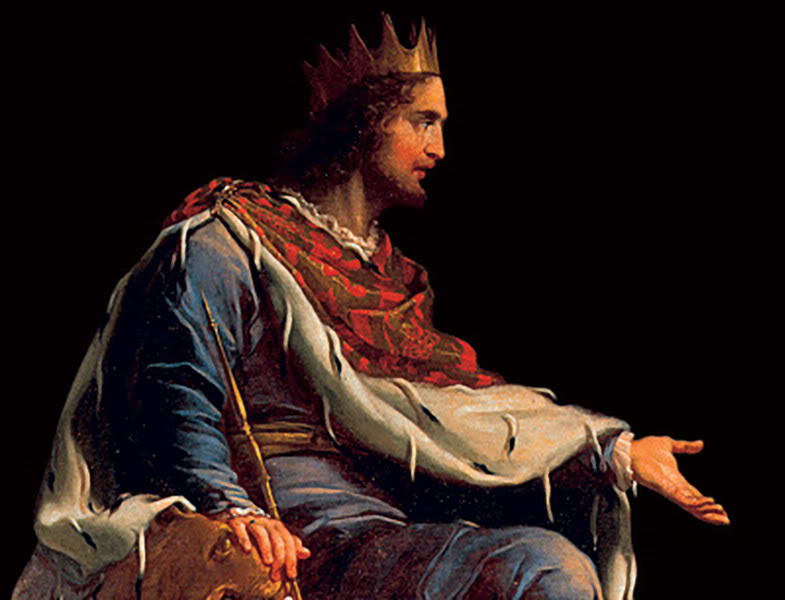
In the tenth post I show how Woody Allen pokes fun at the brilliant thinkers of this world and how King Solomon did the same thing 3000 years ago. In theeleventh postI point out how many of Woody Allen’s liberal political views come a lack of understanding of the sinful nature of man and where it originated. In thetwelfth post I look at the mannishness of man and vacuum in his heart that can only be satisfied by a relationship with God.
In the thirteenth postwe look at the life of Ernest Hemingway as pictured in MIDNIGHT AND PARIS and relate it to the change of outlook he had on life as the years passed. In the fourteenth post we look at Hemingway’s idea of Paris being a movable feast. The fifteenth andsixteenth posts both compare Hemingway’s statement, “Happiness in intelligent people is the rarest thing I know…” with Ecclesiastes 2:18 “For in much wisdom is much vexation, and he who increases knowledge increases sorrow.” The seventeenth post looks at these words Woody Allen put into Hemingway’s mouth, “We fear death because we feel that we haven’t loved well enough or loved at all.”
In MIDNIGHT IN PARIS Hemingway and Gil Pender talk about their literary idol Mark Twain and the eighteenth post is summed up nicely by Kris Hemphill‘swords, “Both Twain and [King Solomon in the Book of Ecclesiastes] voice questions our souls long to have answered: Where does one find enduring meaning, life purpose, and sustainable joy, and why do so few seem to find it? The nineteenth postlooks at the tension felt both in the life of Gil Pender (written by Woody Allen) in the movie MIDNIGHT IN PARIS and in Mark Twain’s life and that is when an atheist says he wants to scoff at the idea THAT WE WERE PUT HERE FOR A PURPOSE but he must stay face the reality of Ecclesiastes 3:11 that says “God has planted eternity in the heart of men…” and THAT CHANGES EVERYTHING! Therefore, the secular view that there is no such thing as love or purpose looks implausible. The twentieth post examines how Mark Twain discovered just like King Solomon in the Book of Ecclesiastes that there is no explanation for the suffering and injustice that occurs in life UNDER THE SUN. Solomon actually brought God back into the picture in the last chapter and he looked ABOVE THE SUN for the books to be balanced and for the tears to be wiped away.
The twenty-first post looks at the words of King Solomon, Woody Allen and Mark Twain that without God in the picture our lives UNDER THE SUN will accomplish nothing that lasts. Thetwenty-second postlooks at King Solomon’s experiment 3000 years that proved that luxuries can’t bring satisfaction to one’s life but we have seen this proven over and over through the ages. Mark Twain lampooned the rich in his book “The Gilded Age” and he discussed get rich quick fever, but Sam Clemens loved money and the comfort and luxuries it could buy. Likewise Scott Fitzgerald was very successful in the 1920’s after his publication of THE GREAT GATSBY and lived a lavish lifestyle until his death in 1940 as a result of alcoholism.
In the twenty-third postwe look at Mark Twain’s statement that people should either commit suicide or stay drunk if they are “demonstrably wise” and want to “keep their reasoning faculties.” We actually see this play out in the film MIDNIGHT IN PARIS with the character Zelda Fitzgerald. In the twenty-fourth, twenty-fifth and twenty-sixth posts I look at Mark Twain and the issue of racism. In MIDNIGHT IN PARIS we see the difference between the attitudes concerning race in 1925 Paris and the rest of the world.
The twenty-seventh and twenty-eighth posts are summing up Mark Twain. In the 29th post we ask did MIDNIGHT IN PARIS accurately portray Hemingway’s personality and outlook on life? and in the 30th postthe life and views of Hemingway are summed up.
In the 31st post we will observe that just like Solomon Picasso slept with many women. Solomon actually slept with over 1000 women ( Eccl 2:8, I Kings 11:3), and both men ended their lives bitter against all women and in the 32nd post we look at what happened to these former lovers of Picasso. In the 33rd post we see that Picasso deliberately painted his secular worldview of fragmentation on his canvas but he could not live with the loss of humanness and he reverted back at crucial points and painted those he loved with all his genius and with all their humanness!!! In the 34th post we notice that both Solomon in Ecclesiastes and Picasso in his painting had an obsession with the issue of their impending death!!!
Woody Allen believes that we live in a cold, violent and meaningless universe and it seems that his main character (Gil Pender, played by Owen Wilson) in the movie MIDNIGHT IN PARIS shares that view. Pender’s meeting with the Surrealists is by far the best scene in the movie because they are ones who can […]
In the last post I pointed out how King Solomon in Ecclesiastes painted a dismal situation for modern man in life UNDER THE SUN and that Bertrand Russell, and T.S. Eliot and other modern writers had agreed with Solomon’s view. However, T.S. Eliot had found a solution to this problem and put his faith in […]
In MIDNIGHT IN PARIS Gil Pender ponders the advice he gets from his literary heroes from the 1920’s. King Solomon in Ecclesiastes painted a dismal situation for modern man in life UNDER THE SUN and many modern artists, poets, and philosophers have agreed. In the 1920’s T.S.Eliot and his house guest Bertrand Russell were two of […]
The issue of Abortion is a very central one in our culture today and I will do a series of posts on my correspondence with Carl Sagan concerning this issue.
Unplanned Official Trailer – In Theaters March 29
___________
I wrote Carl Sagan a letter on 8-30-95 about abortion and he responded by sending me a copy of his article on abortion. In my letter I included this article below by Greg Koukl.
What makes a person a person? Does a fetus qualify?
I’m asking for people just to work hard to get some clarity on this issue. It’s not that hard. If I’ve heard this once, I’ve heard it a dozen times: “This is a difficult issue. It’s a confusing issue. It’s hard to come to a real, proper understanding.” The abortion issue is not a difficult issue. It is not a confusing issue. It is a very simple issue when it comes to the facts themselves. And I’m trying to urge people to have some clarity based on what is true here and what is moral and right; not based on what we want for ourselves. That’s what makes these kind of issues complicated. The truth is self-evident but we don’t like what is true because it makes a moral demand upon us, and that moral demand frequently is uncomfortable and inconveniencing. When we face discomfort and inconvenience, then we want to change the rules; and we try to change the rules by using contorted, disfigured arguments and we claim that it’s a difficult issue. It’s not difficult at all.
I talked with a young lady last night who made the point that she
thinks that. She used the illustration of snapshots. If you took a photo
of the developing fetus at every stage of development you would see
something different; therefore the fetus is a different thing at each
different stage of development. Well, that’s an idea, I guess. That’s a
way of looking at it but it doesn’t make any sense whatsoever. It
doesn’t mean because you can take a picture of me at six, and ten, and
twelve, and twenty-four, and forty-four that I am somehow a different
being. I’m the same being talking on this show right now that graduated
from Simon Greenleaf University two weeks ago, and graduated from York
High School in 1968, even though I don’t look the same as I did back
then. I still have my girlish figure, but I look different.
Does that mean I’m a different person? I’m a different being? All
these gradualism arguments fail because they don’t have a clear fix on
what it means for a thing to be a thing. It sounds like double talk, but
it’s not double talk at all. It’s very simple. A thing is itself and
not something else, and it remains itself as long as it exists.
I am Greg Koukl. I was Greg Koukl when I was born, and I’ll be Greg
Koukl when I die. I am Greg Koukl from beginning to end. I am Greg Koukl
the whole time through even though my body changes form. Beings don’t
transform into different beings. They are what they are.
When does an acorn become an oak? Well, no one knows for sure. Of course we do! An acorn never becomes an oak. An acorn is
an oak. Period. That’s what an acorn is. It’s an oak in immature form.
It can become a mature oak tree. But young or old, it’s an oak. This is
not a matter of opinion, folks. When we get down to it, acorn doesn’t
describe what a thing is, in a sense; it describes the stage of
development of that particular thing. It’s kind of like asking what is a
teenager? Well, a teenager isn’t a particular thing, like there is a
being called teenager. What a teenager is a description of the stage of
development of the human being. It is a human at a certain age. An acorn
is an oak at a certain age. And a fetus is a human being at a certain
age.
Now some people try to get around this by saying, “Okay, I’ll give
in. An unborn child is a human being, but it’s not a person.” And I have
a very simple Columbo for you in that situation. It’s very, very easy
to use. When someone lays this on you, ask them a very fair question:
What’s the difference? They will say absolutely nothing. There will be a
long, embarrassing silence and don’t you dare open your mouth because
what this person has just said is that they are willing to sacrifice the
life of a human child because it’s not a person, yet they are not in
any position whatsoever to tell you the difference between the two.
It’s kind of like saying why are you killing those children? “Well, it’s because they don’t have a high enough I.Q.” Well, how high of an I.Q. do you have to have to live? “Frankly, I don’t have the faintest idea, but I know these kids are pretty dumb.” What is that? That is exactly what this response implies. Nonpersons shouldn’t be allowed to live. What’s a nonperson? “I don’t know, but they’re not one of them.” If a person is willing to sacrifice the life of a child based on its nonpersonhood, it seems to me they ought to have a fairly clear idea of what personhood actually is. But of course nobody does in a clear fashion. It becomes arbitrary at that point.
(Frank Beckwith has written many good pro-life articles)
The fact is that human beings are persons. They are personal kinds of beings whether they are in an early stage of development or a later stage of development. That’s what a human is and it remains itself from the beginning to end. It’s very simple. It’s not hard. It’s not complex. We’ve known it for ages. This personhood argument is only 10-20 years old, since Roe vs. Wade, Frank Beckwithsays. Before then there was never a personhood argument. It was introduced after Roe v. Wade to make the decision to have an abortion a little more palatable. The same thing happened with Dred Scott. He’s not a person, he’s black. He’s not a person, though he’s a human technically; but that’s just a little detail. It’s not significant.
For the complete text, including illustrations, introductory quote,
footnotes, and commentary on the reaction to the originally published
article see Billions and Billions.
The issue had been decided years ago. The court had chosen the middle
ground. You’d think the fight was over. Instead, there are mass
rallies, bombings and intimidation, murders of workers at abortion
clinics, arrests, intense lobbying, legislative drama, Congressional
hearings, Supreme Court decisions, major political parties almost
defining themselves on the issue, and clerics threatening politicians
with perdition. Partisans fling accusations of hypocrisy and murder. The
intent of the Constitution and the will of God are equally invoked.
Doubtful arguments are trotted out as certitudes. The contending
factions call on science to bolster their positions. Families are
divided, husbands and wives agree not to discuss it, old friends are no
longer speaking. Politicians check the latest polls to discover the
dictates of their consciences. Amid all the shouting, it is hard for the
adversaries to hear one another. Opinions are polarized. Minds are
closed.
Is it wrong to abort a pregnancy? Always? Sometimes? Never? How do we
decide? We wrote this article to understand better what the contending
views are and to see if we ourselves could find a position that would
satisfy us both. Is there no middle ground? We had to weigh the
arguments of both sides for consistency and to pose test cases, some of
which are purely hypothetical. If in some of these tests we seem to go
too far, we ask the reader to be patient with us–we’re trying to stress
the various positions to the breaking point to see their weaknesses and
where they fail.
In contemplative moments, nearly everyone recognizes that the issue
is not wholly one-sided. Many partisans of differing views, we find,
feel some disquiet, some unease when confronting what’s behind the
opposing arguments. (This is partly why such confrontations are
avoided.) And the issue surely touches on deep questions: What are our
responses to one another? Should we permit the state to intrude into the
most intimate and personal aspects of our lives? Where are the
boundaries of freedom? What does it mean to be human?
Of the many actual points of view, it is widely held–especially in
the media, which rarely have the time or the inclination to make fine
distinctions–that there are only two: “pro-choice” and “pro-life.” This
is what the two principal warring camps like to call themselves, and
that’s what we’ll call them here. In the simplest characterization, a
pro-choicer would hold that the decision to abort a pregnancy is to be
made only by the woman; the state has no right to interfere. And a
pro-lifer would hold that, from the moment of conception, the embryo or
fetus is alive; that this life imposes on us a moral obligation to
preserve it; and that abortion is tantamount to murder. Both
names–pro-choice and pro-life–were picked with an eye toward influencing
those whose minds are not yet made up: Few people wish to be counted
either as being against freedom of choice or as opposed to life. Indeed,
freedom and life are two of our most cherished values, and here they
seem to be in fundamental conflict.
Let’s consider these two absolutist positions in turn. A newborn baby
is surely the same being it was just before birth. There ‘s good
evidence that a late-term fetus responds to sound–including music, but
especially its mother’s voice. It can suck its thumb or do a somersault.
Occasionally, it generates adult brain-wave patterns. Some people claim
to remember being born, or even the uterine environment. Perhaps there
is thought in the womb. It’s hard to maintain that a transformation to
full personhood happens abruptly at the moment of birth. Why, then,
should it be murder to kill an infant the day after it was born but not
the day before?
As a practical matter, this isn’t very important: Less than 1 percent
of all tabulated abortions in the United States are listed in the last
three months of pregnancy (and, on closer investigation, most such
reports turn out to be due to miscarriage or miscalculation). But
third-trimester abortions provide a test of the limits of the pro-choice
point of view. Does a woman’s “innate right to control her own body”
encompass the right to kill a near-term fetus who is, for all intents
and purposes, identical to a newborn child?
We believe that many supporters of reproductive freedom are troubled
at least occasionally by this question. But they are reluctant to raise
it because it is the beginning of a slippery slope. If it is
impermissible to abort a pregnancy in the ninth month, what about the
eighth, seventh, sixth … ? Once we acknowledge that the state can
interfere at any time in the pregnancy, doesn’t it follow that the state can interfere at all times?
This conjures up the specter of predominantly male, predominantly
affluent legislators telling poor women they must bear and raise alone
children they cannot afford to bring up; forcing teenagers to bear
children they are not emotionally prepared to deal with; saying to women
who wish for a career that they must give up their dreams, stay home,
and bring up babies; and, worst of all, condemning victims of rape and
incest to carry and nurture the offspring of their assailants.
Legislative prohibitions on abortion arouse the suspicion that their
real intent is to control the independence and sexuality of women…
And yet, by consensus, all of us think it proper that there be
prohibitions against, and penalties exacted for, murder. It would be a
flimsy defense if the murderer pleads that this is just between him and
his victim and none of the government’s business. If killing a fetus is
truly killing a human being, is it not the duty of the state to prevent it? Indeed, one of the chief functions of government is to protect the weak from the strong.
If we do not oppose abortion at some stage of pregnancy, is
there not a danger of dismissing an entire category of human beings as
unworthy of our protection and respect? And isn’t that dismissal the
hallmark of sexism, racism, nationalism, and religious fanaticism?
Shouldn’t those dedicated to fighting such injustices be scrupulously
careful not to embrace another?
For the complete text, including illustrations, introductory quote,
footnotes, and commentary on the reaction to the originally published
article see Billions and Billions.
There is no right to life in any society on Earth today, nor has
there been at any former time… : We raise farm animals for slaughter;
destroy forests; pollute rivers and lakes until no fish can live there;
kill deer and elk for sport, leopards for the pelts, and whales for
fertilizer; entrap dolphins, gasping and writhing, in great tuna nets;
club seal pups to death; and render a species extinct every day. All
these beasts and vegetables are as alive as we. What is (allegedly)
protected is not life, but human life.
And even with that protection, casual murder is an urban commonplace,
and we wage “conventional” wars with tolls so terrible that we are,
most of us, afraid to consider them very deeply… That protection, that
right to life, eludes the 40,000 children under five who die on our
planet each day from preventable starvation, dehydration, disease, and
neglect.
Those who assert a “right to life” are for (at most) not just any
kind of life, but for–particularly and uniquely—human life. So they too,
like pro-choicers, must decide what distinguishes a human being from
other animals and when, during gestation, the uniquely human
qualities–whatever they are–emerge.
Despite many claims to the contrary, life does not begin at
conception: It is an unbroken chain that stretches back nearly to the
origin of the Earth, 4.6 billion years ago. Nor does human life
begin at conception: It is an unbroken chain dating back to the origin
of our species, hundreds of thousands of years ago. Every human sperm
and egg is, beyond the shadow of a doubt, alive. They are not human
beings, of course. However, it could be argued that neither is a
fertilized egg.
In some animals, an egg develops into a healthy adult without benefit
of a sperm cell. But not, so far as we know, among humans. A sperm and
an unfertilized egg jointly comprise the full genetic blueprint for a
human being. Under certain circumstances, after fertilization, they can
develop into a baby. But most fertilized eggs are spontaneously
miscarried. Development into a baby is by no means guaranteed. Neither a
sperm and egg separately, nor a fertilized egg, is more than a potential baby or a potential adult.
So if a sperm and egg are as human as the fertilized egg produced by
their union, and if it is murder to destroy a fertilized egg–despite the
fact that it’s only potentially a baby–why isn’t it murder to destroy a sperm or an egg?
Hundreds of millions of sperm cells (top speed with tails lashing:
five inches per hour) are produced in an average human ejaculation. A
healthy young man can produce in a week or two enough spermatozoa to
double the human population of the Earth. So is masturbation mass
murder? How about nocturnal emissions or just plain sex? When the
unfertilized egg is expelled each month, has someone died? Should we
mourn all those spontaneous miscarriages? Many lower animals can be
grown in a laboratory from a single body cell. Human cells can be
cloned… In light of such cloning technology, would we be committing mass
murder by destroying any potentially clonable cells? By shedding a drop
of blood?
All human sperm and eggs are genetic halves of “potential” human
beings. Should heroic efforts be made to save and preserve all of them,
everywhere, because of this “potential”? Is failure to do so immoral or
criminal? Of course, there’s a difference between taking a life and
failing to save it. And there’s a big difference between the probability
of survival of a sperm cell and that of a fertilized egg. But the
absurdity of a corps of high-minded semen-preservers moves us to wonder
whether a fertilized egg’s mere “potential” to become a baby really does
make destroying it murder.
Opponents of abortion worry that, once abortion is permissible
immediately after conception, no argument will restrict it at any later
time in the pregnancy. Then, they fear, one day it will be permissible
to murder a fetus that is unambiguously a human being. Both pro-choicers
and pro-lifers (at least some of them) are pushed toward absolutist
positions by parallel fears of the slippery slope.
Another slippery slope is reached by those pro-lifers who are willing
to make an exception in the agonizing case of a pregnancy resulting
from rape or incest. But why should the right to live depend on the
circumstances of conception? If the same child were to result, can the
state ordain life for the offspring of a lawful union but death for one
conceived by force or coercion? How can this be just? And if exceptions
are extended to such a fetus, why should they be withheld from any other
fetus? This is part of the reason some pro-lifers adopt what many
others consider the outrageous posture of opposing abortions under any
and all circumstances–only excepting, perhaps, when the life of the
mother is in danger.
By far the most common reason for abortion worldwide is birth
control. So shouldn’t opponents of abortion be handing out
contraceptives and teaching school children how to use them? That would
be an effective way to reduce the number of abortions. Instead, the
United States is far behind other nations in the development of safe and
effective methods of birth control–and, in many cases, opposition to
such research (and to sex education) has come from the same people who
oppose abortions.continue on to Part 3
For the complete text, including illustrations, introductory quote,
footnotes, and commentary on the reaction to the originally published
article see Billions and Billions.
The attempt to find an ethically sound and unambiguous judgment on
when, if ever, abortion is permissible has deep historical roots. Often,
especially in Christian tradition, such attempts were connected with
the question of when the soul enters the body–a matter not readily
amenable to scientific investigation and an issue of controversy even
among learned theologians. Ensoulment has been asserted to occur in the
sperm before conception, at conception, at the time of “quickening”
(when the mother is first able to feel the fetus stirring within her),
and at birth. Or even later.
Different religions have different teachings. Among hunter-gatherers,
there are usually no prohibitions against abortion, and it was common
in ancient Greece and Rome. In contrast, the more severe Assyrians
impaled women on stakes for attempting abortion. The Jewish Talmud
teaches that the fetus is not a person and has no rights. The Old and
New Testaments–rich in astonishingly detailed prohibitions on dress,
diet, and permissible words–contain not a word specifically prohibiting
abortion. The only passage that’s remotely relevant (Exodus 21:22)
decrees that if there’s a fight and a woman bystander should
accidentally be injured and made to miscarry, the assailant must pay a
fine.
Neither St. Augustine nor St. Thomas Aquinas considered early-term
abortion to be homicide (the latter on the grounds that the embryo
doesn’t look human). This view was embraced by the Church in
the Council of Vienne in 1312, and has never been repudiated. The
Catholic Church’s first and long-standing collection of canon law
(according to the leading historian of the Church’s teaching on
abortion, John Connery, S.J.) held that abortion was homicide only after
the fetus was already “formed”–roughly, the end of the first trimester.
But when sperm cells were examined in the seventeenth century by the
first microscopes, they were thought to show a fully formed human being.
An old idea of the homunculus was resuscitated–in which within each
sperm cell was a fully formed tiny human, within whose testes were
innumerable other homunculi, etc., ad infinitum. In part
through this misinterpretation of scientific data, in 1869 abortion at
any time for any reason became grounds for excommunication. It is
surprising to most Catholics and others to discover that the date was
not much earlier.
From colonial times to the nineteenth century, the choice in the
United States was the woman’s until “quickening.” An abortion in the
first or even second trimester was at worst a misdemeanor. Convictions
were rarely sought and almost impossible to obtain, because they
depended entirely on the woman’s own testimony of whether she had felt
quickening, and because of the jury’s distaste for prosecuting a woman
for exercising her right to choose. In 1800 there was not, so far as is
known, a single statute in the United States concerning abortion.
Advertisements for drugs to induce abortion could be found in virtually
every newspaper and even in many church publications–although the
language used was suitably euphemistic, if widely understood.
But by 1900, abortion had been banned at any time in pregnancy by
every state in the Union, except when necessary to save the woman’s
life. What happened to bring about so striking a reversal? Religion had
little to do with it. Drastic economic and social conversions were
turning this country from an agrarian to an urban-industrial society.
America was in the process of changing from having one of the highest
birthrates in the world to one of the lowest. Abortion certainly played a
role and stimulated forces to suppress it.
One of the most significant of these forces was the medical
profession. Up to the mid-nineteenth century, medicine was an
uncertified, unsupervised business. Anyone could hang up a shingle and
call himself (or herself) a doctor. With the rise of a new,
university-educated medical elite, anxious to enhance the status and
influence of physicians, the American Medical Association was formed. In
its first decade, the AMA began lobbying against abortions performed by
anyone except licensed physicians. New knowledge of embryology, the
physicians said, had shown the fetus to be human even before quickening.
Their assault on abortion was motivated not by concern for the health
of the woman but, they claimed, for the welfare of the fetus. You had
to be a physician to know when abortion was morally justified, because
the question depended on scientific and medical facts understood only by
physicians. At the same time, women were effectively excluded from the
medical schools, where such arcane knowledge could be acquired. So, as
things worked out, women had almost nothing to say about terminating
their own pregnancies. It was also up to the physician to decide if the
pregnancy posed a threat to the woman, and it was entirely at his
discretion to determine what was and was not a threat. For the rich
woman, the threat might be a threat to her emotional tranquillity or
even to her lifestyle. The poor woman was often forced to resort to the
back alley or the coat hanger.
This was the law until the 1960s, when a coalition of individuals and
organizations, the AMA now among them, sought to overturn it and to
reinstate the more traditional values that were to be embodied in Roe v. Wade.continue on to Part 4
If you deliberately kill a human being, it’s called murder. If you
deliberately kill a chimpanzee–biologically, our closest relative,
sharing 99.6 percent of our active genes–whatever else it is, it’s not
murder. To date, murder uniquely applies to killing human beings.
Therefore, the question of when personhood (or, if we like, ensoulment)
arises is key to the abortion debate. When does the fetus become human?
When do distinct and characteristic human qualities emerge?
We recognize that specifying a precise moment will overlook
individual differences. Therefore, if we must draw a line, it ought to
be drawn conservatively–that is, on the early side. There are people who
object to having to set some numerical limit, and we share their
disquiet; but if there is to be a law on this matter, and it is to
effect some useful compromise between the two absolutist positions, it
must specify, at least roughly, a time of transition to personhood.
Every one of us began from a dot. A fertilized egg is roughly the
size of the period at the end of this sentence. The momentous meeting of
sperm and egg generally occurs in one of the two fallopian tubes. One
cell becomes two, two become four, and so on—an exponentiation of base-2
arithmetic. By the tenth day the fertilized egg has become a kind of
hollow sphere wandering off to another realm: the womb. It destroys
tissue in its path. It sucks blood from capillaries. It bathes itself in
maternal blood, from which it extracts oxygen and nutrients. It
establishes itself as a kind of parasite on the walls of the uterus.By
the third week, around the time of the first missed menstrual period,
the forming embryo is about 2 millimeters long and is developing various
body parts. Only at this stage does it begin to be dependent on a
rudimentary placenta. It looks a little like a segmented worm.By the end
of the fourth week, it’s about 5 millimeters (about 1/5 inch) long.
It’s recognizable now as a vertebrate, its tube-shaped heart is
beginning to beat, something like the gill arches of a fish or an
amphibian become conspicuous, and there is a pronounced tail. It looks
rather like a newt or a tadpole. This is the end of the first month
after conception.By the fifth week, the gross divisions of the brain can
be distinguished. What will later develop into eyes are apparent, and
little buds appear—on their way to becoming arms and legs.By the sixth
week, the embryo is 13 millimeteres (about ½ inch) long. The eyes are
still on the side of the head, as in most animals, and the reptilian
face has connected slits where the mouth and nose eventually will be.By
the end of the seventh week, the tail is almost gone, and sexual
characteristics can be discerned (although both sexes look female). The
face is mammalian but somewhat piglike.By the end of the eighth week,
the face resembles that of a primate but is still not quite human. Most
of the human body parts are present in their essentials. Some lower
brain anatomy is well-developed. The fetus shows some reflex response to
delicate stimulation.By the tenth week, the face has an unmistakably
human cast. It is beginning to be possible to distinguish males from
females. Nails and major bone structures are not apparent until the
third month.By the fourth month, you can tell the face of one fetus from
that of another. Quickening is most commonly felt in the fifth month.
The bronchioles of the lungs do not begin developing until approximately
the sixth month, the alveoli still later.
So, if only a person can be murdered, when does the fetus attain
personhood? When its face becomes distinctly human, near the end of the
first trimester? When the fetus becomes responsive to stimuli–again, at
the end of the first trimester? When it becomes active enough to be felt
as quickening, typically in the middle of the second trimester? When
the lungs have reached a stage of development sufficient that the fetus
might, just conceivably, be able to breathe on its own in the outside
air?
The trouble with these particular developmental milestones is not
just that they’re arbitrary. More troubling is the fact that none of
them involves uniquely humancharacteristics–apart from the
superficial matter of facial appearance. All animals respond to stimuli
and move of their own volition. Large numbers are able to breathe. But
that doesn’t stop us from slaughtering them by the billions. Reflexes
and motion are not what make us human.
Other animals have advantages over us–in speed, strength, endurance,
climbing or burrowing skills, camouflage, sight or smell or hearing,
mastery of the air or water. Our one great advantage, the secret of our
success, is thought–characteristically human thought. We are able to
think things through, imagine events yet to occur, figure things out.
That’s how we invented agriculture and civilization. Thought is our
blessing and our curse, and it makes us who we are.
Thinking occurs, of course, in the brain–principally in the top
layers of the convoluted “gray matter” called the cerebral cortex. The
roughly 100 billion neurons in the brain constitute the material basis
of thought. The neurons are connected to each other, and their linkups
play a major role in what we experience as thinking. But large-scale
linking up of neurons doesn’t begin until the 24th to 27th week of
pregnancy–the sixth month.
By placing harmless electrodes on a subject’s head, scientists can
measure the electrical activity produced by the network of neurons
inside the skull. Different kinds of mental activity show different
kinds of brain waves. But brain waves with regular patterns typical of
adult human brains do not appear in the fetus until about the 30th week
of pregnancy–near the beginning of the third trimester. Fetuses younger
than this–however alive and active they may be–lack the necessary brain
architecture. They cannot yet think.
Acquiescing in the killing of any living creature, especially one
that might later become a baby, is troublesome and painful. But we’ve
rejected the extremes of “always” and “never,” and this puts us–like it
or not–on the slippery slope. If we are forced to choose a developmental
criterion, then this is where we draw the line: when the beginning of
characteristically human thinking becomes barely possible.
It is, in fact, a very conservative definition: Regular brain waves
are rarely found in fetuses. More research would help… If we wanted to
make the criterion still more stringent, to allow for occasional
precocious fetal brain development, we might draw the line at six
months. This, it so happens, is where the Supreme Court drew it in
1973–although for completely different reasons.
Its decision in the case of Roe v. Wade changed American law
on abortion. It permits abortion at the request of the woman without
restriction in the first trimester and, with some restrictions intended
to protect her health, in the second trimester. It allows states to
forbid abortion in the third trimester, except when there’s a serious
threat to the life or health of the woman. In the 1989 Webster decision,
the Supreme Court declined explicitly to overturn Roe v. Wade but in effect invited the 50 state legislatures to decide for themselves.
What was the reasoning in Roe v. Wade? There was no legal
weight given to what happens to the children once they are born, or to
the family. Instead, a woman’s right to reproductive freedom is
protected, the court ruled, by constitutional guarantees of privacy. But
that right is not unqualified. The woman’s guarantee of privacy and the
fetus’s right to life must be weighed–and when the court did the
weighing’ priority was given to privacy in the first trimester and to
life in the third. The transition was decided not from any of the
considerations we have been dealing with so far…–not when “ensoulment”
occurs, not when the fetus takes on sufficient human characteristics to
be protected by laws against murder. Instead, the criterion adopted was
whether the fetus could live outside the mother. This is called
“viability” and depends in part on the ability to breathe. The lungs are
simply not developed, and the fetus cannot breathe–no matter how
advanced an artificial lung it might be placed in—until about the 24th
week, near the start of the sixth month. This is why Roe v. Wade permits the states to prohibit abortions in the last trimester. It’s a very pragmatic criterion.
If the fetus at a certain stage of gestation would be viable outside
the womb, the argument goes, then the right of the fetus to life
overrides the right of the woman to privacy. But just what does “viable”
mean? Even a full-term newborn is not viable without a great deal of
care and love. There was a time before incubators, only a few decades
ago, when babies in their seventh month were unlikely to be viable.
Would aborting in the seventh month have been permissible then? After
the invention of incubators, did aborting pregnancies in the seventh
month suddenly become immoral? What happens if, in the future, a new
technology develops so that an artificial womb can sustain a fetus even
before the sixth month by delivering oxygen and nutrients through the
blood–as the mother does through the placenta and into the fetal blood
system? We grant that this technology is unlikely to be developed soon
or become available to many. But if it were available, does it
then become immoral to abort earlier than the sixth month, when
previously it was moral? A morality that depends on, and changes with,
technology is a fragile morality; for some, it is also an unacceptable
morality.
And why, exactly, should breathing (or kidney function, or the
ability to resist disease) justify legal protection? If a fetus can be
shown to think and feel but not be able to breathe, would it be all
right to kill it? Do we value breathing more than thinking and feeling?
Viability arguments cannot, it seems to us, coherently determine when
abortions are permissible. Some other criterion is needed. Again, we
offer for consideration the earliest onset of human thinking as that
criterion.
Since, on average, fetal thinking occurs even later than fetal lung development, we find Roe v. Wade to be a good and prudent decision addressing a complex and difficult issue. With prohibitions on abortion in the last trimester–except in cases of grave medical necessity–it strikes a fair balance between the conflicting claims of freedom and life.What do you think? What have others said about Carl Sagan’s thoughts on
___________________ ______________ Katha Pollitt gives it her
best try to portray abortion in a positive light while Scott Klusendorf
has pointed that “…when the pro-life debate has faltered, it’s because
the focus has been shifted from the real issue: What is the unborn?”
Katha Pollitt “Pro: Reclaiming Abortion Rights” Published on Nov 4, 2014
http://www.politics-prose.com/event/b… […]
By Everette Hatcher III
|
Posted in Francis Schaeffer
|
Edit
|
Comments (0)
SGT. PEPPER’S had a lot of sad stories on it and many of the
stories including people addicted to drugs and alcohol. Who are the
alcoholics on the cover of Sgt. Pepper’s Lonely Hearts Club Band Album
cover? James Joyce, W.C. Fields, and Tony Curtis are three we can start
off with. W.C.Fields’ said, “I only have […]
By Everette Hatcher III
|
Posted in Current Events
|
Edit
|
Comments (0)
I just wanted to note that I have spoken on the phone several
times and corresponded with Dr. Paul D. Simmons who is very much
pro-choice. (He is quoted in the article below.) He actually helped me
write an article to submit to Americans United for the Separation of
Church and State back in the […]
600 × 600Images may be subject to copyright.Learn More
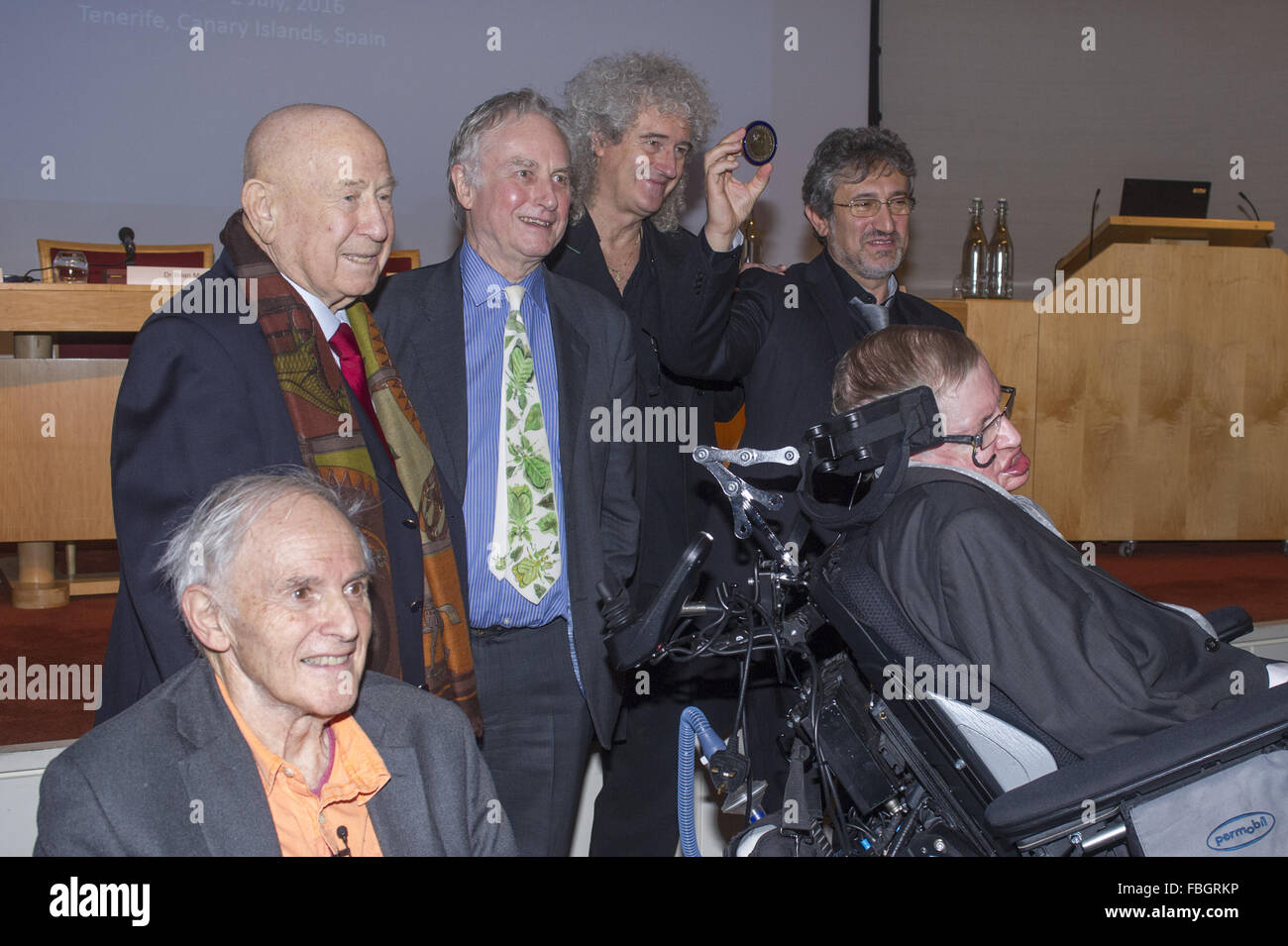
STARMUS panel announces ground-breaking Stephen Hawking Medals for Science Communication at the The Royal Society Featuring: Professor Sir Harry Kroto, Alexei Leonov, Dr Richard Dawkins, Dr Brian May, Professor Stephen Hawking, Professor Garik Israelian
In the first video below in the 15th clip in this series are Hawking’s words and my response is was given in an earlier post.
In the popular You Tube video “Renowned Academics Speaking About God” Professor Hawking made the following statement:
“M-Theory doesn’t disprove God, but it does make him unnecessary. It predicts that the universe will be spontaneously created out of nothing without the need for a creator.” –Stephen Hawking, Cambridge theoretical physicist
and you will hear what far smarter people than I have to say on this matter. I agree with them.
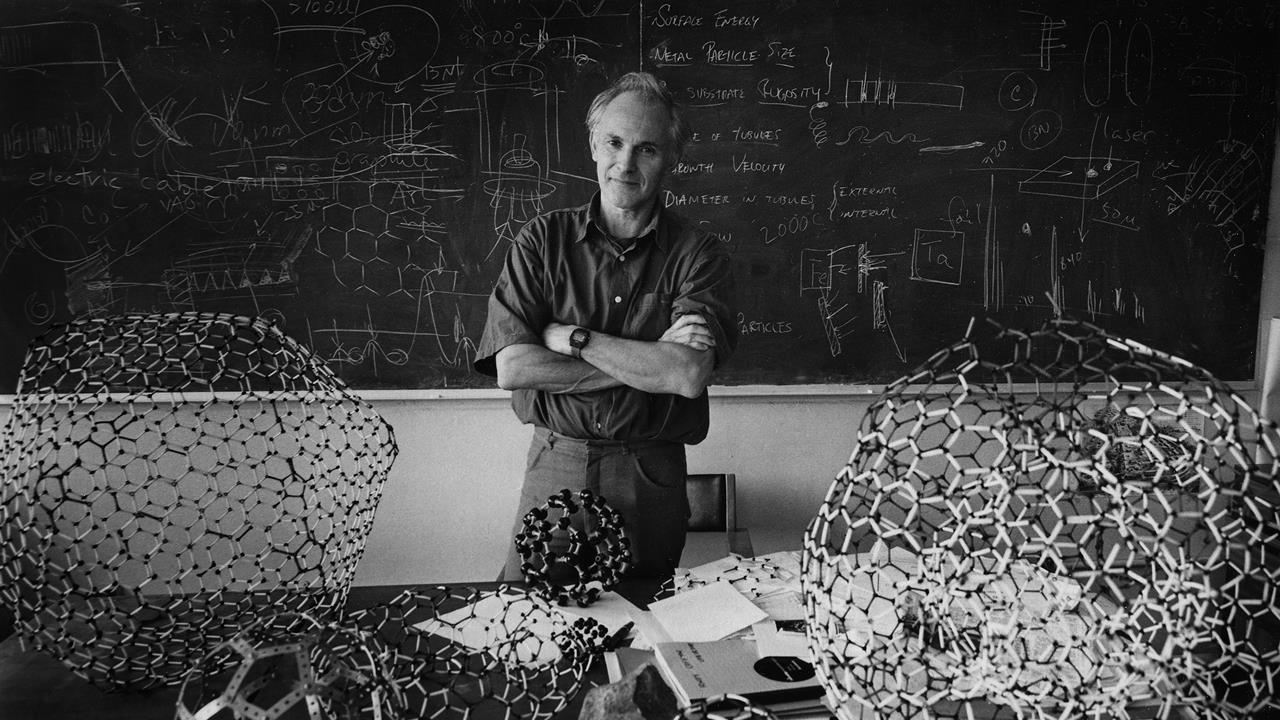
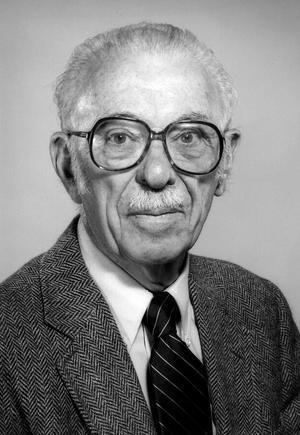
Harry Kroto
__
(Harry Kroto pictured below)
50 Renowned Academics Speaking About God (Part 1)
Another 50 Renowned Academics Speaking About God (Part 2)
A Further 50 Renowned Academics Speaking About God (Part 3)
This is the third part of the letter to Stephen Hawking, but the second part was posted last week on my blog and the fourth will posted next week.
SECTION #2 If there is no Afterlife, how can there be any lasting meaning to our lives?Should people be asking themselves these types of Questions???
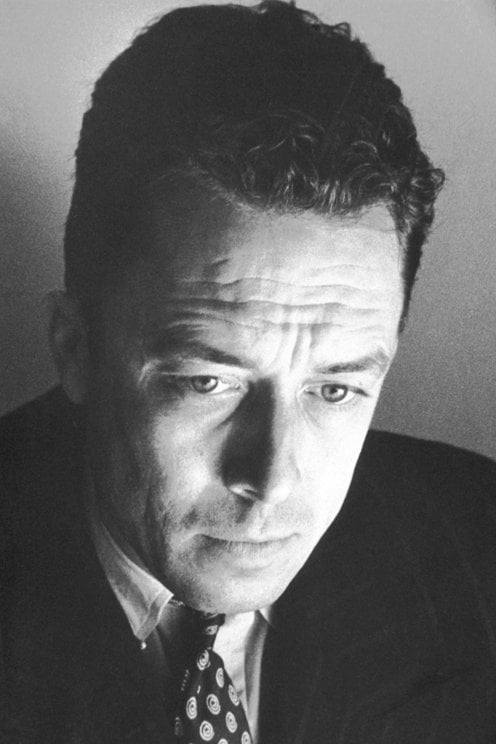
Albert Camus:The fundamental question about life is meaning, anything else is secondary and until that question of meaning is dealt with I really cannot for what the answers are for the other queries.George H. Smith – Religions are successful, not because they provide the correct answers, but because they ask important questions—Questions that concern every human being. What is the nature of the universe? Is there a purpose, or plan, to human existence? …PESSIMISM FROM AGNOSTICS?Nathaniel Brandon: But twentieth-century philosophy has almost totally backed off from the responsibility of offering such a vision or addressing itself to the kind of questions human beings struggle with in the course of their existence. Twentieth-century philosophy typically scorns system building. The problems to which it addresses itself grow smaller and smaller and more and more remote from human experience. At their philosophical conferences and conventions, philosophers explicitly acknowledge that they have nothing of practical value to offer anyone. This is not my accusation; they announce it themselves.During the same period of history, the twentieth century, orthodox religion has lost more and more of its hold over people’s minds and lives. It is perceived as more and more irrelevant. Its demise as a cultural force really began with the Renaissance and has been declining ever since.But the need for answers persists. The need for values by which to guide our lives remains unabated. The hunger for intelligibility is as strong as it ever was. The world around us is more and more confusing, more and more frightening; the need to understand it cries out in anguish.The ENCYCLPEDIA OF PHILOSOPHY on page 471 “When Fred Hoyle in his book THE NATURE OF THE UNIVERSE turns to what he calls ‘the deeper issues’ and remarks that we find ourselves in a ‘dreadful situation’ in which there is ‘scarcely a clue as to whether our existence has ourselves in a ‘dreadful situation’ in which there is ‘scarcely a clue as to whether our existence has any real significance.’ He is using the word ‘significance’ in this comic sense.”
On Sunday April 11, 1920 in Chicago there was a debate on this question: Has life any meaning? The following 3 quotes were taken from that meeting:Percy Ward -How can life have any meaning at all, when all living things, along with the world on which they live, are doomed to destruction? What meaning can there be to life, when its dominant law is age-long and world-wide struggle for existence? What possible meaning can there be to life, when the chief experience of living things is suffering and pain? Percy Ward – “To what end is comic evolution moving? All this life which rises, step by step, from moneron to main is impotent effort; the road to nowhere. Imagine an artist devoting his entire life to the painting of a wonderful picture; and then, when his picture is completed, tearing it to ribbons, what could be the meaning of such a painter’s behavior? Arthur J. Balfour – “Man, so far as natural science by itself is able to teach us, is no longer the final cause of the universe, the heaven-descended heir of all the ages. His very existence is an accident, history a brief and transitory episode in the life of one of the meanest of the planets…Man will go down into the pit, and all his thoughts will perish, the uneasy consciousness, which in this obscure corner has for a long space broken the contented silence of the universe, will be at rest. Matter will know itself no longer. Imperishable monuments and immortal deeds, death itself, will be as though they had never been.”SHOULD TRUE HUMANISTS BE OPTIMISTS OR NIHILISTS?????????Paul Kurtz –
220 × 323Images may be subject to copyright. Learn More
“The universe is neutral, indifferent to man’s existential yearnings. But we instinctively discover life, experience its throb, its excitement, its attraction. Life is here to be lived, enjoyed, suffered, and endured…Again–one cannot ‘prove’ this normative principle to everyone’s satisfaction. Living beings tend instinctively to maintain themselves and to reproduce beyond ultimate justification. It is a brute fact of our contingent natures; It is an instinctive desire to live.”
220 × 330Images may be subject to copyright. Learn More
J.P. Moreland – “2 Objections to optimistic humanism: #1 There is no rational justification for choosing it over nihilism. As far as rationality is concerned, it has nothing to offer over nihilism. Therefore, optimistic humanism suffers from some of the same objections we raised against nihilism. Kurtz himself admits that the ultimate values of humanism are incapable of rational justification!!!!!! #2 Optimistic Humanism really answers the question of the meaning of life in the negative, just as nihilism does. For the optimistic humanist life has no objective value or purpose; It offers only subjective satisfaction, one should think long and hard before embracing such a horrible view. If there is a decent case that life has objective value and purpose, then such a case should be given as good a hearing as possible.
R.C. Sproul:Nihilism has two traditional enemies–Theism and Naive Humanism. The theist contradicts the nihilist because the existence of God guarantees that ultimate meaning and significance of personal life and history. Naive Humanism is considered naive by the nihilist because it rhapsodizes–with no rational foundation–the dignity and significance of human life. The humanist declares that man is a cosmic accident whose origin was fortuitous and entrenched in meaningless insignificance. Yet in between the humanist mindlessly crusades for, defends, and celebrates the chimera of human dignity…Herein is the dilemma: Nihilism declares that nothing really matters ultimately…In my judgment, no philosophical treatise has ever surpassed or equaled the penetrating analysis of the ultimate question of meaning versus vanity that is found in the Book of Ecclesiastes
PAGE 4
J. Kerby Anderson– “The cynicism and skepticism in the arts, politics, commerce, and the media all testify to the futility of trying to find wisdom and meaning in a world without wisdom based on ‘the Fear of the Lord’ is folly.
1200 × 628Images may be subject to copyright. Learn More
Ravi Zacharias – “Having killed God, the atheist is left with no reason for being, no morality to espouse, no meaning to life and no hope beyond the grave.”Arthur Ashe – (born in 1943, won U.S.Open in 1968, and Wimbledon in 1975) “If I am just remembered as an exceptional tennis player then my life really was not much.”The next two quotes by Kai Nielson and the next quote by J.P. Moreland were taken from a debate held at Ole Miss on March 24, 1988. This debate was later published by Prometheus Books by the title DOES GOD EXIST? Does death ultimately take away the love we feel for others?Kai Nielson – “If you love someone, whether there is a God or not, that love can go on. It remains intact. It might even be more intact, because if death ends it all, the love relationships between people in life are all the more precious because that is all there is in that respect. So that’s perfectly intact, God or no God. Indeed, as I have just argued, it may even become more important.”
220 × 305Images may be subject to copyright. Learn More
Clarence Darrow – “I love my friends, but they all must come to a tragic end. Death is more terrible the more one is attached to things in the world.” Do we need a lasting purpose to our lives?Kai Nielson – “There are all those intentions, purposes, goals, and the like that you can figure out and can have. They are what John Rawls called life plans. You can have all these purposes in life even though there is no purpose to life. So life doesn’t become meaningless and pointless if you were not made for a purpose.”
200 × 238Images may be subject to copyright. Learn More
Francis Schaeffer – “The struggle for modern man is to begin with himself and find a meaning in life. Not just plans in life. It is nothing to have plans in life. Anybody can find plans in life. A child can fill up his time with plans of building tomorrow’s sand castle when today’s have been washed away. There is a difference between finding plans in life and purpose.”J.P.Moreland – “James Rachels says that we don’t need purpose in the sense of an over arching objective purpose to life, but we can have purpose in life, as Nielson says. And he means by that ‘subjective satisfaction,’ things that we find worthwhile to us. Now if this is true, what’s the difference, let’s say between becoming a doctor and feeding the poor and sitting around pinching heads off rats or being a Sisyphus and pushing a rock up and down a hill, or giving your time to flipping tiddlywinks? There is no difference since each of these options could be satisfying and worthwhile to someone.”Marvin Kohl – (Taken from an article in FREE INQUIRY, Spring 81 issue, article entitled, “The Meaning of Life and belief in God” ) “….Belief in beneficent providence is untrue. It is untrue because there is no evidence to warrant the claim that there is a benevolent force behind nature. Not only does the secular humanist deny that we have knowledge about a friend behind the universe; He also denies that we have knowledge about divine or cosmic purpose. The argument in its essential form is simple and, I believe, decisive. Purposes can only be correctly assigned to sentient beings; And since man does not have knowledge that God or other sentient beings govern the universe, He cannot on a cognitive level maintain that the universe has any purpose…The facts also indicate that many, like lady Katharine (Bertrand Russell’s Christian daughter who was quoted earlier in the article), are given insight about the meaning of life, about the chief end of human living, when they believe God makes a disclosure about his own nature and purpose and gently embraces them in his absolute love. In short, it appears to be true that belief in God has had and still has the power to give comfort and consolation to millions of devout believers. Largely because of this, two important claims cannot be easily, if at all, dismissed. They are: (1) that in addition to other basic human needs, there is a need for psychological security, which includes the need to believe in God, or at least believe that the cosmos is guided by a loving purpose; and (2) that this need is often successfully met if a man genuinely recognizes that his goal for living is in, and given to him by, God.”Aldous Huxley – “Science does not retain the sovereignty over metaphysical pronouncements…Science does not have the right to give to me my reason for being and my definition for existence, but I am going to take science’s view because I want this world not to have meaning because it frees me to my own erotic and political desires.”
Like you, I have always loved golf and like you I grew up in the Memphis area.
In 1977, two huge events made national news at the now titled “Danny Thomas Memphis Classic.” First, President Gerald Ford made a hole-in-one during Wednesday’s Celebrity Pro-Am. That event is now referred to as the “Shot Heard ‘Round the World.” Two days later, Al Geiberger shocked the golf world with his record low round of 59 on Friday of the tournament. The 13-under-par round still stands as a PGA TOUR record. (Chip Beck and David Duval have since tied the mark.)
I had the chance to hear the roar that came from the crowd that day that President Ford hit the hole in one (on hole #5 at Colonial Country Club in Cordova, TN). Just a few holes later I saw Danny Thomas walking around saying with slurred speech, :”This is the ball, this is the ball” while he held up a golf ball. I thought he was going to fall on me as he passed by.
Then just two days later I saw the last 5 holes of Al Geiberger’s 59. He was walking around with this silly grin on his face because almost every putt was going in.
You and I have something in common and it is the song GOD’S GONNA CUT YOU DOWN. You were in the video and my post about that video entitled, People in the Johnny Cash video “God’s Gonna Cut You Down” is the most popular post I have done in recent years. It ranked #1 for all of 2015 and I have over 1,000,000 hits on my http://www.thedailyhatch.org blog site. The ironic thing is that I never knew what a big deal Johnny Cash was until he had died. I grew up in Memphis with his nephew Paul Garrett and we even went to the same school and church. Paul’s mother was Johnny Cash’s sister Margaret Louise Garrett.
Stu Carnall, an early tour manager for Johnny Cash, recalled, “Johnny’s an individualist, and he’s a loner….We’d be on the road for weeks at a time, staying at motels and hotels along the way. While the other members of the troupe would sleep in, Johnny would disappear for a few hours. When he returned, if anyone asked where he’d been, he’d answer straight faced, ‘to church.'”
There were two sides to Johnny Cash and he expressed that best when he said, “There is a spiritual side to me that goes real deep, but I confess right up front that I’m the biggest sinner of them all.”
Have you ever taken the time to read the words of the song?
You can run on for a long time
Run on for a long time
Run on for a long time
Sooner or later God’ll cut you down
Sooner or later God’ll cut you down
Go tell that long tongue liar
Go and tell that midnight rider
Tell the rambler,
The gambler,
The back biter
Tell ’em that God’s gonna cut ’em down
Tell ’em that God’s gonna cut ’em down
Well my goodness gracious let me tell you the news
My head’s been wet with the midnight dew
I’ve been down on bended knee talkin’ to the man from Galilee
He spoke to me in the voice so sweet
I thought I heard the shuffle of the angel’s feet
He called my name and my heart stood still
When he said, “John go do My will!”
Well you may throw your rock and hide your hand
Workin’ in the dark against your fellow man
But as sure as God made black and white
What’s down in the dark will be brought to the light
You can run on for a long time
Run on for a long time
Sooner or later God’ll cut you down
___
Johnny Cash sang this song of Judgment because he knew the Bible says in Romans 6:23, “For the wages of sin is death; but the GIFT OF GOD IS ETERNAL LIFE THROUGH JESUS CHRIST OUR LORD.” The first part of this verse is about the judgment sinners must face if not pardoned, but the second part is about Christ who paid our sin debt!!! Did you know that Romans 6:23 is part of what we call the Roman Road to Christ. Here is how it goes:
Because of our sin, we are separated from God. For all have sinned and fall short of the glory of God. (Romans 3:23)
The Penalty for our sin is death. For the wages of sin is death, but the gift of God is eternal life in Jesus Christ our Lord.(Romans 6:23)
The penalty for our sin was paid by Jesus Christ! But God demonstrates His own love toward us, in that while we were yet sinners, Christ died for us. (Romans 5:8)
If we repent of our sin, then confess and trust Jesus Christ as our Lord and Savior, we will be saved from our sins! For whoever calls on the name of the Lord shall be saved. (Romans 10:13)
…if you confess with your mouth the Lord Jesus and believe in your heart that God has raised Him from the dead, you will be saved. For with the heart one believes unto righteousness, and with the mouth confession is made unto salvation. (Romans 10:9,10)
PS:If one repents and puts trust in Christ alone for eternal life then he or she will be forgiven. Francis Schaeffer noted, “If Satan tempts you to worry over it, rebuff him by saying I AM FORGIVEN ON THE BASIS OF THE WORK OF CHRIST AS HE DIED ON THE CROSS!!!”
Johnny Cash’s version of the traditional God’s Gonna Cut You Down, from the album “American V: A Hundred Highways”, was released as a music video on November 9 2006, just over three years after Cash died. Producer Rick Rubin opens the music video, saying, “You know, Johnny always wore black. He wore black because he identified with the poor and the downtrodden…”. What follows is a collection of black and white clips of well known pop artists wearing black, each interacting with the song in their own way. Some use religious imagery. Howard sits in his limo reading from Ezekiel 34, a Biblical passage warning about impending judgment for false shepherd. Bono leaning on a graffiti-filled wall between angel’s wings and a halo, pointing to the words, “Sinners Make The Best Saints. J.C. R.I.P.” A number of artists wear or hold crosses.
Artists appear in this order: Rick Rubin, Iggy Pop, Kanye West, Chris Martin, Kris Kristofferson, Patti Smith, Terence Howard, Flea (Red Hot Chili Peppers), Q-Tip, Adam Levine (Maroon 5), Chris Rock, Justin Timberlake, Kate Moss, Sir Peter Blake (Sgt Peppers Artist), Sheryl Crow, Denis Hopper, Woody Harrelson, Amy Lee of Evanescence, Tommy Lee, Natalie Maines, Emily Robison, Martie Maguire (Dixie Chicks), Mick Jones, Sharon Stone, Bono, Shelby Lynne, Anthony Kiedis, Travis Barker, Lisa Marie Presley, Kid Rock, Jay Z, Keith Richards, Billy Gibbons, Corinne Bailey Rae, Johnny Depp, Graham Nash, Brian Wilson, Rick Rubin and Owen Wilson. The video finishes with Rick Rubin traveling to a seaside cliff with friend Owen Wilson to throw a bouquet of flowers up in the air.
American singer and civil rights activist Odetta recorded a traditional version of the song. Musician Sean Michel covered the song during his audition on Season 6 of American Idol.Matchbox Twenty also used the song before playing “How Far We’ve Come” on their “Exile in America” tour.
The New Jersey rock band The Gaslight Anthem have also covered the song.[citation needed] Canadian rock band Three Days Grace has used the song in the opening of their live shows, as well as the rock band Staind . Bobbie Gentry recorded a version as “Sermon” on her album The Delta Sweete. Guitarist Bill Leverty recorded a version for his third solo project Deep South, a tribute album of traditional songs. Tom Jones recorded an up-tempo version which appears on his 2010 album Praise & Blame. Pow woW recorded a version with the Golden Gate Quartet for their 1992 album Regagner les Plaines and performed a live version with the quartet in 2008. A cover of the song by Blues Saraceno was used for the Season 8 trailer of the TV series Dexter. Pedro Costarecorded a neo-blues version for the Discovery channel TV show Weed Country (2013). Virginia based folk rock band Carbon Leaf covered the song many times during their live shows.
SANTIAGO, Chile (BP)–Sean Michel smiled through his distinctive, foot-long beard as he slid the guitar strap over his shoulder and greeted the crowd at El Huevo nightclub with what little Spanish he knows. The former American Idol contestant and his band then erupted into the sounds of Mississippi Delta blues-rock.But unlike other musicians who played that night, the Sean Michel band sang about every person’s need for God and the salvation that comes only through faith in Jesus Christ.”We came down [to Chile] to open doors that other ministries couldn’t,” said Jay Newman, Michel’s manager. “To get in places that only a rock band could — to create a vision for new church-planting movements among the underground, disenfranchised subcultures of Chile.”The Sean Michel band recently traveled through central Chile playing more than 15 shows in bars, churches, schools and parks. The group consists of Southern Baptists Sean Michel, lead singer; Alvin Rapien, lead guitarist; Seth Atchley, bass guitarist; and Tyler Groves, drummer.”Although we’re a blues rock ‘n’ roll band, we’re an extension of the church,” Michel said. “We’re kind of like ‘musicianaries,’ if you will.”MISSIONS-MINDED MUSICIANSThe band formed after Michel and Newman met as students at Ouachita Baptist University in Arkadelphia, Ark. While there, the two began recording and selling Michel’s music as a way to raise money for mission trips to Africa and Asia.”We were just trying to raise money for a mission trip, but we’d also seen God speaking to people through the music,” Michel said. “So we were like, ‘Well, maybe we need to do something with this,’ and we became a music ministry. But it’s always been rooted in missions and … in the Great Commission.”Michel graduated from Ouachita in 2001, Newman in 2004. In 2007, Newman talked Michel into auditioning for American Idol. The exposure Michel received through the television show gained a wider audience for their ministry.
“The whole American Idol thing was so weird,” Michel said. “We just kind of went on a whim. But the Lord used it in a big way.”
During his tryout, Michel belted out a soulful rendition of Johnny Cash’s “God’s Gonna Cut You Down.” The video of the audition went viral on the Internet.
Soon he was doing radio interviews in which he identified himself as a Christian and directed listeners to the band’s Gospel-laden MySpace page. On their next mission trip to Asia, Michel and Newman found that being recognizable gave them access to venues they couldn’t have entered before.
The band is now an official extension of First Southern Baptist Church of Bryant, Ark., where the musicians have long been active members serving in the music and youth ministries. Every mission trip they have taken has involved working with International Mission Board (IMB) missionaries.
“We’re Southern Baptist,” Michel said. “That’s who we roll with.”
TOUR DE FAITH
“With short-term mission trips, you can plan, but you just got to be willing for your plans to change,” said Michel. When the band arrived in Chile, they were surprised to find that their schedule wasn’t nearly as full as expected. Almost no public venues had booked shows, and many rock-wary churches had declined to host the band.
“The biggest barrier we had was the pastors,” said Cliff Case, an IMB missionary in Santiago, Chile, and a 1984 graduate of Ouachita Baptist. “The older pastors on two or three different occasions gave excuses for not doing it. It was a real frustration in that sense.”
Disappointed by the lack of interest, the band prayed for God’s help. They met Jose Campos — or Pépe, as the band came to know him. Campos works with music and youth for the Ministry of the Down and Out, an independent Christian ministry that seeks to reach the often-overlooked demographics of Santiago.
Campos was able to use his connections to book shows for the band in venues they wouldn’t have known about otherwise.
“Had we met Pépe (Campos) two or three weeks before the group came, there’s no telling how many shows we might have done,” said Case, who met Newman at Ouachita when Case and his wife, Cinthy, were missionaries-in-residence there.
Campos booked the show at El Huevo, possibly Chile’s most popular club. Playing there has given the band musical credibility among Chilean rockers. And, one Chilean church reported that a youth accepted Christ after hearing Newman talk before a show. The band already is contemplating a return tour next year.
OPENING NEW DOORS
Sharing the Gospel through their songs is only the beginning for the Sean Michel band. Their vision is to be a catalyst to help churches — and missionaries — connect with the lost people of their communities.
“God is not saving the world through rock bands,” Michel said. “He’s saving the world through the church. And it will always be through the local body.”
The band wants to see churches take ministry beyond the church doors.
“If you’re going to want to legitimately reach lost people, you’re going to have to get out,” Michel said. “Go out into the dark places. Those are the places we need to be to reach out.”
The band’s ministry in Chile opened new doors for IMB missionaries to reach the young, musical subculture of Chilean society.
“They laid the groundwork for more opportunities,” Case said. “Now we have a network of who to talk to and how to get organized. We can focus on how to use the work they’re doing so we can win people to the Lord and plant some churches.”
Tristan Taylor is an International Mission Board writer living in the Americas.
I got to hear Johnny Cash sing in person back in 1978. Here is a portion of an article about his Christian Testimony. The Man Came Around “Being a Christian isn’t for sissies,” Cash said once. “It takes a real man to live for God—a lot more man than to live for the devil, […]
I got to see Johnny Cash perform in Memphis in 1978 and I actually knew his nephew very well. He was an outspoken Christian and evangelical. Here is an article that discusses this. Johnny Cash’s Complicated Faith Dave Urbanski <!– var fbShare = { google_analytics: ‘true’, } tweetmeme_source = ‘RELEVANTMag’; –> Unwrapping the enigma of […]
I got to hear Johnny Cash sing in person back in 1978. Here is a portion of an article about his Christian Testimony. The Man Came Around A Walking Contradiction Cash’s daughter, singer-songwriter Rosanne Cash, once pointed out that “my father was raised a Baptist, but he has the soul of a mystic. He’s […]
I got to hear Johnny Cash sing in person back in 1978 at a Billy Graham Crusade in Memphis. Here is a portion of an article about his Christian Testimony. The Man Came Around Cash also made major headlines when he shared his faith on The Johnny Cash Show, a popular variety program on ABC […]
I got to hear Johnny Cash sing in person back in 1978. Here is a portion of an article about his Christian Testimony. The Man Came Around Johnny Cash was not ashamed of his Christian faith—though it was sometimes a messy faith—and even got some encouragement from Billy Graham along the way. Dave Urbanski | […]
Wikipedia noted: Johnny Cash recorded a version of “God’s Gonna Cut You Down” on American V: A Hundred Highways in 2003, with an arrangement quite different from most known gospel versions of the song. A music video, directed by Tony Kaye,[1] was made for this version in late 2006. It featured a number of celebrities, […]
Ecclesiastes 2-3 Published on Sep 19, 2012 Calvary Chapel Spring Valley | Sunday Evening | September 16, 2012 | Derek Neider _____________________________ I have written on the Book of Ecclesiastes and the subject of the meaning of our lives on several occasions on this blog. In this series on Ecclesiastes I hope to show how secular […] By Everette Hatcher III | Posted in Current Events | Edit | Comments (0)
Is Love All You Need? Jesus v. Lennon Posted on January 19, 2011 by Jovan Payes 0 On June 25, 1967, the Beatles participated in the first worldwide TV special called “Our World”. During this special, the Beatles introduced “All You Need is Love”; one of their most famous and recognizable songs. In it, John Lennon […] By Everette Hatcher III | Posted in Francis Schaeffer | Edit | Comments (0)
(Editors’ note: The October issue of First Things featured Phillip Johnson’s essay, “Evolution as Dogma: The Establishment of Naturalism,” along with responses to the essay by William B. Provine, Gareth Nelson, Irving Kristol, Thomas H. Jukes, and Matthew Berke. Herewith Professor Johnson’s reply.)
Readers of my article and the responses may have noticed that where I attacked Darwinism and the establishment of naturalism, Thomas Jukes and William Provine responded with a spirited defense of evolution. The choice of words is important, because “evolution” is a vague term with immense power to confuse.
The important claim of “evolution” is that life developed gradually from nonliving matter to its present state of diverse complexity through purposeless natural mechanisms that are known to science. Evolution in this sense is a grand metaphysical system that contradicts any meaningful notion of creation, because it leaves the Creator with nothing to do. Contemporary neo-Darwinism rules out theistic or “guided” evolution just as firmly as it rejects direct creation ex nihilo.
It is this universal, naturalistic version of evolution that Darwinists are preaching (the word is appropriate) in the schools and colleges, with more or less clarity depending on the circumstances. As Provine rightly says, liberal theologians and Darwinists share a common interest in obscuring the anti-theistic implications of Darwinism. The vagueness of “evolution” permits Darwinists to hold open the possibility of a theistic interpretation for a time, and then to slam that door shut when it is safe to do so.
“Evolution” also designates some relatively modest modifications in biological populations that result from environmental pressures. Bacterial populations evolve resistance to antibiotics: evolution causes dark moths to preponderate over light moths when the background trees are darkened by smoke. These examples have nothing to do with whatever creative process formed bacteria and insects in the first place, but since the same word is used to designate both limited adaptive modification with fixed boundaries and the whole naturalistic metaphysical system, it is easy to give the impression that naturalistic evolution (all the way from microorganism to man) is a “fact.”
I am glad to see Jukes stating explicitly that the peppered-moth case is notan example of evolution, because that example has been cited in texts and popular treatments for decades as proof of “Darwin’s theory.” Currently, the Darwinists are trumpeting some research on guppies as providing the elusive proof. The breeding practices of guppy populations vary according to the kind of predators they face. When predators attack adults guppies tend to produce more offspring earlier in life, and when predators attack primarily juveniles the adults tend to bear their offspring later in life.
Variability like this does not show guppies on the way towards turning into something else. On the contrary, it shows flexibility within limits. Like peppered moths, guppies avoid extinction by retaining the genetic capacity for back-and-forth modification as circumstances change. Nonetheless, reports of the guppy observations are being presented to the public as proof of “evolution.” The misunderstanding is not the fault of journalists, but of a science that is working too hard to support a creaky paradigm.
Once they exist, populations of organisms can change within limits. Hence “evolution” produces offshore species that closely resemble mainland species, and so on. These modifications are an interesting subject in themselves, but what we really want to know is how complex organisms and major groups like animals came to exist in the first place. Capacities like photosynthesis, vision, and intelligence involve immensely complex processes that are still only dimly understood. Are these capacities the work of a Designer, or were they produced by mindless, purposeless natural forces?
Ask that question and you will get heavy-handed ridicule from the likes of Jukes and Provine. People who resort to ridicule are often covering up something. In this case they are hoping to prevent reasoned examination of a vulnerable assumption. The assumption is that science knows of a mechanism for evolution (grand system) that can produce eyes, brains, and even plant cells without the application of massive amounts of preexisting intelligence.
If you assume a priori that science must have discovered such a mechanism then Darwinist natural selection is the winner, because nobody has another theory that meets the philosophical requirements. If you are willing to consider the possibility that something beyond what our science understands might have been at work, then you will want to ask for proof that the mutation-selection mechanism has the fantastic creative power that has been claimed for it. The proof won’t be forthcoming. All you will get are arguments that one way or another assume the point in question.
It isn’t merely that grand-scale Darwinism can’t be confirmed. The evidence is positively against the theory. For example, if Darwinism is true then the bat, monkey, pig, seal, and whale all evolved in gradual adaptive stages from a primitive rodent-like predecessor. This hypothetical common ancestor must have been connected to its diverse descendants by long linking chains of transitional intermediates,* which in turn put out innumerable side branches. The intermediate links would have to be adaptively superior to their predecessors, and be in the process of developing the complex integrated organs required for aquatic life, flight, and so on. Fossil evidence that anything of the sort happened is thoroughly missing, and in addition it is extremely difficult to imagine how the hypothetical intermediate steps could have been adaptive.
One can’t make problems of this magnitude go away simply by announcing that there must be gaps in the fossil record. According to Steven Stanley, the Bighorn Basin in Wyoming contains a continuous local record of fossil deposits for about five million years during an early period in the age of mammals. Because this record is so complete, paleontologists assumed that certain populations of the basin could be linked together to illustrate continuous evolution. What they discovered was that species that were once thought to have turned into others turn out to overlap in time with their alleged descendants, and “the fossil record does not convincingly document a single transition from one species to another.” New species seem to appear from time to time, and they are more or less related to what came before, but nobody knows how it happens.
From time to time something is found that can be interpreted to support the Darwinian scenario. The importance of such a find is then exaggerated, and the mountains of negative evidence are quite unscientifically brushed aside. An example is Provine’s purported “fossil ancestors of whales having small but still functioning legs.”
Provine evidently has in mind the Basilosaurus fossils recently reported inScience. Basilosaurus is not an ancestor of modern whales. This oddity was a kind of serpentine sea monster that has important affinities with whales but looks sufficiently different that it was at first thought to be a reptile. (The name means “King Lizard.”) Paleontologists report finding fossil leg and foot bones “in direct association with articulated skeletons of Basilosauras.” Upon reconstruction these are deemed to show vestigial hind limbs, which were too small to be used for swimming and which could not conceivably have supported the body on land. Possibly the limbs were used as guides for copulation, but that is only a guess.
There is additional circumstantial evidence which suggests a relationship between whales and land mammals. For example, modern whales have what appear to be rod-like vestiges of pelvic bones. You can call this relationship “evolution” if you like, but all you have done is to put a label on a mystery. What Darwinists want us to believe (and want to believe themselves) is that they know how mindless natural forces could have produced all those diverse mammals from an unknown common ancestor, and ultimately from a microorganism. The problem is that their theory doesn’t fit the evidence, which is why they have to protect it with bluster.
Darwinists have turned to the molecular evidence in recent years to validate “evolution.” The molecular clock hypothesis upon which Jukes relies is embroiled in complex controversy, but for present purposes a single point will suffice. Whatever else the molecular comparisons may or may not prove, they tell us nothing about how one kind of creature (e.g., a rodent) can change into another (e.g., a whale). The theory is based on the premise that molecular changes are mainly neutral, meaning that they have no substantial effect upon features important for adaptation.
The point of Darwinism is not to describe molecular relationships but to get rid of the Designer and substitute the Blind Watchmaker. As a consequence the science education organizations are engaged in a campaign of indoctrination against the concept of creation. By that I donot mean biblical literalism, but the much broader notion that a purposeful intelligence is responsible for our existence. I regret that Irving Kristol misunderstood me on this point. No doubt that is my fault for not avoiding the word “creation,” but it is just too good a word for me to allow either the scientific naturalists or the biblical literalists to capture it for their own purposes.
The science educators are not staying away from the topic of creation, but rather are campaigning against the idea. When accused of this they prevaricate, hiding within the vagueness of terms like “evolution” and “religion.” The President of the august National Academy of Sciences resorted to the following classic of Newspeak: “A great many religious leaders accept evolution on scientific grounds without relinquishing their belief in religious principles.” He wouldn’t have signed his name to that statement if he had expected to be questioned closely about what he meant by “evolution,” “religious principles,” and “scientific grounds.”
Gareth Nelson refers briefly to the many points on which we agree, but then moves quickly to the safer ground of comparing today’s science-education establishment favorably to the Sorbonne theologians of 1751. I concede that the Darwinists do not show heretics the implements of torture, but they do use all their institutional power to ensure that critics do not get a fair hearing. That is what Jukes and Provine have in mind when they suggest that responsible editors know better than to publish essays like mine. Darwinists also pursue a steady campaign of disinformation, slandering dissenters as “creationists” (i.e., biblical literalists) who deny “evolution” (observable adaptive modifications or relationships) because they just can’t bear to face the facts.
If I could have one wish, it would be for a fair opportunity to persuade the real scientists that the Darwinists are taking advantage of them. The scientific community need not panic just because somebody wants to show that Darwinism has been grossly oversold to the public. If evolutionary biology is having trouble with its mechanism, and is in danger of having its philosophical undergarments exposed to public view, why not enjoy the spectacle?
The real danger to science is that it is being linked to a dogma that can’t stand close examination in order to further an ideological agenda that goes way beyond the proper concerns of science. The worst kind of science education is the kind that tells students it is wrong to question the pronouncements of authority. The corrective doesn’t require giving a place in science class to the biblical literalists. To borrow Irving Kristol’s prescription, “Our goal should be to have biology and evolution taught in a way that points to what we don’t know as well as what we do.” I would only add that it would help if we could get the science educators to define that word “evolution” precisely and use it consistently.
* Like “evolution,” “intermediates” is a term which can be used with different meanings. What Darwinism requires is not fossils that are in some vague sense intermediate between major groups, but fossils that can establish common ancestry and direct liries of descent from ancestor to descendant. According to University of Chicago paleontologist David M. Raup, “If Darwin were writing today, he would probably still have to cite a disturbing lack of missing links or transitional forms between the major groups of organisms.” This is after 130 years of very determined efforts to confirm the theory.
Phillip E. Johnson is Professor of Law at the University of California, Berkeley. He is the author of a forthcoming book on Darwinism.
Ecclesiastes 2-3 Published on Sep 19, 2012 Calvary Chapel Spring Valley | Sunday Evening | September 16, 2012 | Derek Neider _____________________________ I have written on the Book of Ecclesiastes and the subject of the meaning of our lives on several occasions on this blog. In this series on Ecclesiastes I hope to show how secular […] By Everette Hatcher III | Posted in Current Events | Edit | Comments (0)
Is Love All You Need? Jesus v. Lennon Posted on January 19, 2011 by Jovan Payes 0 On June 25, 1967, the Beatles participated in the first worldwide TV special called “Our World”. During this special, the Beatles introduced “All You Need is Love”; one of their most famous and recognizable songs. In it, John Lennon […] By Everette Hatcher III | Posted in Francis Schaeffer | Edit | Comments (0)
Are you ready for the media frenzy that will surround Darwin’s 200thbirthday and the 150th anniversary of the publication of The Origin of Speciesin 2009? The hype is already building and the guardians of Darwin’s legacy are pulling out all the stops. Their efforts include a very interesting series of articles and letters in Nature magazine over the past several months. Here, the shortcomings of Darwinism are openly admitted, but blithely ignored. As this series has progressed, the main arguments against Darwin, including the scientific evidence and claims for priority by competing scientists, have been aired and, they assume, answered.
The Darwin “puff piece” that started it all
256 × 256Images may be subject to copyright. Learn More
Kevin Padian, of the atheist founded and operated National Center for Science Education, is a name that shows up frequently on our website (Search CMI website for “Padian”). Last February, one year before the 200thanniversary of Darwin’s birth, he published an article titled, ‘Darwin’s enduring legacy.’1 With a combination of bombast, bravado, transference, and intolerance, Padian boldly tries to salvage Darwin’s reputation and to deflect future criticism. He failed miserably.
Photo Wikipedia
The essay starts off by comparing Darwin to what he claims are the two other great thinkers of the 19th century, Marx and Freud! He readily admits that Freud’s approach no ‘longer merits scientific recognition’ (in other words, he was a fraud), but tries to salvage Marx by saying that his ideas have been ‘distorted beyond recognition’. Why can he not come out and say that these two men were shysters, ignoring the obvious and good in lieu of their pet theories? And what a strange way to back up the ‘legacy’ of Darwin! If the two other ‘greatest thinkers’ of his age were such poor examples of good thinkers, this throws open the door to a reanalysis of Darwin.
Padian tries to rebuff anticipated criticisms by claiming that Darwin has been distorted as well, with people falsely blaming a range of societal ills on Darwinism, ‘including atheism, Nazism, communism, abortion, homosexuality, stem-cell research, same-sex marriage, and the abridgment of all our natural freedoms’. He of course gave no reason why these after-effects of evolutionary thought are not consistent with the theory (see Communism and Nazism Questions and Answers).
In order to stave off some of the mounting numerical arguments against natural selection, Padian states that Darwin was less emphatic about natural selection being the driving force behind evolution than Wallace (more on him below). Is he really saying that if natural selection turns out not to be the engine of evolution, Darwin’s reputation will be secure and only Wallace’s reputation will be sullied? He mentions that Darwin introduced other ideas that might drive evolution, specifically sexual selection (Peacock tail tale failure), but he did not discuss the difficulties with sexual selection theory (Problems in sexual selection theory and neo-Darwinism), the controversy that has been raging about it for the past 125 years or so, nor how it directly contradicts the main thesis of Origin of Species! He briefly outlines the history of the near death of Darwinism at the hands of mathematicians, and how Fisher, Haldane, and Wright resurrected it in the 1930s. In this section, it sounds like he is trying to head off the conclusions of a new book, Genetic Entropy and the Mystery of the Genome, which is an arrow aimed at the heart of the neo-Darwinian synthesis.
In order to stave off some of the geological arguments against Darwinian gradualism—such as the profound lack of transitional fossils—Padian tries to redefine the word ‘gradual’. While it might be true that the Latin word gradus means ‘step’, the usage of this word throughout the history of Darwinism clearly indicates that it is used to mean ‘gradation’. Therefore, he claims, if punctuated equilibrium turns out to be the rule of thumb for the fossil record, Darwin will be vindicated. But we are not going to let them off the hook that easily (Gould grumbles about creationist hijacking).
Padian’s grand stretching of facts begs all credulity. He frequently sets up straw man arguments, distorting what creationists believe in order to knock down what then seem like (and are) silly arguments. Sadly, this seems to be the rule for creation opponents. Here are some examples of his faulty argumentation:
‘ … the distributions of plants and animals are not serendipitous patterns or whims of a Creator.’
Darwin was 22 years old when he set off in 1831 to spend four years on The Beagle. Contrary to a common misconception, Darwin was not the ship’s naturalist—that was the ship’s surgeon, called McCormack. Darwin was employed as the gentleman companion to the captain (with scientific work as an accepted sideline) because he was of sufficient social standing for the aristocratic Fitzroy, who would otherwise have had to eat alone and suffer great solitude, according to the conventions of the time.
This was a matter people were wrestling with in the years leading up to the 19th century. Even the Captain of the Beagle, Fitzroy, said some things like this in his reports on the expedition.2 However, this does not mean that all people of the time thought like this and it does not mean that all creationists thought this way either. I would point the reader to the creationist Edward Blyth, who came up with an excellent theory of natural selection and change 25 years prior to the publication of The Origin of Species, and others (see Darwin’s illegitimate brainchild). Also, the statement above directly ignores clear biblical teaching. The air-breathing land animals and birds spread out across the earth from a single point, the resting place of the Ark after the Flood. By corollary, the plants would have been distributed across the world by the Flood waters, except for the domesticated varieties carried on board for food. This is the basis for biogeography under which modern creationists operate, not some naïve view that God created all species in place.
‘Darwin moved intellectual thought from a paradigm of untestable wonder at special creation to an ability to examine the workings of that natural world, however ultimately formed, in terms of natural mechanistic and historical patterns.’
Because Darwinism depends upon ‘deep time’ (billion of years) and mechanistic naturalism, the presence of an active God is excluded from the start.
This statement fails on several levels. First, notice the word ‘paradigm’. He is essentially claiming that Darwin moved intellectual thought from one untestable worldview to another! Also, while ‘wonder’ might not be a subject for scientific measurement, the ability to examine the workings of the natural world was well developed under the creationist scientists, who were in the majority prior to Darwin. They did not need Darwinism to discover how the universe works (Scientists of the past who believed in a Creator). He alludes to the idea that there might be a diversity of opinion about how the universe was ultimately formed, but historically this is not the case, for Darwinists have always closed ranks around atheism/agnosticism. Because Darwinism depends upon ‘deep time’ (billion of years) and mechanistic naturalism, the presence of an active God is excluded from the start. This is hardly grounds for claiming a diversity of opinion about origins.
‘It is dismaying, then, to note the rise of anti-evolutionism in recent decades. This is a direct result of the rise of religious fundamentalism, whose proponents feel it necessary to reject modern science on the basis of highly questionable (from mainstream historical and theological viewpoints) readings of sacred texts.’
Here he assumes that there was a time when ‘anti-evolutionism’ did not exist. Rather, creationists have always been in the world and in recent decades have only learned how to better raise their voices in protest. Also, the proponents of creationism do not reject modern science, only the naturalistic philosophy that underlies evolutionary theory. And the ‘questionable’ readings actually do not exist. When one considers the biblical text in its proper grammatical-historical context—as creationists do—there is little room for claiming that a ‘reading’ is questionable (see The Bible and hermeneutics). So-called ‘mainstream’ historical and theological viewpoints ignore the plain meaning of words. It is their ‘readings’ that are highly questionable.
‘One might ask how such people can accept the benefits of medical research, inoculations, pharmacology, crop improvement and so much more that depends on an understanding of evolution.’
Here he fails to realize that there is a vast gulf between operational and historical science (see It’s not science), and he fails to demonstrate how any of these technologies depend upon evolution. Sure, ‘One might ask’, but only if they were ignorant of such things! (Is evolution really essential for biology?)
In another place, he claims that groups of plants and their insect predators, vertebrates and their parasites, the combination of fungus and alga to make a lichen, etc, ‘can only reasonably be explained by co-evolution … over millions of years.’ Actually, these fit perfectly into biblical creation, with an initial perfect creation subject to degradation and the effects of natural selection (see Diseases on the Ark). The only answer that seems reasonable to him is the single possibility that his narrow worldview permits.Surely the ultimate ‘conceit’ is to ignore our Creator, attribute His works to ‘chance’ and live our lives as if we are in control?
‘ … the changes in species wrought by natural selection and other processes would eventually lead to new kinds of organisms with new adaptations–a premise violently rejected by fundamentalists and other anti-evolutionists.’
Again, Padian sets up a straw man. Creationists do not believe in species stasis, and informed creationists did not even back in Darwin’s day (e.g., Blyth). I can only conclude that he wants creationists to react ‘violently’, for that would perhaps give him justification for his hatred of us. It must be very disconcerting for someone who believes in the ‘the autocatalytic war of nature’ (as opposed to the ‘divinely ordained balance of nature’) to be faced with staunch foes. But, he does not understand the heart of the Christian and transfers his own heart into theirs.
‘It is for this reason, one that liberates humans from the conceit of special creation, that Darwin was interred in Westminster Abbey.’
Oh, the sadness of this statement! We are ‘liberated’ from knowing that God created us in his own image? Surely the ultimate ‘conceit’ is to ignore our Creator, attribute His works to ‘chance’ and live our lives as if we are in control? And Darwin’s burial place mocks God more than that of any other Englishman.
Trying to add Wallace to the picture
Alfred Russel Wallace.
In order to show how Darwin’s reputation is being propped up, we will examine two short letters that appeared in Nature after Padian’s longer article. These letters deal with the status of a potential rival claimant to the evolutionary throne, Alfred Russel Wallace.
In a letter responding directly to Padian’s article, ‘Celebrations for Darwin downplay Wallace’s role’, authors Beccaloni and Smith make the case that Darwin should share the glory with Wallace:3
‘This lack of interest in the 2008 anniversary [of the discovery of natural selection by Wallace] is indicative of how Wallace’s achievements have been overshadowed by Darwin’s since Wallace’s death in 1913, a process certainly not helped by the Darwin ‘industry’ of recent decades … Isn’t it perhaps time for the current darwinocentric view of the history of biology to be revised?’
Note that the authors are calling for a revision to the standard historical byline. This is not an easy thing to accomplish and it is somewhat surprising that Naturepublished such a call to arms. However, given the tenor of Padian’s longer article, perhaps it is in their best interest to air this bit of dirty laundry in an attempt to steal some of the major talking points the creationists are sure to use over the coming year.
Cutting the legs out from under Wallace
In a third letter to Nature, this one in response to Beccaloni and Smith, Kutschera makes the case that there are reasons why Darwin should outshine Wallace:4
Darwin provided more detail in his book than Wallace did in his earlier paper.
Wallace acknowledged the priority of Darwin.
Wallace was involved in spiritualism, which undermined his credibility as a scientist and cast a shadow over his entire career.
First, a critical level of detail is not needed to establish priority in science. One must give credit to anyone with priority over your own ideas, no matter how detailed your later writings. Second, perhaps Wallace was demurring to Darwin’s higher social status in the class-conscious Victorian society in which both men lived. Third, here we see the religious bigotry of naturalism raising its ugly head. While I certainly do not believe in the tenets of spiritualism, I find it interesting that naturalism excludes any non-physical realities a priori and then claims that anyone who believes in such things is not scientific. It is as if they are saying, ‘things that cannot be seen must not exist.’
Kutschera writes:
‘The “Darwin–Wallace principle of natural selection” could be substituted for the old-fashioned “darwinism”, which smacks more of a political ideology than a modern scientific theory.’
Here is another call for a revision of the historical evolutionary byline. This is the second that Nature has published in the past several months. Perhaps there is more here than meets the eye. Or, perhaps, with Wallace brushed aside, they can give lip service to Wallace’s role and then quietly forget him, just like they did over 100 years ago.keep your eyes open for further desperate attempts to prop up Darwin’s failing legacy
Conclusion: Things to Look for in 2008-2009
As Darwin’s 200th birthday and the 150th anniversary of the publication of The Origin of Species approaches, there are several things for which we should be watching. First, anticipate full-out frontal attacks on anything non-Darwinian, including Intelligent Design and biblical creation. Second, be prepared for ramped-up media coverage of Darwin, his life, and his contributions to science. And lastly, keep your eyes open for further desperate attempts to prop up Darwin’s failing legacy.
A major CMI initiative
To take advantage of the inevitable hype surrounding Darwin in 2009, CMI has commissioned a major documentary film project—a huge project for a Christian ministry. This film retraces the steps of Darwin on his famous voyage on The Beagle, and takes a calm, rational look at how he developed his ideas. It asks the question, ‘If Darwin knew what we know about science today, would he have ever dreamt up his theory?’ We have a dedicated website for this landmark project with photos from the shoot in South America and other locations. You can also assist this project by donating to help see the project finished. Visit Darwin Film Project.
References:
Padian, K., Darwin’s enduring legacy. Nature451:632-634, 2008. Return to text.
FitzRoy, R., Narrative of the surveying voyages of His Majesty’s Ships Adventure and Beagle between the years 1826 and 1836, describing their examination of the southern shores of South America, and the Beagle’s circumnavigation of the globe. Proceedings of the second expedition, 1831-36, under the command of Captain Robert Fitz-Roy, R.N.,London: Henry Colburn, 1839. Available at http://darwin-online.org.uk. Return to text.
Beccaloni, G.W., and Smith, V.S., Celebrations for Darwin downplay Wallace’s role. Nature451:1050, 2008. Return to text.
Kutchera, U., Darwin–Wallace principle of natural selection. Nature453:27, 2008. Return to text.
Ecclesiastes 2-3 Published on Sep 19, 2012 Calvary Chapel Spring Valley | Sunday Evening | September 16, 2012 | Derek Neider _____________________________ I have written on the Book of Ecclesiastes and the subject of the meaning of our lives on several occasions on this blog. In this series on Ecclesiastes I hope to show how secular […] By Everette Hatcher III | Posted in Current Events | Edit | Comments (0)
Is Love All You Need? Jesus v. Lennon Posted on January 19, 2011 by Jovan Payes 0 On June 25, 1967, the Beatles participated in the first worldwide TV special called “Our World”. During this special, the Beatles introduced “All You Need is Love”; one of their most famous and recognizable songs. In it, John Lennon […] By Everette Hatcher III | Posted in Francis Schaeffer | Edit | Comments (0)
Recently a generation has arisen that has taken these theories out of the lab and classroom and into the streets. Its members have carried the reduction of the value of human beings into everyday life. Suddenly we find ourselves in a more consistent but uglier world– more consistent because people are taking their low view of man to its natural conclusion, and uglier because humanity is drastically dehumanized.
To illustrate what it means to practice this low view of man, let us consider some present realities that only a few years ago would have been unthinkable– even on the base provided by a memory of the Christian consensus, let alone within the Christian consensus itself. The Christian consensus gave a basis and a framework for our society to have freedoms without those freedoms leading to chaos. There was an emphasis on the value of the individual person– whose moral choices proceed from judgments about man and society on the basis of the existence of the infinite-personal God and His teaching in the Bible.
The Bible teaches that man is made in the image of God and therefore is unique. Remove that teaching, as humanism has done on both sides of the Iron Curtain, and there is no adequate basis for treating people well. Let us now look at some of those related unthinkable realities. The loss of the Christian consensus has led to a long list of inhuman actions and attitudes which may seem unrelated but actually are not. They are the direct result of the loss of the Christian consensus.
First, the whole concept of law has changed. When a Christian consensus existed, it gave a base for law. Instead of this, we now live under arbitrary, or sociological, law. Supreme Court Justice Oliver Wendell Holmes took a big step in the change toward sociological law. Holmes said, “Truth is the majority vote of that nation that could lick all others.” In other words, law is only what most of the people think at that moment of history, and there is no higher law. It follows, of course, that the law can be changed at any moment to reflect what the majority currently thinks.
More accurately, the law becomes what a few people in some branch of the government think will promote the present sociological and economic good. In reality the will and moral judgments of the majority are now influenced by or even overruled by the opinions of a small group of men and women. This means that vast changes can be made in the whole concept of what should and what should not be done. Values can be altered overnight and at almost unbelievable speed.
Consider the influence of the United States Supreme Court. Ralph Winter, reviewing _The Memoirs of Earl Warren_, said in the _Wall Street Journal_ of July 27, 1977, that a large body of academic criticism has argued that the Warren Court was essentially antidemocratic because it paid little heed to traditional legal criteria and procedures and rewrote law according to the personal values of its
members. Winter summed up Supreme Court Justice Douglas’s concept as, “If the Supreme Court does it, it’s all right.” The late Alexander M. Bickel of Yale said that the Supreme Court was undertaking “to bespeak the people’s general will when the vote comes out wrong.” And Bickel caustically summed the matter up by saying, “In effect, we must now amend the Constitution to make it mean what the Supreme Court says it means.”4
The shift to _sociological law_ can affect everything in life, including who should live and who should die.
Those taking the lead in the changes involving who should live and who should die increasingly rely on litigation (the courts) rather than legislation and the election process. They do this because they can often accomplish through the courts changes they could not achieve by the will of the majority, using the more representative institutions of government.
The Christian consensus held that neither the majority nor an elite is absolute. God gives the standards of value, and His absolutes are binding on both the ordinary person and those in all places of authority.
Second, because the Christian consensus has been put aside, we are faced today with a flood of personal cruelty. As we have noted, the Christian consensus gave great freedoms without leading to chaos– because society in general functioned within the values given in the Bible, especially the unique value of human life. Now that humanism has taken over, the former freedoms run riot, and individuals,
acting on what they are taught, increasingly practice their cruelties without restraint. And why shouldn’t they? If the modern humanistic view of man is correct and man is only a product of chance in a universe that has no ultimate values, why should an individual refrain from being cruel to another person, if that person seems to be standing in his or her way?
_________________________
Abusing Genetic Knowledge
Beyond the individual’s cruelty to other individuals, why should society not make over humanity into something different if it can do so– even if it results in the loss of those factors which make human life worth living? New genetic knowledge could be used in a helpful way and undoubtedly will bring forth many things which are beneficial, but– once the uniqueness of people as created by God is removed and mankind is viewed as only one of the gene patterns which came forth on the earth by chance– there is no reason not to treat people as
things to be experimented on and to make over the whole of humanity according to the decisions of a relatively few individuals. If people are not unique, as made in the image of God, the barrier is gone. Once this barrier is gone there is no reason not to experiment genetically with humanity to make it into what someone thinks to be an improvement socially and economically. The cost here is overwhelming. Should the genetic changes once be made in the individual, these changes will be passed down to his or her children, and they cannot ever [too strong -df] be reversed.
Modern humanism has an inherent need to manipulate and tinker with the natural processes, including human nature, because humanism:
1. Rejects the doctrine of Creation. 2. Therefore rejects the idea that there is anything stable or “given” about human nature. 3. Sees human nature as part of a long, unfolding process of development in which everything is changing. 4. Casts around for some solution to the problem of despair that this determinist-evolutionist vision induces. 5. Can only find a solution in the activity of the human will, which– in opposition to its own system– it hopes can transcend the inexorable flow of nature and act upon nature. 6. Therefore encourages manipulation of nature, including tinkering with people, as the only way of escaping from nature’s bondage. But this manipulation cannot have any certain criteria to guide it because, with God abolished, the only remaining criterion is Nature (which is precisely what humanist man wants to escape from) and Nature is both noncruel and cruel.
This explains why humanism is fascinated with the manipulation of human nature.
It is not only Christians who are opposed to the forms of genetic engineering which tinker with the structure of humanity. Others such as Theodore Roszak and Jeremy Rifkin of the People’s Business Commission rightly see this genetic engineering as incompatible with democracy. Christians and other such people can raise their voices together against this threat. That does not, however, change the realization that the democracy such people are trying to save is a product of Reformation Christianity, and without Reformation Christianity the base for that democracy and its freedom is gone.
_____________________________________
6. Edward O. Wilson pages 289-291 (ft note 6 0n page 504)
In sociological law, with the Christian consensus gone, the courts or some other part of government arbitrarily make the law. In the concept of genetic engineering, with the uniqueness of people as made in the image of God thrown away, mankind itself is in danger of being made over arbitrarily into the image of what some people think mankind ought to be. This will overwhelmingly be the case if such concepts as what has been called “sociobiology” are widely accepted.
According to these concepts, people do what they do because of the makeup of the genes, and the genes (in some mysterious way) know what is best for keeping the gene pool of the species flourishing. Regardless of what you think your reasons are for unselfishness, say the sociobiologists, in reality you are only doing what your genes know is best to keep your gene configuration alive and flourishing into
the future. This happens because evolution has produced organisms that automatically follow a mathematical logic: they calculate the genetic costs or benefits of helping those who bear many of the same genes and act to preserve their own image. Thus, the reason why parents help their children live is that the genes of the parents make them act to preserve the future existence of like genetic forms.5
No one tells us how the genes got started doing this. The how is not known. And even if the _how_ were demonstrated, the _why_ would still be in total darkness. Yet with neither the _how_ nor the _why_ known, everything human is abandoned. Maternal love, friendships, law, and morals are all explained away. Those who hold the sociobiological view believe that conflict both in the family and with outsiders is the essence of life. This serves as a chilling reminder of Hitler’s Germany, which was built on the social conclusions logically drawn from the Darwinian concept of the survival of the fittest.
220 × 311Images may be subject to copyright. Learn More
Harvard zoologist Edward O. Wilson, who wrote _Sociobiology: The New Synthesis_, says on page 562: “We may find that there is an overestimation of the nature of our deepest yearnings.” He calls for “ethics to be removed temporarily from the hands of the philosophers and biologized.”6
The humanistic philosophers tried to make ethics independent of biblical teaching; the present tragic result is the loss of humanness on every level. Now, Wilson argues, ethics and behavior patterns should be made independent of these humanistic philosophers and put into the realm of the purely mechanical, where ethics reflect only genes fighting for survival. This makes ethics equal no ethics.
Time said of sociobiology, “Indeed, few academic theories have spread so fast with so little hard proof.” Why has it spread so fast with no hard proof? That is easy to explain: We have been prepared for it by all the humanistic materialism of past years. A constant barrage of authoritative, though unproven, statements comes from every side, and gradually people accept themselves and others as only machinelike things. If man is only a product of chance in an impersonal universe, and that is all there is, this teaching is a logical extension of that fact.7
To summarize: On the one hand, the idea that mankind is only a collection of the genes which make up the DNA patterns has naturally led to the concept of remaking all of humanity with the use of genetic engineering. On the other hand, it has led to the crime and cruelty that now disturb the very people whose teaching produces the crime and cruelty in the first place. Many of these people do
not face the conclusion of their own teaching. With nothing higher than human opinion upon which to base judgments and with ethics equaling no ethics, the justification for seeing crime and cruelty as disturbing is destroyed. The very word _crime_ and even the word _cruelty_ lose meaning. There is no final reason on which to forbid anything– “If nothing is forbidden, then anything is possible.”
If man is not made in the image of God, nothing then stands in the way of inhumanity. There is no good reason why mankind should be perceived as special. Human life is cheapened. We can see this in many of the major issues being debated in our society today: abortion, infanticide, euthanasia, the increase of child abuse and violence of all kinds, pornography (and its particular kinds of violence as evidenced in sadomasochism), the routine torture of political prisoners in many parts of the world, the crime explosion, and the random violence which surrounds us.
In Communist countries, where materialism and humanistic thinking have been dominant for over several generations, a low view of people has been standard for years. This is apparent not only in the early legislation about abortion but also in the thousands of political prisoners who have been systematically oppressed, tortured, and killed as part of the very fabric of Communism. Now, however, as humanism dominates the West, we have a low view of mankind in the West as well.
Ecclesiastes 2-3 Published on Sep 19, 2012 Calvary Chapel Spring Valley | Sunday Evening | September 16, 2012 | Derek Neider _____________________________ I have written on the Book of Ecclesiastes and the subject of the meaning of our lives on several occasions on this blog. In this series on Ecclesiastes I hope to show how secular […] By Everette Hatcher III | Posted in Current Events | Edit | Comments (0)
Is Love All You Need? Jesus v. Lennon Posted on January 19, 2011 by Jovan Payes 0 On June 25, 1967, the Beatles participated in the first worldwide TV special called “Our World”. During this special, the Beatles introduced “All You Need is Love”; one of their most famous and recognizable songs. In it, John Lennon […] By Everette Hatcher III | Posted in Francis Schaeffer | Edit | Comments (0)
Biology textbooks teach that mutations added the high-quality genetic information needed to transmutate a fish into a monkey—even though experiments have shown that mutations merely corrupt the information that is already present. In a new experiment, microbiologists from Uppsala University in Sweden induced mutations in two bacterial genes to observe the effects. The results led them to admonish scientists to change how they think about the role mutations play.
The study’s authors cited a lack of experimentally derived data amid the flood of molecular comparison studies of mutational differences between various creatures. They therefore put mutations to the test, measuring how 126 different random single mutations affected the fitness of growing bacterial populations.1 They were able to directly correlate growth rate to “fitness” because they knew that the three-dimensional structure of the two non-essential proteins produced from the two genes they mutated directly affect how fast the bacteria can grow.
In theory, each mutation could have a negative, neutral, or positive effect on growth rate. What they found was that all the mutations had a negative effect. While a few were dangerous, most had very little negative effect. Could such a small negative effect even be detected, let alone culled, by natural selection? And how could a fish transmutate into a monkey by losing “fitness” each generation?
It can’t, according to biophysicist Lee Spetner. Though a believer in evolution, Spetner criticized the idea that mutations contribute anything positive, and wrote, “Information cannot be built up by mutations that lose it. A business cannot make money by losing it a little at a time.”2
140 × 200Images may be subject to copyright. Learn More
The preponderance of mutations with nearly neutral effect, as observed in the Swedish bacteria study, is consistent with prior studies, including a classic model by biologist Motoo Kimura.3 These all point in one direction: downhill. Cornell University geneticist John Sanford summarized the problem: “Therefore, the very strong predominance of deleterious mutations in this box [of near-neutrals] absolutely guarantees net loss of information.”4
The Uppsala scientists mentioned that their study would add understanding to “the degradation of genetic information due to Muller’s ratchet.”1 First described by geneticist Hermann Muller in 1964, populations that do not undergo “recombination” are subject to an “irreversible ratchet mechanism” whereby mutations steadily accumulate.5 It is highly likely that the same ratchet applies to all organisms.
The detailed mutations measured in this bacterial experiment add more confirmation to an intractable problem for any evolution-by-mutation scenario. However, the data makes sense from a biblical perspective, which holds that this present world is in “bondage of corruption,” waiting for “the glorious liberty of the children of God.”6 In such a world, the degradation of the genome through accumulating mutations would be expected.
References
Lind, P. A., O. G. Berg and D. I. Anderson. 2010. Mutational Robustness of Ribosomal Protein Genes. Science. 330 (6005): 825-827.
Spetner, L. 1997. Not By Chance! Shattering the Modern Theory of Evolution. Brooklyn, NY: Judaica Press, 143.
Kimura, M. 1979. Model of effectively neutral mutations in which selective constraint is incorporated. Proceedings of the National Academy of Sciences. 76 (7): 3440-3444.
Sanford, J. C. 2005. Genetic Entropy and the Mystery of the Genome. Lima, NY: Ivan Press, 24.
Muller, H. J. 1964. The relation of recombination to mutational advance. Mutation Research/Fundamental and Molecular Mechanisms of Mutagenesis. 1 (1): 2-9.
Ecclesiastes 2-3 Published on Sep 19, 2012 Calvary Chapel Spring Valley | Sunday Evening | September 16, 2012 | Derek Neider _____________________________ I have written on the Book of Ecclesiastes and the subject of the meaning of our lives on several occasions on this blog. In this series on Ecclesiastes I hope to show how secular […] By Everette Hatcher III | Posted in Current Events | Edit | Comments (0)
Is Love All You Need? Jesus v. Lennon Posted on January 19, 2011 by Jovan Payes 0 On June 25, 1967, the Beatles participated in the first worldwide TV special called “Our World”. During this special, the Beatles introduced “All You Need is Love”; one of their most famous and recognizable songs. In it, John Lennon […] By Everette Hatcher III | Posted in Francis Schaeffer | Edit | Comments (0)
I started this series on my letters and postcards to Hugh Hefner back in September when I read of the passing of Mr. Hefner. There are many more to come. It is my view that he may have taken time to look at glance at one or two of them since these postcards were short and from one of Hef’s favorite cities!!!!
Feb 7, 2017 letter B Proverbs 7
February 7 letter B
Hugh Hefner
Playboy Mansion
16236 Charing Cross RoadLos Angeles, CA 90024
Dear Hugh,
Second letter for today!!!
Today is Feb 7 so I want to quote from Proverbs 7. Good advice today from anyone in New Orleans like me.
This chapter 7 of Proverbs is so sad and it plays out everyday here in New Orleans when a young man is seduced.
12 As I stood at the window of my house looking out through the shutters, Watching the mindless crowd stroll by, I spotted a young man without any sense Arriving at the corner of the street where she lived, then turning up the path to her house. It was dusk, the evening coming on, the darkness thickening into night. Just then, a woman met him— she’d been lying in wait for him, dressed to seduce him. Brazen and brash she was, restless and roaming, never at home, Walking the streets, loitering in the mall, hanging out at every corner in town.
13-20 She threw her arms around him and kissed him, boldly took his arm and said, “I’ve got all the makings for a feast— today I made my offerings, my vows are all paid, So now I’ve come to find you, hoping to catch sight of your face—and here you are! I’ve spread fresh, clean sheets on my bed, colorful imported linens. My bed is aromatic with spices and exotic fragrances. Come, let’s make love all night, spend the night in ecstatic lovemaking! My husband’s not home; he’s away on business, and he won’t be back for a month.”
With much seductive speech she persuades him; with her smooth talk she compels him. 22 All at once he follows her, as an ox goes to the slaughter, or as a stag is caught fast[e] 23 till an arrow pierces its liver; as a bird rushes into a snare; he does not know that it will cost him his life.
—-
How many homes have been wrecked by young men’s trips to New Orleans?
There is hope!!! Check out John 3:16!!!
Best wishes,
Everette Hatcher
Xxx
___________
I wrote to Hefner in an earlier letter these words:
Don’t you see that Solomon was right when he observed life UNDER THE SUN without God in the picture and he then concluded in Ecclesiastes 2:11:
“All was vanity and a striving after wind, and there was nothing to be gained UNDER THE SUN.”
Notice this phrase UNDER THE SUN since it appears about 30 times in Ecclesiastes. Francis Schaeffer noted that Solomon took a look at the meaning of life on the basis of human life standing alone between birth and death “under the sun.” This phrase UNDER THE SUN appears over and over in Ecclesiastes. The Christian Scholar Ravi Zacharias noted, “The key to understanding the Book of Ecclesiastes is the term UNDER THE SUN — What that literally means is you lock God out of a closed system and you are left with only this world of Time plus Chance plus matter.”
My name is Tom Beaman. When I was 38, as a confirmed skeptic of all things religious, I had a life-changing encounter with Jesus. Within a couple of years I sold my concert sound company and enrolled in Denver Seminary, preparing for a new career as a pastor and preacher. One of the biggest surprises for me was how rich and fascinating the study of the Bible can be when you strip away all the stuffiness and formality. It is astonishing that this collection of – individual writings, written by dozens of authors from differing cultural situations, over a span of hundreds of years, fits together with such precision. Recently retired, I’ve begun this blog as a way of continuing to share my love and amazement for God’s Word.
I live in Longmont, Colorado, am recently single, after the death of my wife of 47 years in 2015. We raised two kids and now have four grand-kids. My hobbies include camping, playing guitar, woodworking and baking bread.
PS – When I quote from the Bible, most of the time it will be from: The Holy Bible : New International Version. 1996, c1984, Grand Rapids: Zondervan.
Being Elvis was not enough. He needed more. Why? You might think singing for a living would be satisfying. Throw in vast wealth, Graceland, being known as “the King” and worshiped around the world would pretty much cover all your needs. But all that was not enough. Why not? Solomon (introduced in Part 1) never met Elvis (so far as we know…. wink, wink…) but he applied himself to figure it out. There must be a reason we humans work so hard to achieve money, fame, power, pleasure, success – you name it – and when we do, we discover those things don’t satisfy.
He didn’t just read up on the topic; Solomon held his nose and cannon-balled into the quest. But nothing he tried was enough. Wisdom didn’t satisfy:
I said to myself, “Look, I have increased in wisdom more than anyone who has ruled over Jerusalem before me; I have experienced much of wisdom and knowledge.” 17 Then I applied myself to the understanding of wisdom, and also of madness and folly, but I learned that this, too, is a chasing after the wind. 18 For with much wisdom comes much sorrow; the more knowledge, the more grief (Ecclesiastes 1:16-18)
Carnal pleasure didn’t satisfy. His life that would have been the envy of Donald Trump, HUGH HEFNER and Bill Gates:
1 I said to myself, “Come now, I will test you with pleasure to find out what is good.” But that also proved to be meaningless. 2 “Laughter,” I said, “is madness. And what does pleasure accomplish?” 3 I tried cheering myself with wine, and embracing folly—my mind still guiding me with wisdom. I wanted to see what was good for people to do under the heavens during the few days of their lives. 4 I undertook great projects: I built houses for myself and planted vineyards. 5 I made gardens and parks and planted all kinds of fruit trees in them. 6 I made reservoirs to water groves of flourishing trees. 7 I bought male and female slaves and had other slaves who were born in my house. I also owned more herds and flocks than anyone in Jerusalem before me. 8 I amassed silver and gold for myself, and the treasure of kings and provinces. I acquired male and female singers, and a harem as well—the delights of a man’s heart. 9 I became greater by far than anyone in Jerusalem before me. In all this my wisdom stayed with me. 10 I denied myself nothing my eyes desired; I refused my heart no pleasure. My heart took delight in all my labor, and this was the reward for all my toil. (Ecclesiastes 2:1-10)
And yet, none of that was enough:
11 Yet when I surveyed all that my hands had done and what I had toiled to achieve, everything was meaningless, a chasing after the wind; nothing was gained under the sun. (Ecclesiastes 2:11)
Why is it that none of these things we strive for pay off in a lasting, satisfying way? You can read ahead in Ecclesiastes to discover what Solomon concluded. Hint: One is the “D word,” the great equalizer that awaits us all. The second thing is a matter of having the wrong perspective. There is a solution.
Wolfgang Laib was born in 1950 in Metzingen, Germany. Inspired by the teachings of the ancient Taoist philosopher Laozi, by the modern artist Brancusi, and the legacy of formative life experiences with his family in Germany and India, Laib creates sculptures that seem to connect that past and present, the ephemeral and the eternal. Working with perishable organic materials (pollen, milk, wood, and rice) as well as durable ones that include granite, marble, and brass, he grounds his work by his choice of forms—squares, ziggurats, and ships, among others.
His painstaking collection of pollen from the wildflowers and bushes that grow in the fields near his home is integral to the process of creating work in which pollen is his medium. This he has done each year over the course of three decades. Laib’s attention to human scale, duration of time, and his choice of materials give his work the power to transport us to expected realms of memory, sensory pleasure, and contemplation.
Wolfgang Laib studied medicine at the University of Tübingen (1974). Major exhibitions of his work have appeared at the Phillips Collection (2013); Museum of Modern Art, New York (2013); Museum für Moderne Kunst, Frankfurt (2010); Museo Nacional de Arte, La Paz (2010); Fondazione Merz (2009); Museo Universitario Arte Contemporáneo, Mexico City (2009); Nelson-Atkins Museum (2009); Museo Nacional Centro de Arte Reina Sofia (2007); Kunstmuseum Bonn (2005); Australian Centre for Contemporary Art (2005); Museum of Contemporary Art, Rome (2005); Guangdong Museum of Art (2004); National Museum of Modern Art, Tokyo (2003); National Museum of Contemporary Art, Seoul (2003); Haus der Kunst, Munich (2002); Henry Art Gallery (2001); Dallas Museum of Art (2001); Hirshhorn Museum (2000); Kunsthaus Bregenz (1999); , and the Venice Biennale (1999, 1997, 1982), among many others. Wolfgang Laib lives and works in Hochdorf, Germany and Tamil Nadu, India.
Ecclesiastes 2-3 Published on Sep 19, 2012 Calvary Chapel Spring Valley | Sunday Evening | September 16, 2012 | Derek Neider _____________________________ I have written on the Book of Ecclesiastes and the subject of the meaning of our lives on several occasions on this blog. In this series on Ecclesiastes I hope to show how secular […]
By Everette Hatcher III | Posted in Current Events | Edit | Comments (0)
Is Love All You Need? Jesus v. Lennon Posted on January 19, 2011 by Jovan Payes 0 On June 25, 1967, the Beatles participated in the first worldwide TV special called “Our World”. During this special, the Beatles introduced “All You Need is Love”; one of their most famous and recognizable songs. In it, John Lennon […]
By Everette Hatcher III | Posted in Francis Schaeffer | Edit | Comments (0)
___________________ Something happened to the Beatles in their journey through the 1960’s and although they started off wanting only to hold their girlfriend’s hand it later evolved into wanting to smash all previous sexual standards. The Beatles: Why Don’t We Do It in the Road? _______ Beatle Ringo Starr, and his girlfriend, later his wife, […]
By Everette Hatcher III | Posted in Current Events | Edit | Comments (0)
__________ Marvin Minsky __ I was sorry recently to learn of the passing of one of the great scholars of our generation. I have written about Marvin Minsky several times before in this series and today I again look at a letter I wrote to him in the last couple of years. It is my […]
By Everette Hatcher III | Posted in Adrian Rogers, Francis Schaeffer | Edit | Comments (0)
Why was Tony Curtis on the cover of SGT PEPPERS? I have no idea but if I had to hazard a guess I would say that probably it was because he was in the smash hit SOME LIKE IT HOT. Above from the movie SOME LIKE IT HOT __ __ Jojo was a man who […]
By Everette Hatcher III | Posted in Current Events | Edit | Comments (0)
__ Francis Schaeffer did not shy away from appreciating the Beatles. In fact, SERGEANT PEPPER’S LONELY HEARTS CLUB BAND album was his favorite and he listened to it over and over. I am a big fan of Francis Schaeffer but there are detractors that attack him because he did not have all the degrees that they […]
By Everette Hatcher III | Posted in Atheists Confronted, Francis Schaeffer | Edit | Comments (0)