After Life: Meet the owners of Netflix’s number one dog
By Maisie Olah BBC News, West MidlandsPublished6 hours ago
Image caption, The final series of After Life reached number one on Netflix the weekend it was released
“Your dog looks like the one from After Life” is a phrase Ashley Foster and Beth Heale hear a lot.
They are the proud owners of Antilly, the German Shepherd who plays Brandy in Ricky Gervais’s After Life.
The hit Netflix comedy follows Tony Johnson, played by Gervais, as he comes to terms with the death of his wife from cancer.
Brandy supports Tony through grief and Ms Heale said: “What she is to Tony, is what she is to us in real life.”
The show, which started in 2019, follows Tony as he grapples with his emotions and finds glimmers of hope from within his own life.
Much of that glimmer comes from his dog and watching videos of his late wife Lisa, played by Kerry Godliman, playing with her.
“We don’t have children, just like how Lisa and Tony don’t in the show,” said Ms Heale.
“It sends a poignant message throughout – dogs are there for you when people can’t be and Antilly is always there.”
Image caption, Mr Foster was there when Antilly was born and trained her up as a stunt dog
Antilly was born in Hereford to Mr Foster’s parents’ dogs, before moving to Bicester, Oxfordshire, with her new owner.
Mr Foster and his pet soon began competing in the dog sport IGP (Internationale Gebrauchshund Pruefung), which tests obedience, agility and commands.
Antilly’s first sniff of fame was when she visited the set of The Dark Knight Rises at just 10 weeks old. Mr Foster, a TV and film extra, was playing one of Bane’s henchmen with both of Antilly’s parents starring as attack dogs.
After a few more IGP qualifications, Antilly followed in her parents’ footsteps and signed for the agency Stunt Dogs and Animals.
Often typecast as a police dog or guard dog, she has featured in Midsomer Murders, Doc Martin and 2016 film Denial among others.
Image caption, The couple’s other dog Wylie also featured in series three of After Life
The third series of After Life, released in January, quickly became the streaming service’s number one show and Antilly, 10, captured the hearts of viewers from around the world.
“I’m pleased people can see her as the cute pet she is,” said Ms Heale.
Antilly was personally chosen by Gervais in 2018, when he told the owners he was looking for “a Scooby Doo-type dog”.
“He told us, if I had to describe to aliens what a dog is, I would show them a picture of Antilly,” said Ms Heale.
The actor and Antilly hit it off straight away, the star posting a picture on Instagram with the caption: “Spent a lovely day casting for my leading lady in #AfterLife. This beautiful girl got the part.”
Image caption, Antilly enjoys swimming, long walks and cups of tea
An average day on set for Antilly involves many tricks and treats, said Ms Heale.
“Because you can’t explain to a dog what to do, they have to keep practising. There are lots of rehearsals with Ricky and his understudy,” she said.
While the actors were learning their lines, for Antilly, it was muscle memory.
“Eventually, she gets used to going over to Ricky and walking with him,” she added.
Series three also features the couple’s other dog, Wylie, who is adopted by Diane Morgan’s character Kath.
Wylie is a rescue dog in the show and in real life, and Ms Heale was an extra in the scene to keep him company.
Image caption, Antilly has helped fundraise for the Florence Nightingale Hospice that Ms Heale works for
While Antilly was seen by many around the world in the first two seasons of the show, Ms Heale said it had been the final series that really brought her to people’s attention.
The online sales manager for the Florence Nightingale Hospice in Buckinghamshire recently organised a fundraiser for the charity.
After a photoshoot of Gervais and Antilly was done by Hamish Brown from the Radio Times, she was amazed to discover that Mr Brown’s mother was cared for by the same hospice.
A photograph was donated and Antilly signed it with her paw.
‘Nothing fazes her’
When she isn’t behind the camera, Antilly enjoys swimming, playing with her big blue rope as well as “cuddling up on the sofa and a cup of tea with oat milk”.
She recognises her bark when the family sits down to watch her on TV.
“How she is on After Life is how she is in real life,” said Ms Heale.
“She’s very calm and steady, nothing fazes her, and she’s also very loving – it’s difficult to take a selfie with her because she just wants to give you kisses.”
—
—-
—
World Exclusive: After Life Season 3: The First few Minutes
After Life | Season 3 Official Trailer | Netflix
—
episodes will be released on January 14th.
Just Three Things. Written for #Afterlife by Ricky Gervais and Andy Burrows
–
February 2, 2022
Ricky Gervais
London, W1F 0LE UK
Dear Ricky,
Why did Tony think Anne was a Christian?
Tony: I didn’t want to do the stupid soiree. I was doing it for you.
Matt: You were making life more interesting.
Tony: My fault, yeah. We’ve both learned a lesson, haven’t we?
Matt: Which is?
Tony: “Never help anyone, ever.”
Matt: “Great. Great lesson.”
Ricky you sard that you made Tony an atheist and that he turns selfish after losing his wife and wants to strike out at the world but then he discovers that the only way he can feel better is by helping others. I assert that helping others is a byproduct of being a true Christian and that is why you initially thought Anne was a Christian.
On the bench in the graveyard Anne sits everyday with Tony and she often pronounces moral statements such as: “We’re not just here for us, we’re here for others.”…“Happiness is amazing. It’s so amazing it doesn’t matter if it’s yours or not… A society grows great when old men plant trees the shade of which they know they will never sit in….Good people do things for other people. That’s it. The end.” Anne identifies herself as an atheist, but when Tony first meets her after hearing her philosophy he suspects she is a Christian!!!! This is because she talks like a Christian!!!
Tony and his wife Lisa who died 6 months ago of cancer
My question is “HOW is there a moral basis for these assertions from an atheist?” Russian philosopher Vladimir Solovyovsarcastically summarized the ethical reasoning of the secular humanist like this: „Man descended from apes, therefore we must love one another.‟”
—
Ricky Gervais plays bereaved husband Tony Johnson in AFTER LIFE
Tim Keller, in his book Making Sense of God noted:
“I read a commentator on a New York Times article about the meaning of life that said:
When the Hubble space telescope pointed to a black spot in the sky about the size of an eraser head for a week, it found 30,000 galaxies over 13 billion years old with many trillions of stars and many, many more trillions of inferred planets. So, how significant are you? You are not a unique snowflake, you are not special; you are just another piece of decaying matter on the compost pile of the world. Nothing of who you are and what you will do in the short time you are here will matter. Everything short of that realization is vanity. So celebrate life in every moment, admire its wonder and love without reservation. (Steven Pinker)
The first part of the statement provides a bracing no-holds-barred materialistic view of the world. You are made strictly of matter without any soul. You were not created for any special purpose. There is no after-life. Nothing you do here: be it kind or cruel, will make any difference in the end. But then, with the word „so‟ indicating a logical sequence, we are told that we should therefore live a life of celebration and love. However, if we are just a decaying piece of matter in a decaying universe and nothing more significant than that, how does it follow we should live a life of love toward others? It doesn‟t. Why shouldn‟t we live as selfishly as we can get away with? How do beliefs in individual freedom, human rights, and equality arise from or align with the idea that human beings came to be what they are through the survival of the fittest? They don‟t! Russian philosopher Vladimir Solovyovsarcastically summarized the ethical reasoning of the secular humanist like this: „Man descended from apes, therefore we must love one another.‟”
I have gone back and forth and back and forth with many liberals on the Arkansas Times Blog on many issues such as abortion, human rights, welfare, poverty, gun control and issues dealing with popular culture. Here is another exchange I had with them a while back. My username at the Ark Times Blog is Saline […]By Everette Hatcher III | Posted in Biblical Archaeology, Francis Schaeffer, Prolife | Edit|Comments (0)
I have posted many of the sermons by John MacArthur. He is a great bible teacher and this sermon below is another great message. His series on the Book of Proverbs was outstanding too. I also have posted several of the visits MacArthur made to Larry King’s Show. One of two most popular posts I […]By Everette Hatcher III | Posted in Adrian Rogers, Current Events | Edit|Comments (0)
I have posted many of the sermons by John MacArthur. He is a great bible teacher and this sermon below is another great message. His series on the Book of Proverbs was outstanding too. I also have posted several of the visits MacArthur made to Larry King’s Show. One of two most popular posts I […]By Everette Hatcher III | Posted in Adrian Rogers, Current Events |Tagged Bible Prophecy, john macarthur | Edit|Comments (0)
Prophecy–The Biblical Prophesy About Tyre.mp4 Uploaded by TruthIsLife7 on Dec 5, 2010 A short summary of the prophecy about Tyre and it’s precise fulfillment. Go to this link and watch the whole series for the amazing fulfillment from secular sources. http://www.youtube.com/watch?v=qvt4mDZUefo________________ John MacArthur on the amazing fulfilled prophecy on Tyre and how it was fulfilled […]By Everette Hatcher III | Posted in Biblical Archaeology | Edit|Comments (1)
John MacArthur on the Bible and Science (Part 2) I have posted many of the sermons by John MacArthur. He is a great bible teacher and this sermon below is another great message. His series on the Book of Proverbs was outstanding too. I also have posted several of the visits MacArthur made to Larry […]By Everette Hatcher III | Posted in Current Events | Edit|Comments (0)
John MacArthur on the Bible and Science (Part 1) I have posted many of the sermons by John MacArthur. He is a great bible teacher and this sermon below is another great message. His series on the Book of Proverbs was outstanding too. I also have posted several of the visits MacArthur made to Larry […]By Everette Hatcher III | Posted in Current Events | Edit|Comments (0)
Adrian Rogers – How you can be certain the Bible is the word of God Great article by Adrian Rogers. What evidence is there that the Bible is in fact God’s Word? I want to give you five reasons to affirm the Bible is the Word of God. First, I believe the Bible is the […]By Everette Hatcher III | Posted in Adrian Rogers, Biblical Archaeology | Edit|Comments (0)
Is there any evidence the Bible is true? Articles By PleaseConvinceMe Apologetics Radio The Old Testament is Filled with Fulfilled Prophecy Jim Wallace A Simple Litmus Test There are many ways to verify the reliability of scripture from both internal evidences of transmission and agreement, to external confirmation through archeology and science. But perhaps the […]By Everette Hatcher III | Posted in Biblical Archaeology, Current Events | Edit|Comments (0)
I have gone back and forth and back and forth with many liberals on the Arkansas Times Blog on many issues such as abortion, human rights, welfare, poverty, gun control and issues dealing with popular culture. Here is another exchange I had with them a while back. My username at the Ark Times Blog is […]By Everette Hatcher III | Posted in Francis Schaeffer, Prolife | Edit|Comments (0)
Here is some very convincing evidence that points to the view that the Bible is historically accurate. Archaeological and External Evidence for the Bible Archeology consistently confirms the Bible! Archaeology and the Old Testament Ebla tablets—discovered in 1970s in Northern Syria. Documents written on clay tablets from around 2300 B.C. demonstrate that personal and place […]By Everette Hatcher III | Posted in Biblical Archaeology | E
On Saturday April 18, 2020 at 6pm in London and noon in Arkansas, I had a chance to ask Ricky Gervais a question on his Twitter Live broadcast which was “Is Tony a Nihilist?” At the 20:51 mark Ricky answers my question. Below is the video:
—
—
Ricky Gervais 25/07/2021 Facebook Live at 28:29 mark Ricky answers my question about Sam Harris
But even I was surprised to see this tweet, which shows how so many parents in New York City seek alternative educational opportunities for their children.
What makes these numbers so shocking is that parents are forced to pay for government schools. So when they opt for alternatives such as private schools, they’re paying twice.
But they decide the extra cost is justified because they know government-run schools don’t do a good job (and those failures have become even more apparent because of coronavirus).
For instance, David Harsanyi indicts government schooling in an article for National Review.
“Public” schools have been a catastrophe for the United States. …State-run schools have undercut two fundamental conditions of a healthy tolerant society. First, they’ve created millions of civic illiterates who are disconnected from long-held communal values and national identity. Second, they’ve exacerbated the very inequalities that trigger the tearing apart of fissures. …No institution has fought harder to preserve segregated communities than the average teachers’ union. …Prosperous Americans already enjoy school choice — and not merely because they can afford private schools. …This entire dynamic is driven by the antiquated notion that the best way to educate kids is to throw them into the nearest government building. It’s the teachers’ unions that safeguard these fiefdoms through racketeering schemes: First they funnel taxpayer dollars to the political campaigns of allies who, when elected, return the favor by protecting union monopolies and supporting higher taxes that fund unions and ultimately political campaigns. …most poor parents, typically black or Hispanic, are compelled to send their kids to inferior schools… Joe Biden says he’ll create not a child-oriented Department of Education but a “teacher-oriented Department of Education.” By teachers, Biden means unions. …It’s likely that left-wing ideologues run your school district. They decide what your children learn. …The embedded left-wing nature of big school districts is so normalized that parents rarely say a word. …a voucher system creates opportunities for all kinds of students, not just wealthy ones.
I suppose it should explicitly stated that those opportunities would produce better results, both for taxpayers and for kids.
In an article for the American Institute for Economic Research, Gregory van Kipnis compares government schools and private schools.
Only when there is a monopoly are we denied choice. The negative consequences of that are well known… Monopolies produce goods and services at a higher price and a lower quality than would be obtained in a competitive market. That is certainly the case with public education. …society should be interested in data about the costs and outcomes of different approaches to education, namely public versus private schools, and how this data should affect our choices and behavior.
And what does the data tell us?
…currently (as of 2018), a public school education in the US costs 89% more than private education; that is, $14,653 for a public school and $7,736 for a private education. The high relative cost of public school education has persisted since the earliest period for which the data has been collected – 1965 (Chart 1a). …Private education is significantly less expensive.
Here’s the chart showing that government schools are far more expensive.
This raises a separate question: Are government schools more expensive because they’re producing better results?
Nope.
While the generally accepted knowledge is that private education produces better results than public school education, …Chart 4…shows the trends and levels in the composite ACT test results (meaning for math and reading combined) for the period 2001-2014, for private, public and homeschooled children. …The results speak for themselves – private schools test at a significantly higher level than public schools, and the gap is widening.
Here’s a chart showing the difference.
So what’s the bottom line?
Consumers of any product know they get better outcomes, as measured by quality and price, if the product is offered in competitive markets. This is true even in markets that have only limited competition. Any competition is better than none. Just as that principle is true in the markets for cars and cafes, so it is true in the market for educational services. …It is manifestly cheaper to get a private education and get a far better education in a private school. The problem holding back the growth in private education is that you have to pay twice to get it. The economics and facts support the logic of freeing parents to obtain private education and alternative public education for their children. To further facilitate this decision, parents should be given vouchers and credits equal to the cost of public school in their area, which they can freely use to fund their choice of better education in the private sector.
Libertarians and others are often torn about school choice. They may wish to see the government schooling monopoly weakened, but they may resist supporting choice mechanisms, like vouchers and education savings accounts, because they don’t go far enough. Indeed, most current choice programs continue to rely on taxpayer funding of education and don’t address the underlying compulsory nature of elementary and secondary schooling.
Skeptics may also have legitimate fears that taxpayer-funded education choice programs will lead to over-regulation of previously independent and parochial schooling options, making all schooling mirror compulsory mass schooling, with no substantive variation.
Friedman Challenged Compulsory Schooling Laws
Milton Friedman had these same concerns. The Nobel prize-winning economist is widely considered to be the one to popularize the idea of vouchers and school choice beginning with his 1955 paper, “The Role of Government in Education.” His vision continues to be realized through the important work of EdChoice, formerly the Friedman Foundation for Education Choice, that Friedman and his economist wife, Rose, founded in 1996.
July 31 is Milton Friedman’s birthday. He died in 2006 at the age of 94, but his ideas continue to have an impact, particularly in education policy.
Friedman saw vouchers and other choice programs as half-measures. He recognized the larger problems of taxpayer funding and compulsion, but saw vouchers as an important starting point in allowing parents to regain control of their children’s education. In their popular book, Free To Choose, first published in 1980, the Friedmans wrote:
We regard the voucher plan as a partial solution because it affects neither the financing of schooling nor the compulsory attendance laws. We favor going much farther. (p.161)
They continued:
The compulsory attendance laws are the justification for government control over the standards of private schools. But it is far from clear that there is any justification for the compulsory attendance laws themselves. (p. 162)
The Friedmans admitted that their “own views on this have changed over time,” as they realized that “compulsory attendance at schools is not necessary to achieve that minimum standard of literacy and knowledge,” and that “schooling was well-nigh universal in the United States before either compulsory attendance or government financing of schooling existed. Like most laws, compulsory attendance laws have costs as well as benefits. We no longer believe the benefits justify the costs.” (pp. 162-3)
Still, they felt that vouchers would be the essential starting point toward chipping away at monopoly mass schooling by putting parents back in charge. School choice, in other words, would be a necessary but not sufficient policy approach toward addressing the underlying issue of government control of education.
Vouchers as a First Step
In their book, the Friedmans presented the potential outcomes of their proposed voucher plan, which would give parents access to some or all of the average per-pupil expenditures of a child enrolled in public school. They believed that vouchers would help create a more competitive education market, encouraging education entrepreneurship. They felt that parents would be more empowered with greater control over their children’s education and have a stronger desire to contribute some of their own money toward education. They asserted that in many places “the public school has fostered residential stratification, by tying the kind and cost of schooling to residential location” and suggested that voucher programs would lead to increased integration and heterogeneity. (pp. 166-7)
To the critics who said, and still say, that school choice programs would destroy the public schools, the Friedmans replied that these critics fail to
explain why, if the public school system is doing such a splendid job, it needs to fear competition from nongovernmental, competitive schools or, if it isn’t, why anyone should object to its “destruction.” (p. 170)
What I appreciate most about the Friedmans discussion of vouchers and the promise of school choice is their unrelenting support of parents. They believed that parents, not government bureaucrats and intellectuals, know what is best for their children’s education and well-being and are fully capable of choosing wisely for their children—when they have the opportunity to do so.
They wrote:
Parents generally have both greater interest in their children’s schooling and more intimate knowledge of their capacities and needs than anyone else. Social reformers, and educational reformers in particular, often self-righteously take for granted that parents, especially those who are poor and have little education themselves, have little interest in their children’s education and no competence to choose for them. That is a gratuitous insult. Such parents have frequently had limited opportunity to choose. However, U.S. history has demonstrated that, given the opportunity, they have often been willing to sacrifice a great deal, and have done so wisely, for their children’s welfare. (p. 160).
Today, school voucher programs exist in 15 states plus the District of Columbia. These programs have consistently shown that when parents are given the choice to opt-out of an assigned district school, many will take advantage of the opportunity. In Washington, D.C., low-income parents who win a voucher lottery send their children to private schools.
The most recent three-year federal evaluationof voucher program participants found that while student academic achievement was comparable to achievement for non-voucher students remaining in public schools, there were statistically significant improvements in other important areas. For instance, voucher participants had lower rates of chronic absenteeism than the control groups, as well as higher student satisfaction scores. There were also tremendous cost-savings.
In Wisconsin, the Milwaukee Parental Choice Program has served over 28,000 low-income students attending 129 participating private schools.
According to Corey DeAngelis, Director of School Choice at the Reason Foundation and a prolific researcher on the topic, the recent analysis of the D.C. voucher program “reveals that private schools produce the same academic outcomes for only a third of the cost of the public schools. In other words, school choice is a great investment.”
In Wisconsin, the Milwaukee Parental Choice Program was created in 1990 and is the nation’s oldest voucher program. It currently serves over 28,000 low-income students attending 129 participating private schools. Like the D.C. voucher program, data on test scores of Milwaukee voucher students show similar results to public school students, but non-academic results are promising.
Increased Access and Decreased Crime
Recent research found voucher recipients had lower crime rates and lower incidences of unplanned pregnancies in young adulthood. On his birthday, let’s celebrate Milton Friedman’s vision of enabling parents, not government, to be in control of a child’s education.
According to Howard Fuller, an education professor at Marquette University, founder of the Black Alliance for Educational Options, and one of the developers of the Milwaukee voucher program, the key is parent empowerment—particularly for low-income minority families.
In an interview with NPR, Fuller said: “What I’m saying to you is that there are thousands of black children whose lives are much better today because of the Milwaukee parental choice program,” he says. “They were able to access better schools than they would have without a voucher.”
Putting parents back in charge of their child’s education through school choice measures was Milton Friedman’s goal. It was not his ultimate goal, as it would not fully address the funding and compulsion components of government schooling; but it was, and remains, an important first step. As the Friedmans wrote in Free To Choose:
The strong American tradition of voluntary action has provided many excellent examples that demonstrate what can be done when parents have greater choice. (p. 159).
On his birthday, let’s celebrate Milton Friedman’s vision of enabling parents, not government, to be in control of a child’s education.
Michael Harrington: If you don’t have the expertise, the knowledge technology today, you’re out of the debate. And I think that we have to democratize information and government as well as the economy and society. FRIEDMAN: I am sorry to say Michael Harrington’s solution is not a solution to it. He wants minority rule, I […]
By Everette Hatcher III | Posted in Current Events, Milton Friedman | Edit | Comments (0)
PETERSON: Well, let me ask you how you would cope with this problem, Dr. Friedman. The people decided that they wanted cool air, and there was tremendous need, and so we built a huge industry, the air conditioning industry, hundreds of thousands of jobs, tremendous earnings opportunities and nearly all of us now have air […]
By Everette Hatcher III | Posted in Current Events, Milton Friedman | Edit | Comments (0)
Part 5 Milton Friedman: I do not believe it’s proper to put the situation in terms of industrialist versus government. On the contrary, one of the reasons why I am in favor of less government is because when you have more government industrialists take it over, and the two together form a coalition against the ordinary […]
By Everette Hatcher III | Posted in Current Events, Milton Friedman | Edit | Comments (0)
The fundamental principal of the free society is voluntary cooperation. The economic market, buying and selling, is one example. But it’s only one example. Voluntary cooperation is far broader than that. To take an example that at first sight seems about as far away as you can get __ the language we speak; the words […]
By Everette Hatcher III | Posted in Current Events, Milton Friedman | Edit | Comments (0)
_________________________ Pt3 Nowadays there’s a considerable amount of traffic at this border. People cross a little more freely than they use to. Many people from Hong Kong trade in China and the market has helped bring the two countries closer together, but the barriers between them are still very real. On this side […]
By Everette Hatcher III | Posted in Current Events, Milton Friedman | Edit | Comments (0)
Aside from its harbor, the only other important resource of Hong Kong is people __ over 4_ million of them. Like America a century ago, Hong Kong in the past few decades has been a haven for people who sought the freedom to make the most of their own abilities. Many of them are […]
By Everette Hatcher III | Posted in Current Events, Milton Friedman | Edit | Comments (0)
“FREE TO CHOOSE” 1: The Power of the Market (Milton Friedman) Free to Choose ^ | 1980 | Milton Friedman Posted on Monday, July 17, 2006 4:20:46 PM by Choose Ye This Day FREE TO CHOOSE: The Power of the Market Friedman: Once all of this was a swamp, covered with forest. The Canarce Indians […]
If you would like to see the first three episodes on inflation in Milton Friedman’s film series “Free to Choose” then go to a previous post I did. Ep. 9 – How to Cure Inflation [4/7]. Milton Friedman’s Free to Choose (1980) Uploaded by investbligurucom on Jun 16, 2010 While many people have a fairly […]
Charlie Rose interview of Milton Friedman My favorite economist: Milton Friedman : A Great Champion of Liberty by V. Sundaram Milton Friedman, the Nobel Prize-winning economist who advocated an unfettered free market and had the ear of three US Presidents – Nixon, Ford and Reagan – died last Thursday (16 November, 2006 ) in San Francisco […]
By Everette Hatcher III | Posted in Milton Friedman | Edit | Comments (0)
Stearns Speaks on House Floor in Support of Balanced Budget Amendment Uploaded by RepCliffStearns on Nov 18, 2011 Speaking on House floor in support of Balanced Budget Resolution, 11/18/2011 ___________ Below are some of the main proposals of Milton Friedman. I highly respected his work. David J. Theroux said this about Milton Friedman’s view concerning […]
By Everette Hatcher III | Posted in Milton Friedman | Edit | Comments (0)
Milton Friedman: Free To Choose – The Failure Of Socialism With Ronald Reagan (Full) Published on Mar 19, 2012 by NoNationalityNeeded Milton Friedman’s writings affected me greatly when I first discovered them and I wanted to share with you. We must not head down the path of socialism like Greece has done. Abstract: Ronald Reagan […]
By Everette Hatcher III | Posted in Milton Friedman, President Obama | Edit | Comments (1)
What a great defense of Milton Friedman!!!! Defaming Milton Friedman by Johan Norberg This article appeared in Reason Online on September 26, 2008 PRINT PAGE CITE THIS Sans Serif Serif Share with your friends: ShareThis In the future, if you tell a student or a journalist that you favor free markets and limited government, there is […]
Ricky Gervais is one of the creative minds behind some of Britain’s most classic comedies – Extras, The Office, Derek, to name a few. With Netflix series After Life, he took on a topic altogether more vulnerable, playing a man struggling with intense grief after the death of his wife. With the third and final season of After Life streaming now, we caught up with Ricky and co-star Tony Way to talk (in fairly spoilerific detail) about the show’s emotional ending, cake continuity problems, and that belly-busting cafe scene. Read the highlights below, and listen to the interview in full on the Pilot TV podcast.
Pilot TV: Ricky, I’m going to get straight into it with a scene, possibly the scene of the series, where you end up in a cafe with a hipster cunt wearing an orange beanie. And you start blowing on Lenny/Tony’s belly, and calling him a cunt.
Ricky Gervais: Right. I’d written that scene, and that was an afterthought. I even thought that it might not work, that it might be too mad for this, too out there. But I thought we’d do it anyway, that we’d do one with it and one without. What you’ve got to remember is, when I do that, that’s not one take. I’ve then got to do it from every angle, 15 different times. I mean, it wasn’t great for Tony either. And it was during COVID, so I’m thinking, can you catch belly COVID after this? Then the first time, I went ‘Oh, you’ve got aftershave on’. [laughs] So I was actually blowing raspberries, on his naked belly–
Tony Way: I believe it was Sure deodorant.
Gervais: [laughs] I mean, yeah, it did make me laugh. And why I went with it, even though it seems sort of a bit mad, was that this situation obviously made [Ricky’s character] Tony so angry. And when people are angry they sometimes do funny things, because they’re not in control. He’s trying to hurt this guy’s feelings, he’s frustrated. And he uses Lenny as a prop to get back at this guy. There’s a lovely little bit where I when I sort of say to Lenny, “Yeah, all right, fine”, and he thinks he’s got away with it. And then I’m like, “who’s a big fat cunt?”, and he’s like ‘Oh, I haven’t got away with it. Here we go’. It’s an observation that I wanted to get in about this hipster being really loud in a cafe about his two-year-old liking quinoa. I’ve been there.
We’ve all been there. The hipster is wearing an orange beanie, and I see so many of them wearing orange beanies. That is such a great observation. Was that from you, or the costume designers?
Gervais: I auditioned him [Tom Andrews]on zoom. I said [for filming] – and it probably sounds like an insult, but I think he actually dressed up like that for the audition – I said come as you are, come dressed like that. I told costume, ‘He’s got his own things’. But I don’t think he is that guy, I think he just thought that he’d audition camera ready. It was just perfect. His attitude was perfect, and his passive aggression was perfect. Sometimes you get those things – you go ‘That’s the guy in my mind. That’s exactly the character’. He absolutely nailed it. The only thing we were worried about was that we had to do it without the kid there, because I’m shouting the f-word and c-word.
Lenny is Tony’s human stress ball. He accepts it. He makes him feel good.
Way: It’s the only scene, I think, where you’ve said out loud to everyone in the room – halfway through blowing a raspberry on my belly, you suddenly stopped and looked up and went – “have I gone too far?” Your actual words were, “Have I gone too far? Is this too mental?” And everybody went, “It’s all right, it’s fine.”
Gervais: [laughs] Yeah, that’s true. I do remember that. I didn’t want it to look like it wasn’t part of the show. I didn’t want it to look like it was suddenly slapstick, but hopefully it is in character for Tony. Because Tony, my character Tony, he is an acerbic bloke. He used to be fun and muck around. So he always had that in him, and now he uses it as a weapon. So I think it’s totally justified that he went crazy and lost his temper in a funny way. But yeah, I think people have got to realize that behind the scenes, I am really blowing a raspberry on a big man’s belly. That’s what you’ve got to remember.
Way: There’s no faking that. That happened.
Gervais: Lenny is Tony’s stress ball. He accepts it, he’s a mate. I thank him at the end of it. He is my human stress ball. He makes me feel good. And it’s clear that I love him. I love him as a mate.
Tony, you have been directed by people like David Fincher and Doug Liman. How is Ricky in comparison?
Way: He laughs a lot more. I think the main difference is – and we won’t just talk about raspberries on the belly – but normally, the person directing that isn’t doing it, and hasn’t written it as well.
Gervais: [laughs] That does seem odd now, doesn’t it.
Yeah. Fincher’s not doing that.
Way: Yeah. They’re all comparable though. They’ve all got a similar thing. Good directors have got a good eye, and they basically all want it to be great. They want it to look good. They have an eye for detail. I think that’s something all those directors share.
Gervais: It’s not the worst thing that’s happened. Ethan [Lawrence] had to be in the bath. Joe [Wilkinson] had to have a bath. You know, that’s not good. I had to go in the sea. I had to play tennis and squash all in one day. I couldn’t walk the next day. We all suffer for our art.
What’s funny about a town full of wonderful, successful people? You want a bunch of losers that fall over, for our pleasure, but they get back up again.
Ethan had to be in the bath while David Earl was on the toilet. That scene struck me as being like your version of a British horror. It was so grimy.
Gervais: I mean, think of that – you move in with someone, because of your situation… I love that though, out of the frying pan and into the fire. I love that. He wants to get away from his mother, and then it gets even worse for him. I love the anger that Ethan has in the bath. To be naked, with all the crew around you and shouting. That’s a tiny bathroom as well. That’s for real, that wasn’t a set. That was a real bathroom where we all had to cram in. I wanted it to be a bit like Laurel and Hardy, you know, when it gets out of hand and everyone’s suddenly there. I do like those silly moments, those slapstick moments, that are real life as well. Everyone does all these things. They all have baths and go to the toilet, it’s just putting it in this context that’s a little bit awkward. People often say to me, particularly American journalists, ‘Oh, it’s like a bunch of crazy characters, and they’re all so weird-looking”, and I think, ‘I know. That’s England. That’s how most people look’. Most people are like us. Brad Pitt and Johnny Depp – they’re the weird ones. This is what England’s like. We look like Brian Gittins [Earl’s character] and Joe and me.
Yeah. There’s no slick, beautiful people in it.
Gervais: No. And also, those people aren’t funny either. I don’t mean those actors – I mean a town full of infeasibly wonderful, successful people. What’s funny about that? You want a bunch of losers that fall over, for our pleasure, but they get back up again. That’s the thing about it: they get back up again.
Do you remember the first season, when I showed you Tony’s desk? He liked the fact that he was sitting down. And he had snacks everywhere, right? But then after about a week, it was filled with flies, because they were sort of half-eaten snacks. And so we had to start again, because it was this disgusting environment. [laughs]
Way: It was a nice idea that Harry, the lovely props guy, and I had, which was that each episode there should be more empty wrappers from the episode before but with a bit more added on top. But obviously you can’t just leave a load of half-eaten biscuits.
Gervais: No. This is how filming works. So, the scene in series two where Brian and James have to eat cake, right? There’s no reason for that to be there other than it’s funny and that it went on for ages. But filming that, because David kept laughing every time, it took ages. Now at one point I thought I’d killed a man, where he was gonna overdose on cake. After about the 10th take, he was spitting the cake out afterwards, because you know, he’d eaten a fucking whole cake right? We couldn’t get it. That was a Friday, and this has never happened before, but we didn’t get it. So I said “We’ll have to pick it up Monday.” And that’s never happened before. But with continuity, they kept our costumes in the fridge! So we had to put back on these clothes covered in cake for that! And it stank!
Way: I don’t think mine ended up in the fridge. I think mine was left out in the sun. It was disgusting. A side note to that, by the way, is that them eating a cake wasn’t even in the scene. That was something you came up with on the day. We’d shot the scene. The scene was done!
Gervais: Yeah. So it was just for my amusement.
The two of you together, over the three series, have many of my favourite scenes. I love the scenes where the two of you, as writer and photographer for the newspaper, visit these freaky people – whether it’s the swingers, or the guy dressed like a baby. Tony, do you have a favourite of those?
Way: For this series, I think the swingers one. There’s two favourite things with this – the favourite filming experience of a scene, and there’s the favourite in terms of watching it back.
Gervais: Tony likes those scenes because usually, his line is “Smile.”
Way: Usually I take a picture and I say “Smile.” That’s it.
Gervais: He’s there to be very reactive. But it wouldn’t work without him. And you do have quite a lot of lines actually, but what I liked about that was, that one line that he usually says comes back at the end and is really poignant. And you don’t see it coming. Because it’s all about their friendship. They don’t have to be there, being nice to each other. They’re already friends. They’re mates. I put that bit in about “Nothing will ever be normal again. Normal used to be getting drunk and you sleeping on the couch” because I just wanted people to remember that there’s a history. This is not just a work mate. This is my best mate, who’s been through everything with me and lets me get away with murder.
The strapline on the billboard this time is ‘Every end is a new beginning’, and the ending itself is about that; that life goes on.
Yeah, that’s a really moving moment. That one line fills in the history. I spent much of those episodes welling up, but that got me a lot, because friendship is part of what the whole show is about, isn’t it?
Gervais: It’s about friendship and the world changing and moving on. Even the strapline on the billboard this time is ‘Every end is a new beginning’, and the ending itself is about that; that life goes on. And nothing lasts forever, but you’ve got to appreciate it while it’s there. I think we do take friends for granted. We don’t keep calling up our friends and saying ‘Thanks for being a mate’. We don’t do it. But it’s there.
Especially British friends, and British men. So that one line felt like a way of those guys acknowledging their friendship and love.
Gervais: Right. That’s exactly right.
Way: Lenny and Tony’s relationship is like every other male friendship I’ve got in that they don’t talk about anything like that. Which is probably good for Tony, that they don’t talk about it all the time. But it’s really even better for him when they do now and again check in with each other. We’re an awkward bunch, British men.
So, the ending. Tony – Lenny plays a key role, because he takes that photo, which is a significant moment. And there’s a shot of you kind of having a think, when you see Ricky walking off.
Way: I think I’m being the viewer there. With the ambiguity of the end, it’s left open. It’s left like it should be, which is that not everything is resolved. Loads of stories are resolved at the end of this series, but they’re all beginnings – someone gets a puppy; someone’s in a new relationship. So none of it’s ended. It’s just that a part of their life is ending and it’s moving on.
Gervais: That’s right. That smile is a lovely way to… you know, he’s never taken a picture of me before. Why would he? It’s usually someone else. So that’s nice, that I’m now at the Tambury Fair along with anyone else, so I’m going to be part of that record. Me saluting him is what worries him. He thinks, ‘He’s never done that before. That was a lovely, sincere thing to do. He doesn’t do that. He usually grabs the back of my neck or calls me fatty’. So what’s that? Why has he done that? And so you are meant to worry – is that a goodbye? But it’s not. I will say now, the ending is not that. As I said before, the ending is – everyone dies but not today.
Way: Also, that’s the only time I think I’ve ever actually said to Ricky on a job, “What happens to Lenny in this scene?” Because with all of the people’s final scenes, you were writing quite late on, if I remember rightly. I remember like a week before the end, saying to you “Where’s Lenny? What’s he doing?” And you said “Don’t worry.” And then I think it was the week before, I got an email from you with that scene.
Gervais: I remember. I was so excited.
Way: I was like, this is amazing. People are gonna have a breakdown. I think I’ve got the best ending.
Gervais: It’s very sweet how important that relationship was. Very important.
What kind of stage directions did you have for that final scene?
Way: It was literally as it’s filmed. That’s the reason that Lenny roams quite a lot in the fair. It’s exactly as you see it with the little salute – it cuts back to me smiling, cuts to you saluting, cuts back to me. It’s exactly that. You clearly had an idea or a picture in your mind of that, Ricky.
Gervais: It was just the mood. The tricky bit was whether I did that bit in slow motion or not, because I’d started the slow-mo on the fair, and I didn’t know whether to go back to natural things for that, or keep it going. I think I did a bit of a hybrid, so you don’t see the join. I did want it to be a bit dreamy, as well. Not to the point where people wondered if it was happening or not, but I did want it to be a little bit dreamy. Particularly because I knew what music I was using [‘Both Sides Now’, by Joni Mitchell]. I knew the pace of the music as well, so that dictated the pace of the dolly. We filmed it at 50 frames, to slow it down. These things are probably boring to most people, but it matters. The fact that you know the song that you’re filming for is a big bonus. Usually in TV, the music budget is what’s left over. But I got these things cleared before we filmed. And that’s rare as well, because I knew I could afford them and get them. So I was shooting to the music. The crew knew what the tune was. So that really made a difference in those tiny little moments.
Way: I think that makes that whole end scene – the way you shot it, and with the music – it makes it feel oddly timeless as well. It doesn’t feel like it’s necessarily happening then. It’s got an almost reminiscence about it as well.
Gervais: Particularly the ending, where – if people notice, I think they might – in the walk away, the leaves change colour and fall from the trees with CGI. So that’s meant to say, you don’t know how long this walk away is.
Your two characters have developed that relationship so much over the three series. Tony – did you have any inkling at the start that it was going to end up like this? Or has it constantly surprised you?
Way: I had no idea really. I loved the idea of the show, and I really wanted to go and work for Ricky, is the truth, at the beginning. And that’s all I really thought about. I don’t think I got it into my head that it was a Netflix show. It wasn’t until the end of the first series that I cottoned on to the fact that 100-and-something countries are gonna watch this. It was dropped to millions of people. And I saw the potential there. The reaction to the first series was… you can’t even hope for that. You can’t even pray for that sort of reaction. And the second series just seemed to completely double down on it. I think being in lockdown helped, because people wanted it. People are desperate for it, they properly love it. So no, there’s no way I could have known. I knew it was gonna be a good show. I didn’t know how good it was gonna be. I was happy when I first saw it, but the reaction is just extraordinary.
After Life Season 3 is streaming on Netflix now.
—-
—
World Exclusive: After Life Season 3: The First few Minutes
After Life | Season 3 Official Trailer | Netflix
—
episodes will be released on January 14th.
Just Three Things. Written for #Afterlife by Ricky Gervais and Andy Burrows
February 1, 2022
Ricky Gervais
London, W1F 0LE UK
Dear Ricky,
James: Yeah. As for me, like, Ken’s getting me a couple of auditions here and there. Like small bits and stuff like that. sh1t. What?
Brian: I can’t believe it. My ex-wife and Micky the Gypsy.
James: Is he violent?
Brian: Absolutely psycho. Mind you, I’ve seen her bottle a traffic warden. Aye. You do the mathematics. Heya. All right? All right. All right, Micky? Micky the Gypsy.: Yeah?
Brian: James, this is Micky. And this is my ex-wife, Elizabeth.
James: Hiya.
Elizabeth: All right?
Brian: Still together, then?
Elizabeth: On and off, yeah.
Micky: She was shagging Spud Head for a while.
Elizabeth: He caught us at it, didn’t you?
Brian: Awkward.
In the sermon ‘THE PLAYBOY’S PAYDAY” in 1984 Adrian Rogers discussed Proverbs 5. In that message he gave an example about a man who loved oranges and he compared that love of oranges to the way some men treat women sexually.
(Adrian Rogers at White House with Ronald Reagan)
remember a visit in 1976 that Adrian Rogers made to our Junior High Chapel service at EVANGELICAL CHRISTIAN SCHOOL. He gave a message on Solomon’s search for satisfaction
He was searching for meaning and satisfaction in life in what I call the 6 big L words in the Book of Ecclesiastes. He looked into Learning (1:16-18), Laughter, Ladies, Luxuries, and Liquor (2:1-3, 8, 10, 11), and Labor (2:4-6, 18-20).
When he got to the issue of LADIES he gave the same example concerning oranges and here it is:
Solomon happens to be talking to his son; that’s why he’s talking to his son about the girls. But I just want to say a word to some of you girls, also, about some of these guys. You know what a man will do? He’ll come to a girl and date a girl and take her out and wine her and dine her and then he’ll begin to say to her, I love you. I really love you. He’ll tell her that several times. He’ll just pour the sugar in her ear, and then he’ll say to her, Do you love me? And if she says, Yes, then he’ll say, Prove it. And what he means by that is he wants her to show her love, to prove her love by sexual immorality. If there’s one thing that doesn’t prove love, it’s that.
Do you know what proves love? Do you know what really proves love? You are able to appreciate and enjoy a person and that person’s character without having to sully their purity by doing it.
This guy says to this gal, Oh, I just can’t wait. I just can’t wait! I just can’t wait! The Bible says Jacob waited for Rachel seven years because of the love that he had for her, and it seemed as a few days. You see, lust can’t wait. Love can wait. Lust wants to get. Love wants to give. And when that guy says, I love you, I love you, I love you, what he really means is I love me, I love me, I love me. Oh, he loves you, but not with Bible love.
A man goes out here in an orange grove. He gets one of those big succulent oranges. He takes his pin knife and cuts a plug out of it, puts it up to his mouth, and squeezes all of the juice out of it. Then he throws it on the ground like a piece of garbage, wipes his mouth and says, Man, I just love oranges. Young lady, that’s the way he loves you! And when you’re left like a piece of garbage, he says, Boy, that was wonderful. Aren’t oranges good! But what he really means is, I love me.
Ecclesiastes 2:8-10The Message (MSG)
I piled up silver and gold, loot from kings and kingdoms. I gathered a chorus of singers to entertain me with song, and—most exquisite of all pleasures— voluptuous maidens for my bed.
9-10 Oh, how I prospered! I left all my predecessors in Jerusalem far behind, left them behind in the dust. What’s more, I kept a clear head through it all. Everything I wanted I took—I never said no to myself. I gave in to every impulse, held back nothing. I sucked the marrow of pleasure out of every task—my reward to myself for a hard day’s work!
1 Kings 11:1-3 English Standard Version (ESV)
11 Now King Solomon loved many foreign women, along with the daughter of Pharaoh: Moabite, Ammonite, Edomite, Sidonian, and Hittite women, 2 from the nations concerning which the Lord had said to the people of Israel, “You shall not enter into marriage with them, neither shall they with you, for surely they will turn away your heart after their gods.” Solomon clung to these in love. 3 He had 700 wives, who were princesses, and 300 concubines. And his wives turned away his heart.
Francis Schaeffer observed concerning Solomon, “You can not know woman but knowing 1000 women.”
King Solomon in Ecclesiastes 2:11 sums up his search for meaning in the area of the Sexual Revolution with these words, “…behold, all was vanity and a striving after wind, and there was nothing to be gained under the sun.”
Many people have tried to find meaning in their lives by trying to add to their sexual conquests! Below are other examples of that found in AFTER LIFE 3:
— After Life Season 3 Ending Explained & Review —- — World Exclusive: After Life Season 3: The First few Minutes After Life | Season 3 Official Trailer | Netflix — episodes will be released on January 14th. Just Three Things. Written for #Afterlife by Ricky Gervais and Andy Burrows January 5, 2022Ricky Gervais London, W1F […]
— After Life season 3 review: Its greatest strength is also its biggest weakness “Let’s just carry on, and nothing changes.” Netflix By Abby Robinson 3 weeks ago 3.0 out of 5 star rating To say a fair bit has happened since the arrival of After Life’s second season back in April 2020 would be a […]
— Ricky Gervais & Tony Way Talk After Life Season 3, Male Friendship And Shooting Outrageous Scenes BY BOYD HILTON | POSTED ON21 01 2022 Ricky Gervais is one of the creative minds behind some of Britain’s most classic comedies – Extras, The Office, Derek, to name a few. With Netflix series After Life, he took on a topic altogether more vulnerable, […]
— In episode three, Ewen plays a fells who gets chucked out of an all-you-can-eat buffet for eating too much AfterLife Season 3 – All You Can Eat Scene {Keith from office} Ricky Gervais: “The people in ‘After Life’ aren’t freaks. Brad Pitt, Johnny Depp – they’re freaks!” As his melancholic Netflix drama draws to […]
— Kaths best moment from After Life season 3 ‘After Life’ season three review: Ricky Gervais’ humanist hit goes out on a high The final scene, moving and poignant, is among its creator’s greatest works ByJames McMahon14th January 2022 Facebook Twitter They don’t make television like After Life anymore. They don’t make them much like Ricky Gervais either. This, the third […]
— —- — World Exclusive: After Life Season 3: The First few Minutes After Life | Season 3 Official Trailer | Netflix — episodes will be released on January 14th. Just Three Things. Written for #Afterlife by Ricky Gervais and Andy Burrows January 28, 2022 Ricky Gervais London, W1F 0LEUK Dear Ricky, “JUST SOUNDS?” OR DO […]
— Tony and Kath care for each other but they love to argue too! NETFLIX Most Powerful Moment In After Life and great Review — — —- — World Exclusive: After Life Season 3: The First few Minutes After Life | Season 3 Official Trailer | Netflix — episodes will be released on January 14th. Just […]
— — After Life season 3 review: Ricky Gervais’ show is a terrific closure to a story of grief and acceptance After Life season 3 review: The third iteration in this Ricky Gervais series about grief and loss serves as an emotion-laden, poignant closure to the story. – Written By Kshitij Rawat | New Delhi | January […]
— After Life 2 – Brian’s stand up performance David Earl plays Brian — —- —- —- — World Exclusive: After Life Season 3: The First few Minutes After Life | Season 3 Official Trailer | Netflix — episodes will be released on January 14th. Just Three Things. Written for #Afterlife by Ricky Gervais and Andy […]
— Death Cab for Cutie – I Will Follow You into the Dark (Official Music Vi… Why Is After Life So Popular? Afterlife Season 3 – “I wish I had a brick” —- — World Exclusive: After Life Season 3: The First few Minutes After Life | Season 3 Official Trailer | Netflix — episodes […]
I have gone back and forth and back and forth with many liberals on the Arkansas Times Blog on many issues such as abortion, human rights, welfare, poverty, gun control and issues dealing with popular culture. Here is another exchange I had with them a while back. My username at the Ark Times Blog is Saline […]By Everette Hatcher III | Posted in Biblical Archaeology, Francis Schaeffer, Prolife | Edit|Comments (0)
I have posted many of the sermons by John MacArthur. He is a great bible teacher and this sermon below is another great message. His series on the Book of Proverbs was outstanding too. I also have posted several of the visits MacArthur made to Larry King’s Show. One of two most popular posts I […]By Everette Hatcher III | Posted in Adrian Rogers, Current Events | Edit|Comments (0)
I have posted many of the sermons by John MacArthur. He is a great bible teacher and this sermon below is another great message. His series on the Book of Proverbs was outstanding too. I also have posted several of the visits MacArthur made to Larry King’s Show. One of two most popular posts I […]By Everette Hatcher III | Posted in Adrian Rogers, Current Events |Tagged Bible Prophecy, john macarthur | Edit|Comments (0)
Prophecy–The Biblical Prophesy About Tyre.mp4 Uploaded by TruthIsLife7 on Dec 5, 2010 A short summary of the prophecy about Tyre and it’s precise fulfillment. Go to this link and watch the whole series for the amazing fulfillment from secular sources. http://www.youtube.com/watch?v=qvt4mDZUefo________________ John MacArthur on the amazing fulfilled prophecy on Tyre and how it was fulfilled […]By Everette Hatcher III | Posted in Biblical Archaeology | Edit|Comments (1)
John MacArthur on the Bible and Science (Part 2) I have posted many of the sermons by John MacArthur. He is a great bible teacher and this sermon below is another great message. His series on the Book of Proverbs was outstanding too. I also have posted several of the visits MacArthur made to Larry […]By Everette Hatcher III | Posted in Current Events | Edit|Comments (0)
John MacArthur on the Bible and Science (Part 1) I have posted many of the sermons by John MacArthur. He is a great bible teacher and this sermon below is another great message. His series on the Book of Proverbs was outstanding too. I also have posted several of the visits MacArthur made to Larry […]By Everette Hatcher III | Posted in Current Events | Edit|Comments (0)
Adrian Rogers – How you can be certain the Bible is the word of God Great article by Adrian Rogers. What evidence is there that the Bible is in fact God’s Word? I want to give you five reasons to affirm the Bible is the Word of God. First, I believe the Bible is the […]By Everette Hatcher III | Posted in Adrian Rogers, Biblical Archaeology | Edit|Comments (0)
Is there any evidence the Bible is true? Articles By PleaseConvinceMe Apologetics Radio The Old Testament is Filled with Fulfilled Prophecy Jim Wallace A Simple Litmus Test There are many ways to verify the reliability of scripture from both internal evidences of transmission and agreement, to external confirmation through archeology and science. But perhaps the […]By Everette Hatcher III | Posted in Biblical Archaeology, Current Events | Edit|Comments (0)
I have gone back and forth and back and forth with many liberals on the Arkansas Times Blog on many issues such as abortion, human rights, welfare, poverty, gun control and issues dealing with popular culture. Here is another exchange I had with them a while back. My username at the Ark Times Blog is […]By Everette Hatcher III | Posted in Francis Schaeffer, Prolife | Edit|Comments (0)
Here is some very convincing evidence that points to the view that the Bible is historically accurate. Archaeological and External Evidence for the Bible Archeology consistently confirms the Bible! Archaeology and the Old Testament Ebla tablets—discovered in 1970s in Northern Syria. Documents written on clay tablets from around 2300 B.C. demonstrate that personal and place […]By Everette Hatcher III | Posted in Biblical Archaeology | E
On Saturday April 18, 2020 at 6pm in London and noon in Arkansas, I had a chance to ask Ricky Gervais a question on his Twitter Live broadcast which was “Is Tony a Nihilist?” At the 20:51 mark Ricky answers my question. Below is the video:
—
—
Ricky Gervais 25/07/2021 Facebook Live at 28:29 mark Ricky answers my question about Sam Harris
3 My child,[a] never forget the things I have taught you. Store my commands in your heart. 2 If you do this, you will live many years, and your life will be satisfying. 3 Never let loyalty and kindness leave you! Tie them around your neck as a reminder. Write them deep within your heart. 4 Then you will find favor with both God and people, and you will earn a good reputation.
5 Trust in the Lord with all your heart; do not depend on your own understanding. 6 Seek his will in all you do, and he will show you which path to take.
7 Don’t be impressed with your own wisdom. Instead, fear the Lord and turn away from evil. 8 Then you will have healing for your body and strength for your bones.
9 Honor the Lord with your wealth and with the best part of everything you produce. 10 Then he will fill your barns with grain, and your vats will overflow with good wine.
11 My child, don’t reject the Lord’s discipline, and don’t be upset when he corrects you. 12 For the Lord corrects those he loves, just as a father corrects a child in whom he delights.[b]
13 Joyful is the person who finds wisdom, the one who gains understanding. 14 For wisdom is more profitable than silver, and her wages are better than gold. 15 Wisdom is more precious than rubies; nothing you desire can compare with her. 16 She offers you long life in her right hand, and riches and honor in her left. 17 She will guide you down delightful paths; all her ways are satisfying. 18 Wisdom is a tree of life to those who embrace her; happy are those who hold her tightly.
19 By wisdom the Lord founded the earth; by understanding he created the heavens. 20 By his knowledge the deep fountains of the earth burst forth, and the dew settles beneath the night sky.
21 My child, don’t lose sight of common sense and discernment. Hang on to them, 22 for they will refresh your soul. They are like jewels on a necklace. 23 They keep you safe on your way, and your feet will not stumble. 24 You can go to bed without fear; you will lie down and sleep soundly. 25 You need not be afraid of sudden disaster or the destruction that comes upon the wicked, 26 for the Lord is your security. He will keep your foot from being caught in a trap.
27 Do not withhold good from those who deserve it when it’s in your power to help them. 28 If you can help your neighbor now, don’t say, “Come back tomorrow, and then I’ll help you.”
29 Don’t plot harm against your neighbor, for those who live nearby trust you. 30 Don’t pick a fight without reason, when no one has done you harm.
31 Don’t envy violent people or copy their ways. 32 Such wicked people are detestable to the Lord, but he offers his friendship to the godly.
33 The Lord curses the house of the wicked, but he blesses the home of the upright.
34 The Lord mocks the mockers but is gracious to the humble.[c]
35 The wise inherit honor, but fools are put to shame!
“Trust in the Lord with all thine heart; and lean not unto thine own understanding. In all thy ways acknowledge Him, and He shall direct thy paths.” Proverbs 3:5-6
Most would agree that these are trying and confusing times. And as we look at the year before us, how can we know God’s will? By trusting and acknowledging Him in all our ways. Yes, it’s difficult in uncertain days, but remember: His will is not a “roadmap”—it’s a relationship.
A Plan And A Promise
God has a personal promise for us in Ephesians 2:10: “For we are His workmanship, created in Christ Jesus unto good works, which God hath before ordained that we should walk in them.” God doesn’t just have plans for nations or congregations; He has a plan for you! God wants you to know the answers.
A Trusting Confidence
Proverbs 3:5-6 holds the key to walking confidently and successfully in dark times. These verses tell us to trust with all our hearts. This is complete, trusting confidence. And it is trust in the Lord—not in a purpose or plan, but a Person.
To fully trust God, we must start by knowing Him. As our knowledge of Him deepens, we come to love Him, then trust Him, begin to obey Him and be blessed by Him.
How do you start? Well, how did you come to love your spouse or a good friend? You spent time with them. It’s the same with God—it begins by spending time every day with God. It is the only way to know Him.
Verse five says not to lean on one’s own understanding. Does that mean not to have any understanding in the first place? Of course not. This is not an excuse for sanctified ignorance. Rather, it is a reminder to lean on God’s shoulder.
A Total Commitment
Proverbs 3:6a tells us it has to be total commitment: “In all thy ways acknowledge Him.” How do we “acknowledge” Him? As Lord—the Sovereign God—the rightful Ruler of life. We hand a signed, blank check to God and ask Him to fill it in. Have you ever handed someone a blank check? It takes ultimate trust, a total commitment of our ways to God’s way. Trust and commitment are the only way to find God’s way on a dark day.
A Thrilling Consequence
Out of trusting confidence and total commitment comes a thrilling consequence: He will direct our paths (Proverbs 3:6b). Through what ways will He direct us?
His Word: In a dark day we need a little lamplight, and the Bible shines brilliantly. Many times, God’s will is already revealed through His Word. If you seek to know God’s way, you’d best know God’s Word.
The Heart: God speaks directly to the human heart. We need to understand that prayer is a two-way street, and we must learn to listen to God with our hearts.
His Wisdom: When we lack wisdom, James 1:5 tells us we are to ask God. We need to use our intellect that is on fire with the Holy Spirit.
Providence: God opens and closes certain doors in our lives. There are times when, in our own judgment, we make terrible mistakes, and He intervenes and shuts those doors. This is the way of providence.
Clearing The Path
The Hebrew word for direct in Proverbs 3:6bis yashar.It literally means “to cut a path or clear the way.” The exciting reality is: God will not only lead you, but He will clear the way.
If you will trust God and acknowledge Him in all your ways, He will set an angel on a bulldozer ahead of you to clear the wilderness, level jungles, melt mountains, and fill valleys to make your pathway smooth! The gates of hell cannot prevail against the will of God and the Christian submitted to it.
There is no itinerary for the journey of life. It is filled with surprises. You find God’s will for the rest of your life by finding His will for the next fifteen minutes. Do what you know He wants you to do today. Be faithful in the small things; the greater things will come. He will lead the way through a dark day.
As his melancholic Netflix drama draws to a close, the controversial comic tells James McMahon why he’s never been more proud
Behind Ricky Gervais’ desk, in-front of a shelf laden with gleaming awards – Emmys, Golden Globes, BAFTAs – there is a guitar. “I have a little twiddle,” he says. “Unless the cat is asleep. I use the guitar a bit like how other people use fidget spinners. The last time I really got into it was when I was writing songs for [David] Brent. I wish I played more because I’ve got some lovely guitars, but sometimes I just think: ‘I’m not a rockstar. If I play that I’m going to look like an idiot.’
Gervais, the revered (and sometimes reviled) auteur of The Office, Extras, Derek and the melancholic After Life – the third and final series of which lands on Netflix tomorrow (January 14) – lets out a sigh. “I’m mildly embarrassed to be a failed pop star…”
We remind the former singer of Seona Dancing – the new wave group that Gervais briefly performed in alongside university friend Bill Macrae – that things worked out for him, really.
He laughs. More of a shriek actually.
“Yeah, I probably wouldn’t have done as much as a pop star as I have done with this,” he says. “But I met Steven Spielberg once and we were talking about this episode of Columbo he directed that they didn’t use. I said, ‘Still not over it then…’ and he just laughed.”
He tells us he’s excited to be interviewed by the NME. “I got a bit of an adrenaline rush about it,” says the former manager of a little-known indie outfit called Suede. “I used to read the NME, and Sounds, and Melody Maker – all of the British music press, really. Melody Maker was good for finding drummers, but NME was where I found out about what was going on. The NME was my world for a time.”
But we’re not in the company of Gervais today to talk about his salad days in the British music scene, but about the aforementioned After Life, which he writes, directs and stars as the lead – recently bereaved local newspaper journalist Tony Johnson. Tony – often cruel, sometimes bigoted, a man drunk on arrogance – is a character that’s often hard to like. Does Ricky like him?
With Brandy the dog, in ‘After Life’. CREDIT: Netflix
“Yeah, I think I do,” he says. “Because he’s wounded. If you’re rescuing a fox from a snare, and it’s trying to bite you, you can’t hate it. When you first meet Tony, he’s lashing out. If you didn’t know he’d lost his wife (played by Kerry Godliman), and if the show didn’t start with her going through chemotherapy, you’d think he was a sociopath. The show couldn’t have started with him shouting at the child in the playground saying: ‘I’m not a paedo, but if I was, you’d be safe, you tubby little ginger cunt…’” But because of what he’s lost, you’ve got to give him the benefit of the doubt. He’s not well. You can’t hate someone for not being well.”
More than any role he’s undertaken in his career, and certainly owing to his role as the series writer and director, it’s difficult not to view Gervais’ understated portrayal of Tony as the closest depiction of himself we’ve seen on screen. “I think there’s a lot of Ricky in Tony,” we’re told by Kerry Godliman later. “Other than the sadness – outwardly, Ricky doesn’t seemingly get sad, and he isn’t experiencing grief – I think Tony is a character that Ricky is using to express his world view. I would say that their views are probably quite similar.”
But it’s in Ricky’s articulation of Tony that we learn most about a facet core to Gervais’ beliefs. In a world quicker to judge than ever – and with Twitter, the platform to do so instantly – the sometime stand-up believes in the often-forgotten concept of intent. “I’m fascinated in why people do what they do. Why they are how they are. Fascinated by it.”
Kerry Godliman plays Gervais’ recently-departed on-screen wife. CREDIT: Netflix
“I’ve never seen a world that is so judgmental and hypocritical as it is right now,” he says. “I honestly think it’s about controlling the tribe. Once upon a time, if a guy was good at collecting coconuts or they were brave, we’d choose to work with them. It was about achievement and competence. That’s how we got status. But at some point, we worked out that we could obtain status via virtue too. We did it with religion first – like, a person might not be any good at anything, but they believe in God so they’re a good person. Social media is that now. You can show how good a person you are by showing how bad someone else is. There’s no forgiveness. No attempt to understand anybody.”
Other than using his 15 million followers to promote his projects – most recently, and enthusiastically, After Life – Gervais is done with Twitter. “There is an equality to Twitter, which should be a good thing… but you can have a man who shouldn’t be allowed sharp objects, living in a bin saying really horrible, racist, misogynistic things. And then you’ll get Richard Dawkins or someone saying something important. And they’re both in the same font, in the same place. So it’s confusing. If I want to make a point now, I keep it to the art. I’ve explained too much in the past. I’ve found myself explaining jokes within jokes. I want to be more like Larry David. He doesn’t explain anything.”
Few talk about jokes with the zeal of Gervais. He defends the art form like a pilgrim or preacher justifying their religion. “Some people think a joke is the window to a comedian’s true soul. That’s just not true. I’ll take on any view that makes the joke funnier. I might pretend to be right wing. I might pretend to be left wing. I pretend to be clever and I pretend to be stupid. Whatever makes the joke funny without prejudice. I’m all the characters. I wrote all of them. I’m having an argument with myself!”
Gervais’ co-stars Diane Morgan, Mandeep Dhillon and David Earl. CREDIT: Netflix
Set in the fictional southern town of Tambury, actually Hemel Hempstead, After Life is filled with complicated characters – ones that, despite the welcome push for diversity on our screens, aren’t seen often enough. There are compulsive hoarders and the mentally ill (contrary to reports that Gervais shows little interest in people, when this journalist briefly mentions his own battles with Obsessive Compulsive Disorder, Gervais adds an extra five minutes to our interview because he has questions about how the illness manifests). There are sex workers and the lonely, drug dealers and swingers. And none of them are presented as heroes or villains of the piece. After Life might be a show about death, but it’s about the living too.
“I like humanity,” Gervais says, “warts and all. That’s the people I want to represent. The people in After Life, that’s how real people look. The people in After Life aren’t freaks. Brad Pitt, Johnny Depp, George Clooney – they’re freaks! No one looks like that! But you walk around an average British town it’s full of people who look like me. They’re screwed up. The real world is more amazing and crazy and weirder than fiction. And I write about them because winners aren’t funny. There’s nothing remotely amusing about being perfect and winning. Being flawed is funny. Having a bad day is funny. When your neighbours go on holiday, you don’t want to hear about all the great stuff they did. You want to know who got drunk and threw up.
“Clowns, comedians, characters, they fall over for our amusement, but they get up again. And that’s what we want. They’ve got to get up again. That’s the rules. Real life Laurel and Hardy. They keep trying. They keep losing. That’s funny. As long as they try again. As long as they keep going. That’s the message of After Life. You’ve got to keep going. You’ve got to keep trying.”
Gervais might feel disappointed he never became a pop star. He might also feel proud of the trophies and awards that line the walls of his office. But somewhere in between all that, there is an achievement he obviously cherishes as much as anything he’s achieved in his 60 years to date.
“I’ve never had a reaction,” he says, with a quiver in his voice, “emotionally, to anything I’ve done like I have had with After Life. Everyone has lost someone. Everyone knows what that’s like. It’s why I think fiction is so important. We create our own heroes and villains as roleplay for the soul. Bad people get their comeuppance. Hopefully, good people get rewarded. And no one really gets hurt. You might cry watching a show. But you can turn it off. I think we’re so worried, as broadcasters, in asking ourselves if the viewer can take what we’re giving to them.”
Why is that, we ask. “Because real life’s worse and real life is real.”
‘After Life’ season three streams on Netflix from January 14
Banned From The All You Can Eat Buffet – After Life
—-
—-
—-
—
World Exclusive: After Life Season 3: The First few Minutes
After Life | Season 3 Official Trailer | Netflix
—
episodes will be released on January 14th.
Just Three Things. Written for #Afterlife by Ricky Gervais and Andy Burrows
–
Milton Friedman’s ‘Free to Choose’ Proved Capitalism Is Superior to Soci…
—
Free To Choose 1980 – Vol. 01 The Power of the Market – Full Video
Milton Friedman on Donahue – 1979
–
Free To Choose – Milton Friedman on The Welfare System (1978) | Thomas S…
January 31, 2021
Ricky Gervais
London, W1F 0LE UK
Dear Ricky,
Socialism is a laughable matter in many cases such as the one below:
Tony: Tired? A little bit. I won’t take long. Um… So, when did you get banned from the all-you-can-eat buffet?
Ewen: Last month. Still angry about it.
Tony: Sure. And what reason did they give?
Ewen: Oh, they were perfectly honest. They said I was putting them out of business. They’d never seen anything like it. I mean, they’d given me a few warnings for eating too much, but I said, “How can I eat too much if it’s all I can eat’?”
Tony: Mm. Good point. And, uh, how often did you go?
Ewen: Every day. Lunch and dinner.
Tony: You went twice a day?
Ewen: No, just once, from lunch until dinner. Then I was full. And I could hardly walk home some days.
Tony: And so you went every day for, what, six hours?
Ewen: Yeah, six or seven hours. I wasn’t eating the whole time. I mean, I’d fall asleep now and again, but I’d wake up if someone came to clear my plate away.
Tony: Right, and how much did it cost?
Ewen: Ten pounds per person per visit. That’s why I went once and stayed. You know, I was really getting my money’s worth. I mean, most people can manage two or three slices of pizza and a couple of portions of pasta, but pizza’s mostly bread and pasta costs nothing, so that’s how the restaurant makes its profits. I would get 20 or 30 slices of pizza, scrape off the toppings. I’d leave the base. Decoy. Same with the spaghetti Bolognese. I’d make about 15 trips, and I’d pick all the meat out of the spaghetti. Was left with about five pounds of beef. I had all the time in the world.
Tony: You don’t work?
Ewen: No. Took early retirement to get disability benefits.
Tony: Oh, um, if you don’t mind me asking, um, what’s wrong with you?
Ewen: Well, look at me. I’m absolutely [screwed].
Lenny: Where exactly is this place?
Tony: Just take a picture.
Lenny: Yeah? Okay. Smile. ( camera clicks ) Great.
Let’s take a closer look at what happened in the 1600s.
Here’s some of what Helen Raleigh wrote for the Federalist.
Today’s self-identified democratic socialists like to claim real socialism has never been tried in America, but they need to brush up on their history. The Pilgrims did try it — and it failed. …Puritans from the Separatist Church, led by Rev. John Robinson, decided to…secure a land patent in the existing Virginia colony. …The deal stipulated that everything the colonists produced would belong to a “commonwealth,” and at the end of seven years, everything would be equally divided between investors and colonists. …this deal forbade colonists from having any personal time to work on any private business during the seven-year contract term. …Even with the help of the Indians, the colonists had a hard time surviving. Although the word “socialism” hadn’t been invented yet, the Plymouth colony bore many resemblances to a socialist society. Since investors back in England demanded that the colony operate communally, everything was owned by every colonist jointly. No one was allowed to own private land or to work on his private business. The communal social and economic structure proved disastrous. Not all colonists were willing to work hard or at all for the “commonwealth.” …Since not everyone was pulling the same weight, the colony was constantly running out of food, a typical problem in all the socialist countries, from China to Venezuela. …Bradford wisely recognized that a change had to take place…turning the communal property into private property… hardworking and motivated colonists turned Plymouth colony into one of the most successful colonies in North America.
John Stossel authored a piece for Reason on the same sad history.
Tragedy of the Commons nearly killed the Pilgrims. When they landed at Plymouth Rock, they started a society based on sharing. Sharing sounds great. But sharing, basically, is collective or communal farming, which is socialism. Food and supplies were distributed based on need. Pilgrims were forbidden to selfishly produce food for themselves. That collective farming was a disaster. When the first harvest came, there wasn’t much food to go around. The Pilgrims nearly starved. Since no individual owned crops from the farm, no one had an incentive to work harder to produce extra that they might sell to others. Since even slackers got food from the communal supply, there was no penalty for not working. …People eager to provide for their families were less eager to provide for others. Bradford wrote, “young men, that were most able and fit for labour, did repine that they should spend their time and strength to work for other men’s wives and children without any recompense.” …The Pilgrims’ solution: private property. …the collective farm was split up, and every family was given a plot of land. People could grow their own food and keep it or trade it. “It made all hands very industrious, so as much more corn was planted than otherwise would have been.” wrote Bradford. “Women now went willingly into the field, and took their little ones with them to set corn; which before would allege weakness and inability.” The Pilgrims flourished because they turned to private property. So, this Thanksgiving, be grateful for private property, a foundation of capitalism.
Related posts:Milton Friedman’s “Free to Choose” film transcripts and videos here on http://www.thedailyhatch.org
I have many posts on my blog that include both the transcript and videos of Milton Friedman’s film series “Free to Choose” and here are the episodes that I have posted.
_____________
Here are the posts and you can find the links in order below this.
I have gone back and forth and back and forth with many liberals on the Arkansas Times Blog on many issues such as abortion, human rights, welfare, poverty, gun control and issues dealing with popular culture. Here is another exchange I had with them a while back. My username at the Ark Times Blog is Saline […]By Everette Hatcher III | Posted in Biblical Archaeology, Francis Schaeffer, Prolife | Edit|Comments (0)
I have posted many of the sermons by John MacArthur. He is a great bible teacher and this sermon below is another great message. His series on the Book of Proverbs was outstanding too. I also have posted several of the visits MacArthur made to Larry King’s Show. One of two most popular posts I […]By Everette Hatcher III | Posted in Adrian Rogers, Current Events | Edit|Comments (0)
I have posted many of the sermons by John MacArthur. He is a great bible teacher and this sermon below is another great message. His series on the Book of Proverbs was outstanding too. I also have posted several of the visits MacArthur made to Larry King’s Show. One of two most popular posts I […]By Everette Hatcher III | Posted in Adrian Rogers, Current Events |Tagged Bible Prophecy, john macarthur | Edit|Comments (0)
Prophecy–The Biblical Prophesy About Tyre.mp4 Uploaded by TruthIsLife7 on Dec 5, 2010 A short summary of the prophecy about Tyre and it’s precise fulfillment. Go to this link and watch the whole series for the amazing fulfillment from secular sources. http://www.youtube.com/watch?v=qvt4mDZUefo________________ John MacArthur on the amazing fulfilled prophecy on Tyre and how it was fulfilled […]By Everette Hatcher III | Posted in Biblical Archaeology | Edit|Comments (1)
John MacArthur on the Bible and Science (Part 2) I have posted many of the sermons by John MacArthur. He is a great bible teacher and this sermon below is another great message. His series on the Book of Proverbs was outstanding too. I also have posted several of the visits MacArthur made to Larry […]By Everette Hatcher III | Posted in Current Events | Edit|Comments (0)
John MacArthur on the Bible and Science (Part 1) I have posted many of the sermons by John MacArthur. He is a great bible teacher and this sermon below is another great message. His series on the Book of Proverbs was outstanding too. I also have posted several of the visits MacArthur made to Larry […]By Everette Hatcher III | Posted in Current Events | Edit|Comments (0)
Adrian Rogers – How you can be certain the Bible is the word of God Great article by Adrian Rogers. What evidence is there that the Bible is in fact God’s Word? I want to give you five reasons to affirm the Bible is the Word of God. First, I believe the Bible is the […]By Everette Hatcher III | Posted in Adrian Rogers, Biblical Archaeology | Edit|Comments (0)
Is there any evidence the Bible is true? Articles By PleaseConvinceMe Apologetics Radio The Old Testament is Filled with Fulfilled Prophecy Jim Wallace A Simple Litmus Test There are many ways to verify the reliability of scripture from both internal evidences of transmission and agreement, to external confirmation through archeology and science. But perhaps the […]By Everette Hatcher III | Posted in Biblical Archaeology, Current Events | Edit|Comments (0)
I have gone back and forth and back and forth with many liberals on the Arkansas Times Blog on many issues such as abortion, human rights, welfare, poverty, gun control and issues dealing with popular culture. Here is another exchange I had with them a while back. My username at the Ark Times Blog is […]By Everette Hatcher III | Posted in Francis Schaeffer, Prolife | Edit|Comments (0)
Here is some very convincing evidence that points to the view that the Bible is historically accurate. Archaeological and External Evidence for the Bible Archeology consistently confirms the Bible! Archaeology and the Old Testament Ebla tablets—discovered in 1970s in Northern Syria. Documents written on clay tablets from around 2300 B.C. demonstrate that personal and place […]By Everette Hatcher III | Posted in Biblical Archaeology | E
On Saturday April 18, 2020 at 6pm in London and noon in Arkansas, I had a chance to ask Ricky Gervais a question on his Twitter Live broadcast which was “Is Tony a Nihilist?” At the 20:51 mark Ricky answers my question. Below is the video:
—
—
Ricky Gervais 25/07/2021 Facebook Live at 28:29 mark Ricky answers my question about Sam Harris
CRIMES AND MISDEMEANORS was written and directed by Woody Allen
Judah has his mistress eliminated through his brother’s underworld connections
Anjelica Huston
__
__
.
__________
_______________
Rifkin’s Festival scene | Chess with the Death
February 2, 2022
Woody Allen c/o Grove Atlantic, Inc.
154 West 14th Street, 12th Floor
New York, NY 10011
Dear Mr. Woody Allen,
On page 332 of your autobiography you asserted: Like Bertrand Russell, I feel a great sadness for the human race. Unlike Bertrand Russell, I cant do long division. And maybe I can’t transmute my suffering into great art or great philosophy, but I can write good one-liners, which distract momentarily and gives brief relief against the irresponsible consequences of the Big Bang.
Robert Foley quote
In the You Tube video “A Further 50 Renowned Academics Speaking About God (Part 1),” Dr. Foley asserted:
I think that Darwinism is one of the least adaptive beliefs in the world as it is basically saying thatwe are not important in the big scheme of things.
I agree with Dr. Foley and with you WOODY that evolution puts people in their current mindset and that is we are not special in the big scheme of things in life UNDER THE SUN as Solomon puts it in ECCLESIASTES.
Ecclesiastes 3: 18-21
18 I said in my heart with regard to the children of man that God is testing them that they may see that they themselves are but beasts. 19 For what happens to the children of man and what happens to the beasts is the same; as one dies, so dies the other. They all have the same breath, and man has no advantage over the beasts, for all is vanity.[n]20 All go to one place. All are from the dust, and to dust all return.21 Who knows whether the spirit of man goes upward and the spirit of the beast goes down into the earth?
Ricky Gervais plays bereaved husband Tony Johnson in AFTER LIFE
This nihilist point of view found in your life WOODY (and in your autobiography) and in Solomon in ECCLESIASTES is also found in Ricky Gervais new NETFLIX film series AFTER LIFE.
If looking at things with the limited perspective of LIFE UNDER THE SUN then it appears that life will end for good and we will return to the dirt. This is also pictured vividly in the 5th episode of the second season of AFTER LIFE:
Tony: How long have you been posting your mail in a dog waste bin?
Older Gentleman: About a year I would say.
Tony: It says “Dog waste” on it. Older Gentleman: yeah but my eyes are shot. Tony: What did you think the smell was? Wasn’t that a clue?
Older Gentleman: Yeah. I thought it was me. I have no one to be hygienic for. No point is there. No one to wash for. Tony: Yourself maybe?
Older Gentleman: No point is there. No point to anything is there really? Where do they take dog crap? They probably bury it don’t they? That’s where we all are going to end up. We are all just future [dog crap]. I have no self esteem.
Schaeffer noted: One of the most striking developments in the last half-century is the growth of a profound pessimism among both the well-educated and less-educated people. The thinkers in our society have been admitting for a long time that they have no final answers at all. Take Woody Allen, for example. Most people know his as a comedian, but he has thought through where mankind stands after the “religious answers” have been abandoned. In an article in Esquire (May 1977), he says that man is left with: … alienation, loneliness [and] emptiness verging on madness…. The fundamental thing behind all motivation and all activity is the constant struggle against annihilation and against death. It’s absolutely stupefying in its terror, and it renders anyone’s accomplishments meaningless. As Camus wrote, it’s not only that he (the individual) dies, or that man (as a whole) dies, but that you struggle to do a work of art that will last and then you realize that the universe itself is not going to exist after a period of time. Until those issues are resolved within each person – religiously or psychologically or existentially – the social and political issues will never be resolved, except in a slapdash way. Allen sums up his view in his film Annie Hall with these words: “Life is divided into the horrible and the miserable.” Many would like to dismiss this sort of statement as coming from one who is merely a pessimist by temperament, one who sees life without the benefit of a sense of humor. Woody Allen does not allow us that luxury. He speaks as a human being who has simply looked life in the face and has the courage to say what he sees. If there is no personal God, nothing beyond what our eyes can see and our hands can touch, then Woody Allen is right: life is both meaningless and terrifying. As the famous artist Paul Gauguin wrote on his last painting shortly before he tried to commit suicide: “Whence come we? What are we? Whither do we go?” The answers are nowhere, nothing, and nowhere.
Tony and his wife Lisa who died 6 months ago of cancer
(Paul Gauguin’s masterpiece below)
We have a similar situation in Tony Johnson’s life in AFTERLIFE because Paul Gauguin’s three questions are constantly contemplated by Tony:
“Whence come we?
What are we?
Whither do we go?”
Sadly in a atheist point of view the answers are NOWHERE, NOTHING and NOWHERE.
In the last years of his life King Solomon took time to look back and then he wrote the BOOK OF ECCLESIASTES. Solomon did believe in God but in this book he took a look at life “UNDER THE SUN.” Christian scholar Ravi Zacharias has noted, “The key to understanding the Book of Ecclesiastes is the term ‘UNDER THE SUN.’ What that literally means is you lock God out of a closed system, and you are left with only this world of time plus chance plus matter.”
Francis Schaeffer comments on the Book of Ecclesiastes and the subject of death:
Ecclesiastes 9:11
11 Again I saw that under the sun the race is not to the swift, nor the battle to the strong, nor bread to the wise, nor riches to the intelligent, nor favor to those with knowledge, but time and chance happen to them all.
Chance rules. If a man starts out only from himself and works outward it must eventually if he is consistent seem so that only chance rules and naturally in such a setting you can not expect him to have anything else but finally a hate of life.
Ecclesiastes 2:17-18a
17 So I hated life, because what is done under the sun was grievous to me, for all is vanity and a striving after wind. 18 I hated all my toil in which I toil under the sun…
That first great cry “So I hated life.” Naturally if you hate life you long for death and you find him saying this in Ecclesiastes 4:2-3:
2 And I thought the dead who are already dead more fortunate than the living who are still alive. 3 But better than both is he who has not yet been and has not seen the evil deeds that are doneunder the sun.
He lays down an order. It is best never have to been. It is better to be dead, and worse to be alive. But like all men and one could think of the face of Vincent Van Gogh in his final paintings as he came to hate life and you watch something die in his self portraits, the dilemma is double because as one is consistent and one sees life as a game of chance, one must come in a way to hate life. Yet at the same time men never get beyond the fear to die. Solomon didn’t either. So you find him in saying this.
Ecclesiastes 2:14-15
14 The wise person has his eyes in his head, but the fool walks in darkness. And yet I perceived that the same event happens to all of them. 15 Then I said in my heart, “What happens to the fool will happen to me also. Why then have I been so very wise?” And I said in my heart that this also is vanity.
The Hebrew is stronger than this and it says “it happens EVEN TO ME,” Solomon on the throne, Solomon the universal man. EVEN TO ME, even to Solomon.
Ecclesiastes 3:18-21
18 I said in my heart with regard to the children of man that God is testing them that they may see that they themselves are but beasts. 19 For what happens to the children of man and what happens to the beasts is the same; as one dies, so dies the other. They all have the same breath, and man has no advantage over the beasts, for all is vanity.[n]20 All go to one place. All are from the dust, and to dust all return.21 Who knows whether the spirit of man goes upward and the spirit of the beast goes down into the earth?
What he is saying is as far as the eyes are concerned everything grinds to a stop at death.
Ecclesiastes 4:16
16 There was no end of all the people, all of whom he led. Yet those who come later will not rejoice in him. Surely this also is vanity and a striving after wind.
That is true. There is no place better to feel this than here in Switzerland. You can walk over these hills and men have walked over these hills for at least 4000 years and when do you know when you have passed their graves or who cares? It doesn’t have to be 4000 years ago. Visit a cemetery and look at the tombstones from 40 years ago. Just feel it. IS THIS ALL THERE IS? You can almost see Solomon shrugging his shoulders.
Ecclesiastes 8:8
8 There is no man that hath power over the spirit to retain the spirit; neither hath he power in the day of death: and there is no discharge in that war; neither shall wickedness deliver those that are given to it. (King James Version)
A remarkable two phrase. THERE IS NO DISCHARGE IN THAT WAR or you can translate it “no casting of weapons in that war.” Some wars they come to the end. Even the THIRTY YEARS WAR (1618-1648) finally finished, but this is a war where there is no casting of weapons and putting down the shield because all men fight this battle and one day lose. But more than this he adds, WICKEDNESS WON’T DELIVER YOU FROM THAT FIGHT. Wickedness delivers men from many things, from tedium in a strange city for example. But wickedness won’t deliver you from this war. It isn’t that kind of war. More than this he finally casts death in the world of chance.
Ecclesiastes 9:12
12 For man does not know his time. Like fish that are taken in an evil net, and like birds that are caught in a snare, so the children of man are snared at an evil time, when it suddenly falls upon them.
Death can come at anytime. Death seen merely by the eye of man between birth and death and UNDER THE SUN. Death too is a thing of chance. Albert Camus speeding in a car with a pretty girl at his side and then Camus dead. Lawrence of Arabiacoming up over a crest of a hill 100 miles per hour on his motorcycle and some boys are standing in the road and Lawrence turns aside and dies.
Surely between birth and death these things are chance. Modern man adds something on top of this and that is the understanding that as the individual man will dies by chance so one day the human race will die by chance!!! It is the death of the human race that lands in the hand of chance and that is why men grew sad when they read Nevil Shute’s book ON THE BEACH.
__________
By the way, the final chapter of Ecclesiastes finishes with Solomon emphasizing that serving God is the only proper response of man. Solomon looks above the sun and brings God back into the picture. I am hoping that your good friend Woody Allen will also come to that same conclusion that Solomon came to concerning the meaning of life and man’s proper place in the universe in Ecclesiastes 12:13-14: 13 Now all has been heard; here is the conclusion of the matter: Fear God and keep his commandments, for this is the whole duty of man.
14 For God will bring every deed into judgment, including every hidden thing, whether it is good or evil
(PICTURED BELOW in AFTER LIFE Tony Johnson talks regularly with Anne on the bench at the graveyard next to their spouse head-stones)
Francis Schaeffer pictured below:
(King Solomon the author of ECCLESIASTES pictured below)
The mass media turned Picasso into a celebrity, and the public deprived him of privacy and wanted to know his every step, but his later art was given very little attention and was regarded as no more than the hobby of an aging genius who could do nothing but talk about himself in his pictures. Picasso’s late works are an expression of his final refusal to fit into categories. He did whatever he wanted in art and did not arouse a word of criticism.
With his adaptation of “Las Meninas” by Velászquez and his experiments with Manet’s Luncheon on the Grass, was Picasso still trying to discover something new, or was he just laughing at the public, its stupidity and its inability to see the obvious.
A number of elements had become characteristic in his art of this period: Picasso’s use of simplified imagery, the way he let the unpainted canvas shine through, his emphatic use of lines, and the vagueness of the subject. In 1956, the artist would comment, referring to some schoolchildren: “When I was as old as these children, I could draw like Raphael, but it took me a lifetime to learn to draw like them.”
In the last years of his life, painting became an obsession with Picasso, and he would date each picture with absolute precision, thus creating a vast amount of similar paintings — as if attempting to crystallize individual moments of time, but knowing that, in the end, everything would be in vain.
The movie MIDNIGHT IN PARISoffers many of the same themes we see in Ecclesiastes. The second postlooked at the question: WAS THERE EVER A GOLDEN AGE AND DID THE MOST TALENTED UNIVERSAL MEN OF THAT TIME FIND TRUE SATISFACTION DURING IT?
In the third post in this series we discover in Ecclesiastes that man UNDER THE SUN finds himself caught in the never ending cycle of birth and death. The SURREALISTS make a leap into the area of nonreason in order to get out of this cycle and that is why the scene in MIDNIGHT IN PARIS with Salvador Dali, Man Ray, and Luis Bunuel works so well!!!! These surrealists look to the area of their dreams to find a meaning for their lives and their break with reality is only because they know that they can’t find a rational meaning in life without God in the picture.
The fourth post looks at the solution of WINE, WOMEN AND SONG and the fifthandsixth posts look at the solution T.S.Eliotfound in the Christian Faith and how he left his fragmented message of pessimism behind. In theseventh post the SURREALISTS say that time and chance is all we have but how can that explain love or art and the hunger for God? The eighth post looks at the subject of DEATH both in Ecclesiastes and MIDNIGHT IN PARIS. In the ninth post we look at the nihilistic worldview of Woody Allen and why he keeps putting suicides into his films.
In the tenth post I show how Woody Allen pokes fun at the brilliant thinkers of this world and how King Solomon did the same thing 3000 years ago. In theeleventh postI point out how many of Woody Allen’s liberal political views come a lack of understanding of the sinful nature of man and where it originated. In thetwelfth post I look at the mannishness of man and vacuum in his heart that can only be satisfied by a relationship with God.
In the thirteenth postwe look at the life of Ernest Hemingway as pictured in MIDNIGHT AND PARIS and relate it to the change of outlook he had on life as the years passed. In the fourteenth post we look at Hemingway’s idea of Paris being a movable feast. The fifteenth andsixteenth posts both compare Hemingway’s statement, “Happiness in intelligent people is the rarest thing I know…” with Ecclesiastes 2:18 “For in much wisdom is much vexation, and he who increases knowledge increases sorrow.” The seventeenth post looks at these words Woody Allen put into Hemingway’s mouth, “We fear death because we feel that we haven’t loved well enough or loved at all.”
In MIDNIGHT IN PARIS Hemingway and Gil Pender talk about their literary idol Mark Twain and the eighteenth post is summed up nicely by Kris Hemphill‘swords, “Both Twain and [King Solomon in the Book of Ecclesiastes] voice questions our souls long to have answered: Where does one find enduring meaning, life purpose, and sustainable joy, and why do so few seem to find it? The nineteenth postlooks at the tension felt both in the life of Gil Pender (written by Woody Allen) in the movie MIDNIGHT IN PARIS and in Mark Twain’s life and that is when an atheist says he wants to scoff at the idea THAT WE WERE PUT HERE FOR A PURPOSE but he must stay face the reality of Ecclesiastes 3:11 that says “God has planted eternity in the heart of men…” and THAT CHANGES EVERYTHING! Therefore, the secular view that there is no such thing as love or purpose looks implausible. The twentieth post examines how Mark Twain discovered just like King Solomon in the Book of Ecclesiastes that there is no explanation for the suffering and injustice that occurs in life UNDER THE SUN. Solomon actually brought God back into the picture in the last chapter and he looked ABOVE THE SUN for the books to be balanced and for the tears to be wiped away.
The twenty-first post looks at the words of King Solomon, Woody Allen and Mark Twain that without God in the picture our lives UNDER THE SUN will accomplish nothing that lasts. Thetwenty-second postlooks at King Solomon’s experiment 3000 years that proved that luxuries can’t bring satisfaction to one’s life but we have seen this proven over and over through the ages. Mark Twain lampooned the rich in his book “The Gilded Age” and he discussed get rich quick fever, but Sam Clemens loved money and the comfort and luxuries it could buy. Likewise Scott Fitzgerald was very successful in the 1920’s after his publication of THE GREAT GATSBY and lived a lavish lifestyle until his death in 1940 as a result of alcoholism.
In the twenty-third postwe look at Mark Twain’s statement that people should either commit suicide or stay drunk if they are “demonstrably wise” and want to “keep their reasoning faculties.” We actually see this play out in the film MIDNIGHT IN PARIS with the character Zelda Fitzgerald. In the twenty-fourth, twenty-fifth and twenty-sixth posts I look at Mark Twain and the issue of racism. In MIDNIGHT IN PARIS we see the difference between the attitudes concerning race in 1925 Paris and the rest of the world.
The twenty-seventh and twenty-eighth posts are summing up Mark Twain. In the 29th post we ask did MIDNIGHT IN PARIS accurately portray Hemingway’s personality and outlook on life? and in the 30th postthe life and views of Hemingway are summed up.
In the 31st post we will observe that just like Solomon Picasso slept with many women. Solomon actually slept with over 1000 women ( Eccl 2:8, I Kings 11:3), and both men ended their lives bitter against all women and in the 32nd post we look at what happened to these former lovers of Picasso. In the 33rd post we see that Picasso deliberately painted his secular worldview of fragmentation on his canvas but he could not live with the loss of humanness and he reverted back at crucial points and painted those he loved with all his genius and with all their humanness!!! In the 34th post we notice that both Solomon in Ecclesiastes and Picasso in his painting had an obsession with the issue of their impending death!!!
Woody Allen believes that we live in a cold, violent and meaningless universe and it seems that his main character (Gil Pender, played by Owen Wilson) in the movie MIDNIGHT IN PARIS shares that view. Pender’s meeting with the Surrealists is by far the best scene in the movie because they are ones who can […]
In the last post I pointed out how King Solomon in Ecclesiastes painted a dismal situation for modern man in life UNDER THE SUN and that Bertrand Russell, and T.S. Eliot and other modern writers had agreed with Solomon’s view. However, T.S. Eliot had found a solution to this problem and put his faith in […]
In MIDNIGHT IN PARIS Gil Pender ponders the advice he gets from his literary heroes from the 1920’s. King Solomon in Ecclesiastes painted a dismal situation for modern man in life UNDER THE SUN and many modern artists, poets, and philosophers have agreed. In the 1920’s T.S.Eliot and his house guest Bertrand Russell were two of […]
Ricky Gervais’s grief-comedy wraps things up without losing the plot.Jamie Johnson·January 19, 2022
The third (and final) season of Ricky Gervais’ After Life again stars Gervais as lead character Tony, as he wanders through an existence of emptiness following the death of his wife, Lisa (Kerry Godliman).
Overwhelmed by grief, we saw Tony reach the depths of despair in the first two seasons – existing, but not living. In Season 3, he remains in a continuum of grief and pain, as he struggles to find reason to live in a world without Lisa, but hope remains a possibility. In After Life we will Tony on to reach happiness, with this being an obvious sentiment in Season 3 more so than in the prior 2 Seasons, because in Season 3 Tony strives towards the culmination of his journey.
The same themes we saw delicately portrayed in the first two seasons remain with the same poise and elegance of writing and acting by the main cast. Grief is not a topic touched by most shows; it’s difficult to do justice in a realistic way that doesn’t end up soul-crushing. However, After Life walks the tightrope beautifully.
Simultaneously heartbreaking and heartwarming, depressing and uplifting, sad and joyous. After Life is the perfect juxtaposition of grief and comedy. The show retained the same tenderness it discussed grief with in the first two seasons, as well as maintaining its comedic edge which allows the show to remain light in between heart wrenching scenes, such as Tony visiting children being treated for cancer in a hospice.
The poignancy that After Life displays is a sheer wonder of television and a commendable example of Gervais’ laugh-out-loud comedy style being mixed with stern, shied-away-from topics. Season 3 manages to complete the process of “stages of grief”, by showing how you can come to terms with a passing – and move on without forgetting.
The new season also explores Tony’s relationship with his brother-in-law Matt (Tom Basden), in a way which brings complexity to both characters. Matt became a character the audience can invest in, in Season 3 as the show brings forth a new side of him, in how the suppression of anger and emotion can affect a person.
Before Season 3 Matt was a character without strong dimensions, as he was under-developed without his emotional suppression being truly described and properly developed. This theme was an interesting wrinkle for the final season, as while the focus certainly remained on Tony, the build-up of side stories (like Matt’s) helped keep the show fresh and gripping.
On paper, colliding grief and comedy shouldn’t work (especially not with the time restraints of British-style six-episode seasons), but the show’s uniqueness is part of its much revered quality. The near binary opposition of grief and comedy are presented in a style which keeps the ever-moving flow to the show because even in a singular scene both aspects can cohabitate in perfect harmony. Nowhere does either the grief or comedy feel out of place, but instead they exist in the same space without feeling misplaced.
However, After Life is not a flawless masterpiece, as there are instances of inconsistency, and unsatisfying space where fans would desire more from the characters. The third season fails to offer an answer to questions such as: Where did Sandy go? Or what happened in Tony and Emma’s relationship between the end of Season 2 and start of Season 3? This is important as this information, especially to the second question, would help better the third season with a more well-rounded, complete view of what has happened to the characters in the established time between series.
Also, the passing mentions of the Coronavirus pandemic, for example, feel starkly out of place in a show Gervais himself has said exists in a post-COVID world. The show either had to outright ignore COVID, in being escapist, or play into it in a worthwhile way – but instead it chose to do neither.
The show was a difficult idea to start, nevermind end, so it’s admirable that Gervais managed to close the show with a seemingly perfect ending. While not wanting to venture into a cavalcade of spoilers, the ending leaves open a possibility for interpretation by the audience. This was exactly the right note to hit. In a show so personal and so soul-touching, the ending being open is exactly what’s needed, allowing each audience member to transport their own personal ideas into the show.
Every person who has watched After Life has had a differing experience, as because of the show’s intensely personal subject matter it is events in your own life that guide how you receive the show. I have my own thoughts on the ending: that it shows life goes on in spite of deep changes, but existence is evidently a non-eternal proposition. There are moments throughout the series where you will laugh unreservedly, but there are also points where you will unstoppably cry at the sadness which is carefully expressed throughout After Life’s concluding soiree.
But not all your tears will be ones of sadness. Some will be of joy. The journey we have already gone on with Tony is furthered in Season 3, as we witness the pained trudge of a grief-ridden life eventually re-generated and revived by the good will of others into the worthwhile life we waited for him to reach. And it can’t help but strike a chord to see him realise the hope that everyone has tried to point out to him really does exist.
World Exclusive: After Life Season 3: The First few Minutes
After Life | Season 3 Official Trailer | Netflix
—
episodes will be released on January 14th.
Just Three Things. Written for #Afterlife by Ricky Gervais and Andy Burrows
January 30, 2022
Ricky Gervais
London, W1F 0LE UK
Dear Ricky,
–
Brian : Come through. There’s a bit more space in here.
June: Ooh. Has one of you pumped?
James: No, that’s the house.
June: Oh.
James: Brian smells the same. You can sniff him. He smells the same.
June: Oh, yeah. That’s your smell, innit?
Brian: Yes.
June: Yeah. Sort of like poo and wee and sweat.
Brian: And fear and shame. ( chuckles ) Mainly [crap].
June: Whatever works for you, mate.
Brian: Cheers.
June: Hmm. Do you mind if I clear all this junk up, Brian?
Brian: Yeah, go for it. Do you mind if I don’t watch? Bit emotional.
June: Right. Let’s get crackin’.
Brian: Yeah
—-
Ricky has done a great job of showing the darker side of humanity in the life of Brian. However, contrast this with the hope found in these following words of William Lane Craig:
Blaise Pascal invites us to look at the world from the Christian point of view and see if these truths are not confirmed. His Apology was evidently to comprise two divisions: in the first part he would display the misery of man without God (that man’s nature is corrupt) and in the second part the happiness of man with God (that there is a Redeemer).2 With regard to the latter, Pascal appeals to the evidences of miracle and especially fulfilled prophecy. In confirming the truth of man’s wretchedness Pascal seeks to unfold the human predicament.
One of the apologetic questions that contemporary Christian theology must treat in its doctrine of man is what has been called “the human predicament,” that is to say, the significance of human life in a post-theistic universe. Logically, this question ought, it seems to me, to be raised prior to and as a prelude to the question of God’s existence.
Historical Background
The apologetic for Christianity based on the human predicament is an extremely recent phenomenon, associated primarily with Francis Schaeffer. Often it is referred to as “cultural apologetics” because of its analysis of post-Christian culture. This approach constitutes an entirely different sort of apologetics than the traditional models, since it is not concerned with epistemological issues of justification and warrant. Indeed, in a sense it does not even attempt to show in any positive sense that Christianity is true; it simply explores the disastrous consequences for human existence, society, and culture if Christianity should be false. In this respect, this approach is somewhat akin to existentialism: the precursors of this approach were also precursors of existentialism, and much of its analysis of the human predicament is drawn from the insights of twentieth-century atheistic existentialism.
Blaise Pascal
One of the earliest examples of a Christian apology appealing to the human predicament is the Pensées of the French mathematician and physicist Blaise Pascal (1623–1662). Having come to a personal faith in Christ in 1654, Pascal had planned to write a defense of the Christian faith entitled L’Apologie de la religion chrétienne, but he died of a debilitating disease at the age of only thirty-nine years, leaving behind hundreds of notes for the work, which were then published posthumously as the Pensées.1
Pascal’s approach is thoroughly Christocentric. The Christian religion, he claims, teaches two truths: that there is a God whom men are capable of knowing, and that there is an element of corruption in men that renders them unworthy of God. Knowledge of God without knowledge of man’s wretchedness begets pride, and knowledge of man’s wretchedness without knowledge of God begets despair, but knowledge of Jesus Christ furnishes man knowledge of both simultaneously. Pascal invites us to look at the world from the Christian point of view and see if these truths are not confirmed. His Apology was evidently to comprise two divisions: in the first part he would display the misery of man without God (that man’s nature is corrupt) and in the second part the happiness of man with God (that there is a Redeemer).2 With regard to the latter, Pascal appeals to the evidences of miracle and especially fulfilled prophecy. In confirming the truth of man’s wretchedness Pascal seeks to unfold the human predicament.
For Pascal the human condition is an enigma. For man is at the same time miserable and yet great. On the one hand, his misery is due principally to his uncertainty and insignificance. Writing in the tradition of the French skeptic Montaigne, Pascal repeatedly emphasizes the uncertainty of conclusions reached via reason and the senses. Apart from intuitive first principles, nothing seems capable of being known with certainty. In particular, reason and nature do not seem to furnish decisive evidence as to whether God exists or not. As man looks around him, all he sees is darkness and obscurity. Moreover, insofar as his scientific knowledge is correct, man learns that he is an infinitesimal speck lost in the immensity of time and space. His brief life is bounded on either side by eternity, his place in the universe is lost in the immeasurable infinity of space, and he finds himself suspended, as it were, between the infinite microcosm within and the infinite macrocosm without. Uncertain and untethered, man flounders in his efforts to lead a meaningful and happy life. His condition is characterized by inconstancy, boredom, and anxiety. His relations with his fellow men are warped by self-love; society is founded on mutual deceit. Man’s justice is fickle and relative, and no fixed standard of value may be found.
Despite their predicament, however, most people, incredibly, refuse to seek an answer or even to think about their dilemma. Instead, they lose themselves in escapisms. Listen to Pascal’s description of the reasoning of such a person:
I know not who sent me into the world, nor what the world is, nor what I myself am. I am terribly ignorant of everything. I know not what my body is, nor my senses, nor my soul and that part of me which thinks what I say, which reflects upon itself as well as upon all external things, and has no more knowledge of itself than of them. I see the terrifying immensity of the universe which surrounds me, and find myself limited to one corner of this vast expanse, without knowing why I am set down here rather than elsewhere, nor why the brief period appointed for my life is assigned to me at this moment rather than another in all the eternity that has gone before and will come after me. On all sides I behold nothing but infinity, in which I am a mere atom, a mere passing shadow that returns no more. All I know is that I must soon die, but what I understand least of all is this very death which I cannot escape. As I know not whence I come, so I know not whither I go. I only know that on leaving this world I fall for ever into nothingness or into the hands of a wrathful God, without knowing to which of these two states I shall be everlastingly consigned. Such is my condition, full of weakness and uncertainty. From all this I conclude that I ought to spend every day of my life without seeking to know my fate. I might perhaps be able to find a solution to my doubts; but I cannot be bothered to do so, I will not take one step towards its discovery.3
Pascal can only regard such indifference as insane. Man’s condition ought to impel him to seek to discover whether there is a God and a solution to his predicament. But people occupy their time and their thoughts with trivialities and distractions, so as to avoid the despair, boredom, and anxiety that would inevitably result if those diversions were removed.
Such is the misery of man. But mention must also be made of the greatness of man. For although man is miserable, he is at least capable of knowing that he is miserable. The greatness of man consists in thought. Man is a mere reed, yes, but he is a thinking reed. The universe might crush him like a gnat; but even so, man is nobler than the universe because he knows that it crushes him, and the universe has no such knowledge. Man’s whole dignity consists, therefore, in thought. “By space the universe encompasses and swallows me up like a mere speck; by thought I comprehend the universe.” Man’s greatness, then, lies not in his having the solution to his predicament, but in the fact that he alone in all the universe is aware of his wretched condition.
What a chimaera then is man, what a novelty, what a monster, what chaos, what a subject of contradiction, what a prodigy! Judge of all things, yet an imbecile earthworm; depositary of truth, yet a sewer of uncertainty and error; pride and refuse of the universe. Who shall resolve this tangle?4
Pascal hopes that by explaining man’s greatness as well as his misery, he might shake people out of their lethargy to think about their condition and to seek a solution.
Pascal’s analysis of the human predicament leads up to his famous Wager argument, by means of which he hopes to tip the scales in favor of theism.5 The founder of probability theory, Pascal argues that when the odds that God exists are even, then the prudent man will gamble that God exists. This is a wager that all men must make—the game is in progress and a bet must be laid. There is no opting out: you have already joined the game. Which then will you choose—that God exists or that he does not? Pascal argues that since the odds are even, reason is not violated in making either choice; so reason cannot determine which bet to make. Therefore, the choice should be made pragmatically in terms of maximizing one’s happiness. If one wagers that God exists and he does, one has gained eternal life and infinite happiness. If he does not exist, one has lost nothing. On the other hand, if one wagers that God does not exist and he does, then one has suffered infinite loss. If he does not in fact exist, then one has gained nothing. Hence, the only prudent choice is to believe that God exists.
Now Pascal does believe that there is a way of getting a look behind the scenes, to speak, to determine rationally how one should bet, namely, the proofs of Scripture of miracle and prophecy, which he discusses in the second half of his work. But for now, he wants to emphasize that even in the absence of such evidence, one still ought to believe in God. For given the human predicament of being cast into existence and facing either eternal annihilation or eternal wrath, the only reasonable course of action is to believe in God: “for if you win, you win all; if you lose, you lose nothing.”6
I have gone back and forth and back and forth with many liberals on the Arkansas Times Blog on many issues such as abortion, human rights, welfare, poverty, gun control and issues dealing with popular culture. Here is another exchange I had with them a while back. My username at the Ark Times Blog is Saline […]By Everette Hatcher III | Posted in Biblical Archaeology, Francis Schaeffer, Prolife | Edit|Comments (0)
I have posted many of the sermons by John MacArthur. He is a great bible teacher and this sermon below is another great message. His series on the Book of Proverbs was outstanding too. I also have posted several of the visits MacArthur made to Larry King’s Show. One of two most popular posts I […]By Everette Hatcher III | Posted in Adrian Rogers, Current Events | Edit|Comments (0)
I have posted many of the sermons by John MacArthur. He is a great bible teacher and this sermon below is another great message. His series on the Book of Proverbs was outstanding too. I also have posted several of the visits MacArthur made to Larry King’s Show. One of two most popular posts I […]By Everette Hatcher III | Posted in Adrian Rogers, Current Events |Tagged Bible Prophecy, john macarthur | Edit|Comments (0)
Prophecy–The Biblical Prophesy About Tyre.mp4 Uploaded by TruthIsLife7 on Dec 5, 2010 A short summary of the prophecy about Tyre and it’s precise fulfillment. Go to this link and watch the whole series for the amazing fulfillment from secular sources. http://www.youtube.com/watch?v=qvt4mDZUefo________________ John MacArthur on the amazing fulfilled prophecy on Tyre and how it was fulfilled […]By Everette Hatcher III | Posted in Biblical Archaeology | Edit|Comments (1)
John MacArthur on the Bible and Science (Part 2) I have posted many of the sermons by John MacArthur. He is a great bible teacher and this sermon below is another great message. His series on the Book of Proverbs was outstanding too. I also have posted several of the visits MacArthur made to Larry […]By Everette Hatcher III | Posted in Current Events | Edit|Comments (0)
John MacArthur on the Bible and Science (Part 1) I have posted many of the sermons by John MacArthur. He is a great bible teacher and this sermon below is another great message. His series on the Book of Proverbs was outstanding too. I also have posted several of the visits MacArthur made to Larry […]By Everette Hatcher III | Posted in Current Events | Edit|Comments (0)
Adrian Rogers – How you can be certain the Bible is the word of God Great article by Adrian Rogers. What evidence is there that the Bible is in fact God’s Word? I want to give you five reasons to affirm the Bible is the Word of God. First, I believe the Bible is the […]By Everette Hatcher III | Posted in Adrian Rogers, Biblical Archaeology | Edit|Comments (0)
Is there any evidence the Bible is true? Articles By PleaseConvinceMe Apologetics Radio The Old Testament is Filled with Fulfilled Prophecy Jim Wallace A Simple Litmus Test There are many ways to verify the reliability of scripture from both internal evidences of transmission and agreement, to external confirmation through archeology and science. But perhaps the […]By Everette Hatcher III | Posted in Biblical Archaeology, Current Events | Edit|Comments (0)
I have gone back and forth and back and forth with many liberals on the Arkansas Times Blog on many issues such as abortion, human rights, welfare, poverty, gun control and issues dealing with popular culture. Here is another exchange I had with them a while back. My username at the Ark Times Blog is […]By Everette Hatcher III | Posted in Francis Schaeffer, Prolife | Edit|Comments (0)
Here is some very convincing evidence that points to the view that the Bible is historically accurate. Archaeological and External Evidence for the Bible Archeology consistently confirms the Bible! Archaeology and the Old Testament Ebla tablets—discovered in 1970s in Northern Syria. Documents written on clay tablets from around 2300 B.C. demonstrate that personal and place […]By Everette Hatcher III | Posted in Biblical Archaeology | E
On Saturday April 18, 2020 at 6pm in London and noon in Arkansas, I had a chance to ask Ricky Gervais a question on his Twitter Live broadcast which was “Is Tony a Nihilist?” At the 20:51 mark Ricky answers my question. Below is the video:
—
—
Ricky Gervais 25/07/2021 Facebook Live at 28:29 mark Ricky answers my question about Sam Harris
I was saddened to learn of the passing of Dr. John Raymond Smythies on January 28, 2019 in La Jolla, CA, and I wanted to spend time on several posts concentrating on him. I have several tributes, but the best I read can be found at this link.
______
___
Larry Joe Speaks, 69, of Cabot, passed Friday, April 7, 2017. He was born August 20, 1947 in Fort Smith, Arkansas to the late Joe and Doris Speaks. H
My good friend Larry Speaks (pictured above) passed away on April 7, 2017 at age 69.
_
__
__
________
___________
June 30, 2017
John Raymond Smythies, Center for Brain and Cognition,
La Jolla, CA 92093-0109
Dear Dr. Smythies,
It has been an honor to have this opportunity to write you these letters. You have been around some of the greatest scientific minds the world has ever known, and as I explained in an earlier letter your accomplishments in the scholastic area have been outstanding as well. On a personal note I wanted to commend you for being married to one woman for 66 years. It is a true love story. I have been married to my wife Jill for about half that time. King Solomon may have had an enormous among of wisdom in many areas, but he missed the boat when it came to finding true love with the wife of his youth (more on that later in this letter).
I started these series of letters on the meaning of it all on April 7, 2017 when my good friend Larry Speaks died. Larry’s favorite sermon was WHO IS JESUS? by Adrian Rogers and he gave hundreds of CD copies of that sermon away. I actually ran the copies off for him and since the sermon was only 37 minutes long and the CD went 60 minutes, I also put on there another sermon by Bill Elliff too called WHAT WILL HAPPEN AT THE END OF TIME? Later in this letter I want to share a portion of that message with you.
All of these letters I have written you have dealt with what Solomon had to say concerning the search for satisfaction in life UNDER THE SUN (without God in the picture.) Probably his most disappointing discovery was that being a ladies man left him unsatisfied.
Ecclesiastes 2:8-10The Message (MSG)
I piled up silver and gold, loot from kings and kingdoms. I gathered a chorus of singers to entertain me with song, and—most exquisite of all pleasures— voluptuous maidens for my bed.
9-10 Oh, how I prospered! I left all my predecessors in Jerusalem far behind, left them behind in the dust. What’s more, I kept a clear head through it all. Everything I wanted I took—I never said no to myself. I gave in to every impulse, held back nothing. I sucked the marrow of pleasure out of every task—my reward to myself for a hard day’s work!
1 Kings 11:1-3 English Standard Version (ESV)
11 Now King Solomon loved many foreign women, along with the daughter of Pharaoh: Moabite, Ammonite, Edomite, Sidonian, and Hittite women,2 from the nations concerning which the Lord had said to the people of Israel, “You shall not enter into marriage with them, neither shall they with you, for surely they will turn away your heart after their gods.” Solomon clung to these in love.3 He had 700 wives, who were princesses, and 300 concubines. And his wives turned away his heart.
Francis Schaeffer observed concerning Solomon, “You can not know woman by knowing 1000 women.”
King Solomon in Ecclesiastes 2:11 sums up his search for meaning in the area of the Sexual Revolution with these words, “…behold, all was vanity and a striving after wind, and there was nothing to be gained under the sun.”
In fact, the Book of Ecclesiastes shows that Solomon came to the conclusion that NOTHING in life gives true satisfaction without God including knowledge (1:16-18), LADIES and liquor (2:1-3, 8, 10, 11), and great building projects (2:4-6, 18-20). You can only find a lasting meaning to your life by looking above the sun and bring God back into the picture.
Solomon’s experiment was a search for meaning to life “under the sun.” Then in last few words in the Book of Ecclesiastes he looks above the sun and brings God back into the picture: “The conclusion, when all has been heard, is: Fear God and keep His commandments, because this applies to every person. For God will bring every act to judgment, everything which is hidden, whether it is good or evil.”
According to the Bible God will bring every act to judgment!!! Below is a portion of Bill Elliff’s message that deals with this:
WHAT WILL HAPPEN AT THE END OF TIME? I want to look at this picture of what will happen to everyone of usat the end of time. Let’s read our scripture passage.
Luke 12:1-10 English Standard Version (ESV)
Beware of the Leaven of the Pharisees
12 In the meantime, when so many thousands of the people had gathered together that they were trampling one another, he began to say to his disciples first, “Beware of the leaven of the Pharisees, which is hypocrisy.2 Nothing is covered up that will not be revealed, or hidden that will not be known.3 Therefore whatever you have said in the dark shall be heard in the light, and what you have whispered in private rooms shall be proclaimed on the housetops.
Have No Fear
4 “I tell you, my friends, do not fear those who kill the body, and after that have nothing more that they can do.5 But I will warn you whom to fear: fear him who, after he has killed, has authority to cast into hell. Yes, I tell you, fear him!6 Are not five sparrows sold for two pennies?[b]And not one of them is forgotten before God.7 Why, even the hairs of your head are all numbered. Fear not; you are of more value than many sparrows.
Acknowledge Christ Before Men
8 “And I tell you, everyone who acknowledges me before men, the Son of Man also will acknowledge before the angels of God,9 but the one who denies me before men will be denied before the angels of God.10 And everyone who speaks a word against the Son of Man will be forgiven, but the one who blasphemes against the Holy Spirit will not be forgiven.
___________
What will happen at the end of time?
FIRST OF ALL, Jesus says it will be a time of the revelation of the secrets of your life.
A great time of revealing and uncovering, when unknown things to some become known to all. There is coming a day when what you really are will be revealed.
There is something inside us that thinks we can hide things from each other and hide things from God. Have you ever played HIDE AND SEEK with a group of young children? They will hide in plain view but in their mind they are hidden. My smallest children will put their hands over their eyes and they think that since they can’t see me that they are hidden from my sight. But the truth of the matter is that I can see them so clearly and sometimes we think that because we can’t see God that He can’t see us. Last week we read Hebrews 4:13 that says, “And not a creature exists that is concealed from His sight, but all things are open and exposed, and revealed to the eyes of Him with whom we have to give account.” One day the secrets of our heart will be revealed. In the brief days of our life, 20, 30, 40, 50, 60, 70 years that God may give you, or maybe a few years beyond that, we may do a good job of hiding those secrets, but one day the secrets of our lives will be revealed before God.
NEXT after the revelation of the secrets of your life there will be a great revelation of God’s authority.
Do you know what a sovereign is? A sovereign is one who has complete authority. He has the authority and he has the authority to carry it out.
There are 3 kinds of authority. First, voluntary authoritysuch as you choosing to work for an employer.Second,seized authority like a murderer. Third, God is an absolute authority and He is the sovereign and He is over everything. It is right for Him to be over everything because He made everything. He is a God of perfect love, a God of perfect mercy, a God of perfect grace, a God of perfect compassion, but He is a God of perfect righteousness. If He was any less than that then He wouldn’t be God. He is a God of perfect holiness and authority. He has wooed us and called us and given us every opportunity to come, but He is a God who one day who will reveal. He has absolute authority over your life.
Look again at verses 4 and 5:
4 “I tell you, my friends, do not fear those who kill the body, and after that have nothing more that they can do.5 But I will warn you whom to fear: fear him who, after he has killed, has authority to cast into hell. Yes, I tell you, fear him!
God has the authority to do that. There is coming a day when there will be a great separation and a great dividing. It is all over the scriptures. God has given us the moment of grace to come and trust in Him and give our lives to Him, but one day the door will be closed and then the division will come. He will say to some come into my kingdom that I have prepared for you and he will say to others you are headed to an eternity separated. You have chosen your fate for all eternity. There will permanent separation from God in hell.
FINALLY, it will be a day of the revelation of the substance of your relationship to God.
Look at verses 8 and 9:8 “And I tell you, everyone who acknowledges me before men, the Son of Man also will acknowledge before the angels of God,9 but the one who denies me before men will be denied before the angels of God.
The Pharisees said they had a relationship with God but they were hypocrites and there was no substance to their relationship. Jesus is saying that when the secrets of your heart are revealed God will determine the substance of your relationship to God and whether it is real or not.
and you will hear what far smarter people than I have to say on this matter. I agree with them.
Harry Kroto
Nick Gathergood, David-Birkett, Harry-Kroto
I have attempted to respond to all of Dr. Kroto’s friends arguments and I have posted my responses one per week for over a year now. Here are some of my earlier posts:
In the second video below in the 95th clip in this series are his words but today I just wanted to pause and look at this life.
Quote from Dr. John Raymond Smythies
I would like to describe how mescaline works. These hallucination drugs have a very specific action in two ways. Number 1 they produce fantastic visual hallucinations. These are described by the people who have them (most of them are down to earth scientists such as MacDonald Critchley) as being more beautiful than anything they have ever seen in normal art. Some of these people have the sort of experience as union with God, mystical experiences and so on.
50 Renowned Academics Speaking About God (Part 1)
Another 50 Renowned Academics Speaking About God (Part 2)
A Further 50 Renowned Academics Speaking About God (Part 3)
The John Lennon and the Beatles really were on a long search for meaning and fulfillment in their lives just like King Solomon did in the Book of Ecclesiastes. Solomon looked into learning (1:12-18, 2:12-17), laughter, ladies, luxuries, and liquor (2:1-2, 8, 10, 11), and labor (2:4-6, 18-20). He fount that without God in the picture all […]
______________ George Harrison Swears & Insults Paul and Yoko Lucy in the Sky with Diamonds- The Beatles The Beatles: I have dedicated several posts to this series on the Beatles and I don’t know when this series will end because Francis Schaeffer spent a lot of time listening to the Beatles and talking […]
The Beatles in a press conference after their Return from the USA Uploaded on Nov 29, 2010 The Beatles in a press conference after their Return from the USA. The Beatles: I have dedicated several posts to this series on the Beatles and I don’t know when this series will end because Francis […]
__________________ Beatles 1966 Last interview I have dedicated several posts to this series on the Beatles and I don’t know when this series will end because Francis Schaeffer spent a lot of time listening to the Beatles and talking and writing about them and their impact on the culture of the 1960’s. In this […]
_______________ The Beatles documentary || A Long and Winding Road || Episode 5 (This video discusses Stg. Pepper’s creation I have dedicated several posts to this series on the Beatles and I don’t know when this series will end because Francis Schaeffer spent a lot of time listening to the Beatles and talking and writing about […]
_______________ Francis Schaeffer pictured below: _____________________ I have included the 27 minute episode THE AGE OF NONREASON by Francis Schaeffer. In that video Schaeffer noted, ” Sergeant Pepper’s Lonely Hearts Club Band…for a time it became the rallying cry for young people throughout the world. It expressed the essence of their lives, thoughts and their feelings.” How Should […]
Crimes and Misdemeanors: A Discussion: Part 1 ___________________________________ Today I will answer the simple question: IS IT POSSIBLE TO BE AN OPTIMISTIC SECULAR HUMANIST THAT DOES NOT BELIEVE IN GOD OR AN AFTERLIFE? This question has been around for a long time and you can go back to the 19th century and read this same […]
____________________________________ Francis Schaeffer pictured below: __________ Francis Schaeffer has written extensively on art and culture spanning the last 2000years and here are some posts I have done on this subject before : Francis Schaeffer’s “How should we then live?” Video and outline of episode 10 “Final Choices” , episode 9 “The Age of Personal Peace and Affluence”, episode 8 […]
Love and Death [Woody Allen] – What if there is no God? [PL] ___________ _______________ How Should We then Live Episode 7 small (Age of Nonreason) #02 How Should We Then Live? (Promo Clip) Dr. Francis Schaeffer 10 Worldview and Truth Two Minute Warning: How Then Should We Live?: Francis Schaeffer at 100 Francis Schaeffer […]
___________________________________ Francis Schaeffer pictured below: ____________________________ Francis Schaeffer “BASIS FOR HUMAN DIGNITY” Whatever…HTTHR Dr. Francis schaeffer – The flow of Materialism(from Part 4 of Whatever happened to human race?) Dr. Francis Schaeffer – The Biblical flow of Truth & History (intro) Francis Schaeffer – The Biblical Flow of History & Truth (1) Dr. Francis Schaeffer […]
The final scene, moving and poignant, is among its creator’s greatest works ByJames McMahon14th January 2022 Facebook Twitter
They don’t make television like After Life anymore. They don’t make them much like Ricky Gervais either. This, the third and final instalment of the polarising writer/actor/comedian’s Netflix dramedy about grief is unapologetically nasty, saccharine, lovely and poignant. It’s also often a bit of a mess, a little bit like life itself.
Much of your enjoyment of the series will hang around how you view the character who anchors the show – recently bereaved local newspaper journalist Tony Johnson. If you’re looking for a hero, Tony isn’t it. He’s often mean, a bit prejudiced, arrogant, he thinks he’s right about everything, the self-absorbed master of his own universe. And yet when the character achieves a genuine realisation – that life is brief and fragile, but worth having a good go at – it’s all the more powerful for being so. The final series wraps up with a scene as poignant as anything Gervais has put his name to before.
With Brandy the dog, in ‘After Life’. CREDIT: Netflix
If there’s a criticism of Gervais’ work, it’s in his perceived world view. Perhaps fittingly for a creator so vocal about animal welfare, it often seems like he doesn’t care much for his own species. This is challenged in season three – there’s a scene in a child’s cancer unit late on which is arresting due to the moral contortion a character we thought we knew performs. However, few are the human characters who emerge from After Life covered in glory. The fictional town of Tambury is populated by those on the fringes – the postman without boundaries, the inappropriate drama teacher, the psychopath therapist – bumbling through, their flaws not disguised but exposed and dragging on the floor. And yet back to that final scene, in which Gervais looks at the chaos of life, the futility of our species lurch towards death, and still proposes that we all still deserve a shot at happiness. There’s a lot of nihilism there. There little spirituality or cosmic meaning in the way Gervais, through Tony, tells the stories of the town’s many misfits. The final episodes of After Life, more than any that have come before, stare into the abyss and say: ‘Shall we have a nice cup of tea?’
All of which means that After Life isn’t for everyone. Though filled with them, it’s not for those who only want to laugh. It’s not for those who are looking for a television show to make progressive points about gender or race or any of the other facets of the ‘culture wars’ that rage all around us. It’s not for those who want lightness nor grace, nor unproblematic viewing. And because of this, Gervais’ show is resolutely human. There is, after all, little as problematic as people. If you don’t like that, then the frivolity of Emily in Paris is just the click of a button away. Either way, it’s unlikely that Gervais especially cares. Like we say, they don’t make shows like After Life all that much anymore. And they don’t make them all that much like Gervais either.
World Exclusive: After Life Season 3: The First few Minutes
After Life | Season 3 Official Trailer | Netflix
—
episodes will be released on January 14th.
Just Three Things. Written for #Afterlife by Ricky Gervais and Andy Burrows
January 29, 2022
Ricky Gervais
London, W1F 0LE UK
Dear Ricky,
Matt: We’ll do sort of a road trip. Get some snacks and CDs. It’ll be great.
Tony: Yeah. Cheers.
Matt: Okay, good.
Tony: ( sighs ) Well, that’s the rest of my day sorted. I’m playing him at table tennis, and then he’s driving me to Midlake to scatter my dad’s ashes.
Coleen: Sounds like quite an exciting day.
Tony: ( sighs ) Yeah. What a bunch of losers we are.
Kath: Speak for yourself.
Tony: Well, I was. But also for anyone else who’s a loser like me. Matt thinks he’s adventurous ’cause he owns a cagoule. Lenny gets excited if he finds an uneaten biscuit in his pocket. Come on.
Lenny: You’re right. ( sighs )
Kath: I’ve absolutely nothing interesting in my life.
Tony: Well, that’s not true.
Kath: Got a pretend boyfriend. I hate my job. I’d rather do what you do, but I’ve lost my nerve. Yeah, I can’t date anymore. All the best men are taken. You know, or gay or mental. I made a list for my perfect bloke. How tragic is that?
Coleen: Oh, yeah, I’ve done that.
Kath:What’s on yours? Own car, house, own business, no kids. Smart, you know, proper bloke. What was on yours?
Coleen: Must have a face…
Tony: . ( Tony chuckles ) Kath. Fancy a coffee? Yeah
Kath: . ( sighs ) I can’t be bothered anymore. I mean, what’s the point, eh?
Tony: Yeah, I know how you feel.
YES BOTH TONY JOHNSON AND RICKY GERVAIS KNOW THAT FEELING AND HAVE ASKED THAT SAME QUESTION ”What’s the point!!!!!”
In episode 5 of ABSOLUTELY MENTAL we have this question from Ricky Gervais around the 3 minute mark.
“If there is no afterlife what is the point of having this experience if it ends?”
Kath asks the same question in AFTERLIFE.
When Kath, asks, “If your an atheist, and you don’t believe in heaven and hell and all that, how come you don’t go around raping and murdering as much as you want?” Tony’s answer is, “I do. I do go around raping and murdering as much as I want, which is not at all.”
Kath: If death is just the end then what is the point? Tony: What is the point in what? Kath: What is the point in living? Why don’t you just kill yourself?
Tony: So if you are watching a movie and you are really enjoying it. Maybe a movie with Kevin Hart in it. Then someone points out there is an end eventually. Do you just say “Forget it. What’s the point and you turn it off?” Kath: No because you can watch it again. Tony: Well, I think Life is precious because you can’t watch it again. I mean you can believe in an afterlife if it makes you feel better, but it doesn’t mean it is true. But once you realize you are not going to be around forever I think that is what makes it magical. One day you will eat your last meal, smell a flower, and hug your friend for the last time. You might not know it is the last time, but that is why you should do everything you love with passion. Treasure the few years you got because you know that is all there is. — On his Twitter Live broadcast of April 13, 2020 Ricky Gervais seemed to contradict his argument with Kath. He asserted, “Your favorite meal? What if it was your final meal? Couldn’t really enjoy that. Would they rush you as well. You don’t have time for pudding because you are being executed at 2 pm. Brings the whole meal [mood] down. I am not enjoying this. I am not enjoying this sticky toffee pudding. The priest is looking at his watch.”
—-
You contradict yourself with this example the death row inmate not getting to enjoy the meal because he knows that the 2pm execution is coming very soon! Let me give you an example from Woody Allen.
There’s an old joke – um… two elderly women are at a Catskill mountain resort, and one of ’em says, “Boy, the food at this place is really terrible.” The other one says, “Yeah, I know; and such small portions.” Well, that’s essentially how I feel about life – full of loneliness, and misery, and suffering, and unhappiness, and it’s all over much too quickly.
Is there a relationship in those who believe in God and good behavior? . I noticed in Woody Allen’s film “Crimes and Misdemeanors” you can see how Allen’s agnostic worldview permits him to allow the lead character to have his mistress killed when she threatens to call the cops. Judah noted, “God is a luxery I can not afford.” Earlier in the film Judah is terrified when he thinks there is a living God that will punish him in an afterlife, but only after he convinces himself there is no God is he at peace with his decision to have this troublesome lady killed. Check out this movie on Netflix and you will see what I mean about this potential moral problem that atheists can not answer. (I have looked this question many times in my previous posts.)
I know how much you and Richard Dawkins hold Bertrand Russell in high esteem. Let me quote from the article below. For though Bertrand Russell was an atheist, he was an outspoken social critic, denouncing war and restrictions on sexual freedom. Russell admitted that he could not live as though ethical values were simply a matter of personal taste, and that he therefore found his own views “incredible.” “I do not know the solution,” he confessed.” [7]
Let me share a portion of an article by William Lane Craig with you.
Why on atheism life has no ultimate meaning, value, or purpose, and why this view is unlivable.
Francis Schaeffer has explained this point well. Modern man, says Schaeffer, resides in a two-story universe. In the lower story is the finite world without God; here life is absurd, as we have seen. In the upper story are meaning, value, and purpose. Now modern man lives in the lower story because he believes there is no God. But he cannot live happily in such an absurd world; therefore, he continually makes leaps of faith into the upper story to affirm meaning, value, and purpose, even though he has no right to, since he does not believe in God.
Let’s look again, then, at each of the three areas in which we saw life was absurd without God, to show how man cannot live consistently and happily with his atheism.
Meaning of Life
First, the area of meaning. We saw that without God, life has no meaning. Yet philosophers continue to live as though life does have meaning. For example, Sartre argued that one may create meaning for his life by freely choosing to follow a certain course of action. Sartre himself chose Marxism.
Now this is utterly inconsistent. It is inconsistent to say life is objectively absurd and then to say one may create meaning for his life. If life is really absurd, then man is trapped in the lower story. To try to create meaning in life represents a leap to the upper story. But Sartre has no basis for this leap. Without God, there can be no objective meaning in life. Sartre’s program is actually an exercise in self-delusion. Sartre is really saying, “Let’s pretend the universe has meaning.” And this is just fooling ourselves.
The point is this: if God does not exist, then life is objectively meaningless; but man cannot live consistently and happily knowing that life is meaningless; so in order to be happy he pretends life has meaning. But this is, of course, entirely inconsistent—for without God, man and the universe are without any real significance.
Value of Life
Turn now to the problem of value. Here is where the most blatant inconsistencies occur. First of all, atheistic humanists are totally inconsistent in affirming the traditional values of love and brotherhood. Camus has been rightly criticized for inconsistently holding both to the absurdity of life and the ethics of human love and brotherhood. The two are logically incompatible. Bertrand Russell, too, was inconsistent. For though he was an atheist, he was an outspoken social critic, denouncing war and restrictions on sexual freedom. Russell admitted that he could not live as though ethical values were simply a matter of personal taste, and that he therefore found his own views “incredible.” “I do not know the solution,” he confessed.” [7] The point is that if there is no God, then objective right and wrong cannot exist. As Dostoyevsky said, “All things are permitted.”
But Dostoyevsky also showed that man cannot live this way. He cannot live as though it is perfectly all right for soldiers to slaughter innocent children. He cannot live as though it is all right for dictators like Pol Pot to exterminate millions of their own countrymen. Everything in him cries out to say these acts are wrong—really wrong. But if there is no God, he cannot. So he makes a leap of faith and affirms values anyway. And when he does so, he reveals the inadequacy of a world without God.
Back to Woody Allen’s CRIMES AND MISDEMEANORS and the issue of MIGHT MAKES RIGHT and I encourage you to watch that film and answer the question “How could I convince Judah not to eliminate his troublesome mistress when he has every reason to do so?”
Francis Schaeffer (January 30, 1912 – May 15, 1984[1])
This issue also was covered by Solomon in ECCLESIASTES.Below Francis Schaeffer discusses ECCLESIASTES.
Ecclesiastes 4:1
Then I looked again at all the acts of oppression which were being done under the sun. And behold I saw the tears of the oppressed and that they had no one to comfort them; and on the side of their oppressors was power, but they had no one to comfort them.
Between birth and death power rules. Solomon looked over his kingdom and also around the world and proclaimed that right does not rule but power rules.
Ecclesiastes 7:14-15
14 In the day of prosperity be happy, but in the day of adversity consider—God has made the one as well as the other so that man will not discover anything that will be after him.
15 I have seen everything during my lifetime of futility; there is a righteous man who perishes in his righteousness and there is a wicked man who prolongs his life in his wickedness.
Ecclesiastes 8:14
14 There is futility which is done on the earth, that is, there are righteous men to whom it happens according to the deeds of the wicked. On the other hand, there are evil men to whom it happens according to the deeds of the righteous. I say that this too is futility.
We could say it in 20th century language, “The books are not balanced in this life.”
—
Now let’s look at what it means to have a relationship with Christ according to the scriptures.
God’s Love “God so loved the world that He gave His one and only Son, that whoever believes in Him shall not perish but have eternal life” (John 3:16, NIV).
God’s Plan [Christ speaking] “I came that they might have life, and might have it abundantly” [that it might be full and meaningful] (John 10:10).
Why is it that most people are not experiencing that abundant life?
Because…
Man is sinful and separated from God. Therefore, he cannot know and experience God’s love and plan for his life.
Man is Sinful “All have sinned and fall short of the glory of God” (Romans 3:23).
Man was created to have fellowship with God; but, because of his own stubborn self-will, he chose to go his own independent way and fellowship with God was broken. This self-will, characterized by an attitude of active rebellion or passive indifference, is an evidence of what the Bible calls sin.
Man Is Separated “The wages of sin is death” [spiritual separation from God] (Romans 6:23).
Jesus Christ is God’s only provision for man’s sin. Through Him you can know and experience God’s love and plan for your life.
He Died In Our Place “God demonstrates His own love toward us, in that while we were yet sinners, Christ died for us” (Romans 5:8).
He Rose from the Dead “Christ died for our sins… He was buried… He was raised on the third day, according to the Scriptures… He appeared to Peter, then to the twelve. After that He appeared to more than five hundred…” (1 Corinthians 15:3-6).
He Is the Only Way to God “Jesus said to him, ‘I am the way, and the truth, and the life, no one comes to the Father but through Me’” (John 14:6).
We must individually receive Jesus Christ as Savior and Lord; then we can know and experience God’s love and plan for our lives.
We Must Receive Christ “As many as received Him, to them He gave the right to become children of God, even to those who believe in His name” (John 1:12).
We Receive Christ Through Faith “By grace you have been saved through faith; and that not of yourselves, it is the gift of God; not as result of works that no one should boast” (Ephesians 2:8,9).
When We Receive Christ, We Experience a New Birth (Read John 3:1-8.)
We Receive Christ Through Personal Invitation [Christ speaking] “Behold, I stand at the door and knock; if any one hears My voice and opens the door, I will come in to him” (Revelation 3:20).
Receiving Christ involves turning to God from self (repentance) and trusting Christ to come into our lives to forgive our sins and to make us what He wants us to be. Just to agree intellectually that Jesus Christ is the Son of God and that He died on the cross for our sins is not enough. Nor is it enough to have an emotional experience. We receive Jesus Christ by faith, as an act of the will.
These two circles represent two kinds of lives:
Which circle best represents your life? Which circle would you like to have represent your life?
The following explains how you can receive Christ:
You Can Receive Christ Right Now by Faith Through Prayer (Prayer is talking with God)
God knows your heart and is not so concerned with your words as He is with the attitude of your heart. The following is a suggested prayer:
Lord Jesus, I need You. Thank You for dying on the cross for my sins. I open the door of my life and receive You as my Savior and Lord. Thank You for forgiving my sins and giving me eternal life. Take control of the throne of my life. Make me the kind of person You want me to be.
Does this prayer express the desire of your heart? If it does, I invite you to pray this prayer right now, and Christ will come into your life, as He promised.
I have gone back and forth and back and forth with many liberals on the Arkansas Times Blog on many issues such as abortion, human rights, welfare, poverty, gun control and issues dealing with popular culture. Here is another exchange I had with them a while back. My username at the Ark Times Blog is Saline […]By Everette Hatcher III | Posted in Biblical Archaeology, Francis Schaeffer, Prolife | Edit|Comments (0)
I have posted many of the sermons by John MacArthur. He is a great bible teacher and this sermon below is another great message. His series on the Book of Proverbs was outstanding too. I also have posted several of the visits MacArthur made to Larry King’s Show. One of two most popular posts I […]By Everette Hatcher III | Posted in Adrian Rogers, Current Events | Edit|Comments (0)
I have posted many of the sermons by John MacArthur. He is a great bible teacher and this sermon below is another great message. His series on the Book of Proverbs was outstanding too. I also have posted several of the visits MacArthur made to Larry King’s Show. One of two most popular posts I […]By Everette Hatcher III | Posted in Adrian Rogers, Current Events |Tagged Bible Prophecy, john macarthur | Edit|Comments (0)
Prophecy–The Biblical Prophesy About Tyre.mp4 Uploaded by TruthIsLife7 on Dec 5, 2010 A short summary of the prophecy about Tyre and it’s precise fulfillment. Go to this link and watch the whole series for the amazing fulfillment from secular sources. http://www.youtube.com/watch?v=qvt4mDZUefo________________ John MacArthur on the amazing fulfilled prophecy on Tyre and how it was fulfilled […]By Everette Hatcher III | Posted in Biblical Archaeology | Edit|Comments (1)
John MacArthur on the Bible and Science (Part 2) I have posted many of the sermons by John MacArthur. He is a great bible teacher and this sermon below is another great message. His series on the Book of Proverbs was outstanding too. I also have posted several of the visits MacArthur made to Larry […]By Everette Hatcher III | Posted in Current Events | Edit|Comments (0)
John MacArthur on the Bible and Science (Part 1) I have posted many of the sermons by John MacArthur. He is a great bible teacher and this sermon below is another great message. His series on the Book of Proverbs was outstanding too. I also have posted several of the visits MacArthur made to Larry […]By Everette Hatcher III | Posted in Current Events | Edit|Comments (0)
Adrian Rogers – How you can be certain the Bible is the word of God Great article by Adrian Rogers. What evidence is there that the Bible is in fact God’s Word? I want to give you five reasons to affirm the Bible is the Word of God. First, I believe the Bible is the […]By Everette Hatcher III | Posted in Adrian Rogers, Biblical Archaeology | Edit|Comments (0)
Is there any evidence the Bible is true? Articles By PleaseConvinceMe Apologetics Radio The Old Testament is Filled with Fulfilled Prophecy Jim Wallace A Simple Litmus Test There are many ways to verify the reliability of scripture from both internal evidences of transmission and agreement, to external confirmation through archeology and science. But perhaps the […]By Everette Hatcher III | Posted in Biblical Archaeology, Current Events | Edit|Comments (0)
I have gone back and forth and back and forth with many liberals on the Arkansas Times Blog on many issues such as abortion, human rights, welfare, poverty, gun control and issues dealing with popular culture. Here is another exchange I had with them a while back. My username at the Ark Times Blog is […]By Everette Hatcher III | Posted in Francis Schaeffer, Prolife | Edit|Comments (0)
Here is some very convincing evidence that points to the view that the Bible is historically accurate. Archaeological and External Evidence for the Bible Archeology consistently confirms the Bible! Archaeology and the Old Testament Ebla tablets—discovered in 1970s in Northern Syria. Documents written on clay tablets from around 2300 B.C. demonstrate that personal and place […]By Everette Hatcher III | Posted in Biblical Archaeology | E
On Saturday April 18, 2020 at 6pm in London and noon in Arkansas, I had a chance to ask Ricky Gervais a question on his Twitter Live broadcast which was “Is Tony a Nihilist?” At the 20:51 mark Ricky answers my question. Below is the video:
—
—
Ricky Gervais 25/07/2021 Facebook Live at 28:29 mark Ricky answers my question about Sam Harris
let us think of the sex relationship. What is man’s attitude towards the girl? It is possible, and common in the modern setting, to have a “playboy” attitude, or rather a “plaything” attitude, where the “play- mate” becomes the “plaything.” Here, the girl is no more than a sex object.
But what is the Christian view? Somebody may offer at this point the rather romantic no- tion, “You shouldn’t look for any pleasure for yourself; you should just look for the other per- son’s pleasure.” But that is not what the Bible says. We are to love our neighbor as ourselves. We have a right to pleasure, too. But what we do not have a right to do is to forget that the girl is a person and not an animal, or a plant, or a machine. We have the right to have our plea- sure in a sexual relationship, but we have no right whatsoever to exploit a partner as a sex object.
There should be a conscious limitation upon our pleasure. We impose a limit—a self-imposed limit—in order to treat the wife fairly as a per- son. So although a husband could do more, he does not do everything he could do, because he must treat her also as a person and not just as a thing with no value. And if he does so treat her, eventually he loses, because love is gone, and all that is left is just a mechanical, chemical sexuality; humanity is lost as he treats her as less than human. Eventually not only her humanity is diminished, but his as well. In con- trast, if he does less than he could do, even- tually he has more, for he has a human rela- tionship; he has love and not just a physical act. It is like the principle of the boomerang—it can come full circle and destroy the destroyer.
Proverbs 31 New Living Translation
Proverbs 31New Living Translation
The Sayings of King Lemuel
31 The sayings of King Lemuel contain this message,[a] which his mother taught him.
2 O my son, O son of my womb, O son of my vows, 3 do not waste your strength on women, on those who ruin kings.
4 It is not for kings, O Lemuel, to guzzle wine. Rulers should not crave alcohol. 5 For if they drink, they may forget the law and not give justice to the oppressed. 6 Alcohol is for the dying, and wine for those in bitter distress. 7 Let them drink to forget their poverty and remember their troubles no more.
8 Speak up for those who cannot speak for themselves; ensure justice for those being crushed. 9 Yes, speak up for the poor and helpless, and see that they get justice.
A Wife of Noble Character
10 [b]Who can find a virtuous and capable wife? She is more precious than rubies. 11 Her husband can trust her, and she will greatly enrich his life. 12 She brings him good, not harm, all the days of her life.
13 She finds wool and flax and busily spins it. 14 She is like a merchant’s ship, bringing her food from afar. 15 She gets up before dawn to prepare breakfast for her household and plan the day’s work for her servant girls.
16 She goes to inspect a field and buys it; with her earnings she plants a vineyard. 17 She is energetic and strong, a hard worker. 18 She makes sure her dealings are profitable; her lamp burns late into the night.
19 Her hands are busy spinning thread, her fingers twisting fiber. 20 She extends a helping hand to the poor and opens her arms to the needy. 21 She has no fear of winter for her household, for everyone has warm[c] clothes.
22 She makes her own bedspreads. She dresses in fine linen and purple gowns. 23 Her husband is well known at the city gates, where he sits with the other civic leaders. 24 She makes belted linen garments and sashes to sell to the merchants.
25 She is clothed with strength and dignity, and she laughs without fear of the future. 26 When she speaks, her words are wise, and she gives instructions with kindness. 27 She carefully watches everything in her household and suffers nothing from laziness.
28 Her children stand and bless her. Her husband praises her: 29 “There are many virtuous and capable women in the world, but you surpass them all!”
30 Charm is deceptive, and beauty does not last; but a woman who fears the Lord will be greatly praised. 31 Reward her for all she has done. Let her deeds publicly declare her praise.
–
—
–
ailed on 7-17-16)
_____________________
___
___
____
________
__
____
____
__-
__
___
__
Mark Henry, teaching pastor Fellowship Bible Church, Little Rock, AR
Hugh and brother Keith with their parents
__
July 10, 2016
Hugh Hefner Playboy Mansion 10236 Charing Cross Road Los Angeles, CA 90024-1815
Dear Mr. Hefner,
Today at FELLOWSHIP BIBLE CHURCH our teaching pastor Mark Henry taught on I Corinthians 13 which is known as the love chapter.
In your interview with R. Couri Hay which is on You Tube at the 10 min mark you asserted:
There is no correlation between age and being a bunny at all. There is however something called BUNNY IMAGE. We do pick the girls on the basis of their attractiveness. Attractiveness does begin to change with age.
Also in the last few years you asserted, “The best part of any relationship is the beginning.” You can see how I thought of you when I recently saw the movie UP on DVD. The beginning of the movie showed the 70 years that Carl and Ellie spent together in a 4 minute summary and it contrasted in my mind with your words. It is clear that their love GREW over the years and did not diminish.
A couple of years ago I took my son to see the Pixar animated movie Up about the last adventure of a 78-year-old balloon salesman named Carl Fredricksen. I thought I was going to see a fun story. I wasn’t prepared for one poignant, four-minute scene.
The scene is wordless. The vignette starts with a brief glimpse of Carl and Ellie’s wedding day, and then moves to their first home and first jobs. The couple race up a grassy hill together, then look up at the sky and imagine pictures forming in the clouds. Then the clouds are all shaped like babies, and then Carl and Ellie are painting a nursery together. It’s an idyllic look at young love and marriage.
But this isn’t an idyllic life. The scene shifts to Carl and Ellie in a hospital room with pre-natal diagrams on the walls. A doctor is talking and gesturing. Ellie is weeping into her hands. Next, Carl comforts his wife by reminding her of an old dream they shared when they were children—traveling to a place called Paradise Falls together. Rejuvenated, Ellie creates a dream jar labeled “Paradise Falls,” and into the jar goes all of the young couple’s spare money.
Again, however, life happens. First their car pops a tire. Then Carl visits the hospital. Then a tree falls and damages the roof of their home. Each of these inconveniences necessitates the dream jar be smashed and the money spent. Soon, Carl and Ellie have gray in their hair. And in a flash they become elderly.
Near the end of the vignette, Carl remembers their dream of visiting Paradise Falls, and he purchases two tickets from a travel agency. But Ellie collapses on her way back up the grassy hill from their youth. We see her in a hospital bed, with Carl holding her hand and kissing her forehead. Then we see Carl sitting alone at the front of a church. He holds a solitary balloon in his hand. The vignette closes as Carl carries the balloon into his house, which has turned cold and gray. The balloon is a lone spot of color against the gloom, and then everything fades to black. In four minutes you see a lifetime come and go.
_________________
The main point that I wanted to make from the film UP is that Carl and Ellie’s love grew over the decades. I think you are really missing the point about love and what it means.
In his sermon LOVE IS GREATER Mark Henry used a married couple in our church as an example of true love. Lloyd Menning and his wife Dorothy have been married for 69 years. Dorothy had a stroke six years ago and Lloyd had to quit his job so he could take care of her, but she still comes to a weekly Bible Study at the church. Lloyd pushes her to the church every week and then he spends a couple of hours filling the vending machines in the church. Lloyd has demonstrated a love that “bears all things, hopes all things, and endures all things.” A 4 minute video showing these events was shown at the close of the service today and in the background Lloyd was reading I Corinthians 13. (Lloyd actually reads the Bible to Dorothy everyday.) Below are the words:
1 Corinthians 13 English Standard Version (ESV)
The Way of Love
13 If I speak in the tongues of men and of angels, but have not love, I am a noisy gong or a clanging cymbal. 2 And if I have prophetic powers, and understand all mysteries and all knowledge, and if I have all faith,so as to remove mountains, but have not love, I am nothing. 3 If I give away all I have, and if I deliver up my body to be burned,[a] but have not love, I gain nothing.
4 Love is patient and kind; love does not envy or boast; it is not arrogant5 or rude. It does not insist on its own way; it is not irritable or resentful;[b]6 it does not rejoice at wrongdoing, but rejoices with the truth. 7 Love bears all things, believes all things, hopes all things, endures all things.
8 Love never ends. As for prophecies, they will pass away; as for tongues, they will cease; as for knowledge, it will pass away. 9 For we know in part and we prophesy in part, 10 but when the perfect comes, the partial will pass away. 11 When I was a child, I spoke like a child, I thought like a child, I reasoned like a child. When I became a man, I gave up childish ways. 12 For now we see in a mirror dimly, but then face to face. Now I know in part; then I shall know fully, even as I have been fully known.
13 So now faith, hope, and love abide, these three; but the greatest of these is love.
HUGH lets examine your words again:
There is no correlation between age and being a bunny at all. There is however something called BUNNY IMAGE. We do pick the girls on the basis of their attractiveness. Attractiveness does begin to change with age.
WHAT IS TRUE BEAUTY? Proverbs shows what a beautiful wife looks like and it has nothing to do with the outward appearance and everything to do with the inward appearance of the heart!!!
Proverbs 31:10-31 English Standard Version (ESV)
The Woman Who Fears the Lord
10 [a] An excellent wife who can find? She is far more precious than jewels. 11 The heart of her husband trusts in her, and he will have no lack of gain. 12 She does him good, and not harm, all the days of her life. 13 She seeks wool and flax, and works with willing hands. 14 She is like the ships of the merchant; she brings her food from afar. 15 She rises while it is yet night and provides food for her household and portions for her maidens. 16 She considers a field and buys it; with the fruit of her hands she plants a vineyard. 17 She dresses herself[b] with strength and makes her arms strong. 18 She perceives that her merchandise is profitable. Her lamp does not go out at night. 19 She puts her hands to the distaff, and her hands hold the spindle. 20 She opens her hand to the poor and reaches out her hands to the needy. 21 She is not afraid of snow for her household, for all her household are clothed in scarlet.[c] 22 She makes bed coverings for herself; her clothing is fine linen and purple. 23 Her husband is known in the gates when he sits among the elders of the land. 24 She makes linen garments and sells them; she delivers sashes to the merchant. 25 Strength and dignity are her clothing, and she laughs at the time to come. 26 She opens her mouth with wisdom, and the teaching of kindness is on her tongue. 27 She looks well to the ways of her household and does not eat the bread of idleness. 28 Her children rise up and call her blessed; her husband also, and he praises her: 29 “Many women have done excellently, but you surpass them all.” 30 Charm is deceitful, and beauty is vain, but a woman who fears the Lord is to be praised. 31 Give her of the fruit of her hands, and let her works praise her in the gates.
HUGH, grace is always available to anyone who asks. Your mother’s name was Grace and if she was here right now she would be thrilled if you took the time to see what the Bible says about salvation and forgiveness. It can be summed up in FOUR SPIRITUAL LAWS.
“For God so loved the world, that He gave His only begotten Son, that whoever believes in Him should not perish, but have eternal life,” (John 3:16).
Man is sinful and separated from God.
“For all have sinned and fall short of the glory of God,” (Rom. 3:23). “For the wages of sin is death,” (Rom. 6:23). “But your iniquities have made a separation between you and your God,” (Isaiah 59:2).
Jesus Christ is God’s only provision for man’s sin.
“I am the way, and the truth, and the life; no one comes to the Father, but through Me,” (John 14:6). “But God demonstrates His own love toward us, in that while we were yet sinners, Christ died for us,” (Rom. 5:8).
We must individually receive Jesus as Savior and Lord.
“But as many as received Him, to them He gave the right to become children of God, even to those who believe in His name,” (John 1:12). “If you confess with your mouth Jesus as Lord, and believe in your heart that God raised Him from the dead, you shall be saved,” (Rom. 10:9). “For by grace you have been saved through faith; and that not of yourselves, it is the gift of God,” (Eph. 2:8).
PS: This is the 42nd letter I have written to you and again I have taken an aspect of your life and responded with what the Bible has to say on that subject.
–
–
Francis Schaeffer has rightly noted concerning Hugh Hefner that Hefner’s goal with the “playboy mentality is just to smash the puritanical ethnic.” I have made the comparison throughout this series of blog posts between Hefner and King Solomon (the author of the BOOK of ECCLESIASTES). I have noticed that many preachers who have delivered sermons on Ecclesiastes have also mentioned Hefner as a modern day example of King Solomon especially because they both tried to find sexual satisfaction through the volume of women you could slept with in a lifetime.
Ecclesiastes 2:8-10 The Message (MSG)
I piled up silver and gold, loot from kings and kingdoms. I gathered a chorus of singers to entertain me with song, and—most exquisite of all pleasures— voluptuous maidens for my bed.
9-10 Oh, how I prospered! I left all my predecessors in Jerusalem far behind, left them behind in the dust. What’s more, I kept a clear head through it all. Everything I wanted I took—I never said no to myself. I gave in to every impulse, held back nothing. I sucked the marrow of pleasure out of every task—my reward to myself for a hard day’s work!
1 Kings 11:1-3 English Standard Version (ESV)
11 Now King Solomon loved many foreign women, along with the daughter of Pharaoh: Moabite, Ammonite, Edomite, Sidonian, and Hittite women, 2 from the nations concerning which the Lord had said to the people of Israel, “You shall not enter into marriage with them, neither shall they with you, for surely they will turn away your heart after their gods.” Solomon clung to these in love.3 He had 700 wives, who were princesses, and 300 concubines. And his wives turned away his heart.
Francis Schaeffer observed concerning Solomon, “You can not know woman by knowing 1000 women.”
Eric Winkler was born in 1981 in Livingston, New Jersey, and lives and works in Brooklyn, New York. An illustrator and comic artist, Winkler often renders in drawings his friend and collaborator Bryan Zanisnik’s outlandish stories of the art world. Self-deprecating and playful, Winkler’s comics are hand-drawn in black ink and invite viewers to consider the sometimes bizarre nature of the real world.
Ecclesiastes 2-3 Published on Sep 19, 2012 Calvary Chapel Spring Valley | Sunday Evening | September 16, 2012 | Derek Neider _____________________________ I have written on the Book of Ecclesiastes and the subject of the meaning of our lives on several occasions on this blog. In this series on Ecclesiastes I hope to show how secular […] By Everette Hatcher III | Posted in Current Events | Edit | Comments (0)
Is Love All You Need? Jesus v. Lennon Posted on January 19, 2011 by Jovan Payes 0 On June 25, 1967, the Beatles participated in the first worldwide TV special called “Our World”. During this special, the Beatles introduced “All You Need is Love”; one of their most famous and recognizable songs. In it, John Lennon […] By Everette Hatcher III | Posted in Francis Schaeffer | Edit | Comments (0)
___________________ Something happened to the Beatles in their journey through the 1960’s and although they started off wanting only to hold their girlfriend’s hand it later evolved into wanting to smash all previous sexual standards. The Beatles: Why Don’t We Do It in the Road? _______ Beatle Ringo Starr, and his girlfriend, later his wife, […] By Everette Hatcher III | Posted in Current Events | Edit | Comments (0)
__________ Marvin Minsky __ I was sorry recently to learn of the passing of one of the great scholars of our generation. I have written about Marvin Minsky several times before in this series and today I again look at a letter I wrote to him in the last couple of years. It is my […] By Everette Hatcher III | Posted in Adrian Rogers, Francis Schaeffer | Edit | Comments (0)
Why was Tony Curtis on the cover of SGT PEPPERS? I have no idea but if I had to hazard a guess I would say that probably it was because he was in the smash hit SOME LIKE IT HOT. Above from the movie SOME LIKE IT HOT __ __ Jojo was a man who […] By Everette Hatcher III | Posted in Current Events | Edit | Comments (0)


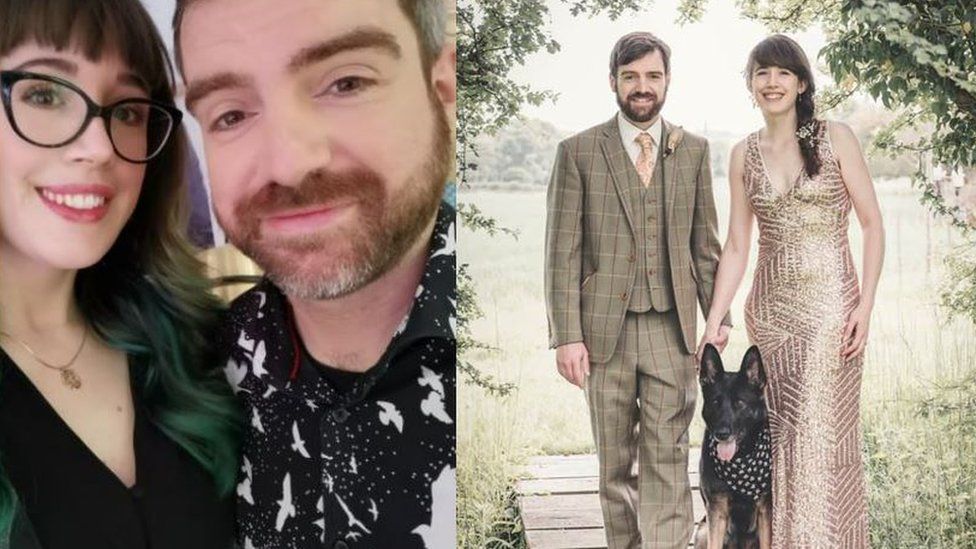





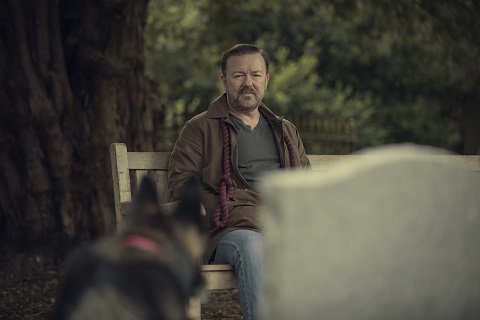
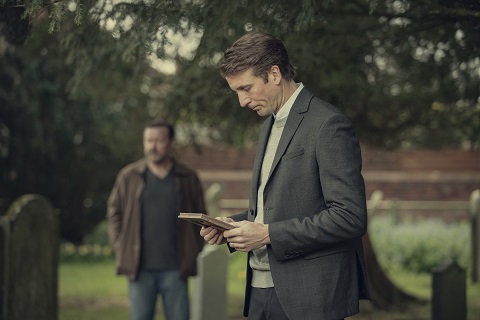
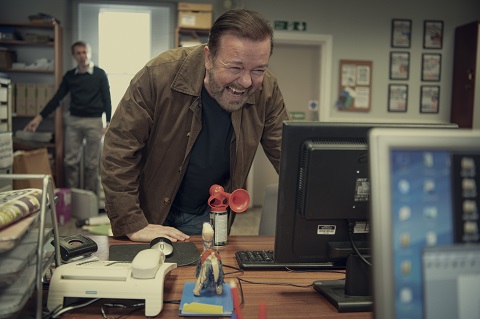

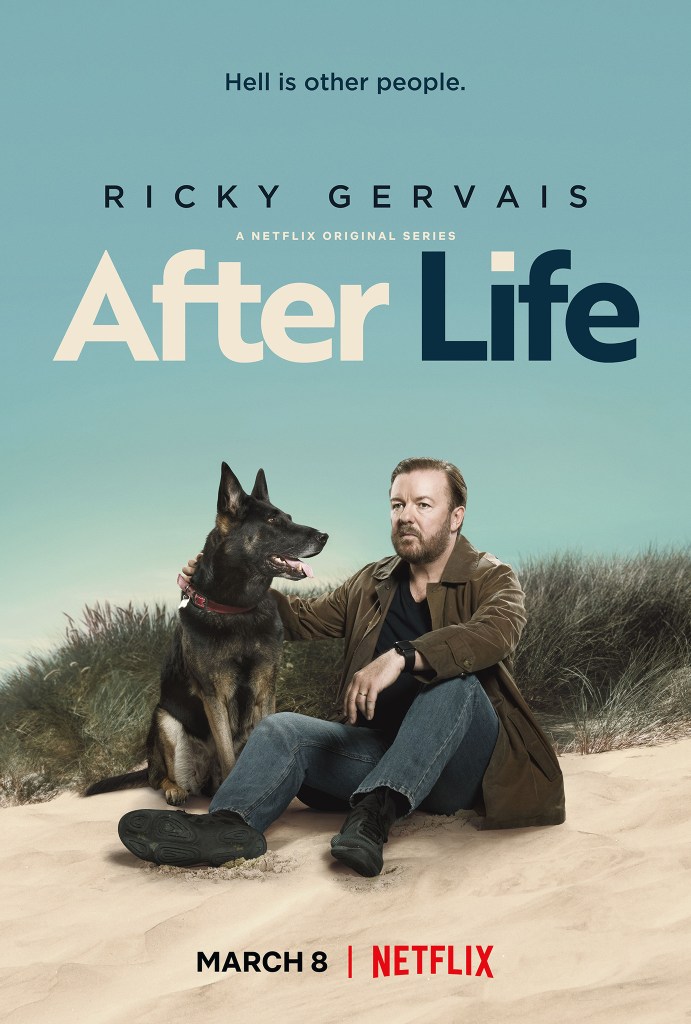

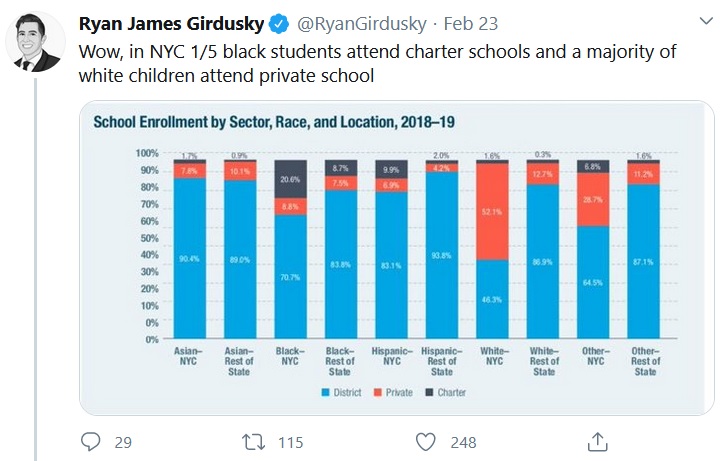
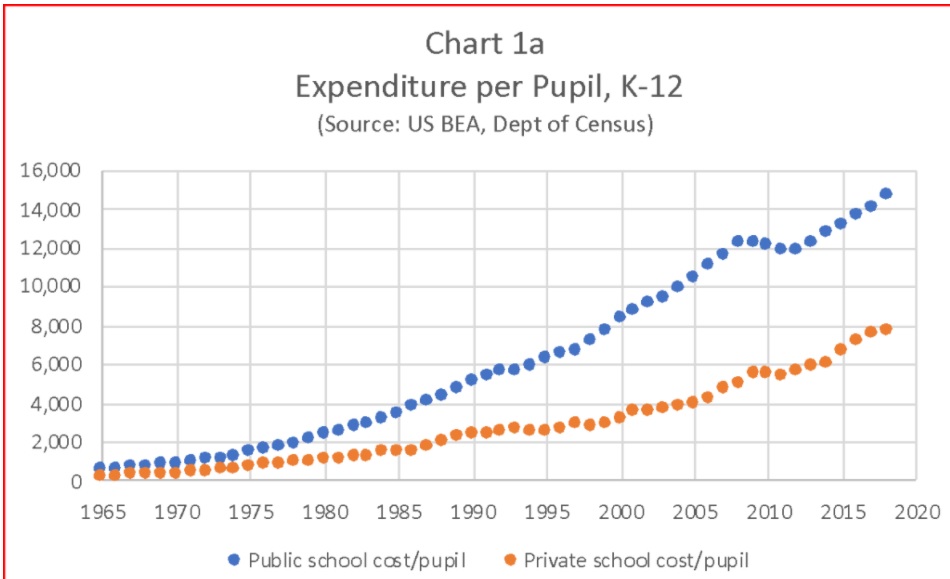



:max_bytes(150000):strip_icc()/King-Solomon-GettyImages-537859698-57cd84f13df78c71b62edb3b.jpg)


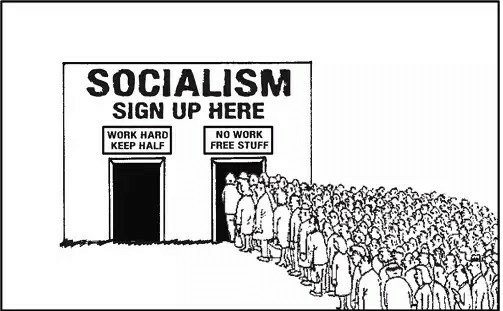





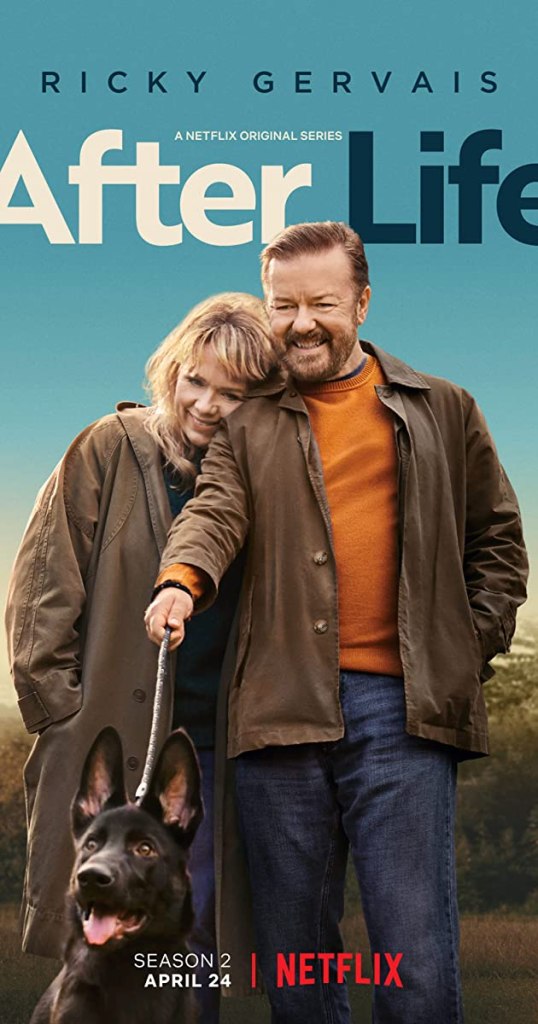




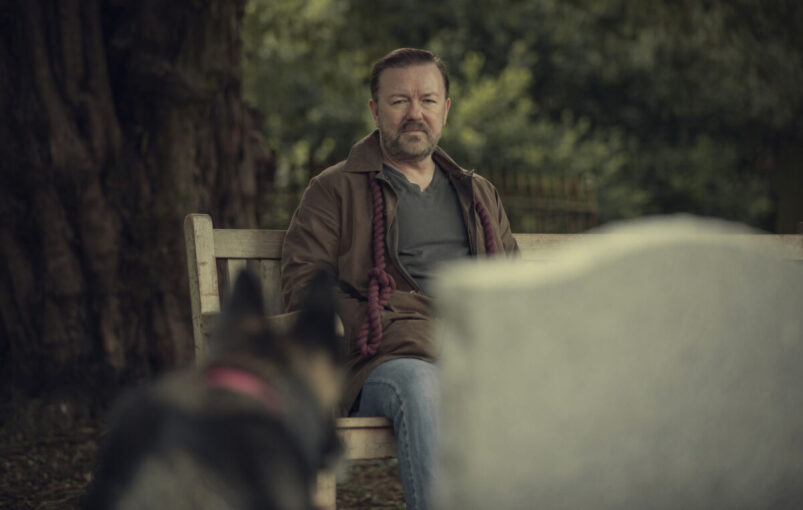












 The Daily Hatch