I was saddened to learn of the passing of Sir John Sulston on March 6, 2018 and I wanted to spend time on several posts concentrating on him. Probably the best video tribute to him I have found is this video below, but the best interview of Dr. Sulston ever done was by Alan Macfarlane and it is below too.
______
Interview of Sir John Sulston – part one
Uploaded on Jun 24, 2010
An Interview on the life and work of Sir John Sulston, Nobel Prize winner, who organized the team which sequenced the human genome for the first time. For a higher quality, downloadable, version, with a detailed summary please see http://www.alanmacfarlane.com
Interview of Sir John Sulston – part two
Uploaded on Jun 24, 2010
An Interview on the life and work of Sir John Sulston, Nobel Prize winner, who organized the team which sequenced the human genome for the first time. For a higher quality, downloadable, version, with a detailed summary please see http://www.alanmacfarlane.com
_________
QUOTE from Dr. Sulston:
I see that we have enormous amounts to discover as a strategy for going forward as human beings; I believe atheism makes coherent sense; all the religions are in conflict with each other; they have different stories, based on insubstantial records, but justify them with saying that there was some direct communication with a deity in the past which has led them to this belief; I find those unconvincing, particularly because of the conflict; this was my main argument in discussions with my father and he found it hard to answer that.
Larry Joe Speaks was 69 years old (his middle name came from his father Joe who fought in the BATTLE OF THE BULGE in World War 2)
The Visit of the Queen of Sheba to King Solomon’, oil on canvas painting by Edward Poynter, 1890
Adrian Rogers pictured below
The Passion of the Christ: The Crucifixion.
_____
April 7, 2017
Professor John Sulston, The University of Manchester,
Dear Dr Sulston,
I discovered that on this morning of April 7, 2017 my good friend Larry Speaks has died and gone to heaven. Let me tell you a little about him. After Larry put is faith in Christ alone for his salvation over 20 years ago he got started on a hobby of listening and discussing some of the great sermons that he heard. One of those sermons was WHO IS JESUS? by Adrian Rogers. In fact, he asked me to run off some cassette tapes of that message so he could give it to people who used to come into his store SOUTHERN FRUIT & GROCERY. After he sold the store he continued to give out this message and over the years I switched to putting it on CD’s for him to give out. Even the last years of his life he would go to McCain Mall and walk through the mall and give out the CD’s. He was thrilled that so many people were glad to get them, and he was disappointed when occasionally someone would decline to accept his gift.
I know that you had a religious upbringing but you have rejected it. But still do you ever get around to thinking about the issue of death? In the last years of his life King Solomon took time to look back and then he wrote the BOOK OF ECCLESIASTES. Solomon did believe in God but in this book he took a look at life “UNDER THE SUN.” Christian scholar Ravi Zacharias has noted, “The key to understanding the Book of Ecclesiastes is the term ‘UNDER THE SUN.’ What that literally means is you lock God out of a closed system, and you are left with only this world of time plus chance plus matter.”
Francis Schaeffer comments on the Book of Ecclesiastes and the subject of death:
Ecclesiastes 9:11
11 Again I saw that under the sun the race is not to the swift, nor the battle to the strong, nor bread to the wise, nor riches to the intelligent, nor favor to those with knowledge, but time and chance happen to them all.
Chance rules. If a man starts out only from himself and works outward it must eventually if he is consistent seem so that only chance rules and naturally in such a setting you can not expect him to have anything else but finally a hate of life.
Ecclesiastes 2:17-18a
17 So I hated life, because what is done under the sun was grievous to me, for all is vanity and a striving after wind. 18 I hated all my toil in which I toil under the sun…
That first great cry “So I hated life.” Naturally if you hate life you long for death and you find him saying this in Ecclesiastes 4:2-3:
2 And I thought the dead who are already dead more fortunate than the living who are still alive.3 But better than both is he who has not yet been and has not seen the evil deeds that are done under the sun.
He lays down an order. It is best never have to been. It is better to be dead, and worse to be alive. But like all men and one could think of the face of Vincent Van Gogh in his final paintings as he came to hate life and you watch something die in his self portraits, the dilemma is double because as one is consistent and one sees life as a game of chance, one must come in a way to hate life. Yet at the same time men never get beyond the fear to die. Solomon didn’t either. So you find him in saying this.
Ecclesiastes 2:14-15
14 The wise person has his eyes in his head, but the fool walks in darkness. And yet I perceived that the same event happens to all of them.15 Then I said in my heart, “What happens to the fool will happen to me also. Why then have I been so very wise?” And I said in my heart that this also is vanity.
The Hebrew is stronger than this and it says “it happens EVEN TO ME,” Solomon on the throne, Solomon the universal man. EVEN TO ME, even to Solomon.
Ecclesiastes 3:18-21
18 I said in my heart with regard to the children of man that God is testing them that they may see that they themselves are but beasts.19 For what happens to the children of man and what happens to the beasts is the same; as one dies, so dies the other. They all have the same breath, and man has no advantage over the beasts, for all is vanity.[n]20 All go to one place. All are from the dust, and to dust all return.21 Who knows whether the spirit of man goes upward and the spirit of the beast goes down into the earth?
What he is saying is as far as the eyes are concerned everything grinds to a stop at death.
Ecclesiastes 4:16
16 There was no end of all the people, all of whom he led. Yet those who come later will not rejoice in him. Surely this also is vanity and a striving after wind.
That is true. There is no place better to feel this than here in Switzerland. You can walk over these hills and men have walked over these hills for at least 4000 years and when do you know when you have passed their graves or who cares? It doesn’t have to be 4000 years ago. Visit a cemetery and look at the tombstones from 40 years ago. Just feel it. IS THIS ALL THERE IS? You can almost see Solomon shrugging his shoulders.
Ecclesiastes 8:8
8 There is no man that hath power over the spirit to retain the spirit; neither hath he power in the day of death: and there is no discharge in that war; neither shall wickedness deliver those that are given to it. (King James Version)
A remarkable two phrase. THERE IS NO DISCHARGE IN THAT WAR or you can translate it “no casting of weapons in that war.” Some wars they come to the end. Even the THIRTY YEARS WAR (1618-1648) finally finished, but this is a war where there is no casting of weapons and putting down the shield because all men fight this battle and one day lose. But more than this he adds, WICKEDNESS WON’T DELIVER YOU FROM THAT FIGHT. Wickedness delivers men from many things, from tedium in a strange city for example. But wickedness won’t deliver you from this war. It isn’t that kind of war. More than this he finally casts death in the world of chance.
Ecclesiastes 9:12
12 For man does not know his time. Like fish that are taken in an evil net, and like birds that are caught in a snare, so the children of man are snared at an evil time, when it suddenly falls upon them.
Death can come at anytime. Death seen merely by the eye of man between birth and death and UNDER THE SUN. Death too is a thing of chance. Albert Camus speeding in a car with a pretty girl at his side and then Camus dead. Lawrence of Arabia coming up over a crest of a hill 100 miles per hour on his motorcycle and some boys are standing in the road and Lawrence turns aside and dies.
Surely between birth and death these things are chance. Modern man adds something on top of this and that is the understanding that as the individual man will dies by chance so one day the human race will die by chance!!! It is the death of the human race that lands in the hand of chance and that is why men grew sad when they read Nevil Shute’s book ON THE BEACH.
__________
By the way, the final chapter of Ecclesiastes finishes with Solomon emphasizing that serving God is the only proper response of man. Solomon looks above the sun and brings God back into the picture. I am hoping that your good friend Woody Allen will also come to that same conclusion that Solomon came to concerning the meaning of life and man’s proper place in the universe in Ecclesiastes 12:13-14:
13 Now all has been heard;
here is the conclusion of the matter:
Fear God and keep his commandments,
for this is the whole duty of man.
14 For God will bring every deed into judgment,
including every hidden thing,
whether it is good or evil
NOW BACK TO MY FRIEND LARRY SPEAKS. If Larry was here now he would urge you to listen to the message WHO IS JESUS? by Adrian Rogers. Therefore, I wanted to give you a little part of that message. Under the point THE PROPHETIC WITNESS OF THE SCRIPTURES Adrian Rogers talks about Psalm 22:
Psalm 22 is an incredible chapter. Perhaps more than any other chapter in the Bible, you cannot read it and come away not loving the Bible and the Lord Jesus Christ.
Turn to Psalm 22. Just below the name of a psalm, often the name of the one who wrote it is given. Who is the human author of Psalm 22?
Through the inspiration of the Holy Spirit, almost half (73) of the Bible’s 150 psalms were written by King David.
One thousand years before Jesus Christ, David prophetically foretold His crucifixion.
Since crucifixion was a Roman, not Jewish, form of execution, how is that possible? Crucifixion was completely unknown to the Jewish culture. It would be another 800 years before crucifixion came into the Jewish world. But here we find by divine inspiration a portrait of the cross.
and you will hear what far smarter people than I have to say on this matter. I agree with them.
Harry Kroto
Nick Gathergood, David-Birkett, Harry-Kroto
I have attempted to respond to all of Dr. Kroto’s friends arguments and I have posted my responses one per week for over a year now. Here are some of my earlier posts:
The John Lennon and the Beatles really were on a long search for meaning and fulfillment in their lives just like King Solomon did in the Book of Ecclesiastes. Solomon looked into learning (1:12-18, 2:12-17), laughter, ladies, luxuries, and liquor (2:1-2, 8, 10, 11), and labor (2:4-6, 18-20). He fount that without God in the picture all […]
______________ George Harrison Swears & Insults Paul and Yoko Lucy in the Sky with Diamonds- The Beatles The Beatles: I have dedicated several posts to this series on the Beatles and I don’t know when this series will end because Francis Schaeffer spent a lot of time listening to the Beatles and talking […]
The Beatles in a press conference after their Return from the USA Uploaded on Nov 29, 2010 The Beatles in a press conference after their Return from the USA. The Beatles: I have dedicated several posts to this series on the Beatles and I don’t know when this series will end because Francis […]
__________________ Beatles 1966 Last interview I have dedicated several posts to this series on the Beatles and I don’t know when this series will end because Francis Schaeffer spent a lot of time listening to the Beatles and talking and writing about them and their impact on the culture of the 1960’s. In this […]
_______________ The Beatles documentary || A Long and Winding Road || Episode 5 (This video discusses Stg. Pepper’s creation I have dedicated several posts to this series on the Beatles and I don’t know when this series will end because Francis Schaeffer spent a lot of time listening to the Beatles and talking and writing about […]
_______________ Francis Schaeffer pictured below: _____________________ I have included the 27 minute episode THE AGE OF NONREASON by Francis Schaeffer. In that video Schaeffer noted, ” Sergeant Pepper’s Lonely Hearts Club Band…for a time it became the rallying cry for young people throughout the world. It expressed the essence of their lives, thoughts and their feelings.” How Should […]
Crimes and Misdemeanors: A Discussion: Part 1 ___________________________________ Today I will answer the simple question: IS IT POSSIBLE TO BE AN OPTIMISTIC SECULAR HUMANIST THAT DOES NOT BELIEVE IN GOD OR AN AFTERLIFE? This question has been around for a long time and you can go back to the 19th century and read this same […]
____________________________________ Francis Schaeffer pictured below: __________ Francis Schaeffer has written extensively on art and culture spanning the last 2000years and here are some posts I have done on this subject before : Francis Schaeffer’s “How should we then live?” Video and outline of episode 10 “Final Choices” , episode 9 “The Age of Personal Peace and Affluence”, episode 8 […]
Love and Death [Woody Allen] – What if there is no God? [PL] ___________ _______________ How Should We then Live Episode 7 small (Age of Nonreason) #02 How Should We Then Live? (Promo Clip) Dr. Francis Schaeffer 10 Worldview and Truth Two Minute Warning: How Then Should We Live?: Francis Schaeffer at 100 Francis Schaeffer […]
___________________________________ Francis Schaeffer pictured below: ____________________________ Francis Schaeffer “BASIS FOR HUMAN DIGNITY” Whatever…HTTHR Dr. Francis schaeffer – The flow of Materialism(from Part 4 of Whatever happened to human race?) Dr. Francis Schaeffer – The Biblical flow of Truth & History (intro) Francis Schaeffer – The Biblical Flow of History & Truth (1) Dr. Francis Schaeffer […]
A heavy heart is the beginning of misery, and we were never meant to carry the load.
A burdened soul breaks the spirit. A broken spirit thins the immunity of the body. The body then begins to wither, and we get ill. In fact, studies have shown that emotions largely contribute to one’s overall state of health. Doctors call it Emotionally Induced Illness (E.I.I.), and it is the idea that physical sickness can be a result of emotional illness.
The entire body is affected by a heavy heart. But God has given us a remedy for the soul, the spirit, and the body. And it is good medicine…Joy!
Not mere laughter, not mere joking, not mere fun and games, but deep, abiding joy is our strongest medicine and greatest weapon. Joy doesn’t depend upon material things or circumstances. It doesn’t depend upon thrills. It comes straight from the heart.
In the Gospel of John, Jesus spoke of the joy in His own heart, and He promised to give us a dose of it; not just some cheap imitation… He wants to give us the real thing. “My joy have I given unto you.” Jesus said, “I want that joy to remain in you.”
We don’t root our happiness in circumstances, because those can change in an instant and leave us emotionally stranded. We root our joy in Christ alone, who is the same yesterday, today, and forever. (Hebrews 13:8)
“Without joy, life is meaningless!” Acclaimed pastor and teacher, Adrian Rogers says, “That joy is found only in Jesus. And we ought to share the secret, the source of our joy —the Lord Jesus Christ.”
Apply it to your life
Joy is something freely given, but it must be received, day by day. Today, seek it out through prayer and in Scripture. Let it be seen in your countenance as you go about your day, and share it with someone else.
Be not wise in thine own eyes: fear the LORD, and depart from evil. It shall be health to thy navel, and marrow to thy bones. Honour the LORD with thy substance, and with the firstfruits of all thine increase: So shall thy barns be filled with plenty, and thy presses shall burst out with new wine.Proverbs 3:7-10
Finances are a topic everyone is interested in! In fact, perhaps your mind is racing with details of taxes. In order to have a proper perspective, take some time right now and evaluate your financial freedom.
God wants all of us to be at peace with possessions and to experience freedom from bondage to anyone or anything. He wants His children to master their money, rather than be mastered by it. So what does God’s Word say about our financial planning and how we can achieve financial freedom? What do you think? – Are you at peace financially? – Do you feel enslaved by financial matters or possessions? – Is God honored with the way you handle your money? – Why do you think Jesus spoke more often about money and possessions than any other subject in the gospels?
The Ruin of Financial Bondage There is much haggling and squabbling over money. Almost every family has experienced this. Marriages even sometimes split over debt disagreements. Perhaps you are in financial bondage; why not ask yourself the following questions: – Do you charge daily expenditures because you don’t have enough cash to pay for them? – Do you find yourself putting off paying bills or paying them at the last minute because of a lack of money? – Do you borrow money to pay fixed expenses such as taxes, insurance, or rent? – Do you find yourself unaware of just how much you owe? – Do you have creditors and bill collectors calling or writing you about past due bills? – Have you taken new loans to pay off old ones? – Do you argue over finances with your spouse? – Have you ever thought about being dishonest about money, such as cheating on income tax or participating in an unethical financial deal? – Do you find it difficult to return God’s tithe? – Do you rationalize withholding from His offering?
If you answered yes to several of these questions, you are in financial bondage. If you don’t agree, then how would you define financial bondage?
God is opposed to any kind of bondage that enslaves us. He wants to break those shackles and set us free to be slaves of Christ, Who is the only Master Who wants His servants to have freedom, fulfillment, prosperity, and power.
Even a wealthy person may feel the false self-assurance. You may feel you have plenty of security, so financial bondage is the least of your worries. Yet you may be in great trouble. – Do you find yourself putting more faith in your money than in God? – Do you continue to ask God for your daily bread?
If you think that is unnecessary, you are putting your faith in your wealth. If your personal goals in life are no longer God’s goals, you are in bondage.
The Avoidance of Financial Bondage The Principle of Priority God is our priority, and we shouldn’t let possessions get in the way. When this priority is maintained, life is successful. What do Deuteronomy 26:2 and Matthew 6:33 say about our priorities?
The Principle of Industry Many people want more money so they won’t have to work anymore. But God created us to work. As His workmanship, we have the need to work built into us. To cease being productive in life is disastrous. Even retirement simply means more time to serve God. What do Proverbs 10:4 and Proverbs 20:4 have to say about God’s attitude towards laziness?
The Principle of Generosity God blesses us when we learn to share. The more we share, the more we have. The more we hoard, the less we have. What do Proverbs 11:24 and Luke 6:38 say about generosity?
The Principle of Reliability God is reliable. As we handle our possessions and our industry, we can, and must, trust God at all times. We know He will provide and care for us. What does God say in Philippians 4:19 about relying on God?
The Principle of Integrity We must be faithful in what we have. Luke 16:10tells us to be faithful even in the little. What is integrity? What warning does 1 Timothy 6:9-10offer?
The Principle of Sufficiency God is far more than sufficient to care for His children. What does Ecclesiastes 5:19 say about our possessions? If we will honor God with what He has already given us, He will pour out more blessings than we have the ability to handle (Malachi 3:10).
Conclusion Poverty is no sign of godliness, and wealth is no sign of wickedness. God wants us to have wealth with godliness. Prosperity is simply having what we need to do what God wants us to do.
Now you are armed with what God’s word says. Why not start now and evaluate your finances based on what you’ve read and if necessary, take some immediate steps to find the financial freedom that God promises and desires for you.
Ecclesiastes 8-10 | Still Searching After All These Years Published on Oct 9, 2012 Calvary Chapel Spring Valley | Sunday Evening | October 7, 2012 | Pastor Derek Neider _______________________ Ecclesiastes 11-12 | Solomon Finds His Way Published on Oct 30, 2012 Calvary Chapel Spring Valley | Sunday Evening | October 28, 2012 | Pastor Derek Neider […]By Everette Hatcher III | Posted in Current Events | Edit | Comments (0)
Over and over in Proverbs you hear the words “fear the Lord.” In fact, some of he references are Proverbs 1:7, 29; 2:5; 8:13; 9:10;14:26,27; 15:16 and many more. Below is a sermon by John MacArthur from the Book of Luke on 3 reasons we should fear the Lord. (I have posted John MacArthur’s amazing […]By Everette Hatcher III | Posted in Adrian Rogers, Current Events | Edit | Comments (0)
Over and over in Proverbs you hear the words “fear the Lord.” In fact, some of he references are Proverbs 1:7, 29; 2:5; 8:13; 9:10;14:26,27; 15:16 and many more. Below is a sermon by John MacArthur from the Book of Luke on 3 reasons we should fear the Lord. (I have posted John MacArthur’s amazing […]By Everette Hatcher III | Posted in Adrian Rogers, Current Events | Edit | Comments (0)
Over and over in Proverbs you hear the words “fear the Lord.” In fact, some of he references are Proverbs 1:7, 29; 2:5; 8:13; 9:10;14:26,27; 15:16 and many more. Below is a sermon by John MacArthur from the Book of Luke on 3 reasons we should fear the Lord. (I have posted John MacArthur’s amazing […]By Everette Hatcher III | Posted in Adrian Rogers, Current Events | Edit | Comments (0)
Over and over in Proverbs you hear the words “fear the Lord.” In fact, some of he references are Proverbs 1:7, 29; 2:5; 8:13; 9:10;14:26,27; 15:16 and many more. Below is a sermon by John MacArthur from the Book of Luke on 3 reasons we should fear the Lord. (I have posted John MacArthur’s amazing […]By Everette Hatcher III | Posted in Adrian Rogers, Current Events | Edit | Comments (0)
Over and over in Proverbs you hear the words “fear the Lord.” In fact, some of he references are Proverbs 1:7, 29; 2:5; 8:13; 9:10;14:26,27; 15:16 and many more. Below is a sermon by John MacArthur from the Book of Luke on 3 reasons we should fear the Lord. (I have posted John MacArthur’s amazing […]By Everette Hatcher III | Posted in Adrian Rogers, Current Events | Tagged Gene Bartow, John Wooden | Edit | Comments (0)
Over and over in Proverbs you hear the words “fear the Lord.” In fact, some of he references are Proverbs 1:7, 29; 2:5; 8:13; 9:10;14:26,27; 15:16 and many more. Below is a sermon by John MacArthur from the Book of Luke on 3 reasons we should fear the Lord. (I have posted John MacArthur’s amazing […]By Everette Hatcher III | Posted in Adrian Rogers, Current Events | Edit | Comments (0)
Over and over in Proverbs you hear the words “fear the Lord.” In fact, some of he references are Proverbs 1:7, 29; 2:5; 8:13; 9:10;14:26,27; 15:16 and many more. Below is a sermon by John MacArthur from the Book of Luke on 3 reasons we should fear the Lord. (I have posted John MacArthur’s amazing […]By Everette Hatcher III | Posted in Adrian Rogers, Current Events | Edit | Comments (0)
Over and over in Proverbs you hear the words “fear the Lord.” In fact, some of he references are Proverbs 1:7, 29; 2:5; 8:13; 9:10;14:26,27; 15:16 and many more. Below is a sermon by John MacArthur from the Book of Luke on 3 reasons we should fear the Lord. It is tough to guard your […]By Everette Hatcher III | Posted in Adrian Rogers, Current Events | Edit | Comments (0)
Over and over in Proverbs you hear the words “fear the Lord.” In fact, some of he references are Proverbs 1:7, 29; 2:5; 8:13; 9:10;14:26,27; 15:16 and many more. Below is a sermon by John MacArthur from the Book of Luke on 3 reasons we should fear the Lord. What does it mean to fear […]By Everette Hatcher III | Posted in Current Events, Uncategorized | Edit | Comments (0)
Ecclesiastes 6-8 | Solomon Turns Over a New Leaf Published on Oct 2, 2012 Calvary Chapel Spring Valley | Sunday Evening | September 30, 2012 | Pastor Derek Neider _____________________ I have written on the Book of Ecclesiastes and the subject of the meaning of our lives on several occasions on this blog. In this series on Ecclesiastes I […]By Everette Hatcher III | Posted in Current Events | Edit | Comments (0)
Ecclesiastes 1 Published on Sep 4, 2012 Calvary Chapel Spring Valley | Sunday Evening | September 2, 2012 | Pastor Derek Neider _____________________ I have written on the Book of Ecclesiastes and the subject of the meaning of our lives on several occasions on this blog. In this series on Ecclesiastes I hope to show how […]By Everette Hatcher III | Posted in Current Events | Edit | Comments (0)
Ecclesiastes 1 Published on Sep 4, 2012 Calvary Chapel Spring Valley | Sunday Evening | September 2, 2012 | Pastor Derek Neider _____________________ I have written on the Book of Ecclesiastes and the subject of the meaning of our lives on several occasions on this blog. In this series on Ecclesiastes I hope to show how […]By Everette Hatcher III | Posted in Current Events | Edit | Comments (0)
Ecclesiastes 8-10 | Still Searching After All These Years Published on Oct 9, 2012 Calvary Chapel Spring Valley | Sunday Evening | October 7, 2012 | Pastor Derek Neider _______________________ Ecclesiastes 11-12 | Solomon Finds His Way Published on Oct 30, 2012 Calvary Chapel Spring Valley | Sunday Evening | October 28, 2012 | Pastor Derek Neider […]By Everette Hatcher III | Posted in Current Events | Edit | Comments (0)
Ecclesiastes 6-8 | Solomon Turns Over a New Leaf Published on Oct 2, 2012 Calvary Chapel Spring Valley | Sunday Evening | September 30, 2012 | Pastor Derek Neider _____________________ I have written on the Book of Ecclesiastes and the subject of the meaning of our lives on several occasions on this blog. In this series […]By Everette Hatcher III | Posted in Current Events | Edit | Comments (0)
Ecclesiastes 4-6 | Solomon’s Dissatisfaction Published on Sep 24, 2012 Calvary Chapel Spring Valley | Sunday Evening | September 23, 2012 | Pastor Derek Neider ___________________ I have written on the Book of Ecclesiastes and the subject of the meaning of our lives on several occasions on this blog. In this series on Ecclesiastes I hope […]By Everette Hatcher III | Posted in Current Events | Edit | Comments (0)
Ecclesiastes 8-10 | Still Searching After All These Years Published on Oct 9, 2012 Calvary Chapel Spring Valley | Sunday Evening | October 7, 2012 | Pastor Derek Neider _______________________ Ecclesiastes 11-12 | Solomon Finds His Way Published on Oct 30, 2012 Calvary Chapel Spring Valley | Sunday Evening | October 28, 2012 | Pastor Derek Neider […]By Everette Hatcher III | Posted in Current Events | Edit | Comments (0)
Ecclesiastes 8-10 | Still Searching After All These Years Published on Oct 9, 2012 Calvary Chapel Spring Valley | Sunday Evening | October 7, 2012 | Pastor Derek Neider _______________________ Ecclesiastes 11-12 | Solomon Finds His Way Published on Oct 30, 2012 Calvary Chapel Spring Valley | Sunday Evening | October 28, 2012 | Pastor Derek Neider […]By Everette Hatcher III | Posted in Current Events | Edit | Comments (0)
Tom Brady “More than this…” Uploaded by EdenWorshipCenter on Jan 22, 2008 EWC sermon illustration showing a clip from the 2005 Tom Brady 60 minutes interview. _______________________ Tom Brady ESPN Interview Tom Brady has famous wife earned over 76 million dollars last year. However, has Brady found lasting satifaction in his life? It does not […]By Everette Hatcher III | Posted in Current Events | Edit | Comments (0)
Adrian Rogers: How to Be a Child of a Happy Mother Published on Nov 13, 2012 Series: Fortifying Your Family (To read along turn on the annotations.) Adrian Rogers looks at the 5th commandment and the relationship of motherhood in the commandment to honor your father and mother, because the faith that doesn’t begin at home, […]By Everette Hatcher III | Posted in Adrian Rogers, Current Events | Edit | Comments (0)
Ecclesiastes 1 Published on Sep 4, 2012 Calvary Chapel Spring Valley | Sunday Evening | September 2, 2012 | Pastor Derek Neider _____________________ I have written on the Book of Ecclesiastes and the subject of the meaning of our lives on several occasions on this blog. In this series on Ecclesiastes I hope to show how secular humanist man […]By Everette Hatcher III | Posted in Current Events | Edit | Comments (0)
Adrian Rogers – How to Cultivate a Marriage Another great article from Adrian Rogers. Are fathers necessary? “Artificial insemination is the ideal method of producing a pregnancy, and a lesbian partner should have the same parenting rights accorded historically to biological fathers.” Quoted from the United Nations Fourth World Conference on Women, summer of 1995. […]By Everette Hatcher III | Posted in Adrian Rogers, Current Events | Edit | Comments (0)
Tom Brady “More than this…” Uploaded by EdenWorshipCenter on Jan 22, 2008 EWC sermon illustration showing a clip from the 2005 Tom Brady 60 minutes interview. To Download this video copy the URL to http://www.vixy.net ________________ Obviously from the video clip above, Tom Brady has realized that even though he has won many Super Bowls […]
Republican lawmakers weigh in on the Respect for Marriage Act, which passed the House Thursday. Rep. Chip Roy, R-Texas, said the bill is an “abomination to religious liberty.” Roy pictured here at a House Republican Caucus meeting in the U.S. Capitol Building Nov. 14, 2022. (Photo: Anna Moneymaker/Getty Images)
The House of Representatives passed the Respect for Marriage Act, 258-169, on Thursday and it now heads to President Joe Biden’s desk. The measure, which seeks to codify the legalization of same-sex marriage into federal law, has come under attack from Republican lawmakers who see it as a threat to religious liberty.
“It’s an absolute abomination with respect to… religious liberty,” Rep. Chip Roy, R-Texas, told reporters after a press conference on his Texas border plan this Thursday. “It’s purposefully undermining religious liberty.”
Roy introduced an amendment in the House which would have offered religious liberty protections for those who see marriage as a union between one man and one woman. The amendment failed after House Rules Committee Chairman Rep. James McGovern, D-Mass., blocked Roy’s amendment from moving to the House floor in a Monday hearing. McGovern did not respond to The Daily Signal’s request for comment.
In separate comments to The Daily Signal, Roy expounded on the bill’s threats to religious freedom.
“Today, Congress passed a law that violates the very core of the First Amendment, the Constitution, and the rights we hold dear as Americans,” he said. “The so-called Respect for Marriage Act will result in predatory, activist lawsuits against good people of faith for simply living out their lives in line with their beliefs.”
“The anemic religious liberty protections in the Respect for Marriage would be laughable if the stakes weren’t so high,” he added. “In good faith, I offered a common sense solution, identical to the bipartisan amendment offered by Senator Mike Lee. It would have prohibited the federal government from discriminating against Americans based on their views on marriage, but Democrats on the House Rules Committee blocked it.”
Roy framed the bill’s passage as “another example of how Congress is broken.”
“Before the Rules Committee hearing on Tuesday, not a single committee held a hearing, heard from witnesses, or deliberated the details of this legislation,” he said. “Until we fundamentally change how we do business here, we will continue to fail the American people.”
“I offered an amendment,” Roy told reporters Thursday. “They shut it down on a technicality under a budget point of order.”
The Senate passed the Respect for Marriage Act, 61-36, last week. Twelve Republicans voted for the bill. The Senate passed the bill without the religious liberty amendment proposed by Sen. Mike Lee, R-Utah, though proponents of the bill added protections for “religious service and solemnization of marriage.”
But there’s “no indication” this religious liberty provision would protect people of faith, Roy said Thursday.
“The 12 Senate Republicans who voted for it in the Senate are either stupid or deceitful because you can’t possibly tell me that that’s actually going to protect religious liberty,” Roy said.
House Republican Whip Steve Scalise, R-La., told The Daily Signal on Thursday:
Under complete Democrat party rule, we have seen too many Americans have their religious freedoms trampled upon, and the lack of religious liberty protections in this bill will open Americans of faith up to attacks by unelected bureaucrats in Washington. As we move into the majority next year, House Republicans are committed to protecting religious freedoms as a top priority of the new Congress.
“People can have disagreements on that, but that’s not a protection of your, of your religious liberty, culturally held religious beliefs,” Rep. Roy of Texas said. “It’s an abomination.”
Editor’s Note: This story has been updated with a further comment from Chip Roy.
November 17, 2022
Cynthia Lummis of Wyoming, United States Senate Washington, D.C. 20510
This is an OPEN LETTER TO SENATOR Cynthia Lummis of Wyoming, on the NOVEMBER 16, 2022 CONCERNING THE SENATOR’S “YES” VOTE IN SENATE TO PASS BILL THAT “provides statutory authority for same-sex…marriages,” repealing provisions that define marriage as between a man and a woman!
I am familiar with your church and their traditional view on marriage. Here is a summary of it:
QUESTION: In light of all the recent publicity about same-sex marriage, where does The Lutheran Church—Missouri Synod stand on the issue?
ANSWER: God gave marriage as a picture of the relationship between Christ and His bride the Church (Eph. 5:32). Homosexual behavior is prohibited in the Old and New Testaments (Lev. 18:22, 24, 20:13; 1 Cor. 6:9–20; 1 Tim. 1:10) as contrary to the Creator’s design (Rom. 1:26–27).
The LCMS affirms that such behavior is “intrinsically sinful” and that, “on the basis of Scripture, marriage [is] the lifelong union of one man and one woman (Gen. 2:2-24; Matt. 19:5-6)” (2004 Res. 3-05A).
It has also urged its members “to give a public witness from Scripture against the social acceptance and legal recognition of homosexual ‘marriage’ ” (2004 Res. 3-05A).
At the same time, the Synod firmly believes “the redeeming love of Christ, which rescues humanity from sin, death, and the power of Satan, is offered to all through repentance and faith in Christ, regardless of the nature of their sinfulness” (1992 Res. 3-12A).
—-
Your church’s view is the view the Bible takes and I want to say that I am glad you belong to a Bible affirming church that respects the truth about what the Bible says about homosexuality. Maybe you don’t fully understand fully what the Bible says about homosexuality and that is why you voted the way you did on November 16th?
I heard Greg Koukl talk on this subject and he did a great job. Especially notice the section entitled, “Natural Desire or Natural Function?”
The first chapter of Paul’s letter to the Romans contains what most readers consider the Bible’s clearest condemnation of same-sex relations. Recent scholarship reads the same text and finds just the opposite. Who is right?
To most readers, the first chapter of Paul’s letter to the Romans contains the Bible’s clearest condemnation of same-sex relations–both male and female. Recent scholarship, though, reads the same text and finds just the opposite–that homosexuality is innate and therefore normal, moral, and biblical.
Reconstructing Romans
In Romans, Paul seems to use homosexuality as indicative of man’s deep seated rebellion against God and God’s proper condemnation of man. New interpretations cast a different light on the passage.
Paul, the religious Jew, is looking across the Mediterranean at life in the capital of Graeco-Roman culture. Homosexuality in itself is not the focus of condemnation. Rather, Paul’s opprobrium falls upon paganism’s refusal to acknowledge the true God.
It’s also possible Paul did not understand the physiological basis of genuine homosexuality. John Boswell, professor of history at Yale, is among those who differ with the classical interpretation. In Christianity, Social Tolerance, and Homosexualityhe writes:
The persons Paul condemns are manifestly not homosexual: what he derogates are homosexual acts committed by apparently heterosexual persons….It is not clear that Paul distinguished in his thoughts or writings between gay persons (in the sense of permanent sexual preference) and heterosexuals who simply engaged in periodic homosexual behavior. It is in fact unlikely that many Jews of his day recognized such a distinction, but it is quite apparent that–whether or not he was aware of their existence–Paul did not discuss gay persons but only homosexual acts committed by heterosexual persons.[1] [emphasis in the original]
Paul is speaking to those who violate their natural sexual orientation, Boswell contends, those who go against their own natural desire: “‘Nature’ in Romans 1:26, then, should be understood as the personal nature of the pagans in question.”[2] [emphasis in the original]
Since a homosexual’s natural desire is for the same sex, this verse doesn’t apply to him. He has not chosen to set aside heterosexuality for homosexuality; the orientation he was born with is homosexual. Demanding that he forsake his “sin” and become heterosexual is actually the kind of violation of one’s nature Paul condemns here.
Romans 1:18-27
Both views can’t be correct. Only a close look at the text itself will give us the answer. The details of this passage show why these new interpretations are impossible:[3]
For the wrath of God is revealed from heaven against all ungodliness and unrighteousness of men, who suppress the truth in unrighteousness, because that which is known about God is evident within them; for God made it evident to them.
For since the creation of the world His invisible attributes, His eternal power and divine nature, have been clearly seen, being understood through what has been made, so that they are without excuse. For even though they knew God, they did not honor Him as God, or give thanks; but they became futile in their speculations, and their foolish heart was darkened. Professing to be wise, they became fools, and exchanged the glory of the incorruptible God for an image in the form of corruptible man and of birds and four-footed animals and crawling creatures.
Therefore, God gave them over in the lusts of their hearts to impurity, that their bodies might be dishonored among them. For they exchanged the truth of God for a lie, and worshipped and served the creature rather than the Creator, who is blessed forever. Amen.
For this reason God gave them over to degrading passions; for their women exchanged the natural function for that which is unnatural, and in the same way also the men abandoned the natural function of the woman and burned in their desire toward one another, men with men committing indecent acts and receiving in their own persons the due penalty of their error.
Let me start by making two observations. First, this is about God being mad: “For the wrath of God [orge] is revealed from heaven against all ungodliness and unrighteousness of men….”
Second, there is a specific progression that leads to this “orgy” of anger. Men “suppress the truth in unrighteousness” (v. 18). They exchanged “the truth of God for a lie, and worshipped and served the creature rather than the Creator” (v. 25). Next, “God gave them over in the lusts of their hearts to impurity…” (v. 24). They “exchanged the natural [sexual] function for that which is unnatural (v. 26). Therefore, the wrath of God rightly falls on them (v. 18); they are without excuse (v. 20).
This text is a crystal clear condemnation of homosexuality by the Apostle Paul in the middle of his most brilliant discourse on general revelation. Paul is not speaking to a localized aberration of pedophilia or temple prostitution that’s part of life in the capital of Graeco-Roman culture. He is talking about a universal condition of man.
Regarding the same-sex behavior itself, here are the specific words Paul uses: a lust of the heart, an impurity and dishonoring to the body (v. 24); a degrading passion that’s unnatural (v. 29); an indecent act and an error (v. 27); not proper and the product of a depraved mind (v. 28).
There’s only one way the clear sense of this passage can be missed: if someone is in total revolt against God. According to Paul, homosexual behavior is evidence of active, persistent rebellion against one’s Creator. Verse 32 shows it’s rooted in direct, willful, aggressive sedition against God–true of all so-called Christians who are defending their own homosexuality. God’s response is explicit: “They are without excuse” (v. 20).
Born Gay?
What if one’s “natural” desire is for the same sex, though. What if his homosexuality is part of his physical constitution? There are four different reasons this is a bad argument. The first three are compelling; the fourth is unassailable.
First, this rejoinder assumes there is such a thing as innate homosexuality. The scientific data is far from conclusive, though. Contrary to the hasty claims of the press, there is no definitive evidence that homosexuality is determined by physiological factors (see “Just Doing What Comes Naturally,” Clear Thinking, Spring, 1997).
There’s a second problem. If all who have a desire for the same sex do so “naturally,” then to whom does this verse apply? If everybody is only following their natural sexual desires, then which particular individuals fall under this ban, those who are not aroused by their own gender, but have sex anyway? Generally, for men at least, if there is no arousal, there is no sex. And if there is arousal, according to Boswell et al, then the passion must be natural.
Third, this interpretation introduces a whole new concept–constitutional homosexuality–that is entirely foreign to the text. Boswell himself admits that it was “in fact unlikely that many Jews of [Paul’s] day recognized such a distinction,” and that possibly even Paul himself was in the dark.
If Paul did not understand genuine homosexuality, though, then how can one say he excepted constitutional homosexuals when he wrote that they “exchanged the natural function for that which is unnatural”? This argument self-destructs.
Further, if Paul spoke only to those violating their personal sexual orientation, then wouldn’t he also warn that some men burned unnaturally towards women, and some women towards men? Wouldn’t Paul warn against both types of violation–heterosexuals committing indecent acts with members of the same sex, and homosexuals committing indecent acts with members of the opposite sex?
What in the text allows us to distinguish between constitutional homosexuals and others? Only one word: “natural.” A close look at this word and what it modifies, though, leads to the most devastating critique of all.
Natural Desire or Natural Function?
Paul was not unclear about what he meant by “natural.” Homosexuals do not abandon natural desires; they abandon natural functions: “For this reason God gave them over to degrading passions; for their women exchanged the natural function for that which is unnatural, and in the same way also the men abandoned the natural function of the woman and burned in their desire toward one another…” (1:26-27)
The Greek word kreesis, translated “function” in this text, is used only these two times in the New Testament, but is found frequently in other literature of the time. According to the standard Greek language reference A Greek/English Lexicon of the New Testament and Other Early Christian Literature,[4] the word means “use, relations, function, especially of sexual intercourse.”
Paul is not talking about natural desires here, but natural functions. He is not talking about what one wants sexually, but how one is built to operatesexually. The body is built to function in a specific way. Men were not built to function sexually with men, but with women.
This conclusion becomes unmistakable when one notes what men abandon in verse 27, according to Paul. The modern argument depends on the text teaching that men abandoned their own natural desire for woman and burned toward one another. Men whose natural desire was for other men would then be exempted from Paul’s condemnation. Paul says nothing of the kind, though.
Paul says men forsake not their own natural desire (their constitutional make-up), but rather the “natural function of the woman..” They abandoned the female, who was built by God to be man’s sexual compliment.
The error has nothing to do with anything in the male’s own constitution that he’s denying. It is in the rejection of the proper sexual companion God has made for him–a woman: “The men abandoned the natural function of the woman and burned in their desire toward one another, men with men committing indecent acts….” (v. 27)
Natural desires go with natural functions. The passion that exchanges the natural function of sex between a man and a woman for the unnatural function of sex between a man and a man is what Paul calls a degrading passion.
Jesus clarified the natural, normal relationship: “Have you not read that He who created them from the beginning made them male and female and said ‘For this cause a man shall leave his father and mother and shall cleave to his wife and the two shall become one flesh [sexual intercourse].’?” (Matthew 19:4-5)
Homosexual desire is unnatural because it causes a man to abandon the natural sexual compliment God has ordained for him: a woman. That was Paul’s view. If it was Paul’s view recorded in the inspired text, then it is God’s view. And if it is God’s view, it should be ours if we call ourselves Christian.
[1]John Boswell, Christianity, Social Tolerance, and Homosexuality(Chicago: University of Chicago Press, 1980), p. 109.
[3]Citations are from the New American Standard Bible, copyright 1977, The Lockman Foundation.
[4]Bauer, Arndt and Gingrich (University of Chicago Press).
I want to object to your recent vote on November to do away with traditional marriage special position in our laws!!! Take a look at this letter I wrote to President Obama that applies to you!!!
Francis Schaeffer
December 28, 2020
Office of Barack and Michelle Obama P.O. Box 91000 Washington, DC 20066
Dear President Obama,
I wrote you over 700 letters while you were President and I mailed them to the White House and also published them on my blog http://www.thedailyhatch.org .I received several letters back from your staff and I wanted to thank you for those letters.
There are several issues raised in your book that I would like to discuss with you such as the minimum wage law, the liberal press, the cause of 2007 financial meltdown, and especially your pro-choice (what I call pro-abortion) view which I strongly object to on both religious and scientific grounds, Two of the most impressive things in your book were your dedication to both the National Prayer Breakfast (which spoke at 8 times and your many visits to the sides of wounded warriors!!
I have been reading your autobiography A PROMISED LAND and I have been enjoying it.
Let me make a few comments on it, and here is the first quote of yours I want to comment on:
On page 286 you talk about speaking at the 2009 National Prayer Breakfast and in fact you spoke at 2 of those in 2009 and one each February you were President!! Let me quote from one of those speeches of yours below!
June 19, 2009 REMARKS BY THE PRESIDENT AT THE ESPERANZA NATIONAL HISPANIC PRAYER BREAKFASTJ.W. Marriott Washington, D.C: “At a time when there’s no shortage of challenges to occupy our time, it’s even more important to step back, and to give thanks, and to seek guidance from each other — but most importantly, from God. That’s what we’ve come here to do.”
ARE YOU LOOKING FOR GUIDANCE FROM GOD’S WORD OR FROM OTHER SOURCES LIKE LIBERAL THEOLOGIANS DO?
As a Christian I accept that the Bible is the word of God and inerrant. I understand that you take a much more liberal view of the Bible. Your church denomination includes very liberal theologians and Paul Tillich is probably the most prominent in the past.
Schaeffer went on to analyze how neo-orthodoxy ultimately gives way to radical mysticism:
Karl Barth opened the door to the existentialistic leap in theology… He has been followed by many more, men like Reinhold Niebuhr, Paul Tillich, Bishop John Robinson, Alan Richardson and all the new theologians. They may differ in details, but their struggle is still the same—it is the struggle of modern man who has given up [rationality]. As far as the theologians are concerned … their new system is not open to verification, it must simply be believed.10
As Francis Schaeffer warned nearly thirty years ago in The God Who Is There, the church is following the irrationality of secular philosophy. Consequently, reckless faith has overrun the evangelical community. Many are discarding doctrine in favor of personal experience.
The United States Senate voted November 16, 2022 to advance the so-called Respect for Marriage Act.
HR 8404, which passed the House of Representatives in July, “provides statutory authority for same-sex…marriages,” repealing provisions that define marriage as between a man and a woman. YOU VOTED YES!!!!
Senator I bet don’t like to be compared to President Obama but why did you vote like he would have done on this vote!!!!
President Obama c/o The White House 1600 Pennsylvania Avenue NW Washington, DC 20500 Dear Mr. President, I know that you receive 20,000 letters a day and that you actually read 10 of them every day. I really do respect you for trying to get a pulse on what is going on out here. There have […]By Everette Hatcher III | Posted in David Barton, Founding Fathers, President Obama | Edit |Comments (0)
There have been many articles written by evangelicals like me who fear that our founding fathers would not recognize our country today because secular humanism has rid our nation of spiritual roots. I am deeply troubled by the secular agenda of those who are at war with religion in our public life. Lillian Kwon quoted somebody […]By Everette Hatcher III | Posted in David Barton, Founding Fathers | Edit | Comments (0)
There have been many articles written by evangelicals like me who fear that our founding fathers would not recognize our country today because secular humanism has rid our nation of spiritual roots. I am deeply troubled by the secular agenda of those who are at war with religion in our public life. Lillian Kwon quoted somebody […]By Everette Hatcher III | Posted in David Barton, Founding Fathers | Edit | Comments (0)
There have been many articles written by evangelicals like me who fear that our founding fathers would not recognize our country today because secular humanism has rid our nation of spiritual roots. I am deeply troubled by the secular agenda of those who are at war with religion in our public life. Lillian Kwon quoted somebody […]By Everette Hatcher III | Posted in David Barton, Founding Fathers | Edit | Comments (0)
There have been many articles written by evangelicals like me who fear that our founding fathers would not recognize our country today because secular humanism has rid our nation of spiritual roots. I am deeply troubled by the secular agenda of those who are at war with religion in our public life. Lillian Kwon quoted somebody […]By Everette Hatcher III | Posted in David Barton, Founding Fathers | Edit | Comments (0)
There have been many articles written by evangelicals like me who fear that our founding fathers would not recognize our country today because secular humanism has rid our nation of spiritual roots. I am deeply troubled by the secular agenda of those who are at war with religion in our public life. Lillian Kwon quoted somebody […]By Everette Hatcher III | Posted in Founding Fathers | Edit | Comments (0)
President Obama Speaks at The Ohio State University Commencement Ceremony Published on May 5, 2013 President Obama delivers the commencement address at The Ohio State University. May 5, 2013. You can learn a lot about what President Obama thinks the founding fathers were all about from his recent speech at Ohio State. May 7, 2013, […]By Everette Hatcher III | Posted in Founding Fathers, President Obama | Edit | Comments (0)
Dr. C. Everett Koop with Bill Graham. Francis Schaeffer: “Whatever Happened to the Human Race” (Episode 4) THE BASIS FOR HUMAN DIGNITY Published on Oct 7, 2012 by AdamMetropolis The 45 minute video above is from the film series created from Francis Schaeffer’s book “Whatever Happened to the Human Race?” with Dr. C. Everett Koop. This […]By Everette Hatcher III | Posted in Founding Fathers, Francis Schaeffer, Prolife | Edit |Comments (1)
America’s Founding Fathers Deist or Christian? – David Barton 4/6 There have been many articles written by evangelicals like me who fear that our founding fathers would not recognize our country today because secular humanism has rid our nation of spiritual roots. I am deeply troubled by the secular agenda of those who are at […]By Everette Hatcher III | Posted in David Barton, Founding Fathers | Tagged governor of connecticut, john witherspoon, jonathan trumbull | Edit | Comments (1)
3 Of 5 / The Bible’s Influence In America / American Heritage Series / David Barton There were 55 gentlemen who put together the constitution and their church affliation is of public record. Greg Koukl notes: Members of the Constitutional Convention, the most influential group of men shaping the political foundations of our nation, were […]By Everette Hatcher III | Posted in Founding Fathers | Edit | Comments (0)
I do not think that John Quincy Adams was a founding father in the same sense that his father was. However, I do think he was involved in the early days of our government working with many of the founding fathers. Michele Bachmann got into another history-related tussle on ABC’s “Good Morning America” today, standing […]By Everette Hatcher III | Posted in David Barton, Founding Fathers | Edit | Comments (0)
I have gone back and forth and back and forth with many liberals on the Arkansas Times Blog on many issues such as abortion, human rights, welfare, poverty, gun control and issues dealing with popular culture. Here is another exchange I had with them a while back. My username at the Ark Times Blog is Saline […]By Everette Hatcher III | Posted in Arkansas Times, Francis Schaeffer, Prolife | Edit |Comments (0)
I truly believe that many of the problems we have today in the USA are due to the advancement of humanism in the last few decades in our society. Ronald Reagan appointed the evangelical Dr. C. Everett Koop to the position of Surgeon General in his administration. He partnered with Dr. Francis Schaeffer in making the […]By Everette Hatcher III | Posted in Adrian Rogers, Francis Schaeffer | Edit | Comments (0)
Francis Schaeffer: “Whatever Happened to the Human Race” (Episode 4) THE BASIS FOR HUMAN DIGNITY Published on Oct 7, 2012 by AdamMetropolis ____________ The 45 minute video above is from the film series created from Francis Schaeffer’s book “Whatever Happened to the Human Race?” with Dr. C. Everett Koop. This book really helped develop my political […]By Everette Hatcher III | Posted in Francis Schaeffer | Edit | Comments (0)
9 Wisdom has built her house; she has carved its seven columns. 2 She has prepared a great banquet, mixed the wines, and set the table. 3 She has sent her servants to invite everyone to come. She calls out from the heights overlooking the city. 4 “Come in with me,” she urges the simple. To those who lack good judgment, she says, 5 “Come, eat my food, and drink the wine I have mixed. 6 Leave your simple ways behind, and begin to live; learn to use good judgment.”
7 Anyone who rebukes a mocker will get an insult in return. Anyone who corrects the wicked will get hurt. 8 So don’t bother correcting mockers; they will only hate you. But correct the wise, and they will love you. 9 Instruct the wise, and they will be even wiser. Teach the righteous, and they will learn even more.
10 Fear of the Lord is the foundation of wisdom. Knowledge of the Holy One results in good judgment.
11 Wisdom will multiply your days and add years to your life. 12 If you become wise, you will be the one to benefit. If you scorn wisdom, you will be the one to suffer.
Folly Calls for a Hearing
13 The woman named Folly is brash. She is ignorant and doesn’t know it. 14 She sits in her doorway on the heights overlooking the city. 15 She calls out to men going by who are minding their own business. 16 “Come in with me,” she urges the simple. To those who lack good judgment, she says, 17 “Stolen water is refreshing; food eaten in secret tastes the best!” 18 But little do they know that the dead are there. Her guests are in the depths of the grave.[a]
—
–
Bill Elliff
Proverbs 9
New International Version Proverbs 9:9 Instruct the wise and they will be wiser still; teach the righteous and they will add to their learning.
David was one of the greatest leaders in human history and unparalleled in Israel’s history. Of all of his characteristics, his humility was at the foundation of his success. And nowhere was this more evident that at moments of needed reproof. His humility made him dependent upon God and also open to others.
THE STING OF REBUKE
Everybody makes mistakes—no one likes to be corrected. But Proverbs tells us that a “”wise man”” will receive reproof and become “”wiser still.”” Reproof is one of God’s greatest tools to lead leaders.
When David had committed sin with Bathsheba, it was Nathan that was sent by God to correct His servant. David could have continued to hide his sin or blame others, but instead, he quickly and fully repented. He even recorded that repentance for all of humanity to see in Psalm 51. (Would you want your specific prayers of confession recorded?)
IN ABUNDANCE OF COUNSELORS
In 2 Samuel 19, David’s armies have won a great victory over his enemy who had usurped his throne. The problem, of course, was that the usurper was none other than his own son, Absalom. After the battle (in which David’s men had risked their lives), instead of commending and leading his men, David retreats into mourning.
This is absolutely understandable and a sign of one of David’s other great traits—his love that would even overlook his son’s treachery. But quickly, David’s commander, Joab, comes and reproves his king.
“”Today you have covered with shame the faces of all your servants, who today have saved your life and the lives of your sons and daughters…by loving those who hate you and hating those who love you. For you have shown today that princes and servants are nothing to you; for I know this day that if Absalom were alive and all of us were dead today, then you would be pleased. Now therefore arise, go out and speak kindly to your servants…”” (2 Samuel 19:5-7)
THE VALUE OF REPENTANCE
The next verse records David’s immediate response. He heeded Joab’s rebuke, rose up before the people and led them back into Jerusalem to reclaim the kingdom. If your son had died, regardless of the circumstances, you would want to do nothing but mourn. But this self-sacrificing, kingly step “”turned the hearts of all the men of Judah as one man”” (verse 14). Joab had been right in his assessment and wise in his rebuke.
CURRENT HISTORY
. . . is being written by you. Has your humility paved the way for others around you to be able to come and help you? Do your colleagues know that you are humble enough to be approachable when they observe things that need correction? And, if so, are you responding with thankful, immediate turning or do you shoot the messenger?
“Never let the sharks know you’re bleeding,” is a common leadership axiom. But apparently, authentic leadership does not always follow this humanistic thought. The people saw David’s mourning for his son, but they always witnessed his love for the masses and the mission. And that turned their hearts as one man.
How to Be the Father of a Wise Child Proverbs 1:1-5, 20-22
HOW TO BE THE FATHER OF A WISE CHILD | PROVERBS 1:1-5, 20-22 | #1932 So what has happened in the last years? Well, prayer is out, policemen are in. Bibles are out, values clarification is in. The Ten Commandments are out, rape and armed robbery, gang warfare, murder and cheating are in. Instruction that tells us that we were created in the image of God is out, evolution is in. Corporal punishment is out, disrespect and rebellion is in. Traditional values are out and unwed motherhood is in. Abstinence is out and condoms and abortion are in. Learning is out and social engineering is in. History is out and revisionism is in. And the problem primarily, believe it or not, is with fathers. Arrogant fathers who fail to accept their responsibility. I want to talk to dads today, and I want to tell you how not to be the father of a fool. How to be the father of a wise child. Now go back to these three categories of persons that we looked at here in verse 22, and let me describe them more carefully and I think you’ll recognize some children that you know. First of all, let’s think of the ignorance of the simple. How is he described? Look if you will in Romans 1 verse 22, “How long ye simple ones will ye love simplicity?” That’s his first mark. He loves his simplicity. He enjoys being a child. He enjoys the carefree life. He doesn’t like any serious thoughts. One teenager said, “I am worried. My Dad slaves away at his job so I won’t have to need for a thing and so I can have a college education. My mom spends every day washing and ironing and picking up my things and looking after me. And she takes care of me when I’m sick.” His friend said, “You’re worried? What are you worried about?” He said, “I’m afraid they might try to escape.” The children just love having everything done for them, the carefree simple life. That’s the life of the simple.
HOW TO BE THE FATHER OF A WISE CHILD | PROVERBS 1:1-5, 20-22 | #1932 there, out there on the front porch is a guy 17 feet tall. You’re looking in his knee caps. And let’s say he has a voice like thunder. And he begins to talk to you and tell you what to do. My soul! Well, if he’s that big and sounds like that, one thing you sure do hope is that he’s gentle, don’t you? That’s what the children want out of their dad; somebody who’s gentle. Oh, they want a dad they can look up to. They want a dad who’s the strongest, wisest, smartest, fastest, richest, goodest dad. I know goodest is not a word. The best dad in all the world! But they want him to be gentle! Touch them, hug them, show other non-verbal language. Be transparent. Let them know of your fears, and your joys, and your disappointments, your failures, and your goals. They already know you’re not perfect; they just don’t want you to be a phony. And then, be available to them. Oh, l wish l had more time for that, but just take it as a priority that you’re going to be available to your child. You say, “Pastor Rogers, very frankly I’m not adequate for what you’ve just described.” I know you’re not. I’m not adequate. Listen to me, none of us has what it takes to be this kind of a dad or mom. That’s the reason we need Jesus isn’t it? That’s the reason we need the Lord. That’s the reason we’ve got to have Christ in our hearts! Because the Christian life is not difficult, it is impossible. So there’s only one who can do it and that’s Jesus. But He will do it in us and through us if we’ll let Him. So the best thing you can do for your children is to love God will all of your heart. Give your heart to Jesus. Let’s bow our heads in prayer. Heads are bowed and eyes are closed. If you would like to be saved today, to be a child of God, if you’d like to know that your sin is forgiven, if you would like to know that Heaven is your home, if you would like to have the power and wisdom that Jesus alone can give, I want to help you to invite Christ into your heart and trust Him. Would you pray like this? “Dear Lord, I need You. I need to be saved. I’m a sinner. My sin deserves judgment. But l need mercy, not judgment. I want You to forgive me, God. I want You to cleanse me. I want You to save me. Lord Jesus, You said if I would trust You, You would save me. I trust You right now, right this moment. I don’t ask for a sign. I don’t look for a feeling. I just stand on Your Word, and I receive You now as my Lord and Savior. Come into my heart, forgive my sin, save me Jesus.” Pray that prayer. Pray it. Pray it from your heart. “Save me, Jesus.” Pray it. Ask Him to save you. “Save me, Jesus.” Did you ask Him? By faith, pray this way, “Thank You for saving me, Lord Jesus. I receive it by faith, like a little child. You’re now my Lord and Savior. Give me the courage to make it public. In Your name I pray, Amen.”
John Lennon shot 12-8-80 Howard Cosell tells the world twice John Lennon…
On this day, December 8, 1980, John Lennon of the Beatles, was shot and fatally wounded outside of his home in the Dakota, in New York City. Lennon was shot and killed by Mark David Chapman, a Beatles fan who was enraged by Lennon’s lifestyle and his comments back in 1966 where John Lennon had stated that the Beatles were “more popular than Jesus”.
Chapman had waited for Lennon at the Dakota on the 8th of December. Earlier that evening, Chapman had actually met Lennon, who signed his copy of the album Double Fantasy. Afterward, John left for a recording session. Later that night, Lennon and his wife, Yoko Ono, returned to the Dakota. As Lennon and Ono approached the entrance of the building, Chapman fired five rounds from a .38 special revolver, four of which hit Lennon in the back. Chapman remained at the scene reading The Catcher in the Ryeuntil he was arrested by the police. Later Chapman said he was inspired by the fictional character Holden Caulfield from the novel The Catcher in the Rye, a “phony-killer” who despises hypocrisy. Lennon was rushed to Roosevelt Hospital in a police car, where he was pronounced dead on arrival at 11:15 p.m.
After the news broke a world of fans came out to share their grief, crowds gathered at Roosevelt Hospital and in front of the Dakota. There were even reports of fans committing suicide over the tragedy. The next day, Lennon was cremated at Ferncliff Cemetery in Hartsdale, New York. Chapman later pleaded guilty to murdering Lennon and was given a sentence of 20 years to life imprisonment. He has been denied parole 12 times since he became eligible in 2000.
Today marks the 42nd anniversary of John Lennon’s tragic death. Even decades later, few deaths in the history of music have had the same kind of worldwide response, John Lennon was truly a revolutionary in the world of rock music. No band can compare to what The Beatles had done for music in the 1960s especially in the west creating a sound that pushed rock music and “youth culture” to new horizons never seen or heard before.
While there is no bringing John Lennon back, we can be grateful that what he left behind from the Beatles to his solo work will continue to live on forever.
John Lennon’s song, “Imagine,” is one of the enduring classics from the 1970s. Lennon was a member of the Beatles and an avid political activist. “Imagine” is an anthem of Secularism and remains extremely popular to this day. In fact, it practically sums up the secular worldview in three minutes. You can listen to a modern version here.
Living for Today
Imagine there’s no heaven It’s easy if you try No hell below us Above us only sky Imagine all the people living for today
According to Jacques Berlinerblau, professor and director of the program for Jewish civilization at Georgetown University, “The secularish are here-and-now people. They live for this world, not the next.”1 Secularism is all about this world. In fact, this world is all there is—no heaven, no hell. Lennon asks us to imagine what the world would be like if we didn’t have ideas like heaven and hell. According to Secularists, there would be a lot fewer wars and less hatred. If we all just lived for today, there could finally be peace.
While Christians disagree with this view, we can admit that some Christians have been “so heavenly minded that they were no earthly good.” As Christians, we cannot deny the doctrines of heaven and hell, but we often get confused in how we think about those concepts.2 We imagine heaven as the final destination where we will escape from the evil world. But Genesis 1-2 tells us that God created a good world of order and beauty. He created humans to live in relationship with him and set them about the task of bringing more of his goodness and beauty into the world. God’s world is not an evil place, it is a broken place that God is going to restore.
Revelation 21-22 is a vision of heaven and earth finally uniting. God isn’t going to discard the world; he’s going to redeem and remake it. Our final hope is not in the clouds, but here in God’s restored world, when heaven and earth are unified as the Kingdom of God.
Living Life in Peace
Imaginethere’s no countries It isn’t hard to do Nothing to kill or die for And no religion too Imagine all the people living life in peace
Secularism ultimately envisions a kind of utopia where humans, working together without the interference of God or religion, can create a world of peace and harmony. Lennon’s vision sounds wonderful, but it is a denial of the sin nature in human beings. Since the Fall in Genesis 3, all people have inherited a sin nature (Rom 5:12), which means that left to our own devices we will look to our own interests.
According to Francis Schaeffer, when Adam and Eve sinned, four separations occurred. Man was separated from God, from himself, from his neighbor, and from creation.3 The Bible and the history of the world affirm that we cannot repair these rifts on our own. The doctrine of sin isn’t just about humans being imperfect beings who make mistakes; rather, it is about rebels going against their Creator, incapable of doing what is good on their own.
Part of Jesus’ mission on earth was to initiate the Kingdom of God, bringing peace and healing those separations caused by the fall. Though the Kingdom of God will not be fully established until Christ returns, we can anticipate his arrival by working through the power of the Holy Spirit as Christ’s ambassadors (2 Cor 5:20) to a lost and dying world.
Sharing All the World
Imagine no possessions I wonder if you can No need for greed or hunger A brotherhood of man Imagine all the people sharing all the world
For Lennon and Secularists, utopia will be people doing what feels good in a world with no religious rules or regulations, everyone living in peace and sharing everything. And we will get there only when we shed religion, personal possessions, and outdated morality. If we are going to get to utopia, we all have to do it together. According to secularist Sam Harris, part of the problem with religion is that religious people identify “with a subset of humanity rather than with humanity as a whole.”4
In reality however, Lennon, Harris, and other secularists have identified themselves with their own subset. Secularism is as much a religion as Christianity is. But Christianity (contra Harris and Lennon) is for the world. The heaven we imagine (and the one that Scripture speaks of) will be one in which God’s Kingdom is finally established and all the world is living together in harmony under his just rule.
However, we won’t get there on our own merits. To be part of that kingdom we must be reconciled to God through his son, Jesus. When that relationship is restored, we are loosed upon the world to anticipate God’s Kingdom by bringing his justice and peace into our homes, communities, and indeed, the whole world.
Sign up here to receive weekly Reflect emails in your inbox!
Come Together – John Lennon (Live In New York City)
George Harrison – Here comes the sun Subtitulada en Español
“Sergeant Pepper’s Lonely Hearts Club Band, became the rallying cry for young people throughout the world. It expressed the essence of their lives, thoughts and their feelings…” Francis Schaeffer (1912-1984). We take a look today at how the Beatles were featured in Schaeffer’s film. How Should We then Live Episode 7 small On You Tube […]By Everette Hatcher III | Posted in Francis Schaeffer | Tagged peter max | Edit|Comments (0)
Woody Allen believes that we live in a cold, violent and meaningless universe and it seems that his main character (Gil Pender, played by Owen Wilson) in the movie MIDNIGHT IN PARIS shares that view. Pender’s meeting with the Surrealists is by far the best scene in the movie because they are ones who can […]By Everette Hatcher III | Posted in Francis Schaeffer, Woody Allen | Edit|Comments (0)
In the last post I pointed out how King Solomon in Ecclesiastes painted a dismal situation for modern man in life UNDER THE SUN and that Bertrand Russell, and T.S. Eliot and other modern writers had agreed with Solomon’s view. However, T.S. Eliot had found a solution to this problem and put his faith in […]By Everette Hatcher III | Posted in Francis Schaeffer, Woody Allen | Edit|Comments (0)
In MIDNIGHT IN PARIS Gil Pender ponders the advice he gets from his literary heroes from the 1920’s. King Solomon in Ecclesiastes painted a dismal situation for modern man in life UNDER THE SUN and many modern artists, poets, and philosophers have agreed. In the 1920’s T.S.Eliot and his house guest Bertrand Russell were two of […]By Everette Hatcher III | Posted in Woody Allen | Edit|Comments (0)
Ernest Hemingway and Scott Fitzgerald left the prohibitionist America for wet Paris in the 1920’s and they both drank a lot. WINE, WOMEN AND SONG was their motto and I am afraid ultimately wine got the best of Fitzgerald and shortened his career. Woody Allen pictures this culture in the first few clips in the […]By Everette Hatcher III | Posted in Woody Allen | Edit|Comments (0)
In the film MIDNIGHT IN PARIS Woody Allen the best scene of the movie is when Gil Pender encounters the SURREALISTS!!! This series deals with the Book of Ecclesiastes and Woody Allen films. The first post dealt with MAGIC IN THE MOONLIGHT and it dealt with the fact that in the Book of Ecclesiastes Solomon does contend […]By Everette Hatcher III | Posted in Woody Allen | Edit|Comments (0)
In the film MIDNIGHT IN PARIS Woody Allen is really looking at one main question through the pursuits of his main character GIL PENDER. That question is WAS THERE EVER A GOLDEN AGE AND DID THE MOST TALENTED UNIVERSAL MEN OF THAT TIME FIND TRUE SATISFACTION DURING IT? This is the second post I have […]By Everette Hatcher III | Posted in Woody Allen | Edit|Comments (0)
I am starting a series of posts called ECCLESIASTES AND WOODY ALLEN’S FILMS: SOLOMON “WOULD GOT ALONG WELL WITH WOODY!” The quote from the title is actually taken from the film MAGIC IN THE MOONLIGHT where Stanley derides the belief that life has meaning, saying it’s instead “nasty, brutish, and short. Is that Hobbes? I would have […]By Everette Hatcher III | Posted in Atheists Confronted, Woody Allen | Edit|Comments (0)
8 Listen as Wisdom calls out! Hear as understanding raises her voice! 2 On the hilltop along the road, she takes her stand at the crossroads. 3 By the gates at the entrance to the town, on the road leading in, she cries aloud, 4 “I call to you, to all of you! I raise my voice to all people. 5 You simple people, use good judgment. You foolish people, show some understanding. 6 Listen to me! For I have important things to tell you. Everything I say is right, 7 for I speak the truth and detest every kind of deception. 8 My advice is wholesome. There is nothing devious or crooked in it. 9 My words are plain to anyone with understanding, clear to those with knowledge. 10 Choose my instruction rather than silver, and knowledge rather than pure gold. 11 For wisdom is far more valuable than rubies. Nothing you desire can compare with it.
12 “I, Wisdom, live together with good judgment. I know where to discover knowledge and discernment. 13 All who fear the Lord will hate evil. Therefore, I hate pride and arrogance, corruption and perverse speech. 14 Common sense and success belong to me. Insight and strength are mine. 15 Because of me, kings reign, and rulers make just decrees. 16 Rulers lead with my help, and nobles make righteous judgments.[a]
17 “I love all who love me. Those who search will surely find me. 18 I have riches and honor, as well as enduring wealth and justice. 19 My gifts are better than gold, even the purest gold, my wages better than sterling silver! 20 I walk in righteousness, in paths of justice. 21 Those who love me inherit wealth. I will fill their treasuries.
22 “The Lord formed me from the beginning, before he created anything else. 23 I was appointed in ages past, at the very first, before the earth began. 24 I was born before the oceans were created, before the springs bubbled forth their waters. 25 Before the mountains were formed, before the hills, I was born— 26 before he had made the earth and fields and the first handfuls of soil. 27 I was there when he established the heavens, when he drew the horizon on the oceans. 28 I was there when he set the clouds above, when he established springs deep in the earth. 29 I was there when he set the limits of the seas, so they would not spread beyond their boundaries. And when he marked off the earth’s foundations, 30 I was the architect at his side. I was his constant delight, rejoicing always in his presence. 31 And how happy I was with the world he created; how I rejoiced with the human family!
32 “And so, my children,[b] listen to me, for all who follow my ways are joyful. 33 Listen to my instruction and be wise. Don’t ignore it. 34 Joyful are those who listen to me, watching for me daily at my gates, waiting for me outside my home! 35 For whoever finds me finds life and receives favor from the Lord. 36 But those who miss me injure themselves. All who hate me love death.”
All of us pursue things in life. In fact, today will be a record of your pursuits—whether in business, pleasure, family, entertainment, relationships, etc. What you really value you will pursue.
But the most important question about today is this:
Will you pursue God?
Will you run after Him and His wisdom?
The inspired writer of Proverbs knew the most important direction. He reminds us of the direction needed and the endgame assured.
Blessed is the man who listens to me,
Watching daily at my gates, waiting at my doorposts.
For he who finds me finds life and obtains favor from the Lord.
But he who sins against me injures himself; all those who hate me love death. (Proverbs 8:34-36)
The DIRECTION
“”Blessed is the man who listens to Me.””Blessing is promised to the one who turns his ear and heart and attention to Christ. Who makes knowing Christ the passion of his life.
The DAILYNESS
“”Watching daily at my gates.”” This is not an occasional or sporadic pursuit, but must be the regular, daily passion of your life because you know the results of an undirected life.
The DOORPOSTS
“”Waiting at my doorposts.”” Doors and gates were important in Solomon’s day for there was often only one way into a city or building. Therefore to wait at the doorpost meant you were going to encounter everything that passed by. This indicates something of the intentionality and intensity needed in this pursuit.
The PROMISE
There is both a positive and negative promise. If you find Christ (wisdom) you will find life and favor from God. But if you neglect this, you will injure yourself and find death. Read that last sentence again carefully. Is that really what you want? It will be the reality for every man who fails to be intentional about the trajectory of his passions.
So, what will you pursue today? Evaluate your activity…for days turn into weeks and weeks to years. And soon the sum total of your daily pursuits will tell the tale of your life.
The Book of Proverbs was not written by human experience, but by divine revelation. The insight encased in these pages are not just things worked out by human ingenuity. They are God’s words of wisdom, given by inspiration of the Holy Spirit.
The Book of Proverbs is King Solomon’s love letter of wisdom, given to him by God alone, to his child. And we, as children of the King of Kings, can read it with full confidence that these words from our Father are for our best interest. They are for our health, wealth, and wisdom.
But the greatest of these is wisdom.
Wisdom is the most important virtue we could ever obtain. Proverbs 8:11 says: “For wisdom is better than rubies and all the things that may be desired are not to be compared to it.”
Wisdom’s worth comes from the Father. He is the One who provides it, promises it, and initiates the purpose of it.
The Bible says that great men are not always wise. There is a difference between knowledge and wisdom. A lot of people have head knowledge but lack wisdom. You can obtain knowledge without the Holy Spirit, but you cannot get true wisdom without the Holy Spirit. And it comes, not from books, but from knowing Jesus.
In order to know the secrets of the universe, you have to know the Lord Jesus Christ, for the Bible says in Colossians 2:3 “In him (Jesus) lie hidden all the treasures of wisdom and knowledge.”
Adrian Rogers said it this way: “When a man reverences God, when a man receives Christ, when a man has a personal encounter, that man receives the wisdom of God and here is the incomparable worth of wisdom. It, dear friend, is provided by the father. It is produced by the spirit but only by the presence of the son. When you have the Lord Jesus Christ in your heart then you are ready to have that real Wisdom.”
Apply it to your life
True wisdom comes from a relationship with Jesus. Ask him for wisdom today and pursue Scripture, perhaps starting in the Book of Proverbs, with fresh eyes. Hide what you read in your heart. Appreciate it. Appropriate it. Simulate it. Activate it in your life.
“It’s not even out of the cradle yet and you’re throwing it under the bus,” Chief Justice John Roberts tells the Biden administration’s lawyer Tuesday, referring to the Supreme Court’s June ruling on immigration policy. Pictured: Roberts, right, with Justice Clarence Thomas while sitting Oct. 7 for the high court’s official portrait in Washington. (Photo: Alex Wong/Getty Images)
Hans von Spakovsky is a senior legal fellow at The Heritage Foundation, a former commissioner on the Federal Election Commission, and former counsel to the assistant attorney general for civil rights at the U.S. Department of Justice. He is a member of the board of the Public Interest Legal Foundation.
Charles “Cully” Stimson is a leading expert in national security, homeland security, crime control, immigration, and drug policy at The Heritage Foundation’s Center for Legal and Judicial Studies. Read his research.
The Supreme Court heard oral argumentsTuesday in a lawsuit filed by Texas and Louisiana over Biden administration guidelines that severely restricted the Department of Homeland Security’s enforcement of federal immigration law against illegal aliens.
Twenty other states supported Texas and Louisiana with amicus briefs, ranging from Arizona to Florida and West Virginia to Wyoming. The Biden administration was appealing a federal district court judge’s rulingvacating its Sept. 30, 2021, guidelines nationwide after the judge concluded they violated U.S. law.
The guidelines are remarkably forthright in admitting the administration’s intent to minimize enforcement efforts and to remove as few illegal aliens—“undocumented noncitizens,” the guidelines call them—as possible.
According to the administration, the misnamed “enforcement” efforts of the Department of Homeland Security are to be “guided by the fact that the majority of undocumented noncitizens who could be subject to removal have been contributing members of our communities for years” and the fact that they are here illegally “should not alone be the basis of an enforcement action against them.”
Homeland Security Secretary Alejandro Mayorkas, who authored the guidelines, said “justice and our country’s well-being require” this approach.
Notice the complete absence of any reference to what the law actually requires.
The Biden administration’s memo set three priorities for removal of illegal aliens: those who pose a threat to national security, to public safety, or to border security. But the restrictions imposed on DHS agents carrying out those priorities limited their effectiveness.
For example, only “serious criminal” conduct could be considered in assessing a threat to public safety, and DHS agents had to consider the “individual and the totality of the facts and circumstances” such as the “sophistication” of the crime and the “nature and degree of harm caused by the criminal offense.” An entire list of “mitigating” factors could prevent detention or removal of an illegal alien.
Texas and Louisiana claimed this type of individualized review and discretionary decision-making violated federal law, specifically 8 U.S.C. §§ 1226(c) and 1231 (a)(2), which mandate that the executive branch “shall take into custody” or deport aliens convicted of specific types of crimes or who have final orders of removal issued against them by immigration judges. Shall means shall (i.e., must), Texas argued in the lower court.
The district judge agreed, saying that the Biden administration offered an “implausible construction of a federal law that flies in the face of the limitations imposed by Congress” and that it was invoking “discretion and prioritization in an effort to evade meaningful judicial review.”
Blatantly Inconsistent
In two and a half hours of complicated legal arguments Tuesday, the Supreme Court questioned the lawyers not only on these substantive issues, but on whether the states even had standing to bring a lawsuit in the first place.
There is no way to discern how the high court will rule based on the arguments and the questions raised by the justices. However, some of the conservative justices sharply questioned arguments made by the federal government.
The solicitor general of the U.S., Elizabeth Prelogar, for example, argued that the states had no standing to sue the federal government, no matter how much they are damaged by the policy implemented by the Biden administration.
She also argued that the word “shall” in the immigration statutes—as in the federal government “shall” detain aliens convicted of particular crimes—does not actually mean “shall,” and the Biden administration instead has the “discretion” to decide which aliens it will detain. In essence, she argued that the administration has the “discretion” to decide whether to comply with the law.
This is blatantly inconsistent with the Supreme Court’s June 2022 decision in Biden v. Texas—and Prelogar’s argument—that the administration could end its predecessor’s Migrant Protection Protocols (the “Remain in Mexico” policy) because that statute reads “may” rather than “shall.”
Chief Justice John Roberts sharply questioned Prelogar about her claim that states never have standing to “challenge immigration policies concerning apprehension or removal of aliens.” Roberts himself pointed out that the solicitor general’s claim conflicted with the Supreme Court’s decision at the end of last term in Biden v. Texas over the Biden’s administration’s cancellation of the “Remain in Mexico” policy implemented by the Trump administration.
The chief justice said he thought she would “have a little more concern about an opinion of ours that’s 4 months old” and chided her, saying, “It’s not even out of the cradle yet and you’re throwing it under the bus.”
Justice Samuel Alito was also skeptical of the government’s standing argument after Prelogar made the claim that while an individual might have standing to sue over “proprietary harms” or financial damages, states do not. This is an important consideration due to the enormous financial costs the states claim to suffer due to the Biden administration’s immigration policies.
Alito called this claim by Prelogar a “rule of special hostility to state standing” and said it conflicted with Supreme Court decisions that there should be “special solicitude for state standing.”
Justice Brett Kavanaugh also seemed surprised by the government’s position. He followed up by asking Prelogar whether she was saying that if a new administration came into office and decided it wouldn’t enforce any federal labor or environmental laws, no state would have standing to sue.
A Nonsensical Claim
Amazingly, Prelogar said that was exactly the position the Biden administration was taking.
In response to a question from Justice Sonya Sotomayor, Prelogar denied that, with regard to the states, the administration’s policies had any “effects on their own taxing or spending or regulating.” This is a nonsensical claim to anyone who has dealt with the multiple costs and problems that illegal immigration is causing in border states such as Texas, as well as other states.
As to the government’s argument that “shall” doesn’t really mean “shall,” Roberts asked Prelogar if it is really the high court’s job to determine whether, as she was urging, the law is impossible for the government to comply with. Echoing language from Marbury v. Madison (1803), Roberts said that the court’s job is “to say what the law is, not whether or not it can be possibly implemented or whether there are difficulties there.”
Continuing, Roberts asked, shouldn’t the court simply “say what we think the law is, even if we think ‘shall’ means ‘shall,’ and leave it up” to Congress and the executive “to sort that out?”
The solicitor general replied that, in fact, the court should take into account “considerations of resource constraints” when interpreting the “meaning of ‘shall.’”
One of the more astounding aspects of Prelogar’s argument was her assertion that the lower court didn’t have the authority to vacate the administration’s guidelines and that the judge was misinterpreting the Administrative Procedure Act, which governs issuance of government regulations and these types of policies. In fact, Prelogar claimed that the U.S. Court of Appeals for the District of Columbia Circuit—a court that gets these cases most often—has ignored the text, context, and history of the statute.
Kavanaugh, who served on the D.C. Circuit for 12 years, was clearly offended by that claim, pointing out that “the government has never made this argument in all the years of the APA [Administrative Procedure Act].”
Kavanaugh named some judges from that court, both liberal and conservative, who he said paid “a lot of attention” to the text, context, and history of the APA.
What Prelogar was arguing was a “pretty radical rewrite” of the law, Kavanaugh said. He said he found it “astonishing” that she would come before the court and argue that it should “just toss out decades of this court’s law.”
Rebutting Jackson
Roberts, who served on the D.C. Circuit for two years, agreed that this argument by the government was “very radical,” and joked that D.C. Circuit judges often threw out actions of federal agencies “five times before breakfast.”
The solicitor general’s claim even went too far for Justice Ketanji Brown Jackson, the Supreme Court’s newest—and probably most liberal—member as well as an alumnus of the D.C. Circuit. Jackson’s questions, however, showed she was clearly hostile to the claims being made by the states.
On the costs states claim they are incurring due to the Biden administration’s guidelines, Jackson asked Texas whether the state’s own policies toward illegal aliens caused Texas to incur costs due to its decision to “incarcerate or parole certain non-citizens if the federal government decides not to detain them.”
But the Texas solicitor general, Judd Stone, rebutted that claim.
Stone said Texas incurs costs “regardless of what it does, whether it detains, releases, or paroles individuals, because we have not only law enforcement costs but social services costs and very serious threats of recidivism.” This last was a reference to illegal aliens, released by the federal government, who repeatedly commit crimes in Texas.
Even if the Supreme Court upholds the lower court’s decision tossing out the guidelines issued by Mayorkas, as the solicitor general of Texas admitted, such a decision would not “coerce” the government into doing anything.
The state’s contention is that the Biden administration’s guidelines “are unlawfully causing DHS agents essentially … to treat mandatory things as discretion,” thus leading them to not detain criminal aliens as well as other aliens that U.S. law says they shall detain.
That said, given this administration’s utter failure to enforce the immigration laws as written, even if the Supreme Court upholds the lower court’s decision, it is highly likely that administration officials simply will honor the court’s ruling in the breach. And they will continue to allow hundreds of thousands of illegal aliens into the country every month.
Have an opinion about this article? To sound off, please email letters@DailySignal.com and we’ll consider publishing your edited remarks in our regular “We Hear You” feature. Remember to include the url or headline of the article plus your name and town and/or state.
“The border is secure,” Vice President Kamala Harris told NBC’s Chuck Todd last weekend. Pictured: Harris speaks Aug. 12 during a visit to a science center in Oakland, California. (Photo: Justin Sullivan/Getty Images)
Terence P. Jeffrey is the editor in chief of CNSNews.com.
When Donald Trump was president, the Border Patrol in fiscal year 2019 did not encounter a single individual on the terrorist watchlist trying to illegally cross the U.S.-Mexico border between legal ports of entry.
In the first 10 months of this fiscal year, according to U.S. Customs and Border Protection, the Border Patrol encountered 66 of them.
These include individuals, as Customs and Border Protection explains on its website, who are “known or suspected terrorists” or “individuals who represent a potential threat to the United States, including known affiliates of watchlisted individuals.”
Did CBP fail to encounter any individuals on the watchlist in 2019 because the Trump administration was less aggressive about securing that border?
Or have 66 been caught this year because the Biden administration has sent a signal to the world that the border is not as secure now as it was three years ago and, thus, has inspired watchlisted individuals to try to sneak in?
Appearing on NBC’s “Meet the Press” on Sunday, Vice President Kamala Harris claimed that the U.S.-Mexico border has indeed been secured and argued that illegal aliens already inside the United States should be rewarded with U.S. citizenship.
“Would you call the border secure?” host Chuck Todd asked Harris.
“I think that there is no question that we have to do what the president and I asked Congress to do—the first request we made, pass a bill to create a pathway to citizenship,” Harris responded.
“The border is secure,” she continued.
“But we also have a broken immigration system, in particular over the last four years before we came in, and it needs to be fixed,” Harris added.
“We’re going to have 2 million people cross this border for the first time ever,” Todd said. “You’re confident this border is secure?”
“We have a secure border,” Harris repeated, “in that that is a priority for any nation, including ours and our administration. But there are still a lot of problems that we are trying to fix, given the deterioration that happened over the last four years.”
“We also have to put in place a law and a plan for a pathway to citizenship for the millions of people who are here and are prepared to do what is legally required to gain citizenship,” she said.
This is nonsense.
People who were “prepared to do what is legally required to gain citizenship” legally applied for immigrant visas before they came to the United States, came here legally, and now are living here legally on a legal path to citizenship.
Harris is talking about people who have violated the law, either by overstaying a visa or by illegally sneaking across our southern border.
America has the most generous legal immigration policies of any nation on Earth.
In 2019, the same year that the Border Patrol did not encounter a single person on the terrorist watchlist at the U.S.-Mexico border, the United States naturalized 843,593 foreign-born citizens.
These new Americans came from all across the globe, according to data published by the Department of Homeland Security.
The total included 5% from Central America, 8.1% from South America, 9.6% from Europe, 10.1% from Africa, 12% from the Caribbean, 15.8% from other regions in North America, and 38.8% from Asia.
In 2020, when the COVID-19 pandemic started, the number of naturalized U.S. citizens dropped to 628,254. In 2021, however, it climbed back up to 813,861.
The 813,861 people who became naturalized U.S. citizens in 2021 almost equaled the entire population of San Francisco, which the Census Bureau says was 815,201 that year.
Indeed, the number of people who became naturalized U.S. citizens in 2021 exceeded the populations of many major U.S. cities, including Seattle (733,919), Denver (711,463), Washington, D.C. (670,050), Boston (654,776), Detroit (632,464), and Baltimore (576,498).
Clearly, the United States has not closed its doors to law-abiding people who immigrate here in keeping with our laws.
What has happened along our border in the past three years? In fiscal 2020, Trump’s last full year in office, Customs and Border Protection reported that it encountered 458,088 people trying to illegally cross the U.S.-Mexico border into the United States.
In fiscal 2021, the year Joe Biden succeeded Trump, the number of people CBP encountered trying to illegally cross the U.S.-Mexico border jumped to 1,734,686.
“Migrants were encountered 1.7 million times in the last 12 months, the highest number of illegal crossings recorded since at least 1960,” The New York Times said Oct. 22, 2021.
“It was the highest number of illegal crossings recorded since at least 1960, when the government first began tracking such entries,” the Times said.
The Washington Post reported on April 2, 2021—more than two months after Biden took office—that the number of illegal border crossers who successfully evaded the Border Patrol was surging. The Post reported:
Nearly 1,000 people per day are sneaking into the United States without being identified or taken into custody because U.S. border agents are busy attending to migrant families and unaccompanied children while also trying to stop soaring numbers of male adults, according to three U.S. Customs and Border Protection officials familiar with the data.
While CBP has never claimed to interdict every border-crosser, the number of ‘gotaways’ recorded in recent weeks is the highest in recent memory, said two of the officials, who spoke on the condition of anonymity because they were not authorized to publicly discuss the data.
In just the first 10 months of this fiscal year (October 2021 through July 2022), CBP has encountered 1,946,780 illegal border crossers.
The Biden administration is setting another record for the number of illegal border crossers encountered by Customs and Border Protection.
In Part I of this series, I explained why it’s absurd to think illegal immigration can be stopped by sending foreign aid to less-developed countries, such as many of those in Central America.
Like most libertarians, I want to solve the problem by getting rid of the welfare state.
Immigrants are a big net plus so long as they are coming to work and be productive.
Indeed, because of their entrepreneurial skills and work ethic, immigrants from many nations wind up earning more than native-born Americans.
That’s something to celebrate. The American Dream in action!
But will that story of success continue if the welfare state is expanded?
Two advocates of increased immigration are worried. First, Jason Riley of the Wall Street Journalrecently explained that Biden’s agenda is a recipe for immigrant dependency.
…it is a growing belief on the political left that people should be allowed to enter the U.S. on their terms rather than ours, and that it is our collective responsibility to take care of them if they can’t take care of themselves. Milton Friedman said that open immigration and large welfare states are incompatible, and today’s progressives in Congress and the White House are eager to test that proposition.…Another concern is the left’s determination to sever any connection between work and benefits, something all the more worrisome since it is occurring while destitute foreign nationals with little education are being lured here en masse. …Earlier this month, the Biden administration quietly announced that it would no longer enforce a policy that limited the admission of immigrants who were deemed likely to become overly dependent on government benefits. What could go wrong? …In countries like Italy and France, generous aid programs have attracted poor migrants who are more likely than natives to be heavy users of welfare and less likely to be working. It’s a mistake to think it can’t happen here.
In a column last year for Reason, Shikha Dalmia warned that welfare programs undermine support for immigration.
…economists Alberto Alesina, Armando Miano, and Stefanie Stantcheva…administered online questionnaires to 24,000 respondents in six countries: U.S., U.K., France, Germany, Italy, and Sweden. The explicit aim was to study attitudes toward legal, not illegal, immigration. …restrictionists have succeeded most spectacularly is in depicting immigrants as welfare queens. …In America, over 25 percent of respondents said the person with the ..immigrant-sounding name would pay less in taxes than he collected in welfare… The study’s findings pose a particular dilemma for Democrats like Sen. Elizabeth Warren (D–Mass.), who wants to combine grandiose welfare schemes like free health care, pre-K, and college for everyone with generous immigration policies, because the mere mention of immigration reduces support for such schemes. Respondents who were asked about immigration became less concerned about inequality and less supportive of soak-the-rich schemes. …as long as immigrants are seen as succeeding through their own grit, natives may have no real objection to them. What is most likely to sour the public on immigration are the grandiose universal freebies… Immigrants should be wary of Democrats bearing gifts.
Both Riley and Dalmia raise good points.
My modest contribution to this discussion is to provide a practical example.
In his so-called American Rescue Plan, Joe Biden included a huge giveaway program that will shower $3,000-$3,600 to non-rich households for every kid they have.
This is a one-year, one-time handout, but many Democrats (and some Republicans!) want to make these enormous per-child payments a permanent part of America’s welfare state.
If that happens, the incentive to move to the United States almost surely will skyrocket.
Here’s a map I made, showing the annual handout for two children in the United States and the average per-capita incomein some nearby nations.
At the risk of stating the obvious, there will be a huge incentive to migrate to America – but not for the right reasons. And my little example doesn’t include the value of any of the dozens of other redistribution programs in Washington.
The bottom line is that we shouldn’t have a welfare system that rewards dependency, whether for people in the country legally or illegally.
And if you like immigration in theory, you should be especially opposed to handouts that will undermine public support for newcomers in practice.
Office of Barack and Michelle Obama P.O. Box 91000 Washington, DC 20066
Dear President Obama,
I wrote you over 700 letters while you were President and I mailed them to the White House and also published them on my blog http://www.thedailyhatch.org .I received several letters back from your staff and I wanted to thank you for those letters.
There are several issues raised in your book that I would like to discuss with you such as the minimum wage law, the liberal press, the cause of 2007 financial meltdown, and especially your pro-choice (what I call pro-abortion) view which I strongly object to on both religious and scientific grounds, Two of the most impressive things in your book were your dedication to both the National Prayer Breakfast (which spoke at 8 times and your many visits to the sides of wounded warriors!!
I have been reading your autobiography A PROMISED LAND and I have been enjoying it.
Let me make a few comments on it, and here is the first quote of yours I want to comment on:
WHEN IT CAME to immigration, everyone agreed that the system was broken. The process of immigrating legally to the United States could take a decade or longer, often depending on what country you were coming from and how much money you had.Meanwhile, the economic gulf between us and our southern neighbors drove hundreds of thousands of people to illegally cross the 1,933-mile U.S.-Mexico border each year, searching for work and a better life. Congress had spent billions to harden the border, with fencing, cameras, drones, and an expanded and increasingly militarized border patrol. But rather than stop the flow of immigrants, these steps had spurred an industry of smugglers—coyotes—who made big money transporting human cargo in barbaric and sometimes deadly fashion. And although border crossings by poor Mexican and Central American migrants received most of the attention from politicians and the press, about 40 percent of America’s unauthorized immigrants arrived through airports or other legal ports of entry and then overstayed their visas. By 2010, an estimated eleven million undocumented persons were living in the United States, in large part thoroughly woven into the fabric of American life.Many were longtime residents, with children who either were U.S. citizens by virtue of having been born on American soil or had been brought to the United States at such an early age that they were American in every respect except for a piece of paper. Entire sectors of the U.S. economy relied on their labor, as undocumented immigrants were often willing to do the toughest, dirtiest work for meager pay—picking the fruits and vegetables that stocked our grocery stores, mopping the floors of offices, washing dishes at restaurants, and providing care to the elderly. But although American consumers benefited from this invisible workforce, many feared that immigrants were taking jobs from citizens, burdening social services programs, and changing the nation’s racial and cultural makeup, which led to demands for the government to crack down on illegal immigration. This sentiment was strongest among Republican constituencies, egged on by an increasingly nativist right-wing press. However, the politics didn’t fall neatly along partisan lines: The traditionally Democratic trade union rank and file, for example, saw the growing presence of undocumented workers on co nstruction sites as threatening their livelihoods, while Republican-leaning business groups interested in maintaining a steady supply of cheap labor (or, in the case of Silicon Valley, foreign-born computer programmers and engineers) often took pro-immigration positions. Back in 2007, the maverick version of John McCain, along with his sidekick Lindsey Graham, had actually joined Ted Kennedy to put together a comprehensive reform bill that offered citizenship to millions of undocumented immigrants while more tightly securing our borders. Despite strong support from President Bush, it had failed to clear the Senate. The bill did, however, receive twelve Republican votes, indicating the real possibility of a future bipartisan accord. I’d pledged during the campaign to resurrect similar legislation once elected, and I’d appointed former Arizona governor Janet Napolitano as head of the Department of Homeland Security—the agency that oversaw U.S. Immigration and Customs Enforcement (ICE) and U.S. Customs and Border Protection—partly because of her knowledge of border issues and her reputation for having previously managed immigration in a way that was both compassionate and tough. My hopes for a bill had thus far been dashed. With the economy in crisis and Americans losing jobs,few in Congress had any appetite to take on a hot-button issue like immigration. Kennedy was gone. McCain, having been criticized by the right flank for his relatively moderate immigration stance, showed little interest in taking up the banner again. Worse yet, my administration was deporting undocumented workers at an accelerating rate. This wasn’t a result of any directive from me, but rather it stemmed from a 2008 congressional mandate that both expanded ICE’s budget and increased collaboration between ICE and local law enforcement departments in an effort to deport more undocumented immigrants with criminal records. My team and I had made a strategic choice not to immediately try to reverse the policies we’d inherited in large part because we didn’t want to provide ammunition to critics who claimed that Democrats weren’t willing to enforce existing immigration laws—a perception that we thought could torpedo our chances of passing a future reform bill. But by 2010, immigrant-rights and Latino advocacy groups were criticizing our lack of progress..And although I continued to urge Congress to pass immigration reform, I had no realistic path for delivering a new comprehensive law before the midterms.
Milton Friedmanwisely noted, “It’s just obvious you can’t have free immigration and a welfare state,” Is it prudent to allow illegal immigrants (60 percent of whom are high-school dropouts) access to Social Security, Medicare, and, over time, to 60 federal means-tested welfare programs? I don’t think so either!
FREE TO CHOOSE “Who protects the worker?” Video and Transcript Part
The essence of what Milton Friedman is saying in this episode is found in this statement:
“The situation of immigration restrictions really has to do with the question of a welfare state. As I say in the film, I would favor completely free immigration in a society which does not have a welfare system. With a welfare system of the kind we have, you have the problem that people immigrate in order to get welfare, not in order to get employment. You know, it’s a very interesting thing, if you would ask anybody before 1914 the U.S. had no immigration restrictions whatsoever, I’m exaggerating a little bit, there were some immigration restrictions on orientals, but it was essentially, mainly free. If you ask anybody, any American economic historian was that a good thing for America, everybody will say yes it was a wonderful thing for America that we had free immigration. If you ask anybody today, should we have free immigration today, everybody will __ almost everybody will say no. What’s the difference? I think there’s only one difference and that is that when we had free immigration it was immigration of jobs in which everybody benefited. The people who were already here benefited because they got complementary workers, workers who could work with them, make their productivity better, enable them to develop and use the resources of the country better, but today, if you have a system under which you have essentially a governmental guarantee of relief in case of distress, you have a very, very real problem.”
L. WILLIAMS: Dr. Friedman and Walter Williams go back in history and they take a look at a situation where America was empty, where we didn’t have anything like the sophisticated industrial economy we have today, but had a much more agricultural and rural kind of economy and of course when the __ when the impoverished peasants of Europe, my ancestors and most of our ancestors, except for the slaves, which is another situation, but when these people came from Europe and came to a wide open continent with the most fertile soil then available to anyone in the world, naturally there was progress; and I or any of us would be mad to deny progress. But as that developed and as population increased and as we moved into a much more sophisticated industrial economy, we moved then into the situation in the 1930s, or earlier than that , at the end of the century. As some of the more skilled jobs came along, the labor movement didn’t happen by accident. Didn’t happen because there wasn’t a need there. The results of this development, even with all the wealth available in America, the results of this development was that many working people were not having anything like, by standards of civilization or whatever, anything like their fair share in this progress.
MCKENZIE: Now you’re arguing that in a free market, for labor, everyone benefits. Does that mean that you would favor abolition of all immigration restrictions?
FRIEDMAN: The situation of immigration restrictions really has to do with the question of a welfare state. As I say in the film, I would favor completely free immigration in a society which does not have a welfare system. With a welfare system of the kind we have, you have the problem that people immigrate in order to get welfare, not in order to get employment. You know, it’s a very interesting thing, if you would ask anybody before 1914 the U.S. had no immigration restrictions whatsoever, I’m exaggerating a little bit, there were some immigration restrictions on orientals, but it was essentially, mainly free. If you ask anybody, any American economic historian was that a good thing for America, everybody will say yes it was a wonderful thing for America that we had free immigration. If you ask anybody today, should we have free immigration today, everybody will __ almost everybody will say no. What’s the difference? I think there’s only one difference and that is that when we had free immigration it was immigration of jobs in which everybody benefited. The people who were already here benefited because they got complementary workers, workers who could work with them, make their productivity better, enable them to develop and use the resources of the country better, but today, if you have a system under which you have essentially a governmental guarantee of relief in case of distress, you have a very, very real problem.
MCKENZIE: But this is true of every western industrialized country.
FRIEDMAN: That’s right and that’s why today __
MCKENZIE: Yeah.
FRIEDMAN: __ under current circumstances you cannot, unfortunately have free immigration. Not because there’s anything wrong with free immigration, but because we have other policies which make it impossible to adopt free immigration.
MCKENZIE: Well I’d like other reactions. Is it at all feasible to open the door of the labor market internationally now? Bill Brady?
BRADY: I would __ I would say yes providing they open the door to us. I think that the door to not only the labor market, the door to all markets should be __ should be open. That is the product markets.
W. WILLIAMS: My feelings about the undocumented workers of Mexican-Americans are inscribed at the foot of the Statue of Liberty. I think that the people should have the right to come to this country. Now, those who would say, you know, I hear a number of people saying that, well the immigrants are contributing to our unemployment problem. And I point this out to some people, I said, “look, you know, this is the same rhetoric that the Irish used when the blacks were coming up from the north, ” you know, they’re using blacks as scapegoats. They’re saying, “get those people back where they came from so that our members can get jobs, ” you know. Unions were as well doing this, you know, they called them scabs, strikebreakers, etcetera, etcetera. So I do not wish for Mexican-Americans to become the new scapegoats of our particular national problems. They are not the problem, and our nation benefits to the extent that these people come here and work. And to that extent __ to that extent__ so it’s kind of good for them to remain illegal aliens as opposed to being legal aliens where they’re subject to our welfare programs, so that we don’t want them to come here to __
(Several people talking at once.)
GREEN: I think that this country cannot have a group of workers to remain outside the framework of our laws and our protection. And as long as we have workers who are attracted to the United States because of the standards of living; and I think minimum wages play a part in that as part of that attraction. But it seems to me to have undocumented workers without providing either a means of protection for them and it seems to me that we’ve got to go to the question of providing the amnesty for those generations of workers who have come here over a period of time, now two, three, maybe four generations. We have to see that they have the same rights and protection of all other workers. And as it stands now, large numbers of them live outside the framework of the laws and statutes that we have on the __ on our books.
MCKENZIE: Comment Milton.
FRIEDMAN: They do and the tragedy of the situation, as what Walter Williams point out, that as long as they are undocumented and illegal they are a clear net gain, the nation benefits and they benefit. They wouldn’t be here if they didn’t. The tragedy is that we’ve adopted all these other policies so that if we convert them into legal residents it’s no longer clear that we benefit. They may benefit, but it’s no longer clear that we do. What Lynn Williams said before is again a travesty on what was actually going on. The real boost to the trade union movement came after the Great Depression of the 1930s; that Great Depression was not a failure of capitalism; it was not a failure of the private market system as we pointed out in another one of the programs in this series; it was a failure of government. It was not the case that somehow or other there was a decline in the conditions of the working class that produced a great surge of unionism. On the contrary __ unions have never accounted for more than one out of four or one out of five of American workers. The American worker benefited not out of unions, he benefited in spite of unions. He benefited because there was greater opportunity because there were people who were willing to invest their money because there was an opportunity for people to work, to save, to invest. That’s still the case today. You say, we have to provide them with something or other Ernest. Who are the “we”?
Sincerely,
Everette Hatcher III, 13900 Cottontail Lane, Alexander, AR 72002, ph 501-920-5733 everettehatcher@gmail.com
President Obama c/o The White House 1600 Pennsylvania Avenue NW Washington, DC 20500 Dear Mr. President, I know that you receive 20,000 letters a day and that you actually read 10 of them every day. I really do respect you for trying to get a pulse on what is going on out here. There have […]By Everette Hatcher III | Posted in David Barton, Founding Fathers, President Obama | Edit |Comments (0)
There have been many articles written by evangelicals like me who fear that our founding fathers would not recognize our country today because secular humanism has rid our nation of spiritual roots. I am deeply troubled by the secular agenda of those who are at war with religion in our public life. Lillian Kwon quoted somebody […]By Everette Hatcher III | Posted in David Barton, Founding Fathers | Edit | Comments (0)
There have been many articles written by evangelicals like me who fear that our founding fathers would not recognize our country today because secular humanism has rid our nation of spiritual roots. I am deeply troubled by the secular agenda of those who are at war with religion in our public life. Lillian Kwon quoted somebody […]By Everette Hatcher III | Posted in David Barton, Founding Fathers | Edit | Comments (0)
There have been many articles written by evangelicals like me who fear that our founding fathers would not recognize our country today because secular humanism has rid our nation of spiritual roots. I am deeply troubled by the secular agenda of those who are at war with religion in our public life. Lillian Kwon quoted somebody […]By Everette Hatcher III | Posted in David Barton, Founding Fathers | Edit | Comments (0)
There have been many articles written by evangelicals like me who fear that our founding fathers would not recognize our country today because secular humanism has rid our nation of spiritual roots. I am deeply troubled by the secular agenda of those who are at war with religion in our public life. Lillian Kwon quoted somebody […]By Everette Hatcher III | Posted in David Barton, Founding Fathers | Edit | Comments (0)
There have been many articles written by evangelicals like me who fear that our founding fathers would not recognize our country today because secular humanism has rid our nation of spiritual roots. I am deeply troubled by the secular agenda of those who are at war with religion in our public life. Lillian Kwon quoted somebody […]By Everette Hatcher III | Posted in Founding Fathers | Edit | Comments (0)
President Obama Speaks at The Ohio State University Commencement Ceremony Published on May 5, 2013 President Obama delivers the commencement address at The Ohio State University. May 5, 2013. You can learn a lot about what President Obama thinks the founding fathers were all about from his recent speech at Ohio State. May 7, 2013, […]By Everette Hatcher III | Posted in Founding Fathers, President Obama | Edit | Comments (0)
Dr. C. Everett Koop with Bill Graham. Francis Schaeffer: “Whatever Happened to the Human Race” (Episode 4) THE BASIS FOR HUMAN DIGNITY Published on Oct 7, 2012 by AdamMetropolis The 45 minute video above is from the film series created from Francis Schaeffer’s book “Whatever Happened to the Human Race?” with Dr. C. Everett Koop. This […]By Everette Hatcher III | Posted in Founding Fathers, Francis Schaeffer, Prolife | Edit |Comments (1)
America’s Founding Fathers Deist or Christian? – David Barton 4/6 There have been many articles written by evangelicals like me who fear that our founding fathers would not recognize our country today because secular humanism has rid our nation of spiritual roots. I am deeply troubled by the secular agenda of those who are at […]By Everette Hatcher III | Posted in David Barton, Founding Fathers | Tagged governor of connecticut, john witherspoon, jonathan trumbull | Edit | Comments (1)
3 Of 5 / The Bible’s Influence In America / American Heritage Series / David Barton There were 55 gentlemen who put together the constitution and their church affliation is of public record. Greg Koukl notes: Members of the Constitutional Convention, the most influential group of men shaping the political foundations of our nation, were […]By Everette Hatcher III | Posted in Founding Fathers | Edit | Comments (0)
I do not think that John Quincy Adams was a founding father in the same sense that his father was. However, I do think he was involved in the early days of our government working with many of the founding fathers. Michele Bachmann got into another history-related tussle on ABC’s “Good Morning America” today, standing […]By Everette Hatcher III | Posted in David Barton, Founding Fathers | Edit | Comments (0)
I have gone back and forth and back and forth with many liberals on the Arkansas Times Blog on many issues such as abortion, human rights, welfare, poverty, gun control and issues dealing with popular culture. Here is another exchange I had with them a while back. My username at the Ark Times Blog is Saline […]By Everette Hatcher III | Posted in Arkansas Times, Francis Schaeffer, Prolife | Edit |Comments (0)
I truly believe that many of the problems we have today in the USA are due to the advancement of humanism in the last few decades in our society. Ronald Reagan appointed the evangelical Dr. C. Everett Koop to the position of Surgeon General in his administration. He partnered with Dr. Francis Schaeffer in making the […]By Everette Hatcher III | Posted in Adrian Rogers, Francis Schaeffer | Edit | Comments (0)
Francis Schaeffer: “Whatever Happened to the Human Race” (Episode 4) THE BASIS FOR HUMAN DIGNITY Published on Oct 7, 2012 by AdamMetropolis ____________ The 45 minute video above is from the film series created from Francis Schaeffer’s book “Whatever Happened to the Human Race?” with Dr. C. Everett Koop. This book really helped develop my political […]By Everette Hatcher III | Posted in Francis Schaeffer | Edit | Comments (0)
This post includes a lot of material that is very depressing, but don’t stop reading until you get to the end of this long post. There is hope.
Francis Schaeffer noted:
I have lots of young people and older ones come to us from the ends of the earth. And as they come to us, they have gone to the end of this logically and they are not living in a romantic setting. They realize what the situation is. They can’t find any meaning to life. It’s the meaning to the black poetry. It’s the meaning of the black plays. It’s the meaning of all this. It’s the meaning of the words “punk rock.”
__
Francis Schaeffer pictured below in 1971 at L Abri
_
–
Lyrics to the song DEPRESSION by Blag Flag:
Right here, all by myself
I ain’t got no one else
The situation is bleeding me
There’s no relief for a person like me
Depression’s got a hold of me
Depression, gotta break free
Depression’s got a hold of me Depression’s gonna kill me
I ain’t got no friends to call my own
I just sit here all alone
There’s no girls that want to touch me
I don’t need any of your f?$&@ing sympathy
Depression’s got a hold of me
Depression, I gotta break free
Depression’s got a hold of me
Depression’s g-gonna kill me
Everybody just get away
I’m gonna boil over inside today
They say things are gonna get better
All I know is they f$&@?g better
Depression’s got a hold of me
Depression, gotta break free
Depression’s got a hold of me
Depression’s gonna kill me
Aah, aah, depression’s got a hold of me
Depression, gotta break free
Depression’s got a hold of me
Depression’s gonna kill me
Black Flag is an American punk rock band formed in 1976 in Hermosa Beach, California. Initially called Panic, the band was established by Greg Ginn, the guitarist, primary songwriter, and sole continuous member through multiple personnel changes in the band. They are widely considered to be one of the first hardcore punk bands as well as one of the pioneers of post-hardcore. After breaking up in 1986, Black Flag reunited in 2003 and again in 2013.[2] The second reunion lasted well over a year, during which they released their first studio album in over two decades, What The… (2013). The band announced their third reunion in January 2019.[3]Brandon Pertzborn was replaced by Isaias Gil on drums for the rest of the tour. [4][5]
—-
——
Francis Schaeffer noted:
I have lots of young people and older ones come to us from the ends of the earth. And as they come to us, they have gone to the end of this logically and they are not living in a romantic setting. They realize what the situation is. They can’t find any meaning to life. It’s the meaning to the black poetry. It’s the meaning of the black plays. It’s the meaning of all this. It’s the meaning of the words “punk rock.”
–
“They are the natural outcome of a change from a Christian World View to a Humanistic one…
The result is a relativistic value system. A lack of a final meaning to life — that’s first. Why does human life have any value at all, if that is all that reality is? Not only are you going to die individually, but the whole human race is going to die, someday. It may not take the falling of the atom bombs, but someday the world will grow too hot, too cold. That’s what we are told on this other final reality, and someday all you people not only will be individually dead, but the whole conscious life on this world will be dead, and nobody will see the birds fly. And there’s no meaning to life.
As you know, I don’t speak academically, shut off in some scholastic cubicle, as it were. I have lots of young people and older ones come to us from the ends of the earth. And as they come to us, they have gone to the end of this logically and they are not living in a romantic setting. They realize what the situation is. They can’t find any meaning to life. It’s the meaning to the black poetry. It’s the meaning of the black plays. It’s the meaning of all this. It’s the meaning of the words “punk rock.” And I must say, that on the basis of what they are being taught in school, that the final reality is only this material thing, they are not wrong. They’re right! On this other basis there is no meaning to life and not only is there no meaning to life, but there is no value system that is fixed, and we find that the law is based then only on a relativistic basis and that law becomes purely arbitrary.
—
OUTLINE OF ECCLESIATES BY SCHAEFFER
_______
William Lane Craig on Man’s predicament if God doesn’t exist
Read Waiting for Godot by Samuel Beckett. During this entire play two men carry on trivial conversation while waiting for a third man to arrive, who never does. Our lives are like that, Beckett is saying; we just kill time waiting—for what, we don’t know.
Thus, if there is no God, then life itself becomes meaningless. Man and the universe are without ultimate significance.
Francis Schaeffer looks at Nihilism of Solomon and the causes of it!!!
Notes on Ecclesiastes by Francis Schaeffer
Solomon is the author of Ecclesiastes and he is truly an universal man like Leonardo da Vinci.
Two men of the Renaissance stand above all others –Michelangelo and Leonardo da Vinci and it is in them that one can perhaps grasp a view of the ultimate conclusion of humanism for man. Michelangelo was unequaled as a sculptor in the Renaissance and arguably no one has ever matched his talents.
The other giant of the Renaissance period was Leonardo da Vinci – the perfect Renaissance Man, the man who could do almost anything and does it better than most anyone else. As an inventor, an engineer, an anatomist, an architect, an artist, a chemist, a mathematician, he was almost without equal. It was perhaps his mathematics that lead da Vinci to come to his understanding of the ultimate meaning of Humanism. Leonardo is generally accepted as the first modern mathematician. He not only knew mathematics abstractly but applied it in his Notebooks to all manner of engineering problems. He was one of the unique geniuses of history, and in his brilliance he perceived that beginning humanistically with mathematics one only had particulars. He understood that man beginning from himself would never be able to come to meaning on the basis of mathematics. And he knew that having only individual things, particulars, one never could come to universals or meaning and thus one only ends with mechanics. In this he saw ahead to where our generation has come: everything, including man, is the machine.
Leonardo da Vinci compares well to Solomon and they both were universal men searching for the meaning in life. Solomon was searching for a meaning in the midst of the details of life.His struggle was to find the meaning of life. Not just plans in life.Anybody can find plans in life. A child can fill up his time with plans of building tomorrow’s sand castle when today’s has been washed away. There is a difference between finding plans in life and purpose in life. Humanism since the Renaissance and onward has never found it and it has never found it since. Modern man has not found it and it has always got worse and darker in a very real way.
We have here the declaration of Solomon’s universality:
1 Kings 4:30-34
English Standard Version (ESV)
30 so that Solomon’s wisdom surpassed the wisdom of all the people of the east and all the wisdom of Egypt.31 For he was wiser than all other men, wiser than Ethan the Ezrahite, and Heman, Calcol, and Darda, the sons of Mahol, and his fame was in all the surrounding nations.32 He also spoke 3,000 proverbs, and his songs were 1,005.33 He spoke of trees, from the cedar that is in Lebanon to the hyssop that grows out of the wall. He spoke also of beasts, and of birds, and of reptiles, and of fish.34 And people of all nations came to hear the wisdom of Solomon, and from all the kings of the earth, who had heard of his wisdom.
_________________________
Here is the universal man and his genius. Solomon is the universal man with a empire at his disposal. Solomon had it all.
Ecclesiastes 1:3
English Standard Version (ESV)
3 What does man gain by all the toil at which he toils under the sun?
Schaeffer noted that Solomon took a look at the meaning of life on the basis of human life standing alone between birth and death “under the sun.” This phrase UNDER THE SUN appears over and over in Ecclesiastes.
(Added by me:The Christian Scholar Ravi Zacharias noted, “The key to understanding the Book of Ecclesiastes is the term UNDER THE SUN — What that literally means is you lock God out of a closed system and you are left with only this world of Time plus Chance plus matter.” )
Man is caught in the cycle
Ecclesiastes 1:1-7
English Standard Version (ESV)
All Is Vanity
1 The words of the Preacher, the son of David, king in Jerusalem.
2 Vanity of vanities, says the Preacher, vanity of vanities! All is vanity. 3 What does man gain by all the toil at which he toils under the sun? 4 A generation goes, and a generation comes, but the earth remains forever. 5 The sun rises, and the sun goes down, and hastens to the place where it rises. 6 The wind blows to the south and goes around to the north; around and around goes the wind, and on its circuits the wind returns. 7 All streams run to the sea, but the sea is not full; to the place where the streams flow, there they flow again.
8 All things are full of weariness; a man cannot utter it; the eye is not satisfied with seeing, nor the ear filled with hearing. 9 What has been is what will be, and what has been done is what will be done, and there is nothing new under the sun. 10 Is there a thing of which it is said, “See, this is new”? It has been already in the ages before us.
_____________
Solomon is showing a high degree of comprehension of evaporation and the results of it. Seeing also in reality nothing changes. There is change but always in a set framework and that is cycle. You can relate this to the concepts of modern man. Ecclesiastes is the only pessimistic book in the Bible and that is because of the place where Solomon limits himself. He limits himself to the question of human life, life under the sun between birth and death and the answers this would give.
Ecclesiastes 1:4
English Standard Version (ESV)
4 A generation goes, and a generation comes, but the earth remains forever.
___________________
Ecclesiastes 4:16
English Standard Version (ESV)
16 There was no end of all the people, all of whom he led. Yet those who come later will not rejoice in him. Surely this also is vanity and a striving after wind.
__________________________
In verses 1:4 and 4:16 Solomon places man in the cycle. He doesn’t place man outside of the cycle. Man doesn’t escape the cycle. Man is only cycle. Birth and death and youth and old age. With this in mind Solomon makes this statement.
Ecclesiastes 6:12
12 For who knows what is good for a man during his lifetime, during the few years of his futile life? He will spend them like a shadow. For who can tell a man what will be after him under the sun?
____________________
There is no doubt in my mind that Solomon had the same experience in his life that I had as a younger man. I remember standing by the sea and the moon arose and it was copper and beauty. Then the moon did not look like a flat dish but a globe or a sphere since it was close to the horizon. One could feel the global shape of the earth too. Then it occurred to me that I could contemplate the interplay of the spheres and I was exalted because I thought I can look upon them with all their power, might, and size, but they could contempt nothing and I felt as man as God. Then came upon me a horror of great darkness because it suddenly occurred to me that although I could contemplate them and they could contemplate nothing yet they would continue to turn in ongoing cycles when I saw no more forever and I was crushed.
THIS IS SOLOMON’S FEELING TOO. The universal man, Solomon, beyond our intelligence with an empire at his disposal with the opportunity of observation so he could recite these words here in Ecclesiastes 6:12, “For who knows what is good for a man during his lifetime, during the few years of his futile life? He will spend them like a shadow. For who can tell a man what will be after him under the sun?”
Lack of Satisfaction in life
In Ecclesiastes 1:8 he drives this home when he states, “All things are wearisome; Man is not able to tell it. The eye is not satisfied with seeing, Nor is the ear filled with hearing.” Solomon is stating here the fact that there is no final satisfaction because you don’t get to the end of the thing. THERE IS NO FINAL SATISFACTION. This is related to Leonardo da Vinci’s similar search for universals and then meaning in life.
In Ecclesiastes 5:11 Solomon again pursues this theme, “When good things increase, those who consume them increase. So what is the advantage to their owners except to look on?” Doesn’t that sound modern? It is as modern as this evening. Solomon here is stating the fact there is no reaching completion in anything and this is the reason there is no final satisfaction. There is simply no place to stop. It is impossible when laying up wealth for oneself when to stop. It is impossible to have the satisfaction of completion.
Pursuing Learning
Now let us look down the details of his searching.
In Ecclesiastes 1: 13a we have the details of the universal man’s procedure. “And I set my mind to seek and explore by wisdom concerning all that has been done under heaven.”
So like any sensible man the instrument that is used is INTELLECT, and RAITIONALITY, and LOGIC. It is to be noted that even men who despise these in their theories begin and use them or they could not speak. There is no other way to begin except in the way they which man is and that is rational and intellectual with movements of that is logical within him. As a Christian I must say gently in passing that is the way God made him.
So we find first of all Solomon turned to WISDOM and logic. Wisdom is not to be confused with knowledge. A man may have great knowledge and no wisdom. Wisdom is the use of rationality and logic. A man can be very wise and have limited knowledge. Here he turns to wisdom in all that implies and the total rationality of man.
Works of Men done Under the Sun
After wisdom Solomon comes to the great WORKS of men. Ecclesiastes 1:14, “I have seen all the works which have been done under the sun, and behold, all is [p]vanity and striving after wind.” Solomon is the man with an empire at this disposal that speaks. This is the man who has the copper refineries in Ezion-geber. This is the man who made the stables across his empire. This is the man who built the temple in Jerusalem. This is the man who stands on the world trade routes. He is not a provincial. He knew what was happening on the Phonetician coast and he knew what was happening in Egypt. There is no doubt he already knew something of building. This is Solomon and he pursues the greatness of his own construction and his conclusion is VANITY AND VEXATION OF SPIRIT.
Ecclesiastes 2:18-20
18 Thus I hated all the fruit of my labor for which I had labored under the sun, for I must leave it to the man who will come after me.19 And who knows whether he will be a wise man or a fool? Yet he will have control over all the fruit of my labor for which I have labored by acting wisely under the sun. This too is vanity.20 Therefore I completely despaired of all the fruit of my labor for which I had labored under the sun.
He looked at the works of his hands, great and multiplied by his wealth and his position and he shrugged his shoulders.
Ecclesiastes 2:22-23
22 For what does a man get in all his labor and in his striving with which he labors under the sun?23 Because all his days his task is painful and grievous; even at night his mind does not rest. This too is vanity.
Man can not rest and yet he is never done and yet the things which he builds will out live him. If one wants an ironical three phrases these are they. There is a Dutch saying, “The tailor makes many suits but one day he will make a suit that will outlast the tailor.”
God has put eternity in our hearts but we can not know the beginning or the end of the thing from a vantage point of UNDER THE SUN
Ecclesiastes 1:16-18
16 I said to myself, “Behold, I have magnified and increased wisdom more than all who were over Jerusalem before me; and my mind has observed a wealth of wisdom and knowledge.”17 And I set my mind to know wisdom and to know madness and folly; I realized that this also is striving after wind.18 Because in much wisdom there is much grief, and increasing knowledge results in increasing pain.
Solomon points out that you can not know the beginnings or what follows:
Ecclesiastes 3:11
11 He has made everything appropriate in its time. He has also set eternity in their heart, yet so that man will not find out the work which God has done from the beginning even to the end.
Ecclesiastes 1:11
11 There is no remembrance of earlier things; And also of the later things which will occur, There will be for them no remembrance among those who will come later still.
Ecclesiastes 2:16
16 For there is no lasting remembrance of the wise man as with the fool, inasmuch as in the coming days all will be forgotten. And how the wise man and the fool alike die!
You bring together here the factor of the beginning and you can’t know what immediately follows after your death and of course you can’t know the final ends. What do you do and the answer is to get drunk and this was not thought of in the RUBAIYAT OF OMAR KAHAYYAM:
Ecclesiastes 2:1-3
I said to myself, “Come now, I will test you with pleasure. So enjoy yourself.” And behold, it too was futility.2 I said of laughter, “It is madness,” and of pleasure, “What does it accomplish?”3 I explored with my mind how to stimulate my body with wine while my mind was guiding me wisely, and how to take hold of folly, until I could see what good there is for the sons of men to do under heaven the few years of their lives.
You know, my Friends, with what a brave Carouse
I made a Second Marriage in my house;
Divorced old barren Reason from my Bed,
And took the Daughter of the Vine to Spouse.
from the Rubaiyat of Omar Khayyam (Translation by Edward Fitzgerald)
A perfectly good philosophy coming out of Islam, but Solomon is not the first man that thought of it nor the last. In light of what has been presented by Solomon is the solution just to get intoxicated and black the think out? So many people have taken to alcohol and the dope which so often follows in our day. This approach is incomplete, temporary and immature. Papa Hemingway can find the champagne of Paris sufficient for a time, but one he left his youth he never found it sufficient again. He had a lifetime spent looking back to Paris and that champagne and never finding it enough. It is no solution and Solomon says so too.
Ecclesiastes 2:4-11
4 I enlarged my works: I built houses for myself, I planted vineyards for myself;5 I made gardens and parks for myself and I planted in them all kinds of fruit trees;6 I made ponds of water for myself from which to irrigate a forest of growing trees.7 I bought male and female slaves and I had homeborn slaves. Also I possessed flocks and herds larger than all who preceded me in Jerusalem.8 Also, I collected for myself silver and gold and the treasure of kings and provinces. I provided for myself MALE AND FEMALE SINGERS AND THE PLEASURES OF MEN–MANY CONCUBINES.
9 Then I became great and increased more than all who preceded me in Jerusalem. My wisdom also stood by me.10 All that my eyes desired I did not refuse them. I did not withhold my heart from any pleasure, for my heart was pleased because of all my labor and this was my reward for all my labor.11 Thus I considered all my activities which my hands had done and the labor which I had exerted, and behold all was vanity and striving after wind and there was no profit under the sun.
He doesn’t mean there is no temporary profit but there is no real profit. Nothing that lasts. The walls crumble if they are as old as the Pyramids. You only see a shell of the Pyramids and not the glory that they were. This is what Solomon is saying. Look upon Solomon’s wonder and consider the Cedars of Lebanon which were not in his domain but at his disposal.
Ecclesiastes 6:2
2 a man to whom God has given riches and wealth and honor so that his soul lacks nothing of all that he desires; yet God has not empowered him to eat from them, for a foreigner enjoys them. This is vanity and a severe affliction.
Can someone stuff himself with food he can’t digest? Solomon came to this place of strife and confusion when he went on in his search for meaning.
Oppressed have no comforter
Ecclesiastes 4:1
Then I looked again at all the acts of oppression which were being done under the sun. And behold I saw the tears of the oppressed and that they had no one to comfort them; and on the side of their oppressors was power, but they had no one to comfort them.
Between birth and death power rules. Solomon looked over his kingdom and also around the world and proclaimed that right does not rule but power rules.
Ecclesiastes 7:14-15
14 In the day of prosperity be happy, but in the day of adversity consider—God has made the one as well as the other so that man will not discover anything that will be after him.
15 I have seen everything during my lifetime of futility; there is a righteous man who perishes in his righteousness and there is a wicked man who prolongs his life in his wickedness.
Ecclesiastes 8:14
14 There is futility which is done on the earth, that is, there are righteous men to whom it happens according to the deeds of the wicked. On the other hand, there are evil men to whom it happens according to the deeds of the righteous. I say that this too is futility.
We could say it in 20th century language, “The books are not balanced in this life.”
Pursuing Ladies
If one would flee to alcohol, then surely one may choose sexual pursuits to flee to. Solomon looks in this area too.
Ecclesiastes 7:25-28
25 I directed my mind to know, to investigate and to seek wisdom and an explanation, and to know the evil of folly and the foolishness of madness.26 And I discovered more bitter than death the woman whose heart is snares and nets, whose hands are chains. One who is pleasing to God will escape from her, but the sinner will be captured by her.
27 “Behold, I have discovered this,” says the Preacher, “adding one thing to another to find an explanation,28 I have looked for other answers but have found none. I found one man in a thousand that I could respect, but not one woman. (Good News Translation on verse 28)
One can understand both Solomon’s expertness in this field and his bitterness.
I Kings 11:1-3 (New American Standard Bible)
11 Now King Solomon loved many foreign women along with the daughter of Pharaoh: Moabite, Ammonite, Edomite, Sidonian, and Hittite women,2 from the nations concerning which the Lord had said to the sons of Israel, “You shall not associate with them, nor shall they associate with you, for they will surely turn your heart away after their gods.” Solomon held fast to these in love.3 He had seven hundred wives, princesses, and three hundred concubines, and his wives turned his heart away.
An expert but also the reason for his bitterness. Certainly there have been many men over the centuries who have daydreamed of Solomon’s wealth in this area [of women], but at the end it was sorry, not only sorry but nothing and less than nothing. The simple fact is that one can not know woman in the real sense by pursuing 1000 women. It is not possible. Woman is not found this way. All that is left in this setting if one were to pursue the meaning of life in this direction is this most bitter word found in Ecclesiastes 7:28, “I have looked for other answers but have found none. I found one man in a thousand that I could respect, but not one woman.” (Good News Translation on verse 28) He was searching in the wrong way. He was searching for the answer to life in the limited circle of that which is beautiful in itself but not an answer finally in sexual life. More than that he finally tried to find it in variety and he didn’t even touch one woman at the end.
Relative truth/ Chance and time/ death comes to fool and wiseman/ tried pagan religions
He plunged in such a scientific procedure finally into the thought of final relative truth.
Ecclesiastes 8:6-7
6 For there is a time and a way for everything, although man’s trouble lies heavy on him.7 For he does not know what is to be, for who can tell him how it will be?
In such a setting he is led into misery. Relative truth is also expressed in Ecclesiastes 3:1, “For everything there is a season, and a time for every matter under heaven…” He is not saying this in a positive sense, but it is in a negative sense here. Relative truth in light of Ecclesiastes 8:6-7. When you come to the concept of relative truth only one more step remains and that is that chance rules. Chance is king.
__
Ecclesiastes 9:11
11 Again I saw that under the sun the race is not to the swift, nor the battle to the strong, nor bread to the wise, nor riches to the intelligent, nor favor to those with knowledge, but time and chance happen to them all.
Chance rules. If a man starts out only from himself and works outward it must eventually if he is consistent seem so that only chance rules and naturally in such a setting you can not expect him to have anything else but finally a hate of life.
Ecclesiastes 2:17-18a
17 So I hated life, because what is done under the sun was grievous to me, for all is vanity and a striving after wind. 18 I hated all my toil in which I toil under the sun…
That first great cry “So I hated life.” Naturally if you hate life you long for death and you find him saying this in Ecclesiastes 4:2-3:
2 And I thought the dead who are already dead more fortunate than the living who are still alive.3 But better than both is he who has not yet been and has not seen the evil deeds that are done under the sun.
He lays down an order. It is best never have to been. It is better to be dead, and worse to be alive. But like all men and one could think of the face of Vincent Van Gogh in his final paintings as he came to hate life and you watch something die in his self portraits, the dilemma is double because as one is consistent and one sees life as a game of chance, one must come in a way to hate life. Yet at the same time men never get beyond the fear to die. Solomon didn’t either. So you find him in saying this.
Ecclesiastes 2:14-15
14 The wise person has his eyes in his head, but the fool walks in darkness. And yet I perceived that the same event happens to all of them.15 Then I said in my heart, “What happens to the fool will happen to me also. Why then have I been so very wise?” And I said in my heart that this also is vanity.
The Hebrew is stronger than this and it says “it happens EVEN TO ME,” Solomon on the throne, Solomon the universal man. EVEN TO ME, even to Solomon.
Ecclesiastes 3:18-21
18 I said in my heart with regard to the children of man that God is testing them that they may see that they themselves are but beasts.19 For what happens to the children of man and what happens to the beasts is the same; as one dies, so dies the other. They all have the same breath, and man has no advantage over the beasts, for all is vanity.[n]20 All go to one place. All are from the dust, and to dust all return.21 Who knows whether the spirit of man goes upward and the spirit of the beast goes down into the earth?
What he is saying is as far as the eyes are concerned everything grinds to a stop at death.
Ecclesiastes 4:16
16 There was no end of all the people, all of whom he led. Yet those who come later will not rejoice in him. Surely this also is vanity and a striving after wind.
That is true. There is no place better to feel this than here in Switzerland. You can walk over these hills and men have walked over these hills for at least 4000 years and when do you know when you have passed their graves or who cares? It doesn’t have to be 4000 years ago. Visit a cemetery and look at the tombstones from 40 years ago. Just feel it. IS THIS ALL THERE IS? You can almost see Solomon shrugging his shoulders.
Ecclesiastes 8:8
8 There is no man that hath power over the spirit to retain the spirit; neither hath he power in the day of death: and there is no discharge in that war; neither shall wickedness deliver those that are given to it. (King James Version)
A remarkable two phrase. THERE IS NO DISCHARGE IN THAT WAR or you can translate it “no casting of weapons in that war.” Some wars they come to the end. Even the THIRTY YEARS WAR (1618-1648) finally finished, but this is a war where there is no casting of weapons and putting down the shield because all men fight this battle and one day lose. But more than this he adds, WICKEDNESS WON’T DELIVER YOU FROM THAT FIGHT. Wickedness delivers men from many things, from tedium in a strange city for example. But wickedness won’t deliver you from this war. It isn’t that kind of war. More than this he finally casts death in the world of chance.
Ecclesiastes 9:12
12 For man does not know his time. Like fish that are taken in an evil net, and like birds that are caught in a snare, so the children of man are snared at an evil time, when it suddenly falls upon them.
Death can come at anytime. Death seen merely by the eye of man between birth and death and UNDER THE SUN. Death too is a thing of chance. Albert Camus speeding in a car with a pretty girl at his side and then Camus dead. Lawrence of Arabia coming up over a crest of a hill 100 miles per hour on his motorcycle and some boys are standing in the road and Lawrence turns aside and dies..
————
–
Woody Allen has embraced NIHILISM but he continues marching on.
In the movie MIDNIGHT IN PARIS the idea of nihilism is clearly taught.
(Disclaimer: I am friends with atheists who live very good lives and have embraced life. I am not accusing all atheists of embracing nihilism, but just that some like Woody Allen have nihilistic tendencies. However, a few have taken the logic of NIHILISM a step further and that could possibly lead to SUICIDE.)
Adriana and Gil Pender in MIDNIGHT IN PARIS
In the movie Gertrude Stein says to Gil, “Now, about your book,it’s very unusual, indeed.I mean, in a way, it’s almost like science fiction….The artist’s job is not to succumb to DESPAIR,but to find an antidote for the emptiness of existence.You have a clear and lively voice. Don’t be such a defeatist.”
Also in the film we find this exchange:
ADRIANA: I can never decide whether Paris is more beautiful by day or by night.
GIL PENDER: No, you can’t. You couldn’t pick one. I mean,I can give you a checkmate argument for each side.You know, I sometimes think,”How’s anyone gonna come up with a book, or a painting, or a symphony or a sculpture that can compete with a great city?”You can’t, ’cause, like,you look around, every…every street, every boulevard is its own special art form.And when you think that in the cold,violent, meaningless universe,that Paris exists, these lights…I mean, come on, there’s nothing happening on Jupiter or Neptune,but from way out in space you can see these lights, the cafe’s, people drinking, and singing…I mean, for all we know, Paris is the hottest spot in the universe.
Annie Hall – The Opening Scene [HD]
Manhattan
Francis Schaeffer two months before he died said if he was talking to a gentleman he was sitting next to on an airplane about Christ he wouldn’t start off quoting Bible verses. Schaeffer asserted:
I would go back rather to their dilemma if they hold the modern worldview of the final reality only being energy, etc., I would start with that. I would begin as I stress in the book THE GOD WHO IS THERE about their own [humanist] prophets who really show where their view goes. For instance, Jacques Monod, Nobel Prize winner from France, in his book NECESSITY AND CHANCE said there is no way to tell the OUGHT from the IS. In other words, you live in a totally silent universe.
The men like Monod and Sartre or whoever the man might know that is his [humanist] prophet and they point out quite properly and conclusively what life is like, not just that there is no meaningfulness in life but everyone according to modern man is just living out some kind of game plan. It may be knocking 1/10th of a second off a downhill ski run or making one more million dollars. But all you are doing is making a game plan within the mix of a meaningless situation. WOODY ALLEN exploits this very strongly in his films. He really lives it. I feel for that man, and he has expressed it so thoroughly in ANNIE HALL and MANHATTAN and so on.
Francis Schaeffer is correct about Woody Allen and that Allen has embraced nihilism. I hope that many will read below at the bottom of this post about the men Dave Hope and Kerry Livgren of the rock group KANSAS who also came to the end of themselves but they turned away from nihilism and found meaning to their lives.
.
_
_
A suicide attempt appears in MIDNIGHT IN PARIS when Zelda Fitzgerald goes to the Seine River with the intention of jumping and Gil Pender stops her. It seems the nihilist worldview of Woody Allen keeps him putting suicides into his films.
Remember Professor Levy from the movie CRIMES AND MISDEMEANOR? After addressing the question IS IT POSSIBLE TO BE AN OPTIMISTIC SECULAR HUMANIST THAT DOES NOT BELIEVE IN GOD OR AN AFTERLIFE? Levy jumps out a window!!!
After Levy committed suicide, Cliff reviewed a clip from the documentary footage in which Levy states: “But we must always remember that when we are born we need a great deal of love to persuade us to stay in life. Once we get that love, it usually lasts us. But the universe is a pretty cold place. It’s we who invest it with our feelings. And under certain conditions, we feel that the thing isn’t worth it anymore.”
Hearing the news of Levy’s death, Halley says, “No matter how elaborate a philosophical system you work out, in the end it’s got to be incomplete.”
So some humanists act as if they have a great advantage over Christians. They act as if the advance of science and technology and a better understanding of history (through such concepts as the evolutionary theory) have all made the idea of God and Creation quite ridiculous.
This superior attitude, however, is strange because one of the most striking developments in the last half-century is the growth of a profound pessimism among both the well-educated and less-educated people. The thinkers in our society have been admitting for a long time that they have no final answers at all.
Take Woody Allen, for example. Most people know his as a comedian, but he has thought through where mankind stands after the “religious answers” have been abandoned. In an article in Esquire (May 1977), he says that man is left with:
… alienation, loneliness [and] emptiness verging on madness…. The fundamental thing behind all motivation and all activity is the constant struggle against annihilation and against death. It’s absolutely stupefying in its terror, and it renders anyone’s accomplishments meaningless. As Camus wrote, it’s not only that he (the individual) dies, or that man (as a whole) dies, but that you struggle to do a work of art that will last and then you realize that the universe itself is not going to exist after a period of time. Until those issues are resolved within each person – religiously or psychologically or existentially – the social and political issues will never be resolved, except in a slapdash way.
Allen sums up his view in his film Annie Hall with these words: “Life is divided into the horrible and the miserable.”
However, our intention here is neither to go into the history of irrationalism, nor to examine the proponents of existentialism in our own century, but rather to concentrate on its main thesis. It is this that confronts us on all sides today, and it is impossible to understand modern man without understanding this concept.
Because we shall be using several terms a great deal now, we would ask the reader to attend carefully. When we speak of irrationalism or existentialism or the existential methodology, we are pointing to a quite simple idea. It may have been expressed in a variety of complicated ways by philosophers, but it is not a difficult concept.
Imagine that you are at the movies watching a suspense film. As the story unfolds, the tension increases until finally the hero is trapped in some impossible situation and everyone is groaning inwardly, wondering how he is going to get out of the mess. The suspense is heightened by the knowledge (of the audience, not the hero) that help is on the way in the form of the good guys. The only question is: will the good guys arrive in time?
Now imagine for a moment that the audience is slipped the information that there are no good guys, that the situation of the hero is not just desperate, but completely hopeless. Obviously, the first thing that would happen is that the suspense would be gone. You and the entire audience would simply be waiting for the axe to fall.
If the hero faced the end with courage, this would be morally edifying, but the situation itself would be tragic. If, however, the hero acted as if help were around the corner and kept buoying himself up with this thought (“Someone is on the way!” – “Help is at hand!”), all you could feel for him would be pity. It would be a means to keep hope alive within a hopeless situation. The hero’s hope would change nothing on the outside; it would be unable to manufacture, out of nothing, good guys coming to the rescue. All it would achieve would the hero’s own mental state of hopefulness rather than hopelessness.
The hopefulness itself would rest on a lie or an illusion and thus, viewed objectively, would be finally absurd. And if the hero really knew what the situation was, but consciously used the falsehood to buoy up his feelings and go whistling along, we would either say, “Poor guy!” or “He’s a fool.” It is this kind of conscious deceit that someone like Woody Allen has looked full in the face and will have none of.
Now this is what the existential methodology is about. If the universe we are living in is what the materialistic humanists say it is, then with our reason (when we stop to think about it) we could find absolutely no way to have meaning or morality or hope or beauty. This would plunge us into despair. We would have to take seriously the challenge of Albert Camus (1913-1960) in the first sentence of The Myth of Sisyphus: “There is but one truly serious philosophical problem, and that is suicide.”92 Why stay alive in an absurd universe? Ah! But that is not where we stop. We say to ourselves – “There is hope!” (even though there is no help). “We shall overcome!” (even though nothing is more certain than that we shall be destroyed, both individually at death and cosmically with the end of all conscious life). This is what confronts us on all sides today: the modern irrational-ism.
(Scott and Zelda pictured below)
Dr. Francis Schaeffer – The Biblical flow of Truth & History (intro)
Francis Schaeffer – The Biblical Flow of History & Truth (1)
Dr. Francis Schaeffer – The Biblical Flow of Truth & History (part 2)
Ernest Hemingway and both his good friend Scott Fitzgerald and Scott’s wife Zelda tried to blot it all out with alcohol and later in the film MIDNIGHT IN PARIS we see Zelda trying to commit suicide. She actually was in different stages of mental distress the last 15 years of her life which ended at age 48 when a fire killed 9 people at Highland Hospital in Asheville, North Carolina (according to Wikipedia). Unfortunately her husband F. Scott Fitzgerald died 8 years earlier in 1940 from alcoholism. Ernest Hemingway ended his life on July 2, 1961 by shooting himself with his favorite shotgun.
(An older Zelda in 1942 seen below)
__
(Francis Scott Key Fitzgerald with friend Ernest Hemingway, left)
midnight in paris – Fitzgeralds and Hemingway
______________
ZELDA FITZGERALD: You look lost!-
GIL PENDER: Oh, yeah!- You’re an American?-
ZELDA FITZGERALD: If you count Alabama as America, which I do.I miss the bathtub gin. What do you do?-
GIL PENDER: Me? I’m a writer.-
ZELDA FITZGERALD: Who do you write?-
GIL PENDER: Oh, right now I’m working on a novel.- Oh, yes?
ZELDA FITZGERALD: I’m Zelda, by the way. Oh, Scott! Scott!- Yes, what it is, sweetheart?- Here’s a writer, from, um… where?-
GIL PENDER: California.–
SCOTT FITZGERALD: Scott Fitzgerald, and who are you, old sport?
GIL PENDER: Gil…the… You havethe same names as…As what? Scott Fitzgerald and…Scott and Zelda Fitzgerald.
SCOTT FITZGERALD:The Fitzgeralds. Isn’t she beautiful?
GIL PENDER: Yes. Yes! Yeah, that’s… that’sa coincidence…like….uh…
ZELDA FITZGERALD: You have a glazed look in your eye. Stunned.Stupefied. Anesthetized. Lobotomized
GIL PENDER: I…I…keep looking at the man playing piano, and I believe it or not, recognize hisface from some old sheet music.
ZELDA FITZGERALD: I know I can be one of the great writers of musical lyrics- not that I can write melodies, and I try,and then I hear the songs he writes, and then I realize: I’ll never write a great lyric,- and MY TALENT REALLY LIES IN DRINKING.-
SCOTT FITZGERALD: Sure does.
Later in MIDNIGHT IN PARIS we find Zelda attempting to jump in the Seine river and end her life.
GIL PENDER:God, is that who I think it is?
ADRIANA: What is she doing here,staring into the water?Oh my God! Zelda, what are you doing?!- Please?
ZELDA: I don’t want to live!-
ADRIANA: Stop!- What is it?-
ZELDA: Scott and that beautiful countess.They were– It was so obvious they were whispering about me,and the more they drank, the more he fell in love with her!
GIL PENDER: He…Scott loves only you.- I can tell you that with absolute certainty.-
ZELDA: No.- He’s tired of me!-
GIL PENDER: You’re wrong. You’re wrong. I know.-
ZELDA: How?-
GIL PENDER: Trust me. I know.- Sometimes you get a feel for people, and I get…-
ZELDA: My skin hurts!-
ADRIANA: What do you mean?-
ZELDA: I don’t wanna…I hate the way I look!
ADRIANA:Don’t do that!-
GIL PENDER: Here. Take this.-
ZELDA:What is this?
GIL PENDER: It’s a Valium. It’llmake you feel better.-
ADRIANA:You carry medicine?-
GIL PENDER: No, not normally.It’s just since I’vebeen engaged to Inez,I’ve been having panic attacks, but I’msure they’ll subside after the wedding.
ADRIANA: I’ve never heard of Valium. What is this?
GIL PENDER:It’s the…pill of the future.
__
I have posted this article below earlier but I wanted to include a portion of it today.
People interested in truth often look to philosophy for answers. However, atheist philosophies offer more questions than answers, and this has serious consequences. Statistics show that atheists end up more prone to suicide than people who have a spiritual foundation.[1] One woman, Sharon Rocha, ended up committing suicide after reading an article at the Raving Atheists blog. In her suicide note, Rocha stated “I have been stripped of my delusions… The universe is a cold, uncaring place in which life is short, meaningless and full of suffering.”[2] If you are an atheist thinking of suicide or just seriously interested in the meaning of life, I recommend reading Solomon’s book Ecclesiastes. The book outlines the deceptions of a false perception of reality and the delight of knowing the God who created the universe for a good purpose.
The name Ecclesiastes is translated from Latin into The Preacher. So what exactly is the connection between philosophy and a preacher preaching the gospel? Well, as I’ve written various articles on Christianity, I’ve found that few atheists are interested in reading them. However, when I’ve pointedly challenged the philosophical roots of atheism, I’ve found some atheists eager to step up and defend their beliefs through dialogue and debate. Philosophical questions and challenges are at the core of the book of Ecclesiastes and there is an undertone of evangelism. There’s a saying “You can attract more bees with honey than with vinegar.” But, as we’ll see in Ecclesiastes, you can attract even more bees by prodding the beehive. But you’d better be prepared for what you’re getting into.
Ecclesiastes 12.11 states: “The words of the wise are like goads, their collected sayings like firmly embedded nails–given by one Shepherd.” (NIV)
Goads are pointed prods that are used to help direct cattle and sheep. Words of truth prick the conscience and help to guide people towards moral and ethical reason. The firmly embedded nails signify the fixed principles of logic and the reality of absolute truth. Words of logic help to pin down people who have developed a false paradigm and a false view of reality. Logic helps people to see that their beliefs are not in harmony with reality.
Dr. Francis schaeffer – The flow of Materialism(from Part 4 of Whatever happened to human race?)
Meaninglessness and Materialism
There is a wealth of insight in the book of Ecclesiastes, but you can break down the main philosophical aspects into three main points:
1. The Emptiness of Worldly Pre-occupations – Eccl. 2:1-11
2. The Brevity of Life – Eccl. 12:1-8
3. The Only Logical Purpose in Life – Eccl. 12:13-14[9]
Solomon begins Ecclesiastes 1.2-3 announcing “‘Meaningless! Meaningless!’ says the Teacher. ‘Utterly meaningless! Everything is meaningless.’ What do people gain from all their labors at which they toil under the sun?” How discouraging can you get? The key to understanding the book of Ecclesiastes is to understand that he makes many false statements based upon a materialist perspective, in viewing everything “under the sun” as meaningless. Solomon addresses common materialist idols in society and shows why these are meaningless and empty pursuits. Solomon tries learning, laughter an liquor in an attempt to find satisfaction, but he’s left empty.
Solomon was the perfect candidate to dispel the illusion that wealth and physical pleasure can bring the kind of deep fulfillment we’re searching for in life. As the wealthiest man in history he had everything available at his fingertips. Whatever he desired, he could have. But time after time he was struck by the emptiness of all these material allurements.
Common folks don’t have the money to be able to fulfill whatever whim we may have. In society we are led to believe that if we just had a bigger house, a better job, a more pleasant husband or wife, or whatever it may be, then we would be happy. For us common folks, happiness may seem as though it’s always just around the corner. If only… then I’d be happy. But Solomon became the ultimate object lesson in this regard because he was able to try anything and everything he wanted and he finding out first-hand that materialism represents a sad and vacuous existence compared to theism.
King Solomon of Israel wrote the book of Ecclesiastes after he had backslidden to a certain degree. He had known what was right, but disobeyed God in his life and took on many wives, horse stables and wealth, though these things were forbidden for a king of Israel. Deuteronomy 17:16-17 outlines:
“Only he shall not multiply horses to himself, nor cause the people to return to Egypt, to the end that he may multiply horses; because Yahweh has said to you, You shall henceforth return no more that way. Neither shall he multiply wives to himself, that his heart not turn away: neither shall he greatly multiply to himself silver and gold.”
It seems Solomon allowed his great wisdom get to his head, so to speak, and to fill him with pride. His heart gradually became dulled to God’s presence and purpose. But, nevertheless, God disciplined him and allowed him to see his folly. Though he had made mistakes, Solomon offers that truth is still truth and a person should continue to teach the truth as God guides:
“And moreover, because the preacher was wise, he still taught the people knowledge; yea, he gave good heed, and sought out, and set in order many proverbs.”[10]
Though he learned lessons the hard way, Solomon gave “good heed” to present the truths that he learned and to help teach people his wisdom. It seems he may have been the first “life coach.” In the United States the “pursuit of happiness” is considered a fundamental right from the Declaration of Independence. But this pursuit, in and of itself, can become destructive when relativism rules. A 2011 study shows the 10 countries with the highest suicide rates tend to be countries where atheism has predominated. Most on the list are countries of the former Soviet Union where atheism was enforced by the state for over 70 years.[11] Other statistics bear out the fact that atheists are more prone to suicide than theists. The American Journal of Psychiatry published an article December 2004, Religious Affiliation and Suicide Attempt, with some basic conclusions:
“CONCLUSIONS: Religious affiliation is associated with less suicidal behavior in depressed inpatients. After other factors were controlled, it was found that greater moral objections to suicide and lower aggression level in religiously affiliated subjects may function as protective factors against suicide attempts. Further study about the influence of religious affiliation on aggressive behavior and how moral objections can reduce the probability of acting on suicidal thoughts may offer new therapeutic strategies in suicide prevention.”[12]
Two key aspects were cited in the AJP article: less aggressive behavior and a moral objection to suicide. The decrease of aggression in spiritual people may have to do with the knowledge that there is in-fact deep meaning in life. Sometimes intellectuals are prone to suicide. Solomon confirmed that materialist knowledge without spiritual truth brings grief: “For with much wisdom comes much sorrow; the more knowledge, the more grief.”[13]
(Alan Sandage below)
Like Solomon, people who have large IQs can tend to have inflated egos. In 2010, in an exclusive interview with the Guardian, Stephen Hawking declared that heaven is a “fairy tale” for fearful people.[14] He is correct in one sense that Christians are fearful in that we fear God with a sense of awe and wonder at his majestic wisdom and power. In contrast to Hawking, the Jewish physicist Alan Sandage was an atheist most of his life but simply could not dispel all the evidence he had seen in the cosmos pointing to God’s necessary existence. He became a Christian at age 60, explaining, “I could not live a life full of cynicism. I chose to believe, and a peace of mind came over me.”[15] One of the reasons Sandage believed was the complexity of the universe: “The world is too complicated in all its parts and interconnections to be due to chance alone.”[16]
(Stephen Hawking below in black and white and then a picture from recent movie about Hawking)
It doesn’t take a great mind to understand what Solomon and Sandage knew, it only takes an open mind. Three decades ago, Stephen Hawking declared humanity was on the verge of discovering the “theory of everything”with a 50 per cent chance of knowing it by 2000. But by 2010 Hawking had given up hope.[17] If only Hawking had read the book of Ecclesiastes, he could have saved a lot of wasted time: “He has also set eternity in the hearts of men; yet they cannot fathom what God has done from beginning to end.”[18] Hawking is a good example showing that intelligence and wisdom are two very distinct things.
(King Solomon author of Ecclesiastes below
The “one shepherd” mentioned in Ecclesiastes 12.9 seems to portray Jesus. In John 10.11, Jesus is quoted as saying “I am the good shepherd. The good shepherd lays down his life for the sheep.” NIV Jesus is also referred to as the “word made flesh.” In this sense Jesus is the source of all truth and spiritual satisfaction, as implied by Psalm 81:16. “I would satisfy you with wild honey from the rock”, Jesus being the rock of our salvation.The Logical Conclusions One of the conclusions of Ecclesiastes is that we can live a live of true joy when God is the foundation of our lives:“It is good and fitting for one to eat and drink, and to enjoy the good of all his labor in which he toils under the sun all the days of his life which God gives him; for it is his heritage. As for every man to whom God has given riches and wealth, and given him power to eat of it, to receive his heritage and rejoice in his labor—this is the gift of God. For he will not dwell unduly on the days of his life, because God keeps him busy with the joy of his heart.”[19]Another conclusion is that there is ultimate justice in the world and this knowledge has ramifications for a healthy personal life and for a healthy society:
“Now all has been heard; here is the conclusion of the matter: Fear God and keep his commandments, for this is the duty of all mankind. For God will bring every deed into judgment, including every hidden thing, whether it is good or evil.”[20]
We will be less prone to bitterness when we realize God will address all injustice in the future. And we understand why corruption is rampant today in society because many people do not believe there is any kind of accountability to our Creator. People assume that they can do anything they can get away with. Hopefully more people will recognize that atheism neither works as a personal philosophy nor as a good basis for society.
Even Communist China sees that theism is pragmatically more effective and beneficial than an atheistic model of society: “The officially atheist Chinese government is surprisingly open to Christianity, at least partially, because it sees a link between the faith and economic success, said a sought after scholar who has relations with governments in Asia.”[21] Dr. William Jeynes, senior fellow of The Witherspoon Institute in Princeton, N.J., outlined this fact. But the truth is a dangerous thing and has a way of shaking up deceptive paradigms: “Jeynes concluded by saying that the key message he wants to convey is that China is both open to Christianity and nervous about the religion because of the potential problems it could bring to the communist government.”[22]
If we are left with only time and chance and the view of the UNIFORMITY OF NATURAL CAUSES in a closed system then our only choice is NIHILISM. TWO OTHER ALSO HELD THIS SAME view of uniformity of natural causes in a closed system in 1978 when their hit song DUST IN THE WIND rose to the top 10 in the music charts.
_______________________________________
IF WE ARE LEFT WITH JUST THE MACHINE THEN WHAT IS THE FINAL CONCLUSION IF THERE WAS NO PERSONAL GOD THAT CREATED US? Examine the song DUST IN THE WIND by Kerry Livgren of the group KANSAS which was a hit song in 1978 when it rose to #6 on the charts because so many people connected with the message of the song. It included these words, “All we do, crumbles to the ground though we refuse to see, Dust in the Wind, All we are is dust in the wind, Don’t hang on, Nothing lasts forever but the Earth and Sky, It slips away, And all your money won’t another minute buy.”
Kerry Livgren himself said that he wrote the song because he saw where man was without a personal God in the picture. Solomon pointed out in the Book of Ecclesiastes that those who believe that God doesn’t exist must accept three things. FIRST, death is the end and SECOND, chance and time are the only guiding forces in this life. FINALLY, power reigns in this life and the scales are never balanced. The Christian can face death and also confront the world knowing that it is not determined by chance and time alone and finally there is a judge who will balance the scales.
Both Kerry Livgren and the bass player Dave Hope of Kansas became Christians eventually. Kerry Livgren first tried Eastern Religions and Dave Hope had to come out of a heavy drug addiction. I was shocked and elated to see their personal testimony on The 700 Club in 1981 and that same interview can be seen on You Tube today. Livgren lives in Topeka, Kansas today where he teaches “Diggers,” a Sunday school class at Topeka Bible Church. DAVE HOPE is the head of Worship, Evangelism and Outreach at Immanuel Anglican Church in Destin, Florida.
(Kerry Livgren in front and Dave Hope in background)
About the film:
In 1973, six guys in a local band from America’s heartland began a journey that surpassed even their own wildest expectations, by achieving worldwide superstardom… watch the story unfold as the incredible story of the band KANSAS is told for the first time in the DVD Miracles Out of Nowhere.
_____________________________
Let me close by talking to you about the ROMAN ROAD TO CHRIST.
Rom. 3:10, “As it is written, ‘There is none righteous, not even one . . . “
Rom. 3:23, “For all have sinned and fall short of the glory of God.”
Rom. 5:12, “Therefore, just as through one man sin entered into the world, and death through sin, and so death spread to all men, because all sinned.”
Rom. 6:23, “For the wages of sin is death, but the free gift of God is eternal life in Christ Jesus our Lord.”
Rom. 5:8, “But God demonstrates His own love toward us, in that while we were yet sinners, Christ died for us.”
Rom. 10:9-10, “if you confess with your mouth Jesus as Lord, and believe in your heart that God raised Him from the dead, you shall be saved; for with the heart man believes, resulting in righteousness, and with the mouth he confesses, resulting in salvation.”
Rom. 10:13, “For whoever will call upon the name of the Lord will be saved.”
Woody Allen believes that we live in a cold, violent and meaningless universe and it seems that his main character (Gil Pender, played by Owen Wilson) in the movie MIDNIGHT IN PARIS shares that view. Pender’s meeting with the Surrealists is by far the best scene in the movie because they are ones who can […]
In the last post I pointed out how King Solomon in Ecclesiastes painted a dismal situation for modern man in life UNDER THE SUN and that Bertrand Russell, and T.S. Eliot and other modern writers had agreed with Solomon’s view. However, T.S. Eliot had found a solution to this problem and put his faith in […]
In MIDNIGHT IN PARIS Gil Pender ponders the advice he gets from his literary heroes from the 1920’s. King Solomon in Ecclesiastes painted a dismal situation for modern man in life UNDER THE SUN and many modern artists, poets, and philosophers have agreed. In the 1920’s T.S.Eliot and his house guest Bertrand Russell were two of […]
Ernest Hemingway and Scott Fitzgerald left the prohibitionist America for wet Paris in the 1920’s and they both drank a lot. WINE, WOMEN AND SONG was their motto and I am afraid ultimately wine got the best of Fitzgerald and shortened his career. Woody Allen pictures this culture in the first few clips in the […]
In the film MIDNIGHT IN PARIS Woody Allen the best scene of the movie is when Gil Pender encounters the SURREALISTS!!! This series deals with the Book of Ecclesiastes and Woody Allen films. The first post dealt with MAGIC IN THE MOONLIGHT and it dealt with the fact that in the Book of Ecclesiastes Solomon does contend […]
In the film MIDNIGHT IN PARIS Woody Allen is really looking at one main question through the pursuits of his main character GIL PENDER. That question is WAS THERE EVER A GOLDEN AGE AND DID THE MOST TALENTED UNIVERSAL MEN OF THAT TIME FIND TRUE SATISFACTION DURING IT? This is the second post I have […]
I am starting a series of posts called ECCLESIASTES AND WOODY ALLEN’S FILMS: SOLOMON “WOULD GOT ALONG WELL WITH WOODY!” The quote from the title is actually taken from the film MAGIC IN THE MOONLIGHT where Stanley derides the belief that life has meaning, saying it’s instead “nasty, brutish, and short. Is that Hobbes? I would have […]
Bright Lights, Brilliant Minds A Tale of Three Cities Episode:2 Paris 1928 BBC Documentary 2014
Published on Aug 28, 2014
Bright Lights, Brilliant Minds A Tale of Three Cities Episode:2 Paris 1928 BBC Documentary 2014
Dr James Fox tells the story of Paris in 1928. It was a city that attracted people dreaming of a better world after World War I. This was the year when the surrealists Magritte, Dali and Bunuel brought their bizarre new vision to the people, and when emigre writers and musicians such as Ernest Hemingway and George Gershwin came looking for inspiration.
Paris in 1928 was where black musicians and dancers like Josephine Baker found adulation, where Cole Porter took time off from partying to write Let’s Do it, and where radical architect Le Corbusier planned a modernist utopia that involved pulling down much of Paris itself.
Gil, who once lived in Paris briefly, longs for the era of great writing that was the 1920s, when the city was populated by great artists intermingling and collaborating and drinking, like Hemingway, Picasso, Fitzgerald, Dali, and so on. One night after having suffered through another one of Inez’s pseudo-intellectual friend Paul’s (a squirmingly awkward and hilarious turn by Michael Sheen) speeches about art, instead of going dancing with the group, Gil decides to walk back to the hotel and wander the streets at night, gathering some fresh and air and inspiration. He gets lost during this sojourn, and picked up, half drunk, by a couple in an old Peugeot. The people are Zelda and F. Scott Fitzgerald, and soon Gil is hobnobbing with everyone from Ernest Hemingway and Pablo Picasso to Salvador Dali and Luis Bunuel, and having his novel read and critiqued by Gertrude Stein.
Gil Pender (Owen Wilson) is a successful screenwriter who wants more from life. While on holiday in Paris with his fiancée Inez (Rachel McAdams) and her stuffy, conservative parents, Gil’s finds himself at a creative impasse, working on his novel about nostalgia. Goaded by Inez to stick to money-making movies, Gil separates himself from the group one night – lost and drunk – and at the stroke of twelve, finds himself back in 1920′s Paris. There, he runs into all the greats including Cole Porter, F. Scott Fitzgerald, Ernest Hemingway, Gertrude Stein and Alice B. Toklas. When he meets Picasso’s girlfriend Adriana (Marion Cotillard), Gil’s got to choose between the past and present.
___
——
Kansas – Dust In The Wind
Ecclesiastes 1
Published on Sep 4, 2012
Calvary Chapel Spring Valley | Sunday Evening | September 2, 2012 | Pastor Derek Neider
3 My child,[a] never forget the things I have taught you. Store my commands in your heart. 2 If you do this, you will live many years, and your life will be satisfying. 3 Never let loyalty and kindness leave you! Tie them around your neck as a reminder. Write them deep within your heart. 4 Then you will find favor with both God and people, and you will earn a good reputation.
5 Trust in the Lord with all your heart; do not depend on your own understanding. 6 Seek his will in all you do, and he will show you which path to take.
7 Don’t be impressed with your own wisdom. Instead, fear the Lord and turn away from evil. 8 Then you will have healing for your body and strength for your bones.
9 Honor the Lord with your wealth and with the best part of everything you produce. 10 Then he will fill your barns with grain, and your vats will overflow with good wine.
11 My child, don’t reject the Lord’s discipline, and don’t be upset when he corrects you. 12 For the Lord corrects those he loves, just as a father corrects a child in whom he delights.[b]
13 Joyful is the person who finds wisdom, the one who gains understanding. 14 For wisdom is more profitable than silver, and her wages are better than gold. 15 Wisdom is more precious than rubies; nothing you desire can compare with her. 16 She offers you long life in her right hand, and riches and honor in her left. 17 She will guide you down delightful paths; all her ways are satisfying. 18 Wisdom is a tree of life to those who embrace her; happy are those who hold her tightly.
19 By wisdom the Lord founded the earth; by understanding he created the heavens. 20 By his knowledge the deep fountains of the earth burst forth, and the dew settles beneath the night sky.
21 My child, don’t lose sight of common sense and discernment. Hang on to them, 22 for they will refresh your soul. They are like jewels on a necklace. 23 They keep you safe on your way, and your feet will not stumble. 24 You can go to bed without fear; you will lie down and sleep soundly. 25 You need not be afraid of sudden disaster or the destruction that comes upon the wicked, 26 for the Lord is your security. He will keep your foot from being caught in a trap.
27 Do not withhold good from those who deserve it when it’s in your power to help them. 28 If you can help your neighbor now, don’t say, “Come back tomorrow, and then I’ll help you.”
29 Don’t plot harm against your neighbor, for those who live nearby trust you. 30 Don’t pick a fight without reason, when no one has done you harm.
31 Don’t envy violent people or copy their ways. 32 Such wicked people are detestable to the Lord, but he offers his friendship to the godly.
33 The Lord curses the house of the wicked, but he blesses the home of the upright.
34 The Lord mocks the mockers but is gracious to the humble.[c]
35 The wise inherit honor, but fools are put to shame!
Be not wise in thine own eyes: fear the LORD, and depart from evil. It shall be health to thy navel, and marrow to thy bones. Honour the LORD with thy substance, and with the firstfruits of all thine increase: So shall thy barns be filled with plenty, and thy presses shall burst out with new wine.Proverbs 3:7-10
Finances are a topic everyone is interested in! In fact, perhaps your mind is racing with details of taxes. In order to have a proper perspective, take some time right now and evaluate your financial freedom.
God wants all of us to be at peace with possessions and to experience freedom from bondage to anyone or anything. He wants His children to master their money, rather than be mastered by it. So what does God’s Word say about our financial planning and how we can achieve financial freedom? What do you think? – Are you at peace financially? – Do you feel enslaved by financial matters or possessions? – Is God honored with the way you handle your money? – Why do you think Jesus spoke more often about money and possessions than any other subject in the gospels?
The Ruin of Financial Bondage There is much haggling and squabbling over money. Almost every family has experienced this. Marriages even sometimes split over debt disagreements. Perhaps you are in financial bondage; why not ask yourself the following questions: – Do you charge daily expenditures because you don’t have enough cash to pay for them? – Do you find yourself putting off paying bills or paying them at the last minute because of a lack of money? – Do you borrow money to pay fixed expenses such as taxes, insurance, or rent? – Do you find yourself unaware of just how much you owe? – Do you have creditors and bill collectors calling or writing you about past due bills? – Have you taken new loans to pay off old ones? – Do you argue over finances with your spouse? – Have you ever thought about being dishonest about money, such as cheating on income tax or participating in an unethical financial deal? – Do you find it difficult to return God’s tithe? – Do you rationalize withholding from His offering?
If you answered yes to several of these questions, you are in financial bondage. If you don’t agree, then how would you define financial bondage?
God is opposed to any kind of bondage that enslaves us. He wants to break those shackles and set us free to be slaves of Christ, Who is the only Master Who wants His servants to have freedom, fulfillment, prosperity, and power.
Even a wealthy person may feel the false self-assurance. You may feel you have plenty of security, so financial bondage is the least of your worries. Yet you may be in great trouble. – Do you find yourself putting more faith in your money than in God? – Do you continue to ask God for your daily bread?
If you think that is unnecessary, you are putting your faith in your wealth. If your personal goals in life are no longer God’s goals, you are in bondage.
The Avoidance of Financial Bondage The Principle of Priority God is our priority, and we shouldn’t let possessions get in the way. When this priority is maintained, life is successful. What do Deuteronomy 26:2 and Matthew 6:33 say about our priorities?
The Principle of Industry Many people want more money so they won’t have to work anymore. But God created us to work. As His workmanship, we have the need to work built into us. To cease being productive in life is disastrous. Even retirement simply means more time to serve God. What do Proverbs 10:4 and Proverbs 20:4 have to say about God’s attitude towards laziness?
The Principle of Generosity God blesses us when we learn to share. The more we share, the more we have. The more we hoard, the less we have. What do Proverbs 11:24 and Luke 6:38 say about generosity?
The Principle of Reliability God is reliable. As we handle our possessions and our industry, we can, and must, trust God at all times. We know He will provide and care for us. What does God say in Philippians 4:19 about relying on God?
The Principle of Integrity We must be faithful in what we have. Luke 16:10tells us to be faithful even in the little. What is integrity? What warning does 1 Timothy 6:9-10offer?
The Principle of Sufficiency God is far more than sufficient to care for His children. What does Ecclesiastes 5:19 say about our possessions? If we will honor God with what He has already given us, He will pour out more blessings than we have the ability to handle (Malachi 3:10).
Conclusion Poverty is no sign of godliness, and wealth is no sign of wickedness. God wants us to have wealth with godliness. Prosperity is simply having what we need to do what God wants us to do.
Now you are armed with what God’s word says. Why not start now and evaluate your finances based on what you’ve read and if necessary, take some immediate steps to find the financial freedom that God promises and desires for you.
Ecclesiastes 8-10 | Still Searching After All These Years Published on Oct 9, 2012 Calvary Chapel Spring Valley | Sunday Evening | October 7, 2012 | Pastor Derek Neider _______________________ Ecclesiastes 11-12 | Solomon Finds His Way Published on Oct 30, 2012 Calvary Chapel Spring Valley | Sunday Evening | October 28, 2012 | Pastor Derek Neider […]By Everette Hatcher III | Posted in Current Events | Edit | Comments (0)
Over and over in Proverbs you hear the words “fear the Lord.” In fact, some of he references are Proverbs 1:7, 29; 2:5; 8:13; 9:10;14:26,27; 15:16 and many more. Below is a sermon by John MacArthur from the Book of Luke on 3 reasons we should fear the Lord. (I have posted John MacArthur’s amazing […]By Everette Hatcher III | Posted in Adrian Rogers, Current Events | Edit | Comments (0)
Over and over in Proverbs you hear the words “fear the Lord.” In fact, some of he references are Proverbs 1:7, 29; 2:5; 8:13; 9:10;14:26,27; 15:16 and many more. Below is a sermon by John MacArthur from the Book of Luke on 3 reasons we should fear the Lord. (I have posted John MacArthur’s amazing […]By Everette Hatcher III | Posted in Adrian Rogers, Current Events | Edit | Comments (0)
Over and over in Proverbs you hear the words “fear the Lord.” In fact, some of he references are Proverbs 1:7, 29; 2:5; 8:13; 9:10;14:26,27; 15:16 and many more. Below is a sermon by John MacArthur from the Book of Luke on 3 reasons we should fear the Lord. (I have posted John MacArthur’s amazing […]By Everette Hatcher III | Posted in Adrian Rogers, Current Events | Edit | Comments (0)
Over and over in Proverbs you hear the words “fear the Lord.” In fact, some of he references are Proverbs 1:7, 29; 2:5; 8:13; 9:10;14:26,27; 15:16 and many more. Below is a sermon by John MacArthur from the Book of Luke on 3 reasons we should fear the Lord. (I have posted John MacArthur’s amazing […]By Everette Hatcher III | Posted in Adrian Rogers, Current Events | Edit | Comments (0)
Over and over in Proverbs you hear the words “fear the Lord.” In fact, some of he references are Proverbs 1:7, 29; 2:5; 8:13; 9:10;14:26,27; 15:16 and many more. Below is a sermon by John MacArthur from the Book of Luke on 3 reasons we should fear the Lord. (I have posted John MacArthur’s amazing […]By Everette Hatcher III | Posted in Adrian Rogers, Current Events | Tagged Gene Bartow, John Wooden | Edit | Comments (0)
Over and over in Proverbs you hear the words “fear the Lord.” In fact, some of he references are Proverbs 1:7, 29; 2:5; 8:13; 9:10;14:26,27; 15:16 and many more. Below is a sermon by John MacArthur from the Book of Luke on 3 reasons we should fear the Lord. (I have posted John MacArthur’s amazing […]By Everette Hatcher III | Posted in Adrian Rogers, Current Events | Edit | Comments (0)
Over and over in Proverbs you hear the words “fear the Lord.” In fact, some of he references are Proverbs 1:7, 29; 2:5; 8:13; 9:10;14:26,27; 15:16 and many more. Below is a sermon by John MacArthur from the Book of Luke on 3 reasons we should fear the Lord. (I have posted John MacArthur’s amazing […]By Everette Hatcher III | Posted in Adrian Rogers, Current Events | Edit | Comments (0)
Over and over in Proverbs you hear the words “fear the Lord.” In fact, some of he references are Proverbs 1:7, 29; 2:5; 8:13; 9:10;14:26,27; 15:16 and many more. Below is a sermon by John MacArthur from the Book of Luke on 3 reasons we should fear the Lord. It is tough to guard your […]By Everette Hatcher III | Posted in Adrian Rogers, Current Events | Edit | Comments (0)
Over and over in Proverbs you hear the words “fear the Lord.” In fact, some of he references are Proverbs 1:7, 29; 2:5; 8:13; 9:10;14:26,27; 15:16 and many more. Below is a sermon by John MacArthur from the Book of Luke on 3 reasons we should fear the Lord. What does it mean to fear […]By Everette Hatcher III | Posted in Current Events, Uncategorized | Edit | Comments (0)
Ecclesiastes 6-8 | Solomon Turns Over a New Leaf Published on Oct 2, 2012 Calvary Chapel Spring Valley | Sunday Evening | September 30, 2012 | Pastor Derek Neider _____________________ I have written on the Book of Ecclesiastes and the subject of the meaning of our lives on several occasions on this blog. In this series on Ecclesiastes I […]By Everette Hatcher III | Posted in Current Events | Edit | Comments (0)
Ecclesiastes 1 Published on Sep 4, 2012 Calvary Chapel Spring Valley | Sunday Evening | September 2, 2012 | Pastor Derek Neider _____________________ I have written on the Book of Ecclesiastes and the subject of the meaning of our lives on several occasions on this blog. In this series on Ecclesiastes I hope to show how […]By Everette Hatcher III | Posted in Current Events | Edit | Comments (0)
Ecclesiastes 1 Published on Sep 4, 2012 Calvary Chapel Spring Valley | Sunday Evening | September 2, 2012 | Pastor Derek Neider _____________________ I have written on the Book of Ecclesiastes and the subject of the meaning of our lives on several occasions on this blog. In this series on Ecclesiastes I hope to show how […]By Everette Hatcher III | Posted in Current Events | Edit | Comments (0)
Ecclesiastes 8-10 | Still Searching After All These Years Published on Oct 9, 2012 Calvary Chapel Spring Valley | Sunday Evening | October 7, 2012 | Pastor Derek Neider _______________________ Ecclesiastes 11-12 | Solomon Finds His Way Published on Oct 30, 2012 Calvary Chapel Spring Valley | Sunday Evening | October 28, 2012 | Pastor Derek Neider […]By Everette Hatcher III | Posted in Current Events | Edit | Comments (0)
Ecclesiastes 6-8 | Solomon Turns Over a New Leaf Published on Oct 2, 2012 Calvary Chapel Spring Valley | Sunday Evening | September 30, 2012 | Pastor Derek Neider _____________________ I have written on the Book of Ecclesiastes and the subject of the meaning of our lives on several occasions on this blog. In this series […]By Everette Hatcher III | Posted in Current Events | Edit | Comments (0)
Ecclesiastes 4-6 | Solomon’s Dissatisfaction Published on Sep 24, 2012 Calvary Chapel Spring Valley | Sunday Evening | September 23, 2012 | Pastor Derek Neider ___________________ I have written on the Book of Ecclesiastes and the subject of the meaning of our lives on several occasions on this blog. In this series on Ecclesiastes I hope […]By Everette Hatcher III | Posted in Current Events | Edit | Comments (0)
Ecclesiastes 8-10 | Still Searching After All These Years Published on Oct 9, 2012 Calvary Chapel Spring Valley | Sunday Evening | October 7, 2012 | Pastor Derek Neider _______________________ Ecclesiastes 11-12 | Solomon Finds His Way Published on Oct 30, 2012 Calvary Chapel Spring Valley | Sunday Evening | October 28, 2012 | Pastor Derek Neider […]By Everette Hatcher III | Posted in Current Events | Edit | Comments (0)
Ecclesiastes 8-10 | Still Searching After All These Years Published on Oct 9, 2012 Calvary Chapel Spring Valley | Sunday Evening | October 7, 2012 | Pastor Derek Neider _______________________ Ecclesiastes 11-12 | Solomon Finds His Way Published on Oct 30, 2012 Calvary Chapel Spring Valley | Sunday Evening | October 28, 2012 | Pastor Derek Neider […]By Everette Hatcher III | Posted in Current Events | Edit | Comments (0)
Tom Brady “More than this…” Uploaded by EdenWorshipCenter on Jan 22, 2008 EWC sermon illustration showing a clip from the 2005 Tom Brady 60 minutes interview. _______________________ Tom Brady ESPN Interview Tom Brady has famous wife earned over 76 million dollars last year. However, has Brady found lasting satifaction in his life? It does not […]By Everette Hatcher III | Posted in Current Events | Edit | Comments (0)
Adrian Rogers: How to Be a Child of a Happy Mother Published on Nov 13, 2012 Series: Fortifying Your Family (To read along turn on the annotations.) Adrian Rogers looks at the 5th commandment and the relationship of motherhood in the commandment to honor your father and mother, because the faith that doesn’t begin at home, […]By Everette Hatcher III | Posted in Adrian Rogers, Current Events | Edit | Comments (0)
Ecclesiastes 1 Published on Sep 4, 2012 Calvary Chapel Spring Valley | Sunday Evening | September 2, 2012 | Pastor Derek Neider _____________________ I have written on the Book of Ecclesiastes and the subject of the meaning of our lives on several occasions on this blog. In this series on Ecclesiastes I hope to show how secular humanist man […]By Everette Hatcher III | Posted in Current Events | Edit | Comments (0)
Adrian Rogers – How to Cultivate a Marriage Another great article from Adrian Rogers. Are fathers necessary? “Artificial insemination is the ideal method of producing a pregnancy, and a lesbian partner should have the same parenting rights accorded historically to biological fathers.” Quoted from the United Nations Fourth World Conference on Women, summer of 1995. […]By Everette Hatcher III | Posted in Adrian Rogers, Current Events | Edit | Comments (0)
Tom Brady “More than this…” Uploaded by EdenWorshipCenter on Jan 22, 2008 EWC sermon illustration showing a clip from the 2005 Tom Brady 60 minutes interview. To Download this video copy the URL to http://www.vixy.net ________________ Obviously from the video clip above, Tom Brady has realized that even though he has won many Super Bowls […]


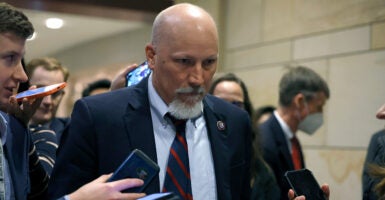


 True discernment has suffered a horrible setback in the past few decades because reason itself has been under attack within the church. As Francis Schaeffer warned nearly thirty years ago in The God Who Is There, the church is following the irrationality of secular philosophy. Consequently, reckless faith has overrun the evangelical community. Many are discarding doctrine in favor of personal experience. Others say they are willing to disregard crucial biblical distinctives in order to achieve external unity among all professing Christians. True Christianity marked by intelligent, biblical faith seems to be declining even among the most conservative evangelicals.THE ABANDONMENT OF OBJECTIVE TRUTHThe visible church in our generation has become astonishingly tolerant of aberrant teaching and outlandish ideas—and frighteningly intolerant of sound teaching. The popular evangelical conception of “truth” has become almost completely subjective. Truth is viewed as fluid, always relative, never absolute. To suggest that any objective criterion might be used to distinguish truth from error is to be egregiously out of step with the spirit of the age. In some circles, Scripture itself has been ruled out as a reliable test of truth. After all, the Bible can be interpreted in so many different ways—who can say which interpretation is right? And many believe there is truth beyond the Bible.All this relativity has had disastrous effects on the typical Christian’s ability to discern truth from error, right from wrong, good from evil. The plainest teachings of the Bible are being questioned among people who declare themselves believers in the Bible. For example, some Christians are no longer certain whether homosexuality should be classed as a sin. Others argue that the feminist agenda is compatible with biblical Christianity. “Christian” television, radio, books, and magazines serve up a preposterous smorgasbord of ideas from the merely capricious to the downright dangerous—and the average Christian is woefully ill-equipped to sort out the lies from the truth.Even to suggest that a sorting between lies and truth is necessary is viewed by many as perilously intolerant. There is a notion abroad that any dispute over doctrine is inherently evil. Concern for orthodoxy is regarded as incompatible with Christian unity. Doctrine itself is labeled divisive and those who make doctrine an issue are branded uncharitable. No one is permitted to criticize anyone else’s beliefs, no matter how unbiblical those beliefs seem to be. A recent article in Christianity Today exemplifies the trend. The article, titled “Hunting for Heresy,” profiled two well-known Christian leaders who had “come under withering attack for controversial writings.”1One is a popular speaker on the college lecture circuit and a bestselling author. He wrote a book in which he encouraged homosexuals to establish permanent live-together relationships (albeit celibate ones). He suggests the evangelical community suffers from “homophobia.” He is convinced that permanent living arrangements between homosexuals are the only alternative to loneliness for people he believes are “born with a homosexual orientation.” This man’s wife has published an article in a homosexual magazine in which she enthusiastically affirms” monogamous sexual relationships between homosexuals. The speaker-author says he has a “very, very strong” disagreement with his wife’s approval of homosexual sex, but his own view seems to allow homosexuals to engage in other kinds of physical intimacy short of actual intercourse.The other Christian leader profiled in the Christianity Today article is a woman who, with her husband, is a featured speaker for a popular, nationally-syndicated radio and television ministry. Their ministry is not a weird offshoot from some fringe cult, but an established, well-respected mainstay from the evangelical heartland. She also serves as chairperson of one of the largest evangelical student organizations in the world. This woman has written a book in which she chronicles some rather peculiar spiritual experiences. She dedicates the book to her male alter ego, an imaginary person named “Eddie Bishop” who romances her in her dreams. This woman says she also has visions of “the Christ child that is within” her. He appears to her as a drooling, emaciated, barefoot “idiot child” in a torn undershirt—”its head totally bald and lolled to one side.” The woman has engaged the services of a Catholic nun who serves as her “spiritual director,” helping to interpret her dreams and fantasies. The book mingles mysticism, Jungian psychology, out-of-body experiences, feminist ideas, subjective religious experience, and this woman’s romantic fantasies into an extraordinary amalgam. The book is frankly so bizarre that it is disturbing to read.The remarkable thing about the Christianity Today article is that the story was not written to expose the aberrant ideas being taught by these two leading evangelicals. Instead, what the magazine’s editors deemed newsworthy was the fact that these people were under attack for their views.In the world of modern evangelicalism, it is allowable to advocate the most unconventional, unbiblical doctrines—as long as you afford everyone else the same privilege. About the only thing that is taboo nowadays is the intolerance of those who dare to point out others’ errors. Anyone today who is bold enough to suggest that someone else’s ideas or doctrines are unsound or unbiblical is dismissed at once as contentious, divisive, unloving, or unchristian. It is all right toespouse any view you wish, but it is not all right to criticize another person’s views—no matter how patently unbiblical those views may be.When tolerance is valued over truth, the cause of truth always suffers. Church history shows this to be so. Only when the people of God have mounted a hardy defense of truth and sound doctrine has the church flourished and grown strong. The Reformation, the Puritan era, and the Great Awakenings are all examples of this. The times of decline in the history of the church have always been marked by an undue emphasis on tolerance—which leads inevitably to carelessness, worldliness, doctrinal compromise, and great confusion in the church.ADRIFT ON A SEA OF SUBJECTIVITYThat the church would lose her moorings in this particular age, however, poses greater dangers than ever. For in the past hundred years or so, the world has changed in a dramatic and very frightening way. People no longer look at truth the way they used to. In fact, we live under a prevailing philosophy that has become hostile to the very idea of absolute truth.From the beginning of recorded history until late last century, virtually all human philosophy assumed the necessity of absolute truth. Truth was universally understood as that which is true, not false; factual, not erroneous; correct, not incorrect; moral, not immoral; just, not unjust; right, not wrong. Practically all philosophers since the time of Plato assumed the objectivity of truth. Philosophy itself was a quest for the highest understanding of truth. Such a pursuit was presumed to be possible, even necessary, because truth was understood to be the same for every person. This did not mean that everyone agreed what truth was, of course. But virtually all agreed that whatever was true was true for everyone.That all changed in the nineteenth century with the birth of existentialism. Existentialism defies precise definition, but it includes the concept that the highest truth is subjective (having its source in the individual’s mind) rather than objective (something that actually exists outside the individual). Existentialism elevates individual experience and personal choice, minimizing or ruling out absolute standards of truth, goodness, morality, and such things. We might accurately characterize existentialism as the abandonment of objectivity. Existentialism is inherently anti-intellectual, against reason, irrational.Danish philosopher Søren Kierkegaard first used the term “existential.” Kierkegaard’s life and philosophy revolved around his experiences with Christianity. Christian ideas and biblical terminology reverberate in many of his writings. He wrote much about faith and certainly regarded himself as a Christian. Many of his ideas began as a legitimate reaction against the stale formalism of the Danish Lutheran state church. He was rightly offended at the barren ritualism of the church, properly outraged that people who had no love for God called themselves Christians just because they happened to be born in a “Christian” nation.But in his reaction against the lifeless state church, Kierkegaard set up a false antithesis. He decided that objectivity and truth were incompatible. To counter the passionless ritualism and lifeless doctrinal formulas he saw in Danish Lutheranism, Kierkegaard devised an approach to religion that was pure passion, altogether subjective. Faith, he suggested, means the rejection of reason and the exaltation of feeling and personal experience. It was Kierkegaard who coined the expression “leap of faith.” Faith to him was an irrational experience, above all a personal choice. He recorded these words in his journal on August 1, 1835: “The thing is to find a truth which is true for me, to find the idea for which I can live and die.”2Clearly, Kierkegaard had already rejected as inherently worthless the belief that truth is objective. His journal continues with these words:What would be the use of discovering so-called objective truth …. What good would it do me if truth stood before me, cold and naked, not caring whether I recognized her or not, and producing in me a shudder of fear rather than a trusting devotion? … I am left standing like a man who has rented a house and gathered all the furniture and household things together, but has not yet found the beloved with whom to share the joys and sorrows of his life…. It is this divine side of man, his inward action, which means everything—not a mass of [objective] information.3Having repudiated the objectivity of truth, Kierkegaard was left longing for an existential experience, which he believed would bring him a sense of personal fulfillment. He stood on the precipice, preparing to make his leap of faith. Ultimately, the idea he chose to live and die for was Christianity, but it was a characteristically subjective brand of Christianity that he embraced.Though Kierkegaard was virtually unknown during his lifetime, his writings have endured and have deeply influenced all subsequent philosophy. His idea of “truth that is true for me” infiltrated popular thought and set the tone for our generations radical rejection of all objective standards.Kierkegaard knew how to make irrationalism sound profound. “God does not exist; He is eternal,” he wrote. He believed Christianity was full of “existential paradoxes,” which he regarded as actual contradictions, proof that truth is irrational.Using the example of Abraham’s willingness to sacrifice Isaac (Gen. 22:1-19), Kierkegaard suggested that God called Abraham to violate moral law in slaying his son. For Kierkegaard, Abraham’s willingness to “suspend” his ethical convictions epitomized the leap of faith that is demanded of everyone. Kierkegaard believed the incident proved that “the single individual [Abraham] is higher than the universal [moral law].”4 Building on that conclusion, the Danish philosopher offered this observation: “Abraham represents faith…. He acts by virtue of the absurd, for it is precisely [by virtue of] the absurd that he as the single individual is higher than the universal.”5 “[I] cannot understand Abraham,” Kierkegaard declared, “even though in a certain demented sense I admire him more than all others.”6It is not difficult to see how such thinking thrusts all truth into the realm of pure subjectivity—even to the point of absurdity or dementia. Everything becomes relative. Absolutes dematerialize. The difference between truth and nonsense becomes meaningless. All that matters is personal experience.And one person’s experience is as valid as another’s—even if everyone’s experiences lead to contradictory conceptions of truth. “Truth that is true for me” might be different from someone else’s truth. In fact, our beliefs might be obviously contradictory, yet another person’s “truth” in no way invalidates mine. Because “truth”is authenticated by personal experience, its only relevance is for the individual who makes the leap of faith. That is existentialism.Existentialism caught on in a big way in secular philosophy. Friedrich Nietzsche, for example, also rejected reason and emphasized the will of the individual. Nietzsche probably knew nothing of Kierkegaard’s works, but their ideas paralleled at the key points. Unlike Kierkegaard, however, Nietzsche never made the leap of faith to Christianity. Instead, he leapt to the conclusion that God is dead. The truth that was “true for him,” it seems, turned out to be the opposite of the truth Kierkegaard chose. But their epistemology (the way they arrived at their ideas) was exactly the same.Later existentialists, such as Martin Heidegger and Jean-Paul Sartre, refined Kierkegaard’s ideas while following the atheism of Nietzsche. Heidegger and Sartre both believed that reason is futile and life basically meaningless. Those ideas have been a powerful force in twentieth-century thought. As the world continues to grow more atheistic, more secular, and more irrational, it helps to understand that it is being propelled in that direction by strong existentialist influences.EXISTENTIALISM INVADES THE CHURCH But don’t get the idea that existentialism’s influence is limited to the secular world. From the moment Kierkegaard wedded existentialist ideas with Christianity, neo-orthodox theology was the inevitable outcome.Neo-orthodoxy is the term used to identify an existentialist variety of Christianity. Because it denies the essential objective basis of truth—the absolute truth and authority of Scripture—neo-orthodoxy must be understood as pseudo-Christianity. Its heyday came in the middle of the twentieth century with the writings of Karl Barth, Emil Brunner, Paul Tillich, and Reinhold Niebuhr. Those men echoed the language and the thinking of Kierkegaard, speaking of the primacy of “personal authenticity,” while downplaying or denying the significance of objective truth. Barth, the father of neo-orthodoxy, explicitly acknowledged his debt to Kierkegaard.7Neo-orthodoxy’s attitude toward Scripture is a microcosm of the entire existentialist philosophy: the Bible itself is not objectively the Word of God, but it becomes the Word of God when it speaks to me individually. In neo-orthodoxy, that same subjectivism is imposed on all the doctrines of historic Christianity. Familiar terms are used, but are redefined or employed in a way that is purposely vague—not to convey objective meaning, but to communicate a subjective symbolism. After all, any “truth” theological terms convey is unique to the person who exercises faith. What the Bible means becomes unimportant. What it means to me is the relevant issue. All of this resoundingly echoes Kierkegaard’s concept of “truth that is true for me.”Thus while neo-orthodox theologians often sound as if they are affirming traditional beliefs, their actual system differs radically from the historic understanding of the Christian faith. By denying the objectivity of truth, they relegate all theology to the realm of subjective relativism. It is a theology perfectly suited for the age in which we live.And that is precisely why it is so deadly.Francis Schaeffer’s 1968 work The God Who Is There included a perceptive analysis of Kierkegaard’s influence on modern thought and modern theology.8 Schaeffer named the boundary between rationality and irrationality “the line of despair.” He noted that existentialism pushed secular thought below the line of despair sometime in the nineteenth century. Religious neo-orthodoxy was simply a johnny-come-lately response of theologians who were jumping on the existentialist bandwagon, following secular art, music, and general culture: “Neo-orthodoxy gave no new answer. What existential philosophy had already said in secular language, it now said in theological language…. [With the advent of neo-orthodoxy,] theology too has gone below the line of despair.”9Schaeffer went on to analyze how neo-orthodoxy ultimately gives way to radical mysticism:Karl Barth opened the door to the existentialistic leap in theology… He has been followed by many more, men like Reinhold Niebuhr, Paul Tillich, Bishop John Robinson, Alan Richardson and all the new theologians. They may differ in details, but their struggle is still the same—it is the struggle of modern man who has given up [rationality]. As far as the theologians are concerned … their new system is not open to verification, it must simply be believed.10Such a system, Schaeffer points out, has no integrity. Those who espouse it cannot live with the repercussions of their own illogic. “In practice a man cannot totally reject [rationality], however much his system leads him to it, unless he experiences … some form of mental breakdown.” Thus people have been forced to an even deeper level of despair: “a level of mysticism with nothing there.”11MYSTICISM: IRRATIONALITY GONE TO SEEDMysticism is the idea that spiritual reality is found by looking inward. Mysticism is perfectly suited for religious existentialism; indeed, it is its inevitable consequence. The mystic disdains rational understanding and seeks truth instead through the feelings, the imagination, personal visions, inner voices, private illumination, or other purely subjective means. Objective truth becomes practically superfluous. Mystical experiences are therefore self-authenticating; that is, they are not subject to any form of objective verification. They are unique to the person who experiences them. Since they do not arise from or depend upon any rational process, they are invulnerable to any refutation by rational means.Arthur L. Johnson writes,The experience convinces the mystic in such a way, and to such a degree, that lie simply cannot doubt its value and the correctness of what he believes it “says.”…In its crudest form this position says that believing something to be so makes it so. The idea is that ultimate reality is purely mental; therefore one is able to create whatever reality one wishes. Thus the mystic “creates” truth through his experience. In a less extreme form, the view seems to be that there are “alternate realities,” one as real as another, and that these “break in upon” the mystic in his experiences. Whatever form is taken, the criterion of truth is again a purely private and subjective experience that provides no means of verification and no safeguard against error. Nevertheless, it is seen by the mystic as being above question by others.The practical result of all this is that it is nearly impossible to reason with any convinced mystic. Such people are generally beyond the reach of reason.12Mysticism is therefore antithetical to discernment. It is an extreme form of reckless faith.Mysticism is the great melting pot into which neo-orthodoxy, the charismatic movement, anti-intellectual evangelicals, and even some segments of Roman Catholicism have been synthesized. It has produced movements like the Third Wave (a neo-charismatic movement with excessive emphasis on signs, wonders, and personal prophecies); Renovaré (an organization that blends teachings from monasticism, ancient Catholic mysticism, Eastern religion, and other mystical traditions); the spiritual warfare movement (which seeks to engage demonic powers in direct confrontation); and the modern prophecy movement (which encourages believers to seek private, extrabiblical revelation directly ftom God). The influx of mysticism has also opened evangelicalism to New-Age concepts like subliminal thought- control, inner healing, communication with angels, channeling, dream analysis, positive confession, and a host of other therapies andpractices coming directly from occult and Eastern religions. The face of evangelicalism has changed so dramatically in the past twenty years that what is called evangelicalism today is beginning to resemble what used to be called neo-orthodoxy. If anything, some segments of contemporary evangelicalism are even more subjective in their approach to truth than neo-orthodoxy ever was.It could be argued that evangelicalism never successfully resisted neo-orthodoxy. Twenty years ago evangelicals took a heroic stand against neo-orthodox influences on the issue of biblical inerrancy. But whatever victory was gained in that battle is now being sacrificed on the altar of mysticism. Mysticism renders biblical inerrancy irrelevant. After all, if the highest truth is subjective and comes from within us, then it doesn’t ultimately matter if the specifics of Scripture are true or not. If the content of faith is not the real issue, what does it really matter if the Bible has errors or not?In other words, neo-orthodoxy attacked the objective inspiration of Scripture. Evangelical mysticism attacks the objective interpretation of Scripture. The practical effect is the same. By embracing existential relativism, evangelicals are forfeiting the very riches they fought so hard to protect. If we can gain meaningful guidance from characters who appear in our fantasies, why should we bother ourselves with what the Bible says? If we are going to disregard or even reject the biblical verdict against homosexuality, what difference does it make if the historical and factual matter revealed in Scripture is accurate or inaccurate? If personal prophecies, visions, dreams, and angelic beings are available to give us up-to-the-minute spiritual direction—”fresh revelation” as it is often called—who cares if Scripture is without error in the whole or in the parts?Mysticism further nullifies Scripture by pointing people away from the sure Word of God as the only reliable object of faith. Warning of the dangers of mysticism, Schaeffer wrote,Probably the best way to describe this concept of modern theology is to say that it is faith in faith, rather than faith directed to an object which is actually there…. A modern man cannot talk about the object of his faith, only about the faith itself. So he can discuss the existence of his faith and its “size” as it exists against all reason, but that is all. Modern man’s faith turns inward…. Faith is introverted, because it has no certain object … it is rationally not open to discussion. This position, I would suggest, is actually a greater despair and darkness than the position of those modern men who commit suicide.“13The faith of mysticism is an illusion. “Truth that is true for me” is irrelevant to anyone else, because it lacks any objective basis. Ultimately, therefore, existential faith is impotent to lift anyone above the level of despair. All it can do is seek more experiences and more feelings. Multitudes are trapped in the desperate cycle of feeding off one experience while zealously seeking the next. Such people have no real concept of truth; they just believe. Theirs is a reckless faith.MEANWHILE, AT THE OTHER END OF THE SPECTRUM…Mysticism, however, is not the only form of reckless faith that threatens the contemporary church. A new movement has been gaining strength lately. Evangelicals are leaving the fold and moving into Eastern Orthodoxy, Roman Catholicism, and liturgical high-church Protestantism. Rejecting the ever-changing subjectivism of a free- wheeling existential Protestantism, they seek a religion with historical roots. Turned off by the shallow silliness that has overrun the evangelical movement, they desire a more magisterial approach. Perhaps sensing the dangers of a religion that points people inward, they choose instead a religion that emphasizes external ceremonies and dogmatic hierarchical authority.I listened to the taped testimony of one of these converts to Roman Catholicism, a former Protestant minister. He said he had graduated with highest honors from a leading Protestant seminary. He told his audience that as a student he was rabidly anti-Catholic and fully committed to Protestant Reformed doctrine (although he refuted this himself by admitting he had already rejected the crucial doctrine of justification by faith). After college he began to read Roman Catholic writings and found himself drawn to Catholic theology and liturgy. He described his initial resistance to the doctrines of purgatory, the perpetual virginity of Mary, transubstantiation, and prayers to Mary and the saints. All of those doctrines are easily disproved by the Bible.14 But this man—acknowledging that he could find no warrant anywhere in Scripture for praying to Mary—nevertheless completely changed his outlook on such matters after he tried praying the rosary and received an answer to a very specific prayer. He concluded that it must have been Mary who answered his prayer and immediately began praying regularly to her. Ultimately, he decided the Bible alone was not a sufficient rule of faith for believers, and he put his faith in papal authority and church tradition.That man’s leap of faith may not have been of the existential variety, but it was a blind leap nonetheless. He chose the other extreme of reckless faith, the kind that makes extrabiblical religious tradition the object of one’s faith.This kind of faith is reckless because it subjugates the written Word of God to oral tradition, church authority, or some other human criterion. It is an uncritical trust in an earthly religious authority—the pope, tradition, a self-styled prophet like David Koresh, or whatever. Such faith rarely jettisons Scripture altogether—but by forcing God’s Word into the mold of religious tradition, it invalidates the Word of God and renders it of no effect (cf. Matt. 15:6).The man whose taped testimony I heard is now an apologist for the Roman Catholic Church. He speaks to Catholic congregations and tells them how to counter biblical arguments against Catholicism. At the end of his testimony tape, he deals briefly with the official Catholic attitude toward Scripture. He is eager to assure his listeners that the modern Roman Catholic Church has no objection if Catholic people want to read Scripture for themselves. Even personal Bible study is all right, he says—but then hastens to add that it is not necessary to go overboard. “A verse or two a day is enough.” This man, a seminary graduate, surely should be aware that a comment like that seriously understates the importance of the written Word of God. We are commanded to meditate on Scripture day and night (Josh. 1:8; Ps. 1:2). We are to let it fill our hearts at all times (Deut. 6:6-9). We must study it diligently and handle it rightly (2 Tim. 2:15). The Bible alone is able to give us the wisdom that leads to salvation, then adequately equip us for every good work (2 Tim. 3:15-17).Discernment depends on a knowledge of Scripture. Those who are content to listen gullibly to some voice of human authority rather than hearing God’s Word and letting it speak for itself cannot be discerning. Theirs is a reckless, irrational faith.We identified the inward-looking extreme of reckless faith as mysticism. We could call this other variety rote tradition. In Isaiah 29:13, that is precisely how God Himself characterized it: “This people their lip service, but draw near with their words and honor Me with their lip service, but they remove their hearts far from Me, and their reverence for Me consists of tradition learned by rote” (emphasis added).Scripture has nothing but condemnation for rote tradition. Barren religious ritual, sacerdotal formalism, or liturgy out of a book are not the same as worship. Real worship, like faith, must engage the mind. Jesus said, “The true worshipers … worship the Father in spirit and truth; for such people the Father seeks to be His worshipers” (John 4:23).Did you realize that rote tradition was the very error for which Jesus condemned the Pharisees? He told them,“Rightly did Isaiah prophesy of you hypocrites, as it is written, ‘This people honors Me with their lips, but their heart is far away from Me. But in vain do they worship Me. teaching as doctrines the precepts of men.’ Neglecting the commandment of God, you hold to the tradition of men.”He was also saying to them, “You nicely set aside the commandment of God in order to keep your tradition” (Mark 7:6-9).Rote tradition is not unlike mysticism in that it also bypasses the mind. Paul said this of the Jews who were so absorbed in their empty religious traditions:I bear them witness that they have a zeal for God, but not in accordance with knowledge. For not knowing about God’s righteousness, and seeking to establish their own, they did not subject themselves to the righteousness of God. For Christ is the end of the law for righteousness to everyone who believes (Rom. 10:2-4).Their problem was not a lack of zeal. It was not that they were short on enthusiasm, emotionally flat, or slothful about religious observances. The issue was that the zeal they displayed was rote tradition, “not in accordance with knowledge.” They were not sufficiently discerning, and therefore their faith itself was deficient.Paul is specific in stating that their ignorance lay in trying to establish their own righteousness rather than submitting to the righteousness of God. This passage comes at the culmination of Paul’s doctrinal discussion in Romans. In context it is very clear that he was talking about the doctrine ofjustification by faith. He had thoroughly expounded this subject beginning in chapter 3. He said we are “justified as a gift by His grace through the redemption which is in Christ Jesus” (3:24). Justification is “by faith apart from works of the Law” (v.28). “God reckons righteousness apart from works” (Rom. 4:6).But instead of seeking the perfect righteousness of Christ, which God reckons to those who believe, the unbelieving Jews had set out to try to establish a righteousness of their own through works. That is where rote tradition always leads. It is a religion of works. Thus the ritualistic, unbelieving Pharisees are an exact parallel to Roman Catholicism, Eastern Orthodoxy, and most forms of ritual-laden Protestantism. All of them deny justification by faith.If the Pharisees or their followers had used the Scriptures as their standard of truth rather than rabbinical tradition, they would have known that God justifies sinners by faith. Repeatedly, Jesus said things to them like “Did you never read in the Scriptures . . . ?” (Matt. 21:42); “You are mistaken, not understanding the Scriptures, or the power of God” (22:29); and, “Are you the teacher of Israel, and do not understand these things?” (John 3:10). What He continually chided them for was their ignorance of the Scriptures. They had set rote tradition in place of the written Word of God (Matt. 15:6), and they were condemned for it.Contrast the way Luke commended the Bereans for their noblemindedness: “For they received the word [the New Testament gospel from the apostles] with great eagerness, examining the Scriptures [the Old Testament books] daily, to see whether these things were so” (Acts 17:1 1). What made the Bereans worthy of commendation? Their eagerness to be discerning. They rightly refused to blindly accept anyone’s teaching (even that of the apostles) without clear warrant from God’s Word.Spiritual discernment is, I believe, the only antidote to the existentialism of our age. Until’Christians regain the will to test everything by the rule of Scripture, reject what is false, and hold fast to what is true, the church will struggle and falter, and our testimony to a world in sin will be impaired.But if the church will rise up and stand for the truth of God’s Word against all the lies of this evil world, then we will begin to see the power of truth that sets people free (John 8:32).Endnotes1. John W. Kennedy, “Hunting for Heresy,” Christianity Today (16 May 1994).2. Robert Bretall, cd., A Kierkegaard Anthology (Princeton, N. J.: Princeton University Press, 1946), 5 (emphasis in original).3. Ibid.4. Søren Kierkegaard, Fear and Trembling, Howard V. Hong and Edna H. Hong, trans. (Princeton, N. J.: Princeton University Press, 1983), 55.5. Ibid.6. Ibid., 57.7. Karl Barth, The Epistle to the Romans, Edwyn C. Hoskyns, trans. (London: Oxford University Press, 1933). Barth cites Kierkegaard repeatedly in this, one of his earliest works.8. Francis Schaeffer, The God Who Is There, in The Complete Works of Francis A. Schaeffer, Volume I (Wheaton, Ill.: Crossway Books, 1982).9. Ibid., 53.10. Ibid., 55.11. Ibid., 58.12. Arthur L. Johnson, Faith Misguided: Exposing the Dangers of Mysticism (Chicago: Moody Press, 1988), 31-32.13. Schaeffer, 64-65, emphasis added.14. Purgatory: Luke 23:42-43 and 2 Cor. 5:8 indicate that believers go immediately to be with Christ at death. Perpetual Virginity of Mary: Matt. 1:25 states that Joseph kept Mary a virgin only until Jesus’ birth, and John 2:12 and Acts 1:14 reveal that Jesus had brothers. Transubstantiation: Heb. 7:27 and 10:12 teach that Christ made one sacrifice for sins forever; there is no need for the daily sacrifice of the Mass. Prayers to Mary and the saints: prayers, adoration, and spiritual veneration offered to anyone but God is expressly forbidden by the first commandment and elsewhere throughout Scripture (Ex. 20:3; Matt. 4:10; Acts 10:25-26; Rev. 19:10; Rev. 22:8-9).Excerpt from Reckless Faith: When the Church Loses Its Will to Discern, © 1994 by John MacArthur.We do pray this article has blessed you in some way. Our prayer is that you will use this message to better understand what is happening in our churches today.Blessings,









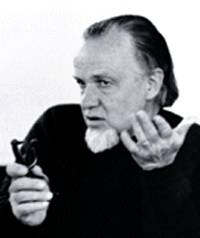




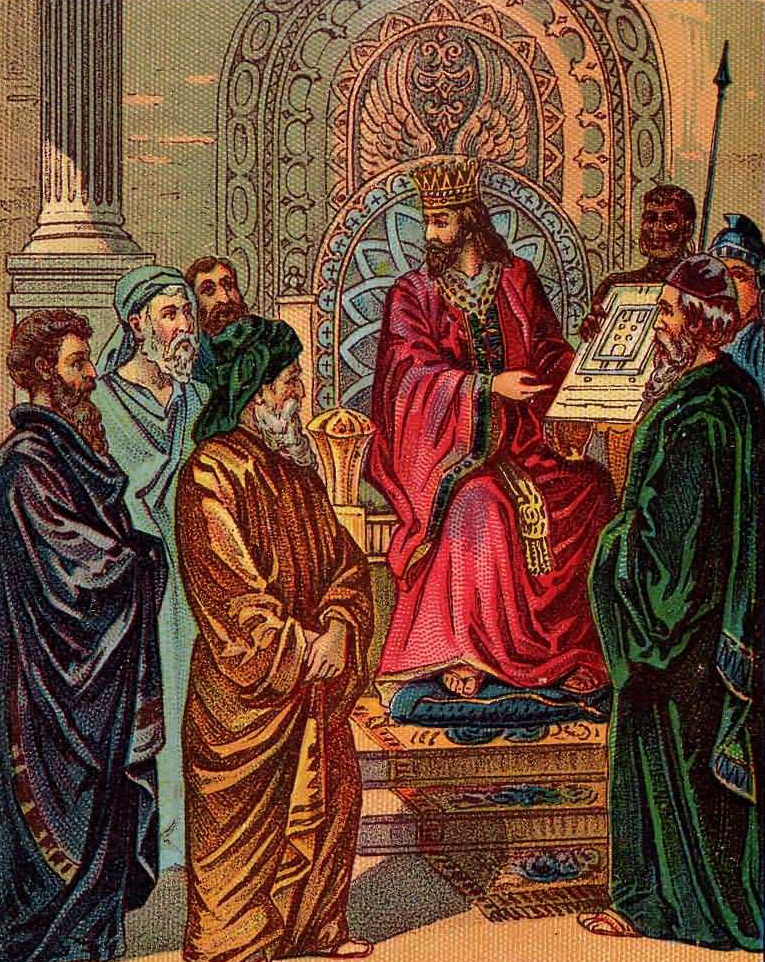


 The Daily Hatch