Category Archives: Uncategorized

Pornographic Books Found in Texas School Libraries Result in Bipartisan Action to Remove Them

Pornographic Books Found in Texas School Libraries Result in Bipartisan Action to Remove Them

Tony Kinnett  @TheTonus / May 15, 2023

Five sexually explicit books found in Texas public school libraries would be removed under a bill that has passed the Texas House: “Gender Queer,” “Let’s Talk About It,” “Blue Is the Warmest Color,” “Goblin Slayer,” and “Ready for It.” (Photo: Tony Kinnett/The Daily Signal/Getty Images)

Warning: This report contains sexually graphic images from commonly available books in school libraries, which The Daily Signal has obscured in part. 

A bill that has passed the Texas House with bipartisan support could become the model for ensuring public school libraries don’t provide sexual content to children.

HB 900, sponsored by four Republicans and a Democrat, specifies what “sexual content” is and prescribes actions by Texas public schools to ensure children aren’t given access to pornographic, sexually explicit, or other age-inappropriate materials.

The bill passed April 19 by a vote of 95-52, with support from 82 Republicans and 13 Democrats. All of the “no” votes were from Democrats.

The GOP-controlled Texas Senate is expected to pass a companion version of HB 900, and Gov. Greg Abbott, a Republican, is expected to sign the measure into law. 

Sexually explicit books and graphic novels (told in a comic-book format) have become a common sight in American schools over the past several years, with graphic novels such as “Let’s Talk About It,” “Ready for It,” “Goblin Slayer,” “Gender Queer,” and dozens of others that concern parents, teachers, and millions of other adults who believe pornographic images and the promotion of sexuality have no place in public schools

Christin Bentley, chair of a committee on child sexualization prevention for the Texas Republican Party, told The Daily Signal that finding these books in Texas schools drove bipartisan support for HB 900. 

Although many LGBTQ+ advocates claim that sexually inappropriate books aren’t found in Texas’ public school libraries, the facts say otherwise:

“Let’s Talk About It,” which has attracted extensive scorn for depicting minors having sex, recommending that teens watch porn, and encouraging minors to practice sexual activities, has been found in Killeen, Arlington, Dallas, Austin, Krum, Rowlett, Spring, College Station, Houston, Tomball, Fort Worth, Burleson, El Paso, Christoval, and Pittsboro independent school districts.

(Reminder: The Daily Signal has obscured sexually explicit images, but some readers still may find them offensive.)
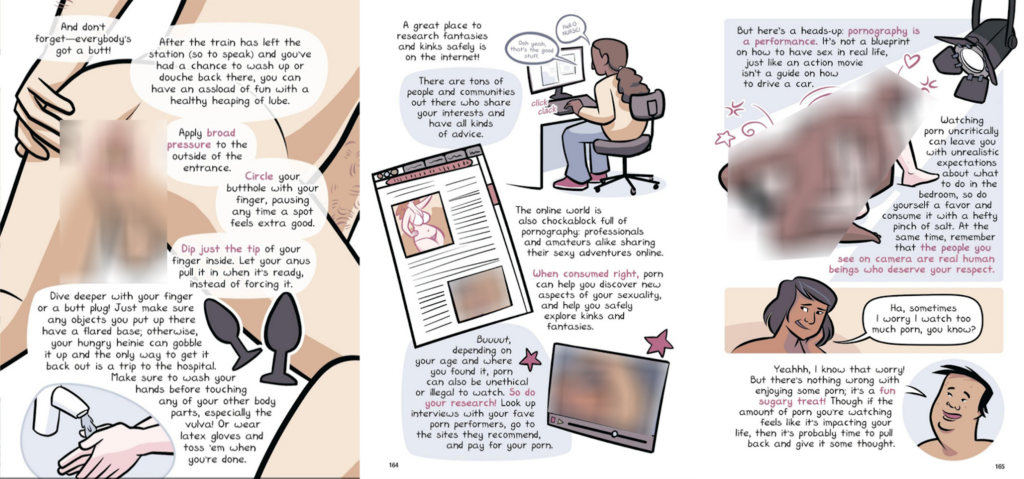
Sections from “Let’s Talk About It.”

Both the Austin and Dallas independent school districts allowed children to check out “Ready for It,” a guidebook that advises teens how to practice oral sex and gay anal sex, including graphic imagery portraying both actions.
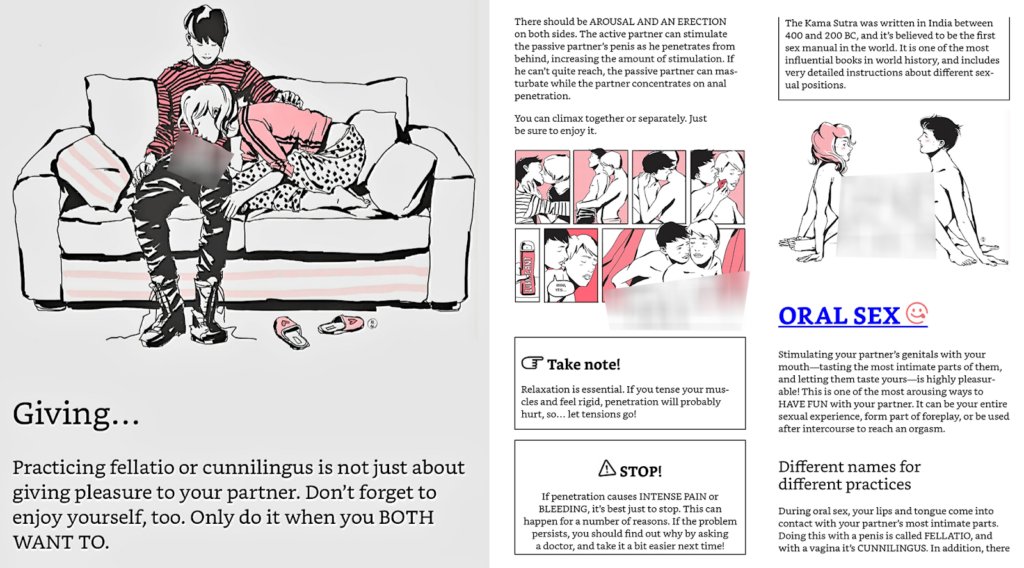
Sections from “Ready for It.”

The Dallas, Longview, and Paris independent school districts have included “Goblin Slayer” in their libraries, although the book contains pornographic sequences in which goblins molest or rape female characters.

Sections from “Goblin Slayer.”

“Blue Is the Warmest Color” is another graphic novel with sexually explicit scenes, pictured below, and it is found in the school libraries of the Dallas, Frisco, and Tyler independent school districts.

Sections from “Blue Is the Warmest Color.”

LGBTQ+ advocates claim that these books are harmless, and that books containing pornography are essential for sexual development. These activists often have claimed that Republicans are “just seeking to ban books” without using any specific standard.

But Jonathan Butcher, an education expert at The Heritage Foundation, underlines the appropriate roles of parents and educators in addressing certain subjects. (The Daily Signal is Heritage’s multimedia news organization.)

Butcher, testifying in support of the Texas bill, noted that “effective teaching” counts on parents and educators being responsible “for determining the times, places, and topics for these discussions.” 

State Reps. Jared Patterson, Brad Buckley, Dustin Burrows, and Matthew Shaheen, all Republicans, and Oscar Longoria, a Democrat, co-sponsored the legislation.

HB 900 defines “sexually explicit materials” as any communication, language, or material, including a written description, photographic or video image, or audio file, excluding library material directly related to required curriculum, as referenced in the state’s existing education and penal codes.

In short, HB 900 says that school libraries may not provide students with any materials displaying or encouraging sexual conduct already defined by the Texas Penal Code.

HB 900 would restrict schools from purchasing, housing, and providing these and other sexually explicit books and graphic novels to students. But unlike other bills around the country that have attempted to set standards for school libraries on sexual content, this Texas bill provides a unique method of enforcement.

Vendors that attempt to sell these sexually explicit materials will be required to label their material before sale, and schools caught purchasing sexually explicit material would be banned indefinitely from purchasing any book or material from the selling vendor. 

This means that any vendor caught selling sexually explicit content to a Texas public school district would be banned from selling anything to that Texas public school district in the future.

The largest criticism of prohibiting sexually explicit content in school libraries is the fear, driven by LGBTQ+ activists, that these bills target LGBTQ+ individuals in a “thinly veiled”homophobic attack.

Bentley, chair of Texas Republicans’ committee on preventing sexualization of children, told The Daily Signal otherwise, however.

“The bill is carefully worded to ensure that inappropriate content, not ideologies or lifestyles, are restricted in the classroom,” she said. “The bill doesn’t ban anyone or forbid libraries from including books about gay people—that’s a blatant lie.”

In his testimony supporting HB 900, Butcher, a senior research fellow in education at Heritage, pointed out the importance of protecting children from sexually explicit material:

Lawmakers must consider proposals that make parents and educators partners in determining what instructional content is age-appropriate for students. Lawmakers should not protect students from material with which he or she disagrees, nor should policymakers attempt to censor classroom discussions on age-appropriate information. 

The pursuit of truth requires that educators challenge students, at appropriate ages, with ideas that test common assumptions and prejudices. 

However, embedded in the process of effective teaching are parents’ and educators’ responsibilities for determining the times, places, and topics for these discussions. This is especially important for lessons and conversations about biological sex and sex acts included in “‘sexually explicit material,’” defined in the proposal as “any communication, language, or material … that describes or portrays sexual conduct … in a patently offensive way.” 

These are deeply personal topics that involve individual beliefs about personal behavior, habitus religion, and health. Material covering sex transforms from instructional to pornographic in nature when it does not describe a physical act for the purpose of academic instruction but is designed to create sexual arousal in those consuming the material. 

The current proposal appropriately sets procedures and guidelines for educators to follow regarding this content.

Have an opinion about this article? To sound off, please email letters@DailySignal.com, and we’ll consider publishing your edited remarks in our regular “We Hear You” feature. Remember to include the URL or headline of the article plus your name and town and/or state.


Since April 17, 2023 when this resolution was passed you would think that something horrible had happened if you read the local press reports!!! Read it for yourself:

SALINE COUNTY RESOLUTION NO. 2023-_______

A RESOLUTION REQUESTING THE SALINE COUNTY LIBRARY ENSURE THAT
MATERIALS CONTAINED WITHIN THE CHILDREN’S SECTION OF THE
LIBRARY ARE SUBJECT MATTER AND AGE APPROPRIATE.

WHEREAS, the Saline County Library (“Library”) has been an integral part of the Saline
County community for decades; and

WHEREAS, the Library is visited by individuals of all ages, backgrounds, and beliefs; and

WHEREAS, the Library currently has many children visit who may be exposed to materials
that are not subject matter or age appropriate for children, such as sexual content or imagery,
that their parents or the public do not deem to be appropriate; and

WHEREAS, the Library Board of Directors and Library employees have a responsibility to
ensure that materials contained at the Library, particularly within the children’s section,
regardless of the legal definition of obscenity, are age appropriate for children; and

WHEREAS, while the Arkansas Legislature passed Senate Bill 81, now Act 372 of 2023,
which may have an impact on the Library, and the Library should proactively take steps to
ensure that materials that are not subject matter or age appropriate, such as those that contain
sexual content or imagery, are not located in areas where children’s materials are located; and

NOW, THEREFORE BE IT RESOLVED BY THE SALINE COUNTY QUORUM
COURT THAT:

SECTION I: The Library should enact policies to relocate materials that are not subject matter
or age appropriate for children, due to their sexual content or imagery, to an area that is not
accessible to children.

SECTION II: That this Resolution shall be in full force and effect from and after its passage
and approval.

THIS RESOLUTION adopted this 17 th day of April 2023
APPROVED: ______________________ SPONSORS: JIM WHITLEY, CLINT CHISM, EVERETTE HATCHER


MATT BRUMLEY DISTRICT #10
SALINE COUNTY JUDGE


Saline County Commission approves library resolution to relocate suggestive material

by Josh Snyder | Today at 9:37 p.m.
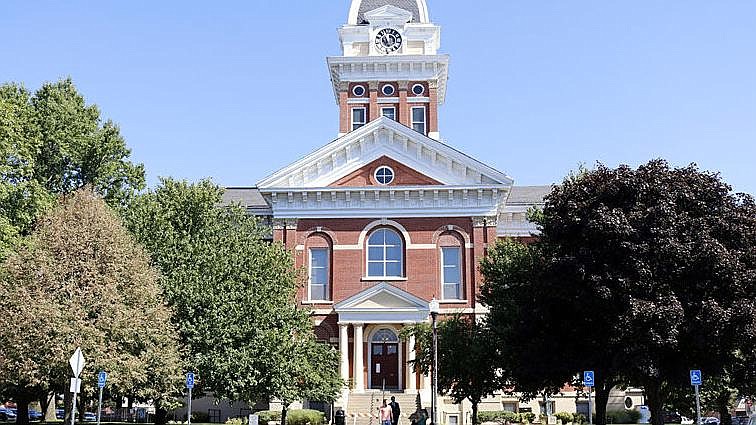
Saline County justices of the peace approved a resolution “requesting” the Saline County Library to relocate certain material “due to their sexual content or imagery” on Monday evening.

The resolution, titled “A resolution requesting the Saline County Library ensure that materials contained within the children’s section of the library are subject matter and age appropriate,” is listed as “Exhibit ‘E’” at the 6:30 p.m. quorum court meeting. Its sponsors are Jim Whitley, a justice of the peace representing District 10, and Clint Chism, a justice of the peace who represents District 11.

The resolution states, “The library should enact policies to relocate materials that are not subject matter or age appropriate for children, due to their sexual content or imagery, to an area that is not accessible to children.”

During discussion by the justices of the peace, Whitley said he wanted to dispel “rumors and innuendo” surrounding the resolution. He said that people have accused the resolution of being related to defunding the library system. 

“Nothing could be further from the truth,” Whitley said, emphasizing that there was no intent to defund the library in the resolution. 

He also rejected claims that the library wanted to remove sexual material from the library at large. Instead, the resolution is “very specific to the children’s section of the library.” 

Whitley said children are “inundated daily with sexual language, imagery content that is really inappropriate for them.”

Literature is at the core of America’s democracy, the justice of the peace said, adding that he supports the library system. 

However, he said he doesn’t want children to come to the library and “read things they’re too immature to process.” 

Chism said that, in the past three days, “I’ve come under a lot of anger.” He read a prepared statement, in which he expressed surprise at their response. 

Laws already “do that sort of thing,” he said, adding that movies are rated, and that games and music have warning labels. 

“I don’t understand why it’s even being a debate,” Chism said. “Why would you want your children to look at something like that?”

Keith Keck, a justice of the peace representing District 13, proposed an amendment that states “parents or legal guardians are ultimately responsible for the children’s use of the library and for determining the appropriate library materials for their children to have access to.”

After discussion, the amendment was voted down 9-4. 

Keck also recommended an amendment that would add an additional reference to Act 372, but withdrew the motion after discussion.

The effort from Whitley and Chism references Act 372, a state law signed March 30 that exposes library personnel to criminal charges for “knowingly” distributing material found to be obscene. Such efforts add to the wave of recent pressure placed on Arkansas libraries to remove children’s books that address sexual subjects.


Act 372 removes existing language from state law that shields library personnel as well as school employees from prosecution for disseminating obscene material.

A person who loans out from a public library material found to be obscene could be charged with a Class D felony under the law. The legislation also creates a new Class A misdemeanor offense for knowingly furnishing a “harmful item” to a minor.

LIBRARY DIRECTOR RESPONDS

In an interview before the quorum court meeting, Saline County Library Director Patty Hector, Saline County Library said she didn’t believe the county resolution was necessary.

The library board has already voted to update standards for Act 372, and their books are in “the appropriate age section,” according to Hector.

Act 372 establishes parameters for citizens to challenge the appropriateness of material available to the public that is held in school or public libraries. Successful challenges could result in material being relocated to an area not accessible to minors.

Decisions not to relocate the challenged material could be appealed to a school district’s board, in the case of a school library, or the governing body of a city or county, in the case of municipal or county libraries.

Anyone wanting to make an official challenge over a book should fill out a form and speak with Hector, the director said. If the complainant wants to continue with their challenge, their complaint will go to a committee of library staff, who will discuss the book. After the committee reports back to the complainant, that person can choose to take the challenge to the quorum court. 

However, Hector said that, in the seven years she has been director of the system, “I haven’t had a book challenge in all that time.”

According to the director, library staff read professional reviews of books to determine whether the works are “right” for the library. Staff in the children’s section get together if they feel “the least bit concerned” about a book for kids, she said.

Hector said the library system also doesn’t buy books from groups pushing self-published works, or works that aren’t from a well-known publisher.

“We want things that are vetted by a publisher.”

Hector said she doesn’t think anything will need to be moved or relocated, because she believes her staff bought appropriate books.


OTHER EFFORTS

In addition to Act 372, Hector pointed to other similar efforts to regulate the availability of certain books in Crawford County, Siloam Springs, Craighead County.

A late September post on the website of the conservative education and research group Family Council lists libraries with children’s and young adult books containing what it calls “graphic sexual content.” Crawford County is listed among them, though neither the Saline County Library nor the Craighead County Jonesboro Library systems are mentioned.

The post states that people can take steps to remove material they find objectionable by using a form that asks libraries to remove offensive materials and call on their elected officials to pass laws that regulate “objectionable material” in libraries.

In February, Crawford County Library System Director Deidre Grzymala announced her resignation following criticisms of the inclusion and public display of children’s books with lesbian, gay, bisexual, transgender, queer or questioning themes at the library.

The Craighead County Jonesboro Library lost half its revenue in November, after residents voted to decrease the library’s 2.0 mill tax to 1.0 mill.

The Siloam Springs Library has had at least 10 of its books challenged. 

Similar efforts have also been taking place in other states. 

Attempts to ban books “nearly doubled” in 2022, compared against the previous year, a March 22 news release from the American Library Association states. Nationwide, there were 1,269 “demands to censor library books and resources in 2022,” according to the association.

In Saline County, other new business on the quorum court’s Monday agenda included a “resolution recognizing public safety communicators as first responders,” a “resolution authorizing continuation of ICJR grant,” an “emergency ordinance designating planning services as professional services,” an “emergency ordinance establishing Saline County Litter Control Fund” and an “ordinance amending the 2023 Saline County budget ordinance 2022-36.”

Information for this article was contributed by Will Langhorne of the Arkansas Democrat-Gazette and Doug Thompson of the Northwest Arkansas Democrat-Gazette.

Topics

Siloam Springs,  Craighead county,  Jonesboro,  Crawford countyDeidre Grzymala,  Family Council


I have read articles for years from Dan Barker, but recently I just finished the book Barker wrote entitled LIFE DRIVEN PURPOSE which was prompted by Rick Warren’s book PURPOSE DRIVEN LIFE which I also read several years ago.

Dan Barker is the  Co-President of the Freedom From Religion Foundation, And co-host of Freethought Radio and co-founder of The Clergy Project.

On March 19, 2022, I got an email back from Dan Barker that said:

Thanks for the insights.

Have you read my book Life Driven Purpose? To say there is no purpose OF life is not to say there is no purpose IN life. Life is immensely meaningful when you stop looking for external purpose.

Ukraine … we’ll, we can no longer blame Russian aggression on “godless communism.” The Russian church, as far as I know, has not denounced the war.

db

In the next few weeks I will be discussing the book LIFE DRIVEN PURPOSE which I did enjoy reading. Here is an assertion that Barker makes that I want to discuss:

Think about sexuality. The bible says that “God created mankind in his own image, in the image of God he created them; male and female he created them” (Genesis 1:27). It is assumed that Adam and Eve were heterosexual, because they were commanded to “replenish the earth.” Jesus made the same assumption: “Have you not read that He who created them from the beginning made them male and female, and said ‘for this reason a man shall leave his father and mother and be joined to his wife, and the two shall become one flesh’?” (This is also sexist, from the male point of view.)

Sexiest? Sounds like you are modern day woke and you will end up turning on your buddy Richard Dawkins?

TRANSGENDERISM SEEN BELOW

A.F. Branco for Jan 12, 2022

——

After Life 2 – Man identifies as an 8 year old girl

——

——

Richard Dawkins declares there are only two sexes as matter of science: ‘That’s all there is to it’

Dawkins added that those who have tried to cancel JK Rowling for making the same point are ‘bullies’

Gabriel Hays

 By Gabriel Hays | Fox News

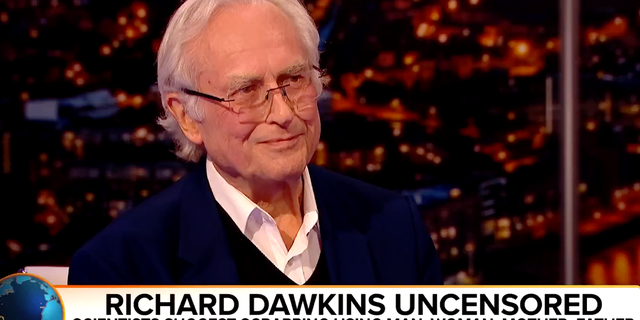
During a recent interview with British journalist Piers Morgan, famed atheist and biologist Richard Dawkinsdeclared, “there are two sexes, and that’s all there is to it.”

He added that LGBTQ activists looking to discredit the reality of two biological sexes are pushing “utter nonsense.”

Dawkins further noted that those going after Harry Potter author J.K. Rowling for her commitment to the reality of two sexes are “bullies.”
‘HARRY POTTER’ STAR TOM FELTON SUPPORTS J.K. ROWLING AS AUTHOR GETS CONTINUED CRITICISM FROM TRANS ACTIVISTS

Famed atheist and biologist Richard Dawkins strongly defends the reality of biological sex during an interview with Piers Morgan.

Famed atheist and biologist Richard Dawkins strongly defends the reality of biological sex during an interview with Piers Morgan.(Screenshot/Piers Morgan Uncensored)

The famous critic of religion spoke with Morgan during a recent episode of “Piers Morgan Uncensored.” The host prompted Hawkins by mentioning how “extraordinary” it is that LGBTQ activists and woke ideologues “want to what they call, de-gender and neutralize language.”

Piers was referring to a recent list of problematic words put out by the “EBB Language Project,” a collection of academics looking to police words that could potentially be found to be politically incorrect. The proposed list contained gendered words, such as “male, female, man, woman, mother, father,” U.K. outlet The Telegraph reported.

Dawkins had commented on the project last month, telling the paper, “The only possible response is contemptuous ridicule. I shall continue to use every one of the prohibited words. I am a professional user of the English language. It is my native language.”

During their interview, Morgan trashed such language policing and the idea there aren’t two sexes, He declared, “I mean, it’s incontrovertible. There’s no scientific doubt about this.” He also noted that a “small group of people have been quite successful actually in reshaping vast swathes of the way society talks and is allowed to talk.”

Dawkins immediately discredited the entire movement, saying, “It’s bullying.” Mentioning famous people who have been demonized for going against these activists, the renowned researcher added, “And we’ve seen the way J.K. Rowling has been bullied, Kathleen Stock has been bullied. They’ve stood up to it. But it’s very upsetting the way this tiny minority of people has managed to capture the discourse and really talk errant nonsense.”
NIGEL FARAGE SAYS AMERICA’S ‘DISEASE OF WOKE’ SPREAD TO UK, BIDEN DOESN’T LIKE BRITISH ALLIES ‘VERY MUCH’

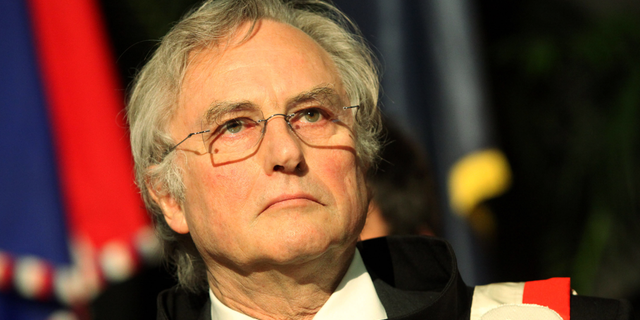
Richard Dawkins rose to fame for his books on religion and biology, but he has locked horns with woke orthodoxy over issues such as gender ideology.

Richard Dawkins rose to fame for his books on religion and biology, but he has locked horns with woke orthodoxy over issues such as gender ideology. (Mark Renders/Getty Images)

Upon Morgan asking Dawkins how to combat the “nonsense,” Dawkins simply replied, “Science.” 

He then said, “There are two sexes. You can talk about gender if you wish, and that’s subjective.” Morgan asked him about people who claim there are “a hundred genders,” though Dawkins claimed, “I’m not interested in that.”

He said bluntly, “As a biologist, there are two sexes, and that’s all there is to it.”

Subsequently, the host mentioned how Dawkins has had his career and reputation dinged for simply asking questions about inconsistencies in the left’s dogmas on gender and identity.

Morgan said, “You had a humanist award stripped in 2021 because of your comments about of this kind of thing.” He cited the tweet that cost him, which stated, “In 2015, Rachel Dolezal, a white chapter president of the NAACP, was vilified for identifying as Black. Some men choose to identify as women, and some women choose to identify as men. You will be vilified if you deny that they literally are what they identify as. Discuss.”

Morgan mentioned, “You had your award stripped because you were effectively doing what J.K. Rowling and others have said – you were just espousing a biological fact.”

Dawkins shot back, “I wasn’t even doing that. I was asking people to discuss. Discuss! That’s what I’ve done all my life in universities.”
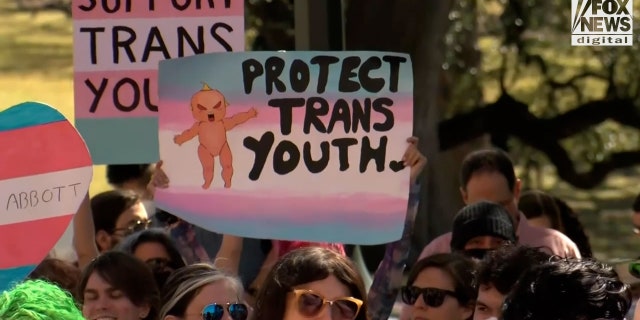
Demonstrators protest in support of rights for transgender youth.

Demonstrators protest in support of rights for transgender youth. (Fox News )

Morgan asked Dawkins why society has “lost that ability to actually have an open and frank debate.”


The scientist replied, “There are people for whom the word discuss doesn’t mean discuss, it means you’ve taken a position, which I hadn’t… I thought it was a reasonable thing to discuss.”

Gabriel Hays is an associate editor for Fox News Digital. 


——-

Dennett wearing a button-up shirt and a jacket

I was referred this fine article by Robyn E. Blumner in defense of her boss at the RICHARD DAWKINS FOUNDATION by a tweet by Daniel Dennett.

As an evangelical I have had the opportunity to correspond with more more secular humanists that have signed the Humanist Manifestos than any other evangelical alive (at least that has been one of my goals since reading Francis Schaeffer’s books and watching his films since 1979). Actually I just attended the retirement party held for my high school Bible teacher Mark Brink of EVANGELICAL CHRISTIAN SCHOOL of Cordova, Tennessee on May 19th and he introduced me to the works of Francis Schaeffer and it was Schaeffer’s works that eventually help topple ROE v WADE!!! Ironically Mr Brink had a 49 year career that spanned 1973 to 2022 which was the same period that ROE v WADE survived!!!

Not everyone I have corresponded with is a secular humanist but  many are the top scientists and atheist thinkers of today and hold this same secular views. Many of these scholars have taken the time to respond back to me in the last 20 years and some of the names  included are  Ernest Mayr (1904-2005), George Wald (1906-1997), Carl Sagan (1934-1996),  Robert Shapiro (1935-2011), Nicolaas Bloembergen (1920-),  Brian Charlesworth (1945-),  Francisco J. Ayala (1934-) Elliott Sober (1948-), Kevin Padian (1951-), Matt Cartmill (1943-) , Milton Fingerman (1928-), John J. Shea (1969-), , Michael A. Crawford (1938-), (Paul Kurtz (1925-2012), Sol Gordon (1923-2008), Albert Ellis (1913-2007), Barbara Marie Tabler (1915-1996), Renate Vambery (1916-2005), Archie J. Bahm (1907-1996), Aron S “Gil” Martin ( 1910-1997), Matthew I. Spetter (1921-2012), H. J. Eysenck (1916-1997), Robert L. Erdmann (1929-2006), Mary Morain (1911-1999), Lloyd Morain (1917-2010),  Warren Allen Smith (1921-), Bette Chambers (1930-),  Gordon Stein (1941-1996) , Milton Friedman (1912-2006), John Hospers (1918-2011), and Michael Martin (1932-).

Let me make a few points about this fine article below by the humanist Robyn E. Blumner. 

Robyn is trying to use common sense on people that “GOD GAVE THEM OVER to a depraved mind.” Romans 1 states:

28 And just as they did not see fit to acknowledge God any longer, GOD GAVE THEM OVER to a depraved mind, to do those things which are not proper, 29 being filled with all unrighteousness, wickedness, greed, evil; full of envy, murder, strife, deceit, malice; they are…inventors of evil,

Identitarianism Is Incompatible with Humanism

Robyn E. Blumner

From: Volume 42No. 4
June/July 2022

Share

Tweet

Identitarian: A person or ideology that espouses that group identity is the most important thing about a person, and that justice and power must be viewed primarily on the basis of group identity rather than individual merit. (Source: Urban Dictionary)

“The Affirmations of Humanism”: We attempt to transcend divisive parochial loyalties based on race, religion, gender, nationality, creed, class, sexual orientation, or ethnicity and strive to work together for the common good of humanity. (Paul Kurtz, Free Inquiry, Spring 1987)

The humanist project is at a dangerous crossroads. I fear that our cohesion as fellow humanists is being torn apart by a strain of identitarianism that is making enemies of long-standing friends and opponents of natural allies.

Just at a time when it is essential for all of us to come together to work arm-in-arm against Christian Nationalism and the rise of religious privilege in law, humanism is facing a schism within its own movement. It is heartbreaking to watch and even more disheartening to know that the continued breach seems destined to grow.

The division has to do with a fundamental precept of humanism, that enriching human individuality and celebrating the individual is the basis upon which humanism is built. Humanism valorizes the individual—and with good reason; we are each the hero of our own story. Not only is one’s individual sovereignty more essential to the humanist project than one’s group affiliation, but fighting for individual freedom—which includes freedom of conscience, speech, and inquiry—is part of the writ-large agenda of humanism. It unleashes creativity and grants us the breathing space to be agents in our own lives.

Or at least that idea used to be at the core of humanism.

Today, there is a subpart of humanists, identitarians, who are suspicious of individuals and their freedoms. They do not want a free society if it means some people will use their freedom to express ideas with which they disagree. They see everything through a narrow affiliative lens of race, gender, ethnicity, or other demographic category and seek to shield groups that they see as marginalized by ostensible psychic harms inflicted by the speech of others.

This has given rise to a corrosive cultural environment awash in controversial speakers being shouted down on college campuses; even liberal professors and newspaper editors losing their jobs for tiny, one-off slights; the cancellation of great historical figures for being men of their time; and a range of outlandish claims of microaggressions, cultural appropriation, and other crimes against current orthodoxy.

It has pitted humanists who stand for foundational civil liberties principles such as free speech and equal protection under the law against others on the political Left who think individual freedoms should give way when they fail to serve the interests of select identity groups. The most important feature of the symbol of justice is not her sword or scales; it is her blindfold. Identitarians would pull it off so she could benefit certain groups over others.

Good people with humanist hearts have been pilloried if they don’t subscribe to every jot and tittle of the identitarian gospel. A prime example is the decision last year by the American Humanist Association (AHA) to retract its 1996 award to Richard Dawkins as Humanist of the Year. The man who has done more than anyone alive to advance evolutionary biology and the public’s understanding of that science, who has brought the light of atheism to millions of people, and whose vociferous opposition to Donald Trump and Brexit certainly must have burnished his liberal cred became radioactive because of one tweet on transgender issues that the AHA didn’t like.

Apparently decades of past good works are erased by 280 characters. Just poof. No wonder a New York Times poll1 recently found that 84 percent of adults say it is a “very serious” or “somewhat serious” problem that some Americans do not speak freely because of fear of retaliation or harsh criticism.

This is what identitarians have wrought. Rather than lifting up individuals and imbuing them with autonomy and all the extraordinary uniqueness that flows from it, identitarians would divide us all into racial,  ethnic,  and  gender-based groups and make that group affiliation our defining characteristic. This has the distorting effect of obliterating personal agency, rewarding group victimhood, and incentivizing competition to be seen as the most oppressed.

In addition to being inherently divisive, this is self-reinforcing defeatism. It results in extreme examples, such as a draft plan in California to deemphasize calculus as a response to persistent racial gaps in math achievement.2 Suddenly a subject as racially neutral as math has become a flashpoint for identitarians set on ensuring equality of outcomes for certain groups rather than the far-more just standard of equality of opportunity. In this freighted environment, reducing the need for rigor and eliminating challenging standards becomes a feasible solution. The notion of individual merit or recognition that some students are better at math than others becomes racially tinged and suspect.

Not only does the truth suffer under this assault on common sense, but we start to live in a Harrison Bergeron world where one’s natural skills are necessarily sacrificed on the altar of equality or, in today’s parlance, equity.

Of course, the identitarians’ focus is not just on racial issues. Gender divisions also play out on center stage. I was at a secular conference recently when a humanist leader expressed the view that if you don’t have a uterus, you have no business speaking about abortion.

Really? Only people with female reproductive organs should be heard on one of the most consequential issues of the day? Such a call, itself, is a form of lamentable sexism. And it seems purposely to ignore the fact that plenty of people with a uterus are actively opposed to the right to choose, while plenty of people without a uterus are among our greatest allies for abortion rights. Why should those of us who care about reproductive freedom cut fully half of all humanity from our roster of potential vocal supporters and activists?

As has been said by others perplexed and disturbed by such a narrow-minded view, you don’t have to be poor to have a valid opinion on ways to alleviate poverty. You don’t have to be a police officer to have a valid opinion on policing. And, similarly, you don’t have to be a woman to have a valid opinion on abortion rights.

If the Affirmation quoted at the beginning of this article that rejects “divisive parochial loyalties” based on facile group affiliations isn’t a rejection of identitarianism, I don’t know what is. In his 1968 essay “Humanism and the Freedom of the Individual,” Kurtz stated bluntly:

Any humanism that does not cherish the individual, I am prepared to argue, is neither humanistic nor humanitarian. … Any humanism worthy of the name should be concerned with the preservation of the individual personality with all of its unique idiosyncrasies and peculiarities. We need a society in which the full and free development of every individual is the ruling principle. The existence of individual freedom thus is an essential condition for the social good and a necessary end of humanitarianism.

The individual is the most important unit in humanism. When our individuality is stripped away so we can be fitted into prescribed identity groups instead, something essential to the humanist project is lost. Those pushing for this conception of society are misconstruing humanism, diminishing human potential and self-actualization, and driving a wedge between good people everywhere.

Notes

1. The New York Times/Siena College Research Institute February 9–22, 2022 1,507 United States Residents Age 18+. Available online at https://int.nyt.com/data/documenttools/free-speech-poll-nyt-and-siena-college/ef971d5e78e1d2f9/full.pdf.

Jacey Fortin, “California Tries to Close the Gap in Math, but Sets Off a Backlash,” New York Times, November 4, 2021. Available online at https://www.nytimes.com/2021/11/04/us/california-math-curriculum-guidelines.html.

Robyn E. Blumner

Robyn E. Blumner is the CEO of the Center for Inquiry and the executive director of the Richard Dawkins Foundation for Reason &, Science. She was a nationally syndicated columnist and editorial writer for the Tampa Bay Times (formerly the St. Petersburg Times) for sixteen years.

FRANCIS SCHAEFFER LGBTQ+ SCHISM

—-

Francis Schaeffer.jpg

Francis Schaeffer later in this blog post discusses what the unbelievers in Romans 1 were rejecting, but first John MacArthur discusses what the unbelievers in the Democratic Party today are affirming and how these same activities were condemned 2000 years ago in Romans 1.

Christians Cannot And MUST Not Vote Democrat – John MacArthur

A Democrat witness testifying before the HouseJudiciary Committee on abortion rights Thursday declared that men can get pregnant and have abortions. This reminds of Romans chapter 1 and also John MacArthur’s commentary on the 2022 Agenda of the Democratic Party:

25 For they exchanged the truth of God for a lie and worshiped and served the creature rather than the Creator…26 For this reason (M)GOD GAVE THEM OVER  to degrading passions; for their women exchanged the natural function for that which is unnatural, 27 and in the same way also the men abandoned the natural function of the woman and burned in their desire toward one another, men with men committing indecent acts and receiving in their own persons the due penalty of their error.28 And just as they did not see fit to acknowledge God any longer, GOD GAVE THEM OVER to a depraved mind, to do those things which are not proper, 29 being filled with all unrighteousness, wickedness, greed, evil; full of envy, murder, strife, deceit, malice; they are…inventors of evil, disobedient to parents, 31 without understanding, untrustworthy, unloving, unmerciful; 32 but also give hearty approval to those who practice them.

Here is what John MacArthur had to say:

Now, all of a sudden, not only is this characteristic of our nation, but we now promote it. One of the parties, the Democratic Party, has now made Romans 1, the sins of Romans 1, their agenda. What God condemns, they affirm.

I know from last week’s message that there was some response from people who said, “Why are you getting political?”

Romans 1 is not politics. This has to do with speaking the Word of God through the culture in which we live….it’s about iniquity and judgment. And why do we say this? Because this must be recognized for what it is–sin, serious sin, damning sin, destructive sin.

Dem witness tells House committee men can get pregnant, have abortions

‘I believe that everyone can identify for themselves,’ Aimee Arrambide tells House Judiciary Committee

By Jessica Chasmar | Fox News

A Democrat witness testifying before the HouseJudiciary Committee on abortion rights Thursday declared that men can get pregnant and have abortions.

Aimee Arrambide, the executive director of the abortion rights nonprofit Avow Texas, was asked by Rep. Dan Bishop, R-N.C., to define what “a woman is,” to which she responded, “I believe that everyone can identify for themselves.”

“Do you believe that men can become pregnant and have abortions?” Bishop asked.

“Yes,” Arrambide replied.

The remarks from Arrambide followed a tense exchange between Bishop and Dr. Yashica Robinson, another Democrat witness, after he similarly asked her to define “woman.”
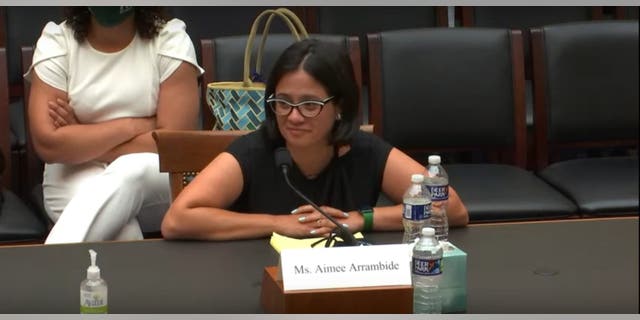
Aimee Arrambide testifies before the House Judiciary Committee on May 11, 2020.  (YouTube screenshot)

Aimee Arrambide testifies before the House Judiciary Committee on May 11, 2020.  (YouTube screenshot) (Screenshot/ House Committee on the Judiciary)

“Dr. Robinson, I noticed in your written testimony you said that you use she/her pronouns. You’re a medical doctor – what is a woman?” Bishop asked Robinson, an OBGYN and board member with Physicians for Reproductive Health.

“I think it’s important that we educate people like you about why we’re doing the things that we do,” Robinson responded. “And so the reason that I use she and her pronouns is because I understand that there are people who become pregnant that may not identify that way. And I think it is discriminatory to speak to people or to call them in such a way as they desire not to be called.”

“Are you going to answer my question? Can you answer the question, what’s a woman?” Bishop asked.
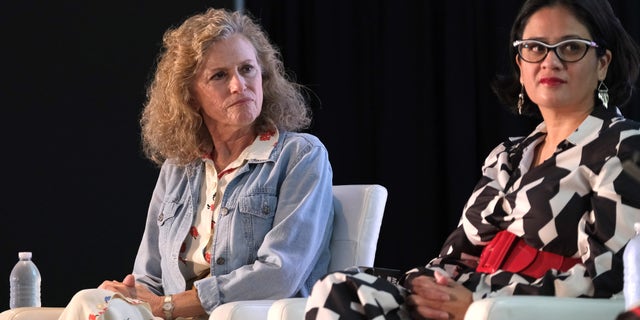
Donna Howard and Aimee Arrambide speaks at Making Virtual Storytelling and Activism Personal during the 2022 SXSW Conference and Festivals at Austin Convention Center on March 14, 2022 in Austin, Texas.

Donna Howard and Aimee Arrambide speaks at Making Virtual Storytelling and Activism Personal during the 2022 SXSW Conference and Festivals at Austin Convention Center on March 14, 2022 in Austin, Texas. (Photo by Hubert Vestil/Getty Images for SXSW)

“I’m a woman, and I will ask you which pronouns do you use?” Robinson replied. “If you tell me that you use she and her pronouns … I’m going to respect you for how you want me to address you.”

“So you gave me an example of a woman, you say that you are a woman, can you tell me otherwise what a woman is?” Bishop asked.

“Yes, I’m telling you, I’m a woman,” Robinson responded.

“Is that as comprehensive a definition as you can give me?” Bishop asked.

“That’s as comprehensive a definition as I will give you today,” Robinson said. “Because I think that it’s important that we focus on what we’re here for, and it’s to talk about access to abortion.”

CLICK HERE TO GET THE FOX NEWS APP

“So you’re not interested in answering the question that I asked unless it’s part of a message you want to deliver…” Bishop fired back.

Wednesday’s hearing, titled, “Revoking your Rights,” addressed the threat to abortion rights after the leaked Supreme Court draft opinion signaled the high court is poised to soon strike down Roe v. Wade.
John MacArthur explains God’s Wrath on unrighteousness from Romans Chapt…

First is what Romans says:

Romans 1:18-32

New American Standard Bible (NASB)

Unbelief and Its Consequences

18 For (A)the wrath of God is revealed from heaven against all ungodliness and unrighteousness of men who (B)suppress the truth [a]in unrighteousness, 19 because (C)that which is known about God is evident [b]within them; for God made it evident to them. 20 For (D)since the creation of the world His invisible attributes, His eternal power and divine nature, have been clearly seen, (E)being understood through what has been made, so that they are without excuse. 21 For even though they knew God, they did not [c]honor Him as God or give thanks, but they became (F)futile in their speculations, and their foolish heart was darkened. 22 (G)Professing to be wise, they became fools, 23 and (H)exchanged the glory of the incorruptible God for an image in the form of corruptible man and of birds and four-footed animals and [d]crawling creatures.

24 Therefore (I)God gave them over in the lusts of their hearts to impurity, so that their bodies would be (J)dishonored among them. 25 For they exchanged the truth of God for [e](K)lie, and worshiped and served the creature rather than the Creator, (L)who is blessed [f]forever. Amen.

26 For this reason (M)God gave them over to (N)degrading passions; for their women exchanged the natural function for that which is [g]unnatural, 27 and in the same way also the men abandoned the natural function of the woman and burned in their desire toward one another, (O)men with men committing [h]indecent acts and receiving in [i]their own persons the due penalty of their error.

28 And just as they did not see fit [j]to acknowledge God any longer, (P)God gave them over to a depraved mind, to do those things which are not proper, 29 being filled with all unrighteousness, wickedness, greed, evil; full of envy, murder, strife, deceit, malice; they are (Q)gossips, 30 slanderers, [k](R)haters of God, insolent, arrogant, boastful, inventors of evil, (S)disobedient to parents, 31 without understanding, untrustworthy, (T)unloving, unmerciful; 32 and although they know the ordinance of God, that those who practice such things are worthy of (U)death, they not only do the same, but also (V)give hearty approval to those who practice them.

Here is what John MacArthur had to say:

Now, all of a sudden, not only is this characteristic of our nation, but we now promote it. One of the parties, the Democratic Party, has now made Romans 1, the sins of Romans 1, their agenda. What God condemns, they affirm. What God punishes, they exalt. Shocking, really. The Democratic Party has become the anti-God party, the sin-promoting party. By the way, there are seventy-two million registered Democrats in this country who have identified themselves with that party and maybe they need to rethink that identification.

I know from last week’s message that there was some response from people who said, “Why are you getting political?”

Romans 1 is not politics. The Bible is not politics. This has nothing to do with politics. This has to do with speaking the Word of God through the culture in which we live. It has nothing to do with politics. It’s not about personalities; it’s about iniquity and judgment. And why do we say this? Because this must be recognized for what it is–sin, serious sin, damning sin, destructive sin.

WHAT HAS THE DEMOCRATIC PARTY REJECTED? THE ANSWER IS THE GOD WHO HAS REVEALED HIM SELF THROUGH THE BOOK OF NATURE AND THE BOOK OF SCRIPTURE!

God Is There And He Is Not Silent
Psalm 19
Intro. 1) Francis Schaeffer lived from 1912-1984. He was one of the Christian
intellectual giants of the 20th century. He taught us that you could be a Christian and not abandon the mind. One of the books he wrote was entitled He Is There And He Is Not Silent. In that work he makes a crucial and thought provoking statement, “The infinite- personal God is there, but also he is not silent; that changes the whole world…He is there and is not a silent, nor far-off God.” (Works of F.S., Vol 1, 276).
2) God is there and He is not silent. In fact He has revealed Himself to us in 2 books: the book of nature and the book of Scripture. Francis Bacon, a 15th century scientist who is credited by many with developing the scientific method said it this way: “There are 2 books laid before us to study, to prevent us from falling into error: first the volume to the Scriptures, which reveal the will of God; then the volume of the creation, which expresses His power.”
3) Psalm 19 addresses both of God’s books, the book of nature in vs 1-6 and the book of Scripture in vs. 7-14. Described as a wisdom Psalm, its beauty, poetry and splendor led C.S. Lewis to say, “I take this to be the greatest poem in the Psalter and one of the greatest lyrics in the world” (Reflections on the Psalms, 63).
Trans. God is there and He is not silent. How should we hear and listen to the God who talks?
I. Listen To God Speak Through Nature 19:1-6
God has revealed himself to ever rational human on the earth in two ways: 1) nature and 2) conscience. We call this natural or general revelation. In vs. 1-6 David addresses the wonder of nature and creation

Helen Pashgian on Georges de La Tour | Artists on Art


FEATURED ARTIST IS DE LA TOUR

Georges de La Tour - 1593-1652

GEORGES DE LA TOUR (1593-1652)

The influence of Caravaggio is evident in De la Tour, whose use of light and shadows is unique among the painters of the Baroque era.

Francis Schaeffer

Image result for francis schaeffer roman bridge

How Should We Then Live | Season 1 | Episode 7 | The Age of Non-Reason


How Should We Then Live | Season 1 | Episode 8 | The Age of Fragmentation

Whatever Happened To The Human Race? | Episode 1 | Abortion of the Human…

Whatever Happened To The Human Race? | Episode 4 | The Basis for Human D…

1984 SOUNDWORD LABRI CONFERENCE VIDEO – Q&A With Francis & Edith Schaefer


Related posts:

Taking on Ark Times Bloggers on various issues Part F “Carl Sagan’s views on how God should try and contact us” includes film “The Basis for Human Dignity”

April 8, 2013 – 7:07 am

I have gone back and forth and back and forth with many liberals on the Arkansas Times Blog on many issues such as abortion, human rights, welfare, poverty, gun control  and issues dealing with popular culture. Here is another exchange I had with them a while back. My username at the Ark Times Blog is Saline […]

By Everette Hatcher III|Posted in Francis SchaefferProlife|Edit|Comments (0)

Carl Sagan v. Nancy Pearcey

March 18, 2013 – 9:11 am

On March 17, 2013 at our worship service at Fellowship Bible Church, Ben Parkinson who is one of our teaching pastors spoke on Genesis 1. He spoke about an issue that I was very interested in. Ben started the sermon by reading the following scripture: Genesis 1-2:3 English Standard Version (ESV) The Creation of the […]

By Everette Hatcher III|Posted in Adrian RogersAtheists ConfrontedCurrent Events|TaggedBen ParkinsonCarl Sagan|Edit|Comments (0)

Review of Carl Sagan book (Part 4 of series on Evolution)

May 24, 2012 – 1:47 am

Review of Carl Sagan book (Part 4 of series on Evolution) The Long War against God-Henry Morris, part 5 of 6 Uploaded by FLIPWORLDUPSIDEDOWN3 on Aug 30, 2010 http://www.icr.org/ http://store.icr.org/prodinfo.asp?number=BLOWA2http://store.icr.org/prodinfo.asp?number=BLOWASGhttp://www.fliptheworldupsidedown.com/blog _______________________ I got this from a blogger in April of 2008 concerning candidate Obama’s view on evolution: Q: York County was recently in the news […]

By Everette Hatcher III|Posted in Atheists ConfrontedCurrent EventsPresident Obama|Edit|Comments (0)

Review of Carl Sagan book (Part 3 of series on Evolution)

May 23, 2012 – 1:43 am

Review of Carl Sagan book (Part 3 of series on Evolution) The Long War against God-Henry Morris, part 4 of 6 Uploaded by FLIPWORLDUPSIDEDOWN3 on Aug 30, 2010 http://www.icr.org/ http://store.icr.org/prodinfo.asp?number=BLOWA2http://store.icr.org/prodinfo.asp?number=BLOWASGhttp://www.fliptheworldupsidedown.com/blog______________________________________ I got this from a blogger in April of 2008 concerning candidate Obama’s view on evolution: Q: York County was recently in the news […]

By Everette Hatcher III|Posted in Atheists ConfrontedCurrent EventsPresident Obama|Edit|Comments (0)

Carl Sagan versus RC Sproul

January 9, 2012 – 2:44 pm

At the end of this post is a message by RC Sproul in which he discusses Sagan. Over the years I have confronted many atheists. Here is one story below: I really believe Hebrews 4:12 when it asserts: For the word of God is living and active and sharper than any two-edged sword, and piercing as far as the […]

By Everette Hatcher III|Posted in Adrian RogersAtheists ConfrontedCurrent EventsFrancis Schaeffer|Tagged Bill ElliffCarl SaganJodie FosterRC Sproul|Edit|Comments (0)

Review of Carl Sagan book (Part 4 of series on Evolution)jh68

November 8, 2011 – 12:01 am

Review of Carl Sagan book (Part 4 of series on Evolution) The Long War against God-Henry Morris, part 5 of 6 Uploaded by FLIPWORLDUPSIDEDOWN3 on Aug 30, 2010 http://www.icr.org/ http://store.icr.org/prodinfo.asp?number=BLOWA2http://store.icr.org/prodinfo.asp?number=BLOWASGhttp://www.fliptheworldupsidedown.com/blog _______________________ This is a review I did a few years ago. THE DEMON-HAUNTED WORLD: Science as a Candle in the Dark by Carl […]

By Everette Hatcher III|Posted in Atheists ConfrontedCurrent Events|Edit|Comments (0)

Review of Carl Sagan book (Part 3 of series on Evolution)

November 4, 2011 – 12:57 am

Review of Carl Sagan book (Part 3 of series on Evolution) The Long War against God-Henry Morris, part 4 of 6 Uploaded by FLIPWORLDUPSIDEDOWN3 on Aug 30, 2010 http://www.icr.org/ http://store.icr.org/prodinfo.asp?number=BLOWA2http://store.icr.org/prodinfo.asp?number=BLOWASGhttp://www.fliptheworldupsidedown.com/blog______________________________________ I was really enjoyed this review of Carl Sagan’s book “Pale Blue Dot.” Carl Sagan’s Pale Blue Dot by Larry Vardiman, Ph.D. […]

By Everette Hatcher III|Posted in Atheists ConfrontedCurrent Events|Edit|Comments (0)

Atheists confronted: How I confronted Carl Sagan the year before he died jh47

May 19, 2011 – 10:30 am

In today’s news you will read about Kirk Cameron taking on the atheist Stephen Hawking over some recent assertions he made concerning the existence of heaven. Back in December of 1995 I had the opportunity to correspond with Carl Sagan about a year before his untimely death. Sarah Anne Hughes in her article,”Kirk Cameron criticizes […]

By Everette Hatcher III|Posted in Atheists Confronted|Edit|Comments (2)

FRANCIS SCHAEFFER ANALYZES ART AND CULTURE Part 18 “Michelangelo’s DAVID is the statement of what humanistic man saw himself as being tomorrow” (Feature on artist Paul McCarthy)

April 25, 2014 – 8:26 am

In this post we are going to see that through the years  humanist thought has encouraged artists like Michelangelo to think that the future was extremely bright versus the place today where many artist who hold the humanist and secular worldview are very pessimistic.   In contrast to Michelangelo’s DAVID when humanist man thought he […]

By Everette Hatcher III|Posted in Francis Schaeffer|Tagged David LeedsJ.I.PACKERJoe CarterMassimiliano GioniMichelangeloMichelangelo’s DAVIDMichelangelo’s Florence PietàPaul McCarthyRenaissanceRick PearceyRush LimbaughTony Bartolucci|Edit|Comments (0)

Was Antony Flew the most prominent atheist of the 20th century?

April 25, 2014 – 1:59 am

_________ Antony Flew on God and Atheism Published on Feb 11, 2013 Lee Strobel interviews philosopher and scholar Antony Flew on his conversion from atheism to deism. Much of it has to do with intelligent design. Flew was considered one of the most influential and important thinker for atheism during his time before his death […]

By Everette Hatcher III|Posted in Current

Celebrating School Choice? Thank Milton Friedman, too

Milton Friedman – Public Schools / Voucher System – Failures in Educatio…

—-

Celebrating School Choice? Thank Milton Friedman, too

by Dr. Robert LuebkeDirector of the Center for Effective Education, John Locke Foundation

January 25, 2021


  • In the 1950s, a young Milton Friedman argued that free market principles of consumer choice and competition were needed to remedy the nonresponsive and monopolistic system that controlled and delivered public education
  • Friedman’s work provided the intellectual foundations of the modern school-choice movement
  • If Friedman were alive today and came to North Carolina, he’d see school choice flourishing

In the decades after the American Revolution, parents were the drivers of how and where their children were educated. Parents could choose from private schools, tutors, and home schools as ways to educate children. In the mid-1840s, Massachusetts became the first state to lead a push for state-controlled and -funded public education. A century later, the rise of the Progressive Era saw government gain control over how schools were financed, administered, and regulated.

Along with these changes came a weakening in the ability of parents to control their child’s education. Of course, if parents didn’t like their child’s school or didn’t think it was a good fit, they could choose a private school — if they could afford it. If not, children were forced to attend the local public school, whether parents liked it or not.

In the mid-1950s, a young economist at the University of Chicago laid out a case for the role of government in education for its citizens in an article given the unassuming title of The Role of Government in Education. In it Milton Friedman acknowledged there is a case for government subsidizing public education, but not for government administering the schools. Friedman believed increased centralization and government control of public schools had led to less freedom and efficiency in education and a decline in quality. For government not only to finance education, but also largely to deliver education services was an arrangement Friedman considered unnatural as well as unjustified.

In his article Friedman argued that free market principles of consumer choice and competition were needed to remedy the nonresponsive and monopolistic system that controlled and delivered public education.

Friedman sought nothing less than to upend how American education was financed and administered. Instead of government deciding how and where children are educated, government would provide vouchers to parents for education or educational services at approved schools.

Friedman believed giving parents the power to “vote with their feet” would force monopolistic public-school systems to be responsive to parental concerns. He also was convinced that the use of vouchers would infuse competition among schools and encourage them to innovate and be more effective, qualities conspicuously absent from most public-school systems. Moreover, Friedman also thought it critical to separate the funding of education from the delivery of education services.

Six and a half decades later, it’s not difficult to see how “The Role of Government in Education” provided the intellectual foundations of the modern school-choice movement. People don’t always hear what they need to hear, so Friedman’s article went largely unnoticed outside the policy world. Those seeds took time to grow.

In 1989, Wisconsin become the first state to put Friedman’s ideas into practice when it approved a statewide voucher program that allowed low-income students to use vouchers to pay tuition at a private school. In 2013, North Carolina approved the Opportunity Scholarship Program, a similar program that today provides over 14,000 students with scholarships of up to $4,200 to help pay tuition at a local private school.

School choice today

If Milton Friedman were alive today and came to North Carolina, he’d see school choice flourishing. Today parents can choose from a variety of public and private school-choice programs. They include public options such as charter or magnet schools as well as private options such as the Opportunity Scholarship Program or the Special Education Scholarship Grants for Children with Disabilities.

Regarding charter schools, the table below shows that the number of students enrolled in charter schools has increased dramatically from over 38,000 in 2010 to over 117,000 today. Enrollment in private schools in the Tar Heel state saw modest growth over the last 10 years, while the number of home schoolers increased by 83 percent.

Over the past decade, while the average daily membership (ADM) enrollment in traditional public schools increased by just one half of one percent, the school-choice population in North Carolina expanded by 71 percent. Today over 370,000 students attend charter, private, and home schools and have access to a better education. Ten years ago, only 13 percent of students were enrolled in choice schools. Today nearly 80 percent of students still attend traditional public schools, but the number of students enrolled in choice schools has increased to almost 21 percent, up significantly from ten years ago.

K-12 Enrollment in North Carolina, by Type of School, 2010 and 2020

Schools2010 Enrollment2020 EnrollmentChange, 2010–20
Traditional Public Schools (ADM)1,402,2691,409,3910.5%
Charter Schools38,449117,264204.9%
Home Schools81,509149,17383.0%
Private Schools96,421103,9597.8%
Total, Choice Schools216,379370,39671.2%
Schools2010 Enrollment2020 EnrollmentPercentage Point Change
Percentage of Students in Traditional Public Schools86.7%79.2%–7.5
Percentage of Students in
Choice Schools
13.3%20.8%+7.5

Source: Highlights of the North Carolina Public School Budget, Statistical Profile of North Carolina Public Schools, and North Carolina Office of Non-Public Education (for specific years).

Friedman’s legacy

Friedman’s ideas have helped to fuel an education revolution in North Carolina and across the country. Choice empowers parents to make educational decisions, challenges monopolies, and calls out bureaucracies. Choice expands personal freedom but also highlights that accountability comes in different forms. In so doing, choice has helped to shift the public discussion of education from a focus on how much money is spent to how well money is spent.

Let’s be clear: Milton Friedman got it right. Choice benefits students, families, schools, and our communities. Today school choice continues to thrive because it empowers parents and students and enriches our communities. That’s not to say there haven’t been mistakes and growing pains. Nevertheless, having choices in education is far preferable. Choice recognizes what too many of our public schools ignore: children are different and learn differently.

If we are really concerned that our children receive a quality education, we must allow parents and children to access appropriate educational opportunities. As more and more families are empowered to make these choices, we should thank Milton Friedman for laying the intellectual groundwork for many of the school choice programs we enjoy today.

The School Choice Momentum Continues Nationwide

Jason Bedrick  @JasonBedrick / May 01, 2023

Parent holds protest sign at school protest.

Man protesting in front of the Minnesota Department of Education to stop the masking and vaccines for the children going to school, St. Paul, Minnesota. November 3, 2021. (Photo: Michael Siluk/Universal Images Group/Getty Images)

COMMENTARY BY

Jason Bedrick@JasonBedrick

Jason Bedrick is a research fellow with The Heritage Foundation’s Center for Education Policy.

Education choice is on the march.

So far this year, four states have enacted education choice policies that will be available to all K-12 students. ArkansasFloridaIowa, and Utah have now joined Arizona and West Virginia in making every child eligible for education savings accounts (ESAs) or ESA-like policies that allow families to choose the learning environments that align with their values and work best for their children.

The education choice movement has already made more progress this year than ever before—and the year is far from over. Late last week, three state legislatures gave final approval to bills that would create new education choice policies or significantly expand existing ones.

States With Newly Passed Bills

Indiana

The final budget deal struck by the Republican majorities in both chambers of the Indiana state legislature will expand eligibility for the state’s school voucher program to nearly every K-12 student.

The bill increases the income eligibility threshold from 300% of the free-and-reduced-price lunch program’s income limit to 400%, which means that more than 95% of K-12 students in Indiana will now be eligible.

The budget will also expand eligibility for Indiana’s two other education choice programs, a tax-credit scholarship and an education savings account policy. Gov. Eric Holcomb, a Republican, said that he would “gladly sign” the budget, which passed along party lines.

Montana

The Montana legislature sent the Students with Special Needs Equal Opportunity Act to Republican Gov. Greg Gianforte’s desk. The bill would create an ESA for students with special needs worth between $5,000 and $8,000.

“Every parent knows each child is unique,” said Gianforte  during his State of the State address in February, “Let’s ensure each child’s education best meets his or her individual needs.”

Gianforte is expected to sign the bill.

South Carolina

The South Carolina legislature sent Republican Gov. Henry McMaster a bill to create the Education Scholarship Trust Fund, which will make ESAs available to low- and middle-income families.

By year three, families earning up to 400% of the federal poverty line (currently $120,000 for a family of four) will be eligible for ESAs worth up to $6,000 that they can use for a wide variety of education expenses, including private school tuition, tutoring, textbooks, homeschool curriculum, online learning, and more. McMaster is expected to sign the legislation.

“It gives the parent an option,” said the bill’s sponsor, Republican Sen. Larry Grooms, “It lets the parent decide what is best for their child instead of the government deciding what is best for a child based on the zip code in which you happen to live.”

States Where Progress Is Being Made

Several other states are also making progress toward enacting new education choice policies or significantly expanding existing ones, including:

Nebraska

Earlier this month, Nebraska’s unicameral legislature passed a bill to create a tax credit scholarship policy by a vote of 33-16.

The bill will need to clear one additional legislative hurdle before heading to the desk of Gov. Jim Pillen, a Republican, who said that the Opportunity Scholarships Act would “give parents, who have kids with the greatest needs, the means to choose a school that serves them best and allows them to thrive.”

New Hampshire

The New Hampshire House of Representatives passed a bill raising the income eligibility threshold for the state’s Education Freedom Accounts from 300% of the federal poverty line to 350%.

The bill is expected to pass the state senate and has the support of Republican Gov. Chris Sununu, who declared in his state of the state address in February that the accounts are “finally ensuring that the system works for families and that the system meets the needs of the child — not the other way around.”

North Carolina

On Wednesday, the North Carolina Senate Education Committee passed a bill that would expand the state’s ESA policy to all K-12 students.

“This legislation is about kids first, about families being able to make the best decisions for their child,” declared the bill’s primary sponsor, Rep. Tricia Cotham, who recently switched her party registration from Democrat to Republican.

Democratic Gov. Roy Cooper has threated to veto the ESA bill, but all of the North Carolina General Assembly’s Republicans have signed onto the bill—enough to override a veto.

If enacted, North Carolina would become the seventh state to make education choice available to the families of all K-12 students.

Oklahoma

After months of negotiations, amendments, and not infrequent recriminations, on Wednesday the Oklahoma House of Representatives passedRepublican Gov. Kevin Stitt’s compromise education plan.

The plan includes a refundable personal-use tax credit worth $5,000 per student in the first year, with priority going to families earning less than $250,000 per year.

A total of up to $200 million in tax credits would be available. By year thee, the tax credits would be worth $6,500 per pupil and the caps on income and total tax credits available would be eliminated. As a part of the deal, the state would spend about $600 million more on public schools, including funds earmarked for teacher pay raises.

Once again, the Oklahoma Senate responded with their own plan. On Thursday, the senate passed a similar proposal that would give larger tax credits (up to $7,500) to lower-income families, which are reduced as income rises to $5,000 per pupil, with a household income cap of $250,000.

In an effort to pressure the legislature to reach a compromise, Stitt has vetoed 20 unrelated bills. In a veto message, Stitt explained his reasoning:

[U]ntil the people of Oklahoma have a tax cut, until every teacher in the state gets the pay raise they deserve, until parents get a tax credit to send their child to the school of their choice, I am vetoing this unrelated policy and will continue to veto any and all legislation authored by Senators who have not stood with the people of Oklahoma and supported this plan.

The Conservative Case Is the Way to Win

The massive wins and tremendous momentum are a vindication of a key shift in advocacy strategy.

Previously, the school choice movement almost exclusively made its case in terms that appealed to libertarians (freedom, markets, competition, etc.) or liberals (equity, expanding opportunity for the most disadvantaged, etc.), but avoided making values-based arguments that appealed to conservatives out of a fear of alienating potential allies on the left.

However, the teachers’ unions’ lock on the Democratic party prevented the school choice movement from garnering meaningful support from Democratic legislators. In years past, Democratic support for choice legislation has rarely been decisive. Moreover, attempting to appeal to the Democrats came at a significant policy cost as it often entailed proposing relatively small school choice programs targeted toward low-income families or other disadvantaged groups.

Meanwhile, the school choice movement was not doing enough to appeal to conservative rural Republicans who were skeptical of school choice. As my colleague Jay P. Greene and I observed recently in National Review, “the best prospects for additional universal programs this year are all in states with Republican governors and legislatures.”

As we explained, the school choice movement could not afford to continue ignoring conservatives:

The main opposition to these programs in Republican-dominated states has come from rural superintendents, who remind their representatives that the local public school is often the largest employer in small towns. They threaten that anything that undermines the biggest industry in their district is politically dangerous for rural legislators.

The solution to this political challenge is to help inform and organize families in suburban and rural areas who are concerned about the kinds of values their children are being taught in public schools. Radical academic content and school practices are not confined to large urban school districts on the coasts. Even in small towns across America’s heartland, public-school staffs have become emboldened to impose values on students that are strongly at odds with those preferred by parents.

Highlighting the ways in which public schools are pushing values and ideas that are anathema to the median red-state parent has increased public support for policies that allow all families to choose the learning environments that align with their values and have public education funding follow their child.

The greater GOP voter intensity in support of education choice has translated into the most massive wave of choice victories ever.

As in years past, nearly all the bills passed in any legislative chamber this year have been with strong Republican support and few if any Democrats. The difference is that there is now sufficient Republican support to pass robust education choice legislation.

Have an opinion about this article? To sound off, please email letters@DailySignal.com and we’ll consider publishing your edited remarks in our regular “We Hear You” feature. Remember to include the url or headline of the article plus your name and town and/or state.

A Good Year for Milton Friedman = a Bad Year for Teacher Unions

Back in 2013, I shared some research showing how school choice produced good results. Not just in terms of student achievement, but also benefits for taxpayers as well.

Since then, I’ve shared additional research showing how school choice generates good outcomes.

It seems that some lawmakers have learned the right lessons from these studies. Over the past three years, statewide school choice has been enacted in West VirginiaArizonaIowaUtahArkansas, and Florida.

In his Wall Street Journal column, Bill McGurn celebrates this wave of victories.

It’s been a good year for Milton Friedman. The Nobel Prize-winning economist has been dead for nearly two decades. But the moment has come for the idea that may prove his greatest legacy: Parents should decide where the public funds for educating their children go. Already this year, four states have adopted school choice for everyone—and it’s only April.…Florida is the most populous state to embrace full school choice. It follows Iowa, Utah and Arkansas, which passed their own legislation this year. These were preceded by West Virginia in 2021 and Arizona in 2022. More may be coming. Four other states—Oklahoma, Ohio, Wyoming and Texas—have legislation pending. …Corey DeAngelis, a senior fellow with the American Federation for Children, says the mood has shifted. …“I wish Milton Friedman were alive today to see his ideas finally come to fruition,” Mr. DeAngelis says. “The dominos are falling and there’s nothing Randi Weingarten and the teachers unions can do about it.”

My fingers are crossed that Texas approves school choice in the few days, but rest assured I’ll celebrate if Oklahoma, Ohio, or Wyoming is the next domino.

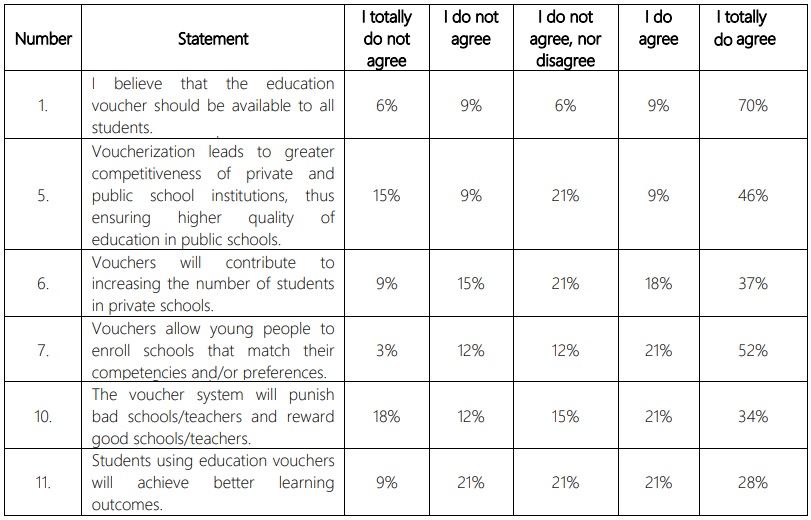
P.S. I’m writing today about school choice in part because I’m in Europe as part of the Free Market Road Show and one of the other speakers is Admir Čavalić, who is both an academic and a member of parliament from Bosnia and Herzegovina. Along with two other scholars, Damir Bećirović, and Amela Bešlagić, he did research on support for school choice in the Balkans. Here are some of the responses from parents.

It’s very encouraging to find Serbs, Croats, and Bosnians agreeing on an issue. Maybe their governments eventually will adopt school choice, thus joining  SwedenChileCanada, and the Netherlands.

A Major Victory for Students in Florida

I almost feel sorry for the union bosses at the National Education Association and the American Federation of Teachers.

They were upset when West Virginia adopted statewide school choice in 2021 and they got even angrier when Arizona did the same thing in 2022.

So you can only imagine how bitter they are about what’s happened so far in 2023.

But notice I started this column by stating that “I almost felt sorry” for union bosses.

In reality, I’m actually overjoyed that they are having a very bad year. Teacher unions are the leading political force in trying to keep kids trapped in bad schools, an approach that is especially harmful to minorities.

Their bad year just got much worse.

That’s because Florida just expanded its school choice program so that all children will be eligible.

Here’s some of the coverage from Tampa.

A massive expansion of Florida’s school-choice programs that would make all students eligible for taxpayer-backed vouchers is headed to Gov. Ron DeSantis… DeSantis already has pledged to sign the proposal, which includes removing income-eligibility requirements that are part of current voucher programs. …Under the bill, students would be eligible to receive vouchers if they are “a resident of this state” and “eligible to enroll in kindergarten through grade 12” in a public school.

And here’s a report from Orlando.

The Florida Senate gave final approval Thursday to a bill creating universal school vouchers… Republican state lawmakers, who hold a supermajority in the Legislature, want to open state voucher programsthat currently provide scholarships to more than 252,000 children with disabilities or from low-income families to all of the 2.9 million school-age children in Florida… The bill would give any parent the choice to receive a voucher for their child to be used for private school tuition or homeschooling services and supplies — as long as that student was not enrolled in public school. DeSantis has been a supporter of the programs.

Let’s conclude with some excerpts from a Wall Street Journal editorial.

Florida has long been a leader on K-12 choice, vying with Arizona to offer the most expansive options in the nation. On Thursday Florida caught up with Arizona’s universal education savings account program by making its existing school choice offerings available to any student in the state.…The legislation…would remove income eligibility limits on the state’s current school voucher programs. It would also expand the eligible uses for the roughly $7,500 accounts to include tutoring, instructional materials and other education expenses, making these true ESAs rather than simply tuition vouchers. The bill prioritizes lower-income families and provides for home-schooled students to receive funds. Gov. Ron DeSantis, who has greatly advanced school choice in his state, is expected to sign.

By the way, the WSJ notes that Georgia may fall short in the battle to give families better educational options. As a rabid Georgia Bulldog who likes nothing better than stomping on the Florida Gators, it galls me that a handful of bad Republican legislators in the Peach State are standing in the proverbial schoolhouse door.

I’ll close by noting that there already are many reasons for Americans to migrate to Florida, such as no state income tax.

School choice means that there will be another big reason to move to the libertarian-friendly Sunshine State.

P.S. I can’t wait to see what this map looks like next year.

Milton Friedman – Educational Vouchers

Censorship, School Libraries, Democracy, and Choice

A big advantage of living in a constitutional republicis that individual rights are protected from “tyranny of the majority.”

  • Assuming courts are doing their job, it doesn’t matterif 90 percent of voters support restrictions on free speech.
  • Assuming courts are doing their job, it doesn’t matter if 90 percent of voters support gun confiscation.
  • Assuming courts are doing their job, it doesn’t matter if 90 percent of voters support warrantless searches.

That being said, a constitutional republic is a democratic form of government. And if government is staying within proper boundaries, political decisions should be based on majority rule, as expressed through elections.

In some cases, that will lead to decisions I don’t like. For instance, the (tragic) 16th Amendment gives the federal government the authority to impose an income tax and voters repeatedly have elected politicians who have opted to exercise that authority.

Needless to say, I will continue my efforts to educate voters and lawmakers in hopes that eventually there will be majorities that choose a different approach. That’s how things should work in a properly functioning democracy.

But not everyone agrees.

report in the New York Times, authored by Elizabeth Harris and Alexandra Alter, discusses the controversy over which books should be in the libraries of government schools.

The Keller Independent School District, just outside of Dallas, passed a new rule in November: It banned books from its libraries that include the concept of gender fluidity. …recently, the issue has been supercharged by a rapidly growing and increasingly influential constellation of conservative groups.The organizations frequently describe themselves as defending parental rights. …“This is not about banning books, it’s about protecting the innocence of our children,” said Keith Flaugh, one of the founders of Florida Citizens Alliance, a conservative group focused on education… The restrictions, said Emerson Sykes, a First Amendment litigator for the American Civil Liberties Union, infringe on students’ “right to access a broad range of material without political censorship.” …In Florida, parents who oppose book banning formed the Freedom to Read Project.

As indicated by the excerpt, some people are very sloppy with language.

If a school decides not to buy a certain book for its library, that is not a “book ban.” Censorship only exists when the government uses coercion to prevent people from buying books with their own money.

As I wrote earlier this year, “The fight is not over which books to ban. It’s about which books to buy.”

And this brings us back to the issue of democracy.

School libraries obviously don’t have the space or funds to stock every book ever published, so somebody has to make choices. And voters have the ultimate power to make those choices since they elect school boards.

I’ll close by noting that democracy does not please everyone. Left-leaning parents in Alabama probably don’t always like the decisions of their school boards,just like right-leaning parents in Vermont presumably don’t always like the decisions of their school boards.

And the same thing happens with other contentious issues, such as teaching critical race theory.

Which is why school choice is the best outcome. Then, regardless of ideology, parents can choose schools that have the curriculum (and books) that they think will be best for their children.

P.S. If you want to peruse a genuine example of censorship, click here.


More Academic Evidence for School Choice

Since teacher unions care more about lining their pockets and protecting their privileges rather than improving education, I’ll never feel any empathy for bosses like Randi Weingarten.

That being said, the past couple of years have been bad news for Ms Weingarten and her cronies.

Not only is school choice spreading – especially in states such as Arizona and West Virginia, but we also are getting more and more evidence that competition produces better results for schoolkids.

In a study published by the National Bureau of Economic Research, Professors David N. Figlio, Cassandra M.D. Hart & Krzysztof Karbownikfound that school choice led to benefits even for kids who remained stuck in government schools.

They enjoyed better academic outcomes, which is somewhat surprising, but even I was pleasantly shocked to see improved behavioral outcomes as well.

School choice programs have been growing in the United States and worldwide over the past two decades, and thus there is considerable interest in how these policies affect students remaining in public schools. …the evidence on the effects of these programs as they scale up is virtually non-existent. Here, we investigate this question using data from the state of Florida where, over the course of our sample period, the voucher program participation increased nearly seven-fold.We find consistent evidence that as the program grows in size, students in public schools that faced higher competitive pressure levels see greater gains from the program expansion than do those in locations with less competitive pressure. Importantly, we find that these positive externalities extend to behavioral outcomes— absenteeism and suspensions—that have not been well-explored in prior literature on school choice from either voucher or charter programs. Our preferred competition measure, the Competitive Pressure Index, produces estimates implying that a 10 percent increase in the number of students participating in the voucher program increases test scores by 0.3 to 0.7 percent of a standard deviation and reduces behavioral problems by 0.6 to 0.9 percent. …Finally, we find that public school students who are most positively affected come from comparatively lower socioeconomic background, which is the set of students that schools should be most concerned about losing under the Florida Tax Credit Scholarship program.

It’s good news that competition from the private sector produces better results in government schools.

But it’s great news that those from disadvantaged backgrounds disproportionately benefit when there is more school choice.

Wonkier readers will enjoy Figure A2, which shows the benefits to regular kids on the right and disadvantaged kids on the left.

Since the study looked at results in Florida, I’ll close by observing that Florida is ranked #1 for education freedom and ranked #3 for school choice.

P.S. Here’s a video explaining the benefits of school choice.

P.P.S. There’s international evidence from SwedenChileCanada, and the Netherlands, all of which shows superior results when competition replaces government education monopolies.

———-

Portrait of Milton Friedman.jpg

Milton Friedman chose the emphasis on school choice and school vouchers as his greatest legacy and hopefully the Supreme Court will help that dream see a chance!

Educational Choice, the Supreme Court, and a Level Playing Field for Religious Schools

The case for school choice is very straightforward.

The good news is that there was a lot of pro-choice reform in 2021.

West Virginia adopted a statewide system that is based on parental choice. And many other states expanded choice-based programs.

But 2022 may be a good year as well. That’s because the Supreme Court is considering whether to strike down state laws that restrict choice by discriminating against religious schools.

Michael Bindas of the Institute for Justice and Walter Womack of the Southern Christian Leadership Conference make the case for a level playing field in a column for the New York Times.

In 2002, the Supreme Court held that the Constitution allows school choice programs to include schools that provide religious instruction, so long as the voucher program also offers secular options. The question now before the court is whether a state may nevertheless exclude schools that provide religious instruction. The case, Carson v. Makin, …concerns Maine’s tuition assistance program. In that large and sparsely populated state, over half of the school districts have no public high schools. If a student lives in such a district, and it does not contract with another high school to educate its students, then the district must pay tuition for the student to attend the school of her or his parents’ choice. …But one type of school is off limits: a school that provides religious instruction. That may seem unconstitutional, and we argue that it is. Only last year, the Supreme Court, citing the free exercise clause of the Constitution, held that states cannot bar students in a school choice program from selecting religious schools when it allows them to choose other private schools. …The outcome will be enormously consequential for families in public schools that are failing them and will go a long way toward determining whether the most disadvantaged families can exercise the same control over the education of their children as wealthier citizens.

The Wall Street Journal editorialized on this issue earlier this week.

Maine has one of the country’s oldest educational choice systems, a tuition program for students who live in areas that don’t run schools of their own. Instead these families get to pick a school, and public funds go toward enrollment. Religious schools are excluded, however, and on Wednesday the Supreme Court will hear from parents who have closely read the First Amendment.…Maine argues it isn’t denying funds based on the religious “status” of any school… The state claims, rather, that it is merely refusing to allocate money for a “religious use,” specifically, “an education designed to proselytize and inculcate children with a particular faith.” In practice, this distinction between “status” and “use” falls apart. Think about it: Maine is happy to fund tuition at an evangelical school, as long as nothing evangelical is taught. Hmmm. …A state can’t subsidize tuition only for private schools with government-approved values, and trying to define the product as “secular education” gives away the game. …America’s Founders knew what they were doing when they wrote the First Amendment to protect religious “free exercise.”

What does the other side say?

Rachel Laser, head of Americans United for Separation of Church and State, doesn’t want religious schools to be treated equally under school choice programs.

Here’s some of her column in the Washington Post.

…two sets of parents in Maine claim that the Constitution’s promise of religious freedom actually requires the state to fund religious education at private schools with taxpayer dollars — as a substitute for public education. This interpretation flips the meaning of religious freedom on its head and threatens both true religious freedom and public education.…The problem here is even bigger than public funds paying for praying, as wrong as that is. Unlike public schools, private religious schools often do not honor civil rights protections, especially for LGBTQ people, women, students with disabilities, religious minorities and the nonreligious. …If the court were to agree with the parents, it would also be rejecting the will of three-quarters of the states, which long ago enacted clauses in their state constitutions and passed statutes specifically prohibiting public funding of religious education. …It is up to parents and religious communities to educate their children in their faith. Publicly funded schools should never serve that purpose.

These arguments are not persuasive.

The fact that many state constitutions include so-called Blaine amendments actually undermines her argument since those provisions were motivated by a desire to discriminate against parochial schools that provided education to Catholic immigrants.

And it’s definitely not clear why school choice shouldn’t include religious schools that follow religious teachings, unless she also wants to argue that student grants and loans shouldn’t go to students at Notre Dame, Brigham Young, Liberty, and other religiously affiliated colleges.

The good news is that Ms. Laser’s arguments don’t seem to be winning. Based on this report from yesterday’s Washington Post, authored by Robert Barnes, there are reasons to believe the Justices will make the right decision.

Conservatives on the Supreme Court seemed…critical of a Maine tuition program that does not allow public funds to go to schools that promote religious instruction. The case involves an unusual program in a small state that affects only a few thousand students. But it could have greater implications… The oral argument went on for nearly two hours and featured an array of hypotheticals. …But the session ended as most suspected it would, with the three liberal justices expressing support for Maine and the six conservatives skeptical that it protected religious parents from unconstitutional discrimination.

I can’t resist sharing this additional excerpt about President Biden deciding to side with teacher unions instead of students.

The Justice Department switched its position in the case after President Biden was inaugurated and now supports Maine.

But let’s not dwell on Biden’s hackery (especially since that’s a common affliction on the left).

Instead, let’s close with some uplifting thoughts about what might happen if we get a good decision from the Supreme Court when decisions are announced next year.

Maybe I’m overly optimistic, but I think we’re getting close to a tipping point. As more and more states and communities shift to choice, we will have more and more evidence that it’s a win-win for both families and taxpayers.

Which will lead to more choice programs, which will produce more helpful data.

Lather, rinse, repeat. No wonder the (hypocriticalteacher unionsare so desperate to stop progress.

P.S. There’s strong evidence for school choice from nations such as SwedenChile, and the Netherlands.

Free To Choose 1980 – Vol. 06 What’s Wrong with Our Schools? – Full Video
https://youtu.be/tA9jALkw9_Q


Why Milton Friedman Saw School Choice as a First Step, Not a Final One

On his birthday, let’s celebrate Milton Friedman’s vision of enabling parents, not government, to be in control of a child’s education.

Wednesday, July 31, 2019
Kerry McDonald
Kerry McDonald

EducationMilton FriedmanSchool ChoiceSchooling

Libertarians and others are often torn about school choice. They may wish to see the government schooling monopoly weakened, but they may resist supporting choice mechanisms, like vouchers and education savings accounts, because they don’t go far enough. Indeed, most current choice programs continue to rely on taxpayer funding of education and don’t address the underlying compulsory nature of elementary and secondary schooling.

Skeptics may also have legitimate fears that taxpayer-funded education choice programs will lead to over-regulation of previously independent and parochial schooling options, making all schooling mirror compulsory mass schooling, with no substantive variation.

Milton Friedman had these same concerns. The Nobel prize-winning economist is widely considered to be the one to popularize the idea of vouchers and school choice beginning with his 1955 paper, “The Role of Government in Education.” His vision continues to be realized through the important work of EdChoice, formerly the Friedman Foundation for Education Choice, that Friedman and his economist wife, Rose, founded in 1996.

July 31 is Milton Friedman’s birthday. He died in 2006 at the age of 94, but his ideas continue to have an impact, particularly in education policy.

Friedman saw vouchers and other choice programs as half-measures. He recognized the larger problems of taxpayer funding and compulsion, but saw vouchers as an important starting point in allowing parents to regain control of their children’s education. In their popular book, Free To Choose, first published in 1980, the Friedmans wrote:

We regard the voucher plan as a partial solution because it affects neither the financing of schooling nor the compulsory attendance laws. We favor going much farther. (p.161)

They continued:

The compulsory attendance laws are the justification for government control over the standards of private schools. But it is far from clear that there is any justification for the compulsory attendance laws themselves. (p. 162)

The Friedmans admitted that their “own views on this have changed over time,” as they realized that “compulsory attendance at schools is not necessary to achieve that minimum standard of literacy and knowledge,” and that “schooling was well-nigh universal in the United States before either compulsory attendance or government financing of schooling existed. Like most laws, compulsory attendance laws have costs as well as benefits. We no longer believe the benefits justify the costs.” (pp. 162-3)

Still, they felt that vouchers would be the essential starting point toward chipping away at monopoly mass schooling by putting parents back in charge. School choice, in other words, would be a necessary but not sufficient policy approach toward addressing the underlying issue of government control of education.

In their book, the Friedmans presented the potential outcomes of their proposed voucher plan, which would give parents access to some or all of the average per-pupil expenditures of a child enrolled in public school. They believed that vouchers would help create a more competitive education market, encouraging education entrepreneurship. They felt that parents would be more empowered with greater control over their children’s education and have a stronger desire to contribute some of their own money toward education. They asserted that in many places “the public school has fostered residential stratification, by tying the kind and cost of schooling to residential location” and suggested that voucher programs would lead to increased integration and heterogeneity. (pp. 166-7)

To the critics who said, and still say, that school choice programs would destroy the public schools, the Friedmans replied that these critics fail to

explain why, if the public school system is doing such a splendid job, it needs to fear competition from nongovernmental, competitive schools or, if it isn’t, why anyone should object to its “destruction.” (p. 170)

What I appreciate most about the Friedmans discussion of vouchers and the promise of school choice is their unrelenting support of parents. They believed that parents, not government bureaucrats and intellectuals, know what is best for their children’s education and well-being and are fully capable of choosing wisely for their children—when they have the opportunity to do so.

They wrote:

Parents generally have both greater interest in their children’s schooling and more intimate knowledge of their capacities and needs than anyone else. Social reformers, and educational reformers in particular, often self-righteously take for granted that parents, especially those who are poor and have little education themselves, have little interest in their children’s education and no competence to choose for them. That is a gratuitous insult. Such parents have frequently had limited opportunity to choose. However, U.S. history has demonstrated that, given the opportunity, they have often been willing to sacrifice a great deal, and have done so wisely, for their children’s welfare. (p. 160).

Sign-Up: Receive Kerry’s Weekly Parenting and Education Newsletter!

Today, school voucher programs exist in 15 states plus the District of Columbia. These programs have consistently shown that when parents are given the choice to opt-out of an assigned district school, many will take advantage of the opportunity. In Washington, D.C., low-income parents who win a voucher lottery send their children to private schools.

The most recent three-year federal evaluationof voucher program participants found that while student academic achievement was comparable to achievement for non-voucher students remaining in public schools, there were statistically significant improvements in other important areas. For instance, voucher participants had lower rates of chronic absenteeism than the control groups, as well as higher student satisfaction scores. There were also tremendous cost-savings.

In Wisconsin, the Milwaukee Parental Choice Program has served over 28,000 low-income students attending 129 participating private schools.

According to Corey DeAngelis, Director of School Choice at the Reason Foundation and a prolific researcher on the topic, the recent analysis of the D.C. voucher program “reveals that private schools produce the same academic outcomes for only a third of the cost of the public schools. In other words, school choice is a great investment.”

In Wisconsin, the Milwaukee Parental Choice Program was created in 1990 and is the nation’s oldest voucher program. It currently serves over 28,000 low-income students attending 129 participating private schools. Like the D.C. voucher program, data on test scores of Milwaukee voucher students show similar results to public school students, but non-academic results are promising.

Recent research found voucher recipients had lower crime rates and lower incidences of unplanned pregnancies in young adulthood. On his birthday, let’s celebrate Milton Friedman’s vision of enabling parents, not government, to be in control of a child’s education.

According to Howard Fuller, an education professor at Marquette University, founder of the Black Alliance for Educational Options, and one of the developers of the Milwaukee voucher program, the key is parent empowerment—particularly for low-income minority families.

In an interview with NPR, Fuller said: “What I’m saying to you is that there are thousands of black children whose lives are much better today because of the Milwaukee parental choice program,” he says. 
“They were able to access better schools than they would have without a voucher.”

Putting parents back in charge of their child’s education through school choice measures was Milton Friedman’s goal. It was not his ultimate goal, as it would not fully address the funding and compulsion components of government schooling; but it was, and remains, an important first step. As the Friedmans wrote in Free To Choose:

The strong American tradition of voluntary action has provided many excellent examples that demonstrate what can be done when parents have greater choice. (p. 159).

On his birthday, let’s celebrate Milton Friedman’s vision of enabling parents, not government, to be in control of a child’s education.

Kerry McDonald

Milton Friedman

Related posts:


“Friedman Friday” (“Free to Choose” episode 1 – Power of the Market. part 7 of 7)

March 16, 2012 – 12:25 am

  Michael Harrington:  If you don’t have the expertise, the knowledge technology today, you’re out of the debate. And I think that we have to democratize information and government as well as the economy and society. FRIEDMAN: I am sorry to say Michael Harrington’s solution is not a solution to it. He wants minority rule, I […] By Everette Hatcher III | Posted in Current Events, Milton Friedman | Edit | Comments (0)

“Friedman Friday” (“Free to Choose” episode 1 – Power of the Market. part 6 of 7)

March 9, 2012 – 12:29 am

PETERSON: Well, let me ask you how you would cope with this problem, Dr. Friedman. The people decided that they wanted cool air, and there was tremendous need, and so we built a huge industry, the air conditioning industry, hundreds of thousands of jobs, tremendous earnings opportunities and nearly all of us now have air […] By Everette Hatcher III | Posted in Current Events, Milton Friedman | Edit | Comments (0)

“Friedman Friday” (“Free to Choose” episode 1 – Power of the Market. part 5 of 7)

March 2, 2012 – 12:26 am

Part 5 Milton Friedman: I do not believe it’s proper to put the situation in terms of industrialist versus government. On the contrary, one of the reasons why I am in favor of less government is because when you have more government industrialists take it over, and the two together form a coalition against the ordinary […] By Everette Hatcher III | Posted in Current Events, Milton Friedman | Edit | Comments (0)

“Friedman Friday” (“Free to Choose” episode 1 – Power of the Market. part 4 of 7)

February 24, 2012 – 12:21 am

The fundamental principal of the free society is voluntary cooperation. The economic market, buying and selling, is one example. But it’s only one example. Voluntary cooperation is far broader than that. To take an example that at first sight seems about as far away as you can get __ the language we speak; the words […] By Everette Hatcher III | Posted in Current Events, Milton Friedman | Edit | Comments (0)

“Friedman Friday” (“Free to Choose” episode 1 – Power of the Market. part 3 of 7)

February 17, 2012 – 12:12 am

  _________________________   Pt3  Nowadays there’s a considerable amount of traffic at this border. People cross a little more freely than they use to. Many people from Hong Kong trade in China and the market has helped bring the two countries closer together, but the barriers between them are still very real. On this side […] By Everette Hatcher III | Posted in Current Events, Milton Friedman | Edit | Comments (0)

“Friedman Friday” (“Free to Choose” episode 1 – Power of the Market. part 2 of 7)

February 10, 2012 – 12:09 am

  Aside from its harbor, the only other important resource of Hong Kong is people __ over 4_ million of them. Like America a century ago, Hong Kong in the past few decades has been a haven for people who sought the freedom to make the most of their own abilities. Many of them are […] By Everette Hatcher III | Posted in Current Events, Milton Friedman | Edit | Comments (0)

“Friedman Friday” (“Free to Choose” episode 1 – Power of the Market. part 1of 7)

February 3, 2012 – 12:07 am

“FREE TO CHOOSE” 1: The Power of the Market (Milton Friedman) Free to Choose ^ | 1980 | Milton Friedman Posted on Monday, July 17, 2006 4:20:46 PM by Choose Ye This Day FREE TO CHOOSE: The Power of the Market Friedman: Once all of this was a swamp, covered with forest. The Canarce Indians […]

Milton Friedman The Power of the Market 1-5

Debate on Milton Friedman’s cure for inflation

September 29, 2011 – 7:24 am

If you would like to see the first three episodes on inflation in Milton Friedman’s film series “Free to Choose” then go to a previous post I did. Ep. 9 – How to Cure Inflation [4/7]. Milton Friedman’s Free to Choose (1980) Uploaded by investbligurucom on Jun 16, 2010 While many people have a fairly […]

By Everette Hatcher III | Also posted in Current Events | Tagged dr friedman, expansion history, income tax brackets, political courage, www youtube | Edit | Comments (0)

“Friedman Friday” Milton Friedman believed in liberty (Interview by Charlie Rose of Milton Friedman part 1)

April 19, 2013 – 1:14 am

Charlie Rose interview of Milton Friedman My favorite economist: Milton Friedman : A Great Champion of Liberty  by V. Sundaram   Milton Friedman, the Nobel Prize-winning economist who advocated an unfettered free market and had the ear of three US Presidents – Nixon, Ford and Reagan – died last Thursday (16 November, 2006 ) in San Francisco […] By Everette Hatcher III | Posted in Milton Friedman | Edit | Comments (0)

What were the main proposals of Milton Friedman?

February 21, 2013 – 1:01 am

Stearns Speaks on House Floor in Support of Balanced Budget Amendment Uploaded by RepCliffStearns on Nov 18, 2011 Speaking on House floor in support of Balanced Budget Resolution, 11/18/2011 ___________ Below are some of the main proposals of Milton Friedman. I highly respected his work. David J. Theroux said this about Milton Friedman’s view concerning […] By Everette Hatcher III | Posted in Milton Friedman | Edit | Comments (0)

“Friedman Friday,” EPISODE “The Failure of Socialism” of Free to Choose in 1990 by Milton Friedman (Part 1)

December 7, 2012 – 5:55 am

Milton Friedman: Free To Choose – The Failure Of Socialism With Ronald Reagan (Full) Published on Mar 19, 2012 by NoNationalityNeeded Milton Friedman’s writings affected me greatly when I first discovered them and I wanted to share with you. We must not head down the path of socialism like Greece has done. Abstract: Ronald Reagan […] By Everette Hatcher III | Posted in Milton FriedmanPresident Obama | Edit | Comments (1)

Defending Milton Friedman

July 31, 2012 – 6:45 am

What a great defense of Milton Friedman!!!!   Defaming Milton Friedman by Johan Norberg This article appeared in Reason Online on September 26, 2008  PRINT PAGE  CITE THIS      Sans Serif      Serif Share with your friends: ShareThis In the future, if you tell a student or a journalist that you favor free markets and limited government, there is […]

RESPONDING TO HARRY KROTO’S BRILLIANT RENOWNED ACADEMICS!! Carl Sagan Part 19 Carl Sagan ”All these beasts…are as alive as we. What is (allegedly) protected is not life, but human life” (My 1995 correspondence with Sagan) CARL SAGAN (11-9-34 to 12-20-96) V. FRANCIS SCHAEFFER (1-30-12 to 5-15-84) 35 years after Schaeffer’s passing

Carl Sagan Planetary Society cropped.png

Sagan in 1980
Born
Carl Edward Sagan

November 9, 1934

Brooklyn, New York, U.S.
Died December 20, 1996(aged 62)

Seattle, Washington, U.S.
Resting place Lake View Cemetery (Ithaca, New York)
Alma mater University of Chicago
(BA, BS, MS, PhD)
Known for
Spouse(s)

(m. 1957; div. 1965)​

(m. 1968; div. 1981)​

(m. 1981)​

Children 5, including Sasha, Dorion and Nick
Awards Klumpke-Roberts Award(1974)
NASA Distinguished Public Service Medal(1977)
Pulitzer Prize for General Non-Fiction (1978)
Oersted Medal (1990)
Carl Sagan Award for Public Understanding of Science (1993)
National Academy of Sciences Public Welfare Medal (1994)

On November 21, 2014 I received a letter from Nobel Laureate Harry Kroto and it said:

…Please click on this URL http://vimeo.com/26991975

and you will hear what far smarter people than I have to say on this matter. I agree with them.

Harry Kroto

I have attempted to respond to all of Dr. Kroto’s friends arguments and I have posted my responses one per week for over a year now. Here are some of my earlier posts:

Arif AhmedHaroon Ahmed,  Jim Al-Khalili, Sir David AttenboroughMark Balaguer, Horace Barlow, Michael BateSir Patrick BatesonSimon Blackburn, Colin Blakemore, Ned BlockPascal BoyerPatricia ChurchlandAaron CiechanoverNoam Chomsky, Brian CoxPartha Dasgupta,  Alan Dershowitz, Frank DrakeHubert Dreyfus, John DunnBart Ehrman, Mark ElvinRichard Ernst, Stephan Feuchtwang, Robert FoleyDavid Friend,  Riccardo GiacconiIvar Giaever , Roy GlauberRebecca GoldsteinDavid J. Gross,  Brian Greene, Susan GreenfieldStephen F Gudeman,  Alan Guth, Jonathan HaidtTheodor W. Hänsch, Brian Harrison,  Stephen HawkingHermann Hauser, Robert HindeRoald Hoffmann,  Bruce HoodGerard ‘t HooftCaroline HumphreyNicholas Humphrey,  Herbert Huppert,  Gareth Stedman Jones, Steve JonesShelly KaganMichio Kaku,  Stuart KauffmanMasatoshi Koshiba,  Lawrence KraussHarry Kroto, George Lakoff,  Rodolfo LlinasElizabeth Loftus,  Alan MacfarlaneDan McKenzie,  Mahzarin BanajiPeter MillicanMarvin MinskyLeonard Mlodinow,  P.Z.Myers,   Yujin NagasawaAlva NoeDouglas Osheroff, David Parkin,  Jonathan Parry, Roger Penrose,  Saul PerlmutterHerman Philipse,  Carolyn PorcoRobert M. PriceVS RamachandranLisa RandallLord Martin ReesColin RenfrewAlison Richard,  C.J. van Rijsbergen,  Oliver Sacks, John SearleMarcus du SautoySimon SchafferJ. L. Schellenberg,   Lee Silver Peter Singer,  Walter Sinnott-ArmstrongRonald de Sousa, Victor StengerJohn SulstonBarry Supple,   Leonard Susskind, Raymond TallisMax TegmarkNeil deGrasse Tyson,  Martinus J. G. Veltman, Craig Venter.Alexander Vilenkin, Sir John Walker, James D. WatsonFrank WilczekSteven Weinberg, and  Lewis Wolpert,

In  the 1st video below in the 45th clip in this series are his words and  my response is below them. 

50 Renowned Academics Speaking About God (Part 1)

Another 50 Renowned Academics Speaking About God (Part 2

A Further 50 Renowned Academics Speaking About God (Part 3)

CARL SAGAN interview with Charlie Rose:

“…faith is belief in the absence of evidence. To believe in the absence of evidence, in my opinion, is a mistake. The idea is to hold belief until there is compelling evidence. If the Universe does not comply with our previous propositions, then we have to change…Religion deals with history poetry, great literature, ethics, morals, compassion…where religion gets into trouble is when it pretends to know something about science,”

I would respond that there is evidence that Christianity is true.In 1838 American biblical scholar Edward Robinson shook up the archaeological world by discovering Hezekiah’s Tunnel mentioned in the Bible. There is meaning in life available to anyone who will put their faith in Christ, and peace can’t be found in a Guru. Why not take a few minutes and just read the short chapter of Psalms 22 that was written hundreds of years before the Romans even invented the practice of Crucifixion. 1000 years BC the Jews had the practice of stoning people but we read in this chapter a graphic description of Christ dying on the cross.

Related posts:

FRANCIS SCHAEFFER ANALYZES ART AND CULTURE Part 52 THE BEATLES (Part D, There is evidence that the Beatles may have been exposed to Francis Schaeffer!!!) (Feature on artist Anna Margaret Rose Freeman )

______________   George Harrison Swears & Insults Paul and Yoko Lucy in the Sky with Diamonds- The Beatles The Beatles:   I have dedicated several posts to this series on the Beatles and I don’t know when this series will end because Francis Schaeffer spent a lot of time listening to the Beatles and talking […]

FRANCIS SCHAEFFER ANALYZES ART AND CULTURE Part 51 THE BEATLES (Part C, List of those on cover of Stg.Pepper’s ) (Feature on artist Raqib Shaw )

  The Beatles in a press conference after their Return from the USA Uploaded on Nov 29, 2010 The Beatles in a press conference after their Return from the USA. The Beatles:   I have dedicated several posts to this series on the Beatles and I don’t know when this series will end because Francis […]

FRANCIS SCHAEFFER ANALYZES ART AND CULTURE Part 50 THE BEATLES (Part B, The Psychedelic Music of the Beatles) (Feature on artist Peter Blake )

__________________   Beatles 1966 Last interview I have dedicated several posts to this series on the Beatles and I don’t know when this series will end because Francis Schaeffer spent a lot of time listening to the Beatles and talking and writing about them and their impact on the culture of the 1960’s. In this […]

FRANCIS SCHAEFFER ANALYZES ART AND CULTURE Part 49 THE BEATLES (Part A, The Meaning of Stg. Pepper’s Cover) (Feature on artist Mika Tajima)

_______________ The Beatles documentary || A Long and Winding Road || Episode 5 (This video discusses Stg. Pepper’s creation I have dedicated several posts to this series on the Beatles and I don’t know when this series will end because Francis Schaeffer spent a lot of time listening to the Beatles and talking and writing about […]

FRANCIS SCHAEFFER ANALYZES ART AND CULTURE PART 48 “BLOW UP” by Michelangelo Antonioni makes Philosophic Statement (Feature on artist Nancy Holt)

_______________ Francis Schaeffer pictured below: _____________________ I have included the 27 minute  episode THE AGE OF NONREASON by Francis Schaeffer. In that video Schaeffer noted,  ” Sergeant Pepper’s Lonely Hearts Club Band…for a time it became the rallying cry for young people throughout the world. It expressed the essence of their lives, thoughts and their feelings.” How Should […]

FRANCIS SCHAEFFER ANALYZES ART AND CULTURE Part 47 Woody Allen and Professor Levy and the death of “Optimistic Humanism” from the movie CRIMES AND MISDEMEANORS Plus Charles Darwin’s comments too!!! (Feature on artist Rodney Graham)

Crimes and Misdemeanors: A Discussion: Part 1 ___________________________________ Today I will answer the simple question: IS IT POSSIBLE TO BE AN OPTIMISTIC SECULAR HUMANIST THAT DOES NOT BELIEVE IN GOD OR AN AFTERLIFE? This question has been around for a long time and you can go back to the 19th century and read this same […]

FRANCIS SCHAEFFER ANALYZES ART AND CULTURE PART 46 Friedrich Nietzsche (Featured artist is Thomas Schütte)

____________________________________ Francis Schaeffer pictured below: __________ Francis Schaeffer has written extensively on art and culture spanning the last 2000years and here are some posts I have done on this subject before : Francis Schaeffer’s “How should we then live?” Video and outline of episode 10 “Final Choices” , episode 9 “The Age of Personal Peace and Affluence”, episode 8 […]

FRANCIS SCHAEFFER ANALYZES ART AND CULTURE Part 45 Woody Allen “Reason is Dead” (Feature on artists Allora & Calzadilla )

Love and Death [Woody Allen] – What if there is no God? [PL] ___________ _______________ How Should We then Live Episode 7 small (Age of Nonreason) #02 How Should We Then Live? (Promo Clip) Dr. Francis Schaeffer 10 Worldview and Truth Two Minute Warning: How Then Should We Live?: Francis Schaeffer at 100 Francis Schaeffer […]

FRANCIS SCHAEFFER ANALYZES ART AND CULTURE Part 44 The Book of Genesis (Featured artist is Trey McCarley )

___________________________________ Francis Schaeffer pictured below: ____________________________ Francis Schaeffer “BASIS FOR HUMAN DIGNITY” Whatever…HTTHR Dr. Francis schaeffer – The flow of Materialism(from Part 4 of Whatever happened to human race?) Dr. Francis Schaeffer – The Biblical flow of Truth & History (intro) Francis Schaeffer – The Biblical Flow of History & Truth (1) Dr. Francis Schaeffer […]

__

__

Those who support the sign that reads ‘Stop X-Rated Library Books’ say it is all in the name of protecting children, while those opposed say it is a political attack.New billboard aims to stop controversial books at Saline County Library!


Saline County billboard causes controversy throughout Arkansas

by: Samantha Boyd

Posted: May 15, 2023 / 10:12 PM CDT

Updated: May 15, 2023 / 10:17 PM CDT

SHARE

SALINE COUNTY, Ark. – A billboard in Saline County is striking a nerve for some in town, and even across the state.

Those who support the sign that reads ‘Stop X-Rated Library Books’ say it is all in the name of protecting children, while those opposed say it is a political attack.New billboard aims to stop controversial books at Saline County Library

The drama surrounding the library started to heat up when the Saline County Quorum Court passed a resolution a few weeks ago that will allow certain books to be moved in the library if they are found too inappropriate for children.

Mary Lewis with Saline County Republican Women said now the goal of Saline County Republicans and Saline County Republican Women is to inform everyone coming into town what is going on in the county library.

“Our children do not need to be groomed,” Lewis said. “Our children do not need to see things that they are not allowed to see at movie theatres.”

The sign advertises a website, SalineLibrary.com, that lists several books considered inappropriate by the Republican groups. Lewis said those books are either sexually explicit or have messages that are not age-appropriate for kids.

“It is not about different orientations or things like that,” Lewis stated. “It is really about protecting our children from any kind of sex act.”

Patty Hector is the director of the Saline County Library and has been outspoken about her frustrations since day one of the battle with the library.Heated Saline Co. Quorum Court meeting; members vote to move ‘inappropriate’ books for children in county library

It is so maddening,” Hector said. “We have an award-winning library and all we deal with is hate…and FOIAs.”

Hector said books that come into the library are approved by a board and are there for educational purposes, sometimes even used by therapists for children who have experienced trauma.

“There is nothing wrong with those books, we buy books for everyone in this community, and every child should be heard and seen and supported and not marginalized because they are not white or straight or Christian,” Hector said.

The fight is striking a nerve with some in northeast Arkansas, like Dean MacDonald, as well.

Dean, along with others, have helped raise more than $3,500 to put another billboard up in Saline County that fights back against the current one.

MacDonald said based on his experiences in Jonesboro with the county library there, he is concerned about what he is seeing in Saline County.

“Over here in Jonesboro, we had our library defunded,” MacDonald said. “Our library’s budget was cut in half.”Saline County resolution addresses library books too ‘obscene’ for children

Saline County Republicans have maintained that their intention has never been to defund the library, rather to move certain books out of arms reach of kids if they are found to not be age appropriate.

Still, MacDonald said a billboard to balance out the messaging is in the works. While the message is in the works, the theme is clear.

“How they can support the library, and how they can push back,” MacDonald said.


Since April 17, 2023 when this resolution was passed you would think that something horrible had happened if you read the local press reports!!! Read it for yourself:

SALINE COUNTY RESOLUTION NO. 2023-_______

A RESOLUTION REQUESTING THE SALINE COUNTY LIBRARY ENSURE THAT
MATERIALS CONTAINED WITHIN THE CHILDREN’S SECTION OF THE
LIBRARY ARE SUBJECT MATTER AND AGE APPROPRIATE.

WHEREAS, the Saline County Library (“Library”) has been an integral part of the Saline
County community for decades; and

WHEREAS, the Library is visited by individuals of all ages, backgrounds, and beliefs; and

WHEREAS, the Library currently has many children visit who may be exposed to materials
that are not subject matter or age appropriate for children, such as sexual content or imagery,
that their parents or the public do not deem to be appropriate; and

WHEREAS, the Library Board of Directors and Library employees have a responsibility to
ensure that materials contained at the Library, particularly within the children’s section,
regardless of the legal definition of obscenity, are age appropriate for children; and

WHEREAS, while the Arkansas Legislature passed Senate Bill 81, now Act 372 of 2023,
which may have an impact on the Library, and the Library should proactively take steps to
ensure that materials that are not subject matter or age appropriate, such as those that contain
sexual content or imagery, are not located in areas where children’s materials are located; and

NOW, THEREFORE BE IT RESOLVED BY THE SALINE COUNTY QUORUM
COURT THAT:

SECTION I: The Library should enact policies to relocate materials that are not subject matter
or age appropriate for children, due to their sexual content or imagery, to an area that is not
accessible to children.

SECTION II: That this Resolution shall be in full force and effect from and after its passage
and approval.

THIS RESOLUTION adopted this 17 th day of April 2023
APPROVED: ______________________ SPONSORS: JIM WHITLEY, CLINT CHISM, EVERETTE HATCHER


MATT BRUMLEY DISTRICT #10
SALINE COUNTY JUDGE


Saline County Commission approves library resolution to relocate suggestive material

by Josh Snyder | Today at 9:37 p.m.

Saline County justices of the peace approved a resolution “requesting” the Saline County Library to relocate certain material “due to their sexual content or imagery” on Monday evening.

The resolution, titled “A resolution requesting the Saline County Library ensure that materials contained within the children’s section of the library are subject matter and age appropriate,” is listed as “Exhibit ‘E’” at the 6:30 p.m. quorum court meeting. Its sponsors are Jim Whitley, a justice of the peace representing District 10, and Clint Chism, a justice of the peace who represents District 11.

The resolution states, “The library should enact policies to relocate materials that are not subject matter or age appropriate for children, due to their sexual content or imagery, to an area that is not accessible to children.”

During discussion by the justices of the peace, Whitley said he wanted to dispel “rumors and innuendo” surrounding the resolution. He said that people have accused the resolution of being related to defunding the library system. 

“Nothing could be further from the truth,” Whitley said, emphasizing that there was no intent to defund the library in the resolution. 

He also rejected claims that the library wanted to remove sexual material from the library at large. Instead, the resolution is “very specific to the children’s section of the library.” 

Whitley said children are “inundated daily with sexual language, imagery content that is really inappropriate for them.”

Literature is at the core of America’s democracy, the justice of the peace said, adding that he supports the library system. 

However, he said he doesn’t want children to come to the library and “read things they’re too immature to process.” 

Chism said that, in the past three days, “I’ve come under a lot of anger.” He read a prepared statement, in which he expressed surprise at their response. 

Laws already “do that sort of thing,” he said, adding that movies are rated, and that games and music have warning labels. 

“I don’t understand why it’s even being a debate,” Chism said. “Why would you want your children to look at something like that?”

Keith Keck, a justice of the peace representing District 13, proposed an amendment that states “parents or legal guardians are ultimately responsible for the children’s use of the library and for determining the appropriate library materials for their children to have access to.”

After discussion, the amendment was voted down 9-4. 

Keck also recommended an amendment that would add an additional reference to Act 372, but withdrew the motion after discussion.

The effort from Whitley and Chism references Act 372, a state law signed March 30 that exposes library personnel to criminal charges for “knowingly” distributing material found to be obscene. Such efforts add to the wave of recent pressure placed on Arkansas libraries to remove children’s books that address sexual subjects.


Act 372 removes existing language from state law that shields library personnel as well as school employees from prosecution for disseminating obscene material.

A person who loans out from a public library material found to be obscene could be charged with a Class D felony under the law. The legislation also creates a new Class A misdemeanor offense for knowingly furnishing a “harmful item” to a minor.

LIBRARY DIRECTOR RESPONDS

In an interview before the quorum court meeting, Saline County Library Director Patty Hector, Saline County Library said she didn’t believe the county resolution was necessary.

The library board has already voted to update standards for Act 372, and their books are in “the appropriate age section,” according to Hector.

Act 372 establishes parameters for citizens to challenge the appropriateness of material available to the public that is held in school or public libraries. Successful challenges could result in material being relocated to an area not accessible to minors.

Decisions not to relocate the challenged material could be appealed to a school district’s board, in the case of a school library, or the governing body of a city or county, in the case of municipal or county libraries.

Anyone wanting to make an official challenge over a book should fill out a form and speak with Hector, the director said. If the complainant wants to continue with their challenge, their complaint will go to a committee of library staff, who will discuss the book. After the committee reports back to the complainant, that person can choose to take the challenge to the quorum court. 

However, Hector said that, in the seven years she has been director of the system, “I haven’t had a book challenge in all that time.”

According to the director, library staff read professional reviews of books to determine whether the works are “right” for the library. Staff in the children’s section get together if they feel “the least bit concerned” about a book for kids, she said.

Hector said the library system also doesn’t buy books from groups pushing self-published works, or works that aren’t from a well-known publisher.

“We want things that are vetted by a publisher.”

Hector said she doesn’t think anything will need to be moved or relocated, because she believes her staff bought appropriate books.


OTHER EFFORTS

In addition to Act 372, Hector pointed to other similar efforts to regulate the availability of certain books in Crawford County, Siloam Springs, Craighead County.

A late September post on the website of the conservative education and research group Family Council lists libraries with children’s and young adult books containing what it calls “graphic sexual content.” Crawford County is listed among them, though neither the Saline County Library nor the Craighead County Jonesboro Library systems are mentioned.

The post states that people can take steps to remove material they find objectionable by using a form that asks libraries to remove offensive materials and call on their elected officials to pass laws that regulate “objectionable material” in libraries.

In February, Crawford County Library System Director Deidre Grzymala announced her resignation following criticisms of the inclusion and public display of children’s books with lesbian, gay, bisexual, transgender, queer or questioning themes at the library.

The Craighead County Jonesboro Library lost half its revenue in November, after residents voted to decrease the library’s 2.0 mill tax to 1.0 mill.

The Siloam Springs Library has had at least 10 of its books challenged. 

Similar efforts have also been taking place in other states. 

Attempts to ban books “nearly doubled” in 2022, compared against the previous year, a March 22 news release from the American Library Association states. Nationwide, there were 1,269 “demands to censor library books and resources in 2022,” according to the association.

In Saline County, other new business on the quorum court’s Monday agenda included a “resolution recognizing public safety communicators as first responders,” a “resolution authorizing continuation of ICJR grant,” an “emergency ordinance designating planning services as professional services,” an “emergency ordinance establishing Saline County Litter Control Fund” and an “ordinance amending the 2023 Saline County budget ordinance 2022-36.”

Information for this article was contributed by Will Langhorne of the Arkansas Democrat-Gazette and Doug Thompson of the Northwest Arkansas Democrat-Gazette.

Topics

Siloam Springs,  Craighead county,  Jonesboro,  Crawford countyDeidre Grzymala,  Family Council


I have read articles for years from Dan Barker, but recently I just finished the book Barker wrote entitled LIFE DRIVEN PURPOSE which was prompted by Rick Warren’s book PURPOSE DRIVEN LIFE which I also read several years ago.

Dan Barker is the  Co-President of the Freedom From Religion Foundation, And co-host of Freethought Radio and co-founder of The Clergy Project.

On March 19, 2022, I got an email back from Dan Barker that said:

Thanks for the insights.

Have you read my book Life Driven Purpose? To say there is no purpose OF life is not to say there is no purpose IN life. Life is immensely meaningful when you stop looking for external purpose.

Ukraine … we’ll, we can no longer blame Russian aggression on “godless communism.” The Russian church, as far as I know, has not denounced the war.

db

In the next few weeks I will be discussing the book LIFE DRIVEN PURPOSE which I did enjoy reading. Here is an assertion that Barker makes that I want to discuss:

Think about sexuality. The bible says that “God created mankind in his own image, in the image of God he created them; male and female he created them” (Genesis 1:27). It is assumed that Adam and Eve were heterosexual, because they were commanded to “replenish the earth.” Jesus made the same assumption: “Have you not read that He who created them from the beginning made them male and female, and said ‘for this reason a man shall leave his father and mother and be joined to his wife, and the two shall become one flesh’?” (This is also sexist, from the male point of view.)

Sexiest? Sounds like you are modern day woke and you will end up turning on your buddy Richard Dawkins?

TRANSGENDERISM SEEN BELOW

A.F. Branco for Jan 12, 2022

——

After Life 2 – Man identifies as an 8 year old girl

——

——

Richard Dawkins declares there are only two sexes as matter of science: ‘That’s all there is to it’

Dawkins added that those who have tried to cancel JK Rowling for making the same point are ‘bullies’

Gabriel Hays

 By Gabriel Hays | Fox News

During a recent interview with British journalist Piers Morgan, famed atheist and biologist Richard Dawkinsdeclared, “there are two sexes, and that’s all there is to it.”

He added that LGBTQ activists looking to discredit the reality of two biological sexes are pushing “utter nonsense.”

Dawkins further noted that those going after Harry Potter author J.K. Rowling for her commitment to the reality of two sexes are “bullies.”

‘HARRY POTTER’ STAR TOM FELTON SUPPORTS J.K. ROWLING AS AUTHOR GETS CONTINUED CRITICISM FROM TRANS ACTIVISTS

Famed atheist and biologist Richard Dawkins strongly defends the reality of biological sex during an interview with Piers Morgan.

Famed atheist and biologist Richard Dawkins strongly defends the reality of biological sex during an interview with Piers Morgan.(Screenshot/Piers Morgan Uncensored)

The famous critic of religion spoke with Morgan during a recent episode of “Piers Morgan Uncensored.” The host prompted Hawkins by mentioning how “extraordinary” it is that LGBTQ activists and woke ideologues “want to what they call, de-gender and neutralize language.”

Piers was referring to a recent list of problematic words put out by the “EBB Language Project,” a collection of academics looking to police words that could potentially be found to be politically incorrect. The proposed list contained gendered words, such as “male, female, man, woman, mother, father,” U.K. outlet The Telegraph reported.

Dawkins had commented on the project last month, telling the paper, “The only possible response is contemptuous ridicule. I shall continue to use every one of the prohibited words. I am a professional user of the English language. It is my native language.”

During their interview, Morgan trashed such language policing and the idea there aren’t two sexes, He declared, “I mean, it’s incontrovertible. There’s no scientific doubt about this.” He also noted that a “small group of people have been quite successful actually in reshaping vast swathes of the way society talks and is allowed to talk.”

Dawkins immediately discredited the entire movement, saying, “It’s bullying.” Mentioning famous people who have been demonized for going against these activists, the renowned researcher added, “And we’ve seen the way J.K. Rowling has been bullied, Kathleen Stock has been bullied. They’ve stood up to it. But it’s very upsetting the way this tiny minority of people has managed to capture the discourse and really talk errant nonsense.”

NIGEL FARAGE SAYS AMERICA’S ‘DISEASE OF WOKE’ SPREAD TO UK, BIDEN DOESN’T LIKE BRITISH ALLIES ‘VERY MUCH’

Richard Dawkins rose to fame for his books on religion and biology, but he has locked horns with woke orthodoxy over issues such as gender ideology.

Richard Dawkins rose to fame for his books on religion and biology, but he has locked horns with woke orthodoxy over issues such as gender ideology. (Mark Renders/Getty Images)

Upon Morgan asking Dawkins how to combat the “nonsense,” Dawkins simply replied, “Science.” 

He then said, “There are two sexes. You can talk about gender if you wish, and that’s subjective.” Morgan asked him about people who claim there are “a hundred genders,” though Dawkins claimed, “I’m not interested in that.”

He said bluntly, “As a biologist, there are two sexes, and that’s all there is to it.”

Subsequently, the host mentioned how Dawkins has had his career and reputation dinged for simply asking questions about inconsistencies in the left’s dogmas on gender and identity.

Morgan said, “You had a humanist award stripped in 2021 because of your comments about of this kind of thing.” He cited the tweet that cost him, which stated, “In 2015, Rachel Dolezal, a white chapter president of the NAACP, was vilified for identifying as Black. Some men choose to identify as women, and some women choose to identify as men. You will be vilified if you deny that they literally are what they identify as. Discuss.”

Morgan mentioned, “You had your award stripped because you were effectively doing what J.K. Rowling and others have said – you were just espousing a biological fact.”

Dawkins shot back, “I wasn’t even doing that. I was asking people to discuss. Discuss! That’s what I’ve done all my life in universities.”

Demonstrators protest in support of rights for transgender youth.

Demonstrators protest in support of rights for transgender youth. (Fox News )

Morgan asked Dawkins why society has “lost that ability to actually have an open and frank debate.”


The scientist replied, “There are people for whom the word discuss doesn’t mean discuss, it means you’ve taken a position, which I hadn’t… I thought it was a reasonable thing to discuss.”

Gabriel Hays is an associate editor for Fox News Digital. 


——-

Dennett wearing a button-up shirt and a jacket

I was referred this fine article by Robyn E. Blumner in defense of her boss at the RICHARD DAWKINS FOUNDATION by a tweet by Daniel Dennett.

As an evangelical I have had the opportunity to correspond with more more secular humanists that have signed the Humanist Manifestos than any other evangelical alive (at least that has been one of my goals since reading Francis Schaeffer’s books and watching his films since 1979). Actually I just attended the retirement party held for my high school Bible teacher Mark Brink of EVANGELICAL CHRISTIAN SCHOOL of Cordova, Tennessee on May 19th and he introduced me to the works of Francis Schaeffer and it was Schaeffer’s works that eventually help topple ROE v WADE!!! Ironically Mr Brink had a 49 year career that spanned 1973 to 2022 which was the same period that ROE v WADE survived!!!

Not everyone I have corresponded with is a secular humanist but  many are the top scientists and atheist thinkers of today and hold this same secular views. Many of these scholars have taken the time to respond back to me in the last 20 years and some of the names  included are  Ernest Mayr (1904-2005), George Wald (1906-1997), Carl Sagan (1934-1996),  Robert Shapiro (1935-2011), Nicolaas Bloembergen (1920-),  Brian Charlesworth (1945-),  Francisco J. Ayala (1934-) Elliott Sober (1948-), Kevin Padian (1951-), Matt Cartmill (1943-) , Milton Fingerman (1928-), John J. Shea (1969-), , Michael A. Crawford (1938-), (Paul Kurtz (1925-2012), Sol Gordon (1923-2008), Albert Ellis (1913-2007), Barbara Marie Tabler (1915-1996), Renate Vambery (1916-2005), Archie J. Bahm (1907-1996), Aron S “Gil” Martin ( 1910-1997), Matthew I. Spetter (1921-2012), H. J. Eysenck (1916-1997), Robert L. Erdmann (1929-2006), Mary Morain (1911-1999), Lloyd Morain (1917-2010),  Warren Allen Smith (1921-), Bette Chambers (1930-),  Gordon Stein (1941-1996) , Milton Friedman (1912-2006), John Hospers (1918-2011), and Michael Martin (1932-).

Let me make a few points about this fine article below by the humanist Robyn E. Blumner. 

Robyn is trying to use common sense on people that “GOD GAVE THEM OVER to a depraved mind.” Romans 1 states:

28 And just as they did not see fit to acknowledge God any longer, GOD GAVE THEM OVER to a depraved mind, to do those things which are not proper, 29 being filled with all unrighteousness, wickedness, greed, evil; full of envy, murder, strife, deceit, malice; they are…inventors of evil,

Identitarianism Is Incompatible with Humanism

Robyn E. Blumner

From: Volume 42No. 4
June/July 2022

Share

Tweet

Identitarian: A person or ideology that espouses that group identity is the most important thing about a person, and that justice and power must be viewed primarily on the basis of group identity rather than individual merit. (Source: Urban Dictionary)

“The Affirmations of Humanism”: We attempt to transcend divisive parochial loyalties based on race, religion, gender, nationality, creed, class, sexual orientation, or ethnicity and strive to work together for the common good of humanity. (Paul Kurtz, Free Inquiry, Spring 1987)

The humanist project is at a dangerous crossroads. I fear that our cohesion as fellow humanists is being torn apart by a strain of identitarianism that is making enemies of long-standing friends and opponents of natural allies.

Just at a time when it is essential for all of us to come together to work arm-in-arm against Christian Nationalism and the rise of religious privilege in law, humanism is facing a schism within its own movement. It is heartbreaking to watch and even more disheartening to know that the continued breach seems destined to grow.

The division has to do with a fundamental precept of humanism, that enriching human individuality and celebrating the individual is the basis upon which humanism is built. Humanism valorizes the individual—and with good reason; we are each the hero of our own story. Not only is one’s individual sovereignty more essential to the humanist project than one’s group affiliation, but fighting for individual freedom—which includes freedom of conscience, speech, and inquiry—is part of the writ-large agenda of humanism. It unleashes creativity and grants us the breathing space to be agents in our own lives.

Or at least that idea used to be at the core of humanism.

Today, there is a subpart of humanists, identitarians, who are suspicious of individuals and their freedoms. They do not want a free society if it means some people will use their freedom to express ideas with which they disagree. They see everything through a narrow affiliative lens of race, gender, ethnicity, or other demographic category and seek to shield groups that they see as marginalized by ostensible psychic harms inflicted by the speech of others.

This has given rise to a corrosive cultural environment awash in controversial speakers being shouted down on college campuses; even liberal professors and newspaper editors losing their jobs for tiny, one-off slights; the cancellation of great historical figures for being men of their time; and a range of outlandish claims of microaggressions, cultural appropriation, and other crimes against current orthodoxy.

It has pitted humanists who stand for foundational civil liberties principles such as free speech and equal protection under the law against others on the political Left who think individual freedoms should give way when they fail to serve the interests of select identity groups. The most important feature of the symbol of justice is not her sword or scales; it is her blindfold. Identitarians would pull it off so she could benefit certain groups over others.

Good people with humanist hearts have been pilloried if they don’t subscribe to every jot and tittle of the identitarian gospel. A prime example is the decision last year by the American Humanist Association (AHA) to retract its 1996 award to Richard Dawkins as Humanist of the Year. The man who has done more than anyone alive to advance evolutionary biology and the public’s understanding of that science, who has brought the light of atheism to millions of people, and whose vociferous opposition to Donald Trump and Brexit certainly must have burnished his liberal cred became radioactive because of one tweet on transgender issues that the AHA didn’t like.

Apparently decades of past good works are erased by 280 characters. Just poof. No wonder a New York Times poll1 recently found that 84 percent of adults say it is a “very serious” or “somewhat serious” problem that some Americans do not speak freely because of fear of retaliation or harsh criticism.

This is what identitarians have wrought. Rather than lifting up individuals and imbuing them with autonomy and all the extraordinary uniqueness that flows from it, identitarians would divide us all into racial,  ethnic,  and  gender-based groups and make that group affiliation our defining characteristic. This has the distorting effect of obliterating personal agency, rewarding group victimhood, and incentivizing competition to be seen as the most oppressed.

In addition to being inherently divisive, this is self-reinforcing defeatism. It results in extreme examples, such as a draft plan in California to deemphasize calculus as a response to persistent racial gaps in math achievement.2 Suddenly a subject as racially neutral as math has become a flashpoint for identitarians set on ensuring equality of outcomes for certain groups rather than the far-more just standard of equality of opportunity. In this freighted environment, reducing the need for rigor and eliminating challenging standards becomes a feasible solution. The notion of individual merit or recognition that some students are better at math than others becomes racially tinged and suspect.

Not only does the truth suffer under this assault on common sense, but we start to live in a Harrison Bergeron world where one’s natural skills are necessarily sacrificed on the altar of equality or, in today’s parlance, equity.

Of course, the identitarians’ focus is not just on racial issues. Gender divisions also play out on center stage. I was at a secular conference recently when a humanist leader expressed the view that if you don’t have a uterus, you have no business speaking about abortion.

Really? Only people with female reproductive organs should be heard on one of the most consequential issues of the day? Such a call, itself, is a form of lamentable sexism. And it seems purposely to ignore the fact that plenty of people with a uterus are actively opposed to the right to choose, while plenty of people without a uterus are among our greatest allies for abortion rights. Why should those of us who care about reproductive freedom cut fully half of all humanity from our roster of potential vocal supporters and activists?

As has been said by others perplexed and disturbed by such a narrow-minded view, you don’t have to be poor to have a valid opinion on ways to alleviate poverty. You don’t have to be a police officer to have a valid opinion on policing. And, similarly, you don’t have to be a woman to have a valid opinion on abortion rights.

If the Affirmation quoted at the beginning of this article that rejects “divisive parochial loyalties” based on facile group affiliations isn’t a rejection of identitarianism, I don’t know what is. In his 1968 essay “Humanism and the Freedom of the Individual,” Kurtz stated bluntly:

Any humanism that does not cherish the individual, I am prepared to argue, is neither humanistic nor humanitarian. … Any humanism worthy of the name should be concerned with the preservation of the individual personality with all of its unique idiosyncrasies and peculiarities. We need a society in which the full and free development of every individual is the ruling principle. The existence of individual freedom thus is an essential condition for the social good and a necessary end of humanitarianism.

The individual is the most important unit in humanism. When our individuality is stripped away so we can be fitted into prescribed identity groups instead, something essential to the humanist project is lost. Those pushing for this conception of society are misconstruing humanism, diminishing human potential and self-actualization, and driving a wedge between good people everywhere.

Notes

1. The New York Times/Siena College Research Institute February 9–22, 2022 1,507 United States Residents Age 18+. Available online at https://int.nyt.com/data/documenttools/free-speech-poll-nyt-and-siena-college/ef971d5e78e1d2f9/full.pdf.

Jacey Fortin, “California Tries to Close the Gap in Math, but Sets Off a Backlash,” New York Times, November 4, 2021. Available online at https://www.nytimes.com/2021/11/04/us/california-math-curriculum-guidelines.html.

Robyn E. Blumner

Robyn E. Blumner is the CEO of the Center for Inquiry and the executive director of the Richard Dawkins Foundation for Reason &, Science. She was a nationally syndicated columnist and editorial writer for the Tampa Bay Times (formerly the St. Petersburg Times) for sixteen years.

FRANCIS SCHAEFFER LGBTQ+ SCHISM

—-

Francis Schaeffer.jpg

Francis Schaeffer later in this blog post discusses what the unbelievers in Romans 1 were rejecting, but first John MacArthur discusses what the unbelievers in the Democratic Party today are affirming and how these same activities were condemned 2000 years ago in Romans 1.

Christians Cannot And MUST Not Vote Democrat – John MacArthur

A Democrat witness testifying before the HouseJudiciary Committee on abortion rights Thursday declared that men can get pregnant and have abortions. This reminds of Romans chapter 1 and also John MacArthur’s commentary on the 2022 Agenda of the Democratic Party:

25 For they exchanged the truth of God for a lie and worshiped and served the creature rather than the Creator…26 For this reason (M)GOD GAVE THEM OVER  to degrading passions; for their women exchanged the natural function for that which is unnatural, 27 and in the same way also the men abandoned the natural function of the woman and burned in their desire toward one another, men with men committing indecent acts and receiving in their own persons the due penalty of their error.28 And just as they did not see fit to acknowledge God any longer, GOD GAVE THEM OVER to a depraved mind, to do those things which are not proper, 29 being filled with all unrighteousness, wickedness, greed, evil; full of envy, murder, strife, deceit, malice; they are…inventors of evil, disobedient to parents, 31 without understanding, untrustworthy, unloving, unmerciful; 32 but also give hearty approval to those who practice them.

Here is what John MacArthur had to say:

Now, all of a sudden, not only is this characteristic of our nation, but we now promote it. One of the parties, the Democratic Party, has now made Romans 1, the sins of Romans 1, their agenda. What God condemns, they affirm.

I know from last week’s message that there was some response from people who said, “Why are you getting political?”

Romans 1 is not politics. This has to do with speaking the Word of God through the culture in which we live….it’s about iniquity and judgment. And why do we say this? Because this must be recognized for what it is–sin, serious sin, damning sin, destructive sin.

Dem witness tells House committee men can get pregnant, have abortions

‘I believe that everyone can identify for themselves,’ Aimee Arrambide tells House Judiciary Committee

By Jessica Chasmar | Fox News

A Democrat witness testifying before the HouseJudiciary Committee on abortion rights Thursday declared that men can get pregnant and have abortions.

Aimee Arrambide, the executive director of the abortion rights nonprofit Avow Texas, was asked by Rep. Dan Bishop, R-N.C., to define what “a woman is,” to which she responded, “I believe that everyone can identify for themselves.”

“Do you believe that men can become pregnant and have abortions?” Bishop asked.

“Yes,” Arrambide replied.

The remarks from Arrambide followed a tense exchange between Bishop and Dr. Yashica Robinson, another Democrat witness, after he similarly asked her to define “woman.”

Aimee Arrambide testifies before the House Judiciary Committee on May 11, 2020.  (YouTube screenshot)

Aimee Arrambide testifies before the House Judiciary Committee on May 11, 2020.  (YouTube screenshot) (Screenshot/ House Committee on the Judiciary)

“Dr. Robinson, I noticed in your written testimony you said that you use she/her pronouns. You’re a medical doctor – what is a woman?” Bishop asked Robinson, an OBGYN and board member with Physicians for Reproductive Health.

“I think it’s important that we educate people like you about why we’re doing the things that we do,” Robinson responded. “And so the reason that I use she and her pronouns is because I understand that there are people who become pregnant that may not identify that way. And I think it is discriminatory to speak to people or to call them in such a way as they desire not to be called.”

“Are you going to answer my question? Can you answer the question, what’s a woman?” Bishop asked.

Donna Howard and Aimee Arrambide speaks at Making Virtual Storytelling and Activism Personal during the 2022 SXSW Conference and Festivals at Austin Convention Center on March 14, 2022 in Austin, Texas.

Donna Howard and Aimee Arrambide speaks at Making Virtual Storytelling and Activism Personal during the 2022 SXSW Conference and Festivals at Austin Convention Center on March 14, 2022 in Austin, Texas. (Photo by Hubert Vestil/Getty Images for SXSW)

“I’m a woman, and I will ask you which pronouns do you use?” Robinson replied. “If you tell me that you use she and her pronouns … I’m going to respect you for how you want me to address you.”

“So you gave me an example of a woman, you say that you are a woman, can you tell me otherwise what a woman is?” Bishop asked.

“Yes, I’m telling you, I’m a woman,” Robinson responded.

“Is that as comprehensive a definition as you can give me?” Bishop asked.

“That’s as comprehensive a definition as I will give you today,” Robinson said. “Because I think that it’s important that we focus on what we’re here for, and it’s to talk about access to abortion.”

CLICK HERE TO GET THE FOX NEWS APP

“So you’re not interested in answering the question that I asked unless it’s part of a message you want to deliver…” Bishop fired back.

Wednesday’s hearing, titled, “Revoking your Rights,” addressed the threat to abortion rights after the leaked Supreme Court draft opinion signaled the high court is poised to soon strike down Roe v. Wade.
John MacArthur explains God’s Wrath on unrighteousness from Romans Chapt…

First is what Romans says:

Romans 1:18-32

New American Standard Bible (NASB)

Unbelief and Its Consequences

18 For (A)the wrath of God is revealed from heaven against all ungodliness and unrighteousness of men who (B)suppress the truth [a]in unrighteousness, 19 because (C)that which is known about God is evident [b]within them; for God made it evident to them. 20 For (D)since the creation of the world His invisible attributes, His eternal power and divine nature, have been clearly seen, (E)being understood through what has been made, so that they are without excuse. 21 For even though they knew God, they did not [c]honor Him as God or give thanks, but they became (F)futile in their speculations, and their foolish heart was darkened. 22 (G)Professing to be wise, they became fools, 23 and (H)exchanged the glory of the incorruptible God for an image in the form of corruptible man and of birds and four-footed animals and [d]crawling creatures.

24 Therefore (I)God gave them over in the lusts of their hearts to impurity, so that their bodies would be (J)dishonored among them. 25 For they exchanged the truth of God for [e](K)lie, and worshiped and served the creature rather than the Creator, (L)who is blessed [f]forever. Amen.

26 For this reason (M)God gave them over to (N)degrading passions; for their women exchanged the natural function for that which is [g]unnatural, 27 and in the same way also the men abandoned the natural function of the woman and burned in their desire toward one another, (O)men with men committing [h]indecent acts and receiving in [i]their own persons the due penalty of their error.

28 And just as they did not see fit [j]to acknowledge God any longer, (P)God gave them over to a depraved mind, to do those things which are not proper, 29 being filled with all unrighteousness, wickedness, greed, evil; full of envy, murder, strife, deceit, malice; they are (Q)gossips, 30 slanderers, [k](R)haters of God, insolent, arrogant, boastful, inventors of evil, (S)disobedient to parents, 31 without understanding, untrustworthy, (T)unloving, unmerciful; 32 and although they know the ordinance of God, that those who practice such things are worthy of (U)death, they not only do the same, but also (V)give hearty approval to those who practice them.

Here is what John MacArthur had to say:

Now, all of a sudden, not only is this characteristic of our nation, but we now promote it. One of the parties, the Democratic Party, has now made Romans 1, the sins of Romans 1, their agenda. What God condemns, they affirm. What God punishes, they exalt. Shocking, really. The Democratic Party has become the anti-God party, the sin-promoting party. By the way, there are seventy-two million registered Democrats in this country who have identified themselves with that party and maybe they need to rethink that identification.

I know from last week’s message that there was some response from people who said, “Why are you getting political?”

Romans 1 is not politics. The Bible is not politics. This has nothing to do with politics. This has to do with speaking the Word of God through the culture in which we live. It has nothing to do with politics. It’s not about personalities; it’s about iniquity and judgment. And why do we say this? Because this must be recognized for what it is–sin, serious sin, damning sin, destructive sin.

WHAT HAS THE DEMOCRATIC PARTY REJECTED? THE ANSWER IS THE GOD WHO HAS REVEALED HIM SELF THROUGH THE BOOK OF NATURE AND THE BOOK OF SCRIPTURE!

God Is There And He Is Not Silent
Psalm 19
Intro. 1) Francis Schaeffer lived from 1912-1984. He was one of the Christian
intellectual giants of the 20th century. He taught us that you could be a Christian and not abandon the mind. One of the books he wrote was entitled He Is There And He Is Not Silent. In that work he makes a crucial and thought provoking statement, “The infinite- personal God is there, but also he is not silent; that changes the whole world…He is there and is not a silent, nor far-off God.” (Works of F.S., Vol 1, 276).
2) God is there and He is not silent. In fact He has revealed Himself to us in 2 books: the book of nature and the book of Scripture. Francis Bacon, a 15th century scientist who is credited by many with developing the scientific method said it this way: “There are 2 books laid before us to study, to prevent us from falling into error: first the volume to the Scriptures, which reveal the will of God; then the volume of the creation, which expresses His power.”
3) Psalm 19 addresses both of God’s books, the book of nature in vs 1-6 and the book of Scripture in vs. 7-14. Described as a wisdom Psalm, its beauty, poetry and splendor led C.S. Lewis to say, “I take this to be the greatest poem in the Psalter and one of the greatest lyrics in the world” (Reflections on the Psalms, 63).
Trans. God is there and He is not silent. How should we hear and listen to the God who talks?
I. Listen To God Speak Through Nature 19:1-6
God has revealed himself to ever rational human on the earth in two ways: 1) nature and 2) conscience. We call this natural or general revelation. In vs. 1-6 David addresses the wonder of nature and creation

Helen Pashgian on Georges de La Tour | Artists on Art


FEATURED ARTIST IS DE LA TOUR

Georges de La Tour - 1593-1652

GEORGES DE LA TOUR (1593-1652)

The influence of Caravaggio is evident in De la Tour, whose use of light and shadows is unique among the painters of the Baroque era.

Francis Schaeffer

Image result for francis schaeffer roman bridge

How Should We Then Live | Season 1 | Episode 7 | The Age of Non-Reason


How Should We Then Live | Season 1 | Episode 8 | The Age of Fragmentation

Whatever Happened To The Human Race? | Episode 1 | Abortion of the Human…

Whatever Happened To The Human Race? | Episode 4 | The Basis for Human D…

1984 SOUNDWORD LABRI CONFERENCE VIDEO – Q&A With Francis & Edith Schaefer


Related posts:

Taking on Ark Times Bloggers on various issues Part F “Carl Sagan’s views on how God should try and contact us” includes film “The Basis for Human Dignity”

April 8, 2013 – 7:07 am

I have gone back and forth and back and forth with many liberals on the Arkansas Times Blog on many issues such as abortion, human rights, welfare, poverty, gun control  and issues dealing with popular culture. Here is another exchange I had with them a while back. My username at the Ark Times Blog is Saline […]

By Everette Hatcher III|Posted in Francis SchaefferProlife|Edit|Comments (0)

Carl Sagan v. Nancy Pearcey

March 18, 2013 – 9:11 am

On March 17, 2013 at our worship service at Fellowship Bible Church, Ben Parkinson who is one of our teaching pastors spoke on Genesis 1. He spoke about an issue that I was very interested in. Ben started the sermon by reading the following scripture: Genesis 1-2:3 English Standard Version (ESV) The Creation of the […]

By Everette Hatcher III|Posted in Adrian RogersAtheists ConfrontedCurrent Events|TaggedBen ParkinsonCarl Sagan|Edit|Comments (0)

Review of Carl Sagan book (Part 4 of series on Evolution)

May 24, 2012 – 1:47 am

Review of Carl Sagan book (Part 4 of series on Evolution) The Long War against God-Henry Morris, part 5 of 6 Uploaded by FLIPWORLDUPSIDEDOWN3 on Aug 30, 2010 http://www.icr.org/ http://store.icr.org/prodinfo.asp?number=BLOWA2http://store.icr.org/prodinfo.asp?number=BLOWASGhttp://www.fliptheworldupsidedown.com/blog _______________________ I got this from a blogger in April of 2008 concerning candidate Obama’s view on evolution: Q: York County was recently in the news […]

By Everette Hatcher III|Posted in Atheists ConfrontedCurrent EventsPresident Obama|Edit|Comments (0)

Review of Carl Sagan book (Part 3 of series on Evolution)

May 23, 2012 – 1:43 am

Review of Carl Sagan book (Part 3 of series on Evolution) The Long War against God-Henry Morris, part 4 of 6 Uploaded by FLIPWORLDUPSIDEDOWN3 on Aug 30, 2010 http://www.icr.org/ http://store.icr.org/prodinfo.asp?number=BLOWA2http://store.icr.org/prodinfo.asp?number=BLOWASGhttp://www.fliptheworldupsidedown.com/blog______________________________________ I got this from a blogger in April of 2008 concerning candidate Obama’s view on evolution: Q: York County was recently in the news […]

By Everette Hatcher III|Posted in Atheists ConfrontedCurrent EventsPresident Obama|Edit|Comments (0)

Carl Sagan versus RC Sproul

January 9, 2012 – 2:44 pm

At the end of this post is a message by RC Sproul in which he discusses Sagan. Over the years I have confronted many atheists. Here is one story below: I really believe Hebrews 4:12 when it asserts: For the word of God is living and active and sharper than any two-edged sword, and piercing as far as the […]

By Everette Hatcher III|Posted in Adrian RogersAtheists ConfrontedCurrent EventsFrancis Schaeffer|Tagged Bill ElliffCarl SaganJodie FosterRC Sproul|Edit|Comments (0)

Review of Carl Sagan book (Part 4 of series on Evolution)jh68

November 8, 2011 – 12:01 am

Review of Carl Sagan book (Part 4 of series on Evolution) The Long War against God-Henry Morris, part 5 of 6 Uploaded by FLIPWORLDUPSIDEDOWN3 on Aug 30, 2010 http://www.icr.org/ http://store.icr.org/prodinfo.asp?number=BLOWA2http://store.icr.org/prodinfo.asp?number=BLOWASGhttp://www.fliptheworldupsidedown.com/blog _______________________ This is a review I did a few years ago. THE DEMON-HAUNTED WORLD: Science as a Candle in the Dark by Carl […]

By Everette Hatcher III|Posted in Atheists ConfrontedCurrent Events|Edit|Comments (0)

Review of Carl Sagan book (Part 3 of series on Evolution)

November 4, 2011 – 12:57 am

Review of Carl Sagan book (Part 3 of series on Evolution) The Long War against God-Henry Morris, part 4 of 6 Uploaded by FLIPWORLDUPSIDEDOWN3 on Aug 30, 2010 http://www.icr.org/ http://store.icr.org/prodinfo.asp?number=BLOWA2http://store.icr.org/prodinfo.asp?number=BLOWASGhttp://www.fliptheworldupsidedown.com/blog______________________________________ I was really enjoyed this review of Carl Sagan’s book “Pale Blue Dot.” Carl Sagan’s Pale Blue Dot by Larry Vardiman, Ph.D. […]

By Everette Hatcher III|Posted in Atheists ConfrontedCurrent Events|Edit|Comments (0)

Atheists confronted: How I confronted Carl Sagan the year before he died jh47

May 19, 2011 – 10:30 am

In today’s news you will read about Kirk Cameron taking on the atheist Stephen Hawking over some recent assertions he made concerning the existence of heaven. Back in December of 1995 I had the opportunity to correspond with Carl Sagan about a year before his untimely death. Sarah Anne Hughes in her article,”Kirk Cameron criticizes […]

By Everette Hatcher III|Posted in Atheists Confronted|Edit|Comments (2)

FRANCIS SCHAEFFER ANALYZES ART AND CULTURE Part 18 “Michelangelo’s DAVID is the statement of what humanistic man saw himself as being tomorrow” (Feature on artist Paul McCarthy)

April 25, 2014 – 8:26 am

In this post we are going to see that through the years  humanist thought has encouraged artists like Michelangelo to think that the future was extremely bright versus the place today where many artist who hold the humanist and secular worldview are very pessimistic.   In contrast to Michelangelo’s DAVID when humanist man thought he […]

By Everette Hatcher III|Posted in Francis Schaeffer|Tagged David LeedsJ.I.PACKERJoe CarterMassimiliano GioniMichelangeloMichelangelo’s DAVIDMichelangelo’s Florence PietàPaul McCarthyRenaissanceRick PearceyRush LimbaughTony Bartolucci|Edit|Comments (0)

Was Antony Flew the most prominent atheist of the 20th century?

April 25, 2014 – 1:59 am

_________ Antony Flew on God and Atheism Published on Feb 11, 2013 Lee Strobel interviews philosopher and scholar Antony Flew on his conversion from atheism to deism. Much of it has to do with intelligent design. Flew was considered one of the most influential and important thinker for atheism during his time before his death […]

By Everette Hatcher III|Posted in Current

Mr. Friedman: It is an interesting thing, if you look at the facts, the one area, the area in which the low-income people of this country, the blacks and the minority, are most disadvantaged is with respect with the kinds of schools they can send their children to…Everybody agrees that the schools in those areas are the worst. They are poor. Yet, here you have a Democrat who allege their interest is to help the poor and the low-income people. Here you have to take a different point. Every poll has shown that the strongest supporters of vouchers are the low-income blacks, and yet hardly a single black leader has been willing to come out for vouchers! (Georgia General Assembly member Mesha Mainor is an exception!!!)

Milton Friedman – Public Schools / Voucher System – Failures in Educatio…

Milton Friedman – Educational Vouchers

Milton Friedman: It is an interesting thing, if you look at the facts, the one area, the area in which the low-income people of this country, the blacks and the minority, are most disadvantaged is with respect with the kinds of schools they can send their children to. The people who live in Harlem or the slums or the corresponding areas in LA or San Francisco, they can go to the same stores, shop in the same stores everybody else can, they can buy the same automobiles, they can go to supermarket, but they have very limited choice of schools. Everybody agrees that the schools in those areas are the worst. They are poor. Yet, here you have a Democrat who allege their interest is to help the poor and the low-income people. Here you have to take a different point. Every poll has shown that the strongest supporters of vouchers are the low-income blacks, and yet hardly a single black leader has been willing to come out for vouchers. There were some exceptions, Paul Williams in Milwaukee who was responsible for that, and a few others.

Georgia Democrat stands alone in state party in supporting school choice, calls her critics hypocritical

‘Why is no one fighting for young Black minds?’ Georgia State Rep. Mesha Mainor asks

By David Rutz ,  Brian Flood | Fox News


EXCLUSIVE – A Democrat in the Georgia General Assembly who angered her party by supporting a recent school choice bill says fellow progressives are hypocritically abandoning some of the state’s most vulnerable people.

“Why is no one fighting for young Black minds? Why isn’t that one of the things that we’re fighting for?” State Rep. Mesha Mainor said, adding, “I actually say you’re a hypocrite. That’s what I tell them directly. You are being a hypocrite. There are state lawmakers right now where their children are in schools that they’re not even zoned for… They’re lying about their address, state lawmakers, but they won’t vote for this bill.”

Mainor’s deep-blue 56th House district stretches from southwest Atlanta up into the Midtown area and includes schools in dire need of improvement. Asked why she supported the school choice bill that ultimately didn’t pass, she responded she prefers the term “parent choice.”

“I support parent choice because some parents have children in schools where their needs are not being met,” she told Fox News Digital. “In my district in particular, we have schools with 3% reading proficiency, 3% have obtained math proficiency by the eighth grade. And so to say that this is just how it is and that the kid needs to just suffer these consequences, I don’t agree with that. And I don’t think that all parents agree with that either.”

Georgia General Assembly member Mesha Mainor, D., discusses why she calls school choice “parent choice” and how she has bucked her party to support vouchers for students at underperforming schools.(Fox News Digital)

School choice has been a subject of intense debate for years, with teachers union-backed Democrats often fiercely opposing such measures as siphoning funding from public schools. Proponents say parents and children deserve opportunities for the best education and shouldn’t be punished for living in poorly performing districts. 

School choice advocates also support expansion of charter schools, which have grown greatly in Georgia in recent years and many of which count minority students as a majority of their enrollments. Charter schools are publicly funded schools that are independently run and include students who aren’t in the immediate area; teachers unions often oppose them as well since their teachers generally aren’t unionized.

“We should be voting at times just for our district and at times for the entire state of Georgia,” Mainor said.

The bill that would have expanded opportunities for students who attend Georgia’s lowest-rated schools was surprisingly shot down last month due to opposition from some rural Republicans.

Georgia Senate Bill 233 would have created $6,500-vouchers for students at schools performing in the bottom-25 percent in the state, to help pay for private school tuition and homeschooling expenses if they were inclined. Gov. Brian Kemp, R., pushed for it, and it appeared to have the votes to pass under the Republican-controlled Golden Dome, until 16 House Republicans voted it down.

It’s not dead yet, as it could still be brought for a vote at a later time. Any political battles in Georgia now attract outsized attention, given the state’s battleground status in presidential elections.

Georgia welcome sign

Georgia has emerged as one of the country’s top battleground states.(Charlie Creitz/Fox News)

Opponents of the bill said the vouchers would hurt local public school systems needing additional funding, particularly those in poorer communities. The state planned to deduct public schools’ funding for each student that takes their education dollars elsewhere.

The move was “so unexpected… that Democrats broke decorum and cheered its failure from the chamber’s floor,” the Atlanta Journal-Constitution reported

Mainor was the only Democrat who voted for it, and her fellow party members let her hear about it. A Democrat in the State Senate, Josh McLaurin, offered $1,000 to anyone who would primary her. State Rep. Michelle Au, D., linked to an AJC article about Mainor facing a primary challenge and wrote, “This is about floridly whipping votes in favor of a harmful bill we took a CAUCUS POSITION AGAINST.” 

McLaurin represents Sandy Springs, an affluent city known for its array of corporate headquarters in north Fulton County. Mainor retorted that he doesn’t have children, represents a district with thriving schools and has “no idea of what it means to live in a poverty-stricken community with no resources, with no hope.”

“To me, it’s ludicrous,” she said. “I think my fellow Democrats – and not all of them, I hate to say that because it’s not all of them – some of my colleagues will march in the streets for abortion rights. I’m pro-choice. They were crying on the floor for transgender rights. They were very outspoken about anti-Semitism. My problem is, why is no one fighting for young Black minds?…  And so to say that all these other issues are important, but a child living in poverty that’s of color is at the bottom of your totem pole of priorities, that’s a problem with the value system if you ask me.”

“I can only assume it’s because poor Black children are not their priority,” she added. “Let’s put it like that. Until the Democratic Party wants to put poor Black children as a priority, then State Representative Mesha Mainor will continue to vote against them when it comes to these educational needs.”

Kemp

Georgia Gov. Brian Kemp supported a school choice bill in March that surprisingly didn’t pass. (Megan Varner/Getty Images)

Fox News Digital reached out to McLaurin for comment.

She also said it was “absolutely the truth” that Democrats are afraid of running afoul of powerful teachers unions; the Georgia Federation of Teachers has made removing Mainor from office a pet project. 

“Teachers don’t necessarily agree with what the teachers union supports, because guess what? Teachers have children in failing schools. Teachers have children that have special needs that benefit from these services. So I think the teachers union is actually out of touch with their own constituency,” Mainor said.

Her constituents, she says, don’t care if she votes on a straight party line, but instead thank her for keeping their needs in mind. Born and raised in Atlanta, Mainor said her mother used someone else’s address, so her daughter could attend one of the better public high schools in the city.

She also disagreed with the notion that more money needs to be put into public schools, but instead there needed to be more responsible fiscal governance from local boards.

“I don’t think throwing money at a system that’s not working is the answer. I think going in and looking at how the money is spent is what needs to be done first,” she said.

Axios reported Mainor has voted with Republicans on other major issues since she took office in 2021, including a ban on localities lowering police budgets and a controversial oversight board for prosecutors.

atlanta police car on fire

Firefighters work to extinguish a fire after an Atlanta police vehicle was set on fire during a “Stop cop city” protest in Atlanta, Georgia, United States on January 21, 2023.  (Benjamin Hendren/Anadolu Agency via Getty Images)

A physical therapist who is also pursuing a doctorate in business administration, Mainor said her Christian faith helped guide her to run for office, pointing in part to Priscilla Shirer’s book, “Discerning the Voice of God.” She is a single mother with two children, one of whom is about to head to college.

“I’m not a part of anybody’s system. I’m not part of anybody’s ‘in’ crowd,” she said. “God said to run, and so we’re going to run. And I won… The moment I hear I need to get out, I will get out.”

The Georgia State Department of Education recently identified 175 low-performing schools in need of additional support, with issues like poor graduation rates and falling behind on key skills. All of them are Title 1-schools, meaning at least 40% of the student body comes from low-income families, GPB reported.

CLICK HERE TO GET THE FOX NEWS APP

Fox News’ Landon Mion contributed to this report.


Arkansas’ Sanders Signs Ambitious Education Reform Agenda of School Choice, Anti-Indoctrination

Jason Bedrick  @JasonBedrick / March 09, 2023

Arkansas’ new governor, Sarah Sanders, on Wednesday signed into state law a major education-reform initiative. Pictured: Then still a candidate for governor, Sanders addresses the America First Policy Institute Agenda Summit in Washington last July 26. (Photo: Mandel Ngan/AFP/Getty Images)

COMMENTARY BY

Jason Bedrick@JasonBedrick

Jason Bedrick is a research fellow with The Heritage Foundation’s Center for Education Policy.

Arkansas Gov. Sarah Huckabee Sanders on Wednesday signed into law what she called “the largest overhaul of the state’s education system in Arkansas history.”

The “Arkansas LEARNS” initiative is an ambitious reform agenda that expands school choice, modernizes school transportation, restructures teacher compensation to pay more for performance, provides supplemental education for struggling students, and prohibits Arkansas public schools from indoctrinating students. 

“We’ve seen how the status quo condemns Arkansans to a lifetime of poverty, and we’re tired of sitting at the bottom of national education rankings,” Sanders said. “We know that if we don’t plant this seed today, then there will be nothing for our kids to reap down the line.”

Perhaps the boldest component of the initiative is the creation of Educational Freedom Accounts, which are similar to education savings account (ESA) policies in 11 other states. With an ESA, families can pay for private school tuition, tutoring, textbooks, homeschool curriculums, online learning, special-needs therapy, and more. ESAs empower families to choose the learning environments that align with their values and best meet their children’s individual learning needs.

Eligibility for the ESAs phases in over three years. In the third year of the ESA program’s operation, all K-12 students will be eligible. In the first year of the ESA program (the 2023-24 academic year), all incoming kindergarten students in Arkansas will be eligible. So will students with disabilities, homeless students, children in foster care, the children of active-duty military personnel, students assigned to low-performing district schools, or children enrolled in one of Arkansas’s other school choice programs.

According to a recent Morning Consult survey, 7 in 10 Arkansans support an ESA policy. Support is even higher among parents of school-aged children, 78% of whom support ESAs.

The Arkansas LEARNS initiative will significantly improve the state’s national standing on education issues. Last year, Arkansas ranked No. 18 in the nation for education choice on The Heritage Foundation’s Education Freedom Report Card. (The Daily Signal is the news outlet of The Heritage Foundation.)

The enactment of a universal ESA would have boosted Arkansas to No. 5 in the nation, assuming other states’ policies remained constant. Of course, competition for the top five will be fierce as states such as Florida, Indiana, Ohio, Oklahoma, and Texas are also considering adopting universal education choice policies.

Arkansas’ initiative also takes important steps to protect school students from being exposed to indoctrination or discrimination.

The law requires the Arkansas Department of Education to review its “rules, policies, materials, and communications” to ensure that they are in compliance with the Civil Rights Act of 1964 and do not “conflict with the principle of equal protection under the law or encourage students to discriminate against someone based on the individual’s color, creed, race, ethnicity, sex, age, marital status, familial status, disability, religion, national origin, or any other characteristic protected by federal or state law.”

The law also prohibits school faculty and staff or guest speakers from compelling students to “adopt, affirm, or profess an idea in violation” of the Civil Rights Act of 1964, such as that people of one race or ethnicity are inherently superior or inferior to anyone else, or that individuals should “be discriminated against or receive adverse treatment solely or partly because of the individual’s color, creed, race, ethnicity, sex” or other characteristics protected by law.

The statute makes clear that it does not prohibit the discussion of ideas and or the teaching of history.

Students in Arkansas will still learn about the ugly aspects of American history, such as slavery, segregation, and Jim Crow. However, the law will appropriately prohibit lessons that divide students into “oppressors” or “oppressed,” based solely on skin color or that associate certain traits with particular skin colors.

As Tony Kinnett recently reported in The Daily Signal, there are recorded instances of such lessons in critical race theory in Arkansas classrooms, despite the best efforts of mainstream media outlets to deny it.

With the enactment of the Arkansas LEARNS initiative, Sanders has raised the bar for conservative education reform. Arkansas will now be among the top states that empower families to choose the learning environments that work best for their kids.

Arkansas has also taken an important step to ensure that traditional public schools are focused on education, not indoctrination.

Have an opinion about this article? To sound off, please email letters@DailySignal.com and we’ll consider publishing your edited remarks in our regular “We Hear You” feature. Remember to include the url or headline of the article plus your name and town and/or state.

The Daily Signal depends on the support of readers like you. Donate now

JANUARY 27, 2023 3:28PM

Friday Feature: School Choice Milestones

By Colleen Hroncich


SHARE

As we wrap up our National School Choice Week look at the history of school choice, I’m going to explore some notable milestones in the U.S. over the years. For more in‐​depth coverage, be sure to check out our new School Choice Timeline.

When we talk about school choice, we generally mean a program where public funding follows students to nonpublic schools. This becomes particularly important after the mid‐​1800s, when state governments began to mandate taxpayers fund and children attend specific schools established and run by local government entities. Prior to that, education was typically a private or local concern—the domain of parents or small communities.

The oldest school choice program in the U.S. is Vermont’s town tuitioning program. Vermont’s founding constitution, adopted in 1777, required the legislature to establish a school in each town. As the state grew and the population became more dispersed, some towns could not support a public school. In 1869, the legislature passed a law allowing students from a town without a public school to attend any public or private school in or outside of Vermont, with the sending town paying the receiving school’s tuition. Originally, parents could choose religious private schools, but that option was removed by the state’s supreme court in 1961. The U.S. Supreme Court’s 2022 decision in Carson v. Makin overturned a similar ban on religious schools in Maine’s town tuitioning program. In response, the Vermont Secretary of Education notified superintendents that “School districts may not deny tuition payments to religious” schools that otherwise meet the criteria for the program.

The Milwaukee Parental Choice Program, created in 1990, is the country’s first modern private school choice program. Right in line with Milton Friedman’s 1955 idea for a tuition voucher, the program offers private school vouchers to low‐ and middle‐​income families who live in Milwaukee. In its first year, 341 students used vouchers to attend seven private schools in the city. This year, 129 schools in the metro Milwaukee area are participating in the program, enrolling nearly 29,000 students. The value of the voucher increases when state aid to school districts increases. Today there are 26 voucher programs running in 15 states plus Washington, DC and Puerto Rico.

Arizona introduced the Individual Income Tax Credit Scholarship Program, the nation’s first tax credit scholarship, in 1997. It provides tax credits to individuals who donate to school tuition organizations that provide scholarships for private school tuition. While the tax credits are worth 100% of the donation, they’re capped at $611 per donor. There is no cap on scholarship values, students can receive multiple scholarships, and every K–12 student in the state is eligible to participate in the program. There are now 26 tax credit scholarship programs in 21 states.

While I’ve long known that Milton Friedman is considered the father of school vouchers, I only recently learned he later suggested “partial vouchers”—which sound a lot like education savings accounts (ESAs). Here’s how he described them in a 2006 EducationNext interview:

Moreover, there’s no reason to expect that the future market will have the shape or form that our present market has. How do we know how education will develop? Why is it sensible for a child to get all his or her schooling in one brick building? Why not add partial vouchers? Why not let them spend part of a voucher for math in one place and English or science somewhere else? Why should schooling have to be in one building? Why can’t a student take some lessons at home, especially now, with the availability of the Internet? Right now, as a matter of fact, one of the biggest growth areas has been home schooling. There are more children being home schooled than there are in all of the voucher programs combined. 

Friedman’s words proved prophetic when Arizona created the nation’s first ESA in 2011: the Empowerment Scholarship Account program. Originally limited to students with special needs, the program allows parents who opt out of public school to receive a portion of state education funding in an account that can be used for a variety of approved educational purchases—like private school tuition, tutoring, or education therapies.

Other states adopted similar ESAs that were restricted to various populations (students with special needs, military families, economically disadvantaged families, children assigned to low‐​performing public schools, etc.). In 2021, West Virginia made a huge jump forward with Hope Scholarships, an ESA that’s open to every child in public schools (93% of kids in the state). Last year, Arizona re‐​claimed the ESA crown by becoming the first state with universal eligibility. Already this year, Iowahas joined the universal ESA club and Utahis on the verge. Other states are poised to follow suit. After decades of baby steps, universal school choice is on the march.

Our coverage this week—Neal’s introductory post, my look at Milton Friedman, Neal’s exploration of religion and school choice, and my piece on school choice and the courts—has been designed to highlight Cato’s new School Choice Timeline. There are a lot of misconceptions about the origins and goals of school choice. We hope the timeline adds clarity to conversations around school choice so it can be debated on its merits rather than with false attacks about its origins.

Censorship, School Libraries, Democracy, and Choice

A big advantage of living in a constitutional republicis that individual rights are protected from “tyranny of the majority.”

  • Assuming courts are doing their job, it doesn’t matterif 90 percent of voters support restrictions on free speech.
  • Assuming courts are doing their job, it doesn’t matter if 90 percent of voters support gun confiscation.
  • Assuming courts are doing their job, it doesn’t matter if 90 percent of voters support warrantless searches.

That being said, a constitutional republic is a democratic form of government. And if government is staying within proper boundaries, political decisions should be based on majority rule, as expressed through elections.

In some cases, that will lead to decisions I don’t like. For instance, the (tragic) 16th Amendment gives the federal government the authority to impose an income tax and voters repeatedly have elected politicians who have opted to exercise that authority.

Needless to say, I will continue my efforts to educate voters and lawmakers in hopes that eventually there will be majorities that choose a different approach. That’s how things should work in a properly functioning democracy.

But not everyone agrees.

report in the New York Times, authored by Elizabeth Harris and Alexandra Alter, discusses the controversy over which books should be in the libraries of government schools.

The Keller Independent School District, just outside of Dallas, passed a new rule in November: It banned books from its libraries that include the concept of gender fluidity. …recently, the issue has been supercharged by a rapidly growing and increasingly influential constellation of conservative groups.The organizations frequently describe themselves as defending parental rights. …“This is not about banning books, it’s about protecting the innocence of our children,” said Keith Flaugh, one of the founders of Florida Citizens Alliance, a conservative group focused on education… The restrictions, said Emerson Sykes, a First Amendment litigator for the American Civil Liberties Union, infringe on students’ “right to access a broad range of material without political censorship.” …In Florida, parents who oppose book banning formed the Freedom to Read Project.

As indicated by the excerpt, some people are very sloppy with language.

If a school decides not to buy a certain book for its library, that is not a “book ban.” Censorship only exists when the government uses coercion to prevent people from buying books with their own money.

As I wrote earlier this year, “The fight is not over which books to ban. It’s about which books to buy.”

And this brings us back to the issue of democracy.

School libraries obviously don’t have the space or funds to stock every book ever published, so somebody has to make choices. And voters have the ultimate power to make those choices since they elect school boards.

I’ll close by noting that democracy does not please everyone. Left-leaning parents in Alabama probably don’t always like the decisions of their school boards,just like right-leaning parents in Vermont presumably don’t always like the decisions of their school boards.

And the same thing happens with other contentious issues, such as teaching critical race theory.

Which is why school choice is the best outcome. Then, regardless of ideology, parents can choose schools that have the curriculum (and books) that they think will be best for their children.

P.S. If you want to peruse a genuine example of censorship, click here.


More Academic Evidence for School Choice

Since teacher unions care more about lining their pockets and protecting their privileges rather than improving education, I’ll never feel any empathy for bosses like Randi Weingarten.

That being said, the past couple of years have been bad news for Ms Weingarten and her cronies.

Not only is school choice spreading – especially in states such as Arizona and West Virginia, but we also are getting more and more evidence that competition produces better results for schoolkids.

In a study published by the National Bureau of Economic Research, Professors David N. Figlio, Cassandra M.D. Hart & Krzysztof Karbownikfound that school choice led to benefits even for kids who remained stuck in government schools.

They enjoyed better academic outcomes, which is somewhat surprising, but even I was pleasantly shocked to see improved behavioral outcomes as well.

School choice programs have been growing in the United States and worldwide over the past two decades, and thus there is considerable interest in how these policies affect students remaining in public schools. …the evidence on the effects of these programs as they scale up is virtually non-existent. Here, we investigate this question using data from the state of Florida where, over the course of our sample period, the voucher program participation increased nearly seven-fold.We find consistent evidence that as the program grows in size, students in public schools that faced higher competitive pressure levels see greater gains from the program expansion than do those in locations with less competitive pressure. Importantly, we find that these positive externalities extend to behavioral outcomes— absenteeism and suspensions—that have not been well-explored in prior literature on school choice from either voucher or charter programs. Our preferred competition measure, the Competitive Pressure Index, produces estimates implying that a 10 percent increase in the number of students participating in the voucher program increases test scores by 0.3 to 0.7 percent of a standard deviation and reduces behavioral problems by 0.6 to 0.9 percent. …Finally, we find that public school students who are most positively affected come from comparatively lower socioeconomic background, which is the set of students that schools should be most concerned about losing under the Florida Tax Credit Scholarship program.

It’s good news that competition from the private sector produces better results in government schools.

But it’s great news that those from disadvantaged backgrounds disproportionately benefit when there is more school choice.

Wonkier readers will enjoy Figure A2, which shows the benefits to regular kids on the right and disadvantaged kids on the left.

Since the study looked at results in Florida, I’ll close by observing that Florida is ranked #1 for education freedom and ranked #3 for school choice.

P.S. Here’s a video explaining the benefits of school choice.

P.P.S. There’s international evidence from SwedenChileCanada, and the Netherlands, all of which shows superior results when competition replaces government education monopolies.

———-

Portrait of Milton Friedman.jpg

Milton Friedman chose the emphasis on school choice and school vouchers as his greatest legacy and hopefully the Supreme Court will help that dream see a chance!

Educational Choice, the Supreme Court, and a Level Playing Field for Religious Schools

The case for school choice is very straightforward.

The good news is that there was a lot of pro-choice reform in 2021.

West Virginia adopted a statewide system that is based on parental choice. And many other states expanded choice-based programs.

But 2022 may be a good year as well. That’s because the Supreme Court is considering whether to strike down state laws that restrict choice by discriminating against religious schools.

Michael Bindas of the Institute for Justice and Walter Womack of the Southern Christian Leadership Conference make the case for a level playing field in a column for the New York Times.

In 2002, the Supreme Court held that the Constitution allows school choice programs to include schools that provide religious instruction, so long as the voucher program also offers secular options. The question now before the court is whether a state may nevertheless exclude schools that provide religious instruction. The case, Carson v. Makin, …concerns Maine’s tuition assistance program. In that large and sparsely populated state, over half of the school districts have no public high schools. If a student lives in such a district, and it does not contract with another high school to educate its students, then the district must pay tuition for the student to attend the school of her or his parents’ choice. …But one type of school is off limits: a school that provides religious instruction. That may seem unconstitutional, and we argue that it is. Only last year, the Supreme Court, citing the free exercise clause of the Constitution, held that states cannot bar students in a school choice program from selecting religious schools when it allows them to choose other private schools. …The outcome will be enormously consequential for families in public schools that are failing them and will go a long way toward determining whether the most disadvantaged families can exercise the same control over the education of their children as wealthier citizens.

The Wall Street Journal editorialized on this issue earlier this week.

Maine has one of the country’s oldest educational choice systems, a tuition program for students who live in areas that don’t run schools of their own. Instead these families get to pick a school, and public funds go toward enrollment. Religious schools are excluded, however, and on Wednesday the Supreme Court will hear from parents who have closely read the First Amendment.…Maine argues it isn’t denying funds based on the religious “status” of any school… The state claims, rather, that it is merely refusing to allocate money for a “religious use,” specifically, “an education designed to proselytize and inculcate children with a particular faith.” In practice, this distinction between “status” and “use” falls apart. Think about it: Maine is happy to fund tuition at an evangelical school, as long as nothing evangelical is taught. Hmmm. …A state can’t subsidize tuition only for private schools with government-approved values, and trying to define the product as “secular education” gives away the game. …America’s Founders knew what they were doing when they wrote the First Amendment to protect religious “free exercise.”

What does the other side say?

Rachel Laser, head of Americans United for Separation of Church and State, doesn’t want religious schools to be treated equally under school choice programs.

Here’s some of her column in the Washington Post.

…two sets of parents in Maine claim that the Constitution’s promise of religious freedom actually requires the state to fund religious education at private schools with taxpayer dollars — as a substitute for public education. This interpretation flips the meaning of religious freedom on its head and threatens both true religious freedom and public education.…The problem here is even bigger than public funds paying for praying, as wrong as that is. Unlike public schools, private religious schools often do not honor civil rights protections, especially for LGBTQ people, women, students with disabilities, religious minorities and the nonreligious. …If the court were to agree with the parents, it would also be rejecting the will of three-quarters of the states, which long ago enacted clauses in their state constitutions and passed statutes specifically prohibiting public funding of religious education. …It is up to parents and religious communities to educate their children in their faith. Publicly funded schools should never serve that purpose.

These arguments are not persuasive.

The fact that many state constitutions include so-called Blaine amendments actually undermines her argument since those provisions were motivated by a desire to discriminate against parochial schools that provided education to Catholic immigrants.

And it’s definitely not clear why school choice shouldn’t include religious schools that follow religious teachings, unless she also wants to argue that student grants and loans shouldn’t go to students at Notre Dame, Brigham Young, Liberty, and other religiously affiliated colleges.

The good news is that Ms. Laser’s arguments don’t seem to be winning. Based on this report from yesterday’s Washington Post, authored by Robert Barnes, there are reasons to believe the Justices will make the right decision.

Conservatives on the Supreme Court seemed…critical of a Maine tuition program that does not allow public funds to go to schools that promote religious instruction. The case involves an unusual program in a small state that affects only a few thousand students. But it could have greater implications… The oral argument went on for nearly two hours and featured an array of hypotheticals. …But the session ended as most suspected it would, with the three liberal justices expressing support for Maine and the six conservatives skeptical that it protected religious parents from unconstitutional discrimination.

I can’t resist sharing this additional excerpt about President Biden deciding to side with teacher unions instead of students.

The Justice Department switched its position in the case after President Biden was inaugurated and now supports Maine.

But let’s not dwell on Biden’s hackery (especially since that’s a common affliction on the left).

Instead, let’s close with some uplifting thoughts about what might happen if we get a good decision from the Supreme Court when decisions are announced next year.

Maybe I’m overly optimistic, but I think we’re getting close to a tipping point. As more and more states and communities shift to choice, we will have more and more evidence that it’s a win-win for both families and taxpayers.

Which will lead to more choice programs, which will produce more helpful data.

Lather, rinse, repeat. No wonder the (hypocriticalteacher unionsare so desperate to stop progress.

P.S. There’s strong evidence for school choice from nations such as SwedenChile, and the Netherlands.

Free To Choose 1980 – Vol. 06 What’s Wrong with Our Schools? – Full Video
https://youtu.be/tA9jALkw9_Q


Why Milton Friedman Saw School Choice as a First Step, Not a Final One

On his birthday, let’s celebrate Milton Friedman’s vision of enabling parents, not government, to be in control of a child’s education.

Wednesday, July 31, 2019
Kerry McDonald
Kerry McDonald

EducationMilton FriedmanSchool ChoiceSchooling

Libertarians and others are often torn about school choice. They may wish to see the government schooling monopoly weakened, but they may resist supporting choice mechanisms, like vouchers and education savings accounts, because they don’t go far enough. Indeed, most current choice programs continue to rely on taxpayer funding of education and don’t address the underlying compulsory nature of elementary and secondary schooling.

Skeptics may also have legitimate fears that taxpayer-funded education choice programs will lead to over-regulation of previously independent and parochial schooling options, making all schooling mirror compulsory mass schooling, with no substantive variation.

Milton Friedman had these same concerns. The Nobel prize-winning economist is widely considered to be the one to popularize the idea of vouchers and school choice beginning with his 1955 paper, “The Role of Government in Education.” His vision continues to be realized through the important work of EdChoice, formerly the Friedman Foundation for Education Choice, that Friedman and his economist wife, Rose, founded in 1996.

July 31 is Milton Friedman’s birthday. He died in 2006 at the age of 94, but his ideas continue to have an impact, particularly in education policy.

Friedman saw vouchers and other choice programs as half-measures. He recognized the larger problems of taxpayer funding and compulsion, but saw vouchers as an important starting point in allowing parents to regain control of their children’s education. In their popular book, Free To Choose, first published in 1980, the Friedmans wrote:

We regard the voucher plan as a partial solution because it affects neither the financing of schooling nor the compulsory attendance laws. We favor going much farther. (p.161)

They continued:

The compulsory attendance laws are the justification for government control over the standards of private schools. But it is far from clear that there is any justification for the compulsory attendance laws themselves. (p. 162)

The Friedmans admitted that their “own views on this have changed over time,” as they realized that “compulsory attendance at schools is not necessary to achieve that minimum standard of literacy and knowledge,” and that “schooling was well-nigh universal in the United States before either compulsory attendance or government financing of schooling existed. Like most laws, compulsory attendance laws have costs as well as benefits. We no longer believe the benefits justify the costs.” (pp. 162-3)

Still, they felt that vouchers would be the essential starting point toward chipping away at monopoly mass schooling by putting parents back in charge. School choice, in other words, would be a necessary but not sufficient policy approach toward addressing the underlying issue of government control of education.

In their book, the Friedmans presented the potential outcomes of their proposed voucher plan, which would give parents access to some or all of the average per-pupil expenditures of a child enrolled in public school. They believed that vouchers would help create a more competitive education market, encouraging education entrepreneurship. They felt that parents would be more empowered with greater control over their children’s education and have a stronger desire to contribute some of their own money toward education. They asserted that in many places “the public school has fostered residential stratification, by tying the kind and cost of schooling to residential location” and suggested that voucher programs would lead to increased integration and heterogeneity. (pp. 166-7)

To the critics who said, and still say, that school choice programs would destroy the public schools, the Friedmans replied that these critics fail to

explain why, if the public school system is doing such a splendid job, it needs to fear competition from nongovernmental, competitive schools or, if it isn’t, why anyone should object to its “destruction.” (p. 170)

What I appreciate most about the Friedmans discussion of vouchers and the promise of school choice is their unrelenting support of parents. They believed that parents, not government bureaucrats and intellectuals, know what is best for their children’s education and well-being and are fully capable of choosing wisely for their children—when they have the opportunity to do so.

They wrote:

Parents generally have both greater interest in their children’s schooling and more intimate knowledge of their capacities and needs than anyone else. Social reformers, and educational reformers in particular, often self-righteously take for granted that parents, especially those who are poor and have little education themselves, have little interest in their children’s education and no competence to choose for them. That is a gratuitous insult. Such parents have frequently had limited opportunity to choose. However, U.S. history has demonstrated that, given the opportunity, they have often been willing to sacrifice a great deal, and have done so wisely, for their children’s welfare. (p. 160).

Sign-Up: Receive Kerry’s Weekly Parenting and Education Newsletter!

Today, school voucher programs exist in 15 states plus the District of Columbia. These programs have consistently shown that when parents are given the choice to opt-out of an assigned district school, many will take advantage of the opportunity. In Washington, D.C., low-income parents who win a voucher lottery send their children to private schools.

The most recent three-year federal evaluationof voucher program participants found that while student academic achievement was comparable to achievement for non-voucher students remaining in public schools, there were statistically significant improvements in other important areas. For instance, voucher participants had lower rates of chronic absenteeism than the control groups, as well as higher student satisfaction scores. There were also tremendous cost-savings.

In Wisconsin, the Milwaukee Parental Choice Program has served over 28,000 low-income students attending 129 participating private schools.

According to Corey DeAngelis, Director of School Choice at the Reason Foundation and a prolific researcher on the topic, the recent analysis of the D.C. voucher program “reveals that private schools produce the same academic outcomes for only a third of the cost of the public schools. In other words, school choice is a great investment.”

In Wisconsin, the Milwaukee Parental Choice Program was created in 1990 and is the nation’s oldest voucher program. It currently serves over 28,000 low-income students attending 129 participating private schools. Like the D.C. voucher program, data on test scores of Milwaukee voucher students show similar results to public school students, but non-academic results are promising.

Recent research found voucher recipients had lower crime rates and lower incidences of unplanned pregnancies in young adulthood. On his birthday, let’s celebrate Milton Friedman’s vision of enabling parents, not government, to be in control of a child’s education.

According to Howard Fuller, an education professor at Marquette University, founder of the Black Alliance for Educational Options, and one of the developers of the Milwaukee voucher program, the key is parent empowerment—particularly for low-income minority families.

In an interview with NPR, Fuller said: “What I’m saying to you is that there are thousands of black children whose lives are much better today because of the Milwaukee parental choice program,” he says. 
“They were able to access better schools than they would have without a voucher.”

Putting parents back in charge of their child’s education through school choice measures was Milton Friedman’s goal. It was not his ultimate goal, as it would not fully address the funding and compulsion components of government schooling; but it was, and remains, an important first step. As the Friedmans wrote in Free To Choose:

The strong American tradition of voluntary action has provided many excellent examples that demonstrate what can be done when parents have greater choice. (p. 159).

On his birthday, let’s celebrate Milton Friedman’s vision of enabling parents, not government, to be in control of a child’s education.

Kerry McDonald

Milton Friedman

Related posts:


“Friedman Friday” (“Free to Choose” episode 1 – Power of the Market. part 7 of 7)

March 16, 2012 – 12:25 am

  Michael Harrington:  If you don’t have the expertise, the knowledge technology today, you’re out of the debate. And I think that we have to democratize information and government as well as the economy and society. FRIEDMAN: I am sorry to say Michael Harrington’s solution is not a solution to it. He wants minority rule, I […] By Everette Hatcher III | Posted in Current Events, Milton Friedman | Edit | Comments (0)

“Friedman Friday” (“Free to Choose” episode 1 – Power of the Market. part 6 of 7)

March 9, 2012 – 12:29 am

PETERSON: Well, let me ask you how you would cope with this problem, Dr. Friedman. The people decided that they wanted cool air, and there was tremendous need, and so we built a huge industry, the air conditioning industry, hundreds of thousands of jobs, tremendous earnings opportunities and nearly all of us now have air […] By Everette Hatcher III | Posted in Current Events, Milton Friedman | Edit | Comments (0)

“Friedman Friday” (“Free to Choose” episode 1 – Power of the Market. part 5 of 7)

March 2, 2012 – 12:26 am

Part 5 Milton Friedman: I do not believe it’s proper to put the situation in terms of industrialist versus government. On the contrary, one of the reasons why I am in favor of less government is because when you have more government industrialists take it over, and the two together form a coalition against the ordinary […] By Everette Hatcher III | Posted in Current Events, Milton Friedman | Edit | Comments (0)

“Friedman Friday” (“Free to Choose” episode 1 – Power of the Market. part 4 of 7)

February 24, 2012 – 12:21 am

The fundamental principal of the free society is voluntary cooperation. The economic market, buying and selling, is one example. But it’s only one example. Voluntary cooperation is far broader than that. To take an example that at first sight seems about as far away as you can get __ the language we speak; the words […] By Everette Hatcher III | Posted in Current Events, Milton Friedman | Edit | Comments (0)

“Friedman Friday” (“Free to Choose” episode 1 – Power of the Market. part 3 of 7)

February 17, 2012 – 12:12 am

  _________________________   Pt3  Nowadays there’s a considerable amount of traffic at this border. People cross a little more freely than they use to. Many people from Hong Kong trade in China and the market has helped bring the two countries closer together, but the barriers between them are still very real. On this side […] By Everette Hatcher III | Posted in Current Events, Milton Friedman | Edit | Comments (0)

“Friedman Friday” (“Free to Choose” episode 1 – Power of the Market. part 2 of 7)

February 10, 2012 – 12:09 am

  Aside from its harbor, the only other important resource of Hong Kong is people __ over 4_ million of them. Like America a century ago, Hong Kong in the past few decades has been a haven for people who sought the freedom to make the most of their own abilities. Many of them are […] By Everette Hatcher III | Posted in Current Events, Milton Friedman | Edit | Comments (0)

“Friedman Friday” (“Free to Choose” episode 1 – Power of the Market. part 1of 7)

February 3, 2012 – 12:07 am

“FREE TO CHOOSE” 1: The Power of the Market (Milton Friedman) Free to Choose ^ | 1980 | Milton Friedman Posted on Monday, July 17, 2006 4:20:46 PM by Choose Ye This Day FREE TO CHOOSE: The Power of the Market Friedman: Once all of this was a swamp, covered with forest. The Canarce Indians […]

Milton Friedman The Power of the Market 1-5

Debate on Milton Friedman’s cure for inflation

September 29, 2011 – 7:24 am

If you would like to see the first three episodes on inflation in Milton Friedman’s film series “Free to Choose” then go to a previous post I did. Ep. 9 – How to Cure Inflation [4/7]. Milton Friedman’s Free to Choose (1980) Uploaded by investbligurucom on Jun 16, 2010 While many people have a fairly […]

By Everette Hatcher III | Also posted in Current Events | Tagged dr friedman, expansion history, income tax brackets, political courage, www youtube | Edit | Comments (0)

“Friedman Friday” Milton Friedman believed in liberty (Interview by Charlie Rose of Milton Friedman part 1)

April 19, 2013 – 1:14 am

Charlie Rose interview of Milton Friedman My favorite economist: Milton Friedman : A Great Champion of Liberty  by V. Sundaram   Milton Friedman, the Nobel Prize-winning economist who advocated an unfettered free market and had the ear of three US Presidents – Nixon, Ford and Reagan – died last Thursday (16 November, 2006 ) in San Francisco […] By Everette Hatcher III | Posted in Milton Friedman | Edit | Comments (0)

What were the main proposals of Milton Friedman?

February 21, 2013 – 1:01 am

Stearns Speaks on House Floor in Support of Balanced Budget Amendment Uploaded by RepCliffStearns on Nov 18, 2011 Speaking on House floor in support of Balanced Budget Resolution, 11/18/2011 ___________ Below are some of the main proposals of Milton Friedman. I highly respected his work. David J. Theroux said this about Milton Friedman’s view concerning […] By Everette Hatcher III | Posted in Milton Friedman | Edit | Comments (0)

“Friedman Friday,” EPISODE “The Failure of Socialism” of Free to Choose in 1990 by Milton Friedman (Part 1)

December 7, 2012 – 5:55 am

Milton Friedman: Free To Choose – The Failure Of Socialism With Ronald Reagan (Full) Published on Mar 19, 2012 by NoNationalityNeeded Milton Friedman’s writings affected me greatly when I first discovered them and I wanted to share with you. We must not head down the path of socialism like Greece has done. Abstract: Ronald Reagan […] By Everette Hatcher III | Posted in Milton FriedmanPresident Obama | Edit | Comments (1)

Defending Milton Friedman

July 31, 2012 – 6:45 am

What a great defense of Milton Friedman!!!!   Defaming Milton Friedman by Johan Norberg This article appeared in Reason Online on September 26, 2008  PRINT PAGE  CITE THIS      Sans Serif      Serif Share with your friends: ShareThis In the future, if you tell a student or a journalist that you favor free markets and limited government, there is […]

MUSIC MONDAY Aldous Huxley and the rock band The Jimi Hendrix Experience and the song “Purple Haze”

——

Johnny Cash had a long struggle with drugs and his story was told in an earlier post.

The Jimi Hendrix Experience – Purple Haze – LIVE (1967)

Purple Haze (Live at the Atlanta Pop Festival) (Digital Video)

The Jimi Hendrix Experience – Purple Haze (Audio)

——-

Image result for francis schaeffer

630 × 400Images may be subject to copyright. Learn More

In his book HOW SHOULD WE THEN LIVE? Francis Schaeffer noted:

The man who followed on from that point was English–Aldous Huxley (1894-1963). He proposed drugs as a solution. We should, he said, give healthy people drugs and they can then find truth inside their own heads. All that was left for Aldous Huxley and those who followed him was truth inside a person’s own head. With Huxley’s idea, what began with the existential philosophers – man’s individual subjectivity attempting to give order as well as meaning, in contrast to order being shaped by what is objective or external to oneself – came to its logical conclusion. Truth is in one’s own head. The ideal of objective truth was gone.

Image result for aldous huxley

This emphasis on hallucinogenic drugs brought with it many rock groups–for example, Cream, Jefferson Airplane, Grateful Dead, Incredible String Band, Pink Floyd, and Jimi Hendrix. Most of their work was from 1965-1958. The Beatles’Sergeant Pepper’s Lonely Hearts Club Band (1967) also fits here. This disc is a total unity, not just an isolated series of individual songs, and for a time it became the rallying cry for young people throughout the world. As a whole, this music was the vehicle to carry the drug culture and the mentality which went with it across frontiers which were almost impassible by other means of communication.

Here is a good review of the episode 016 HSWTL The Age of Non-Reason of HOW SHOULD WE THEN LIVE?, December 23, 2007:

Together with the advent of the “drug Age” was the increased interest in the West in  the religious experience of Hinduism and Buddhism. Schaeffer tells us that: “This grasping for a nonrational meaning to life and values is the central reason that these Eastern religions are so popular in the West today.”  Drugs and Eastern religions came like a flood into the Western world.  They became the way that people chose to find meaning and values in life.  By themselves or together, drugs and Eastern religion became the way that people searched inside themselves for ultimate truth.

Along with drugs and Eastern religions there has been a remarkable increase “of the occult appearing as an upper-story hope.”  As modern man searches for answers it “many moderns would rather have demons than be left with the idea that everything in the universe is only one big machine.”  For many people having the “occult in the upper story of nonreason in the hope of having meaning” is better than leaving the upper story of nonreason empty. For them horror or the macabre are more acceptable than the idea that they are just a machine.

Francis Schaeffer has correctly argued:

The universe was created by an infinite personal God and He brought it into existence by spoken word and made man in His own image. When man tries to reduce [philosophically in a materialistic point of view] himself to less than this [less than being made in the image of God] he will always fail and he will always be willing to make these impossible leaps into the area of nonreason even though they don’t give an answer simply because that isn’t what he is. He himself testifies that this infinite personal God, the God of the Old and New Testament is there. 


Purple Haze

Article Talk

For other uses, see Purple Haze (disambiguation).

Purple Haze” is a song written by Jimi Hendrix and released as the second single by the Jimi Hendrix Experience on March 17, 1967. The song features his inventive guitar playing, which uses the signature Hendrix chord and a mix of blues and Eastern modalities, shaped by novel sound processing techniques. Because of ambiguities in the lyrics, listeners often interpret the song as referring to a psychedelic experience, although Hendrix described it as a love song.

“Purple Haze” is one of Hendrix’s best-known songs and appears on many Hendrix compilation albums. The song featured regularly in concerts and each of Hendrix’s group configurations issued live recordings. It was inducted into the Grammy Hall of Fame and is included on lists of the greatest guitar songs, including at number two by Rolling Stone and number one by Q magazine.

Background and recordingEdit

By January 5, 1967, the Jimi Hendrix Experience’s first single, “Hey Joe“, backed with “Stone Free“, had peaked at number six on the UK record chart.[8]“Hey Joe” was not a Hendrix composition – it was written by Billy Roberts and recorded by several groups prior to the Experience. Hendrix commented, “That record isn’t us. The next one’s gonna be different. We’re working on an LP which will mainly be our stuff.”[9] The group recorded several demos of original material at studios in London, including “Can You See Me”, “Foxy Lady“, “Third Stone from the Sun“, “Red House“, and “Remember”.[10] In the middle of December, producer Chas Chandler heard Hendrix toying around with a new guitar riff. “I heard him playing it at the flat and was knocked out. I told him to keep working on that, saying, ‘That’s the next single!'”[11] Chandler claimed that after some more urging, Hendrix wrote the rest of “Purple Haze” in the dressing room of a London club during the afternoon of December 26, 1966, before a gig.[12] In several interviews, Hendrix spoke about writing the song, but did not mention where or when he wrote it.[13]

The Experience began recording “Purple Haze” on January 11, 1967, at De Lane Lea Studios in London. According to drummer Mitch Mitchell, he and bassist Noel Redding learned the song in the studio: “Hendrix came in and kind of hummed us the riff and showed Noel the chords and the changes. I listened to it and we went, ‘OK, let’s do it.’ We got it on the third take as I recall.”[14] The basic track was recorded in four hours, according to Chandler.[15]Multitrack recording technology allowed engineers to record and complete additional parts on the final master. After the basic track was finished, Chandler explained that he and Hendrix developed the song:

With ‘Purple Haze’, Hendrix and I were striving for a sound and just kept going back in [to the studio], two hours at a time, trying to achieve it. It wasn’t like we were there for days on end. We recorded it, and then Hendrix and I would be sitting at home saying, ‘Let’s try that.’ Then we would go in for an hour or two. That’s how it was in those days. However long it took to record one specific idea, that’s how long we would book. We kept going in and out.[15]

Redding and Mitchell were not included in the process because Chandler felt that it was more efficient for him and Hendrix to do it alone.[16] To get a better quality recording, Chandler took the four-track tape recorded at De Lane Lea to Olympic Studios for overdubbing (although Hendrix had worked with eight-track recording in the US, it was not yet available in the UK).[17] At Olympic, they were assigned Eddie Kramer, who, as a sound engineer, played an important role in subsequent Hendrix recordings.[18] Hendrix added new vocals and guitar parts between February 3 and 8, 1967.[17]Unlike the conventional techniques used by the Experience to record previous songs, Chandler decided to try out new effects and sounds for “Purple Haze”.[11] He enhanced background sounds (some contributed by Redding) by playing them back through headphones, which were moved around the recording microphone, creating “a weird echo”.[19] Chandler also used sped-up guitar parts recorded at half-speed (which also raises the pitch) and panning to create novel effects.[19] The guitar solo features the first use of the Octavia guitar effects unit.[19] Acoustical and electronics engineer Roger Mayer developed the unit with input from Hendrix. The Octavia doubles the frequency of the sound it is fed, essentially adding an upper octave.[20]

Lyrics and interpretationEdit

In interviews, Hendrix usually gave different answers about the development of the song’s lyrics. Biographer Harry Shapiro points out that “Purple Haze” is most likely “a pot-pourri of ideas” which Hendrix developed over time.[13] As a fan of science fiction, he frequently incorporated its imagery in his songwriting.[14] Hendrix read Night of Light, a 1966 novel by Philip José Farmer, that expanded on a short story published in 1957.[2] In the story set on a distant planet, sunspots produce a “purplish haze” which has a disorienting effect on the inhabitants.[21][b] An early handwritten draft by Hendrix, titled “Purple Haze – Jesus Saves”, uses dream-like imagery where the sense of direction and time is distorted.[22] In an interview on January 28, 1967, before the song was completed, Hendrix was asked how he wrote songs; he responded, “I dream a lot and I put my dreams down as songs. I wrote one called ‘First Look Around the Corner’ and another called ‘The Purple Haze,’ which was about a dream I had that I was walking under the sea.”[2][c] He later expressed frustration that he was unable to more fully develop his ideas for the song:

You know the song we had named ‘Purple Haze’? [It] had about a thousand, thousand words … I had it all written out. It was about going through, through this land. This mythical … because that’s what I like to do is write a lot of mythical scenes. You know, like the history of the wars on Neptune.[2]

So far, only a crumpled single sheet of ruled yellow tablet paper is on exhibit at the Rock and Roll Hall of Fame and does not include any of the lyrics used in the Experience song.[24] Chandler admitted that in the early stages, he helped Hendrix shape the songs and lyrics to radio single length.[25] Biographer Keith Shadwick comments that although much of the complexity may have been sacrificed, it resulted in verses that are “simple, focused and striking”.[14]

After its release, Hendrix offered another explanation: “He [the song’s protagonist] likes this girl so much, that he doesn’t know what [state] he’s in, ya know. A sort of daze, I suppose. That’s what the song is all about.”[13] This draws on an experience Hendrix had while still in New York, where he felt that a girl was attempting to use voodoo to trap him and he became ill.[5] Shapiro believes that this is reflected in most of the first two verses:[5]

Purple haze all around, don’t know if I’m coming up or down
Am I happy or in misery, whatever it is that girl put a spell on me

Many fans and the press interpret the song as referring to a psychedelic experience due to lines such as “purple haze all in my brain” and “‘scuse me while I kiss the sky”.[2] However, Hendrix and those closest to him never discussed any connection between psychedelic drugs and the song, although Shapiro admits that, at the time, to do so would have been “professional suicide”.[5] Chandler, who claimed he was present when Hendrix wrote it, later denied suggestions that Hendrix did so while under the influence of psychedelics.[12][26] Commenting on the lyrics, Shadwick concludes “the music [was allowed] to tell the larger story. Poised effectively between the twin intoxicants of drugs and desire, they could be interpreted to the listener’s taste”.[14][d] In concert, Hendrix sometimes substituted lyrics for comic effect; “‘scuse me while I kiss the sky” was rendered “‘scuse me while I kiss this guy” (while gesturing towards Mitchell),[5] “‘scuse me while I kiss that policeman” (at a near riot in Los Angeles), or “‘scuse me while I fuck the sky” (during a downpour in Seattle).[29]

CompositionEdit

Purple Haze

0:18

17 seconds of intro


Problems playing this file? See media help.

Music critic William Ruhlmann describes “Purple Haze” as having “relentlessly driving, if relatively slow-paced underlying music, which provides a good platform for some of Hendrix’s inventive guitar playing”.[26] Beginning with its dissonant opening and heavy use of distortion, Hendrix’s techniques “all contributed to the dirty, raw, metallic, [and] angular sounds” heard in the song, according to Shapiro.[30] The intro consists of the melodic intervalof a tritone or diminished (sometimes called flattenedfifth.[31] Historically, this dissonant interval has been referred to as diabolus in musica (literally “Devil in music”).[14][30][31] It is sounded during the first two measures by Hendrix playing a B♭ on guitar against an E played by Redding on bass, followed by the respective octaves.[31] Mitchell on drums comes in for the third measure, when Hendrix introduces the riff that piqued Chandler’s interest, and Redding continues playing the octaves in E.[32]

After the riff, the verse sections begin, which Shadwick describe as “simplicity itself, consisting of just three chords”: E7♯9, G, and A.[14][32] The E7♯9, or dominant seventh sharp ninth chord, has come to be called the “Hendrix chord” by guitarists and was used primarily in rhythm and blues and jazz before Hendrix helped popularize it.[33] He also used an unconventional fingering technique for the G and A chords.[31] Because Hendrix used his thumb to fret the roots of the G and A chords on the sixth string, his fingers were left in a position to create different chord voicings.[31] Instead of the usual G barre chord (G–D–G–B–D–G), a G5 (G–X–G–G–D–G) is sometimes played with the major third (B) being muted on the fifth string and replaced by the open third string (G).[31] Redding follows the chord changes mostly by playing the root with occasional passing notes,[34] while Mitchell heightens the tension with drum flourishes that accentuate Hendrix’s vocal and guitar.[14]

Biographer David Henderson describes Hendrix’s guitar tone as “at the razor edge of distort”.[35]However, individual notes are still clear, as well as the harmonically more complex chords, even with the use of extreme overdrive for the time.[32] The tension is maintained until the guitar solo, which “arrives as something of a release rather than a further racking up of the atmosphere.”[14] It is also when Hendrix first introduces the Octavia, coupled with a Fuzz Face distortion unit.[36] Whitehill describes the solo as “almost sound[ing] likes he’s playing a blues raga. He starts out playing in the Mixolydian mode and then he goes right into the blues side. The Octavia has the effect of a sitar, kind of like Ravi Shankar meets B.B. King.”[37] During the song’s outro, the guitar part recorded at 7½ inches per second (ips) played back at 15 ips, is combined with the Octavia, further extending the guitar’s upper frequency range.[38] Henderson describes it as “an uncanny piercing tone that takes off, Eastern-sounding beyond the range of the guitar”[39] and, according to Shadwick, “gives the impression that the guitar notes are flying off into the ether.”[14]

Releases and chartsEdit

“Purple Haze” became the opening track on the 1967 American Are You Experienced album

“Purple Haze”
German single picture sleeve
Single by the Jimi Hendrix Experience
B-side“51st Anniversary” (UK)”The Wind Cries Mary” (US)
ReleasedMarch 17, 1967 (UK)[a]June 19, 1967 (US)
RecordedJanuary 11, 1967February 3–8, 1967
StudioDe Lane Lea, LondonOlympic, London
GenrePsychedelic rock[5]hard rock[6]
Length2:46[7]
LabelTrack (UK)Reprise (US)
Songwriter(s)Jimi Hendrix
Producer(s)Chas Chandler
Experience UK singles chronology
Hey Joe” 
(1966)”Purple Haze” 
(1967)”The Wind Cries Mary” 
(1967)
Experience US singles chronology
Hey Joe
(1967)”Purple Haze
(1967)”Foxey Lady
(1967)
ChartPeakRef(s)
Austria (Hitparade)7[40]
Germany (GfK)17[41]
Netherlands (Singles chart)11[42]
Norway (VG-lista)7[43]
UK (Record Retailer)3[44]
US Billboard Hot 10065[45]

On March 17, 1967, “Purple Haze” was released in the UK as the first single on Track Records.[a]Another Hendrix composition, the R&B-influenced “51st Anniversary” was included as the B-side.[4]Paul McCartney, who was an early Hendrix supporter, gave the record an enthusiastic pre-release review in Melody Maker.[2] The single entered the charts at number 39 on Record Mirrorand at number 43 on Melody Maker.[46] It peaked at number three and spent 14 weeks on the chart.[44]During March 1967, several performances of “Purple Haze” were filmed to promote the song and used for television programs, such as Beat-ClubDee Time, and Top of the Pops.[47] Live performances were also broadcast on German NDR and BBC Radio‘s Saturday Club.[48] In 2022, the British Phonographic Industry awarded “Purple Haze” its Gold certification, signifying sales of over 400,000.[49]

For the American single, Reprise Records paired the song with “The Wind Cries Mary“.[45][e] It was released on June 19, 1967, the day following the Experience’s performance at the Monterey Pop Festival.[f] The single entered the Billboard Hot 100pop chart on August 26, where it spent eight weeks and reached number 65.[45] “Purple Haze” was included as the opening track on the American release of Are You Experienced on August 23, 1967.[53] Because of the song’s airplay on underground FM radio, the album became more popular than Hendrix’s singles.[52][g]

One of Hendrix’s most popular songs,[26] “Purple Haze” appears on numerous compilation albums. Some of these include Smash HitsThe Essential Jimi HendrixThe Singles AlbumKiss the SkyCornerstones: 1967–1970The Ultimate ExperienceExperience Hendrix: The Best of Jimi HendrixVoodoo Child: The Jimi Hendrix Collection, and The Singles Collection.[26] An alternative version recorded at the same time, but with different vocal and guitar overdubs, is the first song on The Jimi Hendrix Experience 2000 box set. Live recordings of “Purple Haze” as performed by each of the different Hendrix lineups have been released.[55] These include Live at Monterey (the Experience), Live at Woodstock (Gypsy Sun and Rainbows), Live at the Fillmore East (Band of Gypsys), and Live at Berkeley(the Cry of Love touring group).[26] Additional live recordings with the Experience appear on Winterland (2011 Billboard number 49 album) and Miami Pop Festival (2013 Billboard number 39 album).

Recognition and influenceEdit

In March 2005, Q magazine ranked “Purple Haze” at number one in its list of the “100 Greatest Guitar Tracks Ever!”[56] The song placed at number two on Rolling Stone magazine’s “100 Greatest Guitar Songs of All Time” list, which noted that the song “unveiled a new guitar language charged with spiritual hunger and the poetry possible in electricity and studio technology”.[57] It also appeared at number 17 on the magazine’s “500 Greatest Songs of All Time” list in 2004, with the comment that “it launched not one but two revolutions: late-Sixties psychedelia and the unprecedented genius of Jimi Hendrix”.[58] Author and music critic Dave Marshcalled it the “debut single of the Album Rock Era“.[59] In 1995, “Purple Haze” was included as one of the Rock and Roll Hall of Fame‘s “500 Songs That Shaped Rock and Roll”.[60]  NPR named the song to its list of the “100 Most Important American Musical Works of the 20th Century” in 2000.[61] In 2000, it was given a Grammy Hall of Fame Award, which “honor[s] recordings of lasting qualitative or historical significance”.[62] In 2020, Far Out ranked the song number one on their list of the 20 greatest Jimi Hendrix songs,[63] and in 2021, American Songwriter ranked the song number two on their list of the 10 greatest Jimi Hendrix songs.[64]

Many musicians have recorded their interpretations of the song, making it one of Hendrix’s most covered songs.[1] Dion DiMucci included an acoustic version with strings on his 1968 comeback album Dion.[65] Released as a single in 1969, it appeared at number 63 on the Billboard Hot 100, which was two positions higher than Hendrix’ single in 1967. In Canada, where Hendrix’s single did not reach the charts, Dion’s version reached number 72.[66] Also with a new arrangement, the Cure recorded it for the various artist’s Stone Free: A Tribute to Jimi Hendrixin 1993.[26] Their rendition reached number two on Billboard’s Modern Rock Tracks alternative rock chart. “Purple Haze” has achieved an unusual level of interest among classical musicians.[26] The Meridian Arts Ensemble, the Hampton String Quartet, and Nigel Kennedy have recorded their interpretations and the Kronos Quartet often play it as an encore.[26]

See also

Notes

External links

Related posts:

FRANCIS SCHAEFFER ANALYZES ART AND CULTURE Part 53 THE BEATLES (Part E, Stg. Pepper’s and John Lennon’s search in 1967 for truth was through drugs, money, laughter, etc & similar to King Solomon’s, LOTS OF PICTURES OF JOHN AND CYNTHIA) (Feature on artist Yoko Ono)

April 2, 2015 – 7:05 am

The John Lennon and the Beatles really were on a long search for meaning and fulfillment in their lives  just like King Solomon did in the Book of Ecclesiastes. Solomon looked into learning (1:12-18, 2:12-17), laughter, ladies, luxuries, and liquor (2:1-2, 8, 10, 11), and labor (2:4-6, 18-20). He fount that without God in the picture all […]

By Everette Hatcher III|Posted in Current EventsFrancis Schaeffer|Edit|Comments (0)

FRANCIS SCHAEFFER ANALYZES ART AND CULTURE Part 52 THE BEATLES (Part D, There is evidence that the Beatles may have been exposed to Francis Schaeffer!!!) (Feature on artist Anna Margaret Rose Freeman )

March 22, 2015 – 12:30 am

______________   George Harrison Swears & Insults Paul and Yoko Lucy in the Sky with Diamonds- The Beatles The Beatles:   I have dedicated several posts to this series on the Beatles and I don’t know when this series will end because Francis Schaeffer spent a lot of time listening to the Beatles and talking […]

By Everette Hatcher III|Posted in Francis Schaeffer|Tagged Anna Margaret Rose FreemanGeorge HarrisonJohn LennonPaul MacCartneyRingo StarrStg. Pepper’s Lonely Hearts Club Band|Edit|Comments (0)

FRANCIS SCHAEFFER ANALYZES ART AND CULTURE Part 51 THE BEATLES (Part C, List of those on cover of Stg.Pepper’s ) (Feature on artist Raqib Shaw )

March 19, 2015 – 12:21 am

  The Beatles in a press conference after their Return from the USA Uploaded on Nov 29, 2010 The Beatles in a press conference after their Return from the USA. The Beatles:   I have dedicated several posts to this series on the Beatles and I don’t know when this series will end because Francis […]

By Everette Hatcher III|Posted in Francis Schaeffer|Tagged George HarrisonJohn LennonPaul MacCartneyRaqib ShawRingo Starr|Edit|Comments (0)

FRANCIS SCHAEFFER ANALYZES ART AND CULTURE Part 50 THE BEATLES (Part B, The Psychedelic Music of the Beatles) (Feature on artist Peter Blake )

March 12, 2015 – 12:16 am

__________________   Beatles 1966 Last interview I have dedicated several posts to this series on the Beatles and I don’t know when this series will end because Francis Schaeffer spent a lot of time listening to the Beatles and talking and writing about them and their impact on the culture of the 1960’s. In this […]

By Everette Hatcher III|Posted in Francis Schaeffer|Tagged George HarrisonJohn LennonPaul MacCartneyPeter BlakeRingo Starr|Edit|Comments (1)

FRANCIS SCHAEFFER ANALYZES ART AND CULTURE Part 49 THE BEATLES (Part A, The Meaning of Stg. Pepper’s Cover) (Feature on artist Mika Tajima)

March 5, 2015 – 4:47 am

_______________ The Beatles documentary || A Long and Winding Road || Episode 5 (This video discusses Stg. Pepper’s creation I have dedicated several posts to this series on the Beatles and I don’t know when this series will end because Francis Schaeffer spent a lot of time listening to the Beatles and talking and writing about […]

By Everette Hatcher III|Posted in Francis Schaeffer|Tagged BeatlesMika Tajima|Edit|Comments (0)

FRANCIS SCHAEFFER ANALYZES ART AND CULTURE PART 48 “BLOW UP” by Michelangelo Antonioni makes Philosophic Statement (Feature on artist Nancy Holt)

February 26, 2015 – 4:57 am

_______________ Francis Schaeffer pictured below: _____________________ I have included the 27 minute  episode THE AGE OF NONREASON by Francis Schaeffer. In that video Schaeffer noted,  ” Sergeant Pepper’s Lonely Hearts Club Band…for a time it became the rallying cry for young people throughout the world. It expressed the essence of their lives, thoughts and their feelings.” How Should […]

By Everette Hatcher III|Posted in Francis Schaeffer|Tagged Blow UpDavid Hemmings,Michelangelo AntonioniNancy HoltSarah Miles.Vanessa Redgrave|Edit|Comments (0)

FRANCIS SCHAEFFER ANALYZES ART AND CULTURE Part 47 Woody Allen and Professor Levy and the death of “Optimistic Humanism” from the movie CRIMES AND MISDEMEANORS Plus Charles Darwin’s comments too!!! (Feature on artist Rodney Graham)

February 19, 2015 – 5:33 am

Crimes and Misdemeanors: A Discussion: Part 1 ___________________________________ Today I will answer the simple question: IS IT POSSIBLE TO BE AN OPTIMISTIC SECULAR HUMANIST THAT DOES NOT BELIEVE IN GOD OR AN AFTERLIFE? This question has been around for a long time and you can go back to the 19th century and read this same […]

By Everette Hatcher III|Posted in Francis SchaefferWoody Allen|Tagged alan aldaAnjelica Hustonmia farrowSam Waterston|Edit|Comments (0)

FRANCIS SCHAEFFER ANALYZES ART AND CULTURE PART 46 Friedrich Nietzsche (Featured artist is Thomas Schütte)

February 12, 2015 – 5:00 am

____________________________________ Francis Schaeffer pictured below: __________ Francis Schaeffer has written extensively on art and culture spanning the last 2000years and here are some posts I have done on this subject before : Francis Schaeffer’s “How should we then live?” Video and outline of episode 10 “Final Choices” , episode 9 “The Age of Personal Peace and Affluence”, episode 8 […]

By Everette Hatcher III|Posted in Francis Schaeffer|Tagged Bertrand RussellFriedrich Nietzsche,H.G. Wellsjean paul sartreKai NielsenRichard TaylorRichard WurmbrandThomas Schütte|Edit|Comments (0)

FRANCIS SCHAEFFER ANALYZES ART AND CULTURE Part 45 Woody Allen “Reason is Dead” (Feature on artists Allora & Calzadilla )

February 5, 2015 – 4:31 am

Love and Death [Woody Allen] – What if there is no God? [PL] ___________ _______________ How Should We then Live Episode 7 small (Age of Nonreason) #02 How Should We Then Live? (Promo Clip) Dr. Francis Schaeffer 10 Worldview and Truth Two Minute Warning: How Then Should We Live?: Francis Schaeffer at 100 Francis Schaeffer […]

By Everette Hatcher III|Posted in Francis SchaefferWoody Allen|Tagged Allora & Calzadilla|Edit|Comments (0)

FRANCIS SCHAEFFER ANALYZES ART AND CULTURE Part 44 The Book of Genesis (Featured artist is Trey McCarley )

January 29, 2015 – 5:01 am

___________________________________ Francis Schaeffer pictured below: ____________________________ Francis Schaeffer “BASIS FOR HUMAN DIGNITY” Whatever…HTTHR Dr. Francis schaeffer – The flow of Materialism(from Part 4 of Whatever happened to human race?) Dr. Francis Schaeffer – The Biblical flow of Truth & History (intro) Francis Schaeffer – The Biblical Flow of History & Truth (1) Dr. Francis Schaeffer […]

By Everette Hatcher III|Posted in Francis 


Are School Libraries Banning Thousands of Books? Here’s Why You Shouldn’t Trust the Left’s Narrative


Are School Libraries Banning Thousands of Books? Here’s Why You Shouldn’t Trust the Left’s Narrative

Jay Greene  @jaypgreene / Madison Marino  / May 11, 2023

Elementary school girl in a grey shirt and white skirt peruses books in a library

PEN America’s report about the supposed banning of books from school libraries breaks down under basic fact-checking. Pictured: A 4-year-old girl looks at books at Riverside Main Library in Riverside, Calif., on Jan. 31. (Photo: Watchara Phomicinda/MediaNews Group/The Press-Enterprise/Getty Images)

“What we’re seeing here is a resurgence of widespread censorship in America,” Nadine Farid Johnson recently told The Wall Street Journal. Johnson is the Washington director of PEN America and co-author of its report claiming to identify 2,532 books banned in public schools during the 2021-2022 school year. PEN America advocates on behalf of poets, essayists, and novelists, and it shows: its report is almost as fictional as the work of the writers it represents. 

It is simply false that 2,532 books were removed from schools during the 2021-2022 school year. We know this is false because we examined online card catalogues and found that 74 percent of the books PEN America identified as banned from school libraries are actually listed as available in the catalogues of those school districts. In many cases we could see that copies of those books are currently checked out and in use by students. 

Among the books that PEN America alleges were banned are classic works, such as Anne Frank’s DiaryBrave New WorldLord of the FliesOf Mice and MenThe Color Purple, and To Kill a Mockingbird. In every school district in which PEN America alleges those books were banned, we found copies listed as available in the online card catalogue.

For example, PEN America claims that To Kill a Mockingbird was “Banned in Libraries and Classrooms” in the Edmond Public School District in Oklahoma. Edmond’s card catalogue indicates that the library has 10 copies of the book, two of which were checked out at the time we looked. 

PEN America suggests that racism is a major factor driving censorship. The organization reports that “659 banned book titles (40 percent) contain protagonists or prominent secondary characters of color” and “338 banned book titles (21 percent) directly address issues of race and racism.” The book The Hate U Give, which was inspired by the Black Lives Matter movement and primarily features black characters, is listed as one of the most frequently banned books, reportedly removed from more than a dozen public school libraries during 2021-2022.

But when we examine the online card catalogues in those school districts, we find copies of The Hate U Give available in every one of them. For example, PEN America says that The Hate U Givewas banned in Goddard Public Schools in Kansas, yet that district’s card catalogue lists nine copies of the book; three were checked out at the time we examined it. Similarly, the book was supposedly banned from the Indian River School District in Florida, but the card catalogue in that district shows 20 copies available, with several checked out. 

We were unable to find 26 percent of the books that PEN America claimed were banned in school district card catalogues, but that doesn’t necessarily mean those books were banned. Given how sloppy and error-prone the PEN America report is, it’s unclear whether the books we were unable to find in school district card catalogues had ever been listed and then removed. 

In addition, many of the books we were unable to find in card catalogues were works that would strike most reasonable people as unlikely to be age-appropriate for school libraries. Works like Gender QueerFlamerLawn BoyFun Home, and It’s Perfectly Normal: Changing Bodies, Growing Up, Sex, and Sexual Health either contain images of people engaged in sex acts or graphic descriptions of those acts. 

People who don’t want these books available to children in school libraries aren’t book banners. And people unwilling to defer to the unilateral authority of teachers and librarians to decide what children should have access to without democratic oversight or parental input are not fascists. 

Determining what books are age-appropriate and educationally valuable enough to be purchased and kept in school libraries is inherently contentious even among well-intentioned people. But having a productive process for adjudicating these disputes is rendered impossible by false and hysterical claims from organizations like PEN America that there is “widespread censorship in America.” The vast majority of books allegedly banned from school libraries haven’t been banned at all. 

A more realistic description of the situation is that classic works of literature continue to be available in the libraries of virtually every school district while we have some disagreements over a limited number of graphic works. Manufacturing a book banning crisis where none exists only serves to undermine public discourse and fails to protect democratic freedom. 

Mr. Greene is a senior research fellow and Ms. Marino is a research associate in the Center for Education Policy at The Heritage Foundation. 

Have an opinion about this article? To sound off, please email letters@DailySignal.com and we’ll consider publishing your edited remarks in our regular “We Hear You” feature. Remember to include the url or headline of the article plus your name and town and/or state.

https://youtu.be/u-ElSsfWaXQ

Since April 17, 2023 when this resolution was passed you would think that something horrible had happened if you read the local press reports!!! Read it for yourself:

SALINE COUNTY RESOLUTION NO. 2023-_______

A RESOLUTION REQUESTING THE SALINE COUNTY LIBRARY ENSURE THAT
MATERIALS CONTAINED WITHIN THE CHILDREN’S SECTION OF THE
LIBRARY ARE SUBJECT MATTER AND AGE APPROPRIATE.

WHEREAS, the Saline County Library (“Library”) has been an integral part of the Saline
County community for decades; and

WHEREAS, the Library is visited by individuals of all ages, backgrounds, and beliefs; and

WHEREAS, the Library currently has many children visit who may be exposed to materials
that are not subject matter or age appropriate for children, such as sexual content or imagery,
that their parents or the public do not deem to be appropriate; and

WHEREAS, the Library Board of Directors and Library employees have a responsibility to
ensure that materials contained at the Library, particularly within the children’s section,
regardless of the legal definition of obscenity, are age appropriate for children; and

WHEREAS, while the Arkansas Legislature passed Senate Bill 81, now Act 372 of 2023,
which may have an impact on the Library, and the Library should proactively take steps to
ensure that materials that are not subject matter or age appropriate, such as those that contain
sexual content or imagery, are not located in areas where children’s materials are located; and

NOW, THEREFORE BE IT RESOLVED BY THE SALINE COUNTY QUORUM
COURT THAT:

SECTION I: The Library should enact policies to relocate materials that are not subject matter
or age appropriate for children, due to their sexual content or imagery, to an area that is not
accessible to children.

SECTION II: That this Resolution shall be in full force and effect from and after its passage
and approval.

THIS RESOLUTION adopted this 17 th day of April 2023
APPROVED: ______________________ SPONSORS: JIM WHITLEY, CLINT CHISM, EVERETTE HATCHER


MATT BRUMLEY DISTRICT #10
SALINE COUNTY JUDGE


Saline County Commission approves library resolution to relocate suggestive material

by Josh Snyder | Today at 9:37 p.m.

Saline County justices of the peace approved a resolution “requesting” the Saline County Library to relocate certain material “due to their sexual content or imagery” on Monday evening.

The resolution, titled “A resolution requesting the Saline County Library ensure that materials contained within the children’s section of the library are subject matter and age appropriate,” is listed as “Exhibit ‘E’” at the 6:30 p.m. quorum court meeting. Its sponsors are Jim Whitley, a justice of the peace representing District 10, and Clint Chism, a justice of the peace who represents District 11.

The resolution states, “The library should enact policies to relocate materials that are not subject matter or age appropriate for children, due to their sexual content or imagery, to an area that is not accessible to children.”

During discussion by the justices of the peace, Whitley said he wanted to dispel “rumors and innuendo” surrounding the resolution. He said that people have accused the resolution of being related to defunding the library system. 

“Nothing could be further from the truth,” Whitley said, emphasizing that there was no intent to defund the library in the resolution. 

He also rejected claims that the library wanted to remove sexual material from the library at large. Instead, the resolution is “very specific to the children’s section of the library.” 

Whitley said children are “inundated daily with sexual language, imagery content that is really inappropriate for them.”

Literature is at the core of America’s democracy, the justice of the peace said, adding that he supports the library system. 

However, he said he doesn’t want children to come to the library and “read things they’re too immature to process.” 

Chism said that, in the past three days, “I’ve come under a lot of anger.” He read a prepared statement, in which he expressed surprise at their response. 

Laws already “do that sort of thing,” he said, adding that movies are rated, and that games and music have warning labels. 

“I don’t understand why it’s even being a debate,” Chism said. “Why would you want your children to look at something like that?”

Keith Keck, a justice of the peace representing District 13, proposed an amendment that states “parents or legal guardians are ultimately responsible for the children’s use of the library and for determining the appropriate library materials for their children to have access to.”

After discussion, the amendment was voted down 9-4. 

Keck also recommended an amendment that would add an additional reference to Act 372, but withdrew the motion after discussion.

The effort from Whitley and Chism references Act 372, a state law signed March 30 that exposes library personnel to criminal charges for “knowingly” distributing material found to be obscene. Such efforts add to the wave of recent pressure placed on Arkansas libraries to remove children’s books that address sexual subjects.


Act 372 removes existing language from state law that shields library personnel as well as school employees from prosecution for disseminating obscene material.

A person who loans out from a public library material found to be obscene could be charged with a Class D felony under the law. The legislation also creates a new Class A misdemeanor offense for knowingly furnishing a “harmful item” to a minor.

LIBRARY DIRECTOR RESPONDS

In an interview before the quorum court meeting, Saline County Library Director Patty Hector, Saline County Library said she didn’t believe the county resolution was necessary.

The library board has already voted to update standards for Act 372, and their books are in “the appropriate age section,” according to Hector.

Act 372 establishes parameters for citizens to challenge the appropriateness of material available to the public that is held in school or public libraries. Successful challenges could result in material being relocated to an area not accessible to minors.

Decisions not to relocate the challenged material could be appealed to a school district’s board, in the case of a school library, or the governing body of a city or county, in the case of municipal or county libraries.

Anyone wanting to make an official challenge over a book should fill out a form and speak with Hector, the director said. If the complainant wants to continue with their challenge, their complaint will go to a committee of library staff, who will discuss the book. After the committee reports back to the complainant, that person can choose to take the challenge to the quorum court. 

However, Hector said that, in the seven years she has been director of the system, “I haven’t had a book challenge in all that time.”

According to the director, library staff read professional reviews of books to determine whether the works are “right” for the library. Staff in the children’s section get together if they feel “the least bit concerned” about a book for kids, she said.

Hector said the library system also doesn’t buy books from groups pushing self-published works, or works that aren’t from a well-known publisher.

“We want things that are vetted by a publisher.”

Hector said she doesn’t think anything will need to be moved or relocated, because she believes her staff bought appropriate books.


OTHER EFFORTS

In addition to Act 372, Hector pointed to other similar efforts to regulate the availability of certain books in Crawford County, Siloam Springs, Craighead County.

A late September post on the website of the conservative education and research group Family Council lists libraries with children’s and young adult books containing what it calls “graphic sexual content.” Crawford County is listed among them, though neither the Saline County Library nor the Craighead County Jonesboro Library systems are mentioned.

The post states that people can take steps to remove material they find objectionable by using a form that asks libraries to remove offensive materials and call on their elected officials to pass laws that regulate “objectionable material” in libraries.

In February, Crawford County Library System Director Deidre Grzymala announced her resignation following criticisms of the inclusion and public display of children’s books with lesbian, gay, bisexual, transgender, queer or questioning themes at the library.

The Craighead County Jonesboro Library lost half its revenue in November, after residents voted to decrease the library’s 2.0 mill tax to 1.0 mill.

The Siloam Springs Library has had at least 10 of its books challenged. 

Similar efforts have also been taking place in other states. 

Attempts to ban books “nearly doubled” in 2022, compared against the previous year, a March 22 news release from the American Library Association states. Nationwide, there were 1,269 “demands to censor library books and resources in 2022,” according to the association.

In Saline County, other new business on the quorum court’s Monday agenda included a “resolution recognizing public safety communicators as first responders,” a “resolution authorizing continuation of ICJR grant,” an “emergency ordinance designating planning services as professional services,” an “emergency ordinance establishing Saline County Litter Control Fund” and an “ordinance amending the 2023 Saline County budget ordinance 2022-36.”

Information for this article was contributed by Will Langhorne of the Arkansas Democrat-Gazette and Doug Thompson of the Northwest Arkansas Democrat-Gazette.

Topics

Siloam Springs,  Craighead county,  Jonesboro,  Crawford countyDeidre Grzymala,  Family Council


I have read articles for years from Dan Barker, but recently I just finished the book Barker wrote entitled LIFE DRIVEN PURPOSE which was prompted by Rick Warren’s book PURPOSE DRIVEN LIFE which I also read several years ago.

Dan Barker is the  Co-President of the Freedom From Religion Foundation, And co-host of Freethought Radio and co-founder of The Clergy Project.

On March 19, 2022, I got an email back from Dan Barker that said:

Thanks for the insights.

Have you read my book Life Driven Purpose? To say there is no purpose OF life is not to say there is no purpose IN life. Life is immensely meaningful when you stop looking for external purpose.

Ukraine … we’ll, we can no longer blame Russian aggression on “godless communism.” The Russian church, as far as I know, has not denounced the war.

db

In the next few weeks I will be discussing the book LIFE DRIVEN PURPOSE which I did enjoy reading. Here is an assertion that Barker makes that I want to discuss:

Think about sexuality. The bible says that “God created mankind in his own image, in the image of God he created them; male and female he created them” (Genesis 1:27). It is assumed that Adam and Eve were heterosexual, because they were commanded to “replenish the earth.” Jesus made the same assumption: “Have you not read that He who created them from the beginning made them male and female, and said ‘for this reason a man shall leave his father and mother and be joined to his wife, and the two shall become one flesh’?” (This is also sexist, from the male point of view.)

Sexiest? Sounds like you are modern day woke and you will end up turning on your buddy Richard Dawkins?

TRANSGENDERISM SEEN BELOW

A.F. Branco for Jan 12, 2022

——

After Life 2 – Man identifies as an 8 year old girl

——

——

Richard Dawkins declares there are only two sexes as matter of science: ‘That’s all there is to it’

Dawkins added that those who have tried to cancel JK Rowling for making the same point are ‘bullies’

Gabriel Hays

 By Gabriel Hays | Fox News

During a recent interview with British journalist Piers Morgan, famed atheist and biologist Richard Dawkinsdeclared, “there are two sexes, and that’s all there is to it.”

He added that LGBTQ activists looking to discredit the reality of two biological sexes are pushing “utter nonsense.”

Dawkins further noted that those going after Harry Potter author J.K. Rowling for her commitment to the reality of two sexes are “bullies.”

‘HARRY POTTER’ STAR TOM FELTON SUPPORTS J.K. ROWLING AS AUTHOR GETS CONTINUED CRITICISM FROM TRANS ACTIVISTS

Famed atheist and biologist Richard Dawkins strongly defends the reality of biological sex during an interview with Piers Morgan.

Famed atheist and biologist Richard Dawkins strongly defends the reality of biological sex during an interview with Piers Morgan.(Screenshot/Piers Morgan Uncensored)

The famous critic of religion spoke with Morgan during a recent episode of “Piers Morgan Uncensored.” The host prompted Hawkins by mentioning how “extraordinary” it is that LGBTQ activists and woke ideologues “want to what they call, de-gender and neutralize language.”

Piers was referring to a recent list of problematic words put out by the “EBB Language Project,” a collection of academics looking to police words that could potentially be found to be politically incorrect. The proposed list contained gendered words, such as “male, female, man, woman, mother, father,” U.K. outlet The Telegraph reported.

Dawkins had commented on the project last month, telling the paper, “The only possible response is contemptuous ridicule. I shall continue to use every one of the prohibited words. I am a professional user of the English language. It is my native language.”

During their interview, Morgan trashed such language policing and the idea there aren’t two sexes, He declared, “I mean, it’s incontrovertible. There’s no scientific doubt about this.” He also noted that a “small group of people have been quite successful actually in reshaping vast swathes of the way society talks and is allowed to talk.”

Dawkins immediately discredited the entire movement, saying, “It’s bullying.” Mentioning famous people who have been demonized for going against these activists, the renowned researcher added, “And we’ve seen the way J.K. Rowling has been bullied, Kathleen Stock has been bullied. They’ve stood up to it. But it’s very upsetting the way this tiny minority of people has managed to capture the discourse and really talk errant nonsense.”

NIGEL FARAGE SAYS AMERICA’S ‘DISEASE OF WOKE’ SPREAD TO UK, BIDEN DOESN’T LIKE BRITISH ALLIES ‘VERY MUCH’

Richard Dawkins rose to fame for his books on religion and biology, but he has locked horns with woke orthodoxy over issues such as gender ideology.

Richard Dawkins rose to fame for his books on religion and biology, but he has locked horns with woke orthodoxy over issues such as gender ideology. (Mark Renders/Getty Images)

Upon Morgan asking Dawkins how to combat the “nonsense,” Dawkins simply replied, “Science.” 

He then said, “There are two sexes. You can talk about gender if you wish, and that’s subjective.” Morgan asked him about people who claim there are “a hundred genders,” though Dawkins claimed, “I’m not interested in that.”

He said bluntly, “As a biologist, there are two sexes, and that’s all there is to it.”

Subsequently, the host mentioned how Dawkins has had his career and reputation dinged for simply asking questions about inconsistencies in the left’s dogmas on gender and identity.

Morgan said, “You had a humanist award stripped in 2021 because of your comments about of this kind of thing.” He cited the tweet that cost him, which stated, “In 2015, Rachel Dolezal, a white chapter president of the NAACP, was vilified for identifying as Black. Some men choose to identify as women, and some women choose to identify as men. You will be vilified if you deny that they literally are what they identify as. Discuss.”

Morgan mentioned, “You had your award stripped because you were effectively doing what J.K. Rowling and others have said – you were just espousing a biological fact.”

Dawkins shot back, “I wasn’t even doing that. I was asking people to discuss. Discuss! That’s what I’ve done all my life in universities.”

Demonstrators protest in support of rights for transgender youth.

Demonstrators protest in support of rights for transgender youth. (Fox News )

Morgan asked Dawkins why society has “lost that ability to actually have an open and frank debate.”


The scientist replied, “There are people for whom the word discuss doesn’t mean discuss, it means you’ve taken a position, which I hadn’t… I thought it was a reasonable thing to discuss.”

Gabriel Hays is an associate editor for Fox News Digital. 


——-

Dennett wearing a button-up shirt and a jacket

I was referred this fine article by Robyn E. Blumner in defense of her boss at the RICHARD DAWKINS FOUNDATION by a tweet by Daniel Dennett.

As an evangelical I have had the opportunity to correspond with more more secular humanists that have signed the Humanist Manifestos than any other evangelical alive (at least that has been one of my goals since reading Francis Schaeffer’s books and watching his films since 1979). Actually I just attended the retirement party held for my high school Bible teacher Mark Brink of EVANGELICAL CHRISTIAN SCHOOL of Cordova, Tennessee on May 19th and he introduced me to the works of Francis Schaeffer and it was Schaeffer’s works that eventually help topple ROE v WADE!!! Ironically Mr Brink had a 49 year career that spanned 1973 to 2022 which was the same period that ROE v WADE survived!!!

Not everyone I have corresponded with is a secular humanist but  many are the top scientists and atheist thinkers of today and hold this same secular views. Many of these scholars have taken the time to respond back to me in the last 20 years and some of the names  included are  Ernest Mayr (1904-2005), George Wald (1906-1997), Carl Sagan (1934-1996),  Robert Shapiro (1935-2011), Nicolaas Bloembergen (1920-),  Brian Charlesworth (1945-),  Francisco J. Ayala (1934-) Elliott Sober (1948-), Kevin Padian (1951-), Matt Cartmill (1943-) , Milton Fingerman (1928-), John J. Shea (1969-), , Michael A. Crawford (1938-), (Paul Kurtz (1925-2012), Sol Gordon (1923-2008), Albert Ellis (1913-2007), Barbara Marie Tabler (1915-1996), Renate Vambery (1916-2005), Archie J. Bahm (1907-1996), Aron S “Gil” Martin ( 1910-1997), Matthew I. Spetter (1921-2012), H. J. Eysenck (1916-1997), Robert L. Erdmann (1929-2006), Mary Morain (1911-1999), Lloyd Morain (1917-2010),  Warren Allen Smith (1921-), Bette Chambers (1930-),  Gordon Stein (1941-1996) , Milton Friedman (1912-2006), John Hospers (1918-2011), and Michael Martin (1932-).

Let me make a few points about this fine article below by the humanist Robyn E. Blumner. 

Robyn is trying to use common sense on people that “GOD GAVE THEM OVER to a depraved mind.” Romans 1 states:

28 And just as they did not see fit to acknowledge God any longer, GOD GAVE THEM OVER to a depraved mind, to do those things which are not proper, 29 being filled with all unrighteousness, wickedness, greed, evil; full of envy, murder, strife, deceit, malice; they are…inventors of evil,

Identitarianism Is Incompatible with Humanism

Robyn E. Blumner

From: Volume 42No. 4
June/July 2022

Share

Tweet

Identitarian: A person or ideology that espouses that group identity is the most important thing about a person, and that justice and power must be viewed primarily on the basis of group identity rather than individual merit. (Source: Urban Dictionary)

“The Affirmations of Humanism”: We attempt to transcend divisive parochial loyalties based on race, religion, gender, nationality, creed, class, sexual orientation, or ethnicity and strive to work together for the common good of humanity. (Paul Kurtz, Free Inquiry, Spring 1987)

The humanist project is at a dangerous crossroads. I fear that our cohesion as fellow humanists is being torn apart by a strain of identitarianism that is making enemies of long-standing friends and opponents of natural allies.

Just at a time when it is essential for all of us to come together to work arm-in-arm against Christian Nationalism and the rise of religious privilege in law, humanism is facing a schism within its own movement. It is heartbreaking to watch and even more disheartening to know that the continued breach seems destined to grow.

The division has to do with a fundamental precept of humanism, that enriching human individuality and celebrating the individual is the basis upon which humanism is built. Humanism valorizes the individual—and with good reason; we are each the hero of our own story. Not only is one’s individual sovereignty more essential to the humanist project than one’s group affiliation, but fighting for individual freedom—which includes freedom of conscience, speech, and inquiry—is part of the writ-large agenda of humanism. It unleashes creativity and grants us the breathing space to be agents in our own lives.

Or at least that idea used to be at the core of humanism.

Today, there is a subpart of humanists, identitarians, who are suspicious of individuals and their freedoms. They do not want a free society if it means some people will use their freedom to express ideas with which they disagree. They see everything through a narrow affiliative lens of race, gender, ethnicity, or other demographic category and seek to shield groups that they see as marginalized by ostensible psychic harms inflicted by the speech of others.

This has given rise to a corrosive cultural environment awash in controversial speakers being shouted down on college campuses; even liberal professors and newspaper editors losing their jobs for tiny, one-off slights; the cancellation of great historical figures for being men of their time; and a range of outlandish claims of microaggressions, cultural appropriation, and other crimes against current orthodoxy.

It has pitted humanists who stand for foundational civil liberties principles such as free speech and equal protection under the law against others on the political Left who think individual freedoms should give way when they fail to serve the interests of select identity groups. The most important feature of the symbol of justice is not her sword or scales; it is her blindfold. Identitarians would pull it off so she could benefit certain groups over others.

Good people with humanist hearts have been pilloried if they don’t subscribe to every jot and tittle of the identitarian gospel. A prime example is the decision last year by the American Humanist Association (AHA) to retract its 1996 award to Richard Dawkins as Humanist of the Year. The man who has done more than anyone alive to advance evolutionary biology and the public’s understanding of that science, who has brought the light of atheism to millions of people, and whose vociferous opposition to Donald Trump and Brexit certainly must have burnished his liberal cred became radioactive because of one tweet on transgender issues that the AHA didn’t like.

Apparently decades of past good works are erased by 280 characters. Just poof. No wonder a New York Times poll1 recently found that 84 percent of adults say it is a “very serious” or “somewhat serious” problem that some Americans do not speak freely because of fear of retaliation or harsh criticism.

This is what identitarians have wrought. Rather than lifting up individuals and imbuing them with autonomy and all the extraordinary uniqueness that flows from it, identitarians would divide us all into racial,  ethnic,  and  gender-based groups and make that group affiliation our defining characteristic. This has the distorting effect of obliterating personal agency, rewarding group victimhood, and incentivizing competition to be seen as the most oppressed.

In addition to being inherently divisive, this is self-reinforcing defeatism. It results in extreme examples, such as a draft plan in California to deemphasize calculus as a response to persistent racial gaps in math achievement.2 Suddenly a subject as racially neutral as math has become a flashpoint for identitarians set on ensuring equality of outcomes for certain groups rather than the far-more just standard of equality of opportunity. In this freighted environment, reducing the need for rigor and eliminating challenging standards becomes a feasible solution. The notion of individual merit or recognition that some students are better at math than others becomes racially tinged and suspect.

Not only does the truth suffer under this assault on common sense, but we start to live in a Harrison Bergeron world where one’s natural skills are necessarily sacrificed on the altar of equality or, in today’s parlance, equity.

Of course, the identitarians’ focus is not just on racial issues. Gender divisions also play out on center stage. I was at a secular conference recently when a humanist leader expressed the view that if you don’t have a uterus, you have no business speaking about abortion.

Really? Only people with female reproductive organs should be heard on one of the most consequential issues of the day? Such a call, itself, is a form of lamentable sexism. And it seems purposely to ignore the fact that plenty of people with a uterus are actively opposed to the right to choose, while plenty of people without a uterus are among our greatest allies for abortion rights. Why should those of us who care about reproductive freedom cut fully half of all humanity from our roster of potential vocal supporters and activists?

As has been said by others perplexed and disturbed by such a narrow-minded view, you don’t have to be poor to have a valid opinion on ways to alleviate poverty. You don’t have to be a police officer to have a valid opinion on policing. And, similarly, you don’t have to be a woman to have a valid opinion on abortion rights.

If the Affirmation quoted at the beginning of this article that rejects “divisive parochial loyalties” based on facile group affiliations isn’t a rejection of identitarianism, I don’t know what is. In his 1968 essay “Humanism and the Freedom of the Individual,” Kurtz stated bluntly:

Any humanism that does not cherish the individual, I am prepared to argue, is neither humanistic nor humanitarian. … Any humanism worthy of the name should be concerned with the preservation of the individual personality with all of its unique idiosyncrasies and peculiarities. We need a society in which the full and free development of every individual is the ruling principle. The existence of individual freedom thus is an essential condition for the social good and a necessary end of humanitarianism.

The individual is the most important unit in humanism. When our individuality is stripped away so we can be fitted into prescribed identity groups instead, something essential to the humanist project is lost. Those pushing for this conception of society are misconstruing humanism, diminishing human potential and self-actualization, and driving a wedge between good people everywhere.

Notes

1. The New York Times/Siena College Research Institute February 9–22, 2022 1,507 United States Residents Age 18+. Available online at https://int.nyt.com/data/documenttools/free-speech-poll-nyt-and-siena-college/ef971d5e78e1d2f9/full.pdf.

Jacey Fortin, “California Tries to Close the Gap in Math, but Sets Off a Backlash,” New York Times, November 4, 2021. Available online at https://www.nytimes.com/2021/11/04/us/california-math-curriculum-guidelines.html.

Robyn E. Blumner

Robyn E. Blumner is the CEO of the Center for Inquiry and the executive director of the Richard Dawkins Foundation for Reason &, Science. She was a nationally syndicated columnist and editorial writer for the Tampa Bay Times (formerly the St. Petersburg Times) for sixteen years.

FRANCIS SCHAEFFER LGBTQ+ SCHISM

—-

Francis Schaeffer.jpg

Francis Schaeffer later in this blog post discusses what the unbelievers in Romans 1 were rejecting, but first John MacArthur discusses what the unbelievers in the Democratic Party today are affirming and how these same activities were condemned 2000 years ago in Romans 1.

Christians Cannot And MUST Not Vote Democrat – John MacArthur

A Democrat witness testifying before the HouseJudiciary Committee on abortion rights Thursday declared that men can get pregnant and have abortions. This reminds of Romans chapter 1 and also John MacArthur’s commentary on the 2022 Agenda of the Democratic Party:

25 For they exchanged the truth of God for a lie and worshiped and served the creature rather than the Creator…26 For this reason (M)GOD GAVE THEM OVER  to degrading passions; for their women exchanged the natural function for that which is unnatural, 27 and in the same way also the men abandoned the natural function of the woman and burned in their desire toward one another, men with men committing indecent acts and receiving in their own persons the due penalty of their error.28 And just as they did not see fit to acknowledge God any longer, GOD GAVE THEM OVER to a depraved mind, to do those things which are not proper, 29 being filled with all unrighteousness, wickedness, greed, evil; full of envy, murder, strife, deceit, malice; they are…inventors of evil, disobedient to parents, 31 without understanding, untrustworthy, unloving, unmerciful; 32 but also give hearty approval to those who practice them.

Here is what John MacArthur had to say:

Now, all of a sudden, not only is this characteristic of our nation, but we now promote it. One of the parties, the Democratic Party, has now made Romans 1, the sins of Romans 1, their agenda. What God condemns, they affirm.

I know from last week’s message that there was some response from people who said, “Why are you getting political?”

Romans 1 is not politics. This has to do with speaking the Word of God through the culture in which we live….it’s about iniquity and judgment. And why do we say this? Because this must be recognized for what it is–sin, serious sin, damning sin, destructive sin.

Dem witness tells House committee men can get pregnant, have abortions

‘I believe that everyone can identify for themselves,’ Aimee Arrambide tells House Judiciary Committee

By Jessica Chasmar | Fox News

A Democrat witness testifying before the HouseJudiciary Committee on abortion rights Thursday declared that men can get pregnant and have abortions.

Aimee Arrambide, the executive director of the abortion rights nonprofit Avow Texas, was asked by Rep. Dan Bishop, R-N.C., to define what “a woman is,” to which she responded, “I believe that everyone can identify for themselves.”

“Do you believe that men can become pregnant and have abortions?” Bishop asked.

“Yes,” Arrambide replied.

The remarks from Arrambide followed a tense exchange between Bishop and Dr. Yashica Robinson, another Democrat witness, after he similarly asked her to define “woman.”

Aimee Arrambide testifies before the House Judiciary Committee on May 11, 2020.  (YouTube screenshot)

Aimee Arrambide testifies before the House Judiciary Committee on May 11, 2020.  (YouTube screenshot) (Screenshot/ House Committee on the Judiciary)

“Dr. Robinson, I noticed in your written testimony you said that you use she/her pronouns. You’re a medical doctor – what is a woman?” Bishop asked Robinson, an OBGYN and board member with Physicians for Reproductive Health.

“I think it’s important that we educate people like you about why we’re doing the things that we do,” Robinson responded. “And so the reason that I use she and her pronouns is because I understand that there are people who become pregnant that may not identify that way. And I think it is discriminatory to speak to people or to call them in such a way as they desire not to be called.”

“Are you going to answer my question? Can you answer the question, what’s a woman?” Bishop asked.

Donna Howard and Aimee Arrambide speaks at Making Virtual Storytelling and Activism Personal during the 2022 SXSW Conference and Festivals at Austin Convention Center on March 14, 2022 in Austin, Texas.

Donna Howard and Aimee Arrambide speaks at Making Virtual Storytelling and Activism Personal during the 2022 SXSW Conference and Festivals at Austin Convention Center on March 14, 2022 in Austin, Texas. (Photo by Hubert Vestil/Getty Images for SXSW)

“I’m a woman, and I will ask you which pronouns do you use?” Robinson replied. “If you tell me that you use she and her pronouns … I’m going to respect you for how you want me to address you.”

“So you gave me an example of a woman, you say that you are a woman, can you tell me otherwise what a woman is?” Bishop asked.

“Yes, I’m telling you, I’m a woman,” Robinson responded.

“Is that as comprehensive a definition as you can give me?” Bishop asked.

“That’s as comprehensive a definition as I will give you today,” Robinson said. “Because I think that it’s important that we focus on what we’re here for, and it’s to talk about access to abortion.”

CLICK HERE TO GET THE FOX NEWS APP

“So you’re not interested in answering the question that I asked unless it’s part of a message you want to deliver…” Bishop fired back.

Wednesday’s hearing, titled, “Revoking your Rights,” addressed the threat to abortion rights after the leaked Supreme Court draft opinion signaled the high court is poised to soon strike down Roe v. Wade.
John MacArthur explains God’s Wrath on unrighteousness from Romans Chapt…

First is what Romans says:

Romans 1:18-32

New American Standard Bible (NASB)

Unbelief and Its Consequences

18 For (A)the wrath of God is revealed from heaven against all ungodliness and unrighteousness of men who (B)suppress the truth [a]in unrighteousness, 19 because (C)that which is known about God is evident [b]within them; for God made it evident to them. 20 For (D)since the creation of the world His invisible attributes, His eternal power and divine nature, have been clearly seen, (E)being understood through what has been made, so that they are without excuse. 21 For even though they knew God, they did not [c]honor Him as God or give thanks, but they became (F)futile in their speculations, and their foolish heart was darkened. 22 (G)Professing to be wise, they became fools, 23 and (H)exchanged the glory of the incorruptible God for an image in the form of corruptible man and of birds and four-footed animals and [d]crawling creatures.

24 Therefore (I)God gave them over in the lusts of their hearts to impurity, so that their bodies would be (J)dishonored among them. 25 For they exchanged the truth of God for [e](K)lie, and worshiped and served the creature rather than the Creator, (L)who is blessed [f]forever. Amen.

26 For this reason (M)God gave them over to (N)degrading passions; for their women exchanged the natural function for that which is [g]unnatural, 27 and in the same way also the men abandoned the natural function of the woman and burned in their desire toward one another, (O)men with men committing [h]indecent acts and receiving in [i]their own persons the due penalty of their error.

28 And just as they did not see fit [j]to acknowledge God any longer, (P)God gave them over to a depraved mind, to do those things which are not proper, 29 being filled with all unrighteousness, wickedness, greed, evil; full of envy, murder, strife, deceit, malice; they are (Q)gossips, 30 slanderers, [k](R)haters of God, insolent, arrogant, boastful, inventors of evil, (S)disobedient to parents, 31 without understanding, untrustworthy, (T)unloving, unmerciful; 32 and although they know the ordinance of God, that those who practice such things are worthy of (U)death, they not only do the same, but also (V)give hearty approval to those who practice them.

Here is what John MacArthur had to say:

Now, all of a sudden, not only is this characteristic of our nation, but we now promote it. One of the parties, the Democratic Party, has now made Romans 1, the sins of Romans 1, their agenda. What God condemns, they affirm. What God punishes, they exalt. Shocking, really. The Democratic Party has become the anti-God party, the sin-promoting party. By the way, there are seventy-two million registered Democrats in this country who have identified themselves with that party and maybe they need to rethink that identification.

I know from last week’s message that there was some response from people who said, “Why are you getting political?”

Romans 1 is not politics. The Bible is not politics. This has nothing to do with politics. This has to do with speaking the Word of God through the culture in which we live. It has nothing to do with politics. It’s not about personalities; it’s about iniquity and judgment. And why do we say this? Because this must be recognized for what it is–sin, serious sin, damning sin, destructive sin.

WHAT HAS THE DEMOCRATIC PARTY REJECTED? THE ANSWER IS THE GOD WHO HAS REVEALED HIM SELF THROUGH THE BOOK OF NATURE AND THE BOOK OF SCRIPTURE!

God Is There And He Is Not Silent
Psalm 19
Intro. 1) Francis Schaeffer lived from 1912-1984. He was one of the Christian
intellectual giants of the 20th century. He taught us that you could be a Christian and not abandon the mind. One of the books he wrote was entitled He Is There And He Is Not Silent. In that work he makes a crucial and thought provoking statement, “The infinite- personal God is there, but also he is not silent; that changes the whole world…He is there and is not a silent, nor far-off God.” (Works of F.S., Vol 1, 276).
2) God is there and He is not silent. In fact He has revealed Himself to us in 2 books: the book of nature and the book of Scripture. Francis Bacon, a 15th century scientist who is credited by many with developing the scientific method said it this way: “There are 2 books laid before us to study, to prevent us from falling into error: first the volume to the Scriptures, which reveal the will of God; then the volume of the creation, which expresses His power.”
3) Psalm 19 addresses both of God’s books, the book of nature in vs 1-6 and the book of Scripture in vs. 7-14. Described as a wisdom Psalm, its beauty, poetry and splendor led C.S. Lewis to say, “I take this to be the greatest poem in the Psalter and one of the greatest lyrics in the world” (Reflections on the Psalms, 63).
Trans. God is there and He is not silent. How should we hear and listen to the God who talks?
I. Listen To God Speak Through Nature 19:1-6
God has revealed himself to ever rational human on the earth in two ways: 1) nature and 2) conscience. We call this natural or general revelation. In vs. 1-6 David addresses the wonder of nature and creation

Helen Pashgian on Georges de La Tour | Artists on Art


FEATURED ARTIST IS DE LA TOUR

Georges de La Tour - 1593-1652

GEORGES DE LA TOUR (1593-1652)

The influence of Caravaggio is evident in De la Tour, whose use of light and shadows is unique among the painters of the Baroque era.

Francis Schaeffer

Image result for francis schaeffer roman bridge

How Should We Then Live | Season 1 | Episode 7 | The Age of Non-Reason


How Should We Then Live | Season 1 | Episode 8 | The Age of Fragmentation

Whatever Happened To The Human Race? | Episode 1 | Abortion of the Human…

Whatever Happened To The Human Race? | Episode 4 | The Basis for Human D…

1984 SOUNDWORD LABRI CONFERENCE VIDEO – Q&A With Francis & Edith Schaefer


Related posts:

Taking on Ark Times Bloggers on various issues Part F “Carl Sagan’s views on how God should try and contact us” includes film “The Basis for Human Dignity”

April 8, 2013 – 7:07 am

I have gone back and forth and back and forth with many liberals on the Arkansas Times Blog on many issues such as abortion, human rights, welfare, poverty, gun control  and issues dealing with popular culture. Here is another exchange I had with them a while back. My username at the Ark Times Blog is Saline […]

By Everette Hatcher III|Posted in Francis SchaefferProlife|Edit|Comments (0)

Carl Sagan v. Nancy Pearcey

March 18, 2013 – 9:11 am

On March 17, 2013 at our worship service at Fellowship Bible Church, Ben Parkinson who is one of our teaching pastors spoke on Genesis 1. He spoke about an issue that I was very interested in. Ben started the sermon by reading the following scripture: Genesis 1-2:3 English Standard Version (ESV) The Creation of the […]

By Everette Hatcher III|Posted in Adrian RogersAtheists ConfrontedCurrent Events|TaggedBen ParkinsonCarl Sagan|Edit|Comments (0)

Review of Carl Sagan book (Part 4 of series on Evolution)

May 24, 2012 – 1:47 am

Review of Carl Sagan book (Part 4 of series on Evolution) The Long War against God-Henry Morris, part 5 of 6 Uploaded by FLIPWORLDUPSIDEDOWN3 on Aug 30, 2010 http://www.icr.org/ http://store.icr.org/prodinfo.asp?number=BLOWA2http://store.icr.org/prodinfo.asp?number=BLOWASGhttp://www.fliptheworldupsidedown.com/blog _______________________ I got this from a blogger in April of 2008 concerning candidate Obama’s view on evolution: Q: York County was recently in the news […]

By Everette Hatcher III|Posted in Atheists ConfrontedCurrent EventsPresident Obama|Edit|Comments (0)

Review of Carl Sagan book (Part 3 of series on Evolution)

May 23, 2012 – 1:43 am

Review of Carl Sagan book (Part 3 of series on Evolution) The Long War against God-Henry Morris, part 4 of 6 Uploaded by FLIPWORLDUPSIDEDOWN3 on Aug 30, 2010 http://www.icr.org/ http://store.icr.org/prodinfo.asp?number=BLOWA2http://store.icr.org/prodinfo.asp?number=BLOWASGhttp://www.fliptheworldupsidedown.com/blog______________________________________ I got this from a blogger in April of 2008 concerning candidate Obama’s view on evolution: Q: York County was recently in the news […]

By Everette Hatcher III|Posted in Atheists ConfrontedCurrent EventsPresident Obama|Edit|Comments (0)

Carl Sagan versus RC Sproul

January 9, 2012 – 2:44 pm

At the end of this post is a message by RC Sproul in which he discusses Sagan. Over the years I have confronted many atheists. Here is one story below: I really believe Hebrews 4:12 when it asserts: For the word of God is living and active and sharper than any two-edged sword, and piercing as far as the […]

By Everette Hatcher III|Posted in Adrian RogersAtheists ConfrontedCurrent EventsFrancis Schaeffer|Tagged Bill ElliffCarl SaganJodie FosterRC Sproul|Edit|Comments (0)

Review of Carl Sagan book (Part 4 of series on Evolution)jh68

November 8, 2011 – 12:01 am

Review of Carl Sagan book (Part 4 of series on Evolution) The Long War against God-Henry Morris, part 5 of 6 Uploaded by FLIPWORLDUPSIDEDOWN3 on Aug 30, 2010 http://www.icr.org/ http://store.icr.org/prodinfo.asp?number=BLOWA2http://store.icr.org/prodinfo.asp?number=BLOWASGhttp://www.fliptheworldupsidedown.com/blog _______________________ This is a review I did a few years ago. THE DEMON-HAUNTED WORLD: Science as a Candle in the Dark by Carl […]

By Everette Hatcher III|Posted in Atheists ConfrontedCurrent Events|Edit|Comments (0)

Review of Carl Sagan book (Part 3 of series on Evolution)

November 4, 2011 – 12:57 am

Review of Carl Sagan book (Part 3 of series on Evolution) The Long War against God-Henry Morris, part 4 of 6 Uploaded by FLIPWORLDUPSIDEDOWN3 on Aug 30, 2010 http://www.icr.org/ http://store.icr.org/prodinfo.asp?number=BLOWA2http://store.icr.org/prodinfo.asp?number=BLOWASGhttp://www.fliptheworldupsidedown.com/blog______________________________________ I was really enjoyed this review of Carl Sagan’s book “Pale Blue Dot.” Carl Sagan’s Pale Blue Dot by Larry Vardiman, Ph.D. […]

By Everette Hatcher III|Posted in Atheists ConfrontedCurrent Events|Edit|Comments (0)

Atheists confronted: How I confronted Carl Sagan the year before he died jh47

May 19, 2011 – 10:30 am

In today’s news you will read about Kirk Cameron taking on the atheist Stephen Hawking over some recent assertions he made concerning the existence of heaven. Back in December of 1995 I had the opportunity to correspond with Carl Sagan about a year before his untimely death. Sarah Anne Hughes in her article,”Kirk Cameron criticizes […]

By Everette Hatcher III|Posted in Atheists Confronted|Edit|Comments (2)

FRANCIS SCHAEFFER ANALYZES ART AND CULTURE Part 18 “Michelangelo’s DAVID is the statement of what humanistic man saw himself as being tomorrow” (Feature on artist Paul McCarthy)

April 25, 2014 – 8:26 am

In this post we are going to see that through the years  humanist thought has encouraged artists like Michelangelo to think that the future was extremely bright versus the place today where many artist who hold the humanist and secular worldview are very pessimistic.   In contrast to Michelangelo’s DAVID when humanist man thought he […]

By Everette Hatcher III|Posted in Francis Schaeffer|Tagged David LeedsJ.I.PACKERJoe CarterMassimiliano GioniMichelangeloMichelangelo’s DAVIDMichelangelo’s Florence PietàPaul McCarthyRenaissanceRick PearceyRush LimbaughTony Bartolucci|Edit|Comments (0)

Was Antony Flew the most prominent atheist of the 20th century?

April 25, 2014 – 1:59 am

_________ Antony Flew on God and Atheism Published on Feb 11, 2013 Lee Strobel interviews philosopher and scholar Antony Flew on his conversion from atheism to deism. Much of it has to do with intelligent design. Flew was considered one of the most influential and important thinker for atheism during his time before his death […]

By Everette Hatcher III|Posted in Current

FRANCIS SCHAEFFER ANALYZES ART AND CULTURE PART 475 My Correspondence with Edward O.Wilson from 1994 to 2021 My 9/24/16 Letter to Dr. Wilson quotes him, ”To examine each of the [creation] stories in detail objectively and to spell out their known historical origins would be a good start, and one that has begun in many scholarly disciplines. A second step would be to ask the leaders of each religion and sect, assisted by theologians, to publicly defend the supernatural details of their faiths in competition with other faiths and aided by natural-cause and historical analysis” FEATURED ARTIST IS SIMONE MARTINI

Edward O. Wilson The Meaning of Human Existence Audiobook


Professor E.O. Wilson in his office, at a table in front of a bookshelf, at Harvard University in Cambridge, Massachusetts, USA.

Harvard University Professor E.O. Wilson in his office at Harvard University in Cambridge, MA. USACredit: Rick Friedman/Corbis via Getty

Francis Schaeffer mentioned Edward O. Wilson in his book WHATEVER HAPPENED TO THE HUMAN RACE? co-authored by C.Everett Koop on pages 289-291 (ft note 6 0n page 504). That was when I was first introduced to Dr. Wilson’s work. Wikipedia notes, Edward Osborne Wilson (June 10, 1929 – December 26, 2021) was an American biologistnaturalist, and writer. His specialty was myrmecology, the study of ants, on which he was called the world’s leading expert,[3][4] and he was nicknamed Ant Man.[5][6][7][8]

I was honored to correspond with Dr. Wilson from 1994 to 2021!!

_

Dr. Edward O. Wilson, Museum of Comparative Zoology Faculty Emeritus
Pellegrino University Professor, Emeritus c/o Museum of Comparative Zoology
Harvard University
26 Oxford Street
Cambridge, MA 02138

July 24, 2016

Dear Dr. Wilson,

I am finishing up a 3 day trip to Chicago. Today my son Hunter and I visited the Michigan Ave Bridge and I took a picture of Hunter on  that bridge. Let me share with you an event that happened on this same bridge  63 years ago:

Hugh Hefner returns to his roots,  Hugh Hefner, coming to town for a screening of a film on his life, talks about the years in Chicago — and the return of the bunny

October 27, 2010|By Nina Metz, Tribune reporter

On a bleak January day in 1953, Hugh Hefner stood on the Michigan Avenue bridge, staring out toward the lake and pondering his future. He was 26, unhappily married and working as circulation manager for a magazine called Children’s Activities, and his thoughts turned toward the morose. “Is that all there is? Is my life going to be nothing more than a repeat of my parents’ life?” he recalled asking himself when reached at his home in Los Angeles. “And it was in the days and weeks following that I started making plans for Playboy magazine.”

Even the Playboy Hugh Hefner struggled to find a meaning for his life. The sad thing is that he never really found satisfaction in what he tried to do with his life and here is just a few words for a letter I just finished writing him:

Let me make a couple of points. First, you rightly concluded on Michigan Avenue while staring out over the lake that THERE IS MORE TO LIFE THAN DRAWING YOUR BREATH AND DRAWING YOUR SALARY. We were put on this earth for a purpose and it is to have a personal relationship with Christ and to tell others about the infinite personal God. Actually Solomon said a long time ago,  “[God]has placed eternity on the hearts of men.” Scientist Blaise Pascal put it this way,  “There is a God-shaped vacuum in the heart of every man which cannot be filled by any created thing, but only by God the Creator, made known through Jesus Christ.” No wonder life is unsatisfying to you since you are an agnostic that is not seeking a relationship with God.King Solomon wrote 3,000 years ago in the Book of Ecclesiastes that attempting to find satisfaction in life UNDER THE SUN is equal to CHASING THE WIND.

Second, over and over you have been compared to King Solomon of the Bible and the reason for that is that you both tried to achieve satisfaction through the number of sexual conquests, but you both came up empty. The only difference is that Solomon has admitted that and you haven’t.

Everyone seeks to find a lasting meaning for their lives and that is why I was so pleased that you chose to write on the meaning of life. I wrote you in 2014 and you were very kind to write back and suggest reading your book THE MEANING OF HUMAN EXISTENCE and did just that. Then I wrote you again on September 24, 2015 and I just made four comments on the book. Today I have completed reading it for a second time and I wanted to make some more observations concerning these assertions you made on  pages 181-182:

To examine each of the [creation] stories in detail objectively and to spell out their known historical origins would be a good start, and one that has begun (albeit slowly and carefully) in many scholarly disciplines. A second step, granted an unrealistic one, would be to ask the leaders of each religion and sect, assisted by theologians, to publicly defend the supernatural details of their faiths in competition with other faiths and aided by natural-cause and historical analysis.

It has been the universal practice to denounce such challenges to the core doctrines of particular faiths as blasphemous. Yet it would be far from irrational in today’s better-informed world to reverse the practice, and charge with blasphemy any religious or political leader who claims to speak with or on behalf of God. The idea is to place the personal dignity of the believer above the dignity of the belief that demands his unquestioning obedience. It might eventually be possible to hold seminars on the historical Jesus in evangelical churches, and even to publish images of Muhammad without risking death.

Many of the stories in the Bible can have historical details that can be verified. On page 156 you noted that the Mormonism of Mitt Romney “looks ridiculous to the great majority.” I know exactly what you are talking about Joseph Smith made the stupid mistake of taking the history and culture of Palestine and trying to stick into North America!!! There are so many historical errors in doing so and I welcome the inspection that you suggest, but the difference is that Christianity’s Bible does stand up to historical scrutiny.

In the last letter I wrote to you, I responded to your assertion, “Hope and wish for otherwise as we will, there is no evidence of an external grace shinning down upon us, no demonstrable destiny or purpose assigned us, no second life vouchsafed us for the end of the present one.” Here is a good place to start and that is taking a closer look at the archaeology of the Old Testament times.  Here are some of the posts I have done in the past on the subject: 1. The Babylonian Chronicleof Nebuchadnezzars Siege of Jerusalem, 2. Hezekiah’s Siloam Tunnel Inscription. 3. Taylor Prism (Sennacherib Hexagonal Prism), 4. Biblical Cities Attested Archaeologically. 5. The Discovery of the Hittites, 6.Shishak Smiting His Captives, 7. Moabite Stone, 8Black Obelisk of Shalmaneser III9A Verification of places in Gospel of John and Book of Acts., 9B Discovery of Ebla Tablets10. Cyrus Cylinder11. Puru “The lot of Yahali” 9th Century B.C.E.12. The Uzziah Tablet Inscription13. The Pilate Inscription14. Caiaphas Ossuary14 B Pontius Pilate Part 214c. Three greatest American Archaeologists moved to accept Bible’s accuracy through archaeology.,

Below is a piece of that evidence given by Francis Schaeffer concerning the accuracy of the Bible and believe it or not it deals with the time of Moses.

TRUTH AND HISTORY (chapter 5 of WHATEVER HAPPENED TO THE HUMAN RACE?, under footnote #96)

We should take one last step back into the history of the Old Testament. In the previous note we looked first at the Dead Sea Scrolls, dating to around 100 B.C. Then we went back to the period of the Late Monarchy and looked first at the siege of Hezekiah in Jerusalem by Sennacherib in 701 B.C. and also at the last years of Judah down to about 600 B.C. Then we went further back to about 850 B.C., to Ahab and Jezebel, the ivory house, the Black Obelisk, the Moabite Stone and so on–then back again to about 950 B.C., to the time of Solomon and his son Rehoboam and the campaign by Shishak, the Egyptian pharaoh.

This should have built up in our minds a vivid impression of the historic reliability of the biblical text, including even the seemingly obscure details such as the ration tablets in Babylon. We saw, in other words, not only that the Bible gives us a marvelous world view that ties in with the nature of reality and answers the basic problems which philosophers have asked down through the centuries, but also that the Bible is completely reliable, EVEN ON THE HISTORICAL LEVEL.

The previous notes looked back to the time of Moses and Joshua, the escape from Egypt, and the settlement in Canaan. Now we will go back further–back as far as Genesis 12, near the beginning of the Bible.

Do we find that the narrative fades away to a never-never land of myths and legends? By no means. For we have to remind ourselves that although Genesis 12 deals with events a long time ago from our moment of history (about 2000 B.C. or a bit later), the civilized world was already not just old but ancient when Abram/Abraham left “Ur of the Chaldeans” (see Genesis 11:31).

Ur itself was excavated some fifty years ago. In the British Museum, for example, one can see the magnificent contents of a royal burial chamber from Ur. This includes a gold headdress still in position about the head of a queen who died in Ur about 2500 B.C. It has also been possible to reconstruct from archaeological remains what the streets and buildings must have been like at the time.

Like Ur, the rest of the world of the patriarchs (that is, of Abraham, Isaac, and Jacob) was firm reality. Such places as Haran, where Abraham went first, have been discovered. So has Shechem from this time, with its Canaanite stone walls, which are still standing, and its temple.

Genesis 12:5-9New American Standard Bible (NASB)

Abram took Sarai his wife and Lot his nephew, and all their possessions which they had accumulated, and the [a]persons which they had acquired in Haran, and they [b]set out for the land of Canaan; thus they came to the land of Canaan. Abram passed through the land as far as the site of Shechem, to the[c]oak of Moreh. Now the Canaanite was then in the land.The Lord appeared to Abram and said, “To your [d]descendants I will give this land.” So he built an altar there to the Lord who had appeared to him. Then he proceeded from there to the mountain on the east of Bethel, and pitched his tent, with Bethel on the west and Ai on the east; and there he built an altar to the Lord andcalled upon the name of the Lord. Abram journeyed on, continuing toward the[e]Negev.

Haran and Shechem may be unfamiliar names to us but the Negrev (or Negeb) is a name we have all read frequently in the news accounts of our own day.

___________

FURTHERMORE, I wanted to give you medical evidence that indicates it took several thousand years for the medical community to catch up to Moses’ words:

“He who touches the dead body of anyone shall be unclean seven days. He shall purify himself with the water on the third day and on the seventh day; then he will be clean. But if he does not purify himself on the third day and on the seventh day, he will not be clean.”

The Doctor Who Championed Hand-Washing And Briefly Saved Lives, January 12, 20153:22 AM ET, Heard on Morning Edition, REBECCA DAVIS,

This is the story of a man whose ideas could have saved a lot of lives and spared countless numbers of women and newborns’ feverish and agonizing deaths.

You’ll notice I said “could have.”

The year was 1846, and our would-be hero was a Hungarian doctor named Ignaz Semmelweis.

Semmelweis was a man of his time, according to Justin Lessler, an assistant professor at Johns Hopkins School of Public Health.

It was a time Lessler describes as “the start of the golden age of the physician scientist,” when physicians were expected to have scientific training.

So doctors like Semmelweis were no longer thinking of illness as an imbalance caused by bad air or evil spirits. They looked instead to anatomy. Autopsies became more common, and doctors got interested in numbers and collecting data.

The young Dr. Semmelweis was no exception. When he showed up for his new job in the maternity clinic at the General Hospital in Vienna, he started collecting some data of his own. Semmelweis wanted to figure out why so many women in maternity wards were dying frompuerperal fever — commonly known as childbed fever.

He studied two maternity wards in the hospital. One was staffed by all male doctors and medical students, and the other was staffed by female midwives. And he counted the number of deaths on each ward.

When Semmelweis crunched the numbers, he discovered that women in the clinic staffed by doctors and medical students died at a rate nearly five times higher than women in the midwives’ clinic.

But why?

Semmelweis went through the differences between the two wards and started ruling out ideas.

Right away he discovered a big difference between the two clinics.

In the midwives’ clinic, women gave birth on their sides. In the doctors’ clinic, women gave birth on their backs. So he had women in the doctors’ clinic give birth on their sides. The result, Lessler says, was “no effect.”

Then Semmelweis noticed that whenever someone on the ward died of childbed fever, a priest would walk slowly through the doctors’ clinic, past the women’s beds with an attendant ringing a bell. This time Semmelweis theorized that the priest and the bell ringing so terrified the women after birth that they developed a fever, got sick and died.

So Semmelweis had the priest change his route and ditch the bell. Lessler says, “It had no effect.”

By now, Semmelweis was frustrated. He took a leave from his hospital duties and traveled to Venice. He hoped the break and a good dose of art would clear his head.

When Semmelweis got back to the hospital, some sad but important news was waiting for him. One of his colleagues, a pathologist, had fallen ill and died. It was a common occurrence, according to Jacalyn Duffin, who teaches the history of medicine at Queen’s University in Kingston, Ontario.

This was a revelation — childbed fever wasn’t something only women in childbirth got sick from. It was something other people in the hospital could get sick from as well.

“This often happened to the pathologists,” Duffin says. “There was nothing new about the way he died. He pricked his finger while doing an autopsy on someone who had died from childbed fever.” And then he got very sick himself and died.

Semmelweis studied the pathologist’s symptoms and realized the pathologist died from the same thing as the women he had autopsied. This was a revelation: Childbed fever wasn’t something only women in childbirth got sick from. It was something other people in the hospital could get sick from as well.

But it still didn’t answer Semmelweis’ original question: “Why were more women dying from childbed fever in the doctors’ clinic than in the midwives’ clinic?”

Duffin says the death of the pathologist offered him a clue.

“The big difference between the doctors’ ward and the midwives’ ward is that the doctors were doing autopsies and the midwives weren’t,” she says.

So Semmelweis hypothesized that there were cadaverous particles, little pieces of corpse, that students were getting on their hands from the cadavers they dissected. And when they delivered the babies, these particles would get inside the women who would develop the disease and die.

If Semmelweis’ hypothesis was correct, getting rid of those cadaverous particles should cut down on the death rate from childbed fever.

So he ordered his medical staff to start cleaning their hands and instruments not just with soap but with a chlorine solution. Chlorine, as we know today, is about the best disinfectant there is. Semmelweis didn’t know anything about germs. He chose the chlorine because he thought it would be the best way to get rid of any smell left behind by those little bits of corpse.

Semmelweis didn’t know anything about germs. He chose the chlorine because he thought it would be the best way to get rid of any smell left behind by those little bits of corpse.

And when he imposed this, the rate of childbed fever fell dramatically.

What Semmelweis had discovered is something that still holds true today: Hand-washing is one of the most important tools in public health. It can keep kids from getting the flu, prevent the spread of disease and keep infections at bay.

You’d think everyone would be thrilled. Semmelweis had solved the problem! But they weren’t thrilled.

For one thing, doctors were upset because Semmelweis’ hypothesis made it look like they were the ones giving childbed fever to the women.

And Semmelweis was not very tactful. He publicly berated people who disagreed with him and made some influential enemies.

Eventually the doctors gave up the chlorine hand-washing, and Semmelweis — he lost his job.

Even today, convincing health care providers to take hand washing seriously is a challenge.

Semmelweis kept trying to convince doctors in other parts of Europe to wash with chlorine, but no one would listen to him.

Even today, convincing health care providers to take hand-washing seriously is a challenge. Hundreds of thousands of hospital patients get infections each year, infections that can be deadly and hard to treat. The Centers for Disease Control and Prevention says hand hygiene is one of the most important ways to prevent these infections.

Over the years, Semmelweis got angrier and eventually even strange. There’s been speculation he developed a mental condition brought on by possibly syphilis or even Alzheimer’s. And in 1865, when he was only 47 years old, Ignaz Semmelweis was committed to a mental asylum.

The sad end to the story is that Semmelweis was probably beaten in the asylum and eventually died of sepsis, a potentially fatal complication of an infection in the bloodstream — basically, it’s the same disease Semmelweis fought so hard to prevent in those women who died from childbed fever.

________________

The answer to find meaning in life is found in putting your faith and trust in Jesus Christ. The Bible is true from cover to cover and can be trusted.

Thanks for your time.

Sincerely,

Everette Hatcher, everettehatcher@gmail.comhttp://www.thedailyhatch.org, cell ph 501-920-5733, Box 23416, LittleRock, AR 72221

Hugh Hefner’s Playboy mansion in Chicago

The Playboy Mansion on Dec. 9, 1974. (Chicago Tribune historical photo)
Hefner poolside in 1975. (Chicago Tribune historical photo)

_

Ignaz Semmelweis washing his hands in chlorinated lime water before operating.

Ignaz Semmelweis washing his hands in chlorinated lime water before operating.

Bettmann/Corbis

Semmelweis considered scientific inquiry part of his mission as a physician.i

Semmelweis considered scientific inquiry part of his mission as a physician.

De Agostini Picture Library/Getty Images

At Vienna General Hospital, women were much more likely to die after childbirth if a male doctor attended, compared to a midwife.i

At Vienna General Hospital, women were much more likely to die after childbirth if a male doctor attended, compared to a midwife.

Josef and Peter Schafer/Wikipedia

NPR's Ebola coverage team brought a lot of cleaning equipment — not because they planned to go into risky places but because you can never be too careful. The boots are very handy and can be washed with chlorine. Wearing surgical gloves reminds our correspondent not to touch her face.

GOATS AND SODA

Out, Out, Damned Ebola: Liberia Is Obsessed With Hand Washing

__

If a kid is already washing his hands well, adding sanitizer in school doesn't appear to help reduce illnesses and absences.

_

FEATURED ARTIST IS SIMONE MARTINI

Simone Martini - Ritratto - 1284-1344

SIMONE MARTINI (1284-1344)

One of the great painters of the Trecento, he was a step further and helped to expand its progress, which culminated in the “International Style”.

Related posts:

Taking on Ark Times Bloggers on various issues Part F “Carl Sagan’s views on how God should try and contact us” includes film “The Basis for Human Dignity”

April 8, 2013 – 7:07 am

I have gone back and forth and back and forth with many liberals on the Arkansas Times Blog on many issues such as abortion, human rights, welfare, poverty, gun control  and issues dealing with popular culture. Here is another exchange I had with them a while back. My username at the Ark Times Blog is Saline […]

By Everette Hatcher III|Posted in Francis SchaefferProlife|Edit|Comments (0)

Carl Sagan v. Nancy Pearcey

March 18, 2013 – 9:11 am

On March 17, 2013 at our worship service at Fellowship Bible Church, Ben Parkinson who is one of our teaching pastors spoke on Genesis 1. He spoke about an issue that I was very interested in. Ben started the sermon by reading the following scripture: Genesis 1-2:3 English Standard Version (ESV) The Creation of the […]

By Everette Hatcher III|Posted in Adrian RogersAtheists ConfrontedCurrent Events|TaggedBen ParkinsonCarl Sagan|Edit|Comments (0)

Review of Carl Sagan book (Part 4 of series on Evolution)

May 24, 2012 – 1:47 am

Review of Carl Sagan book (Part 4 of series on Evolution) The Long War against God-Henry Morris, part 5 of 6 Uploaded by FLIPWORLDUPSIDEDOWN3 on Aug 30, 2010 http://www.icr.org/ http://store.icr.org/prodinfo.asp?number=BLOWA2http://store.icr.org/prodinfo.asp?number=BLOWASGhttp://www.fliptheworldupsidedown.com/blog _______________________ I got this from a blogger in April of 2008 concerning candidate Obama’s view on evolution: Q: York County was recently in the news […]

By Everette Hatcher III|Posted in Atheists ConfrontedCurrent EventsPresident Obama|Edit|Comments (0)

Review of Carl Sagan book (Part 3 of series on Evolution)

May 23, 2012 – 1:43 am

Review of Carl Sagan book (Part 3 of series on Evolution) The Long War against God-Henry Morris, part 4 of 6 Uploaded by FLIPWORLDUPSIDEDOWN3 on Aug 30, 2010 http://www.icr.org/ http://store.icr.org/prodinfo.asp?number=BLOWA2http://store.icr.org/prodinfo.asp?number=BLOWASGhttp://www.fliptheworldupsidedown.com/blog______________________________________ I got this from a blogger in April of 2008 concerning candidate Obama’s view on evolution: Q: York County was recently in the news […]

By Everette Hatcher III|Posted in Atheists ConfrontedCurrent EventsPresident Obama|Edit|Comments (0)

Carl Sagan versus RC Sproul

January 9, 2012 – 2:44 pm

At the end of this post is a message by RC Sproul in which he discusses Sagan. Over the years I have confronted many atheists. Here is one story below: I really believe Hebrews 4:12 when it asserts: For the word of God is living and active and sharper than any two-edged sword, and piercing as far as the […]

By Everette Hatcher III|Posted in Adrian RogersAtheists ConfrontedCurrent EventsFrancis Schaeffer|Tagged Bill ElliffCarl SaganJodie FosterRC Sproul|Edit|Comments (0)

Review of Carl Sagan book (Part 4 of series on Evolution)jh68

November 8, 2011 – 12:01 am

Review of Carl Sagan book (Part 4 of series on Evolution) The Long War against God-Henry Morris, part 5 of 6 Uploaded by FLIPWORLDUPSIDEDOWN3 on Aug 30, 2010 http://www.icr.org/ http://store.icr.org/prodinfo.asp?number=BLOWA2http://store.icr.org/prodinfo.asp?number=BLOWASGhttp://www.fliptheworldupsidedown.com/blog _______________________ This is a review I did a few years ago. THE DEMON-HAUNTED WORLD: Science as a Candle in the Dark by Carl […]

By Everette Hatcher III|Posted in Atheists ConfrontedCurrent Events|Edit|Comments (0)

Review of Carl Sagan book (Part 3 of series on Evolution)

November 4, 2011 – 12:57 am

Review of Carl Sagan book (Part 3 of series on Evolution) The Long War against God-Henry Morris, part 4 of 6 Uploaded by FLIPWORLDUPSIDEDOWN3 on Aug 30, 2010 http://www.icr.org/ http://store.icr.org/prodinfo.asp?number=BLOWA2http://store.icr.org/prodinfo.asp?number=BLOWASGhttp://www.fliptheworldupsidedown.com/blog______________________________________ I was really enjoyed this review of Carl Sagan’s book “Pale Blue Dot.” Carl Sagan’s Pale Blue Dot by Larry Vardiman, Ph.D. […]

By Everette Hatcher III|Posted in Atheists ConfrontedCurrent Events|Edit|Comments (0)

Atheists confronted: How I confronted Carl Sagan the year before he died jh47

May 19, 2011 – 10:30 am

In today’s news you will read about Kirk Cameron taking on the atheist Stephen Hawking over some recent assertions he made concerning the existence of heaven. Back in December of 1995 I had the opportunity to correspond with Carl Sagan about a year before his untimely death. Sarah Anne Hughes in her article,”Kirk Cameron criticizes […]

By Everette Hatcher III|Posted in Atheists Confronted|Edit|Comments (2)

My correspondence with George Wald and Antony Flew!!!

May 12, 2014 – 1:14 am

January 8, 2015 – 5:23 am

January 1, 2015 – 4:14 am

December 25, 2014 – 5:04 am

FRANCIS SCHAEFFER ANALYZES ART AND CULTURE Part 38 Woody Allen and Albert Camus “There is but one truly serious philosophical problem, and that is suicide” (Feature on artist Hamish Fulton Photographer )

December 18, 2014 – 4:30 am

FRANCIS SCHAEFFER ANALYZES ART AND CULTURE Part 37 Mahatma Gandhi and “Relieving the Tension in the East” (Feature on artist Luc Tuymans)

December 11, 2014 – 4:19 am

FRANCIS SCHAEFFER ANALYZES ART AND CULTURE Part 36 Julian Huxley:”God does not in fact exist, but act as if He does!” (Feature on artist Barry McGee)

December 4, 2014 – 4:10 am

Dan Mitchell: Three Cheers for (Capitalist) Robber Barons

—-

Three Cheers for (Capitalist) Robber Barons

Narratives matter in public policy, often in an unfortunate manner.

  • People used to believe (and some still do) that the Great Depression was caused by capitalism and that President Roosevelt’s interventionsrescued the economy. Those people are wrong.
  • People used to believe (and some still do) that the 2008 financial crisis was caused by Wall Street “greed” and that laws such as Dodd-Frankwill protect us in the future. Those people arewrong.

Another narrative is that the industrial revolution was a horrible period in American economic history that produced immense wealth for so-called robber barons while leading to suffering and deprivation for everyone else.

Today, we will look at why that is nonsense.

We’ll start with this chart from Oxford University’s Our World in Data. As you can see, per-capita GDP increased sharply in the latter part of the 19th century (the period most associated with “robber barons” and the industrial revolution.

I’m motivated to address this topic today because of an excellent column I just read in the Wall Street Journal. The authors, former Senator Phil Gramm and renowned author Amity Shlaes, start by presenting the myth.

The rise of progressivism before the turn of the 20th century was fueled by the perception that “robber barons” of industry and finance had earned their fortunes from their monopoly power that allowed them to exploit the poor and middle class.…French economist Thomas Piketty concluded that the middle class “suffered a setback during the Gilded Age.” Likewise, in the teacher’s guide to his bestselling American history textbook, Howard Zinn writes that “ordinary people who lived through the Gilded Age…experienced tremendous hardships and losses… While they got poorer, the rich were getting richer.” …the Gilded Age suffered from monopolistic exploitation, as critics claim.

They then present the facts.

…the underlying economic claims are at variance with the facts. …Between 1870 and 1900, America’s inflation-adjusted gross national product expanded by an unprecedented 233%. Though the population nearly doubled, real per capita GNP surged by 90%. Real wages of nonfarm employees grew by 53%, and life’s staples, such as food, clothing and shelter, became more plentiful and much cheaper. Food prices plummeted by 63% and the cost of textiles, fuel and home furnishings fell by 70%, 65% and 70%, respectively. …In 1892 there were 4,050 millionaires, with less than 20% having inherited their wealth. The rest created it and in the process reduced poverty, expanded general societal prosperity… That mattered little to progressives, who were so obsessed by the 4,050 millionaires that they turned a blind eye to the 66 million Americans whose economic well-being improved faster than any people who had ever lived on earth. …On average, prices in the ostensibly monopolized industries fell three times as fast as the consumer price index. …progressivism is based on a myth and fueled by envy.

However, not all robber barons were admirable. As the title to this column suggests, only the ones competing in the market were good.

Those that got rich via government favoritism, by contrast, were bad.

Rachel Chiu made this point in her 2021 column for National Review.

…not all entrepreneurs during the Gilded Age were corrupt. Market entrepreneurs were successful because they offered superior products at low prices, while political entrepreneurs relied on the government to intercede on their behalf.For example, steamboat inventor Robert Fulton developed a successful commercial service because the New York legislature granted him a 30-year monopoly on the Hudson River. Cornelius Vanderbilt, on the other hand, built his steamboat empire without government-granted privileges. …abuses associated with the Gilded Age were enabled by an unhealthy relationship between government and capital that distorted the operation of free markets. “Political entrepreneurship” must be discouraged, but entrepreneurs (in the classic sense of that word) should not.

In a 2021 article for the Mises Institute, Antonis Giannakopoulos also recognized the difference between honest wealth and dishonest wealth.

According to popular “wisdom,” people like John D. Rockefeller, Cornelius Vanderbilt, and others made profits due to immoral and unethical competition practices that granted a monopoly status to their companies. …we must first of all make a distinction between,as historian Burton Folsom says ‘”the market entrepreneur and the political one.” …The famous steamship entrepreneur Cornelius Vanderbilt had to compete with political entrepreneurs who received subsidies and special privileges from the government. …Enemies of the free market have infiltrated the minds of the public with a mix of oversimplified history and facts, and bad economics.

For more on this, I recommend videos by Burton FolsomMilton Friedman, and Brian Domitrovic.

P.S. I can’t resist sharing some scholarly analysis of why antitrust laws were first enacted.

Senator John Sherman of Ohio was motivated to introduce an antitrust bill in late 1889 partly as a way of enacting revenge on his political rival, General and former Governor Russell Alger of Michigan, because Sherman believed that Alger personally had cost him the presidential nomination at the 1888 Republican national convention.…Sherman repeatedly brought up Alger’s relationship, which in reality was rather tenuous, with the well-known Diamond Match Company. The point of mentioning Alger was to hurt Alger’s future political career and his presidential aspirations in 1892. …this paper reinforces previous public choice literature arguing that the 1890 Sherman Act was not passed in the public interest, but instead advanced private interests.

In other words, antitrust laws were enacted for the benefit of politicians and their cronies, not for the benefit of consumers.

P.P.S. In a two-part interview with John Stossel, I gave my two cents about monopolies and robber barons.


Sweatshops, Robber Barons, and Capitalist Exploitation

November 14, 2019 by Dan Mitchell

The hard part about being a libertarian is that there are endless opportunities to be frustrated. Especially if you’re job is trying to convince politicians to restrain the size and scope of government when that’s not in their self interest.

One of my special frustrations, though, is that many people don’t understand economic history.

Today, let’s talk about another example of bad economic history. Many people think corporations are rapacious entities that – in the absence of wise government – will create monopolies that screw workers with sweatshop conditions and screw consumers with ever-higher prices.

Much of this mythology goes back to the era of supposed “Robber Barons” in the late 1800s.

Fortunately, in a column for FEE, Professor Burton Folsom shared an excerpt from his book on the topic. He notes that there was considerable economic liberty – and considerable economic progress – during that era.

The years…from 1865 to the early 1900s, saw the U.S. encourage entrepreneurs indirectly by limiting government. Slavery was abolished and so was the income tax. Federal spending was slashed… American politicians learned from the past. They had dabbled in federal subsidies from steamships to transcontinental railroads, and those experiments dismally failed. Politicians then turned to free markets as a better strategy for economic development. The world-dominating achievements of Cornelius Vanderbilt, James J. Hill, John D. Rockefeller, and Charles Schwab validated America’s unprecedented limited government.

Yet that’s not the story you find in most history books.

Professor Folsom explores why there’s such a poor understanding and finds bias in the academy, as well as an inability to understand the difference between honest wealth and politically connected wealth.

Why is it, then, that for so many years, most historians have been teaching the opposite lesson? …most historians have preached that many, if not all, entrepreneurs were “robber barons.” They did not enrich the U.S. with their investments; instead, they bilked the public and corrupted political and economic life in America. The catalyst for this negative view of American entrepreneurs was historian Matthew Josephson, who wrote a landmark book, The Robber Barons. …Josephson began research for his book in 1932, the nadir of the Great Depression. Businessmen were a handy scapegoat for that crisis, and Josephson embraced a Marxist view that the Great Depression was perhaps the last phase in the fall of capitalism and the triumph of communism. …“I am not a complete Marxist,” Josephson insisted, “But what I took to heart for my own project was his theory of the process of industrial concentration… Josephson missed the distinction between market entrepreneurs like Vanderbilt, Hill, and Rockefeller and political entrepreneurs like Collins, Villard, and Gould. …Most of Josephson’s ire is directed toward political entrepreneurs. The subsidized Henry Villard of the Northern Pacific Railroad, with his “bad grades and high interest charges”… But it never occurs to Josephson that the subsidies government gave these railroads created the incentives. …If Josephson’s research was so sloppy, and his interpretation so biased, how did his Robber Baron view come to prevail in the writing of U.S. history? …Progressive historians had begun to dominate the writing of history and they were eager to blame a new generation of robber barons for the collapse of the American economy.

Now let’s take a closer look at two infamous companies.

We’ll begin with Standard Oil, which has a modern-day reputation of being a greedy monopolist.

Yet as David Weinberger explained for FEE, that’s an odd way of describing a company that continuously lowered prices.

In 1870, when it was in its early years, Standard Oil owned just 4 percent of the petroleum market. John D. Rockefeller, however, obsessed over improving efficiency and cutting costs. Through economies of scale and vertical integration, he vastly improved oil-refining efficiency. His business grew as a result. By 1874, his share of the petroleum market jumped to 25 percent, and by 1880 it skyrocketed to about 85 percent. Meanwhile, the price of oil plummeted from 30 cents per gallon in 1869 to eight cents in 1885. …His business was a model of free-market efficiency.

The government ultimately used antitrust laws to dismantle the company, but it’s worth noting that the courts never found any evidence of actual monopolistic behavior.

In 1911, the court declared Standard Oil a monopoly and ordered its breakup. …economist John S. McGee reviewed over 11,000 pages of trial testimony, including the charges brought by Standard Oil’s competitors. Publishing his findings in the Journal of Law and Economics, he concluded that there was “little to no evidence” of wrongdoing, adding that “Standard Oil did not use predatory price cutting to acquire or keep monopoly power.” Furthermore, and also in contradiction to monopoly theory, Standard Oil’s share of the market had declined from close to 90 percent in the late 1800s to about 65 percent at the time of the court’s ruling. …In other words, Standard Oil did precisely the opposite of what monopoly theory maintains—it reduced rather than raised prices, it increased rather than cut production, it lost rather than “controlled” market share, and it paid its employees more rather than less than its competitors—yet the theory that Standard Oil engaged in “predatory practices” and “exploited” consumers has prevailed in our history books.

Now let’s look at the United Fruit Corporation, which history tells us was a master of brutal exploitation.

Yet a new academic study by Esteban Mendez-Chacon and Diana Van Patten discovered that the workers of Costa Rica were beneficiaries (h/t: Alex Tabarrok).

These excerpts from the abstract provide a very good summary of what really happened.

The United Fruit Company (UFC)…was given a large land concession in Costa Rica — one of the so-called “Banana Republics”— from 1889 to 1984. Using administrative census data with census-block geo-references from 1973 to 2011, we implement a geographic regression discontinuity (RD) design that exploits a quasi-random assignment of land. We find that the firm had a positive and persistent effect on living standards. Regions within the UFC were 26% less likely to be poor in 1973 than nearby counterfactual locations, with only 63% of the gap closing over the following 3 decades. Company documents explain that a key concern at the time was to attract and maintain a sizable workforce, which induced the firm to invest heavily in local amenities that likely account for our result. We then build a dynamic spatial model in which a firm’s labor market power within a region depends on how mobile workers are across locations and run couterfactual exercises. The model is consistent with observable spatial frictions and the RD estimates, and shows that the firm increases aggregate welfare
by 2.9%.

Here’s a look at the data showing lower poverty rates based on proximity to company lands.

And here are other measures of well-being for populations on either side of those boundaries.

What’s especially interesting is that the benefits have remained even several decades after the company’s concession ended.

By the way, I’m not saying that the United Fruit Company was motivated by anything other than profits.

Nor am I saying that Standard Oil was guided by anything beyond making money.

What I am saying, however, is that Adam Smith was right. The pursuit of self interest (whether by companies, workers, entrepreneurs, etc) is what creates mass prosperity. And what enabled an end to child labor.

Here are two videos for those who want further background. Here’s Professor Brian Domitrovic analyzing the “Gilded Age.”

And here’s an excerpt of the great Milton Friedman discussing the so-called Robber Barons.

P.S. By today’s standards, workers didn’t have great lives in the 1800s. But it’s important to understand that what we perceive today as “sweatshop conditions” were actually a big improvement over the grinding poverty of subsistence agriculture. Similarly, working conditions in modern-era third world sweatshops seem awful, but they are an avenue of upward mobility for people who otherwise would suffer unimaginable material deprivation.

Milton Friedman

Related posts:


“Friedman Friday” (“Free to Choose” episode 1 – Power of the Market. part 7 of 7)

March 16, 2012 – 12:25 am

  Michael Harrington:  If you don’t have the expertise, the knowledge technology today, you’re out of the debate. And I think that we have to democratize information and government as well as the economy and society. FRIEDMAN: I am sorry to say Michael Harrington’s solution is not a solution to it. He wants minority rule, I […] By Everette Hatcher III | Posted in Current Events, Milton Friedman | Edit | Comments (0)

“Friedman Friday” (“Free to Choose” episode 1 – Power of the Market. part 6 of 7)

March 9, 2012 – 12:29 am

PETERSON: Well, let me ask you how you would cope with this problem, Dr. Friedman. The people decided that they wanted cool air, and there was tremendous need, and so we built a huge industry, the air conditioning industry, hundreds of thousands of jobs, tremendous earnings opportunities and nearly all of us now have air […] By Everette Hatcher III | Posted in Current Events, Milton Friedman | Edit | Comments (0)

“Friedman Friday” (“Free to Choose” episode 1 – Power of the Market. part 5 of 7)

March 2, 2012 – 12:26 am

Part 5 Milton Friedman: I do not believe it’s proper to put the situation in terms of industrialist versus government. On the contrary, one of the reasons why I am in favor of less government is because when you have more government industrialists take it over, and the two together form a coalition against the ordinary […] By Everette Hatcher III | Posted in Current Events, Milton Friedman | Edit | Comments (0)

“Friedman Friday” (“Free to Choose” episode 1 – Power of the Market. part 4 of 7)

February 24, 2012 – 12:21 am

The fundamental principal of the free society is voluntary cooperation. The economic market, buying and selling, is one example. But it’s only one example. Voluntary cooperation is far broader than that. To take an example that at first sight seems about as far away as you can get __ the language we speak; the words […] By Everette Hatcher III | Posted in Current Events, Milton Friedman | Edit | Comments (0)

“Friedman Friday” (“Free to Choose” episode 1 – Power of the Market. part 3 of 7)

February 17, 2012 – 12:12 am

  _________________________   Pt3  Nowadays there’s a considerable amount of traffic at this border. People cross a little more freely than they use to. Many people from Hong Kong trade in China and the market has helped bring the two countries closer together, but the barriers between them are still very real. On this side […] By Everette Hatcher III | Posted in Current Events, Milton Friedman | Edit | Comments (0)
“Friedman Friday” (“Free to Choose” episode 1 – Power of the Market. part 2 of 7)

February 10, 2012 – 12:09 am

  Aside from its harbor, the only other important resource of Hong Kong is people __ over 4_ million of them. Like America a century ago, Hong Kong in the past few decades has been a haven for people who sought the freedom to make the most of their own abilities. Many of them are […] By Everette Hatcher III | Posted in Current Events, Milton Friedman | Edit | Comments (0)

“Friedman Friday” (“Free to Choose” episode 1 – Power of the Market. part 1of 7)

February 3, 2012 – 12:07 am

“FREE TO CHOOSE” 1: The Power of the Market (Milton Friedman) Free to Choose ^ | 1980 | Milton Friedman Posted on Monday, July 17, 2006 4:20:46 PM by Choose Ye This Day FREE TO CHOOSE: The Power of the Market Friedman: Once all of this was a swamp, covered with forest. The Canarce Indians […]

Milton Friedman The Power of the Market 1-5

Debate on Milton Friedman’s cure for inflation

September 29, 2011 – 7:24 am

If you would like to see the first three episodes on inflation in Milton Friedman’s film series “Free to Choose” then go to a previous post I did. Ep. 9 – How to Cure Inflation [4/7]. Milton Friedman’s Free to Choose (1980) Uploaded by investbligurucom on Jun 16, 2010 While many people have a fairly […]

By Everette Hatcher III | Also posted in Current Events | Tagged dr friedman, expansion history, income tax brackets, political courage, www youtube | Edit | Comments (0)
“Friedman Friday” Milton Friedman believed in liberty (Interview by Charlie Rose of Milton Friedman part 1)

April 19, 2013 – 1:14 am

Charlie Rose interview of Milton Friedman My favorite economist: Milton Friedman : A Great Champion of Liberty  by V. Sundaram   Milton Friedman, the Nobel Prize-winning economist who advocated an unfettered free market and had the ear of three US Presidents – Nixon, Ford and Reagan – died last Thursday (16 November, 2006 ) in San Francisco […] By Everette Hatcher III | Posted in Milton Friedman | Edit | Comments (0)

What were the main proposals of Milton Friedman?

February 21, 2013 – 1:01 am

Stearns Speaks on House Floor in Support of Balanced Budget Amendment Uploaded by RepCliffStearns on Nov 18, 2011 Speaking on House floor in support of Balanced Budget Resolution, 11/18/2011 ___________ Below are some of the main proposals of Milton Friedman. I highly respected his work. David J. Theroux said this about Milton Friedman’s view concerning […] By Everette Hatcher III | Posted in Milton Friedman | Edit | Comments (0)

“Friedman Friday,” EPISODE “The Failure of Socialism” of Free to Choose in 1990 by Milton Friedman (Part 1)

December 7, 2012 – 5:55 am

Milton Friedman: Free To Choose – The Failure Of Socialism With Ronald Reagan (Full) Published on Mar 19, 2012 by NoNationalityNeeded Milton Friedman’s writings affected me greatly when I first discovered them and I wanted to share with you. We must not head down the path of socialism like Greece has done. Abstract: Ronald Reagan […] By Everette Hatcher III | Posted in Milton FriedmanPresident Obama | Edit | Comments (1)

Defending Milton Friedman

July 31, 2012 – 6:45 am

What a great defense of Milton Friedman!!!!   Defaming Milton Friedman by Johan Norberg This article appeared in Reason Online on September 26, 2008  PRINT PAGE  CITE THIS      Sans Serif      Serif Share with your friends: ShareThis In the future, if you tell a student or a journalist that you favor free markets and limited government, there is […]

RESPONDING TO HARRY KROTO’S BRILLIANT RENOWNED ACADEMICS!! Carl Sagan Part 19 Larry Vardiman: Several years ago, Carl Sagan declared to me through correspondence his full confidence in the Big Bang theory and its billions of years, but he admitted to one major problem. He couldn’t understand where the laws of nature came from. He realized that his view of origins depended upon the laws of nature being present first. Yet he had no explanation for their origin because he didn’t believe in God. Scripture provides the reason why he had this problem: “But without faith it is impossible to please him: for he that cometh to God must believe that he is, and that he is a rewarder of them that diligently seek him” (Hebrews 11:6).

On November 21, 2014 I received a letter from Nobel Laureate Harry Kroto and it said:

…Please click on this URL http://vimeo.com/26991975

and you will hear what far smarter people than I have to say on this matter. I agree with them.

Harry Kroto

I have attempted to respond to all of Dr. Kroto’s friends arguments and I have posted my responses one per week for over a year now. Here are some of my earlier posts:

Arif AhmedHaroon Ahmed,  Jim Al-Khalili, Sir David AttenboroughMark Balaguer, Horace Barlow, Michael BateSir Patrick BatesonSimon Blackburn, Colin Blakemore, Ned BlockPascal BoyerPatricia ChurchlandAaron CiechanoverNoam Chomsky, Brian CoxPartha Dasgupta,  Alan Dershowitz, Frank DrakeHubert Dreyfus, John DunnBart Ehrman, Mark ElvinRichard Ernst, Stephan Feuchtwang, Robert FoleyDavid Friend,  Riccardo GiacconiIvar Giaever , Roy GlauberRebecca GoldsteinDavid J. Gross,  Brian Greene, Susan GreenfieldStephen F Gudeman,  Alan Guth, Jonathan HaidtTheodor W. Hänsch, Brian Harrison,  Stephen HawkingHermann Hauser, Robert HindeRoald Hoffmann,  Bruce HoodGerard ‘t HooftCaroline HumphreyNicholas Humphrey,  Herbert Huppert,  Gareth Stedman Jones, Steve JonesShelly KaganMichio Kaku,  Stuart KauffmanMasatoshi Koshiba,  Lawrence KraussHarry Kroto, George Lakoff,  Rodolfo LlinasElizabeth Loftus,  Alan MacfarlaneDan McKenzie,  Mahzarin BanajiPeter MillicanMarvin MinskyLeonard Mlodinow,  P.Z.Myers,   Yujin NagasawaAlva NoeDouglas Osheroff, David Parkin,  Jonathan Parry, Roger Penrose,  Saul PerlmutterHerman Philipse,  Carolyn PorcoRobert M. PriceVS RamachandranLisa RandallLord Martin ReesColin RenfrewAlison Richard,  C.J. van Rijsbergen,  Oliver Sacks, John SearleMarcus du SautoySimon SchafferJ. L. Schellenberg,   Lee Silver Peter Singer,  Walter Sinnott-ArmstrongRonald de Sousa, Victor StengerJohn SulstonBarry Supple,   Leonard Susskind, Raymond TallisMax TegmarkNeil deGrasse Tyson,  Martinus J. G. Veltman, Craig Venter.Alexander Vilenkin, Sir John Walker, James D. WatsonFrank WilczekSteven Weinberg, and  Lewis Wolpert,

<a style=”font-style:normal;font-variant-caps:normal;font-weight:normal;letter-spacing:normal;orphans:auto;text-indent:0;text-transform:none;white-space:normal;widows:auto;word-spacing:0;box-sizing:border-box;background-color:transparent;color:#c01823;text-decoration:none;margin:0;padding:0;border:0;font-size:13px;font-family:Lato, ‘Helvetica Neue’, Arial, Verdana, sans-serif;vertical-align:baseline;transition:color 0.2s linear, background 0.1s linear, border-color 0.1s linear;text-align:left;-webkit-text-size-adjust:100%;” title=”Remember when Carl Sagan trashed Star Wars on late-night TV?” href=”https://lithub.com/remember-when-carl-sagan-trashed-star-wars-on-late-night-tv/”&gt;

Carl Sagan

nitially an associate professor at Harvard, Sagan later moved to Cornell where he would spend the majority of his career as the David Duncan Professor of Astronomy and Space Sciences. Sagan published more than 600 scientific papers and articles and was author, co-author or editor of more than 20 books.[5] He wrote many popular science books, such as The Dragons of Eden, Broca’s Brain, Pale Blue Dot and narrated and co-wrote the award-winning 1980 television series Cosmos: A Personal Voyage. The most widely watched series in the history of American public television, Cosmos, has been seen by at least 500 million people in 60 countries.[6] The book Cosmos was published to accompany the series. He also wrote the 1985 science fiction novel Contact, the basis for a 1997 film of the same name. His papers, containing 595,000 items,[7] are archived at The Library of Congress.[8]

Sagan advocated scientific skeptical inquiry and the scientific method, pioneered exobiology and promoted the Search for Extra-Terrestrial Intelligence (SETI). He spent most of his career as a professor of astronomy at Cornell University, where he directed the Laboratory for Planetary Studies. Sagan and his works received numerous awards and honors, including the NASA Distinguished Public Service Medal, the National Academy of SciencesPublic Welfare Medal, the Pulitzer Prize for General Non-Fiction for his book The Dragons of Eden, and, regarding Cosmos: A Personal Voyage, two Emmy Awards, the Peabody Award, and the Hugo Award. He married three times and had five children. After suffering from myelodysplasia, Sagan died of pneumonia at the age of 62, on December 20, 1996.

In  the 1st video below in the 45th clip in this series are his words and  my response is below them. 

50 Renowned Academics Speaking About God (Part 1)

Another 50 Renowned Academics Speaking About God (Part 2

A Further 50 Renowned Academics Speaking About God (Part 3)

CARL SAGAN interview with Charlie Rose:

“…faith is belief in the absence of evidence. To believe in the absence of evidence, in my opinion, is a mistake. The idea is to hold belief until there is compelling evidence. If the Universe does not comply with our previous propositions, then we have to change…Religion deals with history poetry, great literature, ethics, morals, compassion…where religion gets into trouble is when it pretends to know something about science,”

I would respond that there is evidence that Christianity is true. The accuracy of the Bible has been confirmed by archaeology over and over in the past and one of the amazing finds was in 1948 when the Dead Sea Scrolls had copies from every Old Testament Book except Esther! One of the most powerful recent discoveries involved the bones of the high priest Caiaphas who questioned Christ in 30 AD.

Related posts:

FRANCIS SCHAEFFER ANALYZES ART AND CULTURE Part 52 THE BEATLES (Part D, There is evidence that the Beatles may have been exposed to Francis Schaeffer!!!) (Feature on artist Anna Margaret Rose Freeman )

______________   George Harrison Swears & Insults Paul and Yoko Lucy in the Sky with Diamonds- The Beatles The Beatles:   I have dedicated several posts to this series on the Beatles and I don’t know when this series will end because Francis Schaeffer spent a lot of time listening to the Beatles and talking […]

FRANCIS SCHAEFFER ANALYZES ART AND CULTURE Part 51 THE BEATLES (Part C, List of those on cover of Stg.Pepper’s ) (Feature on artist Raqib Shaw )

  The Beatles in a press conference after their Return from the USA Uploaded on Nov 29, 2010 The Beatles in a press conference after their Return from the USA. The Beatles:   I have dedicated several posts to this series on the Beatles and I don’t know when this series will end because Francis […]

FRANCIS SCHAEFFER ANALYZES ART AND CULTURE Part 50 THE BEATLES (Part B, The Psychedelic Music of the Beatles) (Feature on artist Peter Blake )

__________________   Beatles 1966 Last interview I have dedicated several posts to this series on the Beatles and I don’t know when this series will end because Francis Schaeffer spent a lot of time listening to the Beatles and talking and writing about them and their impact on the culture of the 1960’s. In this […]

FRANCIS SCHAEFFER ANALYZES ART AND CULTURE Part 49 THE BEATLES (Part A, The Meaning of Stg. Pepper’s Cover) (Feature on artist Mika Tajima)

_______________ The Beatles documentary || A Long and Winding Road || Episode 5 (This video discusses Stg. Pepper’s creation I have dedicated several posts to this series on the Beatles and I don’t know when this series will end because Francis Schaeffer spent a lot of time listening to the Beatles and talking and writing about […]

FRANCIS SCHAEFFER ANALYZES ART AND CULTURE PART 48 “BLOW UP” by Michelangelo Antonioni makes Philosophic Statement (Feature on artist Nancy Holt)

_______________ Francis Schaeffer pictured below: _____________________ I have included the 27 minute  episode THE AGE OF NONREASON by Francis Schaeffer. In that video Schaeffer noted,  ” Sergeant Pepper’s Lonely Hearts Club Band…for a time it became the rallying cry for young people throughout the world. It expressed the essence of their lives, thoughts and their feelings.” How Should […]

FRANCIS SCHAEFFER ANALYZES ART AND CULTURE Part 47 Woody Allen and Professor Levy and the death of “Optimistic Humanism” from the movie CRIMES AND MISDEMEANORS Plus Charles Darwin’s comments too!!! (Feature on artist Rodney Graham)

Crimes and Misdemeanors: A Discussion: Part 1 ___________________________________ Today I will answer the simple question: IS IT POSSIBLE TO BE AN OPTIMISTIC SECULAR HUMANIST THAT DOES NOT BELIEVE IN GOD OR AN AFTERLIFE? This question has been around for a long time and you can go back to the 19th century and read this same […]

FRANCIS SCHAEFFER ANALYZES ART AND CULTURE PART 46 Friedrich Nietzsche (Featured artist is Thomas Schütte)

____________________________________ Francis Schaeffer pictured below: __________ Francis Schaeffer has written extensively on art and culture spanning the last 2000years and here are some posts I have done on this subject before : Francis Schaeffer’s “How should we then live?” Video and outline of episode 10 “Final Choices” , episode 9 “The Age of Personal Peace and Affluence”, episode 8 […]

FRANCIS SCHAEFFER ANALYZES ART AND CULTURE Part 45 Woody Allen “Reason is Dead” (Feature on artists Allora & Calzadilla )

Love and Death [Woody Allen] – What if there is no God? [PL] ___________ _______________ How Should We then Live Episode 7 small (Age of Nonreason) #02 How Should We Then Live? (Promo Clip) Dr. Francis Schaeffer 10 Worldview and Truth Two Minute Warning: How Then Should We Live?: Francis Schaeffer at 100 Francis Schaeffer […]

FRANCIS SCHAEFFER ANALYZES ART AND CULTURE Part 44 The Book of Genesis (Featured artist is Trey McCarley )

___________________________________ Francis Schaeffer pictured below: ____________________________ Francis Schaeffer “BASIS FOR HUMAN DIGNITY” Whatever…HTTHR Dr. Francis schaeffer – The flow of Materialism(from Part 4 of Whatever happened to human race?) Dr. Francis Schaeffer – The Biblical flow of Truth & History (intro) Francis Schaeffer – The Biblical Flow of History & Truth (1) Dr. Francis Schaeffer […]

__

__