In this series of posts on James Bond it has been pointed out that the comparisons between Bond and King Solomon in ECCLESIASTES as he searches for satisfaction in this life UNDER THE SUN (without God in the picture).
As I pointed earlier how does Bond deal with the pressures of being an international agent? We can see from his films that not only does he turn to drinking heavily and womanizing but he also takes time to laugh at the ironies of life. Therefore, the Bond films are filled with humor and my favorite scene like this is the opening of GOLDFINGER (which is discussed below). Also it is hilarious in the beach scene from THE SPY WHO LOVED ME when this guy looks at his drink when Bond drives ip out of the ocean and two years later in MOONRAKER the same guy sees Bond again in Venice pull off a similar stunt!!
James Bond – Lotus Esprit at the beach
Moonraker (3/10) Movie CLIP – Gondola Chase (1979) HD
Last week, a quote from Daniel Craig hit the movie blogosphere about the potential future of the James Bond movies. “Hopefully we’ll reclaim some of the old irony and make sure it doesn’t become pastiche,” he told Vulture, adding that he wishes he could ham it up more but he’s just not good at it. That doesn’t sound like he’s against uttering one-liners, which can be delivered with a straight face, dry as a martini, but rather he seems to want some humor without self-parody or nostalgic trappings of recalling past installments. That makes sense, as his 007 run is a kind of fresh start, minus some nods to the older films as with the Aston Martin appearance in Skyfall.
Whatever Craig is hinting at with his remark, we thought it would be a good time to highlight some of the funnier moments in the first 50 years of Bond movies. And we’ve excluded those scenes making us laugh with just with puns and double entendre and other witty dialogue. We’ve also left out the alligator farm escape from Live and Let Die – my personal favorite – because it was one of the clips we spotlighted in another edition of Scenes We Love last fall. Some of these were definitely scripted or directed for comedy while some others are unintentionally humorous. After checking out our selection of scenes, let us know your favorite funny James Bond moment below.
Gondola hovercraft reactions in Moonraker
This time the funny animal reactions are planned. In the goofiest crowd-reacts-to-action scene outside of Superman II, here we have Moore’s Bond racing through Venice in his gondola that’s also a speedboat and hovercraft. Once the latter kicks in and he’s riding on land we see a number of reactions from men and children and dogs and a pigeon, which does a double take. Beer is spilled, and so is a henchman.
Opening scene in Goldfinger
In the first shot of the third movie with Connery’s Bond, we see a water fowl of some kind approaching land. But it’s not really a bird, it’s a faux fowl atop 007’s head. It’s a bit our own Inkoo Kang loves, all the way to when Bond removes his wetsuit to reveal a perfectly pressed white tuxedo (which has been copied in so many films). The scene also ends with one of the character’s best/cheesiest one-liners after electrocuting a bad guy in a tub.
Kanaga explodes in Live and Let Die
Possibly the most infamously awful and silly deaths in all of cinema, Mr. Big/Kanaga is climactly blown to bits by a trick up Moore’s Bond’s sleeve. Not only is the scenario ridiculous but the inflated villain looks nothing like actor Yaphet Kotto. As for how the whole thing works, I think we’ll need Kevin Carr to do one of his Movie Truths columns on this scene. Or is that totally unnecessary?
Defeating Nick Nack with a suitcase in The Man With the Golden Gun
Another humorous henchmen was Nick Nack, played by diminutive actor Herve Villechaize. I don’t want to imply that he was mainly funny for being a dwarf, though his size is played for comedy at times, including in the final battle of this film. He’s snuck aboard Moore as Bond’s boat and surprises the spy as he’s trying to make love. Furniture is broken, bottles are thrown and then 007 gets the brilliant idea of using a suitcase as first a shield and then a sort of cage, enclosing Nick Nack and throwing him overboard.
007 Meets Q in Skyfall
It’s not as if the Craig as Bond movies are entirely serious. In fact, Skyfall has a good amount of well-executed dry humor. Take this scene, for instance, in which there’s a lot of subtle comedy going on beneath the surface of Bond and Q’s dialogue about art and modern intelligence. Or maybe it’s just particularly funny to those of us who do often work in our pajamas?
I am writing you a series of blog posts on ECCLESIASTES and on Solomon’s efforts to find a meaning and purpose to life and comparing it to the life of James Bond!!! In the Book of Ecclesiastes what are all of the 6 “L” words that Solomon looked into? He looked into learning (1:16-18), laughter,ladies, luxuries, and liquor (2:1-3, 8, 10, 11), and labor (2:4-6, 18-20). Probing the area of LAUGHTER was one of Solomon’s first places to start. In Ecclesiastes 2:2 he starts this quest but he concludes it is not productive to be laughing the whole time and not considering the serious issues of life. “I said of laughter, “It is foolishness;” and of mirth, “What does it accomplish?” (2:2). Then Solomon asserted the nihilistic statement in Ecclesiastes 2:17: “So I hated life, because the work that is done under the sun was grievous to me. All of it is meaningless, a chasing after the wind.” Keith Krell in his article, “3. Trivial Pursuits (Ecclesiastes 1:12-2:26),“ notes:
What would it take to make you happy? What if you had the wealth of Bill Gates or Donald Trump? Would this make you happy? What if you had the success of Oprah or Martha Stewart? Do you think you could be happy? What if you had the brains of Carl Sagan or Stephen Hawking? Do you think you could be happy? Let me guess. Your answer is, “I don’t know, but I’d sure like to give it a try.”
A few people have been able to possess wealth, success, and intelligence just as I described. Solomon, the third king of Israel, was one of them. In some ways he had everything. He had a thousand wives and concubines, enormous wealth, international respect, and unparalleled wisdom. What he didn’t always have, however, was a reason for living. He didn’t always have happiness. He fits the pattern of the highly gifted, extremely ambitious person who climbs the ladder of success—only to contemplate jumping off once he’s reached the top.39
In the first eleven verses of Ecclesiastes chapter one, Solomon examined three broad categories in his search for the key to life: human history, physical nature, and human nature. Now in 1:12-2:26, he narrows his search to his own personal experience.40 In a sense he takes us on his own spiritual sojourn as he searches for satisfaction in life. In the memoirs that follow Solomon informs us that he sought satisfaction in four broad categories, but wound up empty-handed.
Humor (2:2). Solomon writes, “I said to myself, ‘Come now, I will test you with pleasure. So enjoy yourself.’ And behold, it too was futility. I said of laughter, ‘It is madness,’ and of pleasure, ‘What does it accomplish?’”57 Solomon mocks “laughter” as “madness.” I’m not surprised he labeled it “madness.” Do you really think the leading comedians of our day are sincerely satisfied with life? Has humor given them an inside track on human happiness? Hardly.58It is easy to seek to lose ourselves in comedy and entertainment whether it is in a theater, in front of our TV, or on-line. Although it can seem like a great escape, it leaves us empty in the end.
_____Francis Schaeffer quoted Woody Allen in his book WHATEVER HAPPENED TO THE HUMAN RACE? (co-authored by Dr. C. Everett Koop):…One of the most striking developments in the last half-century is the growth of a profound pessimism among both the well-educated and less-educated people. The thinkers in our society have been admitting for a long time that they have no final answers at all. Take Woody Allen, for example. Most people know his as a comedian, but he has thought through where mankind stands after the “religious answers” have been abandoned. In an article in Esquire (May 1977), he says that man is left with: … alienation, loneliness [and] emptiness verging on madness…. The fundamental thing behind all motivation and all activity is the constant struggle against annihilation and against death. It’s absolutely stupefying in its terror, and it renders anyone’s accomplishments meaningless. Allen sums up his view in his film Annie Hall with these words: “Life is divided into the horrible and the miserable.” Many would like to dismiss this sort of statement as coming from one who is merely a pessimist by temperament, one who sees life without the benefit of a sense of humor. Woody Allen does not allow us that luxury. He speaks as a human being who has simply looked life in the face and has the courage to say what he sees. If there is no personal God, nothing beyond what our eyes can see and our hands can touch, then Woody Allen is right: life is both meaningless and terrifying.__Solomon’s experiment was a search for meaning to life “under the sun.” Then in last few words in the Book of Ecclesiastes he looks above the sun and brings God back into the picture: “The conclusion, when all has been heard, is: Fear God and keep His commandments, because this applies to every person. For God will bring every act to judgment, everything which is hidden, whether it is good or evil.”
Francis Schaeffer in 1966 had a discussion on James Bond.
The most famous of this kind of thing today in cinema is James Bond. Fortunately we have an expert
INTERVIEWER: But your style goes deeper than this. You have developed what I suppose we can best describe as the anti-hero, haven’t you? I don’t quite believe in the notion of the anti-hero…Since then something else has emerged , something very interesting . That is the James Bond kind of hero . I call this the consumergoods hero. This is the man who surrounds himself with all the things which are technique—with charms of super cars, super and expendable girls, with cigarette lighters that go off with a bang, with everything which in artistic terms replaces love or emotion.
(Schaeffer states ”Let me read it again.”) with everything which in artistic terms replaces love or emotion. (Schaeffer “There is no place in James Bond for love or emotion. John Le carrie is absolutely right in this.)
You could take James Bond on that magic carpet and, given the prerequisites of the affluent society, given above all an identifiable villain of whatever kind—and weak people need enemies—you could dump him in the middle of Moscow and you would get a ready-made Soviet agent. I find him in this sense extremely cosmopolitan. He is an Etonian and so on, but in fact he seems to me to correspond more to the kind of international manager type—the young rich fellow of thirty-eight or thirty-nine who has discovered that promiscuity is one of the privileges of wealth; who has developed a pretty hard-nosed cynicism towards any sense of moral obligation.
Meriem Bennani: In Between Languages | Art21 “New York Close Up”
Meriem Bennani was born in 1988, in Rabat, Morocco. She lives and works in New York. Bennani’s work, which she regularly publishes on social-media outlets such as Instagram and Snapchat, applies unexpected humor and an absurdist sensibility to typically sensitive or taboo subjects, such as the wearing of the hijab by Muslim women.
Her videos sometimes expand into multimedia projects, such as Fardaous Funjab, a fictional reality-television show about a hijab designer, or her installation Gradual Kingdom. The latter addresses her hometown of Rabat and its construction of artificial islands and beach replenishment following climate-warming-induced erosion, which has contributed to the global sand shortage. Bennani’s works function simultaneously within and beyond specific cultural tropes, gently but pointedly asking the viewer to critically examine their own assumptions, especially those around the Muslim world.
On November 21, 2014 I received a letter from Nobel Laureate Harry Kroto and it said: …Please click on this URL http://vimeo.com/26991975 and you will hear what far smarter people than I have to say on this matter. I agree with them. Harry Kroto _________________ Below you have picture of 1996 Chemistry Nobel Prize Winner […]
The Beatles were “inspired by the musique concrète of German composer and early electronic music pioneer Karlheinz Stockhausen…” as SCOTT THILL has asserted. Francis Schaeffer noted that ideas of “Non-resolution” and “Fragmentation” came down German and French streams with the influence of Beethoven’s last Quartets and then the influence of Debussy and later Schoenberg’s non-resolution which is in total contrast […]
On November 21, 2014 I received a letter from Nobel Laureate Harry Kroto and it said: …Please click on this URL http://vimeo.com/26991975 and you will hear what far smarter people than I have to say on this matter. I agree with them. Harry Kroto _________________ Below you have picture of 1996 Chemistry Nobel Prize […]
On November 21, 2014 I received a letter from Nobel Laureate Harry Kroto and it said: …Please click on this URL http://vimeo.com/26991975 and you will hear what far smarter people than I have to say on this matter. I agree with them. Harry Kroto ____________________ Below you have picture of 1996 Chemistry Nobel Prize Winner Dr. […]
A Missouri lawmaker hopes to replicate the life-saving success of the Texas heartbeat law with similar legislation in her state.
The AP reports state Rep. Mary Elizabeth Coleman, R-Arnold, introduced a bill Thursday that would prohibit abortions in Missouri once an unborn baby’s heartbeat is detectable, about six weeks of pregnancy.
Like the Texas law, her legislation, the Empower Women, Promote Life Act (House Bill 1987), includes a private enforcement mechanism that allows individuals to file lawsuits against abortionists and those who help them abort unborn babies in violation of the law.
LifeNews depends on the support of readers like you to combat the pro-abortion media. Please donate now.
It is because of this unique mechanism that Texas has been allowed to enforce its law and protect unborn babies from abortion, despite Roe v. Wade.
Coleman’s bill includes other pro-life measures as well, including a provision to defund the Planned Parenthood abortion chain, which does about 40 percent of all abortions in the U.S. It runs the only abortion facility in Missouri.
“We must pass comprehensive pro-life legislation that defunds Planned Parenthood by enacting the Empower Women, Promote Life Act,” Coleman said in a statement. “This important piece of legislation will provide protection to children born in a botched abortion, ban the inhumane practice of dismemberment abortions, and follows Texas’ lead by providing a civil course of action for those who break the law by performing, aiding or abetting unlawful abortions.”
State lawmakers have filed at least 17 pro-life bills so far to be considered when the legislative session begins in January, according to the report.
Coleman’s bill already is being attacked by abortion activists and news outlets.
Maggie Olivia, policy manager for Pro Choice Missouri, slammed Coleman as an “extremist” who is “willing to sacrifice the will of the people and the lives of the people” for political gain, according to the AP.
The editors of the St. Louis Post-Dispatch also published an editorial condemning the bill. They argued that Roe v. Wade, which forces states to legalize abortion on demand up to viability, sets a good “balance” between “the rights of the woman” and “the difficult question of when a fetus becomes a person.”
“The Texas law and the Missouri bill both toss out that balancing act in favor of the heartbeat standard, which may be emotionally potent but is medically irrelevant,” they wrote. “The heartbeat starts before an embryo even becomes a fetus, let alone a fetus developed enough to live outside the womb.”
However, many Missourians disagree. They recognize that, even at the earliest stages of pregnancy, unborn babies are valuable human beings and they support laws that protect their lives.
An August poll from Saint Louis University/YouGov poll found that 56 percent of Missourians agree that the state should prohibit abortions after eight weeks of pregnancy, including 57 percent of women. Meanwhile, 33 percent said they disagree and 11 percent said they are not sure.
Pro-life leaders estimate the Texas law has saved thousands of babies’ lives since it went into effect Sept. 1, and pro-life lawmakers in other states are planning to introduce similar bills in 2022 with the hopes of saving unborn babies from abortions in their states.
However, others are hesitant because the Texas law still is being challenged in court, and no one knows if it will remain in effect or be blocked. This means there is no certainty that other state laws would go into effect and save unborn babies’ lives.
Since 1973, the Supreme Court has forced states to legalize abortion on demand under Roe v. Wade. States that want to protect unborn babies may only do so once they reach the point of viability, currently about 22 weeks. Roe made the United States one of only seven countries in the world that allows elective abortions after 20 weeks.
The Supreme Court recently heard a Mississippi case that directly challenges Roe, but the justices are not expected to issue a ruling until next spring.
I am a proud member of the National Association of Christian Lawmakers and I attended the convention in Dallas in July and we have officially launched a nationwide push against abortion rights.
The article below notes:
At its first annual policy conference last weekend, group members voted to make a controversial new Texas law, the “Texas Heartbeat Bill,” the organization’s first piece of model legislation, meaning that similar bills may soon pop up in state capitols across the country.
Announcing he planned to introduce a copycat bill, Arkansas state Sen. Jason Rapert (R), the founder and president of the National Association of Christian Lawmakers, shared a template of legislation lawmakers in other states could fill in the blanks on and reproduce.
At the July 17th session of THE CHRISTIAN LAWMAKERS meeting in Dallas, I really got a lot out of the expert panel moderated by Texas State Senator Bryan Hughes entitled ABOLISHING ABORTION IN AMERICA. Here below is what Wikipedia says about Senator Hughes:
On March 11, 2021, Hughes introduced a fetal heartbeat bill entitled the Texas Heartbeat Bill (SB8) into the Texas Senate and state representative Shelby Slawson of Stephenville, Texas introduced a companion bill (HB1515) into the state house.[22]The bill allows private citizens to sue abortion providers after a fetal heartbeat has been detected.[22] The SB8 version of the bill passed both chambers and was signed into law by Texas Governor Greg Abbott on May 19, 2021.[22] It took effect on September 1, 2021.[22]
Whatever Happened To The Human Race? | Episode 1 | Abortion of the Human…
—
Tucker: Democrats have abandoned their ‘my body, my choice’ argument
Arkansas state Sen. Jason Rapert presides over a Senate committee at the state Capitol in Little Rock, Ark. in this March 14, 2018, file photo. Rapert’s National Association of Christian Lawmakers met recently to talk model legislation and pass resolutions. Kelly P. Kissel, Associated Press
The National Association of Christian Lawmakers has officially launched a nationwide push against abortion rights.
At its first annual policy conference last weekend, group members voted to make a controversial new Texas law, the “Texas Heartbeat Bill,” the organization’s first piece of model legislation, meaning that similar bills may soon pop up in state capitols across the country.
The model legislation, called the Heartbeat Model Act, was accepted unanimously by the executive committee during a Saturday meeting.
The Texas bill it is based upon, Senate Bill 8, bans abortions once a fetal heartbeat can be detected, which can occur as early as six weeks into a pregnancy. The legislation also allows for any state resident to bring a civil suit against a doctor who performs an abortion after a heartbeat is detectable. Under the law, a woman who has an abortion would be liable to civil suits, as would anyone who supported her in the act — from family members to the receptionist who checks her in at a clinic.
Not only is the doctor liable, but anyone found aiding and abetting,” said Texas legislator Bryan Hughes, the bill’s author, during the Saturday meeting, which was led by the organization’s founder and president, Arkansas state Sen. Jason Rapert.Texas state Rep. Bryan Hughes speaks during the opening session of the 2015 legislative session on Tuesday, Jan. 13, 2015, in Austin, Texas. Eric Gay, Associated Press
Speaking to the Deseret News on Monday, Rapert said the provision allowing residents to bring civil suits against anyone involved in an abortion is like “putting a SCUD missile on that heartbeat bill — they can’t stop it.”
Rapert was the author of a similar 2013 bill in Arkansas, portions of which were later struck down by a federal judge. At least a dozen states have implemented a variety of abortion restrictions in recent years, leading numerous observers to say that the landmark 1973 Supreme Court abortion ruling, Roe v. Wade, is under threat.
Speaking Saturday to the Christian legislators gathered in Dallas, Hughes reminded the legislators that the Heartbeat Model Act is just a starting point and that the legislation will have to be tailored to work within each state’s laws.A anti-abortion supporter argues with those who attended a press conference and rally held by the Planned Parenthood Action Council of Utah outside of the Capitol in Salt Lake City on Aug. 25, 2015. Stacie Scott, Deseret News
The National Association of Christian Lawmakers formed last year with three key goals: to offer conservative, Christian legislators networking opportunities,; to help lawmakers share bills that have been successful in their states so that legislators elsewhere might push through similar legislation; and to support Christians running for local, state or national office.
At the policy conference last week, the organization worked toward meeting these goals in various ways, including by approving the Heartbeat Model Act. The executive committee also passed a resolution supporting Israel’s “right to defend itself from terror attacks” and creating a standing American-Israeli Committee.
Speaking to the executive committee, Rabbi Leonid Feldman, who was born in the Soviet Union and was imprisoned there for his pro-Israel activities, remarked that the Jewish people “remember our friends.”
This conference and this organization will be remembered by the Jewish people,” he said.
The organization also approved a resolution in support of “election integrity.”
The executive committee also approved a second piece of model legislation: the National Motto Display Model Act. Based on bills passed in Arkansas in 2017 and this year in Texas, the legislation requires public schools to display the national motto “In God We Trust” when printed versions of the motto are donated to schools or copies of the national motto are bought with funds from private donors.
“As the Texas House sponsor of the Motto Act, I am proud to see a model put out by the NACL so that legislators from every other state can have a mechanism to ensure our citizens — especially our school-age children — are reminded of our nation’s motto,” said Tom Oliverson, a state representative from Texas and chairman of the National Association of Christian Lawmakers’ national legislative council.
During the executive committee’s meeting on Saturday, Rapert said Hobby Lobby would make frames available for a reduced price if they’ll be used for national motto displays.
Asked Monday what other pieces of legislation the organization might adopt as model legislation in the future, Rapert told the Deseret News that the National Association of Christian Lawmakers is already weighing some options.
Since religious freedom is central to the organization, it could end up adopting model legislation similar to bills promoted in Texas this year by Oliverson. He supported three measures designed to make it harder for the government to force church closures during public emergencies, like the COVID-19 pandemic, and a bill that would ensure homeowners’ associations can’t infringe on homeowners’ rights to display religious symbols.
WASHINGTON — A deeply divided Supreme Court is allowing a Texas law that bans most abortions to remain in force, for now stripping most women of the right to an abortion in the nation’s second-largest state.
It is the strictest law against abortion rights in the United States since the high court’s landmark Roe v. Wade decision in 1973 and part of a broader push by Republicans nationwide to impose new restrictions on abortion. At least 12 other states have enacted bans early in pregnancy, but all have been blocked from going into effect.
The high court’s order declining to halt the Texas law came just before midnight Wednesday. The majority said those bringing the case had not met the high burden required for a stay of the law.
“The Court’s order is emphatic in making clear that it cannot be understood as sustaining the constitutionality of the law at issue.”— Chief Justice John Roberts
Chief Justice John Roberts (Supreme Court)
“In reaching this conclusion, we stress that we do not purport to resolve definitively any jurisdictional or substantive claim in the applicants’ lawsuit. In particular, this order is not based on any conclusion about the constitutionality of Texas’s law, and in no way limits other procedurally proper challenges to the Texas law, including in Texas state courts,” the unsigned order said.
Chief Justice John Roberts dissented along with the court’s three liberal justices. Each of the four dissenting justices wrote separate statements expressing their disagreement with the majority.
Roberts noted that while the majority denied the request for emergency relief “the Court’s order is emphatic in making clear that it cannot be understood as sustaining the constitutionality of the law at issue.”
The vote in the case underscores the impact of the death of the liberal Justice Ruth Bader Ginsburg last year and then-president Donald Trump’s replacement of her with conservative Justice Amy Coney Barrett. Had Ginsburg remained on the court there would have been five votes to halt the Texas law.
Justice Sonia Sotomayor called her conservative colleagues’ decision “stunning.” “Presented with an application to enjoin a flagrantly unconstitutional law engineered to prohibit women from exercising their constitutional rights and evade judicial scrutiny, a majority of Justices have opted to bury their heads in the sand,” she wrote.
“A majority of Justices have opted to bury their heads in the sand.”— Justice Sonia Sotomayor
Justice Sonia Sotomayor (Supreme Court)
Texas lawmakers wrote the law to evade federal court review by allowing private citizens to bring civil lawsuits in state court against anyone involved in an abortion, other than the patient. Other abortion laws are enforced by state and local officials, with criminal sanctions possible.
In contrast, Texas’ law allows private citizens to sue abortion providers and anyone involved in facilitating abortions. Among other situations, that would include anyone who drives a woman to a clinic to get an abortion. Under the law, anyone who successfully sues another person would be entitled to at least $10,000.
In her dissent, Justice Elena Kagan called the law “patently unconstitutional,” saying it allows “private parties to carry out unconstitutional restrictions on the State’s behalf.” And Justice Stephen Breyer said a “woman has a federal constitutional right to obtain an abortion during” the first stage of pregnancy.
After a federal appeals court refused to allow a prompt review of the law before it took effect, the measure’s opponents sought Supreme Court review.
In her dissent, Justice Elena Kagan called the law “patently unconstitutional,” saying it allows “private parties to carry out unconstitutional restrictions on the State’s behalf.” And Justice Stephen Breyer said a “woman has a federal constitutional right to obtain an abortion during” the first stage of pregnancy.
After a federal appeals court refused to allow a prompt review of the law before it took effect, the measure’s opponents sought Supreme Court review.
In a statement early Thursday after the high court’s action, Nancy Northup, the head of the Center for Reproductive Rights, which represents abortion providers challenging the law, vowed to “keep fighting this ban until abortion access is restored in Texas.”
“We are devastated that the Supreme Court has refused to block a law that blatantly violates Roe v. Wade. Right now, people seeking abortion across Texas are panicking — they have no idea where or when they will be able to get an abortion, if ever. Texas politicians have succeeded for the moment in making a mockery of the rule of law, upending abortion care in Texas, and forcing patients to leave the state — if they have the means — to get constitutionally protected healthcare. This should send chills down the spine of everyone in this country who cares about the constitution,” she said.
Texas has long had some of the nation’s toughest abortion restrictions, including a sweeping law passed in 2013. The Supreme Court eventually struck down that law, but not before more than half of the state’s 40-plus clinics closed.
Even before the Texas case arrived at the high court the justices had planned to tackle the issue of abortion rights in a major case after the court begins hearing arguments again in the fall. That case involves the state of Mississippi, which is asking to be allowed to enforce an abortion ban after 15 weeks of pregnancy.
Associated Press writer Paul J. Weber in Austin, Texas, contributed to this report.
—-
—
June 23, 2021
President Biden c/o The White House 1600 Pennsylvania Avenue NW Washington, DC 20500
Dear Mr. President,
I wanted to reach out to you because of some of the troubling moral issues coming out of your administration.
Over and over on my blog I have written about your efforts as Vice President and President to attack legally the rights of our unborn babies in the USA. These views of yours are due to your allegiance to the humanist worldview which Francis Schaeffer and Tim LaHaye exposed in their books. Your vast support from humanist groups in the 2020 election proves my point. No wonder we have seen criminals let go and an effort by Democrats (namely VP Harris) to defund the police. The Bible recognizes the sinful nature of humans and calls for the authorities to have the power of the sword in Romans 13! However, there have been times when the IRS has been used against freedom of expression such as the past persecution of the Tea Party. The Founding Fathers did NOT think the King was above the law! Unfortunately many lawmakers today don’t care about the law very much it seems which is a result of loss of a Christian Consensus influence in our society!
America’s second-ever Catholic president supports abortion rights, leaving the bishops unsure about how to move forward.By Emma Green
MARCH 14, 2021
Archbishop Joseph Naumann is anxious about President Joe Biden’s soul. The two men are in some ways similar: cradle Catholics born in the 1940s who witnessed John F. Kennedy become America’s first Catholic president. Both found a natural home in the Democratic Party—in Naumann’s midwestern family, asking Catholics if they were Democrats was a redundancy. Naumann became a priest and Biden became a politician, but their paths really diverged over the issue of abortion. Now in his 70s, Naumann watched Biden—America’s second Catholic president—transform into a vocal supporter of abortion rights while competing for the 2020 Democratic presidential nomination. Naumann runs the Archdiocese of Kansas City in Kansas and also leads what the Catholic bishops describe as their pro-life activities. He has suggested that Biden should no longer call himself a devout Catholic. At the very least, Naumann says, Biden should stop receiving Communion, a holy sacrament in Catholic life.
The United States Conference of Catholic Bishops recently convened a working group to discuss how the bishops should interact with Biden, and how they should deal with the challenge of having a visibly Catholic president who defies Church teachings on a central issue. Naumann was part of that group. Conflicts have already arisen: Naumann recently co-authored a statement expressing moral concerns about the Johnson & Johnson vaccine, which was developed and tested using cell lines from aborted fetal tissue. He also joined a statement from a group of the country’s top bishops celebrating the passage of the American Rescue Plan Act, but called it “unconscionable that Congress has passed the bill without critical protections needed to ensure that billions of taxpayer dollars are used for life-affirming health care and not for abortion.”
John MacArthur gave a sermon in June of 2021 entitled “When Government Rewards Evil and Punishes Good” and in that sermon he makes the following points:
INTRODUCTION AND DISCUSSION OF ROMANS 13
GOVERNMENT CAN FORFEIT ITS AUTHORITY
THE WORLD IS THE ENEMY OF THE GOSPEL
ALL OF HUMAN HISTORY IS PROGRESSING TOWARD A GLOBAL KINGDOM UNDER THE POWER OF SATAN
ONE FALSE WORLD RELIGION IS FINAL PLAY BY SATAN
REAL PERSECUTION CAN ONLY BE DONE BY GOVERNMENT
PERSECUTION IN BOOK OF DANIEL
THE LAW IS KING AND NOT THE GOVERNOR OF CALIFORNIA
GOVERNMENT HAS BECOME PURVEYOR OF WICKEDNESS
THERE IS A PLACE FOR CIVIL DISOBEDIENCE
DOES GOVERNMENT WIN?
Let me just share a portion of that sermon with you and you can watch it on You Tube:
GOVERNMENT HAS BECOME PURVEYOR OF WICKEDNESS
One New Testament writer says that Romans 13 has “caused more unhappiness and misery . . . than any other . . . verses in the New Testament by the license they have given to tyrants . . . used to justify a host of horrendous abuses of individual human rights.” Hitler’s Holocaust, racism in the apartheid of South Africa, Cantrell says, “Both the Jews in Germany and blacks in South Africa were viewed as a threat to public health and national security. . . . “‘Trust us,’ said government . . . ‘we truly have your best interests at heart. All we want to do is help . . . keep you safe.’”
Government has already become the purveyor of wickedness. Government is a murderer, slaughtering millions of infants in abortion; elevating the LGBTQ agenda, the bizarre transgender deception. The culture has become anti-truth, we all know that. The truth is the biggest threat to lies. William Pitt, well-known name in English history, said this: “Necessity (i.e., public health, common good) is the plea [of] every infringement of human freedom: it is the argument of tyrants. “Get people afraid, and they’ll do whatever you want. A fearful society will always comply; panicking people will believe anything” [(Cantrell)].
“During the gruesome and bloody days of the French Revolution, when 40,000 innocent [people] lost their heads,” you would be interested to know who was operating the guillotine: the Committee for Public Safety [(Cantrell)]. One writer says, “Governments now get voted into power by promising to oversee housing, education, medicine, the economy, [the] currency, a minimum income, food, water, land, and the list goes on. The government become a parent, and the citizens are dependents. The government in this role becomes a monstrous juggernaut of bureaucracy, devouring taxes and trying to regulate every detail of life.” And they definitely want to regulate the church and silence its proclamation.
In his book The Glorious Body of Christ, Kuiper wrote, “Our age is one of ecclesiastical passivism. . . . When a church ceases to be militant it also ceases to be a church of Jesus Christ. . . . A truly militant church stands opposed to the world both without its walls and within. . . . Time and again in its history the church has found it necessary to assert its sovereignty over against usurpations by the state.” And Kuiper gave some biblical examples, like when King Saul or King Uzziah usurped the priesthood, stating, “In both cases a representative of the state was severely punished for encroaching [on] the sovereignty of the church.”
“Lord Macaulay of England summed up the Puritan reputation this way” [(Cantrell)]. He said of the Puritans, “He bowed himself in the dust before his Maker; [as] he set his foot on the neck of his king.” Kuiper says, “Ours is an age of state totalitarianism. All over the world statism is [rising] . . . . In consequence, in many lands the church finds itself utterly at the mercy of the state whose mercy often proves cruelty, while in others the notion is rapidly gaining ground that the church exists and operates by the state’s permission.” We do not operate by the state’s permission; we operate by the Lord’s command.
—-
Francis Schaeffer discusses this more in his fine book CHRISTIAN MANIFESTO:
PAGE 437
CHAPTER 3 THE DESTRUCTION OF FAITH AND FREEDOM
And now it is all gone!
In most law schools today almost no one studies William Blackstone unless he or she is taking a course in the history of law. We live in a secularized society and in secularized, sociological law. By sociological law we mean law that has no fixed base but law in which a group of people decides what is sociologically good for society at the given moment; and wha they arbitrarily decide becomes law. Oliver Wendall Holmes (1841-1935) made totally clear that this was his position. Frederick Moore Vinson (1890-1953), former Chief Justice of the United States Supreme Court, said, “Nothing is more certain in modern society than the principle that there are no absolutes.” Those who hold this position themselves call it sociological law.
As the new sociological law has moved away from the original base of the Creator giving the “inalienable rights,” etc., it has been natural that this sociological law has then also moved away from the Constitution. William Bentley Ball, in his paper entitled “Religious Liberty: The Constitutional Frontier,” says:
i propose that secularism militates against religious liberty, and indeed against personal freedoms generally, for two reasons: first, the familiar fact that secularism does not recognize the existence of the “higher law”; second, because, that being so, secularism tends toward decisions based on the pragmatic public policy of the moment and inevitably tends to resist the submitting of those policies to the “higher” criteria of a constitution.
This moving away from the Constitution is not only by court rulings, for example the First Amendment rulings, which are the very reversal of the original purpose of the First Amendment (see pp. 433, 434), but in other ways as well. Quoting again from the same paper by William Bentley Ball:
Our problem consists also, as perhaps this paper has well enough indicated, of more general constitutional delegation of legislative power and ultra vires. The first is where the legislature hands over its powers to agents through the conferral of regulatory power unaccompanied by strict standards. The second is where the agents make up powers on their own–assume powers not given them by the legislature. Under the first, the government of laws largely disappears and the government of men largely replaces it. Under the second, agents’ personal “home-made law replaces the law of the elected representatives of the people.
Naturally, this shift from the Judeo-Christian basis for law and the shift away from the restraints of the Constitution automatically militates against religious liberty. Mr. Ball closes his paper:
Fundamentally, in relation to personal liberty, the Constitution was aimed at restraint of the State. Today, in case after case relating to religious liberty, we encounter the bizarre presumption that it is the other way around; that the State is justified in whatever actions, and that religion bears a great burden of proof to overcome that presumption.
It is our job, as Christian lawyers, to destroy that presumption at every turn.
As lawyers discuss the changes in law in the United States, often they speak of the influence of the laws involved in the reentrance of the southern states into the national government after the Civil War. These indeed must be considered. But they were not the reason for the drastic change in law in our country. This reason was the takeover by the totally other world view which never have given the form and freedom in government we have had in Northern Europe (including the United States). That is the central factor in the change.
PAGE 439
It is parallel to the difference between modern science beginning with Copernicus and Galileo and the materialistic science which took over the last century. Materialistic thought would never have produced modern science. Modern science was produced on the Christian base. That is, because an intelligent Creator had created the universe we can in some measure understand the universe and there is, therefore, a reason for observation and experimentation to be pursued.
Then there was a shift into materialistic science based on a philosophic change to the materialistic concept of final reality. This shift was based on no addition to the facts known. It was a choice, in faith, to see things that way. No clearer expression of this could be given than Carl Sagan’s arrogant statement on public television–made without any scientific proof for the statement–to 140 million viewers: “The cosmos is all that is or ever was or ever was or ever will be.” He opened the series, COSMOS, with this essentially creedal declaration and went on to build every subsequent conclusion upon it.
There is exactly the same parallel in law. The materialistic-energy, chance concept of final reality never would have produced the form and freedom in government we have in this country and in other Reformation countries. But now it has arbitrarily and arrogantly supplanted the historic Judeo-Christian Consensus that provided the base for form and freedom in government. The Judeo-Christian consensus gave greater freedoms than the world has ever known, but it also contained the freedoms so that they did not pound society to pieces. The materialistic concept of reality would not have produced the form-freedom balance, and now that it has taken over it cannot maintain the balance. It has destroyed it.
Will Durant and his wife Ariel together wrote The Story of Civilization. The Durants received the 1976 Humanist Pioneer Award. In The Humanist magazine of February 1977, Will Durant summed up the humanist problem with regard to personal ethics and social order: “Moreover, we shall find it no easy task to mold a natural ethic strong enough to maintain moral restraint and social order without the support of supernatural consolations, hopes, and fears.”
Poor Will Durant! It is not just difficult, it is impossible. He should have remembered the quotation he and Ariel Durant gave from the agnostic Renan in their book The Lessons of History. According to the Durants, Renan said in 1866: “If Rationalism wishes to govern the world without regard to the religious needs of the soul, the experience of the French Revolution is there to teach us the consequences of such a blunder.” And the Durants themselves say in the same context: “There is no significant example in history, before our time, of a society successfully maintaining moral life without the aid of religion.”
PAGE 440
Along with the decline of the Judie-Christian consensus we have come to a new definition and connotation of “pluralism.” Until recently it meant that the Christianity flowing from the Reformation is not now as dominant in the country and in society as it was in the early days of the nation. After about 1848 the great viewpoints not shaped by Reformation Christianity. This, of course, is the situation which exists today. Thus as we stand for religious freedom today, we need to realize that this must include a general religious freedom from the control of the state for all religion. It will not mean just freedom for those who are Christians. It is then up to Christians to show that Christianityis the Truth of total reality in the open marketplace of freedom.
This greater mixture in the United States, however, is now used as an excuse for the new meaning and connotation of pluralism. It now is used to mean that all types of situations are spread out before us, and that it really is up to each individual to grab one or the other on the way past, according to the whim of personal preference. What you take is only a matter of personal choice, with one choice as valid as another. Pluralism has come to mean that everything is acceptable. This new concept of pluralism suddenly is everywhere. There is no right or wrong; it is just a matter of your personal preference. On a recent SIXTY MINUTES program on television, for example, the questions of euthanasia of the old and the growing of marijuana as California’s largest paying crop were presented this way. One choice is as valid as another. It is just a matter of personal preference. This new definition and connotation of pluralism is presented in many forms, not only in personal ethics, but in society’s ethics and in the choices concerning law,
PAGE 440
Now I have a question. In these shifts that have come in law, where have the Christian lawyers been? I really ask you that. The shift has come gradually, but it has only come to its peak in the last 40 or 50 years. Where have the Christian lawyers been? Surely the Christian lawyers should have been the ones to have sounded the trumpet clear and loud, not just in bits and pieces but looking at the totality of what was occurring. Now, a nonlawyer like myself believes I have a right to feel let down because the Christian lawyers did not blow the trumpets clearly between, let us say, 1940 and 1970.
PAGE 441
When I wrote HOW SHOULD WE THEN LIVE? From 1974 to 1976 I worked out of a knowledge of secular philosophy. I moved from the results in secular philosophy, to the results in liberal theology, to the results in the arts, and then I turned to the courts, and especially the Supreme Court. I read Oliver Wendell Holmes and others, and I must say, I was totally appalled by what I read. It was an exact parallel to what i had already known so well from my years of study in philosophy, theology, and the other disciplines.
In the book and film series HOW SHOULD WE THEN LIVE? I used the Supreme Court abortion case as the clearest illustration of arbitrary sociiological law. But it was only the clearest illustration. The law is shot through with this kind of ruling. It is similar to choosing Fletcher’s situational ethics and point to it as the clearest illustration of how our society now functions with no fixed ethics. This is only the clearest illustration because in many ways our society functions on unfixed, situational ethics. The abortion case in law is exactly the same. It is only the clearest case. Law in this country has become situational law, using the term Fletcher used for his ethics. That is, a small group of people decide arbitrarily what, from their viewpoint, is for the good of society at that precise moment and they make it law, binding the whole society by their personal arbitrary decisions.
But of course! What would we expect? These things are the natural, inevitable results of the material-energy, humanistic concept of the final basic reality. From the material-energy, chance concept of final reality, final reality is, and must be b it nature, silent as to values, principles, or any basis for law. There is no way to ascertain “the ought:” from “the is.” Not only should we have known what this would have produced, but on the basis of this viewpoint of reality, we should have recognized that there are no other conclusions that this view could produce. It is a natural result of really believing that the basic reality of all things is merely material-energy, shaped into its present form by impersonal chance.
No, we must say that the Christians in the legal profession did not ring the bell, and we are indeed very, very far down the road toward a totally humanistic culture. At this moment we are in a humanistic culture, but we are happily not in a totally humanistic culture. But what we must realize is that the drift has been all in this direction. if it is not turned around we will move very rapidly into a totally humanistic culture.
PAGE 442
The law, and especially the courts, is the vehicle to force this total humanistic way of thinking upon the entire population.This is what has happened. The abortion law is a perfect example. The Supreme Court abortion ruling invalidated abortion lawsin all fifty states, even though it seems clear that in 1973 the majority of Americans were against abortion. It did not matter. The Supreme Court arbitrarily ruled that abortion was legal, and overnight they overthrew the state laws and forced their will on the majority, even though their ruling was arbitrary both legally and medically. Thus law and the courts became the vehicle for forcing a totally secular concept on the population.
—-
Thank you so much for your time. I know how valuable it is. I also appreciate the fine family that you have and your commitment as a father and a husband. I also respect you for putting your faith in Christ for your eternal life. I am pleading to you on the basis of the Bible to please review your religious views concerning abortion. It was the Bible that caused the abolition movement of the 1800’s and it also was the basis for Martin Luther King’s movement for civil rights and it also is the basis for recognizing the unborn children. I wanted to encourage you to investigate the work of Dr. Bernard Nathanson who like you used to be pro-abortion. I also want you to watch the You Tube series WHATEVER HAPPENED TO THE HUMAN RACE? by Francis Schaeffer and Dr. C. Everett Koop. Also it makes me wonder what our the moral climate Of our nation is when we concentrate more on potential mistakes of the police and we let criminals back on the street so fast! Our national was founded of LEX REX and not REX LEX!
Sincerely,
Everette Hatcher III, 13900 Cottontail Lane, Alexander, AR 72002, ph 501-920-5733,
PS: In this series of letters John MacArthur covers several points. In the first letter, he quotes you saying that the greatest threat to America—he said on one occasion—is systemic racism, which doesn’t exist; he said white supremacy, which doesn’t exist with any power; and then he said global warming, which doesn’t exist either, and if it does, God’s in charge of it.
In reality the greatest threat to this nation is the government, the government. And I want to show you how we are to understand that. Turn to Romans 13
In the 2nd letter, Dr. MacArthur noted When government turns the divine design on its head and protects those who do evil and makes those who do good afraid, it forfeits its divine purpose
In the 3rd letter Dr. MacArthur noted The world is the enemy of the gospel. The world is the enemy of the church. I pointed out that this manifests itself today in the form of HUMANISM.
In the 4th letter Dr. MacArthur points out how much today the devil is having his way in our society and that the Bible predicts that these will get worse!
In the 5th letter Francis Schaeffer points out “The HUMANIST MANIFESTOS not only say that humanism is a religion, but the Supreme Court has declared it to be a religion. The 1961 case of Torcaso v. Watkins specifically defines secular humanism as a religion equivalent to theistic and other non theistic religions.”
In the 6th letter Dr. MacArthur noted God has given government the sword, the power; and when they prostitute that power and they begin to punish those who do good and protect those who do evil, they wield that power against the people of God.
In the 7th letter Dr. MacArthur asserted, Throughout history, even in the Western world, people lived under what was called the divine right of kings. Kings were believed to have had a divine right. This was absolute monarchy. What broke that was basically the Reformers. The Reformers—a little phrase was “the law is king,” not the man.
In the 8th letter Dr. MacArthur noted that today the United States “Government has already become the purveyor of wickedness. Government is a murderer, slaughtering millions of infants in abortion.”
Judge gives preliminary OK to $3.5M settlement of IRS case is discussed about the 2013 lawsuit during the Barack Obama administration over treatment of conservative groups who said they were singled out for extra IRS scrutiny on tax-exempt status applications. Then Dr. MacArthur talks about persecution in the Book of Daniel.
“These are groups of law-abiding citizens who should have never had their First Amendment rights infringed upon by the IRS,” Jenny Beth Martin, president of the Tea Party Patriots umbrella group, said Wednesday. “These are groups that want the government to be accountable.”
The government has been used to persecuting people they don’t like for centuries! Let me just share a portion of that sermon by John MacArthur with you and you can watch it on You Tube:
Francis Schaeffer, who died in 1984, says, “If [there’s] no final place for civil disobedience, then the government has been made autonomous, and as such, it has been put in the place of the living God.” And that point is exactly when the early Christians performed their acts of civil disobedience, even when it cost them their lives. “Acts of State which contradict God’s [Laws] are illegitimate and acts of tyranny. Tyranny is ruling without the sanction of God. To resist tyranny is to honour God. . . . The bottom line is that at a certain point there is not only the right, but the duty to disobey the State.”
Whatever Happened To The Human Race? | Episode 4 | The Basis for Human Dignity
Sunday Night Prime – Dr. Bernard Nathanson – Fr Groeschel, CFR with Fr …
——
Francis Schaeffer pictured above
Larry King had John MacArthur as a guest on his CNN program several times.
Francis Schaeffer: “Whatever Happened to the Human Race” (Episode 1) ABORTION OF THE HUMAN RACE Published on Oct 6, 2012 by AdamMetropolis ________________ Picture of Francis Schaeffer and his wife Edith from the 1930′s above. I was sad to read about Edith passing away on Easter weekend in 2013. I wanted to pass along this fine […]By Everette Hatcher III | Posted in Francis Schaeffer, Prolife | Edit | Comments (0)
I have gone back and forth and back and forth with many liberals on the Arkansas Times Blog on many issues such as abortion, human rights, welfare, poverty, gun control and issues dealing with popular culture. Here is another exchange I had with them a while back. My username at the Ark Times Blog is Saline […]By Everette Hatcher III | Posted in Francis Schaeffer, Prolife | Edit | Comments (0)
I have gone back and forth and back and forth with many liberals on the Arkansas Times Blog on many issues such as abortion, human rights, welfare, poverty, gun control and issues dealing with popular culture. Here is another exchange I had with them a while back. My username at the Ark Times Blog is Saline […]By Everette Hatcher III | Posted in Francis Schaeffer, Prolife | Edit | Comments (0)
It is truly sad to me that liberals will lie in order to attack good Christian people like state senator Jason Rapert of Conway, Arkansas because he headed a group of pro-life senators that got a pro-life bill through the Arkansas State Senate the last week of January in 2013. I have gone back and […]By Everette Hatcher III | Posted in Arkansas Times, Francis Schaeffer, Max Brantley, Prolife | Edit | Comments (0)
I have gone back and forth and back and forth with many liberals on the Arkansas Times Blog on many issues such as abortion, human rights, welfare, poverty, gun control and issues dealing with popular culture. Here is another exchange I had with them a while back. My username at the Ark Times Blog is Saline […]By Everette Hatcher III | Posted in Francis Schaeffer, Prolife | Edit | Comments (0)
I have gone back and forth and back and forth with many liberals on the Arkansas Times Blog on many issues such as abortion, human rights, welfare, poverty, gun control and issues dealing with popular culture. Here is another exchange I had with them a while back. My username at the Ark Times Blog is Saline […]By Everette Hatcher III | Posted in Francis Schaeffer, Prolife | Edit | Comments (0)
I have gone back and forth and back and forth with many liberals on the Arkansas Times Blog on many issues such as abortion, human rights, welfare, poverty, gun control and issues dealing with popular culture. Here is another exchange I had with them a while back. My username at the Ark Times Blog is Saline […]By Everette Hatcher III | Posted in Francis Schaeffer, Prolife | Edit | Comments (0)
Sometimes you can see evidences in someone’s life of how content they really are. I saw something like that on 2-8-13 when I confronted a blogger that goes by the name “AngryOldWoman” on the Arkansas Times Blog. See below. Leadership Crisis in America Published on Jul 11, 2012 Picture of Adrian Rogers above from 1970′s […]By Everette Hatcher III | Posted in Adrian Rogers, Arkansas Times, Prolife | Edit | Comments (0)
In the film series “WHATEVER HAPPENED TO THE HUMAN RACE?” the arguments are presented against abortion (Episode 1), infanticide (Episode 2), euthenasia (Episode 3), and then there is a discussion of the Christian versus Humanist worldview concerning the issue of “the basis for human dignity” in Episode 4 and then in the last episode a close […]By Everette Hatcher III | Posted in Francis Schaeffer, Prolife | Edit | Comments (0)
I have gone back and forth and back and forth with many liberals on the Arkansas Times Blog on many issues such as abortion, human rights, welfare, poverty, gun control and issues dealing with popular culture. Here is another exchange I had with them a while back. My username at the Ark Times Blog is Saline […]By Everette Hatcher III | Posted in Francis Schaeffer, Prolife | Edit | Comments (0)
I have gone back and forth and back and forth with many liberals on the Arkansas Times Blog on many issues such as abortion, human rights, welfare, poverty, gun control and issues dealing with popular culture. Here is another exchange I had with them a while back. My username at the Ark Times Blog is Saline […]By Everette Hatcher III | Posted in Francis Schaeffer, Prolife | Edit | Comments (3)
I have gone back and forth and back and forth with many liberals on the Arkansas Times Blog on many issues such as abortion, human rights, welfare, poverty, gun control and issues dealing with popular culture. Here is another exchange I had with them a while back. My username at the Ark Times Blog is Saline […]By Everette Hatcher III | Posted in Francis Schaeffer, Prolife | Edit | Comments (2)
Francis Schaeffer’s “How should we then live?” Video and outline of episode 3 “The Renaissance” Francis Schaeffer: “How Should We Then Live?” (Episode 3) THE RENAISSANCE I was impacted by this film series by Francis Schaeffer back in the 1970′s and I wanted to share it with you. Schaeffer really shows why we have so […]By Everette Hatcher III | Posted in Francis Schaeffer | Edit | Comments (0)
Francis Schaeffer: “How Should We Then Live?” (Episode 1) THE ROMAN AGE Today I am starting a series that really had a big impact on my life back in the 1970′s when I first saw it. There are ten parts and today is the first. Francis Schaeffer takes a look at Rome and why […]
I was saddened to learn of the passing of Sir John Sulston on March 6, 2018 and I wanted to spend time on several posts concentrating on him. Probably the best video tribute to him I have found is this video below, but the best interview of Dr. Sulston ever done was by Alan Macfarlane and it is below too.
______
Interview of Sir John Sulston – part one
Uploaded on Jun 24, 2010
An Interview on the life and work of Sir John Sulston, Nobel Prize winner, who organized the team which sequenced the human genome for the first time. For a higher quality, downloadable, version, with a detailed summary please see http://www.alanmacfarlane.com
Interview of Sir John Sulston – part two
Uploaded on Jun 24, 2010
An Interview on the life and work of Sir John Sulston, Nobel Prize winner, who organized the team which sequenced the human genome for the first time. For a higher quality, downloadable, version, with a detailed summary please see http://www.alanmacfarlane.com
_________
QUOTE from Dr. Sulston:
I see that we have enormous amounts to discover as a strategy for going forward as human beings; I believe atheism makes coherent sense; all the religions are in conflict with each other; they have different stories, based on insubstantial records, but justify them with saying that there was some direct communication with a deity in the past which has led them to this belief; I find those unconvincing, particularly because of the conflict; this was my main argument in discussions with my father and he found it hard to answer that.
and you will hear what far smarter people than I have to say on this matter. I agree with them.
Harry Kroto
Nick Gathergood, David-Birkett, Harry-Kroto
I have attempted to respond to all of Dr. Kroto’s friends arguments and I have posted my responses one per week for over a year now. Here are some of my earlier posts:
Sir John Sulston, a pioneering geneticist who helped found his discipline, has died aged 75.
Colleagues and admirers praised a man whose pioneering and innovative work wasn’t always recognised for what it was. Sir John wasn’t only remarkable for the work he did, they said, but also the sometimes unacknowledged work he did in making sure that both his and others’ discoveries were shared and made available.
“Sad news that the humble unsung hero of the Human Genome Project who made modern genetics possible has died,” said Tim Spector, professor of genetic epidemiology at Kings College London.
Sir John headed Britain’s contribution to the first working draft of the human genome, the publication of which marked a milestone in science.
He was awarded the Nobel Prize for medicine or physiology in 2002, along with two of his former colleagues, for work aiding the understanding of how genes control cell division and cell death in organisms.
Sir John founded the Sanger Institute – then called the Sanger Centre – at Hinxton, near Cambridge, and was director between 1992 to 2000.
It has gone on to become one of the leading centres for genome research in the world.
Professor Sir Mike Stratton, director of the Wellcome Sanger Institute, said: “He had a burning and unrelenting commitment to making genome data open to all without restriction and his leadership in this regard is in large part responsible for the free access now enjoyed.
“We all feel the loss today of a great scientific visionary and leader who made historic, landmark contributions to knowledge of the living world, and established a mission and agenda that defines 21st century science.”
Sir John led the 500-strong Sanger Centre team which, as part of the international Human Genome Project, sequenced a third of the human genome – the complex pattern of chemicals that makes up our DNA.
Part of the genome consists of genes which contain all the coded instructions for creating a human being.
Jeremy Farrar, director of biomedical research charity Wellcome, said: “John was a brilliant scientist and a wonderful, kind and principled man.
“His leadership was critical to the establishment of the Wellcome Sanger Institute and the Human Genome Project, one of the most important scientific endeavours of the past century.”
Sir John was born on March 17 1942 and showed an interest in the workings of organisms from an early age.
He completed his undergraduate degree in organic chemistry at Pembroke College at the University of Cambridge in 1963, and went on to join the department of Chemistry to carry out a PhD.
At the time of his death, he was professor and chairman of the Institute of Science, Ethics and Innovation at the University of Manchester.
Additional reporting by agencies
—
December 25, 2014
Professor John Sulston, c/o The University of Manchester, Oxford Rd, Manchester
Dear Dr. Sulston,
I noticed that you have been involved in the British Humanist Association for a long time and I wondered if you ever met H.J. Blackham? He was a very interesting person who is quoted in the book WHATEVER HAPPENED TO THE HUMAN RACE? by Francis Schaeffer and Dr. C. Everett Koop. I also noticed that you signed the Humanist Manifesto 3 and I wanted you to know that I had the pleasure of visiting with Lester Mondale at his cabin in Missouri in 1996. He was the only person who signed all three of the Humanist Manifestos.
I spent a whole summer in England in 1979 and it was a very interesting experience for several reasons. I was part of the organization OPERATION MOBILIZATION and we were an Christian Evangelical group that in that summer went to the homes of Muslims and Hindus and shared the gospel with them in the Manchester area. I also spent some time and London and got to attend All Souls Church, Langham Place, and hear the famous John Stott preach and I got to meet Michael Baughen who was the pastor (or Rector as you would say in England) at the time. Three noteworthy events during that time and one was attending a MANCHESTER UNITED soccer game. Secondly, I met several people who had recently visited with Cat Stevens and they told me he had recently converted to Islam and changed with name to Yusuf Islam.Cat Stevens had performed the song “Morning Has Broken” a few years earlier and it was one of my favorite songs. Thirdly, I got depressed in August because the sun only came out about 4 or 5 times that whole summer in England.
SINCE YOU ARE INTO SOCCER (BRITISH FOOTBALL LIKE ALL BRITS ARE) THEN YOU MAY BE FAMILIAR WITH “EVERTON GOAL KEEPER TIM HOWARD?” He lives in Collierville, Tennessee in his off season time and my niece often sees him at the fitness club where they both belong. We are big fans of the sport. YOU NEED TO GET OUT AND SEE THAT MOVIE about Stephen Hawking called THE THEORY OF EVERYTHING because it was really good!!!
On November 21, 2014 I received a letter from Nobel Laureate Harry Kroto who I have been corresponding with and it said:
and you will hear what far smarter people than I have to say on this matter. I agree with them.
Harry Kroto
__________________________
There are 3 videos in this series and they have statements by 150 academics and scientists and I saw that you were featured in this film series. I have been responding to some of the statements concerning God and I plan on responding to what you have said on this issue too.
I have taken a look at the lives of many atheists and I still find that they have this longing from inside to find God. Let me present you with some evidence that God exists and also discuss some of these atheists that am talking about.
I wanted to write you today for two reasons. First, I wanted to make some observations about the life of Carl Sagan and I would love to hear your thoughts on his life too. Second, I wanted to point out some scientific evidence that caused Antony Flew to switch from an atheist (as you are now) to a theist. Twenty years I had the opportunity to correspond with two individuals that were regarded as two of the most famous atheists of the 20th Century, Antony Flew and Carl Sagan. (I have enclosed some of those letters between us.) I had read the books and seen the films of the Christian philosopher Francis Schaeffer and he had discussed the works of both of these men. I sent both of these gentlemen philosophical arguments from Schaeffer in these letters and in the first letter I sent a cassette tape of my pastor’s sermon IS THE BIBLE TRUE? (CD is enclosed also.) You may have noticed in the news a few years ago that Antony Flew actually became a theist in 2004 and remained one until his death in 2010. Carl Sagan remained a skeptic until his dying day in 1996.
You will notice in the enclosed letter from June 1, 1994 that Dr. Flew commented, “Thank you for sending me the IS THE BIBLE TRUE? tape to which I have just listened with great interest and, I trust, profit.” It would be a great honor for me if you would take time and drop me a note and let me know what your reaction is to this same message.
On December 5, 1995, I got a letter back from Carl Sagan and I was very impressed that he took time to answer several of my questions and to respond to some of the points that I had made in my previous letters. I had been reading lots of his books and watching him on TV since 1980 and my writing today is a result of that correspondence. It is my conclusion that Carl Sagan died an unfulfilled man on December 20, 1996 with many of the big questions he had going unanswered.
Much of Carl Sagan’s aspirations and thoughts were revealed to a mass audience of movie goers just a few months after his death. The movie “CONTACT” with Jodie Foster and Matthew McConaughey is a fictional story written by Sagan about the SEARCH FOR EXTRATERRESTRIAL INTELLIGENCE (SETI). Sagan visited the set while it was filming and it was released on July 11, 1997 after his unfortunate death.
The movie CONTACT got me thinking about Sagan’s life long hope to find a higher life form out in the universe and I was reminded of Dr. Donald E. Tarter of NASA who wrote me in a letter a year or so earlier and stated, “I am not a theist. I simply and honestly do not know the answer to the great questions…This brings me to why I am interested in the SEARCH FOR EXTRATERRESTRIAL INTELLIGENCE (SETI)…Let me assure you, one of the first questions I would want to ask another intelligence if one were discovered is, DO YOU BELIEVE IN OR HAVE EVIDENCE OF A SUPREME INTELLIGENCE?”
Was Sagan ever satisfied with the answers he came up with in his life? It is my view that true peace and satisfaction can come from a personal relationship with Christ and only in the Bible can we find absolute answers that touch this world we live in. The Apostle Paul was totally content when he wrote the book of Philippians from a jail in Rome right before he was beheaded (according to tradition). Paul observed, “Not that I am speaking of being in need, for I have learned in whatever situation I am to be content.I know how to be brought low, and I know how to abound. In any and every circumstance, I have learned the secret of facing plenty and hunger, abundance and need.I can do all things through him (Christ) who strengthens me” (Philippians 4:11-13). On March 11, 2012 my pastor Brandon Bernard at Fellowship Church Little Rock read that scripture and then commented:
Paul is reminding us that in every circumstance and in everything he has gone through that his satisfaction is found deeply in Christ. You think about this guy who is writing from prison. He is in this prison cell and it is a hardship in his life, but him of all people is saying that “I am writing to you but I am content and I am satisfied.” That is a statement you don’t hear from a lot of people these days… A lot of people are discontent and dissatisfied… Think about the poets from your generation or the generation before us. How about the deep theologians called “The Rolling Stones.” Remember them. They wrote this song “I can’t get no satisfaction.” And you know what they say after that phrase? “And I try and I try and I try.” I am not sure how deep most of their lyrics are, but they voice the cry of many people. “I can’t get no satisfaction and I try and I am trying and I am trying.”
What about one of those other poets by the name of Bono who wrote a song called, “I still haven’t found what I am looking for.” It is interesting. “I still haven’t found what I am looking for.” It has a nice melody to it but there is probably a reason why it is so popular because there is a lot of people deep down in their soul feel like they haven’t found what they are looking for. It is true. What is so funny to me is that what is so desired is so elusive.
Rice Broocks in his book GOD’S NOT DEAD noted:
Astronomer Carl Sagan was a prolific writer and trustee of the SETI Institute (Search for Extraterrestrial Intelligence) founded in 1984 to scan the universe for any signs of life beyond earth. Sagan’s best-selling work COSMOS also became an award-winning television series explaining the wonders of the universe and exporting the belief not in an intelligent Creator but in potential intelligent aliens. He believed somehow that by knowing who they are, we would discover who we as humans really are. “The very thought of there being other beings different from all of us can have a very useful cohering role for the human species” (quoted from you tube clip “Carl Sagan appears on CBC to discuss the importance of SETI [Carl Sagan Archives]” at the 7 minute mark, Oct 1988 ). Sagan reasoning? If aliens could have contacted us, knowing how impossible it is for us to reach them, they would have the answers we seek to our ultimate questions. This thought process shows the desperate need we have as humans for answers to the great questions of our existence. Does life have any ultimate meaning and purpose? Do we as humans have any more value than the other animals? Is there a purpose to the universe, or more specifically, to our individual lives?
Carl Sagan had to live in the world that God made with the conscience that God gave him. This created a tension. As you know the movie CONTACT was written by Carl Sagan and it was about Dr. Arroway’s SEARCH FOR EXTRATERRESTRIAL INTELLIGENCE (SETI) program and her desire to make contact with aliens and ask them questions. It is my view that Sagan should have examined more closely the accuracy of the Bible and it’s fulfilled prophecies from the Old Testament in particular before chasing after aliens from other planets for answers. Sagan himself had written,”Plainly, there’s something within me that’s ready to believe in life after death…If some good evidence for life after death was announced, I’d be eager to examine it; but it would have to be real scientific data, not mere antedote”(pp 203-204, The DemonHaunted World, 1995).
Sagan said he had taken a look at Old Testament prophecy and it did not impress him because it was too vague. He had taken a look at Christ’s life in the gospels, but said it was unrealistic for God to send a man to communicate for God. Instead, Sagan suggested that God could have written a mathematical formula in the Bible or put a cross in the sky. However, what happens at the conclusion of the movie CONTACT? This is Sagan’s last message to the world in the form of the movie that appeared shortly after his death. Dr Arroway (Jodie Foster) who is a young atheistic scientist who meets with an alien and this alien takes the form of Dr. Arroway’s father. The alien tells her that they thought this would make it easier for her. In fact, he meets her on a beach that resembles a beach that she grew up near so she would also be comfortable with the surroundings. Carl Sagan when writing this script chose to put the alien in human form so Dr. Arroway could relate to the alien. Christ chose to take our form and come into our world too and still many make up excuses for not believing.
Lastly, Carl Sagan could not rid himself of the “mannishness of man.” Those who have read Francis Schaeffer’s many books know exactly what I am talking about. We are made in God’s image and we are living in God’s world. Therefore, we can not totally suppress the objective truths of our unique humanity. In my letter of Jan 10, 1996 to Dr. Sagan, I really camped out on this point a long time because I had read Sagan’s book SHADOWS OF FORGOTTON ANCESTORS and in it Sagan attempts to totally debunk the idea that we are any way special. However, what does Dr. Sagan have Dr. Arroway say at the end of the movie CONTACT when she is testifying before Congress about the alien that communicated with her? See if you can pick out the one illogical word in her statement: “I was given a vision how tiny, insignificant, rare and precious we all are. We belong to something that is greater than ourselves and none of us are alone.”
Dr Sagan deep down knows that we are special so he could not avoid putting the word “precious” in there. Francis Schaeffer said unbelievers are put in a place of tension when they have to live in the world that God has made because deep down they know they are special because God has put that knowledge in their hearts.We are not the result of survival of the fittest and headed back to the dirt forevermore. This is what Schaeffer calls “taking the roof off” of the unbeliever’s worldview and showing the inconsistency that exists.
In several of my letters to Sagan I quoted this passage below:
Romans 1:17-22 (Amplified Bible)
17For in the Gospel a righteousness which God ascribes is revealed, both springing from faith and leading to faith [disclosed through the way of faith that arouses to more faith]. As it is written, The man who through faith is just and upright shall live and shall live by faith.18For God’s [holy] wrath and indignation are revealed from heaven against all ungodliness and unrighteousness of men, who in their wickedness repress and hinder the truth and make it inoperative. 19For that which is known about God is evident to them and made plain in their inner consciousness, because God [Himself] has shown it to them. 20For ever since the creation of the world His invisible nature and attributes, that is, His eternal power and divinity, have been made intelligible and clearly discernible in and through the things that have been made (His handiworks). So [men] are without excuse [altogether without any defense or justification],21Because when they knew and recognized Him as God, they did not honor and glorify Him as God or give Him thanks. But instead they became futile and [a]godless in their thinking [with vain imaginings, foolish reasoning, and stupid speculations] and their senseless minds were darkened. 22Claiming to be wise, they became fools [professing to be smart, they made simpletons of themselves].
Can a man or a woman find lasting meaning without God? Three thousand years ago, Solomon took a look at life “under the sun” in his book of Ecclesiastes. Christian scholar Ravi Zacharias has noted, “The key to understanding the Book of Ecclesiastes is the term ‘under the sun.’ What that literally means is you lock God out of a closed system, and you are left with only this world of time plus chance plus matter.”
Let me show you some inescapable conclusions if you choose to live without God in the picture. Solomon came to these same conclusions when he looked at life “under the sun.”
Death is the great equalizer (Eccl 3:20, “All go to the same place; all come from dust, and to dust all return.”)
Chance and time have determined the past, and they will determine the future. (Ecclesiastes 9:11-13 “I have seen something else under the sun: The race is not to the swift
or the battle to the strong, nor does food come to the wise or wealth to the brilliant or favor to the learned; but time and chance happen to them all. Moreover, no one knows when their hour will come: As fish are caught in a cruel net, or birds are taken in a snare, so people are trapped by evil times that fall unexpectedly upon them.”)
Power reigns in this life, and the scales are not balanced(Eccl 4:1; “Again I looked and saw all the oppression that was taking place under the sun: I saw the tears of the oppressed—
and they have no comforter; power was on the side of their oppressors— and they have no comforter.” 7:15 “In this meaningless life of mine I have seen both of these: the righteous perishing in their righteousness, and the wicked living long in their wickedness. ).
Nothing in life gives true satisfaction without God including knowledge (1:16-18), ladies and liquor (2:1-3, 8, 10, 11), and great building projects (2:4-6, 18-20).
There is no ultimate lasting meaning in life. (1:2)
By the way, the final chapter of Ecclesiastes finishes with Solomon emphasizing that serving God is the only proper response of man. Solomon looks above the sun and brings God back into the picture in the final chapter of the book in Ecclesiastes 12:13-14, “ Now all has been heard; here is the conclusion of the matter: Fear God and keep his commandments, for this is the whole duty of man. For God will bring every deed into judgment, including every hidden thing, whether it is good or evil.”
The answer to find meaning in life is found in putting your faith and trust in Jesus Christ. The Bible is true from cover to cover and can be trusted. In 1978 I heard the song “Dust in the Wind” by Kansas when it rose to #6 on the charts. That song told me that Kerry Livgren the writer of that song and a member of Kansas had come to the same conclusion that Solomon had and that “all was meaningless.” I remember mentioning to my friends at church that we may soon see some members of Kansas become Christians because their search for the meaning of life had obviously come up empty even though they had risen from being an unknown band to the top of the music business and had all the wealth and fame that came with that.
Livgren wrote, “All we do, crumbles to the ground though we refuse to see, Dust in the Wind, All we are is dust in the wind, Don’t hang on, Nothing lasts forever but the Earth and Sky, It slips away, And all your money won’t another minute buy.”
Both Kerry Livgren and Dave Hope of Kansas became Christians eventually. Kerry Livgren first tried Eastern Religions and Dave Hope had to come out of a heavy drug addiction. I was shocked and elated to see their personal testimony on The 700 Club in 1981 and that same interview can be seen on youtube today. Livgren lives in Topeka, Kansas today where he teaches “Diggers,” a Sunday school class at Topeka Bible Church. Hope is the head of Worship, Evangelism and Outreach at Immanuel Anglican Church in Destin, Florida.
Thank you again for your time and I know how busy you are.
The John Lennon and the Beatles really were on a long search for meaning and fulfillment in their lives just like King Solomon did in the Book of Ecclesiastes. Solomon looked into learning (1:12-18, 2:12-17), laughter, ladies, luxuries, and liquor (2:1-2, 8, 10, 11), and labor (2:4-6, 18-20). He fount that without God in the picture all […]
______________ George Harrison Swears & Insults Paul and Yoko Lucy in the Sky with Diamonds- The Beatles The Beatles: I have dedicated several posts to this series on the Beatles and I don’t know when this series will end because Francis Schaeffer spent a lot of time listening to the Beatles and talking […]
The Beatles in a press conference after their Return from the USA Uploaded on Nov 29, 2010 The Beatles in a press conference after their Return from the USA. The Beatles: I have dedicated several posts to this series on the Beatles and I don’t know when this series will end because Francis […]
__________________ Beatles 1966 Last interview I have dedicated several posts to this series on the Beatles and I don’t know when this series will end because Francis Schaeffer spent a lot of time listening to the Beatles and talking and writing about them and their impact on the culture of the 1960’s. In this […]
_______________ The Beatles documentary || A Long and Winding Road || Episode 5 (This video discusses Stg. Pepper’s creation I have dedicated several posts to this series on the Beatles and I don’t know when this series will end because Francis Schaeffer spent a lot of time listening to the Beatles and talking and writing about […]
_______________ Francis Schaeffer pictured below: _____________________ I have included the 27 minute episode THE AGE OF NONREASON by Francis Schaeffer. In that video Schaeffer noted, ” Sergeant Pepper’s Lonely Hearts Club Band…for a time it became the rallying cry for young people throughout the world. It expressed the essence of their lives, thoughts and their feelings.” How Should […]
Crimes and Misdemeanors: A Discussion: Part 1 ___________________________________ Today I will answer the simple question: IS IT POSSIBLE TO BE AN OPTIMISTIC SECULAR HUMANIST THAT DOES NOT BELIEVE IN GOD OR AN AFTERLIFE? This question has been around for a long time and you can go back to the 19th century and read this same […]
____________________________________ Francis Schaeffer pictured below: __________ Francis Schaeffer has written extensively on art and culture spanning the last 2000years and here are some posts I have done on this subject before : Francis Schaeffer’s “How should we then live?” Video and outline of episode 10 “Final Choices” , episode 9 “The Age of Personal Peace and Affluence”, episode 8 […]
Love and Death [Woody Allen] – What if there is no God? [PL] ___________ _______________ How Should We then Live Episode 7 small (Age of Nonreason) #02 How Should We Then Live? (Promo Clip) Dr. Francis Schaeffer 10 Worldview and Truth Two Minute Warning: How Then Should We Live?: Francis Schaeffer at 100 Francis Schaeffer […]
___________________________________ Francis Schaeffer pictured below: ____________________________ Francis Schaeffer “BASIS FOR HUMAN DIGNITY” Whatever…HTTHR Dr. Francis schaeffer – The flow of Materialism(from Part 4 of Whatever happened to human race?) Dr. Francis Schaeffer – The Biblical flow of Truth & History (intro) Francis Schaeffer – The Biblical Flow of History & Truth (1) Dr. Francis Schaeffer […]
George Harrison started the Traveling Wilburys by accident. The European record companies needed an extra song for Cloud Nine. So, he had to make a new one quickly. George enlisted the help of his friends Jeff Lynne and Bob Dylan to expedite the process, and his other pals, Tom Petty and Roy Orbison, came along to watch.
George and Lynne wrote the song, but they needed lyrics. After seeing a box in Dylan’s recording studio that said “Handle With Care,” they wrote the song around that. However, having his friends, each of them expert singer/songwriters themselves, in one place was ultra-rare. It would have been silly for George to pass up an opportunity for all of them to sing on the song. Thus, the Traveling Wilburys was born. Thank god for happy accidents.
We never knew we’d get an album like Traveling Wilburys Vol. 1, just like we never knew the supergroup would try to conceal their identities on it.
George Harrison and his Traveling Wilburys bandmate Bob Dylan | Richard Corkery/NY Daily News Archive via Getty Images
George Harrison named the Traveling Wilburys after a slang term he had for accidents in the recording studio
If any group member had tried to plan something like the Traveling Wilburys, they would have failed. It just wouldn’t have happened. However, somehow, a little bit of magic pulled it all together.
According to Rolling Stone, George invented the word “Wilbury” while working on Cloud Nine with Lynne. When the faulty equipment sometimes caused recording errors in the studio, George always assured Lynne, “We’ll bury ’em in the mix.” That eventually turned into “Wilbury,” a slang term that described all mistakes or accidents.
After George and the rest recorded “Handle With Care,” the record companies told him to leave it out because it was too good as a single. George carried the song with him for a while until he decided to ask the rest of the guys if they wanted to record a whole album around it. It was a miracle in itself that they were all able to record “Handle With Care,” but they got lucky a second time when all their schedules lined up, allowing them to record an album together
When the supergroup reconvened for just nine days to record Traveling Wilburys Vol. 1, centered around “Handle With Care,” they had to create a name for their band. Initially, George suggested the “Trembling Wilburys.” Either Lynne or Dylan suggested “Traveling” instead. So the band’s name really means the Traveling Accidents, which they were.
The supergroup chose to use pseudonyms on the album
George told Count Down in 1990 that the whole point of the Traveling Wilburys was for five friends to jam and not get too hung up on everything, especially themselves as solo artists and as a supergroup. They just wanted to see what happened and to have fun.
They hated when famous musicians formed supergroups because they did it for the wrong reasons. Nothing good ever came out of them. They wanted success and, more importantly, money. Not the Traveling Wilburys, though.
So, they decided to use pseudonyms instead of their real names. Printed on all the albums, contracts, and anything else that identified them as a band were the names Nelson Wilbury (George), Otis Wilbury (Lynne), Charlie T. Wilbury Jr (Petty), Lefty Wilbury (Orbison), and Lucky Wilbury (Dylan).
“I just thought it would be-I mean there was always those groups in the 70s that made these superstar groups, and we hated that,” George said. “The idea of these famous people all trying to make a record, most of the records weren’t that good-doesn’t mean it’s going to be good if you just get these famous people together.
I wanted to avoid that totally. If you look at the record, it doesn’t have anybody’s name on it. Now, with the new record, everybody knows obviously who it is, but for the first record, it was a surprise, and we didn’t put our names, we just made up silly names.
“Even the credit to the record company like CBS were-you have to say, ‘Bob Dylan appears courtesy of CBS.’ Well, even that it says, ‘Lucky Wilbury.’ But they didn’t notice. I put that on to see, I thought they were going to complain, but they didn’t.”
The Traveling Wilburys planned to stay anonymous
George said the plan was to keep the identities of the Traveling Wilburys anonymous. They wanted to stay that way to “prolong the anonymity for as long as possible.”
No one expected Traveling Wilburys Vol. 1 to do as well as it did. That wasn’t their concern. They didn’t release the album to see if it sold millions of copies. Still, they were all pleased it did. George knew they had a great album because it had great songs by great artists. He was right; the album has been certified triple platinum by the RIAA.
Following their debut, there was so much pressure that, Petty once said, they didn’t do Vol. 2; they just went straight on to Vol. 3.
Whatever the Traveling Wilburys accomplished, George was proud. Petty told Rolling Stone that George’s idea of a band was so that they could all hang. “George absolutely adored the Wilburys,” he said. “That was his baby from the beginning, and he went at it with such great enthusiasm. The rest of his life, he considered himself a Wilbury.”
Come Together – John Lennon (Live In New York City)
George Harrison – Here comes the sun Subtitulada en Español
Because of our family’s missionary work in Haiti, I know a number of children who, due to conditions of extreme poverty, are very far behind academically, if they have access to education at all.
One day I gave a little boy a pen and some paper. I told him to write me something. I had a Bible and a little notepad sitting between us with a bunch of notes and numbers visible on an open page. He proceeded to just write a collection of random letters and numbers as he copied them from my notes and from the cover of the Bible.
I realized the little boy had no knowledge of numbers or letters and didn’t even know the difference between them. They were all just indiscernible symbols and characters. He had no knowledge of their meaning.
He had created a bunch of content that pointed nowhere. He was proud of what he thought he had accomplished, but he hadn’t accomplished anything.
I think that’s what a lot of spiritually minded people are doing today. They use words like “God” without any distinct comprehension or concrete idea of who God is or how He may have expressed himself in ways knowable.
A lot of us today have spiritual content that lacks any meaning. We worship a god we don’t know in ways God has not commanded us to worship.
In his 1976 book, “How Should We Then Live,” Francis Schaeffer uses the 1970 Beatles song “My Sweet Lord” to illustrate this point. When the song was released a number of people believed that George Harrison may have accepted Jesus. But in the background when the song plays you can hear the words “Krishna, Krishna, Krishna.” Krishna is just one Hindu name for god.
Is our concept of God any clearer? Are we speaking God’s language or just smushing a bunch of spiritual and religious ideas together?
Harrison was not revering a personal God that can be known in Jesus Christ or in the Bible or in any other tangible way for that matter. He was using the vaguest sentiment of religion, which is sentimentality only.
A lot of us have spiritual feelings in our hearts, but those spiritual feelings are little more than jumbled letters and numbers and symbols on a page if they are not tied directly to some knowable expression of an existent God.
You and I are not children of God because we “feel” that we are. We are children of God to the extent that we come to Him speaking His language.
Jesus said, “I tell you the truth, unless you are born again, you cannot see the Kingdom of God.” (John 3:3 NLT)
He either is or He is not, and if He is we must approach Him on His terms. Spiritual sentiment isn’t enough. We must be born again. We must learn to speak His language to understand His ways. We can’t just smash symbols together on a page.
Chris Surber is the pastor at Liberty Spring Christian Church in Suffolk. Email him at chris@chrissurber.com.
“Sergeant Pepper’s Lonely Hearts Club Band, became the rallying cry for young people throughout the world. It expressed the essence of their lives, thoughts and their feelings…” Francis Schaeffer (1912-1984). We take a look today at how the Beatles were featured in Schaeffer’s film. How Should We then Live Episode 7 small On You Tube […]By Everette Hatcher III | Posted in Francis Schaeffer | Tagged peter max | Edit|Comments (0)
Woody Allen believes that we live in a cold, violent and meaningless universe and it seems that his main character (Gil Pender, played by Owen Wilson) in the movie MIDNIGHT IN PARIS shares that view. Pender’s meeting with the Surrealists is by far the best scene in the movie because they are ones who can […]By Everette Hatcher III | Posted in Francis Schaeffer, Woody Allen | Edit|Comments (0)
In the last post I pointed out how King Solomon in Ecclesiastes painted a dismal situation for modern man in life UNDER THE SUN and that Bertrand Russell, and T.S. Eliot and other modern writers had agreed with Solomon’s view. However, T.S. Eliot had found a solution to this problem and put his faith in […]By Everette Hatcher III | Posted in Francis Schaeffer, Woody Allen | Edit|Comments (0)
In MIDNIGHT IN PARIS Gil Pender ponders the advice he gets from his literary heroes from the 1920’s. King Solomon in Ecclesiastes painted a dismal situation for modern man in life UNDER THE SUN and many modern artists, poets, and philosophers have agreed. In the 1920’s T.S.Eliot and his house guest Bertrand Russell were two of […]By Everette Hatcher III | Posted in Woody Allen | Edit|Comments (0)
Ernest Hemingway and Scott Fitzgerald left the prohibitionist America for wet Paris in the 1920’s and they both drank a lot. WINE, WOMEN AND SONG was their motto and I am afraid ultimately wine got the best of Fitzgerald and shortened his career. Woody Allen pictures this culture in the first few clips in the […]By Everette Hatcher III | Posted in Woody Allen | Edit|Comments (0)
In the film MIDNIGHT IN PARIS Woody Allen the best scene of the movie is when Gil Pender encounters the SURREALISTS!!! This series deals with the Book of Ecclesiastes and Woody Allen films. The first post dealt with MAGIC IN THE MOONLIGHT and it dealt with the fact that in the Book of Ecclesiastes Solomon does contend […]By Everette Hatcher III | Posted in Woody Allen | Edit|Comments (0)
In the film MIDNIGHT IN PARIS Woody Allen is really looking at one main question through the pursuits of his main character GIL PENDER. That question is WAS THERE EVER A GOLDEN AGE AND DID THE MOST TALENTED UNIVERSAL MEN OF THAT TIME FIND TRUE SATISFACTION DURING IT? This is the second post I have […]By Everette Hatcher III | Posted in Woody Allen | Edit|Comments (0)
I am starting a series of posts called ECCLESIASTES AND WOODY ALLEN’S FILMS: SOLOMON “WOULD GOT ALONG WELL WITH WOODY!” The quote from the title is actually taken from the film MAGIC IN THE MOONLIGHT where Stanley derides the belief that life has meaning, saying it’s instead “nasty, brutish, and short. Is that Hobbes? I would have […]By Everette Hatcher III | Posted in Atheists Confronted, Woody Allen | Edit|Comments (0)
Satisfying pivotal senator could force substantial changes in what President Biden called party’s consensus healthcare, education and climate bill in October
West Virginia Sen. Joe Manchin objects to fellow Democrats’ spending bill that would fund many programs for the short term as a way to keep down the overall cost.PHOTO: JIM LO SCALZO/EPA/SHUTTERSTOCK
WASHINGTON—Sen. Joe Manchin doesn’t like how Democrats designed the party’s roughly $2 trillion economic package. But Democrats need his vote—and satisfying him will be no easy task.
The West Virginia Democrat’s chief concern stems from the core intraparty compromise among Democrats who wrote the Build Back Better legislation.
To address as many policy priorities as possible and limit the price tag, Democrats funded many programs—including an expanded child tax credit, a universal prekindergarten program and healthcare subsidies—for the short term. For most Democrats, that was a way to please multiple constituencies, show progress on long-term goals and make a bet that future Congresses would extend the programs. To Mr. Manchin, it was an unacceptable budget gimmick.
Now, as President Biden and top Democrats try to salvage the bill and win Mr. Manchin’s necessary support in the 50-50 Senate, they are grappling with the possibility of axing prized priorities and funding fewer programs for longer periods.
“There are some specific issues that have been raised that we can fix. Others go to the heart of the bill and are much harder to resolve,” said Sen. Chris Van Hollen (D., Md.). “If the goal is to extend each program in the bill for a full 10-year period, that would prevent us from doing a lot of other pieces.”
Democrats had hoped to finish the bill this year, but continuing negotiations with Mr. Manchin and parliamentary challenges leave lawmakers expecting weeks more work.
–
Mr. Manchin set a $1.75 trillion cap for the bill over a decade. That already prompted Democrats to set expiration dates for programs to lower the headline cost. He also objects to the pairing of temporary programs and permanent revenue streams, calling that a gimmick that hides the true intended cost.
Democrats broadly accept that $1.75 trillion level and accompanying tax increases. But the bill the House passed in November is full of temporary programs, including an expanded child tax credit that would expire after just one year, after 2022. They have said they would pay for future extensions.
To address Mr. Manchin’s concerns, Democrats could sharply scale back the child-tax-credit expansion. Alternatively, they could make that credit consume a larger piece of the $1.75 trillion pie, forcing limits on climate change, pre-K, child care and healthcare policies and endangering support they won from party factions that emphasize those issues.
Arizona Democratic Sen. Kyrsten Sinema, center, opposed the original cost of the spending bill and a proposed increase in top tax rates.PHOTO: ANNA MONEYMAKER/GETTY IMAGES
Lawmakers have shown flexibility all year. They eyed a $3.5 trillion package, but slimmed that to please Mr. Manchin and Sen. Kyrsten Sinema
D., Ariz.). They abandoned proposals—including two years of free community college, a 12-week paid leave benefit and a program pushing utilities to rely on clean energy—to cut the price tag. They dropped a planned increase in top tax rates opposed by Ms. Sinema.
Now, Democrats are racing to use their slim margins in the House and Senate to get some of Mr. Biden’s top campaign proposals into law before midterm elections that could end those majorities.
“If they don’t get this done, it would be one of the greatest own goals in legislative history,” said Ben Koltun, director of research at Beacon Policy Advisors. “They basically have the vehicle, the vessel, the pay-fors. And it’s all the goodies that they need to agree on. That’s why I’m pretty bullish that they’ll get there.”
Still, doing what Mr. Manchin wants could force a drastic reprioritization.
Mr. Biden said Thursday he would have further talks with Mr. Manchin. The president’s statement ticked through the bill’s policy areas, listing climate change, prescription drug prices, healthcare, elder care and child care and giving no indication of what might get pared back.
“It takes presidential leadership. It’s for President Biden to say: This is what I want the policies to be that will fit within that package,” said Ben Ritz of the Progressive Policy Institute, a centrist-leaning Democratic think tank. “President Biden is the only person who can make that call and get away with it.”
Mr. Manchin said he is waiting for his colleagues to produce a full bill. That is hung up in parliamentary requirements and disagreements over the state and local tax deduction.
“At this point, it’s kind of a moving target when it comes to Joe and Kyrsten,” said Sen. Tammy Duckworth (D., Ill.)
What could Democrats do?
A full, 10-year version of the child-tax-credit expansion that Congress passed in March could approach $1.6 trillion, consuming almost all of the $1.75 trillion space Mr. Manchin would allow. Almost half of that is extending the credit expansion that Republicans enacted in 2017 that is set to expire after 2025.
Democrats have some cheaper options. They could extend features of the credit that give the full benefit to low-income households without retaining the increase in the $2,000 credit to $3,000 for most children and $3,600 for those under age 6. They could continue the repeal of personal exemptions beyond 2025 to offset the credit.
At times, Mr. Manchin has criticized the credit’s size and sought work requirements for recipients. Recently, he emphasized his support for the credit and focused on his concern about the temporary expansion.
The credit’s leading advocates, including Sens. Michael Bennet (D., Colo.) and Sherrod Brown (D., Ohio) are cool to changes. In their view, the expanded credit was a generational achievement in reducing child poverty—one Mr. Manchin voted for in March—and shouldn’t be changed.
Removing other provisions could be just as difficult, because each satisfies a different faction of the Democratic coalition.
Asked what pieces of the bill should change, Sen. Bernie Sanders (I., Vt.) said: “If we do, we’re going to make them more progressive.”
Washington Democratic Rep. Pramila Jayapal, who heads the Congressional Progressive Caucus, says the House passed the bill based on Mr. Biden’s promise that he could deliver 50 votes in the Senate.PHOTO: ANNA MONEYMAKER/GETTY IMAGES
This question of priorities—few things for longer periods or many things temporarily—has been at the center of Democrats’ internal disputes.
In late October, it looked as though they had resolved those concerns. Mr. Biden released a framework that came from meetings with Mr. Manchin and Ms. Sinema. The White House said it was confident the House and Senate could pass that version.
That assurance was enough to get the bill written and through the House. Rep. Pramila Jayapal (D., Wash.), who heads the Congressional Progressive Caucus, said Thursday that the House passed it based on Mr. Biden’s promise that he could deliver 50 votes in the Senate.
But the framework didn’t actually satisfy Mr. Manchin’s concerns, and it didn’t have the broad buy-in that was the intent, Mr. Ritz said. Democrats now have to reckon with that. “We bit off more than we could chew and now we’re choking on it,” Mr. Ritz said.
For today’s column, let’s zoom out and look at two charts that highlight the big issue that should be getting more attention.
First, here’s a comparison of projected inflation with baseline spending (the current spending outlook) and Biden’s budget – all based on economic and fiscal estimates from the Congressional Budget Office.
As you can see, spending was growing far too fast even without Biden’s budget. And if Biden’s budget is enacted, the spending burden will rise more than twice the rate of inflation.
Now let’s look at a chart that illustrates why Biden’s spending spree is just a small part of the problem.
To be sure, it’s not good that the President is exacerbating America’s fiscal problems, but you can see that he’s simply adding a few more straws to the camel’s back.
And that spending burden is getting worse over time because spending is growing faster than the private sector, violating the Golden Rule, which is bad news for jobs and growth.
P.S. Biden’s plan will increase the deficit, which also is not good, but keep in mind that tax-financed spending is no better than debt-financed spending. In either case, you wind up with the same bad result.
P.P.S. This column has two serious visuals to help understand Biden’s fiscal policy. If you prefer satire, here are two other images.
—-
When I think of our welfare state society it makes me think of words of Milton Friedman: society that puts equality before freedom will get neither. A society that puts freedom before equality will get a high degree of both.
I can only imagine the nursery rhymes he’ll hear in that setting.
She then enrolls him in a “free” pre-K program, presumably unaware that such programs have no evidence of success (but at least Biden will be happy that this program creates more unionized teachers to fight against quality education).
After college, he gets a job, which is nominally in the private sector, but which largely exists because of government distortions (all jobs are not created equal).
Last but not least, Linda gets to rely on taxpayers in her old age, thanks to other programs that are designed to produce additional overpaid government employees.
Let’s close this depressing celebration of dependency by shifting to humor.
Here’s a tweet about Biden’s people plagiarizing Obama’s people.
The good news, as I wrote earlier this year, is that he probably isn’t serious about some of his worst ideas.
Biden is a statist, but not overly ideological. His support for bigger government is largely a strategy of catering to the various interest groups that dominate the Democratic Party. The good news is that he’s an incrementalist and won’t aggressively push for a horrifying FDR-style agenda if he gets to the White House.
But what if Joe Biden’s health deteriorates and Kamala Harris – sooner or later – winds up in charge?
And it doesn’t appear that being Biden’s choice for Vice President has led her to moderate her views. Consider this campaign ad, where she openly asserted that “equitable treatment means we all end up at the same place.”
The notion that we should strive for equality of outcomes rather than equality of opportunity is horrifying.
For all intents and purposes,Harris has embraced a harsh version of redistributionism where everyone above average is punished and everyone below average is rewarded.
This goes way beyond a safety net and it’s definitely a recipe for economic misery since people on both sides of the equationhave less incentive to be productive.
I’m not the only one to be taken aback by Harris’ dogmatic leftism.
Robby Soave, writing for Reason, is very critical of her radical outlook.
Harris gives voice to a leftist-progressive narrative about the importance of equity—equal outcomes—rather than mere equality before the law. …Harris contrasted equal treatment—all people getting the same thing—with equitable treatment,which means “we all end up at the same place.” …This may seem like a trivial difference, but when it comes to public policy, the difference matters. A government shouldbe obligated to treat all citizens equally, giving them the same access to civil rights and liberties like voting, marriage, religious freedom, and gun ownership. …A mandate to foster equity, though, would give the government power to violate these rights in order to achieve identical social results for all people.
And, in a column for National Review, Brad Polumbo expresses similar reservations about her views.
Whether she embraces the label “socialist” or not, Harris’s stated agenda and Senate record both reveal her to be positioned a long way to the left on matters of economic policy. From health care to the environment to housing, Harris thinks the answer to almost every problem we face is simply more government and more taxpayer money — raising taxes and further indebting future generations in the process.…Harris…supports an astounding $40 trillion in new spending over the next decade. In a sign of just how far left the Democratic Party has shifted on economics, Harris backs more than 20 times as much spending as Hillary Clinton proposed in 2016. …And this is not just a matter of spending. During her failed presidential campaign, Harris supported a federal-government takeover of health care… The senator jumped on the “Green New Deal” bandwagon as well. She co-sponsored the Green New Deal resolution in the Senate that called for a “new national, social, industrial, and economic mobilization on a scale not seen since World War II and the New Deal era.” …she supports enacting price controls on housing across the country. …The left-wing group Progressive Punch analyzed Harris’s voting record and found that she is the fourth-most liberal senator, more liberal even than Massachusetts senator Elizabeth Warren. Similarly, the nonpartisan organization GovTrack.us deemed Harris the furthest-left member of the Senate for the 2019 legislative year. (Spoiler alert: If your voting record is to the left of Bernie Sanders, you might be a socialist.)
To be fair, Harris is simply a politician, so we have no idea what she really believes. Her hard-left agenda might simply be her way of appealing to Democratic voters, much as Republicans who run for president suddenly decide they support big tax cuts and sweeping tax reform.
But whether she’s sincere or insincere, it’s troubling that she actually says it’s the role of government to make sure we all “end up at the same place.”
Let’s close with a video clip from Milton Friedman. At the risk of understatement, he has a different perspective than Ms. Harris.
Since we highlighted Harris’ key quote, let’s also highlight the key quote from Friedman.
Amen.
P.S. It appears Republicans will hold the Senate, which presumably (hopefully?) means that any radical proposals would be dead on arrival, regardless of whether they’re proposed by Biden or Harris.
After Barack Obama took office (and especially after he was reelected), there was a big uptick in the number of rich people who chose to emigrate from the United States.
There are many reasons wealthy people choose to move from one nation to another, but Obama’s embrace of class-warfare tax policy (including FATCA) was seen as a big factor.
Joe Biden’s tax agenda is significantly more punitive than Obama’s, so we may see something similar happen if he wins the 2020 election.
Given the economic importance of innovators, entrepreneurs, and inventors, this would be not be good news for the American economy.
The New York Timesreported late last year that the United States could be shooting itself in the foot by discouraging wealthy residents.
…a different group of Americans say they are considering leaving — people of both parties who would be hit by the wealth tax… Wealthy Americans often leave high-tax states like New York and California for lower-tax ones like Florida and Texas. But renouncing citizenship is a far more permanent, costly and complicated proposition. …“America’s the most attractive destination for capital, entrepreneurs and people wanting to get a great education,” said Reaz H. Jafri, a partner and head of the immigration practice at Withers, an international law firm. “But in today’s world, when you have other economic centers of excellence — like Singapore, Switzerland and London — people don’t view the U.S. as the only place to be.” …now, the price may be right to leave. While the cost of expatriating varies depending on a person’s assets, the wealthiest are betting that if a Democrat wins…, leaving now means a lower exit tax. …The wealthy who are considering renouncing their citizenship fear a wealth tax less than the possibility that the tax on capital gains could be raised to the ordinary income tax rate, effectively doubling what a wealthy person would pay… When Eduardo Saverin, a founder of Facebook…renounced his United States citizenship shortly before the social network went public, …several estimates said that renouncing his citizenship…saved him $700 million in taxes.
Here are some excerpts from a 2017 Bloomberg story.
Australia is luring increasing numbers of global millionaires, helping make it one of the fastest growing wealthy nations in the world… Over the past decade, total wealth held in Australia has risen by 85 percent compared to 30 percent in the U.S. and 28 percent in the U.K… As a result, the average Australian is now significantly wealthier than the average American or Briton. …Given its relatively small population, Australia also makes an appearance on a list of average wealth per person. This one is, however, dominated by small tax havens.
Here’s one of the charts from the story.
As you can see, Australia is doing very well, though the small tax havens like Monaco are world leaders.
I’m mystified, however, that the Cayman Islands isn’t listed.
But I’m digressing.
Let’s get back to our main topic. It’s worth noting that even Greece is seeking to attract rich foreigners.
The new tax law is aimed at attracting fresh revenues into the country’s state coffers – mainly from foreigners as well as Greeks who are taxed abroad – by relocating their tax domicile to Greece, as it tries to woo “high-net-worth individuals” to the Greek tax register.The non-dom model provides for revenues obtained abroad to be taxed at a flat amount… Having these foreigners stay in Greece for at least 183 days a year, as the law requires, will also entail expenditure on accommodation and everyday costs that will be added to the Greek economy. …most eligible foreigners will be able to considerably lighten their tax burden if they relocate to Greece…nevertheless, the amount of 500,000 euros’ worth of investment in Greece required of foreigners and the annual flat tax of 100,000 euros demanded (plus 20,000 euros per family member) may keep many of them away.
The system is too restrictive, but it will make the beleaguered nation an attractive destination for some rich people. After all, they don’t even have to pay a flat tax, just a flat fee.
Italy has enjoyed some success with a similar regime to entice millionaires.
Last but not least, an article published last year has some fascinating details on the where rich people move and why they move.
The world’s wealthiest people are also the most mobile. High net worth individuals (HNWIs) – persons with wealth over US$1 million – may decide to pick up and move for a number of reasons. In some cases they are attracted by jurisdictions with more favorable tax laws… Unlike the middle class, wealthy citizens have the means to pick up and leave when things start to sideways in their home country. An uptick in HNWI migration from a country can often be a signal of negative economic or societal factors influencing a country. …Time-honored locations – such as Switzerland and the Cayman Islands – continue to attract the world’s wealthy, but no country is experiencing HNWI inflows quite like Australia. …The country has a robust economy, and is perceived as being a safe place to raise a family. Even better, Australia has no inheritance tax
Here’s a map from the article.
The good news is that the United States is attracting more millionaires than it’s losing (perhaps because of the EB-5 program).
The bad news is that this ratio could flip after the election. Indeed, it may already be happening even though recent data on expatriation paints a rosy picture.
The bottom line is that the United States should be competing to attract millionaires, not repel them. Assuming, of course, politicians care about jobs and prosperity for the rest of the population.
P.S. American politicians, copying laws normally imposed by the world’s most loathsome regimes, have imposed an “exit tax” so they can grab extra cash from rich people who choose to become citizens elsewhere.
P.P.S. I’ve argued that Australia is a good place to emigrate even for those of us who aren’t rich.
While acknowledging that Social Security and Medicare also are in desperate need of modernization, I wrote that Medicaid reformshould be the first priority.
But I’d be happy if we made progress on any type of entitlement reform, so I don’t think there are right or wrong answers to this kind of question.
We have the same type of question this week. A reader sent an email to ask “Which federal department should be abolished first?”
I guess this is what is meant when people talk about a target-rich environment. We have an abundance of candidates:
Simply stated, there is no legitimate argument for HUD. And I think there would be the least political resistance.
As with the answer to the question about entitlements, this is a judgment call. I’d be happy to be proven wrong if it meant that politicians were aggressively going after another department. Anything that reduces the burden of government spending is a step in the right direction
I identified four heroes from the “Battle of Ideas” video I shared in late August – Friedrich Hayek, Milton Friedman, Ronald Reagan, and Margaret Thatcher. Here’s one of those heroes, Milton Friedman, explaining what’s needed to control big government.
Libertarians and others are often torn about school choice. They may wish to see the government schooling monopoly weakened, but they may resist supporting choice mechanisms, like vouchers and education savings accounts, because they don’t go far enough. Indeed, most current choice programs continue to rely on taxpayer funding of education and don’t address the underlying compulsory nature of elementary and secondary schooling.
Skeptics may also have legitimate fears that taxpayer-funded education choice programs will lead to over-regulation of previously independent and parochial schooling options, making all schooling mirror compulsory mass schooling, with no substantive variation.
Friedman Challenged Compulsory Schooling Laws
Milton Friedman had these same concerns. The Nobel prize-winning economist is widely considered to be the one to popularize the idea of vouchers and school choice beginning with his 1955 paper, “The Role of Government in Education.” His vision continues to be realized through the important work of EdChoice, formerly the Friedman Foundation for Education Choice, that Friedman and his economist wife, Rose, founded in 1996.
July 31 is Milton Friedman’s birthday. He died in 2006 at the age of 94, but his ideas continue to have an impact, particularly in education policy.
Friedman saw vouchers and other choice programs as half-measures. He recognized the larger problems of taxpayer funding and compulsion, but saw vouchers as an important starting point in allowing parents to regain control of their children’s education. In their popular book, Free To Choose, first published in 1980, the Friedmans wrote:
We regard the voucher plan as a partial solution because it affects neither the financing of schooling nor the compulsory attendance laws. We favor going much farther. (p.161)
They continued:
The compulsory attendance laws are the justification for government control over the standards of private schools. But it is far from clear that there is any justification for the compulsory attendance laws themselves. (p. 162)
The Friedmans admitted that their “own views on this have changed over time,” as they realized that “compulsory attendance at schools is not necessary to achieve that minimum standard of literacy and knowledge,” and that “schooling was well-nigh universal in the United States before either compulsory attendance or government financing of schooling existed. Like most laws, compulsory attendance laws have costs as well as benefits. We no longer believe the benefits justify the costs.” (pp. 162-3)
Still, they felt that vouchers would be the essential starting point toward chipping away at monopoly mass schooling by putting parents back in charge. School choice, in other words, would be a necessary but not sufficient policy approach toward addressing the underlying issue of government control of education.
Vouchers as a First Step
In their book, the Friedmans presented the potential outcomes of their proposed voucher plan, which would give parents access to some or all of the average per-pupil expenditures of a child enrolled in public school. They believed that vouchers would help create a more competitive education market, encouraging education entrepreneurship. They felt that parents would be more empowered with greater control over their children’s education and have a stronger desire to contribute some of their own money toward education. They asserted that in many places “the public school has fostered residential stratification, by tying the kind and cost of schooling to residential location” and suggested that voucher programs would lead to increased integration and heterogeneity. (pp. 166-7)
To the critics who said, and still say, that school choice programs would destroy the public schools, the Friedmans replied that these critics fail to
explain why, if the public school system is doing such a splendid job, it needs to fear competition from nongovernmental, competitive schools or, if it isn’t, why anyone should object to its “destruction.” (p. 170)
What I appreciate most about the Friedmans discussion of vouchers and the promise of school choice is their unrelenting support of parents. They believed that parents, not government bureaucrats and intellectuals, know what is best for their children’s education and well-being and are fully capable of choosing wisely for their children—when they have the opportunity to do so.
They wrote:
Parents generally have both greater interest in their children’s schooling and more intimate knowledge of their capacities and needs than anyone else. Social reformers, and educational reformers in particular, often self-righteously take for granted that parents, especially those who are poor and have little education themselves, have little interest in their children’s education and no competence to choose for them. That is a gratuitous insult. Such parents have frequently had limited opportunity to choose. However, U.S. history has demonstrated that, given the opportunity, they have often been willing to sacrifice a great deal, and have done so wisely, for their children’s welfare. (p. 160).
Today, school voucher programs exist in 15 states plus the District of Columbia. These programs have consistently shown that when parents are given the choice to opt-out of an assigned district school, many will take advantage of the opportunity. In Washington, D.C., low-income parents who win a voucher lottery send their children to private schools.
The most recent three-year federal evaluationof voucher program participants found that while student academic achievement was comparable to achievement for non-voucher students remaining in public schools, there were statistically significant improvements in other important areas. For instance, voucher participants had lower rates of chronic absenteeism than the control groups, as well as higher student satisfaction scores. There were also tremendous cost-savings.
In Wisconsin, the Milwaukee Parental Choice Program has served over 28,000 low-income students attending 129 participating private schools.
According to Corey DeAngelis, Director of School Choice at the Reason Foundation and a prolific researcher on the topic, the recent analysis of the D.C. voucher program “reveals that private schools produce the same academic outcomes for only a third of the cost of the public schools. In other words, school choice is a great investment.”
In Wisconsin, the Milwaukee Parental Choice Program was created in 1990 and is the nation’s oldest voucher program. It currently serves over 28,000 low-income students attending 129 participating private schools. Like the D.C. voucher program, data on test scores of Milwaukee voucher students show similar results to public school students, but non-academic results are promising.
Increased Access and Decreased Crime
Recent research found voucher recipients had lower crime rates and lower incidences of unplanned pregnancies in young adulthood. On his birthday, let’s celebrate Milton Friedman’s vision of enabling parents, not government, to be in control of a child’s education.
According to Howard Fuller, an education professor at Marquette University, founder of the Black Alliance for Educational Options, and one of the developers of the Milwaukee voucher program, the key is parent empowerment—particularly for low-income minority families.
In an interview with NPR, Fuller said: “What I’m saying to you is that there are thousands of black children whose lives are much better today because of the Milwaukee parental choice program,” he says. “They were able to access better schools than they would have without a voucher.”
Putting parents back in charge of their child’s education through school choice measures was Milton Friedman’s goal. It was not his ultimate goal, as it would not fully address the funding and compulsion components of government schooling; but it was, and remains, an important first step. As the Friedmans wrote in Free To Choose:
The strong American tradition of voluntary action has provided many excellent examples that demonstrate what can be done when parents have greater choice. (p. 159).
On his birthday, let’s celebrate Milton Friedman’s vision of enabling parents, not government, to be in control of a child’s education.
Michael Harrington: If you don’t have the expertise, the knowledge technology today, you’re out of the debate. And I think that we have to democratize information and government as well as the economy and society. FRIEDMAN: I am sorry to say Michael Harrington’s solution is not a solution to it. He wants minority rule, I […]
By Everette Hatcher III | Posted in Current Events, Milton Friedman | Edit | Comments (0)
PETERSON: Well, let me ask you how you would cope with this problem, Dr. Friedman. The people decided that they wanted cool air, and there was tremendous need, and so we built a huge industry, the air conditioning industry, hundreds of thousands of jobs, tremendous earnings opportunities and nearly all of us now have air […]
By Everette Hatcher III | Posted in Current Events, Milton Friedman | Edit | Comments (0)
Part 5 Milton Friedman: I do not believe it’s proper to put the situation in terms of industrialist versus government. On the contrary, one of the reasons why I am in favor of less government is because when you have more government industrialists take it over, and the two together form a coalition against the ordinary […]
By Everette Hatcher III | Posted in Current Events, Milton Friedman | Edit | Comments (0)
The fundamental principal of the free society is voluntary cooperation. The economic market, buying and selling, is one example. But it’s only one example. Voluntary cooperation is far broader than that. To take an example that at first sight seems about as far away as you can get __ the language we speak; the words […]
By Everette Hatcher III | Posted in Current Events, Milton Friedman | Edit | Comments (0)
_________________________ Pt3 Nowadays there’s a considerable amount of traffic at this border. People cross a little more freely than they use to. Many people from Hong Kong trade in China and the market has helped bring the two countries closer together, but the barriers between them are still very real. On this side […]
By Everette Hatcher III | Posted in Current Events, Milton Friedman | Edit | Comments (0)
Aside from its harbor, the only other important resource of Hong Kong is people __ over 4_ million of them. Like America a century ago, Hong Kong in the past few decades has been a haven for people who sought the freedom to make the most of their own abilities. Many of them are […]
By Everette Hatcher III | Posted in Current Events, Milton Friedman | Edit | Comments (0)
“FREE TO CHOOSE” 1: The Power of the Market (Milton Friedman) Free to Choose ^ | 1980 | Milton Friedman Posted on Monday, July 17, 2006 4:20:46 PM by Choose Ye This Day FREE TO CHOOSE: The Power of the Market Friedman: Once all of this was a swamp, covered with forest. The Canarce Indians […]
If you would like to see the first three episodes on inflation in Milton Friedman’s film series “Free to Choose” then go to a previous post I did. Ep. 9 – How to Cure Inflation [4/7]. Milton Friedman’s Free to Choose (1980) Uploaded by investbligurucom on Jun 16, 2010 While many people have a fairly […]
Charlie Rose interview of Milton Friedman My favorite economist: Milton Friedman : A Great Champion of Liberty by V. Sundaram Milton Friedman, the Nobel Prize-winning economist who advocated an unfettered free market and had the ear of three US Presidents – Nixon, Ford and Reagan – died last Thursday (16 November, 2006 ) in San Francisco […]
By Everette Hatcher III | Posted in Milton Friedman | Edit | Comments (0)
Stearns Speaks on House Floor in Support of Balanced Budget Amendment Uploaded by RepCliffStearns on Nov 18, 2011 Speaking on House floor in support of Balanced Budget Resolution, 11/18/2011 ___________ Below are some of the main proposals of Milton Friedman. I highly respected his work. David J. Theroux said this about Milton Friedman’s view concerning […]
By Everette Hatcher III | Posted in Milton Friedman | Edit | Comments (0)
Milton Friedman: Free To Choose – The Failure Of Socialism With Ronald Reagan (Full) Published on Mar 19, 2012 by NoNationalityNeeded Milton Friedman’s writings affected me greatly when I first discovered them and I wanted to share with you. We must not head down the path of socialism like Greece has done. Abstract: Ronald Reagan […]
By Everette Hatcher III | Posted in Milton Friedman, President Obama | Edit | Comments (1)
What a great defense of Milton Friedman!!!! Defaming Milton Friedman by Johan Norberg This article appeared in Reason Online on September 26, 2008 PRINT PAGE CITE THIS Sans Serif Serif Share with your friends: ShareThis In the future, if you tell a student or a journalist that you favor free markets and limited government, there is […]
James Bond is a paid killer, but how does he deal with the pressure of such a hard job that includes watching his wife being killed in 1969? He turns to booze and womanizing. Today we will examine his effort to fill the void in his heart by adding to his conquest list.
(“My running around is through!” the song says below but Bond never does stop womanizing!)
FROM RUSSIA WITH LOVE (MATT MONRO) – JAMES BOND 007 .
The song SKYFALL basically is admitting James Bond will ultimately leave you and your heart will burst again so you better not give him your heart!!
Goldeneye 007 Opening Theme with Lyrics
—-
See reflections on the water More than darkness in the depths See him surface in every shadow On the wind, I feel his breath
Goldeneye, I found his weakness Goldeneye, he’ll do what I please Goldeneye, no time for sweetness But a bitter kiss will bring him to his knees
You’ll never know how I watched you from the shadows as a child You’ll never know how it feels to be the one who’s left behind You’ll never know the days and the nights The tears, the tears I’ve cried But now my time has come And time, time is not on your side
See him move through smoke and mirrors Feel his presence in the crowd Other girls they gather around him If I had him, I wouldn’t let him out
Goldeneye, not lace or leather Golden chain, take him to the spot Goldeneye, I’ll show him forever It’ll take forever to see what I’ve got
You’ll never know how I watched you from the shadows as a child You’ll never know how it feels to get so close and be denied It’s a gold and honey trap I’ve got for you tonight Revenge is a kiss this time I won’t miss Now I’ve got you in my sight
With a goldeneye Golden, goldeneye With a goldeneye Goldeneye Goldeneye Goldeneye Goldeneye
The song GOLDENEYE says James Bond loves them and leaves them!
Love is a stranger to a womanizer like James Bond in YOU ONLY LIVE TWICE as he goes from girl to girl in the film. Solomon had all these dreams and aspirations for his life and love was the wife of his youth was one of them but all his dreams disappeared in Ecclesiastes and all his pursuits were vanity
Instead of title THE SPY WHO LOVED ME it should be THE SPY WHO HAD CASUAL SEX WITH ME Most of the song is praising his sexual abilities and nothing suggests a deeper relationship which true love is really about.
November 22, 2015 | 6:01amCarly Simon and Warren Beatty seen together in 1984AP
About a month into a romance with Warren Beatty, Carly Simon got a call from him saying he was flying to New York from LA and absolutely had to see her. He’d be getting in at around 12:30 a.m. and would have to be gone by 5:30 for an early-morning shoot.
He arrived, and the couple “made love like in a movie.”nypost-inline-related
“Warren was such a professional, the pressure points he knew about stirred a tremor in me,” Simon writes in her revealing new memoir, “Boys in the Trees” (Flatiron Books). “Warren seemed to have created a brand new manual on how to make love.”
After he left, Simon slept, then went for an appointment with her longtime therapist, whom she identifies as “Dr. L.”
She was raving to Dr. L about her night and what a “superman” Beatty was in the sack, when she saw “Dr. L looked unwell.”
She asked what was wrong, and he told her.
“Under the circumstances, I can’t withhold this. It’s too much to believe,” he said.
“You are not the first patient of the day who spent the night with Warren Beatty last night.”
It was 11 in the morning.
Much of the attention surrounding Carly Simon’s memoir involves the identity of the subject of her hit song “You’re So Vain,” which she reveals in a throwaway paragraph to have been about three people, with the second verse about Beatty. She has not revealed the other two.
But this question pales in interest to the realities of Simon’s romantic life.
I have been a James Bond since the 1970’s and have watched all the James Bond movies ever made. I have posted many times on James Bond and on the actors like Roger Moore who have played James Bond.
Sean Connery as James Bond in Dr. No (1962)
(Daniel Craig starred as James Bond in NO TIME TO DIE)
When I think of James Bond’s life I think of someone who is willing to kill when necessary, and it causes him to drink heavily to deal with it. At the same time James Bond is a man who is filled with humor and he laughs at the ironies in life.
Also Bond loves freedom and is willing to sacrifice himself in the defense of it. Of course, his faults can not be overlooked and one of his biggest is womanizing. That is why I have compared James Bond to King Solomon in ECCLESIASTES searching for satisfaction in life.
There are 4 events that took place from April of 1976 to April of 1990 that made me start a lifelong study of King Solomon’s book ECCLESIASTES:
First, I heard a sermon THE QUEST FOR THE BEST by Adrian Rogers on Ecclesiastes at my Junior High Chapel that started my life long love of the Book of Ecclesiastes.
(Adrian Rogers 1931-2005 pictured below)
Second, the song DUST IN THE WIND by the rock group KANSAS was released in January of 1978 and I linked it’s message to that of Ecclesiastes.
Third, in 1981 on the 700 Club that both Kerry Livgren and Dave Hope of KANSAS had been born again and put their faith alone in Christ for their eternal salvation.
Francis and Edith Schaeffer
_____
Fourth, in 1990 I heard a recorded message from the 1960’s by Francis Schaeffer on the Book of Ecclesiastes. It shows the 5 pessimist conclusions humanists must come to when looking at life UNDER THE SUN (without God in the picture).
Francis Schaeffer discusses Solomon’s failed attempt at seeking true satisfaction in life by being a womanizer.
Ecclesiastes 7:25-28
25 I directed my mind to know, to investigate and to seek wisdom and an explanation, and to know the evil of folly and the foolishness of madness. 26 And I discovered more bitter than death the woman whose heart is snares and nets, whose hands are chains. One who is pleasing to God will escape from her, but the sinner will be captured by her.
27 “Behold, I have discovered this,” says the Preacher, “addingone thing to another to find an explanation, 28 I have looked for other answers but have found none. I found one man in a thousand that I could respect, but not one woman. (Good News Translation on verse 28)
One can understand both Solomon’s expertness in this field and his bitterness.
I Kings 11:1-3 (New American Standard Bible)
11 Now King Solomon loved many foreign women along with the daughter of Pharaoh: Moabite, Ammonite, Edomite, Sidonian, and Hittite women, 2 from the nations concerning which the Lordhad said to the sons of Israel, “You shall not associate with them, nor shall they associate with you, for they will surely turn your heart away after their gods.” Solomon held fast to these in love. 3 He had seven hundred wives, princesses, and three hundred concubines, and his wives turned his heart away.
An expert but also the reason for his bitterness. Certainly there have been many men over the centuries who have daydreamed of Solomon’s wealth in this area [of women], but at the end it was sorry, not only sorry but nothing and less than nothing. The simple fact is that one can not know woman in the real sense by pursuing 1000 women. It is not possible. Woman is not found this way. All that is left in this setting if one were to pursue the meaning of life in this direction is this most bitter word found in Ecclesiastes 7:28, “I have looked for other answers but have found none. I found one man in a thousand that I could respect, but not one woman.” (Good News Translation on verse 28) He was searching in the wrong way. He was searching for the answer to life in the limited circle of that which is beautiful in itself but not an answer finally in sexual life. More than that he finally tried to find it in variety and he didn’t EVEN YOUCH ONE WOMAN AT THE END!!!!
Francis Schaeffer in 1966 had a discussion on James Bond.
The most famous of this kind of thing today in cinema is James Bond. Fortunately we have an expert
INTERVIEWER: But your style goes deeper than this. You have developed what I suppose we can best describe as the anti-hero, haven’t you? I don’t quite believe in the notion of the anti-hero…Since then something else has emerged , something very interesting . That is the James Bond kind of hero . I call this the consumergoods hero. This is the man who surrounds himself with all the things which are technique—with charms of super cars, super and expendable girls, with cigarette lighters that go off with a bang, with everything which in artistic terms replaces love or emotion.
(Schaeffer states ”Let me read it again.”) with everything which in artistic terms replaces love or emotion. (Schaeffer “There is no place in James Bond for love or emotion. John Le carrie is absolutely right in this.)
You could take James Bond on that magic carpet and, given the prerequisites of the affluent society, given above all an identifiable villain of whatever kind—and weak people need enemies—you could dump him in the middle of Moscow and you would get a ready-made Soviet agent. I find him in this sense extremely cosmopolitan. He is an Etonian and so on, but in fact he seems to me to correspond more to the kind of international manager type—the young rich fellow of thirty-eight or thirty-nine who has discovered that promiscuity is one of the privileges of wealth; who has developed a pretty hard-nosed cynicism towards any sense of moral obligation.
I’ve been here before But always hit the floor I‘ve spent a lifetime running And I always get away But with you I’m feeling something That makes me want to stay I’m prepared for this I never shoot to miss But I feel like a storm is coming If I’m gonna make it through the day Then there’s no more use in running This is something I gotta faceIf I risk it all Could you break my fall? How do I live? How do I breathe? When you’re not here, I’m suffocating I want to feel love run through my blood Tell me, is this where I give it all up? For you I have to risk it all ‘Cause the writing’s on the wall A million shards of glass That haunt me from my past As the stars begin to gather And the light begins to fade When all hope begins to shatter Know that I won’t be afraidIf I risk it all Could you break my fall? How do I live? How do I breathe? When you’re not here, I’m suffocating I want to feel love run through my blood Tell me, is this where I give it all up? For you I have to risk it all ‘Cause the writing’s on the wall The writing’s on the wallHow do I live? How do I breathe? When you’re not here, I’m suffocating I want to feel love run through my blood Tell me is this where I give it all up? How do I live? How do I breathe? When you’re not here I’m suffocating I want to feel love, run through my blood Tell me, is this where I give it all up? For you I have to risk it all ‘Cause the writing’s on the wall
—
Notice the words from the song WRITING ON THE WALL: I’ve spent a lifetime running And I always get away But with you I’m feeling something That makes me want to stay… How do I live? How do I breathe? When you’re not here, I’m suffocating I want to feel love run through my blood Tell me, is this where I give it all up? For you I have to risk it all ‘Cause the writing’s on the wall
—-
In this song James Bond is talking about leaving his womanizing ways behind and be committed to one lady because “I want to feel love run through my blood…For you I have to risk it all, Cause the writing’s on the wall!”
Let me make 2 observations. First, true love is not found in womanizing but in being committed to the wife of your youth as the Bible instructs us for our good. Womanizing brings disease along with many other bad side-effects with it according to Proverbs chapters 5-7.
Second, the Bible is a historically accurate book given to us by God and this song’s title WRITING ON THE WALL refers to Daniel 5 where archaeologists have again confirmed the historical existence of King Belshazzar of Babylon who saw the WRITING ON THE WALL!!!
Adrian Rogers noted the Bible is affirmed through historical accuracy. Do you remember the story about the handwriting on the wall that is found in the fifth chapter of Daniel? Belshazzar hosted a feast with a thousand of his lords and ladies. Suddenly, a gruesome hand appeared out of nowhere and began to write on a wall. The king was disturbed and asked for someone to interpret the writing. Daniel was found and gave the interpretation. After the interpretation, “Then commanded Belshazzar, and they clothed Daniel with scarlet, and put a chain of gold about his neck, and made a proclamation concerning him, that he should be the third ruler in the kingdom.” (Daniel 5:29). Basing their opinion on Babylonian records, the historians claim this never happened. According to the records, the last king of Babylon was not Belshazzar, but a man named Nabonidas. And so, they said, the Bible is in error. There wasn’t a record of a king named Belshazzar. Well, the spades of archeologists continued to do their work. In 1853, an inscription was found on a cornerstone of a temple built by Nabonidas, to the god Ur, which read: “May I, Nabonidas, king of Babylon, not sin against thee. And may reverence for thee dwell in the heart of Belshazzar, my first-born favorite son.” From other inscriptions, it was learned that Belshazzar and Nabonidas were co-regents. Nabonidas traveled while Belshazzar stayed home to run the kingdom. Now that we know that Belshazzar and Nabonidas were co-regents, it makes sense that Belshazzar would say that Daniel would be the third ruler. What a marvelous nugget of truth tucked away in the Word of God!
–
Phyllida Barlow: Homemade | Art21 “Extended Play”
Featured artist is Phyllida Barlow
Phyllida Barlow was born in Newcastle upon Tyne, England, in 1944. Inspired by the urban environment, Barlow’s sculptures marry unconventional materials such as cardboard, plywood, plaster, and cement with vibrantly colored paint and fabrics. Her invented forms are created through layered processes of accumulation, removal, and juxtaposition—gestures that Barlow describes as “more functional than artistic.” The resulting massive works challenge viewers’ experiences of physical space, stretching the limits of mass, volume, and height as they tower, block, and interrupt space. Yet these works remain distinctly anti-monumental; the artist leaves exposed, unfinished seams, revealing the means of the works’ making and playing with the tensions between hardness and softness, the imperious and the comic, and the painterly and the sculptural.
Influenced by the early 1960s New Generation Sculpture exhibitions at Whitechapel Gallery in London, Barlow began experimenting early in her career with the sculptural potential of materials unassociated with traditional sculpture, like fiberglass, resin, fabric, and paint. Prior to receiving exhibitions in major museums and galleries, Barlow utilized public and temporary spaces to show her work, developing her exploration of physical space and challenging conventional notions of where sculpture could exist. For forty years, Barlow also worked as a teacher, fostering some of Britain’s most distinguished artists. Since 2009, she has worked exclusively on her art practice and exhibited her work widely in the United Kingdom and internationally.
Barlow studied at Chelsea College of Art in London from 1960 to 1963 and Slade School of Fine Art in London from 1963 to 1966. Major awards include receiving the Aachen Art Prize (2012) and being named a Royal Academician (2011). She has had major exhibitions at Royal Academy of the Arts, London, England (2019); Jupiter Artland, Edinburgh, Scotland (2018); Turner Contemporary, Margate, England (2017); Venice Biennale, Italy (2013, 2017); Nasher Sculpture Center, Dallas, Texas (2015); Tate Britain, London, England (2014); and New Museum, New York (2012), among others. Barlow lives and works in London.
On November 21, 2014 I received a letter from Nobel Laureate Harry Kroto and it said: …Please click on this URL http://vimeo.com/26991975 and you will hear what far smarter people than I have to say on this matter. I agree with them. Harry Kroto _________________ Below you have picture of 1996 Chemistry Nobel Prize Winner […]
The Beatles were “inspired by the musique concrète of German composer and early electronic music pioneer Karlheinz Stockhausen…” as SCOTT THILL has asserted. Francis Schaeffer noted that ideas of “Non-resolution” and “Fragmentation” came down German and French streams with the influence of Beethoven’s last Quartets and then the influence of Debussy and later Schoenberg’s non-resolution which is in total contrast […]
On November 21, 2014 I received a letter from Nobel Laureate Harry Kroto and it said: …Please click on this URL http://vimeo.com/26991975 and you will hear what far smarter people than I have to say on this matter. I agree with them. Harry Kroto _________________ Below you have picture of 1996 Chemistry Nobel Prize […]
On November 21, 2014 I received a letter from Nobel Laureate Harry Kroto and it said: …Please click on this URL http://vimeo.com/26991975 and you will hear what far smarter people than I have to say on this matter. I agree with them. Harry Kroto ____________________ Below you have picture of 1996 Chemistry Nobel Prize Winner Dr. […]
For today’s column, let’s zoom out and look at two charts that highlight the big issue that should be getting more attention.
First, here’s a comparison of projected inflation with baseline spending (the current spending outlook) and Biden’s budget – all based on economic and fiscal estimates from the Congressional Budget Office.
As you can see, spending was growing far too fast even without Biden’s budget. And if Biden’s budget is enacted, the spending burden will rise more than twice the rate of inflation.
Now let’s look at a chart that illustrates why Biden’s spending spree is just a small part of the problem.
To be sure, it’s not good that the President is exacerbating America’s fiscal problems, but you can see that he’s simply adding a few more straws to the camel’s back.
And that spending burden is getting worse over time because spending is growing faster than the private sector, violating the Golden Rule, which is bad news for jobs and growth.
P.S. Biden’s plan will increase the deficit, which also is not good, but keep in mind that tax-financed spending is no better than debt-financed spending. In either case, you wind up with the same bad result.
P.P.S. This column has two serious visuals to help understand Biden’s fiscal policy. If you prefer satire, here are two other images.
—-
When I think of our welfare state society it makes me think of words of Milton Friedman: society that puts equality before freedom will get neither. A society that puts freedom before equality will get a high degree of both.
I can only imagine the nursery rhymes he’ll hear in that setting.
She then enrolls him in a “free” pre-K program, presumably unaware that such programs have no evidence of success (but at least Biden will be happy that this program creates more unionized teachers to fight against quality education).
After college, he gets a job, which is nominally in the private sector, but which largely exists because of government distortions (all jobs are not created equal).
Last but not least, Linda gets to rely on taxpayers in her old age, thanks to other programs that are designed to produce additional overpaid government employees.
Let’s close this depressing celebration of dependency by shifting to humor.
Here’s a tweet about Biden’s people plagiarizing Obama’s people.
The good news, as I wrote earlier this year, is that he probably isn’t serious about some of his worst ideas.
Biden is a statist, but not overly ideological. His support for bigger government is largely a strategy of catering to the various interest groups that dominate the Democratic Party. The good news is that he’s an incrementalist and won’t aggressively push for a horrifying FDR-style agenda if he gets to the White House.
But what if Joe Biden’s health deteriorates and Kamala Harris – sooner or later – winds up in charge?
And it doesn’t appear that being Biden’s choice for Vice President has led her to moderate her views. Consider this campaign ad, where she openly asserted that “equitable treatment means we all end up at the same place.”
The notion that we should strive for equality of outcomes rather than equality of opportunity is horrifying.
For all intents and purposes,Harris has embraced a harsh version of redistributionism where everyone above average is punished and everyone below average is rewarded.
This goes way beyond a safety net and it’s definitely a recipe for economic misery since people on both sides of the equationhave less incentive to be productive.
I’m not the only one to be taken aback by Harris’ dogmatic leftism.
Robby Soave, writing for Reason, is very critical of her radical outlook.
Harris gives voice to a leftist-progressive narrative about the importance of equity—equal outcomes—rather than mere equality before the law. …Harris contrasted equal treatment—all people getting the same thing—with equitable treatment,which means “we all end up at the same place.” …This may seem like a trivial difference, but when it comes to public policy, the difference matters. A government shouldbe obligated to treat all citizens equally, giving them the same access to civil rights and liberties like voting, marriage, religious freedom, and gun ownership. …A mandate to foster equity, though, would give the government power to violate these rights in order to achieve identical social results for all people.
And, in a column for National Review, Brad Polumbo expresses similar reservations about her views.
Whether she embraces the label “socialist” or not, Harris’s stated agenda and Senate record both reveal her to be positioned a long way to the left on matters of economic policy. From health care to the environment to housing, Harris thinks the answer to almost every problem we face is simply more government and more taxpayer money — raising taxes and further indebting future generations in the process.…Harris…supports an astounding $40 trillion in new spending over the next decade. In a sign of just how far left the Democratic Party has shifted on economics, Harris backs more than 20 times as much spending as Hillary Clinton proposed in 2016. …And this is not just a matter of spending. During her failed presidential campaign, Harris supported a federal-government takeover of health care… The senator jumped on the “Green New Deal” bandwagon as well. She co-sponsored the Green New Deal resolution in the Senate that called for a “new national, social, industrial, and economic mobilization on a scale not seen since World War II and the New Deal era.” …she supports enacting price controls on housing across the country. …The left-wing group Progressive Punch analyzed Harris’s voting record and found that she is the fourth-most liberal senator, more liberal even than Massachusetts senator Elizabeth Warren. Similarly, the nonpartisan organization GovTrack.us deemed Harris the furthest-left member of the Senate for the 2019 legislative year. (Spoiler alert: If your voting record is to the left of Bernie Sanders, you might be a socialist.)
To be fair, Harris is simply a politician, so we have no idea what she really believes. Her hard-left agenda might simply be her way of appealing to Democratic voters, much as Republicans who run for president suddenly decide they support big tax cuts and sweeping tax reform.
But whether she’s sincere or insincere, it’s troubling that she actually says it’s the role of government to make sure we all “end up at the same place.”
Let’s close with a video clip from Milton Friedman. At the risk of understatement, he has a different perspective than Ms. Harris.
Since we highlighted Harris’ key quote, let’s also highlight the key quote from Friedman.
Amen.
P.S. It appears Republicans will hold the Senate, which presumably (hopefully?) means that any radical proposals would be dead on arrival, regardless of whether they’re proposed by Biden or Harris.
After Barack Obama took office (and especially after he was reelected), there was a big uptick in the number of rich people who chose to emigrate from the United States.
There are many reasons wealthy people choose to move from one nation to another, but Obama’s embrace of class-warfare tax policy (including FATCA) was seen as a big factor.
Joe Biden’s tax agenda is significantly more punitive than Obama’s, so we may see something similar happen if he wins the 2020 election.
Given the economic importance of innovators, entrepreneurs, and inventors, this would be not be good news for the American economy.
The New York Timesreported late last year that the United States could be shooting itself in the foot by discouraging wealthy residents.
…a different group of Americans say they are considering leaving — people of both parties who would be hit by the wealth tax… Wealthy Americans often leave high-tax states like New York and California for lower-tax ones like Florida and Texas. But renouncing citizenship is a far more permanent, costly and complicated proposition. …“America’s the most attractive destination for capital, entrepreneurs and people wanting to get a great education,” said Reaz H. Jafri, a partner and head of the immigration practice at Withers, an international law firm. “But in today’s world, when you have other economic centers of excellence — like Singapore, Switzerland and London — people don’t view the U.S. as the only place to be.” …now, the price may be right to leave. While the cost of expatriating varies depending on a person’s assets, the wealthiest are betting that if a Democrat wins…, leaving now means a lower exit tax. …The wealthy who are considering renouncing their citizenship fear a wealth tax less than the possibility that the tax on capital gains could be raised to the ordinary income tax rate, effectively doubling what a wealthy person would pay… When Eduardo Saverin, a founder of Facebook…renounced his United States citizenship shortly before the social network went public, …several estimates said that renouncing his citizenship…saved him $700 million in taxes.
Here are some excerpts from a 2017 Bloomberg story.
Australia is luring increasing numbers of global millionaires, helping make it one of the fastest growing wealthy nations in the world… Over the past decade, total wealth held in Australia has risen by 85 percent compared to 30 percent in the U.S. and 28 percent in the U.K… As a result, the average Australian is now significantly wealthier than the average American or Briton. …Given its relatively small population, Australia also makes an appearance on a list of average wealth per person. This one is, however, dominated by small tax havens.
Here’s one of the charts from the story.
As you can see, Australia is doing very well, though the small tax havens like Monaco are world leaders.
I’m mystified, however, that the Cayman Islands isn’t listed.
But I’m digressing.
Let’s get back to our main topic. It’s worth noting that even Greece is seeking to attract rich foreigners.
The new tax law is aimed at attracting fresh revenues into the country’s state coffers – mainly from foreigners as well as Greeks who are taxed abroad – by relocating their tax domicile to Greece, as it tries to woo “high-net-worth individuals” to the Greek tax register.The non-dom model provides for revenues obtained abroad to be taxed at a flat amount… Having these foreigners stay in Greece for at least 183 days a year, as the law requires, will also entail expenditure on accommodation and everyday costs that will be added to the Greek economy. …most eligible foreigners will be able to considerably lighten their tax burden if they relocate to Greece…nevertheless, the amount of 500,000 euros’ worth of investment in Greece required of foreigners and the annual flat tax of 100,000 euros demanded (plus 20,000 euros per family member) may keep many of them away.
The system is too restrictive, but it will make the beleaguered nation an attractive destination for some rich people. After all, they don’t even have to pay a flat tax, just a flat fee.
Italy has enjoyed some success with a similar regime to entice millionaires.
Last but not least, an article published last year has some fascinating details on the where rich people move and why they move.
The world’s wealthiest people are also the most mobile. High net worth individuals (HNWIs) – persons with wealth over US$1 million – may decide to pick up and move for a number of reasons. In some cases they are attracted by jurisdictions with more favorable tax laws… Unlike the middle class, wealthy citizens have the means to pick up and leave when things start to sideways in their home country. An uptick in HNWI migration from a country can often be a signal of negative economic or societal factors influencing a country. …Time-honored locations – such as Switzerland and the Cayman Islands – continue to attract the world’s wealthy, but no country is experiencing HNWI inflows quite like Australia. …The country has a robust economy, and is perceived as being a safe place to raise a family. Even better, Australia has no inheritance tax
Here’s a map from the article.
The good news is that the United States is attracting more millionaires than it’s losing (perhaps because of the EB-5 program).
The bad news is that this ratio could flip after the election. Indeed, it may already be happening even though recent data on expatriation paints a rosy picture.
The bottom line is that the United States should be competing to attract millionaires, not repel them. Assuming, of course, politicians care about jobs and prosperity for the rest of the population.
P.S. American politicians, copying laws normally imposed by the world’s most loathsome regimes, have imposed an “exit tax” so they can grab extra cash from rich people who choose to become citizens elsewhere.
P.P.S. I’ve argued that Australia is a good place to emigrate even for those of us who aren’t rich.
While acknowledging that Social Security and Medicare also are in desperate need of modernization, I wrote that Medicaid reformshould be the first priority.
But I’d be happy if we made progress on any type of entitlement reform, so I don’t think there are right or wrong answers to this kind of question.
We have the same type of question this week. A reader sent an email to ask “Which federal department should be abolished first?”
I guess this is what is meant when people talk about a target-rich environment. We have an abundance of candidates:
Simply stated, there is no legitimate argument for HUD. And I think there would be the least political resistance.
As with the answer to the question about entitlements, this is a judgment call. I’d be happy to be proven wrong if it meant that politicians were aggressively going after another department. Anything that reduces the burden of government spending is a step in the right direction
I identified four heroes from the “Battle of Ideas” video I shared in late August – Friedrich Hayek, Milton Friedman, Ronald Reagan, and Margaret Thatcher. Here’s one of those heroes, Milton Friedman, explaining what’s needed to control big government.
Libertarians and others are often torn about school choice. They may wish to see the government schooling monopoly weakened, but they may resist supporting choice mechanisms, like vouchers and education savings accounts, because they don’t go far enough. Indeed, most current choice programs continue to rely on taxpayer funding of education and don’t address the underlying compulsory nature of elementary and secondary schooling.
Skeptics may also have legitimate fears that taxpayer-funded education choice programs will lead to over-regulation of previously independent and parochial schooling options, making all schooling mirror compulsory mass schooling, with no substantive variation.
Friedman Challenged Compulsory Schooling Laws
Milton Friedman had these same concerns. The Nobel prize-winning economist is widely considered to be the one to popularize the idea of vouchers and school choice beginning with his 1955 paper, “The Role of Government in Education.” His vision continues to be realized through the important work of EdChoice, formerly the Friedman Foundation for Education Choice, that Friedman and his economist wife, Rose, founded in 1996.
July 31 is Milton Friedman’s birthday. He died in 2006 at the age of 94, but his ideas continue to have an impact, particularly in education policy.
Friedman saw vouchers and other choice programs as half-measures. He recognized the larger problems of taxpayer funding and compulsion, but saw vouchers as an important starting point in allowing parents to regain control of their children’s education. In their popular book, Free To Choose, first published in 1980, the Friedmans wrote:
We regard the voucher plan as a partial solution because it affects neither the financing of schooling nor the compulsory attendance laws. We favor going much farther. (p.161)
They continued:
The compulsory attendance laws are the justification for government control over the standards of private schools. But it is far from clear that there is any justification for the compulsory attendance laws themselves. (p. 162)
The Friedmans admitted that their “own views on this have changed over time,” as they realized that “compulsory attendance at schools is not necessary to achieve that minimum standard of literacy and knowledge,” and that “schooling was well-nigh universal in the United States before either compulsory attendance or government financing of schooling existed. Like most laws, compulsory attendance laws have costs as well as benefits. We no longer believe the benefits justify the costs.” (pp. 162-3)
Still, they felt that vouchers would be the essential starting point toward chipping away at monopoly mass schooling by putting parents back in charge. School choice, in other words, would be a necessary but not sufficient policy approach toward addressing the underlying issue of government control of education.
Vouchers as a First Step
In their book, the Friedmans presented the potential outcomes of their proposed voucher plan, which would give parents access to some or all of the average per-pupil expenditures of a child enrolled in public school. They believed that vouchers would help create a more competitive education market, encouraging education entrepreneurship. They felt that parents would be more empowered with greater control over their children’s education and have a stronger desire to contribute some of their own money toward education. They asserted that in many places “the public school has fostered residential stratification, by tying the kind and cost of schooling to residential location” and suggested that voucher programs would lead to increased integration and heterogeneity. (pp. 166-7)
To the critics who said, and still say, that school choice programs would destroy the public schools, the Friedmans replied that these critics fail to
explain why, if the public school system is doing such a splendid job, it needs to fear competition from nongovernmental, competitive schools or, if it isn’t, why anyone should object to its “destruction.” (p. 170)
What I appreciate most about the Friedmans discussion of vouchers and the promise of school choice is their unrelenting support of parents. They believed that parents, not government bureaucrats and intellectuals, know what is best for their children’s education and well-being and are fully capable of choosing wisely for their children—when they have the opportunity to do so.
They wrote:
Parents generally have both greater interest in their children’s schooling and more intimate knowledge of their capacities and needs than anyone else. Social reformers, and educational reformers in particular, often self-righteously take for granted that parents, especially those who are poor and have little education themselves, have little interest in their children’s education and no competence to choose for them. That is a gratuitous insult. Such parents have frequently had limited opportunity to choose. However, U.S. history has demonstrated that, given the opportunity, they have often been willing to sacrifice a great deal, and have done so wisely, for their children’s welfare. (p. 160).
Today, school voucher programs exist in 15 states plus the District of Columbia. These programs have consistently shown that when parents are given the choice to opt-out of an assigned district school, many will take advantage of the opportunity. In Washington, D.C., low-income parents who win a voucher lottery send their children to private schools.
The most recent three-year federal evaluationof voucher program participants found that while student academic achievement was comparable to achievement for non-voucher students remaining in public schools, there were statistically significant improvements in other important areas. For instance, voucher participants had lower rates of chronic absenteeism than the control groups, as well as higher student satisfaction scores. There were also tremendous cost-savings.
In Wisconsin, the Milwaukee Parental Choice Program has served over 28,000 low-income students attending 129 participating private schools.
According to Corey DeAngelis, Director of School Choice at the Reason Foundation and a prolific researcher on the topic, the recent analysis of the D.C. voucher program “reveals that private schools produce the same academic outcomes for only a third of the cost of the public schools. In other words, school choice is a great investment.”
In Wisconsin, the Milwaukee Parental Choice Program was created in 1990 and is the nation’s oldest voucher program. It currently serves over 28,000 low-income students attending 129 participating private schools. Like the D.C. voucher program, data on test scores of Milwaukee voucher students show similar results to public school students, but non-academic results are promising.
Increased Access and Decreased Crime
Recent research found voucher recipients had lower crime rates and lower incidences of unplanned pregnancies in young adulthood. On his birthday, let’s celebrate Milton Friedman’s vision of enabling parents, not government, to be in control of a child’s education.
According to Howard Fuller, an education professor at Marquette University, founder of the Black Alliance for Educational Options, and one of the developers of the Milwaukee voucher program, the key is parent empowerment—particularly for low-income minority families.
In an interview with NPR, Fuller said: “What I’m saying to you is that there are thousands of black children whose lives are much better today because of the Milwaukee parental choice program,” he says. “They were able to access better schools than they would have without a voucher.”
Putting parents back in charge of their child’s education through school choice measures was Milton Friedman’s goal. It was not his ultimate goal, as it would not fully address the funding and compulsion components of government schooling; but it was, and remains, an important first step. As the Friedmans wrote in Free To Choose:
The strong American tradition of voluntary action has provided many excellent examples that demonstrate what can be done when parents have greater choice. (p. 159).
On his birthday, let’s celebrate Milton Friedman’s vision of enabling parents, not government, to be in control of a child’s education.
Michael Harrington: If you don’t have the expertise, the knowledge technology today, you’re out of the debate. And I think that we have to democratize information and government as well as the economy and society. FRIEDMAN: I am sorry to say Michael Harrington’s solution is not a solution to it. He wants minority rule, I […]
By Everette Hatcher III | Posted in Current Events, Milton Friedman | Edit | Comments (0)
PETERSON: Well, let me ask you how you would cope with this problem, Dr. Friedman. The people decided that they wanted cool air, and there was tremendous need, and so we built a huge industry, the air conditioning industry, hundreds of thousands of jobs, tremendous earnings opportunities and nearly all of us now have air […]
By Everette Hatcher III | Posted in Current Events, Milton Friedman | Edit | Comments (0)
Part 5 Milton Friedman: I do not believe it’s proper to put the situation in terms of industrialist versus government. On the contrary, one of the reasons why I am in favor of less government is because when you have more government industrialists take it over, and the two together form a coalition against the ordinary […]
By Everette Hatcher III | Posted in Current Events, Milton Friedman | Edit | Comments (0)
The fundamental principal of the free society is voluntary cooperation. The economic market, buying and selling, is one example. But it’s only one example. Voluntary cooperation is far broader than that. To take an example that at first sight seems about as far away as you can get __ the language we speak; the words […]
By Everette Hatcher III | Posted in Current Events, Milton Friedman | Edit | Comments (0)
_________________________ Pt3 Nowadays there’s a considerable amount of traffic at this border. People cross a little more freely than they use to. Many people from Hong Kong trade in China and the market has helped bring the two countries closer together, but the barriers between them are still very real. On this side […]
By Everette Hatcher III | Posted in Current Events, Milton Friedman | Edit | Comments (0)
Aside from its harbor, the only other important resource of Hong Kong is people __ over 4_ million of them. Like America a century ago, Hong Kong in the past few decades has been a haven for people who sought the freedom to make the most of their own abilities. Many of them are […]
By Everette Hatcher III | Posted in Current Events, Milton Friedman | Edit | Comments (0)
“FREE TO CHOOSE” 1: The Power of the Market (Milton Friedman) Free to Choose ^ | 1980 | Milton Friedman Posted on Monday, July 17, 2006 4:20:46 PM by Choose Ye This Day FREE TO CHOOSE: The Power of the Market Friedman: Once all of this was a swamp, covered with forest. The Canarce Indians […]
If you would like to see the first three episodes on inflation in Milton Friedman’s film series “Free to Choose” then go to a previous post I did. Ep. 9 – How to Cure Inflation [4/7]. Milton Friedman’s Free to Choose (1980) Uploaded by investbligurucom on Jun 16, 2010 While many people have a fairly […]
Charlie Rose interview of Milton Friedman My favorite economist: Milton Friedman : A Great Champion of Liberty by V. Sundaram Milton Friedman, the Nobel Prize-winning economist who advocated an unfettered free market and had the ear of three US Presidents – Nixon, Ford and Reagan – died last Thursday (16 November, 2006 ) in San Francisco […]
By Everette Hatcher III | Posted in Milton Friedman | Edit | Comments (0)
Stearns Speaks on House Floor in Support of Balanced Budget Amendment Uploaded by RepCliffStearns on Nov 18, 2011 Speaking on House floor in support of Balanced Budget Resolution, 11/18/2011 ___________ Below are some of the main proposals of Milton Friedman. I highly respected his work. David J. Theroux said this about Milton Friedman’s view concerning […]
By Everette Hatcher III | Posted in Milton Friedman | Edit | Comments (0)
Milton Friedman: Free To Choose – The Failure Of Socialism With Ronald Reagan (Full) Published on Mar 19, 2012 by NoNationalityNeeded Milton Friedman’s writings affected me greatly when I first discovered them and I wanted to share with you. We must not head down the path of socialism like Greece has done. Abstract: Ronald Reagan […]
By Everette Hatcher III | Posted in Milton Friedman, President Obama | Edit | Comments (1)
What a great defense of Milton Friedman!!!! Defaming Milton Friedman by Johan Norberg This article appeared in Reason Online on September 26, 2008 PRINT PAGE CITE THIS Sans Serif Serif Share with your friends: ShareThis In the future, if you tell a student or a journalist that you favor free markets and limited government, there is […]
“All My Rowdy Friends Are Coming Over Tonight” is a song written and recorded by American country music performer Hank Williams Jr. It was released in October 1984 as the second single from his album Major Moves. Ir peaked at number ten on the country music charts. From 1989 to 2011, Williams performed a version of the song (reworked as “All My Rowdy Friends Are Here on Monday Night”) as the opening theme to Monday Night Football.[1] The song was reinstated in 2017, with a new version by Williams Jr., Florida Georgia Line and Jason Derulo.
The album version is different from the single (and video) version, which changes the lines “ready to get the summer/summertime started” in the last two choruses to “ready to get the music started” in the second chorus and “c’mon and get your motor started” in the final chorus.
He is up in the dark at 4:30 most mornings. By sunrise he is aboard his 39-foot SeaVee, “Three Rings,” named for his national championship with the Miami Hurricanes and two Super Bowl wins with the Dallas Cowboys.
Jimmy Johnson is usually alone.
“If I’m out there by myself there’s no pressure to catch any fish,” he says, smiling. “If I entertain people I feel kind of obligated to catch a big fish for ‘em.”
He fires up the diesel engines and heads maybe 25 miles offshore as the sun is chasing the dark away. Before long he will have five active lines out in search of mahi (“What they call dolphin down here”), tuna, maybe amberjack or wahoo — “Whatever gets on the hook,” he says.
Jimmy’s fishing bona fides are for real. He has caught and released five huge blue marlin in the 300-pound range, some after near two-hour struggles. He hosts the annual J.J.’s Championship Fishing Week that has included Michael Jordan among anglers. His house includes a separate room full of offshore-grade rods and reels and plastic boxes full of lures and hand-tied rigs. He cleans and vacuum-seals his own fish. (Doesn’t cook ‘em, though. His wife Rhonda handles that).
But Johnson’s passion for fishing isn’t just about what he catches. He is out there fishing for more than that.
“It’s peaceful out there,” he says. “It’s relaxation.”
It gives a man time to think.
He just turned 78. It can be an age that invites reflection.
Johnson reaches the pinnacle of his professional life this coming weekend: the Pro Football Hall of Fame in Canton, Ohio. The enshrinement ceremony for the Class of 2020, delayed to this summer by the pandemic, is on Saturday.
More important, this feels to Johnson like the best his life has been, period, above and beyond sports or the fame he achieved in football or for the past 20 years as a studio analyst on “FOX NFL Sunday.”
“I used to say the most fun time of my life was was those five years at the University if Miami. It was that way for a long time,” he says. “Winning back-to-back Super Bowls was rewarding as well. But, really, the greatest time of my life is now. The most fun time of my life has been right now.”
It wasn’t football that got him to this place. It wasn’t fishing, or Fox TV.
It was family.
Johnson in reflection knows it was at great cost he achieved all he did in football. A divorce. Missing so much of his two sons growing up. Being far away, in headsets on a sideline, as his parents aged and passed away.
Even the most successful people can feel tinges of guilt or regret.
“I mainly retired [after coaching the Dolphins in 1996-99] because of my family,” he says. “I spent so little time with my two sons, and one had really struggled. And then I was with the Dolphins when my mother passed away.”
Then-owner Wayne Huizenga insisted Johnson fly to the funeral on his private jet.
It was that journey, wrapped in emotion, that changed his life.
“It was the realization then that I’d missed so much family time.”
He would never coach again.
His two sons were coming into their teens right around the time Johnson was beginning to make it big in coaching, getting his big break with the Hurricanes in the’80s.
Jimmy wasn’t around to see one of his sons, Chad, slowly go off the rails, his life engulfed more and more by alcohol.
Chad had been a successful stockbroker but lost it all to booze, ending up estranged from his family and living in his car. For more than 20 years he was slowly suffocating in a bottle and couldn’t get out.
“The first and last thing on my mind each day was where I’d get my next drink. Nothing else mattered, “ recalls Chad, now 53. “I lost absolutely everything. My job, any finances I had, my friends, but more importantly my family. Every aspect of my life was a closed door. My family never stopped loving me, but at some point they reached a limit on empty promises. It was, ‘I’ve heard this, we’ve done this.’”
But happy endings do happen. Sometimes hope is rewarded. Jimmy Johnson’s son found his epiphany.
Chad got clean. His first job sober was delivering subs from a deli. Today he runs a dependency rehabilitation center, Tranquil Shores, in the St. Petersburg area. His father visited there a few years ago and wept in reading the many notes and messages from those his son had helped free from the vice grip of addiction.
“I’m more proud of what Chad has accomplished than anything I ever did,” says the father.
Johnson always said the losses in football hurt him more than the wins ever made him feel good. He said the loss that hurt more than any other was the Canes’ 14-10 loss to Penn State in the 1986 season national championship game.
“I did a poor job of coaching. We had a much better team,” he says now. “But we turned the ball over. I think that loss made me a better coach.”
Not even that loss hurt as much as watching his son’s long battle with alcoholism, and thinking it might never end until it ended in tragedy.
“Nothing ever comes close to how low I was when Chad was struggling,” he says. “But since that time there have been a lot of great hours and days with my sons Brent and Chad. They’re both doing fantastic.”
Both sons live in the Austin area now. A couple of months ago, on a whim, Jimmy bought an RV and set out to visit his boys. The RV broke down in Pensacola. Oh well. Jimmy then flew out to visit his sons.
“Now we talk on a weekly basis. About real life things as opposed to surface things,” Chad said. “There’s been a lot of firsts with me and my dad in the last three to five years.”
Johnson has known since January 12, 2020, he was headed to Canton. Found out live on the Fox set, with 35 million people watching.
David Baker of the Pro Football Hall of Fame came through as door onto the set.
Terry Bradshaw, Jimmy’s best friend along with Miami lawyer Nick Christin, started jumping up and down. “I just stopped breathing,” Jimmy says. “Howie Long looked over and asked me, ‘You need your inhaler?,’ because of my asthma.”
Johnson was fighting tears. The tears were winning.
When he composed himself the first thing Jimmy did was thank all of the assistant coaches and players who he said got him to Canton.
To us this week he allowed, “Maybe I had something to do with it.“
Johnson presented Jason Taylor when he was inducted into the Hall. Now Johnson will be presented by his old Cowboys quarterback and now Fox TV teammate, Troy Aikman.
Johnson warned Aikman that his acceptance speech might be the shortest Canton has ever seen.
“They all start thanking everybody in the world, but there’s no way — we’d be there all night for me to thank all the people from my entire career,” he said. “I’ll talk a little bit about my family, then its gonna be ‘thank you’ and I’m gonna sit down.”
He will be surrounded by his football family and his Fox family in Canton, but it will be his real family he will be thanking.
The family whole again. The people who have made right now the best time of Jimmy Johnson’s life.
305-376-3492Greg Cote is a Miami Herald sports columnist who in 2018 was named top 10 in column writing by the Associated Press Sports Editors. Greg also appears regularly on the Dan LeBatard Show With Stugotz on ESPN Radio and ESPNews.
John Lennon’s song, “Imagine,” is one of the enduring classics from the 1970s. Lennon was a member of the Beatles and an avid political activist. “Imagine” is an anthem of Secularism and remains extremely popular to this day. In fact, it practically sums up the secular worldview in three minutes. You can listen to a modern version here.
Living for Today
Imagine there’s no heaven It’s easy if you try No hell below us Above us only sky Imagine all the people living for today
According to Jacques Berlinerblau, professor and director of the program for Jewish civilization at Georgetown University, “The secularish are here-and-now people. They live for this world, not the next.”1 Secularism is all about this world. In fact, this world is all there is—no heaven, no hell. Lennon asks us to imagine what the world would be like if we didn’t have ideas like heaven and hell. According to Secularists, there would be a lot fewer wars and less hatred. If we all just lived for today, there could finally be peace.
While Christians disagree with this view, we can admit that some Christians have been “so heavenly minded that they were no earthly good.” As Christians, we cannot deny the doctrines of heaven and hell, but we often get confused in how we think about those concepts.2 We imagine heaven as the final destination where we will escape from the evil world. But Genesis 1-2 tells us that God created a good world of order and beauty. He created humans to live in relationship with him and set them about the task of bringing more of his goodness and beauty into the world. God’s world is not an evil place, it is a broken place that God is going to restore.
Revelation 21-22 is a vision of heaven and earth finally uniting. God isn’t going to discard the world; he’s going to redeem and remake it. Our final hope is not in the clouds, but here in God’s restored world, when heaven and earth are unified as the Kingdom of God.
Living Life in Peace
Imaginethere’s no countries It isn’t hard to do Nothing to kill or die for And no religion too Imagine all the people living life in peace
Secularism ultimately envisions a kind of utopia where humans, working together without the interference of God or religion, can create a world of peace and harmony. Lennon’s vision sounds wonderful, but it is a denial of the sin nature in human beings. Since the Fall in Genesis 3, all people have inherited a sin nature (Rom 5:12), which means that left to our own devices we will look to our own interests.
According to Francis Schaeffer, when Adam and Eve sinned, four separations occurred. Man was separated from God, from himself, from his neighbor, and from creation.3 The Bible and the history of the world affirm that we cannot repair these rifts on our own. The doctrine of sin isn’t just about humans being imperfect beings who make mistakes; rather, it is about rebels going against their Creator, incapable of doing what is good on their own.
Part of Jesus’ mission on earth was to initiate the Kingdom of God, bringing peace and healing those separations caused by the fall. Though the Kingdom of God will not be fully established until Christ returns, we can anticipate his arrival by working through the power of the Holy Spirit as Christ’s ambassadors (2 Cor 5:20) to a lost and dying world.
Sharing All the World
Imagine no possessions I wonder if you can No need for greed or hunger A brotherhood of man Imagine all the people sharing all the world
For Lennon and Secularists, utopia will be people doing what feels good in a world with no religious rules or regulations, everyone living in peace and sharing everything. And we will get there only when we shed religion, personal possessions, and outdated morality. If we are going to get to utopia, we all have to do it together. According to secularist Sam Harris, part of the problem with religion is that religious people identify “with a subset of humanity rather than with humanity as a whole.”4
In reality however, Lennon, Harris, and other secularists have identified themselves with their own subset. Secularism is as much a religion as Christianity is. But Christianity (contra Harris and Lennon) is for the world. The heaven we imagine (and the one that Scripture speaks of) will be one in which God’s Kingdom is finally established and all the world is living together in harmony under his just rule.
However, we won’t get there on our own merits. To be part of that kingdom we must be reconciled to God through his son, Jesus. When that relationship is restored, we are loosed upon the world to anticipate God’s Kingdom by bringing his justice and peace into our homes, communities, and indeed, the whole world.
Sign up here to receive weekly Reflect emails in your inbox!
Come Together – John Lennon (Live In New York City)
George Harrison – Here comes the sun Subtitulada en Español
“Sergeant Pepper’s Lonely Hearts Club Band, became the rallying cry for young people throughout the world. It expressed the essence of their lives, thoughts and their feelings…” Francis Schaeffer (1912-1984). We take a look today at how the Beatles were featured in Schaeffer’s film. How Should We then Live Episode 7 small On You Tube […]By Everette Hatcher III | Posted in Francis Schaeffer | Tagged peter max | Edit|Comments (0)
Woody Allen believes that we live in a cold, violent and meaningless universe and it seems that his main character (Gil Pender, played by Owen Wilson) in the movie MIDNIGHT IN PARIS shares that view. Pender’s meeting with the Surrealists is by far the best scene in the movie because they are ones who can […]By Everette Hatcher III | Posted in Francis Schaeffer, Woody Allen | Edit|Comments (0)
In the last post I pointed out how King Solomon in Ecclesiastes painted a dismal situation for modern man in life UNDER THE SUN and that Bertrand Russell, and T.S. Eliot and other modern writers had agreed with Solomon’s view. However, T.S. Eliot had found a solution to this problem and put his faith in […]By Everette Hatcher III | Posted in Francis Schaeffer, Woody Allen | Edit|Comments (0)
In MIDNIGHT IN PARIS Gil Pender ponders the advice he gets from his literary heroes from the 1920’s. King Solomon in Ecclesiastes painted a dismal situation for modern man in life UNDER THE SUN and many modern artists, poets, and philosophers have agreed. In the 1920’s T.S.Eliot and his house guest Bertrand Russell were two of […]By Everette Hatcher III | Posted in Woody Allen | Edit|Comments (0)
Ernest Hemingway and Scott Fitzgerald left the prohibitionist America for wet Paris in the 1920’s and they both drank a lot. WINE, WOMEN AND SONG was their motto and I am afraid ultimately wine got the best of Fitzgerald and shortened his career. Woody Allen pictures this culture in the first few clips in the […]By Everette Hatcher III | Posted in Woody Allen | Edit|Comments (0)
In the film MIDNIGHT IN PARIS Woody Allen the best scene of the movie is when Gil Pender encounters the SURREALISTS!!! This series deals with the Book of Ecclesiastes and Woody Allen films. The first post dealt with MAGIC IN THE MOONLIGHT and it dealt with the fact that in the Book of Ecclesiastes Solomon does contend […]By Everette Hatcher III | Posted in Woody Allen | Edit|Comments (0)
In the film MIDNIGHT IN PARIS Woody Allen is really looking at one main question through the pursuits of his main character GIL PENDER. That question is WAS THERE EVER A GOLDEN AGE AND DID THE MOST TALENTED UNIVERSAL MEN OF THAT TIME FIND TRUE SATISFACTION DURING IT? This is the second post I have […]By Everette Hatcher III | Posted in Woody Allen | Edit|Comments (0)
I am starting a series of posts called ECCLESIASTES AND WOODY ALLEN’S FILMS: SOLOMON “WOULD GOT ALONG WELL WITH WOODY!” The quote from the title is actually taken from the film MAGIC IN THE MOONLIGHT where Stanley derides the belief that life has meaning, saying it’s instead “nasty, brutish, and short. Is that Hobbes? I would have […]By Everette Hatcher III | Posted in Atheists Confronted, Woody Allen | Edit|Comments (0)
Texas state Sen. Bryan Hughes, the author of the state heartbeat law, praised the U.S. Supreme Court on Friday for once again allowing the life-saving legislation to remain in effect.
KLTV reports Hughes, R-Mineola, said the court’s decision affirms that states have the right to protect unborn babies from abortion.
“By leaving in place the Texas Heartbeat Law today, the Supreme Court affirmed two fundamental conservative principles: the sanctity of life and the sovereignty of states,” Hughes said.
The heartbeat law has been saving as many as 100 unborn babies from abortion every day since it went into effect Sept. 1. It prohibits abortions once an unborn baby’s heartbeat is detectable, about six weeks of pregnancy, and most abortions are done after six weeks.
“Today’s ruling preserves the heart of the law and ensures that doctors who perform illegal abortions are held accountable, and that little unborn babies will get a chance to live this beautiful life,” he told KLTV. “This is a total victory for life, and it is long overdue.”
Texas is the first state to be allowed to enforce a heartbeat law because of a unique provision that allows private individuals to enforce the law by filing lawsuits against abortionists and others who help them abort unborn babies with beating hearts.
Typically, state governments enforce pro-life laws and, when the laws are challenged, judges can block the states from enforcing them through a temporary injunction. However, the Texas law leaves enforcement up to individual people.
This unique provision and a legal technicality about the parties involved in the lawsuits were the issues that the Supreme Court ruled on Friday, not the abortion ban itself.
Pro-life leaders estimate the law has saved thousands of unborn babies from abortion since it went into effect three months ago. In 2020, about 54,000 unborn babies were aborted in Texas, and about 85 percent happened after six weeks of pregnancy, according to state health statistics. That equates to about 100 unborn babies being saved from abortion every day.
Texas abortion facilities reported a huge drop in abortion numbers during the first 30 days when the pro-life law was in effect, according to research from the University of Texas at Austin. Abortion facilities reported 2,164 abortions in September 2021, down from 4,313 in September 2020, according to the research. That equates to 2,149 babies’ lives.
While some Texas women are traveling to other states to abort their unborn babies, many others who otherwise might have had abortions are choosing life instead. Pro-life advocates are helping these mothers and their babies, providing financial aid, material resources and many other forms of support.
I am a proud member of the National Association of Christian Lawmakers and I attended the convention in Dallas in July and we have officially launched a nationwide push against abortion rights.
The article below notes:
At its first annual policy conference last weekend, group members voted to make a controversial new Texas law, the “Texas Heartbeat Bill,” the organization’s first piece of model legislation, meaning that similar bills may soon pop up in state capitols across the country.
Announcing he planned to introduce a copycat bill, Arkansas state Sen. Jason Rapert (R), the founder and president of the National Association of Christian Lawmakers, shared a template of legislation lawmakers in other states could fill in the blanks on and reproduce.
At the July 17th session of THE CHRISTIAN LAWMAKERS meeting in Dallas, I really got a lot out of the expert panel moderated by Texas State Senator Bryan Hughes entitled ABOLISHING ABORTION IN AMERICA. Here below is what Wikipedia says about Senator Hughes:
On March 11, 2021, Hughes introduced a fetal heartbeat bill entitled the Texas Heartbeat Bill (SB8) into the Texas Senate and state representative Shelby Slawson of Stephenville, Texas introduced a companion bill (HB1515) into the state house.[22]The bill allows private citizens to sue abortion providers after a fetal heartbeat has been detected.[22] The SB8 version of the bill passed both chambers and was signed into law by Texas Governor Greg Abbott on May 19, 2021.[22] It took effect on September 1, 2021.[22]
Whatever Happened To The Human Race? | Episode 1 | Abortion of the Human…
—
Tucker: Democrats have abandoned their ‘my body, my choice’ argument
Arkansas state Sen. Jason Rapert presides over a Senate committee at the state Capitol in Little Rock, Ark. in this March 14, 2018, file photo. Rapert’s National Association of Christian Lawmakers met recently to talk model legislation and pass resolutions. Kelly P. Kissel, Associated Press
The National Association of Christian Lawmakers has officially launched a nationwide push against abortion rights.
At its first annual policy conference last weekend, group members voted to make a controversial new Texas law, the “Texas Heartbeat Bill,” the organization’s first piece of model legislation, meaning that similar bills may soon pop up in state capitols across the country.
The model legislation, called the Heartbeat Model Act, was accepted unanimously by the executive committee during a Saturday meeting.
The Texas bill it is based upon, Senate Bill 8, bans abortions once a fetal heartbeat can be detected, which can occur as early as six weeks into a pregnancy. The legislation also allows for any state resident to bring a civil suit against a doctor who performs an abortion after a heartbeat is detectable. Under the law, a woman who has an abortion would be liable to civil suits, as would anyone who supported her in the act — from family members to the receptionist who checks her in at a clinic.
Not only is the doctor liable, but anyone found aiding and abetting,” said Texas legislator Bryan Hughes, the bill’s author, during the Saturday meeting, which was led by the organization’s founder and president, Arkansas state Sen. Jason Rapert.Texas state Rep. Bryan Hughes speaks during the opening session of the 2015 legislative session on Tuesday, Jan. 13, 2015, in Austin, Texas. Eric Gay, Associated Press
Speaking to the Deseret News on Monday, Rapert said the provision allowing residents to bring civil suits against anyone involved in an abortion is like “putting a SCUD missile on that heartbeat bill — they can’t stop it.”
Rapert was the author of a similar 2013 bill in Arkansas, portions of which were later struck down by a federal judge. At least a dozen states have implemented a variety of abortion restrictions in recent years, leading numerous observers to say that the landmark 1973 Supreme Court abortion ruling, Roe v. Wade, is under threat.
Speaking Saturday to the Christian legislators gathered in Dallas, Hughes reminded the legislators that the Heartbeat Model Act is just a starting point and that the legislation will have to be tailored to work within each state’s laws.A anti-abortion supporter argues with those who attended a press conference and rally held by the Planned Parenthood Action Council of Utah outside of the Capitol in Salt Lake City on Aug. 25, 2015. Stacie Scott, Deseret News
The National Association of Christian Lawmakers formed last year with three key goals: to offer conservative, Christian legislators networking opportunities,; to help lawmakers share bills that have been successful in their states so that legislators elsewhere might push through similar legislation; and to support Christians running for local, state or national office.
At the policy conference last week, the organization worked toward meeting these goals in various ways, including by approving the Heartbeat Model Act. The executive committee also passed a resolution supporting Israel’s “right to defend itself from terror attacks” and creating a standing American-Israeli Committee.
Speaking to the executive committee, Rabbi Leonid Feldman, who was born in the Soviet Union and was imprisoned there for his pro-Israel activities, remarked that the Jewish people “remember our friends.”
This conference and this organization will be remembered by the Jewish people,” he said.
The organization also approved a resolution in support of “election integrity.”
The executive committee also approved a second piece of model legislation: the National Motto Display Model Act. Based on bills passed in Arkansas in 2017 and this year in Texas, the legislation requires public schools to display the national motto “In God We Trust” when printed versions of the motto are donated to schools or copies of the national motto are bought with funds from private donors.
“As the Texas House sponsor of the Motto Act, I am proud to see a model put out by the NACL so that legislators from every other state can have a mechanism to ensure our citizens — especially our school-age children — are reminded of our nation’s motto,” said Tom Oliverson, a state representative from Texas and chairman of the National Association of Christian Lawmakers’ national legislative council.
During the executive committee’s meeting on Saturday, Rapert said Hobby Lobby would make frames available for a reduced price if they’ll be used for national motto displays.
Asked Monday what other pieces of legislation the organization might adopt as model legislation in the future, Rapert told the Deseret News that the National Association of Christian Lawmakers is already weighing some options.
Since religious freedom is central to the organization, it could end up adopting model legislation similar to bills promoted in Texas this year by Oliverson. He supported three measures designed to make it harder for the government to force church closures during public emergencies, like the COVID-19 pandemic, and a bill that would ensure homeowners’ associations can’t infringe on homeowners’ rights to display religious symbols.
WASHINGTON — A deeply divided Supreme Court is allowing a Texas law that bans most abortions to remain in force, for now stripping most women of the right to an abortion in the nation’s second-largest state.
It is the strictest law against abortion rights in the United States since the high court’s landmark Roe v. Wade decision in 1973 and part of a broader push by Republicans nationwide to impose new restrictions on abortion. At least 12 other states have enacted bans early in pregnancy, but all have been blocked from going into effect.
The high court’s order declining to halt the Texas law came just before midnight Wednesday. The majority said those bringing the case had not met the high burden required for a stay of the law.
“The Court’s order is emphatic in making clear that it cannot be understood as sustaining the constitutionality of the law at issue.”— Chief Justice John Roberts
Chief Justice John Roberts (Supreme Court)
“In reaching this conclusion, we stress that we do not purport to resolve definitively any jurisdictional or substantive claim in the applicants’ lawsuit. In particular, this order is not based on any conclusion about the constitutionality of Texas’s law, and in no way limits other procedurally proper challenges to the Texas law, including in Texas state courts,” the unsigned order said.
Chief Justice John Roberts dissented along with the court’s three liberal justices. Each of the four dissenting justices wrote separate statements expressing their disagreement with the majority.
Roberts noted that while the majority denied the request for emergency relief “the Court’s order is emphatic in making clear that it cannot be understood as sustaining the constitutionality of the law at issue.”
The vote in the case underscores the impact of the death of the liberal Justice Ruth Bader Ginsburg last year and then-president Donald Trump’s replacement of her with conservative Justice Amy Coney Barrett. Had Ginsburg remained on the court there would have been five votes to halt the Texas law.
Justice Sonia Sotomayor called her conservative colleagues’ decision “stunning.” “Presented with an application to enjoin a flagrantly unconstitutional law engineered to prohibit women from exercising their constitutional rights and evade judicial scrutiny, a majority of Justices have opted to bury their heads in the sand,” she wrote.
“A majority of Justices have opted to bury their heads in the sand.”— Justice Sonia Sotomayor
Justice Sonia Sotomayor (Supreme Court)
Texas lawmakers wrote the law to evade federal court review by allowing private citizens to bring civil lawsuits in state court against anyone involved in an abortion, other than the patient. Other abortion laws are enforced by state and local officials, with criminal sanctions possible.
In contrast, Texas’ law allows private citizens to sue abortion providers and anyone involved in facilitating abortions. Among other situations, that would include anyone who drives a woman to a clinic to get an abortion. Under the law, anyone who successfully sues another person would be entitled to at least $10,000.
In her dissent, Justice Elena Kagan called the law “patently unconstitutional,” saying it allows “private parties to carry out unconstitutional restrictions on the State’s behalf.” And Justice Stephen Breyer said a “woman has a federal constitutional right to obtain an abortion during” the first stage of pregnancy.
After a federal appeals court refused to allow a prompt review of the law before it took effect, the measure’s opponents sought Supreme Court review.
In her dissent, Justice Elena Kagan called the law “patently unconstitutional,” saying it allows “private parties to carry out unconstitutional restrictions on the State’s behalf.” And Justice Stephen Breyer said a “woman has a federal constitutional right to obtain an abortion during” the first stage of pregnancy.
After a federal appeals court refused to allow a prompt review of the law before it took effect, the measure’s opponents sought Supreme Court review.
In a statement early Thursday after the high court’s action, Nancy Northup, the head of the Center for Reproductive Rights, which represents abortion providers challenging the law, vowed to “keep fighting this ban until abortion access is restored in Texas.”
“We are devastated that the Supreme Court has refused to block a law that blatantly violates Roe v. Wade. Right now, people seeking abortion across Texas are panicking — they have no idea where or when they will be able to get an abortion, if ever. Texas politicians have succeeded for the moment in making a mockery of the rule of law, upending abortion care in Texas, and forcing patients to leave the state — if they have the means — to get constitutionally protected healthcare. This should send chills down the spine of everyone in this country who cares about the constitution,” she said.
Texas has long had some of the nation’s toughest abortion restrictions, including a sweeping law passed in 2013. The Supreme Court eventually struck down that law, but not before more than half of the state’s 40-plus clinics closed.
Even before the Texas case arrived at the high court the justices had planned to tackle the issue of abortion rights in a major case after the court begins hearing arguments again in the fall. That case involves the state of Mississippi, which is asking to be allowed to enforce an abortion ban after 15 weeks of pregnancy.
Associated Press writer Paul J. Weber in Austin, Texas, contributed to this report.
—-
—
June 23, 2021
President Biden c/o The White House 1600 Pennsylvania Avenue NW Washington, DC 20500
Dear Mr. President,
I wanted to reach out to you because of some of the troubling moral issues coming out of your administration.
Over and over on my blog I have written about your efforts as Vice President and President to attack legally the rights of our unborn babies in the USA. These views of yours are due to your allegiance to the humanist worldview which Francis Schaeffer and Tim LaHaye exposed in their books. Your vast support from humanist groups in the 2020 election proves my point. No wonder we have seen criminals let go and an effort by Democrats (namely VP Harris) to defund the police. The Bible recognizes the sinful nature of humans and calls for the authorities to have the power of the sword in Romans 13! However, there have been times when the IRS has been used against freedom of expression such as the past persecution of the Tea Party. The Founding Fathers did NOT think the King was above the law! Unfortunately many lawmakers today don’t care about the law very much it seems which is a result of loss of a Christian Consensus influence in our society!
America’s second-ever Catholic president supports abortion rights, leaving the bishops unsure about how to move forward.By Emma Green
MARCH 14, 2021
Archbishop Joseph Naumann is anxious about President Joe Biden’s soul. The two men are in some ways similar: cradle Catholics born in the 1940s who witnessed John F. Kennedy become America’s first Catholic president. Both found a natural home in the Democratic Party—in Naumann’s midwestern family, asking Catholics if they were Democrats was a redundancy. Naumann became a priest and Biden became a politician, but their paths really diverged over the issue of abortion. Now in his 70s, Naumann watched Biden—America’s second Catholic president—transform into a vocal supporter of abortion rights while competing for the 2020 Democratic presidential nomination. Naumann runs the Archdiocese of Kansas City in Kansas and also leads what the Catholic bishops describe as their pro-life activities. He has suggested that Biden should no longer call himself a devout Catholic. At the very least, Naumann says, Biden should stop receiving Communion, a holy sacrament in Catholic life.
The United States Conference of Catholic Bishops recently convened a working group to discuss how the bishops should interact with Biden, and how they should deal with the challenge of having a visibly Catholic president who defies Church teachings on a central issue. Naumann was part of that group. Conflicts have already arisen: Naumann recently co-authored a statement expressing moral concerns about the Johnson & Johnson vaccine, which was developed and tested using cell lines from aborted fetal tissue. He also joined a statement from a group of the country’s top bishops celebrating the passage of the American Rescue Plan Act, but called it “unconscionable that Congress has passed the bill without critical protections needed to ensure that billions of taxpayer dollars are used for life-affirming health care and not for abortion.”
John MacArthur gave a sermon in June of 2021 entitled “When Government Rewards Evil and Punishes Good” and in that sermon he makes the following points:
INTRODUCTION AND DISCUSSION OF ROMANS 13
GOVERNMENT CAN FORFEIT ITS AUTHORITY
THE WORLD IS THE ENEMY OF THE GOSPEL
ALL OF HUMAN HISTORY IS PROGRESSING TOWARD A GLOBAL KINGDOM UNDER THE POWER OF SATAN
ONE FALSE WORLD RELIGION IS FINAL PLAY BY SATAN
REAL PERSECUTION CAN ONLY BE DONE BY GOVERNMENT
PERSECUTION IN BOOK OF DANIEL
THE LAW IS KING AND NOT THE GOVERNOR OF CALIFORNIA
GOVERNMENT HAS BECOME PURVEYOR OF WICKEDNESS
THERE IS A PLACE FOR CIVIL DISOBEDIENCE
DOES GOVERNMENT WIN?
Let me just share a portion of that sermon with you and you can watch it on You Tube:
GOVERNMENT HAS BECOME PURVEYOR OF WICKEDNESS
One New Testament writer says that Romans 13 has “caused more unhappiness and misery . . . than any other . . . verses in the New Testament by the license they have given to tyrants . . . used to justify a host of horrendous abuses of individual human rights.” Hitler’s Holocaust, racism in the apartheid of South Africa, Cantrell says, “Both the Jews in Germany and blacks in South Africa were viewed as a threat to public health and national security. . . . “‘Trust us,’ said government . . . ‘we truly have your best interests at heart. All we want to do is help . . . keep you safe.’”
Government has already become the purveyor of wickedness. Government is a murderer, slaughtering millions of infants in abortion; elevating the LGBTQ agenda, the bizarre transgender deception. The culture has become anti-truth, we all know that. The truth is the biggest threat to lies. William Pitt, well-known name in English history, said this: “Necessity (i.e., public health, common good) is the plea [of] every infringement of human freedom: it is the argument of tyrants. “Get people afraid, and they’ll do whatever you want. A fearful society will always comply; panicking people will believe anything” [(Cantrell)].
“During the gruesome and bloody days of the French Revolution, when 40,000 innocent [people] lost their heads,” you would be interested to know who was operating the guillotine: the Committee for Public Safety [(Cantrell)]. One writer says, “Governments now get voted into power by promising to oversee housing, education, medicine, the economy, [the] currency, a minimum income, food, water, land, and the list goes on. The government become a parent, and the citizens are dependents. The government in this role becomes a monstrous juggernaut of bureaucracy, devouring taxes and trying to regulate every detail of life.” And they definitely want to regulate the church and silence its proclamation.
In his book The Glorious Body of Christ, Kuiper wrote, “Our age is one of ecclesiastical passivism. . . . When a church ceases to be militant it also ceases to be a church of Jesus Christ. . . . A truly militant church stands opposed to the world both without its walls and within. . . . Time and again in its history the church has found it necessary to assert its sovereignty over against usurpations by the state.” And Kuiper gave some biblical examples, like when King Saul or King Uzziah usurped the priesthood, stating, “In both cases a representative of the state was severely punished for encroaching [on] the sovereignty of the church.”
“Lord Macaulay of England summed up the Puritan reputation this way” [(Cantrell)]. He said of the Puritans, “He bowed himself in the dust before his Maker; [as] he set his foot on the neck of his king.” Kuiper says, “Ours is an age of state totalitarianism. All over the world statism is [rising] . . . . In consequence, in many lands the church finds itself utterly at the mercy of the state whose mercy often proves cruelty, while in others the notion is rapidly gaining ground that the church exists and operates by the state’s permission.” We do not operate by the state’s permission; we operate by the Lord’s command.
—-
Francis Schaeffer discusses this more in his fine book CHRISTIAN MANIFESTO:
PAGE 437
CHAPTER 3 THE DESTRUCTION OF FAITH AND FREEDOM
And now it is all gone!
In most law schools today almost no one studies William Blackstone unless he or she is taking a course in the history of law. We live in a secularized society and in secularized, sociological law. By sociological law we mean law that has no fixed base but law in which a group of people decides what is sociologically good for society at the given moment; and wha they arbitrarily decide becomes law. Oliver Wendall Holmes (1841-1935) made totally clear that this was his position. Frederick Moore Vinson (1890-1953), former Chief Justice of the United States Supreme Court, said, “Nothing is more certain in modern society than the principle that there are no absolutes.” Those who hold this position themselves call it sociological law.
As the new sociological law has moved away from the original base of the Creator giving the “inalienable rights,” etc., it has been natural that this sociological law has then also moved away from the Constitution. William Bentley Ball, in his paper entitled “Religious Liberty: The Constitutional Frontier,” says:
i propose that secularism militates against religious liberty, and indeed against personal freedoms generally, for two reasons: first, the familiar fact that secularism does not recognize the existence of the “higher law”; second, because, that being so, secularism tends toward decisions based on the pragmatic public policy of the moment and inevitably tends to resist the submitting of those policies to the “higher” criteria of a constitution.
This moving away from the Constitution is not only by court rulings, for example the First Amendment rulings, which are the very reversal of the original purpose of the First Amendment (see pp. 433, 434), but in other ways as well. Quoting again from the same paper by William Bentley Ball:
Our problem consists also, as perhaps this paper has well enough indicated, of more general constitutional delegation of legislative power and ultra vires. The first is where the legislature hands over its powers to agents through the conferral of regulatory power unaccompanied by strict standards. The second is where the agents make up powers on their own–assume powers not given them by the legislature. Under the first, the government of laws largely disappears and the government of men largely replaces it. Under the second, agents’ personal “home-made law replaces the law of the elected representatives of the people.
Naturally, this shift from the Judeo-Christian basis for law and the shift away from the restraints of the Constitution automatically militates against religious liberty. Mr. Ball closes his paper:
Fundamentally, in relation to personal liberty, the Constitution was aimed at restraint of the State. Today, in case after case relating to religious liberty, we encounter the bizarre presumption that it is the other way around; that the State is justified in whatever actions, and that religion bears a great burden of proof to overcome that presumption.
It is our job, as Christian lawyers, to destroy that presumption at every turn.
As lawyers discuss the changes in law in the United States, often they speak of the influence of the laws involved in the reentrance of the southern states into the national government after the Civil War. These indeed must be considered. But they were not the reason for the drastic change in law in our country. This reason was the takeover by the totally other world view which never have given the form and freedom in government we have had in Northern Europe (including the United States). That is the central factor in the change.
PAGE 439
It is parallel to the difference between modern science beginning with Copernicus and Galileo and the materialistic science which took over the last century. Materialistic thought would never have produced modern science. Modern science was produced on the Christian base. That is, because an intelligent Creator had created the universe we can in some measure understand the universe and there is, therefore, a reason for observation and experimentation to be pursued.
Then there was a shift into materialistic science based on a philosophic change to the materialistic concept of final reality. This shift was based on no addition to the facts known. It was a choice, in faith, to see things that way. No clearer expression of this could be given than Carl Sagan’s arrogant statement on public television–made without any scientific proof for the statement–to 140 million viewers: “The cosmos is all that is or ever was or ever was or ever will be.” He opened the series, COSMOS, with this essentially creedal declaration and went on to build every subsequent conclusion upon it.
There is exactly the same parallel in law. The materialistic-energy, chance concept of final reality never would have produced the form and freedom in government we have in this country and in other Reformation countries. But now it has arbitrarily and arrogantly supplanted the historic Judeo-Christian Consensus that provided the base for form and freedom in government. The Judeo-Christian consensus gave greater freedoms than the world has ever known, but it also contained the freedoms so that they did not pound society to pieces. The materialistic concept of reality would not have produced the form-freedom balance, and now that it has taken over it cannot maintain the balance. It has destroyed it.
Will Durant and his wife Ariel together wrote The Story of Civilization. The Durants received the 1976 Humanist Pioneer Award. In The Humanist magazine of February 1977, Will Durant summed up the humanist problem with regard to personal ethics and social order: “Moreover, we shall find it no easy task to mold a natural ethic strong enough to maintain moral restraint and social order without the support of supernatural consolations, hopes, and fears.”
Poor Will Durant! It is not just difficult, it is impossible. He should have remembered the quotation he and Ariel Durant gave from the agnostic Renan in their book The Lessons of History. According to the Durants, Renan said in 1866: “If Rationalism wishes to govern the world without regard to the religious needs of the soul, the experience of the French Revolution is there to teach us the consequences of such a blunder.” And the Durants themselves say in the same context: “There is no significant example in history, before our time, of a society successfully maintaining moral life without the aid of religion.”
PAGE 440
Along with the decline of the Judie-Christian consensus we have come to a new definition and connotation of “pluralism.” Until recently it meant that the Christianity flowing from the Reformation is not now as dominant in the country and in society as it was in the early days of the nation. After about 1848 the great viewpoints not shaped by Reformation Christianity. This, of course, is the situation which exists today. Thus as we stand for religious freedom today, we need to realize that this must include a general religious freedom from the control of the state for all religion. It will not mean just freedom for those who are Christians. It is then up to Christians to show that Christianityis the Truth of total reality in the open marketplace of freedom.
This greater mixture in the United States, however, is now used as an excuse for the new meaning and connotation of pluralism. It now is used to mean that all types of situations are spread out before us, and that it really is up to each individual to grab one or the other on the way past, according to the whim of personal preference. What you take is only a matter of personal choice, with one choice as valid as another. Pluralism has come to mean that everything is acceptable. This new concept of pluralism suddenly is everywhere. There is no right or wrong; it is just a matter of your personal preference. On a recent SIXTY MINUTES program on television, for example, the questions of euthanasia of the old and the growing of marijuana as California’s largest paying crop were presented this way. One choice is as valid as another. It is just a matter of personal preference. This new definition and connotation of pluralism is presented in many forms, not only in personal ethics, but in society’s ethics and in the choices concerning law,
PAGE 440
Now I have a question. In these shifts that have come in law, where have the Christian lawyers been? I really ask you that. The shift has come gradually, but it has only come to its peak in the last 40 or 50 years. Where have the Christian lawyers been? Surely the Christian lawyers should have been the ones to have sounded the trumpet clear and loud, not just in bits and pieces but looking at the totality of what was occurring. Now, a nonlawyer like myself believes I have a right to feel let down because the Christian lawyers did not blow the trumpets clearly between, let us say, 1940 and 1970.
PAGE 441
When I wrote HOW SHOULD WE THEN LIVE? From 1974 to 1976 I worked out of a knowledge of secular philosophy. I moved from the results in secular philosophy, to the results in liberal theology, to the results in the arts, and then I turned to the courts, and especially the Supreme Court. I read Oliver Wendell Holmes and others, and I must say, I was totally appalled by what I read. It was an exact parallel to what i had already known so well from my years of study in philosophy, theology, and the other disciplines.
In the book and film series HOW SHOULD WE THEN LIVE? I used the Supreme Court abortion case as the clearest illustration of arbitrary sociiological law. But it was only the clearest illustration. The law is shot through with this kind of ruling. It is similar to choosing Fletcher’s situational ethics and point to it as the clearest illustration of how our society now functions with no fixed ethics. This is only the clearest illustration because in many ways our society functions on unfixed, situational ethics. The abortion case in law is exactly the same. It is only the clearest case. Law in this country has become situational law, using the term Fletcher used for his ethics. That is, a small group of people decide arbitrarily what, from their viewpoint, is for the good of society at that precise moment and they make it law, binding the whole society by their personal arbitrary decisions.
But of course! What would we expect? These things are the natural, inevitable results of the material-energy, humanistic concept of the final basic reality. From the material-energy, chance concept of final reality, final reality is, and must be b it nature, silent as to values, principles, or any basis for law. There is no way to ascertain “the ought:” from “the is.” Not only should we have known what this would have produced, but on the basis of this viewpoint of reality, we should have recognized that there are no other conclusions that this view could produce. It is a natural result of really believing that the basic reality of all things is merely material-energy, shaped into its present form by impersonal chance.
No, we must say that the Christians in the legal profession did not ring the bell, and we are indeed very, very far down the road toward a totally humanistic culture. At this moment we are in a humanistic culture, but we are happily not in a totally humanistic culture. But what we must realize is that the drift has been all in this direction. if it is not turned around we will move very rapidly into a totally humanistic culture.
PAGE 442
The law, and especially the courts, is the vehicle to force this total humanistic way of thinking upon the entire population.This is what has happened. The abortion law is a perfect example. The Supreme Court abortion ruling invalidated abortion lawsin all fifty states, even though it seems clear that in 1973 the majority of Americans were against abortion. It did not matter. The Supreme Court arbitrarily ruled that abortion was legal, and overnight they overthrew the state laws and forced their will on the majority, even though their ruling was arbitrary both legally and medically. Thus law and the courts became the vehicle for forcing a totally secular concept on the population.
—-
Thank you so much for your time. I know how valuable it is. I also appreciate the fine family that you have and your commitment as a father and a husband. I also respect you for putting your faith in Christ for your eternal life. I am pleading to you on the basis of the Bible to please review your religious views concerning abortion. It was the Bible that caused the abolition movement of the 1800’s and it also was the basis for Martin Luther King’s movement for civil rights and it also is the basis for recognizing the unborn children. I wanted to encourage you to investigate the work of Dr. Bernard Nathanson who like you used to be pro-abortion. I also want you to watch the You Tube series WHATEVER HAPPENED TO THE HUMAN RACE? by Francis Schaeffer and Dr. C. Everett Koop. Also it makes me wonder what our the moral climate Of our nation is when we concentrate more on potential mistakes of the police and we let criminals back on the street so fast! Our national was founded of LEX REX and not REX LEX!
Sincerely,
Everette Hatcher III, 13900 Cottontail Lane, Alexander, AR 72002, ph 501-920-5733,
PS: In this series of letters John MacArthur covers several points. In the first letter, he quotes you saying that the greatest threat to America—he said on one occasion—is systemic racism, which doesn’t exist; he said white supremacy, which doesn’t exist with any power; and then he said global warming, which doesn’t exist either, and if it does, God’s in charge of it.
In reality the greatest threat to this nation is the government, the government. And I want to show you how we are to understand that. Turn to Romans 13
In the 2nd letter, Dr. MacArthur noted When government turns the divine design on its head and protects those who do evil and makes those who do good afraid, it forfeits its divine purpose
In the 3rd letter Dr. MacArthur noted The world is the enemy of the gospel. The world is the enemy of the church. I pointed out that this manifests itself today in the form of HUMANISM.
In the 4th letter Dr. MacArthur points out how much today the devil is having his way in our society and that the Bible predicts that these will get worse!
In the 5th letter Francis Schaeffer points out “The HUMANIST MANIFESTOS not only say that humanism is a religion, but the Supreme Court has declared it to be a religion. The 1961 case of Torcaso v. Watkins specifically defines secular humanism as a religion equivalent to theistic and other non theistic religions.”
In the 6th letter Dr. MacArthur noted God has given government the sword, the power; and when they prostitute that power and they begin to punish those who do good and protect those who do evil, they wield that power against the people of God.
In the 7th letter Dr. MacArthur asserted, Throughout history, even in the Western world, people lived under what was called the divine right of kings. Kings were believed to have had a divine right. This was absolute monarchy. What broke that was basically the Reformers. The Reformers—a little phrase was “the law is king,” not the man.
In the 8th letter Dr. MacArthur noted that today the United States “Government has already become the purveyor of wickedness. Government is a murderer, slaughtering millions of infants in abortion.”
Judge gives preliminary OK to $3.5M settlement of IRS case is discussed about the 2013 lawsuit during the Barack Obama administration over treatment of conservative groups who said they were singled out for extra IRS scrutiny on tax-exempt status applications. Then Dr. MacArthur talks about persecution in the Book of Daniel.
“These are groups of law-abiding citizens who should have never had their First Amendment rights infringed upon by the IRS,” Jenny Beth Martin, president of the Tea Party Patriots umbrella group, said Wednesday. “These are groups that want the government to be accountable.”
The government has been used to persecuting people they don’t like for centuries! Let me just share a portion of that sermon by John MacArthur with you and you can watch it on You Tube:
Francis Schaeffer, who died in 1984, says, “If [there’s] no final place for civil disobedience, then the government has been made autonomous, and as such, it has been put in the place of the living God.” And that point is exactly when the early Christians performed their acts of civil disobedience, even when it cost them their lives. “Acts of State which contradict God’s [Laws] are illegitimate and acts of tyranny. Tyranny is ruling without the sanction of God. To resist tyranny is to honour God. . . . The bottom line is that at a certain point there is not only the right, but the duty to disobey the State.”
Whatever Happened To The Human Race? | Episode 4 | The Basis for Human Dignity
Sunday Night Prime – Dr. Bernard Nathanson – Fr Groeschel, CFR with Fr …
——
Francis Schaeffer pictured above
Larry King had John MacArthur as a guest on his CNN program several times.
Francis Schaeffer: “Whatever Happened to the Human Race” (Episode 1) ABORTION OF THE HUMAN RACE Published on Oct 6, 2012 by AdamMetropolis ________________ Picture of Francis Schaeffer and his wife Edith from the 1930′s above. I was sad to read about Edith passing away on Easter weekend in 2013. I wanted to pass along this fine […]By Everette Hatcher III | Posted in Francis Schaeffer, Prolife | Edit | Comments (0)
I have gone back and forth and back and forth with many liberals on the Arkansas Times Blog on many issues such as abortion, human rights, welfare, poverty, gun control and issues dealing with popular culture. Here is another exchange I had with them a while back. My username at the Ark Times Blog is Saline […]By Everette Hatcher III | Posted in Francis Schaeffer, Prolife | Edit | Comments (0)
I have gone back and forth and back and forth with many liberals on the Arkansas Times Blog on many issues such as abortion, human rights, welfare, poverty, gun control and issues dealing with popular culture. Here is another exchange I had with them a while back. My username at the Ark Times Blog is Saline […]By Everette Hatcher III | Posted in Francis Schaeffer, Prolife | Edit | Comments (0)
It is truly sad to me that liberals will lie in order to attack good Christian people like state senator Jason Rapert of Conway, Arkansas because he headed a group of pro-life senators that got a pro-life bill through the Arkansas State Senate the last week of January in 2013. I have gone back and […]By Everette Hatcher III | Posted in Arkansas Times, Francis Schaeffer, Max Brantley, Prolife | Edit | Comments (0)
I have gone back and forth and back and forth with many liberals on the Arkansas Times Blog on many issues such as abortion, human rights, welfare, poverty, gun control and issues dealing with popular culture. Here is another exchange I had with them a while back. My username at the Ark Times Blog is Saline […]By Everette Hatcher III | Posted in Francis Schaeffer, Prolife | Edit | Comments (0)
I have gone back and forth and back and forth with many liberals on the Arkansas Times Blog on many issues such as abortion, human rights, welfare, poverty, gun control and issues dealing with popular culture. Here is another exchange I had with them a while back. My username at the Ark Times Blog is Saline […]By Everette Hatcher III | Posted in Francis Schaeffer, Prolife | Edit | Comments (0)
I have gone back and forth and back and forth with many liberals on the Arkansas Times Blog on many issues such as abortion, human rights, welfare, poverty, gun control and issues dealing with popular culture. Here is another exchange I had with them a while back. My username at the Ark Times Blog is Saline […]By Everette Hatcher III | Posted in Francis Schaeffer, Prolife | Edit | Comments (0)
Sometimes you can see evidences in someone’s life of how content they really are. I saw something like that on 2-8-13 when I confronted a blogger that goes by the name “AngryOldWoman” on the Arkansas Times Blog. See below. Leadership Crisis in America Published on Jul 11, 2012 Picture of Adrian Rogers above from 1970′s […]By Everette Hatcher III | Posted in Adrian Rogers, Arkansas Times, Prolife | Edit | Comments (0)
In the film series “WHATEVER HAPPENED TO THE HUMAN RACE?” the arguments are presented against abortion (Episode 1), infanticide (Episode 2), euthenasia (Episode 3), and then there is a discussion of the Christian versus Humanist worldview concerning the issue of “the basis for human dignity” in Episode 4 and then in the last episode a close […]By Everette Hatcher III | Posted in Francis Schaeffer, Prolife | Edit | Comments (0)
I have gone back and forth and back and forth with many liberals on the Arkansas Times Blog on many issues such as abortion, human rights, welfare, poverty, gun control and issues dealing with popular culture. Here is another exchange I had with them a while back. My username at the Ark Times Blog is Saline […]By Everette Hatcher III | Posted in Francis Schaeffer, Prolife | Edit | Comments (0)
I have gone back and forth and back and forth with many liberals on the Arkansas Times Blog on many issues such as abortion, human rights, welfare, poverty, gun control and issues dealing with popular culture. Here is another exchange I had with them a while back. My username at the Ark Times Blog is Saline […]By Everette Hatcher III | Posted in Francis Schaeffer, Prolife | Edit | Comments (3)
I have gone back and forth and back and forth with many liberals on the Arkansas Times Blog on many issues such as abortion, human rights, welfare, poverty, gun control and issues dealing with popular culture. Here is another exchange I had with them a while back. My username at the Ark Times Blog is Saline […]By Everette Hatcher III | Posted in Francis Schaeffer, Prolife | Edit | Comments (2)
Francis Schaeffer’s “How should we then live?” Video and outline of episode 3 “The Renaissance” Francis Schaeffer: “How Should We Then Live?” (Episode 3) THE RENAISSANCE I was impacted by this film series by Francis Schaeffer back in the 1970′s and I wanted to share it with you. Schaeffer really shows why we have so […]By Everette Hatcher III | Posted in Francis Schaeffer | Edit | Comments (0)
Francis Schaeffer: “How Should We Then Live?” (Episode 1) THE ROMAN AGE Today I am starting a series that really had a big impact on my life back in the 1970′s when I first saw it. There are ten parts and today is the first. Francis Schaeffer takes a look at Rome and why […]
Milton Friedman chose the emphasis on school choice and school vouchers as his greatest legacy and hopefully the Supreme Court will help that dream see a chance!
Monopoly government school systems cost a lot of moneyand do a bad job.The interests of the education bureaucracy rank higherthan the educational needs of kids. Poor families are especially disadvantaged.
But 2022 may be a good year as well. That’s because the Supreme Court is considering whether to strike down state laws that restrict choice by discriminating against religious schools.
Michael Bindas of the Institute for Justice and Walter Womack of the Southern Christian Leadership Conference make the case for a level playing field in a column for the New York Times.
In 2002, the Supreme Court held that the Constitution allows school choice programs to include schools that provide religious instruction, so long as the voucher program also offers secular options. The question now before the court is whether a state may nevertheless exclude schools that provide religious instruction. The case, Carson v. Makin, …concerns Maine’s tuition assistance program. In that large and sparsely populated state, over half of the school districts have no public high schools. If a student lives in such a district, and it does not contract with another high school to educate its students, then the district must pay tuition for the student to attend the school of her or his parents’ choice. …But one type of school is off limits: a school that provides religious instruction. That may seem unconstitutional, and we argue that it is. Only last year, the Supreme Court, citing the free exercise clause of the Constitution, held that states cannot bar students in a school choice program from selecting religious schools when it allows them to choose other private schools. …The outcome will be enormously consequential for families in public schools that are failing them and will go a long way toward determining whether the most disadvantaged families can exercise the same control over the education of their children as wealthier citizens.
The Wall Street Journaleditorialized on this issue earlier this week.
Maine has one of the country’s oldest educational choice systems, a tuition program for students who live in areas that don’t run schools of their own. Instead these families get to pick a school, and public funds go toward enrollment. Religious schools are excluded, however, and on Wednesday the Supreme Court will hear from parents who have closely read the First Amendment.…Maine argues it isn’t denying funds based on the religious “status” of any school… The state claims, rather, that it is merely refusing to allocate money for a “religious use,” specifically, “an education designed to proselytize and inculcate children with a particular faith.” In practice, this distinction between “status” and “use” falls apart. Think about it: Maine is happy to fund tuition at an evangelical school, as long as nothing evangelical is taught. Hmmm. …A state can’t subsidize tuition only for private schools with government-approved values, and trying to define the product as “secular education” gives away the game. …America’s Founders knew what they were doing when they wrote the First Amendment to protect religious “free exercise.”
What does the other side say?
Rachel Laser, head of Americans United for Separation of Church and State, doesn’t want religious schools to be treated equally under school choice programs.
…two sets of parents in Maine claim that the Constitution’s promise of religious freedom actually requires the state to fund religious education at private schools with taxpayer dollars — as a substitute for public education. This interpretation flips the meaning of religious freedom on its head and threatens both true religious freedom and public education.…The problem here is even bigger than public funds paying for praying, as wrong as that is. Unlike public schools, private religious schools often do not honor civil rights protections, especially for LGBTQ people, women, students with disabilities, religious minorities and the nonreligious. …If the court were to agree with the parents, it would also be rejecting the will of three-quarters of the states, which long ago enacted clauses in their state constitutions and passed statutes specifically prohibiting public funding of religious education. …It is up to parents and religious communities to educate their children in their faith. Publicly funded schools should never serve that purpose.
These arguments are not persuasive.
The fact that many state constitutions include so-called Blaine amendments actually undermines her argument since those provisions were motivated by a desire to discriminate against parochial schools that provided education to Catholic immigrants.
And it’s definitely not clear why school choice shouldn’t include religious schools that follow religious teachings, unless she also wants to argue that student grants and loans shouldn’t go to students at Notre Dame, Brigham Young, Liberty, and other religiously affiliated colleges.
The good news is that Ms. Laser’s arguments don’t seem to be winning. Based on this report from yesterday’s Washington Post, authored by Robert Barnes, there are reasons to believe the Justices will make the right decision.
Conservatives on the Supreme Court seemed…critical of a Maine tuition program that does not allow public funds to go to schools that promote religious instruction. The case involves an unusual program in a small state that affects only a few thousand students. But it could have greater implications… The oral argument went on for nearly two hours and featured an array of hypotheticals. …But the session ended as most suspected it would, with the three liberal justices expressing support for Maine and the six conservatives skeptical that it protected religious parents from unconstitutional discrimination.
I can’t resist sharing this additional excerpt about President Biden deciding to side with teacher unions instead of students.
The Justice Department switched its position in the case after President Biden was inaugurated and now supports Maine.
Instead, let’s close with some uplifting thoughts about what might happen if we get a good decision from the Supreme Court when decisions are announced next year.
Maybe I’m overly optimistic, but I think we’re getting close to a tipping point. As more and more states and communities shift to choice, we will have more and more evidence that it’s a win-win for both families and taxpayers.
Which will lead to more choice programs, which will produce more helpful data.
Libertarians and others are often torn about school choice. They may wish to see the government schooling monopoly weakened, but they may resist supporting choice mechanisms, like vouchers and education savings accounts, because they don’t go far enough. Indeed, most current choice programs continue to rely on taxpayer funding of education and don’t address the underlying compulsory nature of elementary and secondary schooling.
Skeptics may also have legitimate fears that taxpayer-funded education choice programs will lead to over-regulation of previously independent and parochial schooling options, making all schooling mirror compulsory mass schooling, with no substantive variation.
Friedman Challenged Compulsory Schooling Laws
Milton Friedman had these same concerns. The Nobel prize-winning economist is widely considered to be the one to popularize the idea of vouchers and school choice beginning with his 1955 paper, “The Role of Government in Education.” His vision continues to be realized through the important work of EdChoice, formerly the Friedman Foundation for Education Choice, that Friedman and his economist wife, Rose, founded in 1996.
July 31 is Milton Friedman’s birthday. He died in 2006 at the age of 94, but his ideas continue to have an impact, particularly in education policy.
Friedman saw vouchers and other choice programs as half-measures. He recognized the larger problems of taxpayer funding and compulsion, but saw vouchers as an important starting point in allowing parents to regain control of their children’s education. In their popular book, Free To Choose, first published in 1980, the Friedmans wrote:
We regard the voucher plan as a partial solution because it affects neither the financing of schooling nor the compulsory attendance laws. We favor going much farther. (p.161)
They continued:
The compulsory attendance laws are the justification for government control over the standards of private schools. But it is far from clear that there is any justification for the compulsory attendance laws themselves. (p. 162)
The Friedmans admitted that their “own views on this have changed over time,” as they realized that “compulsory attendance at schools is not necessary to achieve that minimum standard of literacy and knowledge,” and that “schooling was well-nigh universal in the United States before either compulsory attendance or government financing of schooling existed. Like most laws, compulsory attendance laws have costs as well as benefits. We no longer believe the benefits justify the costs.” (pp. 162-3)
Still, they felt that vouchers would be the essential starting point toward chipping away at monopoly mass schooling by putting parents back in charge. School choice, in other words, would be a necessary but not sufficient policy approach toward addressing the underlying issue of government control of education.
Vouchers as a First Step
In their book, the Friedmans presented the potential outcomes of their proposed voucher plan, which would give parents access to some or all of the average per-pupil expenditures of a child enrolled in public school. They believed that vouchers would help create a more competitive education market, encouraging education entrepreneurship. They felt that parents would be more empowered with greater control over their children’s education and have a stronger desire to contribute some of their own money toward education. They asserted that in many places “the public school has fostered residential stratification, by tying the kind and cost of schooling to residential location” and suggested that voucher programs would lead to increased integration and heterogeneity. (pp. 166-7)
To the critics who said, and still say, that school choice programs would destroy the public schools, the Friedmans replied that these critics fail to
explain why, if the public school system is doing such a splendid job, it needs to fear competition from nongovernmental, competitive schools or, if it isn’t, why anyone should object to its “destruction.” (p. 170)
What I appreciate most about the Friedmans discussion of vouchers and the promise of school choice is their unrelenting support of parents. They believed that parents, not government bureaucrats and intellectuals, know what is best for their children’s education and well-being and are fully capable of choosing wisely for their children—when they have the opportunity to do so.
They wrote:
Parents generally have both greater interest in their children’s schooling and more intimate knowledge of their capacities and needs than anyone else. Social reformers, and educational reformers in particular, often self-righteously take for granted that parents, especially those who are poor and have little education themselves, have little interest in their children’s education and no competence to choose for them. That is a gratuitous insult. Such parents have frequently had limited opportunity to choose. However, U.S. history has demonstrated that, given the opportunity, they have often been willing to sacrifice a great deal, and have done so wisely, for their children’s welfare. (p. 160).
Today, school voucher programs exist in 15 states plus the District of Columbia. These programs have consistently shown that when parents are given the choice to opt-out of an assigned district school, many will take advantage of the opportunity. In Washington, D.C., low-income parents who win a voucher lottery send their children to private schools.
The most recent three-year federal evaluationof voucher program participants found that while student academic achievement was comparable to achievement for non-voucher students remaining in public schools, there were statistically significant improvements in other important areas. For instance, voucher participants had lower rates of chronic absenteeism than the control groups, as well as higher student satisfaction scores. There were also tremendous cost-savings.
In Wisconsin, the Milwaukee Parental Choice Program has served over 28,000 low-income students attending 129 participating private schools.
According to Corey DeAngelis, Director of School Choice at the Reason Foundation and a prolific researcher on the topic, the recent analysis of the D.C. voucher program “reveals that private schools produce the same academic outcomes for only a third of the cost of the public schools. In other words, school choice is a great investment.”
In Wisconsin, the Milwaukee Parental Choice Program was created in 1990 and is the nation’s oldest voucher program. It currently serves over 28,000 low-income students attending 129 participating private schools. Like the D.C. voucher program, data on test scores of Milwaukee voucher students show similar results to public school students, but non-academic results are promising.
Increased Access and Decreased Crime
Recent research found voucher recipients had lower crime rates and lower incidences of unplanned pregnancies in young adulthood. On his birthday, let’s celebrate Milton Friedman’s vision of enabling parents, not government, to be in control of a child’s education.
According to Howard Fuller, an education professor at Marquette University, founder of the Black Alliance for Educational Options, and one of the developers of the Milwaukee voucher program, the key is parent empowerment—particularly for low-income minority families.
In an interview with NPR, Fuller said: “What I’m saying to you is that there are thousands of black children whose lives are much better today because of the Milwaukee parental choice program,” he says. “They were able to access better schools than they would have without a voucher.”
Putting parents back in charge of their child’s education through school choice measures was Milton Friedman’s goal. It was not his ultimate goal, as it would not fully address the funding and compulsion components of government schooling; but it was, and remains, an important first step. As the Friedmans wrote in Free To Choose:
The strong American tradition of voluntary action has provided many excellent examples that demonstrate what can be done when parents have greater choice. (p. 159).
On his birthday, let’s celebrate Milton Friedman’s vision of enabling parents, not government, to be in control of a child’s education.
Michael Harrington: If you don’t have the expertise, the knowledge technology today, you’re out of the debate. And I think that we have to democratize information and government as well as the economy and society. FRIEDMAN: I am sorry to say Michael Harrington’s solution is not a solution to it. He wants minority rule, I […]
By Everette Hatcher III | Posted in Current Events, Milton Friedman | Edit | Comments (0)
PETERSON: Well, let me ask you how you would cope with this problem, Dr. Friedman. The people decided that they wanted cool air, and there was tremendous need, and so we built a huge industry, the air conditioning industry, hundreds of thousands of jobs, tremendous earnings opportunities and nearly all of us now have air […]
By Everette Hatcher III | Posted in Current Events, Milton Friedman | Edit | Comments (0)
Part 5 Milton Friedman: I do not believe it’s proper to put the situation in terms of industrialist versus government. On the contrary, one of the reasons why I am in favor of less government is because when you have more government industrialists take it over, and the two together form a coalition against the ordinary […]
By Everette Hatcher III | Posted in Current Events, Milton Friedman | Edit | Comments (0)
The fundamental principal of the free society is voluntary cooperation. The economic market, buying and selling, is one example. But it’s only one example. Voluntary cooperation is far broader than that. To take an example that at first sight seems about as far away as you can get __ the language we speak; the words […]
By Everette Hatcher III | Posted in Current Events, Milton Friedman | Edit | Comments (0)
_________________________ Pt3 Nowadays there’s a considerable amount of traffic at this border. People cross a little more freely than they use to. Many people from Hong Kong trade in China and the market has helped bring the two countries closer together, but the barriers between them are still very real. On this side […]
By Everette Hatcher III | Posted in Current Events, Milton Friedman | Edit | Comments (0)
Aside from its harbor, the only other important resource of Hong Kong is people __ over 4_ million of them. Like America a century ago, Hong Kong in the past few decades has been a haven for people who sought the freedom to make the most of their own abilities. Many of them are […]
By Everette Hatcher III | Posted in Current Events, Milton Friedman | Edit | Comments (0)
“FREE TO CHOOSE” 1: The Power of the Market (Milton Friedman) Free to Choose ^ | 1980 | Milton Friedman Posted on Monday, July 17, 2006 4:20:46 PM by Choose Ye This Day FREE TO CHOOSE: The Power of the Market Friedman: Once all of this was a swamp, covered with forest. The Canarce Indians […]
If you would like to see the first three episodes on inflation in Milton Friedman’s film series “Free to Choose” then go to a previous post I did. Ep. 9 – How to Cure Inflation [4/7]. Milton Friedman’s Free to Choose (1980) Uploaded by investbligurucom on Jun 16, 2010 While many people have a fairly […]
Charlie Rose interview of Milton Friedman My favorite economist: Milton Friedman : A Great Champion of Liberty by V. Sundaram Milton Friedman, the Nobel Prize-winning economist who advocated an unfettered free market and had the ear of three US Presidents – Nixon, Ford and Reagan – died last Thursday (16 November, 2006 ) in San Francisco […]
By Everette Hatcher III | Posted in Milton Friedman | Edit | Comments (0)
Stearns Speaks on House Floor in Support of Balanced Budget Amendment Uploaded by RepCliffStearns on Nov 18, 2011 Speaking on House floor in support of Balanced Budget Resolution, 11/18/2011 ___________ Below are some of the main proposals of Milton Friedman. I highly respected his work. David J. Theroux said this about Milton Friedman’s view concerning […]
By Everette Hatcher III | Posted in Milton Friedman | Edit | Comments (0)
Milton Friedman: Free To Choose – The Failure Of Socialism With Ronald Reagan (Full) Published on Mar 19, 2012 by NoNationalityNeeded Milton Friedman’s writings affected me greatly when I first discovered them and I wanted to share with you. We must not head down the path of socialism like Greece has done. Abstract: Ronald Reagan […]
By Everette Hatcher III | Posted in Milton Friedman, President Obama | Edit | Comments (1)
What a great defense of Milton Friedman!!!! Defaming Milton Friedman by Johan Norberg This article appeared in Reason Online on September 26, 2008 PRINT PAGE CITE THIS Sans Serif Serif Share with your friends: ShareThis In the future, if you tell a student or a journalist that you favor free markets and limited government, there is […]




:no_upscale()/cdn.vox-cdn.com/uploads/chorus_image/image/69607892/AP20205603273979.0.jpg) Arkansas state Sen. Jason Rapert presides over a Senate committee at the state Capitol in Little Rock, Ark. in this March 14, 2018, file photo. Rapert’s National Association of Christian Lawmakers met recently to talk model legislation and pass resolutions. Kelly P. Kissel, Associated Press
Arkansas state Sen. Jason Rapert presides over a Senate committee at the state Capitol in Little Rock, Ark. in this March 14, 2018, file photo. Rapert’s National Association of Christian Lawmakers met recently to talk model legislation and pass resolutions. Kelly P. Kissel, Associated Press/cdn.vox-cdn.com/uploads/chorus_asset/file/22726922/AP898166992908.jpg) Texas state Rep. Bryan Hughes speaks during the opening session of the 2015 legislative session on Tuesday, Jan. 13, 2015, in Austin, Texas. Eric Gay, Associated Press
Texas state Rep. Bryan Hughes speaks during the opening session of the 2015 legislative session on Tuesday, Jan. 13, 2015, in Austin, Texas. Eric Gay, Associated Press/cdn.vox-cdn.com/uploads/chorus_asset/file/22726936/merlin_1112102.jpg) A anti-abortion supporter argues with those who attended a press conference and rally held by the Planned Parenthood Action Council of Utah outside of the Capitol in Salt Lake City on Aug. 25, 2015. Stacie Scott, Deseret News
A anti-abortion supporter argues with those who attended a press conference and rally held by the Planned Parenthood Action Council of Utah outside of the Capitol in Salt Lake City on Aug. 25, 2015. Stacie Scott, Deseret News




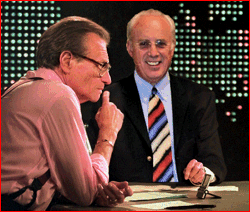














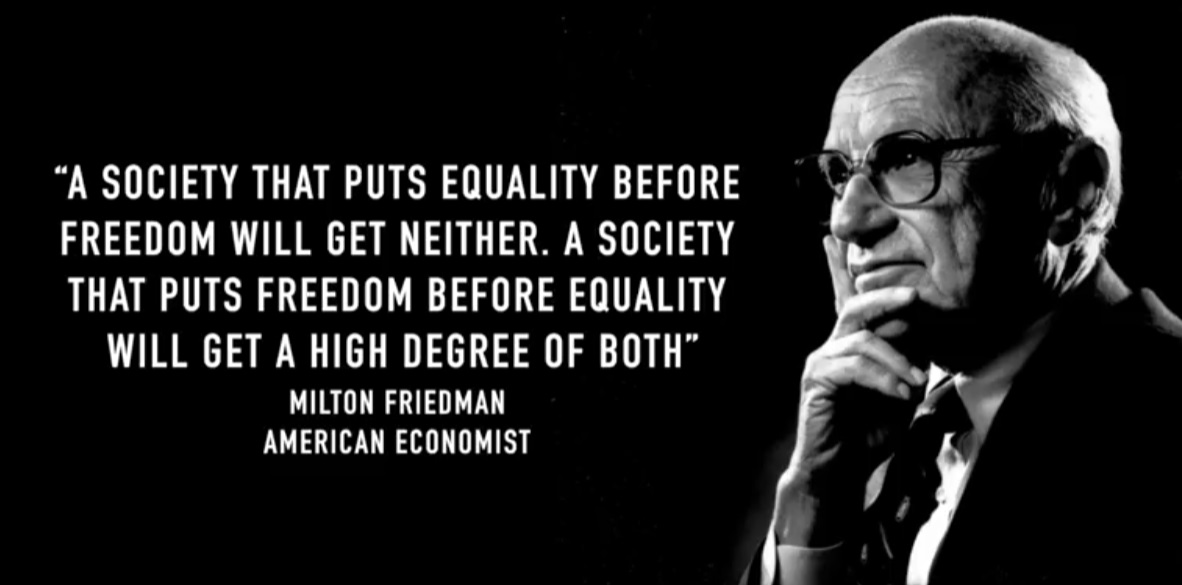









 Carly Simon and Warren Beatty seen together in 1984AP
_(cropped).jpg)
:max_bytes(150000):strip_icc()/King-Solomon-GettyImages-537859698-57cd84f13df78c71b62edb3b.jpg)
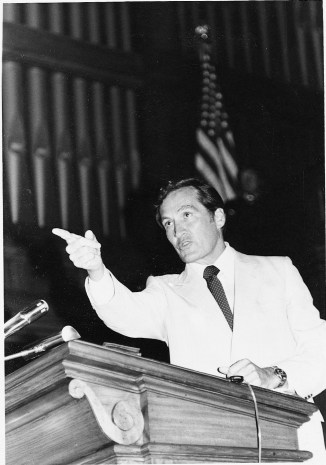



.jpg)

.jpg)
_(cropped).jpg)









 The Daily Hatch
