icon The Daily Hatch

www.TheDailyHatch.org with Everette Hatcher

Category Archives: Current Events

« Older posts
Newer posts »

MUSIC MONDAY Calvin Harris – Feel So Close

June 27, 2016 – 11:53 am

Calvin Harris – Feel So Close

Related posts:

MUSICC MONDAY My two favorite songs from Harry Nilsson!!!

June 20, 2016 – 12:09 am

Harry Nilsson – Everybody’s Talkin’ (1969) Harry Nilsson – Without You 1972 (HD) Harry Nilsson From Wikipedia, the free encyclopedia For the Swedish footballer, see Harry Nilsson (footballer). Harry Nilsson Nilsson in 1974 Background information Birth name Harry Edward Nilsson III Also known as Nilsson Born June 15, 1941 Brooklyn, New York, U.S. Died January […]

By Everette Hatcher III | Posted in Uncategorized | Edit | Comments (0)

MUSIC MONDAY My two favorite songs from Gilbert O`Sullivan!!!

June 13, 2016 – 12:58 am

Gilbert O`Sullivan – CLAIR – ( The Sweetest `Clair ` video Ever !) – And Clair answers back ! Gilbert O’Sullivan From Wikipedia, the free encyclopedia Gilbert O’Sullivan O’Sullivan in 1974 Background information Birth name Raymond Edward O’Sullivan Born 1 December 1946 (age 69) Waterford, Ireland Origin Swindon, Wiltshire, England Genres Soft rock Occupation(s) Singer-songwriter, pianist […]

By Everette Hatcher III | Posted in Current Events | Edit | Comments (0)

MUSIC MONDAY “The Black Keys”

June 6, 2016 – 7:16 am

________________ The Black Keys – Lonely Boy [Official Music Video] The Black Keys From Wikipedia, the free encyclopedia This article is about the band. For piano keys, see piano keys. For Chopin’s Étude commonly known as Black Keys, see Étude Op. 10, No. 5 (Chopin). The Black Keys The Black Keys performing at South by […]

By Everette Hatcher III | Posted in Current Events | Edit | Comments (0)

MUSIC MONDAY The song LITTLE ONE sung by Rebecca St. James in the film SARAH’S CHOICE

May 30, 2016 – 12:39 am

Little One – From the Film, “Sarah’s Choice” Rebecca St James on faith and values – theDove.us Sarah’s Choice Trailer Sarah’s Choice – Behind the Scenes Rebecca St. James on Sarah’s Choice – CBN.com Rebecca St James Interview on Real Videos Sarah’s Choice – The Proposal Sarahs Choice Pregnancy Test Sarahs Choice Crossroad Sarah’s Choice […]

By Everette Hatcher III | Posted in Current Events | Edit | Comments (0)

MUSIC MONDAY Rebecca St James

May 23, 2016 – 12:13 am

Lion – Rebecca St. James I will praise You – Rebecca St James Rebecca St James 1995 TBN – Everything I Do Rebecca St. James & Rachel Scott “Blessed Be Your Name” Rebecca St. James From Wikipedia, the free encyclopedia Rebecca St. James St. James in 2007 Background information Birth name Rebecca Jean Smallbone Also […]

By Everette Hatcher III | Posted in Current Events | Edit | Comments (0)

MUSIC MONDAY “Foster the People” Cubbie Fink married to Rebecca St. James who is one of my favorite Christian singers!!!

May 16, 2016 – 7:13 am

Foster The People – Pumped up Kicks Foster the People From Wikipedia, the free encyclopedia Foster the People Foster the People at the 2011 MuchMusic Video Awards, from left to right: Pontius, Foster, and Fink Background information Origin Los Angeles, California, U.S. Genres Indie pop alternative rock indietronica alternative dance neo-psychedelia[1] Years active 2009–present Labels […]

By Everette Hatcher III | Posted in Current Events | Edit | Comments (0)

MUSIC MONDAY ‘Apple gave me advice’: Coldplay’s Chris Martin turned to 11-year-old daughter for words of wisdom ahead of Superbowl 50 By DAILYMAIL.COM REPORTER PUBLISHED: 00:58 EST, 2 February 2016

May 9, 2016 – 1:12 am

‘Apple gave me advice’: Coldplay’s Chris Martin turned to 11-year-old daughter for words of wisdom ahead of Superbowl 50 By DAILYMAIL.COM REPORTER PUBLISHED: 00:58 EST, 2 February 2016 | UPDATED: 17:20 EST, 2 February 2016 n Facebook They’ve sold 80 million records and been around for 20 years. But Coldplay’s lead singer Chris Martin, 38, […]

By Everette Hatcher III | Comments (0)

Open letter to George F. Will concerning Donald Trump!!!

June 27, 2016 – 9:03 am

The following was emailed to George F. Will on 6-27-16:

Scott Ableman / Wikimedia

Scott Ableman / Wikimedia
Dear Mr. Will,
I really enjoyed your You Tube cllip “George Will Keynotes 2010 Milton Friedman Prize Dinner:” If you google ARKANSAS MILTON FRIEDMAN you will be brought to my website http://www.thedailyhatch.org since I have written so many posts on my economic hero MILTON FRIEDMAN and his film series FREE TO CHOOSE.  Some of my favorite episodes are now on my blog: “The Failure of Socialism” and “What is wrong with our schools?”  and “Created Equal”  and  From Cradle to Grave, and – Power of the Market.

Since we have a choice this year between the ultra liberal Clinton and the moderate to conservative Trump, I was sad to read the following:

Conservative commentator George Will, who frequently has been critical of Donald Trump, said Friday that he is leaving the Republican Party because of its impending nomination of the New York businessman. 
Let me make a few observations on you first then I will turn to Donald Trump.
First, your comments only help Donald Trump. Do you think he is sad to lose the support of Jeb Bush and Mitt Romney also? Trump is energized by those who have had it with  the mainstream of the Republican Party!!! Can you tell me why the Republicans never once made President Obama decide on lower spending amounts versus shutting the government down in the last 8 years? It was probably because of lukewarm conservative leadership such as Mitch  Mcconnell and John Boehner.
Second, Tim Wildmon of the AMERICAN FAMILY ASSOCIATION like me was a supporter of Ted Cruz, but he recently noted that if you wanted to get your house fixed up you may disappointed that Trump may do a mediocre job but in comparison Clinton would burn your house to the ground. Wildmon’s real world example  was the current state of affairs at the Supreme Court where there are several aging justices and presently there are 4 conservatives and 4 liberals on the court.
Third, just like Donald Trump you look at the world in a secular way and personally that always ends with the cry VANITY, VANITY, ALL IS VANITY.
In the article, “The Conservative Agnosticism of George Will,” by ROBERT LONG • July 8, 2013, 10:12 AM is the following quote attributed to you: 

I approach the question of religion and American life from the vantage point of an expanding minority. I am a member of a cohort that the Pew public-opinion surveys call the “nones.” Today, when Americans are asked their religious affiliation, 20%—a large and growing portion—say “none.”

Evidently you and Donald Trump do have this in common because you both look at the world from a secular point of view. Let me challenge you to answer this one question:
IS THE BIBLE HISTORICALLY ACCURATE?
Here are some of the posts I have done in the past on the subject: 1. The Babylonian Chronicle, of Nebuchadnezzars Siege of Jerusalem, 2. Hezekiah’s Siloam Tunnel Inscription. 3. Taylor Prism (Sennacherib Hexagonal Prism), 4. Biblical Cities Attested Archaeologically. 5. The Discovery of the Hittites, 6.Shishak Smiting His Captives, 7. Moabite Stone, 8. Black Obelisk of Shalmaneser III, 9A Verification of places in Gospel of John and Book of Acts., 9B Discovery of Ebla Tablets. 10. Cyrus Cylinder, 11. Puru “The lot of Yahali” 9th Century B.C.E., 12. The Uzziah Tablet Inscription, 13. The Pilate Inscription, 14. Caiaphas Ossuary, 14 B Pontius Pilate Part 2, 14c. Three greatest American Archaeologists moved to accept Bible’s accuracy through archaeology., 
Of course, if the Bible is accurate then why not take a closer at the claims of Christ?
 Below is a portion of your most recent article:

Republicans: Save Your Party, Don’t Give To Trump

George Will | Thursday Jun 23, 2016 12:01 AM

 “Every republic,” writes Charles Kesler, professor of government at Claremont McKenna College, “eventually faces what might be called the Weimar problem.” It arrives when a nation’s civic culture has become so debased that the nation no longer has “the virtues necessary to sustain republican government.”
 ….When asked in a 1990 Playboy interview about his historical role models, he mentioned Winston Churchill but enthused about others who led “the ultimate life”:“I’ve always thought that Louis B. Mayer led the ultimate life, that Flo Ziegfeld led the ultimate life, that men like Darryl Zanuck and Harry Cohn did some creative and beautiful things. The ultimate job for me would have been running MGM in the ’30s and ’40s — pre-television.” Yes, that job, not the one he seeks.
A FEW OBSERVATIONS ON YOUR OBSERVATIONS ON TRUMP:
FIRST POINT, you are correct that our country has arrived at the point where Francis Schaeffer observed when he said that the Christian Consensus is gone and we live in a Post Christian society. In your article you cited a quote that makes this same point:  
It arrives when a nation’s civic culture has become so debased that the nation no longer has “the virtues necessary to sustain republican government.”
Maybe that is the reason we have been drawn now to a secular man such as Trump. I consider myself an expert on secularism because I have studied it so long. Thirty years ago the christian philosopher and author Francis Schaeffer (1912-1984) died and on the 10th anniversary of his passing in 1994 I wrote a number of the top evolutionists, humanists and atheistic scholars in the world and sent them a story about Francis Schaeffer in 1930 when he left agnosticism and embraced Christianity. I also sent them  a cassette tape with the title “Four intellectual bridges evolutionists can’t cross” by Adrian Rogers (1931-2005) and some of the top  scholars who corresponded with me since that time include Ernest Mayr (1904-2005), George Wald (1906-1997), Carl Sagan (1934-1996),  Robert Shapiro (1935-2011), Nicolaas Bloembergen (1920-),  Brian Charlesworth (1945-),  Francisco J. Ayala (1934-) Elliott Sober (1948-), Kevin Padian (1951-), Matt Cartmill (1943-) , Milton Fingerman (1928-), John J. Shea (1969-), , Michael A. Crawford (1938-), (Paul Kurtz (1925-2012), Sol Gordon (1923-2008), Albert Ellis (1913-2007), Barbara Marie Tabler (1915-1996), Renate Vambery (1916-2005), Archie J. Bahm (1907-1996), Aron S “Gil” Martin ( 1910-1997), Matthew I. Spetter (1921-2012), H. J. Eysenck (1916-1997), Robert L. Erdmann (1929-2006), Mary Morain (1911-1999), Lloyd Morain (1917-2010),  Warren Allen Smith (1921-), Bette Chambers (1930-),  Gordon Stein (1941-1996) , Milton Friedman (1912-2006), John Hospers (1918-2011), and Michael Martin (1932-).
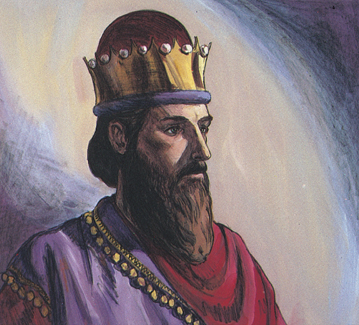
SECOND POINT, you quote Trump’s PLAYBOY MAGAZINE interview and that revealed Trump’s longing for satisfaction and his yearning to live THE ULTIMATE LIFE. The funny thing is that King Solomon (just like PLAYBOY’S FOUNDER Hugh Hefner) tried to do  that very thing 3000 years ago when he looked for SATISFACTION and he limited himself to finding it UNDER THE SUN without God in the picture. Recently I wrote Mick Jagger about this very thing and I wanted to share that with you below. Thanks again for your time.

Sincerely,

Everette Hatcher, everettehatcher@gmail.com, http://www.thedailyhatch.org, cell ph 501-920-5733, Box 23416, LittleRock, AR 72221

February 6, 2016

Dear Mick,

I was prompted to write you again after the horrible month of January saw the passing of 3 legendary rockers (David Bowie [1-8-47 to 1-10-16], Glenn Frey [11-6-48 to 1-18-16] and Paul Kantner [3-17-41 to 1-28-16] ). I know that you have been searching your whole life for the meaning of life and the secret of satisfaction and with the help of King Solomon and Kerry Livgren of the rock group KANSAS I wanted to pass along their conclusions.

I thought of you recently when I listened to a cassette tape of a sermon by Dan Jarrell of FELLOWSHIP BIBLE CHURCH in Little Rock entitled THE PLEASURE IS MINE on ECCLESIASTES 2:1-26 (4-21-96). It was hard for me to obtain a cassette tape player but I searched through my attic and found one hidden away.

As you know the Book of Ecclesiastes was written by King Solomon at the end of his life and he was discussing LIFE UNDER THE SUN. I think it is easy to compare your life to Solomon since you both are pursuing satisfaction in this life UNDER THE SUN without God in the picture. 

Francis Schaeffer noted that Solomon took a look at the meaning of life on the basis of human life standing alone between birth and death “under the sun.” This phrase UNDER THE SUN appears over and over in Ecclesiastes. The Christian Scholar Ravi Zacharias noted, “The key to understanding the Book of Ecclesiastes is the term UNDER THE SUN — What that literally means is you lock God out of a closed system and you are left with only this world of Time plus Chance plus matter.”

Here is a portion of the sermon by Dan Jarrell below:

You and I grew up with Mick Jagger singing “I CAN’T GET NO SATISFACTION.” You think of the lyrics of that song and what Jagger and the ROLLING STONES did. They summarized this philosophy that no matter how hard I tried, no matter how hard I seek it, no matter what I attempt to do, no matter which avenue I go down, there is no personal satisfaction in it for me. Personal satisfaction eludes me because I try and I try and I try but I can’t get no, no, no, no, hey, hey , hey. I just can’t get no satisfaction.

That is the idea  Mick Jagger and the rest of the ROLLING STONES and an entire generation that cut it’s teeth on rock and roll never got past the frustration of that song. We tried, and we tried and we tried. We tried DRUGS, and ALCOHOL. We tried SEX in a permissive moral society. We tried EDUCATION. We tried CORPORATE ACHIEVEMENT. We tried MATERIAL DECADENCE. We tried EMPIRE BUILDING. We have even tried HUMANISTIC SPIRITUALITY. We tried anything that would move us toward satisfaction, but the result of it all is no lasting satisfaction. Even our greatest pleasures lose their luster. Life is a vapor!!!! GONE WITH THE WIND!!!

I suppose the wisdom of ECCLESIASTES could have been the inspiration for the ROLLING STONES song that marked our generation if it were not for one significant detail. You see Solomon tried and he tried and he tried but the conclusion of his song was I FOUND THE KEY TO SATISFACTION. All the things he tried didn’t get him there but those experiences led him full circle to a conclusion that he began his reign with and apparently he ended with as well.

I really believe if MICK JAGGER or if any of us for that matter would listen to Solomon’s wisdom he will teach us a different song to sing, a new chorus that will mark a new generation.  Solomon will show us the key to satisfaction and he warns us of counterfeits. This is the way to go but beware of this that the vapors of life are there and pursue that and you will be CHASING THE WIND.

WHAT WAS SOLOMON’S ANSWER?  Ecclesiastes chapter 2 gives us that answer. This chapter is a discussion of life’s frustrations. Let me start with the conclusion of chapter 2 and then we will go back and look at life’s frustrating moves toward that conclusion. 

Ecclesiastes 2:24-25 New American Standard Bible (NASB)

24 There is nothing better for a man than to eat and drink and tell himself that his labor is good. This also I have seen that it is from the hand of God. 25 For who can eat and who can have enjoyment without Him?

There is some disagreement on the translation of this particular phrase “There is nothing better for a man” The NEW AMERICAN STANDARD BIBLE translates it as a comparison. The idea is if you think of all the good things that a man could enjoy there is nothing better for a man or a woman than to eat or to drink and tell themselves their labor is good. In other words, it is good for us. 

The Hebrew seems to indicate we may want to translate it this way. “There is nothing in a man to eat and drink and tell himself his labor is good.” In other words, IT IS IMPOSSIBLE FOR US, FOR THAT IS FROM THE HAND OF GOD. In other words, it is either a comparison or a simple statement. Either way this is the sense of the passage. 

Either way you translate it, it says nothing is so good for us other than a satisfied life but nothing is as impossible for us because it is not in us to be satisfied for who can eat and enjoy life without him?  The answer is NOBODY CAN!!!! So you come down to the idea that if one seeks satisfaction they will never find it. In fact, every pleasure will be fleeting and can not be sustained, BUT IF ONE SEEKS GOD THEN ONE FINDS SATISFACTION. That is my sermon in a nutshell. That is the conclusion. 

___

Just like Dan Jarrell I also loved the song I CAN’T GET NO SATISFACTION by the Rolling Stones.  Then in  1978 I heard the song “Dust in the Wind” by Kansas when it rose to #6 on the charts. That song told me that Kerry Livgren the writer of that song and a member of Kansas had come to the same conclusion that both Solomon and the ROLLING STONES had. I remember mentioning to my friends at church that we may soon see some members of Kansas become Christians because their search for the meaning of life had obviously come up empty even though they had risen from being an unknown band to the top of the music business and had all the wealth and fame that came with that. Furthermore, Solomon realized death comes to everyone and there must be something more.

Livgren wrote:

“All we do, crumbles to the ground though we refuse to see, Dust in the Wind, All we are is dust in the wind, Don’t hang on, Nothing lasts forever but the Earth and Sky, It slips away, And all your money won’t another minute buy.”

Take a minute and compare Kerry Livgren’s words to that of the late British humanist H.J. Blackham:

“On humanist assumptions, life leads to nothing, and every pretense that it does not is a deceit. If there is a bridge over a gorge which spans only half the distance and ends in mid-air, and if the bridge is crowded with human beings pressing on, one after the other they fall into the abyss. The bridge leads nowhere, and those who are pressing forward to cross it are going nowhere….It does not matter where they think they are going, what preparations for the journey they may have made, how much they may be enjoying it all. The objection merely points out objectively that such a situation is a model of futility“( H. J. Blackham, et al., Objections to Humanism (Riverside, Connecticut: Greenwood Press, 1967).

_____________________________________

Both Kerry Livgren and the bass player DAVE HOPE of Kansas became Christians eventually. Kerry Livgren first tried Eastern Religions and DAVE HOPE had to come out of a heavy drug addiction. I was shocked and elated to see their personal testimony on The 700 Club in 1981 and that same  interview can be seen on youtube today. Livgren lives in Topeka, Kansas today where he teaches “Diggers,” a Sunday school class at Topeka Bible Church. DAVE HOPE is the head of Worship, Evangelism and Outreach at Immanuel Anglican Church in Destin, Florida.

Those who reject God must accept three realities of their life UNDER THE SUN according to Solomon.  FIRST, death is the end and SECOND, chance and time are the only guiding forces in this life.  FINALLY, power reigns in this life and the scales are never balanced. In contrast, Dave Hope and Kerry Livgren believe death is not the end and the Christian can  face death and also confront the world knowing that it is not determined by chance and time alone and finally there is a judge who will balance the scales.

Solomon’s experiment was a search for meaning to life “UNDER THE SUN.” Then in last few words in the Book of Ecclesiastes he looks above the sun and brings God back into the picture: “The conclusion, when all has been heard, is: Fear God and keep His commandments, because this applies to every person. For God will bring every act to judgment, everything which is hidden, whether it is good or evil.”

Actually the answer to find meaning in life is found in putting your faith and trust in Jesus Christ. The Bible is true from cover to cover and can be trusted.

Thanks for your time.

Sincerely,

Everette Hatcher, everettehatcher@gmail.com, http://www.thedailyhatch.org, cell ph 501-920-5733, Box 23416, LittleRock, AR 72221


President Carter with Adrian and Joyce Rogers in 1979 at the White House:
____

Adrian Rogers in the White House pictured with President Ronald Reagan below:

________

Adrian and Joyce Rogers with President Bush at Union University in Jackson, TN:

________________________________________________

Adrian Rogers pictured below on national day of prayer with President Bush.

___

Related posts:

George Will on Balanced Budget Amendment

February 19, 2013 – 1:27 am

We need to pass a Balanced Budget Amendment!!!! It is obvious to me that if President Obama gets his hands on more money then he will continue to spend away our children’s future. He has already taken the national debt from 11 trillion to 16 trillion in just 4 years. Over, and over, and over, […]

By Everette Hatcher III | Posted in spending out of control | Edit | Comments (0)
By Everette Hatcher III | Also posted in Francis Schaeffer, Milton Friedman, President Obama, Prolife | Comments (0)

MUSIC MONDAY My two favorite songs from Gilbert O`Sullivan!!!

June 13, 2016 – 12:58 am

Gilbert O`Sullivan – CLAIR – ( The Sweetest `Clair ` video Ever !) – And Clair answers back !

Gilbert O’Sullivan

From Wikipedia, the free encyclopedia
Gilbert O’Sullivan
Gilbert O'Sullivan - TopPop 1974 1.png

O’Sullivan in 1974
Background information
Birth name Raymond Edward O’Sullivan
Born 1 December 1946 (age 69)
Waterford, Ireland
Origin Swindon, Wiltshire, England
Genres Soft rock
Occupation(s) Singer-songwriter, pianist
Instruments Vocals, piano, keyboards
Years active 1967–present
Labels Bygum Records, CBS, MAM
Website gilbertosullivan.net

Gilbert O’Sullivan (born Raymond Edward O’Sullivan, 1 December 1946) is an English-Irish singer-songwriter, best known for his early 1970s hits “Alone Again (Naturally)“, “Clair” and “Get Down“.[1] The music magazine Record Mirror voted him the No. 1 UK male singer of 1972.[2]

Worldwide he has charted 16 top-40 records, including six number one songs, the first of which was 1970’s “Nothing Rhymed” (for further information see Gilbert O’Sullivan discography). Such was his popularity in the early 1970s that “Matrimony”, an airplay and live favourite from his debut album Himself, remains one of his most famous compositions despite never having been a hit single (except in the Netherlands where it reached No. 4).

His most successful recording period was between 1970 and 1980, though he has since recorded ten studio albums up to 2015. Speaking in 2009 he said, “I write pop songs. End of story. That’s all I wanted to do. That’s all I want to do. And that’s all I continue to want to do. I have no interest in just touring, and living in the past.”[3]

Contents

 [hide] 

  • 1Early life
  • 2Music career
    • 2.1Early success
    • 2.2MAM records
    • 2.3Later career
  • 3Personal life
  • 4Discography
  • 5See also
  • 6References
  • 7External links

Early life[edit]

He was born Raymond Edward O’Sullivan in Cork Road, Waterford, Ireland.[4] In 1953, when he was seven, his family moved to Battersea, London and aged eight to Swindon, Wiltshire, England. He attended St Joseph’s and the Swindon College of Art, where he briefly played drums in a band called Rick’s Blues, founded by Rick Davies (who later founded Supertramp) and where he developed his lifelong interests in music and art.[5] According to a 1972 interview with O’Sullivan, Davies taught him how to play both drums and piano.[6] Other semi-professional bands he played with while at college include The Doodles and The Prefects.[5]

Music career[edit]

In 1967, O’Sullivan was signed to a five-year contract with April Music, CBS Records’ house publishing company, after coming to the attention of the Professional Manager Stephen Shane,[7] who also suggested changing his name from Ray to Gilbert as a play on the name of the operetta composers Gilbert & Sullivan. His songs at the time were avant-garde, and even drew the interest of the Bonzo Dog Doo-Dah Band (Viv Stanshall), who were interested in recording a couple of the songs. He was paid an advance of £12 (equivalent to £200 in 2015)[8] with which he bought a piano. He was signed to CBS Records by the A&R manager Mike Smith (the Tremeloes and the Love Affair). .

After two unsuccessful singles with CBS, “Disappear” and “What Can I Do?”, and one with the Irish record label Major Minor, “Mr. Moody’s Garden”, all released under the name “Gilbert”, O’Sullivan sent some demo tapes to Gordon Mills, the manager of Tom Jones and Engelbert Humperdinck, whereupon O’Sullivan was signed to Mills’ label, MAM Records.[4][9] O’Sullivan’s self-created eye-catching visual image comprised a pudding basin haircut, cloth cap and short trousers. Mills reportedly hated the image, but O’Sullivan insisted on using it initially,[citation needed] until he assumed a more modern ‘college-like’ look in which he often wore a sweater bearing a large letter ‘G’.[4]

Early success[edit]

At the end of 1970, O’Sullivan achieved his first UK Top 10 hit with “Nothing Rhymed“,[2] which also reached No. 1 in the Netherlands.[10] “Nothing Rhymed” in The Netherlands earned O’Sullivan his first gold disc.[5] Subsequent hits followed including “Underneath The Blanket Go” (which also reached No. 1 in the Netherlands), “We Will” and “No Matter How I Try”. O’Sullivan released his debut album, Himself, in 1971.[4]

In 1972 O’Sullivan reached international stardom with “Alone Again (Naturally)“, which reached No. 3 in UK; No. 1 in the US, spending six non-consecutive weeks at No. 1 on the Billboard Hot 100 chart and selling nearly two million copies; No. 2 in New Zealand (11 weeks on the charts in total); No. 1 in Canada for 2 weeks (13 weeks in the Top 40);[11] and No. 1 in Japan (21 weeks on the chart). The guitar solo was played by Big Jim Sullivan.

O’Sullivan’s hit was barely edged out for No. 1 for the whole of 1972 by Roberta Flack‘s “The First Time Ever I Saw Your Face“, with Looking Glass‘ “Brandy (You’re a Fine Girl)“, interrupting O’Sullivan’s place at the top in the week ending 26 August 1972, making the difference. Flack’s and O’Sullivan’s hits were on the Hot 100’s top 40 at the same time only on 1 July 1972, with Flack at No. 36 and falling and O’Sullivan at No. 34 and climbing. In 1973, O’Sullivan’s effort was nominated for a Grammy Award in the Song of the Year and Record of the Year categories, but Flack’s tune won both in 1973, and Flack would turn the double-trick again, in 1974 with “Killing Me Softly with His Song“.

O’Sullivan followed “Alone” with “Clair” (1972, from the album Back to Front). The single reached No. 2 in the United States on the Hot 100 and No. 1 in the UK and Canada (14 weeks in the Canadian Top 40).[11] O’Sullivan’s discsales exceeded ten million in 1972 and made him the top star of the year.[5] O’Sullivan’s success led to him taking part in the BBC‘s anniversary programme Fifty Years of Music in November 1972.

“Out of the Question” (also from Back to Front), reached No. 17 in the US and No. 14 in Canada.[11] “Get Down” (1973), from the album I’m A Writer Not A Fighter, reached No. 1 in the UK and in Germany,[12] No. 7 in both the US and Canada, and No. 3 in The Netherlands.[2][11] Following “Alone Again (Naturally)” and “Clair”, “Get Down” was his third million-seller, with the RIAA gold disc award presented on 18 September 1973.[5]

MAM records[edit]

O’Sullivan enjoyed nearly five years of success with MAM, a run that included seven UK Top 10 singles and four UK Top 10 albums; three US Top 10 singles and one top 10 album; five Dutch Top 10 singles and three Top 10 albums; five New Zealand Top 10 singles; three Canadian Top 10 singles; and seven Japan Top 10 singles.[13]

“Ooh Baby” and “Happiness Is Me and You” charted, but O’Sullivan’s sales were decreasing.[4] In June 1975 he had his last Top 20 hit, “I Don’t Love You But I Think I Like You”.[2][4]

Things turned more sour when he discovered his recording contract with MAM Records greatly favoured the label’s owner, Gordon Mills. A lawsuit followed, with prolonged argument over how much money his songs had earned and how much of that money he had actually received.[14] Eventually, in May 1982, the court found in O’Sullivan’s favour, describing him as a “patently honest and decent man”, who had not received a just proportion of the vast income his songs had generated.[14] They awarded him £7 million in damages (worth £20 million at 2011 prices). He had won, but the court battle had put his recording career on hold.

Later career[edit]

In 1980, after a five-year hiatus, he returned to his old record label, CBS.

The first single, “What’s in a Kiss?”, reached No. 19 in the UK in 1980 and No. 21 in Japan.[13] It was his first UK Top 20 hit in five years. Following this release, and due in part to the then-ongoing MAM court case, O’Sullivan released no new material between 1983 and 1986.[4] Apart from the single “So What ?” in 1990 and a compilation album in 1991 Nothing But The Best, O’Sullivan was absent from the charts until another compilation album, The Berry Vest of Gilbert O’Sullivan, returned him to the UK Top 20 in 2004.[2]

O’Sullivan is also noted for his role in bringing about the practice of clearing samples in hip hop music as a result of the 1991 court case, Grand Upright Music, Ltd. v. Warner Bros. Records, Inc.,[15] in which he sued rapper Biz Markieover the rights to use a sample of his song “Alone Again (Naturally)”.[4]

O’Sullivan has continued to record and perform into the 21st century. He enjoys particular acclaim in Japan.[4] His album A Scruff at Heart was released in 2007, featuring “Just So You Know”. On 14 July 2008, O’Sullivan released “Never Say Di”. He appeared at the 2008 Glastonbury Festival, and played London’s Royal Albert Hall on 26 October 2009. On 26 August 2010, O’Sullivan announced that he had joined Hypertension, a record company whose artists have included Leo Sayer, Chris DeBurgh, Fleetwood Mac and Gerry Rafferty.[16]

His album Gilbertville was released on 31 January 2011; it featured “All They Wanted To Say”, which dealt with the 2001 attacks on the World Trade Centre, and his single “Where Would We Be (Without Tea)?”. On 19 July 2011, O’Sullivan played live on the BBC Radio 2 Ken Bruce Show.[17] On 26 August that year, the documentary Out on His Own was broadcast by BBC 4 (before by Irish RTÉ). In March 2012, the compilation album Gilbert O’Sullivan : The Very Best Of – A Singer & His Songs entered the UK Albums Chart at No.12. 2015 saw Gilbert re-emerge on Irish and BBC radio and television. He toured Ireland beginning of June, and on 8 June 2015 his Peggy Lee-inspired new album Latin ala G! was released, and received with great respect.

Personal life[edit]

In January 1980 O’Sullivan married his Norwegian girlfriend Aase. Later that year the first of their two daughters, Helen-Marie, was born. Tara was born two years later.

Discography[edit]

Main article: Gilbert O’Sullivan discography

See also[edit]

  • List of artists who reached number one on the UK Singles Chart
  • List of artists who reached number one in the United States
  • List of artists who reached number one on the U.S. Adult Contemporary chart
  • List of performers on Top of the Pops
  • List of stage names
  • List of Irish people

References[edit]

  1. Jump up^ “Gilbert O’Sullivan Articles”. Gilbertosullivan.net. 31 October 2007. Retrieved 13 January 2012.
  2. ^ Jump up to:a b c d e Roberts, David (2006). British Hit Singles & Albums (19th ed.). London: Guinness World Records Limited. p. 411. ISBN 1-904994-10-5.
  3. Jump up^ “BBC Four – Gilbert O’Sullivan: Out on His Own”. Bbc.co.uk. 29 August 2011. Retrieved 22 April 2013.
  4. ^ Jump up to:a b c d e f g h i “Biography by Jason Ankeny”. Allmusic.com. Retrieved 5 March 2009.
  5. ^ Jump up to:a b c d e Murrells, Joseph (1978). The Book of Golden Discs (2nd ed.). London: Barrie and Jenkins Ltd. p. 318. ISBN 0-214-20512-6.
  6. Jump up^ Melhuish, Martin (1986). The Supertramp Book. Toronto, Canada: Omnibus Press. p. 18. ISBN 0-9691272-2-7.
  7. Jump up^ ‘In 1967 … [h]e took a part-time Christmas job at the C&A Department store on Oxford Street. While there, a colleague brought his tapes to the attention of the CBS record company executives. They liked what they heard, and he was signed up.’Ireland’s Own, 12 June 2015, No. 5501, pg 9
  8. Jump up^ UK CPI inflation numbers based on data available from Gregory Clark (2016), “The Annual RPI and Average Earnings for Britain, 1209 to Present (New Series)” MeasuringWorth.
  9. Jump up^ “Gilbert O’Sullivan”, ClassicBands.com, accessed 9 January 2013
  10. Jump up^ http://www.top40.nl/top40/1971/week-08
  11. ^ Jump up to:a b c d [1][dead link]
  12. Jump up^ Get Down entry at chartsurfer.de
  13. ^ Jump up to:a b “The Official Gilbert O’Sullivan Website – A Friend of Mine”. Gilbertosullivan.com. Retrieved 22 April 2013.
  14. ^ Jump up to:a b Rice, Jo (1982). The Guinness Book of 500 Number One Hits (1st ed.). Enfield, Middlesex: Guinness Superlatives Ltd. p. 149. ISBN 0-85112-250-7.
  15. Jump up^ Grand Upright Music, Ltd. v. Warner Bros. Records, Inc., 780 F. Supp. 182 (S.D.N.Y. 1991)
  16. Jump up^ “Hypertension ” Artists”. Hypertension-music.de. Retrieved 2015-08-26.
  17. Jump up^ “BBC Radio 2 – Ken Bruce, 19/07/2011”. Bbc.co.uk. 19 July 2011. Retrieved 22 April 2013.

External links[edit]

  • Official Gilbert O’Sullivan page
  • Audio interview with Gilbert O’Sullivan on the Sodajerker On Songwriting podcast
  • Gilbert O’Sullivan at the Internet Movie Database
  • Biography at Allmusic
Authority control
  • WorldCat Identities
  • VIAF: 39562872
  • LCCN: n94106374
  • ISNI: 0000 0000 8118 7604
  • GND: 13447810X
  • SUDOC: 160747147
  • BNF: cb13898132n (data)
  • MusicBrainz: 215394ba-3d0c-4b57-b284-ec5bb4a5ad25
  • BNE: XX1056167
Categories:

  • 1946 births
  • Living people
  • 20th-century composers
  • 21st-century composers
  • 20th-century pianists
  • 21st-century pianists
  • Irish male singers
  • Irish pianists
  • Irish singer-songwriters
  • Irish songwriters
  • Irish pop singers
  • British soft rock musicians
  • English people of Irish descent
  • English male singers
  • English pianists
  • English pop pianists
  • English singer-songwriters
  • English songwriters
  • English pop singers
  • People from Swindon
  • 20th-century English singers

Gilbert O’Sullivan – Alone Again (original version)

Related posts:


MUSIC MONDAY ‘Apple gave me advice’: Coldplay’s Chris Martin turned to 11-year-old daughter for words of wisdom ahead of Superbowl 50 By DAILYMAIL.COM REPORTER PUBLISHED: 00:58 EST, 2 February 2016

May 9, 2016 – 1:12 am

‘Apple gave me advice’: Coldplay’s Chris Martin turned to 11-year-old daughter for words of wisdom ahead of Superbowl 50 By DAILYMAIL.COM REPORTER PUBLISHED: 00:58 EST, 2 February 2016 | UPDATED: 17:20 EST, 2 February 2016 n Facebook They’ve sold 80 million records and been around for 20 years. But Coldplay’s lead singer Chris Martin, 38, […]

By Everette Hatcher III | Posted in Current Events | Edit | Comments (0)

MUSIC MONDAY Chris Martin, Lead Singer of Coldplay: 5 Fast Facts You Need to Know Published 3:44 pm EDT, February 7, 2016

May 2, 2016 – 1:05 am

__________ Chris Martin, Lead Singer of Coldplay: 5 Fast Facts You Need to Know Published 3:44 pm EDT, February 7, 2016 Updated 3:44 pm EDT, February 7, 2016 Comment By Lauren Weigle 17.6k (Getty) Chris Martin has been the front-man of the band Coldplay for about 20 years, though the band changed its name a […]

By Everette Hatcher III | Posted in Current Events | Edit | Comments (0)

MUSIC MONDAY Christian Rock Pioneer Larry Norman’s Songs Part 14

April 25, 2016 – 12:57 am

Christian Rock Pioneer Larry Norman’s Songs Part 14 I posted a lot in the past about my favorite Christian musicians such as Keith Green (I enjoyed reading Green’s monthly publications too), and 2nd Chapter of Acts and others. Today I wanted to talk about one of Larry Norman’s songs. David Rogers introduced me to Larry […]

By Everette Hatcher III | Posted in Current Events | Edit | Comments (0)

MUSIC MONDAY Christian Rock Pioneer Larry Norman’s Songs Part 13

April 18, 2016 – 12:56 am

Christian Rock Pioneer Larry Norman’s Songs Part 13 I posted a lot in the past about my favorite Christian musicians such as Keith Green (I enjoyed reading Green’s monthly publications too), and 2nd Chapter of Acts and others. Today I wanted to talk about one of Larry Norman’s songs. David Rogers introduced me to Larry […]

By Everette Hatcher III | Posted in Current Events | Edit | Comments (0)

MUSIC MONDAY Christian Rock Pioneer Larry Norman’s Songs Part 12

April 11, 2016 – 1:30 am

Christian Rock Pioneer Larry Norman’s Songs Part 12 I posted a lot in the past about my favorite Christian musicians such as Keith Green (I enjoyed reading Green’s monthly publications too), and 2nd Chapter of Acts and others. Today I wanted to talk about one of Larry Norman’s songs. David Rogers introduced me to Larry […]

By Everette Hatcher III | Posted in Current Events | Edit | Comments (0)

MUSIC MONDAY Christian Rock Pioneer Larry Norman’s Songs Part 11

April 4, 2016 – 1:23 am

Christian Rock Pioneer Larry Norman’s Songs Part 11 I posted a lot in the past about my favorite Christian musicians such as Keith Green (I enjoyed reading Green’s monthly publications too), and 2nd Chapter of Acts and others. Today I wanted to talk about one of Larry Norman’s songs. David Rogers introduced me to Larry […]

By Everette Hatcher III | Posted in Current Events | Edit | Comments (0)

MUSIC MONDAY Christian Rock Pioneer Larry Norman’s Songs Part 10 more on Album “Only Visiting This Planet”

March 28, 2016 – 1:22 am

Christian Rock Pioneer Larry Norman’s Songs Part 10 more on Album “Only Visiting This Planet” I posted a lot in the past about my favorite Christian musicians such as Keith Green (I enjoyed reading Green’s monthly publications too), and 2nd Chapter of Acts and others. Today I wanted to talk about one of Larry Norman’s […]

By Everette Hatcher III | Posted in Current Events | Edit | Comments (0)
By Everette Hatcher III | Comments (0)

FRANCIS SCHAEFFER ANALYZES ART AND CULTURE PART 115 A look at the BEATLES as featured in 7th episode of Francis Schaeffer film HOW SHOULD WE THEN LIVE? “Take these broken wings and learn to fly” (Featured artist is Sam Gilliam )

June 9, 2016 – 7:09 am

When I think of oppression in the history of the USA the institution of slavery comes to mind first, and also the Civil Rights fight of the 1960’s. During the 60’s the Beatles took on this subject with their song BLACKBIRD.

Concerning OPPRESSION King Solomon many years ago in the Book of Ecclesiastes said that power reigns in this world UNDER THE SUN and it seems that the unjust flourish and the just have calamity come upon them.


Francis Schaeffer noted that King Solomon in the Book of Ecclesiastes took a look at the meaning of life on the basis of human life standing alone between birth and death “under the sun.” This phrase UNDER THE SUN appears over and over in Ecclesiastes. The Christian Scholar Ravi Zacharias noted, “The key to understanding the Book of Ecclesiastes is the term UNDER THE SUN — What that literally means is you lock God out of a closed system and you are left with only this world of Time plus Chance plus matter.”

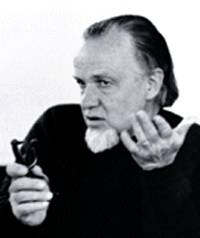
(Francis Schaeffer pictured below)


Below are three scriptures with Schaeffer’s comments below them.

Ecclesiastes 4:1

 Then I looked again at all the acts of oppression which were being done under the sun. And behold I saw the tears of the oppressed and that they had no one to comfort them; and on the side of their oppressors was power, but they had no one to comfort them.

Between birth and death power rules. Solomon looked over his kingdom and also around the world and proclaimed that right does not rule but power rules.

Ecclesiastes 7:14-15

14 In the day of prosperity be happy, but in the day of adversity consider—God has made the one as well as the other so that man will not discover anything that will be after him. 15 I have seen everything during my lifetime of futility; there is a righteous man who perishes in his righteousness and there is a wicked man who prolongs his life in his wickedness.

Ecclesiastes 8:14

14 There is futility which is done on the earth, that is, there are righteous men to whom it happens according to the deeds of the wicked. On the other hand, there are evil men to whom it happens according to the deeds of the righteous. I say that this too is futility.

We could say it in 20th century language, “The books are not balanced in this life. 

In the film series HOW SHOULD WE THEN LIVE? episode 7 Francis Schaeffer asserts:

 
There is one man who well understood the logical conclusion of the deification of nature, Marquis de Sade. “If nature is all then ‘what is’ is right and nothing more can be said….As nature has made us (the men) the strongest we can do with her (the woman) whatever we please.” The inevitable result was his cruelty to women. Thus there was no basis for either morals or law.
 
Let me dwell for a moment on the Dutch Reformation Painters who so rejoice fully painted the simple things of life. They knew that nature was created by a personal and a good God, but they also knew because of the fall, man’s revolt against God, that nature as it is now is abnormal. That is a very different thing than taking nature as it is now and making it the measure of goodness because when this is done there is no difference between cruelty and non-cruelty.

AMERICAN EXPERIENCE The Abolitionists, Part One, Chapter 1

________


Lyrics-
Blackbird singing in the dead of night
Take these broken wings and learn to fly
All your life
You were only waiting for this moment to arise

Black bird singing in the dead of night
Take these sunken eyes and learn to see
all your life
you were only waiting for this moment to be free

Blackbird fly, Blackbird fly
Into the light of the dark black night.

Blackbird fly, Blackbird fly
Into the light of the dark black night.

Blackbird singing in the dead of night
Take these broken wings and learn to fly
All your life
You were only waiting for this moment to arise,
You were only waiting for this moment to arise

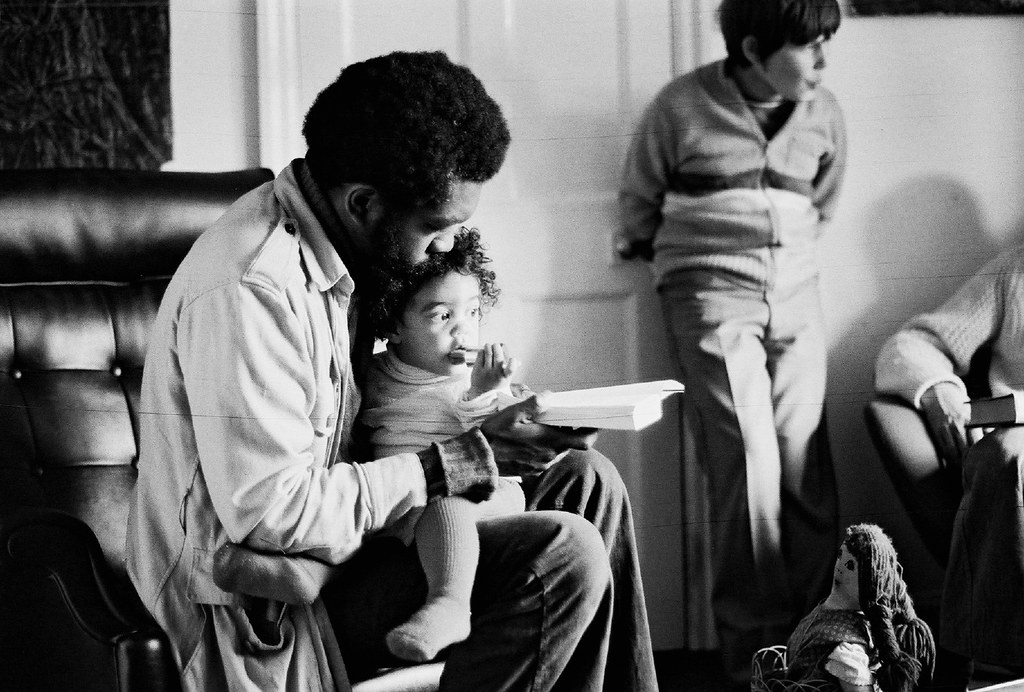
THE SCHAEFFER LEGACY PROJECT – INTERVEW WITH SYLVESTER JACOBS

L’Abri 1974 (England) – Sylvester & Simone Jacobs

King’s Dream

THE GOOD SOCIETY AND THE MORAL LAW

By: Chuck Colson|Published: January 21, 2013 7:00 AM
Rating: 5.00
Topics: Christian Living, Chuck Colson, Church Issues, Inspiration, Racial Issues, Worldview

I’m Eric Metaxas. Today on BreakPoint we re-present Chuck Colson’s commentary on Martin Luther King Day and Dr. King’s dramatic defense of the moral law.

Chuck Colson

More than forty years ago, on August 28, 1963, a quarter million people gathered in front of the Lincoln Memorial. They marched here for the cause of civil rights. And that day they heard Martin Luther King Jr. deliver his famous “I Have a Dream” speech, a speech in which he challenged America to fulfill her promise.

“I have a dream,” he said, “that one day this nation will rise up and live out the true meaning of its creed. ‘We hold these truths to be self-evident that all men are created equal.’ ”

While we know of the speech, most people are unaware that King also penned one of the most eloquent defenses of the moral law: the law that formed the basis for his speech, for the civil rights movement, and for all of the law, for that matter.

In the spring of 1963, King was arrested for leading a series of massive non-violent protests against the segregated lunch counters and discriminatory hiring practices rampant in Birmingham, Alabama. While in jail, King received a letter from eight Alabama ministers. They agreed with his goals, but they thought that he should call off the demonstrations and obey the law.

King explained why he disagreed in his famous Letter from a Birmingham Jail. “One might well ask,” he wrote, “how can you advocate breaking some laws and obeying others?” The answer “is found in the fact that there are two kinds of laws: just laws … and unjust laws. One has not only a legal but a moral responsibility to obey just laws,” King said, “but conversely, one has a moral responsibility to disobeyunjust laws.”

How does one determine whether the law is just or unjust? A just law, King wrote, “squares with the moral law of the law of God. An unjust law … is out of harmony with the moral law.”

Then King quoted Saint Augustine: “An unjust law is no law at all.” He quoted Thomas Aquinas: “An unjust law is a human law not rooted in eternal or natural law.”

This is the great issue today in the public square: Is the law rooted in truth? Is it transcendent, immutable, and morally binding? Or is it, as liberal interpreters argue, simply whatever courts say it is? Do we discover the law, or do we create it?

Many think of King as a liberal firebrand, waging war on traditional values. Nothing could be further from the truth. King was a great conservative on this central issue, and he stood on the shoulders of Augustine and Aquinas, striving to restore our heritage of justice rooted in the law of God.

Were he alive today, I believe he’d be in the vanguard of the pro-life movement. I also believe that he would be horrified at the way in which out of control courts have trampled down the moral truths he advocated.

From the time of Emperor Nero, who declared Christianity illegal, to the days of the American slave trade, from the civil rights struggle of the sixties to our current battles against abortion, euthanasia, cloning, and same-sex “marriage,” Christians have always maintained exactly what King maintained.

King’s dream was to live in harmony with the moral law as God established it. So this Martin Luther King Day, reflect on that dream—for it is worthy of our aspirations, our hard work, and the same commitment Dr. King showed.

The original commentary first aired on August 28, 2003.

How Christians Ended Slavery

Dinesh D’Souza | Jan 14, 2008

Isn’t it remarkable that atheists, who did virtually nothing to oppose slavery, condemn Christians, who are the ones who abolished it?

Consider atheist Sam Harris, who blames Christianity for supporting slavery. Harris is right that slavery existed among the Old Testament Jews, and Paul even instructs slaves to obey their masters. During the civil war both sides quoted the Bible. We know all this. (Yawn, yawn.)

But slavery pre-dated Christianity by centuries and even millennia. As we read from sociologist Orlando Patterson’s work, all known cultures had slavery. For centuries, slavery needed no defenders because it had no critics. Atheists who champion ancient Greece and pre-Christian Rome somehow seem to forget that those empires were based on large-scale enslavement.

Atheist Michael Shermer says Christians are “late comers” to the movement against slavery. Shermer advanced this argument in our Cal Tech debate in December. That debate is now online, and you can watch it at michaelshermer.com.

But if what Shermer says is true, who were the early opponents of slavery who got there before the Christians did? Actually, there weren’t any. Shermer probably thinks the Christians only got around to opposing slavery in the modern era.

Wrong. Slavery was mostly eradicated from Western civilization–then called Christendom–between the fourth and the tenth century. The Greco-Roman institution of slavery gave way to serfdom. Now serfdom has its problems but at least the serf is not a “human tool” and cannot be bought and sold like property. So slavery was ended twice in Western civilization, first in the medieval era and then again in the modern era.

In the American South, Christianity proved to be the solace of the oppressed. As historian Eugene Genovese documents in Roll, Jordan, Roll, when black slaves sought to find dignity during the dark night of slavery, they didn’t turn to Marcus Aurelius or David Hume; they turned to the Bible. When they sought hope and inspiration for liberation, they found it not in Voltaire or D’Holbach but in the Book of Exodus.

The anti-slavery movements led by Wilberforce in England and abolitionists in America were dominated by Christians. These believers reasoned that since we are all created equal in the eyes of God, no one has the right to rule another without consent. This is the moral basis not only of anti-slavery but also of democracy.

Jefferson was in some ways the least orthodox and the most skeptical of the founders. Yet when he condemned slavery he found himself using biblical language. In Notes on the State of Virginia Jefferson warned that those who would enslave people should reflect that “the Almighty has no attribute which can take side with us in such a contest.” Jefferson famously added, “And can the liberties of a nation be thought secure when we have removed their only firm basis, a conviction in the minds of the people that these liberties are the gift of God? That they are not to be violated but with His wrath? Indeed I tremble for my country when I reflect that God is just: that His justice cannot sleep for ever.”

But wasn’t Jefferson also a man of science? Yes he was, and it was on the basis of the latest science of his day that Jefferson expressed his convictions about black inferiority. Citing the discoveries of modern science, Jefferson noted that “there are varieties in the race of man, distinguished by their powers both of body and of mind…as I see to be the case with races of other animals.” Blacks, Jefferson continued, lack the powers of reason that are evident in whites and even in native Indians. While atheists today like to portray themselves as paragons of equal dignity, Jefferson’s scientific and skeptical outlook contributed not to his anti-slavery sentiments but to his racism. Somehow Harris and Shermer neglect to point this out.

In the end the fact remains that the only movements that opposed slavery in principle were mobilized in the West, and they were overwhelmingly led and populated by Christians. Sadly the West had to use force to stop slavery in other cultures, such as the Muslim slave trade off the coast of Africa. In some quarters the campaign to eradicate slavery still goes on.

So who killed slavery? The Christians did, while everyone else generally stood by and watched.

AMERICAN EXPERIENCE | The Abolitionists, Part 2, Chapter 1 | PBS

AMERICAN EXPERIENCE | The Abolitionists, Part 3, Chapter 1 | PBS

Francis Schaeffer asserted in HOW SHOULD WE THEN LIVE? Episode 7:

 This record,  Sergeant Pepper’s Lonely Hearts Club Band, became the rallying cry for young people throughout the world. It expressed the essence of their lives, thoughts and their feelings. 

__

How Should We then Live Episode 7 small

Featured artist this week is Sam Gilliam

Sam Gilliam

(American, 1933– )
Red April, 1970
Acrylic on canvas, 110 x 160 in.
Gift of The Longview Foundation and Museum purchase, 1971.11


The title Red April references the assassination of Dr. Martin Luther King, Jr. (April 4, 1968), and the riots that followed in Washington, D.C., where Sam Gilliam resided.

Gilliam painted Red April by pouring and splattering acrylic pigments (some thinned-out, some thick and intense) onto a raw canvas he placed on the floor. Gilliam folded the canvas like an accordion and let the paint dry for a while. He intended for some of the pigment to remain wet so that when he unfolded the canvas, it would pull off and adhere to the canvas on top of it. Gilliam then stretched the canvas on beveled stretchers, so it would appear to be coming out of the wall.

Sam Gilliam’s experiments of the 1960s and 1970s grew out of the innovations of modern artists like Jackson Pollock. In addition, by breaking with traditional definitions of material and technique, Gilliam contributed a great deal to contemporary art through his revolutionary work with raw and manipulated canvas (both unframed and shaped), in his application of the properties of newly developed artist-quality acrylic paints, and in his magnificent color field painting. Gilliam was one of the first generation of Washington-based painters who explored the relationships between colors on large expanses of canvas, and to this day he remains one of the most highly praised African-American artists in the world.

Art This Week-At The Blanton-Witness: Art and Civil Rights in the Sixties

Sam Gilliam

From Wikipedia, the free encyclopedia
Sam Gilliam
Born November 30, 1933 (age 82)
Tupelo, Mississippi
Nationality American
Alma mater University of Louisville
Movement Washington Color School

Sam Gilliam (born November 30, 1933) is a Color Field Painter and Lyrical Abstractionist artist. Gilliam, an African American, is associated with the Washington Color School and is broadly considered aColor field painter. His works have also been described as belonging to Abstract Expressionism and Lyrical Abstraction. He works on stretched, draped, and wrapped canvas, and adds sculptural 3D elements. He is recognized as the first artist to introduce the idea of a painted canvas hanging without stretcher bars c.1965, a major contribution to the Color Field School.[1]

Lately, he has worked with polypropylene, computer generated imaging, metallic and iridescent acrylics, handmade paper, aluminum, steel, plywood and plastic.

Contents

 [hide] 

  • 1Biography
    • 1.1Career in the 1960s, early 1970s
    • 1.2Career in the 1970s and 1980s
  • 2Selected museum collections
  • 3Quotes
  • 4Education
  • 5Recognition
  • 6Notes
  • 7References
  • 8External links

Biography[edit]

Sam Gilliam was born in Tupelo, Mississippi and was the seventh of eight children born to Sam and Estery Gilliam. The Gilliams moved to Louisville, Kentucky shortly after Sam was born. His father worked on the railroad, and his mother cared for the large family. Gilliam began painting in elementary school and received much encouragement from teachers. In 1951, Gilliam graduated from Central High School in Louisville. Gilliam served in the United States Army from 1956 to 1958. He received his bachelor’s and master’s degree of Fine Arts at the University of Louisville. In 1955, Gilliam had his first solo exhibition at the University of Louisville. He initially taught art for a year in the Louisville public schools. In 1962, he married Dorothy Butler, a Louisville native and a well-known journalist. That same year, Gilliam moved to Washington, D.C., where he has lived ever since.

Career in the 1960s, early 1970s[edit]

In the 1960s, as the political and social front of America began to explode in all directions, the black artist began to take bold declarative initiatives, making definitive imagery, inspired by the specific conditions of the African American experience. Abstraction remained a critical issue for artists like Sam Gilliam. Gilliam’s sense of color is modulated by his study of light, color, and its transformative and changing dynamics. He is most widely known for the large color-stained canvases he draped and suspended from the walls and ceilings during the late 1960s and early 1970s. “The background for Gilliam’s art was the 1950s, which witnessed the emergence of abstract expressionism and the New York School followed by Color Field painting.” Gilliam’s early style developed from brooding figural abstractions into large paintings of flatly applied color pushed Gilliam to eventually remove the easel aspect of painting by eliminating the stretcher.

Gilliam was influenced by German Expressionists such as Emil Nolde, Paul Klee and the American Bay Area Figurative School artist Nathan Oliveira. He states that he found lots of clues on how to go about his work from Tatlin, Frank Stella, Hans Hofmann, Georges Braque, Pablo Picasso, and Paul Cézanne. In 1963, Thomas Downing, an artist who identified himself with the Washington Color School, introduced Gilliam to this new school of thought. Around 1965 Gilliam became the first painter to introduce the idea of the unsupported canvas. He was inspired to do this by observing laundry hanging outside his Washington studio. His drape paintings were suspended from ceilings, arranged on walls or floors, and they represent a sculptural, third dimension in painting. Gilliam states that his paintings are based on the fact that the framework of the painting is in real space. He is attracted to its power and the way it functions. Gilliam’s draped canvases change in each environment they are arranged in and frequently he embellishes the works with metal, rocks, and wooden beams.

Career in the 1970s and 1980s[edit]

In 1975, Gilliam veered away from the draped canvases and became influenced by jazz musicians such as Miles Davis and John Coltrane. He started producing dynamic geometric collages, which he called “Black Paintings” due to the hue. Again, in the 1980s Gilliam’s style changed dramatically to quilted paintings reminiscent of African patchwork quilts from his childhood. His most recent works are textured paintings that incorporate metal forms. Gilliam’s ability to move beyond the draped canvas, coupled with his ability to adopt new series keeps the viewers interested and engaged. This has assured his prominence in the art world as an exciting and innovative contemporary painter.

Gilliam is also one of the few successful, self-supporting African American artists who views the teaching of art as a mission. His love of teaching developed during the one year he spent in Louisville public schools. He taught for nearly a decade in the Washington public schools, and then at the Maryland Institute College of Art, and the University of Maryland, and for several years at Carnegie Mellon University in Pittsburgh, Pa. In addition, Gilliam still devotes time to conducting workshops, participating in panels, and delivering lectures in this country and abroad.

Quotes[edit]

These are direct quotes from the artist help describe him and/or his work; “I am a better artist today in that I am obviously a better teacher. Whether I am teaching or making art, the process is fundamentally the same: I am creating.” “Only when making the work can I determine the many languages that form the planes on which it is to exist. Like abstract phrases the many intentions of the work (before an audience) passes through an intuitive sieve… The work was not planned, there are ploys, however, to the way it was laid out and then put together.” 1996 –Sam Gilliam.

Education[edit]

Gilliam received his B.A. in fine art and his M.A. in painting from the University of Louisville in Kentucky. He has taught at the Corcoran School of Art, the Maryland Institute College of Art and Carnegie Mellon University.

Recognition[edit]

He has had many commissions, grants, awards, exhibitions and honorary doctorates. A major retrospective of Gilliam’s work was held at the Corcoran Gallery of Art in 2005. He was named the 2006 University of Louisville Alumnus of the Year.

In 1987 he was selected by the Smithsonian Art Collectors Program to produce a print to celebrate the opening of the S. Dylan Ripley Center in the National Mall. He donated his talent to produce In Celebration, a 35-color limited-edition serigraph that highlighted his trademark use of color, and the sale of which benefitted the Smithsonian Associates, the continuing education branch of the larger Smithsonian Institution.[2] In early 2009, he again donated his talents to the Smithsonian Associates to produce a 90-color serigraph entitled Museum Moment, which he describes as “a celebration of art” [3]

In May 2011, his work From a Model to a Rainbow was installed in the Metro Underpass at 4th and Cedar, NW.

He lives in Washington D.C. and has a studio on 14th Street, NW, just north of Colorado Avenue.

Notes[edit]

  1. Jump up^ “Colorscope: Abstract Painting 1960-1979”. Santa Barbara Museum of Art. Retrieved September 15, 2014.
  2. Jump up^ “In Celebration, 1987 by Sam Gilliam”. The Smithsonian Associates. Retrieved 2013-08-09.
  3. Jump up^ “Museum Moment, 2009 by Sam Gilliam”. The Smithsonian Associates. Retrieved 2013-08-09.

References[edit]

  • Sam Gilliam: a retrospective, October 15, 2005 to January 22, 2006, Corcoran Gallery of Art
  • Binstock, Jonathan P., and Sam Gilliam. 2005. Sam Gilliam: a retrospective. Berkeley: University of California Press.
  • Works by Sam Gilliam National Gallery of Art, Washington, D.C.
  • Sam Gilliam papers, 1958-1989, Archives of American Art, Smithsonian Institution
  • AskArt lists 52 references to Sam Gilliam
  • Washington Art, catalog of exhibitions at State University College at Potsdam, NY & State University of New York at Albany, 1971, Introduction by Renato G. Danese, printed by Regal Art Press, Troy NY.

External links[edit]

  • Gilliam’s Newest Work Inspires Dickstein Shapiro, Washingtonian Magazine
Authority control
  • WorldCat Identities
  • VIAF: 95763938
  • LCCN: n50030145
  • ISNI: 0000 0000 7861 4863
  • GND: 119428296
  • SUDOC: 096419806
  • BNF: cb150694905 (data)
  • ULAN: 500013570

Categories:

  • 1933 births
  • University of Louisville alumni
  • African-American artists
  • 20th-century American painters
  • 21st-century American painters
  • American printmakers
  • Guggenheim Fellows
  • Living people
  • Artists from Mississippi
  • Modern painters
  • Painters from Kentucky
  • Artists from Louisville, Kentucky

Sam Gilliam

Gilliam HOH banner

gilliam plaque

*click to enlarge image (opens in new window)

hall of honor sam gilliam

Sam Gilliam, an alumnus of UofL’s College of Arts and Sciences at both the undergraduate and graduate levels, is a highly acclaimed and world renowned artist. He is widely known for his use of saturated color and his highly improvisational, spontaneous technique. He is regarded as one of the most important and inventive colorists of the last 30 years.

Mr. Gilliam received a B.A. in creative art in 1955 and an M.A. in fine arts in 1961. He has taught at a number of universities, including the Maryland Institute of Art and Carnegie Mellon University. He retired from teaching in 1989 and operates a studio in a historic district in Washington, D.C.

Mr. Gilliam became well-known in the late 1960s with his own unique approach to “painting as object” so that color is structured by the form of the canvas itself. The sculptural effects he achieved with this technique gave him national repute, and his work has found audiences worldwide. His current work includes multimedia installations that employ brightly stained polypropylene, computer generated imaging, metallic and iridescent acrylics, hand-made paper, aluminum, steel, and plastic.

Mr. Gilliam has had 20 solo exhibits and has created 32 public art pieces, some of which can be found in Detroit, New York, Atlanta, San Francisco, and Boston. His work is in the permanent collections of 56 museums including the Metropolitan Museum of Art, the Museum of Modern Art (New York), the Whitney Museum of American Art, the National Gallery of Art, the National Museum of American Art, the Art Institute of Chicago, the Corcoran Gallery, the Hirshhorn Museum, and Louisville’s own Speed Art Museum. He has served on the board of the Speed Art Museum and he frequently returns to Louisville to participate in arts events.

Mr. Gilliam’s professional honors include honorary doctorates from eight universities, the Kentucky Governor’s Award in the Arts, several National Endowment for the Arts grants, the Longview Foundation Award, a Guggenheim Fellowship, the Art Institute of Chicago’s Norman W. Harris Prize, and an Artist’s Fellowship from the Washington Gallery of Modern Art. In 2006, Mr. Gilliam was named the University of Louisville’s Alumnus of the Year.

hall of honor sam gilliam medallion

Mr. Gilliam’s sisters, Lillie Gilliam and Lizzie Miller, accepted Sam Gilliam’s College of Arts and Sciences Hall of Honor medallion from Dean J. Blaine Hudson. Mr. Gilliam was unable to attend the November 9, 2007 induction ceremony.

–

Image result for sergent peppers album cover

Francis Schaeffer’s favorite album was SGT. PEPPER”S and he said of the album “Sergeant Pepper’s Lonely Hearts Club Band…for a time it became the rallying cry for young people throughout the world. It expressed the essence of their lives, thoughts and their feelings.”  (at the 14 minute point in episode 7 of HOW SHOULD WE THEN LIVE? ) 

Image result for francis schaeffer how should we then live

How Should We Then Live – Episode Seven – 07 – Portuguese Subtitles

Francis Schaeffer

Image result for francis schaeffer

______

FRANCIS SCHAEFFER ANALYZES ART AND CULTURE PART 202 the BEATLES’ last song FREE AS A BIRD (Featured artist is Susan Weil )

February 15, 2018 – 1:45 am

FRANCIS SCHAEFFER ANALYZES ART AND CULTURE Part 200 George Harrison song HERE ME LORD (Featured artist is Karl Schmidt-Rottluff )

February 1, 2018 – 12:00 am

FRANCIS SCHAEFFER ANALYZES ART AND CULTURE PART 184 the BEATLES’ song REAL LOVE (Featured artist is David Hammonds )

October 5, 2017 – 1:24 am

FRANCIS SCHAEFFER ANALYZES ART AND CULTURE Part 170 George Harrison and his song MY SWEET LORD (Featured artist is Bruce Herman )

June 29, 2017 – 12:19 am

FRANCIS SCHAEFFER ANALYZES ART AND CULTURE Part 168 George Harrison’s song AWAITING ON YOU ALL Part B (Featured artist is Michelle Mackey )

June 15, 2017 – 12:39 am

FRANCIS SCHAEFFER ANALYZES ART AND CULTURE Part 167 George Harrison’s song AWAITING ON YOU Part A (Artist featured is Paul Martin)

June 8, 2017 – 12:28 am

RESPONDING TO HARRY KROTO’S BRILLIANT RENOWNED ACADEMICS!! Part 133 Louise Antony is UMass, Phil Dept, “Atheists if they commit themselves to justice, peace and the relief of suffering can only be doing so out of love for the good. Atheist have the opportunity to practice perfect piety”

June 6, 2017 – 1:35 am

FRANCIS SCHAEFFER ANALYZES ART AND CULTURE Part 166 George Harrison’s song ART OF DYING (Featured artist is Joel Sheesley )

June 1, 2017 – 12:13 am

FRANCIS SCHAEFFER ANALYZES ART AND CULTURE Part 165 George Harrison’s view that many roads lead to Heaven (Featured artist is Tim Lowly)

May 25, 2017 – 12:47 am

FRANCIS SCHAEFFER ANALYZES ART AND CULTURE Part 164 THE BEATLES Edgar Allan Poe (Featured artist is Christopher Wool)

May 18, 2017 – 12:43 am

PART 163 BEATLES Breaking down the song LONG AND WINDING ROAD (Featured artist is Charles Lutyens )

May 11, 2017 – 1:18 am

FRANCIS SCHAEFFER ANALYZES ART AND CULTURE PART 162 A look at the BEATLES Breaking down the song ALL WE NEED IS LOVE Part C (Featured artist is Grace Slick)

May 4, 2017 – 1:40 am

PART 161 A look at the BEATLES Breaking down the song ALL WE NEED IS LOVE Part B (Featured artist is Francis Hoyland )

April 27, 2017 – 1:52 am


FRANCIS SCHAEFFER ANALYZES ART AND CULTURE PART 160 A look at the BEATLES Breaking down the song ALL WE NEED IS LOVE Part A (Featured artist is Shirazeh Houshiary)

April 20, 2017 – 1:00 am

FRANCIS SCHAEFFER ANALYZES ART AND CULTURE Part 159 BEATLES, Soccer player Albert Stubbins made it on SGT. PEP’S because he was sport hero (Artist featured is Richard Land)

April 13, 2017 – 12:29 am

FRANCIS SCHAEFFER ANALYZES ART AND CULTURE Part 158 THE BEATLES (breaking down the song WHY DON’T WE DO IT IN THE ROAD?) Photographer Bob Gomel featured today!

April 6, 2017 – 12:25 am

FRANCIS SCHAEFFER ANALYZES ART AND CULTURE Part 118 THE BEATLES (Why was Tony Curtis on cover of SGT PEP?) (Feature on artist Jeffrey Gibson )

June 30, 2016 – 5:35 am

FRANCIS SCHAEFFER ANALYZES ART AND CULTURE Part 117 THE BEATLES, Breaking down the song WITHIN YOU WITHOUT YOU Part B (Featured artist is Emma Amos )

June 23, 2016 – 1:31 am

FRANCIS SCHAEFFER ANALYZES ART AND CULTURE Part 116 THE BEATLES, Breaking down the song WITHIN YOU WITHOUT YOU Part A (Featured artist is Faith Ringgold)

June 16, 2016 – 1:34 am


FRANCIS SCHAEFFER ANALYZES ART AND CULTURE PART 115 A look at the BEATLES as featured in 7th episode of Francis Schaeffer film HOW SHOULD WE THEN LIVE? “Take these broken wings and learn to fly” (Featured artist is Sam Gilliam )

June 9, 2016 – 7:09 am

FRANCIS SCHAEFFER ANALYZES ART AND CULTURE PART 114 BEATLES (Breaking down the psychedelic song BECAUSE, The composition of the song) (Featured artist is John Baldessari )

June 2, 2016 – 12:34 am

FRANCIS SCHAEFFER ANALYZES ART AND CULTURE PART 113 BEATLES (Breaking down the psychedelic song BECAUSE, what is the meaning of the song?) (Featured artist is Julian Stanczak )

May 26, 2016 – 12:34 am

FRANCIS SCHAEFFER ANALYZES ART AND CULTURE PART 112 A look at the BEATLES as featured in 7th episode of Francis Schaeffer film HOW SHOULD WE THEN LIVE? What irrational trips did the Beatles try in order to find meaning in life? (Featured artist is David Bates )

May 19, 2016 – 8:12 am

FRANCIS SCHAEFFER ANALYZES ART AND CULTURE PART 111 A look at the BEATLES as featured in 7th episode of Francis Schaeffer film “How should we then live?” MAKING NATURE THE MEASURE OF GOODNESS (Featured artist is Dorothea Rockburne )

May 11, 2016 – 11:06 am

FRANCIS SCHAEFFER ANALYZES ART AND CULTURE PART 110 A look at the BEATLES as featured in 7th episode of Francis Schaeffer film HOW SHOULD WE THEN LIVE? Part H The History of Fragmentation in Art and Music leading up to the Beatles! (Artist featured today is Robert Wagner)

May 6, 2016 – 7:55 am

FRANCIS SCHAEFFER ANALYZES ART AND CULTURE PART 109 A look at the BEATLES as featured in 7th episode of Francis Schaeffer film HOW SHOULD WE THEN LIVE? Part G “She (We gave her most of our lives) is leaving (Sacrificed most of our lives) home (We gave her everything money could buy) She’s leaving home after living alone” (Artist featured today is Maggi Hambling )

April 28, 2016 – 12:28 am

FRANCIS SCHAEFFER ANALYZES ART AND CULTURE PART 108 A look at the BEATLES as featured in 7th episode of Francis Schaeffer film HOW SHOULD WE THEN LIVE? Part F The Chance worldview of A DAY IN THE LIFE and the solution it suggests (Artist featured today is Patrick Caulfield )

April 21, 2016 – 7:00 am

FRANCIS SCHAEFFER ANALYZES ART AND CULTURE PART 107 A look at the BEATLES as featured in 7th episode of Francis Schaeffer film HOW SHOULD WE THEN LIVE? Was popularity of OCCULTISM in UK the reason Aleister Crowley appeared on SGT PEP cover? Schaeffer notes, “People put the Occult in the area of non-reason in the hope of some kind of meaning even if it is a horrendous kind of meaning” Part E (Artist featured today is Gerald Laing )

April 14, 2016 – 1:52 am

FRANCIS SCHAEFFER ANALYZES ART AND CULTURE PART 106 A look at the BEATLES as featured in 7th episode of Francis Schaeffer film HOW SHOULD WE THEN LIVE? Part D “Imagine there’s no heaven” (Artist featured today is Allen Jones)

April 7, 2016 – 4:23 am

FRANCIS SCHAEFFER ANALYZES ART AND CULTURE PART 105 A look at the BEATLES as featured in 7th episode of Francis Schaeffer film HOW SHOULD WE THEN LIVE? Part C “Materialism, the philosophic base for Marxist-Leninism, gives no basis for the dignity or rights of man!” (Artist featured today is Peter Findley )

March 31, 2016 – 5:18 am

FRANCIS SCHAEFFER ANALYZES ART AND CULTURE PART 104 A look at the BEATLES as featured in 7th episode of Francis Schaeffer film HOW SHOULD WE THEN LIVE? Part B “The church with its liberal theology has left a vacuum.” The Fab Four were victims of religious liberalism and as a result were constantly searching for values!! (Artist featured today is Richard Hamilton)

March 23, 2016 – 2:14 pm
FRANCIS SCHAEFFER ANALYZES ART AND CULTURE PART 103 A look at the BEATLES as featured in 7th episode of Francis Schaeffer film HOW SHOULD WE THEN LIVE? Part A “Humanist man gave up his optimism for pessimism” (Artist featured today is Peter Max)
March 17, 2016 – 12:06 am

“Sergeant Pepper’s Lonely Hearts Club Band, became the rallying cry for young people throughout the world. It expressed the essence of their lives, thoughts and their feelings…” Francis Schaeffer (1912-1984). We take a look today at how the Beatles were featured in Schaeffer’s film. How Should We then Live Episode 7 small   On You Tube […]

By Everette Hatcher III | Posted in Francis Schaeffer | Tagged peter max | Edit | Comments (0)


FRANCIS SCHAEFFER ANALYZES ART AND CULTURE Part 102 BEATLES, Sonny Liston is another sad story featured on SGT PEPPERS COVER (Artist featured Takako Saito )

March 10, 2016 – 1:17 am

FRANCIS SCHAEFFER ANALYZES ART AND CULTURE Part 101 BEATLES,(MANY CHRISTIANS ATTACKED THE BEATLES WHILE FRANCIS SCHAEFFER STUDIED THEIR MUSIC! Part B) Artist featured today is Cartoonist Gahan Wilson

March 3, 2016 – 12:21 am

FRANCIS SCHAEFFER ANALYZES ART AND CULTURE PART 100 (MANY CHRISTIANS ATTACKED THE BEATLES WHILE FRANCIS SCHAEFFER STUDIED THEIR MUSIC! Part A) Featured Artist is Klaus Voormann

February 25, 2016 – 5:29 am

 FRANCIS SCHAEFFER ANALYZES ART AND CULTURE Part 99 THE BEATLES (Breaking down the song “Penny Lane”Part B) Featured artist is Clive Barker

February 18, 2016 – 5:15 am

FRANCIS SCHAEFFER ANALYZES ART AND CULTURE Part 98 THE BEATLES (Breaking down the song “Penny Lane”Part A) Featured artist is Marty Balin

February 11, 2016 – 5:02 am

FRANCIS SCHAEFFER ANALYZES ART AND CULTURE Part 97 THE BEATLES (The Beatles and Paramhansa Yogananda ) (Feature on artist Ronnie Wood)

February 4, 2016 – 5:22 am

FRANCIS SCHAEFFER ANALYZES ART AND CULTURE PART 96 THE BEATLES (Breaking down the song “Eleanor Rigby” Part B and the issue of LONELINESS) Featured artist is Robert Morris

January 28, 2016 – 5:31 am

FRANCIS SCHAEFFER ANALYZES ART AND CULTURE PART 95 THE BEATLES (Breaking down the song “Eleanor Rigby” Part A and the issue of DEATH ) Featured artist is Joe Tilson

January 21, 2016 – 5:42 am

FRANCIS SCHAEFFER ANALYZES ART AND CULTURE Part 94 THE BEATLES (The Beatles and the Gurus on SGT. PEP. ) (Feature on PHOTOGRAPHER BILL WYMAN )

January 14, 2016 – 5:16 am

FRANCIS SCHAEFFER ANALYZES ART AND CULTURE Part 93 THE BEATLES (Breaking down “REVOLUTION 9” Part B) Astrid Kirchherr is featured Photographer

January 7, 2016 – 5:06 am

FRANCIS SCHAEFFER ANALYZES ART AND CULTURE Part 92 THE BEATLES (Breaking down “REVOLUTION 9” Part A) Featured photographer is John Loengard

December 31, 2015 – 5:35 am

FRANCIS SCHAEFFER ANALYZES ART AND CULTURE PART 91 (WHY WAS H.G.WELLS ON THE COVER OF SGT. PEPPERS? Part B) Featured Artist is Claes Oldenburg

December 24, 2015 – 5:36 am

FRANCIS SCHAEFFER ANALYZES ART AND CULTURE PART 90 (WHY WAS H.G.WELLS ON THE COVER OF SGT. PEPPERS? Part A) Featured Artist is Ellsworth Kelly

December 17, 2015 – 5:11 am

FRANCIS SCHAEFFER ANALYZES ART AND CULTURE Part 89 THE BEATLES, Breaking down the song “BLACKBIRD” Part B (Featured Photographer is Jürgen Vollmer)

December 10, 2015 – 1:52 am

FRANCIS SCHAEFFER ANALYZES ART AND CULTURE Part 88 THE BEATLES, Breaking down the song “BLACKBIRD” Part A (Featured Photographer is Richard Avedon)

December 3, 2015 – 5:24 am

 FRANCIS SCHAEFFER ANALYZES ART AND CULTURE PART THE BEATLES Part 87 George Bernard Shaw Part B “Why was Shaw on the cover of SGT. PEPPER’S?” Featured Photographer is Henry Grossman

November 26, 2015 – 5:44 am

FRANCIS SCHAEFFER ANALYZES ART AND CULTURE, THE BEATLES Part 86 George Bernard Shaw Part A “Why was Shaw on the cover of SGT. PEPPER’S?” Featured Photographer is Robert Whitaker


FRANCIS SCHAEFFER ANALYZES ART AND CULTURE PART 85 (Breaking down the song “When I’m Sixty-Four” Part B) Featured Photographer and Journalist is Bill Harry

November 12, 2015 – 5:03 am

FRANCIS SCHAEFFER ANALYZES ART AND CULTURE PART 84 (Breaking down the song “When I’m Sixty-Four”Part A) Featured Photographer is Annie Leibovitz

November 5, 2015 – 4:57 am

FRANCIS SCHAEFFER ANALYZES ART AND CULTURE Part 83 THE BEATLES (Why was Karlheinz Stockhausen on the cover of Sgt. Pepper’s? ) (Feature on artist Nam June Paik )

October 29, 2015 – 5:27 am

FRANCIS SCHAEFFER ANALYZES ART AND CULTURE Part 82 THE BEATLES, Breaking down the song DEAR PRUDENCE (Photographer featured is Bill Eppridge)

October 22, 2015 – 5:34 am

FRANCIS SCHAEFFER ANALYZES ART AND CULTURE Part 81 THE BEATLES Why was Dylan Thomas put on the cover of SGT PEPPERS? (Featured artist is sculptor David Wynne)

October 15, 2015 – 5:48 am

FRANCIS SCHAEFFER ANALYZES ART AND CULTURE Part 80 THE BEATLES (breaking down the song “Lucy in the Sky with Diamonds” ) (Featured artist is Saul Steinberg)

October 8, 2015 – 5:54 am

FRANCIS SCHAEFFER ANALYZES ART AND CULTURE Part 79 THE BEATLES (Why was William Burroughs on Sgt. Pepper’s cover? ) (Feature on artist Brion Gysin)

October 1, 2015 – 5:48 am

FRANCIS SCHAEFFER ANALYZES ART AND CULTURE PART 78 THE BEATLES (Breaking down the song TOMORROW NEVER KNOWS) Featured musical artist is Stuart Gerber

September 24, 2015 – 5:42 am

FRANCIS SCHAEFFER ANALYZES ART AND CULTURE Part 77 THE BEATLES (Who got the Beatles talking about Vietnam War? ) (Feature on artist Nicholas Monro )

September 17, 2015 – 5:33 am

FRANCIS SCHAEFFER ANALYZES ART AND CULTURE Part 76 THE BEATLES (breaking down the song STRAWBERRY FIELDS FOREVER) (Artist featured is Jamie Wyeth)

September 10, 2015 – 5:38 am

FRANCIS SCHAEFFER ANALYZES ART AND CULTURE Part 75 THE BEATLES (Part Z WHY DID LENNON CHOOSE HITLER FOR THE COVER OF STG. PEPPER’S? ) (Feature on artist Peter Kien )

September 3, 2015 – 5:23 am

FRANCIS SCHAEFFER ANALYZES ART AND CULTURE Part 74 THE BEATLES (Part Y, The link between the Beatles’ song HAPPINESS IS A WARM GUN and PEANUTS creator Charles Schulz) (Featured artist is Andrew Wyeth)

August 27, 2015 – 5:23 am

FRANCIS SCHAEFFER ANALYZES ART AND CULTURE Part 73 THE BEATLES (Part X, Why did Albert Einstein get chosen to be on the cover of SGT. PEPPER’S? ) (Feature on artist John Lennon)

August 20, 2015 – 4:38 am

FRANCIS SCHAEFFER ANALYZES ART AND CULTURE Part 72 THE BEATLES (Part V Breaking down the song ” The Walrus” ) (Featured artist is Brenda Bury)

August 13, 2015 – 5:43 am

FRANCIS SCHAEFFER ANALYZES ART AND CULTURE Part 71 THE BEATLES (Part U, WHY SO MANY ALCOHOLICS ON COVER OF SGT. PEPPER’S?) (Feature on Photographer Linda McCartney )

August 6, 2015 – 5:40 am

FRANCIS SCHAEFFER ANALYZES ART AND CULTURE Part 70 THE BEATLES (Part T, Lennon’s friend and drug guru Timothy Leary spent time at Swiss retreat L’Abri in 1971 with Francis Schaeffer) (Feature on artist Paul McCartney)

July 30, 2015 – 5:23 am


FRANCIS SCHAEFFER ANALYZES ART AND CULTURE Part 69 THE BEATLES (Part S, WHY WAS SIMON RODILLA CHOSEN TO BE ON COVER OF SGT. PEPPER’S? ) (Feature on artist John Outterbridge )

July 23, 2015 at 4:24 am

9474 words

FRANCIS SCHAEFFER ANALYZES ART AND CULTURE Part 68 THE BEATLES (PART R WHY WAS JOHNNY WEISSMULLER CHOSEN TO BE ON COVER OF SGT. PEPPER’S?) Artist featured today is Eduardo Paolozzi

July 16, 2015 – 4:55 am
9193 words

FRANCIS SCHAEFFER ANALYZES ART AND CULTURE Part 67 THE BEATLES (Part Q, RICHES AND LUXURIES NEVER SATISFIED THE BEATLES! ) (Feature on artist Derek Boshier )

July 9, 2015 – 4:23 am
6048 words

FRANCIS SCHAEFFER ANALYZES ART AND CULTURE Part 66 THE BEATLES (Part P, The Beatles’ best song ever is A DAY IN THE LIFE which in on Sgt Pepper’s!) (Feature on artist and clothes designer Manuel Cuevas )

July 2, 2015 – 1:07 am
8693 words

FRANCIS SCHAEFFER ANALYZES ART AND CULTURE Part 65 THE BEATLES (Part O, The 1960’s SEXUAL REVOLUTION was on the cover of Sgt. Pepper’s!) (Featured artist is Pauline Boty)

June 25, 2015 – 7:04 am
11897 words

FRANCIS SCHAEFFER ANALYZES ART AND CULTURE Part 64 THE BEATLES (Part P The Meaning of Stg. Pepper’s song SHE’S LEAVING HOME according to Schaeffer!!!!) (Featured artist Stuart Sutcliffe)

June 18, 2015 – 4:53 am
8326 words

FRANCIS SCHAEFFER ANALYZES ART AND CULTURE Part 63 THE BEATLES (Part O , BECAUSE THE BEATLES LOVED HUMOR IT IS FITTING THAT 6 COMEDIANS MADE IT ON THE COVER OF “SGT. PEPPER’S”!) (Feature on artist H.C. Westermann )

June 10, 2015 – 2:33 pm
9810 words

FRANCIS SCHAEFFER ANALYZES ART AND CULTURE Part 62 THE BEATLES (Part N The last 4 people alive from cover of Stg. Pepper’s and the reason Bob Dylan was put on the cover!) (Feature on artist Larry Bell)

June 4, 2015 – 5:31 am
 9929 words

FRANCIS SCHAEFFER ANALYZES ART AND CULTURE Part 61 THE BEATLES (Part M, Why was Karl Marx on the cover of Stg. Pepper’s?) (Feature on artist George Petty)

May 28, 2015 – 4:56 am
9778 words

FRANCIS SCHAEFFER ANALYZES ART AND CULTURE Part 60 THE BEATLES (Part L, Why was Aleister Crowley on the cover of Stg. Pepper’s?) (Feature on artist Jann Haworth )

May 21, 2015 – 3:33 am
9087 words

FRANCIS SCHAEFFER ANALYZES ART AND CULTURE Part 59 THE BEATLES (Part K, Advocating drugs was reason Aldous Huxley was on cover of Stg. Pepper’s) (Feature on artist Aubrey Beardsley)

May 13, 2015 – 12:49 pm
 11068 words

FRANCIS SCHAEFFER ANALYZES ART AND CULTURE Part 58 THE BEATLES (Part J, Why was Carl Gustav Jung on the cover of Stg. Pepper’s?) (Feature on artist Richard Merkin)

May 7, 2015 – 4:45 am
 9640 words

FRANCIS SCHAEFFER ANALYZES ART AND CULTURE Part 57 THE BEATLES (Part I, Schaeffer loved the Beatles’ music and most of all SERGEANT PEPPER’S LONELY HEARTS CLUB BAND ) (Feature on artist Heinz Edelmann )

April 30, 2015 – 4:17 am
 11509 words

FRANCIS SCHAEFFER ANALYZES ART AND CULTURE Part 56 THE BEATLES (Part H, Stg. Pepper’s and Relativism) (Feature on artist Alberto Vargas )

April 23, 2015 – 9:23 am
5251 words

FRANCIS SCHAEFFER ANALYZES ART AND CULTURE Part 55 THE BEATLES (Part G, The Beatles and Rebellion) (Feature on artist Wallace Berman )

April 16, 2015 – 12:30 am
8725 words

FRANCIS SCHAEFFER ANALYZES ART AND CULTURE Part 54 THE BEATLES (Part F, Sgt Pepper’s & the LEAP into NONREASON and Eastern Religion) (Feature on artist Richard Lindner )

April 9, 2015 – 12:28 am
10,110 words

FRANCIS SCHAEFFER ANALYZES ART AND CULTURE Part 53 THE BEATLES (Part E, Stg. Pepper’s and John Lennon’s search in 1967 for truth was through drugs, money, laughter, etc & similar to King Solomon’s, LOTS OF PICTURES OF JOHN AND CYNTHIA) (Feature on artist Yoko Ono)

April 2, 2015 – 7:05 am
8315 words

FRANCIS SCHAEFFER ANALYZES ART AND CULTURE Part 52 THE BEATLES (Part D, There is evidence that the Beatles may have been exposed to Francis Schaeffer!!!) (Feature on artist Anna Margaret Rose Freeman )

March 22, 2015 – 12:30 am
 11587 words

FRANCIS SCHAEFFER ANALYZES ART AND CULTURE Part 51 THE BEATLES (Part C, List of those on cover of Stg.Pepper’s ) (Feature on artist Raqib Shaw )

March 19, 2015 – 12:21 am
8732 words

FRANCIS SCHAEFFER ANALYZES ART AND CULTURE Part 50 THE BEATLES (Part B, The Psychedelic Music of the Beatles) (Feature on artist Peter Blake )

March 12, 2015 – 12:16 am
9993 words

FRANCIS SCHAEFFER ANALYZES ART AND CULTURE Part 49 THE BEATLES (Part A, The Meaning of Stg. Pepper’s Cover) (Feature on artist Mika Tajima)

March 5, 2015 – 4:47 am
6821 words

Related posts:

FRANCIS SCHAEFFER ANALYZES ART AND CULTURE Part 67 THE BEATLES (Part Q, RICHES AND LUXURIES NEVER SATISFIED THE BEATLES! ) (Feature on artist Derek Boshier )

July 9, 2015 – 4:23 am

_____________ The Beatles were looking for lasting satisfaction in their lives and their journey took them down many of the same paths that other young people of the 1960’s were taking. No wonder in the video THE AGE OF NON-REASON Schaeffer noted,  ” Sergeant Pepper’s Lonely Hearts Club Band…for a time it became the rallying cry for young people throughout […]

By Everette Hatcher III | Posted in Current Events, Francis Schaeffer | Tagged Derek Boshier | Edit |Comments (0)

FRANCIS SCHAEFFER ANALYZES ART AND CULTURE Part 66 THE BEATLES (Part P, The Beatles’ best song ever is A DAY IN THE LIFE which in on Sgt Pepper’s!) (Feature on artist and clothes designer Manuel Cuevas )

July 2, 2015 – 1:07 am

  SGT. PEPPER’S LONELY HEARTS CLUB BAND ALBUM was the Beatles’ finest work and in my view it had their best song of all-time in it. The revolutionary song was A DAY IN THE LIFE which both showed the common place part of everyday life and also the sudden unexpected side of life.  The shocking […]

By Everette Hatcher III | Posted in Current Events, Francis Schaeffer | Edit | Comments (0)

FRANCIS SCHAEFFER ANALYZES ART AND CULTURE Part 65 THE BEATLES (Part O, The 1960’s SEXUAL REVOLUTION was on the cover of Sgt. Pepper’s!) (Featured artist is Pauline Boty)

June 25, 2015 – 7:04 am

_ The Beatles wrote a lot about girls!!!!!! The Beatles – I Want To Hold your Hand [HD] The Beatles – ‘You got to hide your love away’ music video Uploaded on Nov 6, 2007 The Beatles – ‘You got to hide your love away’ music video. The Beatles – Twist and Shout [live] THE […]

By Everette Hatcher III | Posted in Francis Schaeffer | Tagged Diana Dors, Hugh Hefner, Mae West,Marilyn Monroe, Marlene Dietrich | Edit | Comments (0)

FRANCIS SCHAEFFER ANALYZES ART AND CULTURE Part 64 THE BEATLES (Part P The Meaning of Stg. Pepper’s song SHE’S LEAVING HOME according to Schaeffer!!!!) (Featured artist Stuart Sutcliffe)

June 18, 2015 – 4:53 am

__________ Melanie Coe – She’s Leaving Home – The Beatles Uploaded on Nov 25, 2010 Melanie Coe ran away from home in 1967 when she was 15. Paul McCartney read about her in the papers and wrote ‘She’s Leaving Home’ for Sgt.Pepper’s. Melanie didn’t know Paul’s song was about her, but actually, the two did […]

By Everette Hatcher III | Posted in Francis Schaeffer | Edit | Comments (0)

FRANCIS SCHAEFFER ANALYZES ART AND CULTURE Part 63 THE BEATLES (Part O , BECAUSE THE BEATLES LOVED HUMOR IT IS FITTING THAT 6 COMEDIANS MADE IT ON THE COVER OF “SGT. PEPPER’S”!) (Feature on artist H.C. Westermann )

June 10, 2015 – 2:33 pm

__________________ A Funny Press Interview of The Beatles in The US (1964) Funny Pictures of The Beatles Published on Oct 23, 2012 funny moments i took from the beatles movie; A Hard Days Night ___________________ Scene from Help! The Beatles Funny Clips and Outtakes (Part 1) The Beatles * Wildcat* (funny) Uploaded on Mar 20, […]

By Everette Hatcher III | Posted in Francis Schaeffer | Edit | Comments (0)

FRANCIS SCHAEFFER ANALYZES ART AND CULTURE Part 62 THE BEATLES (Part N The last 4 people alive from cover of Stg. Pepper’s and the reason Bob Dylan was put on the cover!) (Feature on artist Larry Bell)

June 4, 2015 – 5:31 am

_____________________ Great article on Dylan and Sergeant Pepper’s Lonely Hearts Club Band Cover: A famous album by the fab four – The Beatles – is “Sergeant peppers lonely hearts club band“. The album itself is one of the must influential albums of all time. New recording techniques and experiments with different styles of music made this […]

By Everette Hatcher III | Posted in Francis Schaeffer | Tagged Bob Dylan, Bobby Breen, Dion, Larry Bell | Edit | Comments (0)

FRANCIS SCHAEFFER ANALYZES ART AND CULTURE Part 61 THE BEATLES (Part M, Why was Karl Marx on the cover of Stg. Pepper’s?) (Feature on artist George Petty)

May 28, 2015 – 4:56 am

__________________________ Beatles 1966 Last interview 69 THE BEATLES TWO OF US As a university student, Karl Marx (1818-1883) joined a movement known as the Young Hegelians, who strongly criticized the political and cultural establishments of the day. He became a journalist, and the radical nature of his writings would eventually get him expelled by the […]

By Everette Hatcher III | Posted in Francis Schaeffer | Edit | Comments (0)

FRANCIS SCHAEFFER ANALYZES ART AND CULTURE Part 60 THE BEATLES (Part L, Why was Aleister Crowley on the cover of Stg. Pepper’s?) (Feature on artist Jann Haworth )

May 21, 2015 – 3:33 am

____________ Aleister Crowley on cover of Stg. Pepper’s: _______________ I have dedicated several posts to this series on the Beatles and I don’t know when this series will end because Francis Schaeffer spent a lot of time listening to the Beatles and talking and writing about them and their impact on the culture of the 1960’s. […]

By Everette Hatcher III | Posted in Francis Schaeffer | Edit | Comments (0)

FRANCIS SCHAEFFER ANALYZES ART AND CULTURE Part 59 THE BEATLES (Part K, Advocating drugs was reason Aldous Huxley was on cover of Stg. Pepper’s) (Feature on artist Aubrey Beardsley)

May 13, 2015 – 12:49 pm

(HD) Paul McCartney & Ringo Starr – With a Little Help From My Friends (Live) John Lennon The Final Interview BBC Radio 1 December 6th 1980 A young Aldous Huxley pictured below: _______   Much attention in this post is given to the songs LUCY IN THE SKY WITH DIAMONDS and TOMORROW NEVER KNOWS which […]

By Everette Hatcher III | Posted in Francis Schaeffer | Tagged Alison Watt, George Harrison, John Lennon, Paul MacCartney, Ringo Starr | Edit | Comments (0)

FRANCIS SCHAEFFER ANALYZES ART AND CULTURE Part 58 THE BEATLES (Part J, Why was Carl Gustav Jung on the cover of Stg. Pepper’s?) (Feature on artist Richard Merkin)

May 7, 2015 – 4:45 am

___

By Everette Hatcher III | Comments (0)

My two favorite songs from Gilbert O`Sullivan!!!!

June 9, 2016 – 12:00 am

__

Gilbert O`Sullivan – CLAIR – ( The Sweetest `Clair ` video Ever !) – And Clair answers back !

Gilbert O’Sullivan

From Wikipedia, the free encyclopedia
Gilbert O’Sullivan
Gilbert O'Sullivan - TopPop 1974 1.png

O’Sullivan in 1974
Background information
Birth name Raymond Edward O’Sullivan
Born 1 December 1946 (age 69)
Waterford, Ireland
Origin Swindon, Wiltshire, England
Genres Soft rock
Occupation(s) Singer-songwriter, pianist
Instruments Vocals, piano, keyboards
Years active 1967–present
Labels Bygum Records, CBS, MAM
Website gilbertosullivan.net

Gilbert O’Sullivan (born Raymond Edward O’Sullivan, 1 December 1946) is an English-Irish singer-songwriter, best known for his early 1970s hits “Alone Again (Naturally)“, “Clair” and “Get Down“.[1] The music magazine Record Mirror voted him the No. 1 UK male singer of 1972.[2]

Worldwide he has charted 16 top-40 records, including six number one songs, the first of which was 1970’s “Nothing Rhymed” (for further information see Gilbert O’Sullivan discography). Such was his popularity in the early 1970s that “Matrimony”, an airplay and live favourite from his debut album Himself, remains one of his most famous compositions despite never having been a hit single (except in the Netherlands where it reached No. 4).

His most successful recording period was between 1970 and 1980, though he has since recorded ten studio albums up to 2015. Speaking in 2009 he said, “I write pop songs. End of story. That’s all I wanted to do. That’s all I want to do. And that’s all I continue to want to do. I have no interest in just touring, and living in the past.”[3]

Contents

 [hide] 

  • 1Early life
  • 2Music career
    • 2.1Early success
    • 2.2MAM records
    • 2.3Later career
  • 3Personal life
  • 4Discography
  • 5See also
  • 6References
  • 7External links

Early life[edit]

He was born Raymond Edward O’Sullivan in Cork Road, Waterford, Ireland.[4] In 1953, when he was seven, his family moved to Battersea, London and aged eight to Swindon, Wiltshire, England. He attended St Joseph’s and the Swindon College of Art, where he briefly played drums in a band called Rick’s Blues, founded by Rick Davies (who later founded Supertramp) and where he developed his lifelong interests in music and art.[5] According to a 1972 interview with O’Sullivan, Davies taught him how to play both drums and piano.[6] Other semi-professional bands he played with while at college include The Doodles and The Prefects.[5]

Music career[edit]

In 1967, O’Sullivan was signed to a five-year contract with April Music, CBS Records’ house publishing company, after coming to the attention of the Professional Manager Stephen Shane,[7] who also suggested changing his name from Ray to Gilbert as a play on the name of the operetta composers Gilbert & Sullivan. His songs at the time were avant-garde, and even drew the interest of the Bonzo Dog Doo-Dah Band (Viv Stanshall), who were interested in recording a couple of the songs. He was paid an advance of £12 (equivalent to £200 in 2015)[8] with which he bought a piano. He was signed to CBS Records by the A&R manager Mike Smith (the Tremeloes and the Love Affair). .

After two unsuccessful singles with CBS, “Disappear” and “What Can I Do?”, and one with the Irish record label Major Minor, “Mr. Moody’s Garden”, all released under the name “Gilbert”, O’Sullivan sent some demo tapes to Gordon Mills, the manager of Tom Jones and Engelbert Humperdinck, whereupon O’Sullivan was signed to Mills’ label, MAM Records.[4][9] O’Sullivan’s self-created eye-catching visual image comprised a pudding basin haircut, cloth cap and short trousers. Mills reportedly hated the image, but O’Sullivan insisted on using it initially,[citation needed] until he assumed a more modern ‘college-like’ look in which he often wore a sweater bearing a large letter ‘G’.[4]

Early success[edit]

At the end of 1970, O’Sullivan achieved his first UK Top 10 hit with “Nothing Rhymed“,[2] which also reached No. 1 in the Netherlands.[10] “Nothing Rhymed” in The Netherlands earned O’Sullivan his first gold disc.[5] Subsequent hits followed including “Underneath The Blanket Go” (which also reached No. 1 in the Netherlands), “We Will” and “No Matter How I Try”. O’Sullivan released his debut album, Himself, in 1971.[4]

In 1972 O’Sullivan reached international stardom with “Alone Again (Naturally)“, which reached No. 3 in UK; No. 1 in the US, spending six non-consecutive weeks at No. 1 on the Billboard Hot 100 chart and selling nearly two million copies; No. 2 in New Zealand (11 weeks on the charts in total); No. 1 in Canada for 2 weeks (13 weeks in the Top 40);[11] and No. 1 in Japan (21 weeks on the chart). The guitar solo was played by Big Jim Sullivan.

O’Sullivan’s hit was barely edged out for No. 1 for the whole of 1972 by Roberta Flack‘s “The First Time Ever I Saw Your Face“, with Looking Glass‘ “Brandy (You’re a Fine Girl)“, interrupting O’Sullivan’s place at the top in the week ending 26 August 1972, making the difference. Flack’s and O’Sullivan’s hits were on the Hot 100’s top 40 at the same time only on 1 July 1972, with Flack at No. 36 and falling and O’Sullivan at No. 34 and climbing. In 1973, O’Sullivan’s effort was nominated for a Grammy Award in the Song of the Year and Record of the Year categories, but Flack’s tune won both in 1973, and Flack would turn the double-trick again, in 1974 with “Killing Me Softly with His Song“.

O’Sullivan followed “Alone” with “Clair” (1972, from the album Back to Front). The single reached No. 2 in the United States on the Hot 100 and No. 1 in the UK and Canada (14 weeks in the Canadian Top 40).[11] O’Sullivan’s discsales exceeded ten million in 1972 and made him the top star of the year.[5] O’Sullivan’s success led to him taking part in the BBC‘s anniversary programme Fifty Years of Music in November 1972.

“Out of the Question” (also from Back to Front), reached No. 17 in the US and No. 14 in Canada.[11] “Get Down” (1973), from the album I’m A Writer Not A Fighter, reached No. 1 in the UK and in Germany,[12] No. 7 in both the US and Canada, and No. 3 in The Netherlands.[2][11] Following “Alone Again (Naturally)” and “Clair”, “Get Down” was his third million-seller, with the RIAA gold disc award presented on 18 September 1973.[5]

MAM records[edit]

O’Sullivan enjoyed nearly five years of success with MAM, a run that included seven UK Top 10 singles and four UK Top 10 albums; three US Top 10 singles and one top 10 album; five Dutch Top 10 singles and three Top 10 albums; five New Zealand Top 10 singles; three Canadian Top 10 singles; and seven Japan Top 10 singles.[13]

“Ooh Baby” and “Happiness Is Me and You” charted, but O’Sullivan’s sales were decreasing.[4] In June 1975 he had his last Top 20 hit, “I Don’t Love You But I Think I Like You”.[2][4]

Things turned more sour when he discovered his recording contract with MAM Records greatly favoured the label’s owner, Gordon Mills. A lawsuit followed, with prolonged argument over how much money his songs had earned and how much of that money he had actually received.[14] Eventually, in May 1982, the court found in O’Sullivan’s favour, describing him as a “patently honest and decent man”, who had not received a just proportion of the vast income his songs had generated.[14] They awarded him £7 million in damages (worth £20 million at 2011 prices). He had won, but the court battle had put his recording career on hold.

Later career[edit]

In 1980, after a five-year hiatus, he returned to his old record label, CBS.

The first single, “What’s in a Kiss?”, reached No. 19 in the UK in 1980 and No. 21 in Japan.[13] It was his first UK Top 20 hit in five years. Following this release, and due in part to the then-ongoing MAM court case, O’Sullivan released no new material between 1983 and 1986.[4] Apart from the single “So What ?” in 1990 and a compilation album in 1991 Nothing But The Best, O’Sullivan was absent from the charts until another compilation album, The Berry Vest of Gilbert O’Sullivan, returned him to the UK Top 20 in 2004.[2]

O’Sullivan is also noted for his role in bringing about the practice of clearing samples in hip hop music as a result of the 1991 court case, Grand Upright Music, Ltd. v. Warner Bros. Records, Inc.,[15] in which he sued rapper Biz Markieover the rights to use a sample of his song “Alone Again (Naturally)”.[4]

O’Sullivan has continued to record and perform into the 21st century. He enjoys particular acclaim in Japan.[4] His album A Scruff at Heart was released in 2007, featuring “Just So You Know”. On 14 July 2008, O’Sullivan released “Never Say Di”. He appeared at the 2008 Glastonbury Festival, and played London’s Royal Albert Hall on 26 October 2009. On 26 August 2010, O’Sullivan announced that he had joined Hypertension, a record company whose artists have included Leo Sayer, Chris DeBurgh, Fleetwood Mac and Gerry Rafferty.[16]

His album Gilbertville was released on 31 January 2011; it featured “All They Wanted To Say”, which dealt with the 2001 attacks on the World Trade Centre, and his single “Where Would We Be (Without Tea)?”. On 19 July 2011, O’Sullivan played live on the BBC Radio 2 Ken Bruce Show.[17] On 26 August that year, the documentary Out on His Own was broadcast by BBC 4 (before by Irish RTÉ). In March 2012, the compilation album Gilbert O’Sullivan : The Very Best Of – A Singer & His Songs entered the UK Albums Chart at No.12. 2015 saw Gilbert re-emerge on Irish and BBC radio and television. He toured Ireland beginning of June, and on 8 June 2015 his Peggy Lee-inspired new album Latin ala G! was released, and received with great respect.

Personal life[edit]

In January 1980 O’Sullivan married his Norwegian girlfriend Aase. Later that year the first of their two daughters, Helen-Marie, was born. Tara was born two years later.

Discography[edit]

Main article: Gilbert O’Sullivan discography

See also[edit]

  • List of artists who reached number one on the UK Singles Chart
  • List of artists who reached number one in the United States
  • List of artists who reached number one on the U.S. Adult Contemporary chart
  • List of performers on Top of the Pops
  • List of stage names
  • List of Irish people

References[edit]

  1. Jump up^ “Gilbert O’Sullivan Articles”. Gilbertosullivan.net. 31 October 2007. Retrieved 13 January 2012.
  2. ^ Jump up to:a b c d e Roberts, David (2006). British Hit Singles & Albums (19th ed.). London: Guinness World Records Limited. p. 411. ISBN 1-904994-10-5.
  3. Jump up^ “BBC Four – Gilbert O’Sullivan: Out on His Own”. Bbc.co.uk. 29 August 2011. Retrieved 22 April 2013.
  4. ^ Jump up to:a b c d e f g h i “Biography by Jason Ankeny”. Allmusic.com. Retrieved 5 March 2009.
  5. ^ Jump up to:a b c d e Murrells, Joseph (1978). The Book of Golden Discs (2nd ed.). London: Barrie and Jenkins Ltd. p. 318. ISBN 0-214-20512-6.
  6. Jump up^ Melhuish, Martin (1986). The Supertramp Book. Toronto, Canada: Omnibus Press. p. 18. ISBN 0-9691272-2-7.
  7. Jump up^ ‘In 1967 … [h]e took a part-time Christmas job at the C&A Department store on Oxford Street. While there, a colleague brought his tapes to the attention of the CBS record company executives. They liked what they heard, and he was signed up.’Ireland’s Own, 12 June 2015, No. 5501, pg 9
  8. Jump up^ UK CPI inflation numbers based on data available from Gregory Clark (2016), “The Annual RPI and Average Earnings for Britain, 1209 to Present (New Series)” MeasuringWorth.
  9. Jump up^ “Gilbert O’Sullivan”, ClassicBands.com, accessed 9 January 2013
  10. Jump up^ http://www.top40.nl/top40/1971/week-08
  11. ^ Jump up to:a b c d [1][dead link]
  12. Jump up^ Get Down entry at chartsurfer.de
  13. ^ Jump up to:a b “The Official Gilbert O’Sullivan Website – A Friend of Mine”. Gilbertosullivan.com. Retrieved 22 April 2013.
  14. ^ Jump up to:a b Rice, Jo (1982). The Guinness Book of 500 Number One Hits (1st ed.). Enfield, Middlesex: Guinness Superlatives Ltd. p. 149. ISBN 0-85112-250-7.
  15. Jump up^ Grand Upright Music, Ltd. v. Warner Bros. Records, Inc., 780 F. Supp. 182 (S.D.N.Y. 1991)
  16. Jump up^ “Hypertension ” Artists”. Hypertension-music.de. Retrieved 2015-08-26.
  17. Jump up^ “BBC Radio 2 – Ken Bruce, 19/07/2011”. Bbc.co.uk. 19 July 2011. Retrieved 22 April 2013.

External links[edit]

  • Official Gilbert O’Sullivan page
  • Audio interview with Gilbert O’Sullivan on the Sodajerker On Songwriting podcast
  • Gilbert O’Sullivan at the Internet Movie Database
  • Biography at Allmusic
Authority control
  • WorldCat Identities
  • VIAF: 39562872
  • LCCN: n94106374
  • ISNI: 0000 0000 8118 7604
  • GND: 13447810X
  • SUDOC: 160747147
  • BNF: cb13898132n (data)
  • MusicBrainz: 215394ba-3d0c-4b57-b284-ec5bb4a5ad25
  • BNE: XX1056167
Categories:

  • 1946 births
  • Living people
  • 20th-century composers
  • 21st-century composers
  • 20th-century pianists
  • 21st-century pianists
  • Irish male singers
  • Irish pianists
  • Irish singer-songwriters
  • Irish songwriters
  • Irish pop singers
  • British soft rock musicians
  • English people of Irish descent
  • English male singers
  • English pianists
  • English pop pianists
  • English singer-songwriters
  • English songwriters
  • English pop singers
  • People from Swindon
  • 20th-century English singers

Gilbert O’Sullivan – Alone Again (original version)

Related posts:


MUSIC MONDAY ‘Apple gave me advice’: Coldplay’s Chris Martin turned to 11-year-old daughter for words of wisdom ahead of Superbowl 50 By DAILYMAIL.COM REPORTER PUBLISHED: 00:58 EST, 2 February 2016

May 9, 2016 – 1:12 am

‘Apple gave me advice’: Coldplay’s Chris Martin turned to 11-year-old daughter for words of wisdom ahead of Superbowl 50 By DAILYMAIL.COM REPORTER PUBLISHED: 00:58 EST, 2 February 2016 | UPDATED: 17:20 EST, 2 February 2016 n Facebook They’ve sold 80 million records and been around for 20 years. But Coldplay’s lead singer Chris Martin, 38, […]

By Everette Hatcher III | Posted in Current Events | Edit | Comments (0)

MUSIC MONDAY Chris Martin, Lead Singer of Coldplay: 5 Fast Facts You Need to Know Published 3:44 pm EDT, February 7, 2016

May 2, 2016 – 1:05 am

__________ Chris Martin, Lead Singer of Coldplay: 5 Fast Facts You Need to Know Published 3:44 pm EDT, February 7, 2016 Updated 3:44 pm EDT, February 7, 2016 Comment By Lauren Weigle 17.6k (Getty) Chris Martin has been the front-man of the band Coldplay for about 20 years, though the band changed its name a […]

By Everette Hatcher III | Posted in Current Events | Edit | Comments (0)

MUSIC MONDAY Christian Rock Pioneer Larry Norman’s Songs Part 14

April 25, 2016 – 12:57 am

Christian Rock Pioneer Larry Norman’s Songs Part 14 I posted a lot in the past about my favorite Christian musicians such as Keith Green (I enjoyed reading Green’s monthly publications too), and 2nd Chapter of Acts and others. Today I wanted to talk about one of Larry Norman’s songs. David Rogers introduced me to Larry […]

By Everette Hatcher III | Posted in Current Events | Edit | Comments (0)

MUSIC MONDAY Christian Rock Pioneer Larry Norman’s Songs Part 13

April 18, 2016 – 12:56 am

Christian Rock Pioneer Larry Norman’s Songs Part 13 I posted a lot in the past about my favorite Christian musicians such as Keith Green (I enjoyed reading Green’s monthly publications too), and 2nd Chapter of Acts and others. Today I wanted to talk about one of Larry Norman’s songs. David Rogers introduced me to Larry […]

By Everette Hatcher III | Posted in Current Events | Edit | Comments (0)

MUSIC MONDAY Christian Rock Pioneer Larry Norman’s Songs Part 12

April 11, 2016 – 1:30 am

Christian Rock Pioneer Larry Norman’s Songs Part 12 I posted a lot in the past about my favorite Christian musicians such as Keith Green (I enjoyed reading Green’s monthly publications too), and 2nd Chapter of Acts and others. Today I wanted to talk about one of Larry Norman’s songs. David Rogers introduced me to Larry […]

By Everette Hatcher III | Posted in Current Events | Edit | Comments (0)

MUSIC MONDAY Christian Rock Pioneer Larry Norman’s Songs Part 11

April 4, 2016 – 1:23 am

Christian Rock Pioneer Larry Norman’s Songs Part 11 I posted a lot in the past about my favorite Christian musicians such as Keith Green (I enjoyed reading Green’s monthly publications too), and 2nd Chapter of Acts and others. Today I wanted to talk about one of Larry Norman’s songs. David Rogers introduced me to Larry […]

By Everette Hatcher III | Posted in Current Events | Edit | Comments (0)

MUSIC MONDAY Christian Rock Pioneer Larry Norman’s Songs Part 10 more on Album “Only Visiting This Planet”

March 28, 2016 – 1:22 am

Christian Rock Pioneer Larry Norman’s Songs Part 10 more on Album “Only Visiting This Planet” I posted a lot in the past about my favorite Christian musicians such as Keith Green (I enjoyed reading Green’s monthly publications too), and 2nd Chapter of Acts and others. Today I wanted to talk about one of Larry Norman’s […]

By Everette Hatcher III | Posted in Current Events | Edit | Comments (0)


By Everette Hatcher III | Comments (0)

“Woody Wednesday” ECCLESIASTES AND WOODY ALLEN’S FILMS: SOLOMON “WOULD GOT ALONG WELL WITH WOODY!” (Part 31 MIDNIGHT IN PARIS Picasso just like Solomon in Ecclesiastes slept with many women but ended his life bitter against all women )

June 8, 2016 – 7:25 am

_

Just like Solomon Picasso slept with many women. Solomon actually slept with  over 1000 women ( Eccl 2:8, I Kings 11:3), and both men ended their lives bitter against all women.

Pablo Picasso: Midnight in Paris

Woody Allen made it known that his pessimistic view on life started at a young age when he learned about man’s mortality. But in the Bible Solomon’s first book was the SONG OF SOLOMON which was written in his early 20’s and is very upbeat. The Book of PROVERBS was written probably when he was in the middle of his life. Finally,  the Book of ECCLESIASTES was written at the end of his life and is extremely pessimistic!!

Just like Solomon Picasso slept with many women. Solomon actually slept with  over 1000 women ( Eccl 2:8, I Kings 11:3).
Gertrude Stein (Kathy Bates) and Marical e Fonzo Bo (Picasso) in ‘Midnight in Paris’.

(In the movie MIDNIGHT IN PARIS you have the may character Gil Pender very interested in Picasso’s mistress Adriana,  played by Marion Cotillard. PICTURED ABOVE.)

Francis Schaeffer pictured below:
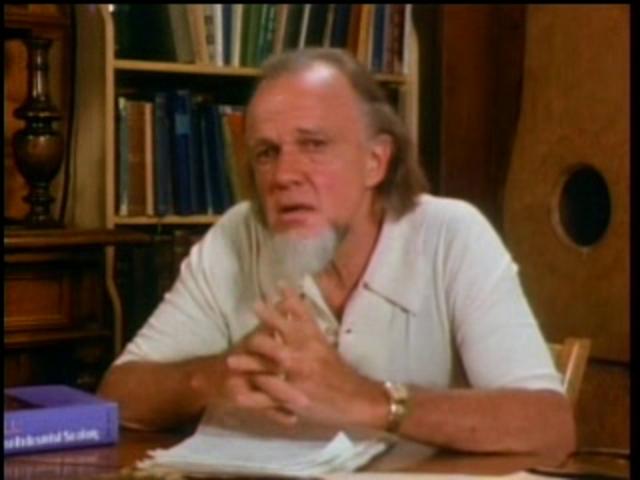
Concerning the Book of Ecclesiastes Francis Schaeffer noted: 

Solomon was searching for a meaning in the midst of the details of life. His struggle was to find the meaning of life. Not just plans in life. Anybody can find plans in life. A child can fill up his time with plans of building tomorrow’s sand castle when today’s has been washed away. There is  a difference between finding plans in life and purpose in life. Humanism since the Renaissance and onward has never found it and it has never found it. Modern man has not found it and it has always got worse and darker in a very real way.

Ecclesiastes is the only pessimistic book in the Bible and that is because of the place where Solomon limits himself. He limits himself to the question of human life, life under the sun between birth and death and the answers this would give.


Ecclesiastes 2:4-11

4 I enlarged my works: I built houses for myself, I planted vineyards for myself; 5 I made gardens and parks for myself and I planted in them all kinds of fruit trees; 6 I made ponds of water for myself from which to irrigate a forest of growing trees. 7 I bought male and female slaves and I had homeborn slaves. Also I possessed flocks and herds larger than all who preceded me in Jerusalem. 8 Also, I collected for myself silver and gold and the treasure of kings and provinces. I provided for myself MALE AND  FEMALE SINGERS AND THE PLEASURES OF MEN–MANY CONCUBINES.

9 Then I became great and increased more than all who preceded me in Jerusalem. My wisdom also stood by me. 10 All that my eyes desired I did not refuse them. I did not withhold my heart from any pleasure…

If one would flee to alcohol, then surely one may choose sexual pursuits to flee to. Solomon looks in this area too.

Ecclesiastes 7:25-28

25 I directed my mind to know, to investigate and to seek wisdom and an explanation, and to know the evil of folly and the foolishness of madness. 26 And I discovered more bitter than death the woman whose heart is snares and nets, whose hands are chains. One who is pleasing to God will escape from her, but the sinner will be captured by her.

27 “Behold, I have discovered this,” says the Preacher, “adding one thing to another to find an explanation, 28 I have looked for other answers but have found none. I found one man in a thousand that I could respect, but not one woman. (Good News Translation on verse 28)

One can understand both Solomon’s expertness in this field and his bitterness.

I Kings 11:1-3 (New American Standard Bible) 

11 Now King Solomon loved many foreign women along with the daughter of Pharaoh: Moabite, Ammonite, Edomite, Sidonian, and Hittite women, 2 from the nations concerning which the Lord had said to the sons of Israel, “You shall not associate with them, nor shall they associate with you, for they will surely turn your heart away after their gods.” Solomon held fast to these in love. 3 He had seven hundred wives, princesses, and three hundred concubines, and his wives turned his heart away.

An expert but also the reason for his bitterness. Certainly there have been many men over the centuries who have daydreamed of Solomon’s wealth in this area [of women], but at the end it was sorry, not only sorry but nothing and less than nothing. The simple fact is that one can not know woman in the real sense by pursuing 1000 women. It is not possible. Woman is not found this way. All that is left in this setting if one were to pursue the meaning of life in this direction is this most bitter word found in Ecclesiastes 7:28, “I have looked for other answers but have found none. I FOUND ONE MAN IN A THOUSAND THAT I COULD RESPECT, BUT NOT ONE WOMAN.” (Good News Translation on verse 28) He was searching in the wrong way. He was searching for the answer to life in the limited circle of that which is beautiful in itself but not an answer finally in sexual life. More than that he finally tried to find it in variety and HE DIDN’T EVEN TOUCH ONE WOMAN AT THE END.

How Picasso who called all women goddesses or doormats drove his lovers to despair and even suicide with his cruelty and betrayal

By ANNABEL VENNING FOR MAILONLINE
UPDATED: 06:17 EST, 7 March 2012

Read more: http://www.dailymail.co.uk/femail/article-2111329/How-Picasso-called-women-goddesses-doormats-drove-lovers-despair-suicide-cruelty-betrayal.html#ixzz42LQPHDkL
Follow us: @MailOnline on Twitter | DailyMail on Facebook

Even in his 70s, Pablo Picasso’s sexual appetite was irrepressible, though his seduction technique was unusual to say the least. If a pretty young girl caught his eye, he would present her with a gold figurine of a little man with a huge phallus.

It was a sign he wanted to sleep with her. And he would give these gifts right under the nose of his second wife, Jacqueline. She would immediately ban the woman from their home, but her furious jealousy did little to deter the artist.

Fidelity was simply not in his nature. He had scores, perhaps hundreds, of lovers. The extraordinary energy he devoted to his paintings and sculptures — he created some 25,000 original works, more than any other artist in history — was matched only by the dedication with which he pursued women.

Passion: Picasso with lover Dora who once told him: 'As an artist you may be extraordinary, but morally speaking you are worthless.'

Passion: Picasso with lover Dora who once told him: ‘As an artist you may be extraordinary, but morally speaking you are worthless.’

A new exhibition at Tate Britain of the work of Pablo Picasso, perhaps the world’s greatest modern artist — co-founder of the Cubist movement, painter, sculptor and ceramicist — reveals the impact these women, particularly his eight long-term lovers, had upon his work, and the price they paid for having been Picasso’s muse.

Two were driven to mental breakdowns and two committed suicide.

Picasso was a man of many contradictions: often kindly and sensitive, he could also be selfish, tyrannical and domineering.

To women in particular he had an almost schizophrenic attitude. As one of his biographers, Patrick O’Brian, observed: ‘Picasso’s feeling for women oscillated between extreme tenderness on the one hand and violent hatred on the other, the mid-point being dislike — if not contempt.’


And yet he was obsessed by women and could not bear to be without a female companion, ideally several.

In fact, his main requirements of a mistress were that she should be both submissive and shorter than him — a somewhat stringent stipulation given that Picasso was a mere 5ft 4in.

He resented his dependence on women, however, and so tried to overcome it by dominating them, often to the point of cruelty. He famously informed one of his mistresses: ‘For me, there are only two kinds of women — goddesses and doormats.’

It was a Jekyll-and-Hyde attitude that may have been shaped by his early years.

Pablo Picasso was born in 1881 in Malaga, Spain. His father, Don José Ruiz, an artist and art teacher, would go to the brothel on a Sunday after Mass. The young Pablo followed his father’s example, losing his virginity at the age of 13 or 14 in one such establishment.

Pablo Picasso pictured with his second wife Jacqueline Picasso. Picasso was a man of many contradictions: often kindly and sensitive, he could also be selfish, tyrannical and domineering

Pablo Picasso pictured with his second wife Jacqueline Picasso. Picasso was a man of many contradictions: often kindly and sensitive, he could also be selfish, tyrannical and domineering

The idea that women existed largely for his convenience and pleasure permeated not just his life but his work.

Les Demoiselles d’Avignon, his famous paintings of five naked prostitutes, one squatting in a pornographic manner, is often cited as evidence of his contempt for the opposite sex. Yet he adored his mother, eventually taking her maiden name, Picasso, instead of his father’s surname, Ruiz.

The family were short of money for much of Picasso’s childhood, and this poverty etched itself on Picasso’s heart.

In later life, he was generous to a fault, but he hated to be preyed upon by those keen to exploit his growing fortune.

His artistic talent was obvious from an early age. After art school in Madrid, he left Spain for Paris in 1900, aged 19, with two fellow Spanish painters. One of them fell in love with a girl named Germaine, but, being impotent, was unable to consummate his love.

‘The idea that women existed largely for his convenience and pleasure permeated not just his life but his work’

Picasso, it seems, stepped into the breach and slept with Germaine himself, only for his heartbroken friend to shoot himself.

The tragedy precipitated Picasso’s Blue Period as he poured his grief for his friend into a series of melancholy canvases.

For a time, Picasso moved between Paris, Madrid and Barcelona, where he became obsessed with a striptease artist, drawing a series of delicate, explicit nudes of her that were never displayed.

By 1904, he had settled permanently in Paris, taking a studio in a rundown building on the Seine. It was here that he met Fernande Olivier, an artists’ model who had striking red hair, almond eyes and a voluptuous figure.

Picasso was entranced by this beautiful, liberated woman. Hitherto he had met only pious Spanish ladies or prostitutes. Fernande, meanwhile, was magnetised by his dark, compelling eyes and incredible vitality, which made up for his short stature and far-from-handsome features. She moved into his squalid little studio.

This signalled the end of his Blue Period and the start of his Rose Period as he painted her sensuous pink body on canvas after canvas.

Fernande was gloriously lazy, so Picasso was forced to do all the housework, a contrast with his later relationships in which his mistresses tended to his domestic needs. Yet he was content. Years later, he pointed to the dingy building saying: ‘That is the only place where I was ever happy.’

In 1909, Picasso left this shabby contentment for a smarter studio. He now had patrons — wealthy American art collectors Gertrude and Leo Stein — and his work was being exhibited. But Fernande was becoming irritated by his intense possessiveness. In 1912, she left him for an Italian painter.

Picasso retaliated by taking up with one of her friends, Marcelle Humbert, a frail, slender young woman whom he called Eva. Their love affair was intense, but Picasso’s passion did not preclude dalliances with other women.

Picasso and Jacqueline. To women in particular he had an almost schizophrenic attitude

Picasso and Jacqueline. To women in particular he had an almost schizophrenic attitude

When Eva contracted tuberculosis in 1915, he cared for her devotedly, but between visits to her bedside he was secretly sleeping with a young woman named Gaby, depicting her in a series of intimate paintings and sketches.

After Eva’s death in 1916, he attempted to console himself with a series of lovers, but his unhappiness made him impossible to live with.

Eventually, he was shaken out of his misery by the poet Jean Cocteau, who persuaded Picasso to paint the scenery for a ballet. So Picasso left war-torn France for Rome, where the Ballets Russes was touring.

He soon fell in love with one of the ballerinas, a Russian girl named Olga Koklova. Inflamed by her lithe body and her aloofness — she refused to succumb to his advances — Picasso was determined to possess her. She eventually weakened and became his mistress, and in 1918, his wife.

They set up home in Paris and the marriage was happy at first, despite their differences. Picasso was Bohemian, unconventional and indifferent to social status. Olga was bourgeois, a social climber and pathologically jealous.

She bore him a son, Paulo, whom Picasso adored. The birth provided a catalyst for a series of tender paintings — called Maternité — of nursing babies.

But domestic bliss was short-lived. Picasso was now wealthy enough to employ servants, and Olga found she had nothing to do.

Bored, unfulfilled and bitter at the loss of her career, she had, said one of Picasso’s friends, ‘only one aim left in life — to make her husband’s existence unbearable — and she even gave up her social activities to devote herself entirely to this exhilarating task’. A more likely explanation was that her husband’s serial infidelities had driven her to the verge of a nervous breakdown.

A woman looks at an artwork entitled The Man with the Hands in His Pockets, by Picasso in an exhibition at the Picasso Museum in Barcelona

A woman looks at an artwork entitled The Man with the Hands in His Pockets, by Picasso in an exhibition at the Picasso Museum in Barcelona

Picasso’s paintings soon began to be filled with grotesque, distorted-looking women.

Baigneuse Assise Au Bord De La Mer depicts a monstrous female figure seated like a preying mantis with huge toothy jaws.

He soon found a means of escape from Olga’s clutches. In 1927, he met a beautiful blonde girl, Marie-Thérèse Walter, on a Parisian street.

Within a week they had become lovers, although at just 17 — he was then 46 — she was under the age of consent.

Apart from his second wife, she was the most enduring love of his life, perhaps the only woman who made him truly happy.

Intelligent but not intellectual, she was submissive and tolerant. She put up with his need for other women because she knew that he loved her best.

In 1928, he took his family on holiday to the fashionable seaside resort of Dinard and arranged for Marie-Thérèse to attend a summer camp for girls nearby. Every morning, leaving his wife and son, he and his young lover would entertain each other in a nearby beach hut.

Years later, Marie-Thérèse described his lovemaking as at times ‘intimidating and terrible’. But Picasso’s paintings of her, while highly sensual, are suffused with a tenderness absent from his paintings of other women.

Unable to bear her husband’s infidelities any more, Olga took their son and left the artist to live in the South of France.

In 1927 Picasso met Marie-Thérèse Walter, a 17 year old girl with whom he sought solace from his wife Olga, and went on to have a child

In 1927 Picasso met Marie-Thérèse Walter, a 17 year old girl with whom he sought solace from his wife Olga, and went on to have a child

In 1935, Picasso fathered a daughter with Marie-Thérèse, named Maya. He was overjoyed, yet his happiness with his lover did not deter him from plunging into another affair, with a half-Yugoslavian, half-French photographer, Dora Maar. Intellectual, gifted and beautiful, at 29 she was nearly half his age.

For a while, he managed to keep his two young mistresses apart. Then one day they met by accident in his studio. He later described the ensuing scene.

‘Marie-Thérèse turned to me and said: “Make up your mind. Which one of us goes?” I was satisfied with things as they were. I told them they’d have to fight it out for  themselves. So they began to wrestle. It’s one of my choicest memories.’

He immortalised the moment in a painting, Birds In A Cage, in which a black dove (Dora) fights with a beautiful white dove (Marie-Thérèse). The black dove won. Dora moved in with Picasso and he installed Marie-Thérèse and their daughter Maya in a nearby flat.

Dora Maar was an intellectual equal and collaborator — she photographed his famous painting of the Spanish Civil War, Guernica — but one woman was never enough. Only a harem would have satisfied Picasso.

In 1943, with Paris under Nazi occupation, he saw two pretty young girls in a café, and invited them to come to his studio. One of the two, 21-year-old Françoise Gilot, was a law student and aspiring painter. He wooed her for months before she finally surrendered her virginity to him.

When Dora heard about this new affair, she was shattered. Ignoring her distress, Picasso packed her off to a nearby apartment, where she would wait by the telephone for the ‘master’ to summon her round to his studio.

Perhaps unsurprisingly, in 1945 she suffered a total mental  collapse. Picasso sent her to a nursing home to recover and Françoise moved in with him. Dora Maar never took another lover, famously pronouncing: ‘After Picasso, God.’ The artist now turned his attention — for a time at least — fully on his young lover Françoise.

They spent much of their time in the Mediterranean resort of  Antibes, but their happiness  was marred by the frequent appearances of his rejected wife, Olga, who had settled nearby.

By now mentally unstable, and apparently unable to accept Picasso’s adultery, she would burst into his home and attack Françoise, pinching and scratching her.

But such dramatic interventions must by then have become rather run of the mill for Picasso, and were certainly not enough to dissuade him from continuing his new passion.

Françoise bore him two children, a son, Claude, and a daughter, Paloma. Picasso was delighted, but Françoise soon became resentful of the domestic drudgery that living together with children entailed.

Picasso rigorously adhered to a doctor’s advice to always have ‘plenty of sex and red wine’

Picasso made her get up at dawn to light the stoves in his studios.

She hated the philandering he still refused to give up, and sunk into a bitter gloom, which so depressed Picasso that he contemplated suicide.

Salvation — for him at least — came, once again, in the form of another young mistress. Geneviève Laporte, a poet whom he had first met when she was a schoolgirl in war-time Paris, became his lover in 1951.

He was now 70, she 24. Since he was by now an international celebrity, he had to keep the affair secret to avoid scandal, yet it all came to nothing after she left him in 1953 over some petty misunderstanding.

A heartbroken Picasso hung around nightclubs on the Cote d’Azur hoping to find her. That same year, Françoise finally left him for a Greek lover.

Wretched with rejection, Picasso buried himself in his work. One of his favourite models was Jacqueline Roque, an exotic-looking 27-year-old.

Jacqueline Roque worshipped Picasso when she first met him as a 27-year-old woman - but he was at first indifferent. He went on to marry her in 1954 and the two were together for 20 years

Jacqueline Roque worshipped Picasso when she first met him as a 27-year-old woman – but he was at first indifferent. He went on to marry her in 1954 and the two were together for 20 years

She called him her ‘god’, kissed his hands and worshipped him devotedly. At first he was indifferent, but they soon became lovers. In 1961, he married her — first wife Olga had died of cancer in 1954 — though, his sex drive undiminished, he continued to take other lovers.

During his 20 years with Jacqueline, he painted more than 400 pictures of her. It was a period of intense creativity — but at the expense, some thought, of his happiness.

Towards the end of his life he became almost a hermit, which his friends blamed on the possessive Jacqueline, who barred his children and grandchildren from the house.

Throughout his life, Picasso had rigorously adhered to a doctor’s advice to always have ‘plenty of sex and red wine’.

But in 1966, aged 85, he developed prostate problems, which was devastating for one so priapic.

He died aged 92 in April 1973 with Jacqueline at his side. A statue of Marie Thérèse, perhaps his greatest love, was placed over his grave. Four years later, she hanged herself, unable to bear the world without him. Jacqueline turned to drink and in 1986, bereft without her ‘god’, she shot herself.

For all his adoration of women and his inability to live without them, Picasso had brought misery to those who loved him.

It is hard to disagree with Dora Maar, who once told him: ‘As an artist you may be extraordinary, but morally speaking you are worthless.’

■ Picasso and Modern British Art is at Tate Britain until July


__

INEZ: We’re meeting Paul and Carol at the museum for the private showing.-

GIL PENDER: OK. Yeah. Right.

INEZ: You know, Paul happens to be an expert in Monet,so you’ll find it enlightening, I think.Yeah.

GIL PENDER: OK.Let’s get some culture.

PAUL: The juxtaposition of color is amazing.This man was the real father of abstract expressionism.I take that back. Maybe Turner.I mean, I love Turner,but, I just find this…overwhelming.If I’m not mistaken, it took him 2 years to complete this.He worked out of Giverny,where he was frequently.

GIL PENDER: ..I heard that Monet, one of thethings that he used to try to…

INEZ: Shh! I’m trying to hear Paul say it.

PAUL: Well, he was frequently visited by Caillebotte,an artist who I personally feel was underrated.Ah. Now.Here’s a superb Picasso.If I’m not mistaken, he painted this marvelous portrait of his French mistress Madeleine Brissou in the ’20s.

GIL PENDER: Paul, I’m gonna have to differ with you on this one.-

INEZ: Really.- Gil, just pay attention.You might learn something.

GIL PENDER: OK, well, if I’m not mistaken,this was a failed attempt to capture a young French girl named Adriana,from Bordeaux, if my art history serves me,who came to Paris to study costume design for the theater.I’m pretty sure she had an affairwith Modigliani, then Braque,which is how Pablo met her. Picasso.Of course, what you don’t getfrom this portrait is the subtlety,and her beauty. She was just a knock-out.

INEZ: What have you been smoking?

GIL PENDER: I’d hardly call this picture marvelous,it’s more of apetit-bourgeois statement on how Pablo sees her. Saw her.He’s distracted by the fact that she was a absolute volcano in the sack.

This series deals with the Book of Ecclesiastes and Woody Allen films.  The first post  dealt with MAGIC IN THE MOONLIGHT and it dealt with the fact that in the Book of Ecclesiastes Solomon does contend like Hobbes  and Stanley that life is “nasty, brutish and short” and as a result has no meaning UNDER THE SUN.

The movie MIDNIGHT IN PARIS offers many of the same themes we see in Ecclesiastes. The second post looked at the question: WAS THERE EVER A GOLDEN AGE AND DID THE MOST TALENTED UNIVERSAL MEN OF THAT TIME FIND TRUE SATISFACTION DURING IT?

In the third post in this series we discover in Ecclesiastes that man UNDER THE SUN finds himself caught in the never ending cycle of birth and death. The SURREALISTS make a leap into the area of nonreason in order to get out of this cycle and that is why the scene in MIDNIGHT IN PARIS with Salvador Dali, Man Ray, and Luis Bunuel works so well!!!! These surrealists look to the area of their dreams to find a meaning for their lives and their break with reality is  only because they know that they can’t find a rational meaning in life without God in the picture.

The fourth post looks at the solution of WINE, WOMEN AND SONG and the fifth and sixth posts look at the solution T.S.Eliot found in the Christian Faith and how he left his fragmented message of pessimism behind. In the seventh post the SURREALISTS say that time and chance is all we have but how can that explain love or art and the hunger for God? The eighth  post looks at the subject of DEATH both in Ecclesiastes and MIDNIGHT IN PARIS. In the ninth post we look at the nihilistic worldview of Woody Allen and why he keeps putting suicides into his films.

In the tenth post I show how Woody Allen pokes fun at the brilliant thinkers of this world and how King Solomon did the same thing 3000 years ago. In the eleventh post I point out how many of Woody Allen’s liberal political views come a lack of understanding of the sinful nature of man and where it originated. In the twelfth post I look at the mannishness of man and vacuum in his heart that can only be satisfied by a relationship with God.

In the thirteenth post we look at the life of Ernest Hemingway as pictured in MIDNIGHT AND PARIS and relate it to the change of outlook he had on life as the years passed. In the fourteenth post we look at Hemingway’s idea of Paris being a movable  feast. The fifteenth and sixteenth posts both compare Hemingway’s statement, “Happiness in intelligent people is the rarest thing I know…”  with Ecclesiastes 2:18 “For in much wisdom is much vexation, and he who increases knowledge increases sorrow.” The seventeenth post looks at these words Woody Allen put into Hemingway’s mouth,  “We fear death because we feel that we haven’t loved well enough or loved at all.”

In MIDNIGHT IN PARIS Hemingway and Gil Pender talk about their literary idol Mark Twain and the eighteenth post is summed up nicely by Kris Hemphill‘swords, “Both Twain and [King Solomon in the Book of Ecclesiastes] voice questions our souls long to have answered: Where does one find enduring meaning, life purpose, and sustainable joy, and why do so few seem to find it? The nineteenth post looks at the tension felt both in the life of Gil Pender (written by Woody Allen) in the movie MIDNIGHT IN PARIS and in Mark Twain’s life and that is when an atheist says he wants to scoff at the idea THAT WE WERE PUT HERE FOR A PURPOSE but he must stay face the reality of  Ecclesiastes 3:11 that says “God has planted eternity in the heart of men…” and  THAT CHANGES EVERYTHING! Therefore, the secular view that there is no such thing as love or purpose looks implausible. The twentieth post examines how Mark Twain discovered just like King Solomon in the Book of Ecclesiastes that there is no explanation  for the suffering and injustice that occurs in life UNDER THE SUN. Solomon actually brought God back into the picture in the last chapter and he looked  ABOVE THE SUN for the books to be balanced and for the tears to be wiped away.

The twenty-first post looks at the words of King Solomon, Woody Allen and Mark Twain that without God in the picture our lives UNDER THE SUN will accomplish nothing that lasts. The twenty-second post looks at King Solomon’s experiment 3000 years that proved that luxuries can’t bring satisfaction to one’s life but we have seen this proven over and over through the ages. Mark Twain lampooned the rich in his book “The Gilded Age” and he discussed  get rich quick fever, but Sam Clemens loved money and the comfort and luxuries it could buy. Likewise Scott Fitzgerald  was very successful in the 1920’s after his publication of THE GREAT GATSBY and lived a lavish lifestyle until his death in 1940 as a result of alcoholism.

In the twenty-third post we look at Mark Twain’s statement that people should either commit suicide or stay drunk if they are “demonstrably wise” and want to “keep their reasoning faculties.” We actually see this play out in the film MIDNIGHT IN PARIS with the character Zelda Fitzgerald. In the twenty-fourth, twenty-fifth and twenty-sixth posts I look at Mark Twain and the issue of racism. In MIDNIGHT IN PARIS we see the difference between the attitudes concerning race in 1925 Paris and the rest of the world.

The twenty-seventh and twenty-eighth posts are summing up Mark Twain. In the 29th post we ask did MIDNIGHT IN PARIS accurately portray Hemingway’s personality and outlook on life? and in the 30th post the life and views of Hemingway are summed up.

In the 31st post we will observe that just like Solomon Picasso slept with many women. Solomon actually slept with  over 1000 women ( Eccl 2:8, I Kings 11:3), and both men ended their lives bitter against all women.

Related posts:

The Characters referenced in Woody Allen’s “Midnight in Paris” (Part 4 Ernest Hemingway)

June 16, 2011 – 9:08 am
By Everette Hatcher III | Posted in Current Events | Edit | Comments (0)

The Characters referenced in Woody Allen’s “Midnight in Paris” (Part 3 Scott and Zelda Fitzgerald)

June 16, 2011 – 3:46 am
By Everette Hatcher III | Posted in Current Events | Edit | Comments (0)

The Characters referenced in Woody Allen’s “Midnight in Paris” (Part 2 Cole Porter)

June 15, 2011 – 7:40 am
By Everette Hatcher III | Posted in Current Events | Edit | Comments (0)

The Characters referenced in Woody Allen’s “Midnight in Paris” (Part 1 William Faulkner)

June 13, 2011 – 3:19 pm
By Everette Hatcher III | Posted in Current Events | Edit | Comments (0)

MUSIC MONDAY Cole Porter “Let’s Do it, Let’s Fall in Love” in the movie MIDNIGHT IN PARIS

_____________

__

By Everette Hatcher III | Comments (0)

MUSIC MONDAY “The Black Keys”

June 6, 2016 – 7:16 am

________________

The Black Keys – Lonely Boy [Official Music Video]

The Black Keys

From Wikipedia, the free encyclopedia
This article is about the band. For piano keys, see piano keys. For Chopin’s Étude commonly known as Black Keys, see Étude Op. 10, No. 5 (Chopin).
The Black Keys
Black-keys-sxsw-montage.jpg

The Black Keys performing at South by Southwest in 2010
Background information
Origin Akron, Ohio, U.S.
Genres Garage rock, blues rock,indie rock
Years active 2001–present
Labels Alive, Fat Possum,Nonesuch, V2, Warner Bros.
Associated acts Blakroc, Drummer, The Rentals, The Arcs, Danger Mouse
Website www.theblackkeys.com
Members Dan Auerbach
Patrick Carney

The Black Keys are an American rock duo formed in Akron, Ohio, in 2001. The group consists of Dan Auerbach (guitar, vocals) and Patrick Carney (drums). The duo began as anindependent act, recording music in basements and self-producing their records, before they eventually emerged as one of the most popular garage rock artists during a second wave of the genre’s revival in the 2010s. The band’s raw blues rock sound draws heavily from Auerbach’s blues influences, including Junior Kimbrough, Howlin’ Wolf, and Robert Johnson.

Friends since childhood, Auerbach and Carney founded the group after dropping out of college. After signing with indie label Alive, they released their debut album, The Big Come Up(2002), which earned them a new deal with Fat Possum Records. Over the next decade, the Black Keys built an underground fanbase through extensive touring of small clubs, frequent album releases and music festival appearances, and substantial licensing of their songs. Their third album, Rubber Factory (2004), received critical acclaim and boosted the band’s profile, eventually leading to a record deal with major label Nonesuch Records in 2006. After self-producing and recording their first four records in makeshift studios, the duo completed Attack & Release (2008) in a professional studio and hired producer Danger Mouse, a frequent collaborator with the band.

The group’s commercial breakthrough came in 2010 with Brothers, which along with its popular single “Tighten Up“, won three Grammy Awards. Their 2011 follow-up El Camino received strong reviews and peaked at number two on the Billboard 200 chart, leading to the first arena concert tour of the band’s career, the El Camino Tour. The album and its hit single “Lonely Boy” won three Grammy Awards. In 2014, they released their eighth album, Turn Blue, their first number-one record in the US, Canada, and Australia.

The Black Keys – Little Black Submarines [Official Music Video]

Contents

 [hide] 

  • 1Career
    • 1.1Early history
    • 1.2Formation, The Big Come Up, and Thickfreakness (2001–2003)
    • 1.3Rubber Factory, Magic Potion, and other releases (2004–2007)
    • 1.4Attack & Release and side projects (2007–2009)
    • 1.5Brothers (2010–2011)
    • 1.6El Camino (2011–2013)
    • 1.7Turn Blue (2013–present)
  • 2Members
  • 3Discography
  • 4Awards and nominations
  • 5References
  • 6External links

The Black Keys- Howlin’ For You (With Lyrics)

Career[edit]

Early history[edit]

Guitarist/vocalist Dan Auerbach and drummer Patrick Carney first met when they were eight or nine years old while living in the same neighborhood of Akron, Ohio.[1] Auerbach and Carney both come from musical backgrounds. Auerbach is the cousin of guitarist Robert Quine, a “veteran of New York’s avant-rock scene.”[2] Carney, on the other hand, is the nephew of saxophonist Ralph Carney, who performed on several Tom Waits albums.[2] While attendingFirestone High School, they became friends,[1] though they were part of different crowds[3]—Auerbach was captain of the high school soccer team, while Carney was a social outcast.[4] Encouraged by their brothers, the duo beganjamming together in 1996, as Auerbach was learning guitar at the time and Carney owned a four-track recorder and a drum set.[5][6] After graduating, both briefly attended the University of Akron before dropping out.[3][7]

Formation, The Big Come Up, and Thickfreakness (2001–2003)[edit]

Auerbach attempted to make a living from performing at small bars in town, but realized he would not be able to book shows in other cities without a demo. To record one, he asked for help from Carney, who agreed to provide recording equipment and allow his basement to be used if Auerbach recruited the other musicians. However, none of Auerbach’s backing band showed up on the recording date.[8] Instead, Carney and Auerbach jammed, eventually leading to the duo forming a band in mid-2001.[8][9] Together, they recorded a six-song demo consisting of “old blues rip-offs and words made up on the spot”.[8] After sending the demo to a dozen record labels, they received and accepted an offer in 2002 from a small indie label in Los Angeles called Alive,[5][10] as it was “the only label that would sign [them] without having to see [them] first”.[11]

According to an interview on NPR‘s Fresh Air, the group’s name “the Black Keys” came from a schizophrenic artist named Alfred McMoore that the pair knew; he would leave incoherent messages on their answering machines referring to their fathers as “black keys” such as “D flat” when he was upset with them.[12][13] On March 20, 2002, the duo played their first live show at Cleveland’s Beachland Ballroom and Tavern to an audience of approximately eight people.[10] The band’s debut album, The Big Come Up, was recorded entirely in Carney’s basement on an 8-track tape recorder in lo-fi and was released in May 2002,[14] three months after they signed to Alive.[10] The album, a mix of eight original tracks and five cover songs, forged a raw blues rock sound for the group; the covers included tracks originally by blues musicians Muddy Waters, Junior Kimbrough, and R. L. Burnside. Two tracks, covers of the traditional blues standard “Leavin’ Trunk” and The Beatles‘ song “She Said, She Said“, were released as a single on Isota Records. The track “I’ll Be Your Man” would later be used as the theme song for the HBO series Hung. In order to help fund a tour, Auerbach and Carney took jobs mowing lawns for a landlord.[15] Although The Big Come Up sold poorly, it gained a cult following and attracted attention from critics, eventually landing the group a record deal with Fat Possum Records.[16]

Within days of signing to Fat Possum, The Black Keys completed their second album, Thickfreakness.[6] It was recorded in Carney’s basement in a single 14-hour session in December 2002, an approach necessitated because the group spent its small advance payment from Fat Possum on rent.[9][11][17] The group had recorded sessions with producer Jeff Saltzman in San Francisco but ultimately aborted them, as they were unhappy that the results sounded too much like “modern-rock radio”.[9] In March 2003, the group played at one of its first music festivals, South by Southwest in Austin, Texas, after driving for nearly 24 hours from Akron.[18] Much as they did for the festival, Carney and Auerbach spent their early tour days driving themselves from show to show in a 1994 Chrysler van they nicknamed the “Gray Ghost”.[19]

Thickfreakness was released on April 8, 2003 and received positive reviews from critics. The record spawned three singles: “Set You Free“, “Hard Row“, and a cover of Richard Berry‘s “Have Love, Will Travel“. The other cover from the album was Junior Kimbrough’s “Everywhere I Go”. Time later named Thickfreakness the third-best album of 2003.[20] That year, the duo received a lucrative offer of ₤200,000 to license one of their songs for use in an English mayonnaise advertisement. At the suggestion of their manager, they rejected the offer for fear of being perceived as “sell-outs” and alienating their fan base.[12][21][22] The band toured extensively throughout 2003, playing its first dates outside of the United States and opening concerts for Sleater-Kinney, Beck, and Dashboard Confessional.[23][24] However, exhaustion had set in by the end of the year, forcing the band to cancel European tour dates.[23] In August, the group made its national television debut on Late Night with Conan O’Brien and performed at the Reading and Leeds Festivals.[24][25] As fellow garage band The White Stripes grew in popularity, The Black Keys drew comparisons to them—sometimes as a derivative act—since both groups had two-piece lineups, Midwest origins, bluesy sounds, and names with colors.[4][26] In September, The Black Keys released a split-EP with The Six Parts Seven titled The Six Parts Seven/The Black Keys EP, featuring one song by The Six Parts Seven and three songs by The Black Keys.

Rubber Factory, Magic Potion, and other releases (2004–2007)[edit]

The Black Keys released an EP titled The Moan on January 19, 2004, featuring “Have Love Will Travel”, an alternate version of “Heavy Soul”, and two covers. The group found itself struggling to sell records or gain airplay of their songs on the radio, and they were not making much money either; they had to absorb a $3,000 loss from a European tour.[4] Frustrated with their lack of success, the band relented and decided to begin licensing their music, beginning with the song “Set You Free” in a Nissan automobile commercial.[5] It was the first of an eventual 300-plus song placements in television shows, films, TV commercials, and video games.[22] The group played several high-profile musical festivals in the first half of the 2004, including Coachella[27] and Bonnaroo.[28]

Auerbach with the Black Keys in December 2006

For their third album, Rubber Factory, the band was forced to find a new recording location, as the building that housed their basement studio was sold by its landlord. They created a makeshift studio in a former tire-manufacturing factory in Akron,[23] and recorded from January to May 2004.[29] The album was released on September 7, 2004 and became the group’s first record to chart on the US Billboard 200, reaching number 143.[30] Rubber Factory received critical acclaim and was named one of the year’s best albums by Entertainment Weekly and The New Yorker.[31] Two singles were released, “10 A.M. Automatic” and the double A-side “‘Till I Get My Way/Girl Is on My Mind“. Comedian David Cross directed the music video for “10 A.M. Automatic”.[32] The duo promoted the album with tours in North America, Europe, and Australia.[33] In 2005, the band released their first live video album, Live, recorded at The Metro Theatre in Sydney, Australia on March 18, 2005. In July, they played at the Lollapalooza music festival.[34]

On May 2, 2006, the Black Keys released Chulahoma: The Songs of Junior Kimbrough, a 6-track album of cover versions of songs by Junior Kimbrough. It was the band’s final release with the independent label Fat Possum. Having fulfilled their two-album contract, the band signed with the major label Nonesuch Records.[35] Later in May, the group released its second live album, Live in Austin, TX—also known as Thickfreakness in Austin—which was recorded in 2003. The group’s music appeared in several television commercials over the course of the year; among the companies to license its music were Sony, Nissan, and Victoria’s Secret, which used “The Desperate Man” in a lingerie commercial featuring Heidi Klum.[36] Despite having the resources of a major record label available to them, the group elected to return to recording in Carney’s basement for its fourth studio album, Magic Potion.[35] Released on September 12, 2006, the album was the group’s first release on Nonesuch,[37] as well as its first album to comprise all original songs. Three singles were issued: “You’re the One“, “Your Touch“, and “Just Got To Be“. In support of Magic Potion, the band embarked on its largest tour to that point, performing in large theaters and 1,000-seat venues.[38] The Black Keys recorded covers of “The Wicked Messenger” for the soundtrack of the film I’m Not There and “If You Ever Slip” for The Hottest State soundtrack.

Attack & Release and side projects (2007–2009)[edit]

Auerbach performing with The Black Keys in East London in March 2008

In 2007, producer Danger Mouse began working on a record for Ike Turner and asked The Black Keys to write a few songs for the project. The collaboration ultimately fell through, and Turner later died in December 2007. The duo decided to turn the material they had written into their fifth studio album, Attack & Release, and they asked Danger Mouse to produce the record.[39] The sessions saw the band transitioning away from their “homemade” ethos to record-making; not only was it the first time that the band completed an album in a professional studio,[40] but it was also the first time they hired an outside producer to work on a record.[41] Danger Mouse supplemented the band’s sound with instrumental flourishes and more polished production values.[42]Released on April 1, 2008, Attack & Release debuted at number 14 on the Billboard 200.[16] Four singles were released: “Strange Times“, “I Got Mine“, “Oceans and Streams”, and “Same Old Thing”. “Strange Times” was featured in the video games Grand Theft Auto IV and NASCAR 09. “I Got Mine” is used as the theme song for Canadian police drama TV series The Bridge. The song was ranked number 23 on Rolling Stone‘s list of The 100 Best Singles of 2008.[43]

On October 17, 2008, The Black Keys was an opening act for fellow Akron-area band Devo at a special benefit concert at the Akron Civic Theatre for presidential candidate Barack Obama.Chrissie Hynde of the Pretenders, also an Akron native and Firestone High School graduate, followed their set.[44] In November, they toured through Europe together with Liam Finn. That month, the group released the concert video Live at the Crystal Ballroom, which was filmed on April 4, 2008 at the group’s show at Crystal Ballroom in Portland, Oregon. The video was produced by Lance Bangs.[45]

The Black Keys performing at The Agora in January 2009

Tensions grew within the band in 2009. Prior to Carney’s divorce from his wife Denise Grollmus, Auerbach found it increasingly difficult to communicate with the drummer due to his antipathy for Grollmus. Auerbach said, “I really hated her from the start and didn’t want anything to do with her.”[4] In February, Auerbach released his debut solo album, Keep It Hid. Carney, who claimed Auerbach did not tell him about the side project, felt betrayed.[21] Carney subsequently formed the indie band Drummer, with whom he played bass guitar.[46] The group released its debut album Feel Good Together on September 29, 2009.

The Black Keys reconciled later in the year. On June 6, 2009, they performed along with The Roots, TV on the Radio, Public Enemy, Antibalas, and other acts at the 2nd Annual Roots Picnic on the Festival Pier in Philadelphia.[47] They also joined the 9th annual Independent Music Awards judging panel to assist independent musicians’ careers.[48][49]

Blakroc, a collaborative album featuring The Black Keys and several hip hop artists, was released in 2009 on Black Friday. The project was supported and brought together by Damon Dash, who is a big fan of the band. The album features rappers Mos Def, Ludacris, RZA, Raekwon, Pharoahe Monch, Q-Tip, NOE, Jim Jones, Nicole Wray, M.O.P., and the late Ol’ Dirty Bastard. The album was recorded in Brooklyn, New York by co-producer, engineer and mixer Joel Hamilton at Studio G. Auerbach said on the official Blakroc site, “Pat and I have been preparing for this record since we were 16.”[50]

Brothers (2010–2011)[edit]

The Black Keys performing in February 2010, three months before the release of their breakthrough albumBrothers

Auerbach and Carney moved to Nashville in 2010, where they established a studio downtown.[51]

The group’s sixth studio album, Brothers, was released on May 18, 2010.[52] Recorded primarily at Muscle Shoals Sound Studio, the album was produced by The Black Keys and Mark Neill,[53]and was mixed by Tchad Blake.[54] The song “Tighten Up“, the only track from the album produced by Danger Mouse, preceded the album as the lead single. The song became their most successful single to that point, spending 10 weeks at number one on the Alternative Songs chart and becoming the group’s first single on the Billboard Hot 100, peaking at number 87.[55] The song also reached gold certification status.[56] The music video for “Tighten Up”, directed by Chris Marrs Piliero,[57] won the 2010 MTV Video Music Award for Breakthrough Video.[58] Brotherssold over 73,000 copies in the US in its first week and peaked at number three on the Billboard 200, their best performance on the chart to that point.[59] In total, the record sold 1.5 million copies worldwide,[60] including 870,000 copies in the US,[61] and it was certified double-platinum in Canada, platinum in the US, and gold in the UK.[56] The Black Keys were among several artist judges at the 9th annual Independent Music Awards to support independent artists’ careers.[62]

The band continued to gain exposure through continued song licensing, so much so that they were Warner Bros. Records‘ most-licensed band of the year.[63] Rolling Stone placed Brothers at number two on its list of the best albums of 2010 and “Everlasting Light” at number 11 on the list of the year’s best songs.[64][65] Spin named The Black Keys the “Artist of the Year” for 2010.[66]On January 8, 2011, the band appeared as the musical guest on American television sketch comedy show Saturday Night Live.[67] At the 53rd Grammy Awards, Brothers and its songs won awards in three of the five categories they were nominated in; the band received honors for Best Alternative Music Album (for Brothers) and Best Rock Performance by a Duo or Group with Vocal (for “Tighten Up”), while Michael Carney, the band’s creative director and Patrick’s brother, won Best Recording Package for designing the album’s artwork.[68][69]

The Black Keys performing in Las Vegas in February 2011

The band’s sudden success proved overwhelming, as they found themselves booking additional promotional commitments and facing demand for additional touring dates.[60] In January 2011, the group canceled concerts in Australia, New Zealand, and Europe, citing exhaustion, thus clearing out most of their touring schedule into April.[70] Patrick Carney said, “We’ve been touring long enough to know when we’re about to hit our breaking point.” The desire to record another album soon after Brothers also led to the decision. Carney said, “We could have waited another year or so, and milked the Brothers album and kept touring, but we like bands, and our favourite bands growing up and even today, are bands that put out a lot of music and every album is different from the last.”[60]

Brothers‘ second single, “Howlin’ for You“, was a successful follow-up, achieving a gold certification in the US.[56] The music video, directed by Chris Marrs Piliero,[71] parodied action movie trailers and starred Tricia Helfer, Diora Baird, Sean Patrick Flanery, Christian Serratos, Corbin Bernsen, Todd Bridges, and Shaun White.[72][73] It was nominated for the 2011 MTV Video Music Award for Best Rock Video.[74] In 2014, the band donated the song rights to PETA for an animal adoption ad campaign.[75]

The Black Keys were nominated for three Billboard Music Awards: Top Alternative Artist, and Top Rock Album and Top Alternative Album for Brothers.[76] The group continued to make appearances at American music festivals throughout the year, playing at Bonnaroo, Kanrocksas, and Outside Lands.

El Camino (2011–2013)[edit]

The group recorded their seventh studio album, El Camino, from March to May 2011.[61] Splitting time between touring and recording, the band spent 41 days at Easy Eye Sound Studio, which was opened in 2010 by Auerbach in the duo’s new hometown of Nashville, Tennessee.[8] For the album, Danger Mouse reprised his role as producer and also contributed as a co-writer on all 11 songs.[61] After struggling to translate the slower songs from Brothers to a live setting, the band decided to write more uptempo tracks for El Camino.[60] The record draws from popular genres from the 1950s–1970s,[77] including rock and roll,[77][78] glam rock,[79] rockabilly,[79] surf rock,[79] and soul.[80] The band cited several retro acts as musical influences on the album, including The Clash, The Cramps, T. Rex, Ramones, The Beatles, Sweet, The Cars, and Johnny Burnette.[8][60][61]

The Black Keys performing atMadison Square Garden in March 2012

“Lonely Boy” was released in October as the album’s lead single, accompanied by a popular one-shot music video of a man dancing and lip-syncing. The song became the group’s best-charting single in several countries, reaching number 64 on the Billboard Hot 100,[55] number 2 on the Australian Singles Chart,[81] and number 33 on the Canadian Hot 100.[82] The song was certified nine-times platinum in Canada, triple platinum in Australia, platinum in New Zealand, and gold in Denmark.[56] The band returned to Saturday Night Live as a musical guest on December 3, 2011.[83] El Camino was released three days later and received wide critical acclaim.[84] In the US, it debuted at number two on the Billboard 200 and sold 206,000 copies in its first week, the highest single-week sales and (to that point) charting position the group had achieved in the country.[85] Many publications, such as Rolling Stone and Time ranked El Camino among the best albums of the year, despite its late release.[86][87] The album was certified double-platinum in Australia, Canada, and New Zealand; platinum in the US, UK, and Ireland; and gold in Belgium, the Netherlands, and France.[56]

The Black Keys during their headline appearance at Coachella in April 2012

In 2012, the group commenced the first headlining arena tour of its career,[88] the El Camino Tour, playing dates in Europe and North America.[89][90]After tickets went on sale, their show at Madison Square Garden sold out in 15 minutes.[91] Just as it did on its previous tour, the group added bassist Gus Seyffert and keyboardist/guitarist John Wood as touring musicians in order to perform songs as close to their studio arrangements as possible.[4][92] The album’s second single, “Gold on the Ceiling“, like its predecessor, went to number one on the Alternative Songs chart[93] and was certified platinum in Australia and Canada.[56] The group headlined several music festivals throughout the year, including Catalpa Music Festival,[94] Coachella,[95] Memphis in May (in 2013),[96] Lollapalooza,[97] and Osheaga.[98] At the 2013 Grammy Awards, El Camino and “Lonely Boy” were nominated in five categories and were winners in three; the album won Best Rock Album, while “Lonely Boy” won Best Rock Performance and Best Rock Song.[99]

Turn Blue (2013–present)[edit]

For their eighth studio album, Turn Blue, the band once again collaborated with Danger Mouse, who co-produced and co-wrote the album. It was recorded primarily at Sunset Sound in Hollywood, California, from July–August 2013, with additional recording at Key Club in Benton Harbor, Michigan, and Nashville’s Easy Eye Sound in early 2014. The album was announced in March 2014 via Mike Tyson‘s Twitteraccount, with a link to a cryptic teaser video on YouTube featuring a hypnotist,[100] and was released on May 13, 2014. The record exhibits psychedelic rock and soul influences and features a more melancholy tone, largely in part due to Auerbach dealing with the divorce from his wife during the album sessions.[101] The first single, “Fever” was released on March 24,[102] while a second single, “Turn Blue“, followed on April 14.[103] The album debuted at number one in the US and Australia, the band’s first record to top the album charts in either country;[104][105] 164,000 copies were sold in the US in its first week.[104] The group embarked on a world tour in May 2014 to support the album, withCage the Elephant, Jake Bugg, and St. Vincent all separately opening for them. In 2015, Turn Blue was nominated for the Grammy Award for Best Rock Album, with “Fever” being nominated for the Grammy Award for Best Rock Song as well as the Grammy Award for Best Rock Performance.[106]

Members[edit]

  • Dan Auerbach – guitar, vocals, bass guitar, keyboards (2001–present)
  • Patrick Carney – drums, percussion (2001–present)
Touring musicians
  • Richard Swift – bass guitar, vocals (2014–present)[107]
  • John Clement Wood – keyboards, vocals, guitar, tambourine (2010–present)
Former touring musicians
  • Nick Movshon – bass guitar (2010)[108]
  • Leon Michels – keyboards, organ, synthesizer, tambourine (2010)[108]
  • Gus Seyffert – bass guitar, vocals (2010–2013)

Categories:

  • Suicide Squeeze Records artists
  • Blues rock groups
  • Brit Award winners
  • American indie rock groups
  • Fat Possum Records artists
  • Grammy Award winners
  • Musical groups from Akron, Ohio
  • Musical groups established in 2001
  • Rock music duos
  • V2 Records artists
  • Nonesuch Records artists
  • American musical duos
  • 2001 establishments in Ohio
  • Alive Naturalsound Records artists

The Black Keys – Tighten Up [Official Music Video]

______________

Related posts:

MUSIC MONDAY The song LITTLE ONE sung by Rebecca St. James in the film SARAH’S CHOICE

May 30, 2016 – 12:39 am

Little One – From the Film, “Sarah’s Choice” Rebecca St James on faith and values – theDove.us Sarah’s Choice Trailer Sarah’s Choice – Behind the Scenes Rebecca St. James on Sarah’s Choice – CBN.com Rebecca St James Interview on Real Videos Sarah’s Choice – The Proposal Sarahs Choice Pregnancy Test Sarahs Choice Crossroad Sarah’s Choice […]

By Everette Hatcher III | Posted in Current Events | Edit | Comments (0)

MUSIC MONDAY Rebecca St James

May 23, 2016 – 12:13 am

Lion – Rebecca St. James I will praise You – Rebecca St James Rebecca St James 1995 TBN – Everything I Do Rebecca St. James & Rachel Scott “Blessed Be Your Name” Rebecca St. James From Wikipedia, the free encyclopedia Rebecca St. James St. James in 2007 Background information Birth name Rebecca Jean Smallbone Also […]

By Everette Hatcher III | Posted in Current Events | Edit | Comments (0)

MUSIC MONDAY “Foster the People” Cubbie Fink married to Rebecca St. James who is one of my favorite Christian singers!!!

May 16, 2016 – 7:13 am

Foster The People – Pumped up Kicks Foster the People From Wikipedia, the free encyclopedia Foster the People Foster the People at the 2011 MuchMusic Video Awards, from left to right: Pontius, Foster, and Fink Background information Origin Los Angeles, California, U.S. Genres Indie pop alternative rock indietronica alternative dance neo-psychedelia[1] Years active 2009–present Labels […]

By Everette Hatcher III | Posted in Current Events | Edit | Comments (0)

MUSIC MONDAY ‘Apple gave me advice’: Coldplay’s Chris Martin turned to 11-year-old daughter for words of wisdom ahead of Superbowl 50 By DAILYMAIL.COM REPORTER PUBLISHED: 00:58 EST, 2 February 2016

May 9, 2016 – 1:12 am

‘Apple gave me advice’: Coldplay’s Chris Martin turned to 11-year-old daughter for words of wisdom ahead of Superbowl 50 By DAILYMAIL.COM REPORTER PUBLISHED: 00:58 EST, 2 February 2016 | UPDATED: 17:20 EST, 2 February 2016 n Facebook They’ve sold 80 million records and been around for 20 years. But Coldplay’s lead singer Chris Martin, 38, […]

By Everette Hatcher III | Posted in Current Events | Edit | Comments (0)

MUSIC MONDAY Chris Martin, Lead Singer of Coldplay: 5 Fast Facts You Need to Know Published 3:44 pm EDT, February 7, 2016

May 2, 2016 – 1:05 am

__________ Chris Martin, Lead Singer of Coldplay: 5 Fast Facts You Need to Know Published 3:44 pm EDT, February 7, 2016 Updated 3:44 pm EDT, February 7, 2016 Comment By Lauren Weigle 17.6k (Getty) Chris Martin has been the front-man of the band Coldplay for about 20 years, though the band changed its name a […]

By Everette Hatcher III | Posted in Current Events | Edit | Comments (0)

MUSIC MONDAY Christian Rock Pioneer Larry Norman’s Songs Part 14

April 25, 2016 – 12:57 am

Christian Rock Pioneer Larry Norman’s Songs Part 14 I posted a lot in the past about my favorite Christian musicians such as Keith Green (I enjoyed reading Green’s monthly publications too), and 2nd Chapter of Acts and others. Today I wanted to talk about one of Larry Norman’s songs. David Rogers introduced me to Larry […]

By Everette Hatcher III | Posted in Current Events | Edit | Comments (0)

MUSIC MONDAY Christian Rock Pioneer Larry Norman’s Songs Part 13

April 18, 2016 – 12:56 am

Christian Rock Pioneer Larry Norman’s Songs Part 13 I posted a lot in the past about my favorite Christian musicians such as Keith Green (I enjoyed reading Green’s monthly publications too), and 2nd Chapter of Acts and others. Today I wanted to talk about one of Larry Norman’s songs. David Rogers introduced me to Larry […]

By Everette Hatcher III | Posted in Current Events | Edit | Comments (0)

MUSIC MONDAY Christian Rock Pioneer Larry Norman’s Songs Part 12

April 11, 2016 – 1:30 am

Christian Rock Pioneer Larry Norman’s Songs Part 12 I posted a lot in the past about my favorite Christian musicians such as Keith Green (I enjoyed reading Green’s monthly publications too), and 2nd Chapter of Acts and others. Today I wanted to talk about one of Larry Norman’s songs. David Rogers introduced me to Larry […]

By Everette Hatcher III | Posted in Current Events | Edit | Comments (0)

MUSIC MONDAY Christian Rock Pioneer Larry Norman’s Songs Part 11

April 4, 2016 – 1:23 am

Christian Rock Pioneer Larry Norman’s Songs Part 11 I posted a lot in the past about my favorite Christian musicians such as Keith Green (I enjoyed reading Green’s monthly publications too), and 2nd Chapter of Acts and others. Today I wanted to talk about one of Larry Norman’s songs. David Rogers introduced me to Larry […]

By Everette Hatcher III | Posted in Current Events | Edit | Comments (0)

MUSIC MONDAY Christian Rock Pioneer Larry Norman’s Songs Part 10 more on Album “Only Visiting This Planet”

March 28, 2016 – 1:22 am

Christian Rock Pioneer Larry Norman’s Songs Part 10 more on Album “Only Visiting This Planet” I posted a lot in the past about my favorite Christian musicians such as Keith Green (I enjoyed reading Green’s monthly publications too), and 2nd Chapter of Acts and others. Today I wanted to talk about one of Larry Norman’s […]

By Everette Hatcher III | Posted in Current Events | Edit | Comments (0)
By Everette Hatcher III | Comments (0)

THE ARTISTS, POETS and PROFESSORS of BLACK MOUNTAIN COLLEGE (the college featured in the film THE LONGEST RIDE) Part 29 Scientist Buckminster Fuller

June 5, 2016 – 10:43 pm

The amazing setting and backstory of The #LongestRide Movie

March 1, 2015 by JENNIFER DONOVAN

20th Century Fox invited our writer, Jennifer Donovan, on an expenses-paid set visit to North Carolina for Nicholas Sparks’ new movie, The Longest Ride, in theaters April 10.

Earlier this week, I wrote about my visit to the set of The Longest Ride movie, focusing on the casting and the characters. In this post, I’m going to look at some of the interesting elements of the plot, which made for a great book, but will also look great on screen.

Nicholas Sparks on the Bull-riding Element

One of the great things about this film, but the partnership that Fox had with the PBR to develop this film was like nothing you’ve ever seen. And it was necessary because people who make movies are good at making movies. And every time you see an animal in a movie, that animal is tame or trained, so they go to their spot, and so you know where to put the camera.

You don’t know where that bull is going, so how do you get Scott on the bull? How do you get the angle right? Well, guess who knows How to do that? The PBR, among other things.  So, then Fox can do things that the PBR can’t with the level of quality of the camera. It’s the most realistic stuff. These are real cowboys. They’re from the PBR.

These are the real bulls from the PBR. I mean, you can look up the bull in the PBR. The thing is ranked number three in the world right now. It’s unbelievable.


Art in post-war North Carolina

In my post at 5 Minutes for Books, On Reading Nicholas Sparks for the First Time, I wrote about talking with one of the other bloggers for whom this was her first experience with a Nicholas Sparks novel. One of the things she noted, and that I liked about this novel as well, was the rich backstory and characterization of Ira and Ruth Levinson. The backdrop of art was interesting to me, not only because my daughter is an artist, but because I always love learning about a different culture or hobby or occupation while I’m reading fiction. Between bull riding and art collecting in post-war North Carolina, I learned a lot while reading The Longest Ride.


So, I have this idea for this story, and Ira and Ruth, and I have in my mind that they’re going to collect art. And I’m sitting there thinking, “How am I going to pull this off? I live in North Carolina, right. There’s a nice Jewish couple in North Carolina. If they’re in New York, maybe you could see it happening, right.”
So, I said to myself, “How can I make this seem believable?” So, my first notion was that they were just going to meet an artist who happened to be vacationing in North Carolina, befriend this person, man or woman, go with him to wherever the art scene was, and that’s how they got started.
So, that was my plan. So, I said, “Okay. So, let’s find a North Carolina artist who might have been around in the ’40s, ’50s. So, I Google like literally “North Carolina artists in the 1940s,” or something.
And boom, up pops Black Mountain College. And it turns out that Black Mountain College was this experimental college, ran for about 24 years in the 1930s to, I think, 1956 or 1957.
And it was the center of the modern art movement for American painters. Everyone from Willem de Kooning was there, to Rauschenberg, to Franz Kline, to Pat Passlof.
I mean, De Kooning’s paintings, they go for $350 million. He’s over here teaching at Black Mountain College. Buckminster Fuller was there. Robert DeNiro’s father, who was a very famous artist, he was a graduate of Black Mountain College.
Came in, they did painting and sculpture, whatever they did. And it was there, and it was a couple of hours away.
So, there I’m writing, I’m looking for an artist, and I find out that this key element that I need to make the art collecting believable, that center was like two hours from where I placed them originally.
I was like, “Wow.” So, I called my agent and I said, “You are not going to believe this. You are not going to believe what I just found.” And so, of course, then I learned all I could about Black Mountain College.

__

My first post in this series was on the composer John Cage and my second post was on Susan Weil and Robert Rauschenberg who were good friend of Cage. The third post in this series was on Jorge Fick. Earlier we noted that  Fick was a student at Black Mountain College and an artist that lived in New York and he lent a suit to the famous poet Dylan Thomas and Thomas died in that suit.

The fourth post in this series is on the artist  Xanti Schawinsky and he had a great influence on John Cage who  later taught at Black Mountain College. Schawinsky taught at Black Mountain College from 1936-1938 and Cage right after World War II. In the fifth post I discuss David Weinrib and his wife Karen Karnes who were good friends with John Cage and they all lived in the same community. In the 6th post I focus on Vera B. William and she attended Black Mountain College where she met her first husband Paul and they later  co-founded the Gate Hill Cooperative Community and Vera served as a teacher for the community from 1953-70. John Cage and several others from Black Mountain College also lived in the Community with them during the 1950’s. In the 7th post I look at the life and work of M.C.Richards who also was part of the Gate Hill Cooperative Community and Black Mountain College.

In the 8th post I look at book the life of   Anni Albers who is  perhaps the best known textile artist of the 20th century and at Paul Klee who was one  of her teachers at Bauhaus. In the 9th post the experience of Bill Treichler in the years of 1947-1949  is examined at Black Mountain College. In 1988, Martha and Bill started The Crooked Lake Review, a local history journal and Bill passed away in 2008 at age 84.

In the 10th post I look at the art of Irwin Kremen who studied at Black Mountain College in 1946-47 and there Kremen spent his time focused on writing and the literature classes given by the poet M. C. Richards. In the 11th post I discuss the fact that Josef Albers led the procession of dozens of Bauhaus faculty and students to Black Mountain.

In the 12th post I feature Wassily Kandinsky (1866-1944) who was featured in the film THE LONGEST RIDE and the film showed Kandinsky teaching at BLACK MOUNTAIN COLLEGE which was not true according to my research. Evidently he was invited but he had to decline because of his busy schedule but many of his associates at BRAUHAUS did teach there. In the 13th post I look at the writings of the communist Charles Perrow. 

Willem de Kooning was such a major figure in the art world and because of that I have dedicated the 14th, 15th and 16th posts in this series on him. Paul McCartney got interested in art through his friendship with Willem because Linda’s father had him as a client. Willem was a  part of New York School of Abstract expressionism or Action painting, others included Jackson Pollock, Elaine de Kooning, Lee Krasner, Franz Kline, Arshile Gorky, Mark Rothko, Hans Hofmann, Adolph Gottlieb, Anne Ryan, Robert Motherwell, Philip Guston, Clyfford Still, and Richard Pousette-Dart.

In the 17th post I look at the founder Ted Dreier and his strength as a fundraiser that make the dream of Black Mountain College possible. In the 18th post I look at the life of the famous San Francisco poet Robert Duncan who was both a student at Black Mountain College in 1933 and a professor in 1956. In the 19th post I look at the composer Heinrich Jalowetz who starting teaching at Black Mountain College in 1938 and he was one of  Arnold Schoenberg‘s seven ‘Dead Friends’ (the others being Berg, Webern, Alexander Zemlinsky, Franz Schreker, Karl Kraus and Adolf Loos). In the 20th post I look at the amazing life of Walter Gropius, educator, architect and founder of the Bauhaus.

In the 21st post I look at the life of the playwright Sylvia Ashby, and in the 22nd post I look at the work of the poet Charles Olson who in 1951, Olson became a visiting professor at Black Mountain College in North Carolina, working and studying here beside artists such as John Cage and Robert Creeley.[2] 

In the 23rd post is about the popular artist James Bishop who attended Black Mountain College towards the end of its existence. In the 24th post I look at the Poet-Writer Martha King. In the 25th post I talk about the life of the architect Claude Stoller and his time at Black Mountain College. In the 26th post I look at Ted Drieir. Jr., who was a student at Black Mountain College and the son of the founder. In the 27th post I look at the work of the artist Dorothea Rockburne and in the 28th post the artist Donald Alter. The 29th post is the scientist Buckmister Fuller.

OVER THE YEARS, MANY WORLD-CLASS DESIGNERS AND EDUCATORS HAVE MADE THEIR MARK ON THE DEPARTMENT EITHER AS LECTURERS OR AS VISITING INSTRUCTORS, INCLUDING FRANK LLOYD WRIGHT, LOUIS KAHN, AND BUCKMINSTER FULLER, PICTURED HERE (CENTER) COLLABORATING WITH UC BERKELEY STUDENTS AND FACULTY ON HIS “FLY’S EYE” PROJECT. (COURTESY OF PROF. EMERITUS CLAUDE STOLLER.)


Allegra Fuller Snyder – Black Mountain: The Start of a Critical Path

Published on Oct 12, 2012

Reviewing 4 Black Mountain College Museum International Conference
Allegra Fuller Snyder (Conference Keynote Speaker)
Black Mountain: The Start of a Critical Path

Allegra Fuller Snyder is Buckmister Fuller’s only living child and is the Founder, first President, and now Board member emeritus of the Buckminster Fuller Institute. She is also Professor Emerita of Dance and Dance Ethnology, UCLA; 1992 American Dance Guild Honoree of the Year; former Chair of the Department of Dance; and founding Coordinator of the World Arts and Cultures Program. She has been on the Dance Faculty at Cal Arts as well as Professor of Performance Studies at New York University, and Honorary Visiting Professor at the University of Surrey, Guildford, England. She began her career as a performer and choreographer and has been concerned with the relation of dance to film since the late 1940s. She has made several prize winning documentary films on dance. She has done dance research around the world, was the recipient of several Fulbright Scholarships. Among many special projects Snyder was a Core Consultant on the PBS series DANCING for WNET/Channel 13. Recently returning to performance, Jennifer Fisher of the LA times said of her in “Spirit Dances 6: Inspired by Isadora,” “She was a haiku and an epic.”

Sponsored by the Green Restaurants of AIR (Asheville Independent Restaurants)

Videography and Post by Michael Folliett
at Image Preservations.com

___________________

Great group of pictures:


The Supine Dome
Buckminster Fuller
Summer 1948
Black Mountain College

Photographs: Beaumont Newhall. Courtesy of the Beaumont and Nancy Newhall Estate, Scheinbaum and Russek Ltd., Santa Fe, New Mexico. © Beaumont and Nancy Newhall Estate.


The Dome Model with Si Sillman (bending), Buckminster Fuller, Elaine de Kooning, Roger Lovelace, and Josef Albers (left);  Albert Lanier laying the strips (center); Unidentified person and Paul Williams connecting the points.
Photographs: Beaumont Newhall. Courtesy of the Beaumont and Nancy Newhall Estate, Scheinbaum and Russek Ltd., Santa Fe, New Mexico. © Beaumont and Nancy Newhall Estate.
 
.
Willie Joseph, Elaine de Kooning, Si Sillman, Buckminster Fuller, and unidentifed woman survey the project (left); a valiant effort to raise the dome (right.Photographs: Beaumont Newhall. Photograph:Photographs: Beaumont Newhall. Courtesy of the Beaumont and Nancy Newhall Estate, Scheinbaum and Russek Ltd., Santa Fe, New Mexico. © Beaumont and Nancy Newhall Estate.


Buckminster Fuller’s project for the 1948 summer was construction of his first dome, a 31-great-circle structure with a forty-eight foot diameter, a height of twenty-three feet, and an area of fifteen hundred square feet. It was to weigh less than 270 pounds. The students measured the strips and computed the tensile strength of each unit. Each strip was coded and the points marked where they would meet.

On a rainy day Fuller and his students gathered in a grassy area. The rest of the community watched from the Studies Building or the nearby FHA units as the class began to connect the points on the strips. When the dome did not rise, it was named the Supine Dome by – as the story is told – Elaine de Kooning, a member of the class.

Robert W. Marks in The Dymaxion World of Buckminster Fuller (1960) wrote that Fuller, who was concerned with critical capacities of structures and wished to avoid overbuilding, “intentionally designed this structure so that its delicate system gently collapsed as it neared completion.” Fuller then, according to Marks, added additional strips until it assumed a dome form. In fact, this did not happen. Fuller did, however, reassure his class that “failure” is a part of the process of inventing, and success is achieved when one stops failing, a valuable lesson for the young students. Some recall that Fuller realized the dome would not rise but decided nevertheless to go ahead and complete the class project.

Buckminster Fuller      


Date/place of birth:
12 July 1895
Milton, Massachusetts
Date/place of death:
1 July 1983
Los Angeles, California

Relationship to the college:
Guest Faculty
1948 Summer Session in the Arts
Director and Guest Faculty
1949 Art Institute
Profession:
Inventor
Engineer
LecturerINTERNAL LINKS

When Chicago architect Bertrand Goldberg, who had agreed to teach at the 1948 summer session at Black Mountain, had to cancel at the last minute, he recommended Buckminster Fuller as a replacement. Despite Albers’s reservations about inviting an unknown person at the last minute, he extended the invitation, and Fuller arrived two weeks after the session opened. Only two days later, Albers wrote to Goldberg thanking him for sending Fuller, who the previous evening had given a three-hour lecture. The college hoped he would return.

In 1948 Fuller was at a turning point in his life. His Dymaxion Dwelling Unit (Wichita House), though hailed as a low-cost solution to the postwar housing crisis, had, like his previous Dymaxion inventions, never reached production. In the meantime, he had immersed himself in a study of the geometry of geodesics, a term that describes an arc of intercrossing great circles on a spherical form. His first application of this geometry was the Dymaxion World Map – a map which when flattened minimized the distortion of land and water masses. The map received a patent in 1946.

Buckminster Fuller, 1948. Photograph by Hazel Larsen Archer. The dome in the upper left corner is the model for the “supine” dome. Permission Erika Zarow.

The second application of geodesic geometry to a specific project was the creation of hemispherical domes which could be used as houses or span vast areas. The project for the summer of 1948 was construction of his first dome based on geodesic geometry. When the dome of Venetian blind strips did not rise as predicted, it was christened the Supine Dome. (Supine Dome)

The summer at Black Mountain was Fuller’s first teaching experience and it took place at a critical moment in his career. Most of the community sat in on his classes and students as well as many faculty were captivated not only by his presentation of geodesic geometry but also by his vision for a world in which technology would provide solutions to the worlds problems of housing, hunger and other dilemmas. Among the students officially registered in Fuller’s class were four who would become architects and designer/builders: Albert Lanier, Lu Lubroth, Warren Outten, and Paul Williams as well as a young art student from Oregon, Kenneth Snelson.

The summer at Black Mountain was one of the college’s most successful. The guest faculty included, besides Fuller, John Cage, Merce Cunningham, Willem de Kooning, Richard Lippold, Edgar Kaufmann, Jr., and Beaumont Newhall. Besides teaching his class in architecture, Fuller played the role of the Baron Medusa in the production of Erik Satie’s Le Piège de Méduse directed by a student Arthur Penn.

Fuller spent the winter teaching at the Institute of Design in Chicago where he lived with Warren Outten and Mary Phelan Outten (Bowles), two Black Mountain students from the 1948 summer.

At Black Mountain over the 1948-49 winter a crisis culminated in the resignations of Theodore Dreier, the last of the college founders, along with Josef and Anni Albers and other members of the arts faculty. On the recommendation of Josef Albers, the remaining faculty asked Fuller to return to direct the 1949 summer session. Fuller accepted and invited as summer faculty Chicago friends and colleagues: Emerson and Diana Woelffer, John and Jano Walley, and two Indian dancers, Vashi and Pra-Veena. He also brought a group of students, his “Twelve Disciples” (Black Mountain designation): Louis Caviani, Arthur Boericke, Eugene Godfrey, Mary Jo Slick Godfrey, Joseph Manulik, Alan Lindsay, Jeffrey Lindsay, Ysidore Martinez, Donald Richter, Robert Richter, Masato Nakagawa, and Harold Young.

The plan for the summer was to continue work on the Autonomous Dwelling Facility with a Geodesic Structure which Fuller and his students had designed at the Institute of Design. He brought with him a small model showing the dome and enclosed house. The dome, which could be collapsed and moved, provided a controlled environment; the house could also be collapsed into a trailer-like form and transported. The project for the summer was to make and test an double-walled plastic cover for the dome. (Autonomous Dwelling Unit)

The second project was to cast fibreglass forms for a different dome. Each form was to have a compound curvature (both concave and complex). A plaster mold was made and then laid with fibreglass cloth laminated with resin. Unfortunately, in the heat and humidity of the summer, the fibreglass would not dry, and the project was abandoned.

Students (left to right): Joseph Manulik, Eugene Godfrey, Mary Jo Godfrey, Jerry Levy.

Photograph Kenneth Snelson.

Fuller’s two summers at Black Mountain were to have far-reaching influence. Among other things, he attributed his considerable success in lecturing to Arthur Penn, a young student who was later to become a successful director of film and stage. Penn had used techniques to help Fuller forget himself and assume the role of another character. The friendships formed in the summer of 1948 with John Cage, Merce Cunningham, Ruth Asawa, Theodore and Barbara Dreier, and Josef and Anni Albers were to last a life-time. The Institute of Design students were to form the core of those involved in the further development of Fuller’s domes.

Among the visitors in the summer of 1948 was James Fitzgibbon who had taught with Henry Kamphoefner at the University of Oklahoma. Kamphoefner had been invited to head the newly formed School of Architecture (presently, School of Design) at the North Carolina State College of Agriculture and Engineering (presently, North Carolina State University) in Raleigh, North Carolina. Fitzgibbon was to join him there. As part of his program to modernize and revitalize the curriculum, Kamphoefner planned to invite esteemed guest lecturers. Fitzgibbon recommended Fuller, and Fuller gave his first lectures in Raleigh in March 1949. In later years faculty assisted Fuller with technological and design assistance for the domes. James Fitzgibbbon was a Fellow in the Fuller Research Foundation, and in 1955 he started his own firm Synergetics Inc. in Raleigh. (David Louis Sterrett Brook, Henry Leveke Kamphoefner, the Modernist, Dean of the North Carolina State University School of Design 1948-1972 © Draft manuscript, May 1, 2007)

Great article:

  1. Buckminster Fuller (1895-1983) was one of the most inventive, influential, and inspiring figures of the 20th century. Through his ideas and inventions, his teaching and lecturing around the globe, he influenced current thought in a wide variety of fields, including commercial and industrial design, mathematics, the sciences, the arts and architecture. His basic approach was to apply both scientific knowledge and creativity to think “outside the box” when attempting to solve practical problems. Bucky’s foremost concern was to find ways to “do more with less” and to use resources most efficiently to serve humanity. He invented the term “Spaceship Earth” to encourage people to see the entire world as one interdependent system. During his life and career, Fuller was awarded 25 U.S. patents, wrote 28 books, received 47 honorary doctorate degrees, circled the Earth 57 times consulting and lecturing, and received dozens of major architectural and design awards along with the prestigious Medal of Freedom, the highest civilian award in America. Buckminster Fuller taught at Black Mountain College in the summers of 1948 and 1949, and he served as the Director of the BMC Summer Institute in 1949.


{mosimage}The exhibition IDEAS+ INVENTIONS: Buckminster Fuller and Black Mountain College will include two-dimensional and three-dimensional works that present and explore Fuller’s ideas. Also included in the show will be photographs taken of him and his students at Black Mountain College during the summers of 1948 and 1949, a Dymaxion map, and an autographed drawing of a geodesic dome. People can assemble models based on Fuller’s inventions and fully experience his genius in a special hands-on area.


In working with architectural forms, Fuller realized that virtually all traditional building had been based on the rectangle as a fundamental structural unit. He discovered, however, that the most stable structural form is not the rectangle but the triangle. The geodesic dome is therefore constructed of any number of equilateral triangles connected at angles to one another to form a dome, which is actually one-half of a sphere. The word “geodesic” is used to describe the geometry of curved surfaces. This building form is scalable to any size, so that anything from a child’s toy to the 20-story high dome built in Montreal for the 1967 World’s Fair is based on exactly the same principle. The dome uses the “doing more with less” idea in that it encloses the largest volume of interior space with the least amount of surface area thus saving on materials and cost. At Black Mountain College in 1948 and ’49, Fuller and students spent a great deal of time working on the design and construction of geodesic domes. In 1948, their attempt to build the first large-scale dome (with venetian blind strips!) failed, and the structure was subsequently referred to as the “Supine Dome”. The next summer, with sturdier materials, they were successful. Photographs from both of these endeavors will be on view in the exhibition.

The Black Mountain College Museum and Arts Center is located at 56 Broadway in downtown Asheville. Hours are 12-4 pm Wednesday through Saturday and by appointment.

Buckminster Fuller

From Wikipedia, the free encyclopedia
For the EP by Nerina Pallot, see Buckminster Fuller EP.
Buckminster Fuller
BuckminsterFuller1.jpg
Born Richard Buckminster Fuller
July 12, 1895
Milton, Massachusetts,
United States
Died July 1, 1983 (aged 87)
Los Angeles, United States
Occupation Designer, author, inventor
Spouse(s) Anne Hewlett (m. 1917)

Richard Buckminster “Bucky” Fuller (/ˈfʊlər/; July 12, 1895 – July 1, 1983)[1] was an American architect, systems theorist, author, designer, and inventor.

Fuller published more than 30 books, coining or popularizing terms such as “Spaceship Earth“, ephemeralization, and synergetic. He also developed numerous inventions, mainly architectural designs, and popularized the widely known geodesic dome. Carbon molecules known as fullerenes were later named by scientists for their structural and mathematical resemblance to geodesic spheres.

Buckminster Fuller was the second president of Mensa from 1974 to 1983.[2]

Guinea Pig B:

I AM NOW CLOSE TO 88 and I am confident that the only thing important about me is that I am an average healthy human. I am also a living case history of a thoroughly documented, half-century, search-and-research project designed to discover what, if anything, an unknown, moneyless individual, with a dependent wife and newborn child, might be able to do effectively on behalf of all humanity that could not be accomplished by great nations, great religions or private enterprise, no matter how rich or powerfully armed.
— Bucky Fuller, 1983[3]

Buckminster Fuller – Best Interview (1974)

Biography[edit]

Fuller was born on July 12, 1895, in Milton, Massachusetts, the son of Richard Buckminster Fuller and Caroline Wolcott Andrews, and also the grandnephew of the American Transcendentalist Margaret Fuller. He attended Froebelian Kindergarten.[citation needed] Spending much of his youth on Bear Island, in Penobscot Bay off the coast of Maine, he had trouble with geometry, being unable to understand the abstraction necessary to imagine that a chalk dot on the blackboard represented a mathematical point, or that an imperfectly drawn line with an arrow on the end was meant to stretch off to infinity. He often made items from materials he brought home from the woods, and sometimes made his own tools. He experimented with designing a new apparatus for human propulsion of small boats. By the age of 12 he had “invented” a ‘push pull’ system for propelling a row boat through the use of an inverted umbrella connected to the transom with a simple oar lock which allowed the user to face forward to point the boat toward its destination. Later in life Fuller took exception to the term “invention”.

Years later, he decided that this sort of experience had provided him with not only an interest in design, but also a habit of being familiar with and knowledgeable about the materials that his later projects would require. Fuller earned a machinist’scertification, and knew how to use the press brake, stretch press, and other tools and equipment used in the sheet metal trade.[4]

Education[edit]

Fuller attended Milton Academy in Massachusetts, and after that began studying at Harvard University, where he was affiliated with Adams House. He was expelled from Harvard twice: first for spending all his money partying with a vaudeville troupe, and then, after having been readmitted, for his “irresponsibility and lack of interest.” By his own appraisal, he was a non-conforming misfit in the fraternity environment.[4]

Wartime experience[edit]

Between his sessions at Harvard, Fuller worked in Canada as a mechanic in a textile mill, and later as a laborer in the meat-packing industry. He also served in the U.S. Navy in World War I, as a shipboard radio operator, as an editor of a publication, and as a crash rescue boat commander. After discharge, he worked again in the meat packing industry, acquiring management experience. In 1917, he married Anne Hewlett. During the early 1920s, he and his father-in-law developed the Stockade Building System for producing light-weight, weatherproof, and fireproof housing—although the company would ultimately fail[4] in 1927.[5]

Depression and epiphany[edit]

Buckminster Fuller recalled 1927 as a pivotal year of his life. Fuller was still feeling responsible for the death of his daughter Alexandra, who had died in 1922 from complications from polio and spinal meningitis[6] just prior to her fourth birthday.[7] Fuller felt a personal responsibility for her death, wondering if her death may have been caused by the Fullers’ damp and drafty living conditions.[7] This provided motivation for Fuller’s involvement in Stockade Building Systems, a business which aimed to provide affordable, efficient housing.[7]

In 1927 Fuller, then aged 32, lost his job as president of Stockade. The Fuller family had no savings to fall back upon, and the birth of their daughter Allegra in 1927 added to the financial challenges. Fuller was drinking heavily and reflecting upon the solution to his family’s struggles on long walks around Chicago. During the autumn of 1927, Fuller contemplated suicide, so that his family could benefit from a life insurance payment.[8]

Fuller said that he had experienced a profound incident which would provide direction and purpose for his life. He felt as though he was suspended several feet above the ground enclosed in a white sphere of light. A voice spoke directly to Fuller, and declared:

From now on you need never await temporal attestation to your thought. You think the truth. You do not have the right to eliminate yourself. You do not belong to you. You belong to Universe. Your significance will remain forever obscure to you, but you may assume that you are fulfilling your role if you apply yourself to converting your experiences to the highest advantage of others.[9]

Fuller stated that this experience led to a profound re-examination of his life. He ultimately chose to embark on “an experiment, to find what a single individual [could] contribute to changing the world and benefiting all humanity.”[10]

Speaking to audiences later in life, Fuller would regularly recount the story of his Lake Michigan experience, and its transformative impact on his life.[7] Historians have been unable to identify direct evidence for this experience within the 1927 papers of Fuller’s Chronofile archives, housed at Stanford University. Stanford historian Barry Katz suggests that the suicide story may be a myth which Fuller constructed later in life, to summarize this formative period of his career.[11]

Recovery[edit]

In 1927 Fuller resolved to think independently which included a commitment to “the search for the principles governing the universe and help advance the evolution of humanity in accordance with them… finding ways of doing more with less to the end that all people everywhere can have more and more.”[citation needed] By 1928, Fuller was living in Greenwich Village and spending much of his time at the popular café Romany Marie‘s,[12] where he had spent an evening in conversation with Marie andEugene O’Neill several years earlier.[13] Fuller accepted a job decorating the interior of the café in exchange for meals,[12] giving informal lectures several times a week,[13][14] and models of the Dymaxion house were exhibited at the café. Isamu Noguchiarrived during 1929—Constantin Brâncuși, an old friend of Marie’s,[15] had directed him there[12]—and Noguchi and Fuller were soon collaborating on several projects,[14][16] including the modeling of the Dymaxion car based on recent work by Aurel Persu.[17] It was the beginning of their lifelong friendship.

Geodesic domes[edit]

Fuller taught at Black Mountain College in North Carolina during the summers of 1948 and 1949,[18] serving as its Summer Institute director in 1949. There, with the support of a group of professors and students, he began reinventing a project that would make him famous: the geodesic dome. Although the geodesic dome had been created some 30 years earlier by Dr. Walther Bauersfeld, Fuller was awarded United States patents. He is credited for popularizing this type of structure.

One of his early models was first constructed in 1945 at Bennington College in Vermont, where he frequently lectured. In 1949, he erected his first geodesic dome building that could sustain its own weight with no practical limits. It was 4.3 meters (14 feet) in diameter and constructed of aluminium aircraft tubing and a vinyl-plastic skin, in the form of an icosahedron. To prove his design, Fuller suspended from the structure’s framework several students who had helped him build it. The U.S. government recognized the importance of his work, and employed his firm Geodesics, Inc. in Raleigh, North Carolina to make small domes for the Marines. Within a few years there were thousands of these domes around the world.

Fuller began working with architect Shoji Sadao in 1954, and in 1964 they co-founded the architectural firm Fuller & Sadao Inc., whose first project was to design the large geodesic dome for the U.S. Pavilion at Expo 67 in Montreal.[19] Fuller’s first “continuous tension – discontinuous compression” geodesic dome (full sphere in this case) was constructed at the University of Oregon Architecture School in 1959 with the help of students.[20] These continuous tension – discontinuous compression structures featured single force compression members (no flexure or bending moments) that did not touch each other and were ‘suspended’ by the tensional members.

Best-known work[edit]

For the next half-century, Fuller developed many ideas, designs and inventions, particularly regarding practical, inexpensive shelter and transportation. He documented his life, philosophy and ideas scrupulously by a daily diary (later called the Dymaxion Chronofile), and by twenty-eight publications. Fuller financed some of his experiments with inherited funds, sometimes augmented by funds invested by his collaborators, one example being the Dymaxion car project.

World stage[edit]

The Montreal Biosphère by Buckminster Fuller, 1967

International recognition began with the success of huge geodesic domes during the 1950s. Fuller lectured at NC State University in Raleigh in 1949, where he met James Fitzgibbon, who would become a close friend and colleague. Fitzgibbon was director of Geodesics, Inc. and Synergetics, Inc. the first licensees to design geodesic domes. Thomas C. Howard was lead designer, architect and engineer for both companies. In 1964 Fuller co-founded the architectural firm Fuller & Sadao Inc., with Shoji Sadao.[19] From 1959 to 1970, Fuller taught at Southern Illinois University Carbondale (SIU). Beginning as an assistant professor, he gained full professorship in 1968, in the School of Art and Design. Working as a designer, scientist, developer, and writer, he lectured for many years around the world. He collaborated at SIU with the designer John McHale. In 1965, Fuller inaugurated the World Design Science Decade (1965 to 1975) at the meeting of the International Union of Architects in Paris, which was, in his own words, devoted to “applying the principles of science to solving the problems of humanity.” Later in his SIU tenure, Fuller was also a visiting professor at SIU Edwardsville, where he designed the dome for the campus Religious Center.[21]

Fuller believed human societies would soon rely mainly on renewable sources of energy, such as solar- and wind-derived electricity. He hoped for an age of “omni-successful education and sustenance of all humanity.” Fuller referred to himself as “the property of universe” and during one radio interview he gave later in life, declared himself and his work “the property of all humanity”. For his lifetime of work, theAmerican Humanist Association named him the 1969 Humanist of the Year.

In 1976, Fuller was a key participant at UN Habitat I, the first UN forum on human settlements.

Honors[edit]

Fuller was awarded 28 United States patents[22] and many honorary doctorates. In 1960, he was awarded the Frank P. Brown Medal from The Franklin Institute. Fuller was elected as an honorary member of Phi Beta Kappa in 1967, on the occasion of the 50th year reunion of his Harvard class of 1917 (from which he was expelled in his first year).[23][24] He was elected a Fellow of the American Academy of Arts and Sciences in 1968.[25] In 1968 he was elected into the National Academy of Design as an Associate member, and became a full Academician in 1970. In 1970 he received the Gold Medal award from the American Institute of Architects. He also received numerous other awards, including the Presidential Medal of Freedom presented to him on February 23, 1983 by President Ronald Reagan.

Last filmed appearance[edit]

Fuller’s last filmed interview took place on April 3, 1983, in which he presented his analysis of Simon Rodia‘s Watts Towers as a unique embodiment of the structural principles found in nature. Portions of this interview appear in I Build the Tower, a documentary film on Rodia’s architectural masterpiece.

Death[edit]

Gravestone (see trim tab)

Fuller died on July 1, 1983, 11 days before his 88th birthday. During the period leading up to his death, his wife had been lying comatose in a Los Angeles hospital, dying of cancer. It was while visiting her there that he exclaimed, at a certain point: “She is squeezing my hand!” He then stood up, suffered a heart attack, and died an hour later, at age 87. His wife of 66 years died 36 hours later. They are buried in Mount Auburn Cemetery in Cambridge, Massachusetts.

Philosophy and worldview[edit]

The grandson of Unitarian minister Arthur Buckminster Fuller,[26] R. Buckminster Fuller was also Unitarian.[27] Buckminster Fuller was an early environmental activist. He was very aware of the finite resources the planet has to offer, and promoted a principle that he termed “ephemeralization“, which, in essence—according to futurist and Fuller disciple Stewart Brand—Fuller coined to mean “doing more with less”.[28]Resources and waste material from cruder products could be recycled into making more valuable products, increasing the efficiency of the entire process. Fuller also introduced synergetics, an encompassing term which he used broadly as a metaphoric language for communicating experiences using geometric concepts and, more specifically, to reference the empirical study of systems in transformation, with an emphasis on total system behavior unpredicted by the behavior of any isolated components. Fuller coined this term long before the term synergy became popular.

Fuller was a pioneer in thinking globally, and he explored principles of energy and material efficiency in the fields of architecture, engineering and design.[29][30] He cited François de Chardenedes’ opinion that petroleum, from the standpoint of its replacement cost out of our current energy “budget” (essentially, the net incoming solar flux), had cost nature “over a million dollars” per U.S. gallon (US$300,000 per litre) to produce. From this point of view, its use as a transportation fuel by people commuting to work represents a huge net loss compared to their earnings.[31] An encapsulation quotation of his views might be, “There is no energy crisis, only a crisis of ignorance.”[32][33][34]

Fuller was concerned about sustainability and about human survival under the existing socio-economic system, yet remained optimistic about humanity’s future. Defining wealth in terms of knowledge, as the “technological ability to protect, nurture, support, and accommodate all growth needs of life,” his analysis of the condition of “Spaceship Earth” caused him to conclude that at a certain time during the 1970s, humanity had attained an unprecedented state. He was convinced that the accumulation of relevant knowledge, combined with the quantities of major recyclable resources that had already been extracted from the earth, had attained a critical level, such that competition for necessities was not necessary anymore. Cooperation had become the optimum survival strategy. “Selfishness,” he declared, “is unnecessary and hence-forth unrationalizable…. War is obsolete.”[35] He criticized previous utopian schemes as too exclusive, and thought this was a major source of their failure. To work, he thought that a utopia needed to include everyone.[36]

So it is not surprising that he and others of his stature were attracted by Korzybski‘s ideas in general semantics. General semantics is a discipline of mind that seeks to unify persons and nations by changing their worldview reaction and the philosophy of their expression. In the 1950s Fuller attended seminars and workshops organized by the Institute of General Semantics, and he delivered the annual Alfred Korzybski Memorial Lecture in 1955.[37] Korzybski is mentioned in the Introduction of his bookSynergetics. The two gentlemen shared a remarkable amount of similarity in their formulations of general semantics.[38]

In his 1970 book I Seem To Be a Verb, he wrote: “I live on Earth at present, and I don’t know what I am. I know that I am not a category. I am not a thing—a noun. I seem to be a verb, an evolutionary process—an integral function of the universe.”

Fuller wrote that the natural analytic geometry of the universe was based on arrays of tetrahedra. He developed this in several ways, from the close-packing of spheres and the number of compressive or tensile members required to stabilize an object in space. One confirming result was that the strongest possible homogeneous truss is cyclically tetrahedral.[39]

He had become a guru of the design, architecture, and ‘alternative’ communities, such as Drop City, the community of experimental artists to whom he awarded the 1966 “Dymaxion Award” for “poetically economic” domed living structures.

Major design projects[edit]

A geodesic sphere

The geodesic dome[edit]

Fuller was most famous for his lattice shell structures – geodesic domes, which have been used as parts of military radar stations, civic buildings, environmental protest camps and exhibition attractions. An examination of the geodesic design by Walther Bauersfeld for the Zeiss-Planetarium, built some 20 years prior to Fuller’s work, reveals that Fuller’s Geodesic Dome patent (U.S. 2,682,235; awarded in 1954), follows the same design as Bauersfeld’s.[40]

Their construction is based on extending some basic principles to build simple “tensegrity” structures (tetrahedron, octahedron, and the closest packing of spheres), making them lightweight and stable. The geodesic dome was a result of Fuller’s exploration of nature’s constructing principles to find design solutions. The Fuller Dome is referenced in the Hugo Award-winning novel Stand on Zanzibar by John Brunner, in which a geodesic dome is said to cover the entire island of Manhattan, and it floats on air due to the hot-air balloon effect of the large air-mass under the dome (and perhaps its construction of lightweight materials).[41]

Transportation[edit]

Main article: Dymaxion car

The Omni-Media-Transport:
With such a vehicle at our disposal, [Fuller] felt that human travel, like that of birds, would nolonger be confined to airports, roads, and other bureaucratic boundaries, and that autonomous free-thinking human beings could live and prosper wherever they chose.[42]
— Lloyd S. Sieden, Bucky Fuller’s Universe, 2000

To his young daughter Allegra:
Fuller described the Dymaxion as a “zoom-mobile, explaining that it could hop off the road at will, fly about, then, as deftly as a bird, settle back into a place in traffic.”[43]

The Dymaxion car, c.1933, artist Diego Riverashown entering the car, carrying coat

The Dymaxion car was a vehicle designed by Fuller, featured prominently at Chicago’s 1933-1934 Century of Progress World’s Fair.[44] During the Great Depression, Fuller formed the Dymaxion Corporationand built three prototypes with noted naval architect Starling Burgess and a team of 27 workmen — using gifted money as well as a family inheritance.[45][46]

Fuller associated the word Dymaxion with much of his work, a portmanteau of the words dynamic, maximum, and tension[47] to sum up the goal of his study, “maximum gain of advantage from minimal energy input.”[48]

The Dymaxion was not an automobile per se, but rather the ‘ground-taxying mode’ of a vehicle that might one day be designed to fly, land and drive — an “Omni-Medium Transport” for air, land and water.[49] Fuller focused on the landing and taxiing qualities, and noted severe limitations in its handling. The team made constant improvements and refinements to the platform,[42] and Fuller noted the Dymaxion “was an invention that could not be made available to the general public without considerable improvements.”[42]

The bodywork was aerodynamically designed for increased fuel efficiency and speed as well as light weight, and its platform featured a lightweight cromoly-steel hinged chassis, rear-mounted V8 engine, front-drive and three-wheels. The vehicle was steered via the third wheel at the rear, capable of 90° steering lock. Thus able to steer in a tight circle, the Dymaxion often caused a sensation, bringing nearby traffic to a halt.[50][51]

Shortly after launch, a prototype crashed after being hit by another car, killing the Dymaxion’s driver.[52] The other car was driven by a local politician and was illegally removed from the accident scene, leaving reporters who arrived subsequently to blame the Dymaxion’s unconventional design[53] — though investigations exonerated the prototype.[52] Fuller would himself later crash another prototype with his young daughter aboard.

Despite courting the interest of important figures from the auto industry, Fuller used his family inheritance to finish the second and third prototypes[54] — eventually selling all three, dissolving Dymaxion Corporation and maintaining the Dymaxion was never intended as a commercial venture.[55] One of the three original prototypes survives.

Housing[edit]

This section does not cite any references or sources. Please help improve this section by adding citations to reliable sources. Unsourced material may be challenged and removed. (December 2010)

A Dymaxion house at The Henry Ford

Fuller’s energy-efficient and inexpensive Dymaxion house garnered much interest, but has never been produced. Here the term “Dymaxion” is used in effect to signify a “radically strong and light tensegrity structure”. One of Fuller’s Dymaxion Houses is on display as a permanent exhibit at The Henry Ford in Dearborn, Michigan. Designed and developed during the mid-1940s, this prototype is a round structure (not a dome), shaped something like the flattened “bell” of certain jellyfish. It has several innovative features, including revolving dresser drawers, and a fine-mist shower that reduces water consumption. According to Fuller biographer Steve Crooks, the house was designed to be delivered in two cylindrical packages, with interior color panels available at local dealers. A circular structure at the top of the house was designed to rotate around a central mast to use natural winds for cooling and air circulation.

Conceived nearly two decades before, and developed in Wichita, Kansas, the house was designed to be lightweight and adapted to windy climates. It was to be inexpensive to produce and purchase, and assembled easily. It was to be produced using factories, workers, and technologies that had produced World War II aircraft. It was ultramodern-looking at the time, built of metal, and sheathed in polished aluminum. The basic model enclosed 90 m2 (970 sq ft) of floor area. Due to publicity, there were many orders during the early Post-War years, but the company that Fuller and others had formed to produce the houses failed due to management problems.

In 1969, Fuller began the Otisco Project, named after its location in Otisco, New York. The project developed and demonstrated concrete spray technology used in conjunction with mesh covered wireforms as a viable means of producing large scale, load bearing spanning structures built on site without the use of pouring molds, other adjacent surfaces or hoisting.

The initial construction method used a circular concrete footing in which anchor posts were set. Tubes cut to length and with ends flattened were then bolted together to form a duodeca-rhombicahedron (22-sided hemisphere) geodesic structure with spans ranging to 60 feet (18 m). The form was then draped with layers of ¼-inch wire mesh attached by twist ties. Concrete was then sprayed onto the structure, building up a solid layer which, when cured, would support additional concrete to be added by a variety of traditional means. Fuller referred to these buildings as monolithic ferroconcrete geodesic domes. The tubular frame form proved too problematic when it came to setting windows and doors, and was abandoned. The second method used iron rebar set vertically in the concrete footing and then bent inward and welded in place to create the dome’s wireform structure and performed satisfactorily. Domes up to three stories tall built with this method proved to be remarkably strong. Other shapes such as cones, pyramids and arches proved equally adaptable.

The project was enabled by a grant underwritten by Syracuse University and sponsored by US Steel (rebar), the Johnson Wire Corp, (mesh) and Portland Cement Company (concrete). The ability to build large complex load bearing concrete spanning structures in free space would open many possibilities in architecture, and is considered as one of Fuller’s greatest contributions.

Dymaxion map and World Game[edit]

Fuller also designed an alternative projection map, called the Dymaxion map. This was designed to show Earth’s continents with minimum distortion when projected or printed on a flat surface. In the 1960s, Fuller developed the World Game, a collaborative simulation game played on a 70-by-35-foot Dymaxion map,[56] in which players attempt to solve world problems.[57][58] The object of the simulation game is, in Fuller’s words, to “make the world work, for 100% of humanity, in the shortest possible time, through spontaneous cooperation, without ecological offense or the disadvantage of anyone.”[59]

Quirks[edit]

Following his global prominence from the 1960s onward, Fuller became a frequent flier, often crossing time zones to lecture in international cities. In the 1960s and 70s, he wore three watches simultaneously; one for the time zone of his office inCarbondale, one for the time zone of the location he would next visit, and one for the time zone he was currently in.[60]:290[61][62] In the 1970s, Fuller was only in ‘homely’ locations (his personal home in Carbondale, Illinois; his holiday retreat in Bear Island, Maine; his daughter’s home in Pacific Palisades, California) roughly 65 nights per year—the other 300 nights were spent in hotel beds in the locations he visited on his lecturing and consulting circuits.[60]:290

In the 1920s, Fuller experimented with polyphasic sleep, which he called Dymaxion sleep. Inspired by the sleep habits of the animals such as dogs and cats,[63]:133 Fuller worked until he was tired, and then slept short naps. This generally resulted in Fuller sleeping 30-minute naps every 6 hours.[60]:160 This allowed Bucky “twenty-two thinking hours a day”, which aided his work productivity.[60]:160 Fuller reportedly kept this Dymaxion sleep habit for two years, before quitting the routine because it conflicted with his business associates’ sleep habits.[64] Despite no longer personally partaking in the habit, in 1943 Fuller suggested Dymaxion sleep as a strategy that the United States could adopt to win World War II.[64]

Despite only practising true polyphasic sleep for a period during the 1920s, Fuller was known for his stamina throughout his life. He was described as “tireless”[65]:53 by Barry Farrell in Life Magazine, who noted that Fuller stayed up all night replying to mail during Farrell’s 1970 trip to Bear Island.[65]:55 When he was aged in his seventies, Fuller generally slept for 5–8 hours per night.[60]:160

Fuller documented his life copiously from 1915 to 1983, approximately 270 feet (82 m) of papers in a collection called the Dymaxion Chronofile. He also kept copies of all incoming and outgoing correspondence. The enormous Fuller Collection is currently housed at Stanford University.

If somebody kept a very accurate record of a human being, going through the era from the Gay 90s, from a very different kind of world through the turn of the century—as far into the twentieth century as you might live. I decided to make myself a good case history of such a human being and it meant that I could not be judge of what was valid to put in or not. I must put everything in, so I started a very rigorous record.[66][67]

In his youth, Fuller experimented with several ways of presenting himself: R. B. Fuller, Buckminster Fuller, but as an adult finally settled on R. Buckminster Fuller, and signed his letters as such. However, he preferred to be addressed as simply “Bucky”.

Language and neologisms[edit]

Buckminster Fuller spoke and wrote in a unique style and said it was important to describe the world as accurately as possible.[68] Fuller often created long run-on sentences and used unusual compound words (omniwell-informed, intertransformative, omni-interaccommodative, omniself-regenerative) as well as terms he himself invented.[69]

Fuller used the word Universe without the definite or indefinite articles (the or a) and always capitalized the word. Fuller wrote that “by Universe I mean: the aggregate of all humanity’s consciously apprehended and communicated (to self or others) Experiences.”[70]

The words “down” and “up”, according to Fuller, are awkward in that they refer to a planar concept of direction inconsistent with human experience. The words “in” and “out” should be used instead, he argued, because they better describe an object’s relation to a gravitational center, the Earth. “I suggest to audiences that they say, ‘I’m going “outstairs” and “instairs.”‘ At first that sounds strange to them; They all laugh about it. But if they try saying in and out for a few days in fun, they find themselves beginning to realize that they are indeed going inward and outward in respect to the center of Earth, which is our Spaceship Earth. And for the first time they begin to feel real ‘reality.'”[71]

“World-around” is a term coined by Fuller to replace “worldwide”. The general belief in a flat Earth died out in classical antiquity, so using “wide” is an anachronism when referring to the surface of the Earth—a spheroidal surface has area and encloses a volume but has no width. Fuller held that unthinking use of obsolete scientific ideas detracts from and misleads intuition. Other neologisms collectively invented by the Fuller family, according to Allegra Fuller Snyder, are the terms “sunsight” and “sunclipse”, replacing “sunrise” and “sunset” to overturn the geocentric bias of most pre-copernican celestial mechanics.

Fuller also invented the word “livingry,” as opposed to weaponry (or “killingry”), to mean that which is in support of all human, plant, and Earth life. “The architectural profession—civil, naval, aeronautical, and astronautical—has always been the place where the most competent thinking is conducted regarding livingry, as opposed to weaponry.”[72]

As well as contributing significantly to the development of tensegrity technology, Fuller invented the term “tensegrity” from tensional integrity. “Tensegrity describes a structural-relationship principle in which structural shape is guaranteed by the finitely closed, comprehensively continuous, tensional behaviors of the system and not by the discontinuous and exclusively local compressional member behaviors. Tensegrity provides the ability to yield increasingly without ultimately breaking or coming asunder.”[73]

“Dymaxion” is a portmanteau of “dynamic maximum tension”. It was invented about 1929 by two admen at Marshall Field’s department store in Chicago to describe Fuller’s concept house, which was shown as part of a house of the future store display. They created the term utilizing three words that Fuller used repeatedly to describe his design – dynamic, maximum, and ion.[74]

Fuller also helped to popularize the concept of Spaceship Earth: “The most important fact about Spaceship Earth: an instruction manual didn’t come with it.”[75]

Concepts and buildings[edit]

His concepts and buildings include:

  • Dymaxion house (1928)
  • Aerodynamic Dymaxion car (1933)
  • Prefabricated compact bathroom cell (1937)
  • Dymaxion deployment unit (1940)
  • Dymaxion map of the world (1946)
  • Buildings (1943)[clarification needed]
  • Tensegrity structures (1949)
  • Geodesic dome for Ford Motor Company (1953)
  • Patent on geodesic domes (1954)
  • The World Game (1961) and the World Game Institute (1972)
  • Patent on octet truss (1961)
  • Montreal Biosphère (1967), United States pavilion at Expo 67
  • Comprehensive anticipatory design science[76][77]

Influence and legacy[edit]

Among the many people who were influenced by Buckminster Fuller are: Constance Abernathy,[78] Ruth Asawa,[79] J. Baldwin,[80][81] Michael Ben-Eli,[82] Pierre Cabrol,[83] John Cage, Joseph Clinton,[84] Peter Floyd,[82] Medard Gabel,[85] Michael Hays,[82]David Johnston,[86] Robert Kiyosaki,[87] Peter Jon Pearce,[82] Shoji Sadao,[82] Edwin Schlossberg,[82] Kenneth Snelson,[79][88][89] Robert Anton Wilson[90] and Stewart Brand.[91]

An allotrope of carbon, fullerene—and a particular molecule of that allotrope C60 (buckminsterfullerene or buckyball) has been named after him. The Buckminsterfullerene molecule, which consists of 60 carbon atoms, very closely resembles a spherical version of Fuller’s geodesic dome. The 1996 Nobel prize in chemistry was given to Kroto, Curl, and Smalley for their discovery of the fullerene.[92]

He is quoted in the lyric of “The Tower Of Babble” in the musical “Godspell:” “Man is a complex of patterns and processes.”[93]

On July 12, 2004, the United States Post Office released a new commemorative stamp honoring R. Buckminster Fuller on the 50th anniversary of his patent for the geodesic dome and by the occasion of his 109th birthday. The stamp’s design replicated the January 10, 1964 cover of Time Magazine.

Fuller was the subject of two documentary films: The World of Buckminster Fuller (1971) and Buckminster Fuller: Thinking Out Loud (1996). Additionally, filmmaker Sam Green and the band Yo La Tengo collaborated on a 2012 “live documentary” about Fuller, The Love Song of R. Buckminster Fuller.[94]

In June 2008, the Whitney Museum of American Art presented “Buckminster Fuller: Starting with the Universe”, the most comprehensive retrospective to date of his work and ideas.[95] The exhibition traveled to the Museum of Contemporary Art, Chicagoin 2009. It presented a combination of models, sketches, and other artifacts, representing six decades of the artist’s integrated approach to housing, transportation, communication, and cartography. It also featured the extensive connections with Chicago from his years spent living, teaching, and working in the city.[96]

In 2012, The San Francisco Museum of Modern Art hosted “The Utopian Impulse” – a show about Buckminster Fuller’s influence in the Bay Area. Featured were concepts, inventions and designs for creating “free energy” from natural forces, and for sequestering carbon from the atmosphere. The show ran January through July.[97]

  • 1895 births
  • 1983 deaths
  • American architects
  • American architecture writers
  • American diarists
  • American industrial designers
  • American inventors
  • Geodesic domes
  • American military personnel of World War I
  • American non-fiction environmental writers
  • American technology writers
  • Bates College alumni
  • Buckminster Fuller
  • Harvard University alumni
  • Futurologists
  • Presidential Medal of Freedom recipients
  • Modernist architects
  • The Hunger Project
  • Milton Academy alumni
  • People from Penobscot County, Maine
  • Solar building designers
  • High-tech architecture
  • Modernist architecture
  • Organic architecture
  • Sustainability advocates
  • American systems scientists
  • Washington University in St. Louis faculty
  • American Unitarians
  • Whole Earth
  • People from Milton, Massachusetts
  • Southern Illinois University Carbondale faculty
  • Recipients of the Royal Gold Medal
  • Black Mountain College faculty
  • Fellows of the American Academy of Arts and Sciences
  • Burials at Mount Auburn Cemetery
  • Mensans
  • People associated with the Human Potential Movement


_________________

By Everette Hatcher III | Comments (0)

MUSIC MONDAY The song LITTLE ONE sung by Rebecca St. James in the film SARAH’S CHOICE

May 30, 2016 – 12:39 am

Little One – From the Film, “Sarah’s Choice”

Rebecca St James on faith and values – theDove.us

Sarah’s Choice Trailer

Sarah’s Choice – Behind the Scenes

Rebecca St. James on Sarah’s Choice – CBN.com

Rebecca St James Interview on Real Videos

Sarah’s Choice – The Proposal

Sarahs Choice Pregnancy Test

Sarahs Choice Crossroad

Sarah’s Choice – Matt and Sarah Celebrate

Related posts:

MUSIC MONDAY ‘Apple gave me advice’: Coldplay’s Chris Martin turned to 11-year-old daughter for words of wisdom ahead of Superbowl 50 By DAILYMAIL.COM REPORTER PUBLISHED: 00:58 EST, 2 February 2016

May 9, 2016 – 1:12 am

‘Apple gave me advice’: Coldplay’s Chris Martin turned to 11-year-old daughter for words of wisdom ahead of Superbowl 50 By DAILYMAIL.COM REPORTER PUBLISHED: 00:58 EST, 2 February 2016 | UPDATED: 17:20 EST, 2 February 2016 n Facebook They’ve sold 80 million records and been around for 20 years. But Coldplay’s lead singer Chris Martin, 38, […]

By Everette Hatcher III | Posted in Current Events | Edit | Comments (0)

MUSIC MONDAY Chris Martin, Lead Singer of Coldplay: 5 Fast Facts You Need to Know Published 3:44 pm EDT, February 7, 2016

May 2, 2016 – 1:05 am

__________ Chris Martin, Lead Singer of Coldplay: 5 Fast Facts You Need to Know Published 3:44 pm EDT, February 7, 2016 Updated 3:44 pm EDT, February 7, 2016 Comment By Lauren Weigle 17.6k (Getty) Chris Martin has been the front-man of the band Coldplay for about 20 years, though the band changed its name a […]

By Everette Hatcher III | Posted in Current Events | Edit | Comments (0)

MUSIC MONDAY Christian Rock Pioneer Larry Norman’s Songs Part 14

April 25, 2016 – 12:57 am

Christian Rock Pioneer Larry Norman’s Songs Part 14 I posted a lot in the past about my favorite Christian musicians such as Keith Green (I enjoyed reading Green’s monthly publications too), and 2nd Chapter of Acts and others. Today I wanted to talk about one of Larry Norman’s songs. David Rogers introduced me to Larry […]

By Everette Hatcher III | Posted in Current Events | Edit | Comments (0)

MUSIC MONDAY Christian Rock Pioneer Larry Norman’s Songs Part 13

April 18, 2016 – 12:56 am

Christian Rock Pioneer Larry Norman’s Songs Part 13 I posted a lot in the past about my favorite Christian musicians such as Keith Green (I enjoyed reading Green’s monthly publications too), and 2nd Chapter of Acts and others. Today I wanted to talk about one of Larry Norman’s songs. David Rogers introduced me to Larry […]

By Everette Hatcher III | Posted in Current Events | Edit | Comments (0)

MUSIC MONDAY Christian Rock Pioneer Larry Norman’s Songs Part 12

April 11, 2016 – 1:30 am

Christian Rock Pioneer Larry Norman’s Songs Part 12 I posted a lot in the past about my favorite Christian musicians such as Keith Green (I enjoyed reading Green’s monthly publications too), and 2nd Chapter of Acts and others. Today I wanted to talk about one of Larry Norman’s songs. David Rogers introduced me to Larry […]

By Everette Hatcher III | Posted in Current Events | Edit | Comments (0)

MUSIC MONDAY Christian Rock Pioneer Larry Norman’s Songs Part 11

April 4, 2016 – 1:23 am

Christian Rock Pioneer Larry Norman’s Songs Part 11 I posted a lot in the past about my favorite Christian musicians such as Keith Green (I enjoyed reading Green’s monthly publications too), and 2nd Chapter of Acts and others. Today I wanted to talk about one of Larry Norman’s songs. David Rogers introduced me to Larry […]

By Everette Hatcher III | Posted in Current Events | Edit | Comments (0)

MUSIC MONDAY Christian Rock Pioneer Larry Norman’s Songs Part 10 more on Album “Only Visiting This Planet”

March 28, 2016 – 1:22 am

Christian Rock Pioneer Larry Norman’s Songs Part 10 more on Album “Only Visiting This Planet” I posted a lot in the past about my favorite Christian musicians such as Keith Green (I enjoyed reading Green’s monthly publications too), and 2nd Chapter of Acts and others. Today I wanted to talk about one of Larry Norman’s […]

By Everette Hatcher III | Posted in Current Events | Edit | Comments (0)

MUSIC MONDAY Christian Rock Pioneer Larry Norman’s Songs Part 9 more on Album “Only Visiting This Planet”

March 21, 2016 – 1:16 am

Christian Rock Pioneer Larry Norman’s Songs Part 9 more on Album “Only Visiting This Planet” I posted a lot in the past about my favorite Christian musicians such as Keith Green (I enjoyed reading Green’s monthly publications too), and 2nd Chapter of Acts and others. Today I wanted to talk about one of Larry Norman’s […]

By Everette Hatcher III | Posted in Current Events | Edit | Comments (0)

MUSIC MONDAY Christian Rock Pioneer Larry Norman’s Songs Part 8 Album “Only Visiting This Planet”

March 14, 2016 – 1:05 am

Christian Rock Pioneer Larry Norman’s Songs Part 8 Album “Only Visiting This Planet” I posted a lot in the past about my favorite Christian musicians such as Keith Green (I enjoyed reading Green’s monthly publications too), and 2nd Chapter of Acts and others. Today I wanted to talk about one of Larry Norman’s songs. David […]

By Everette Hatcher III | Posted in Uncategorized | Edit | Comments (0)

MUSIC MONDAY Christian Rock Pioneer Larry Norman’s Songs Part 7 “I Wish We’d All Been Ready”

March 7, 2016 – 1:53 am

Christian Rock Pioneer Larry Norman’s Songs Part 7 “I Wish We’d All Been Ready” I posted a lot in the past about my favorite Christian musicians such as Keith Green (I enjoyed reading Green’s monthly publications too), and 2nd Chapter of Acts and others. Today I wanted to talk about one of Larry Norman’s songs. David […]

By Everette Hatcher III | Posted in Current Events | Edit | Comments (0)
By Everette Hatcher III | Comments (0)

MUSIC MONDAY Rebecca St James

May 23, 2016 – 12:13 am

Lion – Rebecca St. James

I will praise You – Rebecca St James

Rebecca St James 1995 TBN – Everything I Do

Rebecca St. James & Rachel Scott “Blessed Be Your Name”

Rebecca St. James

From Wikipedia, the free encyclopedia
Rebecca St. James
RebeccaStJamesApril2007.jpg

St. James in 2007
Background information
Birth name Rebecca Jean Smallbone
Also known as Rebecca Jean
Born 26 July 1977 (age 38)
Sydney, New South Wales, Australia
Genres Christian pop, Christian rock
Occupation(s) Singer, songwriter, author, actress
Instruments Vocals
Years active 1987–present[1]
Labels DTS, ForeFront, Beach Street/Reunion[2]
Associated acts For King & Country
Website www.rsjames.net

Rebecca Jean Fink (née Smallbone; born 26 July 1977), known professionally as Rebecca Jean or Rebecca St. James is an Australian Christian pop rock singer, songwriter, musician, author, and actress. She began performing in Australia in the late 1980s and released her first full-length studio album in 1991. She was signed to ForeFront Records in 1993 and released her major label debut the following year.

St. James rose to fame in the late 1990s with her RIAA certified Gold albums God and Pray, the latter of which won a Grammy Award in 2000 for Best Rock Gospel Album. The albums spawned multiple singles, including “God“, “Pray”, and “Yes, I Believe in God”. Since then she has established herself as one of the most prominent musical artists in Contemporary Christian music (CCM), with four additional full-length studio albums: Transform, Worship God, If I Had One Chance to Tell You Something, and I Will Praise You. Staple songs such as “Wait for Me“, “Reborn“, “Song of Love“, “I Thank You”, “Alive“, and “Shine Your Glory Down”, have all been derived from these releases. She has sold two million albums since starting her career.[3]

St. James is also an accomplished author and actress. To date, she has released nine published books and starred in five films, a musical stage show, and a VeggieTales episode (“An Easter Carol“). Her ninth book, What Is He Thinking?, was released on 26 September 2011. She has starred in the films Unidentified, Sarah’s Choice, Rising Stars, The Frontier Boys, Suing the Devil, A Strange Brand of Happy, and Faith of Our Fathers. She is also an outspoken sexual abstinence and pro-life advocate, a spokesperson for Compassion International, the sister of Joel and Luke Smallbone, who comprise the band for King & Country, and the wife of Foster the People‘s former bassist Jacob “Cubbie” Fink.[4][5][6]

Contents

 [hide] 

  • 1Early life
  • 2Career
    • 2.1Musical beginnings (1990–1995)
    • 2.2God and Pray (1996–1999)
    • 2.3Transform, Worship God and Wait for Me: The Best from Rebecca St. James (2000–2004)
    • 2.4If I Had One Chance to Tell You Something, film debut, and aLIVE in Florida (2005–2007)
    • 2.5Musical hiatus and film career launch (2008–2010)
    • 2.6I Will Praise You and film career (2011–2012)
    • 2.7First novel and music retirement (2013-present)
  • 3Personal life
  • 4Awards
  • 5Discography
  • 6Bibliography
  • 7Filmography
  • 8Interviews
  • 9References
  • 10External links

Early life[edit]

Rebecca St. James was born Rebecca Jean Smallbone on 26 July 1977 in Sydney, Australia to parents David and Helen Smallbone.[1] She moved to Nashville, Tennessee, after her father’s job relocation, in 1991, where she was raised with a sister, Libby, and five brothers, Ben, Dan, Joel, Josh, and Luke.[7]

Career[edit]

Musical beginnings (1990–1995)[edit]

In 1990, at twelve years of age, St. James opened shows for CCM artist Carman during his Australian tour. The following year she released an independent album, Refresh My Heart, in Australia under the stage name “Rebecca Jean”.[8][9] Soon after its release, her family moved to the United States where her father received a job offer.[8] She signed with ForeFront Records and took her stage name at the label’s request. In 1994 she released her major label debut titled Rebecca St. James.[10]She also released an EP titled Rebecca St. James: Extended Play Remixes in 1995.[11]

God and Pray (1996–1999)[edit]

On 25 June 1996, St. James released her second major album God, led by the title track. The album took her music in a new direction, focusing more on rock. It debuted to positive reviews [12] and debuted at 200, and peaked at 168 on the Billboard200.[13] It also charted at No. 10 on the Billboard Heatseekers chart and No. 6 on Billboard’s Contemporary Christian chart.[12] In 1997, she was nominated for a Grammy Award for Best Rock Gospel Album for God and in 2005 the album was RIAAcertified gold for selling over 500,000 copies.[14] To promote the album, St. James released a devotion book titled 40 Days with God: A Devotional Journey in 1996.[15]

In 1997, St. James released the sequel to her devotional book, titled You’re the Voice: 40 More Days with God.[16] On 7 October of the same year, she released her first holiday album, simply titled Christmas. The album charted at No. 12 onBillboard’s Top Heatseekers chart and No. 14 on the Top Contemporary Christian chart.[17]

On 20 October 1998 St. James released her third studio album, Pray, which debuted to mixed reviews.[18][19] The album managed to chart at No. 168 on the Billboard 200, and No. 5 on both the Heatseekers Chart and the Contemporary Christian Chart.[18] The album won a Grammy in 1999 for Best Rock/Gospel Album,[18] and in 2006 it was RIAA certified gold for selling over 500,000 copies.[14]

In 1999 St. James released a song titled “Yes, I Believe In God” to radio only, in memory of the lives lost at the Columbine shooting. The song was later released on the album Wait for Me: The Best from Rebecca St. James.[20] Also in 1999, St. James released a video on VHS titled No Secrets featuring interviews of her and her family, behind-the-scenes footage and the music video for the song “Pray”.[21] In addition to her own projects, St. James took part in a CD release titled Heaven & Earth: A Tapestry of Worship, which featured female Christian artists such as Nichole Nordeman and Jennifer Knapp. The album was released in November 1999 and features two songs by St. James; “As We Wait” and “River of Life”.[22]

Transform, Worship God and Wait for Me: The Best from Rebecca St. James (2000–2004)[edit]

On 24 October 2000, St. James released a brand new album titled Transform. The album charted at No. 166 on the Billboard 200, No. 7 on the Heatseekers Chart and No. 14 on the Contemporary Christian Chart.[23] The album garnered positive reviews [23][24] and featured the songs “Wait for Me” and “Reborn“. Also in 2000, St. James made a cameo in the film Left Behind: The Movie. A year later, the devotional book, 40 Days with God was re-released with a new layout and five new devotions.[25]

In 2002, to promote the single “Wait For Me” from Transform, St. James released the book Wait for Me: Rediscovering the Joy of Purity in Romance,[26] which went on to sell over 100,000 copies and spawn a journal [27] and study guide.[28] The song and book promotes sexual abstinence before marriage, and St. James has since become a major spokesperson for the subject.

On 26 February 2002, St. James released the album Worship God. The album debuted to extremely positive reviews [29][30] and charted at No. 94 on the Billboard 200, marking St. James’ first Top 100 album, and No. 5 on the Contemporary Christian chart.[30] She released a DVD to promote the album 19 November 2002 that featured music videos, interviews, etc.[31]

On 25 March 2003, after 10 years with ForeFront Records, St. James released her first compilation project, Wait for Me: The Best from Rebecca St. James, which features 16 of her most popular songs and two new ones,[32] including “I Thank You” which managed to peak at No. 2 on Billboard’s Hot Christian Songs chart.[33] The album failed to make the Billboard 200, but charted at No. 16 on the Contemporary Christian chart.[32]

On 24 February 2004, St. James released her very first live album titled Live Worship: Blessed Be Your Name which features 7 new songs and 2 studio recorded songs. The album charted at No. 187 on the Billboard 200 and No. 12 on the Top Christian Albums chart.[34] Later that year, St. James released a compilation album titled The Best of Rebecca St. James, and her book SHE: Safe, Healthy, Empowered: The Woman You’re Made to Be.[35] Also in 2004, St. James starred in the stage musical !Hero as a modern day Mary Magdalene aka “Maggie”.[36] St. James later lent her voice to the VeggieTales episode An Easter Carol as Hope the Music Box Angel.[21] She also took part in a pop/rock VeggieTales album titled Veggie Rocks!. She covered “The VeggieTales Theme Song” for the album.[37]

If I Had One Chance to Tell You Something, film debut, and aLIVE in Florida (2005–2007)[edit]

Rebecca St. James performing at the Higher Ground Music Festival in August 2005

After taking a hiatus from recording music, St. James returned to the studio in early 2005 to record new songs. On 24 October 2005, the first single from the album, “Alive“, was released.[38] The song managed to chart at No. 3 on R&R’s CHR Chart [3] and No. 13 on Billboards Hot Christian Songs Chart.[39] The new album, titled If I Had One Chance To Tell You Something was released on 22 November 2005. The album debuted to fairly positive reviews.[40][41] It charted at No. 14 on Billboard’s Top Christian Albums Chart, but failed to make the Billboard 200.[41]

On 1 July 2005 St. James released a Teen Edition of her book, SHE [42] and on 1 October 2005, she released another book titled Sister Freaks: Stories of Women Who Gave Up Everything For God.[43]

In early 2006, St. James embarked on her If I Had One Chance To Tell You Something Tour with fellow Christian group BarlowGirl.[44] She also recorded the theme song for the National Day of Prayer. The song was titled “America” and was released to iTunes on 2 May 2006.[45] She also recorded a cover of Chris Tomlin‘s song “Forever” for the album WOW Worship: Aqua.[46] The same year, ForeFront Records put together a compilation album titled The Early Years, that covered ten songs from her earliest releases: Rebecca St. James, GOD and Pray.[47] Aside from music, St. James made her major character film debut in Unidentified as Colleen in 2006.[48]

In 2007, ForeFront Records took live footage and recordings from the If I Had One Chance… Tour and released a CD/DVD collection on 20 March titled aLIVE in Florida. The album features 14 live songs and an exclusive remix of “You Are Loved”.[49] The album charted at No. 43 on Billboard’s Top Christian Albums Chart.[49] At the time of the album’s release, it was announced that St. James has sold over 1.8 million albums to date.[3]

Musical hiatus and film career launch (2008–2010)[edit]

In the midst of a musical hiatus, ForeFront Records put together a two-disc compilation album titled The Ultimate Collection which was released 11 March 2008.[50] Another compilation titled Greatest Hits was released later that year on 28 October 2008.[51] On 3 September 2008 St. James released another book titled Pure: A 90-Day Devotional for the Mind, Body, & Spirit.[52]

In late 2008, St. James announced she would star as the lead role in a new film titled Sarah’s Choice, which was released 17 November 2009 to DVD.[53] The film also features a song by St. James titled “Little One”.[54] The song was released almost two years later on 2 September 2011.[55] The film received good reviews from Christian movie critics.[56][57]

Although on musical hiatus, on 16 April 2009 St. James released a new song titled “You’re Alive” to iTunes[58] as part of an album titled Resurrection Worship: Songs of Hope. Then, in June 2009, she released another new song titled “Wish” to her MySpace page.[59] Aside from these brief musical endeavors, St. James’ book Loved: Stories of Forgiveness was released on 1 September 2009.[60]

On 19 August 2009, Christian Cinema reported that St. James had wrapped up filming a new movie titled Rising Stars, which was released on 22 October 2010.[61] On 28 April 2010, it was announced that St. James is working on another film titledFrontier Boys,[62] and a book titled What Is He Thinking?, both to be released in 2011.[dated info][63] It was also later announced that she will star in a film titled Suing the Devil,[64] which was released in August 2011.[dated info]

I Will Praise You and film career (2011–2012)[edit]

On 19 October 2010 St. James released her version of “O Little Town of Bethlehem” on the album The Essential Christmas Collection.[65] On 18 November 2010, St. James announced that she had parted ways with ForeFront Records and would be releasing a new worship album in April 2011 via Beach Street/Reunion Records. Her ninth studio album, I Will Praise You, was released on 5 April 2011. It was preceded by the single “Shine Your Glory Down”, which was released to Christian radio on 11 February. The album was met with positive reviews from Christian music critics and was highly successful, debuting at No. 18 on Billboard‘s Hot Christian Albums chart and later peaking at No. 9. It also peaked at No. 153 on the Billboard 200, her highest charting effort after Worship God.[66] Her ninth book, What Is He Thinking?, hit shelves on 26 September 2011.[67][68]

On 16 June 2011 it was announced that St. James would be starring in a new romantic comedy film titled A Strange Brand of Happy, which was released on 13 September 2013. The film revolves around a single Christian life coach Joyce who falls for an agnostic client. The movie began filming on 15 August 2011 in Cincinnati,[69] and was released on 13 September 2013.

First novel and music retirement (2013-present)[edit]

On 12 March 2013 St. James announced via her Facebook page that she is currently publishing her first Christian novel titled The Merciful Scar, co-authored with Nancy Rue.[70] It will be released on 10 September 2013. She also narrated the documentary Mother India: Life Through the Eyes of the Orphan, which was released on 23 April 2013.[71]

ForeFront Records released a new compilation album on 7 January 2014 titled Icon (titled Best of Rebecca St. James in the iTunes store).[72] Her second novel, Sarah’s Choice, an adaptation of the 2009 film of the same name in which St. James starred, was released on 27 May 2014, while her third novel, One Last Thing, is due on 10 March 2015. Both books are co-authored by Nancy Rue.[73]

Faith of Our Fathers, released in July 2015, features St. James portraying a car-stealing Australian hitchhiker.[74]

Personal life[edit]

Originally from Australia, St. James moved with her family to the United States at age 14. She currently resides in Nashville, Tennessee.[75] Two of her brothers, Joel and Luke Smallbone, form the band For King & Country.[76]

On 3 January 2011 she announced her engagement to Foster the People‘s former bassist Jacob “Cubbie” Fink, a Colorado native and a missionary to South Africa.[77] Fink proposed on Christmas Day 2010 at St. James’ family’s farm inFranklin.[67][78][79] They married on 23 April 2011 at the Junípero Serra Museum in San Diego, California.[80] On 4 October 2013, St. James announced that they were expecting their first child[81] and on 18 February 2014, she gave birth to their daughter Gemma Elena Fink.[82][83]

Awards[edit]

  • 2000: Grammy Award for Best Rock Gospel Album – Pray
  • 2002: GMA Dove Award for Special Event Album of the Year – Prayer of Jabez
  • 2004: GMA Dove Award for Special Event Album of the Year – !Hero
  • 2006: GMA Dove Award for Special Event Album of the Year – Music Inspired by The Chronicles of Narnia: The Lion, the Witch and the Wardrobe

Discography[edit]

Main article: Rebecca St. James discography
  • 1991: Refresh My Heart
  • 1994: Rebecca St. James
  • 1996: God
  • 1997: Christmas
  • 1998: Pray
  • 2000: Transform
  • 2002: Worship God
  • 2005: If I Had One Chance to Tell You Something
  • 2011: I Will Praise You[84]

Bibliography[edit]

Year Title ISBN
1996/2001 40 Days with God: A Devotional Journey ISBN 0-7847-0569-0, ISBN 0-7847-1274-3
1997 You’re the Voice: 40 More Days with God ISBN 0-7852-7139-2
2002/2008 Wait For Me: Rediscovering the Joy of Purity in Romance ISBN 0-7852-7127-9
2003 Wait For Me Journal: Thoughts For My Future Husband ISBN 0785263969, ISBN 978-0785263968
2004 SHE: Safe, Healthy, Empowered — The Woman You’re Made To Be ISBN 1-4143-0026-3
2005 SHE Teen: Safe, Healthy, Empowered, co-authored with Lynda Hunter Bjorklund ISBN 1-4143-0028-X
Wait For Me Study Guide: Discover the Power of Purity ISBN 1418501956, ISBN 978-1418501952
Sister Freaks: Stories of Women Who Gave Up Everything for God ISBN 0-446-69560-2
2008 Pure ISBN 0-446-50041-0, ISBN 978-0-446-50041-8
2009 Loved: Stories of Forgiveness ISBN 978-0-446-19701-4
2011 What Is He Thinking? ISBN 0-446-57267-5, ISBN 978-0-446-57267-5
2013 The Merciful Scar, co-authored with Nancy Rue[85] ISBN 1401689221, ISBN 978-1401689223
2014 Sarah’s Choice, co-authored with Nancy Rue ISBN 1401689248, ISBN 978-1401689247
2015 One Last Thing, co-authored with Nancy Rue ISBN 9781401689261, ISBN 9781401689261

Filmography[edit]

Year Title Role
2000 Left Behind: The Movie Camera Coordinator for GNN
2001 The First Easter Mary Magdalene (voice)
2004 An Easter Carol Hope, the Music Box Angel (voice)
2004 !Hero Maggie
2006 Unidentified Colleen
2009 Sarah’s Choice Sarah Collins
2010 Rising Stars Kari
2011 The Frontier Boys[86] Judy Bracken
2011 Suing the Devil Jasmine Williams
2013 Mother India: Life Through the Eyes of the Orphan[87] Narrator
2013 A Strange Brand of Happy Joyce Heller
2015 Faith of Our Fathers Annie

Interviews[edit]

2003:

  • Getting to Know Rebecca St. James (for Jesusfreakhideout)

2004:

  • Singer, Author, Actress by Mark Moring (For Christian Music Today)

2005:

  • Balancing Act by Camerin Courtney (For Christian Women Magazine)
  • A Two Way Street w/ Evie Tornquist by Russ Breimeier (For Christian Music Today)
  • Rebecca Gets Real by Andree Farias (For Christian Music Today)
  • Always Faithful Interview by Perry Hicks (For GulfCoastNews.com)

2006:

  • Tuning in to the Voice of God by Dena Ross (For Beliefnet)

2008:

  • Rebecca St. James Goes Back to Work (for Jesusfreakhideout)

Rebecca St James 1995 TBN – Here I Am

Meet Rebecca St. James husband, Cubbie Fink, RSJ chats about purity and marriage

Related posts:

MUSIC MONDAY ‘Apple gave me advice’: Coldplay’s Chris Martin turned to 11-year-old daughter for words of wisdom ahead of Superbowl 50 By DAILYMAIL.COM REPORTER PUBLISHED: 00:58 EST, 2 February 2016

May 9, 2016 – 1:12 am

‘Apple gave me advice’: Coldplay’s Chris Martin turned to 11-year-old daughter for words of wisdom ahead of Superbowl 50 By DAILYMAIL.COM REPORTER PUBLISHED: 00:58 EST, 2 February 2016 | UPDATED: 17:20 EST, 2 February 2016 n Facebook They’ve sold 80 million records and been around for 20 years. But Coldplay’s lead singer Chris Martin, 38, […]

By Everette Hatcher III | Posted in Current Events | Edit | Comments (0)

MUSIC MONDAY Chris Martin, Lead Singer of Coldplay: 5 Fast Facts You Need to Know Published 3:44 pm EDT, February 7, 2016

May 2, 2016 – 1:05 am

__________ Chris Martin, Lead Singer of Coldplay: 5 Fast Facts You Need to Know Published 3:44 pm EDT, February 7, 2016 Updated 3:44 pm EDT, February 7, 2016 Comment By Lauren Weigle 17.6k (Getty) Chris Martin has been the front-man of the band Coldplay for about 20 years, though the band changed its name a […]

By Everette Hatcher III | Posted in Current Events | Edit | Comments (0)

MUSIC MONDAY Christian Rock Pioneer Larry Norman’s Songs Part 14

April 25, 2016 – 12:57 am

Christian Rock Pioneer Larry Norman’s Songs Part 14 I posted a lot in the past about my favorite Christian musicians such as Keith Green (I enjoyed reading Green’s monthly publications too), and 2nd Chapter of Acts and others. Today I wanted to talk about one of Larry Norman’s songs. David Rogers introduced me to Larry […]

By Everette Hatcher III | Posted in Current Events | Edit | Comments (0)

MUSIC MONDAY Christian Rock Pioneer Larry Norman’s Songs Part 13

April 18, 2016 – 12:56 am

Christian Rock Pioneer Larry Norman’s Songs Part 13 I posted a lot in the past about my favorite Christian musicians such as Keith Green (I enjoyed reading Green’s monthly publications too), and 2nd Chapter of Acts and others. Today I wanted to talk about one of Larry Norman’s songs. David Rogers introduced me to Larry […]

By Everette Hatcher III | Posted in Current Events | Edit | Comments (0)

MUSIC MONDAY Christian Rock Pioneer Larry Norman’s Songs Part 12

April 11, 2016 – 1:30 am

Christian Rock Pioneer Larry Norman’s Songs Part 12 I posted a lot in the past about my favorite Christian musicians such as Keith Green (I enjoyed reading Green’s monthly publications too), and 2nd Chapter of Acts and others. Today I wanted to talk about one of Larry Norman’s songs. David Rogers introduced me to Larry […]

By Everette Hatcher III | Posted in Current Events | Edit | Comments (0)

MUSIC MONDAY Christian Rock Pioneer Larry Norman’s Songs Part 11

April 4, 2016 – 1:23 am

Christian Rock Pioneer Larry Norman’s Songs Part 11 I posted a lot in the past about my favorite Christian musicians such as Keith Green (I enjoyed reading Green’s monthly publications too), and 2nd Chapter of Acts and others. Today I wanted to talk about one of Larry Norman’s songs. David Rogers introduced me to Larry […]

By Everette Hatcher III | Posted in Current Events | Edit | Comments (0)

MUSIC MONDAY Christian Rock Pioneer Larry Norman’s Songs Part 10 more on Album “Only Visiting This Planet”

March 28, 2016 – 1:22 am

Christian Rock Pioneer Larry Norman’s Songs Part 10 more on Album “Only Visiting This Planet” I posted a lot in the past about my favorite Christian musicians such as Keith Green (I enjoyed reading Green’s monthly publications too), and 2nd Chapter of Acts and others. Today I wanted to talk about one of Larry Norman’s […]

By Everette Hatcher III | Posted in Current Events | Edit | Comments (0)

MUSIC MONDAY Christian Rock Pioneer Larry Norman’s Songs Part 9 more on Album “Only Visiting This Planet”

March 21, 2016 – 1:16 am

Christian Rock Pioneer Larry Norman’s Songs Part 9 more on Album “Only Visiting This Planet” I posted a lot in the past about my favorite Christian musicians such as Keith Green (I enjoyed reading Green’s monthly publications too), and 2nd Chapter of Acts and others. Today I wanted to talk about one of Larry Norman’s […]

By Everette Hatcher III | Posted in Current Events | Edit | Comments (0)

MUSIC MONDAY Christian Rock Pioneer Larry Norman’s Songs Part 8 Album “Only Visiting This Planet”

March 14, 2016 – 1:05 am

Christian Rock Pioneer Larry Norman’s Songs Part 8 Album “Only Visiting This Planet” I posted a lot in the past about my favorite Christian musicians such as Keith Green (I enjoyed reading Green’s monthly publications too), and 2nd Chapter of Acts and others. Today I wanted to talk about one of Larry Norman’s songs. David […]

By Everette Hatcher III | Posted in Uncategorized | Edit | Comments (0)

MUSIC MONDAY Christian Rock Pioneer Larry Norman’s Songs Part 7 “I Wish We’d All Been Ready”

March 7, 2016 – 1:53 am

Christian Rock Pioneer Larry Norman’s Songs Part 7 “I Wish We’d All Been Ready” I posted a lot in the past about my favorite Christian musicians such as Keith Green (I enjoyed reading Green’s monthly publications too), and 2nd Chapter of Acts and others. Today I wanted to talk about one of Larry Norman’s songs. David […]

By Everette Hatcher III | Posted in Current Events | Edit | Comments (0)
By Everette Hatcher III | Comments (0)
« Older posts
Newer posts »
  • Recent Posts

    • FRIEDMAN FRIDAY Dan Mitchell: Milton Friedman was advocating what is sometimes referred to as “shareholder capitalism,” which is the notion that a company should strive to earn honest profits for its owners!
    • FRANCIS SCHAEFFER ANALYZES ART AND CULTURE Part 557 My March 13, 2016 Letter to Hugh Hefner with quote from Ben Parkinson: There are only two things worth putting your time and life into and that is the WORD OF GOD and the SOULS OF PEOPLE. (Featured artist is Debo Eilers)
    • FRANCIS SCHAEFFER ANALYZES ART AND CULTURE Part 556 Third letter I wrote to HUGH HEFNER (Where do we get our morals from?) Featured Artist is Stephanie Syjuco
    • FRANCIS SCHAEFFER ANALYZES ART AND CULTURE Part 555 LETTER TO HUGH HEFNER “What does it all mean — if it has any meaning at all? But how can it all exist if it doesn’t have some kind of meaning?” Featured Artist is Assume Vivid Astro Focus
    • FRANCIS SCHAEFFER ANALYZES ART AND CULTURE PART 554 My Correspondence with Edward O.Wilson from 1994 to 2021 My 4/21/17 letter to Dr.Wilson I quoted Francis Schaeffer: “Ecclesiastes is the only pessimistic book in the Bible and that is because of the place where Solomon limits himself.He limits himself to the question of human life, life UNDER THE SUN between birth and death and the answers this would give” FEATURED ARTIST IS DALÍ
  • Recent Comments

    SLIMJIM's avatarSLIMJIM on FRANCIS SCHAEFFER ANALYZES ART…
    mosckerr's avatarmosckerr on RFK Jr: “If Trump is kep…
    mosckerr's avatarmosckerr on “Now whether the 14th Am…
    Everette Hatcher III's avatarEverette Hatcher III on “Now whether the 14th Am…
    Everette Hatcher III's avatarEverette Hatcher III on RFK Jr: “If Trump is kep…
  • Archives

    • December 2024
    • November 2024
    • October 2024
    • September 2024
    • August 2024
    • July 2024
    • June 2024
    • May 2024
    • April 2024
    • March 2024
    • February 2024
    • January 2024
    • December 2023
    • November 2023
    • October 2023
    • September 2023
    • August 2023
    • July 2023
    • June 2023
    • May 2023
    • April 2023
    • March 2023
    • February 2023
    • January 2023
    • December 2022
    • November 2022
    • October 2022
    • September 2022
    • August 2022
    • July 2022
    • June 2022
    • May 2022
    • April 2022
    • March 2022
    • February 2022
    • January 2022
    • December 2021
    • November 2021
    • October 2021
    • September 2021
    • August 2021
    • July 2021
    • June 2021
    • May 2021
    • April 2021
    • March 2021
    • February 2021
    • January 2021
    • December 2020
    • November 2020
    • October 2020
    • September 2020
    • August 2020
    • July 2020
    • June 2020
    • May 2020
    • April 2020
    • March 2020
    • February 2020
    • January 2020
    • December 2019
    • November 2019
    • October 2019
    • September 2019
    • August 2019
    • July 2019
    • June 2019
    • May 2019
    • April 2019
    • March 2019
    • February 2019
    • January 2019
    • December 2018
    • November 2018
    • October 2018
    • September 2018
    • August 2018
    • July 2018
    • June 2018
    • May 2018
    • April 2018
    • March 2018
    • February 2018
    • January 2018
    • December 2017
    • November 2017
    • October 2017
    • September 2017
    • August 2017
    • July 2017
    • June 2017
    • May 2017
    • April 2017
    • March 2017
    • February 2017
    • January 2017
    • December 2016
    • November 2016
    • October 2016
    • September 2016
    • August 2016
    • July 2016
    • June 2016
    • May 2016
    • April 2016
    • March 2016
    • February 2016
    • January 2016
    • December 2015
    • November 2015
    • October 2015
    • September 2015
    • August 2015
    • July 2015
    • June 2015
    • May 2015
    • April 2015
    • March 2015
    • February 2015
    • January 2015
    • December 2014
    • November 2014
    • October 2014
    • September 2014
    • August 2014
    • July 2014
    • June 2014
    • May 2014
    • April 2014
    • March 2014
    • February 2014
    • January 2014
    • December 2013
    • November 2013
    • October 2013
    • September 2013
    • August 2013
    • July 2013
    • June 2013
    • May 2013
    • April 2013
    • March 2013
    • February 2013
    • January 2013
    • December 2012
    • November 2012
    • October 2012
    • September 2012
    • August 2012
    • July 2012
    • June 2012
    • May 2012
    • April 2012
    • March 2012
    • February 2012
    • January 2012
    • December 2011
    • November 2011
    • October 2011
    • September 2011
    • August 2011
    • July 2011
    • June 2011
    • May 2011
    • April 2011
    • March 2011
    • February 2011
    • January 2011
    • December 2010
  • Categories

    • Adrian Rogers
    • Atheists Confronted
    • Biblical Archaeology
    • Bill Clinton
    • Capital Punishment
    • Cato Institute
    • Current Events
    • David Barton
    • Economist Dan Mitchell
    • Famous Arkansans
    • Founding Fathers
    • Francis Schaeffer
    • Gun Control
    • Healthcare
    • Hillary Clinton
    • Jason Tolbert
    • Mike Huckabee
    • Milton Friedman
    • President Donald J. Trump
    • President Donald Trump
    • President Obama
    • Prolife
    • Ronald Reagan
    • Social Security
    • spending out of control
    • Taxes
    • Uncategorized
    • Unconfirmed Quotes of Founders
    • Vouchers
    • War Heroes
    • Woody Allen
  • Meta

    • Create account
    • Log in
    • Entries feed
    • Comments feed
    • WordPress.com
Create a free website or blog at WordPress.com. | .
Privacy & Cookies: This site uses cookies. By continuing to use this website, you agree to their use.
To find out more, including how to control cookies, see here: Cookie Policy
  • Subscribe Subscribed
    • The Daily Hatch
    • Join 613 other subscribers
    • Already have a WordPress.com account? Log in now.
    • The Daily Hatch
    • Subscribe Subscribed
    • Sign up
    • Log in
    • Report this content
    • View site in Reader
    • Manage subscriptions
    • Collapse this bar
 

Loading Comments...