Chris Martin was brought up as an evangelical Christian but he left the faith once he left his childhood home. However, there are been some actions in his life in the last few years that demonstrate that he still is grappling with his childhood Chistian beliefs. This is the third part of a series I am starting on this subject. Today we will look at how the Bible has influenced the lyrics of Viva La Vida. (There are many interpretations of this song on the web.)
On June 23, 2012 my son Wilson and I got to attend a Coldplay Concert in Dallas. It was great. We drove down from our home in Little Rock, Arkansas earlier in the day. Viva La Vida was one of our favorite songs that did that night.
Here is an article I wrote a couple of years ago about Chris Martin’s view of hell. He says he does not believe in it but for some reason he writes a song that teaches that it exists:
Belief of Eternal Punishment in Grammy Winning Song
By Everette Hatcher
Chris Martin of the rock group Coldplay wrote the song Viva La Vida, and the song just won both the grammy for the “Song of the Year” and “Best Pop Performance by a duo or Group with Vocals.”
In this song, Martin is discussing an evil king that has been disposed. “I used to rule the world…Feel the fear in my enemy’s eyes…there was never an honest word and that was when I ruled the world, It was the wicked and wild wind, Blew down the doors to let me in, Shattered windows and the sound of drums, People couldn’t believe what I’d become…For some reason I can’t explain, I know Saint Peter won’t call my name, Never an honest word, But that was when I ruled the world.”
Q Magazine asked Chris Martin about the lyric in this song “I know Saint Peter won’t call my name.” Martin replied, “It’s about…You’re not on the list. I was a naughty boy. Its always fascinated me that idea of finishing your life and then being analyzed on it…That is the most frightening thing you could possibly say to somebody. Eternal damnation. I know about this stuff because I studied it. I was into it all. I know it. It’s mildly terrifying to me. And this is serious.”
I have been following the career of Chris Martin for the last decade. He grew up in a Christian home that believed in Heaven and Hell, but made it clear several years ago that he actually resents those who hold to those same religious dogmatic views he did as a youth. Yet it seems his view on the possibility of an afterlife has changed again.
Chris Martin is a big Woody Allen movie fan like I am and no other movie better demonstrates the need for an afterlife than Allen’s 1989 film Crimes and Misdemeanors. It is about a eye doctor who hires a killer to murder his mistress because she continually threatens to blow the whistle on his past questionable, probably illegal, business activities. Afterward he is haunted by guilt. His Jewish father had taught him that God sees all and will surely punish the evildoer.
But the doctor’s crime is never discovered. Later in the film, Judah reflects on the conversation his father had with Judah’s unbelieving Aunt May during a Jewish Sedar dinner many years ago:
“Come on Sol, open your eyes. Six million Jews burned to death by the Nazi’s, and they got away with it because might makes right,” says Aunt May.
Sol replies, “May, how did they get away with it?”
Judah asks, “If a man kills, then what?”
Sol responds to his son, “Then in one way or another he will be punished.”
Aunt May comments, “I say if he can do it and get away with it and he chooses not to be bothered by the ethics, then he is home free.”
Judah’s final conclusion was that might did make right. He observed that one day, because of this conclusion, he woke up and the cloud of guilt was gone. He was, as his aunt said, “home free.”
The basic question Woody Allen is presenting to his own agnostic humanistic worldview is: If you really believe there is no God there to punish you in an afterlife, then why not murder if you can get away with it? The secular humanist worldview that modern man has adopted does not work in the real world that God has created. God “has planted eternity in the human heart…” (Ecclesiastes 3:11). This is a direct result of our God-given conscience. The apostle Paul said it best in Romans 1:19, “For that which is known about God is evident to them and made plain in their inner consciousness, because God has shown it to them” (Amplified Version).
It’s no wonder, then, that one of Allen’s fellow humanists would comment, “Certain moral truths — such as do not kill, do not steal, and do not lie — do have a special status of being not just ‘mere opinion’ but bulwarks of humanitarian action. I have no intention of saying, ‘I think Hitler was wrong.’ Hitler WAS wrong.” (Gloria Leitner, “A Perspective on Belief,” The Humanist, May/June 1997, pp.38-39). Here Leitner is reasoning from her God-givne conscience and not from humanist philosophy. It wasn’t long before she received criticism. Humanist Abigail Ann Martin responded, “Neither am I an advocate of Hitler; however, by whose criteria is he evil?” (The Humanist, September/October 1997, p. 2.). Humanists don’t really have an intellectual basis for saying that Hitler was wrong, but their God-given conscience tells them that they are wrong on this issue.
Evidently Chris Martin who said he resented dogmatic religious views a few years ago, has now written a grammy winning song that pictures an evil king being punished in an afterlife. Could it be that his God-given conscience prompted him to put that line in? Or do men like Hitler get off home free as Woody Allen suggested in Crimes and Misdemeanors?
________
Even though Chris Martin says he does not believe in hell in this discussion below with Howard Stern he writes Viva La Vida (seen in clip at beginning of this post) where the bad king goes to hell. Again his childhood biblical views are coming out again.
On the Howard Stern Show Chris Martin was questioned about his religious beliefs on November 9, 2011:
CM: I was raised very religious.
HS: I know that. What religion?
CM: I am not really sure. People kept asking me that.
HS: You were studying religion but you don’t know what it was.
CM: It was Christian, but there are so many branches of that now. I don’t know which branch we were on.
HS: Are you a religious man?
CM: Not any more religious. I believe I am a spiritual guy I guess.
HS: Do you believe there is a heaven and a hell.
CM:There definately is not a hell. That is what made me stop being religious.
HS: Would you take your children to church or do you want them to get religious training?
CM: No. I think it is important to show that there is all these kinds of religions and this person believes that and you can believe whatever you want.
HS: What do you do if you want your children to get religious training and you want them to embrace all religions and get the concept of God? Where would take your kids to learn that?
CM:That is a good question. I have been doing it in the nihilist approach and I haven’t been taking them anywhere.
HS: So they are not going to be raised in any religious way.
CM: Not in any strict religious way, no…. Religion is not the same as having faith is it. Faith is different right. I am not saying I don’t believe in anything. I not saying that it has to be this and if you believe something else then the other person is going to hell and all that crap.
Coldplay 6-22-12 Dallas, TX Best Opening.MOV Published on Jun 23, 2012 by jaimenolga 1 of Don’t miss the second song of this clip!! It was incredible! (One eye watching you song was great.) Coldplay brought confetti, lights and thousands of fans to the American Airlines Center; see photos from their colorful show Photo Gallery News […]
Coldplay Live in Dallas – Lover’s in Japan Ball Drop Published on Jun 23, 2012 by TheRyanj64 Live From the American Airlines Center in Dallas Texas June 22, 2012 Coldplay – Lover’s in Japan Ball Drop Coldplay brought confetti, lights and thousands of fans to the American Airlines Center; see photos from their colorful show […]
Coldplay – Yellow (Live) @ American Airlines Center Published on Jun 23, 2012 by Crwdickerson Coldplay Performing Yellow @ American Airlines Center Dallas June 22, 2012 Coldplay brought confetti, lights and thousands of fans to the American Airlines Center; see photos from their colorful show Photo Gallery News Sports Lifestyles Comments (0) 3/11 Chris […]
Coldplay “paradise” Dallas Texas 6/22/12 ( Floor View ) Published on Jun 23, 2012 by ccam cher Awesome concert Coldplay brought confetti, lights and thousands of fans to the American Airlines Center; see photos from their colorful show Photo Gallery News Sports Lifestyles Comments (0) 9/11 Chris Martin was brought up as an evangelical […]
Coldplay – In My Place (Live in Dallas) June 22 2012 Published on Jun 24, 2012 by maimiaa Coldplay performing at American Airlines Center in Dallas, TX Coldplay brought confetti, lights and thousands of fans to the American Airlines Center; see photos from their colorful show Photo Gallery News Sports Lifestyles Comments (0) 7/11 […]
Viva La Vida Published on Jun 23, 2012 by TheRyanj64 Coldplay’s Viva La Vida at American Airlines Center in Dallas on June 22, 2012 __________ Coldplay brought confetti, lights and thousands of fans to the American Airlines Center; see photos from their colorful show Photo Gallery News Sports Lifestyles Comments (0) 5/11 Chris […]
Coldplay – Mylo Xyloto/Hurts Like Heaven (Live) @ American Airlines Center Coldplay brought confetti, lights and thousands of fans to the American Airlines Center; see photos from their colorful show Photo Gallery News Sports Lifestyles Comments (0) 2/11 Published on Jun 24, 2012 by Crwdickerson Coldplay Performing Mylo Xyloto/Hurts Like Heaven @ AAC Dallas […]
Coldplay-DALLAS-2012-”Opening, Mylo Xyloto, and Hurts like Heaven!” Published on Jun 24, 2012 by ColdplayDALLAS2012 1:10 is where the concert starts! Sorry for the shaking and sound audio! It was really loud! AND AWESOME! Please THUMB UP and COMMENT if u went to this coldplay concert! And I also hope that this will get a few […]
Uploaded by emimusic on Feb 28, 2009 Pre-VEVO play count: 22,581,204 Music video by The Verve performing Bitter Sweet Symphony. ________ At the 4.40 mark in the clip below Chris Martin identifies the best song ever written in his estimation: What does the song mean? Here is a thought off the internet: This song is […]
As far as I know they have never done an interview together. Therefore, I have included separate interviews that they have done below and I have some links to past posts I have done on them too. Gwyneth Paltrow & Robert Downey Jr. on Jonathan Ross 2010.04.23 (Part 1) Coldplay: Chris Martin and Jonny Buckland […]
Richard Dawkins on Carl Sagan, Einstein and Religion | A How To Academy …
—
Francis Schaeffer the Founder of the L’Abri community
The Cosmos Is All That Is
Francis Schaeffer wrote in 1981 in CHRISTIAN MANIFESTO chapter 3 The Destruction of Faith and Freedom:
Then there was a shift into materialistic science based on a philosophic change to the materialistic concept of final reality. This shift was based on no addition to the facts known. It was a choice, in faith, to see things that way. No clearer expression of this could be given than Carl Sagan’s arrogant statement on public television–made without any scientific proof for the statement–to 140 million viewers: “The cosmos is all that is or ever was or ever was or ever will be.” He opened the series, COSMOS, with this essentially creedal declaration and went on to build every subsequent conclusion upon it.
How Should We Then Live | Season 1 | Episode 6 | The Scientific Age
The story has circulated for decades. Charles Darwin, after a career of promoting evolution and naturalism, returned to the Christianity of his youth, renouncing on his deathbed the theory of evolution. The story appears to have been authored by a “Lady Hope,” and relates how she visited him near the end and received his testimony.
Evolutionists in general and his surviving family in particular have disputed the account. Those with him at the time insist there was no evident changing of mind. Indeed, in his autobiography written late in his life, Darwin fully supported evolution. He admitted the concept was distasteful to him and had brought him much dismay, but he still held it.
Lady Hope was real, the wife of Lord Hope. She was a fervent Christian and friend of Darwin’s wife, also a strong Christian who prayed for and witnessed to him all their married life, to no avail according to him. Nevertheless, many have researched the story, and all have concluded it is probably an “urban myth.”
In his later years Darwin did soften in his attitude toward Christianity. He even allowed a local church to hold their meetings on his property, and asked that his bedroom windows be opened so he could hear the hymns being sung. A Christian can only hope that the seeds planted earlier took root at the end, and that he did place his faith in Christ before he died.
A similar scenario took place more recently with the death of the great spokesman for evolution and atheism, Carl Sagan. He received strong witness of Christianity from many people; most notably ICR’s physics chairman Dr. Larry Vardiman. They corresponded for years, during which God’s plan of salvation and the evidence for creation were clearly discussed. Dr. Sagan fully understood the salvation message but specifically refused it. He said he wished he could believe, but was convinced evolution was true and there was no God. He contracted cancer and passed into eternity in 1996.
His wife, Ann Druyan, herself an avowed anti-Christian, takes a different tack, however. She takes great pains to insure that no one writes an “urban myth” about her husband. She reportedly organized a vigil at his bedside to make sure no Christian came near. No last-minute prayer, no final testimony was allowed.
Again, a Christian can only trust in the grace of our loving Lord and wonder if the seeds planted took root before it was too late. There is no joy for a Christian if anyone, even a lifelong opponent of the cross, slips into a Christless eternity.
FEATURED ARTIST IS Jan van Eyck
“[Van Eyck] showed people with all their strengths and weaknesses: dignified, but with their big noses and bad skin, their wrinkles and sleepy eyes”
Thomas Köster
Jan van Eyck – Portrait of a Man in a Turban – 1433
The foremost of all the Early Netherlandish painters, Jan van Eyck took pictorial realism to heights never seen before. Van Eyck transferred the precision and meticulousness of the illuminated manuscripts to oil painting, both large-scale painting (“Ghent Polyptych“) and small portraits (“Portrait of a Man in a Turban“). With his technical perfection and his remarkable use of perspective, Van Eyck was undoubtedly the greatest painter of his time.
Imagen: Jan van Eyck: Portrait of a Man (Self Portrait?). 1433. Oil on panel, 19 x 15.5 cm
Little is known of Jan van Eyck’s early life, although it seems clear that he was not the first painter in his family. In fact, we know that his brother Hubert van Eyck was an esteemed artist, and on the aforementioned Ghent Polyptych (known as “Adoration of the Mystic Lamb” or “Polyptych of the Mystic Lamb”) there is an inscription stating that “The painter Hubert van Eyck, greater than whom none was to be found, began this work and Jan, his brother -second in art…“. Whoever was the true author of this work, one of the summits not only of Flemish painting, but of universal art, the intervention of Jan van Eyck in it is beyond doubt.
Even before his intervention in the aforementioned polyptych, Jan van Eyck began painting in the field of miniatures, and it is believed that some of the most beautiful illustrations of the “Turin Book of Hours” (those usually identified as “Hand G” or “Master G”) were made by him. In any case, “whether it was [Van Eyck’s] or whether it was made years later by a miniaturist familiar with his painting,[we are] faced with one of those works in which the limits of Flemish art in the recreation of a luminous illusionist space based on a practice not supported by a rigid system of representation are revealed” (Joaquín Yarza, “Jan van Eyck”, 1993). The precision demanded by miniature painting is notable in later works by Van Eyck, such as the “Léal Souvenir” in the National Gallery in London or the “Madonna of Chancellor Rolin” in the Louvre. However, his most outstanding work is the portrait of Giovanni Arnolfini and his wife, known as “The Arnolfini Marriage” or “Arnolfini Portrait”, a supreme masterpiece that has provoked multiple debates among scholars and critics. This work was selected by theartwolf.com as one of the 50 masterpieces of universal painting.
Jan (and Hubert?) van Eyck: Ghent Polyptych (known as “Adoration of the Mystic Lamb” or “Polyptych of the Mystic Lamb”), 1432. Oil on panels, 350 cm × 223 cm. St Bavo’s Cathedral, Ghent. Jan van Eyck: “Portrait of Giovanni Arnolfini and his Wife”, known as “Arnolfini Portrait”, 1434. Oil on panel, 82 x 59.5 cm. London, National Gallery.
After this sensational work, Van Eyck painted two important religious scenes, the “Virgin of Chancellor Rolin” (1434), now in the Louvre Museum, in which he included “a realistic landscape that appears as the marvellous discovery of a visible world” (History of Art, Salvat Editores, Vol. V, 1981), and “Virgin and Child with Canon van der Paele“, the largest of all the works attributed exclusively to Jan van Eyck, and preserved today in the Groeningemuseum in Bruges. He died in June 1441, and was buried in the Church of St. Donacian in Bruges.
Few works undoubtedly attributed to Jan van Eyck have survived to the present day. There are, however, several copies of lost works by the artist, the most prominent being “Woman Bathing” (which, for all we know, may have been a work of comparable quality to the Arnolfini Portrait) and the “Madonna of Nicolas van Maelbeke”, which may have been his last work. Many scholars hope that some of these works may be rediscovered in the future, which would be one of the most important events for the study of old masters painting.
I have gone back and forth and back and forth with many liberals on the Arkansas Times Blog on many issues such as abortion, human rights, welfare, poverty, gun control and issues dealing with popular culture. Here is another exchange I had with them a while back. My username at the Ark Times Blog is Saline […]
On March 17, 2013 at our worship service at Fellowship Bible Church, Ben Parkinson who is one of our teaching pastors spoke on Genesis 1. He spoke about an issue that I was very interested in. Ben started the sermon by reading the following scripture: Genesis 1-2:3 English Standard Version (ESV) The Creation of the […]
At the end of this post is a message by RC Sproul in which he discusses Sagan. Over the years I have confronted many atheists. Here is one story below: I really believe Hebrews 4:12 when it asserts: For the word of God is living and active and sharper than any two-edged sword, and piercing as far as the […]
In today’s news you will read about Kirk Cameron taking on the atheist Stephen Hawking over some recent assertions he made concerning the existence of heaven. Back in December of 1995 I had the opportunity to correspond with Carl Sagan about a year before his untimely death. Sarah Anne Hughes in her article,”Kirk Cameron criticizes […]
In this post we are going to see that through the years humanist thought has encouraged artists like Michelangelo to think that the future was extremely bright versus the place today where many artist who hold the humanist and secular worldview are very pessimistic. In contrast to Michelangelo’s DAVID when humanist man thought he […]
_________ Antony Flew on God and Atheism Published on Feb 11, 2013 Lee Strobel interviews philosopher and scholar Antony Flew on his conversion from atheism to deism. Much of it has to do with intelligent design. Flew was considered one of the most influential and important thinker for atheism during his time before his death […]
J.I.PACKER WROTE OF SCHAEFFER, “His communicativestyle was not that of acautious academic who labors for exhaustive coverage and dispassionate objectivity. It was rather that of an impassioned thinker who paints his vision of eternal truth in bold strokes and stark contrasts.Yet it is a fact thatMANY YOUNG THINKERS AND ARTISTS…HAVE FOUND SCHAEFFER’S ANALYSES A LIFELINE TO SANITY WITHOUT WHICH THEY COULD NOT HAVE GONE ON LIVING.”
Francis Schaeffer in Art and the Bible noted, “Many modern artists, it seems to me, have forgotten the value that art has in itself. Much modern art is far too intellectual to be great art. Many modern artists seem not to see the distinction between man and non-man, and it is a part of the lostness of modern man that they no longer see value in the work of art as a work of art.”
Many modern artists are left in this point of desperation that Schaeffer points out and it reminds me of the despair that Solomon speaks of in Ecclesiastes. Christian scholar Ravi Zacharias has noted, “The key to understanding the Book of Ecclesiastes is the term ‘under the sun.’ What that literally means is you lock God out of a closed system, and you are left with only this world of time plus chance plus matter.” THIS IS EXACT POINT SCHAEFFER SAYS SECULAR ARTISTSARE PAINTING FROM TODAY BECAUSE THEY BELIEVED ARE A RESULTOF MINDLESS CHANCE.
I have written a lot in the past about Carl Sagan on my blog and over and over again these posts have been some of my most popular because I believe Carl Sagan did a great job of articulating the naturalistic view that the world is a result of nothing more than impersonal matter, time and chance. Christians like me have to challenge those who hold this view and that is why I took it upon myself to read many of Sagan’s books and to watch his film series Cosmos.
Francis Schaeffer in his book HE IS THERE AND HE IS NOT SILENT (Chapter 4) asserts:
Because men have lost the objective basis for certainty of knowledge in the areas in which they are working, more and more we are going to find them manipulating science according to their own sociological or political desires rather than standing upon concrete objectivity. We are going to find increasingly what I would call sociological science, where men manipulate the scientific facts. Carl Sagan (1934-1996), professor of astronomy and space science at Cornell University, demonstrates that the concept of a manipulated science is not far-fetched. He mixes science and science fiction constantly. He is a true follower of Edgar Rice Burroughs (1875-1950). The media gives him much TV prime time and much space in the press and magazine coverage, and the United State Government spent millions of dollars in the special equipment which was included in the equipment of the Mars probe–at his instigation, to give support to his obsessive certainty that life would be found on Mars, or that even large-sized life would be found there. With Carl Saganthe line concerning objective science is blurred, and the media spreads his mixture of science and science fiction out to the public as exciting fact.
There is a tension in a person’s life that denies the existence of God but then he can’t live that way in the real world. Carl Sagan had this tension in his life. He denied that humans were special but he said we were precious in his movie CONTACT. He said that God didn’t exist but he did spend his whole life looking for life on other planets and if we had found it he said they would be able possibly to tell us what our purpose is in the universe. Note in the quote above that Schaeffer accuses Sagan of mixing science and science fiction. One side of his brain was ruling out that we have meaning and the other side was constanting searching for it.
In Sagan’s books and in his film series COSMOS he assumes that science is only naturalistic and materialistic and God is locked out. However, in the book THE DEMON-HAUNTED WORLD he does admit that he would be willing to consider evidence that pointed to God’s existence, but again in this review I attacked Sagan’s basis for his morality decisions and how it was insufficient on a materialistic base.
Sagan is the David Duncan Professor of Astronomy and Space Sciences at Cornell University. He is author of many best sellers, including Cosmos, which became the most widely read science book ever published in the English language.
In this book Sagan discusses the claims of the paranormal and fringe-science. For instance, he examines closely such issues as astrology (p. 303), crop circles (p. 75), channelers (pp. 203-206), UFO abductees (pp. 185-186), faith-healing fakes (p. 229), and witch-hunting (p. 119). Readers of The Skeptical Inquirer will notice that Sagan’s approach is very similar.
Sagan writes:
The Committee for the Scientific Investigation of Claims of the Paranormal is an organization of scientists, academics, magicians, and others dedicated to skeptical scrutiny of emerging or full-blown pseudo-sciences. It was founded by the University of Buffalo philosopher Paul Kurtz in 1976. I’ve been affiliated with it since its beginning. Its acronym, CSICOP, is pronounced Asci-cop C as if it’s an organization of scientists performing a police function Y CSICOP publishes a bimonthly periodical called AThe Skeptical Inquirer. On the day it arrives, I take it home from the office and pore through its pages, wondering what new misunderstandings will be revealed (p. 299).
Sagan points out that in 1991 two pranksters in England admitted that they had been making crop figures for 15 years. They flattened the wheat with a heavy steel bar. Later on they used planks and ropes, but the media paid brief attention to the confession of these hoaxers. Why? Sagan concludes, ’Demons sell; hoaxers are boring and in bad taste’ (p. 76).
Christians must admire Sagan’s commitment to critical thinking, logic, and freedom of thought. He takes on many subjects in this book, and the vast majority of his analysis is exceptional. However, his opinions on religious matters are affected by his devotion to scientism. Sagan believes only that which can be proved by science is true. He disputes psychologist Charles Tart’s assertion that scientism is ’dehumanizing, despiritualizing’ (p. 267). Sagan comments, ’There is very little doubt that, in the everyday world, matter (and energy) exist. The evidence is all around us. In contrast, as I’ve mentioned earlier the evidence for something non-material called `spirit’ or `soul’ is very much in doubt’ (p. 267).
Science can only prove things about the physical world, and it cannot prove anything about the spiritual world. Does that mean that the mind and soul don’t exist? Of course not! First, we must realize that science is not the only way to truth. Even Sagan must admit that he must justify values like ’be objective’ or ’report data honestly’. Where do those values come from? They came from outside science, but they must be in place for science to work.
Sagan gives an illustration that contrasts physics and metaphysics. He shows that the physicist’s idea will have to be discarded if tests fail in the laboratory. Therefore, the main difference between physics and metaphysics is that the metaphysicist has no laboratory. This is a cute story, but can science answer the basic questions that underline all knowledge? Metaphysics is necessary for science to take place. It is not true that science is superior to metaphysics like Sagan would have us believe. The presuppositions of science can only be validated by philosophy. J. P. Moreland has correctly said, ’The validation of science is a philosophical issue, not a scientific one, and any claim to the contrary will be a self-refuting philosophical claim’ (Scaling the Secular City, p. 197).
Second, the absence of scientific evidence for the soul does not mean the soul does not exist. Sagan himself states,’Absence of evidence is not evidence of absence’ (p. 213).
I was impressed with the way Sagan put his inner thoughts on the table. For instance, he comments, ’Plainly, there’s something within me that’s ready to believe in life after death…If some good evidence for life after death was announced, I’d be eager to examine it; but it would have to be real scientific data, not mere anecdote’ (pp. 203-204). What kind of evidence is Sagan looking for? It certainly is not vague prophecies. He states, ’Think of how many religions attempt to validate themselves with prophecy…Think of how many people rely on these prophecies, however vague, however unfulfilled, to support or prop up their beliefs…Yet has there ever been a religion with the prophetic accuracy and reliability of science? (p. 30). The answer to that question is yes. Christianity can point to very clear passages such as Isaiah 53 and Daniel 11 written hundreds of years before the events occurred.
While comparing science to religion, Sagan comments, ’Science is far from a perfect instrument of knowledge. It’s just the best we have (pp. 27-28). Here Sagan is only half right. Science is imperfect, but it is not better than the Bible.’
The Demon-Haunted World is a thought-provoking book that I thoroughly enjoyed. Some of Sagan’s anti-Christian views come through, but on the whole, this book uses critical thinking and logic and applies them to the claims of the paranormal and fringe-science of our day.
Reviewed by Everette Hatcher III, P.O. Box 23416, Little Rock, AR 72221.
I agree with Sagan that we should embrace “the hard truth” but do the facts indicate that the Bible is filled with fables? If you want evidence lends support to the idea that the Bible is true then check out these next few videos by Francis Schaeffer and the material in the remaining part of this post:
and you will hear what far smarter people than I have to say on this matter. I agree with them.
Harry Kroto
I have attempted to respond to all of Dr. Kroto’s friends arguments and I have posted my responses one per week for over a year now. Here are some of my earlier posts:
In the 1st video below in the 45th clip in this series are his words and my response is below them.
50 Renowned Academics Speaking About God (Part 1)
Another 50 Renowned Academics Speaking About God (Part 2
A Further 50 Renowned Academics Speaking About God (Part 3)
–
CARL SAGAN interview with Charlie Rose:
“…faith is belief in the absence of evidence. To believe in the absence of evidence, in my opinion, is a mistake. The idea is to hold belief until there is compelling evidence. If the Universe does not comply with our previous propositions, then we have to change…Religion deals with history poetry, great literature, ethics, morals, compassion…where religion gets into trouble is when it pretends to know something about science,”
______________ George Harrison Swears & Insults Paul and Yoko Lucy in the Sky with Diamonds- The Beatles The Beatles: I have dedicated several posts to this series on the Beatles and I don’t know when this series will end because Francis Schaeffer spent a lot of time listening to the Beatles and talking […]
The Beatles in a press conference after their Return from the USA Uploaded on Nov 29, 2010 The Beatles in a press conference after their Return from the USA. The Beatles: I have dedicated several posts to this series on the Beatles and I don’t know when this series will end because Francis […]
__________________ Beatles 1966 Last interview I have dedicated several posts to this series on the Beatles and I don’t know when this series will end because Francis Schaeffer spent a lot of time listening to the Beatles and talking and writing about them and their impact on the culture of the 1960’s. In this […]
_______________ The Beatles documentary || A Long and Winding Road || Episode 5 (This video discusses Stg. Pepper’s creation I have dedicated several posts to this series on the Beatles and I don’t know when this series will end because Francis Schaeffer spent a lot of time listening to the Beatles and talking and writing about […]
_______________ Francis Schaeffer pictured below: _____________________ I have included the 27 minute episode THE AGE OF NONREASON by Francis Schaeffer. In that video Schaeffer noted, ” Sergeant Pepper’s Lonely Hearts Club Band…for a time it became the rallying cry for young people throughout the world. It expressed the essence of their lives, thoughts and their feelings.” How Should […]
Crimes and Misdemeanors: A Discussion: Part 1 ___________________________________ Today I will answer the simple question: IS IT POSSIBLE TO BE AN OPTIMISTIC SECULAR HUMANIST THAT DOES NOT BELIEVE IN GOD OR AN AFTERLIFE? This question has been around for a long time and you can go back to the 19th century and read this same […]
____________________________________ Francis Schaeffer pictured below: __________ Francis Schaeffer has written extensively on art and culture spanning the last 2000years and here are some posts I have done on this subject before : Francis Schaeffer’s “How should we then live?” Video and outline of episode 10 “Final Choices” , episode 9 “The Age of Personal Peace and Affluence”, episode 8 […]
Love and Death [Woody Allen] – What if there is no God? [PL] ___________ _______________ How Should We then Live Episode 7 small (Age of Nonreason) #02 How Should We Then Live? (Promo Clip) Dr. Francis Schaeffer 10 Worldview and Truth Two Minute Warning: How Then Should We Live?: Francis Schaeffer at 100 Francis Schaeffer […]
___________________________________ Francis Schaeffer pictured below: ____________________________ Francis Schaeffer “BASIS FOR HUMAN DIGNITY” Whatever…HTTHR Dr. Francis schaeffer – The flow of Materialism(from Part 4 of Whatever happened to human race?) Dr. Francis Schaeffer – The Biblical flow of Truth & History (intro) Francis Schaeffer – The Biblical Flow of History & Truth (1) Dr. Francis Schaeffer […]
When it comes to determining the most intriguing guest artist on Coldplay‘s recently-released album A Head Full Of Dreams, you can’t beat the President himself. Barack Obama is featured on Coldplay’s “Kaleidoscope” — and, no, he’s not just talking. Blue Ivy Carter has a cameo as well, on a different song, so it was a tight race there for a second, but, ultimately, the fact that the President is actually singing gave him a slight edge over the daughter of Jay Z and Beyoncé. Anyway, as I said, the song in question is “Kaleidoscope”, and it uses a snippet of Obama, not giving a speech, which would be powerful enough, but singing “Amazing Grace” at the funeral of Reverend Clementa Pinckney, one of the nine victims of the June 2015 shooting in Charleston, North Carolina.
In lead singer Chris Martin’s own words, speaking to The Sun, “We have a tiny clip of the President singing ‘Amazing Grace’ at that church. Because of the historical significance of what he did and also that that song being about, ‘I’m lost but now I’m found.'” It’s an inspirational message on its own, but is made even more so in connection with the other words that Obama shared during the eulogy for Pinckney, in which he touched on gun violence, racial tension, and the meaning of faith in today’s terrifying world. Here’s the video of Obama briefly breaking into song at the state senator’s funeral on Jun. 26.
President Obama sings Amazing Grace (C-SPAN)
In the Coldplay song, layered over the clip of Obama singing, are spoken lyrics from a poem by the Persian poet Rumi that serve to underscore the message of grace and love even further:
This being human is a guest house
Every morning a new arrival
A joy, a depression, a meanness
Some momentary awareness comes
As an unexpected visitor
Welcome and entertain them all!
Be grateful for whoever comes
Because each has been sent as a guide
While “Kaleidoscope” may not be the most danceable track on A Head Full Of Dreams, available now on Tidal and Apple Music — definitely not, in fact — its message is an important one, and I’m glad it made it on the album.
_________ Coldplay – Midnight At the bottom of this post are links to other articles about the spiritual implications of some Coldplay songs. Midnight (Coldplay song) From Wikipedia, the free encyclopedia “Midnight” Song by Coldplay Recorded 2013 at The Bakery and The Beehive (London, England) Genre Ambient, experimental rock,electronic[1] Label Parlophone, Atlantic Writer Guy Berryman, Jonny Buckland, Will Champion, Jon Hopkins, Chris Martin Producer […]
These are some of the most popular posts in the last 30 days about the spiritual quest of Chris Martin of Coldplay that can be found on http://www.thedailyhatch.org: Chris Martin of Coldplay unknowingly lives out his childhood Christian beliefs (Part 3 of notes from June 23, 2012 Dallas Coldplay Concert, Martin left Christianity because of […]
_________________________ (If you want to check out other posts I have done about about Steve Jobs:Some say Steve Jobs was an atheist , Steve Jobs and Adoption , What is the eternal impact of Steve Jobs’ life? ,Steve Jobs versus President Obama: Who created more jobs? ,Steve Jobs’ view of death and what the Bible has to say about it ,8 things you might not know about […]
Coldplay Live 2003 Backstage Chris Martin revealed in his interview with Howard Stern that he was rasied an evangelical Christian but he has left the church. I believe that many words that he puts in his songs today are generated from the deep seated Christian beliefs from his childhood that find their way out in […]
I wrote this article a couple of years ago. Are Gwyneth Paltrow and Chris Martin looking for Spiritual Answers? Just like King Solomon’s predicament in the Book of Ecclesiastes, both of these individuals are very wealthy, famous, and successful, but they still are seeking satisfying answers to life’s greatest questions even though it seems […]
Coldplay seeks to corner the market on earnest and expressive rock music that currently appeals to wide audiences Here is an article I wrote a couple of years ago about Chris Martin’s view of hell. He says he does not believe in it but for some reason he writes a song that teaches that it […]
Views:2 By waymedia Coldplay Coldplay – Life In Technicolor ii Back in 2008 I wrote a paper on the spiritual themes of Coldplay’s album Viva La Vida and I predicted this spiritual search would continue in the future. Below is the second part of the paper, “Coldplay’s latest musical lyrics indicate a Spiritual Search for the […]
All of these factors help to explain why school choice is expanding all across the nation (at least in places where lawmakers are not controlled by teacher unions).
Today, though, let’s set aside the national arguments and focus on a local example from the reliably crazy state of California.
Heather McDonald has a sobering column about Los Angeles government schools in City Journal.
Much of her article focuses on ideological indoctrination of students, but here’s the passage that caught my attention.
Any school system that can afford climate advocates (as part of a black uplift plan, no less) is not hurting for taxpayer dollars. Any school system that runs a massive system of subcontracting for “psychiatric social workers” and “counselors” is not hurting for taxpayer dollars.Such a system has more money than it knows what to do with. Indeed, the LAUSD budget for the 2022–23 school year was $20 billion—more than that of some nations. Divide that pot among the district’s 397,623 K-12 students, and taxpayers are paying the equivalent of an Ivy League tuition—over $50,000—for every student, every year. Add “clients” in other functions that the LAUSD has embraced— early education centers, infant centers, and adult education—and the district spends a still-lavish $35,341 per student. The LAUSD is not underfunded. It is overfunded. The reasons for student failure lie elsewhere than in allegedly inadequate resources.
Wow.
I wrote about the failing Los Angeles government schools system back in 2010, but the focus then was about under-performing teachers.
Today, the issue is an over-funded system. The government schools are getting $35.000-$50,000 per student, yet doing a crummy job.
How crummy?
Howard Blume of the L.A. Times wrote about the bad news last October.
In math, …about 7 in 10 students do not meet standards. …for Black students…, only 19% met the learning standards in math. …Latinos make up about 3 in 4 students; about 24% met learning standards. …L.A. Unified math scores still were below levels from the 2017-18 school year, two years before the pandemic resulted in campus closures. The same is true for English scores, which were slightly down overall compared with last year, with 41.2% of students meeting standards. Among all district students, scores dropped by half a percentage point.
The only practical answer to this mess is school choice.
Instead of squandering $35,000-$50,000 per student of government schools that produce bad test scores, divvy up the money and give families some type of voucher or educational savings account that can be used to pay tuition at higher-performing private schools.
Families could opt to stay in government schools, of course, especially if they value indoctrination.
But it’s safe to assume most families will be more interested in better education.
Milton Friedman: It is an interesting thing, if you look at the facts, the one area, the area in which the low-income people of this country, the blacks and the minority, are most disadvantaged is with respect with the kinds of schools they can send their children to. The people who live in Harlem or the slums or the corresponding areas in LA or San Francisco, they can go to the same stores, shop in the same stores everybody else can, they can buy the same automobiles, they can go to supermarket, but they have very limited choice of schools. Everybody agrees that the schools in those areas are the worst. They are poor. Yet, here you have a Democrat who allege their interest is to help the poor and the low-income people. Here you have to take a different point. Every poll has shown that the strongest supporters of vouchers are the low-income blacks, and yet hardly a single black leader has been willing to come out for vouchers. There were some exceptions, Paul Williams in Milwaukee who was responsible for that, and a few others.
EXCLUSIVE – A Democrat in the Georgia General Assembly who angered her party by supporting a recent school choice bill says fellow progressives are hypocritically abandoning some of the state’s most vulnerable people.
“Why is no one fighting for young Black minds? Why isn’t that one of the things that we’re fighting for?” State Rep. Mesha Mainor said, adding, “I actually say you’re a hypocrite. That’s what I tell them directly. You are being a hypocrite. There are state lawmakers right now where their children are in schools that they’re not even zoned for… They’re lying about their address, state lawmakers, but they won’t vote for this bill.”
Mainor’s deep-blue 56th House district stretches from southwest Atlanta up into the Midtown area and includes schools in dire need of improvement. Asked why she supported the school choice bill that ultimately didn’t pass, she responded she prefers the term “parent choice.”
“I support parent choice because some parents have children in schools where their needs are not being met,” she told Fox News Digital. “In my district in particular, we have schools with 3% reading proficiency, 3% have obtained math proficiency by the eighth grade. And so to say that this is just how it is and that the kid needs to just suffer these consequences, I don’t agree with that. And I don’t think that all parents agree with that either.”
Georgia General Assembly member Mesha Mainor, D., discusses why she calls school choice “parent choice” and how she has bucked her party to support vouchers for students at underperforming schools.(Fox News Digital)
School choice has been a subject of intense debate for years, with teachers union-backed Democrats often fiercely opposing such measures as siphoning funding from public schools. Proponents say parents and children deserve opportunities for the best education and shouldn’t be punished for living in poorly performing districts.
School choice advocates also support expansion of charter schools, which have grown greatly in Georgia in recent years and many of which count minority students as a majority of their enrollments. Charter schools are publicly funded schools that are independently run and include students who aren’t in the immediate area; teachers unions often oppose them as well since their teachers generally aren’t unionized.
“We should be voting at times just for our district and at times for the entire state of Georgia,” Mainor said.
The bill that would have expanded opportunities for students who attend Georgia’s lowest-rated schools was surprisingly shot down last month due to opposition from some rural Republicans.
Georgia Senate Bill 233 would have created $6,500-vouchers for students at schools performing in the bottom-25 percent in the state, to help pay for private school tuition and homeschooling expenses if they were inclined. Gov. Brian Kemp, R., pushed for it, and it appeared to have the votes to pass under the Republican-controlled Golden Dome, until 16 House Republicans voted it down.
It’s not dead yet, as it could still be brought for a vote at a later time. Any political battles in Georgia now attract outsized attention, given the state’s battleground status in presidential elections.
Georgia has emerged as one of the country’s top battleground states.(Charlie Creitz/Fox News)
Opponents of the bill said the vouchers would hurt local public school systems needing additional funding, particularly those in poorer communities. The state planned to deduct public schools’ funding for each student that takes their education dollars elsewhere.
Mainor was the only Democrat who voted for it, and her fellow party members let her hear about it. A Democrat in the State Senate, Josh McLaurin, offered $1,000 to anyone who would primary her. State Rep. Michelle Au, D., linked to an AJC article about Mainor facing a primary challenge and wrote, “This is about floridly whipping votes in favor of a harmful bill we took a CAUCUS POSITION AGAINST.”
McLaurin represents Sandy Springs, an affluent city known for its array of corporate headquarters in north Fulton County. Mainor retorted that he doesn’t have children, represents a district with thriving schools and has “no idea of what it means to live in a poverty-stricken community with no resources, with no hope.”
“To me, it’s ludicrous,” she said. “I think my fellow Democrats – and not all of them, I hate to say that because it’s not all of them – some of my colleagues will march in the streets for abortion rights. I’m pro-choice. They were crying on the floor for transgender rights. They were very outspoken about anti-Semitism. My problem is, why is no one fighting for young Black minds?… And so to say that all these other issues are important, but a child living in poverty that’s of color is at the bottom of your totem pole of priorities, that’s a problem with the value system if you ask me.”
“I can only assume it’s because poor Black children are not their priority,” she added. “Let’s put it like that. Until the Democratic Party wants to put poor Black children as a priority, then State Representative Mesha Mainor will continue to vote against them when it comes to these educational needs.”
Georgia Gov. Brian Kemp supported a school choice bill in March that surprisingly didn’t pass. (Megan Varner/Getty Images)
Fox News Digital reached out to McLaurin for comment.
She also said it was “absolutely the truth” that Democrats are afraid of running afoul of powerful teachers unions; the Georgia Federation of Teachers has made removing Mainor from office a pet project.
“Teachers don’t necessarily agree with what the teachers union supports, because guess what? Teachers have children in failing schools. Teachers have children that have special needs that benefit from these services. So I think the teachers union is actually out of touch with their own constituency,” Mainor said.
Her constituents, she says, don’t care if she votes on a straight party line, but instead thank her for keeping their needs in mind. Born and raised in Atlanta, Mainor said her mother used someone else’s address, so her daughter could attend one of the better public high schools in the city.
She also disagreed with the notion that more money needs to be put into public schools, but instead there needed to be more responsible fiscal governance from local boards.
“I don’t think throwing money at a system that’s not working is the answer. I think going in and looking at how the money is spent is what needs to be done first,” she said.
Axios reported Mainor has voted with Republicans on other major issues since she took office in 2021, including a ban on localities lowering police budgets and a controversial oversight board for prosecutors.
Firefighters work to extinguish a fire after an Atlanta police vehicle was set on fire during a “Stop cop city” protest in Atlanta, Georgia, United States on January 21, 2023. (Benjamin Hendren/Anadolu Agency via Getty Images)
A physical therapist who is also pursuing a doctorate in business administration, Mainor said her Christian faith helped guide her to run for office, pointing in part to Priscilla Shirer’s book, “Discerning the Voice of God.” She is a single mother with two children, one of whom is about to head to college.
“I’m not a part of anybody’s system. I’m not part of anybody’s ‘in’ crowd,” she said. “God said to run, and so we’re going to run. And I won… The moment I hear I need to get out, I will get out.”
The Georgia State Department of Education recently identified 175 low-performing schools in need of additional support, with issues like poor graduation rates and falling behind on key skills. All of them are Title 1-schools, meaning at least 40% of the student body comes from low-income families, GPB reported.
Arkansas’ new governor, Sarah Sanders, on Wednesday signed into state law a major education-reform initiative. Pictured: Then still a candidate for governor, Sanders addresses the America First Policy Institute Agenda Summit in Washington last July 26. (Photo: Mandel Ngan/AFP/Getty Images)
Jason Bedrick is a research fellow with The Heritage Foundation’s Center for Education Policy.
Arkansas Gov. Sarah Huckabee Sanders on Wednesday signed into law what she called “the largest overhaul of the state’s education system in Arkansas history.”
The “Arkansas LEARNS” initiative is an ambitious reform agenda that expands school choice, modernizes school transportation, restructures teacher compensation to pay more for performance, provides supplemental education for struggling students, and prohibits Arkansas public schools from indoctrinating students.
“We’ve seen how the status quo condemns Arkansans to a lifetime of poverty, and we’re tired of sitting at the bottom of national education rankings,” Sanders said. “We know that if we don’t plant this seed today, then there will be nothing for our kids to reap down the line.”
Perhaps the boldest component of the initiative is the creation of Educational Freedom Accounts, which are similar to education savings account (ESA) policies in 11 other states. With an ESA, families can pay for private school tuition, tutoring, textbooks, homeschool curriculums, online learning, special-needs therapy, and more. ESAs empower families to choose the learning environments that align with their values and best meet their children’s individual learning needs.
Eligibility for the ESAs phases in over three years. In the third year of the ESA program’s operation, all K-12 students will be eligible. In the first year of the ESA program (the 2023-24 academic year), all incoming kindergarten students in Arkansas will be eligible. So will students with disabilities, homeless students, children in foster care, the children of active-duty military personnel, students assigned to low-performing district schools, or children enrolled in one of Arkansas’s other school choice programs.
According to a recent Morning Consult survey, 7 in 10 Arkansans support an ESA policy. Support is even higher among parents of school-aged children, 78% of whom support ESAs.
The Arkansas LEARNS initiative will significantly improve the state’s national standing on education issues. Last year, Arkansas ranked No. 18 in the nation for education choice on The Heritage Foundation’s Education Freedom Report Card. (The Daily Signal is the news outlet of The Heritage Foundation.)
The enactment of a universal ESA would have boosted Arkansas to No. 5 in the nation, assuming other states’ policies remained constant. Of course, competition for the top five will be fierce as states such as Florida, Indiana, Ohio, Oklahoma, and Texas are also considering adopting universal education choice policies.
Arkansas’ initiative also takes important steps to protect school students from being exposed to indoctrination or discrimination.
The law requires the Arkansas Department of Education to review its “rules, policies, materials, and communications” to ensure that they are in compliance with the Civil Rights Act of 1964 and do not “conflict with the principle of equal protection under the law or encourage students to discriminate against someone based on the individual’s color, creed, race, ethnicity, sex, age, marital status, familial status, disability, religion, national origin, or any other characteristic protected by federal or state law.”
The law also prohibits school faculty and staff or guest speakers from compelling students to “adopt, affirm, or profess an idea in violation” of the Civil Rights Act of 1964, such as that people of one race or ethnicity are inherently superior or inferior to anyone else, or that individuals should “be discriminated against or receive adverse treatment solely or partly because of the individual’s color, creed, race, ethnicity, sex” or other characteristics protected by law.
The statute makes clear that it does not prohibit the discussion of ideas and or the teaching of history.
Students in Arkansas will still learn about the ugly aspects of American history, such as slavery, segregation, and Jim Crow. However, the law will appropriately prohibit lessons that divide students into “oppressors” or “oppressed,” based solely on skin color or that associate certain traits with particular skin colors.
As Tony Kinnett recently reported in The Daily Signal, there are recorded instances of such lessons in critical race theory in Arkansas classrooms, despite the best efforts of mainstream media outlets to deny it.
With the enactment of the Arkansas LEARNS initiative, Sanders has raised the bar for conservative education reform. Arkansas will now be among the top states that empower families to choose the learning environments that work best for their kids.
Arkansas has also taken an important step to ensure that traditional public schools are focused on education, not indoctrination.
Have an opinion about this article? To sound off, please email letters@DailySignal.com and we’ll consider publishing your edited remarks in our regular “We Hear You” feature. Remember to include the url or headline of the article plus your name and town and/or state.
The Daily Signal depends on the support of readers like you. Donate now
As we wrap up our National School Choice Week look at the history of school choice, I’m going to explore some notable milestones in the U.S. over the years. For more in‐depth coverage, be sure to check out our new School Choice Timeline.
When we talk about school choice, we generally mean a program where public funding follows students to nonpublic schools. This becomes particularly important after the mid‐1800s, when state governments began to mandate taxpayers fund and children attend specific schools established and run by local government entities. Prior to that, education was typically a private or local concern—the domain of parents or small communities.
The oldest school choice program in the U.S. is Vermont’s town tuitioning program. Vermont’s founding constitution, adopted in 1777, required the legislature to establish a school in each town. As the state grew and the population became more dispersed, some towns could not support a public school. In 1869, the legislature passed a law allowing students from a town without a public school to attend any public or private school in or outside of Vermont, with the sending town paying the receiving school’s tuition. Originally, parents could choose religious private schools, but that option was removed by the state’s supreme court in 1961. The U.S. Supreme Court’s 2022 decision in Carson v. Makin overturned a similar ban on religious schools in Maine’s town tuitioning program. In response, the Vermont Secretary of Education notified superintendents that “School districts may not deny tuition payments to religious” schools that otherwise meet the criteria for the program.
The Milwaukee Parental Choice Program, created in 1990, is the country’s first modern private school choice program. Right in line with Milton Friedman’s 1955 idea for a tuition voucher, the program offers private school vouchers to low‐ and middle‐income families who live in Milwaukee. In its first year, 341 students used vouchers to attend seven private schools in the city. This year, 129 schools in the metro Milwaukee area are participating in the program, enrolling nearly 29,000 students. The value of the voucher increases when state aid to school districts increases. Today there are 26 voucher programs running in 15 states plus Washington, DC and Puerto Rico.
Arizona introduced the Individual Income Tax Credit Scholarship Program, the nation’s first tax credit scholarship, in 1997. It provides tax credits to individuals who donate to school tuition organizations that provide scholarships for private school tuition. While the tax credits are worth 100% of the donation, they’re capped at $611 per donor. There is no cap on scholarship values, students can receive multiple scholarships, and every K–12 student in the state is eligible to participate in the program. There are now 26 tax credit scholarship programs in 21 states.
While I’ve long known that Milton Friedman is considered the father of school vouchers, I only recently learned he later suggested “partial vouchers”—which sound a lot like education savings accounts (ESAs). Here’s how he described them in a 2006 EducationNext interview:
Moreover, there’s no reason to expect that the future market will have the shape or form that our present market has. How do we know how education will develop? Why is it sensible for a child to get all his or her schooling in one brick building? Why not add partial vouchers? Why not let them spend part of a voucher for math in one place and English or science somewhere else? Why should schooling have to be in one building? Why can’t a student take some lessons at home, especially now, with the availability of the Internet? Right now, as a matter of fact, one of the biggest growth areas has been home schooling. There are more children being home schooled than there are in all of the voucher programs combined.
Friedman’s words proved prophetic when Arizona created the nation’s first ESA in 2011: the Empowerment Scholarship Account program. Originally limited to students with special needs, the program allows parents who opt out of public school to receive a portion of state education funding in an account that can be used for a variety of approved educational purchases—like private school tuition, tutoring, or education therapies.
Other states adopted similar ESAs that were restricted to various populations (students with special needs, military families, economically disadvantaged families, children assigned to low‐performing public schools, etc.). In 2021, West Virginia made a huge jump forward with Hope Scholarships, an ESA that’s open to every child in public schools (93% of kids in the state). Last year, Arizona re‐claimed the ESA crown by becoming the first state with universal eligibility. Already this year, Iowahas joined the universal ESA club and Utahis on the verge. Other states are poised to follow suit. After decades of baby steps, universal school choice is on the march.
Assuming courts are doing their job, it doesn’t matterif 90 percent of voters support restrictions on free speech.
Assuming courts are doing their job, it doesn’t matter if 90 percent of voters support gun confiscation.
Assuming courts are doing their job, it doesn’t matter if 90 percent of voters support warrantless searches.
That being said, a constitutional republic is a democratic form of government. And if government is staying within proper boundaries, political decisions should be based on majority rule, as expressed through elections.
In some cases, that will lead to decisions I don’t like. For instance, the (tragic) 16th Amendment gives the federal government the authority to impose an income tax and voters repeatedly have elected politicians who have opted to exercise that authority.
Needless to say, I will continue my efforts to educate voters and lawmakers in hopes that eventually there will be majorities that choose a different approach. That’s how things should work in a properly functioning democracy.
But not everyone agrees.
A report in the New York Times, authored by Elizabeth Harris and Alexandra Alter, discusses the controversy over which books should be in the libraries of government schools.
The Keller Independent School District, just outside of Dallas, passed a new rule in November: It banned books from its libraries that include the concept of gender fluidity. …recently, the issue has been supercharged by a rapidly growing and increasingly influential constellation of conservative groups.The organizations frequently describe themselves as defending parental rights. …“This is not about banning books, it’s about protecting the innocence of our children,” said Keith Flaugh, one of the founders of Florida Citizens Alliance, a conservative group focused on education… The restrictions, said Emerson Sykes, a First Amendment litigator for the American Civil Liberties Union, infringe on students’ “right to access a broad range of material without political censorship.” …In Florida, parents who oppose book banning formed the Freedom to Read Project.
As indicated by the excerpt, some people are very sloppy with language.
If a school decides not to buy a certain book for its library, that is not a “book ban.” Censorship only exists when the government uses coercion to prevent people from buying books with their own money.
As I wrote earlier this year, “The fight is not over which books to ban. It’s about which books to buy.”
And this brings us back to the issue of democracy.
School libraries obviously don’t have the space or funds to stock every book ever published, so somebody has to make choices. And voters have the ultimate power to make those choices since they elect school boards.
I’ll close by noting that democracy does not please everyone. Left-leaning parents in Alabama probably don’t always like the decisions of their school boards,just like right-leaning parents in Vermont presumably don’t always like the decisions of their school boards.
And the same thing happens with other contentious issues, such as teaching critical race theory.
Which is why school choice is the best outcome. Then, regardless of ideology, parents can choose schools that have the curriculum (and books) that they think will be best for their children.
P.S. If you want to peruse a genuine example of censorship, click here.
In a study published by the National Bureau of Economic Research, Professors David N. Figlio, Cassandra M.D. Hart & Krzysztof Karbownikfound that school choice led to benefits even for kids who remained stuck in government schools.
They enjoyed better academic outcomes, which is somewhat surprising, but even I was pleasantly shocked to see improved behavioral outcomes as well.
School choice programs have been growing in the United States and worldwide over the past two decades, and thus there is considerable interest in how these policies affect students remaining in public schools. …the evidence on the effects of these programs as they scale up is virtually non-existent. Here, we investigate this question using data from the state of Florida where, over the course of our sample period, the voucher program participation increased nearly seven-fold.We find consistent evidence that as the program grows in size, students in public schools that faced higher competitive pressure levels see greater gains from the program expansion than do those in locations with less competitive pressure. Importantly, we find that these positive externalities extend to behavioral outcomes— absenteeism and suspensions—that have not been well-explored in prior literature on school choice from either voucher or charter programs. Our preferred competition measure, the Competitive Pressure Index, produces estimates implying that a 10 percent increase in the number of students participating in the voucher program increases test scores by 0.3 to 0.7 percent of a standard deviation and reduces behavioral problems by 0.6 to 0.9 percent. …Finally, we find that public school students who are most positively affected come from comparatively lower socioeconomic background, which is the set of students that schools should be most concerned about losing under the Florida Tax Credit Scholarship program.
It’s good news that competition from the private sector produces better results in government schools.
But it’s great news that those from disadvantaged backgrounds disproportionately benefit when there is more school choice.
Wonkier readers will enjoy Figure A2, which shows the benefits to regular kids on the right and disadvantaged kids on the left.
Since the study looked at results in Florida, I’ll close by observing that Florida is ranked #1 for education freedom and ranked #3 for school choice.
P.S. Here’s a video explaining the benefits of school choice.
P.P.S. There’s international evidence from Sweden, Chile, Canada, and the Netherlands, all of which shows superior results when competition replaces government education monopolies.
———-
Milton Friedman chose the emphasis on school choice and school vouchers as his greatest legacy and hopefully the Supreme Court will help that dream see a chance!
Monopoly government school systems cost a lot of moneyand do a bad job.The interests of the education bureaucracy rank higherthan the educational needs of kids. Poor families are especially disadvantaged.
But 2022 may be a good year as well. That’s because the Supreme Court is considering whether to strike down state laws that restrict choice by discriminating against religious schools.
Michael Bindas of the Institute for Justice and Walter Womack of the Southern Christian Leadership Conference make the case for a level playing field in a column for the New York Times.
In 2002, the Supreme Court held that the Constitution allows school choice programs to include schools that provide religious instruction, so long as the voucher program also offers secular options. The question now before the court is whether a state may nevertheless exclude schools that provide religious instruction. The case, Carson v. Makin, …concerns Maine’s tuition assistance program. In that large and sparsely populated state, over half of the school districts have no public high schools. If a student lives in such a district, and it does not contract with another high school to educate its students, then the district must pay tuition for the student to attend the school of her or his parents’ choice. …But one type of school is off limits: a school that provides religious instruction. That may seem unconstitutional, and we argue that it is. Only last year, the Supreme Court, citing the free exercise clause of the Constitution, held that states cannot bar students in a school choice program from selecting religious schools when it allows them to choose other private schools. …The outcome will be enormously consequential for families in public schools that are failing them and will go a long way toward determining whether the most disadvantaged families can exercise the same control over the education of their children as wealthier citizens.
The Wall Street Journaleditorialized on this issue earlier this week.
Maine has one of the country’s oldest educational choice systems, a tuition program for students who live in areas that don’t run schools of their own. Instead these families get to pick a school, and public funds go toward enrollment. Religious schools are excluded, however, and on Wednesday the Supreme Court will hear from parents who have closely read the First Amendment.…Maine argues it isn’t denying funds based on the religious “status” of any school… The state claims, rather, that it is merely refusing to allocate money for a “religious use,” specifically, “an education designed to proselytize and inculcate children with a particular faith.” In practice, this distinction between “status” and “use” falls apart. Think about it: Maine is happy to fund tuition at an evangelical school, as long as nothing evangelical is taught. Hmmm. …A state can’t subsidize tuition only for private schools with government-approved values, and trying to define the product as “secular education” gives away the game. …America’s Founders knew what they were doing when they wrote the First Amendment to protect religious “free exercise.”
What does the other side say?
Rachel Laser, head of Americans United for Separation of Church and State, doesn’t want religious schools to be treated equally under school choice programs.
…two sets of parents in Maine claim that the Constitution’s promise of religious freedom actually requires the state to fund religious education at private schools with taxpayer dollars — as a substitute for public education. This interpretation flips the meaning of religious freedom on its head and threatens both true religious freedom and public education.…The problem here is even bigger than public funds paying for praying, as wrong as that is. Unlike public schools, private religious schools often do not honor civil rights protections, especially for LGBTQ people, women, students with disabilities, religious minorities and the nonreligious. …If the court were to agree with the parents, it would also be rejecting the will of three-quarters of the states, which long ago enacted clauses in their state constitutions and passed statutes specifically prohibiting public funding of religious education. …It is up to parents and religious communities to educate their children in their faith. Publicly funded schools should never serve that purpose.
These arguments are not persuasive.
The fact that many state constitutions include so-called Blaine amendments actually undermines her argument since those provisions were motivated by a desire to discriminate against parochial schools that provided education to Catholic immigrants.
And it’s definitely not clear why school choice shouldn’t include religious schools that follow religious teachings, unless she also wants to argue that student grants and loans shouldn’t go to students at Notre Dame, Brigham Young, Liberty, and other religiously affiliated colleges.
The good news is that Ms. Laser’s arguments don’t seem to be winning. Based on this report from yesterday’s Washington Post, authored by Robert Barnes, there are reasons to believe the Justices will make the right decision.
Conservatives on the Supreme Court seemed…critical of a Maine tuition program that does not allow public funds to go to schools that promote religious instruction. The case involves an unusual program in a small state that affects only a few thousand students. But it could have greater implications… The oral argument went on for nearly two hours and featured an array of hypotheticals. …But the session ended as most suspected it would, with the three liberal justices expressing support for Maine and the six conservatives skeptical that it protected religious parents from unconstitutional discrimination.
I can’t resist sharing this additional excerpt about President Biden deciding to side with teacher unions instead of students.
The Justice Department switched its position in the case after President Biden was inaugurated and now supports Maine.
Instead, let’s close with some uplifting thoughts about what might happen if we get a good decision from the Supreme Court when decisions are announced next year.
Maybe I’m overly optimistic, but I think we’re getting close to a tipping point. As more and more states and communities shift to choice, we will have more and more evidence that it’s a win-win for both families and taxpayers.
Which will lead to more choice programs, which will produce more helpful data.
Libertarians and others are often torn about school choice. They may wish to see the government schooling monopoly weakened, but they may resist supporting choice mechanisms, like vouchers and education savings accounts, because they don’t go far enough. Indeed, most current choice programs continue to rely on taxpayer funding of education and don’t address the underlying compulsory nature of elementary and secondary schooling.
Skeptics may also have legitimate fears that taxpayer-funded education choice programs will lead to over-regulation of previously independent and parochial schooling options, making all schooling mirror compulsory mass schooling, with no substantive variation.
Friedman Challenged Compulsory Schooling Laws
Milton Friedman had these same concerns. The Nobel prize-winning economist is widely considered to be the one to popularize the idea of vouchers and school choice beginning with his 1955 paper, “The Role of Government in Education.” His vision continues to be realized through the important work of EdChoice, formerly the Friedman Foundation for Education Choice, that Friedman and his economist wife, Rose, founded in 1996.
July 31 is Milton Friedman’s birthday. He died in 2006 at the age of 94, but his ideas continue to have an impact, particularly in education policy.
Friedman saw vouchers and other choice programs as half-measures. He recognized the larger problems of taxpayer funding and compulsion, but saw vouchers as an important starting point in allowing parents to regain control of their children’s education. In their popular book, Free To Choose, first published in 1980, the Friedmans wrote:
We regard the voucher plan as a partial solution because it affects neither the financing of schooling nor the compulsory attendance laws. We favor going much farther. (p.161)
They continued:
The compulsory attendance laws are the justification for government control over the standards of private schools. But it is far from clear that there is any justification for the compulsory attendance laws themselves. (p. 162)
The Friedmans admitted that their “own views on this have changed over time,” as they realized that “compulsory attendance at schools is not necessary to achieve that minimum standard of literacy and knowledge,” and that “schooling was well-nigh universal in the United States before either compulsory attendance or government financing of schooling existed. Like most laws, compulsory attendance laws have costs as well as benefits. We no longer believe the benefits justify the costs.” (pp. 162-3)
Still, they felt that vouchers would be the essential starting point toward chipping away at monopoly mass schooling by putting parents back in charge. School choice, in other words, would be a necessary but not sufficient policy approach toward addressing the underlying issue of government control of education.
Vouchers as a First Step
In their book, the Friedmans presented the potential outcomes of their proposed voucher plan, which would give parents access to some or all of the average per-pupil expenditures of a child enrolled in public school. They believed that vouchers would help create a more competitive education market, encouraging education entrepreneurship. They felt that parents would be more empowered with greater control over their children’s education and have a stronger desire to contribute some of their own money toward education. They asserted that in many places “the public school has fostered residential stratification, by tying the kind and cost of schooling to residential location” and suggested that voucher programs would lead to increased integration and heterogeneity. (pp. 166-7)
To the critics who said, and still say, that school choice programs would destroy the public schools, the Friedmans replied that these critics fail to
explain why, if the public school system is doing such a splendid job, it needs to fear competition from nongovernmental, competitive schools or, if it isn’t, why anyone should object to its “destruction.” (p. 170)
What I appreciate most about the Friedmans discussion of vouchers and the promise of school choice is their unrelenting support of parents. They believed that parents, not government bureaucrats and intellectuals, know what is best for their children’s education and well-being and are fully capable of choosing wisely for their children—when they have the opportunity to do so.
They wrote:
Parents generally have both greater interest in their children’s schooling and more intimate knowledge of their capacities and needs than anyone else. Social reformers, and educational reformers in particular, often self-righteously take for granted that parents, especially those who are poor and have little education themselves, have little interest in their children’s education and no competence to choose for them. That is a gratuitous insult. Such parents have frequently had limited opportunity to choose. However, U.S. history has demonstrated that, given the opportunity, they have often been willing to sacrifice a great deal, and have done so wisely, for their children’s welfare. (p. 160).
Today, school voucher programs exist in 15 states plus the District of Columbia. These programs have consistently shown that when parents are given the choice to opt-out of an assigned district school, many will take advantage of the opportunity. In Washington, D.C., low-income parents who win a voucher lottery send their children to private schools.
The most recent three-year federal evaluationof voucher program participants found that while student academic achievement was comparable to achievement for non-voucher students remaining in public schools, there were statistically significant improvements in other important areas. For instance, voucher participants had lower rates of chronic absenteeism than the control groups, as well as higher student satisfaction scores. There were also tremendous cost-savings.
In Wisconsin, the Milwaukee Parental Choice Program has served over 28,000 low-income students attending 129 participating private schools.
According to Corey DeAngelis, Director of School Choice at the Reason Foundation and a prolific researcher on the topic, the recent analysis of the D.C. voucher program “reveals that private schools produce the same academic outcomes for only a third of the cost of the public schools. In other words, school choice is a great investment.”
In Wisconsin, the Milwaukee Parental Choice Program was created in 1990 and is the nation’s oldest voucher program. It currently serves over 28,000 low-income students attending 129 participating private schools. Like the D.C. voucher program, data on test scores of Milwaukee voucher students show similar results to public school students, but non-academic results are promising.
Increased Access and Decreased Crime
Recent research found voucher recipients had lower crime rates and lower incidences of unplanned pregnancies in young adulthood. On his birthday, let’s celebrate Milton Friedman’s vision of enabling parents, not government, to be in control of a child’s education.
According to Howard Fuller, an education professor at Marquette University, founder of the Black Alliance for Educational Options, and one of the developers of the Milwaukee voucher program, the key is parent empowerment—particularly for low-income minority families.
In an interview with NPR, Fuller said: “What I’m saying to you is that there are thousands of black children whose lives are much better today because of the Milwaukee parental choice program,” he says. “They were able to access better schools than they would have without a voucher.”
Putting parents back in charge of their child’s education through school choice measures was Milton Friedman’s goal. It was not his ultimate goal, as it would not fully address the funding and compulsion components of government schooling; but it was, and remains, an important first step. As the Friedmans wrote in Free To Choose:
The strong American tradition of voluntary action has provided many excellent examples that demonstrate what can be done when parents have greater choice. (p. 159).
On his birthday, let’s celebrate Milton Friedman’s vision of enabling parents, not government, to be in control of a child’s education.
Michael Harrington: If you don’t have the expertise, the knowledge technology today, you’re out of the debate. And I think that we have to democratize information and government as well as the economy and society. FRIEDMAN: I am sorry to say Michael Harrington’s solution is not a solution to it. He wants minority rule, I […]
By Everette Hatcher III | Posted in Current Events, Milton Friedman | Edit | Comments (0)
PETERSON: Well, let me ask you how you would cope with this problem, Dr. Friedman. The people decided that they wanted cool air, and there was tremendous need, and so we built a huge industry, the air conditioning industry, hundreds of thousands of jobs, tremendous earnings opportunities and nearly all of us now have air […]
By Everette Hatcher III | Posted in Current Events, Milton Friedman | Edit | Comments (0)
Part 5 Milton Friedman: I do not believe it’s proper to put the situation in terms of industrialist versus government. On the contrary, one of the reasons why I am in favor of less government is because when you have more government industrialists take it over, and the two together form a coalition against the ordinary […]
By Everette Hatcher III | Posted in Current Events, Milton Friedman | Edit | Comments (0)
The fundamental principal of the free society is voluntary cooperation. The economic market, buying and selling, is one example. But it’s only one example. Voluntary cooperation is far broader than that. To take an example that at first sight seems about as far away as you can get __ the language we speak; the words […]
By Everette Hatcher III | Posted in Current Events, Milton Friedman | Edit | Comments (0)
_________________________ Pt3 Nowadays there’s a considerable amount of traffic at this border. People cross a little more freely than they use to. Many people from Hong Kong trade in China and the market has helped bring the two countries closer together, but the barriers between them are still very real. On this side […]
By Everette Hatcher III | Posted in Current Events, Milton Friedman | Edit | Comments (0)
Aside from its harbor, the only other important resource of Hong Kong is people __ over 4_ million of them. Like America a century ago, Hong Kong in the past few decades has been a haven for people who sought the freedom to make the most of their own abilities. Many of them are […]
By Everette Hatcher III | Posted in Current Events, Milton Friedman | Edit | Comments (0)
“FREE TO CHOOSE” 1: The Power of the Market (Milton Friedman) Free to Choose ^ | 1980 | Milton Friedman Posted on Monday, July 17, 2006 4:20:46 PM by Choose Ye This Day FREE TO CHOOSE: The Power of the Market Friedman: Once all of this was a swamp, covered with forest. The Canarce Indians […]
If you would like to see the first three episodes on inflation in Milton Friedman’s film series “Free to Choose” then go to a previous post I did. Ep. 9 – How to Cure Inflation [4/7]. Milton Friedman’s Free to Choose (1980) Uploaded by investbligurucom on Jun 16, 2010 While many people have a fairly […]
Charlie Rose interview of Milton Friedman My favorite economist: Milton Friedman : A Great Champion of Liberty by V. Sundaram Milton Friedman, the Nobel Prize-winning economist who advocated an unfettered free market and had the ear of three US Presidents – Nixon, Ford and Reagan – died last Thursday (16 November, 2006 ) in San Francisco […]
By Everette Hatcher III | Posted in Milton Friedman | Edit | Comments (0)
Stearns Speaks on House Floor in Support of Balanced Budget Amendment Uploaded by RepCliffStearns on Nov 18, 2011 Speaking on House floor in support of Balanced Budget Resolution, 11/18/2011 ___________ Below are some of the main proposals of Milton Friedman. I highly respected his work. David J. Theroux said this about Milton Friedman’s view concerning […]
By Everette Hatcher III | Posted in Milton Friedman | Edit | Comments (0)
Milton Friedman: Free To Choose – The Failure Of Socialism With Ronald Reagan (Full) Published on Mar 19, 2012 by NoNationalityNeeded Milton Friedman’s writings affected me greatly when I first discovered them and I wanted to share with you. We must not head down the path of socialism like Greece has done. Abstract: Ronald Reagan […]
By Everette Hatcher III | Posted in Milton Friedman, President Obama | Edit | Comments (1)
What a great defense of Milton Friedman!!!! Defaming Milton Friedman by Johan Norberg This article appeared in Reason Online on September 26, 2008 PRINT PAGE CITE THIS Sans Serif Serif Share with your friends: ShareThis In the future, if you tell a student or a journalist that you favor free markets and limited government, there is […]
Because politicians have built-in incentives to expand the size and scope of government, it is very rare to find elected officials who actually deliver more liberty.
Some of them will offer rhetoric, of course, but very few of them produce results.
And it’s almost certainly true at the state level.
Though I found an exception, and that is the topic of today’s column.
The outgoing governor of Arizona, Doug Ducey, deserves praise from libertarians and small-government conservatives.
George Will is especially impressed with Ducey’s education reforms (and I agree).
Here are some excerpts from his Washington Post column.
With two trenchant sentences, the nation’s most successful governor of the 21st century defines the significance of his signature achievement: “Fifty years ago, politicians stood in the schoolhouse door and wouldn’t let minorities in. Today, union-backed politicians stand in the schoolhouse door and won’t let minorities out.” Hence Gov. Doug Ducey’s Empowerment Scholarship Account program,which was enacted this year to provide universal school choice in grades K-12. Every Arizona family is eligible to receive about $7,000 per student per year to pay for private school tuition, home schooling, tutoring, textbooks, online courses, programs for special-needs pupils and more. …ESA was ferociously opposed by the teachers’ unions, whose confidence in the quality of their schools can be gauged by their fear of competition. A union attempt to repeal ESA by referendum failed to get enough signatures to qualify for the ballot, partly because of a group (Decline to Sign) in which, Ducey said here last week, Black leaders were disproportionately active.
The Wall Street Journal is impressed with his tax reform (and I agree).
Arizonans who fled California for sunnier tax climes can breathe easier after a court ruling that has saved the day from a punitive 8% top state tax rate. A state judge…struck down Arizona’s Proposition 208, which placed a 3.5% surtax on incomes above $250,000, or $500,000 for joint filers.…Nixing the surtax means Arizona will soon have a flat tax of 2.5% on individual incomes, the lowest flat rate among states with an income tax. Gov. Doug Ducey slashed the previous 4.5% top rate in his 2022 budget… Tax competition has helped Arizona draw residents and businesses from neighbors like California, but the surtax would have sent the Grand Canyon State down a Golden State path. The tax’s $250,000 income threshold made it a particular burden on small businesses that pay taxes under the individual code. The episode is a reminder of the value of constitutional guardrails on state taxes and spending. Arizona voters in 1980 placed limits on school spending through a ballot initiative, preventing unrestrained budget bloat.
In a column for National Affairs, James Glassman mentions school choice and the flat tax, but also a few of his other accomplishments.
Since Arizona’s governor is limited to eight years in office, Ducey’s second term — which ends in January — will be his last. This makes it an opportune time to consider Ducey’s legacy… This past January, Ducey told the state legislature, “[l]et’s think big and find more ways to get kids into the school of their parents’ choice…” In July, he did just that. The Empowerment Scholarship Account program — the most expansive school-choice program in America — is a pure choice-based systemthat provides $6,500 per student to any family that prefers an alternative to public schools. …When he entered office, he announced that he wanted the state’s personal income tax rate, which stood at 4.5%, to be “as close to zero as possible.” He started by indexing brackets to inflation, then chipped away at the rate with dozens of specific reductions. Finally, last year, he signed into law the largest tax cut in the state’s history, which will achieve a flat tax of 2.5% within three years. On regulatory policy, …he axed or modified more than 3,000 regulations. …he signed the first universal occupational-licensing law in the nation: Arizona now automatically recognizes occupational licenses issued by any other state. He also eliminated initial licensing fees for applicants from families making less than 200% of the federal poverty level.
Ducey’s licensing reform is especially impressive. For all intents and purposes, he adopted an approach based on “mutual recognition,” and that makes it much easier for people in other states to shift economic activity to Arizona.
P.S. George Will’s column also notes that Ducey is not a fan of Republicans who want to surrender to bigger government.
During a September speech at the Ronald Reagan Presidential Library in California, Ducey deplored the fact that “a dangerous strain of big-government activism has taken hold” in the Republican Party, and “for liberty’s sake we need to fight it with every fiber in our beings”.
In the late 1940s, Milton Friedman was considered an important economist who had made significant technical contributions. At the beginning of the 1950s, however, he moved away from Keynesian economics and as a result was increasingly viewed as a bit of a nut. Two decades later, however, Friedman had become far and away the most important macroeconomist in the world. Much of the ongoing macro debate revolved around economists addressing Friedman’s ideas, pro or con. How did this happen?
Edward Nelson’s outstanding two volume study of Friedman provides the most complete answer that I have seen. During the 1960s, Friedman rejected 4 key tenets of Keynesian economics. And within less than a decade, all four of his critiques were shown to be correct. As a result, Keynesian economics absorbed much of monetarism, and this led to the creation of a new macroeconomic framework called New Keynesianism. Keep in mind that when I talk about “Keynesians”, I am not describing the views of J.M. Keynes or the views of modern Keynesians, I am describing the views of many of the most prominent Keynesian economists during the 1960s. (Samuelson, Tobin, Modigliani, Solow, Heller, etc.)
Here are the four Keynesian ideas that Friedman rejected:
1. Nominal interest rates are the correct indicator of the stance of monetary policy. The Fisher effect is not an important factor in the US.
2. Fiscal austerity (higher taxes) is the best way to reduce excessive aggregate demand.
3. There is a stable (negative) relationship between inflation and unemployment (the “Phillips Curve”).
4. Modern economies face an increasing problem of cost/push inflation, and hence wage/price controls are often the best way to control inflation.
Let’s take these one at a time.
In the mid-1960s, Friedman argued that nominal interest rates were rising because of increasing inflation expectations. Nelson points out that Keynesians like James Tobin rejected this claim (vol. 2, p. 113.) By the 1970s, inflation and nominal interest rates had increased much further, and there was almost universal agreement that Friedman was right and Tobin was wrong. Nominal interest rates are not a good indicator of the stance of monetary policy.
Thus the Keynesians were saying that if you want tight money to reduce inflation, you need high interest rates. Friedman basically said no, high interest rates are not the solution; you need to reduce growth in the money supply. By the late 1960s, the US had both high interest rates and a fast growing money supply, and inflation kept rising. It turned out that Friedman was right.
But Keynesians did not draw the correct inferences from this episode. Rather they decided that monetary policy must not be very effective, and instead advocated higher taxes as a way to reduce inflation (the MMT approach.) In 1968, LBJ raised income taxes so high that the US budget went into surplus, but inflation continued to increase.
Friedman had two reasons for doubting the efficacy of higher taxes. First, his permanent income theory suggested that temporary tax changes would be offset by changes in private saving, leaving aggregate demand almost unaffected. More importantly, he saw that a tax increase could only slow inflation by reducing velocity, which would have only a one-time effect. Even if velocity fell one or two percent, the contractionary effects (on M*V) would soon be overwhelmed by increasingly rapid growth in the money supply.
Thus Keynesians assumed that tax increases could slow inflation, while Friedman said no, you need to reduce the growth rate of the money supply.
When the tax increases failed to slow inflation, Keynesians began to focus on the Phillips curve, which suggested that there was an inverse relationship between inflation and unemployment. A policy of higher inflation would lead to lower unemployment, and vice versa. Friedman said this was wrong, as workers would eventually catch on to changes in the rate of inflation and demand compensating changes in nominal wage rates. In the long run, unemployment would return to the natural rate, regardless of the trend rate of inflation. By 1970, we had high inflation and high unemployment, which showed that Friedman was right. (Note that this was three years before the first oil shock.)
Thus the Keynesians thought that high unemployment was the solution to inflation. Friedman said no, you need to reduce the growth rate of the money supply.
When the high unemployment of 1970 did not work, Keynesian economists blamed inflation on “cost-push factors”, such as monopoly power or strong labor unions. They supported wage/price controls, which President Nixon implemented in August 1971. After a brief decline in inflation, the problem got much worse during the mid and late-1970s. Friedman saw that while wage/price controls might lead to a one-time drop in the price level of a few percentage points, as long as the money supply was growing rapidly, any gains from wage/price controls would be soon overwhelmed by a rising money supply.
Thus Keynesians said that the solution for high inflation is wage-price controls, whereas Friedman said no, these controls will not work; you need to reduce the growth rate of the money supply. See a pattern here?
In the early 1980s, the Fed finally began reducing the growth rate of the money supply, and inflation fell sharply.
Why isn’t the amazing success of Friedman’s ideas better understood? It’s partly because his preferred policy target—stable growth in a monetary aggregate such as M2—was not adopted due to concerns about unstable velocity. Even Friedman eventually accepted inflation targeting as a reasonable alternative. And the other four ideas discussed above all got incorporated in 1990s-era New Keynesianism. NKs accepted the importance of the Fisher effect, switching their focus from nominal to real interest rates. They accepted that monetary policy is the appropriate tool to control inflation, not fiscal policy. They accepted Friedman’s Natural Rate Hypothesis, the idea that higher inflation will not permanently reduce unemployment. And they accepted that a contractionary monetary policy, not wage/price controls, is the solution to inflation.
In one important respect, Friedman’s achievement is even more amazing than what I have outline here. In all four cases, Friedman’s claims were made at a time when they looked wrong. The Fisher effect had not been a very important factor in the setting of US interest rates when inflation expectation were near zero, including the period when the price of gold was pegged at $20.67/oz (1879-1933). And during 1934-68, when gold was $35/oz, inflation expectation were generally pretty low (even as actual inflation bounced around unpredictably.) During the early to mid-1960s, inflation expectations were probably not much more than 1%. The Fisher effect became a major factor afterFriedman began warning about the issue. Similarly, in the mid-1960s it was widely believed that tax changes had a big impact on aggregate demand, as the Kennedy tax cuts of 1964 were followed by a strong economy (albeit perhaps for supply-side reasons.) Keynesians were genuinely surprised when the big tax increase of 1968 failed to slow inflation. When Friedman gave famous AEA Presidential address outlining the Natural Rate Hypothesis in late 1967, a stable Phillips curve seemed quite plausible, indeed the 1960s fit the model better than almost any other decade. It was in the 1970s that the relationship completely broke down. And the Nixon wage/price controls seemed to work at first; it was only a few years later that they began to fall apart. Thus in all four cases Friedman rejected the orthodox view at a time when the orthodox approach seemed to be working fine, and in all four cases his views were eventually vindicated.
Milton Friedman’s achievements in the late 1960s and early 1970s were truly amazing, and deserve to be better known.
In a subsequent post, I’ll try to explain how Friedman was able to see the flaws in mainstream Keynesianism before most other economists. Why was his model better? We’ll see that all four of his successful critiques have something in common.
Milton Friedman’s FREE TO CHOOSE “Who protects the consumer?” Transcript and Video (60 Minutes)
In 1980 I read the book FREE TO CHOOSE by Milton Friedman and it really enlightened me a tremendous amount. I suggest checking out these episodes and transcripts of Milton Friedman’s film series FREE TO CHOOSE: “The Failure of Socialism” and “What is wrong with our schools?” and “Created Equal” and From Cradle to Grave, and – Power of the Market. From the original Free To Choose series Milton asks: “Who Protects the Consumer?”. Many government agencies have been created for this purpose, yet they do so by restricting freedom and stifling beneficial innovation, and eventually become agents for the groups they have been created to regulate.
Allowing the free market to work is the best thing for consumers. Milton Friedman noted, “Over a quarter of a century ago, I bought, second hand, a desk calculator for which I paid $300. One of these little calculators today which I can buy for $10 or so, will do everything that did and more besides. What produced this tremendous improvement in technology? It was self-interest or if your prefer, greed. The greed of producers who wanted it to produce something that they can made a dollar on. The greed of consumers who wanted to buy things as cheaply as they could. Did government play a role in this? Very little. Only by keeping the road clear for human greed and self-interest to promote the welfare of the consumer.”
Volume 7 – Who Protects the Consumer?
Abstract:
Do consumers need protection? Increasingly the public answer to this question has been “yes.” Increasingly, too, the Federal government has been identified as the source of this protection. Milton Friedman disputes the views that (1) consumers are in dire need of governmental protection against the wiles of the business community and that (2) governmental actions tend to make consumers better off. He argues that consumers’ problems more frequently than not can be attributed to failures of government rather than to failures of free markets. The best protection for the consumer, in Dr. Friedman’s view, is the free market. Despite popular mythology, business interests do not have the power to make people purchase something they do not want. Consider, for example, the failure of the highly touted Edsel, a product that was heavily promoted by the best advertising brains at the Ford Motor Company and its advertising agencies.When people have alternatives, they will not accept products they do not want. In a competitive market system, business people’s recognition that consumers have alternatives provides a powerful stimulus to keep product quality high. Fear of losing business to competitors provides a strong protective shield for the consumer. Armed with the protection offered by the free market, the consumer, says Dr. Friedman, really needs very little protection by the government. Indeed, many government attempts to protect consumers have made them worse off than they were beforehttp://www.youtube.com/watch?v=KgVvUz6mUkY
Volume 7 – Who Protects the Consumer?
Transcript:
Friedman: The 1960’s Corvair, condemned by Ralph Nader as unsafe at any speed. Since Nader’s attack it is being increasingly accepted that we need government protection in the marketplace. Today there are agencies all over Washington where bureaucrats decide what’s good for us. Agencies to control the prices we pay, the quality of goods we can buy, the choice of products available. It’s already costing us more than $5 billion a year. Since the attack on the Corvair the government has been spending more and more money in the name of protecting the consumer. This is hardly what the 3rd president of the United States, Thomas Jefferson, whose monument this is, had in mind when he defined a wise and frugal government as, one, which restrains men from injuring each other and leaves them otherwise free to regulate their own pursuits of industry and improvement. Ever since the Corvair affair the U.S. government has been increasingly been muscling in between buyer and seller in the marketplaces of America. By Thomas Jefferson’s standards, what we have today is not a wise and frugal government but a spendthrift and snooping government.
The federal regulations that govern our lives are available in many place. One set is here, in the Library of Congress in Washington, D.C. In 1936, the Federal Government established the Federal Register to record all of the regulations, hearings and other materials connected with the agencies in Washington. This is volume 1, number 1. In 1936 it took three volumes like this to record all these matters. In 1937 it took four and then it grew and grew and grew. At first rather slowly and gradually, but even so, year by year it took a bigger and bigger pile to hold all the regulations and hearings for that year. Then around 1970 came a veritable explosion so that one pile is no longer enough to hold the regulations for that year. It takes two and then three piles. Until on one day in 1977, September 28, the Federal Register had no fewer than 1,754 pages and these aren’t exactly what you’d call small pages either.
Many of those regulations come from this building.
Worker: Consumer Protection Safety hotline _ can you hold please?
Friedman: The Consumer Product Safety Commission is one of the newest agencies set up on our behalf. One of its jobs is to give advice to consumers.
Workers: The clue that gave it away….. What has been done about the flammability of children’s garments?
Friedman: But its main function is to produce rules and regulations. Hundreds and hundreds of them. Designed to assure safety of products on the market. It’s hard to escape the invisible hand of the Consumer Product Safety Commission except for food and drugs, ammunition and automobiles that are covered by other agencies. It has power to regulate just about anything you can imagine. Already it costs $41 million a year to test and regulate all these products on our behalf and that’s just the beginning. The Commission employees highly trained technicians to carry out tests like this, checking the brakes on a bike. But the fact is that 80% of bike accidents are caused by human error. These tests may one day lead to safer brakes, but even that isn’t sure. The one thing that is sure is that the regulations that come out of here will make bikes more expensive and will reduce the variety available. Yes, they really are testing how matches strike. And the tests are very precise. The pressure must be exactly one pound, the match exactly at right angles.
No matter how many tests are done, children’s swings are never going to be totally safe. You cannot outlaw accidents. If you try, you end up with ludicrous results. It hardly seems possible but they really do use highly skilled people to devise regulations that will prevent toy guns from making to big of a bang.
The Commission, in effect, is deciding what they think is good for us. They are taking away our freedom to choose.
Consumers don’t have to be hemmed in by rules and regulations. They’re protected by the market itself. They want the best possible products at the lowest price. And the self-interest of the producer leaves him to provide those products in order to keep customers satisfied. After all, if they bring goods of low quality here, your not going to keep coming back to buy. If they bring goods that don’t serve your needs, you’re not going to buy them. And therefore, they search out all over the world, the products that might meet your needs and might appeal to you. And they stand in back of them because if they don’t they’re going to go out of business. You see the difference between the market and the political action, the governmental agencies. Here nobody forces you, your free, you do what you want to. There’s no policemen to take money out of your pocket or to make sure that you do what you’re told to. Over a quarter of a century ago, I bought, second hand, a desk calculator for which I paid $300. One of these little calculators today which I can buy for $10 or so, will do everything that did and more besides. What produced this tremendous improvement in technology? It was self-interest or if your prefer, greed. The greed of producers who wanted it to produce something that they can made a dollar on. The greed of consumers who wanted to buy things as cheaply as they could. Did government play a role in this? Very little. Only by keeping the road clear for human greed and self-interest to promote the welfare of the consumer.
__________________________________
Milton Friedman noted how the government usually messes up things when they start regulating: “When governments do intervene in business, innovation is stifled. Railroads have been regulated for nearly a century and they are one of our most backward industries.”
Part 2
When governments do intervene in business, innovation is stifled. Railroads have been regulated for nearly a century and they are one of our most backward industries. The railroad story shows what so often results from the good intentions of consumer protection groups. In the 1860’s railroad rates were lower in the United States than anywhere else in the world. Yet many customers thought they were too high. They complained bitterly about the profits of the railroads.
Now the railway men of the time had their problems too. Problems that arose out of the fierce competitiveness among them. Many railroads all trying to get their share of the market, all trying to make a name for themselves. If you want to see what their problems were as they saw them, come and have a look at this.
From inside this private railroad car it may not look as if the people who ran the railroads had any real problems. Some, like the owner of this private car, had done very well. This was the equivalent of the private jet of today’s business tycoons. But for each one who succeeded, many didn’t survive the cutthroat competition.
What we have here is a railroad map of the United States for the year 1882. It shows every railroad then in existence. The country was literally crisscrossed with railroads going to every remote hamlet and covering the nation from coast to coast. Between points far distant like for example New York and Chicago, there might be a half a dozen lines that would be running between those two points. Each of the half dozen trying to get business would cut rates and rates would get very low. The people who benefited most from this competition were the customers shipping goods on a long trip.
On the other hand, between some segments of that trip, say for example, Harrisburg and Pittsburgh, there might be only a single line that was running and that line would take full advantage of its monopoly position. It would charge all that the traffic would bear. The result was that the sum of the fares charged for the short haul was typically larger than the total sum charged for the long haul between the two distant points. Of course, none of the consumers complained about the low price for the long haul, but the consumer certainly did complain about the higher prices for the short hauls. And that was one of the major sources of agitation leading ultimately to the establishment of the Interstate Commerce Commission.
The cartoonists of the day delighted in pointing out that railroads had tremendous political instinct. As indeed they did. They used the consumer’s complaints to get the government to establish a commission that would protect the railroad’s interest. It took about a decade to get the commission into full operation. By that time, needless to say, the consumer advocates had moved on to their next crusade. But the railway men were still there. They had soon learned how to use the commission to their own advantage. They solved the long haul/short haul problem, by raising the long haul rates. The customers ended up paying more, some protection. The first commissioner was Thomas Cooley, a lawyer who had represented the railroads for many years. The railroads continued to dominate the Commission.
In the 1920’s and 30’s when trucks emerged as serious competitors for long distance hauling, the railroads induced the Commission to extend control over trucking. Truckers, in their turn, learned how to use the Commission to protect themselves from competition. This firm carries freight to and from the Dayton, Ohio International Airport. Its the only one serving some routes and its customers depend on it. But Dayton Airfreight has real problems. Its ICC license only permits it to carry freight from Dayton to Detroit. To serve other routes it’s had to buy rights from other ICC license holders including one who doesn’t own a single truck. It’s paid as much as $100,000 a year for the privilege.
Secretary: Our company is in the process of trying to get rights to go there now. Yes, we’ll do that and thank you for calling sir.
The owners of the firm have been trying for years to get their license extended to cover more routes.
Air freight company: Now I don’t have any argument with the people who already have ICC permits except for the fact that this is a big country and since the inception of the ICC in 1936, there has been very few entrants into the business. They do not allow new entrants to come in and compete with those who are already in.
Unnamed individual: Of course, Dayton Airfreight suffers but so do the customers who pay higher freight charges. Quite frankly, I don’t know why the ICC is sitting on its hands doing nothing. This is the third time to my knowledge that we’ve support the application of Dayton Airfreight to help us save money, help free enterprise, help the country save energy, help, help, help. It all comes down to consumers ultimately going to pay for all of this and they are the blame. The ICC has to be the blame.
Friedman: Dayton Airfreight now has many of its trucks lying idle. Trucks that could be providing a valuable service. Far from protecting consumers, the ICC has ended up making them worse off.
As far as I’m concerned, there is no free enterprise in interstate commerce. It no longer exists in this country. You have to pay the price and you have to pay the price very dearly and I don’t mean we have to pay the price, it means that the consumer is paying that price.
The price consumers pay when it comes to medicine could be their lives. In the 19th Century pharmacies contained an impressive array of pills and potions. Most were ineffective and some were deadly. There was an outcry about drugs that maimed or killed. The Food and Drug Administration in response to consumer pressure succeeded in banning a whole range of medicines. The tonics and lotions with their excessive claims disappeared from the market. In 1962 the Kefauver Amendment gave the FDA power to regulate all drugs for effectiveness as well as for safety. Today, every drug marketed in the United States must pass the FDA. It’s clear that this has protected us from some drugs with horrific side effects like thalidomide. And we all know of people who have benefited from modern drugs. What we don’t hear much about however, are the beneficial drugs that the FDA has prohibited.
Well, if you examine the therapeutic benefits of significant drugs that haven’t arrived in the U.S. but are available somewhere in the rest of the world, such as in Britain, you can come across numerous examples where the patient has suffered. For example, there are one or two drugs called beta blockers which now can prevent death after heart attack, we call it secondary prevention of coronary death after myocardial infarction, which if available here, could be saving about 10,000 lives a year in the United States. In the ten years after the 1962 amendments no drug was approved for hypertension. That’s for the control the blood pressure in the United States, where as several were approve in Britain. In the entire cardiovascular area, only one drug was approved in the five year period from 67 to 72. And this can be correlated with known organizational problems at FDA.
These carts are taking to an FDA official the documents required to get just one drug approved.
Worker: Well, hi there, must be the new one they called me about.
Friedman: It took six years work by the drug company to get this drug passed.
Worker: This one right here, all 119 volumes.
_____________________________________
Milton Friedman noted, “The men and women who have fostered this movement… believe that we as consumers are not able to protect ourselves… But as so often happens the results have been very different from the intentions. Not only have our pockets been picked of billions of dollars, but also we are left less well protected than we were before.”
Part 3
Friedman: The implications for the patients are that therapeutic decisions that used to be the preserve of the doctor and the patient are increasingly becoming made at a national level by committees of experts. And these committees and the agencies for whom they are acting, FDA, are highly skewed to avoid risks. So there is a tendency for us to have drugs that are safer but not to have those that are effective. Now, I’ve heard some remarkable statement from these advisory committees in considering drugs. One has seen the statement, there are not enough patients with the disease of this severity to warrant marketing this drug for general use. Now that’s fine if what you are trying to do is to minimize drug toxicity for the whole population. But if you happen to be one of these “not enough patients” and you have a disease that’s of high severity or a disease that’s very rare than that’s just tough luck on you.
For ten years Mrs. Esther Usdane suffered from severe asthma. The medication she received had serious side effects. Her condition was getting worse. But the drug her doctor preferred is prohibited by the FDA. So, twice a year Mrs. Usdane had to set out on a journey.
Mrs. Usdane: I had been very sick. I had been in and out of the hospital several times and they couldn’t seem to find a way to control the asthma and I had to change my lifestyle once I was out even for a short time, mainly because the cortisone derivatives were softening the bones and causing a puffiness of the face and other changes in my body. The doctors were pretty anxious to get me off the cortisone derivative.
Friedman: The drug her doctor wanted her to have had been available for use for five years in Canada. Once across the boarder of Niagara Falls, Mrs. Usdane could make use of the prescription that she obtained from a Canadian doctor. All she had to do was go to any pharmacy. There she could buy the drug that was totally prohibited in her own country. The drug worked immediately.
Mrs. Usdane: This one made such a difference in my life both because of the shortness of breath being resolved and also because now we don’t have to worry so much about the softening of the bones. Fortunately, once I got that medicine, very quickly, everything sort of reverted back to a much more the normal lifestyle and I’m very grateful that I was able to find relief.
Friedman: It was easy for Mrs. Usdane to get around the FDA regulations because she happens to live near the Canadian boarder. Not everyone is so lucky. It’s no accident that despite the best of intentions, the Food and Drug Administration operates so as to discourage the development and prevent the marketing of new and potentially useful drugs. Put yourself in the position of a bureaucrat who works over there. Suppose you approve a drug that turns out to be dangerous, a thalidomide. Your name is going to be on the front page of every newspaper. You will be in deep disgrace. On the other hand, what if you make the mistake of failing to approve a drug that could have saved thousands of lives. Who will know? The people whose lives might have been saved will not be around. Their relatives are unlikely to know that there was something that could have saved their lives. A few doctors, a few research workers, they will be disgruntled, they will know. You or I, if we were in the position of that bureaucrat, we’d behave exactly the same way. Our own interests would demand that we take any chance, whatsoever, almost, of refusing to approve a good drug in order to be sure that we never approve a bad one.
Drug companies can no longer afford to develop new drugs in the United States for patients with rare diseases. Increasing, they must rely on drugs with high volume sales. Four drug firms have already gone out of business and the number of new drugs introduced is going down.
Where will it all lead? We simply haven’t learned from experience. Remember Prohibition? In a burst of moral righteousness at the end of the first world war, when many young men were oversees, the non-drinkers imposed on all of us prohibition of alcohol. They did it for our own good. And there is no doubt that alcohol is a dangerous substance. Unquestionably, more lives are lost each year through alcohol and also the smoking of cigarettes than through all the dangerous substances the FDA controls. But where did it lead?
This place is today a legitimate business. It’s the oldest bar in Chicago. But during Prohibition days it was a speakeasy. Al Capone, Buggs Moran, and many of the other gangsters of the day sat around this very bar planning the exploits that made them so notorious; murder, extortion, highjacking, bootlegging. Who were the customers who came here? They were people who regarded themselves as respectable individuals, who would never had approved of the activities that Al Capone and Moran were engaged in. They wanted a drink but in order to have a drink they had to break the law. Prohibition didn’t stop drinking, but it did convert a lot of otherwise law obedient citizens into law breakers. Fortunately, we’re a very long way from that today with the Prohibition on cyclamate and DDT. But make no mistake about it, there is already something of a gray market in drugs that are prohibited by the FDA. Many a conscientious physicians fees himself in a dilemma caught between what he regards as the welfare of his patient and strict obedience to the law. If we continue down this path, there is no doubt where it will end. After all, if it is appropriate for the government to protect us from using dangerous guns and bicycles for logic calls for prohibiting still more dangerous activities such as hand gliding, motorcycling, skiing. If the government is to protect us from ingesting dangerous substances, the logic calls for prohibiting alcohol and tobacco. Even the people who administered the regulatory agencies are appalled at this prospect and withdrawal from it. As for the rest of us, we want no part of it. Let the government give us information but let us decide for ourselves what chances we want to take with our own lives.
As you can see all sorts of silly things happen when government starts to regulate our lives. Setting up agencies to tell us what we can buy, what we can’t buy, what we can do.
Remember, we started out this program with a Corvair and on the bill that was castigated by Ralph Nader as unsafe at any speed. The reaction to his crusade led to the establishment of a whole series of agencies designed to protect us from ourselves. Well, some ten years later, one of the agencies that was set up in response to that, now finally got around to testing the Corvair that started the whole thing off. What do you suppose they found? They spent a year and a half comparing the performance of the Corvair with the performance of other comparable vehicles and they concluded and I quote “The 1960_63 Corvair compared favorably with the other contemporary vehicles used in the test.”
__________________________
Milton Friedman correctly noted, “It’s time all of us stopped being fooled by those well-meaning bureaucrats who claim to protect us because they say we can’t protect ourselves.”
Pt 4
Nowadays, there are Corvair fan clubs throughout the country. Corvair’s have become collector items. Consumers have given their verdict on Ralph Nader and the government regulations. As Abraham Lincoln said, you can’t fool all of the people all of the time. It’s time all of us stopped being fooled by those well-meaning bureaucrats who claim to protect us because they say we can’t protect ourselves. The men and women who have fostered this movement have been sincere. They believe that we as consumers are not able to protect ourselves. That we need the help of a wise and effervescent government. But as so often happens the results have been very different from the intentions. Not only have our pockets been picked of billions of dollars, but also we are left less well protected than we were before.
DISCUSSION
Participants: Robert McKenzie, Moderator; Milton Friedman; Kathleen O’Reilly, Consumer Federation of America; Richard Landau, Professor of Medicine, University of Chicago; Joan Claybrook, National Highway Traffic Safety Administration; Robert Crandall, Brookings Institute
MCKENZIE: Now back at the University of Chicago the consumerists, themselves, get their chance to argue their case.
O’REILLY: I agree with Mr. Friedman with respect to those agencies which have had the major purpose of economically propping up a certain industry which is why consumer advocates like myself advocate the elimination of the ICC, the CAB, the Maritime Commission. But when you’re talking about consumer protection in the marketplace and when you’re talking about government watchdog in competition, consumers need and as every poll is showing, they’re demanding more and more protection. And to give just two examples of how information is simply not enough to protect the consumer, five years ago I could not have bought a child’s crib in this country that would have had the slats sufficiently close together that I did not have to worry about the child strangling. Not until the government and the Consumer Product Safety Commission stepped in did consumers then have the choice to buy that type of a crib, strangulation’s down 50 percent. And in 1975, if I had wanted to lease a Xerox machine, I could not have done it. And not until the Federal Trade Commission antitrust stepped in and forced competition into that marketplace did I have that choice and in one year the price went from 14,000 dollars to 5,000 dollars. Those are dollars back in our pocketbooks to say nothing of minimized emotional trauma.
MCKENZIE: Well, before we ask Milton Friedman to come back on that, lets establish the viewpoint of our other participants and experts. Dr. Richard Landau, what’s your reaction?
LANDAU: Well I think the cost is certainly outrageously large and the benefits are trivial if any. I think that perhaps Milton overstates it slightly to make his point, but basically I would have to agree with it in the area that I know best, which is the regulation of new drug development.
MCKENZIE: And Joan Claybrook.
CLAYBROOK: Well in the auto safety field we’ve saved about 55,000 lives and millions of injuries because of auto safety regulations since the mid_1960s. I might also comment that the cost of auto crashes each year, the American public is 48 billion dollars a year, fairly substantial when you compare it to other things, much less, again, the human trauma.
MCKENZIE: Bob Crandall.
CRANDALL: Well I think it’s impossible to disagree with Milton Friedman on the effects of economic rate regulation of the sort that the railroads and the trucking industry have been through. The intent of that legislation was, of course, to protect the railroad and to protect the trucks, and the same thing is true for maritime regulation. What sustains regulation is sort of a populist theory that somehow through government we will redistribute wealth from people who own business firms to consumers. In fact it doesn’t work that way. It doesn’t work that way in economic regulation and there’s very little evidence that it works that way in any kind of regulation. As to whether we get any value from health and safety regulation, I think much of it is too new to know.
MCKENZIE: Well now that’s the area I want to start with because remember that was the first part of his argument. The whole idea of consumer product safety action by the state. Now, is that so far working? Very close to your interest I know. What’s your reaction, Kathleen O’Reilly?
O’REILLY: Well in product safety in the state of that, the lawnmower industry had said for twenty years they could not design a safe lawnmower. Only when the Consumer Product Safety Commission forced them with the new standard suddenly their creative genius was overnight. They came up with net whips that were made out of plastic and they came up with very innovative forces. Which is why __ where that government presence actually triggered innovation that otherwise would have been left uncovered.
FRIEDMAN: It’s very easy to see the good results. The bad result it’s very much harder to see. You haven’t mentioned the products that aren’t there because the extra cost imposed by Consumer Product Safety Commission have prevented them from existing. You haven’t mentioned the case of the triss (phonetic) problem on the flammable garments. Here you had a clear case where the __ regulation of the CPSC essentially had the effect of requiring all manufacturers of children’s sleepwear to impregnate them with triss.
O’REILLY: Oh, but that’s not true at all.
FRIEDMAN: Three years __ five years later the regulation required that garments to be nonflammable and as it happened, triss was the most readily available chemical which could do it.
MCKENZIE: Kathleen O’Reilly.
O’REILLY: It’s absolutely not true.
FRIEDMAN: But let me finish the story first. Because the second half of the story is the important part of it. It turned out that triss was a carcinogen. And five years later or three years later, I’m not sure the exact time, the same agency had to prohibit the use of those sleepwear garments forcing them to be disposed of at great cost to everybody concerned.
O’REILLY: All right, lets look at the real interesting history here. In 1968, when Congress passed the Flammable Fabric Act, they did not tell the CPSC what chemicals would comply with that and what would not. And so initially when industry said, “we’re going to use triss,” the Consumer Product Safety Commission, from their initial tests, were disturbed by it and had announced informally to industry that they were not going to allow triss to be used. Industry balked and said, “we’re gonna to take you to court because the Act only says it has to be flame retardant.” You, the government, cannot tell us how to comply. And it was the industry that forced the hand of CPSC away. And they don’t even deny that now.
FRIEDMAN: I’m not trying to defend the industry. Go slowly. I am not pro-industry. I am pro-consumer. I’m like you. I’m not pro-industry. and, of course, industry will do a lot of bad things. The whole question at issue is what mechanism is more effective in protecting the interests of the consumers, the disbursed, widespread forces of the market. Take the case of the flammable fabrics, suppose you had not had the requirements.
MCKENZIE: But you believe it was right to test them, don’t you? For a government agency to test it?
FRIEDMAN: No, not at all.
MCKENZIE: No, no.
FRIEDMAN: There are private consumer testing agencies. There’s the Consumers Research. There’s Consumers Union. You speak about a widespread demand for more protection, those agencies have never __ those organizations __
CLAYBROOK: Oh, of course, they have all these publications on cars __
FRIEDMAN: Of course.
CLAYBROOK:__ but what they do is they test the brakes and steering. They never crash test them and the most important thing to know about a car when you buy it is if the car crashes are you going to be killed unnecessarily?
FRIEDMAN: The reason they __
CLAYBROOK: You can’t even get that information.
FRIEDMAN: But the reason they don’t test __
CLAYBROOK: It’s too expensive, that’s the reason why.
FRIEDMAN: Of course. Anyway it is too expensive for them because the number of consumers who are willing to buy their service and take it is very, very small.
CLAYBROOK: That is not why. The reason why is because it’s enormously expensive.
FRIEDMAN: Of course, but if they had a large enough number of customers, if there were enough customers, enough consumers who wanted the __
CLAYBROOK: Yes, but that’s a chicken and egg situation which is ridiculous.
FRIEDMAN: It’s not a chicken and egg situation. The whole situation __
CLAYBROOK: If you believe that technological information is important for consumer to have, which is that basis ad the thesis of your argument, surely that you would say that one of the things that society does as it groups together to provide basic services to the public; police, traffic services, all sorts of basic kinds of things, the mail service and the fire service and all the rest of it. Why is that they shouldn’t even do testing of technological subjects which the public has no way of knowing?
MCKENZIE: Before you reply, I want one or two others in on this, Bob Crandall.
CRANDALL: It seems to me that Professor Friedman could give a little bit on this ground. Certainly in the dissemination of information there’s a free rider problem. And one of the problems is that while you and I might value the results from a Consumer Union rather highly, we don’t have to pay for it. We can look over the shoulder of someone else, borrow the magazine from the library and so forth. I wouldn’t go so far as to say that the government should not at all be in the business of generating information though I am concerned about exactly the same forces, this evil industry that Miss O’Reilly talks about, having its influence on how this information is prepared. I don’t see how we guard ourselves against that.
FRIEDMAN: We don’t
CRANDALL: But it seems to me that there is a case to be made that the market does not supply enough information.
FRIEDMAN: It may not. But the market supplies a great deal and there is also a free rider problem in the negative sense on government provision of information because people who have no use for that information are required to pay for it.
_____________________________________
Milton Friedman rightly noted, “The most anti-consumer measures on our statute books are restrictions on foreign trade.”
Pt 5
MCKENZIE: Milton, I don’t quite understand your position on this. Are you saying, though, that there’s no place for government to test consumer product safety at all?
FRIEDMAN: I am saying, lets separate issues. I am saying there is no place for government to prohibit consumers from buying products, the effect of which will be to harm themselves. There is, of course, a place __
MCKENZIE: But how do they know that effect?
FRIEDMAN: Well, for a moment I’m trying to separate the issues. There is a place for government to protect third parties. If we go to your automobile case __
CLAYBROOK: Well, how about children? Children don’t __ aren’t choosers.
FRIEDMAN: No, no.
CLAYBROOK: They don’t make choices because they ride in the cars.
FRIEDMAN: The parents make their choices. But let’s go __
O’REILLY: But if the industry has it there’s no choice.
FRIEDMAN: We can only take one issue at a time. We’re a little difficult to take them all at once. Let’s take one at a time. I say there is no place for government to require me to do something to protect myself.
(Applause)
FRIEDMAN: Now if government has information __
MCKENZIE: Has of obtains?
FRIEDMAN: __ for a moment, suppose it has information, then it should make that public and available. The next question is: are there circumstances under which it’s appropriate for government to collect information? There may be some such circumstances. They have to be considered one at a time. Sometimes there is and sometimes there isn’t. But you see, I want to get back. Take your area Miss Claybrook, you are now involved on the airbag problem.
CLAYBROOK: That’s right.
FRIEDMAN: If I understand the situation, I don’t know anything about the technical aspects of it, but the airbag, in a car, is there to protect me as a driver. It doesn’t prevent me from having an accident, hurting somebody else because it’s only activated by an accident. All right then, why shouldn’t I make that decision? Who are you to tell me that I have to spend whatever it is, two hundred, three hundred, four hundred dollars on that airbag.
CLAYBROOK: Well we don’t tell you that. What we say is that when a car crashes into a brick wall at 30 miles an hour, the front seat occupants have to have automatic protection built into that car.
FRIEDMAN: Have to, why have to?
CLAYBROOK: And it’s a very __ it’s a very minimal __
FRIEDMAN: Why have to? I don’t care whether it’s an airbag or a seatbelt.
CLAYBROOK: The reason why __ well, there are two reasons why. One is that the sanctity of life is a fairly precious entity in this country.
FRIEDMAN: It’s more precious to me than it is to you. My life is more precious to me than to you.
MCKENZIE: Well, you know.
CLAYBROOK: Do you wear you seatbelt?
FRIEDMAN: Sometimes I do and sometimes I don’t.
CLAYBROOK: I see. Well then it couldn’t be too precious to you because if it were you’d wear it all the time.
FRIEDMAN: I beg you pardon.
CLAYBROOK: Yes.
FRIEDMAN: Other things are precious too.
CLAYBROOK: Yes. Okay, but wearing your seatbelt is a relatively simple thing to go into.
FRIEDMAN: But now my question is __ but I want an answer, a direct answer.
CLAYBROOK: But there is a very __ there’s a very basic reason why.
FRIEDMAN: Yes.
CLAYBROOK: And it’s because a person does not know when they buy a car what that car is gonna do when it performs in various and sundry different ways. That’s number one. Number two, there’s a basic minimum standard, it’s performance standard. It’s not a requirement that you have certain pieces of products in your cars, but it’s a basic performance standard built into your car that when you buy it no one’s going to have less than that. So that you don’t have people needlessly injured on the highway, the cost to society, the cost to the individuals, the trauma to their families and so on. You’re suggesting theoretically that it’s much better to let people go out and kill themselves even though they really don’t know that that’s what’s gonna happen to them when they have that crash.
FRIEDMAN: Excuse me. You’re evading the fundamental issue. If you have the information, give it to them. The question is not a question of giving them the information. The question is what is your right to force somebody to spend money to protect his own life, not anybody else, but only himself and the next question I’m gonna ask you: do you doubt for a moment that prohibiting alcohol would save far more lives on the highways than an airbag, seatbelts and everything else, and on what grounds are you opposed to prohibition on grounds of principle or only because you don’t think you can get it by the legislature?
CLAYBROOK: I’m opposed to prohibition because I don’t think it’s gonna work. That’s the reason I’m opposed to it.
FRIEDMAN: But suppose it would work? I want to get to the __ I want to get to the principle.
CLAYBROOK: Can I answer you __ sure.
FRIEDMAN: I want to __ suppose you could believe it would work. Suppose you could believe__
MCKENZIE: Prohibition?
FRIEDMAN: Prohibition could work. Would you be in favor of it?
CLAYBROOK: No. What I am in favor of is building products __ I am in favor of building products so that at least they service the public.
FRIEDMAN: I was fascinated by some of the initial comments. Everybody agrees that the old agencies are bad, but the new agencies that we haven’t had a chance ___
MCKENZIE: No. You’re trying to sweep them into your net. They didn’t agree to that. But anyway __ hole on to your point.
O’REILLY: When you talk about __ the basic principle is: give me the information. Let me choose for myself. If that’s the ultimate goal, why is it that in any hearings that you’ve every gone to and I beg anyone to find me an exception, whether it’s airbags or DES, saccharine, whatever, you never; you never have the victims of the injury who lost their arm because of a lawnmower, standing up and saying “thank God that you gave me the right to become incapacitated.” Never do you hear a victim thanking the government for backing off. Never do you hear the victim of an anti-competitive action thanking the Justice Department for not bring a suit.
MCKENZIE: Dr. Landau, I promised you could make an observation on that without going into great detail.
LANDAU: Now, when DES was used to preserve pregnancies in women 25 and 30 years ago, there was absolutely zero evidence that it would cause cancer in anybody, certainly not in the children of the women who were pregnant and for you to say that it is __
O’REILLY: Then you’re ignoring the 1941 studies that show just that.
LANDAU: There is no 1941 study. This happens to be my area of expertise, I’m an endocrinologist. There was nothing.
O’REILLY: Well, there are a lot __
MCKENZIE: Now let’s not go any further down that road.
CRANDALL: Let me ask you __ yeah, let me ask Miss O’Reilly a question. I don’t see __ if the problem in drugs is that there is a lack of competition, there are a number of drug companies in the United States __
O’REILLY: That’s one of them.
CRANDALL: __ and around the world; and a lack of innovation, how regulation, which is designed to keep products off the market, that is further restrict the supply of drugs is going to enhance either competition or innovation; as a matter of fact, everything that I have learned in economics would tell me that that is likely to reduce innovation and reduce competition. And one of the great benefits of drug regulation is that if I’m a pharmaceutical company with an old tried and true drug on the market, I really want the FDA to keep new drugs off the market. It will enhance the market value of that drug. I think that’s the lesson that you learn from government regulation, whether it’s National Highway Traffic Safety Administration regulation of fuel economy standards, be it drugs, be it pollution controls, their effect is anti-competitive, it’s not pro-competitve at all.
FRIEDMAN: It I go on with Bob’s point for just a moment. He and I, I’m sure, and all economists would agree that the most effective way to stimulate competition would be to have complete free trade and eliminate tariffs. The most anti-consumer measures on our statute books are restrictions on foreign trade.
MCKENZIE: Milton __
FRIEDMAN: Has the Consumer Federation of America testified against tariffs?
O’REILLY: We haven’t even been asked to.
(Laughter)
___________________________________________
Milton Friedman noted, “I would agree with his general position that there is a role for government in pollution. I would agree secondly that the present techniques of controlling pollution are terrible and they are terrible and they are what they are for precisely the reasons he specifies because they are an effective way in which you could use the excuse of pollution to serve some very different objectives.”
Pt 6
MCKENZIE: Now the Food and Drug Administration, and here, Doctor, I know you’re keenly interested in this __ what was your reaction to Milton’s analysis of where it’s fallen down?
LANDAU: Well, I think it’s even worse than Milton’s analysis or Dr. Wordell’s (phonics) analysis of it. If one could look at the past 25 or 30 years of new drug innovation, one could see that most of the drugs that you all would regard as miracle drugs were developed before the Kefauver Amendments.
MCKENZIE: That’s the 1962 amendments __
LANDAU: The 1962 amendments.
MCKENZIE: Which ruled what now again, just a rundown.
LANDAU: Well, the 1962 amendments as Milton said, added efficacy to the regulation of safety. Actually it’s what the regulators did with this law that went haywire. I don’t see how one can object to the law in itself. What the regulators did was go mad with respect to safety. When the only thing that was added to the law was the point of efficacy.
MCKENZIE: Yeah.
LANDAU: After all the two are intertwined inextricably fir a very hazardous disease like cancer you will tolerate a very dangerous drug and for a headache it’s got to be very, very safe. Now this we’ve know all the time, but the regulators have gone to the point of utilizing some hysteria over thalidomide and new legislation which I think was originally designed by Kefauver to get himself to be president by lowering the cost of drugs, to make regulations which are absolutely obstructive. Now instead of 75 percent of the new drugs used in this country being developed in this country, less than 25 percent of them are. They’re being developed elsewhere.
MCKENZIE: Yeah, now could we just clarify this point, though. Are you saying there should not be government intervention in the food and drug field of that kind, or is it simply the policy adopted by the FDA or imposed on it by the Kefauver Amendment is where it went wrong?
LANDAU: I believe that certain guidelines are necessary and it’s possible to construct guidelines based upon the Kefauver Amendment taking the responsibility for decision making away from the bureaucrats in the Food and Drug Administration. You say, how? I would say by giving it to panels of impartial experts to make this decision.
MCKENZIE: Now, Milton, do you take that? Do you buy that?
FRIEDMAN: Nope. I’m not gonna buy that.
O’REILLY: Can I comment?
MCKENZIE: Why not?
FRIEDMAN: Because I have never seen __ have you ever seen a cat that barked?
MCKENZIE: Not especially, no.
FRIEDMAN: Well, governmental agencies and governmental laws follow their own laws just as the physical laws say that cats don’t bark. These laws of social science say that when you start and set up a regulatory agency with power, those powers are going to be used.
MCKENZIE: I want to move on, though, to the third area that Milton chose, the Interstate Commerce Commission as an illustration. Now this is closer to you line, Robert. What is your reaction, first to his analysis and what do you think needs doing about it?
CRANDALL: Well, you’re not going to get much dispute from, I don’t think anybody’s sitting around here as to what the benefits of __ or costs of rate regulation in transportation are. The only group that you will find now supporting continued regulation would be the American Trucking Association and they can’t even make a very persuasive case or one that is consistent from one day to the next. There simply is no good reason for continuing this type of regulation. If might continue longer then, say, airline regulation did because the number of people whose wealth has been enhanced by this regulation, that is people who drive trucks, people who won licenses to operate, to haul only hardbound books between Peoria and Springfield, Illinois or something of that sort. Those people are very numerous. And it’s going to very hard to o something about it.
MCKENZIE: Does this prove anything about the nature of government intervention and regulation or is it simply an example of where the thing was done extremely badly and not in the interest of the public.
CRANDALL: It proves _ _ I think it proves a great deal about government regulation and it is no different. I don’t think in the area of health and safety regulations. Let me give you one piece of information about one area of very important health and safety regulation which I think eve Milton Friedman would be in favor of in some form and that is the regulation of pollution control or at least the establishment of property rights, so as to somehow reduce pollutant levels from what they would be if we allowed unlimited pollution. In the case of environmental policy, the strongest proponents in the Congress for environmental policy come from the northeastern part of the United States and the weakest proponents, those with the worst voting records in the Congress come from the Southwest and Alaska. You might ask yourself why is that. And one possible answer I guess is that well the air’s dirty in New York City, but I don’t think you find many people really worried about the quality of the air in New York City. What they’re worried about is their future employment and the value of their assets in New York City. What would happen in the absence of environmental policy in this country is that more business would move to the southwest and the western part of the United States. As a result, eastern Congressmen are very much in favor of a policy which prohibits through pollution control regulations, prohibits a gravitation.
MCKENZIE: Do you favor that too?
CRANDALL: I don’t prohibit the form it takes, but they use this as an excuse, just as they will use various excuses, let’s say, before the __ Miss Claybrook’s agency, for a very tight standards in order to promote the value of their product.
MCKENZIE: Well before we go back to ICC and I want to do that; Milton, what’s your reaction to his pollution point because I know he’s very keenly interested in it.
FRIEDMAN: Well he and I would __ I would agree with his general position that there is a role for government in pollution. I would agree secondly that the present techniques of controlling pollution are terrible and they are terrible and they are what they are for precisely the reasons he specifies because they are an effective way in which you could use the excuse of pollution to serve some very different objectives. That’s part of the way in which governments meow, if I may go back to my cat. We’ve discussed this at greater lengths in a book that we’ve written to go along with this program on Free to Choose. The program itself was too short for us to be able to get much in about pollution, indeed, we really had to skip it because it’s such a complicated and difficult subject. But there is a real role for government because that is a case in which you’re protecting third parties. And every one of the valid cases, in my opinion, for government entering in has to do with third parties. There’s a case for requiring brakes because that’s to protect the person you might hit. That’s wholly different. There’s no case for requiring an airbag in my opinion, but there is a case for requiring good brakes.
MCKENZIE: Do you accept that distinction, by the way?
O’REILLY: No because when you’re injured because of a failure to us a passive restraint, I am in a sense going to have to help pick up part of your medical bills, part of your insurance rates __
FRIEDMAN: Absolutely.
O’REILLY: __ because they’re spread across.
FRIEDMAN: Absolutely.
O’REILLY: And so only on Gilligan’s Island, when you have six or nine people not interacting such that all of society is affected, does your distinction have any validity?
FRIEDMAN: Go slowly.
CRANDALL: The same thing is true in alcohol. When you’re sick from alcoholism, who pays for it?
O’REILLY: On the alcohol, the studies have only shown excessive amounts of alcohol to be injurious.
CRANDALL: I’m not speaking of accidents. What about cirrhosis of the liver, my dear, it’s a very common disease.
O’REILLY: All of the reasons why we need a stronger __
LANDAU: Because it’s a long and expensive disease.
MCKENZIE: Could we pause on __ Milton’s made a very interesting distinction here, that you can damage yourself, you’ve been saying. Or it’s up to you if you want to run the risk of damaging yourself, but if __ but can you make the distinction.
FRIEDMAN: But let me go back to her question because she says, “no, we mustn’t do that because the fellow who hurts himself is going to go to a government subsidized hospital.”
O’REILLY: Not just government, no, no.
CRANDALL: Oh, but it’s more than that. It’s all the parties and liability as well, answer that issue with it. Because my __
FRIEDMAN: Go slowly. Let me separate the two issues because I really want to get to this because you’re answer is a very favorite one and there is an element of validity to it. Of course. Well, it’s only because we’ve made two mistakes.
O’REILLY: But you don’t have to be in a government hospital for it to be valid because when you’re in traction __
FRIEDMAN: Excuse me. Hold on for a moment. Hold on for a moment. The problem with your answer is that you’re saying one wrong justifies another. I believe that we ought to have much less government intervention into those areas as well. And I don’t __ am not willing to follow a policy which implies saying, you __ that every person goes around with a sign on his back saying, “Property of the U.S. Government do not mutilate, spindle or bend.”
_______________________________
The best point Milton Friedman made below about the Consumer Protection Agency is this:
“When government intervenes into these affairs that harms third parties. It picks my pocket. It reduces my freedom.”
Pt 7
O’REILLY: Do you favor the government intervention in those areas where, for example, the bar associations and the eyeglass industry were not allowing their members to advertise and then the Federal Trade Commission stepped in and now consumers have the ability to make those kinds of comparisons?
FRIEDMAN: You’re getting into another area, but the answer, a brief answer because we oughtn’t to discuss this here. I am against those governmental measures which have enabled the organizations to have the power to prevent advertising.
O’REILLY: But they were no government __
MCKENZIE: Now, now look, Bob Crandall said __ Bob Crandall said that in an area like the Interstate Commerce Commission there is nothing really to be said in defense at all. Does anybody dissent from that or have we knocked them down flat?
FRIEDMAN: That happens to be the one area on which, so far as I know, you cannot find any dissent anywhere, even __ one of the most effective presentations of what was wrong with ICC was done by one of Ralph Nader’s groups, maybe you were associated with that group. That’s the thing that really baffles me. Fundamentally, here are people, like Ralph Nader and his groups who look at ICC and what is their solution to the problem? More of the same, a different kind of regulation __
CLAYBROOK: No.
FRIEDMAN: __ the only problem is that the wrong people were in there regulating.
CLAYBROOK: No, no, no. That’s not true. No, that’s a complete misrepresentation.
MCKENZIE: You work with Nader now, that’s __
CLAYBROOK: Yes.
FRIEDMAN: That’s Dr. Landau’s solution for the medical problem. Let’s have the right people doing the regulating.
CLAYBROOK: No, no, no. That’s a complete misnomer about the difference between ICC and Health and Safety regulation. There are a number of differences. One is, one involves the economic and the benefits of profits to industry and the other involves the sanctity of life in __ among people.
FRIEDMAN: Excuse me.
MCKENZIE: Now let her finish this point, Milton.
FRIEDMAN: Okay.
MCKENZIE: Yes.
CLAYBROOK: The second one and it deals with your third party relationship is that __ what you’re talking about there is brakes because they’re gonna affect somebody else, but there are also other third-party effects. For example, if you don’t have a helmet used by someone and you hit them with your motorcycle, you’re gonna have huge damage payments to make because they didn’t properly take proper precautions on the public highways. And the question is: Should the public highways be used so that they’re gonna harm somebody else, potentially?
FRIEDMAN: There is nothing that two people do in a world. No man is an island to himself, everything has third-party issues; but you’ve got to have a sense of proportion and the important thing is that government intervention has third-party issues. When government intervenes into these affairs that harms third parties. It picks my pocket. It reduces my freedom. It restricts many activities around the world.
CLAYBROOK: That’s what you question is: what are the benefits? And if the benefits in the auto field, for example, are 55,000 deaths saved, it means __
FRIEDMAN: That’s a very dubious statistic because once again every study has looked at the benefits and not looked at the costs.
CLAYBROOK: Oh no, that’s not true at all. Absolutely not that they haven’t looked at the costs.
FRIEDMAN: I mean the costs in life. You haven’t looked at the fact, for example __
MCKENZIE: Let me clarify this, Milton. I don’t quite follow you.
FRIEDMAN: Sure.
MCKENZIE: Would you explain what you mean exactly?
FRIEDMAN: Of course.
MCKENZIE: Yeah.
FRIEDMAN: Look, take the automobile, by making automobiles more expensive it makes it more profitable to keep older automobiles on the road. The increased age of the automobile is an anti-safety factor by making automobiles safer so people are __ can drive them, people drive them faster or more recklessly then they otherwise would. There are more pedestrian deaths.
CLAYBROOK: That’s a totally unproven and indeed fully rebutted theory. And, in fact, all the savings in lives could __
MCKENZIE: By whom? You or __
CLAYBROOK: Well, no, there are numerous studies, including from__
MCKENZIE: Yeah, I see.
CLAYBROOK: __ Yale and Cooper from Yale and so on, but the key issue has been shown by the regulation that’s been in in the last ten years, you’ve had a huge saving in lives, a decrease in the __ the vehicle deaths that have occurred, the rate of vehicle deaths occurred and so on.
FRIEDMAN: Let me go back again for a moment.
CLAYBROOK: Yes.
FRIEDMAN: You see, the major effect on the saving of life has been from 55_mile_an_hour speed limits.
CLAYBROOK: Oh no, that’s not true.
FRIEDMAN: Which is not after all in there __
CLAYBROOK: Well that is also a regulation.
FRIEDMAN: __ as a safety regulation. That primarily is a fuel regulation.
CLAYBROOK: Yeah, that’s right. It’s a regulation.
MCKENZIE: Yeah.
CLAYBROOK: But your statement’s not accurate.
FRIEDMAN: All right.
CLAYBROOK: That the savings in life have not been primarily __ they’ve been, they’re important from 55. But there have been 55,000 deaths saved by vehicle crash safety regulations.
FRIEDMAN: Excuse me.
CLAYBROOK: Uh_huh.
FRIEDMAN: There have been 55,000 deaths that you have estimated to have been saved by it. Other estimates __
CLAYBROOK: Not me, the General Accounting Office.
FRIEDMAN: Excuse me. Other estimates as well, the estimate by Professor Sam Peltzman (phonetic) of this university, a very, very serious study estimated that there were no lives saved in you took into account all of the indirect effects. Now maybe his study isn’t exactly right.
CLAYBROOK: I don’t think it is.
FRIEDMAN: I’m not going to try to __ but maybe the other study isn’t exactly right either.
CLAYBROOK: Yes, okay, right.
(Laughter)
O’REILLY: But if you’re somewhere in between. If you look at __ consumers have done well if it’s even in between.
FRIEDMAN: No, no. I beg your pardon. If people voluntarily want to risk their lives. Are you saying again you really would not be in favor of prohibiting hand gliding.
CLAYBROOK: We asked the auto __ we asked the auto industry if __
FRIEDMAN: That’s far more dangerous. Did you prohibit the 500_mile speedway?
CLAYBROOK: I think the __ let me answer this. We asked the auto industry if they would remove all the safety standards that have been in effect since 1968 and what would be the savings to the public if they did that. And the answer, sir, that they came back with was, “We couldn’t remove those, they expect them now.” The laminated windshields that don’t crack their head open and the collapsible steering assemblies and the padded dashboards. That __ why the public __ that is now the societal norm. Regulation has changed the thinking of the public and the understanding of what’s possible and so the, you know , what you’re suggesting is that government regulation is willy-nilly and it produces things the public doesn’t want, but you don’t have any__
FRIEDMAN: Excuse me for a moment. You can’t take credit for everything that’s happened in this area. Four-wheel brakes were introduced before there were safety regulations. Many of these developments would have __
MCKENZIE: Well, we leave the matter now for this week and we hope you’ll join us again for the next episode in a week’s time.
Milton Friedman The Power of the Market 1-5 How can we have personal freedom without economic freedom? That is why I don’t understand why socialists who value individual freedoms want to take away our economic freedoms. I wanted to share this info below with you from Milton Friedman who has influenced me greatly over the […]
Milton Friedman: Free To Choose – The Failure Of Socialism With Ronald Reagan (Full) Published on Mar 19, 2012 by NoNationalityNeeded Milton Friedman’s writings affected me greatly when I first discovered them and I wanted to share with you. We must not head down the path of socialism like Greece has done. Abstract: Ronald Reagan […]
Worse still, America’s depression was to become worldwide because of what lies behind these doors. This is the vault of the Federal Reserve Bank of New York. Inside is the largest horde of gold in the world. Because the world was on a gold standard in 1929, these vaults, where the U.S. gold was stored, […]
George Eccles: Well, then we called all our employees together. And we told them to be at the bank at their place at 8:00 a.m. and just act as if nothing was happening, just have a smile on their face, if they could, and me too. And we have four savings windows and we […]
Milton Friedman’s Free to Choose (1980), episode 3 – Anatomy of a Crisis. part 1 FREE TO CHOOSE: Anatomy of Crisis Friedman Delancy Street in New York’s lower east side, hardly one of the city’s best known sites, yet what happened in this street nearly 50 years ago continues to effect all of us today. […]
Friedman Friday” Free to Choose by Milton Friedman: Episode “What is wrong with our schools?” (Part 3 of transcript and video) Here is the video clip and transcript of the film series FREE TO CHOOSE episode “What is wrong with our schools?” Part 3 of 6. Volume 6 – What’s Wrong with our Schools Transcript: If it […]
Here is the video clip and transcript of the film series FREE TO CHOOSE episode “What is wrong with our schools?” Part 2 of 6. Volume 6 – What’s Wrong with our Schools Transcript: Groups of concerned parents and teachers decided to do something about it. They used private funds to take over empty stores and they […]
Here is the video clip and transcript of the film series FREE TO CHOOSE episode “What is wrong with our schools?” Part 1 of 6. Volume 6 – What’s Wrong with our Schools Transcript: Friedman: These youngsters are beginning another day at one of America’s public schools, Hyde Park High School in Boston. What happens when […]
Friedman Friday” Free to Choose by Milton Friedman: Episode “Created Equal” (Part 3 of transcript and video) Liberals like President Obama want to shoot for an equality of outcome. That system does not work. In fact, our free society allows for the closest gap between the wealthy and the poor. Unlike other countries where free enterprise and other […]
Free to Choose by Milton Friedman: Episode “Created Equal” (Part 2 of transcript and video) Liberals like President Obama want to shoot for an equality of outcome. That system does not work. In fact, our free society allows for the closest gap between the wealthy and the poor. Unlike other countries where free enterprise and other freedoms are […]
Milton Friedman and Ronald Reagan Liberals like President Obama (and John Brummett) want to shoot for an equality of outcome. That system does not work. In fact, our free society allows for the closest gap between the wealthy and the poor. Unlike other countries where free enterprise and other freedoms are not present. This is a seven part series. […]
I am currently going through his film series “Free to Choose” which is one the most powerful film series I have ever seen. PART 3 OF 7 Worse still, America’s depression was to become worldwide because of what lies behind these doors. This is the vault of the Federal Reserve Bank of New York. Inside […]
I am currently going through his film series “Free to Choose” which is one the most powerful film series I have ever seen. For the past 7 years Maureen Ramsey has had to buy food and clothes for her family out of a government handout. For the whole of that time, her husband, Steve, hasn’t […]
Friedman Friday:(“Free to Choose” episode 4 – From Cradle to Grave, Part 1 of 7) Volume 4 – From Cradle to Grave Abstract: Since the Depression years of the 1930s, there has been almost continuous expansion of governmental efforts to provide for people’s welfare. First, there was a tremendous expansion of public works. The Social Security Act […]
_________________________ Pt3 Nowadays there’s a considerable amount of traffic at this border. People cross a little more freely than they use to. Many people from Hong Kong trade in China and the market has helped bring the two countries closer together, but the barriers between them are still very real. On this side […]
Aside from its harbor, the only other important resource of Hong Kong is people __ over 4_ million of them. Like America a century ago, Hong Kong in the past few decades has been a haven for people who sought the freedom to make the most of their own abilities. Many of them are […]
“FREE TO CHOOSE” 1: The Power of the Market (Milton Friedman) Free to Choose ^ | 1980 | Milton Friedman Posted on Monday, July 17, 2006 4:20:46 PM by Choose Ye This Day FREE TO CHOOSE: The Power of the Market Friedman: Once all of this was a swamp, covered with forest. The Canarce Indians […]
Milton Friedman: Free To Choose – The Failure Of Socialism With Ronald Reagan (Full) Published on Mar 19, 2012 by NoNationalityNeeded Milton Friedman’s writings affected me greatly when I first discovered them and I wanted to share with you. We must not head down the path of socialism like Greece has done. Abstract: Ronald Reagan […]
Thanks for your recent letter about evolution and abortion. The correlation is hardly one to one; there are evolutionists who are anti-abortion and anti-evolutionists who are pro-abortion.You argue that God exists because otherwise we could not understand the world in our consciousness. But if you think God is necessary to understand the world, then why do you not ask the next question of where God came from? And if you say “God was always here,” why not say that the universe was always here? On abortion, my views are contained in the enclosed article (Sagan, Carl and Ann Druyan {1990}, “The Question of Abortion,” Parade Magazine, April 22.)
Francis Schaeffer when he was a young pastor in St. Louis pictured above.
Francis Schaeffer and Adrian Rogers
(both Adrian Rogers and Francis Schaeffer mentioned Carl Sagan in their books and that prompted me to write Sagan and expose him to their views.
Carl Sagan asserted, “Despite many claims to the contrary, life does not begin at conception: It is an unbroken chain that stretches back nearly to the origin of the Earth, 4.6 billion years ago. Nor does human life begin at conception: It is an unbroken chain dating back to the origin of our species, hundreds of thousands of years ago” Great article on Sagan article
A fundamental change occurs to the sperm and egg during fertilization.
PAGE SUMMARY:
Some ethicists try to defend abortion on the assertion that sperm and egg cells are just as “alive” as an embryo or fetus. Biologically speaking, this is an absurd and unfounded claim.
In 1990, the late American astronomer, Carl Sagan, made a philosophical defense of abortion in an article he wrote with his third wife, Ann Druyan, for Parade magazine. One of their key arguments hinges on the belief that there is no moral difference between killing an embryo and killing a sperm or egg cell. In their own words:
Despite many claims to the contrary, life does not begin at conception: It is an unbroken chain that stretches back nearly to the origin of the Earth, 4.6 billion years ago. Nor does human life begin at conception: It is an unbroken chain dating back to the origin of our species, tens or hundreds of thousands of years ago. Every human sperm and egg is, beyond the shadow of a doubt, alive. They are not human beings, of course. However, it could be argued that neither is a fertilized egg.
In some animals, an egg develops into a healthy adult without benefit of a sperm cell. But not, so far as we know, among humans. A sperm and an unfertilized egg jointly comprise the full genetic blueprint for a human being. Under certain circumstances, after fertilization, they can develop into a baby. But most fertilized eggs are spontaneously miscarried. Development into a baby is by no means guaranteed. Neither a sperm and egg separately, nor a fertilized egg, is more than a potential baby or a potential adult. So if a sperm and egg are as human as the fertilized egg produced by their union, and if it is murder to destroy a fertilized egg—despite the fact that it’s only potentially a baby—why isn’t it murder to destroy a sperm or an egg?1
The main problem with this conclusion is that it ignores the fundamental difference between a sperm and an egg prior to fertilization, and the zygote which results through fertilization. The difference is genetic. Former United States Surgeon General and pediatric surgeon, C. Everett Koop, wrote:
A sperm has twenty-three chromosomes; even though it is alive and can fertilize an egg, it can never make another sperm. An egg also has twenty-three chromosomes, and it can never make another egg. Thus, we have sperm that cannot reproduce and eggs that cannot reproduce unless they get together.2
Sperm and egg cells in themselves are not complete. If left alone they will die after a few days, never developing into anything other than what they are. The sperm shares the genetic code of the man, the egg shares the genetic code of the woman. It is only in combination, when the 23 chromosomes from the father join the 23 chromosomes from the mother, through fertilization, that a new, biologically distinct human beings comes into existence. This one fertilized cell, in fact, contains all the information necessary for a lifetime of human growth. Quoting C. Everett Koop again, “All that makes up the adult is present as the ovum and the sperm are united—the whole genetic code!”3
Individual sperm and egg cells are only alive in the same sense that any other human cell is “alive.” Sagan knows this and plainly admits that sperm and egg cells are “not human beings.” In the very next sentence, however, he makes an unfounded leap of faith, asserting that it is reasonable to argue that a fertilized egg is not a human being either. Interestingly, this is an argument he never bothers making. Instead he substitutes a biologically concrete term (human being) for a biologically fuzzy one (baby), and states that a fertilized egg is only a “potential baby or potential adult.” This may be a true statement (depending on how you define “baby”), but its inconsequential. The fact that a fertilized egg is a potential adult, does not thereby make it a potential human.
Later in the article, Sagan again resorts to a philosophic sleight of hand when he writes:
To date, murder uniquely applies to killing human beings. Therefore, the question of when personhood (or, if we like, ensoulment) arises is key to the abortion debate. When does the fetus become human? When do distinct and characteristic human qualities emerge?4
Notice what these questions assume. They assume that the fetus doesn’t “become human” until it exhibits human qualities and characteristics. In other words, Sagan has substituted something that is measurable (the specific species of a living being), with something that isn’t (relative characteristics of a species). He goes on to assert that “characteristically human thought” is the only unique characteristic that humans possess and concludes that human beings who can’t think like a human being, shouldn’t be recognized as human beings. The manifold dangers of this conclusion nothwithstanding, this is not the point he set out to prove at the beginning—that embryos and fetuses are qualitatively the same as sperm or eggs.
Though Sagan’s article does contain some accurate observations regarding the morality of abortion, his conclusions are not well-reasoned. In the broadest sense, his assertion that legal protection should be connected to “human thought” has dangerous ramifications that go well beyond the abortion debate. No matter what someone believes about the ethics of abortion, the fundamental differences between a sperm, an egg and an embryo are biologically obvious and undisputed.
This page was last updated on June 16, 2014. To cite this page in a research paper, visit: “Citing Abort73 as a Source.”
Carl Sagan and Ann Druyan, “Is It Possible To Be Pro-Life and Pro-Choice?” Parade Magazine. April 22, 1990, 5.
C. Everett Koop, M.D., and Francis A. Schaeffer, Whatever Happened to the Human Race? (Fleming H. Revell Company, 1979), 37.
Ibid, 41.
Carl Sagan and Ann Druyan, “Is It Possible To Be Pro-Life and Pro-Choice?” Parade Magazine. April 22, 1990, 6.
I mentioned earlier that I was blessed with the opportunity to correspond with Dr. Sagan. In his December 5, 1995 letter Dr. Sagan went on to tell me that he was enclosing his article “The Question of Abortion: A Search for Answers”by Carl Sagan and Ann Druyan. I am going to respond to several points made in that article. Here is a portion of Sagan’s article (here is a link to the whole article):
For the complete text, including illustrations, introductory quote, footnotes, and commentary on the reaction to the originally published article see Billions and Billions.
The issue had been decided years ago. The court had chosen the middle ground. You’d think the fight was over. Instead, there are mass rallies, bombings and intimidation, murders of workers at abortion clinics, arrests, intense lobbying, legislative drama, Congressional hearings, Supreme Court decisions, major political parties almost defining themselves on the issue, and clerics threatening politicians with perdition. Partisans fling accusations of hypocrisy and murder. The intent of the Constitution and the will of God are equally invoked. Doubtful arguments are trotted out as certitudes. The contending factions call on science to bolster their positions. Families are divided, husbands and wives agree not to discuss it, old friends are no longer speaking. Politicians check the latest polls to discover the dictates of their consciences. Amid all the shouting, it is hard for the adversaries to hear one another. Opinions are polarized. Minds are closed.
Is it wrong to abort a pregnancy? Always? Sometimes? Never? How do we decide? We wrote this article to understand better what the contending views are and to see if we ourselves could find a position that would satisfy us both. Is there no middle ground? We had to weigh the arguments of both sides for consistency and to pose test cases, some of which are purely hypothetical. If in some of these tests we seem to go too far, we ask the reader to be patient with us–we’re trying to stress the various positions to the breaking point to see their weaknesses and where they fail.
In contemplative moments, nearly everyone recognizes that the issue is not wholly one-sided. Many partisans of differing views, we find, feel some disquiet, some unease when confronting what’s behind the opposing arguments. (This is partly why such confrontations are avoided.) And the issue surely touches on deep questions: What are our responses to one another? Should we permit the state to intrude into the most intimate and personal aspects of our lives? Where are the boundaries of freedom? What does it mean to be human?
Of the many actual points of view, it is widely held–especially in the media, which rarely have the time or the inclination to make fine distinctions–that there are only two: “pro-choice” and “pro-life.” This is what the two principal warring camps like to call themselves, and that’s what we’ll call them here. In the simplest characterization, a pro-choicer would hold that the decision to abort a pregnancy is to be made only by the woman; the state has no right to interfere. And a pro-lifer would hold that, from the moment of conception, the embryo or fetus is alive; that this life imposes on us a moral obligation to preserve it; and that abortion is tantamount to murder. Both names–pro-choice and pro-life–were picked with an eye toward influencing those whose minds are not yet made up: Few people wish to be counted either as being against freedom of choice or as opposed to life. Indeed, freedom and life are two of our most cherished values, and here they seem to be in fundamental conflict.
Let’s consider these two absolutist positions in turn. A newborn baby is surely the same being it was just before birth. There ‘s good evidence that a late-term fetus responds to sound–including music, but especially its mother’s voice. It can suck its thumb or do a somersault. Occasionally, it generates adult brain-wave patterns. Some people claim to remember being born, or even the uterine environment. Perhaps there is thought in the womb. It’s hard to maintain that a transformation to full personhood happens abruptly at the moment of birth. Why, then, should it be murder to kill an infant the day after it was born but not the day before?
As a practical matter, this isn’t very important: Less than 1 percent of all tabulated abortions in the United States are listed in the last three months of pregnancy (and, on closer investigation, most such reports turn out to be due to miscarriage or miscalculation). But third-trimester abortions provide a test of the limits of the pro-choice point of view. Does a woman’s “innate right to control her own body” encompass the right to kill a near-term fetus who is, for all intents and purposes, identical to a newborn child?
We believe that many supporters of reproductive freedom are troubled at least occasionally by this question. But they are reluctant to raise it because it is the beginning of a slippery slope. If it is impermissible to abort a pregnancy in the ninth month, what about the eighth, seventh, sixth … ? Once we acknowledge that the state can interfere at any time in the pregnancy, doesn’t it follow that the state can interfere at all times?
Abortion and the slippery slope argument above
This conjures up the specter of predominantly male, predominantly affluent legislators telling poor women they must bear and raise alone children they cannot afford to bring up; forcing teenagers to bear children they are not emotionally prepared to deal with; saying to women who wish for a career that they must give up their dreams, stay home, and bring up babies; and, worst of all, condemning victims of rape and incest to carry and nurture the offspring of their assailants. Legislative prohibitions on abortion arouse the suspicion that their real intent is to control the independence and sexuality of women…
And yet, by consensus, all of us think it proper that there be prohibitions against, and penalties exacted for, murder. It would be a flimsy defense if the murderer pleads that this is just between him and his victim and none of the government’s business. If killing a fetus is truly killing a human being, is it not the duty of the state to prevent it? Indeed, one of the chief functions of government is to protect the weak from the strong.
If we do not oppose abortion at some stage of pregnancy, is there not a danger of dismissing an entire category of human beings as unworthy of our protection and respect? And isn’t that dismissal the hallmark of sexism, racism, nationalism, and religious fanaticism? Shouldn’t those dedicated to fighting such injustices be scrupulously careful not to embrace another?
Adrian Rogers’ sermon on animal rights refutes Sagan here
There is no right to life in any society on Earth today, nor has there been at any former time… : We raise farm animals for slaughter; destroy forests; pollute rivers and lakes until no fish can live there; kill deer and elk for sport, leopards for the pelts, and whales for fertilizer; entrap dolphins, gasping and writhing, in great tuna nets; club seal pups to death; and render a species extinct every day. All these beasts and vegetables are as alive as we. What is (allegedly) protected is not life, but human life.
Genesis 3 defines being human
And even with that protection, casual murder is an urban commonplace, and we wage “conventional” wars with tolls so terrible that we are, most of us, afraid to consider them very deeply… That protection, that right to life, eludes the 40,000 children under five who die on our planet each day from preventable starvation, dehydration, disease, and neglect.
Those who assert a “right to life” are for (at most) not just any kind of life, but for–particularly and uniquely—human life. So they too, like pro-choicers, must decide what distinguishes a human being from other animals and when, during gestation, the uniquely human qualities–whatever they are–emerge.
The Bible talks about the differences between humans and animals
Despite many claims to the contrary, life does not begin at conception: It is an unbroken chain that stretches back nearly to the origin of the Earth, 4.6 billion years ago. Nor does human life begin at conception: It is an unbroken chain dating back to the origin of our species, hundreds of thousands of years ago. Every human sperm and egg is, beyond the shadow of a doubt, alive. They are not human beings, of course. However, it could be argued that neither is a fertilized egg.
In some animals, an egg develops into a healthy adult without benefit of a sperm cell. But not, so far as we know, among humans. A sperm and an unfertilized egg jointly comprise the full genetic blueprint for a human being. Under certain circumstances, after fertilization, they can develop into a baby. But most fertilized eggs are spontaneously miscarried. Development into a baby is by no means guaranteed. Neither a sperm and egg separately, nor a fertilized egg, is more than a potential baby or a potential adult. So if a sperm and egg are as human as the fertilized egg produced by their union, and if it is murder to destroy a fertilized egg–despite the fact that it’s only potentially a baby–why isn’t it murder to destroy a sperm or an egg?
Hundreds of millions of sperm cells (top speed with tails lashing: five inches per hour) are produced in an average human ejaculation. A healthy young man can produce in a week or two enough spermatozoa to double the human population of the Earth. So is masturbation mass murder? How about nocturnal emissions or just plain sex? When the unfertilized egg is expelled each month, has someone died? Should we mourn all those spontaneous miscarriages? Many lower animals can be grown in a laboratory from a single body cell. Human cells can be cloned… In light of such cloning technology, would we be committing mass murder by destroying any potentially clonable cells? By shedding a drop of blood?
All human sperm and eggs are genetic halves of “potential” human beings. Should heroic efforts be made to save and preserve all of them, everywhere, because of this “potential”? Is failure to do so immoral or criminal? Of course, there’s a difference between taking a life and failing to save it. And there’s a big difference between the probability of survival of a sperm cell and that of a fertilized egg. But the absurdity of a corps of high-minded semen-preservers moves us to wonder whether a fertilized egg’s mere “potential” to become a baby really does make destroying it murder.
Opponents of abortion worry that, once abortion is permissible immediately after conception, no argument will restrict it at any later time in the pregnancy. Then, they fear, one day it will be permissible to murder a fetus that is unambiguously a human being. Both pro-choicers and pro-lifers (at least some of them) are pushed toward absolutist positions by parallel fears of the slippery slope.
Another slippery slope is reached by those pro-lifers who are willing to make an exception in the agonizing case of a pregnancy resulting from rape or incest. But why should the right to live depend on the circumstances of conception? If the same child were to result, can the state ordain life for the offspring of a lawful union but death for one conceived by force or coercion? How can this be just? And if exceptions are extended to such a fetus, why should they be withheld from any other fetus? This is part of the reason some pro-lifers adopt what many others consider the outrageous posture of opposing abortions under any and all circumstances–only excepting, perhaps, when the life of the mother is in danger.
By far the most common reason for abortion worldwide is birth control. So shouldn’t opponents of abortion be handing out contraceptives and teaching school children how to use them? That would be an effective way to reduce the number of abortions. Instead, the United States is far behind other nations in the development of safe and effective methods of birth control–and, in many cases, opposition to such research (and to sex education) has come from the same people who oppose abortions.continue on to Part 3
For the complete text, including illustrations, introductory quote, footnotes, and commentary on the reaction to the originally published article see Billions and Billions.
The attempt to find an ethically sound and unambiguous judgment on when, if ever, abortion is permissible has deep historical roots. Often, especially in Christian tradition, such attempts were connected with the question of when the soul enters the body–a matter not readily amenable to scientific investigation and an issue of controversy even among learned theologians. Ensoulment has been asserted to occur in the sperm before conception, at conception, at the time of “quickening” (when the mother is first able to feel the fetus stirring within her), and at birth. Or even later.
Different religions have different teachings. Among hunter-gatherers, there are usually no prohibitions against abortion, and it was common in ancient Greece and Rome. In contrast, the more severe Assyrians impaled women on stakes for attempting abortion. The Jewish Talmud teaches that the fetus is not a person and has no rights. The Old and New Testaments–rich in astonishingly detailed prohibitions on dress, diet, and permissible words–contain not a word specifically prohibiting abortion. The only passage that’s remotely relevant (Exodus 21:22) decrees that if there’s a fight and a woman bystander should accidentally be injured and made to miscarry, the assailant must pay a fine.
Neither St. Augustine nor St. Thomas Aquinas considered early-term abortion to be homicide (the latter on the grounds that the embryo doesn’t look human). This view was embraced by the Church in the Council of Vienne in 1312, and has never been repudiated. The Catholic Church’s first and long-standing collection of canon law (according to the leading historian of the Church’s teaching on abortion, John Connery, S.J.) held that abortion was homicide only after the fetus was already “formed”–roughly, the end of the first trimester.
But when sperm cells were examined in the seventeenth century by the first microscopes, they were thought to show a fully formed human being. An old idea of the homunculus was resuscitated–in which within each sperm cell was a fully formed tiny human, within whose testes were innumerable other homunculi, etc., ad infinitum. In part through this misinterpretation of scientific data, in 1869 abortion at any time for any reason became grounds for excommunication. It is surprising to most Catholics and others to discover that the date was not much earlier.
From colonial times to the nineteenth century, the choice in the United States was the woman’s until “quickening.” An abortion in the first or even second trimester was at worst a misdemeanor. Convictions were rarely sought and almost impossible to obtain, because they depended entirely on the woman’s own testimony of whether she had felt quickening, and because of the jury’s distaste for prosecuting a woman for exercising her right to choose. In 1800 there was not, so far as is known, a single statute in the United States concerning abortion. Advertisements for drugs to induce abortion could be found in virtually every newspaper and even in many church publications–although the language used was suitably euphemistic, if widely understood.
But by 1900, abortion had been banned at any time in pregnancy by every state in the Union, except when necessary to save the woman’s life. What happened to bring about so striking a reversal? Religion had little to do with it.Drastic economic and social conversions were turning this country from an agrarian to an urban-industrial society. America was in the process of changing from having one of the highest birthrates in the world to one of the lowest. Abortion certainly played a role and stimulated forces to suppress it.
One of the most significant of these forces was the medical profession. Up to the mid-nineteenth century, medicine was an uncertified, unsupervised business. Anyone could hang up a shingle and call himself (or herself) a doctor. With the rise of a new, university-educated medical elite, anxious to enhance the status and influence of physicians, the American Medical Association was formed. In its first decade, the AMA began lobbying against abortions performed by anyone except licensed physicians. New knowledge of embryology, the physicians said, had shown the fetus to be human even before quickening.
Their assault on abortion was motivated not by concern for the health of the woman but, they claimed, for the welfare of the fetus. You had to be a physician to know when abortion was morally justified, because the question depended on scientific and medical facts understood only by physicians. At the same time, women were effectively excluded from the medical schools, where such arcane knowledge could be acquired. So, as things worked out, women had almost nothing to say about terminating their own pregnancies. It was also up to the physician to decide if the pregnancy posed a threat to the woman, and it was entirely at his discretion to determine what was and was not a threat. For the rich woman, the threat might be a threat to her emotional tranquillity or even to her lifestyle. The poor woman was often forced to resort to the back alley or the coathanger.
This was the law until the 1960s, when a coalition of individuals and organizations, the AMA now among them, sought to overturn it and to reinstate the more traditional values that were to be embodied in Roe v. Wade.continue on to Part 4
If you deliberately kill a human being, it’s called murder. If you deliberately kill a chimpanzee–biologically, our closest relative, sharing 99.6 percent of our active genes–whatever else it is, it’s not murder. To date, murder uniquely applies to killing human beings. Therefore, the question of when personhood (or, if we like, ensoulment) arises is key to the abortion debate. When does the fetus become human? When do distinct and characteristic human qualities emerge?
Section 8 Sperm journey to becoming Human
We recognize that specifying a precise moment will overlook individual differences. Therefore, if we must draw a line, it ought to be drawn conservatively–that is, on the early side. There are people who object to having to set some numerical limit, and we share their disquiet; but if there is to be a law on this matter, and it is to effect some useful compromise between the two absolutist positions, it must specify, at least roughly, a time of transition to personhood.
Every one of us began from a dot. A fertilized egg is roughly the size of the period at the end of this sentence. The momentous meeting of sperm and egg generally occurs in one of the two fallopian tubes. One cell becomes two, two become four, and so on—an exponentiation of base-2 arithmetic. By the tenth day the fertilized egg has become a kind of hollow sphere wandering off to another realm: the womb. It destroys tissue in its path. It sucks blood from capillaries. It bathes itself in maternal blood, from which it extracts oxygen and nutrients. It establishes itself as a kind of parasite on the walls of the uterus.By the third week, around the time of the first missed menstrual period, the forming embryo is about 2 millimeters long and is developing various body parts. Only at this stage does it begin to be dependent on a rudimentary placenta. It looks a little like a segmented worm.By the end of the fourth week, it’s about 5 millimeters (about 1/5 inch) long. It’s recognizable now as a vertebrate, its tube-shaped heart is beginning to beat, something like the gill arches of a fish or an amphibian become conspicuous, and there is a pronounced tail. It looks rather like a newt or a tadpole. This is the end of the first month after conception.By the fifth week, the gross divisions of the brain can be distinguished. What will later develop into eyes are apparent, and little buds appear—on their way to becoming arms and legs.By the sixth week, the embryo is 13 millimeteres (about ½ inch) long. The eyes are still on the side of the head, as in most animals, and the reptilian face has connected slits where the mouth and nose eventually will be.By the end of the seventh week, the tail is almost gone, and sexual characteristics can be discerned (although both sexes look female). The face is mammalian but somewhat piglike.By the end of the eighth week, the face resembles that of a primate but is still not quite human. Most of the human body parts are present in their essentials. Some lower brain anatomy is well-developed. The fetus shows some reflex response to delicate stimulation.By the tenth week, the face has an unmistakably human cast. It is beginning to be possible to distinguish males from females. Nails and major bone structures are not apparent until the third month.By the fourth month, you can tell the face of one fetus from that of another. Quickening is most commonly felt in the fifth month. The bronchioles of the lungs do not begin developing until approximately the sixth month, the alveoli still later.
So, if only a person can be murdered, when does the fetus attain personhood? When its face becomes distinctly human, near the end of the first trimester? When the fetus becomes responsive to stimuli–again, at the end of the first trimester? When it becomes active enough to be felt as quickening, typically in the middle of the second trimester? When the lungs have reached a stage of development sufficient that the fetus might, just conceivably, be able to breathe on its own in the outside air?
The trouble with these particular developmental milestones is not just that they’re arbitrary. More troubling is the fact that none of them involves uniquely humancharacteristics–apart from the superficial matter of facial appearance. All animals respond to stimuli and move of their own volition. Large numbers are able to breathe. But that doesn’t stop us from slaughtering them by the billions. Reflexes and motion are not what make us human.
Sagan’s conclusion based on arbitrary choice of the presence of thought by unborn baby
Other animals have advantages over us–in speed, strength, endurance, climbing or burrowing skills, camouflage, sight or smell or hearing, mastery of the air or water. Our one great advantage, the secret of our success, is thought–characteristically human thought. We are able to think things through, imagine events yet to occur, figure things out. That’s how we invented agriculture and civilization. Thought is our blessing and our curse, and it makes us who we are.
Thinking occurs, of course, in the brain–principally in the top layers of the convoluted “gray matter” called the cerebral cortex. The roughly 100 billion neurons in the brain constitute the material basis of thought. The neurons are connected to each other, and their linkups play a major role in what we experience as thinking. But large-scale linking up of neurons doesn’t begin until the 24th to 27th week of pregnancy–the sixth month.
By placing harmless electrodes on a subject’s head, scientists can measure the electrical activity produced by the network of neurons inside the skull. Different kinds of mental activity show different kinds of brain waves. But brain waves with regular patterns typical of adult human brains do not appear in the fetus until about the 30th week of pregnancy–near the beginning of the third trimester. Fetuses younger than this–however alive and active they may be–lack the necessary brain architecture. They cannot yet think.
Acquiescing in the killing of any living creature, especially one that might later become a baby, is troublesome and painful. But we’ve rejected the extremes of “always” and “never,” and this puts us–like it or not–on the slippery slope. If we are forced to choose a developmental criterion, then this is where we draw the line: when the beginning of characteristically human thinking becomes barely possible.
It is, in fact, a very conservative definition: Regular brain waves are rarely found in fetuses. More research would help… If we wanted to make the criterion still more stringent, to allow for occasional precocious fetal brain development, we might draw the line at six months. This, it so happens, is where the Supreme Court drew it in 1973–although for completely different reasons.
Its decision in the case of Roe v. Wade changed American law on abortion. It permits abortion at the request of the woman without restriction in the first trimester and, with some restrictions intended to protect her health, in the second trimester. It allows states to forbid abortion in the third trimester, except when there’s a serious threat to the life or health of the woman. In the 1989 Webster decision, the Supreme Court declined explicitly to overturn Roe v. Wade but in effect invited the 50 state legislatures to decide for themselves.
What was the reasoning in Roe v. Wade? There was no legal weight given to what happens to the children once they are born, or to the family. Instead, a woman’s right to reproductive freedom is protected, the court ruled, by constitutional guarantees of privacy. But that right is not unqualified. The woman’s guarantee of privacy and the fetus’s right to life must be weighed–and when the court did the weighing’ priority was given to privacy in the first trimester and to life in the third. The transition was decided not from any of the considerations we have been dealing with so far…–not when “ensoulment” occurs, not when the fetus takes on sufficient human characteristics to be protected by laws against murder. Instead, the criterion adopted was whether the fetus could live outside the mother. This is called “viability” and depends in part on the ability to breathe. The lungs are simply not developed, and the fetus cannot breathe–no matter how advanced an artificial lung it might be placed in—until about the 24th week, near the start of the sixth month. This is why Roe v. Wade permits the states to prohibit abortions in the last trimester. It’s a very pragmatic criterion.
If the fetus at a certain stage of gestation would be viable outside the womb, the argument goes, then the right of the fetus to life overrides the right of the woman to privacy. But just what does “viable” mean? Even a full-term newborn is not viable without a great deal of care and love. There was a time before incubators, only a few decades ago, when babies in their seventh month were unlikely to be viable. Would aborting in the seventh month have been permissible then? After the invention of incubators, did aborting pregnancies in the seventh month suddenly become immoral? What happens if, in the future, a new technology develops so that an artificial womb can sustain a fetus even before the sixth month by delivering oxygen and nutrients through the blood–as the mother does through the placenta and into the fetal blood system? We grant that this technology is unlikely to be developed soon or become available to many. But if it were available, does it then become immoral to abort earlier than the sixth month, when previously it was moral? A morality that depends on, and changes with, technology is a fragile morality; for some, it is also an unacceptable morality.
And why, exactly, should breathing (or kidney function, or the ability to resist disease) justify legal protection? If a fetus can be shown to think and feel but not be able to breathe, would it be all right to kill it? Do we value breathing more than thinking and feeling? Viability arguments cannot, it seems to us, coherently determine when abortions are permissible. Some other criterion is needed. Again, we offer for consideration the earliest onset of human thinking as that criterion.
Since, on average, fetal thinking occurs even later than fetal lung development, we find Roe v. Wade to be a good and prudent decision addressing a complex and difficult issue. With prohibitions on abortion in the last trimester–except in cases of grave medical necessity–it strikes a fair balance between the conflicting claims of freedom and life.What do you think? What have others said about Carl Sagan’s thoughts on
END OF SAGAN’S ARTICLE
Carl Sagan with his wife Ann in the 1990’s
I grew up in Memphis as a member of Bellevue Baptist Church under our pastor Adrian Rogers and attended ECS High School where the books and films of Francis Schaeffer were taught. Both men dealt with current issues in the culture such as the film series COSMOS by Carl Sagan. I personally read several of Sagan’s books. (Francis and Edith Schaeffer pictured below in their home at L’ Abri in Switzerland where Francis taught students for 3 decades.
630 × 414Images may be subject to copyright.
Xxxxxxxxxxxxx
FEATURED ARTIST IS Joseph Mallord William Turner
MASTER OF ATMOSPHERES – The life and works of Joseph Mallord William Turner
My business is to paint what I see, not what I know is there
J.M.W. Turner
Joseph Mallord William Turner – Self Portrait – 1799
The popular confusion between genius and madness is clearer than ever in the figure of Joseph Mallord William Turner (1775-1851). Although an academic painter in his beginnings, Turner slowly but unstoppably evolved towards a free, atmospheric style, sometimes even outlining abstraction, which was misunderstood and rejected by the same critics who had admired him for decades. The apparent chaos that filled his last works was criticized for being considered the work of a lunatic. It is said that even Queen Victoria refused to bestow a knighthood on him -an honour given to many lesser artists- because she thought that Mister Turner was simply mental.
In a certain sense, it was quite easy to label Turner as “mental”, considering his family precedents: his mother spent the last 4 years of her life confined in a mental hospital. In addition, William Turner himself spent his last years in Chelsea, with a woman named Sophia Boot, pretending to be a retired Admiral. But, in fact, the “chaos” that can be found in Turner’s late works is actually the result of a complex artistic evolution in which the painter is several decades ahead of any other artist of his generation. Therefore, the lack of understanding which Turner suffered in his life should not be surprising.
It is told that, during an exhibition at the Royal Academy, a piece of canvas from one of his paintings fell to the ground, and the painter played down the importance of the incident arguing that “the only important thing is making an impression”. It is easy to imagine the surprise that this idea could have caused in the Academy. Writer John Ruskin -who was a close friend of the painter- told that during an exhibition -once again- at the Academy, an Art critic reproached Turner that he had not painted the ship’s portholes in one of his paintings. Turner replied that, at the moment in which the picture was painted, the ships were against the light and, therefore, the portholes were not visible. Annoyed, the critic argued: “yes, but you know that the ships have portholes”, to which Turner replied: “Yes, but I paint what I see, not what I know”. Indeed, the direct contemplation of objects and atmospheric phenomena had a pivotal importance in the genesis of his late style. But -as Ruskin pointed- the result of this direct contemplation was not an exact, precise representation of the observed thing, but a subjective impression that those objects or phenomena caused in the painter’s mind.
J.M.W. Turner: “Calais Pier, an English packet boat arriving”, 1803. Oil on canvas. London, National Gallery ·· J.M.W. Turner: “Snowstorm: Hannibal crossing the Alps”, 1810-12. Oil on canvas. London, Tate Britain.
TURNER AND THE “YEAR WITHOUT A SUMMER”
In April 1815, the eruptions of Mount Tambora in Indonesia ejected to the atmosphere aproximately 100 cubic kms. of ashes, being the most violent eruption in modern times. The following year, 1816, became known as “the year without a summer” due to the extreme weather conditions and the persistent fogs caused by the eruption. Some historians believe that this altered climate could be an inspiration for many works by Joseph Mallord William Turner
Mount Tambora, in Indonesia, with the spectacular crater caused by the 1815 eruption (photo: NASA)
FIRST YEARS – FROM THE ACADEMY TO CARTHAGE
A precocious painter and a brilliant student, Joseph Mallord William Turner began his studies at the Royal Academy of London, studying with teachers like Sir Joshua Reynolds or Paul Sandby. From the beginning, his paintings and watercolours were admired and received positive critics. For this reason, Turner soon found himself in an enviable economic situation, which allowed him to make numerous trips in England and Wales, taking numerous sketches of places and monuments, just before visiting France and Switzerland, increasing his pictorial universe studying masterworks by great old masters like Rembrandt, Albert Cuyp, and, of course, Claude Lorrain. The influence of the French master is easily identifiable in Turner’s works from this period, in works such as “The Plagues of Egypt” (1800) and the later “Sun rising through vapour” (1807, National Gallery of London)
A precocious painter and a brilliant student, Joseph Mallord William Turner began his studies at the Royal Academy of London, studying with teachers like Sir Joshua Reynolds or Paul Sandby. From the beginning, his paintings and watercolours were admired and received positive critics. For this reason, Turner soon found himself in an enviable economic situation, which allowed him to make numerous trips in England and Wales, taking numerous sketches of places and monuments, just before visiting France and Switzerland, increasing his pictorial universe studying masterworks by great old masters like Rembrandt, Albert Cuyp, and, of course, Claude Lorrain. The influence of the French master is easily identifiable in Turner’s works from this period, in works such as “The Plagues of Egypt” (1800) and the later “Sun rising through vapour“ (1807, National Gallery of London)
It is told that one day Turner was at the home of his patron Walter Fawkes in Farnley Hall, Yorkshire , when a sudden thunderstorm interrupted the quiet afternoon. Quickly, Turner began to make sketches of the clouds and the hard rain, telling Fawkes: “In two years, you will see these sketches transformed into a painting called ‘Hannibal crossing the Alps’”. In 1812, Turner displayed his most ambitious early work at the Royal Academy, the epic “Hannibal and his Army crossing the Alps” (1812, London, Tate Gallery)
The success of this painting encouraged Turner to paint other historical scenes of similar thematic, such as the “Dido building Carthage” (1815, London, National Gallery) or “The decline of the Carthaginian empire“ (1817, London, Tate Gallery)
J.M.W. Turner: “Dido building Carthage”, 1815. Oil on canvas. London, National Gallery ·· J.M.W. Turner: “The decline of the Carthaginian Empire”, 1817. Oil on canvas.. London, Tate Britain.
Joseph Mallord William Turner – The Roman Forum – 1826
A BRITON IN ROME
Turner’s fame was quickly growing. “Turner would find in Rome new and suitable material for his genius”, Sir Thomas Lawrence wrote in 1819. Finally, in August of that year, Turner arrived in Italy.
There, Turner’s open and perceptive mind found a new world of colours, lights and atmospheres, which he transferred to the canvases after his return to England. Turner visited Torino, Milano, Venice and Naples; and studied works by great masters like Titian, Tintoretto or Raphael. He also met contemporary artists such as Antonio Canova.
Turner returned to England in February 1820. The images and memories from Italy would mark his pictorial production in the following years, as we can see in works like “The Roman Forum” (1826, London, Tate Gallery) or his personal tribute to Raphael, the “Rome, seen from the Vatican, Raphael with Fornarina prepares the pictures for the decoration of the lodges” painted in the year of his return to England (London, Tate Gallery).
MATURITY – ULYSSES DERIDING POLYPHEMUS
Turner made another trip to Italy in 1828, creating several outdoor sketches that would have their result in a sensational picture painted in England the following year: “Ulysses deriding Polyphemus – Homer’s Odyssey” (1829, London, Tate Gallery) was described by Ruskin as “the central painting in Turner’s artistic production”, and, in a certain sense, the description is very valid. In effect, in “Ulysses”, the mythological subject (Ulysses defeated the Polyphemus -a Cyclops- destroying the giant’s eye with a burning stake) is little more than an excuse to represent the furious strength of nature. With its striking colours, the picture surprised viewers, and received more negative than positive critics when exhibited at the Royal Academy in 1829.
In the 1830s, Turner’s style was becoming more and more free, with the use of a predominantly clear palette. The culmination of all this process is the sublime “Norham Castle : sunrise” (c.1840-45, London , Tate Gallery), in where almost all recognizable forms are diluted by the omnipresent sunrise’s light. With its technical perfection and its extraordinarily clear palette, the painting resembles more to a watercolour than a painting on canvas.
The fire of the House of Lords and Commons on the night of October 16, 1834, allowed Turner to created a series of sketches that would result in two paintings about this incident (now in Cleveland and Philadelphia) in which Turner is specially interested in the reflection of the fire on the Thames, highlighting the contrast between fire and water. In a daring exercise of painting au plein air, Turner “worked without interruption and without ever moving away from the canvas to obtain an overall view. At a certain moment the painting was finished: he stopped painting, put down the tools and left in a hurry without looking around and without talking to anyone” (Silvia Ginzburg: “Turner”, 1990). These views impressed Monet when the later visited London several decades later, and inspired him to create a series of paintings depicting the Houses of Parliament.
During these years, Turner made three trips to Venice , being the last of them -in 1840- the most prolific of his entire career. In the Italian city, Turner painted some of his best paintings with oil and watercolour. In “Venice from the portal of Santa Maria della Salute” (1835, New York , Metropolitan Museum of Art), Turner slightly varies the original landscape (he adds a nonexistent building to the composition) to reflect with more emphasis the beauty of the city.
In April 2006, one of these Venetians views painted by Turner, “Giudecca, La Donna della Salute and San Giorgio”, an oil on canvas painted during his last trip to Venice, was auctioned in Christie’s New York for more than $35 million.
J.M.W. Turner: “The Burning of the Houses of Lords and Commons, 16th October, 1834”, 1834. Oil on canvas. Philadelphia Museum of Art ·· J.M.W. Turner: “Giudecca, La Donna Della Salute and San Giorgio”, 1841. Oil on canvas. Private collection.
FIGHTING TEMERITY – THE TRIBUTES IN THE SEA
Although William Turner was more -much more- than a simple seascape painter, it would be absurd not to recognize that many of his greatest achievements were obtained in the depiction of the sea and the marine elements. In these subjects, his greatest masterpiece is with no doubt “The fighting Teméraire tugged to her last berth to be broken up” (1839, London, National Gallery). Deliberately, and without being a false move, the “dissolution of forms” effect appreciable in previous paintings (like the already mentioned “Norham Castle”) is not so evident here, allowing a better understanding of the the painting’s narrative.
Audacious and technically perfect, Turner’s masterpiece is an unusual representation of a royal ship, normally depicted in its maximum splendour like Fitz Hugh Lane did in his seascapes, but here Turner tributed the brave “Temeraire” depicting its last trip before being scrapped. This supreme work was elected as the best painting in England in a poll organized by the National Gallery of London in 2005. Certainly, very few paintings resist comparison with this one. One of them is “Peace – Burial at sea”(1842, London , Tate Gallery), created to the memory of painter Sir David Wilkie.
J.M.W. Turner: “The fighting Teméraire tugged to her last berth to be broken up”, 1839. Oil on canvas. London, National Gallery ·· J.M.W. Turner: “Peace. Burial at sea”, 1817. Oil on canvas. London, Tate Britain.
RAIN, STEAM AND SPEED
The “Ulysses deriding Polyphemus” can be considered the “pivotal picture” of Turner’s oeuvre. But the culmination of his career, the pinnacle of Turner’s powers, and one of the greatest masterpieces of the history of Art, is, with no doubt, “Rain, steam and speed – The Great Western Railway” (1844, London , National Gallery)
The picture is a sensational conclusion to Turner’s investigations about the representation of light and atmospheric effects in painting, which were developed during his time as a professor at the Royal Academy, where Turner learned Newton and Goethe’s theories about light and colour. In this painting, the authentic protagonist, even ahead of the dynamical locomotive, is the changing English atmosphere, an effect increased by the steam caused by the powerful machinery. Many art critics -and later many impressionist painters- felt a deep fascination for this quick locomotive. When this painting was first exhibited in 1844, a critic wrote: “a train advances towards you, a train that really moves at 50 miles per hour, and that the reader would do well to see before it leaves the picture…”.
J.M.W. Turner: “Rain, steam and speed”, 1844. Oil on canvas. London, National Gallery (full view and detail)
VISION AND HALLUCINATION – THE LAST YEARS
We have already commented that the “dissolution of forms” appreciable in many of Turner’s last works was interpreted by numerous critics as the beginning of a dementia. Even Ruskin himself was quite disturbed by these works by Turner, who was sometimes forced to place nails in the frames so workers and viewers could identify the top and the bottom of the canvas.
“Sunrise with sea monsters” (1845, London, Tate Gallery) is one of the best examples of this last period of his career. The forms of the sea monsters are hardly recognizable in the middle of the omnipresent marine atmosphere. The almost divine quality of the light reflects Turner’s theory of considering the Sun as the centre of all life. Something similar happens in “Yacht approaching the coast” (c.1845-50, London, Tate Gallery)
J.M.W. Turner: “Sunrise with sea monsters”, 1845. Oil on canvas, London, Tate Britain ·· J.M.W. Turner: “Yacht approaching the coast“, .c1845-50. Oil on canvas, London, Tate Britain.
Seriously ill, in October 1851, Turner was forced to stop any artistic activity. On December 19th, 1851, Joseph Mallord William Turner passed away in his house in Chelsea, London, and he was buried in Saint Paul’s Cathedral. The main core of his works can be admired today at the Clore Gallery, a wing of the Tate Gallery specially built to exhibit the works of the greatest English painter of all time.
I have gone back and forth and back and forth with many liberals on the Arkansas Times Blog on many issues such as abortion, human rights, welfare, poverty, gun control and issues dealing with popular culture. Here is another exchange I had with them a while back. My username at the Ark Times Blog is Saline […] By Everette Hatcher III | Posted in Francis Schaeffer, Prolife | Edit | Comments (0)
On March 17, 2013 at our worship service at Fellowship Bible Church, Ben Parkinson who is one of our teaching pastors spoke on Genesis 1. He spoke about an issue that I was very interested in. Ben started the sermon by reading the following scripture: Genesis 1-2:3 English Standard Version (ESV) The Creation of the […] By Everette Hatcher III | Posted in Adrian Rogers, Atheists Confronted, Current Events | TaggedBen Parkinson, Carl Sagan | Edit | Comments (0)
In the beginning, God created the heavens and the earth. — Genesis 1:1(ESV)
“The cosmos is all that is or ever was or ever will be.” — Carl Sagan, from Cosmos.
Which of these two quotes is a scientific statement, and which is a religious statement?
The initial reaction most people—including Christians— have had when I have asked this question is that the quote from Genesis is a religious statement, and the quote from Sagan is a scientific statement. In reality, both statements are religious or philosophical in nature, but only the Genesis quote is fully compatible with the universe as we know it.
I won’t dispute that the quote from the Bible is a religious statement. If religion is about God and his relationship to the universe and humanity, then Genesis 1:1 is clearly a religious statement.
Carl Sagan’s famous Cosmos statement is also a philosophical—and I would say religious—statement. Sagan had not observed that “the cosmos is all that is or ever was or ever will be,” nor had he nor any other scientist done an experiment which proved that God doesn’t exist or isn’t necessary. In other words, Sagan had not used anything like “the scientific method” to arrive at his conclusion, and his Cosmos quote is a philosophical statement, not a scientific one.
Atheists such as Sagan would say that science has explained everything from nuclear fusion to sexual reproduction without any need for inserting God into the process and so their faith that there is no God is justified (faith is the right word, even if they would scramble to say it in a different way). But in doing this they are confusing categories. It is one thing to say that stellar evolution or meiosis can be explained without inserting a “God did it” step. Christians do not insert a “God did it” step into these processes either. However, it is an entirely different matter to explain why there is a cosmos at all. This question is outside of science, and is one that theists have a better explanation for than do atheists.
Many dismiss the Christian belief that God created the entire cosmos—matter, energy, space, time, and laws—as coming from a primitive myth. By “cosmos” I mean “everything that is or ever was or ever will be,” which would include the multiverse (if there is such a thing) beyond our observed universe, but would not include God. Only one of the following statements, however, is actually compatible with the cosmos as we know it:
“In the beginning, God created the heavens and the earth.”
“In the beginning, nothing created everything.”
In the universe we live in, things do not pop into existence completely out of nothing. I am not talking about random quantum fluctuations creating subatomic particles here and there, because these particles are not truly popping up out of nothing. By nothing, I mean nothing — no space, time, matter, energy, nor laws. Because of this, it is incompatible with what we know about the cosmos—that is, it is incompatible with science—to believe that the cosmos came from absolutely nothing, or that it somehow created itself.
On the other hand, it is compatible with the universe as we know it (i.e. science) to advocate that it was caused to exist by something completely outside of it. There is absolutely no scientific reason, therefore, for a scientist to not accept that “in the beginning, God created the heavens and the earth.”
A Christian Manifesto
by Dr. Francis A. Schaeffer
The following address was delivered by the late Dr. Schaeffer in 1982 at the Coral Ridge Presbyterian Church, Fort Lauderdale, Florida. It is based on one of his books, which bears the same title.
What we have, and take so poorly for granted, is unique. It was brought forth by a specific world view and that specific world view was the Judeo-Christian world view especially as it was refined in the Reformation, putting the authority indeed at a central point — not in the Church and the state and the Word of God, but rather the Word of God alone. All the benefits which we know — I would repeat — which we have taken so easily and so much for granted, are unique. They have been grounded on the certain world view that there was a Creator there to give inalienable rights. And this other view over here, which has become increasingly dominant, of the material-energy final world view (shaped by pure chance) never would have, could not, has, no basis of values, in order to give such a balance of freedom…It is the same with the television programs. Public television gives us many things that many of us like culturally, but is also completely committed to a propaganda position that the last reality is only material / energy shaped by pure chance. Clark’s Civilization, Brunowski, The Ascent of Man, Carl Sagan’s Cosmos — they all say it. There is only one final view of reality that’s possible and that is that the final reality is material or energy shaped by pure chance.
Below are Francis Schaeffer and his son Franky:
In 1992 I began to write skeptics letters after reading their books and articles and watching their films and I was introduced to Carl Sagan’s name by a book published in 1968 by Francis Schaeffer.
Francis Schaeffer in his book HE IS THERE AND HE IS NOT SILENT (Chapter 4) asserts:
Because men have lost the objective basis for certainty of knowledge in the areas in which they are working, more and more we are going to find them manipulating science according to their own sociological or political desires rather than standing upon concrete objectivity. We are going to find increasingly what I would call sociological science, where men manipulate the scientific facts. Carl Sagan (1934-1996),professor of astronomy and space science at Cornell University, demonstrates that the concept of a manipulated science is not far-fetched. He mixes science and science fiction constantly. He is a true follower of Edgar Rice Burroughs (1875-1950). The media gives him much TV prime time and much space in the press and magazine coverage, and the United State Government spent millions of dollars in the special equipment which was included in the equipment of the Mars probe–at his instigation, to give support to his obsessive certainty that life would be found on Mars, or that even large-sized life would be found there. With Carl Sagan the line concerning objective science is blurred, and the media spreads his mixture of science and science fiction out to the public as exciting fact.
and you will hear what far smarter people than I have to say on this matter. I agree with them.
Harry Kroto
I have attempted to respond to all of Dr. Kroto’s friends arguments and I have posted my responses one per week for over a year now. Here are some of my earlier posts:
nitially an associate professor at Harvard, Sagan later moved to Cornell where he would spend the majority of his career as the David Duncan Professor of Astronomy and Space Sciences. Sagan published more than 600 scientific papers and articles and was author, co-author or editor of more than 20 books.[5] He wrote many popular science books, such as The Dragons of Eden, Broca’s Brain, Pale Blue Dot and narrated and co-wrote the award-winning 1980 television series Cosmos: A Personal Voyage. The most widely watched series in the history of American public television, Cosmos, has been seen by at least 500 million people in 60 countries.[6] The book Cosmos was published to accompany the series. He also wrote the 1985 science fiction novel Contact, the basis for a 1997 film of the same name. His papers, containing 595,000 items,[7] are archived at The Library of Congress.[8]
In the 1st video below in the 45th clip in this series are his words and my response is below them.
50 Renowned Academics Speaking About God (Part 1)
Another 50 Renowned Academics Speaking About God (Part 2
A Further 50 Renowned Academics Speaking About God (Part 3)
–
CARL SAGAN interview with Charlie Rose:
“…faith is belief in the absence of evidence. To believe in the absence of evidence, in my opinion, is a mistake. The idea is to hold belief until there is compelling evidence. If the Universe does not comply with our previous propositions, then we have to change…Religion deals with history poetry, great literature, ethics, morals, compassion…where religion gets into trouble is when it pretends to know something about science,”
I would respond that there is evidence that Christianity is true. The accuracy of the Bible has been confirmed by archaeology over and over in the past and one of the amazing finds was in 1948 when the Dead Sea Scrolls had copies from every Old Testament Book except Esther! One of the most powerful recent discoveries involved the bones of the high priest Caiaphas who questioned Christ in 30 AD.
______________ George Harrison Swears & Insults Paul and Yoko Lucy in the Sky with Diamonds- The Beatles The Beatles: I have dedicated several posts to this series on the Beatles and I don’t know when this series will end because Francis Schaeffer spent a lot of time listening to the Beatles and talking […]
The Beatles in a press conference after their Return from the USA Uploaded on Nov 29, 2010 The Beatles in a press conference after their Return from the USA. The Beatles: I have dedicated several posts to this series on the Beatles and I don’t know when this series will end because Francis […]
__________________ Beatles 1966 Last interview I have dedicated several posts to this series on the Beatles and I don’t know when this series will end because Francis Schaeffer spent a lot of time listening to the Beatles and talking and writing about them and their impact on the culture of the 1960’s. In this […]
_______________ The Beatles documentary || A Long and Winding Road || Episode 5 (This video discusses Stg. Pepper’s creation I have dedicated several posts to this series on the Beatles and I don’t know when this series will end because Francis Schaeffer spent a lot of time listening to the Beatles and talking and writing about […]
_______________ Francis Schaeffer pictured below: _____________________ I have included the 27 minute episode THE AGE OF NONREASON by Francis Schaeffer. In that video Schaeffer noted, ” Sergeant Pepper’s Lonely Hearts Club Band…for a time it became the rallying cry for young people throughout the world. It expressed the essence of their lives, thoughts and their feelings.” How Should […]
Crimes and Misdemeanors: A Discussion: Part 1 ___________________________________ Today I will answer the simple question: IS IT POSSIBLE TO BE AN OPTIMISTIC SECULAR HUMANIST THAT DOES NOT BELIEVE IN GOD OR AN AFTERLIFE? This question has been around for a long time and you can go back to the 19th century and read this same […]
____________________________________ Francis Schaeffer pictured below: __________ Francis Schaeffer has written extensively on art and culture spanning the last 2000years and here are some posts I have done on this subject before : Francis Schaeffer’s “How should we then live?” Video and outline of episode 10 “Final Choices” , episode 9 “The Age of Personal Peace and Affluence”, episode 8 […]
Love and Death [Woody Allen] – What if there is no God? [PL] ___________ _______________ How Should We then Live Episode 7 small (Age of Nonreason) #02 How Should We Then Live? (Promo Clip) Dr. Francis Schaeffer 10 Worldview and Truth Two Minute Warning: How Then Should We Live?: Francis Schaeffer at 100 Francis Schaeffer […]
___________________________________ Francis Schaeffer pictured below: ____________________________ Francis Schaeffer “BASIS FOR HUMAN DIGNITY” Whatever…HTTHR Dr. Francis schaeffer – The flow of Materialism(from Part 4 of Whatever happened to human race?) Dr. Francis Schaeffer – The Biblical flow of Truth & History (intro) Francis Schaeffer – The Biblical Flow of History & Truth (1) Dr. Francis Schaeffer […]
Everette Hatcher “I have to admit that tears streamed down my face as my wife Jill, and I sang this song “Christ And Christ Crucified“ today. The truth of these lyrics are what our of hope in Christ is all about!!! Jill and I celebrated 38 years of marriage just a few days ago and have been blessed with 4 kids who are Christians and three daughter-in-laws (who are better than our sons deserve) and four grandkids attending Baptist Prep.”
Worshipping at home, December 31, 2023, while tuning in on 12.31.2023 – 11am Weekend service // Mark Henry FELLOWSHIP BIBLE CHURCH LITTLE ROCK, and this song below was played:
Lindy Cofer – Christ And Christ Crucified (ft. Mitch Wong)
————
Originally from Edmond, Oklahoma, Lindy Conant-Cofer is a missionary, singer, songwriter, and worship leader with Circuit Riders.
Lindy Conant-Cofer is married to Chase Cofer, starting family in California, and continuing to follow the calling that God has placed in her life through leading worship for events, tours, missionary outreaches, songwriting, creating, and more.
“I want my life to be a catalyst for mobilizing mission movements in our generation, the way I will do that is through leading worship.”
LYRICS
Verse 1
The wages of my sin was death
You knew I couldn’t pay the debt
You paid it with Your final breath
Oh hallelujah hallelujah
Verse 2
You took the wrath that I deserved
Your holy blood broke every curse
Your mercy had the final word
Oh hallelujah hallelujah
Chorus
We sing Christ and Christ
Crucified In You
We’re raised from death to life
We sing Christ and Christ crucified
Hallelujah hallelujah
Verse 3
No sin is bigger than Your blood
No shame is stronger than Your love
You said it’s finished it is done
Oh hallelujah hallelujah
Verse 4
Death couldn’t keep You in the ground
You rose in power and took hell down
That power’s living in us now
Oh hallelujah hallelujah
Chorus
We sing Christ and Christ
Crucified In You
We’re raised from death to life
We sing Christ and Christ crucified
Hallelujah hallelujah
Bridge 1
And death couldn’t hold You down
Hell couldn’t steal Your crown
There’s resurrection power
In Your Name in Your Name
Bridge 2
Let all the Earth cry out
Lift up a holy sound
Give all the glory now
To Jesus Name
Jesus Name
Bridge 1
And death couldn’t hold You down
Hell couldn’t steal Your crown
There’s resurrection power
In Your Name in Your Name
Bridge 2
Let all the Earth cry out
Lift up a holy sound
Give all the glory now
To Jesus Name
Jesus Name
Bridge 1
And death couldn’t hold You down
Hell couldn’t steal Your crown
There’s resurrection power
In Your Name in Your Name
Bridge 2
Let all the Earth cry out
Lift up a holy sound
Give all the glory now
To Jesus Name
Jesus Name
Chorus
We sing Christ and Christ
Crucified In You
We’re raised from death to life
We sing Christ and Christ crucified
Hallelujah hallelujah
The blinding North Dakota blizzard blasted against Elizabeth Irmen as the young schoolteacher and her troupe of students trudged through the knee-deep snow. The lane that led from their rural North Dakota schoolhouse to the main road was already obscured. They had to move quickly before the whirling winds heaped the snow into mountainous drifts. Otherwise, it would be disastrous.
From behind her, came the drone of a truck engine and turning her face into the whipping wind, she saw the welcome sight of headlights approaching. Hastily, she huddled her students off the highway and watched as the huge truck slid to a stop near the spot where the children had been walking only a few moments earlier. The door flew open, and the driver, Walter Ward, called to them through the storm. “Come on, kids! Pile in. I’ll get you home.”
Gratefully, with teeth chattering, the children clambered aboard the warm vehicle. As Walter assisted the children, he asked the teacher, “And where do you live, honey?” It was an innocent question. She was so young he’d mistaken her as one of the students. “Well, honey-” she replied with a twinkle in her eye, “-I just live around the corner. I’m the teacher.” It didn’t escape her attention that this thoughtful “rescuer” was strong and good-looking. An awkward introduction, but it was a beginning. Walter and Elizabeth fell in love and marriage quickly followed.
Soon their lives revolved almost entirely around children. They had nine of their own. Three of those children – Annie, Nelly, and Matthew – would become the 2nd Chapter of Acts, one of the pioneering groups in contemporary Christian music. Much of what they set in motion continues to influence Christian music today.
To understand the impact of the 2nd Chapter of Acts’ music and ministry, it helps to reflect upon how God called them into relationship with Him, how He filled them with His presence, and how He has worked in and through the lives of three shy, unassuming kids from North Dakota. Where did they come from? How did they get to where they are today? What was God saying through them in the ’70s and ’80s, and what is He saying through them today? Let’s go back to the beginning.
The Early Days
In the 1950’s, Walter Ward worked hard as an itinerant farmer to provide a sparse living for his sprawling family. He was a happy man who loved to dance, sing, and play the harmonica. Though poor, the Wards were rich in love, fun and music. “There were many things we did not have,” Annie recalls. “Things such as indoor plumbing and other ‘luxuries.’ But the one thing we did have was love. No matter what, we always knew Mom and Dad loved us. I never heard my parents argue. They were always very kind to each other, and to us.”
Music was a major part of the Wards’ life. Annie began singing publicly at five years of age, with her older sister, Kathryn and Stephanie. They performed favorites like, “How Much Is That Doggie in the Window,” while their mom accompanied them on piano. “The Ward Sisters” sang for all sorts of rural festivities: farm co-op meetings, the dedication of a new train engine, school openings, and country church picnics.
It was late in 1950 that Elizabeth began to complain of chronic headaches and constant physical weakness. Doctors diagnosed her as having epilepsy. Despite their best efforts, Elizabeth’s condition grew worse year after year. The family moved to California to be closer to relatives who could help in the face of Elizabeth’s deteriorating health.
In 1968, Elizabeth Ward died of a brain tumor. She had been misdiagnosed for more than a decade. Nelly recalls looking at her mom during the funeral and learning an early truth, “When I looked at her body lying there, it was suddenly obvious that the body was not my mother… Only a shell remained.” For Nelly (12 yrs) and Matthew (11yrs), who still remained at home, life became more difficult. Nelly would take on more of the family’s cooking and cleaning duties as Walter tried to continue life without Elizabeth.
Annie was left reeling at her mother’s death. She was dabbling in drugs, searching for the meaning to life in Eastern mysticism and in New Age type religions. Nothing satisfied the inner longings of her heart. The loss of her mother intensified Annie’s sense of loneliness and meaninglessness, and it forced her to face the fleeting, fragile, nature of life.
About this time, Annie’s boyfriend, Buck Herring, committed his life to Jesus Christ. His new faith was about to make Annie face another confrontation.
A “New” Boyfriend
Buck Herring had hopes of steering a rock band into the big-time. One day, while working as a deejay at a Top-40 station, Buck received a frantic phone call from one of his band members. In a panic-stricken voice, he informed Buck that their drug supplier had “gotten religion” and was refusing to deal drugs any more! Buck was intrigued. The dealer told Buck that he’d been “filled with the Spirit,” and it was true, there was an undeniable change. To his own amazement, Buck asked if they could go to church together some time. The moment Buck walked into the church, he realized that these people were Spirit-filled, with a capital “S”. The worshippers were raising their hands to the Lord singing and speaking praise to him out loud! Oh! No! Buck thought. These people are nuts! As he stood there, fighting an urge to leave, Buck also experienced a powerful stirring in his heart. The searching question came to him: Are you willing to be foolish in your own eyes for My sake? He pondered the implications of this query for less than a minute. Then by a simple act of his will, Buck raised his hands in the air and began to speak words of praise to Jesus.
Shortly after surrendering his life to the Lord, Buck began to sense a conflict between his faith in Christ and the lyrics of the songs that he played as a Top-40 deejay. He resigned his position at the radio station, even though he had no idea where he’d find work.
He also parted company with the rock band. He’d purchased some used recording equipment two years before, in hopes of producing demo tapes of the band. Following his commitment to Christ, he packed up the equipment and donated it all- microphones, tape deck, control board, everything- to the church where he’d given his life to Jesus. As he was packing the equipment, Buck found himself saying out loud: “Father, I would love to produce records for Your kingdom.”
One of the first people Buck wanted to tell about his new commitment to Jesus was Annie Ward. They have been involved with each other previously, but the relationship had soured. By now, Annie was living in Los Angeles, working with a singing group and on the verge of breaking into a successful pop music career. Although she considered herself a “seeker of truth,” she really wasn’t interested in “Jesus stuff”. But since the death of her mom, Annie had continued searching for something to take away the haunting pain and emptiness. For two weeks following his spiritual rebirth, Buck prayed for Annie regularly-not about a potential relationship, but out of concern for the fact that she was lost without Christ. One day, he sensed the Lord saying, “Go find her.” He drove to LA and eventually, found Annie living with the members of her singing group at the home of a famous songwriter, who was hoping to launch the group onto the charts. Buck zealously shared his newfound faith with Annie. He briefly told her that she needed to be “born again.” Although Annie didn’t understand what he meant, she was willing to listen.
He also thrust into her hands a copy of the Modern English New Testament, Good News for Modern Man. “Read this,” he said. And after praying, he left her stunned.
For more than a week, the book remained untouched. But there was something about Buck’s prayer…Annie felt as if something profound was happening deep within. Nothing in her life seemed worthwhile- not the drugs, not even the promise of fame.
Several days after Buck’s visit, Annie finally picked up the book he’d left and decided to read it-from the back! The Book of Revelation, amazingly, made sense to her. Perhaps it was the sense of majesty she’d felt as a little girl, but she saw Jesus for who He is-King of Kings and Lord of Lords!
Still pondering this Jesus of Revelation, Annie sat down at the piano and started fooling with the keys. She didn’t really know how to play, but as a child she’d learned a few basics by watching her mother play. To her surprise, she began playing and the words to a song rushed in. Puzzled, Annie stared at the keyboard. Okay, she thought. This song did not come from me. Where did this song come from? In her mind’s eye, she pictured Jesus. He was walking toward her, and Annie had the conviction that the song had come from Him. What did this mean? Then Jesus spoke to Annie and His words seared into her heart: The only thing I am asking of you is to give your life to Me and let Me live through you.
The Wild Weekend
The next time Annie saw Buck, something was different about him. She was fascinated when he explained that he’d been filled with the Holy Spirit. What kind of spiritual power could change a guy like Buck? She wondered. That night, Buck asked if he could pray for her. When she consented, he took her hand, and prayed a simple prayer.
The next morning, when Annie got up, she knew she had two items of business to take care of: She quit the singing group, and committed her life to Jesus Christ. Annie’s commitment to Christ was total, even though it meant losing all that she had ever wanted in the music business. “Nobody told me that I had to quit everything in order to become a Christian,” Annie recalls. “Once I had made a decision to follow Christ, it seemed like the only logical choice. It was so clear: I could choose everything that I thought I ever wanted…or I could choose Jesus.” That night, Buck and Annie went to the home of some folks Buck knew, “Jesus people” who claimed to be filled with the Holy Spirit. Annie wanted the same Spirit that had changed Buck to fill her life. A group of “Jesus people” gathered around Annie as she sat on a chair in the center of the group. They began praying for her and singing in the Spirit. Suddenly, Annie experienced a vision of heaven. She describes it like this:
“There was a myriad of people around the throne of God. The dimension was different than anything I had ever seen in this world. I saw myself in front of the twenty-four elders – though I didn’t know who or what they were then. I smelled the incense around the altar. I sensed incredible power…
Suddenly, I saw Jesus. I loved Him so much! I started toward Him, to kiss Him, but I stopped short. Every sin I’d ever committed seemed so real. I just stood there. I could not touch Him. I couldn’t touch Him because of my dirt, my filth, and my sin. Instantly-without ever being taught this-I knew that there was no way that I could ever earn His good favor. There was nothing I could do on my own in order to be acceptable in His sight. I was covered with sin and I kept thinking, ‘How could He love me?’”
To everyone’s surprise, Annie bolted from the room. Outside, she ran into an open field, where she sat down and wept. She recalls, “I felt God could never love me, because I had disobeyed Him and hurt Him so deeply.”
At home that night, she fell asleep still asking, “How could He love me? How could He love me?” Somehow, during the night, something changed inside. “The Lord ministered to me so beautifully and gently, that I woke up asking, ‘How could He love me so much?'” The next night, Buck and Annie attended a Bible study and prayer meeting where the leader asked them to stand and give a testimony. Buck shared a few facts about his and Annie’s spiritual journey. “All I know,” said Annie, when it was her turn, “is that I love Jesus. And Jesus loves me.” It was her first public testimony. Simple words of a new faith.
Simple Faith
It was a simple wedding, held in a backyard with only a few people attending. Buck and Annie married in February of 1969. Annie made her own Irish-linen wedding gown, with white embroidered crosses on the sleeves. Annie’s sister Kathryn was the Maid of Honor, and Buck’s friend Noel Paul Stookey (from Peter, Paul and Mary) was the best man.
The newlyweds became part of an informal prayer group that met regularly on Tuesday nights. They had no pastor or teacher to lead them, so the group shared a meal, sang, discussed scripture and prayed for each other. It was a fresh, free, spontaneous and energetic form of worship.
Trouble At Home
In the summer of 1970, the Ward family suffered a serious blow. Two years earlier, as the grieving family stood around Elizabeth Ward’s gravesite, Annie’s dad had told her, “In two years time, I’ll be right beside her.” Nearly two years to the day, he died of leukemia.
Annie had visited him prior to his death, and as he sat up in bed, racked with pain, Walter Ward prayed to receive Jesus Christ as his Savior. Then in his first act as a newborn Christian, this warm and loving man prayed for the salvation of his family. He could not have imagined how his prayer would be answered.
Following their father’s funeral, the family agreed that the four youngest children should move in with their older brothers and sisters. Nelly and Matthew were faced with the difficult decision as to where to go. “You decide for us,” Matthew said as Nelly struggled with the choice.
Nelly remembers, “It was difficult choice, because moving to Los Angeles meant I was leaving other siblings.” Jack and Tony went to live with Annie’s oldest brother Irmen. Nelly and Matthew, who were 14 and 12 at the time, decided to move in with Buck and Annie, so they made the trip from Sacramento to their new surroundings in Los Angeles. The Herrings had been married for less than a year-and-a-half. The trauma of losing both their parents, combined with the pressures of being thrust into an “instant” family, took its toll on both the Wards and the Herrings. Life wouldn’t be easy.
From Nelly and Matthew’s perspective, Annie had moved away from home while they were small children. Now there are put in a situation of living together with the 23-year-old sister they hardly knew. And her new husband was a big, brusque, bear of a man whom they’d only just met.
“I think we were both numb,” say Matthew of the decision to live with the Herrings. “We had just buried Dad, and it really didn’t matter after that… It didn’t make any difference where we moved.”
Buck and Annie, however, had been praying for Matthew and Nelly long before their father’s death. Their welcome was a foregone conclusion. Although they had little money to provide for Nelly and Matthew, the Herrings were excited.
At first, Buck and Matthew weren’t so certain. Buck was a strict disciplinarian, “verging on legalism.” Matthew possessed an incredibly quick wit, and Buck too-often mistook his comments for insubordination. Actually, Matthew was merely relating in the only manner he knew. Buck and Matthew’s conflicting personalities made for a volatile mix. Buck’s sternness with Matthew negatively affected Nelly, as well. After all, Matt was her brother; she barely knew the brute that was badgering him. Her compassionate spirit caused her to rise up in sympathy for Matthew, while she inwardly bristled at Buck for being so overbearing.
Nelly and Matthew, as well as Annie and Buck, are quick to credit “the grace of God and the lubricating oil of the Holy Spirit” as their secret to surviving these family frictions. Moreover, the tensions began to ease after both Nelly and Matthew came into a personal relationship with Christ. Still, Buck was often baffled in his attempts to discipline Matthew. “I made innumerable mistakes in my early dealings with Matthew,” recalls Buck. “Finally, I told the Lord this was obviously not working, and He gave me some wisdom in what to do.” The turning point in their relationship came when Matthew brought home a series of pink slips from school, indicating the he’d disrupted the class. Spanking failed, and Buck felt at wit’s end. “How am I ever going to get through to this kid?” he lamented. He needed a new approach, and he prayed for wisdom.
After praying, he took Matthew outside the house and drew a three-foot by six-foot rectangle on the ground. “I want you to dig a hole here,” he pointed to the rectangle, “six feet deep.” Matthew was shocked, but dutifully he began digging. Years later, Matthew recalls, “I thought of running away, but where would I go? I didn’t have anywhere to go, and I didn’t have any money. So I stayed there and dug.” As Matthew was digging, the Lord revealed to Buck that the hole was to be a grave. Finally, Matthew finished. Buck inspected the plot and said, “You’ve done a good job. Now to into your room and write on a piece of paper all the things you want to fix in your life. I don’t want to see the paper. I don’t need to know what’s on it. It’s between you and the Lord. Then bring it out, and I’ll help you bury it.” Matthew retreated to his room to write his “spiritual obituary”. Half an hour later, he and Buck shoveled dirt back into the hole, burying the paper. It was the beginning a healing process in their relationship.
The Gift of Music
One day, Annie sat on a piano stool in front of her piano she named “Brother Bear”, wishing she could have learned to play when she was a child. With nine siblings, lessons were a luxury the family could ill afford. The best she could manage was to fool with the keys. And then, to her amazement Annie found herself playing a melody. But how? The chords and notes flowed out, as if the Lord was literally giving her a gift of music. “At first,” says Annie, “I’d get these beautiful melodies and I’d ask Buck to write the lyrics to go with them.” One day, Buck replied, “Annie, don’t think about writing a song- just sing whatever’s in your heart.” It was this encouragement that opened the way to Annie’s simple, and deeply intimate songs of praise and adoration.
When Nelly and Matthew came to live with Buck and Annie, they discovered a comfort and closeness in joining Annie around the piano after school. Their familial voices blended together in spontaneous, smooth harmonies, so tight, so natural. Was it just that the Ward kids had similar genes or was there another explanation? Matthew offers: “I used to listen to a lot of AM radio when I was a kid, and I learned to do harmony by singing a different note than the guy on the radio. I’d sing with everything. I’d even sing with Mom’s vacuum cleaner as it whirred back and forth across the carpet, changing its pitch. I’d harmonize with anything that oscillated-washing machines, or whatever. You could say I learned to sing harmony from household appliances!”
In addition to Annie’s special gift and Matthew’s offbeat vocalizing, Nelly possessed an amazing ability to find the missing notes between her brother and sister. When this trio sang together, their sound was almost angelic. When they first started singing together, it became obvious to the trio that there was something special. “Because we were brother and sisters, our vocal blend was very close and created a unique sound,” Nelly explains.
The Wards never intended to become a professional singing group. “We were just singing to the Lord,” says Matthew. “It was a way of releasing our pain. We had gone through something tragic but we knew there was a light at the end of the tunnel.” Annie agrees, “When we started singing together, there was such a healing, such a joy in our hearts, that we didn’t want to take it outside of our own living room. It was a healing balm to us. Precious. Personal. Something that was ours.” It would seem however, that the Lord had other plans.
A Fresh Start
One day as Annie, Nelly and Matthew were singing around the piano, they stopped to pray, which was a regular practice. As they prayed that day, they sensed there was something new and different. As Annie remembers: “He said we were three small streams, but when we came together to sing we would be a mighty river. That river would uproot things in people’s hearts that had been buried—the way that rushing water uproots things-and cleans things out, and opens things up. He promised that we would sing as one voice.”
Yet, the trio remained shy about performing in public. They sang in church when called upon, and in local Christian coffeehouses at the insistence of friends. But that was the limit. “The last thing we wanted to do was to sing in front of people,” explains Annie. “We never thought ‘Oh, boy! Let’s get out there and do concerts!’ It was always, ‘Oh no! We’ve got to go out there’. We felt that way throughout our years of ministry together. We were scared, shy, and very aware of our inadequacies. The good part was that it forced us to rely upon the Lord.”
About this time, Eddie Overstreet, the Herrings’ former housemate, wanted to record a song he’d written. Buck arranged for some excellent studio musicians, most of who were friends, and they went into the studio to record the music track for a song titled, “Jesus Is.” The track turned out so well that Eddie felt it was beyond his own vocal ability, and he agreed with Buck that they should find someone else to sing the song – but who?
Buck played the track for a number of their friends and all agreed that it was a “fun, happening” song. But who could they get to sing it? “Why don’t we have Matthew sing it!” On Matthew’s 13th birthday, Matthew recorded the lead vocal. Annie and Nelly sang background vocals along with many of their friends. It was a “fun” song, and eventually it caught the attention of Pat Boone, who arranged a contract with MGM Records for the release of “Jesus Is” which would later become a Top10 hit on California secular radio. In 1972, the family’s recording career was officially born.
What Kind of Name Is That?
While working in the recording studio, editing a secular commercial, Buck heard a phrase go through his mind: The 2nd Chapter of Acts. Later, he described it as “the nearest I’ve ever come to hearing God speak in an audible voice”. “It wasn’t like I should go read this chapter,” says Buck. “It was clearly to be the group’s name.” “I had read that passage of Scripture before, but I didn’t have a good idea of what it was about. I didn’t want to forget it, so I took a studio grease pencil and wrote The 2nd Chapter of Acts on the front of the tape machine.” Buck couldn’t wait to get home from work that night to share the name with the family. Their reaction, however, was somewhat less than enthusiastic. “What?” they chorused. “What kind of a name is that?”
“That’s an awful name,” Annie lamented. “It doesn’t even let anyone know we’re a family.”
Matthew objected, “People will think we are a play!”
Buck responded, “Okay, go get your Bibles and go to your rooms and let’s all read Acts, chapter two. Ask God about it. Then come back and let’s meet together in fifteen or twenty minutes.”
The family spread throughout the big house and began to study the passage. When they reappeared, their response was one of resignation rather than overwhelming enthusiasm. They reluctantly agreed, “Okay, if that’s what we’re supposed to be, that’s it. We’ll be the 2nd Chapter of Acts.”
Over the years, the name proved to be both a blessing and an obstacle. True, it had a fresh, contemporary sound. But it also barred them from singing for some of the largest, mainline denominations in America. “People were afraid we’d come in and start speaking in tongues or something,” laughs Buck. “From our viewpoint, being called The 2nd Chapter of Acts didn’t have anything to do with speaking in tongues, or being filled with the Holy Spirit, or any other phenomena commonly perceived as ‘Charismatic’, but it occurred to us, that if you were cast adrift and you had only Acts 2, you’d have it all. The prophecy of Jesus’ coming, the fulfillment of the prophecy, the outpouring of the Holy Spirit, the birth of the Church, the activity of the early Church as it began to function…It’s all there in one chapter. It’s the Reader’s Digest version of the Bible. “It was never a banner we were waving, concerning the baptism of the Holy Spirit. It was meant to portray the whole life and ministry of the Church. And that’s what we felt we were about.”
If their new identity felt awkward to Annie, Nelly and Matthew, it was soon to become a household name to millions of Christian music lovers.
Seeds of Ministry
By the time Barry McGuire met The 2nd Chapter of Acts, he had tasted the best and the worst of the music business. His music had taken his group, The New Christy Minstrels, and their idyllic ballad Green Green to the top of the charts. And then his career skyrocketed with the 1965 solo hit, Eve of Destruction. Unfortunately, Barry’s personal life was also on the precipice of destruction during this time. As John Phillips of the Mama’s and Papa’s song lyrics went.. “McGuinn and McGuire still a-getting higher in L.A., you know where that’s at.”
Barry later described his life as a “triple-X-rated horror story,” filled with alcohol and drugs. McGuire dropped out of the music scene, and spent the next two years with the Agape Force, a group of Jesus People who helped him become established in the Lord. Soon, with new songs to sing Barry began looking for a producer to help record the best, Christ-honoring album possible. His search boiled down to two individuals: one, a highly successful secular producer; the other Buck Herring. Though he became a respected studio engineer, Buck had yet to produce an album. Barry prayed, and then called him.
Buck invited Barry to bring some songs over to the big house in Hollywood. After a few brief formalities, Barry explained how he felt that God had led him to seek Buck’s help in producing his next album. Buck asked Barry if he could hear some of the songs and Barry gladly got out his guitar and began singing. Laughing, Buck recollects, “When Barry started singing, the house shook! He was banging his guitar and thumping out the beat with his foot as he sang, ‘I don’t know what you come to do, but I come to praise the Lord!’ It was great.”
Before long, two pairs of eyes peeked around the corner of the stairway. To Nelly, Barry was larger than life. “He was boisterous and though his outwardly appearance was rugged, he was warm and very inviting.”
Buck motioned for Nelly and Matthew to come down, as Barry sang several more songs. When Barry finished, Buck suggested, “Now that Matthew and Nelly are awake, why don’t you guys sing a song for Barry?” Barry later confessed that he expected the worst. What have I gotten into? He thought. Now this little family is going to sing. Another can-we-have-our-kids-sing-for-you? How many times have I heard that line before? But as he looked at the skinny, bashful kids gathering around the beat-up piano, he though, “Well, praise the Lord anyway.” He settled into a chair and attempted to appear as interested as possible.
Annie, Nelly and Matthew began to sing. Barry was stunned. He’d listened to thousands of singers, but he’d never heard anything like this before! Crystal clear harmonies. Lyrics that sounded inspired in heaven. When the trio finished, tears were streaming down his face. That night, Barry invited them to sing background vocals on his new album. Seeds, was one of the groundbreaking recordings in contemporary Christian music.
Besides working together on the album, 2nd Chapter of Acts and Barry McGuire agreed to do a series of concerts. The logical place to start was Sacramento, where Buck had been a popular radio personality. It was also there the Acts achieved moderate success, as their second MGM single I’m So Happy soared into the top five on the local charts. And of course, Barry was still well known because of his secular hits. Though they had felt the concert was sure to succeed, they, in fact, lost money. Nevertheless, it was the start of something bigger.
Divine Appointments
In order to have enough material to do their part of the concert, Acts had to hire some musicians and rehearse a few songs. Annie had written several new songs and some members of the band suggested to Buck that they record them. Buck shrugged, “I don’t have any money.” When the band insisted, the whole troupe went into a studio. This recording session gave us some of the 2nd Chapter’s first classics-including Love, Peace, Joy, I Fall In Love, and Going Home. One song from this session seemed to have a special quality. Annie had titled it, Easter Song. Easter Song was one of those that “just came out”. Annie recalls, “At first, I didn’t think it was much of a song. I loved it, but I didn’t think it was a song for us. I thought it was a choir song. I even said to the Lord, ‘Oh Father, that sounds like a song that a lot of people should sing.’ I was talking with our friends Jimmy and Carol Owens one day. We had been on tour with them in ‘Come Together,’ a musical they’d written. I thought Jimmy might be interested and I said, ‘I have this little song. You might not even like it.’”
When Annie played Easter Song, Jimmy Owens was jubilant. “You don’t want to give that song to anybody. You need to record it!” Teeming with confidence, Annie took the song to the band members who, at first, did not share Jimmy’s enthusiasm. Drummer, David Kemper whined, “I don’t hear any drums on that song. I just can’t hear it.”
“David!” Buck’s voice boomed. “You don’t hear any drums on it? Just play! Play something. Do it!” David did. He sat down and put a different drum pattern to the song, taking it out of the choir realm where Annie had first heard it and pulling it into a lilting rhythm that not only 2nd Chapter could sing, but also the whole world could sing.
The song was to undergo a transformation from the way Annie first heard it. Drummer David Kemper added a rhythm and eventually Michael Omartian, another friend of the family, added the lively keyboard track that made the song unforgettable. Omartian’s involvement on Easter Song began a long-term relationship. Throughout the early years of Acts ministry, Annie roughed out the songs, and Michael wrote the charts for the musicians before going into the studio. Buck once said, “When the Lord gives Annie a song, it’s like a rough-hewn diamond, dug out of the ground. We give it to Michael, and he cuts it and polishes it and puts it in the right piece of jewelry.” In Annie’s estimation, “Michael is such a musical genius. He has perfect pitch, and the ability to play almost any instrument. He’s really a virtuoso, and compared to him I could hardly play at all. Back then he’d get so tickled at me. He’d say, ‘This song is wrong. You’re not supposed to be able to do these chords. But I love it! It’s wrong, but it’s great.’ He’d also say, ‘You play the piano wrong, too. It’s wrong, but it’s fine… How do you do that?'”
Another person who was impressed by Easter Song was record executive, Billy Ray Hearn. Hearn had begun Myrrh, a new contemporary Christian record label owned by Word. When he first heard Easter Song he said, “Now that’s what Christian music is supposed to sound like!”
Growing Pains
When Buck sent a copy of the newly recorded Seeds album to Billy Ray Hearn, he immediately recognized the record’s enormous potential. When Billy Ray came out to the Herring home to discuss the deal, Buck played him some of the songs that 2nd Chapter had been working on. One of those songs was Easter Song.
Because of the difficulties Acts had experienced in doing Christian music for a secular record company, Buck had obtained their release from MGM. Within a few months, Hearn had signed them to do their first album for Myrrh. The 2nd Chapter of Acts and Barry McGuire continued touring together, which was both exhilarating and frightening for the inexperienced trio.
Another factor that contributed to Acts early inhibitions was audience response. During Barry’s set, the audience sang along, clapped and cheered. When 2nd Chapter began singing – Going Home was the opener – the audience grew strangely silent. “We thought everybody had gone home!” Annie jokes. “That would really have shaken our confidence, if we’d had any.” Several concerts into the tour, somebody approached Annie and said, “We’re really sorry we didn’t applaud, but we’ve never heard music like that before!” Many others expressed that they had never before experienced worship so keenly. As Nelly reflects: “One of the reasons people didn’t applaud was because we weren’t singing songs about Jesus, we were singing to Him. When people recognized that, they sensed His Spirit. They could see Jesus, and they fell in love with Him.”
Despite the awkward beginnings, Acts and Barry McGuire continued to tour together intermittently for three years. Through his example, Barry taught the group how to communicate with an audience. “Just be yourselves,” he’d encourage them. “Be who God has called you to be.” Barry’s words fell upon fertile soil. “He taught us so much,” says Annie. “He’s the best communicator I’ve ever known.”
Besides the spiritual power of their music, other factors catapulted Acts into the public spotlight. First, touring with Barry exposed them to a built-in audience each concert. Second, Easter Song was getting airplay on secular radio stations as well as the few contemporary Christian programs that existed them. Too, their album, With Footnotes had taken off. By 1973, they entered the music ministry full-time. For the next twenty years, they would travel across America, Canada, New Zealand, Australia, and Western Europe singing about Jesus.
Bringing the Band Together
Early on, Acts felt the need to have their own band. Nelly’s close friend, Jamie Owens told them about a group of musicians at Church on the Way in Van Nuys. “They practice a lot,” said Jamie. “But sometimes they don’t even play-they just pray.” That was good enough for Buck. He approached the band and asked them to pray about working with 2nd Chapter. “We already have,” they responded. “And the answer is ‘Yes!'”
The result was a joining of forces between Acts and A Band Called David. Perhaps the one person who influenced the Acts more profoundly than anyone else was the unassuming pastor of Church on the Way, Jack Hayford. The group began attending Church on the Way when the congregation was less than one hundred strong. (Today, the congregation numbers in the thousands.) “He helped us understand who we are, how to minister, and how to order our priorities,” says Buck. “Jack Hayford taught us principles of spiritual integrity, and how to avoid trouble.” The 2nd Chapter of Acts and A Band Called David continued to tour together until the end of 1975. Then change was in the wind.
In 1976 The 2nd Chapter of Acts arrived at a crossroads: “Should we or should we not continue?” was the question. Prior to this, the ministry of Acts had grown out of the family relationships. Now, however, as they approached adulthood, Nelly and Matt felt it was time to discern what God’s will and call involved for themselves. They were no longer just family; they had become The 2nd Chapter of Acts. As Nelly explains, “It got to the point where we didn’t know if we were The 2nd Chapter of Acts, or if Acts was us. We were almost becoming a machine. The ministry was taking over the family, instead of being an extension of the family. “
Consequently, Acts took time off to seek God, to grow in their relationships with each other and to clarify the call upon their lives. This did not mean sitting idle, though. For several weeks, Nelly and Matthew toured as part of Jimmy and Carol Owens’s popular, bicentennial musical, If My People tour, which focused on calling the nation to prayer. After three weeks on the road, Buck returned home to produce Phil Keaggy’s album, Love Broke Through.
It was during the ’76 sabbatical that Acts met another singer-songwriter who would profoundly influence their lives. Keith Green and Acts met while working together on a Terry Talbot album. Their friendship blossomed when Keith came to Matthew’s birthday party at the Herrings’ new home in Burbank, California. Buck recalls, “We had a rented harpsichord in the living room, and an antique, grand piano in the bedroom. Keith sat down at the harpsichord and began praising the Lord with some of his high-energy music. Before long, the whole party started doing a sort of spiritual ‘bunny-hop,’ winding around the room. The line danced out the sliding doors of our living room, across the patio, then in through the sliding doors of our bedroom, down the hallway and back into the living room. Keith was playing in the living room, but as soon as the group would go through the sliding doors, he’d jump off the stool, race to the bedroom, and start pounding on the antique piano, just as the group came bouncing through the bedroom doors. He barely missed a measure. That was Keith – high energy.
Back to Work
By the end of the 1976 break, Acts had redefined their ministry. Everyone answered both questions, “Should we continue” and “Do you feel that God has called you to this work” in the affirmative. Furthermore, by taking the year off from touring as a group, they’d learned a number of personal lessons: How to better appreciate each other and how to allow each person freedom to be himself.
Consequently, 1976 marked a major turning point in their ministry. Following their recommitment, Acts went back into the studio to record The Roar of Love. Says Annie, “For the first time we had fun in the studio, and that came from a new sense of freedom and release.” Part of the fun could be attributed to the fact that the studio in which they recorded the vocals did not have a window through which Buck could see the singers. Normally, while recording, Matthew loved to “cut up,” laughing and goofing off until the second the “Record” mode was triggered. Yet because of his incredible vocal ability, he could still hit his notes. Meanwhile, Annie and Nelly would be convulsing in laughter, and Buck would be fuming in the control room. On The Roar of Love, since Buck couldn’t see the singers, he never knew what was going on behind the partition. Although the album was completed, the release date of The Roar of Love would be long delayed by contractual and copyright problems. Yet, the detours proved to be providential.
Birds of a Feather
When friend Billy Ray Hearn left Myrrh to begin building new record company Sparrow Records, Acts was among the first of many artists to sign-on. The albums Through a Child’s Eyes (Annie’s first solo album), Mansion Builder, and The Roar of Love (which they were finally free to release) quickly followed.
Matthew also recorded his first solo album for Sparrow. They intended to title the album Matthew 18, a humorous “take-off” from the name 2nd Chapter of Acts and referring to the fact that Matthew was then eighteen years old. A series of delays held up the album’s release, and it was finally re-titled, Toward Eternity.
Despite the delays, Matthew’s first solo project produced some outstanding music, including songs like Hold On, It’s Alright, Noah’s Song, Angels Unaware, and Summer Snow. Several songs on the album were written especially for Matthew by renowned songwriters such as Michael Omartian and Keith Green. Beyond that, the album was the first project on which Matthew enjoyed freedom to experiment with his wide-ranging vocal styles. “Some people say I sound like two different people between the Acts albums and my own solo work,” says Matthew. “In a sense, that’s true. In the Acts arrangements, I was always singing the third. And, I wrote very little of the material, especially in the early days. On my own projects, I do a lot of different things.”
Radical Stands
Because they refused to go with the flow, Acts was often perceived as a radical group. Actually, much of their stance just ran counter to the direction they perceived Christian music to be heading, toward commercialism and to a focus on Christian super-stars. “We created real problems for Sparrow in the early days,” Buck recalls. “Because we didn’t want to be interviewed by certain magazines, or be on the cover. We didn’t want to do anything that smacked of self-promotion. We didn’t think it was right to use superlatives, because those drew comparisons. All we wanted our record company to do was to put out the information: The 2nd Chapter of Acts has a new album. That doesn’t make it easy for a company to promote a product. I would much prefer the days of our beginnings to what we have now. There wasn’t anybody clamoring to do what we did, or what ‘Love Song’ or any of the other early ‘Jesus Music’ groups did. There were no charts for us to be number one on. Contemporary Christian music charts didn’t exist. I think it’s sad that, today, Christian music has become an industry rather than a ministry. I don’t really know the answer to this—We used to fight against it continually, and we got ourselves into a lot of hot water. We tried to avoid those things that, in our view, were not edifying to the Body of Christ. Now, we have so many magazines, music charts, and popularity contests, it all has the potential to put ministries in competition with each other, rather than coming alongside and working together for Jesus.”
An Acts concert was designed to usher the audience into a worship experience. Annie notes, “We believed God had called us to be a wooer of the Body of Christ, so they could come and be loved by Jesus and be healed.”
In the early years, the emphasis was primarily upon evangelism, but then the Lord led Acts into a broader ministry, building up believers. Buck contends, “One of the greatest revelations we received from the Lord was that we were not primarily called to preach people into the Kingdom-although we almost always provided some sort of opportunity to meet Him. In most every concert, people did. But we felt He was telling us simply to let people see Him, and let them enjoy His love, and new believers would be born into the Kingdom of God.”
Annual Check-up
Acts sensitivity to the Spirit’s leading was not accidental or peripheral. Throughout their ministry, they would gather each January to pray and seek God’s priorities for that year’s ministry. Annie recalls: “Some years, He’d tell us, ‘You are going to be planting. You will be harvesting in three years, but this year you are going to plant.’ Another year He’d say, ‘This year you are going to be ushering people into the presence of the Holy Spirit,’ or “This year is going to be a year of deliverance.'”
One such “word” came to the family during a time of prayer in 1977. They sensed the Lord telling them that, starting in 1978, they should no longer depend upon ticket sales for support of the ministry, but that they were to return to doing “offering only” concerts. God promised that He would meet all of their needs if they would trust Him. This was no small step of faith, considering the enormous expense of putting twelve people and equipment on the road from city to city, plus supporting the group’s members and families. In addition, Acts determined that the offerings should be divided equally between the local concert sponsors and themselves. If a sponsor did not receive enough to pay expenses, 2nd Chapter would take money from their portion of the offering to reimburse the promoter.
That year, every need was met. Acts ministered to more people than ever, their audiences nearly doubled in number, and more people came to know Jesus than in any previous year of their ministry.
Spiritual Battles
Prayer was an important key to Acts’ success. Each morning while on tour, the group gathered in one of their hotel rooms to read a brief passage from the Bible, to share from their hearts, and to pray together. “One of the reasons we did this in the morning was because by the time we got to the concert hall, there was so much to do, too many distractions,” Annie says.
Still, when the 2nd Chapter of Acts bus and truck arrived at the auditorium, prayer took priority over unloading. “We’d gather in a circle on stage and pray again. We’d asked for protection, so nobody would get hurt. We’d pray over the auditorium, too, to establish the Kingdom of God there,” Annie recounts. “Then right before the concert, we’d have one more short time of prayer-a ‘flare prayer’ we called it. We’d always invite the stagehands to join us, and many of them did. Some of them came to know Jesus.”
On one occasion, Acts was scheduled to minister in a movie theater. The same complex housed several other theaters, in which the owners where showing raunchy films. As Buck recalls, “As was our custom, we took time to seek the Lord before the concert. But as we prayed, we just felt slimy. Then the Lord spoke to us and told us to proclaim the blood of Jesus. We began to pray-loudly, in the name of Jesus, against any evil principalities and powers in that place. That night, the largest number of people to date came to Jesus during the concert.”
Texas Transition
In 1981 Acts moved from California to Texas. The group had been seeking some space where they could build homes, as well as a central headquarters for their ministry. Also, they wanted a more central location, so they could redesign their touring schedule, hoping to cover the country in shorter tours. Nelly and her husband Steve, and some of the band members were beginning to have children, so a new touring strategy was needed.
During the summer of 1980, the group visited their friends, Keith and Melody Green at the new headquarters of Last Days Ministries in Lindale, Texas. A piece of property next to Last Days was for sale, and before long the 2nd Chapter of Acts and Last Days were neighbors.
The group had been living in Texas slightly more than a year when tragedy struck. Their good friend, Keith Green, was killed in a plane crash, along with two of the Green’s children and nine others. Acts was in New York, ministering at a street crusade with evangelist, David Wilkerson, when they heard the news. “Keith’s death rocked us,” says Annie. “We all felt our vulnerability like we never had before. We just wanted to wrap our arms around Melody and the others at Last Days, to let them know how much we cared.”
Looking back, Buck believes a high standard for all of Christian music was lost at Keith’s death. “I think Christian music would certainly be different,” Buck says, slowly and quietly, his love for his friend is obvious. “And probably it would be better had Keith not been killed. The music ministers would be better because Keith held up such a high standard. It required everyone else to raise their level of integrity, to measure up.”
Annie remembers a softer side of their friend. “In 1981, Buck and I lost a baby because of a tubal pregnancy. It was one of the toughest times of our lives. We had to fly home empty-handed, with heavy hearts. When we deplaned at the airport in Dallas, Keith, Melody and another friend Winkey Pratney were there. They’d brought Keith’s bus to pick us up at the airport. When we arrived at our home, there were flowers all over the house, and a huge sign that said Welcome Home!”
Restorative Surgery
In 1983 Acts took a full year off from touring to seek new strength and new direction. This break was far different from the one they’d taken years before. They had no question about continuing as a group; it was a matter of stopping the hectic travel pace long enough for the Lord to do some restorative work.
Although they spent the time at home, 1983 was still a busy year. They built their own recording studio that year. The same morning the studio was finished, Acts began cutting tracts for the album Singer-Sower, which contained songs such as Takin The Easy Way, Spin Your Light, and Room Noise.
For Matthew, 1983 was a very important year; he and Deanne Paul were married in September. For Steve and Nelly Greisen, the rest allowed them time to enjoy parenting their now two boys Andrew and Jesse. As Nelly recalls, her family came to the forefront of her priority list. “The Lord was showing me that He cares about every detail of my life. My ministry to God is not just standing in front of people singing. My ministry to Him is simply to have a heart filled with love and gratitude to Him, expressed in whatever task I’m doing. God is far more concerned about who we are, our character, than what we’re doing, far more concerned with our attitudes than our actions. I think wives and mothers especially need to understand this, because we deal so much with the mundane. Being a mother is very important to God and is a high position in His eyes. We are the hand of Jesus to our children. They learn about God by seeing our commitment to Him, lived out in our homes. We can be pillars of strength to our husbands as we help release the gifts God has placed in them. And we do this by being consistent and available with our love.”
Motivating Messages
When Acts returned to the road in 1984, they felt revived in every sense. “When we went back out in 1984, we were amazed that the arena of Christian music had changed so much since 1982,” says Annie.
For whatever reason, Christian music began to be highly diluted from a spiritual standpoint. And it seemed that the Lord had a distinct message waiting for them. While ministering at an international missions conference in Lausanne, Switzerland, the Lord spoke to the group through the leaders of the gathering. His instructions were clear, and encouraging:
God will give you prophetic words to restore the foundations of holiness and purity in the church and in the world.
Make your plans large – God is your partner!
As you sing, I will bring new life into existence.
Move as one. Keep ‘short accounts’ with God and with each other.
God will use the group to encourage Christian musicians and to release other musicians in ethics, love, and guidelines.
Keep your eyes open to the ‘small people,’ stage hands, helpers, and others. Some of your most significant work will be done in these areas.
Pray that God would show you how to give the ‘family unit’ time. He will provide time for the families.
Each one of these messages had a deeply personal impact upon the members of the 2nd Chapter of Acts. Interestingly, as their ministry moved into its final stages, every word that was revealed proved to be true.
Ending Up
Acts might never have recorded their best-selling album had they not been sensitive to the Holy Spirit’s direction. During one of their last tours, three separate individuals approached them in three separate cities. Yet all three had the same message: To consider doing an album of traditional Hymns in the unique vocal style that only Acts could create. “If one person had something such as this,” Buck said later. “We may have missed it. But when all three brought the exact message….”
Besides instructing them to produce one of their most inspiring albums, God was providing a financial resource for them in advance. When the last concert was sung, Hymns I & II would continue to sell briskly. Acts was not the first contemporary group to do an album of great hymns from the past. Nevertheless, everyone involved with the project sensed a special anointing upon the Hymns albums. The arrangements were so fresh, so vital, so filled with life, love, praise, worship-and yes, majesty.
All of the songs that Acts recorded had that “special touch,” or else they never made it onto an album. “Other than the Narnia album, in which the songs came over a period of five years, we’ve never written songs specifically for an album,” says Annie. “We never said, ‘We’ve got to do an album. Let’s write some songs!’ To me, that concept is backwards. That’s not why you do an album. Only when you have something to say, only if God has provided the music-then do an album.” Nelly agrees, “Recording an album isn’t a goal, it is an end result. When I have something I feel that God wants me to say, I’ll say it, but not until.”
One example of the way such inspiration works is the song, “Fight the Fight,” an inspiring anthem that became a rallying cry for the pro-life movement in America. How did it happen? “Melody Green called and asked if we’d sing in Los Angeles for the kick-off of the Walk Across America Campaign in the effort to save unborn babies,” says Annie. “We were praying about whether we could attend. Our schedule was already packed full. One day I was sitting at the piano and “Fight the Fight” just came to me. We felt that was a clear indication from the Lord that we should go. Then Steve Greisen suggested a multi-artist project that would eventually involve over 100 Christian artist on the song and a video. The project was produced by Steve and close friend Dan Collins and all of the music artists donated their time to do the record.” The message of ‘rescue the unborn’ would go around the world with artists doing versions in other countries including Holland and Germany
Calling It Quits
When Acts came together in January 1988, to seek the Lord’s direction for that year, they were stunned but not surprised by the Lord’s instructions to them. The guidance they received was this: “Complete what you have committed to, but don’t take anything new. I have other things I want to do with all of you. We’d all felt for a while that a change was coming,” says Annie. “There’s always a stirring when the Lord is about to do something.” Part of that stirring came several months prior to 1988. The words were simple: “I am going to do something new. Do not be afraid.”
At first, the members of Acts kept the news of their disbanding within the family. Then slowly, they began to share the information with their closest friends. “Once we understood what we were to do,” recalls Buck. “I presented it to Jack Hayford, our pastor and spiritual counselor. Jack confirmed what we were feeling. He said that he’d been feeling the same thing in his heart for some time, as well.” Hayford told Buck, “I was excited when you guys were honored with a Dove Award for the Hymns album, because I felt that you would be winding down soon.”
When Acts met in January, they had concerts booked through the middle of August 1988. They realized that each concert would be their last in that city. To prevent anyone from thinking that they were attempting to exploit or play upon their public’s emotions, they decided to avoid telling their audiences the news until the final tour was close to completion.
Pastor Jack didn’t agree. “If you came to my town and I didn’t get out to the concert, then later discovered that it was your last concert in my area and I had missed it, I would be extremely disappointed. You owe it to your audience to let them know. Otherwise, it’s not fair to all the people who’ve loved and supported you through the years.”
Once the Acts announced their final tour schedule, the response from friends was overwhelming. In every city, they sang to packed auditoriums, and the Spirit of God moved mightily in each concert. “That last time around was unbelievable,” says Buck. “Such an incredible amount of love and support was poured out upon us by the Body.”
“It was heartbreaking, too,” adds Annie, “because we realized that we’d been a part of so many people’s lives.” While Pastor Jack’s reaction to the news of Acts break-up was positive, many others remained unconvinced. “Believe it or not, some people were angry that we were quitting,” says Annie demurely. “They’d say, ‘This cannot be of God, because when we sang they could still sense the anointing. So they assumed that we should continue. But we knew. Most people who came, though, said, ‘Hey, we just want to tell you how much your ministry has meant to us.'”
Nevertheless, knowing that they were doing what God had told them to do did not make the final concert-in Houston, Texas, on August 12-any easier.
As Matthew remembers it: “We finished the concert and the 7500 people attending rose to their feet, and clapped and clapped. Nelly and Annie were crying, and I was losing it. I think it had finally dawned on us: This is our last concert. This is it! We weren’t tired of ministering to people or anything. It was just God’s time for something new.”
Where Are They Now?
All of the members of Acts continue to be active in their own lives. Annie has completed numerous solo albums, and doors have opened for her to have a solo ministry in various churches. “It’s an intimate ministry,” says Annie. ” It’s just me out there.” Is it difficult to sing without her brother and sister? “Sometimes it is,” Annie admits. “I’m so used to them being there. I can hear what they would be singing. Nelly and Matthew have sung backgrounds on some of my albums, though. So in that sense, I still have them out there with me, but I really don’t think we’ll be doing any more tours together, not unless the Lord tells us to do something.”
Ironically, after 20 years of concert ministry, many people do not realize that Annie, Nelly and Matthew are family. People often ask Annie, “Do you know Matthew Ward?” or “Do you know Nelly Greisen?” “Yes,” quips Annie.
Moving to Colorado, Nelly and Steve were able to find a new focus. With their boys grown and on their own, Steve’s film production and distribution company Exploration Films / Reel Productions, LLC has thrived and now ships DVD’s all over the world. They love motorcycling in the mountains and scuba diving around the world. They also serve with the nurmerous opportunities that come their way. Nelly stays active in the local community by participating on non-profit boards, singing in worship teams and volunteering. “My greatest pleasure is enjoying hanging out with my two adult boys, and of course, my loving husband Steve.” Their dog Hudson ensures that both Nelly and Steve also enjoy the beautiful Colorado outdoors on a regular basis.
Matthew has also recorded solo albums since Acts retirement and has faced and overcome a bout with cancer and also continues to be involved in full time touring and speaking.
Over the years, Matthew has received several offers for a secular music career, all of which he has refused. “I don’t want to sing dead music,” he says. “Singing in front of people is the last things that I’ve ever wanted to do. I was always scared to death, nervous and insecure. But that’s probably one of the things that has kept me honest with what I do and not allowed me to get puffed up. Because I realize where I’ve come from. All the while, I’ve known that God was calling me to use my gift for Him. I look at it as an honor. Matthew and his wife, Deanne, are also busy parents. They have three delightful daughters: Megin, Morgan, and Mattie.
Simple Words
What was the enduring message that God gave to the Acts to share with the world? “Sometimes we feel like an old record being played over and over again,” says Annie. “The message is the same: To see the Body of Christ healed, and to see people’s needs met. There is hope in Jesus. There is no situation too great that He cannot take care of.”
“All we ever wanted,” Buck concludes, “was for people to see Jesus. If anything made us different, it was our fervent desire to please the Lord and to be obedient to Him, regardless of the costs. We only wanted to hear Him say, “Well done, good and faithful servants.”
Some years ago, at the Christian Bookseller’s convention, 2nd Chapter of Acts sang three songs and sat down. Their songs brought a sense of worship, holiness and a sense that, in the vehicle of three human voices, Jesus was exalted. To hear Annie, Nelly and Matthew sing of Him, their Risen Lord, was almost to see Him, almost to feel His touch.
Afterwards, a well-known and respected man of God approached them and said of the 2nd Chapter of Acts ministry, “The frame never out-did the picture.”
“That was our earnest desire in all we did,” Buck finishes. “That the frame would never out-do the picture. And the picture always had to be Jesus.”
THE END
If you are interested in obtaining copies of The 2nd Chapter Of Acts music check out our website at 2ndChaperofActs.com.
Despite suffering a terrible tragedy when she lost her husband, the wonderful composer-singer, Keith Green, and two young children in a plane crash, Melody Green is continuing to keep Keith’s music and ministry alive and available, while moving forward with her own messages, similar to her shared vision with Keith, but in a new season, with her own unique style of wit and wisdom.
Now back in Hollywood, California, her birthplace, she has the chance, as she says, to “sow as I go,” serving whoever God puts in her path, whether they are wealthy and successful, or homeless and addicted.
Melody Green
“I wasn’t bitter but I was very mad at Keith for taking the kids and I think that was probably a deflected anger at the Lord. I don’t remember consciously being mad at the Lord. It’s just one step at a time. I was glad that I had the Lord because for quite a while, I wanted to die and might have done something about it if I wouldn’t have known Jesus and had supportive friends.”
– Melody Green, speaking about the loss of her husband Keith and two children in a 1982 plane crash
Melody has continued Last Days Ministries (LDM), which she began with Keith. Much of her time is taken up by speaking and writing, but she always looks for chances wherever she is, to bring comfort to the homeless and needy of Tinsel Town, many of whom had moved there to seek fame and fortune.
She certainly understands pain, as she suffered a terrible blow in her own life when tragically, along with eleven others, Keith Green died at the age of 28, on 28th July, 1982, when the Cessna 414 leased by Last Days Ministries crashed after takeoff from the private airstrip located on the LDM property in Lindale, East Texas.
The small two-engine plane was carrying twelve passengers and the pilot, Don Burmeister, for an aerial tour of the LDM in Lindale, Texas, property and the surrounding area.
Green and two of his children, three-year-old Josiah and two-year-old Bethany, were on board the plane, along with visiting church planters, John and Dede Smalley and their six children. Green’s wife Melody was at home with one year old Rebekah and six weeks pregnant with their fourth child, Rachel, born in March 1983.
In late June, I caught up with Melody the night before she appeared at The Upper Room, a Christian Coffee House in Mission Viejo, California, to share about her life and plans for the future, and I began my interview for my Front Page radio show by asking her to recount that terrible experience of losing both her husband and two of her children.
She said that they had two friends from a Vineyard church in California, John and Dede Smalley and their six children, who were visiting their huge 500 acre LDM ranch, and Keith called their pilot, Don Alan Burmeister, who had been a member of the United States Marine Corps and was the pilot, to prepare the small, two engine plane for takeoff.
“Our old farmhouse was across the road from the ranch property, and Keith came to get me and wanted me to go up with them,” she recalled. “I was six weeks pregnant at the time, and I didn’t want to join them, and I also felt uncomfortable taking the kids – Bethany, two and Josiah, three – up in the plane unless we were really going somewhere.”
Her other child, daughter Rebekah, who just turned one, stayed at home with Melody. “Then Josiah and Bethany ran out the door after Keith before I could stop them,” she said.
Did she watch the plane take off? “No, we lived down the hill from the airstrip so I didn’t,” she told me.
Not long afterwards, she received a phone call from the LDM office, saying that the plane had gone down.
“I didn’t know what it meant so I ran out there and discovered for myself, that all had died,” she said.
In a few short minutes, Melody had gone from being the wife of one of the Christian world’s most famous musicians, and the mother of their three young children, to a widow, with one child left and another on the way.
I asked her how she had been able to deal with such a tragedy, and if she was bitter at God for allowing such a thing to occur.
“I wasn’t bitter,” she said, “but I was very mad at Keith for taking the kids and I think that was probably a deflected anger at the Lord. I don’t remember consciously being mad at the Lord. It’s just one step at a time. I was glad that I had the Lord because for quite a while, I wanted to die and might have done something about it if I wouldn’t have known Jesus and had supportive friends.
“It would have been selfish too, with Rebekah grieving in her one-year-old way, and two more of her family gone – me and her unborn sister – both girls a remaining gift from Keith and God.
“It has taken years to get through it. It’s not light; it’s not a small thing.”
Courageously, Melody was able to participate in the memorial service at the Agape Force property nearby, for all those who died in the crash, and so I asked her how she was able to do so.
“It was because of the sheer grace of God,” said Melody. “I felt like I was supposed to speak and I did. The Lord just really he helped me and has continued to do so for all these years since.
“A day later, there was a private burial service at a small church cemetery near the Last Days Ministries property.
Has she been able to get over what happened?
“You never get over it,” she replied. “I don’t cry every day and I don’t think of it every day like I did during the first two or three years, but progressively, the Lord’s helped me to go on. Sometimes, I can’t help but wonder what it would have been like if Keith was still here, especially when I watch four grandkids and I see so much of Keith in them. I know he’d just have been bananas over them and his own beautiful daughters that never got to know him, yet are so much like him”
Both Melody and Keith Green are Jewish followers of Jesus, and she told me that they had first met at a video tape recording studio where she worked and he arrived to look around it, sporting a huge beard and a long hair ponytail.
“I gave him the tour and that was that. He just kind of chased me down really,” she laughed.
She said that at that time, neither of them were believers in Jesus, the Messiah.
“We were searching,” she revealed. “Keith had a little cross around his neck – he decided that since most religions thought Jesus was OK in some way, he thought he’d read the Red Letters only to see what Jesus had to say, and I trailed along with him. We did get married and then about a year and a half later we gave our lives to Jesus.
Melody Green with husband Keith.
“We both changed dramatically. It was just insane. It was so exciting and we had been looking and searching through everything for so long and both of us, even before we met, had been through all kinds of spiritual stuff – mostly New Age. Knowing Jesus was like getting shot out of a cannon.”
– Melody Green, speaking about the change Jesus brought into the lives of Keith and herself.
It was at an early Vineyard Bible study led by Kenn Gulliksen in a home they were house-sitting in the Beverly Hills area.
Later on, this became Bob Dylan’s church, but Melody said, “It was pre-Dylan and we just walked in and Keith raised his hand the first night and I raised my hand the next week. We both changed dramatically. It was just insane. It was so exciting and we had been looking and searching through everything for so long and both of us, even before we met, had been through all kinds of spiritual stuff – mostly New Age. Knowing Jesus was like getting shot out of a cannon.”
It wasn’t long before both of them were composing incredible new worship music, and Melody’s most well-known songs were There Is a Redeemer, and Make My Life A Prayer. Keith recorded both of them. Overall they co-wrote about 40 songs.
Hit after hit came from Keith, including You Put This Love In My Heart, Soften Your Heart, Oh Lord, You’re Beautiful, Your Love Broke Through, Asleep In The Light, My Eyes Are Dry, So You Wanna Go Back To Egypt, Grace By Which I Stand, Easter Song (written by Annie Herring) and He’ll Take Care Of The Rest, to name just a few of them.
Soon, Keith was performing to huge crowds around the country, with Melody joining him as she operated the sound board until he moved from churches and theaters to arenas when a professional soundman was brought in.
I told Melody that Keith had been described as a prophet by many and I wondered what he thought about that.
“He didn’t like the word prophet and he wouldn’t use it, and he didn’t like it when people used it; he didn’t like that label,” she said. He just wanted to be known as a regular follower of Jesus. “But obviously, looking back, he was very prophetic. Way ahead of his time. There are things I remember he said that have since come to pass. Like the fledgling Christian music industry of that day. He once said, ‘Mark my words. In 25 years Christian music companies will become like every other big music business’. Basically run by the bottom line, is what he meant.”
To start with, the couple began their Last Days Ministries, with seven houses in Woodland Hills, California, which they filled up with some 75 people off the streets that were bikers and pregnant girls, as well as kids coming off of drugs. After leading them to Jesus, they began to disciple them.
“But we felt that it was too tempting for them to do that right in the Valley, so we were looking for land outside the temptation zone and found a log ranch house and barn on 120 acres near Lindale, Texas. We moved, and began discipleship schools and also produced huge amounts of free literature,” she said.
Melody recalled it was quite an area where many Christian ministries, leaders, and musicians, were based.
“We had David Wilkerson and his ranch, Leonard Ravenhill, two very large YWAM properties, one becoming Mercy Ships, Dallas Holm and Praise, Barry McGuire, and Agape Force where Winkie Pratney lived half of the year. 2nd Chapter of Acts even bought land adjoining ours. It was an amazing amount of fun and formed lifelong friendships.”
But then came the plane crash that changed Melody’s life forever, and for a time she moved to Kansas City, but has now returned to Hollywood, where she was born
My favorite Christian music artist of all time is Keith Green.
Keith Green passed away on July 28th, 1982 almost 39 years ago to the day!!! I want to remember him with a series of posts!!!
You are called to go Keith’s concerts were evangelistic and exhortational. He was the Lecrae of the 70’s. Here is what he has to say about the great commission:
“The world isn’t being won today because we’re not doing it. It’s our fault. This generation of Christians is responsible for this generation of souls on the earth. And no where in the world is the gospel so plentiful as here in the United States. No where. And I don’t want to see us stand before God on that day ans say, ‘but God I didn’t hear you call me.’ Here is something for all you to chew on, you don’t need to hear a call, you’re already called. In fact, if you stay home from going into all nations you had better be able to say to God, ‘You called me to stay home God, I know that as a fact.'”
Keith Green – Asleep In The Light (live)
Uploaded on May 26, 2008
Keith Green performing “Asleep In The Light” live at Jesus West Coast ’82
Keith Green was an intense and radical man of God. He was taken from this Earth at a relatively young age. His legacy lives on through his music and his sermons. This video is about his life.
Wayne and I were very close to Keith from 1978-1982. We both served on the leadership of Last Days Ministries, and have many wonderful memories of Keith and those developing years of Last Days Ministries. Here are some inside Keith-facts.
1. Did you know that Keith wore flip flopseverywhere he went?
2. Did you know that Keith always had to share his food with everyone, because if he liked it, he knew you would too? It was the Jewish mother in him.
3. Did you know Keith was a real family man? He couldn’t stand to be separated from Melody or his kids for long.
4. Did you know that Keith was very soul searchingand could be harder on himself then he was on others?
5. Did you know Keith would sometimes cut his own hair; and even played barber shop with some of the other brothers at the ministry?
6. Did you know that Keith was a real night owl? He often got his best revelation late at night and would commonly call people at 2-3am to share his fresh insights.
7. Did you know that Keith used to mow the grassin Texas on a big tractor as a way to relax and to clear his head?
8. Did you know that Keith invited so many family and friends to witness the birth of his children, that it nearly became a public event?
9. Did you know that he always had a team of people praying while he was in the studio? Along with his talent, there were hours and hours of intercession that went into each album.
10. Did you know that Keith had a deep love for people and would get really involved with people he was ministering to?
11. Did you know that Keith would read the bible in the bathroom and got some of his best revelation in there?
12. Did you know that he loved to play racket ball? He also played tennis and ping pong, and was very competitive.
13. Did you know he loved to try new things? He learned to milk a cow, drive a tractor and run a printing press.
14. Did you know that he loved to go to auctions, and was able to furnish our facilities in East Texas saving thousands of dollars?
15. Did you know Keith shaved his beard when we moved to East Texas from California, to avoid offending the locals.
16. Did you know that Keith could type faster with 2 fingers than most of us can with 10?
17. Did you know Keith was really close friends with the famous revivalist, Leonard Ravenhill, and often went to him for counsel and advice?
18. Did you know he was the same off stage as he was on stage? With Keith, what you saw was who he was, he was genuine, sincere and real in all he did.
19 Did you know that Keith once drove the bus off the road in Hell’s Canyon, Utah leaving it dangling over a 2000 foot cliff? It took 2 bulldozers to lift it back onto the road.
20. Did you know Keith borrowed money on his house to sponsor the “So You Wanna Go back To Egypt”album so we could make them available to people for whatever they could afford?
21. Did you know Keith never received a salaryfrom the ministry?
22. Did you know that in spite of his success and popularity Keith lived a very simple life?
23. Did you know Keith loved to walk when he prayed? He could often be seen in an animated prayer walk going along the edge of our ministry property.
24. Did you know Keith led worship every Friday night at a prayer meeting led by Leonard Ravenhill near our ministry in East Texas?
25. Did you know Keith had a vision to do a restaurant that would offer food for whatever you could afford as a ministry outreach to the community?
Did you know Keith wasn’t perfect, but he held nothing back in serving Jesus and bringing others into God’s Kingdom.
My favorite Christian music artist of all time is Keith Green. Sunday, May 5, 2013 You Are Celled To Go – Keith Green Keith Green – (talks about) Jesus Commands Us To Go! (live) Uploaded on May 26, 2008 Keith Green talks about “Jesus Commands Us To Go!” live at Jesus West Coast ’82 You can find […]
Keith Green – So You Wanna Go Back To Egypt (live) Uploaded by monum on May 25, 2008 Keith Green performing “So You Wanna Go Back To Egypt” live at West Coast 1980 ____________ This song really shows Keith’s humor, but it really has great message. Keith also had a great newsletter that went out […]
Keith Green – So You Wanna Go Back To Egypt (live) Uploaded by monum on May 25, 2008 Keith Green performing “So You Wanna Go Back To Egypt” live at West Coast 1980 ____________ This song really shows Keith’s humor, but it really has great message. Keith also had a great newsletter that went out […]
Keith Green – So You Wanna Go Back To Egypt (live) Uploaded by monum on May 25, 2008 Keith Green performing “So You Wanna Go Back To Egypt” live at West Coast 1980 ____________ This song really shows Keith’s humor, but it really has great message. Keith also had a great newsletter that went out […]
Keith Green – So You Wanna Go Back To Egypt (live) Uploaded by monum on May 25, 2008 Keith Green performing “So You Wanna Go Back To Egypt” live at West Coast 1980 ____________ This song really shows Keith’s humor, but it really has great message. Keith also had a great newsletter that went out […]
Keith Green – Easter Song (live) Uploaded by monum on May 25, 2008 Keith Green performing “Easter Song” live from The Daisy Club — LA (1982) ____________________________ Keith Green was a great song writer and performer. Here is his story below: The Lord had taken Keith from concerts of 20 or less — to stadiums […]
Keith Green – Asleep In The Light Uploaded by keithyhuntington on Jul 23, 2006 keith green performing Asleep In The Light at Jesus West Coast 1982 __________________________ Keith Green was a great song writer and performer and the video clip above includes my favorite Keith Green song. Here is his story below: “I repent of […]
Keith Green – Your Love Broke Through Here is something I got off the internet and this website has lots of Keith’s great songs: Keith Green: His Music, Ministry, and Legacy My mom hung up the phone and broke into tears. She had just heard the news of Keith Green’s death. I was only ten […]
The Keith Green Story pt 7/7 I remember when I first Keith Green. He had a great impact on me. Below are some quotes on Keith: Quotes “It’s time to quit playing church and start being the Church (Matt. 18:20)” — Keith Green, as quoted by Melody Green in the introduction to A Cry […]
The Keith Green Story pt 6/7 When I first heard Keith Green in 1978 it had a major impact on my life. Below is his story: LEGEND Keith Green CBN.com – When musician Keith Green died in a plane crash on July 28, 1982, the world lost a special man whose heart was aflame […]
Worthy of every song
We could ever sing
Worthy of all the praise
We could ever bring
Worthy of every breath
We could ever breath
We live for You
We live for You
Verse 2
Jesus the Name
Above every other name
Jesus the only One
Who could ever save
Worthy of every breath
We could ever breathe
We live for You
Oh we live for You
Chorus
Holy there is no one like You
There is none beside You
Open up my eyes in wonder
And show me who You are
And fill me with Your heart
And lead me in Your love
To those around me
Verse 2
Jesus the Name
Above every other name
Jesus the only One
Who could ever save
Worthy of every breath
We could ever breathe
We live for You
Oh we live for You
Chorus
Holy there is no one like You
There is none beside You
Open up my eyes in wonder
And show me who You are
And fill me with Your heart
And lead me in Your love
To those around me
Bridge
And I will build my life upon Your love
It is a firm foundation
And I will put my trust in You alone
And I will not be shaken
Chorus
Holy there is no one like You
There is none beside You
Open up my eyes in wonder
And show me who You are
And fill me with Your heart
And lead me in Your love
To those around me
The blinding North Dakota blizzard blasted against Elizabeth Irmen as the young schoolteacher and her troupe of students trudged through the knee-deep snow. The lane that led from their rural North Dakota schoolhouse to the main road was already obscured. They had to move quickly before the whirling winds heaped the snow into mountainous drifts. Otherwise, it would be disastrous.
From behind her, came the drone of a truck engine and turning her face into the whipping wind, she saw the welcome sight of headlights approaching. Hastily, she huddled her students off the highway and watched as the huge truck slid to a stop near the spot where the children had been walking only a few moments earlier. The door flew open, and the driver, Walter Ward, called to them through the storm. “Come on, kids! Pile in. I’ll get you home.”
Gratefully, with teeth chattering, the children clambered aboard the warm vehicle. As Walter assisted the children, he asked the teacher, “And where do you live, honey?” It was an innocent question. She was so young he’d mistaken her as one of the students. “Well, honey-” she replied with a twinkle in her eye, “-I just live around the corner. I’m the teacher.” It didn’t escape her attention that this thoughtful “rescuer” was strong and good-looking. An awkward introduction, but it was a beginning. Walter and Elizabeth fell in love and marriage quickly followed.
Soon their lives revolved almost entirely around children. They had nine of their own. Three of those children – Annie, Nelly, and Matthew – would become the 2nd Chapter of Acts, one of the pioneering groups in contemporary Christian music. Much of what they set in motion continues to influence Christian music today.
To understand the impact of the 2nd Chapter of Acts’ music and ministry, it helps to reflect upon how God called them into relationship with Him, how He filled them with His presence, and how He has worked in and through the lives of three shy, unassuming kids from North Dakota. Where did they come from? How did they get to where they are today? What was God saying through them in the ’70s and ’80s, and what is He saying through them today? Let’s go back to the beginning.
The Early Days
In the 1950’s, Walter Ward worked hard as an itinerant farmer to provide a sparse living for his sprawling family. He was a happy man who loved to dance, sing, and play the harmonica. Though poor, the Wards were rich in love, fun and music. “There were many things we did not have,” Annie recalls. “Things such as indoor plumbing and other ‘luxuries.’ But the one thing we did have was love. No matter what, we always knew Mom and Dad loved us. I never heard my parents argue. They were always very kind to each other, and to us.”
Music was a major part of the Wards’ life. Annie began singing publicly at five years of age, with her older sister, Kathryn and Stephanie. They performed favorites like, “How Much Is That Doggie in the Window,” while their mom accompanied them on piano. “The Ward Sisters” sang for all sorts of rural festivities: farm co-op meetings, the dedication of a new train engine, school openings, and country church picnics.
It was late in 1950 that Elizabeth began to complain of chronic headaches and constant physical weakness. Doctors diagnosed her as having epilepsy. Despite their best efforts, Elizabeth’s condition grew worse year after year. The family moved to California to be closer to relatives who could help in the face of Elizabeth’s deteriorating health.
In 1968, Elizabeth Ward died of a brain tumor. She had been misdiagnosed for more than a decade. Nelly recalls looking at her mom during the funeral and learning an early truth, “When I looked at her body lying there, it was suddenly obvious that the body was not my mother… Only a shell remained.” For Nelly (12 yrs) and Matthew (11yrs), who still remained at home, life became more difficult. Nelly would take on more of the family’s cooking and cleaning duties as Walter tried to continue life without Elizabeth.
Annie was left reeling at her mother’s death. She was dabbling in drugs, searching for the meaning to life in Eastern mysticism and in New Age type religions. Nothing satisfied the inner longings of her heart. The loss of her mother intensified Annie’s sense of loneliness and meaninglessness, and it forced her to face the fleeting, fragile, nature of life.
About this time, Annie’s boyfriend, Buck Herring, committed his life to Jesus Christ. His new faith was about to make Annie face another confrontation.
A “New” Boyfriend
Buck Herring had hopes of steering a rock band into the big-time. One day, while working as a deejay at a Top-40 station, Buck received a frantic phone call from one of his band members. In a panic-stricken voice, he informed Buck that their drug supplier had “gotten religion” and was refusing to deal drugs any more! Buck was intrigued. The dealer told Buck that he’d been “filled with the Spirit,” and it was true, there was an undeniable change. To his own amazement, Buck asked if they could go to church together some time. The moment Buck walked into the church, he realized that these people were Spirit-filled, with a capital “S”. The worshippers were raising their hands to the Lord singing and speaking praise to him out loud! Oh! No! Buck thought. These people are nuts! As he stood there, fighting an urge to leave, Buck also experienced a powerful stirring in his heart. The searching question came to him: Are you willing to be foolish in your own eyes for My sake? He pondered the implications of this query for less than a minute. Then by a simple act of his will, Buck raised his hands in the air and began to speak words of praise to Jesus.
Shortly after surrendering his life to the Lord, Buck began to sense a conflict between his faith in Christ and the lyrics of the songs that he played as a Top-40 deejay. He resigned his position at the radio station, even though he had no idea where he’d find work.
He also parted company with the rock band. He’d purchased some used recording equipment two years before, in hopes of producing demo tapes of the band. Following his commitment to Christ, he packed up the equipment and donated it all- microphones, tape deck, control board, everything- to the church where he’d given his life to Jesus. As he was packing the equipment, Buck found himself saying out loud: “Father, I would love to produce records for Your kingdom.”
One of the first people Buck wanted to tell about his new commitment to Jesus was Annie Ward. They have been involved with each other previously, but the relationship had soured. By now, Annie was living in Los Angeles, working with a singing group and on the verge of breaking into a successful pop music career. Although she considered herself a “seeker of truth,” she really wasn’t interested in “Jesus stuff”. But since the death of her mom, Annie had continued searching for something to take away the haunting pain and emptiness. For two weeks following his spiritual rebirth, Buck prayed for Annie regularly-not about a potential relationship, but out of concern for the fact that she was lost without Christ. One day, he sensed the Lord saying, “Go find her.” He drove to LA and eventually, found Annie living with the members of her singing group at the home of a famous songwriter, who was hoping to launch the group onto the charts. Buck zealously shared his newfound faith with Annie. He briefly told her that she needed to be “born again.” Although Annie didn’t understand what he meant, she was willing to listen.
He also thrust into her hands a copy of the Modern English New Testament, Good News for Modern Man. “Read this,” he said. And after praying, he left her stunned.
For more than a week, the book remained untouched. But there was something about Buck’s prayer…Annie felt as if something profound was happening deep within. Nothing in her life seemed worthwhile- not the drugs, not even the promise of fame.
Several days after Buck’s visit, Annie finally picked up the book he’d left and decided to read it-from the back! The Book of Revelation, amazingly, made sense to her. Perhaps it was the sense of majesty she’d felt as a little girl, but she saw Jesus for who He is-King of Kings and Lord of Lords!
Still pondering this Jesus of Revelation, Annie sat down at the piano and started fooling with the keys. She didn’t really know how to play, but as a child she’d learned a few basics by watching her mother play. To her surprise, she began playing and the words to a song rushed in. Puzzled, Annie stared at the keyboard. Okay, she thought. This song did not come from me. Where did this song come from? In her mind’s eye, she pictured Jesus. He was walking toward her, and Annie had the conviction that the song had come from Him. What did this mean? Then Jesus spoke to Annie and His words seared into her heart: The only thing I am asking of you is to give your life to Me and let Me live through you.
The Wild Weekend
The next time Annie saw Buck, something was different about him. She was fascinated when he explained that he’d been filled with the Holy Spirit. What kind of spiritual power could change a guy like Buck? She wondered. That night, Buck asked if he could pray for her. When she consented, he took her hand, and prayed a simple prayer.
The next morning, when Annie got up, she knew she had two items of business to take care of: She quit the singing group, and committed her life to Jesus Christ. Annie’s commitment to Christ was total, even though it meant losing all that she had ever wanted in the music business. “Nobody told me that I had to quit everything in order to become a Christian,” Annie recalls. “Once I had made a decision to follow Christ, it seemed like the only logical choice. It was so clear: I could choose everything that I thought I ever wanted…or I could choose Jesus.” That night, Buck and Annie went to the home of some folks Buck knew, “Jesus people” who claimed to be filled with the Holy Spirit. Annie wanted the same Spirit that had changed Buck to fill her life. A group of “Jesus people” gathered around Annie as she sat on a chair in the center of the group. They began praying for her and singing in the Spirit. Suddenly, Annie experienced a vision of heaven. She describes it like this:
“There was a myriad of people around the throne of God. The dimension was different than anything I had ever seen in this world. I saw myself in front of the twenty-four elders – though I didn’t know who or what they were then. I smelled the incense around the altar. I sensed incredible power…
Suddenly, I saw Jesus. I loved Him so much! I started toward Him, to kiss Him, but I stopped short. Every sin I’d ever committed seemed so real. I just stood there. I could not touch Him. I couldn’t touch Him because of my dirt, my filth, and my sin. Instantly-without ever being taught this-I knew that there was no way that I could ever earn His good favor. There was nothing I could do on my own in order to be acceptable in His sight. I was covered with sin and I kept thinking, ‘How could He love me?’”
To everyone’s surprise, Annie bolted from the room. Outside, she ran into an open field, where she sat down and wept. She recalls, “I felt God could never love me, because I had disobeyed Him and hurt Him so deeply.”
At home that night, she fell asleep still asking, “How could He love me? How could He love me?” Somehow, during the night, something changed inside. “The Lord ministered to me so beautifully and gently, that I woke up asking, ‘How could He love me so much?'” The next night, Buck and Annie attended a Bible study and prayer meeting where the leader asked them to stand and give a testimony. Buck shared a few facts about his and Annie’s spiritual journey. “All I know,” said Annie, when it was her turn, “is that I love Jesus. And Jesus loves me.” It was her first public testimony. Simple words of a new faith.
Simple Faith
It was a simple wedding, held in a backyard with only a few people attending. Buck and Annie married in February of 1969. Annie made her own Irish-linen wedding gown, with white embroidered crosses on the sleeves. Annie’s sister Kathryn was the Maid of Honor, and Buck’s friend Noel Paul Stookey (from Peter, Paul and Mary) was the best man.
The newlyweds became part of an informal prayer group that met regularly on Tuesday nights. They had no pastor or teacher to lead them, so the group shared a meal, sang, discussed scripture and prayed for each other. It was a fresh, free, spontaneous and energetic form of worship.
Trouble At Home
In the summer of 1970, the Ward family suffered a serious blow. Two years earlier, as the grieving family stood around Elizabeth Ward’s gravesite, Annie’s dad had told her, “In two years time, I’ll be right beside her.” Nearly two years to the day, he died of leukemia.
Annie had visited him prior to his death, and as he sat up in bed, racked with pain, Walter Ward prayed to receive Jesus Christ as his Savior. Then in his first act as a newborn Christian, this warm and loving man prayed for the salvation of his family. He could not have imagined how his prayer would be answered.
Following their father’s funeral, the family agreed that the four youngest children should move in with their older brothers and sisters. Nelly and Matthew were faced with the difficult decision as to where to go. “You decide for us,” Matthew said as Nelly struggled with the choice.
Nelly remembers, “It was difficult choice, because moving to Los Angeles meant I was leaving other siblings.” Jack and Tony went to live with Annie’s oldest brother Irmen. Nelly and Matthew, who were 14 and 12 at the time, decided to move in with Buck and Annie, so they made the trip from Sacramento to their new surroundings in Los Angeles. The Herrings had been married for less than a year-and-a-half. The trauma of losing both their parents, combined with the pressures of being thrust into an “instant” family, took its toll on both the Wards and the Herrings. Life wouldn’t be easy.
From Nelly and Matthew’s perspective, Annie had moved away from home while they were small children. Now there are put in a situation of living together with the 23-year-old sister they hardly knew. And her new husband was a big, brusque, bear of a man whom they’d only just met.
“I think we were both numb,” say Matthew of the decision to live with the Herrings. “We had just buried Dad, and it really didn’t matter after that… It didn’t make any difference where we moved.”
Buck and Annie, however, had been praying for Matthew and Nelly long before their father’s death. Their welcome was a foregone conclusion. Although they had little money to provide for Nelly and Matthew, the Herrings were excited.
At first, Buck and Matthew weren’t so certain. Buck was a strict disciplinarian, “verging on legalism.” Matthew possessed an incredibly quick wit, and Buck too-often mistook his comments for insubordination. Actually, Matthew was merely relating in the only manner he knew. Buck and Matthew’s conflicting personalities made for a volatile mix. Buck’s sternness with Matthew negatively affected Nelly, as well. After all, Matt was her brother; she barely knew the brute that was badgering him. Her compassionate spirit caused her to rise up in sympathy for Matthew, while she inwardly bristled at Buck for being so overbearing.
Nelly and Matthew, as well as Annie and Buck, are quick to credit “the grace of God and the lubricating oil of the Holy Spirit” as their secret to surviving these family frictions. Moreover, the tensions began to ease after both Nelly and Matthew came into a personal relationship with Christ. Still, Buck was often baffled in his attempts to discipline Matthew. “I made innumerable mistakes in my early dealings with Matthew,” recalls Buck. “Finally, I told the Lord this was obviously not working, and He gave me some wisdom in what to do.” The turning point in their relationship came when Matthew brought home a series of pink slips from school, indicating the he’d disrupted the class. Spanking failed, and Buck felt at wit’s end. “How am I ever going to get through to this kid?” he lamented. He needed a new approach, and he prayed for wisdom.
After praying, he took Matthew outside the house and drew a three-foot by six-foot rectangle on the ground. “I want you to dig a hole here,” he pointed to the rectangle, “six feet deep.” Matthew was shocked, but dutifully he began digging. Years later, Matthew recalls, “I thought of running away, but where would I go? I didn’t have anywhere to go, and I didn’t have any money. So I stayed there and dug.” As Matthew was digging, the Lord revealed to Buck that the hole was to be a grave. Finally, Matthew finished. Buck inspected the plot and said, “You’ve done a good job. Now to into your room and write on a piece of paper all the things you want to fix in your life. I don’t want to see the paper. I don’t need to know what’s on it. It’s between you and the Lord. Then bring it out, and I’ll help you bury it.” Matthew retreated to his room to write his “spiritual obituary”. Half an hour later, he and Buck shoveled dirt back into the hole, burying the paper. It was the beginning a healing process in their relationship.
The Gift of Music
One day, Annie sat on a piano stool in front of her piano she named “Brother Bear”, wishing she could have learned to play when she was a child. With nine siblings, lessons were a luxury the family could ill afford. The best she could manage was to fool with the keys. And then, to her amazement Annie found herself playing a melody. But how? The chords and notes flowed out, as if the Lord was literally giving her a gift of music. “At first,” says Annie, “I’d get these beautiful melodies and I’d ask Buck to write the lyrics to go with them.” One day, Buck replied, “Annie, don’t think about writing a song- just sing whatever’s in your heart.” It was this encouragement that opened the way to Annie’s simple, and deeply intimate songs of praise and adoration.
When Nelly and Matthew came to live with Buck and Annie, they discovered a comfort and closeness in joining Annie around the piano after school. Their familial voices blended together in spontaneous, smooth harmonies, so tight, so natural. Was it just that the Ward kids had similar genes or was there another explanation? Matthew offers: “I used to listen to a lot of AM radio when I was a kid, and I learned to do harmony by singing a different note than the guy on the radio. I’d sing with everything. I’d even sing with Mom’s vacuum cleaner as it whirred back and forth across the carpet, changing its pitch. I’d harmonize with anything that oscillated-washing machines, or whatever. You could say I learned to sing harmony from household appliances!”
In addition to Annie’s special gift and Matthew’s offbeat vocalizing, Nelly possessed an amazing ability to find the missing notes between her brother and sister. When this trio sang together, their sound was almost angelic. When they first started singing together, it became obvious to the trio that there was something special. “Because we were brother and sisters, our vocal blend was very close and created a unique sound,” Nelly explains.
The Wards never intended to become a professional singing group. “We were just singing to the Lord,” says Matthew. “It was a way of releasing our pain. We had gone through something tragic but we knew there was a light at the end of the tunnel.” Annie agrees, “When we started singing together, there was such a healing, such a joy in our hearts, that we didn’t want to take it outside of our own living room. It was a healing balm to us. Precious. Personal. Something that was ours.” It would seem however, that the Lord had other plans.
A Fresh Start
One day as Annie, Nelly and Matthew were singing around the piano, they stopped to pray, which was a regular practice. As they prayed that day, they sensed there was something new and different. As Annie remembers: “He said we were three small streams, but when we came together to sing we would be a mighty river. That river would uproot things in people’s hearts that had been buried—the way that rushing water uproots things-and cleans things out, and opens things up. He promised that we would sing as one voice.”
Yet, the trio remained shy about performing in public. They sang in church when called upon, and in local Christian coffeehouses at the insistence of friends. But that was the limit. “The last thing we wanted to do was to sing in front of people,” explains Annie. “We never thought ‘Oh, boy! Let’s get out there and do concerts!’ It was always, ‘Oh no! We’ve got to go out there’. We felt that way throughout our years of ministry together. We were scared, shy, and very aware of our inadequacies. The good part was that it forced us to rely upon the Lord.”
About this time, Eddie Overstreet, the Herrings’ former housemate, wanted to record a song he’d written. Buck arranged for some excellent studio musicians, most of who were friends, and they went into the studio to record the music track for a song titled, “Jesus Is.” The track turned out so well that Eddie felt it was beyond his own vocal ability, and he agreed with Buck that they should find someone else to sing the song – but who?
Buck played the track for a number of their friends and all agreed that it was a “fun, happening” song. But who could they get to sing it? “Why don’t we have Matthew sing it!” On Matthew’s 13th birthday, Matthew recorded the lead vocal. Annie and Nelly sang background vocals along with many of their friends. It was a “fun” song, and eventually it caught the attention of Pat Boone, who arranged a contract with MGM Records for the release of “Jesus Is” which would later become a Top10 hit on California secular radio. In 1972, the family’s recording career was officially born.
What Kind of Name Is That?
While working in the recording studio, editing a secular commercial, Buck heard a phrase go through his mind: The 2nd Chapter of Acts. Later, he described it as “the nearest I’ve ever come to hearing God speak in an audible voice”. “It wasn’t like I should go read this chapter,” says Buck. “It was clearly to be the group’s name.” “I had read that passage of Scripture before, but I didn’t have a good idea of what it was about. I didn’t want to forget it, so I took a studio grease pencil and wrote The 2nd Chapter of Acts on the front of the tape machine.” Buck couldn’t wait to get home from work that night to share the name with the family. Their reaction, however, was somewhat less than enthusiastic. “What?” they chorused. “What kind of a name is that?”
“That’s an awful name,” Annie lamented. “It doesn’t even let anyone know we’re a family.”
Matthew objected, “People will think we are a play!”
Buck responded, “Okay, go get your Bibles and go to your rooms and let’s all read Acts, chapter two. Ask God about it. Then come back and let’s meet together in fifteen or twenty minutes.”
The family spread throughout the big house and began to study the passage. When they reappeared, their response was one of resignation rather than overwhelming enthusiasm. They reluctantly agreed, “Okay, if that’s what we’re supposed to be, that’s it. We’ll be the 2nd Chapter of Acts.”
Over the years, the name proved to be both a blessing and an obstacle. True, it had a fresh, contemporary sound. But it also barred them from singing for some of the largest, mainline denominations in America. “People were afraid we’d come in and start speaking in tongues or something,” laughs Buck. “From our viewpoint, being called The 2nd Chapter of Acts didn’t have anything to do with speaking in tongues, or being filled with the Holy Spirit, or any other phenomena commonly perceived as ‘Charismatic’, but it occurred to us, that if you were cast adrift and you had only Acts 2, you’d have it all. The prophecy of Jesus’ coming, the fulfillment of the prophecy, the outpouring of the Holy Spirit, the birth of the Church, the activity of the early Church as it began to function…It’s all there in one chapter. It’s the Reader’s Digest version of the Bible. “It was never a banner we were waving, concerning the baptism of the Holy Spirit. It was meant to portray the whole life and ministry of the Church. And that’s what we felt we were about.”
If their new identity felt awkward to Annie, Nelly and Matthew, it was soon to become a household name to millions of Christian music lovers.
Seeds of Ministry
By the time Barry McGuire met The 2nd Chapter of Acts, he had tasted the best and the worst of the music business. His music had taken his group, The New Christy Minstrels, and their idyllic ballad Green Green to the top of the charts. And then his career skyrocketed with the 1965 solo hit, Eve of Destruction. Unfortunately, Barry’s personal life was also on the precipice of destruction during this time. As John Phillips of the Mama’s and Papa’s song lyrics went.. “McGuinn and McGuire still a-getting higher in L.A., you know where that’s at.”
Barry later described his life as a “triple-X-rated horror story,” filled with alcohol and drugs. McGuire dropped out of the music scene, and spent the next two years with the Agape Force, a group of Jesus People who helped him become established in the Lord. Soon, with new songs to sing Barry began looking for a producer to help record the best, Christ-honoring album possible. His search boiled down to two individuals: one, a highly successful secular producer; the other Buck Herring. Though he became a respected studio engineer, Buck had yet to produce an album. Barry prayed, and then called him.
Buck invited Barry to bring some songs over to the big house in Hollywood. After a few brief formalities, Barry explained how he felt that God had led him to seek Buck’s help in producing his next album. Buck asked Barry if he could hear some of the songs and Barry gladly got out his guitar and began singing. Laughing, Buck recollects, “When Barry started singing, the house shook! He was banging his guitar and thumping out the beat with his foot as he sang, ‘I don’t know what you come to do, but I come to praise the Lord!’ It was great.”
Before long, two pairs of eyes peeked around the corner of the stairway. To Nelly, Barry was larger than life. “He was boisterous and though his outwardly appearance was rugged, he was warm and very inviting.”
Buck motioned for Nelly and Matthew to come down, as Barry sang several more songs. When Barry finished, Buck suggested, “Now that Matthew and Nelly are awake, why don’t you guys sing a song for Barry?” Barry later confessed that he expected the worst. What have I gotten into? He thought. Now this little family is going to sing. Another can-we-have-our-kids-sing-for-you? How many times have I heard that line before? But as he looked at the skinny, bashful kids gathering around the beat-up piano, he though, “Well, praise the Lord anyway.” He settled into a chair and attempted to appear as interested as possible.
Annie, Nelly and Matthew began to sing. Barry was stunned. He’d listened to thousands of singers, but he’d never heard anything like this before! Crystal clear harmonies. Lyrics that sounded inspired in heaven. When the trio finished, tears were streaming down his face. That night, Barry invited them to sing background vocals on his new album. Seeds, was one of the groundbreaking recordings in contemporary Christian music.
Besides working together on the album, 2nd Chapter of Acts and Barry McGuire agreed to do a series of concerts. The logical place to start was Sacramento, where Buck had been a popular radio personality. It was also there the Acts achieved moderate success, as their second MGM single I’m So Happy soared into the top five on the local charts. And of course, Barry was still well known because of his secular hits. Though they had felt the concert was sure to succeed, they, in fact, lost money. Nevertheless, it was the start of something bigger.
Divine Appointments
In order to have enough material to do their part of the concert, Acts had to hire some musicians and rehearse a few songs. Annie had written several new songs and some members of the band suggested to Buck that they record them. Buck shrugged, “I don’t have any money.” When the band insisted, the whole troupe went into a studio. This recording session gave us some of the 2nd Chapter’s first classics-including Love, Peace, Joy, I Fall In Love, and Going Home. One song from this session seemed to have a special quality. Annie had titled it, Easter Song. Easter Song was one of those that “just came out”. Annie recalls, “At first, I didn’t think it was much of a song. I loved it, but I didn’t think it was a song for us. I thought it was a choir song. I even said to the Lord, ‘Oh Father, that sounds like a song that a lot of people should sing.’ I was talking with our friends Jimmy and Carol Owens one day. We had been on tour with them in ‘Come Together,’ a musical they’d written. I thought Jimmy might be interested and I said, ‘I have this little song. You might not even like it.’”
When Annie played Easter Song, Jimmy Owens was jubilant. “You don’t want to give that song to anybody. You need to record it!” Teeming with confidence, Annie took the song to the band members who, at first, did not share Jimmy’s enthusiasm. Drummer, David Kemper whined, “I don’t hear any drums on that song. I just can’t hear it.”
“David!” Buck’s voice boomed. “You don’t hear any drums on it? Just play! Play something. Do it!” David did. He sat down and put a different drum pattern to the song, taking it out of the choir realm where Annie had first heard it and pulling it into a lilting rhythm that not only 2nd Chapter could sing, but also the whole world could sing.
The song was to undergo a transformation from the way Annie first heard it. Drummer David Kemper added a rhythm and eventually Michael Omartian, another friend of the family, added the lively keyboard track that made the song unforgettable. Omartian’s involvement on Easter Song began a long-term relationship. Throughout the early years of Acts ministry, Annie roughed out the songs, and Michael wrote the charts for the musicians before going into the studio. Buck once said, “When the Lord gives Annie a song, it’s like a rough-hewn diamond, dug out of the ground. We give it to Michael, and he cuts it and polishes it and puts it in the right piece of jewelry.” In Annie’s estimation, “Michael is such a musical genius. He has perfect pitch, and the ability to play almost any instrument. He’s really a virtuoso, and compared to him I could hardly play at all. Back then he’d get so tickled at me. He’d say, ‘This song is wrong. You’re not supposed to be able to do these chords. But I love it! It’s wrong, but it’s great.’ He’d also say, ‘You play the piano wrong, too. It’s wrong, but it’s fine… How do you do that?'”
Another person who was impressed by Easter Song was record executive, Billy Ray Hearn. Hearn had begun Myrrh, a new contemporary Christian record label owned by Word. When he first heard Easter Song he said, “Now that’s what Christian music is supposed to sound like!”
Growing Pains
When Buck sent a copy of the newly recorded Seeds album to Billy Ray Hearn, he immediately recognized the record’s enormous potential. When Billy Ray came out to the Herring home to discuss the deal, Buck played him some of the songs that 2nd Chapter had been working on. One of those songs was Easter Song.
Because of the difficulties Acts had experienced in doing Christian music for a secular record company, Buck had obtained their release from MGM. Within a few months, Hearn had signed them to do their first album for Myrrh. The 2nd Chapter of Acts and Barry McGuire continued touring together, which was both exhilarating and frightening for the inexperienced trio.
Another factor that contributed to Acts early inhibitions was audience response. During Barry’s set, the audience sang along, clapped and cheered. When 2nd Chapter began singing – Going Home was the opener – the audience grew strangely silent. “We thought everybody had gone home!” Annie jokes. “That would really have shaken our confidence, if we’d had any.” Several concerts into the tour, somebody approached Annie and said, “We’re really sorry we didn’t applaud, but we’ve never heard music like that before!” Many others expressed that they had never before experienced worship so keenly. As Nelly reflects: “One of the reasons people didn’t applaud was because we weren’t singing songs about Jesus, we were singing to Him. When people recognized that, they sensed His Spirit. They could see Jesus, and they fell in love with Him.”
Despite the awkward beginnings, Acts and Barry McGuire continued to tour together intermittently for three years. Through his example, Barry taught the group how to communicate with an audience. “Just be yourselves,” he’d encourage them. “Be who God has called you to be.” Barry’s words fell upon fertile soil. “He taught us so much,” says Annie. “He’s the best communicator I’ve ever known.”
Besides the spiritual power of their music, other factors catapulted Acts into the public spotlight. First, touring with Barry exposed them to a built-in audience each concert. Second, Easter Song was getting airplay on secular radio stations as well as the few contemporary Christian programs that existed them. Too, their album, With Footnotes had taken off. By 1973, they entered the music ministry full-time. For the next twenty years, they would travel across America, Canada, New Zealand, Australia, and Western Europe singing about Jesus.
Bringing the Band Together
Early on, Acts felt the need to have their own band. Nelly’s close friend, Jamie Owens told them about a group of musicians at Church on the Way in Van Nuys. “They practice a lot,” said Jamie. “But sometimes they don’t even play-they just pray.” That was good enough for Buck. He approached the band and asked them to pray about working with 2nd Chapter. “We already have,” they responded. “And the answer is ‘Yes!'”
The result was a joining of forces between Acts and A Band Called David. Perhaps the one person who influenced the Acts more profoundly than anyone else was the unassuming pastor of Church on the Way, Jack Hayford. The group began attending Church on the Way when the congregation was less than one hundred strong. (Today, the congregation numbers in the thousands.) “He helped us understand who we are, how to minister, and how to order our priorities,” says Buck. “Jack Hayford taught us principles of spiritual integrity, and how to avoid trouble.” The 2nd Chapter of Acts and A Band Called David continued to tour together until the end of 1975. Then change was in the wind.
In 1976 The 2nd Chapter of Acts arrived at a crossroads: “Should we or should we not continue?” was the question. Prior to this, the ministry of Acts had grown out of the family relationships. Now, however, as they approached adulthood, Nelly and Matt felt it was time to discern what God’s will and call involved for themselves. They were no longer just family; they had become The 2nd Chapter of Acts. As Nelly explains, “It got to the point where we didn’t know if we were The 2nd Chapter of Acts, or if Acts was us. We were almost becoming a machine. The ministry was taking over the family, instead of being an extension of the family. “
Consequently, Acts took time off to seek God, to grow in their relationships with each other and to clarify the call upon their lives. This did not mean sitting idle, though. For several weeks, Nelly and Matthew toured as part of Jimmy and Carol Owens’s popular, bicentennial musical, If My People tour, which focused on calling the nation to prayer. After three weeks on the road, Buck returned home to produce Phil Keaggy’s album, Love Broke Through.
It was during the ’76 sabbatical that Acts met another singer-songwriter who would profoundly influence their lives. Keith Green and Acts met while working together on a Terry Talbot album. Their friendship blossomed when Keith came to Matthew’s birthday party at the Herrings’ new home in Burbank, California. Buck recalls, “We had a rented harpsichord in the living room, and an antique, grand piano in the bedroom. Keith sat down at the harpsichord and began praising the Lord with some of his high-energy music. Before long, the whole party started doing a sort of spiritual ‘bunny-hop,’ winding around the room. The line danced out the sliding doors of our living room, across the patio, then in through the sliding doors of our bedroom, down the hallway and back into the living room. Keith was playing in the living room, but as soon as the group would go through the sliding doors, he’d jump off the stool, race to the bedroom, and start pounding on the antique piano, just as the group came bouncing through the bedroom doors. He barely missed a measure. That was Keith – high energy.
Back to Work
By the end of the 1976 break, Acts had redefined their ministry. Everyone answered both questions, “Should we continue” and “Do you feel that God has called you to this work” in the affirmative. Furthermore, by taking the year off from touring as a group, they’d learned a number of personal lessons: How to better appreciate each other and how to allow each person freedom to be himself.
Consequently, 1976 marked a major turning point in their ministry. Following their recommitment, Acts went back into the studio to record The Roar of Love. Says Annie, “For the first time we had fun in the studio, and that came from a new sense of freedom and release.” Part of the fun could be attributed to the fact that the studio in which they recorded the vocals did not have a window through which Buck could see the singers. Normally, while recording, Matthew loved to “cut up,” laughing and goofing off until the second the “Record” mode was triggered. Yet because of his incredible vocal ability, he could still hit his notes. Meanwhile, Annie and Nelly would be convulsing in laughter, and Buck would be fuming in the control room. On The Roar of Love, since Buck couldn’t see the singers, he never knew what was going on behind the partition. Although the album was completed, the release date of The Roar of Love would be long delayed by contractual and copyright problems. Yet, the detours proved to be providential.
Birds of a Feather
When friend Billy Ray Hearn left Myrrh to begin building new record company Sparrow Records, Acts was among the first of many artists to sign-on. The albums Through a Child’s Eyes (Annie’s first solo album), Mansion Builder, and The Roar of Love (which they were finally free to release) quickly followed.
Matthew also recorded his first solo album for Sparrow. They intended to title the album Matthew 18, a humorous “take-off” from the name 2nd Chapter of Acts and referring to the fact that Matthew was then eighteen years old. A series of delays held up the album’s release, and it was finally re-titled, Toward Eternity.
Despite the delays, Matthew’s first solo project produced some outstanding music, including songs like Hold On, It’s Alright, Noah’s Song, Angels Unaware, and Summer Snow. Several songs on the album were written especially for Matthew by renowned songwriters such as Michael Omartian and Keith Green. Beyond that, the album was the first project on which Matthew enjoyed freedom to experiment with his wide-ranging vocal styles. “Some people say I sound like two different people between the Acts albums and my own solo work,” says Matthew. “In a sense, that’s true. In the Acts arrangements, I was always singing the third. And, I wrote very little of the material, especially in the early days. On my own projects, I do a lot of different things.”
Radical Stands
Because they refused to go with the flow, Acts was often perceived as a radical group. Actually, much of their stance just ran counter to the direction they perceived Christian music to be heading, toward commercialism and to a focus on Christian super-stars. “We created real problems for Sparrow in the early days,” Buck recalls. “Because we didn’t want to be interviewed by certain magazines, or be on the cover. We didn’t want to do anything that smacked of self-promotion. We didn’t think it was right to use superlatives, because those drew comparisons. All we wanted our record company to do was to put out the information: The 2nd Chapter of Acts has a new album. That doesn’t make it easy for a company to promote a product. I would much prefer the days of our beginnings to what we have now. There wasn’t anybody clamoring to do what we did, or what ‘Love Song’ or any of the other early ‘Jesus Music’ groups did. There were no charts for us to be number one on. Contemporary Christian music charts didn’t exist. I think it’s sad that, today, Christian music has become an industry rather than a ministry. I don’t really know the answer to this—We used to fight against it continually, and we got ourselves into a lot of hot water. We tried to avoid those things that, in our view, were not edifying to the Body of Christ. Now, we have so many magazines, music charts, and popularity contests, it all has the potential to put ministries in competition with each other, rather than coming alongside and working together for Jesus.”
An Acts concert was designed to usher the audience into a worship experience. Annie notes, “We believed God had called us to be a wooer of the Body of Christ, so they could come and be loved by Jesus and be healed.”
In the early years, the emphasis was primarily upon evangelism, but then the Lord led Acts into a broader ministry, building up believers. Buck contends, “One of the greatest revelations we received from the Lord was that we were not primarily called to preach people into the Kingdom-although we almost always provided some sort of opportunity to meet Him. In most every concert, people did. But we felt He was telling us simply to let people see Him, and let them enjoy His love, and new believers would be born into the Kingdom of God.”
Annual Check-up
Acts sensitivity to the Spirit’s leading was not accidental or peripheral. Throughout their ministry, they would gather each January to pray and seek God’s priorities for that year’s ministry. Annie recalls: “Some years, He’d tell us, ‘You are going to be planting. You will be harvesting in three years, but this year you are going to plant.’ Another year He’d say, ‘This year you are going to be ushering people into the presence of the Holy Spirit,’ or “This year is going to be a year of deliverance.'”
One such “word” came to the family during a time of prayer in 1977. They sensed the Lord telling them that, starting in 1978, they should no longer depend upon ticket sales for support of the ministry, but that they were to return to doing “offering only” concerts. God promised that He would meet all of their needs if they would trust Him. This was no small step of faith, considering the enormous expense of putting twelve people and equipment on the road from city to city, plus supporting the group’s members and families. In addition, Acts determined that the offerings should be divided equally between the local concert sponsors and themselves. If a sponsor did not receive enough to pay expenses, 2nd Chapter would take money from their portion of the offering to reimburse the promoter.
That year, every need was met. Acts ministered to more people than ever, their audiences nearly doubled in number, and more people came to know Jesus than in any previous year of their ministry.
Spiritual Battles
Prayer was an important key to Acts’ success. Each morning while on tour, the group gathered in one of their hotel rooms to read a brief passage from the Bible, to share from their hearts, and to pray together. “One of the reasons we did this in the morning was because by the time we got to the concert hall, there was so much to do, too many distractions,” Annie says.
Still, when the 2nd Chapter of Acts bus and truck arrived at the auditorium, prayer took priority over unloading. “We’d gather in a circle on stage and pray again. We’d asked for protection, so nobody would get hurt. We’d pray over the auditorium, too, to establish the Kingdom of God there,” Annie recounts. “Then right before the concert, we’d have one more short time of prayer-a ‘flare prayer’ we called it. We’d always invite the stagehands to join us, and many of them did. Some of them came to know Jesus.”
On one occasion, Acts was scheduled to minister in a movie theater. The same complex housed several other theaters, in which the owners where showing raunchy films. As Buck recalls, “As was our custom, we took time to seek the Lord before the concert. But as we prayed, we just felt slimy. Then the Lord spoke to us and told us to proclaim the blood of Jesus. We began to pray-loudly, in the name of Jesus, against any evil principalities and powers in that place. That night, the largest number of people to date came to Jesus during the concert.”
Texas Transition
In 1981 Acts moved from California to Texas. The group had been seeking some space where they could build homes, as well as a central headquarters for their ministry. Also, they wanted a more central location, so they could redesign their touring schedule, hoping to cover the country in shorter tours. Nelly and her husband Steve, and some of the band members were beginning to have children, so a new touring strategy was needed.
During the summer of 1980, the group visited their friends, Keith and Melody Green at the new headquarters of Last Days Ministries in Lindale, Texas. A piece of property next to Last Days was for sale, and before long the 2nd Chapter of Acts and Last Days were neighbors.
The group had been living in Texas slightly more than a year when tragedy struck. Their good friend, Keith Green, was killed in a plane crash, along with two of the Green’s children and nine others. Acts was in New York, ministering at a street crusade with evangelist, David Wilkerson, when they heard the news. “Keith’s death rocked us,” says Annie. “We all felt our vulnerability like we never had before. We just wanted to wrap our arms around Melody and the others at Last Days, to let them know how much we cared.”
Looking back, Buck believes a high standard for all of Christian music was lost at Keith’s death. “I think Christian music would certainly be different,” Buck says, slowly and quietly, his love for his friend is obvious. “And probably it would be better had Keith not been killed. The music ministers would be better because Keith held up such a high standard. It required everyone else to raise their level of integrity, to measure up.”
Annie remembers a softer side of their friend. “In 1981, Buck and I lost a baby because of a tubal pregnancy. It was one of the toughest times of our lives. We had to fly home empty-handed, with heavy hearts. When we deplaned at the airport in Dallas, Keith, Melody and another friend Winkey Pratney were there. They’d brought Keith’s bus to pick us up at the airport. When we arrived at our home, there were flowers all over the house, and a huge sign that said Welcome Home!”
Restorative Surgery
In 1983 Acts took a full year off from touring to seek new strength and new direction. This break was far different from the one they’d taken years before. They had no question about continuing as a group; it was a matter of stopping the hectic travel pace long enough for the Lord to do some restorative work.
Although they spent the time at home, 1983 was still a busy year. They built their own recording studio that year. The same morning the studio was finished, Acts began cutting tracts for the album Singer-Sower, which contained songs such as Takin The Easy Way, Spin Your Light, and Room Noise.
For Matthew, 1983 was a very important year; he and Deanne Paul were married in September. For Steve and Nelly Greisen, the rest allowed them time to enjoy parenting their now two boys Andrew and Jesse. As Nelly recalls, her family came to the forefront of her priority list. “The Lord was showing me that He cares about every detail of my life. My ministry to God is not just standing in front of people singing. My ministry to Him is simply to have a heart filled with love and gratitude to Him, expressed in whatever task I’m doing. God is far more concerned about who we are, our character, than what we’re doing, far more concerned with our attitudes than our actions. I think wives and mothers especially need to understand this, because we deal so much with the mundane. Being a mother is very important to God and is a high position in His eyes. We are the hand of Jesus to our children. They learn about God by seeing our commitment to Him, lived out in our homes. We can be pillars of strength to our husbands as we help release the gifts God has placed in them. And we do this by being consistent and available with our love.”
Motivating Messages
When Acts returned to the road in 1984, they felt revived in every sense. “When we went back out in 1984, we were amazed that the arena of Christian music had changed so much since 1982,” says Annie.
For whatever reason, Christian music began to be highly diluted from a spiritual standpoint. And it seemed that the Lord had a distinct message waiting for them. While ministering at an international missions conference in Lausanne, Switzerland, the Lord spoke to the group through the leaders of the gathering. His instructions were clear, and encouraging:
God will give you prophetic words to restore the foundations of holiness and purity in the church and in the world.
Make your plans large – God is your partner!
As you sing, I will bring new life into existence.
Move as one. Keep ‘short accounts’ with God and with each other.
God will use the group to encourage Christian musicians and to release other musicians in ethics, love, and guidelines.
Keep your eyes open to the ‘small people,’ stage hands, helpers, and others. Some of your most significant work will be done in these areas.
Pray that God would show you how to give the ‘family unit’ time. He will provide time for the families.
Each one of these messages had a deeply personal impact upon the members of the 2nd Chapter of Acts. Interestingly, as their ministry moved into its final stages, every word that was revealed proved to be true.
Ending Up
Acts might never have recorded their best-selling album had they not been sensitive to the Holy Spirit’s direction. During one of their last tours, three separate individuals approached them in three separate cities. Yet all three had the same message: To consider doing an album of traditional Hymns in the unique vocal style that only Acts could create. “If one person had something such as this,” Buck said later. “We may have missed it. But when all three brought the exact message….”
Besides instructing them to produce one of their most inspiring albums, God was providing a financial resource for them in advance. When the last concert was sung, Hymns I & II would continue to sell briskly. Acts was not the first contemporary group to do an album of great hymns from the past. Nevertheless, everyone involved with the project sensed a special anointing upon the Hymns albums. The arrangements were so fresh, so vital, so filled with life, love, praise, worship-and yes, majesty.
All of the songs that Acts recorded had that “special touch,” or else they never made it onto an album. “Other than the Narnia album, in which the songs came over a period of five years, we’ve never written songs specifically for an album,” says Annie. “We never said, ‘We’ve got to do an album. Let’s write some songs!’ To me, that concept is backwards. That’s not why you do an album. Only when you have something to say, only if God has provided the music-then do an album.” Nelly agrees, “Recording an album isn’t a goal, it is an end result. When I have something I feel that God wants me to say, I’ll say it, but not until.”
One example of the way such inspiration works is the song, “Fight the Fight,” an inspiring anthem that became a rallying cry for the pro-life movement in America. How did it happen? “Melody Green called and asked if we’d sing in Los Angeles for the kick-off of the Walk Across America Campaign in the effort to save unborn babies,” says Annie. “We were praying about whether we could attend. Our schedule was already packed full. One day I was sitting at the piano and “Fight the Fight” just came to me. We felt that was a clear indication from the Lord that we should go. Then Steve Greisen suggested a multi-artist project that would eventually involve over 100 Christian artist on the song and a video. The project was produced by Steve and close friend Dan Collins and all of the music artists donated their time to do the record.” The message of ‘rescue the unborn’ would go around the world with artists doing versions in other countries including Holland and Germany
Calling It Quits
When Acts came together in January 1988, to seek the Lord’s direction for that year, they were stunned but not surprised by the Lord’s instructions to them. The guidance they received was this: “Complete what you have committed to, but don’t take anything new. I have other things I want to do with all of you. We’d all felt for a while that a change was coming,” says Annie. “There’s always a stirring when the Lord is about to do something.” Part of that stirring came several months prior to 1988. The words were simple: “I am going to do something new. Do not be afraid.”
At first, the members of Acts kept the news of their disbanding within the family. Then slowly, they began to share the information with their closest friends. “Once we understood what we were to do,” recalls Buck. “I presented it to Jack Hayford, our pastor and spiritual counselor. Jack confirmed what we were feeling. He said that he’d been feeling the same thing in his heart for some time, as well.” Hayford told Buck, “I was excited when you guys were honored with a Dove Award for the Hymns album, because I felt that you would be winding down soon.”
When Acts met in January, they had concerts booked through the middle of August 1988. They realized that each concert would be their last in that city. To prevent anyone from thinking that they were attempting to exploit or play upon their public’s emotions, they decided to avoid telling their audiences the news until the final tour was close to completion.
Pastor Jack didn’t agree. “If you came to my town and I didn’t get out to the concert, then later discovered that it was your last concert in my area and I had missed it, I would be extremely disappointed. You owe it to your audience to let them know. Otherwise, it’s not fair to all the people who’ve loved and supported you through the years.”
Once the Acts announced their final tour schedule, the response from friends was overwhelming. In every city, they sang to packed auditoriums, and the Spirit of God moved mightily in each concert. “That last time around was unbelievable,” says Buck. “Such an incredible amount of love and support was poured out upon us by the Body.”
“It was heartbreaking, too,” adds Annie, “because we realized that we’d been a part of so many people’s lives.” While Pastor Jack’s reaction to the news of Acts break-up was positive, many others remained unconvinced. “Believe it or not, some people were angry that we were quitting,” says Annie demurely. “They’d say, ‘This cannot be of God, because when we sang they could still sense the anointing. So they assumed that we should continue. But we knew. Most people who came, though, said, ‘Hey, we just want to tell you how much your ministry has meant to us.'”
Nevertheless, knowing that they were doing what God had told them to do did not make the final concert-in Houston, Texas, on August 12-any easier.
As Matthew remembers it: “We finished the concert and the 7500 people attending rose to their feet, and clapped and clapped. Nelly and Annie were crying, and I was losing it. I think it had finally dawned on us: This is our last concert. This is it! We weren’t tired of ministering to people or anything. It was just God’s time for something new.”
Where Are They Now?
All of the members of Acts continue to be active in their own lives. Annie has completed numerous solo albums, and doors have opened for her to have a solo ministry in various churches. “It’s an intimate ministry,” says Annie. ” It’s just me out there.” Is it difficult to sing without her brother and sister? “Sometimes it is,” Annie admits. “I’m so used to them being there. I can hear what they would be singing. Nelly and Matthew have sung backgrounds on some of my albums, though. So in that sense, I still have them out there with me, but I really don’t think we’ll be doing any more tours together, not unless the Lord tells us to do something.”
Ironically, after 20 years of concert ministry, many people do not realize that Annie, Nelly and Matthew are family. People often ask Annie, “Do you know Matthew Ward?” or “Do you know Nelly Greisen?” “Yes,” quips Annie.
Moving to Colorado, Nelly and Steve were able to find a new focus. With their boys grown and on their own, Steve’s film production and distribution company Exploration Films / Reel Productions, LLC has thrived and now ships DVD’s all over the world. They love motorcycling in the mountains and scuba diving around the world. They also serve with the nurmerous opportunities that come their way. Nelly stays active in the local community by participating on non-profit boards, singing in worship teams and volunteering. “My greatest pleasure is enjoying hanging out with my two adult boys, and of course, my loving husband Steve.” Their dog Hudson ensures that both Nelly and Steve also enjoy the beautiful Colorado outdoors on a regular basis.
Matthew has also recorded solo albums since Acts retirement and has faced and overcome a bout with cancer and also continues to be involved in full time touring and speaking.
Over the years, Matthew has received several offers for a secular music career, all of which he has refused. “I don’t want to sing dead music,” he says. “Singing in front of people is the last things that I’ve ever wanted to do. I was always scared to death, nervous and insecure. But that’s probably one of the things that has kept me honest with what I do and not allowed me to get puffed up. Because I realize where I’ve come from. All the while, I’ve known that God was calling me to use my gift for Him. I look at it as an honor. Matthew and his wife, Deanne, are also busy parents. They have three delightful daughters: Megin, Morgan, and Mattie.
Simple Words
What was the enduring message that God gave to the Acts to share with the world? “Sometimes we feel like an old record being played over and over again,” says Annie. “The message is the same: To see the Body of Christ healed, and to see people’s needs met. There is hope in Jesus. There is no situation too great that He cannot take care of.”
“All we ever wanted,” Buck concludes, “was for people to see Jesus. If anything made us different, it was our fervent desire to please the Lord and to be obedient to Him, regardless of the costs. We only wanted to hear Him say, “Well done, good and faithful servants.”
Some years ago, at the Christian Bookseller’s convention, 2nd Chapter of Acts sang three songs and sat down. Their songs brought a sense of worship, holiness and a sense that, in the vehicle of three human voices, Jesus was exalted. To hear Annie, Nelly and Matthew sing of Him, their Risen Lord, was almost to see Him, almost to feel His touch.
Afterwards, a well-known and respected man of God approached them and said of the 2nd Chapter of Acts ministry, “The frame never out-did the picture.”
“That was our earnest desire in all we did,” Buck finishes. “That the frame would never out-do the picture. And the picture always had to be Jesus.”
THE END
If you are interested in obtaining copies of The 2nd Chapter Of Acts music check out our website at 2ndChaperofActs.com.
Despite suffering a terrible tragedy when she lost her husband, the wonderful composer-singer, Keith Green, and two young children in a plane crash, Melody Green is continuing to keep Keith’s music and ministry alive and available, while moving forward with her own messages, similar to her shared vision with Keith, but in a new season, with her own unique style of wit and wisdom.
Now back in Hollywood, California, her birthplace, she has the chance, as she says, to “sow as I go,” serving whoever God puts in her path, whether they are wealthy and successful, or homeless and addicted.
Melody Green
“I wasn’t bitter but I was very mad at Keith for taking the kids and I think that was probably a deflected anger at the Lord. I don’t remember consciously being mad at the Lord. It’s just one step at a time. I was glad that I had the Lord because for quite a while, I wanted to die and might have done something about it if I wouldn’t have known Jesus and had supportive friends.”
– Melody Green, speaking about the loss of her husband Keith and two children in a 1982 plane crash
Melody has continued Last Days Ministries (LDM), which she began with Keith. Much of her time is taken up by speaking and writing, but she always looks for chances wherever she is, to bring comfort to the homeless and needy of Tinsel Town, many of whom had moved there to seek fame and fortune.
She certainly understands pain, as she suffered a terrible blow in her own life when tragically, along with eleven others, Keith Green died at the age of 28, on 28th July, 1982, when the Cessna 414 leased by Last Days Ministries crashed after takeoff from the private airstrip located on the LDM property in Lindale, East Texas.
The small two-engine plane was carrying twelve passengers and the pilot, Don Burmeister, for an aerial tour of the LDM in Lindale, Texas, property and the surrounding area.
Green and two of his children, three-year-old Josiah and two-year-old Bethany, were on board the plane, along with visiting church planters, John and Dede Smalley and their six children. Green’s wife Melody was at home with one year old Rebekah and six weeks pregnant with their fourth child, Rachel, born in March 1983.
In late June, I caught up with Melody the night before she appeared at The Upper Room, a Christian Coffee House in Mission Viejo, California, to share about her life and plans for the future, and I began my interview for my Front Page radio show by asking her to recount that terrible experience of losing both her husband and two of her children.
She said that they had two friends from a Vineyard church in California, John and Dede Smalley and their six children, who were visiting their huge 500 acre LDM ranch, and Keith called their pilot, Don Alan Burmeister, who had been a member of the United States Marine Corps and was the pilot, to prepare the small, two engine plane for takeoff.
“Our old farmhouse was across the road from the ranch property, and Keith came to get me and wanted me to go up with them,” she recalled. “I was six weeks pregnant at the time, and I didn’t want to join them, and I also felt uncomfortable taking the kids – Bethany, two and Josiah, three – up in the plane unless we were really going somewhere.”
Her other child, daughter Rebekah, who just turned one, stayed at home with Melody. “Then Josiah and Bethany ran out the door after Keith before I could stop them,” she said.
Did she watch the plane take off? “No, we lived down the hill from the airstrip so I didn’t,” she told me.
Not long afterwards, she received a phone call from the LDM office, saying that the plane had gone down.
“I didn’t know what it meant so I ran out there and discovered for myself, that all had died,” she said.
In a few short minutes, Melody had gone from being the wife of one of the Christian world’s most famous musicians, and the mother of their three young children, to a widow, with one child left and another on the way.
I asked her how she had been able to deal with such a tragedy, and if she was bitter at God for allowing such a thing to occur.
“I wasn’t bitter,” she said, “but I was very mad at Keith for taking the kids and I think that was probably a deflected anger at the Lord. I don’t remember consciously being mad at the Lord. It’s just one step at a time. I was glad that I had the Lord because for quite a while, I wanted to die and might have done something about it if I wouldn’t have known Jesus and had supportive friends.
“It would have been selfish too, with Rebekah grieving in her one-year-old way, and two more of her family gone – me and her unborn sister – both girls a remaining gift from Keith and God.
“It has taken years to get through it. It’s not light; it’s not a small thing.”
Courageously, Melody was able to participate in the memorial service at the Agape Force property nearby, for all those who died in the crash, and so I asked her how she was able to do so.
“It was because of the sheer grace of God,” said Melody. “I felt like I was supposed to speak and I did. The Lord just really he helped me and has continued to do so for all these years since.
“A day later, there was a private burial service at a small church cemetery near the Last Days Ministries property.
Has she been able to get over what happened?
“You never get over it,” she replied. “I don’t cry every day and I don’t think of it every day like I did during the first two or three years, but progressively, the Lord’s helped me to go on. Sometimes, I can’t help but wonder what it would have been like if Keith was still here, especially when I watch four grandkids and I see so much of Keith in them. I know he’d just have been bananas over them and his own beautiful daughters that never got to know him, yet are so much like him”
Both Melody and Keith Green are Jewish followers of Jesus, and she told me that they had first met at a video tape recording studio where she worked and he arrived to look around it, sporting a huge beard and a long hair ponytail.
“I gave him the tour and that was that. He just kind of chased me down really,” she laughed.
She said that at that time, neither of them were believers in Jesus, the Messiah.
“We were searching,” she revealed. “Keith had a little cross around his neck – he decided that since most religions thought Jesus was OK in some way, he thought he’d read the Red Letters only to see what Jesus had to say, and I trailed along with him. We did get married and then about a year and a half later we gave our lives to Jesus.
Melody Green with husband Keith.
“We both changed dramatically. It was just insane. It was so exciting and we had been looking and searching through everything for so long and both of us, even before we met, had been through all kinds of spiritual stuff – mostly New Age. Knowing Jesus was like getting shot out of a cannon.”
– Melody Green, speaking about the change Jesus brought into the lives of Keith and herself.
It was at an early Vineyard Bible study led by Kenn Gulliksen in a home they were house-sitting in the Beverly Hills area.
Later on, this became Bob Dylan’s church, but Melody said, “It was pre-Dylan and we just walked in and Keith raised his hand the first night and I raised my hand the next week. We both changed dramatically. It was just insane. It was so exciting and we had been looking and searching through everything for so long and both of us, even before we met, had been through all kinds of spiritual stuff – mostly New Age. Knowing Jesus was like getting shot out of a cannon.”
It wasn’t long before both of them were composing incredible new worship music, and Melody’s most well-known songs were There Is a Redeemer, and Make My Life A Prayer. Keith recorded both of them. Overall they co-wrote about 40 songs.
Hit after hit came from Keith, including You Put This Love In My Heart, Soften Your Heart, Oh Lord, You’re Beautiful, Your Love Broke Through, Asleep In The Light, My Eyes Are Dry, So You Wanna Go Back To Egypt, Grace By Which I Stand, Easter Song (written by Annie Herring) and He’ll Take Care Of The Rest, to name just a few of them.
Soon, Keith was performing to huge crowds around the country, with Melody joining him as she operated the sound board until he moved from churches and theaters to arenas when a professional soundman was brought in.
I told Melody that Keith had been described as a prophet by many and I wondered what he thought about that.
“He didn’t like the word prophet and he wouldn’t use it, and he didn’t like it when people used it; he didn’t like that label,” she said. He just wanted to be known as a regular follower of Jesus. “But obviously, looking back, he was very prophetic. Way ahead of his time. There are things I remember he said that have since come to pass. Like the fledgling Christian music industry of that day. He once said, ‘Mark my words. In 25 years Christian music companies will become like every other big music business’. Basically run by the bottom line, is what he meant.”
To start with, the couple began their Last Days Ministries, with seven houses in Woodland Hills, California, which they filled up with some 75 people off the streets that were bikers and pregnant girls, as well as kids coming off of drugs. After leading them to Jesus, they began to disciple them.
“But we felt that it was too tempting for them to do that right in the Valley, so we were looking for land outside the temptation zone and found a log ranch house and barn on 120 acres near Lindale, Texas. We moved, and began discipleship schools and also produced huge amounts of free literature,” she said.
Melody recalled it was quite an area where many Christian ministries, leaders, and musicians, were based.
“We had David Wilkerson and his ranch, Leonard Ravenhill, two very large YWAM properties, one becoming Mercy Ships, Dallas Holm and Praise, Barry McGuire, and Agape Force where Winkie Pratney lived half of the year. 2nd Chapter of Acts even bought land adjoining ours. It was an amazing amount of fun and formed lifelong friendships.”
But then came the plane crash that changed Melody’s life forever, and for a time she moved to Kansas City, but has now returned to Hollywood, where she was born
My favorite Christian music artist of all time is Keith Green.
Keith Green passed away on July 28th, 1982 almost 39 years ago to the day!!! I want to remember him with a series of posts!!!
You are called to go Keith’s concerts were evangelistic and exhortational. He was the Lecrae of the 70’s. Here is what he has to say about the great commission:
“The world isn’t being won today because we’re not doing it. It’s our fault. This generation of Christians is responsible for this generation of souls on the earth. And no where in the world is the gospel so plentiful as here in the United States. No where. And I don’t want to see us stand before God on that day ans say, ‘but God I didn’t hear you call me.’ Here is something for all you to chew on, you don’t need to hear a call, you’re already called. In fact, if you stay home from going into all nations you had better be able to say to God, ‘You called me to stay home God, I know that as a fact.'”
Keith Green – Asleep In The Light (live)
Uploaded on May 26, 2008
Keith Green performing “Asleep In The Light” live at Jesus West Coast ’82
Keith Green was an intense and radical man of God. He was taken from this Earth at a relatively young age. His legacy lives on through his music and his sermons. This video is about his life.
Wayne and I were very close to Keith from 1978-1982. We both served on the leadership of Last Days Ministries, and have many wonderful memories of Keith and those developing years of Last Days Ministries. Here are some inside Keith-facts.
1. Did you know that Keith wore flip flopseverywhere he went?
2. Did you know that Keith always had to share his food with everyone, because if he liked it, he knew you would too? It was the Jewish mother in him.
3. Did you know Keith was a real family man? He couldn’t stand to be separated from Melody or his kids for long.
4. Did you know that Keith was very soul searchingand could be harder on himself then he was on others?
5. Did you know Keith would sometimes cut his own hair; and even played barber shop with some of the other brothers at the ministry?
6. Did you know that Keith was a real night owl? He often got his best revelation late at night and would commonly call people at 2-3am to share his fresh insights.
7. Did you know that Keith used to mow the grassin Texas on a big tractor as a way to relax and to clear his head?
8. Did you know that Keith invited so many family and friends to witness the birth of his children, that it nearly became a public event?
9. Did you know that he always had a team of people praying while he was in the studio? Along with his talent, there were hours and hours of intercession that went into each album.
10. Did you know that Keith had a deep love for people and would get really involved with people he was ministering to?
11. Did you know that Keith would read the bible in the bathroom and got some of his best revelation in there?
12. Did you know that he loved to play racket ball? He also played tennis and ping pong, and was very competitive.
13. Did you know he loved to try new things? He learned to milk a cow, drive a tractor and run a printing press.
14. Did you know that he loved to go to auctions, and was able to furnish our facilities in East Texas saving thousands of dollars?
15. Did you know Keith shaved his beard when we moved to East Texas from California, to avoid offending the locals.
16. Did you know that Keith could type faster with 2 fingers than most of us can with 10?
17. Did you know Keith was really close friends with the famous revivalist, Leonard Ravenhill, and often went to him for counsel and advice?
18. Did you know he was the same off stage as he was on stage? With Keith, what you saw was who he was, he was genuine, sincere and real in all he did.
19 Did you know that Keith once drove the bus off the road in Hell’s Canyon, Utah leaving it dangling over a 2000 foot cliff? It took 2 bulldozers to lift it back onto the road.
20. Did you know Keith borrowed money on his house to sponsor the “So You Wanna Go back To Egypt”album so we could make them available to people for whatever they could afford?
21. Did you know Keith never received a salaryfrom the ministry?
22. Did you know that in spite of his success and popularity Keith lived a very simple life?
23. Did you know Keith loved to walk when he prayed? He could often be seen in an animated prayer walk going along the edge of our ministry property.
24. Did you know Keith led worship every Friday night at a prayer meeting led by Leonard Ravenhill near our ministry in East Texas?
25. Did you know Keith had a vision to do a restaurant that would offer food for whatever you could afford as a ministry outreach to the community?
Did you know Keith wasn’t perfect, but he held nothing back in serving Jesus and bringing others into God’s Kingdom.
My favorite Christian music artist of all time is Keith Green. Sunday, May 5, 2013 You Are Celled To Go – Keith Green Keith Green – (talks about) Jesus Commands Us To Go! (live) Uploaded on May 26, 2008 Keith Green talks about “Jesus Commands Us To Go!” live at Jesus West Coast ’82 You can find […]
Keith Green – So You Wanna Go Back To Egypt (live) Uploaded by monum on May 25, 2008 Keith Green performing “So You Wanna Go Back To Egypt” live at West Coast 1980 ____________ This song really shows Keith’s humor, but it really has great message. Keith also had a great newsletter that went out […]
Keith Green – So You Wanna Go Back To Egypt (live) Uploaded by monum on May 25, 2008 Keith Green performing “So You Wanna Go Back To Egypt” live at West Coast 1980 ____________ This song really shows Keith’s humor, but it really has great message. Keith also had a great newsletter that went out […]
Keith Green – So You Wanna Go Back To Egypt (live) Uploaded by monum on May 25, 2008 Keith Green performing “So You Wanna Go Back To Egypt” live at West Coast 1980 ____________ This song really shows Keith’s humor, but it really has great message. Keith also had a great newsletter that went out […]
Keith Green – So You Wanna Go Back To Egypt (live) Uploaded by monum on May 25, 2008 Keith Green performing “So You Wanna Go Back To Egypt” live at West Coast 1980 ____________ This song really shows Keith’s humor, but it really has great message. Keith also had a great newsletter that went out […]
Keith Green – Easter Song (live) Uploaded by monum on May 25, 2008 Keith Green performing “Easter Song” live from The Daisy Club — LA (1982) ____________________________ Keith Green was a great song writer and performer. Here is his story below: The Lord had taken Keith from concerts of 20 or less — to stadiums […]
Keith Green – Asleep In The Light Uploaded by keithyhuntington on Jul 23, 2006 keith green performing Asleep In The Light at Jesus West Coast 1982 __________________________ Keith Green was a great song writer and performer and the video clip above includes my favorite Keith Green song. Here is his story below: “I repent of […]
Keith Green – Your Love Broke Through Here is something I got off the internet and this website has lots of Keith’s great songs: Keith Green: His Music, Ministry, and Legacy My mom hung up the phone and broke into tears. She had just heard the news of Keith Green’s death. I was only ten […]
The Keith Green Story pt 7/7 I remember when I first Keith Green. He had a great impact on me. Below are some quotes on Keith: Quotes “It’s time to quit playing church and start being the Church (Matt. 18:20)” — Keith Green, as quoted by Melody Green in the introduction to A Cry […]
The Keith Green Story pt 6/7 When I first heard Keith Green in 1978 it had a major impact on my life. Below is his story: LEGEND Keith Green CBN.com – When musician Keith Green died in a plane crash on July 28, 1982, the world lost a special man whose heart was aflame […]


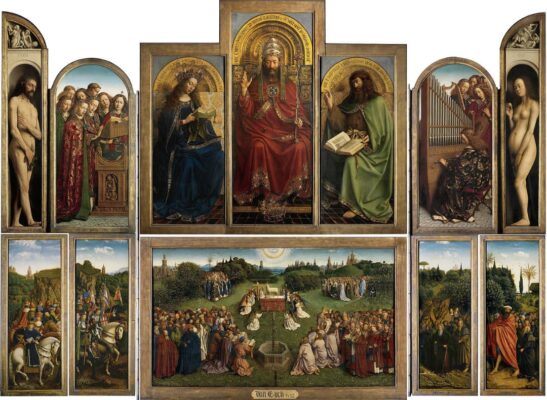
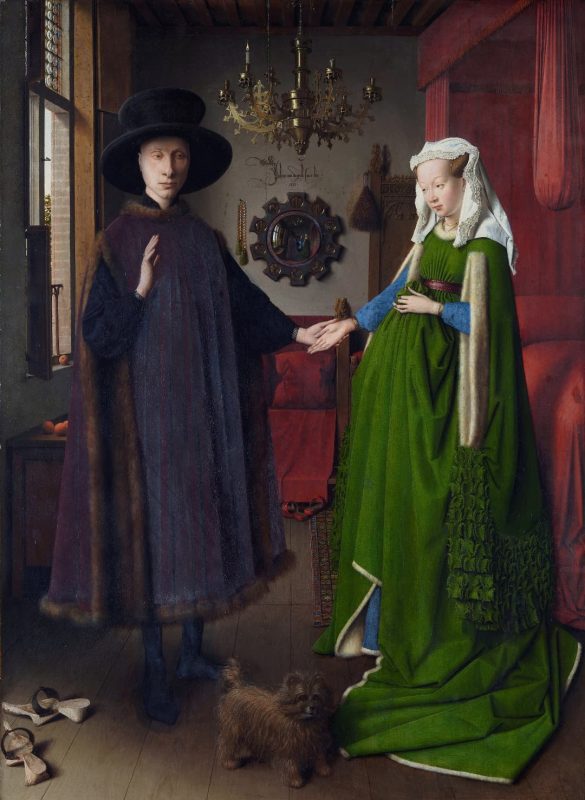

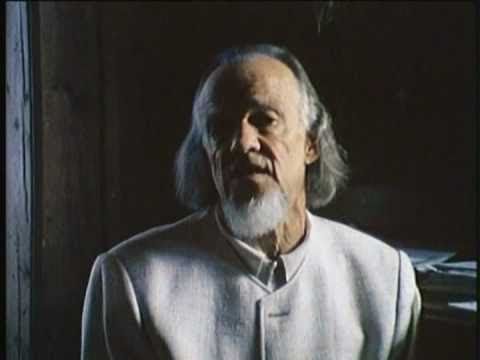
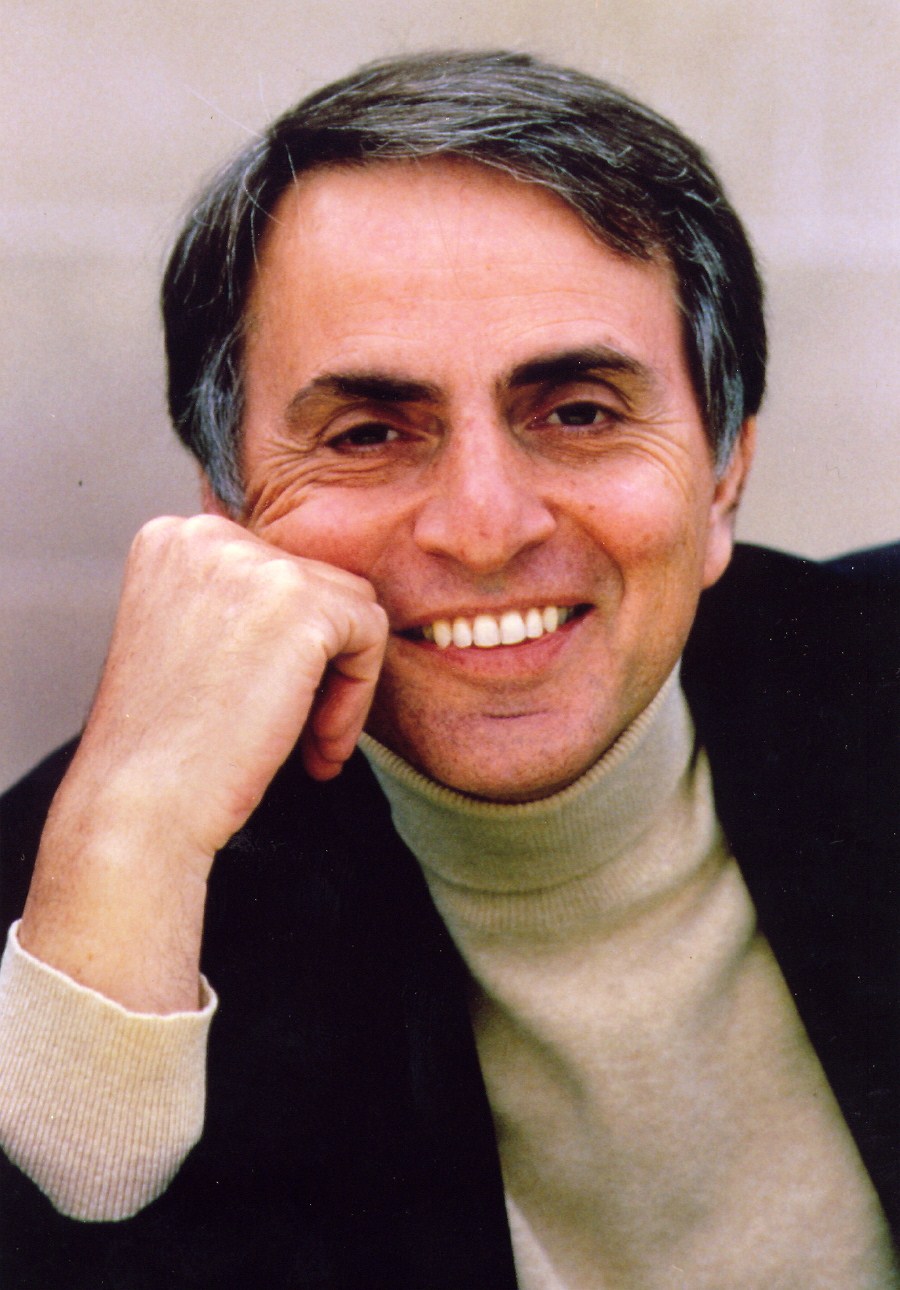


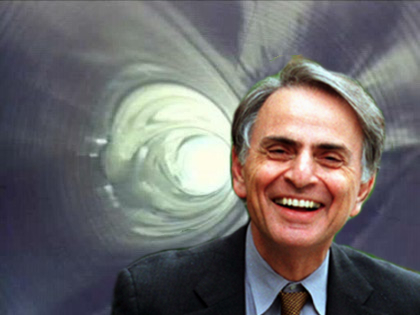




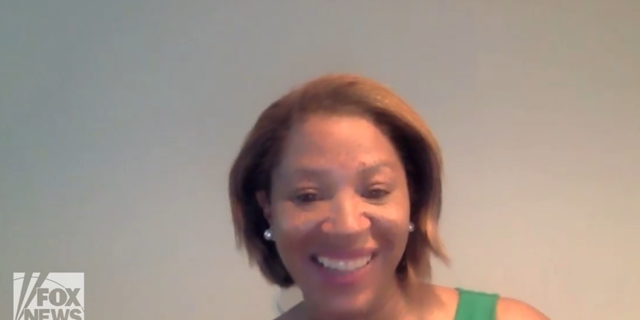

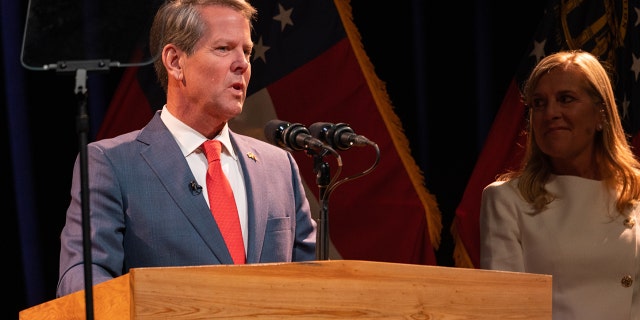


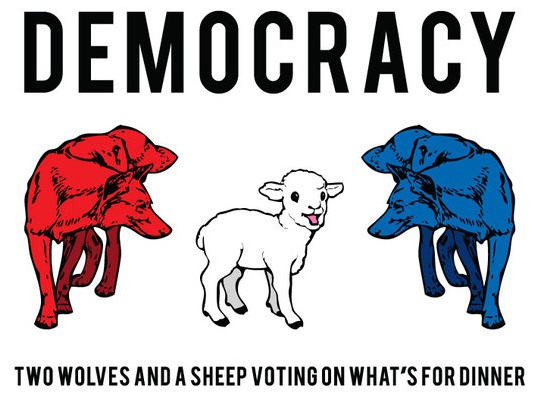










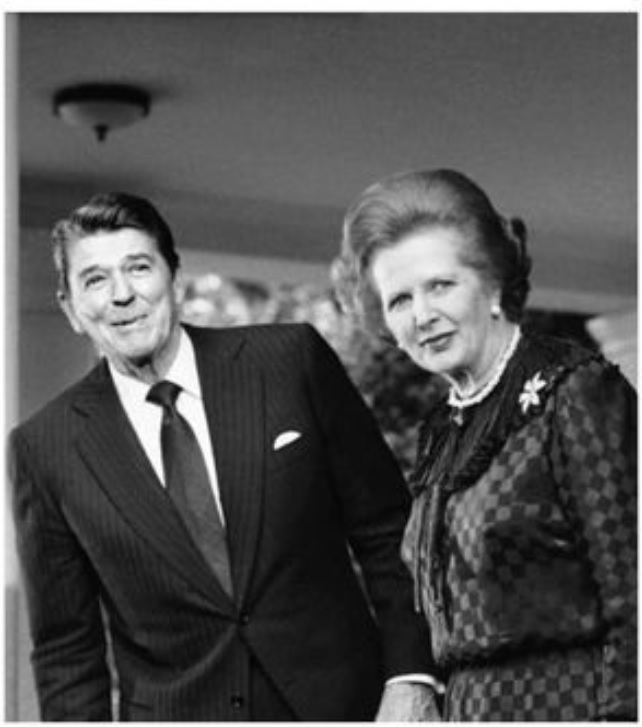



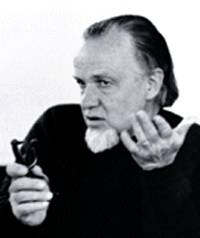



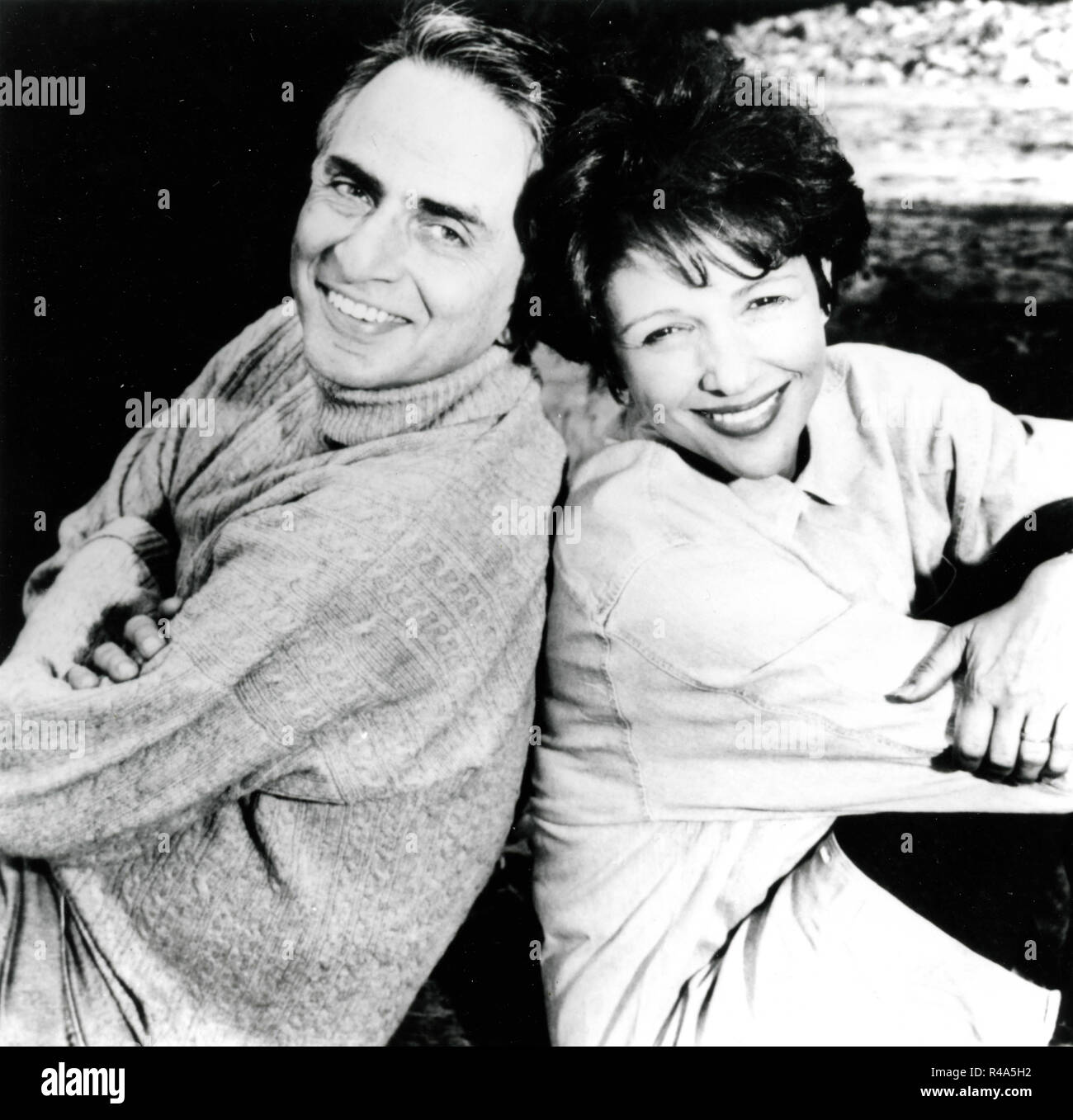






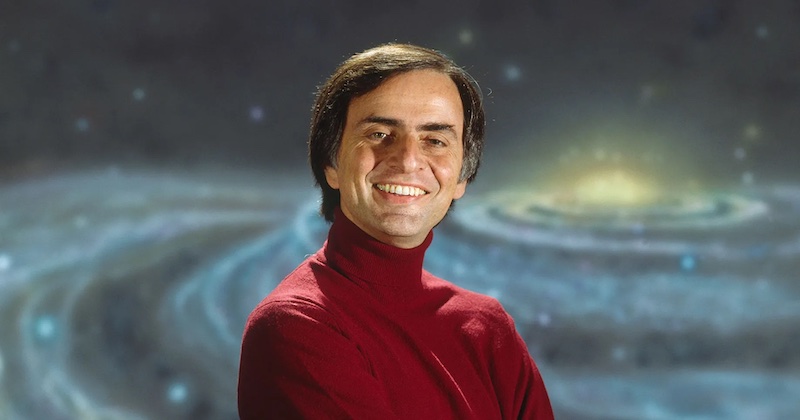



 The chords and notes flowed out, as if the Lord was literally giving her a gift of music. “At first,” says Annie, “I’d get these beautiful melodies and I’d ask Buck to write the lyrics to go with them.” One day, Buck replied, “Annie, don’t think about writing a song- just sing whatever’s in your heart.” It was this encouragement that opened the way to Annie’s simple, and deeply intimate songs of praise and adoration.
 Although the album was completed, the release date of The Roar of Love would be long delayed by contractual and copyright problems. Yet, the detours proved to be providential.


 The Daily Hatch

