On Saturday April 18, 2020 at 6pm in London and noon in Arkansas, I had a chance to ask Ricky Gervais a question on his Twitter Live broadcast which was “Is Tony a Nihilist?” At the 20:51 mark Ricky answers my question. Below is the video:
—-
—
Ricky Gervais plays bereaved husband Tony Johnson in AFTER LIFE
Tony and his wife Lisa who died 6 months ago of cancer
(Above) Tony and Anne on the bench at the graveyard where their spouses are buried.
—
May 11, 2020 Ricky Gervais
Dear Ricky,
This is the 24th day in a row that I have written another open letter to you to comment on some of your episodes of AFTER LIFE, and then I wanted to pass along Ravi Zacharias’ testimony of surviving a suicide attempt like Tony was thinking of and then I wanted to pass along some evidence that indicates the Bible is historically accurate. Finally I wanted to pass along Francis Schaeffer’s comments on Solomon’s search for meaning in ECCLESIASTES which is the only pessimistic book in the Bible because Solomon limits himself to life UNDER THE SUN without God in the picture.
Tony : I guess a good day is when I don’t go around, wanting to shoot random strangers in the face and then turn the gun to myself.
I have shared that my mother once brought an astrologer to our house to read our palms and tell us our future. Examining my hands, the soothsayer confidently pronounced that I would not travel far or much in my life. “That’s what the lines on your hand tell me. There is no future for you abroad.”
I was deeply disappointed to hear this, but oh, how mistaken he was! After 45 years of spanning the globe and speaking in countless countries, I am persuaded that God alone, the Grand Weaver, knows our future and knits our lives. He has brought lasting change not only in my own life but in my family as well. Sometimes this has happened seemingly instantaneously; hearing Jesus’s words in John 14:19, “Because I live, you also will live,” literally brought me from the brink of death in a hospital room to new life. Other times, such as in the remarkable conversion of my father years later, many seeds were planted prior, but the change was no less profound.
I recall, too, that I was never much of a reader growing up, preferring to watch movies or discuss issues with people. I very rarely picked up a book out of interest. But then one evening in my late teens, and a few months since coming to Christ on a bed of suicide, I walked out the back door of our house and saw something lying on top of the garbage heap in the alley. As I looked closer, I saw it was a book with no cover—an old, tattered copy of a volume I realized my dad must have thrown out.
Curious, I picked it up and read the title page: The Epistle to the Romans: A Commentary by a man named W. H. Griffith Thomas. I had no idea who this author was, but my hunger was so fierce that I immediately opened it and began to read. Over the next few days, I devoured that book—of all things, a Bible commentary! It became a treasure, and I still have the tattered copy of that commentary in my possession.
Just like that, I was plunged into a world I’d never known—the world of reading. One of the first volumes I was presented with wasThe Cross and the Switchblade, an amazing story of the conversion of Nicky Cruz the gang leader and of the work God was doing in the lives of such young people through the ministry of David Wilkerson. I loved the book so much that I began seeking out biographies. I lapped up the stories of William Booth, founder of the Salvation Army; David Brainerd, the missionary to American Indians; and, most intriguing of all to me, C. T. Studd, the English cricketer who gave up everything to become a missionary. Studd had been the captain of Cambridge’s cricket team, had turned down an opportunity to play for his country, and even refused his family inheritance—all to help take the gospel into China and India.
As I read about these inspiring lives, the old adage became true for me: “Fire begets fire.” The standards these Christians set by their examples raised the bar for me. Though I later learned, as I grew in my faith, that these saintly lives weren’t as perfect as their biographers made them out to be, the basic truths were undoubtedly in place, and their examples stoked my consciousness as to what the Christian life could be.
For the first time, I felt my mind being stretched—and I loved it. I realized that thinking could be fun, and with that simple realization I was sent headlong into the lifelong discipline of reading.
I also cannot say enough about the significance of the role that Youth for Christ (YFC) played in those early days of my conversion. On the day that I tried to take my life, it was these friends who prayed for me. A man named Fred David—sent, I would discover only recently, by YFC Asia director John Teibe, another gift from God—brought a Bible to my hospital room (and, by proxy, the words that breathed eternal life into my broken body). Both before and after my suicide attempt, they showed me that I meant something and that God loved me as an individual. It was my relationships at YFC that gave me hope of coming back to a caring group. And it was they who, as time passed, gave me opportunities for leadership.
So there it all was, the unlikely strands that came together, weaving the small patch of fabric that was my conversion: a soft-spoken man who drew me to the message of truth, a group waiting to share the love of Christ with me in my time of greatest need, a Bible brought to my mother for me, and a passage of Scripture that sprouted in the moisture of God’s sovereign grace. It all came together for me in the hospital room, but Youth for Christ is where those seeds were sown. I had now found a new home in my faith—and I could say I was finally home.
Saul Perlmutter comments:
“There are so many places we could go with that same information that I am not sure it nails the case of is there apurpose that is written in the universe.”
Peter Atkins comments:
“I think a lot of theology is grappling with phantoms. So theologians have invented this almost self-consistent subject which has no contact with physical reality at all. And they invent all sorts of questions which they then taunt humanity with . One of them is cosmic purpose. They say ‘there must be a purpose; you and your science can’t explain it.’ And typical of theologians, they don’t respect the power of the human intellect anyway. And they infer that no one will ever understand it; it is ineffable; God’s purpose cannot be discerned. And of course that’s – those are fine words, but utterly meaningless–why should the thing have a purpose?”–Peter Atkins, world-reknowned Oxford professor of chemistry (NOW BACK TO PREVIOUS ARTICLE BY Ravi Zacharias)
Along with everyone else, I wondered how such a turnaround could have taken place, and so swiftly. The key was that now I looked at life through a window of meaning. And that was the one thing I had been desperately longing for: meaning. Now everything in my life was packed with it: my studies had meaning, my family had meaning, my friendships had meaning, my sports had meaning.
All the things I had thought were the causes of my despair—my failing studies, my senseless wandering, my hopelessness—had actually been the results of my despair. The Austrian concentration camp survivor Viktor Frankl wrote, “Without meaning, nothing else matters. With meaning, everything else falls into place.” If you can’t see the why, you cannot live for the what. And as soon as I was able to answer the “why,” even my failures began to make sense.
The rapid changes taking place in me daily were beyond my power to describe. Yet, from everything I had learned in my life with Christ, I knew that He had not just changed what I did but what I wanted to do. One day, I had been a creature of despair, irresponsibility, and failure. Then I became a creature of hope, diligent and accomplished in the things to which I set my hand. To me, the reversal was staggering. Nobody fully understood the dramatic transformation on the inside. This was the work of God.
It was also a huge paradigm shift for me to suddenly see life—my own and others’—through the eyes of God. For years, I had looked at life the way a kid might work through a puzzling, new toy, taking it apart but not knowing how to put it back together again. He wonders, “What makes this thing tick?” So he takes a screwdriver and tries to unpack it, but with each piece he removes, it makes less sense.
Only Jesus could legitimately explain the multifarious strands of human personality locked within me. He could explain my emotional life, my actions, and my reactions. He could explain why I longed for human touch, and why it was actually the touch of soul that I was ultimately after. Without Christ, I still would have the gnawing undercurrent that had run through everything in my life and that had led me to the tragic choice that very nearly brought me to an end.
Jesus wasn’t just the best option to me; He was the only option. He provided the skin of reason to the flesh and bones of reality. His answers to life’s questions were both unique and true. No one else answered the deepest questions of the soul the way He did. And because Christianity was true, it was emotionally experienced. There was no greater example of this than my own life.
The story of my early days was that only God’s grace could have brought about this new life for me. This was a new DNA, a new birth. There simply was no other explanation. The songwriter George Wade Robinson said it well:
Heav’n above is softer blue,Earth around is sweeter green!Something lives in every hueChristless eyes have never seen;Birds with gladder songs o’erflow,Flow’rs with deeper beauties shine,Since I know, as now I know,I am His, and He is mine.
This article appears in the 25.4 edition of our award-winning magazine, Just Thinking. Click the button below to download a PDF of this edition
The Bible says, “God so loved the world that He gave His one and only Son, [Jesus Christ], that whoever believes in Him shall not perish, but have eternal life” (John 3:16). Jesus said, “I came that they may have life and have it abundantly”—a complete life full of purpose (John 10:10). But here’s the problem:
Step 2 – People are sinful and separated from God.
We have all done, thought or said bad things, which the Bible calls “sin.” The Bible says, “All have sinned and fall short of the glory of God” (Romans 3:23). The result of sin is death, spiritual separation from God (Romans 6:23). The good news?
Step 3 – God sent His Son to die for your sins!
Jesus died in our place so we could have a relationship with God and be with Him forever. “God demonstrates His own love toward us, in that while we were yet sinners, Christ died for us” (Romans 5:8). But it didn’t end with His death on the cross. He rose again and still lives! “Christ died for our sins. … He was buried. … He was raised on the third day, according to the Scriptures” (1 Corinthians 15:3-4). Jesus is the only way to God. Jesus said, “I am the way, and the truth, and the life; no one comes to the Father, but through Me” (John 14:6).
Step 4 – Would you like to receive God’s forgiveness?
We can’t earn salvation; we are saved by God’s grace when we have faith in His Son, Jesus Christ. All you have to do is believe you are a sinner, that Christ died for your sins, and ask His forgiveness. Then turn from your sins—that’s called repentance. Jesus Christ knows you and loves you. What matters to Him is the attitude of your heart, your honesty. We suggest praying the following prayer to accept Christ as your Savior:
“Dear God, I know I’m a sinner, and I ask for your forgiveness. I believe Jesus Christ is Your Son. I believe that He died for my sin and that you raised Him to life. I want to trust Him as my Savior and follow Him as Lord, from this day forward. Guide my life and help me to do your will. I pray this in the name of Jesus. Amen.”
Francis Schaeffer comments on Ecclesiastes. Ecclesiastes 7:11-12
11 Again I saw that under the sun the race is not to the swift, nor the battle to the strong, nor bread to the wise, nor riches to the intelligent, nor favor to those with knowledge, but time and chance happen to them all.12 For man does not know his time. Like fish that are taken in an evil net, and like birds that are caught in a snare, so the children of man are snared at an evil time, when it suddenly falls upon them.
Solomon when at work takes off his hat and he stands by the grave of man and he says, “ALAS. ALAS. ALAS.”
But interestingly enough the story of Ecclesiastes does not end its message here because in two places in the New Testament it is picked up and carried along and put in its proper perspective.
Luke 12:16-21
16 And he told them a parable, saying, “The land of a rich man produced plentifully, 17 and he thought to himself, ‘What shall I do, for I have nowhere to store my crops?’ 18 And he said, ‘I will do this: I will tear down my barns and build larger ones, and there I will store all my grain and my goods. 19 And I will say to my soul, “Soul, you have ample goods laid up for many years; relax,eat, drink, be merry.”’ [ALMOST EVERYONE WHO HAS PROCEEDED HERE HAS FELT CERTAINLY THAT JESUS IS DELIBERATELY REFERRING TO SOLOMON’S SOLUTION.]20 But God said to him, ‘Fool! This night your soul is required of you, and the things you have prepared, whose will they be?’ 21 So is the one who lays up treasure for himself and is not rich toward God.”
Christ here points out the reason for the failure of the logic that is involved. He points out why it fails in logic and then why it fails in reality. This view of Solomon must end in failure philosophically and also in emotional desperation.
We are not made to live in the shortened environment of UNDER THE SUN in this life only!!! Neither are we made to live only in the environment of a bare concept of afterlife [ignoring trying to make this life better]. We are made to live in the environment of a God who exists and who is the judge. This is the difference and that is what Jesus is setting forth here.
I Corinthians 15:32
32 What do I gain if, humanly speaking, I fought with beasts at Ephesus? If the dead are not raised, “Let us eat and drink, for tomorrow we die.”
There is no doubt here he is reaching back to Solomon again and he is just saying if there isn’t a resurrection of the dead then let’s just follow Solomon and let’s just eat and drink for tomorrow we die!!!! If there isn’t this full structure [including the resurrection of the dead] then just have the courage to follow Solomon and we can eat and drink because tomorrow we die and that is all we have. If the full structure isn’t there then pick up the cup and drink it dry! You can say it a different way in the 20th century: If the full structure is not there then go ahead and be an EXISTENTIALIST, but don’t cheat. Drink the cup to the end. Drink it dry! That is what Paul says. Paul the educated man. Paul the man who knew his Greek philosophy. Paul the man who understood Solomon and the dilemma. Paul said it one way or the other. There is no room for a middle ground. IF CHRISTIANS AREN’T RAISED FROM THE DEAD THEN SOLOMON IS RIGHT IN ECCLESIASTES, BUT ONLY THEN. But if he is right then you should accept all of Solomon’s despair and his conclusions.
Seen below is the third episode of AFTERLIFE (season 1) when Matt takes Tony to a comedy club with front row seats to cheer him up but it turns into disaster!!!
I have gone back and forth and back and forth with many liberals on the Arkansas Times Blog on many issues such as abortion, human rights, welfare, poverty, gun control and issues dealing with popular culture. Here is another exchange I had with them a while back. My username at the Ark Times Blog is Saline […]By Everette Hatcher III | Posted in Biblical Archaeology, Francis Schaeffer, Prolife | Edit|Comments (0)
I have posted many of the sermons by John MacArthur. He is a great bible teacher and this sermon below is another great message. His series on the Book of Proverbs was outstanding too. I also have posted several of the visits MacArthur made to Larry King’s Show. One of two most popular posts I […]By Everette Hatcher III | Posted in Adrian Rogers, Current Events | Edit|Comments (0)
I have posted many of the sermons by John MacArthur. He is a great bible teacher and this sermon below is another great message. His series on the Book of Proverbs was outstanding too. I also have posted several of the visits MacArthur made to Larry King’s Show. One of two most popular posts I […]By Everette Hatcher III | Posted in Adrian Rogers, Current Events |Tagged Bible Prophecy, john macarthur | Edit|Comments (0)
Prophecy–The Biblical Prophesy About Tyre.mp4 Uploaded by TruthIsLife7 on Dec 5, 2010 A short summary of the prophecy about Tyre and it’s precise fulfillment. Go to this link and watch the whole series for the amazing fulfillment from secular sources. http://www.youtube.com/watch?v=qvt4mDZUefo________________ John MacArthur on the amazing fulfilled prophecy on Tyre and how it was fulfilled […]By Everette Hatcher III | Posted in Biblical Archaeology | Edit|Comments (1)
John MacArthur on the Bible and Science (Part 2) I have posted many of the sermons by John MacArthur. He is a great bible teacher and this sermon below is another great message. His series on the Book of Proverbs was outstanding too. I also have posted several of the visits MacArthur made to Larry […]By Everette Hatcher III | Posted in Current Events | Edit|Comments (0)
John MacArthur on the Bible and Science (Part 1) I have posted many of the sermons by John MacArthur. He is a great bible teacher and this sermon below is another great message. His series on the Book of Proverbs was outstanding too. I also have posted several of the visits MacArthur made to Larry […]By Everette Hatcher III | Posted in Current Events | Edit|Comments (0)
Adrian Rogers – How you can be certain the Bible is the word of God Great article by Adrian Rogers. What evidence is there that the Bible is in fact God’s Word? I want to give you five reasons to affirm the Bible is the Word of God. First, I believe the Bible is the […]By Everette Hatcher III | Posted in Adrian Rogers, Biblical Archaeology | Edit|Comments (0)
Is there any evidence the Bible is true? Articles By PleaseConvinceMe Apologetics Radio The Old Testament is Filled with Fulfilled Prophecy Jim Wallace A Simple Litmus Test There are many ways to verify the reliability of scripture from both internal evidences of transmission and agreement, to external confirmation through archeology and science. But perhaps the […]By Everette Hatcher III | Posted in Biblical Archaeology, Current Events | Edit|Comments (0)
I have gone back and forth and back and forth with many liberals on the Arkansas Times Blog on many issues such as abortion, human rights, welfare, poverty, gun control and issues dealing with popular culture. Here is another exchange I had with them a while back. My username at the Ark Times Blog is […]By Everette Hatcher III | Posted in Francis Schaeffer, Prolife | Edit|Comments (0)
Here is some very convincing evidence that points to the view that the Bible is historically accurate. Archaeological and External Evidence for the Bible Archeology consistently confirms the Bible! Archaeology and the Old Testament Ebla tablets—discovered in 1970s in Northern Syria. Documents written on clay tablets from around 2300 B.C. demonstrate that personal and place […]By Everette Hatcher III | Posted in Biblical Archaeology | E
—-
If Death is the end then what is the point Kath asks below:
Have you ever had the chance to contrast the music of Bach with that of the song Revolution 9 by the Beatles?
Francis Schaeffer pointed out, “Bach as a Christian believed that there was resolution for the individual and for history. As the music that came out of the Biblical teaching of the Reformation was influenced by that worldview, so the worldview of modern man shapes modern music.”
(Francis Schaeffer below.)
J.C. Bach – Symphony in Eb major Op. 9 No. 2 (1/3)
The Beatles – Revolution 9
Revolution 9 is the longest officially released song by the Beatles. It appears on the White Album and the attempt was to create a revolution with the use of sound. Influences came from Ono’s avant-garde style and works of various composers like Edgard Varese and Karlheinz Stockhausen. Various elements were included in the song and many of the loops included manipulation through distortions, stereo panning, fading and echoes. McCartney did not want to have the song included on the Beatles album but it was eventually added. Number 9, number 9, number 9… – See more at: http://fantasticfives.com/top-5-weirdest-beatles-songs/#sthash.7LgvO0Mz.dpuf
Johann Christian Bach Symphonies 1/2
Two men who tried to demonstrate the idea of the chance universe in their music were John Cage and Karlheinz Stockhausen (pictured together in 1972, Cage on right). Take a look at the 7 minute mark to the 19 minute mark in the video above which is called THE AGE OF FRAGMENTATION. It part oft the film series by Francis Schaeffer called HOW SHOULD WE THEN LIVE?
___________
Image caption Pollock, seen here in 1945, was renowned for his style of drip or splatter painting
Francis Schaeffer in his book HOW SHOULD WE THEN LIVE? noted on pages 200-203:
Jackson Pollock (1912-1956) is perhaps the clearest example in the United States of painting deliberately in order to make the statements that all is chance. He placed canvases horizontally on the floor and dripped paint on them from suspended cans swinging over them. Thus, his paintings were a product of chance. But wait a minute! Is there not an order in the lines of paint on his canvases? Yes, because it was not really chance shaping his canvases! The universe is not a random universe; it has order. Therefore, as the dripping paint from the swinging cans moved over the canvases, the lines of paint were following the order of the universe itself. The universe is not what these painters said it is.
The third way the idea spread was through music. This came about first in classical music, though later many of the same elements came into popular music, such as rock. In classical music two streams are involved: the German and the French.
Portrait by Joseph Karl Stieler, 1820
The first shift in German music came with the last Quartets of Beethoven, composed in 1825 and 1826. These certainly were not what we would call “modern,” but they were a shift from the music prior to them. Leonard Bernstein (1918-) speaks of Beethoven as the “new artist–the artist as priest and prophet.”Joseph Machlis (1906-) says in INTRODUCTION TO COMTEMPORARY MUSIC (1961), “Schoenberg took his point of departure from the final Quartets of Beethoven.” And Stravinsky said, “These Quartets are my highest articles of musical belief (which is a longer word for love, whatever else), as indispensable to the ways and meaning of art, as a musician of my era thinks of art and has to learn it, as temperature is to life.”
Photograph:Arnold Schoenberg.
Leonard Bernstein pictured in 1946
Beethoven was followed by Wagner (1813-1883); then came Gustav Mahler (1860-1911). Leonard Bernstein in the NORTON LECTURES at Harvard University in 1973 says of Mahler and especially Mahler’s Ninth Symphony, “Ours is the century of death and Mahler is its musical prophet…If Mahler knew this (personal death, death of tonality, and the death of culture as it had been) and his message is so clear, how do we knowing it too, manage to survive? Why are we still here, struggling to go on? We are now face to face with the truly ultimate ambiguity of all…We learn to accept our mortality; yet we persist in our search for immortality…All this ultimate ambiguity is to be heard in the finale of Mahler’s Ninth.” Notice how closely this parallels Nietzsche’s poem on page 193. (Oh Man! Take heed, of what the dark midnight says: I slept, I slept–from deep dreams I awoke: The world is deep–and more profound than day would have thought. Profound in her pain–Pleasure–more profound than pain of heart, Woe speaks; pass on. But all pleasure seeks eternity–a deep and profound eternity.) This is modern man’s position. He has come to a position of the death of man in his own mind, but he cannot live with it, for it does not describe what he is.
Then came Schoenberg (1874-1951), and with him we are into the music which was a vehicle for modern thought. Schoenberg totally rejected the past tradition in music and invented the “12 tone row.” This was “modern” in that there was perpetual variation with NO RESOLUTION. This stands in sharp contrast to Bach who, on his biblical base, had much diversity but always resolution. Bach’s music had resolution because as a Christian he believed that there will be resolution both for eah individual life and for history. As the music which came out of the biblical teaching of the Reformation was shaped by that world-view, so the world-view of modern man shapes modern music.
Among Schoenberg’s pupils were Allen Berg (1885-1935), Anton Webern (1883-1945), and John Cage (1912-). Each of these carried on this line of nonresolution in his own way. Donald Jay Grout (1902-) in A HISTORY OF WESTERN MUSIC speaks of Schoenberg’s and Berg’s subject matter in the modern world: “…isolated, helpless in the grip of forces he does not understand, prey to inner conflict, tension, anxiety and fear.” One can understand that a music of nonresolution is a fitting expression of the place to which modern man has come.
Olivier Messiaen having a laugh with Karlheinz Stockhausen.
Stockhausen on cover of SGT PEPPER’s
In INTRODUCTION TO CONTEMPORARY MUSIC Joseph Machlis says of Webern that his way of placing the weightier sounds on the offbeat and perpetually varying the rhythmic phrase imparts to his music its indefinable quality of “hovering suspension.” Machlis adds that Karlheinz Stockhausen (1928-), and the German Cologne school in general, take up from Webern with the formation of electronic music which “generates, transforms and manipulates sounds electronically.”Stockhausen produced the first published score of electronic music in his ELECTRONIC STUDIES. A part of his concern was with the element of chance in composition. As we shall see, this ties into the work of John Cage, whom we will study in more detail below. But first let us look at the French stream.
Claude Debussy
The French shift began with Claude Debussy (1862-1918). His direction was not so much that of nonresolution but of FRAGMENTATION. Many of us enjoy and admire much of Debussy’s music, but he opened the door to FRAGMENTATION in music and has influenced most of the composers since, not only in classical music but in popular music and rock as well. Even the music which is one of the glories of America–black jazz and black spirituals–was gradually infiltrated.
It is worth reemphasizing that this FRAGMENTATION in music is parallel to the FRAGMENTATION which occurred in painting. An again let us say that these were not just changes of technique; they expressed a world-view and became a vehicle for carrying that world-view to masses of people which the bare philosophic writings never would have touched.
Stockhausen & John Cage 1972 (Photo: Felicitas Timpe)
John Cage provides perhaps the clearest example of what is involved in the shift of music. Cage believed the universe is a universe of chance. He tried carrying this out with great consistency. For example, at times he flipped coins to decide what the music should be. At other times he erected a machine that led an orchestra by chance motions so that the orchestra would not know what was coming next. Thus there was no order. Or again, he placed two conductors leading the same orchestra, separated from each other by a partition, so that what resulted was utter confusion. There is a close tie-in again to painting; in 1947 Cage made a composition he called MUSIC FOR MARCEL DUCHAMP. But the sound produced by his music was composed only of silence (interrupted only by random environmental sounds), but as soon as he used his chance methods sheer noise was the outcome.
But Cage also showed that one cannot live on such a base, that the chance concept of the universe does not fit the universe as it is. Cage is an expert in mycology, the science of mushrooms. And he himself said, “I became aware that if I approached mushrooms in the spirit of my chance operation, I would die shortly.” Mushroom picking must be carefully discriminative. His theory of the universe does not fit the universe that exists.
All of this music by chance, which results in noise, makes a strange contrast to the airplanes sitting in our airports or slicing through our skies. An airplane is carefully formed; it is orderly (and many would also think it beautiful). This is in sharp contrast to the intellectualized art which states that the universe is chance. Why is the airplane carefully formed and orderly, and what Cage produced utter noise? Simply because an airplane must fit the orderly flow lines of the universe if it is to fly!
Sir Archibald Russel (1905-) was the British designer for the Concorde airliner. In a NEWSWEEK: European Edition interview (February 16, 1976) he was asked : “Many people find that the Concorde is a work of art in its design. Did you consider its aesthetic appearance when you were designing it?” His answer was, “When one designs an airplane, he must stay as close as possible to the laws of nature. You are really playing with the laws of nature and trying not to offend them. It so happens that our ideas of beauty are those of nature. That’s why I doubt that the Russian supersonic airplane is a crib of ours. The Russians have the same basic phenomena imposed on them by nature as we do.”
Cage’s music and the world-view for which it is the vehicle do not fit the universe that is. Someone might here bring in Einstein, Werner Heisenberg’s principle of uncertainty and quantum, but we have considered them on page 162, and so will not repeat the discussion here. The universe is not what Cage in his music and Pollock in his painting say it is. And we must add that Cage’s music does not fit what people are, either. It has had to become increasingly spectacular to keep interest; for example, a nude cellist has played Cage’s music under water.
A further question is: Is this art really art? Is it not rather a bare philosophic, intellectual statement, separated from the fullness of who people are and the fullness of what the universe is? The more it tends to be only an intellectual statement, rather than a work of art, the more it becomes anti-art.
The recording began as an extended ending to the album version of “Revolution.” Lennon then combined the unused coda with numerous overdubbed vocals, speech, sound effects, and short tape loops of speech and musical performances, some of which were reversed. These were further manipulated with echo, distortion, stereopanning, and fading. At over eight minutes, it is the longest track that the Beatles officially released.
“Revolution 9” was not the first venture by the Beatles into experimental recordings. In January 1967, McCartney led the group in recording an unreleased piece called “Carnival of Light” during a session for “Penny Lane“. McCartney said the work was inspired by composers Stockhausen and John Cage.[1] Stockhausen was also a favourite of Lennon, and was one of the people included on the Sgt. Pepper album cover. Music critic Ian McDonaldwrote that “Revolution 9” may have been influenced by Stockhausen’s Hymnen in particular.[2]
Stockhausen — Hymnen
Uploaded on Jun 23, 2007
HYMNEN is a composition that integrates a wide variety of national anthems and transforms them electronically.
_________________
Another influence on Lennon was his relationship with Ono. Lennon and Ono had recently recorded their own avant-garde album, Unfinished Music No.1: Two Virgins. Lennon said: “Once I heard her stuff—not just the screeching and howling but her sort of word pieces and talking and breathing and all this strange stuff … I got intrigued, so I wanted to do one.”[3] Ono attended the recording sessions and helped Lennon select which tape loops to use.[4]
“Revolution 9” originated on 30 May 1968 during the first recording session for Lennon’s composition “Revolution”. Take 20 lasted more than ten minutes and was given additional overdubs over the next two sessions. Mark Lewisohn described the last six minutes as “pure chaos … with discordant instrumental jamming, feedback, John repeatedly screaming ‘alright’ and then, simply, repeatedly screaming … with Yoko talking and saying such off-the-wall phrases as ‘you become naked’, and with the overlaying of miscellaneous, home-made sound effects tapes.”[5]
Lennon soon decided to make the first part of the recording into a conventional Beatles’ song, “Revolution 1”, while using the last six minutes as the basis for a separate track, “Revolution 9”. He began preparing additional sound effects and tape loops: some newly recorded in the studio, at home and from the studio archives. The work culminated on 20 June, with Lennon performing a live mix from tape loops running on machines in all three studios at Abbey Road. Additional prose was overdubbed by Lennon and Harrison.[6]
More overdubs were added on 21 June followed by final mixing in stereo. The stereo master was completed on 25 June when it was shortened by 53 seconds.[7] Although other songs on the album were separately remixed for the mono version, the complexity of “Revolution 9” necessitated making the mono mix a direct reduction of the final stereo master.[8] McCartney had been out of the country when “Revolution 9” was assembled and mixed; he was unimpressed when he first heard the finished track, and later tried to persuade Lennon to drop his insistence that it be included on the album.[9]
The piece begins with a slow piano theme in the key of B minor and a male voice repeating the words “number nine”, quickly panning across the stereo channels. Both the piano theme and the “number nine” loop recur many times during the piece, serving as a motif. Lennon later said of the track and its production:
Revolution 9 was an unconscious picture of what I actually think will happen when it happens; just like a drawing of a revolution. All the thing was made with loops. I had about 30 loops going, fed them onto one basic track. I was getting classical tapes, going upstairs and chopping them up, making it backwards and things like that, to get the sound effects. One thing was an engineer’s testing voice saying, “This is EMI test series number nine.” I just cut up whatever he said and I’d number nine it. Nine turned out to be my birthday and my lucky number and everything. I didn’t realise it: it was just so funny the voice saying, “number nine”; it was like a joke, bringing number nine into it all the time, that’s all it was.[4]
Portions of the unused coda of “Revolution 1” can be heard briefly several times during the track, particularly Lennon’s screams of “right” and “all right,” with a longer portion near the end featuring Ono’s discourse about becoming naked. Segments of random prose read by Lennon and Harrison are heard prominently throughout, along with numerous sound effects such as laughter, crowd noise, breaking glass, car horns, and gunfire. Some of the sounds were taken from an Elektra Records album of stock sound effects.[11] The piece ends with a recording of American football chants (“Hold that line! Block that kick!”). In all, the final mix includes at least 45 different sound sources.[12]
During compilation and sequencing of the master tape for the album The Beatles, two unrelated segments were included between the previous song (“Cry Baby Cry“) and “Revolution 9”.[13] The first was a fragment of a song based on the line “Can you take me back“, an improvisation sung by McCartney that was recorded between takes of “I Will“. The second was a bit of conversation from the studio control room where Alistair Taylor asked George Martin for forgiveness for not bringing him a bottle of claret, and then calling him a “cheeky bitch”.[13]
“Revolution 9” was released as the fifth track on the fourth side of the album The Beatles. With no gaps in the sequence from “Cry Baby Cry” to “Revolution 9”, the point of track division has varied among different re-issues of the album. Some versions place the conversation at the end of “Cry Baby Cry”, resulting in a length of 8:13 for “Revolution 9”, while others start “Revolution 9” with the conversation, for a track length of 8:22.
… compare Lennon’s work with Luigi Nono’s similar Non Consumiamo Marx (1969) to see how much more aesthetically and politically acute Lennon was than most of the vaunted avant-garde composers of the time … Nono’s piece entirely lacks the pop-bred sense of texture and proportion manifested in “Revolution 9”.
“Revolution 9” is an embarrassment that stands like a black hole at the end of the White Album, sucking up whatever energy and interest remain after the preceding ninety minutes of music. It is a track that neither invites nor rewards close attention …
The unusual nature of “Revolution 9” engendered a wide range of opinions. Lewisohn summarised the public reaction upon its release: “… most listeners loathing it outright, the dedicated fans trying to understand it.”[16] Music critics Robert Christgau and John Piccarella called it “an anti-masterpiece” and noted that, in effect, “for eight minutes of an album officially titled The Beatles, there were no Beatles.”[17]Jann Wenner was more complimentary, writing that “Revolution 9” was “beautifully organized” and had more political impact than “Revolution 1”.[18] Ian MacDonald remarked that “Revolution 9” evoked the era’s revolutionary disruptions and their repercussions, and thus was culturally “one of the most significant acts The Beatles ever perpetrated.”[19]
Among more recent reviews, The New Rolling Stone Album Guide said it was “justly maligned”, but “more fun than ‘Honey Pie‘ or ‘Yer Blues‘.”[20]Pitchfork reviewer Mark Richardson observed that “the biggest pop band in the world exposed millions of fans to a really great and certainly frightening piece of avant-garde art.”[21]
Lennon described “Revolution 9” as “an unconscious picture of what I actually think will happen when it happens, just like a drawing of revolution.”[4] He said he was “painting in sound a picture of revolution”, but he had mistakenly made it “anti-revolution”.[4] In his analysis of the song, MacDonald doubted that Lennon conceptualised the piece as representing a revolution in the usual sense, but rather as “a sensory attack on the citadel of the intellect: a revolution in the head” aimed at each listener.[22] MacDonald also noted that the structure suggests a “half-awake, channel-hopping” mental state, with underlying themes of consciousness and quality of awareness.[23] Others have described the piece as Lennon’s attempt at turning “nightmare imagery” into sound,[24] and as “an autobiographical soundscape.”[25] The loop of “number nine” featured in the recording fuelled the legend of Paul McCartney’s death after it was reported that it sounded like “turn me on, dead man” when played backwards.[26]
Based on interviews and testimony, prosecutor Vincent Bugliosi asserted that Charles Manson believed that many songs on the album The Beatles contained references confirming his prediction of an impending apocalypticrace war, a scenario dubbed “Helter Skelter“. According to Gregg Jakobson, Manson mentioned “Revolution 9” more often than any of the other album tracks, and he interpreted it as a parallel of Chapter 9 of the Book of Revelation.[27] Manson viewed the piece as a portrayal in sound of the coming black-white revolution.[27] He misheard Lennon’s distorted screams of “Right!” within “Revolution 9” as a command to “Rise!”[28]
Kurt Hoffman’s Band of Weeds performs “Revolution #9” on the 1992 album “Live at the Knitting Factory: Downtown Does the Beatles” (Knitting Factory Records).[29] The jam bandPhish performed “Revolution 9” (along with almost all of the songs from The Beatles) at their Halloween 1994 concert that was released in 2002 as Live Phish Volume 13. Australian dance rock band Def FX recorded a version for their 1996 album Majick. Little Fyodorrecorded a cover in 1987 and released it as a CD single in 2000.[30] The Shazam recorded a cover version of Revolution #9 which appears as the final track on their mini-album “Rev9” released in 2000.[31] In 2008, thecontemporary classical chamber ensemble Alarm Will Sound transcribed an orchestral re-creation of “Revolution 9” which they performed on tour.[32] Also in 2008, the contemporary jazz trio The Neil Cowley Trio recorded both “Revolution 9” and “Revolution” for the magazine Mojo. “Revolution 9” has also inspired songs by punk group United Nations (“Resolution 9“) and rock band Marilyn Manson (“Revelation #9“). It also inspired White Zombie‘s “Real Solution #9”, which contains samples of a Prime Time Live interview that Diane Sawyer conducted with Manson Family member Patricia Krenwinkel. In the sample used Krenwinkel is heard saying: “Yeah, I remember her saying, I’m already dead.” Skinny Puppy references a reversed melodic fragment from “Revolution #9” on their song “Love in Vein” from their album Last Rights.
Number 9, number 9, number 9, number 9
Number 9, number 9, number 9, number 9
Number 9, number 9, number 9, number 9
Number 9, number 9, number
Then there’s this Welsh rabbit wearing some brown underpants
About the shortage of grain in Hertfordshire
Everyone of them knew that as time went by
They’d get a little bit older and a little bit slower but
It’s all the same thing
In this case manufactured by someone who’s always/umpteen
Your father’s giving it diddly-dee
District was leaving, intended to die, Ottoman
Long gone through
I’ve got to say, irritably and
Floors, hard enough to put on, per day’s MD in our district
There was not really enough light to get down
And ultimately slumped down
Suddenly
They may stop the funding
Place your bets
The original
Afraid she’ll die
Great colors for the season
Number 9, number 9
Who’s to know?
Who wants to know?
Number 9, number 9, number 9, number 9
Number 9, number 9, number 9, number 9
(I sustained nothing worse than)
(Also, for example)
(Whatever you’re doing)
(A business deal falls through)
I informed him on the third night, when fortune gives
People ride, people ride
Ride, ride, ride, ride, ride
Number 9, number 9, number 9, number 9
Ride! Ride! Ride! Ride! Ride!
9, number 9
I’ve missed all of that
It makes me a few days late
Compared with, like, wow!
And weird stuff like that
Taking our sides sometimes
Floral bark
Rouge doctors have brought this specimen
I have nobody’s short-cuts, aha
With the situation
They are standing still
The plan, the telegram
Number 9, number
A man without terrors from beard to false
As the headmaster reported to my son
He really can try, as they do, to find function
(Tell what he was saying
(and his voice was low and his hive high)
And his eyes were low
Alright!
It was on fire and his glasses were the same
This thing knows if it was tinted
But you know it isn’t
To me it is
Number 9, number 9, number 9, number 9, number 9
Number 9, number 9, number 9, number 9, number 9
Number 9
So the wife called me and we’d better go to see a surgeon to price it
Yellow underclothes
So, any road, we went to see the dentist instead
Who gave her a pair of teeth which wasn’t any good at all
So I said I’d marry, join the fucking navy and went to sea
In my broken chair, my wings are broken and so is my hair
I’m not in the mood for whirling
How? Dogs for dogging, hands for clapping
Birds for birding and fish for fishing
Them for themming and when for whimming
Only to find the night-watchman
Unaware of his presence in the building
(Onion soup)
Number 9, number 9, number 9, number 9, number 9
(Industry allows financial imbalance)
Number 9
Thrusting it between his shoulder blades
The Watusi, the Twist
El Dorado
Take this, brother, may it serve you well
Maybe it’s nothing
What? What? Oh
Maybe, even then, impervious in London
Could be a difficult thing
(It’s alright, it’s alright, it’s alright)
It’s quick like rush for peace is because
(It’s alright, it’s alright)
It’s so much like being naked
Francis Schaeffer’s favorite album was SGT. PEPPER”S and he said of the album “Sergeant Pepper’s Lonely Hearts Club Band…for a time it became the rallying cry for young people throughout the world. It expressed the essence of their lives, thoughts and their feelings.” (at the 14 minute point in episode 7 of HOW SHOULD WE THEN LIVE? )
How Should We Then Live – Episode Seven – 07 – Portuguese Subtitles
“Sergeant Pepper’s Lonely Hearts Club Band, became the rallying cry for young people throughout the world. It expressed the essence of their lives, thoughts and their feelings…” Francis Schaeffer (1912-1984). We take a look today at how the Beatles were featured in Schaeffer’s film. How Should We then Live Episode 7 small On You Tube […]
It’s always illuminating to talk with photographers about their most celebrated pictures—especially if some of those photos have, over the years, taken on lives of their own. Example: John, Paul, George and Ringo in a swimming pool. For countless people, it’s the single most memorable photograph of the Beatles early in their career; four young, engaging, somewhat awkward English lads on the cusp of mega-stardom.But for longtime LIFE photographer John Loengard—the man who took that picture in Miami Beach 50 years ago—the swimming-pool photo is, to put it bluntly, rather weak.“I never thought it was a terrific photograph,” Loengard recently told LIFE.com. “It’s not a very expressive picture at all, in my opinion. But given the history and the appeal of the people in it, it keeps cropping up, year after year.”As for how and why he took the picture in the first place, Loengard—who also served as LIFE’s picture editor from 1973 to 1987—explains that it was meant to be a cover photo, but instead ended up as a Miscellany, a popular feature that ran for years in black and white on the last page of the magazine.“I went down to Florida to make this photo after being asked if I had any ideas on what to do with the Beatles as a cover,” Loengard recalls. “It was my idea to put them in a pool—but we couldn’t find a heated pool, the water in the pool we did use was cold, and there was always the problem of other press trying to get in. It would have to be a pool that we could close off to everyone else. So, in the end, it was a very quick shoot in a private pool, with the Beatles shivering and singing in the water before jumping out. My impression of these guys was that they were like four high school kids. You know, they had beards, sort of—like when you first start having to shave, but aren’t quite sure how to do it.
“In the end, Hedley Donovan, who was LIFE’s editor-in-chief at the time and was sitting in for the managing editor, George Hunt, decided that the Beatles weren’t serious enough to be on the cover. He ran a color picture from the war in Cyprus on the cover that week, instead.”
But Loengard does admit that he might be warming to the photo, a little bit, as the years pass.
“Recently,” he says, “after coloring the photograph myself and playing around with it on my computer, I felt—for the first time, really—that Donovan made the wrong call. It could have been a strong cover, even if it’s not a great picture.”
Not many people realize that Loengard originally shot the picture in color, but the color transparency was lost soon after the Feb. 28, 1964, issue of LIFE appeared. (At left: Loengard’s own colorized version—and cover mock-up—of the photo.)
“Harry Benson, of course, took a remarkable picture of the Beatles around the same time,” Loengard says, seemingly eager to point out a Beatles photo that he feels warrants the attention it’s received over the decades. “The one where they’re having a pillow fight in a hotel room. That is a very, very well-made photograph.”
“My own Beatles photo,” he adds, without a trace of rancor or regret, “is a second-rate, or maybe even a third-rate, picture. And yet it still has legs.”
On Saturday April 18, 2020 at 6pm in London and noon in Arkansas, I had a chance to ask Ricky Gervais a question on his Twitter Live broadcast which was “Is Tony a Nihilist?” At the 20:51 mark Ricky answers my question. Below is the video:
—-
Ricky Gervais plays bereaved husband Tony Johnson in AFTER LIFE
Tony and his wife Lisa who died 6 months ago of cancer
(Above) Tony and Anne on the bench at the graveyard where their spouses are buried.
—
May 10th, 2020 Ricky Gervais
Dear Ricky,
Francis Schaeffer below:
In 1992 I got a series of cassette audio tapes that covered the discussions that Ravi Zacharias had at Harvard and I used them as part of my apologetic letters to skeptics across the world and I also used material on ECCLESIASTES from Adrian Rogers and Francis Schaeffer. This open letter today to Ricky Gervais with the below quote from Malcolm Muggeridge is from page 116 of Ravi’s book CAN MAN LIVE WITHOUT GOD?
Adrian Rogers
Christian apologist Ravi Zacharias
This is the 23rd day in a row that I have written another open letter to you to comment on some of your episodes of AFTER LIFE, and then I wanted to pass along some evidence that indicates there are Old Testament prophecies that have been fulfilled already in history.
As you know I am writing you a series of letters on Solomon’s efforts to find a meaning and purpose to life. Solomon tried to find a meaning and purpose to life UNDER THE SUN in the Book of Ecclesiastes in all of the 6 “L” words and looked into learning (1:16-18),laughter, ladies, luxuries, and liquor (2:1-3, 8, 10, 11), and labor(2:4-6, 18-20). Today we are looking at Solomon’s great works and his LABOR and if it brought him any satisfaction or meaning to his life!
Francis Schaeffer looks at Nihilism of Solomon and the causes of it!!!
Notes on Ecclesiastes by Francis Schaeffer
Solomon is the author of Ecclesiastes and he is truly an universal man like Leonardo da Vinci.
Two men of the Renaissance stand above all others –Michelangelo and Leonardo da Vinci and it is in them that one can perhaps grasp a view of the ultimate conclusion of humanism for man. Michelangelo was unequaled as a sculptor in the Renaissance and arguably no one has ever matched his talents.
The other giant of the Renaissance period was Leonardo da Vinci – the perfect Renaissance Man, the man who could do almost anything and does it better than most anyone else. As an inventor, an engineer, an anatomist, an architect, an artist, a chemist, a mathematician, he was almost without equal. It was perhaps his mathematics that lead da Vinci to come to his understanding of the ultimate meaning of Humanism. Leonardo is generally accepted as the first modern mathematician. He not only knew mathematics abstractly but applied it in his Notebooks to all manner of engineering problems. He was one of the unique geniuses of history, and in his brilliance he perceived that beginning humanistically with mathematics one only had particulars. He understood that man beginning from himself would never be able to come to meaning on the basis of mathematics. And he knew that having only individual things, particulars, one never could come to universals or meaning and thus one only ends with mechanics. In this he saw ahead to where our generation has come: everything, including man, is the machine.
Leonardo da Vinci compares well to Solomon and they both were universal men searching for the meaning in life. Solomon was searching for a meaning in the midst of the details of life.His struggle was to find the meaning of life. Not just plans in life.Anybody can find plans in life. A child can fill up his time with plans of building tomorrow’s sand castle when today’s has been washed away. There is a difference between finding plans in life and purpose in life. Humanism since the Renaissance and onward has never found it and it has never found it since. Modern man has not found it and it has always got worse and darker in a very real way.
We have here the declaration of Solomon’s universality:
1 Kings 4:30-34
English Standard Version (ESV)
30 so that Solomon’s wisdom surpassed the wisdom of all the people of the east and all the wisdom of Egypt. 31 For he was wiser than all other men, wiser than Ethan the Ezrahite, and Heman, Calcol, and Darda, the sons of Mahol, and his fame was in all the surrounding nations. 32 He also spoke 3,000 proverbs, and his songs were 1,005. 33 He spoke of trees, from the cedar that is in Lebanon to the hyssop that grows out of the wall. He spoke also of beasts, and of birds, and of reptiles, and of fish.34 And people of all nations came to hear the wisdom of Solomon, and from all the kings of the earth, who had heard of his wisdom.
_________________________
Here is the universal man and his genius. Solomon is the universal man with a empire at his disposal. Solomon had it all.
Ecclesiastes 1:3
English Standard Version (ESV)
3 What does man gain by all the toil at which he toils under the sun?
Schaeffer noted that Solomon took a look at the meaning of life on the basis of human life standing alone between birth and death “under the sun.” This phrase UNDER THE SUN appears over and over in Ecclesiastes.
(Added by me:The Christian Scholar Ravi Zacharias noted, “The key to understanding the Book of Ecclesiastes is the term UNDER THE SUN — What that literally means is you lock God out of a closed system and you are left with only this world of Time plus Chance plus matter.” )
Man is caught in the cycle
Ecclesiastes 1:1-7
English Standard Version (ESV)
All Is Vanity
1 The words of the Preacher, the son of David, king in Jerusalem.
2 Vanity of vanities, says the Preacher, vanity of vanities! All is vanity. 3 What does man gain by all the toil at which he toils under the sun? 4 A generation goes, and a generation comes, but the earth remains forever. 5 The sun rises, and the sun goes down, and hastens to the place where it rises. 6 The wind blows to the south and goes around to the north; around and around goes the wind, and on its circuits the wind returns. 7 All streams run to the sea, but the sea is not full; to the place where the streams flow, there they flow again.
8 All things are full of weariness; a man cannot utter it; the eye is not satisfied with seeing, nor the ear filled with hearing. 9 What has been is what will be, and what has been done is what will be done, and there is nothing new under the sun. 10 Is there a thing of which it is said, “See, this is new”? It has been already in the ages before us.
_____________
Solomon is showing a high degree of comprehension of evaporation and the results of it. Seeing also in reality nothing changes. There is change but always in a set framework and that is cycle. You can relate this to the concepts of modern man. Ecclesiastes is the only pessimistic book in the Bible and that is because of the place where Solomon limits himself.He limits himself to the question of human life, life under the sunbetween birth and death and the answers this would give.
Ecclesiastes 1:4
English Standard Version (ESV)
4 A generation goes, and a generation comes, but the earth remains forever.
___________________
Ecclesiastes 4:16
English Standard Version (ESV)
16 There was no end of all the people, all of whom he led. Yet those who come later will not rejoice in him. Surely this also is vanity and a striving after wind.
__________________________
In verses 1:4 and 4:16 Solomon places man in the cycle. He doesn’t place man outside of the cycle. Man doesn’t escape the cycle. Man is only cycle. Birth and death and youth and old age. With this in mind Solomon makes this statement.
Ecclesiastes 6:12
12 For who knows what is good for a man during his lifetime, during the few years of his futile life? He will spend them like a shadow. For who can tell a man what will be after him under the sun?
After wisdom Solomon comes to the great WORKS of men. Ecclesiastes 1:14, “I have seen all the works which have been doneunder the sun, and behold, all is [p]vanity and striving after wind.” Solomon is the man with an empire at this disposal that speaks. This is the man who has the copper refineries in Ezion-geber. This is the man who made the stables across his empire. This is the man who built the temple in Jerusalem. This is the man who stands on the world trade routes. He is not a provincial. He knew what was happening on the Phonetician coast and he knew what was happening in Egypt. There is no doubt he already knew something of building. This is Solomon and he pursues the greatness of his own construction and his conclusion is VANITY AND VEXATION OF SPIRIT.
Ecclesiastes 2:18-20
18 Thus I hated all the fruit of my labor for which I had labored under the sun, for I must leave it to the man who will come after me. 19 And who knows whether he will be a wise man or a fool? Yet he will have control over all the fruit of my labor for which I have labored by acting wisely under the sun. This too is vanity. 20 Therefore I completely despaired of all the fruit of my labor for which I had labored under the sun.
He looked at the works of his hands, great and multiplied by his wealth and his position and he shrugged his shoulders.
Ecclesiastes 2:22-23
22 For what does a man get in all his labor and in his striving with which he labors under the sun? 23 Because all his days his task is painful and grievous; even at night his mind does not rest. This too is vanity.
—
On page 116 of Ravi Zacharias Book CAN MAN LIVE WITHOUT GOD? is the following quote:
Apologist Ravi Zacharias speaks during Wilberforce Weekend 2017 at the Gaylord National Resort and Convention Center in Oxon Hill, Maryland on May 19, 2017. | (Photo: The
“I may, I suppose, regard myself, or pass for being, as a relatively successful man. People occasionally stare at me in the streets–that’s fame. I can fairly easily earn enough to qualify for admission to the higher slopes of the Internal Revenue–that’s success. Furnished with money and a little fame even the elderly, if they care to, may partake of trendy diversions– that’s pleasure. It might happen once in a while that something I said or wrote was sufficiently heeded for me to persuade myself that it represented a serious impact on our time–that’s fulfillment. Yet I say to you — and I beg you to believe me–multiply these tiny triumphs by a million, add them all together, and they are nothing–less than nothing, a positive impediment–measured against one draught of that living water Christ offers to the spiritually thirsty, irrespective of who or what they are.”
In season two of AFTER LIFE there is the following discussion:
Matt: Okay everyone listen up. That was Mr. Middleton. Some of you know that he owns everything, the newspaper and the building. He wants to stop running the paper. He wants to close the paper and then sell the building. Tony: Probably sell it to a property developer. This would be luxury flats. Kath: I will be alright. Tambury Brewery already said they would take me on. I think the boss fancies me. Tony: Well that is the end of the Tambury Gazette kids. Don’t worry we will just get another [crappy] job that barely pays enough to live.
Sandy: This is the only job I have ever liked. I won’t have a job. My mum is disabled and my daddy can’t work. My brother and sister are in school and they get nothing as it is. (Starts to cry.)
Tony: Okay. Sandy: So I got to find another job that I hate. Tony: Okay we will save the paper. Sandy: How?
Tony: We will get more revenue. Kath will get more. Kath: How?
Tony: You are really good at your job. You will charge more for advertising, like Tambury Brewery. They will pay more, won’t they. Or we will get a loan. Happens all the time. We will buy the building and we will pay back the loan with the profit from the paper and it will be our business to make it work. So don’t worry. Sandy: You promise? You will save the paper? Tony: Yeah. We will. —-
Tony is involved in a very worthwhile effort to save the newspaper but ultimately will it being meaning to his life UNDER THE SUN?
Douglas Osheroff comments:
“I certainly have no idea of what God might be, if he was some great deity that created the universe and defined the physical laws…umm, so be it. But I personally doubt that God intervenes in my own life.”
2,000 prophecies including some 300 prophecies and implications about the life, death, and resurrection of Jesus.
There are no prophetic failures.
While there are both obvious and subtle prophecies, most are very detailed and specific.
No other religion has specific, repeated, and unfailing fulfillment of predictions many years in advance of contingent events over which the predictor had no control.
Studies of psychics show only around 8% of their predictions come true and virtually all of these can be attributed to chance and a general knowledge of circumstances.
Mathematicians have calculated the odds of Jesus fulfilling only 8 of the Messianic prophecies as 1 out of 1017 (a 1 followed by 17 zeros). This is equivalent to covering the entire state of Texas with silver dollars 2 feet deep, marking one of them, mixing them all up and having a blind-folded person select the marked one at random the first time. For more on this, see What Are The Odds?
Fulfilled prophecy is powerful evidence that the Bible is divine rather than human in origin.
Objection: Jesus manipulated events to fulfill prophecy. Answer: (a) Many prophecies were out of his control (ancestry, place of birth, time of death). (b) His miracles confirmed Jesus to be the Messiah. (c) There is no evidence that Jesus was a deceiver. (d) In order to manipulate all the people (including his enemies) and even his disciples to make it appear that he was the Messiah, Jesus would have needed supernatural powers. If he had such powers, he must have been the Messiah he claimed to be.
Examples of Non-Messianic Prophecies
The Succession of Great World Kingdoms (Daniel 2:37-42). Even negative critics agree that Daniel foretold the governments in order of Babylon, Medo-Persia, Greece, and Rome.
Cyrus King of Persia (Isaiah 44:28-45:1). Since Isaiah lived between about 740 and 690 BC and Cyrus did not make his proclamation for Israel to return from exile until about 536 (Ezra 1), there would have been no human way for him to know what Cyrus would be named or what Cyrus would do.
Israel to Be Returned to Its Land A Second Time (Isaiah 11:11-12). The first time God reclaimed a people was from Egypt through the Exodus; the second time is from the Babylonian Exile (Isaiah 51:9-11).
The Closing of the Golden Gate (Ezekiel 44:2-3). The Golden Gate is the eastern gate of Jerusalem, through which Christ made his triumphal entry on Palm Sunday before the crucifixion (Matthew 21). Ezekiel predicted its closing and in 1543 Sultan Suleiman the Magnificent closed the gate and walled it up, not knowing he was fulfilling prophecy. It remains sealed to this day exactly as the Bible predicted.
The Destruction of Tyre (Ezekiel 26:3-14). The prophecy was partly fulfilled when Nebuchadnezzar destroyed the city and left it in ruins. Alexander the Great later attacked the seemingly impregnable Island of Tyre by taking the stones, dust, and timber from the ruined mainland city to build a causeway to the Island. This prophecy is comparable to saying that Chicago will be destroyed and never rebuilt.
The Doom of Edom (Petra) (Jeremiah 49:15-17). Given the virtually impregnable nature of the ancient city carved out of rock and protected by a narrow passageway, this was an incredible prediction. Yet, in 636 AD it was conquered by Muslims and today stands deserted but for tourists.
Flourishing of the Desert in Palestine (Ezekiel 36:33-35). Since before the turn of the twentieth century, Israel has been renovated and Israel’s agriculture is flourishing.
Destruction of Jerusalem (Mark 13:1-2). Fulfilled literally when the Romans completely destroyed Jerusalem and the temple buildings. According to historian and eyewitness Josephus, some of the stones were 37 feet long, 12 feet high and 18 feet wide. Stones were even pried apart to collect the gold leaf that melted from the roof when the temple was set on fire.
Seen below is the third episode of AFTERLIFE (season 1) when Matt takes Tony to a comedy club with front row seats to cheer him up but it turns into disaster!!!
I have gone back and forth and back and forth with many liberals on the Arkansas Times Blog on many issues such as abortion, human rights, welfare, poverty, gun control and issues dealing with popular culture. Here is another exchange I had with them a while back. My username at the Ark Times Blog is Saline […]By Everette Hatcher III | Posted in Biblical Archaeology, Francis Schaeffer, Prolife | Edit|Comments (0)
I have posted many of the sermons by John MacArthur. He is a great bible teacher and this sermon below is another great message. His series on the Book of Proverbs was outstanding too. I also have posted several of the visits MacArthur made to Larry King’s Show. One of two most popular posts I […]By Everette Hatcher III | Posted in Adrian Rogers, Current Events | Edit|Comments (0)
On Saturday April 18, 2020 at 6pm in London and noon in Arkansas, I had a chance to ask Ricky Gervais a question on his Twitter Live broadcast which was “Is Tony a Nihilist?” At the 20:51 mark Ricky answers my question. Below is the video:
—-
—-
If Death is the end then what is the point Kath asks below:
——
Kath: You are an atheist?
—-
Francis Schaeffer THE AGE of FRAGMENTATION
—
May 9, 2020 Ricky Gervais
Dear Ricky,
This is the 22nd day in a row that I have written another open letter to you to comment on some of your episodes of AFTER LIFE, and then I wanted to pass along some evidence that indicates the Bible is historically accurate.
In season 2 of AFTER LIFE episode 5 Kath brings a date and she is trying to show how successful and rich that he is:
Kath: My date, very successful, got a Rolls Royce haven’t you?
Date: Secondhand. Kath: Still a Rolls Royce. Very successful.
Kath: Still a Rolls Royce
Date: Made a lot of money in scrap. Kath: Don’t say “scrap.”
I recently watched the replay of the March 25th Twitter Live broadcast by You (Ricky Gervais) and you opened it with the song “Jesus take the wheel” sung by Carrie Underwood. Actually one of family friends has written several hit songs for Carrie Underwood. (By the way the music for AFTER LIFE is masterful and I especially appreciate the placing of the sounds.)
The record business is a lot different today than it was in the 1960’s when the Beatles got started. My wife came to me about about 20 years ago and told me that our friends had a son involved in a struggling rock band in Little Rock and Jill wanted to know if we could give him a TV that we had put in our garage. We gave it to him and then just a few weeks later she told me the whole band was moving to Los Angeles and they had hit it big with a record contract. I had my doubts but several months later we saw the movie DAREDEVIL came out featuring two of the songs by our friend and his group Evanescence.
The rest is history and they sold over 18 million records and our David Hodges went on to write for many of the top performers in the record business and those included #1 smash singles: Kelly Clarkson’s“Because of You,” Daughtry’s “What About Now,” Carrie Underwood’s “See You Again” and many others. My personal favorite is A THOUSAND YEARS sung by Christina Perri.
In October of 2016 David Hodges spoke to a meeting I attended in Little Rock. He said the 15 years he lived in Los Angeles had taught him a lot of lessons and the MOST IMPORTANT is the lesson from the BOOK OF ECCLESIASTES that TRUE JOY and HAPPINESS does not come from MONEY and POSSESSIONS.
Solomon was searching for meaning in life in what I call the 6 big L words in the Book of Ecclesiastes. He looked into learning (1:16-18), laughter, ladies, luxuries, and liquor (2:1-3, 8, 10, 11), and labor (2:4-6, 18-20). After searching in area of luxuries Solomon found them to be “vanity and a striving after the wind.”
Ecclesiastes 2:7-11 English Standard Version (ESV)
7I had also great possessions of herds and flocks, more than any who had been before me in Jerusalem. 8I also gathered for myself silver and gold and the treasure of kings and provinces. 9 So I became great and surpassed all who were before me in Jerusalem…10 And whatever my eyes desired I did not keep from them.11 Then I considered all that my hands had done and the toil I had expended in doing it, and behold, all was vanity and a striving after wind, and there was nothing to be gained UNDER THE SUN.
“For what does it profit a man to gain the whole world and forfeit his soul?” Mark 8:36 (Christ’s words)
God put Solomon’s story in Ecclesiastes in the Bible with the sole purpose of telling people like you that without God in the picture you will find out the emptiness one feels when possessions are trying to fill the void that God can only fill.
may 14 christina perri and david hodges on stage during bmi’s 61st annual pop awards at the beverly wilshire four seasons hotel on may 14 2013 in beverly hills california
__
SEPTEMBER 23, 2013“See You Again” No. 1 party BMI’s Jody Williams presents (l-r) Carrie Underwood, Hillary Lindsey and David Hodges with their commemorative BMI cups, lauding the success of “See You Again.” Hodges, as it was his first No. 1 as a songwriter, also received the traditional BMI black acoustic guitar. (Photo by Rick Diamond)
_____
Daughtry frontman Chris Daughtry with opening act David Hodges at Pure in Caesars Palace.
______
Three founding members of Evanescence, Amy Lee, Ben Moody and David Hodges
You can’t have it both ways. If the Gospel writers were allowed to adapt their message to a particular audience then it can’t be claimed that God literally took their hand and wrote the scriptures. If we allow the Gospel writers to adapt their message, then we had better get ready to accept the fact that Paul interjected his own opinion about so many matters that he was personally opposed to or were culturally dominant at the time he wrote it. God would not have written inconsistencies in His Scriptures unless we want to admit that God has a sense of humor.
“Can anything involving human beings contain the inerrant Word of God”?
The short answer to that question is “yes.” It’s true that humans are fallible vessels that they’re prone to error, but that in no way precludes the inerrancy of the Bible. All Scripture is God breathed. All Scripture is useful for teaching, rebuking, correcting, training in righteousness, so that the man of God may be thoroughly equipped for every good work (2 Tim. 3:16-17). The Apostle Paul there puts a very significant premium of the accuracy of all Scripture.
The Apostle Peter does essentially the same thing. He says that prophecy never had its origin in the will of man, but men spoke from God as they were carried along by the Holy Spirit.
The doctrine of inspiration tells us that God did something miraculous in inspiration. He worked through fallible human prophets, He utilized their individual personalities, all to pen what is authoritative, infallible, and sacred as Scripture. In fact we can demonstrate that the Bible is divine as opposed to human in origin. If you look just at archeology, you find what is concealed in the soil, corresponds to what is revealed in the Scriptures, and that with minute precision. I’m talking about people, and places, even particulars. So we know, we have evidence that the Bible corresponds to reality, and therefore it is truth, and a miracle—the miracle of infallible inspiration, the inspiration that comes from the Holy Spirit.
Now we don’t suppose that the disciples walked around with tape recorders, or we’re programmed automatons, but what we do suppose is that the believers who are used by God to pen the Scriptures captured the essential voice of God in the Scripture. Not the exact words they heard. For example, if you look at the Sermon on the Mount, you’ll see that there are various versions of the Sermon on the Mount given by Mark, Matthew, and Luke. And you see that the Sermon on the Mount is given in a different way but is essentially the same, because through their own personalities Matthew and Luke capture the essential voice of Jesus not the exact verbiage that Jesus used, and that’s why there can be differences and yet complete agreement because there’s no difference in the message that is being communicated in either case.
Colin Renfrew Comments:
A quote from the You Tube series RENOWNED ACADEMICS SPEAKING ABOUT GOD:
Stephen Hawking was also there, but younger than me; an exact contemporary is Joe Cann, a distinguished geologist, also Ansel Dunham, another geologist; I was baptised into the Church of England but never confirmed; I never felt the urge and nobody particularly encouraged me in the school; neither of my parents was inclined towards divinity; I remember being interested and asking questions as a child; I had an uncle, George, who was a Catholic and quite clear about being one; I used to ask him questions but was never very satisfied by the answers; I have always had a sceptical streak about anything, which developed while I was at school, so I have never found it possible to be a profound believer in the Trinity, or the Christian concept of God and Christ; it is a fascinating story and I find many beautiful things in the church service; I have not got provoked into the position of some to excoriate all religious thinking and activity, but not the central concept that this explains things; my approach has always been to try to understand how things work and I went up to university to do natural sciences; I have never really found that the concept of the divinity helped answer any of those questions; as Master of Jesus I did not find any difficulties; perhaps if I had taken a more rigorous analysis I would have found some inconsistencies; I think there is an inconsistency in pronouncing the ‘Apostles Creed’ when I can’t say that I utter those words with a full and devout heart;
I went and secured a copy of the interview and read it myself. In a 1963 interview with Christianity Today magazine, William F. Albright (1891-1971) stated:
In my opinion, every book of the New Testament was written by a baptized Jew between the forties and eighties of the first century A.D. (very probably sometime between about 50 and 75 A.D.)(CHRISTIANITY TODAY, VII, 359, January 18, 1963, “Toward a More Conservative View,” interview with William F. Albright.) https://youtu.be/YfxFjNRSzH8
. John Ankerberg, Dr. John Weldon
Biblical Archaeology, Silencing the critics (Part 1)Significantly, even liberal theologians, secular academics, and critics generally cannot deny that archaeology has confirmed thebiblical record at many points. Rationalistic detractors of the Bible can attack it all day long, but they cannot dispute archaeological facts. Consider the weekly PBS series “Mysteries of the Bible.” Despite some shortcomings, such as the theologically liberal experts and non-Christian commentators, this program has offered example after example, week after week, of the archaeological reliability of the Bible.To further illustrate, probably the three greatest American archaeologists of the twentieth century each had their liberal training modified by their archaeological work. W. F. Albright, Nelson Glueck, and George Ernest Wright all “received training in the liberal scholarship of the day, which had resulted from the earlier and continuing critical study of the Bible, predominantly by German scholars.”1 Despite their liberal training, it was archaeological research that bolstered their confidence in the biblical text:Albright said of himself, “I must admit that I tried to be rational and empirical in my approach [but] we all have presuppositions of a philosophical order.” The same statement could be applied as easily to Gleuck and Wright, for all three were deeply imbued with the theological perceptions which infused their work. Albright, the son of a Methodist missionary, came to see that much of German critical thought was established upon a philosophical base that could not be sustained in the light of archaeological discoveries…. Nelson Glueck was Albright’s student. In his own explorations in Trans-Jordan and the Negev and in his excavations, Glueck worked with the Bible in hand. He trusted what he called “the remarkable phenomenon of historical memory in the Bible.” He was the president of the prestigious Hebrew Union College-Jewish Institute of Religion and an ordained Rabbi. Wright went from the faculty of the McCormick Theological Seminary in Chicago to a position in the Harvard Divinity School which he retained until his death. He, too, was a student of Albright.2Glueck forthrightly declared, “As a matter of fact, however, it may be clearly stated categorically that no archaeological discovery has ever controverted a single biblical reference. Scores of archaeological findings have been made which confirm in clear outline or exact details historical statements in the Bible.”3In fact, “Much of the credit for this relatively new assessment of the patriarchal tradition must go to the ‘Albright school.’ Albright himself pointed out years ago that apart from ‘a few diehards among older scholars’ there is hardly a single biblical historian who is not at least impressed with the rapid accumulation of data supporting the ‘substantial historicity’ of patriarchal tradition.”4And, in fact, this is true not just for the patriarchal tradition but the Bible generally. The earlier statement by assyriologist A. H. Sayce continues to hold true today: “Time after time the most positive assertions of a skeptical criticism have been disproved by archaeological discovery, events and personages that were confidently pronounced to be mythical have been shown to be historical, and the older [i.e., biblical] writers have turned out to have been better acquainted with what they were describing than the modern critics who has flouted them.”5Millar Burrows of Yale points out that, “Archaeology has in many cases refuted the views of modern critics. It has been shown in a number of instances that these views rest on false assumptions and unreal, artificial schemes of historical development….” And, “The excessive skepticism of many liberal theologians stems not from a careful evaluation of the available data, but from an enormous predisposition against the supernatural.”6Many other examples could be given of how firsthand archaeological work changed the view of a critic. One of the most prominent is that of Sir William Ramsay. Ramsey’s own archaeological findings convinced him of the reliability of the Bible and the truth of what it taught. In his The Bearing of Recent Discovery on the Trustworthiness of the New Testamentand other books, he shows why he came to conclude that “Luke’s history is unsurpassed in respect of its trustworthiness” and that “Luke is a historian of the first rank … In short, this author should be placed along with the very greatest of historians.”7As part of his secular academic duties, Dr. Clifford Wilson was for some years required to research and teach higher critical approaches to the Bible. This gave him a great deal of firsthand exposure and insight to the assumptions and methodologies that go into these approaches. Yet his own archaeological research was found to continually refute such skeptical theories, so much so that he finally concluded, “It is the steady conviction of this writer that the Bible is … the ancient world’s most reliable history textbook….”8In a personal communication he added the following,I was not always the “literalist” I am today. I’ve always had a profound respect for the Bible, but accepted that the use of poetic forms meant that the record could often be interpreted symbolically where now I take it literally—though of course there are times when symbolism is clearly utilized. Thus in later Scriptures “Egypt” can be a geographic country or a symbolic term.That liberalism is especially true in relation to Genesis chapters 1 through 11, often considered allegorical or mythical, where my researches have led me to the conclusion that this is profound writing, meant to be taken literally. There was a real Adam, creation that was contemporaneous for the various life forms as shown in Genesis chapter 1, and a consistent style of history writing—such as the outlines given in Genesis one, then zeroing in on the specifics relating to mankind in Genesis chapter 2; the history of all the early peoples in Genesis chapter 10, then the concentration on Abraham and his descendants from Genesis chapter 11 onwards. Early man, “the birth of the lady of the rib,” long-living man, giants in the earth (animals, birds, and men), the flood, the Tower of Babel—and much more—point to factual, accurate recording of history in these early chapters of Genesis.Over 40 years have passed since I first became professionally involved in biblical archaeology and my commitment to the Bible as the world’s greatest history book is firmly settled. As Psalm 119:89 states, “Forever O Lord, your word is established in heaven.”Indeed one of the most valuable contributions of modern archaeology has been its reputation of higher critical views toward scripture. Consider for example the discovery of the Dead Sea scrolls.J. Randall Price (Ph.D., Middle Eastern Studies) currently working on a forthcoming apologetic text on biblical archaeology writes, “Those who expect the [Dead Sea] scrolls to produce a radical revision of the Bible have been disappointed, for these texts have only verified the reliability and stability of the Old Testament as it appears in our modern translations.”9He further points out how the Daniel fragments of the Dead Sea Scrolls should require scholars to abandon a Maccabean date. The same kind of evidence forced scholars to abandon Maccabean dates for Chronicles, Ecclesiastes, and many of the Psalms. But so far, most scholars refuse to do this for Daniel: “Unfortunately, critical scholars have not arrived at a similar conclusion for the Book of Daniel, even though the evidence is identical.”10 In fact, according to Old Testament scholar Gerhard Hasel, a date for Daniel in the sixth or fifth century BC “has more in its favor today from the point of view of language alone than ever before.”11 The Dead Sea Scrolls also provide significant evidence for the unity and single authorship of the Book of Isaiah. Dr. Price concludes, “The discovery of the Dead Sea Scrolls, then, has made a contribution toward confirming the integrity of the biblical text and its own claim to predictive prophecy. Rather than support the recent theories of documentary disunity, the Scrolls have returned scholars to a time when the Bible’s internal witness to its own consistency and veracity was fully accepted by its adherents.”12(to be continued)Notes:1 Keith N. Scoville, Biblical Archeology in Focus (Grand Rapids, MI: Baker, 1978), p. 163.2 Ibid., p. 163.3 Norman L. Geisler and Ron Brooks, When Skeptics Ask: A Handbook on Christian Evidences (Wheaton, IL: Victor, 1990), p. 179.4 Eugene H. Merrill, Professor of Old Testament Studies, Dallas Theological Seminary, “Ebla and Biblical Historical Inerrancy” in Roy B. Zuck (Genesis ed.), Vital Apologetic Issues: Examining Reasons and Revelation in Biblical Perspective (Grand Rapids, MI: Kregel, 1995), p. 180.5 A. H. Sayce, Monument Facts and Higher Critical Fancies(London: The Religious Tract Society, 1904), p. 23, Cited in Josh McDowell, More Evidence That Demands a Verdict(Arrowhead Springs, CA: Campus Crusade for Christ, 1975), p. 53.6 As cited in Josh McDowell, Evidence that Demands a Verdict (Arrowhead Springs, CA: Campus Crusade for Christ, 1972) p. 66.7 William M. Ramsay, The Bearing of Recent Discovery on the Trustworthiness of the New Testament (Grand Rapids, MI: Baker Bookhouse, 1959), p. 91; cf. William M. Ramsay, Luke the Physician, pp. 177-79, 222 from F. F. Bruce, The New Testament Documents: Are They Reliable? (Downers Grove, IL: InterVarsity Press, 1971), pp. 90-91.8 Clifford Wilson, Rocks, Relics and Biblical Reliability (Grand Rapids, MI: Zondervan/Richardson, TX: Probe, 1977), p. 1269 J. Randall Price, Secrets of the Dead Sea Scrolls (Eugene, OR: Harvest House, 1996), p. 146.10 Ibid., p. 159.11 Ibid., p. 163.12 Ibid., p. 164; cf. p. 157.
Seen below is the third episode of AFTERLIFE (season 1) when Matt takes Tony to a comedy club with front row seats to cheer him up but it turns into disaster!!!
I have gone back and forth and back and forth with many liberals on the Arkansas Times Blog on many issues such as abortion, human rights, welfare, poverty, gun control and issues dealing with popular culture. Here is another exchange I had with them a while back. My username at the Ark Times Blog is Saline […]By Everette Hatcher III | Posted in Biblical Archaeology, Francis Schaeffer, Prolife | Edit|Comments (0)
I have posted many of the sermons by John MacArthur. He is a great bible teacher and this sermon below is another great message. His series on the Book of Proverbs was outstanding too. I also have posted several of the visits MacArthur made to Larry King’s Show. One of two most popular posts I […]By Everette Hatcher III | Posted in Adrian Rogers, Current Events | Edit|Comments (0)
I have posted many of the sermons by John MacArthur. He is a great bible teacher and this sermon below is another great message. His series on the Book of Proverbs was outstanding too. I also have posted several of the visits MacArthur made to Larry King’s Show. One of two most popular posts I […]By Everette Hatcher III | Posted in Adrian Rogers, Current Events |Tagged Bible Prophecy, john macarthur | Edit|Comments (0)
Prophecy–The Biblical Prophesy About Tyre.mp4 Uploaded by TruthIsLife7 on Dec 5, 2010 A short summary of the prophecy about Tyre and it’s precise fulfillment. Go to this link and watch the whole series for the amazing fulfillment from secular sources. http://www.youtube.com/watch?v=qvt4mDZUefo________________ John MacArthur on the amazing fulfilled prophecy on Tyre and how it was fulfilled […]By Everette Hatcher III | Posted in Biblical Archaeology | Edit|Comments (1)
John MacArthur on the Bible and Science (Part 2) I have posted many of the sermons by John MacArthur. He is a great bible teacher and this sermon below is another great message. His series on the Book of Proverbs was outstanding too. I also have posted several of the visits MacArthur made to Larry […]By Everette Hatcher III | Posted in Current Events | Edit|Comments (0)
John MacArthur on the Bible and Science (Part 1) I have posted many of the sermons by John MacArthur. He is a great bible teacher and this sermon below is another great message. His series on the Book of Proverbs was outstanding too. I also have posted several of the visits MacArthur made to Larry […]By Everette Hatcher III | Posted in Current Events | Edit|Comments (0)
Adrian Rogers – How you can be certain the Bible is the word of God Great article by Adrian Rogers. What evidence is there that the Bible is in fact God’s Word? I want to give you five reasons to affirm the Bible is the Word of God. First, I believe the Bible is the […]By Everette Hatcher III | Posted in Adrian Rogers, Biblical Archaeology | Edit|Comments (0)
Is there any evidence the Bible is true? Articles By PleaseConvinceMe Apologetics Radio The Old Testament is Filled with Fulfilled Prophecy Jim Wallace A Simple Litmus Test There are many ways to verify the reliability of scripture from both internal evidences of transmission and agreement, to external confirmation through archeology and science. But perhaps the […]By Everette Hatcher III | Posted in Biblical Archaeology, Current Events | Edit|Comments (0)
I have gone back and forth and back and forth with many liberals on the Arkansas Times Blog on many issues such as abortion, human rights, welfare, poverty, gun control and issues dealing with popular culture. Here is another exchange I had with them a while back. My username at the Ark Times Blog is […]By Everette Hatcher III | Posted in Francis Schaeffer, Prolife | Edit|Comments (0)
Here is some very convincing evidence that points to the view that the Bible is historically accurate. Archaeological and External Evidence for the Bible Archeology consistently confirms the Bible! Archaeology and the Old Testament Ebla tablets—discovered in 1970s in Northern Syria. Documents written on clay tablets from around 2300 B.C. demonstrate that personal and place […]By Everette Hatcher III | Posted in Biblical Archaeology | E
On Saturday April 18, 2020 at 6pm in London and noon in Arkansas, I had a chance to ask Ricky Gervais a question on his Twitter Live broadcast which was “Is Tony a Nihilist?” At the 20:51 mark Ricky answers my question. Below is the video:
—-
—-
If Death is the end then what is the point Kath asks below:
——
Kath: You are an atheist?
—-
Adrian Rogers on Evolution
—-
—
Ricky Gervais plays bereaved husband Tony Johnson in AFTER LIFE
Tony and his wife Lisa who died 6 months ago of cancer
(Above) Tony and Anne on the bench at the graveyard where their spouses are buried.
—
May 8th, 2020 Ricky Gervais
Dear Ricky,
This is the 21st day in a row that I have written another open letter to you to comment on some of your episodes of AFTER LIFE, and then I wanted to pass along some evidence that indicates the Bible is historically accurate.
Did you know that all atheists are not atheists because of intellectual problems? They’re atheists because of moral problems. You say, “But I know some brilliant people who are atheists.” Well, that may be so, but I know some brilliant people who are not. You say, “I know some foolish people who believe in God.” Well, I know everyone who doesn’t believe in God is foolish.
In other words there are brilliant and stupid people on both sides of the fence and it is not an intellectual issue but a moral one. Let’s take a look at the history of science that was handled down to us from Western Europe and take a closer examination of those great men’s religious views and if their religious views were corrosive to their scientific pursuits? This is the accusation of many modern day evolutionists.
Below are some comments by Francis Schaeffer in 1968 on the Book of Ecclesiastes:
Pursuing Learning
Now let us look down the details of his searching.
In Ecclesiastes 1: 13a we have the details of the universal man’s procedure. “And I set my mind to seek and explore by wisdom concerning all that has been done under heaven.”
So like any sensible man the instrument that is used is INTELLECT, and RAITIONALITY, and LOGIC. It is to be noted that even men who despise these in their theories begin and use them or they could not speak. There is no other way to begin except in the way they which man is and that is rational and intellectual with movements of that is logical within him. As a Christian I must say gently in passing that is the way God made him.
So we find first of all Solomon turned to WISDOM and logic. Wisdom is not to be confused with knowledge. A man may have great knowledge and no wisdom. Wisdom is the use of rationality and logic. A man can be very wise and have limited knowledge. Here he turns to wisdom in all that implies and the total rationality of man.
—-
Francis Schaeffer in his book “HOW SHOULD WE THEN LIVE?” stated that according to Alfred North Whitehead and J. Robert Oppenheimer, both renowned philosophers and scientists of our era (but not Christians themselves), modern science was born out of the Christian world view. Whitehead said that Christianity is the “mother of science” because of the insistence on the rationality of God. In the article, “Christianity and Technological Advance – The Astonishing Connection,” by T. V. Varughese, Ph.D, he observed:
Without question, “technology” has now become the new magic word in place of the word “science.” Since technology represents the practical applications of science, it is clearly consumer-oriented. Herein is bright economic promise to all who can provide technology.
In terms of technology, our present world can be divided into at least three groups: countries that are strong providers of technology, both original and improved; countries that are mass producers because of cheaper labor; and countries that are mostly consumers. Without a doubt, being in the position of “originating” superior technology should be a goal for any major country. The difficult question, however, is “how.”
An obvious place to start suggests itself. Why not begin with the countries that have established themselves as strong originators of technology and see if there is a common thread between them? The western nations, after the Renaissance and the Reformation of the 16th century, offer a ready example. Any book on the history of inventions, such as the Guinness Book of Answers, will reveal that the vast majority of scientific inventions have originated in Europe (including Britain) and the USA since the dawn of the 17th century. What led to the fast technological advances in the European countries and North America around that time?
The answer is that something happened which set the stage for science and technology to emerge with full force. Strange as it may seem, that event was the return to Biblical Christianity in these countries.The Epistemological Foundation of Technology
According to Alfred North Whitehead and J. Robert Oppenheimer, both renowned philosophers and scientists of our era (but not Christians themselves), modern science was born out of the Christian world view. Whitehead said that Christianity is the “mother of science” because of the insistence on the rationality of God.[1] Entomologist Stanley Beck,though not a Christian himself, acknowledged the corner-stone premises of science which the Judeo-Christian world view offers: “The first of the unprovable premises on which science has been based is the belief that the world is real and the human mind is capable of knowing its real nature. The second and best-known postulate underlying the structure of scientific knowledge is that of cause and effect. The third basic scientific premise is that nature is unified.”[2] In other words, the epistemological foundation of technology has been the Judeo-Christian world view presented in the Bible…
Perhaps the most obvious affirmation that Biblical Christianity and science are friends and not foes comes from the fact that most of the early scientists after the Renaissance were also strong believers in the Bible as the authoritative source of knowledge concerning the origin of the universe and man’s place in it.[4] The book of Genesis, the opening book of the Bible, presents the distinctly Judeo-Christian world view of a personal Creator God behind the origin and sustenance of the universe (Genesis 1:1; Colossians 1:17; etc.).
Among the early scientists of note who held the Biblical creationist world view are Blaise Pascal (1623-1662), Sir Isaac Newton (1642-1727), and Samuel Morse (1791-1872) – what motivated them was a confidence in the “rationality” behind the universe and the “goodness” of the material world. The creation account in Genesis presents an intelligent, purposeful Creator, who, after completing the creation work, declared it to be very good (Genesis 1:31). That assures us that the physical universe operates under reliable laws which may be discovered by the intelligent mind and used in practical applications. The confidence in the divinely pronounced goodness of the material world removed any reluctance concerning the development of material things for the betterment of life in this world. The spiritual world and the material world can work together in harmony.
References –
Francis A. Schaeffer: How Should We Then Live (Revell, 1976), p. 132.
Henry M. Morris, Biblical Basis for Modern Science (Baker, 1991), p. 30.
Schaeffer, p. 131.
Henry M. Morris, Men of Science, Men of God (Master Books, CA, 1988), 107 pp.
—
Tony Johnson with his dog Brandi seen below:
In episode 2 of the second season of AFTER LIFE is the following discussion: Tony: I drink in times of trouble. I can’t help it the world is filled with trouble. It is a horrible place. Everyone is screwed up in someway. Everyone has worries like money or health or famine, war. We are chimps with brains the size of planets. No wonder we get drunk and try to kill each other. It is mental.
Matt: Always good to talk.
Tony: I was just explaining my new plan is to drink myself to death till I eventually implode in on my own evolution. Kath: Do you believe in all that? Tony: What? The proven fact that there is evolution? Yeah. —-
——
Atheist Biologist Steve Jones
Quote:“In all frankness I do think religion and science are in many ways antithetical. I know there’s endless argument about this particularly by the many scientists who are religious. But the problem is that religion is something that depends on faith and once a scientist starts depending on faith, he or she is finished as a scientist. You cannot believe that something is true in science without evidence. And you cannot study mystery which is of its very nature mysterious and that’s what religion is all about. It’s filled with mysteries of its own making, designed to be insoluble. The nature of the trinity. The indivisibility of the three parts of god. The father and the son, are they the same thing or are they different? There’s no answer to that question you can debate it endlessly, humankind spend a 1000 wasted years doing that. Science asks smaller, simpler questions and most of all questions that can be answered. So I think it’s actually antithetical to religion.”
Last time we looked at the concept of Self Creation and it’s various varieties; self generation, gradual self generation and multiple universes coming into being and so on. Lastly, we concluded within contemporary language that the counter to theism is brought on by some type of appeal to what we call “chance creation.” This is what we are going to look at in this session. Sproul has written a book on this subject. Where it covers an analysis and the role of ‘chance in modern cosmology and cosmogony’. He wrote it because as he explored different offerings in the field of science which were trying to work out some of the most difficult concepts for the scientist to deal with and how many scientists have assigned worth to this exploration.
Sproul’s beef or dissent was not with their experimentation but with there articulation of the results of their experiments and the inferences they were drawing from the data that they had worked with. Sproul says he doesn’t have to be a physicist to analyze the content — the significance — the coherence of statements. Yes, propositions which philosophers major in and can work through very swiftly are not just the scientists own tools of reasoning. Sproul can give a logical analysis of the truth values of propositions that scientists articulate as to why things function. So, when physicists characterize and articulate their theories in ways which, ultimately, are nonsense, then it is time for the philosopher to blow the whistle, step up to the plate, and say, ‘we don’t understand what you are trying to say here’ because what you are saying is absurd and unintelligible. And please go back to the drawing board and try to rephrase and develop your statements; or simply say, ‘you don’t what you are talking about.’ For the way you are talking about it demonstrates that you don’t know how to talk about it. It reveals that you are not communicating intelligible speech as it refers to your conclusions on you reasoning.
In Sproul’s book, in the preface, he refers to Arthur Kessler which said, “as long as chance rules, God is an anachronism.” Sproul picked up on that for it’s insight. And Sproul would like to go farther. It is not that chance has to rule for this to be true, Sproul thinks that all that has to be demonstrated is that “chance exists” in order to make God into an anachronism. That there is really such a thing as chance out there in reality which is involved with the creation of things.
So, if chance has any authority it deposes God altogether. This comes by the merit that this something called chance – exists. The mere existence of chance is enough to rip God from his cosmic throne. Chance doesn’t need to rule – it doesn’t need to be sovereign – but if it, ‘chance‘, exists in any form, even a most humble servant framework, it leaves God not only out of date, but, out of a job.
Leonard Mlodinow
Quote from Leonard Mlodinow taken from the video found above:
I am not one who believes in the Bible. I find it very hard to see how people could believe in the Bible, but on the other hand I am somewhat religious. I go to synagogue sometimes. I am more of what you would call an agnostic, but I see science as being separate and religious belief as being separate, and one doesn’t affect the other.
Sproul and the Harvard Professor
The basic thesis in his book, in the final analysis according to Sproul, that there is no such thing as chance. The greatest myth in modern mythology is the myth of chance. That is what we are going to address here. What provoked this work of the book in the first place was a discussion Sproul had with a professor at the graduate school of Harvard in the Philosophy of Science. They were discussing the origin of the universe. This professor denies a creation moment. So Sproul asks where did it come from then — this first Singularity event. The Harvard guy said it came to BE as result of chance. He said the universe was created by chance. So Sproul asks him again, so, the universe was created by chance? He said yes. So Sproul took out of his pocket a quarter and flipped it up in the air – caught it and turned it over and it turned up ‘heads.’ He asked the Harvard professor, what happened? He said it is going to come up either heads or tails 100% of the time. This procedure is going to be either 50% heads or 50% tails. Sproul says if he[the Harvard professor] put it to the test and designed a system that would spin and toss the coin the same way each time, within a vacuum and all other parameters and forces on that coin were constant and repeated in such the same manner, what would happen? Sproul asked him if the professor could bring up his variable percentage of it coming up ‘heads’? And the professor said, of course! This would increase the likelihood. Which is true for what Sproul said initially, they both understood this, that the causal agencies that are involved in coming out with this effect of whether this coin comes up either heads or tails has nothing to do with some mythological power called chance. It has to do with, in this causal experiment, of how we tossed the coin. All the factors that one would establish so it was identical each time you tossed the coin. All variables of physical space and motion are consistent and the outcome is always the same. And with all that for the certainty of one result; we can nevertheless say that it is always 50-50.
Serindipity as chance
There is nothing at all wrong with the word chance in a particular setting. It is a perfectly meaningful word when we use it to describe mathematical possibilities.The word becomes a synonym for the odds of such and such. We also use it in a meaningful way when we speak of ‘chance encounters.’ Sproul describes a train trip where he got on a train and went to various cities on his trip. He had a lay over and there was traffic going the opposite direction and he encountered a friend he hadn’t seen in ten years. They conversed and went their ways. Ten hours later when the train came for Sproul the same teeming masses of people were in this Chicago train station and he sees the same friend he saw ten hours ago. What are the odds of that? It is called a serendipitous encounter. A chance happening. But chance doesn’t explain why it happened. Because chance didn’t cause it. The reason that we happened to meet each other was because we happened to be at the same place at the same time; for a host of different reasons. All these things converging in time and space.
Again, chance is a perfectly legitimate word when we use it in the particular popular way to describe these kinds of unintentional meetings or mathematical probabilities we find ourselves in. But what has happened in modern jargon is the word ‘chance’ has subtly been elevated to something far more than just mathematical odds or probabilities. Where actual causal POWER is attributed to chance. So when he talked to his professor friend they agreed on the incapacity of chance to have Being and gave no chance for ‘chance’ to cause the coin to flip a certain way. Based on this simple illustration of this coin toss this Harvard man literally banged his palm into his head and said, ‘I guess I shouldn’t have said that the universe was created by chance.’
—-
In the series AFTERLIFE you can obviously see how well read you are and like many atheists it is obvious that Richard Dawkins is one of your heroes.
I am not an atheist but I have read about a dozen of Dawkins books also. Dawkins’ favorite book in the Bible is Ecclesiastes because of the poetry found in the King James Version and not the spiritual lessons.
Today I want to ask you to match your wit with King Solomon’s words from 3000 years ago.
I want to start looking at the 6 L words that Solomonpursued UNDER THE SUN to try to get meaning and satisfaction in this life without God in the picture in the Book of Ecclesiastes. Today’s word is LEARNING. Can one find a lasting meaning to life in the area of education? Solomon had a lot to say about that in the Book of Ecclesiastes.
WHAT DOES SOLOMON HAVE TO SAY ABOUT PURSUING LEARNING in the Book of Ecclesiastes?
Francis Schaeffer noted that Solomon took a look at the meaning of life on the basis of human life standing alone between birth and death “under the sun.” This phrase UNDER THE SUN appears over and over in Ecclesiastes. The Christian Scholar Ravi Zacharias noted, “The key to understanding the Book of Ecclesiastes is the term UNDER THE SUN — What that literally means is you lock God out of a closed system and you are left with only this world of Time plus Chance plus matter.”
As you know Solomon was searching for for meaning in life in what I call the 6 big L words in the Book of Ecclesiastes. He looked into LEARNING (1:12-18, 2:12-17), laughter, ladies, luxuries, and liquor (2:1-2, 8, 10, 11), and labor (2:4-6, 18-20).
Here is his final conclusion concerning LEARNING:
ECCLESIASTES 1:12-18, 2:12-17 LEARNING
12 I the Preacher have been king over Israel in Jerusalem.13And I applied my heart to seek and to search out by wisdom all that is done under heaven. It is an unhappy business that God has given to the children of man to be busy with. 14 I have seen everything that is done UNDER THE SUN, and behold, all is vanity and a striving after wind.
15 What is crooked cannot be made straight, and what is lacking cannot be counted.
16 I said in my heart, “I have acquired great wisdom, surpassing all who were over Jerusalem before me, and my heart has had great experience of wisdom and knowledge.”17 And I applied my heart to know wisdom and to know madness and folly. I perceived that this also is but a striving after wind.
18For in much wisdom is much vexation, and he who increases knowledge increases sorrow.
12So I turned to consider wisdom and madness and folly. For what can the man do who comes after the king? Only what has already been done. 13 Then I saw that there is more gain in wisdom than in folly, as there is more gain in light than in darkness. 14 The wise person has his eyes in his head, but the fool walks in darkness. And yet I perceived that the same event happens to all of them.15 Then I said in my heart, “What happens to the fool will happen to me also. Why then have I been so very wise?” And I said in my heart that this also is vanity. 16 For of the wise as of the fool there is no enduring remembrance, seeing that in the days to come all will have been long forgotten. How the wise dies just like the fool!17 So I hated life, because what is done UNDER THE SUN was grievous to me, for all is vanity and a striving after wind.
Ecclesiastes was written to those who wanted to examine life UNDER THE SUN without God in the picture and Solomon’s conclusion in the final chapter was found in Ecclesiastes 12 when he looked at life ABOVE THE SUN:
13 The end of the matter; all has been heard. Fear God and keep his commandments, for this is the whole duty of man. 14 For God will bring every deed into judgment, with every secret thing, whether good or evil.
In an earlier letter to you I quoted Psalms chapter 22. Why not take a few minutes and just read the short chapter of Psalms 22 that was written hundreds of years before the Romans even invented the practice of Crucifixion. 1000 years BC the Jews had the practice of stoning people but we read in this chapter a graphic description of Christ dying on the cross. How do you explain that without looking ABOVE THE SUN to God.
Formerly an atheist, Alister McGrath didn’t come to believe in God until he went to Oxford and began to rethink things he had taken for granted. He soon discovered that neither the intellectual foundation nor the existential description for atheism could stand up to reality.[68]
Antony Flew, one of the most trenchant and articulate atheists in the twentieth century, renounced his atheistic beliefs late in life.[69] Lee Strobel was a staunch atheist throughout his time at Yale, until he began to reexamine the claims of Christianity.
Francis Collins, former head of the Genome Project, did not become a Christian until he started practicing medicine.[70]Cosmologist Frank Tipler started his career as “a convinced atheist,” but changed his views when he seriously studied Christianity.[71]
And the list of individuals throughout history who believed in God is long. Let’s just name a few here:
Antiseptic Surgery, Joseph Lister (1827-1912)
Bacteriology Louis, Pasteur (1822-1895)
Calculus, Isaac Newton (1642-1727)
Celestial Mechanics, Johann Kepler (1571-1630)
Chemistry, Robert Boyle (1627-1691)
Comparative Anatomy, Georges Cuvier (1769-1832)
Computer Science, Charles Babbage (1792-1871)
Dimensional Analysis, Lord Rayleigh (1842-1919)
Electrodynamics, James Clerk Maxwell (1831-1879)
Electromagnetics, Michael Faraday (1791-1867)
Electronics, Ambrose Fleming (1849-1945)
Entomology of Living Insects, Henri Fabre (1823-1915)
Field Theory, Michael Faraday (1791-1867)
Fluid Mechanics, George Stokes (1819-1903)
Galactic Astronomy, William Herschel (1738-1822)
Gas Dynamics, Robert Boyle (1627-1691)
Genetics, Gregor Mendel (1822-1884)
Glacial Geology, Louis Agassiz (1807-1873)
Gynecology, James Simpson (1811-1870)
Hydraulics, Leonardo de Vinci (1452-1519)
Hydrography, Mattew Maury (1806-1873)
Hydrostatics, Blaise Pascal (1623-1662)
Ichthyology, Louis Agassiz (1807-1873)
Isotopic Chemistry, William Ramsay (1851-1916)
Model Analysis, Lord Rayleigh (1842-1919)
Natural History, John Ray (1627-1705)
Non-Euclidean, Geometry Bernhard Riemann (1826-1866)
Oceanography, Matthew Maury (1806-1873)
Optical Mineralogy, David Brewster (1781-1868)
Paleontology, John Woodward (1665-1728)
Pathology, Rudolph Virchow (1821-1902)
Physical Astronomy, Johann Kepler (1571-1630)
Reversible Thermodynamics, James Joule (1818-1889)
Statistical Thermodynamics, James Clerk Maxwell (1831-1879)
Stratigraphy, Nicholas Steno (1631-1868)
Systematic Biology, Carolus Linnaeus (1707-1778)
Thermodynamics, Lord Kelvin (1824-1907)
Thermokinetics, Humphrey Davy (1778-1829)
Vertebrate Paleontology, Georges Cuvier (1769-1832)
Absolute Temperature, Scale Lord Kelvin (1824-1907)
Actuarial Tables, Charles Babbage (1792-1871)
Barometer, Blaise Pascal (1623-1662)
Biogenesis, Law Louis Pasteur (1822-1895)
Calculating Machine, Charles Babbage (1792-1871)
Chloroform, James Simpson (1811-1870)
Classification System, Carolus Linnaeus (1707-1778)
Double Stars, William Herschel (1738-1822)
Electric Generator, Michael Faraday (1791-1867)
Electric Motor, Joseph Henry (1797-1878)
Ephemeris Tables, Johann Kepler (1571-1630)
Galvanometer, Joseph Henry (1797-1878)
Global Star Catalog, John Herschel (1792-1871)
Kaleidoscope David Brewster (1781-1868)
Pasteurization, Louis Pasteur (1822-1895)
Reflecting Telescope, Isaac Newton (1642-1727)
Self-Induction, Joseph Henry (1797-1878)
Telegraph, Samuel F. B. Morse (1791-1872)
Thermionic Valve, Ambrose Fleming (1849-1945)
Mathematical Analysis, Leonhard Euler (1707-1883)
Number Theory, Johann Carl Friedrich Gauss (1777-1855)
Botanist and Inventor, George Washington Carver (1864-1943)
Mathematician and Astronomer, Benjamin Banneker (1731-1806)
And who can talk about the world of literature and classical music without William Shakespeare, Charles Dickens, Leo Tolstoy, Fyodor Dostoyevsky, Alexander Solzhenitsyn, Johann Sebastian Bach, George Frideric Handel, Franz Joseph Haydn, Franz Liszt, among others?
Are all these people deluded? And if so, what is so powerful about Christianity
that it can deceive so many brilliant people throughout the centuries? As Francis Collins pointed out,
“If faith was a psychological crutch, it must be a powerful one.”[72]
This psychological crutch has also kept noted figures such as John Polkinghorne into intellectual bondage for far too long.[73] Polkinghorne, who played an instrumental role in the discovery of quark and other theoretical particles, did not become an idiot by accepting Christianity.[74]
Seen below is the third episode of AFTERLIFE (season 1) when Matt takes Tony to a comedy club with front row seats to cheer him up but it turns into disaster!!!
I have gone back and forth and back and forth with many liberals on the Arkansas Times Blog on many issues such as abortion, human rights, welfare, poverty, gun control and issues dealing with popular culture. Here is another exchange I had with them a while back. My username at the Ark Times Blog is Saline […]By Everette Hatcher III | Posted in Biblical Archaeology, Francis Schaeffer, Prolife | Edit|Comments (0)
I have posted many of the sermons by John MacArthur. He is a great bible teacher and this sermon below is another great message. His series on the Book of Proverbs was outstanding too. I also have posted several of the visits MacArthur made to Larry King’s Show. One of two most popular posts I […]By Everette Hatcher III | Posted in Adrian Rogers, Current Events | Edit|Comments (0)
I have posted many of the sermons by John MacArthur. He is a great bible teacher and this sermon below is another great message. His series on the Book of Proverbs was outstanding too. I also have posted several of the visits MacArthur made to Larry King’s Show. One of two most popular posts I […]By Everette Hatcher III | Posted in Adrian Rogers, Current Events |Tagged Bible Prophecy, john macarthur | Edit|Comments (0)
Prophecy–The Biblical Prophesy About Tyre.mp4 Uploaded by TruthIsLife7 on Dec 5, 2010 A short summary of the prophecy about Tyre and it’s precise fulfillment. Go to this link and watch the whole series for the amazing fulfillment from secular sources. http://www.youtube.com/watch?v=qvt4mDZUefo________________ John MacArthur on the amazing fulfilled prophecy on Tyre and how it was fulfilled […]By Everette Hatcher III | Posted in Biblical Archaeology | Edit|Comments (1)
John MacArthur on the Bible and Science (Part 2) I have posted many of the sermons by John MacArthur. He is a great bible teacher and this sermon below is another great message. His series on the Book of Proverbs was outstanding too. I also have posted several of the visits MacArthur made to Larry […]By Everette Hatcher III | Posted in Current Events | Edit|Comments (0)
John MacArthur on the Bible and Science (Part 1) I have posted many of the sermons by John MacArthur. He is a great bible teacher and this sermon below is another great message. His series on the Book of Proverbs was outstanding too. I also have posted several of the visits MacArthur made to Larry […]By Everette Hatcher III | Posted in Current Events | Edit|Comments (0)
Adrian Rogers – How you can be certain the Bible is the word of God Great article by Adrian Rogers. What evidence is there that the Bible is in fact God’s Word? I want to give you five reasons to affirm the Bible is the Word of God. First, I believe the Bible is the […]By Everette Hatcher III | Posted in Adrian Rogers, Biblical Archaeology | Edit|Comments (0)
Is there any evidence the Bible is true? Articles By PleaseConvinceMe Apologetics Radio The Old Testament is Filled with Fulfilled Prophecy Jim Wallace A Simple Litmus Test There are many ways to verify the reliability of scripture from both internal evidences of transmission and agreement, to external confirmation through archeology and science. But perhaps the […]By Everette Hatcher III | Posted in Biblical Archaeology, Current Events | Edit|Comments (0)
I have gone back and forth and back and forth with many liberals on the Arkansas Times Blog on many issues such as abortion, human rights, welfare, poverty, gun control and issues dealing with popular culture. Here is another exchange I had with them a while back. My username at the Ark Times Blog is […]By Everette Hatcher III | Posted in Francis Schaeffer, Prolife | Edit|Comments (0)
Here is some very convincing evidence that points to the view that the Bible is historically accurate. Archaeological and External Evidence for the Bible Archeology consistently confirms the Bible! Archaeology and the Old Testament Ebla tablets—discovered in 1970s in Northern Syria. Documents written on clay tablets from around 2300 B.C. demonstrate that personal and place […]By Everette Hatcher III | Posted in Biblical Archaeology | E
Charles Darwin Autobiography
—
The basis for human dignity by Francis Schaeffer and C. Everett Koop
Dust in the Wind by KANSAS
—-
Kerry Livgren and Dave Hope of KANSAS on 700 Club Part 1
——-
Kerry Livgren and Dave Hope of KANSAS on 700 Club Part 2
This is the 20th day in a row that I have written another open letter to you to comment on some of your episodes of AFTER LIFE, and then I wanted to pass along some evidence that indicates the Bible is historically accurate.
—
On the March 31, 2020 Twitter Live broadcast you said that you enjoyed watching Benny Hill with his songs and bits. I did too and I wanted to share a funny story that happened to me.
One summer after my freshman year at college, I was in our home with my sister and one of my former coaches and teachers from Evangelical Christian High School and a Benny Hill commercial came on. Then my former teacher said that Benny Hill’s comedy was filled with sexual debauchery and he is depraved morally. Then my sister said, “Benny Hill is Everette’s favorite comedian by far!!!”
In the third episode of AFTERLIFE Matt takes Tony to a comedy club with front row seats and this is what happens:
The comedian is getting huge laughs but Tony never laughs.
Comedian: You are a wonderful crowd. I am glad you are a wonderful crowd. I have had some bad news this week. Friend of mine actually committed suicide last week. He went upstairs and swallowed everything in the bathroom cabinet and choked on a tampon. (Crowd laughs heartily.) This guy in front row absolutely hated that joke. Cheer up mate! What is your name and what is your story?
Tony: My name is Tony. My wife died early this year with breast cancer and it broke me. Not a day goes by that I didn’t think of killing myself. I just don’t see any point in living.
Comedian: (Long pause of silence.) Umbrellas are weird aren’t they?…
—
After Life on Netflix stars you (Ricky Gervais) as a bereaved husband (Image: Netflix)Probing the area of LAUGHTER was one of Solomon’s first places to start. In Ecclesiastes 2:2 he starts this quest but he concludes it is not productive to be laughing the whole time and not considering the serious issues of life. “I said of laughter, “It is foolishness;” and of mirth, “What does it accomplish?” (2:2). Then Solomon asserted the nihilistic statement in Ecclesiastes 2:17: “So I hated life, because the work that is done under the sun was grievous to me. All of it is meaningless, a chasing after the wind.”
What would it take to make you happy? What if you had the wealth of Bill Gates or Donald Trump? Would this make you happy? What if you had the success of Oprah or Martha Stewart? Do you think you could be happy? What if you had the brains of Carl Sagan or Stephen Hawking? Do you think you could be happy? Let me guess. Your answer is, “I don’t know, but I’d sure like to give it a try.”
A few people have been able to possess wealth, success, and intelligence just as I described. Solomon, the third king of Israel, was one of them. In some ways he had everything. He had a thousand wives and concubines, enormous wealth, international respect, and unparalleled wisdom. What he didn’t always have, however, was a reason for living. He didn’t always have happiness. He fits the pattern of the highly gifted, extremely ambitious person who climbs the ladder of success—only to contemplate jumping off once he’s reached the top.39
In the first eleven verses of Ecclesiastes chapter one, Solomon examined three broad categories in his search for the key to life: human history, physical nature, and human nature. Now in 1:12-2:26, he narrows his search to his own personal experience.40 In a sense he takes us on his own spiritual sojourn as he searches for satisfaction in life. In the memoirs that follow Solomon informs us that he sought satisfaction in four broad categories, but wound up empty-handed.
Humor (2:2). Solomon writes, “I said to myself, ‘Come now, I will test you with pleasure. So enjoy yourself.’ And behold, it too was futility. I said of laughter, ‘It is madness,’ and of pleasure, ‘What does it accomplish?’”57 Solomon mocks “laughter” as “madness.” I’m not surprised he labeled it “madness.” Do you really think the leading comedians of our day are sincerely satisfied with life? Has humor given them an inside track on human happiness? Hardly.58It is easy to seek to lose ourselves in comedy and entertainment whether it is in a theater, in front of our TV, or on-line. Although it can seem like a great escape, it leaves us empty in the end.
_____Francis Schaeffer quoted Woody Allen in his book WHATEVER HAPPENED TO THE HUMAN RACE? (co-authored by Dr. C. Everett Koop):…One of the most striking developments in the last half-century is the growth of a profound pessimism among both the well-educated and less-educated people. The thinkers in our society have been admitting for a long time that they have no final answers at all. Take Woody Allen, for example. Most people know his as a comedian, but he has thought through where mankind stands after the “religious answers” have been abandoned. In an article in Esquire (May 1977), he says that man is left with: … alienation, loneliness [and] emptiness verging on madness…. The fundamental thing behind all motivation and all activity is the constant struggle against annihilation and against death. It’s absolutely stupefying in its terror, and it renders anyone’s accomplishments meaningless. Allen sums up his view in his film Annie Hall with these words: “Life is divided into the horrible and the miserable.” Many would like to dismiss this sort of statement as coming from one who is merely a pessimist by temperament, one who sees life without the benefit of a sense of humor. Woody Allen does not allow us that luxury. He speaks as a human being who has simply looked life in the face and has the courage to say what he sees. If there is no personal God, nothing beyond what our eyes can see and our hands can touch, then Woody Allen is right: life is both meaningless and terrifying.__Solomon’s experiment was a search for meaning to life “under the sun.” Then in last few words in the Book of Ecclesiastes he looks above the sun and brings God back into the picture: “The conclusion, when all has been heard, is: Fear God and keep His commandments, because this applies to every person. For God will bring every act to judgment, everything which is hidden, whether it is good or evil.”_____
In 1979 I went on a mission trip to Toronto and then to Europe with my good friend David Rogers. We were involved with the group Operation Mobilization (OM). After the OM Mission Conference in Belgium, David went to Austria and I went to England. In Manchester, England our group went to the homes of Muslims and Hindus and shared the gospel.
Fast forward several years later, I got involved in my family business, but David continued in missions and moved to Spain.
My view is that science only has something to say about a very particular notion of God, which goes by the name of “God of the gaps”: if you are trying to understand the world around you and science has not yet given an explanation for some phenomenon, you could step back and say, “Oh, that is God.” Then, when science does explain that phenomena — as it eventually does — God gets squeezed out because he is no longer needed to explain that phenomena.
But that is a very particular and simplistic notion of God. No matter what physics does, you can always say there is God behind it: God set up the rules the physics, God set the environment within which those rules play themselves out. Do I feel that we need that? No. Do I subscribe to it? I do not. But does physics rule that picture out? No it doesn’t.
I think the appropriate response for a physicist to is to say: “I do not find the concept of God very interesting because I cannot test it — I cannot rule it out in the traditional ways.” And what excites me and makes me want to go to my office is to work on things that I can test. For me, God is not that interesting but I do not think God is ruled out. That is a statement that’s unjustifiable.
Now the illustration from the sermon WHO IS JESUS? by Adrian Rogers:
The other day we called our son David in Madrid, Spain.Momma Bear is burning up our telephone and our bill is going to be big, talking to David and Kelly and little Jonathan. It is an amazing thing that in Memphis, Tennessee when she picks up a phone she eliminates everyone that doesn’t have a phone. And then when she dials the first digit that deals with the country Spain she eliminates all other countries. And then when she dials a couple more digits she eliminates all the other cities in Spain except Madrid. And then when she dials a couple more digits she eliminates a lot of people in a particular city in Spain. And then when she dials that last digit it eliminates every home except the very last home which belongs to our son David.
That is amazing that there are billions of people in the world and with a phone you can start closing the focus. My friend that is what the Old Testament does.
In Genesis 3, we read about the One who will bruise the head of the serpent. In Genesis 12, He is going to come from the seed of Abraham. In Genesis 22, we read about the sacrifice of Isaac on the very mountain where Jesus was later crucified! The entire book of Leviticus is filled with pictures of blood-atoning sacrifices for sin. You’ll read about the prophetic crucifixion of Jesus in Psalm 22. In Micah 5:2, it is told clearly that Jesus will be born in Bethlehem. There is only one person on the end of the line and his name is Jesus.
Seen below is the third episode of AFTERLIFE (season 1) when Matt takes Tony to a comedy club with front row seats to cheer him up but it turns into disaster!!!
I have gone back and forth and back and forth with many liberals on the Arkansas Times Blog on many issues such as abortion, human rights, welfare, poverty, gun control and issues dealing with popular culture. Here is another exchange I had with them a while back. My username at the Ark Times Blog is Saline […]By Everette Hatcher III | Posted in Biblical Archaeology, Francis Schaeffer, Prolife | Edit|Comments (0)
I have posted many of the sermons by John MacArthur. He is a great bible teacher and this sermon below is another great message. His series on the Book of Proverbs was outstanding too. I also have posted several of the visits MacArthur made to Larry King’s Show. One of two most popular posts I […]By Everette Hatcher III | Posted in Adrian Rogers, Current Events | Edit|Comments (0)
I have posted many of the sermons by John MacArthur. He is a great bible teacher and this sermon below is another great message. His series on the Book of Proverbs was outstanding too. I also have posted several of the visits MacArthur made to Larry King’s Show. One of two most popular posts I […]By Everette Hatcher III | Posted in Adrian Rogers, Current Events |Tagged Bible Prophecy, john macarthur | Edit|Comments (0)
Prophecy–The Biblical Prophesy About Tyre.mp4 Uploaded by TruthIsLife7 on Dec 5, 2010 A short summary of the prophecy about Tyre and it’s precise fulfillment. Go to this link and watch the whole series for the amazing fulfillment from secular sources. http://www.youtube.com/watch?v=qvt4mDZUefo________________ John MacArthur on the amazing fulfilled prophecy on Tyre and how it was fulfilled […]By Everette Hatcher III | Posted in Biblical Archaeology | Edit|Comments (1)
John MacArthur on the Bible and Science (Part 2) I have posted many of the sermons by John MacArthur. He is a great bible teacher and this sermon below is another great message. His series on the Book of Proverbs was outstanding too. I also have posted several of the visits MacArthur made to Larry […]By Everette Hatcher III | Posted in Current Events | Edit|Comments (0)
John MacArthur on the Bible and Science (Part 1) I have posted many of the sermons by John MacArthur. He is a great bible teacher and this sermon below is another great message. His series on the Book of Proverbs was outstanding too. I also have posted several of the visits MacArthur made to Larry […]By Everette Hatcher III | Posted in Current Events | Edit|Comments (0)
Adrian Rogers – How you can be certain the Bible is the word of God Great article by Adrian Rogers. What evidence is there that the Bible is in fact God’s Word? I want to give you five reasons to affirm the Bible is the Word of God. First, I believe the Bible is the […]By Everette Hatcher III | Posted in Adrian Rogers, Biblical Archaeology | Edit|Comments (0)
Is there any evidence the Bible is true? Articles By PleaseConvinceMe Apologetics Radio The Old Testament is Filled with Fulfilled Prophecy Jim Wallace A Simple Litmus Test There are many ways to verify the reliability of scripture from both internal evidences of transmission and agreement, to external confirmation through archeology and science. But perhaps the […]By Everette Hatcher III | Posted in Biblical Archaeology, Current Events | Edit|Comments (0)
I have gone back and forth and back and forth with many liberals on the Arkansas Times Blog on many issues such as abortion, human rights, welfare, poverty, gun control and issues dealing with popular culture. Here is another exchange I had with them a while back. My username at the Ark Times Blog is […]By Everette Hatcher III | Posted in Francis Schaeffer, Prolife | Edit|Comments (0)
Here is some very convincing evidence that points to the view that the Bible is historically accurate. Archaeological and External Evidence for the Bible Archeology consistently confirms the Bible! Archaeology and the Old Testament Ebla tablets—discovered in 1970s in Northern Syria. Documents written on clay tablets from around 2300 B.C. demonstrate that personal and place […]By Everette Hatcher III | Posted in Biblical Archaeology | E
After Life 2 Trailer
—-
On Saturday April 18, 2020 at 6pm in London and noon in Arkansas, I had a chance to ask Ricky Gervais a question on his Twitter Live broadcast which was “Is Tony a Nihilist?” At the 20:51 mark Ricky answers my question. Below is the video:
—-
—-
If Death is the end then what is the point Kath asks below:
I enjoyed your latest book Outgrowing God which is one of my favorite books that you have written.
However, there are some some weak parts of the book. For instance, your spin on Genesis 22 in chapter 4 implies you think that Abraham was just taking a blind leap of faith when that is not what occurred:
“Imagine that, when you were a child, your father woke you one morning and said, ‘It’s a fine day, how would you like to come with me for a walk in the country?’ You might quite fancy the idea. So off you go for a nice day together. After a while, your father stops to gather wood. He piles it up and you help him because you really enjoy bonfires. But now, when the bonfire is ready to light, something terrible happens. Utterly unexpected. Your father seizes you, throws you on top of the pile of wood and ties you down so you can’t move. You scream with horror. Is he going to roast you on top of the bonfire? It gets worse. your father produces a knife, raises it above his head, and you are now in no doubt. Your father is about to run his knife through you. He’s going to kill you and then set fire to your body: your own father, the father who told you bedtime stories when you were little, told you the names of flowers and birds, your dear father who gave you presents, comforted you when you were afraid of the dark. How could this be happening?
Suddenly he stops. He looks up to the sky with a strange expression on his face, as though carrying on a conversation with himself in his head. He puts away the knife, unties you and tries to explain what has happened, but you are so paraysed with horror and fear that you can scarcely hear his words. Eventually he makes you understand. It was all God’s doing. God had ordered your father to kill you and offer you up as a burnt sacrifice. But it turned out to just be a tease — a test of your father’s loyalty to God. Your father had to prove to God that he loved God so much that he was even prepared to kill you if God ordered him to do so. . . As soon as God saw that your father was really, really, prepared to go through with it, God intervened just in time. Gotcha! April Fool! I didn’t really mean it. Yes, it was a good joke, wasn’t it?” (chapter 4)
——
Gleason Archer responds below:
How could God condemn human sacrifice in Leviticus 18 and 20 and yet command it in Genesis 22, or at least accept it in Judges 11? It is a mistake to interpret Genesis 22:2 as a command by God for Abraham to sacrifice his son Isaac on the altar. On the contrary, God actually (through His angel, at least) restrained Abraham’s hand just as he was about to plunge the knife into his son’s body, saying, “Do not stretch out your hand against the lad, and do nothing to him; for now I know that you fear God, since you have not withheld your son, your only son, from Me” (Gen. 22:12, NASB). While it is true that the Lord instructed Abraham previously to present Isaac as a burnt offering (`olah), and Abraham himself undoubtedly understood it as a command to kill his son on the altar, the point at issue was whether the doting father was willing to surrender even his only son (begotten by Sarah) to the Lord as a proof of his complete surrender. But v.12 is conclusive proof that Yahweh had no intention that Abraham should actually go through with this human sacrifice. It was simply a test of his faith.
As for the episode of Jephthah’s daughter in Judges 11, see the article that deals with that passage. There is good reason to believe that in her case also, as in Isaac’s (in both instances the term `olah is used; cf. Judg. 11:31), the presentation did not eventuate in the death of the human “burnt offering.” Rather, she was devoted to the service of the Lord as a virgin attendant in tabernacle worship for the rest of her life.
Leviticus 18:21 defines infant sacrifice as a profanation of the name of Yahweh, the God of Israel. Leviticus 20:2 prescribes the death penalty for any parent who does so– 89 particularly in the worship of Molech, which especially featured infant sacrifice. It is logically indefensible to assume that God would expect or condone infant sacrifice on the part of Abraham or Jephthah, or any other of His servants, after such a stern prohibition of it in the Mosaic Law
—
Francis Schaeffer in his book The God who is There noted:
It is often said that Soren Kierkegaard, the Dane (1813-1855) is the father of all modern thinking. And so he is. He is the father of modern existential thinking, both secular and theological thinking….Why is it that Kierkegaard can so aptly be thought of as the father of both? What proposition did he add to the flow of thought that made the difference? Kierkegaard led to the conclusion that you could not arrive at synthesis by reason. Instead, you achieve everything of real importance by a leap of faith.
[Kierkegaard] in his more philosophical writings he did become the father of modern thought. This turns upon his writings of Abraham and the “sacrifice” of Isaac. Kierkegaard said this was an act of faith with nothing rational to base it upon or to which to relate it. Out of this came the modern concept of a ‘leap of faith’ and the total separation of rationality and faith.
In this thinking concerning Abraham, Kierkegaard had not read the Bible carefully enough. Before Abraham was asked to move towards the sacrifice of Isaac (which, of course, God did not allow to be consummated), he had much propositional revelation from God, he had seen God, God had fulfilled promises to him. In short, God’s words at this time were in the context of Abraham’s strong reason for knowing that God both existed and was totally trustworthy.20
—-
Dr. Dawkins, you have a 150 year advantage over your hero Charles Darwin and the archaeologist’s spade has continued to dig. Take a look at this piece of evidence from the book WHATEVER HAPPENED TO THE HUMAN RACE? (Under footnote #96) by Francis Schaeffer and C. Everett Koop:
We should take one last step back into the history of the Old Testament. In the previous note we looked first at the Dead Sea Scrolls, dating to around 100 B.C. Then we went back to the period of the Late Monarchy and looked first at the siege of Hezekiah in Jerusalem by Sennacherib in 701 B.C. and also at the last years of Judah down to about 600 B.C. Then we went further back to about 850 B.C., to Ahab and Jezebel, the ivory house, the Black Obelisk, the Moabite Stone and so on–then back again to about 950 B.C., to the time of Solomon and his son Rehoboam and the campaign by Shishak, the Egyptian pharaoh.
This should have built up in our minds a vivid impression of the historic reliability of the biblical text, including even the seemingly obscure details such as the ration tablets in Babylon. We saw, in other words, not only that the Bible gives us a marvelous world view that ties in with the nature of reality and answers the basic problems which philosophers have asked down through the centuries, but also that the Bible is completely reliable, EVEN ON THE HISTORICAL LEVEL.
The previous notes looked back to the time of Moses and Joshua, the escape from Egypt, and the settlement in Canaan. Now we will go back further–back as far as Genesis 12, near the beginning of the Bible.
Do we find that the narrative fades away to a never-never land of myths and legends? By no means. For we have to remind ourselves that although Genesis 12 deals with events a long time ago from our moment of history (about 2000 B.C. or a bit later), the civilized world was already not just old but ancient when Abram/Abraham left “Ur of the Chaldeans” (see Genesis 11:31).
Ur itself was excavated some fifty years ago. In the British Museum, for example, one can see the magnificent contents of a royal burial chamber from Ur. This includes a gold headdress still in position about the head of a queen who died in Ur about 2500 B.C. It has also been possible to reconstruct from archaeological remains what the streets and buildings must have been like at the time.
Like Ur, the rest of the world of the patriarchs (that is, of Abraham, Isaac, and Jacob) was firm reality. Such places as Haran, where Abraham went first, have been discovered. So has Shechem from this time, with its Canaanite stone walls, which are still standing, and its temple.
Genesis 12:5-9New American Standard Bible (NASB)
5 Abram took Sarai his wife and Lot his nephew, and all their possessions which they had accumulated, and the [a]persons which they had acquired in Haran, and they [b]set out for the land of Canaan; thus they came to the land of Canaan. 6 Abram passed through the land as far as the site of Shechem, to the[c]oak of Moreh. Now the Canaanite was then in the land.7 The Lord appeared to Abram and said, “To your [d]descendants I will give this land.” So he built an altar there to the Lord who had appeared to him. 8 Then he proceeded from there to the mountain on the east of Bethel, and pitched his tent, with Bethel on the west and Ai on the east; and there he built an altar to the Lord andcalled upon the name of the Lord. 9 Abram journeyed on, continuing toward the[e]Negev.
Haran and Shechem may be unfamiliar names to us but the Negrev (or Negeb) is a name we have all read frequently in the news accounts of our own day.
Michelangelo di Lodovico Buonarroti Simoni (Italian: [mikeˈlandʒelo di lodoˈviːko ˌbwɔnarˈrɔːti siˈmoːni]; 6 March 1475 – 18 February 1564), known best as simply Michelangelo (English: /ˌmaɪkəlˈændʒəloʊ, ˌmɪk-/[1]), was an Italian sculptor, painter, architect and poet of the High Renaissance born in the Republic of Florence, who exerted an unparalleled influence on the development of Western art. Considered by many the greatest artist of his lifetime, and by some the greatest artist of all time, his artistic versatility was of such a high order that he is often considered a contender for the title of the archetypal Renaissance man, along with his rival, the fellow Florentine and client of the Medici, Leonardo da Vinci.[2]
A number of Michelangelo’s works of painting, sculpture and architecture rank among the most famous in existence.[2] His output in these fields was prodigious; given the sheer volume of surviving correspondence, sketches and reminiscences, he is the best-documented artist of the 16th century. He sculpted two of his best-known works, the Pietà and David, before the age of thirty. Despite holding a low opinion of painting, he also created two of the most influential frescoes in the history of Western art: the scenes from Genesis on the ceiling of the Sistine Chapel in Rome, and The Last Judgment on its altar wall. His design of the Laurentian Library pioneered Mannerist architecture.[3] At the age of 74, he succeeded Antonio da Sangallo the Younger as the architect of St. Peter’s Basilica. He transformed the plan so that the western end was finished to his design, as was the dome, with some modification, after his death.
Michelangelo was the first Western artist whose biography was published while he was alive.[2] In fact, two biographies were published during his lifetime. One of them, by Giorgio Vasari, proposed that Michelangelo’s work transcended that of any artist living or dead, and was “supreme in not one art alone but in all three”.[4]
In his lifetime, Michelangelo was often called Il Divino (“the divine one”).[5] His contemporaries often admired his terribilità—his ability to instil a sense of awe. Attempts by subsequent artists to imitate[6] Michelangelo’s impassioned, highly personal style resulted in Mannerism, the next major movement in Western art after the High Renaissance.
Michelangelo was born on 6 March 1475[a] in Caprese, known today as Caprese Michelangelo, a small town situated in Valtiberina,[7] near Arezzo, Tuscany.[8] For several generations, his family had been small-scale bankers in Florence; but the bank failed, and his father, Ludovico di Leonardo Buonarroti Simoni, briefly took a government post in Caprese, where Michelangelo was born.[2] At the time of Michelangelo’s birth, his father was the town’s judicial administrator and podestà or local administrator of Chiusi della Verna. Michelangelo’s mother was Francesca di Neri del Miniato di Siena.[9] The Buonarrotis claimed to descend from the Countess Mathilde of Canossa—a claim that remains unproven, but which Michelangelo believed.[10]
Several months after Michelangelo’s birth, the family returned to Florence, where he was raised. During his mother’s later prolonged illness, and after her death in 1481 (when he was six years old), Michelangelo lived with a nanny and her husband, a stonecutter, in the town of Settignano, where his father owned a marble quarry and a small farm.[9] There he gained his love for marble. As Giorgio Vasari quotes him:
“If there is some good in me, it is because I was born in the subtle atmosphere of your country of Arezzo. Along with the milk of my nurse I received the knack of handling chisel and hammer, with which I make my figures.”[8]
Apprenticeships, 1488–1492
As a young boy, Michelangelo was sent to Florence to study grammar under the Humanist Francesco da Urbino.[8][11][b] However, he showed no interest in his schooling, preferring to copy paintings from churches and seek the company of other painters.[11]
The city of Florence was at that time Italy’s greatest centre of the arts and learning.[12] Art was sponsored by the Signoria (the town council), the merchant guilds, and wealthy patrons such as the Medici and their banking associates.[13] The Renaissance, a renewal of Classical scholarship and the arts, had its first flowering in Florence.[12] In the early 15th century, the architect Filippo Brunelleschi, having studied the remains of Classical buildings in Rome, had created two churches, San Lorenzo’s and Santo Spirito, which embodied the Classical precepts.[14] The sculptor Lorenzo Ghiberti had laboured for fifty years to create the bronze doors of the Baptistry, which Michelangelo was to describe as “The Gates of Paradise”.[15] The exterior niches of the Church of Orsanmichele contained a gallery of works by the most acclaimed sculptors of Florence: Donatello, Ghiberti, Andrea del Verrocchio, and Nanni di Banco.[13] The interiors of the older churches were covered with frescos (mostly in Late Medieval, but also in the Early Renaissance style), begun by Giotto and continued by Masaccio in the Brancacci Chapel, both of whose works Michelangelo studied and copied in drawings.[16]
During Michelangelo’s childhood, a team of painters had been called from Florence to the Vatican to decorate the walls of the Sistine Chapel. Among them was Domenico Ghirlandaio, a master in fresco painting, perspective, figure drawing and portraiture who had the largest workshop in Florence.[13] In 1488, at age 13, Michelangelo was apprenticed to Ghirlandaio.[17] The next year, his father persuaded Ghirlandaio to pay Michelangelo as an artist, which was rare for someone of fourteen.[18] When in 1489, Lorenzo de’ Medici, de facto ruler of Florence, asked Ghirlandaio for his two best pupils, Ghirlandaio sent Michelangelo and Francesco Granacci.[19]
From 1490 to 1492, Michelangelo attended the Humanist academy the Medici had founded along Neo-Platonic lines. There his work and outlook were influenced by many of the most prominent philosophers and writers of the day, including Marsilio Ficino, Pico della Mirandola and Poliziano.[20] At this time, Michelangelo sculpted the reliefs Madonna of the Steps (1490–1492) and Battle of the Centaurs (1491–1492),[16] the latter based on a theme suggested by Poliziano and commissioned by Lorenzo de Medici.[21] Michelangelo worked for a time with the sculptor Bertoldo di Giovanni. When he was seventeen, another pupil, Pietro Torrigiano, struck him on the nose, causing the disfigurement that is conspicuous in the portraits of Michelangelo.[22]
Bologna, Florence and Rome, 1492–1499
Lorenzo de’ Medici’s death on 8 April 1492 brought a reversal of Michelangelo’s circumstances.[23] Michelangelo left the security of the Medici court and returned to his father’s house. In the following months he carved a polychrome wooden Crucifix (1493), as a gift to the prior of the Florentine church of Santo Spirito, which had allowed him to do some anatomical studies of the corpses from the church’s hospital.[24] This was the first of several instances during his career that Michelangelo studied anatomy by dissecting cadavers.[25][26]
Between 1493 and 1494 he bought a block of marble, and carved a larger-than-life statue of Hercules, which was sent to France and subsequently disappeared sometime in the 18th century.[21][c] On 20 January 1494, after heavy snowfalls, Lorenzo’s heir, Piero de Medici, commissioned a snow statue, and Michelangelo again entered the court of the Medici.[27]
In the same year, the Medici were expelled from Florence as the result of the rise of Savonarola. Michelangelo left the city before the end of the political upheaval, moving to Venice and then to Bologna.[23] In Bologna, he was commissioned to carve several of the last small figures for the completion of the Shrine of St. Dominic, in the church dedicated to that saint. At this time Michelangelo studied the robust reliefs carved by Jacopo della Quercia around main portal of the Basilica of St Petronius, including the panel of The Creation of Eve the composition of which was to reappear on the Sistine Chapel ceiling.[28] Towards the end of 1494, the political situation in Florence was calmer. The city, previously under threat from the French, was no longer in danger as Charles VIII had suffered defeats. Michelangelo returned to Florence but received no commissions from the new city government under Savonarola. He returned to the employment of the Medici.[29] During the half year he spent in Florence, he worked on two small statues, a child St. John the Baptist and a sleeping Cupid. According to Condivi, Lorenzo di Pierfrancesco de’ Medici, for whom Michelangelo had sculpted St. John the Baptist, asked that Michelangelo “fix it so that it looked as if it had been buried” so he could “send it to Rome … pass [it off as] an ancient work and … sell it much better.” Both Lorenzo and Michelangelo were unwittingly cheated out of the real value of the piece by a middleman. Cardinal Raffaele Riario, to whom Lorenzo had sold it, discovered that it was a fraud, but was so impressed by the quality of the sculpture that he invited the artist to Rome.[30][d] This apparent success in selling his sculpture abroad as well as the conservative Florentine situation may have encouraged Michelangelo to accept the prelate’s invitation.[29]
Michelangelo arrived in Rome on 25 June 1496[31] at the age of 21. On 4 July of the same year, he began work on a commission for Cardinal Raffaele Riario, an over-life-size statue of the Roman wine god Bacchus. Upon completion, the work was rejected by the cardinal, and subsequently entered the collection of the banker Jacopo Galli, for his garden.
In November 1497, the French ambassador to the Holy See, Cardinal Jean de Bilhères-Lagraulas, commissioned him to carve a Pietà, a sculpture showing the Virgin Mary grieving over the body of Jesus. The subject, which is not part of the Biblical narrative of the Crucifixion, was common in religious sculpture of Medieval Northern Europe and would have been very familiar to the Cardinal.[32] The contract was agreed upon in August of the following year. Michelangelo was 24 at the time of its completion.[32] It was soon to be regarded as one of the world’s great masterpieces of sculpture, “a revelation of all the potentialities and force of the art of sculpture”. Contemporary opinion was summarised by Vasari: “It is certainly a miracle that a formless block of stone could ever have been reduced to a perfection that nature is scarcely able to create in the flesh.”[33] It is now located in St Peter’s Basilica.
The Statue of David, completed by Michelangelo in 1504, is one of the most renowned works of the Renaissance.
Michelangelo returned to Florence in 1499. The republic was changing after the fall of its leader, anti-Renaissance priest Girolamo Savonarola, who was executed in 1498, and the rise of the gonfalonierePiero Soderini. Michelangelo was asked by the consuls of the Guild of Wool to complete an unfinished project begun 40 years earlier by Agostino di Duccio: a colossal statue of Carrara marble portraying David as a symbol of Florentine freedom to be placed on the gable of Florence Cathedral.[34] Michelangelo responded by completing his most famous work, the statue of David, in 1504. The masterwork definitively established his prominence as a sculptor of extraordinary technical skill and strength of symbolic imagination. A team of consultants, including Botticelli and Leonardo da Vinci, was called together to decide upon its placement, ultimately the Piazza della Signoria, in front of the Palazzo Vecchio. It now stands in the Academia while a replica occupies its place in the square.[35]
With the completion of the David came another commission. In early 1504 Leonardo da Vinci had been commissioned to paint The Battle of Anghiara in the council chamber of the Palazzo Vecchio, depicting the battle between Florence and Milan in 1440. Michelangelo was then commissioned to paint the Battle of Cascina. The two paintings are very different: Leonardo depicts soldiers fighting on horseback, while Michelangelo has soldiers being ambushed as they bathe in the river. Neither work was completed and both were lost forever when the chamber was refurbished. Both works were much admired, and copies remain of them, Leonardo’s work having been copied by Rubens and Michelangelo’s by Bastiano da Sangallo.[36]
Also during this period, Michelangelo was commissioned by Angelo Doni to paint a “Holy Family” as a present for his wife, Maddalena Strozzi. It is known as the Doni Tondo and hangs in the Uffizi Gallery in its original magnificent frame, which Michelangelo may have designed.[37][38] He also may have painted the Madonna and Child with John the Baptist, known as the Manchester Madonna and now in the National Gallery, London.[39]
Michelangelo painted the ceiling of the Sistine Chapel; the work took approximately four years to complete (1508–12)
In 1505 Michelangelo was invited back to Rome by the newly elected Pope Julius II and commissioned to build the Pope’s tomb, which was to include forty statues and be finished in five years.[40] Under the patronage of the pope, Michelangelo experienced constant interruptions to his work on the tomb in order to accomplish numerous other tasks. Although Michelangelo worked on the tomb for 40 years, it was never finished to his satisfaction.[40] It is located in the Church of San Pietro in Vincoli in Rome and is most famous for the central figure of Moses, completed in 1516.[41] Of the other statues intended for the tomb, two, known as the Rebellious Slave and the Dying Slave, are now in the Louvre.[40]
During the same period, Michelangelo painted the ceiling of the Sistine Chapel, which took approximately four years to complete (1508–1512).[41] According to Condivi’s account, Bramante, who was working on the building of St. Peter’s Basilica, resented Michelangelo’s commission for the pope’s tomb and convinced the pope to commission him in a medium with which he was unfamiliar, in order that he might fail at the task.[42] Michelangelo was originally commissioned to paint the Twelve Apostles on the triangular pendentives that supported the ceiling, and to cover the central part of the ceiling with ornament.[43] Michelangelo persuaded Pope Julius to give him a free hand and proposed a different and more complex scheme, representing the Creation, the Fall of Man, the Promise of Salvation through the prophets, and the genealogy of Christ. The work is part of a larger scheme of decoration within the chapel that represents much of the doctrine of the Catholic Church.[43]
The composition stretches over 500 square metres of ceiling[44] and contains over 300 figures.[43] At its centre are nine episodes from the Book of Genesis, divided into three groups: God’s creation of the earth; God’s creation of humankind and their fall from God’s grace; and lastly, the state of humanity as represented by Noah and his family. On the pendentives supporting the ceiling are painted twelve men and women who prophesied the coming of Jesus, seven prophets of Israel, and five Sibyls, prophetic women of the Classical world.[43] Among the most famous paintings on the ceiling are The Creation of Adam, Adam and Eve in the Garden of Eden, the Deluge, the Prophet Jeremiah, and the Cumaean Sibyl.
In 1513, Pope Julius II died and was succeeded by Pope Leo X, the second son of Lorenzo dei Medici.[41] Pope Leo commissioned Michelangelo to reconstruct the façade of the Basilica of San Lorenzo in Florence and to adorn it with sculptures. He agreed reluctantly and spent three years creating drawings and models for the façade, as well as attempting to open a new marble quarry at Pietrasanta specifically for the project. In 1520 the work was abruptly cancelled by his financially strapped patrons before any real progress had been made. The basilica lacks a façade to this day.[45]
In 1520 the Medici came back to Michelangelo with another grand proposal, this time for a family funerary chapel in the Basilica of San Lorenzo.[41] For posterity, this project, occupying the artist for much of the 1520s and 1530s, was more fully realised. Michelangelo used his own discretion to create the composition of the Medici Chapel, which houses the large tombs of two of the younger members of the Medici family, Giuliano, Duke of Nemours, and Lorenzo, his nephew. It also serves to commemorate their more famous predecessors, Lorenzo the Magnificent and his brother Giuliano, who are buried nearby. The tombs display statues of the two Medici and allegorical figures representing Night and Day, and Dusk and Dawn. The chapel also contains Michelangelo’s Medici Madonna.[46] In 1976 a concealed corridor was discovered with drawings on the walls that related to the chapel itself.[47][48]
Pope Leo X died in 1521 and was succeeded briefly by the austere Adrian VI, and then by his cousin Giulio Medici as Pope Clement VII.[49] In 1524 Michelangelo received an architectural commission from the Medici pope for the Laurentian Library at San Lorenzo’s Church.[41] He designed both the interior of the library itself and its vestibule, a building utilising architectural forms with such dynamic effect that it is seen as the forerunner of Baroque architecture. It was left to assistants to interpret his plans and carry out instruction. The library was not opened until 1571, and the vestibule remained incomplete until 1904.[50]
In 1527, Florentine citizens, encouraged by the sack of Rome, threw out the Medici and restored the republic. A siege of the city ensued, and Michelangelo went to the aid of his beloved Florence by working on the city’s fortifications from 1528 to 1529. The city fell in 1530, and the Medici were restored to power.[41] Michelangelo fell out of favour with the young Alessandro Medici, who had been installed as the first Duke of Florence. Fearing for his life, he fled to Rome, leaving assistants to complete the Medici chapel and the Laurentian Library. Despite Michelangelo’s support of the republic and resistance to the Medici rule, he was welcomed by Pope Clement, who reinstated an allowance that he had previously granted the artist and made a new contract with him over the tomb of Pope Julius.[51]
In Rome, Michelangelo lived near the church of Santa Maria di Loreto. It was at this time that he met the poet Vittoria Colonna, marchioness of Pescara, who was to become one of his closest friends until her death in 1547.[52]
Shortly before his death in 1534 Pope Clement VII commissioned Michelangelo to paint a fresco of The Last Judgement on the altar wall of the Sistine Chapel. His successor, Paul III, was instrumental in seeing that Michelangelo began and completed the project, which he laboured on from 1534 to October 1541.[41] The fresco depicts the Second Coming of Christ and his Judgement of the souls. Michelangelo ignored the usual artistic conventions in portraying Jesus, showing him as a massive, muscular figure, youthful, beardless and naked.[53] He is surrounded by saints, among whom Saint Bartholomew holds a drooping flayed skin, bearing the likeness of Michelangelo. The dead rise from their graves, to be consigned either to Heaven or to Hell.[53]
Once completed, the depiction of Christ and the Virgin Mary naked was considered sacrilegious, and Cardinal Carafa and Monsignor Sernini (Mantua‘s ambassador) campaigned to have the fresco removed or censored, but the Pope resisted. At the Council of Trent, shortly before Michelangelo’s death in 1564, it was decided to obscure the genitals and Daniele da Volterra, an apprentice of Michelangelo, was commissioned to make the alterations.[54] An uncensored copy of the original, by Marcello Venusti, is in the Capodimonte Museum of Naples.[55]
While still working on the Last Judgement, Michelangelo received yet another commission for the Vatican. This was for the painting of two large frescos in the Cappella Paolina depicting significant events in the lives of the two most important saints of Rome, the Conversion of Saint Paul and the Crucifixion of Saint Peter. Like the Last Judgement, these two works are complex compositions containing a great number of figures.[57] They were completed in 1550. In the same year, Giorgio Vasari published his Vita, including a biography of Michelangelo.[58]
In 1546, Michelangelo was appointed architect of St. Peter’s Basilica, Rome.[41] The process of replacing the Constantinian basilica of the 4th century had been underway for fifty years and in 1506 foundations had been laid to the plans of Bramante. Successive architects had worked on it, but little progress had been made. Michelangelo was persuaded to take over the project. He returned to the concepts of Bramante, and developed his ideas for a centrally planned church, strengthening the structure both physically and visually.[59] The dome, not completed until after his death, has been called by Banister Fletcher, “the greatest creation of the Renaissance”.[60]
As construction was progressing on St Peter’s, there was concern that Michelangelo would pass away before the dome was finished. However, once building commenced on the lower part of the dome, the supporting ring, the completion of the design was inevitable.
On 7 December 2007, a red chalk sketch for the dome of St Peter’s Basilica, possibly the last made by Michelangelo before his death, was discovered in the Vatican archives. It is extremely rare, since he destroyed his designs later in life. The sketch is a partial plan for one of the radial columns of the cupola drum of Saint Peter’s.[61]
Michelangelo was a devout Catholic whose faith deepened at the end of his life.[62] His poetry includes the following closing lines from what is known as poem 285 (written in 1554); “Neither painting nor sculpture will be able any longer to calm my soul, now turned toward that divine love that opened his arms on the cross to take us in.”[63][64]
Personal habits
Michelangelo was abstemious in his personal life, and once told his apprentice, Ascanio Condivi: “However rich I may have been, I have always lived like a poor man.”[65] Condivi said he was indifferent to food and drink, eating “more out of necessity than of pleasure”[65] and that he “often slept in his clothes and … boots.”[65] His biographer Paolo Giovio says, “His nature was so rough and uncouth that his domestic habits were incredibly squalid, and deprived posterity of any pupils who might have followed him.”[66] He may not have minded, since he was by nature a solitary and melancholy person, bizzarro e fantastico, a man who “withdrew himself from the company of men.”[67]
Relationships and poetry
It is impossible to know for certain whether Michelangelo had physical relationships (Condivi ascribed to him a “monk-like chastity”),[68] but the nature of his sexuality is made apparent in his poetry.[69] He wrote over three hundred sonnets and madrigals. The longest sequence displaying a great romantic friendship, was written to Tommaso dei Cavalieri (c. 1509–1587), who was 23 years old when Michelangelo met him in 1532, at the age of 57. These make up the first large sequence of poems in any modern tongue addressed by one man to another; they predate by fifty years Shakespeare‘s sonnets to the fair youth:
I feel as lit by fire a cold countenance That burns me from afar and keeps itself ice-chill; A strength I feel two shapely arms to fill Which without motion moves every balance.— (Michael Sullivan, translation)
Cavalieri replied: “I swear to return your love. Never have I loved a man more than I love you, never have I wished for a friendship more than I wish for yours.” Cavalieri remained devoted to Michelangelo until his death.[70]
In 1542, Michelangelo met Cecchino dei Bracci who died only a year later, inspiring Michelangelo to write forty-eight funeral epigrams. Some of the objects of Michelangelo’s affections, and subjects of his poetry, took advantage of him: the model Febo di Poggio asked for money in response to a love-poem, and a second model, Gherardo Perini, stole from him shamelessly.[70]
The openly homoerotic nature of the poetry has been a source of discomfort to later generations. Michelangelo’s grandnephew, Michelangelo Buonarroti the Younger, published the poems in 1623 with the gender of pronouns changed,[71] and it was not until John Addington Symonds translated them into English in 1893 that the original genders were restored. Even in modern times some scholars continue to insist that, despite the restoration of the pronouns, they represent “an emotionless and elegant re-imagining of Platonic dialogue, whereby erotic poetry was seen as an expression of refined sensibilities”.[70]
Late in life, Michelangelo nurtured a great platonic love for the poet and noble widow Vittoria Colonna, whom he met in Rome in 1536 or 1538 and who was in her late forties at the time. They wrote sonnets for each other and were in regular contact until she died. These sonnets mostly deal with the spiritual issues that occupied them.[72] Condivi recalls Michelangelo’s saying that his sole regret in life was that he did not kiss the widow’s face in the same manner that he had her hand.[52]
Feuds with other artists
In a letter from late 1542, Michelangelo blamed the tensions between Julius II and himself on the envy of Bramante and Raphael, saying of the latter, “all he had in art, he got from me”. According to Gian Paolo Lomazzo, Michelangelo and Raphael met once: the former was alone, while the latter was accompanied by several others. Michelangelo commented that he thought he had encountered the chief of police with such an assemblage, and Raphael replied that he thought he had met an executioner, as they are wont to walk alone.[73]
Works
Madonna and Child
The Madonna of the Steps is Michelangelo’s earliest known work in marble. It is carved in shallow relief, a technique often employed by the master-sculptor of the early 15th century, Donatello, and others such as Desiderio da Settignano.[74] While the Madonna is in profile, the easiest aspect for a shallow relief, the child displays a twisting motion that was to become characteristic of Michelangelo’s work. The Taddeo Tondo of 1502 shows the Christ Child frightened by a Bullfinch, a symbol of the Crucifixion.[37] The lively form of the child was later adapted by Raphael in the Bridgewater Madonna. The Bruges Madonna was, at the time of its creation, unlike other such statues depicting the Virgin proudly presenting her son. Here, the Christ Child, restrained by his mother’s clasping hand, is about to step off into the world.[75] The Doni Tondo, depicting the Holy Family, has elements of all three previous works: the frieze of figures in the background has the appearance of a low-relief, while the circular shape and dynamic forms echo the Taddeo Tondo. The twisting motion present in the Bruges Madonna is accentuated in the painting. The painting heralds the forms, movement and colour that Michelangelo was to employ on the ceiling of the Sistine Chapel.[37]
The kneeling angel is an early work, one of several that Michelangelo created as part of a large decorative scheme for the Arca di San Domenico in the church dedicated to that saint in Bologna. Several other artists had worked on the scheme, beginning with Nicola Pisano in the 13th century. In the late 15th century, the project was managed by Niccolò dell’Arca. An angel holding a candlestick, by Niccolò, was already in place.[76] Although the two angels form a pair, there is a great contrast between the two works, the one depicting a delicate child with flowing hair clothed in Gothic robes with deep folds, and Michelangelo’s depicting a robust and muscular youth with eagle’s wings, clad in a garment of Classical style. Everything about Michelangelo’s angel is dynamic.[77] Michelangelo’s Bacchus was a commission with a specified subject, the youthful God of Wine. The sculpture has all the traditional attributes, a vine wreath, a cup of wine and a fawn, but Michelangelo ingested an air of reality into the subject, depicting him with bleary eyes, a swollen bladder and a stance that suggests he is unsteady on his feet.[76] While the work is plainly inspired by Classical sculpture, it is innovative for its rotating movement and strongly three-dimensional quality, which encourages the viewer to look at it from every angle.[78] In the so-called Dying Slave, Michelangelo has again utilised the figure with marked contraposto to suggest a particular human state, in this case waking from sleep. With the Rebellious Slave, it is one of two such earlier figures for the Tomb of Pope Julius II, now in the Louvre, that the sculptor brought to an almost finished state.[79] These two works were to have a profound influence on later sculpture, through Rodin who studied them at the Louvre.[80] The Bound Slave is one of the later figures for Pope Julius’ tomb. The works, known collectively as The Captives, each show the figure struggling to free itself, as if from the bonds of the rock in which it is lodged. The works give a unique insight into the sculptural methods that Michelangelo employed and his way of revealing what he perceived within the rock.[81]
The Sistine Chapel ceiling was painted between 1508 and 1512.[41] The ceiling is a flattened barrel vault supported on twelve triangular pendentives that rise from between the windows of the chapel. The commission, as envisaged by Pope Julius II, was to adorn the pendentives with figures of the twelve apostles.[82] Michelangelo, who was reluctant to take the job, persuaded the Pope to give him a free hand in the composition.[83] The resultant scheme of decoration awed his contemporaries and has inspired other artists ever since.[84] The scheme is of nine panels illustrating episodes from the Book of Genesis, set in an architectonic frame. On the pendentives, Michelangelo replaced the proposed Apostles with Prophets and Sibyls who heralded the coming of the Messiah.[83]
The Sistine Chapel Ceiling (1508–12)
Michelangelo began painting with the later episodes in the narrative, the pictures including locational details and groups of figures, the Drunkenness of Noah being the first of this group.[83] In the later compositions, painted after the initial scaffolding had been removed, Michelangelo made the figures larger.[83] One of the central images, The Creation of Adam is one of the best known and most reproduced works in the history of art. The final panel, showing the Separation of Light from Darkness is the broadest in style and was painted in a single day. As the model for the Creator, Michelangelo has depicted himself in the action of painting the ceiling.[83]
As supporters to the smaller scenes, Michelangelo painted twenty youths who have variously been interpreted as angels, as muses, or simply as decoration. Michelangelo referred to them as “ignudi”.[85] The figure reproduced may be seen in context in the above image of the Separation of Light from Darkness. In the process of painting the ceiling, Michelangelo made studies for different figures, of which some, such as that for The Libyan Sibyl have survived, demonstrating the care taken by Michelangelo in details such as the hands and feet.[86] The Prophet Jeremiah, contemplating the downfall of Jerusalem, is an image of the artist himself.
Michelangelo’s relief of the Battle of the Centaurs, created while he was still a youth associated with the Medici Academy, is an unusually complex relief in that it shows a great number of figures involved in a vigorous struggle. Such a complex disarray of figures was rare in Florentine art, where it would usually only be found in images showing either the Massacre of the Innocents or the Torments of Hell. The relief treatment, in which some of the figures are boldly projecting, may indicate Michelangelo’s familiarity with Roman sarcophagus reliefs from the collection of Lorenzo Medici, and similar marble panels created by Nicola and Giovanni Pisano, and with the figurative compositions on Ghiberti‘s Baptistry Doors.
The composition of the Battle of Cascina is known in its entirety only from copies, as the original cartoon, according to Vasari, was so admired that it deteriorated and was eventually in pieces. It reflects the earlier relief in the energy and diversity of the figures, with many different postures, and many being viewed from the back, as they turn towards the approaching enemy and prepare for battle.
In The Last Judgment it is said that Michelangelo drew inspiration from a fresco by Melozzo da Forlì in Rome’s Santi Apostoli. Melozzo had depicted figures from different angles, as if they were floating in the Heaven and seen from below. Melozzo’s majestic figure of Christ, with windblown cloak, demonstrates a degree of foreshortening of the figure that had also been employed by Andrea Mantegna, but was not usual in the frescos of Florentine painters. In The Last Judgement Michelangelo had the opportunity to depict, on an unprecedented scale, figures in the action of either rising heavenward or falling and being dragged down.
In the two frescos of the Pauline Chapel, The Crucifixion of St. Peter and The Conversion of Saul, Michelangelo has used the various groups of figures to convey a complex narrative. In the Crucifixion of Peter soldiers busy themselves about their assigned duty of digging a post hole and raising the cross while various people look on and discuss the events. A group of horrified women cluster in the foreground, while another group of Christians is led by a tall man to witness the events. In the right foreground, Michelangelo walks out of the painting with an expression of disillusionment.
Michelangelo’s architectural commissions included a number that were not realised, notably the façade for Brunelleschi‘s Church of San Lorenzo in Florence, for which Michelangelo had a wooden model constructed, but which remains to this day unfinished rough brick. At the same church, Giulio de’ Medici (later Pope Clement VII) commissioned him to design the Medici Chapel and the tombs of Giuliano and Lorenzo Medici.[87] Pope Clement also commissioned the Laurentian Library, for which Michelangelo also designed the extraordinary vestibule with columns recessed into niches, and a staircase that appears to spill out of the library like a flow of lava, according to Nikolaus Pevsner, “… revealing Mannerism in its most sublime architectural form.”[88]
In 1546 Michelangelo produced the highly complex ovoid design for the pavement of the Campidoglio and began designing an upper storey for the Farnese Palace. In 1547 he took on the job of completing St Peter’s Basilica, begun to a design by Bramante, and with several intermediate designs by several architects. Michelangelo returned to Bramante’s design, retaining the basic form and concepts by simplifying and strengthening the design to create a more dynamic and unified whole.[89] Although the late 16th-century engraving depicts the dome as having a hemispherical profile, the dome of Michelangelo’s model is somewhat ovoid and the final product, as completed by Giacomo della Porta, is more so.[89]
The vestibule of the Laurentian Library has Mannerist features which challenge the Classical order of Brunelleschi’s adjacent church.
Michelangelo’s redesign of the ancient Capitoline Hill included a complex spiralling pavement with a star at its centre.
Michelangelo’s design for St Peter’s is both massive and contained, with the corners between the apsidal arms of the Greek Cross filled by square projections.
The exterior is surrounded by a giant order of pilasters supporting a continuous cornice. Four small cupolas cluster around the dome.
Final years
In his old age, Michelangelo created a number of Pietàs in which he apparently reflects upon mortality. They are heralded by the Victory, perhaps created for the tomb of Pope Julius II but left unfinished. In this group, the youthful victor overcomes an older hooded figure, with the features of Michelangelo.
Self-portrait of the artist as Nicodemus
Portrait of Michelangelo on a medal for his 88th birthday by Leone Leoni.
The Pietà of Vittoria Colonna is a chalk drawing of a type described as “presentation drawings”, as they might be given as a gift by an artist, and were not necessarily studies towards a painted work. In this image, Mary’s upraise arms and upraised hands are indicative of her prophetic role. The frontal aspect is reminiscent of Masaccio‘s fresco of the Holy Trinity in the Basilica of Santa Maria Novella, Florence.
In the Florentine Pietà, Michelangelo again depicts himself, this time as the aged Nicodemus lowering the body of Jesus from the cross into the arms of Mary his mother and Mary Magdalene. Michelangelo smashed the left arm and leg of the figure of Jesus. His pupil Tiberio Calcagni repaired the arm and drilled a hole in which to fix a replacement leg which was not subsequently attached. He also worked on the figure of Mary Magdalene.[90][91]
The last sculpture that Michelangelo worked on (six days before his death), the Rondanini Pietà could never be completed because Michelangelo carved it away until there was insufficient stone. The legs and a detached arm remain from a previous stage of the work. As it remains, the sculpture has an abstract quality, in keeping with 20th-century concepts of sculpture.[92][93]
Michelangelo died in Rome in 1564, at the age of 88 (three weeks before his 89th birthday). His body was taken from Rome for interment at the Basilica of Santa Croce, fulfilling the maestro’s last request to be buried in his beloved Florence.[94]
Statue of Victory (1534), Palazzo Vecchio, Florence
Michelangelo, with Leonardo da Vinci and Raphael, is one of the three giants of the Florentine High Renaissance. Although their names are often cited together, Michelangelo was younger than Leonardo by 23 years, and older than Raphael by eight. Because of his reclusive nature, he had little to do with either artist and outlived both of them by more than forty years. Michelangelo took few sculpture students. He employed Francesco Granacci, who was his fellow pupil at the Medici Academy, and became one of several assistants on the Sistine Chapel ceiling.[43] Michelangelo appears to have used assistants mainly for the more manual tasks of preparing surfaces and grinding colours. Despite this, his works were to have a great influence on painters, sculptors and architects for many generations to come.
While Michelangelo’s David is the most famous male nude of all time and destined to be reproduced in order to grace cities around the world, some of his other works have had perhaps even greater impact on the course of art. The twisting forms and tensions of the Victory, the Bruges Madonna and the Medici Madonna make them the heralds of the Mannerist art. The unfinished giants for the tomb of Pope Julius II had profound effect on late-19th- and 20th-century sculptors such as Rodin and Henry Moore.
Michelangelo’s foyer of the Laurentian Library was one of the earliest buildings to utilise Classical forms in a plastic and expressive manner. This dynamic quality was later to find its major expression in Michelangelo’s centrally planned St Peter’s, with its giant order, its rippling cornice and its upward-launching pointed dome. The dome of St Peter’s was to influence the building of churches for many centuries, including Sant’Andrea della Valle in Rome and St Paul’s Cathedral, London, as well as the civic domes of many public buildings and the state capitals across America.
Artists who were directly influenced by Michelangelo include Raphael, whose monumental treatment of the figure in the School of Athens and The Expulsion of Heliodorus from the Temple owes much to Michelangelo, and whose fresco of Isaiah in Sant’Agostino closely imitates the older master’s prophets.[102] Other artists, such as Pontormo, drew on the writhing forms of the Last Judgement and the frescoes of the Capella Paolina.[103]
The Sistine Chapel ceiling was a work of unprecedented grandeur, both for its architectonic forms, to be imitated by many Baroque ceiling painters, and also for the wealth of its inventiveness in the study of figures. Vasari wrote:
The work has proved a veritable beacon to our art, of inestimable benefit to all painters, restoring light to a world that for centuries had been plunged into darkness. Indeed, painters no longer need to seek for new inventions, novel attitudes, clothed figures, fresh ways of expression, different arrangements, or sublime subjects, for this work contains every perfection possible under those headings.[104]
On November 21, 2014 I received a letter from Nobel Laureate Harry Kroto and it said: …Please click on this URL http://vimeo.com/26991975 and you will hear what far smarter people than I have to say on this matter. I agree with them. Harry Kroto _________________ Below you have picture of 1996 Chemistry Nobel Prize Winner […]
The Beatles were “inspired by the musique concrète of German composer and early electronic music pioneer Karlheinz Stockhausen…” as SCOTT THILL has asserted. Francis Schaeffer noted that ideas of “Non-resolution” and “Fragmentation” came down German and French streams with the influence of Beethoven’s last Quartets and then the influence of Debussy and later Schoenberg’s non-resolution which is in total contrast […]
_______ On November 21, 2014 I received a letter from Nobel Laureate Harry Kroto and it said: …Please click on this URL http://vimeo.com/26991975 and you will hear what far smarter people than I have to say on this matter. I agree with them. Harry Kroto _________________ Below you have picture of 1996 Chemistry Nobel Prize […]
On November 21, 2014 I received a letter from Nobel Laureate Harry Kroto and it said: …Please click on this URL http://vimeo.com/26991975 and you will hear what far smarter people than I have to say on this matter. I agree with them. Harry Kroto ____________________ Below you have picture of 1996 Chemistry Nobel Prize Winner Dr. […]
This is the 19th day in a row that I have written another open letter to you to comment on some of your episodes of AFTER LIFE, and then I wanted to pass along some evidence that indicates the Bible is historically accurate.
—
Bill Withers’ LOVELY DAY starts off the beginning of the first episode of AFTER LIFE in the first season with these positive words:
When I wake up in the morning, love And the sunlight hurts my eyes And something without warning, love Bears heavy on my mindThen I look at you And the world’s alright with me Just one look at you And I know it’s gonna be A lovely day (Lovely day, lovely day, lovely day)When the day that lies ahead of me Seems impossible to face When someone else instead of me Always seems to know the wayThen I look at you And the world’s alright with me Just one look at you And I know it’s gonna be A lovely day (Lovely day, lovely day)When the day that lies ahead of me Seems impossible to face And when someone else instead of me Always seems to know the wayThen I look at you And the world’s alright with me Just one look at you And I know it’s gonna be A lovely day (Lovely day, lovely day, lovely day, lovely day) (Lovely day, lovely day, lovely day, lovely day) A lovely day
This song is perfectly placed because it sums up Tony’s dilemma in that he admits in this song that he does know the way, but the flavor of the song is positive because it assumes that the one person who does know the way will be there with Tony, but it is the whole point of the series to see how will Tony put his life together again after the passing of his wife Lisa.
Likewise Solomon starts off sounding positive in these verses below, then there is the backlash that all is vanity which sounds similar to Tony’s search for satisfaction and meaning in life in AFTER LIFE.
Ecclesiastes 9:8-9
8 Let your garments be always white. Let not oil be lacking on your head. 9 Enjoy life with the wife whom you love, (DOES IT SOUND OPTIMISTIC? NOW COMES THE BACKLASH) all the days of your vain life that he has given you under the sun, because that is your portion in life and in your toil at which you toil under the sun.
Ecclesiastes 2:24-25
24 There is nothing better for a person than that he should eat and drink and find enjoyment in his toil. This also, I saw, is from the hand of God, 25 for apart from him who can eat or who can have enjoyment?
(Francis Schaeffer comments on Solomon’s words in ECCLESIASTES below)
The best translation is “should eat and drink and delight his senses.” Also with the phrase “from the hand of God” Solomon doesn’t really mean this is from God but this is just an expression. This is statement of desperation when he says that one “should eat and drink and delight his senses.”
Ecclesiastes 8:15
15 And I commend joy, for man has nothing better UNDER THE SUN but to eat and drink and be joyful, for this will go with him in his toil through the days of his life that God has given him under the sun.
Ecclesiastes 9:7-12
7 Go, eat your bread with joy, and drink your wine with a merry heart, for God has already approved what you do.
8 Let your garments be always white. Let not oil be lacking on your head. 9 Enjoy life with the wife whom you love, (DOES IT SOUND OPTIMISTIC? NOW COMES THE BACKLASH) all the days of your vain life that he has given you under the sun, because that is your portion in life and in your toil at which you toil under the sun.10 Whatever your hand finds to do, do it with your might, for there is no work or thought or knowledge or wisdom in Sheol, to which you are going.
11 Again I saw that under the sun the race is not to the swift, nor the battle to the strong, nor bread to the wise, nor riches to the intelligent, nor favor to those with knowledge, but time and chance happen to them all.12 For man does not know his time. Like fish that are taken in an evil net, and like birds that are caught in a snare, so the children of man are snared at an evil time, when it suddenly falls upon them.
Solomon when at work takes off his hat and he stands by the grave of man and he says, “ALAS. ALAS. ALAS.”
But interestingly enough the story of Ecclesiastes does not end its message here because in two places in the New Testament it is picked up and carried along and put in its proper perspective.
Luke 12:16-21
16 And he told them a parable, saying, “The land of a rich man produced plentifully, 17 and he thought to himself, ‘What shall I do, for I have nowhere to store my crops?’ 18 And he said, ‘I will do this: I will tear down my barns and build larger ones, and there I will store all my grain and my goods. 19 And I will say to my soul, “Soul, you have ample goods laid up for many years; relax,eat, drink, be merry.”’ [ALMOST EVERYONE WHO HAS PROCEEDED HERE HAS FELT CERTAINLY THAT JESUS IS DELIBERATELY REFERRING TO SOLOMON’S SOLUTION.]20 But God said to him, ‘Fool! This night your soul is required of you, and the things you have prepared, whose will they be?’ 21 So is the one who lays up treasure for himself and is not rich toward God.”
Christ here points out the reason for the failure of the logic that is involved. He points out why it fails in logic and then why it fails in reality. This view of Solomon must end in failure philosophically and also in emotional desperation.
We are not made to live in the shortened environment of UNDER THE SUN in this life only!!! Neither are we made to live only in the environment of a bare concept of afterlife [ignoring trying to make this life better]. We are made to live in the environment of a God who exists and who is the judge. This is the difference and that is what Jesus is setting forth here.
I Corinthians 15:32
32 What do I gain if, humanly speaking, I fought with beasts at Ephesus? If the dead are not raised, “Let us eat and drink, for tomorrow we die.”
There is no doubt here he is reaching back to Solomon again and he is just saying if there isn’t a resurrection of the dead then let’s just follow Solomon and let’s just eat and drink for tomorrow we die!!!! If there isn’t this full structure [including the resurrection of the dead] then just have the courage to follow Solomon and we can eat and drink because tomorrow we die and that is all we have. If the full structure isn’t there then pick up the cup and drink it dry! You can say it a different way in the 20th century: If the full structure is not there then go ahead and be an EXISTENTIALIST, but don’t cheat. Drink the cup to the end. Drink it dry! That is what Paul says. Paul the educated man. Paul the man who knew his Greek philosophy. Paul the man who understood Solomon and the dilemma. Paul said it one way or the other. There is no room for a middle ground. IF CHRISTIANS AREN’T RAISED FROM THE DEAD THEN SOLOMON IS RIGHT IN ECCLESIASTES, BUT ONLY THEN. But if he is right then you should accept all of Solomon’s despair and his conclusions.
This post wraps up our Top Ten Biblical Discoveries in Archaeology series. To see the complete series please click here.
Old Testament Scribes
How accurate is the Old Testament we hold in our hands? It’s popular today to attack the accuracy of the Bible on the grounds of its lack of effective transmission. Popular authors claim the Bible we have today has simply been copied too many times, with too many textual errors, to be believed as the very words of God handed down to us over the millennia.
Every single copy of the Old Testament was hand copied up until the printing press came along in the 15th century AD. Imagine that, some of the books of the Old Testament were copied over and over for more than 3,000 years (traditional view of dating). Can a document copied so many times by hand truly be accurate today?
Tradition tells us the Hebrew people were meticulous copyists of Scripture. Scribes were so aware of their task they would go to great lengths to make sure their hand-written copy of Scripture was free from error. Hebrew scribes were bound to the following rules:
They could only use clean animal skins, both to write on, and even to bind manuscripts.
Each column of writing could have no less than forty-eight, and no more than sixty lines.
The ink must be black, and of a special recipe.
They must verbalize each word aloud while they were writing.
They must wipe the pen and wash their entire bodies every time before writing God’s name.
There must be a review within thirty days, and if as many as three pages required corrections, the entire manuscript had to be redone.
The letters, words, and paragraphs had to be counted, and the document became invalid if two letters touched each other. The middle paragraph, word and letter must correspond to those of the original document.
The documents could be stored only in sacred places (synagogues, etc.).
Silver Amulet Scroll and Nash Papyrus
With all the careful scribal work a shockingly few number of Old Testament ancient manuscripts exist until today.The silver amulet scroll is by far the oldest. The scroll was mentioned as #4 in this top ten series. The amulet scroll dates way back to 600 BC. This is fantastic but it is only a couple verses of the entire Bible. So we can get a feel for the accuracy of those couple verses but not be able to get a good representative sample for the entirety of Scripture.
The Nash Papyrus dates to around 200 BC. It’s also a wonderful discovery but similar to the amulet scroll it only contains a hand-full of verses. Gratefully those verses are the Ten Commandments, but nonetheless our only 2 manuscripts of the Old Testament from the BC era are a very small representation of the entire Old Testament canon.
Codex Aleppo
Codex Aleppo is the oldest entire Old Testament possessed by humanity. The manuscript dates to around 900AD. The priceless manuscript is indeed magnificent. When analyzing the more than 2.7 million writing details that make up the Old Testament, the manuscript appears to be very precise in its creation. Although we have such a beautiful manuscript, the elephant in the room is that this manuscript dates from 900AD. Many New Testament manuscripts are older than our oldest Old Testament manuscript. Most of the Old Testament was written over 1500 years before Codex Aleppo.
1946-47
The greatest biblically relevant archaeological discovery, made in the winter of 1946-47, would shake up the biblical and archaeological world. John C. Trever has done a good job reconstructing the story of the scrolls from several interviews with the Bedouin people.
Muhammed edh-Dhib, a 15 year old Bedouin living in Bethlehem, was with his cousin in the region of the Dead Sea. Jum’a Muhammad, the cousin of edh-Dhib, noticed some possible cave openings while out shepherding some goats. Edh-Dhib made it into a cave and discovered something that had been untouched for more than 2,200 years. He reached into a pot and retrieved some scrolls and showed them to Jum’a.
The impact of these scrolls were not readily apparent. The scrolls were taken back to the Bedouin camp to show the rest of the family. The Bedouin kept the scrolls hanging on a tent pole while they figured out what to do with them, periodically taking them out to show people.
The scrolls were first taken to a dealer named Ibrahim ‘ljha in Bethlehem. In one of those famous dumb moments of history ‘ljha returned them saying they were worthless. Undaunted, thankfully, the Bedouin went to a nearby market, where a Syrian Christian offered to buy them. A sheikh joined their conversation and suggested they take the scrolls to a part-time antiques dealer. The Bedouin left one scroll with the dealer and then sold three scrolls to another for the ridiculous sum of $29!
George Isha’ya, a member of the Syrian Orthodox Church, heard about the scrolls and contacted St. Mark’s Monastery in the hope of getting an appraisal, news of the find then reached Metropolitan bishop Athanasius Yeshue Samuel, better known as Mar Samuel.
After examining the scrolls and suspecting their astronomical worth, he expressed interest in purchasing them. Four scrolls found their way into his hands. More scrolls continued to arrive on the scene. By the end of 1948, nearly two years after their first discovery, scholars had yet to locate the source of the manuscripts.
What was all the fuss about? After careful analysis and scientific analysis at the University of California, Davis it was determined that a new era of Old Testament biblical manuscripts had arrived. We were witnessing what appeared to be the discovery of an entire library of Old Testament and ancient Jewish writings.How old were these books? Remember our oldest complete Old Testament had been 900AD. An entire scroll of Isaiah was found and dated to around 200BC! Can you believe that, in one discovery 1100 years of biblical hand-written copies were spanned.
Magnitude of the Discovery
Archaeologists were able to track down the origin of the first scrolls and together with the Bedouins ended up finding a total of 972 manuscripts from 11 different caves. All 11 caves are in the southeastern Dead Sea area of Israel. The area receives almost no rainfall making it a perfect climate for ancient manuscripts to last thousands of years without decomposing.
The scrolls contain verses from every Old Testament book except for one. Only about 1/3rd of the scrolls are biblical writings. 2/3rds of the manuscripts are not biblical but pertain to Jewish life at the time. Think of it as stumbling across the 1,000 volume library of a Christian with many books of the Bible but then all sorts of books about 21st century Christian life and thought. This is the equivalent of the Dead Sea Scroll discovery. Many of the non-biblical books discovered were not known to even exist!
The scrolls, for some insane reason, were put up for sale in the Wall Street Journal on June 1, 1954. They were purchased for $250,000 and brought to Jerusalem where they eventually became housed in a museum called the Shrine of the Book where they reside today when not circulating in museums around the world. The scrolls today are considered priceless. Just to purchase a replica facsimile copy of 3 of the scrolls currently will run you $60,000 (a donation of replica scrolls to Parchment & Pen will not be turned down).
Significance of the Discovery
The scrolls are still, after decades, a discovery still being digested. The 972 manuscripts have shed great light on the accuracy and complexity of the Old Testament. The Isaiah Scroll, in comparison to Codex Aleppo and other manuscripts, show that the message of the Old Testament has not been changed over millennia. More articles and books have been written about the Dead Sea Scrolls than any other archaeological discovery with biblical significance. The scrolls are shedding a great deal of light on the Jewish religious world of roughly 200BC-90AD. The scrolls are generally showing the modern-day Old Testament to be an extremely accurate representation of the original writers.
Work in Progress
Google has announced a new deal with the Israeli Antiquities Authority to photograph all of the scrolls in order to make high-resolution photos available to anyone online for free. The scrolls continue to amaze and delight us; where we once had only a couple fragments of the ancient Old Testament we now enjoy an abundant library.
Seen below is the third episode of AFTERLIFE (season 1) when Matt takes Tony to a comedy club with front row seats to cheer him up but it turns into disaster!!!
I have gone back and forth and back and forth with many liberals on the Arkansas Times Blog on many issues such as abortion, human rights, welfare, poverty, gun control and issues dealing with popular culture. Here is another exchange I had with them a while back. My username at the Ark Times Blog is Saline […]By Everette Hatcher III | Posted in Biblical Archaeology, Francis Schaeffer, Prolife | Edit|Comments (0)
I have posted many of the sermons by John MacArthur. He is a great bible teacher and this sermon below is another great message. His series on the Book of Proverbs was outstanding too. I also have posted several of the visits MacArthur made to Larry King’s Show. One of two most popular posts I […]By Everette Hatcher III | Posted in Adrian Rogers, Current Events | Edit|Comments (0)
I have posted many of the sermons by John MacArthur. He is a great bible teacher and this sermon below is another great message. His series on the Book of Proverbs was outstanding too. I also have posted several of the visits MacArthur made to Larry King’s Show. One of two most popular posts I […]By Everette Hatcher III | Posted in Adrian Rogers, Current Events |Tagged Bible Prophecy, john macarthur | Edit|Comments (0)
Prophecy–The Biblical Prophesy About Tyre.mp4 Uploaded by TruthIsLife7 on Dec 5, 2010 A short summary of the prophecy about Tyre and it’s precise fulfillment. Go to this link and watch the whole series for the amazing fulfillment from secular sources. http://www.youtube.com/watch?v=qvt4mDZUefo________________ John MacArthur on the amazing fulfilled prophecy on Tyre and how it was fulfilled […]By Everette Hatcher III | Posted in Biblical Archaeology | Edit|Comments (1)
John MacArthur on the Bible and Science (Part 2) I have posted many of the sermons by John MacArthur. He is a great bible teacher and this sermon below is another great message. His series on the Book of Proverbs was outstanding too. I also have posted several of the visits MacArthur made to Larry […]By Everette Hatcher III | Posted in Current Events | Edit|Comments (0)
John MacArthur on the Bible and Science (Part 1) I have posted many of the sermons by John MacArthur. He is a great bible teacher and this sermon below is another great message. His series on the Book of Proverbs was outstanding too. I also have posted several of the visits MacArthur made to Larry […]By Everette Hatcher III | Posted in Current Events | Edit|Comments (0)
Adrian Rogers – How you can be certain the Bible is the word of God Great article by Adrian Rogers. What evidence is there that the Bible is in fact God’s Word? I want to give you five reasons to affirm the Bible is the Word of God. First, I believe the Bible is the […]By Everette Hatcher III | Posted in Adrian Rogers, Biblical Archaeology | Edit|Comments (0)
Is there any evidence the Bible is true? Articles By PleaseConvinceMe Apologetics Radio The Old Testament is Filled with Fulfilled Prophecy Jim Wallace A Simple Litmus Test There are many ways to verify the reliability of scripture from both internal evidences of transmission and agreement, to external confirmation through archeology and science. But perhaps the […]By Everette Hatcher III | Posted in Biblical Archaeology, Current Events | Edit|Comments (0)
I have gone back and forth and back and forth with many liberals on the Arkansas Times Blog on many issues such as abortion, human rights, welfare, poverty, gun control and issues dealing with popular culture. Here is another exchange I had with them a while back. My username at the Ark Times Blog is […]By Everette Hatcher III | Posted in Francis Schaeffer, Prolife | Edit|Comments (0)
Here is some very convincing evidence that points to the view that the Bible is historically accurate. Archaeological and External Evidence for the Bible Archeology consistently confirms the Bible! Archaeology and the Old Testament Ebla tablets—discovered in 1970s in Northern Syria. Documents written on clay tablets from around 2300 B.C. demonstrate that personal and place […]By Everette Hatcher III | Posted in Biblical Archaeology | E
After Life 2 Trailer
—-
On Saturday April 18, 2020 at 6pm in London and noon in Arkansas, I had a chance to ask Ricky Gervais a question on his Twitter Live broadcast which was “Is Tony a Nihilist?” At the 20:51 mark Ricky answers my question. Below is the video:
—-
—-
If Death is the end then what is the point Kath asks below:
Woody Allen c/o Randon House, 1745 Broadway, New York,NY 10019
Dear Woody,
You ask the right questions but you have not looked closely at the answers that the infinite personal God of the Bible has given. Richard Land makes that very point in the below article:
By Nicola Menzie , Christian Post Reporter | Aug 23, 2013 4:51 PM
Prolific Hollywood filmmaker and religious skeptic Woody Allen maintains in a recent interview that human life on earth is “just an accident” filled with “silly little moments,” and the “best you can do to get through life is distraction.”
The filmmaker also has many diehard fans, surprisingly it seems, among evangelical Christians, according to a Washington Post “Under God” blog entry published in 2011 and titled “Woody Allen and evangelicals: A surprisingly romantic pair.”
“Many of Allen’s films wrestle in a complex way with core moral themes, such as the nature of forgiveness, what to do with sin, whether life can have any meaning without God. And he does this as an agnostic,” Michelle Boorstein writes in the blog post.
Richard Land, seminary president, former president of the Southern Baptist Convention’s Ethics & Religious Liberty Commission and executive editor of The Christian Post, is “a huge Allen fan and can rattle off an amazing amount of dialogue,” according to the article.
Land suggested that Allen had lost some of his “light touch” and “confidence,” and that his more recent movies expose an awareness of “his own mortality.”
The Southern Baptist leader said Allen “asks all the right questions, he just doesn’t have the right answers.”
—
Christianity is different than every other religion for two reasons according to Francis Schaeffer:
In every other religion we have to do something–everything from burning a joss stick to sacrificing our firstborn child to dropping a coin the collection plate–the whole spectrum. But with Christianity we do not do anything; God has done it all: He has created us and He has sent His Son; His Son died and because the Son is infinite, therefore He bears out total guilt. We do not need to bear our guilt, nor do we even have to merit the merit of Christ. He does it all. So in one way it is the easiest religion in the world….
In the book WHATEVER HAPPENED TO THE HUMAN RACE?, and especially in the extensive notes of fifth chapter [shows] the way the Bible measures up to history. Once we say that, this is very exciting. It is very exciting because other religions are not founded in history, they are “out there” somewhere, or you can think of them as inside your own head–whichever way you are looking at it. On the other hand, the Bible claims to rooted in history.
Taking a look at the holy books of Islam and Mormonism and you find many historical inaccuracies. For instance, the Book of Mormon was wrong about horses, cows, steel, honey bees and barley existing in North America 2000 years ago. Furthermore, in 2012 during the Presidential Race Harry Kroto also asked why no one seemed to ask Mitt Romney if he actually believed that Christ visited North America 2000 years ago as the Book of Mormon claimed.
Blaise Pascal asserted, “There is a God-shaped vacuum in the heart of every man which cannot be filled by any created thing, but only by God the Creator, made known through Jesus Christ.” In other words, the spiritual answers your heart is seeking can be found in putting your faith and trust in Jesus Christ. The Bible is true from cover to cover and can be trusted.
Let me close by talking to you about the ROMAN ROAD TO CHRIST.
Rom. 3:10, “As it is written, ‘There is none righteous, not even one . . . “
Rom. 3:23, “For all have sinned and fall short of the glory of God.”
Rom. 5:12, “Therefore, just as through one man sin entered into the world, and death through sin, and so death spread to all men, because all sinned.”
Rom. 6:23, “For the wages of sin is death, but the free gift of God is eternal life in Christ Jesus our Lord.”
Rom. 5:8, “But God demonstrates His own love toward us, in that while we were yet sinners, Christ died for us.”
Rom. 10:9-10, “if you confess with your mouth Jesus as Lord, and believe in your heart that God raised Him from the dead, you shall be saved; for with the heart man believes, resulting in righteousness, and with the mouth he confesses, resulting in salvation.”
Rom. 10:13, “For whoever will call upon the name of the Lord will be saved.”
The movie MIDNIGHT IN PARISoffers many of the same themes we see in Ecclesiastes. The second postlooked at the question: WAS THERE EVER A GOLDEN AGE AND DID THE MOST TALENTED UNIVERSAL MEN OF THAT TIME FIND TRUE SATISFACTION DURING IT?
In the third post in this series we discover in Ecclesiastes that man UNDER THE SUN finds himself caught in the never ending cycle of birth and death. The SURREALISTS make a leap into the area of nonreason in order to get out of this cycle and that is why the scene in MIDNIGHT IN PARIS with Salvador Dali, Man Ray, and Luis Bunuel works so well!!!! These surrealists look to the area of their dreams to find a meaning for their lives and their break with reality is only because they know that they can’t find a rational meaning in life without God in the picture.
The fourth post looks at the solution of WINE, WOMEN AND SONG and the fifthandsixth posts look at the solution T.S.Eliotfound in the Christian Faith and how he left his fragmented message of pessimism behind. In theseventh post the SURREALISTS say that time and chance is all we have but how can that explain love or art and the hunger for God? The eighth post looks at the subject of DEATH both in Ecclesiastes and MIDNIGHT IN PARIS. In the ninth post we look at the nihilistic worldview of Woody Allen and why he keeps putting suicides into his films.
In the tenth post I show how Woody Allen pokes fun at the brilliant thinkers of this world and how King Solomon did the same thing 3000 years ago. In theeleventh postI point out how many of Woody Allen’s liberal political views come a lack of understanding of the sinful nature of man and where it originated. In thetwelfth post I look at the mannishness of man and vacuum in his heart that can only be satisfied by a relationship with God.
In the thirteenth postwe look at the life of Ernest Hemingway as pictured in MIDNIGHT AND PARIS and relate it to the change of outlook he had on life as the years passed. In the fourteenth post we look at Hemingway’s idea of Paris being a movable feast. The fifteenth andsixteenth posts both compare Hemingway’s statement, “Happiness in intelligent people is the rarest thing I know…” with Ecclesiastes 2:18 “For in much wisdom is much vexation, and he who increases knowledge increases sorrow.” The seventeenth post looks at these words Woody Allen put into Hemingway’s mouth, “We fear death because we feel that we haven’t loved well enough or loved at all.”
In MIDNIGHT IN PARIS Hemingway and Gil Pender talk about their literary idol Mark Twain and the eighteenth post is summed up nicely by Kris Hemphill‘swords, “Both Twain and [King Solomon in the Book of Ecclesiastes] voice questions our souls long to have answered: Where does one find enduring meaning, life purpose, and sustainable joy, and why do so few seem to find it? The nineteenth postlooks at the tension felt both in the life of Gil Pender (written by Woody Allen) in the movie MIDNIGHT IN PARIS and in Mark Twain’s life and that is when an atheist says he wants to scoff at the idea THAT WE WERE PUT HERE FOR A PURPOSE but he must stay face the reality of Ecclesiastes 3:11 that says “God has planted eternity in the heart of men…” and THAT CHANGES EVERYTHING! Therefore, the secular view that there is no such thing as love or purpose looks implausible. The twentieth post examines how Mark Twain discovered just like King Solomon in the Book of Ecclesiastes that there is no explanation for the suffering and injustice that occurs in life UNDER THE SUN. Solomon actually brought God back into the picture in the last chapter and he looked ABOVE THE SUN for the books to be balanced and for the tears to be wiped away.
The twenty-first post looks at the words of King Solomon, Woody Allen and Mark Twain that without God in the picture our lives UNDER THE SUN will accomplish nothing that lasts. Thetwenty-second postlooks at King Solomon’s experiment 3000 years that proved that luxuries can’t bring satisfaction to one’s life but we have seen this proven over and over through the ages. Mark Twain lampooned the rich in his book “The Gilded Age” and he discussed get rich quick fever, but Sam Clemens loved money and the comfort and luxuries it could buy. Likewise Scott Fitzgerald was very successful in the 1920’s after his publication of THE GREAT GATSBY and lived a lavish lifestyle until his death in 1940 as a result of alcoholism.
In the twenty-third postwe look at Mark Twain’s statement that people should either commit suicide or stay drunk if they are “demonstrably wise” and want to “keep their reasoning faculties.” We actually see this play out in the film MIDNIGHT IN PARIS with the character Zelda Fitzgerald. In the twenty-fourth, twenty-fifth and twenty-sixth posts I look at Mark Twain and the issue of racism. In MIDNIGHT IN PARIS we see the difference between the attitudes concerning race in 1925 Paris and the rest of the world.
The twenty-seventh and twenty-eighth posts are summing up Mark Twain. In the 29th post we ask did MIDNIGHT IN PARIS accurately portray Hemingway’s personality and outlook on life? and in the 30th postthe life and views of Hemingway are summed up.
In the 31st post we will observe that just like Solomon Picasso slept with many women. Solomon actually slept with over 1000 women ( Eccl 2:8, I Kings 11:3), and both men ended their lives bitter against all women and in the 32nd post we look at what happened to these former lovers of Picasso. In the 33rd post we see that Picasso deliberately painted his secular worldview of fragmentation on his canvas but he could not live with the loss of humanness and he reverted back at crucial points and painted those he loved with all his genius and with all their humanness!!! In the 34th post we notice that both Solomon in Ecclesiastes and Picasso in his painting had an obsession with the issue of their impending death!!!
Woody Allen believes that we live in a cold, violent and meaningless universe and it seems that his main character (Gil Pender, played by Owen Wilson) in the movie MIDNIGHT IN PARIS shares that view. Pender’s meeting with the Surrealists is by far the best scene in the movie because they are ones who can […]
In the last post I pointed out how King Solomon in Ecclesiastes painted a dismal situation for modern man in life UNDER THE SUN and that Bertrand Russell, and T.S. Eliot and other modern writers had agreed with Solomon’s view. However, T.S. Eliot had found a solution to this problem and put his faith in […]
In MIDNIGHT IN PARIS Gil Pender ponders the advice he gets from his literary heroes from the 1920’s. King Solomon in Ecclesiastes painted a dismal situation for modern man in life UNDER THE SUN and many modern artists, poets, and philosophers have agreed. In the 1920’s T.S.Eliot and his house guest Bertrand Russell were two of […]
On Saturday April 18, 2020 at 6pm in London and noon in Arkansas, I had a chance to ask Ricky Gervais a question on his Twitter Live broadcast which was “Is Tony a Nihilist?” At the 20:51 mark Ricky answers my question. Below is the video:
—-
—-
If Death is the end then what is the point Kath asks below:
——
Kath: You are an atheist?
—-
Adrian Rogers on Evolution
—-
Charles Darwin Autobiography
Francis Schaeffer “The Age of NONREASON”
—
Ricky Gervais plays bereaved husband Tony Johnson in AFTER LIFE
Tony and his wife Lisa who died 6 months ago of cancer
(Above) Tony and Anne on the bench at the graveyard where their spouses are buried.
—
May 5, 2020 Ricky Gervais
Dear Ricky,
This is the 18th day in a row that I have written another open letter to you to comment on some of your episodes of AFTER LIFE, and then I wanted to pass along some evidence that indicates the Bible is historically accurate.
Solomon said in ECCLESIASTES 2:15-20 that all is vanity in life under the sun.
15 Then said I in my heart, As it happeneth to the fool, so it happeneth even to me; and why was I then more wise? Then I said in my heart, that this also is vanity.
16 For there is no remembrance of the wise more than of the fool for ever; seeing that which now is in the days to come shall all be forgotten. And how dieth the wise man? as the fool.
17 Therefore I hated life; because the work that is wrought under the sun is grievous unto me: for all is vanity and vexation of spirit.
18 Yea, I hated all my labour which I had taken under the sun: because I should leave it unto the man that shall be after me.
19 And who knoweth whether he shall be a wise man or a fool? yet shall he have rule over all my labour wherein I have laboured, and wherein I have shewed myself wise under the sun. This is also vanity.
20 Therefore I went about to cause my heart to despair of all the labour which I took under the sun.
Verse 17 sounds a lot like Tony’s outlook on life, 17 Therefore I hated life; because the work that is wrought under the sun is grievous unto me: for all is vanity and vexation of spirit.
Ricky in your interview with Russell Brand you asserted, “We are machines. We are machines trying to understand ourselves and that is hard. Will there one day be a computer suffering from anxiety? I reckon so. We are chimps with brains the size of the planet….I don’t understand consciousness…”
Tony doesn’t understand the popularity of weird religions and the paranormal hunger, but Francis Schaeffer asserted, “So the turning to the eastern religions today fits exactly into the modern existential methodology, the existential thinking of modern man, of trying to find some optimistic hope in the area of nonreason when he has given up hope on a humanistic basis of finding any kind of unifying answer to life, any meaning to life in the answer of reason”
Kath said in episode 3 in season 2 of AFTER LIFE that the public has high interest in “amazing stories, paranormal and weird stuff. I love that.” Tony has opposed covering these type stories in the Tambury Gazette newspaper because they are all made up but Kath is probably right about the public’s hunger for this kind of leap into the area of nonreason. Francis Schaeffer gives some historical context to this:
(Go 14:10 mark of the below film to see Francis Schaeffer talk about the Beatles)
https://youtu.be/atSWvamDWwU The drug culture and the mentality that went with it had it’s own vehicle that crossed the frontiers of the world which were otherwise almost impassible by other means of communication. This record, Sergeant Pepper’s Lonely Hearts Club Band, became the rallying cry for young people throughout the world. It expressed the essence of their lives, thoughts and their feelings. Later came psychedelic rock an attempt to find this experience without drugs.The younger people and the older ones tried drug taking but then turned to the eastern religions. Both drugs and the eastern religions seek truth inside one’s own head, a negation of reason. The central reason of the popularity of eastern religions in the west is a hope for a nonrational meaning to life and values. The reason the young people turn to eastern religions is simply the fact as we have said and that is that man having moved into the area of nonreason could put anything up there and the heart of the eastern religions is a denial of reason just exactly as the idealistic drug taking was. So the turning to the eastern religions today fits exactly into the modern existential methodology, the existential thinking of modern man, of trying to find some optimistic hope in the area of nonreason when he has given up hope on a humanistic basis of finding any kind of unifying answer to life, any meaning to life in the answer of reason.
Though demons don’t fit into modern man’s conclusions on the basis of his reason, many modern people feel that even demons are better than everything in the universe being only one big machine. People put the Occult in the area of nonreason in the hope of some kind of meaning even if it is a horrendous kind of meaning.
Ricky I was interested to hear you say that PLAY IT AGAIN SAM was one of your favorite films, and one of my favorite Woody Allen films is MIDNIGHT IN PARIS. I know that you are a big Woody Allen fan so I wanted to discuss with you this movie and the surrealists involved in MIDNIGHT IN PARIS and their beliefs.
Woody Allen believes that we live in a cold, violent and meaningless universe and it seems that his main character (Gil Pender, played by Owen Wilson) in the movie MIDNIGHT IN PARIS shares that view. Pender’s meeting with the Surrealists (Man Ray, Salvador Dali and Luis Bunuel) is by far the best scene in the movie because they are ones who can understand his predicament concerning the absurdity of life UNDER THE SUN (as Solomon used to phrase it.) If we are here as a result of chance then what lasting purpose can be found? The Surrealists truly grasped the problem and it seems that Gil does too realize the full weight of the predicament.
In the movie MIDNIGHT IN PARIS the main character Gil Pender gives his book to Gertrude Stein and she commented to him:Now, about your book,it’s very unusual, indeed.I mean, in a way, it’s almost like science fiction.We all fear death, and question our place in the universe.The artist’s job is not to succumb to despair,but to find an antidote for the emptiness of existence.You have a clear and lively voice. Don’t be such a defeatist.
Gil Pender realizes that it is difficult to come up with a meaning for life. At one point he tells Adriana concerning their mutual love of Paris:
You know, I sometimes think,”How’s anyone gonna come up with a book, or a painting, or a symphony or a sculpture that can compete with a great city?”You can’t, ’cause, like,you look around, every…every street, every boulevard is its own special art form.And when you think that in the cold,violent, meaningless universe,that Paris exists, these lights…I mean, come on, there’s nothing happening on Jupiter or Neptune,but from way out in space you can see these lights, the cafe’s, people drinking, and singing…I mean, for all we know, Paris is the hottest spot in the universe.-
This admiration of the city of Paris does not change Pender’s view that the universe brought to us by Darwinian chance plus time must be ultimately meaningless.
Let’s see what King Solomon had to say about that. Solomon said in Ecclesiastes 9:11-13 “I have seen something else UNDER THE SUN: The race is not to the swift or the battle to the strong, nor does food come to the wise or wealth to the brilliant or favor to the learned; but time and chance happen to them all. Moreover, no one knows when their hour will come: As fish are caught in a cruel net, or birds are taken in a snare, so people are trapped by evil times that fall unexpectedly upon them.”
WHY IS SOLOMON CAUGHT IN DESPAIR IN THE BOOK OF ECCLESIASTES? Christian scholar Ravi Zacharias has noted, “The key to understanding the Book of Ecclesiastes is the term ‘UNDER THE SUN.’ What that literally means is you lock God out of a closed system, and you are left with only this world of time plus chance plus matter.” THIS IS EXACT POINT SCHAEFFER SAYS SECULAR ARTISTS ARE PAINTING FROM TODAY BECAUSE THEY BELIEVED ARE A RESULT OF MINDLESS CHANCE.
By the way, the final chapter of Ecclesiastes finishes with Solomon emphasizing that serving God is the only proper response of man. Solomon LOOKS ABOVE THE SUN AND BRINGS GOD BACK INTO THE PICTURE in the final chapter of the book in Ecclesiastes 12:13-14, “ Now all has been heard; here is the conclusion of the matter: Fear God and keep his commandments, for this is the whole duty of man. For God will bring every deed into judgment, including every hidden thing, whether it is good or evil.”
WITHOUT GOD IN THE PICTURE WHERE DOES MODERN MAN TURN AND THE ANSWER IS YOU BRING CHANCE INTO YOUR ARTWORK!!! The SURREALISTS were the same men who started the “Dada Movement” and Francis Schaeffer noted concerning that movement:
Dada was started in Zurich and came along in modern art. Dada means nothing. The word “Dada” means rocking horse, but it was chosen by chance. The whole concept of Dada is everything means nothing. [In this materialistic mindset Chance and Time have determined the past, and they will determine the future according to Solomon in life UNDER THE SUN]… Dada carried to its logical conclusion the notion of all having come about by chance; the result was the final absurdity of everything, including humanity.
(Surrealists: Man Ray, Jean Arp, Yves Tanguy, André Breton; Tristan Tzara, Salvador Dalí, Paul Eluard, Max Ernst and Rene Clevel, 1930.)
Jean Arp (Hans Arp) Jean Arp is associated with the DADA movement. His collages were of torn pieces of paper dropped and affixed where they would land. His use of chance is intended to create free of human intervention. “Dada,” wrote Arp, “wished to destroy the hoaxes of reason and to discover an unreasoned order.”
__________
In the best scene in MIDNIGHT IN PARIS Salvador Dali introduces his friends Luis Bunuel and Man Ray to Gil Pender and then comments to them “Pender is in a perplexing situation.”
Gil Pender tells the SURREALISTS, “It sounds so crazy to say. You guys are going to think I’m drunk, but I have to tell someone. I’m…from a…a different time. Another era.The future. OK? I come…from the 2000th millennium to here.I get in a car, and I slide through time.”
When they accept this then Gil responds, “Yeah, you’re surrealists!But I’m a normal guy.” In other words the SURREALISTS understand Gil’s predicament and realize that they too have attempted to escape from reason in their own lives (sometimes probing their own dreams in an attempt to find meaning). That is the reason Gil suddenly realizes that he is getting no where with them.
Hans (Jean) Arp rightly reflected the SURREALIST point of view when he said they “wished to destroy the hoaxes of reason and to discover an UNREASONED ORDER.”
Let me make a few points here. We see that Gil Pender’s perplexing problem is that he is in love and this goes against his views that we are not put here for a purpose, but by mindless chance. God created us so we can’t deny that we are created for a purpose and when a person falls truly in love with another person then they have a hard time maintaining this is only just a product of evolution and has no lasting significance.
Solomon wisely noted in Ecclesiastes 3:11 “God has planted eternity in the heart of men…” (Living Bible). No wonder Bertrand Russell wrote in his autobiography, “It is odd, isn’t it? I feel passionately for this worldand many things and people in it, and yet…what is it all? There must be something more important, one feels, though I don’t believe there is. I am haunted. Some ghosts, for some extra mundane regions, seem always trying to tell me something that I am to repeat to the world, but I cannot understand that message.”
Bertrand Russell playing chess with his son (1940).
Francis A. Schaeffer in his book “The Church at the End of the Twentieth Century,” states in Chapter One:
If everything is put into the machine, of course there is no place for God. But also there is no place for man, no place for the significance of man, no place for beauty, for morals or for love. When you come to this place, you have a sea without a shore. Everything is dead. But the presupposition of the uniformity of natural causes in a closed system does not explain the two basic things that are before us: (1) the universe that exists and its form, and (2) the mannishness of man.
Both these issues ([1] the universe that exists and its form, and [2] the mannishness of man) are referred to in Romans chapter one. Romans 1:18-19 (Amplified Bible) ” For God’s wrath and indignation are revealed from heaven against all ungodliness and unrighteousness of men, who in their wickedness REPRESSandHINDER the truth and make it inoperative. For that which is KNOWN about God is EVIDENT to them andMADE PLAIN IN THEIR INNER CONSCIOUSNESS, because God has SHOWN IT TO THEM,”(emphasis mine).
This post is a continuation of our Top Ten Biblical Discoveries in Archaeology series. To see the complete series please click here.
A Tough Time to be Alive
Our #7 biblically significant discovery in archaeology takes us back again to the time of the #10 discovery. If you haven’t read about the Assyrian Lachish Reliefs please click here to become more familiar with the events of 8th century BC Judah.
The year is 701BC. Sennacherib, the King of Assyria, has destroyed nearly every prominent town in the southern kingdom of Judah. Israel lies in ruins. Sennacherib thrusts the power of the Assyrian army toward the all-important city of Jerusalem. Jerusalem houses the God of the Jews. The defeat of Jerusalem would be a large strategic and symbolic victory.
The Assyrians employ the military strategy of the siege. The army surrounds the fortified walls of a city, cut off all water and food to the city, and then they wait. The term, “siege” derives from sedere, Latin for “to sit”. Attacking armies would wait weeks, months or even years. Assyria had recently besieged nearby Samaria, destroying it after waiting 3 years. As the people in the city grew sick and weak the healthy army would then advance to destroy the city. There are usually only three outcomes of a siege: survive by finding a way to get food and water, surrender or die.
Jerusalem faces certain ruin. Hezekiah, one of the few godly kings, encourages his people to trust in God. God will deliver them from Sennacherib. 2 Kings 18:7 tells us, “He rebelled against the king of Assyria and would not serve him.” In 2 Kings 18 we learn the Assyrian commander tells the people of Jerusalem, “Do not listen to Hezekiah, for he is misleading you when he says, ‘The Lord will deliver us.’ Has the god of any nation ever delivered his land from the hand of the kind of Assyria?” The Assyrians first try to convince the people of Jerusalem to overthrow Hezekiah.
The head Assyrian commander tells the people of Jerusalem, “Has my master sent me to speak these words to your master and to you, and not to the men sitting on the wall, who are doomed to with you to eat their own dung and to drink their own urine?” (2 Kings 18:27) If the people of Jerusalem don’t overthrow Hezekiah they, their wives and children will be forced to desperate measures just to stay alive. The people of Jerusalem had a secret. They had been involved in one of the greatest engineering feats of the ancient world. It’s amazing what humans can accomplish when their backs are against the wall. The inhabitants of Jerusalem, facing certain death, found a secret way to get a constant source of water into Jerusalem. The Bible, in three areas, briefly mentions our #7 discovery:
“And the rest of the acts of Hezekiah, and all his might, and how he made a pool, and a conduit, and brought water into the city, are they not written in the book of the chronicles of the kings of Judah?” 2 Kings 20:20
“And when Hezekiah saw that Sennacherib was come, and that he was purposed to fight against Jerusalem, He took counsel with his princes and his mighty men to stop the waters of the fountains which were without the city: and they did help him. So there was gathered much people together, who stopped all the fountains, and the brook that ran through the midst of the land, saying, Why should the kings of Assyria come, and find much water?” 2 Chronicles 32:2-4
“This same Hezekiah also stopped the upper watercourse of Gihon, and brought it straight down to the west side of the city of David. And Hezekiah prospered in all his works.” 2 Chronicles 32:30
Hezekiah trusted in the supernatural power of God to deliver him AND he also employed immense hard work and ingenuity to keep his people alive. The Bible tells us he hid the Jerusalem water supply from the Assyrians and brought it underground into Jerusalem. This is all we know from Scripture.
Discovery
In 1838 American biblical scholar Edward Robinson shook up the archaeological world by discovering Hezekiah’s Tunnel. The tunnel was far more spectacular than anyone could have imagined. Two other tunnels had been dug in Israel out of soft chalky rock. The tunnel in Hazor is 82 feet long. The tunnel in Megiddo is 262 feet long. Hezekiah’s tunnel, in comparison, was dug through solid bed rock. What is the length of his tunnel? 1,750 feet!
The tunnel provides a constant stream of water through the city of Jerusalem. The tunnel takes water from the Gihon Spring and empties out at a place called the Pool of Siloam. The tunnel, surprisingly, does not follow the most direct route from the spring to the pool. The tunnel travels in an s-shape. If the tunnel was straight it would have only needed to have been 1070 feet, or 40% shorter. While the tunnel is far underground (appx 131 feet underground), the slope of the tunnel is precise. The tunnel slopes at a steady 0.6% grade. Once inside the tunnel another surprise is apparent. The head room within the tunnel varies considerably. The tunnel is always about as wide as a man’s shoulders. At the beginning of the tunnel the head room is pretty tight causing people to have to walk through it a bit hunched over. The last 160 feet of the tunnel, however, the ceiling soars up to 17 feet tall.
Toward one end of the tunnel, amazingly, an ancient Hebrew inscription was found on the wall. The inscription commemorates the point when two teams, digging from each end, finally met in the middle. The inscription reads:
“[…when] (the tunnel) was driven through. And this was the way in which it was cut through: While […] (were) still […] axe(s), each man toward his fellow, and while there were still three cubits to be cut through, [there was heard] the voice of a man calling to his fellows, for there was an overlap in the rock on the right [and on the left]. And when the tunnel was driven through, the quarrymen hewed (the rock), each man toward his fellow, axe against axe; and the water flowed from the spring toward the reservoir for 1200 cubits, and the height of the rock above the head(s) of the quarrymen was 100 cubits.”
Scientists have used several techniques to confirm the 8th century date of the tunnel. Some, especially those who claim the Jewish people did not have a sovereign kingdom in Jerusalem, claim the tunnel must have been created substantially more recent than 2,700 years ago. Analysis of the ancient writing; Carbon 14 dating of the plant life disrupted by the tunnel; uranium-thorium dating of the stalactites and stalagmites that grew after completion of the tunnel have all supported a date of around 700BC, the date given in the Bible for these events.
Construction of the Tunnel
How was Hezekiah’s Tunnel constructed without modern day equipment? How could two teams 131 feet underground, without GPS, meet in the middle connecting the two tunnels? How were the workers and subsequent users of the tunnel able to breathe oxygen? Why was the tunnel S-shaped and not straight? How were the workers able to maintain a precise 0.6% grade slope underground for 1,750 feet? These questions, ultimately, remain a mystery.
Over the past 150 years many theories have been offered to explain all these questions. Room is not available in this post to go into all of the theories. The wonder of it all is that the tunnel stands today, undisputed, still carrying water from the Gihon Spring to the Pool of Siloam.
Visiting the Tunnel Today
If you ever get the chance to visit Jerusalem I highly recommend you take the time, walk down the steep hill from the temple mount and walk through Hezekiah’s Tunnel. Most famous archaeological discoveries are only observable behind the glass of a museum. Hezekiah’s Tunnel is the equivalent of an amusement park. Many tours to Israel, unfortunately, do not include in the itinerary a walk through the tunnel. Others make the tunnel an optional part of the trip. Yes, if you are claustrophobic you might not like some of the portions of the tunnel. Yes, your feet may become numb as you walk through the cold spring water. Remember what was on the line for the people constructing the tunnel. Be successful or your friends, your parents, your kids, your wife may all be dead soon. Step into Hezekiah’s day and walk through the tunnel with the absolute awe of people who trusted in God and worked their heart out.
Significance
Hezekiah’s Tunnel brings to living color an amazing engineering feat at a desperate time in the history of Jerusalem. If the tunnel was 10 feet long and 5 feet underground it would still be a valuable discovery. The grandeur of Hezekiah’s Tunnel propels it to the front of the line. Few significant artifacts exist from the 8th century BC. The interaction we can have today with Hezekiah’s Tunnel is stunning.
What do you think? Join the conversation by posting a comment to this post. Do you consider Hezekiah’s Tunnel one of the Top Ten discoveries?
Seen below is the third episode of AFTERLIFE (season 1) when Matt takes Tony to a comedy club with front row seats to cheer him up but it turns into disaster!!!

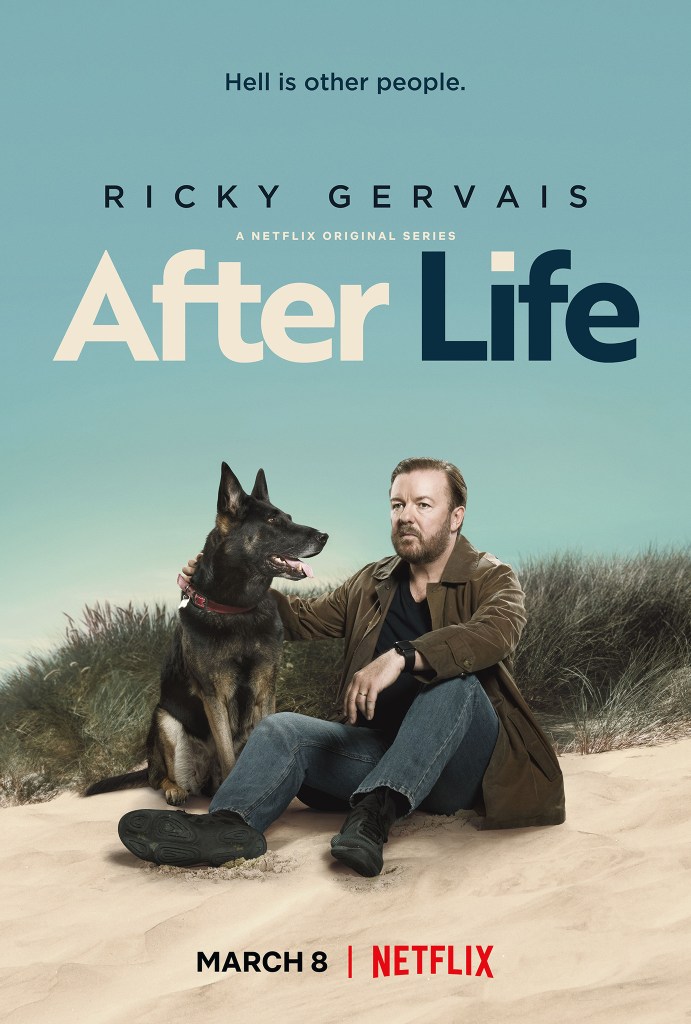





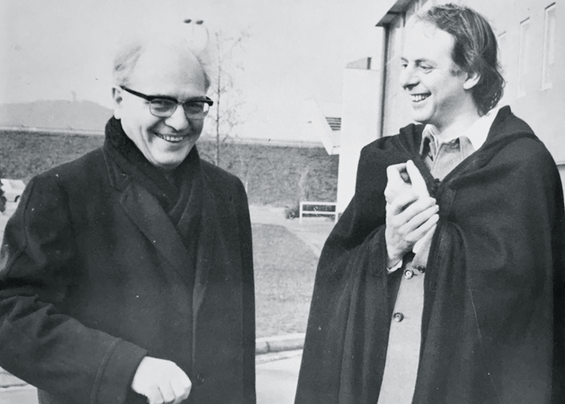



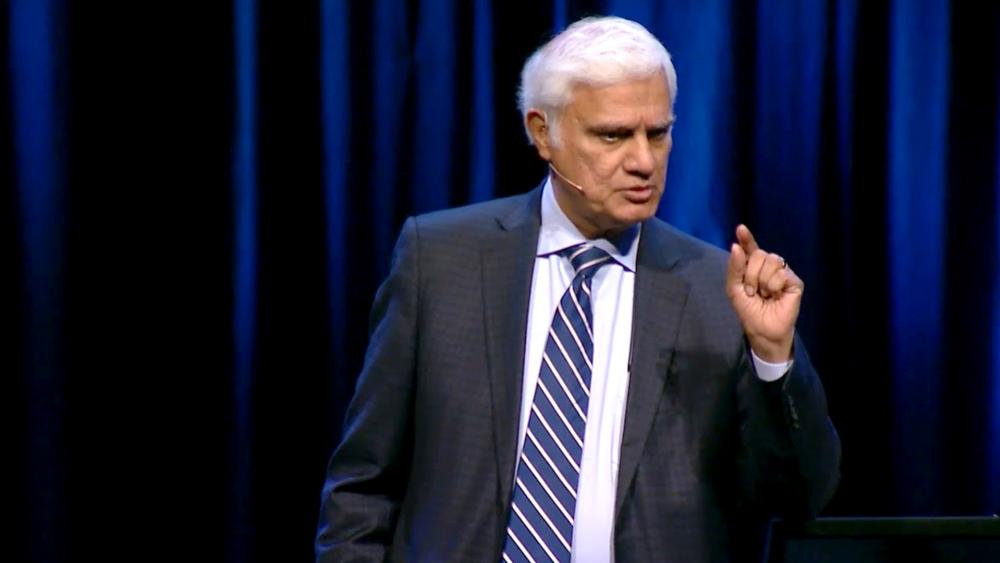


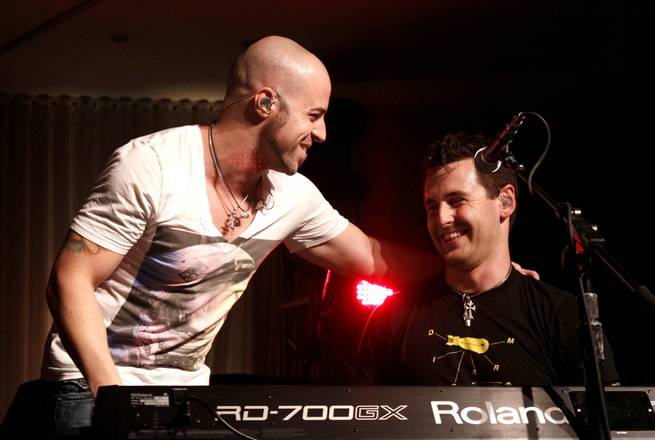


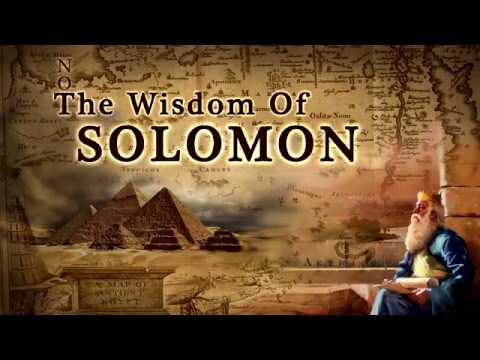


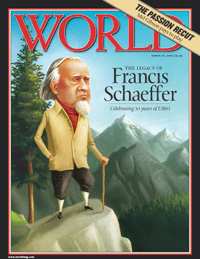






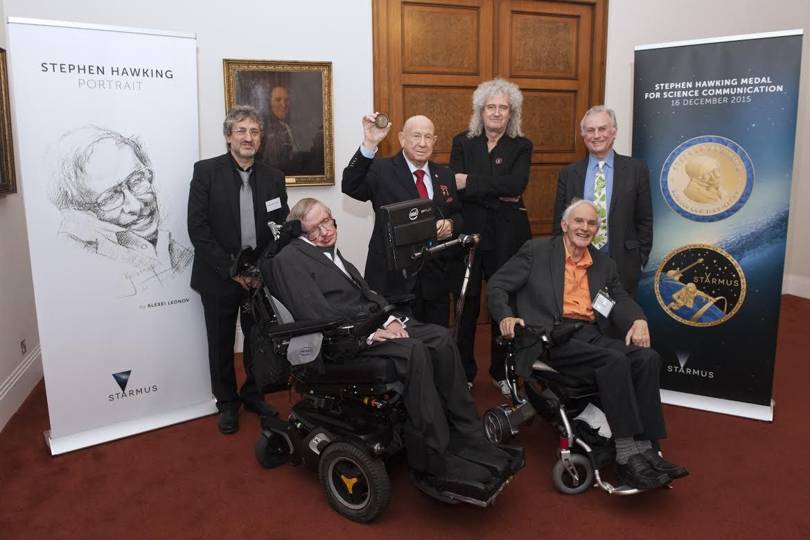


.png)


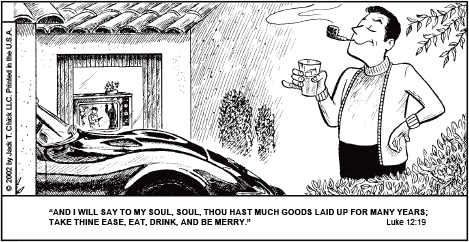 Page 2
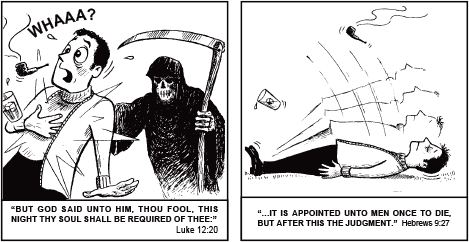 Page 3
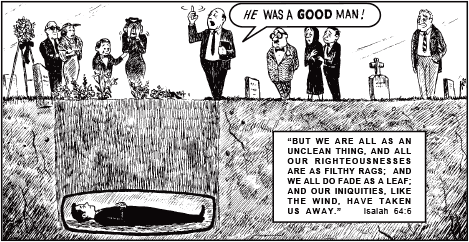 Page 4
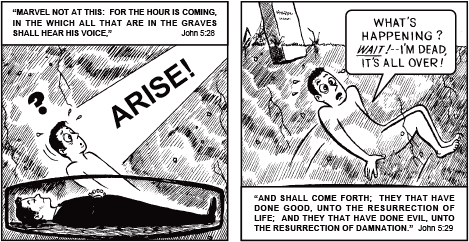 Page 5
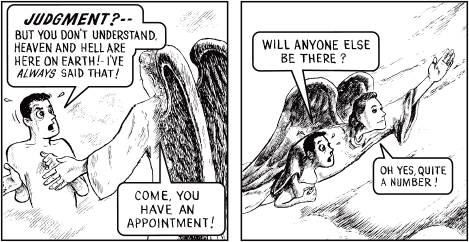 Page 6
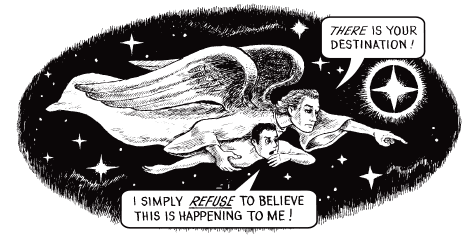 Page 7
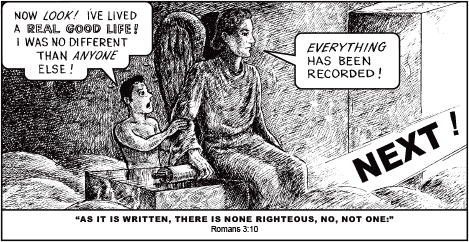 Page 8
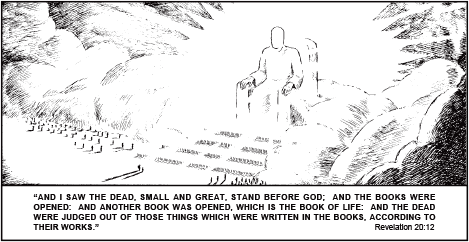 Page 9
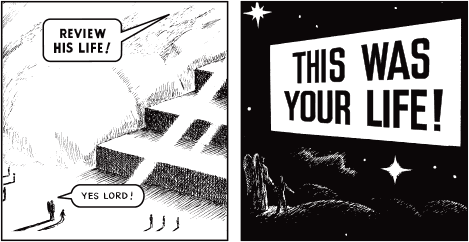 Page 10
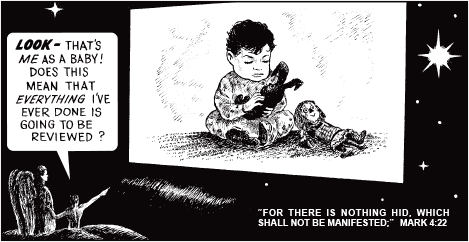 Page 11
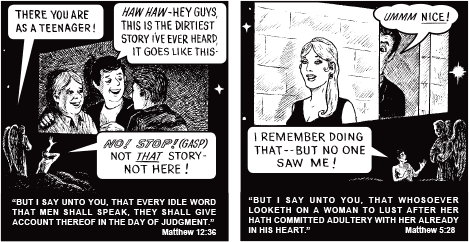 Page 12
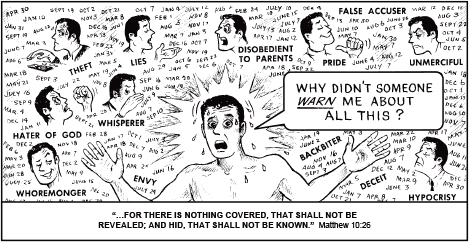 Page 13
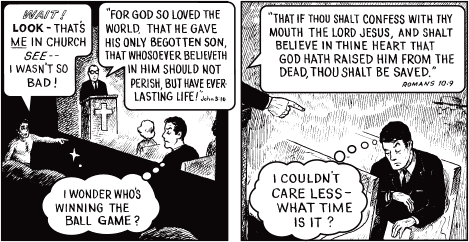 Page 14
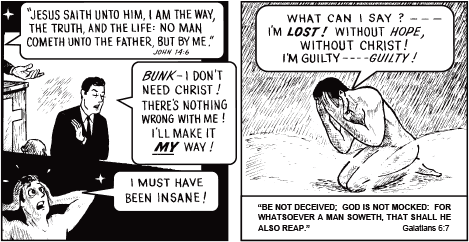 Page 15
 Page 16
 Page 17
 Page 18
 Page 19
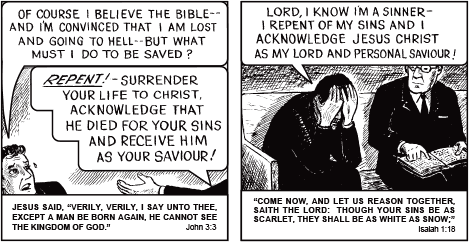 Page 20
 Page 21
 Page 22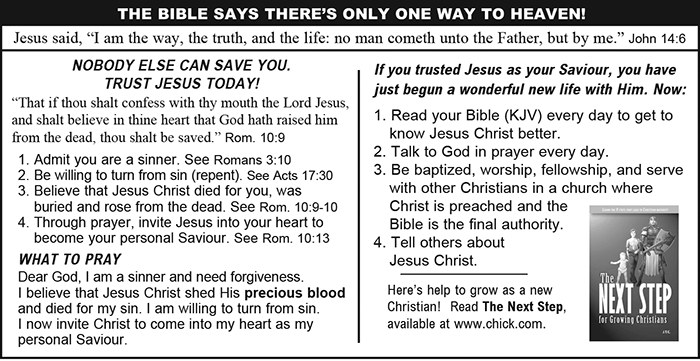
 How accurate is the Old Testament we hold in our hands? It’s popular today to attack the accuracy of the Bible on the grounds of its lack of effective transmission. Popular authors claim the Bible we have today has simply been copied too many times, with too many textual errors, to be believed as the very words of God handed down to us over the millennia.
 With all the careful scribal work a shockingly few number of Old Testament ancient manuscripts exist until today.The silver amulet scroll is by far the oldest. The scroll was mentioned as #4 in this top ten series. The amulet scroll dates way back to 600 BC. This is fantastic but it is only a couple verses of the entire Bible. So we can get a feel for the accuracy of those couple verses but not be able to get a good representative sample for the entirety of Scripture.
 Codex Aleppo is the oldest entire Old Testament possessed by humanity. The manuscript dates to around 900AD. The priceless manuscript is indeed magnificent. When analyzing the more than 2.7 million writing details that make up the Old Testament, the manuscript appears to be very precise in its creation. Although we have such a beautiful manuscript, the elephant in the room is that this manuscript dates from 900AD. Many New Testament manuscripts are older than our oldest Old Testament manuscript. Most of the Old Testament was written over 1500 years before Codex Aleppo.
 The greatest biblically relevant archaeological discovery, made in the winter of 1946-47, would shake up the biblical and archaeological world. John C. Trever has done a good job reconstructing the story of the scrolls from several interviews with the Bedouin people.
 The scrolls were first taken to a dealer named Ibrahim ‘ljha in Bethlehem. In one of those famous dumb moments of history ‘ljha returned them saying they were worthless. Undaunted, thankfully, the Bedouin went to a nearby market, where a Syrian Christian offered to buy them. A sheikh joined their conversation and suggested they take the scrolls to a part-time antiques dealer. The Bedouin left one scroll with the dealer and then sold three scrolls to another for the ridiculous sum of $29!
 After examining the scrolls and suspecting their astronomical worth, he expressed interest in purchasing them. Four scrolls found their way into his hands. More scrolls continued to arrive on the scene. By the end of 1948, nearly two years after their first discovery, scholars had yet to locate the source of the manuscripts.
 Archaeologists were able to track down the origin of the first scrolls and together with the Bedouins ended up finding a total of 972 manuscripts from 11 different caves. All 11 caves are in the southeastern Dead Sea area of Israel. The area receives almost no rainfall making it a perfect climate for ancient manuscripts to last thousands of years without decomposing.
 The scrolls, for some insane reason, were put up for sale in the Wall Street Journal on June 1, 1954. They were purchased for $250,000 and brought to Jerusalem where they eventually became housed in a museum called the Shrine of the Book where they reside today when not circulating in museums around the world. The scrolls today are considered priceless. Just to purchase a replica facsimile copy of 3 of the scrolls currently will run you $60,000 (a donation of replica scrolls to Parchment & Pen will not be turned down).
 The scrolls are still, after decades, a discovery still being digested. The 972 manuscripts have shed great light on the accuracy and complexity of the Old Testament. The Isaiah Scroll, in comparison to Codex Aleppo and other manuscripts, show that the message of the Old Testament has not been changed over millennia. More articles and books have been written about the Dead Sea Scrolls than any other archaeological discovery with biblical significance. The scrolls are shedding a great deal of light on the Jewish religious world of roughly 200BC-90AD. The scrolls are generally showing the modern-day Old Testament to be an extremely accurate representation of the original writers.
 Google has announced a new deal with the Israeli Antiquities Authority to photograph all of the scrolls in order to make high-resolution photos available to anyone online for free. The scrolls continue to amaze and delight us; where we once had only a couple fragments of the ancient Old Testament we now enjoy an abundant library.


 The year is 701BC. Sennacherib, the King of Assyria, has destroyed nearly every prominent town in the southern kingdom of Judah. Israel lies in ruins. Sennacherib thrusts the power of the Assyrian army toward the all-important city of Jerusalem. Jerusalem houses the God of the Jews. The defeat of Jerusalem would be a large strategic and symbolic victory.
 The people of Jerusalem had a secret. They had been involved in one of the greatest engineering feats of the ancient world. It’s amazing what humans can accomplish when their backs are against the wall. The inhabitants of Jerusalem, facing certain death, found a secret way to get a constant source of water into Jerusalem. The Bible, in three areas, briefly mentions our #7 discovery:
 The tunnel provides a constant stream of water through the city of Jerusalem. The tunnel takes water from the Gihon Spring and empties out at a place called the Pool of Siloam. The tunnel, surprisingly, does not follow the most direct route from the spring to the pool. The tunnel travels in an s-shape. If the tunnel was straight it would have only needed to have been 1070 feet, or 40% shorter. While the tunnel is far underground (appx 131 feet underground), the slope of the tunnel is precise. The tunnel slopes at a steady 0.6% grade. Once inside the tunnel another surprise is apparent. The head room within the tunnel varies considerably. The tunnel is always about as wide as a man’s shoulders. At the beginning of the tunnel the head room is pretty tight causing people to have to walk through it a bit hunched over. The last 160 feet of the tunnel, however, the ceiling soars up to 17 feet tall.
 Toward one end of the tunnel, amazingly, an ancient Hebrew inscription was found on the wall. The inscription commemorates the point when two teams, digging from each end, finally met in the middle. The inscription reads:
 If you ever get the chance to visit Jerusalem I highly recommend you take the time, walk down the steep hill from the temple mount and walk through Hezekiah’s Tunnel. Most famous archaeological discoveries are only observable behind the glass of a museum. Hezekiah’s Tunnel is the equivalent of an amusement park. Many tours to Israel, unfortunately, do not include in the itinerary a walk through the tunnel. Others make the tunnel an optional part of the trip. Yes, if you are claustrophobic you might not like some of the portions of the tunnel. Yes, your feet may become numb as you walk through the cold spring water. Remember what was on the line for the people constructing the tunnel. Be successful or your friends, your parents, your kids, your wife may all be dead soon. Step into Hezekiah’s day and walk through the tunnel with the absolute awe of people who trusted in God and worked their heart out.


 The Daily Hatch
.jpg)


_MET_DT203424.jpg)


