Tag Archives: Robert M. Price

RESPONDING TO HARRY KROTO’S BRILLIANT RENOWNED ACADEMICS!! Part 67 Michio Kaku, Physics Dept, City College of New York, “Remarkable claims require remarkable proof”

___

On November 21, 2014 I received a letter from Nobel Laureate Harry Kroto and it said:

…Please click on this URL http://vimeo.com/26991975

and you will hear what far smarter people than I have to say on this matter. I agree with them.

Harry Kroto

_________________

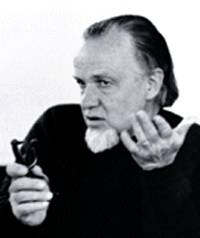
Below you have picture of Dr. Harry Kroto:

______________

I have attempted to respond to all of Dr. Kroto’s friends arguments and I have posted my responses one per week for over a year now. Today I look at Michio Kaku but here are some of my earlier posts:

Sir David AttenboroughMark Balaguer, Patricia ChurchlandAaron CiechanoverNoam Chomsky,Alan DershowitzHubert Dreyfus, Bart EhrmanIvar Giaever , Roy GlauberRebecca GoldsteinDavid J. Gross,  Brian Greene, Susan GreenfieldAlan Guth, Jonathan HaidtHermann HauserRoald Hoffmann,  Bruce HoodHerbert Huppert,  Gareth Stedman JonesShelly KaganStuart Kauffman,  Lawrence KraussHarry Kroto, Elizabeth Loftus,  Alan MacfarlanePeter MillicanMarvin MinskyLeonard Mlodinow,  Yujin NagasawaDouglas Osheroff,   Saul PerlmutterHerman Philipse,  Robert M. PriceLisa RandallLord Martin Rees,  Oliver SacksMarcus du SautoySimon SchafferJ. L. Schellenberg,   Lee Silver Peter Singer,  Walter Sinnott-ArmstrongRonald de Sousa, Victor StengerBarry Supple,   Leonard Susskind, Raymond TallisNeil deGrasse Tyson,  .Alexander Vilenkin, Sir John WalkerFrank WilczekSteven Weinberg, and  Lewis Wolpert,

Michio Kaku

From Wikipedia, the free encyclopedia
Michio Kaku
Michio Kaku Presentation.jpg

Michio Kaku giving a talk at Campus Party Brasilon February 11, 2012
Born January 24, 1947 (age 67)
San Jose, California, United States
Residence New York City, New York, U.S.
Nationality American
Fields Theoretical physics
Institutions City University of New York
New York University
Institute for Advanced Study
Alma mater Harvard University (A.B., 1968)
University of California, Berkeley(Ph.D., 1972)
Doctoral advisor Stanley Mandelstam
Known for String field theory, popular science
Notable awards Klopsteg Memorial Award (2008)
Website
http://mkaku.org/home/

Michio Kaku (/ˈmi ˈkɑːk/; born January 24, 1947) is an American communicator and popularizer of science, futurist, theoretical physicist, and Henry Semat Professor of Theoretical Physics at the City College of New York. He has written several books about physics and related topics, has made frequent appearances on radio, television, and film, and writes extensive online blogs and articles. He has written three New York Times Best Sellers: Physics of the Impossible (2008), Physics of the Future (2011), and The Future of the Mind (2014). Kaku has hosted several TV specials for the BBC, the Discovery Channel, the History Channel, and the Science Channel.

___

In  the second video below in the 71st clip in this series are his words and  my response is below them. 

50 Renowned Academics Speaking About God (Part 1)

Another 50 Renowned Academics Speaking About God (Part 2)

A Further 50 Renowned Academics Speaking About God (Part 3)

Below is my letter to Dr. Kaku and evidence that I provided to him that answered his quest for remarkable proof.

April 7, 2015

Dr. Michio Kaku,  Professor of Physics, THE CITY COLLEGE OF NEW YORK, New York, NY 10031,

Dear Kaku,

I noticed that you went to Christian schools when growing up and heard that on the program CLOSER TO TRUTH and  that is what me started reading your material. Let me start off by saying that this is not the first time that I have written you. Earlier I shared several letters of correspondence I had with Carl Sagan, and Antony Flew. Both men were strong believers in evolution as you are today. Instead of talking to you about their views today I wanted to discuss the views of you and Charles Darwin. 

TWO THINGS MADE ME THINK OF YOU RECENTLY. On April 5, 2015 at the Fellowship Bible Church Easter morning service in Little Rock, Arkansas our pastor Mark Henry described DOUBTING THOMAS and that description made me think of you.  Moreover, your skeptical view towards  Christianity reminds me of CHARLES DARWIN’S growing doubts throughout his life on these same theological issues such as skepticism in reaction to the claims of the Bible!!!

I’m an evangelical Christian and you are a secularist but I am sure we can both agree with the apostle Paul when he said in First Corinthians 15 that if Christ did not rise from the dead then Christians are to be most pited!!!! I attended Easter services this week and this issue came up and Mark Henry asserted that there is plenty of evidence that indicates that the Bible is historically accurate. Did you know that CHARLES DARWIN thought about this very subject quite a lot?

I just finished reading the online addition of the book Darwin, Francis ed. 1892. Charles Darwin: his life told in an autobiographical chapter, and in a selected series of his published letters [abridged edition]. London: John Murray. There are several points that Charles Darwin makes in this book that were very wise, honest, logical, shocking and some that were not so wise. The Christian Philosopher Francis Schaeffer once said of Darwin’s writings, “Darwin in his autobiography and in his letters showed that all through his life he never really came to a quietness concerning the possibility that chance really explained the situation of the biological world. You will find there is much material on this [from Darwin] extended over many manufacturers years that constantly he was wrestling with this problem.”

Your QUOTE from your tv program:


To get everlasting life in heaven, you have to trust that heaven actually exists. Speaking as a scientist, I think that there is a problem with regards to the afterlife and religious immortality, and that is there’s no proof that it exists. Remarkable claims require remarkable proof. But maybe you don’t need proof. Well, I do.

Quotes like this indicate to me that you are a DOUBTING THOMAS type. YOU MAY FIND IT INTERESTING THAT CHARLES DARWIN WAS ALSO INTERESTED IN THE HISTORICAL ASPECT OF THE BIBLE. When I read the book  Charles Darwin: his life told in an autobiographical chapter, and in a selected series of his published letters, I also read  a commentary on it by Francis Schaeffer and I wanted to both  quote some of Charles Darwin’s own words to you and then include the comments of Francis Schaeffer on those words. I have also enclosed a CD with two messages from Adrian Rogers and Bill Elliff concerning Darwinism.

Charles Darwin observed:

“But I was very unwilling to give up my belief; I feel sure of this, for I can well remember often and often inventing day-dreams of old letters between distinguished Romans, and manuscripts being discovered at Pompeii or elsewhere, which confirmed in the most striking manner all that was written in the Gospels.

Francis Schaeffer commented:

This is very sad. He lies on his bunk and the Beagle tosses and turns and he makes daydreams, and his dreams and hopes are that someone would find in Pompeii or some place like this, an old manuscript by a distinguished Roman that would put his stamp of authority on it, which would be able to show that Christ existed. This is undoubtedly what he is talking about. Darwin gave up this hope with great difficulty. I think he didn’t want to come to the position where his accepted presuppositions were driving him. He didn’t want to give it up, just as an older man he understood where it would lead and “man can do his duty.” Instinctively this of brains understood where this whole thing was going to eventually go…

SINCE CHARLES DARWIN’S DEATH WE NOW HAVE LOTS OF HISTORICAL RECORDS AND MUCH EVIDENCE FROM THE FIELD OF ARCHAEOLOGY THAT SHOW THE BIBLE IS HISTORICALLY ACCURATE.

**************TAKE TIME TO CONSIDER THIS EVIDENCE BELOW********************

I  have been amazed at the prophecies in the Bible that have been fulfilled in history, and also many of the historical details in the Bible have been confirmed by archaeology too. One of the most amazing is the prediction that the Jews would be brought back and settle in Jerusalem again. Another prophecy in Psalms 22 describes the Messiah dying on a cross  almost 1000 years before the Romans came up with this type of punishment.

Many times it has been alleged that the author of the Book of Daniel was from a later period but how did a later author know these 5 HISTORICAL FACTS? How did he know [1] that Belshazzar was ruling during the last few years of the Babylonian Empire when the name “Belshazzar” was lost to history until 1853 when it was uncovered in the monuments? [2] The author also knew that the Babylonians executed individuals by casting them into fire, and that the Persians threw the condemned to the lions. [3] He knew  the practice in the 6th Century was to mention first the Medes, then the Persians and not the other way around. [4] Plus he knew the laws made by Persian kings could not be revoked and [5] he knew that in the sixth century B.C., Susa was in the province of Elam (Dan. 8:2). Of course, the Book of Daniel (2:37-42) clearly predicted the rise of the 4 world empires in the correct order of Babylon, Medo-Persia, Greece, and Rome.

One of the top 10 posts on my blog on this next subject concerning Tyre.   John MacArthur went through every detail of the prophecy concerning Tyre and how history shows the Bible prophecy was correct.  Sagan said he had taken a look at Old Testament prophecy and it did not impress him because it was too vague.

HOW CAN ANYONE SAY THAT THIS FOLLOWING PROPHECY CONCERNING TYRE IS “TOO VAGUE?”

Below is an outline from a sermon from Dr. John MacArthur

Photo of John MacArthur

________________

John MacArthur on the amazing fulfilled prophecy on Tyre and how it was fulfilled by historical events.

LESSON

I. BIBLICAL PROPHECY CONCERNING TYRE (Ezekiel 26:1–28:19)

A. The Forecast

1. The specifics

a) That King Nebuchadnezzar of Babylon would destroy the mainland city of Tyre (26:7-8).

b) That many nations would rise up against Tyre. These nations would come like waves of the sea, one after another (26:3- 4).

c) That Tyre will be made like a flat rock (26:4, 14).

d) That fisherman will dry their nets there (26:5, 14).

e) That the rubble of the city would be cast into the sea (26:12).

f) That Tyre would never be rebuilt (26:14).

2. The setting

Tyre was a great city. It was one of the largest and most powerful cities of Phoenicia, which is modern day Lebanon.

It was well fortified. A great wall protected the city from land attacks while their world-renowned fleet protected them from attack by sea.

Tyre was a flourishing city during the time when Joshua led Israel into the Promised Land. King Hiram, who began his reign during the rule of David, offered David cedars from Tyre to build his palace. He also loaned David his artisans to craft parts of the great palace (1 Chron. 14:1). Hiram also helped Solomon build the Temple by floating cedars down the shoreline to be picked up and hauled to Jerusalem (2 Chron. 2:16). So Tyre was a great city, and both David and Solomon looked to it for aid.

B. The Fulfillment

1. The prophetic call

a) To Nebuchadnezzar

Not long after the prophecy given by Ezekiel, Nebuchadnezzar did exactly what had been predicted–he laid siege against the city in 585 B.C. For thirteen years Nebuchadnezzar cut off the flow of supplies into the city. In 537 B.C. he finally succeeded in breaking the gates down, but found the city almost empty.

During the thirteen-year siege, the people of Tyre moved all their possessions by ship to an island one-half mile offshore. So Nebuchadnezzar gained no plunder (Ezek. 29:17- 20). Although he destroyed the mainland city (Ezek. 26:8), the new city offshore continued to flourish for 250 years. The prophecy of Ezekiel 26:12–“they shall lay thy stones and thy timber and thy dust in the midst of the water”–remained unfulfilled.

b) To Alexander the Great

At age twenty-two, Alexander the Great came east conquering the known world with an army of between thirty and forty thousand men. Having defeated the Persians under Darius III, Alexander was on the march toward Egypt.

(1) The dilemma

Alexander arrived in the Phoenician territory and demanded that the cities open their gates to him. The citizens of Tyre refused, feeling they were secure on their island with their superior fleet.

(2) The decision

Realizing he did not have a fleet that could match Tyre’s, Alexander decided to build a causeway to the island using the ruins from the mainland city. It was about two hundred feet wide. The prophet said that the city would be thrown into the water, and that’s exactly what happened.

(3) The details

Arrian, a Greek historian, wrote about the overthrow of Tyre and how it was accomplished (The Campaigns of Alexander [New York: Penquin, 1958], pp. 132-43). The fortification of Tyre resembled Alcatraz. The city sat offshore like a rock with walls that came down to the edge of the water. Alexander set out to build the only means to approach the city–a land peninsula. Soldiers started pitching rubble into the water, leveling it off as they went so they could march on it. The water got deeper as they approached the island, and to make their task even more difficult, the people of Tyre bombarded them with missiles.

Werner Keller in The Bible as History tells us that to safeguard the operation, Alexander built mobile shields called “tortoises” (New York: Bantam, 1956], p. 361). Knowing that when they reached the city they would have to scale the walls, Alexander built “Hele-poleis,” which were mobile siege towers 160 foot high. The idea was to roll these structures across the causeway and push them up against the walls. A drawbridge on the front of the towers enabled the soldiers to march across the top of the walls and into the city.

Alexander’s men were under constant attack from people within the city and from the Tyrian navy. Realizing that he needed ships to defend his flanks, Alexander returned to the cities he had conquered and demanded their assistance. That fulfilled the prophecy that God “will cause many nations to come up against thee, as the sea causeth its waves to come up” (Ezek. 26:3).

(4) The destruction

Alexander’s plan succeeded. Eight thousand people were slain and thirty thousand were sold into slavery. It took Alexander seven months to conquer Tyre. The causeway he built can be seen to this day.

2. The prophetic result

How did Ezekiel know all those things would happen? The only explanation is he expressed the mind of God. Historian Philip Myers said, “Alexander the Great reduced it [Tyre] to ruins (332 B.C.). She recovered in a measure from this blow, but never regained the place she had previously held in the world. The larger part of the site … is now as bare as the top of a rock–a place where the fishermen that still frequent the spot spread their nets to dry” (General History for Colleges and High Schools [Boston: Ginn and Co., 1889], p. 55). That fulfills the prophecies of Ezekiel 26:4-5, 14. The island city was repopulated, later to be destroyed by the Moslems in A.D. 1281. However, God said the mainland city would never be rebuilt–and it never has. Jerusalem has been rebuilt many times but Tyre will never be rebuilt because a prophet in Babylon said twenty-five centuries ago, “Thou shalt be built no more” (Ezek. 26:14).

___________________

ANY HISTORIAN CAN HAVE ACCESS TO ALL OF THESE RECORDS. WHY NOT TAKE A FEW MOMENTS AND CHECK OUT THESE FACTS YOURSELF? As a secularist you believe that it is sad indeed that millions of Christians are hoping for heaven but no heaven is waiting for them. Paul took a close look at this issue too:

I Corinthians 15 asserts:

12 But if it is preached that Christ has been raised from the dead, how can some of you say that there is no resurrection of the dead? 13 If there is no resurrection of the dead, then not even Christ has been raised. 14 And if Christ has not been raised, our preaching is useless and so is your faith. 15 More than that, we are then found to be false witnesses about God, for we have testified about God that he raised Christ from the dead. But he did not raise him if in fact the dead are not raised. 16 For if the dead are not raised, then Christ has not been raised either. 17 And if Christ has not been raised, your faith is futile; you are still in your sins. 18 Then those also who have fallen asleep in Christ are lost. 19 If only for this life we have hope in Christ, we are of all people most to be pitied.

I sent you a CD that starts off with the song DUST IN THE WIND by Kerry Livgren of the group KANSAS which was a hit song in 1978 when it rose to #6 on the charts because so many people connected with the message of the song. It included these words, “All we do, crumbles to the ground though we refuse to see, Dust in the Wind, All we are is dust in the wind, Don’t hang on, Nothing lasts forever but the Earth and Sky, It slips away, And all your money won’t another minute buy.”

Kerry Livgren himself said that he wrote the song because he saw where man was without a personal God in the picture. Solomon pointed out in the Book of Ecclesiastes that those who believe that God doesn’t exist must accept three things. FIRST, death is the end and SECOND, chance and time are the only guiding forces in this life.  FINALLY, power reigns in this life and the scales are never balanced. The Christian can  face death and also confront the world knowing that it is not determined by chance and time alone and finally there is a judge who will balance the scales.

Both Kerry Livgren and the bass player Dave Hope of Kansas became Christians eventually. Kerry Livgren first tried Eastern Religions and Dave Hope had to come out of a heavy drug addiction. I was shocked and elated to see their personal testimony on The 700 Club in 1981 and that same  interview can be seen on You Tube today. Livgren lives in Topeka, Kansas today where he teaches “Diggers,” a Sunday school class at Topeka Bible ChurchDAVE HOPE is the head of Worship, Evangelism and Outreach at Immanuel Anglican Church in Destin, Florida.

The answer to find meaning in life is found in putting your faith and trust in Jesus Christ. The Bible is true from cover to cover and can be trusted.

Thank you again for your time and I know how busy you are.

Everette Hatcher, everettehatcher@gmail.com, http://www.thedailyhatch.org, cell ph 501-920-5733, Box 23416, LittleRock, AR 72221, United States

Is the Bible historically accurate? Here are some of the posts I have done in the past on the subject: 1. The Babylonian Chronicleof Nebuchadnezzars Siege of Jerusalem2. Hezekiah’s Siloam Tunnel Inscription. 3. Taylor Prism (Sennacherib Hexagonal Prism)4. Biblical Cities Attested Archaeologically. 5. The Discovery of the Hittites6.Shishak Smiting His Captives7. Moabite Stone8Black Obelisk of Shalmaneser III9A Verification of places in Gospel of John and Book of Acts., 9B Discovery of Ebla Tablets10. Cyrus Cylinder11. Puru “The lot of Yahali” 9th Century B.C.E.12. The Uzziah Tablet Inscription13. The Pilate Inscription14. Caiaphas Ossuary14 B Pontius Pilate Part 214c. Three greatest American Archaeologists moved to accept Bible’s accuracy through archaeology.

You can hear DAVE HOPE and Kerry Livgren’s stories from this youtube link:

(part 1 ten minutes)

(part 2 ten minutes)

Kansas – Dust in the Wind (Official Video)

Uploaded on Nov 7, 2009

Pre-Order Miracles Out of Nowhere now at http://www.miraclesoutofnowhere.com

About the film:
In 1973, six guys in a local band from America’s heartland began a journey that surpassed even their own wildest expectations, by achieving worldwide superstardom… watch the story unfold as the incredible story of the band KANSAS is told for the first time in the DVD Miracles Out of Nowhere.

_____________________________

Adrian Rogers on Darwinism

_________________________________

Related posts:

FRANCIS SCHAEFFER ANALYZES ART AND CULTURE Part 53 THE BEATLES (Part E, Stg. Pepper’s and John Lennon’s search in 1967 for truth was through drugs, money, laughter, etc & similar to King Solomon’s, LOTS OF PICTURES OF JOHN AND CYNTHIA) (Feature on artist Yoko Ono)

The John Lennon and the Beatles really were on a long search for meaning and fulfillment in their lives  just like King Solomon did in the Book of Ecclesiastes. Solomon looked into learning (1:12-18, 2:12-17), laughter, ladies, luxuries, and liquor (2:1-2, 8, 10, 11), and labor (2:4-6, 18-20). He fount that without God in the picture all […]

FRANCIS SCHAEFFER ANALYZES ART AND CULTURE Part 52 THE BEATLES (Part D, There is evidence that the Beatles may have been exposed to Francis Schaeffer!!!) (Feature on artist Anna Margaret Rose Freeman )

______________   George Harrison Swears & Insults Paul and Yoko Lucy in the Sky with Diamonds- The Beatles The Beatles:   I have dedicated several posts to this series on the Beatles and I don’t know when this series will end because Francis Schaeffer spent a lot of time listening to the Beatles and talking […]

FRANCIS SCHAEFFER ANALYZES ART AND CULTURE Part 51 THE BEATLES (Part C, List of those on cover of Stg.Pepper’s ) (Feature on artist Raqib Shaw )

  The Beatles in a press conference after their Return from the USA Uploaded on Nov 29, 2010 The Beatles in a press conference after their Return from the USA. The Beatles:   I have dedicated several posts to this series on the Beatles and I don’t know when this series will end because Francis […]

FRANCIS SCHAEFFER ANALYZES ART AND CULTURE Part 50 THE BEATLES (Part B, The Psychedelic Music of the Beatles) (Feature on artist Peter Blake )

__________________   Beatles 1966 Last interview I have dedicated several posts to this series on the Beatles and I don’t know when this series will end because Francis Schaeffer spent a lot of time listening to the Beatles and talking and writing about them and their impact on the culture of the 1960’s. In this […]

FRANCIS SCHAEFFER ANALYZES ART AND CULTURE Part 49 THE BEATLES (Part A, The Meaning of Stg. Pepper’s Cover) (Feature on artist Mika Tajima)

_______________ The Beatles documentary || A Long and Winding Road || Episode 5 (This video discusses Stg. Pepper’s creation I have dedicated several posts to this series on the Beatles and I don’t know when this series will end because Francis Schaeffer spent a lot of time listening to the Beatles and talking and writing about […]

FRANCIS SCHAEFFER ANALYZES ART AND CULTURE PART 48 “BLOW UP” by Michelangelo Antonioni makes Philosophic Statement (Feature on artist Nancy Holt)

_______________ Francis Schaeffer pictured below: _____________________ I have included the 27 minute  episode THE AGE OF NONREASON by Francis Schaeffer. In that video Schaeffer noted,  ” Sergeant Pepper’s Lonely Hearts Club Band…for a time it became the rallying cry for young people throughout the world. It expressed the essence of their lives, thoughts and their feelings.” How Should […]

FRANCIS SCHAEFFER ANALYZES ART AND CULTURE Part 47 Woody Allen and Professor Levy and the death of “Optimistic Humanism” from the movie CRIMES AND MISDEMEANORS Plus Charles Darwin’s comments too!!! (Feature on artist Rodney Graham)

Crimes and Misdemeanors: A Discussion: Part 1 ___________________________________ Today I will answer the simple question: IS IT POSSIBLE TO BE AN OPTIMISTIC SECULAR HUMANIST THAT DOES NOT BELIEVE IN GOD OR AN AFTERLIFE? This question has been around for a long time and you can go back to the 19th century and read this same […]

FRANCIS SCHAEFFER ANALYZES ART AND CULTURE PART 46 Friedrich Nietzsche (Featured artist is Thomas Schütte)

____________________________________ Francis Schaeffer pictured below: __________ Francis Schaeffer has written extensively on art and culture spanning the last 2000years and here are some posts I have done on this subject before : Francis Schaeffer’s “How should we then live?” Video and outline of episode 10 “Final Choices” , episode 9 “The Age of Personal Peace and Affluence”, episode 8 […]

FRANCIS SCHAEFFER ANALYZES ART AND CULTURE Part 45 Woody Allen “Reason is Dead” (Feature on artists Allora & Calzadilla )

Love and Death [Woody Allen] – What if there is no God? [PL] ___________ _______________ How Should We then Live Episode 7 small (Age of Nonreason) #02 How Should We Then Live? (Promo Clip) Dr. Francis Schaeffer 10 Worldview and Truth Two Minute Warning: How Then Should We Live?: Francis Schaeffer at 100 Francis Schaeffer […]

FRANCIS SCHAEFFER ANALYZES ART AND CULTURE Part 44 The Book of Genesis (Featured artist is Trey McCarley )

___________________________________ Francis Schaeffer pictured below: ____________________________ Francis Schaeffer “BASIS FOR HUMAN DIGNITY” Whatever…HTTHR Dr. Francis schaeffer – The flow of Materialism(from Part 4 of Whatever happened to human race?) Dr. Francis Schaeffer – The Biblical flow of Truth & History (intro) Francis Schaeffer – The Biblical Flow of History & Truth (1) Dr. Francis Schaeffer […]

__

___

FRANCIS SCHAEFFER ANALYZES ART AND CULTURE PART 100 (MANY CHRISTIANS ATTACKED THE BEATLES WHILE FRANCIS SCHAEFFER STUDIED THEIR MUSIC! Part A) Featured Artist is Klaus Voormann

__

Alistair Begg is critical of Christians in the 1960’s who rejected the Beatles without looking deeper into their music. However, Francis Schaeffer did not shy away from the Beatles music but actually studied up on it. Nancy Pearcey noted, “This small, intense man from the Swiss mountains delivered a message unlike any heard in evangelical circles in the mid-1960s. At Wheaton College, students were fighting to show films like Bambi, while Francis was talking about the films of Bergman and Fellini. Administrators were censoring existential themes out of student publications, while Francis was discussing Camus, Sartre, and Heidegger. He quoted Dylan Thomas, knew the artwork of Salvador Dali, listened to the music of THE BEATLES and John Cage.”


The Beatles Money (That’s What I Want) (Live) [HD]

The Beatles – Can’t Buy Me Love (Live)

The Beatles – From Me to You

In the last several years, writers and academics have begun to seriously analyze what pop culture icons say through their worldviews. Books have explored the philosophy of The Matrix, Buffy the Vampire Slayer, and Seinfeld and the gospel according to Tony Soprano and The Simpsons.

Alistair Begg, pastor of Ohio’s Parkside Church and the author of Made For His Pleasure (Moody), has been a longtime fan of The Beatles. He doesn’t suggest the band had a solid theology or an admirable worldview. Instead, he feels the band is important to look at now because it asked a lot of pertinent question in its music—and too many of those questions went unanswered.

Why is it important to understand what The Beatles were saying during their era?

They were on the forefront of a generation’s thinking. At the same time, they were able to articulate things and were given a voice. Without fully understanding it themselves, originally, they found themselves the mouthpiece of a generation. They were actually interpreting some of the angst, the hopes, and the fears of teenagers with mothers and fathers who didn’t understand.

Did The Beatles simply reflect culture or did they shape it?

For good or for ill, they were shaping culture. That’s true if you take the development of the music alone. Everything that they did pushed the frontiers out. This wasn’t only true in terms of the way in which they were recording material or the way in which they were writing melody lines, but it was actually in the lyrical content as well. Think about what Elvis Presley was singing about, or about what Chuck Berry was doing. It was all about love and different things like that. The Beatles got into a whole new business the further they went.

The Beatles first said money was everything (in the song “Money“), then they said that love could give you anything you want onFrom Me to You“, and then they recordCan’t Buy Me Love“. What do you see in this progression?

An American journalist asked Paul in 1966 if “Can’t Buy Me Love” was actually about prostitution. There is this morbid fascination with the idea that these guys were coming from the bottom level of everything. It is a shame. It carried over into fundamentalist/evangelical response to their music at that time.

I’m not suggesting that The Beatles had a wonderful theology, or that their worldview was perfect. It clearly wasn’t. It left them high and dry on just about every front, eventually. But they weren’t simply writing cute little tunes. They were beginning to take seriously the platform that they’d been given. That’s why so many people found them offensive; it was because of the things that they were prepared to tackle.

What do you see when looking closely at what The Beatles were saying or looking for in their songs?

If you take Lennon’s “IN MY LIFE,” you have the tender side of John Lennon coming out, a side that many people missed completely.

When they went in and got Lennon’s belongings after his untimely death, one of the closest family friends found a huge notebook, which contained virtually all of Lennon’s handwritten lyrics for everything he’d done, including this song. It was clear that what had happened to Lennon is that as the fame thing had come, a sense of nostalgia crept into his life. He started to remember the places in the past.

It was always sad to me that people couldn’t see that he was crying out for something. I just always felt that in Lennon you had this guy who every so often would open the door to himself ever so slightly. Every time he opened up, it never seemed to be a Christian response to say, “Hey, we’ve got an angle on that. We’d love to talk to you about that.” It was always, “Hey, get out of here, you long-haired nuisance. You’re destroying the youth of Great Britain and corrupting the life of America.” We did this in the ’60s and, frankly, we’re doing it again now.

Speaking of the religious community’s reaction to Lennon, there was a huge fervor after his comment that The Beatles were bigger than Jesus. But in an interview after that event, he said, “I wasn’t saying The Beatles are better than Jesus or God or Christianity, I was using the name Beatles … as an example. But I could have said TV or cinema or anything else that’s popular. Or motor cars are bigger than Jesus.”

It’s a shame that it served the agenda of certain people to misunderstand the quote. What Lennon was saying is what people might justifiably say today about all kinds of idols and icons in relationship to young people in particular. He was in some ways bemoaning the fact. He was honest enough to say what has happened here is a phenomenon that is way beyond anything that we could ever have conceived. The response, of course, was not particularly attractive—such as when the band hit Dallas and all those youth pastors came out to welcome them with bonfires.

While there were things that needed to be addressed in pop culture—and there always will be—I think we missed an opportunity. Later on, we see them involved with a maharishi yogi. You see Harrison’s interest in mysticism. While we can’t lay the charge at the feet of the Christians, nevertheless it is a sad thing that there was nobody there who had gained a platform to them at a time when they were willing to listen. The interviewer asked about the song “Help.” He said, “I wrote “Help” in ’65, and people hailed it as another advance in rock & roll. It was the cry of my heart and nobody came to answer.”

This is just a picture of what we’re dealing with every day in all of our lives. Lennon, the drummer in Smashing Pumpkins, and Kurt Cobain are only big, dramatic examples of the interaction that all of us have with kids. I want to encourage Christians to get serious about being real about Jesus Christ. Listen to music so that you can talk to people about it rather than sloganeering and banging the drum for the same old stuff.

In the video THE AGE OF NON-REASON Schaeffer noted,  ” Sergeant Pepper’s Lonely Hearts Club Band…for a time it became the rallying cry for young people throughout the world. It expressed the essence of their lives, thoughts and their feelings.” 

How Should We then Live Episode 7 small (Age of Nonreason)

_______________

The Beatles- In My Life-HQ

Uploaded on Oct 30, 2011

THE BEATLES
“In My Life”
(Lennon/McCartney)
There are places I remember
All my life though some have changed
Some forever not for better
Some have gone and some remain
All these places have their moments
With lovers and friends I still can recall
Some are dead and some are living
In my life I’ve loved them all
But of all these friends and lovers
There is no one compares with you
And these memories lose their meaning
When I think of love as something new
Though I know I’ll never lose affection
For people and things that went before
I know I’ll often stop and think about them
In my life I love you more
Though I know I’ll never lose affection
For people and things that went before
I know I’ll often stop and think about them
In my life I love you more

In My Life – Sean Connery

________________

Featured artist today is Klaus Voorman

Klaus Voormann

From Wikipedia, the free encyclopedia
Klaus Voormann
ManfredMannDaveBerry.jpg

Tom McGuinness, Dave Berry, Klaus Voormann, Mike Hugg, Manfred Mann, Mike d’Abo (Schiphol Airport, 1967)
Background information
Born 29 April 1938 (age 77)
Berlin, Germany
Origin Hamburg, Germany
Genres Rock ‘n’ roll, rhythm and blues
Occupation(s) Musician, record producer,graphic artist
Instruments Bass guitar, upright bass, guitar, flute, saxophone, keyboards
Years active 1964–present
Labels Apple, EMI, Fontana, Zapple,Epic, Sony, RCA Victor
Associated acts The Beatles, Paddy, Klaus & Gibson, Manfred Mann, Plastic Ono Band, George Harrison,Badfinger, Ringo Starr, Harry Nilsson, Carly Simon
Website www.klaus-voormann.com

Klaus Voormann (born 29 April 1938) is a German artist, musician, and record producer. He designed artwork for many bands including the Beatles, the Bee Gees, Wet Wet Wet and Turbonegro. His most notable work as a producer was his work with the band Trio, including their worldwide hit “Da Da Da“. As a musician, Voormann is best known for being the bassist for Manfred Mann from 1966 to 1969, and for performing as a session musician on a host of recordings, including many by former members of the Beatles.

His association with the Beatles dated back to their time in Hamburg in the early 1960s. He lived in the band’s London flat with George Harrison and Ringo Starr after John Lennon and Paul McCartney moved out to live with their respective partners, and designed the cover of their album Revolver,[1] for which he won a Grammy. Following the band’s split, rumours circulated of the formation of a group named the Ladders, consisting of Lennon, Harrison, Starr and Voormann. This failed to materialise, outside of all four Ladders (plus Billy Preston) performing on the Ringo Starr track “I’m the Greatest“, although Voormann did play on albums by Lennon, Harrison and Starr, and was for a time a member of the Plastic Ono Band.[1] In the 1990s, he designed the artwork for the Beatles Anthology albums.

In 2009, he released his debut solo album A Sideman’s Journey, which featured many notable musicians, including the two surviving members of the Beatles, performing as “Voormann and Friends”.

Early years[edit]

Klaus Voormann was born in Berlin, Germany, and raised in the suburbs of North Berlin. His father was a physician and he was one of six brothers. In his July 2010 interview on “Talking Germany”, Voormann discussed his dyslexia.[2]

The Voormann family were interested in art, classical music, and books, with a feeling for history and tradition. His parents decided that instead of studying music it would be best for Klaus to studycommercial art in Berlin at the “Meisterschule für Grafik und Buchgewerbe.” He later moved to Hamburg to study at the “Meisterschule für Gestaltung,” but before finishing his education in thegraphic arts, Voormann started work as a commercial artist, graphic designer and illustrator, spending eight months in Düsseldorf working for magazines.[3]

Hamburg poster for Rory Storm and the Beatles

It was in Hamburg that Voormann first met Astrid Kirchherr. After an argument with her and Jürgen Vollmer one day, Voormann wandered down the Reeperbahn, in the St. Pauli district of Hamburg, and heard music coming from the Kaiserkeller club. He walked in on a performance by Rory Storm and the Hurricanes. The next group to play was the Beatles. Voormann was left “speechless” by the performances. Voormann had never heard rock ‘n’ roll before, having previously only listened to traditional jazz, with some Nat King Cole and Platters mixed in.[4] Voormann invited Kirchherr and Vollmer to watch the performances the next day. After joining Voormann at a performance, the trio decided upon spending as much time as possible close to the group and immersing themselves in the music.[5]

The St. Pauli district was a dangerous section of town with typical illicit behaviour commonplace; an area where prostitutes were to be found, and anyone that looked different from the usual clientele hanging about took a risk. As a trio, Voormann, Kirchherr and Vollmer stood out in the Kaiserkeller, dressed in suede coats, wool sweaters, jeans and round-toed shoes, when most of the customers had greased-backTeddy boy hairstyles and wore black leather jackets and pointed boots.[6] During a break, Voormann tried to talk (in faltering English) to Lennon, and pressed a crumpled record sleeve he had designed into Lennon’s hands. Lennon took little interest, and brushed Voormann off, suggesting that he talk to Stuart Sutcliffe, who, Lennon said, “is the artist ’round here”.[6]

Sutcliffe did not share Lennon’s attitude, and was fascinated by the trio, who he thought looked like “real bohemians“. He later wrote that he could hardly take his eyes off them, and had tried to talk to them during the next break, but they had already left the club.[6] Sutcliffe managed to meet them eventually, and learned that all three had attended the “Meisterschule für Mode,” which was the Hamburg equivalent of the Liverpool art college that both Sutcliffe and Lennon had attended. Lennon dubbed the trio the Exies, as a joke about their affection for existentialism.[4]

Voormann was in a relationship with Kirchherr at the time, and lived just around the corner from her parents’ upper-class home in the Altona district of Hamburg. Kirchherr’s bedroom, which was all in black, including the walls and furniture, was decorated especially for Voormann. After the visits to the Kaiserkeller their relationship became purely platonic, as Astrid started dating Sutcliffe, who was fascinated by her, although she always remained a close friend of Voormann.[7]

London[edit]

In the early 1960s, Voormann decided to leave Germany and move to London. George Harrison invited him to live in the Green Street flat in London’s Mayfair, formerly shared by all four members of the Beatles, Lennon and McCartney having moved out: Lennon to live with his wife Cynthia Lennon, and McCartney to live in the attic of the home of Jane Asher‘s parents. Voormann lived with Harrison and Ringo Starr for a time before finding work as a commercial artist and renting an apartment of his own. He returned to Hamburg in 1963, where he founded a band with Paddy Chambers (guitar/vocals), Voormann (bass/vocals) and Gibson Kemp (drums) called Paddy, Klaus & Gibson.[8]

In 1966, Voormann returned to London and was asked by Lennon to design the sleeve for the album Revolver. Klaus had a style of “scrapbook collage” art in mind. When showing his efforts to the band and their manager, Brian Epstein, the band loved it, although Voormann’s payment for the album cover was £40.[citation needed] For this work, Klaus won the Grammy Award for Best Album Cover, Graphic Arts. Voormann later designed the cover art for Harrison’s 1988 single, “When We Was Fab“, which included the image of Harrison from the cover of Revolver along with an updated drawing in the same style.

Around the same time, another group was about to release their international debut album. The Bee Gees had recorded their first album, Bee Gees 1st, and Klaus was hired to design the cover for that album. The album cover featured all five group members standing above a colourful, psychedelic collage painted by Voormann. The following year, artwork by Klaus graced the front cover of the American edition of The Bee Gees‘ album Idea. In 1973, Voormann created the album sleeve and booklet artwork for Ringo Starr’s album Ringo, on which he also played bass.

Bassist[edit]

In 1966, at the same time that he was designing the cover of Revolver, Voormann became a member of the 1960s band Manfred Mann,[9] having turned down offers by The Hollies and The Moody Blues.[10][11] Voormann did substitute for Eric Haydock on a couple of TV shows (see List of The Hollies band members). He mentions his negotiations with the group in his biography: Warum spielst Du Imagine nicht auf dem weißen Klavier, John? Voormann played bass and flutes for Manfred Mann from 1966 to 1969, appearing on all their UK hits from “Just Like a Woman” (July 1966) to their final single “Ragamuffin Man” (April 1969) and including the 1968 international hit “The Mighty Quinn” (#1 UK, No. 10 US).[9]

After that, he became a session musician, playing on solo projects by Lou Reed, Carly Simon, James Taylor, and Harry Nilsson amongst others. Voormann was a member of Yoko Ono and Lennon’s Plastic Ono Band, with Ono, Alan White(future Yes drummer) and Eric Clapton, which played on the Live Peace in Toronto 1969 album, recorded in Toronto on 13 September 1969 prior to the break-up of the Beatles.[12]

In 1971 he moved to Los Angeles. In an interview with EMI about his album Walls and Bridges, Lennon was asked who was playing bass on the album. Lennon answered with a hard German accent: “Klaus Voormann. We all know Klaus, ja“. He also played in Harrison’s assembled band at the 1971 The Concert for Bangladesh; Harrison fittingly introduced him to the audience by saying, “There’s somebody on bass who many people have heard about, but they’ve never actually seen him – Klaus Voormann.”[13] After Harrison died, Voorman played bass as part of the supporting band on the song “All Things Must Pass“, in the Concert for George on 29 November 2002.

After the Beatles disbanded, there were rumours of them reforming as the Ladders, with Voormann on bass as a replacement for Paul McCartney.[14] An announcement to this effect filtered out of the Apple offices in 1971, but was ultimately withdrawn before it got very far.[14] This line-up (Voormann, Lennon, Harrison and Starr) did perform in various combinations on Lennon’s albums, John Lennon/Plastic Ono Band (1970) (Voormann, Lennon, and Starr) and Imagine (1971) (Voormann, Lennon & Harrison) as well as on Ringo Starr’s eponymous album Ringo, in 1973, and Yoko Ono’s Yoko Ono/Plastic Ono Band (1970) (Voormann, Lennon, Starr, and Ono). Starr’s album features the Lennon-penned “I’m The Greatest“, which is the only song on which all four musicians appear together, joined by Billy Preston. He also played on Lennon’s “Instant Karma!” single.[1]

In 1979 Voormann moved back to Germany; he had a cameo as Von Schnitzel the Conductor in the 1980 film adaptation of Popeye. He produced three studio albums and a live album by the German band Trio. He also produced their worldwide hit “Da Da Da”. After Trio broke up in 1986, he produced the first solo album by their singer Stephan Remmler and played bass on some songs of the album. The following year he produced a single by former Trio drummer Peter Behrens.

Retirement[edit]

Voormann retired from the music business in 1989, spending time with his family. He lives at Lake Starnberg,[15] near Munich with his second wife Christine and their two children, born in 1989 and 1991. From time to time he appears on TV shows, mainly when the shows are about the 1960s in general or the Beatles in particular, or when he is asked to talk about his famous album sleeve for Revolver. In 1995 Klaus was asked by Apple Records to design the covers for theBeatles Anthology albums. He painted the covers along with his friend, fellow artist Alfons Kiefer. In the 1994 movie Backbeat, about the Hamburg days of the Beatles, Voormann was portrayed by the German actor Kai Wiesinger.

In April 2003, Voormann designed the cover of Scandinavian Leather for the Norwegian band Turbonegro. In October 2003, Voormann published his autobiography, Warum spielst du Imagine nicht auf dem weißen Klavier, John? Erinnerungen an die Beatles und viele andere Freunde (Why Don’t You Play “Imagine” on the White Piano, John?: Memories of the Beatles and Many Other Friends). The book gives special focus to the 1960s and 1970s, and covers Voormann’s close friendship with the Beatles and other musicians and artists, as well as his private life. A 2005 BBC documentary, Stuart Sutcliffe: The Lost Beatle features interviews with Voormann and shows drawings he made of the Beatles in Hamburg. Also that year his book “For Track Stories” which contains his experiences with The Beatles during the Hamburg days, and stories narrated both in English and German, and pictures made by him. In 2007, Voormann designed the sleeve for the album Timeless by Wet Wet Wet. In 2008 he recorded the song “For What It’s Worth” with Eric Burdon and Max Buskohl.[citation needed]

On 17 July 2009 Klaus released his first solo album called A Sideman’s Journey. It was credited to “Voormann & Friends” and featured Paul McCartney, Ringo Starr, Yusuf Islam (formerly known as Cat Stevens), Don Preston, Dr. John, The Manfreds, Jim Keltner, Van Dyke Parks, Joe Walsh and many others. The album has been available in a limited number of audio CDs, vinyl LPs, and deluxe box sets with original (and signed) graphics by Voormann. It included new versions of old songs such as “My Sweet Lord“, “All Things Must Pass”, “Blue Suede Shoes“, “You’re Sixteen” and Bob Dylan‘s “Quinn the Eskimo (The Mighty Quinn)”. A bonus DVD of Making of a Sideman’s Journey was released with the album.

On 30 June 2010 Franco-German TV network ARTE released a 90-minute documentary called “All You Need is Klaus” which features footage from the “Voormann & Friends” sessions as well as interview footage with Voormann and some of the artists he had collaborated with in his storied career.

In 2014, Voormann designed the cover to Japanese rock band Glay‘s album Music Life. The image depicting the face of each member of the band is strongly reminiscent of the cover to The Beatles’ Revolver.[16]

Discography[edit]

As Voormann & Friends:

With Manfred Mann:

UK Albums:

US Albums:

  • Up the Junction (Original Soundtrack Recording)
  • Mighty Garvey!

With The Plastic Ono Band:

With John Lennon:

With George Harrison:

With Ringo Starr:

Other artists:

Categories:

Hamburg St. Pauli 1960-1962

This is a sketch of our stompin’ ground in Hamburg.

Astrid’s Home Getting Ready

Astrid’s home, us getting ready to go to the Reeperbahn.

The Bambi Years 

This is the main entrance to the Bambi Kino. The back entrance to the Beatles rooms was round the corner.

George is feeling very cold!

They lived at the bottom of a narrow twenty-yard corridor – which Paul christened ‘the canal’ – in two tiny storage rooms in which you could just about swing a cat, so long as the cat had no tail!

Somehow two camp-beds were jammed into these ugly concrete rooms which were windowless and illuminated by bare lightbulbs that hung from the ceiling. Without even a hook to hang a coat on, the boys had to live out of their suitcases, and were especially disappointed since this was where they were not only expected to sleep during the day, but also to spend all their free time.

The Bambi wash room was a men’s room and wash room in one. So it could happen that a cinema guest would come for a piss while they were having their morning shave.

Kaiserkeller

It was extreme at the Kaiserkeller. There was always that threat contained in being different. It was just a matter of how we dressed against how they dressed. Kids – as we all were then – can be very cruel, and very class-conscious, looking down on people who aren’t part of the same culture. There was an attitude of not deigning to notice all these people people around us. Actually two or three of the rockers at the Kaiserkeller looked very good for their style, though I never had any desire to connect with them. For me there was also a feeling of fear of this new environment. In fact our legs were trembling as we descended into the Kaiserkeller on that first night. We were about the first in the audience, so we had a good view of the club. The room had a very low ceiling and the dance floor was surrounded by columns. Fishermen’s nets and other maritime bric-a-brac made the place look like a seaman’s tavern. The waiter hung around the left corner of the bar.

The first band plugged in their instruments and the show started. From our lifeboat we were able to watch nearly everything on the stage. I could see the drummer – Ringo Starr – very clearly and I was impressed. Then the blond-curled Rory Storm entered the stage and did all his tricks with the mic stand again.

From then on we were more often in this cellar than at home. Each time we took more of our friends with us and grew more at ease in those surroundings. Soon our crew packed the whole lifeboat. By and by the members of the band began to notice us. I know that everybody was very timid and too shy to go up to them. Jürgen suggested approaching The Beatles. He didn’t dare do it himself, so I had to.

I had an idea…. I’d designed the sleeve for a cover version by ’’The Typhoons’’ of The Ventures Walk Don’t Run.  I took the cover to the Kaiserkeller and waited all that night until John Lennon sat at the edge of the stage for a moment.  John was very polite and introduced me to Stuart Sutcliffe, whom he called the artist in the band. Everybody in the boat was delighted about the contact. We didn’t speak English very well, but from that day on our friendship grew very fast.

Grosse Freiheit

These are two of the doorman, standing in front of the St. Pauli clubs.

Koschmider, the owner of the Kaiserkeller had them arrested for burning a condom on a nail on a concrete wall in a corridor outside their room. The Beatles and Koschmider were quarreling at that time as the boys had decided to play the Top Ten Club.

Paul and Pete getting arrested just about 100 yards after they left the Bambi Kino. The police drove them to the Davidswache and put them in custody.

“Die Grosse Freiheit”, one of Hamburg’s small side streets off the Reeperbahn, means the Great Freedom.

Paul shows the scene of the crime in a little drawing he sent me.

Tabu

I remember going around their place one weekend, and entering the bedroom to find John being prepared for something which instantly made me very curious. He was dressed in a pair of underpants and a white shirt which, for some unknown reason, he wore back to front.

Then he was handed a black jacket which he put on in the same way. Now he picked up a crucifix which was, no doubt, one of his own creations. As soon as he had hold of his crucifix he started talking like a preacher. With his arm outstretched he went straight to the window which looked out on Grosse Freiheit and, kneeling down on a chair, leaned out and showed the cross to the people in the street.  With his voice lifted to the top of its range, he carried on his preaching to the people below.

I have no idea what the people of the Grosse Freiheit thought, but this was more than just a little laugh.

Chug-ou

A very cheap Chinese restaurant called Chug-ou was one of our favourites. Some of the musicians who ate there, like The Beatles, were attracted to the pancakes the restaurant was known for, and its massive twomark servings of chicken and rice, but mainly the place was frequented by the elderly of St. Pauli, and the many battle-scarred war veterans who were still around. Paul recalls one old customer, who “parked” his wooden leg in the corner of the restaurant, while he ate at Chug-ou.

John and Stuart on their way to Chug-ou’s for a bite to eat. Chug-ou’s is just about where the VW is parked.

Star Club

George In The Rain – The Star-Club was no problem for The Beatles at all. They had played enough places up to that point to feel comfortable in a bigger venue. Sometimes after or while a concert when George felt hungry, he just went out this old cinema, going around the corner for a bite to eat.


John And Bettina – Often late at night, John was hanging over the bar, dead tired and sad. Bettina tried to cheer him up.


This was one of those nights. The Beatles were playing great, the people were dancing and having a good time. In the middle of the door stood this seductive looking creature with her back towards the band, desperately trying to look cool. John took a long and marine look over her shoulder and than, cautiously set down behind her.  “Got you!”  He quickly wrapped his legs around the girl’s belly and all we saw next was John raise his hands as if he was going to dive into her dress…

This band, more than any other I have seen, was never very well behaved. If the boys took a step too far, they would soon be on their way back to good old England. Those John Days… times when he would act outrageously, just out of sheer frustration, and play jokes which left you torn between laughing and crying would usually leave Paul with having to repair the damage with a thousand apologies and promises.

Top Ten


It was a strange feeling to be in the Top Ten in the early hours of the morning. The overtiredness would sometimes create a wound-up atmosphere, a very strong and tremendously intensive feeling which has stuck with me until this day. It was the quiet feeling of togetherness and friendship.


Suddenly, somebody goes to the door of the Top Ten and opens it, and then … Woompf! Daylight slams inside and fights its way through thick swathes of smoke. The sun glistens on the table, shining like crazy. Everything changes to pallid sobriety. What minutes ago felt comfortable and safe, a world wrapped-up, far away from the here and now, suddenly comes to a blinding dead end.


Rosa, sometimes known as Muttchen, presided over the toilet of the Top Ten. From her drawer she dealt out everything one might need to master life: condoms, handkerchiefs, toilet paper and a good assortment of pills. When Rosa’s Pauli came by to get his Prellies she was particularly happy. Rosa would sit in there smiling, with her heart of gold, amongst the kissing lovers and pissing drunks, and they would have a nice little natter.

Davidswache


These four boys were treated like outcasts by the establishment, mainly because of their looks, and the fact that they were musicians and artists. They were watched closely and deported at the first available opportunity. A few poor lads filed away as criminals; this was such a strange over-reaction to a little rascal’s prank. In fact, the authorities’ response had little to do with the actual offense. The police and the entire establishment saw something dangerous and obscene in these musicians who screamed their souls into microphones: they were seen as a threat to middle-class morality. So the imprisonment of Paul was especially unjust.

Boulevard Of Broken Strings

John after a long night of playing and drinking stumbling home, or is someone going to entice him to stumble yet into another adventure?

I tried to capture an early morning, rainy atmosphere on St. Pauli’s Reeperbahn. Have a good look at the detail.

Breakfast With John

One very late night into the early morning hours after everyone else had gone, we were having breakfast when suddenly John fell face first into his plate, fast asleep while still holding his burning cigarette!  Eventually when the cigarette burned down to his fingers, John awoke, sat up, and continued on as if nothing had happened!

_____________

Image result for sergent peppers album cover

Francis Schaeffer’s favorite album was SGT. PEPPER”S and he said of the album “Sergeant Pepper’s Lonely Hearts Club Band…for a time it became the rallying cry for young people throughout the world. It expressed the essence of their lives, thoughts and their feelings.”  (at the 14 minute point in episode 7 of HOW SHOULD WE THEN LIVE? ) 

Image result for francis schaeffer how should we then live

How Should We Then Live – Episode Seven – 07 – Portuguese Subtitles

Francis Schaeffer

Image result for francis schaeffer

______

FRANCIS SCHAEFFER ANALYZES ART AND CULTURE PART 202 the BEATLES’ last song FREE AS A BIRD (Featured artist is Susan Weil )

February 15, 2018 – 1:45 am

FRANCIS SCHAEFFER ANALYZES ART AND CULTURE Part 200 George Harrison song HERE ME LORD (Featured artist is Karl Schmidt-Rottluff )

FRANCIS SCHAEFFER ANALYZES ART AND CULTURE PART 184 the BEATLES’ song REAL LOVE (Featured artist is David Hammonds )

FRANCIS SCHAEFFER ANALYZES ART AND CULTURE Part 170 George Harrison and his song MY SWEET LORD (Featured artist is Bruce Herman )

FRANCIS SCHAEFFER ANALYZES ART AND CULTURE Part 168 George Harrison’s song AWAITING ON YOU ALL Part B (Featured artist is Michelle Mackey )

FRANCIS SCHAEFFER ANALYZES ART AND CULTURE Part 167 George Harrison’s song AWAITING ON YOU Part A (Artist featured is Paul Martin)

RESPONDING TO HARRY KROTO’S BRILLIANT RENOWNED ACADEMICS!! Part 133 Louise Antony is UMass, Phil Dept, “Atheists if they commit themselves to justice, peace and the relief of suffering can only be doing so out of love for the good. Atheist have the opportunity to practice perfect piety”

FRANCIS SCHAEFFER ANALYZES ART AND CULTURE Part 166 George Harrison’s song ART OF DYING (Featured artist is Joel Sheesley )

FRANCIS SCHAEFFER ANALYZES ART AND CULTURE Part 165 George Harrison’s view that many roads lead to Heaven (Featured artist is Tim Lowly)

FRANCIS SCHAEFFER ANALYZES ART AND CULTURE Part 164 THE BEATLES Edgar Allan Poe (Featured artist is Christopher Wool)

PART 163 BEATLES Breaking down the song LONG AND WINDING ROAD (Featured artist is Charles Lutyens )

FRANCIS SCHAEFFER ANALYZES ART AND CULTURE PART 162 A look at the BEATLES Breaking down the song ALL WE NEED IS LOVE Part C (Featured artist is Grace Slick)

PART 161 A look at the BEATLES Breaking down the song ALL WE NEED IS LOVE Part B (Featured artist is Francis Hoyland )


FRANCIS SCHAEFFER ANALYZES ART AND CULTURE PART 160 A look at the BEATLES Breaking down the song ALL WE NEED IS LOVE Part A (Featured artist is Shirazeh Houshiary)

FRANCIS SCHAEFFER ANALYZES ART AND CULTURE Part 159 BEATLES, Soccer player Albert Stubbins made it on SGT. PEP’S because he was sport hero (Artist featured is Richard Land)

FRANCIS SCHAEFFER ANALYZES ART AND CULTURE Part 158 THE BEATLES (breaking down the song WHY DON’T WE DO IT IN THE ROAD?) Photographer Bob Gomel featured today!

FRANCIS SCHAEFFER ANALYZES ART AND CULTURE Part 118 THE BEATLES (Why was Tony Curtis on cover of SGT PEP?) (Feature on artist Jeffrey Gibson )

FRANCIS SCHAEFFER ANALYZES ART AND CULTURE Part 117 THE BEATLES, Breaking down the song WITHIN YOU WITHOUT YOU Part B (Featured artist is Emma Amos )

Related posts:

FRANCIS SCHAEFFER ANALYZES ART AND CULTURE PART 85 (Breaking down the song “When I’m Sixty-Four” Part B) Featured Photographer and Journalist is Bill Harry

One would think that the young people of the 1960’s thought little of death but is that true? The most successful song on the  SGT PEPPER’S album was about the sudden death of a close friend and the album cover was pictured in front of a burial scene.   Francis Schaeffer’s favorite album was SGT. […]

FRANCIS SCHAEFFER ANALYZES ART AND CULTURE PART 84 (Breaking down the song “When I’m Sixty-Four”Part A) Featured Photographer is Annie Leibovitz

_________ I think it is revolutionary for a 18 year old Paul McCartney to write a song about an old person nearing death. This demonstrates that the Beatles did really think about the process of life and its challenges from birth to day in a  complete way and the possible answer. Solomon does that too […]

FRANCIS SCHAEFFER ANALYZES ART AND CULTURE Part 83 THE BEATLES (Why was Karlheinz Stockhausen on the cover of Sgt. Pepper’s? ) (Feature on artist Nam June Paik )

_____________ Karlheinz Stockhausen was friends with both Lennon and McCartney and he influenced some of their music. Today we will take a close look at his music and his views and at some of the songs of the Beatles that he influenced.   Dr. Francis Schaeffer: How Should We Then Live? Episode 9 (Promo Clip) […]

FRANCIS SCHAEFFER ANALYZES ART AND CULTURE Part 82 THE BEATLES, Breaking down the song DEAR PRUDENCE (Photographer featured is Bill Eppridge)

Mia and Prudence Farrow both joined the Beatles in their trip to India to check out Eastern Religions. Francis Schaeffer noted, ” The younger people and the older ones tried drug taking but then turned to the eastern religions. Both drugs and the eastern religions seek truth inside one’s own head, a negation of reason. […]

FRANCIS SCHAEFFER ANALYZES ART AND CULTURE Part 81 THE BEATLES Why was Dylan Thomas put on the cover of SGT PEPPERS? (Featured artist is sculptor David Wynne)

    Dylan Thomas was included on SGT PEPPER’S cover because of words like this, “Too proud to cry, too frail to check the tears, And caught between two nights, blindness and death.” Francis Schaeffer noted: This is sensitivity crying out in darkness. But it is not mere emotion; the problem is not on this […]

FRANCIS SCHAEFFER ANALYZES ART AND CULTURE Part 80 THE BEATLES (breaking down the song “Lucy in the Sky with Diamonds” ) (Featured artist is Saul Steinberg)

John Lennon was writing about a drug trip when he wrote the song LUCY IN THE SKY WITH DIAMONDS and Paul later confirmed that many years later. Francis Schaeffer correctly noted that the Beatles’ album Sgt. Pepper’s brought the message of drugs and Eastern Religion to the masses like no other means of communication could. Today […]

FRANCIS SCHAEFFER ANALYZES ART AND CULTURE Part 79 THE BEATLES (Why was William Burroughs on Sgt. Pepper’s cover? ) (Feature on artist Brion Gysin)

______________ Why was William S. Burroughs put on the cover of Sgt. Pepper’s Lonely Hearts Club Band? Burroughs was challenging the norms of the 1960’s but at the same time he was like the Beatles in that he was also searching for values and he never found the solution. (In the last post in this […]

FRANCIS SCHAEFFER ANALYZES ART AND CULTURE PART 78 THE BEATLES (Breaking down the song TOMORROW NEVER KNOWS) Featured musical artist is Stuart Gerber

The Beatles were “inspired by the musique concrète of German composer and early electronic music pioneer Karlheinz Stockhausen…”  as SCOTT THILL has asserted. Francis Schaeffer noted that ideas of  “Non-resolution” and “Fragmentation” came down German and French streams with the influence of Beethoven’s last Quartets and then the influence of Debussy and later Schoenberg’s non-resolution which is in total contrast […]

FRANCIS SCHAEFFER ANALYZES ART AND CULTURE Part 77 THE BEATLES (Who got the Beatles talking about Vietnam War? ) (Feature on artist Nicholas Monro )

It was the famous atheist Bertrand Russell who pointed out to Paul McCartney early on that the Beatles needed to bring more attention to the Vietnam war protests and Paul promptly went back to the group and reported Russell’s advice. We will take a closer look at some of Russell’s views and break them down […]

FRANCIS SCHAEFFER ANALYZES ART AND CULTURE Part 76 THE BEATLES (breaking down the song STRAWBERRY FIELDS FOREVER) (Artist featured is Jamie Wyeth)

Francis Schaeffer correctly noted: In this flow there was also the period of psychedelic rock, an attempt to find this experience without drugs, by the use of a certain type of music. This was the period of the Beatles’ Revolver (1966) and Strawberry Fields Forever (1967). In the same period and in the same direction […]

_______________

_____________

RESPONDING TO HARRY KROTO’S BRILLIANT RENOWNED ACADEMICS!! Part 66 Stephan Feuchtwang, London School of Economics, “I am deeply respectful, as well as utterly sceptical, of what people say they have as their spiritual experience including what they say about God”

_______

On November 21, 2014 I received a letter from Nobel Laureate Harry Kroto and it said:

…Please click on this URL http://vimeo.com/26991975

and you will hear what far smarter people than I have to say on this matter. I agree with them.

Harry Kroto

_________________

Below you have picture of Dr. Harry Kroto:

Professor Stephan Feuchtwang

FeuchtwangProfessor Stephan Feuchtwang is an emeritus professor of the Department. He has been engaged in research on popular religion and politics in mainland China and Taiwan since 1966, resulting in a number of publications on charisma, place, temples and festivals, and civil society. He has recently been engaged in a comparative project exploring the theme of the recognition of catastrophic loss, including the loss of archive and recall, which in Chinese cosmology and possibly elsewhere is pre-figured in the category of ghosts. Most recently he has been pursuing a project on the comparison of civilisations and empires.

Selected publications:

2011. Feuchtwang, Stephan  After the event: the transmission of grievous loss in Germany, China and Taiwan. Berghahn Books, London, UK. ISBN 9780857450869

2011. Feuchtwang, Stephan  Exhibition and awe: regimes of visibility in the presentation of an emperor. Journal of material culture, 16 (1). pp. 64-79. ISSN 1359-1835

2011. Feuchtwang, Stephan Afterword. In: Shih, Fang-Long and Thompson, Stuart and Tremlett, Paul-François, (eds.) Re-writing culture in Taiwan. Routledge, London, UK. ISBN 9780415602938

2010. Feuchtwang, Stephan Recalling the Great Leap Famine and recourse to irony.In: Zhang, Everett and Kleinman, Arthur and Tu, Weiming, (eds.) Governance of life in Chinese moral experience: the quest for an adequate life. Routledge, London, UK. ISBN 9780415597197

In  the third video below in the 135th clip in this series are his words and  my response is below them. 

An interview of Stefan Feuchtwang, part 1

Uploaded on Jun 29, 2009

An interview with the anthropologist of China Stefan Feuchtwang, made by Alan Macfarlane on 12th March 2009
For a higher quality, downloadable, version with a summary, please see http://www.alanmacfarlane.com

An interview of Stephan Feuchtwang, part 2

50 Renowned Academics Speaking About God (Part 1)

Another 50 Renowned Academics Speaking About God (Part 2)

A Further 50 Renowned Academics Speaking About God (Part 3)

_________________________________________

October 9, 2015

Professor Stephan Feuchtwang, LSE (London School of Economics and Political Science),
London


Dear Dr. Feuchtwang,

I really enjoyed your lengthy interview with Dr. Alan Macfarlane. He does the best in depth scholarly interviews on the internet. Thank you for agreeing to give him an interview. I think I have watched almost all of the interviews he has ever done and that is over 100 by now. I have even gone back and watched many of them over and over. I actually did a post on my blog about  Alan Macfarlane.

In that interview you noted:

I think I was always an atheist; I had to ask myself what is God all the time; however, I am deeply respectful, as well as utterly sceptical, of what people say they have as their spiritual experience including what they say about God or gods; I have a preference for polytheism. I come from a psycho-analytically inclined family culture; my mother was psycho-analysed and did graphology, and I am married to a psycho-analytic therapist; what Freud calls an oceanic experience, the emotion of religiosity that goes with a belief in God, I think I can detect in myself; I have never had an epiphany but have had oceanic experiences, the sense of wonder, as the arch-atheist, Richard Dawkins, himself has; I think that is part of one’s human heritage. 

Although you claim that you are a firm atheist I am hopeful that you will take a look at the archaeological evidence I provided at the end of this letter in favor of the Bible’s historicity.

On November 21, 2014 I received a letter from Nobel Laureate Harry Kroto  who I have been corresponding with and it said:

…Please click on this URL http://vimeo.com/26991975

and you will hear what far smarter people than I have to say on this matter. I agree with them.

Harry Kroto

__________________________

There are 3 videos in this series and they have statements by 150 academics and scientists and I saw that you were featured in this film series. I have been responding to some of the statements concerning God and I plan on responding to what you have said on this issue too.

Now on to the other topics I wanted to discuss with you today. I wanted to write you today for two reasons. First, do you think there is a categorical difference between humans and animals or are they just different in degrees?   Second, I wanted to point out some scientific evidence that caused Antony Flew to switch from an atheist (as you are now) to a theist. Twenty years I had the opportunity to correspond with two individuals that were regarded as two of the most famous atheists of the 20th Century, Antony Flew and Carl Sagan. (I have enclosed some of those letters between us.) I had read the books and seen the films of the Christian philosopher Francis Schaeffer and he had discussed the works of both of these men. I sent both of these gentlemen philosophical arguments from Schaeffer in these letters and in the first letter I sent a cassette tape of my pastor’s sermon IS THE BIBLE TRUE? (CD is enclosed also.) You may have noticed in the news a few years ago that Antony Flew actually became a theist in 2004 and remained one until his death in 2010. Carl Sagan remained a skeptic until his dying day in 1996.

You will notice in the enclosed letter from June 1, 1994 that Dr. Flew commented, “Thank you for sending me the IS THE BIBLE TRUE? tape to which I have just listened with great interest and, I trust, profit.” It would be a great honor for me if you would take time and drop me a note and let me know what your reaction is to this same message.

Dr. John J. Shea appeared on the TV series APE MAN with Walter Cronkite back in the 1990’s and claimed that there is only a degree of difference between monkeys and humans and not a categorical difference. After that program aired I had the opportunity to correspond with Dr. Shea and he was kind enough to send me a two page response to my questions. (This correspondence took place back in 1994 and 1995.)

Dr. Shea also suggested that I read SHADOWS OF FORGOTTEN ANCESTORS by Carl Sagan and his wife Ann Druyan, and I did so. Here are my thoughts on the question.

First, only humans lie in the sense we are held morally responsible. Sagan wrote, “Deception in the social relations of animals…is an emerging and productive topic in biology…” (p. 379). This may be true, but are animals responsible to God? I think not. Romans 3:23 teaches that “All MEN have sinned and fall short of the glory of God.” Animals may deceive but they are not morally responsible.

Second, only men feel guilt. Sagan refers briefly to the fact that men feel guilt (p. 4.14), but he does not spend a lot of time on this. Romans 1:19 asserts, “For that which is known about God is evident to them and made plain in their inner consciousness, because God has show it to them” (Amplified Bible).  Here Sagan turns to  Thomas Henry Huxley who he quotes:

On all sides, I shall hear the cry–“We are men and women, not a mere better sort of apes, a little longer in the leg, more compact in the foot, and bigger in brain than your brutal Chimpanzees and Gorillas. The power of knowledge–the conscience of good and evil--the pitiful tenderness of human affections, raise us out of all real fellowship with the brutes, however, closely they may seem to approximate us.”

To this I can reply that the exclamation would be just and would be most just and would have my entire sympathy, if it were only relevant. But, it is not I who seek to base Man’s dignity upon this great toe, or insinuate that we are lost if an Ape has a hippocampus minor (in its brain). On the contrary, I have done my best to sweep away this vanity… 

WHY DID SAGAN AND HUXLEY FACE SUCH A LARGE CHORUS THAT WAS OBJECTING TO THIS VIEW THAT WE DON’T HAVE A GOD-GIVEN CONSCIENCE? The answer is very simple and it deals with the consequences of Social Darwinism. Chuck Colson said that Larry King was not very impressed with his long talk on the historical accuracy of the scriptures, but when he touched on this subject things got interesting:

Larry King invited me to dinner. “I don’t believe in God,” Larry told me straight out. “But tell me why you believe.” I responded, “Have you seen Woody Allen‘s movie CRIMES AND MISDEMEANORS

Yes, he loved it, in fact. It’s about a doctor who is haunted by GUILT after hiring a killer to murder his mistress. His Jewish father has taught him that God will surely bring justice. In the end the doctor suppresses his GUILT, convincing himself that LIFE IS AN DARWINIAN STRUGGLE WHERE ONLY THE RUTHLESS SURVIVE.

I asked Larry, “Is that our only choice–to be tormented by GUILT or else kill our conscience? Larry, how do you deal with your conscience?” He dropped his fork. I said, “What do you do with the GUILT that is in here? What do you do with what you know you have done wrong?

Then he was ready to listen. I went on and shared with him from Romans which teaches about the voice of conscience that God has given us. 

__________

Third, men have a longing for significance which expresses itself most clearly in the fear of non being.

Fourth, I would point to the fact that only people worship.

Fifth, men are not satisfied unless they have their spiritual needs met. Carl Sagan quotes the poet Walt Whitman, “Not one (animal) is dissatisfied…Not one is respectable or unhappy over the whole earth…” Sagan comments, “On this basis of the evidence presented in this book, we doubt if any of Whitman’s  six purported differences between other animals and humans is true…” (p. 389).

I read Sagan’s book cover to cover and made over 15 pages of notes, and I have yet to find any of the “evidence” that Sagan speaks of on page 389. I find the comments of NOAM CHOMSKY more logical. He calls animal language an “evolutionary miracle” akin to “finding an island of humans who could be taught to fly.”

I like Francis Schaeffer‘s term “Mannishness” of man. He defines it as those aspects of man, such as significance, love, rationality and the fear of non being, which mark him off from animals and machines and give evidence of his being created in the image of a personal God.

The scientist Blaise Pascal is quoted by Sagan on page 364 and then Sagan notes, “Most of the philosophers adjudged great in the history of western thought held that humans are fundamentally different from other animals…”

As you know Pascal was the inventor of the barometer and he lived from 1623 to 1662. Pascal also observed, “There is a God-shaped vacuum in the heart of every man,and only God can fill it.”

What is the solution? “For God so loved the world that He gave his one and only Son, that whoever believes in him should not perish but have eternal life” (John 3:16). The scriptural directive is not for us to work harder to achieve God’s favor (Romans 3:20), but to accept God’s mercy through our repentance and receiving Christ as a free gift (Ephesians 2:8-10).

Thank you again for your time and I know how busy you are.

Everette Hatcher, everettehatcher@gmail.com, http://www.thedailyhatch.org, cell ph 501-920-5733, Box 23416, LittleRock, AR 72221

_______________________________________________________

PS:

Is the Bible historically accurate? If you want to know then google these ancient subjects. Here are some of the posts I have done in the past on the subject: 1. The Babylonian Chronicleof Nebuchadnezzars Siege of Jerusalem2. Hezekiah’s Siloam Tunnel Inscription. 3. Taylor Prism (Sennacherib Hexagonal Prism)4. Biblical Cities Attested Archaeologically. 5. The Discovery of the Hittites6.Shishak Smiting His Captives7. Moabite Stone8Black Obelisk of Shalmaneser III9A Verification of places in Gospel of John and Book of Acts., 9B Discovery of Ebla Tablets10. Cyrus Cylinder11. Puru “The lot of Yahali” 9th Century B.C.E.12. The Uzziah Tablet Inscription13. The Pilate Inscription14. Caiaphas Ossuary14 B Pontius Pilate Part 214c. Three greatest American Archaeologists moved to accept Bible’s accuracy through archaeology.

Related posts:

FRANCIS SCHAEFFER ANALYZES ART AND CULTURE Part 53 THE BEATLES (Part E, Stg. Pepper’s and John Lennon’s search in 1967 for truth was through drugs, money, laughter, etc & similar to King Solomon’s, LOTS OF PICTURES OF JOHN AND CYNTHIA) (Feature on artist Yoko Ono)

The John Lennon and the Beatles really were on a long search for meaning and fulfillment in their lives  just like King Solomon did in the Book of Ecclesiastes. Solomon looked into learning (1:12-18, 2:12-17), laughter, ladies, luxuries, and liquor (2:1-2, 8, 10, 11), and labor (2:4-6, 18-20). He fount that without God in the picture all […]

FRANCIS SCHAEFFER ANALYZES ART AND CULTURE Part 52 THE BEATLES (Part D, There is evidence that the Beatles may have been exposed to Francis Schaeffer!!!) (Feature on artist Anna Margaret Rose Freeman )

______________   George Harrison Swears & Insults Paul and Yoko Lucy in the Sky with Diamonds- The Beatles The Beatles:   I have dedicated several posts to this series on the Beatles and I don’t know when this series will end because Francis Schaeffer spent a lot of time listening to the Beatles and talking […]

FRANCIS SCHAEFFER ANALYZES ART AND CULTURE Part 51 THE BEATLES (Part C, List of those on cover of Stg.Pepper’s ) (Feature on artist Raqib Shaw )

  The Beatles in a press conference after their Return from the USA Uploaded on Nov 29, 2010 The Beatles in a press conference after their Return from the USA. The Beatles:   I have dedicated several posts to this series on the Beatles and I don’t know when this series will end because Francis […]

FRANCIS SCHAEFFER ANALYZES ART AND CULTURE Part 50 THE BEATLES (Part B, The Psychedelic Music of the Beatles) (Feature on artist Peter Blake )

__________________   Beatles 1966 Last interview I have dedicated several posts to this series on the Beatles and I don’t know when this series will end because Francis Schaeffer spent a lot of time listening to the Beatles and talking and writing about them and their impact on the culture of the 1960’s. In this […]

FRANCIS SCHAEFFER ANALYZES ART AND CULTURE Part 49 THE BEATLES (Part A, The Meaning of Stg. Pepper’s Cover) (Feature on artist Mika Tajima)

_______________ The Beatles documentary || A Long and Winding Road || Episode 5 (This video discusses Stg. Pepper’s creation I have dedicated several posts to this series on the Beatles and I don’t know when this series will end because Francis Schaeffer spent a lot of time listening to the Beatles and talking and writing about […]

FRANCIS SCHAEFFER ANALYZES ART AND CULTURE PART 48 “BLOW UP” by Michelangelo Antonioni makes Philosophic Statement (Feature on artist Nancy Holt)

_______________ Francis Schaeffer pictured below: _____________________ I have included the 27 minute  episode THE AGE OF NONREASON by Francis Schaeffer. In that video Schaeffer noted,  ” Sergeant Pepper’s Lonely Hearts Club Band…for a time it became the rallying cry for young people throughout the world. It expressed the essence of their lives, thoughts and their feelings.” How Should […]

FRANCIS SCHAEFFER ANALYZES ART AND CULTURE Part 47 Woody Allen and Professor Levy and the death of “Optimistic Humanism” from the movie CRIMES AND MISDEMEANORS Plus Charles Darwin’s comments too!!! (Feature on artist Rodney Graham)

Crimes and Misdemeanors: A Discussion: Part 1 ___________________________________ Today I will answer the simple question: IS IT POSSIBLE TO BE AN OPTIMISTIC SECULAR HUMANIST THAT DOES NOT BELIEVE IN GOD OR AN AFTERLIFE? This question has been around for a long time and you can go back to the 19th century and read this same […]

FRANCIS SCHAEFFER ANALYZES ART AND CULTURE PART 46 Friedrich Nietzsche (Featured artist is Thomas Schütte)

____________________________________ Francis Schaeffer pictured below: __________ Francis Schaeffer has written extensively on art and culture spanning the last 2000years and here are some posts I have done on this subject before : Francis Schaeffer’s “How should we then live?” Video and outline of episode 10 “Final Choices” , episode 9 “The Age of Personal Peace and Affluence”, episode 8 […]

FRANCIS SCHAEFFER ANALYZES ART AND CULTURE Part 45 Woody Allen “Reason is Dead” (Feature on artists Allora & Calzadilla )

Love and Death [Woody Allen] – What if there is no God? [PL] ___________ _______________ How Should We then Live Episode 7 small (Age of Nonreason) #02 How Should We Then Live? (Promo Clip) Dr. Francis Schaeffer 10 Worldview and Truth Two Minute Warning: How Then Should We Live?: Francis Schaeffer at 100 Francis Schaeffer […]

__

____

RESPONDING TO HARRY KROTO’S BRILLIANT RENOWNED ACADEMICS!! Part 65 Alva Noe, Phil Dept, Berkeley, “It is certainly true that there is nothing that science is teaching us about how we are that supports different religious fables”

___

On November 21, 2014 I received a letter from Nobel Laureate Harry Kroto and it said:

…Please click on this URL http://vimeo.com/26991975

and you will hear what far smarter people than I have to say on this matter. I agree with them.

Harry Kroto

_________________

Below you have picture of Dr. Harry Kroto:

______________

I have attempted to respond to all of Dr. Kroto’s friends arguments and I have posted my responses one per week for over a year now. Today I look at Alva Noe but here are some of my earlier posts:

Sir David AttenboroughMark Balaguer, Patricia ChurchlandAaron CiechanoverNoam Chomsky,Alan DershowitzHubert Dreyfus, Bart EhrmanIvar Giaever , Roy GlauberRebecca GoldsteinDavid J. Gross,  Brian Greene, Susan GreenfieldAlan Guth, Jonathan HaidtHermann HauserRoald Hoffmann,  Bruce HoodHerbert Huppert,  Gareth Stedman JonesShelly KaganStuart Kauffman,  Lawrence KraussHarry Kroto, Elizabeth Loftus,  Alan MacfarlanePeter MillicanMarvin MinskyLeonard Mlodinow,  Yujin NagasawaDouglas Osheroff,   Saul PerlmutterHerman Philipse,  Robert M. PriceLisa RandallLord Martin Rees,  Oliver SacksMarcus du SautoySimon SchafferJ. L. Schellenberg,   Lee Silver Peter Singer,  Walter Sinnott-ArmstrongRonald de Sousa, Victor StengerBarry Supple,   Leonard Susskind, Raymond TallisNeil deGrasse Tyson,  .Alexander Vilenkin, Sir John WalkerFrank WilczekSteven Weinberg, and  Lewis Wolpert,

Alva Noë

From Wikipedia, the free encyclopedia

Alva Noë.

Alva Noë (B.Phil, University of Oxford; Ph.D., Harvard University; born 1964) is Professor of Philosophy at the University of California, Berkeley. The main focus of his work is the theory of perception and consciousness. In addition to these problems in cognitive science and the philosophy of mind, he is interested in phenomenology, the theory of art, Wittgenstein, and the origins of analytic philosophy.[1]

In  the second video below in the 55th clip in this series are his words and  my response is below them. 

50 Renowned Academics Speaking About God (Part 1)

Another 50 Renowned Academics Speaking About God (Part 2)

A Further 50 Renowned Academics Speaking About God (Part 3)

_________________________________________

Below is the letter I wrote to Dr. Noe and I also responded with evidence to his quote.

April 6, 2015

Dr. Alva Noë, c/o Department of Philosophy,
University of California
Berkeley CA

Dear Dr.  Noë,

I saw your interview on CLOSER TO TRUTH and that prompted me to write you today. Let me start off by saying that this is not the first time that I have written you. Earlier I shared several letters of correspondence I had with Carl Sagan, and Antony Flew. Both men were strong believers in evolution as you are today. Previously in this same letter I told you that Dr. John J. Shea  suggested that I read SHADOWS OF FORGOTTEN ANCESTORS by Carl Sagan.  Instead of talking to you about their views today I wanted to discuss the views of you and Charles Darwin.

TWO THINGS MADE ME THINK OF YOU RECENTLY. On April 5, 2015 at the Fellowship Bible Church Easter morning service in Little Rock, Arkansas our pastor Mark Henry described DOUBTING THOMAS and that description made me think of you.  Moreover, your skeptical view towards  Christianity reminds me of CHARLES DARWIN’S growing doubts throughout his life on these same theological issues such as skepticism in reaction to the claims of the Bible!!!

I’m an evangelical Christian and you are a secularist but I am sure we can both agree with the apostle Paul when he said in First Corinthians 15 that if Christ did not rise from the dead then Christians are to be most pited!!!! I attended Easter services this week and this issue came up and Mark Henry asserted that there is plenty of evidence that indicates that the Bible is historically accurate. Did you know that CHARLES DARWIN thought about this very subject quite a lot?

I just finished reading the online addition of the book Darwin, Francis ed. 1892. Charles Darwin: his life told in an autobiographical chapter, and in a selected series of his published letters [abridged edition]. London: John Murray. There are several points that Charles Darwin makes in this book that were very wise, honest, logical, shocking and some that were not so wise. The Christian Philosopher Francis Schaeffer once said of Darwin’s writings, “Darwin in his autobiography and in his letters showed that all through his life he never really came to a quietness concerning the possibility that chance really explained the situation of the biological world. You will find there is much material on this [from Darwin] extended over many manufacturers years that constantly he was wrestling with this problem.”

QUOTE from the show CLOSER TO TRUTH:

It is certainly true that there is nothing that science is teaching us about how we are that supports different religious fables about what we are supposed to be. Magic is not substantiated by science or philosophy.  

You can see from the above quote why I compare you to DOUBTING THOMAS!! However, you also remind me of Charles Darwin. YOU MAY FIND IT INTERESTING THAT CHARLES DARWIN WAS ALSO INTERESTED IN THE HISTORICAL ASPECT OF THE BIBLE. When I read the book  Charles Darwin: his life told in an autobiographical chapter, and in a selected series of his published letters, I also read  a commentary on it by Francis Schaeffer and I wanted to both  quote some of Charles Darwin’s own words to you and then include the comments of Francis Schaeffer on those words. I have also enclosed a CD with two messages from Adrian Rogers and Bill Elliff concerning Darwinism.

Charles Darwin observed:

“But I was very unwilling to give up my belief; I feel sure of this, for I can well remember often and often inventing day-dreams of old letters between distinguished Romans, and manuscripts being discovered at Pompeii or elsewhere, which confirmed in the most striking manner all that was written in the Gospels.

Francis Schaeffer commented:

This is very sad. He lies on his bunk and the Beagle tosses and turns and he makes daydreams, and his dreams and hopes are that someone would find in Pompeii or some place like this, an old manuscript by a distinguished Roman that would put his stamp of authority on it, which would be able to show that Christ existed. This is undoubtedly what he is talking about. Darwin gave up this hope with great difficulty. I think he didn’t want to come to the position where his accepted presuppositions were driving him. He didn’t want to give it up, just as an older man he understood where it would lead and “man can do his duty.” Instinctively this of brains understood where this whole thing was going to eventually go…

SINCE CHARLES DARWIN’S DEATH WE NOW HAVE LOTS OF HISTORICAL RECORDS AND MUCH EVIDENCE FROM THE FIELD OF ARCHAEOLOGY THAT SHOW THE BIBLE IS HISTORICALLY ACCURATE.

**************TAKE TIME TO CONSIDER THIS EVIDENCE BELOW********************

I  have been amazed at the prophecies in the Bible that have been fulfilled in history, and also many of the historical details in the Bible have been confirmed by archaeology too. One of the most amazing is the prediction that the Jews would be brought back and settle in Jerusalem again. Another prophecy in Psalms 22 describes the Messiah dying on a cross  almost 1000 years before the Romans came up with this type of punishment.

Many times it has been alleged that the author of the Book of Daniel was from a later period but how did a later author know these 5 HISTORICAL FACTS? How did he know [1] that Belshazzar was ruling during the last few years of the Babylonian Empire when the name “Belshazzar” was lost to history until 1853 when it was uncovered in the monuments? [2] The author also knew that the Babylonians executed individuals by casting them into fire, and that the Persians threw the condemned to the lions. [3] He knew  the practice in the 6th Century was to mention first the Medes, then the Persians and not the other way around. [4] Plus he knew the laws made by Persian kings could not be revoked and [5] he knew that in the sixth century B.C., Susa was in the province of Elam (Dan. 8:2). Of course, the Book of Daniel (2:37-42) clearly predicted the rise of the 4 world empires in the correct order of Babylon, Medo-Persia, Greece, and Rome.

One of the top 10 posts on my blog on this next subject concerning Tyre.   John MacArthur went through every detail of the prophecy concerning Tyre and how history shows the Bible prophecy was correct.  Sagan said he had taken a look at Old Testament prophecy and it did not impress him because it was too vague.

HOW CAN ANYONE SAY THAT THIS FOLLOWING PROPHECY CONCERNING TYRE IS “TOO VAGUE?”

Below is an outline from a sermon from Dr. John MacArthur

Photo of John MacArthur

________________

John MacArthur on the amazing fulfilled prophecy on Tyre and how it was fulfilled by historical events.

LESSON

I. BIBLICAL PROPHECY CONCERNING TYRE (Ezekiel 26:1–28:19)

A. The Forecast

1. The specifics

a) That King Nebuchadnezzar of Babylon would destroy the mainland city of Tyre (26:7-8).

b) That many nations would rise up against Tyre. These nations would come like waves of the sea, one after another (26:3- 4).

c) That Tyre will be made like a flat rock (26:4, 14).

d) That fisherman will dry their nets there (26:5, 14).

e) That the rubble of the city would be cast into the sea (26:12).

f) That Tyre would never be rebuilt (26:14).

2. The setting

Tyre was a great city. It was one of the largest and most powerful cities of Phoenicia, which is modern day Lebanon.

It was well fortified. A great wall protected the city from land attacks while their world-renowned fleet protected them from attack by sea.

Tyre was a flourishing city during the time when Joshua led Israel into the Promised Land. King Hiram, who began his reign during the rule of David, offered David cedars from Tyre to build his palace. He also loaned David his artisans to craft parts of the great palace (1 Chron. 14:1). Hiram also helped Solomon build the Temple by floating cedars down the shoreline to be picked up and hauled to Jerusalem (2 Chron. 2:16). So Tyre was a great city, and both David and Solomon looked to it for aid.

B. The Fulfillment

1. The prophetic call

a) To Nebuchadnezzar

Not long after the prophecy given by Ezekiel, Nebuchadnezzar did exactly what had been predicted–he laid siege against the city in 585 B.C. For thirteen years Nebuchadnezzar cut off the flow of supplies into the city. In 537 B.C. he finally succeeded in breaking the gates down, but found the city almost empty.

During the thirteen-year siege, the people of Tyre moved all their possessions by ship to an island one-half mile offshore. So Nebuchadnezzar gained no plunder (Ezek. 29:17- 20). Although he destroyed the mainland city (Ezek. 26:8), the new city offshore continued to flourish for 250 years. The prophecy of Ezekiel 26:12–“they shall lay thy stones and thy timber and thy dust in the midst of the water”–remained unfulfilled.

b) To Alexander the Great

At age twenty-two, Alexander the Great came east conquering the known world with an army of between thirty and forty thousand men. Having defeated the Persians under Darius III, Alexander was on the march toward Egypt.

(1) The dilemma

Alexander arrived in the Phoenician territory and demanded that the cities open their gates to him. The citizens of Tyre refused, feeling they were secure on their island with their superior fleet.

(2) The decision

Realizing he did not have a fleet that could match Tyre’s, Alexander decided to build a causeway to the island using the ruins from the mainland city. It was about two hundred feet wide. The prophet said that the city would be thrown into the water, and that’s exactly what happened.

(3) The details

Arrian, a Greek historian, wrote about the overthrow of Tyre and how it was accomplished (The Campaigns of Alexander [New York: Penquin, 1958], pp. 132-43). The fortification of Tyre resembled Alcatraz. The city sat offshore like a rock with walls that came down to the edge of the water. Alexander set out to build the only means to approach the city–a land peninsula. Soldiers started pitching rubble into the water, leveling it off as they went so they could march on it. The water got deeper as they approached the island, and to make their task even more difficult, the people of Tyre bombarded them with missiles.

Werner Keller in The Bible as History tells us that to safeguard the operation, Alexander built mobile shields called “tortoises” (New York: Bantam, 1956], p. 361). Knowing that when they reached the city they would have to scale the walls, Alexander built “Hele-poleis,” which were mobile siege towers 160 foot high. The idea was to roll these structures across the causeway and push them up against the walls. A drawbridge on the front of the towers enabled the soldiers to march across the top of the walls and into the city.

Alexander’s men were under constant attack from people within the city and from the Tyrian navy. Realizing that he needed ships to defend his flanks, Alexander returned to the cities he had conquered and demanded their assistance. That fulfilled the prophecy that God “will cause many nations to come up against thee, as the sea causeth its waves to come up” (Ezek. 26:3).

(4) The destruction

Alexander’s plan succeeded. Eight thousand people were slain and thirty thousand were sold into slavery. It took Alexander seven months to conquer Tyre. The causeway he built can be seen to this day.

2. The prophetic result

How did Ezekiel know all those things would happen? The only explanation is he expressed the mind of God. Historian Philip Myers said, “Alexander the Great reduced it [Tyre] to ruins (332 B.C.). She recovered in a measure from this blow, but never regained the place she had previously held in the world. The larger part of the site … is now as bare as the top of a rock–a place where the fishermen that still frequent the spot spread their nets to dry” (General History for Colleges and High Schools [Boston: Ginn and Co., 1889], p. 55). That fulfills the prophecies of Ezekiel 26:4-5, 14. The island city was repopulated, later to be destroyed by the Moslems in A.D. 1281. However, God said the mainland city would never be rebuilt–and it never has. Jerusalem has been rebuilt many times but Tyre will never be rebuilt because a prophet in Babylon said twenty-five centuries ago, “Thou shalt be built no more” (Ezek. 26:14).

___________________

ANY HISTORIAN CAN HAVE ACCESS TO ALL OF THESE RECORDS. WHY NOT TAKE A FEW MOMENTS AND CHECK OUT THESE FACTS YOURSELF? As a secularist you believe that it is sad indeed that millions of Christians are hoping for heaven but no heaven is waiting for them. Paul took a close look at this issue too:

I Corinthians 15 asserts:

12 But if it is preached that Christ has been raised from the dead, how can some of you say that there is no resurrection of the dead? 13 If there is no resurrection of the dead, then not even Christ has been raised. 14 And if Christ has not been raised, our preaching is useless and so is your faith. 15 More than that, we are then found to be false witnesses about God, for we have testified about God that he raised Christ from the dead. But he did not raise him if in fact the dead are not raised. 16 For if the dead are not raised, then Christ has not been raised either. 17 And if Christ has not been raised, your faith is futile; you are still in your sins. 18 Then those also who have fallen asleep in Christ are lost. 19 If only for this life we have hope in Christ, we are of all people most to be pitied.

I sent you a CD that starts off with the song DUST IN THE WIND by Kerry Livgren of the group KANSAS which was a hit song in 1978 when it rose to #6 on the charts because so many people connected with the message of the song. It included these words, “All we do, crumbles to the ground though we refuse to see, Dust in the Wind, All we are is dust in the wind, Don’t hang on, Nothing lasts forever but the Earth and Sky, It slips away, And all your money won’t another minute buy.”

Kerry Livgren himself said that he wrote the song because he saw where man was without a personal God in the picture. Solomon pointed out in the Book of Ecclesiastes that those who believe that God doesn’t exist must accept three things. FIRST, death is the end and SECOND, chance and time are the only guiding forces in this life.  FINALLY, power reigns in this life and the scales are never balanced. The Christian can  face death and also confront the world knowing that it is not determined by chance and time alone and finally there is a judge who will balance the scales.

Both Kerry Livgren and the bass player Dave Hope of Kansas became Christians eventually. Kerry Livgren first tried Eastern Religions and Dave Hope had to come out of a heavy drug addiction. I was shocked and elated to see their personal testimony on The 700 Club in 1981 and that same  interview can be seen on You Tube today. Livgren lives in Topeka, Kansas today where he teaches “Diggers,” a Sunday school class at Topeka Bible ChurchDAVE HOPE is the head of Worship, Evangelism and Outreach at Immanuel Anglican Church in Destin, Florida.

The answer to find meaning in life is found in putting your faith and trust in Jesus Christ. The Bible is true from cover to cover and can be trusted.

Thank you again for your time and I know how busy you are.

Everette Hatcher, everettehatcher@gmail.com, http://www.thedailyhatch.org, cell ph 501-920-5733, Box 23416, LittleRock, AR 72221, United States

Related posts:

FRANCIS SCHAEFFER ANALYZES ART AND CULTURE Part 53 THE BEATLES (Part E, Stg. Pepper’s and John Lennon’s search in 1967 for truth was through drugs, money, laughter, etc & similar to King Solomon’s, LOTS OF PICTURES OF JOHN AND CYNTHIA) (Feature on artist Yoko Ono)

The John Lennon and the Beatles really were on a long search for meaning and fulfillment in their lives  just like King Solomon did in the Book of Ecclesiastes. Solomon looked into learning (1:12-18, 2:12-17), laughter, ladies, luxuries, and liquor (2:1-2, 8, 10, 11), and labor (2:4-6, 18-20). He fount that without God in the picture all […]

FRANCIS SCHAEFFER ANALYZES ART AND CULTURE Part 52 THE BEATLES (Part D, There is evidence that the Beatles may have been exposed to Francis Schaeffer!!!) (Feature on artist Anna Margaret Rose Freeman )

______________   George Harrison Swears & Insults Paul and Yoko Lucy in the Sky with Diamonds- The Beatles The Beatles:   I have dedicated several posts to this series on the Beatles and I don’t know when this series will end because Francis Schaeffer spent a lot of time listening to the Beatles and talking […]

FRANCIS SCHAEFFER ANALYZES ART AND CULTURE Part 51 THE BEATLES (Part C, List of those on cover of Stg.Pepper’s ) (Feature on artist Raqib Shaw )

  The Beatles in a press conference after their Return from the USA Uploaded on Nov 29, 2010 The Beatles in a press conference after their Return from the USA. The Beatles:   I have dedicated several posts to this series on the Beatles and I don’t know when this series will end because Francis […]

FRANCIS SCHAEFFER ANALYZES ART AND CULTURE Part 50 THE BEATLES (Part B, The Psychedelic Music of the Beatles) (Feature on artist Peter Blake )

__________________   Beatles 1966 Last interview I have dedicated several posts to this series on the Beatles and I don’t know when this series will end because Francis Schaeffer spent a lot of time listening to the Beatles and talking and writing about them and their impact on the culture of the 1960’s. In this […]

FRANCIS SCHAEFFER ANALYZES ART AND CULTURE Part 49 THE BEATLES (Part A, The Meaning of Stg. Pepper’s Cover) (Feature on artist Mika Tajima)

_______________ The Beatles documentary || A Long and Winding Road || Episode 5 (This video discusses Stg. Pepper’s creation I have dedicated several posts to this series on the Beatles and I don’t know when this series will end because Francis Schaeffer spent a lot of time listening to the Beatles and talking and writing about […]

FRANCIS SCHAEFFER ANALYZES ART AND CULTURE PART 48 “BLOW UP” by Michelangelo Antonioni makes Philosophic Statement (Feature on artist Nancy Holt)

_______________ Francis Schaeffer pictured below: _____________________ I have included the 27 minute  episode THE AGE OF NONREASON by Francis Schaeffer. In that video Schaeffer noted,  ” Sergeant Pepper’s Lonely Hearts Club Band…for a time it became the rallying cry for young people throughout the world. It expressed the essence of their lives, thoughts and their feelings.” How Should […]

FRANCIS SCHAEFFER ANALYZES ART AND CULTURE Part 47 Woody Allen and Professor Levy and the death of “Optimistic Humanism” from the movie CRIMES AND MISDEMEANORS Plus Charles Darwin’s comments too!!! (Feature on artist Rodney Graham)

Crimes and Misdemeanors: A Discussion: Part 1 ___________________________________ Today I will answer the simple question: IS IT POSSIBLE TO BE AN OPTIMISTIC SECULAR HUMANIST THAT DOES NOT BELIEVE IN GOD OR AN AFTERLIFE? This question has been around for a long time and you can go back to the 19th century and read this same […]

FRANCIS SCHAEFFER ANALYZES ART AND CULTURE PART 46 Friedrich Nietzsche (Featured artist is Thomas Schütte)

____________________________________ Francis Schaeffer pictured below: __________ Francis Schaeffer has written extensively on art and culture spanning the last 2000years and here are some posts I have done on this subject before : Francis Schaeffer’s “How should we then live?” Video and outline of episode 10 “Final Choices” , episode 9 “The Age of Personal Peace and Affluence”, episode 8 […]

FRANCIS SCHAEFFER ANALYZES ART AND CULTURE Part 45 Woody Allen “Reason is Dead” (Feature on artists Allora & Calzadilla )

Love and Death [Woody Allen] – What if there is no God? [PL] ___________ _______________ How Should We then Live Episode 7 small (Age of Nonreason) #02 How Should We Then Live? (Promo Clip) Dr. Francis Schaeffer 10 Worldview and Truth Two Minute Warning: How Then Should We Live?: Francis Schaeffer at 100 Francis Schaeffer […]

__

RESPONDING TO HARRY KROTO’S BRILLIANT RENOWNED ACADEMICS!! Part 64 Arif Ahmed Cambridge, “There are other examples in life where committing oneself means staking your life like flying on a plane to France tomorrow…These are precisely not cases where you should make a leap in the absence of evidence!”

__

On November 21, 2014 I received a letter from Nobel Laureate Harry Kroto and it said:

…Please click on this URL http://vimeo.com/26991975

and you will hear what far smarter people than I have to say on this matter. I agree with them.

Harry Kroto

_________________

Below you have picture of Dr. Harry Kroto:

I have attempted to respond to all of Dr. Kroto’s friends arguments and I have posted my responses one per week for over a year now. Today I look at Arif Ahmed but here are some of my earlier posts:

Sir David AttenboroughMark Balaguer, Patricia ChurchlandAaron CiechanoverNoam Chomsky,Alan DershowitzHubert Dreyfus, Bart EhrmanIvar Giaever , Roy GlauberRebecca GoldsteinDavid J. Gross,  Brian Greene, Susan GreenfieldAlan Guth, Jonathan HaidtHermann HauserRoald Hoffmann,  Bruce HoodHerbert Huppert,  Gareth Stedman JonesShelly KaganStuart Kauffman,  Lawrence KraussHarry Kroto, Elizabeth Loftus,  Alan MacfarlanePeter MillicanMarvin MinskyLeonard Mlodinow,  Yujin NagasawaDouglas Osheroff,   Saul PerlmutterHerman Philipse,  Robert M. PriceLisa RandallLord Martin Rees,  Oliver SacksMarcus du SautoySimon SchafferJ. L. Schellenberg,   Lee Silver Peter Singer,  Walter Sinnott-ArmstrongRonald de Sousa, Victor StengerBarry Supple,   Leonard Susskind, Raymond TallisNeil deGrasse Tyson,  .Alexander Vilenkin, Sir John WalkerFrank WilczekSteven Weinberg, and  Lewis Wolpert,

_____________________________

Arif Ahmed has been a Senior Lecturer in the Faculty of Philosophy since October 2011 at University of Cambridge

Books

In  the third video below in the 148th clip in this series are his words and  my response is below them. 

50 Renowned Academics Speaking About God (Part 1)

Another 50 Renowned Academics Speaking About God (Part 2)

A Further 50 Renowned Academics Speaking About God (Part 3)

Below is the letter I wrote to Dr. Ahmed and in the letter is his quote that I responded to with evidence.

Dr. Arif Ahmed, University of Cambridge, Philosophy Dept,

February 23, 2015

Dear Dr. Ahmed,

As you can tell from reading this letter I am an evangelical Christian and I have made it a hobby of mine to correspond with scientists like yourself over the last 25 years. Some of those who corresponded back with me have been   Ernest Mayr (1904-2005), George Wald (1906-1997), Carl Sagan (1934-1996),  Robert Shapiro (1935-2011), Nicolaas Bloembergen (1920-),  Brian Charlesworth (1945-),  Francisco J. Ayala (1934-) Elliott Sober (1948-), Kevin Padian (1951-), Matt Cartmill (1943-) , Milton Fingerman (1928-), John J. Shea (1969-), , Michael A. Crawford (1938-), Harry Kroto (1939-), Edward O. WIlson(1929-), Lewis Wolpert (1929), Gerald Holton (1922-), Martin Rees (1942-), Alan Macfarlane (1941-),  Roald Hoffmann (1937-), Herbert Kroemer (1928-), Thomas H. Jukes (1906-1999), Glenn Branch, and Ray T. Cragun(1976-). I would consider it an honor to add you to this very distinguished list. 

I just finished reading the online addition of the book Darwin, Francis ed. 1892. Charles Darwin: his life told in an autobiographical chapter, and in a selected series of his published letters [abridged edition]. London: John Murray. There are several points that Charles Darwin makes in this book that were very wise, honest, logical, shocking and some that were not so wise. The Christian Philosopher Francis Schaeffer once said of Darwin’s writings, “Darwin in his autobiography and in his letters showed that all through his life he never really came to a quietness concerning the possibility that chance really explained the situation of the biological world. You will find there is much material on this [from Darwin] extended over many many years that constantly he was wrestling with this problem.”

Here is a quote I ran across recently from you:

 There are other examples in life where committing oneself means staking your life like flying on a plane to France tomorrow. That is committing your life to something or taking a drug which is comitting your life to something. These are precisely not cases where you should make a leap in the absence of evidence. These are the cases we demand evidence the most strongly and it seems to me that religious belief if it is genuine is the case then that demand is the same and even raised to higher degree.
In this letter I want to discuss this issue of faith and evidence and your statement above is a good starting point on this very issue. I AGREE THAT ONE SHOULD NOT “MAKE A LEAP IN THE ABSENCE OF EVIDENCE.” Francis Schaeffer has a wonderful story that he tells on this same subject and I wanted to share with you later in this letter.
Many secularists have claimed that Christians do not even have the right to have a place at the table. However, the vast majority of great scientists of the last 500 years did hold the view that we live in an open system and they did not hold the view of the uniformity of natural causes in a closed system. Recently I read the article ANSWERING THE NEW ATHEISTS, by  KerbyAnderson,  Sunday, January 30 th, 2011, and that article notes:

Are science and Christianity at odds with one another? Certainly there have been times in the past when that has been the case. But to only focus on those conflicts is to miss the larger point that modern science grew out of a Christian world view. In a previous radio program based upon the book Origin Science by Dr. Norman Geisler and me, I explain Christianity’s contribution to the rise of modern science.{27}

Sean McDowell and Jonathan Morrow also point out in their book that most scientific pioneers were theists. This includes such notable as Nicolas Copernicus, Robert Boyle, Isaac Newton, Blaise Pascal, Johannes Kepler, Louis Pasteur, Francis Bacon, and Max Planck. Many of these men actually pursued science because of their belief in the Christian God.

Alister McGrath challenges this idea that science and religion are in conflict with one another. He says, “Once upon a time, back in the second half of the nineteenth century, it was certainly possible to believe that science and religion were permanently at war. . . . This is now seen as a hopelessly outmoded historical stereotype that scholarship has totally discredited.”{28}

.Do religious people have a blind faith? Certainly some religious people exercise blind faith. But is this true of all religions, including Christianity? Of course not. The enormous number of Christian books on topics ranging from apologetics to theology demonstrate that the Christian faith is based upon evidence.

But we might turn the question around on the New Atheists. You say that religious faith is not based upon evidence. What is your evidence for that broad, sweeping statement? Where is the evidence for your belief that faith is blind?

Orthodox Christianity has always emphasized that faith and reason go together. Biblical faith is based upon historical evidence. It is not belief in spite of the evidence, but it is belief because of the evidence.

The Bible, for example, says that Jesus appeared to the disciples and provided “many convincing proofs, appearing to them over a period of forty days and speaking of the things concerning the kingdom of God” (Acts 1:3).

Peter appealed to evidence and to eyewitnesses when he preached about Jesus as “a man attested to you by God with mighty works and wonders and signs that God did through him in your midst, as you yourselves know” (Acts 2:22).

The Christian faith is not a blind faith. It is a faith based upon evidence. In fact, some authors contend that it takes more faith to be an atheist than to believe in God.{7}

_________________

Francis Schaeffer also has discussed the nature of proper Christian faith with this story below:

Suppose we are climbing in the Alps and are very high on the bare rock, and suddenly the fog rolls in. The guide turns to us and says that the ice is forming and that there is no hope; before morning we will all freeze to death here on the shoulder of the mountain. Simply to keep warm the guide keeps us moving in the dense fog further out on the shoulder until none of us have any idea where we are. After an hour or so, someone says to the guide, “Suppose I dropped and hit a ledge ten feet down in the fog. What would happen then?” The guide would say that you might make it until the morning and thus live. So, with absolutely no knowledge or any reason to support his action, one of the group hangs and drops into the fog. This would be one kind of faith, a leap of faith.

Suppose, however, after we have worked out on the shoulder in the midst of the fog and the growing ice on the rock, we had stopped and we heard a voice which said, “You cannot see me, but I know exactly where you are from your voices.  I am on another ridge. I have lived in these mountains, man and boy, for over sixty years and I know every foot of them. I assure you that ten feet below you there is a ledge. If you hang and drop, you can make it through the night and I will get you in the morning.

I would not hang and drop at once, but would ask questions to try to ascertain if the man knew what he was talking about and it he was not my enemy. In the Alps, for example, I would ask him his name. If the name he gave me was the name of a family from that part of the mountains, it would count a great deal to me. In the Swiss Alps there are certain family names that indicate mountain families of that area. In my desperate situation, even though time would be running out, I would ask him what to me would be the adequate and sufficient questions, and when I became convinced by his answers, then I would hang and drop.

___________

What kind of evidence is today that would convince you that God exists and the Bible is true? I submit to you that Biblical Archaeology is a field that has advanced tremendously in the last few decades and I propose you look in that area. Did you know that Charles Darwin was looking for evidence that confirmed the Bible’s accuracy back in the 19th century and this is one of the exact areas that he mentioned.

Darwin wrote in his Autobiography in 1876:

“But I was very unwilling to give up my belief; I feel sure of this, for I can well remember often and often inventing day-dreams of old letters between distinguished Romans, and manuscripts being discovered at Pompeii or elsewhere, which confirmed in the most striking manner all that was written in the Gospels.

Francis Schaeffer commented:

This is very sad. He lies on his bunk and the Beagle tosses and turns and he makes daydreams, and his dreams and hopes are that someone would find in Pompeii or some place like this, an old manuscript by a distinguished Roman that would put his stamp of authority on it, which would be able to show that Christ existed. This is undoubtedly what he is talking about. Darwin gave up this hope with great difficulty. I think he didn’t want to come to the position where his accepted presuppositions were driving him. He didn’t want to give it up, just as an older man he understood where it would lead and “man can do his duty.” Instinctively this of brains understood where this whole thing was going to eventually go…

SINCE CHARLES DARWIN’S DEATH WE NOW HAVE LOTS OF HISTORICAL RECORDS AND MUCH EVIDENCE FROM THE FIELD OF ARCHAEOLOGY THAT SHOW THE BIBLE IS HISTORICALLY ACCURATE.

Just like Darwin you need to ask yourself this same question but you will be doing it almost a century and a half later: Is the Bible historically accurate and have I taken the time to examine the evidence? Obviously Darwin was hoping that archaeology would provide some hope for the accuracy of the Bible. Here are some of the posts I have done in the past on the subject and if you like you could just google these subjects: 1. The Babylonian Chronicleof Nebuchadnezzars Siege of Jerusalem2. Hezekiah’s Siloam Tunnel Inscription. 3. Taylor Prism (Sennacherib Hexagonal Prism)4. Biblical Cities Attested Archaeologically. 5. The Discovery of the Hittites6.Shishak Smiting His Captives7. Moabite Stone8Black Obelisk of Shalmaneser III9A Verification of places in Gospel of John and Book of Acts., 9B Discovery of Ebla Tablets10. Cyrus Cylinder11. Puru “The lot of Yahali” 9th Century B.C.E.12. The Uzziah Tablet Inscription13. The Pilate Inscription14. Caiaphas Ossuary14 B Pontius Pilate Part 214c. Three greatest American Archaeologists moved to accept Bible’s accuracy through archaeology.,

AFTER ADEQUATE AND SUFFICIENT QUESTIONS OF YOURS BEING ANSWERED THEN YOU CAN BECOME CONVINCED AS SCHAEFFER’S STORY POINTS OUT.

This might interest you that my good friend in Little Rock  Craig Carney has an uncle named  Warren Carney who lives in Dayton, Tennessee, and  Warren was born in 1917 and he is last living witness of the Scopes Monkey trial. His father took him to the trial every day since they lived in Dayton and it was the biggest happening in the town’s history. Also I attended the funeral of Dr. Robert G. Lee (1886-1978) at Bellevue Baptist in Memphis and he is the minister who presided over William Jennings Bryan’s funeral in 1925. Of course, William Jennings Bryan took on Clarence Darrow at that famous trial. Below is an excerpt from the CD I sent you from Adrian Rogers on DARWINISM and it mentions some evidence presented by evolutionists in favor of Evolution. DOES THIS EVIDENCE FROM EVOLUTIONISTS EVEN COMPARE TO THAT I HAVE PUT FORTH CONCERNING THE ACCURACY OF THE BIBLE?

ADRIAN ROGERS FROM HIS MESSAGE ON “DARWINISM”:

The evolutionist can’t explain the steadfastness, the fixity, of the species. Now, what does the Bible say about the species? Well, Genesis 1, verses 11–12: “And God said, Let the earth bring forth grass, the herb yielding seed, and the fruit tree yielding fruit”—now, listen to this phrase—“after his kind, whose seed is in itself, upon the earth: and it was so. And the earth brought forth grass, and herb yielding seed after his kind, and the tree yielding fruit, whose seed was in itself, after his kind: and God saw that it was good” (Genesis 1:11–12). You continue this passage. Ten times God uses this phrase, “after his kind”—“after his kind,” “after his kind”—because like produces like.

Now, the evolutionist must believe that reproduction does not always come kind after kind. There has to be a mutation—or a transmutation, rather—between species—that you can become a protozoa; and then you can become an un-segmented worm; and then you may become a fish; and then you may become a reptile, and move from one species to another. Now, all of us know there is such a thing as mutation. If you have roses, you can get various varieties of roses. If you have dogs—canines—you can have everything from a poodle to a Great Dane, but they’re still canines; they’re still dogs. The scientists have bombarded fruit flies with gamma rays or some kind of rays to cause mutations, and they get all kinds of strange fruit flies. But, they never get June bugs; they’re still fruit flies. You see, there are variations and adaptations that God has built, but you never have one species turning to another species. You never have a cat turn into a dog that turns to a cow that turns to a horse. You just don’t have that.

Now, men have tried to do that. I heard, one time, about a marine biologist who tried to take one of these beautiful shell creatures called an abalone and cross it with a crocodile. What he got was a crock of baloney. And, anytime anybody tries this, that’s exactly what they come up with.
Now, you say, “Pastor Rogers, why are you so certain about the fixity of the species, the steadfastness of the species?” Number one: because the Bible teaches it, and that’s enough for me. But, let’s move beyond that. We’re not talking about theological reasons now; we’re talking about logical reasons. Friend, if this is true, you would expect to find transitional forms in the fossils. There are billions of fossils; there are trillions of fossils— multiplied fossils. In not one instance—are you listening?—in not one instance do we find a transitional form. None—there are none.

Now, there are some people who will attempt to show you a proof of these, but I can tell you that eminent scientists have proven that these are not true. You would think that if man has evolved for millions and billions of years, and that life has evolved from one-celled life, some amoeba, to what we have today, that, in the fossils in the earth, we would find these transitional forms. But, they’re not there. The people talking about finding the missing link… Friend, the whole chain is missing—the whole chain is missing. Now, you ask them to prove it—that that is not true; and, they cannot come up with evidence. Well, you say, “But Pastor, they seem to have the proof. What about these ape-men? What about these people who lived in caves—these cave dwellers?” We have cave dwellers today. People have lived in caves through the years. “But, what about these things that we see in the museum? What about these creatures in this Time-Life advertisement?” Those are the products of imagination, and artistry, and plaster of Paris.

Some years ago—in 1925, I believe it was—in Tennessee—Dayton, Tennessee— we had something called The Monkey Trial. Clarence Darrow and William Jennings Bryan were in a court case. A teacher had taught evolution in school, and there were people who sued that evolution should not be taught in school. Now it is reversed— you’re sued if you don’t teach evolution in school. But, there was a great debate, and Clarence Darrow, who was a very brilliant lawyer, was presenting evidence for evolution. Part of the evidence that Clarence Darrow presented was Nebraska Man, and he had all of these pictures.

Now, what had happened is there was a man named Harold Cook. And, Harold Cook had found a piece of evidence, and out of that piece of evidence the artist had created this half-man, half-ape—this Nebraska Man. Well, what was it that Clarence Darrow used as evidence that Harold Cook had discovered? It was a tooth. I didn’t say, “teeth”; I said, “tooth.” He had a tooth; and, with that tooth, he had devised a race—male and female.

I was interested in reading, in my research for this message, where a creationist went to the University of Nebraska, where they have the campus museum. And, since he’s named Nebraska Man, they have the replica of Nebraska Man there, in the museum. So, this creationist went in there and said, “I want to see Nebraska Man.” So, they took him in there, and in a case were the skull and the skeleton of Nebraska Man. And, the creationist said, “Are these the actual bones of Nebraska Man?” “Oh,” he said, “no, they’re not the actual bones.” “Well,” the man said, “where could I see the actual bones?” “Oh,” he said, “well, we don’t have the bones. These are plaster of Paris casts of Nebraska Man.” “Well, you must have had the bones to make the cast.” The man in charge seemed embarrassed. “We don’t have any bones. All we have is a tooth.” That’s Nebraska Man. And, what they had done was to take a tooth, take some imagination, take an artist, take plaster of Paris, take some paste and some hair, and glue it on him—make a male, make a female, make a civilization called Nebraska Man out of one—one—tooth.

 What about the Piltdown man? I, in college, was introduced to the Piltdown man. Where’d we get his name? Well, Charles Dawson, in Piltdown, England, found in a gravel pit a piece of a jaw, two molar teeth, and a piece of a skull. For 50 years, this was known as “the Piltdown man,” but it was later shown to be a hoax. And, The Reader’s Digest, in 1958, said this—and I quote: “The great Piltdown hoax was an ape only 50 years old. Its teeth had been filed down and artificially colored.” Well, we laugh at that, and we say anybody could have a joke pulled on him. Yes, but friend, the scientists took this and put it in the museum for 50 years. Do you see how anxious man is to make a monkey of himself? I mean, it was a hoax.

Is your faith in the evidence that supports the theory of evolution comparable to the faith I have in the Word of God being true and God creating the world? Recently I ran across the term “Implicit Faith” and I thought of your view that evolution must be true and we have to be living in a closed system. When I read the book  Charles Darwin: his life told in an autobiographical chapter, and in a selected series of his published letters, I also read  a commentary on it by Francis Schaeffer. I wanted to both  quote some of Charles Darwin’s own words to you and then include the comments of Francis Schaeffer on those words. I have also enclosed a CD with two messages from Adrian Rogers and Bill Elliff concerning Darwinism.

The passages which here follow are extracts, somewhat abbreviated, from a part of the Autobiography, written in 1876, in which my father gives the history of his religious views:—

By further reflecting that the clearest evidence would be requisite to make any sane man believe in the miracles by which Christianity is supported,—and that the more we know of the fixed laws of nature the more incredible do miracles become,—that the men at that time were ignorant and credulous to a degree almost incomprehensible by us,”

Francis Schaeffer commented:

 He now says who can accept the miracles? But notice again this is an argument from presuppositions, because what this means is that he has accepted the uniformity of natural causes in a closed system which I say is the basic presupposition  of modern man. So therefore since he has accepted a closed system he assumes there is no miracle, but that doesn’t mean he has any evidence that there were no miracles. It doesn’t mean he  is at ease as a man because he has ruled these things out. Darwin is a man in tension. Does  the uniformity of natural causes in a closed system explain the wonder of the universe and secondly the mannishness of man? He himself feels caught on these two great hooks of the real world. In others I would say, “DARWIN your presuppositions don’t even satisfy you. You rule miracles on the basis of your presuppositions but your belief of the uniformity of natural causes in a closed system does not even satisfy you.” Darwin went to his death unsatisfied and yet  he was forced to give up his own presuppositions but he never gave them up. It seems to me you have the old man Darwin perspiring in his tension that you can only think of Paul’s conclusion in Romans 1, that when men deliberately turn away from the truth that is there, the external universe and the mannishness of man, God gives them up to an unsound mind. If there even was anybody that ever demonstrated this it was Darwin himself  at the end of his life. It is a position that Darwin holds with implicit faith. You must understand what the term IMPLICIT FAITH  means. In the old Roman Catholic Church when someone who became a Roman Catholic they had to promise implicit faith. That meant that you not only had to believe everything that Roman Catholic Church taught then but also everything it would teach in the future. It seems to me this is the kind of faith that these people have in the uniformity of natural causes in a closed system and they have accepted it no matter what it leads them into. 

There was an amazing man by the name of  H.J.Blackham (1903-2009) and he was the former president of the BRITISH HUMANIST ASSOCIATION. Francis Schaeffer and Dr. C. Everett Koop quoted him in their book WHATEVER HAPPENED TO THE HUMAN RACE?

The humanist H. J. Blackham has expressed this with a dramatic illustration:

On humanist assumptions, life leads to nothing, and every pretense that it does not is a deceit.79

One does not have to be highly educated to understand this. It follows directly from the starting point of the humanists’ position, namely, that everything is just matter. That is, that which has existed forever and ever is only some form of matter or energy, and everything in our world now is this and only this in a more or less complex form.

_______________

To sum up Schaeffer is saying, “If man has been kicked up out of that which is only impersonal by chance , then those things that make him man-hope of purpose and significance, love, motions of morality and rationality, beauty and verbal communication-are ultimately unfulfillable and thus meaningless.” (Francis Schaeffer in THE GOD WHO IS THERE)

IF WE ARE LEFT WITH JUST THE MACHINE THEN WHAT IS THE FINAL CONCLUSION IF THERE WAS NO PERSONAL GOD THAT CREATED US? I sent you a CD that starts off with the song DUST IN THE WIND by Kerry Livgren of the group KANSAS which was a hit song in 1978 when it rose to #6 on the charts because so many people connected with the message of the song. It included these words, “All we do, crumbles to the ground though we refuse to see, Dust in the Wind, All we are is dust in the wind, Don’t hang on, Nothing lasts forever but the Earth and Sky, It slips away, And all your money won’t another minute buy.”

Kerry Livgren himself said that he wrote the song because he saw where man was without a personal God in the picture. Solomon pointed out in the Book of Ecclesiastes that those who believe that God doesn’t exist must accept three things. FIRST, death is the end and SECOND, chance and time are the only guiding forces in this life.  FINALLY, power reigns in this life and the scales are never balanced. The Christian can  face death and also confront the world knowing that it is not determined by chance and time alone and finally there is a judge who will balance the scales.

Both Kerry Livgren and the bass player Dave Hope of Kansas became Christians eventually. Kerry Livgren first tried Eastern Religions and Dave Hope had to come out of a heavy drug addiction. I was shocked and elated to see their personal testimony on The 700 Club in 1981 and that same  interview can be seen on You Tube today. Livgren lives in Topeka, Kansas today where he teaches “Diggers,” a Sunday school class at Topeka Bible ChurchDAVE HOPE is the head of Worship, Evangelism and Outreach at Immanuel Anglican Church in Destin, Florida.

The answer to find meaning in life is found in putting your faith and trust in Jesus Christ. The Bible is true from cover to cover and can be trusted.

Thank you again for your time and I know how busy you are.

Everette Hatcher, everettehatcher@gmail.com, http://www.thedailyhatch.org, cell ph 501-920-5733, Box 23416, LittleRock, AR 72221, United States


You can hear DAVE HOPE and Kerry Livgren’s stories from this youtube link:

(part 1 ten minutes)

(part 2 ten minutes)

Kansas – Dust in the Wind (Official Video)

Uploaded on Nov 7, 2009

Pre-Order Miracles Out of Nowhere now at http://www.miraclesoutofnowhere.com

About the film:
In 1973, six guys in a local band from America’s heartland began a journey that surpassed even their own wildest expectations, by achieving worldwide superstardom… watch the story unfold as the incredible story of the band KANSAS is told for the first time in the DVD Miracles Out of Nowhere.

ADRIAN ROGERS ON DARWINISM


Is Belief in God More Reasonable than Disbelief – Arif Ahmed vs William Lane Craig

WILLIAM LANE CRAIG DEBATES ARIF AHMED: DOES GOD EXIST?

I thought that I would summarize a debate that occurred at Cambridge University between Dr. William Lane Craig and Dr. Arif Ahmed. Everyone knows Dr. Craig, but I should say that Arif Ahmed is a Senior Lecturer in the Faculty of Philosophy at Cambridge University.

The full MP3 is available here.

Below, I’ve summarized the two opening speeches from each debater.

Here is Dr. Craig’s opening speech: (1:24)

Craig’s case for God.

1) The origin of the universe (3:10)
– an eternal universe is not compatible with mathematics
– the impossibility of an actual infinite in nature (cites David Hilbert)
– an eternal universe is not compatible with science
– the big bang theory requires space and time to come into being out of nothing (cites PCW Davies)
– even radical alternative theories require an absolute beginning (cites Stephen Hawking)
– atheists must believe that the origin of space and time came from nothing and by nothing (cites Anthony Kenny)

Argument:
P1.1) Whatever begins to exist requires a cause
P1.2) The universe begin to exist
C1.3) Therefore, the universe requires a cause

What can the cause be:
– it must be eternal, because it caused time to exist
– it must be non-physical, because it caused space to begin to exist

Why must the cause of the universe be a person instead of a force?
Only minds can exist non-physically
– the only non-physical entities we know of are abstract objects and minds
– but abstract objects can’t cause physical effects
– therefore, the cause universe is a personal mind

Only minds can cause effects in time without antecedent conditions
– causally prior to the universe’s beginning, there were no antecedent conditions
– the only entity capable of acting freely, not based on antecedent conditions, are free agents
– therefore, the cause of the universe is a free agent

2) The fine-tuning of the initial conditions of the universe (9:15)
– the fine-tuning of the universe is supported by science
– the constants and quantities given in the big bang can take any of a range of values
– the actual values are within a extremely narrow range that supports the requirements of life
– he gives the example of the fine-tuning of the gravitational constant
– he gives the example of the fine-tuning of the weak force

Argument:
P2.1) The fine-tuning is either due to law, chance or design
P2.2) It is not due to law, because the numbers are independent of the law
P2.3) It cannot be due to chance, the life-permitting band is tiny compared to the possible values
C2.4) Therefore, the fine-tuning is due to design

3) Objective moral values are plausibly grounded in God (12:41)
– objective moral values are values that exist and are binding regardless of what individuals think
– objective moral values cannot be rationally grounded on an atheistic worldview (cites Michael Ruse)
– atheists can recognize moral values and act on them, but they cannot explain their origin and existence
– atheists can only appeal to personal or cultural preferences to say what is right and wrong
– the existence of objective moral is undeniable

Argument:
P3.1) If God does not exist, then objective moral values do not exist
P3.2) Objective moral values do exist
C3.3) Therefore, God exists

4) The resurrection of Jesus implies that God exists (16:04)
– if the resurrection of Jesus happened, then it would be a miracle, implying that God exists
– three facts are recognized by the majority of scholars
– the tomb was found empty after his death (cites Jacob Kramer)
– individuals and groups saw Jesus after his death (cites Gerd Ludemann)
– the belief in the resurrection of Jesus was totally unexpected (cites N.T. Wright)
– naturalistic explanations of these facts have been rejected by the consensus of scholars

Argument:
P4.1) The 3 minimal facts are established
P4.2) The hypothesis that God raised Jesus from the dead is the best explanation for these facts
P4.3) The hypothesis that God raised Jesus from the dead entails that God exists
C4.4) Therefore, God exists

5) God can be known directly by personal experience (20:02)
– God can be experienced just like you experience a relationship with human persons

Dr. Ahmed’s first opening speech: (22:10)

Rebuttal to Craig’s case for God.

0) Craig is wrong about faith and reason (25:20)
– Craig’s book Reasonable Faith, he makes a number of statements about faith and reason
– He writes that Christianity is not accountable to reason if reason goes against Christianity
– He writes that the truth of Christianity is knowable without rational arguments
– He writes that even if there are no reasons to believe, and many reasons to disbelieve, humans are still obligated to believe
– Question for Craig: is Christianity reasonable or isn’t it? Do reasons matter or don’t they?

1) Response to Craig’s first argument: the origin of the universe (28:27)
– what mathematicians say about the contradictory nature of subtraction and division for actual infinities is wrong
– what cosmologists and physicists say about the beginning of time is wrong, every event follows another one, there is no first event
– even if the universe is 15 billion years old, the act of Creation requires time and there was no time prior to the supposed beginning of the universe for God to act in
– the cause of the universe need not be a personal agent
– all minds are made of matter so a mind cannot be the cause of the universe, because all the people who pre-suppose materialism like me think that minds must be made of matter
– it is impossible for a person to act outside of time,because all the persons I know act in time
– why did God wait 15 billion years before creating humans and relating to them? – i wouldn’t have done it that way

2) Response to Craig’s second argument: the fine-tuning of the creation (32:38)
– where do these probabilities that Craig is using come from?

3) Response to Craig’s third argument: the moral argument (34:07)
– I have personal preferences about what counts as right and wrong, and they are superior to God’s preferences
– moral intuitions are not a good way of discovering objective moral values, so therefore objective moral values don’t exist

4) Response to Craig’s fourth argument: the resurrection (36:00)
– the number of eyewitnesses is not enough, because groups number of eyewitnesses can be fooled by illusions, as in David Copperfield illusions
– the Gospels contradict themselves, e.g. – the story of Matthew’s earthquake and walking dead isn’t in Mark – so that’s a contradiction, so the Gospels are not reliable sources for Craig’s 3 minimal facts

5) Response to Craig’s fourth argument: personal experience (37:30)
– there are many different religious experiences because there are many different religions
– if lots of people disagree about something, then no one can be right

Ahmed’s case against God.

1) Absence of evidence is evidence of absence (39:00)
– if there is are no reasons to believe in God, then this alters reality to make it true that he doesn’t exist

2) The inductive argument from evil (40:04)
– some evil is gratuitous – events cause people to suffer, and has no benefit that I can see, based on my limited knowledge in time and space and my personal preference of what counts as a benefit and what doesn’t
– God would not have allowed people to suffer, because God’s job is to make us feel happy in this life

3) Belief in God makes people evil (41:52)
– all genuinely religious people are very immoral, according to my personal preferences about what counts as right and wrong

Further study

In case you are wondering about his inductive argument from evil, please read this summary on the problems of evil and suffering, which is taken from my list of arguments for and against Christian theism.  Keep in my mind that I am a software engineer with two degrees in computer science… not philosophy!

Craig mentions a paper by the late William P. Alston of Syracuse University in his rebuttal to the inductive problem of evil. The paper lists six limitations on human cognitive capacities that make it difficult for humans to know that some instance of  apparently gratuitous evil really is gratuitious – that God has no morally sufficient reason for permitting this specific instance of evil.  Since Ahmed is making the claim that some evil is gratuitous, he bears the burden of proof.

_______________________________________

Related posts:

FRANCIS SCHAEFFER ANALYZES ART AND CULTURE Part 53 THE BEATLES (Part E, Stg. Pepper’s and John Lennon’s search in 1967 for truth was through drugs, money, laughter, etc & similar to King Solomon’s, LOTS OF PICTURES OF JOHN AND CYNTHIA) (Feature on artist Yoko Ono)

The John Lennon and the Beatles really were on a long search for meaning and fulfillment in their lives  just like King Solomon did in the Book of Ecclesiastes. Solomon looked into learning (1:12-18, 2:12-17), laughter, ladies, luxuries, and liquor (2:1-2, 8, 10, 11), and labor (2:4-6, 18-20). He fount that without God in the picture all […]

FRANCIS SCHAEFFER ANALYZES ART AND CULTURE Part 52 THE BEATLES (Part D, There is evidence that the Beatles may have been exposed to Francis Schaeffer!!!) (Feature on artist Anna Margaret Rose Freeman )

______________   George Harrison Swears & Insults Paul and Yoko Lucy in the Sky with Diamonds- The Beatles The Beatles:   I have dedicated several posts to this series on the Beatles and I don’t know when this series will end because Francis Schaeffer spent a lot of time listening to the Beatles and talking […]

FRANCIS SCHAEFFER ANALYZES ART AND CULTURE Part 51 THE BEATLES (Part C, List of those on cover of Stg.Pepper’s ) (Feature on artist Raqib Shaw )

  The Beatles in a press conference after their Return from the USA Uploaded on Nov 29, 2010 The Beatles in a press conference after their Return from the USA. The Beatles:   I have dedicated several posts to this series on the Beatles and I don’t know when this series will end because Francis […]

FRANCIS SCHAEFFER ANALYZES ART AND CULTURE Part 50 THE BEATLES (Part B, The Psychedelic Music of the Beatles) (Feature on artist Peter Blake )

__________________   Beatles 1966 Last interview I have dedicated several posts to this series on the Beatles and I don’t know when this series will end because Francis Schaeffer spent a lot of time listening to the Beatles and talking and writing about them and their impact on the culture of the 1960’s. In this […]

FRANCIS SCHAEFFER ANALYZES ART AND CULTURE Part 49 THE BEATLES (Part A, The Meaning of Stg. Pepper’s Cover) (Feature on artist Mika Tajima)

_______________ The Beatles documentary || A Long and Winding Road || Episode 5 (This video discusses Stg. Pepper’s creation I have dedicated several posts to this series on the Beatles and I don’t know when this series will end because Francis Schaeffer spent a lot of time listening to the Beatles and talking and writing about […]

FRANCIS SCHAEFFER ANALYZES ART AND CULTURE PART 48 “BLOW UP” by Michelangelo Antonioni makes Philosophic Statement (Feature on artist Nancy Holt)

_______________ Francis Schaeffer pictured below: _____________________ I have included the 27 minute  episode THE AGE OF NONREASON by Francis Schaeffer. In that video Schaeffer noted,  ” Sergeant Pepper’s Lonely Hearts Club Band…for a time it became the rallying cry for young people throughout the world. It expressed the essence of their lives, thoughts and their feelings.” How Should […]

FRANCIS SCHAEFFER ANALYZES ART AND CULTURE Part 47 Woody Allen and Professor Levy and the death of “Optimistic Humanism” from the movie CRIMES AND MISDEMEANORS Plus Charles Darwin’s comments too!!! (Feature on artist Rodney Graham)

Crimes and Misdemeanors: A Discussion: Part 1 ___________________________________ Today I will answer the simple question: IS IT POSSIBLE TO BE AN OPTIMISTIC SECULAR HUMANIST THAT DOES NOT BELIEVE IN GOD OR AN AFTERLIFE? This question has been around for a long time and you can go back to the 19th century and read this same […]

FRANCIS SCHAEFFER ANALYZES ART AND CULTURE PART 46 Friedrich Nietzsche (Featured artist is Thomas Schütte)

____________________________________ Francis Schaeffer pictured below: __________ Francis Schaeffer has written extensively on art and culture spanning the last 2000years and here are some posts I have done on this subject before : Francis Schaeffer’s “How should we then live?” Video and outline of episode 10 “Final Choices” , episode 9 “The Age of Personal Peace and Affluence”, episode 8 […]

FRANCIS SCHAEFFER ANALYZES ART AND CULTURE Part 45 Woody Allen “Reason is Dead” (Feature on artists Allora & Calzadilla )

Love and Death [Woody Allen] – What if there is no God? [PL] ___________ _______________ How Should We then Live Episode 7 small (Age of Nonreason) #02 How Should We Then Live? (Promo Clip) Dr. Francis Schaeffer 10 Worldview and Truth Two Minute Warning: How Then Should We Live?: Francis Schaeffer at 100 Francis Schaeffer […]

FRANCIS SCHAEFFER ANALYZES ART AND CULTURE Part 44 The Book of Genesis (Featured artist is Trey McCarley )

___________________________________ Francis Schaeffer pictured below: ____________________________ Francis Schaeffer “BASIS FOR HUMAN DIGNITY” Whatever…HTTHR Dr. Francis schaeffer – The flow of Materialism(from Part 4 of Whatever happened to human race?) Dr. Francis Schaeffer – The Biblical flow of Truth & History (intro) Francis Schaeffer – The Biblical Flow of History & Truth (1) Dr. Francis Schaeffer […]

__
__

RESPONDING TO HARRY KROTO’S BRILLIANT RENOWNED ACADEMICS!! Part 63 Robert M. Price “The burden of proof is on the person who says that there was [a historical Jesus]”


On November 21, 2014 I received a letter from Nobel Laureate Harry Kroto and it said:

…Please click on this URL http://vimeo.com/26991975

and you will hear what far smarter people than I have to say on this matter. I agree with them.

Harry Kroto

_________________

Below you have picture of Dr. Harry Kroto:

______________

I have attempted to respond to all of Dr. Kroto’s friends arguments and I have posted my responses one per week for over a year now. Today I look at Robert M. Price but here are some of my earlier posts:

Sir David AttenboroughMark Balaguer, Patricia ChurchlandAaron CiechanoverNoam Chomsky,Alan DershowitzHubert Dreyfus, Bart EhrmanIvar Giaever , Roy GlauberRebecca GoldsteinDavid J. Gross,  Brian Greene, Susan GreenfieldAlan Guth, Jonathan HaidtHermann HauserRoald Hoffmann,  Bruce HoodHerbert Huppert,  Gareth Stedman JonesShelly KaganStuart Kauffman,  Lawrence KraussHarry Kroto, Elizabeth Loftus,  Alan MacfarlanePeter MillicanMarvin MinskyLeonard Mlodinow,  Yujin NagasawaDouglas Osheroff,   Saul PerlmutterHerman Philipse,  Robert M. PriceLisa RandallLord Martin Rees,  Oliver SacksMarcus du SautoySimon SchafferJ. L. Schellenberg,   Lee Silver Peter Singer,  Walter Sinnott-ArmstrongRonald de Sousa, Victor StengerBarry Supple,   Leonard Susskind, Raymond TallisNeil deGrasse Tyson,  .Alexander Vilenkin, Sir John WalkerFrank WilczekSteven Weinberg, and  Lewis Wolpert,

I was introduced to the writings of Robert M. Price back in the 1990’s by my skeptic friend Ed Babinski who is pictured below:

Robert M. Price

From Wikipedia, the free encyclopedia
For other people named Robert Price, see Robert Price.
Robert M. Price
Robert M. Price 1.jpg
Born Robert McNair Price
July 7, 1954 (age 61)
Jackson, Mississippi, U.S.[1]
Residence North Carolina
Education BA, MTS (1978)
PhD in Systematic Theology (1981)
PhD in New Testament (1993)[1]
Alma mater Montclair State University
Gordon-Conwell Theological Seminary
Drew University
Occupation Theologian
Employer Professor of biblical criticism for the Council for Secular Humanism‘s Center for Inquiry Institute[2]
Known for Views on the historicity of Jesus
Spouse(s) Carol Selby Price[3]
Children Victoria and Veronica[1]
Website robertmprice.mindvendor.com

Robert McNair Price (born July 7, 1954) is an American theologian and writer.[4] He teaches philosophy and religion at the Johnnie ColemonTheological Seminary,[5] is professor of biblical criticism at the Center for Inquiry Institute, and the author of a number of books on theology and thehistoricity of Jesus, asserting the Christ myth theory.

A former Baptist minister, he was the editor of the Journal of Higher Criticism from 1994 until it ceased publication in 2003. He has also written extensively about the Cthulhu Mythos, a “shared universe” created by the writer H. P. Lovecraft.[6] He also co-wrote a book with his wife, Carol Selby Price, Mystic Rhythms: The Philosophical Vision of Rush (1999), on the rock band Rush.

Price is a fellow of the Jesus Seminar, a group of 150 writers and scholars who study the historicity of Jesus, the organizer of a Web community for those interested in the history of Christianity,[7] and sits on the advisory board of the Secular Student Alliance.[3] He is a religious skeptic, especially of orthodox Christian beliefs, occasionally describing himself as a Christian atheist.

Background[edit]

Price was formerly a Baptist minister in New Jersey, with doctorates in theology (Drew University 1981), and New Testament (Drew 1993).[8]

Religious writings[edit]

In books like The Incredible Shrinking Son of Man and Deconstructing Jesus, Price challenges biblical literalism and argues for a more skeptical andhumanistic approach to Christianity.

He views Jesus of Nazareth as an invented figure conforming to the Mythic Hero Archetype. [9] In the documentary The God Who Wasn’t There, Price supports a version of the Jesus myth hypothesis, suggesting that the early Christians adopted the model for the figure of Jesus from the popular Mediterranean dying-rising saviour myths of the time, such as that of Dionysus. He argues that the comparisons were known at the time, as early church father, Justin Martyr had admitted the similarities. Price suggests that Christianity simply adopted themes from the dying-rising god stories of the day and supplemented them with themes (escaping crosses, empty tombs, children being persecuted by tyrants, etc.) from the popular stories of the day in order to come up with the narratives about Christ.[citation needed] He has argued that there was an almost complete fleshing out of the details of the gospels by a Midrash (haggadah) rewriting of the Septuagint, Homer, Euripides’ Bacchae, and Josephus.[10] At the same time, Price cautiously concludes that “a genuine historical figure” ultimately lies at the root of the Christian religion.[11] Because that figure (about whom no mundane, secular information seems to have survived) was eventually made into God, Price describes his view on Jesus as “euhemerist,” namely, the view that a person of history ultimately underwent deification through apotheosis. But Price admits uncertainty in this regard. He writes at the conclusion of his 2000 book Deconstructing Jesus: “There may have been a real figure there, but there is simply no longer any way of being sure.”[12]

H. P. Lovecraft scholarship[edit]

As editor of the journal Crypt of Cthulhu[13] (published by Necronomicon Press) and of a series of Cthulhu Mythos anthologies,[14][15][16] Price has been a major figure in H. P. Lovecraft scholarship and fandom for many years.[17] In essays that introduce the anthologies and the individual stories, Price traces the origins of Lovecraft’s entities, motifs, and literary style. The Cthulhu Cycle, for example, saw the origins of the octopoid entity in Alfred Lord Tennyson‘s “The Kraken” and particular passages from Lord Dunsany, while The Dunwich Cycle points to the influence of Arthur Machen on Lovecraft’s “The Dunwich Horror.”

Price’s religious background often informs his Mythos criticism, seeing gnostic themes in Lovecraft’s fictional god Azathoth[18] and interpreting “The Shadow Over Innsmouth” as a kind of initiation ritual.[19]

Most of the early Cthulhu books by Chaosium were overseen by Price; his first book was The Hastur Cycle (1993), a collection of short stories which traced the development of a single Lovecraftian element, and this was followed by Mysteries of the Worm (1993), a collection of Robert Bloch‘s Mythos fiction.[20]

Other works[edit]

Price runs The Bible Geek, a broadcast show where Price answers listeners questions.[21] In 2010 he became one of three new hosts on Point of Inquiry (the Center for Inquiry‘s podcast), following the retirement of host D. J. Grothe from the show. Having appeared on the show twice before as a guest (see external links below), he hosted until 2012.[22]

In 2005, he appeared in Brian Flemming‘s documentary film The God Who Wasn’t There.

Debates[edit]

In 1999, he debated William Lane Craig, arguing against the historicity of Jesus’ resurrection.[23] In 2010, he debated James White, arguing against the reliability of the Bible.

External links[edit]

_____________________________

In  the second video below in the 75th clip in this series are his words and  my response is below them. 

50 Renowned Academics Speaking About God (Part 1)

Another 50 Renowned Academics Speaking About God (Part 2)

A Further 50 Renowned Academics Speaking About God (Part 3)

_________________________________

HERE IS THE QUOTE FROM THE FILM AND BELOW IT MY LETTER TO DR. PRICE RESPONDING TO IT:

“I don’t think it would be a lot better  if there were no Jesus. It is a matter of indifference and there might have been. The burden of proof is on the person who says that there was because it is special pleading. You special treatment for you favorite savior.”

December 16, 2015

Dr. Robert M. Price, North Carolina

Dear Dr. Price,

About 20 years ago I read the book LEAVING THE FOLD by my friend Ed Babinski and Ed told me about you. Since then I have read some of your other material and have even seen you on TV several times. Also I read your article “Atheists for Huckabee” posted on 

Recently I ran across this quote from you:

“I don’t think it would be a lot better if there were no Jesus. It is a matter of indifference and there might have been. The burden of proof is on the person who says that there was because it is special pleading. You special treatment for you favorite savior.”

This reminds me also of your paper THE OLD-TIME RELIGION AND THE NEW PHYSICS which includes this portion:

In closing, we may ask what can possibly motivate the kind of blatant axe-grinding and special pleading we have observed here, as well as in the Creationist assault on evolution. Fundamentalists say they love the truth, yet they seem to be guilty of the worst kind of intellectual dishonesty. The trouble arises from the fact that fundamentalists see the truth as something already possessed (a “faith delivered once-and-for-all to the saints” ­(Jude 3), rather than something to be pursued. Apologist Francis Schaeffer issues this challenge to his followers:

The truth of Christianity is that it is true to what is there. You can go to the end of the world and you need never be afraid, like the ancients, that you will fall off the end and the dragons will eat you up. You can carry out your intellectual discussion to the end of the game, because Christianity is not only true to the dogma, it is not only true to what God has said in the Bible, but it is also true to what is there, and you will never fall off the end of the world! (He is There and He is Not Silent, p. 17)

With this striking metaphor, Schaeffer means to assure his readers in advance that all the evidence will be found to agree with the evangelical, biblicist view of things. The fundamentalist can count on never having to change his mind. What wonder that this assurance becomes a self-fulfilling prophecy as the bib­licist runs up against evidence that does not easily comport with his view. It will be made to do so, or to seem to do so. Either it will be denied in the name of the biblical text (d. the Creationist attack on evolution), or it will be ventriloquistically co-opted (as in the case of the new physics).

ROBERT you say the burden of proof is on the apologist and I wanted to step up the plate and give you some evidence. Our mutual friend Ed Babinski talked to Farrell Till in the late 1990’s and got him to publish a written debate on the date and authorship of the Book of Daniel between Till and myself that ran for about 3 years in 7 or 8 publications of THE SKEPTICAL REVIEW. I enjoyed visiting with Till on the phone and was saddened to learn of his death three years ago. One of his  debate opponents was Norman Geisler. Below is a statement from the debate between skeptic Farrell Till and Geisler: 

(Norm Geisler)

(Farrell Till below)

The science of archaeology has confirmed the basic historical accuracy of the Gospel record. To take but one example, there are the writings of Sir William Ramsay, whose conversion from a skeptical view of the New Testament was supported by a lifetime of research in the near-eastern world. He wrote, “I began with a mind unfavorable to it. More recently I found myself often brought in contact with the book of Acts as an authority for topography, antiquities, and society of Asia minor. It was gradually born in upon me that in various details the narrative showed marvelous truth.” As a result, Ramsay discovered that Luke was a first-rate historian. In Luke’s references to 32 countries, to 44 cities, and 9 islands, there were no errors. This being the case, Luke’s prior narration of Christ’s death and resurrection (which are integral parts of his Gospel) should be accepted as authentic as well. And since it is in accord with that of the other Gospels on the basic facts about the death and resurrection of Christ we have here an archaeological confirmation of the basic historicity of these documents on these essential facts.

WANT SOME MORE EVIDENCE? Take a look at this article below from Walter Kaiser, Jr.

By Walter C. Kaiser, Jr.   •   November 22, 2006

In his “Encyclopedia of Biblical Prophecy,” J. Barton Payne itemized 127 Messianic predictions involving more than 3,000 Bible verses, with a remarkable 574 verses referring directly to a personal Messiah! My book “The Messiah in the Old Testament” examined 65 direct prophecies about the Messiah. These incredible promises formed one of the most central themes of the Old Testament: the coming Messiah.

The word Messiah or Anointed One (or in Greek, Christ), is taken from Psalm 2:2 and Daniel 9:25-26. The term took its meaning from the Jewish practice of anointing their priests and kings. But this term was applied in a special sense to the future Ruler who would be sent from God to sit on the throne of David forever. He is the One that God distinctly identified many years ahead of His arrival on earth, as Acts 3:18 affirms: “But this is how God fulfilled what he had foretold through all the prophets, saying that his Christ [Messiah] would suffer” (NIV).

Likewise, according to 1 Peter 1:11, the Old Testament prophets predicted “the sufferings of Christ and the glories that would follow” (NIV). The Messiah’s coming was not a secret left in a corner, but the repeated revelation of God to His people in the Old Testament.

Here are some of the definite clues about this coming that God gave in the Old Testament:

  • The Messiah would be the seed/offspring of a woman and would crush the head of Satan (Genesis 3:15).
  • He would come from the seed/offspring of Abraham and would bless all the nations on earth (Genesis 12:3).
  • He would be a “prophet like Moses” to whom God said we must listen (Deuteronomy 18:15).
  • He would be born in Bethlehem of Judah (Micah 5:2).
  • He would be born of a virgin (Isaiah 7:14).
  • He would have a throne, a kingdom and a dynasty, or house, starting with King David, that will last forever (2 Samuel 7:16).
  • He would be called “Wonderful Counselor,” “Mighty God,” “Everlasting Father,” “Prince of Peace,” and would possess an everlasting kingdom (Isaiah 9:6-7).
  • He would ride into Jerusalem on a donkey, righteous and having salvation, coming with gentleness (Zechariah 9:9-10).
  • He would be pierced for our transgression and crushed for our iniquities (Isaiah 53:5).
  • He would die among the wicked ones but be buried with the rich (Isaiah 53:9).
  • He would be resurrected from the grave, for God would not allow His Holy One to suffer decay (Psalm 16:10).
  • He would come again from the clouds of heaven as the Son of Man (Daniel 7:13-14).
  • He would be the “Sun of Righteousness” for all who revere Him and look for His coming again (Malachi 4:2).
  • He is the One whom Israel will one day recognize as the One they pierced, causing bitter grief (Zechariah 12:10).

The prophesies about the Messiah were not a bunch of scattered predictions randomly placed throughout the Old Testament, but they form a unified promise-plan of God, where each promise is interrelated and connected into a grand series comprising one continuous plan of God. Thus, a unity builds as the story of God’s call on Israel, and then on the house of David, progresses in each part of the Old Testament.

However, this eternal plan of God also had multiple fulfillments as it continued to unfold in the life and times of Israel. For example, every successive Davidic king was at once both a fulfillment in that day as well as a promise of what was to come when Christ, the final One in the Davidic line, arrived. Each of these successive fulfillments gave confidence that what was in the distant future would certainly happen, because God was working in the fabric of history as well. And although the promise was made to specific persons, such as Eve, Abraham, Isaac, Jacob and David, it was cosmopolitan in its inclusiveness. What God was doing through Israel and these individuals was to be a source of blessing to all the families of the earth (Genesis 12:3).

Some insist that the Messiah whom Christians revere is not the same one that Jewish people also look forward to meeting. Some years ago, I had an opportunity to be part of a televised debate with a rabbi who is a Jewish New Testament scholar around the question, “Is Jesus the Messiah?” The rabbi explained the Jewish point of view: “Evangelicals believe the Messiah has two comings: one at Christmas and one at His second coming. We Jews believe He will only come once, at a time of peace on earth just as the prophet Zechariah declared in Zechariah 12-14. Since we still experience wars, Messiah has not yet come.”

I responded, “It says in Zechariah 12:10 that ‘They will look on me.’ Who is the one speaking here?”

He replied: “The Almighty, of course.”

I responded, “It says, ‘They will look on me, the one they have pierced.’ How did He get pierced?” He answered that he did not know. I said, “I have an idea. It was at Calvary.” He did not counter with any further argument.

The Bible is saying that on that future day of His Second Coming, Jews and Gentiles will personally see the One who was pierced for the sins of the world. In other words, that “future day” will not be the first time they have seen Him. So even the Old Testament, it turns out, anticipated two comings of the Messiah: one at His birth and another when He comes as triumphant king at His Second Coming.

What would this world be like without the Messiah? What would Christmas be like without the fulfillment of all those ancient promises and the prospect of Messiah’s coming yet once more as King of kings and Lord of lords? His arrival has made the difference between light and darkness itself. Think what His triumphal appearance once more will mean to this world. Everyone, including all of nature itself (Romans 8:20-21), will let out a burst of praise such as has never been heard: Here comes the King Himself, our Lord and our Savior! Joy to the World!

———-

ROBERT you lost your faith because of the scientific evidence evidently that changed your mind about the Bible. Charles Darwin walked down a similar path that you did evidently. Did you know that eventually Darwin lost his love of music and poetry and he blamed that on his conversion at agnosticism? I learned this when I read the book  Charles Darwin: his life told in an autobiographical chapter, and in a selected series of his published lettersI am going to quote some of Charles Darwin’s own words and then include the comments of Francis Schaeffer on those words. I have also enclosed a CD with two messages from Adrian Rogers and Bill Elliff concerning Darwinism.

 CHARLES DARWIN’S AUTOBIOGRAPHY. Addendum. Written May 1st, 1881 [the year before his death]:

“I have said that in one respect my mind has changed during the last twenty or thirty years. Up to the age of thirty, or beyond it, poetry of many kinds, such as the works of Milton, Gray, Byron, Wordsworth, Coleridge, and Shelley, gave me great pleasure, and even as a schoolboy I took intense delight in Shakespeare, especially in the historical plays. I have also said that formerly pictures gave me considerable, and music very great delight. But now for many years I cannot endure to read a line of poetry: I have tried lately to read Shakespeare, and found it so intolerably dull that it nauseated me. I have also almost lost my taste for pictures or music. Music generally sets me thinking too energetically on what I have been at work on, instead of giving me pleasure. I retain some taste for fine scenery, but it does not cause me the exquisite delight which it formerly did….My mind seems to have become a kind of machine for grinding general laws out of large collections of facts, but why this should have caused the atrophy of that part of the brain alone, on which the higher tastes depend, I cannot conceive….The loss of these tastes is a loss of happiness, and may possibly be injurious to the intellect, and more probably to the moral character, by enfeebling the emotional part of our nature.”

(Shakespeare)

Francis Schaeffer commented:

This is the old man Darwin writing at the end of his life. What he is saying here is the further he has gone on with his studies the more he has seen himself reduced to a machine as far as aesthetic things are concerned. I think this is crucial because as we go through this we find that his struggles and my sincere conviction is that he never came to the logical conclusion of his own position, but he nevertheless in the death of the higher qualities as he calls them, art, music, poetry, and so on, what he had happen to him was his own theory was producing this in his own self just as his theories a hundred years later have produced this in our culture. 

Darwin, C. R. to Fordyce, John7 May 1879

“I may state that my judgment often fluctuates . . . In my most extreme fluctuations I have never been an Atheist in the sense of denying the existence of a God. I think that generally (and more and more as I grow older), but not always, that an Agnostic would be the more correct description of my state of mind.”

Francis Schaeffer asserted:

What we find now is that he comes to the place in being agnostic, but as we read through this section on religion what we find is in reality his reason leads him against this position, which is interesting but his theory makes him accept the  position of agnosticism….. I think what you have in Darwin is a magnificent example, although a sad one of what I lecture on in apologetics,  and that is if a man takes a set of nonchristian presuppositions he is forced eventually to be in a place of tension. The more consistent he is with his own nonchristian presuppositions the more he is away from the real world. When he is closer to the real world then he is more illogical to his own presuppositions.

Darwin, C. R. to Doedes, N. D.2 Apr 1873

“But I  may say that the impossibility of conceiving that this grand and wondrous universe, with our conscious selves, arose through chance, seems to me the chief argument for the existence of God; but whether this is an argument of real value, I have never been able to decide.”

Francis Schaeffer observed:

So he sees here exactly the same that I would labor and what Paul gives in Romans chapter one, and that is first this tremendous universe [and it’s form] and the second thing, the mannishness of man and the concept of this arising from chance is very difficult for him to come to accept and he is forced to leap into this, his own kind of Kierkegaardian leap, but he is forced to leap into this because of his presuppositions but when in reality the real world troubles him. He sees there is no third alternative. If you do not have the existence of God then you only have chance. In my own lectures I am constantly pointing out there are only two possibilities, either a personal God or this concept of the impersonal plus time plus chance and Darwin understood this . You will notice that he divides it into the same exact two points that Paul does in Romans chapter one into and that Carl Gustav Jung (1875-1961) will in the problem of existence, the external universe, and man and his consciousness. Paul points out there are these two steps that man is confronted with…

______________

Here below is the Romans passage that Schaeffer is referring to and verse 19 refers to what Schaeffer calls “the mannishness of man” and verse 20 refers to Schaeffer’s other point which is  “the universe and it’s form.”Romans 1:18-22Amplified Bible (AMP) 18 For God’s [holy] wrath and indignation are revealed from heaven against all ungodliness and unrighteousness of men, who in their wickedness repress and hinder the truth and make it inoperative. 19 For that which is known about God is evident to them and made plain in their inner consciousness, because God [Himself] has shown it to them. 20 For ever since the creation of the world His invisible nature and attributes, that is, His eternal power and divinity, have been made intelligible and clearly discernible in and through the things that have been made (His handiworks). So [men] are without excuse [altogether without any defense or justification], 21 Because when they knew and recognized Him as God, they did not honor andglorify Him as God or give Him thanks. But instead they became futile andgodless in their thinking [with vain imaginings, foolish reasoning, and stupid speculations] and their senseless minds were darkened. 22 Claiming to be wise, they became fools [professing to be smart, they made simpletons of themselves]

In 1879 Charles Darwin was applied to by a German student, in a similar manner. The letter was answered by a member of my father’s family, who wrote:–

“Mr. Darwin…considers that the theory of Evolution is quite compatible with the belief in a God; but that you must remember that different persons have different definitions of what they mean by God.”

Francis Schaeffer commented:

You find a great confusion in his writings although there is a general structure in them. Here he says the word “God” is alright but you find later what he doesn’t take is a personal God. Of course, what you open is the whole modern linguistics concerning the word “God.” is God a pantheistic God? What kind of God is God? Darwin says there is nothing incompatible with the word “God.”

This, however, did not satisfy the German youth, who again wrote to my father, and received from him the following reply:—

” Science has nothing to do with Christ, except in so far as the habit of scientific research makes a man cautious in admitting evidence. For myself, I do not believe that there ever has been any revelation.”

Francis Schaeffer observed:

So he has come to the place as an old man that he doesn’t believe there has been any revelation. In his younger years he held a different position.

The passages which here follow are extracts, somewhat abbreviated, from a part of the Autobiography, written in 1876, in which my father gives the history of his religious views:—“During these two years* (ft note *October 1836 to January 1839.) I was led to think much about religion. Whilst on board the Beagle I was quite orthodox, and I remember being heartily laughed at by several of the officers (though themselves orthodox) for quoting the Bible as an unanswerable authority on some point of morality.

Francis Schaeffer noted:

So you find that as a younger man he did accept the Bible. As an older man he has given up revelation but he is not satisfied with his own answers. He is caught in the tension that modern man is caught in. He is a prefiguration  of the modern man and he himself contributed to. Then Darwin goes on and tells us why he gave up the Bible.

Darwin went on to write:

I suppose it was the novelty of the argument that amused them. But I had gradually come by this time, i.e. 1836 to 1836, to see that the Old Testament was no more to be trusted than the sacred books of the Hindoos. The question then continually rose before my mind and would not be banished,—is it credible that if God were now to make a revelation to the Hindoos, he would permit it to be connected with the belief in Vishnu, Siva, &c., as Christianity is connected with the Old Testament? This appeared to me utterly incredible.

Francis Schaeffer asserted:

Darwin is saying that he gave up the New Testament because it was connected to the Old Testament. He gave up the Old Testament because it conflicted with his own theory. Did he have a real answer himself and the answer is no. At the end of his life we see that he is dehumanized by his position and on the other side we see that he never comes to the place of intellectual satisfaction for himself that his answers were sufficient.

Darwin continued:

“BUT I WAS VERY UNWILLING  TO GIVE UP MY BELIEF; I feel sure of this, for I can well remember often and often inventing day-dreams of old letters between distinguished Romans, and manuscripts being discovered at Pompeii or elsewhere, which confirmed in the most striking manner all that was written in the Gospels.

Francis Schaeffer commented:

This is very sad. He lies on his bunk and the Beagle tosses and turns and he makes daydreams, and his dreams and hopes are that someone would find in Pompeii or some place like this, an old manuscript by a distinguished Roman that would put his stamp of authority on it, which would be able to show that Christ existed. This is undoubtedly what he is talking about. Darwin gave up this hope with great difficulty. I think he didn’t want to come to the position where his accepted presuppositions were driving him. He didn’t want to give it up, just as an older man he understood where it would lead…

———–

The area of Biblical Archaeology has advanced so much since Darwin wrote these words in the 19th century!!!!! ASK YOURSELF THIS SIMPLE QUESTION BEFORE YOU PUT YOUR FAITH IN THE ACCURACY OF THE SCRIPTURES: Is the Bible historically accurate and have I taken the time to examine the evidence? Here are some of the posts I have done in the past on the subject and if you like you could just google these subjects: 1. The Babylonian Chronicleof Nebuchadnezzars Siege of Jerusalem2. Hezekiah’s Siloam Tunnel Inscription. 3. Taylor Prism (Sennacherib Hexagonal Prism)4. Biblical Cities Attested Archaeologically. 5. The Discovery of the Hittites6.Shishak Smiting His Captives7. Moabite Stone8Black Obelisk of Shalmaneser III9A Verification of places in Gospel of John and Book of Acts., 9B Discovery of Ebla Tablets10. Cyrus Cylinder11. Puru “The lot of Yahali” 9th Century B.C.E.12. The Uzziah Tablet Inscription13. The Pilate Inscription14. Caiaphas Ossuary14 B Pontius Pilate Part 214c. Three greatest American Archaeologists moved to accept Bible’s accuracy through archaeology.,

Darwin also noted:

“But I found it more and more difficult, with free scope given to my imagination, to invent evidence which would suffice to convince me. Thus disbelief crept over me at a very slow rate, but was at last complete. THE RATE WAS SLOW that I felt no distress. Although I did not think much about the existence of a personal God until a considerably later period of my life,”

Francis Schaeffer commented:

So there is something deficient in his position from the beginning. The word of God if it is going to mean something, must mean a personal God. The word “God” is without much meaning otherwise.

_________________

Francis Schaeffer noted that in Darwin’s 1876 Autobiography that Darwin he is going to set forth two arguments for God in this and again you will find when he comes to the end of this that he is in tremendous tension. Darwin wrote, 

“At the present day the most usual argument for the existence of an intelligent God is drawn from the deep inward conviction and feelings which are experienced by most persons.Formerly I was led by feelings such as those just referred to (although I do not think that the religious sentiment was ever strongly developed in me), to the firm conviction of the existence of God and of the immortality of the soul. In my Journal I wrote that whilst standing in the midst of the grandeur of a Brazilian forest, ‘it is not possible to give an adequate idea of the higher feelings of wonder, admiration, and devotion which fill and elevate the mind.’ I well remember my conviction that there is more in man than the mere breath of his body; but now the grandest scenes would not cause any such convictions and feelings to rise in my mind. It may be truly said that I am like a man who has become COLOUR-BLIND.”

Francis Schaeffer remarked:

Now Darwin says when I look back and when I look at nature I came to the conclusion that man can not be just a fly! But now Darwin has moved from being a younger man to an older man and he has allowed his presuppositions to enter in to block his logic, these things at the end of his life he had no intellectual answer for. To block them out in favor of his theory. Remember the letter of his that said he had lost all aesthetic senses when he had got older and he had become a clod himself. Now interesting he says just the same thing, but not in relation to the arts, namely music, pictures, etc, but to nature itself. Darwin said, “But now the grandest scenes would not cause any such convictions  and feelings to rise in my mind. It may be truly said that I am like a man who has become colour-blind…” So now you see that Darwin’s presuppositions have not only robbed him of the beauty of man’s creation in art, but now the universe. He can’t look at it now and see the beauty. The reason he can’t see the beauty is for a very, very , very simple reason: THE BEAUTY DRIVES HIM TO DISTRACTION. THIS IS WHERE MODERN MAN IS AND IT IS HELL. The art is hell because it reminds him of man and how great man is, and where does it fit in his system? It doesn’t. When he looks at nature and it’s beauty he is driven to the same distraction and so consequently you find what has built up inside him is a real death, not  only the beauty of the artistic but the beauty of nature. He has no answer in his logic and he is left in tension.  He dies and has become less than human because these two great things (such as any kind of art and the beauty of  nature) that would make him human  stand against his theory.

________________

Darwin like you was consistent with his view of the UNIFORMITY OF  NATURAL CAUSES in a closed system and it cost him the love of music, art and the beauty of nature. TWO OTHER ALSO HELD THIS SAME view  of uniformity of natural causes in a closed system in 1978 when their hit song DUST IN THE WIND rose to the top 10 in the music charts.

_______________________________________

IF WE ARE LEFT WITH JUST THE MACHINE THEN WHAT IS THE FINAL CONCLUSION IF THERE WAS NO PERSONAL GOD THAT CREATED US? I sent you a CD that starts off with the song DUST IN THE WIND by Kerry Livgren of the group KANSAS which was a hit song in 1978 when it rose to #6 on the charts because so many people connected with the message of the song. It included these words, “All we do, crumbles to the ground though we refuse to see, Dust in the Wind, All we are is dust in the wind, Don’t hang on, Nothing lasts forever but the Earth and Sky, It slips away, And all your money won’t another minute buy.”

(Kerry Livgren)

Kerry Livgren himself said that he wrote the song because he saw where man was without a personal God in the picture. Solomon pointed out in the Book of Ecclesiastes that those who believe that God doesn’t exist must accept three things. FIRST, death is the end and SECOND, chance and time are the only guiding forces in this life.  FINALLY, power reigns in this life and the scales are never balanced. The Christian can  face death and also confront the world knowing that it is not determined by chance and time alone and finally there is a judge who will balance the scales.

(Dave Hope)

Both Kerry Livgren and the bass player Dave Hope of Kansas became Christians eventually. Kerry Livgren first tried Eastern Religions and Dave Hope had to come out of a heavy drug addiction. I was shocked and elated to see their personal testimony on The 700 Club in 1981 and that same  interview can be seen on You Tube today. Livgren lives in Topeka, Kansas today where he teaches “Diggers,” a Sunday school class at Topeka Bible ChurchDAVE HOPE is the head of Worship, Evangelism and Outreach at Immanuel Anglican Church in Destin, Florida.

(Dave Hope serving still in Florida today)

The answer to find meaning in life is found in putting your faith and trust in Jesus Christ. The Bible is true from cover to cover and can be trusted.

Thank you again for your time and I know how busy you are.

Everette Hatcher, everettehatcher@gmail.com, http://www.thedailyhatch.org, cell ph 501-920-5733, Box 23416, LittleRock, AR 72221, United States

You can hear DAVE HOPE and Kerry Livgren’s stories from this youtube link:

(part 1 ten minutes)

(part 2 ten minutes)

Kansas – Dust in the Wind (Official Video)

Uploaded on Nov 7, 2009

Pre-Order Miracles Out of Nowhere now at http://www.miraclesoutofnowhere.com

About the film:
In 1973, six guys in a local band from America’s heartland began a journey that surpassed even their own wildest expectations, by achieving worldwide superstardom… watch the story unfold as the incredible story of the band KANSAS is told for the first time in the DVD Miracles Out of Nowhere.

________

Related posts:

FRANCIS SCHAEFFER ANALYZES ART AND CULTURE Part 53 THE BEATLES (Part E, Stg. Pepper’s and John Lennon’s search in 1967 for truth was through drugs, money, laughter, etc & similar to King Solomon’s, LOTS OF PICTURES OF JOHN AND CYNTHIA) (Feature on artist Yoko Ono)

The John Lennon and the Beatles really were on a long search for meaning and fulfillment in their lives  just like King Solomon did in the Book of Ecclesiastes. Solomon looked into learning (1:12-18, 2:12-17), laughter, ladies, luxuries, and liquor (2:1-2, 8, 10, 11), and labor (2:4-6, 18-20). He fount that without God in the picture all […]

FRANCIS SCHAEFFER ANALYZES ART AND CULTURE Part 52 THE BEATLES (Part D, There is evidence that the Beatles may have been exposed to Francis Schaeffer!!!) (Feature on artist Anna Margaret Rose Freeman )

______________   George Harrison Swears & Insults Paul and Yoko Lucy in the Sky with Diamonds- The Beatles The Beatles:   I have dedicated several posts to this series on the Beatles and I don’t know when this series will end because Francis Schaeffer spent a lot of time listening to the Beatles and talking […]

FRANCIS SCHAEFFER ANALYZES ART AND CULTURE Part 51 THE BEATLES (Part C, List of those on cover of Stg.Pepper’s ) (Feature on artist Raqib Shaw )

  The Beatles in a press conference after their Return from the USA Uploaded on Nov 29, 2010 The Beatles in a press conference after their Return from the USA. The Beatles:   I have dedicated several posts to this series on the Beatles and I don’t know when this series will end because Francis […]

FRANCIS SCHAEFFER ANALYZES ART AND CULTURE Part 50 THE BEATLES (Part B, The Psychedelic Music of the Beatles) (Feature on artist Peter Blake )

__________________   Beatles 1966 Last interview I have dedicated several posts to this series on the Beatles and I don’t know when this series will end because Francis Schaeffer spent a lot of time listening to the Beatles and talking and writing about them and their impact on the culture of the 1960’s. In this […]

FRANCIS SCHAEFFER ANALYZES ART AND CULTURE Part 49 THE BEATLES (Part A, The Meaning of Stg. Pepper’s Cover) (Feature on artist Mika Tajima)

_______________ The Beatles documentary || A Long and Winding Road || Episode 5 (This video discusses Stg. Pepper’s creation I have dedicated several posts to this series on the Beatles and I don’t know when this series will end because Francis Schaeffer spent a lot of time listening to the Beatles and talking and writing about […]

FRANCIS SCHAEFFER ANALYZES ART AND CULTURE PART 48 “BLOW UP” by Michelangelo Antonioni makes Philosophic Statement (Feature on artist Nancy Holt)

_______________ Francis Schaeffer pictured below: _____________________ I have included the 27 minute  episode THE AGE OF NONREASON by Francis Schaeffer. In that video Schaeffer noted,  ” Sergeant Pepper’s Lonely Hearts Club Band…for a time it became the rallying cry for young people throughout the world. It expressed the essence of their lives, thoughts and their feelings.” How Should […]

FRANCIS SCHAEFFER ANALYZES ART AND CULTURE Part 47 Woody Allen and Professor Levy and the death of “Optimistic Humanism” from the movie CRIMES AND MISDEMEANORS Plus Charles Darwin’s comments too!!! (Feature on artist Rodney Graham)

Crimes and Misdemeanors: A Discussion: Part 1 ___________________________________ Today I will answer the simple question: IS IT POSSIBLE TO BE AN OPTIMISTIC SECULAR HUMANIST THAT DOES NOT BELIEVE IN GOD OR AN AFTERLIFE? This question has been around for a long time and you can go back to the 19th century and read this same […]

FRANCIS SCHAEFFER ANALYZES ART AND CULTURE PART 46 Friedrich Nietzsche (Featured artist is Thomas Schütte)

____________________________________ Francis Schaeffer pictured below: __________ Francis Schaeffer has written extensively on art and culture spanning the last 2000years and here are some posts I have done on this subject before : Francis Schaeffer’s “How should we then live?” Video and outline of episode 10 “Final Choices” , episode 9 “The Age of Personal Peace and Affluence”, episode 8 […]

FRANCIS SCHAEFFER ANALYZES ART AND CULTURE Part 45 Woody Allen “Reason is Dead” (Feature on artists Allora & Calzadilla )

Love and Death [Woody Allen] – What if there is no God? [PL] ___________ _______________ How Should We then Live Episode 7 small (Age of Nonreason) #02 How Should We Then Live? (Promo Clip) Dr. Francis Schaeffer 10 Worldview and Truth Two Minute Warning: How Then Should We Live?: Francis Schaeffer at 100 Francis Schaeffer […]

FRANCIS SCHAEFFER ANALYZES ART AND CULTURE Part 44 The Book of Genesis (Featured artist is Trey McCarley )

___________________________________ Francis Schaeffer pictured below: ____________________________ Francis Schaeffer “BASIS FOR HUMAN DIGNITY” Whatever…HTTHR Dr. Francis schaeffer – The flow of Materialism(from Part 4 of Whatever happened to human race?) Dr. Francis Schaeffer – The Biblical flow of Truth & History (intro) Francis Schaeffer – The Biblical Flow of History & Truth (1) Dr. Francis Schaeffer […]

__

RESPONDING TO HARRY KROTO’S BRILLIANT RENOWNED ACADEMICS!! Riccardo Giacconi, Nobel Prize-winning astrophysicist, Johns Hopkins University. ” Irrational thinking of any kind is very dangerous”

On November 21, 2014 I received a letter from Nobel Laureate Harry Kroto and it said:

…Please click on this URL http://vimeo.com/26991975

and you will hear what far smarter people than I have to say on this matter. I agree with them.

Harry Kroto

_________________

Below you have picture of Dr. Harry Kroto:

______________

I have attempted to respond to all of Dr. Kroto’s friends arguments and I have posted my responses one per week for over a year now. Here are some of my earlier posts:

Sir David AttenboroughMark Balaguer, Patricia ChurchlandAaron CiechanoverNoam Chomsky,Alan DershowitzHubert Dreyfus, Bart EhrmanIvar Giaever , Roy GlauberRebecca GoldsteinDavid J. Gross,  Brian Greene, Susan GreenfieldAlan Guth, Jonathan HaidtHermann HauserRoald Hoffmann,  Bruce HoodHerbert Huppert,  Gareth Stedman JonesShelly KaganStuart Kauffman,  Lawrence KraussHarry Kroto, Elizabeth Loftus,  Alan MacfarlanePeter MillicanMarvin MinskyLeonard Mlodinow,  Yujin NagasawaDouglas Osheroff,   Saul PerlmutterHerman Philipse,  Robert M. PriceLisa RandallLord Martin Rees,  Oliver SacksMarcus du SautoySimon SchafferJ. L. Schellenberg,   Lee Silver Peter Singer,  Walter Sinnott-ArmstrongRonald de Sousa, Victor StengerBarry Supple,   Leonard Susskind, Raymond TallisNeil deGrasse Tyson,  .Alexander Vilenkin, Sir John WalkerFrank WilczekSteven Weinberg, and  Lewis Wolpert,

____________________________

Riccardo Giacconi

From Wikipedia, the free encyclopedia
Riccardo Giacconi
RiccardoGiacconi.jpg

National Medal of Science award ceremony, 2003
Born October 6, 1931 (age 83)
Genoa, Italy
Residence United States
Nationality Italy
United States
Fields Physics
Institutions Johns Hopkins University
Chandra X-ray Observatory
Alma mater University of Milan
Doctoral advisor
Doctoral students
Known for Astrophysics
Notable awards Elliott Cresson Medal (1980)
Dannie Heineman Prize for Astrophysics (1981)
Nobel Prize in Physics (2002)

Riccardo Giacconi (born October 6, 1931) is an American Nobel Prize-winning astrophysicist who laid the foundations of X-ray astronomy. He is currently a professor at the Johns Hopkins University.

In  the first video below in the 16th clip in this series are his words and  my response is below them. 

50 Renowned Academics Speaking About God (Part 1)

Another 50 Renowned Academics Speaking About God (Part 2)

A Further 50 Renowned Academics Speaking About God (Part 3)

Quote from Dr. Giacconi:

” Irrational thinking of any kind is very dangerous, …I wish that with the progress of science we could inject a little bit more rationality in the world. But in that sense we have failed. ”

Below is the letter I sent to Dr. Giacconi:

December 25, 2014

Dr. Riccardo Giacconi, c/o Johns Hopkins University,
Department of Physics & Astronomy, Baltimore, MD

Dear Dr. Giacconi,

I love the town of Baltimore. “The Star-Spangled Banner” is the national anthem of the United States. The lyrics come from “Defence of Fort M’Henry”, a poem written in 1814 by the 35-year-old lawyer and amateur poet Francis Scott Key after witnessing the bombardment of Fort McHenry by British ships of the Royal Navy in the Chesapeake Bay during the Battle of Fort McHenry in the War of 1812. My sons and I got to visit Fort McHenry back in 1996 in Baltimore, and we loved our tour.

Also I have done a lot of posts on my blog on William Foxwell Albright (from John Hopkins) who was the greatest biblical archaeologist of all time because of his knowledge of pottery.  One of the posts I did was entitled, “14c. Three greatest American Archaeologists moved to accept Bible’s accuracy through archaeology.” The final reason that I love your town so much is because of the nickname you chose for the NFL team in Baltimore which is tied into Edgar Allan Poe and that of course is the Ravens!!!!

Recently I ran across this quote from you, ” Irrational thinking of any kind is very dangerous, …I wish that with the progress of science we could inject a little bit more rationality in the world. But in that sense we have failed. ”

On November 21, 2014 I received a letter from Nobel Laureate Harry Kroto  who I have been corresponding with and it said:

…Please click on this URL http://vimeo.com/26991975

and you will hear what far smarter people than I have to say on this matter. I agree with them.

Harry Kroto

__________________________

There are 3 videos in this series and they have statements by 150 academics and scientists and I saw that you were featured in this film series. I have been responding to some of the statements concerning God and I plan on responding to what you have said on this issue too.

Now on to the other topics I wanted to discuss with you today. I wanted to write you today for two reasons. First, do you believe that evangelicals should have a place at the table when it comes to science even though we believe in a personal Creator?  Second, I wanted to point out some scientific evidence that caused Antony Flew to switch from an atheist (as you are now) to a theist. Twenty years I had the opportunity to correspond with two individuals that were regarded as two of the most famous atheists of the 20th Century, Antony Flew and Carl Sagan. (I have enclosed some of those letters between us.) I had read the books and seen the films of the Christian philosopher Francis Schaeffer and he had discussed the works of both of these men. I sent both of these gentlemen philosophical arguments from Schaeffer in these letters and in the first letter I sent a cassette tape of my pastor’s sermon IS THE BIBLE TRUE? (CD is enclosed also.) You may have noticed in the news a few years ago that Antony Flew actually became a theist in 2004 and remained one until his death in 2010. Carl Sagan remained a skeptic until his dying day in 1996.

You will notice in the enclosed letter from June 1, 1994 that Dr. Flew commented, “Thank you for sending me the IS THE BIBLE TRUE? tape to which I have just listened with great interest and, I trust, profit.” It would be a great honor for me if you would take time and drop me a note and let me know what your reaction is to this same message.

In 1994 and 1995 I had the opportunity to correspond with the famous evolutionist Dr. Ernst Mayr of Harvard. He stated in his letter of 10-3-94, “Owing to your ideological commitments, it is only natural that you cannot accept the cogency of the scientific evidence. However, to a person such as myself without such commitments, the story of the gradual evolution of life as reconstructed by chemists and molecular biologists is totally convincing.”

I responded by pointing out three points. First, Scientific Naturalism is atheistic by definition. Second, many great scientists of the past were Christians, and that did not disqualify their observations and discoveries. Third, the fact that evolution is true does not rule out God’s existence (Harvard’s own Owen Gingerich and many others such as Francis Collins hold to a Creator and evolution).

Let me just spend some time on my second point. Francis Schaeffer in his book “HOW SHOULD WE THEN LIVE?” stated that according to Alfred North Whitehead and J. Robert Oppenheimer, both renowned philosophers and scientists of our era (but not Christians themselves), modern science was born out of the Christian world view. Whitehead said that Christianity is the “mother of science” because of the insistence on the rationality of God. In the article, “Christianity and Technological Advance – The Astonishing Connection,” by T. V. Varughese, Ph.D, he observed:

Without question, “technology” has now become the new magic word in place of the word “science.” Since technology represents the practical applications of science, it is clearly consumer-oriented. Herein is bright economic promise to all who can provide technology.

In terms of technology, our present world can be divided into at least three groups: countries that are strong providers of technology, both original and improved; countries that are mass producers because of cheaper labor; and countries that are mostly consumers. Without a doubt, being in the position of “originating” superior technology should be a goal for any major country. The difficult question, however, is “how.”

An obvious place to start suggests itself. Why not begin with the countries that have established themselves as strong originators of technology and see if there is a common thread between them? The western nations, after the Renaissance and the Reformation of the 16th century, offer a ready example. Any book on the history of inventions, such as the Guinness Book of Answers, will reveal that the vast majority of scientific inventions have originated in Europe (including Britain) and the USA since the dawn of the 17th century. What led to the fast technological advances in the European countries and North America around that time?

The answer is that something happened which set the stage for science and technology to emerge with full force. Strange as it may seem, that event was the return to Biblical Christianity in these countries.

The Epistemological Foundation of Technology

According to Alfred North Whitehead and J. Robert Oppenheimer, both renowned philosophers and scientists of our era (but not Christians themselves), modern science was born out of the Christian world view. Whitehead said that Christianity is the “mother of science” because of the insistence on the rationality of God.[1] Entomologist Stanley Beck,though not a Christian himself, acknowledged the corner-stone premises of science which the Judeo-Christian world view offers: “The first of the unprovable premises on which science has been based is the belief that the world is real and the human mind is capable of knowing its real nature. The second and best-known postulate underlying the structure of scientific knowledge is that of cause and effect. The third basic scientific premise is that nature is unified.”[2] In other words, the epistemological foundation of technology has been the Judeo-Christian world view presented in the Bible…

Perhaps the most obvious affirmation that Biblical Christianity and science are friends and not foes comes from the fact that most of the early scientists after the Renaissance were also strong believers in the Bible as the authoritative source of knowledge concerning the origin of the universe and man’s place in it.[4] The book of Genesis, the opening book of the Bible, presents the distinctly Judeo-Christian world view of a personal Creator God behind the origin and sustenance of the universe (Genesis 1:1Colossians 1:17; etc.).

Among the early scientists of note who held the Biblical creationist world view are Blaise Pascal (1623-1662), Sir Isaac Newton (1642-1727), and Samuel Morse (1791-1872) – what motivated them was a confidence in the “rationality” behind the universe and the “goodness” of the material world. The creation account in Genesis presents an intelligent, purposeful Creator, who, after completing the creation work, declared it to be very good (Genesis 1:31). That assures us that the physical universe operates under reliable laws which may be discovered by the intelligent mind and used in practical applications. The confidence in the divinely pronounced goodness of the material world removed any reluctance concerning the development of material things for the betterment of life in this world. The spiritual world and the material world can work together in harmony.

 References –

  1. Francis A. Schaeffer: How Should We Then Live (Revell, 1976), p. 132.
  2. Henry M. Morris, Biblical Basis for Modern Science (Baker, 1991), p. 30.
  3. Schaeffer, p. 131.
  4. Henry M. Morris, Men of Science, Men of God (Master Books, CA, 1988), 107 pp.

_____________

Henry Morris pointed out:

Many of these great scientists of the past were before Darwin, but not all of them. However, all of them were acquainted with secular philosophies and some were in fact opponents of Darwinism (Agassiz, Pasteur, Lord Kelvin, Maxwell, Dawson, Virchow, Fabre, Fleming, etc). Many of them believed in the inspiration and authority of the Bible, as well as in the deity and saving work of Jesus Christ. They believed that God had supernaturally created all things, each with its own complex structure for its own unique purpose. They believed that, as scientists, they were “thinking God’s thoughts after Him,” learning to understand and control the laws and processes of nature for God’s glory and man’s good. They believed and practiced science in exactly the same way that modern creationist scientists do.

And somehow this attitude did not hinder them in their commitment to the “scientific method.” In fact one of them, Sir Francis Bacon, is credited with formulating and establishing the scientific method! They seem also to have been able to maintain a proper “scientific attitude,” for it was these men (Newton, Pasteur, Linnaeus, Faraday, Pascal, Lord Kelvin, Maxwell, Kepler, etc.) whose researches and analyses led to the very laws and concepts of science which brought about our modern scientific age…. 

To illustrate the caliber and significance of these great scientists of the past, Tables I and II have been prepared. These tabulations are not complete lists, of course, but at least are representative and they do point up the absurdity of modern assertions that no true scientist can be a creationist and Bible-believing Christian.

Table I lists the creationist “fathers” of many significant branches of modern science. Table II lists the creationist scientists responsible for various vital inventions, discoveries, and other contributions to mankind. These identifications are to some degree oversimplified, of course, for even in the early days of science every new development involved a number of other scientists, before and after. Nevertheless, in each instance, a strong case can be made for attributing the chief responsibility to the creationist scientist indicated. At the very least, his contribution was critically important and thus supports our contention that belief in creation and the Bible helps, rather than hinders, scientific discovery.

_______________

My relatives live 3 miles from Spring Hill, Tennessee. When the new General Motors plant opened there I got to go see it. What if I had said, “The assembly line created a beautiful Saturn automobile!” Hopefully, some would have corrected me by responding, “The assembly line did not create the automobile. It was first designed by the General Motors engineers in Detroit.” ASSUMING EVOLUTION IS TRUE, IT WOULD STILL ONLY BE THE MECHANISM. DOES EVOLUTION ACCOUNT FOR THE DESIGNER?

Thank you again for your time and I know how busy you are.

Everette Hatcher, everettehatcher@gmail.com, http://www.thedailyhatch.org, cell ph 501-920-5733, Box 23416, LittleRock, AR 72221

_________________________________

________

Related posts:

FRANCIS SCHAEFFER ANALYZES ART AND CULTURE Part 53 THE BEATLES (Part E, Stg. Pepper’s and John Lennon’s search in 1967 for truth was through drugs, money, laughter, etc & similar to King Solomon’s, LOTS OF PICTURES OF JOHN AND CYNTHIA) (Feature on artist Yoko Ono)

The John Lennon and the Beatles really were on a long search for meaning and fulfillment in their lives  just like King Solomon did in the Book of Ecclesiastes. Solomon looked into learning (1:12-18, 2:12-17), laughter, ladies, luxuries, and liquor (2:1-2, 8, 10, 11), and labor (2:4-6, 18-20). He fount that without God in the picture all […]

FRANCIS SCHAEFFER ANALYZES ART AND CULTURE Part 52 THE BEATLES (Part D, There is evidence that the Beatles may have been exposed to Francis Schaeffer!!!) (Feature on artist Anna Margaret Rose Freeman )

______________   George Harrison Swears & Insults Paul and Yoko Lucy in the Sky with Diamonds- The Beatles The Beatles:   I have dedicated several posts to this series on the Beatles and I don’t know when this series will end because Francis Schaeffer spent a lot of time listening to the Beatles and talking […]

FRANCIS SCHAEFFER ANALYZES ART AND CULTURE Part 51 THE BEATLES (Part C, List of those on cover of Stg.Pepper’s ) (Feature on artist Raqib Shaw )

  The Beatles in a press conference after their Return from the USA Uploaded on Nov 29, 2010 The Beatles in a press conference after their Return from the USA. The Beatles:   I have dedicated several posts to this series on the Beatles and I don’t know when this series will end because Francis […]

FRANCIS SCHAEFFER ANALYZES ART AND CULTURE Part 50 THE BEATLES (Part B, The Psychedelic Music of the Beatles) (Feature on artist Peter Blake )

__________________   Beatles 1966 Last interview I have dedicated several posts to this series on the Beatles and I don’t know when this series will end because Francis Schaeffer spent a lot of time listening to the Beatles and talking and writing about them and their impact on the culture of the 1960’s. In this […]

FRANCIS SCHAEFFER ANALYZES ART AND CULTURE Part 49 THE BEATLES (Part A, The Meaning of Stg. Pepper’s Cover) (Feature on artist Mika Tajima)

_______________ The Beatles documentary || A Long and Winding Road || Episode 5 (This video discusses Stg. Pepper’s creation I have dedicated several posts to this series on the Beatles and I don’t know when this series will end because Francis Schaeffer spent a lot of time listening to the Beatles and talking and writing about […]

FRANCIS SCHAEFFER ANALYZES ART AND CULTURE PART 48 “BLOW UP” by Michelangelo Antonioni makes Philosophic Statement (Feature on artist Nancy Holt)

_______________ Francis Schaeffer pictured below: _____________________ I have included the 27 minute  episode THE AGE OF NONREASON by Francis Schaeffer. In that video Schaeffer noted,  ” Sergeant Pepper’s Lonely Hearts Club Band…for a time it became the rallying cry for young people throughout the world. It expressed the essence of their lives, thoughts and their feelings.” How Should […]

FRANCIS SCHAEFFER ANALYZES ART AND CULTURE Part 47 Woody Allen and Professor Levy and the death of “Optimistic Humanism” from the movie CRIMES AND MISDEMEANORS Plus Charles Darwin’s comments too!!! (Feature on artist Rodney Graham)

Crimes and Misdemeanors: A Discussion: Part 1 ___________________________________ Today I will answer the simple question: IS IT POSSIBLE TO BE AN OPTIMISTIC SECULAR HUMANIST THAT DOES NOT BELIEVE IN GOD OR AN AFTERLIFE? This question has been around for a long time and you can go back to the 19th century and read this same […]

FRANCIS SCHAEFFER ANALYZES ART AND CULTURE PART 46 Friedrich Nietzsche (Featured artist is Thomas Schütte)

____________________________________ Francis Schaeffer pictured below: __________ Francis Schaeffer has written extensively on art and culture spanning the last 2000years and here are some posts I have done on this subject before : Francis Schaeffer’s “How should we then live?” Video and outline of episode 10 “Final Choices” , episode 9 “The Age of Personal Peace and Affluence”, episode 8 […]

FRANCIS SCHAEFFER ANALYZES ART AND CULTURE Part 45 Woody Allen “Reason is Dead” (Feature on artists Allora & Calzadilla )

Love and Death [Woody Allen] – What if there is no God? [PL] ___________ _______________ How Should We then Live Episode 7 small (Age of Nonreason) #02 How Should We Then Live? (Promo Clip) Dr. Francis Schaeffer 10 Worldview and Truth Two Minute Warning: How Then Should We Live?: Francis Schaeffer at 100 Francis Schaeffer […]

FRANCIS SCHAEFFER ANALYZES ART AND CULTURE Part 44 The Book of Genesis (Featured artist is Trey McCarley )

___________________________________ Francis Schaeffer pictured below: ____________________________ Francis Schaeffer “BASIS FOR HUMAN DIGNITY” Whatever…HTTHR Dr. Francis schaeffer – The flow of Materialism(from Part 4 of Whatever happened to human race?) Dr. Francis Schaeffer – The Biblical flow of Truth & History (intro) Francis Schaeffer – The Biblical Flow of History & Truth (1) Dr. Francis Schaeffer […]

__

RESPONDING TO HARRY KROTO’S BRILLIANT RENOWNED ACADEMICS!! David Friend, Physics Dept, Cambridge, “If you believe that the truth lies in strange scrolls dug up from somewhere or another written by someone then there is no logical counter to that”

On November 21, 2014 I received a letter from Nobel Laureate Harry Kroto and it said:

…Please click on this URL http://vimeo.com/26991975

and you will hear what far smarter people than I have to say on this matter. I agree with them.

Harry Kroto

_________________

Below you have picture of Dr. Harry Kroto:

______________

I have attempted to respond to all of Dr. Kroto’s friends arguments and I have posted my responses one per week for over a year now. Here are some of my earlier posts:

Sir David AttenboroughMark Balaguer, Patricia ChurchlandAaron CiechanoverNoam Chomsky,Alan DershowitzHubert Dreyfus, Bart EhrmanIvar Giaever , Roy GlauberRebecca GoldsteinDavid J. Gross,  Brian Greene, Susan GreenfieldAlan Guth, Jonathan HaidtHermann HauserRoald Hoffmann,  Bruce HoodHerbert Huppert,  Gareth Stedman JonesShelly KaganStuart Kauffman,  Lawrence KraussHarry Kroto, Elizabeth Loftus,  Alan MacfarlanePeter MillicanMarvin MinskyLeonard Mlodinow,  Yujin NagasawaDouglas Osheroff,   Saul PerlmutterHerman Philipse,  Robert M. PriceLisa RandallLord Martin Rees,  Oliver SacksMarcus du SautoySimon SchafferJ. L. Schellenberg,   Lee Silver Peter Singer,  Walter Sinnott-ArmstrongRonald de Sousa, Victor StengerBarry Supple,   Leonard Susskind, Raymond TallisNeil deGrasse Tyson,  .Alexander Vilenkin, Sir John WalkerFrank WilczekSteven Weinberg, and  Lewis Wolpert,

____________________________

Richard Friend

From Wikipedia, the free encyclopedia
Richard Friend
Richard Friend.jpg

Friend in Finland in 2010
Born Richard Henry Friend
18 January 1953 (age 61)[1]
London[2]
Fields
Institutions
Alma mater
Thesis Transport properties and lattice instabilities in one and two dimensional metals (1979)
Doctoral advisor
  • Abraham David “Abe” Yoffe[3]
  • Denis Jérome[2]
Known for
Notable awards
Spouse Carol Anne Maxwell (née Beales)[1]
Website

Sir Richard Henry Friend (born 18 January 1953) FRS FREng[5] is Cavendish Professor of Physics at the University of Cambridge and Tan Chin Tuan Centennial Professor at the National University of Singapore. Friend’s research concerns the physics and engineering of carbon-based semiconductors.[6][7][8][9][10][11][12][13][14][15][16][17][18][19][20][21]

Education[edit]

Friend was educated at Rugby School and Trinity College, Cambridge,[1] gaining a PhD in 1979.[22]

Research[edit]

Friend’s research has been applied to development of polymer field effect transistors, light-emitting diodes, photovoltaic diodes, optically pumped lasing and directly printed polymer transistors. He pioneered the study of organic polymers and the electronic properties of molecular semiconductors. He is also one of the principal investigators in the new Cambridge-based Interdisciplinary Research Collaboration (IRC) onnanotechnology and co-founder of Cambridge Display Technology (CDT) and Plastic Logic. Friend has over 600 publications[6][18] and more than 20 patents.[citation needed] Friend’s research has been used to develop flat panel displays and future screens that can be rolled and transported.

Awards and honours[edit]

In March 2003 Friend won the IEE’s Faraday Medal. He was knighted for “services to physics” in the 2003 Birthday Honours.

In 2010, Friend was elected as one of the three laureates of Millennium Technology Prize for the development of plastic electronics.[23]

In 2011 he was awarded the Harvey Prize of the Technion in Israel.[24] He is a fellow of St John’s College, Cambridge. He was elected a Fellow[25] of the Royal Academy of Engineering[26] in 2002.

In  the second video below in the 59th clip in this series are his words and  my response is below them. 

50 Renowned Academics Speaking About God (Part 1)

Another 50 Renowned Academics Speaking About God (Part 2)

A Further 50 Renowned Academics Speaking About God (Part 3)

Quote from Dr. Friend:

Science and superstition, you can never reconcile them. If you believe that the truth lies in strange scrolls dug up from somewhere or another written by someone then there is no logical counter to that. 

Below is this letter I respond to the quote above.

April 3, 2015

Sir Richard Friend, c/o Cavendish Laboratory,  Cambridge, United Kingdom

Dear Dr. Friend,

Let me start off by saying that this is not the first time that I have written you. Earlier I shared several letters of correspondence I had with Carl Sagan, and Antony Flew. Both men were strong believers in evolution as you are today. Instead of talking to you about their views today I wanted to discuss the views of you and Charles Darwin.

As an secular academic your studies tells you that there is no afterlife and we all evolved through time and chance. Then why do people like John Lennon search their whole lives for a lasting meaning and purpose for their lives? I read this week the words of Cynthia Lennon who passed away this week and she said John was on a constant search. Francis Schaeffer talked about the views of the Beatles and Charles Darwin a lot and since you  have taken an interest in music and science I thought you would be interested in these thoughts of Schaeffer. I NOTICED IN YOUR INTERVIEW WITH ALAN MACFARLANE THAT YOU ARE A FOLLOWER OF JAZZ. My good friend Sean Michel (who appeared on American Idol in 2007) told me about his uncle who passed away in 1985, Joseph T. “Pee Wee” Spitelera  who played with Al Hirt’s band in New Orleans for about 40 years. If you do a You Tube search for “Dinah Shore Al Hirt” then it will bring up a 24 minute video entitled “Al Hirt on the Dinah Shore Chevy Show 1960,” and at the 4 1/2 minute mark Pee Wee Spirtelera takes off on a Clarinet solo that is out of this world. Also if you type in “Al Hirt Johnny Cash Show” then you will see a 4 min and 21 sec video entitled “Al Hirt on the Johnny Cash Show,” and at the 1 min mark Pee Wee goes crazy there in the  Clarinet on the Dec 16, 1970 Johnny Cash Show.

_______-

Below is a picture of Pee Wee and he has several other fine songs on You Tube too such as “Blue Clarinet” which would be perfect for a Woody Allen Movie.

_____________

NOT MANY PEOPLE HAVE THOUGHT ABOUT THE FACT THAT THE PICTURE ON THE COVER OF SGT. PEPPER’S LONELY HEARTS CLUB BAND IS THE BEATLES’ GRAVE SITE.  In the article Philosophy and its Effect on Society Robert A. Sungenis (who was a personal friend of Schaeffer) tells us:

On the front cover are all the famous “Lonely Hearts” of the world who also could not find answers to life with reason and rationality, resorting to the existential leap into the dark…They are all viewing the burial scene of the Beatles, which, in the framework we are using here, represents the passing of idealistic innocence and the failure to find a rational answer and meaning to life, an answer to love, purpose, significance and morals. They instead were leaping into the irrational, whether it was by drugs, the occult, suicide, or the bizarre.

William Lane Craig observed that BERTRAND RUSSELL wrote that we must build our lives upon “the firm foundation of unyielding despair.” and also that Francis Schaeffer noted:

Modern man resides in a two-story universe. In the lower story is the finite world without God; here life is absurd, as we have seen. In the upper story are meaning, value, and purpose. Now modern man lives in the lower story because he believes there is no God. But he cannot live happily in such an absurd world; therefore, he continually makes leaps of faith into the upper story to affirm meaning, value, and purpose, even though he has no right to, since he does not believe in God. Modern man is totally inconsistent when he makes this leap, because these values cannot exist without God, and man in his lower story does not have God.

Charles Darwin had a very interesting reaction late in his life to the possibility that we live in an absurd universe and that was he blamed science for causing him to lose his aesthetic tastes and I read that in his biography ( Charles Darwin: his life told in an autobiographical chapter, and in a selected series of his published letters.). I am going to quote some of Charles Darwin’s own words and then include the comments of Francis Schaeffer on those words. I have also enclosed a CD with two messages from Adrian Rogers and Bill Elliff concerning Darwinism.

RECENTLY I READ THIS QUOTE ATTRIBUTED TO YOU: 

Science and superstition, you can never reconcile them. If you believe that the truth lies in strange scrolls dug up from somewhere or another written by someone then there is no logical counter to that. 

What kind of evidence would it take today to convince you that God exists and the Bible is true? I submit to you that Biblical Archaeology is a field that has advanced tremendously in the last few decades and I propose you look in that area. Did you know that Charles Darwin was looking for evidence that confirmed the Bible’s accuracy back in the 19th century and this is one of the exact areas that he mentioned.

Darwin wrote in his Autobiography in 1876:

“But I was very unwilling to give up my belief; I feel sure of this, for I can well remember often and often inventing day-dreams of old letters between distinguished Romans, and manuscripts being discovered at Pompeii or elsewhere, which confirmed in the most striking manner all that was written in the Gospels.

Francis Schaeffer commented:

This is very sad. He lies on his bunk and the Beagle tosses and turns and he makes daydreams, and his dreams and hopes are that someone would find in Pompeii or some place like this, an old manuscript by a distinguished Roman that would put his stamp of authority on it, which would be able to show that Christ existed. This is undoubtedly what he is talking about. Darwin gave up this hope with great difficulty. I think he didn’t want to come to the position where his accepted presuppositions were driving him. He didn’t want to give it up, just as an older man he understood where it would lead and “man can do his duty.” Instinctively this of brains understood where this whole thing was going to eventually go…

SINCE CHARLES DARWIN’S DEATH WE NOW HAVE LOTS OF HISTORICAL RECORDS AND MUCH EVIDENCE FROM THE FIELD OF ARCHAEOLOGY THAT SHOW THE BIBLE IS HISTORICALLY ACCURATE.

Just like Darwin you need to ask yourself this same question but you will be doing it almost a century and a half later: Is the Bible historically accurate and have I taken the time to examine the evidence? Obviously Darwin was hoping that archaeology would provide some hope for the accuracy of the Bible. Here are some of the posts I have done in the past on the subject and if you like you could just google these subjects: 1. The Babylonian Chronicleof Nebuchadnezzars Siege of Jerusalem2. Hezekiah’s Siloam Tunnel Inscription. 3. Taylor Prism (Sennacherib Hexagonal Prism)4. Biblical Cities Attested Archaeologically. 5. The Discovery of the Hittites6.Shishak Smiting His Captives7. Moabite Stone8Black Obelisk of Shalmaneser III9A Verification of places in Gospel of John and Book of Acts., 9B Discovery of Ebla Tablets10. Cyrus Cylinder11. Puru “The lot of Yahali” 9th Century B.C.E.12. The Uzziah Tablet Inscription13. The Pilate Inscription14. Caiaphas Ossuary14 B Pontius Pilate Part 214c. Three greatest American Archaeologists moved to accept Bible’s accuracy through archaeology.,

 CHARLES DARWIN’S AUTOBIOGRAPHY. Addendum. Written May 1st, 1881 [the year before his death].

“I have said that in one respect my mind has changed during the last twenty or thirty years. Up to the age of thirty, or beyond it, poetry of many kinds, such as the works of Milton, Gray, Byron, Wordsworth, Coleridge, and Shelley, gave me great pleasure, I have also said that formerly pictures gave me considerable, and music very great delight. But now for many years I cannot endure to read a line of poetry: I have tried lately to read Shakespeare, and found it so intolerably dull that it nauseated me. I have also almost lost my taste for pictures or music. Music generally sets me thinking too energetically on what I have been at work on, instead of giving me pleasure. I retain some taste for fine scenery, but it does not cause me the exquisite delight which it formerly did….My mind seems to have become a kind of machine for grinding general laws out of large collections of facts, but why this should have caused the atrophy of that part of the brain alone, on which the higher tastes depend, I cannot conceive….The loss of these tastes is a loss of happiness, and may possibly be injurious to the intellect, and more probably to the moral character, by enfeebling the emotional part of our nature.”

Francis Schaeffer commented:

This is the old man Darwin writing at the end of his life. What he is saying here is the further he has gone on with his studies the more he has seen himself reduced to a machine as far as aesthetic things are concerned. I think this is crucial because as we go through this we find that his struggles and my sincere conviction is that he never came to the logical conclusion of his own position, but he nevertheless in the death of the higher qualities as he calls them, art, music, poetry, and so on, what he had happen to him was his own theory was producing this in his own self just as his theories a hundred years later have produced this in our culture. 

Unlike Darwin many people today still hang on to their love of music and the arts. Schaeffer points in his book The God Who Is There, pages 68-69, “The very ‘mannishness’ of man refuses to live in the logic of the position  to which his humanism and rationalism have brought him.  To say that I am only a machine is one thing; to live consistently  as if this were true is quite another…Every truly modern man is forced to accept some sort of leap in theory or practice, because the pressure of his own humanity demands it.  He can say what he will concerning what he himself is; but no matter what he says he is, he is still a man.”

Francis A. Schaeffer later asserted, “We cannot deal with people like human beings, we cannot deal with them on the high level of true humanity, unless we really know their origin-who they are. God tells man who he is. God tells us that He created man in His image. So man is something wonderful.” ( Escape from Reason: A Penetrating Analysis of Trends in Modern Thought )

The Beatles tried to escape from reason by turning to drugs. In the book HOW SHOULD WE THEN LIVE?, Schaeffer observed, “This emphasis on hallucinogenic drugs brought with it many rock groups–for example, Cream, Jefferson Airplane, Grateful Dead, Incredible String Band, Pink Floyd, and Jimi Hendrix. Most of their work was from 1965-1968. The Beatles’  SERGEANT PEPPER’S LONELY HEART S CLUB BAND (1967) also fits here. This disc is a total unity, not just an isolated series of individual songs, and for a time it became the rallying cry for young people throughout the world. As a whole, this music was the vehicle to carry the drug culture and the mentality which went with it across frontiers which were almost impassible by other means of communication.”

SERGEANT PEPPER’S LONELY HEART S CLUB BAND not only dealt with drugs but also with death. In the TELEGRAPH in Nicky Browne’s obit it was noted that “Paul McCartney told interviewers that he took LSD for the first time with Tara Browne.” Wikipedia records, “The Honourable Tara Browne (4 March 1945 – 18 December 1966) was a young London socialite and heir to the Guinness fortune and was the son of Dominick Browne, 4th Baron Oranmore and Browne, a member of the House of Lords since 1927 who later became famous for having served in that house longer than any other peer…According to some sources, Tara was the inspiration for the Beatles song “A Day in the Life“.  He sat in on the making of the Beatles record ‘Revolver’.

On 17 January 1967 John Lennon, a friend of Browne’s, was composing music at his piano whilst idly reading London’s Daily Mail and happened upon the news of the coroner’s verdict into Browne’s death. He worked the story into the song “A Day in the Life“, later released on the album Sgt. Pepper’s Lonely Hearts Club Band. The second verse features the following lines:

He blew his mind out in a car, He didn’t notice that the lights had changed, A crowd of people stood and stared, They’d seen his face before, Nobody was really sure, If he was from the House of Lords.

According to Lennon, in his 1980 interview with Playboy magazine, “I was reading the paper one day and I noticed two stories. One was the Guinness heir who killed himself in a car. That was the main headline story. He died in London in a car crash.”

A side note about Tara Browne is that in  Paris his social circle was the likes of Samuel Beckett, Salvador Dali, and Jean Cocteau. Samuel Beckett had a lot to say on this issue of man’s significance as William Lane Craig has noted, “If each individual person passes out of existence when he dies, then what ultimate meaning can be given to his life? Does it really matter whether he ever existed at all? It might be said that his life was important because it influenced others or affected the course of history. Twentieth-century man came to understand this. Read Waiting for Godot by Samuel Beckett. During this entire play two men carry on trivial conversation while waiting for a third man to arrive, who never does. Our lives are like that, Beckett is saying; we just kill time waiting—for what, we don’t know. In a tragic portrayal of man, Beckett wrote another play in which the curtain opens revealing a stage littered with junk. For thirty long seconds, the audience sits and stares in silence at that junk. Then the curtain closes. That’s all.”

DESPITE THE FACT THAT YOU BELIEVE THERE IS NO LASTING PURPOSE TO OUR LIVES THAT TRANSCENDS THIS LIFE WHY DO YOU THINK PEOPLE KEEP LOOKING FOR IT? I wonder if you were interested in the Beatles back the 1960’s? I  heard on the CBS radio news on 4-1-15 at 11 am that Cynthia Lennon had died at age 75 and an audio clip from the below interview given on the program “60 Minutes” was played and this is what was said between Cynthia and Mike Wallace:

MW: He said that he changed, and you didn’t. And that that is what eventually led to the breakup.

CL: [Nods] I think we both changed. But I did not want to go down the road that John was going.

MW: Which road?

CL: WHICH WAS THE ROAD OF “ENLIGHTENMENT” AS FAR AS DRUGS WAS CONCERNED.  John was in a more trapped situation than I was.

Later in this interview:

MW: And LSD was his road to self-discovery?

CL: That was the beginning. HE WAS ALWAYS SEARCHING. JOHN ALWAYS LOOKING FOR THE TRUTH, AN IDEAL, A DREAM. And I suppose once he’d got hooked on that situation and the mental state, he thought he’d found something new in life that nobody else had.

____________

No truer words were ever spoken. John in 1967 when the album  Sergeant Pepper’s Lonely Hearts Club Band was about to come out was in the middle of some big changes in his life.  He was searching for meaning in life in what I call the 6 big L words just like King Solomon did in the Book of Ecclesiastes. He looked into  learning (1:16-18), laughter, ladies, luxuries,  and liquor (2:1-3, 8, 10, 11), and labor (2:4-6, 18-20).

ECCLESIASTES 1:16-18  LEARNING

16 I said in my heart, “I have acquired great wisdom, surpassing all who were over Jerusalem before me, and my heart has had great experience of wisdom and knowledge.” 17 And I applied my heart to know wisdom and to knowmadness and folly. I perceived that this also is but a striving after wind.

18 For in much wisdom is much vexation,
    and he who increases knowledge increases sorrow.

ECCLESIASTES 2:1-3, 8, 10, 11 LAUGHTER (v. 2), LIQUOR (v. 3), LUXURIES (v. 8), and LADIES (v. 8, “many concubines”)

v. 1 I said in my heart, “Come now, I will test you with pleasure; enjoy yourself.” But behold, this also was vanity.[i] 2 I said of laughter, “It is mad,” and of pleasure, “What use is it?” I searched with my heart how to cheer my body with wine—my heart still guiding me with wisdom—and how to lay hold on folly, till I might see what was good for the children of man to do under heaven during the few days of their life.

v. 8  I also gathered for myself silver and gold and the treasure of kings and provinces. I got singers, both men and women, and many concubines,[j] the delight of the sons of man. v 10-11 And whatever my eyes desired I did not keep from them. I kept my heart from no pleasure, for my heart found pleasure in all my toil, and this was my reward for all my toil. 11 Then I considered all that my hands had done and the toil I had expended in doing it, and behold, all was vanity and a striving after wind, and there was nothing to be gained under the sun.

ECCLESIASTES 2:4-6, 18-20 LABOR

4 I made great works. I built houses and planted vineyards for myself. I made myself gardens and parks, and planted in them all kinds of fruit trees. I made myself pools from which to water the forest of growing trees. 18 I hated all my toil in which I toil under the sun, seeing that I must leave it to the man who will come after me, 19 and who knows whether he will be wise or a fool? Yet he will be master of all for which I toiled and used my wisdom under the sun. This also is vanity. 20 So I turned about and gave my heart up to despair over all the toil of my labors under the sun,

YOU CAN SEE JOHN LENNON’S EFFORTS IN THESE SAME AREAS OF HIS LIFE TOO. In the first part of his career he put almost all of his time into his music (his labor), and when he achieved fame and fortune (luxuries) he turned to laughter (the movie Hard Days Night demonstrated this well), and then to drugs (Solomon only had liquor to turn to since LSD had not been invented yet). Next when he was unsatisfied with his first marriage he married another woman and then in 1974 actually left Yoko and lived in LA getting drunk continually and having sex with many woman (ladies).

Finally Cynthia and Yoko noted something else about John’s journey:

CL: HE BECAME LESS INTERESTED IN THE ORIGINAL DREAM OF BECOMING FAMOUS AND BECOMING WEALTHY,  and that didn’t matter to him anymore. He had that, he had it all….

MW: He seemed to be always searching, whether it was drugs — a lot of them — or vegetarianism, or the Maharishi.

YO: I know, HE WAS ALWAYS SEARCHING. WE WERE ALWAYS SEARCHING. Together we went through macrobiotic, we went through vegetarian. And, um…we went…we went into all sorts, actually. Primal therapy.

_______

John also tried searching into learning about religions and other things that may bring him a meaning in life, but he never found it. (Actually I found Steve Turner’s article “John Lennon’s Born-Again Phase,” very enlightening.  Turner noted that Lennon “enjoyed watching some of America’s best-known evangelists—Pat Robertson, Billy Graham, Jim Bakker, and Oral Roberts. In 1972 he had written a desperate letter to Roberts confessing his dependence on drugs and his fear of facing up to ‘the problems of life.’ ” Sadly, after a short period of investigating Christianity Lennon turned back into a strong critic of Christianity.) NONE OF THESE 6 “L” WORDS CAN BRING SATISFACTION IN LIFE IF GOD IS NOT IN THE PICTURE.

Francis Schaeffer noted that Solomon took a look at the meaning of life on the basis of human life standing alone between birth and death “under the sun.” This phrase UNDER THE SUN appears over and over in Ecclesiastes. The Christian Scholar Ravi Zacharias noted, “The key to understanding the Book of Ecclesiastes is the term UNDER THE SUN — What that literally means is you lock God out of a closed system and you are left with only this world of Time plus Chance plus matter.” 

If you are an atheist then you have a naturalistic materialistic worldview, and this short book of Ecclesiastes should interest you because the wisest man who ever lived in the position of King of Israel came to THREE CONCLUSIONS that will affect you.

FIRST, chance and time have determined the past, and they will determine the future.  (Ecclesiastes 9:11-13)

These two verses below  take the 3 elements mentioned in a naturalistic materialistic worldview (time, chance and matter) and so that is all the unbeliever can find “under the sun” without God in the picture. You will notice that these are the three elements that evolutionists point to also.

Ecclesiastes 9:11-12 is following: I have seen something else under the sun: The race is not to the swift or the battle to the strong, nor does food come to the wise or wealth to the brilliant or favor to the learned; but time and chance happen to them all. Moreover, no one knows when their hour will come: As fish are caught in a cruel net, or birds are taken in a snare, so people are trapped by evil times that fall unexpectedly upon them.

SECOND, Death is the great equalizer (Eccl 3:20, “All go to the same place; all come from dust, and to dust all return.”)

THIRD, Power reigns in this life, and the scales are not balanced(Eccl 4:1, 8:15)

Ecclesiastes 4:1-2: “Next I turned my attention to all the outrageous violence that takes place on this planet—the tears of the victims, no one to comfort them; the iron grip of oppressors, no one to rescue the victims from them.” Ecclesiastes 8:14; “ Here’s something that happens all the time and makes no sense at all: Good people get what’s coming to the wicked, and bad people get what’s coming to the good. I tell you, this makes no sense. It’s smoke.”

Solomon had all the resources in the world and he found himself searching for meaning in life and trying to come up with answers concerning the afterlife. However, it seems every door he tries to open is locked. Today men try to find satisfaction in learning, liquor, ladies, luxuries, laughter, and labor and that is exactly what Solomon tried to do too.  None of those were able to “fill the God-sized vacuum in his heart” (quote from famous mathematician and philosopher Blaise Pascal). You have to wait to the last chapter in Ecclesiastes to find what Solomon’s final conclusion is.

In 1978 I heard the song “Dust in the Wind” by Kansas when it rose to #6 on the charts. That song told me that Kerry Livgren the writer of that song and a member of Kansas had come to the same conclusion that Solomon had. I remember mentioning to my friends at church that we may soon see some members of Kansas become Christians because their search for the meaning of life had obviously come up empty even though they had risen from being an unknown band to the top of the music business and had all the wealth and fame that came with that. Furthermore, Solomon realized death comes to everyone and there must be something more.

Livgren wrote:

All we do, crumbles to the ground though we refuse to see, Dust in the Wind, All we are is dust in the wind, Don’t hang on, Nothing lasts forever but the Earth and Sky, It slips away, And all your money won’t another minute buy.”

Take a minute and compare Kerry Livgren’s words to that of the late British humanist H.J. Blackham:

On humanist assumptions, life leads to nothing, and every pretense that it does not is a deceit. If there is a bridge over a gorge which spans only half the distance and ends in mid-air, and if the bridge is crowded with human beings pressing on, one after the other they fall into the abyss. The bridge leads nowhere, and those who are pressing forward to cross it are going nowhere….It does not matter where they think they are going, what preparations for the journey they may have made, how much they may be enjoying it all. The objection merely points out objectively that such a situation is a model of futility“( H. J. Blackham, et al., Objections to Humanism (Riverside, Connecticut: Greenwood Press, 1967).

Both Kerry Livgren and the bass player DAVE HOPE of Kansas became Christians eventually. Kerry Livgren first tried Eastern Religions and DAVE HOPE had to come out of a heavy drug addiction. I was shocked and elated to see their personal testimony on The 700 Club in 1981 and that same  interview can be seen on youtube today. Livgren lives in Topeka, Kansas today where he teaches “Diggers,” a Sunday school class at Topeka Bible Church. DAVE HOPE is the head of Worship, Evangelism and Outreach at Immanuel Anglican Church in Destin, Florida.

Those who reject God must accept three realities of their life UNDER THE SUN.  FIRST, death is the end and SECOND, chance and time are the only guiding forces in this life.  FINALLY, power reigns in this life and the scales are never balanced. In contrast, Dave Hope and Kerry Livgren believe death is not the end and the Christian can  face death and also confront the world knowing that it is not determined by chance and time alone and finally there is a judge who will balance the scales.

Solomon’s experiment was a search for meaning to life “under the sun.” Then in last few words in the Book of Ecclesiastes he looks above the sun and brings God back into the picture: “The conclusion, when all has been heard, is: Fear God and keep His commandments, because this applies to every person. For God will bring every act to judgment, everything which is hidden, whether it is good or evil.”

The answer to find meaning in life is found in putting your faith and trust in Jesus Christ. The Bible is true from cover to cover and can be trusted.

Thank you again for your time and I know how busy you are.

Everette Hatcher, everettehatcher@gmail.com, http://www.thedailyhatch.org, cell ph 501-920-5733, Box 23416, LittleRock, AR 72221, United States

_________ 

You can hear DAVE HOPE and Kerry Livgren’s stories from this youtube link:

(part 1 ten minutes)

(part 2 ten minutes)

Kansas – Dust in the Wind (Official Video)

Uploaded on Nov 7, 2009

Pre-Order Miracles Out of Nowhere now at http://www.miraclesoutofnowhere.com

About the film:
In 1973, six guys in a local band from America’s heartland began a journey that surpassed even their own wildest expectations, by achieving worldwide superstardom… watch the story unfold as the incredible story of the band KANSAS is told for the first time in the DVD Miracles Out of Nowhere.

XXXXXXXXXXXXXX

Interview of Sir Richard Friend, part 1

Uploaded on Oct 31, 2008

An interview on the life and work of Sir Richard Friend, Cavendish Professor of Physics at the University of Cambridge. For a higher quality, downloadable, version, please see http://www.alanmacfarlane.com

All revenues go to the World Oral Literature Project

All revenues go to the World Oral Literature Project

Interview of Sir Richard Friend, part 2

_________________________________

________

Related posts:

FRANCIS SCHAEFFER ANALYZES ART AND CULTURE Part 53 THE BEATLES (Part E, Stg. Pepper’s and John Lennon’s search in 1967 for truth was through drugs, money, laughter, etc & similar to King Solomon’s, LOTS OF PICTURES OF JOHN AND CYNTHIA) (Feature on artist Yoko Ono)

The John Lennon and the Beatles really were on a long search for meaning and fulfillment in their lives  just like King Solomon did in the Book of Ecclesiastes. Solomon looked into learning (1:12-18, 2:12-17), laughter, ladies, luxuries, and liquor (2:1-2, 8, 10, 11), and labor (2:4-6, 18-20). He fount that without God in the picture all […]

FRANCIS SCHAEFFER ANALYZES ART AND CULTURE Part 52 THE BEATLES (Part D, There is evidence that the Beatles may have been exposed to Francis Schaeffer!!!) (Feature on artist Anna Margaret Rose Freeman )

______________   George Harrison Swears & Insults Paul and Yoko Lucy in the Sky with Diamonds- The Beatles The Beatles:   I have dedicated several posts to this series on the Beatles and I don’t know when this series will end because Francis Schaeffer spent a lot of time listening to the Beatles and talking […]

FRANCIS SCHAEFFER ANALYZES ART AND CULTURE Part 51 THE BEATLES (Part C, List of those on cover of Stg.Pepper’s ) (Feature on artist Raqib Shaw )

  The Beatles in a press conference after their Return from the USA Uploaded on Nov 29, 2010 The Beatles in a press conference after their Return from the USA. The Beatles:   I have dedicated several posts to this series on the Beatles and I don’t know when this series will end because Francis […]

FRANCIS SCHAEFFER ANALYZES ART AND CULTURE Part 50 THE BEATLES (Part B, The Psychedelic Music of the Beatles) (Feature on artist Peter Blake )

__________________   Beatles 1966 Last interview I have dedicated several posts to this series on the Beatles and I don’t know when this series will end because Francis Schaeffer spent a lot of time listening to the Beatles and talking and writing about them and their impact on the culture of the 1960’s. In this […]

FRANCIS SCHAEFFER ANALYZES ART AND CULTURE Part 49 THE BEATLES (Part A, The Meaning of Stg. Pepper’s Cover) (Feature on artist Mika Tajima)

_______________ The Beatles documentary || A Long and Winding Road || Episode 5 (This video discusses Stg. Pepper’s creation I have dedicated several posts to this series on the Beatles and I don’t know when this series will end because Francis Schaeffer spent a lot of time listening to the Beatles and talking and writing about […]

FRANCIS SCHAEFFER ANALYZES ART AND CULTURE PART 48 “BLOW UP” by Michelangelo Antonioni makes Philosophic Statement (Feature on artist Nancy Holt)

_______________ Francis Schaeffer pictured below: _____________________ I have included the 27 minute  episode THE AGE OF NONREASON by Francis Schaeffer. In that video Schaeffer noted,  ” Sergeant Pepper’s Lonely Hearts Club Band…for a time it became the rallying cry for young people throughout the world. It expressed the essence of their lives, thoughts and their feelings.” How Should […]

FRANCIS SCHAEFFER ANALYZES ART AND CULTURE Part 47 Woody Allen and Professor Levy and the death of “Optimistic Humanism” from the movie CRIMES AND MISDEMEANORS Plus Charles Darwin’s comments too!!! (Feature on artist Rodney Graham)

Crimes and Misdemeanors: A Discussion: Part 1 ___________________________________ Today I will answer the simple question: IS IT POSSIBLE TO BE AN OPTIMISTIC SECULAR HUMANIST THAT DOES NOT BELIEVE IN GOD OR AN AFTERLIFE? This question has been around for a long time and you can go back to the 19th century and read this same […]

FRANCIS SCHAEFFER ANALYZES ART AND CULTURE PART 46 Friedrich Nietzsche (Featured artist is Thomas Schütte)

____________________________________ Francis Schaeffer pictured below: __________ Francis Schaeffer has written extensively on art and culture spanning the last 2000years and here are some posts I have done on this subject before : Francis Schaeffer’s “How should we then live?” Video and outline of episode 10 “Final Choices” , episode 9 “The Age of Personal Peace and Affluence”, episode 8 […]

FRANCIS SCHAEFFER ANALYZES ART AND CULTURE Part 45 Woody Allen “Reason is Dead” (Feature on artists Allora & Calzadilla )

Love and Death [Woody Allen] – What if there is no God? [PL] ___________ _______________ How Should We then Live Episode 7 small (Age of Nonreason) #02 How Should We Then Live? (Promo Clip) Dr. Francis Schaeffer 10 Worldview and Truth Two Minute Warning: How Then Should We Live?: Francis Schaeffer at 100 Francis Schaeffer […]

FRANCIS SCHAEFFER ANALYZES ART AND CULTURE Part 44 The Book of Genesis (Featured artist is Trey McCarley )

___________________________________ Francis Schaeffer pictured below: ____________________________ Francis Schaeffer “BASIS FOR HUMAN DIGNITY” Whatever…HTTHR Dr. Francis schaeffer – The flow of Materialism(from Part 4 of Whatever happened to human race?) Dr. Francis Schaeffer – The Biblical flow of Truth & History (intro) Francis Schaeffer – The Biblical Flow of History & Truth (1) Dr. Francis Schaeffer […]

__

RESPONDING TO HARRY KROTO’S BRILLIANT RENOWNED ACADEMICS!! John Searle, Phil Dept, Berkeley, “I think religion is here to stay because it does satisfy [our] needs, but intellectually I don’t think you can justify it!”

On November 21, 2014 I received a letter from Nobel Laureate Harry Kroto and it said:

…Please click on this URL http://vimeo.com/26991975

and you will hear what far smarter people than I have to say on this matter. I agree with them.

Harry Kroto

_________________

Below you have picture of Dr. Harry Kroto:

______________

I have attempted to respond to all of Dr. Kroto’s friends arguments and I have posted my responses one per week for over a year now. Here are some of my earlier posts:

Sir David AttenboroughMark Balaguer, Patricia ChurchlandAaron CiechanoverNoam Chomsky,Alan DershowitzHubert Dreyfus, Bart EhrmanIvar Giaever , Roy GlauberRebecca GoldsteinDavid J. Gross,  Brian Greene, Susan GreenfieldAlan Guth, Jonathan HaidtHermann HauserRoald Hoffmann,  Bruce HoodHerbert Huppert,  Gareth Stedman JonesShelly KaganStuart Kauffman,  Lawrence KraussHarry Kroto, Elizabeth Loftus,  Alan MacfarlanePeter MillicanMarvin MinskyLeonard Mlodinow,  Yujin NagasawaDouglas Osheroff,   Saul PerlmutterHerman Philipse,  Robert M. PriceLisa RandallLord Martin Rees,  Oliver SacksMarcus du SautoySimon SchafferJ. L. Schellenberg,   Lee Silver Peter Singer,  Walter Sinnott-ArmstrongRonald de Sousa, Victor StengerBarry Supple,   Leonard Susskind, Raymond TallisNeil deGrasse Tyson,  .Alexander Vilenkin, Sir John WalkerFrank WilczekSteven Weinberg, and  Lewis Wolpert,

____________________________

In  the first video below in the 29th clip in this series are his words and  my response is below them. 

50 Renowned Academics Speaking About God (Part 1)

Another 50 Renowned Academics Speaking About God (Part 2)

A Further 50 Renowned Academics Speaking About God (Part 3)

John Searle

From Wikipedia, the free encyclopedia
John Rogers Searle
John searle2.jpg

Searle in 2005.
Born July 31, 1932 (age 82)
Denver, Colorado, USA
Alma mater University of Wisconsin
University of Oxford
Era Contemporary philosophy
Region Western philosophy
School Analytic
Main interests
Notable ideas
Indirect speech acts
Chinese room
Biological naturalism
Signature SearleSign.jpg
Website
Homepage at UC Berkeley

John Rogers Searle (/sɜrl/; born July 31, 1932) is an American philosopher and currently the Slusser Professor of Philosophy at the University of California, Berkeley. Widely noted for his contributions to the philosophy of language, philosophy of mind and social philosophy, he began teaching at Berkeley in 1959. He received the Jean Nicod Prize in 2000; the National Humanities Medal in 2004; and the Mind & Brain Prize in 2006. Among his notable concepts is the “Chinese room” argument against “strong” artificial intelligence.

Biography

Searle’s father, G. W. Searle, an electrical engineer, was employed by AT&T Corporation, while his mother, Hester Beck Searle, was a physician. Searle began his college education at the University of Wisconsin-Madison and subsequently became a Rhodes Scholar at Oxford University, where he obtained a doctorate in philosophy.

_________________________________

Below is the letter I wrote to Dr. Searle and I responded to his quote in the letter.

December 25, 2014

Dr. John Searle, Department of Philosophy,University of California,Berkeley, CA,

Dear Dr. Searle,

I have read a lot of your material and I recently came across this quote from you, ” I think religion is here to stay because it does satisfy [our] needs, but intellectually I don’t think you can justify it. The arguments for god’s existence are uniformly bad…We ought methodologically to be suspicious of believing something we would very much want to believe, something that would make us immensely satisfied. ”

I have taken a look at the lives of many atheists and I still find that they have this longing from inside to find God. Let me present you with some evidence that God exists and also discuss some of these atheists that am talking about.

I wanted to write you today for two reasons. First, I wanted to make some observations about the life of Carl Sagan and I would love to hear your thoughts on his life too. Second, I wanted to point out some scientific evidence that caused Antony Flew to switch from an atheist (as you are now) to a theist. Twenty years I had the opportunity to correspond with two individuals that were regarded as two of the most famous atheists of the 20th Century, Antony Flew and Carl Sagan. (I have enclosed some of those letters between us.) I had read the books and seen the films of the Christian philosopher Francis Schaeffer and he had discussed the works of both of these men. I sent both of these gentlemen philosophical arguments from Schaeffer in these letters and in the first letter I sent a cassette tape of my pastor’s sermon IS THE BIBLE TRUE? (CD is enclosed also.) You may have noticed in the news a few years ago that Antony Flew actually became a theist in 2004 and remained one until his death in 2010. Carl Sagan remained a skeptic until his dying day in 1996.

You will notice in the enclosed letter from June 1, 1994 that Dr. Flew commented, “Thank you for sending me the IS THE BIBLE TRUE? tape to which I have just listened with great interest and, I trust, profit.” It would be a great honor for me if you would take time and drop me a note and let me know what your reaction is to this same message.

On December 5, 1995, I got a letter back from Carl Sagan and I was very impressed that he took time to answer several of my questions and to respond to some of the points that I had made in my previous letters. I had been reading lots of his books and watching him on TV since 1980 and my writing today is a result of that correspondence. It is my conclusion that Carl Sagan died an unfulfilled man on December 20, 1996 with many of the big questions he had going unanswered.

Much of Carl Sagan’s aspirations and thoughts were revealed to a mass audience of movie goers just a few months after his death. The movie “CONTACT” with Jodie Foster and Matthew McConaughey  is a fictional story written by Sagan  about the SEARCH FOR EXTRATERRESTRIAL INTELLIGENCE (SETI). Sagan visited the set while it was filming and it was released on July 11, 1997 after his unfortunate death.

The movie CONTACT got me thinking about Sagan’s life long hope to find a higher life form out in the universe and I was reminded of Dr. Donald E. Tarter of NASA who wrote me  in a letter a year or so earlier and stated, “I am not a theist. I simply and honestly do not know the answer to the great questions…This brings me to why I am interested in the SEARCH FOR EXTRATERRESTRIAL INTELLIGENCE (SETI)…Let me assure you, one of the first questions I would want to ask another intelligence if one were discovered is, DO YOU BELIEVE IN OR HAVE EVIDENCE OF A SUPREME INTELLIGENCE?”

Was Sagan ever satisfied with the answers he came up with in his life? It is my view that  true peace and satisfaction can come from a personal relationship with Christ and only in the Bible can we find absolute answers that touch this world we live in. The Apostle Paul was totally content when he wrote the book of Philippians from a jail in Rome right before he was beheaded (according to tradition). Paul observed, “Not that I am speaking of being in need, for I have learned in whatever situation I am to be content.  I know how to be brought low, and I know how to abound. In any and every circumstance, I have learned the secret of facing plenty and hunger, abundance and need.  I can do all things through him (Christ) who strengthens me” (Philippians 4:11-13). On March 11, 2012 my pastor Brandon Bernard at Fellowship Church Little Rock read that scripture and then commented:

Paul is reminding us that in every circumstance and in everything he has gone through that his satisfaction is found deeply in Christ. You think about this guy who is writing from prison. He is in this prison cell and it is a hardship in his life, but him of all people is saying that “I am writing to you but I am content and I am satisfied.” That is a statement you don’t hear from a lot of people these days… A lot of people are discontent and dissatisfied… Think about the poets from your generation or the generation before us. How about the deep theologians called “The Rolling Stones.” Remember them. They wrote this song “I can’t get no satisfaction.” And you know what they say after that phrase? “And I try and I try and I try.” I am not sure how deep most of their lyrics are, but they voice the cry of many people. “I can’t get no satisfaction and I try and I am trying and I am trying.”

What about one of those other poets by the name of Bono who wrote a song called, “I still haven’t found what I am looking for.” It is interesting. “I still haven’t found what I am looking for.” It has a nice melody to it but there is probably a reason why it is so popular because there is a lot of people deep down in their soul feel like they haven’t found what they are looking for. It is true. What is so funny to me is that what is so desired is so elusive. 

Rice Broocks in his book GOD’S NOT DEAD noted:

Astronomer Carl Sagan was a prolific writer and trustee of the SETI Institute (Search for Extraterrestrial Intelligence) founded in 1984 to scan the universe for any signs of life beyond earth. Sagan’s best-selling work COSMOS also became an award-winning television series explaining the wonders of the universe and exporting the belief not in an intelligent Creator but in potential intelligent aliens. He believed somehow that by knowing who they are, we would discover who we as humans really are. “The very thought of there being other beings different from all of us can have a very useful cohering role for the human species” (quoted from you tube clip “Carl Sagan appears on CBC to discuss the importance of SETI [Carl Sagan Archives]” at the 7 minute mark, Oct 1988 ). Sagan reasoning? If aliens could have contacted us, knowing how impossible it is for us to reach them, they would have the answers we seek to our ultimate questions. This thought process shows the desperate need we have as humans for answers to the great questions of our existence. Does life have any ultimate meaning and purpose? Do we as humans have any more value than the other animals? Is there a purpose to the universe, or more specifically, to our individual lives?

Carl Sagan had to live  in the world that God made with the conscience that God gave him. This created a tension. As you know the movie CONTACT was written by Carl Sagan and it was about Dr. Arroway’s SEARCH FOR EXTRATERRESTRIAL INTELLIGENCE (SETI) program and her desire to make contact with aliens and ask them questions. It is my view that Sagan should have examined more closely  the accuracy of the Bible and it’s fulfilled prophecies from the Old Testament in particular before chasing after aliens from other planets for answers. Sagan himself had written,”Plainly, there’s something within me that’s ready to believe in life after death…If some good evidence for life after death was announced, I’d be eager to examine it; but it would have to be real scientific data, not mere antedote”(pp 203-204, The DemonHaunted World, 1995).

Sagan said he had taken a look at Old Testament prophecy and it did not impress him because it was too vague. He had taken a look at Christ’s life in the gospels, but said it was unrealistic for God to send a man to communicate for God. Instead, Sagan suggested that God could have written a mathematical formula in the Bible or put a cross in the sky. However, what happens at the conclusion of the movie CONTACT?  This is Sagan’s last message to the world in the form of the movie that appeared shortly after his death. Dr Arroway (Jodie Foster) who is a young atheistic scientist who meets with an alien and this alien takes the form of Dr. Arroway’s father. The alien tells her that they thought this would make it easier for her. In fact, he meets her on a beach that resembles a beach that she grew up near so she would also be comfortable with the surroundings. Carl Sagan when writing this script chose to put the alien in human form so Dr. Arroway could relate to the alien. Christ chose to take our form and come into our world too and still many make up excuses for not believing.

Lastly, Carl Sagan could not rid himself of the “mannishness of man.” Those who have read Francis Schaeffer’s many books know exactly what I am talking about. We are made in God’s image and we are living in God’s world. Therefore, we can not totally suppress the objective truths of our unique humanity. In my letter of Jan 10, 1996 to Dr. Sagan, I really camped out on this point a long time because I had read Sagan’s  book SHADOWS OF FORGOTTON ANCESTORS  and in it  Sagan attempts to  totally debunk the idea that we are any way special. However, what does Dr. Sagan have Dr. Arroway say at the end of the movie CONTACT when she is testifying before Congress about the alien that  communicated with her? See if you can pick out the one illogical word in her statement: “I was given a vision how tiny, insignificant, rare and precious we all are. We belong to something that is greater than ourselves and none of us are alone.”

Dr Sagan deep down knows that we are special so he could not avoid putting the word “precious” in there. Francis Schaeffer said unbelievers are put in a place of tension when they have to live in the world that God has made because deep down they know they are special because God has put that knowledge in their hearts.We are not the result of survival of the fittest and headed back to the dirt forevermore. This is what Schaeffer calls “taking the roof off” of the unbeliever’s worldview and showing the inconsistency that exists.

In several of my letters to Sagan I quoted this passage below:

Romans 1:17-22 (Amplified Bible)

17For in the Gospel a righteousness which God ascribes is revealed, both springing from faith and leading to faith [disclosed through the way of faith that arouses to more faith]. As it is written, The man who through faith is just and upright shall live and shall live by faith.18For God’s [holy] wrath and indignation are revealed from heaven against all ungodliness and unrighteousness of men, who in their wickedness repress and hinder the truth and make it inoperative. 19For that which is known about God is evident to them and made plain in their inner consciousness, because God [Himself] has shown it to them. 20For ever since the creation of the world His invisible nature and attributes, that is, His eternal power and divinity, have been made intelligible and clearly discernible in and through the things that have been made (His handiworks). So [men] are without excuse [altogether without any defense or justification],21Because when they knew and recognized Him as God, they did not honor and glorify Him as God or give Him thanks. But instead they became futile and [a]godless in their thinking [with vain imaginings, foolish reasoning, and stupid speculations] and their senseless minds were darkened. 22Claiming to be wise, they became fools [professing to be smart, they made simpletons of themselves].

Can a man  or a woman find lasting meaning without God? Three thousand years ago, Solomon took a look at life “under the sun” in his book of Ecclesiastes. Christian scholar Ravi Zacharias has noted, “The key to understanding the Book of Ecclesiastes is the term ‘under the sun.’ What that literally means is you lock God out of a closed system, and you are left with only this world of time plus chance plus matter.”

Let me show you some inescapable conclusions if you choose to live without God in the picture. Solomon came to these same conclusions when he looked at life “under the sun.”

  1. Death is the great equalizer (Eccl 3:20, “All go to the same place; all come from dust, and to dust all return.”)
  2. Chance and time have determined the past, and they will determine the future.  (Ecclesiastes 9:11-13 “I have seen something else under the sun:  The race is not to the swift
    or the battle to the strong, nor does food come to the wise or wealth to the brilliant  or favor to the learned; but time and chance happen to them all.  Moreover, no one knows when their hour will come: As fish are caught in a cruel net, or birds are taken in a snare, so people are trapped by evil times  that fall unexpectedly upon them.”)
  3. Power reigns in this life, and the scales are not balanced(Eccl 4:1; “Again I looked and saw all the oppression that was taking place under the sun: I saw the tears of the oppressed—
    and they have no comforter; power was on the side of their oppressors—  and they have no comforter.” 7:15 “In this meaningless life of mine I have seen both of these: the righteous perishing in their righteousness,  and the wicked living long in their wickedness. ).
  4. Nothing in life gives true satisfaction without God including knowledge (1:16-18), ladies and liquor (2:1-3, 8, 10, 11), and great building projects (2:4-6, 18-20).
  5. There is no ultimate lasting meaning in life. (1:2)

By the way, the final chapter of Ecclesiastes finishes with Solomon emphasizing that serving God is the only proper response of man. Solomon looks above the sun and brings God back into the picture in the final chapter of the book in Ecclesiastes 12:13-14, “ Now all has been heard; here is the conclusion of the matter: Fear God and keep his commandments, for this is the whole duty of man.  For God will bring every deed into judgment, including every hidden thing, whether it is good or evil.”

The answer to find meaning in life is found in putting your faith and trust in Jesus Christ. The Bible is true from cover to cover and can be trusted. In 1978 I heard the song “Dust in the Wind” by Kansas when it rose to #6 on the charts. That song told me that Kerry Livgren the writer of that song and a member of Kansas had come to the same conclusion that Solomon had and that “all was meaningless.” I remember mentioning to my friends at church that we may soon see some members of Kansas become Christians because their search for the meaning of life had obviously come up empty even though they had risen from being an unknown band to the top of the music business and had all the wealth and fame that came with that.

Livgren wrote, “All we do, crumbles to the ground though we refuse to see, Dust in the Wind, All we are is dust in the wind, Don’t hang on, Nothing lasts forever but the Earth and Sky, It slips away, And all your money won’t another minute buy.”

Both Kerry Livgren and Dave Hope of Kansas became Christians eventually. Kerry Livgren first tried Eastern Religions and Dave Hope had to come out of a heavy drug addiction. I was shocked and elated to see their personal testimony on The 700 Club in 1981 and that same  interview can be seen on youtube today. Livgren lives in Topeka, Kansas today where he teaches “Diggers,” a Sunday school class at Topeka Bible Church. Hope is the head of Worship, Evangelism and Outreach at Immanuel Anglican Church in Destin, Florida.

Thank you again for your time and I know how busy you are.

Everette Hatcher, everettehatcher@gmail.com, http://www.thedailyhatch.org, cell ph 501-920-5733, Box 23416, LittleRock, AR 72221

________

Related posts:

FRANCIS SCHAEFFER ANALYZES ART AND CULTURE Part 53 THE BEATLES (Part E, Stg. Pepper’s and John Lennon’s search in 1967 for truth was through drugs, money, laughter, etc & similar to King Solomon’s, LOTS OF PICTURES OF JOHN AND CYNTHIA) (Feature on artist Yoko Ono)

The John Lennon and the Beatles really were on a long search for meaning and fulfillment in their lives  just like King Solomon did in the Book of Ecclesiastes. Solomon looked into learning (1:12-18, 2:12-17), laughter, ladies, luxuries, and liquor (2:1-2, 8, 10, 11), and labor (2:4-6, 18-20). He fount that without God in the picture all […]

FRANCIS SCHAEFFER ANALYZES ART AND CULTURE Part 52 THE BEATLES (Part D, There is evidence that the Beatles may have been exposed to Francis Schaeffer!!!) (Feature on artist Anna Margaret Rose Freeman )

______________   George Harrison Swears & Insults Paul and Yoko Lucy in the Sky with Diamonds- The Beatles The Beatles:   I have dedicated several posts to this series on the Beatles and I don’t know when this series will end because Francis Schaeffer spent a lot of time listening to the Beatles and talking […]

FRANCIS SCHAEFFER ANALYZES ART AND CULTURE Part 51 THE BEATLES (Part C, List of those on cover of Stg.Pepper’s ) (Feature on artist Raqib Shaw )

  The Beatles in a press conference after their Return from the USA Uploaded on Nov 29, 2010 The Beatles in a press conference after their Return from the USA. The Beatles:   I have dedicated several posts to this series on the Beatles and I don’t know when this series will end because Francis […]

FRANCIS SCHAEFFER ANALYZES ART AND CULTURE Part 50 THE BEATLES (Part B, The Psychedelic Music of the Beatles) (Feature on artist Peter Blake )

__________________   Beatles 1966 Last interview I have dedicated several posts to this series on the Beatles and I don’t know when this series will end because Francis Schaeffer spent a lot of time listening to the Beatles and talking and writing about them and their impact on the culture of the 1960’s. In this […]

FRANCIS SCHAEFFER ANALYZES ART AND CULTURE Part 49 THE BEATLES (Part A, The Meaning of Stg. Pepper’s Cover) (Feature on artist Mika Tajima)

_______________ The Beatles documentary || A Long and Winding Road || Episode 5 (This video discusses Stg. Pepper’s creation I have dedicated several posts to this series on the Beatles and I don’t know when this series will end because Francis Schaeffer spent a lot of time listening to the Beatles and talking and writing about […]

FRANCIS SCHAEFFER ANALYZES ART AND CULTURE PART 48 “BLOW UP” by Michelangelo Antonioni makes Philosophic Statement (Feature on artist Nancy Holt)

_______________ Francis Schaeffer pictured below: _____________________ I have included the 27 minute  episode THE AGE OF NONREASON by Francis Schaeffer. In that video Schaeffer noted,  ” Sergeant Pepper’s Lonely Hearts Club Band…for a time it became the rallying cry for young people throughout the world. It expressed the essence of their lives, thoughts and their feelings.” How Should […]

FRANCIS SCHAEFFER ANALYZES ART AND CULTURE Part 47 Woody Allen and Professor Levy and the death of “Optimistic Humanism” from the movie CRIMES AND MISDEMEANORS Plus Charles Darwin’s comments too!!! (Feature on artist Rodney Graham)

Crimes and Misdemeanors: A Discussion: Part 1 ___________________________________ Today I will answer the simple question: IS IT POSSIBLE TO BE AN OPTIMISTIC SECULAR HUMANIST THAT DOES NOT BELIEVE IN GOD OR AN AFTERLIFE? This question has been around for a long time and you can go back to the 19th century and read this same […]

FRANCIS SCHAEFFER ANALYZES ART AND CULTURE PART 46 Friedrich Nietzsche (Featured artist is Thomas Schütte)

____________________________________ Francis Schaeffer pictured below: __________ Francis Schaeffer has written extensively on art and culture spanning the last 2000years and here are some posts I have done on this subject before : Francis Schaeffer’s “How should we then live?” Video and outline of episode 10 “Final Choices” , episode 9 “The Age of Personal Peace and Affluence”, episode 8 […]

FRANCIS SCHAEFFER ANALYZES ART AND CULTURE Part 45 Woody Allen “Reason is Dead” (Feature on artists Allora & Calzadilla )

Love and Death [Woody Allen] – What if there is no God? [PL] ___________ _______________ How Should We then Live Episode 7 small (Age of Nonreason) #02 How Should We Then Live? (Promo Clip) Dr. Francis Schaeffer 10 Worldview and Truth Two Minute Warning: How Then Should We Live?: Francis Schaeffer at 100 Francis Schaeffer […]

FRANCIS SCHAEFFER ANALYZES ART AND CULTURE Part 44 The Book of Genesis (Featured artist is Trey McCarley )

___________________________________ Francis Schaeffer pictured below: ____________________________ Francis Schaeffer “BASIS FOR HUMAN DIGNITY” Whatever…HTTHR Dr. Francis schaeffer – The flow of Materialism(from Part 4 of Whatever happened to human race?) Dr. Francis Schaeffer – The Biblical flow of Truth & History (intro) Francis Schaeffer – The Biblical Flow of History & Truth (1) Dr. Francis Schaeffer […]

__

RESPONDING TO HARRY KROTO’S BRILLIANT RENOWNED ACADEMICS!! Robert M. Price “The burden of proof is on the person who says that there was [a historical Jesus]”

On November 21, 2014 I received a letter from Nobel Laureate Harry Kroto and it said:

…Please click on this URL http://vimeo.com/26991975

and you will hear what far smarter people than I have to say on this matter. I agree with them.

Harry Kroto

_________________

Below you have picture of Dr. Harry Kroto:

______________

I have attempted to respond to all of Dr. Kroto’s friends arguments and I have posted my responses one per week for over a year now. Today I look at Robert M. Price but here are some of my earlier posts:

Sir David AttenboroughMark Balaguer, Patricia ChurchlandAaron CiechanoverNoam Chomsky,Alan DershowitzHubert Dreyfus, Bart EhrmanIvar Giaever , Roy GlauberRebecca GoldsteinDavid J. Gross,  Brian Greene, Susan GreenfieldAlan Guth, Jonathan HaidtHermann HauserRoald Hoffmann,  Bruce HoodHerbert Huppert,  Gareth Stedman JonesShelly KaganStuart Kauffman,  Lawrence KraussHarry Kroto, Elizabeth Loftus,  Alan MacfarlanePeter MillicanMarvin MinskyLeonard Mlodinow,  Yujin NagasawaDouglas Osheroff,   Saul PerlmutterHerman Philipse,  Robert M. PriceLisa RandallLord Martin Rees,  Oliver SacksMarcus du SautoySimon SchafferJ. L. Schellenberg,   Lee Silver Peter Singer,  Walter Sinnott-ArmstrongRonald de Sousa, Victor StengerBarry Supple,   Leonard Susskind, Raymond TallisNeil deGrasse Tyson,  .Alexander Vilenkin, Sir John WalkerFrank WilczekSteven Weinberg, and  Lewis Wolpert,

I was introduced to the writings of Robert M. Price back in the 1990’s by my skeptic friend Ed Babinski who is pictured below:

Robert M. Price

From Wikipedia, the free encyclopedia
For other people named Robert Price, see Robert Price.
Robert M. Price
Robert M. Price 1.jpg
Born Robert McNair Price
July 7, 1954 (age 61)
Jackson, Mississippi, U.S.[1]
Residence North Carolina
Education BA, MTS (1978)
PhD in Systematic Theology (1981)
PhD in New Testament (1993)[1]
Alma mater Montclair State University
Gordon-Conwell Theological Seminary
Drew University
Occupation Theologian
Employer Professor of biblical criticism for the Council for Secular Humanism‘s Center for Inquiry Institute[2]
Known for Views on the historicity of Jesus
Spouse(s) Carol Selby Price[3]
Children Victoria and Veronica[1]
Website robertmprice.mindvendor.com

Robert McNair Price (born July 7, 1954) is an American theologian and writer.[4] He teaches philosophy and religion at the Johnnie ColemonTheological Seminary,[5] is professor of biblical criticism at the Center for Inquiry Institute, and the author of a number of books on theology and thehistoricity of Jesus, asserting the Christ myth theory.

A former Baptist minister, he was the editor of the Journal of Higher Criticism from 1994 until it ceased publication in 2003. He has also written extensively about the Cthulhu Mythos, a “shared universe” created by the writer H. P. Lovecraft.[6] He also co-wrote a book with his wife, Carol Selby Price, Mystic Rhythms: The Philosophical Vision of Rush (1999), on the rock band Rush.

Price is a fellow of the Jesus Seminar, a group of 150 writers and scholars who study the historicity of Jesus, the organizer of a Web community for those interested in the history of Christianity,[7] and sits on the advisory board of the Secular Student Alliance.[3] He is a religious skeptic, especially of orthodox Christian beliefs, occasionally describing himself as a Christian atheist.

Background[edit]

Price was formerly a Baptist minister in New Jersey, with doctorates in theology (Drew University 1981), and New Testament (Drew 1993).[8]

Religious writings[edit]

In books like The Incredible Shrinking Son of Man and Deconstructing Jesus, Price challenges biblical literalism and argues for a more skeptical andhumanistic approach to Christianity.

He views Jesus of Nazareth as an invented figure conforming to the Mythic Hero Archetype. [9] In the documentary The God Who Wasn’t There, Price supports a version of the Jesus myth hypothesis, suggesting that the early Christians adopted the model for the figure of Jesus from the popular Mediterranean dying-rising saviour myths of the time, such as that of Dionysus. He argues that the comparisons were known at the time, as early church father, Justin Martyr had admitted the similarities. Price suggests that Christianity simply adopted themes from the dying-rising god stories of the day and supplemented them with themes (escaping crosses, empty tombs, children being persecuted by tyrants, etc.) from the popular stories of the day in order to come up with the narratives about Christ.[citation needed] He has argued that there was an almost complete fleshing out of the details of the gospels by a Midrash (haggadah) rewriting of the Septuagint, Homer, Euripides’ Bacchae, and Josephus.[10] At the same time, Price cautiously concludes that “a genuine historical figure” ultimately lies at the root of the Christian religion.[11] Because that figure (about whom no mundane, secular information seems to have survived) was eventually made into God, Price describes his view on Jesus as “euhemerist,” namely, the view that a person of history ultimately underwent deification through apotheosis. But Price admits uncertainty in this regard. He writes at the conclusion of his 2000 book Deconstructing Jesus: “There may have been a real figure there, but there is simply no longer any way of being sure.”[12]

H. P. Lovecraft scholarship[edit]

As editor of the journal Crypt of Cthulhu[13] (published by Necronomicon Press) and of a series of Cthulhu Mythos anthologies,[14][15][16] Price has been a major figure in H. P. Lovecraft scholarship and fandom for many years.[17] In essays that introduce the anthologies and the individual stories, Price traces the origins of Lovecraft’s entities, motifs, and literary style. The Cthulhu Cycle, for example, saw the origins of the octopoid entity in Alfred Lord Tennyson‘s “The Kraken” and particular passages from Lord Dunsany, while The Dunwich Cycle points to the influence of Arthur Machen on Lovecraft’s “The Dunwich Horror.”

Price’s religious background often informs his Mythos criticism, seeing gnostic themes in Lovecraft’s fictional god Azathoth[18] and interpreting “The Shadow Over Innsmouth” as a kind of initiation ritual.[19]

Most of the early Cthulhu books by Chaosium were overseen by Price; his first book was The Hastur Cycle (1993), a collection of short stories which traced the development of a single Lovecraftian element, and this was followed by Mysteries of the Worm (1993), a collection of Robert Bloch‘s Mythos fiction.[20]

Other works[edit]

Price runs The Bible Geek, a broadcast show where Price answers listeners questions.[21] In 2010 he became one of three new hosts on Point of Inquiry (the Center for Inquiry‘s podcast), following the retirement of host D. J. Grothe from the show. Having appeared on the show twice before as a guest (see external links below), he hosted until 2012.[22]

In 2005, he appeared in Brian Flemming‘s documentary film The God Who Wasn’t There.

Debates[edit]

In 1999, he debated William Lane Craig, arguing against the historicity of Jesus’ resurrection.[23] In 2010, he debated James White, arguing against the reliability of the Bible.

External links[edit]

_____________________________

In  the second video below in the 75th clip in this series are his words and  my response is below them. 

50 Renowned Academics Speaking About God (Part 1)

Another 50 Renowned Academics Speaking About God (Part 2)

A Further 50 Renowned Academics Speaking About God (Part 3)

_________________________________

HERE IS THE QUOTE FROM THE FILM AND BELOW IT MY LETTER TO DR. PRICE RESPONDING TO IT:

“I don’t think it would be a lot better  if there were no Jesus. It is a matter of indifference and there might have been. The burden of proof is on the person who says that there was because it is special pleading. You special treatment for your favorite savior.”

December 16, 2015

Dr. Robert M. Price, North Carolina

Dear Dr. Price,

About 20 years ago I read the book LEAVING THE FOLD by my friend Ed Babinski and Ed told me about you. Since then I have read some of your other material and have even seen you on TV several times. Also I read your article “Atheists for Huckabee” posted on 

Recently I ran across this quote from you:

“I don’t think it would be a lot better if there were no Jesus. It is a matter of indifference and there might have been. The burden of proof is on the person who says that there was because it is special pleading. You special treatment for you favorite savior.”

This reminds me also of your paper THE OLD-TIME RELIGION AND THE NEW PHYSICS which includes this portion:

In closing, we may ask what can possibly motivate the kind of blatant axe-grinding and special pleading we have observed here, as well as in the Creationist assault on evolution. Fundamentalists say they love the truth, yet they seem to be guilty of the worst kind of intellectual dishonesty. The trouble arises from the fact that fundamentalists see the truth as something already possessed (a “faith delivered once-and-for-all to the saints” ­(Jude 3), rather than something to be pursued. Apologist Francis Schaeffer issues this challenge to his followers:

The truth of Christianity is that it is true to what is there. You can go to the end of the world and you need never be afraid, like the ancients, that you will fall off the end and the dragons will eat you up. You can carry out your intellectual discussion to the end of the game, because Christianity is not only true to the dogma, it is not only true to what God has said in the Bible, but it is also true to what is there, and you will never fall off the end of the world! (He is There and He is Not Silent, p. 17)

With this striking metaphor, Schaeffer means to assure his readers in advance that all the evidence will be found to agree with the evangelical, biblicist view of things. The fundamentalist can count on never having to change his mind. What wonder that this assurance becomes a self-fulfilling prophecy as the bib­licist runs up against evidence that does not easily comport with his view. It will be made to do so, or to seem to do so. Either it will be denied in the name of the biblical text (d. the Creationist attack on evolution), or it will be ventriloquistically co-opted (as in the case of the new physics).

ROBERT you say the burden of proof is on the apologist and I wanted to step up the plate and give you some evidence. Our mutual friend Ed Babinski talked to Farrell Till in the late 1990’s and got him to publish a written debate on the date and authorship of the Book of Daniel between Till and myself that ran for about 3 years in 7 or 8 publications of THE SKEPTICAL REVIEW. I enjoyed visiting with Till on the phone and was saddened to learn of his death three years ago. One of his  debate opponents was Norman Geisler. Below is a statement from the debate between skeptic Farrell Till and Geisler: 

(Norm Geisler)

(Farrell Till below)

The science of archaeology has confirmed the basic historical accuracy of the Gospel record. To take but one example, there are the writings of Sir William Ramsay, whose conversion from a skeptical view of the New Testament was supported by a lifetime of research in the near-eastern world. He wrote, “I began with a mind unfavorable to it. More recently I found myself often brought in contact with the book of Acts as an authority for topography, antiquities, and society of Asia minor. It was gradually born in upon me that in various details the narrative showed marvelous truth.” As a result, Ramsay discovered that Luke was a first-rate historian. In Luke’s references to 32 countries, to 44 cities, and 9 islands, there were no errors. This being the case, Luke’s prior narration of Christ’s death and resurrection (which are integral parts of his Gospel) should be accepted as authentic as well. And since it is in accord with that of the other Gospels on the basic facts about the death and resurrection of Christ we have here an archaeological confirmation of the basic historicity of these documents on these essential facts.

Image result for Sir William Mitchell Ramsay (15 March 1851 – 20 April 1939) archaeologist

WANT SOME MORE EVIDENCE? Take a look at this article below from Walter Kaiser, Jr.

By Walter C. Kaiser, Jr.   •   November 22, 2006

In his “Encyclopedia of Biblical Prophecy,” J. Barton Payne itemized 127 Messianic predictions involving more than 3,000 Bible verses, with a remarkable 574 verses referring directly to a personal Messiah! My book “The Messiah in the Old Testament” examined 65 direct prophecies about the Messiah. These incredible promises formed one of the most central themes of the Old Testament: the coming Messiah.

The word Messiah or Anointed One (or in Greek, Christ), is taken from Psalm 2:2 and Daniel 9:25-26. The term took its meaning from the Jewish practice of anointing their priests and kings. But this term was applied in a special sense to the future Ruler who would be sent from God to sit on the throne of David forever. He is the One that God distinctly identified many years ahead of His arrival on earth, as Acts 3:18 affirms: “But this is how God fulfilled what he had foretold through all the prophets, saying that his Christ [Messiah] would suffer” (NIV).

Likewise, according to 1 Peter 1:11, the Old Testament prophets predicted “the sufferings of Christ and the glories that would follow” (NIV). The Messiah’s coming was not a secret left in a corner, but the repeated revelation of God to His people in the Old Testament.

Here are some of the definite clues about this coming that God gave in the Old Testament:

  • The Messiah would be the seed/offspring of a woman and would crush the head of Satan (Genesis 3:15).
  • He would come from the seed/offspring of Abraham and would bless all the nations on earth (Genesis 12:3).
  • He would be a “prophet like Moses” to whom God said we must listen (Deuteronomy 18:15).
  • He would be born in Bethlehem of Judah (Micah 5:2).
  • He would be born of a virgin (Isaiah 7:14).
  • He would have a throne, a kingdom and a dynasty, or house, starting with King David, that will last forever (2 Samuel 7:16).
  • He would be called “Wonderful Counselor,” “Mighty God,” “Everlasting Father,” “Prince of Peace,” and would possess an everlasting kingdom (Isaiah 9:6-7).
  • He would ride into Jerusalem on a donkey, righteous and having salvation, coming with gentleness (Zechariah 9:9-10).
  • He would be pierced for our transgression and crushed for our iniquities (Isaiah 53:5).
  • He would die among the wicked ones but be buried with the rich (Isaiah 53:9).
  • He would be resurrected from the grave, for God would not allow His Holy One to suffer decay (Psalm 16:10).
  • He would come again from the clouds of heaven as the Son of Man (Daniel 7:13-14).
  • He would be the “Sun of Righteousness” for all who revere Him and look for His coming again (Malachi 4:2).
  • He is the One whom Israel will one day recognize as the One they pierced, causing bitter grief (Zechariah 12:10).

The prophesies about the Messiah were not a bunch of scattered predictions randomly placed throughout the Old Testament, but they form a unified promise-plan of God, where each promise is interrelated and connected into a grand series comprising one continuous plan of God. Thus, a unity builds as the story of God’s call on Israel, and then on the house of David, progresses in each part of the Old Testament.

However, this eternal plan of God also had multiple fulfillments as it continued to unfold in the life and times of Israel. For example, every successive Davidic king was at once both a fulfillment in that day as well as a promise of what was to come when Christ, the final One in the Davidic line, arrived. Each of these successive fulfillments gave confidence that what was in the distant future would certainly happen, because God was working in the fabric of history as well. And although the promise was made to specific persons, such as Eve, Abraham, Isaac, Jacob and David, it was cosmopolitan in its inclusiveness. What God was doing through Israel and these individuals was to be a source of blessing to all the families of the earth (Genesis 12:3).

Some insist that the Messiah whom Christians revere is not the same one that Jewish people also look forward to meeting. Some years ago, I had an opportunity to be part of a televised debate with a rabbi who is a Jewish New Testament scholar around the question, “Is Jesus the Messiah?” The rabbi explained the Jewish point of view: “Evangelicals believe the Messiah has two comings: one at Christmas and one at His second coming. We Jews believe He will only come once, at a time of peace on earth just as the prophet Zechariah declared in Zechariah 12-14. Since we still experience wars, Messiah has not yet come.”

I responded, “It says in Zechariah 12:10 that ‘They will look on me.’ Who is the one speaking here?”

He replied: “The Almighty, of course.”

I responded, “It says, ‘They will look on me, the one they have pierced.’ How did He get pierced?” He answered that he did not know. I said, “I have an idea. It was at Calvary.” He did not counter with any further argument.

The Bible is saying that on that future day of His Second Coming, Jews and Gentiles will personally see the One who was pierced for the sins of the world. In other words, that “future day” will not be the first time they have seen Him. So even the Old Testament, it turns out, anticipated two comings of the Messiah: one at His birth and another when He comes as triumphant king at His Second Coming.

What would this world be like without the Messiah? What would Christmas be like without the fulfillment of all those ancient promises and the prospect of Messiah’s coming yet once more as King of kings and Lord of lords? His arrival has made the difference between light and darkness itself. Think what His triumphal appearance once more will mean to this world. Everyone, including all of nature itself (Romans 8:20-21), will let out a burst of praise such as has never been heard: Here comes the King Himself, our Lord and our Savior! Joy to the World!

———-

ROBERT you lost your faith because of the scientific evidence evidently that changed your mind about the Bible. Charles Darwin walked down a similar path that you did evidently. Did you know that eventually Darwin lost his love of music and poetry and he blamed that on his conversion at agnosticism? I learned this when I read the book  Charles Darwin: his life told in an autobiographical chapter, and in a selected series of his published lettersI am going to quote some of Charles Darwin’s own words and then include the comments of Francis Schaeffer on those words. I have also enclosed a CD with two messages from Adrian Rogers and Bill Elliff concerning Darwinism.

 CHARLES DARWIN’S AUTOBIOGRAPHY. Addendum. Written May 1st, 1881 [the year before his death]:

“I have said that in one respect my mind has changed during the last twenty or thirty years. Up to the age of thirty, or beyond it, poetry of many kinds, such as the works of Milton, Gray, Byron, Wordsworth, Coleridge, and Shelley, gave me great pleasure, and even as a schoolboy I took intense delight in Shakespeare, especially in the historical plays. I have also said that formerly pictures gave me considerable, and music very great delight. But now for many years I cannot endure to read a line of poetry: I have tried lately to read Shakespeare, and found it so intolerably dull that it nauseated me. I have also almost lost my taste for pictures or music. Music generally sets me thinking too energetically on what I have been at work on, instead of giving me pleasure. I retain some taste for fine scenery, but it does not cause me the exquisite delight which it formerly did….My mind seems to have become a kind of machine for grinding general laws out of large collections of facts, but why this should have caused the atrophy of that part of the brain alone, on which the higher tastes depend, I cannot conceive….The loss of these tastes is a loss of happiness, and may possibly be injurious to the intellect, and more probably to the moral character, by enfeebling the emotional part of our nature.”

(Shakespeare)

Francis Schaeffer commented:

This is the old man Darwin writing at the end of his life. What he is saying here is the further he has gone on with his studies the more he has seen himself reduced to a machine as far as aesthetic things are concerned. I think this is crucial because as we go through this we find that his struggles and my sincere conviction is that he never came to the logical conclusion of his own position, but he nevertheless in the death of the higher qualities as he calls them, art, music, poetry, and so on, what he had happen to him was his own theory was producing this in his own self just as his theories a hundred years later have produced this in our culture. 

Darwin, C. R. to Fordyce, John7 May 1879

“I may state that my judgment often fluctuates . . . In my most extreme fluctuations I have never been an Atheist in the sense of denying the existence of a God. I think that generally (and more and more as I grow older), but not always, that an Agnostic would be the more correct description of my state of mind.”

Francis Schaeffer asserted:

What we find now is that he comes to the place in being agnostic, but as we read through this section on religion what we find is in reality his reason leads him against this position, which is interesting but his theory makes him accept the  position of agnosticism….. I think what you have in Darwin is a magnificent example, although a sad one of what I lecture on in apologetics,  and that is if a man takes a set of nonchristian presuppositions he is forced eventually to be in a place of tension. The more consistent he is with his own nonchristian presuppositions the more he is away from the real world. When he is closer to the real world then he is more illogical to his own presuppositions.

Darwin, C. R. to Doedes, N. D.2 Apr 1873

“But I  may say that the impossibility of conceiving that this grand and wondrous universe, with our conscious selves, arose through chance, seems to me the chief argument for the existence of God; but whether this is an argument of real value, I have never been able to decide.”

Francis Schaeffer observed:

So he sees here exactly the same that I would labor and what Paul gives in Romans chapter one, and that is first this tremendous universe [and it’s form] and the second thing, the mannishness of man and the concept of this arising from chance is very difficult for him to come to accept and he is forced to leap into this, his own kind of Kierkegaardian leap, but he is forced to leap into this because of his presuppositions but when in reality the real world troubles him. He sees there is no third alternative. If you do not have the existence of God then you only have chance. In my own lectures I am constantly pointing out there are only two possibilities, either a personal God or this concept of the impersonal plus time plus chance and Darwin understood this . You will notice that he divides it into the same exact two points that Paul does in Romans chapter one into and that Carl Gustav Jung (1875-1961) will in the problem of existence, the external universe, and man and his consciousness. Paul points out there are these two steps that man is confronted with…

______________

Here below is the Romans passage that Schaeffer is referring to and verse 19 refers to what Schaeffer calls “the mannishness of man” and verse 20 refers to Schaeffer’s other point which is  “the universe and it’s form.”Romans 1:18-22Amplified Bible (AMP) 18 For God’s [holy] wrath and indignation are revealed from heaven against all ungodliness and unrighteousness of men, who in their wickedness repress and hinder the truth and make it inoperative. 19 For that which is known about God is evident to them and made plain in their inner consciousness, because God [Himself] has shown it to them. 20 For ever since the creation of the world His invisible nature and attributes, that is, His eternal power and divinity, have been made intelligible and clearly discernible in and through the things that have been made (His handiworks). So [men] are without excuse [altogether without any defense or justification], 21 Because when they knew and recognized Him as God, they did not honor andglorify Him as God or give Him thanks. But instead they became futile andgodless in their thinking [with vain imaginings, foolish reasoning, and stupid speculations] and their senseless minds were darkened. 22 Claiming to be wise, they became fools [professing to be smart, they made simpletons of themselves]

In 1879 Charles Darwin was applied to by a German student, in a similar manner. The letter was answered by a member of my father’s family, who wrote:–

“Mr. Darwin…considers that the theory of Evolution is quite compatible with the belief in a God; but that you must remember that different persons have different definitions of what they mean by God.”

Francis Schaeffer commented:

You find a great confusion in his writings although there is a general structure in them. Here he says the word “God” is alright but you find later what he doesn’t take is a personal God. Of course, what you open is the whole modern linguistics concerning the word “God.” is God a pantheistic God? What kind of God is God? Darwin says there is nothing incompatible with the word “God.”

This, however, did not satisfy the German youth, who again wrote to my father, and received from him the following reply:—

” Science has nothing to do with Christ, except in so far as the habit of scientific research makes a man cautious in admitting evidence. For myself, I do not believe that there ever has been any revelation.”

Francis Schaeffer observed:

So he has come to the place as an old man that he doesn’t believe there has been any revelation. In his younger years he held a different position.

The passages which here follow are extracts, somewhat abbreviated, from a part of the Autobiography, written in 1876, in which my father gives the history of his religious views:—“During these two years* (ft note *October 1836 to January 1839.) I was led to think much about religion. Whilst on board the Beagle I was quite orthodox, and I remember being heartily laughed at by several of the officers (though themselves orthodox) for quoting the Bible as an unanswerable authority on some point of morality.

Francis Schaeffer noted:

So you find that as a younger man he did accept the Bible. As an older man he has given up revelation but he is not satisfied with his own answers. He is caught in the tension that modern man is caught in. He is a prefiguration  of the modern man and he himself contributed to. Then Darwin goes on and tells us why he gave up the Bible.

Darwin went on to write:

I suppose it was the novelty of the argument that amused them. But I had gradually come by this time, i.e. 1836 to 1836, to see that the Old Testament was no more to be trusted than the sacred books of the Hindoos. The question then continually rose before my mind and would not be banished,—is it credible that if God were now to make a revelation to the Hindoos, he would permit it to be connected with the belief in Vishnu, Siva, &c., as Christianity is connected with the Old Testament? This appeared to me utterly incredible.

Francis Schaeffer asserted:

Darwin is saying that he gave up the New Testament because it was connected to the Old Testament. He gave up the Old Testament because it conflicted with his own theory. Did he have a real answer himself and the answer is no. At the end of his life we see that he is dehumanized by his position and on the other side we see that he never comes to the place of intellectual satisfaction for himself that his answers were sufficient.

Darwin continued:

“BUT I WAS VERY UNWILLING  TO GIVE UP MY BELIEF; I feel sure of this, for I can well remember often and often inventing day-dreams of old letters between distinguished Romans, and manuscripts being discovered at Pompeii or elsewhere, which confirmed in the most striking manner all that was written in the Gospels.

Francis Schaeffer commented:

This is very sad. He lies on his bunk and the Beagle tosses and turns and he makes daydreams, and his dreams and hopes are that someone would find in Pompeii or some place like this, an old manuscript by a distinguished Roman that would put his stamp of authority on it, which would be able to show that Christ existed. This is undoubtedly what he is talking about. Darwin gave up this hope with great difficulty. I think he didn’t want to come to the position where his accepted presuppositions were driving him. He didn’t want to give it up, just as an older man he understood where it would lead…

———–

The area of Biblical Archaeology has advanced so much since Darwin wrote these words in the 19th century!!!!! ASK YOURSELF THIS SIMPLE QUESTION BEFORE YOU PUT YOUR FAITH IN THE ACCURACY OF THE SCRIPTURES: Is the Bible historically accurate and have I taken the time to examine the evidence? Here are some of the posts I have done in the past on the subject and if you like you could just google these subjects: 1. The Babylonian Chronicleof Nebuchadnezzars Siege of Jerusalem2. Hezekiah’s Siloam Tunnel Inscription. 3. Taylor Prism (Sennacherib Hexagonal Prism)4. Biblical Cities Attested Archaeologically. 5. The Discovery of the Hittites6.Shishak Smiting His Captives7. Moabite Stone8Black Obelisk of Shalmaneser III9A Verification of places in Gospel of John and Book of Acts., 9B Discovery of Ebla Tablets10. Cyrus Cylinder11. Puru “The lot of Yahali” 9th Century B.C.E.12. The Uzziah Tablet Inscription13. The Pilate Inscription14. Caiaphas Ossuary14 B Pontius Pilate Part 214c. Three greatest American Archaeologists moved to accept Bible’s accuracy through archaeology.,

Darwin also noted:

“But I found it more and more difficult, with free scope given to my imagination, to invent evidence which would suffice to convince me. Thus disbelief crept over me at a very slow rate, but was at last complete. THE RATE WAS SLOW that I felt no distress. Although I did not think much about the existence of a personal God until a considerably later period of my life,”

Francis Schaeffer commented:

So there is something deficient in his position from the beginning. The word of God if it is going to mean something, must mean a personal God. The word “God” is without much meaning otherwise.

_________________

Francis Schaeffer noted that in Darwin’s 1876 Autobiography that Darwin he is going to set forth two arguments for God in this and again you will find when he comes to the end of this that he is in tremendous tension. Darwin wrote, 

“At the present day the most usual argument for the existence of an intelligent God is drawn from the deep inward conviction and feelings which are experienced by most persons.Formerly I was led by feelings such as those just referred to (although I do not think that the religious sentiment was ever strongly developed in me), to the firm conviction of the existence of God and of the immortality of the soul. In my Journal I wrote that whilst standing in the midst of the grandeur of a Brazilian forest, ‘it is not possible to give an adequate idea of the higher feelings of wonder, admiration, and devotion which fill and elevate the mind.’ I well remember my conviction that there is more in man than the mere breath of his body; but now the grandest scenes would not cause any such convictions and feelings to rise in my mind. It may be truly said that I am like a man who has become COLOUR-BLIND.”

Francis Schaeffer remarked:

Now Darwin says when I look back and when I look at nature I came to the conclusion that man can not be just a fly! But now Darwin has moved from being a younger man to an older man and he has allowed his presuppositions to enter in to block his logic, these things at the end of his life he had no intellectual answer for. To block them out in favor of his theory. Remember the letter of his that said he had lost all aesthetic senses when he had got older and he had become a clod himself. Now interesting he says just the same thing, but not in relation to the arts, namely music, pictures, etc, but to nature itself. Darwin said, “But now the grandest scenes would not cause any such convictions  and feelings to rise in my mind. It may be truly said that I am like a man who has become colour-blind…” So now you see that Darwin’s presuppositions have not only robbed him of the beauty of man’s creation in art, but now the universe. He can’t look at it now and see the beauty. The reason he can’t see the beauty is for a very, very , very simple reason: THE BEAUTY DRIVES HIM TO DISTRACTION. THIS IS WHERE MODERN MAN IS AND IT IS HELL. The art is hell because it reminds him of man and how great man is, and where does it fit in his system? It doesn’t. When he looks at nature and it’s beauty he is driven to the same distraction and so consequently you find what has built up inside him is a real death, not  only the beauty of the artistic but the beauty of nature. He has no answer in his logic and he is left in tension.  He dies and has become less than human because these two great things (such as any kind of art and the beauty of  nature) that would make him human  stand against his theory.

________________

Darwin like you was consistent with his view of the UNIFORMITY OF  NATURAL CAUSES in a closed system and it cost him the love of music, art and the beauty of nature. TWO OTHER ALSO HELD THIS SAME view  of uniformity of natural causes in a closed system in 1978 when their hit song DUST IN THE WIND rose to the top 10 in the music charts.

_______________________________________

IF WE ARE LEFT WITH JUST THE MACHINE THEN WHAT IS THE FINAL CONCLUSION IF THERE WAS NO PERSONAL GOD THAT CREATED US? I sent you a CD that starts off with the song DUST IN THE WIND by Kerry Livgren of the group KANSAS which was a hit song in 1978 when it rose to #6 on the charts because so many people connected with the message of the song. It included these words, “All we do, crumbles to the ground though we refuse to see, Dust in the Wind, All we are is dust in the wind, Don’t hang on, Nothing lasts forever but the Earth and Sky, It slips away, And all your money won’t another minute buy.”

(Kerry Livgren)

Kerry Livgren himself said that he wrote the song because he saw where man was without a personal God in the picture. Solomon pointed out in the Book of Ecclesiastes that those who believe that God doesn’t exist must accept three things. FIRST, death is the end and SECOND, chance and time are the only guiding forces in this life.  FINALLY, power reigns in this life and the scales are never balanced. The Christian can  face death and also confront the world knowing that it is not determined by chance and time alone and finally there is a judge who will balance the scales.

(Dave Hope)

Both Kerry Livgren and the bass player Dave Hope of Kansas became Christians eventually. Kerry Livgren first tried Eastern Religions and Dave Hope had to come out of a heavy drug addiction. I was shocked and elated to see their personal testimony on The 700 Club in 1981 and that same  interview can be seen on You Tube today. Livgren lives in Topeka, Kansas today where he teaches “Diggers,” a Sunday school class at Topeka Bible ChurchDAVE HOPE is the head of Worship, Evangelism and Outreach at Immanuel Anglican Church in Destin, Florida.

(Dave Hope serving still in Florida today)

The answer to find meaning in life is found in putting your faith and trust in Jesus Christ. The Bible is true from cover to cover and can be trusted.

Thank you again for your time and I know how busy you are.

Everette Hatcher, everettehatcher@gmail.com, http://www.thedailyhatch.org, cell ph 501-920-5733, Box 23416, LittleRock, AR 72221, United States

You can hear DAVE HOPE and Kerry Livgren’s stories from this youtube link:

(part 1 ten minutes)

(part 2 ten minutes)

Kansas – Dust in the Wind (Official Video)

Uploaded on Nov 7, 2009

Pre-Order Miracles Out of Nowhere now at http://www.miraclesoutofnowhere.com

About the film:
In 1973, six guys in a local band from America’s heartland began a journey that surpassed even their own wildest expectations, by achieving worldwide superstardom… watch the story unfold as the incredible story of the band KANSAS is told for the first time in the DVD Miracles Out of Nowhere.

________

Related posts:

FRANCIS SCHAEFFER ANALYZES ART AND CULTURE Part 53 THE BEATLES (Part E, Stg. Pepper’s and John Lennon’s search in 1967 for truth was through drugs, money, laughter, etc & similar to King Solomon’s, LOTS OF PICTURES OF JOHN AND CYNTHIA) (Feature on artist Yoko Ono)

The John Lennon and the Beatles really were on a long search for meaning and fulfillment in their lives  just like King Solomon did in the Book of Ecclesiastes. Solomon looked into learning (1:12-18, 2:12-17), laughter, ladies, luxuries, and liquor (2:1-2, 8, 10, 11), and labor (2:4-6, 18-20). He fount that without God in the picture all […]

FRANCIS SCHAEFFER ANALYZES ART AND CULTURE Part 52 THE BEATLES (Part D, There is evidence that the Beatles may have been exposed to Francis Schaeffer!!!) (Feature on artist Anna Margaret Rose Freeman )

______________   George Harrison Swears & Insults Paul and Yoko Lucy in the Sky with Diamonds- The Beatles The Beatles:   I have dedicated several posts to this series on the Beatles and I don’t know when this series will end because Francis Schaeffer spent a lot of time listening to the Beatles and talking […]

FRANCIS SCHAEFFER ANALYZES ART AND CULTURE Part 51 THE BEATLES (Part C, List of those on cover of Stg.Pepper’s ) (Feature on artist Raqib Shaw )

  The Beatles in a press conference after their Return from the USA Uploaded on Nov 29, 2010 The Beatles in a press conference after their Return from the USA. The Beatles:   I have dedicated several posts to this series on the Beatles and I don’t know when this series will end because Francis […]

FRANCIS SCHAEFFER ANALYZES ART AND CULTURE Part 50 THE BEATLES (Part B, The Psychedelic Music of the Beatles) (Feature on artist Peter Blake )

__________________   Beatles 1966 Last interview I have dedicated several posts to this series on the Beatles and I don’t know when this series will end because Francis Schaeffer spent a lot of time listening to the Beatles and talking and writing about them and their impact on the culture of the 1960’s. In this […]

FRANCIS SCHAEFFER ANALYZES ART AND CULTURE Part 49 THE BEATLES (Part A, The Meaning of Stg. Pepper’s Cover) (Feature on artist Mika Tajima)

_______________ The Beatles documentary || A Long and Winding Road || Episode 5 (This video discusses Stg. Pepper’s creation I have dedicated several posts to this series on the Beatles and I don’t know when this series will end because Francis Schaeffer spent a lot of time listening to the Beatles and talking and writing about […]

FRANCIS SCHAEFFER ANALYZES ART AND CULTURE PART 48 “BLOW UP” by Michelangelo Antonioni makes Philosophic Statement (Feature on artist Nancy Holt)

_______________ Francis Schaeffer pictured below: _____________________ I have included the 27 minute  episode THE AGE OF NONREASON by Francis Schaeffer. In that video Schaeffer noted,  ” Sergeant Pepper’s Lonely Hearts Club Band…for a time it became the rallying cry for young people throughout the world. It expressed the essence of their lives, thoughts and their feelings.” How Should […]

FRANCIS SCHAEFFER ANALYZES ART AND CULTURE Part 47 Woody Allen and Professor Levy and the death of “Optimistic Humanism” from the movie CRIMES AND MISDEMEANORS Plus Charles Darwin’s comments too!!! (Feature on artist Rodney Graham)

Crimes and Misdemeanors: A Discussion: Part 1 ___________________________________ Today I will answer the simple question: IS IT POSSIBLE TO BE AN OPTIMISTIC SECULAR HUMANIST THAT DOES NOT BELIEVE IN GOD OR AN AFTERLIFE? This question has been around for a long time and you can go back to the 19th century and read this same […]

FRANCIS SCHAEFFER ANALYZES ART AND CULTURE PART 46 Friedrich Nietzsche (Featured artist is Thomas Schütte)

____________________________________ Francis Schaeffer pictured below: __________ Francis Schaeffer has written extensively on art and culture spanning the last 2000years and here are some posts I have done on this subject before : Francis Schaeffer’s “How should we then live?” Video and outline of episode 10 “Final Choices” , episode 9 “The Age of Personal Peace and Affluence”, episode 8 […]

FRANCIS SCHAEFFER ANALYZES ART AND CULTURE Part 45 Woody Allen “Reason is Dead” (Feature on artists Allora & Calzadilla )

Love and Death [Woody Allen] – What if there is no God? [PL] ___________ _______________ How Should We then Live Episode 7 small (Age of Nonreason) #02 How Should We Then Live? (Promo Clip) Dr. Francis Schaeffer 10 Worldview and Truth Two Minute Warning: How Then Should We Live?: Francis Schaeffer at 100 Francis Schaeffer […]

FRANCIS SCHAEFFER ANALYZES ART AND CULTURE Part 44 The Book of Genesis (Featured artist is Trey McCarley )

___________________________________ Francis Schaeffer pictured below: ____________________________ Francis Schaeffer “BASIS FOR HUMAN DIGNITY” Whatever…HTTHR Dr. Francis schaeffer – The flow of Materialism(from Part 4 of Whatever happened to human race?) Dr. Francis Schaeffer – The Biblical flow of Truth & History (intro) Francis Schaeffer – The Biblical Flow of History & Truth (1) Dr. Francis Schaeffer […]

__