In my opinion Woody Allen’s best movie is CRIMES AND MISDEMEANORS and he really does take a tough look at the atheistic world that he believes is the case!!!!
Crimes and Misdemeanors 1989 Woody Allen
Woody Allen Crimes and Misdemeanors Nihilism Nietzsche’s Death of God
Why should an evangelical watch the atheistic films of Woody Allen? I think John Piippo has touched on some of the answers to that question in this blog post below and the number one reason is that Woody Allen tackles the biggest questions in life while others seem to ignore them.
Linda and I have enjoyed, over the years, watching every movie Woody Allen ever made. He is so intrinsically funny and clever, and he brings to his movies a pervading existentialist dread that is philosophical and psychological.
I’m pointed to Allen this afternoon, as I’m sitting on our back deck reading more of Jim Holt’s Why Does the World Exist?: An Existential Detective Story. Holt’s very fun book is a quest to find some answer to THE BIG QUESTION, which is: Why is there something rather than nothing? This question is one of the few that has lit my path since encountering its force in the early 1970s, as a young philosophy major.
I just finished Chapter 11 – “The Ethical Requiredness of There Being Something.” It’s on philosopher John Leslie’s theory of “axiarchism.” And what might that be? The Greek word “axiology” is “the study of value. Goodness, in a Platonic sense, is responsible for there being something rather than nothing. This is axiarchism’s answer to the BIG QUESTION.
Holt writes:
“To take axiarchism seriously, you have to believe three things. First, you have to believe that goodness is an objective value— that there are facts about what is good and evil, and that these facts are timelessly and necessarily true, independently of human concerns, and that they would be true even in the absence of all existent things. Second, you have to believe that the ethical needs that arise from such facts about goodness can be creatively effective— that they can bring things into existence and maintain those things in existence without the aid of any intermediary agent or force or mechanism. Third, you have to believe that the actual world— the world that we ourselves are a part of, even if we can only see a very tiny region of it— is the sort of reality that abstract goodness would bring into being. In other words, you have to believe that (1) value is objective, (2) value is creative, and (3) the world is good. If you buy into all three of these propositions, you’ve got your resolution to the mystery of existence.” (pp. 209-210)
In discussing 3 Holt brings in philosophers who doubt that the world is good. And, he mentions Woody Allen. Allen expresses his doubts that this world is good in an interview in Commonweal, in 2010. So, sitting on my back deck, I again discover some of the delightful goodness of our world which no longer needs to drive miles to a library, locate the edition of Commonweal in the periodicals section, and read. It’s all online. I’m so historically interested in the filmmaking of Allen that I pull it up, while taking another sip of my Tim Horton’s coffee (more evidence that our world is good).
Allen says that he makes films to give him “some kind of relief from the agony and terror of human existence.”
He continues:
“Human existence is a brutal experience to me…it’s a brutal, meaningless experience—an agonizing, meaningless experience with some oases, delight, some charm and peace, but these are just small oases. Overall, it is a brutal, brutal, terrible experience, and so it’s what can you do to alleviate the agony of the human condition, the human predicament? That is what interests me the most. I continue to make the films because the problem obsesses me all the time and it’s consistently on my mind and I’m consistently trying to alleviate the problem, and I think by making films as frequently as I do I get a chance to vent the problems. There is some relief. I have said this before in a facetious way, but it is not so facetious: I am a whiner. I do get a certain amount of solace from whining.”
This world, Allen believes, is “overwhelmingly bleak.” His films grant him and maybe some viewers a speck of relief in the vast darkness. Ultimately, his movies don’t help at all. Life is “horrible,” with a few “oases” here and there, like listening to a Mozart symphony. “Everybody knows how awful the world is and what a terrible situation it is and each person distorts it in a certain way that enables him to get through. Some people distort it with religious things. Some people distort it with sports, with money, with love, with art, and they all have their own nonsense about what makes it meaningful, and all but nothing makes it meaningful. These things definitely serve a certain function, but in the end they all fail to give life meaning and everyone goes to his grave in a meaningless way.”
As much as I disagree with Allen’s worldview, this is why I like him as well. He’s dealing with the big questions, foremost among which is: What is the meaning of my life? Though I’m not an atheist, I admire his logic of atheism, which concludes that life has no meaning, ultimately, and that the shadow of this conclusion is cast over all of life and its ultimately trivial ways of unconsciously coping with this.
In Allen’s movie “Whatever Works,” the protagonist “murders his pregnant mistress and a bystander whose death he views as “collateral damage.” He explains to their ghosts that there is no justice in the universe because there is no Intelligence directing it. If there were no God, surely Allen’s extreme pessimism—and the extreme language in which he expresses it—would be right on target.” (See “Woody’s Cold Comforts,” by Robert Lauder)
“Everyone,” says Allen the thoughtful atheist, “goes to his grave in a meaningless way.” (In Holt, 213) So true, if there is no God.
Irrational Man Official Trailer #1 (2015) – Emma Stone, Joaquin Phoenix Movie HD Woody Allen, Emma Stone and the cast of Irrational Man in Cannes Cannes Update: The Lobster, Irrational Man ‘Irrational Man’ Review ‘Irrational Man’ Review: Woody Allen & Joaquin Phoenix Make Perfect Pair by Pete Hammond May 19, 2015 6:29pm I am here at […]
Review of Woody Allen’s latest movie IRRATIONAL MAN Part 6 Irrational Man Official Trailer #1 (2015) – Emma Stone, Joaquin Phoenix Movie HD Woody Allen, Emma Stone and the cast of Irrational Man in Cannes Cannes Update: The Lobster, Irrational Man Cannes review: Woody Allen’s ‘Irrational Man’ taps into a main vein BY JORDAN HOFFMANMay […]
Irrational Man Official Trailer #1 (2015) – Emma Stone, Joaquin Phoenix Movie HD Cannes 2015 – IRRATIONAL MAN by Woody ALLEN (Press conference) Irrational Man: Woody Allen’s Tale of Existentialism and Perfect Murder June 29, 2015 by EmanuelLevy Leave a Comment In his 45th feature, Woody Allen joins a long list of distinguished filmmakers, headed […]
Irrational Man Official Trailer #1 (2015) – Emma Stone, Joaquin Phoenix Movie HD Woody Allen, Emma Stone and the cast of Irrational Man in Cannes ‘Irrational Man’ Review Cannes Review: Woody Allen’s ‘Irrational Man’ Will Keep Fans Happy By Eric Kohn | IndiewireMay 15, 2015 at 7:15AM Joaquin Phoenix and Emma Stone star in Allen’s […]
Irrational Man Official Trailer #1 (2015) – Emma Stone, Joaquin Phoenix Movie HD Woody Allen, Emma Stone and the cast of Irrational Man in Cannes CANNES FILM FESTIVAL MAY 15, 2015 1:13 PM Emma Stone Shines in Woody Allen’s Surprising Irrational Man Courtesy of the Cannes Film Festival It’s not the icky professor-student romantic comedy […]
Irrational Man Official Trailer #1 (2015) – Emma Stone, Joaquin Phoenix Movie HD Irrational Man: Is It Any Good? (Cannes 2015) The Existential Classic Behind Woody Allen’s “Irrational Man” by Matthew Becklo Filed under Movies 42 Comments Irrational Man, the 45th film from the prolific Woody Allen, starts Joaquin Phoenix as Abe Lucas, a philosophy […]
Irrational Man Official Trailer #1 (2015) – Emma Stone, Joaquin Phoenix Movie HD Cannes 2015 – IRRATIONAL MAN by Woody ALLEN (Press conference) Cannes presents: Woody Allen’s ‘Irrational Man’ (Red Carpet) Cannes Review: An Irrational Man MAY 15TH, 2015 SASHA STONE BEST DIRECTOR, BEST PICTURE, CANNES FILM FESTIVAL, FEATURED, REVIEWS Woody Allen in Familiar Territory […]
Irrational Man Official Trailer #1 (2015) – Emma Stone, Joaquin Phoenix Movie HD Cannes 2015 – IRRATIONAL MAN by Woody ALLEN (Press conference) Irrational Man: Woody Allen’s Tale of Existentialism and Perfect Murder June 29, 2015 by EmanuelLevy Leave a Comment In his 45th feature, Woody Allen joins a long list of distinguished filmmakers, headed […]
Woody Allen Stand Up Comic 1964 1968 12 European Trip A Conversation with Woody Allen Expert Robert Weide Mike Ragogna: So what is this fascination you’ve got with comedians? Robert Weide: I remember being a kid and seeing the last couple of years of The Ed Sullivan Show, the Johnny Carson era of The […]
Woody Allen Stand Up Comic 1964 1968 24 Down South Woody Allen’s Stand-Up Memories New album is most complete anthology yet of the comedian’s nightclub performances ENLARGE Woody Allen in the 1965 Variety show ‘The Woody Allen Show,’ above. The new album, right. REX FEATURES/ASSOCIATED PRESS By DON STEINBERG Jan. 8, 2015 3:10 p.m. […]
The Beatles were “inspired by the musique concrète of German composer and early electronic music pioneer KarlheinzStockhausen…” as SCOTT THILL has asserted. Francis Schaeffer noted that ideas of “Non-resolution” and “Fragmentation” came down German and French streams with the influence of Beethoven’s last Quartets and then the influence of Debussy and later Schoenberg’s non-resolution which is in total contrast with Bach’s resolution. Finally you have Stockhausen’s electronic music and concern with the element of change and his influence can be seen on the Beatles in several songs but the first one was TOMORROW NEVER KNOWS.
KarlheinzStockhausen pictured below on the cover of Sergeant Pepper’s Lonely Hearts Club Band:
_________
Tomorrow never knows – making of
Uploaded on Jan 5, 2008
John, Paul, George H. and George M. tell the story.
From Beatles Anthology DVD.
Tommorow Never Knows -The Beatles (Lost 1967 Music Video)
Uploaded on Jul 11, 2010
In 1967 Neil Aspinall was asked to put together a video for the beatles 3rd movie which was in early devolpment. The concept was going to be a collection of promotional videos all bunched together from the albums Rubber Soul, Revolver and Sgt Pepper. The Beatles dimissed the idea and decided to go with pauls idea of the Magical Mystery Tour. Only 4 videos are known to exist which where Eleneor Rigby&A Day In The Life (as seen in the anthology) along the lost videos for Within You And Without You ( which was supposed to be a montage of an office building) and Tommorow Never Knows. However I was able to find the Tommorow Never Knows Video through a lot of researching. The clip is simply put together from clips of John (14 hour technicolour dream), Paul (His 1966 trip with mal Evans), and George (arriving in india with pattie).
All rights belong to The Beatles and Apple Corp not me!
Enjoy comment and subscribe!
_____________
Francis Schaeffer pictured below:
Francis Schaeffer correctly observed concerning the Beatles:
In this flow there was also the period of psychedelic rock, an attempt to find this experience without drugs, by the use of a certain type of music. This was the period of the Beatles’ Revolver (1966) and Strawberry Fields Forever (1967). In the same period and in the same direction was Blonde on Blond (1966) by Bob Dylan….No great illustration could be found of the way these concepts were carried to the masses than “pop” music and especially the work of the BEATLES. The Beatles moved through several stages, including the concept of the drug and psychedelic approach. The psychedelic began with their records REVOLVER, STRAWBERRY FIELDS FOREVER, AND PENNY LANE. This was developed with great expertness in their record SERGEANT PEPPER’S LONELY HEARTS CLUB BAND in which psychedelic music, with open statements concerning drug-taking, was knowingly presented as a religious answer.
The Beatles were looking for lasting satisfaction in their lives and their journey took them down many of the same paths that other young people of the 1960’s were taking INCLUDING THE PATH OF PSYCHEDELIC MUSIC AND FRAGMENTATION. No wonder in the video THE AGE OF NON-REASON Schaeffer noted, ” Sergeant Pepper’s Lonely Hearts Club Band…for a time it became the rallying cry for young people throughout the world. It expressed the essence of their lives, thoughts and their feelings.”
How Should We then Live Episode 7 small (Age of Nonreason)
George Martin:
It was on Revolver that we have the track Tomorrow Never Knows
which was a great innovation
John Lennon:
That’s me in my Tibetan Book of the Dead period
and the expression Tomorrow NeverKnows was another of Ringo’s
I was self-conscious about the lyrics of Tomorrow Never Knows
so I took one of Ringo’s malapropisms like Hard Day’s Night
to take the edge off the heavy philosophical lyrics
Paul McCartney:
John had a song which was all on the chord of C
which we thought a perfectly good idea, like Indian music is all on one chord
I wondered how George Martin would take it-it was a radical departure
At least we’d had three chords and maybe a change for the middle eight
Suddenly this was just John strumming on C rather earnestly
George Harrison:
In those days there was no technology like there is now
There were two guitars, bass and drums, and that was it
If we did stuff in the studio with the aid of recording tricks
then we couldn’t just reproduce them on stage
Nowadays you could do Tomorrow NeverKnows,have all the loops on a keyboard
You could have as many pianists, drummers and orchestras as you wanted
But in those days we were just a little dance hall band
and we never thought of augmenting ourselves
One of the most ambitious and influential of all Beatles recordings is “Tomorrow Never Knows” from the 1966 Album Revolver. Primarily written by John Lennon, there are numerous examples of creative recording and mixing techniques from the production of this song.
To help reinforce this Indian-influenced song, which relies almost entirely on a steady C-chord, George Harrison added a droning Tambura, which is often confused with a sitar.
Ringo’s repetitive but unique drum performance which was arguably similar to “Ticket to Ride” from 1965, was close miked and heavily compressed, and provided an excellent backdrop for the organized chaos of tape loops and vocal experimentation.
Lennon wanted the vocal for this LSD-influenced song to sound like a hundred chanting Tibetan monks, and although The Beatles at this point could do essentially whatever they wanted at the famed Abbey Road Studios, this was not possible.
Ultimately, Engineer Geoff Emerick creatively ran Lennon’s vocal through a Leslie Speakerand re-recorded it. Lennon showed a general disdain for doubling his own vocal, so Ken Townsend developed automatic double tracking or ADT, a process in which the signal from the sync head of one tape machine was delayed through a second tape machine. The tape speed and therefore the pitch was modulated slightly, allowing the engineers to simulate a doubled vocal or other performance. Waves now has a plugin version of this effect.
McCartney, who had been influenced by Karlheinz Stockhausen and other Musique concrete composers, brought in a selection of quarter-inch tape loops he had recorded at home. The infamous “seagull sound” is actually a sped up recording of someone (perhaps McCartney) laughing. The other Beatles provided home recorded tape loops which were ultimately played through various tape machines in Abbey Road, each supervised by technicians, with the band and Producer George Martin manning the faders as the loops were recorded on top of the existing arrangement. This was quite a departure in terms of production technique not only for the Beatles, but for any popular music group at the time.
Although later the hyper-critical Lennon expressed disappointment that the song lacked due to not having the chanting monks he originally envisioned, that didn’t stop this recording from being revolutionary and the perfect centerpiece for what is perhaps the bands’ most experimental album.
It has been covered by dozens of artists, and its influence can be heard in artists ranging from hip-hop to electronic.
In 2012, the popular AMC series Mad Men, in an unprecedented event, was able to obtain the recording and publishing rights for the song, allowing it to be used in an episode of the show for the hefty fee of $250,000.
Sgt. Pepper’s footnote: Karlheinz Stockhausen passes [Posted by Dave Haber on Tuesday, 12/18/07 7:34 am] [Full Blog] [Tweet] [Facebook]It was announced last week that Karlheinz Stockhausen , one of the most important and controversial postwar composers, passed away on Friday, December 7 at his home in western Germany. He was 79.So taken were the Beatles by Stockhausen’s music that he was included among the Beatle’s other heroes and idols on the cover of Sgt. Pepper’s Lonely Hearts Club Band in 1967.
See this page on our sister-site, The Internet Beatles Album, for more about the Sgt. Pepper’s cover.
The song has a vocal put through a Leslie speaker cabinet (which was normally used as a loudspeaker for a Hammond organ). Tape loops prepared by the Beatles were mixed in and out of the Indian-inspired modal backing underpinned by Ringo Starr‘s constant but non-standard drum pattern.
It is considered one of the greatest songs of its time, with Pitchfork Media placing it at number 19 on its list of “The 200 Greatest Songs of the 1960s”.[5]
Lennon bought the book, went home, took LSD, and followed the instructions exactly as stated in the book.[10][11] The book held that the “ego death” experienced under the influence of LSD and other psychedelic drugs is essentially similar to the dying process and requires similar guidance.[12][13] This is a state of being known by eastern mystics and masters as samādhi (a state of being totally aware of the present moment; a one-pointedness of mind.).
The title never actually appears in the song’s lyrics. In an interview Lennon revealed that, like “A Hard Day’s Night“, it was taken from one of Ringo Starr‘s malapropisms.[14] The piece was originally titled “Mark I”.[9]“The Void” is cited as another working title but according to Mark Lewisohn (and Bob Spitz) this is untrue, although the books The Love You Make: An Insider’s Story of the Beatles and The Beatles A to Z both cite “The Void” as the original title.[7]
When the Beatles returned to London after their first visit to America in early 1964 they were interviewed by David Coleman of BBC Television. The interview included the following exchange:
Interviewer: “Now, Ringo, I hear you were manhandled at the Embassy Ball. Is this right?”
Ringo: “Not really. Someone just cut a bit of my hair, you see.”
Interviewer: “Let’s have a look. You seem to have got plenty left.”
Ringo: (turns head) “Can you see the difference? It’s longer, this side.”
Interviewer: “What happened exactly?”
Ringo: “I don’t know. I was just talking, having an interview (exaggerated voice). Just like I am NOW!”
(John and Paul begin lifting locks of his hair, pretending to cut it)
Ringo: “I was talking away and I looked ’round, and there was about 400 people just smiling. So, you know — what can you say?”
McCartney remembered that even though the song’s harmony was mainly restricted to the chord of C, Martin accepted it as it was and said it was “rather interesting”. The song’s harmonic structure is derived fromIndian music and is based upon a high volume C drone played by Harrison on a tamboura.[16] The “chord” over the drone is generally C major, but some changes to B flat major result from vocal modulations, as well as orchestral and guitar tape loops.[17][18] The song has been called the first pop song that attempted to dispense with chord changes altogether.[16] Here, the Beatles’ harmonic ingenuity is nonetheless displayed in the upper harmonies- “Turn off your mind”, for example, is suitably a run of unvarying E melody notes, before “relax” involves an E-G melody note shift and “float downstream” an E-C-G descent.[19] “It is not dying” involves a run of three G melody notes that rise on “dying” to a B♭, creating a ♭VII/I (B♭/C) ‘slash’ polychord.[19] This is a prominent device in Beatles songs such as “All My Loving“, “Help!“, “A Hard Day’s Night“, “Norwegian Wood (This Bird Has Flown)“, “Hey Jude“, “Dear Prudence“, “Revolution” and “Get Back“.[20]
A cross-section showing the inner workings of a Leslie speaker cabinet
Lennon first played the song to Brian Epstein, George Martin and the other Beatles at Epstein’s house at 24 Chapel Street, Belgravia.[21][22]
The 19-year-old Geoff Emerick was promoted to replace Norman Smith as engineer on the first session for the Revolver album. This started at 8 pm on 6 April 1966, in Studio Three at Abbey Road.[9] Lennon told producer Martin that he wanted to sound like a hundred chanting Tibetan monks, which left Martin the difficult task of trying to find the effect by using the basic equipment they had. The effect was achieved by using a Leslie speaker. When the concept was explained to Lennon, he inquired if the same effect could be achieved by hanging him upside down and spinning him around a microphone while he sang into it.[9][23] Emerick made a connector to break into the electronic circuitry of the cabinet and then re-recorded the vocal as it came out of the revolving speaker.[24][25]
A 7-inch reel of 1⁄4-inch-wide (6.4 mm) audio recording tape, which was the type used by McCartney to create tape loops
As Lennon hated doing a second take to double his vocals, Ken Townsend, the studio’s technical manager, developed an alternative form of double-tracking called artificial double tracking (ADT) system, taking the signal from the sync head of one tape machine and delaying it slightly through a second tape machine.[26] The two tape machines used were not driven by mains electricity, but from a separate generator which put out a particular frequency, the same for both, thereby keeping them locked together.[26] By altering the speed and frequencies, he could create various effects, which the Beatles used throughout the recording of Revolver.[27] Lennon’s vocal is double-tracked on the first three verses of the song: the effect of the Leslie cabinet can be heard after the (backwards) guitar solo.[28][29]
The track included the highly compressed drums that the Beatles currently favoured, with reverse cymbals, reverse guitar, processed vocals, looped tape effects, a sitar and a tamburadrone.[23] The use of these ¼-inch audio tape loops resulted primarily from McCartney’s admiration for Stockhausen‘s Gesang der Jünglinge.[30] By disabling the erase head of a tape recorder and then spooling a continuous loop of tape through the machine while recording, the tape would constantly overdub itself, creating a saturation effect, a technique also used inmusique concrète. The tape could also be induced to go faster and slower. McCartney encouraged the other Beatles to use the same effects and create their own loops.[18] After experimentation on their own, the various Beatles supplied a total of “30 or so” tape loops to Martin, who selected 16 for use on the song.[31] Each loop was about six seconds long.[31]
The tape loops were played on BTR3 tape machines located in various studios of the Abbey Road building[32] and controlled by EMI technicians in Studio Two at Abbey Road on 7 April.[33][23] Each machine was monitored by one technician, who had to hold a pencil within each loop to maintain tension.[31] The four Beatles controlled the faders of the mixing console while Martin varied the stereo panning and Emerick watched the meters.[34][35] Eight of the tapes were used at one time, changed halfway through the song.[34] The tapes were made (like most of the other loops) by superimposition and acceleration.[36][37] According to Martin, the finished mix of the tape loops could not be repeated because of the complex and random way in which they were laid over the music.[38]
Five tape loops are audible in the finished version of the song. Isolating the loops reveals that they contained:
A “laughing” voice, played at double-speed (the “seagull” sound)
An orchestral chord of B flat major (from a Sibelius symphony) (0:19)
A fast electric guitar phrase in C major, reversed and played at double-speed (0:22)
Another guitar phrase with heavy tape echo, with a B flat chord provided either by guitar, organ or possibly a Mellotron Mk II (0:38)
A sitar-like descending scalar phrase played on an electric guitar, reversed and played at double-speed (0:56)
The opening chord fades in gradually on the stereo version while the mono version features a more sudden fade-in. The mono and stereo versions also have the tape-loop track faded in at slightly different times and different volumes (in general, the loops are louder on the mono mix). On the stereo version a little feedback comes in after the guitar solo, exactly halfway through the song, but is edited out of the mono mix.
Lennon was later quoted as saying that “I should have tried to get my original idea, the monks singing. I realise now that’s what I wanted.”[40] Take one of the recording was released on the Anthology 2 album.[40]
Harrison questioned whether Lennon fully understood the meaning of the song’s lyrics:
You can hear (and I am sure most Beatles fans have) “Tomorrow Never Knows” a lot and not know really what it is about. Basically it is saying what meditation is all about. The goal of meditation is to go beyond (that is, transcend) waking, sleeping and dreaming. So the song starts out by saying, “Turn off your mind, relax and float downstream, it is not dying.”
Then it says, “Lay down all thoughts, surrender to the void—it is shining. That you may see the meaning of within—it is being.” From birth to death all we ever do is think: we have one thought, we have another thought, another thought, another thought. Even when you are asleep you are having dreams, so there is never a time from birth to death when the mind isn’t always active with thoughts. But you can turn off your mind, and go to the part which Maharishi described as: “Where was your last thought before you thought it?”
The whole point is that we are the song. The self is coming from a state of pure awareness, from the state of being. All the rest that comes about in the outward manifestation of the physical world (including all the fluctuations which end up as thoughts and actions) is just clutter. The true nature of each soul is pure consciousness. So the song is really about transcending and about the quality of the transcendent.
I am not too sure if John actually fully understood what he was saying. He knew he was onto something when he saw those words and turned them into a song. But to have experienced what the lyrics in that song are actually about? I don’t know if he fully understood it.[41]
“Tomorrow Never Knows” is one of those songs that’s in the DNA of so much going on these days that it’s hard to know where to start. Its tape collage alone makes it one of the first tracks to use sampling really successfully. I also think that Brian Eno‘s idea of the studio-as-instrument comes from this kind of recording.[47]
The song was featured during the final scene of the 2012 Mad Men episode “Lady Lazarus.” Don Draper‘s wife Megan gives him a copy of Revolver, calling his attention to a specific track and suggesting, “Start with this one”.[53] Draper, an advertising executive, is struggling to understand youth culture, but after contemplating the song for a few puzzled moments, he shuts it off.[54] The song also played over the closing credits.[55]The rights to the song cost the producers about $250,000,[54] “about five times as much as the typical cost of licensing a song for TV.”[53]
While the title, like A Hard Day’s Night, was a Ringoism particularly liked by Lennon, the lyrics were largely taken from The Psychedelic Experience, a 1964 book written by Harvard psychologists Timothy Leary and Richard Alpert which contained an adaptation of the ancient Tibetan Book of the Dead.
Lennon discovered The Psychedelic Experience at the Indica bookshop, co-owned by Barry Miles. In late March 1966 Lennon and McCartney visited the bookshop.
John wanted a book by what sounded like ‘Nitz Ga’. It took Miles a few minutes to realise that he was looking for the German philosopher Nietzsche, long enough for John to become convinced that he was being ridiculed. He launched into an attack on intellectuals and university students and was only mollified when Paul told him that he had not understood what John was asking for either, and that Miles was not a university graduate but had been to art college, just like him. Immediately friendly again, John talked about Allen Ginsberg and the Beats, laughing about his school magazine the Daily Howl: ‘Tell Ginsberg I did it first!’ Miles found him a copy of The Portable Nietzsche and John began to scan the shelves. His eyes soon alighted upon a copy of The Psychedelic Experience, Dr Timothy Leary’s psychedelic version of the Tibetan Book of the Dead. John was delighted and settled down on the settee with the book. Right away, on page 14 in Leary’s introduction, he read, ‘Whenever in doubt, turn off your mind, relax, float downstream.’ He had found the first line of ‘Tomorrow Never Knows’, one of the Beatles’ most innovative songs.
Paul McCartney plays Las Vegas’ MGM Grand on Friday, but we’ll have to wait longer to hear his new tape-loop project, which utilizes machines used on The Beatles’ proto-electro classic ‘Tomorrow Never Knows.’ Image courtesy MPL Communications Ltd./MJ Kim
Beatles Cartoon – Tomorrow Never Knows
PAUL MCCARTNEY IS working on a new project utilizing vintage gear he once used to make tape loops for The Beatles’ landmark track “Tomorrow Never Knows.”
“I’ve dusted off the same two old machines that I used for ‘Tomorrow Never Knows,’” McCartney said during a wide-ranging phone interview to be published soon by Wired.com. “We’re having trouble finding spare parts. But my man Eddie Klein, who works in my studio and is an oldAbbey Road guy, is a real boffin and has got the machines working again.”
Inspired by the musique concrète of German composer and early electronic music pioneer KarlheinzStockhausen, McCartney’s recombined found sounds for “Tomorrow Never Knows” created an aural sensation utterly new to pop music when the song appeared on The Beatles’ epochal 1966 album Revolver.
Combined with The Beatles’ other technical and stylistic experiments — including John Lennon‘s transcendental lyricism, engineer Geoff Emerick‘s studio innovations,George Harrison‘s Eastern drone and Ringo Starr‘s proto-hop percussion — “Tomorrow Never Knows” helped plot the coordinates of future music.
‘”Tomorrow Never Knows’ is one of those songs that’s in the DNA of so much going on these days that it’s hard to know where to start,” said DJ Spooky, electronic music virtuoso and author of Sound Unbound: Sampling Digital Music and Culture. “Its tape collage alone makes it one of the first tracks to use sampling really successfully. I also think that Brian Eno’s idea of the studio-as-instrument comes from this kind of recording.”
McCartney’s early technological and musical experimentation is often overshadowed by Beatles classics like “Hey Jude.” But spend any time researching his resume, and it quickly becomes clear that the pioneering composer’s wide-ranging interests helped lay the foundation for music that many would rarely associate with him.
“Electronic music is something I’ve always been into,” said McCartney, whose recently remastered and reissued solo releases McCartney and McCartney II, arriving June 14, paved trails for everything from home recording to hip-hop.
“What’s often said of me is that I’m the guy who wrote ‘Yesterday‘ or I’m the guy who was the bass player for the Beatles,” he added. “That stuff floats to the top of the water, you know? But I’m also a guy who was really interested intape loops, electronics and avant-garde music. That just doesn’t get out there on a wide level, but it’s true. I’ve really been fascinated by this stuff.”
Revolver made music history thanks to the innovations of songs like ‘Tomorrow Never Knows.’ Image courtesy EMI
The mind reels, pardon the pun, at what McCartney might come up with after tinkering around with the same tape machines that skewed “Tomorrow Never Knows” strange. His 2008 electronic-music effort Electric Arguments, composed with The Killing Joke’s Youth under the aliasThe Fireman, was an alternately incendiary and captivating exercise. But according to the always-busy McCartney — who playsHP’s 2011 Discover conference Thursday as thanks for Hewlett-Packard digitizing the one-time Beatles’ exhaustive library of 1 million items — his current tape-loop recombinations are still in the formative stage.
“The new project is going to take a couple years,” said McCartney. “It’s very long-range. I’ve no idea when it is actually going to happen, but I’m really into it.”
Once it does happen, renewed interest in The Beatles technocultural influence, which I’ve been compiling on Wired.com and elsewhere in the continuing series Geek The Beatles, will likely follow. The Beatles reached their 50th birthday last year, and rarely has a band from the past so securely locked a foothold in the future.
The experimental nature of “Tomorrow Never Knows” is a major reason why.
“‘Tomorrow Never Knows’ is the ultimate future moment for The Beatles,” Autolux guitarist Greg Edwards told Wired.com last year, before the band’s drummer, Carla Azar, revised the song with The Kills’ Allison Mosshart for Zack Snyder’s techno-fantasy film flop Sucker Punch. “That song basically transcends time. It still lands years ahead of us, no matter when we hear it.”
The song exerts widespread influence decades after its recording, said DJ Spooky, who cataloged a star-studded list of artists who have used the song in their own music or generally been shaped by its sound.
“Flaming Lips? Check,” he said. “Beastie Boys’Check Your Head? Check. Anything from Radiohead? Check. Sonic Youth? A Tribe Called Quest? Check. The song has one of those kind of cinematic breakdowns that artists like Danger Mouse and David Lynch could check out again and again. The only thing that the record didn’t affect was Jamaican dub, but the Jamaican scene was smoking something different than John Lennon’s LSD trips, so that’s another story.”
Regardless of the drug in question, McCartney’s tape-loop experimentalism was a mind-blowing musical exercise for the artist himself, as well as for Beatles fans.
“When I made my first tape loops, man was it a buzz!” McCartney said. “Bringing tape loops into the studio as I did, finding out that John has got a really funky tune called ‘Tomorrow Never Knows’ that needed a solo…. Well, what was better than the crazy stuff I was doing?”
Percussionist Stuart Gerber is one of Atlanta’s most skilled and influential musicians. One of the original cofounders of new music ensemble Bent Frequency, Gerber is an associate professor at Georgia State University. He also has performed extensively throughout North America, Europe and Australia as a soloist and chamber musician, often premiering new compositions, including works by icons of contemporary music such as Karlheinz Stockhausen.
The New York Times has praised Gerber as a musician of “consummate virtuosity.” ArtsATL recently spoke with Gerber about his career as a percussionist.
ArtsATL:Where are you from originally, and how did you get started on your musical path?
Stuart Gerber: Wisconsin. A small town just about 30 minutes north of Milwaukee called Grafton. I grew up and even went to school there [at University of Wisconsin] before transferring to Oberlin Conservatory of Music.
I started playing drums in fifth grade. The band director asked what I wanted to play, and of course I said drums. He said, “Well, what about the saxophone?” and my father said, “No, he needs to play the drums.” So I almost became a saxophone player but it’s probably better I didn’t. I played drums in rock bands and jazz band in high school, then I got interested in [other] percussion. For a while, I thought I would become a timpanist for an orchestra [like] Milwaukee Symphony.
I continued my orchestral studies at Oberlin, but Oberlin has such a rich tradition of chamber and contemporary music, I got really interested in playing music where the percussion was more of a focus. Then I went to Cincinnati to study with Percussion Group Cincinnati, a fantastic percussion trio [at the College-Conservatory of Music of the University of Cincinnati].
ArtsATL:How and when did you begin working with the eminent German composer Karlheinz Stockhausen (1928–2007)?
Gerber: While doing graduate studies in Cincinnati, I went to the Stockhausen Festival [in Germany] for the first time, just as a performer. I was able to work with him closely, but it wasn’t until after coming to Atlanta that I really solidified my relationship with Stockhausen.
I completed my doctoral work, “Stockhausen: Solo Percussion Music,” and I sent my thesis to him after it was done. I will never forget: I was on MARTA coming home from the airport when I got a message from him saying, “I read your thesis and every percussionist should read this.” That was around Christmas in 2003. He asked me to come back to the 2004 festival as a faculty percussion teacher. That was when I really started working with him seriously, and did a number of premieres with him before he passed away.
ArtsATL:He wrote some significant music for you.
Gerber: One in particular, his last solo percussion piece called “Heaven’s Door” (“Himmels-Tür”). I premiered it in 2006 and it was dedicated to me. It’s written for a giant wooden door. That was the culmination of our work. Having his massive work, both in scope and also the instrument itself, written for me by him, is important.
Heaven’s Door Lugo
Published on Mar 17, 2015
This is a video recording of the world premiere of HIMMELS-TÜR at the Rossini Theater in Lugo, Italy, June 13th, 2006.
Copyright: Stockhausen-Stiftung für Musik, Kürten, Germany (www.karlheinzstockhausen.org)
The score to HIMMELS-TÜR can be ordered directly through the Stockhausen-Verlag (www.stockhausen-verlag.com)
And the official CD recording (Stockhausen Complete Edition no. 86) can be ordered from (www.stockhausencds.com)
______________________
ArtsATL:I know there are actually two specially built doors for “Himmels-Tür,” the one in Europe that you played in the world premiere, but also one that you had built for the North American premiere in June 2007 at the Spoleto Festival USA in Charleston. That was also the door you were supposed to play in the White Light Festival, at Alice Tully Hall in New York City, back in October 2012, but the concert got canceled due to Hurricane Sandy.
Gerber: I was actually in New York. I took an earlier flight and made it up there. The people who were transporting the door moved it up early because I didn’t want [the festival] to cancel the concert just because I couldn’t get there. We were there, stranded, and couldn’t do the show. The piece hasn’t been done yet in New York, which is a shame.
ArtsATL:Backing up a bit, when did you move in Atlanta?
Gerber: September of 2001, during the week after September 11. I was in Australia when September 11 happened. I’d won the job as percussion professor at Georgia State [and] found out about it in August, but I was already scheduled to be in Australia through the second week of September. We got waylaid about two extra days because of 9/11. I flew home, went to Cincinnati and got my stuff, then drove down to Atlanta about the third week of September. Pretty quickly, I realized what a great scene it was musically.
ArtsATL:You”re the sole remaining original founding codirector of contemporary music ensemble Bent Frequency. I remember being at the group’s first concert.
Gerber: When I came to town, I thought, well, what I do is contemporary music, and I wanted an avenue in which to do that. I met Alexander Micklethwaite who was, back then, assistant conductor of the Atlanta Symphony Orchestra, and we talked about how there should really be a really vibrant new music ensemble in Atlanta. That was part of the initial discussions when I started having coffee with Alexander in the fall of 2002.
At the same time, there were discussions with colleagues of mine, Nick Demos and Robert Ambrose, about starting a new music group. Rather than competing we just decided to pool our resources. So the first concert was the following May 2003 with a pretty diverse program.
ArtsATL:Aside from what Robert Spano was beginning to do at the ASO, how did you view the state of the new music scene at that time?
Gerber: Bent Frequency was by itself for a couple of years. But since then, Sonic Generator, Chamber Cartel, Terminus Ensemble — all these groups are also doing contemporary chamber music as their primary focus. So there’s quite a lot of it now in the city.
ArtsATL:You’ve directly influenced some of the newer groups through your example and through teaching. It was one of your former students, Caleb Herron, who started Chamber Cartel. Another, Olivia Kieffer, created the Clibber Jones Ensemble — more of a kind of rock-influenced minimalist fusion group.
Gerber: That’s pretty great, though, and it definitely adds to the scene. The other thing that is amazing to me, too, is the kind of “underground” scene — I don’t like that term — [Atlanta has] as well: improv, rock-based, free improv. Not just pop music but more a real deeper kind of rock music that embraces art music, and contemporary music. I’m thinking Faun and a Pan Flute and some of these other groups.
ArtsATL:Klimchak, with whom you have done some local performances, has noted that you’re really great at improv, but the public still doesn’t know you for improvisation the way they know you for taking a written score and doing really incisive performances of it. What’s your relationship to improvisation as a part of your own professional aesthetics?
Gerber: I was trained to be [a] “classical percussionist” — which means you get a score, you learn the notes, you interpret it, you bring your personality to it, but the music is pretty much a set thing. I still do that quite a bit.
I’d actually done some improvisation prior to moving to Atlanta, but after getting here and seeing how a lot of wonderful players in town do the sort of thing primarily, I was drawn to it, so started exploring that more deeply. I fell in love with it because I feel like it’s a real one-on-one connection with the other players and the audience and what I want to express at that moment. It really helps me as an artist. It’s a different dimension of my art.
Maker’s Dozen is an annual series that spotlights a dozen creatives whom we think you ought to know or know more about. The profiles will run on Tuesdays and Thursdays through April 16.
Karlheinz Stockhausen in his garden on 20 April 2005, two weeks before the premiere of the First Hour of Klang
Klang (pronounced [klaŋ])—Die 24 Stunden des Tages (Sound—The 24 Hours of the Day) is a cycle of compositions by Karlheinz Stockhausen, on which he worked from 2004 until his death in 2007. It was intended to consist of 24 chamber-music compositions, each representing one hour of the day, with a different colour systematically assigned to every hour. The cycle was not yet finished when the composer died, so that the last three “hours” are lacking. The 21 completed pieces include solos, duos, trios, a septet, and Stockhausen’s last entirely electronic composition, Cosmic Pulses. The fourth composition is a theatre piece for a solo percussionist, and there are also two auxiliary compositions which are not part of the main cycle. The completed works bear the work (opus) numbers 81–101.
Heaven’s Door, depicted on the main entrance of the Milan Cathedral
Himmels-Tür (Heaven’s Door), for a percussionist and a little girl, 2005 (ca. 28 mins.). Work number 84. The specified colour is bright blue [Hellblau] (Stockhausen 2007f, cover;Stockhausen 2008b, cover).
Himmels-Tür was commissioned by the Italian concert organisation Angelica, and composed in 2005. It was premiered on 13 June 2006 in the Teatro Rossini in Lugo, Italy, by the American percussionist Stuart Gerber and Arianna Garotti as the little girl. Gerber gave the German premiere a few weeks later at the Stockhausen Courses in Kürten (Stockhausen 2006b, 21 & 41; Toop 2012, 425).
The only overtly theatrical piece from Klang, the idea for Himmels-Tür came to Stockhausen in a dream, in which he found himself at the gates of heaven, which are locked against him. (Several of Stockhausen’s earlier theatrical compositions—such as Trans, Musik im Bauch, and the Helicopter String Quartet—also had their origins in dreams.) Because of the indefinite pitches of the instruments (a large double-panelled door and an assortment of cymbals and gongs), Himmels-Tür is the only work in the Klang cycle that does not use the 24-note series extrapolated from the all-interval “Gruppen” row (Kohl 2008, 17; Toop 2008b, 199–200).
“A percussionist beats with wooden beaters on a heaven’s door made of wood. It is divided from bottom to top into six fields. Sometimes he (she) stomps on the floor with his (her) nailed shoes.” There are fourteen main sections defined by moods, such as “cautious”, “entreating”, “agitated”, and “angry”, until finally, the door opens. “After a moment of silence, the percussionist cautiously steps through the doorway and disappears. A terrifying noise of tam-tams, hi-hats, and cymbals bursts out”, not to mention sirens. “A little girl comes out of the audience onto the stage, and disappears through the doorway. The metallic sounds become increasingly rare and gradually cease. Finally, the siren stops” (Stockhausen 2006b, 41).
It is probably no coincidence that many years earlier, in Kontakte, Stockhausen had associated metallic sounds with the “heavenly”, in contrast to the “earthly” sounds of skin percussion (entirely absent in Himmels-Tür), with wooden sounds functioning as a transition between them, like the door to heaven here. Although the graphic notation is unconventional, the improvisatory appearance of both the performance and the score is deceptive. Every stroke, every gesture is precisely specified in its rhythm, dynamics, and timbre (Kohl 2008, 17).
Although originally planned to occupy twenty-four pages (a number found generally throughout the cycle, reflecting the number of hours in a day), the final score consists of just twenty-two. The first sixteen are performed on the door, the remaining six behind the door, out of sight of the audience. In the first, larger section of the work the number of strokes, types of strokes, and door panels on which the percussionist performs are controlled by global serial factors, but the details are not serially determined. By contrast, the closing section, with the metal percussion instruments played backstage, is serially organised using number squares, including a version of the source square for the second set of Klavierstücke from 1954–55 (Toop 2012, 431–32, 463–65).
In just two days in October 2006, Stockhausen realised a 13-minute electronic work to accompany Himmels-Tür on its first CD recording. The title Türin combines the names of the two sound sources used, the door (German: Tür) from the percussion piece, and a chromatic set of rin—Japanese bowl-gongs that Stockhausen had previously used in several compositions, such as Telemusik, Inori, Lucifer’s Dance from Samstag aus Licht, and the orchestra version of Hoch-Zeiten from Sonntag aus Licht, as well as in Himmelfahrt (Hour 1) and the twenty-second piece of Natural Durations (Hour 3) from Klang. The recorded sounds of strokes on the door are electronically processed to focus their pitch and extend their resonance, and a rin stroke of the corresponding pitch is added to each attack (Kohl 2008, 17).
The composition, written in September 2006 and realised on 7 and 8 October, consists of a single, stately presentation of the 24-tone Klang row in its original transposition, in rhythms derived from the pitches. Within each of these long tones, Stockhausen’s voice intones a different “noble word” (such as “hope”, “fidelity”, “balance”, “generosity”, etc.). The utter simplicity of this piece puts it at the opposite extreme from the hyper-complex Cosmic Pulses, work on which was already in progress at the time Türin was created (Kohl 2008, 17; Kohl 2012b, 478–79).
There are two versions of Türin, one with the words spoken in German, the other in English. According to the composer, these “noble words” are meant to keep the Himmels-Tür open (booklet accompanying Stockhausen Complete Edition CD 86, pp. 12 & 24). This composition was not assigned a work-number by Stockhausen, but is now included in the official catalogue of his works as “Nr. 84 extra”.
STOCKHAUSEN WAS A VERY RELIGIOUS MAN AND HE THOUGHT LONG AND HARD ABOUT THIS QUESTION BELOW:
Let’s suppose for a moment that you died today and stood before the Lord God and He asked you, “Why should I let you into My heaven?” What would you say? What do you think you would say?
Let’s suppose for a moment that you died today and stood before the Lord God and He asked you, “Why should I let you into My heaven?” What would you say? What do you think you would say?
That is one of the most important questions you can ask a person regarding their salvation. James Kennedy got the idea from Donald Grey Barnhouse who asked the same questions in a slightly different wording. “What right do you have to come into God’s heaven? What would be your answer?”
I like those questions because they force us to clarify our thoughts about salvation.
One thing is sure, one day you will die. You will be suddenly thrust into the face of God and He will ask the question, “Why should I let you come into My heaven?” “What right do you have to enter into the holy of holies?”
Your reply could be, “I am a religious person. I am trying to live a Christian life the best I can. I give to the poor, and try to help people in need. I an not a notorious sinner. I read religious books, my Bible, and I try to love people. I am serving God the best I can.” But no one will be justified before God on the basis of his good religious works. “The heart is deceitful above all things and desperately wicked” (Jer. 17:9). The apostle Paul said wrote, “For by grace you have been saved through faith; and that not of yourselves, it is the gift of God; not as a result of works, so that no one may boast” (Ephesians 2:8-9).
The only way a religious person will ever be saved is by faith in Jesus Christ who died on the cross paying the penalty for our sins. Jesus Christ offers His own perfect righteousness in the place of our self-righteousness, which can never save us. When we stand before the judgment throne of God no one will be able to offer any good works as the basis for their right relationship with God. Our sins and our guilt will stop our mouths because God demands perfect righteousness, and that we do not have on our own.
“Why should God let you into His heaven?” “Whatright do you have to enter into My heaven?” You may say, “I am a good Jewish person. I have been circumcised. I have fulfilled the requirements of the covenant.” Or you may say, “I have been baptized by immersion into the Christian faith.” Or “I have fulfilled the requirements of confirmation. I take the sacraments, and I give to the poor.” But God’s Word, the Bible, still says, “There is no one righteous, not even one. . . There is no one who does good, not even one.” No one will be declared righteous in God’s sight by his good works because the purpose of the Law is to make us conscious of our sins. “For no one is declared righteous before him by the works of the law, for through the law comes the knowledge of sin”(Rom. 3:20 NET).
The purpose of the Law is to bring us under conviction of our unrighteousness and point us to the perfect righteousness of Jesus Christ that alone can save us.
My only claim to heaven is the Lord Jesus Christ. He died for me. He took the punishment for my sins. He is my right to heaven, because He has become my righteousness.
The only answer that will satisfy God is one that focuses on the finished atoning work of Jesus Christ. If we are saved it is not on the basis of anything we do, but entirely on what Jesus Christ did for us on the cross in His death and resurrection. He suffered for our sins. He died for us. “The wages of sin is death.” He died my death. He bore my punishment for my sins in His death. There is no other way to come to God. Only the individual who comes to God trusting in the Lord Jesus Christ will enter into God’s presence in heaven.
Let’s suppose you died today and stood before God. What would be your answer to the question, “Why should I let you into My heaven?” “By whatright should God let you into His heaven?”
I pray that you will declare, “My only right to heaven is the Lord Jesus Christ. He died for me. He took my punishment for my sins. He is my righteousness. He is my only hope to enter into God’s holy presence. There is no other name given among men whereby I must be saved. Jesus alone can save me.”
Selah!
Message by Wil Pounds (c) 2006
–
Francis Schaeffer’s favorite album was SGT. PEPPER”S and he said of the album “Sergeant Pepper’s Lonely Hearts Club Band…for a time it became the rallying cry for young people throughout the world. It expressed the essence of their lives, thoughts and their feelings.” (at the 14 minute point in episode 7 of HOW SHOULD WE THEN LIVE? )
How Should We Then Live – Episode Seven – 07 – Portuguese Subtitles
“Sergeant Pepper’s Lonely Hearts Club Band, became the rallying cry for young people throughout the world. It expressed the essence of their lives, thoughts and their feelings…” Francis Schaeffer (1912-1984). We take a look today at how the Beatles were featured in Schaeffer’s film. How Should We then Live Episode 7 small On You Tube […]
PBS American Masters – Woody Allen A Documentary 01
PBS American Masters – Woody Allen A Documentary 02
__________
John Piippo makes the case that Bertrand Russell would have loved Woody Allen because they both were two atheists who don’t deny the ramifications of atheism!!!
Allen is (as Bergmann was) an atheist. He brings (as did Bergmann) his atheism into his films, overtly and covertly. Allen is not hiding the fact that: God does not exist (for Allen, not for me); therefore life is absurd, pointless. But of course. Any atheist who thinks otherwise is just another village atheist in denial. I find Allen’s atheism honest and lived-out.
Some say your view is that life is pointless, and others say you’re a romantic realist who believes in being true to yourself. Which is it?
Allen: “I think that’s the best you can do, but the true situation is a hopeless one because nothing does last. If we reduce it absurdly for a moment, you know the sun will burn out. You know the universe is falling apart at a fantastically accelerating rate and that at some point there won’t be anything at all. So whether you are Shakespeare or Beethoven or Michelangelo, your stuff’s not going to last. So, given that, even if you were immortal, that time is going to come. Of course, you have to deal with a much more critical problem, which is that you’re not going to last microscopically close to that. So, nothing does last. You do your things. One day some guy wakes up and gets the Times and says, “Hey, Woody Allen died. He keeled over in the shower singing. So, where do you want to have lunch today?””
Allen is correct on the following points:
With no God, our true situation is hopeless. Why? Because “nothing does last.” “The sunn will burn out.” “The universe is falling apart.” “At some point there won’t be anything at all.”
Your stuff, your little creations, are not going to last.
When you die, not only will there be no “you,” but no one or nothing is going to care (relatively speaking, in a massive sense).
“Such, in outline, but even more purposeless, more void of meaning, is the world which Science presents for our belief. Amid such a world, if anywhere, our ideals henceforward must find a home. That man is the product of causes which had no prevision of the end they were achieving; that his origin, his growth, his hopes and fears, his loves and his beliefs, are but the outcome of accidental collocations of atoms; that no fire, no heroism, no intensity of thought and feeling, can preserve an individual life beyond the grave; that all the labours of the ages, all the devotion, all the inspiration, all the noonday brightness of human genius, are destined to extinction in the vast death of the solar system, and that the whole temple of Man’s achievement must inevitably be buried beneath the debris of a universe in ruins — all these things, if not quite beyond dispute, are yet so nearly certain, that no philosophy which rejects them can hope to stand. Only within the scaffolding of these truths, only on the firm foundation of unyielding despair, can the soul’s habitation henceforth be safely built.”
In my opinion Woody Allen’s best movie is CRIMES AND MISDEMEANORS!!!!
Crimes and Misdemeanors 1989 Woody Allen
Woody Allen Crimes and Misdemeanors Nihilism Nietzsche’s Death of God
Irrational Man Official Trailer #1 (2015) – Emma Stone, Joaquin Phoenix Movie HD Woody Allen, Emma Stone and the cast of Irrational Man in Cannes Cannes Update: The Lobster, Irrational Man ‘Irrational Man’ Review ‘Irrational Man’ Review: Woody Allen & Joaquin Phoenix Make Perfect Pair by Pete Hammond May 19, 2015 6:29pm I am here at […]
Review of Woody Allen’s latest movie IRRATIONAL MAN Part 6 Irrational Man Official Trailer #1 (2015) – Emma Stone, Joaquin Phoenix Movie HD Woody Allen, Emma Stone and the cast of Irrational Man in Cannes Cannes Update: The Lobster, Irrational Man Cannes review: Woody Allen’s ‘Irrational Man’ taps into a main vein BY JORDAN HOFFMANMay […]
Irrational Man Official Trailer #1 (2015) – Emma Stone, Joaquin Phoenix Movie HD Cannes 2015 – IRRATIONAL MAN by Woody ALLEN (Press conference) Irrational Man: Woody Allen’s Tale of Existentialism and Perfect Murder June 29, 2015 by EmanuelLevy Leave a Comment In his 45th feature, Woody Allen joins a long list of distinguished filmmakers, headed […]
Irrational Man Official Trailer #1 (2015) – Emma Stone, Joaquin Phoenix Movie HD Woody Allen, Emma Stone and the cast of Irrational Man in Cannes ‘Irrational Man’ Review Cannes Review: Woody Allen’s ‘Irrational Man’ Will Keep Fans Happy By Eric Kohn | IndiewireMay 15, 2015 at 7:15AM Joaquin Phoenix and Emma Stone star in Allen’s […]
Irrational Man Official Trailer #1 (2015) – Emma Stone, Joaquin Phoenix Movie HD Woody Allen, Emma Stone and the cast of Irrational Man in Cannes CANNES FILM FESTIVAL MAY 15, 2015 1:13 PM Emma Stone Shines in Woody Allen’s Surprising Irrational Man Courtesy of the Cannes Film Festival It’s not the icky professor-student romantic comedy […]
Irrational Man Official Trailer #1 (2015) – Emma Stone, Joaquin Phoenix Movie HD Irrational Man: Is It Any Good? (Cannes 2015) The Existential Classic Behind Woody Allen’s “Irrational Man” by Matthew Becklo Filed under Movies 42 Comments Irrational Man, the 45th film from the prolific Woody Allen, starts Joaquin Phoenix as Abe Lucas, a philosophy […]
Irrational Man Official Trailer #1 (2015) – Emma Stone, Joaquin Phoenix Movie HD Cannes 2015 – IRRATIONAL MAN by Woody ALLEN (Press conference) Cannes presents: Woody Allen’s ‘Irrational Man’ (Red Carpet) Cannes Review: An Irrational Man MAY 15TH, 2015 SASHA STONE BEST DIRECTOR, BEST PICTURE, CANNES FILM FESTIVAL, FEATURED, REVIEWS Woody Allen in Familiar Territory […]
Irrational Man Official Trailer #1 (2015) – Emma Stone, Joaquin Phoenix Movie HD Cannes 2015 – IRRATIONAL MAN by Woody ALLEN (Press conference) Irrational Man: Woody Allen’s Tale of Existentialism and Perfect Murder June 29, 2015 by EmanuelLevy Leave a Comment In his 45th feature, Woody Allen joins a long list of distinguished filmmakers, headed […]
Woody Allen Stand Up Comic 1964 1968 12 European Trip A Conversation with Woody Allen Expert Robert Weide Mike Ragogna: So what is this fascination you’ve got with comedians? Robert Weide: I remember being a kid and seeing the last couple of years of The Ed Sullivan Show, the Johnny Carson era of The […]
Woody Allen Stand Up Comic 1964 1968 24 Down South Woody Allen’s Stand-Up Memories New album is most complete anthology yet of the comedian’s nightclub performances ENLARGE Woody Allen in the 1965 Variety show ‘The Woody Allen Show,’ above. The new album, right. REX FEATURES/ASSOCIATED PRESS By DON STEINBERG Jan. 8, 2015 3:10 p.m. […]
Emma Stone, Scarlett Johansson and Kristen Stewart.Photo: Weinstein Company/ Sony Pictures Classics / AP
The latest, as-yet-untitled Woody Allen movie is in production, with a cast featuring Kristen Stewart, Jesse Eisenberg, Parker Posey, Blake Lively, Corey Stoll and Judy Davis. Until this week, it also starred Bruce Willis, who recently departed, citing scheduling conflicts with his upcoming Broadway show (though rumors have said this excuse is really code for “got fired”).
Regardless, it’s always surprising to find yet another crop of decent actors have signed on to work with the 79-year-old director. His work in recent years (if not decades) has largely been creepy (“Magic in the Moonlight”), clunky (“Irrational Man”) or tone-deaf (“To Rome with Love”).
But for some reason, no one in Hollywood seems able to say no to a request to join his cast. Au contraire: When interviews come out in advance of his films, you’re always sure to hear the refrain about how “I don’t have to think too hard about working with Woody Allen.”
So why do they keep signing on — despite all the signs blaring “DUD AHEAD”? We’ve pinpointed a few key reasons.
MIDNIGHT IN PARIS official trailer in HD!
Every so often Woody will still hit it right — as in the charming 2011 romp “Midnight in Paris” and the slightly more mixed-bag “Blue Jasmine” two years later, which garnered an Oscar for star Cate Blanchett. You can’t blame actors for hoping they’ll get lucky and choose the next film to spawn a slew of effusive praise about how Woody Allen is back on top of his game.
They’re still in love with Old Hollywood
Face it: A lot of movies these days aren’t exactly intellectual. Sequels, comic-book fare and young-adult dystopian war pics are all the rage, leaving actors who are hungrier for something slightly more highbrow with few good options. Woody represents the heyday of intelligent cinematic auteurs — who wouldn’t want to work with the guy responsible for this?
Woody Allen meets Marshall McLuhan
He basically leaves you alone
If there’s one commonality among interviews with actors who’ve starred in Woody’s movies, it’s that the famously neurotic director keeps most of his talent at arm’s length and just expects them to do their thing. (Unless you’re his muse du jour, like Scarlett Johansson or, more recently, Emma Stone — watch out, Kristen Stewart!)
You always get to work with good people
It’s a self-fulfilling prophecy: Woody’s movies are full of big names because everyone expects that all the other A-listers will say yes to an invitation — and everyone does. And so the cycle continues, with Allen being the big, inexplicable winner.
It’s not a big time-suck
As a director devoted to putting out a movie a year — as he’s been doing for nearly four decades now — Woody can’t spend too much time on one film. When you sign on to work with him, you know you’ll be in and out in short order — and then have a Woody Allen film on your résumé, which will, seemingly, be good currency forever and ever, no matter how abysmal the final product really is.
So maybe it’s a no-brainer after all.
Top 10 Woody Allen Movies
PBS American Masters – Woody Allen A Documentary 01
PBS American Masters – Woody Allen A Documentary 02
__________
In my opinion Woody Allen’s best movie is CRIMES AND MISDEMEANORS!!!!
Crimes and Misdemeanors 1989 Woody Allen
Woody Allen Crimes and Misdemeanors Nihilism Nietzsche’s Death of God
Irrational Man Official Trailer #1 (2015) – Emma Stone, Joaquin Phoenix Movie HD Woody Allen, Emma Stone and the cast of Irrational Man in Cannes Cannes Update: The Lobster, Irrational Man ‘Irrational Man’ Review ‘Irrational Man’ Review: Woody Allen & Joaquin Phoenix Make Perfect Pair by Pete Hammond May 19, 2015 6:29pm I am here at […]
Review of Woody Allen’s latest movie IRRATIONAL MAN Part 6 Irrational Man Official Trailer #1 (2015) – Emma Stone, Joaquin Phoenix Movie HD Woody Allen, Emma Stone and the cast of Irrational Man in Cannes Cannes Update: The Lobster, Irrational Man Cannes review: Woody Allen’s ‘Irrational Man’ taps into a main vein BY JORDAN HOFFMANMay […]
Irrational Man Official Trailer #1 (2015) – Emma Stone, Joaquin Phoenix Movie HD Cannes 2015 – IRRATIONAL MAN by Woody ALLEN (Press conference) Irrational Man: Woody Allen’s Tale of Existentialism and Perfect Murder June 29, 2015 by EmanuelLevy Leave a Comment In his 45th feature, Woody Allen joins a long list of distinguished filmmakers, headed […]
Irrational Man Official Trailer #1 (2015) – Emma Stone, Joaquin Phoenix Movie HD Woody Allen, Emma Stone and the cast of Irrational Man in Cannes ‘Irrational Man’ Review Cannes Review: Woody Allen’s ‘Irrational Man’ Will Keep Fans Happy By Eric Kohn | IndiewireMay 15, 2015 at 7:15AM Joaquin Phoenix and Emma Stone star in Allen’s […]
Irrational Man Official Trailer #1 (2015) – Emma Stone, Joaquin Phoenix Movie HD Woody Allen, Emma Stone and the cast of Irrational Man in Cannes CANNES FILM FESTIVAL MAY 15, 2015 1:13 PM Emma Stone Shines in Woody Allen’s Surprising Irrational Man Courtesy of the Cannes Film Festival It’s not the icky professor-student romantic comedy […]
Irrational Man Official Trailer #1 (2015) – Emma Stone, Joaquin Phoenix Movie HD Irrational Man: Is It Any Good? (Cannes 2015) The Existential Classic Behind Woody Allen’s “Irrational Man” by Matthew Becklo Filed under Movies 42 Comments Irrational Man, the 45th film from the prolific Woody Allen, starts Joaquin Phoenix as Abe Lucas, a philosophy […]
Irrational Man Official Trailer #1 (2015) – Emma Stone, Joaquin Phoenix Movie HD Cannes 2015 – IRRATIONAL MAN by Woody ALLEN (Press conference) Cannes presents: Woody Allen’s ‘Irrational Man’ (Red Carpet) Cannes Review: An Irrational Man MAY 15TH, 2015 SASHA STONE BEST DIRECTOR, BEST PICTURE, CANNES FILM FESTIVAL, FEATURED, REVIEWS Woody Allen in Familiar Territory […]
Irrational Man Official Trailer #1 (2015) – Emma Stone, Joaquin Phoenix Movie HD Cannes 2015 – IRRATIONAL MAN by Woody ALLEN (Press conference) Irrational Man: Woody Allen’s Tale of Existentialism and Perfect Murder June 29, 2015 by EmanuelLevy Leave a Comment In his 45th feature, Woody Allen joins a long list of distinguished filmmakers, headed […]
Woody Allen Stand Up Comic 1964 1968 12 European Trip A Conversation with Woody Allen Expert Robert Weide Mike Ragogna: So what is this fascination you’ve got with comedians? Robert Weide: I remember being a kid and seeing the last couple of years of The Ed Sullivan Show, the Johnny Carson era of The […]
Woody Allen Stand Up Comic 1964 1968 24 Down South Woody Allen’s Stand-Up Memories New album is most complete anthology yet of the comedian’s nightclub performances ENLARGE Woody Allen in the 1965 Variety show ‘The Woody Allen Show,’ above. The new album, right. REX FEATURES/ASSOCIATED PRESS By DON STEINBERG Jan. 8, 2015 3:10 p.m. […]
Entrepreneur and Co-Founder, Amadeus Capital Partners
Dr Hermann Hauser CBE is a serial entrepreneur, in his successful history he has founded and co-founded over 20 technology companies in a wide range of technology industries; including Amadeus Capital Partners, Acorn Computers – where he led the development of the BBC Microcomputor, Active Book Company, Virata, Net Products, NetChannel and Cambridge Network Limited. He was also the Vice President of Research at Olivetti and during his tenure there, established a global network of research laboratories.
_____________________________
In the third video below in the 130th clip in this series are his words and my response is below them.
50 Renowned Academics Speaking About God (Part 1)
Another 50 Renowned Academics Speaking About God (Part 2)
A Further 50 Renowned Academics Speaking About God (Part 3)
An interview of the scientist and entrepreneur – and one of the main figures in the ‘Cambridge Phenomenon’ – Hermann Hauser. Interviewed on 3rd September 2008 by Alan Macfarlane. For a higher quality, downloadable version, with a summary, please see http://www.alanmacfarlane.com
Interview of Hermann Hauser – part 2
Quote from Hermann Hauser (taken from interviewer Alan Macfarlane):
My parents were originally religious in the way that all Austrians were and it was part of our social fabric that we go to church on Sundays; later, as was the case in my school, the Gymnasium in Kufstein, there was a dramatic change in ordinary Austrians’ attitude to religion which also affected the way my parents lived their religious life; during the eight year period that I was at the Gymnasium there was a change from the dominant position of the Catholic church, where the most important person in the school was the priest, not the Head, but who was an irrelevance by the end of that period; people did not become anti-religious but it just disappeared from their live; we stopped going to church but no one really talked about this change; I recently read both Dawkins ‘The God Delusion’ and ‘The Dawkins Delusion?’ which was interesting because it reminded me of my own thoughts in regard to religion; on one hand I found the former quite liberating to say one is an atheist, which I suppose I am, on the other hand I felt he was overdoing it by suggesting one had to fight religion which I could not identify with; I suppose I became a little disillusioned with religion in Austria as it had become social habit rather than something that was thought through; I remember meeting Steve Furber, one of the brightest people who ever worked for me, one of the inventors of the ARM, now Professor at Manchester; he is religious, he is clearly a lot smarter than I am, so if somebody as smart as him believe then it must be valuable to him and I have to respect that…
______________
My first response is to recount my correspondence with the famous evolutionist Ernst Mayr (1904-2005) of Harvard. In his letter to me he basically said that there are many chemists and molecular biologists who find the story of gradual evolution of life totally convincing and that he is sticking with them. NOTICE IN THE STATEMENT BY HERMANN HAUSER THAT HE IS PERPLEXED AT HOW A BRILLIANT MAN LIKE STEVE FURBER CAN BELIEVE IN GOD!!!! Basically Dr. Mayr’s approach is an appeal to authority in that he is suggesting that we just accept the brilliant scientists’ point of view because they are brilliant scientists and they are smarter than the rest of us.THERE IS A SIMPLE ANSWER THAT I COULD GIVE to both Dr. Mayr and Dr. Hauser which is a quote from Adrian Rogers which clarifies the situation a great deal:
Did you know that all atheists are not atheists because of intellectual problems? They’re atheists because of moral problems. You say, “But I know some brilliant people who are atheists.” Well, that may be so, but I know some brilliant people who are not. You say, “I know some foolish people who believe in God.” Well, I know everyone who doesn’t believe in God is foolish.
In other words there are brilliant and stupid people on both sides of the fence and it is not an intellectual issue but a moral one. Let’s take a look at the history of science that was handled down to us from Western Europe and take a closer examination of those great men’s religious views and if their religious views were corrosive to their scientific pursuits? This is the accusation of many modern day evolutionists and I discussed this issue at length in my letter below to Dr. Hauser:
December 25, 2014
Dr. Hermann Hauser,
Dear Dr. Hauser,
I spent a whole summer in England in 1979 and it was a very interesting experience for several reasons. I was part of the organization OPERATION MOBILIZATION and we were an Christian Evangelical group that in that summer went to the homes of Muslims and Hindus and shared the gospel with them in the Manchester area. I also spent some time and London and got to attend All Souls Church, Langham Place, and hear the famous John Stott preach and I got to meet Michael Baughen who was the pastor (or Rector as you would say in England) at the time. Three noteworthy events during that time and one was attending a MANCHESTER UNITED soccer game. Secondly, I met several people who had recently visited with Cat Stevens and they told me he had recently converted to Islam and changed with name to Yusuf Islam.Cat Stevens had performed the song “Morning Has Broken” a few years earlier and it was one of my favorite songs. Thirdly, I got depressed in August because the sun only came out about 4 or 5 times that whole summer in England.
SINCE YOU ARE INTO SOCCER (BRITISH FOOTBALL LIKE ALL BRITS ARE) THEN YOU MAY BE FAMILIAR WITH “EVERTON GOAL KEEPER TIM HOWARD?” He lives in Collierville, Tennessee in his off season time and my niece often sees him at the fitness club where they both belong. We are big fans of the sport. YOU NEED TO GET OUT AND SEE THAT MOVIE about Stephen Hawking called THE THEORY OF EVERYTHING because it was really good!!!
On November 21, 2014 I received a letter from Nobel Laureate Harry Kroto who I have been corresponding with and it said:
and you will hear what far smarter people than I have to say on this matter. I agree with them.
Harry Kroto
__________________________
There are 3 videos in this series and they have statements by 150 academics and scientists and I saw that you were featured in this film series. I have been responding to some of the statements concerning God and I plan on responding to what you have said on this issue too.
Now on to the other topics I wanted to discuss with you today. I wanted to write you today for two reasons. First, do you believe that evangelicals should have a place at the table when it comes to science even though we believe in a personal Creator? Second, I wanted to point out some scientific evidence that caused Antony Flew to switch from an atheist (as you are now) to a theist. Twenty years I had the opportunity to correspond with two individuals that were regarded as two of the most famous atheists of the 20th Century, Antony Flew and Carl Sagan. (I have enclosed some of those letters between us.) I had read the books and seen the films of the Christian philosopher Francis Schaeffer and he had discussed the works of both of these men. I sent both of these gentlemen philosophical arguments from Schaeffer in these letters and in the first letter I sent a cassette tape of my pastor’s sermon IS THE BIBLE TRUE? (CD is enclosed also.) You may have noticed in the news a few years ago that Antony Flew actually became a theist in 2004 and remained one until his death in 2010. Carl Sagan remained a skeptic until his dying day in 1996.
You will notice in the enclosed letter from June 1, 1994 that Dr. Flew commented, “Thank you for sending me the IS THE BIBLE TRUE? tape to which I have just listened with great interest and, I trust, profit.” It would be a great honor for me if you would take time and drop me a note and let me know what your reaction is to this same message.
In 1994 and 1995 I had the opportunity to correspond with the famous evolutionist Dr. Ernst Mayr of Harvard. He stated in his letter of 10-3-94, “Owing to your ideological commitments, it is only natural that you cannot accept the cogency of the scientific evidence. However, to a person such as myself without such commitments, the story of the gradual evolution of life as reconstructed by chemists and molecular biologists is totally convincing.”
I responded by pointing out three points. First, Scientific Naturalism is atheistic by definition. Second, many great scientists of the past were Christians, and that did not disqualify their observations and discoveries. Third, the fact that evolution is true does not rule out God’s existence (Harvard’s own Owen Gingerich and many others such as Francis Collins hold to a Creator and evolution).
Let me just spend some time on my second point. Francis Schaeffer in his book “HOW SHOULD WE THEN LIVE?” stated that according to Alfred North Whitehead and J. Robert Oppenheimer, both renowned philosophers and scientists of our era (but not Christians themselves), modern science was born out of the Christian world view. Whitehead said that Christianity is the “mother of science” because of the insistence on the rationality of God. In the article, “Christianity and Technological Advance – The Astonishing Connection,” by T. V. Varughese, Ph.D, he observed:
Without question, “technology” has now become the new magic word in place of the word “science.” Since technology represents the practical applications of science, it is clearly consumer-oriented. Herein is bright economic promise to all who can provide technology.
In terms of technology, our present world can be divided into at least three groups: countries that are strong providers of technology, both original and improved; countries that are mass producers because of cheaper labor; and countries that are mostly consumers. Without a doubt, being in the position of “originating” superior technology should be a goal for any major country. The difficult question, however, is “how.”
An obvious place to start suggests itself. Why not begin with the countries that have established themselves as strong originators of technology and see if there is a common thread between them? The western nations, after the Renaissance and the Reformation of the 16th century, offer a ready example. Any book on the history of inventions, such as the Guinness Book of Answers, will reveal that the vast majority of scientific inventions have originated in Europe (including Britain) and the USA since the dawn of the 17th century. What led to the fast technological advances in the European countries and North America around that time?
The answer is that something happened which set the stage for science and technology to emerge with full force. Strange as it may seem, that event was the return to Biblical Christianity in these countries.
The Epistemological Foundation of Technology
According to Alfred North Whitehead and J. Robert Oppenheimer, both renowned philosophers and scientists of our era (but not Christians themselves), modern science was born out of the Christian world view. Whitehead said that Christianity is the “mother of science” because of the insistence on the rationality of God.[1] Entomologist Stanley Beck,though not a Christian himself, acknowledged the corner-stone premises of science which the Judeo-Christian world view offers: “The first of the unprovable premises on which science has been based is the belief that the world is real and the human mind is capable of knowing its real nature. The second and best-known postulate underlying the structure of scientific knowledge is that of cause and effect. The third basic scientific premise is that nature is unified.”[2] In other words, the epistemological foundation of technology has been the Judeo-Christian world view presented in the Bible…
Perhaps the most obvious affirmation that Biblical Christianity and science are friends and not foes comes from the fact that most of the early scientists after the Renaissance were also strong believers in the Bible as the authoritative source of knowledge concerning the origin of the universe and man’s place in it.[4] The book of Genesis, the opening book of the Bible, presents the distinctly Judeo-Christian world view of a personal Creator God behind the origin and sustenance of the universe (Genesis 1:1; Colossians 1:17; etc.).
Among the early scientists of note who held the Biblical creationist world view are Blaise Pascal (1623-1662), Sir Isaac Newton (1642-1727), and Samuel Morse (1791-1872) – what motivated them was a confidence in the “rationality” behind the universe and the “goodness” of the material world. The creation account in Genesis presents an intelligent, purposeful Creator, who, after completing the creation work, declared it to be very good (Genesis 1:31). That assures us that the physical universe operates under reliable laws which may be discovered by the intelligent mind and used in practical applications. The confidence in the divinely pronounced goodness of the material world removed any reluctance concerning the development of material things for the betterment of life in this world. The spiritual world and the material world can work together in harmony.
References –
Francis A. Schaeffer: How Should We Then Live (Revell, 1976), p. 132.
Henry M. Morris, Biblical Basis for Modern Science (Baker, 1991), p. 30.
Schaeffer, p. 131.
Henry M. Morris, Men of Science, Men of God (Master Books, CA, 1988), 107 pp.
Many of these great scientists of the past were before Darwin, but not all of them. However, all of them were acquainted with secular philosophies and some were in fact opponents of Darwinism (Agassiz, Pasteur, Lord Kelvin, Maxwell, Dawson, Virchow, Fabre, Fleming, etc). Many of them believed in the inspiration and authority of the Bible, as well as in the deity and saving work of Jesus Christ. They believed that God had supernaturally created all things, each with its own complex structure for its own unique purpose. They believed that, as scientists, they were “thinking God’s thoughts after Him,” learning to understand and control the laws and processes of nature for God’s glory and man’s good. They believed and practiced science in exactly the same way that modern creationist scientists do.
And somehow this attitude did not hinder them in their commitment to the “scientific method.” In fact one of them, Sir Francis Bacon, is credited with formulating and establishing the scientific method! They seem also to have been able to maintain a proper “scientific attitude,” for it was these men (Newton, Pasteur, Linnaeus, Faraday, Pascal, Lord Kelvin, Maxwell, Kepler, etc.) whose researches and analyses led to the very laws and concepts of science which brought about our modern scientific age….
To illustrate the caliber and significance of these great scientists of the past, Tables I and II have been prepared. These tabulations are not complete lists, of course, but at least are representative and they do point up the absurdity of modern assertions that no true scientist can be a creationist and Bible-believing Christian.
Table I lists the creationist “fathers” of many significant branches of modern science. Table II lists the creationist scientists responsible for various vital inventions, discoveries, and other contributions to mankind. These identifications are to some degree oversimplified, of course, for even in the early days of science every new development involved a number of other scientists, before and after. Nevertheless, in each instance, a strong case can be made for attributing the chief responsibility to the creationist scientist indicated. At the very least, his contribution was critically important and thus supports our contention that belief in creation and the Bible helps, rather than hinders, scientific discovery.
_______________
My relatives live 3 miles from Spring Hill, Tennessee. When the new General Motors plant opened there I got to go see it. What if I had said, “The assembly line created a beautiful Saturn automobile!” Hopefully, some would have corrected me by responding, “The assembly line did not create the automobile. It was first designed by the General Motors engineers in Detroit.” ASSUMING EVOLUTION IS TRUE, IT WOULD STILL ONLY BE THE MECHANISM. DOES EVOLUTION ACCOUNT FOR THE DESIGNER?
Thank you again for your time and I know how busy you are.
The John Lennon and the Beatles really were on a long search for meaning and fulfillment in their lives just like King Solomon did in the Book of Ecclesiastes. Solomon looked into learning (1:12-18, 2:12-17), laughter, ladies, luxuries, and liquor (2:1-2, 8, 10, 11), and labor (2:4-6, 18-20). He fount that without God in the picture all […]
______________ George Harrison Swears & Insults Paul and Yoko Lucy in the Sky with Diamonds- The Beatles The Beatles: I have dedicated several posts to this series on the Beatles and I don’t know when this series will end because Francis Schaeffer spent a lot of time listening to the Beatles and talking […]
The Beatles in a press conference after their Return from the USA Uploaded on Nov 29, 2010 The Beatles in a press conference after their Return from the USA. The Beatles: I have dedicated several posts to this series on the Beatles and I don’t know when this series will end because Francis […]
__________________ Beatles 1966 Last interview I have dedicated several posts to this series on the Beatles and I don’t know when this series will end because Francis Schaeffer spent a lot of time listening to the Beatles and talking and writing about them and their impact on the culture of the 1960’s. In this […]
_______________ The Beatles documentary || A Long and Winding Road || Episode 5 (This video discusses Stg. Pepper’s creation I have dedicated several posts to this series on the Beatles and I don’t know when this series will end because Francis Schaeffer spent a lot of time listening to the Beatles and talking and writing about […]
_______________ Francis Schaeffer pictured below: _____________________ I have included the 27 minute episode THE AGE OF NONREASON by Francis Schaeffer. In that video Schaeffer noted, ” Sergeant Pepper’s Lonely Hearts Club Band…for a time it became the rallying cry for young people throughout the world. It expressed the essence of their lives, thoughts and their feelings.” How Should […]
Crimes and Misdemeanors: A Discussion: Part 1 ___________________________________ Today I will answer the simple question: IS IT POSSIBLE TO BE AN OPTIMISTIC SECULAR HUMANIST THAT DOES NOT BELIEVE IN GOD OR AN AFTERLIFE? This question has been around for a long time and you can go back to the 19th century and read this same […]
____________________________________ Francis Schaeffer pictured below: __________ Francis Schaeffer has written extensively on art and culture spanning the last 2000years and here are some posts I have done on this subject before : Francis Schaeffer’s “How should we then live?” Video and outline of episode 10 “Final Choices” , episode 9 “The Age of Personal Peace and Affluence”, episode 8 […]
Love and Death [Woody Allen] – What if there is no God? [PL] ___________ _______________ How Should We then Live Episode 7 small (Age of Nonreason) #02 How Should We Then Live? (Promo Clip) Dr. Francis Schaeffer 10 Worldview and Truth Two Minute Warning: How Then Should We Live?: Francis Schaeffer at 100 Francis Schaeffer […]
___________________________________ Francis Schaeffer pictured below: ____________________________ Francis Schaeffer “BASIS FOR HUMAN DIGNITY” Whatever…HTTHR Dr. Francis schaeffer – The flow of Materialism(from Part 4 of Whatever happened to human race?) Dr. Francis Schaeffer – The Biblical flow of Truth & History (intro) Francis Schaeffer – The Biblical Flow of History & Truth (1) Dr. Francis Schaeffer […]
An atheist post on Facebook got me thinking about the meaning of life. The post was about how beef production is ten times more damaging to the environment than automobiles. Putting aside the factual basis of the study and who funded it, I raised a couple of questions:
“I thought you were an atheist. Woody Allen says life is meaningless. The Sun will one day burn out it will all end. So why should anybody care? Torture? They’re just sacks of meat with electricity keeping them animated. Same with us. The sooner it’s all over the better. Enjoy the beef before it all ends. I like mine medium rare.”
Here’s what Woody Allen said in a recent interview:
“I firmly believe — and I don’t say this as a criticism — that life is meaningless.”
“There have been many great minds far, far superior to mine that have come to that conclusion. Both early in life and after years of living and, unless somebody can come up with some proof or some example where it’s not [meaningless,] I think it is. I think it is a lot of sound and fury signifying nothing. That’s just the way I feel about it.”
“I’m not saying one should opt to kill oneself, but the truth of the matter is when you think of it, every 100 years … there is a big flush and everybody in the world is gone, then there is a new group of people, then that gets flushed, then there is a new group of people and this goes on interminably for no particular end — I don’t want to upset you — there’s no end and no rhyme or reason.”
“And the universe — as you know from the best physicists — is coming apart and eventually there will be nothing. Absolutely nothing. All the great works of Shakespeare and Beethoven and Da Vinci. All that will be gone. Now, not for a long time, but gone. But much shorter than you think, really, because the sun is going to burn out much earlier than the universe vanishes. So, you won’t have to wait for the universe to vanish, it’ll happen earlier than that and there will be nothing.
“So, all of this achievement — all of these Shakespearean plays and these symphonies and the height of human achievement — will be gone completely. There will be nothing. Absolutely nothing. No time. No space. Nothing at all. Just zero. So, what does it really mean?”
So for the atheist who is concerned about cruelty to cows and the supposed effect on the environment because of the beef industry, why such a big deal? In the end, cows and humans meet the same end: “All we are is dust in the wind.”
The eternal fate of an Adolf Hitler is no different from the fate of people who want to save cows from a culinary destiny.
The claim can be made that there is meaning in life without God, but as I always ask, How do a conglomeration of atoms animated by electricity in a bath of chemicals account for it?
At least Woody Allen is philosophically consistent if not practically inconsistent. Atheists can’t be consistent with pure atheism. But given the operating assumptions of atheism there is no ultimate moral or meaningful reason not to kill oneself. Suicide would be as meaningful or meaningless as life.
A new study is claiming that “‘atheism is psychologically impossible because of the way humans think,’ says Graham Lawton, an avowed atheist himself, writing in the New Scientist. ‘They point to studies showing, for example, that even people who claim to be committed atheists tacitly hold religious beliefs, such as the existence of an immortal soul.’”
In a word, atheists don’t really exist. They’ve got to hate that, especially when science supports what the Bible has been saying for thousands of years!
For the wrath of God is revealed from heaven against all ungodliness and unrighteousness of men who suppress the truth in unrighteousness, because that which is known about God is evident within them; for God made it evident to them. For since the creation of the world His invisible attributes, His eternal power and divine nature, have been clearly seen, being understood through what has been made, so that they are without excuse. For even though they knew God, they did not honor Him as God or give thanks, but they became futile in their speculations, and their foolish heart was darkened. Professing to be wise, they became fools, and exchanged the glory of the incorruptible God for an image in the form of corruptible man and of birds and four-footed animals and crawling creatures (Rom. 1:18-23).
The majority of atheists, however, live as if God does exist, and for that we are thankful.
MIDNIGHT IN PARIS official trailer in HD!
Woody Allen meets Marshall McLuhan
Top 10 Woody Allen Movies
PBS American Masters – Woody Allen A Documentary 01
PBS American Masters – Woody Allen A Documentary 02
__________
In my opinion Woody Allen’s best movie is CRIMES AND MISDEMEANORS!!!!
Crimes and Misdemeanors 1989 Woody Allen
Woody Allen Crimes and Misdemeanors Nihilism Nietzsche’s Death of God
Irrational Man Official Trailer #1 (2015) – Emma Stone, Joaquin Phoenix Movie HD Woody Allen, Emma Stone and the cast of Irrational Man in Cannes Cannes Update: The Lobster, Irrational Man ‘Irrational Man’ Review ‘Irrational Man’ Review: Woody Allen & Joaquin Phoenix Make Perfect Pair by Pete Hammond May 19, 2015 6:29pm I am here at […]
Review of Woody Allen’s latest movie IRRATIONAL MAN Part 6 Irrational Man Official Trailer #1 (2015) – Emma Stone, Joaquin Phoenix Movie HD Woody Allen, Emma Stone and the cast of Irrational Man in Cannes Cannes Update: The Lobster, Irrational Man Cannes review: Woody Allen’s ‘Irrational Man’ taps into a main vein BY JORDAN HOFFMANMay […]
Irrational Man Official Trailer #1 (2015) – Emma Stone, Joaquin Phoenix Movie HD Cannes 2015 – IRRATIONAL MAN by Woody ALLEN (Press conference) Irrational Man: Woody Allen’s Tale of Existentialism and Perfect Murder June 29, 2015 by EmanuelLevy Leave a Comment In his 45th feature, Woody Allen joins a long list of distinguished filmmakers, headed […]
Irrational Man Official Trailer #1 (2015) – Emma Stone, Joaquin Phoenix Movie HD Woody Allen, Emma Stone and the cast of Irrational Man in Cannes ‘Irrational Man’ Review Cannes Review: Woody Allen’s ‘Irrational Man’ Will Keep Fans Happy By Eric Kohn | IndiewireMay 15, 2015 at 7:15AM Joaquin Phoenix and Emma Stone star in Allen’s […]
Irrational Man Official Trailer #1 (2015) – Emma Stone, Joaquin Phoenix Movie HD Woody Allen, Emma Stone and the cast of Irrational Man in Cannes CANNES FILM FESTIVAL MAY 15, 2015 1:13 PM Emma Stone Shines in Woody Allen’s Surprising Irrational Man Courtesy of the Cannes Film Festival It’s not the icky professor-student romantic comedy […]
Irrational Man Official Trailer #1 (2015) – Emma Stone, Joaquin Phoenix Movie HD Irrational Man: Is It Any Good? (Cannes 2015) The Existential Classic Behind Woody Allen’s “Irrational Man” by Matthew Becklo Filed under Movies 42 Comments Irrational Man, the 45th film from the prolific Woody Allen, starts Joaquin Phoenix as Abe Lucas, a philosophy […]
Irrational Man Official Trailer #1 (2015) – Emma Stone, Joaquin Phoenix Movie HD Cannes 2015 – IRRATIONAL MAN by Woody ALLEN (Press conference) Cannes presents: Woody Allen’s ‘Irrational Man’ (Red Carpet) Cannes Review: An Irrational Man MAY 15TH, 2015 SASHA STONE BEST DIRECTOR, BEST PICTURE, CANNES FILM FESTIVAL, FEATURED, REVIEWS Woody Allen in Familiar Territory […]
Irrational Man Official Trailer #1 (2015) – Emma Stone, Joaquin Phoenix Movie HD Cannes 2015 – IRRATIONAL MAN by Woody ALLEN (Press conference) Irrational Man: Woody Allen’s Tale of Existentialism and Perfect Murder June 29, 2015 by EmanuelLevy Leave a Comment In his 45th feature, Woody Allen joins a long list of distinguished filmmakers, headed […]
Woody Allen Stand Up Comic 1964 1968 12 European Trip A Conversation with Woody Allen Expert Robert Weide Mike Ragogna: So what is this fascination you’ve got with comedians? Robert Weide: I remember being a kid and seeing the last couple of years of The Ed Sullivan Show, the Johnny Carson era of The […]
Woody Allen Stand Up Comic 1964 1968 24 Down South Woody Allen’s Stand-Up Memories New album is most complete anthology yet of the comedian’s nightclub performances ENLARGE Woody Allen in the 1965 Variety show ‘The Woody Allen Show,’ above. The new album, right. REX FEATURES/ASSOCIATED PRESS By DON STEINBERG Jan. 8, 2015 3:10 p.m. […]
On September 29th, 2012, William Lane Craig participated in the Contending with Christianity’s Critics Conference held at Watermark Community Church in Dallas, TX. In this short clip, Dr. Craig uses the technique of Eastwooding to deal with Richard Dawkins’ attempted refutations of the moral argument for God’s existence.
The statements ascribed to Richard Dawkins in this presentation are statements actually made by Prof. Dawkins. The following is a list of the sources of such statements:
Dawkins, Richard. “Afterword.” In Lawrence Krauss, A Universe from Nothing. New York: Free Press, 2012.
Citations of these statements with references may be found in:
“Richard Dawkins on Arguments for God.” In God Is Great, God Is Good, pp. 13-31. Ed. Wm. L Craig and Chad Meister. Downers Grove, Ill.: Inter-Varsity, 2009.
I have discussed many subjects with my liberal friends over at the Ark Times Blog in the past and I have taken them on now on the subject of the absurdity of life without God in the picture. Most of my responses included quotes from William Lane Craig’s book THE ABSURDITY OF LIFE WITHOUT GOD. Here is the result of one of those encounters from June of 2013:
I wrote earlier about the song “Dust in the Wind” and the fact that “Both Kerry and fellow band member Dave Hope then put their faith in Christ in 1980 and have been serving Christ ever since.”
Doigotta responded by writing, “This is proof of …?”
Both former Kansas band members saw the end of it all with life under the sun apart from God in 1978 when they wrote these words:
I close my eyes
Only for a moment and the moment’s gone
All my dreams
Pass before my eyes with curiosity
Dust in the wind
All they are is dust in the wind
Same old song
Just a drop of water in an endless sea
All we do
Crumbles to the ground, though we refuse to see
Now don’t hang on
Nothin’ last forever but the earth and sky
It slips away
And all your money won’t another minute buy
Dust in the wind
All we are is dust in the wind
(All we are is dust in the wind)
________________
Why not take a look at some of the Biblical prophecies that have been fulfilled in history? You may discover that they evidence is convincing. WHAT DO YOU HAVE TO LOSE?
William Lane Craig rightly noted:
According to the Christian worldview, God does exist, and man’s life does not end at the grave. In the resurrection body man may enjoy eternal life and fellowship with God. Biblical Christianity therefore provides the two conditions necessary for a meaningful, valuable, and purposeful life for man: God and immortality. Because of this, we can live consistently and happily. Thus, biblical Christianity succeeds precisely where atheism breaks down.
Now I want to make it clear that I have not yet shown biblical Christianity to be true. But what I have done is clearly spell out the alternatives. If God does not exist, then life is futile. If the God of the Bible does exist, then life is meaningful. Only the second of these two alternatives enables us to live happily and consistently. Therefore, it seems to me that even if the evidence for these two options were absolutely equal, a rational person ought to choose biblical Christianity. It seems to me positively irrational to prefer death, futility, and destruction to life, meaningfulness, and happiness. As Pascal said, we have nothing to lose and infinity to gain.
E P I S O D E 1 0 Dr. Francis Schaeffer – Episode X – Final Choices 27 min FINAL CHOICES I. Authoritarianism the Only Humanistic Social Option One man or an elite giving authoritative arbitrary absolutes. A. Society is sole absolute in absence of other absolutes. B. But society has to be […]
E P I S O D E 9 Dr. Francis Schaeffer – Episode IX – The Age of Personal Peace and Affluence 27 min T h e Age of Personal Peace and Afflunce I. By the Early 1960s People Were Bombarded From Every Side by Modern Man’s Humanistic Thought II. Modern Form of Humanistic Thought Leads […]
E P I S O D E 8 Dr. Francis Schaeffer – Episode VIII – The Age of Fragmentation 27 min I saw this film series in 1979 and it had a major impact on me. T h e Age of FRAGMENTATION I. Art As a Vehicle Of Modern Thought A. Impressionism (Monet, Renoir, Pissarro, Sisley, […]
E P I S O D E 7 Dr. Francis Schaeffer – Episode VII – The Age of Non Reason I am thrilled to get this film series with you. I saw it first in 1979 and it had such a big impact on me. Today’s episode is where we see modern humanist man act […]
E P I S O D E 6 How Should We Then Live 6#1 Uploaded by NoMirrorHDDHrorriMoN on Oct 3, 2011 How Should We Then Live? Episode 6 of 12 ________ I am sharing with you a film series that I saw in 1979. In this film Francis Schaeffer asserted that was a shift in […]
E P I S O D E 5 How Should We Then Live? Episode 5: The Revolutionary Age I was impacted by this film series by Francis Schaeffer back in the 1970′s and I wanted to share it with you. Francis Schaeffer noted, “Reformation Did Not Bring Perfection. But gradually on basis of biblical teaching there […]
Dr. Francis Schaeffer – Episode IV – The Reformation 27 min I was impacted by this film series by Francis Schaeffer back in the 1970′s and I wanted to share it with you. Schaeffer makes three key points concerning the Reformation: “1. Erasmian Christian humanism rejected by Farel. 2. Bible gives needed answers not only as to […]
Francis Schaeffer’s “How should we then live?” Video and outline of episode 3 “The Renaissance” Francis Schaeffer: “How Should We Then Live?” (Episode 3) THE RENAISSANCE I was impacted by this film series by Francis Schaeffer back in the 1970′s and I wanted to share it with you. Schaeffer really shows why we have so […]
Francis Schaeffer: “How Should We Then Live?” (Episode 2) THE MIDDLE AGES I was impacted by this film series by Francis Schaeffer back in the 1970′s and I wanted to share it with you. Schaeffer points out that during this time period unfortunately we have the “Church’s deviation from early church’s teaching in regard […]
Francis Schaeffer: “How Should We Then Live?” (Episode 1) THE ROMAN AGE Today I am starting a series that really had a big impact on my life back in the 1970′s when I first saw it. There are ten parts and today is the first. Francis Schaeffer takes a look at Rome and why […]
Francis Schaeffer: “Whatever Happened to the Human Race” (Episode 5) TRUTH AND HISTORY Published on Oct 7, 2012 by AdamMetropolis This crucial series is narrated by the late Dr. Francis Schaeffer and former Surgeon General Dr. C. Everett Koop. Today, choices are being made that undermine human rights at their most basic level. Practices once […]
The opening song at the beginning of this episode is very insightful. Francis Schaeffer: “Whatever Happened to the Human Race” (Episode 4) THE BASIS FOR HUMAN DIGNITY Published on Oct 7, 2012 by AdamMetropolis This crucial series is narrated by the late Dr. Francis Schaeffer and former Surgeon General Dr. C. Everett Koop. Today, choices […]
Francis Schaeffer: “Whatever Happened to the Human Race” (Episode 3) DEATH BY SOMEONE’S CHOICE Published on Oct 6, 2012 by AdamMetropolis This crucial series is narrated by the late Dr. Francis Schaeffer and former Surgeon General Dr. C. Everett Koop. Today, choices are being made that undermine human rights at their most basic level. Practices […]
Francis Schaeffer: “Whatever Happened to the Human Race?” (Episode 2) SLAUGHTER OF THE INNOCENTS Published on Oct 6, 2012 by AdamMetropolis This crucial series is narrated by the late Dr. Francis Schaeffer and former Surgeon General Dr. C. Everett Koop. Today, choices are being made that undermine human rights at their most basic level. Practices […]
It is not possible to know where the pro-life evangelicals are coming from unless you look at the work of the person who inspired them the most. That person was Francis Schaeffer. I do care about economic issues but the pro-life issue is the most important to me. Several years ago Adrian Rogers (past president of […]
Ecclesiastes 2-3 Published on Sep 19, 2012 Calvary Chapel Spring Valley | Sunday Evening | September 16, 2012 | Derek Neider _____________________________ I have written on the Book of Ecclesiastes and the subject of the meaning of our lives on several occasions on this blog. In this series on Ecclesiastes I hope to show how secular […]
Ecclesiastes 1 Published on Sep 4, 2012 Calvary Chapel Spring Valley | Sunday Evening | September 2, 2012 | Pastor Derek Neider _____________________ I have written on the Book of Ecclesiastes and the subject of the meaning of our lives on several occasions on this blog. In this series on Ecclesiastes I hope to show how […]
Ecclesiastes 8-10 | Still Searching After All These Years Published on Oct 9, 2012 Calvary Chapel Spring Valley | Sunday Evening | October 7, 2012 | Pastor Derek Neider _______________________ Ecclesiastes 11-12 | Solomon Finds His Way Published on Oct 30, 2012 Calvary Chapel Spring Valley | Sunday Evening | October 28, 2012 | Pastor Derek Neider […]
Ecclesiastes 6-8 | Solomon Turns Over a New Leaf Published on Oct 2, 2012 Calvary Chapel Spring Valley | Sunday Evening | September 30, 2012 | Pastor Derek Neider _____________________ I have written on the Book of Ecclesiastes and the subject of the meaning of our lives on several occasions on this blog. In this series […]
Ecclesiastes 4-6 | Solomon’s Dissatisfaction Published on Sep 24, 2012 Calvary Chapel Spring Valley | Sunday Evening | September 23, 2012 | Pastor Derek Neider ___________________ I have written on the Book of Ecclesiastes and the subject of the meaning of our lives on several occasions on this blog. In this series on Ecclesiastes I hope […]
Overview of the Book of Ecclesiastes Overview of the Book of EcclesiastesAuthor: Solomon or an unknown sage in the royal courtPurpose: To demonstrate that life viewed merely from a realistic human perspective must result in pessimism, and to offer hope through humble obedience and faithfulness to God until the final judgment.Date: 930-586 B.C. Ecclesiastes 2-3 Published on Sep 19, […]
Ecclesiastes 1 Published on Sep 4, 2012 Calvary Chapel Spring Valley | Sunday Evening | September 2, 2012 | Pastor Derek Neider _____________________ I have written on the Book of Ecclesiastes and the subject of the meaning of our lives on several occasions on this blog. In this series on Ecclesiastes I hope to show how […]
Ecclesiastes 8-10 | Still Searching After All These Years Published on Oct 9, 2012 Calvary Chapel Spring Valley | Sunday Evening | October 7, 2012 | Pastor Derek Neider _______________________ Ecclesiastes 11-12 | Solomon Finds His Way Published on Oct 30, 2012 Calvary Chapel Spring Valley | Sunday Evening | October 28, 2012 | Pastor Derek Neider […]
Hall of Fame wide receiver Tim Brown (left) said despite winning the Heisman Trophy at Notre Dame and going to the Pro Bowl as a rookie, his mother always stressed a strong family environment and made sure he understood his priorities.
Tim Brown’s pro football career started by returning a kickoff for a touchdown and ended with a 17-year journey that led to his recent induction into the Pro Football Hall of Fame.
But thanks to a strong family environment, Brown never lost sight of what was really important.
Speaking to the Little Rock Touchdown Club on Thursday afternoon, Brown, 49, recalled that his early success in the NFL was of little value inside his parents’ home in Dallas.
Arriving home after the 1988 season, a banner outside the Browns’ home read “Welcome Home Heisman Trophy Winner and Pro Bowler Tim Brown.”
“I got out the car and everybody was outside greeting me and welcoming me back home,” Brown said. “My mom told me that she was proud of me and how much she loved me.”
Josephine Brown, however, wanted her son to know that despite his success, he would not be getting any special treatment.
“Mom hugged me and said, ‘Do you see the banner?’ “I said ‘yes, of course.’ And she said, ‘Do you know why it’s on the outside? It’s because all of the hype belonged outside the house.’
“The next thing I know, Timmy’s being told to take out the trash.”
Brown enjoyed a stellar career at both Notre Dame and in the NFL. He won the Heisman Trophy in 1987, becoming the first wide receiver to do so. When Brown left in 1988, he held 19 individual school records. He finished his college career with 137 receptions for 2,493 yards, a school record 5,024 all-purpose yards, and 22 touchdowns.
Brown was selected by the Los Angeles Raiders with the sixth pick of the 1988 NFL Draft. In his first NFL season, he led the league in kickoff returns, return yards and yards per return average.
In his first professional game and the first time he touched the ball, Brown scored on a 97-yard kickoff return in the second quarter against the San Diego Chargers. It also was his only kickoff return for a touchdown in his NFL career.
It took longer for Brown to become an accomplished wide receiver. Brown caught 147 passes in his first five years in the NFL, but from 1993 to 2001, he racked up nine consecutive 1,000-yard seasons. He finished his NFL career with 1,094 receptions for 14,934 yards, scoring 105 touchdowns.
Brown touched on a variety of subjects during Thursday’s speech. He talked about his respect for former Notre Dame Coach Lou Holtz, who he said convinced the wide receiver he could be the best player in the country.
Brown talked fondly of the late Chester McGlockton, a teammate and defensive tackle who introduced Brown to his wife, Sherice. Brown also lamented that he did not have a better relationship with Al Davis, the Raiders’ late owner.
“He was a hard man to get to know,” Brown said. “He loved the sixth-round draft picks and free agents, but if you were one of the team’s better players, he was hard to get along with.”
Brown also talked about how his mother refused to watch him play. Brown said she did not come to any of his games until he caught his 1,000th pass in the NFL. It was the only game in his 27 years of playing that she would attend.
Brown said his football career had an “improbable” beginning. During his three years of playing high school football in Dallas, Woodrow Wilson High School compiled a not-so-remarkable record of 4-25-1.
During his junior season, Notre Dame sent scouts to watch the team play one night.
“They weren’t there to see me,” Brown said.
Those scouts, however, got an eyeful. Brown scored four touchdowns that night, a 92-yard kickoff return, an 88-yard punt return, a 79-yard run and another on a 58-yard reception.
“If those scouts had seen me the week before, they would have seen me score one touchdown,” Brown said. “If they had come one week later, they wouldn’t have seen me score at all. That just shows you what divine intervention God had in store for me.”
Sports on 09/18/2015
Print Headline: Brown’s career path leads from Dallas to Canton
________ I really enjoyed listening to Charlie Weis on Tuesday. Nortre Dame’s Weis was one of the best speakers we have had at the Little Rock Touchdown Club!!! Little Rock Touchdown Club – September 8, 2015 Weis adapts to life away from football Share on facebookShare on twitterMore Sharing Services2 By Jeremy Muck This article […]
___ Little Rock Touchdown Club – August 31, 2015 Felix Jones, Peyton Hillis talk to LR Touchdown Club Share on facebookShare on twitterMore Sharing Services0 By Brandon Riddle This article was published today at 1:38 p.m. Two former Arkansas running backs spoke to the Little Rock Touchdown Club on Monday, telling stories of their […]
_________ Streamed live on Aug 24, 2015 Bret Bielema speaks to the Touchdown Club ____________ Bielema speaks to sold-out crowd at LR Touchdown Club Share on facebookShare on twitterMore Sharing Services3 By Brandon Riddle This article was published today at 12:53 p.m. Arkansas coach Bret Bielema addressed a sold-out meeting of the Little Rock Touchdown […]
_______________________ Bret Bielema is first speaker in 2015 George Schroeder — USA Today is the last speaker of the year In an earlier post I praised David Bazzel for the job he did putting together another great lineup of speakers for the Little Rock Touchdown Club in 2015 and today I want to take a look […]
________________ David Bazzel pictured below: I have written about my past visits to the Little Rock Touchdown Club many times and I have been amazed at the quality of the speakers. One of my favorite was Phillip Fulmer, but Frank Broyles was probably my favorite, and Paul Finebaum, Mike Slive, Willie Roaf,Randy White, Howard Schnellenberger, John Robinson, […]
Andrews supports athletes Share on facebook Share on twitter More Sharing Services0 By Jeff Halpern This article was published November 25, 2014 at 2:37 a.m. PHOTO BY JEFF HALPERN Former Arkansas offensive lineman Shawn Andrews was the guest at the Little Rock Touchdown Club on Nov. 24, 2014. Comments aAFont Size It’s been 11 years […]
_______ Little Rock Touchdown Club – November 3, 2014 I really enjoyed the stories that Rocket told about Lou Holtz. I noticed another big crowd today at the lunch when I looked around at the audience. Lou told Rocket to make the play Share on facebookShare on twitterMore Sharing Services0 By Jeremy Muck This article […]
________ SEC Network Analyst Dari Nowkah said at the Little Rock Touchdown Club that those outside the SEC say the conference is overrated but that obviously is not true!!!! With SEC teams winning seven consecutive national championships in 2006-2012 and having at least one team in each of the past eight BCS Championship Games, Nowkah […]
___________ Little Rock Touchdown Club – October 6 2014 This is what the Arkansas Democrat-Gazette had to say about Lee Roy: After last season, Alabama lost a three-year starter at quarterback, AJ McCarron, who led the Crimson Tide to national championships after the 2011 and 2012 seasons, and was a fifth-round draft pick of the […]
George Harrison – The Last Performance (John Fugelsang)
Published on Aug 3, 2012
Due to the relentless spamming of the comment section by religious marketers, I’ve had to disable the comments. I asked nicely – repeatedly – for them to stop posting their crass sales garbage but they refused. Sorry to those who posted thoughtful comments.
Broadcast the day George Harrison died.
The last interview & last performance of a truly great individual.
__________
In the above video George Harrison says at the beginning:
GH: It may sound like a lofty thing to say on VH1, but basically, you know, what are we doing on this planet? I think through the Beatle experience that we’d had, we’d grown so many years within a short period of time. I’d experienced so many things and met so many people but I realized there was nothing actually that was giving me a buzz anymore. I wanted something better. I remember thinking, I’d love to meet somebody who will really impress me. I don’t mean because somebody like you know, Burt Lancaster because he was in a movie. I mean, I met Burt Lancaster and he impressed me on that level, but I meant somebody who could really impress me. And that’s when I met Ravi, which was funny, because he’s this little fellow with an obscure instrument from our point of view, and yet it lead me into such depths. And that’s the most important thing, it still is for me. You know, I get confused when I look around at the world, and I see everybody’s running around. And you know, as Bob Dylan said, “He not busy being born is busy dying,” and yet nobody’s trying to figure out what’s the cause of death and what happens when you die. I mean, that to me is the only thing really that’s of any importance, the rest is all secondary.
Q: Do you think pop musicians are afraid to deal with subjects that are so big, or it just doesn’t occur to them, or do people think, Oh, it’s not commercial enough, who wants to talk about life itself?
GH: I don’t know what anybody else thinks and you know, as the years have gone by, I seem to have found myself more and more out on a limb, as far as, you know, that kind of thing goes. I mean, even close friends of mine, you know, they maybe don’t want to talk about it because they don’t understand it. But I believed in the thing that I read years ago, which I think was in the Bible, it said, “Knock and the door will be opened.” And it’s true, if you want to know anything in this life, you just have to knock on the door, whether that be physically on somebody else’s door and ask them a question, or, which I was lucky to find, is the meditation, is, you know, it’s all within. Because if you think about it, there isn’t anything, I mean, in creation, the whole of creation, that is perfect, you know, there is nothing that goes wrong with nature, only what man does, then it goes wrong. But we are made of that thing, the very essence of our being, of every atom in our body is made from this perfect knowledge, this perfect consciousness. But superimposed on that, is through, if I can use the word, the tidalwave of bullshit that goes through the world. . .
Q: It’s cable, you can say that.
GH: Yeah, so there’s this . . . we’re being barraged by, you know, bullshit. But not only that, the way the world is structured or the way creation is structured, we have duality which says, “Yes no. Good bad. Lost gained. Birth death.” And it’s this circle that you get trapped in, it’s like the “Memphis Blues Again,” and that’s the hardest thing to understand, what is causing both of these things. What’s causing day and night, good and bad, it’s all the cause and this is the effect. So, I mean, we’re getting really transcendental here, but to say that our physical being is really on a very very subtle level, it’s just like the sap in a tree is the sap and it runs throughout all the parts of the tree. Now, it’s like that, our bodies are manifesting into physical bodies, but the cause, the sap, is pure consciousness, pure awareness, and that is perfect knowledge. But we have to tap into that to understand it, and that’s really why for me this record’s important, because it’s another little key to open up the within for each individual to be able to see it, and turn off your mind, relax and float downstream.
Q: Ravi, you said a very beautiful thing a couple years back in an interview. They asked you what it was like for you to become a big rock star, quote unquote, a big pop star as it were, and I recall you saying that it was easier for you because you were older at the time as opposed to someone like George who was in his early twenties when it happened. Do you think that that may be a reason why you found a search for something deeper in life? I think about you embracing Eastern philosophy, I think about Dylan becoming born again. Do you think it drove you to search for something deeper because you were worshipped by millions and why do you think that it drove you to search for something deeper as opposed to someone like Elvis who had a hard time handling it?
GH: Actually, Elvis, I think looked for something deeper too, because I know that he was, you know, at different times he was involved with different organizations. And I mean, it was sad about Elvis, I think compared to the Beatles, Elvis, I always saw the problem for him was that he was the only one who had that experience. Whereas like hippies, you know, so it takes more people to have that, to share the experience. I mean, the four of us all experienced the thing, and in a way, we gained strength and supported each other in the turmoil. But yeah, I think fame is a good thing in terms of giving you heightened experience or at least more experience. But then, it’s what you do with that, or what that uncovers. I think for me, you know, as I say, I realize I just want more. This isn’t it, this isn’t it, you know. Fame is not the goal, money, although money is nice to have, it can buy you a bit of freedom, you know, you can go to the Bahamas when you want, but it doesn’t, it’s not the answer, and the answer, you know, is how to get peace of mind, and how to be happy, that’s really what we’re supposed to be here for. And the difficult thing is that we all go through our lives and through our days and we don’t experience bliss, and it’s a very subtle thing to experience that and to be able to know how to do that is something you don’t just stumble across, you’ve got to search for it.
Q: Did you experience bliss onstage or in the studio? In a way, did performing put you in touch with that bliss?
GH: Well, we had happiness at times, but you know, not the kind of bliss I mean, where like, every atom of your body is just buzzing, you know. Because, again, it’s beyond the mind, it’s when there’s no thought involved. I mean, it’s a pretty tricky thing to try to get to that stage because it means controlling the mind and being able to transcend the relative states of consciousness: waking, sleeping, dreaming, which is all we really know. But there is another state that goes beyond all that and it’s in that state, that’s where, you know, the bliss and the knowledge that’s available is.
Q: When you think about all the talent you assembled and all the money you raised for the album, it was a very controversial thing in Bangla Desh, John Lennon used to get in trouble all the time for his activism, did anyone tell you, you know, look, it’s a little bit hot, don’t go there. Were you discouraged at all by people for pursuing it?
GH: No, not really. I think that was one of the things that I developed just by being in the Beatles was being bold. And I think John had a lot to do with that, you know, because John Lennon, you know, if he felt something strongly, he just did it. And you know, I picked up a lot of that by being a friend of John’s, just that attitude of “well, just go for it, just do it.” Like when Ravi said to me, he wanted me and Peter Sellers to come and introduce the show and he could make $25,000. Straightaway I thought of the John Lennon aspect of it which was, you know, film it and make a record of it and you know, let’s make a million dollars. And you know, I think that boldness was by having that fame by learning through the Beatles, you know, that you get a bit more clout if you’re well known.
Q: Let’s talk about the concert, because it’s just such a great, I mean, it was really, it’s credited as being the first all-star benefit concert, the precusor to Live-Aid and all the benefit concerts of the eighties. How did you go about getting the talent who showed up? Eric Clapton, Ringo, Bob, Billy Preston.
GH: I just got on the telephone in Los Angeles. There was a fellow, there was an Indian astrologer who I’d met in L.A., and so I said to him, “Hey, is there any good particular day to put this concert on?” And he said, August something, August the 1st or August the 2nd. And I thought New York was the best place to put it, just because all the media, and you know, it’s in between Europe and L.A. And I checked Madison Square Garden, I found it was vacant on that day, on August, was it the 1st or the 2nd?
Q: The 1st.
GH: And I just got on the telephone and I started calling people and there was certain people I could really, I knew I could rely on, who was Ringo and Keltner, who were the drummers.
Q: Badfinger.
GH: We got Badfinger just to be acoustic guitar players. I was hanging out a lot of the time with Leon Russell and Leon said he’d come and bring Don Preston, and Leon actually was very helpful in the song itself, “Bangla Desh.” I kind of wrote the song, but he suggested to me to put, to write that intro, you know, where it kind of sets up the story.
Q: “My friend came to me. . .”
GH: Yeah, so, and then Leon of course played on the single, we quickly made the single to try and get it out on the radio before the show.
Q: How quick was it?
GH: We did it in one night, I think.
Q: Wrote it, recorded it?
GH: I wrote it, you know, one day, and a couple of days later assembled the people who played on it. And I was calling Eric all the time, Eric was in a bad way at that time, had a slight drinking problem or something, but he managed to make it eventually. But that’s why we ended up with Jesse Ed Davis, because he was around and so we started showing him the songs we were going to do in case Eric never made it. And then Eric came, and we decided to have them both on, because you couldn’t chase Jesse away.
Q: Those three guitarists on one show, it was terrific.
GH: Yeah, Don Preston as well, actually. He was Leon’s guitar player. And then Bob. . .
Q: Now tell me, how did you get Bob? How did you get Bob out of seclusion up in New York state to come up and do the show?
GH: I just asked him really, and I don’t know, my relationship with Bob is, I don’t know, I’ve always just tried to be straight with him, because he’s also been surrounded by a tidal wave of bullshit. And so, I just always tried to be straight with him and you know, he responded. The night before the show though, was a bit tricky, because we went down to Madison Square where they were setting it up and we stood on the stage and it suddenly was a whole frightening scenario. And Bob turned to me and he said, “Hey man, I don’t think I can make this. I’ve got a lot of things to do in New Jersey,” or something like that. And by that time I was so stressed out, because I’d just been on the telephone for like, I think it was three weeks, about three weeks of setting the entire thing up. I’d been on the phone about twelve hours a day. And at that point I said, “Look, don’t tell me about that. At least you’ve been on stage on your own, that’s all you’ve ever done. I’ve always been in a band, I’ve never stood out front and done that . . .”
Q: You had never done a tour before.
GH: “. . . so I don’t want to know about that.” And right up until he came on the stage, I didn’t know if he was going to come.
Q: When the show began, you didn’t know?
GH: Yeah, and I had on a list on my guitar and I had a bit where it said “Bob?” and if you look in the film, I turn around to see if he’s around and he’s so nervous that he’s just coming on, even before I announced him.
Q: He hadn’t been onstage in a long time.
GH: So, he delivered. And that really, I think, you know, it really made the show by having, you know, Ravi and myself is one thing, but Bob just gave it that extra bit of clout.
Why did John Lennon submit Hitler as one of his selections to appear on the cover of Sgt. Pepper’s Album? It may have been the same reason that TIME MAGAZINE picked Hitler as the MAN OF THE YEAR in 1938 and that is they thought Hitler’s presence should not be ignored. Francis Schaeffer holding up […]
_ John Lennon wrote this song as a satirical attempt to damage the gun industry and it is truly ironic that this post which was scheduled weeks ago comes out less than 24 hours after the shooting on air of two journalists in Virginia that has sparked a national debate on guns.(I personally find gun […]
______________ The Beatles were looking for lasting satisfaction in their lives and their journey took them down many of the same paths that other young people of the 1960’s were taking. No wonder in the video THE AGE OF NON-REASON Schaeffer noted, ” Sergeant Pepper’s Lonely Hearts Club Band…for a time it became the rallying cry for young people throughout […]
______ The Beatles – I Am The Walrus LYRIC BREAKDOWN – THE BEATLES – I AM THE WALRUS (REACT) _____________ THE SONG “THE WALRUS” DOES A GREAT JOB OF PRESENTING HINDUISM TO THE WORLD IN THE OPENING LINE “I am he as you are he as you are me and we are all […]
Who are the alcoholics on the cover of Sgt. Pepper’s Lonely Hearts Club Band Album cover? James Joyce, W.C. Fields, and Tony Curtis are three we can start off with. Ronald Fields, W.C.Fields’ grandson, in the video clip below at the 17:40 noted that his grandfather said, “I only have one regret. I wonder what it […]
________________________ The Beatles at Apple Studios, Savile Row, London on Thursday 30 January 1969 This is not the first time I have written about Timothy Leary but I wanted to point out his connection with the Beatles in this post. What did Timothy Leary have to do with one of the songs on ABBEY ROAD […]
_______________ SIMON RODILLA was put on the cover of Sgt. Pepper’s because of the word LABOR!!! He dedicated his own life to his work and built something that impressed beyond his death and it impressed Jann Haworth and that is why she chose to put him on the cover. Read more about SIMON RODILLA and […]
________________ Tarzan Escapes (1936) – 2-Tarzan and Jane Waking in the Treehouse File:Johnny Weissmuller and Duke Kahanamoku at Olympics.jpg _______________ Tarzan Finds A Son 1939 PART 1 The Beatles, working on the movie “Eight arms To Hold You” in Nassau, Bahamas, went swimming in the pool at the Nassau Beach Hotel, with their clothes February […]
_____________ The Beatles Money (That’s What I Want) Julian and John Lennon meet the HAPPY DAYS crew: mick jagger john lennon and yoko ono by bob gruen nyc 1972 The Beatles were looking for lasting satisfaction in their lives and their journey took them down many of the same paths that other young people […]
SGT. PEPPER’S LONELY HEARTS CLUB BAND ALBUM was the Beatles’ finest work and in my view it had their best song of all-time in it. The revolutionary song was A DAY IN THE LIFE which both showed the common place part of everyday life and also the sudden unexpected side of life. The shocking […]


.svg)


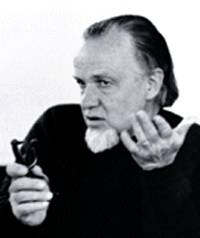


 The Daily Hatch
