In 1963, with their celebrity rising thanks to a nationwide folk and blues revival, the Staple Singers delivered a concert in Montgomery, Alabama, that was attended by Reverend Martin Luther King, Jr., and they had the opportunity to speak with the civil rights leader after the show. The meeting had a profound effect on the group’s direction,
and for the next several years they wrote songs exclusively in support of the American civil rights movement.
“I really like this man’s message,” Pops Staples said of King. “And I think if he can preach it, we can sing it.” The Staple Singers’ civil rights songs included “March Up Freedom’s Highway,” about the 1965 Selma-to-Montgomery marches, “Washington We’re Watching You,” “It’s a Long Walk to D.C.” and “Why Am I Treated So Bad,” in honor of the Little Rock Nine. “We sing about what’s happening in the world today, and whatever’s wrong we try to fix it through a song,” Staples recalled her father explaining. “We’re living in dark times, troubled times; we wanted to spread a ray of light on the world.”
Romantic Relationships
Around the same time, Mavis Staples carried on a romance with folk legend Bob Dylan. Dylan had long admired The Staple Singers, covering their song “Dying Man’s Prayer” in 1962, and the Staple Singers had in turn recorded several Dylan compositions. In the late 1960s, Dylan proposed marriage to Staples; although they had dated for seven years, she turned him down.
Although Staples has since come to regret her decision not to marry Dylan, she explained her reasoning at the time: “We had gotten with Dr. King and I was young and stupid, and I was thinking Dr. King wouldn’t want me to marry a white guy.” Dylan has referred to Staples ever since as “the love that I lost.”
Staples was briefly married to a mortician named A.R. Leak, Sr. in the early 1970s, but the pair divorced when Leak demanded that she give up her music career to stay home. “He wanted me to stop singing!” Staples recalled with incredulity. “And I told him I was singing before I met him. It was just a man thing, just want me at home. No way! I keep my songs and I continue to sing, and I let you go.”
Commercial Success
The Staple Sisters achieved their greatest success in the early 1970s as they moved away from traditional gospel and protest songs to record empowerment anthems such as “Respect Yourself” and “I’ll Take You There” and soulful R&B love songs like “Let’s Do It Again,” their only song to reach No. 1 on the Billboard Hot 100 Singles chart.
Although their popularity waned somewhat in the late 1970s and early 1980s, the Staple Singers continued to score modest R&B hits with songs like “I Honestly Love You,” “H-A-T-E (Don’t Live Here Anymore),” “Slippery People” and “Nobody Can Make It on Their Own.”
Solo Career
Beginning with her 1969 self-titled debut solo album, Mavis Staples also maintained a solo career simultaneously while she worked with the Staple Singers. And while she released eight solo albums during the 1970s, 1980s and 1990s, all of which received high praise from those critics who noticed, none of her solo material found much of an audience.
To me this song below sums up Keith Green’s life best. 2nd Chapter of Acts – Make My Life A Prayer to You Make my life a prayer to You I want to do what You want me to No empty words and no white lies No token prayers, no compromise I want to shine […]
Keith Green – Easter Song (live) Uploaded by monum on May 25, 2008 Keith Green performing “Easter Song” live from The Daisy Club — LA (1982) ____________________________ Keith Green was a great song writer and performer. Here is his story below: The Lord had taken Keith from concerts of 20 or less — to stadiums […]
Keith Green – Asleep In The Light Uploaded by keithyhuntington on Jul 23, 2006 keith green performing Asleep In The Light at Jesus West Coast 1982 __________________________ Keith Green was a great song writer and performer and the video clip above includes my favorite Keith Green song. Here is his story below: “I repent of […]
Keith Green – Your Love Broke Through Here is something I got off the internet and this website has lots of Keith’s great songs: Keith Green: His Music, Ministry, and Legacy My mom hung up the phone and broke into tears. She had just heard the news of Keith Green’s death. I was only ten […]
Coldplay Max Masters – Part 3 of 7 Here is message from Highfield church where Will Champion grew up going to church. do all religions lead to God? “It doesn’t matter what you believe as long as you’re sincere.” It’s said that all the religions in the world could be wrong, but only one can […]
Coldplay Max Masters – Part 1 of 7 Uploaded on May 6, 2009 The ASTRA Award winning music documentary – Max Masters Coldplay – was voted MOST OUTSTANDING MUSIC PROGRAM for 2009. Sarah Linton Productions and The Post Box produced the Max Masters documentary to coincide with the album release of ‘Viva la Vida’. __________ […]
The Killers – Human The Killers – Read My Mind The Killers – All These Things That I’ve Done The Killers – Spaceman I have really enjoyed the music of The Killers band. The Killers From Wikipedia, the free encyclopedia Jump to: navigation, search Not to be confused with The Kills. For other uses, see […]
Skillet – Awake and Alive Uploaded on Sep 27, 2010 I really have enjoyed reading about this band from Memphis. Skillet (band) From Wikipedia, the free encyclopedia Jump to: navigation, search Skillet Skillet performing at a promotional acoustic show in Denton, TX in 2006 Background information Origin Memphis, Tennessee, U.S. Genres Rock,[1] Christian rock/metal,[2][3] alternative […]
I truly believe that many of the problems we have today in the USA are due to the advancement of humanism in the last few decades in our society. Ronald Reagan appointed the evangelical Dr. C. Everett Koop to the position of Surgeon General in his administration. He partnered with Dr. Francis Schaeffer in making the video below. It is very valuable information for Christians to have. Actually I have included a video below that includes comments from him on this subject.
Dr. Francis Schaeffer: Whatever Happened to the Human Race Episode 1 ABORTION
Dr. Francis schaeffer – The flow of Materialism(from Part 4 of Whatever happened to human race?)
Dr. Francis Schaeffer – The Biblical flow of Truth & History (intro)
Francis Schaeffer – The Biblical Flow of History & Truth (1)
Dr. Francis Schaeffer – The Biblical Flow of Truth & History (part 2)
Francis Schaeffer “BASIS FOR HUMAN DIGNITY” Whatever…HTTHR
Sound Policy you call me a “forced-Birther,” but I would rather be on my side of the fence which is the pro-life side. Your side is the pro-choice side and it looks pretty messy on that side.
____________
“Kermit Gosnell was convicted of murder for severing the necks of just-born babies, but those babies would have died just as painfully if he had killed them inside the womb, as most late-term abortionists do,” commented National Right to Life President Carol Tobias. “The result is the same for the baby whether it meets its end in a shabby clinic like Gosnell’s or a brand new Planned Parenthood facility — a painful death.”
_____________
“We are ecstatic about these verdicts. Justice was done. This could spell the end of Roe v. Wade,” said Troy Newman, President of Operation Rescue. “For the first time, America has gotten a long hard look at the horrors that go on inside abortion clinics. We see documentation of similar shoddy practices in other abortion clinics across our country. Gosnell is not alone by any means. Now it is time for America to do some real soul searching and decide whether the abortion cartel’s unaccountable and out-of-control abuses of vulnerable women are really how we want to treat each other. There are better ways to help women than to subject them to the kind of horrors found at abortion clinics in our nation. It’s time to end the inhumane and barbaric practice of abortion for good.
____________________
Bryan Kemper of Stand True: While this may be a small victory in the grand scheme of the abortion holocaust, it is an important victory for every baby who has ever been killed under the GUISE OF CHOICE. I wept as I realized that after 20 years of fighting abortion full time there is finally some legal justice for these precious babies and an abortionist is found guilty if killing children.
_____________
Charmaine Yoest of Americans United for Life: “I applaud the vedict and thank all those who worked so hard to bring Gosnell to justice. We must now protect women and infants from an abortion industry that steadfastly refuses to police itself. How many women, girls, and infants must die before the abortion industry is held accountable?”
____________
Father Frank Pavone, National Director of Priests for Life: “The guilty verdict on charges of killing babies following abortion shows that the law recognizes a point at which the ‘right to CHOOSE’ must yield to the right to life, and also shows that abortionists don’t know where that point is. Such laws must be strengthened in every state.
_____________
Many in the world today are taking a long look at the abortion industry because of the May 14, 2013 guilty verdict and life term penalty handed down by a jury (which included 9 out of 12 pro-choice jurors) to Dr. Kermit Gosnell. During this time of reflection I wanted to put forth some of the […]
Many in the world today are taking a long look at the abortion industry because of the May 14, 2013 guilty verdict and life term penalty handed down by a jury (which included 9 out of 12 pro-choice jurors) to Dr. Kermit Gosnell. During this time of reflection I wanted to put forth some of the […]
Many in the world today are taking a long look at the abortion industry because of the May 14, 2013 guilty verdict and life term penalty handed down by a jury (which included 9 out of 12 pro-choice jurors) to Dr. Kermit Gosnell. During this time of reflection I wanted to put forth some of the […]
Many in the world today are taking a long look at the abortion industry because of the May 14, 2013 guilty verdict and life term penalty handed down by a jury (which included 9 out of 12 pro-choice jurors) to Dr. Kermit Gosnell. During this time of reflection I wanted to put forth some of the […]
Many in the world today are taking a long look at the abortion industry because of the May 14, 2013 guilty verdict and life term penalty handed down by a jury (which included 9 out of 12 pro-choice jurors) to Dr. Kermit Gosnell. During this time of reflection I wanted to put forth some of the […]
Many in the world today are taking a long look at the abortion industry because of the May 14, 2013 guilty verdict and life term penalty handed down by a jury (which included 9 out of 12 pro-choice jurors) to Dr. Kermit Gosnell. During this time of reflection I wanted to put forth some of the […]
Many in the world today are taking a long look at the abortion industry because of the May 14, 2013 guilty verdict and life term penalty handed down by a jury (which included 9 out of 12 pro-choice jurors) to Dr. Kermit Gosnell. During this time of reflection I wanted to put forth some of the […]
Many in the world today are taking a long look at the abortion industry because of the May 14, 2013 guilty verdict and life term penalty handed down by a jury (which included 9 out of 12 pro-choice jurors) to Dr. Kermit Gosnell. During this time of reflection I wanted to put forth some of the […]
Many in the world today are taking a long look at the abortion industry because of the May 14, 2013 guilty verdict and life term penalty handed down by a jury (which included 9 out of 12 pro-choice jurors) to Dr. Kermit Gosnell. During this time of reflection I wanted to put forth some of the […]
Many in the world today are taking a long look at the abortion industry because of the May 14, 2013 guilty verdict and life term penalty handed down by a jury (which included 9 out of 12 pro-choice jurors) to Dr. Kermit Gosnell. During this time of reflection I wanted to put forth some of the […]
Many in the world today are taking a long look at the abortion industry because of the May 14, 2013 guilty verdict and life term penalty handed down by a jury (which included 9 out of 12 pro-choice jurors) to Dr. Kermit Gosnell. During this time of reflection I wanted to put forth some of the […]
Many in the world today are taking a long look at the abortion industry because of the May 14, 2013 guilty verdict and life term penalty handed down by a jury (which included 9 out of 12 pro-choice jurors) to Dr. Kermit Gosnell. During this time of reflection I wanted to put forth some of the […]
Many in the world today are taking a long look at the abortion industry because of the May 14, 2013 guilty verdict and life term penalty handed down by a jury (which included 9 out of 12 pro-choice jurors) to Dr. Kermit Gosnell. During this time of reflection I wanted to put forth some of the […]
Many in the world today are taking a long look at the abortion industry because of the May 14, 2013 guilty verdict and life term penalty handed down by a jury (which included 9 out of 12 pro-choice jurors) to Dr. Kermit Gosnell. During this time of reflection I wanted to put forth some of the […]
Many in the world today are taking a long look at the abortion industry because of the May 14, 2013 guilty verdict and life term penalty handed down by a jury (which included 9 out of 12 pro-choice jurors) to Dr. Kermit Gosnell. During this time of reflection I wanted to put forth some of the […]
Many in the world today are taking a long look at the abortion industry because of the May 14, 2013 guilty verdict and life term penalty handed down by a jury (which included 9 out of 12 pro-choice jurors) to Dr. Kermit Gosnell. During this time of reflection I wanted to put forth some of the […]
Francis Schaeffer: “Whatever Happened to the Human Race” (Episode 1) ABORTION OF THE HUMAN RACE Published on Oct 6, 2012 by AdamMetropolis ________________ What a great article below: Dr. Alveda King: Guilty Gosnell Verdict May Spark More Justice for Women and Babies Contact: Eugene Vigil, King for America, 470-244-3302 PHILADELPHIA, May 13, 2013 /Christian Newswire/ […]
Many in the world today are taking a long look at the abortion industry because of the May 14, 2013 guilty verdict and life term penalty handed down by a jury (which included 9 out of 12 pro-choice jurors) to Dr. Kermit Gosnell. During this time of reflection I wanted to put forth some of the […]
Francis Schaeffer: “Whatever Happened to the Human Race” (Episode 1) ABORTION OF THE HUMAN RACE Published on Oct 6, 2012 by AdamMetropolis ________________ May 14, 2013 Murdered Thousands, Convicted for Three: The Kermit Gosnell Verdict By Drew Belsky Read more: http://www.americanthinker.com/2013/05/murdered_thousands_convicted_for_three_the_kermit_gosnell_verdict.html#ixzz2TMstLk1c Follow us: @AmericanThinker on Twitter | AmericanThinker on FacebookPhiladelphia abortionist Kermit Gosnell was convicted […]
Many in the world today are taking a long look at the abortion industry because of the May 14, 2013 guilty verdict and life term penalty handed down by a jury (which included 9 out of 12 pro-choice jurors) to Dr. Kermit Gosnell. During this time of reflection I wanted to put forth some of the […]
Francis Schaeffer: “Whatever Happened to the Human Race” (Episode 1) ABORTION OF THE HUMAN RACE Published on Oct 6, 2012 by AdamMetropolis ________________ A Verdict Doesn’t End the Gosnell Story By: Chairman Reince Priebus (Diary) | May 13th, 2013 at 03:27 PM | 28 RESIZE: AAA The horrors that unfolded in the clinic of Dr. […]
Many in the world today are taking a long look at the abortion industry because of the May 14, 2013 guilty verdict and life term penalty handed down by a jury (which included 9 out of 12 pro-choice jurors) to Dr. Kermit Gosnell. During this time of reflection I wanted to put forth some of the […]
Francis Schaeffer: “Whatever Happened to the Human Race” (Episode 1) ABORTION OF THE HUMAN RACE Published on Oct 6, 2012 by AdamMetropolis ________________ All-American Horror Story: Top 10 Kermit Gosnell Trial Revelations by Kristan Hawkins | Washington, DC | LifeNews.com | 4/12/13 3:38 PM Since so many in the media have failed/refused to report on […]
Many in the world today are taking a long look at the abortion industry because of the May 14, 2013 guilty verdict and life term penalty handed down by a jury (which included 9 out of 12 pro-choice jurors) to Dr. Kermit Gosnell. During this time of reflection I wanted to put forth some of the […]
Francis Schaeffer: “Whatever Happened to the Human Race” (Episode 1) ABORTION OF THE HUMAN RACE Published on Oct 6, 2012 by AdamMetropolis _____________ Tony Perkins: Gosnell Trial – FOX News Published on May 13, 2013 Tony Perkins: Gosnell Trial – FOX News ________________ Hey Obama, Kermit Gosnell Is What a Real War on Women Looks Like […]
Many in the world today are taking a long look at the abortion industry because of the May 14, 2013 guilty verdict and life term penalty handed down by a jury (which included 9 out of 12 pro-choice jurors) to Dr. Kermit Gosnell. During this time of reflection I wanted to put forth some of the […]
Francis Schaeffer: “Whatever Happened to the Human Race” (Episode 1) ABORTION OF THE HUMAN RACE Published on Oct 6, 2012 by AdamMetropolis ___ _____________ Tony Perkins: Gosnell Trial – FOX News Published on May 13, 2013 Tony Perkins: Gosnell Trial – FOX News ________________ Family Research Council Praises Jury for Bringing Justice to Victims of Abortionist […]
Many in the world today are taking a long look at the abortion industry because of the May 14, 2013 guilty verdict and life term penalty handed down by a jury (which included 9 out of 12 pro-choice jurors) to Dr. Kermit Gosnell. During this time of reflection I wanted to put forth some of the […]
Many in the world today are taking a long look at the abortion industry because of the May 14, 2013 guilty verdict and life term penalty handed down by a jury (which included 9 out of 12 pro-choice jurors) to Dr. Kermit Gosnell. During this time of reflection I wanted to put forth some of the […]
Francis Schaeffer: “Whatever Happened to the Human Race” (Episode 1) ABORTION OF THE HUMAN RACE Published on Oct 6, 2012 by AdamMetropolis ________________ _____________ Tony Perkins: Gosnell Trial – FOX News Published on May 13, 2013 Tony Perkins: Gosnell Trial – FOX News ________________ Kermit Gosnell and the Logic of “Pro-Choice” by Matthew J. Franck within […]
Many in the world today are taking a long look at the abortion industry because of the May 14, 2013 guilty verdict and life term penalty handed down by a jury (which included 9 out of 12 pro-choice jurors) to Dr. Kermit Gosnell. During this time of reflection I wanted to put forth some of the […]
Many in the world today are taking a long look at the abortion industry because of the May 14, 2013 guilty verdict and life term penalty handed down by a jury (which included 9 out of 12 pro-choice jurors) to Dr. Kermit Gosnell. During this time of reflection I wanted to put forth some of the […]
Francis Schaeffer: “Whatever Happened to the Human Race” (Episode 1) ABORTION OF THE HUMAN RACE Published on Oct 6, 2012 by AdamMetropolis ________________ Fr. Pavone: Right to choose must yield to right to life STATEN ISLAND, NY — Father Frank Pavone, National Director of Priests for Life, had the following comment on the verdict in […]
Many in the world today are taking a long look at the abortion industry because of the May 14, 2013 guilty verdict and life term penalty handed down by a jury (which included 9 out of 12 pro-choice jurors) to Dr. Kermit Gosnell. During this time of reflection I wanted to put forth some of the […]
Francis Schaeffer: “Whatever Happened to the Human Race” (Episode 1) ABORTION OF THE HUMAN RACE Published on Oct 6, 2012 by AdamMetropolis ________________ The truth of abortion … the hope for Gosnell’s repentance A conviction in the murder trial of Philadelphia abortionist Kermit Gosnell has boosted the efforts of pro-lifers to demonstrate what abortion really […]
The Selfishness of Chris Evert Part 2 (Includes videos and Pictures) _________________________________ _____________________ _______________________ __________________________ Tennis – Wimbledon 1974 [ Official Film ] – 05/05 Published on May 1, 2012 John Newcombe, Ken Rosewall, Bjor Borg, Jimmy Connors, Cris Evert… ___________________ Jimmy Connors Reflects Published on May 13, 2013 Jimmy Connors visits “SportsCenter” to discuss his memoir, […]
BRIAN LAMB, HOST: Nat Hentoff, author of “Speaking Freely: A Memoir,” can you remember in your lifetime when you were the maddest about anything?
Mr. NAT HENTOFF (Author, “Speaking Freely: A Memoir”): Well, it happened so frequently. I think what I was most maddest about–and it’s in the book–when the House and the Senate, back in 1984, were debating a bill that would –at least delay and maybe stop some of the ex–summary execution of disabled children–infants. And the Down syndrome kids and other kids had been, in some cases, routinely let die, to use the euphemism. And I saw the debate on the floor of the House. And I considered myself, at the time, a liberal; I don’t know what I consider myself now. And here are the leading liberals at the time Geraldine Ferraro, Don Edwards, who I’m–I admire enormously, Henry Waxman–saying, `You can’t do that. That’s an interference with the doctor-mother’–not the doctor-infant, but doctor-mother–`relationship.’And I figured, `My God, these are –the–this isn’t fetus time. This is–they’re born children.’ And–and as Harry Blackmun said when he wrote Roe v. Wade, `Once a child is born, the child has basic constitutional rights: due process, equal protection of the laws.’ And they were acting as if you could just dispose of these kids. I was angry.
LAMB: You said that you thought yourself to be a liberal. What would that mean to you?
Mr. HENTOFF: Well, I grew up in a household in which we had a clock that we won at Revere Beach during the Depression–one of those brass clocks that didn’t work–but it showed Franklin D. Roosevelt standing at the wheel of the New Deal. Even though the clock didn’t work, we kept the clock because of how we felt about FDR. A lot since then I knew about FDR I wouldn’t have been so enthusiastic.But a liberal was somebody who expected and hoped that government would help the poor–you know, that whole routine. I did not know then and I’ve learned since that in an area that means a lot to me, free speech, liberals are as bad as many conservatives in trying to censor speech. The whole politically correct movement, if it–if that’s what it is, was spawned by liberals. So I try to avoid categorizing myself.
LAMB: How did you get to the memoir?
Mr. HENTOFF: Well, I had written a book called “Boston Boy” some years ago, and that took me from the time I could speak, I guess, in Boston through the time when I finally left to come to New York. And a lot–that book had a number of sort of rites of passage for me. One was understanding and coping with anti-Semitism. Boston, at the time, was the most anti-Semitic city in the country. And I found out when I was an adolescent that you have to be crazy to go out after dark all by yourself; you’d get your head bashed in. More fulfilling, I was introduced to jazz, and that’s become a basic concern and passion of mine ever since.This book, “Speaking Freely,” starts when I came to New York. And the first chapter is about a man who became a friend of mine, much to our mutual surprise, Malcolm X. And it goes through other rites of passage, I guess you’d say, including the–what I just spoke about, the learning that liberalism isn’t quite as liberal as it pretends to be. And it goes through my adventures with the FBI during the anti-war period and the civil rights period. And a particular moment–and I’m not, to this day, quite sure how I feel about it–I had always wanted to be in the law books–you know, Hentoff vs. something or other. And then Congressman Icord headed a House on American activities committee. It was called the House Internal Security Committee. And he put out a report, and he named a number of very destructive people who lectured at colleges and left arson in their wake and did other terrible things. And he mentioned me and he ascribed to me three organizations to which I’d never belonged, and I decided I would do something about this.
When the ACLU took my case and we got a ruling I think, for the first time, they could–the Congress could put out the report internally but they couldn’t put it out at taxpayers’ expense around the country. And I felt odd about that because I, in a way, I was interfering with free speech, but then, you can’t always win.
LAMB: When has a liberal been the most upset with you to your face?
Mr. HENTOFF: Oh, well, the most controversial subject-issue I’ve ever gotten involved in to this day was when I became pro-life. And liberals are very–many liberals are very angry at me because of that. In part, because–they could understand it, they say, if I came to it from a religious kin–a Catholic perspective. But I’m still a Jewish atheist, and that really bothers them. And I come to it entirely from the point of view of biology. And what Roe v. Wade has led to, I–what I did in the 1980s–I tracked all of the state Supreme Court decisions concerning people who wanted to have their relatives–their husband, their wife, their child–taken off of feeding tubes or respirators.Every time the Supreme Court of a state would say, `That’s OK,’ they based it on Roe v. Wade. And it turned out when–the–in terms of the physician-assisted suicide, the first federal district judge in the history of the United States out in Washington–state of Washington–came to the same conclusion, basing it on Roe v. Wade. And around that time, I met the angel of death, Derrick Humphrey, who introduced the whole concept of assisted suicide, and he was exultant. He was talking about things that had happened to him for the good. He said, `When I came to this country, I couldn’t get my ideas across to anybody, practically, but then a wonderful thing happened and the door opened.’ I said, `What was that?’ He said, `Roe v. Wade, because when Roe v. Wade said that you can remove a fetus for privacy, and privacy is the safeguard of that, then it was extended through the courts to, “You can take the respirator off your husband’s–your husband,” or whatever and, finally, physician-assisted suicide.’ So when I say I’m pro-life, I mean pro-life across the legal board.
LAMB: How do you make your money today?
Mr. HENTOFF: I write a syndicated column for The Washington Post that goes to about 200, 250 papers. I write a column for The Village Voice, which I’ve done since time immemorial, and occasionally–and books. And I occasionally write minor notes for record albums and occasional articles.
LAMB: You wrote some liner notes for Bob Dylan once.
Mr. HENTOFF: Yeah. I’ve always been amused by Dylan; I don’t think he’s been amused by me. When I first knew him, he lived in the Village. And for a man who, years after, would disdain publicity or any attempts at interviews, whenever I’d write something about him, he’d be on the street corner saying, `When’s it going to run? When’s it going to run?’ But I must say that album that was–it was the second album he did, and though I’ve never been a fan of his guitar-playing, he did–I have to admit, he did catch the Zeitgeist of the time.
LAMB: But what made him mad with you? And what kind of relationship do you have with him today?
Mr. HENTOFF: Oh, that was–he was really mad with my wife. I had asked by Rolling Stone–the only assignment I ever had for them–to do a story on the Rolling Thunder Review, which was Bob Dylan, Alan Ginsberg, Joan Baez and a host of stars. My wife, some weeks before, had written in The New York Times that The Kid wasn’t The Kid anymore and he wasn’t all that winning anymore.So when I approached one of his secretaries for an interview, I was told that Bob didn’t want to see me anymore because of what my wife Margot had written. So I went ahead and did the piece anyway. A reporter is never put off by somebody not wanting to be interviewed. And I got Joan Baez to talk and Alan Ginsberg and some of the guys in the band. And by the end of the piece, another emissary came and said, `Bob is willing to speak to you now.’ And I said with great pleasure, `No, thanks. The piece is over.’
LAMB: When was the last time you talked to him?
Mr. HENTOFF: That–well, I guess I haven’t talked to him since before then. I follow his career. And…
LAMB: When was the date of that? Do you remember?
Mr. HENTOFF: Oh, gosh, my chronology is not always very good. That was at least–let’s see–at least 30 years ago, maybe more.
LAMB: Where do you live today?
Mr. HENTOFF: I live in the Village right near NYU, which is taking over most of the Village. I’ve lived there for most of my time in New York. One of the things I like about the Village is, it’s considered the kind of area where you can’t have skyscrapers or, actually, many tall buildings. So you can see the sky which, I think, is a benefit.
LAMB: You say that Margot is your third wife?
Mr. HENTOFF: Yeah. The first one–a very nice person–that didn’t last terribly long. We’d lived together before then. The second one…
LAMB: What was the–how long were you married the first time?
Mr. HENTOFF: Where?
LAMB: How long?
Mr. HENTOFF: How long? About eight months, I think.
LAMB: When?
Mr. HENTOFF: That was back in 1951–’50, ’51. Then the second wife–the best part of that union, our two daughters, and that lasted about five years. And I’ve been married to Margot now for about 38 years.
LAMB: And does Margot have a byline somewhere regularly?
Mr. HENTOFF: I wish she did. She used to write regularly for The Voice, for The New York Review of Books, for Harper’s Bazaar, and she really had the most distinctive writing style, even more than mine, than I’ve ever seen in this business. But she stopped. She decided that she had nothing more to say. And yet, every day, she has a whole lot to say, and I wish she’d write it down.
LAMB: Where are you two politically now together?
Mr. HENTOFF: Well, I think one thing we share is a complete bottomless disdain for Bill Clinton. My–mine is based on the fact that he has done–and I’m–this sounds like hyperbole, but he has done more harm to the Constitution and the Bill of Rights than any president since John Adams. And he outshines John Adams in that regard. Margot dislikes him because he’s totally untrustworthy, and you really ought to have some faith in whoever’s going to be your president.
LAMB: What proof do you have that he’s done harm to the Constitution?
Mr. HENTOFF: All right. To begin with, when John Adams–when– James Madison was writing–pretty much writing the Constitution, he got a letter from Thomas Jefferson, who was then-ambassador to France. And Jefferson said–I am paraphrasing–`Do not forget to keep habeas corpus and strengthen it.’ That–in–that’s the oldest English-speaking right. It goes back to the Magna Carta in 1215.
LAMB: What’s it mean?
Mr. HENTOFF: But in our country, it means that if you’ve been sentenced and convicted in a state court, either to death or to some other kind of sentence, you have the right to petition a federal court to review what happened to you. Was it fair? Did you get due process? Was there prosecutorial misconduct? There are any number of things that could happen. And until Clinton, you had three, four, five, even more years I collect records of people who have been on death row for eight, 10, 12, 14 years–this is before Clinton–who finally got a decent lawyer, usually a pro bono lawyer, and an investigator, and were able to find out–they–they’re but approved that they’re–that they were innocent. And now, these days, with DNA, that happens even more often.But under Clinton–under this part of the anti-crime bill that he– had passed with the Republicans–they’re just as bad, but he was the power. Under Clinton, you’re limited to one year. You have one year to petition. If the court doesn’t want to hear it, too bad. And that is outrageous.
LAMB: Do you think he’s doing this consciously?
Mr. HENTOFF: Oh, I think–I don’t think he does anything–I don’t think it’s ill will. I don’t think he’s evil in the sense that he hates the Bill of Rights. He does what he figures will help him politically. It’s like when he was running for president. I’ll never forget this one. He was running in New Hampshire. He was not doing well. And he suddenly, over a weekend, rushed back to Little Rock to execute a guy who had killed a cop, but in the process, the policeman had shot him in the head and he was out of it. He didn’t know today from tomorrow, good, evil, whatever. His lawyer begged–his lawyer was an old friend of Clinton. He begged Clinton not to have this guy executed. It was absurd. But he did it anyway. And that was to show that he wasn’t tough on crime. And the habeas corpus business, that’s to show that he’s not tough on crime. And you have an electorate that wants to see people who are not tough on crime.Oh, and other things he’s done. The immigration bill–the new immigration bill–he has stripped the courts, which Congress can do under the leadership of the president, so that people who had a right to asylum or to petition –for asylum who were legal residents are now unable to go through because that part of the bill has been taken out. I mean, he has called for expanded wiretaps for the FBI. I mean, he goes on and on and on. And he was the man, as a matter of fact, who, in terms of the Communications Decency Act, which would have made the Internet, the whole concept of cyberspace, vulnerable to rampant censorship–he pushed that bill, and I know the man in the Justice Department whom he persuaded — the guy didn’t want to lose his job–to write the bill. And, of course, the Supreme Court, 9-to-nothing, said it was unconstitutional.
I mean, did this happens on a regular basis. And what–the crucial part of it to me is, I–the press is practically uninterested in this. In the last campaign, the ’96 campaign, I can’t remember this coming up in any of the television interviews that were done, the presidential debates that Jim Lehrer held and the like, except for Tony Lewis of The New York Times and maybe one or two other people. Now that is dangerous, when the people don’t know what’s happening to their Constitution.
LAMB: Go back to your wife, Margot. You agree on Bill Clinton. Do you disagree on politics and anything right now?
Mr. HENTOFF: Well, we disagree heavily on abortion. She thinks–first of all, she –this I hear from a lot of people beside her. She thinks that men have no business getting into this argument at all unless they’re going to be pro-choice. But it turns out that a fair number of fetuses are male, and besides that, we are all one part of humankind, it seems to me.
LAMB: Where’d you meet her?
Mr. HENTOFF: We had–well, I met her on Fire Island when I had a house there many years ago. And then I was co-editor of the magazine called The Jazz Review, which was a pioneering magazine because it was the only magazine, then or now, in which all the articles were written by musicians, by jazz men. They had been laboring for years under the stereotype that they weren’t very articulate except when they picked up their horn. Anyway, she was the–I guess, the coordinator or the production manager, and we got to know each other and we married.
LAMB: How many children have you had with her?
Mr. HENTOFF: Two boys. One, Nicholas, is a criminal defense attorney in Phoenix in which he –gets into –a lot of very controversial cases. He has sued Sheriff Arpaio, the famous sheriff who keeps people in tents, gives them green bologna and the like. My other son Tom is with Williams & Connolly in Washington, where he does intellectual property defamation cases.
LAMB: You say in the book he fights political correctness?
Mr. HENTOFF: Tom?
LAMB: Yes.
Mr. HENTOFF: Oh, yeah. Tom–it started when he was the editor of the paper at Wesleyan and the–members of the staff. This was the first wave of political correctness. The editors of the staff members came and said he must–he must, from now on, stop using `freshmen’ and–in-as part of the policy of the paper. It had to be `freshperson.’ Therefore, you don’t–you’re not discriminating against males or females. They were very fervent about that, and he was equally fervent about not politicizing language. So until he left, `freshmen’ stayed. It is no longer in use there.
LAMB: What about Jessica?
Mr. HENTOFF: Oh, Jessica is–she is a–one of the great risk-takers in –my experience. When she was at State University of New York at Purchase, they had a 4014 system. You go to –you have four semesters. Then, in between the other four semesters, you can take whatever courses you want. And a pied piper came along, a circus performer–a professional circus performer–and Jessica found her vocation and she became, to my great alarm, a trapeze artist with a friend. She played all over the United States. I boycotted her for a while. I couldn’t stand it because–for example, I’d say, `Why don’t you use a net?’ `Oh, we don’t use a net. Europeans don’t use a net. We don’t use a net.’ And I said, `But people come and expect you to break you neck.’ And I bought her a net, which, of course, was never used. But then I figured, after all, I have my obsessions; she’s entitled to hers. And I did –see her perform, and she was very good. Fortunately, however, she now has three small children; she’s now on the ground. She runs her own everyday circus in St. Louis.
LAMB: Who got her interested in being a circus performer?
Mr. HENTOFF: The pied piper.
LAMB: I mean, is there anything in your background or your wife’s background…
Mr. HENTOFF: No, not at all. No. She’s singular in that respect. I mean, in terms of the boys, I always wanted to be a lawyer and would often talk law with them, but I certainly never wanted to be a trapeze performer.
LAMB: What about your daughter Miranda.
Mr. HENTOFF: Miranda is a complete musician. She’s a composer, a singer. She writes scripts along –with her projects. And she’s a superb teacher. Her teaching pupils have ranged from Itzhak Perlman to Sting. And, it’s one of the great, great pleasures of my life–I mean, talk about vicarious satisfaction from –your kids. She was teaching once at Lincoln Center, and the hall was full of other professionals–musicians, professors, teachers. And she was explaining how Bartok composed his second piano concerto. And she explained how the music was interwoven with the rhythms and what he had in his mind. And I was just stunned. This is a kid who used to work –on a piano with a cracked keyboard.
LAMB: Four children.
Mr. HENTOFF: Four children.
LAMB: Go back to someone you talked about in the book by the name of A.J. Muste.
Mr. HENTOFF: Ah.
LAMB: Who is he? Is he alive?
Mr. HENTOFF: No. A.J. was a–as he likes to say, a radical pacifist; that is, he never engaged in violence but he believed, as Gandhi did–and he knew Gandhi slightly–he believed that a pacifist had to be active in the community. And in that respect, Martin Luther King, whom A.J. advised in the civil rights movement, was also a radical pacifist. He–A.J. never got much credit, never got much attention. For example, I wrote a biography of him and nobody ever heard of it. But he was very influenced–in–influential in the peace movement, in the civil rights movement. And he was extraordinarily calm–the most–I couldn’t–I’ve never known a man who would go through–I mean, the cops would be arresting him. There’d be turmoil around him. And he was just watching and…
LAMB: Where’d he live? Where was he from? How old was he when he died?
Mr. HENTOFF: He was from Michigan and he grew up in the Dutch Reform Church there, which is a fairly strict church. He later came to New York. He was the minister of a labor temple in the–on the East Side. Then he founded, to my knowledge, the first, maybe the only, labor school; that is, Cornell has a labor department and other schools. But this was a school for–entirely for labor organizers, and he was the–the chairman.He was–and this was funny in a way. Trotsky found out about him–Leon Trotsky–because A.J. worked. He was an activist. And he organized the first sit-in strike in Toledo in a factory. And Trotsky was very impressed with that. And…
LAMB: What year would that have been?
Mr. HENTOFF: Oh, ’33, ’34, something like that.
LAMB: When did A.J. Muste die?
Mr. HENTOFF: A.J. died in the late ’60s, I think. He was 81, something like that.
LAMB: And you knew him?
Mr. HENTOFF: Oh, I knew him very well. I tried for a while to be like he was, and that is a total pacifist. But then Margot hit me hard in the stomach one day to prove to me that I wasn’t as perfect a pacifist as I thought I was.
LAMB: Tell more about that story, ’cause it’s in the book. She literally hit you?
Mr. HENTOFF: She literally hit me as hard as she could, which is pretty hard.
LAMB: Did she surprise you?
Mr. HENTOFF: Yeah, that was the whole point. And I didn’t– hit back, but I knew that if it had been anybody else, I would have hit back, and that was the point of her metaphorical blow.
LAMB: Is she not a pacifist?
Mr. HENTOFF: No.
LAMB: And you said that when she was at The Voice, she had a contrarian attitude about some of these political issues?
Mr. HENTOFF: Oh, yeah, The Voice–to begin with, The Voice has been politically correct in many of its aspects since before that term was ever used. It’s always been–well, I’ll give you an example. I found out–the paper used to go to bed on Tues–on Monday. I found out that on Monday nights, the editors would cut out–literally cut out passages, sometimes whole paragraphs, of some of the writers that might possibly offend blacks, lesbians, gays, radicals. And I wrote a couple of columns about that. And they’re–of course, they were annoyed that I had written about it, but, I mean, it –another example–and she always also conjured that. She was an editor there for a time as well as a writer.But Jules Feiffer once wrote a strip. He was then, as now, a syndicator. Of course, he’s not at The Voice anymore. But his strip would come to The Voice first. And the strip showed an Archie Bunker-type sitting in the kitchen–speaking of stereotypes–with a can of beer, saying, `I can’t say “kike” anymore. I can’t say “fag” anymore. About the only think I can say anymore is “nigger.”‘ There was an uproar at The Voice. Great pressure was put on the editor, David Schneiderman, to not run the strip. It was offensive. It was racist. And nobody apparently read the strip and saw what it was about. And I wrote a column about that.
So the –obviously, the–there have been other very good reporters at The Voice. We’ve done good muckraking stuff, good political stuff. But the–spirit of the paper, until fairly recently, with a new editor who doesn’t go on that route, has been, well, politically correct.
LAMB: What was the story about the column you wrote about Clay Felker when he ran The Voice?
Mr. HENTOFF: Oh, Felker took over The Voice…
LAMB: Who is he, by the way?
Mr. HENTOFF: Clay Felker was then–he had–to his credit, he had created New York Magazine, which was the first of the city magazines that covered the city and gave all kinds of advice and all that sort of stuff. And there were copies all over the country by the time he left. He had, however, a view of journalism that was very much, I must say, like Tina Brown’s at The New Yorker. You hit ’em hard, fast, give ’em something to talk about the day after the paper comes out, as contrasted with William Shawn, who gave them something to talk about two or three years from then.
LAMB: Who was William Shawn?
Mr. HENTOFF: William Shawn was the editor of The New Yorker and for whom I worked for, God, 27 years; a man I respected enormously because of what he did, –what the magazine was about. Anyway, I got a letter. He took over The Voice and tried to turn it into New York Magazine–very glitzy covers that promised practically nothing in terms of what was inside, very rushed paper anymore. You–not very contemplative, thoughtful or whatever.So I got a letter one day from somebody saying, `You’re always criticizing the press. Why don’t you talk about what Clay Felker is doing to your own paper?’ And my 10-year-old son Tom, now with Williams & Connelly, put in a legal opinion, not –an opinion from the back of the car saying, `You know why? What are you, afraid?’ So I wrote the column. I–you know, –the column simply said that Felker is destroying this paper. And I heard that he was about ready to fire me, but two other people on The Voice interceded and, fortunately, he had a very short attention span, so I wasn’t fired.
LAMB: Any of that being done today?
Mr. HENTOFF: The…
LAMB: Being that contrary with your own publication where you’re…
Mr. HENTOFF: Did I do…
LAMB: Where you being paid–no, anybody. I mean, were you being paid at the time, by the way…
Mr. HENTOFF: Oh, yeah. I was…
LAMB: …because –there was a time when The Village Voice didn’t pay.
Mr. HENTOFF: Yeah, but I was getting a big fat $100 a week at that time. No, it’s being done–I mean, the most recent example and the most, I think, appalling example was when Martin Peretz, the owner–and I stress owner–of The New Republic fired a journalist who I think was uncommonly skilled and full of integrity and passion and all that stuff. But he had criticized regularly the former pupil and friend of Martin Peretz, Al Gore, so he was fired. That’s contrarianist that went around–that did–that was not rewarded.
LAMB: What’s wrong, though, with an owner of a publication like that firing somebody that won’t support his views?
Mr. HENTOFF: Well, it’s perfectly within his rights. It’s a private–you know, th–it’s not censorship. The First Amendment doesn’t come into play because it’s a private magazine. What’s wrong with it is, it lowers, to say the least, the credibility of the magazine. And if I were writing for it, I would feel diminished because the owner had done such a thing.
LAMB: What does it mean to you to be an atheist?
Mr. HENTOFF: It means that I was never able–I mean, I really envy, in some respects, some of the people of faith I’ve known–A.J., for example.
LAMB: What was his religion?
Mr. HENTOFF: He was–he–I don’t know what he finally came out believing in, but it was some kind of higher being. But Kierkegaard said it for me a long time ago. He said, `You can’t really think yourself into a faith, into a religion. It’s something you have to make a leap into faith.’ And I’ve never been able to do that. I wish I could. Then maybe I could believe in an afterlife.
LAMB: What was it like in your family growing up?
Mr. HENTOFF: Well, we were–I mean, my parents were Orthodox Jews but not very regular Orthodox Jews. I was bar mitzvahed and all that. But God was hardly ever mentioned in my family. Franklin D. Roosevelt was.
LAMB: They liked him.
Mr. HENTOFF: They liked him a lot.
LAMB: And what about your kids? What are they?
Mr. HENTOFF: I think at least two of them–and I’m–I better not speak them by name because I’m not sure where they are these days, but at least two of them believe in some kind of higher force. The–another is an atheist and the other is still pondering.
LAMB: You had a friendship or still have a friendship with John Cardinal O’Connor?
Mr. HENTOFF: Oh, I like him a lot. He–I started a–to know him–when I asked William Shawn at The New Yorker, `Sh–can I do a profile of Cardinal O’Connor?’ He said, `All right. Find out what he’s like.’ So I went to his office, and I heard somebody–and it turned out to be O’Connor–yelling outside, and I’ve never heard him since raise his voice.At the time there was a hospital strike in New York and the Catholic hospitals were part of a general consortium, and the head of the consortium had decided that they were finally going to replace some of the striking workers. And I hear O’Connor yelling, `Over my dead body will you replace any of those workers! They have a right to strike.’ So I figured, `This is interesting.’ Here is a guy who’s supposed to be the Genghis Khan of the church, the pro-choice people hate him, and I don’t know about his labor background so I figured there must be more to him, and there is. I wrote a book about him.
My favorite story about O’Connor–one of them–is I was in Toronto at a pro-life conference. And I was –I had a session before he was to come on, and I was explaining–I thought very moderately, calmly–that the best way to not have unwanted abortions was to have much more research on contraception. And two very large, true-faith people came out of the audience, wrested the microphone out of my hand and said, `That is im–inappropriate, improper. Pro-lifers do not believe in contraception.’ And O’Connor’s watching this. I get up again and introduce him, and O’Connor said, `I want to tell you I’m delighted that Nat is not a member of the Catholic Church. We have enough trouble as it is.’
LAMB: How close did you get to him?
Mr. HENTOFF: I guess pretty close. He had Margot and me over for drinks a couple of times. That was something I never could have envisioned back when I was a kid in Boston, that a cardinal and I would be, if not breaking bread, at least breaking Scotch. And I’ve I call him from time to time and he calls me. And when I think there’s something he ought to think about doing, I call him and he usually does it.
LAMB: How many books have you written?
Mr. HENTOFF: Well, counting the ones I’ve co-edited, I guess about 28 or 29.
LAMB: Can you make a living off of doing…
Mr. HENTOFF: No.
LAMB: No?
Mr. HENTOFF: No. I–this sounds corny, but I once told a kid when I was in a the library conference, the best–not the best, what I really hope for is that someday 20, 30 years from now, some kid, 12-year-old, 15-year-old, in Des Moines will be going through the stacks, if they have stacks anymore–they probably won’t–and find a book of mine and get something from it. But in terms of money, no.
LAMB: Have you been able to make a living–a decent living writing?
Mr. HENTOFF: Well, it depends on what you mean by decent. I’m–you know, it’s comfortable. We live in the village. We have a summer place in Westport, Connecticut. We don’t spend a lot on all kinds of things. But I have no complaints.
LAMB: Has your wife worked anymore since she left The Voice?
Mr. HENTOFF: No. Again, I wish she would because–especially now the kind of–I mean, honesty is hardly the word. She writes with a ferocity of clarity that–nobody else around has now.
LAMB: So you’re the breadwinner?
Mr. HENTOFF: Yeah. And she has some investments and stuff.
LAMB: Where did you go to school originally? What did–how did you train to be a writer?
Mr. HENTOFF: I read like everybody–like every other writer. I’ve been reading since I could read, which was about four or five years old. And I’d pick–my father would bring home about six newspapers. We had 10 in Boston at the time. I went to the library as soon as I could walk. So the training came from reading all kinds of people, from fairy tales and later on to–I don’t know why–Schweitz’s “Life of Christ.”And the book that really, really shaped my politics and has forever is Arthur Koestler’s “Darkness at Noon,” which is a novel based on terrible fact about what it was like in Russia during Stalin’s time when people actually believed that to get to the point where the Proletariat would triumph, anything that was necessary to be done should be done; the means didn’t count. And, of course, that’s not–that’s just not Russia.
But I went to school at a place that also shaped my life, Boston Latin School. Sandra Day O’Connor–once she said that there are–there were no public schools in America until the 18th century, and she overlooked my alma mater because we started–I say we–in 1635. And among the people who went there–and they’re on–the walls in the auditorium, the names are: Ralph Waldo Emerson and Cotton Mather, Benjamin Franklin, except he split when he was 10 years old to go to work. But it–Santiana, all that sort of–but the marvelous part of that school was all kinds of kids went.
It was a competitive examination. Poor kids, Brahmans, middle-class kids. The masters, as the teachers were called, didn’t give a damn about –how we felt, what was– things like at home. I mean, this goes against the current grain. All they thought about was: `You’re here. You made the exam. You can do the work. And if you can’t, we’ll throw you out.’ And it was a great lesson because I found out, and as the other kids did, that I could do the work.
LAMB: But what about your parents? What were they doing then for a living?
Mr. HENTOFF: Oh, my father–my mother’s always been–well, my mother, when she was younger, worked at Filene’s in Boston. And she was chief cashier. And I always wondered why she never went back to some kind of work ’cause that was a very responsible position. My father had always been a traveling salesman–New England, the South, whatever. He was very impressed when he saw “Death of a Salesman,” I must say. He recognized himself to some extent.
LAMB: In your life, how many different publications have you worked for?
Mr. HENTOFF: Oh, that’s hard to figure.
LAMB: How about the main jobs?
Mr. HENTOFF: Well, the main jobs would be The New Yorker, The Village Voice, The Washington Post and–I’m thinking of the–stray one…
LAMB: You did The Reporter.
Mr. HENTOFF: The Reporter when Max Askeli was there, but I got fired from The Reporter. Max Askeli was a very courageous, principled man up to a point. He had left Italy before he was thrown in jail by Mussolini. And he started this very good magazine. In fact, Meg Greenfield, who’s now the editorial page editor of The Washington Post, was one of the star reporters there. I was in the back of the book doing music. I once did a–the first piece on Malcolm X that anyone had ever seen in the– white press.But I was very much against the Vietnam War, and Max Askeli was visiting Lyndon Johnson in the White House cheering him on, writing editorials. And in The Voice one day I once referred to him as Commander Askeli. And I called in to The Reporter to go over the galleys of a music piece I had written, and the editor whispered to me, `It’s not gonna run. You’re not gonna run. Max Askeli has fired you because of what you said about him.’ You see, the person who has the strong ownership of free speech is the one who owns the press.
LAMB: Why did you–you did that more than once in your life where you had–we just talked about a couple of them.
Mr. HENTOFF: Yeah.
LAMB: What makes you do that?
Mr. HENTOFF: I don’t know. It seems to be the thing to do. I don’t like to feel intimidated by where I make a living.
LAMB: Have you ever pulled your punches?
Mr. HENTOFF: I suppose I have. I think it–yeah, I must have. I can’t remember, but it’ll come to me later.
LAMB: And, again, –did you have people in your life, in your family at all that were like this: always kind of flaunting authority or…
Mr. HENTOFF: My father was pretty independent. He was–he was arrested once in Nashville when he was on one of his sales trips because he had a black — guy to lunch. So that took a fair amount of courage at the time. Otherwise, no, I guess not. But I don’t…
LAMB: Did you ever regret doing it?
Mr. HENTOFF: Did I ever…
LAMB: Regret doing that, like criticizing–calling him Commander Askeli?
Mr. HENTOFF: Oh, I thought it was funny. I mean, I’m sor–I was sorry I lost the gig, but, I mean, I felt better about myself that I did it, rather than have–rather than thinking it and not writing it for being afraid of what might happen to me.
LAMB: You do a chapter on William Shawn, and he comes up all the time over the years.
Mr. HENTOFF: Yeah.
LAMB: When did he die?
Mr. HENTOFF: Again, you can see my chronology is terrible. It must have been about seven or eight years ago. It was after he was fired by Newhouse. After New–when Newhouse bought The New Yorker, he said in one of those grand press conferences that `Bill Shawn will stay here as long as he wants to be here.’ Well, he wanted to be here until he died, but he wasn’t allowed to.
LAMB: What was he like?
Mr. HENTOFF: I’ve never met anybody quite like him. He created–and I’m sure it was conscious–an aura about him of quietude. But inside that quietude there was the firmest of wills. He knew exactly what he wanted to do. He–I mean, he didn’t, at least in my case and I think most of the others, he didn’t edit the writers very strongly, but he knew what he wanted. And if he liked the piece, then he would run it. But he wanted the magazine to be something that was more than just a weekly event. And as a result you could pick up a New Yorker under him, as I mentioned before, a year from then or 10 years or 20 years and there would always be something worth reading in it.
LAMB: You say that you had something to do with getting him fired.
Mr. HENTOFF: Yeah. I’ve–that I regret. That was stupid and ignorant on my part. I went to a party as a guest of a friend of mine, a lawyer. And he had a client who I didn’t know, except–maybe I’m pretending I didn’t know, but he was a big investor in The New Yorker. And as I found out later in a book about The New Yorker, this guy was very unhappy about Shawn. He thought Shawn was spending out–spending too much money on writers.And then I told him–I was complaining the way writers complain. You know, I said, you know, `He pays very well, but a lot of my pieces don’t get in,’ and that was true of most of the writers there. And then he–but he pays you for them. That’s very–that was very nice of him. This guy didn’t think it was very nice of him. He figured, `Oh, my God, that’s more of my investment gone,’ and paying money to writers for not printing them.
So that became, apparently, one of his weapons against Shawn when he–in the corporate skirmishes that went on. It was a bad mistake on my part.
LAMB: But you ran into Mr. Shawn later.
Mr. HENTOFF: That was–he had been fired. And he had always been in The New Yorker immaculately dressed–quietly, immaculately dressed, very soft-spoken. On the phone I could hardly hear him sometimes. And after he was fired, I was going to the YMHA on the Upper East Side to do a talk on free speech.
LAMB: What’s YMHA?
Mr. HENTOFF: Young Men’s Hebrew Association. YM–yeah. And I went into a coffee shop to get a piece of pie and a coffee, and I was reading a paper and I hear a voice. And it was -it was not a voice I was familiar with, but I looked across the table and I saw Lilian Ross. Lilian Ross was a –veteran writer for The New Yorker. She, in fact, brought me to The New Yorker many years ago. And sitting next to her was William Shawn–no tie, needed a shave. His voice was kind of coarse and rather loud. He wasn’t drunk, but I was just stunned.
LAMB: Did you talk to him?
Mr. HENTOFF: Yeah. There wasn’t mu–much said, but I was thinking, perhaps unkindly–not unkindly, but on–inaccurately of Theodore Dreiser’s “Carrie,” when the main character in “Carrie” has been brought down by Carrie and his–he– dress is disheveled and all that sort of thing. And that’s the last I ever saw of him.
LAMB: Who was Carl Armstrong?
Mr. HENTOFF: Carl Armstrong was one of those people in the anti-war years who had been so convinced of the righteousness of their cause that he and some friends decided they would blow up a building at the University of Wisconsin, in which they said research was being done to help the war against the Vietnamese. What they blew up at three or four in the morning was a young scientist, who was married and had a couple of kids, who wasn’t working on war stuff at all. And he was killed.And I was less angry at Armstrong, though I was angry at the people who came to his trial: Dan Ellsberg, who ordinarily I respected a lot; Philip Berrigan; the guy who teaches at Princeton still–I can’t remember his name. And they were saying–well, they were saying, really, what Arthur Koestler had people saying on “Darkness at Noon.” The means were unfortunate and, sadly, someone died, but the end is what is important and this was a great symbolic–something or other–sign against the war in Vietnarm–nam. And I thought that was utterly disgusting. Fortunately most of the people who were involved in anti-Vietnam activity did not con themselves into being like the violent people they didn’t want.
LAMB: You mentioned Arthur Koestler again. When did he live?
Mr. HENTOFF: Let’s see…
LAMB: And did you ever know him?
Mr. HENTOFF: I went to a lecture of his once, I never met him. I’m trying to — I know he–he fought in the Spanish Civil War. He was in prison, I think, in Spain and in–and in Russia. He came to the United States; that’s when I saw him in the mid-1940s. Then he went to England where he lived and died, but I’m not sure of the dates of his death. He wrote some other very interesting books, but that book–I mean, if I were teaching, I don’t care what the course is, I would say you really have to read “Darkness at Noon.”
LAMB: And is it still available?
Mr. HENTOFF: Yeah. It’s in paperback.
LAMB: You remember who gave you the book?
Mr. HENTOFF: I gave me the book. I saw it lying around somewhere. In the library, I guess.
LAMB: Just read it?
Mr. HENTOFF: Yeah. Sure.
LAMB: You also once decided you wanted to look at your FBI file.
Mr. HENTOFF: Yeah. I was writing–at least beginning to write Boston Boy and there were a lot of holes in my so-called research. I didn’t know the towns my mother and father came from in Russia. I didn’t know the name of the clothing store I went to work for when I was 11 years old. I didn’t know a lot of things. So I called for my FBI files, not expecting to have that stuff there, but I wanted to know what they had on me. And–but they did have the towns my mother and father lived in in Russia. They had the grocery store I worked in when I was 11 years old.Then they had a lot of clippings, a lot of articles I’d written. And to me the–the funniest one was–I had done a piece for Playboy about J. Edgar Hoover. I had not been very kind to J. Edgar Hoover. And the field agent had written on –it was sent directly to Hoover–that–the director should see this–`And, besides, Hentoff is a lousy writer.’ And I thought that went a bit far.
LAMB: Can anybody see their FBI file?
Mr. HENTOFF: I think you can apply under the Freedom of Informa…
LAMB: How did you do it?
Mr. HENTOFF: I went through the Freedom of Information Act.
LAMB: What…
Mr. HENTOFF: You know, then they re–as they say, they redact it. If they don’t want you to see something, it comes out black. Then you can appeal. If you have enough money, you can appeal again. But they showed me a lot of stuff.
LAMB: And what year did you do it?
Mr. HENTOFF: Let’s see, I guess 1980, something like that.
LAMB: You have a lot of other people that you talk about in the book, including William Brennan, the former justice of the Supreme Court.
Mr. HENTOFF: Right.
LAMB: What did you think of him?
Mr. HENTOFF: Well, I never expected to get to know him as well as I did. I called his chambers once. I’d gotten the go-ahead from Shawn to do a profile of him. I didn’t even know if he’d agree because most of the justices do not sit for profiles. And he answered the phone and he said, `Sure, come up.’ Gave -a date. And I saw him quite often from time to time.He–I mean, my two heroes are Brennan and, even more so, a man I didn’t able–wasn’t able to write about, but–at least then was William O. Douglas because they both really–they lived the Bill of Rights. They believed, you know, as if it were religious faith, that everybody had the right to speak, the right to assemble; all those things that Clinton has a very dim view of.
And he was–the thing that impressed me about Brennan, he’d been on the court a long time; he had really shaped the jurisprudence of our times until the last 10 or–years or so, and yet he had, as the British say, no side, no pretentiousness, very easy guy. He laughed a lot. He could take criticism. Very impressive fellow.
The one thing he did that I never–I understood it, but I didn’t like it. There was a case against Ralph Ginsberg. Ralph Ginsberg edited a magazine called Eros. Eros was about –erotic material, both in print and pictures, etc. I wrote a piece for it on Sam Hyakowa and his very useful distinction between the lyrics of the blues–the black blues and popular lyrics. Black…
LAMB: Who was Sam Hyakowa?
Mr. HENTOFF: He was a semanticist who later became a rather sleepy United States senator. But he was a good semanticist. And all of a sudden at my door one day, at my office, there appeared a detective from the district attorney’s office carrying a gun. And I was to go forthwith to an interview in the DA’s office about Eros magazine. I was not hip then to the task–I mean, you know, `Where’s your warrant?’ and all that sort of stuff.So there was a real press on to get Eros. And finally, Ginsberg himself was indicted and convicted of pandering. And Brennan, of all people, read the decision from the bench, and Brennan had been the key man on the court to get away from obscenity, let alone pornography, and to say that it also–it’s also subjective it oughtn’t to be justicable. And as he read the decision, his neck grew redder and redder and he was furious. I mean, he could have hit Ginsberg, I guess, except he wasn’t that sort of fellow.
And I asked a clerk, `What is this all about?’ And he said, `Oh, well, Justice Brennan has a daughter, and she’s of the age where he feels she might have been shaped in some way by this magazine.’ So even Brennan at a crucial point–and it didn’t last beyond that decision–succumbed to his visceral feelings rather than his liberal–libertarian feelings.
LAMB: How do you, in your opinion, stay consistent with–I mean, we’ve started talking that you thought you were a liberal, you’re not sure what you are today, and you find yourself, you know, being opposed by the different sides at strange times and being on all different sides of the issue. How do you stay, in your mind, consistent?
Mr. HENTOFF: Well, I –first of all, I do believe that everybody, including people I abhor, have the right to speak and not be censored.
LAMB: How far can they go?
Mr. HENTOFF: As far as you want. I can–the only exceptions, I would think, is if someone were to threaten somebody–specifically, a person and say, `I’m gonna see you at dawn and I’m gonna knife you.’ That’s not protected speech.
LAMB: Any language, any words you want to use?
Mr. HENTOFF: Any words at all. Words are–I mean, there is a great–there was a great scene in New York once when Lenny Bruce, who was a friend of mine, was on trial for his words. And Richard Cue, the assistant district attorney, was making a name for himself trying to blast all of the witnesses for the defense. And he got Dorothy Kilgallen, who was a very famous then syndicated columnist, a devout Catholic, a conservative and a great admirer of Lenny Bruce. And he con–he strung together, Cue did, all of the words in Lenny’s monologues that could be considered terribly offensive, and he hit her with them. It was a barrage. `What do you think then, Ms. Kilgallen?’ `Well,’ she said, `they’re words. They’re words. That’s all. Words.’ That’s the way I feel.
LAMB: You resigned from the ACLU.
Mr. HENTOFF: I did, indeed. I had differed with the ACLU in the past, as most of the people in the ACLU do from time to time. But I had a lot of respect for much of what they’re doing, and I still do. I still call the affiliates from time to time to get stories. But they did one thing that was beyond the possibility of my staying.The Centers for Disease Control, since 1988, had been testing infants at birth for various diseases–sickle-cell anemia, syphilis, whatever, and HIV that leads to AIDS. HIV was not allowed to be the results of that test was not told to the parents or the physician–the attending physician because of political reasons. The gay groups and the feminist groups didn’t want that sort of violation of privacy to go on. And the ACLU went along with that.
And, finally, a very brave assemblywoman in New York, who was pro-choice, Nettie Mayersohn, finally got a bill through that made this testing mandatory so that people–for example, if a woman took her child home and the woman was infected and didn’t know it, but the child was not, the child–the woman would breast-feed the child and the child would die. And I kept saying to the people I knew in the ACLU, `How can you allow people to die for the sake of an utterly rigid, wrongheaded principle?’ And they wouldn’t budge, so I left.
LAMB: They ever try to get you back?
Mr. HENTOFF: Oh, they wouldn’t try to get me back. Like Cardinal O’Connor, I think they’re delighted I’m not there. I’m too much trouble.
LAMB: I’m gonna name a bunch of folks in the time remaining. I just want you give us a little, short snippet of what you think of them…
Mr. HENTOFF: Yeah.
LAMB: …and how you knew them. Stokely Carmichael.
Mr. HENTOFF: Stokely was a very bright young man who was active in the Southern civil rights movement, took over SNCC and became what I call a tribalist. He is all for blacks and is a–become a terrible anti-Semite and I think is one of those people who has done a lot of harm not only — to integration, but to the whole sense of possible communality between whites and blacks.
LAMB: How well did you know him?
Mr. HENTOFF: Not well. Too well. I didn’t know him, hardly.
LAMB: Murray Kempton.
Mr. HENTOFF: Oh, Murray Kempton was, you know, perhaps the most singular journalist of our time. He was another person who wrote beautifully with great understanding of jazz, as well as politics, as well as what it was like to live.
LAMB: Why was he your mentor?
Mr. HENTOFF: Well, one of the things he told me, the way Izzy Stone did, was, `Don’t go to press conferences ’cause it’s a PR thing to begin with. Anything you want to know, they’re not gonna tell you.’ That’s why they have a press conference is not to tell you things. And also Izzy then said, `Go see some middle-level bureaucrat whom nobody ever asks about–asks to see, and then you’ll find out things,’ which was true. But I liked Murray ’cause of his personality. He –he was quirky and continually interesting.
LAMB: Adlai Stevenson.
Mr. HENTOFF: Adlai Stevenson–you know, I–when he was running for president, I thought he was going to be the hope of our time. But then when he became part of the Johnson administration and was UN ambassador, –our ambassador to the UN–and lied. He lied again and again on the basis of policy that was set for Washington. And a bunch of us went to see him because we wanted–we were trying to get some people of stature to come out against the Vietnam War. And he was marvelously graceful, charming and dishonest. So I didn’t like him.
LAMB: Martin Luther King.
Mr. HENTOFF: I hardly knew him. I interviewed him once. I–the thing about King that–that I especially admire–I mean, obviously what he did in the South. But when he decided to expand his influence to go against the Vietnam War, and this went against the advice of Roy Wilkins and other black leaders and naturally a lot of white politicians, he said, `No. That’s–that’s what I have to do. I mean, that’s the thing we have to talk about.’
LAMB: Dizzy Gillespie.
Mr. HENTOFF: Dizzy was a very warm, brilliant trumpet player, general wise man. I mean, –I don’t mean that in a derogatory sense. It sounds funny, but the thing I most remember about Dizzy–I hadn’t seen him for several years, and I went to a rehearsal of his at Lincoln Center. And as he came down the hall he was talking to somebody, and then he saw me and he gave me a big embrace. And he said to the guy, `It’s like seeing an old broad of yours.’ I thought, `Gee.’
LAMB: Duke Ellington.
Mr. HENTOFF: Oh, Duke was–I was–I– got to know him quite well, but I was almost always in awe of him, first because he was the most original composer this country’s ever had; I think Charles Ives is a close second. But there was–the– presence of the man, the– grace, the steel behind the grace–he was an extraordinary person.
LAMB: Was there a difference between Father Coughlin and Louis Farrakhan?
Mr. HENTOFF: Not so it matters to me. And they’re both pre-eminent anti-Semites. Father Coughlin perhaps had a wider range of hatred and bitterness. I mean, he–although now that I think of it, when–I remember when I was a kid I listened to Coughlin, and Coughlin would say that the Jews are the international bankers who take away the widows’ might. At the same time, the Jews run the Politburo in Moscow, which made us very busy. And Farrakhan says pretty much the same thing: `The Jews run the Federal Reserve Board. The Jews get us into wars. The’–I mean, the fact that Farrakhan was named by Time magazine last year as one of the 25 most influential Americans I found chilling.
LAMB: You missed anything in your life that you wanted to do?
Mr. HENTOFF: Yeah. Play the clarinet well so I could be in Duke Ellington’s band, but that’s now impossible. And the other thing I miss is teaching. I did teach for awhile and I love teaching ’cause that’s the fun of getting interplay of ideas, not just talking to your typewriter.
LAMB: Do you have another book you want to write?
Mr. HENTOFF: Well, I’m working on one now. It’s called “Living the Bill of Rights,” and it’s about people–well, it starts with Brennan and Douglas as people who not only live the Bill of Rights, but try to shape the reason for that. But then–the–these are people who–there’s a valedictorian in a high school in Murfreesboro, Tennessee, a born-again Christian, who got into a lot of trouble because she wouldn’t let her principal–this is a public high school–censor or see her valedictorian speech. She said, `No. That’s First Amendment right. I’m gonna do that.’ And the whole school closed against her almost physically.Then there’s a black lawyer in Galveston, Texas, who was the unpaid NAACP general counsel in Texas. He had a great record in housing discrimination, labor discrimination. He decided to take as a client a member of the Ku Klux Klan because the state wanted to get the membership lists of the Klan to find out if they could get something on the Klan. And he said, `I got to take you. I despise you. But we, the NAACP, won that case; NAACP vs. Alabama in the 1950s. Nobody has the right to get your membership lists.’ He was fired from the NAACP. He became a pariah, until he stopped his practice and went around the state talking to black church groups and other black groups explaining why he had done what he had done. To me, he’s a hero.
LAMB: Where was this picture taken?
Mr. HENTOFF: That was taken at the studio of a photographer in Chelsea.
LAMB: What year?
Mr. HENTOFF: Oh, about–let’s see, this year, I think. Yeah, earlier this year.
LAMB: On that note, Nat Hentoff, we’re out of time. “Speaking Freely” is the book. It’s a memoir. And we thank you for joining us.
Mr. HENTOFF: Thank you.
_____________________
Francis Schaeffer “BASIS FOR HUMAN DIGNITY” Whatever…HTTHR
Dr Francis Schaeffer – Whatever Happened to the Human Race – Episode 1
Dr. Francis schaeffer – The flow of Materialism(from Part 4 of Whatever happened to human race?)
Dr. Francis Schaeffer – The Biblical flow of Truth & History (intro)
Francis Schaeffer – The Biblical Flow of History & Truth (1)
Dr. Francis Schaeffer – The Biblical Flow of Truth & History (part 2)
Open letter to President Obama (Part 633) (Emailed to White House on 6-12-13.) President Obama c/o The White House 1600 Pennsylvania Avenue NW Washington, DC 20500 Dear Mr. President, I know that you receive 20,000 letters a day and that you actually read 10 of them every day. I really do respect you for trying to get […]
Open letter to President Obama (Part 621) (Emailed to White House on 6-12-13.) President Obama c/o The White House 1600 Pennsylvania Avenue NW Washington, DC 20500 Dear Mr. President, I know that you receive 20,000 letters a day and that you actually read 10 of them every day. I really do respect you for trying to get […]
Nat Hentoff is an atheist, but he became a pro-life activist because of the scientific evidence that shows that the unborn child is a distinct and separate human being and even has a separate DNA. His perspective is a very intriguing one that I thought you would be interested in. I have shared before many […]
Open letter to President Obama (Part 541) (Emailed to White House on 6-12-13.) President Obama c/o The White House 1600 Pennsylvania Avenue NW Washington, DC 20500 Dear Mr. President, I know that you receive 20,000 letters a day and that you actually read 10 of them every day. I really do respect you for trying to get […]
Nat Hentoff is an atheist, but he became a pro-life activist because of the scientific evidence that shows that the unborn child is a distinct and separate human being and even has a separate DNA. His perspective is a very intriguing one that I thought you would be interested in. I have shared before many […]
Pro-life Atheist Nat Hentoff: Mr. President, did you mean what you said at Notre Dame about “working together to reduce the number of women seeking abortions”? Nat Hentoff is an atheist, but he became a pro-life activist because of the scientific evidence that shows that the unborn child is a distinct and separate human being […]
Pro-life atheist Nat Hentoff: With Obama you will get more abortions!!! Nat Hentoff is an atheist, but he became a pro-life activist because of the scientific evidence that shows that the unborn child is a distinct and separate human being and even has a separate DNA. His perspective is a very intriguing one that I […]
The pro-life atheist Nat Hentoff wrote a fine article below I wanted to share with you. Nat Hentoff is an atheist, but he became a pro-life activist because of the scientific evidence that shows that the unborn child is a distinct and separate human being and even has a separate DNA. His perspective is a […]
Nat Hentoff is an atheist, but he became a pro-life activist because of the scientific evidence that shows that the unborn child is a distinct and separate human being and even has a separate DNA. His perspective is a very intriguing one that I thought you would be interested in. I have shared before many […]
Nat Hentoff is an atheist, but he became a pro-life activist because of the scientific evidence that shows that the unborn child is a distinct and separate human being and even has a separate DNA. His perspective is a very intriguing one that I thought you would be interested in. I have shared before many […]
It’s not my intention to violate any copyrights – just to provide the information minus the scantily clad girls:
Bertrand Russell studied economics briefly but quit because it was too easy. Max Planck, the physicist whose break-throughs in quantum mechanics were as revolutionary as Einstein’s in relativity, dropped economics because it was too hard. They were probably both right. That sort of paradox seems to agree with Milton Friedman—and to surround him. Friedman’s own reputation, for example, as the most original economic thinker since John Maynard Keynes, is due in large part to his exhaustive criticism of the theories first set forth by Keynes. There are other contradictions. Even though he had an ambiguous advisory role in the Goldwater campaign and supported Nixon’s re-election—despite the fact that Nixon has said he is now a Keynesian in matters of economic policy—Friedman calls himself a liberal. (In his book Capitalism and Freedom, he argues that “collectivists” have stolen the label.) He takes any number of positions that by themselves would appeal to the left, only to couple them with proposals that seem clearly right wing: He thinks we should close the tax loopholes—and eliminate the graduated income tax; and he is in favor of a negative income tax (in effect, a guaranteed income); but he wants to shut down Social Security.
If there is a single conceptual anchor for these proposals, it is Friedman’s deep and abiding belief in free enterprise. In his view, the free market is the best device ever conceived for ordering human affairs, and he sees it everywhere threatened by the welfare state. Laissez faire and the intellectuals who support it had once sunk to such low esteem that John Kenneth Galbraith could joke that a meeting of free enterprisers held in Switzerland after World War II broke up in disagreement over the question of whether the British navy should own or lease its battleships. It is testimony to Friedman’s tireless, good-natured efforts and the vigor of his arguments that economic ideas once regarded as hopelessly out of date are now being seriously discussed again.
In a way, Friedman is proof of his own assertions about the free market and the opportunities it affords. His parents immigrated to this country from eastern Europe and settled in Brooklyn, then in Rahway, New Jersey where Friedman grew up in working-class surroundings. Under a scholarship, he attended Rutgers University, where he studied math and was introduced to his life’s work in a course taught by Arthur Burns, who is now the chairman of the Federal Reserve Board as well as a friend and student of Friedman’s. He held a number of teaching and research jobs—encountering an occasional obstacle thrown up by anti-Semitism—before joining the faculty of the University of Chicago in 1946, the same year he took his Ph.D. from Columbia. The university has been the focal point of his life ever since, and the branch of economic thought that includes his ideas is called “The Chicago School.”
Perhaps the best example of Friedman’s migration from the wilds of economic theory to a position near center stage involves his approach to money. In his book A Monetary History of the United States, a classic in its field, he argues that the crucial factor in economic trends has been the quantity of money, not what the Federal Government is doing about taxes or spending at any given time. While not all economists were convinced, they were impressed. And early in the first Nixon Administration, Friedman’s ideas were finally implemented as well as discussed. His official influence has waned somewhat since then—Nixon subsequently introduced wage and price controls, which are anathema to Friedman—but the 60-year-old economist says, “I like to be an independent operator, anyway.”
When he’s not teaching at Chicago or traveling to a debate or lecture or testifying before a Congressional committee (“a waste of time and I generally try to get out of it”), Friedman can be found in Ely, Vermont where he and his wife, Rose, who is also an economist and edits his books, have a home near the crest of a high, gently sloping hill that gives way to the Connecticut River Valley. Friedman spends almost half of each year on this hill, writing (he has a column in every third issue of Newsweek), skiing, relaxing and enjoying the good life—all pleasures to which few of us would have access, he would remind you, in a collectivist society. Senior Editor Michael Laurence, who is Playboy’s resident financial expert, and Associate Articles Editor Geoffrey Norman visited Friedman at his hillside retreat to conduct this interview. Their report:
“Friedman is the sort of man who really lives for ideas. His home and office are piled with books, papers, manuscripts, journals and correspondence, and his talk is generally academic, though relieved by an occasional anecdote or aphorism. He clearly loves intellectual give and take—so much that in the three days of our interview, he took time out to instruct our photographer in the merits of free enterprise and to take several phone calls from people in Washington who wanted his advice on and appraisal of recent developments in international finance.
“Whoever he was talking to, Friedman showed an almost childlike enthusiasm when his mind went to work on a subject, even if it was the formulation of a program he’s been advocating since the early Fifties. There was also something about the very cogency of the man’s ideas. The unity of his vision. His consistency. Whatever one thinks of his positions, we found it impossible not to admire the skill of his arguments and his nearly Socratic use of logic. Since neither of us had ever quite fathomed pure economics or been able to understand why economists—who wield such a profound influence over all our lives—have such difficulty in agreeing on anything, we began by trying that one out on him.”
PLAYBOY: Before we deal with the negative income tax, let’s talk about your more fundamental suggestions for reform of the income tax itself. FRIEDMAN: Well. I’d like to move toward an enormously simplified income tax, by eliminating all present deductions except for a personal exemption and substituting a flat-rate tax for the current graduated schedule. Let’s consider the deductions first. I would eliminate all personal deductions, except for strictly occupational expenses. There would be no more tax deductions for charitable contributions, for interest payments, for real-estate taxes; no more special treatment for capital-gains income, for oil depletion or for all the rest. The income tax would then be based on what it was supposed to be based on all along: individual income.
From this figure, representing his total receipts in excess of business costs, each taxpayer would be entitled to deduct a sum—a personal exemption—that reasonably reflects the cost of a survival existence in the 1970s. When the income tax was enacted, the personal exemption was supposed to assure that there would be no tax whatever on people with very low incomes. The assumption was that everybody deserved a subsistence income before he was taxed. But today, this concept has become a joke. We still have a personal exemption, but—considering the effects of inflation—it’s lower now than it’s ever been. I would double the present personal exemption, to $1500 or $1600 per person.
PLAYBOY: At what percentage of income would you place the flat-rate tax? FRIEDMAN: If you eliminate the present deductions and retain the present personal exemption, you could scrap the current graduated rates—which run from 14 percent up to 70 percent—and raise the same amount of revenue with a flat-rate tax of around 16 percent. This sounds unbelievable, but it’s true. Our current graduated rates, while they supposedly go from 14 up to 70 percent, are fraudulent. Very few people pay taxes in the higher brackets, largely because of the loopholes we’ve heard so much about.
PLAYBOY: According to the conventional wisdom, the graduated tax is a good way to democratically redistribute wealth by allocating the revenues to social programs. Doesn’t it do that? FRIEDMAN: The graduated tax, to the extent that it works, doesn’t redistribute wealth. Not only does most of the tax revenue from the higher income brackets not go to the poor in the form of social programs, the graduated tax also protects rather than redistributes wealth. It is, in effect, a tax on becoming wealthy. It doesn’t affect people who are already wealthy. All it does is protect them from the competition of those who would share the wealth with them.
PLAYBOY: Do you think a confiscatory inheritance tax would better solve the problem? FRIEDMAN: There’s no such thing as an effective inheritance tax. People will always find a way around it. If you can’t pass $100,000 on to your children, you can set them up in a profitable business; if you can’t do that, you can spend the money educating them to be physicians or lawyers or whatever. A society that tries to eliminate inheritance only forces inheritance to take different forms. The human desire to improve the lot of one’s children isn’t going to be eliminated by any government in this world. And it would be a terrible thing if it were, because the desire of parents to do things for their children is one of the major sources of the energy and the striving that make all of us better off. Even an effective inheritance tax, if one could be concocted, wouldn’t prevent the transmission of wealth, but it would put an enormous damper on progress. I’ve never been able to understand the merit of the sort of equality that would chop the tall trees down to the level of the low ones. The equality I would like to see brings the low ones up.
PLAYBOY: Would your flat-rate tax bring the low ones up or would it—at the expense of those in the lower brackets—benefit primarily those who would pay less under your system than they do now? FRIEDMAN: I think it would be fairer to almost everyone than the present system, assuming you eliminated the loopholes. After all, loopholes are nothing more than devices that allow people with relatively large incomes to avoid high taxation. The Brookings Institution, which has been looking into this, estimates that if you eliminated all the loopholes, you would increase total taxable income by something like 35 percent. Given a 21 or 22 percent average tax rate on the current base to collect current revenues, you can see that on a base a third again as large, a flat-rate tax of around 16 percent would raise the same amount of money. Personally, I can’t imagine many people saying that such a tax would be unfair. As you suggest, people who are very poor might make such a claim, with some justification. That’s why I’d also like to double the size of the present personal exemption. Then it would take a flat-rate tax of around 20 percent to yield the same amount of revenue that the current system raises.
PLAYBOY: You make it sound almost simple. Yet few knowledgeable people besides yourself have ever seriously considered such a proposal. FRIEDMAN: That’s not necessarily an indictment of the soundness of the idea. But you have a point. The current system, with all its loopholes, makes many taxpayers—especially the influential ones, who have a large voice in government policy—think they have a vested interest in the status quo. Probably most present taxpayers would prefer the current system of taxation to the one I’ve proposed. Yet the one I propose would probably save everybody money.
PLAYBOY: But tax reform can’t save everyone money; the revenue has to come from somewhere. Surely the rich people who pay little or no taxes under the present system wouldn’t benefit by the elimination of tax loopholes. FRIEDMAN: You’re wrong. You’re not taking into account what it costs people to avoid taxes. This is one of the most important—and most overlooked—points in the whole field of taxation. Let me give you the simplest case: municipal bonds. As you know, the income from municipal bonds is tax-free. You’re not even required to report it. For this reason, municipal bonds pay a much lower return; if corporate bonds are paying eight percent, municipals might be paying five. Suppose you buy some municipal bonds. You get the income from them, yet on the government books, no taxes on this income are recorded. But still, you do pay a tax. You pay three dollars in eight—the difference between what you could have got if you had bought corporate bonds at eight percent and what you did get buying municipals at five. That’s a 37 1/2 percent tax. It’s not recorded, but you’re still paying it. What happens, in effect, is that as a buyer of municipal bonds, you pay a 37 1/2 percent tax to the Federal Government, which turns your money immediately over to the municipality.
A better example is the oil-depletion allowance. A man drills for oil. It costs him $100,000 to drill the hole, but he expects to find only $50,000 worth of oil. Still, he drills the hole because of the tax advantage of being able to deduct the drilling cost from other income. That makes it worth while to drill. But understand, he’s not really drilling for oil, he’s drilling for tax advantage. If it weren’t for the tax laws, nobody would spend $100,000 to find $50,000 worth of oil. So there’s $50,000 of pure waste in such an undertaking. Businessmen call it buying a tax shelter.
PLAYBOY: Who actually bears this cost—the entrepreneur or taxpayers at large? FRIEDMAN: A good question, and one not easily answered. Individuals enter such transactions, obviously, because they think others will bear most of the burden. If they thought they’d have to pay the cost themselves, they would probably never get involved. But when you have a whole nation of entrepreneurs, each seeking tax advantage, it’s impossible to say just who pays the bill. In essence, we all do. All you can say is that when a man pays $100,000 to drill a hole that will produce $50,000 in oil, $50,000 has been wasted. Given a better tax system, this waste would not have occurred. And that alone justifies changing the tax system.
PLAYBOY: The oil companies defend the depletion allowance on the ground that it encourages exploration for new oil reserves in the U.S.—reserves that might be crucial in a national emergency. FRIEDMAN: They do, but have you ever seen them give an estimate of how much it costs to provide emergency reserves by this device rather than by others? Two different questions are involved here. First, do considerations of national defense require a large oil reserve for emergencies? Second, what is the best and cheapest way to provide such a reserve? The answer to the first question is far from clear, given the likelihood that any major war involving nuclear weapons would be extremely short. But even if the answer is yes, there are ways of providing a reserve that would be far cheaper than requiring consumers year after year to pay unnecessarily high prices for oil in order to finance exploration for additional wells, and then using the oil from these wells for current consumption, so you have to explore for still more wells.
But I’m getting away from the question you raised: whether the rich could benefit from getting rid of the loopholes. My main point is that all these wasted expenditures, tax shelters—whatever you might label these evasive maneuvers by the well-to-do few—are largely at their own expense. True, they reduce the taxes they pay, but only at a high cost. Philip Stern wrote an article in The New York Times Magazine a few months ago entitled Uncle Sam’s Welfare Program—For the Rich. His argument went like this: People like H.L. Hunt, let’s say, pay $2,000,000 a year in taxes. But if the loopholes were closed, he’d pay $20,000,000. Therefore, Stern said, the current system is the equivalent of Congress’ enacting an $18,000,000 welfare grant for Mr. Hunt, paid for by the public. This is sheer demagogic nonsense, because it completely neglects what it costs Mr. Hunt to avoid the taxes. Maybe Mr. Hunt, to avoid paying $20,000,000 in taxes, paid $16,000,000—by buying municipal bonds, digging uneconomical holes, paying high-priced tax lawyers to find new loopholes. There probably is an element of welfare for the rich, but it’s much less than many people imagine.
Joseph Pechman of the Brookings Institution has estimated that the loopholes reduce tax collections by 77 billion dollars a year. My guess—and it’s just a guess— is that this 77-billion-dollar loss in taxes through the loopholes produces no more than 25 billion dollars for the people who use them. In fact, I’d be surprised if it produced that much. The rest, as I’ve tried to explain, is simply wasted.
PLAYBOY: Under the graduated-tax system, the wealthy pay far more—in theory, at least—than those in any other income bracket. Under your proposed flat-rate system, they and everyone else would have to pay only 20 percent. But with all the loopholes at their disposal—even though you say they save less than they think by using them—don’t the rich stand to lose more than anyone else under your system, with its no-loopholes stipulation? FRIEDMAN: Not necessarily. If I were Howard Hughes, I’d rather pay 25 percent in taxes than buy a tax shelter that costs me 50 cents on the dollar. Wouldn’t you? The only people this change would actually hurt are those who make their living by providing tax shelters for others. Statistically, these are a tiny minority. Moreover, money would be more economically invested than it is now, and these better investments would create more wealth, and thus generate more taxes, all up and down the line.
PLAYBOY: Most people would have less quarrel with the flat-rate tax than with the elimination of all personal deductions other than provable business expenses. Doesn’t a man who’s hit, say, with tremendous medical expenses one year deserve a tax break? FRIEDMAN: I have a good deal of sympathy for the deductibility of catastrophic medical expenses—more than I do for almost any other deductions. Medical expenses are a sort of occupational expense—the cost of earning an income. But for the sake of this proposal, I’d eliminate all deductions. For any income tax to really work, it’s got to be simple and straightforward—something you can fill out on one side of one page without too much trouble. Admit one loophole and you admit them all.
As for how to cope with medical expenses if they’re nondeductible, the solution is a simple one: Buy insurance. When a man buys medical insurance, he’s betting the price of the premium that he’s going to get sick and the insurance company is betting the cost of his medical bills that he won’t. If he wins, he gets his bills paid for; if he loses, he’s out the premium. But it was his own decision—and responsibility—to buy the insurance. If hedoesn’t buy insurance, on the other hand, he’s betting that he’s not going to get sick. If he loses, my question is: Why should the rest of us have to pick up his expenses by paying in taxes for the medical bills he deducts from his return? Let him pay the bills; that’s what he risked when he bet.
PLAYBOY: But you assume that this man is a gambler, that he makes a calculated decision not to buy insurance. Don’t most people fail to buy insurance because of either ignorance or poverty? FRIEDMAN: We’re not talking about poverty-stricken people here, we’re talking about taxpayers. As for ignorance, that’s not a valid argument. My fundamental belief is that you’ve got to hold people individually responsible for their actions.
PLAYBOY: Even as nontaxpayers, the poor can afford neither insurance nor medical expenses. Would you hold them individually responsible for such costs? FRIEDMAN: Obviously, it bothers me, as it bothers anyone else, to see people destitute, whether through their own fault or not. That’s why I’m strongly in favor of charitable activities, whether individual or joint. One of the worst features of the current system of Social Security and welfare arrangements is that it has drastically reduced the feeling of obligation that members of society traditionally felt toward others. Children today feel far less obligation toward their parents than they did 50 years ago. If the state is going to take care of the parents, why should the children worry? Similarly with the poor. Who feels a personal obligation to help the poor? That’s the government’s job now.
PLAYBOY: To return to the point you raised earlier, you think a negative income tax will change this? FRIEDMAN: I hope it will. But before we really get into that, let me stress one thing. If we were starting with a clean slate—if we had no government welfare programs, no Social Security, etc.—I’m not sure I would be in favor of a negative income tax. But, unfortunately, we don’t have a tabula rasa. Instead, we have this extraordinary mess of welfare arrangements, and the problem is: How do you get out of them? You can’t simply abolish them, because when we enacted these programs, we assumed an obligation to those who are now being helped by them. In fact, we have induced people to come under the protection of these programs.
PLAYBOY: What do you mean? FRIEDMAN: I mean that the law of supply and demand works very generally. If there is a demand for poor people, the supply of poor people will rise to meet the demand. In setting up programs such as Aid to Dependent Children and all the other welfare programs, we have created a demand for poor people. Don’t misunderstand me. I’m not blaming poor people. You can hardly blame them for acting in their own interest. Take a poor family in the South, working hard for a very low income. They learn that in New York City they can get $300 a month—or whatever it is—without working. Who can blame such a family for moving to New York to get that income? The blame falls on those of us who set up the incentives in the first place. The blame also falls on us for creating a system that not only induces people to seek its benefits but forces them to stay in the program once they’re enrolled and demeans them terribly in the process of helping them.
I remember how impressed I was, six or eight years ago, when a young man who was writing a book on welfare programs in Harlem came to see me. He said, “You know, I’ve been reading Capitalism and Freedom, where you talk about the extent to which government bureaucracy interferes with the freedom of individuals. You really don’t know the extent of this. Your freedom hasn’t been much interfered with; my freedom hasn’t been much interfered with. When do we meet a government bureaucrat? Maybe when we get a parking ticket or talk about our income taxes. The people you should have been talking about,” he said to me, “are those poor suckers on welfare. They’re the people whose freedom is really being interfered with by government officials. They can’t move from one place to another without the permission of their welfare worker. They can’t buy dishes for their kitchen without getting a purchase order. Their whole lives are controlled by the welfare workers.” And he was absolutely right. The freedom of welfare recipients is terribly restricted. Whether we’re doing this for good purposes or bad, it’s not a wise thing to do. Not if we believe that individuals should be responsible for their own actions.
PLAYBOY: For those who don’t know how it works, would you explain how welfare forces people to stay on the dole once they’re enrolled? FRIEDMAN: If someone on welfare finds a job and gets off welfare, and then the job disappears—as so many marginal jobs do—it’s going to take him some time to go through all the red tape to get back onto the program. This discourages job seeking. In the second place, if he gets a job that pays him, say, $50 or $75 a week, he’s going to lose most of that extra money, because his welfare check will be reduced accordingly—assuming he’s honest and reports it. Since he gets to keep only a small fraction of his additional earnings, there’s small incentive for him to earn.
Also, the present setup has encouraged fathers, even responsible fathers, to leave their families. Again, it’s a matter of incentives. If a man is working and has an income above the minimum, he’s not entitled to welfare. But if he deserts his family, they can receive welfare. That way, he can continue to earn his income and contribute it to his family, in addition to the welfare they get. Many ADC families are actually created by fake desertions. Of course, you have real desertions, too. If a deserted woman is going to be immediately eligible for welfare, the incentive for the family to stick together is not increased, to put it mildly. So the problem is: How do you get out of all this? And this brings us back to the question you asked a moment ago. I see the negative income tax as the only device yet suggested, by anybody, that would bring us out of the current welfare mess and still meet our responsibilities to the people whom the program has got in trouble.
PLAYBOY: How would the negative tax work? FRIEDMAN: It would be tied in with the positive income tax. The two are similar. Ideally, I’d like to see a flat-rate tax above and below an exemption. I’ve already discussed the flat-rate tax above an exemption. The tax on income below the exemption would be a negative one. Instead of paying money, the low-income person would receive it. Consider the current tax system. If you’re the head of a family of four, with an income of roughly $4000, your personal exemptions, plus automatic deductions, plus low-income allowance, will mean that you pay no tax. Suppose you’re the same family of four with an income of $6000; you’d end up with a taxable income of $2000—that is, $6000 minus $4000—and you’d pay a fraction of that $2000 in taxes. Now suppose you had the same family of four with an income of $2000, you’d have a taxable income of minus $2000—that is, $2000 minus $4000. But under present law, with a taxable income of minus $2000, you pay no tax and that ends the business.
With a negative income tax, an income of $2000 would be subject to negative taxation. Instead of paying taxes, you’d get some money. Just how much would depend on the negative tax rate. If the negative tax rate were 20 percent, you’d get $400. If the rate were 50 percent, you’d get $1000. The 50 percent negative tax rate is simplest, so it’s the one I always like to use for illustration. If you have no income at all, for example, you would have a negative taxable income of $4000—that is, zero minus $4000. You would be entitled to receive 50 percent of that: $2000.
PLAYBOY: In other words, your system would amount to a guaranteed annual income of $2000 for a family of four? FRIEDMAN: Yes. But it’s very important, in all systems like this, to keep in mind you’re talking about two different numbers: the minimum income, which would be guaranteed to every family or taxpayer; and the break-even point, which is the point at which people would stop receiving money and start paying it. In the example I just gave, $2000 is the base—the amount you’d receive from the government if you earned nothing at all. On the way between the base and the break-even point, which is $4000 in this example, you would receive 50 cents less from the government for every extra dollar you earned, so you’d get to keep 50 cents. This provides a consistent incentive for additional earnings. Above $4000, you’d be on your own. You’d receive nothing extra. In fact, you’d have to start paying taxes, partly to help those who are less fortunate than you.
PLAYBOY: Do you think your negative tax program would be an adequate substitute for our present welfare programs—Aid to Dependent Children, food stamps and the rest? FRIEDMAN: I believe it would be far superior to the present programs—superior from the point of view of the recipients and also of the taxpayers. But you asked whether it would be adequate. I really don’t think you can discuss negative taxation in terms of adequacy or fairness. You have to ask a different question: How much are you and I willing to tax ourselves in order to benefit someone else? The great fallacy in these discussions is the assumption that somehow somebody else is going to pay the bill. Early in his campaign, Senator McGovern came out with a proposal to give a grant of $1000 to every person in the country. That was really a form of negative income tax, but one on a very high level. Essentially, what McGovern proposed was a $4000 guarantee for a family of four, with a $12,000 break-even point. The result would have been to sharply reduce the incentive to work for people in a very wide income range. It would have reduced the incentives for people making between $4000 and $12,000 by enabling them to collect from the government rather than pay taxes; and it would have reduced incentives for people making more than $12,000 by requiring them to pay much higher taxes. And much of the extra money collected from people making above $12,000 would have gone not to the desperately poor but to people with middle-class incomes.
We have to ask not only how much the recipients get but also who pays for it. Can you really justify taxing people receiving $13,000 a year in order to raise the income of people receiving $11,000 a year? So while I’m in favor of a negative income tax, I don’t favorany negative income tax. I want one that has both the guarantee and the break-even point low enough so that the public will be willing to pay the bill, and one where the marginal tax rate, between the guarantee and the break-even point, will be 50 percent or so, low enough to give people a substantial and consistent incentive to earn their way out of the program.
PLAYBOY: Do you think any of these proposals you’ve been discussing—on taxes, welfare, and so on—has a chance of public acceptance? FRIEDMAN: There have been some hopeful signs. Some things I’ve been saying for a number of years now are receiving a little more attention. Some of the proposals I’ve made concerning international financial arrangements, for instance. Also, the negative income tax has become a fairly respectable notion. But you see, the problem is twofold. First, you have to sell your ideas, to convince people that government programs generally do the opposite of what their well-meaning proponents intend—that they aren’t getting their money’s worth for taxes. But even if people are convinced by the arguments, there is the problem of getting them to give up what they see as in their special interest. Everyone wants to make sure that he is getting his. Nobody will let go until he’s sure the other guy is, too. And that’s the biggest problem.
PLAYBOY: Is there a solution? FRIEDMAN: If there is, it would be in bundling things together. That’s how we keep government out of the censorship business. It’s not a matter of taking one case at a time and deciding each case on its merits. If we did that, we would have free speech for very few. Someone would be able to get a law passed prohibiting free speech for Seventh-day Adventists. Or vegetarians. Or Black Panthers.
We talked earlier about reducing the tax rates and closing the loopholes. The right wing would be more than willing to give up the loopholes in return for lower rates; and the left wing would probably be more than willing to give up the high rates in return for closing the loopholes. So it looks as if there’s a deal to be made. But you can’t make a deal through the usual legislative channels, because neither side trusts the other—and both are right. The only way I can see to make such a deal is by a constitutional amendment that says, for example, Congress can impose an income tax as long as the only deductions are for strict occupational expenses and a personal exemption, and as long as the highest tax rate is no more than twice the lowest. Personally, I would prefer a flat rate, but to achieve consensus, it would be better to limit the degree of graduation. That would give both sides some assurance that the deal wouldn’t come unstuck.
Charlie Rose interview of Milton Friedman My favorite economist: Milton Friedman : A Great Champion of Liberty by V. Sundaram Milton Friedman, the Nobel Prize-winning economist who advocated an unfettered free market and had the ear of three US Presidents – Nixon, Ford and Reagan – died last Thursday (16 November, 2006 ) in San Francisco […]
Milton Friedman: Free To Choose – The Failure Of Socialism With Ronald Reagan (Full) Published on Mar 19, 2012 by NoNationalityNeeded Milton Friedman’s writings affected me greatly when I first discovered them and I wanted to share with you. We must not head down the path of socialism like Greece has done. Abstract: Ronald Reagan […]
Mia and Prudence Farrow both joined the Beatles in their trip to India to check out Eastern Religions. Francis Schaeffer noted, ” The younger people and the older ones tried drug taking but then turned to the eastern religions. Both drugs and the eastern religions seek truth inside one’s own head, a negation of reason. The central reason of the popularity of eastern religions in the west is a hope for a nonrational meaning to life and values. The reason the young people turn to eastern religion is simply the fact as we have said and that is that man having moved into the area of nonreason could put anything up there and the heart of the eastern religions is a denial of reason just exactly as the idealistic drug taking was.”
John Lennon wanted to spend time with Prudence but she seemed to spend almost all of her time meditating. Three of the Beatles gave up on Eastern Religion but George Harrison and Prudence stuck with it. Today we breakdown the song DEAR PRUDENCE and we also will take a closer look at Eastern Religion.
Exactly 46 years ago, The Beatles started recording what would become one of their most enduring songs. Find out who Prudence was in this “Today in History” installment.
Having developed interest in Indian faith and culture, all four *Beatles* members and their entourage consisting of their partners, assistants, and reporters traveled to Rishikesh, India in February 1968 to attend a Transcendental Meditation session under Maharishi Mahesh Yogi. Aside from meditating, the band was said to have also composed a number songs which were later on included in future albums and solo projects, among them was “Dear Prudence.”
“Dear Prudence” was about Prudence Farrow, the younger sister of Hollywood actress Mia. Apart from the Beatles, 60 more participants were reportedly at the camp, including Prudence. Lennon himself had related in an interview that Farrow became too engrossed, almost fanatic, with her meditation that she had decided to lock herself in her house for three weeks.
Dear Prudence is me. Written in India. A song about Mia Farrow’s sister, who seemed to go slightly barmy, meditating too long, and couldn’t come out of the little hut that we were livin’ in. They selected me and George to try and bring her out because she would trust us. If she’d been in the West, they would have put her away.
We got her out of the house. She’d been locked in for three weeks and wouldn’t come out, trying to reach God quicker than anybody else. That was the competition in Maharishi’s camp: who was going to get cosmic first. What I didn’t know was I was already cosmic. [Laughs.] – John Lennon on “All We Are Saying” by David Sheff (via)
The younger Farrow was flattered by this, saying, “It was a beautiful thing to have done.” “Dear Prudence” was recorded (sans Ringo Starr, who had by then temporarily left following arguments and tensions within the band) during a three-day session at the Trident Studios in London beginning on August 28. Credited under Lennon-McCartney, the song was released in November the same year as part of the “White Album”.
The Beatles- Dear Prudence
All information in this article were sourced from Beatles Bible (1, 2) and Wikipedia (1, 2).
The perfect song for the summer solstice “Dear Prudence” appeared on the album The Beatles which is more commonly known as The White Album and was released in 1968. The song was primarily written by John Lennon about Mia Farrow’s sister Prudence who traveled to India withThe Beatles to study with Maharishi Mahesh Yogi. Rather than hang out with everyone after their lessons Prudence stayed inside to meditate. John wanted her to come out and play.
This song is one of my all-time favorite Beatles’ songs which means it is one of my all time favorite songs. I immediately think of summer when I hear this! The Jerry Garcia Band and Siouxsie and The Banshees both did nice covers of “Dear Prudence” but the original is perfection.
Together with the advent of the “drug Age” was the increased interest in the West in the religious experience of Hinduism and Buddhism. Schaeffer tells us that: “This grasping for a nonrational meaning to life and values is the central reason that these Eastern religions are so popular in the West today.” Drugs and Eastern religions came like a flood into the Western world. They became the way that people chose to find meaning and values in life. By themselves or together, drugs and Eastern religion became the way that people searched inside themselves for ultimate truth.
Along with drugs and Eastern religions there has been a remarkable increase “of the occult appearing as an upper-story hope.” As modern man searches for answers it “many moderns would rather have demons than be left with the idea that everything in the universe is only one big machine.” For many people having the “occult in the upper story of nonreason in the hope of having meaning” is better than leaving the upper story of nonreason empty. For them horror or the macabre are more acceptable than the idea that they are just a machine.
Francis Schaeffer in his book HOW SHOULD WE THEN LIVE? gives us some insight into a possible answer to that question:
The younger people and the older ones tried drug taking but then turned to the eastern religions. Both drugs and the eastern religions seek truth inside one’s own head, a negation of reason. The central reason of the popularity of eastern religions in the west is a hope for a nonrational meaning to life and values. The reason the young people turn to eastern religion is simply the fact as we have said and that is that man having moved into the area of nonreason could put anything up there and the heart of the eastern religions is a denial of reason just exactly as the idealistic drug taking was. So the turning to the eastern religions today fits exactly into the modern existential methodology, the existential thinking of modern man, of trying to find some optimistic hope in the area of nonreason when he has given up hope on a humanistic basis of finding any kind of unifying answer to life, any meaning to life in the answer of reason.
An article called “Holy Wars” was based on Francis Schaeffer’s writings primarily and it noted:
Then came the Beatles. John Lennon had declared that his group was more popular than Jesus. But they weren’t willing to stop there. They sought to supplant the true God with everything false. After the rock icons returned from India they brought with them not only the music of the Hindu guruRavi Shankar, but also his religion as taught by the Maharishi Mahesh Yogi. They were so impressed with that guru’s Transcendental Meditation woo woo that they just had to convert the whole Western World to it. The counterculturalists took it all in, hook line and sinker.
Francis Schaeffer has correctly argued:
The universe was created by an infinite personal God and He brought it into existence by spoken word and made man in His own image. When man tries to reduce [philosophically in a materialistic point of view] himself to less than this [less than being made in the image of God] he will always fail and he will always be willing to make these impossible leaps into the area of nonreason even though they don’t give an answer simply because that isn’t what he is. He himself testifies that this infinite personal God, the God of the Old and New Testament is there.
Instead of making a leap into the area of nonreasonthe better choice would be to investigate the claims that the Bible is a historically accurate book and that God created the universe and reached out to humankind with the Bible. Below is a piece of that evidence given by Francis Schaeffer concerning the accuracy of the Bible.
Below is a piece of that evidence given by Francis Schaeffer concerning the accuracy of the Bible.
TRUTH AND HISTORY (chapter 5 of WHATEVER HAPPENED TO THE HUMAN RACE?, under footnote #96)
Now we should Now we should turn to one of the most spectacular of modern archaeological discoveries, Ebla. While digging on an extensive mound forty-four miles south of Aleppo in Syria in 1974/75, an Italian archaeological expedition came across another of the vast libraries to which we referred earlier. A small room within the palace suddenly yielded up a thousand tablets and fragments, while another not far away a further fourteen thousand. There lay row upon row, just where they had fallen from the burning wooden shelves when the palace was destroyed about 2250 B.C.
What secrets did these tablets reveal? Without wishing to seem unnecessarily repetitive, we can say immediately that Ebla represents yet another discovery from the ancient past which does not make it harder for us to believe the Bible, but quite the opposite. And remember, these tablets date from well before the time of Abraham. The implications of this discovery will not be exhausted by even the turn of this century. The translation and publication of such a vast number of tablets will take years and years. It is important to understand that the information we now have from Ebla does not bear directly upon the Bible. As far as has been discovered, there is no certain reference to individuals mentioned in the Bible, though many names are similar, for example, Ishmael, Israel, and so forth. Biblical place names like Megiddo, Hazor, Lachish are also referred to. What is clear, however, is that certain individuals outside the Bible who previously had been considered fictitious by the critical scholars, simply because of their antiquity, are now quite definitely historic characters.
For example, the Assyrian King Tudiya (approximately 2500 B.C.) had already been known from the Assyrian king list composed about 1000 B.C. His name appeared at the head of the list, but his reality was dismissed by many scholars as “free invention, or a corruption.” In fact, he was very much a real king of Ebla. Thus, the genealogical tradition of the earlier parts of the Assyrian king list has been vindicated. It preserves faithfully, over a period of 1,500 years, the memory of real, early people who were Assyrian rulers. What we must learn from this is that when we find similar material in the Old Testament, such as the genealogical list in Genesis 7 or the patriarchal stories, we should be careful not to reject them out of hand, as the scholars have so often done. We must remember that these ancient cultures were just as capable of recording their histories as we are.
The most important aspect of the Ebla discoveries is undoubtedly their language. This has been found to be ancient West-Semitic language to which such languages as Hebrew, Canaanite, Ugaritic, Aramaic, and Moabite are related. Thus we have now, for the first time, the whole “tradition” of West-Semitic language stretching over 2,500 years–something which was previously true only of Egyptian and Akkadian, to which Babylonian and Assyrian belong.
Up until quite recently, therefore, this meant that scholars could argue that many words which appeared in the Hebrew Old Testament were what they called “late.” What they meant by this was that these words indicated a much later authorship than the time stated by the text itself. It would be as if one of us pretended to write a sixteenth-century book using such modern words as AUTOMOBILE and COMPUTER. In the case of the Pentateuch, for example, this was one of the arguments which led some scholars to suggest that it was not Moses who wrote these books, as the Bible says, but anonymous scribes from approximately 1,000 years later. The discoveries at Ebla have shown that many of these words were not late, but very early. Here is yet another example of a claimed “scientific” approach that merely reflects the philosophical prejudices of the scholars involved.
The Bible and Archaeology – Is the Bible from God? (Kyle Butt 42 min)
Oftentimes people are not told about the archaeological discoveries that document the truths written in the Bible. We are told that science and the Bible disagree. But as is really the case: True science and the Bible do not contradict each other. We supply many short articles which show that archaeology confirms God’s Written Word, The Bible.
The below articles are excerpted from various Archaeological trade journals and publications including Light on Archaeology magazine, and Associates for Biblical Research.
Archaeology: The study of human antiquities – usually as
discovered by excavation. (Chambers English Dictionary)
Below we supply articles from the Associates for Biblical Research and Light on Archaeology to point the reader to the wealth of information that has literally been unearthed by the spades of patient, dedicated people which helps to confirm the historical accuracy of the Bible – God’s Word. Many sights exist in the lands mentioned in the Bible where artifacts of many kinds reveal the life and customs of the people who lived there many centuries earlier.
The Bible has been ridiculed and dismissed in recent times as inaccurate and unreliable. However, students of Biblical Archaeology have found that as the science of archaeology becomes more sophisticated, much more evidence is coming to light regularly that says just the opposite! Finds have been made that show us how historically accurate God’s Word really is.
For those of us who have been privileged to visit Israel – God’s Land, it is thrilling to look down and examine the shaft that Joab climbed up to take the city of Jebus (later Jerusalem) for King David.[2 Sam 5.7-9 : 1 Chron 11.5-7] It is exciting to wade through King Hezekiah’s tunnel, from the spring of Gihon to the pool of Siloam (Silwan). [2 Kings 20.20] It is fascinating to examine the actual scrolls found at Qumram by the Dead Sea and to walk around the Citadel of Jerusalem; the remains of Herod’s fortress palace where Christ was paraded, mocked and then condemned by Pilate.[ Luke 23.1-25] All of these places give us visible evidence of the accuracy of the Biblical record.
The following series of articles are only a small sample of the information available, but, hopefully, the object will be achieved to direct the reader to further studies of the deeper truths revealed in the Bible.
So with your Bible in hand, you are invited to examine the evidence to see whether the work of the archaeologist confirms or denies God’s Word.
NOTE: We supply the below articles with the gracious permission of Bible Archeology. They also provide a free magazine as well, the address for signing up for that is supplied at the end of this study.
TEL MARDIKH: Have you heard of the Empire of Ebla? It is not surprising if you have not – for modern history text books make no references to this kingdom, which existed from approximately 2,300 B.C. to 1,700 B.C.
In fact, only students of ancient Middle East history are likely to have come across the name of Ebla, and even then, only in passing – not realizing the extent and power of this empire which stretched around the shores of the eastern Mediterranean for nearly 600 years. Now the re-writing of our history books will again be necessary to fill the gaps in our knowledge of the past; for there has been a remarkable archaeological discovery in Syria between Aleppo and Damascus, on the site of Tel Mardikh.
On this site of a 4,000 year old fortification, perhaps the most remarkable ‘find’ of the century has been uncovered – 18,000 fired clay and rock tablets relating to the economy, administration and international dealings of this once great empire of Ebla.
Popular history of the third millennium B.C. is taught with little regard for the Biblical account of the customs, manners, social behavior and level of education of the people of this period.
Now for the first time it appears that there exists a record contemporary with the Biblical account of the times, and so different is the picture it reveals from that of accepted historical suppositions, that the linguist in charge of the tablets, Dr Pettinato, has claimed that this discovery calls for a fundamental revision of third millennium B.C. culture and history.
The tablets were discovered in some out-buildings of a palace situated within the vast fortifications around the top of the tel. Many of the buildings, due to their solid roofs of some two feet in thickness, are intact and free of debris. Most of the walls are plastered a gray-green color, with murals in good condition. The two rooms in which the tablets were discovered had been shelved with wood but, due to time and the weight of the tablets, this shelving had collapsed with some breakages; but the tablets, many containing 3,000 lines of cuneiform writing, are in readable condition.
The tablets tell of an ’empire’ and names many areas under the control of Ebla, such as Sinai, Assyria, Lebanon, Cyprus, Carchemish, Lachish, Gaza, Hazor and others. Bible students will readily recognize that many of these names appear in the Old Testament record and it is interesting to note that of the three languages of the tablets, an hitherto unknown tongue, closely resembling Hebrew is prevalent and many common names recorded by the people of Ebla are easily recognizable to Bible readers.
AB-RA-MU – (ABRAM)
E-SA-UM – (ESAU)
IS-MA-EL – (ISHMAEL)
IS-RA-EL – (ISRAEL)
MI-KA-EL – (MICHAEL)
MI-KA-YAH – (MICAIAH)
YE-RU-SA-LU-UM – (JERUSALEM)
Further, many common Ebla words are the same as Hebrew, such as ‘and’ (WA), ‘perfect’ (TAMMIN), ‘fall’ (NAPAL) and ‘good’ (TOB).
But perhaps most interesting of all are the quite extensive descriptions of the Creation and of the Flood, so often derided by modern historians.
The tablets are being translated and published and their contents will be invaluable in enlarging our understanding of the world of 2,000 BC; for they reveal a sophisticated system of international and civil law, including treaties of trade between Ebla and her neighbors within the framework of political agreements. These have been likened to the present-day Treaty of Rome between the EC members.
In addition, long lists of zoological, geographic and mathematical material have been found and there are weather forecasts in some meteorological texts. Records were made of visiting Mesopotamian scribes and mathematicians.
Proverbs and literary works are also preserved, including a set of bilingual tablets for the purpose of teaching translation, besides thousands of matching words. There seems no doubt that the tablets of Tel Mardikh contain the worlds oldest vocabulary lists – a source of no little consternation to students of ancient languages; for it is widely held that Biblical Hebrew is an evolved language, used during the first millennium BC Isaiah, the Hebrew prophet however, had indicated that his language was ‘the language of Canaan’, [Isaiah 19v18] and the Tel Mardikh tablets now support the Biblical reference – Hebrew has now to be recognized as one of the world’s oldest languages (and perhaps the language spoken by Noah, Canaan being the grandson of Noah through Ham). [ Genesis 10v6]
Interesting for Bible students is the fact that the Bible records that Abram, together with his father Terah, left the city of Ur in southern Mesopotamia to go into Canaan. They traveled as far as Haran and dwelt there. [Genesis 11v31,32] Haran was some 300 miles north east from the site at Tell Mardikh and appears to be named after Haran, Abram’s brother. [ Genesis 11v27 ] On his journey to Canaan, Abram in all probability, passed through Tel Mardikh, the then centre of trade and commerce, and of course, the language of Abram would be that of Ebla and of Canaan.
The other two languages written in cuneiform and discovered at Tel Mardikh are Sumerian and Akkadian. It had previously been assumed that the earliest cuneiform languages, were these two languages, developed in east and south Mesopotamia and the possibility that Syrian and Canaanite communications existed in cuneiform had been ruled out (with the exception of Ugaritic texts). But the Tel Mardikh tablets now reveal Sumerian scripts pre-dating those found in eastern Mesopotamia – throwing accepted theories of language origins to the winds. The Akkadian scripts found at Tel Mardikh refer mainly to the later period of the history of Ebla. One of the deities worshipped at Mardikh was Marduk or the Merodak of the Bible. It appears to be basically the same name as Nimrod, the ‘mighty hunter before the Lord’ mentioned in Genesis 10v9 Nimrod, who founded the city of Babel, appears to have been deified and the cult continued long after Ebla had ceased. The main consonants of Nimrod are M R D, hence:
N i M R o D
M a R D ikh
M e R o D ak
Tel Mardikh was then the place of worship for Mardikh.
The finds of Tel Mardikh and the Empire of Ebla, so far have only revealed confirmation of the scriptural narrative.
Growing up in an orthodox Hindu home is to enjoy limited freedoms — spiritually speaking. It was more than true in my case. I was raised in a rigidly structured and despotically ruled Hindu home with well-preserved traditions, well developed customs, and well-formulated expectations, along with, of course, a great deal of love, understanding, and exhortation. In spite of all the outward appearances of “peace” in our home, I used to sense tension and dissatisfaction with situations as they used to erupt from time to time. Each new episode was a note of despair in the chorus of our miserable lives. Each chord echoed with an air of helplessness which used to permeate every phase of our lives in our simple home. I distinctly remember being told, over and over again, that all our unhappiness was because of our karma coupled with the wrath of the gods against our family. I could not understand what we had done to deserve this and what could be done to change it, and my father would not allow me to speak of it. We went through the usual visits to the temples of various gods on set days in the year. I remember walking, sometimes riding a tonga (horse-driven vehicle), a long way to reach a particular temple of Shiva, one of the three primary Hindu gods. The idol of Shiva was frightening to behold. He was shown sitting on top of the world, holding human skulls in his hands, with water running from his hair and his eyes staring at you with a dreadful message: Worship me or you will be destroyed. The idol, decked with flowers, was always smeared with oil and red color. The total effect was to create a feeling of foreboding and fear. You came away from the temple fearing what the future might hold and wishing, without any substantive hope, that all will be well and that he — Shiva — would be content with you. I was never comfortable in the temple. The picture of Shiva used to haunt me for days after the pilgrimage. There was another god who was worshipped once a year in our home.
This was Ganesha, the god with the head of an elephant and the body of a man. This god is supposed to be extremely beneficial. A son of Shiva, he is reverenced for averting dangers. We used to buy a new clay model of the god each year, and worship him on the appointed day, according to the family’s traditions. It was on one of Ganesha’s celebrations that I became very disturbed about our gods and our obeisance to them. I distinctly recall the occasion. Sweets had been offered to Ganesha. We had been asked to close our eyes and pray for his blessings upon the home. I do not know why but I could not close my eyes. I was horrified to see a small mouse descend upon the offerings which had been placed before the god and Ganesha was unable to control this tiny creature. “If he cannot protect himself,” I said to myself, “how can he protect this house?” I lost faith in that god on that day; and I believe that my journey to discover the true God began at that event. Two events occurred in rapid succession soon after that experience. One, my father insisted on my receiving training in the Hindu scriptures, especially the Bhagavad Gita, the Vedas, and the others. Secondly, an ad in the local newspaper about a Bible correspondence course led me to begin a study of the Bible. The Vedas and the other books were interesting, but they were decidedly speculative. There were no definite answers.
The Bible, on the other hand, pointed to definite answers. God loves people. God made His love known to people, of His own initiative, when He sent Jesus Christ to the world. A God pleading for me was a mind-boggling mystery. While I was struggling to understand religions and religious ideas, my school work was moving, as it were, along regular channels. After receiving my masters degrees in mathematics and education, I was hired to teach in a Christian boarding school in Mussoorie, India. The school was run by Christian missionary societies to propagate Christian truths to the students who were not necessarily Christians. People attended this school because of its emphasis on academic excellence and because the medium of instruction was English. Proper language was taught, encouraged, and developed. The school needed a mathematics instructor, and the principal, an Australian missionary, was, as he later told me, led to offer me the position in spite of the fact that I was not a Christian. He (and I am grateful for his willingness to listen to the Lord) responded to the leading of the Lord not only in hiring me to teach in that school, but also in witnessing to me — in words, in his separated living, and in his priorities. One of the staff at the school mentioned the sacrificial death of Jesus Christ on the cross to me. “He died,” he stated, “for man to be free from his bondage to sin and to enjoy victorious life forever.” That sounded wonderfully peaceful and achievable, but I dismissed the witness, because, in my opinion, it was too simple. There has to be much more to life than just simple faith in Christ’s death on the cross.
I had been trained to believe, in the words of the Upanishads: “He truly knows Brahman who knows him as beyond knowledge; he who thinks that he knows, knows not.” I had been led to believe in searching for answers, and I had been taught that such a search could take many, many lives. Sages had attempted to discover the truth and the reality of Brahman for centuries, but without any success. I was under the conviction that real truth is found within oneself. God and man are essentially one. Separation comes from being born in this illusory world which catches man in its embrace and entices him away from finding the true meaning of life and existence. Deliverance is impossible unless one renounces the allurements of this world. I had been trained to believe that God is unknowable, and therefore, beyond the reach of man. And here was Jesus Christ, hanging on the cross, bleeding to death at the hands of Roman soldiers, declaring his forgiveness for their crass brutalities — God searching for man and not man looking for God within himself. There was another dimension to my dilemma. Coming from the family I did, my acceptance of Jesus Christ would make my parents lose their social respect and position in the whole community. My brothers and sister would suffer disgrace. That, too, was unthinkable. Even though I was working away from home in a different environment, I did not really feel free to make my own decisions. I tried to talk to some of the missionaries about my predicaments. They could not understand the heavy cultural factors.
They felt that one should simply make a decision to follow Jesus Christ and that is all that really matters. Some missionaries were totally ignorant of Hindu traditions and the social implications which they impose on people. They dismissed my arguments as inconsequential. I was not ready to buy the argument that we live, and therefore die, only for ourselves, by ourselves. The endless debate would have continued, I am sure, if I had not met Major Ian Thomas of the Torchbearers of England, who was holding meetings in a church in Mussoorie. He took the time to listen to my hesitations, my arguments, and my analysis. He, with great sensitivity and keen insight, explained the claims of Jesus Christ on my life. “Jesus Christ,” he explained, “will enable you to solve your dilemmas after you accept Him. He will be on your side.” Major Thomas did not lead me to the final surrender but he prepared me for the final outcome. I knew, after spending almost five hours with him, what I had to do. There was no denying the fact that Christ had been calling me to accept Him as my personal Savior and to follow Him — irrespective of the cost. The call was extremely personal and urgent. I mused about the possibilities for a few more days.
However, I could not get rid of pressures which were continuing to increase. I could sense that a decision had to be made. I turned to Jesus Christ on July 16, 1963 at 2:00 a.m. in my bedroom — all by myself. He became my Savior. Praise His wonderful name!! I had not counted on the cost which was to be paid for the decision, however. I expected rejection and humiliation from my friends and relatives. I even expected some mockery from some of them, but I was not ready for what came my way after my conversion: my own family disowned me. I was no longer a part of the biological family in which I had been born. My friends shunned me. They began to avoid me as if I had contracted some dreadful contagious disease. With all the pains and burdens, with all the loneliness, and with all the struggles, I am nonetheless determined to follow the Lord. He is my answer, my salvation, my friend. As Major Thomas assured me, He has never failed me; He has always been there — to help, to direct. I am not following an idea, a creed, or a philosophy; I am not searching for an inner revelation; I am not working for a final deliverance. No, I am following Jesus Christ, who is the final revelation, the total deliverance.
Dr. Singhal is the chairman of Hinduism International Ministries, Post Office Box 602, Zion, IL 60099-060
My absolute favorite albums are Rubber Soul and Revolver. On both records you can hear references to other music — R&B, Dylan, psychedelia — but it’s not done in a way that is obvious or dates the records. When you picked up Revolver, you knew it was something different. Heck, they are wearing sunglasses indoors in the picture on the back of the cover and not even looking at the camera . . . and the music was so strange and yet so vivid. If I had to pick a favorite song from those albums, it would be “And Your Bird Can Sing” . . . no, “Girl” . . . no, “For No One” . . . and so on, and so on. . . .
Their breakup album, Let It Be, contains songs both gorgeous and jagged. I suppose ambition and human frailty creeps into every group, but they delivered some incredible performances. I remember going to Leicester Square and seeing the film of Let It Be in 1970. I left with a melancholy feeling.
The Beatles I’ve Got A Feeling
64
‘I’ve Got a Feeling’
K & K Ulf Kruger OHG/Redferns
Writers: McCartney-Lennon Recorded: January 22-24, 27 and 28, February 5, 1969 Released: May 18, 1970 Not released as a single
“I’ve Got a Feeling” was Lennon and McCartney’s last great moment as a songwriting team, and the final major Beatles song that sounded like a true collaboration. Both contributed fragments that fit together perfectly: The song’s body (“I’ve got a feeling/A feeling deep inside”) is sung by McCartney, but Lennon takes over for the “Everybody had a hard year” section, which came out of a song he had written a few months earlier.
It had been a hard year for the Beatles; they were falling apart as a band and as a business concern. But during their rooftop performance of “I’ve Got a Feeling” — filmed for the Let It Be movie, just days after they had recorded the song — you can hear their excitement as they move into the future. Lennon and McCartney sing about their newfound relationships, as they entered the next phase of their lives with Yoko Ono and Linda Eastman. Yet you can also hear a trace of remorse, as if they already understood that from now on, these longtime friends and bandmates would be leading separate lives.
The Beatles – Dear Prudence [New Stereo Mix Exp.] [HD]
63
‘Dear Prudence’
Keystone Features/Hulton Archive/Getty Images
Main Writer: Lennon Recorded: August 28-30, 1968 Released: November 25, 1968 Not released as a single
When the Beatles arrived in India to study with Maharishi Mahesh Yogi, the actress Mia Farrow and her 20-year-old sister, Prudence, were already there. Prudence got so deeply into meditation that she refused to come out of her hut. “We saw her twice in the two weeks I was there,” Starr recalled. “Everyone would be banging on the door: ‘Are you still alive?'” As Lennon put it, Prudence “was trying to reach God quicker than anybody else. That was the competition in Maharishi’s camp: Who was going to get cosmic first?”
Lennon turned the incident into “Dear Prudence,” which he wrote in India on acoustic guitar, as a gentle invitation to “come out to play.” With its fingerpicking folk-guitar style — taught to Lennon by Donovan, who spent time with the Beatles in Rishikesh — and wistful nursery-rhyme lyrics, the song became one of the band’s most poignant evocations of childhood. It was recorded after Starr had stormed out of the studio and briefly quit the band, so McCartney plays drums on it, as well as bass, piano and flügelhorn.
Article ID: DH122 | By: Dean C. Halverson and Natun Bhattacharya
Of the 760-800 million Hindus in the world, approximately one million reside in the United States. In Part Two of this article, we will offer specific pointers on witnessing to Hindus. But first it is important for readers to have some understanding of the historical and philosophical background of Hinduism, and that is what this installment will provide.
The origins of Hinduism can be traced back to the polytheistic and ritualistic religions that began around 1500 B.C. in India’s Indus Valley. At first, the rituals were so simple that fathers could perform them. As the centuries passed, however, they became increasingly complex. This made it necessary to create a class of priests specially trained to perform the intricate rituals correctly, because the consequences for incorrectly performing a ritual were considered costly. During this time, the Hindu scriptures known as the Vedas were written to instruct the priests in how to conduct the rituals.
Because of how exclusive the priests became in appeasing the gods, they gained a power over the people that became unbearable. Around 600 B.C., the people revolted, and the form of Hinduism that emerged was more mystically oriented, focusing on the individual rather than the priest.
Between 800 and 300 B.C. the Upanishads were written. They expound on the idea that behind the many gods stands one Reality, called Brahman — an impersonal, monistic (“all is one”) force. The highest form of Brahman is nirguna (“without attributes or qualities”).
The Hindu concept of God continued to develop even after the Upanishads were written. Nirguna Brahman became saguna Brahman, which is Brahman “with attributes,” and is calledIshvara.
According to Hindu tradition, Ishvara became known to humanity through the Trimurti (“three manifestations”) of Brahman. Those manifestations include Brahma (the Creator), Vishnu (the Preserver), and Shiva (the Destroyer). Ishvara became personified even further through the ten mythical incarnations, or avatars, of Vishnu in the forms of both animals and persons. Beyond the principal deities of the Trimurti, it is estimated that there are 330 million other gods in Hinduism (Halverson, 87-89).
Hinduism is amazing in its diversity and in its ability to absorb such a diversity into one belief system. Such diversity can cause interesting situations, such as when that religion is transported to another country like the United States. For example, it was reported in Hinduism Today, “In Nashville, Hindus building a temple sent out a ballot to decide which would be the central Deity, since there [were] worshipers of Kali, Krishna and Shiva in their area. It was democratically voted to choose Lord Ganesha” (Melwani).
One of the ways in which Hinduism is divided is according to their varied views on how the universe is related to ultimate reality (Brahman). The nondualists (advaita) see Brahman alone as being real and the world as illusory (maya). The qualified nondualists (vishishtadvaita) affirm the reality of both Brahman and the universe in that the universe is extended from the Being of Brahman. And the dualists (dvaita) see Brahman and the universe as being two distinct realities.
While Hinduism is certainly diverse, most Hindus hold to the following beliefs:
The Impersonal Nature of Brahman. Hindus see ultimate reality, Brahman, as being an impersonal oneness that is beyond all distinctions, including personal and moral distinctions.
The Brahman-Atman Unity. Hindus believe they are, in their true selves (atman), extended from, and one with, Brahman. Just as the air inside an open jar is identical to the air surrounding that jar, so our essence is identical to that of the essence of Brahman.
The Problem Is Ignorance. Humanity’s primary problem is that we are ignorant of our divine nature. We have forgotten that we are extended from Brahman, and we have mistakenly attached ourselves to the desires of our separate selves, or egos, and thereby to the consequences of their resultant actions as determined by the law of karma (cause and effect).
Samsara (Reincarnation).Samsara refers to the ever-revolving wheel of life, death, and rebirth. Through the law of karma we are reaping in this lifetime the consequences of the actions we committed in previous lifetimes. A person’s karma determines the kind of body — ranging from human to insect — into which he or she will be reincarnated in the next lifetime.
Moksha (Liberation). The solution to the problem of attachment and karma is moksha — to be liberated from the wheel of life, death, and rebirth. This can only occur when we truly realize that our separate self is actually an illusion and that only the undifferentiated oneness of Brahman is real. We must therefore strive to detach ourselves from the desires and actions of our ego in order to attain true enlightenment.
Dean C. Halverson is world religions specialist for International Students, Inc., and Natun Bhattacharya, a former Hindu, is the director of support and development for international trainers with Mission Training International.
Photographer Eddie Adams shoots John Lennon, Paul McCartney, and Ringo Starr at the Central Park photo op with the Beatles, Feb. 8, 1964, New York City.
“The Beatles: Six Days That Changed the World,” written by Bill Eppridge, edited by Adrienne Aurichio and Daniel Melamud
RIZZOLI
Bill Eppridge believed that a good photojournalist had a certain amount of luck when it came to being in the right place at the right time. He certainly was in the right place on the morning of February 7, 1964. Bill, just 26, was in the Life magazine office early that day when Director of Photography Dick Pollard needed someone to be at JFK Airport to photograph the arrival of a British rock group known as The Beatles.
Not only was Bill there when they stepped off the plane, but he also followed the group for the next six days. Strangely, all 90 rolls of film, with more than 3000 images went missing for years. They resurfaced around the same time that The Beatles were breaking up and Life, the great weekly news magazine, was ending as well. This is the backstory:I had known Bill for more than seven years before discovering that he had photographed The Beatles on that first visit to the United States in 1964. While researching photographs for a magazine project in 1993, I came across an old Beatles black-and-white print with Bill’s photo credit on the back – “Bill Eppridge/Life Magazine.” The print had come from the Time Life picture collection. I thought there might be more.
I phoned Bill to ask about the photograph. He was very nonchalant – it was no big deal. I, on the other hand, still remembered watching the Ed Sullivan show on a Sunday night in 1964 and hearing the screaming audience as the Beatles played “She Loves You.” The Beatles made an impression on me even though I was only nine.
Bill told me how he had turned in his film to the Time Life lab after spending those six days with The Beatles, traveling from New York to Washington, D.C., and back. He made pictures as they happened, never staging anything.
The Beatles at the Plaza Hotel in New York, Feb. 7, 1964.
BILL EPPRIDGE
Life only published four of his photographs. Soon after, Bill was assigned to the Chicago bureau. Constantly traveling, he never had time to see the contact sheets from those six days. A few months later, when he finally asked, the film could not be located. No one at the magazine or the photo lab seemed to know where it was.
The Beatles with Ed Sullivan, Feb. 8, 1964, New York City. This photograph was made by Bill Eppridge on late Saturday afternoon, shortly after George Harrison arrived at Studio 50. Harrison was not there earlier due to his sore throat from the night before.
BILL EPPRIDGE
Seven or eight years later, the film finally turned up on his desk with an anonymous note. There was no explanation as to where it had been all those years.
Photographer Eddie Adams shoots John Lennon, Paul McCartney, and Ringo Starr at the Central Park photo op with the Beatles, Feb. 8, 1964, New York City.
BILL EPPRIDGE
By then The Beatles were no longer together as a group. Life ceased publication in December 1972, a short time after the missing photographs mysteriously reappeared. Bill never solved the mystery. He added a note to his acknowledgements page of our new book published in February 2014 with the hope that someone might finally come forward and unravel the mystery. Anybody?
Beatles press reception at the Plaza Hotel in New York, Feb. 10, 1964. The Beatles pose with the WMCA Good Guys, radio DJ’s.
BILL EPPRIDGE
Nancy (left) and Kathy Cronkite, daughters of CBS News anchor Walter Cronkite, meet Paul McCartney and Ringo Starr backstage at a rehearsal for the Ed Sullivan show, Feb. 8, 1964.
BILL EPPRIDGE
The Beatles ride the train from New York to Washington, D.C. on Feb. 11, 1964.
Adrienne Aurichio is co-editor of “The Beatles: Six Days That Changed the World” (Rizzoli), which features the best of Bill Eppridge’s photographs from February 7 – 12, 1964. In his acknowledgments, Mr. Eppridge wrote, “I owe so much to my wife and editor, Adrienne Aurichio, who spent weeks going through the three thousand images on ninety rolls of film to piece together my story. I relied on her vision and experience as an editor to research and unravel the photographs, and then pull them together in chronological order.” Mr. Eppridge died October 3, 2013. A successful photojournalist his entire career, he is perhaps best known for his photograph of the dying Robert F. Kennedy, taken June 6, 1968.
Francis Schaeffer’s favorite album was SGT. PEPPER”S and he said of the album “Sergeant Pepper’s Lonely Hearts Club Band…for a time it became the rallying cry for young people throughout the world. It expressed the essence of their lives, thoughts and their feelings.” (at the 14 minute point in episode 7 of HOW SHOULD WE THEN LIVE? )
How Should We Then Live – Episode Seven – 07 – Portuguese Subtitles
“Sergeant Pepper’s Lonely Hearts Club Band, became the rallying cry for young people throughout the world. It expressed the essence of their lives, thoughts and their feelings…” Francis Schaeffer (1912-1984). We take a look today at how the Beatles were featured in Schaeffer’s film. How Should We then Live Episode 7 small On You Tube […]
Why did John Lennon submit Hitler as one of his selections to appear on the cover of Sgt. Pepper’s Album? It may have been the same reason that TIME MAGAZINE picked Hitler as the MAN OF THE YEAR in 1938 and that is they thought Hitler’s presence should not be ignored. Francis Schaeffer holding up […]
_ John Lennon wrote this song as a satirical attempt to damage the gun industry and it is truly ironic that this post which was scheduled weeks ago comes out less than 24 hours after the shooting on air of two journalists in Virginia that has sparked a national debate on guns.(I personally find gun […]
______________ The Beatles were looking for lasting satisfaction in their lives and their journey took them down many of the same paths that other young people of the 1960’s were taking. No wonder in the video THE AGE OF NON-REASON Schaeffer noted, ” Sergeant Pepper’s Lonely Hearts Club Band…for a time it became the rallying cry for young people throughout […]
______ The Beatles – I Am The Walrus LYRIC BREAKDOWN – THE BEATLES – I AM THE WALRUS (REACT) _____________ THE SONG “THE WALRUS” DOES A GREAT JOB OF PRESENTING HINDUISM TO THE WORLD IN THE OPENING LINE “I am he as you are he as you are me and we are all […]
Who are the alcoholics on the cover of Sgt. Pepper’s Lonely Hearts Club Band Album cover? James Joyce, W.C. Fields, and Tony Curtis are three we can start off with. Ronald Fields, W.C.Fields’ grandson, in the video clip below at the 17:40 noted that his grandfather said, “I only have one regret. I wonder what it […]
________________________ The Beatles at Apple Studios, Savile Row, London on Thursday 30 January 1969 This is not the first time I have written about Timothy Leary but I wanted to point out his connection with the Beatles in this post. What did Timothy Leary have to do with one of the songs on ABBEY ROAD […]
_______________ SIMON RODILLA was put on the cover of Sgt. Pepper’s because of the word LABOR!!! He dedicated his own life to his work and built something that impressed beyond his death and it impressed Jann Haworth and that is why she chose to put him on the cover. Read more about SIMON RODILLA and […]
________________ Tarzan Escapes (1936) – 2-Tarzan and Jane Waking in the Treehouse File:Johnny Weissmuller and Duke Kahanamoku at Olympics.jpg _______________ Tarzan Finds A Son 1939 PART 1 The Beatles, working on the movie “Eight arms To Hold You” in Nassau, Bahamas, went swimming in the pool at the Nassau Beach Hotel, with their clothes February […]
_____________ The Beatles Money (That’s What I Want) Julian and John Lennon meet the HAPPY DAYS crew: mick jagger john lennon and yoko ono by bob gruen nyc 1972 The Beatles were looking for lasting satisfaction in their lives and their journey took them down many of the same paths that other young people […]
SGT. PEPPER’S LONELY HEARTS CLUB BAND ALBUM was the Beatles’ finest work and in my view it had their best song of all-time in it. The revolutionary song was A DAY IN THE LIFE which both showed the common place part of everyday life and also the sudden unexpected side of life. The shocking […]
This post by Mike Duran on his blog was very insightful and it reminded me of Woody Allen’s best movie of all time which is CRIMES AND MISDEMEANORS!!!!
Crimes and Misdemeanors 1989 Woody Allen
Woody Allen Crimes and Misdemeanors Nihilism Nietzsche’s Death of God
Existentialism and the Meaningful Life [The Common Room]
Published on Jul 7, 2015
Torrey Common Room Discussion with Janelle Aijian, Matt Jenson, and Diane Vincent
There’s probably no more dishonest atheists than there are dishonest Christians. Or dishonest dentists. Or dishonest cattle ranchers. Atheists don’thave a corner on the market of dishonesty.
However, pretending there is a good reason to live while denying the existence of anything eternal is just… unrealistic. Or blatantly dishonest.
Which is probably why I’ve always liked Woody Allen.
The Wall Street Journal’s recent interview with the director, Older, Mellower, But Still Woody, is a great example of Allen’s unflinching appraisal of his own atheistic assumptions. Here’s the portion of the interview where we get down and dirty:
WSJ: Some say your view is that life is pointless, and others say you’re a romantic realist who believes in being true to yourself. Which is it?
Allen: I think that’s the best you can do, but the true situation is a hopeless one because nothing does last. If we reduce it absurdly for a moment, you know the sun will burn out. You know the universe is falling apart at a fantastically accelerating rate and that at some point there won’t be anything at all. So whether you are Shakespeare or Beethoven or Michelangelo, your stuff’s not going to last. So, given that, even if you were immortal, that time is going to come. Of course, you have to deal with a much more critical problem, which is that you’re not going to last microscopically close to that. So, nothing does last. You do your things. One day some guy wakes up and gets the Times and says, “Hey, Woody Allen died. He keeled over in the shower singing. So, where do you want to have lunch today?”
WSJ: So, what do you do to distract yourself from these depressing thoughts? Knicks games? Or is that depressing, too?
Allen: The Knicks are one kind of distraction. For the two hours you’re at the Garden you’re only focused on that… I am a big sports fan, baseball and basketball, everything. People will say to me, “Does it really matter if the Knicks beat the Celtics?” And I think to myself, “Well, it’s just as important as human existence.”
WSJ: Really?
Allen: Really. It may not seem so, but if you step back and look they are equivalent. (emphasis mine)
In the atheist’s worldview, the Knicks beating the Celtics is equivalent to… “human existence.” Translation: Nothing is better or worse, more significant or less significant, than anything else. Mein Kampf and the Bible share the same fate. The Holocaust, the Black Plague, and the Knicks 1969-70 World Championship (in which they beat the L.A. Lakers) are “equivalent.” Because “nothing does last” Allen rightly concludes “the true situation is a hopeless one.”
Thank you very much.
Which is probably why most attempts by atheists to frame their existence as something other than “a hopeless one” usually come up sounding… dishonest. At least silly. Likethis one from About.com’s Agnosticism / Atheism site. Site moderator Austin Cline, in answering the “myth” that “Atheism leads to hopelessness and despair,” writes:
What do I have to look forward to? Life — an enjoyable life doing the things I love and being with the people I love. Why do I live? Because of the people I love and the things I love — basically, because I enjoy life. Does it matter that, eventually, I am going to die and the life I enjoy will end? I admit that that will be unfortunate, but it doesn’t mean that doing what I enjoy now is therefore worthless. After all, every individual action I am doing will end — every good meal end, every trip to an amusement park ends, every good book ends.
Mr. Cline, let me introduce you to Woody Allen, the honest atheist: “…the true situation is a hopeless one because nothing does last.”
“[U]nfortunate” is an understatement.
Of course, atheists can lead “an enjoyable life.” Atheists can be good, kind, and exceedingly happy. The problem is… they have no reason to be. Like the band playing on the sinking Titanic, what does it matter if they’re in key and enjoying it? The icy waters of Oblivion await.
Which could be why there’s so few “honest atheists.”
The honest atheist is one who admits the hopelessness demanded by their worldview. There is no way around it. To allege to live “an enjoyable life” under the shadow of some smoldering cosmic Vesuvius is rather laughable. To pretend that your life — much less your films or art or music — is something more than just a diversion, is simply… dishonest.
Irrational Man Official Trailer #1 (2015) – Emma Stone, Joaquin Phoenix Movie HD Woody Allen, Emma Stone and the cast of Irrational Man in Cannes Cannes Update: The Lobster, Irrational Man ‘Irrational Man’ Review ‘Irrational Man’ Review: Woody Allen & Joaquin Phoenix Make Perfect Pair by Pete Hammond May 19, 2015 6:29pm I am here at […]
Review of Woody Allen’s latest movie IRRATIONAL MAN Part 6 Irrational Man Official Trailer #1 (2015) – Emma Stone, Joaquin Phoenix Movie HD Woody Allen, Emma Stone and the cast of Irrational Man in Cannes Cannes Update: The Lobster, Irrational Man Cannes review: Woody Allen’s ‘Irrational Man’ taps into a main vein BY JORDAN HOFFMANMay […]
Irrational Man Official Trailer #1 (2015) – Emma Stone, Joaquin Phoenix Movie HD Cannes 2015 – IRRATIONAL MAN by Woody ALLEN (Press conference) Irrational Man: Woody Allen’s Tale of Existentialism and Perfect Murder June 29, 2015 by EmanuelLevy Leave a Comment In his 45th feature, Woody Allen joins a long list of distinguished filmmakers, headed […]
Irrational Man Official Trailer #1 (2015) – Emma Stone, Joaquin Phoenix Movie HD Woody Allen, Emma Stone and the cast of Irrational Man in Cannes ‘Irrational Man’ Review Cannes Review: Woody Allen’s ‘Irrational Man’ Will Keep Fans Happy By Eric Kohn | IndiewireMay 15, 2015 at 7:15AM Joaquin Phoenix and Emma Stone star in Allen’s […]
Irrational Man Official Trailer #1 (2015) – Emma Stone, Joaquin Phoenix Movie HD Woody Allen, Emma Stone and the cast of Irrational Man in Cannes CANNES FILM FESTIVAL MAY 15, 2015 1:13 PM Emma Stone Shines in Woody Allen’s Surprising Irrational Man Courtesy of the Cannes Film Festival It’s not the icky professor-student romantic comedy […]
Irrational Man Official Trailer #1 (2015) – Emma Stone, Joaquin Phoenix Movie HD Irrational Man: Is It Any Good? (Cannes 2015) The Existential Classic Behind Woody Allen’s “Irrational Man” by Matthew Becklo Filed under Movies 42 Comments Irrational Man, the 45th film from the prolific Woody Allen, starts Joaquin Phoenix as Abe Lucas, a philosophy […]
Irrational Man Official Trailer #1 (2015) – Emma Stone, Joaquin Phoenix Movie HD Cannes 2015 – IRRATIONAL MAN by Woody ALLEN (Press conference) Cannes presents: Woody Allen’s ‘Irrational Man’ (Red Carpet) Cannes Review: An Irrational Man MAY 15TH, 2015 SASHA STONE BEST DIRECTOR, BEST PICTURE, CANNES FILM FESTIVAL, FEATURED, REVIEWS Woody Allen in Familiar Territory […]
Irrational Man Official Trailer #1 (2015) – Emma Stone, Joaquin Phoenix Movie HD Cannes 2015 – IRRATIONAL MAN by Woody ALLEN (Press conference) Irrational Man: Woody Allen’s Tale of Existentialism and Perfect Murder June 29, 2015 by EmanuelLevy Leave a Comment In his 45th feature, Woody Allen joins a long list of distinguished filmmakers, headed […]
Woody Allen Stand Up Comic 1964 1968 12 European Trip A Conversation with Woody Allen Expert Robert Weide Mike Ragogna: So what is this fascination you’ve got with comedians? Robert Weide: I remember being a kid and seeing the last couple of years of The Ed Sullivan Show, the Johnny Carson era of The […]
Woody Allen Stand Up Comic 1964 1968 24 Down South Woody Allen’s Stand-Up Memories New album is most complete anthology yet of the comedian’s nightclub performances ENLARGE Woody Allen in the 1965 Variety show ‘The Woody Allen Show,’ above. The new album, right. REX FEATURES/ASSOCIATED PRESS By DON STEINBERG Jan. 8, 2015 3:10 p.m. […]
The work that led to Giaever’s Nobel Prize was performed at General Electric in 1960. Following on Esaki’s discovery of electron tunnelling in semiconductors in 1958, Giaever showed that tunnelling also took place in superconductors, demonstrating tunnelling through a very thin layer of oxide surrounded on both sides by metal in a superconducting or normal state.[5] Giaever’s experiments demonstrated the existence of an energy gap in superconductors, one of the most important predictions of the BCS theory of superconductivity, which had been developed in 1957.[6] Giaever’s experimental demonstration of tunnelling in superconductors stimulated the theoretical physicist Brian Josephson to work on the phenomenon, leading to his prediction of the Josephson effect in 1962. Esaki and Giaever shared half of the 1973 Nobel Prize, and Josephson received the other half.[1]
Giaever’s research later in his career was mainly in the field of biophysics. In 1969, he researched Biophysics for a year as a fellow at Clare Hall, University of Cambridge, through a Guggenheim Fellowship, and he continued to work in this area after he returned to the US.[4]
In a featured story in Norway’s largest newspaper, Aftenposten, 26 June 2011, Giaever stated, “It is amazing how stable temperature has been over the last 150 years.”[12]
On 13 September 2011, though honored as a Fellow, Giaever resigned from the American Physical Society over its official position noting: “In the APS it is ok to discuss whether the mass of the proton changes over time and how a multi-universe behaves, but the evidence of global warming is incontrovertible?”[13]
As part of the 62nd Lindau Nobel Laureate Meeting, Giaever referred to agreement with the evidence of climate change as a “religion” and commented on the significance of the apparent rise in temperature when he stated “What does it mean that the temperature has gone up 0.8 degrees? Probably nothing.” Referring to the selection of evidence in his presentation, Giaever stated “I pick and choose when I give this talk just the way the previous speaker [Mario Molina] picked and chose when he gave his talk.” Giaever concluded his presentation with a pronouncement: “Is climate change pseudoscience? If I’m going to answer the question, the answer is: absolutely.”[14][15]
The 1973 Nobel Prize co-winner in physics Dr. Ivar Giaever discusses and exposes the “pseudoscience” of global warming (now marketed as “climate change”), the fraud that carbon dioxide is a driver of climate, the laughable hype comparison of “little frogs versus big humans,” and on and on.
For an excellent review of the POSITIVE effects of INCREASED atmospheric carbon dioxide please review three YouTube videos P2qVNK6zFgE and q3Oyl97foy8 and LPNiBVU2QIA.
Ivar Giaever
Ivar Giaever
Eminent Scholar, Nobel Laureate, Physics, 1973 Chair, Physics Executive Advisory Board Ph.D., theoretical physics, 1964, Rensselaer Polytechnic Institute
In the first video below in the 28th clip in this series are his words and my response is below them.
50 Renowned Academics Speaking About God (Part 1)
Another 50 Renowned Academics Speaking About God (Part 2)
A Further 50 Renowned Academics Speaking About God (Part 3)
Are you a religious person? “Absolutely not.” …Can you say more about that? “Well, you could say all sorts things about that and offend people maybe but the fact is I’m not religious and I don’t like religion and I think religion is to blame for a lot of the ills in this world.”
My response to that assertion is below:
October 15, 2015
Professor Ivar Giaever, c/o Rensselaer Polytechnic Institute
Nobel Prize Winning Physicist Dr. Ivar Giaever: ‘Global warming is a non-problem’ ‘I say this to Obama: Excuse me, Mr. President, but you’re wrong. Dead wrong.’
Dr. Ivar Giaever, a Nobel Prize-Winner for physics in 1973, declared his dissent on man-made global warming claims at a Nobel forum on July 1, 2015.
Giaever, a former professor at the School of Engineering and School of Science Rensselaer Polytechnic Institute, received the 1973 physics Nobel for his work on quantum tunneling. Giaever delivered his remarks at the 65th Nobel Laureate Conference in Lindau, Germany, which drew 65 recipients of the prize. Giaever is also featured in thenew documentary “Climate Hustle”, set for release in Fall 2015.
Giaever was one of President Obama’s key scientific supporters in 2008 when he joinedover 70 Nobel Science Laureates in endorsing Obama in an October 29, 2008 open letter. Giaever signed his name to the letter which read in part: “The country urgently needs a visionary leader…We are convinced that Senator Barack Obama is such a leader, and we urge you to join us in supporting him.”
But seven years after signing the letter, Giaever now mocks President Obama for warning that “no challenge poses a greater threat to future generations than climate change”. Giaever called it a “ridiculous statement.”
“That is what he said. That is a ridiculous statement,” Giaever explained.
_________________
I am glad that you don’t bow to peer pressure!!!!
In the popular You Tube video “Renowned Academics Speaking About God” you made the following statement:
Are you a religious person? “Absolutely not.” …Can you say more about that? “Well, you could say all sorts things about that and offend people maybe but the fact is I’m not religious and I don’t like religion and I think religion is to blame for a lot of the ills in this world.”
I would agree with you that many people have done evil things in the name of religion, and let me make a few points about that. My view is that of evangelical Christianity. The crusades were done by Catholics. However, the point could be made that atheists and those who hold their views have killed far more in the last 100 years than all the Catholics through all the centuries. Take a look at this article by Ravi Zacharias below.
One of the great blind spots of a philosophy that attempts to disavow God is its unwillingness to look into the face of the monster it has begotten and own up to being its creator. It is here that living without God meets its first insurmountable obstacle, the inability to escape the infinite reach of a moral law. Across scores of campuses in our world I have seen outraged students or faculty members waiting with predatorial glee to pounce upon religion, eager to make the oft-repeated but ill-understood charge: What about the thousands who have been killed in the name of religion?
The emotion-laden question is not nearly as troublesome to answer if the questioner first explains all the killing that has resulted from those who have lived without God, such as Hitler, Stalin, Mussolini, Mao, et al. The antitheist is quick to excoriate all religious belief by generically laying the blame at the door of all who claim to be religious, without distinction. By the same measure, why is there not an equal enthusiasm to distribute blame for violence engendered by some of the irreligious?
But the rub goes even deeper than that. The attackers of religion have forgotten that these large-scale slaughters at the hands of antitheists were the logical outworking of their God-denying philosophy. Contrastingly, the violence spawned by those who killed in the name of Christ would never have been sanctioned by the Christ of the Scriptures. Those who killed in the name of God were clearly self-serving politicizers of religion, an amalgam Christ ever resisted in His life and teaching. Their means and their message were in contradiction to the gospel. Atheism, on the other hand provides the logical basis for an autonomous, domineering will, expelling morality. Darwin himself predicted this slippery slope of violence if evolutionary theory were translated into a philosophy of life. Nietzche talked of the enshrouding darkness that had fallen over mankind–he saw its ramifications. The Russian novelist Fyodor Dostoevski repeatedly wrote of the hell that is let loose when man comes adrift from his Creators moorings and himself becomes god–he understood the consequences. Now, asproof positive, we witness our culture as a whole in a mindless drift toward lawlessness–we live with the inexorable result of autonomies in collision.
In case you fear that I am carrying this too far, I present the following for your consideration. It is not always easy in life to pinpoint moments that dramatically change you for the future. Sometimes, however, in retrospect we are able to look back upon such a moment and say, “For me, that was it.” Let me introduce you to one such experience for me.
A few years ago when I was speaking in Poland I was taken to the Nazi death camps of Auschwitz and Birkenau. I shall never be the same. Many, many times in silence I have reflected upon my first visit there, where the words of Hitler envisioning a generation of young people without a conscience are aptly hung on a wall, grimly reminding the visitor of the hell unleashed when his goal was realized.
I freed Germany from the stupid and degrading fallacies of conscience and morality…. We will train young people before whom the world will tremble. I want young people capable of violence–imperious, relentless and cruel.
On display for all to behold are thousands of pounds of women’s hair, retrieved and marketed as a commodity by the Nazi exterminators, architects of the final solution that sent multitudes to the gas ovens. The incredible reminders–from rooms filled with pictures of abused and castrated children to the toiletries and clothing that are stacked to the ceiling–cast an overwhelming pall of somberness upon the visitor.
That this was conceived and nurtured in the mind of the most educated nation at that time in history and brought forth on the soil that had also given birth to the Enlightenment almost defies belief. But it was atheism’s legitimate offspring. Man was beginning to live without God.
________
As a scientist you don’t accept anything on “blind faith” and I don’t blame you at all. Let me further respond with the words of Francis Schaeffer from his book HE IS THERE AND HE IS NOT SILENT (the chapter is entitled, “Is Propositional Revelation Nonsense?”
Of course, if the infinite uncreated Personal communicated to the finite created personal, he would not exhaust himself in his communication; but two things are clear here:
1. Even communication between once created person and another is not exhaustive, but that does not mean that for that reason it is not true.
2. If the uncreated Personal really cared for the created personal, it could not be thought unexpected for him to tell the created personal things of a propositional nature; otherwise as a finite being the created personal would have numerous things he could not know if he just began with himself as a limited, finite reference point. In such a case, there is no intrinsic reason why the uncreated Personal could communicate some vaguely true things, but could not communicate propositional truth concerning the world surrounding the created personal – for fun, let’s call that science. Or why he could not communicate propositional truth to the created personal concerning the sequence that followed the uncreated Personal making everything he made – let’s call thathistory. There is no reason we could think of why he could not tell these two types of propositional things truly. They would not be exhaustive; but could we think of any reason why they would not be true? The above is, of course, what the Bible claims for itself in regard to propositional revelation.
Recently I had the opportunity to come across a very interesting article by Michael Polanyi,LIFE TRANSCENDING PHYSICS AND CHEMISTRY, in the magazine CHEMICAL AND ENGINEERING NEWS, August 21, 1967, and I also got hold of a 1968 talk by Francis Schaeffer based on this article. Polanyi’s son John actually won the 1986 Nobel Prize for Chemistry. This article by Michael Polanyi concerns Francis Crick and James Watson and their discovery of DNA in 1953. Polanyi noted:
Mechanisms, whether man-made or morphological, are boundary conditions harnessing the laws of in animate nature, being themselves irreducible to those laws. The pattern of organic bases in DNA which functions as a genetic code is a boundary condition irreducible to physics and chemistry. Further controlling principles of life may be represented as a hierarchy of boundary conditions extending, in the case of man, to consciousness and responsibility.
I would like to send you a CD copy of this talk because I thought you may find it very interesting. It includes references to not only James D. Watson, and Francis Crick but also Maurice Wilkins, Erwin Schrodinger, J.S. Haldane (his son was the famous J.B.S. Haldane), Peter Medawar, and Barry Commoner. I WONDER IF YOU EVER HAD THE OPPORTUNITY TO RUN ACROSS THESE MEN OR ANY OF THEIR FORMER STUDENTS?
Below is a portion of the transcript from the CD and Michael Polanyi’s words are in italics while Francis Schaeffer’s words are not:
During the past 15 years, I have worked on these questions, achieving gradually stages of the argument presented in this paper. These are:
Machines are not formed by physical and chemical equilibration.
The functional terms needed for characterizing a machine cannot for defined in terms of physics and chemistry.
Polanyi is talking about specific machines but I would include the great cause and effect machine of the external universe that functions on a cause and effect basis. So if this is true of the watch, then you have to ask the same question about the total machine that Sartre points out that is there, and that is the cause and effect universe.Polanyi doesn’t touch on this and he doesn’t have an answer, and I know people who know him. Yet nevertheless he sees the situation exactly as it is. And I would point out what Alfred North Whitehead (1861–1947) and J. Robert Oppenheimer (1904–1967) said and that it needed a Christian consensus to produce modern science because it was the Christian consensus that gave the concept that the world being created by a reasonable God and that it could be found out and discovered by reason. So the modern science when it began with Copernicus and Galileo and all these men conceived that the cause and effect system of the universe would be there on the basis that it was created by a reasonable God, and that is Einstein’s big dilemma and that is why he became a mystic at the end of life…What Polanyi says here can be extended to the watch, and the bridge and the automobile but also to the big cause and effect universe.You have to give some kind of answer to this too and I would say this to Michael Polanyi if Iever have a chance to talk to him.You need another explanation too Polanyi.
3. No physical chemical topography will tell us that we have a machine before us and what its functions are.
In other words, if you only know the chemicals and the physics you don’t know if you have a machine. It may just be junk. So nobody in the world could tell if it was a machine from merely the “physical chemical-topography.” You have to look at the machineness of the machine to say it is a machine. You could take an automobile and smash it into a small piece of metal with a giant press and it would have the same properties of the automobile, but the automobile would have disappeared. The automobile-ness of the automobile is something else than the physical chemical-topography.
4. Such a topography can completely identify one particular specimen of a machine, but can tell us nothing about a class of machines.
5. And if we are asked how the same solid system can be subject to control by two independent principles, the answer is: The boundary conditions of the system are free of control by physics and can be controlled therefore by nonphysical, purely technical, principles.
In other words you have to explain the engineering by something other than merely physical principles and of course it is. You can’t explain the watchness of the watch merely by this. You can explain it on the basis of engineering principles in which the human mind conceives of a use for the machine and produces the machine. But notice where Polanyi is and that is in our argument of a need of personality in the universe though Polanyi doesn’t draw this final conclusion, though I thought that is the only explanation.
If you look at the watch a man has made it for the purpose of telling time. When you see the automobile a man has made it for the purpose of locomotion and the explanation of the difference is not in the chemical and physical properties but in the personality of a man to make these two different machines for two different purposes out of the same material. So what you are left here is the need of personality in the universe.
____
Thank you for your time. I know how busy you are and I want to thank you for taking the time to read this letter.
Sincerely,
Everette Hatcher,
P.O. Box 23416, Little Rock, AR 72221, United States, cell ph 501-920-5733, everettehatcher@gmail.com
The Bible and Archaeology – Is the Bible from God? (Kyle Butt 42 min)
Below is a piece of that evidence given by Francis Schaeffer concerning the accuracy of the Bible.
TRUTH AND HISTORY (chapter 5 of WHATEVER HAPPENED TO THE HUMAN RACE?, under footnote #96)
Now we should Now we should turn to one of the most spectacular of modern archaeological discoveries, Ebla. While digging on an extensive mound forty-four miles south of Aleppo in Syria in 1974/75, an Italian archaeological expedition came across another of the vast libraries to which we referred earlier. A small room within the palace suddenly yielded up a thousand tablets and fragments, while another not far away a further fourteen thousand. There lay row upon row, just where they had fallen from the burning wooden shelves when the palace was destroyed about 2250 B.C.
What secrets did these tablets reveal? Without wishing to seem unnecessarily repetitive, we can say immediately that Ebla represents yet another discovery from the ancient past which does not make it harder for us to believe the Bible, but quite the opposite. And remember, these tablets date from well before the time of Abraham. The implications of this discovery will not be exhausted by even the turn of this century. The translation and publication of such a vast number of tablets will take years and years. It is important to understand that the information we now have from Ebla does not bear directly upon the Bible. As far as has been discovered, there is no certain reference to individuals mentioned in the Bible, though many names are similar, for example, Ishmael, Israel, and so forth. Biblical place names like Megiddo, Hazor, Lachish are also referred to. What is clear, however, is that certain individuals outside the Bible who previously had been considered fictitious by the critical scholars, simply because of their antiquity, are now quite definitely historic characters.
For example, the Assyrian King Tudiya (approximately 2500 B.C.) had already been known from the Assyrian king list composed about 1000 B.C. His name appeared at the head of the list, but his reality was dismissed by many scholars as “free invention, or a corruption.” In fact, he was very much a real king of Ebla. Thus, the genealogical tradition of the earlier parts of the Assyrian king list has been vindicated. It preserves faithfully, over a period of 1,500 years, the memory of real, early people who were Assyrian rulers. What we must learn from this is that when we find similar material in the Old Testament, such as the genealogical list in Genesis 7 or the patriarchal stories, we should be careful not to reject them out of hand, as the scholars have so often done. We must remember that these ancient cultures were just as capable of recording their histories as we are.
The most important aspect of the Ebla discoveries is undoubtedly their language. This has been found to be ancient West-Semitic language to which such languages as Hebrew, Canaanite, Ugaritic, Aramaic, and Moabite are related. Thus we have now, for the first time, the whole “tradition” of West-Semitic language stretching over 2,500 years–something which was previously true only of Egyptian and Akkadian, to which Babylonian and Assyrian belong.
Up until quite recently, therefore, this meant that scholars could argue that many words which appeared in the Hebrew Old Testament were what they called “late.” What they meant by this was that these words indicated a much later authorship than the time stated by the text itself. It would be as if one of us pretended to write a sixteenth-century book using such modern words as AUTOMOBILE and COMPUTER. In the case of the Pentateuch, for example, this was one of the arguments which led some scholars to suggest that it was not Moses who wrote these books, as the Bible says, but anonymous scribes from approximately 1,000 years later. The discoveries at Ebla have shown that many of these words were not late, but very early. Here is yet another example of a claimed “scientific” approach that merely reflects the philosophical prejudices of the scholars involved.
Oftentimes people are not told about the archaeological discoveries that document the truths written in the Bible. We are told that science and the Bible disagree. But as is really the case: True science and the Bible do not contradict each other. We supply many short articles which show that archaeology confirms God’s Written Word, The Bible.
The below articles are excerpted from various Archaeological trade journals and publications including Light on Archaeology magazine, and Associates for Biblical Research.
Archaeology: The study of human antiquities – usually as
discovered by excavation. (Chambers English Dictionary)
Below we supply articles from the Associates for Biblical Research and Light on Archaeology to point the reader to the wealth of information that has literally been unearthed by the spades of patient, dedicated people which helps to confirm the historical accuracy of the Bible – God’s Word. Many sights exist in the lands mentioned in the Bible where artifacts of many kinds reveal the life and customs of the people who lived there many centuries earlier.
The Bible has been ridiculed and dismissed in recent times as inaccurate and unreliable. However, students of Biblical Archaeology have found that as the science of archaeology becomes more sophisticated, much more evidence is coming to light regularly that says just the opposite! Finds have been made that show us how historically accurate God’s Word really is.
For those of us who have been privileged to visit Israel – God’s Land, it is thrilling to look down and examine the shaft that Joab climbed up to take the city of Jebus (later Jerusalem) for King David.[2 Sam 5.7-9 : 1 Chron 11.5-7] It is exciting to wade through King Hezekiah’s tunnel, from the spring of Gihon to the pool of Siloam (Silwan). [2 Kings 20.20] It is fascinating to examine the actual scrolls found at Qumram by the Dead Sea and to walk around the Citadel of Jerusalem; the remains of Herod’s fortress palace where Christ was paraded, mocked and then condemned by Pilate.[ Luke 23.1-25] All of these places give us visible evidence of the accuracy of the Biblical record.
The following series of articles are only a small sample of the information available, but, hopefully, the object will be achieved to direct the reader to further studies of the deeper truths revealed in the Bible.
So with your Bible in hand, you are invited to examine the evidence to see whether the work of the archaeologist confirms or denies God’s Word.
NOTE: We supply the below articles with the gracious permission of Bible Archeology. They also provide a free magazine as well, the address for signing up for that is supplied at the end of this study.
TEL MARDIKH:Have you heard of the Empire of Ebla? It is not surprising if you have not – for modern history text books make no references to this kingdom, which existed from approximately 2,300 B.C. to 1,700 B.C.
In fact, only students of ancient Middle East history are likely to have come across the name of Ebla, and even then, only in passing – not realizing the extent and power of this empire which stretched around the shores of the eastern Mediterranean for nearly 600 years. Now the re-writing of our history books will again be necessary to fill the gaps in our knowledge of the past; for there has been a remarkable archaeological discovery in Syria between Aleppo and Damascus, on the site of Tel Mardikh.
On this site of a 4,000 year old fortification, perhaps the most remarkable ‘find’ of the century has been uncovered – 18,000 fired clay and rock tablets relating to the economy, administration and international dealings of this once great empire of Ebla.
Popular history of the third millennium B.C. is taught with little regard for the Biblical account of the customs, manners, social behavior and level of education of the people of this period.
Now for the first time it appears that there exists a record contemporary with the Biblical account of the times, and so different is the picture it reveals from that of accepted historical suppositions, that the linguist in charge of the tablets, Dr Pettinato, has claimed that this discovery calls for a fundamental revision of third millennium B.C. culture and history.
The tablets were discovered in some out-buildings of a palace situated within the vast fortifications around the top of the tel. Many of the buildings, due to their solid roofs of some two feet in thickness, are intact and free of debris. Most of the walls are plastered a gray-green color, with murals in good condition. The two rooms in which the tablets were discovered had been shelved with wood but, due to time and the weight of the tablets, this shelving had collapsed with some breakages; but the tablets, many containing 3,000 lines of cuneiform writing, are in readable condition.
The tablets tell of an ’empire’ and names many areas under the control of Ebla, such as Sinai, Assyria, Lebanon, Cyprus, Carchemish, Lachish, Gaza, Hazor and others. Bible students will readily recognize that many of these names appear in the Old Testament record and it is interesting to note that of the three languages of the tablets, an hitherto unknown tongue, closely resembling Hebrew is prevalent and many common names recorded by the people of Ebla are easily recognizable to Bible readers.
AB-RA-MU – (ABRAM)
E-SA-UM – (ESAU)
IS-MA-EL – (ISHMAEL)
IS-RA-EL – (ISRAEL)
MI-KA-EL – (MICHAEL)
MI-KA-YAH – (MICAIAH)
YE-RU-SA-LU-UM – (JERUSALEM)
Further, many common Ebla words are the same as Hebrew, such as ‘and’ (WA), ‘perfect’ (TAMMIN), ‘fall’ (NAPAL) and ‘good’ (TOB).
But perhaps most interesting of all are the quite extensive descriptions of the Creation and of the Flood, so often derided by modern historians.
The tablets are being translated and published and their contents will be invaluable in enlarging our understanding of the world of 2,000 BC; for they reveal a sophisticated system of international and civil law, including treaties of trade between Ebla and her neighbors within the framework of political agreements. These have been likened to the present-day Treaty of Rome between the EC members.
In addition, long lists of zoological, geographic and mathematical material have been found and there are weather forecasts in some meteorological texts. Records were made of visiting Mesopotamian scribes and mathematicians.
Proverbs and literary works are also preserved, including a set of bilingual tablets for the purpose of teaching translation, besides thousands of matching words. There seems no doubt that the tablets of Tel Mardikh contain the worlds oldest vocabulary lists – a source of no little consternation to students of ancient languages; for it is widely held that Biblical Hebrew is an evolved language, used during the first millennium BC Isaiah, the Hebrew prophet however, had indicated that his language was ‘the language of Canaan’, [Isaiah 19v18] and the Tel Mardikh tablets now support the Biblical reference – Hebrew has now to be recognized as one of the world’s oldest languages (and perhaps the language spoken by Noah, Canaan being the grandson of Noah through Ham). [ Genesis 10v6]
Interesting for Bible students is the fact that the Bible records that Abram, together with his father Terah, left the city of Ur in southern Mesopotamia to go into Canaan. They traveled as far as Haran and dwelt there. [Genesis 11v31,32] Haran was some 300 miles north east from the site at Tell Mardikh and appears to be named after Haran, Abram’s brother. [ Genesis 11v27 ] On his journey to Canaan, Abram in all probability, passed through Tel Mardikh, the then centre of trade and commerce, and of course, the language of Abram would be that of Ebla and of Canaan.
The other two languages written in cuneiform and discovered at Tel Mardikh are Sumerian and Akkadian. It had previously been assumed that the earliest cuneiform languages, were these two languages, developed in east and south Mesopotamia and the possibility that Syrian and Canaanite communications existed in cuneiform had been ruled out (with the exception of Ugaritic texts). But the Tel Mardikh tablets now reveal Sumerian scripts pre-dating those found in eastern Mesopotamia – throwing accepted theories of language origins to the winds. The Akkadian scripts found at Tel Mardikh refer mainly to the later period of the history of Ebla. One of the deities worshipped at Mardikh was Marduk or the Merodak of the Bible. It appears to be basically the same name as Nimrod, the ‘mighty hunter before the Lord’ mentioned in Genesis 10v9 Nimrod, who founded the city of Babel, appears to have been deified and the cult continued long after Ebla had ceased. The main consonants of Nimrod are M R D, hence:
N i M R o D
M a R D ikh
M e R o D ak
Tel Mardikh was then the place of worship for Mardikh.
The finds of Tel Mardikh and the Empire of Ebla, so far have only revealed confirmation of the scriptural narrative.
The John Lennon and the Beatles really were on a long search for meaning and fulfillment in their lives just like King Solomon did in the Book of Ecclesiastes. Solomon looked into learning (1:12-18, 2:12-17), laughter, ladies, luxuries, and liquor (2:1-2, 8, 10, 11), and labor (2:4-6, 18-20). He fount that without God in the picture all […]
______________ George Harrison Swears & Insults Paul and Yoko Lucy in the Sky with Diamonds- The Beatles The Beatles: I have dedicated several posts to this series on the Beatles and I don’t know when this series will end because Francis Schaeffer spent a lot of time listening to the Beatles and talking […]
The Beatles in a press conference after their Return from the USA Uploaded on Nov 29, 2010 The Beatles in a press conference after their Return from the USA. The Beatles: I have dedicated several posts to this series on the Beatles and I don’t know when this series will end because Francis […]
__________________ Beatles 1966 Last interview I have dedicated several posts to this series on the Beatles and I don’t know when this series will end because Francis Schaeffer spent a lot of time listening to the Beatles and talking and writing about them and their impact on the culture of the 1960’s. In this […]
_______________ The Beatles documentary || A Long and Winding Road || Episode 5 (This video discusses Stg. Pepper’s creation I have dedicated several posts to this series on the Beatles and I don’t know when this series will end because Francis Schaeffer spent a lot of time listening to the Beatles and talking and writing about […]
_______________ Francis Schaeffer pictured below: _____________________ I have included the 27 minute episode THE AGE OF NONREASON by Francis Schaeffer. In that video Schaeffer noted, ” Sergeant Pepper’s Lonely Hearts Club Band…for a time it became the rallying cry for young people throughout the world. It expressed the essence of their lives, thoughts and their feelings.” How Should […]
Crimes and Misdemeanors: A Discussion: Part 1 ___________________________________ Today I will answer the simple question: IS IT POSSIBLE TO BE AN OPTIMISTIC SECULAR HUMANIST THAT DOES NOT BELIEVE IN GOD OR AN AFTERLIFE? This question has been around for a long time and you can go back to the 19th century and read this same […]
____________________________________ Francis Schaeffer pictured below: __________ Francis Schaeffer has written extensively on art and culture spanning the last 2000years and here are some posts I have done on this subject before : Francis Schaeffer’s “How should we then live?” Video and outline of episode 10 “Final Choices” , episode 9 “The Age of Personal Peace and Affluence”, episode 8 […]
Love and Death [Woody Allen] – What if there is no God? [PL] ___________ _______________ How Should We then Live Episode 7 small (Age of Nonreason) #02 How Should We Then Live? (Promo Clip) Dr. Francis Schaeffer 10 Worldview and Truth Two Minute Warning: How Then Should We Live?: Francis Schaeffer at 100 Francis Schaeffer […]
___________________________________ Francis Schaeffer pictured below: ____________________________ Francis Schaeffer “BASIS FOR HUMAN DIGNITY” Whatever…HTTHR Dr. Francis schaeffer – The flow of Materialism(from Part 4 of Whatever happened to human race?) Dr. Francis Schaeffer – The Biblical flow of Truth & History (intro) Francis Schaeffer – The Biblical Flow of History & Truth (1) Dr. Francis Schaeffer […]
On September 29th, 2012, William Lane Craig participated in the Contending with Christianity’s Critics Conference held at Watermark Community Church in Dallas, TX. In this short clip, Dr. Craig uses the technique of Eastwooding to deal with Richard Dawkins’ attempted refutations of the moral argument for God’s existence.
The statements ascribed to Richard Dawkins in this presentation are statements actually made by Prof. Dawkins. The following is a list of the sources of such statements:
Dawkins, Richard. “Afterword.” In Lawrence Krauss, A Universe from Nothing. New York: Free Press, 2012.
Citations of these statements with references may be found in:
“Richard Dawkins on Arguments for God.” In God Is Great, God Is Good, pp. 13-31. Ed. Wm. L Craig and Chad Meister. Downers Grove, Ill.: Inter-Varsity, 2009.
I have discussed many subjects with my liberal friends over at the Ark Times Blog in the past and I have taken them on now on the subject of the absurdity of life without God in the picture. Most of my responses included quotes from William Lane Craig’s book THE ABSURDITY OF LIFE WITHOUT GOD. Here is the result of one of those encounters from June of 2013:
I wrote:
DeathByInches you do have a sense of humor when you stated, “Mankind will live forever if we can manage to shut down Monsanto and Exxon.”
If you seeking to be funny then you were successful but if you seriously do think that humankind will live forever in this universe then you are out there by yourself.
William Lane Craig rightly stated:
The outspoken atheist and Nobel Prize–winning physicist Steven Weinberg at the close of his much acclaimed popularization of contemporary cosmology The First Three Minutes, writes:
However all these problems may be solved, and whichever cosmological model proves correct, there is not much comfort in any of this. It is almost irresistible for humans to believe that we have some special relation to the universe, that human life is not just a more-or-less farcical outcome of a chain of accidents reaching back to the first three minutes, but that somehow we were built in from the beginning…. It is very hard to realize that this is all just a tiny part of an overwhelmingly hostile universe. It is even harder to realize that this present universe has evolved from an unspeakably unfamiliar early condition, and FACES A FUTURE EXTINCTION OF ENDLESS COLD OR INTOLERABLE HEAT. THE MORE THE UNIVERSE SEEMS COMPREHENSIBLE, THE MORE IT ALSO SEEMS POINTLESS.
But if there is no solace in the fruits of our research, there is at least some consolation in the research itself. Men and women are not content to comfort themselves with tales of gods and giants, or to confine their thoughts to the daily affairs of life; they also build telescopes and satellites and accelerators and sit at their desks for endless hours working out the meaning of the data they gather. The effort to understand the universe is one of the very few things that lifts human life a little above the level of farce, and gives it some of the grace of tragedy.27
There is something strange about Weinberg’s moving description of the human predicament: tragedy is an evaluative term. Weinberg sees the pursuit of scientific research as raising human life above the level of farce to the level of tragedy. But on naturalism, what is the basis for such an evaluative differentiation? Weinberg evidently sees a life devoted to scientific pursuits as truly meaningful, and therefore it’s too bad that so noble a pursuit should be extinguished. But why on naturalism should the pursuit of science be any different from slouching about doing nothing? Since there is no objective purpose to human life, none of our pursuits has any objective significance, however important and dear they may seem to us subjectively.
E P I S O D E 1 0 Dr. Francis Schaeffer – Episode X – Final Choices 27 min FINAL CHOICES I. Authoritarianism the Only Humanistic Social Option One man or an elite giving authoritative arbitrary absolutes. A. Society is sole absolute in absence of other absolutes. B. But society has to be […]
E P I S O D E 9 Dr. Francis Schaeffer – Episode IX – The Age of Personal Peace and Affluence 27 min T h e Age of Personal Peace and Afflunce I. By the Early 1960s People Were Bombarded From Every Side by Modern Man’s Humanistic Thought II. Modern Form of Humanistic Thought Leads […]
E P I S O D E 8 Dr. Francis Schaeffer – Episode VIII – The Age of Fragmentation 27 min I saw this film series in 1979 and it had a major impact on me. T h e Age of FRAGMENTATION I. Art As a Vehicle Of Modern Thought A. Impressionism (Monet, Renoir, Pissarro, Sisley, […]
E P I S O D E 7 Dr. Francis Schaeffer – Episode VII – The Age of Non Reason I am thrilled to get this film series with you. I saw it first in 1979 and it had such a big impact on me. Today’s episode is where we see modern humanist man act […]
E P I S O D E 6 How Should We Then Live 6#1 Uploaded by NoMirrorHDDHrorriMoN on Oct 3, 2011 How Should We Then Live? Episode 6 of 12 ________ I am sharing with you a film series that I saw in 1979. In this film Francis Schaeffer asserted that was a shift in […]
E P I S O D E 5 How Should We Then Live? Episode 5: The Revolutionary Age I was impacted by this film series by Francis Schaeffer back in the 1970′s and I wanted to share it with you. Francis Schaeffer noted, “Reformation Did Not Bring Perfection. But gradually on basis of biblical teaching there […]
Dr. Francis Schaeffer – Episode IV – The Reformation 27 min I was impacted by this film series by Francis Schaeffer back in the 1970′s and I wanted to share it with you. Schaeffer makes three key points concerning the Reformation: “1. Erasmian Christian humanism rejected by Farel. 2. Bible gives needed answers not only as to […]
Francis Schaeffer’s “How should we then live?” Video and outline of episode 3 “The Renaissance” Francis Schaeffer: “How Should We Then Live?” (Episode 3) THE RENAISSANCE I was impacted by this film series by Francis Schaeffer back in the 1970′s and I wanted to share it with you. Schaeffer really shows why we have so […]
Francis Schaeffer: “How Should We Then Live?” (Episode 2) THE MIDDLE AGES I was impacted by this film series by Francis Schaeffer back in the 1970′s and I wanted to share it with you. Schaeffer points out that during this time period unfortunately we have the “Church’s deviation from early church’s teaching in regard […]
Francis Schaeffer: “How Should We Then Live?” (Episode 1) THE ROMAN AGE Today I am starting a series that really had a big impact on my life back in the 1970′s when I first saw it. There are ten parts and today is the first. Francis Schaeffer takes a look at Rome and why […]
Francis Schaeffer: “Whatever Happened to the Human Race” (Episode 5) TRUTH AND HISTORY Published on Oct 7, 2012 by AdamMetropolis This crucial series is narrated by the late Dr. Francis Schaeffer and former Surgeon General Dr. C. Everett Koop. Today, choices are being made that undermine human rights at their most basic level. Practices once […]
The opening song at the beginning of this episode is very insightful. Francis Schaeffer: “Whatever Happened to the Human Race” (Episode 4) THE BASIS FOR HUMAN DIGNITY Published on Oct 7, 2012 by AdamMetropolis This crucial series is narrated by the late Dr. Francis Schaeffer and former Surgeon General Dr. C. Everett Koop. Today, choices […]
Francis Schaeffer: “Whatever Happened to the Human Race” (Episode 3) DEATH BY SOMEONE’S CHOICE Published on Oct 6, 2012 by AdamMetropolis This crucial series is narrated by the late Dr. Francis Schaeffer and former Surgeon General Dr. C. Everett Koop. Today, choices are being made that undermine human rights at their most basic level. Practices […]
Francis Schaeffer: “Whatever Happened to the Human Race?” (Episode 2) SLAUGHTER OF THE INNOCENTS Published on Oct 6, 2012 by AdamMetropolis This crucial series is narrated by the late Dr. Francis Schaeffer and former Surgeon General Dr. C. Everett Koop. Today, choices are being made that undermine human rights at their most basic level. Practices […]
It is not possible to know where the pro-life evangelicals are coming from unless you look at the work of the person who inspired them the most. That person was Francis Schaeffer. I do care about economic issues but the pro-life issue is the most important to me. Several years ago Adrian Rogers (past president of […]
Ecclesiastes 2-3 Published on Sep 19, 2012 Calvary Chapel Spring Valley | Sunday Evening | September 16, 2012 | Derek Neider _____________________________ I have written on the Book of Ecclesiastes and the subject of the meaning of our lives on several occasions on this blog. In this series on Ecclesiastes I hope to show how secular […]
Ecclesiastes 1 Published on Sep 4, 2012 Calvary Chapel Spring Valley | Sunday Evening | September 2, 2012 | Pastor Derek Neider _____________________ I have written on the Book of Ecclesiastes and the subject of the meaning of our lives on several occasions on this blog. In this series on Ecclesiastes I hope to show how […]
Ecclesiastes 8-10 | Still Searching After All These Years Published on Oct 9, 2012 Calvary Chapel Spring Valley | Sunday Evening | October 7, 2012 | Pastor Derek Neider _______________________ Ecclesiastes 11-12 | Solomon Finds His Way Published on Oct 30, 2012 Calvary Chapel Spring Valley | Sunday Evening | October 28, 2012 | Pastor Derek Neider […]
Ecclesiastes 6-8 | Solomon Turns Over a New Leaf Published on Oct 2, 2012 Calvary Chapel Spring Valley | Sunday Evening | September 30, 2012 | Pastor Derek Neider _____________________ I have written on the Book of Ecclesiastes and the subject of the meaning of our lives on several occasions on this blog. In this series […]
Ecclesiastes 4-6 | Solomon’s Dissatisfaction Published on Sep 24, 2012 Calvary Chapel Spring Valley | Sunday Evening | September 23, 2012 | Pastor Derek Neider ___________________ I have written on the Book of Ecclesiastes and the subject of the meaning of our lives on several occasions on this blog. In this series on Ecclesiastes I hope […]
Overview of the Book of Ecclesiastes Overview of the Book of EcclesiastesAuthor: Solomon or an unknown sage in the royal courtPurpose: To demonstrate that life viewed merely from a realistic human perspective must result in pessimism, and to offer hope through humble obedience and faithfulness to God until the final judgment.Date: 930-586 B.C. Ecclesiastes 2-3 Published on Sep 19, […]
Ecclesiastes 1 Published on Sep 4, 2012 Calvary Chapel Spring Valley | Sunday Evening | September 2, 2012 | Pastor Derek Neider _____________________ I have written on the Book of Ecclesiastes and the subject of the meaning of our lives on several occasions on this blog. In this series on Ecclesiastes I hope to show how […]
Ecclesiastes 8-10 | Still Searching After All These Years Published on Oct 9, 2012 Calvary Chapel Spring Valley | Sunday Evening | October 7, 2012 | Pastor Derek Neider _______________________ Ecclesiastes 11-12 | Solomon Finds His Way Published on Oct 30, 2012 Calvary Chapel Spring Valley | Sunday Evening | October 28, 2012 | Pastor Derek Neider […]
Being the head football coach at the University of Texas is no small task.
Ask Mack Brown, who was in charge of the Longhorns’ football program in 1998-2013.
At Texas, Brown went 155-48 and won a national championship in 2005. He also won two Big 12 Conference championships and six Big 12 South Division titles.
“It’s so much different from what anybody thinks,” Brown said. “What you do and what you say every day is national. You have to be careful not to get hung up on what people say and what people think about you because there’s a lot of opinions. It’s a state of 27 million people. The most important thing is to be yourself and coach the football team.”
Brown, 64, spoke at the Little Rock Touchdown Club on Monday afternoon at the Embassy Suites in Little Rock and spoke on several topics, including his coaching career and his current position as a college football analyst on ESPN.
During his coaching career, which included stops at Tulane (1985-1987) and North Carolina (1988-1997), Brown’s record was 244-122-1.
Over the past two years, Brown has had time to reflect on his career and admitted Monday he could’ve left Texas after the 2009 season when the Longhorns lost to Alabama in the BCS Championship Game.
“I heard Lou Holtz say one time, ‘If you stay five years, that’s enough. If you stay seven, that’s an eternity. If you stay 10, that’s too much.’ I stayed 16,” Brown said. “People get tired of you. They want new entertainment. They want new stories. They want new jokes.
“Coaches really should change every five to seven years and move on. The place would be happier and the coach would be happier.”
Charlie Strong (Batesville, Central Arkansas) replaced Brown before the 2014 season. The Longhorns went 6-7 in 2014, losing to Arkansas in the Texas Bowl, and have started 2-4 this season. But they ended a three-game losing streak with a 24-17 victory over rival Oklahoma on Oct. 10.
Brown said Strong has been doing a good job at Texas and added he was impressed with the Longhorns’ victory against the Sooners.
“It’s becoming his team,” Brown said. “The Oklahoma win really helped him. I think people think now, other than Baylor, he has a chance to win the rest of his games.”
During his speech, Brown also expressed his support for Arkansas Coach Bret Bielema and said he can turn the Razorbacks around and take them to a second consecutive bowl game.
“I would tell Bret to keep doing what he’s doing,” Brown said. “It worked for him at Wisconsin. It worked for him in the bowl game against Texas. They were so physical.
“I believe in Bret. I think he’s a tremendous football coach. He loves this place. He’s got people stirred up again about Arkansas football. I think he’ll be successful before he finishes.”
Brown was linked to the SMU job last year and has been rumored to be the next athletic director at Texas. But Brown said he’s enjoying his time at ESPN.
“I don’t have to coach again,” Brown said. “You miss parts of it. There are parts you don’t miss. I don’t miss the call at 2 in the morning. I don’t miss kids getting hurt. I don’t miss that loss where you get back at 4 in the morning and look at video. But you do miss a lot of other things.
“I’m not going to chase it, but if somebody calls me and I’d like to coach there and it’s a really good place, then I’ll talk to him.”
Sports on 10/20/2015
Print Headline: Brown: It takes a different kind of coach at Texas
_________ Cowboys VP: Don’t be surprised if we change quarterbacks <p>Cowboys vice president Stephen Jones</p> By SportsDayDFW.com Follow @SportsDayDFW websports@dallasnews.com Staff Published: 12 October 2015 05:33 PM Updated: 12 October 2015 10:46 PM Cowboys vice president Stephen Jones spoke at the Little Rock Touchdown Club on Monday. Some highlights via @LRTouchdownClub and â@chase_shannon : On […]
___________ Jones: Cowboys studying options Share on facebookShare on twitterMore Sharing Services1 By Jeremy Muck This article was published today at 3:03 a.m. PHOTO BY MELISSA GERRITS Dallas Cowboys COO Stephen Jones reacts to comments by Rex Nelson before addressing the Little Rock Touchdown Club October 12, 2015 at Embassy Suites. Comments aAFont Size It […]
___________ Stephen Jones did a great job at the Little Rock Touchdown Club today and he told a lot of stories about his dad and Father Tribou of Catholic High of Little Rock. Little Rock Touchdown Club – October 12, 2015 Streamed live on Oct 12, 2015 Stephen Jones speaks to the Touchdown Club _______________ […]
___________ Jay Barker mentioned his wife Sara Evans several times in his talk at Little Rock Touchdown Club so I have included some of her musical videos and more about their relationship below. Little Rock Touchdown Club – October 5, 2015 Streamed live on Oct 5, 2015 Jay Barker speaks to the Touchdown Club _____________________ […]
______________ Jay Barker said that coach Gene Stallings emphasized the THIRD WEEKEND IN OCTOBER series with the Vols when he was the coach at Bama and sure enough those 4 games that Barker started in came down to the wire. Bama tying in 93 and winning the other 3. In 91 Bama won over #8 […]
Jay Barker explained at the Little Rock Touchdown Club what the word CHAMPIONS meant to him and it all started with being Christ-centered and that is the “C” in CHAMPIONS. Barker warned against being self-centered or morality-centered. Little Rock Touchdown Club – October 5, 2015 Streamed live on Oct 5, 2015 Jay Barker speaks to […]
Jay Barker said Sabin will motivate Bama players by saying, “Hogs went into Knoxville and knocked off Vols and now they believe they can come in here and knock us off too!!!!” Little Rock trip not first for Barker By Jeremy Muck This article was published today at 3:11 a.m. Comments aAFont Size PHOTO BY […]
__________ Little Rock Touchdown Club – September 28, 2015 I really enjoyed hearing Heath Shuler today at the Little Rock Touchdown Club!!! Q&A: Rep. Heath Shuler Shuler, a Democratic Congressman from North Carolina who ran as a social conservative, defeated a Republican incumbent in 2006. Interview by Collin Hansen/ JUNE 26, 2007 What is the […]
___ Tim Brown was of my favorite speakers of all time at the Little Rock Touchdown Club. Brown’s career path leads from Dallas to Canton Share on facebookShare on twitterMore Sharing Services0 By Tim Cooper This article was published September 18, 2015 at 3:11 a.m. Comments aAFont Size PHOTO BY AP / JEFF CHIU Hall […]
________ I really enjoyed listening to Charlie Weis on Tuesday. Nortre Dame’s Weis was one of the best speakers we have had at the Little Rock Touchdown Club!!! Little Rock Touchdown Club – September 8, 2015 Weis adapts to life away from football Share on facebookShare on twitterMore Sharing Services2 By Jeremy Muck This article […]
Mavis Staples was born July 10, 1939 in Chicago, Illinois. She began singing with her family, The Staples Singers, at local Chicago churches before signing with the gospel label Vee-Jay Records in 1953. The family put on a concert in Montgomery, Alabama which Martin Luther King, Jr. was attending.
“I was a skinny little knock-kneed girl with a big voice that comes from my mother’s side.”
– Mavis Staples
« prev1 / 5next »
Early Life
Singer and civil rights activist Mavis Staples was born on July 10, 1939, in Chicago, Illinois. Staples is the youngest of four children born to Oceala and Roebuck “Pops” Staples. Her mother died when Mavis was still very young, so she and her three older siblings (Cleotha, Pervis and Yvonne) were raised primarily by their father. In earlier days, Pops Staples worked at the infamous Dockery’s Farm cotton plantation in Drew, Mississippi.
After a day of hard labor in the fields—for 10 cents a day—Pops took solace in the Delta blues, learning guitar from the great blues pioneer Charley Patton. In 1936, three years before Mavis was born, Pops moved to Chicago and landed a job in a meatpacking factory. He played in a gospel quartet called the Trumpet Jubilees throughout the late 1930s and early 1940s, but eventually grew frustrated with his bandmates’ lack of commitment to their music.
Mavis Staples recalled that when she was 8 years old, her father finally gave up on the Trumpet Jubilees and turned to his children to become his new bandmates. “Pops finally came home one night, got the guitar out of the closet and called us in the living room, sat us on the floor in a circle and started giving us our parts,” Staples recalled.
Two years later, when Mavis was 10 years old, the family band made its debut singing at a local Chicago church. After they received an enormous ovation, Staples recalled her father saying, “Shucks, these people like us. We’re going home to learn some more songs!” Although she was the band’s youngest member, Mavis soon became its lead singer with a logic-defying voice that more properly belonged to a woman several decades older and many times larger.
She recalled her father telling her, “Mavis, listen, your voice is a God-given gift. You know, you don’t know music. You don’t even know what key you sing in.” Staples added, with a laugh, “And I still don’t know what key I sing in.”
The Staples Singers
In 1953, the Staple Singers signed with the small gospel label Vee-Jay Records and released their first song, “Sit Down, Servant.” Three years later, they scored their first major hit with “Uncloudy Day,” introducing Staples’ shockingly mature vocals to national audiences for the first time. “I was a skinny little knock-kneed girl with a big voice that comes from my mother’s side,” she remembered. “Deejays would announce, ‘This is little 15-year-old Mavis singing’ and people would say it’s gotta either be a man or a big lady. People were betting that I was not a little girl.”
The Staple Singers toured the country and developed an impressive grassroots following, but they limited their concerts to weekends until Staples graduated from high school in 1957. They recorded two more national hits in the late 1950s: “Will the Circle Be Unbroken” and “This May Be the Last Time,” a song later adapted by The Rolling Stones.
To me this song below sums up Keith Green’s life best. 2nd Chapter of Acts – Make My Life A Prayer to You Make my life a prayer to You I want to do what You want me to No empty words and no white lies No token prayers, no compromise I want to shine […]
Keith Green – Easter Song (live) Uploaded by monum on May 25, 2008 Keith Green performing “Easter Song” live from The Daisy Club — LA (1982) ____________________________ Keith Green was a great song writer and performer. Here is his story below: The Lord had taken Keith from concerts of 20 or less — to stadiums […]
Keith Green – Asleep In The Light Uploaded by keithyhuntington on Jul 23, 2006 keith green performing Asleep In The Light at Jesus West Coast 1982 __________________________ Keith Green was a great song writer and performer and the video clip above includes my favorite Keith Green song. Here is his story below: “I repent of […]
Keith Green – Your Love Broke Through Here is something I got off the internet and this website has lots of Keith’s great songs: Keith Green: His Music, Ministry, and Legacy My mom hung up the phone and broke into tears. She had just heard the news of Keith Green’s death. I was only ten […]
Coldplay Max Masters – Part 3 of 7 Here is message from Highfield church where Will Champion grew up going to church. do all religions lead to God? “It doesn’t matter what you believe as long as you’re sincere.” It’s said that all the religions in the world could be wrong, but only one can […]
Coldplay Max Masters – Part 1 of 7 Uploaded on May 6, 2009 The ASTRA Award winning music documentary – Max Masters Coldplay – was voted MOST OUTSTANDING MUSIC PROGRAM for 2009. Sarah Linton Productions and The Post Box produced the Max Masters documentary to coincide with the album release of ‘Viva la Vida’. __________ […]
The Killers – Human The Killers – Read My Mind The Killers – All These Things That I’ve Done The Killers – Spaceman I have really enjoyed the music of The Killers band. The Killers From Wikipedia, the free encyclopedia Jump to: navigation, search Not to be confused with The Kills. For other uses, see […]
Skillet – Awake and Alive Uploaded on Sep 27, 2010 I really have enjoyed reading about this band from Memphis. Skillet (band) From Wikipedia, the free encyclopedia Jump to: navigation, search Skillet Skillet performing at a promotional acoustic show in Denton, TX in 2006 Background information Origin Memphis, Tennessee, U.S. Genres Rock,[1] Christian rock/metal,[2][3] alternative […]


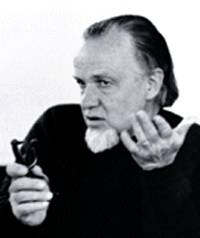



 Ivar Giaever
 1 photo


