“Truth Tuesday” Taking on Ark Times Bloggers on the “Absurdity of Life without God!!” Part 20 (Belief in an afterlife affects how people live now according to Fyodor Dostoyevsky {1821–1881})

Is the Bible historically accurate? Here are some of the posts I have done in the past on the subject: 1. The Babylonian Chronicleof Nebuchadnezzars Siege of Jerusalem2. Hezekiah’s Siloam Tunnel Inscription. 3. Taylor Prism (Sennacherib Hexagonal Prism)4. Biblical Cities Attested Archaeologically. 5. The Discovery of the Hittites6.Shishak Smiting His Captives7. Moabite Stone8Black Obelisk of Shalmaneser III9A Verification of places in Gospel of John and Book of Acts., 9B Discovery of Ebla Tablets10. Cyrus Cylinder11. Puru “The lot of Yahali” 9th Century B.C.E.12. The Uzziah Tablet Inscription13. The Pilate Inscription14. Caiaphas Ossuary14 B Pontius Pilate Part 214c. Three greatest American Archaeologists moved to accept Bible’s accuracy through archaeology.

The Bible and Archaeology – Is the Bible from God? (Kyle Butt 42 min)

Eastwooding Richard Dawkins’ Moral Argument Objections

Published on Oct 20, 2012

For more information and resources visit: http://www.reasonablefaith.org

On September 29th, 2012, William Lane Craig participated in the Contending with Christianity’s Critics Conference held at Watermark Community Church in Dallas, TX. In this short clip, Dr. Craig uses the technique of Eastwooding to deal with Richard Dawkins’ attempted refutations of the moral argument for God’s existence.

To view the entire video: http://youtu.be/_XZb8m7p8ng

The statements ascribed to Richard Dawkins in this presentation are statements actually made by Prof. Dawkins. The following is a list of the sources of such statements:

Dawkins, Richard. “Afterword.” In Lawrence Krauss, A Universe from Nothing. New York: Free Press, 2012.

_____. “Comment.” http://old.richarddawkins.net/comment….

_____. The God Delusion. New York: Houghton-Mifflin, 2006.

_____. River out of Eden: a Darwinian View of Life. New York: Basic Books, 1996.

_____. “The Ultraviolet Garden,” Lecture 4 of 7 Royal Institution Christmas Lectures (1992), http://physicshead.blogspot.com/2007/….

_____. “Why I Refuse to Debate William Lane Craig.” The Guardian 20 October 2011 http://old.richarddawkins.net/comment…

Citations of these statements with references may be found in:

“Richard Dawkins on Arguments for God.” In God Is Great, God Is Good, pp. 13-31. Ed. Wm. L Craig and Chad Meister. Downers Grove, Ill.: Inter-Varsity, 2009.

Citations in lecture format may be found at:

http://youtu.be/9HLmow850iE

We welcome your comments in the Reasonable Faith forums:
http://www.reasonablefaith.org/forums/

Be sure to also visit Reasonable Faith’s other channel: http://www.youtube.com/drcraigvideos

Follow Reasonable Faith On Twitter: http://twitter.com/rfupdates

Add Reasonable Faith On Facebook: http://www.facebook.com/reasonablefaith

Francis Schaeffer and  Gospel of Christ in the pages of the Bible

(The Bible is the key in understanding the universe in its form)

Francis and Edith Schaeffer pictured below:

_________________

Life without God in the picture is absurdity!!!. That was the view of King Solomon when he wrote the Book of Ecclesiastes 3000 years ago and it is the view of many of the modern philosophers todayModern man has tried to come up with a lasting meaning for life without God in the picture (life under the sun), but it is not possible. Without the infinite-personal God of the Bible to reveal moral absolutes then man is left to embrace moral relativism. In a time plus chance universe man is reduced to a machine and can not find a place for values such as love. Both of Francis Schaeffer’s film series have tackled these subjects and he shows how this is reflected in the arts.

Here are some posts I have done on the series “HOW SHOULD WE THEN LIVE? : Francis Schaeffer’s “How should we then live?” Video and outline of episode 10 “Final Choices” episode 9 “The Age of Personal Peace and Affluence”episode 8 “The Age of Fragmentation”episode 7 “The Age of Non-Reason” episode 6 “The Scientific Age”  episode 5 “The Revolutionary Age” episode 4 “The Reformation” episode 3 “The Renaissance”episode 2 “The Middle Ages,”, and  episode 1 “The Roman Age,” .

In the film series “WHATEVER HAPPENED TO THE HUMAN RACE?” the arguments are presented  against abortion (Episode 1),  infanticide (Episode 2),   euthenasia (Episode 3), and then there is a discussion of the Christian versus Humanist worldview concerning the issue of “the basis for human dignity” in Episode 4 and then in the last episode a close look at the truth claims of the Bible.

I have discussed many subjects with my liberal friends over at the Ark Times Blog in the past and I have taken them on now on the subject of the absurdity of life without God in the picture. Most of my responses included quotes from William Lane Craig’s book THE ABSURDITY OF LIFE WITHOUT GOD.  Here is the result of one of those encounters from June of 2013:

I wrote:

Outlier you don’t think that an afterlife would influence the way people act now on this earth? Why did the Russian writer Fyodor Dostoyevsky (1821–1881) tackle this very issue so long ago?

_______________

William Lane Craig noted:

Another apologetic based on the human predicament may be found in the magnificent novels of the great nineteenth-century Russian writer Fyodor Dostoyevsky (1821–1881). (May I add that I think the obsession of contemporary evangelicals with the writings of authors like C. S. Lewis to the neglect of writers like Dostoyevsky is a great shame? Dostoyevsky is a far, far grander writer.) The problem that tortured Dostoyevsky was the problem of evil: how can a good and loving God exist when the world is filled with so much suffering and evil? Dostoyevsky presented this problem in his works so persuasively, so poignantly, that certain passages of his, notably “The Grand Inquisitor” section from his Brothers Karamazov, are often reprinted in anthologies as classic statements of the problem of evil. As a result, some people are under the impression that Dostoyevsky was himself an atheist and that the viewpoint of the Grand Inquisitor is his own.

Actually, he sought to carry through a two-pronged defense of theism in the face of the problem of evil. Positively, he argued that innocent suffering may perfect character and bring one into a closer relation with God. Negatively, HE TRIED TO SHOW THAT IF THE EXISTENCE OF GOD IS DENIED, THEN ONE IS LANDED IN COMPLETE MORAL RELATIVISM, SO THAT NO ACT, REGARDLESS HOW DREADFUL OR HEINOUS, CAN BE CONDEMNED BY THE ATHEIST. To live consistently with such a view of life is unthinkable and impossible. Hence, atheism is destructive of life and ends logically in suicide.

Dostoyevsky’s magnificent novels Crime and Punishment and The Brothers Karamazov powerfully illustrate these themes. In the former a young atheist, convinced of moral relativism, brutally murders an old woman. Though he knows that on his presuppositions he should not feel guilty, nevertheless he is consumed with guilt until he confesses his crime and gives his life to God. The latter novel is the story of four brothers, one of whom murders their father because his atheist brother Ivan had told him that moral absolutes do not exist. Unable to live with the consequences of his own philosophical system, Ivan suffers a mental collapse. The remaining two brothers, one of whom is unjustly accused of the parricide and the other a young Russian orthodox priest, find in what they suffer the perfection of their character and a nearness to God.

Dostoyevsky recognizes that his response to atheism constitutes no positive proof of Christianity. Indeed, he rejects that there could be such. Men demand of Christ that he furnish them “bread and circuses,” but he refuses to do so. The decision to follow Christ must be made in loneliness and anxiety. Each person must face for himself the anguish of a world without God and in the solitude of his own heart give himself to God in faith.

Related posts:

Francis Schaeffer’s “How should we then live?” Video and outline of episode 10 “Final Choices” (Schaeffer Sundays)

E P I S O D E 1 0   Dr. Francis Schaeffer – Episode X – Final Choices 27 min FINAL CHOICES I. Authoritarianism the Only Humanistic Social Option One man or an elite giving authoritative arbitrary absolutes. A. Society is sole absolute in absence of other absolutes. B. But society has to be […]

Francis Schaeffer’s “How should we then live?” Video and outline of episode 9 “The Age of Personal Peace and Affluence” (Schaeffer Sundays)

E P I S O D E 9 Dr. Francis Schaeffer – Episode IX – The Age of Personal Peace and Affluence 27 min T h e Age of Personal Peace and Afflunce I. By the Early 1960s People Were Bombarded From Every Side by Modern Man’s Humanistic Thought II. Modern Form of Humanistic Thought Leads […]

Francis Schaeffer’s “How should we then live?” Video and outline of episode 8 “The Age of Fragmentation” (Schaeffer Sundays)

E P I S O D E 8 Dr. Francis Schaeffer – Episode VIII – The Age of Fragmentation 27 min I saw this film series in 1979 and it had a major impact on me. T h e Age of FRAGMENTATION I. Art As a Vehicle Of Modern Thought A. Impressionism (Monet, Renoir, Pissarro, Sisley, […]

Francis Schaeffer’s “How should we then live?” Video and outline of episode 7 “The Age of Non-Reason” (Schaeffer Sundays)

E P I S O D E 7 Dr. Francis Schaeffer – Episode VII – The Age of Non Reason I am thrilled to get this film series with you. I saw it first in 1979 and it had such a big impact on me. Today’s episode is where we see modern humanist man act […]

Francis Schaeffer’s “How should we then live?” Video and outline of episode 6 “The Scientific Age” (Schaeffer Sundays)

E P I S O D E 6 How Should We Then Live 6#1 Uploaded by NoMirrorHDDHrorriMoN on Oct 3, 2011 How Should We Then Live? Episode 6 of 12 ________ I am sharing with you a film series that I saw in 1979. In this film Francis Schaeffer asserted that was a shift in […]

Francis Schaeffer’s “How should we then live?” Video and outline of episode 5 “The Revolutionary Age” (Schaeffer Sundays)

E P I S O D E 5 How Should We Then Live? Episode 5: The Revolutionary Age I was impacted by this film series by Francis Schaeffer back in the 1970′s and I wanted to share it with you. Francis Schaeffer noted, “Reformation Did Not Bring Perfection. But gradually on basis of biblical teaching there […]

Francis Schaeffer’s “How should we then live?” Video and outline of episode 4 “The Reformation” (Schaeffer Sundays)

Dr. Francis Schaeffer – Episode IV – The Reformation 27 min I was impacted by this film series by Francis Schaeffer back in the 1970′s and I wanted to share it with you. Schaeffer makes three key points concerning the Reformation: “1. Erasmian Christian humanism rejected by Farel. 2. Bible gives needed answers not only as to […]

“Schaeffer Sundays” Francis Schaeffer’s “How should we then live?” Video and outline of episode 3 “The Renaissance”

Francis Schaeffer’s “How should we then live?” Video and outline of episode 3 “The Renaissance” Francis Schaeffer: “How Should We Then Live?” (Episode 3) THE RENAISSANCE I was impacted by this film series by Francis Schaeffer back in the 1970′s and I wanted to share it with you. Schaeffer really shows why we have so […]

Francis Schaeffer’s “How should we then live?” Video and outline of episode 2 “The Middle Ages” (Schaeffer Sundays)

  Francis Schaeffer: “How Should We Then Live?” (Episode 2) THE MIDDLE AGES I was impacted by this film series by Francis Schaeffer back in the 1970′s and I wanted to share it with you. Schaeffer points out that during this time period unfortunately we have the “Church’s deviation from early church’s teaching in regard […]

Francis Schaeffer’s “How should we then live?” Video and outline of episode 1 “The Roman Age” (Schaeffer Sundays)

Francis Schaeffer: “How Should We Then Live?” (Episode 1) THE ROMAN AGE   Today I am starting a series that really had a big impact on my life back in the 1970′s when I first saw it. There are ten parts and today is the first. Francis Schaeffer takes a look at Rome and why […]

Francis Schaeffer: “Whatever Happened to the Human Race” (Episode 5) TRUTH AND HISTORY

Francis Schaeffer: “Whatever Happened to the Human Race” (Episode 5) TRUTH AND HISTORY Published on Oct 7, 2012 by AdamMetropolis This crucial series is narrated by the late Dr. Francis Schaeffer and former Surgeon General Dr. C. Everett Koop. Today, choices are being made that undermine human rights at their most basic level. Practices once […]

Francis Schaeffer: “Whatever Happened to the Human Race” (Episode 4) THE BASIS FOR HUMAN DIGNITY

The opening song at the beginning of this episode is very insightful. Francis Schaeffer: “Whatever Happened to the Human Race” (Episode 4) THE BASIS FOR HUMAN DIGNITY Published on Oct 7, 2012 by AdamMetropolis This crucial series is narrated by the late Dr. Francis Schaeffer and former Surgeon General Dr. C. Everett Koop. Today, choices […]

Francis Schaeffer: “Whatever Happened to the Human Race” (Episode 3) DEATH BY SOMEONE’S CHOICE

Francis Schaeffer: “Whatever Happened to the Human Race” (Episode 3) DEATH BY SOMEONE’S CHOICE Published on Oct 6, 2012 by AdamMetropolis This crucial series is narrated by the late Dr. Francis Schaeffer and former Surgeon General Dr. C. Everett Koop. Today, choices are being made that undermine human rights at their most basic level. Practices […]

Francis Schaeffer: “Whatever Happened to the Human Race?” (Episode 2) SLAUGHTER OF THE INNOCENTS

Francis Schaeffer: “Whatever Happened to the Human Race?” (Episode 2) SLAUGHTER OF THE INNOCENTS Published on Oct 6, 2012 by AdamMetropolis This crucial series is narrated by the late Dr. Francis Schaeffer and former Surgeon General Dr. C. Everett Koop. Today, choices are being made that undermine human rights at their most basic level. Practices […]

Francis Schaeffer: “Whatever Happened to the Human Race” (Episode 1) ABORTION OF THE HUMAN RACE

It is not possible to know where the pro-life evangelicals are coming from unless you look at the work of the person who inspired them the most. That person was Francis Schaeffer.  I do care about economic issues but the pro-life issue is the most important to me. Several years ago Adrian Rogers (past president of […]

Ecclesiastes, Purpose, Meaning, and the Necessity of God by Suiwen Liang (Quotes Will Durant, Madalyn Murray O’Hair, Stephen Jay Gould,Richard Dawkins, Jean-Paul Sartre,Bertrand Russell, Leo Tolstoy, Loren Eiseley,Aldous Huxley, G.K. Chesterton, Ravi Zacharias, and C.S. Lewis.)

Ecclesiastes 2-3 Published on Sep 19, 2012 Calvary Chapel Spring Valley | Sunday Evening | September 16, 2012 | Derek Neider _____________________________ I have written on the Book of Ecclesiastes and the subject of the meaning of our lives on several occasions on this blog. In this series on Ecclesiastes I hope to show how secular […]

Robert Leroe on Ecclesiastes (Mentions Thomas Aquinas, Princess Diana, Mother Teresa, King Solomon, King Rehoboam, Eugene Peterson, Chuck Swindoll, and John Newton.)

Ecclesiastes 1 Published on Sep 4, 2012 Calvary Chapel Spring Valley | Sunday Evening | September 2, 2012 | Pastor Derek Neider _____________________ I have written on the Book of Ecclesiastes and the subject of the meaning of our lives on several occasions on this blog. In this series on Ecclesiastes I hope to show how […]

Super Bowl, Black Eyed Peas, and the Meaning of Life and Ecclesiastes

Ecclesiastes 8-10 | Still Searching After All These Years Published on Oct 9, 2012 Calvary Chapel Spring Valley | Sunday Evening | October 7, 2012 | Pastor Derek Neider _______________________ Ecclesiastes 11-12 | Solomon Finds His Way Published on Oct 30, 2012 Calvary Chapel Spring Valley | Sunday Evening | October 28, 2012 | Pastor Derek Neider […]

Brian LePort on Ecclesiastes

Ecclesiastes 6-8 | Solomon Turns Over a New Leaf Published on Oct 2, 2012 Calvary Chapel Spring Valley | Sunday Evening | September 30, 2012 | Pastor Derek Neider _____________________ I have written on the Book of Ecclesiastes and the subject of the meaning of our lives on several occasions on this blog. In this series […]

J.W. Wartick on Ecclesiastes

Ecclesiastes 4-6 | Solomon’s Dissatisfaction Published on Sep 24, 2012 Calvary Chapel Spring Valley | Sunday Evening | September 23, 2012 | Pastor Derek Neider ___________________ I have written on the Book of Ecclesiastes and the subject of the meaning of our lives on several occasions on this blog. In this series on Ecclesiastes I hope […]

Overview of the Book of Ecclesiastes

Overview of the Book of Ecclesiastes Overview of the Book of EcclesiastesAuthor: Solomon or an unknown sage in the royal courtPurpose: To demonstrate that life viewed merely from a realistic human perspective must result in pessimism, and to offer hope through humble obedience and faithfulness to God until the final judgment.Date: 930-586 B.C. Ecclesiastes 2-3 Published on Sep 19, […]

Doy Moyer on the Book of Ecclesiastes and Apologetics

Ecclesiastes 1 Published on Sep 4, 2012 Calvary Chapel Spring Valley | Sunday Evening | September 2, 2012 | Pastor Derek Neider _____________________ I have written on the Book of Ecclesiastes and the subject of the meaning of our lives on several occasions on this blog. In this series on Ecclesiastes I hope to show how […]

Solomon was the author of Ecclesiastes

Ecclesiastes 8-10 | Still Searching After All These Years Published on Oct 9, 2012 Calvary Chapel Spring Valley | Sunday Evening | October 7, 2012 | Pastor Derek Neider _______________________ Ecclesiastes 11-12 | Solomon Finds His Way Published on Oct 30, 2012 Calvary Chapel Spring Valley | Sunday Evening | October 28, 2012 | Pastor Derek Neider […]

By Everette Hatcher III | Posted in Current Events | Edit | Comments (0)


10 YEARS AGO ADRIAN ROGERS WENT TO GLORY BUT HIS SERMONS ARE STILL SHARING CHRIST LOVE TODAY!!!

On 11-15-05 Adrian Rogers passed over to glory and since it is the 10th anniversary of that day I wanted to celebrate his life in two ways. First, I wanted to pass on some of the material from Adrian Rogers’ sermons I have sent to prominent atheists over the last 20 years. Second, I wanted to publish a letter I have written today to another high profile figure that Dr. Rogers has mentioned several times in his sermons. By the way at this link you can see a sermon of Rogers on Evolution that I sent to over 250 ATHEIST SCIENTISTS FROM 1992 TO 2015! I have posted on Adrian Rogers’ messages on Evolution before but here is a complete message on it.

Adrian Rogers pictured below

________________


In the 1970’s and 1980’s I was a member of Bellevue Baptist in Memphis where Adrian Rogers was pastor and was a student at ECS from the 5th grade to the 12th grade where I was introduced to the books and films of Francis Schaeffer. During this time I was amazed at how many prominent figures in the world found their way into the works of both Adrian Rogers and Francis Schaeffer and I wondered what it would be like if these individuals were exposed to the Bible and the gospel. Therefore, over 20 years ago I began sending the messages of Adrian Rogers and portions of the works of Francis Schaeffer to many of the secular figures that they mentioned in their works. Let me give you some examples and tell you about some lessons that I have learned.

_______________

I have learned several things about atheists in the last 20 years while I have been corresponding with them. First, they know in their hearts that God exists and they can’t live as if God doesn’t exist, but they will still search in some way in their life for a greater meaning. Second, many atheists will take time out of their busy lives to examine the evidence that I present to them. Third, there is hope that they will change their views.

Let’s go over again a few points I made at the first of this post.  My first point is backed up by  Romans 1:18-19 (Amplified Bible) ” For God’s wrath and indignation are revealed from heaven against all ungodliness and unrighteousness of men, who in their wickedness REPRESS and HINDER the truth and make it inoperative. For that which is KNOWN about God is EVIDENT to them and MADE PLAIN IN THEIR INNER CONSCIOUSNESS, because God  has SHOWN IT TO THEM,”(emphasis mine). I have discussed this many times on my blog and even have interacted with many atheists from CSICOP in the past. (I first heard this from my pastor Adrian Rogers back in the 1980’s.)

My second point is that many atheists will take the time to consider the evidence that I have presented to them and will respond. The late Adrian Rogers was my pastor at Bellevue Baptist when I grew up and I sent his sermon on evolution and another on the accuracy of the Bible to many atheists to listen to and many of them did. I also sent many of the arguments from Francis Schaeffer also.

______
Adrian Rogers and his wife Joyce pictured above with former President George Bush at Union University in Tennessee.
_____________________________
Many of these scholars have taken the time to respond back to me in the last 20 years and some of the names  included are  Ernest Mayr (1904-2005), George Wald (1906-1997), Carl Sagan (1934-1996),  Robert Shapiro (1935-2011), Nicolaas Bloembergen (1920-),  Brian Charlesworth (1945-),  Francisco J. Ayala (1934-) Elliott Sober (1948-), Kevin Padian (1951-), Matt Cartmill (1943-) , Milton Fingerman (1928-), John J. Shea (1969-), , Michael A. Crawford (1938-), (Paul Kurtz (1925-2012), Sol Gordon (1923-2008), Albert Ellis (1913-2007), Barbara Marie Tabler (1915-1996), Renate Vambery (1916-2005), Archie J. Bahm (1907-1996), Aron S “Gil” Martin ( 1910-1997), Matthew I. Spetter (1921-2012), H. J. Eysenck (1916-1997), Robert L. Erdmann (1929-2006), Mary Morain (1911-1999), Lloyd Morain (1917-2010),  Warren Allen Smith (1921-), Bette Chambers (1930-),  Gordon Stein (1941-1996) , Milton Friedman (1912-2006), John Hospers (1918-2011), and Michael Martin (1932-).
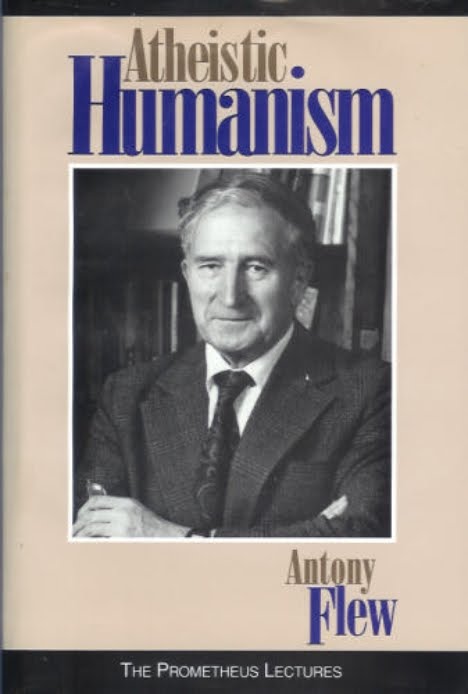
Third, there is hope that an atheist will reconsider his or her position after examining more evidence. Twenty years I had the opportunity to correspond with two individuals that were regarded as two of the most famous atheists of the 20th Century, Antony Flew and Carl Sagan.  I had read the books and seen the films of the Christian philosopher Francis Schaeffer and he had discussed the works of both of these men. I sent both of these gentlemen philosophical arguments from Schaeffer in these letters and in the first letter I sent a cassette tape of my pastor’s sermon IS THE BIBLE TRUE? You may have noticed in the news a few years that Antony Flew actually became a theist in 2004 and remained one until his death in 2010. Carl Sagan remained a skeptic until his dying day in 1996.Antony Flew wrote me back several times and in the  June 1, 1994 letter he  commented, “Thank you for sending me the IS THE BIBLE TRUE? tape to which I have just listened with great interest and, I trust, profit.” I later sent him Adrian Rogers’ sermon on evolution too. 

 The ironic thing is back in 2008 I visited the Bellevue Baptist Book Store and bought the book There Is A God – How the World’s Most Notorious Atheist Changed His Mind, by Antony Flew, and it is in this same store that I bought the message by Adrian Rogers in 1994 that I sent to Antony Flew. Although Antony Flew did not make a public profession of faith he did admit that the evidence for God’s existence was overwhelming to him in the last decade of his life. His experience has been used in a powerful way to tell  others about Christ. Let me point out that while on airplane when I was reading this book a gentleman asked me about the book. I was glad to tell him the whole story about Adrian Rogers’ two messages that I sent to Dr. Flew and I gave him CD’s of the messages which I carry with me always. Then at McDonald’s at the Airport, a worker at McDonald’s asked me about the book and I gave him the same two messages from Adrian Rogers too.

______________________

Antony Flew – World’s Most Famous Atheist Accepts Existence of God

Uploaded on Nov 28, 2008

Has Science Discovered God?

A half-century ago, in 1955, Professor Antony Flew set the agenda for modern atheism with his Theology and Falsification, a paper presented in a debate with C.S. Lewis. This work became the most widely reprinted philosophical publication of the last 50 years. Over the decades, he published more than 30 books attacking belief in God and debated a wide range of religious believers.

Then, in a 2004 Summit at New York University, Professor Flew announced that the discoveries of modern science have led him to the conclusion that the universe is indeed the creation of infinite Intelligence.

For More Info Visit:
http://ScienceFindsGod.com

__________________

Evolution: Fact of Fiction? By Adrian Rogers

___________

The high profile person that Dr. Rogers used to mention from time to time in his sermons is Hugh Hefner and yesterday I wrote him a letter which I will mail today.

In 1984 Adrian Rogers said in sermon, “Playboy’s Payday,” these words:

(The text for this sermon was the whole chapter of Proverbs 5)

I’m telling you the Word of God here today.  You’re going to blow it, and when you come to the end of it, you’re going to miss the best of life.  Do you know what Hugh Heffner said on another occasion? He was reminiscing. Here is this guy who has all of these girls around  him, all of this booze, all of these casinos and presumably can have any   sensual pleasure he wants. He said, You know, in the next ten years I would rather meet a girl and fall in love and have her fall in love with me than to make another one hundred million dollars.   But I fear the man doesn’t know what love is.  I feel that he’s missed it.  What he’s saying is, I’ve got it all, but I don’t have satisfaction!  There’s something that’s worth more than a hundred million dollars to me, and I don’t have it!

Marilyn Monroe, the sex goddess who took her own life, said, “I hate sex.”  Everybody says, “Oh, look at the pleasure that she’s having.”  In Sweden, Sweden’s a liberated country, they have open pornography, open prostitution, free love in Sweden.  It’s all accepted. That’s supposed to be the liberated country in the Western world.  The Swedes! Do you know what nation has the highest divorce rate of any nation?  Sweden. .  “God is not mocked.”  I’m telling you there is a disappointment in sin.  The cup of sin is sweet, but the dregs are bitter indeed.

They did an in-depth study at Stanford University. These are not a bunch of preachers, and their conclusion of the in-depth study was this:  that the more promiscuous people were before marriage, the less chance for happiness after marriage.   The try-it-before-you-marry-it idea may sound cute, but it’s not in the Word of God, dear friend.  This idea of living together to see if you’re compatible, the more promiscuous people were before marriage, the less chance of opportunity for satisfaction after marriage. Young people, many of them right now are on the beaches of Fort Lauderdale, many of them have gone down there attempting to make it with some girl, to make it with some boy, to jump in bed with somebody. They think that’s the way.   And our young people are being told that so much that they think there’s absolutely nothing wrong with it!

Dangers of Pornography Adrian Rogers

ADRIAN ROGERS PICTURED AT WHITE HOUSE AFTER BEING ELECTED PRESIDENT OF SOUTHERN BAPTIST CONVENTION

November 15, 2015

Dear Mr. Hefner,

I have chosen to write you on the 10th anniversary of the passing of one of the most influential people in my life. My hometown pastor at Bellevue Baptist in Memphis, Adrian Rogers, was my pastor from 1975 to 1983 when I was 14 to 21 years old and he influenced me in this crucial time of my life.

I attended his funeral and I was touched by speakers such as my youth choir director James Whitmire, my College Director Ken Whitten, our family friend Bob Sorrell and current Bellevue pastor Steve Gaines.

Two other notable people who spoke were  James Dobson, founder of Focus on the Family and by video the Evangelist Billy Graham. Graham noted, “We need for ministers of the Gospel to defend the Bible as the infallible Word of God…I believe in my heart that Adrian Rogers was such a man. I knew him personally. I had walked with him and prayed with him…I know God’s hand was upon Adrian Rogers as he proclaimed the Bread of Life from his church and through radio and television…I praise God for his ministry.”

Later in this letter I will return to this subject of the historical accuracy of the Bible. Adrian Rogers actually was remembered among other things for his contribution in this area in Southern Baptist life. In fact, one of my favorite sermons by him is called, HOW YOU CAN BE CERTAIN THE BIBLE IS THE WORD OF GOD and you can watch this message on You Tube.

Just two days ago it was Friday the 13th which is a pretty spooky day usually, and I wanted to talk to you about a subject that most people would consider very scary but it is the subject that Billy Graham has chosen for the last book he will ever write. I was privileged to hear Billy Graham speak both in Memphis in 1978 and in Little Rock in 1989.
On  Sunday November 8, 2015,  I was in Memphis at my parents’ home getting ready to go to church when I saw the “Keeping the Faith” segment on Fox News with Franklin Graham. Speaking of his father Billy Graham he noted:
He just turned 97 on Saturday and he is still with us and his mind is still sharp and he received about a dozen cakes and he took a bite out of everyone of them. He has no ailments than other his age. He doesn’t hear well or see well but his mind is clear and he can understand you and can communicate with him.
This book was 90% completed by his 95th birthday but he got sick right after that and we didn’t think he would live to Christmas that year and we put the book aside but then last year when he doing pretty good we got it back out so he could finished it when he was doing pretty good.
At 97 he is getting close to eternity (in the afterlife) he knows that and he wants people to know there is a heaven and a hell.
In “Where I Am: Heaven, Eternity and Our Life Beyond,” Billy Graham asserted, “As a Christian and a preacher of the Gospel, I am always grieved to have to interrupt a marvelous picture, such as eternal life in Heaven, to talk about another eternal place that Jesus calls Hell…It has no similarities to what is typically called home, nor is Hell a resting place, a holding place, or a graveyard. Hell is a burning inferno…I can say with certainty that if there is no literal fire in Hell, then God is using symbolic language to indicate something far worse…Just as there are no words to adequately describe the grand beauty of Heaven, we cannot begin to imagine just how horrible the place called Hell is.”
But there is hope if one repents and puts his or her faith in Christ alone for eternal life.
“We need to say either yes or no. But some of us say maybe. Some of us try to straddle the fence and live in both worlds, but Jesus will not compromise with us. The Gospel plan is all set. We must accept His Son if we are to enter into His eternal kingdom. If your answer is not yes, then the choice is made.”

Adrian Rogers once noted: 

When people think of Hell, they picture the devil as a comical character wearing a red suit with horns, a tail and a pitchfork, making people shovel coal. Satan loves that image because we laugh at it.

Satan promotes laughter about Hell because if people don’t understand the teaching of Hell, they’ll not prepare to go to Heaven, to give their hearts to Christ.

It makes no difference if all the scholars, preachers, scientists, statesmen, politicians and liberal theologians put together say there is no Hell, it wouldn’t change one letter of what the Word of God says.

Often the minister who preaches on Hell is accused of being unloving. With a sneer the world loves to call him a “hell-fire and damnation preacher.” The late, great Dr. Robert G. Lee said,

I know some people call the preacher who stands squarely upon the teaching of Christ and His apostles narrow, harsh, and cruel. As to being narrow, I have no desire to any broader than was Jesus. As to being cruel, is it cruel to tell a man the truth? Is a man to be called cruel who declares the whole counsel of God and points out to men their danger? Is it cruel to arouse sleeping people to the fact that the house is on fire? Is it cruel to jerk a blind man away from the rattlesnake in the coil? Is it cruel to declare to people the deadliness of disease and tell them which medicine to take? I had rather be called cruel for being kind, than to be called kind for being cruel.

The cruelest thing we could do would be to fail to warn people about Hell and what the Bible has to say about it. To ridicule a preacher who warns of Hell is like ridiculing a doctor who warns of cancer. Hell is not a pleasant subject, but it is a reality.

HUGH DON’T YOU WANT TO TAKE A CLOSER LOOK AT BECOMING A CHRISTIAN SO YOU CAN GO TO HEAVEN AND AVOID PUNISHMENT. IT IS NOT TOO LATE.

“But as it is written: ‘Eye has not seen, nor ear heard, nor have entered into the heart of man the things which God has prepared for those who love Him.'” (1 Corinthians 2:9)

In the article “Chicken Soup for the Soul: Billy Graham & Me (EXCERPT)” on March 19, 2013 I read these words by a political hero of yours,  :

When I was governor, Billy came to Little Rock for another crusade, and we traveled together to visit my pastor, W.O. Vaught, who was dying of cancer. I’ll never forget their conversation – about faith and fears, life and death. It was my first real glimpse of Billy the private man. He went to the home of my pastor and offered him comfort, saying that he too had lived a long life, and would see him again soon “just inside the Eastern Gate.” He lived his faith when no one was looking.

From the book MY LIFE by Bill Clinton.

With Dr. Billy Graham and my pastor, Dr. W.O. Vaught, fall 1989

In 1974 in an interview with R. Couri Hay YOU NOTED:

Beyond a certain point a person would be a fool to suggest that he really knows the answers and I don’t. In other words, I have no idea what we are doing here, but we are here and that wasn’t just man’s invention.  I mean there is something beyond all of this and whether it has a purpose or a point, grander plan. I don’t know. No one knows and those who pretend to know strike me as being rather pompous.

THREE POINTS YOU ARE MAKING.

  1. YOU DON’T HAVE ALL THE ANSWERS. 2. THERE IS SOMETHING BEYOND ALL OF THIS BUT YOU DON’T KNOW IF THERE IS A PURPOSE OR NOT. 3. THOSE WHO PRETEND TO KNOW ARE POMPOUS.

Number one, thank you for admitting that you don’t have all the answers.

Number two, the scientist Blaise Pascal in his book Pensées gave the reason for your second observation:

“What else does this craving, and this helplessness, proclaim but that there was once in man a true happiness, of which all that now remains is the empty print and trace? This he tries in vain to fill with everything around him, seeking in things that are not there the help he cannot find in those that are, though none can help, since this infinite abyss can be filled only with an infinite and immutable object; in other words by God himself.”

Ecclesiastes 3:11a Amplified Bible (AMP)

11 He has made everything beautiful and appropriate in its time. He has also planted eternity [a sense of divine purpose] in the human heart [a mysterious longing which nothing under the sun can satisfy, except God]

The answer to find meaning in life is found in putting your faith and trust in Jesus Christ.

Number three, those Christians like me who claim that God has spoken truth in the Bible do have evidence to back up that view and below is some of that evidence.

The Bible is true from cover to cover and can be trusted. Below is a piece of that evidence given by Francis Schaeffer and former Surgeon General C. Everett Koop concerning the accuracy of the Bible.

The following is an excerpt from TRUTH AND HISTORY (chapter 5 of WHATEVER HAPPENED TO THE HUMAN RACE?, under footnote #94):

So the story goes on. We have stopped at only a few incidents in the sweep back to the year 1000 B.C. What we hope has emerged from this is a sense of the historical reliability of the Bible’s text. When the Bible refers to historical incidents, it is speaking about the same sort of “history” that historians examine elsewhere in other cultures and periods. This borne out by the fact that some of the incidents, some of the individuals, and some of the places have been confirmed by archaeological discoveries in the past hundred years has swept away the possibility of a naive skepticism about the Bible’s history. And what is particularly striking is that the tide has built up concerning the time before the year 1000 B.C. Our knowledge about the years 2500 B.C. to 1000 B.C. has vastly increased through discoveries sometimes of whole libraries and even of hitherto unknown people and languages.

There was a time, for example, when the Hittite people, referred to in the early parts of the Bible, were treated as fictitious by critical scholars. Then came the discoveries after 1906 at Boghaz Koi (Boghaz-koy) which not only gave us the certainty of their existence but stacks of details from their own archives!

Here is an excerpt from the  article, “Archaeology and the Old Testament,” which is  on the website of Probe Ministries:

The Discovery of the Hittites

The Hittites played a prominent role in Old Testament history. They interacted with biblical figures as early as Abraham and as late as Solomon. They are mentioned in Genesis 15:20 as people who inhabited the land of Canaan. 1 Kings 10:29 records that they purchased chariots and horses from King Solomon. The most prominent Hittite is Uriah the husband of Bathsheba. The Hittites were a powerful force in the Middle East from 1750 B.C. until 1200 B.C. Prior to the late 19th century, nothing was known of the Hittites outside the Bible, and many critics alleged that they were an invention of the biblical authors.

In 1876 a dramatic discovery changed this perception. A British scholar named A. H. Sayce found inscriptions carved on rocks in Turkey. He suspected that they might be evidence of the Hittite nation. Ten years later, more clay tablets were found in Turkey at a place called Boghaz-koy. German cuneiform expert Hugo Winckler investigated the tablets and began his own expedition at the site in 1906.

Winckler’s excavations uncovered five temples, a fortified citadel and several massive sculptures. In one storeroom he found over ten thousand clay tablets. One of the documents proved to be a record of a treaty between Ramesses II and the Hittite king. Other tablets showed that Boghaz-koy was the capital of the Hittite kingdom. Its original name was Hattusha and the city covered an area of 300 acres. The Hittite nation had been discovered!

Less than a decade after Winckler’s find, Czech scholar Bedrich Hronzny proved the Hittite language is an early relative of the Indo-European languages of Greek, Latin, French, German, and English. The Hittite language now has a central place in the study of the history of the Indo-European languages.

The discovery also confirmed other biblical facts. Five temples were found containing many tablets with details of the rites and ceremonies that priests performed. These ceremonies described rites for purification from sin and purification of a new temple. The instructions proved to be very elaborate and lengthy. Critics once criticized the laws and instructions found in the books of Leviticus and Deuteronomy as too complicated for the time it was written (1400 B.C.). The Boghaz-koy texts along with others from Egyptian sites and a site along the Euphrates called Emar have proven that the ceremonies described in the Jewish Pentateuch are consistent with the ceremonies of the cultures of this time period.

The Hittite Empire made treaties with civilizations they conquered. Two dozen of these have been translated and provide a better understanding of treaties in the Old Testament. The discovery of the Hittite Empire at Boghaz-koy has significantly advanced our understanding of the patriarchal period. Dr. Fred Wright summarizes the importance of this find in regard to biblical historicity:

Now the Bible picture of this people fits in perfectly with what we know of the Hittite nation from the monuments. As an empire they never conquered the land of Canaan itself, although the Hittite local tribes did settle there at an early date. Nothing discovered by the excavators has in any way discredited the Biblical account. Scripture accuracy has once more been proved by the archaeologist.4

The discovery of the Hittites has proven to be one of the great archaeological finds of all time. It has helped to confirm the biblical narrative and had a great impact on Middle East archaeological study. Because of it, we have come to a greater understanding of the history of our language, as well as the religious, social, and political practices of the ancient Middle East.

Hefner family below:

I read about your mother Grace being a Bible-believing Christian. Al Mohler of Southern Baptist Seminary noted, “Hefner’s Methodist mother wanted him to be a missionary. In a very real sense, she got her wish in reverse. Hefner became a missionary all right, but a missionary that preached a rejection of the Christian sexual ethic.”

It is not too late for anyone to seek forgiveness. II Peter 3:9: The Lord is not slow in keeping his promise, as some understand slowness. Instead he is patient with you, not wanting anyone to perish, but everyone to come to repentance.

Growing up in church you probably memorized John 3:16,  “For God so loved the world, that he gave his only Son, that whoever believes in him should not perish but have eternal life.”

In this letter I have attempted to demonstrate to you that the Biblical Christianity that your parents brought you up in is based on revealed truth and the Bible is historically accurate. In a previous letter I quoted you portions of the great sermon PAYDAY SOMEDAY by Robert G. Lee and in today’s letter I quoted both Billy Graham and Adrian Rogers on hell. But I wanted to end with just a portion of that quote by Lee that Adrian Rogers used:

Is a man to be called cruel who declares the whole counsel of God and points out to men their danger? Is it cruel to arouse sleeping people to the fact that the house is on fire?

Thank you again for your time and I know how busy you are.

Everette Hatcher, everettehatcher@gmail.com, http://www.thedailyhatch.org, cell ph 501-920-5733, Box 23416, LittleRock, AR 72221

Adrian Rogers: How Do We Know the Bible Is True? (Audio)

_____________

Related posts:

My correspondence with George Wald and Antony Flew!!!

During the 1990′s I actually made it a practice to write famous atheists and scientists that were mentioned by Adrian Rogers and Francis Schaeffer and challenge them with the evidence for the Bible’s historicity and the claims of the gospel. Usually I would send them a cassette tape of Adrian Rogers’ messages “6 reasons I know […]

Antony Flew in his book THERE IS A GOD talks about his “notoriety” as an atheist! ( also 7 News : Web Extra: Ricky Gervais on God)

  7News : Web Extra: Ricky Gervais on God Published on Mar 23, 2014 He’s not shy about sharing his opinion with 5 million social media followers so Ricky Gervais was happy to clear a few things up for us too. __________________________________ Discussion (2 of 3): Antony Flew, N.T. Wright, and Gary Habermas ___________ The Bible and Science […]

Antony Flew tells what the book THERE IS A GOD is all about (Ricky Gervais talks about atheim on Piers Morgan Tonight)

Piers Morgan Tonight : CNN Official Interview: Ricky Gervais says atheism shouldn’t offend Uploaded on Jan 20, 2011 Ricky Gervais tells CNN’s Piers Morgan why he’s an atheist, and why his jokes about God shouldn’t offend believers. The Bible and Science (Part 01) __________________________________ Antony Flew tells what the book THERE IS A GOD: “How the world’s most […]

______

MUSIC MONDAY Brian Welch of Korn and his Christian conversion and deliverance from drugs Part 2

Brian Welch of Korn and his Christian conversion  and deliverance from drugs Part 2

Brian Welch: From Korn to Jesus

Uploaded on Aug 22, 2008

Former guitarist and co-founder of heavy rock group Korn, Brian Welch talks about the amazing turn his life took when he accepted God for who He is. Saved from drugs and addiction, Welch tells his amazing testimony of Jesus’ love and salvation.

Want to learn more about how Jesus can change your life? Go here to find out more: http://www.cbn.com/spirituallife/Bibl…

Still have questions? We’d love to hear from you. Just go here: http://www.cbn.com/contact/feedback-s…

___________________

Korn – The Camel Song

Uploaded on Nov 19, 2007

You can find this song on the “End of Days” Soundtrack

__________________

Eminem Nearly Dies Because Of A Drug Overdose

Uploaded on Jul 19, 2010

a video where eminem nearly died from an overdose of drugs and he only had a couple of second too live :/

_________________________
Between the Liner Notes

Why Brian Welch Walked Away

By Tim Branson and Shannon Woodland
The 700 Club

CBN.com On a peaceful Arizona afternoon, Brian Welch and his daughter Jeanea share a mutual love for music. But just a couple of years ago, Brian would have given anything for just a few minutes of peace.

“I want to be here for Jeanea,” Brian says. “She lost her mom to drugs. I need your help. ‘Help me, help me God.’ I said it from my heart.”

Brian, known around the world to his friends and fans as “Head,” made it big – multi–platinum big – as co-founder and lead guitarist of the band Korn.

“The second record came out, number three on the billboard chart. What’s up with that! We’re some heavy band,” Brian says. “We go to the third album…the album starts going 100,000 copies a week, we start selling. We kept climbing; we kept selling records, more videos, more fame, huge shows.”

The band’s unique sound, called nu-metal, is a mixture of heavy metal and alternative rock, and it catapulted these five friends from Bakersfield, California, into super stardom. And while most of the world saw Brian the rock star, the man who had it all, Brian tells a different story of how he was dying inside and attempted to kill the pain with drugs and alcohol.

“I’d go back on the road, starting drinking. ‘OK, guys let’s party.’ Sweeping the pain under the rug,” Brian says.

While it didn’t seem to affect his music, it had a devastating effect on his marriage.

“I’d go home and me and my ex-wife would do drugs and fight,” he says.

Brian tried several times to quit the drugs, but he felt powerless to fight them. Then, the arrival of his daughter Jeanea changed everything. Brian and his wife, Rebekah, went on the straight and narrow – at least for awhile.

“And that was like the best thing, I said, ‘Life is going to be good. Life is going to be good. I’ve got my band. I’ve got my wife. I’ve got my baby.’ We’re still climbing up and then I go back on tour. I got clean when she was born, and I go back on tour. Open a beer for the first show, instantly hooked again. Rebekah starts doing ‘speed’ at home with the baby and I’m still climbing success. And home is just terrible. Rebekah is missing. I’m missing my baby so bad. When I come home, I’m so drunk or hung over. Then, I spend a couple of days with my kid. I bump into someone who does speed. I do speed at home with my kid and it just gets worse at home as the success grows,” Brian says.

Then, his wife left him and Jeanea, and they eventually divorced.

“I panicked. My rock star dream, my money, nothing, none of my power, none of my gangster friends could stop that trauma from happening,” he says.

Brian won custody of Jeanea. And here began that tug of war in his heart. He wanted to care for his daughter, but hated exposing her to the wild party life of Korn.

“How can you leave a huge band that’s like one of the biggest bands that’s come around, rock bands, that changed music, how can you leave that?,” Brian asks. “But how can I not be there for my daughter?”

As Brian agonized over this decision, he dove deeper and deeper into drugs and alcohol. One day, he heard his daughter singing a Korn song.

“I heard Jeanea singing a Korn song called “Adidas.”  It means all day long I dream about sex. It’s a party song. And I felt like a loser. I’m no good for this kid,” Brian says.

During that time, Brian went into real estate with two partners who happened to be Christians. They never troubled Brian with their faith. But, at one point they reached out to him through an e-mail. Brian had mentioned to his partners how his life was falling apart. Their reply — “Come to me, all you who are weary and I will give you rest.” (Matthew 11:28)

Brian began to question, “‘Could Jesus be real?’ I was thinking in my mind, was this guy not just a goody, goody? Could there really be a God, and is He calling me? I looked up that scripture and I wanted it to be true.”

Eventually, Brian went to church with them.

“So we went to the service. And the music came on and all these people went up to the front and started praying. And I was like, that is just weird. But I was drawn, I felt something going on,” Brian says.  “He said, ‘Does anybody want to accept Christ?’ And I did it for myself. I said the prayer and went home rolled up a hundred dollar bill, laid out a big line of ‘speed’, snorted it. And I said…I remember perfectly. I was clear…I said, ‘Lord, If you’re real like that guy says, please take these drugs from me. I can’t quit, I don’t want to do them, but I can’t stop. I want to be here for Jeanea. She lost her mom to drugs. I need your help, Just help me. Help, help me God.’ I said it from my heart.”

Brian snorted “speed” and read the Bible for a week, searching for the answers. Then one day…

“I felt this peaceful presence and I started shaking a little bit and I got goose bumps everywhere. And the first thing I felt was ‘I love you.’ And I was like, ‘Father?’ I was frozen. ‘Father?’ This was God and then it went away. But, it was so real. It took over the high. And when it went away the drugs said, ‘That’s just drugs. That’s not real.’ So I did drugs all night long. And the next day I woke up and I had the feeling to go to my Bible. I opened it up and pointed, the soul who sins is the soul who dies. And to me, right then, it was like God told me I revealed myself to you last night. It’s time for you to stop the drugs. It’s time for you to be done. And I was consumed with fear and I went and grabbed all my drugs and threw them in the toilet and I said, ‘I’m done God. I’m yours now. I’m yours.’ That’s the last time I did drugs.

According to Brian, the fact that he could become clean after being in drugs for so many years was a miracle.

At the same time, in 2005, Brian split from Korn and sent the heavy metal world into a spin. On the other hand, Brian was baptized in the Jordan River and started his new journey.

“To tell you the truth, God was real,” Brian says. “He revealed himself to me, kept revealing Himself to me, and I felt his presence at my house. He’s speaking to my kid and all this crazy stuff is happening, and that’s all that mattered to me. I was OK. This band stuff, the stardom, I mean everything, it doesn’t matter anymore. It’s God. He’s so real. I don’t care what I do the rest of my life.”

Brian has taken his responsibility as a father head on. Instead of lewd lyrics, Jeanea hears her dad talk about the love of God.

Brian’s music career also has taken on a new direction. His music now reflects his journey from self–destruction into the loving arms of God.

“He put me on Earth to have fellowship and intimacy with Him,” Brian says. “And I’m going to spend as much time I can possibly spend getting to know him everyday. I don’t want to waste any time. I’ve wasted enough time. That’s what I’m put on Earth to do. Be intimate with God. Get to know Him as much as I can. Let Him fill me with His spirit so He can do the work by bringing people into the Kingdom.”

Related posts:

Jim Morrison’s sad drug death was followed by Pamela Courson’s sad story!!!

Jim Morrison’s sad drug death was followed by Pamela Courson’s sad story!!! pamela courson/ jim morrison interview   Interview with Jim Morrison’s father and sister Uploaded on Aug 9, 2010 This interview is from “When You’re Strange” DVD bonus material. I do not own this video and own no rights to it! Pamela Courson Uploaded […]

I’m Waiting for the Man sung by Nico in 1982 (about waiting for drug fix)

__________ NICO – I’m Waiting For The Man – (1982, Warehouse, Preston, UK)   One of the top 10 songs from The Velvet Underground and Nico is the song “I’m Waiting for the Man I’m Waiting for the Man From Wikipedia, the free encyclopedia Jump to: navigation, search “I’m Waiting for the Man” Song by […]

The life of Lou Reed (includes videos from 1960′s and 1970′s)

The life of Lou Reed (includes videos from 1960′s and 1970′s) ____________ Rock & Roll – Velvet Underground The Velvet Underground – Venus in Furs – Live 1) Lou Reed – Sweet Jane – live in Paris, 1974 Velvet Underground-”Sunday Morning” from “Velvet Underground and Nico” LP Lou Reed From Wikipedia, the free encyclopedia Jump […]

Jim Morrison’s relationship with Nico

Jim Morrison’s relationship with Nico   Nico Icon documentary part 1. Nico Icon documentary part 2. ______________ Jim Morrison at Andy Warhol’s Party.wmv (with Nico) Uploaded on Apr 26, 2010 From the Oliver Stone movie. The Doors. _______________________ nico discusses jim morrison. Uploaded on Jan 2, 2008 nico discusses jim, and how he impacted her […]

Pictures and Videos of Edie Sedgwick and the story of her losing battle against drugs and alcohol Part 2

Pictures and Videos of Edie Sedgwick and the story of her losing battle against drugs and alcohol Part 2 Drugs and alcohol have taken the life of many people and I have posted many times about their unfortunate deaths. Whitney Houston, Amy Winehouse, Gary Thain, Janis Joplin, Jimi Hendrix, Brian Jones, Kurt Cobain, and Jim […]

Pictures and Videos of Edie Sedgwick and the story of her losing battle against drugs and alcohol Part 1

Pictures and Videos of Edie Sedgwick and the story of her losing battle against drugs and alcohol Part 1 Factory Girl – The Real Edie Uploaded on Aug 30, 2011 Friends and family of Edie Sedgwick discuss what the factory girl was really like, and the battles and relationships she went through _____________ Edie Sedgwick Excerpt […]

Crystal Bridges Museum of American Art opens on 11-11-11

  Around 4 years ago I was in Philadelphia and the local radio station had a talk show that was blasting Alice Walton for coming into town and buying  the 1876 Thomas Eakins’ masterpiece “The Gross Clinic” which was hanging at the  Jefferson Medical College. However, the people of Philadelphia were given 45 days to […]

By Everette Hatcher III | Posted in Arkansas Times, Current Events | Tagged , , , , , , | Edit | Comments (0)

“Schaeffer Sunday” Debating Kermit Gosnell Trial, Abortion and infanticide with Ark Times Bloggers Part 11 Representative Marvin Stuzman of Indiana and his moving story concerning his mother and abortion

C. Everett Koop, 1980s.jpg
Surgeon General of the United States
In office
January 21, 1982 – October 1, 1989
President Ronald Reagan
George H. W. Bush
Francis Schaeffer
Francis Schaeffer.jpg

Founder of the L’Abri community
Born Francis August Schaeffer
January 30, 1912

Died May 15, 1984 (aged 72)

I truly believe that many of the problems we have today in the USA are due to the advancement of humanism in the last few decades in our society. Ronald Reagan appointed the evangelical Dr. C. Everett Koop to the position of Surgeon General in his administration. He partnered with Dr. Francis Schaeffer in making the video below. It is very valuable information for Christians to have.  Actually I have included a video below that includes comments from him on this subject.


Francis Schaeffer “BASIS FOR HUMAN DIGNITY” Whatever…HTTHR

Dr. Francis Schaeffer: Whatever Happened to the Human Race Episode 1 ABORTION

Dr. Francis schaeffer – The flow of Materialism(from Part 4 of Whatever happened to human race?)

Dr. Francis Schaeffer – The Biblical flow of Truth & History (intro)

Francis Schaeffer – The Biblical Flow of History & Truth (1)

Dr. Francis Schaeffer – The Biblical Flow of Truth & History (part 2)

I have gone back and forth and back and forth with many liberals on the Arkansas Times Blog on many issues such as abortionhuman rightswelfarepovertygun control  and issues dealing with popular culture . This time around I have discussed morality with the Ark Times Bloggers and particularly the trial of the abortionist Dr. Kermit Gosnell and through that we discuss infanticide, abortion and even partial birth abortion. Here are some of my favorite past posts on the subject of Gosnell: ,Abby Johnson comments on Dr. Gosnell’s guilty verdict, Does President Obama care about Kermit Gosnell verdict?Dr. Gosnell Trial mostly ignored by mediaKermit Gosnell is guilty of same crimes of abortion clinics are says Jennifer MasonDenny Burk: Is Dr. Gosnell the usual case or not?, Pro-life Groups thrilled with Kermit Gosnell guilty verdict,  Reactions to Dr. Gosnell guilty verdict from pro-life leaders,  Kermit Gosnell and Planned Parenthood supporting infanticide?, Owen Strachan on Dr. Gosnell Trial, Al Mohler on Kermit Gosnell’s abortion practice, Finally we get justice for Dr. Kermit Gosnell .

In July of 2013 I went back and forth with several bloggers from the Ark Times Blog concerning Dr. Kermit Gosnell’s abortion practice and his trial which had finished up in the middle of May:

Olphart you are right that pro-life advocates should promote marriage and adoption as solutions to abortion. Here is a very moving story below from Representative Marvin Stuzman of Indiana who is 38 years old and grateful that he was born!!!!

On a cold December night in 1975, a 17-year-old girl sobbed on the bedroom floor of a neighbor’s house. Her own home had just burned to the ground, destroying everything she had. But that wasn’t the only weight she carried that night. She had just discovered that she was a few weeks pregnant with her first child. In the dark, alone and terrified, she decided to find a way to Kalamazoo, Mich., 40 miles away, to “take care of her situation.”

That young girl was my mother, and if she had gone to Kalamazoo that night, you wouldn’t be reading this today. I would have been aborted.

Recently, after speaking on the House floor about the horrors of Dr. Kermit Gosnell’s abortion clinic in Philadelphia, I began wondering if my mother had ever thought about ending her unplanned pregnancy. My parents never gave any indication that it was ever a consideration, but was it?

I gave her a call. When she answered, I talked to her about my speech on the House floor and then asked gently, “Mom, did you ever think about .” There was a tense pause, and then, through tears she said, “Marlin, I’m so sorry!” As we cried together, I was no longer a congressman, but a son understanding for the first time the heartache and struggles my mom had gone through before I was born. As we talked about her fear of driving 40 miles alone, I had to think, “What if a ‘Gosnell‘ clinic was only four miles away instead of 40?”

She asked if I could forgive her. I answered, “Yes, with all my heart.” I said that I couldn’t imagine how scared she must have been, and how thankful I was for her and Dad’s strength to do the right thing and protect my life. It could have ended so differently. At home with my wife and two children that night, my heart ached at the thought that all of this might never have been.

For 40 years, our society has been unwilling to come to grips with the grim truth about abortion. We’ve raced down a dead-end street, willfully blind to the facts, only to find ourselves at 3801 Lancaster St. — Kermit Gosnell’s clinic in West Philadelphia. There, behind brick walls, he killed hundreds of babies by snipping their spinal cords just moments after delivery.

After hiding behind euphemisms like “choice” for so long, is it any wonder that Dr. Gosnell and his staff hid behind the euphemism of “snipping” to describe severing infants’ necks with scissors?

Right now, Americans ought to come together for an honest conversation about abortion. In the days and weeks ahead, let’s leave the euphemisms at the door, examine the facts and find our national conscience.

Kermit Gosnell, like every other abortionist in this country, sold lies to young women like my mother. Two years after Roe v. Wade, my young parents made the incredibly difficult decision to reject those lies and protect my life. The impactful conversation with my mom just a few weeks ago made me wonder how many more fathers, wives, business owners, doctors and public servants are missing today because of abortion?

Since 1973, more than 55 million children have been killed before birth. I was just 40 miles from being one of them.

http://www.washingtontimes.com/news/2013/m…

Part 1 of 2 Gianna Jessen, abortion survivor speaks at Queen’s Hall, Parliament House, Victoria. Australia – on the eve of the debate to decriminalize abortion in Victoria.
Gianna’s visit was sponsored by the Ad Hoc Interfaith Committee.

Gianna Jessen is an abortion survivor. She  was intervewed on Fox’s Hannity and Colmes, where she shared her personal story and also commented on Obama’s voting record. As an Illinois state senator, four times he voted “no” on the Illinois Born-Alive Infant Defined Act, which would protect babies born alive after failed abortions.
There is a lively discussion at the end about whether or not Obama, by his vote, was in fact denying born babies (abortion survivors now outside the womb), the right to live. Pay attention especially to Alan Combs who tries to defend his pro-life liberal president.
Sean Hannity show with Gianna Jessen
Did you see how difficult it was for Alan Combs to defend his liberal president from the charge of infanticide. Logically there is no escape but he tried the best he could.  President Obama was so intent on protecting Roe v Wade that he had to endorse a form of infanticide in order to protect Roe v Wade.
Liberals must acknowledge that hospitals are required to save lives. However, if a hospital is paid to perform an abortion and they botch the job then they must turn from trying to snuff out a life to trying to save it again. How ironic.
Part 2 of 2 Gianna Jessen, abortion survivor speaks at Queen’s Hall.

Related posts:

GBCSUMC on Gosnell: What’s abortion got to do with it? #UMC

Many in the world today are taking a long look at the abortion industry because of the May 14, 2013 guilty verdict and life term penalty handed down by a jury (which included 9 out of 12 pro-choice jurors)  to Dr. Kermit Gosnell. During this time of reflection I wanted to put forth some of the […]

Kermit Gosnell and the irony of the coat hanger back alley argument

Many in the world today are taking a long look at the abortion industry because of the May 14, 2013 guilty verdict and life term penalty handed down by a jury (which included 9 out of 12 pro-choice jurors)  to Dr. Kermit Gosnell. During this time of reflection I wanted to put forth some of the […]

History’s Jury Is Out: Has Gosnell Rocked Our Conscience?

Many in the world today are taking a long look at the abortion industry because of the May 14, 2013 guilty verdict and life term penalty handed down by a jury (which included 9 out of 12 pro-choice jurors)  to Dr. Kermit Gosnell. During this time of reflection I wanted to put forth some of the […]

Evangelical Blogger Lists Eight Reasons the Media Are Ignoring the Gosnell Murder Trial

Many in the world today are taking a long look at the abortion industry because of the May 14, 2013 guilty verdict and life term penalty handed down by a jury (which included 9 out of 12 pro-choice jurors)  to Dr. Kermit Gosnell. During this time of reflection I wanted to put forth some of the […]

Cornerstone Executive Ashley Pratte on Gosnell Trial Verdict

Many in the world today are taking a long look at the abortion industry because of the May 14, 2013 guilty verdict and life term penalty handed down by a jury (which included 9 out of 12 pro-choice jurors)  to Dr. Kermit Gosnell. During this time of reflection I wanted to put forth some of the […]

Dr. Gosnell Trial ignored for a while by mainstream media

Many in the world today are taking a long look at the abortion industry because of the May 14, 2013 guilty verdict and life term penalty handed down by a jury (which included 9 out of 12 pro-choice jurors)  to Dr. Kermit Gosnell. During this time of reflection I wanted to put forth some of the […]

ANALYSIS: Will the Kermit Gosnell verdict change the abortion debate?

Many in the world today are taking a long look at the abortion industry because of the May 14, 2013 guilty verdict and life term penalty handed down by a jury (which included 9 out of 12 pro-choice jurors)  to Dr. Kermit Gosnell. During this time of reflection I wanted to put forth some of the […]

What’s So Bad About Kermit Gosnell?

Many in the world today are taking a long look at the abortion industry because of the May 14, 2013 guilty verdict and life term penalty handed down by a jury (which included 9 out of 12 pro-choice jurors)  to Dr. Kermit Gosnell. During this time of reflection I wanted to put forth some of the […]

Kermit Gosnell and the Gospel

Many in the world today are taking a long look at the abortion industry because of the May 14, 2013 guilty verdict and life term penalty handed down by a jury (which included 9 out of 12 pro-choice jurors)  to Dr. Kermit Gosnell. During this time of reflection I wanted to put forth some of the […]

VIDEO: Kermit Gosnell killings like ‘weeding your garden’

Many in the world today are taking a long look at the abortion industry because of the May 14, 2013 guilty verdict and life term penalty handed down by a jury (which included 9 out of 12 pro-choice jurors)  to Dr. Kermit Gosnell. During this time of reflection I wanted to put forth some of the […]

Gosnell: The Silence is Deafening

Many in the world today are taking a long look at the abortion industry because of the May 14, 2013 guilty verdict and life term penalty handed down by a jury (which included 9 out of 12 pro-choice jurors)  to Dr. Kermit Gosnell. During this time of reflection I wanted to put forth some of the […]

Five Thoughts on the Gosnell Conviction

Many in the world today are taking a long look at the abortion industry because of the May 14, 2013 guilty verdict and life term penalty handed down by a jury (which included 9 out of 12 pro-choice jurors)  to Dr. Kermit Gosnell. During this time of reflection I wanted to put forth some of the […]

Implications of the Kermit Gosnell Verdict

Many in the world today are taking a long look at the abortion industry because of the May 14, 2013 guilty verdict and life term penalty handed down by a jury (which included 9 out of 12 pro-choice jurors)  to Dr. Kermit Gosnell. During this time of reflection I wanted to put forth some of the […]

Godly comments on Dr. Kermit Gosnell

Many in the world today are taking a long look at the abortion industry because of the May 14, 2013 guilty verdict and life term penalty handed down by a jury (which included 9 out of 12 pro-choice jurors)  to Dr. Kermit Gosnell. During this time of reflection I wanted to put forth some of the […]

Dr. Gosnell Trial has prompted closer look at Albuquerque abortion clinic

Many in the world today are taking a long look at the abortion industry because of the May 14, 2013 guilty verdict and life term penalty handed down by a jury (which included 9 out of 12 pro-choice jurors)  to Dr. Kermit Gosnell. During this time of reflection I wanted to put forth some of the […]

Why won’t President Obama comment on Dr. Gosnell Trial?

Many in the world today are taking a long look at the abortion industry because of the May 14, 2013 guilty verdict and life term penalty handed down by a jury (which included 9 out of 12 pro-choice jurors)  to Dr. Kermit Gosnell. During this time of reflection I wanted to put forth some of the […]

Dr. Alveda King reacts to guilty verdict of Kermit Gosnell

Francis Schaeffer: “Whatever Happened to the Human Race” (Episode 1) ABORTION OF THE HUMAN RACE Published on Oct 6, 2012 by AdamMetropolis ________________ What a great article below: Dr. Alveda King: Guilty Gosnell Verdict May Spark More Justice for Women and Babies Contact: Eugene Vigil, King for America, 470-244-3302 PHILADELPHIA, May 13, 2013 /Christian Newswire/ […]

Kristen Hatten: Dr. Gosnell guilty verdict, but what about the rest?

Many in the world today are taking a long look at the abortion industry because of the May 14, 2013 guilty verdict and life term penalty handed down by a jury (which included 9 out of 12 pro-choice jurors)  to Dr. Kermit Gosnell. During this time of reflection I wanted to put forth some of the […]

Lila Rose of Live Action comments on Kermit Gosnell guilty verdict

Francis Schaeffer: “Whatever Happened to the Human Race” (Episode 1) ABORTION OF THE HUMAN RACE Published on Oct 6, 2012 by AdamMetropolis ________________ May 14, 2013 Murdered Thousands, Convicted for Three: The Kermit Gosnell Verdict By Drew Belsky Read more: http://www.americanthinker.com/2013/05/murdered_thousands_convicted_for_three_the_kermit_gosnell_verdict.html#ixzz2TMstLk1c Follow us: @AmericanThinker on Twitter | AmericanThinker on FacebookPhiladelphia abortionist Kermit Gosnell was convicted […]

Gerard M. Nadal: Dr. Gosnell Guilty, but now what?

Many in the world today are taking a long look at the abortion industry because of the May 14, 2013 guilty verdict and life term penalty handed down by a jury (which included 9 out of 12 pro-choice jurors)  to Dr. Kermit Gosnell. During this time of reflection I wanted to put forth some of the […]

Reince Priebus on Kermit Gosnell guilty verdict

Francis Schaeffer: “Whatever Happened to the Human Race” (Episode 1) ABORTION OF THE HUMAN RACE Published on Oct 6, 2012 by AdamMetropolis ________________ A Verdict Doesn’t End the Gosnell Story By: Chairman Reince Priebus (Diary)  |  May 13th, 2013 at 03:27 PM  |  28 RESIZE: AAA The horrors that unfolded in the clinic of Dr. […]

Kirsten Powers of USA Today on Dr. Gosnell Trial

Many in the world today are taking a long look at the abortion industry because of the May 14, 2013 guilty verdict and life term penalty handed down by a jury (which included 9 out of 12 pro-choice jurors)  to Dr. Kermit Gosnell. During this time of reflection I wanted to put forth some of the […]

Top 10 Revelations of Kermit Gosnell Trial

Francis Schaeffer: “Whatever Happened to the Human Race” (Episode 1) ABORTION OF THE HUMAN RACE Published on Oct 6, 2012 by AdamMetropolis ________________ All-American Horror Story: Top 10 Kermit Gosnell Trial Revelations by Kristan Hawkins | Washington, DC | LifeNews.com | 4/12/13 3:38 PM Since so many in the media have failed/refused to report on […]

Denny Burk: We have to learn from Dr. Gosnell’s Crimes

Many in the world today are taking a long look at the abortion industry because of the May 14, 2013 guilty verdict and life term penalty handed down by a jury (which included 9 out of 12 pro-choice jurors)  to Dr. Kermit Gosnell. During this time of reflection I wanted to put forth some of the […]

Tony Perkins on Kermit Gosnell Trial

Francis Schaeffer: “Whatever Happened to the Human Race” (Episode 1) ABORTION OF THE HUMAN RACE Published on Oct 6, 2012 by AdamMetropolis _____________ Tony Perkins: Gosnell Trial – FOX News Published on May 13, 2013 Tony Perkins: Gosnell Trial – FOX News ________________ Hey Obama, Kermit Gosnell Is What a Real War on Women Looks Like […]

Ross Douthat of NY Times on Dr. Gosnell

Many in the world today are taking a long look at the abortion industry because of the May 14, 2013 guilty verdict and life term penalty handed down by a jury (which included 9 out of 12 pro-choice jurors)  to Dr. Kermit Gosnell. During this time of reflection I wanted to put forth some of the […]

Family Research Council happy with Kermit Gosnell Guilty Verdict

Francis Schaeffer: “Whatever Happened to the Human Race” (Episode 1) ABORTION OF THE HUMAN RACE Published on Oct 6, 2012 by AdamMetropolis ___ _____________ Tony Perkins: Gosnell Trial – FOX News Published on May 13, 2013 Tony Perkins: Gosnell Trial – FOX News ________________ Family Research Council Praises Jury for Bringing Justice to Victims of Abortionist […]

Peter Jones on Infanticide and Dr. Gosnell

Many in the world today are taking a long look at the abortion industry because of the May 14, 2013 guilty verdict and life term penalty handed down by a jury (which included 9 out of 12 pro-choice jurors)  to Dr. Kermit Gosnell. During this time of reflection I wanted to put forth some of the […]

Is Dr. Gosnell a “one-of-a-kind anomaly”?

Many in the world today are taking a long look at the abortion industry because of the May 14, 2013 guilty verdict and life term penalty handed down by a jury (which included 9 out of 12 pro-choice jurors)  to Dr. Kermit Gosnell. During this time of reflection I wanted to put forth some of the […]

Kermit Gosnell and the Logic of “Pro-Choice”

Francis Schaeffer: “Whatever Happened to the Human Race” (Episode 1) ABORTION OF THE HUMAN RACE Published on Oct 6, 2012 by AdamMetropolis ________________ _____________ Tony Perkins: Gosnell Trial – FOX News Published on May 13, 2013 Tony Perkins: Gosnell Trial – FOX News ________________ Kermit Gosnell and the Logic of “Pro-Choice” by  Matthew J. Franck within […]

______________________

Do New York late term abortionists need more attention like Dr. Gosnell did?

Many in the world today are taking a long look at the abortion industry because of the May 14, 2013 guilty verdict and life term penalty handed down by a jury (which included 9 out of 12 pro-choice jurors)  to Dr. Kermit Gosnell. During this time of reflection I wanted to put forth some of the […]

Dr. Gosnell Trial has prompted Texas authorities to take closer look a Houston abortionist

Many in the world today are taking a long look at the abortion industry because of the May 14, 2013 guilty verdict and life term penalty handed down by a jury (which included 9 out of 12 pro-choice jurors)  to Dr. Kermit Gosnell. During this time of reflection I wanted to put forth some of the […]

Father Frank Pavone reacts to Kermit Gosnell guilty verdict

Francis Schaeffer: “Whatever Happened to the Human Race” (Episode 1) ABORTION OF THE HUMAN RACE Published on Oct 6, 2012 by AdamMetropolis ________________ Fr. Pavone: Right to choose must yield to right to life STATEN ISLAND, NY — Father Frank Pavone, National Director of Priests for Life, had the following comment on the verdict in […]

NAF reacts to Dr. Gosnell guilty verdict

Many in the world today are taking a long look at the abortion industry because of the May 14, 2013 guilty verdict and life term penalty handed down by a jury (which included 9 out of 12 pro-choice jurors)  to Dr. Kermit Gosnell. During this time of reflection I wanted to put forth some of the […]

Hope for Kermit Gosnell’s repentance?

Francis Schaeffer: “Whatever Happened to the Human Race” (Episode 1) ABORTION OF THE HUMAN RACE Published on Oct 6, 2012 by AdamMetropolis ________________ The truth of abortion … the hope for Gosnell’s repentance A conviction in the murder trial of Philadelphia abortionist Kermit Gosnell has boosted the efforts of pro-lifers to demonstrate what abortion really […]

The Selfishness of Chris Evert Part 5 (Includes videos and Pictures)

The Selfishness of Chris Evert Part 2 (Includes videos and Pictures) _________________________________ _____________________ _______________________ __________________________ Tennis – Wimbledon 1974 [ Official Film ] – 05/05 Published on May 1, 2012 John Newcombe, Ken Rosewall, Bjor Borg, Jimmy Connors, Cris Evert… ___________________ Jimmy Connors Reflects Published on May 13, 2013 Jimmy Connors visits “SportsCenter” to discuss his memoir, […]

By Everette Hatcher III | Posted in Current Events, Francis Schaeffer, Prolife | Tagged , | Edit | Comments (0)

FRIEDMAN FRIDAY The Region – Banking and Policy Issues Magazine – Interview with Milton Friedman June 1992

____

Milton Friedman’s Free to Choose (1980), episode 3 – Anatomy of a Crisis. part 1

The Region – Banking and Policy Issues Magazine – Interview with Milton Friedman

June 1992

In his new book, Money Mischief, economist Milton Friedman compares inflation to alcoholism; blames the rise of Chinese communism, in large part, on an inadequately controlled money supply; defines and describes MV=PT in four brief paragraphs; tells how three Scottish chemists ruined William Jennings Bryan’s political career through their pioneering work with gold; and relates many other anecdotes befitting the book’s subtitle, Episodes in Monetary History.
As the above examples illustrate, the Nobel prize winner is one of those rare academic scholars who is also able to convey his message beyond the academy. His publishing career includes many books that have been popularly successful, including Free to Choose, which also spawned an extended television run and is now available in video.

Of all his contributions, one of Friedman’s most important is his part in deepening the understanding of the role of money in determining the course of events.

Region: Six Nobel laureates and 94 other economists recently called for increased federal spending to spur economic growth, even though it would add to the budget deficit. Among them are Arrow, Sharpe, Klein, Solow and Modigliani. Does this collective recommendation of world-class economists make sense?

Friedman: I do not agree with the view of the 100 economists calling for increased spending to spur economic growth. My disagreement is partly based on political considerations, partly on economic considerations. From the political point of view, increased spending may initially be designed to be temporary but few things become more permanent than temporary spending. Hence, the economists are in fact calling for a still higher level of government spending yet, in my view, reducing the scope of government is our most important single objective.

On a technical level, I believe that there is no persuasive evidence that, given the course of monetary policy and monetary aggregates, federal government deficits have any stimulative effect. They have a stimulative effect only insofar as they are financed by a more rapid increase in the quantity of money than would otherwise occur.

However, even if I shared the view of the economists who signed this statement that an increase in budget deficits would be stimulative, it would be consistent with their technical view to recommend a reduction in taxes as a way to achieve an increased budget deficit. From their point of view, a reduction in taxes would have the same stimulative effect as an increase in spending, yet it would avoid the long-term adverse effect of increasing the role of government in the economy.

Region: In a Region interview with your friend and former colleague George Stigler, we posed a question about the quality of the Fed’s economic research efforts. Stigler said, “I don’t feel very confident commenting about that. I’ve been told by Milton Friedman that one of the perversities of history is that when the quality of the Washington staff is high, policy is pretty poor, and in the years when policy has been very good, the staff has been low quality. Now if you want to explore that, you’ll have to interview him.” Did George Stigler understand you correctly?

Friedman: I probably said some such thing in my discussions with George, but I’ve not made a systematic study. I believe that it was based on one major phenomenon that stuck in my mind. In my special field of interest of money, there is no doubt that a large fraction of all of the economists who work more or less full time on monetary research are employed by the Federal Reserve. Many of them have made important contributions to monetary analysis and theory going back to the 1920s, when Winfield Reiffler, Walter Stewart and Emmanuel Goldenweiser were all contributing to understanding monetary institutions. I have no doubt that the Federal Reserve has made a positive contribution to monetary research, which I suppose I ought to set off on the account as a credit against a terribly poor policy performance. If I were to make up a balance sheet for the Federal Reserve, I could name many credit items on the research side, very few on the policy side.

The interesting thing to me has always been that the most important contributions to understanding of monetary theory and monetary institutions have not come from Washington during the decades in which I’ve been active. The Federal Reserve Bank of St. Louis in the 1950s, ’60s and ’70s was by far and away the pre-eminent producer of significant monetary research within the System. More recently, several other regional banks, including your own, have joined them and have made important contributions. Certainly the Minneapolis bank, with the contribution of its personnel to the development of rational expectations, has been an important contributor to monetary theory. All of the regional banks publish bulletins–required by law I guess. Some hardly ever publish material of general interest to students of monetary theory and policy, but most do, even if only occasionally. It would be invidious for me to mention names without a more careful study–though offhand, I can recollect such articles in the bulletins of four regional banks other than St. Louis and Minneapolis.

Region: In your early writings, you argued that deposit insurance was a worthwhile development. Here at the Minneapolis Federal Reserve we’ve taken the position that deposit insurance, now at virtually 100 percent, has a perverse effect and should be reformed in a way that would bring more market discipline. Where do you stand on the question of deposit insurance?

Friedman: Circumstances alter cases and I believe that both views are correct. Anna Schwartz and I in our Monetary History were discussing the situation after the financial collapse of the 1930s. We said then and believed then, and I still do, that the Federal Reserve had failed to do what it was originally set up to do. It had permitted a collapse of the monetary system, it had permitted perfectly sound banks to fail by the thousands because of liquidity problems, although it had been set up in 1913 with the objective of preventing that kind of a situation. And we argued in the book that since the Fed had failed and showed no sign that it was not going to continue to fail in pursuing its function, something else was needed to perform the function for which it had originally been established and that the Federal Deposit Insurance Corporation would serve that function. Interestingly enough, it did for some 40 years. From 1934 to the early ’70s, there were very few bank failures. And there were essentially no runs on banks because of liquidity problems. So it did serve a useful function for 40 years.

In my opinion, what destroyed the usefulness of deposit insurance was the inflation of the 1970s for which the Federal Reserve has to bear major responsibility. That inflation had the effect of destroying the net worth of financial enterprises, particularly the savings and loan institutions, which were borrowing short and lending long. They had mortgages and the like outstanding at fixed relatively low rates of interest. When the cumulative inflation of the 1970s inevitably led to a rise in the interest rates they had to pay, the result was to wipe out the net worth of the proprietors of those enterprises. Once the net worth of the enterprises was destroyed, deposit insurance did have a very perverse influence. In order for deposit insurance to work, there has to be some private personal incentive for safe banking. That incentive was provided by the net worth of the proprietors of financial institutions. Eliminate that net worth and deposit insurance created a win-win position for proprietors of those enterprises to engage in risky activities.

Region: In your new book, Money Mischief, you discuss monetary union. What are your thoughts on Europe’s plan for one currency?

Friedman: I believe it will not come to an achievement in my lifetime. It may in yours, but I’m not sure that’s true either.

Region: Why is that?

Friedman: Because I do not believe that at the moment, a single European currency is either feasible or desirable. Let me restate that. It would be highly desirable if Europe could have a common money, a single unified money, just as it’s desirable for the United States that we have a single unified currency. But in order for that to be possible or desirable, you have to have a unified currency over an area in which people and goods move relatively freely, and in which there is enough homogeneity of interest so that severe political strains are not raised by divergent developments in different parts of the area.

Let me illustrate. In the United States, right now you have much more severe economic problems in New England, in the Northeast in general, than you have elsewhere. If the Northeast were a separate country with a different language from the rest of the country, with a supposedly national government, it would be very tempted to resort to devaluation. What prevents it from doing that now is that we are a nation with one language, one political structure, a recognition that one region or another may have difficulties relative to other regions. Some years ago it was the South that had this problem.

Now come to Europe. Will there be as much tolerance for that kind of an adjustment as between France, on the one hand let’s say, Germany, Italy, Spain, Sweden, and so forth? I’m very dubious that those preconditions for a successful unified currency exist on the European continent. That’s looking at the ultimate.

Now consider the process you have to go through to get to a unified currency. In order to have a truly unified currency, not a collection of separate national currencies joined by temporarily fixed exchange rates like the European Monetary System or the International Monetary Fund was in its earlier days – in order to have a truly unified currency, you either need to have no central bank, as with a commodity currency like a gold standard for example, or you need to have at most one true central bank: one authority that can issue money. In the United States that authority is the Federal Open Market Committee of the Federal Reserve System. It’s one. The Federal Reserve Bank of Minneapolis issues currency notes on which the bank’s name appears, but you can’t decide how much to issue. That decision is made in Washington by the Federal Open Market Committee.

In order to have a comparable situation in Europe, you have to eliminate the Bank of France, the Bank of Italy, the Deutsche Bundesbank, the Bank of England and so forth. You have to have one true central bank with full authority. The plans that are being made call for such a central bank, but it’s a long cry from calling for it and having it. After all, the Treaty of Rome, which I believe was signed in 1957, called for eliminating all customs and tariff barriers among the Common Market nations. They still have not all been eliminated some 35 years later. So to call for something is one thing, to do it is a very different thing. And even the central bank that’s called for is going to be run by essentially a committee of representatives from France, from Germany, from England, and so on. I cannot see that kind of institution as having the same ability to withstand political pressures internally in these various areas that the Federal Reserve’s Federal Open Market Committee has.

Region: The New School of Classical Economics (among others, Sargent, Wallace, Prescott, Lucas) argues that the best way to study economics is within the general equilibrium models. They stress the importance of the institution’s arrangements: the rules of the game. What is your view on this approach?

Friedman: I believe that the approach has much to offer us, but I also believe that its proponents, like all proponents of fresh approaches, tend to carry a good thing too far. I would say it has had too much influence up to date. It has made a real contribution, but it is by no means the only, or necessarily even the most useful, approach.

Region: If you were advising the Federal Reserve, what would you say are the unsolved economic problems of the day?

Friedman: One unsolved economic problem of the day is how to get rid of the Federal Reserve. The most unresolved problem of the day is precisely the problem that concerned the founders of this nation: how to limit the scope and power of government. Tyranny, restrictions on human freedom, come primarily from governmental institutions that we ourselves set up.

Abraham Lincoln talked about a government of the people, by the people, for the people. Today, we have a government of the people, by the bureaucrats, for the bureaucrats, including in the bureaucrats the elected members of Congress because that has become a bureaucracy too.

And so undoubtedly the most urgent problem today is how to find some mechanism for restructuring our political system so as to limit the extent to which it can control our individual lives. You know, people have the image, have the idea, that somehow “we the people” are speaking through the government. That is nonsense. You cannot tell me that the consumers of the United States would have approved a policy which in fact led to everyone paying about $2,000 or more a year per automobile purchased. Yet that was the effect of the policy of imposing so-called voluntary import quotas on Japanese cars.

Nobody will tell me that the people of this country really favor paying two or three times the world price for sugar. Nobody will tell me that the people of this country believe it is desirable to spend money to provide water to farmers at less than cost in order to enable them to produce crops which the government buys up in part at more than the world price and then has to dispose as surpluses. You cannot explain those activities of government, and there are hundreds more, as reflecting the will of “we the people.” They reflect a system in which concentrated vested interests have been able to obtain great power and impose costs on a diffused consumer interest.

Region: On a recent McNeil/Lehrer interview, you made the point that ironically we urge emerging eastern European countries to privatize, yet here in the United States we tend to move in the opposite direction: toward a more socialized state, and you gave health care as an example.

Friedman: Direct government spending in the United States amounts to about 42 percent of the national income. I’m putting it a little elliptically. Government spending equals a sum which equals 42 percent of the national income. In addition, there is much spending, which is classified as private spending, effectively mandated by the government. It would make no difference whatsoever in your life if the antipollution equipment you have on your car were provided to you without charge by the government but you had to pay a tax equal to the amount that you spent on those. You wouldn’t know the difference. And yet if that were done, it would be counted as government spending.

Numerous other private expenditures are mandated by the government in a host of different ways. The cost of farm subsidies is included in the 42 percent, but the higher prices you pay for agricultural products because of the farm policy are not included in recorded government expenditures. Yet they are in effect mandated by the government and represent command over resources subject to government control and direction. Similarly, building codes impose costs that you might not privately want to engage in, wage and hour laws–and on and on. So I believe that easily more than 50 percent of the productive resources available in the nation are allocated by governments–federal, state and local. How those productive resources are used is determined not by the private interests of the individuals who dispose of them but by governmental mandates.

Of course, some of that is desirable. I’m not in favor of no government. You do need a government. But by doing so many things that the government has no business doing, it cannot do those things which it alone can do well. There’s no other institution in my opinion that can provide us with protection of our life and liberty. However, the government performs that basic function poorly today, precisely because it is devoting too much of its efforts and spending too much of our income on things which are harmful. So I have no doubt that that’s the major single problem we face.

Region: In Minnesota, the state government handed a massive support package to an airline to encourage it to build a facility in the state and promise not to leave. What are your thoughts on such state development packages?
Friedman: I believe they’re terrible. If you read the Constitution, it specifies that there shall be no tariffs or restrictions or hindrances to trade among the states. Just as we speak of non-tariff restrictions on international trade, I regard the kind of thing you’re talking about as non-tariff restrictions on internal trade. I’m not a lawyer, but I would like to believe that a strict interpretation of the Constitution would render such actions by individual states illegal.

Region: Going back to your new book, Money Mischief, you predict in the epilogue that “the world will see more episodes both of high inflation and full-fledged hyperinflation within the next decade.” What leads you to that conclusion?

Friedman: What leads me to that conclusion is the enormous changes that have occurred in the economic structures of countries around the world. Obviously, part of it was inspired by the Eastern European countries in which I doubt very much that all of them will get through without going through episodes of hyperinflation. They seem to be on the verge of it in Russia right now. Similarly, Latin America has been a great breeder of such episodes, and while some countries in Latin America, like Mexico and Chile and maybe Argentina, at the moment are following better economic policies, that’s by no means true of all of them.

Region: As a founding member of the Mont Pelerin Society, what would you say was the organization’s original purpose and how has it evolved over the last four decades? (The Mont Pelerin Society is an international organization of free-market economists and scholars from colleges, universities and businesses; formed in 1947 by–among others–Friedrich Hayek, George Stigler and Friedman.)

Friedman: There’s no doubt what its original purpose was. Its original purpose was to promote a classical, liberal philosophy, that is, a free economy, a free society, socially, civilly and in human rights.

I believe that it has made an important contribution to that purpose. It has made that contribution not by propaganda but by offering a place where people of like mind could get together, discuss their problems, and resolve difficulties they had about both philosophy and policy.

It is hard at this distance to recall what the intellectual climate of opinion was immediately after World War II, in the 1940s and throughout the ’50s. It was a climate in which those of us who believed in free markets and in a socially and politically free society were a tiny, very much beleaguered minority. Collectivism–economic, social, political–was very much in the ascendancy. During World War II, governments everywhere had largely assumed control of the economy. And it was simply almost taken for granted that they would have to continue to do so in the postwar period. The origin of the meeting really goes back to Friedrich Hayek’s book The Road to Serfdom, which was regarded at the time as a strange, minority point of view. In that kind of an intellectual environment, the opportunity to meet a group of people year after year–able people, intellectuals for the most part, though also people who were involved in the political, social, financial business world–on an occasion where you didn’t have to be looking to see if somebody was trying to stab you in the back, in which you could feel free to express your doubts and disillusionments and the like made a very real contribution.

Region: And the Mont Pelerin Society of the 1990s, has it been…

Friedman: The world has changed, the intellectual climate has changed. The ideas of a very small beleaguered minority in the ’50s have become much more widely accepted, although they’re still far from being fully embedded in actual public policy. But at the moment the Mont Pelerin Society has a renewed function: to provide a similar opportunity for education, discussion, illumination to people from the former Communist world.

Region: I attended a Mont Pelerin Society meeting in Montana last year and they were expressing concern about radical environmentalism and the role of government and were proposing some thoughts along the line of free market environmentalism.

Friedman: That is a continuation of its traditional function. But you should also note that last year there was a regional meeting held at Prague which was pursuing what I’ve now described as its new role.

As an amusing footnote, one of the major benefits that I personally derived from the first meeting of the Mont Pelerin Society in 1947 was meeting Karl Popper and having an opportunity for some long discussions with him, not on economic policy at all, but on methodology in the social sciences and in the physical sciences. That conversation played a not negligible role in a later essay of mine, “The Methodology of Positive Economics,” which has probably led to more pages of subsequent print by others than anything else I’ve written. It just shows how nature and science works in wondrous ways.

Region: We understand that most often you sport an Adam Smith necktie. What is the origin of that fine tradition?

Friedman: As I understand it the first Adam Smith necktie was produced at the suggestion of Ralph Harris when he was teaching at St. Andrews University in Scotland near Adam Smith’s birthplace. It then caught on and Adam Smith neckties were produced by various groups in Britain, including the Institute of Economic Affairs which Ralph Harris later joined and of which he became director, now retired. In the United States, Don Lipsett started producing and distributing Adam Smith neckties. More recently, the Fraser Institute in Canada has also done so. So much for production.

I cannot say how the practice grew of wearing the tie, except that somehow or other it became a mark of political ideology. To tell an amusing incident, when I did our TV program “Free to Choose,” I wore an Adam Smith necktie whenever I wore a necktie. The summer after it had been shown on TV, I received a letter from representatives of a group of teachers who had been using the program in their summer course. They sent me a necktie, saying they had discovered in watching the program that I apparently had only one necktie and they thought I ought to have another.

Region: Thank you Mr. Friedman.

— by David Levy, Vice President of The Federsal Reserve Bank of Minneapolis

Milton Friedman – A Conversation On Minimum Wage

Milton Friedman on Donahue – 1979

Uploaded on Aug 26, 2009

Dr. Milton Friedman, Nobel Laureate, promoting “Free to Choose” on the show Donahue.

Milton Friedman: There’s No Such Thing as a Free Lunch

______________

Milton Friedman on Hayek’s “Road to Serfdom” 1994 Interview 1 of 2

Milton Friedman on Hayek’s “Road to Serfdom” 1994 Interview 2 of 2

Milton Friedman The Power of the Market 2-5

____________

Milton Friedman on Self-Interest and the Profit Motive 1of2

Milton Friedman on Self-Interest and the Profit Motive 2of2

__________

Milton Friedman The Power of the Market 1-5

 _____

Milton Friedman – The Negative Income Tax

Related posts:

“The Power of the Market” episode of Free to Choose in 1990 by Milton Friedman (Part 1)

Milton Friedman The Power of the Market 1-5 How can we have personal freedom without economic freedom? That is why I don’t understand why socialists who value individual freedoms want to take away our economic freedoms.  I wanted to share this info below with you from Milton Friedman who has influenced me greatly over the […]

“Friedman Friday,” EPISODE “The Failure of Socialism” of Free to Choose in 1990 by Milton Friedman (Part 1)

Milton Friedman: Free To Choose – The Failure Of Socialism With Ronald Reagan (Full) Published on Mar 19, 2012 by NoNationalityNeeded Milton Friedman’s writings affected me greatly when I first discovered them and I wanted to share with you. We must not head down the path of socialism like Greece has done. Abstract: Ronald Reagan […]

________________

“Friedman Friday” (“Free to Choose” episode 3 – Anatomy of a Crisis. part 3 of 7)

Worse still, America’s depression was to become worldwide because of what lies behind these doors. This is the vault of the Federal Reserve Bank of New York. Inside is the largest horde of gold in the world. Because the world was on a gold standard in 1929, these vaults, where the U.S. gold was stored, […]

“Friedman Friday” (Part 16) (“Free to Choose” episode 3 – Anatomy of a Crisis. part 2 of 7)

  George Eccles: Well, then we called all our employees together. And we told them to be at the bank at their place at 8:00 a.m. and just act as if nothing was happening, just have a smile on their face, if they could, and me too. And we have four savings windows and we […]

“Friedman Friday” (“Free to Choose” episode 3 – Anatomy of a Crisis. part 1of 7)

Milton Friedman’s Free to Choose (1980), episode 3 – Anatomy of a Crisis. part 1 FREE TO CHOOSE: Anatomy of Crisis Friedman Delancy Street in New York’s lower east side, hardly one of the city’s best known sites, yet what happened in this street nearly 50 years ago continues to effect all of us today. […]

By Everette Hatcher III | Also posted in Current Events | Edit | Comments (0)

____________________________

_____________


________________________________________________

_____________________________________________

Friedman Friday” Free to Choose by Milton Friedman: Episode “What is wrong with our schools?” (Part 3 of transcript and video)

Friedman Friday” Free to Choose by Milton Friedman: Episode “What is wrong with our schools?” (Part 3 of transcript and video) Here is the video clip and transcript of the film series FREE TO CHOOSE episode “What is wrong with our schools?” Part 3 of 6.   Volume 6 – What’s Wrong with our Schools Transcript: If it […]

Friedman Friday” Free to Choose by Milton Friedman: Episode “What is wrong with our schools?” (Part 2 of transcript and video)

Here is the video clip and transcript of the film series FREE TO CHOOSE episode “What is wrong with our schools?” Part 2 of 6.   Volume 6 – What’s Wrong with our Schools Transcript: Groups of concerned parents and teachers decided to do something about it. They used private funds to take over empty stores and they […]

By Everette Hatcher III | Also posted in Vouchers | Edit | Comments (1)

Friedman Friday” Free to Choose by Milton Friedman: Episode “What is wrong with our schools?” (Part 1 of transcript and video)

Here is the video clip and transcript of the film series FREE TO CHOOSE episode “What is wrong with our schools?” Part 1 of 6.   Volume 6 – What’s Wrong with our Schools Transcript: Friedman: These youngsters are beginning another day at one of America’s public schools, Hyde Park High School in Boston. What happens when […]

By Everette Hatcher III | Also posted in Vouchers | Tagged , , , , | Edit | Comments (0)

Friedman Friday” Free to Choose by Milton Friedman: Episode “Created Equal” (Part 3 of transcript and video)

Friedman Friday” Free to Choose by Milton Friedman: Episode “Created Equal” (Part 3 of transcript and video) Liberals like President Obama want to shoot for an equality of outcome. That system does not work. In fact, our free society allows for the closest gap between the wealthy and the poor. Unlike other countries where free enterprise and other […]

Free to Choose by Milton Friedman: Episode “Created Equal” (Part 2 of transcript and video)

Free to Choose by Milton Friedman: Episode “Created Equal” (Part 2 of transcript and video) Liberals like President Obama want to shoot for an equality of outcome. That system does not work. In fact, our free society allows for the closest gap between the wealthy and the poor. Unlike other countries where free enterprise and other freedoms are […]

Free to Choose by Milton Friedman: Episode “Created Equal” (Part 1 of transcript and video)

 Milton Friedman and Ronald Reagan Liberals like President Obama (and John Brummett) want to shoot for an equality of outcome. That system does not work. In fact, our free society allows for the closest gap between the wealthy and the poor. Unlike other countries where free enterprise and other freedoms are not present.  This is a seven part series. […]

Milton Friedman Friday: (“Free to Choose” episode 4 – From Cradle to Grave, Part 3 of 7)

 I am currently going through his film series “Free to Choose” which is one the most powerful film series I have ever seen. PART 3 OF 7 Worse still, America’s depression was to become worldwide because of what lies behind these doors. This is the vault of the Federal Reserve Bank of New York. Inside […]

By Everette Hatcher III | Edit | Comments (0)

Milton Friedman Friday:(“Free to Choose” episode 4 – From Cradle to Grave, Part 2 of 7)

 I am currently going through his film series “Free to Choose” which is one the most powerful film series I have ever seen. For the past 7 years Maureen Ramsey has had to buy food and clothes for her family out of a government handout. For the whole of that time, her husband, Steve, hasn’t […]

Friedman Friday:(“Free to Choose” episode 4 – From Cradle to Grave, Part 1 of 7)

Friedman Friday:(“Free to Choose” episode 4 – From Cradle to Grave, Part 1 of 7) Volume 4 – From Cradle to Grave Abstract: Since the Depression years of the 1930s, there has been almost continuous expansion of governmental efforts to provide for people’s welfare. First, there was a tremendous expansion of public works. The Social Security Act […]

By Everette Hatcher III | Edit | Comments (0)

“Friedman Friday” (“Free to Choose” episode 1 – Power of the Market. part 3 of 7)

  _________________________   Pt3  Nowadays there’s a considerable amount of traffic at this border. People cross a little more freely than they use to. Many people from Hong Kong trade in China and the market has helped bring the two countries closer together, but the barriers between them are still very real. On this side […]

“Friedman Friday” (“Free to Choose” episode 1 – Power of the Market. part 2 of 7)

  Aside from its harbor, the only other important resource of Hong Kong is people __ over 4_ million of them. Like America a century ago, Hong Kong in the past few decades has been a haven for people who sought the freedom to make the most of their own abilities. Many of them are […]

“Friedman Friday” (“Free to Choose” episode 1 – Power of the Market. part 1of 7)

“FREE TO CHOOSE” 1: The Power of the Market (Milton Friedman) Free to Choose ^ | 1980 | Milton Friedman Posted on Monday, July 17, 2006 4:20:46 PM by Choose Ye This Day FREE TO CHOOSE: The Power of the Market Friedman: Once all of this was a swamp, covered with forest. The Canarce Indians […]

By Everette Hatcher III | Posted in Current Events, Milton Friedman | Edit | Comments (0)

“Friedman Friday,” EPISODE “The Failure of Socialism” of Free to Choose in 1990 by Milton Friedman (Part 1)

Milton Friedman: Free To Choose – The Failure Of Socialism With Ronald Reagan (Full) Published on Mar 19, 2012 by NoNationalityNeeded Milton Friedman’s writings affected me greatly when I first discovered them and I wanted to share with you. We must not head down the path of socialism like Greece has done. Abstract: Ronald Reagan […]

By Everette Hatcher III | Posted in Milton FriedmanPresident Obama | Edit | Comments (1)

FRANCIS SCHAEFFER ANALYZES ART AND CULTURE PART 85 (Breaking down the song “When I’m Sixty-Four” Part B) Featured Photographer and Journalist is Bill Harry

One would think that the young people of the 1960’s thought little of death but is that true? The most successful song on the  SGT PEPPER’S album was about the sudden death of a close friend and the album cover was pictured in front of a burial scene.

Francis Schaeffer’s favorite album was SGT. PEPPER”S and it included the song  WHEN I’M SIXTY-FOUR and he said of the album “Sergeant Pepper’s Lonely Hearts Club Band…for a time it became the rallying cry for young people throughout the world. It expressed the essence of their lives, thoughts and their feelings.”  My question is: DID THE YOUNG PEOPLE OF THE 1960’s ACTUALLY THINK ABOUT THE DISTANT FUTURE AND THE REALITY OF DEATH? It is true that on the cover of SGT. PEPPER’S  there is a scene of the Beatles’ own burial.   

How Should We then Live Episode 7 small (Age of Nonreason)

The Beatles – When I’m Sixty-Four

Paul McCartney wrote this song about coming to the end of his life and evidently he thought about death even while a teenager when he first wrote it. Francis Schaeffer discusses the issue of death and how Solomon dealt with it in the BOOK OF ECCLESIASTES:

It is better to be dead, and worse to be alive. But like all men and one could think of the face of Vincent Van Gogh in his final paintings as he came to hate life and you watch something die in his self portraits, the dilemma is double because as one is consistent and one sees life as a game of chance, one must come in a way to hate life. Yet at the same time men never get beyond the fear to die. Solomon didn’t either. So you find him in saying this.

Ecclesiastes 2:14-15

14 The wise person has his eyes in his head, but the fool walks in darkness. And yet I perceived that the same event happens to all of them. 15 Then I said in my heart, “What happens to the fool will happen to me also. Why then have I been so very wise?” And I said in my heart that this also is vanity.

The Hebrew is stronger than this and it says “it happens EVEN TO ME,” Solomon on the throne, Solomon the universal man. EVEN TO ME, even to Solomon.

Ecclesiastes 3:18-21

18 I said in my heart with regard to the children of man that God is testing them that they may see that they themselves are but beasts. 19 For what happens to the children of man and what happens to the beasts is the same; as one dies, so dies the other. They all have the same breath, and man has no advantage over the beasts, for all is vanity.[n] 20 All go to one place. All are from the dust, and to dust all return.21 Who knows whether the spirit of man goes upward and the spirit of the beast goes down into the earth?

What he is saying is as far as the eyes are concerned everything grinds to a stop at death.

Ecclesiastes 4:16

16 There was no end of all the people, all of whom he led. Yet those who come later will not rejoice in him. Surely this also is vanity and a striving after wind.

That is true. There is no place better to feel this than here in Switzerland. You can walk over these hills and men have walked over these hills for at least 4000 years and when do you know when you have passed their graves or who cares? It doesn’t have to be 4000 years ago. Visit a cemetery and look at the tombstones from 40 years ago. Just feel it. IS THIS ALL THERE IS? You can almost see Solomon shrugging his shoulders.

Ecclesiastes 8:8

There is no man that hath power over the spirit to retain the spirit; neither hath he power in the day of death: and there is no discharge in that war; neither shall wickedness deliver those that are given to it. (King James Version)

A remarkable two phrase. THERE IS NO DISCHARGE IN THAT WAR or you can translate it “no casting of weapons in that war.” Some wars they come to the end. Even the THIRTY YEARS WAR (1618-1648) finally finished, but this is a war where there is no casting of weapons and putting down the shield because all men fight this battle and one day lose. But more than this he adds, WICKEDNESS WON’T DELIVER YOU FROM THAT FIGHT. Wickedness delivers men from many things, from tedium in a strange city for example. But wickedness won’t deliver you from this war. It isn’t that kind of war. More than this he finally casts death in the world of chance.

BELOW IS ANOTHER ARTICLE ON THE BEATLES AND ECCLESIASTES.

“Remember Also Your Creator”

Ecclesiastes 11:7-12:7 (text); 1 Corinthians 15:50-58
© July 21, 2013 • Download this PDF sermon

Our text today paints a perspective view of our lives in this world. We are enjoy life in our youth, because time is so fleeting, things are so impermanent, that our older years come without warning. Time flies! How are we as Christians live our fleeting lives in this world? Are we to say with the Preacher, “All is vanity!” since none of us will ever escape the grave? No, not all is meaningless when we remember our Creator (verse 1).

So our theme today is, “Remember Also Your Creator” under three headings: first, ”In the Days of Your Youth”; second, “Before the Evil Days Come”; and third, “And the Spirit Returns to God.”

“In the Days of Your Youth”
Because of the seemingly pessimistic tone of Ecclesiastes’ perspective on the vanity of life, it is somewhat of a surprise whenever God is mentioned. In the last four verses of Chapter 11, the Preacher encourages us to enjoy life while we are young, when our lives are as sweet and bright as the sunshine. If we live many years till we’re old and near our “dark” age, we are to rejoice. But in the enjoyment of life, we sometimes“walk in the ways of your heart and the sight of your eyes,” without any regard for God’s law. So the Preacher warns, “But know that for all these things God will bring you into judgment” (Eccl 11:9). Only when we enjoy life within the bounds of God’s law is the pleasure lasting and not fleeting. Because without God in the picture, all pleasure is vanity.

When we're young, we jump off bridges, cliffs, and even planes. If we’re not jumping off high places, we climb high mountains.

When we’re young, the “vexations” of our hearts are few. We’re carefree, without much worry, and not many responsibilities. We don’t think about the future; we don’t make many plans. We live for the moment, the great moments of our youth. We jump off bridges, cliffs, and even planes. If we’re not jumping off high places, we’re climbing high mountains. We experiment with dangerous things—alcohol, drugs and bad company. We spend hours doing nothing but while away time. So we can do all these adventures, we strive as much as we can to keep our bodies in shape, to “put away pain.”

What pleasures do the youth enjoy that are acceptable and pleasing to God? Is it only the pleasures of eating bread, drinking wine, making the body strong and pain-free, and all things that the eyes and heart desire? No, most importantly, we are to keep ourselves—body and soul—holy and pure before God, “cleans[ing] ourselves from every defilement of body and spirit, bringing holiness to completion in the fear of God” (2 Cor 7:1). Again, Paul exhorts the youth:“So flee youthful passions and pursue righteousness, faith, love, and peace, along with those who call on the Lord from a pure heart” (2 Tim 2:22). Instead of pursuing the ungodly desires and tendencies of youth, we are to pursue righteousness: faith, love and peace together with other believing family and friends, especially in the church. This is the only path to persevering in a life of holiness.

As Chapter 11 ends with a warning of God’s judgment, so Chapter 12 begins with an exhortation, “Remember also your Creator in the days of your youth.” What is it to “remember” God our Creator? To remember our Creator is to meditate on his name (Psa 63:6), his deeds and wonders of old (Psa 77:11), and the work of his hands (Psa 143:5). To remember God is to keep his law (Psa 119:55), his covenant, and his commandments (Psa 103:18). To remember God is also to turn to the LORD and worship him (Psa 22:27).

When must we remember our Creator? Only when we’re prosperous? Only when we’re in trouble? No, we are to remember him at all times, morning and evening:

It is good to give thanks to the LORD,
to sing praises to your name, O Most High;
to declare your steadfast love in the morning,
and your faithfulness by night (Psalm 92:1-2).

We are to meditate on all that the LORD has done for us in saving us and making us mature in our worship, in understanding his Word, and in our daily lives. We are to remember all the good gifts that he has given us so undeservedly, and enjoy them while we have them and while we have time.

Because our days of youth pass quickly, and our older days come to us quietly and unnoticed.

“Before the Evil Days Come”
Already in 11:8, the Preacher warns of many “days of darkness” ahead for all of us. Then he begins Chapter 12 with an exhortation to remember God “before the evil days come,” days of no pleasure to us.

Are these “evil days” days of our wickedness and lawlessness? No, for when we look at the whole passage of verses 1-7, we see that these “evil days” are days when people in their old age suffer afflictions. All of their capacities—physical, mental and emotional —weaken and deteriorate.

So in verses 2-7, the Preacher writes a figurative description of the aging process. Hebrew scholars see in these verses the most beautiful poem about aging in the Bible. Philip Ryken says, “this passage contains some of the most beautiful words ever breathed” by the Holy Spirit. 1 God honors and dignifies his people with this eloquent poem even in their old age and death, because “precious in the sight of the LORD is the death of his saints” (Psalm 116:15). Although it is a somber poem, it makes us reflect on the inevitability of aging. Many of the metaphors are clear, but a few are difficult to interpret.

In verse 2, the failure of the sun, moon and stars to give light is a picture of the life of an old person getting dimmer and dimmer until the light is fully extinguished. Also, the afflictions of old age seem to have no end, like a storm with its rain and clouds that keep coming back after each short lull.

From verse 3, we are reminded of the TV show called “This Old House,” that features repairing and renovating old houses that are falling apart. In these verses however, the wearing out is not reparable or reversible. The “keepers of the house [that] tremble” refer to hands that tremble, much like those who have Parkinson’s disease. The “strong men are bent” points to the bones of the body that are weakened and bent with age, especially the legs and the back. Such is what we see in the elderly who have osteoporosis. The“grinders [that] cease” are teeth that decay. Today, there are dentures, but even these fall out of use by old people. “Those who look through the windows are dimmed” refer to failing eyesight, with its floaters, cataract and glaucoma.

Copyright 2012 by Darlene Slavujac Thau (http://www.biblicalartist.net)

In verse 4, the Preacher sees “the doors on the street [that] are shut” as ears that are hard of hearing, so that the “sound of the grinding is low.”The ears are closed to the hustle and bustle outside the house. Hearing aids are needed to hear the pastor preach the Word of God. Conversely, the aged person “rises up at the sound of a bird”because he doesn’t sleep soundly anymore. “The daughters of song are brought low” symbolize vocal cords that are also failing. In the choir, old people’s voices shake, and they can’t sing the high notes any longer.

In verse 5, the Preacher illustrates physical changes among the aged. One is “the almond tree [that] blossoms.” In the springtime, almond trees are pale, so this could be the graying of old folks. Many men and women today try to hide this by coloring their hair. Another is the twilight of physical strength, like“the grasshopper [that] drags itself along,” not able to jump from place to place as it used to. Athletes age very quickly, retiring from sports only in their early- to mid-30s. When they reach their 60s, most people cease from all vigorous activities because of physical infirmities. Then there is the waning of youthful passions. “Desire fails,” which may include the loss of appetite for both intimate physical activities and good food. Most old people eat less and less, as their taste buds are not as sharp as they used to be, and their digestive system is less efficient.

Most of these afflictions of aged people are mentioned in 2 Samuel 19:31-36, where King David once invited his friend Barzillai to a royal feast in his palace in Jerusalem. Barzillai was honored because he helped David when he was fleeing from his son Absalom. But Barzillai declined, because he was very old and couldn’t travel to Jerusalem anymore, saying, “I am this day eighty years old. Can I discern what is pleasant and what is not? Can your servant taste what he eats or what he drinks? Can I still listen to the voice of singing men and singing women?” (2 Sam 19:35)

Six years ago, I attended our high school’s 40th Anniversary reunion. It was a great time of seeing friends and reminiscing our wild youthful misdeeds for the first time since graduation. But I noticed that most of our conversations eventually turned to our medicines and herbal supplements. It’s because we were all in our mid-50s.

Finally, the Preacher describes some of the emotions of old people. Older people not only deteriorate physically, but also mentally and emotionally. The elderly have many fears. “They are afraid also of what is high.” No more bungee-jumping or skydiving. No more pleasure in the wild rides of amusement parks. “Terrors are in the way” is a way of saying that they’re also afraid of going outside the house because of evildoers. They’re easy prey to pickpockets, swindlers, and robbers.

They fear of being a bother, of having nothing to offer to others. They fear that they don’t have enough retirement money that they would live in poverty. Their siblings are mostly gone, and their own children have their own families, and they’re alone. They fear the onset of Alzheimer’s disease, that they would lose their memory. Faithful believers are afraid that they would lose their faith and doctrine in their old age if they lose their mind. They have seen too many sound pastors and theologians go into errors in their older years. Feelings of insecurity are very common.

In the 60s, the Beatles wrote this song about the worries and insecurity of being 64:

When I get older losing my hair,
Many years from now,
Will you still be sending me a Valentine
Birthday greetings, bottle of wine?

Send me a postcard, drop me a line …
Yours sincerely,
Wasting Away.

Will you still need me, will you still feed me,
When I’m sixty-four?

Often, they also harbor feelings of guilt and regret. David prays in his later years, “Remember not the sins of my youth or my transgressions” (Psa 25:7). Have you ever noticed that older people often remember and lament their past sins against their own family and friends? Sometimes, they also have bitterness towards others and the way things have turned out for them, often dwelling on thoughts, “If only I had done this or that …”

The picture of old age is bleak. Is life worth living after age 80, 70 or even 60, with all its pain and afflictions? No wonder, the Preacher says at the end of Chapter 11 that all is vanity because “the days of darkness will be many” (verse 8).

This is why the Preacher exhorts us, “Remember also your Creator.” Life is futile and meaningless if there is no fear of God and remembrance of the Creator. We have hope only if we have something to look forward to beyond our afflictions in this life, and beyond death itself.

“And the Spirit Returns to God”
In the middle of his poem, the Preacher starts talking about death, “because man is going to his eternal home, and the mourners go about the streets” (verse 5e).

All the afflictions of old age finally come to an end in death, which the Preacher also paints so vividly with symbols in verse 6. Death is like a golden bowl, probably a lamp suspended by a silver chain, that breaks when the “silver cord is snapped.” It is also like a “pitcher [that] is shattered at the fountain,” or a “wheel broken at the cistern.”These three paintings depict containers that cannot hold oil or water because they are broken. They can’t give light or water that are so precious to life. Light and water of course often symbolize life itself: “We must all die; we are like water spilled on the ground, which cannot be gathered up again” (2 Sam 14:14; see also John 4:13-14Rev. 21:6).

These pictures brought back a scene I once saw at the funeral of my aunt in Laguna. As the casket was brought out of the house, I saw a woman break a pot of water just outside the door. Maybe this practice came from the pictures in verse 6. Then, at the cemetery, I saw the little children being passed over the casket before it was lowered to the grave. Both of these superstitions came from the fear of the soul of the dead visiting the relatives. Another custom is walking visitors to the gate of the house, so they would not be next to die. All of these superstitions are because of fear: the fear of the dead, and the fear of death.

These verses are not encouraging and hopeful. The tone of the poem seems to be one of resignation, even hopelessness. But wait! The Preacher says in verse 7 that in death, “the dust returns to the earth as it was, and the spirit returns to God who gave it.” There is something beyond all the afflictions and the certainty of the death of man.

Earlier, the Preacher was not even sure where the human spirit goes after death, “Who knows whether the spirit of man goes upward?” (Eccl 3:21) Here, he is certain that the human spirit returns to God at death. So even the Old Testament writers affirm that God created man with two elements: a physical element, the body; and a non-physical element, the spirit. Sometimes the “spirit” is called the “soul.” For example, in Revelation 6:9, we read of the element of man that returns to God in heaven as a “soul”: “I saw under the altar the souls of those who had been slain for the word of God and for the witness they had borne” (Rev 6:9; see also Rev 20:4).

Ever since Adam sinned in the Garden of Eden, God cursed man with death, in which all humanity will surely return to dust from where they came. So the Bible often talks about a twofold division that happens at death, not only from this poem of the Preacher, but also in many other places, e.g., “the body apart from the spirit is dead” (Jas 2:26; see also Matt 10:28; Luke 23:46; Acts 7:59). 2

But the day will come when both body and soul of all believers will be reunited into one person. On the day of resurrection, our bodies will be raised from the grave and reunited with our souls in heaven. This is the hope that Paul speaks of when he says that when Christ returns, all believers will be clothed with imperishable and immortal bodies (1 Cor 15:51-53).

The Preacher speaks of our aging body as a house that is falling apart and eventually crumbling. Paul also speaks of our body similarly as only a temporary, earthly tent:

For we know that if the tent that is our earthly home is destroyed, we have a building from God, a house not made with hands, eternal in the heavens. For in this tent we groan, longing to put on our heavenly dwelling … (2 Cor 5:1-3).

He says that not only human beings, but the whole creation also “groan inwardly as we wait eagerly for adoption as sons, the redemption of our bodies” (Rom 8:23)…In short, there will be no more tears, no more death, no more mourning, no more crying, and no more pain from all your earthly afflictions (Rev 21:4).

Notes:

  1. Philip Ryken, Ecclesiastes: Why Everything Matters (Wheaton, IL: Crossway, 2010), 269.
  2. See my article, “Dichotomy, Trichotomy or Polychotomy?” for a fuller discussion of the elements of man.

________________

Or hanging out with George Martin:

George Martin and Paul

But you know, I never (well, rarely) find him more attractive than when he’s with his children (or adopted sort of nephew). To give credit where do, a lot of these photos were originally posted by the great [profile] nicole_21290, who must be the biggest McCartney photo archivist on the net:

Paul and Julian Lennon:

Photobucket

Photobucket

Photobucket

Photobucket

Paul and Linda’s daughter Heather, whom he adopted; the last photo, which shows adult Heather, is a rare one from last month, because she’s the shyest of the McCartney offspring and as opposed to her sisters not in the public eye:

Photobucket

Photobucket

https://i0.wp.com/i154.photobucket.com/albums/s251/nicole_21290/manpluschild70.jpg

https://i0.wp.com/i154.photobucket.com/albums/s251/nicole_21290/manpluschild22-1.jpg

https://i0.wp.com/24.media.tumblr.com/tumblr_ljz7dvNhd91qgqq4vo1_400.jpg

https://i0.wp.com/25.media.tumblr.com/tumblr_ljgs4d4mOX1qakg1so1_400.jpg

Paul and his daughter Mary, who became a photographer like her mother:

Photobucket

https://i0.wp.com/i154.photobucket.com/albums/s251/nicole_21290/manpluschild261.jpg

https://i0.wp.com/25.media.tumblr.com/tumblr_lmuphpTkUI1qb7rqoo1_500.jpg

https://i0.wp.com/i154.photobucket.com/albums/s251/nicole_21290/manpluschild17.jpg

https://i0.wp.com/i154.photobucket.com/albums/s251/nicole_21290/manpluschild267.jpg

Paul and his daughter Stella, the fashion designer:

https://i0.wp.com/i154.photobucket.com/albums/s251/nicole_21290/manpluschild19-1.jpg

https://i0.wp.com/i154.photobucket.com/albums/s251/nicole_21290/manpluschild33.jpg

_______

Featured today is Journalist and Photographer Bill Harry

From Wikipedia, the free encyclopedia
Bill Harry
B&V-B.jpg

Bill Harry with his wife Virginia, 1964
Born 17 September 1938 (age 76)
Smithdown Road Hospital, Liverpool, Lancashire, England, UK
Occupation Journalist, P.R.
Spouse(s) Virginia Harry (née Sowry)
Children 1
Website Triumphpc

Bill Harry (born 17 September 1938), is the creator of Mersey Beat; a newspaper of the early 1960s which focused on the Liverpool music scene. Harry had previously started various magazines and newspapers, such as Biped and Premier, while at Liverpool’s Junior School of Art. He later attended the Liverpool College of Art, where his fellow students included John Lennon and Stuart Sutcliffe, who both later performed with the Beatles. He published a magazine, Jazz, in 1958, and worked as an assistant editor on the University of Liverpool‘s charity magazine, Pantosphinx.

Harry met his wife-to-be, Virginia Sowry, at the Jacaranda club—managed by Allan Williams, the first manager of the Beatles—and she later agreed to help him start a music newspaper. After borrowing £50, Harry released the first issue of Mersey Beat on 6 July 1961, with the first 5,000 copies selling out within a short time. The newspaper was published every two weeks, covering the music scenes in Liverpool, Wirral, Birkenhead, New Brighton, Crosby and Southport, as well as Warrington, Widnes and Runcorn. He edited the paper in a small attic office above a wine merchant’s shop at 81a Renshaw Street, Liverpool.

Harry arranged for the future Beatles’ manager, Brian Epstein, to see them perform a lunchtime concert at the Cavern Club on 9 November 1961. Epstein subsequently asked Harry to create a national music paper, the Music Echo, but after disagreements with Epstein about editorial control, he decided to become a P.R. agent; working for many solo artistes and groups, including Pink Floyd, Jethro Tull, Procol Harum, David Bowie, Led Zeppelin and the Beach Boys, as well as many others.

Early years[edit]

Harry was born in Smithdown Road Hospital (now demolished), in Liverpool, Lancashire, on 17 September 1938. He came from a poor Liverpudlian background and was brought up in a rough neighbourhood near Liverpool’s dockyards.[1] His father (John Jelicoe Harry) was killed during the war on the SS Kyleglen British Steam Merchant ship none of the crew survived and he died on 14 December 1940 aged 25, the ship was torpedoed in the middle of the Atlantic Ocean by a German U boat. He attended the Catholic St. Vincent’s Institute, but had to get used to the priests dispensing corporal punishment on a regular basis. Because of his small stature, Harry was beaten by his classmates, being once kicked in the appendix and “left for dead”. His mother had no option but to transfer him elsewhere.[2]

Harry became interested in science fiction and read comics by candlelight (the house had no electricity), and eventually joined the Liverpool Science Fiction Society.[2] At the age of 13, he produced his own science fiction fanzine, Biped,[3] using a Gestetner machine to print 60 copies. His pen friend at the time was Michael Moorcock;[4] the writer of science fiction and fantasy novels. After winning a scholarship to the Junior School of Art in Gambier Terrace, Liverpool, Harry started his first school newspaper, Premier.[4]

Liverpool College of Art[edit]

The Liverpool College of Art at 68 Hope Street, Liverpool, which Harry, Lennon and Sutcliffe all attended

At the age of 16, Harry obtained a place at Liverpool’s College of Art at 68 Hope Street. After studying typography and page layouts,[5] he borrowed the college’s duplicating machine and published a newspaper called Jazz in 1958, which reported concerts at the Liverpool Jazz Society club, the Temple Jazz Club and the Cavern Club.[6] He also worked as assistant editor on University of Liverpool’s charity magazine, Pantosphinx, and on a music newsletter for Frank Hessy’s musical instruments store called Frank Comments.[4][7] The title was suggested by the owner, Frank Hesselberg, as a play on his own comments, but was abandoned after a few issues.[8][9]

Harry received a National Diploma in design while at the Liverpool Art College and became the first student in the new Graphic Design course, eventually winning a Senior City Art Scholarship.[10] Harry maintained that students at art college should be bohemian in their thoughts and actions and not like the “dilettantes and dabblers”, whom Harry disapproved of for wearing duffle coats and turtle neck sweaters.[1] One of the college’s artists and teachers, Arthur Ballard, later stated that Harry and Sutcliffe both overshadowed Lennon at college, explaining that they were both “extremely well educated, and very eager for information”.[11] Harry organised a students’ film society, where he showed Orphee, by Jean Cocteau and Salvador Dalí, and Luis Buñuel‘s, L’Age d’Or.[3]

Meeting Lennon had been a shock for Harry, as Lennon often dressed like a Teddy boy, and was a disruptive influence at the college.[2] Despite his misgivings about Lennon, Harry introduced him to Sutcliffe, who was a small, softly-spoken and shy student, who had painted a portrait of Harry.[12] The three often spent time together at the Ye Cracke pub in Rice Street, or on the top floor of the Jacaranda club (run by Williams, who later managed the Beatles).[6] Harry met his then 16-year-old future wife-to-be, Virginia Sowry, at the club.[13][14] Harry, Lennon, Sutcliffe and Rod Murray saw the poet Royston Ellis at Liverpool University in June 1960. Having been disappointed with Ellis’ performance, Harry proposed the idea that they should call the assembled quartet of friends the Dissenters, and make Liverpool famous: Sutcliffe and Murray with their paintings, Harry’s writing and Lennon’s music.[15]

Music and journalism[edit]

A fellow student, John Ashcroft, introduced Harry to rock ‘n’ roll records, and the members of Rory Storm & the Hurricanes and Cass & the Cassanovas. Harry carried notebooks with him, collecting information about the local groups, once writing to the Daily Mail: “Liverpool is like New Orleans at the turn of the century, but with rock ‘n’ roll instead of jazz”. He also wrote to the Liverpool Echo about the emerging Liverpool music scene, but neither paper was interested in stories about music that was popular with teenagers.[9] The classified ads in the Liverpool Echo for local groups were always under the heading of Jazz,[16] but the paper refused to change this policy, despite pleas from the promoters and groups who actually paid for them.[4] Harry planned to produce a jazz newspaper called Storyville/52nd Street and contacted Sam Leach, the owner of a club called Storyville. Leach promised to fund the newspaper, but failed to turn up for three meetings with Harry, leaving him no other option but to find another investor.[14] Harry thought starting a fortnightly newspaper covering Liverpool’s rock ‘n’ roll music scene would be more successful, and would differ from national music newspapers such as the New Musical Express and the Melody Maker, which only wrote articles about current chart hits and artists.[6]

Mersey Beat[edit]

Photographer Dick Matthews, a friend from the Jacaranda,[10] heard about Harry’s problems with Leach and introduced Harry to a local civil servant, Jim Anderson, who lent Harry £50. This enabled Harry to found Mersey Beat in 1961.[4] Harry decided to publish the newspaper every two weeks, covering the music scene in Liverpool, Wirral, Birkenhead, New Brighton, Crosby and Southport, as well as Warrington, Widnes and Runcorn. He thought up the name Mersey Beat by thinking about a policeman’s ‘beat’ (the area of duty), which had nothing to do with a musical beat.[10] Virginia gave up her accountancy/comptometer operator job at Woolworth’s[14] and worked full-time for £2.10/- a week (also contributing a Mersey Roundabout article), while Harry lived on his Senior City Art Scholarship funding.[8] Matthews photographed groups, while Anderson found a small attic office for £5 a week above David Land’s wine merchant’s shop at 81a Renshaw Street, Liverpool.[10][17] Anderson and Matthews helped with the move to the new office, with Anderson providing a desk, chair and an Olivetti typewriter.[8]

The original Mersey Beat office was at 81a Renshaw Street, Liverpool. (green shop front on the right)

Harry asked printer James E. James (who had printed Frank Comments), if he could borrow the printing blocks he used for photos, as they were too expensive for the fledgling company at the time.[16] Harry also borrowed blocks from the Widnes Weekly News, Pantosphinx and local cinemas, but contributed to charities by printing free charity advertisements at the side of the front cover page. After taking Virginia home to Bowring Park in the evening, Harry would often return to the office and work throughout the night, pausing only to go to the Pier Head to buy a cup of tea and a hot pie at four in the morning.[17]Virginia’s parents helped the paper during this time, as they paid for classified ads, and arranged for Harry and his future wife’s first photographs together.[14]

The first issue[edit]

Splitting the price of the newspaper (three pence), with retailers,[18] Harry arranged for three major wholesalers, W.H. Smith, Blackburn’s and Conlan’s, to sell Mersey Beat.[19] Harry personally delivered copies to more than 20 newsagents as well as to local venues and musical instrument and record stores, such as Cramer & Lea, Rushworth & Draper and Cranes.[10] The paper released its first edition on 6 July 1961, selling out all 5,000 copies.[17] The paper’s circulation increased rapidly as Harry started featuring stories about groups in Manchester, Birmingham, Sheffield and Newcastle, with circulation growing to 75,000.[17] As the newspaper’s sales rose, it became known as the “Teenagers Bible”. Local groups were soon being called “beat groups”, and venues started advertising concerts as “Beat Sessions”.[20]With circulation rising, the paper’s offices were moved downstairs to a larger two-roomed office. The Cavern Club’s doorman, Pat (Paddy) Delaney, was employed to deliver copies, a secretary, Pat Finn, was hired, as well as Raymond Caine to promote advertising space, [21]

Harry later said: “The newspapers, television, theatres and radio were all run by people of a different generation who had no idea of what youngsters wanted. For decades they had manipulated and controlled them. Suddenly, there was an awareness of being young, and young people wanted their own styles and their own music, just at the time they were beginning to earn money, which gave them the spending power. Mersey Beat was their voice, it was a paper for them, crammed with photos and information about their own groups, which is why it also began to appeal to youngsters throughout Britain as its coverage extended to other areas.”[6] Because of the employment situation in Liverpool at the time, The Daily Worker newspaper denounced the enthusiasm of younger people in Liverpool by saying “The Mersey Sound is the sound of 30,000 people on the dole.”[22]

Liverpool groups[edit]

Between 1958 and 1964, the Merseyside area had about 500 different groups, which were constantly forming and breaking up, with an average of about 350 groups playing concerts on a regular basis.[23] In 1961, Harry and the Cavern Club’s DJ, Bob Wooler, compiled a list of groups that they had personally heard of, which had almost 300 names.[24][25] In 1962, Mersey Beat held a poll to find out who was the most popular Merseyside group. When the votes were counted, Rory Storm & the Hurricanes were in first place, but after looking through the postal votes again, Harry noticed that forty votes were all written in green ink, in the same handwriting, and from the same area of Liverpool, so the dubious votes were declared void. This was suspected to have been Storm himself, but Harry had no idea that the Beatles had done exactly the same thing.[26]

The front cover of Mersey Beat(No. 13), showing the winners of the poll (photo of The Beatles by Albert Marrion)

The results were announced on 4 January 1962, with the Beatles in first place. The results were printed in issue 13 of Mersey Beat on 4 January 1962, with the front page announcing, “Beatles Top Poll!”[27]Such was the popularity of the poll, Rushworth’s music store manager, Bob Hobbs, presented Lennon and George Harrison with new guitars.[28] At the time, many groups in Liverpool complained to Harry that his newspaper should be called Mersey Beatles, as he featured them so often.[29]

Harry asked a local singer, Priscilla White, to contribute a fashion column after writing an article called “Swinging Cilla”, in which he wrote, “Cilla Black is a Liverpool girl who is starting out on the road to fame.” Harry’s mistake came about because he could not remember her surname (which he knew was a colour), but White decided to keep it as a stage name.[19][30] Two years later Harry arranged for her to sing for Epstein at the Blue Angel club, leading to a management contract.[31]

In late 1962, Harry wrote an article called “Take a look up North”, asking for A&R men from London to travel up to Liverpool and see what was really happening with the music scene, but not one record company sent an A&R representative to Liverpool.[32] Journalist Nancy Spain once wrote an article for the News of the World newspaper, stating that “Bill and Virginia Harry were Mr. & Mrs. Mersey Beat”, and when Bob Dylan visited Liverpool to appear at the Odeon, he specifically asked for Harry to act as his guide to the city.[14]

The Beatles and Brian Epstein[edit]

Harry often heard Lennon, McCartney and Harrison rehearsing or playing in the Art College canteen in the basement,[33] but after Sutcliffe joined the Quarrymen, Harry complained that Sutcliffe should be concentrating on art and not music, as he thought he was a competent, but not brilliant bassist.[34] As Harry and Sutcliffe were members of the Liverpool College of Art’s Student Union committee, they put forward the idea that the college should buy its own P.A. system for college dances,[35] which the Quarrymen often played at, but the equipment would later be appropriated by the group and taken toHamburg.[36] As late as 7 March 1962, the Students’ Union sent Pete Mackey to ask Lennon to either return the equipment or pay for it, but Lennon told him it had been sold in Hamburg. Harry asked Lennon to write a short biography of the Beatles for the first issue of Mersey Beat, which Harry titled, “Being a Short Diversion on the Dubious Origins of Beatles, Translated From the [sic] John Lennon”:[10][19][37]

Many people ask what are Beatles? Why Beatles? Ugh, Beatles? How did the name arrive? So we will tell you. It came in a vision – a man appeared on a flaming pie and said unto them, ‘From this day on you are Beatles with an “A”. ‘Thank you Mister Man’, they said, thanking him. And so they were Beatles.”[38]

Lennon was very grateful that Harry printed his ‘Dubious Origins’ piece without editing it and later gave Harry a large collection of drawings, poems and stories (approximately 250),[39] telling Harry he was free to publish whatever he liked (under the pseudonym of “Beatcomber”, which was appropriated from a Daily Express column, Beachcomber).[40][41]

Harry convinced Epstein to sell 12 copies of the first Mersey Beat newspaper at his North End Music Stores (NEMS), which sold out in one day, resulting in Epstein having to order more copies.[41] After ordering and selling 144 copies of the second issue,[42] Epstein invited Harry to his office for a glass of sherry, proposing the idea that he (Epstein), should write a record review column.[10] It was published in the third issue on 3 August 1961, entitled “Stop the World—And Listen To Everything in It: Brian Epstein of NEMS”.[43][16][19] Epstein saw numerous posters around Liverpool advertising concerts by the Beatles as well as in the second issue of Mersey Beat, which had “Beatles sign Recording Contract!” on the front cover, as the Beatles had recorded the “My Bonnie” single with Tony Sheridan in Germany.[10][42][44][45] Some months after its release, Epstein supposedly (as stated in his biography), asked his assistant Alistair Taylor about the single,[19]because a customer, one Raymond Jones, had asked Epstein for the single on 28 October 1961, which made Epstein curious about the group.[46] Harry and McCartney repudiated this story, as Harry had been talking to Epstein about the Beatles for a long time (being the group he promoted the most in Mersey Beat), and by McCartney saying, “Brian [Epstein] knew perfectly well who the Beatles were, they were on the front page of the second issue of Mersey Beat.”[10]

The telegram that Epstein sent to Mersey Beat to announce that he had secured the Beatles their first recording contract

The Beatles were due to perform a lunchtime concert at the Cavern Club on 9 November 1961, not far from Epstein’s NEMS store.[47] Epstein asked Harry to arrange for him and Taylor to watch the Beatles perform without queuing at the door.[48] Harry phoned the owner, Ray McFall, who said he would inform the doorman on the day, Delaney, to let Epstein in.[49] Epstein and Taylor bypassed the line of fans at the door and heard a welcome message announced over the club’s public-address system by Wooler:[50] “We have someone rather famous in the audience today, Mr. Brian Epstein, the owner of NEMS …”[51][52]

Lennon had once given Harry a collection of photos taken in Hamburg, showing Lennon standing on the Re-eperbahn reading a newspaper and wearing nothing but his underpants, performing on stage with a toilet seat around his neck, and one of McCartney sitting on a toilet. After Epstein became the Beatles’ manager, Lennon rushed into Harry’s office and asked for them back, saying, “Brian [Epstein] insists I’ve got to get them back—the pictures, everything you’ve got. I must take it all with me now.”[53] When Epstein finally secured a recording contract with EMI, he sent Harry a telegram from London to the Mersey Beat office to announce the news.[54]

The last issues and London[edit]

On 13 September 1964, Epstein approached Harry to create a national music paper, so Harry coined the name Music Echo,[17] and gradually merged Mersey Beat into it.[55] Epstein had promised Harry full editorial control, but then hired a female press officer in London to write a fashion column and a D.J. to write a gossip column, without informing Harry of his intentions,[17] leaving Harry with no other option but to resign.[55] The paper subsequently ran into financial problems, and Epstein had to merge it with another paper, becoming the Disc & Music Echo. When Harry and his wife moved to London in 1966,[17] he was already contributing a column for the magazine Weekend and also for the teen magazines Marilyn and Valentine. He then became the feature writer, news editor and columnist for Record Mirror (using various pseudonyms such as ‘Brenda Tarry’ and ‘David Berglas’), and wrote features for Music Now (under the name of Nick Blaine) for Record Retailer.

P.R. and present[edit]

Harry and his wife moved to London in 1966 and was engaged as a public relations (P.R.) for the Kinks and the Hollies. During the next 18 years he was the P.R. to many artists, including Pink Floyd, Jethro Tull, Procol Harum, David Bowie, Led Zeppelin, the Beach Boys, Clouds, Ten Years After, Free, Mott the Hoople, the Pretty Things, Christine Perfect, Supertramp, Hot Chocolate, Suzi Quatro and Kim Wilde.[38] During his time working as a press officer, Harry started a monthly magazine called Tracks,[56] which reported the latest album releases, and another magazine, Idols: 20th Century Legends,[57] which ran for 37 issues, from 1998 to 1991.[58] Harry also compiled a 34-track compilation, Mersey Beat, for Parlophone records, which was released on 31 October 1983.[59]

Harry was presented with a gold award for a ‘Lifetime Achievement in Music’ by the British Academy of Songwriters, Composers and Authors (BASCA) in 1994,[56] has taken part in over 350 international television/radio shows, and was hired byRediffusion to be programme assistant for the documentary Beat City. He was a programme assistant for the BBC‘s Everyman documentary about Lennon: A Day in the Life, and The Story of Mersey Beat. The British Council asked him to represent them in Hong Kong, promoting the Beatles.[56] Mersey Beat returned to publication in August 2009 with a 24-page special issue to celebrate the Liverpool International Beatle Week. He was an Associate Producer of the film The City That Rocked the World.[60] Harry and Virginia have a son, Sean Harry, who is an actor, director, and producer.[56][61]

Books written or co-written by Bill Harry[edit]

Harry once commented on his numerous books: “The hundreds of interviews I have conducted over the past 40 years have been utilised. I have always been a hoarder of clippings in addition to collecting magazines, fanzines, newspapers and books. I’ll never tire of it.”[62]

Notes[edit]

  1. ^ Jump up to:a b Spitz 2005, p. 103.
  2. ^ Jump up to:a b c Spitz 2005, p. 104.
  3. ^ Jump up to:a b “Beatle People – Bill Harry”. The Beatles Bible. Retrieved 7 June 2012.
  4. ^ Jump up to:a b c d e Harry, Bill. “The Founders’ Story”. triumphpc. Retrieved 7 June 2012.
  5. Jump up^ Charters, David. “Taking the pulse of Beatles generation”. Liverpool Echo. Retrieved 7 June 2012.
  6. ^ Jump up to:a b c d “Bill Harry”. Merseybeat Nostalgia. Retrieved 7 June 2012.
  7. Jump up^ “Hessy’s Music Store”. Rock mine. Retrieved 7 June 2012.
  8. ^ Jump up to:a b c Spitz 2005, p. 264.
  9. ^ Jump up to:a b “The Birth of Mersey Beat (p4)”. Bill Harry/Mersey Beat Ltd. Retrieved7 June 2012.
  10. ^ Jump up to:a b c d e f g h i “The Birth of Mersey Beat (p5)”. Bill Harry/Mersey Beat Ltd. Retrieved 7 June 2012.
  11. Jump up^ Spitz 2005, p. 139.
  12. Jump up^ Spitz 2005, pp. 105–107.
  13. Jump up^ Pawlowski 1989, p. 37.
  14. ^ Jump up to:a b c d e “Mr & Mrs Mersey Beat”. Mersey Beat Lover 1. Retrieved 7 June2012.
  15. Jump up^ “Bill & Virginia Harry”. Bill Harry/Mersey Beat Ltd. Retrieved 7 June 2012.
  16. ^ Jump up to:a b c “How did the idea for Mersey Beat first originate?”. Beatle Folks. Retrieved 7 June 2012.
  17. ^ Jump up to:a b c d e f g Shennan, Paddy (22 July 2011). “Bill Harry celebrates the 50th anniversary of Mersey Beat – the newspaper he created and edited”. Liverpool Echo. Retrieved 7 June 2012.
  18. Jump up^ Astley 2006, p. 141.
  19. ^ Jump up to:a b c d e Spitz 2005, p. 265.
  20. Jump up^ “About Mersey Beat”. Mersey Beat Nostalgia. Retrieved 7 June 2012.
  21. Jump up^ Harry 1984, p. 207.
  22. Jump up^ Harry, Bill. “The ‘This Is Mersey Beat’ Story”. triumphpc. Retrieved 7 June2012.
  23. Jump up^ Harry, Bill. “Mersey Groups and Artists of The Sixties”. Sixties City. Retrieved7 June 2012.
  24. Jump up^ “The Bands and Artists of Merseyside (1958–1964)” (PDF). Triumph pc. Retrieved 7 June 2012.
  25. Jump up^ “The Birth of Mersey Beat”. Bill Harry/Mersey Beat Ltd. Retrieved 7 June2012.
  26. Jump up^ Spitz 2005, pp. 287–288.
  27. Jump up^ “groups with guitars are on their way out”. Rare Beatles. Retrieved 7 June2012.
  28. Jump up^ “Liverpool City Centre (Rushworths, Whitechapel St.)”. Beatles Liverpool. Retrieved 7 June 2012.
  29. Jump up^ Hester, John. “Bill Harry (part 2)”. Beatlefolks. Retrieved 7 June 2012.
  30. Jump up^ “Bill Harry Q and A”. web archive. Retrieved 7 June 2012.
  31. Jump up^ Coleman 1989, p. 158.
  32. Jump up^ Spitz 2005, p. 363.
  33. Jump up^ Spitz 2005, p. 138.
  34. Jump up^ Spitz 2005, pp. 173–174.
  35. Jump up^ Astley 2006, p. 142.
  36. Jump up^ Spitz 2005, p. 176.
  37. Jump up^ Lennon, John. “Mersey Beat, July, 1961: Being a Short Diversion on the Dubious Origins of Beatles”. Beatle Tour. Archived from the original on 3 February 2008. Retrieved 7 June 2012.
  38. ^ Jump up to:a b Kelly, Lisa, Holmes, David. “Bill Harry and Mersey Beat”. Beatles No. 9. Retrieved 7 June 2012.
  39. Jump up^ Lennon 2005, p. 99.
  40. Jump up^ “Around and About by Beatcomber”. Bill Harry/Mersey Beat Ltd. Retrieved7 June 2012.
  41. ^ Jump up to:a b Cross 2004, p. 35.
  42. ^ Jump up to:a b Miles 1997, p. 84.
  43. Jump up^ Cross 2004, p. 36.
  44. Jump up^ Spitz 2005, pp. 264–265.
  45. Jump up^ Miles 1997, p. 88.
  46. Jump up^ Miles 1997, pp. 84–85.
  47. Jump up^ Frankel, Glenn (26 August 2007). “Nowhere Man”. Washington Post. Retrieved 7 June 2012.
  48. Jump up^ Spitz 2005, p. 266.
  49. Jump up^ James, Gary. “Gary James’ Interview with Mersey Beat Magazine Founder Bill Harry”. Gary James/Classic Bands. Retrieved 7 June 2012.
  50. Jump up^ Spitz 2005, pp. 266–268.
  51. Jump up^ Miles 1997, p. 85.
  52. Jump up^ The Beatles Anthology DVD (2003) (Episode 1 – 0:57:74) Harrison talking about Bob Wooler’s announcement.
  53. Jump up^ Spitz 2005, p. 289.
  54. Jump up^ Spitz 2005, p. 290.
  55. ^ Jump up to:a b “In the Beginning The Beatles and Me by Bill Harry”. Record Collector. Retrieved 7 June 2012.
  56. ^ Jump up to:a b c d “The Founders’ Story (p3)”. Bill Harry/Mersey Beat Ltd. Retrieved7 June 2012.
  57. Jump up^ Harry, Bill. “John Lennon in the Spirit World”. triumphpc. Retrieved 7 June2012.
  58. Jump up^ “The Magazine of 20th Century Legends”. moviemags. Retrieved 7 June2012.
  59. Jump up^ “London 5 June 2009”. Mersey Cats. Retrieved 7 June 2012.
  60. Jump up^ “The City That Rocked the World”. IMDb. Retrieved 7 June 2012.
  61. Jump up^ “Sean Harry”. IMDb. Retrieved 7 June 2012.
  62. Jump up^ Grant, Peter. “Beatles’ People – Bill Harry”. Liverpool Echo. Retrieved 7 June2012.

References[edit]

External links[edit]

________________

Related posts:

Image result for sergent peppers album cover

Francis Schaeffer’s favorite album was SGT. PEPPER”S and he said of the album “Sergeant Pepper’s Lonely Hearts Club Band…for a time it became the rallying cry for young people throughout the world. It expressed the essence of their lives, thoughts and their feelings.”  (at the 14 minute point in episode 7 of HOW SHOULD WE THEN LIVE? ) 

Image result for francis schaeffer how should we then live

How Should We Then Live – Episode Seven – 07 – Portuguese Subtitles

Francis Schaeffer

Image result for francis schaeffer

______

FRANCIS SCHAEFFER ANALYZES ART AND CULTURE PART 202 the BEATLES’ last song FREE AS A BIRD (Featured artist is Susan Weil )

February 15, 2018 – 1:45 am

FRANCIS SCHAEFFER ANALYZES ART AND CULTURE Part 200 George Harrison song HERE ME LORD (Featured artist is Karl Schmidt-Rottluff )

FRANCIS SCHAEFFER ANALYZES ART AND CULTURE PART 184 the BEATLES’ song REAL LOVE (Featured artist is David Hammonds )

FRANCIS SCHAEFFER ANALYZES ART AND CULTURE Part 170 George Harrison and his song MY SWEET LORD (Featured artist is Bruce Herman )

FRANCIS SCHAEFFER ANALYZES ART AND CULTURE Part 168 George Harrison’s song AWAITING ON YOU ALL Part B (Featured artist is Michelle Mackey )

FRANCIS SCHAEFFER ANALYZES ART AND CULTURE Part 167 George Harrison’s song AWAITING ON YOU Part A (Artist featured is Paul Martin)

RESPONDING TO HARRY KROTO’S BRILLIANT RENOWNED ACADEMICS!! Part 133 Louise Antony is UMass, Phil Dept, “Atheists if they commit themselves to justice, peace and the relief of suffering can only be doing so out of love for the good. Atheist have the opportunity to practice perfect piety”

FRANCIS SCHAEFFER ANALYZES ART AND CULTURE Part 166 George Harrison’s song ART OF DYING (Featured artist is Joel Sheesley )

FRANCIS SCHAEFFER ANALYZES ART AND CULTURE Part 165 George Harrison’s view that many roads lead to Heaven (Featured artist is Tim Lowly)

FRANCIS SCHAEFFER ANALYZES ART AND CULTURE Part 164 THE BEATLES Edgar Allan Poe (Featured artist is Christopher Wool)

PART 163 BEATLES Breaking down the song LONG AND WINDING ROAD (Featured artist is Charles Lutyens )

FRANCIS SCHAEFFER ANALYZES ART AND CULTURE PART 162 A look at the BEATLES Breaking down the song ALL WE NEED IS LOVE Part C (Featured artist is Grace Slick)

PART 161 A look at the BEATLES Breaking down the song ALL WE NEED IS LOVE Part B (Featured artist is Francis Hoyland )

FRANCIS SCHAEFFER ANALYZES ART AND CULTURE PART 160 A look at the BEATLES Breaking down the song ALL WE NEED IS LOVE Part A (Featured artist is Shirazeh Houshiary)

FRANCIS SCHAEFFER ANALYZES ART AND CULTURE Part 159 BEATLES, Soccer player Albert Stubbins made it on SGT. PEP’S because he was sport hero (Artist featured is Richard Land)

FRANCIS SCHAEFFER ANALYZES ART AND CULTURE Part 158 THE BEATLES (breaking down the song WHY DON’T WE DO IT IN THE ROAD?) Photographer Bob Gomel featured today!

FRANCIS SCHAEFFER ANALYZES ART AND CULTURE Part 118 THE BEATLES (Why was Tony Curtis on cover of SGT PEP?) (Feature on artist Jeffrey Gibson )

FRANCIS SCHAEFFER ANALYZES ART AND CULTURE Part 117 THE BEATLES, Breaking down the song WITHIN YOU WITHOUT YOU Part B (Featured artist is Emma Amos )

Taking on Ark Times Bloggers on various issues Part I “Old Testament Bible Prophecy” includes the film TRUTH AND HISTORY and article ” Jane Roe became pro-life”

I have gone back and forth and back and forth with many liberals on the Arkansas Times Blog on many issues such as abortion, human rights, welfare, poverty, gun control  and issues dealing with popular culture. Here is another exchange I had with them a while back. My username at the Ark Times Blog is Saline […]

John MacArthur on fulfilled prophecy from the Bible Part 2

I have posted many of the sermons by John MacArthur. He is a great bible teacher and this sermon below is another great message. His series on the Book of Proverbs was outstanding too.  I also have posted several of the visits MacArthur made to Larry King’s Show. One of two most popular posts I […]

John MacArthur on fulfilled prophecy from the Bible Part 1

I have posted many of the sermons by John MacArthur. He is a great bible teacher and this sermon below is another great message. His series on the Book of Proverbs was outstanding too.  I also have posted several of the visits MacArthur made to Larry King’s Show. One of two most popular posts I […]

John MacArthur: Fulfilled prophecy in the Bible? (Ezekiel 26-28 and the story of Tyre, video clips)

Prophecy–The Biblical Prophesy About Tyre.mp4 Uploaded by TruthIsLife7 on Dec 5, 2010 A short summary of the prophecy about Tyre and it’s precise fulfillment. Go to this link and watch the whole series for the amazing fulfillment from secular sources. http://www.youtube.com/watch?v=qvt4mDZUefo ________________ John MacArthur on the amazing fulfilled prophecy on Tyre and how it was fulfilled […]

John MacArthur on the Bible and Science (Part 2)

John MacArthur on the Bible and Science (Part 2) I have posted many of the sermons by John MacArthur. He is a great bible teacher and this sermon below is another great message. His series on the Book of Proverbs was outstanding too.  I also have posted several of the visits MacArthur made to Larry […]

John MacArthur on the Bible and Science (Part 1)

John MacArthur on the Bible and Science (Part 1) I have posted many of the sermons by John MacArthur. He is a great bible teacher and this sermon below is another great message. His series on the Book of Proverbs was outstanding too.  I also have posted several of the visits MacArthur made to Larry […]

Adrian Rogers: “Why I believe the Bible is true”

Adrian Rogers – How you can be certain the Bible is the word of God Great article by Adrian Rogers. What evidence is there that the Bible is in fact God’s Word? I want to give you five reasons to affirm the Bible is the Word of God. First, I believe the Bible is the […]

The Old Testament is Filled with Fulfilled Prophecy by Jim Wallace

Is there any evidence the Bible is true? Articles By PleaseConvinceMe Apologetics Radio The Old Testament is Filled with Fulfilled Prophecy Jim Wallace A Simple Litmus Test There are many ways to verify the reliability of scripture from both internal evidences of transmission and agreement, to external confirmation through archeology and science. But perhaps the […]

Taking on Ark Times Bloggers on various issues Part M “Old Testament prophecy fulfilled?”Part 3(includes film DEATH BY SOMEONE’S CHOICE)

  I have gone back and forth and back and forth with many liberals on the Arkansas Times Blog on many issues such as abortion, human rights, welfare, poverty, gun control  and issues dealing with popular culture. Here is another exchange I had with them a while back. My username at the Ark Times Blog is […]

Evidence for the Bible

Here is some very convincing evidence that points to the view that the Bible is historically accurate. Archaeological and External Evidence for the Bible Archeology consistently confirms the Bible! Archaeology and the Old Testament Ebla tablets—discovered in 1970s in Northern Syria. Documents written on clay tablets from around 2300 B.C. demonstrate that personal and place […]

____________________

Nine Former Razorbacks Inducted Into SWC Hall of Fame BY ROLAND LIWAG November 9, 2015

_____

Little Rock Touchdown Club – November 9, 2015

SOUTHWEST CONFERENCE HALL OF FAME

Hooray for Hogs

SWC inductees, OT victory applauded

By Jeremy Muck

This article was published November 10, 2015 at 3:45 a.m.

southwest-conference-hall-of-fame-inductees-wayne-martin-chuck-dicus-and-bill-burnett-talk-together-before-their-induction-ceremony-on-monday-nov-9-2015-at-the-statehouse-convention-center-in-little-rock

Southwest Conference Hall of Fame inductees Wayne Martin, Chuck Dicus and Bill Burnett talk together before their induction ceremony on Monday, Nov. 9, 2015, at the Statehouse Convention Center in Little Rock.

There were two causes for celebration Monday at the Little Rock Touchdown Club — one scheduled, the other impossible to predict.

The planned program was the induction of nine former Arkansas athletes into the Southwest Conference Hall of Fame.

The audience at the Statehouse Convention Center in Little Rock warmly greeted an induction class that included former Arkansas football Coach Ken Hatfield, former Arkansas football players Bill Burnett, Chuck Dicus, Wayne Harris, Wayne Martin and Billy Ray Smith Jr., along with basketball stars Todd Day (1991 SWC player of the year) and Bettye Fiscus, along with the late distance runner Niall O’Shaughnessy.

Club members cheered again when emcee David Bazzel and his Little Rock Touchdown Club staff played the radio play-by-play audio from Chuck Barrett and Keith Jackson describing the fourth-and-25 lateral for the Razorbacks that extended the game and eventually led to a 53-52 victory over Ole Miss in Oxford, Miss.

Hatfield, who coached at Arkansas in 1984-1989, credited offensive lineman Dan Skipper for deflecting tight end Hunter Henry’s lateral pass to running back Alex Collins, who went on to get the first down.

“I’m just glad Skipper was at least 6-10 and not 6-4,” Hatfield said. “If he had not been able to tip that ball, we wouldn’t have won the game.”

Hatfield was Arkansas’ coach near the end of the Razorbacks’ 76-year tenure as a member of the SWC (1915-1991) before Arkansas joined the SEC.

The SWC dissolved in 1996, and its property rights were transferred to the Texas Sports Hall of Fame. In 2013, the Southwest Conference Hall of Fame was created.

Arkansas was the only non-Texas school in the conference during its heyday and Hatfield called the SWC the most unique conference in college sports, past or present.

“There was so much pride wearing the red and white in every stadium in the Southwest Conference,” Hatfield said. “I’d also like to thank the most rabid and the craziest fans in all of the world. There’s nobody you see that has the guts to wear them Hog hats and them Hog noses all over Texas and get up and call the Hogs. They’re special and they’re unique.”

Burnett, a member of the Arkansas Sports Hall of Fame, played at Arkansas in 1968-1970 and holds the school records in single-season rushing carries and career rushing touchdowns (46). He rushed for 2,204 yards and 46 touchdowns on 526 carries, earning All-SWC honors in 1969 and 1970. He led the SWC with 900 rushing yards in 1969.

During his speech, Burnett talked about being the No. 9 tailback on the Razorbacks’ depth chart early in his career. He was sitting in a pole-vault pit during a spring scrimmage when assistant coach Charley Coffee yelled, ‘Put Burnett in there. He’ll run it.'”

Burnett came on the field and went on to become one of Arkansas greatest all-time football players.

Day was a four-year letterman for Nolan Richardson at Arkansas from 1989-1992. He remains the leading Razorbacks basketball scorer with 2,395 points.

When asked by his son what it meant to be inducted in a hall of fame, Day was humbled.

“It’s validation that I gave my all to a sport,” said Day, who led Arkansas to the Final Four in 1990 and was drafted eighth overall by the Milwaukee Bucks in the 1992 NBA Draft. “I gave great sacrifices — some good, some bad — for the love of the game. It means that all the hard work, sweat, tears, frustration, cussing outs, joy, pain, would be recognized forever.

“I’ll be recognized as a contributor to the Arkansas basketball program for years to come.”

Dicus left Arkansas after the 1970 season as the school’s top wide receiver. He compiled 118 catches and 1,854 yards in three seasons (1968-1970), which are still the program’s career records.

Fiscus was the first Arkansas women’s basketball player to score 1,000 points and became the only player in school history to score more than 2,000 points. She averaged 18.5 points per game during her career and her No. 5 was the first basketball number to be retired at Arkansas, male or female.

Harris, nicknamed “The Thumper” for being a hard-hitting linebacker, was a two-time All-SWC player in 1959 and 1960 and was the SWC’s most outstanding player in 1960. He died in June at the age of 77 from vascular dementia and his wife Anne accepted Monday’s SWC honor for him.

Martin is still the school’s career leader in sacks with 25.5. He helped lead the Razorbacks to four bowl games and a SWC championship in 1988. Following his career at Arkansas, Martin played 11 seasons with the New Orleans Saints.

O’Shaughnessy, who died in September at 59 from brain cancer, holds the Arkansas record in the mile with a time of 3:55.4, the ninth-best in collegiate history, and helped Coach John McDonnell set the standard for what have become the most successful cross country and track and field programs in NCAA history.

Smith was a two-time All American and All-SWC defensive end. He had 299 career tackles at Arkansas in 1979-1982 and was a first-round draft pick of the San Diego Chargers in 1983, spending his entire 10-year career with the AFC West team.

Day summed up the feelings of a Razorback in a Texas-based conference.

“A wise man once said, and he’s not from Texas,” Day said. “He said, ‘When a Razorback is born, a Razorback is bred. And when I die, I’ll be Razorback dead.”

Nine Former Razorbacks Inducted Into SWC Hall of Fame

BY ROLAND LIWAG
November 9, 2015
swc-9

WACO, Texas — The Texas Sports Hall of Fame (TSHOF), in conjunction with the Arkansas Sports Hall of Fame and the Little Rock Touchdown Club, has inducted nine new members from the University of Arkansas into the Southwest Conference Hall of Fame: Bill Burnett (Football), Todd Day (Men’s Basketball), Chuck Dicus (Football), Bettye Fiscus (Women’s Basketball), Wayne Harris (Football), Ken Hatfield (Football), Wayne Martin (Football), Niall O’Shaughnessy (Men’s Track and Field) and Billy Ray Smith Jr. (Football).

Sponsored by the Texas Sports Hall of Fame, the Southwest Conference (SWC) Hall of Fame induction ceremony and luncheon will be held at the Little Rock Marriott (3 Statehouse Plaza, Little Rock, AR 72201) on Monday, November 9, at 11:30 a.m. Visit www.lrtouchdown.com to reserve event tickets and to access sponsorship information.

“We are once again delighted to work with the University of Arkansas in honoring another amazing class of inductees into the Southwest Conference Hall of Fame,” said Jared Mosley, the President/CEO of the Texas Sports Hall of Fame. “Their accomplishments and dedication to the high standard of excellence that exemplifies the very best of the Southwest Conference era, have left a great legacy for all Razorbacks to be very proud of.”

The Southwest Conference Hall of Fame is one of four separate halls of fame housed within the Texas Sports Hall of Fame’s physical structure. They include the Texas High School Football Hall of Fame, the Texas Tennis Hall of Fame, the Texas Sports Hall of Fame and now, the Southwest Conference Hall of Fame.

“We are pleased to welcome nine very deserving Razorbacks into the Southwest Conference Hall of Fame,” University of Arkansas Vice Chancellor and Athletic Director Jeff Long said. “These outstanding individuals represented the University of Arkansas and all Razorbacks with great distinction during their collegiate careers. Their induction into the Southwest Conference Hall of Fame is a tribute to their accomplishments and impact on intercollegiate athletics both in our state and throughout the region.”

Media interviews with the inductees will be available before and after the luncheon.

Bill Burnett (Football)

Bill

Bill Burnett established himself as one of the all-time greats in his three seasons (1968-70) playing tailback for the Razorbacks. For his career, he rushed 526 times for 2,204 yards and 46 rushing touchdowns earning him All-SWC honors in 1969 and 1970. He led the SWC with 900 rushing yards in 1969 and his 4.3 yards per carry were also tops in the conference that season. Burnett still holds the Arkansas single-season (19/1969) and career records (46) for rushing touchdowns and his 120 points scored in 1969 is still a Razorback record. Among his many accolades, Bill was inducted into the Arkansas Sports Hall of Fame in 1996, named to the 1960s Arkansas All-Decade team as a back, was an Academic All-American in 1969, earned the 1970 SWC Trophy for sportsmanship and the Kern Tips Award for the SWC’s most outstanding senior.

Todd Day (Men’s Basketball)

Day

Todd Day was a four-year letterman (’89, ’90, ’91, ’92) for Coach Nolan Richardson. At Arkansas, Day broke Sidney Moncrief’s career mark for scoring with 2,395 points during his four-year career. He remains the leading scorer in Razorback men’s basketball history. Day also holds the school record for points in a season (786) and his career scoring average (22.7 ppg) ranks third in school history. Day was a member of the All-Southwest Conference Newcomer Team as a freshman, a member of the Arkansas unit that reached the NCAA Final Four as a sophomore, and a John Wooden First-Team All-America selection as both a junior and senior. In his final college season, he powered the Razorbacks to the Southeastern Conference title in the school’s first season in the league.

Chuck Dicus (Football)

Day

Chuck Dicus played wide receiver for the Razorbacks from 1968 to 1970, ending his career as the top receiver in team history at the time. His totals of 118 catches and 1,854 yards still rank among the career school records. Arkansas had a 28-5 record in the years he played. He was selected All-Southwest Conference in each of his three seasons and received first team All-America honors from the American Football Coaches Association in his junior year and the AFCA, Associated Press and Walter Camp Foundation after his senior season. In his junior season, Dicus was chosen Most Valuable Player in the 1969 Sugar Bowl for catching 12 passes for 169 yards and the game’s only touchdown. He also played in the 1970 Hula Bowl and the All-American Game after completing his college playing eligibility. Dicus was inducted into the Razorback Hall of Honor in 1993 and selected a member of the school’s All-Century Team in 1994.

Bettye Fiscus (Women’s Basketball)

Bettye Fiscus

As the first female athlete inducted into the Arkansas Sports Hall of Honor in 1994, Bettye Fiscus set the definition by which all other Arkansas women’s basketball players are judged. She was the first player to score over 1,000 points in a career, and broke the school record in only two seasons. She went on to become the only Razorback women’s basketball player with more than 2,000 points, and until Razorback All-American Todd Day in the early 1990s, Fiscus was the University’s all-time leading scorer. She averaged 18.5 points per game during her career. She was a Wade Trophy Award finalist, an award given to the nation’s top women’s player. Her jersey number — No. 5 — was the first to be retired by the University of Arkansas — male or female — and was placed in the trophy case and the rafters of Barnhill Arena. In 2015 during a special ceremony, a banner was raised in her honor in Bud Walton Arena, the current home of Razorback Basketball. She still holds 12 Arkansas overall individual records including total points, career scoring average, field goals and free throws and eight class records. When she completed her career, she not only was the all-time leading scorer, but the leader in rebounds as well with 785.

Wayne Harris (Football)

Day

Former Razorback football All-American Wayne “The Thumper” Harris certainly made a name for himself while at the University of Arkansas. The hard-hitting linebacker earned All-America recognition in 1960, received All-SWC honors in 1959-60, was the outstanding player in the SWC in 1960, was an Academic All-America selection in 1959, and played in the 1961 All-America game. He was a team captain in 1960 recording the most tackles in a season with 174 in leading the Hogs to an 8-3 record and a SWC championship. Harris was also named to the All-Decade team for the 1960s. In 2004, Harris was inducted into the National Football Foundation College Football Hall of Fame. Harris also made his mark while competing professionally for the Calgary Stampeders of the Canadian Football League. He played 12 seasons (1961-72) with the Stampeders earning All-CFL honors in eight seasons and All-Western Conference honors 12 times. He was named the CFL’s most outstanding lineman four times. He played in three Grey Cups, the CFL’s championship game, and led the Stampeders to a CFL title in 1971. His No. 55 is retired by the Stampeders and he is a member of the Canadian Football League’s Hall of Fame. Harris passed away in June 2015.

Ken Hatfield (Football)

Day

Ken Hatfield was an All-American on Arkansas’ 1964 National Championship team before returning to coach his alma mater to unprecedented success. Hatfield led the nation in punt returns in 1963 and 1964, his junior and senior seasons at Arkansas. His 81-yard punt return for a touchdown keyed the 14-13 victory at No. 1 Texas as Arkansas went 11-0 in 1964 and won the national championship. As a halfback, he earned first-team All-SWC honors in 1964. He led the Hogs in interceptions as a defensive back in 1962 and ‘63 and as a kickoff returner in ’62 and ’64. His 16.01 career punt return average and 1,153 career punt return yardage remain school records. As a coach, Hatfield revitalized the Air Force Academy football program and was named National Coach of the Year. In 1984, he returned to his alma mater as head coach of the Razorbacks for six seasons. Hatfield has the best winning percentage in Razorback football history – 55-17-1 (.760) including leading the Razorbacks to two SWC Championships (1988 & 1989). Hatfield averaged more than nine wins per year from 1984-89. He led the Razorbacks to a bowl game all six seasons, including two Cotton bowls, two Liberty bowls, the Holiday and the Orange. He later became a winning head coach at Clemson and Rice. He is a member of the University of Arkansas Sports Hall of Honor, Arkansas Sports Hall of Fame and was named to the Razorbacks’ All-Century Team.

Wayne Martin (Football)

Day

A consensus first-team All-American and All-Southwest Conference defensive tackle, Martin recorded 162 tackles during his Razorback career, including 37 tackles for loss and 25.5 sacks. Martin still holds the single-game and career records for sacks at Arkansas, also ranking third in the school record book for tackles for loss. He helped lead Arkansas to four bowl games and a Southwest Conference championship in 1988. Following his Razorback career, Martin went on to star in the NFL as a member of the New Orleans Saints for 11 seasons, playing in 171 games and posting 596 tackles and 82.5 sacks. Martin ranks second on the Saints’ all-time career sacks list behind only linebacker teammate Rickey Jackson. He is a member of the University of Arkansas’ All-Century Team, 1980s All-Decade team and the New Orleans Saints Hall of Fame.

Niall O’Shaughnessy (Men’s Track and Field)

Day

The first of Arkansas’ great distance runners, Niall O’Shaughnessy helped set the early standard for the most successful collegiate program in NCAA history. He established a number of firsts during his cross country and track and field career at Arkansas including becoming the first in program history to earn All-American accolades in every academic year he competed. He was a six-time All-American across three sports in 5 different events (Indoor – 880yds, 1,000yds, Mile; Outdoor – 1500m; Cross Country). Niall was also the first Razorback to win an individual title at the Southwest Conference Indoor Championships. His indoor meet time of 3:55.4 in the mile is the ninth best performance in collegiate history and is still the Arkansas school record. O’Shaughnessy represented Ireland in the 1976 Olympic Games in Montreal (800m and 1500m).

Billy Ray Smith Jr. (Football)

Day

Billy Ray Smith Jr., a two-time All-American and All-Southwest Conference defensive end, earned 299 career tackles while playing for the Razorbacks from 1979-82. Smith still holds the UA record for most career tackles for loss with 63. The 1982 team captain was named to the Arkansas 1980s All-Decade team and the Arkansas All-Century team. He is also a member of the Arkansas Sports Hall of Fame, the University of Arkansas Sports Hall of Honor and in 2000 was inducted into the College Football Hall of Fame. Smith was drafted by the San Diego Chargers in 1983 as the fifth pick of the first round. He played for the Chargers from 1983-92 and was the team’s MVP in 1987 and defensive player of the year in 1985 and 1986.

Related posts:

Mack Brown does great job at Little Rock Touchdown Club!!!

______ Brown: It takes a different kind of coach at Texas Share on facebookShare on twitterMore Sharing Services0 By Jeremy Muck This article was published today at 3:14 a.m. Being the head football coach at the University of Texas is no small task. Ask Mack Brown, who was in charge of the Longhorns’ football program […]

STEPHEN JONES OF DALLAS COWBOYS SPEAKS AT LITTLE ROCK TOUCHDOWN CLUB PART 3

_________ Cowboys VP: Don’t be surprised if we change quarterbacks <p>Cowboys vice president Stephen Jones</p> By SportsDayDFW.com Follow @SportsDayDFW websports@dallasnews.com Staff Published: 12 October 2015 05:33 PM Updated: 12 October 2015 10:46 PM Cowboys vice president Stephen Jones spoke at the Little Rock Touchdown Club on Monday. Some highlights via @LRTouchdownClub and â@chase_shannon : On […]

STEPHEN JONES OF DALLAS COWBOYS SPEAKS AT LITTLE ROCK TOUCHDOWN CLUB PART 2

___________ Jones: Cowboys studying options Share on facebookShare on twitterMore Sharing Services1 By Jeremy Muck This article was published today at 3:03 a.m. PHOTO BY MELISSA GERRITS Dallas Cowboys COO Stephen Jones reacts to comments by Rex Nelson before addressing the Little Rock Touchdown Club October 12, 2015 at Embassy Suites. Comments aAFont Size It […]

STEPHEN JONES OF DALLAS COWBOYS SPEAKS AT LITTLE ROCK TOUCHDOWN CLUB PART 1

___________ Stephen Jones did a great job at the Little Rock Touchdown Club today and he told a lot of stories about his dad and  Father Tribou of Catholic High of Little Rock. Little Rock Touchdown Club – October 12, 2015 Streamed live on Oct 12, 2015 Stephen Jones speaks to the Touchdown Club _______________ […]

Jay Barker speaks to Little Rock Touchdown Club on 10-5-15 PART 4

___________ Jay Barker mentioned his wife Sara Evans several times in his talk at Little Rock Touchdown Club so I have included some of her musical videos and more about their relationship below. Little Rock Touchdown Club – October 5, 2015 Streamed live on Oct 5, 2015 Jay Barker speaks to the Touchdown Club _____________________ […]

Jay Barker speaks to Little Rock Touchdown Club on 10-5-15 PART 3 Jay Barker said that coach Gene Stallings emphasized the THIRD WEEKEND IN OCTOBER series with the Vols

______________ Jay Barker said that coach Gene Stallings emphasized the THIRD WEEKEND IN OCTOBER series with the Vols when he was the coach at Bama and sure enough those 4 games that Barker started in came down to the wire.  Bama tying in 93 and winning the other 3. In 91 Bama won over #8 […]

Jay Barker speaks to Little Rock Touchdown Club on 10-5-15 PART 2

Jay Barker explained at the Little Rock Touchdown Club what the word CHAMPIONS  meant to him and it all started with being Christ-centered and that is the “C” in CHAMPIONS. Barker warned against being self-centered or morality-centered.   Little Rock Touchdown Club – October 5, 2015 Streamed live on Oct 5, 2015 Jay Barker speaks to […]

Jay Barker speaks to Little Rock Touchdown Club on 10-5-15 PART 1 Jay Barker said Sabin will motivate Bama players by saying, “Hogs went into Knoxville and knocked off Vols and now they believe they can come in here and knock us off too!!!!”

Jay Barker said Sabin will motivate Bama players by saying, “Hogs went into Knoxville and knocked off Vols and now they believe they can come in here and knock us off too!!!!” Little Rock trip not first for Barker By Jeremy Muck This article was published today at 3:11 a.m. Comments aAFont Size PHOTO BY […]

I really enjoyed hearing Heath Shuler today at the Little Rock Touchdown Club!!!

__________ Little Rock Touchdown Club – September 28, 2015 I really enjoyed hearing Heath Shuler today at the Little Rock Touchdown Club!!! Q&A: Rep. Heath Shuler Shuler, a Democratic Congressman from North Carolina who ran as a social conservative, defeated a Republican incumbent in 2006. Interview by Collin Hansen/ JUNE 26, 2007 What is the […]

Tim Brown was of my favorite speakers of all time at the Little Rock Touchdown Club!

___ Tim Brown was of my favorite speakers of all time at the Little Rock Touchdown Club. Brown’s career path leads from Dallas to Canton Share on facebookShare on twitterMore Sharing Services0 By Tim Cooper This article was published September 18, 2015 at 3:11 a.m. Comments aAFont Size PHOTO BY AP / JEFF CHIU Hall […]

“Woody Wednesday” ECCLESIASTES AND WOODY ALLEN’S FILMS: SOLOMON “WOULD GOT ALONG WELL WITH WOODY!” (Part 1 MAGIC IN THE MOONLIGHT)

I am starting a series of posts called ECCLESIASTES AND WOODY ALLEN’S FILMS: SOLOMON “WOULD GOT ALONG WELL WITH WOODY!”

The quote from the title is actually taken from the film MAGIC IN THE MOONLIGHT where Stanley derides the belief that life has meaning, saying it’s instead “nasty, brutish, and short. Is that Hobbes? I would have got along well with Hobbes.” (Review of MAGIC IN THE MOONLIGHT by FREDERICA MATHEWES-GREEN July 25, 2014 4:00 AM in NATIONAL REVIEW which is a publication started by William F. Buckley).

Woody Allen in 1967 said to William F. Buckley, “I will certainly be willing to come on your show and debate major issues…” Buckley responded, “Some people don’t like to exchange opinions with people who disagree with them sharply because they get so used to not being disagreed with. It is such an unpleasant sensation to come face to face with people who analyze situations differently.”
In the film MAGIC IN THE MOONLIGHT Stanley says at the beginning of the film “There is of course no spirit world…I’m a rational man who believes in a rational world….I think Mr. Nietzsche has disposed of the God matter rather convincingly.” Stanley was right to expose Sophie for her deception and false evidence but will Woody be able to recognize legitimate logical evidence when he sees it when it comes in the form of historical evidence that can researched?

Basically the plot of this movie says that there is no logical evidence that supports the existence of the supernatural and the world  has no meaning as a result. I personally disagree with the first part of this assertion and will be providing logical evidence to the contrary in this series of posts. In the Book of Ecclesiastes Solomon does contend like Hobbes  and Stanley that life is “nasty, brutish and short” and as a result has no meaning UNDER THE SUN.

The Christian Scholar Ravi Zacharias noted, “The key to understanding the Book of Ecclesiastes is the term UNDER THE SUN — What that literally means is you lock God out of a closed system and you are left with only this world of Time plus Chance plus matter.”

Ecclesiastes 2:17: “So I hated life, because the work that is done under the sun was grievous to me. All of it is meaningless, a chasing after the wind.”

The answer to find meaning in life is found in putting your faith and trust in Jesus Christ. The Bible is true from cover to cover and can be trusted.

Existentialism and the Meaningful Life [The Common Room]

Published on Jul 7, 2015

Torrey Common Room Discussion with Janelle Aijian, Matt Jenson, and Diane Vincent

______________

Dr. C. Everett Koop pictured pictured below with Francis Schaeffer in picture below that.

_____________

_______________

___________

U.S. Surgeon General C. Everett Koop addresses a AIDS rally in Boston on June 4, 1989. (AP Photo/Mark Garfinkel)

THE FIRST STEP TO FINDING OUT IF THE BIBLE IS TRUE IS TO  INVESTIGATE ITS HISTORICAL CLAIMS. God created the universe and reached out to humankind with the Bible. Below is a piece of that evidence given by Francis Schaeffer and Dr. C. Everett Koop in their book WHATEVER HAPPENED TO THE HUMAN RACE? Chapter 5 concerning the accuracy of the Bible:

Perhaps you remember the story of how Jesus healed a blind man and told him to go and wash in the Pool of Siloam. It is the same place known by King Hezekiah, approximately 700 years earlier. One of the remarkable things about the flow of the Bible is that historical events separated by hundreds of years took place in the same geographic spots, and standing in these places today, we can feel that flow of history about us. The crucial archaeological discovery which relates the Pool of Siloam is the tunnel which lies behind it.

One day in 1880 a small Arab boy was playing with his friend and fell into the pool. When he clambered out, he found a small opening about two feet wide and five feet high. On examination, it turned out to be a tunnel reaching  back into the rock. But that was not all. On the side of the tunnel an inscribed stone (now kept in the museum in Istanbul) was discovered, which told how the tunnel had been built originally. The inscription in classical Hebrew reads as follows:

The boring through is completed. And this is the story of the boring: while yet they plied the pick, each toward his fellow, and while there were yet three cubits [4 14 feet] to be bored through, there was heard the voice of one calling to the other that there was a hole in the rock on the right hand and on the left hand. And on the day of the boring through the workers on the tunnel struck each to meet his fellow, pick upon pick. Then the water poured from the source to the Pool 1,200 cubits [about 600 yards] and a 100 cubits was the height of the rock above the heads of the workers in the tunnel. 

We know this as Hezekiah’s Tunnel. The Bible tells us how Hezekiah made provision for a better water supply to the city:Now the rest of the acts of Hezekiah and all his might, and how he made the pool and the conduit and brought water into the city, are they not written in the Book of the Chronicles of the Kings of Judah?(II Kings 20:20). We know here three things: the biblical account, the tunnel itself of which the Bible speaks, and the original stone with its inscription in classical Hebrew.

From the Assyrian side, there is additional confirmation of the incidents mentioned in the Bible. There is a clay prism in the British Museum called the Taylor Prism (British Museum, Ref. 91032). It is only fifteen inches high and was discovered in the Assyrian palace at Nineveh. This particular prism dates from about 691 B.C. and tells about Sennacherib’s exploits. A section from the prism reads, “As for Hezekiah,  the Jew, who did not submit to my yoke, forty-six of his strong walled cities, as well as small cities  in their neighborhood I have besieged and took…himself like a caged bird, I shut up in Jerusalem, his royal city. Earthworks I threw up against him,” Thus, there is a three-way confirmation concerning Hezekiah’s tunnel from the Hebrew side and this amazing confirmation from the Assyrian side.

Hezekiah's Tunnel


Related posts:

Review of Woody Allen’s latest movie IRRATIONAL MAN Part 7

Irrational Man Official Trailer #1 (2015) – Emma Stone, Joaquin Phoenix Movie HD Woody Allen, Emma Stone and the cast of Irrational Man in Cannes Cannes Update: The Lobster, Irrational Man ‘Irrational Man’ Review ‘Irrational Man’ Review: Woody Allen & Joaquin Phoenix Make Perfect Pair by Pete Hammond May 19, 2015 6:29pm I am here at […]

Review of Woody Allen’s latest movie IRRATIONAL MAN Part 6

 Review of Woody Allen’s latest movie IRRATIONAL MAN Part 6 Irrational Man Official Trailer #1 (2015) – Emma Stone, Joaquin Phoenix Movie HD Woody Allen, Emma Stone and the cast of Irrational Man in Cannes Cannes Update: The Lobster, Irrational Man Cannes review: Woody Allen’s ‘Irrational Man’ taps into a main vein BY JORDAN HOFFMANMay […]

WOODY WEDNESDAY Review of Woody Allen’s latest movie IRRATIONAL MAN Part 1

Irrational Man Official Trailer #1 (2015) – Emma Stone, Joaquin Phoenix Movie HD Cannes 2015 – IRRATIONAL MAN by Woody ALLEN (Press conference) Irrational Man: Woody Allen’s Tale of Existentialism and Perfect Murder June 29, 2015 by EmanuelLevy Leave a Comment In his 45th feature, Woody Allen joins a long list of distinguished filmmakers, headed […]

Review of Woody Allen’s latest movie IRRATIONAL MAN Part 5

Irrational Man Official Trailer #1 (2015) – Emma Stone, Joaquin Phoenix Movie HD Woody Allen, Emma Stone and the cast of Irrational Man in Cannes ‘Irrational Man’ Review Cannes Review: Woody Allen’s ‘Irrational Man’ Will Keep Fans Happy By Eric Kohn | IndiewireMay 15, 2015 at 7:15AM Joaquin Phoenix and Emma Stone star in Allen’s […]

Review of Woody Allen’s latest movie IRRATIONAL MAN Part 4

Irrational Man Official Trailer #1 (2015) – Emma Stone, Joaquin Phoenix Movie HD Woody Allen, Emma Stone and the cast of Irrational Man in Cannes CANNES FILM FESTIVAL MAY 15, 2015 1:13 PM Emma Stone Shines in Woody Allen’s Surprising Irrational Man Courtesy of the Cannes Film Festival It’s not the icky professor-student romantic comedy […]

Review of Woody Allen’s latest movie IRRATIONAL MAN Part 3

Irrational Man Official Trailer #1 (2015) – Emma Stone, Joaquin Phoenix Movie HD Irrational Man: Is It Any Good? (Cannes 2015) The Existential Classic Behind Woody Allen’s “Irrational Man” by Matthew Becklo Filed under Movies 42 Comments Irrational Man, the 45th film from the prolific Woody Allen, starts Joaquin Phoenix as Abe Lucas, a philosophy […]

Review of Woody Allen’s latest movie IRRATIONAL MAN Part 2

Irrational Man Official Trailer #1 (2015) – Emma Stone, Joaquin Phoenix Movie HD Cannes 2015 – IRRATIONAL MAN by Woody ALLEN (Press conference) Cannes presents: Woody Allen’s ‘Irrational Man’ (Red Carpet) Cannes Review: An Irrational Man MAY 15TH, 2015 SASHA STONE BEST DIRECTOR, BEST PICTURE, CANNES FILM FESTIVAL, FEATURED, REVIEWS Woody Allen in Familiar Territory […]

Review of Woody Allen’s latest movie IRRATIONAL MAN Part 1

Irrational Man Official Trailer #1 (2015) – Emma Stone, Joaquin Phoenix Movie HD Cannes 2015 – IRRATIONAL MAN by Woody ALLEN (Press conference) Irrational Man: Woody Allen’s Tale of Existentialism and Perfect Murder June 29, 2015 by EmanuelLevy Leave a Comment In his 45th feature, Woody Allen joins a long list of distinguished filmmakers, headed […]

WOODY WEDNESDAY Woody Allen: The Stand-Up Years 1964-1968 (Part 10)

  Woody Allen Stand Up Comic 1964 1968 12 European Trip A Conversation with Woody Allen Expert Robert Weide Mike Ragogna: So what is this fascination you’ve got with comedians? Robert Weide: I remember being a kid and seeing the last couple of years of The Ed Sullivan Show, the Johnny Carson era of The […]

WOODY WEDNESDAY Woody Allen: The Stand-Up Years 1964-1968 (Part 9)

  Woody Allen Stand Up Comic 1964 1968 24 Down South Woody Allen’s Stand-Up Memories New album is most complete anthology yet of the comedian’s nightclub performances ENLARGE Woody Allen in the 1965 Variety show ‘The Woody Allen Show,’ above. The new album, right. REX FEATURES/ASSOCIATED PRESS By DON STEINBERG Jan. 8, 2015 3:10 p.m. […]

RESPONDING TO HARRY KROTO’S BRILLIANT RENOWNED ACADEMICS!! Part 51 ( Walter Sinnott-Armstrong of Duke contends that the existence of evil makes it unlikely that God exists! )

On November 21, 2014 I received a letter from Nobel Laureate Harry Kroto and it said:

…Please click on this URL http://vimeo.com/26991975

and you will hear what far smarter people than I have to say on this matter. I agree with them.

Harry Kroto

_________________

Fig 9. The Sussex team from left: (back) Ala’a Abdul Sada and Jon Hare (front) HK, Roger Taylor and David Walton and Dr. Harry Kroto is the 1996 Chemistry Nobel Prize Winner and he is seen the photo below on the left seated:

________________

Walter Sinnott-Armstrong

From Wikipedia, the free encyclopedia

Walter Sinnott-Armstrong (born 1955) is an American philosopher. He specializes in ethics, epistemology, and more recently in neuroethics, the philosophy of law, and the philosophy of cognitive science. He is the Chauncey Stillman Professor of Practical Ethics in the Department of Philosophy and the Kenan Institute for Ethics at Duke University.[1] He earned his Ph.D. from Yale University under the supervision of Robert Fogelin and Ruth Barcan Marcus, and taught for many years at Dartmouth College, before moving to Duke.[2]

His Moral Skepticisms (2006) defends the view that we do not have fully adequate responses to the moral skeptic. It also defends a coherentist moral epistemology, which he has defended for decades. His Morality Without God? (2009) endorses the moral philosophy of his former colleague Bernard Gert as an alternative to religious views of morality.[citation needed]

In 1999, he debated William Lane Craig in a debate ‘God? A Debate Between A Christian and An Atheist’. [3]

Walter Sinnott-Armstrong argues that God is not only not essential to morality, but moral behaviour should be independent of religion. A separate entity one could say. He strongly disagrees with several core ideas: that atheists are immoral people; that any society will become like lord of the flies if it becomes too secular; that without morality being laid out in front of us, like a commandment, we have no reason to be moral; that absolute moral standards require the existence of a God, he sees that people themselves are inherently good and not bad; and that without religion, we simply couldn’t know what is bad and what is good.

Publications[edit]

Some of his notable publications include:

  • Moral Dilemmas (Basil Blackwell, 1988)
  • God? A Debate between a Christian and an Atheist, by William Lane Craig and Walter Sinnott-Armstrong (New York: Oxford University Press, 2003)
  • Moral Skepticisms, Oxford University Press, 2006.
  • editor, Moral Psychology (Five Volumes), MIT Press, 2008.
  • Morality Without God?, Oxford University Press, 2009.

References[edit]

_____________________________

In  the second video below in the 66th clip in this series are his words and  my response is below them. 

50 Renowned Academics Speaking About God (Part 1)

Another 50 Renowned Academics Speaking About God (Part 2)

A Further 50 Renowned Academics Speaking About God (Part 3)

I grew up at Bellevue Baptist Church under the leadership of our pastor Adrian Rogers and I read many books by the Evangelical Philosopher Francis Schaeffer and have had the opportunity to contact many of the evolutionists or humanistic academics that they have mentioned in their works. Many of these scholars have taken the time to respond back to me in the last 20 years and some of the names  included are  Ernest Mayr (1904-2005), George Wald (1906-1997), Carl Sagan (1934-1996),  Robert Shapiro (1935-2011), Nicolaas Bloembergen (1920-),  Brian Charlesworth (1945-),  Francisco J. Ayala (1934-) Elliott Sober (1948-), Kevin Padian (1951-), Matt Cartmill (1943-) , Milton Fingerman (1928-), John J. Shea (1969-), , Michael A. Crawford (1938-), Paul Kurtz (1925-2012), Sol Gordon (1923-2008), Albert Ellis (1913-2007), Barbara Marie Tabler (1915-1996), Renate Vambery (1916-2005), Archie J. Bahm (1907-1996), Aron S “Gil” Martin ( 1910-1997), Matthew I. Spetter (1921-2012), H. J. Eysenck (1916-1997), Robert L. Erdmann (1929-2006), Mary Morain (1911-1999), Lloyd Morain (1917-2010),  Warren Allen Smith (1921-), Bette Chambers (1930-),  Gordon Stein (1941-1996) , Milton Friedman (1912-2006), John Hospers (1918-2011), Michael Martin (1932-), John R. Cole  (1942-),   Wolf Roder,  Susan Blackmore (1951-),  Christopher C. French (1956-)  Walter R. Rowe Thomas Gilovich (1954-), Paul QuinceyHarry Kroto (1939-), Marty E. Martin (1928-), Richard Rubenstein (1924-), James Terry McCollum (1936-), Edward O. WIlson (1929-), Lewis Wolpert (1929), Gerald Holton (1922-), Martin Rees (1942-), Alan Macfarlane (1941-),  Roald Hoffmann (1937-), Herbert Kroemer (1928-), Thomas H. Jukes (1906-1999), Glenn BranchGeoff Harcourt (1931-), and  Ray T. Cragun (1976-).

___________

QUOTE FROM WALTER SINNOTT-ARMSTRONG

So you got omnipotence and you realize to have omnipotence you got to have God is unchanging, but you forget by adding unchanging in order to keep omnipotence that is going to conflict with active in the world. Now you are losing omnipotence because now He can’t act in the world. The problem is to keep the whole thing in a coherent bundle and even if there is not a logical contradiction in there, I don’t see how that is going to happen.


__________

Below is a letter I sent to answer this statement.

April 6, 2015

Dr. Walter Sinnott-Armstrong, Department of Philosophy

Dear Dr. Sinnott-Armstrong,

I am looking forward to the Duke v. Wisconsin game tonight. I have always been a big fan of Coach K. The funny thing is that he will be visiting my kid’s small high school gym soon since 7 ft 3 in Freshman Connor Vanover is on our Arkansas Baptist High School basketball team. John Calipari has already seen him play this year!!!!

I saw your interview on CLOSER TO TRUTH and that prompted me to write you today. Let me start off by saying that this is not the first time that I have written you. Earlier I shared several letters of correspondence I had with Carl Sagan, and Antony Flew. Both men were strong believers in evolution as you are today. Instead of talking to you about their views today I wanted to discuss the views of you and Charles Darwin. Previously I wrote you concerning Carl Sagan’s passion for the SEARCH FOR EXTRATERRESTRIAL INTELLIGENCE (SETI) program.

I just finished reading the online addition of the book Darwin, Francis ed. 1892. Charles Darwin: his life told in an autobiographical chapter, and in a selected series of his published letters [abridged edition]. London: John Murray. There are several points that Charles Darwin makes in this book that were very wise, honest, logical, shocking and some that were not so wise. The Christian Philosopher Francis Schaeffer once said of Darwin’s writings, “Darwin in his autobiography and in his letters showed that all through his life he never really came to a quietness concerning the possibility that chance really explained the situation of the biological world. You will find there is much material on this [from Darwin] extended over many many years that constantly he was wrestling with this problem.”

Your QUOTE from the program CLOSER TO TRUTH: So you got omnipotence and you realize to have omnipotence you got to have God is unchanging, but you forget by adding unchanging in order to keep omnipotence that is going to conflict with active in the world. Now you are losing omnipotence because now He can’t act in the world. The problem is to keep the whole thing in a coherent bundle and even if there is not a logical contradiction in there, I don’t see how that is going to happen.

On February 15, 2015 at our church service at FELLOWSHIP BIBLE CHURCH in Little Rock, Arkansas, our teaching pastor Brandon Barnard told the story of my good friends Roger and Terrie Cheuvront  and the tragic death of their 19 year daughter Danaea on April 15, 2007 in a traffic accident. I was at the Funeral Home when the minister came in that very day, and I found the words of the pastor as a great comfort because we knew Danaea was in heaven. The sermon on 2-15-15 was about the time that Jesus wept at sight of his friend Lazarus’ tomb, and this 11th chapter of John had comforted Terrie Cheuvront because she knew that Jesus had felt the same pain that we have and he will eventually raise us too from the dead and her daughter Danaea is even now in heaven with Christ.

Rev Barnard actually read these words from Terri at our service: “God never intended us to experience sin and death, but sin brought about this consequence. I could be mad at death and all that it meant but the amazing thing was when I realized God’s plan then God took the anger and replaced it with His grace. It made me realize at a deeper level what God had truly done for me on the cross. He conquered sin and death for me. What amazing glorious hope he gives us. We live because He lives. Yes I am separated from my daughter now but there will be a glorious reunion.”

Let me make three points concerning the problem of evil and suffering. First, the problem of evil and suffering hit this world in a big way because of Adam and what happened in Genesis Chapter 3. Second, if there is no God then there is no way to distinguish good from evil and there will be no ultimate punishment for Hitler and Josef Mengele. (By the way Mengele never faced punishment and lived his long life out in peace.) Third. Christ came and suffered and will destroy all evil from this world eventually forever.

Point number two reminds me of Woody Allen’s 1989 movie, CRIMES AND MISDEMEANORS.  In this film, Allen attacks his own atheistic view of morality. Martin Landau plays a Jewish eye doctor named Judah Rosenthal raised by a religious father who always told him, “The eyes of God are always upon you.” However, Judah later concludes that God doesn’t exist. He has his mistress (played in the film by Anjelica Huston) murdered because she continually threatened to blow the whistle on his past questionable, probably illegal, business activities. She also attempted to break up Judah’s respectable marriage by going public with their two-year affair. Judah struggles with his conscience throughout the remainder of the movie and continues to be haunted by his father’s words: “The eyes of God are always upon you.” This is a very scary phrase to a young boy, Judah observes. He often wondered how penetrating God’s eyes are.

Later in the film, Judah reflects on the conversation his religious father had with Judah ‘s unbelieving Aunt May at the dinner table many years ago:

“Come on Sol, open your eyes. Six million Jews burned to death by the Nazis, and they got away with it because might makes right,” says aunt May

Sol replies, “May, how did they get away with it?”

Judah asks, “If a man kills, then what?”

Sol responds to his son, “Then in one way or another he will be punished.”

Aunt May comments, “I say if he can do it and get away with it and he chooses not to be bothered by the ethics, then he is home free.”

Judah ‘s final conclusion was that might did make right. He observed that one day, because of this conclusion, he woke up and the cloud of guilt was gone. He was, as his aunt said, “home free.”

Woody Allen has exposed a weakness in his own humanistic view that God is not necessary as a basis for good ethics. There must be an enforcement factor in order to convince Judah not to resort to murder. Otherwise, it is fully to Judah ‘s advantage to remove this troublesome woman from his life. CAN A MATERIALIST OR A HUMANIST THAT DOES NOT BELIEVE IN AN AFTERLIFE GIVE JUDAH ONE REASON WHY HE SHOULDN’T HAVE HIS MISTRESS KILLED?

The Bible tells us, “{God} has also set eternity in the hearts of men…” (Ecclesiastes 3:11 NIV). The secularist calls this an illusion, but the Bible tells us that the idea that we will survive the grave was planted in everyone’s heart by God Himself. Romans 1:19-21 tells us that God has instilled a conscience in everyone that points each of them to Him and tells them what is right and wrong (also Romans 2:14 -15).

It’s no wonder, then, that one of Allen’s fellow humanists would comment, “Certain moral truths — such as do not kill, do not steal, and do not lie — do have a special status of being not just ‘mere opinion’ but bulwarks of humanitarian action. I have no intention of saying, ‘I think Hitler was wrong.’ Hitler WAS wrong.” (Gloria Leitner, “A Perspective on Belief,” THE HUMANIST, May/June 1997, pp. 38-39)

Here Leitner is reasoning from her God-given conscience and not from humanist philosophy. It wasn’t long before she received criticism. Humanist Abigail Ann Martin responded, “Neither am I an advocate of Hitler; however, by whose criteria is he evil?” (THE HUMANIST, September/October 1997, p. 2)

Christians agree with Judah ‘s father that “The eyes of God are always upon us.” Proverbs 5:21 asserts, “For the ways of man are before the eyes of the Lord, and He ponders all his paths.” Revelation 20:12 states, “…And the dead were judged (sentenced) by what they had done (their whole way of feeling and acting, their aims and endeavors) in accordance with what was recorded in the books” (Amplified Version). The Bible is revealed truth from God. It is the basis for our morality. Judah inherited the Jewish ethical values of the Ten Commandments from his father, but, through years of life as a skeptic, his standards had been lowered. Finally, we discover that Judah ‘s secular version of morality does not resemble his father’s biblically-based morality.

Woody Allen’s CRIMES AND MISDEMEANORS forces unbelievers to grapple with the logical conclusions of a purely secular morality, and  the secularist has no basis for asserting that Judah is wrong.

Larry King actually mentioned on his show, LARRY KING LIVE, that Chuck Colson had discussed the movie CRIMES AND MISDEMEANORS with him. Colson asked King if life was just a Darwinian struggle where the ruthless come out on top. Colson continued, “When we do wrong, is that our only choice? Either live tormented by guilt, or else kill our conscience and live like beasts?” (BREAKPOINT COMMENTARY, “Finding Common Ground,” September 14, 1993)

AT THE BEGINNING OF THIS LETTER I MENTIONED THE THEOLOGICAL ISSUE OF PAIN, SUFFERING AND THE EXISTENCE OF EVIL IN THE WORLD. CHARLES DARWIN ALSO SPENT A LOT OF TIME TALKING ABOUT THIS ISSUE OF EVIL AND SUFFERING. When I read the book  Charles Darwin: his life told in an autobiographical chapter, and in a selected series of his published letters, I also read  a commentary on it by Francis Schaeffer and I wanted to both  quote some of Charles Darwin’s own words to you and then include the comments of Francis Schaeffer on those words. I have also enclosed a CD with two messages from Adrian Rogers and Bill Elliff concerning Darwinism.

Darwin, C. R. to Doedes, N. D.2 Apr 1873

“I am sure you will excuse my writing at length, when I tell you that I have long been much out of health, and am now staying away from my home for rest. It is impossible to answer your question briefly; and I am not sure that I could do so, even if I wrote at some length. But I may say that the impossibility of conceiving that this grand and wondrous universe, with our conscious selves, arose through chance, seems to me the chief argument for the existence of God; but whether this is an argument of real value, I have never been able to decide…....Nor can I overlook the difficulty from the immense amount of suffering through the world.”

Francis Schaeffer observed:

This of course is a valid problem. The only answer to the problem of evil is the biblical answer of the fall. Darwin has a problem because he never had a high view of revelation, so he doesn’t have the answer any more than the liberal theologian has the answer. If you don’t have a space-time fall then you don’t have an answer to suffering. If you have a very, very significant man at the beginning, Darwin did not have that, but if you had a very significant, wonderful man at the beginning and can change history then the fall is the possible answer that can be given to Darwin’s 2nd argument.

The passages which here follow are extracts, somewhat abbreviated, from a part of the Autobiography, written in 1876, in which my father gives the history of his religious views:—

But passing over the endless beautiful adaptations which we everywhere meet with, it may be asked how can the generally beneficent arrangement of the world be accounted for? Some writers indeed are so much impressed with the amount of suffering in the world, that they doubt, if we look to all sentient beings, whether there is more of misery or of happiness; whether the world as a whole is a good or a bad one. According to my judgment happiness decidedly prevails, though this would be very difficult to prove.”

Francis Schaeffer commented:

We come now to a funny situation where Darwin is arguing there is more happiness than sorry in the world. In this I think he is right. What he is saying if you could have a balance of 51% of happiness then it would open the door to thinking God is good, but I would never argue this way because it is not 51% of happiness versus 49% of unhappiness in the universe but how could a good God make unhappiness at all. The answer is in the [space time fall in Genesis].

Darwin continued:

“If the truth of this conclusion be granted, it harmonizes well with the effects which we might expect from natural selection. If all the individuals of any species were habitually to suffer to an extreme degree, they would neglect to propagate their kind; but we have no reason to believe that this has ever, or at least often occurred. Some other considerations, moreover, lead to the belief that all sentient begins have been formed so as to enjoy, as a general rule, happiness. Every one who believes, as I do, that all the corporeal and mental organs (excepting those which are neither advantageous nor disadvantageous to the possessor) of all beings have been developed through natural selection, or the survival of the fittest, together with use or habit, will admit that these organs have been formed so that their possessors may compete successfully with other beings, and thus increase in number.”

Francis Schaeffer noted:

What he is saying here is that from his own view he needs to hold that suffering is less than happiness otherwise what would drive the creatures on toward natural selection. The Christian of course does not have this problem. The Christian says everything is in agony because the whole has been thrown out of joint and there has been an reordering of the universe because of the fall. We don’t have to find such a balance as he was grappling with here.

From Darwin’s section on religion:

“The sum of such pleasures as these, which are habitual or frequently recurrent, give, as I can hardly doubt, to most sentient beings an excess of happiness over misery, although many occasionally suffer much. Such suffering is quite compatible with the belief in Natural Selection, which is not perfect in its action, but tends only to render each species as successful as possible in the battle for life with other species, in wonderfully complex and changing circumstances.  That there is much suffering in the world no one disputes. Some have attempted to explain this with reference to man by imagining that it serves for his moral improvement. But the number of men in the world is as nothing compared with that of all other sentient beings, and they often suffer greatly without any moral improvement. This very old argument from the existence of suffering against the existence of an intelligent First Cause seems to me a strong one; whereas, as just remarked, the presence of much suffering agrees well with the view that all organic beings have been developed through variation and natural selection.”

Francis Schaeffer :

He has to argue this otherwise what drove the creatures on. He has to have a 51% or 52% happiness. Then he says what does this do to God. We would answer if there is no space time fall it makes God if He exists the devil, on the other hand with a space time fall you have another answer.

WITHOUT THE VIEW THAT THE GARDEN OF EDEN EXISTED OR IN THE EXISTENCE OF HEAVEN THEN YOUR ANALYSIS IS THE ONLY ONE THAT IS PROBABLE. FURTHERMORE,  IF WE WERE NOT CREATED BY GOD THEN WE HAVE NO HOPE FOR OUR ETERNAL FUTURES.  I sent you a CD that starts off with the song DUST IN THE WIND by Kerry Livgren of the group KANSAS which was a hit song in 1978 when it rose to #6 on the charts because so many people connected with the message of the song. It included these words, “All we do, crumbles to the ground though we refuse to see, Dust in the Wind, All we are is dust in the wind, Don’t hang on, Nothing lasts forever but the Earth and Sky, It slips away, And all your money won’t another minute buy.”

Kerry Livgren himself said that he wrote the song because he saw where man was without a personal God in the picture. Solomon pointed out in the Book of Ecclesiastes that those who believe that God doesn’t exist must accept three things. FIRST, death is the end and SECOND, chance and time are the only guiding forces in this life.  FINALLY, power reigns in this life and the scales are never balanced. The Christian can  face death and also confront the world knowing that it is not determined by chance and time alone and finally there is a judge who will balance the scales.

Both Kerry Livgren and the bass player Dave Hope of Kansas became Christians eventually. Kerry Livgren first tried Eastern Religions and Dave Hope had to come out of a heavy drug addiction. I was shocked and elated to see their personal testimony on The 700 Club in 1981 and that same  interview can be seen on You Tube today. Livgren lives in Topeka, Kansas today where he teaches “Diggers,” a Sunday school class at Topeka Bible ChurchDAVE HOPE is the head of Worship, Evangelism and Outreach at Immanuel Anglican Church in Destin, Florida.

The answer to find meaning in life is found in putting your faith and trust in Jesus Christ. The Bible is true from cover to cover and can be trusted.

Thank you again for your time and I know how busy you are.

Everette Hatcher, everettehatcher@gmail.com, http://www.thedailyhatch.org, cell ph 501-920-5733, Box 23416, LittleRock, AR 72221, United States

Is the Bible historically accurate? Here are some of the posts I have done in the past on the subject: 1. The Babylonian Chronicleof Nebuchadnezzars Siege of Jerusalem2. Hezekiah’s Siloam Tunnel Inscription. 3. Taylor Prism (Sennacherib Hexagonal Prism)4. Biblical Cities Attested Archaeologically. 5. The Discovery of the Hittites6.Shishak Smiting His Captives7. Moabite Stone8Black Obelisk of Shalmaneser III9A Verification of places in Gospel of John and Book of Acts., 9B Discovery of Ebla Tablets10. Cyrus Cylinder11. Puru “The lot of Yahali” 9th Century B.C.E.12. The Uzziah Tablet Inscription13. The Pilate Inscription14. Caiaphas Ossuary14 B Pontius Pilate Part 214c. Three greatest American Archaeologists moved to accept Bible’s accuracy through archaeology.

You can hear DAVE HOPE and Kerry Livgren’s stories from this youtube link:

(part 1 ten minutes)

(part 2 ten minutes)

Kansas – Dust in the Wind (Official Video)

Uploaded on Nov 7, 2009

Pre-Order Miracles Out of Nowhere now at http://www.miraclesoutofnowhere.com

About the film:
In 1973, six guys in a local band from America’s heartland began a journey that surpassed even their own wildest expectations, by achieving worldwide superstardom… watch the story unfold as the incredible story of the band KANSAS is told for the first time in the DVD Miracles Out of Nowhere.

_____________________________

Adrian Rogers on Darwinism

WILLIAM LANE CRAIG VS WALTER SINNOTT-ARMSTRONG: EVIL, SUFFERING AND GOD’S EXISTENCE

This is one the top 4 best debates that William Lane Craig has done in my opinion. (The other two are Craig-Millican debate and the first and second Craig-Dacey debates) This one doesn’t seem to get a lot of play on the Internet: there’s no video, transcript or anything. But it is a great debate, and on a problem we are all concerned about: the problem of evil and suffering. One other thing – Sinnott-Armstrong is also a very courteous, respectful and intelligent scholar and he is very good at defending his side. This is a very cordial and engaging debate, and because it was held in front of a church audience, it was targeted to laymen and not academics.

The MP3 file is here.

There is also a book based on this debate, published by Oxford University Press. I was actually able to find a PDF of it online. I should also remind people that you can get the wonderful Craig-Hitchens debate DVD from Amazon.com if you are looking for a debate to watch, or show in your church.

The debaters:

The format:

  • WSA: 15 minutes
  • WLC: 15 minutes
  • Debaters discussion: 6 minutes
  • Moderated discussion: 10 minutes
  • Audience Q&A: 18 minutes
  • WSA: 5 minutes
  • WLC: 5 minutes

SUMMARY:

WSA opening speech:

Evil is incompatible with the concept of God (three features all-powerful, all-god, all-knowing)

God’s additional attributes: eternal, effective and personal (a person)

He will be debating against the Christian God in this debate, specifically

Contention: no being has all of the three features of the concept of God

His argument: is not a deductive argument, but an inductive/probabilistic argument

Examples of pointless, unjustified suffering: a sick child who dies, earthquakes, famines

The inductive argument from evil:

  1.  If there were an all-powerful and all-good God, then there would not be any evil in the world unless that evil is logically necessary for some adequately compensating good.
  2.  There is evil in the world.
  3.  Some of that evil is not logically necessary for some adequately compensating good.
  4. Therefore, there can’t be a God who is all-powerful and all-good.

Defining terms:

  • Evil: anything that all rational people avoid for themselves, unless they have some adequate reason to want that evil for themselves (e.g. – pain, disability, death)
  • Adequate reason: some evils do have an adequate reason, like going to the dentist – you avoid a worse evil by having a filling

God could prevent tooth decay with no pain

God can even change the laws of physics in order to make people not suffer

Responses by Christians:

  • Evil as a punishment for sin: but evil is not distributed in accordance with sin, like babies
  • Children who suffer will go straight to Heaven: but it would be better to go to Heaven and not suffer
  • Free will: this response doesn’t account for natural evil, like disease, earthquakes, lightning
  • Character formation theodicy: there are other ways for God to form character, by showing movies
  • Character formation theodicy: it’s not fair to let X suffer so that Y will know God
  • God allows evil to turn people towards him: God would be an egomaniac to do that
  • We are not in a position to know that any particular evil is pointless: if we don’t see a reason then there is no reason
  • Inductive evil is minor compared to the evidences for God: arguments for a Creator do not prove that God is good

WLC opening speech:

Summarizing Walter’s argument

  1. If God exists, gratuitous does not exist.
  2. Gratuitous evil exists.
  3. Therefore, God does not exist.

Gratuitous evil means evil that God has no morally sufficient reason to permit. WSA doesn’t think that all evil is incompatible with God’s existence, just gratuitous evil.

Everyone admits that there are instances of evil and suffering such that we cannot see the morally sufficient reason why God would allow it to occur.

The claim of the atheist is that if they cannot see that there is a moral justification for allowing some instance evil, then there is no moral justification for that instance of evil.

Here are three reasons why we should not expect to know the morally sufficient reasons why God permits apparently pointless evil.

  1. the ripple effect: the morally sufficient reason for allowing some instance of evil may only be seen in another place or another time
  2. Three Christian doctrines undermine the claim that specific evils really are gratuitous
  3. Walter’s own premise 1 allows us to argue for God’s existence, which means that evil is not gratuitous

Christian doctrines from 2.:

  • The purpose of life is not happiness, and it is not God’s job to make us happy – we are here to know God. Many evils are gratuitous if we are concerned about being happy, but they are not gratuitous for producing the knowledge of God. What WSA has to show is that God could reduce the amount of suffering in the world while still retaining the same amount of knowledge of God’s existence and character.
  • Man is in rebellion, and many of the evils we see are caused by humans misusing their free will to harm others and cause suffering
  • For those who accept Christ, suffering is redeemed by eternal life with God, which is a benefit that far outweighs any sufferings and evils we experience in our earthly lives

Arguing for God in 3.

  • If God exists, gratuitous does not exist.
  • God exists
  • Therefore, gratuitous does not exist.

Four reasons to think that God exists:

  • the kalam cosmological argument
  • the fine-tuning argument
  • the moral argument
  • the argument from evil

Related posts:

FRANCIS SCHAEFFER ANALYZES ART AND CULTURE Part 53 THE BEATLES (Part E, Stg. Pepper’s and John Lennon’s search in 1967 for truth was through drugs, money, laughter, etc & similar to King Solomon’s, LOTS OF PICTURES OF JOHN AND CYNTHIA) (Feature on artist Yoko Ono)

The John Lennon and the Beatles really were on a long search for meaning and fulfillment in their lives  just like King Solomon did in the Book of Ecclesiastes. Solomon looked into learning (1:12-18, 2:12-17), laughter, ladies, luxuries, and liquor (2:1-2, 8, 10, 11), and labor (2:4-6, 18-20). He fount that without God in the picture all […]

FRANCIS SCHAEFFER ANALYZES ART AND CULTURE Part 52 THE BEATLES (Part D, There is evidence that the Beatles may have been exposed to Francis Schaeffer!!!) (Feature on artist Anna Margaret Rose Freeman )

______________   George Harrison Swears & Insults Paul and Yoko Lucy in the Sky with Diamonds- The Beatles The Beatles:   I have dedicated several posts to this series on the Beatles and I don’t know when this series will end because Francis Schaeffer spent a lot of time listening to the Beatles and talking […]

FRANCIS SCHAEFFER ANALYZES ART AND CULTURE Part 51 THE BEATLES (Part C, List of those on cover of Stg.Pepper’s ) (Feature on artist Raqib Shaw )

  The Beatles in a press conference after their Return from the USA Uploaded on Nov 29, 2010 The Beatles in a press conference after their Return from the USA. The Beatles:   I have dedicated several posts to this series on the Beatles and I don’t know when this series will end because Francis […]

FRANCIS SCHAEFFER ANALYZES ART AND CULTURE Part 50 THE BEATLES (Part B, The Psychedelic Music of the Beatles) (Feature on artist Peter Blake )

__________________   Beatles 1966 Last interview I have dedicated several posts to this series on the Beatles and I don’t know when this series will end because Francis Schaeffer spent a lot of time listening to the Beatles and talking and writing about them and their impact on the culture of the 1960’s. In this […]

FRANCIS SCHAEFFER ANALYZES ART AND CULTURE Part 49 THE BEATLES (Part A, The Meaning of Stg. Pepper’s Cover) (Feature on artist Mika Tajima)

_______________ The Beatles documentary || A Long and Winding Road || Episode 5 (This video discusses Stg. Pepper’s creation I have dedicated several posts to this series on the Beatles and I don’t know when this series will end because Francis Schaeffer spent a lot of time listening to the Beatles and talking and writing about […]

FRANCIS SCHAEFFER ANALYZES ART AND CULTURE PART 48 “BLOW UP” by Michelangelo Antonioni makes Philosophic Statement (Feature on artist Nancy Holt)

_______________ Francis Schaeffer pictured below: _____________________ I have included the 27 minute  episode THE AGE OF NONREASON by Francis Schaeffer. In that video Schaeffer noted,  ” Sergeant Pepper’s Lonely Hearts Club Band…for a time it became the rallying cry for young people throughout the world. It expressed the essence of their lives, thoughts and their feelings.” How Should […]

FRANCIS SCHAEFFER ANALYZES ART AND CULTURE Part 47 Woody Allen and Professor Levy and the death of “Optimistic Humanism” from the movie CRIMES AND MISDEMEANORS Plus Charles Darwin’s comments too!!! (Feature on artist Rodney Graham)

Crimes and Misdemeanors: A Discussion: Part 1 ___________________________________ Today I will answer the simple question: IS IT POSSIBLE TO BE AN OPTIMISTIC SECULAR HUMANIST THAT DOES NOT BELIEVE IN GOD OR AN AFTERLIFE? This question has been around for a long time and you can go back to the 19th century and read this same […]

FRANCIS SCHAEFFER ANALYZES ART AND CULTURE PART 46 Friedrich Nietzsche (Featured artist is Thomas Schütte)

____________________________________ Francis Schaeffer pictured below: __________ Francis Schaeffer has written extensively on art and culture spanning the last 2000years and here are some posts I have done on this subject before : Francis Schaeffer’s “How should we then live?” Video and outline of episode 10 “Final Choices” , episode 9 “The Age of Personal Peace and Affluence”, episode 8 […]

FRANCIS SCHAEFFER ANALYZES ART AND CULTURE Part 45 Woody Allen “Reason is Dead” (Feature on artists Allora & Calzadilla )

Love and Death [Woody Allen] – What if there is no God? [PL] ___________ _______________ How Should We then Live Episode 7 small (Age of Nonreason) #02 How Should We Then Live? (Promo Clip) Dr. Francis Schaeffer 10 Worldview and Truth Two Minute Warning: How Then Should We Live?: Francis Schaeffer at 100 Francis Schaeffer […]

FRANCIS SCHAEFFER ANALYZES ART AND CULTURE Part 44 The Book of Genesis (Featured artist is Trey McCarley )

___________________________________ Francis Schaeffer pictured below: ____________________________ Francis Schaeffer “BASIS FOR HUMAN DIGNITY” Whatever…HTTHR Dr. Francis schaeffer – The flow of Materialism(from Part 4 of Whatever happened to human race?) Dr. Francis Schaeffer – The Biblical flow of Truth & History (intro) Francis Schaeffer – The Biblical Flow of History & Truth (1) Dr. Francis Schaeffer […]

“Truth Tuesday” Taking on Ark Times Bloggers on the “Absurdity of Life without God!!” Part 19 (WITHOUT HEAVEN AND HELL THEN ALL THINGS ARE PERMITTED IN THIS LIFE)

Is the Bible historically accurate? Here are some of the posts I have done in the past on the subject: 1. The Babylonian Chronicleof Nebuchadnezzars Siege of Jerusalem2. Hezekiah’s Siloam Tunnel Inscription. 3. Taylor Prism (Sennacherib Hexagonal Prism)4. Biblical Cities Attested Archaeologically. 5. The Discovery of the Hittites6.Shishak Smiting His Captives7. Moabite Stone8Black Obelisk of Shalmaneser III9A Verification of places in Gospel of John and Book of Acts., 9B Discovery of Ebla Tablets10. Cyrus Cylinder11. Puru “The lot of Yahali” 9th Century B.C.E.12. The Uzziah Tablet Inscription13. The Pilate Inscription14. Caiaphas Ossuary14 B Pontius Pilate Part 214c. Three greatest American Archaeologists moved to accept Bible’s accuracy through archaeology.

The Bible and Archaeology – Is the Bible from God? (Kyle Butt 42 min)

There Is A Difference Between Absolute and Objective Moral Values

Published on Dec 6, 2012

For more resources visit: http://www.reasonablefaith.org

The Bethinking National Apologetics Day Conference: “Countering the New Atheism” took place during the UK Reasonable Faith Tour in October 2011. Christian academics William Lane Craig, John Lennox, Peter J Williams and Gary Habermas lead 600 people in training on how to defend and proclaim the credibility of Christianity against the growing tide of secularism and New Atheist popular thought in western society.

In this session, William Lane Craig delivers his critique of Richard Dawkins’ objections to arguments for the existence of God, followed by questions and answers from the audience. In this clip, Dr Craig addresses a question about objective moral values and distinguishes them from absolute moral values.

Dr. Francis Schaeffer – The Biblical Flow of Truth & History (part 2)

Francis Schaeffer pictured below:

______________________________

_________________

Life without God in the picture is absurdity!!!. That was the view of King Solomon when he wrote the Book of Ecclesiastes 3000 years ago and it is the view of many of the modern philosophers todayModern man has tried to come up with a lasting meaning for life without God in the picture (life under the sun), but it is not possible. Without the infinite-personal God of the Bible to reveal moral absolutes then man is left to embrace moral relativism. In a time plus chance universe man is reduced to a machine and can not find a place for values such as love. Both of Francis Schaeffer’s film series have tackled these subjects and he shows how this is reflected in the arts.

Here are some posts I have done on the series “HOW SHOULD WE THEN LIVE? : Francis Schaeffer’s “How should we then live?” Video and outline of episode 10 “Final Choices” episode 9 “The Age of Personal Peace and Affluence”episode 8 “The Age of Fragmentation”episode 7 “The Age of Non-Reason” episode 6 “The Scientific Age”  episode 5 “The Revolutionary Age” episode 4 “The Reformation” episode 3 “The Renaissance”episode 2 “The Middle Ages,”, and  episode 1 “The Roman Age,” .

In the film series “WHATEVER HAPPENED TO THE HUMAN RACE?” the arguments are presented  against abortion (Episode 1),  infanticide (Episode 2),   euthenasia (Episode 3), and then there is a discussion of the Christian versus Humanist worldview concerning the issue of “the basis for human dignity” in Episode 4 and then in the last episode a close look at the truth claims of the Bible.

I have discussed many subjects with my liberal friends over at the Ark Times Blog in the past and I have taken them on now on the subject of the absurdity of life without God in the picture. Most of my responses included quotes from William Lane Craig’s book THE ABSURDITY OF LIFE WITHOUT GOD.  Here is the result of one of those encounters from June of 2013:

I wrote:

The outlier wrote:

Saline, give it up! Just because you can’t imagine yourself living an honorable and fulfilling life without a hope of heaven or fear of hell doesn’t mean others can’t. Plenty of people do lead such lives—I know lots of them.

_______________________

WITHOUT HEAVEN AND HELL THEN ALL THINGS ARE PERMITTED IN THIS LIFE. CHECK OUT THE MOVIE “CRIMES AND MISDEMEANORS” BY WOODY ALLEN.

When modern philosophers look at the human condition without God in the picture they see a picture of anything but satisfaction. Francis Schaeffer as you know, Outlier, is my favorite Christian philosopher and his work HOW SHOULD WE THEN LIVE? does a great job of showing this exact thing.

From Wikipedia:

According to Schaeffer, How Should We Then Live traces Western history from Ancient Rome until the time of writing (1976) along three lines: the philosophic, scientific, and religious.[3] He also makes extensive references to art and architecture as a means of showing how these movements reflected changing patterns of thought through time. Schaeffer’s central premise is: when we base society on the Bible, on the infinite-personal God who is there and has spoken,[4] this provides an absolute by which we can conduct our lives and by which we can judge society. This leads to what Schaeffer calls “Freedom without chaos.”[5] When we base society on humanism, which he defines as “a value system rooted in the belief that man is his own measure, that man is autonomous, totally independent”,[6] all values are relative and we have no way to distinguish right from wrong except for utilitarianism.[7] Because we disagree on what is best for which group, this leads to fragmentation of thought,[8] which has led us to the despair and alienation so prevalent in society today.[9]

http://en.wikipedia.org/wiki/How_Should_We…

Here are two 30 minute episodes that I really liked at this link (The Age of Nonreason and The Age of Fragmentation).

https://thedailyhatch.org/2013/06/04/how-sh…

William Lane Craig discusses Schaeffer’s work below:

One of the apologetic questions that contemporary Christian theology must treat in its doctrine of man is what has been called “the human predicament,” that is to say, the significance of human life in a post-theistic universe. Logically, this question ought, it seems to me, to be raised prior to and as a prelude to the question of God’s existence.

The apologetic for Christianity based on the human predicament is an extremely recent phenomenon, associated primarily with Francis Schaeffer. Often it is referred to as “cultural apologetics” because of its analysis of post-Christian culture. This approach constitutes an entirely different sort of apologetics than the traditional models, since it is not concerned with epistemological issues of justification and warrant. Indeed, in a sense it does not even attempt to show in any positive sense that Christianity is true; it simply explores the disastrous consequences for human existence, society, and culture if Christianity should be false. In this respect, this approach is somewhat akin to existentialism: the precursors of this approach were also precursors of existentialism, and much of its analysis of the human predicament is drawn from the insights of twentieth-century atheistic existentialism.

As I remarked earlier, FRANCIS SCHAEFFER (1912–1984) is the thinker most responsible for crafting a Christian apologetic based on the so-called modern predicament. According to Schaeffer, there can be traced in recent Western culture a “line of despair,” which penetrates philosophy, literature, and the arts in succession. He believes the root of the problem lies in Hegelian philosophy, specifically in its denial of absolute truths. Hegel developed the famous triad of thesis-antithesis-synthesis, in which contradictions are seen not as absolute opposites, but as partial truths, which are synthesized in the whole. Ultimately all is One, which is absolute and non-contradictory. In Schaeffer’s view, Hegel’s system undermined the notion of particular absolute truths (such as “That act is morally wrong” or “This painting is aesthetically ugly”) by synthesizing them into the whole. This denial of absolutes has gradually made its way through Western culture. In each case, it results in despair, because without absolutes man’s endeavors degenerate into absurdity. Schaeffer believes that the Theater of the Absurd, abstract modern art, and modern music such as compositions by John Cage are all indications of what happens below the line of despair. Only by reaffirming belief in the absolute God of Christianity can man and his culture avoid inevitable degeneracy, meaninglessness, and despair.

Schaeffer’s efforts against abortion may be seen as a logical extension of this apologetic. Once God is denied, human life becomes worthless, and we see the fruit of such a philosophy in the abortion and infanticide now taking place in Western society. Schaeffer warns that unless Western man returns to the Christian world and life view, nothing will stop the trend from degenerating into population control and human breeding. Only a theistic worldview can save the human race from itself.

Related posts:

Francis Schaeffer’s “How should we then live?” Video and outline of episode 10 “Final Choices” (Schaeffer Sundays)

E P I S O D E 1 0   Dr. Francis Schaeffer – Episode X – Final Choices 27 min FINAL CHOICES I. Authoritarianism the Only Humanistic Social Option One man or an elite giving authoritative arbitrary absolutes. A. Society is sole absolute in absence of other absolutes. B. But society has to be […]

Francis Schaeffer’s “How should we then live?” Video and outline of episode 9 “The Age of Personal Peace and Affluence” (Schaeffer Sundays)

E P I S O D E 9 Dr. Francis Schaeffer – Episode IX – The Age of Personal Peace and Affluence 27 min T h e Age of Personal Peace and Afflunce I. By the Early 1960s People Were Bombarded From Every Side by Modern Man’s Humanistic Thought II. Modern Form of Humanistic Thought Leads […]

Francis Schaeffer’s “How should we then live?” Video and outline of episode 8 “The Age of Fragmentation” (Schaeffer Sundays)

E P I S O D E 8 Dr. Francis Schaeffer – Episode VIII – The Age of Fragmentation 27 min I saw this film series in 1979 and it had a major impact on me. T h e Age of FRAGMENTATION I. Art As a Vehicle Of Modern Thought A. Impressionism (Monet, Renoir, Pissarro, Sisley, […]

Francis Schaeffer’s “How should we then live?” Video and outline of episode 7 “The Age of Non-Reason” (Schaeffer Sundays)

E P I S O D E 7 Dr. Francis Schaeffer – Episode VII – The Age of Non Reason I am thrilled to get this film series with you. I saw it first in 1979 and it had such a big impact on me. Today’s episode is where we see modern humanist man act […]

Francis Schaeffer’s “How should we then live?” Video and outline of episode 6 “The Scientific Age” (Schaeffer Sundays)

E P I S O D E 6 How Should We Then Live 6#1 Uploaded by NoMirrorHDDHrorriMoN on Oct 3, 2011 How Should We Then Live? Episode 6 of 12 ________ I am sharing with you a film series that I saw in 1979. In this film Francis Schaeffer asserted that was a shift in […]

Francis Schaeffer’s “How should we then live?” Video and outline of episode 5 “The Revolutionary Age” (Schaeffer Sundays)

E P I S O D E 5 How Should We Then Live? Episode 5: The Revolutionary Age I was impacted by this film series by Francis Schaeffer back in the 1970′s and I wanted to share it with you. Francis Schaeffer noted, “Reformation Did Not Bring Perfection. But gradually on basis of biblical teaching there […]

Francis Schaeffer’s “How should we then live?” Video and outline of episode 4 “The Reformation” (Schaeffer Sundays)

Dr. Francis Schaeffer – Episode IV – The Reformation 27 min I was impacted by this film series by Francis Schaeffer back in the 1970′s and I wanted to share it with you. Schaeffer makes three key points concerning the Reformation: “1. Erasmian Christian humanism rejected by Farel. 2. Bible gives needed answers not only as to […]

“Schaeffer Sundays” Francis Schaeffer’s “How should we then live?” Video and outline of episode 3 “The Renaissance”

Francis Schaeffer’s “How should we then live?” Video and outline of episode 3 “The Renaissance” Francis Schaeffer: “How Should We Then Live?” (Episode 3) THE RENAISSANCE I was impacted by this film series by Francis Schaeffer back in the 1970′s and I wanted to share it with you. Schaeffer really shows why we have so […]

Francis Schaeffer’s “How should we then live?” Video and outline of episode 2 “The Middle Ages” (Schaeffer Sundays)

  Francis Schaeffer: “How Should We Then Live?” (Episode 2) THE MIDDLE AGES I was impacted by this film series by Francis Schaeffer back in the 1970′s and I wanted to share it with you. Schaeffer points out that during this time period unfortunately we have the “Church’s deviation from early church’s teaching in regard […]

Francis Schaeffer’s “How should we then live?” Video and outline of episode 1 “The Roman Age” (Schaeffer Sundays)

Francis Schaeffer: “How Should We Then Live?” (Episode 1) THE ROMAN AGE   Today I am starting a series that really had a big impact on my life back in the 1970′s when I first saw it. There are ten parts and today is the first. Francis Schaeffer takes a look at Rome and why […]

Francis Schaeffer: “Whatever Happened to the Human Race” (Episode 5) TRUTH AND HISTORY

Francis Schaeffer: “Whatever Happened to the Human Race” (Episode 5) TRUTH AND HISTORY Published on Oct 7, 2012 by AdamMetropolis This crucial series is narrated by the late Dr. Francis Schaeffer and former Surgeon General Dr. C. Everett Koop. Today, choices are being made that undermine human rights at their most basic level. Practices once […]

Francis Schaeffer: “Whatever Happened to the Human Race” (Episode 4) THE BASIS FOR HUMAN DIGNITY

The opening song at the beginning of this episode is very insightful. Francis Schaeffer: “Whatever Happened to the Human Race” (Episode 4) THE BASIS FOR HUMAN DIGNITY Published on Oct 7, 2012 by AdamMetropolis This crucial series is narrated by the late Dr. Francis Schaeffer and former Surgeon General Dr. C. Everett Koop. Today, choices […]

Francis Schaeffer: “Whatever Happened to the Human Race” (Episode 3) DEATH BY SOMEONE’S CHOICE

Francis Schaeffer: “Whatever Happened to the Human Race” (Episode 3) DEATH BY SOMEONE’S CHOICE Published on Oct 6, 2012 by AdamMetropolis This crucial series is narrated by the late Dr. Francis Schaeffer and former Surgeon General Dr. C. Everett Koop. Today, choices are being made that undermine human rights at their most basic level. Practices […]

Francis Schaeffer: “Whatever Happened to the Human Race?” (Episode 2) SLAUGHTER OF THE INNOCENTS

Francis Schaeffer: “Whatever Happened to the Human Race?” (Episode 2) SLAUGHTER OF THE INNOCENTS Published on Oct 6, 2012 by AdamMetropolis This crucial series is narrated by the late Dr. Francis Schaeffer and former Surgeon General Dr. C. Everett Koop. Today, choices are being made that undermine human rights at their most basic level. Practices […]

Francis Schaeffer: “Whatever Happened to the Human Race” (Episode 1) ABORTION OF THE HUMAN RACE

It is not possible to know where the pro-life evangelicals are coming from unless you look at the work of the person who inspired them the most. That person was Francis Schaeffer.  I do care about economic issues but the pro-life issue is the most important to me. Several years ago Adrian Rogers (past president of […]

Ecclesiastes, Purpose, Meaning, and the Necessity of God by Suiwen Liang (Quotes Will Durant, Madalyn Murray O’Hair, Stephen Jay Gould,Richard Dawkins, Jean-Paul Sartre,Bertrand Russell, Leo Tolstoy, Loren Eiseley,Aldous Huxley, G.K. Chesterton, Ravi Zacharias, and C.S. Lewis.)

Ecclesiastes 2-3 Published on Sep 19, 2012 Calvary Chapel Spring Valley | Sunday Evening | September 16, 2012 | Derek Neider _____________________________ I have written on the Book of Ecclesiastes and the subject of the meaning of our lives on several occasions on this blog. In this series on Ecclesiastes I hope to show how secular […]

Robert Leroe on Ecclesiastes (Mentions Thomas Aquinas, Princess Diana, Mother Teresa, King Solomon, King Rehoboam, Eugene Peterson, Chuck Swindoll, and John Newton.)

Ecclesiastes 1 Published on Sep 4, 2012 Calvary Chapel Spring Valley | Sunday Evening | September 2, 2012 | Pastor Derek Neider _____________________ I have written on the Book of Ecclesiastes and the subject of the meaning of our lives on several occasions on this blog. In this series on Ecclesiastes I hope to show how […]

Super Bowl, Black Eyed Peas, and the Meaning of Life and Ecclesiastes

Ecclesiastes 8-10 | Still Searching After All These Years Published on Oct 9, 2012 Calvary Chapel Spring Valley | Sunday Evening | October 7, 2012 | Pastor Derek Neider _______________________ Ecclesiastes 11-12 | Solomon Finds His Way Published on Oct 30, 2012 Calvary Chapel Spring Valley | Sunday Evening | October 28, 2012 | Pastor Derek Neider […]

By Everette Hatcher III | Posted in Current Events | Edit | Comments (0)