Ricky Gervais’s grief-comedy wraps things up without losing the plot.Jamie Johnson·January 19, 2022
The third (and final) season of Ricky Gervais’ After Life again stars Gervais as lead character Tony, as he wanders through an existence of emptiness following the death of his wife, Lisa (Kerry Godliman).
Overwhelmed by grief, we saw Tony reach the depths of despair in the first two seasons – existing, but not living. In Season 3, he remains in a continuum of grief and pain, as he struggles to find reason to live in a world without Lisa, but hope remains a possibility. In After Life we will Tony on to reach happiness, with this being an obvious sentiment in Season 3 more so than in the prior 2 Seasons, because in Season 3 Tony strives towards the culmination of his journey.
The same themes we saw delicately portrayed in the first two seasons remain with the same poise and elegance of writing and acting by the main cast. Grief is not a topic touched by most shows; it’s difficult to do justice in a realistic way that doesn’t end up soul-crushing. However, After Life walks the tightrope beautifully.
Simultaneously heartbreaking and heartwarming, depressing and uplifting, sad and joyous. After Life is the perfect juxtaposition of grief and comedy. The show retained the same tenderness it discussed grief with in the first two seasons, as well as maintaining its comedic edge which allows the show to remain light in between heart wrenching scenes, such as Tony visiting children being treated for cancer in a hospice.
The poignancy that After Life displays is a sheer wonder of television and a commendable example of Gervais’ laugh-out-loud comedy style being mixed with stern, shied-away-from topics. Season 3 manages to complete the process of “stages of grief”, by showing how you can come to terms with a passing – and move on without forgetting.
The new season also explores Tony’s relationship with his brother-in-law Matt (Tom Basden), in a way which brings complexity to both characters. Matt became a character the audience can invest in, in Season 3 as the show brings forth a new side of him, in how the suppression of anger and emotion can affect a person.
Before Season 3 Matt was a character without strong dimensions, as he was under-developed without his emotional suppression being truly described and properly developed. This theme was an interesting wrinkle for the final season, as while the focus certainly remained on Tony, the build-up of side stories (like Matt’s) helped keep the show fresh and gripping.
On paper, colliding grief and comedy shouldn’t work (especially not with the time restraints of British-style six-episode seasons), but the show’s uniqueness is part of its much revered quality. The near binary opposition of grief and comedy are presented in a style which keeps the ever-moving flow to the show because even in a singular scene both aspects can cohabitate in perfect harmony. Nowhere does either the grief or comedy feel out of place, but instead they exist in the same space without feeling misplaced.
However, After Life is not a flawless masterpiece, as there are instances of inconsistency, and unsatisfying space where fans would desire more from the characters. The third season fails to offer an answer to questions such as: Where did Sandy go? Or what happened in Tony and Emma’s relationship between the end of Season 2 and start of Season 3? This is important as this information, especially to the second question, would help better the third season with a more well-rounded, complete view of what has happened to the characters in the established time between series.
Also, the passing mentions of the Coronavirus pandemic, for example, feel starkly out of place in a show Gervais himself has said exists in a post-COVID world. The show either had to outright ignore COVID, in being escapist, or play into it in a worthwhile way – but instead it chose to do neither.
The show was a difficult idea to start, nevermind end, so it’s admirable that Gervais managed to close the show with a seemingly perfect ending. While not wanting to venture into a cavalcade of spoilers, the ending leaves open a possibility for interpretation by the audience. This was exactly the right note to hit. In a show so personal and so soul-touching, the ending being open is exactly what’s needed, allowing each audience member to transport their own personal ideas into the show.
Every person who has watched After Life has had a differing experience, as because of the show’s intensely personal subject matter it is events in your own life that guide how you receive the show. I have my own thoughts on the ending: that it shows life goes on in spite of deep changes, but existence is evidently a non-eternal proposition. There are moments throughout the series where you will laugh unreservedly, but there are also points where you will unstoppably cry at the sadness which is carefully expressed throughout After Life’s concluding soiree. But not all your tears will be ones of sadness. Some will be of joy. The journey we have already gone on with Tony is furthered in Season 3, as we witness the pained trudge of a grief-ridden life eventually re-generated and revived by the good will of others into the worthwhile life we waited for him to reach. And it can’t help but strike a chord to see him realise the hope that everyone has tried to point out to him really does exist.
—
Ricky Gervais on His Favourite Character from AFTER LIFE
—-
—-
—
World Exclusive: After Life Season 3: The First few Minutes
After Life | Season 3 Official Trailer | Netflix
—
episodes will be released on January 14th.
Just Three Things. Written for #Afterlife by Ricky Gervais and Andy Burrows
January 25, 2022
Ricky Gervais
London, W1F 0LE UK
Dear Ricky,
People look for meaning in their lives in various and always looking for more sexual conquests has been the emphasis of many people and that can be seen in all three seasons of AFTER LIFE. In episode 2 of season 3 is this scene with the SWINGERS:
Tony: Oh, right. Do you want to come and watch us interview some swingers?
Coleen:What’s that?
Tony: What, swingers?
Coleen: All of it. I don’t understand anything you just said.
Tony: Um, well… Well, I’m a journalist for the newspaper.
Coleen: Yeah?
Tony: So I talk to people who’ve got an interesting story.
Colleen: Okay, why? Why? Yeah.
Tony: Why do I talk to them? Or why do I do any of it?
Colleen: Yeah.
Tony: Just… just, uh… Just come with us. Wow.
Geoff: I’m Geoff, and this is my partner, Vera.
Vera: Hi.
Tony: Um, thanks for inviting us over. Uh, so what is the swingers club all about?
Geoff: Fun. Yeah. Via s*x.
Geoff: Yeah. I work at the crematorium, which can be quite boring and stuff, you know, so, um, I like to let my hair down.
Vera: Hmm, he gets so frustrated. I mean, so pent up. He has to let it out.
Geoff: Yeah.
Vera: Yeah.
Geoff: So we, uh… We started this. Um, all above board, legal age.
Vera: Oh, way over legal age.
Geoff: Yeah, and all consensual. We ask permission for everything. No funny business, and everything is 100% safe. Condoms are compulsory.
Vera: No filming or photos. We call it the Vegas Club. What happens in Vegas stays in Vegas. Have you heard that?
Tony: Yeah. But you’re happy for it to be in the paper?
Geoff: Yeah. Fine with us. But I won’t give you photos of other members. Don’t want them to be recognized in the street if they don’t want to be. It’s a lovely private club for people who like a bit of fun. Nothing weird about it. Can’t stress that enough. What it is, is it’s a celebration. Yeah. Yeah? Of body sharing. But if someone doesn’t want full-on intercourse, that is fine.
Three thousand years ago, Solomon took a look at life “under the sun” in his book of Ecclesiastes. a Christian scholar has noted, “The key to understanding the Book of Ecclesiastes is the term ‘under the sun.’ What that literally means is you lock God out of a closed system, and you are left with only this world of time plus chance plus matter.”
HERE BELOW IS SOLOMON’S SEARCH IN THE AREA OF THE 6 “L” WORDS. He looked into learning (1:16-18), laughter, ladies, luxuries, and liquor (2:1-3, 8, 10, 11), and labor (2:4-6, 18-20). TODAY WE WANT TO LOOK AT SOLOMON’S SEARCH INTO THE WORD “LADIES.”
Ecclesiastes 2:8-10The Message (MSG)
I piled up silver and gold, loot from kings and kingdoms. I gathered a chorus of singers to entertain me with song, and—most exquisite of all pleasures— voluptuous maidens for my bed.
9-10 Oh, how I prospered! I left all my predecessors in Jerusalem far behind, left them behind in the dust. What’s more, I kept a clear head through it all. Everything I wanted I took—I never said no to myself. I gave in to every impulse, held back nothing. I sucked the marrow of pleasure out of every task—my reward to myself for a hard day’s work!
1 Kings 11:1-3 English Standard Version (ESV)
11 Now King Solomon loved many foreign women, along with the daughter of Pharaoh: Moabite, Ammonite, Edomite, Sidonian, and Hittite women, 2 from the nations concerning which the Lord had said to the people of Israel, “You shall not enter into marriage with them, neither shall they with you, for surely they will turn away your heart after their gods.” Solomon clung to these in love. 3 He had 700 wives, who were princesses, and 300 concubines. And his wives turned away his heart.
King Solomon in Ecclesiastes 2:11 sums up his search for meaning in the area of the Sexual Revolution with these words, “…behold, all was vanity and a striving after wind, and there was nothing to be gained under the sun.”
Francis Schaeffer observed concerning Solomon, “You can not know woman but knowing 1000 women.”
How about America’s most well known playboy the late Hugh Hefner? Schaeffer said that Hefner’s goal with the “playboy mentality is just to smash the puritanical ethnic.” About 30 years ago my pastor, Adrian Rogers of Bellevue Baptist Church in Memphis, Tennessee noticed an article where Hugh Hefner said he would be willing to trade all of his riches for the experience of just falling in love with one girl of his dreams and getting married. Rogers went on to say that the playboy lifestyle was bankrupt of lasting satisfaction and that God’s plan of marriage was best. In fact, the Book of Ecclesiastes shows that Solomon came to the conclusion that nothing in life gives true satisfaction without God including knowledge (1:16-18), ladies and liquor (2:1-3, 8, 10, 11), and great building projects (2:4-6, 18-20). You can only find a lasting meaning to your life by looking above the sun and bring God back into the picture. I have written on the Book of Ecclesiastes and the subject of the meaning of our lives on several occasions on this blog. In this series on Ecclesiastes I hope to show how secular humanist man can not hope to find a lasting meaning to his life in a closed system without bringing God back into the picture. This is the same exact case with Solomon in the Book of Ecclesiastes.
Solomon’s experiment was a search for meaning to life “under the sun.” Then in last few words in the Book of Ecclesiastes he looks above the sun and brings God back into the picture: “The conclusion, when all has been heard, is: Fear God and keep His commandments, because this applies to every person. For God will bring every act to judgment, everything which is hidden, whether it is good or evil.”
TRUTH AND HISTORY (chapter 5 of WHATEVER HAPPENED TO THE HUMAN RACE?, under footnote #94)
So the story goes on. We have stopped at only a few incidents in the sweep back to the year 1000 B.C. What we hope has emerged from this is a sense of the historical reliability of the Bible’s text. When the Bible refers to historical incidents, it is speaking about the same sort of “history” that historians examine elsewhere in other cultures and periods. This borne out by the fact that some of the incidents, some of the individuals, and some of the places have been confirmed by archaeological discoveries in the past hundred years has swept away the possibility of a naive skepticism about the Bible’s history. And what is particularly striking is that the tide has built up concerning the time before the year 1000 B.C. Our knowledge about the years 2500 B.C. to 1000 B.C. has vastly increased through discoveries sometimes of whole libraries and even of hitherto unknown people and languages.
There was a time, for example, when the Hittite people, referred to in the early parts of the Bible, were treated as fictitious by critical scholars. Then came the discoveries after 1906 at Boghaz Koi (Boghaz-koy) which not only gave us the certainty of their existence but stacks of details from their own archives
I have gone back and forth and back and forth with many liberals on the Arkansas Times Blog on many issues such as abortion, human rights, welfare, poverty, gun control and issues dealing with popular culture. Here is another exchange I had with them a while back. My username at the Ark Times Blog is Saline […]By Everette Hatcher III | Posted in Biblical Archaeology, Francis Schaeffer, Prolife | Edit|Comments (0)
I have posted many of the sermons by John MacArthur. He is a great bible teacher and this sermon below is another great message. His series on the Book of Proverbs was outstanding too. I also have posted several of the visits MacArthur made to Larry King’s Show. One of two most popular posts I […]By Everette Hatcher III | Posted in Adrian Rogers, Current Events | Edit|Comments (0)
I have posted many of the sermons by John MacArthur. He is a great bible teacher and this sermon below is another great message. His series on the Book of Proverbs was outstanding too. I also have posted several of the visits MacArthur made to Larry King’s Show. One of two most popular posts I […]By Everette Hatcher III | Posted in Adrian Rogers, Current Events |Tagged Bible Prophecy, john macarthur | Edit|Comments (0)
Prophecy–The Biblical Prophesy About Tyre.mp4 Uploaded by TruthIsLife7 on Dec 5, 2010 A short summary of the prophecy about Tyre and it’s precise fulfillment. Go to this link and watch the whole series for the amazing fulfillment from secular sources. http://www.youtube.com/watch?v=qvt4mDZUefo________________ John MacArthur on the amazing fulfilled prophecy on Tyre and how it was fulfilled […]By Everette Hatcher III | Posted in Biblical Archaeology | Edit|Comments (1)
John MacArthur on the Bible and Science (Part 2) I have posted many of the sermons by John MacArthur. He is a great bible teacher and this sermon below is another great message. His series on the Book of Proverbs was outstanding too. I also have posted several of the visits MacArthur made to Larry […]By Everette Hatcher III | Posted in Current Events | Edit|Comments (0)
John MacArthur on the Bible and Science (Part 1) I have posted many of the sermons by John MacArthur. He is a great bible teacher and this sermon below is another great message. His series on the Book of Proverbs was outstanding too. I also have posted several of the visits MacArthur made to Larry […]By Everette Hatcher III | Posted in Current Events | Edit|Comments (0)
Adrian Rogers – How you can be certain the Bible is the word of God Great article by Adrian Rogers. What evidence is there that the Bible is in fact God’s Word? I want to give you five reasons to affirm the Bible is the Word of God. First, I believe the Bible is the […]By Everette Hatcher III | Posted in Adrian Rogers, Biblical Archaeology | Edit|Comments (0)
Is there any evidence the Bible is true? Articles By PleaseConvinceMe Apologetics Radio The Old Testament is Filled with Fulfilled Prophecy Jim Wallace A Simple Litmus Test There are many ways to verify the reliability of scripture from both internal evidences of transmission and agreement, to external confirmation through archeology and science. But perhaps the […]By Everette Hatcher III | Posted in Biblical Archaeology, Current Events | Edit|Comments (0)
I have gone back and forth and back and forth with many liberals on the Arkansas Times Blog on many issues such as abortion, human rights, welfare, poverty, gun control and issues dealing with popular culture. Here is another exchange I had with them a while back. My username at the Ark Times Blog is […]By Everette Hatcher III | Posted in Francis Schaeffer, Prolife | Edit|Comments (0)
Here is some very convincing evidence that points to the view that the Bible is historically accurate. Archaeological and External Evidence for the Bible Archeology consistently confirms the Bible! Archaeology and the Old Testament Ebla tablets—discovered in 1970s in Northern Syria. Documents written on clay tablets from around 2300 B.C. demonstrate that personal and place […]By Everette Hatcher III | Posted in Biblical Archaeology | E
On Saturday April 18, 2020 at 6pm in London and noon in Arkansas, I had a chance to ask Ricky Gervais a question on his Twitter Live broadcast which was “Is Tony a Nihilist?” At the 20:51 mark Ricky answers my question. Below is the video:
—
—
Ricky Gervais 25/07/2021 Facebook Live at 28:29 mark Ricky answers my question about Sam Harris
I was saddened to learn of the passing of Sir John Sulston on March 6, 2018 and I wanted to spend time on several posts concentrating on him. Probably the best video tribute to him I have found is this video below, but the best interview of Dr. Sulston ever done was by Alan Macfarlane and it is below too.
______
Interview of Sir John Sulston – part one
Uploaded on Jun 24, 2010
An Interview on the life and work of Sir John Sulston, Nobel Prize winner, who organized the team which sequenced the human genome for the first time. For a higher quality, downloadable, version, with a detailed summary please see http://www.alanmacfarlane.com
Interview of Sir John Sulston – part two
Uploaded on Jun 24, 2010
An Interview on the life and work of Sir John Sulston, Nobel Prize winner, who organized the team which sequenced the human genome for the first time. For a higher quality, downloadable, version, with a detailed summary please see http://www.alanmacfarlane.com
_________
QUOTE from Dr. Sulston:
I see that we have enormous amounts to discover as a strategy for going forward as human beings; I believe atheism makes coherent sense; all the religions are in conflict with each other; they have different stories, based on insubstantial records, but justify them with saying that there was some direct communication with a deity in the past which has led them to this belief; I find those unconvincing, particularly because of the conflict; this was my main argument in discussions with my father and he found it hard to answer that.
To John Sulston, Concerning my personal interaction with Clinton, election of Trump (which has been compared to BREXIT VOTE in the UK) and a movie recommendation, From Everette Hatcher of Little Rock on 12-7-16
I am currently the JUSTICE OF THE PEACE for District 2 of Saline County which is the 6th largest county in Arkansas and I just finished going through my 3rd election. I won my first election by 4 1/2% and my last two elections by double digit margins in probably the most Democratic leaning district in the whole county even though I am a Republican.
At the age of 21 in January of 1983 I moved from Memphis to Little Rock and I had never seen a politician in person. I suppose it was because Memphis is a large city and I lived in a suburb outside it. However, the first week I was in Little Rock I got to meet Governor Bill Clinton and I ran into both of our U.S. Senators and our Congressman in downtown Little Rock when I was dropping off a deposit at Worthen Bank and attending a meeting in a small meeting room at the State House Convention Center. In fact, I ran into them again and again often at restaurants, movie theaters and ballgames around town. After a while I didn’t really take notice anymore since it was so common. My uncle explained to me that Little Rock was a capitol city and since we worked downtown we could often run into politicians.
Our plant location was on 300 Industrial Road which is right next to the Arkansas River within a few hundred feet from where the Clinton Library stands today. In 1985 we moved to another part of Little Rock.
A quick couple of stories about my personal interaction with Bill Clinton. One of the first times I spoke with him was at the 1983 ARKANSAS INDEPENDENT GROCERY WHOLESALER MEETING and he came into our meeting tardy because he said there was a big emergency at the Capitol and that was Hillary wanted a private meeting with him. The amazing thing that day was that I noticed that he personally greeted the dozen or so elderly men that owned these grocery wholesale businesses and called them all by their first names. Since then the Krogers and large supermarkets of the world have completely run these wholesalers out of business in Arkansas.
A year later I was at a relative’s wedding and I was seated on the aisle and when the father of the bride began to escort her down the aisle I noticed that Bill Clinton was in the seat directly behind me. Being a politician he couldn’t resist shaking the father’s hand and Hillary promptly elbowed Bill and his face turned red. I am sure she has had to elbow him a few times since 1984!!!
I am an evangelical conservative so even though I was very upset that Donald Trump was the Republican Nominee, I did hold my noise and vote for him over Hillary Clinton. However, I DIDN’T HAVE A GOOD EXPLANATION WHY CLINTON LOST UNTIL I READ THESE WORDS A FEW DAYS AGO in the DAILY MAIL:
In the waning days of the presidential campaign, Bill and Hillary Clinton had a knock-down, drag-out fight about her effort to blame FBI Director James Comey for her slump in the polls and looming danger of defeat….[Bill Clinton] got so angry that he threw his phone off the roof of his penthouse apartment and toward the Arkansas River.’
Bill has a luxurious penthouse apartment with an outdoor garden at the Clinton Presidential Library and Museum in Little Rock.
During the campaign, Bill Clinton felt that he was ignored by Hillary’s top advisers when he urged them to make the economy the centerpiece of her campaign.
He repeatedly urged them to connect with the people who had been left behind by the revolutions in technology and globalization.
_________
Are you buying Bill’s explanation?
I just saw the movie GREATER about the life of Brandon Burlsworth and there was a secularist farmer played by Nick Searcy that reminded me of you and when the DVD is released on 12-20-16 I would like to send you a free one.
Yesterday while in my attic I ran across a cassette tape labeled “April 1999” and it has the recording of my 12 year old son calling into a local radio show where he got to talk to Brandon Burlsworth who had just been drafted by the Indianapolis Colts to play in the NFL. Just a few days later Burlsworth was on his way to his Harrison, Ark., home from Fayetteville, where he received an SEC West title ring along with the rest of the 1998 Razorbacks on April 28, 1999. Every Wednesday, he returned to take his mom, Barbara, to church. The drive was supposed to take about 90 minutes.
He never made it.
The 22-year-old Burlsworth, who had been drafted by the Colts 11 days earlier after earning first-team All-America honors as a fifth-year senior, was involved in a head-on crash with a tractor-trailer about 15 miles outside Harrison and was killed. He was in the prime of his life and football career, and then he was gone.
There’s a great deal of Christian content in this film. It can perhaps best be summarized by saying that Brandon’s unwavering faith deeply informs everything he does, while his brother’s faltering faith after Brandon’s death is something he grapples with mightily.
Brandon has deep trust in God. At every step along his journey, when naysayers rise up to tell him that he’s being unrealistic, Brandon keeps moving forward in faith. Marty is more pragmatic, asking his brother things like, “You think God would give you D I [Division 1] dreams and a D III (Division III) body?” To Marty, the answer to that rhetorical, spiritual question is self-evident. Brandon, however, soldiers on, refusing to give up. “Have faith, Marty,” he says elsewhere. “This is my road.”
For his part, Marty struggles to cling to his faith in the wake of his brother’s death. That internal battle is depicted in a dramatic way through ongoing dialogue with a doubter named the Farmer. Marty’s trying to summon the courage to go into Brandon’s memorial service at Harrison High School. And the Farmer (played by Nick Searcy), depicted very nearly as a Satan-like tempter, repeatedly delivers soliloquies about the utter foolishness of faith. In one scene, the man (who’s whittling a portrait of Marty into a block of wood, almost as if he’s creating a voodoo doll) says, “Brandon did have faith. He believed if he worked hard and did everything he was supposed to do, God would make everything turn out for the best. Did everything turn out for the best, Marty?”
Elsewhere, the Farmer taunts, “There is no loving God, Marty. That’s ridiculous. There’s just a howling void. And a real man, an honest man, doesn’t get down on his knees to pray to it for his mercy. He stands up to it, and he looks it right in his face and he howls right back.”
But Marty also talks with his godly mother about how to process the randomness of Brandon’s death. She tells him that it’s only random when looked at from an earthly perspective. “If you assume this is all there is, you’d have a point, Marty. But that’s not true. This life is a drop in the ocean. One tick of eternity’s clock, and we’ll all be together again, Marty. And every trouble we had here will recede away like a dream.”
__
It has been a pleasure to send you these letters in the past and I hope you take me up on this offer to see this inspirational true story about Brandon Burlsworth who was truly one of the greatest rags to richest stories in sports history. Also I would encourage you to google FRANCIS SCHAEFFER THE PROBLEM OF EVIL.
and you will hear what far smarter people than I have to say on this matter. I agree with them.
Harry Kroto
Nick Gathergood, David-Birkett, Harry-Kroto
I have attempted to respond to all of Dr. Kroto’s friends arguments and I have posted my responses one per week for over a year now. Here are some of my earlier posts:
The John Lennon and the Beatles really were on a long search for meaning and fulfillment in their lives just like King Solomon did in the Book of Ecclesiastes. Solomon looked into learning (1:12-18, 2:12-17), laughter, ladies, luxuries, and liquor (2:1-2, 8, 10, 11), and labor (2:4-6, 18-20). He fount that without God in the picture all […]
______________ George Harrison Swears & Insults Paul and Yoko Lucy in the Sky with Diamonds- The Beatles The Beatles: I have dedicated several posts to this series on the Beatles and I don’t know when this series will end because Francis Schaeffer spent a lot of time listening to the Beatles and talking […]
The Beatles in a press conference after their Return from the USA Uploaded on Nov 29, 2010 The Beatles in a press conference after their Return from the USA. The Beatles: I have dedicated several posts to this series on the Beatles and I don’t know when this series will end because Francis […]
__________________ Beatles 1966 Last interview I have dedicated several posts to this series on the Beatles and I don’t know when this series will end because Francis Schaeffer spent a lot of time listening to the Beatles and talking and writing about them and their impact on the culture of the 1960’s. In this […]
_______________ The Beatles documentary || A Long and Winding Road || Episode 5 (This video discusses Stg. Pepper’s creation I have dedicated several posts to this series on the Beatles and I don’t know when this series will end because Francis Schaeffer spent a lot of time listening to the Beatles and talking and writing about […]
_______________ Francis Schaeffer pictured below: _____________________ I have included the 27 minute episode THE AGE OF NONREASON by Francis Schaeffer. In that video Schaeffer noted, ” Sergeant Pepper’s Lonely Hearts Club Band…for a time it became the rallying cry for young people throughout the world. It expressed the essence of their lives, thoughts and their feelings.” How Should […]
Crimes and Misdemeanors: A Discussion: Part 1 ___________________________________ Today I will answer the simple question: IS IT POSSIBLE TO BE AN OPTIMISTIC SECULAR HUMANIST THAT DOES NOT BELIEVE IN GOD OR AN AFTERLIFE? This question has been around for a long time and you can go back to the 19th century and read this same […]
____________________________________ Francis Schaeffer pictured below: __________ Francis Schaeffer has written extensively on art and culture spanning the last 2000years and here are some posts I have done on this subject before : Francis Schaeffer’s “How should we then live?” Video and outline of episode 10 “Final Choices” , episode 9 “The Age of Personal Peace and Affluence”, episode 8 […]
Love and Death [Woody Allen] – What if there is no God? [PL] ___________ _______________ How Should We then Live Episode 7 small (Age of Nonreason) #02 How Should We Then Live? (Promo Clip) Dr. Francis Schaeffer 10 Worldview and Truth Two Minute Warning: How Then Should We Live?: Francis Schaeffer at 100 Francis Schaeffer […]
___________________________________ Francis Schaeffer pictured below: ____________________________ Francis Schaeffer “BASIS FOR HUMAN DIGNITY” Whatever…HTTHR Dr. Francis schaeffer – The flow of Materialism(from Part 4 of Whatever happened to human race?) Dr. Francis Schaeffer – The Biblical flow of Truth & History (intro) Francis Schaeffer – The Biblical Flow of History & Truth (1) Dr. Francis Schaeffer […]
Warning: Spoilers from the season finale of After Life
As the credits rolled on episode six of season three, the final season of After Life, tears rolled down my cheeks and a nagging question came out of my mouth – as if my husband watching along with me hadn’t just seen the exact same thing and somehow knew more than I did.
“But did he die?”
Of course he died. Well, eventually and not in the lifetime of the show. But he also lived and that was the simple message which carried hope through three brilliant seasons.
Director and lead actor, Ricky Gervais, doesn’t want to spell it out for you and while some of his work could be seen as humour for the everyday man, After Life is different. It’s full of hidden Easter eggs, hidden messages of hope and hidden learnings that not everyone will pick up, and that’s how it should be.
Much like Gervais’ character, Tony, the Netflix show in not for everyone – and it honestly doesn’t give a toss. The language isn’t for your nan, the storyline isn’t for the fainthearted and some of the characters are deeply unlikeable. But such is life, right?
While Tony struggles will the loss of his beloved wife, Lisa, who died of cancer, we see a man battling mental illness, we see drug and alcohol abuse, we see the C-bomb dropped so casually and masterfully that we wonder how we might better implement it in our own lives.
Because just like After Life, season 3, Gervais is a genius. With this one simple word, he gives us a laugh, he gives us character growth and he gives us resolve.
The character of advertising sales manager Kath hates the word and tells her friend Tony she “will never use it”. But after a bad date she stops by Tony’s house to announce, “He was just … a massive C”. To which Gervais’s character, Tony, replies, “I’m so proud of you.”
It’s a line so perfectly delivered that it feels like the greatest punchline to a joke you forgot you were being told 20 minutes prior.
While Gervais’ previous shows, The Office and Derek, are comedy masterpieces in their own rights, After Life is something more. It’s classic Gervais dark humour and cynicism without the slapstick of The Office or the magic of Derek. And somehow it’s his most hopeful and meaningful creation yet.
It gives the viewer something more than just a laugh. And after the darkness of 2020 and 2021, we need more than just a laugh. We all understand that life can be a bit sh** and we lose good people and nothing feels fair sometimes, but there is still good.
Through Tony’s relationship with Anne, who has also lost her partner, we see some of the show’s greatest quotes and some of the most profound character progression.
“If you want to be an angel you’ve got to do it while you’re alive. Be good and do good things,” Anne says and tells Tony he’s her angel: cue episode one of the tears.
The conversation sparks a turn for Tony in our final episode, which sees him take a work trip to a cancer hospice. Here he has a chance meeting with a child with cancer, aptly named Lisa.
The revelation has viewers, as it does Tony, in tears.
It’s here that we see a change in Tony: rather than tell the girl his wife died from cancer, he lies, and says he’s upset because he’s “happy” and that she is waiting at home for him.
If viewers had time to wipe away the tears, it’s short-lived: Tony soon bumps into another sick boy who again changes the course for Gervais’ character.
Together they mock Tony’s friend Lenny for going bald for “eating too many biscuits and looking like Shrek”. The boy then asks Tony to come back and make him laugh again, and Tony promises to come back every day until he’s better. The boy then stumps Tony by telling him “or when I end up in heaven” and asks Tony if he believes in heaven.
This is it. The viewer knows it and Tony knows it. It’s his chance to give this little boy the hope he regrets taking from Lisa. He tells the boy he does believe. It’s a roundabout way of fixing how he felt he wronged Lisa and a more direct way of extracting more tears from the viewer.
The interaction sparks Tony deciding to finally cash in his life insurance policy and do something with what Lisa left him. He gives money back to a pensioner who was robbed, his brother-in-law, two hard-done-by colleagues and the children’s hospital.
Explaining his decision to brother-in-law Matt, he tells him: “I thought not caring was a super-power. I was wrong. Caring about stuff, that’s what really matters. Kindness, and making other people feel good.
“That’s the real superpower, and we’ve all got it.”
Is it a bit of cheese? Yes, it is, but only at this moment and we earned it. For 17 episodes we didn’t get the cheese. We were on tenterhooks hoping Tony would make it through and feeling as unsure as he was about him ever loving again. We didn’t need romantic happily ever after and neither did Tony, we just needed something.
And that is the genius of Gervais and After Life. He makes you feel something in a way that isn’t forced, isn’t fake, is a bit rough around the edges and maybe a bit unhinged. It’s just there and you can pick it up if you wish.
It may be wrapped up in expletive-laden wrapping paper, but the gift of Gervais is there for the taking and the After Life may just be his most triumphant gift yet.
YouTube
Not Dark Yet (+lyrics) Bob Dylan
Bob Dylan – Not Dark Yet (Official Video)
Aaron Espe – Back to the Beginning
10cc – The Things We Do For Love (W/Lyrics)
10cc – The Things We Do For Love
Death Cab For Cutie – I Will Follow You Into The Dark +Lyrics
Death Cab for Cutie – I Will Follow You into the Dark (Official Music Vi…
BBC Radio 2 My Life In A Mixtape – Ricky Gervais – Opening
After Life Season 3 Soundtrack | Back to the Beginning – AARON ESPE |
—
—-
—-
—-
—
World Exclusive: After Life Season 3: The First few Minutes
After Life | Season 3 Official Trailer | Netflix
—
episodes will be released on January 14th.
Just Three Things. Written for #Afterlife by Ricky Gervais and Andy Burrows
Afterlife Horn Scene
January 24, 2022
Ricky Gervais
London, W1F 0LE UK
Dear Ricky,
“Not Dark Yet” by Bob Dylan was one my favorite songs from the AFTER LIFE soundtrack! In episode 2 of season 3 the beginning shows Lisa sneaking up on him with a horn and frightening him!!! It is funny and shows what a great love they had for each other! This really is a great place for Bob Dylan’s song NOT DARK YET because all through AFTER LIFE Tony has been searching for a way to as a secular man adequately deal with his humanity and the loss of Lisa, but he is finding out that he can’t exclude the spiritual answers.
Let me just point out a few of Dylan’s lyrics that demonstrate how helpless he feels:
Feel like my soul has turned into steel I’ve still got the scars that the sun didn’t heal …Well, my sense of humanity has gone down the drain…Behind every beautiful thing there’s been some kind of pain…I’ve been to London and I been to gay Paris I’ve followed the river and I got to the sea I’ve been down on the bottom of the world full of lies…I know it looks like I’m movin’ but I’m standin’ still Every nerve in my body is so naked and numb
The third season of After Life launches on Netflixtoday, bringing the latest comedy project from Ricky Gervais to an emotional conclusion.
The so-called ‘sadcom’ has tackled some heavy themes during its rollercoaster run, which has seen widow Tony Johnson (Gervais) give into self-destructive tendencies as he struggles to come to terms with his wife’s tragic death.
Adding some extra heft to the most dramatic scenes are the music choices, which are usually directly relatable to the difficult situation that Tony finds himself in.
After Life season 3 features a wide range of musical acts, including legendary songwriters Bob Dylan and Cat Stevens, as well as rock bands Radiohead and Death Cab for Cutie.
For any viewers who hear something they like in the last six episodes, we’ve compiled a full list of the licensed songs in After Life season 3, of which the finale has the largest jukebox.
Read on for the full tracklist, while we also have details on the After Life cast and locations for you to peruse at your leisure.
Episode 1
The Things We Do for Love by 10cc
Back to the Beginning by Aaron Espe
Episode 2
Not Dark Yet by Bob Dylan
Who Will Sing Me Lullabies by Kate Rusby
Episode 3
Let Down by Radiohead
Episode 4
The Wind by Cat Stevens
Episode 5
Hammer and Felt by Beneath the Mountain
Episode 6
I Will Follow You Into the Dark – Death Cab for Cutie
Love Is the Answer (Single Version) by England Dan & John Ford Coley
A lot of the songs [on Time Out of Mind] were written after the sun went down … This one phrase was going through my head: Work while the day lasts, because the night of death cometh when no man can work It wouldn’t let me go. I was, like, what does that phrase mean? … It was at the forefront of my mind for a long period of time, and I think a lot of that is instilled into this record.
—Dylan, to Jon Pareles, 1997
Bob Dylan was obsessing over John chapter 9 verse 4:
New International Version As long as it is day, we must do the works of him who sent me. Night is coming, when no one can work.
Cross ReferencesJohn 7:33 So Jesus said, “I am with you only a little while longer, and then I am going to the One who sent Me.
John 11:9 Jesus answered, “Are there not twelve hours of daylight? If anyone walks in the daytime, he will not stumble, because he sees by the light of this world.
John 12:35 Then Jesus told them, “For a little while longer, the Light will be among you. Walk while you have the Light, so that darkness will not overtake you. The one who walks in the darkness does not know where he is going.
Notice in the lyrics that Bob feels that time is running out and it seems he can’t get the message.
Shadows are fallin’ and I’ve been here all day It’s too hot to sleep and time is runnin’ away Feel like my soul has turned into steel I’ve still got the scars that the sun didn’t heal There’s not even room enough to be anywhere It’s not dark yet but it’s gettin’ thereWell, my sense of humanity has gone down the drain Behind every beautiful thing there’s been some kind of pain She wrote me a letter and she wrote it so kind She put down in writin’ what was in her mind I just don’t see why I should even care It’s not dark yet but it’s gettin’ thereWell, I’ve been to London and I been to gay Paris I’ve followed the river and I got to the sea I’ve been down on the bottom of the world full of lies I ain’t lookin’ for nothin’ in anyone’s eyes Sometimes my burden is more than I can bear It’s not dark yet but it’s gettin’ thereI was born here and I’ll die here against my will I know it looks like I’m movin’ but I’m standin’ still Every nerve in my body is so naked and numb I can’t even remember what it was I came here to get away from Don’t even hear the murmur of a prayer It’s not dark yet but it’s gettin’ there
Bob Dylan looked into the modern thought of the 1960’s and he saw that the educated class did not have the answers and he was looking for the answers to the big questions of life in his writings. Over and over again back then reporters were asking him what his songs meant. Actually his songs were an effort to bring up the big questions but he did not have the answers. In the song “A Ballad of a Thin Man” Dylan ridicules the reporter “Mr. Jones” throughout the song for his lack of understanding of this new generation. “Oh my God, am I here all alone?” is the feeling that Mr. Jones has after following around Dylan because he doesn’t even to begin to understand the deep seated dissatisfaction of this new generation with the status quo. Every person that ever lived has had this feeling at one time or another and Romans chapter one discusses the inner conscience that everyone has that points them to the God of the Bible that created the world and put them on this earth for a purpose.
I. By the Early 1960s People Were Bombarded From Every Side by Modern Man’s Humanistic Thought
II. Modern Form of Humanistic Thought Leads to Pessimism
Regarding a Meaning for Life and for Fixed Values
A. General acceptance of selfish values (personal peace and affluence) accompanied rejection of Christian consensus.
1. Personal peace means: I want to be left alone, and I don’t care what happens to the man across the street or across the world. I want my own life-style to be undisturbed regardless of what it will mean — even to my own children and grandchildren.
2. Affluence means things, things, things, always more things — and success is seen as an abundance of things.
B. Students wish to escape meaninglessness of much of adult society.
1. Watershed was Berkeley in 1964.
Bob Dylan also was writing in his music about the disconnect between the young generation of the 1960’s and their parents’ generation. Francis Schaeffer noted: It is called “A Ballad of a a Thin Man” and it apparently was written by Bob Dylan himself. Last time I read you the back cover of the album and I pointed out that when you go to the museums and also in the Theater and in the pop records you see this same message. This is far from nothing. The very music is tremendous. It is great communication. It is like pop art. It is very destructive and just like the Theatre of the absurd although it destroys everything and leaves you with nonsense seemingly yet when you listen to the words with great care it has made a very selective destruction. Let me read the words.
You walk into the room With your pencil in your hand You see somebody naked And you say who is that man? You try so hard But you don’t understand Just what you would’ve said When you get home
Something is happening But you don’t know what it is Do you Mister Jones?
You sneak into the window And you say, “Is this where it is?” Somebody points his finger at you And says, “It’s his” And you say, “What’s mine?” Someone else says, “Where what is?” And you say, “Oh my God, am I here all alone?”
Something is happening But you don’t know what it is Do you Mister Jones?
You hand in your ticket And you go see the geek Who walks up to you When he hears you speak And says, “How does it feel To be such a freak?” And you say, “Impossible” As he hands you a bone
Something is happening And you don’t know what it is Do you Mister Jones?
You have many contacts Out there among the lumberjacks To get you facts When someone attacks your imagination But no one has any respect Anyway they just expect You to hand over your check To tax deductible charity organizations
The sword swallower walks up to you And he kneels He crosses himself And then he clicks his high heels And without further notice Asks you how it feels And says, “Here’s your throat back Thanks for the loan”
Something is happening And you don’t know what it is Do you Mister Jones?
You crawl into the room Like a camel and you frown You put your eyes in your pocket And you put your nose into the ground There ought to be a law Against you comin’ around You got to be made To be wearing a telephone
But something is happening And you don’t know what it is Do you Mister Jones?
Something is happening here And you don’t know what it is Do you Mister Jones?
Songwriters Bob Dylan
Francis Schaeffer observed:
In the June 28, 1966 issue of Look Magazine in the article on California the writer concludes, “It may seem ironical that a highly technical society demands a means for mystically exploration and this is LSD.” All of these may sound different. LSD and Bob Dylan may sounds miles apart. A tremendous art work in one of our great museums and the kids in a concert listening to Bob Dylan but in reality the message is the same. The tension is that according to all logic and rationality ALL IS ABSURD, yet man at the same time can not live with this and he is in this tremendous tension. He just can’t get away from being human. This is exactly what Paul was talking about in the Book of Romans and that man really knows about God and he knows about God in his conscience and from God’s external [creative] works.
_____________
At one point in his life Bob Dylan did come to the same final conclusion that Solomon did so long ago in the Book of Ecclesiastes when he observed the world around him and Dylan expressed this same conclusion in his song “Gotta Serve Somebody” back in the early 1980’s.
Ecclesiastes 12:13-14: 13 Now all has been heard; here is the conclusion of the matter: Fear God and keep his commandments, for this is the whole duty of man.
14 For God will bring every deed into judgment, including every hidden thing, whether it is good or evil.
BASICALLY SOLOMON IS SAYING THE EXACT SAME THING AS BO DYLAN DID IN HIS SONG “Gotta Serve Somebody,” and here are the lyrics:
You may be an ambassador to England or France You may like to gamble, you might like to dance You may be the heavyweight champion of the world You may be a socialite with a long string of pearlsBut you’re gonna have to serve somebody, yes indeed You’re gonna have to serve somebody Well, it may be the devil or it may be the Lord But you’re gonna have to serve somebody You might be a rock ‘n’ roll addict prancing on the stage You might have drugs at your command, women in a cage You may be a business man or some high-degree thief They may call you doctor or they may call you chiefBut you’re gonna have to serve somebody, yes you are You’re gonna have to serve somebody (serve somebody) Well, it may be the devil or it may be the Lord But you’re gonna have to serve somebodyYou may be a state trooper, you might be a young Turk You may be the head of some big TV network You may be rich or poor, you may be blind or lame You may be living in another country under another nameBut you’re gonna have to serve somebody, yes you are You’re gonna have to serve somebody (serve somebody) Well, it may be the devil or it may be the Lord But you’re gonna have to serve somebody (serve somebody)You may be a construction worker working on a home You may be living in a mansion or you might live in a dome You might own guns and you might even own tanks You might be somebody’s landlord, you might even own banksBut you’re gonna have to serve somebody (serve somebody) Yes, you’re gonna have to serve somebody (serve somebody) Well, it may be the devil or it may be the Lord But you’re gonna have to serve somebody (serve somebody)You may be a preacher with your spiritual pride You may be a city councilman taking bribes on the side You may be workin’ in a barbershop, you may know how to cut hair You may be somebody’s mistress, may be somebody’s heirBut you’re gonna have to serve somebody Yes, you’re gonna have to serve somebody (serve somebody) Well, it may be the devil or it may be the Lord But you’re gonna have to serve somebody (serve somebody)Might like to wear cotton, might like to wear silk Might like to drink whiskey, might like to drink milk You might like to eat caviar, you might like to eat bread You may be sleeping on the floor, sleeping in a king sized bedBut you’re gonna have to serve somebody (serve somebody) yes indeed
On October 23, 2016 I drove to Tulsa to hear Bob Dylan at the Brady Theater and I hear my favorite Dylan song: Blowin’ In The Wind a d here are the lyrics:
How many roads must a man walk down Before you call him a man? How many seas must a white dove sail Before she sleeps in the sand? Yes, and how many times must the cannonballs fly Before they’re forever banned?The answer, my friend, is blowin’ in the wind The answer is blowin’ in the windYes, and how many years must a mountain exist Before it is washed to the sea? And how many years can some people exist Before they’re allowed to be free? Yes, and how many times can a man turn his head And pretend that he just doesn’t see?The answer, my friend, is blowin’ in the wind The answer is blowin’ in the windYes, and how many times must a man look up Before he can see the sky? And how many ears must one man have Before he can hear people cry? Yes, and how many deaths will it take ’til he knows That too many people have died?The answer, my friend, is blowin’ in the wind The answer is blowin’ in the wind
BY THE WAY THE ANSWER IS NOT BLOWIN’ IN THE WIND but is attainable!!!
I pledge my head to heaven (Keith Green and Bob Dylan)
R-0153 Pledge My Head To Heaven (Keith Green) – Bob plays harmonica for Keith Green on this track from his gospel album So You Wanna Go Back To Egypt, Pretty Good Records, 1980
I have gone back and forth and back and forth with many liberals on the Arkansas Times Blog on many issues such as abortion, human rights, welfare, poverty, gun control and issues dealing with popular culture. Here is another exchange I had with them a while back. My username at the Ark Times Blog is Saline […]By Everette Hatcher III | Posted in Biblical Archaeology, Francis Schaeffer, Prolife | Edit|Comments (0)
I have posted many of the sermons by John MacArthur. He is a great bible teacher and this sermon below is another great message. His series on the Book of Proverbs was outstanding too. I also have posted several of the visits MacArthur made to Larry King’s Show. One of two most popular posts I […]By Everette Hatcher III | Posted in Adrian Rogers, Current Events | Edit|Comments (0)
I have posted many of the sermons by John MacArthur. He is a great bible teacher and this sermon below is another great message. His series on the Book of Proverbs was outstanding too. I also have posted several of the visits MacArthur made to Larry King’s Show. One of two most popular posts I […]By Everette Hatcher III | Posted in Adrian Rogers, Current Events |Tagged Bible Prophecy, john macarthur | Edit|Comments (0)
Prophecy–The Biblical Prophesy About Tyre.mp4 Uploaded by TruthIsLife7 on Dec 5, 2010 A short summary of the prophecy about Tyre and it’s precise fulfillment. Go to this link and watch the whole series for the amazing fulfillment from secular sources. http://www.youtube.com/watch?v=qvt4mDZUefo________________ John MacArthur on the amazing fulfilled prophecy on Tyre and how it was fulfilled […]By Everette Hatcher III | Posted in Biblical Archaeology | Edit|Comments (1)
John MacArthur on the Bible and Science (Part 2) I have posted many of the sermons by John MacArthur. He is a great bible teacher and this sermon below is another great message. His series on the Book of Proverbs was outstanding too. I also have posted several of the visits MacArthur made to Larry […]By Everette Hatcher III | Posted in Current Events | Edit|Comments (0)
John MacArthur on the Bible and Science (Part 1) I have posted many of the sermons by John MacArthur. He is a great bible teacher and this sermon below is another great message. His series on the Book of Proverbs was outstanding too. I also have posted several of the visits MacArthur made to Larry […]By Everette Hatcher III | Posted in Current Events | Edit|Comments (0)
Adrian Rogers – How you can be certain the Bible is the word of God Great article by Adrian Rogers. What evidence is there that the Bible is in fact God’s Word? I want to give you five reasons to affirm the Bible is the Word of God. First, I believe the Bible is the […]By Everette Hatcher III | Posted in Adrian Rogers, Biblical Archaeology | Edit|Comments (0)
Is there any evidence the Bible is true? Articles By PleaseConvinceMe Apologetics Radio The Old Testament is Filled with Fulfilled Prophecy Jim Wallace A Simple Litmus Test There are many ways to verify the reliability of scripture from both internal evidences of transmission and agreement, to external confirmation through archeology and science. But perhaps the […]By Everette Hatcher III | Posted in Biblical Archaeology, Current Events | Edit|Comments (0)
I have gone back and forth and back and forth with many liberals on the Arkansas Times Blog on many issues such as abortion, human rights, welfare, poverty, gun control and issues dealing with popular culture. Here is another exchange I had with them a while back. My username at the Ark Times Blog is […]By Everette Hatcher III | Posted in Francis Schaeffer, Prolife | Edit|Comments (0)
Here is some very convincing evidence that points to the view that the Bible is historically accurate. Archaeological and External Evidence for the Bible Archeology consistently confirms the Bible! Archaeology and the Old Testament Ebla tablets—discovered in 1970s in Northern Syria. Documents written on clay tablets from around 2300 B.C. demonstrate that personal and place […]By Everette Hatcher III | Posted in Biblical Archaeology | E
On Saturday April 18, 2020 at 6pm in London and noon in Arkansas, I had a chance to ask Ricky Gervais a question on his Twitter Live broadcast which was “Is Tony a Nihilist?” At the 20:51 mark Ricky answers my question. Below is the video:
—
—
Ricky Gervais 25/07/2021 Facebook Live at 28:29 mark Ricky answers my question about Sam Harris
Adrian Rogers: Innocent Blood #1004 proverbs 6:16-19, 24:11-12
Proverbs 24 New Living Translation
Proverbs 24New Living Translation
24 Don’t envy evil people or desire their company. 2 For their hearts plot violence, and their words always stir up trouble.
3 A house is built by wisdom and becomes strong through good sense. 4 Through knowledge its rooms are filled with all sorts of precious riches and valuables.
5 The wise are mightier than the strong,[a] and those with knowledge grow stronger and stronger. 6 So don’t go to war without wise guidance; victory depends on having many advisers.
7 Wisdom is too lofty for fools. Among leaders at the city gate, they have nothing to say.
8 A person who plans evil will get a reputation as a troublemaker. 9 The schemes of a fool are sinful; everyone detests a mocker.
10 If you fail under pressure, your strength is too small.
11 Rescue those who are unjustly sentenced to die; save them as they stagger to their death. 12 Don’t excuse yourself by saying, “Look, we didn’t know.” For God understands all hearts, and he sees you. He who guards your soul knows you knew. He will repay all people as their actions deserve.
13 My child,[b] eat honey, for it is good, and the honeycomb is sweet to the taste. 14 In the same way, wisdom is sweet to your soul. If you find it, you will have a bright future, and your hopes will not be cut short.
15 Don’t wait in ambush at the home of the godly, and don’t raid the house where the godly live. 16 The godly may trip seven times, but they will get up again. But one disaster is enough to overthrow the wicked.
17 Don’t rejoice when your enemies fall; don’t be happy when they stumble. 18 For the Lord will be displeased with you and will turn his anger away from them.
19 Don’t fret because of evildoers; don’t envy the wicked. 20 For evil people have no future; the light of the wicked will be snuffed out.
21 My child, fear the Lord and the king. Don’t associate with rebels, 22 for disaster will hit them suddenly. Who knows what punishment will come from the Lord and the king?
More Sayings of the Wise
23 Here are some further sayings of the wise:
It is wrong to show favoritism when passing judgment. 24 A judge who says to the wicked, “You are innocent,” will be cursed by many people and denounced by the nations. 25 But it will go well for those who convict the guilty; rich blessings will be showered on them.
26 An honest answer is like a kiss of friendship.
27 Do your planning and prepare your fields before building your house.
28 Don’t testify against your neighbors without cause; don’t lie about them. 29 And don’t say, “Now I can pay them back for what they’ve done to me! I’ll get even with them!”
30 I walked by the field of a lazy person, the vineyard of one with no common sense. 31 I saw that it was overgrown with nettles. It was covered with weeds, and its walls were broken down. 32 Then, as I looked and thought about it, I learned this lesson: 33 A little extra sleep, a little more slumber, a little folding of the hands to rest— 34 then poverty will pounce on you like a bandit; scarcity will attack you like an armed robber.
Proverbs 6:16-17 says, “These six things the Lord hates, yes, seven are an abomination to Him: a proud look, a lying tongue, hands that shed innocent blood…”
Every day in America, thousands of innocent babies will be slain as a result of the grizzly abortion industry. They will have no chance or trial; no jury or lawyer to argue their case, and they will be executed in a cruel and inhumane way. No matter the vocabulary social engineers use to soften it, abortion snuffs out innocent lives. A baby is not an extension of the mother’s body; this child is a new life, and the object of God’s love and affection.
God determines when life begins, not the Supreme Court. And in Jeremiah 1:5, God says, “Before I formed you in the womb I knew you; before you were born I sanctified you; I ordained you a prophet to the nations.”
Abortion transgresses the Golden Rule, which is to do to others as you want others to do to you (Matthew 7:12).It also goes against our God-given natural instinct to protect the unborn. To destroy that instinct is to go against God. Abortion is also primarily rooted in selfishness and greed.
No matter the explanations we receive from those who advocate for “choice,” we must stand our ground. We must speak up for the unborn child who cannot speak for himself.
We must also forget our self-righteousness and have more compassion toward unwed mothers. We should so-cover them in grace and prayer that our judgment never chases them into the abortion clinics.
Finally, we must pray fervently that God will have mercy on us and give us time to repent.
Adrian Rogers says, “I’m living for that day when we have a revival of righteousness in America. I want to believe it’s coming—that God, not any preacher or president, will do something in America; God is our only hope!”
Apply it to your life
We must stay informed about the shedding of innocent blood in this nation. As we work for and pray for a constitutional amendment to outlaw abortion, let us also see to it that sexual morality is being taught at home and in the church. Pray that God will have mercy upon us and give us space to repent.
Ecclesiastes 8-10 | Still Searching After All These Years Published on Oct 9, 2012 Calvary Chapel Spring Valley | Sunday Evening | October 7, 2012 | Pastor Derek Neider _______________________ Ecclesiastes 11-12 | Solomon Finds His Way Published on Oct 30, 2012 Calvary Chapel Spring Valley | Sunday Evening | October 28, 2012 | Pastor Derek Neider […]By Everette Hatcher III | Posted in Current Events | Edit | Comments (0)
Over and over in Proverbs you hear the words “fear the Lord.” In fact, some of he references are Proverbs 1:7, 29; 2:5; 8:13; 9:10;14:26,27; 15:16 and many more. Below is a sermon by John MacArthur from the Book of Luke on 3 reasons we should fear the Lord. (I have posted John MacArthur’s amazing […]By Everette Hatcher III | Posted in Adrian Rogers, Current Events | Edit | Comments (0)
Over and over in Proverbs you hear the words “fear the Lord.” In fact, some of he references are Proverbs 1:7, 29; 2:5; 8:13; 9:10;14:26,27; 15:16 and many more. Below is a sermon by John MacArthur from the Book of Luke on 3 reasons we should fear the Lord. (I have posted John MacArthur’s amazing […]By Everette Hatcher III | Posted in Adrian Rogers, Current Events | Edit | Comments (0)
Over and over in Proverbs you hear the words “fear the Lord.” In fact, some of he references are Proverbs 1:7, 29; 2:5; 8:13; 9:10;14:26,27; 15:16 and many more. Below is a sermon by John MacArthur from the Book of Luke on 3 reasons we should fear the Lord. (I have posted John MacArthur’s amazing […]By Everette Hatcher III | Posted in Adrian Rogers, Current Events | Edit | Comments (0)
Over and over in Proverbs you hear the words “fear the Lord.” In fact, some of he references are Proverbs 1:7, 29; 2:5; 8:13; 9:10;14:26,27; 15:16 and many more. Below is a sermon by John MacArthur from the Book of Luke on 3 reasons we should fear the Lord. (I have posted John MacArthur’s amazing […]By Everette Hatcher III | Posted in Adrian Rogers, Current Events | Edit | Comments (0)
Over and over in Proverbs you hear the words “fear the Lord.” In fact, some of he references are Proverbs 1:7, 29; 2:5; 8:13; 9:10;14:26,27; 15:16 and many more. Below is a sermon by John MacArthur from the Book of Luke on 3 reasons we should fear the Lord. (I have posted John MacArthur’s amazing […]By Everette Hatcher III | Posted in Adrian Rogers, Current Events | Tagged Gene Bartow, John Wooden | Edit | Comments (0)
Over and over in Proverbs you hear the words “fear the Lord.” In fact, some of he references are Proverbs 1:7, 29; 2:5; 8:13; 9:10;14:26,27; 15:16 and many more. Below is a sermon by John MacArthur from the Book of Luke on 3 reasons we should fear the Lord. (I have posted John MacArthur’s amazing […]By Everette Hatcher III | Posted in Adrian Rogers, Current Events | Edit | Comments (0)
Over and over in Proverbs you hear the words “fear the Lord.” In fact, some of he references are Proverbs 1:7, 29; 2:5; 8:13; 9:10;14:26,27; 15:16 and many more. Below is a sermon by John MacArthur from the Book of Luke on 3 reasons we should fear the Lord. (I have posted John MacArthur’s amazing […]By Everette Hatcher III | Posted in Adrian Rogers, Current Events | Edit | Comments (0)
Over and over in Proverbs you hear the words “fear the Lord.” In fact, some of he references are Proverbs 1:7, 29; 2:5; 8:13; 9:10;14:26,27; 15:16 and many more. Below is a sermon by John MacArthur from the Book of Luke on 3 reasons we should fear the Lord. It is tough to guard your […]By Everette Hatcher III | Posted in Adrian Rogers, Current Events | Edit | Comments (0)
Over and over in Proverbs you hear the words “fear the Lord.” In fact, some of he references are Proverbs 1:7, 29; 2:5; 8:13; 9:10;14:26,27; 15:16 and many more. Below is a sermon by John MacArthur from the Book of Luke on 3 reasons we should fear the Lord. What does it mean to fear […]By Everette Hatcher III | Posted in Current Events, Uncategorized | Edit | Comments (0)
Ecclesiastes 6-8 | Solomon Turns Over a New Leaf Published on Oct 2, 2012 Calvary Chapel Spring Valley | Sunday Evening | September 30, 2012 | Pastor Derek Neider _____________________ I have written on the Book of Ecclesiastes and the subject of the meaning of our lives on several occasions on this blog. In this series on Ecclesiastes I […]By Everette Hatcher III | Posted in Current Events | Edit | Comments (0)
Ecclesiastes 1 Published on Sep 4, 2012 Calvary Chapel Spring Valley | Sunday Evening | September 2, 2012 | Pastor Derek Neider _____________________ I have written on the Book of Ecclesiastes and the subject of the meaning of our lives on several occasions on this blog. In this series on Ecclesiastes I hope to show how […]By Everette Hatcher III | Posted in Current Events | Edit | Comments (0)
Ecclesiastes 1 Published on Sep 4, 2012 Calvary Chapel Spring Valley | Sunday Evening | September 2, 2012 | Pastor Derek Neider _____________________ I have written on the Book of Ecclesiastes and the subject of the meaning of our lives on several occasions on this blog. In this series on Ecclesiastes I hope to show how […]By Everette Hatcher III | Posted in Current Events | Edit | Comments (0)
Ecclesiastes 8-10 | Still Searching After All These Years Published on Oct 9, 2012 Calvary Chapel Spring Valley | Sunday Evening | October 7, 2012 | Pastor Derek Neider _______________________ Ecclesiastes 11-12 | Solomon Finds His Way Published on Oct 30, 2012 Calvary Chapel Spring Valley | Sunday Evening | October 28, 2012 | Pastor Derek Neider […]By Everette Hatcher III | Posted in Current Events | Edit | Comments (0)
Ecclesiastes 6-8 | Solomon Turns Over a New Leaf Published on Oct 2, 2012 Calvary Chapel Spring Valley | Sunday Evening | September 30, 2012 | Pastor Derek Neider _____________________ I have written on the Book of Ecclesiastes and the subject of the meaning of our lives on several occasions on this blog. In this series […]By Everette Hatcher III | Posted in Current Events | Edit | Comments (0)
Ecclesiastes 4-6 | Solomon’s Dissatisfaction Published on Sep 24, 2012 Calvary Chapel Spring Valley | Sunday Evening | September 23, 2012 | Pastor Derek Neider ___________________ I have written on the Book of Ecclesiastes and the subject of the meaning of our lives on several occasions on this blog. In this series on Ecclesiastes I hope […]By Everette Hatcher III | Posted in Current Events | Edit | Comments (0)
Ecclesiastes 8-10 | Still Searching After All These Years Published on Oct 9, 2012 Calvary Chapel Spring Valley | Sunday Evening | October 7, 2012 | Pastor Derek Neider _______________________ Ecclesiastes 11-12 | Solomon Finds His Way Published on Oct 30, 2012 Calvary Chapel Spring Valley | Sunday Evening | October 28, 2012 | Pastor Derek Neider […]By Everette Hatcher III | Posted in Current Events | Edit | Comments (0)
Ecclesiastes 8-10 | Still Searching After All These Years Published on Oct 9, 2012 Calvary Chapel Spring Valley | Sunday Evening | October 7, 2012 | Pastor Derek Neider _______________________ Ecclesiastes 11-12 | Solomon Finds His Way Published on Oct 30, 2012 Calvary Chapel Spring Valley | Sunday Evening | October 28, 2012 | Pastor Derek Neider […]By Everette Hatcher III | Posted in Current Events | Edit | Comments (0)
Tom Brady “More than this…” Uploaded by EdenWorshipCenter on Jan 22, 2008 EWC sermon illustration showing a clip from the 2005 Tom Brady 60 minutes interview. _______________________ Tom Brady ESPN Interview Tom Brady has famous wife earned over 76 million dollars last year. However, has Brady found lasting satifaction in his life? It does not […]By Everette Hatcher III | Posted in Current Events | Edit | Comments (0)
Adrian Rogers: How to Be a Child of a Happy Mother Published on Nov 13, 2012 Series: Fortifying Your Family (To read along turn on the annotations.) Adrian Rogers looks at the 5th commandment and the relationship of motherhood in the commandment to honor your father and mother, because the faith that doesn’t begin at home, […]By Everette Hatcher III | Posted in Adrian Rogers, Current Events | Edit | Comments (0)
Ecclesiastes 1 Published on Sep 4, 2012 Calvary Chapel Spring Valley | Sunday Evening | September 2, 2012 | Pastor Derek Neider _____________________ I have written on the Book of Ecclesiastes and the subject of the meaning of our lives on several occasions on this blog. In this series on Ecclesiastes I hope to show how secular humanist man […]By Everette Hatcher III | Posted in Current Events | Edit | Comments (0)
Adrian Rogers – How to Cultivate a Marriage Another great article from Adrian Rogers. Are fathers necessary? “Artificial insemination is the ideal method of producing a pregnancy, and a lesbian partner should have the same parenting rights accorded historically to biological fathers.” Quoted from the United Nations Fourth World Conference on Women, summer of 1995. […]By Everette Hatcher III | Posted in Adrian Rogers, Current Events | Edit | Comments (0)
Tom Brady “More than this…” Uploaded by EdenWorshipCenter on Jan 22, 2008 EWC sermon illustration showing a clip from the 2005 Tom Brady 60 minutes interview. To Download this video copy the URL to http://www.vixy.net ________________ Obviously from the video clip above, Tom Brady has realized that even though he has won many Super Bowls […]
Tony and Kath care for each other but they love to argue too!
NETFLIX
Most Powerful Moment In After Life and great Review
—
—
—-
—
World Exclusive: After Life Season 3: The First few Minutes
After Life | Season 3 Official Trailer | Netflix
—
episodes will be released on January 14th.
Just Three Things. Written for #Afterlife by Ricky Gervais and Andy Burrows
January 23, 2022
Ricky Gervais
London, W1F 0LE UK
Dear Ricky,
Love all the episodes I have seen so far in AFTER LIFE 3! Existing issues from the first two brilliant seasons are being dealt with again which ties all three seasons together!
Kath: Talking of vocabulary, I’ve got a date with a teacher, so…
Tony: Good. What does he teach?
Kath: Dunno. Why?
Tony: Well, if it’s science, I probably wouldn’t go on about ghosts and horoscopes.
Kath: Why? That’s science too.
Tony: No, it’s not. It’s the opposite. Trust me. —
Ricky you are an educated man who reads and puts a high value on learning. Kath and Tony’s debates are not really even matches are they? Of course, humor is the result!
Your perspective is described as the rational secular humanist approach to life. This can been seen through out AFTER LIFE. Francis Schaefer indicated Ecclesiastes is truly the book of modern man because modern humanist man’s philosophy has brought him to the nihilistic conclusion that all is vanity and meaninglessness. This appears to be the place that the atheist Tony Johnson has landed and many of the characters around Tony have come to pessimistic conclusions about life too, though they have searched for satisfaction and meaning in life by pursuing ladies, luxuries, LEARNING, labor, liquor, and laughter.
I mentioned earlier that Ricky is an avid reader of modern books on science and you can tell it by some of the discussions in AFTER LIFE. In episode 2 of the second season of AFTER LIFE is the following discussion: Tony: We are chimps with brains the size of planets. No wonder we get drunk and try to kill each other. It is mental.
Matt: Always good to talk.
Tony: I was just explaining my new plan is to drink myself to death till I eventually implode in on my own evolution. Kath: Do you believe in all that? Tony: What? The proven fact that there is evolution? Yeah
In the series AFTERLIFE you can obviously see how well read Ricky Gervais is and like many atheists it is obvious that Richard Dawkins is one of his heroes.
I am not an atheist but I have read about a dozen of Dawkins books also. Dawkins’ favorite book in the Bible is Ecclesiastes because of the poetry found in the King James Version and not the spiritual lessons.
Solomon was searching for meaning in life in what I call the 6 big L words in the Book of Ecclesiastes. He looked into LEARNING (1:12-18, 2:12-17), laughter, ladies, luxuries, and liquor (2:1-2, 8, 10, 11), and labor (2:4-6, 18-20).
Here is his final conclusion concerning LEARNING:
ECCLESIASTES 1:12-18, 2:12-17 LEARNING
12 I the Preacher have been king over Israel in Jerusalem.13And I applied my heart to seek and to search out by wisdom all that is done under heaven. It is an unhappy business that God has given to the children of man to be busy with. 14 I have seen everything that is done UNDER THE SUN, and behold, all is vanity and a striving after wind.
15 What is crooked cannot be made straight, and what is lacking cannot be counted.
16 I said in my heart, “I have acquired great wisdom, surpassing all who were over Jerusalem before me, and my heart has had great experience of wisdom and knowledge.”17 And I applied my heart to know wisdom and to know madness and folly. I perceived that this also is but a striving after wind.
18For in much wisdom is much vexation, and he who INCREASES KNOWLEDGE INCREASES SORROW.
12So I turned to consider wisdom and madness and folly. For what can the man do who comes after the king? Only what has already been done. 13 Then I saw that there is more gain in wisdom than in folly, as there is more gain in light than in darkness. 14 The wise person has his eyes in his head, but the fool walks in darkness. And yet I perceived that the same event happens to all of them.15 Then I said in my heart, “What happens to the fool will happen to me also. Why then have I been so very wise?” And I said in my heart that this also is vanity. 16 For of the wise as of the fool there is no enduring remembrance, seeing that in the days to come all will have been long forgotten. How the wise dies just like the fool!17 So I hated life, because what is done UNDER THE SUN was grievous to me, for all is vanity and a striving after wind.
Ecclesiastes was written to those who wanted to examine life UNDER THE SUN without God in the picture and Solomon’s conclusion in the final chapter was found in Ecclesiastes 12 when he looked at life ABOVE THE SUN:
13 The end of the matter; all has been heard. Fear God and keep his commandments, for this is the whole duty of man. 14 For God will bring every deed into judgment, with every secret thing, whether good or evil.
I have gone back and forth and back and forth with many liberals on the Arkansas Times Blog on many issues such as abortion, human rights, welfare, poverty, gun control and issues dealing with popular culture. Here is another exchange I had with them a while back. My username at the Ark Times Blog is Saline […]By Everette Hatcher III | Posted in Biblical Archaeology, Francis Schaeffer, Prolife | Edit|Comments (0)
I have posted many of the sermons by John MacArthur. He is a great bible teacher and this sermon below is another great message. His series on the Book of Proverbs was outstanding too. I also have posted several of the visits MacArthur made to Larry King’s Show. One of two most popular posts I […]By Everette Hatcher III | Posted in Adrian Rogers, Current Events | Edit|Comments (0)
I have posted many of the sermons by John MacArthur. He is a great bible teacher and this sermon below is another great message. His series on the Book of Proverbs was outstanding too. I also have posted several of the visits MacArthur made to Larry King’s Show. One of two most popular posts I […]By Everette Hatcher III | Posted in Adrian Rogers, Current Events |Tagged Bible Prophecy, john macarthur | Edit|Comments (0)
Prophecy–The Biblical Prophesy About Tyre.mp4 Uploaded by TruthIsLife7 on Dec 5, 2010 A short summary of the prophecy about Tyre and it’s precise fulfillment. Go to this link and watch the whole series for the amazing fulfillment from secular sources. http://www.youtube.com/watch?v=qvt4mDZUefo________________ John MacArthur on the amazing fulfilled prophecy on Tyre and how it was fulfilled […]By Everette Hatcher III | Posted in Biblical Archaeology | Edit|Comments (1)
John MacArthur on the Bible and Science (Part 2) I have posted many of the sermons by John MacArthur. He is a great bible teacher and this sermon below is another great message. His series on the Book of Proverbs was outstanding too. I also have posted several of the visits MacArthur made to Larry […]By Everette Hatcher III | Posted in Current Events | Edit|Comments (0)
John MacArthur on the Bible and Science (Part 1) I have posted many of the sermons by John MacArthur. He is a great bible teacher and this sermon below is another great message. His series on the Book of Proverbs was outstanding too. I also have posted several of the visits MacArthur made to Larry […]By Everette Hatcher III | Posted in Current Events | Edit|Comments (0)
Adrian Rogers – How you can be certain the Bible is the word of God Great article by Adrian Rogers. What evidence is there that the Bible is in fact God’s Word? I want to give you five reasons to affirm the Bible is the Word of God. First, I believe the Bible is the […]By Everette Hatcher III | Posted in Adrian Rogers, Biblical Archaeology | Edit|Comments (0)
Is there any evidence the Bible is true? Articles By PleaseConvinceMe Apologetics Radio The Old Testament is Filled with Fulfilled Prophecy Jim Wallace A Simple Litmus Test There are many ways to verify the reliability of scripture from both internal evidences of transmission and agreement, to external confirmation through archeology and science. But perhaps the […]By Everette Hatcher III | Posted in Biblical Archaeology, Current Events | Edit|Comments (0)
I have gone back and forth and back and forth with many liberals on the Arkansas Times Blog on many issues such as abortion, human rights, welfare, poverty, gun control and issues dealing with popular culture. Here is another exchange I had with them a while back. My username at the Ark Times Blog is […]By Everette Hatcher III | Posted in Francis Schaeffer, Prolife | Edit|Comments (0)
Here is some very convincing evidence that points to the view that the Bible is historically accurate. Archaeological and External Evidence for the Bible Archeology consistently confirms the Bible! Archaeology and the Old Testament Ebla tablets—discovered in 1970s in Northern Syria. Documents written on clay tablets from around 2300 B.C. demonstrate that personal and place […]By Everette Hatcher III | Posted in Biblical Archaeology | E
On Saturday April 18, 2020 at 6pm in London and noon in Arkansas, I had a chance to ask Ricky Gervais a question on his Twitter Live broadcast which was “Is Tony a Nihilist?” At the 20:51 mark Ricky answers my question. Below is the video:
—
—
Ricky Gervais 25/07/2021 Facebook Live at 28:29 mark Ricky answers my question about Sam Harris
Rep. Adam Schiff, D-Calif.—seen here on Capitol Hill on Jan. 6 remarking on the first anniversary of the Capitol riot—was one of the leading proponents of the Russia collusion hoax as a means of delegitimizing Donald Trump’s election as president in 2016. (Photo: Mandel Ngan/Getty Images)
President Joe Biden joined Senate Majority Leader Chuck Schumer, D-N.Y., and numerous other Democrats this week in a partisan attempt to preemptively delegitimize the 2022 election.
Twice, the president was asked by reporters whether voters could trust the electoral system, and twice, the president contended that a fair election was unlikely unless the Senate was blown up and the Democrats’ election power grab was passed—a maneuver that poses a far more serious and lasting threat to the constitutional order than anything Donald Trump is cooking up right now.
“I think it would easily be illegitimate,” said Biden. “The increase in the prospect of being illegitimate is in proportion to not being able to get these reforms passed.”
Vice President Kamala Harris, sent out on the morning shows Thursday, offered basically the same position.
For people lamenting the “Big Lie,” this is nothing new. Trump’s election-fraud conspiracy theories have been endlessly documented. Sometimes, it sounds as though he has merely appropriated the language of Democrats, who’ve been playing this ugly game for years.
And it’s not only the post-election, evidence-free Stacey Abrams-style sore-loserism that we’re typically subjected to. It’s far more pervasive.
During Trump’s first impeachment—headier times, when we were still pretending to care about the fate of Ukraine, rather than inviting Russian President Vladimir Putin to take a slice—Democrats argued that ousting Trump was a precondition to a fair election.
House Speaker Nancy Pelosi, D-Calif., warned colleagues that maintaining the position that elections should decide Trump’s fate was “dangerous” and “only adds to the urgency of our action, because the president is jeopardizing the integrity of the 2020 elections.”
Rep. Adam Schiff, one of the leading culprits in the Russia “collusion” swindle, concurred: “The president’s misconduct cannot be decided at the ballot box, for we cannot be assured that the vote will be fairly won.”
Never once, incidentally, have any of these people offered a scintilla of evidence demonstrating that a single person’s vote was changed, altered, or appropriated by Trump or Russians or anyone else. Yet at one point, a healthy majority of Democrats claimed to believe that Putin had altered vote tallies.
How many Democrats still believe it?
These days, it’s difficult to recount the slew of bizarre Russia-hysterics and various other fantastical stories taken up by Democrats and their allies in pursuit of undermining trust in the 2016 election—and the 2020 contest, just in case.
Remember those insane politicians chaining themselves to mailboxes as if they were holdouts at Masada? Or how Democrats spread pictures of locked mailboxes in places such as Burbank, California—a hotbed of contemporary white supremacism, no doubt—that were actually meant to stop criminality, not voting?
Pelosi called back the House for an emergency session to deal with the “crisis” of “operational changes” made “slowing the mail and jeopardizing the integrity of the election.” Those turned out to be routine cost-cutting reforms, which Pelosi knew well.
It was another effort to corrode trust in 2020 and advocate the anarchic COVID-era voting regimes that Democrats now want to normalize in every state.
Needless to say, political journalists did not stalk every elected Democrat, demanding their solemn attestation to the sanctity of the 2016 presidential election lest they be expelled from society as apostates of “democracy.” Far from it.
Hillary Clinton claimed that Trump was an “illegitimate” president on numerous occasions, later advising Biden not to concede under any circumstances in a close race.
And when Democrats were gaming out a potential 2020 loss—a scenario that did not “look that different from 2016,” with “a big popular win for Mr. Biden, and a narrow electoral defeat” (in other words, a legitimate Trump victory)—leading Democratic Party strategist John Podesta, playing the role of Biden, refused to concede the race.
Instead, he alleged “voter suppression” and then persuaded Democratic governors of Trump-won states to send pro-Biden electors to the Electoral College to try to steal the election.
In another scenario, a Democratic House unilaterally named Biden president.
Sen. Ted Cruz, R-Texas, pictured Oct. 15 during a Judiciary Committee meeting, says that he and 10 other senators “are acting not to thwart the democratic process, but rather to protect it.” (Photo: Greg Nash/Getty Images)
In a move that isn’t without precedent, 11 Senate Republicans are pushing for a special panel to investigate questions of fraud arising from the presidential election.
Some conservatives oppose such objections to the election outcome, in which former Vice President Joe Biden, the Democratic nominee, claimed an Electoral College victory of 306 votes to the 232 garnered by President Donald Trump, the Republican nominee.
Other Republican lawmakers who are Trump’s allies haven’t indicated how they will vote when a joint session of Congress convenes Wednesday to certify the Electoral College totals.
With objections from members of both the House and Senate, the two chambers are required by law to adjourn the joint session and separately debate the objections. Lawmakers potentially could present new evidence of fraud.
The left is actively working to undermine the integrity of our elections. Read the plan to stop them now. Learn more now >>
Sen. Ted Cruz, R-Texas, and the 10 other GOP senators are asking for an audit of election resultsto be completed by an Electoral Commission in 10 days—which would be Jan. 16, four days before Inauguration Day. If Congress doesn’t agree to an audit, the senators say, they will vote against certifying the election.
“We are acting not to thwart the democratic process, but rather to protect it,” Cruz and the 10 other senators said in a joint statement released Saturday. “And every one of us should act together to ensure that the election was lawfully conducted under the Constitution and to do everything we can to restore faith in our Democracy.”
Joining Cruz were Wisconsin’s Ron Johnson, Oklahoma’s James Lankford, Montana’s Steve Daines, Louisiana’s John Kennedy, Tennessee’s Marsha Blackburn and Bill Hagerty, Indiana’s Mike Braun, Wyoming’s Cynthia Lummis, Kansas’ Roger Marshall, and Alabama’s Tommy Tuberville.
Questions of voter fraud, as well as evidence of illegitimate procedures, occurred in Arizona, Georgia, Michigan, Nevada, Pennsylvania, and Wisconsin.
More than one-third of Americans, or 39%, say they believe the “election was rigged,” according to a Reuters/Ipsos poll. Broken down by party, that’s two-thirds of Republicans surveyed, 17% of Democrats, and almost a third of independent voters.
Rep. Mo Brooks, R-Ala., is leading a group of House Republicans who intend to object to certifying the Electoral College outcome, in which a total of 270 votes is needed to win the presidency.
About 140 House Republicans are expected to vote against certifying the results in six contested states for Biden.
Sen. Josh Hawley, R-Mo., announced last weekthat he would sign on to objections from House members. His move guarantees, under the Electoral Count Act of 1887, that the House and Senate will have to debate the objection separately for two hours, where members intend to present evidence.
Here are three key points to understand about the proposed audit by an Electoral Commission going into Wednesday’s joint session.
1. Could an Electoral Commission Overturn the Results?
Whether such a commission would turn the tide in favor of Trump is a big question that isn’t answered by the Republicans asking for the panel.
The joint statement from the 11 GOP senators says:“Congress should immediately appoint an Electoral Commission, with full investigatory and fact-finding authority, to conduct an emergency 10-day audit of the election returns in the disputed states.”
In the long-shot chance that Congress votes to establish the commission, the earliest it could wrap up a 10-day audit would be just four days before the Jan. 20 inauguration.
Under their proposal, the findings of the commission would go back to the states, the senators said:
Once completed, individual states would evaluate the Commission’s findings and could convene a special legislative session to certify a change in their vote, if needed. Accordingly, we intend to vote on January 6 to reject the electors from disputed states as not ‘regularly given’ and ‘lawfully certified’ (the statutory requisite), unless and until that emergency 10-day audit is completed.
The Trump legal team and Trump allies have lost several court cases, but many of those losses were on procedural grounds or about standing.
Sen. Lindsey Graham, R-S.C., usually a Trump ally, tweeted that empaneling an Electoral Commission at this late date could not result in an adequate determination. Graham also said the bar would have to be high for lawmakers to vote against certifying the election.
Meanwhile, Senate Majority Leader Mitch McConnell, R-Ky., has called Biden “president-elect” after the Electoral College voted.
2. Is This Uncharted Territory?
As with so many events politicians and pundits call “unprecedented,” there is precedent all around.
In 1969 and 2005, objections from House and Senate members forced both chambers to debate separately how the Electoral College votes were awarded.
The 1969 debate was over a technical matter regarding a faithless elector in the 1968 presidential election; the 2005 debate, over Ohio’s electoral votes, had the potential to reverse the results of the 2004 election.
With regard to the Electoral Commission that Cruz and the other GOP senators seek, the one and only precedent occurred in 1877. It was in the aftermath of the disputed 1876 election between Republican Rutherford B. Hayes and Democrat Samuel Tilden.
The joint statement from the senators asks that Congress stick with this precedent:
The most direct precedent on this question arose in 1877, following serious allegations of fraud and illegal conduct in the Hayes-Tilden presidential race. Specifically, the elections in three states—Florida, Louisiana, and South Carolina—were alleged to have been conducted illegally.
In 1877, Congress did not ignore those allegations, nor did the media simply dismiss those raising them as radicals trying to undermine democracy. Instead, Congress appointed an Electoral Commission—consisting of five Senators, five House Members, and five Supreme Court Justices—to consider and resolve the disputed returns.
We should follow that precedent.
The 11 senators’ statement doesn’t specify whether they are seeking the same makeup for an Electoral Commission, with members from Congress and the Supreme Court, but that seems unlikely at this juncture.
Congress created the original Electoral Commission, in legislation signed into law by outgoing President Ulysses S. Grant, in late January 1887. In those days, the president wasn’t inaugurated until March 4. That left significantly longer to make a determination.
The commission voted 8-7 along party lines in favor of Hayes for each of the contested states, and sent their recommendation to Congress to certify the results.
“In 1876, there were two slates of electors recognized by state officials and both had claim under the color of law,” Ross told The Daily Signal. “In 2020, the GOP electors met on their own. They can’t claim to be certified by the state. So, Congress would have no grounds in accepting those electors.”
3. What’s the Likelihood of an Audit Being Done?
Even proponents concede that an Electoral Commission to investigate the 2020 election is not likely to happen.
“We are not naïve. We fully expect most if not all Democrats, and perhaps more than a few Republicans, to vote otherwise,” Cruz and the other senators said in their joint statement. “But support of election integrity should not be a partisan issue.”
“A fair and credible audit—conducted expeditiously and completed well before January 20—would dramatically improve Americans’ faith in our electoral process and would significantly enhance the legitimacy of whoever becomes our next President. We owe that to the People.”
A mix of conservative and centrist Republicans are joining Democrats in objecting to objections in general.
They include seven House Republicans led by Rep. Chip Roy, R-Texas, who released a joint statement Sunday critical of election procedures but expressing concern about the precedent of Congress doing the deciding.
“We, like most Americans, are outraged at the significant abuses in our election system resulting from the reckless adoption of mail-in ballots and the lack of safeguards maintained to guarantee that only legitimate votes are cast and counted,” the seven House Republicans said. “… Congress has one job here: to count electoral votes that have in fact been cast by any state, as designated by those authorized to do so under state law.”
The seven lawmakers’ statement continues:
The elections held in at least six battleground states raise profound questions, and it is a legal, constitutional, and moral imperative that they be answered.
But only the states have authority to appoint electors, in accordance with state law. Congress has only a narrow role in the presidential election process. Its job is to count the electors submitted by the states, not to determine which electors the states should have sent.
The text of the United States Constitution, and the Twelfth Amendment in particular, is clear. With respect to presidential elections, there is no authority for Congress to make value judgments in the abstract regarding any state’s election laws or the manner in which they have been implemented.
Trump tweeted Monday that Republicans who don’t back him are part of the “surrender caucus” who will “go down in infamy as weak and ineffective.”
The House Republicans’ statement added that state legislatures determine when fraud affects the outcome of an election, and it is their job to send that information to Congress.
Sen. Tom Cotton, R-Ark., called for a commission to investigate the 2020 election, but warned about a risky precedent should Congress intervene now since its power “is limited to counting electoral votes submitted by the states.”
“If Congress purported to overturn the results of the Electoral College, it would not only exceed that power, but also establish unwise precedents,” Cotton said. “First, Congress would take away the power to choose the president from the people, which would essentially end presidential elections and place that power in the hands of whichever party controls Congress.”
Cotton added:
Second, Congress would imperil the Electoral College, which gives small states like Arkansas a voice in presidential elections. Democrats could achieve their long-standing goal of eliminating the Electoral College in effect by refusing to count electoral votes in the future for a Republican president-elect. Third, Congress would take another big step toward federalizing election law, another long-standing Democratic priority that Republicans have consistently opposed.
Trump also went after Cotton in a tweet, promising a speech and new evidence. The president, who was set to hold a rally Monday evening in Georgia, tweeted: “Republicans have pluses & minuses, but one thing is sure, THEY NEVER FORGET!”
“All challenges through recounts and appeals have been exhausted. At this point, further attempts to cast doubt on the legitimacy of the 2020 presidential election are contrary to the clearly expressed will of the American people and only serve to undermine Americans’ confidence in the already determined election results,” the senators said in a joint statement.
They include Mitt Romney, R-Utah; Joe Manchin, D-W.V.; Susan Collins, R-Maine; Mark Warner, D-Va.; Bill Cassidy, R-La.; Jeanne Shaheen, D-N.H.; Lisa Murkowski, R-Alaska; Maggie Hassan, D-N.H.; Dick Durbin, D-Il.; and Angus King, I-Maine, who caucuses with Democrats.
“The voters have spoken, and Congress must now fulfill its responsibility to certify the election results,” the senators added. “In two weeks, we will begin working with our colleagues and the new Administration on bipartisan, commonsense solutions to the enormous challenges facing our country. It is time to move forward.”
Supporters of the president gather Friday outside the Supreme Court, which later declined to hear a case seeking to overturn the election results in four states. (Photo: Stefani Reynolds/Getty Images)
In a dramatic blow to President Donald Trump’s attempts to challenge the unofficial election results, the Supreme Court on Friday evening rejected a Texas lawsuit seeking to overturn the outcome in four battleground states.
The high court’s one-page opinion said Texas did not have standing to sue over election procedures in Georgia, Michigan, Pennsylvania, and Wisconsin, four closely contested states that Trump won in 2016 but that his Democratic challenger, former Vice President Joe Biden, appeared to win five weeks ago.
Justices Clarence Thomas and Samuel Alito made a nominal dissent in holding that any state has the standing to sue another state, but made clear that doesn’t mean they would rule in favor of Texas.
The left is actively working to undermine the integrity of our elections. Read the plan to stop them now. Learn more now >>
The Trump campaign had filed multiple lawsuits challenging the outcome in the four states as well as in Nevada and Arizona.
By Friday, 18 other states had joined Texas’ lawsuit through friend-of-the-court briefs filed at the Supreme Court. The Trump campaign also supported Texas, as did House Minority Leader Kevin McCarthy, R-Calif., and at least 120 other House Republicans.
In an unsigned opinion, the high court said:
The State of Texas’s motion for leave to file a bill of complaint is denied for lack of standing under Article III of the Constitution. Texas has not demonstrated a judicially cognizable interest in the manner in which another state conducts its elections. All other pending motions are dismissed as moot.
Alito issued a statement, which Thomas joined:
In my view, we do not have discretion to deny the filing of a bill of complaint in a case that falls within our original jurisdiction. See Arizona v. California, 589 U. S. ___ (Feb. 24, 2020) (Thomas, J., dissenting). I would therefore grant the motion to file the bill of complaint but would not grant other relief, and I express no view on any other issue.
Texas Attorney General Ken Paxton, a Republican, announced Tuesday that his state was seeking to take the four states to the Supreme Court. Each of the four went for Trump in 2016.
The 18 states that joined Texas in the case include Alabama, Arizona, Arkansas, Florida, Indiana, Kansas, Louisiana, Mississippi, Missouri, Montana, Nebraska, North Dakota, Oklahoma, South Carolina, South Dakota, Tennessee, Utah, and West Virginia.
Earlier Friday, Trump had tweeted about the case.
The Texas-led lawsuit was an attempt to “disregard the will of the people” and “tear at the fabric of our Constitution,” Michigan Attorney General Dana Nessel, Pennsylvania Attorney General Josh Shapiro, and Wisconsin Attorney General Josh Kaul, all Democrats, said in a joint statement.
Texas alleged that Georgia, Michigan, Pennsylvania, and Wisconsin violated the rights of Texas voters when they changed election ruleswithout authorization by their respective state legislatures.
The suit argued that each of the four states violated the Electors Clause of the Constitution (Article II, Section 1, Clause 2), which Texas argued vests “state legislatures with plenary authority regarding the appointment of presidential electors.”
The lawsuit asked the Supreme Court for a declaratory judgment that Pennsylvania, Michigan, Georgia, and Wisconsin violated election law and thus their electoral votes—as they currently stand—should not be counted.
TITUSVILLE, FL – Placing three justices on the U.S. Supreme Court is among President Trump’s greatest accomplishments during his first term in office, according to Father Frank Pavone, National Director of Priests for Life.
“Tonight’s confirmation of Justice Amy Coney Barrett was a highlight of the most successful four years in office for any U.S. president,” Father Pavone said. “Justice Barrett is a brilliant scholar and will be another vital originalist voice on the Court.”
Father Pavone said that after the confirmation of President Trump’s second nominee, Justice Brett Kavanaugh, in 2018, the name that came up most frequently among pro-life Americans for candidates they would like to see nominated to fill the next vacancy on the court was Amy Coney Barrett.
“Justice Barrett is literally a dream that today became a reality,” he said.
Priests for Life (EndAbortion.US) is the world’s largest Catholic pro-life organization dedicated exclusively to ending abortion.
The issue of Abortion is a very central one in our culture today and I will do a series of posts on my correspondence with Carl Sagan concerning this issue.
Unplanned Official Trailer – In Theaters March 29
___________
I wrote Carl Sagan a letter on 8-30-95 about abortion and he responded by sending me a copy of his article on abortion. In my letter I included this article below by Greg Koukl.
What makes a person a person? Does a fetus qualify?
I’m asking for people just to work hard to get some clarity on this issue. It’s not that hard. If I’ve heard this once, I’ve heard it a dozen times: “This is a difficult issue. It’s a confusing issue. It’s hard to come to a real, proper understanding.” The abortion issue is not a difficult issue. It is not a confusing issue. It is a very simple issue when it comes to the facts themselves. And I’m trying to urge people to have some clarity based on what is true here and what is moral and right; not based on what we want for ourselves. That’s what makes these kind of issues complicated. The truth is self-evident but we don’t like what is true because it makes a moral demand upon us, and that moral demand frequently is uncomfortable and inconveniencing. When we face discomfort and inconvenience, then we want to change the rules; and we try to change the rules by using contorted, disfigured arguments and we claim that it’s a difficult issue. It’s not difficult at all.
I talked with a young lady last night who made the point that she
thinks that. She used the illustration of snapshots. If you took a photo
of the developing fetus at every stage of development you would see
something different; therefore the fetus is a different thing at each
different stage of development. Well, that’s an idea, I guess. That’s a
way of looking at it but it doesn’t make any sense whatsoever. It
doesn’t mean because you can take a picture of me at six, and ten, and
twelve, and twenty-four, and forty-four that I am somehow a different
being. I’m the same being talking on this show right now that graduated
from Simon Greenleaf University two weeks ago, and graduated from York
High School in 1968, even though I don’t look the same as I did back
then. I still have my girlish figure, but I look different.
Does that mean I’m a different person? I’m a different being? All
these gradualism arguments fail because they don’t have a clear fix on
what it means for a thing to be a thing. It sounds like double talk, but
it’s not double talk at all. It’s very simple. A thing is itself and
not something else, and it remains itself as long as it exists.
I am Greg Koukl. I was Greg Koukl when I was born, and I’ll be Greg
Koukl when I die. I am Greg Koukl from beginning to end. I am Greg Koukl
the whole time through even though my body changes form. Beings don’t
transform into different beings. They are what they are.
When does an acorn become an oak? Well, no one knows for sure. Of course we do! An acorn never becomes an oak. An acorn is
an oak. Period. That’s what an acorn is. It’s an oak in immature form.
It can become a mature oak tree. But young or old, it’s an oak. This is
not a matter of opinion, folks. When we get down to it, acorn doesn’t
describe what a thing is, in a sense; it describes the stage of
development of that particular thing. It’s kind of like asking what is a
teenager? Well, a teenager isn’t a particular thing, like there is a
being called teenager. What a teenager is a description of the stage of
development of the human being. It is a human at a certain age. An acorn
is an oak at a certain age. And a fetus is a human being at a certain
age.
Now some people try to get around this by saying, “Okay, I’ll give
in. An unborn child is a human being, but it’s not a person.” And I have
a very simple Columbo for you in that situation. It’s very, very easy
to use. When someone lays this on you, ask them a very fair question:
What’s the difference? They will say absolutely nothing. There will be a
long, embarrassing silence and don’t you dare open your mouth because
what this person has just said is that they are willing to sacrifice the
life of a human child because it’s not a person, yet they are not in
any position whatsoever to tell you the difference between the two.
It’s kind of like saying why are you killing those children? “Well, it’s because they don’t have a high enough I.Q.” Well, how high of an I.Q. do you have to have to live? “Frankly, I don’t have the faintest idea, but I know these kids are pretty dumb.” What is that? That is exactly what this response implies. Nonpersons shouldn’t be allowed to live. What’s a nonperson? “I don’t know, but they’re not one of them.” If a person is willing to sacrifice the life of a child based on its nonpersonhood, it seems to me they ought to have a fairly clear idea of what personhood actually is. But of course nobody does in a clear fashion. It becomes arbitrary at that point.
(Frank Beckwith has written many good pro-life articles)
The fact is that human beings are persons. They are personal kinds of beings whether they are in an early stage of development or a later stage of development. That’s what a human is and it remains itself from the beginning to end. It’s very simple. It’s not hard. It’s not complex. We’ve known it for ages. This personhood argument is only 10-20 years old, since Roe vs. Wade, Frank Beckwithsays. Before then there was never a personhood argument. It was introduced after Roe v. Wade to make the decision to have an abortion a little more palatable. The same thing happened with Dred Scott. He’s not a person, he’s black. He’s not a person, though he’s a human technically; but that’s just a little detail. It’s not significant.
For the complete text, including illustrations, introductory quote,
footnotes, and commentary on the reaction to the originally published
article see Billions and Billions.
The issue had been decided years ago. The court had chosen the middle
ground. You’d think the fight was over. Instead, there are mass
rallies, bombings and intimidation, murders of workers at abortion
clinics, arrests, intense lobbying, legislative drama, Congressional
hearings, Supreme Court decisions, major political parties almost
defining themselves on the issue, and clerics threatening politicians
with perdition. Partisans fling accusations of hypocrisy and murder. The
intent of the Constitution and the will of God are equally invoked.
Doubtful arguments are trotted out as certitudes. The contending
factions call on science to bolster their positions. Families are
divided, husbands and wives agree not to discuss it, old friends are no
longer speaking. Politicians check the latest polls to discover the
dictates of their consciences. Amid all the shouting, it is hard for the
adversaries to hear one another. Opinions are polarized. Minds are
closed.
Is it wrong to abort a pregnancy? Always? Sometimes? Never? How do we
decide? We wrote this article to understand better what the contending
views are and to see if we ourselves could find a position that would
satisfy us both. Is there no middle ground? We had to weigh the
arguments of both sides for consistency and to pose test cases, some of
which are purely hypothetical. If in some of these tests we seem to go
too far, we ask the reader to be patient with us–we’re trying to stress
the various positions to the breaking point to see their weaknesses and
where they fail.
In contemplative moments, nearly everyone recognizes that the issue
is not wholly one-sided. Many partisans of differing views, we find,
feel some disquiet, some unease when confronting what’s behind the
opposing arguments. (This is partly why such confrontations are
avoided.) And the issue surely touches on deep questions: What are our
responses to one another? Should we permit the state to intrude into the
most intimate and personal aspects of our lives? Where are the
boundaries of freedom? What does it mean to be human?
Of the many actual points of view, it is widely held–especially in
the media, which rarely have the time or the inclination to make fine
distinctions–that there are only two: “pro-choice” and “pro-life.” This
is what the two principal warring camps like to call themselves, and
that’s what we’ll call them here. In the simplest characterization, a
pro-choicer would hold that the decision to abort a pregnancy is to be
made only by the woman; the state has no right to interfere. And a
pro-lifer would hold that, from the moment of conception, the embryo or
fetus is alive; that this life imposes on us a moral obligation to
preserve it; and that abortion is tantamount to murder. Both
names–pro-choice and pro-life–were picked with an eye toward influencing
those whose minds are not yet made up: Few people wish to be counted
either as being against freedom of choice or as opposed to life. Indeed,
freedom and life are two of our most cherished values, and here they
seem to be in fundamental conflict.
Let’s consider these two absolutist positions in turn. A newborn baby
is surely the same being it was just before birth. There ‘s good
evidence that a late-term fetus responds to sound–including music, but
especially its mother’s voice. It can suck its thumb or do a somersault.
Occasionally, it generates adult brain-wave patterns. Some people claim
to remember being born, or even the uterine environment. Perhaps there
is thought in the womb. It’s hard to maintain that a transformation to
full personhood happens abruptly at the moment of birth. Why, then,
should it be murder to kill an infant the day after it was born but not
the day before?
As a practical matter, this isn’t very important: Less than 1 percent
of all tabulated abortions in the United States are listed in the last
three months of pregnancy (and, on closer investigation, most such
reports turn out to be due to miscarriage or miscalculation). But
third-trimester abortions provide a test of the limits of the pro-choice
point of view. Does a woman’s “innate right to control her own body”
encompass the right to kill a near-term fetus who is, for all intents
and purposes, identical to a newborn child?
We believe that many supporters of reproductive freedom are troubled
at least occasionally by this question. But they are reluctant to raise
it because it is the beginning of a slippery slope. If it is
impermissible to abort a pregnancy in the ninth month, what about the
eighth, seventh, sixth … ? Once we acknowledge that the state can
interfere at any time in the pregnancy, doesn’t it follow that the state can interfere at all times?
This conjures up the specter of predominantly male, predominantly
affluent legislators telling poor women they must bear and raise alone
children they cannot afford to bring up; forcing teenagers to bear
children they are not emotionally prepared to deal with; saying to women
who wish for a career that they must give up their dreams, stay home,
and bring up babies; and, worst of all, condemning victims of rape and
incest to carry and nurture the offspring of their assailants.
Legislative prohibitions on abortion arouse the suspicion that their
real intent is to control the independence and sexuality of women…
And yet, by consensus, all of us think it proper that there be
prohibitions against, and penalties exacted for, murder. It would be a
flimsy defense if the murderer pleads that this is just between him and
his victim and none of the government’s business. If killing a fetus is
truly killing a human being, is it not the duty of the state to prevent it? Indeed, one of the chief functions of government is to protect the weak from the strong.
If we do not oppose abortion at some stage of pregnancy, is
there not a danger of dismissing an entire category of human beings as
unworthy of our protection and respect? And isn’t that dismissal the
hallmark of sexism, racism, nationalism, and religious fanaticism?
Shouldn’t those dedicated to fighting such injustices be scrupulously
careful not to embrace another?
For the complete text, including illustrations, introductory quote,
footnotes, and commentary on the reaction to the originally published
article see Billions and Billions.
There is no right to life in any society on Earth today, nor has
there been at any former time… : We raise farm animals for slaughter;
destroy forests; pollute rivers and lakes until no fish can live there;
kill deer and elk for sport, leopards for the pelts, and whales for
fertilizer; entrap dolphins, gasping and writhing, in great tuna nets;
club seal pups to death; and render a species extinct every day. All
these beasts and vegetables are as alive as we. What is (allegedly)
protected is not life, but human life.
And even with that protection, casual murder is an urban commonplace,
and we wage “conventional” wars with tolls so terrible that we are,
most of us, afraid to consider them very deeply… That protection, that
right to life, eludes the 40,000 children under five who die on our
planet each day from preventable starvation, dehydration, disease, and
neglect.
Those who assert a “right to life” are for (at most) not just any
kind of life, but for–particularly and uniquely—human life. So they too,
like pro-choicers, must decide what distinguishes a human being from
other animals and when, during gestation, the uniquely human
qualities–whatever they are–emerge.
Despite many claims to the contrary, life does not begin at
conception: It is an unbroken chain that stretches back nearly to the
origin of the Earth, 4.6 billion years ago. Nor does human life
begin at conception: It is an unbroken chain dating back to the origin
of our species, hundreds of thousands of years ago. Every human sperm
and egg is, beyond the shadow of a doubt, alive. They are not human
beings, of course. However, it could be argued that neither is a
fertilized egg.
In some animals, an egg develops into a healthy adult without benefit
of a sperm cell. But not, so far as we know, among humans. A sperm and
an unfertilized egg jointly comprise the full genetic blueprint for a
human being. Under certain circumstances, after fertilization, they can
develop into a baby. But most fertilized eggs are spontaneously
miscarried. Development into a baby is by no means guaranteed. Neither a
sperm and egg separately, nor a fertilized egg, is more than a potential baby or a potential adult.
So if a sperm and egg are as human as the fertilized egg produced by
their union, and if it is murder to destroy a fertilized egg–despite the
fact that it’s only potentially a baby–why isn’t it murder to destroy a sperm or an egg?
Hundreds of millions of sperm cells (top speed with tails lashing:
five inches per hour) are produced in an average human ejaculation. A
healthy young man can produce in a week or two enough spermatozoa to
double the human population of the Earth. So is masturbation mass
murder? How about nocturnal emissions or just plain sex? When the
unfertilized egg is expelled each month, has someone died? Should we
mourn all those spontaneous miscarriages? Many lower animals can be
grown in a laboratory from a single body cell. Human cells can be
cloned… In light of such cloning technology, would we be committing mass
murder by destroying any potentially clonable cells? By shedding a drop
of blood?
All human sperm and eggs are genetic halves of “potential” human
beings. Should heroic efforts be made to save and preserve all of them,
everywhere, because of this “potential”? Is failure to do so immoral or
criminal? Of course, there’s a difference between taking a life and
failing to save it. And there’s a big difference between the probability
of survival of a sperm cell and that of a fertilized egg. But the
absurdity of a corps of high-minded semen-preservers moves us to wonder
whether a fertilized egg’s mere “potential” to become a baby really does
make destroying it murder.
Opponents of abortion worry that, once abortion is permissible
immediately after conception, no argument will restrict it at any later
time in the pregnancy. Then, they fear, one day it will be permissible
to murder a fetus that is unambiguously a human being. Both pro-choicers
and pro-lifers (at least some of them) are pushed toward absolutist
positions by parallel fears of the slippery slope.
Another slippery slope is reached by those pro-lifers who are willing
to make an exception in the agonizing case of a pregnancy resulting
from rape or incest. But why should the right to live depend on the
circumstances of conception? If the same child were to result, can the
state ordain life for the offspring of a lawful union but death for one
conceived by force or coercion? How can this be just? And if exceptions
are extended to such a fetus, why should they be withheld from any other
fetus? This is part of the reason some pro-lifers adopt what many
others consider the outrageous posture of opposing abortions under any
and all circumstances–only excepting, perhaps, when the life of the
mother is in danger.
By far the most common reason for abortion worldwide is birth
control. So shouldn’t opponents of abortion be handing out
contraceptives and teaching school children how to use them? That would
be an effective way to reduce the number of abortions. Instead, the
United States is far behind other nations in the development of safe and
effective methods of birth control–and, in many cases, opposition to
such research (and to sex education) has come from the same people who
oppose abortions.continue on to Part 3
For the complete text, including illustrations, introductory quote,
footnotes, and commentary on the reaction to the originally published
article see Billions and Billions.
The attempt to find an ethically sound and unambiguous judgment on
when, if ever, abortion is permissible has deep historical roots. Often,
especially in Christian tradition, such attempts were connected with
the question of when the soul enters the body–a matter not readily
amenable to scientific investigation and an issue of controversy even
among learned theologians. Ensoulment has been asserted to occur in the
sperm before conception, at conception, at the time of “quickening”
(when the mother is first able to feel the fetus stirring within her),
and at birth. Or even later.
Different religions have different teachings. Among hunter-gatherers,
there are usually no prohibitions against abortion, and it was common
in ancient Greece and Rome. In contrast, the more severe Assyrians
impaled women on stakes for attempting abortion. The Jewish Talmud
teaches that the fetus is not a person and has no rights. The Old and
New Testaments–rich in astonishingly detailed prohibitions on dress,
diet, and permissible words–contain not a word specifically prohibiting
abortion. The only passage that’s remotely relevant (Exodus 21:22)
decrees that if there’s a fight and a woman bystander should
accidentally be injured and made to miscarry, the assailant must pay a
fine.
Neither St. Augustine nor St. Thomas Aquinas considered early-term
abortion to be homicide (the latter on the grounds that the embryo
doesn’t look human). This view was embraced by the Church in
the Council of Vienne in 1312, and has never been repudiated. The
Catholic Church’s first and long-standing collection of canon law
(according to the leading historian of the Church’s teaching on
abortion, John Connery, S.J.) held that abortion was homicide only after
the fetus was already “formed”–roughly, the end of the first trimester.
But when sperm cells were examined in the seventeenth century by the
first microscopes, they were thought to show a fully formed human being.
An old idea of the homunculus was resuscitated–in which within each
sperm cell was a fully formed tiny human, within whose testes were
innumerable other homunculi, etc., ad infinitum. In part
through this misinterpretation of scientific data, in 1869 abortion at
any time for any reason became grounds for excommunication. It is
surprising to most Catholics and others to discover that the date was
not much earlier.
From colonial times to the nineteenth century, the choice in the
United States was the woman’s until “quickening.” An abortion in the
first or even second trimester was at worst a misdemeanor. Convictions
were rarely sought and almost impossible to obtain, because they
depended entirely on the woman’s own testimony of whether she had felt
quickening, and because of the jury’s distaste for prosecuting a woman
for exercising her right to choose. In 1800 there was not, so far as is
known, a single statute in the United States concerning abortion.
Advertisements for drugs to induce abortion could be found in virtually
every newspaper and even in many church publications–although the
language used was suitably euphemistic, if widely understood.
But by 1900, abortion had been banned at any time in pregnancy by
every state in the Union, except when necessary to save the woman’s
life. What happened to bring about so striking a reversal? Religion had
little to do with it. Drastic economic and social conversions were
turning this country from an agrarian to an urban-industrial society.
America was in the process of changing from having one of the highest
birthrates in the world to one of the lowest. Abortion certainly played a
role and stimulated forces to suppress it.
One of the most significant of these forces was the medical
profession. Up to the mid-nineteenth century, medicine was an
uncertified, unsupervised business. Anyone could hang up a shingle and
call himself (or herself) a doctor. With the rise of a new,
university-educated medical elite, anxious to enhance the status and
influence of physicians, the American Medical Association was formed. In
its first decade, the AMA began lobbying against abortions performed by
anyone except licensed physicians. New knowledge of embryology, the
physicians said, had shown the fetus to be human even before quickening.
Their assault on abortion was motivated not by concern for the health
of the woman but, they claimed, for the welfare of the fetus. You had
to be a physician to know when abortion was morally justified, because
the question depended on scientific and medical facts understood only by
physicians. At the same time, women were effectively excluded from the
medical schools, where such arcane knowledge could be acquired. So, as
things worked out, women had almost nothing to say about terminating
their own pregnancies. It was also up to the physician to decide if the
pregnancy posed a threat to the woman, and it was entirely at his
discretion to determine what was and was not a threat. For the rich
woman, the threat might be a threat to her emotional tranquillity or
even to her lifestyle. The poor woman was often forced to resort to the
back alley or the coat hanger.
This was the law until the 1960s, when a coalition of individuals and
organizations, the AMA now among them, sought to overturn it and to
reinstate the more traditional values that were to be embodied in Roe v. Wade.continue on to Part 4
If you deliberately kill a human being, it’s called murder. If you
deliberately kill a chimpanzee–biologically, our closest relative,
sharing 99.6 percent of our active genes–whatever else it is, it’s not
murder. To date, murder uniquely applies to killing human beings.
Therefore, the question of when personhood (or, if we like, ensoulment)
arises is key to the abortion debate. When does the fetus become human?
When do distinct and characteristic human qualities emerge?
We recognize that specifying a precise moment will overlook
individual differences. Therefore, if we must draw a line, it ought to
be drawn conservatively–that is, on the early side. There are people who
object to having to set some numerical limit, and we share their
disquiet; but if there is to be a law on this matter, and it is to
effect some useful compromise between the two absolutist positions, it
must specify, at least roughly, a time of transition to personhood.
Every one of us began from a dot. A fertilized egg is roughly the
size of the period at the end of this sentence. The momentous meeting of
sperm and egg generally occurs in one of the two fallopian tubes. One
cell becomes two, two become four, and so on—an exponentiation of base-2
arithmetic. By the tenth day the fertilized egg has become a kind of
hollow sphere wandering off to another realm: the womb. It destroys
tissue in its path. It sucks blood from capillaries. It bathes itself in
maternal blood, from which it extracts oxygen and nutrients. It
establishes itself as a kind of parasite on the walls of the uterus.By
the third week, around the time of the first missed menstrual period,
the forming embryo is about 2 millimeters long and is developing various
body parts. Only at this stage does it begin to be dependent on a
rudimentary placenta. It looks a little like a segmented worm.By the end
of the fourth week, it’s about 5 millimeters (about 1/5 inch) long.
It’s recognizable now as a vertebrate, its tube-shaped heart is
beginning to beat, something like the gill arches of a fish or an
amphibian become conspicuous, and there is a pronounced tail. It looks
rather like a newt or a tadpole. This is the end of the first month
after conception.By the fifth week, the gross divisions of the brain can
be distinguished. What will later develop into eyes are apparent, and
little buds appear—on their way to becoming arms and legs.By the sixth
week, the embryo is 13 millimeteres (about ½ inch) long. The eyes are
still on the side of the head, as in most animals, and the reptilian
face has connected slits where the mouth and nose eventually will be.By
the end of the seventh week, the tail is almost gone, and sexual
characteristics can be discerned (although both sexes look female). The
face is mammalian but somewhat piglike.By the end of the eighth week,
the face resembles that of a primate but is still not quite human. Most
of the human body parts are present in their essentials. Some lower
brain anatomy is well-developed. The fetus shows some reflex response to
delicate stimulation.By the tenth week, the face has an unmistakably
human cast. It is beginning to be possible to distinguish males from
females. Nails and major bone structures are not apparent until the
third month.By the fourth month, you can tell the face of one fetus from
that of another. Quickening is most commonly felt in the fifth month.
The bronchioles of the lungs do not begin developing until approximately
the sixth month, the alveoli still later.
So, if only a person can be murdered, when does the fetus attain
personhood? When its face becomes distinctly human, near the end of the
first trimester? When the fetus becomes responsive to stimuli–again, at
the end of the first trimester? When it becomes active enough to be felt
as quickening, typically in the middle of the second trimester? When
the lungs have reached a stage of development sufficient that the fetus
might, just conceivably, be able to breathe on its own in the outside
air?
The trouble with these particular developmental milestones is not
just that they’re arbitrary. More troubling is the fact that none of
them involves uniquely humancharacteristics–apart from the
superficial matter of facial appearance. All animals respond to stimuli
and move of their own volition. Large numbers are able to breathe. But
that doesn’t stop us from slaughtering them by the billions. Reflexes
and motion are not what make us human.
Other animals have advantages over us–in speed, strength, endurance,
climbing or burrowing skills, camouflage, sight or smell or hearing,
mastery of the air or water. Our one great advantage, the secret of our
success, is thought–characteristically human thought. We are able to
think things through, imagine events yet to occur, figure things out.
That’s how we invented agriculture and civilization. Thought is our
blessing and our curse, and it makes us who we are.
Thinking occurs, of course, in the brain–principally in the top
layers of the convoluted “gray matter” called the cerebral cortex. The
roughly 100 billion neurons in the brain constitute the material basis
of thought. The neurons are connected to each other, and their linkups
play a major role in what we experience as thinking. But large-scale
linking up of neurons doesn’t begin until the 24th to 27th week of
pregnancy–the sixth month.
By placing harmless electrodes on a subject’s head, scientists can
measure the electrical activity produced by the network of neurons
inside the skull. Different kinds of mental activity show different
kinds of brain waves. But brain waves with regular patterns typical of
adult human brains do not appear in the fetus until about the 30th week
of pregnancy–near the beginning of the third trimester. Fetuses younger
than this–however alive and active they may be–lack the necessary brain
architecture. They cannot yet think.
Acquiescing in the killing of any living creature, especially one
that might later become a baby, is troublesome and painful. But we’ve
rejected the extremes of “always” and “never,” and this puts us–like it
or not–on the slippery slope. If we are forced to choose a developmental
criterion, then this is where we draw the line: when the beginning of
characteristically human thinking becomes barely possible.
It is, in fact, a very conservative definition: Regular brain waves
are rarely found in fetuses. More research would help… If we wanted to
make the criterion still more stringent, to allow for occasional
precocious fetal brain development, we might draw the line at six
months. This, it so happens, is where the Supreme Court drew it in
1973–although for completely different reasons.
Its decision in the case of Roe v. Wade changed American law
on abortion. It permits abortion at the request of the woman without
restriction in the first trimester and, with some restrictions intended
to protect her health, in the second trimester. It allows states to
forbid abortion in the third trimester, except when there’s a serious
threat to the life or health of the woman. In the 1989 Webster decision,
the Supreme Court declined explicitly to overturn Roe v. Wade but in effect invited the 50 state legislatures to decide for themselves.
What was the reasoning in Roe v. Wade? There was no legal
weight given to what happens to the children once they are born, or to
the family. Instead, a woman’s right to reproductive freedom is
protected, the court ruled, by constitutional guarantees of privacy. But
that right is not unqualified. The woman’s guarantee of privacy and the
fetus’s right to life must be weighed–and when the court did the
weighing’ priority was given to privacy in the first trimester and to
life in the third. The transition was decided not from any of the
considerations we have been dealing with so far…–not when “ensoulment”
occurs, not when the fetus takes on sufficient human characteristics to
be protected by laws against murder. Instead, the criterion adopted was
whether the fetus could live outside the mother. This is called
“viability” and depends in part on the ability to breathe. The lungs are
simply not developed, and the fetus cannot breathe–no matter how
advanced an artificial lung it might be placed in—until about the 24th
week, near the start of the sixth month. This is why Roe v. Wade permits the states to prohibit abortions in the last trimester. It’s a very pragmatic criterion.
If the fetus at a certain stage of gestation would be viable outside
the womb, the argument goes, then the right of the fetus to life
overrides the right of the woman to privacy. But just what does “viable”
mean? Even a full-term newborn is not viable without a great deal of
care and love. There was a time before incubators, only a few decades
ago, when babies in their seventh month were unlikely to be viable.
Would aborting in the seventh month have been permissible then? After
the invention of incubators, did aborting pregnancies in the seventh
month suddenly become immoral? What happens if, in the future, a new
technology develops so that an artificial womb can sustain a fetus even
before the sixth month by delivering oxygen and nutrients through the
blood–as the mother does through the placenta and into the fetal blood
system? We grant that this technology is unlikely to be developed soon
or become available to many. But if it were available, does it
then become immoral to abort earlier than the sixth month, when
previously it was moral? A morality that depends on, and changes with,
technology is a fragile morality; for some, it is also an unacceptable
morality.
And why, exactly, should breathing (or kidney function, or the
ability to resist disease) justify legal protection? If a fetus can be
shown to think and feel but not be able to breathe, would it be all
right to kill it? Do we value breathing more than thinking and feeling?
Viability arguments cannot, it seems to us, coherently determine when
abortions are permissible. Some other criterion is needed. Again, we
offer for consideration the earliest onset of human thinking as that
criterion.
Since, on average, fetal thinking occurs even later than fetal lung development, we find Roe v. Wade to be a good and prudent decision addressing a complex and difficult issue. With prohibitions on abortion in the last trimester–except in cases of grave medical necessity–it strikes a fair balance between the conflicting claims of freedom and life.What do you think? What have others said about Carl Sagan’s thoughts on
___________________ ______________ Katha Pollitt gives it her
best try to portray abortion in a positive light while Scott Klusendorf
has pointed that “…when the pro-life debate has faltered, it’s because
the focus has been shifted from the real issue: What is the unborn?”
Katha Pollitt “Pro: Reclaiming Abortion Rights” Published on Nov 4, 2014
http://www.politics-prose.com/event/b… […]
By Everette Hatcher III
|
Posted in Francis Schaeffer
|
Edit
|
Comments (0)
SGT. PEPPER’S had a lot of sad stories on it and many of the
stories including people addicted to drugs and alcohol. Who are the
alcoholics on the cover of Sgt. Pepper’s Lonely Hearts Club Band Album
cover? James Joyce, W.C. Fields, and Tony Curtis are three we can start
off with. W.C.Fields’ said, “I only have […]
By Everette Hatcher III
|
Posted in Current Events
|
Edit
|
Comments (0)
I just wanted to note that I have spoken on the phone several
times and corresponded with Dr. Paul D. Simmons who is very much
pro-choice. (He is quoted in the article below.) He actually helped me
write an article to submit to Americans United for the Separation of
Church and State back in the […]
Tim Graham is director of media analysis at the Media Research Center and executive editor of the blog NewsBusters.org.
CNN anchor Brianna Keilar is hosting a temporary program pompously titled “Democracy in Peril.” On Jan. 18, Keilar huffed: “We can’t discuss the tsunami of disinformation, jeopardizing American democracy, without talking about the mothership, Fox.”
On the very same day, NPR Supreme Court reporter Nina Totenberg aired a story claiming that Supreme Court Justice Neil Gorsuch was callously ignoring requests from Chief Justice John Roberts to wear a mask during oral arguments in deference to diabetes-suffering colleague Justice Sonia Sotomayor.
Fox News reporter Shannon Bream, using a different source, appeared on “Special Report with Bret Baier” and announced it was not true that Roberts made any such request, or that Sotomayor expressed anything to Gorsuch on this matter.
In his “Reliable Sources” newsletter, CNN’s Brian Stelter wrote:
NPR’s incredibly well-sourced Supreme Court correspondent Nina Totenberg published a scoop on Tuesday about Justice Sonia Sotomayor attending SCOTUS conferences remotely because Justice Neil Gorsuch keeps refusing to wear a mask. She cited multiple sources. Later in the day, Fox’s Shannon Bream cited her own source and disputed NPR’s story. In essence, Bream was absolving Gorsuch … CNN’s Ariane de Vogue, meantime, matched key parts of NPR’s reporting.
Sadly for NPR and CNN, statements came out from the court that exposed this story as fake news.
First, Gorsuch and Sotomayor issued a statement saying, “Reporting that Justice Sotomayor asked Justice Gorsuch to wear a mask surprised us. It is false.” NPR and Totenberg legalistically insisted they never reported an argument between these justices. Then Roberts added his denial that directly contradicted NPR’s story: “I did not request Justice Gorsuch or any other Justice to wear a mask on the bench.”
NPR’s anonymously sourced information had devolved into misinformation, and Fox News had reported the truth. But NPR’s David Gura (a former MSNBC weekend host) doubled down, tweeting he was “surprised at how many Supreme Court correspondents I admire are passing along a statement from two justices that is at best false without any context whatsoever.”
NPR lamely defended itself by claiming, “The NPR report said the chief justice’s ask to the justices had come ‘in some form.’ NPR stands by its reporting.” So, it’s suggesting Roberts is dishonestly denying whatever “form” it nebulously claims.
But if CNN wants to debate who has engaged in a “tsunami of disinformation,” it could always look at all the liberal media outlets and leftist Twitterati who piled on Totenberg’s discredited reporting. Drew Holden assembled one of his typically long Twitter threads of all of the aggressive media pickups of the NPR report.
On MSNBC, Democrat hack Brian Fallon said that based on Totenberg’s “terrific reporting,” he thought, “what a mean-spirited, almost ghoulish person Gorsuch is.” Joy Reid fussed Gorsuch “could not be bothered to extend a lifesaving courtesy to his co-worker.” Eddie Glaude tweeted, “These people are monsters.”
After her story crashed and burned, Totenberg came back to NPR and noted, “Sotomayor and Gorsuch issued a statement saying that she did not ask him to wear a mask. NPR’s report did not say that she did. And the chief justice issued a statement saying that he, quote, ‘did not request Justice Gorsuch or any other justice to wear a mask on the bench.’” She didn’t note to NPR listeners that Roberts directly denied what NPR claimed.
For conservatives, this fiasco underlines that Totenberg’s long taxpayer-funded career has been a partisan exercise in kissing liberal rings (especially her very public friendship with the late Justice Ruth Bader Ginsburg) and raining fire on conservative judges with investigative attacks. You have to guess that Justice Clarence Thomas was laughing heartily behind his mask.
COPYRIGHT 2022 CREATORS.COM
The Daily Signal publishes a variety of perspectives. Nothing written here is to be construed as representing the views of The Heritage Foundation.
Have an opinion about this article? To sound off, please email letters@DailySignal.com and we’ll consider publishing your edited remarks in our regular “We Hear You” feature. Remember to include the url or headline of the article plus your name and town and/or state.
Justin “Jussie” Smollett[1] (/ˈdʒʌsi/JUSS-ee,born June 21, 1982)[1] is an American actor and singer. He began his career as a child actor in 1987 acting in films including The Mighty Ducks (1992) and Rob Reiner‘s North (1994). In 2015, Smollett portrayed musician Jamal Lyon in the Fox drama series Empire, a role that was hailed as groundbreaking for its positive depiction of a black gay man on television. Smollett has also appeared in Ridley Scott‘s science fiction film Alien: Covenant (2017) as Ricks and in Marshall (2017) as Langston Hughes.
Smollett was indicted in February 2019, for disorderly conduct for allegedly staging a fake hate crime assault;[2] the charges were dropped the following month.[3] In February 2020, he was indicted on six counts of making false police reports.[4][5][6]
On January 29, 2019, Smollett told police that he was attacked outside his apartment building by two men in ski masks. He reported they called him racialand homophobic slurs and said “this is MAGA country,” a reference to President Donald Trump‘s slogan “Make America Great Again.”[36] He claimed they used their hands, feet, and teeth as weapons in the assault.[37][38] According to a statement released by the Chicago Police Department, the two suspects then “poured an unknown liquid” on Smollett and put a noose around his neck.[39]Smollett said that he fought them off. Smollett was treated at Northwestern Memorial Hospital; not seriously injured, he was released “in good condition” later that morning.[36][40][41] The police were called after 2:30 a.m.;[42] when they arrived around 2:40 am, Smollett had a white rope around his neck.[43] Smollett said that the attack may have been motivated by his criticism of the Trump administration[44] and that he believed that the alleged assault was linked to the threatening letter that was sent to him earlier that month.[35]
On February 20, 2019, Smollett was charged by a grand jury with a class 4 felony for filing a false police report.[45][46][47] The next day, Smollett surrendered himself at the Chicago Police Department’s Central Booking station.[48] Shortly thereafter, CPD spokesman Anthony Guglielmi stated that Smollett “is under arrest and in the custody of detectives”.[49] On March 26, 2019, all charges filed against Smollett were dropped, with Judge Steven Watkins ordering the public court file sealed.[3][50] First Assistant State’s Attorney Joseph Magats said the office reached a deal with Smollett’s defense team in which prosecutors dropped the charges upon Smollett performing 16 hours of community service[51][52][53] and forfeiting his $10,000 bond.[54][55][56]
On April 12, 2019, the city of Chicago filed a lawsuit in the Circuit Court of Cook County against Smollett for the cost of overtime authorities expended investigating the alleged attack, totalling $130,105.15.[57][58][6][59] In November 2019, Smollett filed a counter-suit against the city of Chicago alleging he was the victim of “mass public ridicule and harm” and arguing he should not be made to reimburse the city for the cost of the investigation.[60] On February 11, 2020, after further investigation by a special prosecutor was completed, Smollett was indicted again by a Cook County grand jury on six counts pertaining to making four false police reports.[4][6] On June 12, 2020, a judge struck down Smollett’s claim that his February charge violated the principle of double jeopardy.[61]
Ocasio-Cortez also appeared bothered by what she saw as “gender dynamics” at work during the debate, in which Pence was the only male participant. She accused Pence of demanding answers for the questions he posed to Harris, while trying to avoid directly answering questions put to him by the debate moderator, Susan Page of USA Today.
“Why is it that Mike Pence doesn’t seem to have to answer any of the questions asked of him in this debate?” she wrote.
“Pence demanding that Harris answer *his* own personal questions when he won’t even answer the moderator’s is gross, and exemplary of the gender dynamics so many women have to deal with at work,” she added.
But perhaps the most touchy subject for Ocasio-Cortez – a member of so-called “Squad” of far-left lawmakers on Capitol Hill — was climate change.
During the debate, Pence had suggested that the Green New Deal – the signature legislative proposal of Ocasio-Cortez – was a product of “climate alarmists” that would be expensive and cost many Americans their jobs. Estimates have placed the deal’s price tag at more than $90 trillion.
Pence claimed that the Democratic presidential ticket of former Vice President Joe Biden and Harris would fully embrace the plan if elected.
“Now, Joe Biden and Kamala Harris would put us back in the Paris climate accord, they’d impose the Green New Deal, which would crush American energy, would increase the energy costs of American families in their homes, and literally crush American jobs,” Pence said.
Ocasio-Cortez responded by claiming the Green New Deal “has been lied about nonstop.”
“It’s a massive job-creation and infrastructure plan to decarbonize & increase quality of work and life,” she wrote.
The vice president also accused Biden and Harris of wanting to steer the U.S. away from traditional energy sources and ban fracking – a process that has helped contribute to the nation’s resurgence in the energy sector but has been a divisive topic among Democrats, who are split between the economic benefits of the process and what many see as its potentially harmful environmental impact.
The debate performance of Vice President Mike Pence drew close scrutiny by U.S. Rep. Alexandria Ocasio-Cortez, D-N.Y.
Harris quickly shot down Pence’s assertion about fracking.
“The American people know Joe Biden will not ban fracking,” Harris said. “That is a fact. That is a fact.”
Ocasio-Cortez – perhaps mindful of accusations that she was less than enthusiastic for the Biden-Harris ticket after preferring progressive Sen. Bernie Sanders for president earlier in the campaign – kept her fracking response limited to a single sentence.
“Fracking is bad, actually,” she wrote.Dom Calicchio is a Senior Editor at FoxNews.com. Reach him at dom.calicchio@foxnews.com.
—-
Amy Coney Barrett was appointed to the U.S. Court of Appeals for the Seventh Circuit in November 2017. She serves on the faculty of the Notre Dame Law School, teaching on constitutional law, federal courts, and statutory interpretation, and previously served on the Advisory Committee for the Federal Rules of Appellate Procedure. She earned her bachelor’s degree from Rhodes College in 1994 and her J.D. from Notre Dame Law School in 1997. Following law school, Barrett clerked for Judge Laurence Silberman of the U.S. Court of Appeals for the D.C. Circuit and for Associate Justice Antonin Scalia of the U.S. Supreme Court. She also practiced law with Washington, D.C. law firm Miller, Cassidy, Larroca & Lewin.
I have gone back and forth and back and forth with many liberals on the Arkansas Times Blog on many issues such as abortion, human rights, welfare, poverty, gun control and issues dealing with popular culture. Here is another exchange I had with them a while back. My username at the Ark Times Blog is Saline […]By Everette Hatcher III | Posted in Francis Schaeffer, Prolife | Edit | Comments (0)
I have gone back and forth and back and forth with many liberals on the Arkansas Times Blog on many issues such as abortion, human rights, welfare, poverty, gun control and issues dealing with popular culture. Here is another exchange I had with them a while back. My username at the Ark Times Blog is Saline […]By Everette Hatcher III | Posted in Francis Schaeffer, President Obama, Prolife | Edit | Comments (0)
I have gone back and forth and back and forth with many liberals on the Arkansas Times Blog on many issues such as abortion, human rights, welfare, poverty, gun control and issues dealing with popular culture. Here is another exchange I had with them a while back. My username at the Ark Times Blog is Saline […]By Everette Hatcher III | Posted in Francis Schaeffer, President Obama, Prolife | Edit | Comments (0)
I have gone back and forth and back and forth with many liberals on the Arkansas Times Blog on many issues such as abortion, human rights, welfare, poverty, gun control and issues dealing with popular culture. Here is another exchange I had with them a while back. My username at the Ark Times Blog is Saline […]By Everette Hatcher III | Posted in Francis Schaeffer, Prolife | Edit | Comments (0)
I have gone back and forth and back and forth with many liberals on the Arkansas Times Blog on many issues such as abortion, human rights, welfare, poverty, gun control and issues dealing with popular culture. Here is another exchange I had with them a while back. My username at the Ark Times Blog is Saline […]By Everette Hatcher III | Posted in Francis Schaeffer, Prolife | Edit | Comments (0)
I have gone back and forth and back and forth with many liberals on the Arkansas Times Blog on many issues such as abortion, human rights, welfare, poverty, gun control and issues dealing with popular culture. Here is another exchange I had with them a while back. My username at the Ark Times Blog is Saline […]By Everette Hatcher III | Posted in Francis Schaeffer, Prolife | Edit | Comments (3)
I have gone back and forth and back and forth with many liberals on the Arkansas Times Blog on many issues such as abortion, human rights, welfare, poverty, gun control and issues dealing with popular culture. Here is another exchange I had with them a while back. My username at the Ark Times Blog is Saline […]By Everette Hatcher III | Posted in Francis Schaeffer, Prolife | Edit | Comments (2)
It is truly sad to me that liberals will lie in order to attack good Christian people like state senator Jason Rapert of Conway, Arkansas because he headed a group of pro-life senators that got a pro-life bill through the Arkansas State Senate the last week of January in 2013. I have gone back and […]By Everette Hatcher III | Posted in Arkansas Times, Francis Schaeffer, Max Brantley, Prolife | Edit | Comments (0)
I have gone back and forth and back and forth with many liberals on the Arkansas Times Blog on many issues such as abortion, human rights, welfare, poverty, gun control and issues dealing with popular culture. Here is another exchange I had with them a while back. My username at the Ark Times Blog is Saline […]By Everette Hatcher III | Posted in Francis Schaeffer, Prolife | Edit | Comments (0)
There are only two kinds of people on the planet, only two kinds of people in the world, according to Scripture. There are wise and there are foolish. Those are the only kinds of people that exist. The world is full of fools, and sprinkled among the fools are the wise. The fools: everyone who doesn’t know God. The wise: everyone who does. So when you’re talking about wisdom you’re not talking about a subject, you’re talking about the subject. You’re talking about the most defining reality that can be declared about those who know God. They are the wise.
When Jesus told a story He talked about two kinds of virgins: wise and foolish. Everybody in the world is in one of those two categories, and there’s no middle ground. You’re either a fool or you’re wise. If you don’t know God, you’re a fool; if you know God, you’re wise. If you’re a fool, you may not be as foolish as some other fools, but you’re a fool. If you’re wise, you may not be as wise as some other wise people, but you’re wise. That’s the dividing reality.
It was said about Daniel and his friends, Daniel 1:17, “As for these four youths, God gave them knowledge and intelligence in every branch of literature and wisdom.” One thing to have intelligence; that’s a definable human characteristic. It was good that God gave them intelligence. Another thing to have knowledge, that’s information; but it’s quite another to take that intelligence, put it together with the knowledge, and come up with wisdom. This was recognizable. This was not just a declaration of God, this was recognizable.
“Belteshazzar,” – the king said this to Daniel, recognizing that he was standing before someone who’s very unique, he said – “are you that Daniel,” – chapter 5 – “who’s one of those exiles from Judah, whom my father the king brought from Judah? Now I’ve heard about you, that a Spirit of God is in you, and that illumination, insight, and extraordinary wisdom has been found in you.” When a fool recognizes somebody who has extraordinary wisdom, that’s remarkable.
Somebody figured out that since knowledge began, let’s just say – let’s just say, since the beginning of all man’s accumulated knowledge all the way to 1845, if that represented one inch, from 1845 to 1945 would amount to three inches. So in a 100-year period you have a tripling of all information up to 1845. If you went from 1945, when it’s three inches, to 1975, it would be the height of the Washington Monument. In case you haven’t checked lately, that’s 555 feet high. This is an amazing explosion of data.
Inventor, innovator, and mathematician Buckminster Fuller presented his knowledge-doubling curve in 1982 in his best-selling book called Critical Path. He argued this, that our acquisition of knowledge at the end of World War II had jumped from doubling approximately every century to doubling every 25 years, and he said it would continue to accelerate, approaching a J-curve. You know what a J-curve is? “In rapid ascend by the 2010s” – and we’re still in them, 2018 of the 2010s – “nanotechnology has been doubling every two years, and clinical knowledge every 18 months. On average, human knowledge is doubling every 13 months,” wrote researcher David Russell Schilling.
And recently, IBM forecasts that knowledge within this 2010 period will double every 12 hours. Massive explosion of information. But it does nothing to overcome the dilemma of fools, it just gives them more ways to express their foolishness. In spite of all that information, all information doubling every 12 hours does nothing to take man out of the category of foolishness.
We live in a world of fools. In fact, Romans 1 says that, “They are fools, but they don’t know it, so they profess to be” – what? – “wise. Professing to be wise, they have become the worst fools.” It’s one thing to be a fool and know you’re a fool; it’s something else to be a fool and think you’re wise. They give each other PhDs for their folly. Romans 1 also says, “They become empty in their speculation, and their foolish heart is darkened.”
In Ephesians chapter 4 there is a similar comment. Chapter 4 we read some familiar words that I know you’re aware of that define people without God. “The Gentiles walk in the emptiness of their mind,” – verse 17, chapter 4 – “being darkened in their understanding, excluded from the life of God because of the ignorance that is in them because of the hardness of their heart; and they, having become callous, have given themselves over to sensuality for the practice of every kind of impurity with greediness.”
That’s a characterization of the nations of the world. Their minds are empty. Their understanding is darkened. They are excluded from the life of God, which means they’re dead in trespasses and sins. They’re ignorant; the ignorance is deep in them. It’s a part of the hardness of their heart. They are callous, and they therefore yield themselves to every kind of sensuality for the practice of every kind of impurity, and they do it with greediness. They can’t sin fast enough or full enough to satisfy their own lustful greed. So what you have in a world of fools with exploding knowledge is just an endless new way to express this darkened understanding.
“But” – says Paul in Ephesians 4 – “you did not learn Christ in that way.” I love the fact that he uses the word “learn.” “You just came out of ignorance into knowledge. You just came out of folly into wisdom. You did not learn Christ in this way, if indeed you have heard Him and have been taught in Him, just as the truth is in Jesus, that in reference to your former manner of you, you lay aside the old self, which is being corrupted in accordance with the lusts of deceit, and that you be renewed in the spirit of your mind, and put on the new self, which in the likeness of God has been created in righteousness and holiness of the truth.”
If anything defines a Christian it is that he has come out of the darkness into the light, out of the ignorance into the knowledge and understanding, out of foolishness into wisdom. We are defined by that. Paul says, “Fools are” – 2 Timothy 3:7 – “ever learning, but never able to come to the knowledge of the truth.”
First Corinthians 2:14 he writes, “A natural man does not accept the things of the Spirit of God; they are foolishness to him.” He think he’s wise and he’s a fool. The whole world is simply living out the old story of The Emperor’s Clothes. They think they’re robed in intellectual garments and they’re stark naked fools.
Paul goes on to say, “Those persons cannot understand the things of the Spirit of God, because they are spiritually appraised.” In that same passage he also says, “Spiritual truth is not attained by any kind of human wisdom.” This is pervasive, universal foolishness. It characterizes all human beings; they are born fools. Proverbs 22:15 puts it this way: “Foolishness is bound up in the heart of a child.” They arrive foolish. It’s part of being human, to be a fool, to lack wisdom.
And what are the marks of this folly that basically are universal would be true of us in our unconverted condition. I would just suggest to you a few to think about, and my responsibility tonight is to kind of introduce the subject. So I’m going to maybe give you kind of a tour de force approach to this whole thing and pull as much together as I can.
So what are the characteristics of this universal human folly? Well, one that would be very familiar to you – and we’ll start with that – is they reject God. They reject God. Do you remember Psalm 14:1, Psalm 53:1, “The fool has said in his heart” – what? – ‘There is no God.’” That’s where their folly begins: “There is no God.” That is to say, they do not believe in the true and living God. They might come up with another deity, as they do almost universally.
Psalm 74:18 and Psalm 74:22 put it this way: “Fools blaspheme God all day long. Fools blaspheme God all day long.” That is the foundational definition of a fool: someone who rejects the true and living and only God, the God and Father of our Lord Jesus Christ.
Romans 1 shows us what happens. So turn in your Bibles for a moment – we’re going to be looking at a lot of different passages – to Romans chapter 1. Familiar verses about the wrath of God.
Romans 1:18, “The wrath of God is revealed from heaven against all ungodliness and unrighteousness of men who suppress the truth in unrighteousness,” – suppress what truth? – “because that which is known about God is evident within them; for God made it evident to them. For since the creation of the world His invisible attributes, His eternal power and divine nature, have been clearly seen, being understood through what has been made, so they are with out excuse. Even though they knew God, they did not honor Him as God or give thanks, but they became empty in their speculations,” – sounds like the language of Ephesians 4 – “and their foolish heart was darkened.” Verse 22, “Professing to be wise, they became fools, and exchanged the glory of the incorruptible God for an image in the form of corruptible man and of birds and four-footed animals and crawling creatures.” Animism.
This is a universal pattern in the human race. The wrath of God is revealed against this. So what are we talking about here? I don’t want to go into this, because this is another message to think about. But there are multiple forms of the wrath of God. There is universal eternal wrath: that’s hell. That’s the wrath of God in its final, everlasting form. There’s eschatological wrath: that’s the wrath of God as it will be unleashed at the return of Jesus Christ with those events that occur in the time of tribulation prior to His arrival, and then the judgment that happens when He arrives. There is a kind of, I guess you could say, natural wrath. It works itself out like sowing and reaping: what you sow you reap. That works its way out in normal human life.
This is none of those. What this wrath is is that wrath of God which is unleashed on people who have the knowledge of God both in them, because the law of God is written in their hearts, and around them through the creation; and by virtue of reason they must come to the conclusion that there has to be a cause for this massive effect. They are without excuse. The wrath of God against those who turn on Him in this life, in this world, which again is a universal reality, is that God gives them over. God gives them over. This is a form of judgment.
What do you mean the wrath of God? Well, he describes it in verse 24: “God gave them over in the lusts of their hearts to impurity, so that their bodies would be dishonored among them. They had exchanged the truth of God for a lie, worshiped and served the creature rather than the Creator, who’s bless forever. Amen.” God gave them over, first of all, verse 24, to sexual impurity. They operated completely out of the lusts of their bodies, and they dishonored their bodies among them. When this wrath of God is unleashed, a society has a sexual revolution.
Verse 26, again, here’s another form of the judgment: “God gave them over to degrading passions; their women exchanged the natural function for that which is unnatural, and in the same way also the men abandoned the natural function of the woman and burned in their desire toward one another, men with men committing indecent acts and receiving in their own persons the due penalty of their error.” Venereal disease. This is homosexual revolution. When the wrath of God is unleashed on those who reject Him there is inevitably a sexual revolution followed by a homosexual revolution.
And then God isn’t finished in this judgment, verse 28: “They didn’t see fit again to acknowledge God,” – the God who had revealed Himself in them and around them – “so God gave them over a third time to a depraved mind.” The mind doesn’t function. This is a reprobate mind, this is a nonfunctioning mind; that’s when you get something like transgenderism where you’re literally bereft of your senses, and that results in all kinds of evil: unrighteousness, wickedness, greed, envy, murder, strife, deceit, malice – all the kinds of things that go on in our society all the time.
So there is a wrath of God that’s eternal. There’s a wrath of God that’s eschatological. There’s a wrath of God that’s personal. There’s even a wrath of God that’s sort of natural, and you could call that things like tsunamis or floods or earthquakes, or all of a sudden like the people in Santa Barbara who sitting in their house mudslide covers them. There are those kind of natural expressions of divine wrath.
But this is the kind of wrath that says for those fools who reject God there is a spiraling into insanity. This foolishness becomes a kind of insanity where you don’t even – you can’t even identify the most obvious truth about yourself. If you don’t know whether you’re a man or a woman check your closet, a good place to start.
So you have a world that is going in this direction, and this is cycling all the time, cycling all the time. We’re living in this cycle right now in America. We’ve reached the reprobate mind along with the rest of the Western world.
There’s a second characteristic, and let’s go back to the book of Proverbs, and we’ll pick it up in the book of Proverbs together. When you begin to understand fools and evaluate their folly, what follows immediately upon a rejection of God is this inevitability. Listen to Proverbs 12:15, “The way of a fool is right in his own eyes.”
All right, now that you’ve eliminated the true God, who becomes God? You do. So the first characteristic of fools is they reject God. The second characteristic of fools is that they worship self. “The way of a fool is right in his own eyes.”
You see that in our culture today all around us. Everybody is entitled to define truth in any way they want. Proverbs 28:26, “He who trusts in his own heart is a fool. He who trusts in his own heart is a fool.” He becomes the source of truth, he becomes the standard of truth, the standard of what is right, the standard of what is wrong. This is the most universal and common form of idolatry. This is idolatry, self-worship; but it is the most ubiquitous, common characteristic of fools.
There’s a third characteristic of fools that is laid out in the book of Proverbs. This is again obvious. If you reject the true God, you reject Him because you don’t want Him controlling your life. You don’t want Him setting the standards and the rules, and rendering the judgments, so you become your own god. And so consequently, now that you’ve become your own god, you are bound then to reject everything that the God you reject has declared as true. And the way that the proverbs talk about this is interesting. A simple statement in Proverbs 14:9, “Fools mock at sin. Fools mock as sin.”
Scripture describes fools in these terms. Scripture says that fools walk in darkness, cling to sin, are corrupt, abominable, self-sufficient, self- deceived, empty talkers, liars, angry, lazy, contentious, hypocritical, idolatrous, and self-destructive. They mock at sin. In other words, they fail to give any weight to the destructive power of sin.
So how do you define a fool? Someone who rejects the true God; someone who becomes his own God, or creates his own God, which is another way of worshiping self; someone who then eliminates all that the true God has laid out and becomes a mocker of sin. The fourth characteristic – and I’m just plucking up the main ones out of Proverbs – is that fools corrupt each other. They corrupt each other.
In Proverbs 15 – there are a lot of verses that would deal with this, and you’ll hear more from the other men. Proverbs 15:2, “The tongue of the wise makes knowledge acceptable, but the mouth of fools spouts folly.” They don’t want to be alone. Verse 14 says, “They feed on folly.” And verse 2 says, “They spout folly.” They propagate their folly, their ignorance.
So the simple definition of a fool, at least sort of, I guess you could say clinically is a God-rejecter, a self-worshiper, one who mocks at sin, and one who corrupts everybody around him. Now with that in mind, let’s go back to Proverbs chapter 1. The word “fool” appears in the book of Proverbs forty-two times, so there’s a lot in the book of Proverbs about fools. And you would expect that in a book about the wise, because a contrast has to be made.
But what is most defining about fools and what we’re going to look at primarily as we contrast them with the wise comes in chapter 1 of Proverbs, verse 7, second statement in that verse: “Fools despise wisdom.” They hate wisdom. They hate divine truth, they hate the word of God, and therefore they hate wisdom.
Now Proverbs is written. It opens by saying, “The proverbs of Solomon the son of David, king of Israel: to know wisdom, to know wisdom and instruction, to discern the sayings of understanding, to receive instruction in wise behavior, righteousness, justice and equity; to give prudence to the naïve, and to the youth knowledge and discretion, a wise man will hear and increase in learning, a man of understanding will acquire wise counsel.” That’s why this is all here. This is a call to the fools of the world to listen.
And wisdom is personified here. Go down to verse 20. “Wisdom shouts in the streets.” This is the personification of wisdom, as if wisdom is a person. “Wisdom shouts in the streets, she lifts her voice in the square; at the head of the noisy streets she cries out; at the entrance of the gates in the city she utters her sayings: ‘How long, O naïve ones, will you love being simple-minded? And scoffers delights themselves scoffing and fools hate knowledge?’”
And while wisdom is crying out, and of course, it’s crying out from heaven in the streets through the word of God and the voice of all who are faithful to the word of God, while it’s crying out, it also is offering an invitation, verse 23: “Turn to my reproof, behold, I will pour out my spirit” – the spirit of wisdom – “on you; and I will make my words known to you.”
There is then at the very outset of the book of Proverbs this wonderful declaration that through all of human history wisdom will be crying out in the streets. There will always be the servants of God. There will always be the faithful. There will always be representatives of the kingdom of heaven. There will always be the word of God; and the cry and the invitation is that wisdom is available.
But throughout human history there’s a universal response sadly, verse 24: “Because I called and you refused, I stretched out my hand and no one paid attention; and you neglected all my counsel and didn’t want my reproof; I will also laugh at your calamity; I will mock when your dread comes.” That doesn’t sound very nice, does it? But that’s what happens to fools who reject the cry of wisdom. God laughs at their calamity, mocks when their dread comes.
“When your dread comes like a storm and your calamity comes like a whirlwind, when distress and anguish come upon you. Then they will call on me,” – wisdom says – “and I will not answer; they will seek me diligently, they will not find me, because they hated knowledge and didn’t choose the fear of the Lord. They would not accept my counsel, they spurned all my reproof. So they shall eat of the fruit of their own way” – that’s Romans 1; they’re going right down that path – “and be satiated with their own devices. For the waywardness of the naïve will kill them, and the complacency of fools will destroy them. But he who listens to me shall live securely and will be at ease from the dread of evil.”
Only two kinds of people in the world: the fools and the wise. Proverbs 10:21 says, “Fools die for lack of understanding.” And the irony again, as we saw in Romans 1, is that they profess to be wise.
There’s another illustration of that, while we’re wrapping up a look at the fools, turn to 1 Corinthians chapter 1, 1 Corinthians chapter 1. Again, in particular, “Fools reject the word of the cross, but fools who think they’re wise think the cross is foolishness.” Verse 18 in 1 Corinthians 1, “The word of the cross, the preaching of the cross is foolishness, foolishness.” It’s the Greek word mōron. It’s also an English word. It’s moronic to those who are perishing – that’s a category of people. Those who are perishing is a category of people. It is the universal category of the unconverted.
The second category in verse 18, “To us who are being saved.” There’s only two kinds of people in the world. There are those who are in the category of the perishing and those who are in the category of the saved. There are people perishing and there are people being saved. Your salvation is nearer than when you believed. It’s still a process, right? You haven’t had the full glorification yet. So the fools are in the category of the perishing, and they think the message of those who are being saved is foolish. This is how twisted they are. To us who are being saved, what they think is foolish is the power of God; for it is written, verse 19 quoting from Isaiah 29, “I will destroy the wisdom of the wise, and the cleverness of the clever I will set aside.” This is all sarcasm.
“Where is the wise man? Where is the scribe? Where is the debater of this age? Has not God made foolish the wisdom of the world? For since in the wisdom of God the world through its wisdom did not come to know God.” There’s no way through the means of human wisdom to ever know God. Only way to know God was “through the foolishness of the message preached to save those who believe.”
“The foolishness of God” – says verse 25 – “is wiser than men. God has chosen the foolish things of the world to shame the wise.” Everything is on its head in the world. They think they’re wise and they’re fools. They think we’re fools and we’re wise.
In chapter 3 of 1 Corinthians, verse 18, “Let no man deceive himself. If any man among you thinks that he’s wise in this age,” – again, there’s a certain irony here – “he must become foolish, so that he may become wise.” The only way you can truly become wise is to become what the world thinks is a fool, right? A world of fools who think they’re wise think you’re a fool if you become wise; that’s how twisted they are. We’re not surprised that there is increasing hostility against the Christian gospel; always has been.
“The wisdom of the world” – again in verse 19 – “is foolishness before God. It’s foolishness before God.” Verse 20, quoting from Psalm 94, “The Lord knows the reasonings of the wise, they are useless, useless.” And we’re not talking about reasonings with regard to what is patently true in natural order and natural law, but we’re talking about the spiritual world. So this must be understood as the background to understanding what it means to be wise. With that in mind, let’s go back to Proverbs and let’s talk about wisdom, kind of get a big picture of it.
There are those who are wise. The world thinks they’re fools, but they’re wise. They are the possessors of divine truth and divine wisdom. First of all, it has to start where the apostle Paul starts it in 2 Timothy 3:15. That’s a really important statement that he makes there that with reference to Timothy, “You from the childhood have known the sacred writings which are able to give you the wisdom that leads to salvation.” That’s the first, that’s the first dose of wisdom: spiritual wisdom, the gospel, the gospel. The Scriptures are able to give you the wisdom that leads to salvation through faith which is in Christ Jesus, by faith alone in Christ alone, from Scripture alone. Wisdom begins with the gospel.
Turn to 1 Corinthians 1:30 again as we think about this in kind of broad terms, 1 Corinthians. Again, we’ve been there, but let me take you down to verse 30: “By His doing” – by the work of God – “you are in Christ Jesus.” That is such an incredible truth. “You are in Christ Jesus.” No religion in the world ever says that. Nobody says they’re in Buddha or in Mohammed. But ninety times in the New Testament it says, “We’re in Christ,” ninety times. Fifty of those “in Christ,” the other forty, “in the Lord Jesus Christ,” or, “in Christ Jesus.” Ninety times, “We are in Christ.”
We are in Christ in such a way that is literally mind-boggling. It starts in election, if you go back in eternity past, before anything was created. The apostle Paul says to the Ephesians, that, “You were chosen in Him before the foundation of the world.” Those whom the Lord chose have been in Christ, in the mind of God, and in His redemptive purpose before time. They’re in Christ. This is staggering.
God sees His own as in Christ before He’s created anything. He knows who they are, and He has already joined them in the redemptive purpose to His Son. Those of us who believe were in Christ, chosen before the foundation of the world. When Christ lived His righteous life we were in Christ, and that life was being lived for us. When He died, we died with Him. When He was buried, we were buried with Him, says the apostle. When He arose, we rose with Him. When He ascended, we ascended with Him. When He sat down, we sat down with Him. We are inseparable from Him. For us, it became reality in our lives when we, through the Scriptures, saw the wisdom that leads to salvation. Look at that thirtieth verse: “You’re in Christ Jesus, who became to us wisdom from God.” I think that looks at salvation itself.
The work of regeneration, conversion, the new birth, the hearing and believing the gospel, the wisdom of the Scriptures that leads to salvation didn’t end there. He became to us not only wisdom, but righteousness. There you have justification, the imputation of His righteousness.
Following justification comes sanctification, and following sanctification comes final redemption. So I think what you have in that verse is everything from regeneration to justification to sanctification to redemption, and it’s the work of God uniting us in Christ. I was on God’s heart before anything was ever created. When the plan was rolled out, the plan incorporated all of us who believe. This was an actual plan to redeem an actual people who had been in Christ in the mind of God before any creation had ever taken place, and it all became applied when we, through the Scriptures, received the wisdom that leads to salvation. That’s where the wisdom began. “We have” – 1 Corinthians 2:16 – “the mind of Christ.” I know what He knows. I know what pleases Him, I know what displeases Him.
Do you remember on the road to Emmaus our Lord was walking along with those two disciples who didn’t recognize Him, and He said to them, “O fools.” They were believers, they were disciples, but they were acting like they weren’t. And what was their problem? “O fools, slow of heart to” – what’s the next line? – “believe all that the prophets have spoken!” This is so important. You’re a fool if you don’t believe all that God has revealed in His word. You can act like a fool by truncating the available wisdom and living a life in the shallows of all that is available to you. But if you’re a believer, you have received the wisdom that leads to salvation, and your sanctification is taking place. It may be hard to see, maybe slower than it should be. And by the way, the most painless thing that can possibly happen to you is rapid sanctification.
Let me tell you something. You say, “Oh, you know, trying to live the Christian life is so difficult.” No. Trying not to live the Christian life is difficult, because you’re cutting off the power. You’re failing to use the means of grace. You’re getting in the way of the Holy Spirit, you’re grieving Him. You’re disappointing the Lord, you’re being a pain in the rear end to the believers around you. You’re being useless as far as the kingdom is concerned, and you may be giving a bad testimony that undercuts the gospel. No. Slow sanctification is what you want to avoid, because rapid sanctification is the fastest track to joy. Okay? It’s the fastest path to joy.
So the book of Proverbs then contrasts the foolish and the wise. Let’s go back to it; just a couple of things to say, and then one other passage to look at.
So we gave a characterization of fools. What would a characterization of a wise person look like in Proverbs? So let me give you a few things to think about.
Here’s where wisdom begins, chapter 1, verse 7: “The fear of the Lord is the beginning of knowledge. The fear of the Lord is the beginning of knowledge.” But if you see, that’s almost identical statement in Proverbs 9:10; it says it in a different way. It says, “The fear of the Lord is the beginning of wisdom. The fear of the Lord is the beginning of wisdom, and the knowledge of the Holy One is understanding.”
Let me tell you the first thing about a wise person. They know and fear God, just the opposite of the fool. They know and they fear God. Proverbs says those who know God and those who fear God prolong life, are blessed beyond wealth, are full of joy, receive an abundant life, and stay free from evil. This is the path of joy. “Fear the Lord,” – Proverbs 3:7 – “stay away from evil.” Proverbs says those who fear the Lord sleep satisfied, possess confidence in the future, are praised, and have their prayers answered. So the first characteristic of a wise person is they know and fear God.
Second characteristic is this: They guard their minds. They understand the premium of wisdom. They don’t stand in the way of sinners – to borrow from Psalm 1. They don’t sit in the seat of scoffers. Their delight is in the law of the Lord. Listen to it in the language of Proverbs chapter 3: “My son, do not forget my teaching, let your heart keep my commandments; length of days and years of life and peace they will add to you. Do not let kindness and truth leave you; bind them around your neck, write them on the tablet of your heart.” The wise guard their minds. They secure their minds for the truth.
Listen to Proverbs 4:20, and there’s a lot of other Scriptures on this: “My son, give attention to my words; incline your ear to my sayings. Do not let them depart from your sight; keep them in the midst of your heart. For they are life to those who find them and health to all their body. Watch over your heart with all diligence, for from it flow the springs of life.” Simply stated, “The wise know and fear” – in the sense of worship – “their God, and they guard their minds.”
Thirdly, they submit to authority. They understand what it is to obey their parents. That’s part of this spiritual wisdom, to be obedient to those who are in authority over you. We find it very early in Proverbs, verse 8 of chapter 1: “Hear, my son, your father’s instructions, do not forsake your mother’s teaching; indeed, they’re a graceful wreath to your head and ornaments around your neck.”
“The wise” – chapter 2, verse 1 – “receive the words of a father and treasure his commandments within them. Chapter 4, same thing: “Hear, O sons, the instruction of a father, give attention that you may gain understanding, I give you sound teaching; do not abandon my instruction. When I was a son to my father, tender and the only son in the sight of my mother, then he taught me and said to me, ‘Let your heart hold fast my words; keep my commandments and live.’” What a great thing for a father to pass down to his children.
That’s only a part of what comes in that fourth chapter, verse 10: “Hear, my son, accept my sayings and the years of your life will be many. I’ve directed you in the way of wisdom; I have led you in upright paths.” And this I don’t even think is limited to sort of a genetic father; this is the advice and the counsel of a wise generation of godly people to those who are young.
And it goes on into verse 20: “My son, give attention to my words; incline your ear to my sayings. Do not let them depart from your sight; keep them in the midst of your heart. For they are life to those who find them and health to all their body.” And again, “Watch over your heart with all diligence.”
The wise know and fear their God, guard their minds, obey their parents and those in authority over them who give them spiritual counsel. Number four: The wise are characterized because they select their friends, they select their friends. They’re careful, they don’t run with the crowd.
Go to chapter 1, verse 10: “My son, if sinners entice you, don’t consent. If they say, ‘Come with us, let us lie in wait for blood, let us ambush the innocent without cause; let us swallow them alike like Sheol,’ – this is the proverbial gang mentality – ‘even whole, as those who go down to the pit; we will find all kinds of precious wealth, we’ll fill our houses with spoil; throw in your lot with us, we’ll all have one purse,’ my son, do not walk in the way with them. Keep your feet from their path; their feet run to evil and they hasten to shed blood.” That’s quoted in Romans 3. “It’s useless to spread the baited net in the sight of any bird; they lie in wait for their own blood; they ambush their own lives. So are the ways of everyone who gains by violence; it takes away the life of its possessors.”
There’s a lot more in chapter 2, verse 11: “Discretion will guard you, understanding will watch over you, to deliver you from the way of evil, from the man who speaks perverse things; from those who leave the paths of uprightness to walk in the ways of darkness; who delight in doing evil, who rejoice in perversity of evil; whose paths are crooked, and are devious in their ways; to deliver you from the strange woman, from the adulteress who flatters with her words,” and on it goes.
The end of that chapter, verse 20, “So you will walk in the way of good men and keep in the paths of the righteous. And the upright will live in the land and the blameless will remain in it; but the wicked will be cut off from the land and the treacherous will be uprooted from it.” The wise person selects his friends.
Number five: The wise subdue their desires. The wise subdue their desires. There’s a lot of this in the early chapters. Chapter 5, verse 20, “Why should you, my son, be exhilarated with an adulteress and embrace the bosom of a foreigner? For the ways of a man are before the eyes of the Lord, and He watches all his paths. His own iniquities will capture the wicked, and he’ll be held with the cords of his sin. He will die for lack of instruction, and in the greatness of his folly he will go astray.” Fools do that; the wise do not, they subdue their desires.
Chapter 6, again, “My son,” – verse 20 – “observe the commandment of your father, do not forsake the teaching of your mother; bind them on your heart, around your neck. They will guide you; they will watch over you even when you sleep; when you awake, they will talk to you. For the commandment is a lamp and the teaching is light; and reproofs for discipline are a way of life to keep you from the evil woman, from the smooth tongue of the adulteress. Do not desire her beauty in your heart.” Don’t let it start there.
Chapter 7 has a lot to say about that. Begins, “My son, keep my words, treasure my commandments, keep my commandments and live. Say to wisdom,” – in verse 4 – ‘You’re my sister,’ and call understanding your intimate friend; that they may keep you from an adulteress, from the foreigner who flatters with her words.”
And there’s even more, just maybe one other comment. Chapter 9, verse 13: “The woman of folly is boisterous, naïve, knows nothing. Sits at the doorway of her house, on a seat by the high places of the city, calling to those who pass by, who are making their paths straight: ‘Whoever is naïve, let him turn in here,’ and to him who lacks understanding she says, ‘Stolen water is sweet; and bread eaten in secret is pleasant.’ But he doesn’t know that the dead are there, that her guests are in the depths of Sheol.”
And correspondingly, number six is, the wise in Proverbs are faithful to their spouse. The wise are faithful to their spouse. I love what it says in the euphemisms of chapter 5, verse 15: “Drink water from your own cistern and fresh water from your own well. Should your springs be dispersed abroad, streams of water in the street? Let them be yours alone and not for strangers with you. Let your fountain be blessed, and rejoice with the wife of your youth. As a loving hind and a graceful doe, let her breasts satisfy at all times; be exhilarated always with her love. For why should you, my son, be exhilarated with an adulteress and embrace the bosom of a foreigner?”
We’re talking about practical wisdom, aren’t we? Chakam in Hebrew. It’s not a speculative word. It’s not a theoretical word. It’s not like sophos in Greek, which is speculative wisdom. This is the wisdom that could be translated “skill in living, skill in living.” And when you’re skilled in living you know and you fear your God. You guard your mind, you obey your parents, you select your friends, you subdue your desires, and you’re faithful to your partner, your spouse. The Hebrew word for “self-control” is used over forty times in Proverbs.
Number seven: The wise person in Proverbs watches his words. Chapter 4, verse 24: “Put away from you a deceitful mouth and put devious speech far from you.” Chapter 5: “My son, give attention to my wisdom, incline your ear to my understanding; that you may observe discretion and your lips may reserve knowledge.” Chapter 6, again it’s the same kind of thing: “A worthless person,” – verse 12 – “a wicked man, is one who walks with a perverse mouth,” and it goes on. Chapter 10 there’s a whole lot about that.
Number eight in the list: The wise person works hard, works hard. Chapter 6, verse 6: “Go to the ant, O sluggard,” – sluggard’s an old word for “lazy person” – “observe her ways, be wise, having no chief, officer or ruler, prepares her food in the summer and gathers her provision in the harvest. How long will you lie down, O sluggard? When will you arise from your sleep? A little sleep, a little slumber, a little folding of the hands to rest – your poverty will come in like a vagabond and your need like an armed man.” Lazy people won’t work, love sleep, waste time, dissipate energy, lose opportunity, suffer hunger, poverty, failure, and death.
Number nine: A wise person in the book of Proverbs manages money carefully, understanding that it is God who gives you the power the get wealth, and everything you have you receive from the Lord who’s the source of everything that’s good. A wise person manages money well. Chapter 3, verse 9: “Honor the Lord from your wealth from the first of all your produce; so your barns will be filled with plenty and your vats will overflow with new wine.” Manage your money well. Chapter 6 talks about, “Don’t become surety for a debtor, because now you have obligated your money to someone else and you have no control over it, and it’s your stewardship.” Manage your money.
One final statement that I think will sum up the ten that I had in mind: A wise person serves others. A wise person serves others. Chapter 3, verse 27: “Do not withhold good from those to whom it is due, when it’s in your power to do it. Do not say to your neighbor, ‘Go, and come back, and tomorrow I’ll give it,’ when you have it with you. Do not devise harm against your neighbor, when he lives securely beside you. Do not contend with a man without cause, if he’s done you no harm. Do not envy,” and so forth. Serves others.
So how do you characterize a wise person in the book of Proverbs? It’s someone who knows and fears God, a worshiper of the true God, who guards his mind, understanding the stewardship of thought. He obeys his parents. He learns to submit to spiritual authority and those who have the wisdom to impart to him. “Wisdom belongs” – says Proverbs – “to the aged.” You need to be listening to them. A wise person selects carefully his friends, subdues his desires, is faithful to his spouse, watches his words, works hard, manages carefully his money, and serves others.
How important is this? Chapter 4 of Proverbs, verse 5: “Acquire wisdom! Acquire wisdom! Acquire understanding!” Acquire wisdom. Proverbs says it’s better than jewels, it’s better than silver, it’s better than gold, and it’s better than pearls. Acquire wisdom.
Now how important should this be? I have access to wisdom as a believer, right? Wisdom saved me. Wisdom, the wisdom of the gospel, which I fully embraced, in its fullness from hearing and believing gospel all the way to glorification. I am among the wise. I have access to all this wisdom. How much should I pursue it? I’m going to do something that may be a little bit different.
But close your Bible for just a minute and look up here. I want you to hear from the very mouth of God, okay? And I’m a very limited representative; but I’m going to read you what God says about how you should passionately pursue wisdom. Listen, just listen. This is Proverbs 8. Just listen to what God says.
“Does not wisdom call, and understanding lift up her voice? On top of the heights beside the way, where the paths meet, she takes her stand; beside the gates, at the opening to the city, at the entrance of the door, she cries out: ‘To you, O men, I call, and my voice is to the sons of men. O naïve ones, understand prudence; O fools, understand wisdom. Listen, for I will speak noble things; and the opening of my lips will reveal right things. From my mouth will utter truth; and wickedness is an abomination in my lips. All the utterances of my mouth are in righteousness; there is nothing crooked or perverted in them. They’re all straightforward to him who understands, and right to those who find knowledge. Take my instruction’ – says wisdom – ‘and not silver, and knowledge rather than choicest gold. For wisdom is better than jewels; and all desirable things cannot compare with her.
‘I, wisdom, dwell with prudence, and I find knowledge and discretion. The fear of the Lord is to hate evil; pride and arrogance and the evil way and the perverted mouth, I hate. Counsel is mine and sound wisdom; I am understanding, power is mine. By me kings reign, and rulers decree justice. By me princes rule, and nobles, all who judge rightly. I love those who love me; and those who diligently seek me will find me. Riches and honor are with me, enduring wealth and righteousness. My fruit is better than gold, even pure gold, and my yield better than choicest silver. I walk in the way of righteousness, in the midst of the paths of justice, to endow those who love me with wealth, that I may fill their treasuries.
‘The Lord possessed me at the beginning of His way, before His works of old,’ says wisdom. ‘From everlasting I was established, from the beginning, from the earliest times of the earth. When there were no depths I was brought forth, when there were no springs abounding with water. Before the mountains were settled, before the hills I was brought forth; while He had not yet made the earth and the fields, nor the first dust of the world. When He established the heavens, I was there, when He inscribed a circle on the face of the deep, when He made firm the skies above, when the springs of the deep became fixed, when He set for the sea its boundary so that the water would not transgress His command, when He marked out the foundations of the earth; then I was beside Him, as a master workman; and I was daily His delight, rejoicing always with Him, rejoicing in the world, His earth, and having my delight in the sons of men.
‘Now therefore, O sons, listen to me, for blessed are they who keep my ways. Heed instruction and be wise, and do not neglect it. Blessed is the man who listens to me, watching daily at my gates, waiting at my doorposts. For he who finds me finds life and obtains favor from the Lord. But he who sins against me injures himself; all those who hate me love death.’” That’s the cry of wisdom.
But where can wisdom be found? Turn to Job 28. Where can we find wisdom? Job 28, verse 12: “Where can wisdom be found?” Verse 20: “Where does wisdom come from?” It’s not going to be easy. It’s available. It’s calling.
Listen to how this chapter 28 begins: “Surely there’s a mine for silver and a place where they refine gold.” Look at all the effort that people have gone through. This is a chapter on mining. “Iron is take from the dust, copper is smelted from rock. Man puts an end to darkness.” What does that mean? That means even in ancient times they had ways to bore into the earth and bore into caves to extract minerals.
“Man puts an end to darkness, to the farthest limits searches out the rock in gloom and deep shadow. He sinks a shaft far from habitation, forgotten by the foot; they hand and swing to and fro from men.” They had mining techniques deep in the belly of the earth in ancient times.
“The earth, from it comes food, and underneath it’s turned up as fire. Its rocks are a source of sapphires, its dust contains gold. The path no bird of prey knows, nor has the falcon’s eye caught sight of it. The proud beasts have not trodden it, nor has the fierce lion passed over it. He puts his hand on the flint; he overturns the mountains at the base.” Would you believe that in the time of Job they had the ability to set a fire that blew up a mountain?
“He hews out channels through the rocks, and his eye sees anything precious. He dams up the streams from flowing, and what is hidden he brings to the light.” In other words, man will go to these incredible efforts to find material treasure.
“But” – verse 12 – “where can wisdom be found? Where’s the place of understanding? Man doesn’t know its value, nor is it found in the land of the living. The deep says, ‘It’s not in me.’ The sea says, ‘It’s not with me.’ Pure gold cannot be given in exchange for it, nor can silver be weighed as its price. It can’t be valued in the gold of Ophir, in precious onyx, or sapphire. Gold or glass cannot equal it, nor can it be exchanged for articles of fine gold. Coral and crystal are not to be mentioned; and the acquisition of wisdom is far above that of pearls. The topaz of Ethiopia can’t equal it, nor can it be valued in pure gold. Where then does wisdom come from? And where’s the place of understanding? Thus it is hidden from the eyes of all living and concealed from the birds of the sky. Abaddon and Death say, ‘With our ears we have heard a report of it.’”
Here’s the answer; love this: “God understands its way, and He knows its place. He looks to the ends of the earth and sees everything under the heavens. When He imparted weight to the wind and meted out the waters by measure, when He set a limit for the rain and a course for the thunderbolt, then He saw it and declared it; He established it and searched it out. And to man He said, ‘Behold, the fear of the Lord, that is wisdom; and to depart from evil is understanding.’” Worship God, depart from sin. That’s wisdom. Men will go to unbelievable levels to uncover what collectively in all its material value, can’t buy wisdom.
One final passage, Ephesians 5. What does the New Testament say about this? In Ephesians 5, verse 15, he’s been talking a lot about walking, Paul has: walking in love, walking in unity, walking in light, walking in separation. But here he talks about walking in wisdom. “Be careful how you walk.” That’s daily life, right? It’s a picture of daily life: one step at a time, one day at a time. “Be careful how you walk, not as unwise, but as wise.” Walk wisely. Walk wisely.
In verse 17: “So then do not be foolish.” Don’t be foolish, walk wisely. If you’re going to do that you have to understand what the will of the Lord is, and you have to function in the power of the Holy Spirit, right? You have to be filled with the Spirit. So filled with the Spirit, understanding the will of the Lord as revealed in the Scripture, you walk wisely. Don’t be a fool. But let me just suggest to you a critical part of this, verse 16, “making the most of your time, because the days are evil.”
I was reading again the biography of David Brainerd over the last week. David Brainerd lived twenty-nine years, 1700s, had planned to give his life as a missionary. Actually lasted two years and died. But David Brainerd in the brief time that he lived left a legacy of a man consumed to make the most of every single minute of his life, and he left a massive diary which was only a discourse between himself and God, that he wanted all of it destroyed when he died. And some who cared about its legacy wouldn’t allow that to happen, although some of it was destroyed. But what you see in Brainerd in the two years of serve that he gave was this incredible devotion to the reality that he had to buy back time.
Philipp Melanchthon the great reformer, who’s always been a fascinating person to me, had a habit of writing down every day what he did that wasted time. He wrote it down every day, and it was the path of his confession every night. He began by confessing to God the waste of time. No wonder he was powerfully used in the Reformation.
Make the most of your time, the days are full of evil. That’s a broad statement, or it’s a narrow statement. There’s evil around you every day; or you live in an evil world. You can take it in its macro or micro sense. This whole effort at wisdom should be going on every day, every hour. Buy up your time so that you can walk in wisdom.
Wisdom is found with God and nowhere else. That’s where the quest will take you, to God and Him alone. The quest for wisdom begins with penitence and a cry for salvation. And then the quest for wisdom causes the saint to stay on his knees, metaphorically speaking, bowed over the word of God mining out through his life the wisdom that is contained there, redeeming the time, because he lives in an evil day.
Father, we thank You again that You have given us Your word and all its wisdom, a lifetime really of us examining Your truth, Your wonderful word; and a lifetime of living in it, a lifetime of absorbing it and understanding it, preaching it, teaching it, loving it only increases our affection for it, because wisdom is synonymous with You. To know wisdom is to know You. What a privilege. May we never ever be satisfied with the level of our knowledge of You, the infinite and incomparable One. May we pursue that knowledge all our lives. In seeking wisdom we seek You, that we may know You in Your fullness. That’s our prayer we pray in Christ’s name. Amen.
After Life season 3 review: The third iteration in this Ricky Gervais series about grief and loss serves as an emotion-laden, poignant closure to the story.
After Life season 3 cast: Ricky Gervais, Tom Basden, Kerry Godliman, Ashley Jensen, Penelope Wilton After Life season 3 creator: Ricky Gervais After Life season 3 rating: 4 stars
Grief is a strange thing. For many of us, the last two years or so have been nothing short of abominable. Many of us had to confront the tragic losses of our loves ones, and many others had to live in perpetual terror of undergoing that infernal cycle shrinks refer to as stages.
And yet, tragedy and grief are nearly always shared experiences. Like a common enemy, it is only by banding together and healing that they can be overcome.
The third season provides a conclusion to the story of Tony Johnson (Gervais), a depressed, suicidal widower who we saw descend into depression after losing the love of his life, his wife Lisa (Kerry Godliman) to cancer. A feature story writer with a local newspaper in the fictional small town of Tambury, he finds it easier to be a jerk to everybody around him, preferring to lash out against everything that moves to avenge Lisa’s death, instead of actually coming to terms with the tragedy and find peace.
This is how Tony summarised his newfound worldview in the first season: “If I become an a***h**le and do and say what the f*** I want for as long as I want, and then when it all gets too much, I can always kill myself. It’s like a superpower.”
He seeks whatever comfort he can in the video recordings left by Lisa on her deathbed to help him adjust to the reality that will certainly come upon him after she has passed. Those videos, and his dog, is what’s keeping him from killing himself.There is no definitive denouement in After Life season 3, per se, but a deeper contemplation upon its themes. (Photo: Netflix)
Gervais, a comedian and writer who can also act very well, has a biting, irreverent sense of humour that often ventures into pitch-dark territory, and does not appeal to everyone. For him, absolutely nothing is sacred and he often likes to poke fun at the pious.
Indeed, he has carried a lot of those sensibilities into After Life. But through this show, he has also presented a heartfelt and earnest facet of him. Although he has had a hand in creating a couple of excitingly original and witty TV series like The Office and Extras, but After Life, despite being completely contrary to his public image, feels like the definitive Gervais show. It’s like he has mellowed with age, and we don’t mind.
The first two seasons had Tony growing into a less bitter and angry man thanks to the people around him, who helped him understand that being a good person really does matter. In the third season, he is still unsure if killing himself would not solve a lot of problems, and is still pretty much in that funk.
In fact, a lot of what happens is the same. We find him still friendzoning Emma (Ashley Jensen), the nurse who he genuinely cares about but is afraid to fall in love as he sees that as betraying Lisa. His brother-in-law Matt (Tom Basden) is still doing his best to keep him from falling over the edge — literally.The first two seasons of After Life had Tony growing into a less bitter and angry man. (Photo: Netflix)
The people he interviews for his weekly features are still weird. His postman is still annoying and he is not suddenly over the loss of Lisa. But he is slowly realising that perhaps he can redirect that anger he feels at the world towards something that is both fulfilling to him and makes the world a little kinder place.
While the subjects of his interviews continue to piss him off, he tries to empathise at their attempts, however feeble, to get attention in this uncaring world.
The end is pretty muted, and there are no big moments. The plot threads are not neatly wrapped up in every case. Things do not fall into place all of a sudden. Not that you would expect from a show that restrained. Like the first two seasons, the process of Tony finding his humanity again is a gradual process.
There is no definitive denouement, per se, but a contemplation upon its themes. The six episodes, as many have noted, do repeat a lot of prior themes we have seen the show explore and even paraphrase the lines from the second season as to how Tony should try to find happiness, as that is what Lisa wanted.
But After Life season 3 still serves as an emotion-laden, poignant closure to Tony’s story. As Penelope Wilton’s Anne, Tony’s companion in this tortured journey of grief, summed it up in the first season: “Good people do things for other people. That’s it. The end.”
World Exclusive: After Life Season 3: The First few Minutes
After Life | Season 3 Official Trailer | Netflix
—
episodes will be released on January 14th.
Just Three Things. Written for #Afterlife by Ricky Gervais and Andy Burrows
January 22, 2022
Ricky Gervais
London, W1F 0LE UK
Dear Ricky,
Glad you brought Pat the postman back for 3rd season!
Tony: Oh, hi. You all right?
Pat: What do you think?
Tony: No?
Pat: Correct. It’s getting too much. What can I do?
Tony: I dunno. You knew what she did for a living. You were all right with it.
Pat: But I didn’t think she’d still be doing it when we became an item. Doesn’t happen in the movies, does it? Richard Gere doesn’t turn up in a white limousine and climb up the fire escape and Julia Roberts says, “Oh, can you give us a sec?” “I’m just sucking off Bobby Chang, the dry cleaner.”
Tony: How do you know she sucked him off?
Pat: Oh, he told me. He didn’t know she was my missus. I didn’t say anything. I just felt sick. I was in shock. I just feel so depressed.
Tony: Well, maybe you should talk to her.
Pat: I can’t! I feel stupid. Why don’t you talk to her?
Tony: No, definitely not! I haven’t seen her for ages. She doesn’t come around now. I assumed she was busy.
Pat: Oh yeah, she’s busy all right.
Tony: Sure. Well, you should talk to someone. I am. I’m not qualified…
Pat: Yes, you are. You were depressed and suicidal, weren’t you?
Tony: You’re not suicidal, are you?
Pat: No, couldn’t be arsed.
Tony: Good.
Pat: Come on, help us out. It’s your fault! Oh, right. Oh, please? ( scoffs )
Tony: Let me have a think. Go on. ( piano music playing )
Tony and his wife Lisa who died 6 months ago of cancer
In season 2 episode 5 there is “A Night of a Thousand Stars” held in Tambury and it starts off with the song THE WANDERER. Here are the lyrics:
Oh well, I’m the type of guy who will never settle down Where pretty girls are, well you know that I’m around I kiss ’em and I love ’em cause to me they’re all the same I hug ’em and I squeeze ’em they don’t even know my nameThey call me the wanderer Yeah, the wanderer I roam around, around, around
SOUNDS A LOT LIKE KING SOLOMON IN ECCLESIASTES WHO ACTUALLY HAD OVER 1,000 children!!! Ricky Gervais
Among his other activities with humanist groups, Gervais has appeared in the Rationalist Association’s Christmas show Nine Lessons and Carols for Godless People.
At school the young Gervais became particularly interested in nature and the sciences, his educational and evidentiary findings further validating his new-found path. On reaching university he intended to study Biology but admits that he opted instead for Philosophy because less study hours were required. It would be 20 more years before the comedian would establish his stand-up career, but anyone who has seen his “Animals”, “Science” or “Politics” tours will surely perceive a rhetorical application of humor firmly rooted in a passion for both philosophy and science.
You have chosen to be identified with the Humanists so I wanted to ask you if you agree with something asserted by Humanist Manifest 2 concerning sexual freedom.
Humanist Manifesto 2 states:
SIXTH: In the area of sexuality, we believe that intolerant attitudes, often cultivated by orthodox religions and puritanical cultures, unduly repress sexual conduct. The right to birth control, abortion, and divorce should be recognized. While we do not approve of exploitive, denigrating forms of sexual expression, neither do we wish to prohibit, by law or social sanction, sexual behavior between consenting adults.
I have written on the Book of Ecclesiastes and the subject of the meaning of our lives on several occasions on this blog of mine. In this series on Ecclesiastes I hope to show how secular humanist man can not hope to find a lasting meaning to his life in a closed system without bringing God back into the picture. This is the same exact case with Solomon in the Book of Ecclesiastes. Three thousand years ago, Solomon took a look at life “under the sun” in his book of Ecclesiastes. Christian scholar Ravi Zacharias has noted, “The key to understanding the Book of Ecclesiastes is the term ‘under the sun.’ What that literally means is you lock God out of a closed system, and you are left with only this world of time plus chance plus matter.”
HERE BELOW IS SOLOMON’S SEARCH IN THE AREA OF THE 6 “L” WORDS. He looked into learning (1:16-18), laughter, ladies, luxuries, and liquor (2:1-3, 8, 10, 11), and labor (2:4-6, 18-20). TODAY WE WANT TO LOOK AT SOLOMON’S SEARCH INTO THE WORD “LADIES.”
Ecclesiastes 2:8-10The Message (MSG)
I piled up silver and gold, loot from kings and kingdoms. I gathered a chorus of singers to entertain me with song, and—most exquisite of all pleasures— voluptuous maidens for my bed.
9-10 Oh, how I prospered! I left all my predecessors in Jerusalem far behind, left them behind in the dust. What’s more, I kept a clear head through it all. Everything I wanted I took—I never said no to myself. I gave in to every impulse, held back nothing. I sucked the marrow of pleasure out of every task—my reward to myself for a hard day’s work!
1 Kings 11:1-3 English Standard Version (ESV)
11 Now King Solomon loved many foreign women, along with the daughter of Pharaoh: Moabite, Ammonite, Edomite, Sidonian, and Hittite women, 2 from the nations concerning which the Lord had said to the people of Israel, “You shall not enter into marriage with them, neither shall they with you, for surely they will turn away your heart after their gods.” Solomon clung to these in love. 3 He had 700 wives, who were princesses, and 300 concubines. And his wives turned away his heart.
Francis Schaeffer observed concerning Solomon, “You can not know woman but knowing 1000 women.”
King Solomon in Ecclesiastes 2:11 sums up his search for meaning in the area of the Sexual Revolution with these words, “…behold, all was vanity and a striving after wind, and there was nothing to be gained under the sun.”
How about today’s most well known playboy the late Hugh Hefner?Schaeffer said that Hefner’s goal with the “playboy mentality is just to smash the puritanical ethnic.” About 30 years ago my pastor, Adrian Rogers of Bellevue Baptist Church in Memphis, Tennessee noticed an article where Hugh Hefner said he would be willing to trade all of his riches for the experience of just falling in love with one girl of his dreams and getting married. Rogers went on to say that the playboy lifestyle was bankrupt of lasting satisfaction and that God’s plan of marriage was best. In fact, the Book of Ecclesiastes shows that Solomon came to the conclusion that nothing in life gives true satisfaction without God including knowledge (1:16-18), ladies and liquor (2:1-3, 8, 10, 11), and great building projects (2:4-6, 18-20). You can only find a lasting meaning to your life by looking above the sun and bring God back into the picture.
Solomon’s experiment was a search for meaning to life “under the sun.” Then in last few words in the Book of Ecclesiastes he looks above the sun and brings God back into the picture: “The conclusion, when all has been heard, is: Fear God and keep His commandments, because this applies to every person. For God will bring every act to judgment, everything which is hidden, whether it is good or evil.”
I have had the privilege of corresponding with the humanist psychologist Steven Pinker of Harvard and I have enjoyed reading several of his books and the last one I read was ENLIGHTENMENT NOW: THE CASE FOR REASON, SCIENCE, HUMANISM, AND PROGRESS. In my view it is the best book written from a humanist point of view that discusses morality. Earlier I would given that recognition to Paul Kurtz and his book FORBIDDEN FRUIT: THE ETHICS OF SECULARISM.
—
Paul Kurtz pictured above.
Dr. Pinker asserted:
But theistic morality has two fatal flaws. the first one is that there is no good reaaon to believe that god exists. In a nonfiction appendix to her novel Thirty-Six Arguments for the Existence of God: A Work of Fiction, Rebecca Newberger Goldstein (drawing in part on Plato, Spinoza, Hume, Kant, and Russell) lays out refutations of every one of these arguments. The most common among them—faith, revelation, scripture, authority, tradition, and subjective appeal—are not arguments at all. It’s not just that reason says they cannot be trusted. It’s also that different religions, drawing on these sources, degree mutually incompatible beliefs about how many gods there are, which miracles they wrought, and what they demand of their devotees. Historical scholarship has amply demonstrated that holy scriptures are all-too-human products of their historical eras…” (page 421).
Dr. Pinker brings up two points and they are that the scriptures are not reliable and this goes for several religions. Let’s look at the historical reliability of the Book of Mormon and then compare that to the Bible.
The Book of Mormon is blindly accepted even though archaeology has disproven many of the facts that are claimed by it. For instance, wheels and chariots did not exist in North America when they said they did and horses were not present either.
The Book of Mormon claims to be a record of the inhabitants of the Americas during the period from 2000 B.C. to 400 A.D. It makes many claims about the history and anthropology of pre-Columbian American cultures. Unfortunately, the author of the book, Joseph Smith, had little or no knowledge of pre-Columbian American civilizations. Borrowing and adapting many stories from the Old and New Testaments, Joseph Smith was unaware that the earlier Native American peoples were part of stone-age civilizations that were significantly less advanced than Hebrew and other Middle Eastern cultures of biblical times.
The Book of Mormon describes the following animals as living in the pre-Columbian Americas: donkey, cattle, oxen, horse, pig, and elephants. Although horses and mammoths and mastodons (related to elephants) had existed tens of thousands of years ago in the Americas, they had all disappeared by 10,000 years ago. Horses did not reappear on the American continents until the Spanish brought them after the voyage of Columbus. None of these animals existed in North, Central or South America during Book of Mormon times.
The Old and New Testaments present a rich description of biblical peoples, places and cultures. Archeology of the Middle East has revealed the cities, weapons, crops, animals, coins, writings, and references to biblical characters found in the Bible. However, none of the cities mentioned in the Book of Mormon have ever been identified by qualified archeologists. In addition, many Book of Mormon references to metals, weapons, crops, animals, articles of clothing are known to have not been present in the Americas during the time period claimed in the Book of Mormon.
___________________________________
Over the years there have been many criticisms leveled against the Bible concerning its historical reliability. These criticisms are usually based on a lack of evidence from outside sources to confirm the Biblical record. Since the Bible is a religious book, many scholars take the position that it is biased and cannot be trusted unless we have corroborating evidence from extra-Biblical sources. In other words, the Bible is guilty until proven innocent, and a lack of outside evidence places the Biblical account in doubt.
This standard is far different from that applied to other ancient documents, even though many, if not most, have a religious element. They are considered to be accurate, unless there is evidence to show that they are not. Although it is not possible to verify every incident in the Bible, the discoveries of archaeologysince the mid-1800s have demonstrated the reliability and plausibility of the Bible narrative.
Here are some examples:
Many thought the Biblical references to Solomon’s wealth were greatly exaggerated. Recovered records from the past show that wealth in antiquity was concentrated with the king and Solomon’s prosperity was entirely feasible.
It was once claimed there was no Assyrianking named Sargon as recorded in Isaiah 20:1, because this name was not known in any other record. Then, Sargon’s palace was discovered in Khorsabad, Iraq. The very event mentioned in Isaiah 20, his capture of Ashdod, was recorded on the palace walls. What is more, fragments of a stela memorializing the victory were found at Ashdod itself.
Another king who was in doubt was Belshazzar, king of Babylon, named in Daniel 5. The last king of Babylon was Nabonidus according to recorded history. Tablets were found showing that Belshazzar was Nabonidus’ son who served as coregent in Babylon. Thus, Belshazzar could offer to make Daniel “third highest ruler in the kingdom” (Dan. 5:16) for reading the handwriting on the wall, the highest available position. Here we see the “eye-witness” nature of the Biblical record, as is so often brought out by the discoveries of archaeology.
— After Life Season 3 Ending Explained & Review —- — World Exclusive: After Life Season 3: The First few Minutes After Life | Season 3 Official Trailer | Netflix — episodes will be released on January 14th. Just Three Things. Written for #Afterlife by Ricky Gervais and Andy Burrows January 5, 2022Ricky Gervais London, W1F […]
— After Life season 3 review: Its greatest strength is also its biggest weakness “Let’s just carry on, and nothing changes.” Netflix By Abby Robinson 3 weeks ago 3.0 out of 5 star rating To say a fair bit has happened since the arrival of After Life’s second season back in April 2020 would be a […]
— Ricky Gervais & Tony Way Talk After Life Season 3, Male Friendship And Shooting Outrageous Scenes BY BOYD HILTON | POSTED ON21 01 2022 Ricky Gervais is one of the creative minds behind some of Britain’s most classic comedies – Extras, The Office, Derek, to name a few. With Netflix series After Life, he took on a topic altogether more vulnerable, […]
— In episode three, Ewen plays a fells who gets chucked out of an all-you-can-eat buffet for eating too much AfterLife Season 3 – All You Can Eat Scene {Keith from office} Ricky Gervais: “The people in ‘After Life’ aren’t freaks. Brad Pitt, Johnny Depp – they’re freaks!” As his melancholic Netflix drama draws to […]
— Kaths best moment from After Life season 3 ‘After Life’ season three review: Ricky Gervais’ humanist hit goes out on a high The final scene, moving and poignant, is among its creator’s greatest works ByJames McMahon14th January 2022 Facebook Twitter They don’t make television like After Life anymore. They don’t make them much like Ricky Gervais either. This, the third […]
— —- — World Exclusive: After Life Season 3: The First few Minutes After Life | Season 3 Official Trailer | Netflix — episodes will be released on January 14th. Just Three Things. Written for #Afterlife by Ricky Gervais and Andy Burrows January 28, 2022 Ricky Gervais London, W1F 0LEUK Dear Ricky, “JUST SOUNDS?” OR DO […]
— Tony and Kath care for each other but they love to argue too! NETFLIX Most Powerful Moment In After Life and great Review — — —- — World Exclusive: After Life Season 3: The First few Minutes After Life | Season 3 Official Trailer | Netflix — episodes will be released on January 14th. Just […]
— — After Life season 3 review: Ricky Gervais’ show is a terrific closure to a story of grief and acceptance After Life season 3 review: The third iteration in this Ricky Gervais series about grief and loss serves as an emotion-laden, poignant closure to the story. – Written By Kshitij Rawat | New Delhi | January […]
— After Life 2 – Brian’s stand up performance David Earl plays Brian — —- —- —- — World Exclusive: After Life Season 3: The First few Minutes After Life | Season 3 Official Trailer | Netflix — episodes will be released on January 14th. Just Three Things. Written for #Afterlife by Ricky Gervais and Andy […]
— Death Cab for Cutie – I Will Follow You into the Dark (Official Music Vi… Why Is After Life So Popular? Afterlife Season 3 – “I wish I had a brick” —- — World Exclusive: After Life Season 3: The First few Minutes After Life | Season 3 Official Trailer | Netflix — episodes […]
I have gone back and forth and back and forth with many liberals on the Arkansas Times Blog on many issues such as abortion, human rights, welfare, poverty, gun control and issues dealing with popular culture. Here is another exchange I had with them a while back. My username at the Ark Times Blog is Saline […]By Everette Hatcher III | Posted in Biblical Archaeology, Francis Schaeffer, Prolife | Edit|Comments (0)
I have posted many of the sermons by John MacArthur. He is a great bible teacher and this sermon below is another great message. His series on the Book of Proverbs was outstanding too. I also have posted several of the visits MacArthur made to Larry King’s Show. One of two most popular posts I […]By Everette Hatcher III | Posted in Adrian Rogers, Current Events | Edit|Comments (0)
I have posted many of the sermons by John MacArthur. He is a great bible teacher and this sermon below is another great message. His series on the Book of Proverbs was outstanding too. I also have posted several of the visits MacArthur made to Larry King’s Show. One of two most popular posts I […]By Everette Hatcher III | Posted in Adrian Rogers, Current Events |Tagged Bible Prophecy, john macarthur | Edit|Comments (0)
Prophecy–The Biblical Prophesy About Tyre.mp4 Uploaded by TruthIsLife7 on Dec 5, 2010 A short summary of the prophecy about Tyre and it’s precise fulfillment. Go to this link and watch the whole series for the amazing fulfillment from secular sources. http://www.youtube.com/watch?v=qvt4mDZUefo________________ John MacArthur on the amazing fulfilled prophecy on Tyre and how it was fulfilled […]By Everette Hatcher III | Posted in Biblical Archaeology | Edit|Comments (1)
John MacArthur on the Bible and Science (Part 2) I have posted many of the sermons by John MacArthur. He is a great bible teacher and this sermon below is another great message. His series on the Book of Proverbs was outstanding too. I also have posted several of the visits MacArthur made to Larry […]By Everette Hatcher III | Posted in Current Events | Edit|Comments (0)
John MacArthur on the Bible and Science (Part 1) I have posted many of the sermons by John MacArthur. He is a great bible teacher and this sermon below is another great message. His series on the Book of Proverbs was outstanding too. I also have posted several of the visits MacArthur made to Larry […]By Everette Hatcher III | Posted in Current Events | Edit|Comments (0)
Adrian Rogers – How you can be certain the Bible is the word of God Great article by Adrian Rogers. What evidence is there that the Bible is in fact God’s Word? I want to give you five reasons to affirm the Bible is the Word of God. First, I believe the Bible is the […]By Everette Hatcher III | Posted in Adrian Rogers, Biblical Archaeology | Edit|Comments (0)
Is there any evidence the Bible is true? Articles By PleaseConvinceMe Apologetics Radio The Old Testament is Filled with Fulfilled Prophecy Jim Wallace A Simple Litmus Test There are many ways to verify the reliability of scripture from both internal evidences of transmission and agreement, to external confirmation through archeology and science. But perhaps the […]By Everette Hatcher III | Posted in Biblical Archaeology, Current Events | Edit|Comments (0)
I have gone back and forth and back and forth with many liberals on the Arkansas Times Blog on many issues such as abortion, human rights, welfare, poverty, gun control and issues dealing with popular culture. Here is another exchange I had with them a while back. My username at the Ark Times Blog is […]By Everette Hatcher III | Posted in Francis Schaeffer, Prolife | Edit|Comments (0)
Here is some very convincing evidence that points to the view that the Bible is historically accurate. Archaeological and External Evidence for the Bible Archeology consistently confirms the Bible! Archaeology and the Old Testament Ebla tablets—discovered in 1970s in Northern Syria. Documents written on clay tablets from around 2300 B.C. demonstrate that personal and place […]By Everette Hatcher III | Posted in Biblical Archaeology | E
On Saturday April 18, 2020 at 6pm in London and noon in Arkansas, I had a chance to ask Ricky Gervais a question on his Twitter Live broadcast which was “Is Tony a Nihilist?” At the 20:51 mark Ricky answers my question. Below is the video:
—
—
Ricky Gervais 25/07/2021 Facebook Live at 28:29 mark Ricky answers my question about Sam Harris
Psalm 112:2 says, “His descendants will be mighty on earth; the generation of the upright will be blessed.”
As parents, our chief desire for our children should be that they love God and honor Him with their lives. The Book of Proverbs is full of wisdom for those who want to raise kids that count in the cause of Christ.
We must first give them an example: “My son, hear the instruction of your father, and do not forsake the law of your mother.” (Proverbs 1:8). Our children will learn more from our lifestyle than they will learn from our words. Good character is not so much taught as it is caught; it must be demonstrated through us.
Second, we should give our children unconditional love, regardless of their misbehavior. This doesn’t mean we give them everything they want. True love is not giving someone what they want; rather, love gives them what they need.
We must give our children constant encouragement. There’s a difference between praise and encouragement. Praise focuses on the accomplishments of the child, while encouragement focuses on the actual child. Our children need to know they are not a sum of their achievements, and that we love them for who they are.
We must also give them wise instruction. Proverbs 22:6 says, “Train up a child in the way he should go, and when he is old he will not depart from it.” When we teach our children Scripture, it should be joined with training, so they can learn how to apply it for themselves when they are grown.
We should also give them reasonable restrictions. Adrian Rogers says, “Limitations don’t bind children; really they set them free.” When we establish restrictions, our children will naturally push against them. If the restrictions give, our children will lack confidence in themselves. This is the reason so many children are conquered by the things of this world.
We must also give them a listening ear. We must be ready when they’re ready to talk and make time for it.
Finally, give them a happy environment; our homes should be full of laughter, fun, joy, and silliness.
Adrian Rogers says, “A vegetable plate is better than a steak dinner if you have love, joy, and happiness.”
Apply it to your life
If you want to raise kids that count for the cause of Christ, remember to be firm, fair, and fun.
Adrian Rogers: The Techniques of Training Children #1013 proverbs 22:6
Proverbs 22 New Living Translation
Proverbs 22New Living Translation
22 Choose a good reputation over great riches; being held in high esteem is better than silver or gold.
2 The rich and poor have this in common: The Lord made them both.
3 A prudent person foresees danger and takes precautions. The simpleton goes blindly on and suffers the consequences.
4 True humility and fear of the Lord lead to riches, honor, and long life.
5 Corrupt people walk a thorny, treacherous road; whoever values life will avoid it.
6 Direct your children onto the right path, and when they are older, they will not leave it.
7 Just as the rich rule the poor, so the borrower is servant to the lender.
8 Those who plant injustice will harvest disaster, and their reign of terror will come to an end.[a]
9 Blessed are those who are generous, because they feed the poor.
10 Throw out the mocker, and fighting goes, too. Quarrels and insults will disappear.
11 Whoever loves a pure heart and gracious speech will have the king as a friend.
12 The Lord preserves those with knowledge, but he ruins the plans of the treacherous.
13 The lazy person claims, “There’s a lion out there! If I go outside, I might be killed!”
14 The mouth of an immoral woman is a dangerous trap; those who make the Lord angry will fall into it.
15 A youngster’s heart is filled with foolishness, but physical discipline will drive it far away.
16 A person who gets ahead by oppressing the poor or by showering gifts on the rich will end in poverty.
Sayings of the Wise
17 Listen to the words of the wise; apply your heart to my instruction. 18 For it is good to keep these sayings in your heart and always ready on your lips. 19 I am teaching you today—yes, you— so you will trust in the Lord. 20 I have written thirty sayings[b] for you, filled with advice and knowledge. 21 In this way, you may know the truth and take an accurate report to those who sent you.
22 Don’t rob the poor just because you can, or exploit the needy in court. 23 For the Lord is their defender. He will ruin anyone who ruins them.
24 Don’t befriend angry people or associate with hot-tempered people, 25 or you will learn to be like them and endanger your soul.
26 Don’t agree to guarantee another person’s debt or put up security for someone else. 27 If you can’t pay it, even your bed will be snatched from under you.
28 Don’t cheat your neighbor by moving the ancient boundary markers set up by previous generations.
29 Do you see any truly competent workers? They will serve kings rather than working for ordinary people.
Ecclesiastes 8-10 | Still Searching After All These Years Published on Oct 9, 2012 Calvary Chapel Spring Valley | Sunday Evening | October 7, 2012 | Pastor Derek Neider _______________________ Ecclesiastes 11-12 | Solomon Finds His Way Published on Oct 30, 2012 Calvary Chapel Spring Valley | Sunday Evening | October 28, 2012 | Pastor Derek Neider […]By Everette Hatcher III | Posted in Current Events | Edit | Comments (0)
Over and over in Proverbs you hear the words “fear the Lord.” In fact, some of he references are Proverbs 1:7, 29; 2:5; 8:13; 9:10;14:26,27; 15:16 and many more. Below is a sermon by John MacArthur from the Book of Luke on 3 reasons we should fear the Lord. (I have posted John MacArthur’s amazing […]By Everette Hatcher III | Posted in Adrian Rogers, Current Events | Edit | Comments (0)
Over and over in Proverbs you hear the words “fear the Lord.” In fact, some of he references are Proverbs 1:7, 29; 2:5; 8:13; 9:10;14:26,27; 15:16 and many more. Below is a sermon by John MacArthur from the Book of Luke on 3 reasons we should fear the Lord. (I have posted John MacArthur’s amazing […]By Everette Hatcher III | Posted in Adrian Rogers, Current Events | Edit | Comments (0)
Over and over in Proverbs you hear the words “fear the Lord.” In fact, some of he references are Proverbs 1:7, 29; 2:5; 8:13; 9:10;14:26,27; 15:16 and many more. Below is a sermon by John MacArthur from the Book of Luke on 3 reasons we should fear the Lord. (I have posted John MacArthur’s amazing […]By Everette Hatcher III | Posted in Adrian Rogers, Current Events | Edit | Comments (0)
Over and over in Proverbs you hear the words “fear the Lord.” In fact, some of he references are Proverbs 1:7, 29; 2:5; 8:13; 9:10;14:26,27; 15:16 and many more. Below is a sermon by John MacArthur from the Book of Luke on 3 reasons we should fear the Lord. (I have posted John MacArthur’s amazing […]By Everette Hatcher III | Posted in Adrian Rogers, Current Events | Edit | Comments (0)
Over and over in Proverbs you hear the words “fear the Lord.” In fact, some of he references are Proverbs 1:7, 29; 2:5; 8:13; 9:10;14:26,27; 15:16 and many more. Below is a sermon by John MacArthur from the Book of Luke on 3 reasons we should fear the Lord. (I have posted John MacArthur’s amazing […]By Everette Hatcher III | Posted in Adrian Rogers, Current Events | Tagged Gene Bartow, John Wooden | Edit | Comments (0)
Over and over in Proverbs you hear the words “fear the Lord.” In fact, some of he references are Proverbs 1:7, 29; 2:5; 8:13; 9:10;14:26,27; 15:16 and many more. Below is a sermon by John MacArthur from the Book of Luke on 3 reasons we should fear the Lord. (I have posted John MacArthur’s amazing […]By Everette Hatcher III | Posted in Adrian Rogers, Current Events | Edit | Comments (0)
Over and over in Proverbs you hear the words “fear the Lord.” In fact, some of he references are Proverbs 1:7, 29; 2:5; 8:13; 9:10;14:26,27; 15:16 and many more. Below is a sermon by John MacArthur from the Book of Luke on 3 reasons we should fear the Lord. (I have posted John MacArthur’s amazing […]By Everette Hatcher III | Posted in Adrian Rogers, Current Events | Edit | Comments (0)
Over and over in Proverbs you hear the words “fear the Lord.” In fact, some of he references are Proverbs 1:7, 29; 2:5; 8:13; 9:10;14:26,27; 15:16 and many more. Below is a sermon by John MacArthur from the Book of Luke on 3 reasons we should fear the Lord. It is tough to guard your […]By Everette Hatcher III | Posted in Adrian Rogers, Current Events | Edit | Comments (0)
Over and over in Proverbs you hear the words “fear the Lord.” In fact, some of he references are Proverbs 1:7, 29; 2:5; 8:13; 9:10;14:26,27; 15:16 and many more. Below is a sermon by John MacArthur from the Book of Luke on 3 reasons we should fear the Lord. What does it mean to fear […]By Everette Hatcher III | Posted in Current Events, Uncategorized | Edit | Comments (0)
Ecclesiastes 6-8 | Solomon Turns Over a New Leaf Published on Oct 2, 2012 Calvary Chapel Spring Valley | Sunday Evening | September 30, 2012 | Pastor Derek Neider _____________________ I have written on the Book of Ecclesiastes and the subject of the meaning of our lives on several occasions on this blog. In this series on Ecclesiastes I […]By Everette Hatcher III | Posted in Current Events | Edit | Comments (0)
Ecclesiastes 1 Published on Sep 4, 2012 Calvary Chapel Spring Valley | Sunday Evening | September 2, 2012 | Pastor Derek Neider _____________________ I have written on the Book of Ecclesiastes and the subject of the meaning of our lives on several occasions on this blog. In this series on Ecclesiastes I hope to show how […]By Everette Hatcher III | Posted in Current Events | Edit | Comments (0)
Ecclesiastes 1 Published on Sep 4, 2012 Calvary Chapel Spring Valley | Sunday Evening | September 2, 2012 | Pastor Derek Neider _____________________ I have written on the Book of Ecclesiastes and the subject of the meaning of our lives on several occasions on this blog. In this series on Ecclesiastes I hope to show how […]By Everette Hatcher III | Posted in Current Events | Edit | Comments (0)
Ecclesiastes 8-10 | Still Searching After All These Years Published on Oct 9, 2012 Calvary Chapel Spring Valley | Sunday Evening | October 7, 2012 | Pastor Derek Neider _______________________ Ecclesiastes 11-12 | Solomon Finds His Way Published on Oct 30, 2012 Calvary Chapel Spring Valley | Sunday Evening | October 28, 2012 | Pastor Derek Neider […]By Everette Hatcher III | Posted in Current Events | Edit | Comments (0)
Ecclesiastes 6-8 | Solomon Turns Over a New Leaf Published on Oct 2, 2012 Calvary Chapel Spring Valley | Sunday Evening | September 30, 2012 | Pastor Derek Neider _____________________ I have written on the Book of Ecclesiastes and the subject of the meaning of our lives on several occasions on this blog. In this series […]By Everette Hatcher III | Posted in Current Events | Edit | Comments (0)
Ecclesiastes 4-6 | Solomon’s Dissatisfaction Published on Sep 24, 2012 Calvary Chapel Spring Valley | Sunday Evening | September 23, 2012 | Pastor Derek Neider ___________________ I have written on the Book of Ecclesiastes and the subject of the meaning of our lives on several occasions on this blog. In this series on Ecclesiastes I hope […]By Everette Hatcher III | Posted in Current Events | Edit | Comments (0)
Ecclesiastes 8-10 | Still Searching After All These Years Published on Oct 9, 2012 Calvary Chapel Spring Valley | Sunday Evening | October 7, 2012 | Pastor Derek Neider _______________________ Ecclesiastes 11-12 | Solomon Finds His Way Published on Oct 30, 2012 Calvary Chapel Spring Valley | Sunday Evening | October 28, 2012 | Pastor Derek Neider […]By Everette Hatcher III | Posted in Current Events | Edit | Comments (0)
Ecclesiastes 8-10 | Still Searching After All These Years Published on Oct 9, 2012 Calvary Chapel Spring Valley | Sunday Evening | October 7, 2012 | Pastor Derek Neider _______________________ Ecclesiastes 11-12 | Solomon Finds His Way Published on Oct 30, 2012 Calvary Chapel Spring Valley | Sunday Evening | October 28, 2012 | Pastor Derek Neider […]By Everette Hatcher III | Posted in Current Events | Edit | Comments (0)
Tom Brady “More than this…” Uploaded by EdenWorshipCenter on Jan 22, 2008 EWC sermon illustration showing a clip from the 2005 Tom Brady 60 minutes interview. _______________________ Tom Brady ESPN Interview Tom Brady has famous wife earned over 76 million dollars last year. However, has Brady found lasting satifaction in his life? It does not […]By Everette Hatcher III | Posted in Current Events | Edit | Comments (0)
Adrian Rogers: How to Be a Child of a Happy Mother Published on Nov 13, 2012 Series: Fortifying Your Family (To read along turn on the annotations.) Adrian Rogers looks at the 5th commandment and the relationship of motherhood in the commandment to honor your father and mother, because the faith that doesn’t begin at home, […]By Everette Hatcher III | Posted in Adrian Rogers, Current Events | Edit | Comments (0)
Ecclesiastes 1 Published on Sep 4, 2012 Calvary Chapel Spring Valley | Sunday Evening | September 2, 2012 | Pastor Derek Neider _____________________ I have written on the Book of Ecclesiastes and the subject of the meaning of our lives on several occasions on this blog. In this series on Ecclesiastes I hope to show how secular humanist man […]By Everette Hatcher III | Posted in Current Events | Edit | Comments (0)
Adrian Rogers – How to Cultivate a Marriage Another great article from Adrian Rogers. Are fathers necessary? “Artificial insemination is the ideal method of producing a pregnancy, and a lesbian partner should have the same parenting rights accorded historically to biological fathers.” Quoted from the United Nations Fourth World Conference on Women, summer of 1995. […]By Everette Hatcher III | Posted in Adrian Rogers, Current Events | Edit | Comments (0)
Tom Brady “More than this…” Uploaded by EdenWorshipCenter on Jan 22, 2008 EWC sermon illustration showing a clip from the 2005 Tom Brady 60 minutes interview. To Download this video copy the URL to http://www.vixy.net ________________ Obviously from the video clip above, Tom Brady has realized that even though he has won many Super Bowls […]

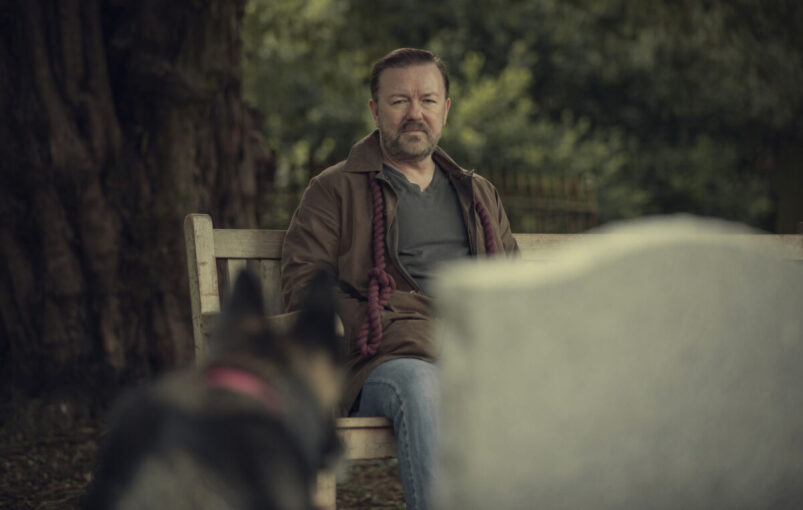


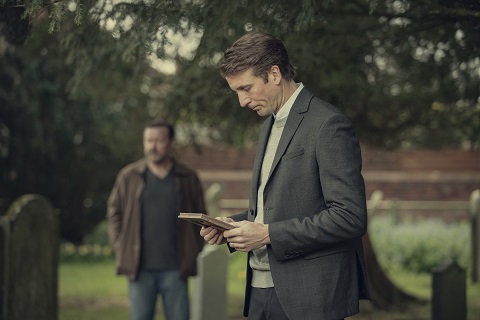

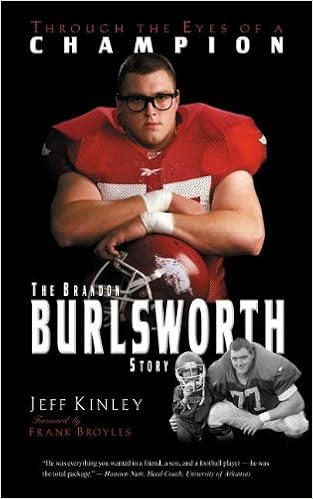
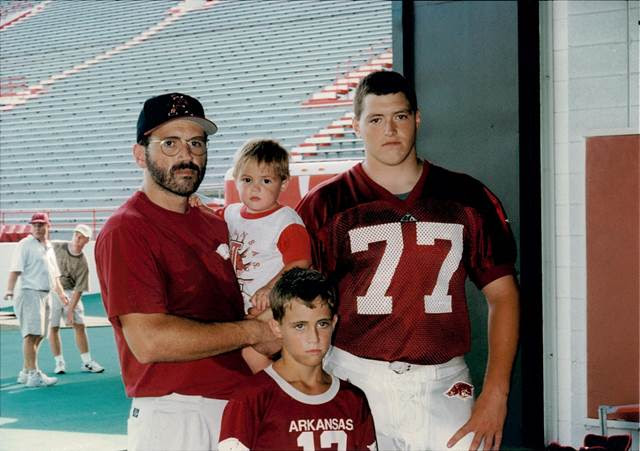

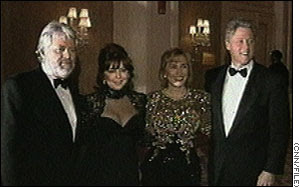






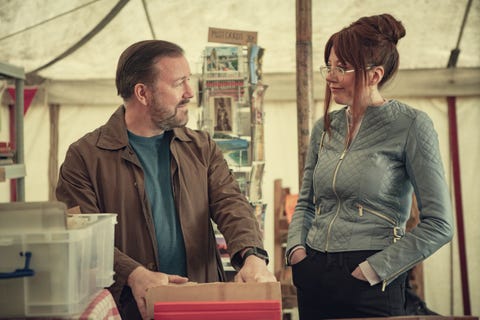









 There is no definitive denouement in After Life season 3, per se, but a deeper contemplation upon its themes. (Photo: Netflix)
 The first two seasons of After Life had Tony growing into a less bitter and angry man. (Photo: Netflix)
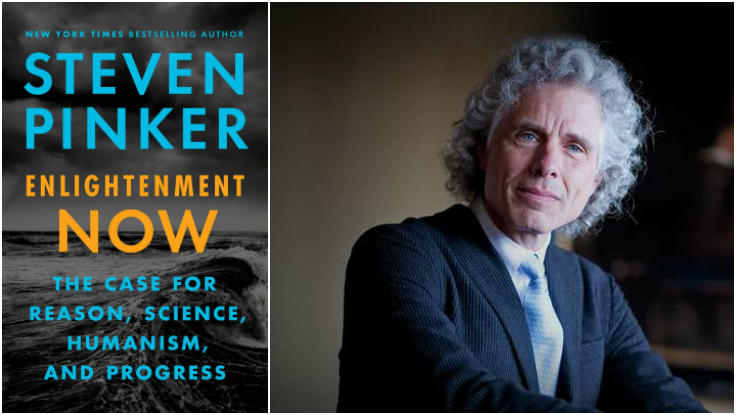


 The Daily Hatch
.jpg)