


-
Recent Posts
- FRIEDMAN FRIDAY Dan Mitchell: Milton Friedman was advocating what is sometimes referred to as “shareholder capitalism,” which is the notion that a company should strive to earn honest profits for its owners!
- FRANCIS SCHAEFFER ANALYZES ART AND CULTURE Part 557 My March 13, 2016 Letter to Hugh Hefner with quote from Ben Parkinson: There are only two things worth putting your time and life into and that is the WORD OF GOD and the SOULS OF PEOPLE. (Featured artist is Debo Eilers)
- FRANCIS SCHAEFFER ANALYZES ART AND CULTURE Part 556 Third letter I wrote to HUGH HEFNER (Where do we get our morals from?) Featured Artist is Stephanie Syjuco
- FRANCIS SCHAEFFER ANALYZES ART AND CULTURE Part 555 LETTER TO HUGH HEFNER “What does it all mean — if it has any meaning at all? But how can it all exist if it doesn’t have some kind of meaning?” Featured Artist is Assume Vivid Astro Focus
- FRANCIS SCHAEFFER ANALYZES ART AND CULTURE PART 554 My Correspondence with Edward O.Wilson from 1994 to 2021 My 4/21/17 letter to Dr.Wilson I quoted Francis Schaeffer: “Ecclesiastes is the only pessimistic book in the Bible and that is because of the place where Solomon limits himself.He limits himself to the question of human life, life UNDER THE SUN between birth and death and the answers this would give” FEATURED ARTIST IS DALÍ
-
Recent Comments
-
Archives
- December 2024
- November 2024
- October 2024
- September 2024
- August 2024
- July 2024
- June 2024
- May 2024
- April 2024
- March 2024
- February 2024
- January 2024
- December 2023
- November 2023
- October 2023
- September 2023
- August 2023
- July 2023
- June 2023
- May 2023
- April 2023
- March 2023
- February 2023
- January 2023
- December 2022
- November 2022
- October 2022
- September 2022
- August 2022
- July 2022
- June 2022
- May 2022
- April 2022
- March 2022
- February 2022
- January 2022
- December 2021
- November 2021
- October 2021
- September 2021
- August 2021
- July 2021
- June 2021
- May 2021
- April 2021
- March 2021
- February 2021
- January 2021
- December 2020
- November 2020
- October 2020
- September 2020
- August 2020
- July 2020
- June 2020
- May 2020
- April 2020
- March 2020
- February 2020
- January 2020
- December 2019
- November 2019
- October 2019
- September 2019
- August 2019
- July 2019
- June 2019
- May 2019
- April 2019
- March 2019
- February 2019
- January 2019
- December 2018
- November 2018
- October 2018
- September 2018
- August 2018
- July 2018
- June 2018
- May 2018
- April 2018
- March 2018
- February 2018
- January 2018
- December 2017
- November 2017
- October 2017
- September 2017
- August 2017
- July 2017
- June 2017
- May 2017
- April 2017
- March 2017
- February 2017
- January 2017
- December 2016
- November 2016
- October 2016
- September 2016
- August 2016
- July 2016
- June 2016
- May 2016
- April 2016
- March 2016
- February 2016
- January 2016
- December 2015
- November 2015
- October 2015
- September 2015
- August 2015
- July 2015
- June 2015
- May 2015
- April 2015
- March 2015
- February 2015
- January 2015
- December 2014
- November 2014
- October 2014
- September 2014
- August 2014
- July 2014
- June 2014
- May 2014
- April 2014
- March 2014
- February 2014
- January 2014
- December 2013
- November 2013
- October 2013
- September 2013
- August 2013
- July 2013
- June 2013
- May 2013
- April 2013
- March 2013
- February 2013
- January 2013
- December 2012
- November 2012
- October 2012
- September 2012
- August 2012
- July 2012
- June 2012
- May 2012
- April 2012
- March 2012
- February 2012
- January 2012
- December 2011
- November 2011
- October 2011
- September 2011
- August 2011
- July 2011
- June 2011
- May 2011
- April 2011
- March 2011
- February 2011
- January 2011
- December 2010
-
Categories
- Adrian Rogers
- Atheists Confronted
- Biblical Archaeology
- Bill Clinton
- Capital Punishment
- Cato Institute
- Current Events
- David Barton
- Economist Dan Mitchell
- Famous Arkansans
- Founding Fathers
- Francis Schaeffer
- Gun Control
- Healthcare
- Hillary Clinton
- Jason Tolbert
- Mike Huckabee
- Milton Friedman
- President Donald J. Trump
- President Donald Trump
- President Obama
- Prolife
- Ronald Reagan
- Social Security
- spending out of control
- Taxes
- Uncategorized
- Unconfirmed Quotes of Founders
- Vouchers
- War Heroes
- Woody Allen
-
Meta
Category Archives: Francis Schaeffer
“Truth Tuesday” A great article by Mat Viola on the morality discussion in the Alfred Hitchock movie “Rope”
A great article by Mat Viola on the morality discussion in the Alfred Hitchock movie “Rope”
_______________
Episode VII – The Age of Non Reason
He also makes extensive references to art and architecture as a means of showing how these movements reflected changing patterns of thought through time. Schaeffer’s central premise is: when we base society on the Bible, on the infinite-personal God who is there and has spoken,[4] this provides an absolute by which we can conduct our lives and by which we can judge society. Here are some posts I have done on this series: Francis Schaeffer’s “How should we then live?” Video and outline of episode 10 “Final Choices” , episode 9 “The Age of Personal Peace and Affluence”, episode 8 “The Age of Fragmentation”, episode 7 “The Age of Non-Reason” , episode 6 “The Scientific Age” , episode 5 “The Revolutionary Age” , episode 4 “The Reformation”, episode 3 “The Renaissance”, episode 2 “The Middle Ages,”, and episode 1 “The Roman Age,” .
MORALITY WITH ROPE
“There are no moral phenomena at all, but only a moral interpretation of phenomena.” – Friedrich Nietzsche, Beyond Good and Evil
“The mere material world suggests to us no concepts of good or evil, because we can discern in it no system of grades of value.” – Alfred North Whitehead
“No known race is so little human as not to suppose a moral order so innately desirable as to have an inevitable existence. It is man’s most fundamental myth.” – Joseph Wood Krutch, The Modern Temper
“I just wanted to illustrate, in an entertaining way, that there is no God and that we’re alone in the universe, and there is nobody out there to punish you. That your morality is strictly up to you. If you’re willing to murder and you can get away with it and you can live with it, that’s fine.” – Woody Allen, on Crimes and Misdemeanors
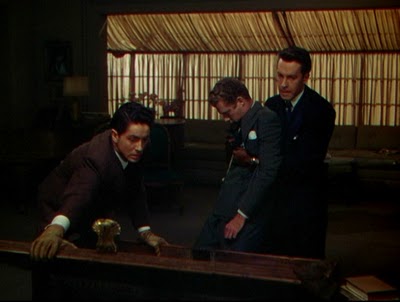
Alfred Hitchcock’s Rope stars Farley Granger and John Dall as thinly disguised versions of Leopold and Loeb, the brilliant students and self-described Übermensch who considered themselves exempt from the laws and morals of “ordinary” men, and put their philosophy into action by murdering a young boy for kicks. For them, killing a human being was just another experience, scarcely distinguishable, morally speaking, from any other action – like, say, squashing an ant. In Rope the names have changed to Phillip (Granger) and Brandon (John Dall), but the attitudes are the same. They murder a mutual acquaintance for the thrill of it, arguing that “the few are those men of such intellectual and cultural superiority that they’re above the traditional moral concepts. Good and evil, right and wrong, were invented for the ordinary, average man, the inferior man, because he needs them.”
Not surprisingly, the film doesn’t endorse this view. In the end, Mr. Smith himself, James Stewart, shows up brimming with moral indignation to deliver an impassioned argument against the duo’s dastardly deed, saying, “…we’re each of us a separate human being with the right to live and work and think as individuals, but with an obligation to the society we live in. By what right did you dare decide that that boy in there was inferior and therefore could be killed? Did you think you were God, Brandon? Is that what you thought when you choked the life out of him? I don’t know what you thought or what you are but I know what you’ve done. You’ve murdered! You’ve strangled the life out of a fellow human being who could live and love as you never could…”
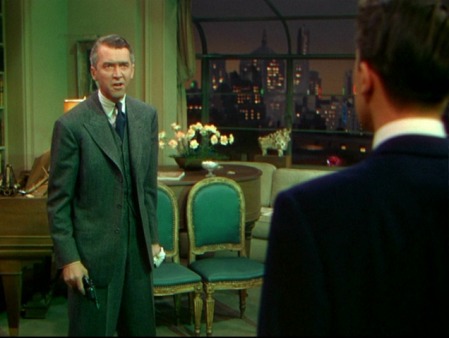
The message is as obvious as is it predictable: murder is wrong! Few would argue with this statement. It seems to be a self-evident truth. But is it? I’m afraid the issue isn’t so black and white. Stewart’s character believes murder is wrong. John Dall’s character believes murder is right. Who’s correct? The problem is that we cannot logically decide between these competing moral claims unless there is an objective standard of morality to which we can repair for adjudication. Only such a standard would provide us the means to resolve disputes between people whose notions of right and wrong differ. The question is, though, does such a standard of morality actually exist?
First, a few definitions are in order:
Subjective:
- 1) Based on or influenced by personal feelings, tastes, or opinions.
- 2) Existing in the mind; belonging to the thinking subject rather than to the object of thought.
- 3) Proceeding from or taking place in a person’s mind rather than the external world.
My favorite color is green. That is a subjective sentiment. That green is my favorite color need not imply that green is or should be everybody’s favorite color. It is not the “right” color, in any objective sense. Nature has not, after all, indicated a color preference.
Objective:
- 1) Not influenced by personal feelings or opinions in considering and representing facts.
- 2) Not dependent on the mind for existence; actual.
- 3) Anything which actually exists, as distinguished from something thought or felt to exist.
2+2=4. That is an objective fact. Take two objects from here, two objects from there, put them together, and you have four objects. There’s no room for individual interpretation or preference. It is not right for some and wrong for others. There is only one valid answer. 2+2= 5 may be identified as an error, notwithstanding the ramblings of Dostoyevsky’s Underground Man, because math is not a subjective matter.
Morality
- 1) Principles concerning the distinction between right and wrong or good and bad behavior.
- 2) Of or concerned with the judgment of the goodness or badness of human action and character.
Murder is wrong. That is a moral claim. To which category do moral claims belong: subjective or objective? Is asserting that “murder is wrong” an objective fact like “2+2=4″, or is it a subjective sentiment like “my favorite color is green”? Is there an objective standard of morality to which we can refer to settle the matter? Or do questions of right and wrong, good and bad, fall into the subjective realm, amounting to nothing more than personal preference? I would argue that, whether we like it or not, moral claims belong squarely in the latter category.
The laws of math and logic are universally applicable. There’s no denying them. 2+2=4 is necessarily true. Furthermore, 2+2=4 was so even before the advent of humans. Let’s say a prehistoric squirrel gathers 2 nuts from under one tree, two nuts from under another tree, and then takes them all back to his nest. How many nuts does this squirrel have? He has 4, obviously. Is it any less true just because a human isn’t around to compute it? Did humans magically make 2+2=4 simply by thinking it? I don’t think so, and that’s because the laws of mathematics inhere in reality. Humans discovered mathematical laws; they didn’t invent them.
Morality doesn’t work that way. A moral claim like murder is wrong is not necessarily true. Right and wrong, good or bad, do not exist in nature. They are merely human constructs that help us get along, very much like the rules of courtesy. The universe, I’m afraid, is perfectly indifferent to morality. Whether one chooses to observe a moral rule like murder is wrong or stealing is bad is an entirely subjective matter, no more obligatory than, say, the rule instructing us not to split infinitives. Let’s say a bigger squirrel comes along and steals the smaller squirrel’s nuts. Has the bigger squirrel acted immorally? Was he “wrong” to steal the nuts? Obviously not, and that’s because the rules of morality do notinhere in reality. Humans didn’t discover moral rules; they invented them.
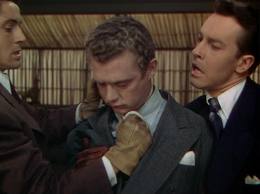
Allow me to return to Rope for a moment. I’ve never been a fan of the film. Its gimmicky one-set, long-take approach is hardly conducive to Hitchcock’s strengths as a director. Hitchcock himself acknowledged this, pretty much dismissing the film as a stunt: “When I look back, I realize that it was quite nonsensical because I was breaking with my own theories on the importance of cutting and montage for the visual narration of a story…no doubt about it, films must be cut”.
Also problematic are the stilted performances, particularly Granger’s awful turn as Phillip the Boobermensch. Just about everything he does or says is a howler. Perhaps my favorite bit is when he frantically calls out to “Brandon! Brandon!” when he sees the rope hanging out of the chest which contains the body. Brandon tells him to pull it out, and Phillip whines “I can’t”, as if he were totally incapable of functioning on his own. Later, when Stewart picks up the rope, Phillip hysterically whimpers, “He’s got it! He’s got it! He knows, he knows, he knows…” I mean, jeez, couldn’t Brandon find someone better than this guy with whom to carry out the “perfect crime”?
Thematically, the film offers a conventional, noncontroversial and comforting take on morality. During Stewart’s concluding diatribe on the immorality of murder, Brandon, himself now reduced to the level of Boobermensch, mutely stands around (as only characters in films based on plays are wont to do) allowing Stewart to prattle on without offering a counterargument, as if he’s been stunned speechless by the persuasive power of Stewart’s devastating argument. (For a vastly more insightful, unsettling, and intellectually challenging exploration of the “morality of murder” see Woody Allen’s masterful Crimes and Misdemeanors).
After watching Rope I happened to notice that the Self-Styled Siren, a popular classic movie bloggerette, had posted a tribute to the late Farley Granger, which consisted mostly of a defense of the “severely underrated Rope“. Her many followers quickly chimed in with their usual assent. All very boring, frankly. No one bothered to mention anything about the heady philosophical issues at the film’s core. I mean, what an opportunity to discuss Nietzsche, morality, murder, nihilism etc.! I felt the conversation could use some livening up, and so I posted the following:
“There’s nothing wrong, objectively speaking, with snuffing out a human life, notwithstanding all of Stewart’s histrionic protestations to the contrary.”
I had to chuckle at the Siren’s response:
“Mat, I would address your objections to Rope, but the last line of your first comment has, frankly, scared me to death.”
Apparently, for the Siren, a proposition qualifies as worthy of dispute only if it preserves her cozy feelings of security and well-being. (Not that there’s anything morally wrong with that, of course). This is a woman who could tell you everything you never wanted to know about old Hollywood stars – like, say, all the juicy details of the secret love affair between Jeanette Macdonald and Nelson Eddy – but when the discussion turns to a genuinely challenging subject, particularly one that frightens her, she’ll go all mum on you. (One suspects that a CAT scan of the Siren’s brain would reveal that the region controlling appreciation for classic Hollywood movies, technically known as the hippoclassic cinebellum, is grossly overdeveloped).
But I digress. Saying “there’s nothing wrong, objectively speaking, with snuffing out a human life” is, of course, not the same as saying, “there’s nothing wrong, subjectively speaking, with snuffing out a human life.” The operative phrase here is “objectively speaking”. I don’t personally condone murder. I don’t personally like murder. I’m happy to see this prejudice of mine codified as the law of the land. I cannot provide a reason, however, why murder is objectively wrong. But there’s no shortage of folks who try to provide such a reason. I’ll now examine some of the more common arguments, and explain why I find them wanting:
The Self-Evident Argument
People often respond to the suggestion that there’s nothing objectively wrong with murder with simple incredulity. For them, apparently, the proposition that murder is wrong is self-evidently true. They might respond by saying things like, “if you don’t know why murder is wrong I really don’t know what to say to you.”
Of course, this is in fact no argument at all. Here’s one thing they might say: “murder is objectively wrong because…” If one doesn’t need a reason to justify his belief that murder is morally wrong, then neither does a murderer need a reason to justify his belief that murder is morally right. After all, murderers have their own “self-evident truths.” We’re no closer to resolving the dispute with which we started. If one person says “murder is wrong” and another says “murder is right”, how do we logically decide between these competing moral claims in the absence of an objective standard to which we can refer to settle the matter? “Because I strongly feel that murder is wrong” does not, I’m afraid, constitute an objective standard.
The Golden Rule – Do unto others as you would have them do unto you.
Why should anyone necessarily adopt this rule? A sadistic murderer, for example, derives pleasure from inflicting pain on others. He values his own pleasure above everything else. He considers his own pleasure to be the greatest good, and if morality is purely subjective as I am arguing, then maximizing his pleasure, which would entail torturing his victim to death, is, for him, the right thing to do. Why then should he not adopt the rule that torturing people to death is good? Why should he care about the victim? What obligates him to care for her?
Most of us find the behavior of a sadistic murderer nauseating. That is true. But unless an objective source of human worth and moral obligation exists, we have no logical grounds to say that his sadistic behavior is morally wrong. In fact, in the absence of an objective standard of morality we have to forfeit altogether our cherished notions of morally right or wrong behavior. Good and bad, right and wrong, become vacant categories. Assertions like “murder is wrong” mean nothing more than “I don’t like murder.”
Survival of the species
All animal species possess characteristics which have historically contributed to the perpetuation of their species. Humans are no different. Some attempt to infer a moral imperative from this fact. The argument goes something like this: that which preserves life, such as empathy, is good, and that which destroys life, such as murder, is bad. There are several problems with this position:
First, it commits the fallacy of trying to derive an “ought” from an “is”. That certain behaviors tend to preserve life is a fact. That we ought to behave in ways that tend to preserve life is not. The first is a truth-statement, the second a value-statement, and never the twain shall meet. You simply cannot logically derive a value from a fact.
Second, it begs the question: why is life/survival good? Millions of species have already gone extinct. Why should anyone necessarily care if the human species goes the way of the dinosaur? Why is human life any more valuable than any other animal species?
Third, it commits the naturalistic fallacy. Allow me to quote G.E. Moore:
“The survival of the fittest does not mean, as one might suppose, the survival of what is fittest to fulfill a good purpose – best adapted to a good end: at the last, it means merely the survival of the fittest to survive: and the value of the scientific theory just consists in showing what are the causes which produce certain biological effects. Whether these effects are good or bad, it cannot pretend to judge.”
Just because something is “natural” doesn’t make it “good” (or “bad”, for that matter). Often that which preserves life also destroys life. Aggression, no less than empathy, is a characteristic which has facilitated human survival. Vanquishing entire tribes of people has generally been successful throughout human prehistory and recorded history. Just ask the descendants of the North American Indian – if you can find any. The point is that one has to be awfully selective when attempting to base his morality on what evolution has wrought. After all, the “better angels of our nature” evolved right alongside the “fallen” ones.
God
There’s no way around it: the implications of atheism lead inevitably to moral nihilism. I do think that God, were he to exist, would qualify as an objective source of moral values (though even this is debatable), since, being omniscient, he would presumably know infallibly what is good and what is bad. But first his existence would need to be demonstrated. Good luck.

So let’s take this full circle back to Rope. Here’s the full text of Stewart’s concluding monologue:
“You’ve given my words a meaning I’ve never dreamed of. And you’ve tried to twist them into a cold, logical excuse for your ugly murder. Well, they never were that, Brandon. You can’t make them that. There must have been something deep inside of you from the very start that let you do this thing. But there’s always been something deep inside me that would never let me do it. Tonight you’ve made me ashamed of every concept I ever had of superior or inferior beings. And I thank you for that shame. Because now I know that we’re each of us a separate human being, Brandon, with the right to live and work and think as individuals, but with an obligation to the society we live in. By what right do you dare say that there’s a superior few to which you belong? By what right did you dare decide that that boy in there was inferior and therefore could be killed? Did you think you were God, Brandon? Is that what you thought when you choked the life out of him? Is that what you thought when you served food from his grave? Well, I don’t know what you thought or what you are but I know what you’ve done. You’ve murdered! You’ve strangled the life out of a fellow human being who could live and love as you never could…”
Stewart, playing Rupert Cadell, delivers this entire monologue uninterrupted. Brandon and Phillip, the two supposed Übermensch, just stand around like dimwits as Stewart rants. I thought it might be fun to imagine what Brandonmight have said and done, were he not such a Boobermensch, in response to Stewart’s diatribe. The following, then, is my re-write of this scene:
Rupert Cadell
You’ve given my words a meaning I’ve never dreamed of. And you’ve tried to twist them into a cold, logical excuse for your ugly murder.
Brandon
Hey, Mr. Smith, we’re not in Washington anymore. No filibustering here. If you think I’ll allow you to go off on a rant against me unchallenged you’re gravely mistaken. First of all, I don’t need an excuse to commit murder. I did it for the same reason I do anything: I wanted to. I felt like doing it and I did it. Secondly, it wasn’t ugly. Au contraire: it was a thing of beauty. You haven’t lived until you’ve strangled the life out of someone, my friend. It’s a fucking rush. You oughta try it some time.
The bluntness with which Brandon discusses the murder flusters Rupert. Trying to regain his composure he faces Brandon with all the courage he can muster and, with righteous indignation, says:

Rupert
The name’s not Mr. Smith! It’s Rupert Cadell!
Brandon
I stand corrected. Is that it? Are you done? Is that all you have to say?
Rupert
No, that’s not all I have to say! I have much more to say! Much more! And by the time I’m finished saying it…
Brandon slaps Rupert on the cheek.
Brandon
Well, say it, man! Say it!
Rupert
There must have been something deep inside of you from the very start that let you do this thing. But there’s always been something deep inside of me that would never let me do it.
Brandon slaps Rupert on the other cheek for good measure.
Brandon
Ok, so we’ve established that we both have something deep inside of us. That’s a sure sign that what we’re discussing here is a purely subjective matter. The something deep inside of me says that murder is good. The something deep inside of you says that murder is bad. Without an objective standard of morality, this just means that I like murder, and you don’t. So what? I like chocolate. You don’t. What’s your point?
Rupert (whimpering)
Please stop slapping me. It hurts.
Brandon
Ok, sorry, I’ll stop slapping you.
Rupert (relieved)
Thank you.
Brandon delivers a punishing right hook to the side of Rupert’s head. Rupert crumples to the floor.
Brandon
Does that feel any better? I repeat: what’s your goddamn point?
Rupert struggles back to his feet.
Rupert
Ok, ok. We’re each of us a separate human being, Brandon, with the right to live and work and think as individuals, but with an obligation to the society we live in.
Brandon delivers a crushing haymaker straight to Rupert’s nose. Rupert cries out in agony, blood spraying like a geyser from his broken nose.
Brandon
Sorry, Roopy, but the impulse to stay alive is not a “right.” “Rights” don’t exist in nature. “Human rights” is a purely man-made concept which has no basis in reality. If you want to pretend you have a “right” to live go right ahead, but don’t expect me to. That boy in there had no more inherent right to live than anyone or anything else does. I didn’t violate his “right” to live because he didn’t have one.
Rupert (struggling to get up on one knee)
By what right do you dare…?
Before Rupert can finish the question, Brandon wallops him with a devastating uppercut to the chin, knocking Rupert flat on his back. Barely conscious now, Rupert moans in abject pain, his head spinning.
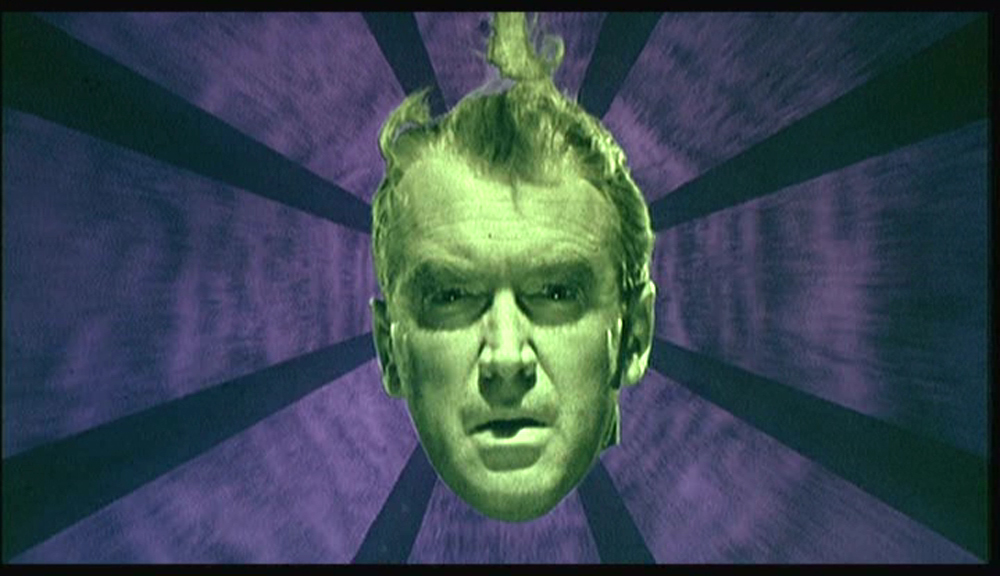
Brandon
Let me cut you off right there. I just got done saying that rights are purely fictitious. And then you start your next sentence with, “By what right…”? Have you not been listening? Quit sticking so slavishly to the crummy script, you fool. It doesn’t apply anymore. Are you incapable of improvising?
Brandon takes his pistol out of his pocket and kneels down to show it to Rupert.
Brandon
See this? The script says I’m supposed to hand it over to you like some fucking moron. But that ain’t gonna happen. See, that’s the difference between you and me, Roopy. You mindlessly obey whatever authority tells you. I don’t. The screenwriter wants you to be a mouthpiece for “society” and so you play along like some unthinking automaton emitting preprogrammed drivel. Well, this is my script now, and so you’d better come up with something a little more persuasive. You want the gun? Here, have it.
Brandon slams the butt of the gun down hard on Rupert’s skull, finally knocking him into merciful unconsciousness.
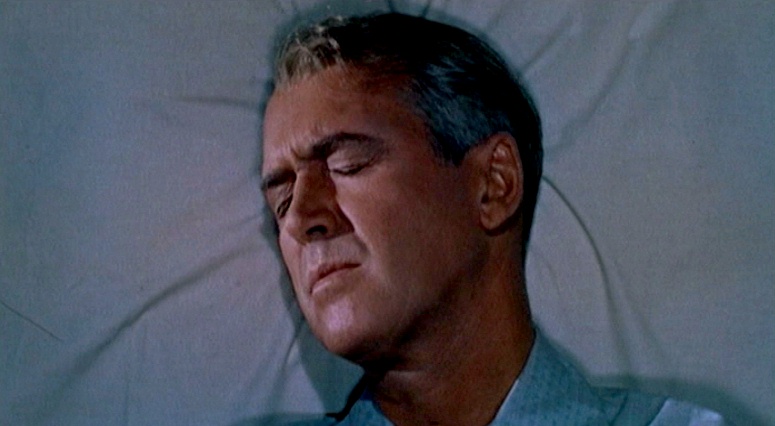
Brandon looks over at Phillip, who has been silently watching the whole time from his piano.
Brandon
Well, what have you got to say for yourself?
Phillip
You frighten me. You always have. From the very first day in prep school.
Brandon
Oh, Jesus. Can’t you say anything that isn’t in the script either?
Phillip
That’s a lie. There isn’t a word of truth in the whole story. I never strangled a chicken in my life. I never strangled a chicken and you know it!”
Brandon conks Phillip over the head with the gun, knocking him out as well, and drags him over next to Rupert. Brandon tosses a glass of water in Rupert’s face to wake him up, and then sits back in a reclining chair and lights up his pipe and waits for Rupert to regain consciousness. Rupert starts to stir, then sits up, rubbing his beleaguered head.
Phillip mumbles something. Rupert leans closer to get a better listen.
Brandon
What’s he saying now?
Rupert
I think he said, “He’s got it. He’s got it. He knows, he knows, he knows…”
Brandon
Yeah, that’s what I thought. He’s just mumbling some more gibberish from the script. Remember? That’s what he said when you took the rope out of your pocket.
Rupert
Oh yeah, that’s right.
Brandon
Guess who has the rope now?
Brandon produces the rope from his pocket and shows Rupert.


Brandon (puffing on his pipe like a gentleman of leisure)
But let’s get back to our little discussion, shall we? I believe you were saying that we have an obligation to the society we live in or some such nonsense.
Rupert
That’s right, we do.
Brandon
Still sticking to the script, eh? I was hoping I had knocked some sense into you, but no, you’re still shackled to the illogical ideas of your creators, I see. Look, Roopy, nothing at all obligates me to care for society. I have a moral obligation tomyself and myself alone. What is good for me is the only good I recognize. Why should I care about society? Why should I be morally obligated to anybody or anything else but myself?
Rupert
Did you think you were God, Brandon? Is that what you thought when you choked the life out of him? Is that what you thought when you served food from his grave?
Brandon
Actually, I thought the burgers were a little dry myself. How was yours?
Rupert
Mine was nice and juicy. Very delici… Gosh darn it, you murdered that boy over there and you’re talking about hamburgers? What kind of monster are you? Answer the question: did you think you were God when you chocked the life out of that boy?
Brandon looks at the morally indignant Rupert with amusement and takes a long drag on his pipe.
Brandon
Getting a little demanding for a guy with his face bashed in, aren’t we, Roopy? To answer your question, no, I didn’t think I was God. I can’t very well think of myself as something I don’t believe in, now can I? I’ll leave the murdering in the name of God to your precious “society”.
Rupert
Well, I don’t know what you thought or what you are but I know what you’ve done. You’ve murdered! You’ve strangled the life out of a fellow human being who could live and love as you never could…”
Brandon
Look, Roopy, that boy over there was just a random collection of atoms with no more objective worth or value than any other piece of matter. You think his life had value. I don’t. I simply considered him unworthy of living and took the necessary steps to snuff him out of existence. You can bellow till you’re blue in the face that what I did was wrong, but you can’t objectively prove that it was.
Rupert
You’re insane, Brandon!
Brandon
Tut-tut, tut-tut. My, aren’t we rude for interrupting. You really oughta work on your manners, Roopy. Please, let me finish. You say I could never live and love as he could, and you’re right. I choose to live and love differently. I live to kill and I love to kill. His way of living and loving was not objectively any better than mine. And besides, now that that inanimate hunk of meat over there is objectively dead, I’m sure you’ll agree that he certainly cannot live and love as I can.
Rupert
You’re insane, Brandon! Insane and crazy and sick and twisted and cruel and demented and perverse and warped and abnormal and inhuman and loathsome and vicious and mean and perverted and nasty and brutal and pitiless and malicious and cruel…
Brandon
You already said cruel.
Rupert
…and unwholesome and ruthless and heartless and merciless and cold-blooded and hateful and despicable and disgusting and repugnant and detestable and abhorrent and noxious and sadistic and malevolent and evil and odious and contemptible and iniquitous…
Brandon
Oooh, iniquitous. Good one!
Rupert
… and repulsive and sickening and ghastly and nauseating and revolting and foul and abominable and wicked and monstrous and repellent and depraved…
Finally, Rupert starts hyperventilating from the strain of emitting so many consecutive insults.
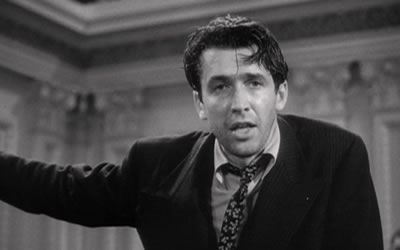
Brandon chuckles and gets up from his recliner and walks over to Rupert. He takes a long drag on his pipe and blows the smoke directly in Rupert’s face.
Brandon
Ok, let’s see. By my count, that’s 47 insults you’ve hurled in my direction in lieu of an argument. Ad hominem attacks are very unbecoming of you, Roopy. Notwithstanding your invective, the question remains: how was it objectivelywrong to snuff out that boy’s life?
Phillip starts mumbling.
Phillip
I never strangled a chicken in my life…
Brandon tosses water in Phillip’s face.
Phillip fully regains consciousness and looks up at Brandon.
Phillip
I’ve been praying I’d wake up and find out we hadn’t done it yet. I’m scared to death, Brandon. I think we’re going to get caught.
Brandon
Go on, Phillip, utter one more line from that script. Go on, I dare you.
Phillip
Have you ever bothered for just one minute to understand how someone else might feel?
Brandon
I wonder how this feels.

Brandon puts the rope around Phillip’s neck and tugs hard. Phillip gasps for breath, his eyes bulging out of their sockets.
Rupert
Please, Brandon, stop!
Brandon releases his grip on the rope, allowing Phillip to catch his breath.
Brandon (to Phillip)
Not another word from that script. Got it?
Phillip
What the devil are you doing?
Brandon retightens the rope around Phillip’s neck. Then he hands the rope to Rupert and points his gun at him.
Brandon (to Rupert)
I’ll give you one chance to save yourself. Finish off this Boobermensch and I’ll let you live. What was it you said earlier this evening? That you’d like to have a “Strangulation Day”? Well, today is that day, Rupert.
Rupert
I was only joking, for Christ’s sake!
Brandon cocks the gun.
Brandon
Whose life do you value more, Rupert? Yours or his? Do it and you walk out of here alive. Don’t do it and you’ll end up in that chest with the other dead meat.
Rupert
No! I can’t! I won’t!
Brandon
He’s going to die whether you do it or not. If you don’t do it you’re going to die too. At least save yourself, Rupert.
Rupert
May God forgive me.
Brandon
Wait! Before you do it, let’s see if Phillip has any last words.
Phillip
I had a rotten evening.
Brandon
Yep, quoting from the script to the last. Unbelievable! Do it!
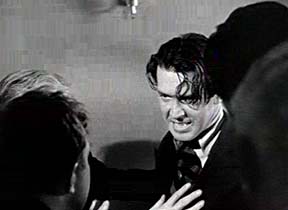
Rupert yanks hard on the rope, choking the life out of Phillip the Boobermensch. Rupert lets the rope slip from his fingers and Phillip’s lifeless body slumps to the floor. Brandon drags the corpse over to the chest and tosses Phillip into it with the other body. He then walks back over to Rupert and puts his arm around him.
Brandon
Well, how was it? How did it feel?
Rupert
I take back everything I said, Brandon. That was incredible! You’re so right, you haven’t lived until you’ve choked the life out of someone. What a fucking rush that was!
Brandon pats Rupert on the shoulder and then walks over to the phone and dials.
Brandon
Hi Mrs. Cadell, this is Brandon Shaw speaking. I’m doing well, and you? So nice to talk to you. Listen, Rupert and I have been doing a lot of catching up, and it’s getting late and so I’ve invited him to stay for the night. I hope you don’t mind. Good! And since he’s still going to be here in the morning, I would be honored if you’d join us for breakfast. Great! Say, around 8:00? I look forward to seeing you, Mrs. Cadell.
Brandon hangs up.
Brandon
Charming lady, Roopy. I hope the eggs will be better than the burgers.
Rupert
What the devil are you up to?

Brandon
Well, Roopy, yesterday was “Strangulation Day”, today is “Bullet in the Head Day”.
Brandon fires a bullet into Rupert’s head, and tosses him into the chest with the other two bodies.
Then Brandon breaks the fourth wall and addresses the audience directly.
Brandon
Ladies and gentlemen, if my actions this evening have repelled you, so be it. I can’t change the way you feel. But if you think that what I’ve done is morally wrong, I would simply remind you that that’s merely your opinion. In my opinion what I have done is right. It was fun, it was exciting, and it felt oh-so-good. Your opinion is no more valid than mine. It’s just different. Your values are no better than mine. They’re just different. After all, since no objective standard of morality exists, all you’re really saying is that you don’t like murder, and all I’m really saying is that I like murder. You may think that your moral outrage toward me amounts to something more than your own paltry knot of predilections. It does not. You may think that there is a higher standard to which I may be held. There is not. Morality, as you understand it, is a myth, a fantasy, a fairy-tale. Objectively speaking, murder is neither good nor bad, neither right nor wrong. It simply is. The universe is completely indifferent to morality. Nature is utterly amoral. Nothing is wrong. Nothing is right. Nothing is bad. Nothing is good. It is simply not possible to do something morally wrong. It is only possible to call something “wrong”. But no matter how passionately you shout, it doesn’t make it so. My actions this evening were no different, morally speaking, from that of a cat torturing a mouse. I am no more morally obligated to refrain from torture than is a cat. Moreover, humans have no more intrinsic value or worth than a mouse has. The value you assign to yourself and others is purely subjective and completely arbitrary. You may feel that you and others have value and worth, but do not forget for a moment that I feel that you and others don’t. Don’t delude yourself: your feelings are no more authoritative than mine. They’re just different. Whyshould I feel that you have value and worth? After all, you’re nothing more than a chance arrangement of particles with no more inherent value or worth than any other chance arrangement of particles. If this upsets you, it is because you have an innate, deep-rooted dread of nihilism, of the almost certain possibility that you are nothing more than a product of the blind whim of nature, that your most cherished concerns are mere brute stupidities deposited in you by the mindless, amoral process of evolution, that ultimately nothing has value, nothing has meaning and nothing matters, that all your effort is futile and absurd, and that just around the bend complete and utter annihilation and oblivion await you.
Good evening.
Posted on April 26th, 2011 by Mat Viola
Filed under: Miscellaneous
SCHAEFFER SUNDAY The importance of Genesis
_______________
Francis Schaeffer “BASIS FOR HUMAN DIGNITY” Whatever…HTTHR
An impersonal beginning…raises two overwhelming problems which neither the East nor modern man has come anywhere near solving. First, there is no real explanation for the fact that the external world not only exists, but has a specific form. Despite its frequent attempt to reduce the concept of the personal to the area of chemical or psychological conditioning, scientific study demonstrates that the universe has an express form. One can go from particulars to a greater unity, from the lesser laws to more and more general laws or super-laws. In other words, as I look at the Being which is the external universe, it is obviously not just a handful of pebbles thrown out there. What is there has form. If we assert the existence of the impersonal as the beginning of the universe, we simply have no explanation for this kind of situation.
Second, and more important, if we begin with an impersonal universe, there is no explanation of personality. In a very real sense the question of questions for all generations — but overwhelmingly so for modern man — is, “Who am I?” For when I look at the “I” that is me and then look around to those who face me and are also men, one thing is immediately obvious: Man has a “mannishness.” You find it wherever you find man — not only in the men who live today, but in the artifacts of history. The assumption of an impersonal beginning cannot adequately explain the personal beings we see around us; and when men try to explain man on the basis of an original impersonal, man soon disappears.
In short, an impersonal beginning explains neither the form of the universe nor the personality of man. Hence it gives no basis for understanding human relationships, building just societies, or engaging in any kind of cultural effort. Itís not just the man in the university who needs to understand these questions. The farmer, the peasant, anyone at all who moves and thinks needs to know. That is, as I look and see that something is there, I need to know what to do with it. The impersonal answer at any level and at any place at any time of history does not explain these two basic factors — the universe and its form, and the “mannishness” of man. And this is so whether it is expressed in the religious terms of pantheism or modern scientific terms.
But the Judeo-Christian tradition begins with the opposite answer. And it is upon this that our whole Western culture has been built. The universe had a personal beginning — a personal beginning on the high order of the Trinity. That is, before “in the beginning” the personal was already there. Love and thought and communication existed prior to the creation of the heavens and the earth.
(Francis A. Schaeffer, Genesis In Time and Space, Ch. 1)
John F. MacArthur – Creation – Believe it or not
Published on Apr 18, 2014
Genesis 1, 1 – Genesis 2, 25
__________________
Well tonight, as you know if you were here this morning, I’m going to begin a new series that I’ve been sort of working on for a long time, a series on origins. And I don’t know how long this series is going to run exactly. I do know that I’m going to spend a little time on an introduction and then we’re going to launch right into Genesis 1:1 and take the whole account ofcreation verse by verse, phrase by phrase and let the Lord unfold its significance to us.
Now I want to begin with a few sort of disclaimers, if I can, a few things that maybe you need to keep in mind. First of all, I’m not a scientist. I don’t claim to be a scientist. Any teacher in my past whoever taught me science could stand up and testify to that fact. I am a theologian, I am a Bible teacher, I am a part-time philosopher; but I am not a scientist. And so, when it comes to those matters which are scientific, I have to basically move to somebody else and trust them as an authority where I am not an authority. This will not largely be a scientific study; in fact that’s notour intent at all. But it will be a study of the Scripture, a study of theology with a little bit of rationality thrown into it.
Secondly, I will not answer every question tonight. I know that what I don’t say tonight is going to create questions. I will get to those questions as we move through the text of Scripture. I will deal with things like theistic evolution. I will deal with things like day-age theory, deal with viewpoints like progressive creationism as we go along, but we’ll not be able to deal with all of that tonight. And I really do believe that you’re going to find the answer to your questions about origins primarily from the text of Scripture. The issues such as progressive creationism, theistic evolution are really answered by the text itself. And so we’re going to find our way through the text of Genesis, chapter 1 into chapter 2, and therein we’re going to secure the great answers to the questions that arise about origins.
But to begin with tonight I, I want to address the concept, I want to sort of set the picture in your mind as to the debate. This is critical for, for all of us, and it is most critical for those who are students. If you are a junior high student, if you are a high school student, if you are a college or university student in any other than a distinctively Christian school, you are going to be given this indoctrination about evolution as if it were fact and you’re going to find that what I’m going to be saying to you is contrary to just about everything you hear. We’ll set the stage for that contrast tonight, and then we’ll get into the text of Scripture and see how Scripture itself addresses popular evolutionary theory.
It is also important to all of us because understanding origins in the book of Genesis is foundational to the rest of the Bible. If Genesis, chapter 1 and chapter 2 don’t tell us the truth, then why should we believe anything else in the Bible? If it says in the New Testament that the Creator is our Redeemer, but God is not the Creator, then maybe He’s not the Redeemer either. If it tells us in 2 Peter that God Himself will bring about an instantaneous dissolution of the entire universe as we know it, that God in a moment will uncreate everything, then that has tremendous bearing upon His power to create. The same One who with a word can uncreate the universe is capable of creating it as quickly as He desires.
So what we believe about creation, what we believe about Genesis has implications all the way to the end of Scripture, implications with regard to the veracity and truthfulness of Scripture, implications as to the gospel, and implications as to the end of human history, all wrapped up in how we understand origins in the book of Genesis. The matter of origins then is absolutely critical to all human thinking. It becomes critical to how we conduct our lives as human beings. Without an understanding of origins, without a right understanding of origins, there is no way to comprehend ourselves. There is no way to understand humanity, as to the purpose of our existence, and as to our destiny. If we cannot believe what Genesis says about origins, we are lost as to our purpose and our destiny. Whether this world and its life as we know it evolved by chance, without a cause, or was created by God, has immense comprehensive implications for all of human life.
Now there basically are only two options. You can either believe what Genesis says or not. And that is no over simplification. Frankly, believing in a supernatural, creative God who made everything is the only possible rational explanation for the universe, for life, for purpose and for destiny. Now the divine equation given in the Bible, in contrast to nobody times nothing equals everything, the divine equation is found in Genesis 1:1. “In the beginning God created the heavens and the earth.” I don’t know how it could be said any more simply or more straightforwardly than that. Either you believe God did create the heavens and the earth or youbelieve He did not. Really those are the only two valid options you have. And if you believe that God did create the heavens and the earth, then you are left with the only record of that creation, and that’s Genesis 1, and you are bound to accept the text of Genesis 1 as the only appropriate and accurate description of that creative act.
So again, I say you’re left really with two choices. You either believe Genesis or you don’t. You either believe the Genesis account that God created the heavens and the earth, or you believethey somehow evolved out of random chance. Looking at the account of Genesis 1:1 for just a brief moment; the words in that first verse are quite remarkable. They are indicative of the incredible mind of God. God says in that first verse everything that could have been said aboutcreation and He says it in such few terms. The statement is precise and concise almost beyond human composition.
A well-known scientist, a very decorated scientist named Herbert Spencer, died in 1903. In his scientific career he had become noted for one great discovery; it was a categorical contribution that he made. He discovered that all reality, all reality, all that exists in the universe can be contained in five categories: time, force, action, space and matter. Herbert Spencer said everything that exists, exists in one of those categories: time, force, action, space and matter. Nothing exists outside of those categories. That was a very astute discovery and didn’t come until the nineteenth century. Now think about that. Spencer even listed them in that order: time, force, action, space and matter. That is a logical sequence. And then with that in your mind, listen toGenesis 1:1. “In the beginning,” that’s time. “God,” that’s force. “Created,” that’s action. “The heavens,” that’s space. “And the earth,” that’s matter. In the first verse of the Bible God said plainly what man didn’t catalog until the nineteenth century. Everything that could be said about everything that exists is said in that first verse. Now either you believe that or you don’t. You either believe that that verse is accurate and God is the force or you believe that God is not the force that created everything. And then you’re left with chance or randomness or coincidence.
This is more than just a secondary issue. Someone wrote a letter to the president of the Promise Keepers, and I’m not particularly singling them out except that the illustration is so clear because of the response they wrote, asking them about their stand on the creation issue. The assistant to the president responded with this statement, quote: “You need to know that the ministry of Promise Keepers takes no stand on issues like this. In fact we specifically try to avoid such debates. Our efforts are designed to bring men together based on the historically essential doctrines of orthodox Christianity as represented by our Statement of Faith, or to focus on things that unite the Body of Christ, instead of those which tend to divide it. Since different churches and individual Christians hold varying views about creation, it is one of those things we believe falls under the category of secondary doctrines, secondary doctrines such as spiritual gifts, eternal security and the rapture, etc. In short, when it comes to subjects like creation, we believeChristians need to extend grace to each other as summed up in the statement, ‘In essentials unity and non-essentials liberty and all things charity,’” end quote.
Now that’s a pretty aggressive statement about the secondary nature of a belief in the Genesis account, isn’t it? It doesn’t address the issue that if you don’t believe the book of Genesis, you’renot believing the Bible. I’m not trying to throw aspersions on that organization but simply to say that this is what is generally the view of the majority of Christian people. Whether the world was created by God or evolved by chance without cause has been debated a long time. It’s been debated since Darwin. But the debate comes down to this, either you believe the Bible or you don’t. Either you believe the book of Genesis or you don’t. And if you don’t believe the book of Genesis, then what do you believe? Well in most cases you believe in naturalistic evolution. There would be some who would be theistic evolutionists who would say well God sort of launched it all, but then evolution took over and they would deny that the Genesis account is accurate in saying that God created in six, twenty-four-hour days. Progressive creationists would essentially say the same thing, that creation is not, did not occur as Genesis says, but rather it was over long ages and God sort of progressively injecting Himself into the process did some creative work alongside the evolutionary process.
Those views, theistic evolution, progressive creationism, also deny the straightforward text of the book of Genesis. So I say again, you either believe Genesis or you don’t. If you don’t, you have some options. You can be a theistic evolutionist or you can be a naturalistic evolutionist. Among Christians there are some who are theistic evolutionists but among those who make up the unbelieving world they are naturalistic evolutionists. And so they are left with the incredible notion that nobody times nothing equals everything.
Douglas Kelly, who has written on this subject with great insight says, “There is no doubt that the biblical vision of man as God’s creature whom He made in His own image has had the most powerful effect on human dignity, on liberty, on the expansion of the rights of the individual, on political systems, on the development of medicine, on every other area of culture. How different,” he writes, “from the humanistic viewpoint of man as merely an evolved creature, not made in God’s image because there is no God. Such a premise has enabled the Marxist totalitarian states conveniently to liquidate millions of their citizens because of the assumption that there is no transcendent person in whose image those citizens are created, no being to give those citizens a dignity and a right to exist beyond what the state determines,” end quote.
This point has been explored at length by Baron Erik Von Kuehnelt-Leddihn of Austria, who may be the century’s greatest scholar on questions of liberty and totalitarianism. He has written a very important book called Leftism Revisited: From De Sade and Marx to Hitler and Pol Pot, which deals with those issues. And in it he shows that apart from the belief that mankind is created in the image of a transcendent God, the divinely derived dignity and liberty of human beings completely disappears. He says, “For the genuine materialists there is no fundamental, only a gradual evolutionary difference between a man and a pest, a noxious insect,” end quote. And his conclusion is: The issue is between man created in the image of God and the termite in human form. He’s right. We have two options. Either we evolved out of the slime and can be explained only in a materialistic sense, meaning that we are made of nothing but the material, or we have been created by God and made in His image in a heavenly pattern. And the debate is not just biological, that’s what I’m trying to say, it’s not just biological, it’s moral and it’s spiritual. The debate gets to questions about man’s dignity, about man’s nature in the image of the heavenly pattern, the image of God. It asks questions about the issue of control, who is sovereign in the universe, who is in control. It asks: Is there a universal judge? Is there a universal moral law? Is there a lawgiver? Are people to live according to God’s standard? Will there be a final assessment of how men and women live? Is there a final judgment?
You see, these are the questions that evolution was invented to avoid. Evolution was invented to kill the God of the Bible, not because evolutionists and materialists and naturalists didn’t like God as creator, but because they didn’t want God as judge. Evolution was invented in order to kill the God of the Bible, to eliminate the lawgiver, to eliminate the inviolability of His law, the binding standard for human thought and conduct. Evolution was invented to do away from universal morality and universal guilt and universal accountability. Evolution was invented to eliminate the judge and leave people free to do whatever they want without guilt and without consequences.
I mean, if we just kind of summed up these two alternatives, the materialistic view would say: Ultimate reality is impersonal matter. No God exists.
The Christian view says: Ultimate reality is an infinite, personal, loving God.
The materialistic view says: The universe is created by chance, without any ultimate purpose.
The Christian view says: The universe was lovingly created by God for a specific purpose.
The materialistic view says: Man is the product of impersonal time, plus chance, plus matter. As a result, no man has eternal value or dignity or any meaning other than that which is subjectively derived.
The Christian view says: Man was created by God in His image and is loved by God. Because of this all men are endowed with eternal value and dignity. Their value is not derived ultimately from themselves, but from the source transcending themselves; God Himself.
The materialistic view of morality says: Morality is defined by every individual according to his own views and interests. Morality is ultimately relative because every person is the final authority for his own views.
The Christian view says: Morality is defined by God and immutable because it is based on God’s unchanging, holy character.
The materialistic view says about the afterlife: The afterlife brings eternal annihilation, or personal extinction, for everyone.
The Christian view says: The afterlife involves either eternal life with God or eternal separation from Him; either the glories of heaven, or the terrors of hell.
Now, folks, let me tell you something. Which of those views you take is not a secondary issue; it is a primary issue, not only for science but for theology. How in the world can Christianity view those as secondary issues? This is the foundation of all truth. Francis Schaeffer, the apologist, said if he had an hour to spend with a person on an airplane, a person who didn’t know the Lord, he would spend the first fifty-five minutes talking about man being created in the image of God, and the last five minutes on the presentation of the gospel of salvation that could restore man to that original intended image. Christianity does not begin with accepting Jesus Christ as Savior. Christianity begins in Genesis 1:1. God created the heavens and the earth for a purpose and destiny which He Himself had determined. Understanding and believing the doctrine of creation in the book of Genesis is foundational in accepting, listen carefully, that the Holy Bible is to be taken seriously when it speaks to the real world.
People say, “Well, the book of Genesis is myth and legend and fantasy and allegory and tradition, doesn’t really speak about real facts to the real world.” Yes it does. The Word of God is to be taken seriously when it speaks to the real world on any and every subject. If we avoid dealing with what the Bible says about the creation of the material universe, then there is a tendency for our religion to be disconnected from the real world. There’s a tendency to put Scripture into some mystical category, to put Christianity into some stained glass closet, as Douglas Kelly puts it, that doesn’t impact the space-time world.
You start out with the book of Genesis, tampering with the literal nature of that text and you have created a mystical approach to Scripture at the very launch point. The Scottish theologian James Denney made this point in the late 1890s. I quote, “The separation of the religious and the scientific means, in the end, the separation of the religious and the true, and this means religion dies among true men.” You can’t pick up the book of Genesis, take chapter 1 and say this is a fairy story, this is not real history, this is not reality, this does not reflect a real understanding of the real world in real space and real time, without severe implications to the rest of the message of Scripture. The doctrine of creation as identified in the book of Genesis is foundational. It is where God starts His story. And you can’t change the beginning without impacting the rest of the story and the ending. In the Bible, God speaks, and He speaks in Genesis 1:1 and says He created the heavens and the earth. He is the one who spoke in Genesis 1:1 and who speaks right through Scripture till its very end.
When you tamper with Genesis 1 you are tampering with the Word of the living God and you are taking the divine account of real creation in real space and real time and you’re saying, it is notaccurate, it is not legitimate, it is not the truth. That is a serious assault. And it loosens up the Scripture from reality and divorces religion, the true religion, from reality. That is severe. So evolution would love to do that. It would love to ungod God, it would love to strip Scripture of its veracity. It wants to reject God as lawgiver, judge, Savior. It wants to destroy the dignity of man as created in the image of God. And it gets pretty ridiculous, doesn’t it? According to evolution man is quantitatively better than the animals. That is, he has some features that animals don’t have, but qualitatively he’s not better. He has a bigger brain quantitatively but qualitatively he wasnot created in God’s image. Therefore it is ethically wrong to violate the rights of other animals who are our literal brothers, evolutionarily speaking.
And we hear all that today, don’t we, all the time? That infamous organization called PETA, People for the Ethical Treatment of Animals, their national director, Ingrid Newkirk, made this famous statement, “A rat is a pig is a boy,” “A rat is a pig is a dog is a boy.” No difference. All higher forms of life (a rat being a higher form of life in her view) are to be considered equal. We have a funny organization called The Church of Euthanasia, believes that animal rights are superior to human rights. A representative from that organization, he told a TV audience, a national audience, and I quote: “If we’re going to kill off species, let’s kill humanity first because humans are only a minor species with a minor role to play in the overall diversity of nature,” end quote.
And you’ve read it all. I’ve read animal rights groups that maintain eating meat is murder. Man is the tyrant species. Killing cows is murder. And there was one who said that killing chickens is equal to the Holocaust perpetrated by the Nazis on the Jews. This kind of idiocy comes because these people really do believe that man is simply the end of an evolutionary series of chance occurrences that has no purpose and has no destiny and is not made in the image of God. He isnot bearing any dignity beyond any other along the line in that evolutionary process.
And you know what? If evolution is true, you can’t argue with them. We’re just animals. We have just evolved. And their argument may be pretty valid. All of these animal rights advocates, writes Marvin Lubenow, who have expressed themselves publicly on the subject, are evolutionists. According to evolution it’s merely the luck of the draw that man has evolved the big brain. Had certain mutations not happened in our ancestors and instead happened in the ancestors of the chimpanzees we might be where they are, in the zoo, and they might be where we are. Hence, he writes, “I have no ethical right to use my superiority, achieved purely by chance, to violate the rights of other animals, who through no fault of their own didn’t evolve the same abilities.” If man, as he said, is only an animal, an accident of nature, a collection of chance mutations, then where is his meaning? Where is his dignity? Where is his absolute value? What is his purpose? Obviously he has none.
Now what evolution basically says is that over time, by chance, matter evolved into the entire universe. Jacques Monod won the, this is unthinkable, the Nobel Prize and in his book Chance and Necessity he says this, “Man is alone in the universe’s unfeeling immensity out of which he emerged by chance.” That’s the Nobel-winning biologist. Chance alone is the source of every innovation. Chance alone is the source of all creation in the biosphere. He writes, “Pure chance, absolutely free but blind, is at the very root of the stupendous edifice of evolution.” So Monod says it’s just chance.
Noted evolutionist J.W. Burrow writes in his introduction to The Origin of Species, “Nature, according to Darwin, was the product of blind chance and a blind struggle and man, a lonely intelligent mutation, scrambling with the brutes for his sustenance. To some the sense of loss was irrevocable. It was as if an umbilical cord had been cut and men found themselves part of a cold, passionless universe. Unlike nature as conceived by the Greeks, the enlightenment, and the rationalist Christian tradition, Darwinian nature held no clues for human conduct and no answers to human moral dilemmas,” end quote. I mean, man was just cut loose from any meaning whatsoever. He is a lonely, intelligent mutation, produced out of chance. He is protoplasm waiting to become manure. Now, that is a far cry from being created in the image of God. This evolutionary idea not only strips man of his dignity and his meaning; this is more than just stupid, it is more than irrational, it is more than depressing, it is more than humiliating, it is more even than immoral. This evolutionary idea is deadly. And in our history, our recent history in western civilization, no one demonstrated the deadly character of this evolutionary idea better than Adolf Hitler and he was followed up by Joseph Stalin and all of those who massacred masses of people, millions of people, and committed genocide. At the bottom, at the base of their belief system and philosophy, was evolution.
For example, Hitler saw in evolutionary theory the scientific justification for his personal view just the same as social Darwinists of the nineteenth century did for their terrible abuses. There’s no question that evolution was behind all Nazi thought from beginning to the end. And yet few people were aware of that, and Hitler even sucked up a quasi-Christian commitment from the church of the state of his day. Erich Fromm wrote, “The religion of social Darwinism belongs to the most dangerous elements within the thoughts of the last century. It aids the propagation of ruthless national and racial egoism by establishing it as a moral norm. If Hitler believed in anything at all, then it was in the laws of evolution, which justified and sanctified his actions and especially his cruelties.” How does that work? Evolution is the survival of—what?—the fittest. Hitler was just playing out the evolutionary role. He was the fittest and so he massacred everybody else, under the evolutionary thesis that he was perpetuating the strongest and he was aiding in the development of the super race. That was all borne out of evolutionary theory. In the biological theory of Darwin, Hitler found his most powerful weapon against traditional, against religious and Christian values. He singled out the idea of biological evolution as the greatest weapon he had against traditional religion, and he repeatedly condemned Christianity for its opposition to evolution. He hated Christianity. In fact he said, and I quote Hitler, “I regard Christianity as the most fatal, seductive lie that ever existed.” And Mein Kampf, My Struggle, was basically Hitler’s evolutionary theory working its way out politically, and was the justification for the destruction of the masses who threatened the continued evolution of the super race. In Mein Kampf, Hitler wrote, “He who would live must fight. He who does not wish to fight in this world, where permanent struggle is the law of life, has not the right to exist. I do not see why man should not be just as cruel as nature. Nature likes bastards only a little.” And finally he said, “All that is not of pure race in this world is trash.” And so he destroyed the Jews, he destroyed the blacks, he destroyed the Gypsies and he was aiding natural selection and fulfilling the evolutionary biological dream. The head of the Nazi Labor Front said that Hitler’s massacres expressed, and I quote, “The highest and best in manhood.” Julian Huxley, a biologist and evolutionist, wrote Essays of a Humanist in 1964, said, “Evolution is the most powerful, most comprehensive idea that has ever arisen on earth.” And you know what? He’s right. It is the single, greatest, satanic lie the world has ever known because it eliminates the need for a creator. People can avoid God altogether, particularly the biblical God.
Darwin didn’t care if you wanted to worship another god. I don’t think Hitler cared if you wanted to worship another god, just not the God of the Bible, just not the God who created. When Darwin first published his Origin of Species it was largely rejected by the scientific world of his day because they universally held to a belief in divine creation. There was no other rational explanation: You have effect; you have to have a cause. When he wrote Origin of Species, of course it had critical reviews from the very outset. The scientific world was almost wholly against it. In later years, Thomas Huxley, speaking of the year 1860, described the situation by saying, and I quote, “The supporters of Mr. Darwin’s views were numerically extremely insignificant. There is not the slightest doubt that if a general council of the church scientific had been held at that time, we should have been condemned by an overwhelming majority.”
It was a hard sell. Even Darwin had a hard time with it. If you read anything of Darwin’s you find he’s continually filling all his writings with tremendous doubts. For example, he says in the sixth chapter of his Origin of Species, “Long before having arrived at this part of my work, a crowd of difficulties will have occurred to the reader. Some of them are so grave that to this day I can never reflect on them without being staggered.” In his chapter on instinct he conceded, “Such simple instincts as bees making a beehive could be sufficient to overthrow my whole theory.” And to think, he said, that the eye could evolve “by natural selection, seems, I freely confess, absurd in the highest possible degree.” In his chapter on imperfections in the geological record he complained that the complete lack of fossil intermediates in all geological records was perhaps, quote, “the most obvious and gravest objection which can be urged against my theory.” In other words, he was at least honest enough to admit that the thing didn’t make any sense.
Darwin wrote that he was deeply conscious of his own ignorance. In his personal letters he wrote about having awful misgivings of having “deluded myself and devoted myself to a fantasy.” But Darwin was determined to escape from a personal God at all costs. He said that, “I am determined to escape from design and a personal God at all costs.” To the end of his life he was in that war, trying as he would to escape from God, he never really could. And finally his emotional life atrophied under the strain of the battle, religious feelings disappeared and with it everything else; the world became cold and dead. And in the end Darwin apparently received a taste of his own medicine. He had deprived the universe of God and all meaning and so he had deprived himself of all meaning.
James Moore wrote a biography of Darwin called The Life of a Tormented Evolutionist. In some of his letters Darwin referred to his theory, quote, as “the devil’s gospel.” And even after he had sort of won the day because he did liberate men from the God of the Bible, he did free people to enjoy their sin without the thought of a judge, he had begun to win the battle, but his psychological suffering was so profound, his physical symptoms continued. He was literally not only killing God for himself but killing God for everybody else. One writer says, “His life was one long attempt to escape from the church and to escape from God. It is this that explains so much that would otherwise be incongruous in his life and character.”
No, let’s just get the record straight here. This is all about getting rid of God, the God of the Bible, the authority of Scripture with its moral implications. And even Christian people who want to go to Genesis, I don’t believe have the liberty to tell us that Genesis 1 doesn’t mean what it says. Why would we want to join forces with those whose effort is directly against the authority of the God of Scripture? Just, I just need to put that in perspective.
Now, for a few minutes I want to get a little philosophical. I think you’ll enjoy this. In the end the evolutionist, the naturalistic evolutionist says, and even the theistic evolutionist says, that things happen by chance, chance. We get rid of the God of the Bible, we get rid of the God of Genesis, we get rid of the Creator and then we’ve got chance. Now this is a pretty interesting thing to think about. I have read this word chance over and over and over again in reading the writings of these people. And the myth that drives the whole evolutionary process, this entire unbiblical, irrational, immoral idea of evolution, the myth that drives it is the myth of chance, chance. Chance is the cause. In contemporary science, chance takes on new meaning. They don’t want God to be the cause, but something has to be the cause so the cause is chance.
Now when I say the word chance we take it back to its etymology; it once was largely restricted to describing mathematical probability. Where we could say, “Well, if I go over there there’s a chance I might see her because she may be coming this way.” Or, “If I put this money in this account there’s a chance this might happen and I’ll make this amount of money.” “If I, if I move into that community and begin to meet some people there’s a chance there that I might develop some interest in my business.” There’s a mathematical probability. That’s what chance basically used to mean. And then it kind of got broadened a little bit and it took on broader application to include any unpredictable event, any sort of probability no matter how remote or any coincidence no matter how seemingly impossible. But let me tell you about chance. Chance doesn’t exist. It’s nothing, it’s nothing. Chance is a word used to explain something else. But chance isn’t anything. It’s not a force. Chance doesn’t make anything happen. Chance doesn’t exist. It’s only a way to explain something else. Chance didn’t make you meet that person; you were going there when she was going there, that’s why you met her. Chance didn’t have anything to do with it because chance doesn’t exist. It’s nothing. But in modern evolution, it’s been transformed into a force of causal power. It’s been elevated from being nothing to being everything. Chance makes things happen. Chance is the myth that serves to undergird the chaos view of reality.
I mean, this is so fraught with problems from a rational or philosophical viewpoint you hardly know where to begin. How do you get the initial matter upon which chance operates? Where does that come? You would have to say, “Well, chance made it appear.” You know what? This sounds so ridiculous and yet this is the undergirding philosophy behind evolution. It is completely incoherent and irrational. But the new evolutionary paradigm is chance. And it’s the opposite of logic. You see, when you abandon logic and logic says, “Oh, there’s a universe. Hmm. Somebody made it.” What else would logic say? “There’s a building, somebody made it. There’s a piano, somebody made it. There’s a universe, more complex than a building, infinitely more complex than a piano, somebody, somebody who is very, very powerful and very, very intelligent made it.” You say, “No, no, chance made it.” Listen folks, that’s rational suicide, that’s not logical. Logic abandoned leaves you with myth.
And the enemies of mythology, the enemies of mythology are empirical data and God-given reason. So in order to be an evolutionist and believe that chance makes things happen, you have to do two things: reject the empirical data, and be irrational. But if you love your sin enough, you’ll do it. You see, if you can just eliminate the empirical data, the evidence, and get rid of God-given logic, and those two things are the essence of pure science, if you can get rid of those things then mythology runs wild. And as one writer said, “Chance is the new soft pillow for science to lie down on.” Arthur Koestler said, “As long as chance rules, God is an anachronism.” If chance rules, God can’t rule. Chance deposes God. The very existence of chance rips God from His sovereign throne. If chance as a force exists even in the frailest form, God is ungoded…if there’s such a word. The two are mutually exclusive. Either there is a God who created the universe, who sovereignly rules and sovereignly controls, or there’s not. If chance exists, it destroys God’s sovereignty. If God is not sovereign, then He’s not God. If He’s not God, then there is no God and chance rules. That’s frightening.
But chance is not a force. Chance can’t make anything happen. Chance isn’t anything, it doesn’t exist. It has no power to do anything because it isn’t anything. It’s impotent because it’s nothing. It has no power because it doesn’t exist. Are you getting it? Since chance doesn’t exist, it can’t produce anything. It can’t be the cause of any effect. Yet modern evolutionists talk about chance all the time. It’s just nothing but hocus-pocus. It’s the oldest and most inviolable law of science, logic and reason. Any of you who ever took debate or studied any of the rational philosophers remember the statement: Ex nihilo, nihil fit; out of nothing, nothing comes. And chance is nothing. This is rational suicide.
So when scientists attribute instrumental power to chance, listen carefully, they have left the domain of reason, they have left the domain of science. They have turned to pulling rabbits out of hats. They have turned to fantasy. And then all scientific investigation becomes chaotic and absurd because it can’t really yield what it should yield because they won’t allow it to. Today the absurdity of evolution goes largely unchallenged and all these universities and colleges, they keep pounding on this stuff. Every time I pick up a Newsweek or a Time magazine, I get another one of these wild kind of evolutionary articles, particularly because I read National Geographic I’m exposed to that as well, and they keep trying to make us believe that chance exists as a force. That everything by chance spontaneously generated. Nobel laureate George Wald, brilliant man, I quote him, “One has only to wait, time itself performs the miracles. Given so much time the impossible becomes possible, the possible probable, and the probable actually certain,” end quote. What in the world is that? That is just double talk. That is absolutely meaningless. Self-creation is absurd no matter how much time because chance does not exist. It doesn’t exist.
There’s no explanation of the universe without God. I’ll give you one little scientific illustration. Have you ever heard of quantum theory? Well, you’ve heard about a quantum leap. People say, “Somebody made a quantum leap.” Let me tell you where that comes from. Quantum theory goes back to a scientist, Max Planck, who in 1900 presented the theory that energy comes in discreet units called quanta. I’m not going to take you too deep here because I can’t go too deep myself. But energy can be broken down into units and he said these units, these units, identifiable units, are called quanta. In 1927 Werner Heisenberg, a German physicist, found that when a photon strikes an atom it boosts an electron into a higher orbit. And when that occurs, the electron moves from the lower to the upper orbit, listen to this, simultaneously, without having traversed the intervening space. That’s a quantum leap. Let me say that again. When a photon hits an atom it boosts an electron to a higher orbit from the lower orbit simultaneously, but it never traverses the space in between. What happens is the electron ceases to exist at one point and simultaneously comes into existence at the other point. This is the famous quantum leap. It goes out of existence and comes into existence simultaneously. All the time, all the time, in all the atoms, all the time, through all of created history it keeps doing that. By chance? To say it’s a quantum leap doesn’t explain it. There’s only one thing that explains it and that is the ongoing creative power of God. He sustains the universe and its creation by keeping up all the necessary creative acts, even down to the level of an electron in an atom. He upholds all things, Hebrews 1, by the Word of His power.
I’m going to give you one more closing thought here. Well, I’ll tell you what, I’ll save it till next time. I’ll save it till next time because I don’t want to get into it and then leave you somewhere between the lower and the upper. Now, I mean, I realize that some of this stuff is stretching your brain, and that’s good, that’s okay. We’re going to do this one more time next Sunday night and then I’m going to explain how this has implications in the gospel and then we’ll get into the actual text of the book of Genesis. Join me in prayer.
Father, as we contemplate these thoughts, as we endeavor to use the minds that You’ve given us, which are evidence of the image of God in which we were made, we, we just pray that You would guide us so that we might understand just exactly how we are to think, by using the Scripture and the reason that You’ve given to us. Protect us from any thought or any belief that would equivocate with Scripture, that would deny its straightforward statements. Protect us from any absurdity, any irrationality, any failure to use the minds that You’ve given us. And by Your Holy Spirit, prompt us so that we might think as we ought to think. We grieve, O God, that man has sought to destroy you, sought to eliminate You as the Creator. Such a dishonor to You is tragic, such a disgrace; to those who do it is tragic and has eternal consequences and we grieve over the lostness of those who believe in evolution. We grieve over the meaninglessness, the emptiness of life that belongs to those who want to live any way they would like to live without guilt, without responsibility, without having to answer to a judge, without having a standard established for them. We grieve, Lord, because the consequence of such life, the consequence of such sin is eternal damnation. We would have no part with those who deny the Word, we would have no part with those who equivocate on Scripture. But we want to take Your Word as You have given it to us, believing that what You said is exactly what You meant to say. And so, lead us, Father, as we contemplate these things, to have a strong and a firm foundation in Your Word, to know You as our great Creator as well as our Redeemer. We’ll thank You for the opportunity to know You better as our Creator and thus worship You as You should be worshiped. And we pray in Christ’s name. Amen.
Related posts:
“Schaeffer Sunday” Taking on Ark Times Bloggers on the “Absurdity of Life without God!!” Part 11(Conversation between Evolutionist Michael Ruse and William Lane Craig)
The Fruits of Atheism (Part 1) Uploaded on Apr 10, 2009 Examining the Creation/Evolution Controversy in Light of Reason and Revelation The Bible and Science (Part 03) There Is A Difference Between Absolute and Objective Moral Values Published on Dec 6, 2012 For more resources visit:http://www.reasonablefaith.org The Bethinking National Apologetics Day Conference: “Countering the New […]
“Schaeffer Sunday” Taking on Ark Times Bloggers on the “Absurdity of Life without God!!” Part 10 (Evolution’s time and chance impersonal universe is purposeless, but the alternative is God)
_________________ The Existence of God (Part 5) The Bible and Science (Part 02) How Can We Demonstrate that Objective Moral Values Exist to a Nihilist Who Holds Published on Dec 17, 2012 For more resources visit: http://www.reasonablefaith.org The Bethinking National Apologetics Day Conference: “Countering the New Atheism” took place during the UK Reasonable Faith Tour in October […]
INTERESTING QUOTES on evolution, science and God
__________________ INTERESTING QUOTES: Note: Although we believe these quotes are authentic, we have not specifically verified the authenticity of each and every one. If you find that any quote is in error, please let us know and we will correct it. CATEGORIES: A) EVOLUTION AND ATHEISM B) INTELLIGENT DESIGN C) PROBLEMS ABOUT FOSSIL EVIDENCE OF EVOLUTION D) DISTORTIONS USED BY DOGMATIC […]
Scientific evidence against evolution (short and concise) July 5, 2009
________________ Scientific evidence against evolution (short and concise) July 5, 2009verloreseun Definition The word ‘evolution’ is used in the following contexts: Stellar / Planetary Evolution – An explosion (the ‘Big Bang’) supplied non-living material and over billions of years, supposedly this material became organized into planets and stars Cellular Evolution – At some point, non-living […]
My correspondence with the famous evolutionist Ernst Mayr!!!
________ Ernst Mayr 1904-2005 Bill Gates, John Grisham, James Michener, E. O. Wilson, Ernst Mayr, George Lucas… Published on May 19, 2012 Bill Gates, John Grisham, James Michener, E. O. Wilson, Ernst Mayr, George Lucas, James Cameron, Larry King, Ian Wilmut, Jane Goodall, Stephen Jay Gould, Tim D. White, Leon Lederman, Timothy Berners-Lee and Bill […]
How do Evolutionists answer the question: If there is no free-will, then what of morality?
______________ How do Evolutionists answer the question: If there is no free-will, then what of morality? June 24, 2009 Worldview and Evangelism Posted by jasondulle under Apologetics, Worldview [6] Comments Nancy Pearcey described a worldview as a mental map that helps us effectively navigate our world. The better our worldview, the more effectively we ought […]
Former Atheist Antony Flew noted that Evolutionists failed to show “Where did a living, self-reproducing organism come from in the first place?”
____ Does God Exist? Thomas Warren vs. Antony Flew Published on Jan 2, 2014 Date: September 20-23, 1976 Location: North Texas State University Christian debater: Thomas B. Warren Atheist debater: Antony G.N. Flew For Thomas Warren: http://www.warrenapologeticscenter.org/ ______________________ Antony Flew and his conversion to theism Uploaded on Aug 12, 2011 Antony Flew, a well known […]
Evolutionary dogma with the biblical message are doomed to undermine faith
The Scientific Age Published on Jul 24, 2012 Dr. Schaeffer’s sweeping epic on the rise and decline of Western thought and Culture Francis Schaeffer rightly noted, “These two world views stand as totals in complete antithesis in content and also in their natural results….It is not just that they happen to bring forth different results, […]
________________
FRANCIS SCHAEFFER ANALYZES ART AND CULTURE Part 101 BEATLES,(MANY CHRISTIANS ATTACKED THE BEATLES WHILE FRANCIS SCHAEFFER STUDIED THEIR MUSIC! Part B) Artist featured today is Cartoonist Gahan Wilson

__

Francis Schaeffer did not shy away from appreciating the Beatles. In fact, SERGEANT PEPPER’S LONELY HEARTS CLUB BAND album was his favorite and he listened to it over and over. I am a big fan of Francis Schaeffer but there are detractors that attack him because he did not have all the degrees that they have. However, even many of them give Schaeffer credit for inspiring many young people to further their education and to engage the culture. Professor Barry Hankins of Baylor University noted concerning Francis Schaeffer:
George Marsden had been following Francis Schaeffer’s career since the sixties, having visited L’Abri himself. Marsden’s first occasion to write about Schaeffer came in 1968, during one of Schaeffer’s lecture tours, when Marsden was a young assistant professor at Calvin College. Marsden covered Schaeffer’s visit for an underground newspaper called The Spectacle, where he wrote: “For a Calvin Faculty member the most startling aspect of this achievement is that Mr. Schaeffer, without displaying any particular academic credentials and with an apparent disregard for the usual academic standards and precautions, did exactly what we always have hoped to do-make Christianity appear intellectually relevant to the contemporary era.”14 Noting the strengths and weaknesses of Schaeffer’s style, Marsden compared his lecture to a person sketching a map of the world in five minutes. There would be many erroneous details, but the general outline would be quite helpful. “
“Within a typical hour,” George Marden wrote, “he may present the thought of Antonioni, Aquinas, two Francis Bacons, the Beatles, Bergman, Berstein, Camus, Cezanne, Cimabue, Francis Crick, Leonardo Da Vinci, Eliot, Fellini, Gauguin, Giotto, Hegel, Heidegger, several Huxley’s, Jaspers, Kierkegaard, Leary, Henry Miller, Picasso, Rousseau, Marquis de Sade, Sartre, Terry Southern, Siessinger, Tillich, and Zen Buddhism. Intellectual modesty is not Schaeffer’s long suit. One might sympathize if in the audience another scholar who had spent most of his adult life trying to understand, for instance, Kierkegaard, was appalled.” In contrast to Calvin College at the time, which had censured the official school newspaper for suggesting that students go to movies, Schaeffer, in Marsden’s words, “has seen the dirty movies, read the dirty books, and even heard the dirty words, yet for all that he is a better Christian. Doubtless such evident empathy for the contemporary culture accounts largely for Schaeffer’s remarkable appeal “
In Robert M. Price’s book BEYOND BORN AGAIN we read the reason that many Christians had avoided Beatles’ music:
Bob Larson warns, ” Lyrical content which is directly opposed to Biblical standards and accepted Christian behavior should definitely be avoided. For teenagers listening to the Beatles sing NOWHERE MAN or ELEANOR RIGBY would stop to realize the philosophical implications of the lyrics of these sayings. Nevertheless, the philosophical outlook conveyed will influence their thoughts.”
Cinema & New Media Arts | On Apr 05, 2013
Jake Meador writes on Edith (and Francis) Schaeffer over at Mere Orthodoxy.
Without the Schaeffers, I sincerely wonder if we’d have magazines like Relevant and Cardus or journals like Books & Culture or the Mars Hill Audio Journal. I know that the nonprofit Ransom Fellowship, run by two very dear friends of mine, would not exist as it does. And even as some of the work they inspired has fallen out of favor in recent years (most notably the Christian worldview movement spearheaded by Charles Colson and Nancy Pearcey), I suspect its critics would not be nearly so well equipped to address the movement’s shortcomings were it not for the trailblazing work of the Schaeffers. After all, the worldview movement’s most astute critic, Jamie Smith, is drawing from the same (reformed) theological well as the Schaeffers.
The Schaeffers made it possible in a way it had not been before to be thoughtfully engaged with (and even delighted by) much of popular culture while still holding to Christian orthodoxy. That is a tremendous accomplishment when one considers that today’s evangelicals are, by and large, the theological descendants of fundamentalists who emphasized separation from the world. When Francis Schaeffer first came to Wheaton in 1968, he spoke on the music of The Rolling Stones and THE BEATLES and Pink Floyd. He talked about the films of Bergman and Antonioni–and at a time when Wheaton’s honor code forbade students from seeing any movies at all! That the Schaeffers accomplished such an enormous cultural work while also modeling a tremendously generous, sacrificial hospitality at L’Abri that imaged the Gospel to thousands of guests over nearly 30 years is nothing short of remarkable.
____
In the video THE AGE OF NON-REASON Schaeffer noted, ” Sergeant Pepper’s Lonely Hearts Club Band…for a time it became the rallying cry for young people throughout the world. It expressed the essence of their lives, thoughts and their feelings.”
How Should We then Live Episode 7 small (Age of Nonreason)
__
Saving Leonardo: Book Trailer
Take a look at Nancy Pearcey’s story:
I became acutely aware that I had no answers to the most basic questions: Where did I come from? Was life just a chance accident of blind forces? Did it have any purpose? Were there any principles so true and so real that I could build my life on them?
Eventually I embraced RELATIVISM AND SUBJECTIVISM and several of the other popular “isms” of modern culture. For I was determined to be ruthlessly hon-est about the logical consequences of unbelief. IF THERE IS NO GOD, THEN WHAT CAN BE THE BASIS FOR OBJECTIVE OR UNIVERSAL TRUTH? I REALIZED THAT IT IS IMPOSSIBLE TO STEP OUTSIDE OUR LIMITED EXPERIENCE–OUR INSIGNIFICANTLY SMALL SLOT IN THE VAST SCOPE OF THE HISTORY OF THE UNIVERSE–IN ORDER TO GAIN ACCESS TO UNIVERSAL KNOWLEDGE, VALID FOR ALL TIMES AND PLACES.
AND IF THERE IS NO GOD, THEN WHAT CAN BE THE BASI FOR UNIVERSALLY VALID MORAL STANDARDS? Once, when a classmate described someone’s action as “wrong,” I shook my head and began arguing that we cannot know right or wrong in any ultimate sense.
Eventually I began to wonder whether I could even be sure about any reality outside my own head. I began doodling little cartoons of the entire world as nothing more than a thought bubble in my mind. When I graduated from high school, I wrote a senior paper on the topic of “Why I Am Not a Christian.” Later I would discover that Bertrand Russell had written a famous essay by that title (which I had not read yet)–but this was my own manifesto of unbelief.
It was a few years later, when I was attending school in Germany and studying violin at the Heidelberg Conservatory, that I stumbled across L’Abri in Switzerland, the residential ministry of Francis Schaeffer. I was stunned by this place. It was the first time I had ever encountered Christians who actually answered my questions–who gave reasons and arguments for the truth of Christianity instead of simply urging me to have faith. When I arrived, the most obvious thing that struck me was that most of the guests were not even Christian. The place was crowded with hippies sporting long hair, beards, and bell-bottom jeans. At the time, it was extremely rare to discover Christian ministries capable of crossing the countercultural divide to reach alienated young people, and my curiosity was sparked. Who were these Christians?
Schaeffer himself used to strike people as somewhat odd, with his goatee and knickers. (Though when you were actually at L’Abri, it didn’t seem odd at all: After all, this was the Alps–and he dressed like a Swiss farmer.) But when he opened his mouth and began to speak, people were transfixed: Here was a Christian talking about modern philosophy, quoting the existentialists, analyzing worldview themes in the lyrics of Led Zeppelin, explaining the music of John Cage and the paintings of Jackson Pollock. You must remember that this was in an era when Christian college students were not even allowed to go to Disney movies–yet here he was, discussing films by Bergman and Fellini.[34]
[Footnote 34: “This small, intense man from the Swiss mountains delivered a message unlike any heard in evangelical circles in the mid-1960s. At Wheaton College, students were fighting to show films like Bambi, while Francis was talking about the films of Bergman and Fellini. Administrators were censoring existential themes out of student publications, while Francis was discussing Camus, Sartre, and Heidegger. He quoted Dylan Thomas, knew the artwork of Salvador Dali, listened to the music of THE BEATLES and John Cage” (Michael Hamilton, “The Dissatisfaction of Francis Schaeffer” [Christianity Today, March 3, 1997], at www.antithesis.com/ features/dissatisfaction.html).]
Seeing Christians who engaged with the intellectual and cultural world was a complete novelty. In fact, it was such a novelty that I was afraid that I might make a decision for Christianity based on emotion instead of genuine conviction, and so, after only one month, I returned to the States. (To be honest, I fled back home.) And I thought, “I’m going to test these ideas in my college philosophy classes, and see how well they stand up in a secular university setting.”
The most dramatic response came almost immediately. Signing up for my first philosophy course, I discovered it was a huge introductory class, with some three hundred students. Pretty intimidating. For the first major assignment, I took out my copy of Schaeffer’s Escape from Reason and wove some of its themes into my paper. A week or so later, the professor said, “I have your papers to hand back … but first I would like to read one of them to the entire class.”
It was my paper.
Needless to say, I was astonished. And even more so when the professor went on to say, “I have never seen such mature thought in an undergraduate.”Of course, it wasn’t really my thought–it was the Christian worldview analysis I had been learning through L’Abri.Again and again, I tested these ideas in my university classes, and I saw that Christianity really does have the intellectual resources to stand up in a secular academic setting.
While still at L’Abri, I had once accosted another student, demanding that he explain why he had converted to Christianity. A pale, thin young man with a strong South African accent, he responded simply, “They shot down all my arguments.”
“Total Truth” – Nancy Pearcey Book Talk 2006
(Nancy Pearcey below)

The Beatles Help ! | Subtitulada
The Beatles “Help” Live 1965 (Reelin’ In The Years Archives)

__
_______
Artist featured today is Cartoonist Gahan Wilson
GAHAN WILSON: Born Dead Still Weird – Q & A screening at 2011 San Diego Comic Con
“I’LL SHOW YOU!”
INTERVIEW: Filmmaker Steven-Charles Jaffe and ‘Gahan Wilson: Born Dead, Still Weird’

“If Crumb can have a documentary, then so can Gahan Wilson!” The decision had been made.
Gahan Wilson is a force of nature. And so is filmmaker Steven-Charles Jaffe. Wilson found in Jaffe someone who would do justice to his legendary career that spans over 50 years of cartoons for The New Yorker, Playboy, and National Lampoon. Who else even comes close to such an output? That’s why a documentary had to be made. It is called, “Gahan Wilson: Born Dead, Still Weird.” Yes, you read that right, “Born Dead, Still Weird,” and it is currently the subject of a Kickstarter campaign that you can join here.
It was upon seeing “Crumb,” Terry Zwigoff’s landmark 1995 documentary on underground cartoonist Robert Crumb, that Jaffe resolved he needed to create a similarly worthy documentary of his friend and idol, Gahan Wilson. The idea of Jaffe and Wilson working together had already been kicking around for a few years. One plan that continues to interest them is a feature length animated movie based on Wilson’s illustrated book, “Eddy Deco’s Last Caper.” Jaffe and director Nicholas Meyer have approached IMAX about the project so we shall see. A Gahan Wilson animated movie in 3-D would be worth the wait.
For a taste of what it’s like for Wilson and Jaffe to work together, you can view the 2008 animated short, “It Was a Dark and Silly Night.” A story about children determined to have a jello war, even if it’s in a cemetery, this animated short is based on a collaboration between Neil Gaiman and Gathan Wilson for an illustrated anthology, compiled and edited by Art Spiegelman and Françoise Mouly, “Little Lit: It Was a Dark and Silly Night.
There is so much to a Gahan Wilson cartoon: it is entertaining, memorable, scary, and above all else, it won’t let go. “I can’t tell you how many times I have seen a Gahan Wilson cartoon that relates right back to his own life.” Jaffe makes the observation with awe and admiration. An artist of the caliber of Wilson has both a keen sense of whimsy and a backbone made of steel. He was a child of two out of control alcoholic parents. For him, he had to grow up fast while holding on ever tighter to his dreams.
The dream behind “Born Dead, Still Weird” is to give it as wide an audience as possible. Much in the same way that “Crumb” was transcendent, so too this documentary aims to show you the real man and artist. “That’s what struck such a chord with people, to see Robert Crumb on a human level,” says Jaffe. Both Crumb and Wilson climbed their ways out of adversity to unprecedented success. If Jaffe can accomplish his goal of stirring up the pot and getting his documentary considered for an Academy Award nomination, it will go a long way in securing a high profile for “Born Dead, Still Weird.” The essential stage, getting the documentary made is done. But the last stage, marketing and distribution, and just making sure the documentary is known about, is still ahead.
Jaffe recalls the kind words from Robert Redford in support of “Born Dead, Still Weird.” After viewing it, Redford wrote back to Jaffe, “I’m a huge proponent of art not only getting into the educational system but for its ability to save some lives and enhance some lives. It is a fine piece of work and I thank you.” Saving lives. What a joy to be able to make such a difference. This is something that has genuinely stuck with Jaffe. He’s the first to say that he did not set out to make an inspirational film and yet Gahan’s life attracts just that.
From Jaffe’s first encounter with a Gahan Wilson cartoon in Playboy at the tender age of 10, up to today, Jaffe’s felt his own life enriched by Wilson. “He is a total nonconformist,” Jaffe says with delight. In a world where being different can have harsh consequences, as with bullies in school, Gahan Wilson is a shining example of someone who is going to live his life his way.
I hope you enjoy the podcast below that includes the entire interview with Steven-Charles Jaffe. Just click below:
Be sure to stop by and visit the Kickstarter campaign for “Gahan Wilson: Born Dead, Still Weird” right here.
Gahan Wilson: Born Dead, Still Weird – Official Trailer
Gahan Wilson: Born Dead, Still Weird
Veteran Horror Producer launches Oscar Campaign for GAHAN WILSON Doc
Books/Art/Culture,News Amy Seidman 
Veteran producer Steven-Charles Jaffe, the man behind such FANGORIA-approved classics as MOTEL HELL, DEMON SEED and NEAR DARK and the romantic sci-fi/fantasy gems TIME AFTER TIME, GHOST and STRANGE DAYS recently turned his energy towards the life and times of legendary macabre socio-political cartoonist and illustrator Gahan Wilson with his already award-winning doc BORN DEAD, STILL WEIRD.
And though the film has screened to great acclaim at festivals around the world, it is unfortunately still somewhat invisible. Jaffe is hoping to change that and he needs your help.
The filmmaker’s hope is to get GAHAN WILSON: BORN DEAD, STILL WEIRD recognized by the Academy of Motion Picture Arts and Sciences – aka The Oscars – for nomination consideration as Best Documentary. To do this, Jaffe needs to raise $26,000 by September 16th. A longshot? Jaffe is adamant that this loveletter to the inimitable Wilson gets the love it deserves and he’s hoping the artist’s legion of fans around the world feel the same.
Visit www.borndeadstillweird.com to learn more about the hilarious, moving and fascinating film, how you can pledge, the incredible rewards you can receive for being part of this campaign and more. And keep an eye out for an upcoming feature article and interview with Jaffe in FANGORIA where he discusses his thirty-year career producing, directing and writing genre film classics.
Stephen Colbert Extra extras
Hef’s Cartoon Method extra extras

101 Weird Writers #28 — Gahan Wilson
Hearts Like Oysters in “The Sea Was Wet As Wet Could Be”
Leif Schenstead-Harris
This post is part of an ongoing series on 101 weird writers featured in The Weird compendium, the anthology that serves as the inspiration for this site. There is no ranking system; the order is determined by the schedule of posts.
 Gahan Wilson (1930 – ) is an iconic American writer and cartoonist who has received the World Fantasy Lifetime Achievement Award. (The World Fantasy Award bust of H.P. Lovecraft was designed by Wilson.) His art, routinely appearing in The New Yorker and Playboy, intersects with his fiction in their shared playful grotesquery. Stories of his have appeared inPlayboy, Omni, and, perhaps most famously, in Again, Dangerous Visions with a tale whose title was simply an ink blob. The three-volume set, Gahan Wilson: 50 Years of Playboy Cartoons (2010), recently showcased his art. “The Sea Was Wet As Wet Could Be” (1967), using Lewis Carroll’s Through the Looking Glass as partial inspiration, is one of the weirder and more disturbing tales included in The Weird. In this latest installment of 101 Weird Writers, returning contributor Leif Schenstead-Harris pays tribute to Gahan Wilson and dissects the weird power of “The Sea Was Wet As Wet Could Be” through both its own effects and its connection to Lewis Carroll’s Alice in Wonderland.
– Adam Mills, editor of 101 Weird Writers
***
I. What to do when Santa dies in your chimney?
Early in his career Gahan Wilson had a tough time finding a publisher for his cartoons. After all, as he’d be the first to admit, his pictures possess a dark and cruel whimsy. Despite Wilson’s initial difficulties finding a publisher for his work, however, none other than Hugh Hefner tells us that, in the history of Playboy—Wilson’s first and longest publisher—“no cartoonist was more popular, or more enduring, than Gahan Wilson” (7). Wilson’s long tenure as cartoonist for Playboy reveals two general tendencies in his work which I’d like to draw attention to here: the first, a weird fascination with the figure of Santa; the second, situations where a skeleton sits unnoticed among the living, to their laughably myopic failure to see or, more darkly, their failure to care.
A cartoon from October 1964 illustrates a convergence of the two fascinations—but with a twist, as if the time of inattention has come undone and the previously unseen skeletons have fallen into view—only in this case it is Santa’s skeleton that has appeared.

The morbid wonder of the cartoon turns on the caption’s black joke. The illustration shows a skeletal Santa-corpse at the feet of two gray, cloddish workmen and a shapeless and vague-seeming Miss Emmy, her mouth a tiny line reflecting the faint curve of her almost hidden eyebrows. Only Miss Emmy’s oversized eyes and tiny, anxious hands betray any sign of human emotion. Like so many of Wilson’s cartoons, the faces here make the piece, faces which “convey a fearful and discombobulated response to the bewildering and unnerving circumstances they usually find themselves in” (Groth 882). These rare faces are some of the few sites available to sympathy in Wilson’s cartooning work, which is otherwise dominated by, as Neil Gaiman writes, “strange, squashed, Plasticene-faced people […] raggedy mummies and acts of unspeakable cruelty and nightmare” (328). Poised against this aesthetic is Wilson’s nuanced idea of human frailty: “If you’re alive,” Gahan Wilson says, “you’re vulnerable by definition” (Tibbetts 244). Perhaps it’s a mark of his concern for such vulnerability that engenders his fascination with cruelty. Why should a little perversity surprise us?
The October cartoon’s importance lies in its convergence of three features: a morbid theme, a fantastical subject, and an emotional spectator. Each is an important feature of Wilson’s artistic vision. With Santa’s corpse dislodged from Miss Emmy’s chimney, the three characters are confronted with something that challenges their worldview. What would you do if Santa came tumbling dead down your chimney? Coming dead into the world and only belatedly noticed by grey, dull people (despite his soft speech in interviews, Wilson seems very much a contemporary believer in the old cry épater le bourgeois, “shock the middle class”), the fantastic or weird object provokes only widened eyes and anxiety—and, deepest of all, the reminder of death’s inevitability. We might note too that Wilson’s skeletons gesture toward his own early brush with death. Declared still-born at birth, “born dead” as he puts it, young Gahan was only resuscitated by an icy plunge into cold water (Groth 885). The cruel shock saved his life. As the cover of I Paint What I Seesuggests—a grotesque family portrait of the dead, the abnormal, and the rapacious living—Wilson’s art is a straightforward and uncompromising examination of cruelty and morbidity (Altobello). The weird intersections between these ways of being are the channels through which his art takes shape. Being dead, being strange, and being alive: to Gahan Wilson these aren’t ontologies but phases, and troublingly fluid at that.
The Running lady
Gahan Wilson and The Chicago Art Institute
II. Writing for children: “nobody really gets hurt”
A crucial difference between Gahan Wilson’s cartoons and prose is found by examining their different emotional valences. These differences emerge by comparing certain expectations about artistic genre. The cartoon is a very particular genre, Wilson says, in which “the basic thing is that it should be funny. If it isn’t funny I’ve failed. If I do a monster which just terrified you, or made you sick or something like that, I’d have blown it. What you have to do is take these horrors and end up being a joke, or it’s not a cartoon” (Schweitzer 106). Whatever disconcerting implications his cartoons might engender about human cruelty, death’s inevitability, or so on, a cartoon by Wilson must first be funny.
This firm stance on genre and corresponding admission of a dominant black humour shatters into pieces when taking shape in Wilson’s prose. His short stories achieve a variety of effects, of which “The Sea Was Wet as Wet Could Be” illustrates the blackest terror. At the other end of the spectrum, playful stories such as “The Science Fiction Horror Movie Pocket Computer” could almost pass for a Facebook meme today.

The Science Fiction Horror Movie Pocket Computer; originally published in The National Lampoon
Wilson’s children’s literature—books such as The Bang-Bang Family (1974), Harry the Fat Bear Spy (1973), Harry and the Sea Serpent (1976)—stands in contrast to his work for adults. Here Wilson barely touches his erstwhile fascinations with the monstrous and the horrific. For instance, in Harry and the Sea Serpent, the barely-able bear-spy must overcome his fear of being put to sea in a boat so that he can investigate strange rumours of a sea monster. This accomplished, he discovers that the monster is, in reality, nothing other than an elaborate charade of mirrors. We might say that Wilson’s children’s writing comes packaged with all the normal ideologies of “realist” fiction: that everything is as it seems and, further, that weird threats to this worldview will always have some rational explanation.
While Harry the Bear Spy comes bundled with his genre’s usual accoutrements—cloaks and mysteries, villains and code phrases—the world in which he moves lacks teeth. (But itis one in which macaroons play a signature role.) “[T]he absolute rule in the Harry books is nobody really gets hurt in any sense,” Gahan Wilson says. “And the villains are not really villains, they’re simply sort of silly” (Tibbets 242). In other words, this is hardly fare for even young adults. Wilson’s children’s books are, he admits, “definitely aimed at children. The only adults who are likely to read them are adults with children who are reading them to their kids” (Schweitzer 109). This narrowly focused approach effectively clears a space in Wilson’s writing for adult audiences for material darker, more cynical, and much more threatening.
III. Stories about picnics with “bored and boring drunks”
The characters of “The Sea Was Wet as Wet Can Be” are recognizable as fleshy relatives of Wilson’s skeletal living dead, further examples of his obsession with the posthumous and the skin-creep. Take Carl, Phil’s ominous boss, both threatening and pathetic; in him, despite the bluster of noir-ish cynicism—“Don’t tell me, you never heard of the Walrus and the Carpenter? […] Disgusting, […] You’re an uncultured bitch” (418)—lurks an inner deadness, a disturbing sense of life’s failure. Let’s face it. These aren’t the most sympathetic characters in the canon. Although Carl convincingly acts vivaciously, Phil, our narrator, gives the game away:
Once you got to know Carl, and it took a while, you realized that none of it was really happening. That was because Carl had died, or been killed, long ago. Possibly in childhood. Possibly he had been born dead. So, under the actor’s warmth and rage, the eyes were always the eyes of a corpse. (419)
Furthest from Carl is Irene, perhaps the most sympathetic sketch of the story. Yet even Irene has a twist of weariness about her—she lives with the despair of unsuccessful suicide attempts. Her body is wearing away and she seems “frail and thin against the sunlight” (421). As for Phil, he admits himself to be a veritable archive of regret: “I smoked too much and I drank too much. I did all the wrong things. I didn’t do any of the right things” (421). Between Horace and Mandie, the remaining members of the picnic quintet, readers can almost hear the leaden echoes of a passive aggression that marks their only line of communication. A faint masochist, Horace—Phil “had a sneaking suspicion that [Horace] was really happier when groveling” before his family (417). One wonders about her source of joy in their marriage. All told, then, a ragged and disreputable bunch or, in Phil’s self-loathing judgment, “a crowd of bored and boring drunks” (416).
Wilson’s characters suggest what is also apparent in the story’s narrative arc and context. This is a much different take on the genre than is familiar to the modernist expectations of a James Joyce or Katherine Mansfield. It is more rough-hewn than Edgar Allan Poe, more grounded in its milieu than H.P. Lovecraft. All told, Wilson’s story argues for a changing conception of the genre’s reliance on emotional intensity, epiphanies, and horrific effects. In 1975, eight years after the story’s publication and speaking at the first World Fantasy Conference, Wilson tellingly observed that “[y]our standard television news show is more horrific these days than many of the gothics” or stories such as Dracula or Frankenstein(Schweitzer 105). The prosaic access to this source of horror dulls its effect and through incessant repetition—the “news cycle” works 24 hours a day, every day of the week—flattens emotions. Resultantly, a short story struggling to disrupt this reality cannot come up with a profound epiphany or revelation, as Joyce might wish. It’s all the story can do to overcome its own sense of knowing self-dismissal, even irrelevancy, and produce a clear and overpowering single emotion, to adopt Poe’s famous mandate. The story’s beginning instead sets a tone of weary disgust. “We’re like a group of sticky bugs crawling in an ugly little crowd over polished marble,” thinks Phil (416). He’s not far wrong, despite the simile’s grossness. These days we’ve all read a little Nietzsche. When confronted by nihilism, it’s difficult not to give in to its wearied appeal, let alone critically analyze its effects.
“The Sea Wet as Wet Could Be” turns on its affiliations with Lewis Carroll’s poem (and, more broadly, Carroll’s Alice in Wonderland and Through the Looking Glass). From Carroll, Wilson’s story takes its name, antagonists, and logic. If the short story, as writers from Poe to Joyce to Henry James argue, depends on knowledge and perception, on secrets and surprising twists, then Wilson’s story finds fertile ground in its knowing use of such well-known stories. In his typically obnoxious fashion, Carl mansplains to Mandie that “[t]he Walrus and the Carpenter are probably two of the most famous characters in literature.” (418). Don Quixote and Elizabeth Bennett, take a seat. What’s significant here are at least two things. First, that Carroll’s Alice is a notoriously relentless truth seeker, a born rule-maker whose adventures through Wonderland exemplify the terror of logic and the demand for conformity in the face of startling disorder. Second, that Carl, Mandie, and Phil knowingly discuss the similarities of the two men they meet with Carroll’s characters. Phil even cites Tenniel’s famous illustrations to cinch the question of whether the Carpenter wears an apron or not. It doesn’t seem that they grasp the significance of these figures, however, as if the glamour of fiction clouds their critical faculties. Maybe they’re too ironically knowing to think twice about it. Maybe they’re simply too tired and drunk to wonder.

Unlike Carroll’s Alice, Wilson’s characters linger on superficialities of appearance. Not for them the grasping for the internal logic of size-changing food, nor any patience for a pedantic Caterpillar’s riddles and logical word games. Although conveniently able to quote from Carroll’s poem, they’re unable to understand the relevance of its lines. They are unwilling, perhaps, to think critically about the emergence of these imagined figures from the world of art into their own world. The truth seems before their eyes, but they refuse to see it, swayed by the denials of the two uncanny interlopers from Wonderland. “I would have sworn you were looking for oysters,” Carl manages to piece together, but is rebuffed by Tweedy: “Oh, no, we’ve got the oysters. All we lack is the means to cook ’em” (419). But, with a classic touch of dramatic irony, the trust Wilson’s characters have for these two looks all wrong to readers. The story is fairly transparent in its machinations, as the intruders themselves indicate. Thus when the Walrus ingratiates himself into the picnic party’s logic of alcohol and storytelling, his nature as a loose fragment from another world is exposed, his monstrous presence announces itself as such. “His specialty was outrageous fantasy: wild tales involving incongruous objects, events, and characters. His invention was endless” (420). Warning bells should be ringing for our picnickers.
Hammering the point home, the text intersperses lines from Carroll’s poem, effectively forming direct, textual parallels between the two stories—only now the characters from the poem are telling stories to an audience who once heard stories told about those characters. It would take an Alice to understand the weird logic here taking shape. Despite the utter implausibility of figures wandering out from a fucked-up children’s tale and into a story seemingly of the contemporary world, the Walrus and the Carpenter make a place for themselves—despite the very nonsense of it all. Perhaps they bring the nonsense over with them from Wonderland. We’d be right to be wary. Writing an afterword to his story, Gahan Wilson admits that, when he was a child reading Alice’s Adventures in Wonderlandand Through the Looking Glass,
If it hadn’t been for brave, stolid Alice (bless her stout, young British heart), herself a child, I don’t think I could have survived those goddamn books.
But there is no Alice in this story.
IV. “They’d eaten every one.”
So to avoid the dilemma of the story’s characters, then, and to play Alice a little ourselves, we could retreat a little from the story and give context to the poem it takes its name from. As the poem’s tellers Tweedledee and Tweedledum tell Alice, “The Walrus and the Carpenter” is the longest poem they know. Further, they tell it to her without proper consent. She is lost and in need of directions, more concerned with dealing with a fairly bewildering decision: how is she to escape the dark wood in which she’s lost—a forest becoming ominously dark. Alice’s dilemma comes directly from Dante Alighieri’s Inferno, the first canto of which begins
Nel mezzo del cammin di nostra vita
mi ritrovai per una selva oscura,
ché la diritta via era smarrita.
Or, in Robert Hollander’s English translation,
Midway in the journey of our life
I came to myself in a dark wood,
for the straight way was lost.
The Tweedles are no Virgil. They give her not directions but a poem characterized by nonsense. What kind of aid is this? Is it guidance at all? Perhaps it is a warning about signs. The poem begins thus:
The sun was shining on the sea,
Shining with all his might:
He did his very best to make
The billows smooth and bright—
And this was odd, because it was
The middle of the night.The moon was shining sulkily,
Because she thought the sun
Had got no business to be there
After the day was done—
‘It’s very rude of him,’ she said,
‘To come and spoil the fun!’The sea was wet as wet could be,
The sands were dry as dry.
You could not see a cloud, because
No cloud was in the sky:
No birds were flying overhead—
There were no birds to fly. (118-119).
The lively, regular iambs and skipping rhyme of the Tweedles’ ballad masks a dark process. The poem’s objects are given and then immediately negated, as if the iambic foot’s rhythm of up-and-down, here-and-there became one of presence-and-absence, existence-and-negation. The feet beat out duplicitous time. In this uncanny doubling words repeat themselves as self-descriptions (“wet as wet,” “dry as dry”) and seem to empty themselves of meaning (well, then, what does it mean to be wet, or dry?). In this way the poem narrates nonsensical objects that exist simply because. Or they don’t. But, in a twist of negative tautology, you only discover their non-existence in a double take after you’ve imagined them into being.[1] The secret here is language. “One of Carroll’s general techniques,” French philosopher Gilles Deleuze reminds us, “consists of presenting the event twice, precisely because everything occurs by way of, and within, language” (34). The Tweedles’ apparent nonsense can only be rationalized by an act of meta-interpretation, an act that violates the sanctity of our suspension of disbelief and draws attention to the poem’s material existence as words on a page. To conclude, then, there are neither clouds nor birds because both are linguistic figments—the sky, as is so often said, is the only limit of the imagination. The Tweedles’ poem is also, Phil realizes, “a perfect description of a lifeless earth […] Carroll was describing barrenness and desolation” (420). As soon as images are conjured into being they self-destruct, leaving behind word-traces only. Fiction proclaims its unreality, but—weirdly—we believe in it anyway.
Already we can see how Gahan Wilson rapidly spins the tables on art’s usual distance, bringing it directly into the world, though allowing it to remain inhuman (despite their human names, the Walrus and the Carpenter cannot be taken seriously in this disguise). In his story the negativity of art’s paradox (that it “is not” real as it claims to be, but exists nonetheless; “Ceci n’est pas une pipe”) consumes the conventional signs we intuitively understand, represented here by the regular seeming characters together at a picnic, drinking. What could be more normal? The inclusion of the poem’s lines disrupts narrative coherence, while such familiar figures as Carroll’s bring with them further cognitive dissonance. The fabric of the story is being eaten away. So too are our assumptions about fiction’s relationship to life. The weird aesthetic draws attention to itself as a fabrication but then dismantles the distinctions we normally draw between the imagination and reality.
But how does Alice, that model of Victorian morality, respond to the Tweedles’ poem? After some hemming and hawing, she goes straight to the obvious: “Well! They were bothvery unpleasant characters—,” she says of the Walrus and the Carpenter, but leaves her thought unfinished. She has been distracted, hearing some sound. “‘Are there any lions or tigers about here?’ she asked timidly” (122). Only the Red King snoring. Still, Alice is right to fear. She too is to be incorporated by Wilson’s story, ingested so fully her name disappears and, with it, her caution, her prudence.
Written almost a hundred years after Through the Looking Glass, “The Sea Was Wet as Wet Could Be” replaces middle class Alice with disillusioned and boozy Phil. What else has changed? Carroll’s Wonderland has already been called a vision of “monstrous mindlessness” where “life, viewed rationally and without illusion, appears to be a nonsense tale told by an idiot mathematician,” and from its vision readers can conclude that “we all live slapstick lives, under an inexplicable sentence of death” (Gardner 13). Gahan Wilson, for his part, clearly sees the dangers of Wonderland. He “distrusted the Alice books from the start. […] I knew they were dangerous,” he says; “I opened them only rarely and gingerly” (“Author’s Note”). Compressed into a vicious short story, opposed to the blasé normalcy of the Miss Emmys of the world, Wilson’s weird tale turns Carroll’s poem inside out. It upstages our assumptions about how fiction works, despite all our foreknowledge as grown up Alices who’ve read Carroll through and through: twas brillig, and the slithy toves… Most startlingly, the story does so despite its sheer implausibility—just imagine the narrative equivocation on which the story’s denouement rests: a heart for an oyster!
V. The Terror
Wilson’s voice is one of the growing chorus who tell of the dangerous weirdness of art which we only notice too late, like so many Santa Claus skeletons fallen into uncomprehending view. It has been in our midst all the time. Writing in broad sweeps, Thomas Leitch argues that the “American short story as a genre presents a critique of the notion of a stable and discrete personal identity constituted by an individual’s determinate actions—a means to the author’s unmaking, and the audience’s unknowing, an active determinate self that was only an illusion to begin with” (134). Maybe Leitch is right—now is not the time to properly investigate his claims. But this much is true: if, like Alice, we try to make sense of the world, we will face madness and ultimately disappear into fiction and if, like Phil, we are insensate to fiction’s rapacious appetite for the raw material of human life, we will not only disappear but become consumed, much as the characters of the story are prey to their own consumptive interests: alcohol, pills, destructive relationships. Remember Carl, who “used drinks like other sadists used whips” (416)? It may be initially counterintuitive, but the reader’s consumption of fiction is similarly dangerous, for what else is reading but a resurrection of the ghosts who lie dormant in the body of the text, flitting uneasily in the pages, waiting to spring into the mind of the reader? The land of “make believe” is enticing but full of risks, especially when we think of it as a place to which we might escape. Such is the great ironic appeal of Lev Grossman’s The Magicians, for instance, or the seeming betrayal of heartless George R.R. Martin. Such is also the moral of Gahan Wilson’s short story, if it is to have one at all, signaled by the return of the Walrus and the Carpenter, loosed from their textual bonds in Carroll’s Wonderland to invade a world that eerily looks similar to our own.
From the critical and countercultural impulse épater le bourgeois Wilson develops Angela Carter’s ideas on the Gothic tradition of short stories. This type of story’s only humour, she writes, is “black humour”; its only morality “a single moral function—that of provoking unease” (133). We may not have much left for hearts by the end of the story. What does remain is Phil’s inconstantly compassionate mind. Truthfully, the characters do experience an epiphany of sorts, a dramatic realization of imaginative beauty in inventive storytelling. This mid-story epiphany causes Phil to drunkenly think “the whole secret of everything, the whole core secret, was simply to enjoy it, to take it as it came” (420, my emphasis). Such banality is triggered by the seemingly infinite possibilities of the “endless” and “outrageous” artistry with which the Walrus tells his tales; it is also, however, deeply nonsensical (what does “it” refer to, precisely? Some general feeling of goodness? Beauty?). The Walrus’ epiphany is generated by a world possible only in the imagination—an inhuman world that dreams
Of shoes—and ships—and sealing wax—
Of cabbages—and kings—
And why the sea is boiling hot—
And whether pigs have wings.
The emergence and welcomed reception of such nonsense in the otherwise disillusioned world of Phil, Irene, Carl, Horace, and Mandie is the sign of art and language forcibly colonizing life. It is what Italian philosopher Giorgio Agamben would call an aesthetic of Terror. In this twist, where “the secret” of pure absurdity and excess annexes our prosaic world of suspicion and pills, arguments and cynicism, the characters share “the dream of a language that would be nothing but meaning, of a thought in whose flame the sign would be consumed” (Agamben 8): the disturbing nature of Wonderland reveals itself not in the question of why its inventions exist—simply because—but in their actual and weird existence. “The dream of the Terror,” Agamben writes, “is to create works that are in the world in the same way as the block of stone or the drop of water; it is a dream of a productthat exists according to the statute of the thing” (8). Here is a visceral demonstration of inhuman agency—the dream of a work of art that is its own object: nonsensical, intransitive, deathly. This artwork is as alien to humans as the beach lazily stretching itself before Phil at the end of the story: “vast, smooth, empty, and remote” (422). The beach resembles the perfect space of art: a blank canvas teeming with potential, a dead letter voracious for human attention to invigorate its emptiness. For what is the life of the work of art but one that demands our full investment? No wonder Agamben calls this feature of art “the Terror.” Before such a demonstration (as if a dead Santa Clause has appeared) our eyes may widen, our hands wring. Maybe there’s more than a little of Miss Emmy in each of us.

Works Cited
Agamben, Giogio. The Man Without Content [L’uomo senza contenuto]. 1970. Trans. Georgia Albert. Stanford, CA: Stanford University Press, 1999. Print.
Altobelo, Stephen. “Great Gahan Wilson and Poor Miss Emmy.” Peel Slowly 18 March (2010). Web. 10 May 2013.
Carroll, Lewis. The Annotated Alice: The Definitive Edition; Alice’s Adventures in Wonderland & Through the Looking Glass. 1865 & 1871. Ed. Martin Gardner. New York & London: W.W. Norton, 2000. Print.
Carter, Angela. Fireworks: Nine Stories in Various Disguises. London: Chatto and Windus, 1974. Print.
Dante Aligheri. Inferno. Ed. Giorgio Petrocchi. Trans. Robert Hollander. Princeton Dante Project. Web. 20 May 2013.
Deleuze, Gilles. The Logic of Sense [Loguique du sens]. 1969. Trans. Mark Lester. New York: Columbia University Press, 1990. Print.
Gaiman, Neil. Introduction to Gahan Wilson: Fifty Years of Playboy Cartoons, Volume Two. 3 Volumes. Seattle, WA: Fantagraphics Books, 2009. 327-329. Print.
Gardner, Martin. Introduction to The Annotated Alice: The Definitive Edition. Ed. Martin Gardner. New York & London: W.W. Norton, 2000. xiii-xxii. Print.
Grossman, Lev. The Magicians. New York: Viking, 2009. Print.
Groth, Gary. “Appreciation and Biography.” Gahan Wilson: Fifty Years of Playboy Cartoons, Volume Three. 3 Volumes. Seattle, WA: Fantagraphics Books, 2009. 881-899. Print.
Hefner, Hugh. Introduction to Gahan Wilson: Fifty Years of Playboy Cartoons, Volume One. 3 Volumes. Seattle, WA: Fantagraphics Books, 2009. 5-7. Print.
Leitch, Thomas M. “The Debunking Rhythm of the American Short Story.” Short Story Theory at a Crossroads. Eds. Susan Lohafer and Jo Ellyn Clarey. Baton Rouge: Louisiana State University Press, 1989. Print.
Schweitzer, Darrell. “Interview with Gahan Wilson.” SF Voices: Interviewed by Darrell Schweitzer. Kansas City, MO: T.K. Graphics, 1976. 104-109. Print.
Tibbetts, John. “Gahan Wilson’s Diner: Interview with Gahan Wilson.” The Gothic Imagination: Conversations on Fantasy, Horror, and Science Fiction in the Media. New York: Palgrave Macmillan, 2011. 238-244. Print.
Wilson, Gahan. Author’s Note to “The Sea Was Wet as Wet Could Be.” 1967. Sci Fiction / SciFi.com. Web. 10 May 2013.
———. Harry and the Sea Serpent. New York: Dell, 1976. Print.
———. Harry the Fat Bear Spy. New York: Dell, 1973. Print.
———. I Paint What I See. New York: Simon & Schuster, 1971. Print.
———. The Bang-Bang Family. New York: Scribner, 1974. Print.
———. “The Science Fiction Horror Movie Pocket Computer.” The Year’s Best Science Fiction #5. Eds. Harry Harrison and Brian Aldiss. London: Sphere Books, 1972. 116-117. Print.
———. “The Sea Wet as Wet Can Be.” 1967. The Weird: A Compendium of Strange and Dark Stories. Ed. Ann and Jeff VanderMeer. New York: Tor, 2011. 518-520. Print.
Wolf, Ror. “Nothing was Said.” Trans. Jennifer Marquart. Guernica 3 June 2013. Web.
———. Two or Three Years Later: Forty-Nine Digressions. Trans. Jennifer Marquart. Rochester, NY: Open Letter, 2013. Print.
[1] For an unsettling version of this effect starkly at work in contemporary prose, see the fiction of Ror Wolf, especially the vignettes titled “Nothing was Said” collected at Guernica Magazine. These are excerpted from Two or Three Years Later: Forty Nine Digressions, a selection of Wolf’s work translated by Jennifer Marquart.
______
–

Francis Schaeffer’s favorite album was SGT. PEPPER”S and he said of the album “Sergeant Pepper’s Lonely Hearts Club Band…for a time it became the rallying cry for young people throughout the world. It expressed the essence of their lives, thoughts and their feelings.” (at the 14 minute point in episode 7 of HOW SHOULD WE THEN LIVE? )

How Should We Then Live – Episode Seven – 07 – Portuguese Subtitles
Francis Schaeffer
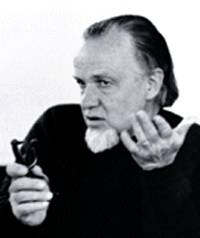
______
_______
Related posts:
FRANCIS SCHAEFFER ANALYZES ART AND CULTURE PART 85 (Breaking down the song “When I’m Sixty-Four” Part B) Featured Photographer and Journalist is Bill Harry
One would think that the young people of the 1960’s thought little of death but is that true? The most successful song on the SGT PEPPER’S album was about the sudden death of a close friend and the album cover was pictured in front of a burial scene. Francis Schaeffer’s favorite album was SGT. […]
FRANCIS SCHAEFFER ANALYZES ART AND CULTURE PART 84 (Breaking down the song “When I’m Sixty-Four”Part A) Featured Photographer is Annie Leibovitz
_________ I think it is revolutionary for a 18 year old Paul McCartney to write a song about an old person nearing death. This demonstrates that the Beatles did really think about the process of life and its challenges from birth to day in a complete way and the possible answer. Solomon does that too […]
FRANCIS SCHAEFFER ANALYZES ART AND CULTURE Part 83 THE BEATLES (Why was Karlheinz Stockhausen on the cover of Sgt. Pepper’s? ) (Feature on artist Nam June Paik )
_____________ Karlheinz Stockhausen was friends with both Lennon and McCartney and he influenced some of their music. Today we will take a close look at his music and his views and at some of the songs of the Beatles that he influenced. Dr. Francis Schaeffer: How Should We Then Live? Episode 9 (Promo Clip) […]
FRANCIS SCHAEFFER ANALYZES ART AND CULTURE Part 82 THE BEATLES, Breaking down the song DEAR PRUDENCE (Photographer featured is Bill Eppridge)
Mia and Prudence Farrow both joined the Beatles in their trip to India to check out Eastern Religions. Francis Schaeffer noted, ” The younger people and the older ones tried drug taking but then turned to the eastern religions. Both drugs and the eastern religions seek truth inside one’s own head, a negation of reason. […]
FRANCIS SCHAEFFER ANALYZES ART AND CULTURE Part 81 THE BEATLES Why was Dylan Thomas put on the cover of SGT PEPPERS? (Featured artist is sculptor David Wynne)
Dylan Thomas was included on SGT PEPPER’S cover because of words like this, “Too proud to cry, too frail to check the tears, And caught between two nights, blindness and death.” Francis Schaeffer noted: This is sensitivity crying out in darkness. But it is not mere emotion; the problem is not on this […]
FRANCIS SCHAEFFER ANALYZES ART AND CULTURE Part 80 THE BEATLES (breaking down the song “Lucy in the Sky with Diamonds” ) (Featured artist is Saul Steinberg)
John Lennon was writing about a drug trip when he wrote the song LUCY IN THE SKY WITH DIAMONDS and Paul later confirmed that many years later. Francis Schaeffer correctly noted that the Beatles’ album Sgt. Pepper’s brought the message of drugs and Eastern Religion to the masses like no other means of communication could. Today […]
FRANCIS SCHAEFFER ANALYZES ART AND CULTURE Part 79 THE BEATLES (Why was William Burroughs on Sgt. Pepper’s cover? ) (Feature on artist Brion Gysin)
______________ Why was William S. Burroughs put on the cover of Sgt. Pepper’s Lonely Hearts Club Band? Burroughs was challenging the norms of the 1960’s but at the same time he was like the Beatles in that he was also searching for values and he never found the solution. (In the last post in this […]
FRANCIS SCHAEFFER ANALYZES ART AND CULTURE PART 78 THE BEATLES (Breaking down the song TOMORROW NEVER KNOWS) Featured musical artist is Stuart Gerber
The Beatles were “inspired by the musique concrète of German composer and early electronic music pioneer Karlheinz Stockhausen…” as SCOTT THILL has asserted. Francis Schaeffer noted that ideas of “Non-resolution” and “Fragmentation” came down German and French streams with the influence of Beethoven’s last Quartets and then the influence of Debussy and later Schoenberg’s non-resolution which is in total contrast […]
FRANCIS SCHAEFFER ANALYZES ART AND CULTURE Part 77 THE BEATLES (Who got the Beatles talking about Vietnam War? ) (Feature on artist Nicholas Monro )
It was the famous atheist Bertrand Russell who pointed out to Paul McCartney early on that the Beatles needed to bring more attention to the Vietnam war protests and Paul promptly went back to the group and reported Russell’s advice. We will take a closer look at some of Russell’s views and break them down […]
FRANCIS SCHAEFFER ANALYZES ART AND CULTURE Part 76 THE BEATLES (breaking down the song STRAWBERRY FIELDS FOREVER) (Artist featured is Jamie Wyeth)
Francis Schaeffer correctly noted: In this flow there was also the period of psychedelic rock, an attempt to find this experience without drugs, by the use of a certain type of music. This was the period of the Beatles’ Revolver (1966) and Strawberry Fields Forever (1967). In the same period and in the same direction […]
_______________
__________
“Woody Wednesday” ECCLESIASTES AND WOODY ALLEN’S FILMS: SOLOMON “WOULD GOT ALONG WELL WITH WOODY!” (Part 17 MIDNIGHT IN PARIS Part P Ernest Hemingway 5th part “We fear death because we feel that we haven’t loved well enough” )
“We fear death because we feel that we haven’t loved well enough or loved at all.” These are words put in Hemingway’s mouth by Woody Allen in MIDNIGHT IN PARIS, but what did Hemingway believe about death?

“All men fear death. It’s a natural fear that consumes us all. We fear death because we feel that we haven’t loved well enough or loved at all, which ultimately are one and the same. However, when you make love with a truly great woman, one that deserves the utmost respect in this world and one that makes you feel truly powerful, that fear of death completely disappears. Because when you are sharing your body and heart with a great woman the world fades away. You two are the only ones in the entire universe. You conquer what most lesser men have never conquered before, you have conquered a great woman’s heart, the most vulnerable thing she can offer to another. Death no longer lingers in the mind. Fear no longer clouds your heart. Only passion for living, and for loving, become your sole reality. This is no easy task for it takes insurmountable courage. But remember this, for that moment when you are making love with a woman of true greatness you will feel immortal.
I believe that love that is true and real creates a respite from death. All cowardice comes from not loving or not loving well, which is the same thing. And when the man who is brave and true looks death squarely in the face like some rhino hunters I know or Belmonte, who is truly brave, it is because they love with sufficient passion to push death out of their minds. Until it returns, as it does to all men. And then you must make really good love again. Think about it.”
― Woody Allen
tags: corey-stoll, ernest-hemingway, midnight-in-paris
__

Midnight in Paris OST – 15 – Ballad Du Paris

_
This series deals with the Book of Ecclesiastes and Woody Allen films. The first post dealt with MAGIC IN THE MOONLIGHT and it dealt with the fact that in the Book of Ecclesiastes Solomon does contend like Hobbes and Stanley that life is “nasty, brutish and short” and as a result has no meaning UNDER THE SUN.
The movie MIDNIGHT IN PARIS offers many of the same themes we see in Ecclesiastes. The second post looked at the question: WAS THERE EVER AGOLDEN AGE AND DID THE MOST TALENTED UNIVERSAL MEN OF THAT TIME FIND TRUE SATISFACTION DURING IT?
In the third post in this series we discover in Ecclesiastes that man UNDER THE SUN finds himself caught in the never ending cycle of birth and death. The SURREALISTS make a leap into the area of nonreason in order to get out of this cycle and that is why the scene in MIDNIGHT IN PARIS with Salvador Dali, Man Ray, and Luis Bunuel works so well!!!! These surrealists look to the area of their dreams to find a meaning for their lives and their break with reality is only because they know that they can’t find a rational meaning in life without God in the picture.
The fourth post looks at the solution of WINE, WOMEN AND SONG and the fifthand sixth posts look at the solution T.S.Eliot found in the Christian Faith and how he left his fragmented message of pessimism behind. In the seventh post the SURREALISTS say that time and chance is all we have but how can that explain love or art and the hunger for God? The eighth post looks at the subject of DEATH both in Ecclesiastes and MIDNIGHT IN PARIS. In the ninth post we look at the nihilistic worldview of Woody Allen and why he keeps putting suicides into his films.
In the tenth post I show how Woody Allen pokes fun at the brilliant thinkers of this world and how King Solomon did the same thing 3000 years ago. In the eleventh post I point out how many of Woody Allen’s liberal political views come a lack of understanding of the sinful nature of man and where it originated. In the twelfth post I look at the mannishness of man and vacuum in his heart that can only be satisfied by a relationship with God.
In the thirteenth post we look at the life of Ernest Hemingway as pictured in MIDNIGHT AND PARIS and relate it to the change of outlook he had on life as the years passed. In the fourteenth post we look at Hemingway’s idea of Paris being a movable feast. The fifteenth and sixteenth posts both compare Hemingway’s statement, “Happiness in intelligent people is the rarest thing I know…” with Ecclesiastes 2:18 “For in much wisdom is much vexation, and he who increases knowledge increases sorrow.” The seventeenth post looks at these words Woody Allen put into Hemingway’s mouth, “We fear death because we feel that we haven’t loved well enough or loved at all.”
____

Ernest Hemingway with Friends on Safari in Tanganyika, Africa
Love & Death: An Uncanny Relationship

I’ve always contemplated about what it means to love a woman – the meaning still eludes me, but there’s no harm in understanding love and how it relates to our fear of death. I’ll start by interpreting some things I’ve researched about and draw on some experiences.
We can all agree that most people fear dying alone, or fear being someone who never loved outright. That being said, we try to make lasting impressions before our time is done, thus resulting in our fear of death.
In Woody Allen’s film “Midnight In Paris”, Ernest Hemingway offers Owen Wilson’s character – Gil Pender – some inspiring words of wisdom about the fear of death. Whether Woody Allen took this from an actual quote by Hemingway or simply adapted it for the film, I’m not entirely sure. However, I did find an expanded quote, and I’d like to share it because it rings true on many situations; situations people cannot easily explain to their significant others. Even more so, it touches on many things men should strive for when loving their women.
Guys, have a seat.
“All men fear death. It’s a natural fear that consumes us all. We fear death because we feel that we haven’t loved well enough or loved at all, which ultimately are one and the same. However, when you make love with a truly great woman, one that deserves the utmost respect in this world and one that makes you feel truly powerful, that fear of death completely disappears. Because when you are sharing your body and heart with a great woman, the world fades away. You two are the only ones in the entire universe. You conquer what most lesser men have never conquered before; you have conquered a great woman’s heart, the most vulnerable thing she can offer to another. Death no longer lingers in the mind. Fear no longer clouds your heart. Only passion for living, and for loving, become your sole reality. This is no easy task for it takes insurmountable courage. But remember this, for that moment when you are making love with a woman of true greatness you will feel immortal. I believe that love that is true and real creates a respite from death. All cowardice comes from not loving or not loving well, which is the same thing. And when the man who is brave and true looks death squarely in the face like some rhino hunters I know or Belmonte, who is truly brave, it is because they love with sufficient passion to push death out of their minds. Until it returns, as it does to all men. And then you must make really good love again. Think about it.”
– Ernest Hemingway in “Midnight In Paris” , a film by Woody Allen, Goodreads.
When Hemingway mentions at least “for that moment”, he’s talking about that moment a woman bestows all that she is to you. It begs the question that how can you, as a man, not do the same? How can you not give all that you are and reassure your woman of her decision? How can you half-a** it and simply roll over after it’s done if you feel elevated; stronger than you have ever been? We are experts at taking advantage of a woman’s vulnerability and reducing it to a few seconds of perceived euphoria.
A woman can make you feel that there is absolutely nothing you can’t do. You conjure up the courage to face your demons and the demons of others. Why then do you no longer fear death? Because conquering “the most vulnerable thing she can offer to another” is sometimes surreal. You’ve taken something immaterial with you to your grave – the “warmth and love of a great woman’s heart”transcend any material or immaterial achievement. You rise above all the “lesser men” who look for shortcuts to women’s hearts.
It then has become customary for men to believe that the more women they’ve been with the better. Women know we revel in the chase. They believe that the chase is our prize, and this comes from men who want nothing but to get another tick on their mental list. I’d rather be on the lookout for the one that stands out; the one that makes us both better people, even if it only lasts a relationship. No matter who she’s been with before, make it matter when she’s with you.
Yes, there are lesser men conquering many women’s hearts, but maybe not the right ones. Yes, they will be with women almost every other night, but your one woman is worth a hundred of theirs. They’ll have several women on call, but you’ll be with the one that makes you breakfast the next morning (after making great love of course). It’s not about how many you love, but about how you love.
The quote’s ending shouldn’t be taken literally though. When Hemingway says “And then you must make really good love again”, he means to make great love to your woman – or go find love if you haven’t already. I don’t think Hemingway meant that you should have one night stands left, right and center. Finding a truly great woman is circumstantial and you are sometimes lucky. You don’t plan for it and you certainly don’t see it coming. And as with all great things, they take time.
In the end, I related to the quote profoundly because I think I did have that feeling. I did feel that I had nothing to fear. I felt that as long as I loved with passion and a true heart, I didn’t have to worry about anything else. Only a woman can give that to you. If you can relate to this existential feeling, it’s your duty as a man to send your woman to heaven and back on every occasion. If you don’t, there are plenty of men willing to “step” in.
Am I naive to think this way? Maybe, but that feeling made me look at things differently. A woman should not simply be a gateway that allows you to lose the fear of death, but rather a woman should be the sole reason death becomes unimportant. Whether she’s someone you just met, you’re married to or you’re well into a relationship with, if you get this feeling, be the best man you can be.

_________
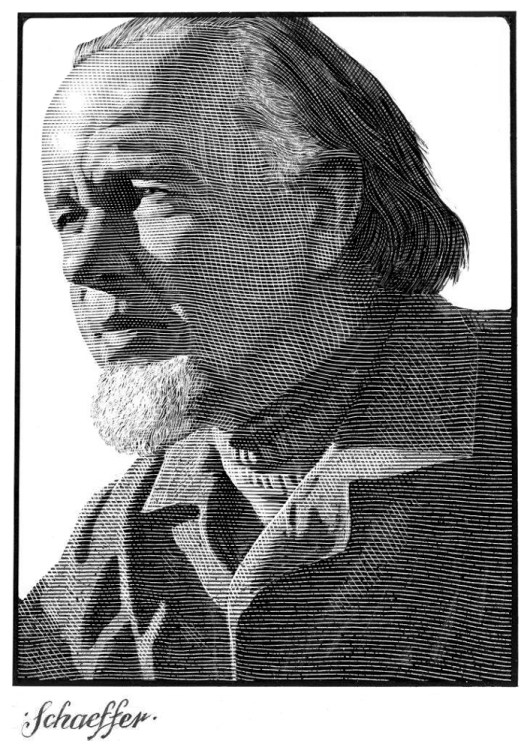
Francis Schaeffer’s sermon on Ecclesiastes included these words below:
Ecclesiastes is the only pessimistic book in the Bible and that is because of the place where Solomon limits himself. He limits himself to the question of human life, life under the sun between birth and death and the answers this would give.
Ecclesiastes 1:4
English Standard Version (ESV)
4 A generation goes, and a generation comes,
but the earth remains forever.
___________________
Ecclesiastes 4:16
English Standard Version (ESV)
16 There was no end of all the people, all of whom he led. Yet those who come later will not rejoice in him. Surely this also is vanity and a striving after wind.
__________________________
In verses 1:4 and 4:16 Solomon places man in the cycle. He doesn’t place man outside of the cycle. Man doesn’t escape the cycle. Man is only cycle. Birth and death and youth and old age. With this in mind Solomon makes this statement.
Ecclesiastes 6:12
12 For who knows what is good for a man during his lifetime, during the few years of his futile life? He will spend them like a shadow. For who can tell a man what will be after him under the sun?
____________________
There is no doubt in my mind that Solomon had the same experience in his life that I had as a younger man. I remember standing by the sea and the moon arose and it was copper and beauty. Then the moon did not look like a flat dish but a globe or a sphere since it was close to the horizon. One could feel the global shape of the earth too. Then it occurred to me that I could contemplate the interplay of the spheres and I was exalted because I thought I can look upon them with all their power, might, and size, but they could contempt nothing and I felt as man as God. Then came upon me a horror of great darkness because it suddenly occurred to me that although I could contemplate them and they could contemplate nothing yet they would continue to turn in ongoing cycles when I saw no more forever and I was crushed.
THIS IS SOLOMON’S FEELING TOO. The universal man, Solomon, beyond our intelligence with an empire at his disposal with the opportunity of observation so he could recite these words here in Ecclesiastes 6:12, “For who knows what is good for a man during his lifetime, during the few years of his futile life? He will spend them like a shadow. For who can tell a man what will be after him under the sun?”

___
___________

Ernest Hemingway and Fidel Castro chat in Havana on May 15, 1960, just over a year before Hemingway’s death. The two men sometimes went fishing together. AP________
Related posts:
_____________
__________
“Truth Tuesday” There is a difference between believing the Bible is true and the Bible contains truth
There is a difference between believing the Bible is true and the Bible contains truth
The Scientific Age
Uploaded by NoMirrorHDDHrorriMoN on Oct 3, 2011
I love the works of Francis Schaeffer and I have been on the internet reading several blogs that talk about Schaeffer’s work and the work below was really helpful. Schaeffer’s film series “How should we then live? Wikipedia notes, “According to Schaeffer, How Should We Then Live traces Western history from Ancient Rome until the time of writing (1976) along three lines: the philosophic, scientific, and religious.[3] He also makes extensive references to art and architecture as a means of showing how these movements reflected changing patterns of thought through time. Schaeffer’s central premise is: when we base society on the Bible, on the infinite-personal God who is there and has spoken,[4] this provides an absolute by which we can conduct our lives and by which we can judge society. Here are some posts I have done on this series: Francis Schaeffer’s “How should we then live?” Video and outline of episode 10 “Final Choices” , episode 9 “The Age of Personal Peace and Affluence”, episode 8 “The Age of Fragmentation”, episode 7 “The Age of Non-Reason” , episode 6 “The Scientific Age” , episode 5 “The Revolutionary Age” , episode 4 “The Reformation”, episode 3 “The Renaissance”, episode 2 “The Middle Ages,”, and episode 1 “The Roman Age,” .
In the film series “WHATEVER HAPPENED TO THE HUMAN RACE?” the arguments are presented against abortion (Episode 1), infanticide (Episode 2), euthanasia (Episode 3), and then there is a discussion of the Christian versus Humanist worldview concerning the issue of “the basis for human dignity” in Episode 4 and then in the last episode a close look at the truth claims of the Bible.

__________________________
I truly believe that many of the problems we have today in the USA are due to the advancement of humanism in the last few decades in our society. Ronald Reagan appointed the evangelical Dr. C. Everett Koop to the position of Surgeon General in his administration. He partnered with Dr. Francis Schaeffer in making the video below. It is very valuable information for Christians to have. Actually I have included a video below that includes comments from him on this subject.
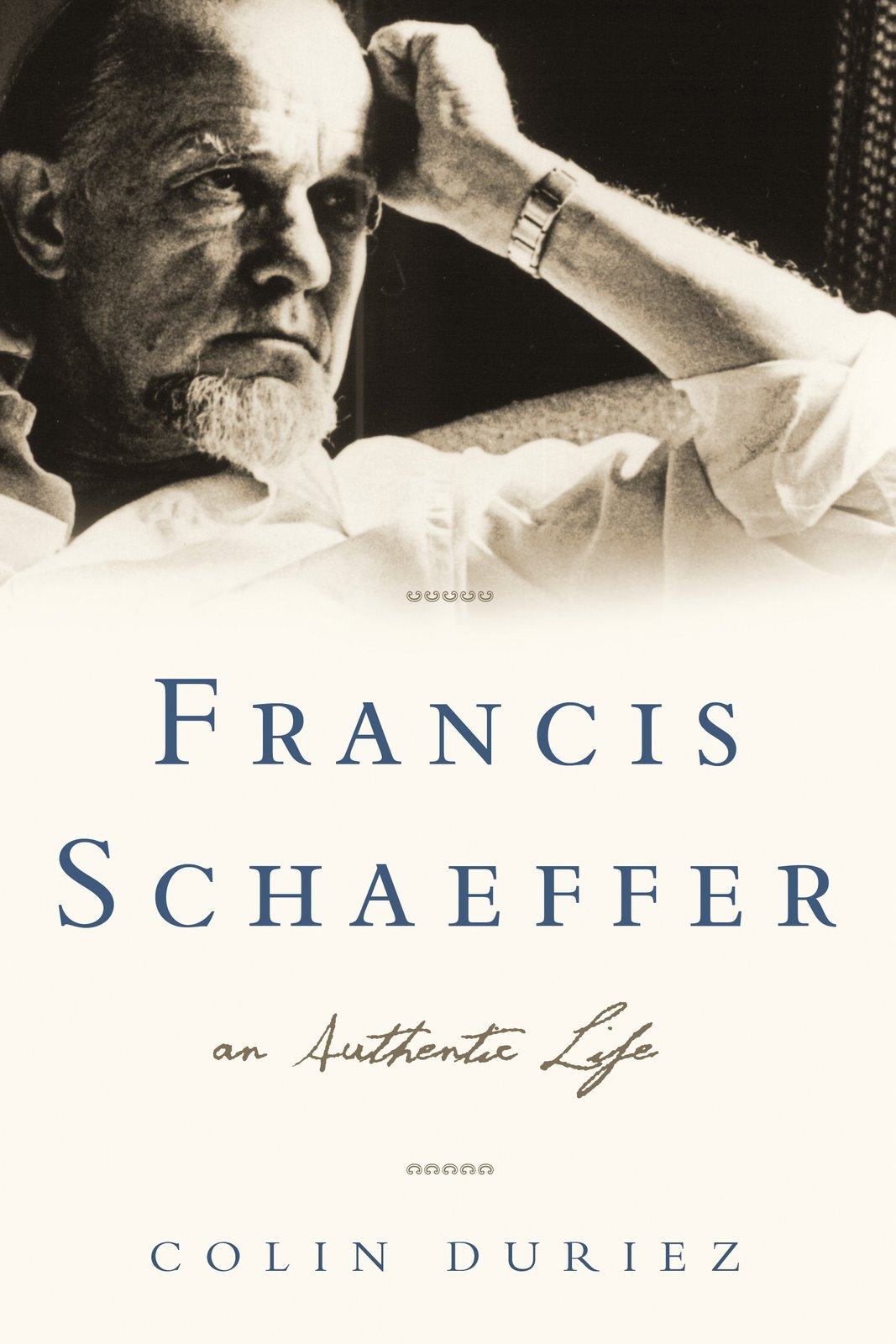 Francis Schaeffer
Published on Oct 6, 2012 by AdamMetropolis
Francis Schaeffer: “Whatever Happened to the Human Race” (Episode 4) THE BASIS FOR HUMAN DIGNITY
There is a difference between believing the Bible is true and the Bible contains truth.
Ideas Have Consequences
by Henry Morris III, D.Min. *
 “Argument weak at this point. Thump podium and holler louder!”
This cliché is quoted derisively from time to time to demonstrate that all arguments have presuppositional beginnings that are logically and empirically “weak.” Every idea, all religions (belief systems)–even scientific theories–have foundational concepts that are unprovable by physical means and intellectual acumen.
This is so commonly understood and widely accepted that we rarely think about this ubiquitous condition. Everybody believes in something. Even the atheist believes that there is no God; there is certainly no way to “prove” such a concept. All men and women have faith that their particular presuppositions provide an adequate basis for their actions and lifestyles.
That broad set of presuppositions is also known as a worldview.
Dallas Willard relates a concept in his book Divine Conspiracy that he occasionally uses in his classes:
In our culture one is considered educated if one “knows the right answers.” That is, if one knows which answers are the correct ones. I sometimes joke with my students at the university where I teach by asking them if they believe what they wrote on their tests. They always laugh. They know belief is not required. Belief only controls life.1
Belief controls life. Now that piece of wisdom is important!
Jesus said it this way:
A good man out of the good treasure of his heart bringeth forth that which is good; and an evil man out of the evil treasure of his heart bringeth forth that which is evil: for of the abundance of the heart his mouth speaketh. (Luke 6:45)
Belief controls life. Ideas have consequences.
- What you believe determines what you think.
- What you think dictates what you do.
- And what you do dominates your life.
In 1981, Francis Schaeffer wrote A Christian Manifesto as a response to a “new” Humanist Manifesto. As he opened his critique of the humanist’s thinking, Dr. Schaeffer noted the fundamental “change in the overall way people think and view the world and life as a whole. This shift has been away from a world view that was at least vaguely Christian in people’s memory (even if they were not individually Christian) toward something completely different–toward a world view based upon the idea that the final reality is impersonal matter or energy shaped into its present form by impersonal chance.”2
This wholesale shift in thinking has so permeated the evangelical church that most Christians struggle with the concept of an almighty, omniscient Creator to whom they must answer one day. The pervasive symptom of this change in thinking is the shift away from trusting the revealed Word of God as an absolute source of truth from the God who cannot lie (Titus 1:2).
Many evangelical churches believe that the Bible may “contain” truth, but that one can no longer be certain of its authority, accuracy, or applicability. Science has supposedly rendered the early chapters of Genesis either useless as history or downright deceptive. Scholars have uncovered so-called “new” secrets about the Lord Jesus and about the Bible. Famous preachers, politicians, and celebrities loudly proclaim allegiance to Jesus, only to be exposed in some scandal that would embarrass the heathen.
We have come far–but certainly not in the right direction! What, then, is the possibility or the potential for righteous correction?
Wherewithal shall a young man cleanse his way? by taking heed thereto according to thy word. With my whole heart have I sought thee: O let me not wander from thy commandments. Thy word have I hid in mine heart, that I might not sin against thee. (Psalm 119:9-11)
May the heart of the great Creator, whose word spoke the heavens into existence, draw us this day into a certainty about His inspired word of truth.
References
- Willard, D. 1998. The Divine Conspiracy: Rediscovering Our Hidden Life in God. San Francisco: HarperSanFrancisco, 317.
- Schaeffer, F. A. 1981. A Christian Manifesto. Westchester, IL: Crossway Books, 17-18.
* Dr. Morris is Chief Executive Officer of the Institute for Creation Research.
Cite this article: Morris III, H. 2009. Ideas Have Consequences. Acts & Facts. 38 (6): 22.
Related posts:
Francis Schaeffer’s “How should we then live?” Video and outline of episode 10 “Final Choices” (Schaeffer Sundays)
E P I S O D E 1 0 Dr. Francis Schaeffer – Episode X – Final Choices 27 min FINAL CHOICES I. Authoritarianism the Only Humanistic Social Option One man or an elite giving authoritative arbitrary absolutes. A. Society is sole absolute in absence of other absolutes. B. But society has to be […]
By Everette Hatcher III | Posted in Francis Schaeffer | Tagged francis crick, hitler and stalin, john kenneth galbraith, robert theobald, youtube | Edit | Comments (0)
Francis Schaeffer’s “How should we then live?” Video and outline of episode 9 “The Age of Personal Peace and Affluence” (Schaeffer Sundays)
E P I S O D E 9 Dr. Francis Schaeffer – Episode IX – The Age of Personal Peace and Affluence 27 min T h e Age of Personal Peace and Afflunce I. By the Early 1960s People Were Bombarded From Every Side by Modern Man’s Humanistic Thought II. Modern Form of Humanistic Thought Leads […]
By Everette Hatcher III | Posted in Francis Schaeffer | Tagged free speech movement, paris riots, personal peace., sproul plaza, www youtube | Edit | Comments (0)
Francis Schaeffer’s “How should we then live?” Video and outline of episode 8 “The Age of Fragmentation” (Schaeffer Sundays)
E P I S O D E 8 Dr. Francis Schaeffer – Episode VIII – The Age of Fragmentation 27 min I saw this film series in 1979 and it had a major impact on me. T h e Age of FRAGMENTATION I. Art As a Vehicle Of Modern Thought A. Impressionism (Monet, Renoir, Pissarro, Sisley, […]
By Everette Hatcher III | Posted in Francis Schaeffer | Tagged airplane design, http www youtube, marcel duchamp art, post impressionism, van gogh gauguin | Edit | Comments (0)
Francis Schaeffer’s “How should we then live?” Video and outline of episode 7 “The Age of Non-Reason” (Schaeffer Sundays)
E P I S O D E 7 Dr. Francis Schaeffer – Episode VII – The Age of Non Reason I am thrilled to get this film series with you. I saw it first in 1979 and it had such a big impact on me. Today’s episode is where we see modern humanist man act […]
By Everette Hatcher III | Posted in Francis Schaeffer | Tagged french existentialism, humanist philosophers, humanistic philosophy, natural freedom, www youtube | Edit | Comments (0)
Francis Schaeffer’s “How should we then live?” Video and outline of episode 6 “The Scientific Age” (Schaeffer Sundays)
E P I S O D E 6 How Should We Then Live 6#1 Uploaded by NoMirrorHDDHrorriMoN on Oct 3, 2011 How Should We Then Live? Episode 6 of 12 ________ I am sharing with you a film series that I saw in 1979. In this film Francis Schaeffer asserted that was a shift in […]
By Everette Hatcher III | Posted in Francis Schaeffer | Tagged biblical foundations., biblical influence, french prose, neo darwinism, www youtube | Edit | Comments (0)
Francis Schaeffer’s “How should we then live?” Video and outline of episode 5 “The Revolutionary Age” (Schaeffer Sundays)
E P I S O D E 5 How Should We Then Live? Episode 5: The Revolutionary Age I was impacted by this film series by Francis Schaeffer back in the 1970′s and I wanted to share it with you. Francis Schaeffer noted, “Reformation Did Not Bring Perfection. But gradually on basis of biblical teaching there […]
By Everette Hatcher III | Posted in Francis Schaeffer | Tagged christian foundations, freedom of press, freedom of religion, lex rex, www youtube | Edit | Comments (0)
Francis Schaeffer’s “How should we then live?” Video and outline of episode 4 “The Reformation” (Schaeffer Sundays)
Dr. Francis Schaeffer – Episode IV – The Reformation 27 min I was impacted by this film series by Francis Schaeffer back in the 1970′s and I wanted to share it with you. Schaeffer makes three key points concerning the Reformation: “1. Erasmian Christian humanism rejected by Farel. 2. Bible gives needed answers not only as to […]
By Everette Hatcher III | Posted in Francis Schaeffer | Tagged authority of the bible, christian humanism, old testament prophets, school of athens., thomas cromwell | Edit | Comments (0)
“Schaeffer Sundays” Francis Schaeffer’s “How should we then live?” Video and outline of episode 3 “The Renaissance”
Francis Schaeffer’s “How should we then live?” Video and outline of episode 3 “The Renaissance” Francis Schaeffer: “How Should We Then Live?” (Episode 3) THE RENAISSANCE I was impacted by this film series by Francis Schaeffer back in the 1970′s and I wanted to share it with you. Schaeffer really shows why we have so […]
Francis Schaeffer’s “How should we then live?” Video and outline of episode 2 “The Middle Ages” (Schaeffer Sundays)
Francis Schaeffer: “How Should We Then Live?” (Episode 2) THE MIDDLE AGES I was impacted by this film series by Francis Schaeffer back in the 1970′s and I wanted to share it with you. Schaeffer points out that during this time period unfortunately we have the “Church’s deviation from early church’s teaching in regard […]
By Everette Hatcher III | Posted in Francis Schaeffer | Tagged byzantine art, conservative evangelicalism, gothic architecture., gregorian chants, naturalism in art | Edit | Comments (0)
Francis Schaeffer’s “How should we then live?” Video and outline of episode 1 “The Roman Age” (Schaeffer Sundays)
Francis Schaeffer: “How Should We Then Live?” (Episode 1) THE ROMAN AGE Today I am starting a series that really had a big impact on my life back in the 1970′s when I first saw it. There are ten parts and today is the first. Francis Schaeffer takes a look at Rome and why […]
Francis Schaeffer: “Whatever Happened to the Human Race” (Episode 5) TRUTH AND HISTORY
Francis Schaeffer: “Whatever Happened to the Human Race” (Episode 5) TRUTH AND HISTORY Published on Oct 7, 2012 by AdamMetropolis This crucial series is narrated by the late Dr. Francis Schaeffer and former Surgeon General Dr. C. Everett Koop. Today, choices are being made that undermine human rights at their most basic level. Practices once […]
Francis Schaeffer: “Whatever Happened to the Human Race” (Episode 4) THE BASIS FOR HUMAN DIGNITY
The opening song at the beginning of this episode is very insightful. Francis Schaeffer: “Whatever Happened to the Human Race” (Episode 4) THE BASIS FOR HUMAN DIGNITY Published on Oct 7, 2012 by AdamMetropolis This crucial series is narrated by the late Dr. Francis Schaeffer and former Surgeon General Dr. C. Everett Koop. Today, choices […]
Francis Schaeffer: “Whatever Happened to the Human Race” (Episode 3) DEATH BY SOMEONE’S CHOICE
Francis Schaeffer: “Whatever Happened to the Human Race” (Episode 3) DEATH BY SOMEONE’S CHOICE Published on Oct 6, 2012 by AdamMetropolis This crucial series is narrated by the late Dr. Francis Schaeffer and former Surgeon General Dr. C. Everett Koop. Today, choices are being made that undermine human rights at their most basic level. Practices […]
Francis Schaeffer: “Whatever Happened to the Human Race?” (Episode 2) SLAUGHTER OF THE INNOCENTS
Francis Schaeffer: “Whatever Happened to the Human Race?” (Episode 2) SLAUGHTER OF THE INNOCENTS Published on Oct 6, 2012 by AdamMetropolis This crucial series is narrated by the late Dr. Francis Schaeffer and former Surgeon General Dr. C. Everett Koop. Today, choices are being made that undermine human rights at their most basic level. Practices […]
Francis Schaeffer: “Whatever Happened to the Human Race” (Episode 1) ABORTION OF THE HUMAN RACE
It is not possible to know where the pro-life evangelicals are coming from unless you look at the work of the person who inspired them the most. That person was Francis Schaeffer. I do care about economic issues but the pro-life issue is the most important to me. Several years ago Adrian Rogers (past president of […]
The following essay explores the role that Francis Schaeffer played in the rise of the pro-life movement. It examines the place of How Should We Then Live?, Whatever Happened to the Human Race?, and A Christian Manifesto in that process.
This essay below is worth the read. Schaeffer, Francis – “Francis Schaeffer and the Pro-Life Movement” [How Should We Then Live?, Whatever Happened to the Human Race?, A Christian Manifesto] Editor note: <p> </p> [The following essay explores the role that Francis Schaeffer played in the rise of the pro-life movement. It examines the place of […]
By Everette Hatcher III | Posted in Francis Schaeffer | Edit | Comments (0)
SCHAEFFER SUNDAY Good review of Schaeffer’s episode “The Scientific Age:”
Francis Schaeffer “BASIS FOR HUMAN DIGNITY” Whatever…HTTHR
Francis Schaeffer – How Should We Then Live – 06.The Scientific Age
The video of THE SCIENTIFIC AGE can accessed at this link.
December 16, 2007
015 HSWTL The Scientific Age
In our last lesson, we looked briefly at five revolutions: 1) The British Bloodless Revolution, 2) The American Revolution, 3) The French Revolution, 4) The Russian Revolution, and 5) The
Industrial Revolution. In this lesson we will look at another revolution, the Scientific Revolution. Church attacks on Copernican Science were philosophical. The start of modern science is usually associated with the Polish astronomer Copernicus. The most influential cultures, Greek, Arabic, and Chinese had a well-developed knowledge of the world. Yet the science of the ancient world was rooted more in philosophy than science with Aristotle seen as the “final authority.” The major advances of the ancients were in mathematics, algebra, geometry and astronomy. Perhaps the reason for this is that these fields were more readily advanced by logic than experimentation. Francis Schaeffer says that “medieval science was based on authority rather than observation.” Modern science or the Scientific Revolution began amid the “High Renaissance” and the Reformation. “In 1546 Luther died. Copernicus, the astronomer, lived from 1473 to 1543 and gave a preliminary outline of his theory in 1530 – that is, that the earth went around the sun, and not the sun around the earth.”
During the 1540s, three books were published that changed forever the way the world is seen. “On the Revolutions of the Heavenly Spheres by Copernicus was published posthumously; second, Vesalius published his book, On the Structure of the Human Body (this book is often spoken of as De Fabrica); third, the first edition of a Latin translation of the collected works of Archimedes (287-212 B.C.) was published in 1544 in Basel.” This introduced some of the mathematical methods essential to developing modern science. These books would become keystones to modern science.
The astronomer Galileo Galilei, using the newly invented telescope, began to write about his astronomical findings in his native tongue so the common man could understand his discoveries. In his writings he supported the views of Copernicus, disagreed with Aristotle’s views of the universe, and wrote extensively of his findings about the makeup of the universe. Galileo came under condemnation by the Roman Inquisition in 1632 and was forced to recant his statements about Copernicus and Aristotle. Yet he continued writing “not only that Copernicus was right, but also that Aristotle was wrong.” Many have incorrectly suggested that the Church attacks on Copernicus and Galileo were made because their “theories” contradicted the Bible, the opposite is true. Copernicus and Galileo’s views did not conflict with the Bible but their views did conflict with Aristotle and thus the Roman Church of the day. “When the Roman Church attacked Copernicus and Galileo (1564-1642), it was not because their teaching actually contained anything contrary to the Bible. The church authorities thought it did, but that was because Aristotelian elements had become part of church orthodoxy, and Galileo’s notions clearly conflicted with them.”
Scientific aspects of biblical influence
The Bible provided the basis for the rise of the Scientific Revolution and Modern science was born from a biblical worldview. Early scientists accepted that the world was created by a personal, intelligible, knowable God, and that they could learn the truth “about nature and the universe” because of reason. “Christian thought-forms” even influenced those who were not believing Christians. Schaeffer explains; “. . . the Christian thought-form of the early scientists gave them the faith in the possibility of science.” Without having “the faith in the possibility of science,” that the world was created by a personal God, the early scientists would not have been thought it possible to understand the world by observation and experimentation. This became the basis for the birth of modern science in the western world. Because there was personal God it was possible to know that there was “a correlation between themselves as observers and the thing observed – that is between subject and object.” Christianity gave birth to modern science “because it insists that the God who created the universe has revealed Himself in the Bible to be the kind of God He is . . .” and “the belief that God as the Creator and Lawgiver has implanted laws in His creation which man can discover.”
Let’s look at some of the “founders” of modern science that were strongly influenced by their Christian worldview.
Examples of biblical influence
Francis Bacon was a lawyer, essayist, and Lord Chancellor of England. He was cut from different cloth than those of his peers who continued to accept recognized authorities as their guiding light. Rather than authorities, Bacon “stressed careful observation and a systematic collection of information – to unlock nature’s secrets.” Francis Bacon (1561-1626) was a man who firmly believed in the Bible’s view of the fall of man and man’s rebellion against God. Bacon, who was known by some as “the major prophet of the Scientific Revolution,” said: “Man by the Fall fell at the same time from his state of innocence and from his dominion over creation. Both of these losses, however, can even in this life be in some parts repaired; the former by religion and faith, the latter by the arts and sciences.” Bacon, like the other early founders, “. . . did not see science as autonomous.” And like science, man also is not autonomous. We are to take seriously what the Bible teaches about man, history, and what has taken place within God’s creation. It is “upon the base of the Bible’s teaching, science and art are intrinsically valuable before both men and God. This gave a strong impetus for the creative stirrings of science to continue rather than to be spasmodic.”
Sir Isaac Newton (1642-1727), who as a young professor in his twenties at Cambridge University, recognized that “there is a universal force of attraction between every body in the universe and that it must be calculable. That force he called gravity.”
He subsequently wrote a book, The Mathematical Principles of Natural Philosophy, in 1687, arguably one of the most influential books ever, detailing his observations. He also recognized and developed the theory of the speed of sound. Newton was able to calculate the speed of sound “by timing the interval between the sound of an object which he dropped, and the echo coming back to him from a known distance.”
Newton is best known for his writings about ravity and the speed of sound, what isn’t as well known is that he was a devoted Christian and wrote prolifically about the Bible. Like many early scientists, Newton was criticized for not concerning himself with the question of why. He, again like many scientists of his day, didn’t worry about the why because he accepted that all creation had been created by a personal God. In his later years, Newton turned his attention writing “more about the Bible than about science.” We must recognize that for Newton it was the same God who had created the universe, whose truths could be learned from observation and experimentation, who had revealed Himself and His truths to His people in the Bible.
Blaise Pascal (1623-1662) was a man of great talents and abilities. He developed the first successful barometer and made major contributions in the study of the equilibrium of fluids. For example, he “took a tube of mercury up the mountain Puy de Dôme (in central France) and thus recorded the changes in the mercury level according to altitude.” Pascal was also a noted mathematician and his work played an important part in developing differential calculus.
Perhaps Pascal greatest contributions were not in science or mathematics but in literature. He is accepted by many as the, or at least one the, greatest writers of French prose whoever lived. Pascal, as a Christian, understood people as special because they were created in the image of God and more important Christ had died on a cross for them. He saw people as not just a part of nature, or as Schaeffer suggests “he did not see people lost like specks of dust in the universe.” Pascal saw people as the creation of God that gave life meaning in that it was man that could comprehend the universe not the universe comprehending man.
A later day scientist was Michael Faraday (1791-1867). He is best known for his major contributions in electricity. It was Faraday who discovered the induction of electric current. Faraday, like the others we have listed, was also a Christian. Schaeffer tells us that Faraday “. . . belonged to a group whose position was: Where the Scriptures speak, we speak; where the Scriptures are silent, we are silent.” Like the scientists we have mentioned, Faraday understood man was created in God’s image and nature was created for man. He rejected the idea that man was created for nature.
Shift in modern science
Science and discovery continue today but for the most part without the advantage of the Christian worldview and as a result there has been a not so subtle change of emphasis. The biblical emphasis on an “ordered creation reflects the nature of reality and is therefore acted upon in all cultures” despite what their worldview might be. Mankind acts on an assumption of order not chaos. Today many think that the concept of an orderly universe is no longer accurate. More important they do not recognize a universe or a world that was created for man by God. They see man as created for the universe, that man is just part of some great “cosmic machine.” This represents a clear change in conviction from earlier modern scientists.
The Greek philosopher Plato recognized that “regardless of what kind of particulars one talks about, if there are no absolutes – no universal – then particulars have no meaning.” The universal or absolute is that under which all the particulars fit – that which gives unity and meaning to the whole. Philosophers from Plato on have recognized that it is absolutes or universals that give meaning to individual particulars. This is most easily understood in terms of morals. “If there is no absolute beyond man’s ideas, then there is no final appeal to judge between individuals and groups whose moral judgments conflict. We are merely left with conflicting opinions.” The argument can also be made for man’s existence. If our existence is to have meaning then there must be an absolute, a universal, which gives our existence meaning.
Today there has been a shift not in science but in the worldview of the scientists and philosophers. The Christian worldview sees God and man as outside of the cause- and-effect of the universe or cosmos. In this view, God and man could influence nature or what is called “the machine” by Schaeffer. In the worldview of the modern scientists changed and today man is no longer outside the machine, man is just part of the machine and God has been removed from the picture. It is critical that we remember that it was not science that brought them to this point but their worldview.
In a closed system of cause-and-effect there is no place for a living God and there is no place “for man as man.” In fact, as Schaeffer explains, there is not room for much in a closed cause-and-effect system. “There is no place for love in a totally closed cause-and-effect system. There is no place for morality in a totally closed cause-and-effect system. There is no place for the freedom of people in a totally closed cause-and-effect system. Man becomes a zero. People and all they do become only a part of the machinery.”
Charles Darwin (1809-1882) furthered this worldview by teaching that all life evolved through the survival of the fittest. There are serious problems with this theory, do I dare say flaws, that have never been satisfactorily explained by Darwinists or Neo-Darwinists. This fact has not prevented this theory from gaining dominance in our current culture. Statistically there is no proof chance could have produced the complex world we live. Schaeffer says: “Statistical studies indicate that pure chance (randomness) could not have produced the biological complexity in the world out of chaos, in any amount of time so far suggested. Has there been enough time for natural selection, as it is seen through the eyepieces of Darwinism or Neo-Darwinism to operate and give rise to the observed phenomena of nature? No, say these mathematicians.” Schaeffer continues saying: “Most importantly, no one has yet shown how man could have been brought forth from non-man solely by time plus chance.”
The popularization of Darwin’s ideas by Thomas Huxley (1825-1895) and Herbert Spencer (1820-1903) “extended the theory of biological evolution to all of life, including ethics.” This opened a “barn door” that is still open and may never be shut until Christ comes again. The idea of the survival of the fittest supported the proponents of racism and the noncompassionate use of wealth. We have seen the natural conclusion of this thinking in the rise of Nazi Movement in Germany. Without having a biblical world, people of Germany could not withstand the impact of Darwinism on them and their culture. Although we cry out against the death and hatred of the Nazis, we have not yet encountered the full natural conclusion of Darwinism as it will be presented to us as genetic engineering.
Is it just an accident that we have seen the rise of the most brutal, authoritarianism regimes in the history of man in the twentieth century? How many citizens have died through the hands of their own governments under the guise of making things better for average citizens? A conservative estimate would be thirty to forty million people have been murdered by the governments that were to protect them. How many may die to provide a supply of transplantable body organs to enable the “fittest” to survive? What is the cost of “stem cell research” among the unborn? Are we entering a period that will give us a new definition of death to support those who are deemed more worthy of living?
Without the absolutes of the Bible, there are no absolutes except those arbitrary rules established by either popular or political consensus. Without absolutes,
there are no boundaries between what we can do and what we should do – nothing is out of bounds.
Every day some scientist or politician is suggesting that the government do this or that to make our lives better. The only problem is that we might not consider it making our lives better. Should we force people to be tranquilized to limit or eliminate human aggression? Should we require all politicians be medicated to control hostility? Should we sanction mass sterilization where population growths are more than wanted by government? Should we end the lives of those who for reasons of health will only be a drain on either their families or the state, using resources better used for someone who can make a positive contribution? Should we shut down all fast-food operations as unhealthy for the general populace? Should we require everyone to wear seat-belts, or carry health insurance, or stop smoking, to get flu shoots, to pay for services given free to illegal aliens? Who is going to control those who are in control? If man is just a “machine” what is the value of biological continuation?
Today, Humanism says: “. . . that there is only the cosmic machine, which encompasses everything, including people.” In this view everything is explained by being man being part of the “closed system.” Schaeffer explains that “To those who hold this view everything people are or do is explained by some form of determinism, some type of behaviorism, some kind of reductionism. The terms, determinism or behaviorism, indicate that everything people think or do is determined in a machinelike way and any sense of freedom or choice is an illusion. In one form of reductionism, man is explained by reducing him to the smallest particles which make up his body. Man is seen as only the molecule or the energy particle, more complex but not intrinsically different.” How far have we fallen from the “pride of man in the High Renaissance and the Enlightenment down to the present despair.” Today there is no place for God, no place for love, freedom or significance. Man is only a machine, but can man live like a machine? If man is a machine what can he find to give meaning to life?
Need to reaffirm the original base for modern science
This despair of man, this despair of man in our culture and in our society is so unnecessary. At the risk of oversimplifying, the problem is our starting point, the answer to the question; where did we come from? The biblical worldview says that world, the universe was created by God who could make something out of nothing and He was responsible for making man in His image. In the biblical worldview man is not a machine but a being, created in the image of a personal God, who cares about him. In the biblical worldview man need not despair but trust and have faith in His creator.
For the humanist, it is a bit more of a problem. Some humanists who might believe creation from nothing, absolutely nothing, is possible. However, although possible in theory, creation from absolutely nothing seems to be “unthinkable.” There is not much of an answer there. Well then if one does not subscribe to something from nothing, then for the humanist, there must be something that has always existed. This something must be either an atom or a molecule, or the energy particle, and then everything, including life and man, comes forth by chance from that. Hmm, that does not seem like much of an answer either. Is it any wonder man is in despair?
Related posts:
FRANCIS SCHAEFFER ANALYZES ART AND CULTURE PART 48 “BLOW UP” by Michelangelo Antonioni makes Philosophic Statement (Feature on artist Nancy Holt)
_______________ Francis Schaeffer pictured below: _____________________ Why am I doing this series FRANCIS SCHAEFFER ANALYZES ART AND CULTURE? John Fischer probably expressed it best when he noted: Schaeffer was the closest thing to a “man of sorrows” I have seen. He could not allow himself to be happy when most of the world was desperately lost […]
FRANCIS SCHAEFFER ANALYZES ART AND CULTURE Part 47 Woody Allen and Professor Levy and the death of “Optimistic Humanism” from the movie CRIMES AND MISDEMEANORS Plus Charles Darwin’s comments too!!! (Feature on artist Rodney Graham)
Crimes and Misdemeanors: A Discussion: Part 1 ___________________________________ Today I will answer the simple question: IS IT POSSIBLE TO BE AN OPTIMISTIC SECULAR HUMANIST THAT DOES NOT BELIEVE IN GOD OR AN AFTERLIFE? This question has been around for a long time and you can go back to the 19th century and read this same […]
FRANCIS SCHAEFFER ANALYZES ART AND CULTURE PART 46 Friedrich Nietzsche (Featured artist is Thomas Schütte)
____________________________________ Francis Schaeffer pictured below: ______________ Francis Schaeffer has written extensively on art and culture spanning the last 2000years and here are some posts I have done on this subject before : Francis Schaeffer’s “How should we then live?” Video and outline of episode 10 “Final Choices” , episode 9 “The Age of Personal Peace and Affluence”, episode 8 […]
FRANCIS SCHAEFFER ANALYZES ART AND CULTURE Part 45 Woody Allen “Reason is Dead” (Feature on artists Allora & Calzadilla )
Love and Death [Woody Allen] – What if there is no God? [PL] ___________ _______________ How Should We then Live Episode 7 small (Age of Nonreason) #02 How Should We Then Live? (Promo Clip) Dr. Francis Schaeffer 10 Worldview and Truth Two Minute Warning: How Then Should We Live?: Francis Schaeffer at 100 Francis […]
FRANCIS SCHAEFFER ANALYZES ART AND CULTURE Part 44 The Book of Genesis (Featured artist is Trey McCarley )
___________________________________ Francis Schaeffer pictured below: ____________________________ Francis Schaeffer “BASIS FOR HUMAN DIGNITY” Whatever…HTTHR Dr. Francis schaeffer – The flow of Materialism(from Part 4 of Whatever happened to human race?) Dr. Francis Schaeffer – The Biblical flow of Truth & History (intro) Francis Schaeffer – The Biblical Flow of History & Truth (1) Dr. Francis Schaeffer […]
WOODY WEDNESDAY Francis Schaeffer’s term the “Mannishness of Man” and how it relates to Woody Allen and Charles Darwin!!!
___________ Dr. Francis Schaeffer – The Naturalistic, Materialistic, World View Francis Schaeffer and Gospel of Christ in the pages of the Bible Francis Schaeffer’s term the “Mannishness of Man” and how it relates to Woody Allen and Charles Darwin!!! Schaeffer noted that everyone has these two things constantly pulling at them. First, it is […]
FRANCIS SCHAEFFER ANALYZES ART AND CULTURE Part 43 “Freedom within Form” (Featured artist is Jan Fabre)
________________ Francis Schaeffer “BASIS FOR HUMAN DIGNITY” Whatever…HTTHR Dr. Francis schaeffer – The flow of Materialism(from Part 4 of Whatever happened to human race?) Dr. Francis Schaeffer – The Biblical flow of Truth & History (intro) Francis Schaeffer – The Biblical Flow of History & Truth (1) Dr. Francis Schaeffer – The Biblical Flow of […]
FRANCIS SCHAEFFER ANALYZES ART AND CULTURE Part 42 Historical Adam and Eve (Featured artist is Banks Violette)
_______________________________________________ Francis Schaeffer “BASIS FOR HUMAN DIGNITY” Whatever…HTTHR Dr. Francis schaeffer – The flow of Materialism(from Part 4 of Whatever happened to human race?) Dr. Francis Schaeffer – The Biblical flow of Truth & History (intro) Francis Schaeffer – The Biblical Flow of History & Truth (1) Dr. Francis Schaeffer – The Biblical Flow of […]
FRANCIS SCHAEFFER ANALYZES ART AND CULTURE Part 41 Sarvepalli Radhakrishnan (Featured artist is Marina Abramović)
______________________ Francis Schaeffer pictured below: _________ How Should We then Live Episode 7 small (Age of Nonreason) #02 How Should We Then Live? (Promo Clip) Dr. Francis Schaeffer 10 Worldview and Truth Two Minute Warning: How Then Should We Live?: Francis Schaeffer at 100 Francis Schaeffer “BASIS FOR HUMAN DIGNITY” Whatever…HTTHR Francis Schaeffer has […]
FRANCIS SCHAEFFER ANALYZES ART AND CULTURE Part 40 Timothy Leary (Featured artist is Margaret Keane)
__________ A Christian Manifesto Francis Schaeffer Published on Dec 18, 2012 A video important to today. The man was very wise in the ways of God. And of government. Hope you enjoy a good solis teaching from the past. The truth never gets old. The Roots of the Emergent Church by Francis Schaeffer How Should […]
________________
FRANCIS SCHAEFFER ANALYZES ART AND CULTURE PART 100 (MANY CHRISTIANS ATTACKED THE BEATLES WHILE FRANCIS SCHAEFFER STUDIED THEIR MUSIC! Part A) Featured Artist is Klaus Voormann

__

Alistair Begg is critical of Christians in the 1960’s who rejected the Beatles without looking deeper into their music. However, Francis Schaeffer did not shy away from the Beatles music but actually studied up on it. Nancy Pearcey noted, “This small, intense man from the Swiss mountains delivered a message unlike any heard in evangelical circles in the mid-1960s. At Wheaton College, students were fighting to show films like Bambi, while Francis was talking about the films of Bergman and Fellini. Administrators were censoring existential themes out of student publications, while Francis was discussing Camus, Sartre, and Heidegger. He quoted Dylan Thomas, knew the artwork of Salvador Dali, listened to the music of THE BEATLES and John Cage.”

The Beatles Money (That’s What I Want) (Live) [HD]

The Beatles – Can’t Buy Me Love (Live)

The Beatles – From Me to You

Alistair Begg on The Beatles
The author and pastor talks about the Fab Four’s cry for Help and why no one answered it.
In the last several years, writers and academics have begun to seriously analyze what pop culture icons say through their worldviews. Books have explored the philosophy of The Matrix, Buffy the Vampire Slayer, and Seinfeld and the gospel according to Tony Soprano and The Simpsons.
Alistair Begg, pastor of Ohio’s Parkside Church and the author of Made For His Pleasure (Moody), has been a longtime fan of The Beatles. He doesn’t suggest the band had a solid theology or an admirable worldview. Instead, he feels the band is important to look at now because it asked a lot of pertinent question in its music—and too many of those questions went unanswered.
Why is it important to understand what The Beatles were saying during their era?
They were on the forefront of a generation’s thinking. At the same time, they were able to articulate things and were given a voice. Without fully understanding it themselves, originally, they found themselves the mouthpiece of a generation. They were actually interpreting some of the angst, the hopes, and the fears of teenagers with mothers and fathers who didn’t understand.
Did The Beatles simply reflect culture or did they shape it?
For good or for ill, they were shaping culture. That’s true if you take the development of the music alone. Everything that they did pushed the frontiers out. This wasn’t only true in terms of the way in which they were recording material or the way in which they were writing melody lines, but it was actually in the lyrical content as well. Think about what Elvis Presley was singing about, or about what Chuck Berry was doing. It was all about love and different things like that. The Beatles got into a whole new business the further they went.
The Beatles first said money was everything (in the song “Money“), then they said that love could give you anything you want on “From Me to You“, and then they record “Can’t Buy Me Love“. What do you see in this progression?
An American journalist asked Paul in 1966 if “Can’t Buy Me Love” was actually about prostitution. There is this morbid fascination with the idea that these guys were coming from the bottom level of everything. It is a shame. It carried over into fundamentalist/evangelical response to their music at that time.
I’m not suggesting that The Beatles had a wonderful theology, or that their worldview was perfect. It clearly wasn’t. It left them high and dry on just about every front, eventually. But they weren’t simply writing cute little tunes. They were beginning to take seriously the platform that they’d been given. That’s why so many people found them offensive; it was because of the things that they were prepared to tackle.
What do you see when looking closely at what The Beatles were saying or looking for in their songs?
If you take Lennon’s “IN MY LIFE,” you have the tender side of John Lennon coming out, a side that many people missed completely.
When they went in and got Lennon’s belongings after his untimely death, one of the closest family friends found a huge notebook, which contained virtually all of Lennon’s handwritten lyrics for everything he’d done, including this song. It was clear that what had happened to Lennon is that as the fame thing had come, a sense of nostalgia crept into his life. He started to remember the places in the past.
It was always sad to me that people couldn’t see that he was crying out for something. I just always felt that in Lennon you had this guy who every so often would open the door to himself ever so slightly. Every time he opened up, it never seemed to be a Christian response to say, “Hey, we’ve got an angle on that. We’d love to talk to you about that.” It was always, “Hey, get out of here, you long-haired nuisance. You’re destroying the youth of Great Britain and corrupting the life of America.” We did this in the ’60s and, frankly, we’re doing it again now.
Speaking of the religious community’s reaction to Lennon, there was a huge fervor after his comment that The Beatles were bigger than Jesus. But in an interview after that event, he said, “I wasn’t saying The Beatles are better than Jesus or God or Christianity, I was using the name Beatles … as an example. But I could have said TV or cinema or anything else that’s popular. Or motor cars are bigger than Jesus.”
It’s a shame that it served the agenda of certain people to misunderstand the quote. What Lennon was saying is what people might justifiably say today about all kinds of idols and icons in relationship to young people in particular. He was in some ways bemoaning the fact. He was honest enough to say what has happened here is a phenomenon that is way beyond anything that we could ever have conceived. The response, of course, was not particularly attractive—such as when the band hit Dallas and all those youth pastors came out to welcome them with bonfires.
While there were things that needed to be addressed in pop culture—and there always will be—I think we missed an opportunity. Later on, we see them involved with a maharishi yogi. You see Harrison’s interest in mysticism. While we can’t lay the charge at the feet of the Christians, nevertheless it is a sad thing that there was nobody there who had gained a platform to them at a time when they were willing to listen. The interviewer asked about the song “Help.” He said, “I wrote “Help” in ’65, and people hailed it as another advance in rock & roll. It was the cry of my heart and nobody came to answer.”
This is just a picture of what we’re dealing with every day in all of our lives. Lennon, the drummer in Smashing Pumpkins, and Kurt Cobain are only big, dramatic examples of the interaction that all of us have with kids. I want to encourage Christians to get serious about being real about Jesus Christ. Listen to music so that you can talk to people about it rather than sloganeering and banging the drum for the same old stuff.
In the video THE AGE OF NON-REASON Schaeffer noted, ” Sergeant Pepper’s Lonely Hearts Club Band…for a time it became the rallying cry for young people throughout the world. It expressed the essence of their lives, thoughts and their feelings.”
How Should We then Live Episode 7 small (Age of Nonreason)
_______________
The Beatles- In My Life-HQ
Uploaded on Oct 30, 2011
THE BEATLES
“In My Life”
(Lennon/McCartney)
There are places I remember
All my life though some have changed
Some forever not for better
Some have gone and some remain
All these places have their moments
With lovers and friends I still can recall
Some are dead and some are living
In my life I’ve loved them all
But of all these friends and lovers
There is no one compares with you
And these memories lose their meaning
When I think of love as something new
Though I know I’ll never lose affection
For people and things that went before
I know I’ll often stop and think about them
In my life I love you more
Though I know I’ll never lose affection
For people and things that went before
I know I’ll often stop and think about them
In my life I love you more
In my life I love you more
In My Life – Sean Connery
________________
Featured artist today is Klaus Voorman

Klaus Voormann
From Wikipedia, the free encyclopedia
 |
This biographical article needs additional citations for verification. (November 2009) |
| Klaus Voormann | |
|---|---|

Tom McGuinness, Dave Berry, Klaus Voormann, Mike Hugg, Manfred Mann, Mike d’Abo (Schiphol Airport, 1967)
|
|
| Background information | |
| Born | 29 April 1938 Berlin, Germany |
| Origin | Hamburg, Germany |
| Genres | Rock ‘n’ roll, rhythm and blues |
| Occupation(s) | Musician, record producer,graphic artist |
| Instruments | Bass guitar, upright bass, guitar, flute, saxophone, keyboards |
| Years active | 1964–present |
| Labels | Apple, EMI, Fontana, Zapple,Epic, Sony, RCA Victor |
| Associated acts | The Beatles, Paddy, Klaus & Gibson, Manfred Mann, Plastic Ono Band, George Harrison,Badfinger, Ringo Starr, Harry Nilsson, Carly Simon |
| Website | www.klaus-voormann.com |
Klaus Voormann (born 29 April 1938) is a German artist, musician, and record producer. He designed artwork for many bands including the Beatles, the Bee Gees, Wet Wet Wet and Turbonegro. His most notable work as a producer was his work with the band Trio, including their worldwide hit “Da Da Da“. As a musician, Voormann is best known for being the bassist for Manfred Mann from 1966 to 1969, and for performing as a session musician on a host of recordings, including many by former members of the Beatles.
His association with the Beatles dated back to their time in Hamburg in the early 1960s. He lived in the band’s London flat with George Harrison and Ringo Starr after John Lennon and Paul McCartney moved out to live with their respective partners, and designed the cover of their album Revolver,[1] for which he won a Grammy. Following the band’s split, rumours circulated of the formation of a group named the Ladders, consisting of Lennon, Harrison, Starr and Voormann. This failed to materialise, outside of all four Ladders (plus Billy Preston) performing on the Ringo Starr track “I’m the Greatest“, although Voormann did play on albums by Lennon, Harrison and Starr, and was for a time a member of the Plastic Ono Band.[1] In the 1990s, he designed the artwork for the Beatles Anthology albums.
In 2009, he released his debut solo album A Sideman’s Journey, which featured many notable musicians, including the two surviving members of the Beatles, performing as “Voormann and Friends”.
Contents
[hide]
Early years[edit]
Klaus Voormann was born in Berlin, Germany, and raised in the suburbs of North Berlin. His father was a physician and he was one of six brothers. In his July 2010 interview on “Talking Germany”, Voormann discussed his dyslexia.[2]
The Voormann family were interested in art, classical music, and books, with a feeling for history and tradition. His parents decided that instead of studying music it would be best for Klaus to studycommercial art in Berlin at the “Meisterschule für Grafik und Buchgewerbe.” He later moved to Hamburg to study at the “Meisterschule für Gestaltung,” but before finishing his education in thegraphic arts, Voormann started work as a commercial artist, graphic designer and illustrator, spending eight months in Düsseldorf working for magazines.[3]

Hamburg poster for Rory Storm and the Beatles
It was in Hamburg that Voormann first met Astrid Kirchherr. After an argument with her and Jürgen Vollmer one day, Voormann wandered down the Reeperbahn, in the St. Pauli district of Hamburg, and heard music coming from the Kaiserkeller club. He walked in on a performance by Rory Storm and the Hurricanes. The next group to play was the Beatles. Voormann was left “speechless” by the performances. Voormann had never heard rock ‘n’ roll before, having previously only listened to traditional jazz, with some Nat King Cole and Platters mixed in.[4] Voormann invited Kirchherr and Vollmer to watch the performances the next day. After joining Voormann at a performance, the trio decided upon spending as much time as possible close to the group and immersing themselves in the music.[5]
The St. Pauli district was a dangerous section of town with typical illicit behaviour commonplace; an area where prostitutes were to be found, and anyone that looked different from the usual clientele hanging about took a risk. As a trio, Voormann, Kirchherr and Vollmer stood out in the Kaiserkeller, dressed in suede coats, wool sweaters, jeans and round-toed shoes, when most of the customers had greased-backTeddy boy hairstyles and wore black leather jackets and pointed boots.[6] During a break, Voormann tried to talk (in faltering English) to Lennon, and pressed a crumpled record sleeve he had designed into Lennon’s hands. Lennon took little interest, and brushed Voormann off, suggesting that he talk to Stuart Sutcliffe, who, Lennon said, “is the artist ’round here”.[6]
Sutcliffe did not share Lennon’s attitude, and was fascinated by the trio, who he thought looked like “real bohemians“. He later wrote that he could hardly take his eyes off them, and had tried to talk to them during the next break, but they had already left the club.[6] Sutcliffe managed to meet them eventually, and learned that all three had attended the “Meisterschule für Mode,” which was the Hamburg equivalent of the Liverpool art college that both Sutcliffe and Lennon had attended. Lennon dubbed the trio the Exies, as a joke about their affection for existentialism.[4]
Voormann was in a relationship with Kirchherr at the time, and lived just around the corner from her parents’ upper-class home in the Altona district of Hamburg. Kirchherr’s bedroom, which was all in black, including the walls and furniture, was decorated especially for Voormann. After the visits to the Kaiserkeller their relationship became purely platonic, as Astrid started dating Sutcliffe, who was fascinated by her, although she always remained a close friend of Voormann.[7]
London[edit]
In the early 1960s, Voormann decided to leave Germany and move to London. George Harrison invited him to live in the Green Street flat in London’s Mayfair, formerly shared by all four members of the Beatles, Lennon and McCartney having moved out: Lennon to live with his wife Cynthia Lennon, and McCartney to live in the attic of the home of Jane Asher‘s parents. Voormann lived with Harrison and Ringo Starr for a time before finding work as a commercial artist and renting an apartment of his own. He returned to Hamburg in 1963, where he founded a band with Paddy Chambers (guitar/vocals), Voormann (bass/vocals) and Gibson Kemp (drums) called Paddy, Klaus & Gibson.[8]
In 1966, Voormann returned to London and was asked by Lennon to design the sleeve for the album Revolver. Klaus had a style of “scrapbook collage” art in mind. When showing his efforts to the band and their manager, Brian Epstein, the band loved it, although Voormann’s payment for the album cover was £40.[citation needed] For this work, Klaus won the Grammy Award for Best Album Cover, Graphic Arts. Voormann later designed the cover art for Harrison’s 1988 single, “When We Was Fab“, which included the image of Harrison from the cover of Revolver along with an updated drawing in the same style.
Around the same time, another group was about to release their international debut album. The Bee Gees had recorded their first album, Bee Gees 1st, and Klaus was hired to design the cover for that album. The album cover featured all five group members standing above a colourful, psychedelic collage painted by Voormann. The following year, artwork by Klaus graced the front cover of the American edition of The Bee Gees‘ album Idea. In 1973, Voormann created the album sleeve and booklet artwork for Ringo Starr’s album Ringo, on which he also played bass.
Bassist[edit]
In 1966, at the same time that he was designing the cover of Revolver, Voormann became a member of the 1960s band Manfred Mann,[9] having turned down offers by The Hollies and The Moody Blues.[10][11] Voormann did substitute for Eric Haydock on a couple of TV shows (see List of The Hollies band members). He mentions his negotiations with the group in his biography: Warum spielst Du Imagine nicht auf dem weißen Klavier, John? Voormann played bass and flutes for Manfred Mann from 1966 to 1969, appearing on all their UK hits from “Just Like a Woman” (July 1966) to their final single “Ragamuffin Man” (April 1969) and including the 1968 international hit “The Mighty Quinn” (#1 UK, No. 10 US).[9]
After that, he became a session musician, playing on solo projects by Lou Reed, Carly Simon, James Taylor, and Harry Nilsson amongst others. Voormann was a member of Yoko Ono and Lennon’s Plastic Ono Band, with Ono, Alan White(future Yes drummer) and Eric Clapton, which played on the Live Peace in Toronto 1969 album, recorded in Toronto on 13 September 1969 prior to the break-up of the Beatles.[12]
In 1971 he moved to Los Angeles. In an interview with EMI about his album Walls and Bridges, Lennon was asked who was playing bass on the album. Lennon answered with a hard German accent: “Klaus Voormann. We all know Klaus, ja“. He also played in Harrison’s assembled band at the 1971 The Concert for Bangladesh; Harrison fittingly introduced him to the audience by saying, “There’s somebody on bass who many people have heard about, but they’ve never actually seen him – Klaus Voormann.”[13] After Harrison died, Voorman played bass as part of the supporting band on the song “All Things Must Pass“, in the Concert for George on 29 November 2002.
After the Beatles disbanded, there were rumours of them reforming as the Ladders, with Voormann on bass as a replacement for Paul McCartney.[14] An announcement to this effect filtered out of the Apple offices in 1971, but was ultimately withdrawn before it got very far.[14] This line-up (Voormann, Lennon, Harrison and Starr) did perform in various combinations on Lennon’s albums, John Lennon/Plastic Ono Band (1970) (Voormann, Lennon, and Starr) and Imagine (1971) (Voormann, Lennon & Harrison) as well as on Ringo Starr’s eponymous album Ringo, in 1973, and Yoko Ono’s Yoko Ono/Plastic Ono Band (1970) (Voormann, Lennon, Starr, and Ono). Starr’s album features the Lennon-penned “I’m The Greatest“, which is the only song on which all four musicians appear together, joined by Billy Preston. He also played on Lennon’s “Instant Karma!” single.[1]
In 1979 Voormann moved back to Germany; he had a cameo as Von Schnitzel the Conductor in the 1980 film adaptation of Popeye. He produced three studio albums and a live album by the German band Trio. He also produced their worldwide hit “Da Da Da”. After Trio broke up in 1986, he produced the first solo album by their singer Stephan Remmler and played bass on some songs of the album. The following year he produced a single by former Trio drummer Peter Behrens.
Retirement[edit]
Voormann retired from the music business in 1989, spending time with his family. He lives at Lake Starnberg,[15] near Munich with his second wife Christine and their two children, born in 1989 and 1991. From time to time he appears on TV shows, mainly when the shows are about the 1960s in general or the Beatles in particular, or when he is asked to talk about his famous album sleeve for Revolver. In 1995 Klaus was asked by Apple Records to design the covers for theBeatles Anthology albums. He painted the covers along with his friend, fellow artist Alfons Kiefer. In the 1994 movie Backbeat, about the Hamburg days of the Beatles, Voormann was portrayed by the German actor Kai Wiesinger.
In April 2003, Voormann designed the cover of Scandinavian Leather for the Norwegian band Turbonegro. In October 2003, Voormann published his autobiography, Warum spielst du Imagine nicht auf dem weißen Klavier, John? Erinnerungen an die Beatles und viele andere Freunde (Why Don’t You Play “Imagine” on the White Piano, John?: Memories of the Beatles and Many Other Friends). The book gives special focus to the 1960s and 1970s, and covers Voormann’s close friendship with the Beatles and other musicians and artists, as well as his private life. A 2005 BBC documentary, Stuart Sutcliffe: The Lost Beatle features interviews with Voormann and shows drawings he made of the Beatles in Hamburg. Also that year his book “For Track Stories” which contains his experiences with The Beatles during the Hamburg days, and stories narrated both in English and German, and pictures made by him. In 2007, Voormann designed the sleeve for the album Timeless by Wet Wet Wet. In 2008 he recorded the song “For What It’s Worth” with Eric Burdon and Max Buskohl.[citation needed]
On 17 July 2009 Klaus released his first solo album called A Sideman’s Journey. It was credited to “Voormann & Friends” and featured Paul McCartney, Ringo Starr, Yusuf Islam (formerly known as Cat Stevens), Don Preston, Dr. John, The Manfreds, Jim Keltner, Van Dyke Parks, Joe Walsh and many others. The album has been available in a limited number of audio CDs, vinyl LPs, and deluxe box sets with original (and signed) graphics by Voormann. It included new versions of old songs such as “My Sweet Lord“, “All Things Must Pass”, “Blue Suede Shoes“, “You’re Sixteen” and Bob Dylan‘s “Quinn the Eskimo (The Mighty Quinn)”. A bonus DVD of Making of a Sideman’s Journey was released with the album.
On 30 June 2010 Franco-German TV network ARTE released a 90-minute documentary called “All You Need is Klaus” which features footage from the “Voormann & Friends” sessions as well as interview footage with Voormann and some of the artists he had collaborated with in his storied career.
In 2014, Voormann designed the cover to Japanese rock band Glay‘s album Music Life. The image depicting the face of each member of the band is strongly reminiscent of the cover to The Beatles’ Revolver.[16]
Discography[edit]
As Voormann & Friends:
With Manfred Mann:
UK Albums:
- As Is
- Up The Junction (Original Soundtrack Recording)
- What a Mann
- Mighty Garvey!
US Albums:
- Up the Junction (Original Soundtrack Recording)
- Mighty Garvey!
With The Plastic Ono Band:
- “Cold Turkey” [1969 non-album single]
- Live Peace in Toronto 1969 [1969]
- “Instant Karma! (We All Shine On)” [1970 non-album single]
- John Lennon/Plastic Ono Band [1970]
- Yoko Ono/Plastic Ono Band [1970]
With John Lennon:
- “Power to the People” [1971 non-album single]
- Imagine [1971]
- “Happy Xmas (War Is Over)” [1971 non-album single]
- Some Time in New York City [1972]
- Walls and Bridges [1974]
- Rock ‘n’ Roll [1975]
With George Harrison:
- All Things Must Pass [1970]
- “Bangla Desh” [1971 non-album single]
- The Concert for Bangla Desh [1971]
- Living in the Material World [1973]
- Dark Horse [1974]
- Extra Texture (Read All About It) [1975]
With Ringo Starr:
- Sentimental Journey [1970; arrangement on “I’m a Fool to Care”]
- “It Don’t Come Easy” [1971 non-album single]
- “Back Off Boogaloo” [1972 non-album single]
- Ringo [1973]
- Goodnight Vienna [1974]
- Ringo’s Rotogravure [1976]
Other artists:
- James Taylor, James Taylor [1968]
- Jackie Lomax, Is This What You Want? [1969]
- Leon Russell, Leon Russell [1970]
- Billy Preston, Encouraging Words [1970]
- Doris Troy, Doris Troy [1970]
- Gary Wright, Extraction [1970]
- Ronnie Spector, “Try Some, Buy Some” [1971 non-album single]
- The Elastic Oz Band, “God Save Us” [1971 non-album single]
- Howlin’ Wolf, The London Howlin’ Wolf Sessions [1971]
- Yoko Ono, Fly [1971]
- B.B. King, B.B. King in London [1971]
- Jim Price, Kids Nowadays Ain’t Got No Shame [1971]
- Gary Wright, Footprint [1971]
- Harry Nilsson, Nilsson Schmilsson [1971]
- John Baldry, Everything Stops for Tea [1972]
- Bobby Whitlock, Bobby Whitlock [1972]
- Bobby Hatfield, “Oo Wee Baby, I Love You” [1972 non-album single]
- Peter Frampton, Wind of Change [1972]
- Bobby Keys, Bobby Keys [1972]
- Harry Nilsson, Son of Schmilsson [1972]
- Lon & Derrek Van Eaton, Brother [1972]
- Carly Simon, No Secrets [1972]
- Lou Reed, Transformer [1972]
- Electric Sandwich, Electric Sandwich [1973]
- Maria Muldaur, Maria Muldaur [1973]
- Cheech & Chong, Los Cochinos [1973]
- Nicky Hopkins, The Tin Man Was a Dreamer [1973]
- Jerry Lee Lewis, Sometimes a Memory Ain’t Enough [1973]
- Don Nix, Hobos, Heroes and Street Corner Clowns [1973]
- Carly Simon, Hotcakes [1974]
- Harry Nilsson, Son of Dracula soundtrack [1974]
- Chi Coltrane, Let It Ride [1974]
- Martha Reeves, Martha Reeves [1974]
- Harry Nilsson, Pussy Cats [1974]
- Bert Jansch, L.A. Turnaround [1974]
- Splinter, The Place I Love [1974]
- Ravi Shankar, Shankar Family & Friends [1974]
- Jerry Lee Lewis, The Session [1974]
- Loudon Wainwright III. Unrequited [1975]
- Van Dyke Parks, Clang of the Yankee Reaper [1975]
- Keith Moon, Two Sides of the Moon [1975]
- Harry Nilsson, Duit on Mon Dei [1975]
- Carly Simon, Playing Possum [1975]
- Lon & Derrek Van Eaton, Who Do You Out Do [1975]
- Dion, Born to Be with You [1975]
- The Cate Brothers, Cate Bros. [1975]
- Patti Dahlstrom, Your Place or Mine [1975]
- Eric Mercury, Eric Mercury [1975]
- Art Garfunkel, Breakaway [1975]
- Harry Nilsson, Sandman [1976]
- Geoff Muldaur, Motion [1976]
- Valdy, Valdy and the Hometown Band [1976]
- Donovan, Slow Down World [1976]
- Carly Simon, Another Passenger [1976]
- Harry Nilsson, …That’s the Way It Is [1976]
- Hoyt Axton, Fearless [1976]
- Long John Baldry, Welcome to the Club Casablanca [1976]
- Jackie Lomax, Did You Ever Have that Feeling? [1977]
- Harry Nilsson, Knilsson [1977]
- Susan Cowsill, “I Think of You” and “Mohamed’s Radio” [1977]
- Randy Newman, Little Criminals [1977]
- Lonnie Donegan, Puttin’ on the Style [1978]
- Lorna Wright, Circle of Love [1978]
- Nicolette Larson, Nicolette [1978]
- Lee Clayton, Naked Child [1979]
- Screaming Lord Sutch, Alive & Well [1980]
- Harry Nilsson, Flash Harry [1980]
- Nicolette Larson, Radioland [1981]
- Various Artists, Every Man Has a Woman [1984]
- Various Artists, For Our Children Too! [1996]
- Lon & Derrek Van Eaton, Black & White [1998]
- Various Artists, Concert for George [2003]
- Carl Carlton & The Songdogs ″Songs For The Lost And Brave″ [2009]
- GLAY, MUSIC LIFE [2014]
Categories:
- 1938 births
- Living people
- German session musicians
- Musicians from Berlin
- Grammy Award winners
- Manfred Mann members
- Plastic Ono Band members
- German rock bass guitarists
- German bass guitarists
- Album-cover and concert-poster artists
- German artists
- German painters
- German expatriates in the United Kingdom
- German expatriates in the United States

This is a sketch of our stompin’ ground in Hamburg.
Astrid’s Home Getting Ready


Astrid’s home, us getting ready to go to the Reeperbahn.
The Bambi Years

This is the main entrance to the Bambi Kino. The back entrance to the Beatles rooms was round the corner.
George is feeling very cold!

They lived at the bottom of a narrow twenty-yard corridor – which Paul christened ‘the canal’ – in two tiny storage rooms in which you could just about swing a cat, so long as the cat had no tail!
Somehow two camp-beds were jammed into these ugly concrete rooms which were windowless and illuminated by bare lightbulbs that hung from the ceiling. Without even a hook to hang a coat on, the boys had to live out of their suitcases, and were especially disappointed since this was where they were not only expected to sleep during the day, but also to spend all their free time.

The Bambi wash room was a men’s room and wash room in one. So it could happen that a cinema guest would come for a piss while they were having their morning shave.
Kaiserkeller

It was extreme at the Kaiserkeller. There was always that threat contained in being different. It was just a matter of how we dressed against how they dressed. Kids – as we all were then – can be very cruel, and very class-conscious, looking down on people who aren’t part of the same culture. There was an attitude of not deigning to notice all these people people around us. Actually two or three of the rockers at the Kaiserkeller looked very good for their style, though I never had any desire to connect with them. For me there was also a feeling of fear of this new environment. In fact our legs were trembling as we descended into the Kaiserkeller on that first night. We were about the first in the audience, so we had a good view of the club. The room had a very low ceiling and the dance floor was surrounded by columns. Fishermen’s nets and other maritime bric-a-brac made the place look like a seaman’s tavern. The waiter hung around the left corner of the bar.

The first band plugged in their instruments and the show started. From our lifeboat we were able to watch nearly everything on the stage. I could see the drummer – Ringo Starr – very clearly and I was impressed. Then the blond-curled Rory Storm entered the stage and did all his tricks with the mic stand again.

From then on we were more often in this cellar than at home. Each time we took more of our friends with us and grew more at ease in those surroundings. Soon our crew packed the whole lifeboat. By and by the members of the band began to notice us. I know that everybody was very timid and too shy to go up to them. Jürgen suggested approaching The Beatles. He didn’t dare do it himself, so I had to.
I had an idea…. I’d designed the sleeve for a cover version by ’’The Typhoons’’ of The Ventures Walk Don’t Run. I took the cover to the Kaiserkeller and waited all that night until John Lennon sat at the edge of the stage for a moment. John was very polite and introduced me to Stuart Sutcliffe, whom he called the artist in the band. Everybody in the boat was delighted about the contact. We didn’t speak English very well, but from that day on our friendship grew very fast.
Grosse Freiheit

These are two of the doorman, standing in front of the St. Pauli clubs.
Koschmider, the owner of the Kaiserkeller had them arrested for burning a condom on a nail on a concrete wall in a corridor outside their room. The Beatles and Koschmider were quarreling at that time as the boys had decided to play the Top Ten Club.

Paul and Pete getting arrested just about 100 yards after they left the Bambi Kino. The police drove them to the Davidswache and put them in custody.
“Die Grosse Freiheit”, one of Hamburg’s small side streets off the Reeperbahn, means the Great Freedom.


Paul shows the scene of the crime in a little drawing he sent me.
Tabu

I remember going around their place one weekend, and entering the bedroom to find John being prepared for something which instantly made me very curious. He was dressed in a pair of underpants and a white shirt which, for some unknown reason, he wore back to front.
Then he was handed a black jacket which he put on in the same way. Now he picked up a crucifix which was, no doubt, one of his own creations. As soon as he had hold of his crucifix he started talking like a preacher. With his arm outstretched he went straight to the window which looked out on Grosse Freiheit and, kneeling down on a chair, leaned out and showed the cross to the people in the street. With his voice lifted to the top of its range, he carried on his preaching to the people below.
I have no idea what the people of the Grosse Freiheit thought, but this was more than just a little laugh.
Chug-ou
A very cheap Chinese restaurant called Chug-ou was one of our favourites. Some of the musicians who ate there, like The Beatles, were attracted to the pancakes the restaurant was known for, and its massive twomark servings of chicken and rice, but mainly the place was frequented by the elderly of St. Pauli, and the many battle-scarred war veterans who were still around. Paul recalls one old customer, who “parked” his wooden leg in the corner of the restaurant, while he ate at Chug-ou.


John and Stuart on their way to Chug-ou’s for a bite to eat. Chug-ou’s is just about where the VW is parked.
Star Club

George In The Rain – The Star-Club was no problem for The Beatles at all. They had played enough places up to that point to feel comfortable in a bigger venue. Sometimes after or while a concert when George felt hungry, he just went out this old cinema, going around the corner for a bite to eat.

John And Bettina – Often late at night, John was hanging over the bar, dead tired and sad. Bettina tried to cheer him up.

This was one of those nights. The Beatles were playing great, the people were dancing and having a good time. In the middle of the door stood this seductive looking creature with her back towards the band, desperately trying to look cool. John took a long and marine look over her shoulder and than, cautiously set down behind her. “Got you!” He quickly wrapped his legs around the girl’s belly and all we saw next was John raise his hands as if he was going to dive into her dress…
This band, more than any other I have seen, was never very well behaved. If the boys took a step too far, they would soon be on their way back to good old England. Those John Days… times when he would act outrageously, just out of sheer frustration, and play jokes which left you torn between laughing and crying would usually leave Paul with having to repair the damage with a thousand apologies and promises.
Top Ten

It was a strange feeling to be in the Top Ten in the early hours of the morning. The overtiredness would sometimes create a wound-up atmosphere, a very strong and tremendously intensive feeling which has stuck with me until this day. It was the quiet feeling of togetherness and friendship.

Suddenly, somebody goes to the door of the Top Ten and opens it, and then … Woompf! Daylight slams inside and fights its way through thick swathes of smoke. The sun glistens on the table, shining like crazy. Everything changes to pallid sobriety. What minutes ago felt comfortable and safe, a world wrapped-up, far away from the here and now, suddenly comes to a blinding dead end.

Rosa, sometimes known as Muttchen, presided over the toilet of the Top Ten. From her drawer she dealt out everything one might need to master life: condoms, handkerchiefs, toilet paper and a good assortment of pills. When Rosa’s Pauli came by to get his Prellies she was particularly happy. Rosa would sit in there smiling, with her heart of gold, amongst the kissing lovers and pissing drunks, and they would have a nice little natter.
Davidswache

These four boys were treated like outcasts by the establishment, mainly because of their looks, and the fact that they were musicians and artists. They were watched closely and deported at the first available opportunity. A few poor lads filed away as criminals; this was such a strange over-reaction to a little rascal’s prank. In fact, the authorities’ response had little to do with the actual offense. The police and the entire establishment saw something dangerous and obscene in these musicians who screamed their souls into microphones: they were seen as a threat to middle-class morality. So the imprisonment of Paul was especially unjust.
Boulevard Of Broken Strings


John after a long night of playing and drinking stumbling home, or is someone going to entice him to stumble yet into another adventure?

I tried to capture an early morning, rainy atmosphere on St. Pauli’s Reeperbahn. Have a good look at the detail.
Breakfast With John

One very late night into the early morning hours after everyone else had gone, we were having breakfast when suddenly John fell face first into his plate, fast asleep while still holding his burning cigarette! Eventually when the cigarette burned down to his fingers, John awoke, sat up, and continued on as if nothing had happened!
_____________
–
Francis Schaeffer’s favorite album was SGT. PEPPER”S and he said of the album “Sergeant Pepper’s Lonely Hearts Club Band…for a time it became the rallying cry for young people throughout the world. It expressed the essence of their lives, thoughts and their feelings.” (at the 14 minute point in episode 7 of HOW SHOULD WE THEN LIVE? )
How Should We Then Live – Episode Seven – 07 – Portuguese Subtitles
Francis Schaeffer
______
Related posts:
FRANCIS SCHAEFFER ANALYZES ART AND CULTURE PART 85 (Breaking down the song “When I’m Sixty-Four” Part B) Featured Photographer and Journalist is Bill Harry
One would think that the young people of the 1960’s thought little of death but is that true? The most successful song on the SGT PEPPER’S album was about the sudden death of a close friend and the album cover was pictured in front of a burial scene. Francis Schaeffer’s favorite album was SGT. […]
FRANCIS SCHAEFFER ANALYZES ART AND CULTURE PART 84 (Breaking down the song “When I’m Sixty-Four”Part A) Featured Photographer is Annie Leibovitz
_________ I think it is revolutionary for a 18 year old Paul McCartney to write a song about an old person nearing death. This demonstrates that the Beatles did really think about the process of life and its challenges from birth to day in a complete way and the possible answer. Solomon does that too […]
FRANCIS SCHAEFFER ANALYZES ART AND CULTURE Part 83 THE BEATLES (Why was Karlheinz Stockhausen on the cover of Sgt. Pepper’s? ) (Feature on artist Nam June Paik )
_____________ Karlheinz Stockhausen was friends with both Lennon and McCartney and he influenced some of their music. Today we will take a close look at his music and his views and at some of the songs of the Beatles that he influenced. Dr. Francis Schaeffer: How Should We Then Live? Episode 9 (Promo Clip) […]
FRANCIS SCHAEFFER ANALYZES ART AND CULTURE Part 82 THE BEATLES, Breaking down the song DEAR PRUDENCE (Photographer featured is Bill Eppridge)
Mia and Prudence Farrow both joined the Beatles in their trip to India to check out Eastern Religions. Francis Schaeffer noted, ” The younger people and the older ones tried drug taking but then turned to the eastern religions. Both drugs and the eastern religions seek truth inside one’s own head, a negation of reason. […]
FRANCIS SCHAEFFER ANALYZES ART AND CULTURE Part 81 THE BEATLES Why was Dylan Thomas put on the cover of SGT PEPPERS? (Featured artist is sculptor David Wynne)
Dylan Thomas was included on SGT PEPPER’S cover because of words like this, “Too proud to cry, too frail to check the tears, And caught between two nights, blindness and death.” Francis Schaeffer noted: This is sensitivity crying out in darkness. But it is not mere emotion; the problem is not on this […]
FRANCIS SCHAEFFER ANALYZES ART AND CULTURE Part 80 THE BEATLES (breaking down the song “Lucy in the Sky with Diamonds” ) (Featured artist is Saul Steinberg)
John Lennon was writing about a drug trip when he wrote the song LUCY IN THE SKY WITH DIAMONDS and Paul later confirmed that many years later. Francis Schaeffer correctly noted that the Beatles’ album Sgt. Pepper’s brought the message of drugs and Eastern Religion to the masses like no other means of communication could. Today […]
FRANCIS SCHAEFFER ANALYZES ART AND CULTURE Part 79 THE BEATLES (Why was William Burroughs on Sgt. Pepper’s cover? ) (Feature on artist Brion Gysin)
______________ Why was William S. Burroughs put on the cover of Sgt. Pepper’s Lonely Hearts Club Band? Burroughs was challenging the norms of the 1960’s but at the same time he was like the Beatles in that he was also searching for values and he never found the solution. (In the last post in this […]
FRANCIS SCHAEFFER ANALYZES ART AND CULTURE PART 78 THE BEATLES (Breaking down the song TOMORROW NEVER KNOWS) Featured musical artist is Stuart Gerber
The Beatles were “inspired by the musique concrète of German composer and early electronic music pioneer Karlheinz Stockhausen…” as SCOTT THILL has asserted. Francis Schaeffer noted that ideas of “Non-resolution” and “Fragmentation” came down German and French streams with the influence of Beethoven’s last Quartets and then the influence of Debussy and later Schoenberg’s non-resolution which is in total contrast […]
FRANCIS SCHAEFFER ANALYZES ART AND CULTURE Part 77 THE BEATLES (Who got the Beatles talking about Vietnam War? ) (Feature on artist Nicholas Monro )
It was the famous atheist Bertrand Russell who pointed out to Paul McCartney early on that the Beatles needed to bring more attention to the Vietnam war protests and Paul promptly went back to the group and reported Russell’s advice. We will take a closer look at some of Russell’s views and break them down […]
FRANCIS SCHAEFFER ANALYZES ART AND CULTURE Part 76 THE BEATLES (breaking down the song STRAWBERRY FIELDS FOREVER) (Artist featured is Jamie Wyeth)
Francis Schaeffer correctly noted: In this flow there was also the period of psychedelic rock, an attempt to find this experience without drugs, by the use of a certain type of music. This was the period of the Beatles’ Revolver (1966) and Strawberry Fields Forever (1967). In the same period and in the same direction […]
_______________
_____________
“”Truth Tuesday” Here is Wikipedia entry on Schaeffer’s book “He is There and He is not silent”
Here is Wikipedia entry on Schaeffer’s book “He is There and He is not silent”
_______________
Episode VII – The Age of Non Reason
____________________
Episode 8: The Age Of Fragmentation
Published on Jul 24, 2012
Dr. Schaeffer’s sweeping epic on the rise and decline of Western thought and Culture
_______________________
I love the works of Francis Schaeffer and I have been on the internet reading several blogs that talk about Schaeffer’s work and the work below was really helpful. Schaeffer’s film series “How should we then live? Wikipedia notes, “According to Schaeffer, How Should We Then Live traces Western history from Ancient Rome until the time of writing (1976) along three lines: the philosophic, scientific, and religious.[3] He also makes extensive references to art and architecture as a means of showing how these movements reflected changing patterns of thought through time. Schaeffer’s central premise is: when we base society on the Bible, on the infinite-personal God who is there and has spoken,[4] this provides an absolute by which we can conduct our lives and by which we can judge society. Here are some posts I have done on this series: Francis Schaeffer’s “How should we then live?” Video and outline of episode 10 “Final Choices” , episode 9 “The Age of Personal Peace and Affluence”, episode 8 “The Age of Fragmentation”, episode 7 “The Age of Non-Reason” , episode 6 “The Scientific Age” , episode 5 “The Revolutionary Age” , episode 4 “The Reformation”, episode 3 “The Renaissance”, episode 2 “The Middle Ages,”, and episode 1 “The Roman Age,” .
Here is Wikipedia entry on Schaeffer’s book “He is There and He is not silent”:
He Is There and He Is Not Silent
From Wikipedia, the free encyclopedia
He Is There and He Is Not Silent is a philosophical work written by American apologist and Christian theologian Francis A. Schaeffer, Wheaton, IL:Tyndale House, first published in 1972. It is Book Three in Volume One of The Complete Works of Francis A. Schaeffer A Christian Worldview. Westchester, IL:Crossway Books, 1982. This is the third book of Francis Schaeffer’s “Trilogy.”
Contents[hide] |
[edit] Overview
He Is There and He Is Not Silent is divided into four chapters, followed by two appendices. The first of these chapters deals with metaphysics; the second, morals; and the third and fourth, epistemology. The first appendix concerns revelation and the second the concept of faith. To give the reader an idea of what the book is about, an overview of “Chapter 1. The Metaphysical Necessity” is presented.
[edit] Table of contents
Introduction
Chapter 1. The Metaphysical Necessity
In the opening chapter, Schaeffer, after briefly defining “metaphysics,” states two dilemmas concerning humankind. First, he claims that humans exhibit “mannishness” and have a personal nature, separating them from the impersonal, but that humans are also finite. Second, he points out the contrast between the nobility and the cruelty of man. He then presents his view of the two classes of answers to these dilemmas.
First, what Schaeffer calls the “Line of Despair” (and associates with existentialism): that there is no logical answer to the dilemmas, and that all is “chaotic, irrational, and absurd.” Schaeffer characterizes this view as impossible to hold in practice, because order is necessary for life. Schaeffer also accuses advocates of this viewpoint of utilizing logic when it suits their arguments, but attacking logic when it is convenient.
The second class of answers Schaeffer postulates is that logic exists, and that the subject of metaphysics is open to rational discussion. Within this category, Schaeffer discusses three specific answers: first, existence ex nihilo, that all that exists “has come out of absolutely nothing.” Schaeffer labels this answer “unthinkable.” Second, Schaeffer lists the “impersonal beginning,” and along with it, “reductionism.” His criticism is that such an answer fails to give meaning or significance to particulars. Furthermore, he alleges that there is no proof that an impersonal beginning could produce complexity or personality. Schaeffer also attacks pantheism in this vein, which he labels “paneverythingism,” propounding that while it provides an answer for unity and universals, it fails to explain the origin of diversity and particulars.
Finally, Schaeffer introduces the answer of the personal beginning. In addition to providing an explanation for both complexity and personality, Schaeffer writes that the answer to the dilemma of both unity/universals and diversity/particulars may be found in the doctrine of the Trinity.
Returning to the two dilemmas given at the beginning of the chapter, Schaeffer describes what he calls the “Personal-Infinite God.” On the side of personality, Schaeffer posits a “chasm” between God and Man, on the one side, and the animal, the flower, and the machine on the other. On the side of infiniteness, Schaeffer moves the chasm to between God and Man. The existence of this “complete chasm,” Schaeffer says, is the origin of our confusion on issues of metaphysics.
Schaeffer finishes the chapter by concluding that there is a “God who is there,” reprising the titular phrase of his book, The God Who Is There. However, he extends beyond this by describing revelatory knowledge, via the idea that God has spoken: “He is not silent.”
Chapter 2. The Moral Necessity
Chapter 3. The Epistemological Necessity: The Problem
Chapter 4. The Epistemological Necessity: The Answer
Appendix A. Is Propositional Revelation Nonsense?
Appendix B. “Faith” Versus Faith
[edit] References
- E.A. Blum. (Review) Bibliotheca Sacra, Vol 130, January 1973, p. 74.
- Harold O.J. Brown. (Review) Christianity Today, Vol 17, September 14, 1973, p. 18.
- William L. Hendricks. (Review) Southwestern Journal of Theology, Vol 15, Fall 1972, p. 139
- G.J.C. Marchant. (Review) The Churchman, Vol 88, January–March 1974, p. 63.
[edit] External links
- Todd Kappelman, “The Need to Read Francis Schaeffer” An overview of Schaeffer’s Trilogy from Probe Ministries. Retrieved 25 September 2006.
- Related posts:
Francis Schaeffer’s “How should we then live?” Video and outline of episode 10 “Final Choices” (Schaeffer Sundays)
E P I S O D E 1 0 Dr. Francis Schaeffer – Episode X – Final Choices 27 min FINAL CHOICES I. Authoritarianism the Only Humanistic Social Option One man or an elite giving authoritative arbitrary absolutes. A. Society is sole absolute in absence of other absolutes. B. But society has to be […]
By Everette Hatcher III | Posted in Francis Schaeffer | Tagged francis crick, hitler and stalin, john kenneth galbraith, robert theobald, youtube | Edit | Comments (0)Francis Schaeffer’s “How should we then live?” Video and outline of episode 9 “The Age of Personal Peace and Affluence” (Schaeffer Sundays)
E P I S O D E 9 Dr. Francis Schaeffer – Episode IX – The Age of Personal Peace and Affluence 27 min T h e Age of Personal Peace and Afflunce I. By the Early 1960s People Were Bombarded From Every Side by Modern Man’s Humanistic Thought II. Modern Form of Humanistic Thought Leads […]
By Everette Hatcher III | Posted in Francis Schaeffer | Tagged free speech movement, paris riots, personal peace., sproul plaza, www youtube | Edit | Comments (0)Francis Schaeffer’s “How should we then live?” Video and outline of episode 8 “The Age of Fragmentation” (Schaeffer Sundays)
E P I S O D E 8 Dr. Francis Schaeffer – Episode VIII – The Age of Fragmentation 27 min I saw this film series in 1979 and it had a major impact on me. T h e Age of FRAGMENTATION I. Art As a Vehicle Of Modern Thought A. Impressionism (Monet, Renoir, Pissarro, Sisley, […]
By Everette Hatcher III | Posted in Francis Schaeffer | Tagged airplane design, http www youtube, marcel duchamp art, post impressionism, van gogh gauguin | Edit | Comments (0)Francis Schaeffer’s “How should we then live?” Video and outline of episode 7 “The Age of Non-Reason” (Schaeffer Sundays)
E P I S O D E 7 Dr. Francis Schaeffer – Episode VII – The Age of Non Reason I am thrilled to get this film series with you. I saw it first in 1979 and it had such a big impact on me. Today’s episode is where we see modern humanist man act […]
By Everette Hatcher III | Posted in Francis Schaeffer | Tagged french existentialism, humanist philosophers, humanistic philosophy, natural freedom, www youtube | Edit | Comments (0)Francis Schaeffer’s “How should we then live?” Video and outline of episode 6 “The Scientific Age” (Schaeffer Sundays)
E P I S O D E 6 How Should We Then Live 6#1 Uploaded by NoMirrorHDDHrorriMoN on Oct 3, 2011 How Should We Then Live? Episode 6 of 12 ________ I am sharing with you a film series that I saw in 1979. In this film Francis Schaeffer asserted that was a shift in […]
By Everette Hatcher III | Posted in Francis Schaeffer | Tagged biblical foundations., biblical influence, french prose, neo darwinism, www youtube | Edit | Comments (0)Francis Schaeffer’s “How should we then live?” Video and outline of episode 5 “The Revolutionary Age” (Schaeffer Sundays)
E P I S O D E 5 How Should We Then Live? Episode 5: The Revolutionary Age I was impacted by this film series by Francis Schaeffer back in the 1970′s and I wanted to share it with you. Francis Schaeffer noted, “Reformation Did Not Bring Perfection. But gradually on basis of biblical teaching there […]
By Everette Hatcher III | Posted in Francis Schaeffer | Tagged christian foundations, freedom of press, freedom of religion, lex rex, www youtube | Edit | Comments (0)Francis Schaeffer’s “How should we then live?” Video and outline of episode 4 “The Reformation” (Schaeffer Sundays)
Dr. Francis Schaeffer – Episode IV – The Reformation 27 min I was impacted by this film series by Francis Schaeffer back in the 1970′s and I wanted to share it with you. Schaeffer makes three key points concerning the Reformation: “1. Erasmian Christian humanism rejected by Farel. 2. Bible gives needed answers not only as to […]
By Everette Hatcher III | Posted in Francis Schaeffer | Tagged authority of the bible, christian humanism, old testament prophets, school of athens., thomas cromwell | Edit | Comments (0)“Schaeffer Sundays” Francis Schaeffer’s “How should we then live?” Video and outline of episode 3 “The Renaissance”
Francis Schaeffer’s “How should we then live?” Video and outline of episode 3 “The Renaissance” Francis Schaeffer: “How Should We Then Live?” (Episode 3) THE RENAISSANCE I was impacted by this film series by Francis Schaeffer back in the 1970′s and I wanted to share it with you. Schaeffer really shows why we have so […]
Francis Schaeffer’s “How should we then live?” Video and outline of episode 2 “The Middle Ages” (Schaeffer Sundays)
Francis Schaeffer: “How Should We Then Live?” (Episode 2) THE MIDDLE AGES I was impacted by this film series by Francis Schaeffer back in the 1970′s and I wanted to share it with you. Schaeffer points out that during this time period unfortunately we have the “Church’s deviation from early church’s teaching in regard […]
By Everette Hatcher III | Posted in Francis Schaeffer | Tagged byzantine art, conservative evangelicalism, gothic architecture., gregorian chants, naturalism in art | Edit | Comments (0)Francis Schaeffer’s “How should we then live?” Video and outline of episode 1 “The Roman Age” (Schaeffer Sundays)
Francis Schaeffer: “How Should We Then Live?” (Episode 1) THE ROMAN AGE Today I am starting a series that really had a big impact on my life back in the 1970′s when I first saw it. There are ten parts and today is the first. Francis Schaeffer takes a look at Rome and why […]
Francis Schaeffer: “Whatever Happened to the Human Race” (Episode 5) TRUTH AND HISTORY
Francis Schaeffer: “Whatever Happened to the Human Race” (Episode 5) TRUTH AND HISTORY Published on Oct 7, 2012 by AdamMetropolis This crucial series is narrated by the late Dr. Francis Schaeffer and former Surgeon General Dr. C. Everett Koop. Today, choices are being made that undermine human rights at their most basic level. Practices once […]
Francis Schaeffer: “Whatever Happened to the Human Race” (Episode 4) THE BASIS FOR HUMAN DIGNITY
The opening song at the beginning of this episode is very insightful. Francis Schaeffer: “Whatever Happened to the Human Race” (Episode 4) THE BASIS FOR HUMAN DIGNITY Published on Oct 7, 2012 by AdamMetropolis This crucial series is narrated by the late Dr. Francis Schaeffer and former Surgeon General Dr. C. Everett Koop. Today, choices […]
Francis Schaeffer: “Whatever Happened to the Human Race” (Episode 3) DEATH BY SOMEONE’S CHOICE
Francis Schaeffer: “Whatever Happened to the Human Race” (Episode 3) DEATH BY SOMEONE’S CHOICE Published on Oct 6, 2012 by AdamMetropolis This crucial series is narrated by the late Dr. Francis Schaeffer and former Surgeon General Dr. C. Everett Koop. Today, choices are being made that undermine human rights at their most basic level. Practices […]
Francis Schaeffer: “Whatever Happened to the Human Race?” (Episode 2) SLAUGHTER OF THE INNOCENTS
Francis Schaeffer: “Whatever Happened to the Human Race?” (Episode 2) SLAUGHTER OF THE INNOCENTS Published on Oct 6, 2012 by AdamMetropolis This crucial series is narrated by the late Dr. Francis Schaeffer and former Surgeon General Dr. C. Everett Koop. Today, choices are being made that undermine human rights at their most basic level. Practices […]
Francis Schaeffer: “Whatever Happened to the Human Race” (Episode 1) ABORTION OF THE HUMAN RACE
It is not possible to know where the pro-life evangelicals are coming from unless you look at the work of the person who inspired them the most. That person was Francis Schaeffer. I do care about economic issues but the pro-life issue is the most important to me. Several years ago Adrian Rogers (past president of […]
The following essay explores the role that Francis Schaeffer played in the rise of the pro-life movement. It examines the place of How Should We Then Live?, Whatever Happened to the Human Race?, and A Christian Manifesto in that process.
This essay below is worth the read. Schaeffer, Francis – “Francis Schaeffer and the Pro-Life Movement” [How Should We Then Live?, Whatever Happened to the Human Race?, A Christian Manifesto] Editor note: <p> </p> [The following essay explores the role that Francis Schaeffer played in the rise of the pro-life movement. It examines the place of […]
SCHAEFFER SUNDAY Top Fifteen Must Have Books on Apologetics OCTOBER 2, 2009 by C Michael Patton →
_____________
Again Schaeffer’s book THE GOD WHO IS THERE is picked for a top 15 list.
Top Fifteen Must Have Books on Apologetics
In my opinion, these are some of the best apologetics works that Christian and seekers need to read.
If you are having trouble with your belief, “apologetics” is the defense of the Christian faith. Each of these books defends the Christian faith in different ways, from different perspectives, from different people, dealing with a variety of issues.
Apologetics alone will never convince anyone of the truth of Christianity because people’s beliefs are not determined by reason and human wisdom, but as reason and human wisdom are used by the Holy Spirit to change a life. These works qualify as those that follow the path of 2 Pet. 3:15 “Always be ready to give an answer to anyone who asks for a reason for the hope that is in you.” God uses apologetics to changed the the hardened heart.
These are numbered one to fifteen in importance. Drum roll please . . .
15. Pensees, Blaise Pascal (can be read through Peter Kreeft, Christianity of Modern Pagans)
Pascal’s book is as timeless and as relevant as many ancient proverbs. In fact, it serves more like a proverbial apologetic work with short pithy statements of life and truth designed to get one to think. Not an apologetic work in the classic sense, but one for those who are looking for a different approach through the path of wisdom before reason. Pascal was Catholic, but, as one Catholic has put it, too Protestant to be Catholic.
14. Letters from a Skeptic, Gregory Boyd
An incredibly engaging work that is a published account of Greg’s letters back and forth with his father who was an unbeliever at the time. While I disagree with Boyd’s contention that God does not know the future in his defense of evil, it is a great book and will make you think and believe more deeply.
13. How Do You Know You’re Not Wrong, Paul Copan
Paul Copan deals with common objections to Christianity that most Christians find hard to answer. From “Animals have rights just like humans do” to “You can’t prove that scientifically” Paul helps the Christian as well as the skeptic get answers that represent a Christian worldview.
12. Reasonable Faith, William Craig
A master at dealing with the existence of God, Craig provides a good, readable apologetic at an intermediate level.
11. Scaling the Secular City, J. P. Moreland
This is a general apologetic work that comes from a philosophical perspective. J.P. Moreland is one of the most prolific and able defenders of the faith and this work is his most comprehensive achievement in the area of apologetics.
10. Baker Encyclopedia of Christian Apologetics, Norman Geisler
This represents a lifetime tour de force of Norman Geisler. Just about every topic in Apologetics is covered in this massive work, from “Presuppositionalism” to “Resurrection Claims in Non-Christian Religions.” This is a significant reference work no matter what tradition you are from.
9. Case for Christ, Lee Strobel
This is a great book for the Christian or the seeker. It is probably the most popular apologetic work over the last decade, taking the title away from Evidence that Demands a Verdict.
8. Reason for God, Tim Keller
According to many, this apologetic work by Keller is the apologetic for the postmodern generation. Whether this is true or not, it presents a solid, popular-level work that can be given to non-believers.
7. Evidence that Demands a Verdict, Josh McDowell
Although not as popular as it once was, for the last quarter of a century this work has served as the primary “go-to” apologetic for Evangelical Christianity. It is still a must have.
6. The Analytic Theist, Alvin Plantinga
This will be a much more advanced work for those who are dealing with deep philosophical thinking. Plantinga has been hailed as one of the world’s greatest living philosophers. This is a basic reader to get you familiar with his works.
5. The God Who is There, Francis Schaeffer
Schaeffer’s works could all be put on this list, but this particular work is representative of a timeless defense from a timeless scholar.
4. Faith Has its Reasons, Rob Bowman and Kenneth Boa
The best book for one who’s desire it is to understand not only what apologetics is, but how it is to be done. The authors give a great overview of all the different Christian apologetic methods asking the question “How are we to defend the faith?” They then discuss and defend Presuppositionalism, Fideism, Evidentialism, and Classical approaches to the defense of the faith. For the young, aspiring apologist, this is the first book that should be read.
3. The Resurrection of the Son of God, N. T. Wright
Simply put, this is the most comprehensive work on the resurrection of Christ ever produced. Whatever you think of N. T. Wright, there is no debate that this is an immensely valuable contribution to the Christian witness.
2. The Case for the Resurrection of Jesus, Habermas and Licona
Simply a must have for everyone. The resurrection of Christ is the central issue of Christianity. If Christ rose from the grave, Christianity is true; if he did not, it is false. Everyone needs to have a good defense of the resurrection and this work represents the best of the popular options. Get it!
1. Mere Christianity, C. S. Lewis
How can I do justice to what might be the most significant and influential apologetic work in all of Christianity? All I can say is that if you have not readMere Christianity, shame on you.
Did I miss any? Please make your list (I don’t care how many).
About C Michael Patton
Th.M. Founder/President of Credo House Ministries and creator of the Theology Program. He is the most frequent writer for the Parchment and Pen. Michael is married to Kristie and they have 2 daughters and 2 sons.
The Bible and Archaeology – Is the Bible from God? (Kyle Butt 42 min)
You want some evidence that indicates that the Bible is true? Here is a good place to start and that is taking a closer look at the archaeology of the Old Testament times. Is the Bible historically accurate? Here are some of the posts I have done in the past on the subject: 1. The Babylonian Chronicle, of Nebuchadnezzars Siege of Jerusalem, 2. Hezekiah’s Siloam Tunnel Inscription. 3. Taylor Prism (Sennacherib Hexagonal Prism), 4. Biblical Cities Attested Archaeologically. 5. The Discovery of the Hittites, 6.Shishak Smiting His Captives, 7. Moabite Stone, 8. Black Obelisk of Shalmaneser III, 9A Verification of places in Gospel of John and Book of Acts., 9B Discovery of Ebla Tablets. 10. Cyrus Cylinder, 11. Puru “The lot of Yahali” 9th Century B.C.E., 12. The Uzziah Tablet Inscription, 13. The Pilate Inscription, 14. Caiaphas Ossuary, 14 B Pontius Pilate Part 2, 14c. Three greatest American Archaeologists moved to accept Bible’s accuracy through archaeology.,
Related posts:
Taking on Ark Times Bloggers on various issues Part I “Old Testament Bible Prophecy” includes the film TRUTH AND HISTORY and article ” Jane Roe became pro-life”
I have gone back and forth and back and forth with many liberals on the Arkansas Times Blog on many issues such as abortion, human rights, welfare, poverty, gun control and issues dealing with popular culture. Here is another exchange I had with them a while back. My username at the Ark Times Blog is Saline […]
John MacArthur on fulfilled prophecy from the Bible Part 2
I have posted many of the sermons by John MacArthur. He is a great bible teacher and this sermon below is another great message. His series on the Book of Proverbs was outstanding too. I also have posted several of the visits MacArthur made to Larry King’s Show. One of two most popular posts I […]
John MacArthur on fulfilled prophecy from the Bible Part 1
I have posted many of the sermons by John MacArthur. He is a great bible teacher and this sermon below is another great message. His series on the Book of Proverbs was outstanding too. I also have posted several of the visits MacArthur made to Larry King’s Show. One of two most popular posts I […]
John MacArthur: Fulfilled prophecy in the Bible? (Ezekiel 26-28 and the story of Tyre, video clips)
Prophecy–The Biblical Prophesy About Tyre.mp4 Uploaded by TruthIsLife7 on Dec 5, 2010 A short summary of the prophecy about Tyre and it’s precise fulfillment. Go to this link and watch the whole series for the amazing fulfillment from secular sources. http://www.youtube.com/watch?v=qvt4mDZUefo ________________ John MacArthur on the amazing fulfilled prophecy on Tyre and how it was fulfilled […]
John MacArthur on the Bible and Science (Part 2)
John MacArthur on the Bible and Science (Part 2) I have posted many of the sermons by John MacArthur. He is a great bible teacher and this sermon below is another great message. His series on the Book of Proverbs was outstanding too. I also have posted several of the visits MacArthur made to Larry […]
John MacArthur on the Bible and Science (Part 1)
John MacArthur on the Bible and Science (Part 1) I have posted many of the sermons by John MacArthur. He is a great bible teacher and this sermon below is another great message. His series on the Book of Proverbs was outstanding too. I also have posted several of the visits MacArthur made to Larry […]
Adrian Rogers: “Why I believe the Bible is true”
Adrian Rogers – How you can be certain the Bible is the word of God Great article by Adrian Rogers. What evidence is there that the Bible is in fact God’s Word? I want to give you five reasons to affirm the Bible is the Word of God. First, I believe the Bible is the […]
The Old Testament is Filled with Fulfilled Prophecy by Jim Wallace
Is there any evidence the Bible is true? Articles By PleaseConvinceMe Apologetics Radio The Old Testament is Filled with Fulfilled Prophecy Jim Wallace A Simple Litmus Test There are many ways to verify the reliability of scripture from both internal evidences of transmission and agreement, to external confirmation through archeology and science. But perhaps the […]
Taking on Ark Times Bloggers on various issues Part M “Old Testament prophecy fulfilled?”Part 3(includes film DEATH BY SOMEONE’S CHOICE)
I have gone back and forth and back and forth with many liberals on the Arkansas Times Blog on many issues such as abortion, human rights, welfare, poverty, gun control and issues dealing with popular culture. Here is another exchange I had with them a while back. My username at the Ark Times Blog is […]
Evidence for the Bible
Here is some very convincing evidence that points to the view that the Bible is historically accurate. Archaeological and External Evidence for the Bible Archeology consistently confirms the Bible! Archaeology and the Old Testament Ebla tablets—discovered in 1970s in Northern Syria. Documents written on clay tablets from around 2300 B.C. demonstrate that personal and place […]
_______


 The Daily Hatch