Category Archives: Francis Schaeffer

RESPONDING TO HARRY KROTO’S BRILLIANT RENOWNED ACADEMICS!! PART 160 Part G (It was my privilege to correspond with Charles Darwin’s grandson, the eminent professor Dr. Horace Barlow, Neuroscience, Cambridge, December 8, 1921-July 5, 2020) 7th letter on Darwin discussing DETERMINISM dated 7-1-17

________________

I found Dr. Barlow to be a true gentleman and he was very kind to take the time to answer the questions that I submitted to him. In the upcoming months I will take time once a week to pay tribute to his life and reveal our correspondence. In the first week I noted:

 Today I am posting my first letter to him in February of 2015 which discussed Charles Darwin lamenting his loss of aesthetic tastes which he blamed on Darwin’s own dedication to the study of evolution. In a later return letter, Dr. Barlow agreed that Darwin did in fact lose his aesthetic tastes at the end of his life.

In the second week I look at the views of Michael Polanyi and share the comments of Francis Schaeffer concerning Polanyi’s views.

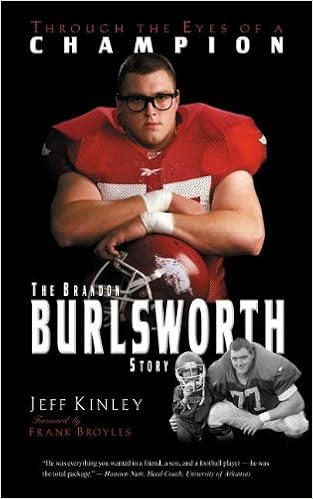
In the third week, I look at the life of Brandon Burlsworth in the November 28, 2016 letter and the movie GREATER and the problem of evil which Charles Darwin definitely had a problem with once his daughter died.

On the 4th letter to Dr. Barlow looks at Darwin’s admission that he at times thinks that creation appears to look like the expression of a mind. Francis Schaeffer discusses Darwin’s own words in 1968 sermon at this link.

My Fifth Letter concerning Charles Darwin’s views on MORAL MOTIONS Which was mailed on March 1, 2017. Francis Schaeffer discusses Darwin’s own words concerning moral motions in Schaeffer’s 1968 sermon at this link.

6th letter on May 1, 2017 in which Charles Darwin’s hopes are that someone would find in Pompeii an old manuscript by a distinguished Roman that would show that Christ existed! Francis Schaeffer discusses Darwin’s own words concerning the possible manuscript finds in Schaeffer’s 1968 sermon at this link

7th letter on Darwin discussing DETERMINISM  dated 7-1-17 . Francis Schaeffer discusses Darwin’s own words concerning determinism in Schaeffer’s 1968 sermon at this link.
——

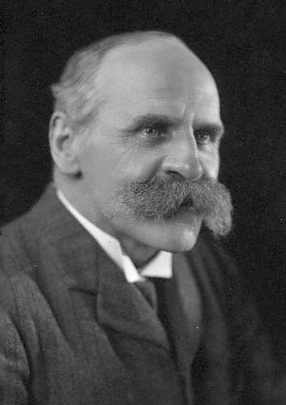
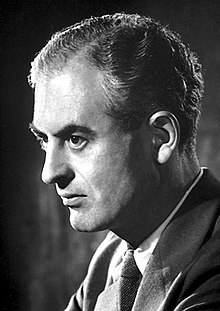
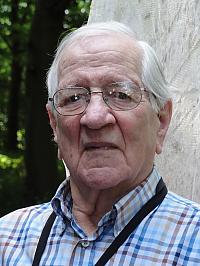
Horace Barlow pictured below:

_____________

On November 21, 2014 I received a letter from Nobel Laureate Harry Kroto and it said:

…Please click on this URL http://vimeo.com/26991975

and you will hear what far smarter people than I have to say on this matter. I agree with them.

Harry Kroto

Image result for harry kroto

__________________________

XXXXXXXxxxxxxx 7th letter on Darwin discussing DETERMINISM  dated 7-1-17 

July 1, 2017

Dr. Horace Barlow, Department of Physiology, Development and Neuroscience, University of Cambridge, Downing Street,Physiological Laboratory, Cambridge  CB2 3EG, United Kingdom,

Dear Dr. Barlow,

In your fine interview with Alan Macfarlane on YOUTUBE were these words:

DID YOUR GRANDMOTHER TALK ABOUT HER GRANDFATHER? DID SHE KNOW HIM WELL?  Hon. Lady Emma Cecilia “Ida” Darwin (née Farrer; 7 November 1854 – 5 July 1946)

Image result for Ida Darwin hoRACE

Ida Darwin

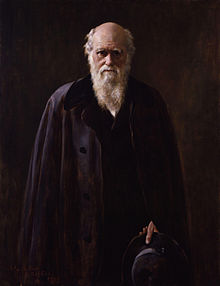
Charles Robert Darwin  (1809 – 1882) had 10 children and 7 of them survived to adulthood.

Sir Horace DarwinKBEFRS (13 May 1851 – 22 September 1928), the fifth son and ninth child of the British naturalist Charles Darwin and his wife Emma, the youngest of their seven children who survived to adulthood.

Emma Nora Barlow, Lady Barlow (née Darwin; 22 December 1885 – 29 May 1989) Nora, as she was known, was the daughter of the civil engineer Sir Horace Darwin and his wife The Hon. Lady Ida Darwin (née Farrer),

Horace Basil Barlow FRS (1921-) Barlow is the son of the civil servant Sir Alan Barlow and his wife Lady Nora (née Darwin). Barlow is the great-grandson of Charles Darwin

____________

“My mother was very enthusiastic about her grandfather and in those days thought he was rather under-rated, though by the time she died she realized that public opinion had risen almost to the point of matching her own and she thought that [Charles Darwin] was perhaps overrated.”

Just like your mother, I too think that Darwin is not thought of highly enough by some people and he is too esteemed by others. I do respect him to laying his most inner thoughts out there for all to see in the letters he wrote to his friends. One thought he had was on the issue of DETERMINISM, and I read it in the book  Charles Darwin: his life told in an autobiographical chapter, and in a selected series of his published letters.  

In that book he made the statement that MAN MUST DO HIS DUTY, and it is in light of DETERMINISM that had reared its ugly head.

In this letter  I am going to quote some of Charles Darwin’s own words and then include the comments of Francis Schaeffer on those words.

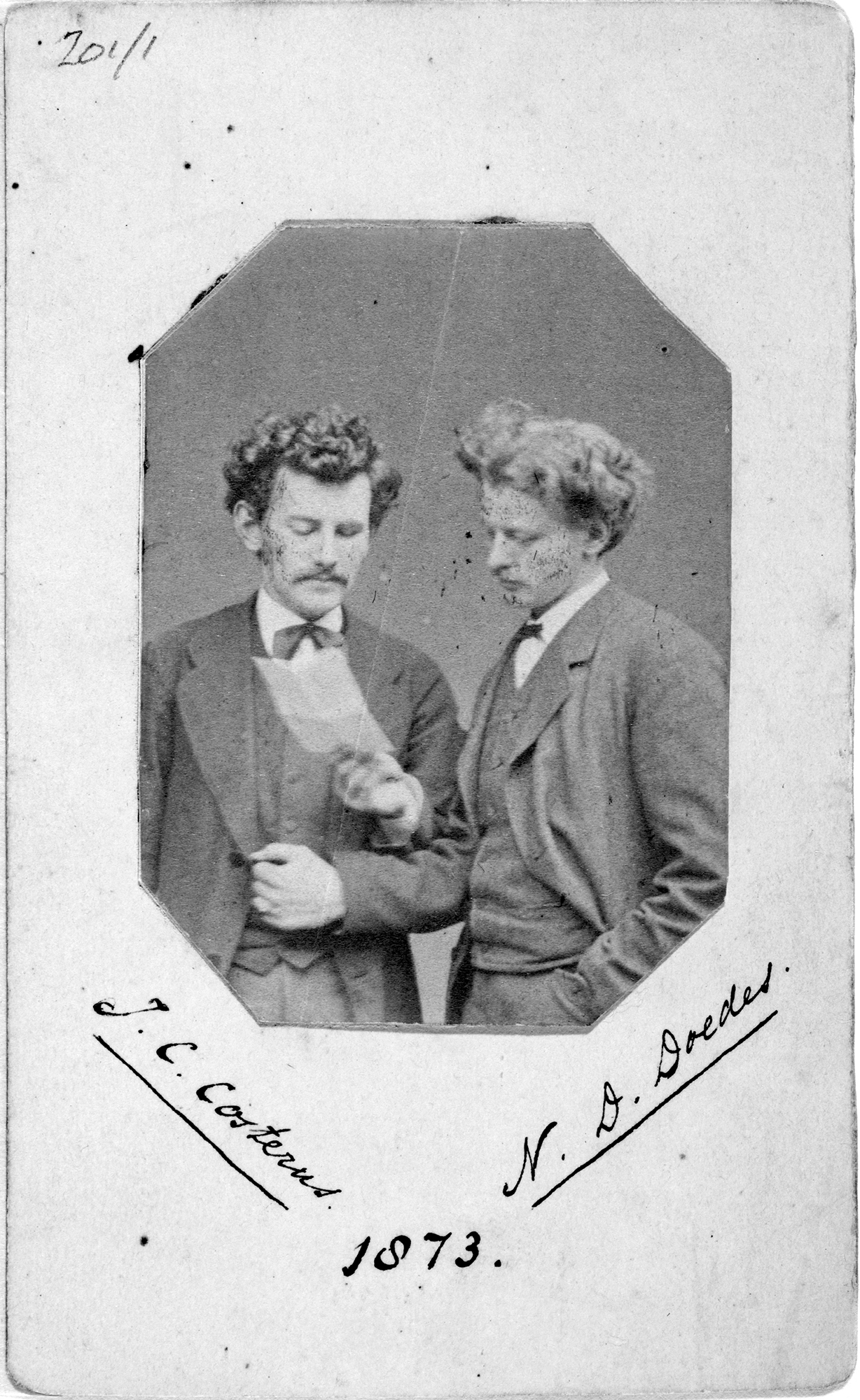
Darwin, C. R. to Doedes, N. D.2 Apr 1873

I am sure you will excuse my writing at length, when I tell you that I have long been much out of health, and am now staying away from my home for rest.It is impossible to answer your question briefly; and I am not sure that I could do so, even if I wrote at some length. But I may say that the impossibility of conceiving that this grand and wondrous universe, with our conscious selves, arose through chance, seems to me the chief argument for the existence of God; but whether this is an argument of real value, I have never been able to decide…….Nor can I overlook the difficulty from the immense amount of suffering through the world. I am, also, induced to defer to a certain extent to the judgment of the many able men who have fully believed in God; but here again I see how poor an argument this is. The safest conclusion seems to me that the whole subject is beyond the scope of man’s intellect;but man can do his duty.”

Francis Schaeffer commented:

What he is saying is that at this point I have no answer. You find Darwin already in a modern hell. On his own position ruling out an answer but yet not being able to live without an answer.  What he (Darwin) is saying is that at this point I have no answer, but the interesting thing is he puts a semicolon after that and then says, “but man can do his duty.” Darwin understands, he is a brilliant man,  what he has said undercuts all duty and all morals. So he adds as a faith sentence, “but man can do his duty.” It doesn’t fit really, but he adds it because he sees that he must say this because otherwise what happens to man? You can switch on further down the road and Darwin would be appalled to see where his own position has been taken, through Freud and Deterministic psychology. Modern Man has a dilemma because the word “duty” doesn’t have a meaning anymore. (Determinism: The doctrine that human action is not free, but results from such causes as psychological and chemical makeup which render free-will an illusion.)

You will remember the thing I have quoted to you about Richard Speck and the psychologists who would stand in the evolutionary stream of Freud. Let me read to you from Newsweek September 25, 1967, a review of the book by Marvin Ziporyn BORN TO RAISE HELL interestingly enough printed by Groth Press, which is this psychologist’s analysis of Richard Speck in Chicago who killed these nurses in Chicago. It runs like this:

Ziporyn who lost his post at Chicago for publishing his work with Speck, diagnosed his patient as a man unable to control himself as a result of his own medical and emotional past. You weren’t any more responsible for what you did than a man is responsible for sneezing. he said to Speck at one point.  That is Zoporyn’s biggest problem which is convincing Speck there is no difference in a sneeze and eight murders. Ziporyn admits he is a strict determinist and he is an adherent to Freud’s dictum that biology is destiny. He advocates rehabilitation. Determinists strive to change or regulate conditions rather than men but to avoid such tragedies as Richard Speck the scope of change it requires staggers the imagination.

The bigger dilemma is that man disappears. Who is hurt? The eight nurses are hurt, including their pain, terror and their sexual violation and it becomes nothing, zero in this type of analysis. Society has a terrible problem because there is no right and wrong in society, and that will deal with Darwin’s words “but man can do his duty” because those who take Darwin’s theory and extend it have eradicated the possibility of the word “duty.” …Darwin I think senses this but he doesn’t know how to handle it.

Richard Speck

Ladies Richard Speck murdered below:

__

In Chapter 7, “THE MAN WITHOUT THE BIBLE,” of the book DEATH IN THE CITY, Schaeffer writes concerning Richard Speck and “Determinism”: 

This view raises three serious questions. First of all, what about the nurses who were killed, some of them in a very violent fashion? These must then be written off. With this kind of explanation they become zero. Second, what about society? Society and the problems of ordering it also are written off. In such a situation, order in society is merely like a big machine dealing on a machine level with little machines. Third, what about Speck himself? The psychologist’s explanation does the most harm to him, for as a man he disappears. He simply becomes a flow of consciousness. He, too, becomes a zero.

In our generation there is a constant tendency to explain sin lightly and think that such an explanation is more humanitarian. But it is not. It decreases the importance and significance of man. Consequently, we can be glad for the sake of man that the Bible’s explanation is so emphatic.
Paul repeats it in verse 25: “They exchanged the truth about God for a lie and worshipped and served the creature [that which has been created] rather than the Creator.” This is the second of the three repetitions.

Paul was thinking of the gods of silver and stone and also the worship of the universe or any part of it. He says men have made such gods rather than worshipping the living God. Even on the basis of what they know themselves to be, they should have known better. Isaiah said 700 years before, ‘Aren’t you silly to make gods that are less than yourself. You must carry them; they don’t carry you. Now isn’t it silly to make an integration point that is less than you yourself are.’ Paul used precisely the same argument on Mars Hill. Men who refuse to bow before God take the facts concerning the universe and man, push these facts through their own presuppositional grid, fail to carry their thinking to a reasonable conclusion, and so are faced with an overwhelming lie. Idols of stone are obvious lies because they are less than man, but so are non-Christian presuppositions such as the idea of the total uniformity of natural cause and effect in a closed system, the final explanation of the impersonal plus time plus chance, which ultimately makes man only a machine.

__________________

Below is the larger biblical passage of scripture that Schaeffer was referring to in Chapter 7, “THE MAN WITHOUT THE BIBLE,” of the book DEATH IN THE CITY:

Romans 1:18-32New American Standard Bible (NASB)

Unbelief and Its Consequences

18 For the wrath of God is revealed from heaven against all ungodliness and unrighteousness of men who suppress the truth in unrighteousness, 19 becausethat which is known about God is evident within them; for God made it evident to them. 20 For since the creation of the world His invisible attributes, His eternal power and divine nature, have been clearly seen, being understood through what has been made, so that they are without excuse. 21 For even though they knew God, they did not honor Him as God or give thanks, but they became futile in their speculations, and their foolish heart was darkened.22 Professing to be wise, they became fools, 23 and exchanged the glory of the incorruptible God for an image in the form of corruptible man and of birds and four-footed animals and crawling creatures.

24 Therefore God gave them over in the lusts of their hearts to impurity, so that their bodies would be dishonored among them.25 For they exchanged the truth of God for a lie, and worshiped and served the creature rather than the Creator, who is blessed forever. Amen.

26 For this reason God gave them over to degrading passions; for their women exchanged the natural function for that which is unnatural, 27 and in the same way also the men abandoned the natural function of the woman and burned in their desire toward one another, men with men committing indecent acts and receiving in their own persons the due penalty of their error.

28 And just as they did not see fit to acknowledge God any longer, God gave them over to a depraved mind, to do those things which are not proper,29 being filled with all unrighteousness, wickedness, greed, evil; full of envy, murder, strife, deceit, malice; they are gossips, 30 slanderers, haters of God, insolent, arrogant, boastful, inventors of evil, disobedient to parents, 31 without understanding, untrustworthy, unloving, unmerciful; 32 and although they know the ordinance of God, that those who practice such things are worthy of death, they not only do the same, but also give hearty approval to those who practice them.

_____________________________________

Why is determinism dangerous? Francis Schaeffer in his book HOW SHOULD WE THEN LIVE? tells why it is dangerous:

Modern determinists have not presented only abstract theories.  Rather, there have been two practical results.  First, and most important, as their ideas about what people are have been increasingly accepted, people consciously or unconsciously have opened themselves to being treated as machines and treating other people as machines.  Second, each theory of determinism has carried with it a method of manipulation.  So even though many — even most — people may reject the concept that man is totally a product of psychological, sociological, or chemical conditioning, manipulation by these methods is still very much a live possibility.  In fact, these techniques are all at the disposal of of authoritation states, and they are in some degree already being used.

Paul Chopan has rightly noted:

Naturalism takes for granted the following tenets:

  • Nature is all there is.
  • All reality is comprised of or rooted in matter.
  • There is no supernatural—no Creator, no miracles, no souls,
    no angels, no life after death.
  • Science becomes the only (or best) means of knowledge.

__________________

What is the answer to the problem of DETERMINISM? It is found in the Biblical view that the Bible is true and there was a place named THE GARDEN OF EDEN and the fact that God did create this world and it was not created by impersonal chance plus time. 

Francis A. Schaeffer on Human Free WillTHE GOD WHO IS THERE, (DOWNERS GROVE, IL: INTERVARSITY PRESS, 1968), P 131.

The historic Christian position is that man’s dilemma has a moral cause. God, being nondetermined, created man as a nondetermined person. This is a difficult idea for anyone thinking in twentieth-century terms because most twentieth-century thinking sees man as determined. He is determined either by chemical factors, as the Marquis de Sade held and Francis Crick is trying to prove, or by psychological factors, as Freud and others have suggested, or by sociological factors, such as B.F. Skinner holds. In these cases, or as a result of a fusion of them, man is considered to be programmed. If this is the case, then man is not the tremendous thing the Bible says he is, made in the image of God as a personality who can make a free first choice. Because God created a true universe outside of himself (or as an extension of his essence), there is a true history which exists, man as created in God’s image is therefore a significant man in a significant history, who can choose to obey the commandments of God and love him, or revolt against him.

THE CRUX OF THE ISSUE IS DID MAN HAVE A CHOICE AND IS MAN RESPONSIBLE FOR HIS CHOICES?

REMEMBER THAT GREAT PASSAGE FROM ROMANS CHAPTER ONE THAT I QUOTED EARLIER IN THIS LETTER AND DARWIN’S WORDS IN THE APRIL 2, 1873 LETTER TO  Doedes, N. D.?

Darwin noted, It is impossible to answer your question briefly; and I am not sure that I could do so, even if I wrote at some length. But I may say that the impossibility of conceiving that this grand and wondrous universe, with our conscious selves, arose through chance, seems to me the chief argument for the existence of God; but whether this is an argument of real value, I have never been able to decide……”
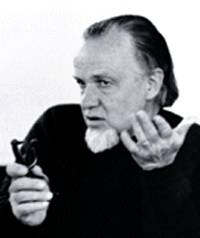
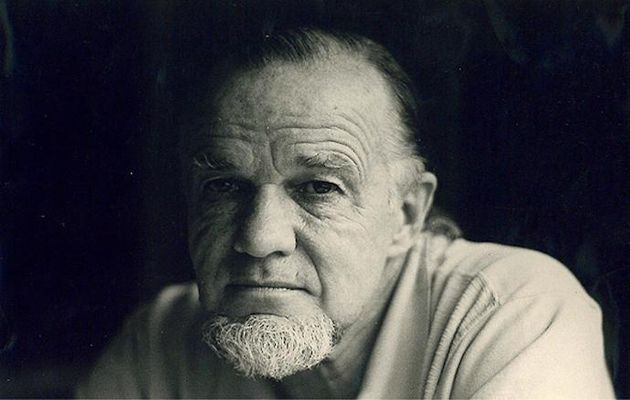
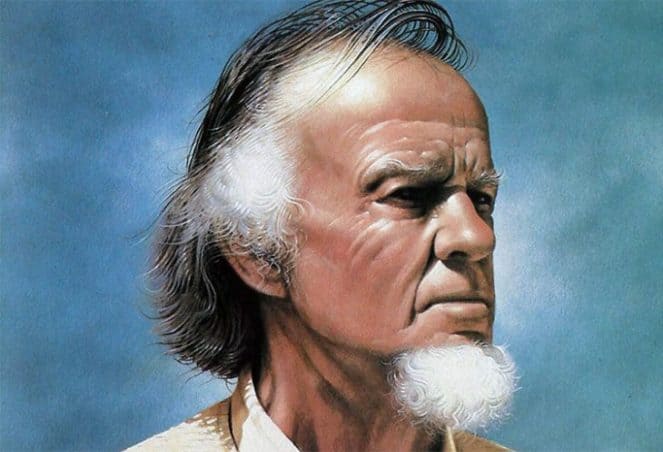
Image result for francis schaeffer

Franicis Schaeffer observed: 

So he sees here exactly the same that I would labor and what Paul gives in Romans chapter one, and that is first this tremendous universe [and it’s form] and the second thing, the mannishness of man and the concept of this arising from chance is very difficult for him to come to accept… You will notice that he divides it into the same exact two points that Paul does in Romans chapter one into and that Carl Gustav Jung (1875-1961) will in the problem of existence, the external universe, and man and his consciousness. Paul points out there are these two steps that man is confronted with, what I would call two things in the real world. The universe and it’s form and I usually quote Jean Paul Sartre here, and Sartre says the basic philosophic problem is that something is there rather than nothing is there and I then I add at the point the very thing that Darwin feels and that is it isn’t a bare universe that is out there, it is an universe in a specific form. I always bring in Einstein and the uniformity of the form of the universe and that it is constructed as a well formulated word puzzle or you have Carl Gustav Jung who says two things cut across a man’s will that he can not truly be autonomous, the external world and what Carl Gustav Jung would call his “collected unconsciousness.” It is the thing that churns up out of man, the mannishness of man. Darwin understood way back here this is a real problem. So he says “the impossibility of conceiving that this grand and wondrous  universe,” part one, the real world, the external universe, and part two “with our conscious selves arose through chance” and then he goes on and says this is not “an argument of real value.” 

Image result for Emma Nora Barlow, Lady Barlow

Francis Schaeffer noted that in Darwin’s 1876 Autobiography that Darwin he is going to set forth two arguments for God in this and again you will find when he comes to the end of this that he is in tremendous tension. Darwin wrote, 

At the present day the most usual argument for the existence of an intelligent God is drawn from the deep inward conviction and feelings which are experienced by most persons.Formerly I was led by feelings such as those just referred to (although I do not think that the religious sentiment was ever strongly developed in me), to the firm conviction of the existence of God and of the immortality of the soul. In my Journal I wrote that whilst standing in the midst of the grandeur of a Brazilian forest, ‘it is not possible to give an adequate idea of the higher feelings of wonder, admiration, and devotion which fill and elevate the mind.’ I well remember my conviction that there is more in man than the mere breath of his body; but now the grandest scenes would not cause any such convictions and feelings to rise in my mind. It may be truly said that I am like a man who has become colour-blind.

Francis Schaeffer remarked:

Now Darwin says when I look back and when I look at nature I came to the conclusion that man can not be just a fly! But now Darwin has moved from being a younger man to an older man and he has allowed his presuppositions to enter in to block his logic. These things at the end of his life he had no intellectual answer for. To block them out in favor of his theory. Remember the letter of his that said he had lost all aesthetic senses when he had got older and he had become a clod himself. Now interesting he says just the same thing, but not in relation to the arts, namely music, pictures, etc, but to nature itself. Darwin said, “But now the grandest scenes would not cause any such convictions  and feelings to rise in my mind. It may be truly said that I am like a man who has become colour-blind…” So now you see that Darwin’s presuppositions have not only robbed him of the beauty of man’s creation in art, but now the universe. He can’t look at it now and see the beauty. The reason he can’t see the beauty is for a very, very , very simple reason: THE BEAUTY DRIVES HIM TO DISTRACTION. THIS IS WHERE MODERN MAN IS AND IT IS HELL. The art is hell because it reminds him of man and how great man is, and where does it fit in his system? It doesn’t. When he looks at nature and it’s beauty he is driven to the same distraction and so consequently you find what has built up inside him is a real death, not  only the beauty of the artistic but the beauty of nature. He has no answer in his logic and he is left in tension.  He dies and has become less than human because these two great things (such as any kind of art and the beauty of  nature) that would make him human  stand against his theory.

________________________

Can you still look at God’s beautiful creation and say that it just appears to be the work of an intellect? If so then you like Darwin  can say, “I am like a man who has become colour-blind.”

_______________________________________

The answer to find meaning in life is found in putting your faith and trust in Jesus Christ. The Bible is true from cover to cover and can be trusted.

Thank you again for your time and I know how busy you are.

Everette Hatcher, everettehatcher@gmail.com, http://www.thedailyhatch.org, cell ph 501-920-5733, Box 23416, LittleRock, AR 72221, United States

XXXXXXXXxxxxx

Tribute for Horace Barlow:

Christopher Longuet-Higgins, Freeman Dyson and James Lighthill, all of whom became prominent scientists, played
an influential role. During his university years there was no shortage of creative minds: his supervisor, the eminent Lord Adrian, and his tutor William Rushton,

as well as Pat Merton and Tommy Gold. These latter three were part of the Ratio Club, a London-based club of about 20 carefully selected young neurobiologists, neurologists, psychologists, engineers, mathematicians and physicists, who periodically met in Queen’s Square to discuss cybernetics, information theory and brain function (see group photo). Cybernetics and information theory were central planks in Horace’s conceptual framework throughout his lifetime.
Horace started his scientific career early, publishing three papers before
he completed his MD: one (in Nature) with Rushton during his Cambridge undergraduate days and two with fellow students at Harvard. His next project, assigned to him by Adrian, was to investigate the proposal of Marshall and Talbot that small scanning eye- movements serve a fundamental role in vision. Horace devised a novel method for measuring eye position precisely (photographing a small spot of mercury placed on the cornea) and found that, between rapid gaze shifts, the eyes were essentially still. He concluded
that the fixations rather than scanning
eye-movements were fundamental
to vision, dismissed Marshall and Talbot’s idea and moved on. However, the importance of the dynamics
of perception, including ‘temporal interpolation’ of moving stimuli, remained central to his thinking, emerging clearly in his Ferrier lecture in 1980.
Adrian’s supervision style was quite liberal, in the Cambridge tradition, described by Horace as “incisive, but economical, guidance”. Thus, Horace was free to pursue his own scientific curiosities, such as how neurons integrate information. He observed that Sherrington’s classic preparations used artificial stimuli, electric shocks applied to spinal roots, whereas applying light to the retina allows for behaviourally relevant natural stimuli. He developed a preparation for recording spikes from single ganglion cells in frog retina —
no mean feat at the time — to study
the most basic element of integration, signal summation. Inspired by Rushton, Horace took a quantitative approach and, by measuring thresholds as a function of stimulus area, discovered that integration was not uniform over the receptive field but that there were clear inhibitory surrounds forming separate ‘on’ and ‘off’ regions. More surprisingly, one type of ganglion cell could be a feature detector whose spike discharge anticipates the future position of a fly.
This study initiated 30 years of ground-breaking collaborative work on retinal ganglion cells. Horace joined Stephen Kuffler, who had independently described the inhibitory surround in cat retina. Together with Fitzgerald, they discovered that ganglion cells adapt their receptive fields to cover the full range of light levels, switching from cones to rods at low light levels and losing the inhibitory surround. In 1963, Horace and Richard Hill discovered motion-sensitive cells in rabbit retina. Working with the most exacting of retinal physiologists, Bill Levick, Horace revealed further hidden complexities in retinal processing: a motion-sensitive ganglion cell is driven by an array of subunits. Then, in classic experiments, they established the first physiologically informed model of the underlying mechanism: the Barlow and Levick model of elementary motion detection.
In 1964, Horace accepted a professorship at the Berkeley School of Optometry, where he continued
Magazine
his neurophysiological experiments, investigating integration by neurons in primary visual cortex (V1). One particularly influential study was conducted with former student Colin Blakemore (in Berkeley on a Harkness Fellowship) and the enthusiastic
and charismatic young Australian
Jack Pettigrew. Following leads from Jack’s undergraduate work in Sydney, they demonstrated that cells in cat primary visual cortex were selective
to binocular disparity, the signals that support binocular depth perception. This was important and unexpected, as stereoscopic depth was thought to be a high-level perceptual property emerging late in processing. However, the
results meshed well with Béla Julesz’s demonstrations in the early 1960s of ‘random-dot stereograms’, showing that depth can emerge from point-by- point disparities in otherwise random patterns. The discovery reinforced Horace’s conviction that single sensory neurons coded meaningful information.
His work on retinal and cortical neurons brought home to Horace the fundamental realisation that physiological experiments could answer questions of psychological interest. Much of the sensory apparatus for complex behavioural patterns (like detecting and catching flies) may lie in the retina rather than ‘mysterious centres’ too difficult to study by physiological means. Furthermore, the lateral inhibition mechanism that he discovered in frog retina had been postulated by Ernst Mach and others to account for perceptual phenomena, such as simultaneous contrast and Mach Bands. This line of thought culminated in ‘A neural doctrine for perceptual psychology’, published in the fledgling journal Perception in 1972. The provocative formulation of ‘dogmas’ stimulated much important debate, theorising and experimental work,
and the central idea of that paper, that perception corresponds to the activity of specific cells, has been hugely influential to physiologists and psychologists
alike. Indeed, Horace’s doctrine is still relevant, as it goes far beyond ‘lock
and key’ feature detectors. His doctrine incorporates the concepts of statistical inference, efficiency and redundancy that he formulated earlier in his career and suggests the far-reaching idea that he subsequently pursued: single neurons use synaptic plasticity to capture the redundancy that is knowledge.

There are 3 videos in this series and they have statements by 150 academics and scientists and I hope to respond to all of them. Wikipedia notes Horace Basil Barlow FRS was a British visual neuroscientist.

Barlow was the son of the civil servant Sir Alan Barlow and his wife Lady Nora (née Darwin), and thus the great-grandson of Charles Darwin (see Darwin — Wedgwood family). He earned an M.D. at Harvard University in 1946.

In 1953 Barlow discovered that the frog brain has neurons which fire in response to specific visual stimuli. This was a precursor to the work of Hubel and Wiesel on visual receptive fields in the visual cortex. He has made a long study of visual inhibition, the process whereby a neuron firing in response to one group of retinal cells can inhibit the firing of another neuron; this allows perception of relative contrast.

In 1961 Barlow wrote a seminal article where he asked what the computational aims of the visual system are. He concluded that one of the main aims of visual processing is the reduction of redundancy. While the brightnesses of neighbouring points in images are usually very similar, the retina reduces this redundancy. His work thus was central to the field of statistics of natural scenes that relates the statistics of images of real world scenes to the properties of the nervous system.

Barlow and his co-workers also did substantial work in the field of factorial codes. The goal was to encode images with statistically redundant components or pixels such that the code components are statistically independent. Such codes are hard to find but highly useful for purposes of image classification etc.

Barlow was a fellow of Trinity College, University of Cambridge. He was elected a Fellow of the Royal Society in 1969 and was awarded their Royal Medal in 1993.[1] He received the 1993 Australia Prize for his research into the mechanisms of visual perception and the 2009 Swartz Prize for Theoretical and Computational Neuroscience from the Society for Neuroscience.

________________

His comments can be found on the 3rd video and the 128th clip in this series. Below the videos you will find his words.

50 Renowned Academics Speaking About God (Part 1)

Another 50 Renowned Academics Speaking About God (Part 2)

A Further 50 Renowned Academics Speaking About God (Part 3)

_______________

Interview of Horace Barlow – part 1

Published on Jun 18, 2014

Interviewed and filmed by Alan Macfarlane on 5 March 2012

______________________

Interview of Horace Barlow – part 2

Horace Barlow’s quote taken from interview with Alan Macfarlane:

HAS RELIGION EVER BEEN IMPORTANT TO YOU? IS IT IMPORTANT TO YOU? No, it is not important to me. Saying you don’t believe in God is a very foolish thing to say as it doesn’t explain why so many people talk about it, there has got to be more to it than that; also I think one has to respect what some godly people say and some of the things they do; I wish one could make more sense of it but I don’t think the godly people have done a very good job; I was never baptized or confirmed so have never been a practitioner, and I don’t miss it; DO YOU THINK THAT SCIENCE HAS DIS-PROVEN RELIGION AS DAWKINS ARGUES? I think it [science] provides some hope of acting rationally to handle the social and political problems we have to deal with on a personal level and one a worldwide level. Religion is a way of perpetuating a way of thought that might have otherwise been lost, and I imagine that is fine.   

Dr. Barlow’s only three solid claims in this response to Alan Macfarlane is that science is #1 the best help today with our social problems,(which is in the original clip), #2 Saying you don’t believe in God (position of atheism) is foolish, and #3 we need an explanation for why so many people talk about [God.]

My response to #1 is to look at how the secular humanists have messed up so many things in the past and I include Barlow’s personal family friend Margaret Mead in that. My responses to #2 and #3 were both covered in my earlier response to Roald Hoffmann

(Roald Hoffmann is a Nobel Prize winner who I have had the honor of corresponding with in the past. Pictured below)

Image result for Roald Hoffmann.

(This July 1933 photo shows [left to right] anthropologist Gregory Bateson with Margaret Mead)

Image result for margaret mead husband

Horace Barlow’s words  from interview conducted by Alan Macfarlane:

I don’t ever remember going to Bateson’s house in Granchester as a child; William Bateson’s wife was a friend of my mother’s; when Gregory Bateson was out in Bali he met Margaret Mead; Beatrice Bateson, his mother, felt she was too old to go out and inspect her so she sent my mother instead; she flew off in an Imperial Airlines plane and we saw her off from Hendon; that must have been 1937-8; my mother got on very well with Margaret Mead – she was not altogether convinced by her, but very impressed by her breadth of knowledge and energy; she came and stayed with us many times; I was even more sceptical than my mother and thought she was a very impressive person; Gregory was born 1904 and my mother, in 1886, so there was quite a big age difference between them; I never got on close intellectual terms with Gregory even though we were to some extent interested in the same sort of thing, both in cybernetics and psychology, and his ideas were always interesting; however, my model of a scientist was taken from my mother and not from Gregory; my mother was interested in genetics and the paper for which she was famous was on the reproductive system in plants like cowslips; my mother reasoned like a scientist whereas Gregory was a guru – he liked to think things out for himself; he obviously influenced many others too; I saw him once or twice when I went to Berkeley

Postscript:

I was sad to see that Jon Stewart is stepping down from the DAILY SHOW so I wanted to include one of the best clips I have ever seen on his show and it is a short debate between the brilliant scientists  Edward J. Larson (an evolutionist), William A. Dembski (an Intelligent Design Proponent), and then he threw in a nutball in for laughs,  Ellie Crystal (a metaphysical theorist). Dembski gives several great examples of design and it reminded me of many of the words of Darwin show above in my letter to Horace Barlow.

William Dembski on The Jon Stewart Show

Uploaded on Nov 15, 2010

Wednesday September 14, 2005 – Jon Stewart’s “Evolution, Schmevolution” segment with panelists Edward J. Larson (an evolutionist), William A. Dembski (an Intelligent Design Proponent), and Ellie Crystal (a metaphysical theorist).

—-

—-

Related posts:

Taking on Ark Times Bloggers on various issues Part F “Carl Sagan’s views on how God should try and contact us” includes film “The Basis for Human Dignity”

I have gone back and forth and back and forth with many liberals on the Arkansas Times Blog on many issues such as abortion, human rights, welfare, poverty, gun control  and issues dealing with popular culture. Here is another exchange I had with them a while back. My username at the Ark Times Blog is Saline […]

Carl Sagan v. Nancy Pearcey

On March 17, 2013 at our worship service at Fellowship Bible Church, Ben Parkinson who is one of our teaching pastors spoke on Genesis 1. He spoke about an issue that I was very interested in. Ben started the sermon by reading the following scripture: Genesis 1-2:3 English Standard Version (ESV) The Creation of the […]

Review of Carl Sagan book (Part 4 of series on Evolution)

Review of Carl Sagan book (Part 4 of series on Evolution) The Long War against God-Henry Morris, part 5 of 6 Uploaded by FLIPWORLDUPSIDEDOWN3 on Aug 30, 2010 http://www.icr.org/ http://store.icr.org/prodinfo.asp?number=BLOWA2http://store.icr.org/prodinfo.asp?number=BLOWASGhttp://www.fliptheworldupsidedown.com/blog _______________________ I got this from a blogger in April of 2008 concerning candidate Obama’s view on evolution: Q: York County was recently in the news […]

Review of Carl Sagan book (Part 3 of series on Evolution)

Review of Carl Sagan book (Part 3 of series on Evolution) The Long War against God-Henry Morris, part 4 of 6 Uploaded by FLIPWORLDUPSIDEDOWN3 on Aug 30, 2010 http://www.icr.org/ http://store.icr.org/prodinfo.asp?number=BLOWA2http://store.icr.org/prodinfo.asp?number=BLOWASGhttp://www.fliptheworldupsidedown.com/blog______________________________________ I got this from a blogger in April of 2008 concerning candidate Obama’s view on evolution: Q: York County was recently in the news […]

Carl Sagan versus RC Sproul

At the end of this post is a message by RC Sproul in which he discusses Sagan. Over the years I have confronted many atheists. Here is one story below: I really believe Hebrews 4:12 when it asserts: For the word of God is living and active and sharper than any two-edged sword, and piercing as far as the […]

Review of Carl Sagan book (Part 4 of series on Evolution)jh68

Review of Carl Sagan book (Part 4 of series on Evolution) The Long War against God-Henry Morris, part 5 of 6 Uploaded by FLIPWORLDUPSIDEDOWN3 on Aug 30, 2010 http://www.icr.org/ http://store.icr.org/prodinfo.asp?number=BLOWA2http://store.icr.org/prodinfo.asp?number=BLOWASGhttp://www.fliptheworldupsidedown.com/blog _______________________ This is a review I did a few years ago. THE DEMON-HAUNTED WORLD: Science as a Candle in the Dark by Carl […]

Review of Carl Sagan book (Part 3 of series on Evolution)

Review of Carl Sagan book (Part 3 of series on Evolution) The Long War against God-Henry Morris, part 4 of 6 Uploaded by FLIPWORLDUPSIDEDOWN3 on Aug 30, 2010 http://www.icr.org/ http://store.icr.org/prodinfo.asp?number=BLOWA2http://store.icr.org/prodinfo.asp?number=BLOWASGhttp://www.fliptheworldupsidedown.com/blog______________________________________ I was really enjoyed this review of Carl Sagan’s book “Pale Blue Dot.” Carl Sagan’s Pale Blue Dot by Larry Vardiman, Ph.D. […]

Atheists confronted: How I confronted Carl Sagan the year before he died jh47

In today’s news you will read about Kirk Cameron taking on the atheist Stephen Hawking over some recent assertions he made concerning the existence of heaven. Back in December of 1995 I had the opportunity to correspond with Carl Sagan about a year before his untimely death. Sarah Anne Hughes in her article,”Kirk Cameron criticizes […]

My correspondence with George Wald and Antony Flew!!!

FRANCIS SCHAEFFER ANALYZES ART AND CULTURE Part 41 Sarvepalli Radhakrishnan (Featured artist is Marina Abramović)

FRANCIS SCHAEFFER ANALYZES ART AND CULTURE Part 40 Timothy Leary (Featured artist is Margaret Keane)

FRANCIS SCHAEFFER ANALYZES ART AND CULTURE Part 39 Tom Wolfe (Featured artist is Richard Serra)

FRANCIS SCHAEFFER ANALYZES ART AND CULTURE Part 38 Woody Allen and Albert Camus “There is but one truly serious philosophical problem, and that is suicide” (Feature on artist Hamish Fulton Photographer )

FRANCIS SCHAEFFER ANALYZES ART AND CULTURE Part 37 Mahatma Gandhi and “Relieving the Tension in the East” (Feature on artist Luc Tuymans)

FRANCIS SCHAEFFER ANALYZES ART AND CULTURE Part 36 Julian Huxley:”God does not in fact exist, but act as if He does!” (Feature on artist Barry McGee)

FRANCIS SCHAEFFER ANALYZES ART AND CULTURE Part 35 Robert M. Pirsig (Feature on artist Kerry James Marshall)

FRANCIS SCHAEFFER ANALYZES ART AND CULTURE Part 34 Aleksandr Solzhenitsyn (Feature on artist Shahzia Sikander)

FRANCIS SCHAEFFER ANALYZES ART AND CULTURE Part 33 Aldous Huxley (Feature on artist Matthew Barney )

FRANCIS SCHAEFFER ANALYZES ART AND CULTURE Part 32 Steven Weinberg and Woody Allen and “The Meaningless of All Things” (Feature on photographer Martin Karplus )

FRANCIS SCHAEFFER ANALYZES ART AND CULTURE Part 31 David Hume and “How do we know we know?” (Feature on artist William Pope L. )

FRANCIS SCHAEFFER ANALYZES ART AND CULTURE Part 30 Rene Descartes and “How do we know we know?” (Feature on artist Olafur Eliasson)

FRANCIS SCHAEFFER ANALYZES ART AND CULTURE Part 29 W.H. Thorpe and “The Search for an Adequate World-View: A Question of Method” (Feature on artist Jeff Koons)

FRANCIS SCHAEFFER ANALYZES ART AND CULTURE Part 28 Woody Allen and “The Mannishness of Man” (Feature on artist Ryan Gander)

FRANCIS SCHAEFFER ANALYZES ART AND CULTURE Part 27 Jurgen Habermas (Featured artist is Hiroshi Sugimoto)

FRANCIS SCHAEFFER ANALYZES ART AND CULTURE Part 26 Bettina Aptheker (Featured artist is Krzysztof Wodiczko)

FRANCIS SCHAEFFER ANALYZES ART AND CULTURE Part 25 BOB DYLAN (Part C) Francis Schaeffer comments on Bob Dylan’s song “Ballad of a Thin Man” and the disconnect between the young generation of the 60’s and their parents’ generation (Feature on artist Fred Wilson)

FRANCIS SCHAEFFER ANALYZES ART AND CULTURE Part 24 BOB DYLAN (Part B) Francis Schaeffer comments on Bob Dylan’s words from HIGHWAY 61 REVISITED!! (Feature on artist Susan Rothenberg)

FRANCIS SCHAEFFER ANALYZES ART AND CULTURE Part 23 BOB DYLAN (Part A) (Feature on artist Josiah McElheny)Francis Schaeffer on the proper place of rebellion with comments by Bob Dylan and Samuel Rutherford

FRANCIS SCHAEFFER ANALYZES ART AND CULTURE Part 22 “The School of Athens by Raphael” (Feature on the artist Sally Mann)

FRANCIS SCHAEFFER ANALYZES ART AND CULTURE Part 21 William B. Provine (Feature on artist Andrea Zittel)

FRANCIS SCHAEFFER ANALYZES ART AND CULTURE Part 20 Woody Allen and Materialistic Humanism: The World-View of Our Era (Feature on artist Ida Applebroog)

FRANCIS SCHAEFFER ANALYZES ART AND CULTURE Part 19 Movie Director Luis Bunuel (Feature on artist Oliver Herring)

FRANCIS SCHAEFFER ANALYZES ART AND CULTURE Part 18 “Michelangelo’s DAVID is the statement of what humanistic man saw himself as being tomorrow” (Feature on artist Paul McCarthy)

FRANCIS SCHAEFFER ANALYZES ART AND CULTURE Part 17 Francis Schaeffer discusses quotes of Andy Warhol from “The Observer June 12, 1966″ Part C (Feature on artist David Hockney plus many pictures of Warhol with famous friends)

FRANCIS SCHAEFFER ANALYZES ART AND CULTURE Part 16 Francis Schaeffer discusses quotes of Andy Warhol from “The Observer June 12, 1966″ Part B (Feature on artist James Rosenquist plus many pictures of Warhol with famous friends)

FRANCIS SCHAEFFER ANALYZES ART AND CULTURE Part 15 Francis Schaeffer discusses quotes of Andy Warhol from “The Observer June 12, 1966″ Part A (Feature on artist Robert Indiana plus many pictures of Warhol with famous friends)

FRANCIS SCHAEFFER ANALYZES ART AND CULTURE Part 14 David Friedrich Strauss (Feature on artist Roni Horn )

FRANCIS SCHAEFFER ANALYZES ART AND CULTURE Part 13 Jacob Bronowski and Materialistic Humanism: The World-View of Our Era (Feature on artist Ellen Gallagher )

FRANCIS SCHAEFFER ANALYZES ART AND CULTURE Part 12 H.J.Blackham and Materialistic Humanism: The World-View of Our Era (Feature on artist Arturo Herrera)

FRANCIS SCHAEFFER ANALYZES ART AND CULTURE Part 11 Thomas Aquinas and his Effect on Art and HOW SHOULD WE THEN LIVE? Episode 2: THE MIDDLES AGES (Feature on artist Tony Oursler )

FRANCIS SCHAEFFER ANALYZES ART AND CULTURE Part 10 David Douglas Duncan (Feature on artist Georges Rouault )

FRANCIS SCHAEFFER ANALYZES ART AND CULTURE Part 9 Jasper Johns (Feature on artist Cai Guo-Qiang )

FRANCIS SCHAEFFER ANALYZES ART AND CULTURE Part 8 “The Last Year at Marienbad” by Alain Resnais (Feature on artist Richard Tuttle and his return to the faith of his youth)

FRANCIS SCHAEFFER ANALYZES ART AND CULTURE Part 7 Jean Paul Sartre (Feature on artist David Hooker )

FRANCIS SCHAEFFER ANALYZES ART AND CULTURE Part 6 The Adoration of the Lamb by Jan Van Eyck which was saved by MONUMENT MEN IN WW2 (Feature on artist Makoto Fujimura)

FRANCIS SCHAEFFER ANALYZES ART AND CULTURE Part 5 John Cage (Feature on artist Gerhard Richter)

FRANCIS SCHAEFFER ANALYZES ART AND CULTURE Part 4 ( Schaeffer and H.R. Rookmaaker worked together well!!! (Feature on artist Mike Kelley Part B )

FRANCIS SCHAEFFER ANALYZES ART AND CULTURE Part 3 PAUL GAUGUIN’S 3 QUESTIONS: “Where do we come from? What art we? Where are we going? and his conclusion was a suicide attempt” (Feature on artist Mike Kelley Part A)

FRANCIS SCHAEFFER ANALYZES ART AND CULTURE Part 2 “A look at how modern art was born by discussing Monet, Renoir, Pissaro, Sisley, Degas,Cezanne, Van Gogh, Gauguin, Seurat, and Picasso” (Feature on artist Peter Howson)

FRANCIS SCHAEFFER ANALYZES ART AND CULTURE Part 1 HOW SHOULD WE THEN LIVE? “The Roman Age” (Feature on artist Tracey Emin)

_________________

___
RESPONDING TO HARRY KROTO’S BRILLIANT RENOWNED ACADEMICS!! PART 160 Part F (It was my privilege to correspond with Charles Darwin’s grandson, the eminent professor Dr. Horace Barlow, Neuroscience, Cambridge, December 8, 1921-July 5, 2020) 6th letter on May 1, 2017 in which Charles Darwin’s hopes are that someone would find in Pompeii an old manuscript by a distinguished Roman that would show that Christ existed!

________________

I found Dr. Barlow to be a true gentleman and he was very kind to take the time to answer the questions that I submitted to him. In the upcoming months I will take time once a week to pay tribute to his life and reveal our correspondence. In the first week I noted:

 Today I am posting my first letter to him in February of 2015 which discussed Charles Darwin lamenting his loss of aesthetic tastes which he blamed on Darwin’s own dedication to the study of evolution. In a later return letter, Dr. Barlow agreed that Darwin did in fact lose his aesthetic tastes at the end of his life.

In the second week I look at the views of Michael Polanyi and share the comments of Francis Schaeffer concerning Polanyi’s views.

In the third week, I look at the life of Brandon Burlsworth in the November 28, 2016 letter and the movie GREATER and the problem of evil which Charles Darwin definitely had a problem with once his daughter died.

On the 4th letter to Dr. Barlow looks at Darwin’s admission that he at times thinks that creation appears to look like the expression of a mind. Francis Schaeffer discusses Darwin’s own words in 1968 sermon at this link.

My Fifth Letter concerning Charles Darwin’s views on MORAL MOTIONS Which was mailed on March 1, 2017. Francis Schaeffer discusses Darwin’s own words concerning moral motions in Schaeffer’s 1968 sermon at this link.

6th letter on May 1, 2017 in which Charles Darwin’s hopes are that someone would find in Pompeii an old manuscript by a distinguished Roman that would show that Christ existed! Francis Schaeffer discusses Darwin’s own words concerning the possible manuscript finds in Schaeffer’s 1968 sermon at this link.

Horace Barlow pictured below:

_____________

On November 21, 2014 I received a letter from Nobel Laureate Harry Kroto and it said:

…Please click on this URL http://vimeo.com/26991975

and you will hear what far smarter people than I have to say on this matter. I agree with them.

Harry Kroto

Image result for harry kroto

__________________________

Obituary
Horace Barlow (1921–2020)
David Burr1 and Simon Laughlin2
Horace Barlow was one of the truly
great neuroscientists of his time, in the Cambridge tradition of quantitative neurophysiology and psychophysics.
His fundamental theoretical and
empirical contributions to our understanding of brain function have inspired and influenced generations of neurophysiologists, psychologists and computational neuroscientists and are certain to endure for generations to come.
Horace Basil Barlow, FRS, was born in 1921 in Chesham Bois, Buckinghamshire, son of Sir Alan Barlow and Lady Nora Barlow (née Darwin). He was educated at Winchester College and studied medicine during the war years, first at Cambridge and then at Harvard Medical School, which awarded him an MD in 1946. He completed medical training at University College Hospital, London, before commencing research in neurophysiology with E.D. Adrian at the Cambridge Physiology Laboratory. After various positions at Cambridge University, he became Professor of Physiological Optics and Physiology at UC Berkeley. In 1974, he returned to Trinity College and the Cambridge Physiology Department to take the Royal Society Research Chair of Physiology, where he continued to make important contributions to neuroscience well after his formal retirement. Horace was elected a Fellow of the Royal Society in 1969 and won their Royal Medal in 1993. He was awarded the Australia
Prize in the latter year and several others, including the Ferrier Medal in 1980 and the Ken Nakayama Prize from the Vision Sciences Society in 2016.
Many interesting and charismatic people impacted on the young Horace. The first — and arguably most important — was his mother, granddaughter of Charles Darwin. She held no formal degree but worked
as a biologist and later, as Darwin’s biographer, founded scholarly research into his life and achievements. Her example, together with his abilities and preference for maths over the humanities, veered Horace towards science. His contemporaries at Winchester College,

——

XXXXXXXXxxxxxx 6th letter on May 1, 2017 in which Charles Darwin’s hopes are that someone would find in Pompeii an old manuscript by a distinguished Roman that would show that Christ existed!

May 1, 2017

Dr. Horace Barlow, Department of Physiology, Development and Neuroscience, University of Cambridge, Physiological Laboratory,  United Kingdom,

Dear Dr. Barlow,

In Francis Crick’s book the ASTONISHING HYPOTHESIS: THE SCIENTIFIC SEARCH FOR THE SOUL I read these words:

Image result for francis crick

Many educated people, especially in the Western world, also share the belief that the soul is a metaphor and that there is no personal life either before conception or after death. They may call themselves atheists, agnostics, humanists, or just lapsed believers, but they all deny the major claims of the traditional religions. Yet this does not mean that they normally think of themselves in a radically different way. The old habits of thought die hard. A man may, in religious terms, be an unbeliever but psychologically he may continue to think of himself in much the same way as a believer does, at least for everyday matters.

We need, therefore, to state the idea in stronger terms. The scientific belief is that our minds — the behavior of our brains — can be explained by the interactions of nerve cells (and other cells) and the molecules associated with them. (This idea is not novel. An especially clear statement of it can be found in a well-known paper by Horace Barlow.) This is to most people a really surprising concept. It does not come easily to believe that I am the detailed behavior of a set of nerve cells, however many there may be and however intricate their interactions. Try for a moment to imagine this point of view. (“Whatever he may say, Mabel, I know I’m in there somewhere, looking out on the world.”)

Why does the Astonishing Hypothesis seem so surprising? I think there are three main reasons. The first is that many people are reluctant to accept what is often called the “reductionist approach” — that a complex system can be explained by the behavior of its parts and their interactions with each other. For a system with many levels of activity, this process may have to be repeated more than once — that is, the behavior of a particular part may have to be explained by the properties of its parts and their interactions. For example, to understand the brain we may need to know the many interactions of nerve cells with each other; in addition, the behavior of each nerve cell may need explanation in terms of the ions and molecules of which it is composed.

After reading the above passage I concluded that you do endorse the Secular Humanist point of view that Francis Crick embraced and that is the reductionist point of view. I wanted to point out that the vast majority of great scientists of the last 500 years did hold the view that we live in an open system and they did not hold the view of the uniformity of natural causes in a closed system. Recently I read the article ANSWERING THE NEW ATHEISTS, by  KerbyAnderson,  Sunday, January 30 th, 2011, and that article notes:

Image result for kerby anderson

Are science and Christianity at odds with one another? Certainly there have been times in the past when that has been the case. But to only focus on those conflicts is to miss the larger point that modern science grew out of a Christian world view. In a previous radio program based upon the book Origin Science by Dr. Norman Geisler and me, I explain Christianity’s contribution to the rise of modern science.{27}

Image result for Dr. Norman Geisler

Sean McDowell and Jonathan Morrow also point out in their book that most scientific pioneers were theists. This includes such notable as Nicolas Copernicus, Robert Boyle, Isaac Newton, Blaise Pascal, Johannes Kepler, Louis Pasteur, Francis Bacon, and Max Planck. Many of these men actually pursued science because of their belief in the Christian God.

Alister McGrath challenges this idea that science and religion are in conflict with one another. He says, “Once upon a time, back in the second half of the nineteenth century, it was certainly possible to believe that science and religion were permanently at war. . . . This is now seen as a hopelessly outmoded historical stereotype that scholarship has totally discredited.”{28}

.Do religious people have a blind faith? Certainly some religious people exercise blind faith. But is this true of all religions, including Christianity? Of course not. The enormous number of Christian books on topics ranging from apologetics to theology demonstrate that the Christian faith is based upon evidence.

The Christian faith is not a blind faith. It is a faith based upon evidence. In fact, some authors contend that it takes more faith to be an atheist than to believe in God.{7}

What kind of evidence would it take today to convince you  that God exists and the Bible is true? I submit to you that Biblical Archaeology is a field that has advanced tremendously in the last few decades and I propose you look in that area. Did you know that Charles Darwin was looking for evidence that confirmed the Bible’s accuracy back in the 19th century and this is one of the exact areas that he mentioned.

Darwin wrote in his Autobiography in 1876:

“But I was very unwilling to give up my belief; I feel sure of this, for I can well remember often and often inventing day-dreams of old letters between distinguished Romans, and manuscripts being discovered at Pompeii or elsewhere, which confirmed in the most striking manner all that was written in the Gospels.

Image result for francis schaeffer

Francis Schaeffer commented:

This is very sad. He lies on his bunk and the Beagle tosses and turns and he makes daydreams, and his dreams and hopes are that someone would find in Pompeii or some place like this, an old manuscript by a distinguished Roman that would put his stamp of authority on it, which would be able to show that Christ existed. This is undoubtedly what he is talking about. Darwin gave up this hope with great difficulty. I think he didn’t want to come to the position where his accepted presuppositions were driving him. He didn’t want to give it up, just as an older man he understood where it would lead and “man can do his duty.” Instinctively this of brains understood where this whole thing was going to eventually go…

Pompeii

Related image

SINCE CHARLES DARWIN’S DEATH WE NOW HAVE LOTS OF HISTORICAL RECORDS AND MUCH EVIDENCE FROM THE FIELD OF ARCHAEOLOGY THAT SHOW THE BIBLE IS HISTORICALLY ACCURATE.

Just like Darwin you need to ask yourself this same question but you will be doing it almost a century and a half later: Is the Bible historically accurate and have I taken the time to examine the evidence? Obviously Darwin was hoping that archaeology would provide some hope for the accuracy of the Bible. Here are some of the posts I have done in the past on the subject and if you like you could just google these subjects: 1. The Babylonian Chronicleof Nebuchadnezzars Siege of Jerusalem2. Hezekiah’s Siloam Tunnel Inscription. 3. Taylor Prism (Sennacherib Hexagonal Prism)

AFTER ADEQUATE AND SUFFICIENT QUESTIONS OF YOURS BEING ANSWERED THEN YOU CAN BECOME CONVINCED AS SCHAEFFER’S STORY POINTS OUT.

Is your faith in the evidence that supports the theory of evolution comparable to the faith I have in the Word of God being true and God creating the world? Recently I ran across the term “Implicit Faith” and I thought of your view that evolution must be true and we have to be living in a closed system. When I read the book  Charles Darwin: his life told in an autobiographical chapter, and in a selected series of his published letters, I also read  a commentary on it by Francis Schaeffer. I wanted to both  quote some of Charles Darwin’s own words to you and then include the comments of Francis Schaeffer on those words.

The passages which here follow are extracts, somewhat abbreviated, from a part of the Autobiography, written in 1876, in which my father gives the history of his religious views:—

By further reflecting that the clearest evidence would be requisite to make any sane man believe in the miracles by which Christianity is supported,—and that the more we know of the fixed laws of nature the more incredible do miracles become,—that the men at that time were ignorant and credulous to a degree almost incomprehensible by us,”

Francis Schaeffer commented:

 He now says who can accept the miracles? But notice again this is an argument from presuppositions, because what this means is that he has accepted the uniformity of natural causes in a closed system which I say is the basic presupposition  of modern man. So therefore since he has accepted a closed system he assumes there is no miracle, but that doesn’t mean he has any evidence that there were no miracles. It doesn’t mean he  is at ease as a man because he has ruled these things out. Darwin is a man in tension. Does  the uniformity of natural causes in a closed system explain the wonder of the universe and secondly the mannishness of man? He himself feels caught on these two great hooks of the real world. In others I would say, “DARWIN your presuppositions don’t even satisfy you. You rule miracles on the basis of your presuppositions but your belief of the uniformity of natural causes in a closed system does not even satisfy you.” Darwin went to his death unsatisfied and yet  he was forced to give up his own presuppositions but he never gave them up. It seems to me you have the old man Darwin perspiring in his tension that you can only think of Paul’s conclusion in Romans 1, that when men deliberately turn away from the truth that is there, the external universe and the mannishness of man, God gives them up to an unsound mind. If there even was anybody that ever demonstrated this it was Darwin himself  at the end of his life. It is a position that Darwin holds with implicit faith. You must understand what the term IMPLICIT FAITH  means. In the old Roman Catholic Church when someone who became a Roman Catholic they had to promise implicit faith. That meant that you not only had to believe everything that Roman Catholic Church taught then but also everything it would teach in the future. It seems to me this is the kind of faith that these people have in the uniformity of natural causes in a closed system and they have accepted it no matter what it leads them into. 

There was an amazing man by the name of  H.J.Blackham(1903-2009) and he was the former president of the BRITISH HUMANIST ASSOCIATION. Francis Schaeffer and Dr. C. Everett Koop quoted him in their book WHATEVER HAPPENED TO THE HUMAN RACE?

The humanist H. J. Blackham has expressed this with a dramatic illustration:

Image result for H. J. Blackham

On humanist assumptions, life leads to nothing, and every pretense that it does not is a deceit.79

One does not have to be highly educated to understand this. It follows directly from the starting point of the humanists’ position, namely, that everything is just matter. That is, that which has existed forever and ever is only some form of matter or energy, and everything in our world now is this and only this in a more or less complex form.

_______________

To sum up Schaeffer is saying, “If man has been kicked up out of that which is only impersonal by chance , then those things that make him man-hope of purpose and significance, love, motions of morality and rationality, beauty and verbal communication-are ultimately unfulfillable and thus meaningless.” (Francis Schaeffer in THE GOD WHO IS THERE)

IF WE ARE LEFT WITH JUST THE MACHINE THEN WHAT IS THE FINAL CONCLUSION IF THERE WAS NO PERSONAL GOD THAT CREATED US?

The answer to find meaning in life is found in putting your faith and trust in Jesus Christ. The Bible is true from cover to cover and can be trusted.

Thank you again for your time and I know how busy you are.

Everette Hatcher, everettehatcher@gmail.com, http://www.thedailyhatch.org, cell ph 501-920-5733, 13900 cottontail lane, AR United States

XXXXXXXXXXXXX

There are 3 videos in this series and they have statements by 150 academics and scientists and I hope to respond to all of them. Wikipedia notes Horace Basil Barlow FRS was a British visual neuroscientist.

Barlow was the son of the civil servant Sir Alan Barlow and his wife Lady Nora (née Darwin), and thus the great-grandson of Charles Darwin (see Darwin — Wedgwood family). He earned an M.D. at Harvard University in 1946.

In 1953 Barlow discovered that the frog brain has neurons which fire in response to specific visual stimuli. This was a precursor to the work of Hubel and Wiesel on visual receptive fields in the visual cortex. He has made a long study of visual inhibition, the process whereby a neuron firing in response to one group of retinal cells can inhibit the firing of another neuron; this allows perception of relative contrast.

In 1961 Barlow wrote a seminal article where he asked what the computational aims of the visual system are. He concluded that one of the main aims of visual processing is the reduction of redundancy. While the brightnesses of neighbouring points in images are usually very similar, the retina reduces this redundancy. His work thus was central to the field of statistics of natural scenes that relates the statistics of images of real world scenes to the properties of the nervous system.

Barlow and his co-workers also did substantial work in the field of factorial codes. The goal was to encode images with statistically redundant components or pixels such that the code components are statistically independent. Such codes are hard to find but highly useful for purposes of image classification etc.

Barlow was a fellow of Trinity College, University of Cambridge. He was elected a Fellow of the Royal Society in 1969 and was awarded their Royal Medal in 1993.[1] He received the 1993 Australia Prize for his research into the mechanisms of visual perception and the 2009 Swartz Prize for Theoretical and Computational Neuroscience from the Society for Neuroscience.

________________

His comments can be found on the 3rd video and the 128th clip in this series. Below the videos you will find his words.

50 Renowned Academics Speaking About God (Part 1)

Another 50 Renowned Academics Speaking About God (Part 2)

A Further 50 Renowned Academics Speaking About God (Part 3)

_______________

Interview of Horace Barlow – part 1

Published on Jun 18, 2014

Interviewed and filmed by Alan Macfarlane on 5 March 2012

______________________

Interview of Horace Barlow – part 2

Horace Barlow’s quote taken from interview with Alan Macfarlane:

HAS RELIGION EVER BEEN IMPORTANT TO YOU? IS IT IMPORTANT TO YOU? No, it is not important to me. Saying you don’t believe in God is a very foolish thing to say as it doesn’t explain why so many people talk about it, there has got to be more to it than that; also I think one has to respect what some godly people say and some of the things they do; I wish one could make more sense of it but I don’t think the godly people have done a very good job; I was never baptized or confirmed so have never been a practitioner, and I don’t miss it; DO YOU THINK THAT SCIENCE HAS DIS-PROVEN RELIGION AS DAWKINS ARGUES? I think it [science] provides some hope of acting rationally to handle the social and political problems we have to deal with on a personal level and one a worldwide level. Religion is a way of perpetuating a way of thought that might have otherwise been lost, and I imagine that is fine.   

Dr. Barlow’s only three solid claims in this response to Alan Macfarlane is that science is #1 the best help today with our social problems,(which is in the original clip), #2 Saying you don’t believe in God (position of atheism) is foolish, and #3 we need an explanation for why so many people talk about [God.]

My response to #1 is to look at how the secular humanists have messed up so many things in the past and I include Barlow’s personal family friend Margaret Mead in that. My responses to #2 and #3 were both covered in my earlier response to Roald Hoffmann

(Roald Hoffmann is a Nobel Prize winner who I have had the honor of corresponding with in the past. Pictured below)

Image result for Roald Hoffmann.

(This July 1933 photo shows [left to right] anthropologist Gregory Bateson with Margaret Mead)

Image result for margaret mead husband

Horace Barlow’s words  from interview conducted by Alan Macfarlane:

I don’t ever remember going to Bateson’s house in Granchester as a child; William Bateson’s wife was a friend of my mother’s; when Gregory Bateson was out in Bali he met Margaret Mead; Beatrice Bateson, his mother, felt she was too old to go out and inspect her so she sent my mother instead; she flew off in an Imperial Airlines plane and we saw her off from Hendon; that must have been 1937-8; my mother got on very well with Margaret Mead – she was not altogether convinced by her, but very impressed by her breadth of knowledge and energy; she came and stayed with us many times; I was even more sceptical than my mother and thought she was a very impressive person; Gregory was born 1904 and my mother, in 1886, so there was quite a big age difference between them; I never got on close intellectual terms with Gregory even though we were to some extent interested in the same sort of thing, both in cybernetics and psychology, and his ideas were always interesting; however, my model of a scientist was taken from my mother and not from Gregory; my mother was interested in genetics and the paper for which she was famous was on the reproductive system in plants like cowslips; my mother reasoned like a scientist whereas Gregory was a guru – he liked to think things out for himself; he obviously influenced many others too; I saw him once or twice when I went to Berkeley

Postscript:

I was sad to see that Jon Stewart is stepping down from the DAILY SHOW so I wanted to include one of the best clips I have ever seen on his show and it is a short debate between the brilliant scientists  Edward J. Larson (an evolutionist), William A. Dembski (an Intelligent Design Proponent), and then he threw in a nutball in for laughs,  Ellie Crystal (a metaphysical theorist). Dembski gives several great examples of design and it reminded me of many of the words of Darwin show above in my letter to Horace Barlow.

William Dembski on The Jon Stewart Show

Uploaded on Nov 15, 2010

Wednesday September 14, 2005 – Jon Stewart’s “Evolution, Schmevolution” segment with panelists Edward J. Larson (an evolutionist), William A. Dembski (an Intelligent Design Proponent), and Ellie Crystal (a metaphysical theorist).

Related posts:

Taking on Ark Times Bloggers on various issues Part F “Carl Sagan’s views on how God should try and contact us” includes film “The Basis for Human Dignity”

I have gone back and forth and back and forth with many liberals on the Arkansas Times Blog on many issues such as abortion, human rights, welfare, poverty, gun control  and issues dealing with popular culture. Here is another exchange I had with them a while back. My username at the Ark Times Blog is Saline […]

Carl Sagan v. Nancy Pearcey

On March 17, 2013 at our worship service at Fellowship Bible Church, Ben Parkinson who is one of our teaching pastors spoke on Genesis 1. He spoke about an issue that I was very interested in. Ben started the sermon by reading the following scripture: Genesis 1-2:3 English Standard Version (ESV) The Creation of the […]

Review of Carl Sagan book (Part 4 of series on Evolution)

Review of Carl Sagan book (Part 4 of series on Evolution) The Long War against God-Henry Morris, part 5 of 6 Uploaded by FLIPWORLDUPSIDEDOWN3 on Aug 30, 2010 http://www.icr.org/ http://store.icr.org/prodinfo.asp?number=BLOWA2http://store.icr.org/prodinfo.asp?number=BLOWASGhttp://www.fliptheworldupsidedown.com/blog _______________________ I got this from a blogger in April of 2008 concerning candidate Obama’s view on evolution: Q: York County was recently in the news […]

Review of Carl Sagan book (Part 3 of series on Evolution)

Review of Carl Sagan book (Part 3 of series on Evolution) The Long War against God-Henry Morris, part 4 of 6 Uploaded by FLIPWORLDUPSIDEDOWN3 on Aug 30, 2010 http://www.icr.org/ http://store.icr.org/prodinfo.asp?number=BLOWA2http://store.icr.org/prodinfo.asp?number=BLOWASGhttp://www.fliptheworldupsidedown.com/blog______________________________________ I got this from a blogger in April of 2008 concerning candidate Obama’s view on evolution: Q: York County was recently in the news […]

Carl Sagan versus RC Sproul

At the end of this post is a message by RC Sproul in which he discusses Sagan. Over the years I have confronted many atheists. Here is one story below: I really believe Hebrews 4:12 when it asserts: For the word of God is living and active and sharper than any two-edged sword, and piercing as far as the […]

Review of Carl Sagan book (Part 4 of series on Evolution)jh68

Review of Carl Sagan book (Part 4 of series on Evolution) The Long War against God-Henry Morris, part 5 of 6 Uploaded by FLIPWORLDUPSIDEDOWN3 on Aug 30, 2010 http://www.icr.org/ http://store.icr.org/prodinfo.asp?number=BLOWA2http://store.icr.org/prodinfo.asp?number=BLOWASGhttp://www.fliptheworldupsidedown.com/blog _______________________ This is a review I did a few years ago. THE DEMON-HAUNTED WORLD: Science as a Candle in the Dark by Carl […]

Review of Carl Sagan book (Part 3 of series on Evolution)

Review of Carl Sagan book (Part 3 of series on Evolution) The Long War against God-Henry Morris, part 4 of 6 Uploaded by FLIPWORLDUPSIDEDOWN3 on Aug 30, 2010 http://www.icr.org/ http://store.icr.org/prodinfo.asp?number=BLOWA2http://store.icr.org/prodinfo.asp?number=BLOWASGhttp://www.fliptheworldupsidedown.com/blog______________________________________ I was really enjoyed this review of Carl Sagan’s book “Pale Blue Dot.” Carl Sagan’s Pale Blue Dot by Larry Vardiman, Ph.D. […]

Atheists confronted: How I confronted Carl Sagan the year before he died jh47

In today’s news you will read about Kirk Cameron taking on the atheist Stephen Hawking over some recent assertions he made concerning the existence of heaven. Back in December of 1995 I had the opportunity to correspond with Carl Sagan about a year before his untimely death. Sarah Anne Hughes in her article,”Kirk Cameron criticizes […]

My correspondence with George Wald and Antony Flew!!!

FRANCIS SCHAEFFER ANALYZES ART AND CULTURE Part 41 Sarvepalli Radhakrishnan (Featured artist is Marina Abramović)

FRANCIS SCHAEFFER ANALYZES ART AND CULTURE Part 40 Timothy Leary (Featured artist is Margaret Keane)

FRANCIS SCHAEFFER ANALYZES ART AND CULTURE Part 39 Tom Wolfe (Featured artist is Richard Serra)

FRANCIS SCHAEFFER ANALYZES ART AND CULTURE Part 38 Woody Allen and Albert Camus “There is but one truly serious philosophical problem, and that is suicide” (Feature on artist Hamish Fulton Photographer )

FRANCIS SCHAEFFER ANALYZES ART AND CULTURE Part 37 Mahatma Gandhi and “Relieving the Tension in the East” (Feature on artist Luc Tuymans)

FRANCIS SCHAEFFER ANALYZES ART AND CULTURE Part 36 Julian Huxley:”God does not in fact exist, but act as if He does!” (Feature on artist Barry McGee)

FRANCIS SCHAEFFER ANALYZES ART AND CULTURE Part 35 Robert M. Pirsig (Feature on artist Kerry James Marshall)

FRANCIS SCHAEFFER ANALYZES ART AND CULTURE Part 34 Aleksandr Solzhenitsyn (Feature on artist Shahzia Sikander)

FRANCIS SCHAEFFER ANALYZES ART AND CULTURE Part 33 Aldous Huxley (Feature on artist Matthew Barney )

FRANCIS SCHAEFFER ANALYZES ART AND CULTURE Part 32 Steven Weinberg and Woody Allen and “The Meaningless of All Things” (Feature on photographer Martin Karplus )

FRANCIS SCHAEFFER ANALYZES ART AND CULTURE Part 31 David Hume and “How do we know we know?” (Feature on artist William Pope L. )

FRANCIS SCHAEFFER ANALYZES ART AND CULTURE Part 30 Rene Descartes and “How do we know we know?” (Feature on artist Olafur Eliasson)

FRANCIS SCHAEFFER ANALYZES ART AND CULTURE Part 29 W.H. Thorpe and “The Search for an Adequate World-View: A Question of Method” (Feature on artist Jeff Koons)

FRANCIS SCHAEFFER ANALYZES ART AND CULTURE Part 28 Woody Allen and “The Mannishness of Man” (Feature on artist Ryan Gander)

FRANCIS SCHAEFFER ANALYZES ART AND CULTURE Part 27 Jurgen Habermas (Featured artist is Hiroshi Sugimoto)

FRANCIS SCHAEFFER ANALYZES ART AND CULTURE Part 26 Bettina Aptheker (Featured artist is Krzysztof Wodiczko)

FRANCIS SCHAEFFER ANALYZES ART AND CULTURE Part 25 BOB DYLAN (Part C) Francis Schaeffer comments on Bob Dylan’s song “Ballad of a Thin Man” and the disconnect between the young generation of the 60’s and their parents’ generation (Feature on artist Fred Wilson)

FRANCIS SCHAEFFER ANALYZES ART AND CULTURE Part 24 BOB DYLAN (Part B) Francis Schaeffer comments on Bob Dylan’s words from HIGHWAY 61 REVISITED!! (Feature on artist Susan Rothenberg)

FRANCIS SCHAEFFER ANALYZES ART AND CULTURE Part 23 BOB DYLAN (Part A) (Feature on artist Josiah McElheny)Francis Schaeffer on the proper place of rebellion with comments by Bob Dylan and Samuel Rutherford

FRANCIS SCHAEFFER ANALYZES ART AND CULTURE Part 22 “The School of Athens by Raphael” (Feature on the artist Sally Mann)

FRANCIS SCHAEFFER ANALYZES ART AND CULTURE Part 21 William B. Provine (Feature on artist Andrea Zittel)

FRANCIS SCHAEFFER ANALYZES ART AND CULTURE Part 20 Woody Allen and Materialistic Humanism: The World-View of Our Era (Feature on artist Ida Applebroog)

FRANCIS SCHAEFFER ANALYZES ART AND CULTURE Part 19 Movie Director Luis Bunuel (Feature on artist Oliver Herring)

FRANCIS SCHAEFFER ANALYZES ART AND CULTURE Part 18 “Michelangelo’s DAVID is the statement of what humanistic man saw himself as being tomorrow” (Feature on artist Paul McCarthy)

FRANCIS SCHAEFFER ANALYZES ART AND CULTURE Part 17 Francis Schaeffer discusses quotes of Andy Warhol from “The Observer June 12, 1966″ Part C (Feature on artist David Hockney plus many pictures of Warhol with famous friends)

FRANCIS SCHAEFFER ANALYZES ART AND CULTURE Part 16 Francis Schaeffer discusses quotes of Andy Warhol from “The Observer June 12, 1966″ Part B (Feature on artist James Rosenquist plus many pictures of Warhol with famous friends)

FRANCIS SCHAEFFER ANALYZES ART AND CULTURE Part 15 Francis Schaeffer discusses quotes of Andy Warhol from “The Observer June 12, 1966″ Part A (Feature on artist Robert Indiana plus many pictures of Warhol with famous friends)

FRANCIS SCHAEFFER ANALYZES ART AND CULTURE Part 14 David Friedrich Strauss (Feature on artist Roni Horn )

FRANCIS SCHAEFFER ANALYZES ART AND CULTURE Part 13 Jacob Bronowski and Materialistic Humanism: The World-View of Our Era (Feature on artist Ellen Gallagher )

FRANCIS SCHAEFFER ANALYZES ART AND CULTURE Part 12 H.J.Blackham and Materialistic Humanism: The World-View of Our Era (Feature on artist Arturo Herrera)

FRANCIS SCHAEFFER ANALYZES ART AND CULTURE Part 11 Thomas Aquinas and his Effect on Art and HOW SHOULD WE THEN LIVE? Episode 2: THE MIDDLES AGES (Feature on artist Tony Oursler )

FRANCIS SCHAEFFER ANALYZES ART AND CULTURE Part 10 David Douglas Duncan (Feature on artist Georges Rouault )

FRANCIS SCHAEFFER ANALYZES ART AND CULTURE Part 9 Jasper Johns (Feature on artist Cai Guo-Qiang )

FRANCIS SCHAEFFER ANALYZES ART AND CULTURE Part 8 “The Last Year at Marienbad” by Alain Resnais (Feature on artist Richard Tuttle and his return to the faith of his youth)

FRANCIS SCHAEFFER ANALYZES ART AND CULTURE Part 7 Jean Paul Sartre (Feature on artist David Hooker )

FRANCIS SCHAEFFER ANALYZES ART AND CULTURE Part 6 The Adoration of the Lamb by Jan Van Eyck which was saved by MONUMENT MEN IN WW2 (Feature on artist Makoto Fujimura)

FRANCIS SCHAEFFER ANALYZES ART AND CULTURE Part 5 John Cage (Feature on artist Gerhard Richter)

FRANCIS SCHAEFFER ANALYZES ART AND CULTURE Part 4 ( Schaeffer and H.R. Rookmaaker worked together well!!! (Feature on artist Mike Kelley Part B )

FRANCIS SCHAEFFER ANALYZES ART AND CULTURE Part 3 PAUL GAUGUIN’S 3 QUESTIONS: “Where do we come from? What art we? Where are we going? and his conclusion was a suicide attempt” (Feature on artist Mike Kelley Part A)

FRANCIS SCHAEFFER ANALYZES ART AND CULTURE Part 2 “A look at how modern art was born by discussing Monet, Renoir, Pissaro, Sisley, Degas,Cezanne, Van Gogh, Gauguin, Seurat, and Picasso” (Feature on artist Peter Howson)

FRANCIS SCHAEFFER ANALYZES ART AND CULTURE Part 1 HOW SHOULD WE THEN LIVE? “The Roman Age” (Feature on artist Tracey Emin)

_________________

___
RESPONDING TO HARRY KROTO’S BRILLIANT RENOWNED ACADEMICS!! PART 160 Part E (It was my privilege to correspond with Charles Darwin’s grandson, the eminent professor Dr. Horace Barlow, Neuroscience, Cambridge, December 8, 1921-July 5, 2020) My 5th letter concerning Charles Darwin’s on MORAL MOTIONS

________________

I found Dr. Barlow to be a true gentleman and he was very kind to take the time to answer the questions that I submitted to him. In the upcoming months I will take time once a week to pay tribute to his life and reveal our correspondence. In the first week I noted:

 Today I am posting my first letter to him in February of 2015 which discussed Charles Darwin lamenting his loss of aesthetic tastes which he blamed on Darwin’s own dedication to the study of evolution. In a later return letter, Dr. Barlow agreed that Darwin did in fact lose his aesthetic tastes at the end of his life.

In the second week I look at the views of Michael Polanyi and share the comments of Francis Schaeffer concerning Polanyi’s views.

In the third week, I look at the life of Brandon Burlsworth in the November 28, 2016 letter and the movie GREATER and the problem of evil which Charles Darwin definitely had a problem with once his daughter died.

On the 4th letter to Dr. Barlow looks at Darwin’s admission that he at times thinks that creation appears to look like the expression of a mind. Francis Schaeffer discusses Darwin’s own words in 1968 sermon at this link.

My Fifth Letter concerning Charles Darwin’s views on MORAL MOTIONS Which was mailed on March 1, 2017. Francis Schaeffer discusses Darwin’s own words concerning moral motions in Schaeffer’s 1968 sermon at this link.

——

Horace Barlow pictured below:

_____________

On November 21, 2014 I received a letter from Nobel Laureate Harry Kroto and it said:

…Please click on this URL http://vimeo.com/26991975

and you will hear what far smarter people than I have to say on this matter. I agree with them.

Harry Kroto

Image result for harry kroto

__________________________
Tribute for Horace Barlow:

Horace started thinking about signals, noise and perceptual judgements when as an undergraduate he presented a new paper to a discussion group. The landmark study of Hecht, Shlaer and Pirenne demonstrated that the absolute threshold of human vision is limited by noise: quantal fluctuations whose effects can be determined psychophysically
by testing the predictions of statistical models. Horace also discussed the problem of signal and noise in the
Ratio Club (it was one of their chosen topics), especially with his Cambridge colleague Tommy Gold (later Professor of Astronomy at Cornell University). After his experiments on frog retina, Horace revisited Hecht et al. with a penetrating statistical analysis of published data. He found that the number of quantal events required to reach threshold is elevated by the presence of background noise that he attributed to the thermal activation
of visual pigment molecules. This novel conclusion was confirmed a quarter of
a century later by recording from rods. His theoretical findings prompted Horace to consider that “thresholds are efficient statistical judgements of constant fallibility”, and he quickly confirmed
this more general principle with new psychophysical experiments.
Horace’s scientific approach, to try
to understand the principles guiding brain function, was uncommon among physiologists. His 1961 paper on ‘Possible principles underlying the transmission of sensory messages’ (in Sensory Communication, W.D. Keidel, U.O. Keidel, M.E. Wigand and W.A. Rosenblith, eds) opens with, “a wing would be a most mystifying structure
if one did not know that birds flew”. Horace argued that we need first to understand the goals of the system
to avoid being buried in a mass of irrelevant neurophysiological and neuroanatomical details while missing crucial observations. He reasoned
that, because neurons have limited representational capacity, they should economise on impulses by forming efficient representations. According to information theory, this can be achieved by eliminating redundancy using lateral inhibition and adaptation, and because both are observed in retina this must be a goal of early sensory processing. Two decades later, Barlow’s efficient coding hypothesis was validated. This prompted a new round of theory, measurements
The young Horace Barlow (bottom right) in May 1952, together with members and guests of the Ratio Club, outside Peterhouse College, Cambridge: Back row (partly obscured): H. Shipton, J. Bates, W.E. Hick, J. Pringle, D. Sholl, J. Westcott and D. Mackay. Middle row: G. Brindley, T. McLardy. W.R. Ashby, T. Gold and A. Uttley. Front row: A. Turing, G. Sutton, W. Rushton, G. Dawson and H. Barlow.
ll
and experiments, which explained the function of mechanisms in the earlier stages of vision, olfaction and audition. Efficiency and ‘the economy of impulses’ continue to guide our understanding of neural codes at all levels.
Horace’s approach was intrinsically interdisciplinary, a popular buzzword in modern grant writing but less usual in his day. He looked for guiding principles of brain function without undue concern whether his supporting data came from psychophysics or physiology, humans or animals, vertebrates or invertebrates. He was always trying — and usually succeeding — to merge detailed observations into the big picture of brain function, following the example of his famous great-grandfather. He was very much a ‘hands-on’ scientist, in
the Cambridge mould: he never led a large research group nor took on many graduate students. That was not his style. He led by example, and his example
was highly influential. There are very few sensory neuroscientists who would claim not to have been influenced by Horace’s work, one way or the other.
Horace never stopped trying to understand the brain. During his own Festschrift in 1987 he gave the most interesting and original talk of the workshop. Following his major theme
of how the brain maximises efficiency, he advanced a novel explanation for ‘adaptation’ (the fact that cells reduce firing rate after repeated excitation), suggesting that it is a complex phenomenon serving to ‘decorrelate’ sensory input, reducing inherent redundancy to take full advantage of the limited dynamic range of neurons. This changed the way many people thought about adaptation and again led to new lines of research.
The ideas of redundancy and correlated activity of sensory pathways also underlie his highly influential paper on ‘Unsupervised learning’ (Neural Comput. (1989) 1, 295–311). This paper was one of the first to draw attention to the importance of unsupervised learning as opposed to supervised or reinforced learning. Unsupervised learning is about how a nervous system (or indeed artificial intelligence) recognises ‘statistical regularities’, or patterns in its inputs,
and is of fundamental importance
for understanding the cortex. Horace connected old ideas, such as Tolman’s ‘cognitive maps’ and Craik’s ‘working models’, with modern concepts of entropy, concluding that redundancy
in sensory signals provides the knowledge incorporated in those maps. Such knowledge enables unexpected

.

1Professor of Physiological Psychology at the
2 University of Florence, Florence, Italy. Emeritus
Professor of Neurobiology at Cambridge University, Cambridge, UK.
E-mail: dcb492@gmail.com (D.B.); sl104@cam.ac.uk (S.L.

XXXXXXXXXXXXXx Fifth Letter

MORAL MOTIONS CSICOP 2 more letters after this letter, March 1, 2017


March 1, 2017

Dr. Horace Barlow, Department of Physiology, Development and Neuroscience, University of Cambridge, Downing Street,Physiological Laboratory, Cambridge  CB2 3EG, United Kingdom,

Dear Dr. Barlow,

When I read the book  Charles Darwin: his life told in an autobiographical chapter, and in a selected series of his published letters, I also read  a commentary on it by Francis Schaeffer and I wanted to both  quote some of Charles Darwin’s own words to you and then include the comments of Francis Schaeffer on those words. I have also enclosed a CD with two messages from Adrian Rogers and Bill Elliff concerning Darwinism.

Bill Elliff and Adrian Rogers pictured below:

Image result for bill elliff summit church

_

Image result for adrian rogers

The passages which here follow are extracts, somewhat abbreviated, from a part of the Autobiography, written in 1876, in which my father (Charles, this book was put together by Francis Darwin) gives the history of his religious views:—

CHARLES DARWIN’S WORDS:

But now the grandest scenes would not cause any such convictions  and feelings to rise in my mind. It may be truly said that I am like a man who has become colour-blind and the universal belief by men of the existence of redness makes my present loss of perception of not the least value as evidence. This argument would be a valid one if all men of all races had the same inward conviction of the existence of one God; but we know that this is very far from being the case. Therefore I cannot see that such inward convictions and feelings are of any weight as evidence of what really exists. The state of mind which grand scenes formerly excited in me, and which was intimately connected with a belief in God, did not essentially differ from that which is often called the sense of sublimity; and however difficult it may be to explain the genesis of this sense, it can hardly be advanced as an argument for the existence of God, any more than the powerful though vague and similar feelings excited by music.

Image result for francis schaeffer

Francis Schaeffer observed:

You notice that Darwin had already said he had lost his sense of music [appreciation]. However, he brings forth what I think is a false argument. I usually use it in the area of morality. I mention that materialistic anthropologists point out that different people have different moral [systems]  and this is perfectly true, but what the materialist anthropologist can never point out is why man has a sense of moral motion and that is the problem here. Therefore, it is perfectly true that men have different concepts of God and different concepts of moral motion, but Darwin himself is not satisfied in his own position and WHERE DO THEY [MORAL MOTIONS] COME FROM AT ALL? So you are wrestling with the same dilemma here in this reference as you do in the area of all things human. For these men it is not the distinction that raises the problem, but it is the overwhelming factor of the existence of the humanness of man, the mannishness of man. The simple fact is he saw that you are shut up to either God or chance, and he said basically “I don’t see how it could be chance” and at the same time he looks at a mountain or listens to a piece of music it is a testimony that really chance isn’t sufficient enough. So gradually with the sensitivity of his own inborn self conscience he kills it. He deliberately  kills the beauty so it doesn’t argue with his theory. Maybe I am being false to Darwin here. Who can say about Darwin’s subconscious thoughts? It seems to me though this is exactly the case. What you find is a man who can’t stand the argument of the external beauty and the mannishness of man so he just gives it up in this particular place.

_________________

Let make 2 points here. First, the Bible teaches that everyone knows in their heart that God exists because of the beauty of God’s creation and the conscience that God has planted in everyone’s heart (Romans 1).

Second, all humans have moral motions.

 Francis Schaffer in his book THE GOD WHO IS THERE addresses these same issues:

“[in Christianity] there is a sufficient basis for morals. Nobody has ever discovered a way of having real “morals” without a moral absolute. If there is no moral absolute, we are left with hedonism (doing what I like) or some form of the social contract theory (what is best for society as a a hole is right). However, neither of these alternative corresponds to the moral motions that men have. Talk to people long enough and deeply enough, and you will find that they consider some things are really right and something are really wrong. Without absolutes, morals as morals cease to exist, and humanistic mean starting from himself is unable to find the absolute he needs. But because the God of the Bible is there, real morals exist. Within this framework I can say one action is right and another wrong, without talking nonsense.” 117

Now back to my first point, concerning ROMANS CHAPTER ONE. It has been found that when atheists are asked with a polygraph machine if they believe in God and  they so “NO” the polygraph indicates they are lying. Claude Brown actually tested this with over 15,000 job applicants over a long period of time in his trucking line during the 1970’s and most of the 1980’s.   

Romans 1:18-19 (Amplified Bible) ” For God’s wrath and indignation are revealed from heaven against all ungodliness and unrighteousness of men, who in their wickedness REPRESS and HINDER the truth and make it inoperative. For that which is KNOWN about God is EVIDENT to them and MADE PLAIN IN THEIR INNER CONSCIOUSNESS, because God  has SHOWN IT TO THEM,”(emphasis mine). At the 37 minute mark on the CD that I sent you today Adrian Rogers noted, “”There is no such thing anywhere on earth as a true atheist. If a man says he doesn’t believe in God, then he is lying. God has put his moral consciousness into every man’s heart, and a man has to try to kick his conscience to death to say he doesn’t believe in God.”

ROMANS CHAPTER ONE IS RIGHT WHEN IT SAYS THAT GOD PUT THAT CONSCIENCE IN EVERYONE’S HEART THAT BEARS WITNESS THAT HE CREATED THEM FOR A PURPOSE AND THAT IS WHY THE VAST MAJORITY OF PEOPLE IN THE WORLD ARE ATTEMPTING TO SEEK OUT GOD!!!!

I sent you a CD that starts off with the song DUST IN THE WIND by Kerry Livgren of the group KANSAS which was a hit song in 1978 when it rose to #6 on the charts because so many people connected with the message of the song. It included these words, “All we do, crumbles to the ground though we refuse to see, Dust in the Wind, All we are is dust in the wind, Don’t hang on, Nothing lasts forever but the Earth and Sky, It slips away, And all your money won’t another minute buy.”

(Rock group KANSAS playing DUST IN THE WIND in YOUTUBE Video)

Image result for kansas dust in the wind

Kerry Livgren himself said that he wrote the song because he saw where man was without a personal God in the picture. Solomon pointed out in the Book of Ecclesiastes that those who believe that God doesn’t exist must accept three things. FIRST, death is the end and SECOND, chance and time are the only guiding forces in this life.  FINALLY, power reigns in this life and the scales are never balanced. The Christian can  face death and also confront the world knowing that it is not determined by chance and time alone and finally there is a judge who will balance the scales.

(The Visit of the Queen of Sheba to King Solomon’, oil on canvas painting by Edward Poynter, 1890)

Image result for King Solomon

Both Kerry Livgren and the bass player Dave Hope of Kansas became Christians eventually. Kerry Livgrenfirst tried Eastern Religions and Dave Hope had to come out of a heavy drug addiction. I was shocked and elated to see their personal testimony on The 700 Club in 1981 and that same  interview can be seen on You Tube today. Livgren lives in Topeka, Kansas today where he teaches “Diggers,” a Sunday school class at Topeka Bible ChurchDAVE HOPE is the head of Worship, Evangelism and Outreach at Immanuel Anglican Church in Destin, Florida.

(Kerry Livgren and Dave Hope on 700 Club TV Show)

Image result for kerry livgren dave hope

The answer to find meaning in life is found in putting your faith and trust in Jesus Christ. The Bible is true from cover to cover and can be trusted.

Thank you again for your time and I know how busy you are.

Everette Hatcher, everettehatcher@gmail.com, http://www.thedailyhatch.org, cell ph 501-920-5733, 13900 cottontail lane, AR 72002 United States

Is the Bible historically accurate? Here are some of the posts I have done in the past on the subject: 1. The Babylonian Chronicleof Nebuchadnezzars Siege of Jerusalem2. Hezekiah’s Siloam Tunnel Inscription. 3. Taylor Prism (Sennacherib Hexagonal Prism)4. Biblical Cities Attested Archaeologically. 5. The Discovery of the Hittites

XXXXXXXXXXXXX

There are 3 videos in this series and they have statements by 150 academics and scientists and I hope to respond to all of them. Wikipedia notes Horace Basil Barlow FRS was a British visual neuroscientist.

Barlow was the son of the civil servant Sir Alan Barlow and his wife Lady Nora (née Darwin), and thus the great-grandson of Charles Darwin (see Darwin — Wedgwood family). He earned an M.D. at Harvard University in 1946.

In 1953 Barlow discovered that the frog brain has neurons which fire in response to specific visual stimuli. This was a precursor to the work of Hubel and Wiesel on visual receptive fields in the visual cortex. He has made a long study of visual inhibition, the process whereby a neuron firing in response to one group of retinal cells can inhibit the firing of another neuron; this allows perception of relative contrast.

In 1961 Barlow wrote a seminal article where he asked what the computational aims of the visual system are. He concluded that one of the main aims of visual processing is the reduction of redundancy. While the brightnesses of neighbouring points in images are usually very similar, the retina reduces this redundancy. His work thus was central to the field of statistics of natural scenes that relates the statistics of images of real world scenes to the properties of the nervous system.

Barlow and his co-workers also did substantial work in the field of factorial codes. The goal was to encode images with statistically redundant components or pixels such that the code components are statistically independent. Such codes are hard to find but highly useful for purposes of image classification etc.

Barlow was a fellow of Trinity College, University of Cambridge. He was elected a Fellow of the Royal Society in 1969 and was awarded their Royal Medal in 1993.[1] He received the 1993 Australia Prize for his research into the mechanisms of visual perception and the 2009 Swartz Prize for Theoretical and Computational Neuroscience from the Society for Neuroscience.

________________

His comments can be found on the 3rd video and the 128th clip in this series. Below the videos you will find his words.

50 Renowned Academics Speaking About God (Part 1)

Another 50 Renowned Academics Speaking About God (Part 2)

A Further 50 Renowned Academics Speaking About God (Part 3)

_______________

Interview of Horace Barlow – part 1

Published on Jun 18, 2014

Interviewed and filmed by Alan Macfarlane on 5 March 2012

______________________

Interview of Horace Barlow – part 2

Horace Barlow’s quote taken from interview with Alan Macfarlane:

HAS RELIGION EVER BEEN IMPORTANT TO YOU? IS IT IMPORTANT TO YOU? No, it is not important to me. Saying you don’t believe in God is a very foolish thing to say as it doesn’t explain why so many people talk about it, there has got to be more to it than that; also I think one has to respect what some godly people say and some of the things they do; I wish one could make more sense of it but I don’t think the godly people have done a very good job; I was never baptized or confirmed so have never been a practitioner, and I don’t miss it; DO YOU THINK THAT SCIENCE HAS DIS-PROVEN RELIGION AS DAWKINS ARGUES? I think it [science] provides some hope of acting rationally to handle the social and political problems we have to deal with on a personal level and one a worldwide level. Religion is a way of perpetuating a way of thought that might have otherwise been lost, and I imagine that is fine.   

Dr. Barlow’s only three solid claims in this response to Alan Macfarlane is that science is #1 the best help today with our social problems,(which is in the original clip), #2 Saying you don’t believe in God (position of atheism) is foolish, and #3 we need an explanation for why so many people talk about [God.]

My response to #1 is to look at how the secular humanists have messed up so many things in the past and I include Barlow’s personal family friend Margaret Mead in that. My responses to #2 and #3 were both covered in my earlier response to Roald Hoffmann

(Roald Hoffmann is a Nobel Prize winner who I have had the honor of corresponding with in the past. Pictured below)

Image result for Roald Hoffmann.

(This July 1933 photo shows [left to right] anthropologist Gregory Bateson with Margaret Mead)

Image result for margaret mead husband

Horace Barlow’s words  from interview conducted by Alan Macfarlane:

I don’t ever remember going to Bateson’s house in Granchester as a child; William Bateson’s wife was a friend of my mother’s; when Gregory Bateson was out in Bali he met Margaret Mead; Beatrice Bateson, his mother, felt she was too old to go out and inspect her so she sent my mother instead; she flew off in an Imperial Airlines plane and we saw her off from Hendon; that must have been 1937-8; my mother got on very well with Margaret Mead – she was not altogether convinced by her, but very impressed by her breadth of knowledge and energy; she came and stayed with us many times; I was even more sceptical than my mother and thought she was a very impressive person; Gregory was born 1904 and my mother, in 1886, so there was quite a big age difference between them; I never got on close intellectual terms with Gregory even though we were to some extent interested in the same sort of thing, both in cybernetics and psychology, and his ideas were always interesting; however, my model of a scientist was taken from my mother and not from Gregory; my mother was interested in genetics and the paper for which she was famous was on the reproductive system in plants like cowslips; my mother reasoned like a scientist whereas Gregory was a guru – he liked to think things out for himself; he obviously influenced many others too; I saw him once or twice when I went to Berkeley

Postscript:

I was sad to see that Jon Stewart is stepping down from the DAILY SHOW so I wanted to include one of the best clips I have ever seen on his show and it is a short debate between the brilliant scientists  Edward J. Larson (an evolutionist), William A. Dembski (an Intelligent Design Proponent), and then he threw in a nutball in for laughs,  Ellie Crystal (a metaphysical theorist). Dembski gives several great examples of design and it reminded me of many of the words of Darwin show above in my letter to Horace Barlow.

William Dembski on The Jon Stewart Show

Uploaded on Nov 15, 2010

Wednesday September 14, 2005 – Jon Stewart’s “Evolution, Schmevolution” segment with panelists Edward J. Larson (an evolutionist), William A. Dembski (an Intelligent Design Proponent), and Ellie Crystal (a metaphysical theorist).

Related posts:

Taking on Ark Times Bloggers on various issues Part F “Carl Sagan’s views on how God should try and contact us” includes film “The Basis for Human Dignity”

I have gone back and forth and back and forth with many liberals on the Arkansas Times Blog on many issues such as abortion, human rights, welfare, poverty, gun control  and issues dealing with popular culture. Here is another exchange I had with them a while back. My username at the Ark Times Blog is Saline […]

Carl Sagan v. Nancy Pearcey

On March 17, 2013 at our worship service at Fellowship Bible Church, Ben Parkinson who is one of our teaching pastors spoke on Genesis 1. He spoke about an issue that I was very interested in. Ben started the sermon by reading the following scripture: Genesis 1-2:3 English Standard Version (ESV) The Creation of the […]

Review of Carl Sagan book (Part 4 of series on Evolution)

Review of Carl Sagan book (Part 4 of series on Evolution) The Long War against God-Henry Morris, part 5 of 6 Uploaded by FLIPWORLDUPSIDEDOWN3 on Aug 30, 2010 http://www.icr.org/ http://store.icr.org/prodinfo.asp?number=BLOWA2http://store.icr.org/prodinfo.asp?number=BLOWASGhttp://www.fliptheworldupsidedown.com/blog _______________________ I got this from a blogger in April of 2008 concerning candidate Obama’s view on evolution: Q: York County was recently in the news […]

Review of Carl Sagan book (Part 3 of series on Evolution)

Review of Carl Sagan book (Part 3 of series on Evolution) The Long War against God-Henry Morris, part 4 of 6 Uploaded by FLIPWORLDUPSIDEDOWN3 on Aug 30, 2010 http://www.icr.org/ http://store.icr.org/prodinfo.asp?number=BLOWA2http://store.icr.org/prodinfo.asp?number=BLOWASGhttp://www.fliptheworldupsidedown.com/blog______________________________________ I got this from a blogger in April of 2008 concerning candidate Obama’s view on evolution: Q: York County was recently in the news […]

Carl Sagan versus RC Sproul

At the end of this post is a message by RC Sproul in which he discusses Sagan. Over the years I have confronted many atheists. Here is one story below: I really believe Hebrews 4:12 when it asserts: For the word of God is living and active and sharper than any two-edged sword, and piercing as far as the […]

Review of Carl Sagan book (Part 4 of series on Evolution)jh68

Review of Carl Sagan book (Part 4 of series on Evolution) The Long War against God-Henry Morris, part 5 of 6 Uploaded by FLIPWORLDUPSIDEDOWN3 on Aug 30, 2010 http://www.icr.org/ http://store.icr.org/prodinfo.asp?number=BLOWA2http://store.icr.org/prodinfo.asp?number=BLOWASGhttp://www.fliptheworldupsidedown.com/blog _______________________ This is a review I did a few years ago. THE DEMON-HAUNTED WORLD: Science as a Candle in the Dark by Carl […]

Review of Carl Sagan book (Part 3 of series on Evolution)

Review of Carl Sagan book (Part 3 of series on Evolution) The Long War against God-Henry Morris, part 4 of 6 Uploaded by FLIPWORLDUPSIDEDOWN3 on Aug 30, 2010 http://www.icr.org/ http://store.icr.org/prodinfo.asp?number=BLOWA2http://store.icr.org/prodinfo.asp?number=BLOWASGhttp://www.fliptheworldupsidedown.com/blog______________________________________ I was really enjoyed this review of Carl Sagan’s book “Pale Blue Dot.” Carl Sagan’s Pale Blue Dot by Larry Vardiman, Ph.D. […]

Atheists confronted: How I confronted Carl Sagan the year before he died jh47

In today’s news you will read about Kirk Cameron taking on the atheist Stephen Hawking over some recent assertions he made concerning the existence of heaven. Back in December of 1995 I had the opportunity to correspond with Carl Sagan about a year before his untimely death. Sarah Anne Hughes in her article,”Kirk Cameron criticizes […]

My correspondence with George Wald and Antony Flew!!!

FRANCIS SCHAEFFER ANALYZES ART AND CULTURE Part 41 Sarvepalli Radhakrishnan (Featured artist is Marina Abramović)


FRANCIS SCHAEFFER ANALYZES ART AND CULTURE Part 40 Timothy Leary (Featured artist is Margaret Keane)


FRANCIS SCHAEFFER ANALYZES ART AND CULTURE Part 39 Tom Wolfe (Featured artist is Richard Serra)


FRANCIS SCHAEFFER ANALYZES ART AND CULTURE Part 38 Woody Allen and Albert Camus “There is but one truly serious philosophical problem, and that is suicide” (Feature on artist Hamish Fulton Photographer )


FRANCIS SCHAEFFER ANALYZES ART AND CULTURE Part 37 Mahatma Gandhi and “Relieving the Tension in the East” (Feature on artist Luc Tuymans)


FRANCIS SCHAEFFER ANALYZES ART AND CULTURE Part 36 Julian Huxley:”God does not in fact exist, but act as if He does!” (Feature on artist Barry McGee)


FRANCIS SCHAEFFER ANALYZES ART AND CULTURE Part 35 Robert M. Pirsig (Feature on artist Kerry James Marshall)

FRANCIS SCHAEFFER ANALYZES ART AND CULTURE Part 34 Aleksandr Solzhenitsyn (Feature on artist Shahzia Sikander)


FRANCIS SCHAEFFER ANALYZES ART AND CULTURE Part 33 Aldous Huxley (Feature on artist Matthew Barney )


FRANCIS SCHAEFFER ANALYZES ART AND CULTURE Part 32 Steven Weinberg and Woody Allen and “The Meaningless of All Things” (Feature on photographer Martin Karplus )


FRANCIS SCHAEFFER ANALYZES ART AND CULTURE Part 31 David Hume and “How do we know we know?” (Feature on artist William Pope L. )


FRANCIS SCHAEFFER ANALYZES ART AND CULTURE Part 30 Rene Descartes and “How do we know we know?” (Feature on artist Olafur Eliasson)


FRANCIS SCHAEFFER ANALYZES ART AND CULTURE Part 29 W.H. Thorpe and “The Search for an Adequate World-View: A Question of Method” (Feature on artist Jeff Koons)


FRANCIS SCHAEFFER ANALYZES ART AND CULTURE Part 28 Woody Allen and “The Mannishness of Man” (Feature on artist Ryan Gander)


FRANCIS SCHAEFFER ANALYZES ART AND CULTURE Part 27 Jurgen Habermas (Featured artist is Hiroshi Sugimoto)


FRANCIS SCHAEFFER ANALYZES ART AND CULTURE Part 26 Bettina Aptheker (Featured artist is Krzysztof Wodiczko)


FRANCIS SCHAEFFER ANALYZES ART AND CULTURE Part 25 BOB DYLAN (Part C) Francis Schaeffer comments on Bob Dylan’s song “Ballad of a Thin Man” and the disconnect between the young generation of the 60’s and their parents’ generation (Feature on artist Fred Wilson)


FRANCIS SCHAEFFER ANALYZES ART AND CULTURE Part 24 BOB DYLAN (Part B) Francis Schaeffer comments on Bob Dylan’s words from HIGHWAY 61 REVISITED!! (Feature on artist Susan Rothenberg)


FRANCIS SCHAEFFER ANALYZES ART AND CULTURE Part 23 BOB DYLAN (Part A) (Feature on artist Josiah McElheny)Francis Schaeffer on the proper place of rebellion with comments by Bob Dylan and Samuel Rutherford


FRANCIS SCHAEFFER ANALYZES ART AND CULTURE Part 22 “The School of Athens by Raphael” (Feature on the artist Sally Mann)


FRANCIS SCHAEFFER ANALYZES ART AND CULTURE Part 21 William B. Provine (Feature on artist Andrea Zittel)


FRANCIS SCHAEFFER ANALYZES ART AND CULTURE Part 20 Woody Allen and Materialistic Humanism: The World-View of Our Era (Feature on artist Ida Applebroog)


FRANCIS SCHAEFFER ANALYZES ART AND CULTURE Part 19 Movie Director Luis Bunuel (Feature on artist Oliver Herring)


FRANCIS SCHAEFFER ANALYZES ART AND CULTURE Part 18 “Michelangelo’s DAVID is the statement of what humanistic man saw himself as being tomorrow” (Feature on artist Paul McCarthy)

FRANCIS SCHAEFFER ANALYZES ART AND CULTURE Part 17 Francis Schaeffer discusses quotes of Andy Warhol from “The Observer June 12, 1966″ Part C (Feature on artist David Hockney plus many pictures of Warhol with famous friends)


FRANCIS SCHAEFFER ANALYZES ART AND CULTURE Part 16 Francis Schaeffer discusses quotes of Andy Warhol from “The Observer June 12, 1966″ Part B (Feature on artist James Rosenquist plus many pictures of Warhol with famous friends)


FRANCIS SCHAEFFER ANALYZES ART AND CULTURE Part 15 Francis Schaeffer discusses quotes of Andy Warhol from “The Observer June 12, 1966″ Part A (Feature on artist Robert Indiana plus many pictures of Warhol with famous friends)


FRANCIS SCHAEFFER ANALYZES ART AND CULTURE Part 14 David Friedrich Strauss (Feature on artist Roni Horn )


FRANCIS SCHAEFFER ANALYZES ART AND CULTURE Part 13 Jacob Bronowski and Materialistic Humanism: The World-View of Our Era (Feature on artist Ellen Gallagher )


FRANCIS SCHAEFFER ANALYZES ART AND CULTURE Part 12 H.J.Blackham and Materialistic Humanism: The World-View of Our Era (Feature on artist Arturo Herrera)


FRANCIS SCHAEFFER ANALYZES ART AND CULTURE Part 11 Thomas Aquinas and his Effect on Art and HOW SHOULD WE THEN LIVE? Episode 2: THE MIDDLES AGES (Feature on artist Tony Oursler )


FRANCIS SCHAEFFER ANALYZES ART AND CULTURE Part 10 David Douglas Duncan (Feature on artist Georges Rouault )


FRANCIS SCHAEFFER ANALYZES ART AND CULTURE Part 9 Jasper Johns (Feature on artist Cai Guo-Qiang )


FRANCIS SCHAEFFER ANALYZES ART AND CULTURE Part 8 “The Last Year at Marienbad” by Alain Resnais (Feature on artist Richard Tuttle and his return to the faith of his youth)

FRANCIS SCHAEFFER ANALYZES ART AND CULTURE Part 7 Jean Paul Sartre (Feature on artist David Hooker )


FRANCIS SCHAEFFER ANALYZES ART AND CULTURE Part 6 The Adoration of the Lamb by Jan Van Eyck which was saved by MONUMENT MEN IN WW2 (Feature on artist Makoto Fujimura)


FRANCIS SCHAEFFER ANALYZES ART AND CULTURE Part 5 John Cage (Feature on artist Gerhard Richter)


FRANCIS SCHAEFFER ANALYZES ART AND CULTURE Part 4 ( Schaeffer and H.R. Rookmaaker worked together well!!! (Feature on artist Mike Kelley Part B )


FRANCIS SCHAEFFER ANALYZES ART AND CULTURE Part 3 PAUL GAUGUIN’S 3 QUESTIONS: “Where do we come from? What art we? Where are we going? and his conclusion was a suicide attempt” (Feature on artist Mike Kelley Part A)


FRANCIS SCHAEFFER ANALYZES ART AND CULTURE Part 2 “A look at how modern art was born by discussing Monet, Renoir, Pissaro, Sisley, Degas,Cezanne, Van Gogh, Gauguin, Seurat, and Picasso” (Feature on artist Peter Howson)


FRANCIS SCHAEFFER ANALYZES ART AND CULTURE Part 1 HOW SHOULD WE THEN LIVE? “The Roman Age” (Feature on artist Tracey Emin)


_________________

___
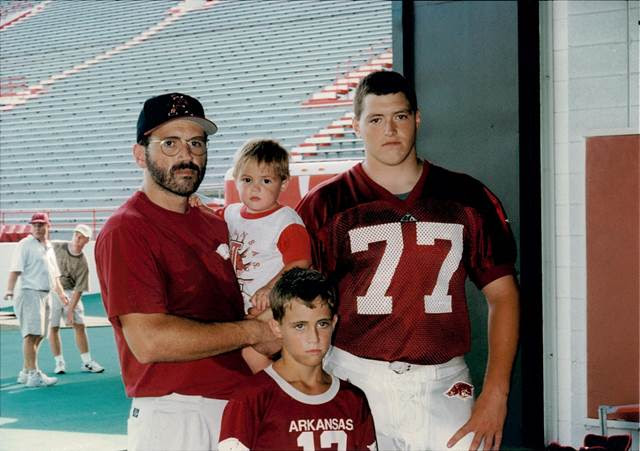
RESPONDING TO HARRY KROTO’S BRILLIANT RENOWNED ACADEMICS!! PART 160 Part D (It was my privilege to correspond with Charles Darwin’s grandson, the eminent professor Dr. Horace Barlow, Neuroscience, Cambridge, December 8, 1921-July 5, 2020) 4th letter dated 2-1-17 was actually an email on Charles Darwin on first cause, Was creation done by expression of a mind?

________________

I found Dr. Barlow to be a true gentleman and he was very kind to take the time to answer the questions that I submitted to him. In the upcoming months I will take time once a week to pay tribute to his life and reveal our correspondence. In the first week I noted:

 Today I am posting my first letter to him in February of 2015 which discussed Charles Darwin lamenting his loss of aesthetic tastes which he blamed on Darwin’s own dedication to the study of evolution. In a later return letter, Dr. Barlow agreed that Darwin did in fact lose his aesthetic tastes at the end of his life.

In the second week I look at the views of Michael Polanyi and share the comments of Francis Schaeffer concerning Polanyi’s views.

In the third week, I look at the life of Brandon Burlsworth in the November 28, 2016 letter and the movie GREATER and the problem of evil which Charles Darwin definitely had a problem with once his daughter died.

On the 4th letter to Dr. Barlow looks at Darwin’s admission that he at times thinks that creation appears to look like the expression of a mind. Francis Schaeffer discusses Darwin’s own words in 1968 sermon at this link.

Horace Barlow pictured below:

_____________

On November 21, 2014 I received a letter from Nobel Laureate Harry Kroto and it said:

…Please click on this URL http://vimeo.com/26991975

and you will hear what far smarter people than I have to say on this matter. I agree with them.

Harry Kroto

Image result for harry kroto

__________________________
Tribute for Horace Barlow:

discrepancies to be immediately identified and dealt with. Horace’s information theory-based approach underlies many modern approaches to unsupervised learning in neural networks and Bayesian learning.
In the 30-odd years after his formal ‘retirement’, Horace continued to make highly original and creative contributions to the field. He published 56 articles during this period, many as the single author. His interests were very varied, including information redundancy, predictive coding, Bayesian inference, unsupervised learning, development and many others, but all were motivated by the common themes of information theory and neural efficiency. A recent example of his creative thinking was
his talk at the symposium on ‘Turing Enduring: Information Processing by Brains and Machines’ (Rockefeller University, December 2012), published in the journal Visual Neuroscience. There, Horace challenged the traditional (and still prevalent) wisdom that orientation- tuned simple and complex cells in primary visual cortex act as ‘edge- detectors’. Looking for more general guiding principles of brain function, he claimed that “the prime role of V1 is to search for regularity or redundancy in the input”, leading to the hypothesis that simple cells perform cross-correlations between the retinal input and internal templates, while complex cells calculate auto-correlations in the retinal input. Characteristically, he did not leave this as a simple hypothesis but provided solid quantitative psychophysical data in favour of his theory.
Horace was renowned for his intelligence and quick-wittedness. Neuroscientists presented their research to the Cambridge ‘Craik Club’ with some trepidation. But this was unwarranted,
for besides being smart Horace was
kind, especially to young researchers. He quickly understood the message of the talk and gave many useful suggestions, absolutely on point, and never intended to humiliate. But his clever quips could also be fun. At a dinner that he gave for
a bunch of graduate students, he invited his friend Francis Crick, who held forth on several topics throughout the evening. At one stage, Francis brought up his lineage, lamenting that he could trace it back only to Elizabethan times. With a disarming smile, Horace instantly retorted, “oh yes Francis, and which Elizabeth is that?”

1Professor of Physiological Psychology at the
2 University of Florence, Florence, Italy. Emeritus
Professor of Neurobiology at Cambridge University, Cambridge, UK.
E-mail: dcb492@gmail.com (D.B.); sl104@cam.ac.uk (S.L.

XXXXXXXXXXXX

Fourth letter dated 2-1-17 was an Email on first cause, By chance? Mind of monkey, creation done by expression of a mind? To Horace Barlow, I hope all is well with you and yours, Letter on correspondence with  email  Duke of Argyll (1823-1900)

pictured below with his eldest child William: 

Image result for Horace Barlow charles darwin

Dear Dr. Barlow,

I’m an evangelical Christian and you are a secularist but I am sure we can both agree with the apostle Paul when he said in First Corinthians 15 that if Christ did not rise from the dead then Christians are to be most pited!!!! This passage is one of favorite at Fellowship Bible Church in Little Rock at Easter time. Our pastor  Mark Henry has asserted that there is plenty of evidence that indicates that the Bible is historically accurate. Did you know that CHARLES DARWIN thought about this very subject quite a lot?

I just finished reading the online addition of the book Darwin, Francis ed. 1892. Charles Darwin: his life told in an autobiographical chapter, and in a selected series of his published letters [abridged edition]. London: John Murray. There are several points that Charles Darwin makes in this book that were very wise, honest, logical, shocking and some that were not so wise. The Christian Philosopher Francis Schaeffer once said of Darwin’s writings, “Darwin in his autobiography and in his letters showed that all through his life he never really came to a quietness concerning the possibility that chance really explained the situation of the biological world. You will find there is much material on this [from Darwin] extended over many manufacturers years that constantly he was wrestling with this problem.”

Image result for francis schaeffer

When I read the book  Charles Darwin: his life told in an autobiographical chapter, and in a selected series of his published letters, I also read  a commentary on it by Francis Schaeffer and I wanted to both  quote some of Charles Darwin’s own words to you and then include the comments of Francis Schaeffer on those words.

Darwin, C. R. to Doedes, N. D.2 Apr 1873

“It is impossible to answer your question briefly; and I am not sure that I could do so, even if I wrote at some length. But I may say that the impossibility of conceiving that this grand and wondrous universe, with our conscious selves, arose through chance, seems to me the chief argument for the existence of God; but whether this is an argument of real value, I have never been able to decide…Nor can I overlook the difficulty from the immense amount of suffering through the world. I am aware that if we admit a First Cause, the mind still craves to know whence it came, and how it arose.”

Jan Constantijn Costerus and Nicolaas Dirk Doedes pictured below:

Image result for charles darwin Doedes, N. D., 2 Apr 1873

Francis Schaeffer noted:

What he is saying is if you say there is a first cause, then the mind says, “Where did this come from?” I think this is a bit old fashioned, with some of the modern thinkers, this would not have carry as much weight today as it did when Darwin expressed it. Jean Paul Sartre said it as well as anyone could possibly say it. The philosophic problem is that something is there and not nothing being there. No one has the luxury of beginning with nothing. Nobody I have ever read has put forth that everything came from nothing. I have never met such a person in all my reading,or all my discussion. If you are going to begin with nothing being there, it has to be nothing nothing, and it can’t be something nothing. When someone says they believe nothing is there, in reality they have already built in something there. The only question is do you begin with an impersonal something or a personal something. All human thought is shut up to these two possibilities. Either you begin with an impersonal and then have Darwin’s own dilemma which impersonal plus chance, now he didn’t bring in the amount of time that modern man would though. Modern man has brought in huge amounts of time into the equation as though that would make a difference because I have said many times that time can’t make a qualitative difference but only a quantitative difference. The dilemma is it is either God or chance. Now you find this intriguing thing in Darwin’s own situation, he can’t understand how chance could have produced these two great factors of the universe and its form and the mannishness of man.

From Charles Darwin, Autobiography (1876), in The Life and Letters of Charles Darwin, ed. Francis Darwin, vol. 1 (London: John Murray, 1888), pp. 307 to 313.

“Another source of conviction in the existence of God, connected with the reason and not with the feelings, impresses me as having much more weight. This follows from the extreme difficulty or rather impossibility of conceiving this immense and wonderful universe, including man with his capacity of looking far backwards and far into futurity, as the result of blind chance or necessity. When thus reflecting, I feel compelled to look to a First Cause having an intelligent mind in some degree analogous to that of man; and I deserve to be called a Theist. This conclusion was strong in my mind about the time, as far as I can remember, when I wrote the Origin of Species, and it is since that time that it has very gradually, with many fluctuations, become weaker. But then arises the doubt…”

Image result for charles darwin

Francis Schaeffer commented:

On the basis of his reason he has to say there must be an intelligent mind, someone analogous to man. You couldn’t describe the God of the Bible better. That is man is made in God’s image  and therefore, you know a great deal about God when you know something about man. What he is really saying here is that everything in my experience tells me it must be so, and my mind demands it is so. Not just these feelings he talked about earlier but his MIND demands it is so, but now how does he counter this? How does he escape this? Here is how he does it!!!

Charles Darwin went on to observe:  —can the mind of man, which has, as I fully believe, been developed from a mind as low as that possessed by the lowest animals, be trusted when it draws such grand conclusions?”

Image result for charles darwin monkey

Francis Schaeffer asserted:

So he says my mind can only come to one conclusion, and that is there is a mind behind it all. However, the doubt comes because his mind has come from the lowest form of earthworm, so how can I trust my mind. But this is a joker isn’t it?  Then how can you trust his mind to support such a theory as this? He proved too much. The fact that Darwin found it necessary to take such an escape shows the tremendous weight of Romans 1, that the only escape he can make is to say how can I trust my mind when I come from the lowest animal the earthworm? Obviously think of the grandeur of his concept, I don’t think it is true, but the grandeur of his concept, so what you find is that Darwin is presenting something here that is wrong I feel, but it is not nothing. It is a tremendously grand concept that he has put forward. So he is accepting the dictates of his mind to put forth a grand concept which he later can’t accept in this basic area with his reason, but he rejects what he could accept with his reason on this escape. It really doesn’t make sense. This is a tremendous demonstration of the weakness of his own position.

Darwin also noted, “I cannot pretend to throw the least light on such abstruse problems. The mystery of the beginning of all things is insoluble by us, and I for one must be content to remain an Agnostic.”

Francis Schaeffer remarked:

What a stupid reply and I didn’t say wicked. It just seems to me that here is 2 plus 2 equals 36 at this particular place.

Darwin, C. R. to Graham, William 3 July 1881

Nevertheless you have expressed my inward conviction, though far more vividly and clearly than I could have done, that the Universe is not the result of chance.* But then with me the horrid doubt always arises whether the convictions of man’s mind, which has been developed from the mind of the lower animals, are of any value or at all trustworthy. Would any one trust in the convictions of a monkey’s mind, if there are any convictions in such a mind?

Francis Schaeffer observed:

Can you feel this man? He is in real agony. You can feel the whole of modern man in this tension with Darwin. My mind can’t accept that ultimate of chance, that the universe is a result of chance. He has said 3 or 4 times now that he can’t accept that it all happened by chance and then he will write someone else and say something different. How does he say this (about the mind of a monkey) and then put forth this grand theory? Wrong theory I feel but great just the same. Grand in the same way as when I look at many of the paintings today and I differ with their message but you must say the mark of the mannishness of man are one those paintings titanic-ally even though the message is wrong and this is the same with Darwin.  But how can he say you can’t think, you come from a monkey’s mind, and you can’t trust a monkey’s mind, and you can’t trust a monkey’s conviction, so how can you trust me? Trust me here, but not there is what Darwin is saying. In other words it is very selective. 

Now we are down to the last year of Darwin’s life.

* The Duke of Argyll (Good Words, April 1885, p. 244) has recorded a few words on this subject, spoken by my father in the last year of his life. “. . . in the course of that conversation I said to Mr. Darwin, with reference to some of his own remarkable works on the Fertilisation of Orchids, and upon The Earthworms,and various other observations he made of the wonderful contrivances for certain purposes in nature—I said it was impossible to look at these without seeing that they were the effect and the expression of mind. I shall never forget Mr. Darwin’s answer. He looked at me very hard and said, ‘Well, that often comes over me with overwhelming force; but at other times,’ and he shook his head vaguely, adding, ‘it seems to go away.’”

_________

Duke of Argyll (1823-1900)

Portrait of 8th Duke of Argyll

(Despite differing opinions, Darwin and Argyll had great respect for each other and he served as one of the pall bearers at Darwin’s funeral.)

__

Francis Schaeffer summarized :

And this is the great Darwin, and it makes you cry inside. This is the great Darwin and he ends as a man in total tension.

Francis Schaeffer noted that in Darwin’s 1876 Autobiography that Darwin he is going to set forth two arguments for God in this and again you will find when he comes to the end of this that he is in tremendous tension. Darwin wrote, 

At the present day the most usual argument for the existence of an intelligent God is drawn from the deep inward conviction and feelings which are experienced by most persons.Formerly I was led by feelings such as those just referred to (although I do not think that the religious sentiment was ever strongly developed in me), to the firm conviction of the existence of God and of the immortality of the soul. In my Journal I wrote that whilst standing in the midst of the grandeur of a Brazilian forest, ‘it is not possible to give an adequate idea of the higher feelings of wonder, admiration, and devotion which fill and elevate the mind.’ I well remember my conviction that there is more in man than the mere breath of his body; but now the grandest scenes would not cause any such convictions and feelings to rise in my mind. It may be truly said that I am like a man who has become colour-blind.

Francis Schaeffer remarked:

Now Darwin says when I look back and when I look at nature I came to the conclusion that man can not be just a fly! But now Darwin has moved from being a younger man to an older man and he has allowed his presuppositions to enter in to block his logic. These things at the end of his life he had no intellectual answer for. To block them out in favor of his theory. Remember the letter of his that said he had lost all aesthetic senses when he had got older and he had become a clod himself. Now interesting he says just the same thing, but not in relation to the arts, namely music, pictures, etc, but to nature itself. Darwin said, “But now the grandest scenes would not cause any such convictions  and feelings to rise in my mind. It may be truly said that I am like a man who has become colour-blind…” So now you see that Darwin’s presuppositions have not only robbed him of the beauty of man’s creation in art, but now the universe. He can’t look at it now and see the beauty. The reason he can’t see the beauty is for a very, very , very simple reason: THE BEAUTY DRIVES HIM TO DISTRACTION. THIS IS WHERE MODERN MAN IS AND IT IS HELL. The art is hell because it reminds him of man and how great man is, and where does it fit in his system? It doesn’t. When he looks at nature and it’s beauty he is driven to the same distraction and so consequently you find what has built up inside him is a real death, not  only the beauty of the artistic but the beauty of nature. He has no answer in his logic and he is left in tension.  He dies and has become less than human because these two great things (such as any kind of art and the beauty of  nature) that would make him human  stand against his theory.

________________________

Erasmus Alvey Darwin with Charles Darwin’s sons

Image result for charles darwin monkey

DO THESE WORDS OF DARWIN APPLY TO YOU TODAY? “I am like a man who has become colour-blind.”  As a secularist you believe that it is sad indeed that millions of Christians are hoping for heaven but no heaven is waiting for them. Paul took a close look at this issue too. I Corinthians 15 asserts:

12 But if it is preached that Christ has been raised from the dead, how can some of you say that there is no resurrection of the dead? 13 If there is no resurrection of the dead, then not even Christ has been raised. 14 And if Christ has not been raised, our preaching is useless and so is your faith. 15 More than that, we are then found to be false witnesses about God, for we have testified about God that he raised Christ from the dead. But he did not raise him if in fact the dead are not raised. 16 For if the dead are not raised, then Christ has not been raised either.17 And if Christ has not been raised, your faith is futile; you are still in your sins. 18 Then those also who have fallen asleep in Christ are lost. 19 If only for this life we have hope in Christ, we are of all people most to be pitied.

The answer to find meaning in life is found in putting your faith and trust in Jesus Christ. The Bible is true from cover to cover and can be trusted.

Thank you again for your time and I know how busy you are.

Everette Hatcher, everettehatcher@gmail.com, http://www.thedailyhatch.org, cell ph 501-920-5733, 13900 Cottontail Lane, AR 72002 United States

_______________________________________

Is the Bible historically accurate? Here are some of the posts I have done in the past on the subject: 1. The Babylonian Chronicleof Nebuchadnezzars Siege of Jerusalem2. Hezekiah’s Siloam Tunnel Inscription. 3. Taylor Prism (Sennacherib Hexagonal Prism)4. Biblical Cities Attested Archaeologically. 5. The Discovery of the Hittites6.Shishak Smiting His Captives7. Moabite Stone8Black Obelisk of Shalmaneser III9A Verification of places in Gospel of John and Book of Acts., 9B Discovery of Ebla Tablets10. Cyrus Cylinder11. Puru “The lot of Yahali” 9th Century B.C.E.12. The Uzziah Tablet Inscription13. The Pilate Inscription14. Caiaphas Ossuary14 B Pontius Pilate Part 214c. Three greatest American Archaeologists moved to accept Bible’s accuracy through archaeology.

There are 3 videos in this series and they have statements by 150 academics and scientists and I hope to respond to all of them. Wikipedia notes Horace Basil Barlow FRS was a British visual neuroscientist.

Barlow was the son of the civil servant Sir Alan Barlow and his wife Lady Nora (née Darwin), and thus the great-grandson of Charles Darwin (see Darwin — Wedgwood family). He earned an M.D. at Harvard University in 1946.

In 1953 Barlow discovered that the frog brain has neurons which fire in response to specific visual stimuli. This was a precursor to the work of Hubel and Wiesel on visual receptive fields in the visual cortex. He has made a long study of visual inhibition, the process whereby a neuron firing in response to one group of retinal cells can inhibit the firing of another neuron; this allows perception of relative contrast.

In 1961 Barlow wrote a seminal article where he asked what the computational aims of the visual system are. He concluded that one of the main aims of visual processing is the reduction of redundancy. While the brightnesses of neighbouring points in images are usually very similar, the retina reduces this redundancy. His work thus was central to the field of statistics of natural scenes that relates the statistics of images of real world scenes to the properties of the nervous system.

——

Barlow and his co-workers also did substantial work in the field of factorial codes. The goal was to encode images with statistically redundant components or pixels such that the code components are statistically independent. Such codes are hard to find but highly useful for purposes of image classification etc.

Barlow was a fellow of Trinity College, University of Cambridge. He was elected a Fellow of the Royal Society in 1969 and was awarded their Royal Medal in 1993.[1] He received the 1993 Australia Prize for his research into the mechanisms of visual perception and the 2009 Swartz Prize for Theoretical and Computational Neuroscience from the Society for Neuroscience.

________________

His comments can be found on the 3rd video and the 128th clip in this series. Below the videos you will find his words.

50 Renowned Academics Speaking About God (Part 1)

Another 50 Renowned Academics Speaking About God (Part 2)

A Further 50 Renowned Academics Speaking About God (Part 3)

_______________

Interview of Horace Barlow – part 1

Published on Jun 18, 2014

Interviewed and filmed by Alan Macfarlane on 5 March 2012

______________________

Interview of Horace Barlow – part 2

Horace Barlow’s quote taken from interview with Alan Macfarlane:

HAS RELIGION EVER BEEN IMPORTANT TO YOU? IS IT IMPORTANT TO YOU? No, it is not important to me. Saying you don’t believe in God is a very foolish thing to say as it doesn’t explain why so many people talk about it, there has got to be more to it than that; also I think one has to respect what some godly people say and some of the things they do; I wish one could make more sense of it but I don’t think the godly people have done a very good job; I was never baptized or confirmed so have never been a practitioner, and I don’t miss it; DO YOU THINK THAT SCIENCE HAS DIS-PROVEN RELIGION AS DAWKINS ARGUES? I think it [science] provides some hope of acting rationally to handle the social and political problems we have to deal with on a personal level and one a worldwide level. Religion is a way of perpetuating a way of thought that might have otherwise been lost, and I imagine that is fine.   

Dr. Barlow’s only three solid claims in this response to Alan Macfarlane is that science is #1 the best help today with our social problems,(which is in the original clip), #2 Saying you don’t believe in God (position of atheism) is foolish, and #3 we need an explanation for why so many people talk about [God.]

My response to #1 is to look at how the secular humanists have messed up so many things in the past and I include Barlow’s personal family friend Margaret Mead in that. My responses to #2 and #3 were both covered in my earlier response to Roald Hoffmann

(Roald Hoffmann is a Nobel Prize winner who I have had the honor of corresponding with in the past. Pictured below)

Image result for Roald Hoffmann.

(This July 1933 photo shows [left to right] anthropologist Gregory Bateson with Margaret Mead)

Image result for margaret mead husband

Horace Barlow’s words  from interview conducted by Alan Macfarlane:

I don’t ever remember going to Bateson’s house in Granchester as a child; William Bateson’s wife was a friend of my mother’s; when Gregory Bateson was out in Bali he met Margaret Mead; Beatrice Bateson, his mother, felt she was too old to go out and inspect her so she sent my mother instead; she flew off in an Imperial Airlines plane and we saw her off from Hendon; that must have been 1937-8; my mother got on very well with Margaret Mead – she was not altogether convinced by her, but very impressed by her breadth of knowledge and energy; she came and stayed with us many times; I was even more sceptical than my mother and thought she was a very impressive person; Gregory was born 1904 and my mother, in 1886, so there was quite a big age difference between them; I never got on close intellectual terms with Gregory even though we were to some extent interested in the same sort of thing, both in cybernetics and psychology, and his ideas were always interesting; however, my model of a scientist was taken from my mother and not from Gregory; my mother was interested in genetics and the paper for which she was famous was on the reproductive system in plants like cowslips; my mother reasoned like a scientist whereas Gregory was a guru – he liked to think things out for himself; he obviously influenced many others too; I saw him once or twice when I went to Berkeley

Postscript:

I was sad to see that Jon Stewart is stepping down from the DAILY SHOW so I wanted to include one of the best clips I have ever seen on his show and it is a short debate between the brilliant scientists  Edward J. Larson (an evolutionist), William A. Dembski (an Intelligent Design Proponent), and then he threw in a nutball in for laughs,  Ellie Crystal (a metaphysical theorist). Dembski gives several great examples of design and it reminded me of many of the words of Darwin show above in my letter to Horace Barlow.

William Dembski on The Jon Stewart Show

Uploaded on Nov 15, 2010

Wednesday September 14, 2005 – Jon Stewart’s “Evolution, Schmevolution” segment with panelists Edward J. Larson (an evolutionist), William A. Dembski (an Intelligent Design Proponent), and Ellie Crystal (a metaphysical theorist).

Related posts:

Taking on Ark Times Bloggers on various issues Part F “Carl Sagan’s views on how God should try and contact us” includes film “The Basis for Human Dignity”

I have gone back and forth and back and forth with many liberals on the Arkansas Times Blog on many issues such as abortion, human rights, welfare, poverty, gun control  and issues dealing with popular culture. Here is another exchange I had with them a while back. My username at the Ark Times Blog is Saline […]

Carl Sagan v. Nancy Pearcey

On March 17, 2013 at our worship service at Fellowship Bible Church, Ben Parkinson who is one of our teaching pastors spoke on Genesis 1. He spoke about an issue that I was very interested in. Ben started the sermon by reading the following scripture: Genesis 1-2:3 English Standard Version (ESV) The Creation of the […]

Review of Carl Sagan book (Part 4 of series on Evolution)

Review of Carl Sagan book (Part 4 of series on Evolution) The Long War against God-Henry Morris, part 5 of 6 Uploaded by FLIPWORLDUPSIDEDOWN3 on Aug 30, 2010 http://www.icr.org/ http://store.icr.org/prodinfo.asp?number=BLOWA2http://store.icr.org/prodinfo.asp?number=BLOWASGhttp://www.fliptheworldupsidedown.com/blog _______________________ I got this from a blogger in April of 2008 concerning candidate Obama’s view on evolution: Q: York County was recently in the news […]

Review of Carl Sagan book (Part 3 of series on Evolution)

Review of Carl Sagan book (Part 3 of series on Evolution) The Long War against God-Henry Morris, part 4 of 6 Uploaded by FLIPWORLDUPSIDEDOWN3 on Aug 30, 2010 http://www.icr.org/ http://store.icr.org/prodinfo.asp?number=BLOWA2http://store.icr.org/prodinfo.asp?number=BLOWASGhttp://www.fliptheworldupsidedown.com/blog______________________________________ I got this from a blogger in April of 2008 concerning candidate Obama’s view on evolution: Q: York County was recently in the news […]

Carl Sagan versus RC Sproul

At the end of this post is a message by RC Sproul in which he discusses Sagan. Over the years I have confronted many atheists. Here is one story below: I really believe Hebrews 4:12 when it asserts: For the word of God is living and active and sharper than any two-edged sword, and piercing as far as the […]

Review of Carl Sagan book (Part 4 of series on Evolution)jh68

Review of Carl Sagan book (Part 4 of series on Evolution) The Long War against God-Henry Morris, part 5 of 6 Uploaded by FLIPWORLDUPSIDEDOWN3 on Aug 30, 2010 http://www.icr.org/ http://store.icr.org/prodinfo.asp?number=BLOWA2http://store.icr.org/prodinfo.asp?number=BLOWASGhttp://www.fliptheworldupsidedown.com/blog _______________________ This is a review I did a few years ago. THE DEMON-HAUNTED WORLD: Science as a Candle in the Dark by Carl […]

Review of Carl Sagan book (Part 3 of series on Evolution)

Review of Carl Sagan book (Part 3 of series on Evolution) The Long War against God-Henry Morris, part 4 of 6 Uploaded by FLIPWORLDUPSIDEDOWN3 on Aug 30, 2010 http://www.icr.org/ http://store.icr.org/prodinfo.asp?number=BLOWA2http://store.icr.org/prodinfo.asp?number=BLOWASGhttp://www.fliptheworldupsidedown.com/blog______________________________________ I was really enjoyed this review of Carl Sagan’s book “Pale Blue Dot.” Carl Sagan’s Pale Blue Dot by Larry Vardiman, Ph.D. […]

Atheists confronted: How I confronted Carl Sagan the year before he died jh47

In today’s news you will read about Kirk Cameron taking on the atheist Stephen Hawking over some recent assertions he made concerning the existence of heaven. Back in December of 1995 I had the opportunity to correspond with Carl Sagan about a year before his untimely death. Sarah Anne Hughes in her article,”Kirk Cameron criticizes […]

My correspondence with George Wald and Antony Flew!!!

FRANCIS SCHAEFFER ANALYZES ART AND CULTURE Part 41 Sarvepalli Radhakrishnan (Featured artist is Marina Abramović)

FRANCIS SCHAEFFER ANALYZES ART AND CULTURE Part 40 Timothy Leary (Featured artist is Margaret Keane)

FRANCIS SCHAEFFER ANALYZES ART AND CULTURE Part 39 Tom Wolfe (Featured artist is Richard Serra)

FRANCIS SCHAEFFER ANALYZES ART AND CULTURE Part 38 Woody Allen and Albert Camus “There is but one truly serious philosophical problem, and that is suicide” (Feature on artist Hamish Fulton Photographer )

FRANCIS SCHAEFFER ANALYZES ART AND CULTURE Part 37 Mahatma Gandhi and “Relieving the Tension in the East” (Feature on artist Luc Tuymans)

FRANCIS SCHAEFFER ANALYZES ART AND CULTURE Part 36 Julian Huxley:”God does not in fact exist, but act as if He does!” (Feature on artist Barry McGee)

FRANCIS SCHAEFFER ANALYZES ART AND CULTURE Part 35 Robert M. Pirsig (Feature on artist Kerry James Marshall)

FRANCIS SCHAEFFER ANALYZES ART AND CULTURE Part 34 Aleksandr Solzhenitsyn (Feature on artist Shahzia Sikander)

FRANCIS SCHAEFFER ANALYZES ART AND CULTURE Part 33 Aldous Huxley (Feature on artist Matthew Barney )

FRANCIS SCHAEFFER ANALYZES ART AND CULTURE Part 32 Steven Weinberg and Woody Allen and “The Meaningless of All Things” (Feature on photographer Martin Karplus )

FRANCIS SCHAEFFER ANALYZES ART AND CULTURE Part 31 David Hume and “How do we know we know?” (Feature on artist William Pope L. )

FRANCIS SCHAEFFER ANALYZES ART AND CULTURE Part 30 Rene Descartes and “How do we know we know?” (Feature on artist Olafur Eliasson)

FRANCIS SCHAEFFER ANALYZES ART AND CULTURE Part 29 W.H. Thorpe and “The Search for an Adequate World-View: A Question of Method” (Feature on artist Jeff Koons)

FRANCIS SCHAEFFER ANALYZES ART AND CULTURE Part 28 Woody Allen and “The Mannishness of Man” (Feature on artist Ryan Gander)

FRANCIS SCHAEFFER ANALYZES ART AND CULTURE Part 27 Jurgen Habermas (Featured artist is Hiroshi Sugimoto)

FRANCIS SCHAEFFER ANALYZES ART AND CULTURE Part 26 Bettina Aptheker (Featured artist is Krzysztof Wodiczko)

FRANCIS SCHAEFFER ANALYZES ART AND CULTURE Part 25 BOB DYLAN (Part C) Francis Schaeffer comments on Bob Dylan’s song “Ballad of a Thin Man” and the disconnect between the young generation of the 60’s and their parents’ generation (Feature on artist Fred Wilson)

FRANCIS SCHAEFFER ANALYZES ART AND CULTURE Part 24 BOB DYLAN (Part B) Francis Schaeffer comments on Bob Dylan’s words from HIGHWAY 61 REVISITED!! (Feature on artist Susan Rothenberg)

FRANCIS SCHAEFFER ANALYZES ART AND CULTURE Part 23 BOB DYLAN (Part A) (Feature on artist Josiah McElheny)Francis Schaeffer on the proper place of rebellion with comments by Bob Dylan and Samuel Rutherford

FRANCIS SCHAEFFER ANALYZES ART AND CULTURE Part 22 “The School of Athens by Raphael” (Feature on the artist Sally Mann)

FRANCIS SCHAEFFER ANALYZES ART AND CULTURE Part 21 William B. Provine (Feature on artist Andrea Zittel)

FRANCIS SCHAEFFER ANALYZES ART AND CULTURE Part 20 Woody Allen and Materialistic Humanism: The World-View of Our Era (Feature on artist Ida Applebroog)

FRANCIS SCHAEFFER ANALYZES ART AND CULTURE Part 19 Movie Director Luis Bunuel (Feature on artist Oliver Herring)

FRANCIS SCHAEFFER ANALYZES ART AND CULTURE Part 18 “Michelangelo’s DAVID is the statement of what humanistic man saw himself as being tomorrow” (Feature on artist Paul McCarthy)

FRANCIS SCHAEFFER ANALYZES ART AND CULTURE Part 17 Francis Schaeffer discusses quotes of Andy Warhol from “The Observer June 12, 1966″ Part C (Feature on artist David Hockney plus many pictures of Warhol with famous friends)

FRANCIS SCHAEFFER ANALYZES ART AND CULTURE Part 16 Francis Schaeffer discusses quotes of Andy Warhol from “The Observer June 12, 1966″ Part B (Feature on artist James Rosenquist plus many pictures of Warhol with famous friends)

FRANCIS SCHAEFFER ANALYZES ART AND CULTURE Part 15 Francis Schaeffer discusses quotes of Andy Warhol from “The Observer June 12, 1966″ Part A (Feature on artist Robert Indiana plus many pictures of Warhol with famous friends)

FRANCIS SCHAEFFER ANALYZES ART AND CULTURE Part 14 David Friedrich Strauss (Feature on artist Roni Horn )

FRANCIS SCHAEFFER ANALYZES ART AND CULTURE Part 13 Jacob Bronowski and Materialistic Humanism: The World-View of Our Era (Feature on artist Ellen Gallagher )

FRANCIS SCHAEFFER ANALYZES ART AND CULTURE Part 12 H.J.Blackham and Materialistic Humanism: The World-View of Our Era (Feature on artist Arturo Herrera)

FRANCIS SCHAEFFER ANALYZES ART AND CULTURE Part 11 Thomas Aquinas and his Effect on Art and HOW SHOULD WE THEN LIVE? Episode 2: THE MIDDLES AGES (Feature on artist Tony Oursler )

FRANCIS SCHAEFFER ANALYZES ART AND CULTURE Part 10 David Douglas Duncan (Feature on artist Georges Rouault )

FRANCIS SCHAEFFER ANALYZES ART AND CULTURE Part 9 Jasper Johns (Feature on artist Cai Guo-Qiang )

FRANCIS SCHAEFFER ANALYZES ART AND CULTURE Part 8 “The Last Year at Marienbad” by Alain Resnais (Feature on artist Richard Tuttle and his return to the faith of his youth)

FRANCIS SCHAEFFER ANALYZES ART AND CULTURE Part 7 Jean Paul Sartre (Feature on artist David Hooker )

FRANCIS SCHAEFFER ANALYZES ART AND CULTURE Part 6 The Adoration of the Lamb by Jan Van Eyck which was saved by MONUMENT MEN IN WW2 (Feature on artist Makoto Fujimura)

FRANCIS SCHAEFFER ANALYZES ART AND CULTURE Part 5 John Cage (Feature on artist Gerhard Richter)

FRANCIS SCHAEFFER ANALYZES ART AND CULTURE Part 4 ( Schaeffer and H.R. Rookmaaker worked together well!!! (Feature on artist Mike Kelley Part B )

FRANCIS SCHAEFFER ANALYZES ART AND CULTURE Part 3 PAUL GAUGUIN’S 3 QUESTIONS: “Where do we come from? What art we? Where are we going? and his conclusion was a suicide attempt” (Feature on artist Mike Kelley Part A)

FRANCIS SCHAEFFER ANALYZES ART AND CULTURE Part 2 “A look at how modern art was born by discussing Monet, Renoir, Pissaro, Sisley, Degas,Cezanne, Van Gogh, Gauguin, Seurat, and Picasso” (Feature on artist Peter Howson)

FRANCIS SCHAEFFER ANALYZES ART AND CULTURE Part 1 HOW SHOULD WE THEN LIVE? “The Roman Age” (Feature on artist Tracey Emin)

_________________

___

RESPONDING TO HARRY KROTO’S BRILLIANT RENOWNED ACADEMICS!! PART 160 Part C (It was my privilege to correspond with Charles Darwin’s grandson, the eminent professor Dr. Horace Barlow, Neuroscience, Cambridge, December 8, 1921-July 5, 2020) The life of Brandon Burlsworth in the November 28, 2016 letter and the movie GREATER and the problem of evil which Charles Darwin definitely had a problem with once his daughter died

________________

_______________

I found Dr. Barlow to be a true gentleman and he was very kind to take the time to answer the questions that I submitted to him. In the upcoming months I will take time once a week to pay tribute to his life and reveal our correspondence. In the first week I noted:

 Today I am posting my first letter to him in February of 2015 which discussed Charles Darwin lamenting his loss of aesthetic tastes which he blamed on Darwin’s own dedication to the study of evolution. In a later return letter, Dr. Barlow agreed that Darwin did in fact lose his aesthetic tastes at the end of his life.

In the second week I look at the views of Michael Polanyi and share the comments of Francis Schaeffer concerning Polanyi’s views.

In the third week, I look at the life of Brandon Burlsworth in the November 28, 2016 letter and the movie GREATER and the problem of evil which Charles Darwin definitely had a problem with once his daughter died.

——

Horace Barlow pictured below:

_____________

On November 21, 2014 I received a letter from Nobel Laureate Harry Kroto and it said:

…Please click on this URL http://vimeo.com/26991975

and you will hear what far smarter people than I have to say on this matter. I agree with them.

Harry Kroto

Image result for harry kroto

__________________________

Most of Horace’s ideas have
survived the test of time, stimulating
and motivating generations of neuroscientists and leading to a cascade of advancements far too extensive to summarise here. But if we are to apply his cherished information theory, we know that there is more information in the rare and unexpected event: so did he get anything wrong? Probably not seriously. One idea that clearly evolved over time was his intuition about information redundancy in the image. Initially,
he emphasised the role of reducing redundancy for efficient neural coding and economy of neuron numbers as well as impulses, but later he realised the importance of redundancy in identifying structure and statistical regularities in
the environment, as sensory redundancy is the main source of knowledge. But
this was not a mistake, merely a change of emphasis. If we go right back to the beginning, to his experiments that led him to dismiss the importance of eye drift, perhaps we might say that his assessment was premature, as recent work is showing how the small eye- movements serve an important functional role, conditioning the spatio-temporal frequency spectrum of the image. But while he did not exactly predict this,
his intuitions about the importance of temporal dynamics and interpolations, prominent in his Ferrier lecture, were not too far off the mark.
The last scientific gathering with Horace was for his 95th birthday, in December 2016. This was a fun occasion for his scientific family, some 100-odd people whose professional lives had been touched by Horace and who had passed the legacy down to their students and students’ students. The celebrations were followed by a workshop, which Horace concluded with a first-rate scientific talk, highlighting the role of information processing in the brain and urging us to consider the importance of information and entropy. His scientific curiosity never escaped him.
Horace leaves his wife Miranda, 7 children and 13 grandchildren. His extended scientific family will miss him dearly.
1Professor of Physiological Psychology at the
2 University of Florence, Florence, Italy. Emeritus
Professor of Neurobiology at Cambridge University, Cambridge, UK.
E-mail:

Book review
R910 Current Biology 30, R905–R931, August 17, 2020 © 2020 Elsevie

—-

XXXXXX third letter Emailed Burlsworth and Political letter on 11-28-16

To Horace Barlow,  Concerning  my personal interaction with Clinton, election of Trump (which has been compared to your BREXIT VOTE in the UK)   and a movie recommendation, From Everette Hatcher of Little Rock on 11-28-16

I am currently the JUSTICE OF THE PEACE for District 2 of Saline County which is the 6th largest county in Arkansas and I just finished going through my 3rd election. I won my first election by 4 1/2% and my last two elections by double digit margins in probably the most Democratic leaning district in the whole county even though I am a Republican.

At the age of 21 in January of 1983 I moved from Memphis to Little Rock and I had never seen a politician in person. I suppose it was because Memphis is a large city and I lived in a suburb outside it. However, the first week I was in Little Rock I got to meet Governor Bill Clinton and I ran into both of  our U.S. Senators and our Congressman in downtown Little Rock when I was dropping off a deposit at Worthen Bank and attending a meeting in a small meeting room at the State House Convention Center. In fact, I ran into them again and again often at restaurants, movie theaters and ballgames around town. After a while I didn’t really take notice anymore since it was so common. My uncle explained to me that Little Rock was a capitol city and since we worked downtown we could often run into politicians.

Our plant location was on 300 Industrial Road which is right next to the Arkansas River within a few hundred feet from where the Clinton Library stands today. In 1985 we moved to another part of Little Rock.

A quick couple of stories about my personal interaction with Bill Clinton. One of the first times I spoke with him was at the 1983 ARKANSAS INDEPENDENT GROCERY WHOLESALER MEETING and he came into our meeting tardy because  he said there was a big emergency at the Capitol and that was Hillary wanted a private meeting with him. The amazing thing that day was that I noticed that he personally greeted the dozen or so elderly men that owned these grocery wholesale businesses and called them all by their first names. Since then the Krogers and large supermarkets of the world have completely run these wholesalers out of business in Arkansas.

A year later I was at a relative’s wedding and I was seated on the aisle and when the father of the bride began to escort her down the aisle I noticed that Bill Clinton was in the seat directly behind me. Being a politician he couldn’t resist shaking the father’s hand and Hillary promptly elbowed Bill and his face turned red.  I am sure she has had to elbow him a few times since 1984!!!

I am an evangelical conservative so even though I was very upset that Donald Trump was the Republican Nominee, I did hold my noise and vote for him over Hillary Clinton. However, I DIDN’T HAVE A GOOD EXPLANATION WHY CLINTON LOST UNTIL I READ THESE WORDS A FEW DAYS AGO in the DAILY MAIL:

In the waning days of the presidential campaign, Bill and Hillary Clinton had a knock-down, drag-out fight about her effort to blame FBI Director James Comey for her slump in the polls and looming danger of defeat….[Bill Clinton] got so angry that he threw his phone off the roof of his penthouse apartment and toward the Arkansas River.’

Bill has a luxurious penthouse apartment with an outdoor garden at the Clinton Presidential Library and Museum in Little Rock.

During the campaign, Bill Clinton felt that he was ignored by Hillary’s top advisers when he urged them to make the economy the centerpiece of her campaign. 

He repeatedly urged them to connect with the people who had been left behind by the revolutions in technology and globalization.

_________

Are you buying Bill’s explanation?

I just saw the movie GREATER about the life of Brandon Burlsworth and there was a secularist farmer played by Nick Searcy that reminded me of you and when the DVD is released on 12-20-16 I would like to send you a free one.

Yesterday while in my  attic  I ran across a cassette tape labeled “April  1999” and it has the recording of my 12 year  old son calling  into a local radio show where he got to talk to Brandon Burlsworth who had just been drafted by the Indianapolis  Colts to play  in the NFL. Just a few days later Burlsworth was on his way to his Harrison, Ark., home from Fayetteville, where he received an SEC West title ring along with the rest of the 1998 Razorbacks on April 28, 1999. Every Wednesday, he returned to take his mom, Barbara, to church. The drive was supposed to take about 90 minutes.

He never made it.

The 22-year-old Burlsworth, who had been drafted by the Colts 11 days earlier after earning first-team All-America honors as a fifth-year senior, was involved in a head-on crash with a tractor-trailer about 15 miles outside Harrison and was killed. He was in the prime of his life and football career, and then he was gone.

One movie reviewer noted: 

There’s a great deal of Christian content in this film. It can perhaps best be summarized by saying that Brandon’s unwavering faith deeply informs everything he does, while his brother’s faltering faith after Brandon’s death is something he grapples with mightily.

Brandon has deep trust in God. At every step along his journey, when naysayers rise up to tell him that he’s being unrealistic, Brandon keeps moving forward in faith. Marty is more pragmatic, asking his brother things like, “You think God would give you D I [Division 1] dreams and a D III (Division III) body?” To Marty, the answer to that rhetorical, spiritual question is self-evident. Brandon, however, soldiers on, refusing to give up. “Have faith, Marty,” he says elsewhere. “This is my road.”

For his part, Marty struggles to cling to his faith in the wake of his brother’s death. That internal battle is depicted in a dramatic way through ongoing dialogue with a doubter named the Farmer. Marty’s trying to summon the courage to go into Brandon’s memorial service at Harrison High School. And the Farmer (played by Nick Searcy), depicted very nearly as a Satan-like tempter, repeatedly delivers soliloquies about the utter foolishness of faith. In one scene, the man (who’s whittling a portrait of Marty into a block of wood, almost as if he’s creating a voodoo doll) says, “Brandon did have faith. He believed if he worked hard and did everything he was supposed to do, God would make everything turn out for the best. Did everything turn out for the best, Marty?”

Elsewhere, the Farmer taunts, “There is no loving God, Marty. That’s ridiculous. There’s just a howling void. And a real man, an honest man, doesn’t get down on his knees to pray to it for his mercy. He stands up to it, and he looks it right in his face and he howls right back.”

But Marty also talks with his godly mother about how to process the randomness of Brandon’s death. She tells him that it’s only random when looked at from an earthly perspective. “If you assume this is all there is, you’d have a point, Marty. But that’s not true. This life is a drop in the ocean. One tick of eternity’s clock, and we’ll all be together again, Marty. And every trouble we had here will recede away like a dream.”

__

It has been a pleasure to send you these letters in the past and I hope you take me up on this offer to see this inspirational true story about Brandon Burlsworth who was truly one of the greatest rags to richest stories in sports history. Also I would encourage you to google FRANCIS SCHAEFFER THE PROBLEM OF EVIL.

Sincerely,

Everette Hatcher, cell ph 501-920-5733, 13900 Cottontail Lane, AR 72002, everettehatcher@gmail.com

____

Image result for greater movie brandon burlsworth He believed if he worked hard and did everything he was supposed to that God would make everything turn out for the best

Brandon below with his brother Marty and his two nephews

Image result for brandon burlsworth death

XXXXXXXXX

__________

Image result for mary ann salmon bill clinton

______

Linda Bloodworth-Thomason and Harry Thomason with the Clintons in the White House

Image result for bill clinton harry thomason

___

Image result for mary ann salmon bill clinton

___

Bill was on the phone at his  luxurious penthouse apartment  he keeps at the Clinton Presidential Library in Little Rock

Bill was on the phone at his  luxurious penthouse apartment  he keeps at the Clinton Presidential Library in Little Rock

XXXXXXXXXXX

There are 3 videos in this series and they have statements by 150 academics and scientists and I hope to respond to all of them. Wikipedia notes Horace Basil Barlow FRS was a British visual neuroscientist.

Barlow was the son of the civil servant Sir Alan Barlow and his wife Lady Nora (née Darwin), and thus the great-grandson of Charles Darwin (see Darwin — Wedgwood family). He earned an M.D. at Harvard University in 1946.

In 1953 Barlow discovered that the frog brain has neurons which fire in response to specific visual stimuli. This was a precursor to the work of Hubel and Wiesel on visual receptive fields in the visual cortex. He has made a long study of visual inhibition, the process whereby a neuron firing in response to one group of retinal cells can inhibit the firing of another neuron; this allows perception of relative contrast.

In 1961 Barlow wrote a seminal article where he asked what the computational aims of the visual system are. He concluded that one of the main aims of visual processing is the reduction of redundancy. While the brightnesses of neighbouring points in images are usually very similar, the retina reduces this redundancy. His work thus was central to the field of statistics of natural scenes that relates the statistics of images of real world scenes to the properties of the nervous system.

Barlow and his co-workers also did substantial work in the field of factorial codes. The goal was to encode images with statistically redundant components or pixels such that the code components are statistically independent. Such codes are hard to find but highly useful for purposes of image classification etc.

Barlow was a fellow of Trinity College, University of Cambridge. He was elected a Fellow of the Royal Society in 1969 and was awarded their Royal Medal in 1993.[1] He received the 1993 Australia Prize for his research into the mechanisms of visual perception and the 2009 Swartz Prize for Theoretical and Computational Neuroscience from the Society for Neuroscience.

________________

His comments can be found on the 3rd video and the 128th clip in this series. Below the videos you will find his words.

50 Renowned Academics Speaking About God (Part 1)

Another 50 Renowned Academics Speaking About God (Part 2)

A Further 50 Renowned Academics Speaking About God (Part 3)

_______________

Interview of Horace Barlow – part 1

Published on Jun 18, 2014

Interviewed and filmed by Alan Macfarlane on 5 March 2012

______________________

Interview of Horace Barlow – part 2

Horace Barlow’s quote taken from interview with Alan Macfarlane:

HAS RELIGION EVER BEEN IMPORTANT TO YOU? IS IT IMPORTANT TO YOU? No, it is not important to me. Saying you don’t believe in God is a very foolish thing to say as it doesn’t explain why so many people talk about it, there has got to be more to it than that; also I think one has to respect what some godly people say and some of the things they do; I wish one could make more sense of it but I don’t think the godly people have done a very good job; I was never baptized or confirmed so have never been a practitioner, and I don’t miss it; DO YOU THINK THAT SCIENCE HAS DIS-PROVEN RELIGION AS DAWKINS ARGUES? I think it [science] provides some hope of acting rationally to handle the social and political problems we have to deal with on a personal level and one a worldwide level. Religion is a way of perpetuating a way of thought that might have otherwise been lost, and I imagine that is fine.   

Dr. Barlow’s only three solid claims in this response to Alan Macfarlane is that science is #1 the best help today with our social problems,(which is in the original clip), #2 Saying you don’t believe in God (position of atheism) is foolish, and #3 we need an explanation for why so many people talk about [God.]

My response to #1 is to look at how the secular humanists have messed up so many things in the past and I include Barlow’s personal family friend Margaret Mead in that. My responses to #2 and #3 were both covered in my earlier response to Roald Hoffmann

(Roald Hoffmann is a Nobel Prize winner who I have had the honor of corresponding with in the past. Pictured below)

Image result for Roald Hoffmann.

(This July 1933 photo shows [left to right] anthropologist Gregory Bateson with Margaret Mead)

Image result for margaret mead husband

Horace Barlow’s words  from interview conducted by Alan Macfarlane:

I don’t ever remember going to Bateson’s house in Granchester as a child; William Bateson’s wife was a friend of my mother’s; when Gregory Bateson was out in Bali he met Margaret Mead; Beatrice Bateson, his mother, felt she was too old to go out and inspect her so she sent my mother instead; she flew off in an Imperial Airlines plane and we saw her off from Hendon; that must have been 1937-8; my mother got on very well with Margaret Mead – she was not altogether convinced by her, but very impressed by her breadth of knowledge and energy; she came and stayed with us many times; I was even more sceptical than my mother and thought she was a very impressive person; Gregory was born 1904 and my mother, in 1886, so there was quite a big age difference between them; I never got on close intellectual terms with Gregory even though we were to some extent interested in the same sort of thing, both in cybernetics and psychology, and his ideas were always interesting; however, my model of a scientist was taken from my mother and not from Gregory; my mother was interested in genetics and the paper for which she was famous was on the reproductive system in plants like cowslips; my mother reasoned like a scientist whereas Gregory was a guru – he liked to think things out for himself; he obviously influenced many others too; I saw him once or twice when I went to Berkeley

Postscript:

I was sad to see that Jon Stewart is stepping down from the DAILY SHOW so I wanted to include one of the best clips I have ever seen on his show and it is a short debate between the brilliant scientists  Edward J. Larson (an evolutionist), William A. Dembski (an Intelligent Design Proponent), and then he threw in a nutball in for laughs,  Ellie Crystal (a metaphysical theorist). Dembski gives several great examples of design and it reminded me of many of the words of Darwin show above in my letter to Horace Barlow.

William Dembski on The Jon Stewart Show

Uploaded on Nov 15, 2010

Wednesday September 14, 2005 – Jon Stewart’s “Evolution, Schmevolution” segment with panelists Edward J. Larson (an evolutionist), William A. Dembski (an Intelligent Design Proponent), and Ellie Crystal (a metaphysical theorist).

Related posts:

Taking on Ark Times Bloggers on various issues Part F “Carl Sagan’s views on how God should try and contact us” includes film “The Basis for Human Dignity”

I have gone back and forth and back and forth with many liberals on the Arkansas Times Blog on many issues such as abortion, human rights, welfare, poverty, gun control  and issues dealing with popular culture. Here is another exchange I had with them a while back. My username at the Ark Times Blog is Saline […]

Carl Sagan v. Nancy Pearcey

On March 17, 2013 at our worship service at Fellowship Bible Church, Ben Parkinson who is one of our teaching pastors spoke on Genesis 1. He spoke about an issue that I was very interested in. Ben started the sermon by reading the following scripture: Genesis 1-2:3 English Standard Version (ESV) The Creation of the […]

Review of Carl Sagan book (Part 4 of series on Evolution)

Review of Carl Sagan book (Part 4 of series on Evolution) The Long War against God-Henry Morris, part 5 of 6 Uploaded by FLIPWORLDUPSIDEDOWN3 on Aug 30, 2010 http://www.icr.org/ http://store.icr.org/prodinfo.asp?number=BLOWA2http://store.icr.org/prodinfo.asp?number=BLOWASGhttp://www.fliptheworldupsidedown.com/blog _______________________ I got this from a blogger in April of 2008 concerning candidate Obama’s view on evolution: Q: York County was recently in the news […]

Review of Carl Sagan book (Part 3 of series on Evolution)

Review of Carl Sagan book (Part 3 of series on Evolution) The Long War against God-Henry Morris, part 4 of 6 Uploaded by FLIPWORLDUPSIDEDOWN3 on Aug 30, 2010 http://www.icr.org/ http://store.icr.org/prodinfo.asp?number=BLOWA2http://store.icr.org/prodinfo.asp?number=BLOWASGhttp://www.fliptheworldupsidedown.com/blog______________________________________ I got this from a blogger in April of 2008 concerning candidate Obama’s view on evolution: Q: York County was recently in the news […]

Carl Sagan versus RC Sproul

At the end of this post is a message by RC Sproul in which he discusses Sagan. Over the years I have confronted many atheists. Here is one story below: I really believe Hebrews 4:12 when it asserts: For the word of God is living and active and sharper than any two-edged sword, and piercing as far as the […]

Review of Carl Sagan book (Part 4 of series on Evolution)jh68

Review of Carl Sagan book (Part 4 of series on Evolution) The Long War against God-Henry Morris, part 5 of 6 Uploaded by FLIPWORLDUPSIDEDOWN3 on Aug 30, 2010 http://www.icr.org/ http://store.icr.org/prodinfo.asp?number=BLOWA2http://store.icr.org/prodinfo.asp?number=BLOWASGhttp://www.fliptheworldupsidedown.com/blog _______________________ This is a review I did a few years ago. THE DEMON-HAUNTED WORLD: Science as a Candle in the Dark by Carl […]

Review of Carl Sagan book (Part 3 of series on Evolution)

Review of Carl Sagan book (Part 3 of series on Evolution) The Long War against God-Henry Morris, part 4 of 6 Uploaded by FLIPWORLDUPSIDEDOWN3 on Aug 30, 2010 http://www.icr.org/ http://store.icr.org/prodinfo.asp?number=BLOWA2http://store.icr.org/prodinfo.asp?number=BLOWASGhttp://www.fliptheworldupsidedown.com/blog______________________________________ I was really enjoyed this review of Carl Sagan’s book “Pale Blue Dot.” Carl Sagan’s Pale Blue Dot by Larry Vardiman, Ph.D. […]

Atheists confronted: How I confronted Carl Sagan the year before he died jh47

In today’s news you will read about Kirk Cameron taking on the atheist Stephen Hawking over some recent assertions he made concerning the existence of heaven. Back in December of 1995 I had the opportunity to correspond with Carl Sagan about a year before his untimely death. Sarah Anne Hughes in her article,”Kirk Cameron criticizes […]

My correspondence with George Wald and Antony Flew!!!

FRANCIS SCHAEFFER ANALYZES ART AND CULTURE Part 41 Sarvepalli Radhakrishnan (Featured artist is Marina Abramović)

FRANCIS SCHAEFFER ANALYZES ART AND CULTURE Part 40 Timothy Leary (Featured artist is Margaret Keane)

FRANCIS SCHAEFFER ANALYZES ART AND CULTURE Part 39 Tom Wolfe (Featured artist is Richard Serra)

FRANCIS SCHAEFFER ANALYZES ART AND CULTURE Part 38 Woody Allen and Albert Camus “There is but one truly serious philosophical problem, and that is suicide” (Feature on artist Hamish Fulton Photographer )

FRANCIS SCHAEFFER ANALYZES ART AND CULTURE Part 37 Mahatma Gandhi and “Relieving the Tension in the East” (Feature on artist Luc Tuymans)

FRANCIS SCHAEFFER ANALYZES ART AND CULTURE Part 36 Julian Huxley:”God does not in fact exist, but act as if He does!” (Feature on artist Barry McGee)

FRANCIS SCHAEFFER ANALYZES ART AND CULTURE Part 35 Robert M. Pirsig (Feature on artist Kerry James Marshall)

FRANCIS SCHAEFFER ANALYZES ART AND CULTURE Part 34 Aleksandr Solzhenitsyn (Feature on artist Shahzia Sikander)

FRANCIS SCHAEFFER ANALYZES ART AND CULTURE Part 33 Aldous Huxley (Feature on artist Matthew Barney )

FRANCIS SCHAEFFER ANALYZES ART AND CULTURE Part 32 Steven Weinberg and Woody Allen and “The Meaningless of All Things” (Feature on photographer Martin Karplus )

FRANCIS SCHAEFFER ANALYZES ART AND CULTURE Part 31 David Hume and “How do we know we know?” (Feature on artist William Pope L. )

FRANCIS SCHAEFFER ANALYZES ART AND CULTURE Part 30 Rene Descartes and “How do we know we know?” (Feature on artist Olafur Eliasson)

FRANCIS SCHAEFFER ANALYZES ART AND CULTURE Part 29 W.H. Thorpe and “The Search for an Adequate World-View: A Question of Method” (Feature on artist Jeff Koons)

FRANCIS SCHAEFFER ANALYZES ART AND CULTURE Part 28 Woody Allen and “The Mannishness of Man” (Feature on artist Ryan Gander)

FRANCIS SCHAEFFER ANALYZES ART AND CULTURE Part 27 Jurgen Habermas (Featured artist is Hiroshi Sugimoto)

FRANCIS SCHAEFFER ANALYZES ART AND CULTURE Part 26 Bettina Aptheker (Featured artist is Krzysztof Wodiczko)

FRANCIS SCHAEFFER ANALYZES ART AND CULTURE Part 25 BOB DYLAN (Part C) Francis Schaeffer comments on Bob Dylan’s song “Ballad of a Thin Man” and the disconnect between the young generation of the 60’s and their parents’ generation (Feature on artist Fred Wilson)

FRANCIS SCHAEFFER ANALYZES ART AND CULTURE Part 24 BOB DYLAN (Part B) Francis Schaeffer comments on Bob Dylan’s words from HIGHWAY 61 REVISITED!! (Feature on artist Susan Rothenberg)

FRANCIS SCHAEFFER ANALYZES ART AND CULTURE Part 23 BOB DYLAN (Part A) (Feature on artist Josiah McElheny)Francis Schaeffer on the proper place of rebellion with comments by Bob Dylan and Samuel Rutherford

FRANCIS SCHAEFFER ANALYZES ART AND CULTURE Part 22 “The School of Athens by Raphael” (Feature on the artist Sally Mann)

FRANCIS SCHAEFFER ANALYZES ART AND CULTURE Part 21 William B. Provine (Feature on artist Andrea Zittel)

FRANCIS SCHAEFFER ANALYZES ART AND CULTURE Part 20 Woody Allen and Materialistic Humanism: The World-View of Our Era (Feature on artist Ida Applebroog)

FRANCIS SCHAEFFER ANALYZES ART AND CULTURE Part 19 Movie Director Luis Bunuel (Feature on artist Oliver Herring)

FRANCIS SCHAEFFER ANALYZES ART AND CULTURE Part 18 “Michelangelo’s DAVID is the statement of what humanistic man saw himself as being tomorrow” (Feature on artist Paul McCarthy)

FRANCIS SCHAEFFER ANALYZES ART AND CULTURE Part 17 Francis Schaeffer discusses quotes of Andy Warhol from “The Observer June 12, 1966″ Part C (Feature on artist David Hockney plus many pictures of Warhol with famous friends)

FRANCIS SCHAEFFER ANALYZES ART AND CULTURE Part 16 Francis Schaeffer discusses quotes of Andy Warhol from “The Observer June 12, 1966″ Part B (Feature on artist James Rosenquist plus many pictures of Warhol with famous friends)

FRANCIS SCHAEFFER ANALYZES ART AND CULTURE Part 15 Francis Schaeffer discusses quotes of Andy Warhol from “The Observer June 12, 1966″ Part A (Feature on artist Robert Indiana plus many pictures of Warhol with famous friends)

FRANCIS SCHAEFFER ANALYZES ART AND CULTURE Part 14 David Friedrich Strauss (Feature on artist Roni Horn )

FRANCIS SCHAEFFER ANALYZES ART AND CULTURE Part 13 Jacob Bronowski and Materialistic Humanism: The World-View of Our Era (Feature on artist Ellen Gallagher )

FRANCIS SCHAEFFER ANALYZES ART AND CULTURE Part 12 H.J.Blackham and Materialistic Humanism: The World-View of Our Era (Feature on artist Arturo Herrera)

FRANCIS SCHAEFFER ANALYZES ART AND CULTURE Part 11 Thomas Aquinas and his Effect on Art and HOW SHOULD WE THEN LIVE? Episode 2: THE MIDDLES AGES (Feature on artist Tony Oursler )

FRANCIS SCHAEFFER ANALYZES ART AND CULTURE Part 10 David Douglas Duncan (Feature on artist Georges Rouault )

FRANCIS SCHAEFFER ANALYZES ART AND CULTURE Part 9 Jasper Johns (Feature on artist Cai Guo-Qiang )

FRANCIS SCHAEFFER ANALYZES ART AND CULTURE Part 8 “The Last Year at Marienbad” by Alain Resnais (Feature on artist Richard Tuttle and his return to the faith of his youth)

FRANCIS SCHAEFFER ANALYZES ART AND CULTURE Part 7 Jean Paul Sartre (Feature on artist David Hooker )

FRANCIS SCHAEFFER ANALYZES ART AND CULTURE Part 6 The Adoration of the Lamb by Jan Van Eyck which was saved by MONUMENT MEN IN WW2 (Feature on artist Makoto Fujimura)

FRANCIS SCHAEFFER ANALYZES ART AND CULTURE Part 5 John Cage (Feature on artist Gerhard Richter)

FRANCIS SCHAEFFER ANALYZES ART AND CULTURE Part 4 ( Schaeffer and H.R. Rookmaaker worked together well!!! (Feature on artist Mike Kelley Part B )

FRANCIS SCHAEFFER ANALYZES ART AND CULTURE Part 3 PAUL GAUGUIN’S 3 QUESTIONS: “Where do we come from? What art we? Where are we going? and his conclusion was a suicide attempt” (Feature on artist Mike Kelley Part A)

FRANCIS SCHAEFFER ANALYZES ART AND CULTURE Part 2 “A look at how modern art was born by discussing Monet, Renoir, Pissaro, Sisley, Degas,Cezanne, Van Gogh, Gauguin, Seurat, and Picasso” (Feature on artist Peter Howson)

FRANCIS SCHAEFFER ANALYZES ART AND CULTURE Part 1 HOW SHOULD WE THEN LIVE? “The Roman Age” (Feature on artist Tracey Emin)

_________________

___
“Music Monday” BEATLES Breaking down the song LONG AND WINDING ROAD (Featured artist is Charles Lutyens )

_


(Francis Schaeffer pictured below spent a lot of time in the 1960’s analyzing the Beatles’ words and music and below he sums up the Beatles search for meaning and values in a letter that I mailed to Paul McCartney on March 20, 2016.)

March 20, 2016

Paul McCartney

Dear Paul,

I love the song THE LONG AND WINDING ROAD for several reasons. I hope you put it in your set list for Little Rock on April 30, 2016. Wikipedia noted: 

The Long and Winding Road” is a ballad written by Paul McCartney (credited to Lennon–McCartney) from the Beatles‘ album Let It Be. It became the group’s 20th and last number-one song in the United States in June 1970,[1] and was the last single released by the quartet.

While the released version of the song was very successful, the post-production modifications by producer Phil Spector angered McCartney to the point that when he made his case in court for breaking up the Beatles as a legal entity, he cited the treatment of “The Long and Winding Road” as one of six reasons for doing so. New versions of the song with simpler instrumentation were subsequently released by both the Beatles and McCartney.

In 2011, Rolling Stone ranked “The Long and Winding Road” number 90 on their list of 100 greatest Beatles songs of all time.[2]

During your time in the Beatles you obviously were searching for satisfaction in several different places and it seemed you returned to the romantic vision of love providing the big answers to life. 
The long and winding road that leads to your door
Will never disappear
I’ve seen that road before it always leads me here
Leads me to your door
The wild and windy night that the rain washed away
Has left a pool of tears crying for the day
Why leave me standing here, let me know the way
Many times I’ve been alone and many times I’ve cried
Anyway you’ll never know the many ways I’ve tried
And still they lead me back to the long and winding road
Francis Schaeffer (1912-1984) was a Christian and a philosopher who also took a deep interest in the trends in culture in the 1960’s and he spent a lot of time analyzing the Beatles search for meaning and values in life. Here is a summary statement he had on the Beatles:
The Beatles have showed us what has occurred [in the last years of the 1960’s in the culture.] The Beatles with Sergeant Pepper’s Lonely Hearts Club Band which incidentally was a very good piece of total art in the sense that it was an unit, they had many songs on this album but the songs all made one message and the whole album was an unit, and the way the songs were arranged. It all formed an unit of infiltration  of the message of modern man and of the drug culture. In fact, it could be said the  drug culture and the mentality that went with it had it’s own vehicle that crossed the frontiers of the world which were otherwise almost impassible by other means of communication. This record,  Sergeant Pepper’s Lonely Hearts Club Band, became the rallying cry for young people throughout the world. It expressed the essence of their lives, thoughts and their feelings. 

(Below Francis Schaeffer holding up  Sergeant Pepper’s Lonely Hearts Club Band Album in his film HOW SHOULD WE THEN LIVE? Episode 7 which can be seen on Vimeo:

Francis Schaeffer – How Should We then Live – 07.The Age of Non Reason

from CaptanFunkyFresh6 years ago

__

Image result for francis schaeffer beatles sergeant pepper's lonely hearts album

Later came psychedelic rock, an attempt to find this experience without drugs. The younger people and the older ones tried drug taking but then turned to the eastern religions. Both drugs and the eastern religions seek truth inside one’s own head, a negation of reason. The central reason of the popularity of eastern religions in the west is a hope for a nonrational meaning to life and values….

Beatles in India

Image result for beatles in india

Then the Beatles gradually came home. The last thing we find them doing is the YELLOW SUBMARINE. I am sure a lot of parents thought this is much better than the old hard rock, but I thought it was a very sad thing because it really wasn’t a children’s story at all, but what it was in fact was a romantic statement and the fact is that is all there is. Just the same as [Ingmar] Bergman after he makes the movie SILENCE [1963] then he makes a comedy [ALL THESE WOMEN in 1964]. It is the same as Picasso when he pictures his child as a clown [Paul in a Clown Suit, 1924]. So we find the Beatles making the YELLOW SUBMARINE, but there is something more to it than this because Erich Segal made his reputation by writing the script for the movie version of YELLOW SUBMARINE and then he went on and wrote LOVE STORY. So what we have done is we have come around in a big circle. There was the destruction of the romantic. Students in the 1960’s said we are tired of the romantic of giving us optimistic statements with no sufficient base.

[Paul in a Clown Suit, 1924 by Picasso].

Paul in a Clown Suit, 1924, 1903 by Pablo Picasso

LOVE STORY

So the Beatles destroyed that and then they went through these various trips into non-reason but when they came out they had nothing left but the romantic. This is the tragedy of the young people starting with Berkeley in 1964. How right they were in saying we have largely a plastic culture.    This is something the church should have been saying. These students said give us reality. Then the students tried those trips and they weren’t trips based on reality but they were separated from reason. It was trying to find answers in one’s own head whether it was the drug  trip or the Eastern Religion trip. Then they came around in a big circle and what do we find–we end up with Segal’s LOVE STORY, just the romantic thing as one can imagine but with no adequate base at all, yet giving us a lovely romantic answer, which just like the YELLOW SUBMARINE is very, very sad because the Beatles and young people were giving up the search and just accepting something like this. 

(Joan Baez sings at Free Speech Movement rally in Berkeley. November 20, 1964)

YELLOW SUBMARINE

Image result for beatles yellow submarine


If we are going to understand the line of despair we must understand that it is an unit saying that reason is not going to take us anywhere. After Jean-Jacques Rousseau, Søren Kierkegaard and the German philosophers Georg Wilhelm Friedrich Hegel, and Immanuel Kant there was an unity that bound all these fields of expressions together. First, it was the philosopher expressing this. Second, it was the artist. Third, it was the musician and lastly it was expressed in general culture. The giving up of hope that on the basis of reason one is going to have optimistic answers is the mark of our age. Any kind of answers to the purpose in life, love morals have nothing to do with reason for modern man. It can be expressed in John Cage’s music or in certain forms of rock music.

Chance is the king of our age and John Cage’s music best demonstrates where chance has brought us

You scientists out there who say man is only the atom but a big more complex then you come home to your wife and you say, “I love you.” You want something more than merely sex. Those of you who look to your children with some tenderness and those of you who believe in some morals but you have never settled your score with Marquis de Sade  who said it so well WHAT IS IS RIGHT.

Modern man lives in a dichotomy. Downstairs there is reason which leads to man only being a machine and upstairs there is a some kind of hope against all reason. That great high boast coming out of the Enlightenment that man beginning from himself would gather enough particulars to make his own universal to give adequate answers for life, but it has failed.

de Sade portrayed in recent movie

Karl Popper seen below

Alfred Kinsey seen below

Image result for alfred kinsey

Rationalism fails because man is finite and limited. Karl Popper in England can falsify a few things but he can’t verify anything. Alfred Kinsey tells us that all sexual behavior just comes down to sociological statistics. There is not going to be an answer for modern man unless there is something more than modern man beginning from himself, namely that there is a God there and He is not silent.

In another place Francis Schaeffer has correctly argued:

The universe was created by an infinite personal God and He brought it into existence by spoken word and made man in His own image. When man tries to reduce [philosophically in a materialistic point of view] himself to less than this [less than being made in the image of God] he will always fail and he will always be willing to make these impossible leaps into the area of nonreason even though they don’t give an answer simply because that isn’t what he is. He himself testifies that this infinite personal God, the God of the Old and New Testament is there. 

Instead of making a leap into the area of nonreason the better choice would be to investigate the claims that the Bible is a historically accurate book and that God created the universe and reached out to humankind with the Bible. Below is a piece of that evidence given by Francis Schaeffer concerning the accuracy of the Bible.

TRUTH AND HISTORY (chapter 5 of WHATEVER HAPPENED TO THE HUMAN RACE?, under footnote #94)

Consider, too, the threat in the entire Middle East from the power of Assyria. In 853 B.C. King Shalmaneser III of Assyria came west from the region of the Euphrates River, only to be successfully repulsed by a determined alliance of all the states in that area of the Battle of Qarqar. Shalmaneser’s record gives details of the alliance. In these he includes Ahab, who he tells us put 2000 chariots and 10,000 infantry into the battle. However, after Ahab’s death, Samaria was no longer strong enough to retain control, and Moab under King Mesha declared its independence, as II Kings 3:4,5 makes clear:

Now Mesha king of Moab was a sheep breeder, and he had to deliver to the king of Israel 100,000 lambs and the wool of 100,000 rams. But when Ahab died, the king of Moab rebelled against the king of Israel.

The famous Moabite (Mesha) Stone, now in the Louvre, bears an inscription which testifies to Mesha’s reality and of his success in throwing off the yoke of Israel. This is an inscribed black basalt stela, about four feet high, two feet wide, and several inches thick.

Moabite (Mesha) Stone seen below

___

Actually the answer to find meaning in life is found in putting your faith and trust in Jesus Christ. The Bible is true from cover to cover and can be trusted. Here are some of the posts I have done in the past on the subject and if you like you could just google these subjects: 1. The Babylonian Chronicleof Nebuchadnezzars Siege of Jerusalem, 2. Hezekiah’s Siloam Tunnel Inscription.13. The Pilate Inscription14. Caiaphas Ossuary14 B Pontius Pilate Part 214c. Three greatest American Archaeologists moved to accept Bible’s accuracy through archaeology.

Thanks for your time.

Sincerely,

Everette Hatcher, everettehatcher@gmail.com, http://www.thedailyhatch.org, cell ph 501-920-5733, Box 23416, LittleRock, AR 72221

___

Featured artist is Charles Lutyens

Contemporary Christian Art – The Rt Revd Lord Harries of Pentregarth

Image result for charles lutyens artist

__


Published on Apr 10, 2012

Contrary to much opinion, the current scene of faith-related art is very much alive. There are new commissions for churches and cathedrals, a number of artists pursue their work on the basis of a deeply convinced faith, and other artists often resonate with traditional Christian themes, albeit in a highly untraditional way. The challenge for the artist, stated in the introduction to the course of lectures above, is still very much there: how to retain artistic integrity whilst doing justice to received themes.

This lecture is part of Lord Harries’ series on ‘Christian Faith and Modern Art’. The last century has seen changes in artistic style that have been both rapid and radical. This has presented a particular problem to artists who have wished to express Christian themes.

The transcript and downloadable versions of the lecture are available from the Gresham College website:
http://www.gresham.ac.uk/lectures-and…

Gresham College has been giving free public lectures since 1597. This tradition continues today with all of our five or so public lectures a week being made available for free download from our website.
http://www.gresham.ac.uk

_________________________

Charles Lutyens, 1933

Fire Angel Mosaic, 1968

Image result for charles lutyens artist Fire Angel Mosaic

Charles Lutyens studied at the Chelsea, Slade, St Martin’s and CentralSchools of Art in London and later in Paris. Though mainly a painter he has worked in a range of media and has exhibited widely. From 1963 to 1968 he worked on a commission to produce a mosaic mural of “Angels of the Heavenly Host” on the four long panels high above and surrounding the congregation and altar of St Paul’s Bow, with light flooding down from the large lantern on top. At 800 square feet it is almost certainly the largest contemporary mural in the British Isles. Lutyens was commissioned by the architects of the church because they thought his work consistently revealed “a feeling for states of mind or spirit.” They thought that as we do not know what angels look like it was important that the work be not to too representational and as they put it, they thought the work had achieved just the right balance “between the figurative and the abstract, between severity and empathy, between assertiveness and recession.”[1] Mainly a portrait and landscape painter, Lutyens has turned to Christian themes from time to time as in this recently exhibited The Mocking, 1968. What is interesting about this is the way the tormentors hide behind a great sheet as though they do not want to see what they are doing.


Outraged Christ

Image result for charles lutyens artist Outraged Christ

The highlight of a recent exhibition, however, was a work which has also just been completed and was on view for the first time. This is the much larger than life, in fact 15’ Outraged Christ, made of carved and recycled timber shaped in the form of slats. The first Christians liked to show Christ victorious on the cross. The Mediaeval period focussed on his suffering for the sins of the world. The 20th century too focussed almost exclusively on the suffering of Christ but more often than not as a paradigm of the suffering of a terrible century with its innumerable victims.


The Outraged Christ.

The depiction of an outraged Christ is, so far as I know, a fresh addition to Christian iconography. It is a moving, impressive work. Instead of Christ being shown battered or anguished, it depicts him with mouth open, slightly to one side, with his knees pushing forward from the cross, in rage. But here is rage, indeed fury, not just at what is being inflicted on him but at what we humans do to one another.


[1] Charles Lutyens: Being in the World, paintings, drawings, sculptures, mosaic info@charleslutyens.co.uk, 2011,p.64

_____________

From his website:

Profile

Born in 1933, Charles Lutyens has been an artist all his life. He grew up during the war living in Berkshire and discovered his enjoyment to paint when he was seven years old whilst at school in Shropshire. During his time at Bryanston School in Dorset he realised his commitment to being an artist and would use his academic assignment periods to work in the art room. Through later training at the Slade, St. Martin’s and Central Schools of Art, he developed his skills in oil painting and sculpture.

Lutyens’ work is diverse and has always taken an individual direction using a variety of materials including clay, wood, stone, mosaic, as well as drawn and painted images on paper, board and canvas. His images emerge out of his own experience of life, looking inwardly, with a focus on the condition of “Man’s being in the World”.

Between 1958 and 1964, Lutyens lived in London working in his Fulham studio developing his own personal approach to painting. A body of images then painted were exhibited at the Wildenstein Gallery in New York, where critics compared his work to expressionists, Munch and Ensor.

From 1963 to 1968, Lutyens worked on a commission to produce a tesserae mosaic mural of “Angels of the Heavenly Host” at the newly consecrated church of St. Paul’s, Bow Common, E3.

Charles moved to Oxford with his family in 1978, where together with other commitments, teaching and running related workshops he continued to explore his studio painting and sculpting as well as his landscape work.

Throughout his artistic life he has exhibited in his studio, partaken in mixed exhibitions and has held one-man shows at St. Martin’s Gallery in London and Hollerhaus Gallery, near Munich.

His work is in private collections in England, Germany, Austria, France, Ireland, Spain and USA.

He has recently moved with his wife to Hampshire and is currently working on a 15ft wooden sculpture, a Crucifixion of an “Outraged Christ”.

Related posts:

Image result for sergent peppers album cover

Francis Schaeffer’s favorite album was SGT. PEPPER”S and he said of the album “Sergeant Pepper’s Lonely Hearts Club Band…for a time it became the rallying cry for young people throughout the world. It expressed the essence of their lives, thoughts and their feelings.”  (at the 14 minute point in episode 7 of HOW SHOULD WE THEN LIVE? ) 

Image result for francis schaeffer how should we then live

How Should We Then Live – Episode Seven – 07 – Portuguese Subtitles

Francis Schaeffer

Image result for francis schaeffer

______

FRANCIS SCHAEFFER ANALYZES ART AND CULTURE PART 202 the BEATLES’ last song FREE AS A BIRD (Featured artist is Susan Weil )

February 15, 2018 – 1:45 am

FRANCIS SCHAEFFER ANALYZES ART AND CULTURE Part 200 George Harrison song HERE ME LORD (Featured artist is Karl Schmidt-Rottluff )

FRANCIS SCHAEFFER ANALYZES ART AND CULTURE PART 184 the BEATLES’ song REAL LOVE (Featured artist is David Hammonds )

FRANCIS SCHAEFFER ANALYZES ART AND CULTURE Part 170 George Harrison and his song MY SWEET LORD (Featured artist is Bruce Herman )

FRANCIS SCHAEFFER ANALYZES ART AND CULTURE Part 168 George Harrison’s song AWAITING ON YOU ALL Part B (Featured artist is Michelle Mackey )

FRANCIS SCHAEFFER ANALYZES ART AND CULTURE Part 167 George Harrison’s song AWAITING ON YOU Part A (Artist featured is Paul Martin)

RESPONDING TO HARRY KROTO’S BRILLIANT RENOWNED ACADEMICS!! Part 133 Louise Antony is UMass, Phil Dept, “Atheists if they commit themselves to justice, peace and the relief of suffering can only be doing so out of love for the good. Atheist have the opportunity to practice perfect piety”

FRANCIS SCHAEFFER ANALYZES ART AND CULTURE Part 166 George Harrison’s song ART OF DYING (Featured artist is Joel Sheesley )

FRANCIS SCHAEFFER ANALYZES ART AND CULTURE Part 165 George Harrison’s view that many roads lead to Heaven (Featured artist is Tim Lowly)

FRANCIS SCHAEFFER ANALYZES ART AND CULTURE Part 164 THE BEATLES Edgar Allan Poe (Featured artist is Christopher Wool)

PART 163 BEATLES Breaking down the song LONG AND WINDING ROAD (Featured artist is Charles Lutyens )

FRANCIS SCHAEFFER ANALYZES ART AND CULTURE PART 162 A look at the BEATLES Breaking down the song ALL WE NEED IS LOVE Part C (Featured artist is Grace Slick)

PART 161 A look at the BEATLES Breaking down the song ALL WE NEED IS LOVE Part B (Featured artist is Francis Hoyland )


FRANCIS SCHAEFFER ANALYZES ART AND CULTURE PART 160 A look at the BEATLES Breaking down the song ALL WE NEED IS LOVE Part A (Featured artist is Shirazeh Houshiary)

FRANCIS SCHAEFFER ANALYZES ART AND CULTURE Part 159 BEATLES, Soccer player Albert Stubbins made it on SGT. PEP’S because he was sport hero (Artist featured is Richard Land)

FRANCIS SCHAEFFER ANALYZES ART AND CULTURE Part 158 THE BEATLES (breaking down the song WHY DON’T WE DO IT IN THE ROAD?) Photographer Bob Gomel featured today!

FRANCIS SCHAEFFER ANALYZES ART AND CULTURE Part 118 THE BEATLES (Why was Tony Curtis on cover of SGT PEP?) (Feature on artist Jeffrey Gibson )

FRANCIS SCHAEFFER ANALYZES ART AND CULTURE Part 117 THE BEATLES, Breaking down the song WITHIN YOU WITHOUT YOU Part B (Featured artist is Emma Amos )

FRANCIS SCHAEFFER ANALYZES ART AND CULTURE Part 97 THE BEATLES (The Beatles and Paramhansa Yogananda ) (Feature on artist Ronnie Wood)

Today I am going to look at Paramhansa Yogananda who appeared on the cover of SGT. PEPPERS because the Beatles were at the time interested in what Eastern Religions had to offer. One of the problems with Hinduism is that has no way to explain the existence of evil in the world today. However, Christianity explains […]

FRANCIS SCHAEFFER ANALYZES ART AND CULTURE PART 96 THE BEATLES (Breaking down the song “Eleanor Rigby” Part B and the issue of LONELINESS) Featured artist is Robert Morris

  _ The song ELEANOR RIGBY was a huge hit because it connected so well with “all the lonely people.” The line that probably best summed up how many people felt was: “All the lonely people, Where do they all come from? All the lonely people, Where do they all belong?” Francis Schaeffer believed in engaging the secular […]

FRANCIS SCHAEFFER ANALYZES ART AND CULTURE PART 95 THE BEATLES (Breaking down the song “Eleanor Rigby” Part A and the issue of DEATH ) Featured artist is Joe Tilson

No one remembered Eleanor Rigby enough to come to her funeral. It is sad but Francis Schaeffer points out King Solomon’s words on death from 3000 years ago and they seem similar to the song’s conclusion. Eleanor Rigby – PAUL McCARTNEY The Beatles Cartoon – Eleanor Rigby. Uploaded on Feb 21, 2012 Ah, look at […]

FRANCIS SCHAEFFER ANALYZES ART AND CULTURE Part 94 THE BEATLES (The Beatles and the Gurus on SGT. PEP. ) (Feature on PHOTOGRAPHER BILL WYMAN )

The Beatles went through their Eastern Religion phase and it happened to be when the album SERGEANT PEPPER’S LONELY HEARTS CLUB BAND album came out. Today we will take a look at the article “The Gurus of Sergeant Pepper,” by Richard Salva and then look at some of the thoughts of Francis Schaeffer on this topic. I […]

FRANCIS SCHAEFFER ANALYZES ART AND CULTURE Part 93 THE BEATLES (Breaking down “REVOLUTION 9” Part B) Astrid Kirchherr is featured Photographer

In 1967 the Beatles had honored Stockhausen by putting his photo on the cover of their Sergeant Pepper [sic] album. When John Lennon was murdered in December 1980, Stockhausen said in a telephone interview: “Lennon often used to phone me. He was particularly fond of my Hymnen and Gesang der Jünglinge, and got many things […]

FRANCIS SCHAEFFER ANALYZES ART AND CULTURE Part 92 THE BEATLES (Breaking down “REVOLUTION 9” Part A) Featured photographer is John Loengard

Have you ever had the chance to contrast the music of Bach with that of the song Revolution 9 by the Beatles? Francis Schaeffer pointed out, “Bach as a Christian believed that there was resolution for the individual and for history. As the music that came out of the Biblical teaching of the Reformation was […]

FRANCIS SCHAEFFER ANALYZES ART AND CULTURE PART 91 (WHY WAS H.G.WELLS ON THE COVER OF SGT. PEPPERS? Part B) Featured Artist is Claes Oldenburg

Last time we looked at the hedonistic lifestyle of H.G.Wells who appeared on the cover of SGT PEPPERS but today we will look at some of his philosophic views that shaped the atmosphere of the 1960’s.   Wells had been born 100 years before the release of SGT PEPPERS but many of his ideas influenced […]

FRANCIS SCHAEFFER ANALYZES ART AND CULTURE PART 90 (WHY WAS H.G.WELLS ON THE COVER OF SGT. PEPPERS? Part A) Featured Artist is Ellsworth Kelly

Why was H.G.Wells chosen to be on the cover of SGT PEPPERS? Like many of the Beatles he had been raised in Christianity but had later rejected it in favor of an atheistic, hedonistic lifestyle that many people in the 1960’s moved towards.  Wells had been born 100 years before the release of SGT PEPPERS […]

FRANCIS SCHAEFFER ANALYZES ART AND CULTURE Part 89 THE BEATLES, Breaking down the song “BLACKBIRD” Part B (Featured Photographer is Jürgen Vollmer)

Since racial tensions were extremely high in the 1960’s I am adding a part two to my last post. I grew up in Memphis and was a resident when MLK Jr. was unfortunately assassinated. Just two months later Paul McCartney wrote the song BLACKBIRD because of this assassination. Francis Schaeffer also spoke out strongly against […]

FRANCIS SCHAEFFER ANALYZES ART AND CULTURE Part 88 THE BEATLES, Breaking down the song “BLACKBIRD” Part A (Featured Photographer is Richard Avedon)

__________

RESPONDING TO HARRY KROTO’S BRILLIANT RENOWNED ACADEMICS!! PART 160 Part B (It was my privilege to correspond with Charles Darwin’s grandson, the eminent professor Dr. Horace Barlow, Neuroscience, Cambridge, December 8, 1921-July 5, 2020) My 2nd letter on September 28, 2015 to Dr. Barlow concerning Michael Polanyi’s Views!

________________

——

I found Dr. Barlow to be a true gentleman and he was very kind to take the time to answer the questions that I submitted to him. In the upcoming months I will take time once a week to pay tribute to his life and reveal our correspondence. In the first week I noted:

 Today I am posting my first letter to him in February of 2015 which discussed Charles Darwin lamenting his loss of aesthetic tastes which he blamed on Darwin’s own dedication to the study of evolution. In a later return letter, Dr. Barlow agreed that Darwin did in fact lose his aesthetic tastes at the end of his life.

In the second week I look at the views of Michael Polanyi and share the comments of Francis Schaeffer concerning Polanyi’s views.

Horace Barlow pictured below:

_____________

On November 21, 2014 I received a letter from Nobel Laureate Harry Kroto and it said:

…Please click on this URL http://vimeo.com/26991975

and you will hear what far smarter people than I have to say on this matter. I agree with them.

Harry Kroto

Image result for harry kroto

__________________________

Remembering Horace Barlow, 1921-2020

last modified Jul 09, 2020 01:29 PM
Remembering Horace Barlow, 1921-2020

It is with a heavy heart that we inform you that Horace Barlow, FRS, has passed away on Sunday 5th of July 2020. Horace was a titan of vision research, whose work set the basis for contemporary visual neuroscience. He came from a family of scientists: his mother, Nora Darwin, was a geneticist and Charles Darwin’s granddaughter. Horace studied Natural Sciences at Cambridge and then went on to complete his studies at Harvard Medical School and University College Hospital in London before coming back to Cambridge in the late 1940s.

From the very beginning of his academic career he was interested in vision, having given a talk on colour vision to an undergraduate club while studying Natural Sciences, and becoming fascinated by the subject. In 1953, Barlow made a key development in vision research when, while recording electrical signals from nerve cells in the frog’s eye, he discovered neurons in the frog brain that fired in response to specific visual stimuli, such as small insects. This study opened the way to many discoveries about the inner workings of the visual cortex in animals and humans. His work on visual inhibition was also essential to understanding how the brain processes visual information, discarding redundant stimuli. Horace had an interdisciplinary approach to his research and was a member of the Ratio Club, a group of prominent Cambridge scientists from different fields interested in the topic of cybernetics. He wrote extensively on the statistical processing of visual images and his work has been extremely influential in the field of image classification.

A Trinity College Fellow, Horace became Professor of Physiological Optics and Physiology at the University of California, Berkeley and Royal Society Research Professor of Physiology at the University of Cambridge. He was elected Fellow of the Royal Society in 1969 and was awarded the Society’s Royal Medal in 1993. His academic accolades include the Australia Prize for research into the mechanisms of visual perception, the Swartz Prize for Theoretical and Computational Neuroscience and the Ken Nakayama Prize from the Vision Sciences Society.

Horace was key member and a leading light for our Department, and was still involved with PDN events and seminars until very recently. Wolfram Schultz shares his memories of Horace and his contribution to our Department: “I knew Horace before coming to Cambridge in 2001 for his work on visual adaptation, which was also a basis for several of our studies on reward adaptation, and just today I cited him in a review article I am writing (his work from 1961, more than half a century ago). Horace helped me to start the Adrian Seminars in 2006 by suggesting them to me, and encouraging me, when the Anatomy and Physiology departments fused, and making contact with the Gatsby Foundation for many years of funding these seminars. He was an active member of our Adrian Committee and hosted several prominent speakers that also led to memorable dinners”.

Roy Patterson also remembers Horace’s focus and dedication: “Horace had the most amazing powers of concentration which I observed over many years in department talks and conferences around Cambridge. He sat motionless in the front row, never dozed off, and always posed an insightful, discussion provoking question at the end. It was absolutely amazing!”

Horace will be honoured with a private family funeral in the coming weeks. Horace’s former colleagues are organising a scientific tribute to his life and work, to take place on a date close to Horace’s 100th birthday next year.

—-

XXXXXXXXXXXX

(Click on link below to hear Francis Schaeffer comments in 1968 on Michael Polanyi in part 4 of his message on evolution)

https://www.labriideaslibrary.org/IdeasLibraryDatabase/Chance-%26-Evolution-(Part-4)%3A-Michael-Polanyi-%26-the-DNA-Template-B

second letter Polanyi letter dated Sept 28, 2015

September 28, 2015

Dr. Horace Barlow,

United Kingdom,

Dear Dr. Barlow,

I must tell you how much I enjoyed your in-depth interview that you gave Dr. Alan Macfarlane. His series of interviews have been helpful to me and I wish more people would take time to ask questions as he does. Thank for you taking the time to do that interview.

Image result for francis schaeffer

__________

James Watson (1928-) and Francis Crick  (8 June 1916 – 28 July 2004)

Recently I had the opportunity to come across a very interesting article by Michael Polanyi, LIFE TRANSCENDING PHYSICS AND CHEMISTRY, in the magazine CHEMICAL AND ENGINEERING NEWS, August 21, 1967, and I also got hold of a 1968 talk by Francis Schaeffer based on this article. Polanyi’s son John actually won the 1986 Nobel Prize for Chemistry.This article by Michael Polanyi concerns Francis Crick and James Watson and their discovery of DNA in 1953. Polanyi noted:

Mechanisms, whether man-made or morphological, are boundary conditions harnessing the laws of in
animate nature, being themselves irreducible to those laws. The pattern of organic bases in DNA which functions as a genetic code is a boundary condition irreducible to physics and chemistry. Further controlling principles of life may be represented as a hierarchy of boundary conditions extending, in the case of man, to consciousness and responsibility.

I would like to send you a CD copy of this talk because I thought you may find it very interesting. It includes references to not only James D. Watson, and Francis Crick but also Maurice Wilkins, Erwin Schrodinger, J.S. Haldane (his son was the famous J.B.S. Haldane), Peter Medawar, and Barry Commoner. I WONDER IF YOU EVER HAD THE OPPORTUNITY TO RUN ACROSS THESE MEN OR ANY OF THEIR FORMER STUDENTS?

John Scott Haldane (2 May 1860 – 14/15 March 1936)

J. B. S. HALDANE
J. B. S. Haldane.jpg

Haldane in 1914

(5 November 1892 – 1 December 1964)

Maurice Wilkins (15 December 1916 – 5 October 2004)

Erwin Schrödinger (12 August 1887 – 4 January 1961)

Sir Peter Medawar ( 28 February 1915 – 2 October 1987)

Barry Commoner (May 28, 1917 – September 30, 2012)

Below is a portion of the transcript from the CD and Michael Polanyi’s words are in italics while Francis Schaeffer’s words are not:

During the past 15 years, I have worked on these questions, achieving gradually stages of the argument presented in this paper. These are:

  1. Machines are not formed by physical and chemical equilibration. 
  2. The functional terms needed for characterizing a machine cannot for defined in terms of physics and chemistry. 

Polanyi is talking about specific machines but I would include the great cause and effect machine of the external universe that functions on a cause and effect basis. So if this is true of the watch,  then you have to ask the same question about the total machine that Sartre points out that is there, and that is the cause and effect universe. Polanyi doesn’t touch on this and he doesn’t have an answer, and I know people who know him. Yet nevertheless he sees the situation exactly as it is. And I would point out what  Alfred North Whitehead (1861–1947) and J. Robert Oppenheimer (1904–1967) said and that it needed a Christian consensus to produce modern science because it was the Christian consensus that gave the concept that the world being created by a reasonable God and that it could be found out and discovered by reason. So the modern science when it began with Copernicus and Galileo and all these men conceived that the cause and effect system of the universe would be there on the basis that it was created by a reasonable God, and that is Einstein’s big dilemma and that is why he became a mystic at the end of life…What Polanyi says here can be extended to the watch, and the bridge and the automobile but also to the big cause and effect universe. You have to give some kind of answer to this too and I would say this to Michael Polanyi if I ever have a chance to talk to him.You need another explanation too Polanyi.

3. No physical chemical topography will tell us that we have a machine before us and what its functions are. 

In other words, if you only know the chemicals and the physics you don’t know if you have a machine. It may just be junk. So nobody in the world could tell if it was a machine from merely the “physical chemical-topography.” You have to look at the machineness of the machine to say it is a machine. You could take an automobile and smash it into a small piece of metal with a giant press and it would have the same properties of the automobile, but the automobile would have disappeared. The automobile-ness of the automobile is something else than the physical chemical-topography.

4. Such a topography can completely identify one particular specimen of a machine, but can tell us nothing about a class of machines. 

5. And if we are asked how the same solid system can be subject to control by two independent principles, the answer is: The boundary conditions of the system are free of control by physics and can be controlled therefore by nonphysical, purely technical, principles. 

In other words you have to explain the engineering by something other than merely physical principles and of course it is. You can’t explain the watchness of the watch merely by this. You can explain it on the basis of engineering principles in which the human mind conceives of a use for the machine and produces the machine. But notice where Polanyi is and that is in our argument of a need of personality in the universethough Polanyi doesn’t draw this final conclusion, though I thought that is the only explanation.

If you look at the watch a man has made it for the purpose of telling time. When you see the automobile a man has made it for the purpose of locomotion and the explanation of the difference is not in the chemical and physical properties but in the personality of a man to make these two different machines for two different purposes out of the same material. So what you are left here is the need of personality in the universe.

____

Thank you for your time. I know how busy you are and I want to thank you for taking the time to read this letter.

Sincerely,

Everette Hatcher,

13900 Cottontail Lane, Alexander, AR 72002, United States, cell ph 501-920-5733, everettehatcher@gmail.com

XXXXXXXXXXXXXXXXXXXXX

There are 3 videos in this series and they have statements by 150 academics and scientists and I hope to respond to all of them. Wikipedia notes Horace Basil Barlow FRS was a British visual neuroscientist.

Barlow was the son of the civil servant Sir Alan Barlow and his wife Lady Nora (née Darwin), and thus the great-grandson of Charles Darwin (see Darwin — Wedgwood family). He earned an M.D. at Harvard University in 1946.

In 1953 Barlow discovered that the frog brain has neurons which fire in response to specific visual stimuli. This was a precursor to the work of Hubel and Wiesel on visual receptive fields in the visual cortex. He has made a long study of visual inhibition, the process whereby a neuron firing in response to one group of retinal cells can inhibit the firing of another neuron; this allows perception of relative contrast.

In 1961 Barlow wrote a seminal article where he asked what the computational aims of the visual system are. He concluded that one of the main aims of visual processing is the reduction of redundancy. While the brightnesses of neighbouring points in images are usually very similar, the retina reduces this redundancy. His work thus was central to the field of statistics of natural scenes that relates the statistics of images of real world scenes to the properties of the nervous system.

Barlow and his co-workers also did substantial work in the field of factorial codes. The goal was to encode images with statistically redundant components or pixels such that the code components are statistically independent. Such codes are hard to find but highly useful for purposes of image classification etc.

Barlow was a fellow of Trinity College, University of Cambridge. He was elected a Fellow of the Royal Society in 1969 and was awarded their Royal Medal in 1993.[1] He received the 1993 Australia Prize for his research into the mechanisms of visual perception and the 2009 Swartz Prize for Theoretical and Computational Neuroscience from the Society for Neuroscience.

________________

His comments can be found on the 3rd video and the 128th clip in this series. Below the videos you will find his words.

50 Renowned Academics Speaking About God (Part 1)

Another 50 Renowned Academics Speaking About God (Part 2)

A Further 50 Renowned Academics Speaking About God (Part 3)

_______________

Interview of Horace Barlow – part 1

Published on Jun 18, 2014

Interviewed and filmed by Alan Macfarlane on 5 March 2012

______________________

Interview of Horace Barlow – part 2

Horace Barlow’s quote taken from interview with Alan Macfarlane:

HAS RELIGION EVER BEEN IMPORTANT TO YOU? IS IT IMPORTANT TO YOU? No, it is not important to me. Saying you don’t believe in God is a very foolish thing to say as it doesn’t explain why so many people talk about it, there has got to be more to it than that; also I think one has to respect what some godly people say and some of the things they do; I wish one could make more sense of it but I don’t think the godly people have done a very good job; I was never baptized or confirmed so have never been a practitioner, and I don’t miss it; DO YOU THINK THAT SCIENCE HAS DIS-PROVEN RELIGION AS DAWKINS ARGUES? I think it [science] provides some hope of acting rationally to handle the social and political problems we have to deal with on a personal level and one a worldwide level. Religion is a way of perpetuating a way of thought that might have otherwise been lost, and I imagine that is fine.   

Dr. Barlow’s only three solid claims in this response to Alan Macfarlane is that science is #1 the best help today with our social problems,(which is in the original clip), #2 Saying you don’t believe in God (position of atheism) is foolish, and #3 we need an explanation for why so many people talk about [God.]

My response to #1 is to look at how the secular humanists have messed up so many things in the past and I include Barlow’s personal family friend Margaret Mead in that. My responses to #2 and #3 were both covered in my earlier response to Roald Hoffmann

(Roald Hoffmann is a Nobel Prize winner who I have had the honor of corresponding with in the past. Pictured below)

Image result for Roald Hoffmann.

(This July 1933 photo shows [left to right] anthropologist Gregory Bateson with Margaret Mead)

Image result for margaret mead husband

Horace Barlow’s words  from interview conducted by Alan Macfarlane:

I don’t ever remember going to Bateson’s house in Granchester as a child; William Bateson’s wife was a friend of my mother’s; when Gregory Bateson was out in Bali he met Margaret Mead; Beatrice Bateson, his mother, felt she was too old to go out and inspect her so she sent my mother instead; she flew off in an Imperial Airlines plane and we saw her off from Hendon; that must have been 1937-8; my mother got on very well with Margaret Mead – she was not altogether convinced by her, but very impressed by her breadth of knowledge and energy; she came and stayed with us many times; I was even more sceptical than my mother and thought she was a very impressive person; Gregory was born 1904 and my mother, in 1886, so there was quite a big age difference between them; I never got on close intellectual terms with Gregory even though we were to some extent interested in the same sort of thing, both in cybernetics and psychology, and his ideas were always interesting; however, my model of a scientist was taken from my mother and not from Gregory; my mother was interested in genetics and the paper for which she was famous was on the reproductive system in plants like cowslips; my mother reasoned like a scientist whereas Gregory was a guru – he liked to think things out for himself; he obviously influenced many others too; I saw him once or twice when I went to Berkeley

Postscript:

I was sad to see that Jon Stewart is stepping down from the DAILY SHOW so I wanted to include one of the best clips I have ever seen on his show and it is a short debate between the brilliant scientists  Edward J. Larson (an evolutionist), William A. Dembski (an Intelligent Design Proponent), and then he threw in a nutball in for laughs,  Ellie Crystal (a metaphysical theorist). Dembski gives several great examples of design and it reminded me of many of the words of Darwin show above in my letter to Horace Barlow.

William Dembski on The Jon Stewart Show

Uploaded on Nov 15, 2010

Wednesday September 14, 2005 – Jon Stewart’s “Evolution, Schmevolution” segment with panelists Edward J. Larson (an evolutionist), William A. Dembski (an Intelligent Design Proponent), and Ellie Crystal (a metaphysical theorist).

Related posts:

Taking on Ark Times Bloggers on various issues Part F “Carl Sagan’s views on how God should try and contact us” includes film “The Basis for Human Dignity”

I have gone back and forth and back and forth with many liberals on the Arkansas Times Blog on many issues such as abortion, human rights, welfare, poverty, gun control  and issues dealing with popular culture. Here is another exchange I had with them a while back. My username at the Ark Times Blog is Saline […]

Carl Sagan v. Nancy Pearcey

On March 17, 2013 at our worship service at Fellowship Bible Church, Ben Parkinson who is one of our teaching pastors spoke on Genesis 1. He spoke about an issue that I was very interested in. Ben started the sermon by reading the following scripture: Genesis 1-2:3 English Standard Version (ESV) The Creation of the […]

Review of Carl Sagan book (Part 4 of series on Evolution)

Review of Carl Sagan book (Part 4 of series on Evolution) The Long War against God-Henry Morris, part 5 of 6 Uploaded by FLIPWORLDUPSIDEDOWN3 on Aug 30, 2010 http://www.icr.org/ http://store.icr.org/prodinfo.asp?number=BLOWA2http://store.icr.org/prodinfo.asp?number=BLOWASGhttp://www.fliptheworldupsidedown.com/blog _______________________ I got this from a blogger in April of 2008 concerning candidate Obama’s view on evolution: Q: York County was recently in the news […]

Review of Carl Sagan book (Part 3 of series on Evolution)

Review of Carl Sagan book (Part 3 of series on Evolution) The Long War against God-Henry Morris, part 4 of 6 Uploaded by FLIPWORLDUPSIDEDOWN3 on Aug 30, 2010 http://www.icr.org/ http://store.icr.org/prodinfo.asp?number=BLOWA2http://store.icr.org/prodinfo.asp?number=BLOWASGhttp://www.fliptheworldupsidedown.com/blog______________________________________ I got this from a blogger in April of 2008 concerning candidate Obama’s view on evolution: Q: York County was recently in the news […]

Carl Sagan versus RC Sproul

At the end of this post is a message by RC Sproul in which he discusses Sagan. Over the years I have confronted many atheists. Here is one story below: I really believe Hebrews 4:12 when it asserts: For the word of God is living and active and sharper than any two-edged sword, and piercing as far as the […]

Review of Carl Sagan book (Part 4 of series on Evolution)jh68

Review of Carl Sagan book (Part 4 of series on Evolution) The Long War against God-Henry Morris, part 5 of 6 Uploaded by FLIPWORLDUPSIDEDOWN3 on Aug 30, 2010 http://www.icr.org/ http://store.icr.org/prodinfo.asp?number=BLOWA2http://store.icr.org/prodinfo.asp?number=BLOWASGhttp://www.fliptheworldupsidedown.com/blog _______________________ This is a review I did a few years ago. THE DEMON-HAUNTED WORLD: Science as a Candle in the Dark by Carl […]

Review of Carl Sagan book (Part 3 of series on Evolution)

Review of Carl Sagan book (Part 3 of series on Evolution) The Long War against God-Henry Morris, part 4 of 6 Uploaded by FLIPWORLDUPSIDEDOWN3 on Aug 30, 2010 http://www.icr.org/ http://store.icr.org/prodinfo.asp?number=BLOWA2http://store.icr.org/prodinfo.asp?number=BLOWASGhttp://www.fliptheworldupsidedown.com/blog______________________________________ I was really enjoyed this review of Carl Sagan’s book “Pale Blue Dot.” Carl Sagan’s Pale Blue Dot by Larry Vardiman, Ph.D. […]

Atheists confronted: How I confronted Carl Sagan the year before he died jh47

In today’s news you will read about Kirk Cameron taking on the atheist Stephen Hawking over some recent assertions he made concerning the existence of heaven. Back in December of 1995 I had the opportunity to correspond with Carl Sagan about a year before his untimely death. Sarah Anne Hughes in her article,”Kirk Cameron criticizes […]

My correspondence with George Wald and Antony Flew!!!

FRANCIS SCHAEFFER ANALYZES ART AND CULTURE Part 41 Sarvepalli Radhakrishnan (Featured artist is Marina Abramović)

FRANCIS SCHAEFFER ANALYZES ART AND CULTURE Part 40 Timothy Leary (Featured artist is Margaret Keane)

FRANCIS SCHAEFFER ANALYZES ART AND CULTURE Part 39 Tom Wolfe (Featured artist is Richard Serra)

FRANCIS SCHAEFFER ANALYZES ART AND CULTURE Part 38 Woody Allen and Albert Camus “There is but one truly serious philosophical problem, and that is suicide” (Feature on artist Hamish Fulton Photographer )

FRANCIS SCHAEFFER ANALYZES ART AND CULTURE Part 37 Mahatma Gandhi and “Relieving the Tension in the East” (Feature on artist Luc Tuymans)

FRANCIS SCHAEFFER ANALYZES ART AND CULTURE Part 36 Julian Huxley:”God does not in fact exist, but act as if He does!” (Feature on artist Barry McGee)

FRANCIS SCHAEFFER ANALYZES ART AND CULTURE Part 35 Robert M. Pirsig (Feature on artist Kerry James Marshall)

FRANCIS SCHAEFFER ANALYZES ART AND CULTURE Part 34 Aleksandr Solzhenitsyn (Feature on artist Shahzia Sikander)

FRANCIS SCHAEFFER ANALYZES ART AND CULTURE Part 33 Aldous Huxley (Feature on artist Matthew Barney )

FRANCIS SCHAEFFER ANALYZES ART AND CULTURE Part 32 Steven Weinberg and Woody Allen and “The Meaningless of All Things” (Feature on photographer Martin Karplus )

FRANCIS SCHAEFFER ANALYZES ART AND CULTURE Part 31 David Hume and “How do we know we know?” (Feature on artist William Pope L. )

FRANCIS SCHAEFFER ANALYZES ART AND CULTURE Part 30 Rene Descartes and “How do we know we know?” (Feature on artist Olafur Eliasson)

FRANCIS SCHAEFFER ANALYZES ART AND CULTURE Part 29 W.H. Thorpe and “The Search for an Adequate World-View: A Question of Method” (Feature on artist Jeff Koons)

FRANCIS SCHAEFFER ANALYZES ART AND CULTURE Part 28 Woody Allen and “The Mannishness of Man” (Feature on artist Ryan Gander)

FRANCIS SCHAEFFER ANALYZES ART AND CULTURE Part 27 Jurgen Habermas (Featured artist is Hiroshi Sugimoto)

FRANCIS SCHAEFFER ANALYZES ART AND CULTURE Part 26 Bettina Aptheker (Featured artist is Krzysztof Wodiczko)

FRANCIS SCHAEFFER ANALYZES ART AND CULTURE Part 25 BOB DYLAN (Part C) Francis Schaeffer comments on Bob Dylan’s song “Ballad of a Thin Man” and the disconnect between the young generation of the 60’s and their parents’ generation (Feature on artist Fred Wilson)

FRANCIS SCHAEFFER ANALYZES ART AND CULTURE Part 24 BOB DYLAN (Part B) Francis Schaeffer comments on Bob Dylan’s words from HIGHWAY 61 REVISITED!! (Feature on artist Susan Rothenberg)

FRANCIS SCHAEFFER ANALYZES ART AND CULTURE Part 23 BOB DYLAN (Part A) (Feature on artist Josiah McElheny)Francis Schaeffer on the proper place of rebellion with comments by Bob Dylan and Samuel Rutherford

FRANCIS SCHAEFFER ANALYZES ART AND CULTURE Part 22 “The School of Athens by Raphael” (Feature on the artist Sally Mann)

FRANCIS SCHAEFFER ANALYZES ART AND CULTURE Part 21 William B. Provine (Feature on artist Andrea Zittel)

FRANCIS SCHAEFFER ANALYZES ART AND CULTURE Part 20 Woody Allen and Materialistic Humanism: The World-View of Our Era (Feature on artist Ida Applebroog)

FRANCIS SCHAEFFER ANALYZES ART AND CULTURE Part 19 Movie Director Luis Bunuel (Feature on artist Oliver Herring)

FRANCIS SCHAEFFER ANALYZES ART AND CULTURE Part 18 “Michelangelo’s DAVID is the statement of what humanistic man saw himself as being tomorrow” (Feature on artist Paul McCarthy)

FRANCIS SCHAEFFER ANALYZES ART AND CULTURE Part 17 Francis Schaeffer discusses quotes of Andy Warhol from “The Observer June 12, 1966″ Part C (Feature on artist David Hockney plus many pictures of Warhol with famous friends)

FRANCIS SCHAEFFER ANALYZES ART AND CULTURE Part 16 Francis Schaeffer discusses quotes of Andy Warhol from “The Observer June 12, 1966″ Part B (Feature on artist James Rosenquist plus many pictures of Warhol with famous friends)

FRANCIS SCHAEFFER ANALYZES ART AND CULTURE Part 15 Francis Schaeffer discusses quotes of Andy Warhol from “The Observer June 12, 1966″ Part A (Feature on artist Robert Indiana plus many pictures of Warhol with famous friends)

FRANCIS SCHAEFFER ANALYZES ART AND CULTURE Part 14 David Friedrich Strauss (Feature on artist Roni Horn )

FRANCIS SCHAEFFER ANALYZES ART AND CULTURE Part 13 Jacob Bronowski and Materialistic Humanism: The World-View of Our Era (Feature on artist Ellen Gallagher )

FRANCIS SCHAEFFER ANALYZES ART AND CULTURE Part 12 H.J.Blackham and Materialistic Humanism: The World-View of Our Era (Feature on artist Arturo Herrera)

FRANCIS SCHAEFFER ANALYZES ART AND CULTURE Part 11 Thomas Aquinas and his Effect on Art and HOW SHOULD WE THEN LIVE? Episode 2: THE MIDDLES AGES (Feature on artist Tony Oursler )

FRANCIS SCHAEFFER ANALYZES ART AND CULTURE Part 10 David Douglas Duncan (Feature on artist Georges Rouault )

FRANCIS SCHAEFFER ANALYZES ART AND CULTURE Part 9 Jasper Johns (Feature on artist Cai Guo-Qiang )

FRANCIS SCHAEFFER ANALYZES ART AND CULTURE Part 8 “The Last Year at Marienbad” by Alain Resnais (Feature on artist Richard Tuttle and his return to the faith of his youth)

FRANCIS SCHAEFFER ANALYZES ART AND CULTURE Part 7 Jean Paul Sartre (Feature on artist David Hooker )

FRANCIS SCHAEFFER ANALYZES ART AND CULTURE Part 6 The Adoration of the Lamb by Jan Van Eyck which was saved by MONUMENT MEN IN WW2 (Feature on artist Makoto Fujimura)

FRANCIS SCHAEFFER ANALYZES ART AND CULTURE Part 5 John Cage (Feature on artist Gerhard Richter)

FRANCIS SCHAEFFER ANALYZES ART AND CULTURE Part 4 ( Schaeffer and H.R. Rookmaaker worked together well!!! (Feature on artist Mike Kelley Part B )

FRANCIS SCHAEFFER ANALYZES ART AND CULTURE Part 3 PAUL GAUGUIN’S 3 QUESTIONS: “Where do we come from? What art we? Where are we going? and his conclusion was a suicide attempt” (Feature on artist Mike Kelley Part A)

FRANCIS SCHAEFFER ANALYZES ART AND CULTURE Part 2 “A look at how modern art was born by discussing Monet, Renoir, Pissaro, Sisley, Degas,Cezanne, Van Gogh, Gauguin, Seurat, and Picasso” (Feature on artist Peter Howson)

FRANCIS SCHAEFFER ANALYZES ART AND CULTURE Part 1 HOW SHOULD WE THEN LIVE? “The Roman Age” (Feature on artist Tracey Emin)

_________________

___
RESPONDING TO HARRY KROTO’S BRILLIANT RENOWNED ACADEMICS!! PART 160 Part A (It was my privilege to correspond with Charles Darwin’s grandson, the eminent professor Dr. Horace Barlow, Neuroscience, Cambridge, December 8, 1921-July 5, 2020) MY FIRST LETTER ON FEBRUARY 11, 2015 TO DR. BARLOW on Charles Darwin’s loss of aesthetic tastes which he blamed on Darwin’s own study of evolution which Barlow later acknowledged in a return letter! (YOU ARE NOT A RICHARD DAWKINS? Barlow responses, “No. No. No. I just think it is foolish”)

I found Dr. Barlow to be a true gentleman and he was very kind to take the time to answer the questions that I submitted to him. In the upcoming months I will take time once a week to pay tribute to his life and reveal our correspondence. Today I am posting my first letter to him in February of 2015 which discussed Charles Darwin lamenting his loss of aesthetic tastes which he blamed on Darwin’s own dedication to the study of evolution. In a later return letter, Dr. Barlow agreed that Darwin did in fact lose his aesthetic tastes at the end of his life.

Horace Barlow pictured below:

_____________

On November 21, 2014 I received a letter from Nobel Laureate Harry Kroto and it said:

…Please click on this URL http://vimeo.com/26991975

and you will hear what far smarter people than I have to say on this matter. I agree with them.

Harry Kroto

Image result for harry kroto

__________________________

——

TRIBUTES PAID TO PROFESSOR HORACE BARLOW

Professor Horace Barlow (8 December 1921 – 5 July 2020) was a neuroscientist and Fellow of Trinity College Cambridge.

Professor Horace Barlow by Louise Riley-Smith, 2003

Horace Barlow was born into a scientific family: his mother was Nora Darwin, the granddaughter of Charles Darwin, who worked in the field of genetics with William Bateson at Cambridge and his paternal grandfather was physician to Queen Victoria’s household.

He studied Natural Sciences at Cambridge University and then completed medical training at Harvard Medical School and University College Hospital, London before returning to Cambridge to study neurophysiology under the tutelage of Lord Adrian. He was awarded an Sc.D in 1943.

His research investigated the visual system at the level of single neurons and their interactions in both humans and animals. His emphasis was on understanding the act of seeing through the underlying machinery of vision.

After holding various positions at Cambridge University he became Professor of Physiological Optics and Physiology at the University of California, Berkeley. He later returned to Cambridge, where he was Royal Society Research Professor of Physiology.

Professor Barlow was elected Fellow of the Royal Society in 1969 and was awarded the Society’s Royal Medal in 1993. In the same year (1993) he received the Australia Prize for research into the mechanisms of visual perception. His other awards include Swartz Prize for Theoretical and Computational Neuroscience (2009) and Ken Nakayama Prize from the Vision Sciences Society (2016).

Trinity Fellow, Professor Roger Keynes, of the Department of Physiology, Development and Neuroscience at the University of Cambridge, said:

Horace Barlow made seminal discoveries in brain physiology. After medical qualification he began research in the Cambridge Physiological Laboratory, recording electrical signals from single nerve cells in the frog’s eye. These showed that nerve cells are wired to detect essential features of the frog’s visual world, such as a small moving insect, and its direction. His approach paved the way for major advances in understanding how visual information in mammals is processed and stored in the brain. He also initiated psychophysical studies of human visual perception and wrote cogently on the brain in all its aspects, working in his departmental office and visiting Trinity well into his 90s.

Priyamvada Natarajan, Professor in the Departments of Astronomy and Physics at Yale University, and a Trinity alumna, said:

Deeply sad to hear the news of his passing. I fondly remember many wonderful conversations with Horace Barlow during my time at Trinity as a junior research fellow in 1997-2003. We chatted about science – in particular, about optics, and how the various wavelengths of light revealed disparate aspects of the cosmos and about the achromatic bending of light (gravitational lensing) that I worked on and its analogy to geometric optics. He patiently answered many of my naive questions about neuroscience and we were both ardent fans of Ramon Cajal’s drawings of neurons. Horace was soft-spoken, utterly curious about the natural world, and remarkably insightful –  it was a privilege to know him.

February 11, 2015

Dr. Horace Barlow, Department of Physiology,

Dear Dr. Barlow,

I just finished reading the online addition of the book Darwin, Francis ed. 1892. Charles Darwin: his life told in an autobiographical chapter, and in a selected series of his published letters [abridged edition]. London: John Murray. There are several points that Charles Darwin makes in this book that were very wise, honest, logical, shocking and some that were not so wise. The Christian Philosopher Francis Schaeffer once said of Darwin’s writings, “Darwin in his autobiography and in his letters showed that all through his life he never really came to a quietness concerning the possibility that chance really explained the situation of the biological world. You will find there is much material on this [from Darwin] extended over many many years that Image result for francis schaefferconstantly he was wrestling with this problem.”

(Charles Darwin below)

Image result for charles darwin

Recently I watched a lengthy interview you did on You Tube with Dr. Alan Macfarlane:

HAS RELIGION EVER BEEN IMPORTANT TO YOU? IS IT IMPORTANT TO YOU? No, it is not important to me. Saying you don’t believe in God is a very foolish thing to say as it doesn’t explain why so many people talk about it, there has got to be more to it than that; also I think one has to respect what some godly people say and some of the things they do; I don’t have a lack of respect for religion. YOU ARE NOT A RICHARD DAWKINS? No. No. No. I just think it is foolish. Well, I wish one could make more sense of it but I don’t think the godly people have done a very good job; I was never baptized or confirmed so have never been a practitioner, and I don’t miss it; DO YOU THINK THAT SCIENCE HAS DIS-PROVEN RELIGION AS DAWKINS ARGUES? I think it provides some hope of acting rationally to handle the social and political problems we have to deal with on a personal level and one a worldwide level. Religion is a way of perpetuating a way of thought that might have otherwise been lost, and I imagine that is fine.

Richard Dawkins said that being watched appeared to stop people from acting dishonestly

________

I just want to say that Alan Macfarlane’s series on You Tube has been so enjoyable to watch and I have got some much out of them. Thank you for taking the time to sit down with him and give such a thorough interview. I especially enjoyed hearing about such interesting people that you interacted with such as  Gregory Bateson,  Margaret Mead, Beatrice Bateson, Thomas Barlow (your grandfather), and your mother too. I noticed that you in your interview with Dr. Macfarlane said that your mother thought that Charles Darwin was underrated when she was younger but may be a little overrated by the time she died. I THINK DARWIN OPENED UP ABOUT HIS MOST INNER FEELINGS MUCH MORE THAN HE HAS BEEN GIVEN CREDIT FOR AND THAT IS WHAT I WROTE YOU ABOUT TODAY. Also I was curious if your grandfather Horace Darwin (whom you are named after) ever got to meet you? 

At the 25:18:12 mark in the You Tube video you noted, “At Winchester I was interested in photography; I was also interested in music but not good enough at it; I was taught piano to begin with but only reached about grade three; we had an aunt whom I later liked very much; she used to sing folk songs and I couldn’t stand that; I later took up the flute and played in orchestras; I still play; music has been important in my life; I don’t like listening to music as background; there is a quartet club in Cambridge and I still go to that quite often; I used to be in a quartet which met mostly in my house, but the first and second violins got married, had children, and the quartet came to an end; my taste is for early classical music in the main.”

Your love of music and of photography o

f nature made me think of you when I read the book Charles Darwin: his life told in an autobiographical chapter, and in a selected series of his published letters because of what Darwin said about science causing him to lose his aesthetic tastes and enjoyment of the beauty of nature. These are two things you still seem to enjoy. I am going to quote some of Charles Darwin’s own words and then include the comments of Francis Schaeffer on those words. I have also enclosed a CD with two messages from Adrian Rogers and Bill Elliff concerning Darwinism.

 CHARLES DARWIN’S AUTOBIOGRAPHY. Addendum. Written May 1st, 1881 [the year before his death].

I have said that in one respect my mind has changed during the last twenty or thirty years. Up to the age of thirty, or beyond it, poetry of many kinds, such as the works of Milton, Gray, Byron, Wordsworth, Coleridge, and Shelley, gave me great pleasure, and even as a schoolboy I took intense delight in Shakespeare, especially in the historical plays. I have also said that formerly pictures gave me considerable, and music very great delight. But now for many years I cannot endure to read a line of poetry: I have tried lately to read Shakespeare, and found it so intolerably dull that it nauseated me. I have also almost lost my taste for pictures or music. Music generally sets me thinking too energetically on what I have been at work on, instead of giving me pleasure. I retain some taste for fine scenery, but it does not cause me the exquisite delight which it formerly did. On the other hand, novels, which are works of the imagination, though not of a very high order, have been for years a wonderful relief and pleasure to me, and I often bless all novelists. A surprising number have been read aloud to me, and I like all if moderately good, and if they do not end unhappily—against which a law ought to be passed. A novel, according to my taste, does not come into the first class unless it contains some person whom one can thoroughly love, and if a pretty woman all the better.

This curious and lamentable loss of the higher æsthetic tastes is all the odder, as books on history, biographies, and travels (independently of any scientific facts which they may contain), and essays on all sorts of subjects interest me as much as ever they did. My mind seems to have become a kind of machine for grinding general laws out of large collections of facts, but why this should have caused the atrophy of that part of the brain alone, on which the higher tastes depend, I cannot conceive. A man with a mind more highly organised or better constituted than mine, would not, I suppose, have thus suffered; and if I had to live my life again, I would have made a rule to read some poetry and listen to some music at least once every week; for perhaps the parts of my brain now atrophied would thus have been kept active through use. The loss of these tastes is a loss of happiness, and may possibly be injurious to the intellect, and more probably to the moral character, by enfeebling the emotional part of our nature.

Francis Schaeffer commented:

This is the old man Darwin writing at the end of his life. What he is saying here is the further he has gone on with his studies the more he has seen himself reduced to a machine as far as aesthetic things are concerned. I think this is crucial because as we go through this we find that his struggles and my sincere conviction is that he never came to the logical conclusion of his own position, but he nevertheless in the death of the higher qualities as he calls them, art, music, poetry, and so on, what he had happen to him was his own theory was producing this in his own self just as his theories a hundred years later have produced this in our culture. I don’t think you can hold the evolutionary position as he held it without becoming a machine. What has happened to Darwin personally is merely a forerunner to what occurred to the whole culture as it has fallen in this world of pure material, pure chance and later determinism. Here he is in a situation where his mannishness has suffered in the midst of his own position.

Darwin, C. R. to Fordyce, John7 May 1879

“What my own views may be is a question of no consequence to any one but myself. But, as you ask, I may state that my judgment often fluctuates . . . In my most extreme fluctuations I have never been an Atheist in the sense of denying the existence of a God. I think that generally (and more and more as I grow older), but not always, that an Agnostic would be the more correct description of my state of mind.”

Francis Schaeffer asserted:

What we find now is that he comes to the place in being agnostic, but as we read through this section on religion what we find is in reality his reason leads him against this position, which is interesting but his theory makes him accept the  position of agnosticism. You will notice as we go on, on the basis of his intellect he can’t stand the thought of his own position, of there not being an answer. Nevertheless, he is increasingly forced to this because it wouldn’t conform to his own theory, man being shoved against his own will because of presuppositions. I think what you have in Darwin is a magnificent example, although a sad one of what I lecture on in apologetics,  and that is if a man takes a set of nonchristian presuppositions he is forced eventually to be in a place of tension. The more consistent he is with his own nonchristian presuppositions the more he is away from the real world. When he is closer to the real world then he is more illogical to his own presuppositions. Darwin shows this in his own writings in his own lifetime. So the things in his human nature he is sorry to lose, but he loses them, at the same time he finds that couldn’t explain things on the basis of his reason.  Yet he was driven to certain conclusions which were away from what he himself felt were the real world on the basis of his own presuppositions. He was never satisfied. Just as I very often use Sartre and Camus to point out this dilemma of nonchristian presuppositions, in actuality these sections from Darwin are a perfect example of the same thing.

pictured below with his eldest child William: 

Image result for Horace Barlow charles darwin

Darwin, C. R. to Doedes, N. D.2 Apr 1873

“It is impossible to answer your question briefly; and I am not sure that I could do so, even if I wrote at some length. But I may say that the impossibility of conceiving that this grand and wondrous universe, with our conscious selves, arose through chance, seems to me the chief argument for the existence of God; but whether this is an argument of real value, I have never been able to decide.”

Francis Schaeffer observed:

So he sees here exactly the same that I would labor and what Paul gives in Romans chapter one, and that is first this tremendous universe [and it’s form] and the second thing, the mannishness of man and the concept of this arising from chance is very difficult for him to come to accept and he is forced to leap into this, his own kind of Kierkegaardian leap, but he is forced to leap into this because of his presuppositions but when in reality the real world troubles him. He sees there is no third alternative. If you do not have the existence of God then you only have chance. In my own lectures I am constantly pointing out there are only two possibilities, either a personal God or this concept of the impersonal plus time plus chance and Darwin understood this . You will notice that he divides it into the same exact two points that Paul does in Romans chapter one into and that Carl Gustav Jung (1875-1961) will in the problem of existence, the external universe, and man and his consciousness. Paul points out there are these two steps that man is confronted with, what I would call two things in the real world. The universe and it’s form and I usually quote Jean Paul Sartre here, and Sartre says the basic philosophic problem is that something is there rather than nothing is there and I then I add at the point the very thing that Darwin feels and that is it isn’t a bare universe that is out there, it is an universe in a specific form. I always bring in Einstein and the uniformity of the form of the universe and that it is constructed as a well formulated word puzzle or you have Carl Gustav Jung who says two things cut across a man’s will that he can not truly be autonomous, the external world and what Carl Gustav Jung would call his “collected unconsciousness.” It is the thing that churns up out of man, the mannishness of man. Darwin understood way back here this is a real problem. So he says “the impossibility of conceiving that this grand and wondrous  universe,” part one, the real world, the external universe, and part two “with our conscious selves arose through chance” and then he goes on and says this is not “an argument of real value.” This only thing he has to put in its place is his faith in his own theory.

______________

Here below is the Romans passage that Schaeffer is referring to and verse 19 refers to what Schaeffer calls “the mannishness of man” and verse 20 refers to Schaeffer’s other point which is  “the universe and it’s form.”Romans 1:18-22Amplified Bible (AMP) 18 For God’s [holy] wrath and indignation are revealed from heaven against all ungodliness and unrighteousness of men, who in their wickedness repress and hinder the truth andmake it inoperative. 19 For that which is known about God is evident to them and made plain in their inner consciousness,because God [Himself] has shown it to them. 20 For ever since the creation of the world His invisible nature and attributes, that is, His eternal power and divinity, have been made intelligible and clearly discernible in and through the things that have been made (His handiworks). So [men] are without excuse [altogether without any defense or justification], 21 Because when they knew and recognized Him as God, they did not honor andglorify Him as God or give Him thanks. But instead they became futile andgodless in their thinking [with vain imaginings, foolish reasoning, and stupid speculations] and their senseless minds were darkened. 22 Claiming to be wise, they became fools [professing to be smart, they made simpletons of themselves].

_________________

Francis Schaeffer noted that in Darwin’s 1876 Autobiography that Darwin he is going to set forth two arguments for God in this and again you will find when he comes to the end of this that he is in tremendous tension. Darwin wrote, 

At the present day the most usual argument for the existence of an intelligent God is drawn from the deep inward conviction and feelings which are experienced by most persons.Formerly I was led by feelings such as those just referred to (although I do not think that the religious sentiment was ever strongly developed in me), to the firm conviction of the existence of God and of the immortality of the soul. In my Journal I wrote that whilst standing in the midst of the grandeur of a Brazilian forest, ‘it is not possible to give an adequate idea of the higher feelings of wonder, admiration, and devotion which fill and elevate the mind.’ I well remember my conviction that there is more in man than the mere breath of his body; but now the grandest scenes would not cause any such convictions and feelings to rise in my mind. It may be truly said that I am like a man who has become colour-blind.

Francis Schaeffer remarked:

Now Darwin says when I look back and when I look at nature I came to the conclusion that man can not be just a fly! But now Darwin has moved from being a younger man to an older man and he has allowed his presuppositions to enter in to block his logic. These things at the end of his life he had no intellectual answer for. To block them out in favor of his theory. Remember the letter of his that said he had lost all aesthetic senses when he had got older and he had become a clod himself. Now interesting he says just the same thing, but not in relation to the arts, namely music, pictures, etc, but to nature itself. Darwin said, “But now the grandest scenes would not cause any such convictions  and feelings to rise in my mind. It may be truly said that I am like a man who has become colour-blind…” So now you see that Darwin’s presuppositions have not only robbed him of the beauty of man’s creation in art, but now the universe. He can’t look at it now and see the beauty. The reason he can’t see the beauty is for a very, very , very simple reason: THE BEAUTY DRIVES HIM TO DISTRACTION. THIS IS WHERE MODERN MAN IS AND IT IS HELL. The art is hell because it reminds him of man and how great man is, and where does it fit in his system? It doesn’t. When he looks at nature and it’s beauty he is driven to the same distraction and so consequently you find what has built up inside him is a real death, not  only the beauty of the artistic but the beauty of nature. He has no answer in his logic and he is left in tension.  He dies and has become less than human because these two great things (such as any kind of art and the beauty of  nature) that would make him human  stand against his theory.

________________________

Erasmus Alvey Darwin with Charles Darwin’s sons

Image result for charles darwin monkey

A letter to Sir J. D. Hooker, June 17, 1868, which repeats to some extent what is given in the Autobiography:—

“I am glad you were at the Messiah, it is the one thing that I should like to hear again, but I dare say I should find my soul too dried up to appreciate it as in old days; and then I should feel very flat, for it is a horrid bore to feel as I constantly do, that I am a withered leaf for every subject except Science. It sometimes makes me hate Science, though God knows I ought to be thankful for such a perennial interest, which makes me forget for some hours every day my accursed stomach.’

Francis Schaeffer summarized:

So he is glad for science because his stomach bothers him, but on the other hand when I think of what it costs me I almost hate science. You can almost hear young Jean-Jacques Rousseau speaking here, he sees what the machine is going to do and he hates the machine and Darwin is constructing the machine and it leads as we have seen to his own loss of human values in the area of aesthetics, the area of art and also in the area of nature. This is what it has cost him. His theory has led him to this place. When you come to this then it seems to me that you understand man’s dilemma very, very well, to think of the origin of the theory of mechanical evolution bringing  Darwin himself to the place of this titanic tension.

IF WE ARE LEFT WITH JUST THE MACHINE THEN WHAT IS THE FINAL CONCLUSION IF THERE WAS NO PERSONAL GOD THAT CREATED US? I sent you a CD that starts off with the song DUST IN THE WIND by Kerry Livgren of the group KANSAS which was a hit song in 1978 when it rose to #6 on the charts because so many people connected with the message of the song. It included these words, “All we do, crumbles to the ground though we refuse to see, Dust in the Wind, All we are is dust in the wind, Don’t hang on, Nothing lasts forever but the Earth and Sky, It slips away, And all your money won’t another minute buy.”

Kerry Livgren himself said that he wrote the song because he saw where man was without a personal God in the picture. Solomon pointed out in the Book of Ecclesiastes that those who believe that God doesn’t exist must accept three things. FIRST, death is the end and SECOND, chance and time are the only guiding forces in this life.  FINALLY, power reigns in this life and the scales are never balanced. The Christian can  face death and also confront the world knowing that it is not determined by chance and time alone and finally there is a judge who will balance the scales.

Both Kerry Livgren and the bass player Dave Hope of Kansas became Christians eventually. Kerry Livgrenfirst tried Eastern Religions and Dave Hope had to come out of a heavy drug addiction. I was shocked and elated to see their personal testimony on The 700 Club in 1981 and that same  interview can be seen on You Tube today. Livgren lives in Topeka, Kansas today where he teaches “Diggers,” a Sunday school class at Topeka Bible ChurchDAVE HOPE is the head of Worship, Evangelism and Outreach at Immanuel Anglican Church in Destin, Florida.

The answer to find meaning in life is found in putting your faith and trust in Jesus Christ. The Bible is true from cover to cover and can be trusted.

Thank you again for your time and I know how busy you are.

Everette Hatcher, everettehatcher@gmail.com, http://www.thedailyhatch.org, cell ph 501-920-5733, 13900 Cottontail Lane, Alexander, AR 72002 United States

Is the Bible historically accurate? Here are some of the posts I have done in the past on the subject: 1. The Babylonian Chronicleof Nebuchadnezzars Siege of Jerusalem2. Hezekiah’s Siloam Tunnel Inscription. 3. Taylor Prism (Sennacherib Hexagonal Prism)4. Biblical Cities Attested Archaeologically. 5. The Discovery of the Hittites6.Shishak Smiting His Captives7. Moabite Stone8Black Obelisk of Shalmaneser III9A Verification of places in Gospel of John and Book of Acts., 9B Discovery of Ebla Tablets10. Cyrus Cylinder11. Puru “The lot of Yahali” 9th Century B.C.E.12. The Uzziah Tablet Inscription13. The Pilate Inscription14. Caiaphas Ossuary14 B Pontius Pilate Part 214c. Three greatest American Archaeologists moved to accept Bible’s accuracy through archaeology.

You can hear DAVE HOPE and Kerry Livgren’s stories from this youtube link:

—-

—-

——

Uploaded on Nov 7, 2009

Pre-Order Miracles Out of Nowhere now at http://www.miraclesoutofnowhere.com

About the film:
In 1973, six guys in a local band from America’s heartland began a journey that surpassed even their own wildest expectations, by achieving worldwide superstardom… watch the story unfold as the incredible story of the band KANSAS is told for the first time in the DVD Miracles Out of Nowhere.

_____________________________

Adrian Rogers on Darwinism

There are 3 videos in this series and they have statements by 150 academics and scientists and I hope to respond to all of them. Wikipedia notes Horace Basil Barlow FRS was a British visual neuroscientist.

Barlow was the son of the civil servant Sir Alan Barlow and his wife Lady Nora (née Darwin), and thus the great-grandson of Charles Darwin (see Darwin — Wedgwood family). He earned an M.D. at Harvard University in 1946.

In 1953 Barlow discovered that the frog brain has neurons which fire in response to specific visual stimuli. This was a precursor to the work of Hubel and Wiesel on visual receptive fields in the visual cortex. He has made a long study of visual inhibition, the process whereby a neuron firing in response to one group of retinal cells can inhibit the firing of another neuron; this allows perception of relative contrast.

In 1961 Barlow wrote a seminal article where he asked what the computational aims of the visual system are. He concluded that one of the main aims of visual processing is the reduction of redundancy. While the brightnesses of neighbouring points in images are usually very similar, the retina reduces this redundancy. His work thus was central to the field of statistics of natural scenes that relates the statistics of images of real world scenes to the properties of the nervous system.

Barlow and his co-workers also did substantial work in the field of factorial codes. The goal was to encode images with statistically redundant components or pixels such that the code components are statistically independent. Such codes are hard to find but highly useful for purposes of image classification etc.

Barlow was a fellow of Trinity College, University of Cambridge. He was elected a Fellow of the Royal Society in 1969 and was awarded their Royal Medal in 1993.[1] He received the 1993 Australia Prize for his research into the mechanisms of visual perception and the 2009 Swartz Prize for Theoretical and Computational Neuroscience from the Society for Neuroscience.

________________

His comments can be found on the 3rd video and the 128th clip in this series. Below the videos you will find his words.

50 Renowned Academics Speaking About God (Part 1)

Another 50 Renowned Academics Speaking About God (Part 2)

A Further 50 Renowned Academics Speaking About God (Part 3)

_______________

Interview of Horace Barlow – part 1

Published on Jun 18, 2014

Interviewed and filmed by Alan Macfarlane on 5 March 2012

______________________

Interview of Horace Barlow – part 2

Horace Barlow’s quote taken from interview with Alan Macfarlane:

HAS RELIGION EVER BEEN IMPORTANT TO YOU? IS IT IMPORTANT TO YOU? No, it is not important to me. Saying you don’t believe in God is a very foolish thing to say as it doesn’t explain why so many people talk about it, there has got to be more to it than that; also I think one has to respect what some godly people say and some of the things they do; I wish one could make more sense of it but I don’t think the godly people have done a very good job; I was never baptized or confirmed so have never been a practitioner, and I don’t miss it; DO YOU THINK THAT SCIENCE HAS DIS-PROVEN RELIGION AS DAWKINS ARGUES? I think it [science] provides some hope of acting rationally to handle the social and political problems we have to deal with on a personal level and one a worldwide level. Religion is a way of perpetuating a way of thought that might have otherwise been lost, and I imagine that is fine.   

Dr. Barlow’s only three solid claims in this response to Alan Macfarlane is that science is #1 the best help today with our social problems,(which is in the original clip), #2 Saying you don’t believe in God (position of atheism) is foolish, and #3 we need an explanation for why so many people talk about [God.]

My response to #1 is to look at how the secular humanists have messed up so many things in the past and I include Barlow’s personal family friend Margaret Mead in that. My responses to #2 and #3 were both covered in my earlier response to Roald Hoffmann

(Roald Hoffmann is a Nobel Prize winner who I have had the honor of corresponding with in the past. Pictured below)

Image result for Roald Hoffmann.

(This July 1933 photo shows [left to right] anthropologist Gregory Bateson with Margaret Mead)

Image result for margaret mead husband

Horace Barlow’s words  from interview conducted by Alan Macfarlane:

I don’t ever remember going to Bateson’s house in Granchester as a child; William Bateson’s wife was a friend of my mother’s; when Gregory Bateson was out in Bali he met Margaret Mead; Beatrice Bateson, his mother, felt she was too old to go out and inspect her so she sent my mother instead; she flew off in an Imperial Airlines plane and we saw her off from Hendon; that must have been 1937-8; my mother got on very well with Margaret Mead – she was not altogether convinced by her, but very impressed by her breadth of knowledge and energy; she came and stayed with us many times; I was even more sceptical than my mother and thought she was a very impressive person; Gregory was born 1904 and my mother, in 1886, so there was quite a big age difference between them; I never got on close intellectual terms with Gregory even though we were to some extent interested in the same sort of thing, both in cybernetics and psychology, and his ideas were always interesting; however, my model of a scientist was taken from my mother and not from Gregory; my mother was interested in genetics and the paper for which she was famous was on the reproductive system in plants like cowslips; my mother reasoned like a scientist whereas Gregory was a guru – he liked to think things out for himself; he obviously influenced many others too; I saw him once or twice when I went to Berkeley

Postscript:

I was sad to see that Jon Stewart is stepping down from the DAILY SHOW so I wanted to include one of the best clips I have ever seen on his show and it is a short debate between the brilliant scientists  Edward J. Larson (an evolutionist), William A. Dembski (an Intelligent Design Proponent), and then he threw in a nutball in for laughs,  Ellie Crystal (a metaphysical theorist). Dembski gives several great examples of design and it reminded me of many of the words of Darwin show above in my letter to Horace Barlow.

William Dembski on The Jon Stewart Show

Uploaded on Nov 15, 2010

Wednesday September 14, 2005 – Jon Stewart’s “Evolution, Schmevolution” segment with panelists Edward J. Larson (an evolutionist), William A. Dembski (an Intelligent Design Proponent), and Ellie Crystal (a metaphysical theorist).

Related posts:

Taking on Ark Times Bloggers on various issues Part F “Carl Sagan’s views on how God should try and contact us” includes film “The Basis for Human Dignity”

I have gone back and forth and back and forth with many liberals on the Arkansas Times Blog on many issues such as abortion, human rights, welfare, poverty, gun control  and issues dealing with popular culture. Here is another exchange I had with them a while back. My username at the Ark Times Blog is Saline […]

Carl Sagan v. Nancy Pearcey

On March 17, 2013 at our worship service at Fellowship Bible Church, Ben Parkinson who is one of our teaching pastors spoke on Genesis 1. He spoke about an issue that I was very interested in. Ben started the sermon by reading the following scripture: Genesis 1-2:3 English Standard Version (ESV) The Creation of the […]

Review of Carl Sagan book (Part 4 of series on Evolution)

Review of Carl Sagan book (Part 4 of series on Evolution) The Long War against God-Henry Morris, part 5 of 6 Uploaded by FLIPWORLDUPSIDEDOWN3 on Aug 30, 2010 http://www.icr.org/ http://store.icr.org/prodinfo.asp?number=BLOWA2http://store.icr.org/prodinfo.asp?number=BLOWASGhttp://www.fliptheworldupsidedown.com/blog _______________________ I got this from a blogger in April of 2008 concerning candidate Obama’s view on evolution: Q: York County was recently in the news […]

Review of Carl Sagan book (Part 3 of series on Evolution)

Review of Carl Sagan book (Part 3 of series on Evolution) The Long War against God-Henry Morris, part 4 of 6 Uploaded by FLIPWORLDUPSIDEDOWN3 on Aug 30, 2010 http://www.icr.org/ http://store.icr.org/prodinfo.asp?number=BLOWA2http://store.icr.org/prodinfo.asp?number=BLOWASGhttp://www.fliptheworldupsidedown.com/blog______________________________________ I got this from a blogger in April of 2008 concerning candidate Obama’s view on evolution: Q: York County was recently in the news […]

Carl Sagan versus RC Sproul

At the end of this post is a message by RC Sproul in which he discusses Sagan. Over the years I have confronted many atheists. Here is one story below: I really believe Hebrews 4:12 when it asserts: For the word of God is living and active and sharper than any two-edged sword, and piercing as far as the […]

Review of Carl Sagan book (Part 4 of series on Evolution)jh68

Review of Carl Sagan book (Part 4 of series on Evolution) The Long War against God-Henry Morris, part 5 of 6 Uploaded by FLIPWORLDUPSIDEDOWN3 on Aug 30, 2010 http://www.icr.org/ http://store.icr.org/prodinfo.asp?number=BLOWA2http://store.icr.org/prodinfo.asp?number=BLOWASGhttp://www.fliptheworldupsidedown.com/blog _______________________ This is a review I did a few years ago. THE DEMON-HAUNTED WORLD: Science as a Candle in the Dark by Carl […]

Review of Carl Sagan book (Part 3 of series on Evolution)

Review of Carl Sagan book (Part 3 of series on Evolution) The Long War against God-Henry Morris, part 4 of 6 Uploaded by FLIPWORLDUPSIDEDOWN3 on Aug 30, 2010 http://www.icr.org/ http://store.icr.org/prodinfo.asp?number=BLOWA2http://store.icr.org/prodinfo.asp?number=BLOWASGhttp://www.fliptheworldupsidedown.com/blog______________________________________ I was really enjoyed this review of Carl Sagan’s book “Pale Blue Dot.” Carl Sagan’s Pale Blue Dot by Larry Vardiman, Ph.D. […]

Atheists confronted: How I confronted Carl Sagan the year before he died jh47

In today’s news you will read about Kirk Cameron taking on the atheist Stephen Hawking over some recent assertions he made concerning the existence of heaven. Back in December of 1995 I had the opportunity to correspond with Carl Sagan about a year before his untimely death. Sarah Anne Hughes in her article,”Kirk Cameron criticizes […]

My correspondence with George Wald and Antony Flew!!!

FRANCIS SCHAEFFER ANALYZES ART AND CULTURE Part 41 Sarvepalli Radhakrishnan (Featured artist is Marina Abramović)

FRANCIS SCHAEFFER ANALYZES ART AND CULTURE Part 40 Timothy Leary (Featured artist is Margaret Keane)

FRANCIS SCHAEFFER ANALYZES ART AND CULTURE Part 39 Tom Wolfe (Featured artist is Richard Serra)

FRANCIS SCHAEFFER ANALYZES ART AND CULTURE Part 38 Woody Allen and Albert Camus “There is but one truly serious philosophical problem, and that is suicide” (Feature on artist Hamish Fulton Photographer )

FRANCIS SCHAEFFER ANALYZES ART AND CULTURE Part 37 Mahatma Gandhi and “Relieving the Tension in the East” (Feature on artist Luc Tuymans)

FRANCIS SCHAEFFER ANALYZES ART AND CULTURE Part 36 Julian Huxley:”God does not in fact exist, but act as if He does!” (Feature on artist Barry McGee)

FRANCIS SCHAEFFER ANALYZES ART AND CULTURE Part 35 Robert M. Pirsig (Feature on artist Kerry James Marshall)

FRANCIS SCHAEFFER ANALYZES ART AND CULTURE Part 34 Aleksandr Solzhenitsyn (Feature on artist Shahzia Sikander)

FRANCIS SCHAEFFER ANALYZES ART AND CULTURE Part 33 Aldous Huxley (Feature on artist Matthew Barney )

FRANCIS SCHAEFFER ANALYZES ART AND CULTURE Part 32 Steven Weinberg and Woody Allen and “The Meaningless of All Things” (Feature on photographer Martin Karplus )

FRANCIS SCHAEFFER ANALYZES ART AND CULTURE Part 31 David Hume and “How do we know we know?” (Feature on artist William Pope L. )

FRANCIS SCHAEFFER ANALYZES ART AND CULTURE Part 30 Rene Descartes and “How do we know we know?” (Feature on artist Olafur Eliasson)

FRANCIS SCHAEFFER ANALYZES ART AND CULTURE Part 29 W.H. Thorpe and “The Search for an Adequate World-View: A Question of Method” (Feature on artist Jeff Koons)

FRANCIS SCHAEFFER ANALYZES ART AND CULTURE Part 28 Woody Allen and “The Mannishness of Man” (Feature on artist Ryan Gander)

FRANCIS SCHAEFFER ANALYZES ART AND CULTURE Part 27 Jurgen Habermas (Featured artist is Hiroshi Sugimoto)

FRANCIS SCHAEFFER ANALYZES ART AND CULTURE Part 26 Bettina Aptheker (Featured artist is Krzysztof Wodiczko)

FRANCIS SCHAEFFER ANALYZES ART AND CULTURE Part 25 BOB DYLAN (Part C) Francis Schaeffer comments on Bob Dylan’s song “Ballad of a Thin Man” and the disconnect between the young generation of the 60’s and their parents’ generation (Feature on artist Fred Wilson)

FRANCIS SCHAEFFER ANALYZES ART AND CULTURE Part 24 BOB DYLAN (Part B) Francis Schaeffer comments on Bob Dylan’s words from HIGHWAY 61 REVISITED!! (Feature on artist Susan Rothenberg)

FRANCIS SCHAEFFER ANALYZES ART AND CULTURE Part 23 BOB DYLAN (Part A) (Feature on artist Josiah McElheny)Francis Schaeffer on the proper place of rebellion with comments by Bob Dylan and Samuel Rutherford

FRANCIS SCHAEFFER ANALYZES ART AND CULTURE Part 22 “The School of Athens by Raphael” (Feature on the artist Sally Mann)

FRANCIS SCHAEFFER ANALYZES ART AND CULTURE Part 21 William B. Provine (Feature on artist Andrea Zittel)

FRANCIS SCHAEFFER ANALYZES ART AND CULTURE Part 20 Woody Allen and Materialistic Humanism: The World-View of Our Era (Feature on artist Ida Applebroog)

FRANCIS SCHAEFFER ANALYZES ART AND CULTURE Part 19 Movie Director Luis Bunuel (Feature on artist Oliver Herring)

FRANCIS SCHAEFFER ANALYZES ART AND CULTURE Part 18 “Michelangelo’s DAVID is the statement of what humanistic man saw himself as being tomorrow” (Feature on artist Paul McCarthy)

FRANCIS SCHAEFFER ANALYZES ART AND CULTURE Part 17 Francis Schaeffer discusses quotes of Andy Warhol from “The Observer June 12, 1966″ Part C (Feature on artist David Hockney plus many pictures of Warhol with famous friends)

FRANCIS SCHAEFFER ANALYZES ART AND CULTURE Part 16 Francis Schaeffer discusses quotes of Andy Warhol from “The Observer June 12, 1966″ Part B (Feature on artist James Rosenquist plus many pictures of Warhol with famous friends)

FRANCIS SCHAEFFER ANALYZES ART AND CULTURE Part 15 Francis Schaeffer discusses quotes of Andy Warhol from “The Observer June 12, 1966″ Part A (Feature on artist Robert Indiana plus many pictures of Warhol with famous friends)

FRANCIS SCHAEFFER ANALYZES ART AND CULTURE Part 14 David Friedrich Strauss (Feature on artist Roni Horn )

FRANCIS SCHAEFFER ANALYZES ART AND CULTURE Part 13 Jacob Bronowski and Materialistic Humanism: The World-View of Our Era (Feature on artist Ellen Gallagher )

FRANCIS SCHAEFFER ANALYZES ART AND CULTURE Part 12 H.J.Blackham and Materialistic Humanism: The World-View of Our Era (Feature on artist Arturo Herrera)

FRANCIS SCHAEFFER ANALYZES ART AND CULTURE Part 11 Thomas Aquinas and his Effect on Art and HOW SHOULD WE THEN LIVE? Episode 2: THE MIDDLES AGES (Feature on artist Tony Oursler )

FRANCIS SCHAEFFER ANALYZES ART AND CULTURE Part 10 David Douglas Duncan (Feature on artist Georges Rouault )

FRANCIS SCHAEFFER ANALYZES ART AND CULTURE Part 9 Jasper Johns (Feature on artist Cai Guo-Qiang )

FRANCIS SCHAEFFER ANALYZES ART AND CULTURE Part 8 “The Last Year at Marienbad” by Alain Resnais (Feature on artist Richard Tuttle and his return to the faith of his youth)

FRANCIS SCHAEFFER ANALYZES ART AND CULTURE Part 7 Jean Paul Sartre (Feature on artist David Hooker )

FRANCIS SCHAEFFER ANALYZES ART AND CULTURE Part 6 The Adoration of the Lamb by Jan Van Eyck which was saved by MONUMENT MEN IN WW2 (Feature on artist Makoto Fujimura)

FRANCIS SCHAEFFER ANALYZES ART AND CULTURE Part 5 John Cage (Feature on artist Gerhard Richter)

FRANCIS SCHAEFFER ANALYZES ART AND CULTURE Part 4 ( Schaeffer and H.R. Rookmaaker worked together well!!! (Feature on artist Mike Kelley Part B )

FRANCIS SCHAEFFER ANALYZES ART AND CULTURE Part 3 PAUL GAUGUIN’S 3 QUESTIONS: “Where do we come from? What art we? Where are we going? and his conclusion was a suicide attempt” (Feature on artist Mike Kelley Part A)

FRANCIS SCHAEFFER ANALYZES ART AND CULTURE Part 2 “A look at how modern art was born by discussing Monet, Renoir, Pissaro, Sisley, Degas,Cezanne, Van Gogh, Gauguin, Seurat, and Picasso” (Feature on artist Peter Howson)

FRANCIS SCHAEFFER ANALYZES ART AND CULTURE Part 1 HOW SHOULD WE THEN LIVE? “The Roman Age” (Feature on artist Tracey Emin)

_________________

___

“Music Monday” THE BEATLES (Breaking down the song “Penny Lane”Part B) Featured artist is Clive Barker

In the book THE GOD WHO IS THERE, Francis Schaeffer noted:

In this flow there was also the period of psychedelic rock, an attempt to find this experience without drugs, by the use of a certain type of music. This was the period of the Beatles’ Revolver (1966) and Strawberry Fields Forever (1967). In the same period and in the same direction was Blonde on Blond (1966) by Bob Dylan….No great illustration could be found of the way these concepts were carried to the masses than “pop” music and especially the work of the BEATLES. The Beatles moved through several stages, including the concept of the drug and psychedelic approach. The psychedelic began with their records REVOLVER, STRAWBERRY FIELDS FOREVER, AND PENNY LANE. This was developed with great expertness in their record SERGEANT PEPPER’S LONELY HEARTS CLUB BAND in which psychedelic music, with open statements concerning drug-taking, was knowingly presented as a religious answer. The religious form was the same vague pantheism which predominates much of the new mystical thought today. One indeed does not have to understand in a clear way the modern monolithic thought in order to be infiltrated by it. SERGEANT PEPPER’S LONELY HEARTS CLUB BAND was an ideal example of the manipulating power of the new forms of “total art.” This concept of total art increases the infiltrating power of the message involved.

I love the music of the Beatles, but I realize that they did not have a Christian Worldview and they did very often pointed their audiences to the empty answers the world usually gives. I would hope that both Ringo and Paul would turn to Christ like both Kerry Livgren and Dave Hope of the rock group KANSAS did. The answer to find meaning in life is found in putting your faith and trust in Jesus Christ. The Bible is true from cover to cover and can be trusted.  

______________

__________________

The Beatles Penny Lane


___________

Great Album


Paul McCartney- Penny Lane (Live)

Here is an excerpt of a fine article about Schaeffer’s take on the Beatles’ album:

Soli Deo Gloria

Wednesday, January 8, 2014

Music and The General Culture’s Shift Away From Absolute Truth

By

Pastor Stephen Feinstein

Two days ago, I wrote about artists plunging below the line of despair soon after the philosophers. By way of reminder, the line of despair, according Francis Schaeffer, is when people abandon the idea of absolutes and instead see reality as being relative to each individual. Relativity makes sense in a godless, accidental universe. Since many philosophers and artists bought into the philosophy of atheism, they gave up absolute truth with it. The end result is everyone can make up their own truth since ultimately everyone is wrong anyway.

Well, after the artists went below the line of despair, music went next, and then the general culture was soon to follow. Thus, today I will talk about the plunge of music and general culture below the line. As I have said before, the things that Schaffer points out are even more relevant for our day than his.

Just as Hegel was the doorway for philosophy and Impressionism was the doorway for art, Debussy (1862-1918) was the doorway for music to drop below the line of despair. He abandoned traditional musical Musique Concrete. Sound was seriously and deliberately distorted. They would take real sounds, but break them up, rearrange the parts, and throw them back together in any chaotic way they chose. Their message was loud and clear. Everything is relative, all things are in change, and nothing (not even sound) is absolute. This seems to be the uniform message of postmodern man. They see us as arising by chance and chaos, and eventually all will return to that state. So in the meantime, they say we must reject all meaning since there is no purpose or plan that unifies all of the particulars in the universe. For those who are interested, Schaffer gives some very interesting examples on page 36 of The God Who is There, of real samples from these types of composers, scales, eschewed tone in unnatural ways, and utilized chromaticism to alter music’s basic diatonic organization. In other words, our ears naturally make sense out of patterned scales and predictable tones, but he decided to jumble these around allowing for nonsensical sounds. This opened the door for music composers to deliberately go below the line of despair, as seen by the first large movement to do so. That movement was, well, it did not stop with music. This progression below the line moved onto a fourth step—general culture. Schaeffer covers the different elements of general culture in this chapter to make his point. He begins with literature and claims that Henry Miller (1891-1980) started to move the general culture below the line. His writings were certainly pornographic, but his purpose was more philosophical than perverse. His goal was to smash everything, including sex. He rejected that there is any meaning, so his goal was to smash all traditional thoughts of meaning, and he even sought to show that sex is meaningless. Without meaning or standards, he can write about whatever he wants, no matter how perverse…

Next Schaeffer moves onto drama and focuses in on John Osborne (1929-1980). As brilliant as a playwright as this man was, he too was part of this movement towards absurdity. In his famous play Martin Luther, he deliberately distorts history to promote his view of truth. Luther was a man that was absolutely committed to truth and he was convinced that he was right in his doctrinal stances against the Roman Catholic Church. Well, in Osborne’s play, the story ends with one of Luther’s old Catholic mentors asking, “Martin, do you know you are right?” And contrary to all history, Osborne has Luther answer, “Let’s hope so.” The curtain rolls, and the audience is left with the mood that nothing is certain. What a moving way to end a play! If someone missed the point in a philosophy textbook, they certainly would have gotten it from the emotional pit in their stomach after watching the play. This is how drama works. It has the unique power, like music, to bypass the intellect and go straight for the emotions.

Poetry also fell below the line. Dylan Thomas (1914-1953) wrote a poem called Elegy, which is a depressing verbal expression of total meaningless. They are the words of a tortured soul. He put to poetic form the musings of the philosophers, and in so doing he capture the emotional torment caused by such a worldview. Once again, his poetic form could speak to more people than the philosophers could ever hope to.

Modern Cinema is no different. Good movies are not labeled as good because they are morally right, but instead because they are technically good with good camera shots, artistic flavor, and a philosophical message. It is much the same today. Often the movies that win the awards are the movies that the general public did not care for. The general public often likes to see a good guy overcome a bad guy amidst a two hour roller coaster of action and suspense. But in the opinion of the cultural elites, this is nothing more than bad writing and bad filming meant to appease the masses with romantic illusions of escape. The elites want none of that!  Instead, the films that are dubbed as “good” are almost always created by people who agree with the postmodern view of man. Their films have plots that ultimately blur morality, certainty, and truth. They are at their core existentialist.

If you were to explain the drift of modern thought to the average person, they probably would not understand what you are talking about, but as Schaeffer points out, it does not mean they are not influenced by the things they see and hear in movies and on TV, and what they sing along to in pop music. In fact, it is from these areas that the masses have probably been most influenced. It is in these areas that the average “Joe” fell below the line of despair, whether he realized it or not.

For example, the psychedelic music of the Beatles were a deliberate attempt to destroy antithesis, promote relativism, undermined the truths of Christianity, and promote New Age Spirituality and drug use. The musicians that followed them simply brought more of the wickedness. Since the message was set to catchy tunes and directed toward drug-battered minds, an entire generation bought into the counterculture movement of the 1960s, and we are still living in the ramifications of it today. Music has only become more relative and meaningless. It has only promoted more drug use, violence, and sexual promiscuity…

This all stems from the fact that fallen man rejects absolute truth because they reject the God of the Bible. In the past, they clung to idolatry so that they could appeal to some authority other than God in order to account for their absolute standards. But when the chief thinkers rejected any purpose or meaning to things, and instead insisted upon an atheistic existence, absolute standards were rejected. The philosophers wrote and articulated it, the artists painted it on canvas, the musicians promoted it with their new styles, and the general culture (literature, poetry, drama, cinema, TV, and pop music) unwittingly accepted it. Now this is the default mode of thinking for the people of Western Civilization. People reject absolutes even if they don’t know why. Most people would not call themselves atheists, but their entire view of truth and reality stems from an atheist worldview. It is amazing how the absurd ideas of a few philosophers were able to change the way of thought for the entire modern world.

So Christian, what is your view on truth? In a world where antithesis is rejected, we need to push the antithesis again and again until the culture understands they cannot escape it. There are ways to do this, and perhaps they will be shared in later posts. We know that it is impossible to live without absolutes. We know the universe does have meaning. Therefore we are not hypocritical or inconsistent when we live as such. But the culture is hypocritical and inconsistent when it rejects God’s absolutes and yet forms its own, while with the same breath claiming such absolutes do not really exist. We need to confront them with God’s absolute truth, which is the only absolute truth that exists.

Penny Lane

From Wikipedia, the free encyclopedia
For other uses, see Penny Lane (disambiguation).

Coordinates: 53°23′13″N 2°55′10″W

“Penny Lane”

US picture sleeve
Single by The Beatles
A-side Strawberry Fields Forever
Released 13 February 1967 (US)
17 February 1967 (UK)
Format 7″
Recorded 29 November 1966 –
17 January 1967
EMI Studios, London
Genre
Length 3:03
Label Parlophone (UK)
Capitol (US)
Writer(s) Lennon–McCartney
Producer(s) George Martin
Certification Gold (RIAA)[4]
The Beatles singles chronology
Yellow Submarine” / “Eleanor Rigby
(1966)
Strawberry Fields Forever” / “Penny Lane
(1967)
All You Need Is Love
(1967)
Music sample
MENU
0:00
Magical Mystery Tour track listing

Penny Lane” is a song by The Beatles.[5] It was written by Paul McCartney but credited to the Lennon–McCartney songwriting partnership. The song was created in response to John Lennon’s “Strawberry Fields Forever“, and its lyrics refer to a real street in Liverpool, England.

Recorded during the Sgt. Pepper sessions, “Penny Lane” was released in February 1967 as one side of a double A-sided single, along with “Strawberry Fields Forever”. The single was the result of the record company wanting a new release after several months of no new Beatles releases. Although the song did not top the charts in Britain, it was still a top ten hit across Europe. The song was later included on the band’s US album, Magical Mystery Tour, despite not appearing on the British double EP of the same name.

In 2004, Rolling Stone ranked “Penny Lane” at number 456 on its list of the 500 Greatest Songs of All Time.[6]

Background[edit]

‘Penny Lane’ was kind of nostalgic, but it was really a place that John and I knew; it was actually a bus terminus. I’d get a bus to his house and I’d have to change at Penny Lane, or the same with him to me, so we often hung out at that terminus, like a roundabout. It was a place that we both knew, and so we both knew the things that turned up in the story.[7]

– Paul McCartney, discussing “Penny Lane” in a 2009 interview with Clashmagazine

The song’s title is derived from the name of a street near Lennon’s childhood home for his first five years (9 Newcastle Road, just off Church Road), in the band’s hometown, Liverpool, England. McCartney and Lennon would meet at Penny Lane junction to catch a bus into the centre of the city. During the 1960s, this was a significant bus terminus for several routes, and buses with “Penny Lane” displayed were common throughout Liverpool. The name Penny Lane is also used for the area that surrounds its junction withSmithdown Road, Smithdown Place (where the terminus was located) and Allerton Road, including a busy shopping area. Penny Lane is believed to be named after James Penny, an 18th-century slave trader.[8]

The street is an important landmark, sought out by many Beatles fans touring Liverpool. In the past, street signs saying “Penny Lane” were constant targets of tourist theft and had to be continually replaced. Eventually, city officials gave up and simply began painting the street name on the sides of buildings. This practice was stopped in 2007 and more theft-resistant “Penny Lane” street signs have since been installed, although some are still stolen.[9]

Recording[edit]

Production began in Studio 2 at Abbey Road on 29 December 1966 with piano as the main instrument.[10] On 17 January 1967, trumpet player David Mason recorded the piccolo trumpet solo.[11] The solo, inspired by a performance of Johann Sebastian Bach‘s second Brandenburg Concerto,[12] is in a mock-Baroque style for which the piccolo trumpet (a small instrument built about one octave higher than the standard instrument) is particularly suited, having a clean and clear sound which penetrates well through thicker midrange textures.[13] According to lead sound engineer Geoff Emerick, David Mason “nailed it” at some point during the recording; Paul McCartney tried to get him to do another take but producer George Martin insisted it wasn’t necessary, sensing Mason’s fatigue. This is known[by whom?] as one of the few times the producer’s decision overruled that of the already superstar Beatles. Emerick also notes in his book that prior to this recording, the high “E” was considered unobtainable by trumpet players and has been expected of them since said performance on the record. Mason was paid 27 pounds and 10 shillings for his performance on the recording. “Penny Lane”‘s production effects include percussion effects and piano through a Vox guitar amplifier with added reverb.[14]

The original US promo single mix of “Penny Lane” had an additional flourish of piccolo trumpet notes at the end of the song. This mix was quickly superseded by one without the last trumpet passage, but not before a handful of copies had been pressed and sent to radio stations. These recordings are among the rarest and most valuable Beatles collectibles. A stereo mix of the song with the additional trumpet added back in was included on the USRarities compilation and the UK album: The Beatles Box in 1980, and is included on an alternate take of the song released on Anthology 2 in 1996.

Composition[edit]

The song has a double tonic structure of B major verse (in I-vi-ii-V cycles) and A major chorus connected by formal pivoting dominant chords.[15] In the opening bars in B major, after singing “In Penny Lane” (in an F#-B-C#-D# melody note ascent) McCartney sings the major third of the first chord in the progression (on “Lane”) and major 7th (on “barber”) then switches to a Bm chord, singing the flattened 3rd notes (on “know” with a i7 [Bm7] chord) and flattened 7th notes (on “come and go” [with a ♭VImaj7 [Gmaj7] chord] and “say hello” [with a V7sus4 [F#7sus4] chord]).[16] This has been described as a profound and surprising innovation involving abandoning mid-cycle what initially appears to be a standard I-vi-ii-V Doo Wop pop chord cycle.[17] To get from the verse “In the pouring rain – very strange” McCartney uses an E chord as a pivot, (it is a IV chord in the preceding B key and a V in the looming A key) to take listeners back into the chorus (“Penny Lane is in my ears …”). Likewise to get back from the chorus of “There beneath the blue suburban skies I sit, and meanwhile back … , McCartney uses an F#7 pivot chord (which is a VI in the old A key and a V in the new B key). The lyrics “very strange” and “meanwhile back” can be viewed as hinting at these complex tonal changes.[18]

A feature of the song was the piccolo trumpet solo played by Mason. This is thought to be the first use of this instrument (a distinctive, speciality instrument, pitched an octave higher than the standard B-flat trumpet) in pop music. Martin later wrote, “The result was unique, something which had never been done in rock music before.”[19] McCartney was dissatisfied with the initial attempts at the song’s instrumental fill (one of which, featuring cors anglais, was released on Anthology 2), and was inspired to use the instrument after seeing Mason’s performance on a BBC television broadcast of the second Brandenburg Concerto by Johann Sebastian Bach.[20][21]

The song features contrasting verse-chorus form.[22] Lyrically there are several ambiguous and surreal images. The song is seemingly narrated on a fine summer day (“beneath the blue suburban skies”), yet at the same time it is raining (“the fireman rushes in from the pouring rain”) and approaching winter (“selling poppies from a tray” implies Remembrance Day, 11 November). Ian MacDonald has stated: “Seemingly naturalistic, the lyric scene is actually kaleidoscopic. As well as raining and shining at the same time, it is simultaneously summer and winter.”.[23] Macdonald suggests an LSD influence, and that the lyrical imagery points to McCartney first taking LSD in late 1966. However, he also cites a different story, which dates McCartney’s first LSD trip to 21 March 1967. Macdonald finishes with the comment: “Despite its seeming innocence, there are few more LSD-redolent phrases in the Beatles’ output than the line … in which the Nurse ‘feels as if she’s in a play’ … and ‘is anyway’.”

Context[edit]

A Liverpool Penny Lane street sign

The “shelter in the middle of the roundabout” refers to the old bus shelter, later developed into a cafe/restaurant with a Beatles theme, but now derelict and abandoned, despite its popularity as a tourist attraction. This is also Penny Lane Bus Terminus, where the numbers 46 (Penny Lane to Walton) and 99 (Penny Lane to Old Swan) buses terminated and is officially on Smithdown Place.

The mysterious lyrics “Four of fish and finger pies” are British slang. “A four of fish” refers to fourpennyworth of fish and chips, while “finger pie” is sexual slang of the time, apparently referring to intimate fondlings between teenagers in the shelter, which was a familiar meeting place. The combination of “fish and finger” also puns on fish fingers.[24] The lyrics as printed on the compilation album The Beatles: 1967–1970, however, are “Full of fish and finger pies” which are incorrect[citation needed]. In the remastered version, the lyrics read as “For a fish and finger pies”, which is also incorrect[citation needed].

Release[edit]

When a new Beatles single was requested for by manager Brian Epstein, producer George Martin told him that the band had recorded “Penny Lane” and “Strawberry Fields Forever”, which Martin considered to be the band’s best songs up to that point.[25] At the suggestion of Epstein, the two songs were released as a double A-side single, in a fashion identical to that of their previous single, “Yellow Submarine” / “Eleanor Rigby“. Released in the US on 13 February 1967 and in the United Kingdom on 17 February 1967, the single failed to top the British charts, making it the first time since “Love Me Do” in 1962 for a Beatles single to peak lower than number one. The song stalled at number two, one place below Engelbert Humperdinck‘s “Release Me“.[26] On the national chart compiled by Melody Maker magazine, however, the combination topped the singles list for three weeks.[27] In the United States, the song became the band’s 13th single to reach number 1 on the Billboard Hot 100, doing so for a week before being knocked off by the Turtles‘ song “Happy Together“.

Since the Beatles usually did not include songs released as singles on their British albums, both songs were left off the Sgt. Pepper’s Lonely Hearts Club Band album, a decision Martin later regretted.[28] Both songs were later included on the US Magical Mystery Tour album in November 1967.

This was also the first single by the Beatles to be sold with a picture sleeve in the UK, a practice rarely used there at that time but common in the US and various other countries (such as Japan).

Penny Lane today[edit]

A view down Penny Lane at the opposite end from the roundabout, approaching the junction with Greenbank Road near to Sefton Park.

Tony Slavin (the white building on the corner) now occupies the location of the original Bioletti’s barbershop mentioned in the song as “barber showing photographs / of every head he’s had the pleasure to know”.

Prior to securing international fame, Penny Lane’s chief renown was as the terminus for the No 46 and No 99 bus routes to Walton, Old Swan and the city centre. The terminus included a purpose-built bus shelter, with waiting room and toilets for waiting passengers. The shelter is located on its own “island” which is the mentioned “shelter on the roundabout” in the Beatles song. In the 1980s, the shelter was bought privately and converted to the Sergeant Pepper’s Bistro, though it has since closed and now stands in the middle of its roundabout looking in a very sorry state. The shelter is actually situated in Smithdown Place, though the terminus was named Penny Lane because of its proximity to Penny Lane.

Towards the end of the 1970s, businesses in Penny Lane included Penny Lane Records and a wine bar known in the early years as Harper’s Bizarre, now called Penny Lane Wine Bar (this was actually a doctors’ surgery, previously Drs Walton, Endbinder and Partners); the practice moved to Smithdown Place in the 1980s. Following privatisation, the Merseyside Passenger Transport Executive bus depot, slightly up the hill past Bioletti’s, was demolished and replaced with a shopping precinct complete with a supermarket and a public house.

Since then, the general Penny Lane area has acquired a distinct trendiness and desirability.[citation needed] The “alternative” businesses (wholefood outlets, charity shops), the now expanded array of cafés, bars, bistros, and takeaway food emporiums, as well as handily located traditional businesses (WHSmiths and Clarke’s cake shop), make the neighbourhood the most sought-after among Liverpool’s large student population.[citation needed] Though the song refers to Penny Lane junction on Smithdown Road, the street itself also leads down at the other end to the University of Liverpool‘s student halls of residence, near Sefton Park.

In July 2006, a Liverpool Councillor proposed renaming certain streets because their names were linked to the slave trade. It was soon discovered that Penny Lane, named after James Penny, a wealthy 18th-century slave ship owner and strong opponent of abolitionism, was one of these streets. Ultimately, city officials decided to forgo the name change and re-evaluate the entire renaming process. On 10 July 2006, it was revealed that Liverpool officials said they would modify the proposal to exclude Penny Lane.[29]

According to Barry Miles, the fireman and fire engine referred to in the lyrics are based upon the fire station at Mather Avenue, which is “about half a mile down the road” from Penny Lane.[30] The station is still in use today.

Promotional film[edit]

This is the “shelter in the middle of the roundabout.” As of March 2008, it is in a state of disrepair.

The promotional film for “Penny Lane” was, together with the video for “Strawberry Fields Forever“, one of the first examples of what later became known as a music video.[31] The music video for the song was not filmed at Penny Lane, as the Beatles were reluctant to travel to Liverpool. Street scenes were filmed in and around Angel Lane in London’s East End. The broken sequence of Lennon walking alone was filmed on the King’s Road (at Markham Square) in Chelsea. The outdoor scenes were filmed at Knole Park in Sevenoaks on 30 January 1967. The promotional film for “Strawberry Fields Forever” was also shot at the same location, during the same visit.[32] Both films – directed by the Swede Peter Goldmann – were selected by New York‘s MoMA to be among the most influential promotional music films of the late 1960s. Film of “Penny Lane” was included – with some scenes of green Liverpool buses and a brief overhead view of the bus shelter – but none of the Beatles attended.

Song ownership[edit]

Northern Songs, the publishing company that owned all but four of the Beatles songs, was acquired by ATV – a media company owned by Lew Grade in 1969. By 1985 the company was being run by serial Australian entrepreneur Robert Holmes à Court, who decided to sell the catalogue to Michael Jackson.

Before the sale, he offered his 16-year-old daughter Catherine the chance to keep any song “in her name” from the catalogue. She chose “Penny Lane” as it was her favourite – despite her father’s urging to choose “Yesterday”, which was by far the biggest royalty-earning song on the books (and is in the top four global royalty earning songs of all time).

Catherine Holmes à Court-Mather is still the owner of “Penny Lane”‘s copyright today, one of only five Beatles songs not owned by Sony/ATV Music Publishing.[33]

  • ______

_

Image result for beatles

The Beatles – In my Life

Published on Feb 25, 2011

Image result for beatles

Here Comes The Sun – The Beatles Tribute

Not sung by George but good nonetheless!!

Francis Schaeffer’s favorite album was SGT. PEPPER”S and he said of the album “Sergeant Pepper’s Lonely Hearts Club Band…for a time it became the rallying cry for young people throughout the world. It expressed the essence of their lives, thoughts and their feelings.”  (at the 14 minute point in episode 7 of HOW SHOULD WE THEN LIVE? ) 

Image result for francis schaeffer how should we then live

How Should We Then Live – Episode Seven – 07 – Portuguese Subtitles

Francis Schaeffer

Image result for francis schaeffer

_

_

Image result for beatles

The Beatles – Revolution

Published on Oct 20, 2015

Image result for beatles
_

CLIVE BAKER IS FEATURED ARTIST TODAY!!!

Continue reading

“Music Monday” THE BEATLES (Breaking down the song “Penny Lane”Part A) Featured artist is Marty Balin

Francis Schaeffer noted concerning the Beatles:

The Beatles moved through several stages, including the concept of the drug and psychedelic approach. The psychedelic began with their records REVOLVER, STRAWBERRY FIELDS FOREVER, AND PENNY LANE. This was developed with great expertness in their record SERGEANT PEPPER’S LONELY HEARTS CLUB BAND in which psychedelic music, with open statements concerning drug-taking, was knowingly presented as a religious answer. 

The Beatles were looking for lasting satisfaction in their lives and their journey took them down many of the same paths that other young people of the 1960’s were taking. No wonder in the video THE AGE OF NON-REASON Schaeffer noted,  ” Sergeant Pepper’s Lonely Hearts Club Band…for a time it became the rallying cry for young people throughout the world. It expressed the essence of their lives, thoughts and their feelings.” 

How Should We then Live Episode 7 small (Age of Nonreason)

_

_____________

Lucy in the sky with diamonds is pretty obvious. what are the others?
1 Answer

Jon Pennington

Jon Pennington, I love music, any kind of music…

2.7k Views

Psychedelia is in the ear of the beholder, but telltale signs of psychedelic rock usually include unusual sounds and timbres (e.g., sitars, fuzz tone, mellotron, electronically distorted sounds), upwardly moving melodies that give the sensation of “flight,” oscillating or lurching rhythms, slowed-down rhythms, speeded-up rhythms, abrupt changes in rhythm to signify disorientation, use of musical modes that sound “Oriental” or “Indian,” lyrical references to bright colors, and an inward lyrical focus on the singer’s interior life.  Psychedelic influences start to creep into the Beatles’ work in 1965, but they haven’t necessarily produced any full-fledged psychedelic songs by then.

The songs from 1965 most likely believed to have some psychedelic influence, but probably can’t be classified as fully psychedelic, include:

  • Help! (recorded April 13, 1965; one theory has it that it was inspired by the soul searching that John Lennon did after his coffee was dosed with LSD by George’s dentist in March 1965; not too psychedelic, but supposedly written as a Roy Orbison-style ballad that later became more uptempo)
  • Norwegian Wood (recorded October 12, 21, 1965; except for George’s sitar, it was more inspired by American folk rock than psychedelic drugs per se)
  • Day Tripper (recorded October 16, 1965; uses “trip” as a drug double entendre, but otherwise more influenced by R&B than psychedelia)

The Beatles’ purest psychedelic period doesn’t begin until the band takes three months off after finishing Rubber Soul:

  • Tomorrow Never Knows (recorded April 6-7, 1966; includes Indian tamboura, a melody similar to an Indian raga drone that barely moves out of the key of C, lyrics borrowed from Timothy Leary, swirly vocals modified using a Leslie speaker cabinet, tape loops with unusual sounds at random intervals, drumming from Ringo that sounds like a tape loop but isn’t)
  • Love You To (recorded April 11, 1966; George’s first song written in Indian raga style)
  • Rain (recorded April 14, 16, 1966; included multiple overdubs recorded at slow speed and high speed to fatten up the sound and make the tempo slightly more draggy, includes drone-like textures)
  • I’m Only Sleeping (recorded April 27-May 6, 1966; inspired by how John’s LSD use encouraged his desire to be lazy, use of dreamlike imagery, backward guitar sounds)
  • I Want to Tell You (recorded June 2-3, 1966; lurching and oscillating harmonies, lyrics focusing on internal confusion, sounds of a piano that sounds out of tune)
  • She Said She Said (recorded June 21, 1966; “fattened” vocals similar to “Rain,” lyrics inspired by an encounter John Lennon had with Peter Fonda while taking an LSD trip, tapes of Ringo’s drums may have been manipulated to sound choppier)
  • Strawberry Fields Forever (recorded November 24 thru December 22, 1966; mellotron, George playing an Indian instrument called a svarmandal, two melodies in different keys combined into one song by playing them at slightly different speeds, introspective lyrics focused on self-doubt, insistence that “nothing is real”)
  • Penny Lane (recorded December 29, 1966 thru January 17, 1967; may have been Paul’s first song reacting to LSD, lyrics mention poppies on a tray, use of harmonium and piccolo trumpet, focus on returning to childhood experience)
  • Carnival of Light (recorded January 5, 1967; avant-garde free form piece still not yet released, possibly could be viewed as Paul’s version of Revolution #9)
  • A Day in the Life (recorded January 19, 1967 thru February 22, 1967; disorienting time-shifts between verses written by John and Paul, symphony orchestra crescendos chaotically until ended in a long, droning chord)
  • Only A Northern Song (recorded February 13-20, 1967; ethereal organ, musical instruments speeded up, in-studio chatter)
  • Being for the Benefit of Mr. Kite (recorded February 17, 1967; features tape manipulation and swirly organ sounds to approximate the sound of being in the middle of a circus)
  • Lucy in the Sky with Diamonds (recorded February 28, 1967 thru March 2, 1967; lyrics feature considerable color imagery, atmposhere shifts from slow and dreamy tempo on the verses to more uptempo on the chorus, ethereal vocals)
  • Within You Without You (recorded March 15, 1967 thru April 4, 1967; inspired by both Indian music and philosophy, song rarely moves out of the key of C)
  • Magical Mystery Tour (recorded April 25, 1967 thru May 3, 1967; partially inspired by the LSD-soaked tours of Ken Kesey and his “magic bus” in the mid-1960s, uses “trip” as a double entendre)
  • Baby, You’re A Rich Man (recorded May 11, 1967; not very psychedelic lyrically, but the clavioline keyboard gives the songs a very unusual texture)
  • It’s All Too Much (recorded May 25, 1967-June 2, 1967; distorted guitar, Hammond organ with lots of sustained drones, main melody rarely moves out of key of G)
  • I Am the Walrus (recorded September 5 thru September 29, 1967; surrealistic lyrics, disorienting tempo changes between verses, nonsense chants, random radio noise from a BBC broadcast of King Lear)
  • Blue Jay Way (recorded September 6 thru October 6, 1967; lyrics inspired by the disorientation of being lost in L.A., includes phasing and backward tapes, oscillates between C major and C diminished)
  • The Inner Light (recorded January 12 thru February 8, 1968; Indian influence on melody, lyrics focus on how you can “travel” without leaving your house)
  • Across the Universe (recorded February 4-8, 1968; the original version before it was modified by Phil Spector features floating Lennon vocals with droning noises and unusual wildlife sounds, a child’s voice matching John’s voice also appears in the mix)

Listing the recording dates is instructive here, because some of these songs   would not get released until the Yellow Submarine LP (It’s Only A Northern Song, It’s All Too Much) or the Let It Be LP (Across the Universe in its Phil Spector version), but were definitely made during the period when psychedelic drugs had the biggest effect on the Beatles creative output.  After February 1968, the Beatles went to Rishikesh to commune with the Maharishi, where they were told not to bring any drugs along, because Trascendental Meditation was a more natural high.  Although the Beatles probably did take some marijuana along to Rishikesh, their use of strong hallucinogens ended at that point, except for John, who used LSD a few more times after Rishikesh.

The Beatles celebrate the completion of their album, ‘Sgt Pepper’s Lonely Hearts Club Band’, on May 19th, 1967 in London.

_____________

_____________

I just wanted to point out what an impact that the short 119 page book ESCAPE FROM REASON has had. Below is a story of Paul McGuire who had never been exposed to Christianity until he read that book and it changed his whole worldview.

SEARCHING FOR TRUTH IN THE NEW AGE

By Paul McGuire
My spiritual pilgrimage began at a very young age when the questions, “Who am I? What is my purpose in life?” and “What am I doing here?” haunted me and burned in my mind night and day. While other children were content to play, I was driven to ask questions about the meaning of life. Raised in New York City, I came from a liberal, educated family. Both my parents were teachers, and neither believed in God.

As a young boy, I thought science could give me the answers to my questions about life. Reading every book I could get my hands on about science and the lives of the great scientists, I often devoured ten books a week. I read about men like Albert Einstein, Nicola Tesla, Thomas Edison, Enrico Fermi, Louis Pasteur, and John Oppenheimer. Building a huge laboratory in my bedroom, I undertook amateur experiments on cryogenics and nuclear physics. Soon, however, I realized that these brilliant men did not have the answers I was looking for. Thus, at an early age I discovered the bankruptcy of scientific materialism.

After exhausting science as a means of finding the meaning of life, I next investigated the occult and Eastern religions. Biblical Christianity was not even an option for me. I had never once met a Bible-believing Christian or seen an evangelist on television, and the churches in my neighborhood were steeped in liberal theology or dead orthodoxy.

The only religion we had at home was secular humanism – the belief that there is no God and man is the center of the universe. As a result, I was raised to believe that there was no absolute right or wrong. Around the dinner table, my parents taught me that human evil was due to ignorance and that the concept of a personal God was an archaic belief any educated person should transcend. In addition, they told me that Christians were intellectually pathetic people who were “anti-love,” “anti-joy,” and “anti-sex.” Instead of promoting anything good, Christians were responsible for the crusades and the Inquisition.

One Thanksgiving evening my grandmother asked my father to pray. Instead, he launched into a thunderous tirade about how there was no reason to thank God – everything we had came from man’s hard work.

In the atheistic environment of my home, the spiritual void within me grew deeper, and I plunged headlong into the New Age philosophy and radical politics. Soon after I reached puberty, my parents divorced, ripping my world apart. My spiritual pilgrimage merged with a growing hatred of all authority and society. I was ripe to be seduced by the counterculture and the psychedelic philosophy of the ’60s which has now become the New Age Movement.

Although my mother held a secular humanist worldview, she was always full of loving concern and discipline. She spent thousands of hours reading me books and taking me to museums and libraries. Genuinely concerned about her rebellious son, my mother sent me to a psychotherapist whom she hoped would solve my problems.

I told my therapist that I wanted to know why I was alive, who I was, and what purpose there was for my life. He could not help me and only provided a listening board. In the vain hope of finding answers, I began reading Sigmund Freud, Carl Rogers, and Carl Jung. But all the leading psychological theorists seemed to contradict each other, and I was left more confused than ever.

Then the “hippie” movement with its drugs and “free love” exploded across the nation. I remember the first time I saw Timothy Leary. Wearing a white outfit and grinning like the “Cheshire Cat” from Alice In Wonderland, he said on national television “Tune in, turn on, and drop out.” This psychedelic prophet of LSDwas in distinct contrast to the people involved in organized religion. Then the Beatles recorded “Sgt. Pepper’s Lonely Hearts Club Band,” and the psychedelic invasion of drugs, Eastern religion, and promiscuous sex spread.

At the age of fifteen, I was wearing long hair and boots and demonstrating with Abbie Hoffman in New York City. I organized demonstrations and was even made an honorary member of the Black Panther Party for protesting outside a prison against the arrest of Panther leaders.

Simultaneously, I deepened my activities in Eastern mysticism and was introduced to drugs by an “honor student” in my high school. I read a book by Aldous Huxley titled Heaven and Hell and the Doors of Perception, which describes Huxley’s experimentation with hashish and mescaline as a means to enter a higher state of consciousness. This fellow student, whose father was a doctor, “turned me on” to hashish and mescaline as part of a serious scientific experiment. Together, we passed through the “doors of perception” and entered a higher realm of consciousness.

Fueled by drugs like LSD and mescaline, it was the psychedelic ’60s that ushered in the current New Age Movement. Powerful mind altering drugs like LSD blasted people into the spiritual realm and forced them to acknowledge the presence of a spiritual reality. This opened the door to the occult and the myriad practices of Eastern mysticism that gave birth to the New Age Movement.

In my own life, the use of powerful psychedelic drugs like LSD intensified my plunge into the New Age philosophy and Eastern Mysticism. Thus began an electric pilgrimage into Hinduism, Buddhism, the teachings of Don Juan, yoga, mental telepathy, altered states of consciousness, hypnotherapy, astral projection, reincarnation, the occult, devil’s weed, spirit guides, and a smorgasbord of mystical experiences. I was greatly influenced by men like Baba Ram Dass, Ken Kesey, Timothy Leary, and Stephen Gaskin.

In fact, my major at the University of Missouri was called “Altered States of Consciousness,” a brand-new accredited field within the Department of Psychology. We studied different means of entering higher states of consciousness and engaged in exercises based on Eastern mystical teaching and experiences by men like Carlos Castaneda. It was during this time of intense New Age activity that I developed spiritual powers and “cosmic consciousness.”

My professor at the University of Missouri was a practicing mystic and taught a number of courses on mental illness. He believed, as did popular psychologists like R.D. Laing, that mental illness or madness could be a means of entering higher consciousness. In this theory, insane people are considered spiritual pilgrims caught between two realities.

My professor invited gurus to teach and perform supernatural feats of levitation. Once while my professor was lecturing, I heard a distinct voice within me shout, “Surrender to the dark forces within!” At this point in my life I noticed a growing intensity in the manifestation of strong paranormal experiences. Yet at the same time, I had a growing feeling that things were getting out of control. The more bizarre things became, however, the more I believed I was moving toward “enlightenment.” I became convinced that everything happening was due to my excess “karma” burning off.

As is often the case with people involved in drugs and the occult, I experienced mixed feelings of great elation and depression. I became a kind of mystical “wildman,” hiking into the woods while on psychedelic drugs and communing with what I thought was God. But I was like a comet crashing into the atmosphere, burning more brightly as I moved through the heavens and consuming myself in flames. One evening I broke into my psychology professor’s office and wrote him an anonymous note warning him of the dangers of “the journey.”

Invasion Of The Jesus Movement

In the early ’70s, a strange thing happen at the University of Missouri: The Jesus Movement spread from the West Coast and entered the campus town of Columbia, Missouri. I remember seeing an article on the Jesus Movement in a national magazine. Reading about these Christians, who I thought were going to regress mankind into a new Dark Age with their “primitive blood-stained religion,” made me furious. I hated them because I thought they would stop the “revolution” and the establishment of the new world order based on higher consciousness.

People involved in the New Age Movement hold the very same beliefs, for their goal is to create a one-world government and unify the planet under a spiritual system of higher consciousness. Like many New Agers, I viewed Christians with all their talk of Jesus Christ being the “only way” as an anachronism and a threat to the spiritual/political revolution coming to the planet.

About this time, however, I finally came face to face with genuine Christians who moved in the supernatural flow of the Holy Spirit and had the glory of God shining on their countenances. I encountered Spirit-filled Christians everywhere and thought it was my duty to defend the faith of Eastern mysticism and the religion of “higher consciousness.” Attacking and debating believers in philosophy classes whenever they spoke out about their faith, I delighted in trying to humiliate them and prove them wrong through intellectual arguments.

In addition, I increased my “outrageous” behavior in front of Christians in an attempt to mock and ridicule them. Since I studied film, I made X-rated animation movies with Barbie dolls in an attempt to sneer at Judeo-Christian morality.

Despite my bitter hatred, a couple of true Christians began to zero in on me and share the love of Jesus Christ. Beneath all my bravado was a hurting, frightened individual reaching out for answers. At first, my mind completely rejected everything they were saying. But they continued to love me with a pure, deep, spiritual agape love. Even though I thought what they were saying was complete idiocy, I felt myself being wooed and convicted by the Holy Spirit as they talked.

For the first time in my life, I sensed God’s love for me. All my intellectual arguments were reduced to nothing as I encountered something far more real than anything I had experienced before. This was not some “trip” or mystical high. The purity and love that I felt had to be God.

Empowered by the Holy Spirit, these supernatural Christians opened up their lives to me. They cared about me as a person and loved me. They invited me to their prayer meetings and had me over for dinner. Through their personal ministry to me, I felt the arms of the living God embrace me and hug me like my father never had. As the Lord touched me deep within my heart, the hurt and bruised child locked inside me emerged and responded to His love.

Although I wasn’t yet ready to surrender, the Holy Spirit continued to work in my life. I had all kinds of intellectual questions, so my Christian friends gave me a book by Dr. Francis Schaeffer called ESCAPE FROM REASON. It changed my life. I was shocked to discover that a person could be both intelligent and a Christian. Talking about God, film, art, and philosophy in brilliant and articulate terms, Dr. Schaeffer explained contemporary culture in a way I had never understood.

Still I fought with the Holy Spirit, and the forces of darkness did not want to let me go. As these Christians prayed for me, the Holy Spirit continued to convict me. Sometimes I found myself walking alone by the highway, and, even though I was “stoned,” I would begin sobbing and weeping as Almighty God touched me.

The Hand Of Providence

One afternoon a guy named Tim invited me to a retreat in a wooded area about an hour away from the campus. I had mysteriously met Tim in the hallway of a dormitory, where he sat reading the Bible that he carried with him everywhere. He was in the hallway to meet someone else, but providentially he met me and invited me to this Christian retreat. Tim’s eyes shone with sincerity and the love of God, so I accepted his invitation.

Dressed in boots, blue jeans, and long hair, I arrived at the retreat center. A brief look at the place quickly convinced me that these people didn’t have what I was looking for. They were the kind of Christians I had seen before – religious but lacking the depth and dimension of people who have had a personal encounter with Jesus Christ.

While at the retreat center, I noted vague references to the Bible, but primarily we played games like “spin the bottle.” I was totally disgusted, for these people reinforced my worst preconceptions about Christianity. After spending the night I told Tim during breakfast that I was going to hitchhike back to the university. Tim walked me to the highway and said, “Paul, God will take care of your ride home.” Wondering if he was some kind of religious nut but hoping to humor him, I said, “Yeah, yeah sure.” Then I stuck out my thumb and tried to hitch a ride.

The first person to pick me up was a Pentecostal preacher. He and his wife talked to me about Jesus the entire ride. Stunned, I chalked it up as coincidence; after all, this was the Bible Belt. After they let me out, I stuck out my thumb and was picked up by a Bible salesman with a station wagon filled with Bibles! As we whizzed down the highway, he opened a giant Bible and began reading. With no hands on the wheel, he asked me if I wanted to receive Jesus into my life. I managed to gulp a “yes,” and he pulled off the road.

As we rolled to a stop, the thought raced through my mind, “What have I got myself into? Is this guy some kind of religious psychopath or axe murderer?” Growing up in New York City had taught me to suspect everybody’s motives and not to trust strangers.

The next thing I knew this Bible salesman was leading me in a prayer. With head bowed and hands clasped, I heard myself saying, “Jesus Christ, I ask you to forgive me of my sins. I invite you to come into my life and make me born again. In Jesus’ name. Amen.” I couldn’t believe I had said this prayer. I wasn’t even sure what sin was, although it seemed to me like an archaic concept. But I prayed in faith and meant it.

Hours later, I forgot the incident had even occurred and “partied” the night away with friends. The next day I woke up hung over and decided to visit a Christian girl named Laura. She and her boyfriend, Burgess, had spent a lot of time ministering and witnessing to me about Jesus.

As Laura and I talked, we were walking next to some giant Roman columns in the university quadrangle. I told her about my highway experience, and another girl sitting on the lawn overheard our conversation. It turned out that she was a minister’s daughter wrestling with the question of whether or not Christianity was really true. Looking at me pointblank, she said, “Do you believe that Jesus Christ was the Son of God?”

All of a sudden the words, “Yes, I believe that Jesus Christ is the Son of God!” leapt from deep within me. I was shocked. I had never said anything like that before. As I spoke, I had the most powerful spiritual experience of my life. It seemed that the sky had cracked open, and the presence of God overwhelmed me. A giant veil was lifted from my eyes as I realized God truly did exist.

I understand that I risk losing credibility by relating this experience exactly as it happened. True miracles can be cheapened by relating them in either a glib or a sensational manner. Many Christians carelessly utter the word “miracle” with such arrogance that it loses all its value. In addition, I understand that many people have had quiet but profound experiences with Jesus Christ that have just as much validity as mine.

But for me to minimize or reduce what happened to more logical terms just to make it more plausible would be inaccurate. I felt as if every dream I had ever had within the depths of my soul came true in an instant. Literally caught up in the Holy Spirit, I felt I was floating for weeks. Although I was higher than I had ever been in my entire life, I knew that the experience was genuine and pure.

Everything I had searched for in Eastern mysticism, human relationships, and the New Age Movement, I now found in Jesus Christ. This was not just another higher state of consciousness, an “upper story leap” without rational content, or a mystical trip. Nothing about this was artificial or mystical.

One could easily misconstrue my involvement in the New Age Movement and my encounter with Jesus Christ as the path of someone hopping from experience to experience lacking rational and verifiable content. Let me assure you that when I began my spiritual journey I did so as a scientist and a skeptic.

The contrast between mystical experiences and my encounter with Jesus Christ was as different as night and day. All of the New Age and Eastern mystical experiences I was involved in had an illusory quality no matter how real they seemed at the time. Jesus Christ was not just another “experience.” My newfound relationship with Him conveyed a reality so strong that I knew I had found God.

PAUL’S PERSONAL TESTIMONY ABOUT HOW HE ESCAPED THE NEW AGE MOVEMENT AND HOW JESUS CHRIST RESCUED HIM FROM DECEPTION?

How Should We then Live Episode 7 small (Age of Nonreason)

Marty Balin. art-50339-Grace-mirror-c

MARTY BALIN – MUSIC OF MY LIFE – A Journey Into His Art & Music

MARTY BALIN – JEFFERSON AIRPLANE TAKES OFF

Marty Balin. art-50347-Hendrex-montage-c-

MARTY BALIN – JEFFERSON AIRPLANE TAKES OFF – Part2

MARTY BALIN – JEFFERSON AIRPLANE SURREALISTIC PILLOW SONGS

Marty Balin – Hearts

Marty Balin / Jefferson Airplane by mstrychowska Marty Balin / Jefferson Airplane by mstrychowska

Featured artist is Marty Balin

MARTY BALIN – I SPECIALIZE IN LOVE – THE BEGINNING……*

MARTY BALIN “VOLUNTEERS” with Jorma Kaukonen & Jack Casady

Marty Balin – Rock & Roll with a Splash of Color

_

web1DSC_7122

By Ashley Bates
photos SJBuchwald®

It’s not every day that a Rock & Roll Hall of Fame inductee graces downtown St. Augustine, belting out rock hits.
In September, art enthusiasts at the First Friday Art Walk had the chance to see just that when Marty Balin of famed Jefferson Airplane came to town.But when Balin made his appearance at the art walk in September, it was to showcase his art work not his music.

Even though many of us know Balin for his historic rock hits like “Hearts,” “Atlantic Lady” and “Volunteers,” he was a painter long before he began recording hit songs. Actually, Balin got his start painting when he was a child and says painting was his first artistic expression.“I’ve been painting since I was young…selling my artwork in shows. I actually did that before I played music,” said Balin, who has lived in Tampa for the last 20 years.Balin’s full art collection, featuring rock legends many of whom Balin knew personally, can be found at 130 King Fine Art Gallery in downtown St. Augustine.

You wouldn’t be too surprised at what images Balin portrays in his artwork–rock legends from years past including several paintings of the Grateful Dead’s lead singer Jerry Garcia, the queen of rock Janis Joplin, The Door’s Jim Morrison and Elton John, all grace Balin’s canvases. 
Balin said he chooses specific musicians from certain time periods to relive a personal memory. 
“Really it’s a way for me to go back to those memories, like when you see a picture,” said Balin, who has been known to journal while painting to jot down special memories.


web2DSC_4764

When asked what his favorite pieces in his own collection are, Balin explains that the French Le Pétomane pieces are his favorites. 
Le Pétomane was a French entertainer from the Belle Époque era (French for “Beautiful Era”). The famous cabaret, the Moulin Rouge in Paris, also became famous during that time. 
“I just love the idea of the Moulin Rouge, the top hats, the colors,” Balin said. 
The bright, whimsical colors can be seen in his Le Pétomane pieces complete with carousels, elephants and of course the French entertainer Le Pétomane.

The whimsical nature of nature of Balin’s artwork could be attributed to where he was raised as a young boy. Balin was born in Cincinnati but grew up in the San Francisco area, which is where he found his calling to rock music by none other than pop music legend Johnny Mathis. It has been said that Balin was one of the musicians that catapulted San Francisco onto the music scene in the 1960s. Balin formed Jefferson Airplane in the summer of 1965, in San Francisco, as a folk-rock group but the band later came to be known in the psychedelic scene, scoring a gold record with their 1967 second album, “Surrealistic Pillow.” Balin wrote hit songs for the band including “Comin’ Back To Me,” “Plastic Fantastic Lover” and “Share a Little Joke.”

Later, in the early 1970s, Jefferson Starship was formed by several members of the original band Jefferson Airplane.
 Balin and Jefferson Airplane were inducted into the Rock & Roll Hall of Fame in 1996, with the likes of David Bowie, Pink Floyd and Gladys Knight & the Pips, to name a few. “Rock and Roll will never die, good music will always be around,” commented Balin on the evolution of modern rock music.

Balin continues to record his brand of rock ‘n’ roll in the studio and is currently recording an album at the studio in Tampa. “Currently I’m in the studio. (The album) will be Marty Balin music…I haven’t come up with a name for the album just yet.”

Today some of the musicians he says are on his radar are Katy Perry and Madonna. “I guess Katy Perry is pretty good,” he said. “I was watching Madonna’s new tour on TV the other day and she’s still pretty good.”
Even though Balin has enjoyed supreme success in rock ‘n’ roll, he says his greatest accomplishment is “that I’m still here today and alive.”

Jefferson Airplane – Volunteers (Live at Woodstock Music & Art Fair, 1969)

__

Image result for sergent peppers album cover

Francis Schaeffer’s favorite album was SGT. PEPPER”S and he said of the album “Sergeant Pepper’s Lonely Hearts Club Band…for a time it became the rallying cry for young people throughout the world. It expressed the essence of their lives, thoughts and their feelings.”  (at the 14 minute point in episode 7 of HOW SHOULD WE THEN LIVE? ) 

Image result for francis schaeffer how should we then live

How Should We Then Live – Episode Seven – 07 – Portuguese Subtitles

Francis Schaeffer

Image result for francis schaeffer

______

FRANCIS SCHAEFFER ANALYZES ART AND CULTURE PART 202 the BEATLES’ last song FREE AS A BIRD (Featured artist is Susan Weil )

February 15, 2018 – 1:45 am

FRANCIS SCHAEFFER ANALYZES ART AND CULTURE Part 200 George Harrison song HERE ME LORD (Featured artist is Karl Schmidt-Rottluff )

FRANCIS SCHAEFFER ANALYZES ART AND CULTURE PART 184 the BEATLES’ song REAL LOVE (Featured artist is David Hammonds )

FRANCIS SCHAEFFER ANALYZES ART AND CULTURE Part 170 George Harrison and his song MY SWEET LORD (Featured artist is Bruce Herman )

FRANCIS SCHAEFFER ANALYZES ART AND CULTURE Part 168 George Harrison’s song AWAITING ON YOU ALL Part B (Featured artist is Michelle Mackey )

FRANCIS SCHAEFFER ANALYZES ART AND CULTURE Part 167 George Harrison’s song AWAITING ON YOU Part A (Artist featured is Paul Martin)

RESPONDING TO HARRY KROTO’S BRILLIANT RENOWNED ACADEMICS!! Part 133 Louise Antony is UMass, Phil Dept, “Atheists if they commit themselves to justice, peace and the relief of suffering can only be doing so out of love for the good. Atheist have the opportunity to practice perfect piety”

FRANCIS SCHAEFFER ANALYZES ART AND CULTURE Part 166 George Harrison’s song ART OF DYING (Featured artist is Joel Sheesley )

FRANCIS SCHAEFFER ANALYZES ART AND CULTURE Part 165 George Harrison’s view that many roads lead to Heaven (Featured artist is Tim Lowly)

FRANCIS SCHAEFFER ANALYZES ART AND CULTURE Part 164 THE BEATLES Edgar Allan Poe (Featured artist is Christopher Wool)

PART 163 BEATLES Breaking down the song LONG AND WINDING ROAD (Featured artist is Charles Lutyens )

FRANCIS SCHAEFFER ANALYZES ART AND CULTURE PART 162 A look at the BEATLES Breaking down the song ALL WE NEED IS LOVE Part C (Featured artist is Grace Slick)

PART 161 A look at the BEATLES Breaking down the song ALL WE NEED IS LOVE Part B (Featured artist is Francis Hoyland )


FRANCIS SCHAEFFER ANALYZES ART AND CULTURE PART 160 A look at the BEATLES Breaking down the song ALL WE NEED IS LOVE Part A (Featured artist is Shirazeh Houshiary)

FRANCIS SCHAEFFER ANALYZES ART AND CULTURE Part 159 BEATLES, Soccer player Albert Stubbins made it on SGT. PEP’S because he was sport hero (Artist featured is Richard Land)

FRANCIS SCHAEFFER ANALYZES ART AND CULTURE Part 158 THE BEATLES (breaking down the song WHY DON’T WE DO IT IN THE ROAD?) Photographer Bob Gomel featured today!

FRANCIS SCHAEFFER ANALYZES ART AND CULTURE Part 118 THE BEATLES (Why was Tony Curtis on cover of SGT PEP?) (Feature on artist Jeffrey Gibson )

FRANCIS SCHAEFFER ANALYZES ART AND CULTURE Part 117 THE BEATLES, Breaking down the song WITHIN YOU WITHOUT YOU Part B (Featured artist is Emma Amos )

Related posts:

Francis Schaeffer’s “How should we then live?” Video and outline of episode 6 “The Scientific Age” (Schaeffer Sundays)

E P I S O D E 6 How Should We Then Live 6#1 Uploaded by NoMirrorHDDHrorriMoN on Oct 3, 2011 How Should We Then Live? Episode 6 of 12 ________ I am sharing with you a film series that I saw in 1979. In this film Francis Schaeffer asserted that was a shift in […]

Francis Schaeffer’s “How should we then live?” Video and outline of episode 5 “The Revolutionary Age” (Schaeffer Sundays)

E P I S O D E 5 How Should We Then Live? Episode 5: The Revolutionary Age I was impacted by this film series by Francis Schaeffer back in the 1970′s and I wanted to share it with you. Francis Schaeffer noted, “Reformation Did Not Bring Perfection. But gradually on basis of biblical teaching there […]

Francis Schaeffer’s “How should we then live?” Video and outline of episode 4 “The Reformation” (Schaeffer Sundays)

Dr. Francis Schaeffer – Episode IV – The Reformation 27 min I was impacted by this film series by Francis Schaeffer back in the 1970′s and I wanted to share it with you. Schaeffer makes three key points concerning the Reformation: “1. Erasmian Christian humanism rejected by Farel. 2. Bible gives needed answers not only as to […]

“Schaeffer Sundays” Francis Schaeffer’s “How should we then live?” Video and outline of episode 3 “The Renaissance”

Francis Schaeffer’s “How should we then live?” Video and outline of episode 3 “The Renaissance” Francis Schaeffer: “How Should We Then Live?” (Episode 3) THE RENAISSANCE I was impacted by this film series by Francis Schaeffer back in the 1970′s and I wanted to share it with you. Schaeffer really shows why we have so […]

Francis Schaeffer’s “How should we then live?” Video and outline of episode 2 “The Middle Ages” (Schaeffer Sundays)

  Francis Schaeffer: “How Should We Then Live?” (Episode 2) THE MIDDLE AGES I was impacted by this film series by Francis Schaeffer back in the 1970′s and I wanted to share it with you. Schaeffer points out that during this time period unfortunately we have the “Church’s deviation from early church’s teaching in regard […]

Francis Schaeffer’s “How should we then live?” Video and outline of episode 1 “The Roman Age” (Schaeffer Sundays)

Francis Schaeffer: “How Should We Then Live?” (Episode 1) THE ROMAN AGE   Today I am starting a series that really had a big impact on my life back in the 1970′s when I first saw it. There are ten parts and today is the first. Francis Schaeffer takes a look at Rome and why […]

By Everette Hatcher III | Posted in Francis Schaeffer | Edit | Comments (0)

______