The Bethinking National Apologetics Day Conference: “Countering the New Atheism” took place during the UK Reasonable Faith Tour in October 2011. Christian academics William Lane Craig, John Lennox, Peter J Williams and Gary Habermas lead 600 people in training on how to defend and proclaim the credibility of Christianity against the growing tide of secularism and New Atheist popular thought in western society.
In this session, William Lane Craig delivers his critique of Richard Dawkins’ objections to arguments for the existence of God, followed by questions and answers from the audience. In this clip, Dr Craig addresses a question about objective moral values and distinguishes them from absolute moral values.
Dr. Francis Schaeffer – The Biblical Flow of Truth & History (part 2)
I have discussed many subjects with my liberal friends over at the Ark Times Blog in the past and I have taken them on now on the subject of the absurdity of life without God in the picture. Most of my responses included quotes from William Lane Craig’s book THE ABSURDITY OF LIFE WITHOUT GOD. Here is the result of one of those encounters from June of 2013:
I will tell you why not and it is because if you are an atheist or a secularist then you are in a no win situation on the subject of finding lasting meaning for your life unless you let God into the picture. William Craig Lane related a conversation he had with a noted evolutionist that I thought you would be interested in:
While participating in a conference on Intelligent Design two years ago, I had the opportunity to have dinner with the agnostic philosopher of science MICHAEL RUSE one evening at an Atlanta steakhouse. During the course of the meal, Michael asked me, “Bill, are you satisfied with where you are in your career as a philosopher?’’ I was rather surprised by the question and said, “Well, yes, basically, I guess I am—how about you?” He then related to me that when he was just starting out as a philosopher of science, he was faced with the choice of vigorously pursuing his career or just taking it rather easy. He said that he then thought of the anguished words of the character played by Marlin Brando at the close of the film On the Waterfront: “I coulda been a contender!” Michael told me that he decided he didn’t want to reach the end of his life and look back in regret and say, “I coulda been a contender!” I was struck by those words. As a Christian I am commanded by the Lord “to contend for the faith that was once for all delivered to the saints” (Jude 3 ESV). BUT WHAT POINT IS THERE FOR AN ATHEIST OR AGNOSTIC TO BE A CONTENDER — A CONTENDER FOR WHAT? SINCE THERE IS NO OBJECTIVE PURPOSE IN LIFE, THE ONLY ANSWER CAN BE TO CONTEND FOR ONE’S OWN MADE-UP PURPOSES–ENCE, THE IRRESISTIBLE TENDENCY TO TREAT CAREER ADVANCEMENT AND fame as though they really were objectively important ends, when in fact they are nothing.
E P I S O D E 1 0 Dr. Francis Schaeffer – Episode X – Final Choices 27 min FINAL CHOICES I. Authoritarianism the Only Humanistic Social Option One man or an elite giving authoritative arbitrary absolutes. A. Society is sole absolute in absence of other absolutes. B. But society has to be […]
E P I S O D E 9 Dr. Francis Schaeffer – Episode IX – The Age of Personal Peace and Affluence 27 min T h e Age of Personal Peace and Afflunce I. By the Early 1960s People Were Bombarded From Every Side by Modern Man’s Humanistic Thought II. Modern Form of Humanistic Thought Leads […]
E P I S O D E 8 Dr. Francis Schaeffer – Episode VIII – The Age of Fragmentation 27 min I saw this film series in 1979 and it had a major impact on me. T h e Age of FRAGMENTATION I. Art As a Vehicle Of Modern Thought A. Impressionism (Monet, Renoir, Pissarro, Sisley, […]
E P I S O D E 7 Dr. Francis Schaeffer – Episode VII – The Age of Non Reason I am thrilled to get this film series with you. I saw it first in 1979 and it had such a big impact on me. Today’s episode is where we see modern humanist man act […]
E P I S O D E 6 How Should We Then Live 6#1 Uploaded by NoMirrorHDDHrorriMoN on Oct 3, 2011 How Should We Then Live? Episode 6 of 12 ________ I am sharing with you a film series that I saw in 1979. In this film Francis Schaeffer asserted that was a shift in […]
E P I S O D E 5 How Should We Then Live? Episode 5: The Revolutionary Age I was impacted by this film series by Francis Schaeffer back in the 1970′s and I wanted to share it with you. Francis Schaeffer noted, “Reformation Did Not Bring Perfection. But gradually on basis of biblical teaching there […]
Dr. Francis Schaeffer – Episode IV – The Reformation 27 min I was impacted by this film series by Francis Schaeffer back in the 1970′s and I wanted to share it with you. Schaeffer makes three key points concerning the Reformation: “1. Erasmian Christian humanism rejected by Farel. 2. Bible gives needed answers not only as to […]
Francis Schaeffer’s “How should we then live?” Video and outline of episode 3 “The Renaissance” Francis Schaeffer: “How Should We Then Live?” (Episode 3) THE RENAISSANCE I was impacted by this film series by Francis Schaeffer back in the 1970′s and I wanted to share it with you. Schaeffer really shows why we have so […]
Francis Schaeffer: “How Should We Then Live?” (Episode 2) THE MIDDLE AGES I was impacted by this film series by Francis Schaeffer back in the 1970′s and I wanted to share it with you. Schaeffer points out that during this time period unfortunately we have the “Church’s deviation from early church’s teaching in regard […]
Francis Schaeffer: “How Should We Then Live?” (Episode 1) THE ROMAN AGE Today I am starting a series that really had a big impact on my life back in the 1970′s when I first saw it. There are ten parts and today is the first. Francis Schaeffer takes a look at Rome and why […]
Francis Schaeffer: “Whatever Happened to the Human Race” (Episode 5) TRUTH AND HISTORY Published on Oct 7, 2012 by AdamMetropolis This crucial series is narrated by the late Dr. Francis Schaeffer and former Surgeon General Dr. C. Everett Koop. Today, choices are being made that undermine human rights at their most basic level. Practices once […]
The opening song at the beginning of this episode is very insightful. Francis Schaeffer: “Whatever Happened to the Human Race” (Episode 4) THE BASIS FOR HUMAN DIGNITY Published on Oct 7, 2012 by AdamMetropolis This crucial series is narrated by the late Dr. Francis Schaeffer and former Surgeon General Dr. C. Everett Koop. Today, choices […]
Francis Schaeffer: “Whatever Happened to the Human Race” (Episode 3) DEATH BY SOMEONE’S CHOICE Published on Oct 6, 2012 by AdamMetropolis This crucial series is narrated by the late Dr. Francis Schaeffer and former Surgeon General Dr. C. Everett Koop. Today, choices are being made that undermine human rights at their most basic level. Practices […]
Francis Schaeffer: “Whatever Happened to the Human Race?” (Episode 2) SLAUGHTER OF THE INNOCENTS Published on Oct 6, 2012 by AdamMetropolis This crucial series is narrated by the late Dr. Francis Schaeffer and former Surgeon General Dr. C. Everett Koop. Today, choices are being made that undermine human rights at their most basic level. Practices […]
It is not possible to know where the pro-life evangelicals are coming from unless you look at the work of the person who inspired them the most. That person was Francis Schaeffer. I do care about economic issues but the pro-life issue is the most important to me. Several years ago Adrian Rogers (past president of […]
Ecclesiastes 2-3 Published on Sep 19, 2012 Calvary Chapel Spring Valley | Sunday Evening | September 16, 2012 | Derek Neider _____________________________ I have written on the Book of Ecclesiastes and the subject of the meaning of our lives on several occasions on this blog. In this series on Ecclesiastes I hope to show how secular […]
Ecclesiastes 1 Published on Sep 4, 2012 Calvary Chapel Spring Valley | Sunday Evening | September 2, 2012 | Pastor Derek Neider _____________________ I have written on the Book of Ecclesiastes and the subject of the meaning of our lives on several occasions on this blog. In this series on Ecclesiastes I hope to show how […]
Ecclesiastes 8-10 | Still Searching After All These Years Published on Oct 9, 2012 Calvary Chapel Spring Valley | Sunday Evening | October 7, 2012 | Pastor Derek Neider _______________________ Ecclesiastes 11-12 | Solomon Finds His Way Published on Oct 30, 2012 Calvary Chapel Spring Valley | Sunday Evening | October 28, 2012 | Pastor Derek Neider […]
Ecclesiastes 6-8 | Solomon Turns Over a New Leaf Published on Oct 2, 2012 Calvary Chapel Spring Valley | Sunday Evening | September 30, 2012 | Pastor Derek Neider _____________________ I have written on the Book of Ecclesiastes and the subject of the meaning of our lives on several occasions on this blog. In this series […]
Ecclesiastes 4-6 | Solomon’s Dissatisfaction Published on Sep 24, 2012 Calvary Chapel Spring Valley | Sunday Evening | September 23, 2012 | Pastor Derek Neider ___________________ I have written on the Book of Ecclesiastes and the subject of the meaning of our lives on several occasions on this blog. In this series on Ecclesiastes I hope […]
Overview of the Book of Ecclesiastes Overview of the Book of EcclesiastesAuthor: Solomon or an unknown sage in the royal courtPurpose: To demonstrate that life viewed merely from a realistic human perspective must result in pessimism, and to offer hope through humble obedience and faithfulness to God until the final judgment.Date: 930-586 B.C. Ecclesiastes 2-3 Published on Sep 19, […]
Ecclesiastes 1 Published on Sep 4, 2012 Calvary Chapel Spring Valley | Sunday Evening | September 2, 2012 | Pastor Derek Neider _____________________ I have written on the Book of Ecclesiastes and the subject of the meaning of our lives on several occasions on this blog. In this series on Ecclesiastes I hope to show how […]
Ecclesiastes 8-10 | Still Searching After All These Years Published on Oct 9, 2012 Calvary Chapel Spring Valley | Sunday Evening | October 7, 2012 | Pastor Derek Neider _______________________ Ecclesiastes 11-12 | Solomon Finds His Way Published on Oct 30, 2012 Calvary Chapel Spring Valley | Sunday Evening | October 28, 2012 | Pastor Derek Neider […]
Scott Klusendorf Speaks at the 40 Days for Life in Dayton, OH
_________
___________________
Francis Schaeffer Whatever Happened to the Human Race (Episode 1) ABORTION
_____________________________________
Francis Schaeffer “BASIS FOR HUMAN DIGNITY” Whatever…HTTHR
Dr. Francis schaeffer – The flow of Materialism(from Part 4 of Whatever happened to human race?)
Dr. Francis Schaeffer – The Biblical flow of Truth & History (intro)
Francis Schaeffer – The Biblical Flow of History & Truth (1)
Dr. Francis Schaeffer – The Biblical Flow of Truth & History (part 2)
_____________________________
I have gone back and forth with Ark Times liberal bloggers on the issue of abortion, but I am going to try something new. I am going to respond with logical and rational reasons the pro-life view is true. All of this material is from a paper by Scott Klusendorf called FIVE BAD WAYS TO ARGUE ABOUT ABORTION .
You have the Saline idiocy which is life begins at conception. Well, on one level, that is true, but it is not a life, it is not a human so there is a point where, morally, abortion is not a problem.
Then there are the idiots and murderers who claim that a fetus is not a baby. If it is not a baby, it is not a Life worthy of consideration. To some of them, an elective abortion at the 8th month is no moral problem, which is a giant and repugnant LIE.
To say life begins at conception is a lie.
To say a fetus, even though eight months old, is not a life is another lie, too.
Steven E, you have written some very wise things on this blog many times before but I have differ with you on one short point from what you just said. These are your exact words:
“You have the Saline idiocy which is life begins at conception. Well, on one level, that is true, but it is not a life, it is not a human so there is a point where, morally, abortion is not a problem.”
Pro-life advocates contend that elective abortion unjustly takes the life of a defenseless human being. This simplifies the abortion controversy by focusing public attention on just one question: Is the unborn a member of the human family? If so, killing him or her to benefit others is a serious moral wrong. Conversely, if the unborn are not human, elective abortion requires no more justification than having a tooth pulled.
Scientifically, we know that from the earliest stages of development, the unborn are distinct, living, and whole human beings. Leading embryology textbooks confirm this.1 Prior to advocating elective abortion, former Planned Parenthood President Dr. Alan Guttmacher was perplexed that anyone, much less a medical doctor, would question these basic scientific facts. “This all seems so simple and evident that it is difficult to picture a time when it wasn’t part of the common knowledge,” he wrote in his bookLife in the Making.2
Philosophically, there is no morally significant difference between the embryo you once were and the adult you are today. Differences of size, level of development, environment, and degree of dependency are not relevant in the way that abortion advocates need them to be. The simple acronymSLEDcan be used to illustrate these non-essential differences:3
Size: True, embryos are smaller than newborns and adults, but why is that relevant? Do we really want to say that large people are more valuable than small ones? Men are generally larger than women, but that doesn’t mean they deserve more rights. Size doesn’t equal value.
Level of development: True, embryos and fetuses are less developed than you and I. But again, why is this relevant? Four year-old girls are less developed than 14 year-old ones. Should older children have more rights than their younger siblings? Some people say that the immediate capacity for self-awareness and a desire to go on living makes one valuable. But if that is true, newborns do not qualify as valuable human beings. Infants do not acquire distinct self-awareness and memory until several monthsafter birth.4(Best case scenario, infants acquire limited self-awareness three months after birth, when the synapse connections increase from 56 trillion to 1,000 trillion.) As abortion advocate and philosopher Dean Stretton writes, “Any plausible pro-choice theory will have to deny newborns a full right to life. That’s counterintuitive.”5
Environment: Where you are has no bearing onwhoyou are. Does your value change when you cross the street or roll over in bed? If not, how can a journey of eight inches down the birth-canal suddenly change the essential nature of the unborn from non-human to human? If the unborn are not already valuable human beings, merely changing their location can’t make them so.
Degree of Dependency: If viability bestows human value, then all those who depend on insulin or kidney medication are not valuable and we may kill them. Conjoined twins who share blood type and bodily systems also have no right to life.
In short, although humans differ immensely with respect to talents, accomplishments, and degrees of development, they are nonetheless equal (and valuable) because they all have the same human nature.
FOOTNOTES:
1 See T.W. Sadler, Langman’s Embryology, 5th ed. (Philadelphia: W.B. Saunders, 1993) p. 3; Keith L. Moore, The Developing Human: Clinically Oriented Embryology (Toronto: B.C. Decker, 1988) p. 2; O’Rahilly, Ronand and Muller, Pabiola, Human Embryology and Teratology, 2nd ed. (New York: Wiley-Liss, 1996) pp. 8, 29. See also Maureen L. Condic, “Life: Defining the Beginning by the End,” First Things, May 2003.
2 A. Guttmacher, Life in the Making: the Story of Human Procreation (New York: Viking Press, 1933) p. 3
3 SLED test initially developed by Stephen Schwarz but modified significantly and explained here by Scott Klusendorf. Stephen Schwarz, The Moral Question of Abortion (Chicago: Loyola University Press, 1990) pp. 17-18.
4 Conor Liston & Jerome Kagan, “Brain Development: Memory Enhancement in Early Childhood,” Nature 419, 896 (2002). See also O’Rahilly, Ronand and Muller, Pabiola, Human Embryology and Teratology, 2nd ed. (New York: Wiley-Liss, 1996) p. 8.
Saline, I appreciate the very informative answer, but the beginning stages of the embryo, even these decorated folks have to admit, cannot live outside the uterine wall. You can have a 3 month premature birth survive because it is, undeniably, a living person.
That undeniable scientific line kind of defeats the extremes of both sides.
I make no mistake. There is a time when the choice belongs exclusively to the pregnant woman. There is also a time when a contentious woman knows that she is killing a living being and should give it proper thought, rather than dismissing this living human life as ‘just’ a fetus.
Yes the unborn baby that is only 3 months along can not live outside the womb because this child must depend on the mother for food. Steven E you are correct about that but what about that logic being used on the 3 month old baby that is dependent on the mother and father to provide food? What if a child requires insulin to live? Should we say the child is not worthy of life because of the dependence on a drug to live?
Yes the younger unborn baby is smaller at 13 weeks than 39 weeks but is a 4 year old young girl not a child worthy of life because she is not mature in every way like a 18 year old girl is?
I have gone back and forth and back and forth with many liberals on the Arkansas Times Blog on many issues such as abortion, human rights, welfare, poverty, gun control and issues dealing with popular culture. Here is another exchange I had with them a while back. My username at the Ark Times Blog is Saline […]
I have gone back and forth and back and forth with many liberals on the Arkansas Times Blog on many issues such as abortion, human rights, welfare, poverty, gun control and issues dealing with popular culture. Here is another exchange I had with them a while back. My username at the Ark Times Blog is Saline […]
I have gone back and forth and back and forth with many liberals on the Arkansas Times Blog on many issues such as abortion, human rights, welfare, poverty, gun control and issues dealing with popular culture. Here is another exchange I had with them a while back. My username at the Ark Times Blog is Saline […]
I have gone back and forth and back and forth with many liberals on the Arkansas Times Blog on many issues such as abortion, human rights, welfare, poverty, gun control and issues dealing with popular culture. Here is another exchange I had with them a while back. My username at the Ark Times Blog is […]
I have gone back and forth and back and forth with many liberals on the Arkansas Times Blog on many issues such as abortion, human rights, welfare, poverty, gun control and issues dealing with popular culture. Here is another exchange I had with them a while back. My username at the Ark Times Blog is Saline […]
I have gone back and forth and back and forth with many liberals on the Arkansas Times Blog on many issues such as abortion, human rights, welfare, poverty, gun control and issues dealing with popular culture. Here is another exchange I had with them a while back. My username at the Ark Times Blog is Saline […]
I have gone back and forth and back and forth with many liberals on the Arkansas Times Blog on many issues such as abortion, human rights, welfare, poverty, gun control and issues dealing with popular culture. Here is another exchange I had with them a while back. My username at the Ark Times Blog is Saline […]
I have gone back and forth and back and forth with many liberals on the Arkansas Times Blog on many issues such as abortion, human rights, welfare, poverty, gun control and issues dealing with popular culture. Here is another exchange I had with them a while back. My username at the Ark Times Blog is […]
I have gone back and forth and back and forth with many liberals on the Arkansas Times Blog on many issues such as abortion, human rights, welfare, poverty, gun control and issues dealing with popular culture. Here is another exchange I had with them a while back. My username at the Ark Times Blog is Saline […]
I have gone back and forth and back and forth with many liberals on the Arkansas Times Blog on many issues such as abortion, human rights, welfare, poverty, gun control and issues dealing with popular culture. Here is another exchange I had with them a while back. My username at the Ark Times Blog is Saline […]
I have gone back and forth and back and forth with many liberals on the Arkansas Times Blog on many issues such as abortion, human rights, welfare, poverty, gun control and issues dealing with popular culture. Here is another exchange I had with them a while back. My username at the Ark Times Blog is Saline […]
I have gone back and forth and back and forth with many liberals on the Arkansas Times Blog on many issues such as abortion, human rights, welfare, poverty, gun control and issues dealing with popular culture. Here is another exchange I had with them a while back. My username at the Ark Times Blog is Saline […]
I have gone back and forth and back and forth with many liberals on the Arkansas Times Blog on many issues such as abortion, human rights, welfare, poverty, gun control and issues dealing with popular culture. Here is another exchange I had with them a while back. My username at the Ark Times Blog is Saline […]
I have gone back and forth and back and forth with many liberals on the Arkansas Times Blog on many issues such as abortion, human rights, welfare, poverty, gun control and issues dealing with popular culture. Here is another exchange I had with them a while back. My username at the Ark Times Blog is Saline […]
I have gone back and forth and back and forth with many liberals on the Arkansas Times Blog on many issues such as abortion, human rights, welfare, poverty, gun control and issues dealing with popular culture. Here is another exchange I had with them a while back. My username at the Ark Times Blog is Saline […]
I have gone back and forth and back and forth with many liberals on the Arkansas Times Blog on many issues such as abortion, human rights, welfare, poverty, gun control and issues dealing with popular culture. Here is another exchange I had with them a while back. My username at the Ark Times Blog is Saline […]
I have gone back and forth and back and forth with many liberals on the Arkansas Times Blog on many issues such as abortion, human rights, welfare, poverty, gun control and issues dealing with popular culture. Here is another exchange I had with them a while back. My username at the Ark Times Blog is Saline […]
I have gone back and forth and back and forth with many liberals on the Arkansas Times Blog on many issues such as abortion, human rights, welfare, poverty, gun control and issues dealing with popular culture. Here is another exchange I had with them a while back. My username at the Ark Times Blog is Saline […]
I have gone back and forth and back and forth with many liberals on the Arkansas Times Blog on many issues such as abortion, human rights, welfare, poverty, gun control and issues dealing with popular culture. Here is another exchange I had with them a while back. My username at the Ark Times Blog is Saline […]
I have gone back and forth and back and forth with many liberals on the Arkansas Times Blog on many issues such as abortion, human rights, welfare, poverty, gun control and issues dealing with popular culture. Here is another exchange I had with them a while back. My username at the Ark Times Blog is Saline […]
Max Brantley of the Arkansas Times Blog reprinted a story of a 38 year old later telling her story. She got an abortion when she was 23 for just selfish reasons. The lady identified herself as a Christian. As a response to this I posted the following on 2-8-13 on the Arkansas Times Blog: You […]
Dr Richard Land discusses abortion and slavery – 10/14/2004 – part 3 The best pro-life film I have ever seen below by Francis Schaeffer and Dr. C. Everett Koop “Whatever happened to the human race?” Over the years I have taken on the Ark Times liberal bloggers over and over and over concerning the issue […]
The best pro-life film I have ever seen below by Francis Schaeffer and Dr. C. Everett Koop “Whatever happened to the human race?” Francis Schaeffer pictured above._________ The 45 minute video above is from the film series created from Francis Schaeffer’s book “Whatever Happened to the Human Race?” with Dr. C. Everett Koop. This book really […]
The best pro-life film I have ever seen below by Francis Schaeffer and Dr. C. Everett Koop “Whatever happened to the human race?” Over the years I have taken on the Ark Times liberal bloggers over and over and over concerning the issue of abortion. I asked over and over again for one liberal blogger […]
Francis Schaeffer pictured above._________ The best pro-life film I have ever seen below by Francis Schaeffer and Dr. C. Everett Koop “Whatever happened to the human race?” Over the years I have taken on the Ark Times liberal bloggers over and over and over concerning the issue of abortion. I asked over and over again […]
The best pro-life film I have ever seen below by Francis Schaeffer and Dr. C. Everett Koop “Whatever happened to the human race?” On 1-24-13 I took on the child abuse argument put forth by Ark Times Blogger “Deathbyinches,” and the day before I pointed out that because the unborn baby has all the genetic code […]
PHOTO BY STATON BREIDENTHAL from Pro-life march in Little Rock on 1-20-13. Tim Tebow on pro-life super bowl commercial. Over the years I have taken on the Ark Times liberal bloggers over and over and over concerning the issue of abortion. Here is another encounter below. On January 22, 2013 (on the 40th anniversary of the […]
Dr Richard Land discusses abortion and slavery – 10/14/2004 – part 3 The best pro-life film I have ever seen below by Francis Schaeffer and Dr. C. Everett Koop “Whatever happened to the human race?” Over the years I have taken on the Ark Times liberal bloggers over and over and over concerning the issue […]
The Arkansas Times blogger going by the username “Sound Policy” asserted, “…you do know there is a slight difference between fetal tissue and babies, don’t you? Don’t you?” My response was taken from the material below: Science Matters: Former supermodel Kathy Ireland tells Mike Huckabee about how she became pro-life after reading what the science books […]
I wrote a response to an article on abortion on the Arkansas Times Blog and it generated more hate than enlightenment from the liberals on the blog. However, there was a few thoughtful responses. One is from spunkrat who really did identify the real issue. WHEN DOES A HUMAN LIFE BEGIN? _______________________________________ Posted by spunkrat […]
Superbowl commercial with Tim Tebow and Mom. The Arkansas Times article, “Putting the fetus first: Pro-lifers keep up attack on access, but pro-choice advocates fend off the end to abortion right” by Leslie Newell Peacock is very lengthy but I want to deal with all of it in this new series. click to enlarge ROSE MIMMS: […]
The Arkansas Times article, “Putting the fetus first: Pro-lifers keep up attack on access, but pro-choice advocates fend off the end to abortion right” by Leslie Newell Peacock is very lengthy but I want to deal with all of it in this new series. click to enlarge ROSE MIMMS: Arkansas Right to Life director unswayed by […]
I have gone back and forth with Ark Times liberal bloggers on the issue of abortion, but I am going to try something new. I am going to respond with logical and rational reasons the pro-life view is true. All of this material is from a paper by Scott Klusendorf called FIVE BAD WAYS TO ARGUE ABOUT ABORTION .
On 2-8-13 on the Ark Times Blog the person using the username “Venessa,” wrote, ” Well, Saline, I am NOT A CHRISTIAN and you don’t get to force your beliefs on me.”
J.I.PACKER WROTE OF SCHAEFFER, “His communicative style was not that of acautious academic who labors for exhaustive coverage and dispassionate objectivity. It was rather that of an impassioned thinker who paints his vision of eternal truth in bold strokes and stark contrasts.Yet it is a fact that MANY YOUNG THINKERS AND ARTISTS…HAVE FOUND SCHAEFFER’S ANALYSES A LIFELINE TO SANITY WITHOUT WHICH THEY COULD NOT HAVE GONE ON LIVING.”
Francis Schaeffer in Art and the Bible noted, “Many modern artists, it seems to me, have forgotten the value that art has in itself. Much modern art is far too intellectual to be great art. Many modern artists seem not to see the distinction between man and non-man, and it is a part of the lostness of modern man that they no longer see value in the work of art as a work of art.”
Many modern artists are left in this point of desperation that Schaeffer points out and it reminds me of the despair that Solomon speaks of in Ecclesiastes. Christian scholar Ravi Zacharias has noted, “The key to understanding the Book of Ecclesiastes is the term ‘under the sun.’ What that literally means is you lock God out of a closed system, and you are left with only this world of time plus chanceplus matter.” THIS IS EXACT POINT SCHAEFFER SAYS SECULAR ARTISTSARE PAINTING FROM TODAY BECAUSE THEY BELIEVED ARE A RESULTOF MINDLESS CHANCE.
___________
Julian Huxley wrote, “God does not in fact exist, but act as if He does!” Woody Allen addressed the same point in his movie CRIMES AND MISDEMEANORS and I have written this same subject over and over and over again on this blog.
In both the East and the West, however, there are attempts to relieve the tension of seeming to be nothing, while in fact being something very real – a person in a real world which has a definite form. On the materialist side, Sir Julian Huxley (1887-1975) has clarified the dilemma by acknowledging, though he was an atheist, that somehow or other – against all that one might expect – a person functions better if he acts as though God exists. “So,” the argument goes, “God does not in fact exist, but act as if He does!” As observed by the Norwegian playwright Henrik Ibsen (1828-1906) in The Wild Duck: “Rob the average man of his life-illusion, and you rob him of his happiness at the same stroke.” In other words, according to Huxley, you can function properly only if you live your whole life upon a lie. You act as if God exists, which to the materialist is false. At first this sounds like a feasible solution for relieving the tension produced by a materialist world-view. However, a moment’s reflection shows what a terrible solution it is. You will find no deeper despair than this for a sensitive person. This is no optimistic, happy, reasonable, brilliant answer. It is darkness and death. Another way the tension is relieved is through the theory of evolution, the idea that by chance there is an increasing advance. People are given an impression of progress – up from the primeval slime and the amoeba, up through the evolutionary chain, with life developing by chance from the simple carbon molecule to the complex, right up to the pinnacle, mankind. This is not the place to discuss evolutionary theory, but it surprises us how readily people accept it, even on the scientific side, as if it had no problems. There are problems, even if these are not commonly realized or discussed.89 The primary point we are interested in, however, is not evolution itself but the illusion of “progress” which has been granted by it. By chance, this amazing complexity called “man” has been generated out of the slime. So, of course, there is progress! By this argument people are led into imagining that the whole of reality does have purpose even if, as we have said, there is no way that it really can have purpose within the humanistic world-view. Evolution makes men and women feel superior and at the top of the pile, but in the materialistic framework, the whole of reality is meaningless; the concept of “higher” means nothing. Even if, within the humanist world-view, people are more complex than plants and animals, both “higher” and “lower” have no meanings. We are left with everything being sad and absurd. Thus, the concept of progress is an illusion. Only some form of mystical jump will allow us to accept that personality comes from impersonality.90 No one has offered to explain, let alone demonstrate it to be feasible, how the impersonal plus time plus chance can give personality. We are distracted by a flourish of words – and, lo, personality has appeared out of a hat. Imagine a universe made up of only liquids and solids, one containing no free gases. A fish is swimming in this universe. This fish, quite naturally, is conformed to its environment so that it is able to exist quite happily. Let us suppose, then, that by blind chance (as the evolutionists would have us believe) this fish developed lungs as it continued swimming in this universe without any gases. The fish would no longer be able to function and to fulfill its position as a fish. Would it then be “higher” or “lower” in its new state with lungs? Obviously it would be lower, for it would drown. In the same way, if a person has been kicked up from the impersonal by chance, those things that make him a person – hope of purpose and significance, love, notions of morality and rationality and beauty – are ultimately unfulfillable and are thus meaningless. In such a situation, is man higher or lower? Mankind would then be the lowest creature on the scale, the least conforming to what reality is. Thus we see how hopeless is the illusion of meaning or purpose as derived from evolutionary thought.
How Should We then Live Episode 7 small (Age of Nonreason)
#02 How Should We Then Live? (Promo Clip) Dr. Francis Schaeffer
10 Worldview and Truth
Two Minute Warning: How Then Should We Live?: Francis Schaeffer at 100
Francis Schaeffer Whatever Happened to the Human Race (Episode 1) ABORTION
Francis Schaeffer “BASIS FOR HUMAN DIGNITY” Whatever…HTTHR
Clark H. Pinnock was a close friend of Francis Schaeffer’s back in the 1960’s and early 1970’s when he wrote this article below:
by Clark H. Pinnock, Bibliotheca Sacra, April/June 1974
(reprinted with permission)
Many excellent arguments have been advanced throughout the years on behalf of Christian theism: the cosmological, the historical, the teleological, and so forth. One of them, the moral argument, by reason of its extreme relevance to the human situation, has a certain advantage over the others. Although like them it supplies grounds for believing in a transcendent, personal God, the moral argument goes further. It addresses itself to a most fundamental question which concerns humanists and Christians alike. Both groups are eager to sustain an ethic or moral obligation to our fellow man. But on what basis does such a noble commitment securely rest? How is it to be sustained, or even explained? The moral dimension of human experience raises very readily the question of God whom Christians believe constitutes the only ground that can support the kind of moral commitment which is needed today.
Naturalistic Ethics
In his convocation address to the Darwin Centennial celebration, Sir Julian Huxley put forward a naturalistic ethic based upon his evolutionary vision of the world. Man’s hope depends, he argued, upon his ability to generate human values and guide the course of his own development. How can this be done? Let us observe the direction we are developing, and from that decide in what direction we ought to be moving. In agreement with D.H. Waddington, Huxley defined what is right and ethical as activity which is in conformity to the evolutionary process.
There are three decisive weaknesses which, quite apart from Christian revelation, are immanent within this proposal. First, Huxley has committed the “naturalistic fallacy” as set out by G.E. Moore. Moore held that ethical concepts cannot be reduced to, or derived from, non-ethical concepts. It is not possible to derive an ought from an is. Although Huxley is anxious for us to believe that his ethics arise out of his science, they do not in fact do so. On the contrary, they were derived from elsewhere, and by a process of circular reasoning were read back into it. When we look at evolution, for example, we see the principle of the “survival of the fittest” which, if it were translated into ethical terms, could only justify an ethic of power and selfishness which Huxley could not endorse. Science by itself is incapable of generating values, and just because it is value-free stands in need of an axiology from the outside to direct its own work. Naturalistic ethics are parasitic. They are unconsciously imbibed out of the general heritage of Western civilization, and put forward as if they arose out of a description of the world. These prior commitments are what lead men like Huxley to accept certain aspects of evolution, and ignore others.
Second, once we see that the norms of naturalistic ethics do not spring from the world of nature, we can realize how very arbitrary this approach to ethics is. The only way to sustain a neighbor-oriented ethic on these terms is by arbitrarily positing the value of human personal life by an act of the will. There is no objective reason within a naturalistic framework for placing value on man’s life, the starting point of any ethical system. We can illustrate the problem from within the discussion between ethicists who operate in this framework.
Professor A.J. Ayer, a logical positivist, holds ethical statements to be emotive and non-cognitive. They represent a personal preference for a certain kind of behavior, rather than any objective ethical norms. We can no more criticize a person for liking to steal than we could condemn him for preferring coffee to tea. On the American scene, Miss Ayn Rand has attained some notoriety for espousing the virtue of selfishness. If the ego alone has value, as naturalism would seem to imply, self-interest is the final norm for human behavior. Man’s sole significant ethical obligation is to himself. Similarly Jean Paul Sartre, though he has given much thought to the subject, has been unable to develop reasons or norms for man’s moral responsibility towards his neighbor. We allude to Ayer, Rand, and Sartre, in order to show that there is a crisis of values in the naturalistic world view which deeply threatens the foundations of ethics. Though we are profoundly interested in attempts of humanists to develop an ethic of goodwill towards all men, we cannot see how this will be possible. Humanists can decide to recognize the worthwhileness of human life, but are unable to explain why we are obliged to.
Finally, naturalistic ethics consistently ignores one of the best attested facts about human nature, its moral obtuseness and perversity. At no point is the humanist creed which counts upon the goodness of man less convincing. Man’s sense of moral obligation is continually being frustrated because of his self-centeredness. Science has done much for us, but it has not made us good. Naturalistic ethics are deficient because they do not take into account this undoubted fact about human beings. In each of these three respects, naturalistic ethics show itself to be conceptually deficient.
Christian Theistic Ethics
In contrast with naturalistic ethics, the Christian system based upon belief in a personal God of righteousness makes excellent sense of the moral dimension of human experience and provides a firm foundation on which to build a neighbor-oriented ethic.
First of all, the Bible gives a sufficient explanation as to the origins of morality in human life. It is surely a striking thing that out of a universe composed of atoms and molecules there should arise personal, rational, and moral creatures such as men are. What can account for this extraordinary fact? According to naturalism, personality, rationality, and morality have all arisen by chance out of impersonal, nonrational, and amoral being. The evolutionary stream appears to have risen much higher, qualitatively speaking, than its source. But any such theory falls far short of full rationality. A cause does not produce an effect which contains in itself qualities altogether lacking in the cause. If the world contains personal, rational, and moral creatures, as it does, it can only be because the cause of the world is personal, rational, and moral.
Second, the Christian belief in God lays solid foundations for morality. The British language philosopher Stephen Toulmin has written a book which explores the principles which are implicit in our reasoning as moral agents (Stephen Toulmin, An Examination of the Place of Reason in Ethics, [Cambridge, 1950]). In the course of his analysis, Toulmin uncovered a fundamental commitment which, though generally unquestioned and even unrecognized, points beyond morality to something deeper. That commitment amounts to a profound confidence in the final worth of human life. If the confidence were not there, we would lack all motivation to keep faith and act responsibly toward others. Moral actions are existentially possible only because their roots reach down into an underlying confidence in the abiding worth of our lives. But how is such a prereflexive confidence to be accounted for, and on what basis does it securely rest? Certainly, naturalism cannot explain it, or supply any adequate foundation for it. If man is the chance product of an impersonal order, the final worth of his life is drastically undermined, and consequently the foundation of morality is threatened. Friedrich Nietzsche was perceptive when he saw that the death of God would bring about a transvaluation of values. Once man’s confidence in the worth of human life is cut away, the basis of the entire ethical enterprise is shaken. Only belief in God can provide the sound basis in reality for that confidence in the final worth of human life which ethics presupposes.
Third, Christian theistic belief accounts better for the nature of morality, in at least two respects. In the first place, in moral experience we find ourselves confronted by an unconditional claim, one that is sovereign over all the calculations of expediency. Various psychological and social factors may provide the occasion for making moral judgments , but they do not at all produce the unconditional dimension of the moral imperative. At Nuremberg not even the ethical relativists said, “The Nazi ethical code based upon the German psychology of the thirties allowed for genocide, but our particular criteria compel us to disapprove of it.” On the contrary, the consensus was one of unconditional condemnation. Genocide is objectively wrong, and those who practice it deserve to be punished. Indeed, no mundane penalty seemed adequate for the offense. Moral experience of this kind is familiar to us all, and it is difficult to account for within a nontheistic framework. In the second place, there is reason to believe that this awareness of unconditional moral obligation involves a uniquely personal constraint. We do not feel shame or pollution when we harm things, or transgress such impersonal laws as gravitation. But we do feel that way when we violate the moral law. The proper locus of that law must reside then in a superhuman mind. Even the way in which humanists display loyalty to truth and respect for moral standards only makes sense if there is One to whom they do not wish to be disloyal. In moral experience, we know ourselves to be responsible, not to an impersonal code, but to Him who upholds a moral universe.
Fourth, the Christian message is tailor-made to solve the problem of morality. The sense of moral failure is one of the best attested aspects of human experience. We consistently fall short of attaining the most elementary moral obligations. There seems to be a wide discrepancy between our inward inclinations and the moral law. What man obviously needs is divine redemption in which there is the possibility of a significant degree of righteousness in this world and a promise of perfect righteousness in the world to come. We desperately need a healing power from beyond ourselves. This condition is richly fulfilled in the Christian gospel: “For the grace of God has appeared for the salvation of all men” (Titus 2:11).
Finally, the Christian faith assures us that morality will attain its final end. Morality may be man’s finest endeavor, but it is not difficult to see that it can never be fulfilled in this life. In earthly life there are degrees of goodness that are never attained, and acts of wickedness that are never requited. If this life is the only sphere of moral experience we will know, then the world is a madhouse. The lower forms of life may attain their temporal ends, but man whose moral fulfillment requires divine justice and immortality is denied his nisus of fulfillment. The moral dimension is fated to be frustrated unless it can see fulfillment beyond the mundane realm. The Christian world view and eschatology supply precisely that understanding of reality in which morality will attain its proper ends.
Conclusion
It is our belief that naturalistic ethics can provide neither an exhaustive or satisfying account of all that is involved in moral experience. The more we reflect carefully upon this phenomenon the more we are drawn toward belief in God as the rational and intelligible goal of the moral pilgrimage. Moral experience, like human experience as a whole, is left puzzling and unclear unless rational belief in God is finally adopted.
We are not maintaining, let it be noted, that the moral law possesses no power in men’s lives apart from a religious sanction. What we do maintain is that only religious belief renders the existence of the moral dimension understandable. It alone can explain what transpires in that area of human experience. Apart from belief in God, the moral order is an impenetrable mystery.
Our essay began by observing how deeply relevant the moral argument for Christian theism is to the human situation. Almost everyone agrees that we need a greater degree of moral responsibility if mankind is to survive its own folly. But surely it is plain that humane values are not likely to persist if the naturalistic view of the world should become dominant. By leaving God out of the picture, secularism undermines the very foundation on which even its own ethical concerns must rest. It is totally self-stultifying. The Christian faith, on the other hand, supplies a superb basis for a truly ethical concern for other people. By all means let us dedicate ourselves to the good of all mankind. But let us do it within the framework which truly sustains so noble a commitment.
Julian Huxley was the grandson of T H Huxley (staunch supporter of Charles Darwin and creator of the term “agnostic”). He continued his grandfather’s valuable work – in 1927, he joined H G Wells and his son in producing a comprehensive book called The Science of Life, which helped to spread a general understanding of evolution and to promote Biology in the school curriculum. He believed that the study of evolution could help us to understand our own nature and behaviour. He was a professor at King’s College, London, and a pioneer in the study of animal behaviour (ethology) and conservation.
His wife wrote of him: “Julian had a gift of enhancing the moment, making a memorable event of an ordinary walk. He was intensely aware of the moods and treasures of the natural world, knew mountains and their geological structures, feeling their bones under the skin of earth and trees. I loved his all-embracing recognition – knitting together the earth and the animal world, including human beings…”
In 1935 he became one of the first directors of London Zoo. In the early sixties, he wrote articles about hunted and endangered species in Africa, which contributed to the founding of the World Wildlife Fund.
Huxley was dedicated to finding the way to a better life and to the wider access of all mankind to such a life. After World War II, when the United Nations was set up, Huxley was appointed the first Director-General of UNESCO, the UN Education, Scientific and Cultural Organisation. Here he was able to promote world-wide education, population control and conservation of nature.
He became the first President of the International Humanist and Ethical Union in 1952, and of the BHA in 1963. He saw Humanism as a replacement ‘religion’, and as such represented an important strand in post-war humanist thought. In a speech given to a conference in 1965 he spoke of the need for “a religiously and socially effective system of humanism.” And in his book Religion Without Revelation, he wrote:
“What the sciences discover about the natural world and about the origins, nature and destiny of man is the truth for religion. There is no other kind of valid knowledge. This natural knowledge, organized and applied to human fulfilment, is the basis of the new and permanent religion.” The book ends with the concept of “transhumanism”– “man remaining man, but transcending himself by realizing new possibilities of and for his human nature”.
In 1961 Julian Huxley brought together 25 distinguished people to present their view of existence in a book called The Humanist Frame. He wrote: “…the increase of knowledge is driving us towards the radically new type of idea-system which I have called Evolutionary Humanism…Humanism is seminal. We must learn what it means, then disseminate Humanist ideas, and finally inject them where possible into practical affairs as a guiding framework for policy and action.”
A Christian Manifesto Francis Schaeffer
Published on Dec 18, 2012
A video important to today. The man was very wise in the ways of God. And of government. Hope you enjoy a good solis teaching from the past. The truth never gets old.
The Roots of the Emergent Church by Francis Schaeffer
_______________
Artist featured today is Barry McGee
BOSTON — San Francisco artist Barry McGee has shown in museums and galleries for years, but he’s also widely known for his earlier work — on the streets.
You can still find remnants of McGee’s signature graffiti tags and paintings on tunnel walls and buildings around the world — even here in Boston. Now, a vast, 20-year survey of his work opens Saturday at the Institute of Contemporary Art. (Read our review here.)
Standing in the gallery earlier this week as thousands of pieces were being installed, McGee called out to a member of his team, “I have the vinyl over here! Yeah, have you seen it?” Then he turned to me, smiling, and said, “OK, I’m ready.” (He also commented on the look of my recorder, saying it seemed very “authoritative.”)
When asked about said vinyl McGee quietly explained how he wants the exhibition to feel inclusive.
“This is going to be like a community show situation over here,” he said referring to the large room we were in, meaning, “less museum feeling, more of like a show in a park and recs building.”
Among the old surfboards, skateboards and bright-colored op art surrounding us, the west coast artist is also highlighting images from the Boston chapter of his history — photographs of graffiti his friends made here in the 1990s.
“I couldn’t do anything any better than what they would bring to the table,” McGee mused sincerely. “I love that, just bringing the energy of something that hasn’t been seen in Boston for a while and presenting it in a museum format.”
McGee met the Boston graffiti writers when they were students together at the San Francisco Art Institute. He recalls visiting them here and hitting the streets and T lines.
“I remember being in those tunnels — running around in those — with some friends. And I remember rooftops in Cambridge,” he said.
“He did a lot of stuff in my neighborhood in Cambridgeport, and it totally changed my world to see some of that firsthand and up close,” Neelon said.
In his Cambridge home he pulled open file draws to show me a trove of photographs from those years. Back then Neelon wrote for a graffiti zine and said McGee was something of a cult figure for graffiti writers, himself included. Neelon especially admires the composition of McGee’s tags, which are basically unique signatures. The artist’s street name was “Twist.”
“All the little details of it, the little star, the little quote mark, the one little opportune drip,” Neelon described. “I know where there’s one where he did a tag in wet cement that’s still around. Well, I’ll even drop the location: It’s on Brookline Street in Cambridge if anybody wants to walk both sides with their head down.”
McGee made unsanctioned — a.k.a. illegal — tags here in the ’80s and ’90s, but at the same time the skilled draftsman, painter and installation artist had exhibitions at a Newbury street gallery and the Rose Art Museum.
Barry McGee’s art below:
Neelon credits McGee with leading the ascendance of graffiti as a respected art form in the U.S., even though he suspects saying so would make the artist cringe.
“There’s always that, you know, funny indoor/outdoor tension with graffiti and moving into galleries or whatever — it’s a pretty old question,” Neelon told me, “but what Barry did better than really anybody else was bring both realms into the other. He brought a lot of fine art techniques into the street, and he brought a lot of good street chaos and grit and energy and unpredictability into galleries.”
Fact is, back at the ICA McGee actually does cringe at this sort of talk.
“I don’t know about that,” the artist said. “I don’t want to do that; I’m not trying to do that, I guess.”
The 46-year-old said that while standing in a space filled with installations he created out of stuff he found on the streets. A 15-foot-tall tower of television sets blares a gritty soundtrack while streaming footage from surveillance cameras and people writing graffiti. McGee created the sculpture in the early 2000s, but these days he calls it “annoying.”
It’s kind of hard to tell if the soft-spoken artist is being serious, modest or coy. He swipes his angled bangs away from his eyes and paces a bit as we talk about his attraction to graffiti. McGee is definitely a provocateur, but a mild-mannered one. He’s also anti-establishment and anti-consumerism.
“If I live in an urban center — in a city — with constant advertising, I feel like I have every right to partake also. I don’t feel like it should be limited to corporations that can buy ad space. I just always assume that anything written on the wall was the authentic thing to me. The real voice.”
McGee grew up in South San Francisco where his Irish American father worked on cars and his Chinese-American mother was a secretary. A lot of the artist’s work is both an homage to and critique of the city’s Mission District. Some of his iconic illustrations feature characters you might find there: down-trodden male faces tinged with anguish cover a grouping of empty, clear-glass booze bottles McGee bought from homeless people in the neighborhood.
And graffiti is a common thread throughout the show. That said McGee adamantly stated he does not want to be called a “street artist.”
“It got wildly popular and there was a flood of horrible street art books that came out,” he explained, adding, “It all happened too fast, and people just saw an opportunity to make money, and worked on the street for a week and then jumped into the gallery and started making what is called street art, I guess. It’s horrible, those terms, when they happen. Artist is fine, you know?”
And McGee distances himself from his old graffiti tag, “Twist.”
“I don’t really identify with any of it that much anymore, as an adult.”
“A part of that is being a middle-aged man, which he admits all the time in a very self-deprecating, comical way,” said ICA senior curator Jenelle Porter. She coordinated McGee’s mid-career survey, which was organized by the University of California, Berkeley Art Museum and Pacific Rim Archive.
“And of course there’s a lot of truth to it, too,” Porter continued, then asked, “I mean, what? You’re going to go out in the middle of the night when your 12-year-old daughter is at home and make graffiti? It’s not interesting to him. That’s the kind of stuff that’s really fun to do when you’re young.”
Now that he’s a parent and older, McGee’s work can sell for $15,000 to $300,000 — although he told me, “it’s not flying off the gallery walls.”
Porter is a huge fan of McGee’s “lines.” She compares them to those drawn by another bay area artist, R. Crumb.
The curator also acknowledges the recurring argument of “graffiti art vs. gallery art,” and sympathizes with McGee’s reluctance to be categorized.
“For ages artists have wanted to very much not be one thing or the other. They absolutely want to straddle. They don’t want to be labeled — I mean, I get it,” she admitted with a little laugh.
And for that, McGee is grateful.
Then the artist asked me an interesting question that says a lot about how he sees the world and his work:
Are you into the magic of art? Just the magic of like, how did that happen? And if you’re standing in front of something and just don’t understand it, but you’re drawn to it? I think it’s one of the last things that still has a magic to it. It just appears.
As it happens some new graffiti has just appeared in this town. You can see it on the back wall of the House of Blues in Boston, overlooking the Mass Pike. It’s connected to McGee’s ICA exhibition, but the artist didn’t do it himself because he said it’s officially sanctioned.
Barry McGee: Tagging | “Exclusive” | Art21
Published on Apr 5, 2013
Episode #176: Filmed in 2012, this “Exclusive” follows artist Barry McGee through his self-titled retrospective exhibition at the Berkeley Art Museum and Pacific Film Archive (BAM/PFA). McGee, who became interested in tagging while growing up in San Francisco, describes the excitement of putting up new tags and the rush of getting away with it. Alongside his ongoing and intimate involvement with street culture, McGee has maintained an active studio practice, which he describes as being something “completely different.” These two disparate ways of making—and showing—work meet in “Barry McGee,” which was also shown at the ICA Boston.
A cult figure amongst skaters and graffiti artists, Barry McGee’s drawings, paintings, and mixed-media installations take their inspiration from contemporary urban culture, incorporating elements such as empty liquor bottles and spray-paint cans, tagged signs, wrenches, and scrap wood or metal. McGee is also a graffiti artist, known by the tag “Twist.”
CREDITS: Producer: Ian Forster. Consulting Producer: Wesley Miller & Nick Ravich. Interview: Bob Elfstrom. Camera: Bob Elfstrom. Sound: Doug Dunderdale. Editor: Morgan Riles. Artwork Courtesy: Barry McGee. Archival Footage Courtesy: Videograf Productions. Archival Images Courtesy: Barry McGee. Special Thanks: UC Berkeley Art Museum and Pacific Film Archive.
A lauded and much-respected cult figure in a bi-coastal subculture that comprises skaters, graffiti artists, and West Coast surfers, Barry McGee was born in 1966 in California, where he continues to live and work. In 1991, he received a BFA in painting and printmaking from the San Francisco Art Institute. His drawings, paintings, and mixed-media installations take their inspiration from contemporary urban culture, incorporating elements such as empty liquor bottles and spray-paint cans, tagged signs, wrenches, and scrap wood or metal. McGee is also a graffiti artist, working on the streets of America’s cities since the 1980s, where he is known by the tag name “Twist.” He views graffiti as a vital method of communication, one that keeps him in touch with a larger, more diverse audience than can be reached through the traditional spaces of a gallery or museum. His trademark icon, a male caricature with sagging eyes and a bemused expression, recalls the homeless people and transients who call the streets their home. McGee says, “Compelling art, to me, is a name carved into a tree.” His work has been shown at Walker Art Center, Minneapolis; San Francisco Museum of Modern Art; UCLA Hammer Museum, Los Angeles; and on streets and trains all over the United States. He and his daughter, Asha, live in San Francisco.
E P I S O D E 1 0 Dr. Francis Schaeffer – Episode X – Final Choices 27 min FINAL CHOICES I. Authoritarianism the Only Humanistic Social Option One man or an elite giving authoritative arbitrary absolutes. A. Society is sole absolute in absence of other absolutes. B. But society has to be […]
E P I S O D E 9 Dr. Francis Schaeffer – Episode IX – The Age of Personal Peace and Affluence 27 min T h e Age of Personal Peace and Afflunce I. By the Early 1960s People Were Bombarded From Every Side by Modern Man’s Humanistic Thought II. Modern Form of Humanistic Thought Leads […]
E P I S O D E 8 Dr. Francis Schaeffer – Episode VIII – The Age of Fragmentation 27 min I saw this film series in 1979 and it had a major impact on me. T h e Age of FRAGMENTATION I. Art As a Vehicle Of Modern Thought A. Impressionism (Monet, Renoir, Pissarro, Sisley, […]
E P I S O D E 7 Dr. Francis Schaeffer – Episode VII – The Age of Non Reason I am thrilled to get this film series with you. I saw it first in 1979 and it had such a big impact on me. Today’s episode is where we see modern humanist man act […]
E P I S O D E 6 How Should We Then Live 6#1 Uploaded by NoMirrorHDDHrorriMoN on Oct 3, 2011 How Should We Then Live? Episode 6 of 12 ________ I am sharing with you a film series that I saw in 1979. In this film Francis Schaeffer asserted that was a shift in […]
E P I S O D E 5 How Should We Then Live? Episode 5: The Revolutionary Age I was impacted by this film series by Francis Schaeffer back in the 1970′s and I wanted to share it with you. Francis Schaeffer noted, “Reformation Did Not Bring Perfection. But gradually on basis of biblical teaching there […]
Dr. Francis Schaeffer – Episode IV – The Reformation 27 min I was impacted by this film series by Francis Schaeffer back in the 1970′s and I wanted to share it with you. Schaeffer makes three key points concerning the Reformation: “1. Erasmian Christian humanism rejected by Farel. 2. Bible gives needed answers not only as to […]
Francis Schaeffer’s “How should we then live?” Video and outline of episode 3 “The Renaissance” Francis Schaeffer: “How Should We Then Live?” (Episode 3) THE RENAISSANCE I was impacted by this film series by Francis Schaeffer back in the 1970′s and I wanted to share it with you. Schaeffer really shows why we have so […]
Francis Schaeffer: “How Should We Then Live?” (Episode 2) THE MIDDLE AGES I was impacted by this film series by Francis Schaeffer back in the 1970′s and I wanted to share it with you. Schaeffer points out that during this time period unfortunately we have the “Church’s deviation from early church’s teaching in regard […]
Francis Schaeffer: “How Should We Then Live?” (Episode 1) THE ROMAN AGE Today I am starting a series that really had a big impact on my life back in the 1970′s when I first saw it. There are ten parts and today is the first. Francis Schaeffer takes a look at Rome and why […]
Series “FRANCIS SCHAEFFER ANALYZES ART AND CULTURE” traces Schaeffer’s comments on modern culture and can be found weekly on http://www.thedailyhatch.org !!!!! Paul Gauguin and his life questions!
Series “FRANCIS SCHAEFFER ANALYZES ART AND CULTURE” traces Schaeffer’s comments on modern culture and can be found weekly on http://www.thedailyhatch.org !!!!! Paul Gauguin and his life questions!
This series of posts entitled “FRANCIS SCHAEFFER ANALYZES ART AND CULTURE” touches things that affect our culture today. The first post took a look at the foundations of our modern society today that were set by the Roman Democracy 2000 years ago and then it related it to the art we see today.
Paul Gauguin was born in Paris, France, on June 7, 1848, to a French father, a journalist from Orléans, and a mother of Spanish Peruvian descent. When Paul was three his parents sailed for Lima, Peru, after the victory of Louis Napoleon (1769–1821). His father died during the trip. Gauguin and his mother remained in Lima for four years. There the young Gauguin lived a comfortable life. Gauguin then returned to Orléans, and eventually found his way back to Paris.
Gauguin as an artist strived to give his work a more human touch, expressing feelings and knowledge and human reactions to the realities of life, while at the same time freeing himself as an artist to express color and design boldly, overcoming the narrowness of merely copying what the eye can register as the Impressionists painted. In an attempt to obtain his goal of “regaining humanity,” as he called it, he moved to Tahiti in 1891. It was here that he painted his greatest work in 1897: Whence? What? Whither?
During the course of 1897 Gauguin referred increasingly to his own death, alluding to suicide in letters and his journal. In the autumn he noted that “The artist dies, his heirs make a grab for his works, sort out the copyright, his estate, and whatever else there might be to do. Now he has been stripped to the bone. I think about these things, and am going to strip myself first: it gives me a sense of relief.”
As Gauguin contemplated taking his own life he set out to create a painting that would leave a lasting legacy of his faith, worldview, artistic insight and intentions by asking three metaphysical questions: Where do we come from? What art we? Where are we going?
“In the bottom right-hand corner there is a sleeping child, then three covering women. Two figures dressed in purple are deep in conversation. A crouching figure, which defies perspective, and is meant to do so, looks very large. This figure is raising its arm and looking in astonishment at the two women who dare to think about their own fate. The central figure is picking fruit from a tree. Two cats by a child…a white goat. The idol is raising both its arms with rhythmic energy and seems to be pointing to somewhere beyond here. A covering girl appears to be listening to the idol. An old woman, close to the end of life, completes the circle.She is ready to accept her fate. At her feet a strange, white bird with a lizard in its talons symbolizes the futility of empty words…”
Where do we come from? A baby lies next to some young women as the source of life. What are we? A woman stands reaching for the apple, a probable reference to Eve in the garden and man’s fall into sin and ruin. Where are we going? From right to left we see the process of ageing taking place culminating in an old woman, “ready to accept her fate.” Art historian H.R. Rookmaaker suggests that in the background “mysterious figures, in sad colors, standing near the tree of knowledge, are sad as a result of that knowledge.”
It is interesting to note that a few days after completing this work, Gauguin went off into the woods and swallowed a large amount of arsenic. But his body rejected it and he was unable to keep the poison down.
I give this example to show how form and content can beautifully integrate in such a way as to make the work a more powerful vehicle of expression. It should be obvious to the reader by now that I do not share Gauguin’s unfortunate outlook on life, but as an artist and a Christian, I appreciate the thought and purpose behind his masterpiece. Both the aesthetic quality and intellectual content marry to form an important and thought-provoking piece of art. The creators of the religious kitsch that line the shelves at your local happy Christian bookstore could learn much from the serious attention Gauguin put into his work.
As Schaeffer was quick to warn, we should not judge art by this criterion alone, but view all works of art by its technique, validity, worldview, and suiting of form to content to gain a deeper understanding, appreciation, and true evaluation.
_____________ Jürgen Habermas Interview Uploaded on Feb 1, 2007 Rare video footage of Jurgen Habermas discussing some of his theories.http://soundcloud.com/st-hanshaugen Francis Schaeffer pictured below: ______________ Francis Schaeffer notes: At Berkeley the Free Speech Movement arose simultaneously with the hippie world of drugs. At first it was politically neither left nor right, but rather a […]
Bettina Aptheker pictured below: Moral Support: “One Dimensional Man” author Herbert Marcuse accompanies Bettina Aptheker, center, and Angela Davis’ mother, Sallye Davis, to Angela Davis’ 1972 trial in San Jose. Associated Press ___________________________________________________________________________ Francis Schaeffer has written extensively on art and culture spanning the last 2000years and here are some posts I have done on […]
_____________________ Francis Schaeffer pictured below: ____ Elston Gunn- Ballad of A Thin Man, Live Sheffield 1966 Francis Schaeffer has written extensively on art and culture spanning the last 2000 years and here are some posts I have done on this subject before : Francis Schaeffer’s “How should we then live?” Video and outline of episode 10 […]
______________ Just like tom thumb´s blues (no direction home) Francis Schaeffer has written extensively on art and culture spanning the last 2000 years and here are some posts I have done on this subject before : Francis Schaeffer’s “How should we then live?” Video and outline of episode 10 “Final Choices” , episode 9 “The Age of Personal […]
Bob Dylan – When You Gonna Wake Up Sermon – Tempe 1979 Published on Apr 28, 2012 Probably the most contentious show in Dylan’s long history of live performance. The between-song “raps” were a fixture of Dylan’s performances during his “Christian” period, but early during the Slow Train Coming tour, Dylan and his band encountered […]
How Should We Then Live? Episode 2 Part 2/2 RebelShutze· __________ Episode III – The Renaissance JasonUellCrank How Should We Then Live? Episode 3 Part 1/2 RebelShutze Published on Jun 4, 2012 The third part of Dr. Francis Schaeffer’s ten-part series based off of his book “How Should We Then Live?” This is Episode 3, […]
_______ Dr Provine is a very honest believer in Darwinism. He rightly draws the right conclusions about the implications of Darwinism. I have attacked optimistic humanism many times in the past and it seems that he has confirmed all I have said about it. Notice the film clip below and the quote that Francis Schaeffer […]
___________________________________________________________________________ Francis Schaeffer “BASIS FOR HUMAN DIGNITY” Whatever…HTTHR ___________________ Woody Allen on Ingmar Bergman and the death. Woody Allen et Marshall McLuhan : « If life were only like this! » What Makes Life Worth Living? – Answered by Woody Allen. ______________ Diane Keaton et Woody Allen What Makes Life Worth Living? _____________________________________________________________________________________________________________________________________ Dr. Francis Schaeffer – […]
___________ Francis Schaeffer pictured below: ____ Dr. Francis Schaeffer – Episode 8 – The Age of Fragmentation NoMirrorHDDHrorriMoN In the book HOW SHOULD WE THEN LIVE? Schaeffer notes: Especially in the sixties the major philosophic statements which received a wide hearing were made through films. These philosophic movies reached many more people than philosophic writings […]
In this post we are going to see that through the years humanist thought has encouraged artists like Michelangelo to think that the future was extremely bright versus the place today where many artist who hold the humanist and secular worldview are very pessimistic. In contrast to Michelangelo’s DAVID when humanist man thought he […]
________________ Dr. Francis Schaeffer – Episode VII – The Age of Non Reason Francis Schaeffer- How Should We Then Live? -8- The Age of Fragmentation Joseph Rozak· https://www.youtube.com/watch?v=LEmwy_dI2j0 ___________________________ ___________________________ ___________________ Miles Davis and Andy below: ______________________ Dali and Warhol below: ________- __________________ Francis Schaeffer with his son Franky pictured below. Francis and Edith (who passed away in 2013) opened L’ Abri in 1955 in Switzerland. How Should […]
_________ John, Yoko and Warhol pictured below: ________________________ The Clash meets Warhol: ______________________ ________________ ________ Andy Warhol and members of The Factory: Gerard Malanga, poet; Viva, actress; Paul Morrissey, director; Taylor Mead, actor; Brigid Polk, actress; Joe Dallesandro, actor; Andy Warhol, artist, New York, October 9, 1969 (picture below) _____________________ Francis Schaeffer “BASIS FOR […]
Recently I got to see this piece of art by Andy Warhol of Dolly Parton at Crystal Bridges Museum in Bentonville, Arkansas: Andy Warhol, Dolly Parton (1985) Synthetic polymer paint and silkscreen ink on canvas 42 x 42 in. (106.7 x 106.7 cm) ___________ Susan Anton, Sylvester Stallone and Andy Warhol pictured […]
How Should We Then Live The Age of Non Reason Scott87508 ____________________________________________________________________________________________________ Dr. Francis Schaeffer – Episode 8 – The Age of Fragmentation NoMirrorHDDHrorriMoN Francis Schaeffer pictured below: ___________ Francis Schaeffer has written extensively on art and culture spanning the last 2000 years and here are some posts I have done on this subject before : Francis Schaeffer’s “How should we then live?” Video and outline of episode 10 “Final Choices” , episode 9 […]
________ Today I am looking at Jacob Bronowski and his contribution to spreading the thought of Charles Darwin to a modern generation. The artist Ellen Gallagher is one of those in today’s modern generation that talks about how evolution is pictured in his art works. What are some of the observations that Francis Schaeffer makes concerning […]
Dr. Francis schaeffer – The flow of Materialism(from Part 4 of Whatever happened to human race?) Dr. Francis Schaeffer – The Biblical flow of Truth & History (intro) Francis Schaeffer – The Biblical Flow of History & Truth (1) Dr. Francis Schaeffer – The Biblical Flow of Truth […]
___________________________________________________________________________________________________________________________ Dr. Francis Schaeffer – Episode 8 – The Age of Fragmentation NoMirrorHDDHrorriMoN Francis Schaeffer has written extensively on art and culture spanning the last 2000 years and here are some posts I have done on this subject before : Francis Schaeffer’s “How should we then live?” Video and outline of episode 10 “Final Choices” , episode 9 “The Age of Personal Peace and Affluence”, episode 8 “The Age of Fragmentation”, episode 7 “The Age of […]
____________________________________ Dr. Francis Schaeffer – Episode 8 – The Age of Fragmentation NoMirrorHDDHrorriMoN ___________________ In ART AND THE BIBLE Francis Schaeffer observed, “Modern art often flattens man out and speaks in great abstractions; But as Christians, we see things otherwise. Because God has created individual man in His own image and because God knows and […]
__________________ Francis Schaeffer- How Should We Then Live? -8- The Age of Fragmentation Joseph Rozak· https://www.youtube.com/watch?v=LEmwy_dI2j0Alain Resnais Interview 1 ______________ Last Year in Marienbad (1961) Trailer ________________________ My Favorite Films: Last Year at Marienbad Movie Review – WillMLFilm Review ________________________ ____________________________ Alain Resnais, NYC, 12/12/80 _______________ Francis Schaeffer pictured below: _______________- Francis Schaeffer below […]
__________________ Today we are going to look at the philosopher Jean Paul Sartre and will feature the work of the artist David Hooker. Francis Schaeffer pictured below: _________________________________ Sunday, November 24, 2013 A Star to Steer By – Revised! The beautiful Portland Head Lighthouse on the Maine coast. It was the flash from this lighthouse I […]
________________ Dr. Francis Schaeffer – Episode 3 – The Renaissance NoMirrorHDDHrorriMoN How Should We Then Live (Dr. Francis Schaeffer) Excerpt from Part 3 Eric Holmberg https://www.youtube.com/watch?v=qTa9BE2LNZM _________________________ Christians used to be the ones who were responsible for the best art in the culture. Will there ever be a day that happens again? […]
_________________ Francis Schaeffer has written extensively on art and culture spanning the last 2000 years and here are some posts I have done on this subject before : Francis Schaeffer’s “How should we then live?” Video and outline of episode 10 “Final Choices” , episode 9 “The Age of Personal Peace and Affluence”, episode 8 “The Age of Fragmentation”, episode 7 “The Age of Non-Reason” , episode 6 “The Scientific Age” , episode 5 “The Revolutionary Age” , episode 4 “The Reformation”, episode 3 […]
FRANCIS SCHAEFFER ANALYZES ART AND CULTURE Part 4 ( Schaeffer and H.R. Rookmaaker worked together well!!! (Feature on artist Mike Kelley Part B ) Dr. Francis Schaeffer – Episode 3 – The Renaissance NoMirrorHDDHrorriMoN __________ Episode III – The Renaissance JasonUellCrank How Should We Then Live (Dr. Francis Schaeffer) Excerpt from Part 3 Eric […]
___________________ ____________________________________________________________________________________________________ Dr. Francis Schaeffer – Episode 8 – The Age of Fragmentation NoMirrorHDDHrorriMoN Dr. Francis Schaeffer – Episode VII – The Age of Non Reason Dr. Francis Schaeffer examines the Age of Non-Reason and he mentions the work of Paul Gauguin. Paul Gauguin October 12, 2012 by theempireoffilms Paul Gauguin was born in Paris, France, on June […]
__________________________ Dr. Francis Schaeffer – Episode 8 – The Age of Fragmentation NoMirrorHDDHrorriMoN Today I am posting my second post in this series that includes over 50 modern artists that have made a splash. Last time it was Tracey Emin of England and today it is Peter Howson of Scotland. Howson has overcome alcoholism in […]
__________________ Francis Schaeffer pictured below: _______________- I want to make two points today. First, Greg Koukl has rightly noted that the nudity of a ten year old girl in the art of Robert Mapplethorpe is not defensible, and it demonstrates where our culture is morally. It the same place morally where Rome was 2000 years […]
The Bethinking National Apologetics Day Conference: “Countering the New Atheism” took place during the UK Reasonable Faith Tour in October 2011. Christian academics William Lane Craig, John Lennox, Peter J Williams and Gary Habermas lead 600 people in training on how to defend and proclaim the credibility of Christianity against the growing tide of secularism and New Atheist popular thought in western society.
In this session, William Lane Craig delivers his critique of Richard Dawkins’ objections to arguments for the existence of God, followed by questions and answers from the audience. In this clip, Dr Craig addresses a question about how objective moral values can be demonstrated to a Nihilist, who hold that they are illusory.
I have discussed many subjects with my liberal friends over at the Ark Times Blog in the past and I have taken them on now on the subject of the absurdity of life without God in the picture. Most of my responses included quotes fromWilliam Lane Craig’sbookTHE ABSURDITY OF LIFE WITHOUT GOD. Here is the result of one ofthose encounters from June of 2013:
I have enjoyed discussing this big question about how to find lasting meaning in one’s life without God in the picture and I am betting that Zatharus, Doigotta, Citizen1, Hackett and Elwood who have all interacted with me on this, all firmly believe in evolution and I imagine that you all think their is a feeling of upward mobility somehow through that theory but if it is just an impersonal universe here from the combination of time and chance then there is no lasting meaning to our lives.
William Lane Craig touched on this issue too:
Finally, let’s look at the problem of purpose in life. Unable to live in an impersonal universe in which everything is the product of blind chance, atheists sometimes begin to ascribe personality and motives to the physical processes themselves. It is a bizarre way of speaking and represents a leap from the lower to the upper story. For example, the brilliant Russian physicists Zeldovich and Novikov, in contemplating the properties of the universe, ask, why did “Nature” choose to create this sort of universe instead of another? “Nature” has obviously become a sort of God-substitute, filling the role and function of God. Francis Crick halfway through his book The Origin of the Genetic Code begins to spell nature with a capital N and elsewhere speaks of natural selection as being “clever” and as “thinking” of what it will do. Sir Fred Hoyle, the English astronomer, attributes to the universe itself the qualities of God. For Carl Sagan the “Cosmos,” which he always spelled with a capital letter, obviously fills the role of a God-substitute. Though these men profess not to believe in God, they smuggle in a God-substitute through the back door because they cannot bear to live in a universe in which everything is the chance result of impersonal forces.
Moreover, the only way that most people who deny purpose in life live happily is either by making up some purpose—which amounts to self-delusion as we saw with Sartre—or by not carrying their view to its logical conclusions. Take the problem of death, for example. According to Ernst Bloch, the only way modern man lives in the face of death is by subconsciously borrowing the belief in immortality that his forefathers held to, even though he himself has no basis for this belief, since he does not believe in God. Bloch states that the belief that life ends in nothing is hardly, in his words, “sufficient to keep the head high and to work as if there were no end.” By borrowing the remnants of a belief in immortality, writes Bloch, “modern man does not feel the chasm that unceasingly surrounds him and that will certainly engulf him at last. Through these remnants, he saves his sense of self-identity. Through them the impression arises that man is not perishing, but only that one day the world has the whim no longer to appear to him.” Bloch concludes, “This quite shallow courage feasts on a borrowed credit card. It lives from earlier hopes and the support that they once had provided.”26 Modern man no longer has any right to that support, since he rejects God. But in order to live purposefully, he makes a leap of faith to affirm a reason for living.
Finding ourselves cast into a mindless universe with no apparent purpose or hope of deliverance from thermodynamic extinction, the temptation to invest one’s own petty plans and projects with objective significance and thereby to find some purpose to one’s life is almost irresistible.
E P I S O D E 1 0 Dr. Francis Schaeffer – Episode X – Final Choices 27 min FINAL CHOICES I. Authoritarianism the Only Humanistic Social Option One man or an elite giving authoritative arbitrary absolutes. A. Society is sole absolute in absence of other absolutes. B. But society has to be […]
E P I S O D E 9 Dr. Francis Schaeffer – Episode IX – The Age of Personal Peace and Affluence 27 min T h e Age of Personal Peace and Afflunce I. By the Early 1960s People Were Bombarded From Every Side by Modern Man’s Humanistic Thought II. Modern Form of Humanistic Thought Leads […]
E P I S O D E 8 Dr. Francis Schaeffer – Episode VIII – The Age of Fragmentation 27 min I saw this film series in 1979 and it had a major impact on me. T h e Age of FRAGMENTATION I. Art As a Vehicle Of Modern Thought A. Impressionism (Monet, Renoir, Pissarro, Sisley, […]
E P I S O D E 7 Dr. Francis Schaeffer – Episode VII – The Age of Non Reason I am thrilled to get this film series with you. I saw it first in 1979 and it had such a big impact on me. Today’s episode is where we see modern humanist man act […]
E P I S O D E 6 How Should We Then Live 6#1 Uploaded by NoMirrorHDDHrorriMoN on Oct 3, 2011 How Should We Then Live? Episode 6 of 12 ________ I am sharing with you a film series that I saw in 1979. In this film Francis Schaeffer asserted that was a shift in […]
E P I S O D E 5 How Should We Then Live? Episode 5: The Revolutionary Age I was impacted by this film series by Francis Schaeffer back in the 1970′s and I wanted to share it with you. Francis Schaeffer noted, “Reformation Did Not Bring Perfection. But gradually on basis of biblical teaching there […]
Dr. Francis Schaeffer – Episode IV – The Reformation 27 min I was impacted by this film series by Francis Schaeffer back in the 1970′s and I wanted to share it with you. Schaeffer makes three key points concerning the Reformation: “1. Erasmian Christian humanism rejected by Farel. 2. Bible gives needed answers not only as to […]
Francis Schaeffer’s “How should we then live?” Video and outline of episode 3 “The Renaissance” Francis Schaeffer: “How Should We Then Live?” (Episode 3) THE RENAISSANCE I was impacted by this film series by Francis Schaeffer back in the 1970′s and I wanted to share it with you. Schaeffer really shows why we have so […]
Francis Schaeffer: “How Should We Then Live?” (Episode 2) THE MIDDLE AGES I was impacted by this film series by Francis Schaeffer back in the 1970′s and I wanted to share it with you. Schaeffer points out that during this time period unfortunately we have the “Church’s deviation from early church’s teaching in regard […]
Francis Schaeffer: “How Should We Then Live?” (Episode 1) THE ROMAN AGE Today I am starting a series that really had a big impact on my life back in the 1970′s when I first saw it. There are ten parts and today is the first. Francis Schaeffer takes a look at Rome and why […]
Francis Schaeffer: “Whatever Happened to the Human Race” (Episode 5) TRUTH AND HISTORY Published on Oct 7, 2012 by AdamMetropolis This crucial series is narrated by the late Dr. Francis Schaeffer and former Surgeon General Dr. C. Everett Koop. Today, choices are being made that undermine human rights at their most basic level. Practices once […]
The opening song at the beginning of this episode is very insightful. Francis Schaeffer: “Whatever Happened to the Human Race” (Episode 4) THE BASIS FOR HUMAN DIGNITY Published on Oct 7, 2012 by AdamMetropolis This crucial series is narrated by the late Dr. Francis Schaeffer and former Surgeon General Dr. C. Everett Koop. Today, choices […]
Francis Schaeffer: “Whatever Happened to the Human Race” (Episode 3) DEATH BY SOMEONE’S CHOICE Published on Oct 6, 2012 by AdamMetropolis This crucial series is narrated by the late Dr. Francis Schaeffer and former Surgeon General Dr. C. Everett Koop. Today, choices are being made that undermine human rights at their most basic level. Practices […]
Francis Schaeffer: “Whatever Happened to the Human Race?” (Episode 2) SLAUGHTER OF THE INNOCENTS Published on Oct 6, 2012 by AdamMetropolis This crucial series is narrated by the late Dr. Francis Schaeffer and former Surgeon General Dr. C. Everett Koop. Today, choices are being made that undermine human rights at their most basic level. Practices […]
It is not possible to know where the pro-life evangelicals are coming from unless you look at the work of the person who inspired them the most. That person was Francis Schaeffer. I do care about economic issues but the pro-life issue is the most important to me. Several years ago Adrian Rogers (past president of […]
Ecclesiastes 2-3 Published on Sep 19, 2012 Calvary Chapel Spring Valley | Sunday Evening | September 16, 2012 | Derek Neider _____________________________ I have written on the Book of Ecclesiastes and the subject of the meaning of our lives on several occasions on this blog. In this series on Ecclesiastes I hope to show how secular […]
Ecclesiastes 1 Published on Sep 4, 2012 Calvary Chapel Spring Valley | Sunday Evening | September 2, 2012 | Pastor Derek Neider _____________________ I have written on the Book of Ecclesiastes and the subject of the meaning of our lives on several occasions on this blog. In this series on Ecclesiastes I hope to show how […]
Ecclesiastes 8-10 | Still Searching After All These Years Published on Oct 9, 2012 Calvary Chapel Spring Valley | Sunday Evening | October 7, 2012 | Pastor Derek Neider _______________________ Ecclesiastes 11-12 | Solomon Finds His Way Published on Oct 30, 2012 Calvary Chapel Spring Valley | Sunday Evening | October 28, 2012 | Pastor Derek Neider […]
Ecclesiastes 6-8 | Solomon Turns Over a New Leaf Published on Oct 2, 2012 Calvary Chapel Spring Valley | Sunday Evening | September 30, 2012 | Pastor Derek Neider _____________________ I have written on the Book of Ecclesiastes and the subject of the meaning of our lives on several occasions on this blog. In this series […]
Ecclesiastes 4-6 | Solomon’s Dissatisfaction Published on Sep 24, 2012 Calvary Chapel Spring Valley | Sunday Evening | September 23, 2012 | Pastor Derek Neider ___________________ I have written on the Book of Ecclesiastes and the subject of the meaning of our lives on several occasions on this blog. In this series on Ecclesiastes I hope […]
Overview of the Book of Ecclesiastes Overview of the Book of EcclesiastesAuthor: Solomon or an unknown sage in the royal courtPurpose: To demonstrate that life viewed merely from a realistic human perspective must result in pessimism, and to offer hope through humble obedience and faithfulness to God until the final judgment.Date: 930-586 B.C. Ecclesiastes 2-3 Published on Sep 19, […]
Ecclesiastes 1 Published on Sep 4, 2012 Calvary Chapel Spring Valley | Sunday Evening | September 2, 2012 | Pastor Derek Neider _____________________ I have written on the Book of Ecclesiastes and the subject of the meaning of our lives on several occasions on this blog. In this series on Ecclesiastes I hope to show how […]
Ecclesiastes 8-10 | Still Searching After All These Years Published on Oct 9, 2012 Calvary Chapel Spring Valley | Sunday Evening | October 7, 2012 | Pastor Derek Neider _______________________ Ecclesiastes 11-12 | Solomon Finds His Way Published on Oct 30, 2012 Calvary Chapel Spring Valley | Sunday Evening | October 28, 2012 | Pastor Derek Neider […]
An arrogant young atheist approached William Lane Craig with a question (which just about sounded rhetorical), and to his surprise Craig shot-back at him with a straightforward answer. Apparently, this young college student underestimated Craig.
Sir Harry Kroto FRS Nobel Laureate Keynote Lecture, University of Sussex Chemistry
and you will hear what far smarter people than I have to say on this matter. I agree with them.
Harry Kroto
__________________________
There are 3 videos in this series and they have statements by 150 scientists and I hope to respond to all of them. Actually I have now covered almost half of the 150 and here are the links to the individuals I have covered so far:
20:32 Sir Harold Kroto – “I’m an atheist. Whatever that is, agnostic, atheist, I don’t know. Most scientists, there are a few scientists less than 10% that believe in God. Of the major scientists more than 90% are atheists and they transfer the aspects of science to their everyday life which I think is an intellectual issue for me. It’s not that I don’t need some mystical thing, it’s that I don’t accept it. I think people who do accept it – they have a tremendous Achilles’ heel in the sense that they accept anything, any old story from anywhere a thousand years old for which there’s no evidence. These people bother me because they’re in positions of power and responsibility and when people are willing to accept one of twenty or thirty stories from thousands of year ago, I wonder what else they are prepared to accept when it comes to decisions that affect me.”
50 Renowned Academics Speaking About God (Part 1)
Another 50 Renowned Academics Speaking About God (Part 2)
A Further 50 Renowned Academics Speaking About God (Part 3)
My first response is to recount my correspondence with the famous evolutionist Ernst Mayr (1904-2005) of Harvard. In his letter to me he basically said that there are many chemists and molecular biologists who find the story of gradual evolution of life totally convincing and that he is sticking with them. This is very similar to the approach by Dr. Kroto and it is an appeal to authority in that they are suggesting that we just accept the brilliant scientists’ point of view because they are brilliant scientists and they are smarter than the rest of us.THERE IS A SIMPLE ANSWER THAT I COULD GIVE to both Dr. Mayr and Dr. Kroto which is a quote from Adrian Rogers:
Did you know that all atheists are not atheists because of intellectual problems? They’re atheists because of moral problems. You say, “But I know some brilliant people who are atheists.” Well, that may be so, but I know some brilliant people who are not. You say, “I know some foolish people who believe in God.” Well, I know everyone who doesn’t believe in God is foolish.
In other words there are brilliant and stupid people on both sides of the fence and it is not an intellectual issue but a moral one.
Ernst Mayr (pictured below with the beard)
Bill Gates, John Grisham, James Michener, E. O. Wilson, Ernst Mayr, George Lucas…
Published on May 19, 2012
Bill Gates, John Grisham, James Michener, E. O. Wilson, Ernst Mayr, George Lucas, James Cameron, Larry King, Ian Wilmut, Jane Goodall, Stephen Jay Gould, Tim D. White, Leon Lederman, Timothy Berners-Lee and Bill Gates. Complete and more interview go to websites “www.achievement.org”.
Mais entrevistas e completas no site “www.achievement.org”.
In 1994 and 1995 I had the opportunity to correspond with the famous evolutionist Dr. Ernst Mayr of Harvard. He stated in his letter of 10-3-94, “Owing to your ideological commitments, it is only natural that you cannot accept the cogency of the scientific evidence. However, to a person such as myself without such commitments, the story of the gradual evolution of life as reconstructed by chemists and molecular biologists is totally convincing.”
I responded by pointing out three points. First, Scientific Naturalism is atheistic by definition. Second, many great scientists of the past were Christians, and that did not disqualify their observations and discoveries. Third, the fact that evolution is true does not rule out God’s existence (Harvard’s own Owen Gingerich and many others such as Francis Collins hold to a Creator and evolution).
Let me just spend some time on my second point. Francis Schaeffer in his book “HOW SHOULD WE THEN LIVE?” stated that according to Alfred North Whitehead and J. Robert Oppenheimer, both renowned philosophers and scientists of our era (but not Christians themselves), modern science was born out of the Christian world view. Whitehead said that Christianity is the “mother of science” because of the insistence on the rationality of God. In the article, “Christianity and Technological Advance – The Astonishing Connection,” by T. V. Varughese, Ph.D, he observed:
Without question, “technology” has now become the new magic word in place of the word “science.” Since technology represents the practical applications of science, it is clearly consumer-oriented. Herein is bright economic promise to all who can provide technology.
In terms of technology, our present world can be divided into at least three groups: countries that are strong providers of technology, both original and improved; countries that are mass producers because of cheaper labor; and countries that are mostly consumers. Without a doubt, being in the position of “originating” superior technology should be a goal for any major country. The difficult question, however, is “how.”
An obvious place to start suggests itself. Why not begin with the countries that have established themselves as strong originators of technology and see if there is a common thread between them? The western nations, after the Renaissance and the Reformation of the 16th century, offer a ready example. Any book on the history of inventions, such as the Guinness Book of Answers, will reveal that the vast majority of scientific inventions have originated in Europe (including Britain) and the USA since the dawn of the 17th century. What led to the fast technological advances in the European countries and North America around that time?
The answer is that something happened which set the stage for science and technology to emerge with full force. Strange as it may seem, that event was the return to Biblical Christianity in these countries.
The Epistemological Foundation of Technology
According to Alfred North Whitehead and J. Robert Oppenheimer, both renowned philosophers and scientists of our era (but not Christians themselves), modern science was born out of the Christian world view. Whitehead said that Christianity is the “mother of science” because of the insistence on the rationality of God.[1] Entomologist Stanley Beck,though not a Christian himself, acknowledged the corner-stone premises of science which the Judeo-Christian world view offers: “The first of the unprovable premises on which science has been based is the belief that the world is real and the human mind is capable of knowing its real nature. The second and best-known postulate underlying the structure of scientific knowledge is that of cause and effect. The third basic scientific premise is that nature is unified.”[2] In other words, the epistemological foundation of technology has been the Judeo-Christian world view presented in the Bible…
Perhaps the most obvious affirmation that Biblical Christianity and science are friends and not foes comes from the fact that most of the early scientists after the Renaissance were also strong believers in the Bible as the authoritative source of knowledge concerning the origin of the universe and man’s place in it.[4] The book of Genesis, the opening book of the Bible, presents the distinctly Judeo-Christian world view of a personal Creator God behind the origin and sustenance of the universe (Genesis 1:1; Colossians 1:17; etc.).
Among the early scientists of note who held the Biblical creationist world view are Blaise Pascal (1623-1662), Sir Isaac Newton (1642-1727), and Samuel Morse (1791-1872) – what motivated them was a confidence in the “rationality” behind the universe and the “goodness” of the material world. The creation account in Genesis presents an intelligent, purposeful Creator, who, after completing the creation work, declared it to be very good (Genesis 1:31). That assures us that the physical universe operates under reliable laws which may be discovered by the intelligent mind and used in practical applications. The confidence in the divinely pronounced goodness of the material world removed any reluctance concerning the development of material things for the betterment of life in this world. The spiritual world and the material world can work together in harmony.
References –
Francis A. Schaeffer: How Should We Then Live (Revell, 1976), p. 132.
Henry M. Morris, Biblical Basis for Modern Science (Baker, 1991), p. 30.
Schaeffer, p. 131.
Henry M. Morris, Men of Science, Men of God (Master Books, CA, 1988), 107 pp.
Many of these great scientists of the past were before Darwin, but not all of them. However, all of them were acquainted with secular philosophies and some were in fact opponents of Darwinism (Agassiz, Pasteur, Lord Kelvin, Maxwell, Dawson, Virchow, Fabre, Fleming, etc). Many of them believed in the inspiration and authority of the Bible, as well as in the deity and saving work of Jesus Christ. They believed that God had supernaturally created all things, each with its own complex structure for its own unique purpose. They believed that, as scientists, they were “thinking God’s thoughts after Him,” learning to understand and control the laws and processes of nature for God’s glory and man’s good. They believed and practiced science in exactly the same way that modern creationist scientists do.
And somehow this attitude did not hinder them in their commitment to the “scientific method.” In fact one of them, Sir Francis Bacon, is credited with formulating and establishing the scientific method! They seem also to have been able to maintain a proper “scientific attitude,” for it was these men (Newton, Pasteur, Linnaeus, Faraday, Pascal, Lord Kelvin, Maxwell, Kepler, etc.) whose researches and analyses led to the very laws and concepts of science which brought about our modern scientific age….
To illustrate the caliber and significance of these great scientists of the past, Tables I and II have been prepared. These tabulations are not complete lists, of course, but at least are representative and they do point up the absurdity of modern assertions that no true scientist can be a creationist and Bible-believing Christian.
Table I lists the creationist “fathers” of many significant branches of modern science. Table II lists the creationist scientists responsible for various vital inventions, discoveries, and other contributions to mankind. These identifications are to some degree oversimplified, of course, for even in the early days of science every new development involved a number of other scientists, before and after. Nevertheless, in each instance, a strong case can be made for attributing the chief responsibility to the creationist scientist indicated. At the very least, his contribution was critically important and thus supports our contention that belief in creation and the Bible helps, rather than hinders, scientific discovery.
_______________
My relatives live 3 miles from Spring Hill, Tennessee. When the new General Motors plant opened there I got to go see it. What if I had said, “The assembly line created a beautiful Saturn automobile!” Hopefully, some would have corected me by responding, “The assembly line did not create the automobile. It was first designed by the General Motors engineers in Detroit.” ASSUMING EVOLUTION IS TRUE, IT WOULD STILL ONLY BE THE MECHANISM. DOES EVOLUTION ACCOUNT FOR THE DESIGNER?
NOTABLE INVENTIONS, DISCOVERIES
OR DEVELOPMENTS BY CREATIONIST SCIENTISTS
CONTRIBUTION
SCIENTIST
ABSOLUTE TEMPERATURE SCALE
LORD KELVIN (1824-1907)
ACTUARIAL TABLES
CHARLES BABBAGE (1792-1871)
BAROMETER
BLAISE PASCAL (1623-1662)
BIOGENESIS LAW
LOUIS PASTEUR (1822-1895)
CALCULATING MACHINE
CHARLES BABBAGE (1792-1871)
CHLOROFORM
JAMES SIMPSON (1811-1870)
CLASSIFICATION SYSTEM
CAROLUS LINNAEUS (1707-1778)
DOUBLE STARS
WILLIAM HERSCHEL (1738-1822)
ELECTRIC GENERATOR
MICHAEL FARADAY (1791-1867)
ELECTRIC MOTOR
JOSEPH HENRY (1797-1878)
EPHEMERIS TABLES
JOHANN KEPLER (1571-1630)
FERMENTATION CONTROL
LOUIS PASTEUR (1822-1895)
GALVANOMETER
JOSEPH HENRY (1797-1878)
GLOBAL STAR CATALOG
JOHN HERSCHEL (1792-1871)
INERT GASES
WILLIAM RAMSAY (1852-1916)
KALEIDOSCOPE
DAVID BREWSTER (1781-1868)
LAW OF GRAVITY
ISAAC NEWTON (1642-1727)
MINE SAFETY LAMP
HUMPHREY DAVY (1778-1829)
PASTEURIZATION
LOUIS PASTEUR (1822-1895)
REFLECTING TELESCOPE
ISAAC NEWTON (1642-1727)
SCIENTIFIC METHOD
FRANCIS BACON (1561-1626)
SELF-INDUCTION
JOSEPH HENRY (1797-1878)
TELEGRAPH
SAMUEL F.B. MORSE (1791-1872)
THERMIONIC VALVE
AMBROSE FLEMING (1849-1945)
TRANS-ATLANTIC CABLE
LORD KELVIN (1824-1907)
VACCINATION & IMMUNIZATION
LOUIS PASTEUR (1822-1895)
_______________
2000 Interview with Ernst Mayr, Harvard University
Uploaded on Jul 13, 2008
Interviews conducted in March 2000 at the annual meeting of the American Institute of Biological Sciences on the topic of Challenges for the New Millennium. Museum of Natural History, Smithsonian Institution, Washington DC. See http://www.aibs.org/media-library/ for additional AIBS conference recordings.
With the passing in recent years of the three most revered scientific spokesmen for evolution—Isaac Asimov, Carl Sagan, and now Stephen Jay Gould—Professor Ernst Mayr is left as the unquestioned dean of the modern evolutionary establishment.
Gould, Asimov, and Sagan were all three extremely prolific and brilliant writers. All three were atheistic professors at prestigious eastern universities (Gould at Harvard, Asimov at Boston University, Sagan at Cornell), and all three were effusive and vigorous anti-creationists. They were formidable opponents (but eminently quotable), and we miss them. All three died at relatively young ages.
But that leaves Ernst Mayr, long-time professor of biology at Harvard. Dr. Mayr was born in 1904 and is (at this writing) still very much alive, and nearing the century mark. Dr. Gould recently called him “the greatest living evolutionary biologist and a writer of extraordinary insight and clarity” (in a jacket blurb on Mayr’s latest book).
Mayr’s New Book
And that book is the subject of this article. Its title is intriguing—What Evolution Is (Basic Books, 2001, 318 pages),—for if anyone could speak authoritatively on such a subject, it should be Professor Mayr. In his adulatory foreword, Jared Diamond, another leading modern evolutionist, concludes: “There is no better book on evolution. There will never be another book like it” (p. xii).
That evaluation should give any reader very high expectations. Unfortunately, however, Dr. Mayr first shows his disdain for creationism, not even considering its arguments. He simply says:
It is now actually misleading to refer to evolution as a theory, considering the massive evidence that has been discovered over the last 140 years documenting its existence. Evolution is no longer a theory, it is simply a fact (p. 275).
He dismissed the evidence for creation as unworthy of further discussion. “The claims of the creationists” he says, “have been refuted so frequently and so thoroughly that there is no need to cover this subject once more” (p. 269).
Ignoring Creation Evidence
He himself, however, has apparently not bothered to read any creationist or secular anti-evolutionist scientific books or articles. Or at least that is what one would infer from the fact that none of them or their arguments and evidence are even mentioned in his book.
No mention is made by Mayr, for example, of creationist expositions of the amazing created designs in living systems, nor of the effects of God’s curse on the creation, or of the significance of the great flood in understanding the geologic record. He does not even acknowledge the significance of naturalistic catastrophism or of such scientific concepts as complexity or probability. Current ideas about “intelligent design” are never mentioned. The origins of all things are due to time, chance, and natural selection, no matter how complex and interdependent they may be, according to Professor Mayr, who had been (along with Julian Huxley, George Simpson, and a few others) primarily responsible for the so-called modern evolutionary synthesis (or neo-Darwinism) back in the 1930s and 1940s.
Neither does Mayr seem aware that there are now thousands of credentialed and knowledgeable scientists (including a great many biologists) who reject evolution, giving not even a nod to the Creation Research Society, or to ICR, or any other creationist organization. He does occasionally refer to God or to Christianity, but only in passing, and always in a context that indicates that he does not believe in either one. He, like his three younger colleagues, is an atheist, and this naturally constrains him to ignore any possible theological implications of the origins issues.
The Alleged Evidence for Evolution
Mayr’s new book is beautifully written and does contain much good material, but it will not convert many to evolutionism, even though he does devote a chapter to what he thinks are the evidences for evolution. These evidences are essentially the same as those used 140 years ago by Darwin in the Origin (fossils, comparative morphology, embryological similarities and recapitulation, vestigial structures, and geographical distribution). Mayr adds nothing new to these arguments, ignoring the fact that creationists (and even a number of evolutionists) have long since refuted all of them. He does devote a brief section to the more recent “evidence” from molecular biology. But that also has been vigorously disputed by a number of specialists in this field, especially the supposed evolutionary relationships implied by the molecules. Even Mayr admits that “molecular clocks are not nearly as constant as often believed” (p. 37), but he does not mention any of the numerous contradictory relationships implied by these biochemical studies (e.g., the well-known genomic similarities of humans and bananas).
As do most evolutionists, Mayr spends much time in discussing micro-evolution, whereas modern creationists only reject macroevolution. He devotes five chapters to microevolution and only one to macroevolution. This particular chapter is quite long, discussing many speculative theories about how macroevolutionary changes might be produced, but there is one vital deficiency. He gives no example of any macroevolutionary change known to have happened. In other words, macroevolution seems never to have occurred within the several thousand years of recorded history. Thus, real evolution (as distinct from variation, recombination, hybridization, and other such “horizontal” changes) does not happen at present. Where, we would ask Professor Mayr, are there any living forms in the process of evolutionary change? He gives no examples, of course, because there are none.
As far as pre-human history is concerned, Dr. Mayr does insist that the fossil record documents past evolution. He cites the usual claims—horses, Archaeopteryx, mammal-like reptiles, walking whales, etc.—which are very equivocal, at best, and have all been shown by creationists to be invalid as transitional forms. Instead of a handful of highly doubtful examples, there ought to be thousands of obvious transitional forms in the fossils if evolution had really been occurring. Yet Mayr admits,
Wherever we look at the living biota, . . . discontinuities are overwhelmingly frequent. . . . The discontinuities are even more striking in the fossil record. New species usually appear in the fossil record suddenly, not connected with their ancestors by a series of intermediates (p. 189).
Professor Mayr still says that the fossils are “the most convincing evidence for the occurrence of evolution” (p. 13). Yet he also says that “the fossil record remains woefully inadequate” (p. 69). Thus, as creationists have often pointed out, there is no real evidence of either present or past evolution.
We have repeatedly noted also that the scientific reason why this is so is because real evolution to any higher level of complexity is impossible by the law of entropy, which states the proven fact that every system of any kind “tends” to go toward lower complexity, unless constrained otherwise by some pre-designed external program and mechanism.
Yet Ernst Mayr seems either to ignore or misunderstand this key argument of the creationists. Here is what he says:
Actually there is no conflict, because the law of entropy is valid only for closed systems, whereas the evolution of a species of organisms takes place in an open system in which organisms can reduce entropy at the expense of the environment and the sun supplies a continuing input of energy (p. 8).
And that’s all he says about one of the key arguments against evolution. This ubiquitous dodge of the evolutionists has been discredited again and again by creationists, and one would think that this “greatest living evolutionary biologist” in this “best book on evolution” would at least take notice of our arguments! At least half of America’s population, according to many polls, are creationists, apparently agreeing more with us than with Mayr.
An open system and external energy are, indeed, necessary conditions for a system to grow in complexity, but most definitely are not sufficient conditions. The question is just how does the sun’s energy produce complexity in an open system? The fact is that the application of external heat energy to an open system (such as from the sun to the earth) will increase the entropy (that is, decrease the organized complexity) in any open system, if that’s all there is. This is a basic principle of thermodynamics, and neither Mayr nor any other evolutionist has answered this problem. Evolution seems to be impossible by the known laws of science.
Professor Mayr does not deal with the theological or Biblical evidences, of course. For those who believe in God and the Bible, on the other hand, creation—not evolution—is, to appropriate Mayr’s words, “simply a fact.” Evolution is merely a belief held by many who “willingly are ignorant” (II Peter 3:5) of the strong evidences and arguments for creation, and who don’t even bother to consider them. In the words of the apostle Paul: “Where is the disputer of this world? hath not God made foolish the wisdom of this world?” (I Corinthians 1:20).
Open letter to President Obama (Part 519) (Emailed to White House on 5-3-13.) President Obama c/o The White House 1600 Pennsylvania Avenue NW Washington, DC 20500 Dear Mr. President, I know that you receive 20,000 letters a day and that you actually read 10 of them every day. I really do respect you for trying to get […]
The Scientific Age Published on Jul 24, 2012 Dr. Schaeffer’s sweeping epic on the rise and decline of Western thought and Culture Francis Schaeffer rightly noted, “These two world views stand as totals in complete antithesis in content and also in their natural results….It is not just that they happen to bring forth different results, […]
The Way of Discovery: A Personal Journey of Faith Henry F. Schaefer III The Scientific Age Uploaded by NoMirrorHDDHrorriMoN on Oct 3, 2011 _______________ Episode VII – The Age of Non Reason ____________________ Episode 8: The Age Of Fragmentation Published on Jul 24, 2012 Dr. Schaeffer’s sweeping epic on the rise and decline of Western thought and […]
The Long War against God-Henry Morris, part 6 of 6 _______________ I have debated with Ark Times Bloggers many times in the past on many different subjects. Here are some of the subjects: communism, morality, origin of evil, and the Tea Party. I have always loved to post about evolution and I have had a chance […]
The Long War against God-Henry Morris, part 5 of 6 _______________ I have debated with Ark Times Bloggers many times in the past on many different subjects. Here are some of the subjects: communism, morality, origin of evil, and the Tea Party. I have always loved to post about evolution and I have had a chance […]
The Long War against God-Henry Morris, part 4 of 6 _______________ I have debated with Ark Times Bloggers many times in the past on many different subjects. Here are some of the subjects: communism, morality, origin of evil, and the Tea Party. I have always loved to post about evolution and I have had a chance […]
The Long War against God-Henry Morris, part 1 of 6 Uploaded by FLIPWORLDUPSIDEDOWN3 on Aug 30, 2010 _________ I have debated with Ark Times Bloggers many times in the past on many different subjects. Here are some of the subjects: communism, morality, origin of evil, and the Tea Party. I have always loved to post about evolution […]
I just wanted to note that I have spoken on the phone several times and corresponded with Dr. Paul D. Simmons who is very much pro-choice. (He is quoted in the article below.) He actually helped me write an article to submit to Americans United for the Separation of Church and State back in the 1996 when Rob Boston had stepped over the linewith his“poetic license.” Boston later admitted to me on the phone he did not think that David Barton had fabricated quotes and then attributed them to the founders although his article “Consumer Alert” did imply that Bartondid. In “Consumer Alert,” these words appeared in bold print: “Mything in action: David Barton’s ‘Questionable Quotes.'”Professor Fritz Detweiler of Adrian College’s religion and philosophy department respondedto this controversy in his weekly column stating that Barton “made up quotes and attributed them to James Madison, Patrick Henry, George Washington, Benjamin Franklin, and other leading Americans…. Barton’s fabricating quotes to serve his purpose is particularly disturbing on two fronts. First, Barton was not content to let the record speak for itself because it didn’t say quite what he wanted it to say. Second, the fraudulent construction of quotes poses a particular problem for [historians] seeking to verify their accuracy.”I greatly appreciated the help that Dr. Paul D. Simmons gave me in trying to set the record straight even though he does not agree with me on various other subjects such as abortion.
Anti Abortion Pro-Life Training Video by Scott Klusendorf Part 4 of 4
_________
___________________
Francis Schaeffer Whatever Happened to the Human Race (Episode 1) ABORTION
_____________________________________
Francis Schaeffer “BASIS FOR HUMAN DIGNITY” Whatever…HTTHR
Dr. Francis schaeffer – The flow of Materialism(from Part 4 of Whatever happened to human race?)
Dr. Francis Schaeffer – The Biblical flow of Truth & History (intro)
Francis Schaeffer – The Biblical Flow of History & Truth (1)
Dr. Francis Schaeffer – The Biblical Flow of Truth & History (part 2)
________________
Dr Francis Schaeffer – Whatever Happened to the Human Race – Episode 1
__________
_____________
I have gone back and forth with Ark Times liberal bloggers on the issue of abortion, but I am going to try something new. I am going to respond with logical and rational reasons the pro-life view is true. All of this material is from a paper by Scott Klusendorf called FIVE BAD WAYS TO ARGUE ABOUT ABORTION .
On 2-8-13 on the Ark Times Blog the person using the username “Venessa,” wrote, ” Well, Saline, I am NOT A CHRISTIAN and you don’t get to force your beliefs on me.”
A student at a Southern California college said this to me after I made a case for the pro-life position in her sociology class. She was in effect saying, “Morality is relative; it’s up to me to decide what is right and wrong.” We call thismoral relativism, the belief that there are no objective standards of right and wrong, only personal preferences. Therefore, we should tolerate other views as being equal to our own.
But as Greg Koukl and Francis Beckwith point out, relativism is seriously flawed for at least three reasons.8First, it is self-refuting. That is to say, it cannot live by its own rules. Second, relativists cannot reasonably say that anything is wrong, including intolerance. Third, it is impossible to live as a relativist.
1) Relativism is self-refuting—it commits intellectual suicide. The student said it was wrong for me to force my views on others, but she could not live with her own rule. Although our dialogue was pleasant, she clearly tried to force her views on me.9
Student:You made some good points in your talk, but you shouldn’t force your morality on me or anyone else who wants an abortion. It’s our choice, isn’t it?
Me:Are you saying I’m wrong?
Student:I’m not sure. What do you mean?
Me:Well, you think I’m wrong, don’t you? If not, why are you correcting me? And if so, then you’re forcing your morality on me, aren’t you?
Student:No, I just want to know why you are telling people what they can and cannot do with their lives.
Me:Are you saying I shouldn’t do that? That it’s wrong? If so, then why are you telling me what I can and cannot do? Why are you forcing your morality on me?
Student(regrouping):I’m confused. Look, the simple fact is that pro-choicers are not forcing women to have abortions, but you want to force women to be mothers. If you don’t like abortion, don’t have one. But you shouldn’t force your beliefs on others. All I am saying is that pro-life people should be tolerant of other views.
Me:Is that your view?
Student:Yes.
Me:Why are you forcing it on me? That’s not very tolerant, is it?
Student:What do you mean? I think women should have a choice and you don’t. It’s your view that’s intolerant, wouldn’t you say?
Me:Okay, so you think I’m wrong. What is it you want pro-lifers like me to do?
Student:You should let women decide for themselves and tolerate other views.
Me:Tell me, what exactly do pro-choicers believe?
Student:We believe everyone should decide for themselves and tolerate other views.
Me:So you are demanding that pro-lifers become pro-choicers?
Student:What? No way.
Me:With all due respect, here’s what I hear you saying. Unless I agree with you, you will not tolerate my view. Privately, you’ll let me think whatever I want, but you don’t want me to act as if my view is true. It seems you think tolerance is a virtueif and only if people agree with you.
Put succinctly, her argument for tolerance was in fact a patronizing form of intolerance. She spoke of moral neutrality, but tried to force her own views on me.
I once read an editorial in theToronto Starthat was similarly intolerant of pro-life advocates. While decrying the “single-minded moral supremacism” of those who call abortion killing, journalist Michele Landsberg writes:
Will no priest or minister publicly resolve to stop the indoctrination of youth to view abortion as murder? Is none ashamed of the blood-drenched holocaust vocabulary used so cynically (and anti-semitically) to whip up fervor for the crusade? Where are the outspoken cries of conscience by bishops and cardinals who should be appalled by the evidence of links between anti-abortion fanatics and far-right militias, neo Nazis, and white supremacists? Is there no religious leader who regrets his church’s role in feeding this blind frenzy? Will none of them repent of their excesses, will none call a halt to their sickeningly manipulative campaigns of “precious little feet,” their fake “documentaries” about screaming fetuses? You’d think that the world had enough lessons in the dangers of hate speech.
Like hers? It doesn’t seem to trouble Ms. Landsberg that her own vitriolic rhetoric could incite abortion advocates to commit acts of violence against pro-lifers. She continues:
It was the unbridled hate speech of fundamentalist fanatics in Israel who spurred on the “devout” murder of then-Prime Minister Yitzhak Rabin….We’ve seen how homophobic rantings from right-wing American leaders, notably the Senate republican leader, led to escalating gay bashings, culminating in the heart- wrenching death of Matthew Shepherd in Wyoming….Denominational schools [should] begin to teach respect for the laws of our pluralistic society, rather than preaching single-minded moral supremacism.10
Again, like her own?
Notice what is going on here. She decries “moral supremacism,” but says that anyone who disagrees with her view on abortion is an indoctrinator of youth, a fanatic, an anti-Semite, a neo-Nazi, a white supremacist, a manipulator of facts, a purveyor of hate speech, homophobic, a gay-basher, a religious bully, responsible for the death of Matthew Shepherd, and finally, a fundamentalist fanatic like those who murdered Yitzhak Rabin.
One can hardly imagine a finer piece of self-refuting rhetoric—all, of course, in the name of tolerance.
Sometimes the demand for tolerance is laughable. While driving my sons to a baseball game at Dodger Stadium, a young woman in a white pickup truck began tailgating me. Visibly angered by a pro-life sticker on my rear window, she stayed on my bumper for a mile or so. Finally, she pulled beside me and extended a certain part of her anatomy skyward as she passed. She then cut in front of me. At that moment, I noticed a bumper sticker on her truck. It said, “Celebrate Diversity.” The message was clear: In a pluralistic society, we should tolerate other views. Ironically, the driver saw no contradiction between her unwillingness to tolerate (or celebrate)mypoint of view and her bumper sticker that said we should tolerateallpoints of view. That is what I mean when I say that relativism is self-refuting.
Are pro-choice claims for moral neutrality self-refuting?
On a more sophisticated level, we often hear that society should confer a large degree of liberty by not legislating on controversial moral issues for which there is no consensus, especially if those issues incite deep division. Abortion, the argument goes, is a divisive and controversial issue. Therefore, it should be left to personal choice. But this view is itself controversial. Do we have a consensus that we should not legislate on controversial matters? Moreover, slavery and racism were controversial and divisive issues. Are we to conclude that it was wrong to legislate against them? The fact that people disagree is no reason to suppose that nobody is correct.
Paul D. Simmons,meanwhile, writes that pro-lifers are guilty of “speculative metaphysics” whenever they claim that the unborn are persons from conception. (Metaphysics has to do with the ultimate grounding or reality of things such as, What makes humans valuable in the first place? And where do rights come from?) For Simmons, metaphysical claims for the pro-life view are ultimately “religious” in nature and for that reason, they have no place in public policy. If you think the early fetus is a subject of rights, you are entitled to your own religious view, but you can’t force that speculative opinion on others who disagree. When it comes to religion and metaphysics, the state should remain neutral and allow abortion until the fetus acquires viability (i.e., the ability to live independent of the mother).
Simmons’s view, however, is self-refuting. As Beckwith points out, the nature of the abortion debate is such that all positions on abortion presuppose a metaphysical view of human value, and for this reason, the pro-choice position Simmons defends is not entitled to a privileged philosophical standing in our legal framework.11At issue is not which view of abortion has metaphysical underpinnings and which does not, but which metaphysical view of human value is correct, pro-life or abortion-choice?
The pro-life view is that humans are intrinsically valuable in virtue of the kind of thing they are. True, they differ immensely with respect to talents, accomplishments, and degrees of development, but they are nonetheless equal because they all have the same human nature. Their right to life comes to be when they come to be (conception). Simmons’s own abortion-choice view is that humans have value (and hence, rights) not in virtue of the kind of thing they are, but only because of an acquired property such as self-awareness or viability.12 Because the early fetus lacks the immediate capacity for these things, it is not a person with rights. Notice that Simmons is doing the abstract work of metaphysics. That is, he is using philosophical reflection to defend a disputed view of human persons.13 Hence, Simmons’s attempt to disqualify the pro-life view from public policy based on its alleged metaphysical underpinnings works equally well to disqualify his own view.
2) It is impossible for a moral relativist to say that anything is wrong, including intolerance. If morals are relative, then who are you to say that I should be tolerant? Perhaps my individual morality says intolerance is just fine. Why, then, should I allow anyone to force tolerance on me as a virtue if my preference is intolerance?
The truth is, a moral relativist cannot legitimately say that anything is wrong or truly evil. My colleague Greg Koukl once challenged a relativist with this question. “Do you think it is wrong to torture babies for fun?” She paused, then replied, “Well, I wouldn’t want to do that to my baby.” Greg responded, “That’s not what I asked you. I didn’t ask if youlikedtorturing babies for fun, I asked if it waswrongto torture babies for fun.” The relativist was caught and she knew it. She chuckled and went on to another subject.
If it is up to us to decide right and wrong, then there is no difference between Mother Theresa and Adolph Hitler. They just had different preferences. Mother Theresa liked to help people and Hitler liked to kill them. Who are we to judge?
3) It is impossible to live as a moral relativist. As C.S. Lewis points out, a person who claims there is no objective morality will complain if you break a promise or cut in line.14 And if you steal his stereo, he will protest loudly. If I were a crook, I would reply to the relativist, “Do you think stealing stereos is wrong? Well, that’s just your view. My morality says it’s perfectly acceptable. Who are you to force your views on me?” Simply put, moral relativists inevitably make moral judgements. They espouse a view they cannot live with.
I think you are starting to get the picture. Relativism is not tolerant of other views. In fact, it tries to suppress them. To cite one more example, during the 2001 winter semester, pro-life students at the University of North Carolina displayed 20 large panels (each 6 feet by 13 feet) depicting the grisly reality of abortion. Known as the Genocide Awareness Project (GAP—see http://www.abortionno.org), these pictures have been displayed at over 100 universities nationwide. Though invited to do so, pro-abortion students at UNC refused to participate in a structured public debate, but demanded instead that campus police forcibly remove the display. One pro-abortion student, Marcus Harvey, insisted the display was intolerant, ignorant, and must be removed.
I wrote a reply to Mr. Harvey that was posted (in part) onThe Daily Tar Heelwebsite:15
Marcus Harvey’s comments about the Genocide Awareness Project are typical of today’s so-called pro-choicers. Instead of refuting the pro-life argument that it’s wrong to kill members of the human family simply because they are in the way and cannot defend themselves, he chastises the campus police for not suppressing ideas that he personally disagrees with. This is very intolerant of him. His message couldn’t be clearer: Agree with me or else. Unfortunately, Mr. Harvey has no clue about the true meaning of tolerance. Classical tolerance means that I defend your right to speak even if I disagree with your argument. In fact, the very concept of tolerance presupposes that I think you are wrong. Otherwise, I am not tolerating you; I am agreeing with you! For Mr. Harvey, tolerance means something very different. It means this: Agree with me or I will call upon the police power of the state to suppress your ideas. There is a name this and it’s not tolerance: It’s called fascism. Thankfully, the university knew better and the pro-life display went forward despite attempts to censor it. Hey, Mr. Harvey: Please don’t force your morality on the rest of us.
Moral relativism is expressed one other way: “I’m personally opposed to abortion, but I still think it should be legal.” When people say this, I ask a simple question to clarify things. I askwhythey personally oppose abortion.16Invariably they reply: “We oppose it because it kills a human baby.” At that point, I merely repeat back their words. “Let me see if I got this straight. You oppose abortion because it kills babies, but you think it should be legal to kill babies?” Would these same people argue that while they personally opposed slavery, they would not protest if a neighbor wanted to own one? This was precisely what Stephen Douglas did during his debates with Abraham Lincoln.17 That argument did not work with slavery and it will not work with abortion.
Greg Koukl suggests this tactic: The next time somebody says that “you shouldn’t force your morality on me,” respond with only two words: “Why not?” Any answer given will be an example of that person forcing his morality on you!18
1 See T.W. Sadler,Langman’s Embryology, 5th ed. (Philadelphia: W.B. Saunders, 1993) p. 3; Keith L. Moore,The Developing Human: Clinically Oriented Embryology(Toronto: B.C. Decker, 1988) p. 2; O’Rahilly, Ronand and Muller, Pabiola,Human Embryology and Teratology,2nd ed. (New York: Wiley-Liss, 1996) pp. 8, 29. See also Maureen L. Condic, “Life: Defining the Beginning by the End,”First Things, May 2003.
2 A. Guttmacher,Life in the Making: the Story of Human Procreation(New York: Viking Press, 1933) p. 3
3 SLED test initially developed by Stephen Schwarz but modified significantly and explained here by Scott Klusendorf. Stephen Schwarz,The Moral Question of Abortion(Chicago: Loyola University Press, 1990) pp. 17-18.
4 Conor Liston & Jerome Kagan, “Brain Development: Memory Enhancement in Early Childhood,”Nature419, 896 (2002). See also O’Rahilly, Ronand and Muller, Pabiola,Human Embryology and Teratology,2nd ed. (New York: Wiley-Liss, 1996) p. 8.
5 Correspondence between Scott Klusendorf and Dean Stretton, October 2002. While I do not share Stretton’s views, I admire his candor. Stretton goes on to argue that the pro-life view that zygotes have a right to life is equally counterintuitive. I disagree. While it’s counterintuitive at first pass, it’s really a naive intuition that easily changes when informed with the facts (like the scientific and philosophic ones noted above). This isn’t on par with the counterintuitiveness of killing a newborn.
6Gregory Koukl,Ten Bad Arguments against Religion(audio cassette). Order at 1-800-2-REASON.
7 Illustration is taken from Koukl, “Bad Arguments Against Religion.” www.str.org
8 For a full refutation of relativism, see Greg Koukl and Francis Beckwith,Relativism: Feet Firmly Planted in Mid-Air (Grand Rapids: Baker, 1998). The authors discuss relativism’s seven fatal flaws.
9 In this dialogue, I used language and questioning techniques taught by Koukl and Beckwith inRelativism. Note: The tone you set for these types of exchanges should be polite and calm, never combative.
16 Greg Koukl teaches this kind of questioning inTactics in Defending the Faith(1-800-2-REASON)
17The Lincoln Douglas Debates,ed. R.W. Johannsen (New York: Oxford University Press, 1965) p. 27. See alsoThe Collected Works of Abraham Lincoln,ed. Roy P. Basler (New Brunswick: Rutgers University Press, 1953), vol. III, pp. 256-7. Cited in Hadley Arkes,First Things: An Inquiry into the First Principles of Morals and Justice(Princeton: Princeton University Press, 1986) p. 24.
18 Francis J. Beckwith and Gregory Koukl develop several tactics like this in,Relativism: Feet Firmly Planted in Mid-Air(Grand Rapids: Baker, 1998). See also Koukl’s “Tactics in Defending the Faith” available from Stand to Reason.
I have gone back and forth and back and forth with many liberals on the Arkansas Times Blog on many issues such as abortion, human rights, welfare, poverty, gun control and issues dealing with popular culture. Here is another exchange I had with them a while back. My username at the Ark Times Blog is Saline […]
I have gone back and forth and back and forth with many liberals on the Arkansas Times Blog on many issues such as abortion, human rights, welfare, poverty, gun control and issues dealing with popular culture. Here is another exchange I had with them a while back. My username at the Ark Times Blog is Saline […]
I have gone back and forth and back and forth with many liberals on the Arkansas Times Blog on many issues such as abortion, human rights, welfare, poverty, gun control and issues dealing with popular culture. Here is another exchange I had with them a while back. My username at the Ark Times Blog is Saline […]
I have gone back and forth and back and forth with many liberals on the Arkansas Times Blog on many issues such as abortion, human rights, welfare, poverty, gun control and issues dealing with popular culture. Here is another exchange I had with them a while back. My username at the Ark Times Blog is […]
I have gone back and forth and back and forth with many liberals on the Arkansas Times Blog on many issues such as abortion, human rights, welfare, poverty, gun control and issues dealing with popular culture. Here is another exchange I had with them a while back. My username at the Ark Times Blog is Saline […]
I have gone back and forth and back and forth with many liberals on the Arkansas Times Blog on many issues such as abortion, human rights, welfare, poverty, gun control and issues dealing with popular culture. Here is another exchange I had with them a while back. My username at the Ark Times Blog is Saline […]
I have gone back and forth and back and forth with many liberals on the Arkansas Times Blog on many issues such as abortion, human rights, welfare, poverty, gun control and issues dealing with popular culture. Here is another exchange I had with them a while back. My username at the Ark Times Blog is Saline […]
I have gone back and forth and back and forth with many liberals on the Arkansas Times Blog on many issues such as abortion, human rights, welfare, poverty, gun control and issues dealing with popular culture. Here is another exchange I had with them a while back. My username at the Ark Times Blog is […]
I have gone back and forth and back and forth with many liberals on the Arkansas Times Blog on many issues such as abortion, human rights, welfare, poverty, gun control and issues dealing with popular culture. Here is another exchange I had with them a while back. My username at the Ark Times Blog is Saline […]
I have gone back and forth and back and forth with many liberals on the Arkansas Times Blog on many issues such as abortion, human rights, welfare, poverty, gun control and issues dealing with popular culture. Here is another exchange I had with them a while back. My username at the Ark Times Blog is Saline […]
I have gone back and forth and back and forth with many liberals on the Arkansas Times Blog on many issues such as abortion, human rights, welfare, poverty, gun control and issues dealing with popular culture. Here is another exchange I had with them a while back. My username at the Ark Times Blog is Saline […]
I have gone back and forth and back and forth with many liberals on the Arkansas Times Blog on many issues such as abortion, human rights, welfare, poverty, gun control and issues dealing with popular culture. Here is another exchange I had with them a while back. My username at the Ark Times Blog is Saline […]
I have gone back and forth and back and forth with many liberals on the Arkansas Times Blog on many issues such as abortion, human rights, welfare, poverty, gun control and issues dealing with popular culture. Here is another exchange I had with them a while back. My username at the Ark Times Blog is Saline […]
I have gone back and forth and back and forth with many liberals on the Arkansas Times Blog on many issues such as abortion, human rights, welfare, poverty, gun control and issues dealing with popular culture. Here is another exchange I had with them a while back. My username at the Ark Times Blog is Saline […]
I have gone back and forth and back and forth with many liberals on the Arkansas Times Blog on many issues such as abortion, human rights, welfare, poverty, gun control and issues dealing with popular culture. Here is another exchange I had with them a while back. My username at the Ark Times Blog is Saline […]
I have gone back and forth and back and forth with many liberals on the Arkansas Times Blog on many issues such as abortion, human rights, welfare, poverty, gun control and issues dealing with popular culture. Here is another exchange I had with them a while back. My username at the Ark Times Blog is Saline […]
I have gone back and forth and back and forth with many liberals on the Arkansas Times Blog on many issues such as abortion, human rights, welfare, poverty, gun control and issues dealing with popular culture. Here is another exchange I had with them a while back. My username at the Ark Times Blog is Saline […]
I have gone back and forth and back and forth with many liberals on the Arkansas Times Blog on many issues such as abortion, human rights, welfare, poverty, gun control and issues dealing with popular culture. Here is another exchange I had with them a while back. My username at the Ark Times Blog is Saline […]
I have gone back and forth and back and forth with many liberals on the Arkansas Times Blog on many issues such as abortion, human rights, welfare, poverty, gun control and issues dealing with popular culture. Here is another exchange I had with them a while back. My username at the Ark Times Blog is Saline […]
I have gone back and forth and back and forth with many liberals on the Arkansas Times Blog on many issues such as abortion, human rights, welfare, poverty, gun control and issues dealing with popular culture. Here is another exchange I had with them a while back. My username at the Ark Times Blog is Saline […]
Max Brantley of the Arkansas Times Blog reprinted a story of a 38 year old later telling her story. She got an abortion when she was 23 for just selfish reasons. The lady identified herself as a Christian. As a response to this I posted the following on 2-8-13 on the Arkansas Times Blog: You […]
Dr Richard Land discusses abortion and slavery – 10/14/2004 – part 3 The best pro-life film I have ever seen below by Francis Schaeffer and Dr. C. Everett Koop “Whatever happened to the human race?” Over the years I have taken on the Ark Times liberal bloggers over and over and over concerning the issue […]
The best pro-life film I have ever seen below by Francis Schaeffer and Dr. C. Everett Koop “Whatever happened to the human race?” Francis Schaeffer pictured above._________ The 45 minute video above is from the film series created from Francis Schaeffer’s book “Whatever Happened to the Human Race?” with Dr. C. Everett Koop. This book really […]
The best pro-life film I have ever seen below by Francis Schaeffer and Dr. C. Everett Koop “Whatever happened to the human race?” Over the years I have taken on the Ark Times liberal bloggers over and over and over concerning the issue of abortion. I asked over and over again for one liberal blogger […]
Francis Schaeffer pictured above._________ The best pro-life film I have ever seen below by Francis Schaeffer and Dr. C. Everett Koop “Whatever happened to the human race?” Over the years I have taken on the Ark Times liberal bloggers over and over and over concerning the issue of abortion. I asked over and over again […]
The best pro-life film I have ever seen below by Francis Schaeffer and Dr. C. Everett Koop “Whatever happened to the human race?” On 1-24-13 I took on the child abuse argument put forth by Ark Times Blogger “Deathbyinches,” and the day before I pointed out that because the unborn baby has all the genetic code […]
PHOTO BY STATON BREIDENTHAL from Pro-life march in Little Rock on 1-20-13. Tim Tebow on pro-life super bowl commercial. Over the years I have taken on the Ark Times liberal bloggers over and over and over concerning the issue of abortion. Here is another encounter below. On January 22, 2013 (on the 40th anniversary of the […]
Dr Richard Land discusses abortion and slavery – 10/14/2004 – part 3 The best pro-life film I have ever seen below by Francis Schaeffer and Dr. C. Everett Koop “Whatever happened to the human race?” Over the years I have taken on the Ark Times liberal bloggers over and over and over concerning the issue […]
The Arkansas Times blogger going by the username “Sound Policy” asserted, “…you do know there is a slight difference between fetal tissue and babies, don’t you? Don’t you?” My response was taken from the material below: Science Matters: Former supermodel Kathy Ireland tells Mike Huckabee about how she became pro-life after reading what the science books […]
I wrote a response to an article on abortion on the Arkansas Times Blog and it generated more hate than enlightenment from the liberals on the blog. However, there was a few thoughtful responses. One is from spunkrat who really did identify the real issue. WHEN DOES A HUMAN LIFE BEGIN? _______________________________________ Posted by spunkrat […]
Superbowl commercial with Tim Tebow and Mom. The Arkansas Times article, “Putting the fetus first: Pro-lifers keep up attack on access, but pro-choice advocates fend off the end to abortion right” by Leslie Newell Peacock is very lengthy but I want to deal with all of it in this new series. click to enlarge ROSE MIMMS: […]
The Arkansas Times article, “Putting the fetus first: Pro-lifers keep up attack on access, but pro-choice advocates fend off the end to abortion right” by Leslie Newell Peacock is very lengthy but I want to deal with all of it in this new series. click to enlarge ROSE MIMMS: Arkansas Right to Life director unswayed by […]
J.I.PACKER WROTE OF SCHAEFFER, “His communicative style was not that of acautious academic who labors for exhaustive coverage and dispassionate objectivity. It was rather that of an impassioned thinker who paints his vision of eternal truth in bold strokes and stark contrasts.Yet it is a fact that MANY YOUNG THINKERS AND ARTISTS…HAVE FOUND SCHAEFFER’S ANALYSES A LIFELINE TO SANITY WITHOUT WHICH THEY COULD NOT HAVE GONE ON LIVING.”
Francis Schaeffer in Art and the Bible noted, “Many modern artists, it seems to me, have forgotten the value that art has in itself. Much modern art is far too intellectual to be great art. Many modern artists seem not to see the distinction between man and non-man, and it is a part of the lostness of modern man that they no longer see value in the work of art as a work of art.”
Many modern artists are left in this point of desperation that Schaeffer points out and it reminds me of the despair that Solomon speaks of in Ecclesiastes. Christian scholar Ravi Zacharias has noted, “The key to understanding the Book of Ecclesiastes is the term ‘under the sun.’ What that literally means is you lock God out of a closed system, and you are left with only this world of time plus chanceplus matter.” THIS IS EXACT POINT SCHAEFFER SAYS SECULAR ARTISTSARE PAINTING FROM TODAY BECAUSE THEY BELIEVED ARE A RESULTOF MINDLESS CHANCE.
___________
How Should We then Live Episode 7 small (Age of Nonreason)
#02 How Should We Then Live? (Promo Clip) Dr. Francis Schaeffer
The clip above is from episode 9 THE AGE OF PERSONAL PEACE AND AFFLUENCE
10 Worldview and Truth
In above clip Schaeffer quotes Paul’s speech in Greece from Romans 1 (from Episode FINAL CHOICES)
Two Minute Warning: How Then Should We Live?: Francis Schaeffer at 100
A Christian Manifesto Francis Schaeffer
Published on Dec 18, 2012
A video important to today. The man was very wise in the ways of God. And of government. Hope you enjoy a good solis teaching from the past. The truth never gets old.
Francis Schaeffer “BASIS FOR HUMAN DIGNITY” Whatever…HTTHR
And so we ask again: Can a person espousing this Eastern world-view live consistently with it? In his 1974 book Zen and the Art of Motorcycle Maintenance, Robert M. Pirsig relates an interesting anecdote. The author, who calls himself Phaedrus in the story, studied philosophy at Benares University for about ten years. He tells how his time there came to an end. One day in the classroom the professor of philosophy was blithely expounding on the illusory nature of the world for what seemed the fiftieth time and Phaedrus raised his hand and asked coldly if it was believed that the atomic bombs that had dropped on Hiroshima and Nagasaki were illusory. The professor smiled and said yes. That was the end of the exchange. …Within the traditions of Indian philosophy that answer may have been correct, but for Phaedrus and for anyone else who reads newspapers regularly and is concerned with such things as mass destruction of human beings that answer was hopelessly inadequate. He left the classroom, left India and gave up.88 There are, then, only two main alternative world-views to Christianity, both of which begin with the impersonal. The West has a materialistic view and is nonreligious. The East has an immaterialistic view and is religious. But both are impersonal systems. This is the important point; by comparison, their differences pale into insignificance. The result is that, in both the West and the East, men and women are seen as abnormal aliens to the way things really are. In Eastern terms they are spoken of as maya or illusion; in Western terms, as absurd machines.
This biographical articleneeds additional citations for verification. Please help by adding reliable sources. Contentious material about living persons that is unsourced or poorly sourced must be removed immediately, especially if potentially libelous or harmful.(May 2007)
Robert M. Pirsig
Pirsig, July 7, 2005
Born
Robert Maynard Pirsig
September 6, 1928 (age 85) Minneapolis, Minnesota, USA
Pirsig was born on September 6, 1928[1] to Harriet Marie Sjobeck and Maynard Pirsig, and raised in Minneapolis, Minnesota. He is of German and Swedish descent.[2] His father was a University of Minnesota Law School(UMLS) graduate, and started teaching at the school in 1934. The elder Pirsig served as the law school dean from 1948 to 1955, and retired from teaching at UMLS in 1970.[3] He resumed his career as a professor at theWilliam Mitchell College of Law, where he remained until his final retirement in 1993.[3]
Because he was a precocious child, with an I.Q. of 170 at age 9, Robert Pirsig skipped several grades and was enrolled at the Blake School in Minneapolis.[2] Pirsig was awarded a high school diploma in May 1943 and entered the University of Minnesota to study biochemistry that autumn. In Zen and the Art of Motorcycle Maintenance, he described the central character, thought to represent him, as being far from a typical student; he was interested in science as a goal in itself, rather than as a way to establish a career.
While doing laboratory work in biochemistry, Pirsig became greatly troubled by the existence of more than one workable hypothesis to explain a given phenomenon, and, indeed, that the number of hypotheses appeared unlimited. He could not find any way to reduce the number of hypotheses—he became perplexed by the role and source of hypothesis generation within scientific practice. This led to his determination of a previously unarticulated limitation of science, which was something of a revelation to him. The question distracted him to the extent that he lost interest in his studies and failed to maintain good grades; and finally, he was expelled from the university.
Pirsig enlisted in the United States Army in 1946 and was stationed in South Korea until 1948. Upon his discharge from the army, he returned to the U.S. and lived in Seattle, Washington for less than a year, at which point he decided to finish the education he had abandoned. He earned a bachelor of arts in Eastern Philosophy in May 1950. He then attended Banaras Hindu University in India, to study Eastern Philosophy and culture. Although he did not obtain a degree, he performed graduate-level work in philosophy and journalism at the University of Chicago. His difficult experiences as a student in a course taught by Richard McKeon were later described, thinly disguised, in Zen and the Art of Motorcycle Maintenance.[4] In 1958, he became a professor at Montana State University in Bozeman, and taught creative writing courses for two years.
Pirsig suffered a nervous breakdown and spent time in and out of psychiatric hospitals between 1961 and 1963. He was diagnosed with paranoid schizophrenia and clinical depression as a result of an evaluation conducted by psychoanalysts, and was treated with electroconvulsive therapy on numerous occasions, a treatment he discusses in his novel, Zen and the Art of Motorcycle Maintenance.
In the years following the publication of Zen and the Art of Motorcycle Maintenance he has been solitary and reclusive. Pirsig has traveled around the Atlantic Ocean by boat, and has resided in Norway, Sweden, Belgium, Ireland, England, and in various places throughout the United States since 1980.[citation needed]
On December 15, 2012, Montana State University bestowed Pirsig with an honorary doctorate in the field of philosophy during the university’s fall commencement. Pirsig was also honored with a commencement talk speech by MSU Regent Professor Michael Sexson.[5][6] Pirsig was an instructor in writing at what was then Montana State College from 1958–1960.[7] In Zen and the Art of Motorcycle Maintenance, Pirsig writes about his time at MSC as a less than pleasurable experience due to the teaching philosophy of the agricultural college at the time that limited his ability to teach writing effectively as well as to develop his own philosophies and literature. Due to frailty of health, Pirsig did not travel to Bozeman in December 2012 from his residence in Maine in order to accept the accolade.
Robert Pirsig married Nancy Ann James on May 10, 1954. They had two sons: Chris, born in 1956, and Theodore, born in 1958. On December 31, 1978, he married Wendy Kimball.
In 1979, Pirsig’s son Chris, who figured prominently in Zen and the Art of Motorcycle Maintenance, was stabbed to death during a mugging outside the San Francisco Zen Center. Pirsig discusses this incident in an afterword to subsequent editions of Zen and the Art of Motorcycle Maintenance, writing that he and his second wife, Kimball, decided not to abort the child she conceived in 1980, because he had come to believe that this unborn child was a continuation of the life pattern that Chris had occupied. This child’s name is Nell.
Pirsig’s work consists most notably of two novels. The more well known, Zen and the Art of Motorcycle Maintenance, develops around Pirsig’s exploration into the nature of “Quality”. Ostensibly a first person narrative based on a motorcycle trip he and his young son Chris took from Minneapolis to San Francisco, it is a deep exploration of the underlying metaphysics of western culture. He also gives the reader a short summary of the history of philosophy, including his interpretation of the philosophy of Socrates as part of an ongoing dispute between “cosmologists” admitting the existence of a Universal Truth and the Sophists, opposed by Socrates and his student Plato. Pirsig finds in “Quality” a special significance and common ground between Western and Eastern world views.
Pirsig’s publisher’s recommendation to his board ended, “This book is brilliant beyond belief, it is probably a work of genius, and will, I’ll wager, attain classic stature.”[8] Pirsig noted in an early interview that Zen was rejected 121 times before being accepted by William Morrow Publishers. In his book review, George Steiner compared Pirsig’s writing to Dostoevsky, Broch, Proust, and Bergson, stating that “the assertion itself is valid… the analogies with Moby-Dick are patent”.[9] The Times Literary Supplement called it “profoundly important, disturbing, deeply moving, full of insights, a wonderful book”.
Rhetoric and Dialectic Forms of Philosophies[edit]
Pirsig’s work in his book, Zen and the art of Motorcycle Maintenance, analyzes the rhetoric and dialectic forms of philosophies and their implications in the context of modern science and lifestyle.
People are out there searching. I wish more of them would search out the God of the Bible and not try to look inside of themselves for the answers that only God can give.
I spent most of this summer looking for a place to live. For some reason, I also spent it re-reading a book by Robert M. Pirsig: Zen and the Art of Motorcycle Maintenance; a book that was assigned in an English class my husband and I took years ago, before we were married. This is one of my all-time favorite books, not just because of the memories of my relationship with my husband, before everything went so horribly wrong, but because it’s probably one of the best philosophy books I’ve ever read. It was around that same time, that first semester of college, that I dug a used copy of Francis A. Schaeffer’s The God Who Is There out of a bin in the college bookstore. Although Pirsig circles spiritual truths and poignant realities without ever coming to actually know God in a personal way, and Schaeffer’s book argues from the other side, both books shaped much of my young-adult thinking. Anyway, I thought I was so desperately searching for Zen because I missed my husband, but I think I was really just looking for me. (The old pink copy from Mr. Baldwin’s English class was buried somewhere deep in a storage unit, so I finally went to Barnes and Noble and bought myself a new copy, which I liked much better anyway.)
I don’t actually read books, I ‘eat’ them, so to speak, and so I wandered pretty far off the path this summer in my thinking. Stress does this to me; I can think myself into a hole so deep only God can find me. He always does, but not without considerable grief on my part, usually ending in some kind of confused fog that no amount of therapy or medication can dissipate. I went all the way to Is there really a God, and do we even exist, and if we don’t, then what’s the point of it all anyway? full circle back to There is a God, and these are real tears, so I must exist, and therefore, there must be a point out there somewhere. The real value of a book like Pirsig’s is that while truth is approached but never arrived at, it gives you something to measure truth by. A theoretical plumb line. As in, okay, if I do not believe this to be truth, then what is? Or, more accurately, what exactly do I believe? “Truth is arrived at by the painstaking process of eliminating the untrue.” And while the Lord was more than patient with all of my midsummer wanderings, now it’s time to put things back in order and get back to work.
Mice.
An irritatingly re-occurring, and always traumatic reality in my life, they seem to have moved in to this place sometime before we did, and I can’t quite wrap my head around how to deal with them. I don’t want to; I want them gone. Can’t get a cat, either, because I’m as allergic to them as I am afraid of mice. Besides, a sign saying “This house is guarded by a kitten” is something only a real blond would put in the window. I had just been thinking, too, that I don’t actually meet the DSM criteria for PTSD anymore (said criteria having been obliterated by all of the ones required for a major depressive disorder) and haven’t for some time, but no, no such luck. Back with a vengeance, which is so humiliating, because this house was supposed to be both a blessing and a place of refuge. And so many, many people bent over backwards trying to help me, and are now so happy and relieved that my summer of homelessness is over, that I don’t have the heart to tell them how upset I am with where I am.
The proper response to “Blessed and highly favored; how are you?” is not“Stressed and suicidal, thank you.” (“Blessed and highly medicated” doesn’t go over so well, either, unless you actually like being obviously and hyper-actively avoided by other well-dressed, seemingly healthy, adults.) At least, not at our church. Our poor staff is just not prepared to deal with such disturbingly raw honesty, so out of kindness and consideration for them, from the goodness of my heart, I give the appropriate response, knowing full well that I’m lying through my teeth the whole time. God forgive me.
I really am grateful. Grateful for a place to think, to write, to sleep and study. I missed my bed. And my coffee maker.
It’s good to be back.
Artist featured today is Kerry James Marshall
Meet Kerry James Marshall
Published on Aug 1, 2013
An interview with artist Kerry James Marshall at the Smithsonian American Art Museum. Kerry James Marshall is one of the leading contemporary painters of his generation. Over the past twenty-five years, he has become internationally known for monumental images of African American history and culture. http://www.americanart.si.edu/collect…
Kerry James Marshall: On Museums | Art21 “Exclusive”
Kerry James Marshall was born in 1955 in Birmingham, Alabama, and was educated at the Otis Art Institute in Los Angeles, from which he received a BFA, and an honorary doctorate (1999). The subject matter of his paintings, installations, and public projects is often drawn from African-American popular culture, and is rooted in the geography of his upbringing: “You can’t be born in Birmingham, Alabama, in 1955 and grow up in South Central [Los Angeles] near the Black Panthers headquarters, and not feel like you’ve got some kind of social responsibility. You can’t move to Watts in 1963 and not speak about it. That determined a lot of where my work was going to go,” says Marshall. In his “Souvenir” series of paintings and sculptures, he pays tribute to the civil rights movement with mammoth printing stamps featuring bold slogans of the era (“Black Power!”) and paintings of middle-class living rooms, where ordinary African-American citizens have become angels tending to a domestic order populated by the ghosts of Martin Luther King, Jr., John F. Kennedy, Robert Kennedy, and other heroes of the 1960s. In “RYTHM MASTR,” Marshall creates a comic book for the twenty-first century, pitting ancient African sculptures come to life against a cyberspace elite that risks losing touch with traditional culture. Marshall’s work is based on a broad range of art-historical references, from Renaissance painting to black folk art, from El Greco to Charles White. A striking aspect of Marshall’s paintings is the emphatically black skin tone of his figures—a development the artist says emerged from an investigation into the invisibility of blacks in America and the unnecessarily negative connotations associated with darkness. Marshall believes, “You still have to earn your audience’s attention every time you make something.” The sheer beauty of his work speaks to an art that is simultaneously formally rigorous and socially engaged. Marshall lives in Chicago.
Kerry James Marshall: Being an Artist | Art21 “Exclusive”
Uploaded on Jul 8, 2008
Episode #018: Kerry James Marshall discusses three recent paintings, all Untitled (2008), during the installation of his exhibition Black Romantic at Jack Shainman Gallery, New York.
Kerry James Marshall’s work is based on a broad range of art-historical references, from Renaissance painting to folk art. A striking aspect of his paintings is the emphatically black skin tone of his figures, a development the artist says emerged from an investigation into the invisibility of blacks in America and the unnecessarily negative connotations associated with darkness.
Kerry James Marshall is featured in the Season 1 (2001) episode Identity of the Art:21—Art in the Twenty-First Century television series on PBS.
VIDEO | Producer: Wesley Miller and Nick Ravich. Camera & Sound: Nick Ravich. Editor: Mary Ann Toman. Artwork Courtesy: Kerry James Marshall. Thanks: Jack Shainman Gallery.
E P I S O D E 1 0 Dr. Francis Schaeffer – Episode X – Final Choices 27 min FINAL CHOICES I. Authoritarianism the Only Humanistic Social Option One man or an elite giving authoritative arbitrary absolutes. A. Society is sole absolute in absence of other absolutes. B. But society has to be […]
E P I S O D E 9 Dr. Francis Schaeffer – Episode IX – The Age of Personal Peace and Affluence 27 min T h e Age of Personal Peace and Afflunce I. By the Early 1960s People Were Bombarded From Every Side by Modern Man’s Humanistic Thought II. Modern Form of Humanistic Thought Leads […]
E P I S O D E 8 Dr. Francis Schaeffer – Episode VIII – The Age of Fragmentation 27 min I saw this film series in 1979 and it had a major impact on me. T h e Age of FRAGMENTATION I. Art As a Vehicle Of Modern Thought A. Impressionism (Monet, Renoir, Pissarro, Sisley, […]
E P I S O D E 7 Dr. Francis Schaeffer – Episode VII – The Age of Non Reason I am thrilled to get this film series with you. I saw it first in 1979 and it had such a big impact on me. Today’s episode is where we see modern humanist man act […]
E P I S O D E 6 How Should We Then Live 6#1 Uploaded by NoMirrorHDDHrorriMoN on Oct 3, 2011 How Should We Then Live? Episode 6 of 12 ________ I am sharing with you a film series that I saw in 1979. In this film Francis Schaeffer asserted that was a shift in […]
E P I S O D E 5 How Should We Then Live? Episode 5: The Revolutionary Age I was impacted by this film series by Francis Schaeffer back in the 1970′s and I wanted to share it with you. Francis Schaeffer noted, “Reformation Did Not Bring Perfection. But gradually on basis of biblical teaching there […]
Dr. Francis Schaeffer – Episode IV – The Reformation 27 min I was impacted by this film series by Francis Schaeffer back in the 1970′s and I wanted to share it with you. Schaeffer makes three key points concerning the Reformation: “1. Erasmian Christian humanism rejected by Farel. 2. Bible gives needed answers not only as to […]
Francis Schaeffer’s “How should we then live?” Video and outline of episode 3 “The Renaissance” Francis Schaeffer: “How Should We Then Live?” (Episode 3) THE RENAISSANCE I was impacted by this film series by Francis Schaeffer back in the 1970′s and I wanted to share it with you. Schaeffer really shows why we have so […]
Francis Schaeffer: “How Should We Then Live?” (Episode 2) THE MIDDLE AGES I was impacted by this film series by Francis Schaeffer back in the 1970′s and I wanted to share it with you. Schaeffer points out that during this time period unfortunately we have the “Church’s deviation from early church’s teaching in regard […]
Francis Schaeffer: “How Should We Then Live?” (Episode 1) THE ROMAN AGE Today I am starting a series that really had a big impact on my life back in the 1970′s when I first saw it. There are ten parts and today is the first. Francis Schaeffer takes a look at Rome and why […]
As an undergraduate philosophy major way back in the 1970s I read Antony Flew’s classic essay “Theology and Falsification.” There I met the “parable of the gardener,” a story meant to argue for atheism over theism.
Then, many years later, Flew became a deist – he came to believe in a God. This development sent some atheists spinning to explain how one of their champions, arguably the most famous atheist in Europe, left his atheism.
“When Flew revealed that he had come to the conclusion that there might be a God after all, it came as a shock to his fellow atheists, who had long regarded him as one of their foremost champions. Worse, he seemed to have deserted Plato for Aristotle, since it was two of Aquinas’s famous five proofs for the existence of God – the arguments from design and for a prime mover – that had apparently clinched the matter.
After months of soul-searching, Flew concluded that research into DNA had “shown, by the almost unbelievable complexity of the arrangements which are needed to produce life, that intelligence must have been involved”. Moreover, though he accepted Darwinian evolution, he felt that it could not explain the beginnings of life. “I have been persuaded that it is simply out of the question that the first living matter evolved out of dead matter and then developed into an extraordinarily complicated creature,” he said.
Flew went on to make a video of his conversion entitled Has Science Discovered God? and seemed to want to atone for past errors: “As people have certainly been influenced by me, I want to try and correct the enormous damage I may have done,” he said.”
Jesus’ Resurrection: Atheist, Antony Flew, and Theist, Gary Habermas, Dialogue
Published on Apr 7, 2012
http://www.veritas.org/talks – Did Jesus die, was he buried, and what happened afterward? Join legendary atheist Antony Flew and Christian historian and apologist Gary Habermas in a discussion about the facts surrounding the death and resurrection of Jesus Christ. Join the third and final debate between Flew and Habermas, one that took place shortly before Flew admitted there might be a God, just before his death.
Over the past two decades, The Veritas Forum has been hosting vibrant discussions on life’s hardest questions and engaging the world’s leading colleges and universities with Christian perspectives and the relevance of Jesus. Learn more at http://www.veritas.org, with upcoming events and over 600 pieces of media on topics including science, philosophy, music, business, medicine, and more!
_______
I have learned several things about atheists in the last 20 years while I have been corresponding with them. First, they know in their hearts that God exists and they can’t live as if God doesn’t exist, but they will still search in some way in their life for a greater meaning. Second, many atheists will take time out of their busy lives to examine the evidence that I present to them. Third, there is hope that they will change their views.
At the bottom of this post I have listed every post from March and April 2014 that is about Antony Flew, who was arguably the most famous atheist philosopher of the 20th century and his conversion from atheism to theism.
Let’s go over again a few points I made at the first of this post. My first point is backed up by Romans 1:18-19 (Amplified Bible) ” For God’s wrath and indignation are revealed from heaven against all ungodliness and unrighteousness of men, who in their wickedness REPRESSandHINDER the truth and make it inoperative. For that which is KNOWN about God is EVIDENT to them andMADE PLAIN IN THEIR INNER CONSCIOUSNESS, because God has SHOWN IT TO THEM,”(emphasis mine). I have discussed this many times on my blog and even have interacted with many atheists from CSICOP in the past.
My second point is that many atheists will take the time to consider the evidence that I have presented to them and will respond. The late Adrian Rogers was my pastor at Bellevue Baptist when I grew up and I sent his sermon on evolution and another on the accuracy of the Bible to many atheists to listen to and many of them did. I also sent many of the arguments from Francis Schaeffer also.
______
Adrian Rogers and his wife Joyce pictured above with former President George Bush at Union University in Tennessee.
Third, there is hope that an atheist will reconsider his or her position after examining more evidence. Twenty years I had the opportunity to correspond with two individuals that were regarded as two of the most famous atheists of the 20th Century, Antony Flew and Carl Sagan. I had read the books and seen the films of the Christian philosopher Francis Schaeffer and he had discussed the works of both of these men. I sent both of these gentlemen philosophical arguments from Schaeffer in these letters and in the first letter I sent a cassette tape of my pastor’s sermon IS THE BIBLE TRUE? You may have noticed in the news a few years that Antony Flew actually became a theist in 2004 and remained one until his death in 2010. Carl Sagan remained a skeptic until his dying day in 1996.Antony Flew wrote me back several times and in the June 1, 1994 letter he commented, “Thank you for sending me the IS THE BIBLE TRUE? tape to which I have just listened with great interest and, I trust, profit.” I later sent him Adrian Rogers’ sermon on evolution too.
“I need God…I reached out for religion, I longed for it, it was the remedy. Had it been denied me, I would have invented it myself.” (words, 102, 97).
“Atheism is a cruel, long-term business: I believe that I have gone through it to the end.” – Jean-Paul Sartre.
Before Sartre’s death he is recorded as saying,
“I do not feel that I am the product of chance, a speck of dust in the universe, but someone who was expected, prepared, prefigured. In short, a being whom only a Creator could put here” (National Review, 11 June, 1982, p. 677). Sigmund Freud speaking of God admitted that
“It would be very nice indeed if there was a God.” There is “a sense of man’s insignificance or impotence in the face of the universe.”
.
Friedrich Nietzsche –
“God is dead. God remains dead. And we have killed him. How shall we, the murderers, of all murderers, comfort ourselves?”
“I hold up before myself the images of Dante and Spinoza (believers), who were better at accepting the lot of solitude….My life now consists in the wish that it might be otherwise…And that somebody might make my ‘truths’ appear incredible to me…”
Thus Spake Zarathustra:
“Unknown one! Speak. What wilt thou, unknown-god?… Do come back With all thy tortures! To the last of all that are lonely, Oh, come back!…
“And the last flame of my heart Up it gloweth unto thee! Oh, come back, Mine unknown God, my pain! My last happiness!…”
David Hume—
“Most fortunately it happens, that since reason is incapable of dispelling these colds, nature herself suffices to that purpose, and cures me of this philosophical melancholy and delirium. I din, I play a game of backgammon, I converse, and am merry with my friends; and when after three or four hour’s amusement, I would return to these speculations, they appear so cold and strained and ridiculous, that I cannot find in my heart to enter into them any farther.”
Walter Kauffman, German American Philosopher,
“Religion is rooted in man’s aspirations to transcend himself…Whether he worships idols or strives to perfect himself, man is the god-intoxicated ape.”
Will Durant, an American writer, historian and philosopher was interviewed by the Chicago Sun-Times.
I survive morally because I was taught the moral code along with religion, while I have discarded the religion, which was Roman Catholicism. You and I are living on a shadow…because we are operating on the Christian ethical code which was given us, unfused with Christian faith…but what will happen with our children…? We are not giving them an ethics warmed up with Christian faith. They are living on the shadow of a shadow.”
Alber Camus
For anyone who is alone, without God and without a master, the weight of days is dreadful” (The Fall, 133).
“… Despite the fact that there is no God, at least the Church must be built” (The Rebel, 147).
Bertrand Russell
“Even when one feels nearest to other people, something in one seems obstinately to belong to God…–at least that is how I should express it if I thought there was a God. It is odd, isn’t it? I care passionately for this world and many things and people in it, and yet…what is it all?” There must be something more important one feels, though I don’t believe there is”
The British Humanist Magazine charged that Humanism is almost “clinically detached from life.” It recommends they develop a humanist Bible, a humanist hymnal, Ten Commandments for humanists, and even confessional practices! In addition,
“the use of hypnotic techniques–music and other psychological devices–during humanist services would give the audience that deep spiritual experience and they would emerge refreshed and inspired with their humanist faith…” (1964).
Jesus felt the sadness too:
“O Jerusalem, Jerusalem, you who kill the prophets and stone those sent to you, how often I have longed to gather your children together, as a hen gathers her chicks under her wings, but you were not willing.” (Matthew 23:37)
Discussion (1 of 3): Antony Flew, N.T. Wright, and Gary Habermas Uploaded on Sep 22, 2010 A discussion with Antony Flew, N.T. Wright, and Gary Habermas. This was held at Westminster Chapel March, 2008 Debate – William Lane Craig vs Christopher Hitchens – Does God Exist? Uploaded on Jan 27, 2011 April 4, 2009 – Craig vs. […]
____________ Discussion (1 of 3): Antony Flew, N.T. Wright, and Gary Habermas Uploaded on Sep 22, 2010 A discussion with Antony Flew, N.T. Wright, and Gary Habermas. This was held at Westminster Chapel March, 2008 Is Goodness Without God is Good Enough? William Lane Craig vs. Paul Kurtz Published on Jul 29, 2013 Date: October 24, 2001 […]
____________ Jesus’ Resurrection: Atheist, Antony Flew, and Theist, Gary Habermas, Dialogue Published on Apr 7, 2012 http://www.veritas.org/talks – Did Jesus die, was he buried, and what happened afterward? Join legendary atheist Antony Flew and Christian historian and apologist Gary Habermas in a discussion about the facts surrounding the death and resurrection of Jesus Christ. Join […]
______________ Does God Exist? Thomas Warren vs. Antony Flew Published on Jan 2, 2014 Date: September 20-23, 1976 Location: North Texas State University Christian debater: Thomas B. Warren Atheist debater: Antony G.N. Flew For Thomas Warren: http://www.warrenapologeticscenter.org/ ______________________ Antony Flew and his conversion to theism Uploaded on Aug 12, 2011 Antony Flew, a well known spokesperson […]
____ Does God Exist? Thomas Warren vs. Antony Flew Published on Jan 2, 2014 Date: September 20-23, 1976 Location: North Texas State University Christian debater: Thomas B. Warren Atheist debater: Antony G.N. Flew For Thomas Warren: http://www.warrenapologeticscenter.org/ ______________________ Antony Flew and his conversion to theism Uploaded on Aug 12, 2011 Antony Flew, a well known […]
Examining the Creation/Evolution Controversy in Light of Reason and Revelation
The Bible and Science (Part 01)
Atheists Trying to Have Their Cake and Eat It Too on Morality
Uploaded onJul 27, 2011
http://reasonablefaith.org– Atheists Trying to Have Their Cake and Eat It Too on Morality. This video shows that when an atheist denies objective morality they also affirm moral good and evil without the thought of any contradiction or inconsistency on their part.
William Lane Craig and his arguments and evidence for God:
I have discussed many subjects with my liberal friends over at the Ark Times Blog in the past and I have taken them on now on the subject of the absurdity of life without God in the picture. Most of my responses included quotes fromWilliam Lane Craig’sbookTHE ABSURDITY OF LIFE WITHOUT GOD. Here is the result of one ofthose encounters from June of 2013:
I wrote:
Hackett evidently when I present many quotes from secularists that you look up to showing that they can not come up with any reason to believe that there is lasting meaning and there no basis for morals, you still insist there is hope for those who hold the worldview of the atheist when he or she must abandon that view to find hope for the future. Have you ever heard the song “Dust in the Wind” by the group Kansas? Kerry Livgren who wrote that song in 1978 said he realized like King Solomon that in the secular worldview reduces man to just “dust in the wind.” Both Kerry and fellow band member Dave Hope then put their faith in Christ in 1980 and have been serving Christ ever since.
________________
Just today I saw the 1978 movie “Interiors” by Woody Allen and the character Ronata (played by Diane Keaton) probed the question “Does life lose all of it’s meaning in the face of death and she said the argument from the Book of Ecclesiastes was quite convincing.William Lane Craig noted:
“Who am I?” he asks. “Why am I here? Where am I going?” Since the Enlightenment, when modern man threw off the shackles of religion, he has tried to answer these questions without reference to God. But the answers that have come back were not exhilarating, but dark and terrible. “You are the accidental by-product of nature, a result of matter plus time plus chance. There is no reason for your existence. All you face is death.”Modern man thought that when he had gotten rid of God, he had freed himself from all that repressed and stifled him. Instead, he discovered that in killing God, he had only succeeded in orphaning himself.
For if there is no God, then man’s life becomes absurd.
If God does not exist, then both man and the universe are inevitably doomed to death. Man, like all biological organisms, must die. With no hope of immortality, man’s life leads only to the grave. His life is but a spark in the infinite blackness, a spark that appears, flickers, and dies forever. Compared to the infinite stretch of time, the span of man’s life is but an infinitesimal moment; and yet this is all the life he will ever know. Therefore, everyone must come face to face with what theologian Paul Tillich has called “the threat of non-being.” For though I know now that I exist, that I am alive, I also know that someday I will no longer exist, that I will no longer be, that I will die. This thought is staggering and threaten-ing: to think that the person I call “myself” will cease to exist, that I will be no more!
I remember vividly the first time my father told me that someday I would die. Somehow, as a child, the thought had just never occurred to me. When he told me, I was filled with fear and unbearable sadness. And though he tried repeatedly to reassure me that this was a long way off, that did not seem to matter. Whether sooner or later, the undeniable fact was that I would die and be no more, and the thought overwhelmed me. Eventually, like all of us, I grew to simply accept the fact. We all learn to live with the inevitable. But the child’s insight remains true. As the French existentialist Jean-Paul Sartre observed, several hours or several years make no difference once you have lost eternity.
Whether it comes sooner or later, the prospect of death and the threat of non-being is a terrible horror. I met a student once who did not feel this threat. He said he had been raised on the farm and was used to seeing the animals being born and dying. Death was for him simply natural—a part of life, so to speak. I was puzzled by how different our two perspectives on death were and found it difficult to understand why he did not feel the threat of non-being. Years later, I think I found my answer in reading Sartre. Sartre observed that death is not threatening so long as we view it as the death of the other, from a third-person standpoint, so to speak. It is only when we internalize it and look at it from the first-person perspective—”my death: I am going to die”—that the threat of non-being be-comes real. As Sartre points out, many people never assume this first-person perspective in the midst of life; one can even look at one’s own death from the third-person standpoint, as if it were the death of another or even of an animal, as did my friend. But the true existential significance of my death can only be appreciated from the first-person perspective, as I realize that I am going to die and forever cease to exist.
E P I S O D E 1 0 Dr. Francis Schaeffer – Episode X – Final Choices 27 min FINAL CHOICES I. Authoritarianism the Only Humanistic Social Option One man or an elite giving authoritative arbitrary absolutes. A. Society is sole absolute in absence of other absolutes. B. But society has to be […]
E P I S O D E 9 Dr. Francis Schaeffer – Episode IX – The Age of Personal Peace and Affluence 27 min T h e Age of Personal Peace and Afflunce I. By the Early 1960s People Were Bombarded From Every Side by Modern Man’s Humanistic Thought II. Modern Form of Humanistic Thought Leads […]
E P I S O D E 8 Dr. Francis Schaeffer – Episode VIII – The Age of Fragmentation 27 min I saw this film series in 1979 and it had a major impact on me. T h e Age of FRAGMENTATION I. Art As a Vehicle Of Modern Thought A. Impressionism (Monet, Renoir, Pissarro, Sisley, […]
E P I S O D E 7 Dr. Francis Schaeffer – Episode VII – The Age of Non Reason I am thrilled to get this film series with you. I saw it first in 1979 and it had such a big impact on me. Today’s episode is where we see modern humanist man act […]
E P I S O D E 6 How Should We Then Live 6#1 Uploaded by NoMirrorHDDHrorriMoN on Oct 3, 2011 How Should We Then Live? Episode 6 of 12 ________ I am sharing with you a film series that I saw in 1979. In this film Francis Schaeffer asserted that was a shift in […]
E P I S O D E 5 How Should We Then Live? Episode 5: The Revolutionary Age I was impacted by this film series by Francis Schaeffer back in the 1970′s and I wanted to share it with you. Francis Schaeffer noted, “Reformation Did Not Bring Perfection. But gradually on basis of biblical teaching there […]
Dr. Francis Schaeffer – Episode IV – The Reformation 27 min I was impacted by this film series by Francis Schaeffer back in the 1970′s and I wanted to share it with you. Schaeffer makes three key points concerning the Reformation: “1. Erasmian Christian humanism rejected by Farel. 2. Bible gives needed answers not only as to […]
Francis Schaeffer’s “How should we then live?” Video and outline of episode 3 “The Renaissance” Francis Schaeffer: “How Should We Then Live?” (Episode 3) THE RENAISSANCE I was impacted by this film series by Francis Schaeffer back in the 1970′s and I wanted to share it with you. Schaeffer really shows why we have so […]
Francis Schaeffer: “How Should We Then Live?” (Episode 2) THE MIDDLE AGES I was impacted by this film series by Francis Schaeffer back in the 1970′s and I wanted to share it with you. Schaeffer points out that during this time period unfortunately we have the “Church’s deviation from early church’s teaching in regard […]
Francis Schaeffer: “How Should We Then Live?” (Episode 1) THE ROMAN AGE Today I am starting a series that really had a big impact on my life back in the 1970′s when I first saw it. There are ten parts and today is the first. Francis Schaeffer takes a look at Rome and why […]
Francis Schaeffer: “Whatever Happened to the Human Race” (Episode 5) TRUTH AND HISTORY Published on Oct 7, 2012 by AdamMetropolis This crucial series is narrated by the late Dr. Francis Schaeffer and former Surgeon General Dr. C. Everett Koop. Today, choices are being made that undermine human rights at their most basic level. Practices once […]
The opening song at the beginning of this episode is very insightful. Francis Schaeffer: “Whatever Happened to the Human Race” (Episode 4) THE BASIS FOR HUMAN DIGNITY Published on Oct 7, 2012 by AdamMetropolis This crucial series is narrated by the late Dr. Francis Schaeffer and former Surgeon General Dr. C. Everett Koop. Today, choices […]
Francis Schaeffer: “Whatever Happened to the Human Race” (Episode 3) DEATH BY SOMEONE’S CHOICE Published on Oct 6, 2012 by AdamMetropolis This crucial series is narrated by the late Dr. Francis Schaeffer and former Surgeon General Dr. C. Everett Koop. Today, choices are being made that undermine human rights at their most basic level. Practices […]
Francis Schaeffer: “Whatever Happened to the Human Race?” (Episode 2) SLAUGHTER OF THE INNOCENTS Published on Oct 6, 2012 by AdamMetropolis This crucial series is narrated by the late Dr. Francis Schaeffer and former Surgeon General Dr. C. Everett Koop. Today, choices are being made that undermine human rights at their most basic level. Practices […]
It is not possible to know where the pro-life evangelicals are coming from unless you look at the work of the person who inspired them the most. That person was Francis Schaeffer. I do care about economic issues but the pro-life issue is the most important to me. Several years ago Adrian Rogers (past president of […]
Ecclesiastes 2-3 Published on Sep 19, 2012 Calvary Chapel Spring Valley | Sunday Evening | September 16, 2012 | Derek Neider _____________________________ I have written on the Book of Ecclesiastes and the subject of the meaning of our lives on several occasions on this blog. In this series on Ecclesiastes I hope to show how secular […]
Ecclesiastes 1 Published on Sep 4, 2012 Calvary Chapel Spring Valley | Sunday Evening | September 2, 2012 | Pastor Derek Neider _____________________ I have written on the Book of Ecclesiastes and the subject of the meaning of our lives on several occasions on this blog. In this series on Ecclesiastes I hope to show how […]
Ecclesiastes 8-10 | Still Searching After All These Years Published on Oct 9, 2012 Calvary Chapel Spring Valley | Sunday Evening | October 7, 2012 | Pastor Derek Neider _______________________ Ecclesiastes 11-12 | Solomon Finds His Way Published on Oct 30, 2012 Calvary Chapel Spring Valley | Sunday Evening | October 28, 2012 | Pastor Derek Neider […]
Ecclesiastes 6-8 | Solomon Turns Over a New Leaf Published on Oct 2, 2012 Calvary Chapel Spring Valley | Sunday Evening | September 30, 2012 | Pastor Derek Neider _____________________ I have written on the Book of Ecclesiastes and the subject of the meaning of our lives on several occasions on this blog. In this series […]
Ecclesiastes 4-6 | Solomon’s Dissatisfaction Published on Sep 24, 2012 Calvary Chapel Spring Valley | Sunday Evening | September 23, 2012 | Pastor Derek Neider ___________________ I have written on the Book of Ecclesiastes and the subject of the meaning of our lives on several occasions on this blog. In this series on Ecclesiastes I hope […]
Overview of the Book of Ecclesiastes Overview of the Book of EcclesiastesAuthor: Solomon or an unknown sage in the royal courtPurpose: To demonstrate that life viewed merely from a realistic human perspective must result in pessimism, and to offer hope through humble obedience and faithfulness to God until the final judgment.Date: 930-586 B.C. Ecclesiastes 2-3 Published on Sep 19, […]
Ecclesiastes 1 Published on Sep 4, 2012 Calvary Chapel Spring Valley | Sunday Evening | September 2, 2012 | Pastor Derek Neider _____________________ I have written on the Book of Ecclesiastes and the subject of the meaning of our lives on several occasions on this blog. In this series on Ecclesiastes I hope to show how […]
Ecclesiastes 8-10 | Still Searching After All These Years Published on Oct 9, 2012 Calvary Chapel Spring Valley | Sunday Evening | October 7, 2012 | Pastor Derek Neider _______________________ Ecclesiastes 11-12 | Solomon Finds His Way Published on Oct 30, 2012 Calvary Chapel Spring Valley | Sunday Evening | October 28, 2012 | Pastor Derek Neider […]


 There are three decisive weaknesses which, quite apart from Christian revelation, are immanent within this proposal. First, Huxley has committed the “naturalistic fallacy” as set out by G.E. Moore. Moore held that ethical concepts cannot be reduced to, or derived from, non-ethical concepts. It is not possible to derive an ought from an is. Although Huxley is anxious for us to believe that his ethics arise out of his science, they do not in fact do so. On the contrary, they were derived from elsewhere, and by a process of circular reasoning were read back into it. When we look at evolution, for example, we see the principle of the “survival of the fittest” which, if it were translated into ethical terms, could only justify an ethic of power and selfishness which Huxley could not endorse. Science by itself is incapable of generating values, and just because it is value-free stands in need of an axiology from the outside to direct its own work. Naturalistic ethics are parasitic. They are unconsciously imbibed out of the general heritage of Western civilization, and put forward as if they arose out of a description of the world. These prior commitments are what lead men like Huxley to accept certain aspects of evolution, and ignore others.
 Professor A.J. Ayer, a logical positivist, holds ethical statements to be emotive and non-cognitive. They represent a personal preference for a certain kind of behavior, rather than any objective ethical norms. We can no more criticize a person for liking to steal than we could condemn him for preferring coffee to tea. On the American scene, Miss Ayn Rand has attained some notoriety for espousing the virtue of selfishness. If the ego alone has value, as naturalism would seem to imply, self-interest is the final norm for human behavior. Man’s sole significant ethical obligation is to himself. Similarly Jean Paul Sartre, though he has given much thought to the subject, has been unable to develop reasons or norms for man’s moral responsibility towards his neighbor. We allude to Ayer, Rand, and Sartre, in order to show that there is a crisis of values in the naturalistic world view which deeply threatens the foundations of ethics. Though we are profoundly interested in attempts of humanists to develop an ethic of goodwill towards all men, we cannot see how this will be possible. Humanists can decide to recognize the worthwhileness of human life, but are unable to explain why we are obliged to.
 Finally, the Christian faith assures us that morality will attain its final end. Morality may be man’s finest endeavor, but it is not difficult to see that it can never be fulfilled in this life. In earthly life there are degrees of goodness that are never attained, and acts of wickedness that are never requited. If this life is the only sphere of moral experience we will know, then the world is a madhouse. The lower forms of life may attain their temporal ends, but man whose moral fulfillment requires divine justice and immortality is denied his nisus of fulfillment. The moral dimension is fated to be frustrated unless it can see fulfillment beyond the mundane realm. The Christian world view and eschatology supply precisely that understanding of reality in which morality will attain its proper ends.


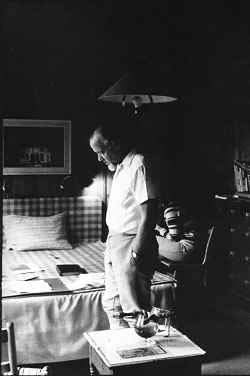


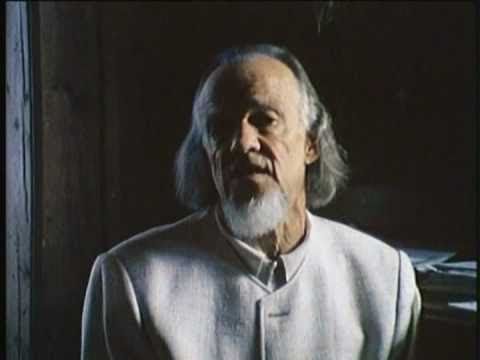


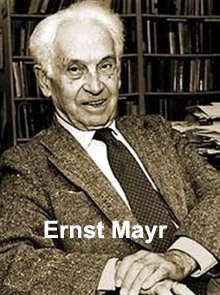

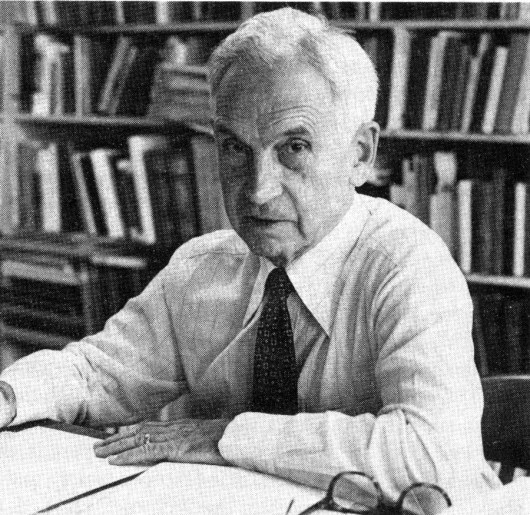


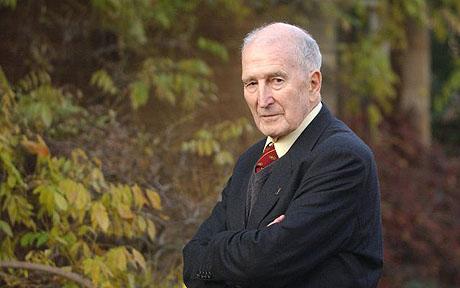


 The Daily Hatch


