Category Archives: Atheists Confronted

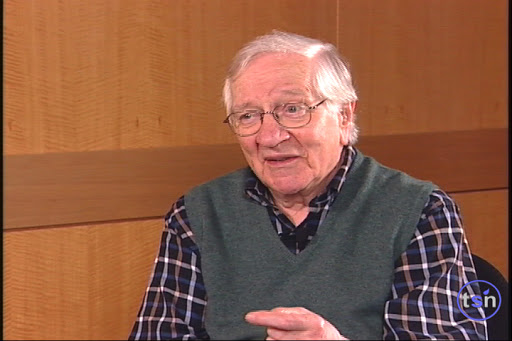
RESPONDING TO HARRY KROTO’S BRILLIANT RENOWNED ACADEMICS!! (Pausing to look at the life of Steven Weinberg who was one of my favorite authors!) Part 169F Letter I mailed to Dr. Weinberg on 9-28-15 about Michael Polanyi

The Incredible Steven Weinberg (1933-2021) – Sixty Symbols

On the Shoulders of Giants: Steven Weinberg and the Quest to Explain the…

Steven Weinberg Discussion (1/8) – Richard Dawkins

—-

Whatever Happened To The Human Race? (2010) | Full Movie | Michael Hordern

——

The Bill Moyers Interview – Steven Weinberg

How Should We Then Live (1977) | Full Movie | Francis Schaeffer | Edith …

Steven Weinberg Discussion (2/8) – Richard Dawkins

RESPONDING TO HARRY KROTO’S BRILLIANT RENOWNED ACADEMICS!!
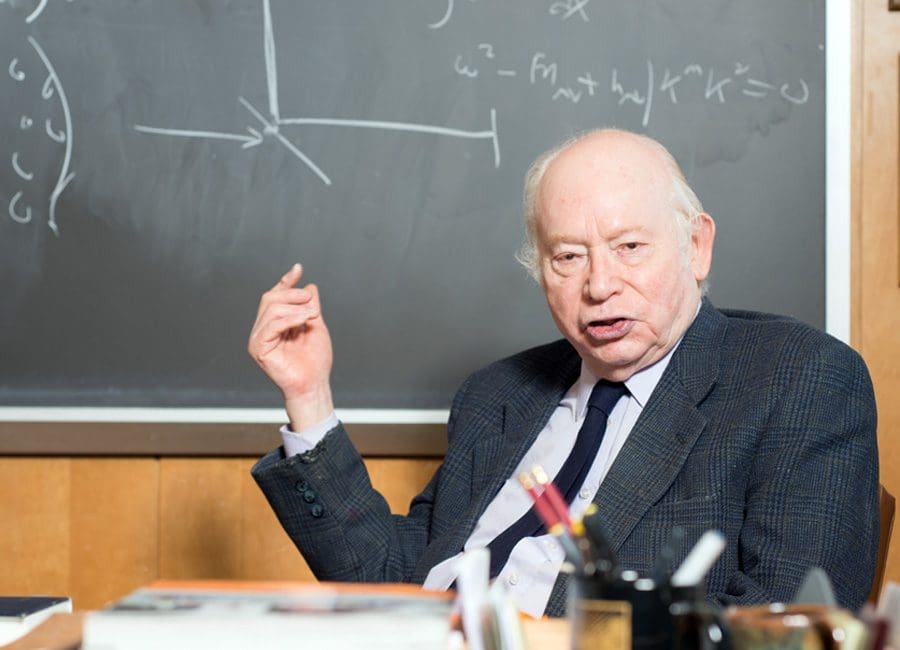
Steven Weinberg – Dreams of a Final Theory

Steven Weinberg Discussion (3/8) – Richard Dawkins

Steven Weinberg, Author

How Should We Then Live | Season 1 | Episode 6 | The Scientific Age

—-

Steven Weinberg Discussion (4/8) – Richard Dawkins

I am grieved to hear of the death of Dr. Steven Weinberg who I have been familiar with since reading about him in 1979 in WHATEVER HAPPENED TO THE HUMAN RACE? by Dr. C. Everett Koop and Francis Schaeffer. I have really enjoyed reading his books and DREAMS OF A FINAL REALITY and TO EXPLAIN THE WORLD were two of my favorite!

C. Everett Koop
C. Everett Koop, 1980s.jpg

—-

Steven Weinberg Discussion (5/8) – Richard Dawkins

Francis Schaeffer : Reclaiming the World part 1, 2

The Atheism Tapes – Steven Weinberg [2/6]

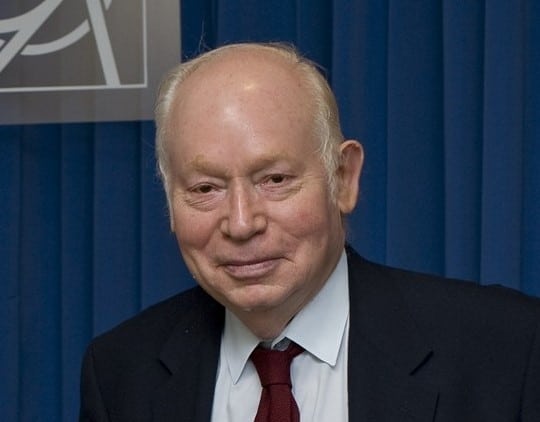
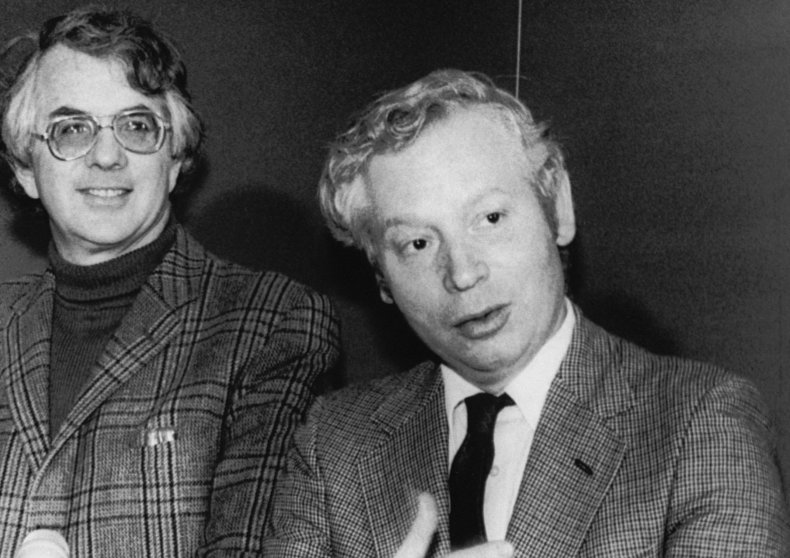
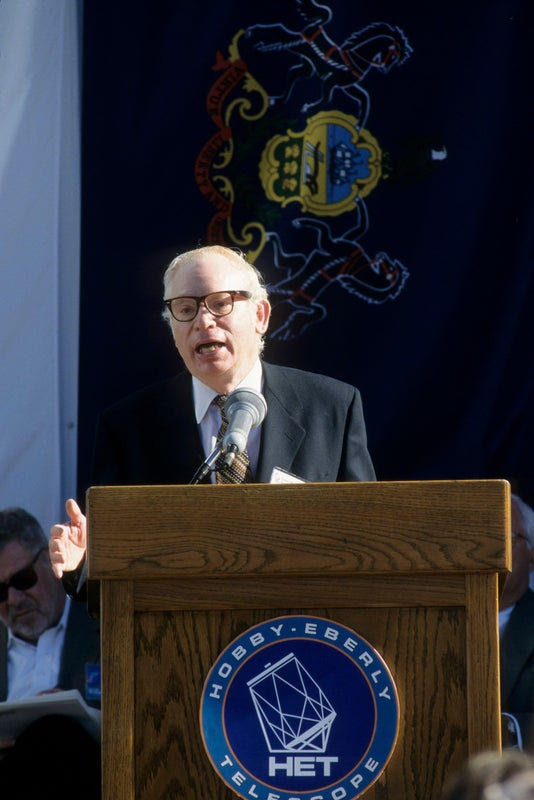
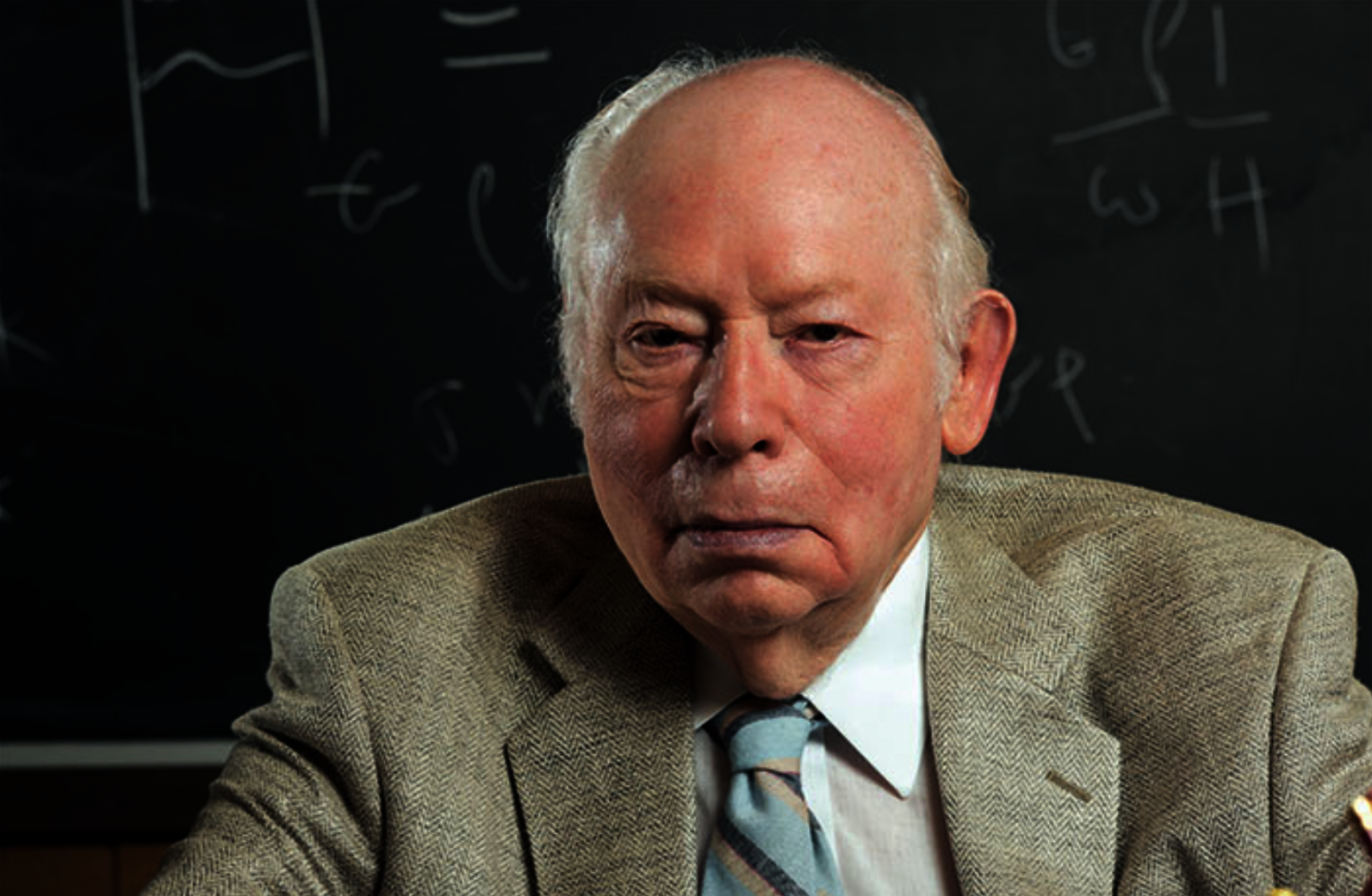
Steven WeinbergParticle pioneer: Steven Weinberg’s work became a cornerstone of the Standard Model of particle physics. (Courtesy: CERN/Maximilien Brice)The US physicist Steven Weinberg, who shared the 1979 Nobel Prize for Physics for his theoretical contributions to the Standard Model of particle physics, died on 23 July aged 88. In the 1960s Weinberg’s work was instrumental in understanding the weak interaction in particle physics, which is best known for its role in nuclear decay. He shared the 1979 Nobel prize equally with Sheldon Glashow and Abdus Salam.

Born in New York on 3 May 1933, Weinberg attended the Bronx High School of Science, which has seen seven former pupils go on to win physics Nobels. In 1954 Weinberg received a degree in physics from Cornell University and after a year at the Institute for Theoretical Physics in Copenhagen (now the Niels Bohr Institute), he returned to the US to compete his PhD at Cornell University, graduating in 1957.

After a stint at Columbia University, in 1959 Weinberg went to the University of California, Berkeley, before heading to Harvard Univeristy in 1966. A year later, Weinberg became a visiting professor at the Massachusetts Institute of Technology where he carried out much of his pioneering work in unifying the weak and electromagnetic interaction.

Unifying forces

In 1967, at the age of 34, Weinberg published his groundbreaking work. Entitled “A Model of Leptons” and barely three pages long, it became a cornerstone of the Standard Model of particle physics – and one of the most highly-cited papers in physics. The work predicted the existence of the W and Z bosons, which carry the electroweak force, and also theorized that “weak neutral currents” dictated how elementary particles interact with one another.

Working independently to Weinberg, Glashow (who was in the same year group as Weinberg at the Bronx high School), and Salam made their own contributions to the model, which later became known as the Salam-Weinberg theory. However, at the time it was not taken seriously by some in the community because it seemed impossible to subject the theory to the usual “renormalisation” procedure. This meant it generated infinite and therefore meaningless expressions, so it seemed impossible to perform accurate calculations with it.

That particular issue was overcome in 1972 when the Dutch physicists Matinus Veltman and Gerardus ‘t Hooft showed how to carry out this renormalisation and used their theory to make precise calculations of particle properties. A year later and physicists working at the CERN particle-physics lab near Geneva announced the discovery of weak neutral currents — interactions that are governed by the Z boson. In 1979 Glashow, Salam and Weinberg were awarded the Nobel Prize for Physics for “for their contributions to the theory of the unified weak and electromagnetic interaction between elementary particles, including, inter alia, the prediction of the weak neutral current.” The W and Z particles were then detected for the first time in 1983 at CERN.

[Weinberg was] one of the most accomplished scientists of our age, and a particularly eloquent spokesperson for the scientific worldview

John Preskill

In 1973 Weinberg went back to Harvard where he also held a position at the Smithsonian Astrophysical Observatory. In 1982 he moved to the University of Texas at Austin, where he spent the remainder of his career. Weinberg was a vocal advocate for the proposed $4.4bn Superconducting Super Collider – a huge 87.1 km circumference circular collider to be built in Waxahachie, Texas – that failed to receive funding and was cancelled in 1993. He also had a long-time interest in nuclear proliferation and served as a consultant for the US Arms Control and Disarmament Agency.

Book and prizes

Weinberg never retired and worked in many areas of physics throughout his career. One of which was cosmology — an interest that he developed in the 1960s. Weinberg published numerous books including the popular-science account The First Three Minutes (1977), which told the story of the origin of the universe as well as Dreams of a Final Theory (1993), in which he wrote about his belief that physics was on the verge of discovering a theory that would unite physics.

One of his last books —  To Explain the World: the Discovery of Modern Science (2015) – examined the history of physics from the ancient Greeks to the present day. Yet it was criticised by some science historians and philosophers given that it judged the past from the standpoint of the present – known as “Whig interpretation”. Weinberg knew, however, that the book would ruffle feathers telling attendees at the American Physical Society meeting in Baltimore in 2016 that he was “being naughty” with the approach. He added that without the perspective of where we are now, “the story we tell has no point”.

Weinberg unlocked the mysteries of the universe for millions of people, enriching humanity’s concept of nature and our relationship to the world

Jay Hartzell

Weinberg was the recipient of numerous prizes including the National Medal of Science in 1991 and the Benjamin Franklin Medal for Distinguished Achievement in Science in 2004. Last year, he received a Special Breakthrough Prize in Fundamental physics – and with it $3m – for his contributions to physics.

A ‘colossal’ loss

Physicists have voiced their admiration for Weinberg’s work and life. John Preskill from the California Institute of Technology (Caltech), who was supervised by Weinberg as a PhD student at Harvard, says Weinberg’s death is an “immeasurable loss”. “[Weinberg was] one of the most accomplished scientists of our age, and a particularly eloquent spokesperson for the scientific worldview,” adds Preskill. “[He] remained intellectually active to the end.”

READ MORE

A trip through Weinberg’s world

That view is backed by fellow Caltech physicist Sean Carroll who says Weinberg is one of the “best physicists we had; one of the best thinkers of any variety” who “exhibited extraordinary verve and clarity of thought through the whole stretch of a long and productive life.” Brian Greene, from Columbia Univeristy, meanwhile, says that Weinberg had an “astounding ability to see into the deep workings of nature” that “profoundly shaped” our understanding of the universe. “His passing is a colossal loss to science and the world,” adds Greene.

“Weinberg unlocked the mysteries of the universe for millions of people, enriching humanity’s concept of nature and our relationship to the world,” noted Jay Hartzell, president of the University of Texas at Austin, in a statement. “From his students to science enthusiasts, from astrophysicists to public decision makers, he made an enormous difference in our understanding. In short, he changed the world.”

The Story of Francis and Edith Schaeffer

https://youtu.be/DLSzfZszLXM

Steven Weinberg – What Makes the Universe Fascinating?

Letter mailed 9-28-15 Polanyi

September 28, 2015

Professor Steven Weinberg, The University of Texas at Austin, Department of Physics, 1 University Station C1600, Austin, TX 78712-0264

Dear Dr. Weinberg,

In his book WHATEVER HAPPENED TO THE HUMAN RACE? ( which he co-authored with C. Everett Koop) Francis Schaeffer quoted you as seen below:

The Meaningless of All Things

An  overwhelming number of modern thinkers agree that seeing the universe and man from a humanist base leads to meaninglessness, both for the universe and for man – not just mankind in general but for each of us as individuals. Professor Steven Weinberg of Harvard University and the Smithsonian Astrophysical Observatory has written a book entitled The First Three Minutes: A Modern View of the Origin of the Universe (1976). Here he explains, as clearly as probably anyone has ever done, the modern materialistic view of the universe and its origin.
But when his explanation is finished and he is looking down at the earth from an airplane, as Weinberg writes, “It is very hard to realize that this all is just a tiny part of an overwhelmingly hostile universe … [which] has evolved from an unspeakably unfamiliar early condition, and faces a future extinction of endless cold or intolerable heat. The more the universe seems comprehensible, the more it also seems pointless.”86
When Weinberg says that the universe seems more “comprehensible,” he is, of course, referring to our greater understanding of the physical universe through the advance of science. But it is an understanding, notice, within, a materialistic framework, which considers the universe solely in terms of physics and chemistry – simply machinery. Here lies the irony. It is comprehension of a sort, but it is like giving a blind person sight, only to remove anything seeable. As we heard Woody Allen saying earlier, such a view of reality is “absolutely stupefying in its terror, and it renders anyone’s accomplishments meaningless.”
So, to the person who wants to be left alone without explanations for the big questions, we must say very gently, “Look at what you are left alone with.” This is not merely rhetoric. As the decades of this century have slipped by, more and more have said the same thing as Steven Weinberg and Woody Allen. It has become an obvious thing to say. The tremendous optimism of the nineteenth century, which stemmed from the Enlightenment of the eighteenth century, has gradually ebbed away.
If everything “faces a future extinction of endless cold or intolerable heat,” all things are meaningless. This is the first problem, the first form of pollution. The second is just as bad.

Maybe things are not as bleak and you and Woody Allen think. Recently I had the opportunity to come across a very interesting article by Michael Polanyi, LIFE TRANSCENDING PHYSICS AND CHEMISTRY, in the magazine CHEMICAL AND ENGINEERING NEWS, August 21, 1967, and I also got hold of a 1968 talk by Francis Schaeffer based on this article. Polanyi’s son John actually won the 1986 Nobel Prize for Chemistry. This article by Michael Polanyi concerns Francis Crick and James Watson and their discovery of DNA in 1953. Polanyi noted:

Mechanisms, whether man-made or morphological, are boundary conditions harnessing the laws of in
animate nature, being themselves irreducible to those laws. The pattern of organic bases in DNA which functions as a genetic code is a boundary condition irreducible to physics and chemistry. Further controlling principles of life may be represented as a hierarchy of boundary conditions extending, in the case of man, to consciousness and responsibility.

I would like to send you a CD copy of this talk because I thought you may find it very interesting. It includes references to not only James D. Watson, and Francis Crick but also Maurice Wilkins, Erwin Schrodinger, J.S. Haldane (his son was the famous J.B.S. Haldane), Peter Medawar, and Barry Commoner. I WONDER IF YOU EVER HAD THE OPPORTUNITY TO RUN ACROSS THESE MEN OR ANY OF THEIR FORMER STUDENTS?

Below is a portion of the transcript from the CD and Michael Polanyi’s words are in italics while Francis Schaeffer’s words are not:

My account of the situation will seem to oscillate in several directions, and I shall set out, therefore, its stages in order. 

I shall show that:

  1. Commoner’s criteria of irreducibility to physics and chemistry are incomplete; they are necessary but not sufficient conditions of it. 
  2. Machines are irreducible to physics and chemistry. 
  3. By virtue of the principle of boundary control, mechanistic structures of living beings appear to be likewise irreducible. 

4. The structure of DNA, which according to Watson and Crick controls heredity, is not explicable by physics and chemistry. 

5. Assuming that morphological differentiation reflects the information content of DNA, we can prove that the morphology of living beings forms a boundary condition which, as such, is not explicable by physics and chemistry (the suggestion arrived at in the third item). 

Now, from machines let us pass on to books and other means of communication. Nothing is said about the content of a bookby its physical-chemical topography. All  objects conveying information are irreducible to the terms of physics and chemistry. 

I could throw the article away for some of you that understand what DNA is because Polanyi has shot Francis Crick’s theory through the head and its dead. The argument is: Suppose someone describes a book to you and they only describe it in terms of its physical and chemical properties. What then do you know about the information transmitted by the book?Zero!! Somebody could run a chemical analysis of the book but it would carry nothing about the information contained in the book. That is impossible. This is something added to the chemical and physical properties.

Might machines and machine-like aspects of living things not be shown one day to result from the working of physical or chemical laws? 

We can exclude this for machines. Our incapacity to define machines and their functions in terms of physics and chemistry is due to a manifest impossibility, for machines are shaped by man and can never be produced by the spontaneous equilibration of their material. But morphological structures are not shaped by man, could they not grow to maturity by the working of purely physical-chemical laws? 

So he says it is inconceivable for machines but what about the machine-like parts of man.

Such a highly improbable arrangement of particles is not shaped by the forces of physics and chemistry. It constitutes a boundary condition, which as such transcends the laws of physics and chemistry. 

This of course is his big argument.

Laplace thought we would know all that can be known in the world if we knew the course of its atoms. But for this he required a complete map of atomic positions and velocities to start with. Physics is dumb without the gift of boundary conditions, forming its frame; and this frame is not determined by the laws of physics. 

Polanyi says here you need to know these boundary conditions and without this physics is dumb and the frame is not determined by the laws of physics. There is something else in the structure of what is there. Thinking of my constant emphasis on Jean Paul Sartre’s statement “the basic philosophic question is not that something is there rather than nothing being there.”

Then Albert Einstein’s statement “the universe is like a well formulated word puzzle and only one word fits.” The world has a form but it is so definite that it is like a well formulated word puzzle. Two steps in the structure of the universe. First,something is there that must be explained. Second, the niceness of its form and its order.

What Polanyi is saying is if you are going to understand what is there you must not only understand merely the chemical and physical laws but you have to be faced with the boundary conditions which constitutes the form. Do you understand? For some of you this may be a little abstract but it won’t be abstract if you get into a discussion with your university friends if you can really get a hold of it.

The boundary conditions of the physical-chemical changes taking place in a machine are the structual and operational principles of the machine. We say therefore that the laws of inanimate nature operate in a machine under the control of operational principles that constitute (or determine) the boundaries. Such a system is clearly under dual control. 

In the machine made by man you have a dual control. Firstly, the devices of engineering, that is how you are going to make it. For instance, your plans for making a bridge or watch. Secondly, the laws of natural science. The laws of physics and chemistry and the material you use to make the bridge or watch.

________

Thank you for your time. I know how busy you are and I want to thank you for taking the time to read this letter.

Sincerely,

Everette Hatcher,

P.O. Box 23416, Little Rock, AR 72221, United States, cell ph 501-920-5733, everettehatcher@gmail.com

_________

XXXXXXXXXXXXXXXXXXXXXXX

I saw your interview on CLOSER TO TRUTH and that prompted me to write you today. Let me start off by saying that this is not the first time that I have written you. Earlier I shared several letters of correspondence I had with Carl Sagan, and Antony Flew. Both men were strong believers in evolution as you are today. Instead of talking to you about their views today I wanted to discuss the views of you and Charles Darwin. Today I heard a radio commentary on the  SEARCH FOR EXTRATERRESTRIAL INTELLIGENCE (SETI) program and I wanted to talk to you about that today among other things.

Without a personal God in the picture, is man just a machine without an ultimate purpose to his life and the only alternative is nihilism? Did Charles Darwin in the 1800’s and the Beatles in the 1960’s grapple with big questions like this one?

Francis Schaeffer talked about the views of the Beatles and Charles Darwin a lot and since you  have taken an interest in music and science I thought you would be interested in these thoughts of Schaeffer.

NOT MANY PEOPLE HAVE THOUGHT ABOUT THE FACT THAT THE PICTURE ON THE COVER OF SGT. PEPPER’S LONELY HEARTS CLUB BAND IS THE BEATLES’ GRAVE SITE.  In the article Philosophy and its Effect on Society Robert A. Sungenis (who was a personal friend of Schaeffer) tells us:

On the front cover are all the famous “Lonely Hearts” of the world who also could not find answers to life with reason and rationality, resorting to the existential leap into the dark…They are all viewing the burial scene of the Beatles, which, in the framework we are using here, represents the passing of idealistic innocence and the failure to find a rational answer and meaning to life, an answer to love, purpose, significance and morals. They instead were leaping into the irrational, whether it was by drugs, the occult, suicide, or the bizarre.

William Lane Craig observed that BERTRAND RUSSELL wrote that we must build our lives upon “the firm foundation of unyielding despair.” and also that Francis Schaeffer noted:

Modern man resides in a two-story universe. In the lower story is the finite world without God; here life is absurd, as we have seen. In the upper story are meaning, value, and purpose. Now modern man lives in the lower story because he believes there is no God. But he cannot live happily in such an absurd world; therefore, he continually makes leaps of faith into the upper story to affirm meaning, value, and purpose, even though he has no right to, since he does not believe in God. Modern man is totally inconsistent when he makes this leap, because these values cannot exist without God, and man in his lower story does not have God.

Charles Darwin had a very interesting reaction late in his life to the possibility that we live in an absurd universe and that was he blamed science for causing him to lose his aesthetic tastes and I read that in his biography ( Charles Darwin: his life told in an autobiographical chapter, and in a selected series of his published letters.). I am going to quote some of Charles Darwin’s own words and then include the comments of Francis Schaeffer on those words. I have also enclosed a CD with two messages from Adrian Rogers and Bill Elliff concerning Darwinism.

 CHARLES DARWIN’S AUTOBIOGRAPHY. Addendum. Written May 1st, 1881 [the year before his death].

“Up to the age of thirty, or beyond it, poetry of many kinds, such as the works of Milton, Coleridge, and Shelley, gave me great pleasure, I have also said that formerly pictures gave me considerable, and music very great delight. But now for many years I cannot endure to read a line of poetry: I have tried lately to read Shakespeare, and found it so intolerably dull that it nauseated me. I have also almost lost my taste for pictures or music….My mind seems to have become a kind of machine for grinding general laws out of large collections of facts, but why this should have caused the atrophy of that part of the brain alone, on which the higher tastes depend, I cannot conceive….The loss of these tastes is a loss of happiness.”

Francis Schaeffer commented:

This is the old man Darwin writing at the end of his life. What he is saying here is the further he has gone on with his studies the more he has seen himself reduced to a machine as far as aesthetic things are concerned. I think this is crucial because as we go through this we find that his struggles and my sincere conviction is that he never came to the logical conclusion of his own position, but he nevertheless in the death of the higher qualities as he calls them, art, music, poetry, and so on, what he had happen to him was his own theory was producing this in his own self just as his theories a hundred years later have produced this in our culture. 

The Beatles tried to escape from reason by turning to drugs. In the book HOW SHOULD WE THEN LIVE?, Schaeffer observed, “This emphasis on hallucinogenic drugs brought with it many rock groups–for example, Cream, Jefferson Airplane, Grateful Dead, Incredible String Band, Pink Floyd, and Jimi Hendrix. Most of their work was from 1965-1968. The Beatles’  SERGEANT PEPPER’S LONELY HEART S CLUB BAND (1967) also fits here. This disc is a total unity, not just an isolated series of individual songs, and for a time it became the rallying cry for young people throughout the world. As a whole, this music was the vehicle to carry the drug culture and the mentality which went with it across frontiers which were almost impassible by other means of communication.”

SERGEANT PEPPER’S LONELY HEART S CLUB BAND not only dealt with drugs but also with death. In the TELEGRAPH in Nicky Browne’s obit it was noted that “Paul McCartney told interviewers that he took LSD for the first time with Tara Browne.” Wikipedia records, “The Honourable Tara Browne (4 March 1945 – 18 December 1966) was a young London socialite and heir to the Guinness fortune and was the son of Dominick Browne, 4th Baron Oranmore and Browne, a member of the House of Lords since 1927 who later became famous for having served in that house longer than any other peer…According to some sources, Tara was the inspiration for the Beatles song “A Day in the Life“.  He sat in on the making of the Beatles record ‘Revolver’.

On 17 January 1967 John Lennon, a friend of Browne’s, was composing music at his piano whilst idly reading London’s Daily Mail and happened upon the news of the coroner’s verdict into Browne’s death. He worked the story into the song “A Day in the Life“, later released on the album Sgt. Pepper’s Lonely Hearts Club Band. The second verse features the following lines:

He blew his mind out in a car, He didn’t notice that the lights had changed, A crowd of people stood and stared, They’d seen his face before, Nobody was really sure, If he was from the House of Lords.

According to Lennon, in his 1980 interview with Playboy magazine, “I was reading the paper one day and I noticed two stories. One was the Guinness heir who killed himself in a car. That was the main headline story. He died in London in a car crash.”

A side note about Tara Browne is that in  Paris his social circle was the likes of Samuel Beckett, Salvador Dali, and Jean Cocteau. Samuel Beckett had a lot to say on this issue of man’s significance as William Lane Craig has noted, “If each individual person passes out of existence when he dies, then what ultimate meaning can be given to his life? Does it really matter whether he ever existed at all? It might be said that his life was important because it influenced others or affected the course of history. Twentieth-century man came to understand this. Read Waiting for Godot by Samuel Beckett. During this entire play two men carry on trivial conversation while waiting for a third man to arrive, who never does. Our lives are like that, Beckett is saying; we just kill time waiting—for what, we don’t know.”

IN SPITE OF ALL THIS MANY SECULARISTS HAVE ADOPTED WHAT I CALL “EVOLUTIONARY OPTIMISTIC HUMANISM” and even in the 19th century Charles Darwin in his autobiography was touting the same product as we see today!!!!

Francis Darwin noted, “passages which here follow are extracts, somewhat abbreviated, from a part of the Autobiography, written in 1876, in which my father gives the history of his religious views:”

“Believing as I do that man in the distant future will be a far more perfect creature than he now is,”

FRANCIS SCHAEFFER COMMENTED:

Now you have now the birth of Julian Huxley’s evolutionary optimistic humanism already stated by Darwin. Darwin now has a theory that man is going to be better. If you had lived at 1860 or 1890 and you said to Darwin, “By 1970 will man be better?” He certainly would have the hope that man would be better as Julian Huxley does today. Of course, I wonder what he would say if he lived in our day and saw what has been made of his own views in the direction of (the mass murder) Richard Speck (and deterministic thinking of today’s philosophers). I wonder what he would say. So you have the factor, already the dilemma in Darwin that I pointed out in Julian Huxley and that is evolutionary optimistic humanism rests always on tomorrow. You never have an argument from the present or the past for evolutionary optimistic humanism.

You can have evolutionary nihilism on the basis of the present and the past. Every time you have someone bringing in evolutionary optimistic humanism it is always based on what is going to be produced tomorrow. When is it coming? The years pass and is it coming? Arthur Koestler doesn’t think it is coming. He sees lots of problems here and puts forth for another solution.

WHAT EVOLUTIONISTS LIKE YOURSELF ARE LEFT WITH IS ONLY THE HOPE OF “biological continuity and increased biological complexity” AS DARWIN AND SCHAEFFER POINT OUT BELOW. 

Why are you searching so hard for intelligent life? The answer is pretty clear. We were created in God’s image and we will feel empty until we reunite with him. Carolyn Porco (herself a big Beatles fan) has pointed out that secularists have to compete with the notion that we are made in the image of God by a personal creator for a lasting purpose in this life and that is why secularists need to offer an alternative. My response is that like Darwin everyone must struggle with the knowledge deep down in their heart that we do want the answers to the big questions of life that secularism can not give us.  The message of the movie CONTACT is basically about mankind trying to reach out to other beings so we can ask them the big questions. The scientist Blaise Pascal summarized it up best when he said, “There is a God shaped vacuum in the heart of every man which cannot be filled by any created thing, but only by God, the Creator, made known through Jesus.” Just today I heard this radio commentary from Eric Metaxas on the SETI PROGRAM.

It’s been fifty years and E.T. still hasn’t called. So maybe it’s time we give him a call? Although some don’t think that’s such a great idea.

Eric Metaxas

When we step out at night and look up at the stars, we can’t help wondering: Is there someone else out there? And if there is, would these extraterrestrials be benign and curious like the musical aliens in “Close Encounters of the Third Kind,” or would they be malicious and hostile like the Klingons of “Star Trek”?

Well, ever since stargazer Frank Drake conducted his first scan of the heavens in 1960, that’s the question he and other scientists have been asking. Drake, the chairman emeritus of the Search for Extraterrestrial Intelligence or SETI, was one of the first to point a radio telescope toward space and listen for the tell-tale signals of intelligent life.

Like astronomer and “Cosmos” host Carl Sagan, Drake developed an equation for estimating the number of civilizations on other planets in our galaxy. And like Sagan’s estimates, his were astronomical: Billions of planets should have life, he reasoned, and of those, millions ought to have evolved intelligent beings. And so the researchers at SETI turned their radio dishes skyward, and listened.

Of course, as I write in my book “Miracles,” Carl Sagan (and hence Drake) got it wrong. The probability for life is astronomical all right—astronomically IM-probable, since we now know there are more than 150 absolutely-necessary and rare conditions that must be met to sustain life. So it’s no wonder that instead of a cacophony of radio signals from intelligent life somewhere out there, all we’re hearing is the silence of the stars.

But some scientists insist that just because we haven’t heard from E.T. doesn’t mean he’s not out there. So now they’re proposing a radical new strategy. It’s called “Active SETI,” and as Joel Achenbach explains in The Washington Post, its goal would be to “boldly announce our presence and try to get the conversation started.”

Rather than just listening for signals from space, scientists would beam messages at stars that they considered good candidates for life and they’d wait for potential civilizations orbiting those stars to respond. Maybe within a few hundred years, we would finally discover we aren’t alone in the universe.

But not everyone likes that idea. A petition signed by 28 influential scientists warns of the potential danger of Active SETI. They’ve seen the movie, or the movies, I should say, and they know it doesn’t end well for us earthlings. Their concern is whether these ETI’s will be benign or hostile: good point.

Frank Drake himself thinks Active SETI is a waste of time. We’ve been leaking radio signals into space since before the days of “I Love Lucy,” he points out. Anyone in our galactic neighborhood with an antenna already knows we’re here.

Hearing all of this talk of aliens, I can’t help but think of Walker Percey’s brilliant book, “Lost in the Cosmos.” In it, he observes that the more we learn about the universe, the lonelier we become. And he’s right. Even the most rational scientists have poured untold treasure, time, and talent into the hunt for extraterrestrial neighbors—with nothing to reward their efforts.

One thing we do know, we humans long to know we’re not alone. And the good news, as Christians know, is that we’re not! We aren’t “lost in the cosmos,” but we are the centerpiece of a grand plan that culminated in a visitation by Someone from beyond our universe.

In Darwin’s 1876 Autobiography he noted:

“…it is an intolerable thought that he and all other sentient beings are doomed to complete annihilation after such long-continued slow progress. To those who fully admit the immortality of the human soul, the destruction of our world will not appear so dreadful.”

Francis Schaeffer commented:

Here you feel Marcel Proust and the dust of death is on everything today because the dust of death is on everything tomorrow. Here you have the dilemma of Nevil Shute’s ON THE BEACH. If it is true that all we have left is biological continuity and increased biological complexity, which is all we have left in Darwinism here, or with many of the modern philosophers, then you can’t stand Shute’s ON THE BEACH. Maybe tomorrow at noon human life may be wiped out. Darwin already feels the tension, because if human life is going to be wiped out tomorrow, what is it worth today? Darwin can’t stand the thought of death of all men. Charlie Chaplin when he heard there was no life on Mars said, “I’m lonely.”

You think of the Swedish Opera (ANIARA) that is pictured inside a spaceship. There was a group of men and women going into outer space and they had come to another planet and the singing inside the spaceship was normal opera music. Suddenly there was a big explosion and the world had blown up and these were the last people left, the only conscious people left, and the last scene is the spaceship is off course and it will never land, but will just sail out into outer space and that is the end of the plot. They say when it was shown in Stockholm the first time, the tough Swedes with all their modern  mannishness, came out (after the opera was over) with hardly a word said, just complete silence.

Darwin already with his own position says he CAN’T STAND IT!! You can say, “Why can’t you stand it?” We would say to Darwin, “You were not made for this kind of thing. Man was made in the image of God. Your CAN’T- STAND- IT- NESS is screaming at you that your position is wrong. Why can’t you listen to yourself?”

You find all he is left here is biological continuity, and thus his feeling as well as his reason now is against his own theory, yet he holds it against the conclusions of his reason. Reason doesn’t make it hard to be a Christian. Darwin shows us the other way. He is holding his position against his reason.

These words of Darwin ring in my ear, “…it is an intolerable thought that he and all other sentient beings are doomed to complete annihilation after such long-continued slow progress…” . Schaeffer rightly noted, “Maybe tomorrow at noonhuman life may be wiped out. Darwin already feels the tension, because if human life is going to be wiped out tomorrow, what is it worth today? Darwin can’t stand the thought of death of all men.” IN OTHER WORDS ALL WE ARE IS DUST IN THE WIND.  I sent you a CD that starts off with the song DUST IN THE WIND by Kerry Livgren of the group KANSAS which was a hit song in 1978 when it rose to #6 on the charts because so many people connected with the message of the song. It included these words, “All we do, crumbles to the ground though we refuse to see, Dust in the Wind, All we are is dust in the wind, Don’t hang on, Nothing lasts forever but the Earth and Sky, It slips away, And all your money won’t another minute buy.”

Kerry Livgren himself said that he wrote the song because he saw where man was without a personal God in the picture. Solomon pointed out in the Book of Ecclesiastes that those who believe that God doesn’t exist must accept three things. FIRST, death is the end.  SECOND, chance and time are the only guiding forces in this life.  FINALLY, power reigns in this life and the scales are never balanced. The Christian can  face death and also confront the world knowing that it is not determined by chance and time alone and finally there is a judge who will balance the scales.

Both Kerry Livgren and the bass player Dave Hope of Kansas became Christians eventually. Kerry Livgren first tried Eastern Religions and Dave Hope had to come out of a heavy drug addiction. I was shocked and elated to see their personal testimony on The 700 Club in 1981 and that same  interview can be seen on You Tube today. Livgren lives in Topeka, Kansas today where he teaches “Diggers,” a Sunday school class at Topeka Bible ChurchDAVE HOPE is the head of Worship, Evangelism and Outreach at Immanuel Anglican Church in Destin, Florida.

The answer to find meaning in life is found in putting your faith and trust in Jesus Christ. The Bible is true from cover to cover and can be trusted.

Thank you again for your time and I know how busy you are.

Everette Hatcher, everettehatcher@gmail.com, http://www.thedailyhatch.org, cell ph 501-920-5733, Box 23416, LittleRock, AR 72221, United States

_________ 

You can hear DAVE HOPE and Kerry Livgren’s stories from this youtube link:

On November 21, 2014 I received a letter from Nobel Laureate Harry Kroto and it said:

…Please click on this URL http://vimeo.com/26991975

and you will hear what far smarter people than I have to say on this matter. I agree with them.

Harry Kroto

_________________

Below you have picture of Dr. Harry Kroto:

______________

I have attempted to respond to all of Dr. Kroto’s friends arguments and I have posted my responses one per week for over a year now. Here are some of my earlier posts:

Sir David AttenboroughMark Balaguer, Patricia ChurchlandAaron CiechanoverNoam Chomsky,Alan DershowitzHubert Dreyfus, Bart EhrmanIvar Giaever , Roy GlauberRebecca GoldsteinDavid J. Gross,  Brian Greene, Susan GreenfieldAlan Guth, Jonathan HaidtHermann HauserRoald Hoffmann,  Bruce HoodHerbert Huppert,  Gareth Stedman JonesShelly KaganStuart Kauffman,  Lawrence KraussHarry Kroto, Elizabeth Loftus,  Alan MacfarlanePeter MillicanMarvin MinskyLeonard Mlodinow,  Yujin NagasawaDouglas Osheroff,   Saul PerlmutterHerman Philipse,  Robert M. PriceLisa RandallLord Martin Rees,  Oliver SacksMarcus du SautoySimon SchafferJ. L. Schellenberg,   Lee Silver Peter Singer,  Walter Sinnott-ArmstrongRonald de Sousa, Victor StengerBarry Supple,   Leonard Susskind, Raymond TallisNeil deGrasse Tyson,  .Alexander Vilenkin, Sir John WalkerFrank WilczekSteven Weinberg, and  Lewis Wolpert,

____________________________

In  the 1st video below in the 50th clip in this series are his words. 

50 Renowned Academics Speaking About God (Part 1)

Another 50 Renowned Academics Speaking About God (Part 2)

A Further 50 Renowned Academics Speaking About God (Part 3)

_________________________________

Steven Weinberg: To Explain the World

I have a friend — or had a friend, now dead — Abdus Salam, a very devout Muslim, who was trying to bring science into the universities in the Gulf states and he told me that he had a terrible time because, although they were very receptive to technology, they felt that science would be a corrosive to religious belief, and they were worried about it… and damn it, I think they were right. It is corrosive of religious belief, and it’s a good thing too.

Steven Weinberg

________

Related posts:

FRANCIS SCHAEFFER ANALYZES ART AND CULTURE Part 53 THE BEATLES (Part E, Stg. Pepper’s and John Lennon’s search in 1967 for truth was through drugs, money, laughter, etc & similar to King Solomon’s, LOTS OF PICTURES OF JOHN AND CYNTHIA) (Feature on artist Yoko Ono)

The John Lennon and the Beatles really were on a long search for meaning and fulfillment in their lives  just like King Solomon did in the Book of Ecclesiastes. Solomon looked into learning (1:12-18, 2:12-17), laughter, ladies, luxuries, and liquor (2:1-2, 8, 10, 11), and labor (2:4-6, 18-20). He fount that without God in the picture all […]

FRANCIS SCHAEFFER ANALYZES ART AND CULTURE Part 52 THE BEATLES (Part D, There is evidence that the Beatles may have been exposed to Francis Schaeffer!!!) (Feature on artist Anna Margaret Rose Freeman )

______________   George Harrison Swears & Insults Paul and Yoko Lucy in the Sky with Diamonds- The Beatles The Beatles:   I have dedicated several posts to this series on the Beatles and I don’t know when this series will end because Francis Schaeffer spent a lot of time listening to the Beatles and talking […]

FRANCIS SCHAEFFER ANALYZES ART AND CULTURE Part 51 THE BEATLES (Part C, List of those on cover of Stg.Pepper’s ) (Feature on artist Raqib Shaw )

  The Beatles in a press conference after their Return from the USA Uploaded on Nov 29, 2010 The Beatles in a press conference after their Return from the USA. The Beatles:   I have dedicated several posts to this series on the Beatles and I don’t know when this series will end because Francis […]

FRANCIS SCHAEFFER ANALYZES ART AND CULTURE Part 50 THE BEATLES (Part B, The Psychedelic Music of the Beatles) (Feature on artist Peter Blake )

__________________   Beatles 1966 Last interview I have dedicated several posts to this series on the Beatles and I don’t know when this series will end because Francis Schaeffer spent a lot of time listening to the Beatles and talking and writing about them and their impact on the culture of the 1960’s. In this […]

FRANCIS SCHAEFFER ANALYZES ART AND CULTURE Part 49 THE BEATLES (Part A, The Meaning of Stg. Pepper’s Cover) (Feature on artist Mika Tajima)

_______________ The Beatles documentary || A Long and Winding Road || Episode 5 (This video discusses Stg. Pepper’s creation I have dedicated several posts to this series on the Beatles and I don’t know when this series will end because Francis Schaeffer spent a lot of time listening to the Beatles and talking and writing about […]

FRANCIS SCHAEFFER ANALYZES ART AND CULTURE PART 48 “BLOW UP” by Michelangelo Antonioni makes Philosophic Statement (Feature on artist Nancy Holt)

_______________ Francis Schaeffer pictured below: _____________________ I have included the 27 minute  episode THE AGE OF NONREASON by Francis Schaeffer. In that video Schaeffer noted,  ” Sergeant Pepper’s Lonely Hearts Club Band…for a time it became the rallying cry for young people throughout the world. It expressed the essence of their lives, thoughts and their feelings.” How Should […]

FRANCIS SCHAEFFER ANALYZES ART AND CULTURE Part 47 Woody Allen and Professor Levy and the death of “Optimistic Humanism” from the movie CRIMES AND MISDEMEANORS Plus Charles Darwin’s comments too!!! (Feature on artist Rodney Graham)

Crimes and Misdemeanors: A Discussion: Part 1 ___________________________________ Today I will answer the simple question: IS IT POSSIBLE TO BE AN OPTIMISTIC SECULAR HUMANIST THAT DOES NOT BELIEVE IN GOD OR AN AFTERLIFE? This question has been around for a long time and you can go back to the 19th century and read this same […]

FRANCIS SCHAEFFER ANALYZES ART AND CULTURE PART 46 Friedrich Nietzsche (Featured artist is Thomas Schütte)

____________________________________ Francis Schaeffer pictured below: __________ Francis Schaeffer has written extensively on art and culture spanning the last 2000years and here are some posts I have done on this subject before : Francis Schaeffer’s “How should we then live?” Video and outline of episode 10 “Final Choices” , episode 9 “The Age of Personal Peace and Affluence”, episode 8 […]

FRANCIS SCHAEFFER ANALYZES ART AND CULTURE Part 45 Woody Allen “Reason is Dead” (Feature on artists Allora & Calzadilla )

Love and Death [Woody Allen] – What if there is no God? [PL] ___________ _______________ How Should We then Live Episode 7 small (Age of Nonreason) #02 How Should We Then Live? (Promo Clip) Dr. Francis Schaeffer 10 Worldview and Truth Two Minute Warning: How Then Should We Live?: Francis Schaeffer at 100 Francis Schaeffer […]

FRANCIS SCHAEFFER ANALYZES ART AND CULTURE Part 44 The Book of Genesis (Featured artist is Trey McCarley )

___________________________________ Francis Schaeffer pictured below: ____________________________ Francis Schaeffer “BASIS FOR HUMAN DIGNITY” Whatever…HTTHR Dr. Francis schaeffer – The flow of Materialism(from Part 4 of Whatever happened to human race?) Dr. Francis Schaeffer – The Biblical flow of Truth & History (intro) Francis Schaeffer – The Biblical Flow of History & Truth (1) Dr. Francis Schaeffer […]

__
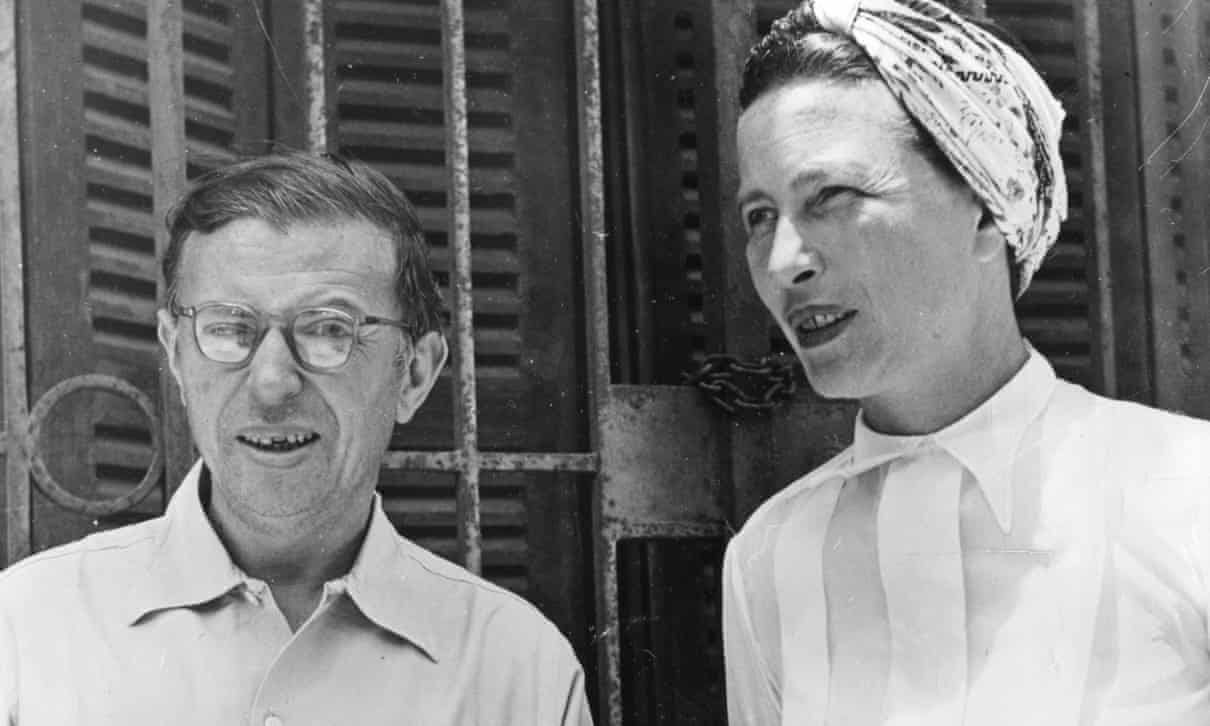
COMMENTS FROM 1966 FROM FRANCIS SCHAEFFER on a book by Simone de Beauvoir entitled A VERY EASY DEATH (title is ironic because her mother’s death was not an easy death in her daughter’s eyes!)

_____________________

Today I read this moving article THE LONG GOODBYE by Lawrence Krauss about his dying mother. I will be 61 years next month and I have not lost either one of my parents yet. I can’t imagine what Dr Krauss is going through. Like Dr Krauss I have a mother that I treasure.

Here is the most intriguing part of this moving article:

Yet there is something strange in all of this. I am given a handbook and a tutorial on what to expect as we reach the end…If you are uncomfortable reading this, I am equally uncomfortable writing it. Why do we feel so compelled to allow death by ‘natural causes’? Death is one more insult that nature throws at us. There is very little that is dignified about the whole thing, because nature doesn’t care if we are comfortable, happy, or in pain.

This reminds me of the words of Simone de Beauvoir in her book A VERY EASY DEATH (title is ironic because her mother’s death was not an easy death in her daughter’s eyes)!

COMMENTS FROM 1966 FROM FRANCIS SCHAEFFER: 

(Francis Schaeffer pictured below)

Francis Schaeffer.jpg

The book A VERY EASY DEATH, 106 pages $3.95, was written by Simone de Beauvoir, who I have a real admiration for in a certain way because she has courage to play the game pretty far along and in this sense and for her clear brilliance, I also have admiration, for you must remember that Sartre and she when they graduated from the Sorbonne, Sartre was first in the class and he was 2nd and she has been his mistress for years.

I think this very recent book A VERY EASY DEATH touches me as much as anything, because in it she tells her reactions to the death of her mother. Her mother died in a hospital and I have a review here from NEWSWEEK, May 16, 1966 on this book:

To the professionals, the doctors and nurses going about their routine tasks this was only another death in the endless procession. Indeed, as these things go it was almost exemplary, relatively quick, relatively painless. The nurse could hardly understand the sobbing [of Simone]…A nurse could hardly understand the sobbing. “But Madam,” she said, a bit perplexed, “I assure you it was a very easy death.” The hospital was cozy and the attendants first rate. Not everyone could have afforded such [good] care.

In the end Madam de Beauvoir is not reconciled to death, her mother’s or anyone else’s 

Simone de Beauvoir wrote, You do not die from being born, nor from having lived, nor from old age. You die from something.

How right she is. She senses the abnormality of physical death. She senses here that you talk theoretically about absurdity as she and Sartre and the others have endlessly at the cafe tables but it looks different when someone you love dies. Now absurdity becomes sharp and becomes overwhelming. She is quite right you die of something. She understands that death is really abnormal.

Simone de Beauvoir writes, “There is no such thing as a natural death: nothing that happens to a man is ever natural, since his presence calls the world into question. All men must die: but for every man his death is an accident and, even if he knows it and consents to it, an unjustifiable violation” De Beauvoir,1 pp 105–6).

This is a totally Christian way to look at death. This is a Christian way to look at death. Death is an enemy, and that is what the Bible says. Simone de Beauvoir realizes here is an enemy to which we all lose. It becomes almost a symbol of total absurdity. The life that is lived and then has died can be seen in its abnormality in death as a sign board of the absurdity of man. Up to that point it could be a Christian statement as well as an existential one.

In Francis Schaeffer’s book ESCAPE FROM REASON he tells why we live in an abnormal world:

“the True Christian position is that, in space and time and history, there was an unprogrammed man who made a choice, and actually rebelled against God…without Christianity’s answer that God made a significant man in a significant history with evil being the result of Satan’s and then man’s historic space-time revolt, there is no answer but to accept Baudelaire’s answer [‘If there is a God, He is the devil’] with tears. Once the historic Christian answer is put away, all we can do is to leap upstairs and say that against all reason God is good.”(pg. 81)

Blog

The Family Project > Blog > The Fall: Four Deaths

The Fall: Four Deaths

The Entombment

by Glenn Stanton

Most Christians – and even many non-believers – know that the Fall brought death to mankind and the earth. But as Francis Schaeffer explains in his book Genesis in Space and Time, there were actually four kinds of death introduced into creation at the Fall. As a result, we all face and are crippled by them:

  1. Death between man and God. Man and God are no longer intimate. This alienation is what the rest of God’s story is about – the consequences of it and God’s seemingly unending work to make things right, to make a way for us back to Him through His unending grace.
  2. Death between man and himself. We all have fear. We are insecure. We doubt ourselves and feel shame about who we are and what we do. We often don’t think we are worth loving, either by ourselves or by others. Much of the psychosis that humans suffer is due to their inability to come to terms with and live with themselves. The Fall has created a great chasm there. In fact, the great Christian thinker Blaise Pascal said the primary trouble with man is that he cannot live quietly within himself. He is not comfortable there. He seeks to avoid this with busyness and diversions of every kind.
  3. Death with others. Schaeffer calls this the “sociological separation.” We do not relate with others as we were intended to. We mistrust, we are shy, we use others. These are things the virtuous person must always be mindful of, for they are more natural to us than their opposites.
  4. Death between man and the earth. Being banished from the garden, man’s relationship with the earth and nature now shows the signs of decay. We must struggle with and against it to get what we need and what had originally been designed to come naturally. We harvest by the sweat of our brow and ache in our shoulders, arms and backs. Our relationship to God’s physical creation is deeply marred

Schaeffer beautifully states, “The simple fact is that in wanting to be what man as a creature could not be, man lost what he could be.

But it will not remain this way. The good news of where God’s story is going and His “fix” is found in Revelation 21:5.

.

Glenn Stanton is the director of global family formation studies at Focus on the Family, and the co-author/co-creator of The Family Project, as well as the co-author (w/Leon Wirth) of The Family Projectbook.

From the account in Genesis, we discover that death is something that is abnormal – it was never God’s original intention or design. Death came as a result of the choice of the first human pair to commit sin. Humans were created to live, not to die. Death came as a result of judgment for sin.

Summary

1. In the original creation of God there was no death. Everything was perfect.

2. God warned Adam and Eve that disobedience to His commandment would result in their death.

3. Satan, the tempter, enticed Eve to eat the forbidden fruit.

4. After Adam and Eve ate the forbidden fruit God pronounced judgment upon them. This judgment included death.

5. Death was passed on to all humans as a judgment for the sin of Adam and Eve.

6. Death, therefore, is something abnormal. God created humans to live, not die.

The Long Goodbye

Reflections on my mother’s dying days

My mother is dying.

As I write this, she is resting in front of me on a hospital bed that was delivered to our house. She is beside the beloved fireplace that she has enjoyed warming herself in front of over the past 4 months during which she has been staying with us.

She is comfortable, and every 4 hours we administer a dose of Morphine and Versed to help keep her comfortable (we think), and also shift her periodically so she doesn’t get bed sores. We wet her lips and teeth to help keep them from getting too dry, and change her when necessary. Once a day a group of nurses comes in to clean her and move her, and once a day a Palliative Care Nurse comes in and checks on progress.

I am told that she has perhaps 1-2 days left. We will see. She has been an incredibly strong-willed woman, and her grip is still very strong.

It is hard to believe that the vibrant party girl, who celebrated her 100th birthday this December (as shown in the photo above just before she left for the birthday bash), and who only weeks ago was flirting with her doctor, has come to this.

But such is life…and death.

The support we are getting here is incredible, and everyone’s goal is the same: To make my mother as comfortable as possible in her last days, and to have her experience these in a warm and familiar environment surrounded by family and friends.

Yet there is something strange in all of this. I am given a handbook and a tutorial on what to expect as we reach the end. These include the need for more regular injections of Morphine and Versed to reduce anxious movements and relax her, the need to dab her lips with water to keep them from drying out, and the need to shift her position her regularly. Then, I am told, she is likely to begin to wheeze, as her dehydrated body begins to shut down and something called terminal congestion (aka death rattle) begins. Ending in several long slow breaths.

If you are uncomfortable reading this, I am equally uncomfortable writing it. Why do we feel so compelled to allow death by ‘natural causes’? Death is one more insult that nature throws at us. There is very little that is dignified about the whole thing, because nature doesn’t care if we are comfortable, happy, or in pain.

What is great about being human is that we can overcome what once might have seemed ‘natural’. We can defy nature by creating artificial environments, stare down death in the face by extending life well beyond what was ‘natural’ for early hominids, and strategize about how to avoid and/or defend against all the other ways nature may try to ruin our lives.

Some say that if god had intended us to fly he would have given us wings, but the rest of us get on airplanes. Some have said that the miracle of childbirth is a gift from god, but now formerly barren couples can conceive, not due to any divine act, but due to the skill and technological wizardry of modern medicine.

So why do I sit and watch my mother suffer the indignity of these last days? There is nothing about her existence right now that seems to me to be remotely describable as a favorable quality of life. The drugs she is taken are keeping her as comfortable as can be, I am told, but she has lost complete control of herself and her surrounding.

I walked with my brother as we spoke about these questions the other day. He is very religious. I am most certainly not. Yet I was struck how even with our almost orthogonal worldviews these moral dilemmas were shared.

I understand that there is nothing unique about my situation at the moment, and that everyone has who gone through this experience has had to confront similar questions. My wife has reminded me of this. She had offered several books for me to consult over the past months, as we faced this inevitable end period. But my predilection was, for better or worse, to confront these things as they occurred.

Are we making these decisions—to administer these drugs, for example—for my mother, or for ourselves? Are we making her more comfortable, or are we doing this to make ourselves more comfortable as we watch her body slowly give up its struggle to survive? I don’t know what she is feeling or thinking, even as I stroke her hair and gently caress her, or as I watch her reach out to seemingly try and stop us or balance herself when we shift her position periodically. It is heartbreaking, but the alternative to trying in this way to keep her comfortable and safe would, I think, feel more heartbreaking.

I ponder this as I look at the syringes of Morphine that we administer every 4 hours now, wondering why I haven’t seriously considered just injecting all of them at once. I know I won’t, of course. It is an example of that weird ethical dilemma psychologists have uncovered, often presented as The Trolly Problem. When faced with the option of directing a switch down toward a track on which one person might be standing in order to an oncoming Trolley careening down a track where 10 people are standing, most people say they would redirect the Trolley down the less populated track. Yet, when faced with the option of actively pushing someone off a trestle to somehow cause the Trolley to stop before it killed other people down the track, most people say they would not choose this option.

Action or inaction that might indirectly cause death does not seem to be innately taboo. Directly causing death is. So I will continue here as long as it takes, not actively trying to keep my mother alive, but not actively trying to end her life either. The drugs we are administering may or may not hasten her demise, I don’t know. But I am administering them under the hope that they will also make this period more comfortable, for her, and for those of us who are at her side.

I will have moments alone with her to kiss her forehead and tell her I love her, without having any idea of whether those words mean anything to her at this point. I hope I feel in the end that we will have done whatever we could to help her during these last days, but I suspect a part of me will always wonder if turning these last days into a last day would have been a greater gift to her.

I’ll never know, but I can live with that. Not knowing, after all, is what motivates us to keep exploring the mysteries of the universe, as well as mysteries closer to home. In the meantime, I will keep my mother company.

Is There Evidence for God? William Lane Craig vs Lawrence Krauss

Published on Apr 24, 2012

William Lane Craig debates Lawrence Krauss on the evidence for God. North Carolina State University, Raleigh, North Carolina — March 30, 2011

We welcome your comments in the Reasonable Faith forums:
http://www.reasonablefaith.org/forums

http://www.reasonablefaith.org

______________________________

Dr. Lawrence Krauss pictured below:

Laurence Krauss.JPG

On November 21, 2014 I received a letter from Nobel Laureate Harry Kroto and it said:

…Please click on this URL http://vimeo.com/26991975

and you will hear what far smarter people than I have to say on this matter. I agree with them.

Harry Kroto

__________________________

There are 3 videos in this series and they have statements by 150 scientists and I hope to respond to all of them.  Wikipedia notes Lawrence Maxwell Krauss (born May 27, 1954) is an American theoretical physicist and cosmologist who is Foundation Professor of the School of Earth and Space Exploration at Arizona State University and director of its Origins Project.[2] He is known as an advocate of the public understanding of science, of public policy based on sound empirical data, of scientific skepticism and of science education and works to reduce the impact of superstition and religious dogma in pop culture.[3] He is also the author of several bestselling books, including The Physics of Star Trek and A Universe from Nothing.

______

Dr. Krauss is found in this first clip in the first video below and his quote is found below in this post and my response is after that.

50 Renowned Academics Speaking About God (Part 1)

Another 50 Renowned Academics Speaking About God (Part 2)

A Further 50 Renowned Academics Speaking About God (Part 3)

_______________

I grew up at Bellevue Baptist Church under the leadership of our pastor Adrian Rogers and I read many books by the Evangelical Philosopher Francis Schaeffer and have had the opportunity to contact many of the evolutionists or humanistic academics that they have mentioned in their works. Many of these scholars have taken the time to respond back to me in the last 20 years and some of the names  included are  Ernest Mayr (1904-2005), George Wald (1906-1997), Carl Sagan (1934-1996),  Robert Shapiro (1935-2011), Nicolaas Bloembergen (1920-),  Brian Charlesworth (1945-),  Francisco J. Ayala (1934-) Elliott Sober (1948-), Kevin Padian (1951-), Matt Cartmill (1943-) , Milton Fingerman (1928-), John J. Shea (1969-), , Michael A. Crawford (1938-), Paul Kurtz (1925-2012), Sol Gordon (1923-2008), Albert Ellis (1913-2007), Barbara Marie Tabler (1915-1996), Renate Vambery (1916-2005), Archie J. Bahm (1907-1996), Aron S “Gil” Martin ( 1910-1997), Matthew I. Spetter (1921-2012), H. J. Eysenck (1916-1997), Robert L. Erdmann (1929-2006), Mary Morain (1911-1999), Lloyd Morain (1917-2010),  Warren Allen Smith (1921-), Bette Chambers (1930-),  Gordon Stein (1941-1996) , Milton Friedman (1912-2006), John Hospers (1918-2011), Michael Martin (1932-).Harry Kroto (1939-), Marty E. Martin (1928-),Richard Rubenstein (1924-), James Terry McCollum (1936-), Edward O. WIlson(1929-), Lewis Wolpert (1929), Gerald Holton (1922-),  and  Ray T. Cragun (1976-).

Quote of Lawrence Krauss

“…most scientists don’t think enough about God to know whether they believe in him or not …they don’t think about it enough to even know if they are atheists but the bottom  line is if you look at the universe and study the universe what you will find is that there’s no evidence that we need anything but the laws of physics and the other laws of science to explain everything we see. There’s no evidence that we need any supernatural hand of God.”

________________________

My first response is to recount my correspondence with the famous evolutionist Ernst Mayr (1904-2005) of Harvard. In his letter to me he basically said that there are many chemists and molecular biologists who find the story of gradual evolution of life totally convincing and that he is sticking with them. This is very similar to the approach by Dr. Krauss and it is an appeal to authority in that they are suggesting that we just accept the brilliant scientists’ point of view because they are brilliant scientists and they are smarter than the rest of us.THERE IS A SIMPLE ANSWER THAT I COULD GIVE to both Dr. Mayr and Dr. Krauss which is  a quote from Adrian Rogers:

Did you know that all atheists are not atheists because of intellectual problems? They’re atheists because of moral problems. You say, “But I know some brilliant people who are atheists.” Well, that may be so, but I know some brilliant people who are not. You say, “I know some foolish people who believe in God.” Well, I know everyone who doesn’t believe in God is foolish.

In other words there are brilliant and stupid people on both sides of the fence and it is not an intellectual issue but a moral one. Let’s take a look at the history of science that was handled down to us from Western Europe and take a closer examination of those great men’s religious views and if their religious views were corrosive to their scientific pursuits? This is the accusation of many modern day evolutionists.

Dr. Krauss wants us to stop thinking about the possibly that God exists because the brilliant scientists have already figured out that there is no God out there. 

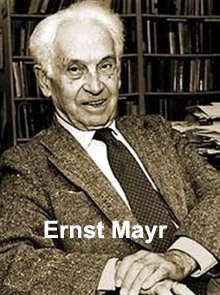
Ernst Mayr (pictured below with the beard)

Bill Gates, John Grisham, James Michener, E. O. Wilson, Ernst Mayr, George Lucas…

Published on May 19, 2012

Bill Gates, John Grisham, James Michener, E. O. Wilson, Ernst Mayr, George Lucas, James Cameron, Larry King, Ian Wilmut, Jane Goodall, Stephen Jay Gould, Tim D. White, Leon Lederman, Timothy Berners-Lee and Bill Gates. Complete and more interview go to websites “www.achievement.org”.

Mais entrevistas e completas no site “www.achievement.org”.

_____________________________________________________________________

____________________________

In 1994 and 1995 I had the opportunity to correspond with the famous evolutionist Dr. Ernst Mayr of Harvard. He stated in his letter of 10-3-94, “Owing to your ideological commitments, it is only natural that you cannot accept the cogency of the scientific evidence. However, to a person such as myself without such commitments, the story of the gradual evolution of life as reconstructed by chemists and molecular biologists is totally convincing.”

I responded by pointing out three points. First, Scientific Naturalism is atheistic by definition. Second, many great scientists of the past were Christians, and that did not disqualify their observations and discoveries. Third, the fact that evolution is true does not rule out God’s existence (Harvard’s own Owen Gingerich and many others such as Francis Collins hold to a Creator and evolution).

Let me just spend some time on my second point. Francis Schaeffer in his book “HOW SHOULD WE THEN LIVE?” stated that according to Alfred North Whitehead and J. Robert Oppenheimer, both renowned philosophers and scientists of our era (but not Christians themselves), modern science was born out of the Christian world view. Whitehead said that Christianity is the “mother of science” because of the insistence on the rationality of God. In the article, “Christianity and Technological Advance – The Astonishing Connection,” by T. V. Varughese, Ph.D, he observed:

Without question, “technology” has now become the new magic word in place of the word “science.” Since technology represents the practical applications of science, it is clearly consumer-oriented. Herein is bright economic promise to all who can provide technology.

In terms of technology, our present world can be divided into at least three groups: countries that are strong providers of technology, both original and improved; countries that are mass producers because of cheaper labor; and countries that are mostly consumers. Without a doubt, being in the position of “originating” superior technology should be a goal for any major country. The difficult question, however, is “how.”

An obvious place to start suggests itself. Why not begin with the countries that have established themselves as strong originators of technology and see if there is a common thread between them? The western nations, after the Renaissance and the Reformation of the 16th century, offer a ready example. Any book on the history of inventions, such as the Guinness Book of Answers, will reveal that the vast majority of scientific inventions have originated in Europe (including Britain) and the USA since the dawn of the 17th century. What led to the fast technological advances in the European countries and North America around that time?

The answer is that something happened which set the stage for science and technology to emerge with full force. Strange as it may seem, that event was the return to Biblical Christianity in these countries.

The Epistemological Foundation of Technology

According to Alfred North Whitehead and J. Robert Oppenheimer, both renowned philosophers and scientists of our era (but not Christians themselves), modern science was born out of the Christian world view. Whitehead said that Christianity is the “mother of science” because of the insistence on the rationality of God.[1] Entomologist Stanley Beck,though not a Christian himself, acknowledged the corner-stone premises of science which the Judeo-Christian world view offers: “The first of the unprovable premises on which science has been based is the belief that the world is real and the human mind is capable of knowing its real nature. The second and best-known postulate underlying the structure of scientific knowledge is that of cause and effect. The third basic scientific premise is that nature is unified.”[2] In other words, the epistemological foundation of technology has been the Judeo-Christian world view presented in the Bible…

Perhaps the most obvious affirmation that Biblical Christianity and science are friends and not foes comes from the fact that most of the early scientists after the Renaissance were also strong believers in the Bible as the authoritative source of knowledge concerning the origin of the universe and man’s place in it.[4] The book of Genesis, the opening book of the Bible, presents the distinctly Judeo-Christian world view of a personal Creator God behind the origin and sustenance of the universe (Genesis 1:1Colossians 1:17; etc.).

Among the early scientists of note who held the Biblical creationist world view are Blaise Pascal (1623-1662), Sir Isaac Newton (1642-1727), and Samuel Morse (1791-1872) – what motivated them was a confidence in the “rationality” behind the universe and the “goodness” of the material world. The creation account in Genesis presents an intelligent, purposeful Creator, who, after completing the creation work, declared it to be very good (Genesis 1:31). That assures us that the physical universe operates under reliable laws which may be discovered by the intelligent mind and used in practical applications. The confidence in the divinely pronounced goodness of the material world removed any reluctance concerning the development of material things for the betterment of life in this world. The spiritual world and the material world can work together in harmony.

 References –

  1. Francis A. Schaeffer: How Should We Then Live (Revell, 1976), p. 132.
  2. Henry M. Morris, Biblical Basis for Modern Science (Baker, 1991), p. 30.
  3. Schaeffer, p. 131.
  4. Henry M. Morris, Men of Science, Men of God (Master Books, CA, 1988), 107 pp.

_____________

Henry Morris pointed out:

Many of these great scientists of the past were before Darwin, but not all of them. However, all of them were acquainted with secular philosophies and some were in fact opponents of Darwinism (Agassiz, Pasteur, Lord Kelvin, Maxwell, Dawson, Virchow, Fabre, Fleming, etc). Many of them believed in the inspiration and authority of the Bible, as well as in the deity and saving work of Jesus Christ. They believed that God had supernaturally created all things, each with its own complex structure for its own unique purpose. They believed that, as scientists, they were “thinking God’s thoughts after Him,” learning to understand and control the laws and processes of nature for God’s glory and man’s good. They believed and practiced science in exactly the same way that modern creationist scientists do.

And somehow this attitude did not hinder them in their commitment to the “scientific method.” In fact one of them, Sir Francis Bacon, is credited with formulating and establishing the scientific method! They seem also to have been able to maintain a proper “scientific attitude,” for it was these men (Newton, Pasteur, Linnaeus, Faraday, Pascal, Lord Kelvin, Maxwell, Kepler, etc.) whose researches and analyses led to the very laws and concepts of science which brought about our modern scientific age…. 

To illustrate the caliber and significance of these great scientists of the past, Tables I and II have been prepared. These tabulations are not complete lists, of course, but at least are representative and they do point up the absurdity of modern assertions that no true scientist can be a creationist and Bible-believing Christian.

Table I lists the creationist “fathers” of many significant branches of modern science. Table II lists the creationist scientists responsible for various vital inventions, discoveries, and other contributions to mankind. These identifications are to some degree oversimplified, of course, for even in the early days of science every new development involved a number of other scientists, before and after. Nevertheless, in each instance, a strong case can be made for attributing the chief responsibility to the creationist scientist indicated. At the very least, his contribution was critically important and thus supports our contention that belief in creation and the Bible helps, rather than hinders, scientific discovery.

_______________

My relatives live 3 miles from Spring Hill, Tennessee. When the new General Motors plant opened there I got to go see it. What if I had said, “The assembly line created a beautiful Saturn automobile!” Hopefully, some would have corected me by responding, “The assembly line did not create the automobile. It was first designed by the General Motors engineers in Detroit.” ASSUMING EVOLUTION IS TRUE, IT WOULD STILL ONLY BE THE MECHANISM. DOES EVOLUTION ACCOUNT FOR THE DESIGNER?

________________

TABLE I

SCIENTIFIC DISCIPLINES ESTABLISHED
BY CREATIONIST SCIENTISTS

DISCIPLINE SCIENTIST
ANTISEPTIC SURGERY JOSEPH LISTER (1827-1912)
BACTERIOLOGY LOUIS PASTEUR (1822-1895)
CALCULUS ISAAC NEWTON (1642-1727)
CELESTIAL MECHANICS JOHANN KEPLER (1571-1630)
CHEMISTRY ROBERT BOYLE (1627-1691)
COMPARATIVE ANATOMY GEORGES CUVIER (1769-1832)
COMPUTER SCIENCE CHARLES BABBAGE (1792-1871)
DIMENSIONAL ANALYSIS LORD RAYLEIGH (1842-1919)
DYNAMICS ISAAC NEWTON (1642-1727)
ELECTRONICS JOHN AMBROSE FLEMING (1849-1945)
ELECTRODYNAMICS JAMES CLERK MAXWELL (1831-1879)
ELECTRO-MAGNETICS MICHAEL FARADAY (1791-1867)
ENERGETICS LORD KELVIN (1824-1907)
ENTOMOLOGY OF LIVING INSECTS HENRI FABRE (1823-1915)
FIELD THEORY MICHAEL FARADAY (1791-1867)
FLUID MECHANICS GEORGE STOKES (1819-1903)
GALACTIC ASTRONOMY WILLIAM HERSCHEL (1738-1822)
GAS DYNAMICS ROBERT BOYLE (1627-1691)
GENETICS GREGOR MENDEL (1822-1884)
GLACIAL GEOLOGY LOUIS AGASSIZ (1807-1873)
GYNECOLOGY JAMES SIMPSON (1811-1870)
HYDRAULICS LEONARDO DA VINCI (1452-1519)
HYDROGRAPHY MATTHEW MAURY (1806-1873)
HYDROSTATICS BLAISE PASCAL (1623-1662)
ICHTHYOLOGY LOUIS AGASSIZ (1807-1873)
ISOTOPIC CHEMISTRY WILLIAM RAMSAY (1852-1916)
MODEL ANALYSIS LORD RAYLEIGH (1842-1919)
NATURAL HISTORY JOHN RAY (1627-1705)
NON-EUCLIDEAN GEOMETRY BERNHARD RIEMANN (1826- 1866)
OCEANOGRAPHY MATTHEW MAURY (1806-1873)
OPTICAL MINERALOGY DAVID BREWSTER (1781-1868)
PALEONTOLOGY JOHN WOODWARD (1665-1728)
PATHOLOGY RUDOLPH VIRCHOW (1821-1902)
PHYSICAL ASTRONOMY JOHANN KEPLER (1571-1630)
REVERSIBLE THERMODYNAMICS JAMES JOULE (1818-1889)
STATISTICAL THERMODYNAMICS JAMES CLERK MAXWELL (1831-1879)
STRATIGRAPHY NICHOLAS STENO (1631-1686)
SYSTEMATIC BIOLOGY CAROLUS LINNAEUS (1707-1778)
THERMODYNAMICS LORD KELVIN (1824-1907)
THERMOKINETICS HUMPHREY DAVY (1778-1829)
VERTEBRATE PALEONTOLOGY GEORGES CUVIER (1769-1832)

______________

TABLE II

NOTABLE INVENTIONS, DISCOVERIES
OR DEVELOPMENTS BY CREATIONIST SCIENTISTS

CONTRIBUTION SCIENTIST
ABSOLUTE TEMPERATURE SCALE LORD KELVIN (1824-1907)
ACTUARIAL TABLES CHARLES BABBAGE (1792-1871)
BAROMETER BLAISE PASCAL (1623-1662)
BIOGENESIS LAW LOUIS PASTEUR (1822-1895)
CALCULATING MACHINE CHARLES BABBAGE (1792-1871)
CHLOROFORM JAMES SIMPSON (1811-1870)
CLASSIFICATION SYSTEM CAROLUS LINNAEUS (1707-1778)
DOUBLE STARS WILLIAM HERSCHEL (1738-1822)
ELECTRIC GENERATOR MICHAEL FARADAY (1791-1867)
ELECTRIC MOTOR JOSEPH HENRY (1797-1878)
EPHEMERIS TABLES JOHANN KEPLER (1571-1630)
FERMENTATION CONTROL LOUIS PASTEUR (1822-1895)
GALVANOMETER JOSEPH HENRY (1797-1878)
GLOBAL STAR CATALOG JOHN HERSCHEL (1792-1871)
INERT GASES WILLIAM RAMSAY (1852-1916)
KALEIDOSCOPE DAVID BREWSTER (1781-1868)
LAW OF GRAVITY ISAAC NEWTON (1642-1727)
MINE SAFETY LAMP HUMPHREY DAVY (1778-1829)
PASTEURIZATION LOUIS PASTEUR (1822-1895)
REFLECTING TELESCOPE ISAAC NEWTON (1642-1727)
SCIENTIFIC METHOD FRANCIS BACON (1561-1626)
SELF-INDUCTION JOSEPH HENRY (1797-1878)
TELEGRAPH SAMUEL F.B. MORSE (1791-1872)
THERMIONIC VALVE AMBROSE FLEMING (1849-1945)
TRANS-ATLANTIC CABLE LORD KELVIN (1824-1907)
VACCINATION & IMMUNIZATION LOUIS PASTEUR (1822-1895)

_______________

2000 Interview with Ernst Mayr, Harvard University

Uploaded on Jul 13, 2008

Interviews conducted in March 2000 at the annual meeting of the American Institute of Biological Sciences on the topic of Challenges for the New Millennium. Museum of Natural History, Smithsonian Institution, Washington DC. See http://www.aibs.org/media-library/ for additional AIBS conference recordings.

________________

Henry Morris

_________________

The Dean of Evolution – A Review of Ernst Mayr’s Latest Book

Download PDFDownload The Dean of Evolution – A Review of Ernst Mayr’s Latest Book PDF

With the passing in recent years of the three most revered scientific spokesmen for evolution—Isaac Asimov, Carl Sagan, and now Stephen Jay Gould—Professor Ernst Mayr is left as the unquestioned dean of the modern evolutionary establishment.

Gould, Asimov, and Sagan were all three extremely prolific and brilliant writers. All three were atheistic professors at prestigious eastern universities (Gould at Harvard, Asimov at Boston University, Sagan at Cornell), and all three were effusive and vigorous anti-creationists. They were formidable opponents (but eminently quotable), and we miss them. All three died at relatively young ages.

But that leaves Ernst Mayr, long-time professor of biology at Harvard. Dr. Mayr was born in 1904 and is (at this writing) still very much alive, and nearing the century mark. Dr. Gould recently called him “the greatest living evolutionary biologist and a writer of extraordinary insight and clarity” (in a jacket blurb on Mayr’s latest book).

Mayr’s New Book

And that book is the subject of this article. Its title is intriguing—What Evolution Is (Basic Books, 2001, 318 pages),—for if anyone could speak authoritatively on such a subject, it should be Professor Mayr. In his adulatory foreword, Jared Diamond, another leading modern evolutionist, concludes: “There is no better book on evolution. There will never be another book like it” (p. xii).

That evaluation should give any reader very high expectations. Unfortunately, however, Dr. Mayr first shows his disdain for creationism, not even considering its arguments. He simply says:

It is now actually misleading to refer to evolution as a theory, considering the massive evidence that has been discovered over the last 140 years documenting its existence. Evolution is no longer a theory, it is simply a fact (p. 275).

He dismissed the evidence for creation as unworthy of further discussion. “The claims of the creationists” he says, “have been refuted so frequently and so thoroughly that there is no need to cover this subject once more” (p. 269).

Ignoring Creation Evidence

He himself, however, has apparently not bothered to read any creationist or secular anti-evolutionist scientific books or articles. Or at least that is what one would infer from the fact that none of them or their arguments and evidence are even mentioned in his book.

No mention is made by Mayr, for example, of creationist expositions of the amazing created designs in living systems, nor of the effects of God’s curse on the creation, or of the significance of the great flood in understanding the geologic record. He does not even acknowledge the significance of naturalistic catastrophism or of such scientific concepts as complexity or probability. Current ideas about “intelligent design” are never mentioned. The origins of all things are due to time, chance, and natural selection, no matter how complex and interdependent they may be, according to Professor Mayr, who had been (along with Julian Huxley, George Simpson, and a few others) primarily responsible for the so-called modern evolutionary synthesis (or neo-Darwinism) back in the 1930s and 1940s.

Neither does Mayr seem aware that there are now thousands of credentialed and knowledgeable scientists (including a great many biologists) who reject evolution, giving not even a nod to the Creation Research Society, or to ICR, or any other creationist organization. He does occasionally refer to God or to Christianity, but only in passing, and always in a context that indicates that he does not believe in either one. He, like his three younger colleagues, is an atheist, and this naturally constrains him to ignore any possible theological implications of the origins issues.

The Alleged Evidence for Evolution

Mayr’s new book is beautifully written and does contain much good material, but it will not convert many to evolutionism, even though he does devote a chapter to what he thinks are the evidences for evolution. These evidences are essentially the same as those used 140 years ago by Darwin in the Origin (fossils, comparative morphology, embryological similarities and recapitulation, vestigial structures, and geographical distribution). Mayr adds nothing new to these arguments, ignoring the fact that creationists (and even a number of evolutionists) have long since refuted all of them. He does devote a brief section to the more recent “evidence” from molecular biology. But that also has been vigorously disputed by a number of specialists in this field, especially the supposed evolutionary relationships implied by the molecules. Even Mayr admits that “molecular clocks are not nearly as constant as often believed” (p. 37), but he does not mention any of the numerous contradictory relationships implied by these biochemical studies (e.g., the well-known genomic similarities of humans and bananas).

As do most evolutionists, Mayr spends much time in discussing micro-evolution, whereas modern creationists only reject macroevolution. He devotes five chapters to microevolution and only one to macroevolution. This particular chapter is quite long, discussing many speculative theories about how macroevolutionary changes might be produced, but there is one vital deficiency. He gives no example of any macroevolutionary change known to have happened. In other words, macroevolution seems never to have occurred within the several thousand years of recorded history. Thus, real evolution (as distinct from variation, recombination, hybridization, and other such “horizontal” changes) does not happen at present. Where, we would ask Professor Mayr, are there any living forms in the process of evolutionary change? He gives no examples, of course, because there are none.

As far as pre-human history is concerned, Dr. Mayr does insist that the fossil record documents past evolution. He cites the usual claims—horses, Archaeopteryx, mammal-like reptiles, walking whales, etc.—which are very equivocal, at best, and have all been shown by creationists to be invalid as transitional forms. Instead of a handful of highly doubtful examples, there ought to be thousands of obvious transitional forms in the fossils if evolution had really been occurring. Yet Mayr admits,

Wherever we look at the living biota, . . . discontinuities are overwhelmingly frequent. . . . The discontinuities are even more striking in the fossil record. New species usually appear in the fossil record suddenly, not connected with their ancestors by a series of intermediates (p. 189).

Professor Mayr still says that the fossils are “the most convincing evidence for the occurrence of evolution” (p. 13). Yet he also says that “the fossil record remains woefully inadequate” (p. 69). Thus, as creationists have often pointed out, there is no real evidence of either present or past evolution.

We have repeatedly noted also that the scientific reason why this is so is because real evolution to any higher level of complexity is impossible by the law of entropy, which states the proven fact that every system of any kind “tends” to go toward lower complexity, unless constrained otherwise by some pre-designed external program and mechanism.

Yet Ernst Mayr seems either to ignore or misunderstand this key argument of the creationists. Here is what he says:

Actually there is no conflict, because the law of entropy is valid only for closed systems, whereas the evolution of a species of organisms takes place in an open system in which organisms can reduce entropy at the expense of the environment and the sun supplies a continuing input of energy (p. 8).

And that’s all he says about one of the key arguments against evolution. This ubiquitous dodge of the evolutionists has been discredited again and again by creationists, and one would think that this “greatest living evolutionary biologist” in this “best book on evolution” would at least take notice of our arguments! At least half of America’s population, according to many polls, are creationists, apparently agreeing more with us than with Mayr.

An open system and external energy are, indeed, necessary conditions for a system to grow in complexity, but most definitely are not sufficient conditions. The question is just how does the sun’s energy produce complexity in an open system? The fact is that the application of external heat energy to an open system (such as from the sun to the earth) will increase the entropy (that is, decrease the organized complexity) in any open system, if that’s all there is. This is a basic principle of thermodynamics, and neither Mayr nor any other evolutionist has answered this problem. Evolution seems to be impossible by the known laws of science.

Professor Mayr does not deal with the theological or Biblical evidences, of course. For those who believe in God and the Bible, on the other hand, creation—not evolution—is, to appropriate Mayr’s words, “simply a fact.” Evolution is merely a belief held by many who “willingly are ignorant” (II Peter 3:5) of the strong evidences and arguments for creation, and who don’t even bother to consider them. In the words of the apostle Paul: “Where is the disputer of this world? hath not God made foolish the wisdom of this world?” (I Corinthians 1:20).

Cite this article: Henry Morris, Ph.D. 2002. The Dean of Evolution – A Review of Ernst Mayr’s Latest Book. Acts & Facts. 31 (8).

___________________

12-13-14

When the Case for God Is Strong, Skeptics Attack Christianity

When the Case for God Is Strong, Skeptics Attack ChristianityI’m currently researching and preparing for a second book effort, and I’ve discovered an interesting trend. I’ve been examining the alternative naturalistic explanations for the origin and apparent “fine tuning” of the universe, reading the latest books from atheist physicists, Lawrence Krauss, Stephen Hawking and Victor Stenger (amongst manyothers). It’s been a fascinating learning experience for me and I can’t wait to start writing. These authors offer differing naturalistic explanations for what we observe in the universe, but all three are united in their rejection of Christianity. I found it interesting, however, that Christianity became the specific focus of their comparisons. I couldn’t help but wonder if this wasn’t in some way a tacit admission affirming the reasonable case for God’s existence.

To illustrate this point, let me offer a quick mind experiment. Imagine we lived in a world without any historic theistic or deistic belief systems. No Christianity, no Islam, no Judaism, no Mormonism, no Bahá’í, no Budhism, etc. In fact, imagine this generation of humans was the first to ever even consider the existence of God or any extra-, supra-, or supernatural realities. Given access to the science we have today, would any of us be inclined toward a belief in God? Would theevidence of a universe with a beginning, or even the speculation about a precisely calibrated multiverse generating “first cause”, incline any of us toward some form of belief in the supernatural? Don’t get me wrong, I’m sure these atheist authors,committed as they are to naturalism, would remain atheists. But for the rest of us who are less dogmatically committed to naturalism, would we evaluate their conclusions and reject theistic or deistic explanations as readily? I don’t think so, and I think these atheist authors realize this as well. That’s why they pick on Christianity specifically.

I realize this is a somewhat extravagant and controversial claim. But, whenAntony Flew, the famous atheist British philosopher and Oxford scholar, eventually changed his mind and became a deist, he did so based on the evidence of intelligent design. He died as a deist, convinced the evidence was clear. He found the case for God persuasive, but did not take the additional step to embrace a Christian view of God, saying, “While reason, mainly in the form of arguments to design, assures us that there is a God, there is no room either for any supernatural revelation of that God or for any transactions between that God and individual human beings.” His good friend, Christian apologist and historian,Gary Habermas, was unable to persuade him otherwise, but I can’t help but wonder where Flew might have ended up if he had become a deist at the age of 61, rather than the age of 81. Once an atheist determines the existence of God is reasonable, the move to Christianity requires an additional investigative step (I’ve written about this in Cold Case Christianity).

Those who make a case for some form of atheistic cosmology have a choice. They can examine the evidence and reason to the best inference between atheism and theism (or deism), or they can reason between atheism and Christianity. Krauss, Hawking and Stenger often choose the second approach, recognizing the additional layer of evidences demanded by Christianity. Many of their readers may, like Flew, be inclined toward a belief in God more readily if it wasn’t characterized by some sarcastic view of Christianity. When these authors choose to compare their naturalistic explanations to some cynical misrepresentation of Christianity rather than a more minimalistic characterization of theism or deism, they expose their concern related to the reasonable case for God’s existence.

I believe the evidence for God’s existence is strong, and if there were no historic theistic systems from which to choose, I would, like Flew, embrace some form of theism or deism. But we do have a history from which to draw, and if the history related to Jesus is reliable, we owe it to ourselves to examine the additional claims of Christianity.

J. Warner Wallace is a Cold-Case Detective, a Christian Case Maker, and the author of Cold-Case Christianity

Francis Schaeffer “BASIS FOR HUMAN DIGNITY” Whatever…HTTHR

Related posts:

Open letter to President Obama (Part 519) (The Way of Discovery: A Personal Journey of Faith Henry F. Schaefer III)

Open letter to President Obama (Part 519) (Emailed to White House on 5-3-13.) President Obama c/o The White House 1600 Pennsylvania Avenue NW Washington, DC 20500 Dear Mr. President, I know that you receive 20,000 letters a day and that you actually read 10 of them every day. I really do respect you for trying to get […]

Evolutionary dogma with the biblical message are doomed to undermine faith

The Scientific Age Published on Jul 24, 2012 Dr. Schaeffer’s sweeping epic on the rise and decline of Western thought and Culture Francis Schaeffer rightly noted, “These two world views stand as totals in complete antithesis in content and also in their natural results….It is not just that they happen to bring forth different results, […]

Truth Tuesday:The Way of Discovery: A Personal Journey of Faith Henry F. Schaefer III

The Way of Discovery: A Personal Journey of Faith  Henry F. Schaefer III The Scientific Age Uploaded by NoMirrorHDDHrorriMoN on Oct 3, 2011 _______________ Episode VII – The Age of Non Reason ____________________ Episode 8: The Age Of Fragmentation Published on Jul 24, 2012 Dr. Schaeffer’s sweeping epic on the rise and decline of Western thought and […]

Evolution debating with Ark Times Bloggers Part 6 “Dr. George Wald on the origin of life”

The Long War against God-Henry Morris, part 6 of 6 _______________ I have debated with Ark Times Bloggers many times in the past on many different subjects. Here are some of the subjects: communism, morality, origin of evil, and the Tea Party. I have always loved to post about evolution and I have had a chance […]

Evolution debating with Ark Times Bloggers Part 5 “SCIENTIFIC DISCIPLINES ESTABLISHED BY CREATIONIST SCIENTISTS”

The Long War against God-Henry Morris, part 5 of 6 _______________ I have debated with Ark Times Bloggers many times in the past on many different subjects. Here are some of the subjects: communism, morality, origin of evil, and the Tea Party. I have always loved to post about evolution and I have had a chance […]

Evolution debating with Ark Times Bloggers Part 4 “Neaderthal, Australopithicus and Piltdown man”

The Long War against God-Henry Morris, part 4 of 6 _______________ I have debated with Ark Times Bloggers many times in the past on many different subjects. Here are some of the subjects: communism, morality, origin of evil, and the Tea Party. I have always loved to post about evolution and I have had a chance […]

Evolution debating with Ark Times Bloggers Part 3 “Evolution and spontaneous generation”

The Long War against God-Henry Morris, part 3 of 6 Uploaded by FLIPWORLDUPSIDEDOWN3 on Aug 30, 2010 http://www.icr.org/http://store.icr.org/prodinfo.asp?number=BLOWA2 http://store.icr.org/prodinfo.asp?number=BLOWASG http://www.fliptheworldupsidedown.com/blog _______________ I have debated with Ark Times Bloggers many times in the past on many different subjects. Here are some of the subjects: communism, morality, origin of evil, and the Tea Party. I have […]

Evolution debating with Ark Times Bloggers Part 2 “Gouldians versus Dawkinsians”

The Long War against God-Henry Morris, part 2 of 6 Uploaded by FLIPWORLDUPSIDEDOWN3 on Aug 30, 2010 http://www.icr.org/http://store.icr.org/prodinfo.asp?number=BLOWA2 http://store.icr.org/prodinfo.asp?number=BLOWASG http://www.fliptheworldupsidedown.com/blog _________ I have debated with Ark Times Bloggers many times in the past on many different subjects. Here are some of the subjects: communism, morality, origin of evil, and the Tea Party. I have […]

Evolution debating with Ark Times Bloggers Part 1 “Steven Jay Gould and the fossil record”

The Long War against God-Henry Morris, part 1 of 6 Uploaded by FLIPWORLDUPSIDEDOWN3 on Aug 30, 2010 _________ I have debated with Ark Times Bloggers many times in the past on many different subjects. Here are some of the subjects: communism, morality, origin of evil, and the Tea Party. I have always loved to post about evolution […]

______

______________

RESPONDING TO HARRY KROTO’S BRILLIANT RENOWNED ACADEMICS!! (Pausing to look at the life of Steven Weinberg who was one of my favorite authors!) Part 169E Letter I mailed 10-31-14 to Dr. Weinberg which pointed to Old Testament Prophecies that were fulfilled in Christ!

Letter mailed 10-31-14 on Brandon Barnard sermon

10-31-14

To Professor Steven Weinberg, The University of Texas at Austin, Department of Physics, 1 University Station C1600, Austin, TX 78712-0264

Recently I had the opportunity to correspond with Harold Kroto who is one of your friends and he made an assertion and then he quoted you:

I think we may see the good things the same way but I do not gloss over the bad aspects of religiosity but …some of the bad…cf ISIS…“Religion is an insult to human dignity. Without it you would have good people doing good things and evil people doing evil things. But for good people to do evil things, that takes religion.”― Steven Weinberg

________________

My reaction to Professor Kroto quoting you  is to quote another one of your mutual friends. Sam Harris rightly noted earlier this month on Bill Maher’s show that liberals are still getting “AGITATED OVER THE ABORTION CLINIC BOMBINGS THAT HAPPENED IN 1984″ but they are not upset at what is happening in the Muslim world right now!!!! THERE IS REALLY NO COMPARISON AT ALL BETWEEN CHRISTIANITY AND ISLAM AND THEIR AFFECTS IN THE AREAS OF FREEDOM OF PRESS, POLITICAL FREEDOM AND FREEDOM OF THE PRESS. Professor Kroto mentions ISIS but is there a group on the Christian side beheading in large numbers today? Also Professor Kroto gave me a link  that gave more quotes from YOU and here are some of those quotes and my initial reaction to them:

“One of the great achievements of science has been, if not to make it impossible for intelligent people to be religious, then at least to make it possible for them not to be religious. We should not retreat from this accomplishment.”  Steven Weinberg (Many of Weinberg and Kroto’s scientific heroes of the past were Bible believing Christians such as Isaac Newton and I pointed this out to Ernst Mayr during our correspondence in 1995.I have also pointed out that evolutionists must hope  like George Wald that   “Time is the Hero” because the law of bio-genesis seems to  disprove evolution altogether.)

“I don’t need to argue here that the evil in the world proves that the universe is not designed, but only that there are no signs of benevolence that might have shown the hand of a designer.” Steven Weinberg  (There are great problems for the agnostic on this subject too and my discussion with Lester Mondale in his home in Missouri in 1996 clearly shows the secular humanist’s glaring weakness.)

“If there is no point in the universe that we discover by the methods of science, there is a point that we can give the universe by the way we live, by loving each other, by discovering things about nature, by creating works of art. And that—in a way, although we are not the stars in a cosmic drama, if the only drama we’re starring in is one that we are making up as we go along, it is not entirely ignoble that faced with this unloving, impersonal universe we make a little island of warmth and love and science and art for ourselves. That’s not an entirely despicable role for us to play.” Steven Weinberg (I was privileged to have the opportunity to correspond with Carl Sagan during the last year of his life and in that correspondence I answered back his letter with the assertion that mankind was put on this earth by God with a special purpose. We are precious, but even though Jodie Foster makes that claim in the movie CONTACT which Sagan wrote, the secular worldview does not in anywhere support that conclusion.)

One of the great achievements of science has been, if not to make it impossible for intelligent people to be religious, then at least to make it possible for them not to be religious. We should not retreat from this accomplishment. Steven Weinberg (Although Charles Darwin did lead science that direction,  Dr. H. Fritz Schaefer confronted the assertion that a scientist cannot believe in God in an excellent article. )

____________________

One of my favorite messages by Adrian Rogers is called  “WHO IS JESUS?”and he goes through the Old Testament and looks at the scriptures that describe the Messiah.  I want to encourage you to listen to this audio message which I will send to anyone anywhere anytime. I have given thousands of these CD’s away over the years that contain this message and they all contain the following story from Adrian Rogers.  Here is how the story goes:

Years ago Adrian Rogers counseled with a NASA scientist and his severely depressed wife. The wife pointed to her husband and said, “My problem is him.” She went on to explain that her husband was a drinker, a liar, and an adulterer. Dr. Rogers asked the man if he were a Christian. “No!” the man laughed. “I’m an atheist.”

“Really?” Dr. Rogers replied. “That means you’re someone who knows that God does not exist.”

“That’s right,” said the man.

“Would it be fair to say that you don’t know all there is to know in the universe?”

“Of course.”

“Would it be generous to say you know half of all there is to know?”

“Yes.”

“Wouldn’t it be possible that God’s existence might be in the half you don’t know?”

“Okay, but I don’t think He exists.”

“Well then, you’re not an atheist; you’re an agnostic. You’re a doubter.”

“Yes, and I’m a big one.”

“It doesn’t matter what size you are. I want to know what kind you are.”

“What kinds are there?”

“There are honest doubters and dishonest doubters. An honest doubter is willing to search out the truth and live by the results; a dishonest doubter doesn’t want to know the truth. He can’t find God for the same reason a thief can’t find a policeman.”

“I want to know the truth.”

“Would you like to prove that God exists?”

“It can’t be done.”

“It can be done. You’ve just been in the wrong laboratory.Jesus said, ‘If any man’s will is to do His will, he will know whether my teaching is from God or whether I am speaking on my own authority’ (John 7:17). I suggest you read one chapter of the book of John each day, but before you do, pray something like this, ‘God, I don’t know if You’re there, I don’t know if the Bible is true, I don’t know if Jesus is Your Son. But if You show me that You are there, that the Bible is true, and that Jesus is Your Son, then I will follow You. My will is to do your will.”

The man agreed. About three weeks later he returned to Dr. Rogers’s office and invited Jesus Christ to be his Savior and Lord.

When I was 15 I joined my family on an amazing trip with our pastor Adrian Rogers to the land of Israel in 1976 and the most notable event to me was our visit to the Western Wall (or Wailing Wall) where hundreds of orthodox Jews were praying and kissing the wall. At the time we were visiting the wall I noticed that Dr. Rogers was visibly moved to tears because he knew that these Jews had missed the true messiah who hadcome and died on a cross almost 2000 years before. They were still looking for the messiah to come for the first time sometime in the future.

That one event encouraged my interest in presenting the gospel to the Jews.  At about the same time in Little Rock two Jews by the names of Dr. Charles Barg and Dr. Jack Sternberg were encountering that gospel message.   I have posted before about their life stories and they can be easily found on the internet.

I THOUGHT OF YOU ON  10-26-14 WHEN OUR TEACHING PASTOR BRANDON BARNARD AT FELLOWSHIP BIBLE CHURCH IN LITTLE ROCK TAUGHT ON JESUS’ MESSAGE TO THOSE JEWS SKEPTICAL OF HIS CLAIMS TO BE THE MESSIAH AND THE SON OF GOD.  After hearing this message I went straight to our church bookstore and asked for any books that deal with Jewish skeptics and I bought the books BETWEEN TWO FATHERS by Dr. Charles Barg and CHRISTIANITY: IT’S JEWISH ROOTS by Dr. Jack Sternberg.  I highly recommend both of these books.

If  someone is truly interested in investigating the Old Testament Scriptures then all they have to do is google “Bible Evidence Archaeology” or  click on the links on my blog http://www.thedailyhatch.org and the evidence is there showing that Christ is the Messiah predicted in the Old Testament. Here are some of my past posts on this subject, 1. My correspondence with Daniel Bell and Irving Kristol about the rebirth of Israel!!!!, 2. My personal visit with Bill Kristol on 7-18-14 in Hot Springs, Arkansas!!!!, 3. Simon Schama’s lack of faith in Old Testament Prophecy, 4. Who are the good guys: Hamas or Israel?, 5. “A Jewish Doctor Speaks Out: Why I Believe that Jesus is the Jewish Messiah” written by Dr. Jack Sternberg (author of the book CHRISTIANITY: THE JEWISH ROOTS), and 6.  Jesus Christ in the Old Testament by Adrian Rogers,

Brandon’s sermon started with these words from Jesus to the Jewish skeptics of his day:

John 5:18-47 New American Standard Bible (NASB)

Jesus’ Equality with God

18 For this reason therefore the Jews were seeking all the more to kill Him, because He not only was breaking the Sabbath, but also was calling God His own Father, making Himself equal with God.

19 Therefore Jesus answered and was saying to them, “Truly, truly, I say to you, the Son can do nothing of Himself, unless it issomething He sees the Father doing; for whatever[a]the Father does, these things the Son also does in like manner. 20 For the Father loves the Son, and shows Him all things that He Himself is doing; and the Father will show Himgreater works than these, so that you will marvel. 21 For just as the Father raises the dead and gives them life, even so the Son also gives life to whom He wishes. 22 For not even the Father judges anyone, but He has given all judgment to the Son, 23 so that all will honor the Son even as they honor the Father. He who does not honor the Son does not honor the Father who sent Him.

24 “Truly, truly, I say to you, he who hears My word, and believes Him who sent Me, has eternal life, and does not come into judgment, but has passed out of death into life.

Two Resurrections

25 Truly, truly, I say to you, an hour is coming and now is, when the dead will hear the voice of the Son of God, and those who hear will live. 26 For just as the Father has life in Himself, even so He gave to the Son also to have life in Himself; 27 and He gave Him authority to execute judgment, because He is [b]the Son of Man. 28 Do not marvel at this; for an hour is coming, in which all who are in the tombs will hear His voice, 29 and will come forth; those who did the good deeds to a resurrection of life, those who committed the evil deeds to a resurrection of judgment.

30 “I can do nothing on My own initiative. As I hear, I judge; and My judgment is just, because I do not seek My own will, but the will of Him who sent Me.

31 “If I alone testify about Myself, My testimony is not [c]true.32 There is another who testifies of Me, and I know that the testimony which He gives about Me is true.

Witness of John

33 You have sent to John, and he has testified to the truth. 34 But the testimony which I receive is not from man, but I say these things so that you may be saved. 35 He was the lamp that was burning and was shining and you were willing to rejoice for [d]a while in his light.

Witness of Works

36 But the testimony which I have is greater than the testimony ofJohn; for the works which the Father has given Me to accomplish—the very works that I do—testify about Me, that the Father has sent Me.

Witness of the Father

37 And the Father who sent Me, He has testified of Me. You have neither heard His voice at any time nor seen His form. 38 You do not have His word abiding in you, for you do not believe Him whom He sent.

Witness of the Scripture

39 [e]You search the Scriptures because you think that in them you have eternal life; it isthese that testify about Me; 40 and you are unwilling to come to Me so that you may have life. 41 I do not receive glory from men; 42 but I know you, that you do not have the love of God in yourselves. 43 I have come in My Father’s name, and you do not receive Me; if another comes in his own name, you will receive him. 44 How can you believe, when youreceive [f]glory from one another and you do not seek the [g]glory that is from the one andonly God? 45 Do not think that I will accuse you before the Father; the one who accuses you is Moses, in whom you have set your hope. 46 For if you believed Moses, you would believe Me, for he wrote about Me. 47 But if you do not believe his writings, how will you believe My words?”

Then Brandon gave the quote below from C.S. Lewis:

I am trying here to prevent anyone saying the really foolish thing that people often say about Him: ‘I’m ready to accept Jesus as a great moral teacher, but I don’t accept His claim to be God.’That is the one thing we must not say. A man who was merely a man and said the sort of things Jesus said would not be a great moral teacher. He would either be a lunatic—on a level with the man who says he is a poached egg—or else he would be the Devil of Hell. You must make your choice.  Either this man was, and is, the Son of God: or else a madman or something worse. You can shut Him up for a fool, you can spit at Him and kill Him as a demon; or you can fall at His feet and call Him Lord and God. But let us not come with any patronising nonsense about His being a great human teacher. He has not left that open to us. He did not intend to.
     We are faced, then, with a frightening alternative. This man we are talking about either was (and is) just what He said or else a lunatic, or something worse. Now it seems to me obvious that He was neither a lunatic nor a fiend: and consequently, however strange or terrifying or unlikely it may seem, I have to accept the view that He was and is God. God has landed on this enemy-occupied world in human form.

Quotes from Mere Christianity, Part 20
For enquiring minds, see the Wikipedia article: Lewis’s trilemma
C.S. Lewis, Mere Christianity (1952; Harper Collins: 2001) 52-53.

In this passage from John Jesus gives his identity (Son of God verse 25) and his authority (v.27-28 to judge and give life). It also discusses the four witnesses in Christ behalf. Then Brandon asked, “How does the identity and authority of Jesus affect you? He asserted, “It is impossible to honor God apart from honoring Jesus Christ.”

Brandon’s last point of the sermon was this:

PEOPLE DON’T DESIRE THE GLORY OF GOD BECAUSE THEY WANT IT FOR THEMSELVES.

______________

If someone truly wants to worship the Jewish Messiah of the Old Testament then they should take a close look at what the Old Testament says about that Messiah. Both Dr. Barg and Dr. Sternberg found the Old Testament prophecies very convincing and they both are now members of my church in Little Rock which is Fellowship Bible Church. Take a look at some of these verses which are mentioned in Adrian Rogers’ short article below.

Jesus Christ in the Old Testament

Acts 10:43

“Digging Deeper” into Scripture, you’re going to find that all of the Bible—Old Testament as well as New—is about Jesus Christ.  Yes, He appears in the Old Testament—if you know how to find Him there. The Lord Jesus, the Second Person of the Trinity, is found throughout the Old Testament in prophecy, types and shadows.

In this study we’ll see how that occurs.

Did you know there are about 300 prophecies in the Old Testament about the coming Messiah? Professor Peter Stonerwas chairman of the mathematics and astronomy departments at Pasadena City College until 1953, then was Chairman of the Science Department at Westmont College in Santa Barbara, California. He wrote a book titled Science Speaks. He proved that it is impossible, by the law of mathematical probability, for Jesus Christ not to be the one true Messiah of Israel and the Son of God

Later in this study we’re going to look at that, so keep reading.

But first let’s begin with something the apostle Peter said, confirming Jesus’ presence in the Old Testament:

1. Turn to Acts 10:43.  Peter, testifying in the household of Cornelius about Jesus, says:       “To Him,” [to Jesus,] “give all the prophets witness.”

When Peter made this statement, the New Testament had not yet been written. So when Peter says “the prophets,” who is he talking about?

Peter wanted Cornelius, a Roman officer, to know that throughout the Old Testament, the prophets were looking ahead, predicting and proclaiming the arrival of the Messiah.

When we get to the New Testament, we find the fulfillment.

  • In the gospels, we see Jesus as the Prophet preaching the kingdom of God.
  • In the epistles and Acts you see Jesus Christ, the ascended Priest, interceding for the people of God.
  • In the book of Revelation, you see Jesus Christ as the King, coming to rule and reign.

Each of these offices is a portrait of Jesus Christ.
All of the Old Testament pictures Jesus as prophet, priest, and king.
All of the New Testament shows Jesus as the fulfillment.
He is the Prophet, Priest, and King.

Portraits of Jesus in the Old Testament:

Jesus is the second Adam because the first Adam prophesied Him.
Jesus is a beloved, rejected, exalted son and world bread supplier like Joseph.
Jesus is that root out of dry ground, born of a virgin. (Is. 53:2)
Jesus is a priest like Aaron and Melchizedek because they prefigured Him.
Jesus is the fulfillment of the offering of Isaac on Mount Moriah (the same
mount as Mt. Calvary, where Jesus literally died.)
Jesus is the Passover lamb.
Jesus is a prophet like Moses because Moses typified Him.
Jesus is the water that came from the rock in the wilderness.
Jesus is the manna that fell from the sky.
Jesus is the brazen serpent lifted up in the wilderness.
Jesus is the scapegoat bearing away the sins of the people.
Jesus is pictured in the Ark of the Covenant.
Jesus is the mercy seat where the shekinah glory of God dwells.
Jesus is the sacrifice upon the brazen altar in the tabernacle and the temple.
Jesus is a champion like Joshua, whose name literally means “Jesus.”
Jesus is a king like David.
Jesus is a wise counselor like Solomon.
Jesus is the lion of Judah.
Jesus is the good shepherd, “The Lord is my shepherd.”
Jesus is the fruitful branch.
Jesus is that one without form or comeliness yet altogether lovely. (Is 53:2)

_________

Prophecies of Jesus in the Old Testament

Fulfilled prophecy is one of the great proofs of the Deity of Jesus Christ.

God began to prepare the world for the coming of Jesus with a multitude of prophecies in the Old Testament concerning Him. There can be no mistake that Jesus is the Messiah. As Professor Peter Stoner pointed out, the law of mathematical probability makes it totally impossible that anyone other than Jesus else could be the Messiah.

The law of probability is not an abstract law. Life insurance policies, for example, are based on mathematical probability.

Let’s look at just 8 out of 108 Old Testament prophecies Jesus fulfilled.

1. The Messiah will be born in Bethlehem. (Micah 5:2)
Fulfillment: Luke chapter 2 and Matthew 2:1

2. The Messiah will have a forerunner. (Malachi 3:1)
“Behold, I am going to send My messenger, and he will clear the way before Me. And the Lord, whom you seek, will suddenly come to His temple…”

Fulfillment: Matthew 3:1-3 “In those days came John the Baptist, preaching in the wilderness of Judea, and saying, Repent ye: for the kingdom of heaven is at hand. For this is he that was spoken of by the prophet Esaias [Isaiah], saying, ‘The voice of one crying in the wilderness, Prepare ye the way of the Lord, make His paths straight.’”

3. The Messiah would make His triumphant entry riding on a donkey (now what king does that?)
Zechariah 9:9 “Behold, your king is coming to you; He is just and endowed with salvation, Humble, and mounted on a ___________, Even on a colt, the foal of a ___________.

Fulfillment: Matthew 21:7, John 12:14-16

4. The Messiah would die by crucifixion. (Psalm 22, especially vv. 11-18)
“…for dogs have compassed me; the assembly of the wicked have enclosed me; they have pierced  my hands  and feet.”

Fulfillment: Luke 23:33, Matthew 27:35, Mark 15:24 John 19:23

5. Those who arrested Him would cast lots for His garments(Psalm 22:18)
“They part my garments among them, and _______ ______ upon my vesture.

Fulfillment: Luke 23:34
34 “Then said Jesus, Father, forgive them; for they know not what they do. And they parted His raiment, and cast lots.” Also John 19:23, Mark 15:24, and
Matthew 27:35, “and parted His garments, casting lots.”

6. Messiah would be betrayed by one of His own friends. (Zechariah 11:6)
6 “And one will say to him, ‘What are these wounds between your arms?’ Then he will say, ‘Those with which I was wounded in the house of my ___________.’

Fulfillment: Matthew 26:14-16, “14 Then ____ of the __________, called Judas Iscariot, went unto the chief priests…” Also Mark 14:10-11, John 18:2

7. Messiah would be betrayed for 30 pieces of silver (Zechariah 11:12)

Fulfillment: Matthew 26:15-16
15 And said unto them, What will ye give me, and I will deliver Him unto you? And they covenanted with him for _________ pieces of _________. 16 And from that time he sought opportunity to betray Him.

8. The Messiah will remain silent when He is accused and afflicted. (Isaiah 53:7)
“He was oppressed, and He was afflicted, yet He opened not his mouth: He is brought as a lamb to the slaughter, and as a sheep before her shearers is dumb, so He openeth not His mouth.”

Fulfillment: Mark 14:61, 61 But He held his peace, and answered nothing.”
1 Peter 2:23 23 Who, when He was reviled, reviled not again; when He suffered, He threatened not; but committed Himself to Him that judgeth righteously:”

These are just 8 examples of Old Testament prophecies Jesus fulfilled. There are at least 108, many of which He had no control over, if He were only a human being (such as the place of His birth and the prophesied “flight to Egypt” when He was a child.)

The odds of any one person being able by accident to fulfill even 8 of the 108 prophecies is a number so astronomical, our minds cannot conceive of it. Professor Stoner calculated it to be 1in 1017 or 1 in 100 quadrillion.

Is Jesus Christ found in the Old Testament? He is found in type and shadow in every book of the Old Testament.

Thank you for taking time to read this and feel free to contact me back at everettehatcher@gmail.com or 13900 Cottontail Lane, Alexander, AR 72002

__________________________________

Brandon Barnard pictured below:

Dr. Charles Barg’s book below:

Dr. Jack Sternberg below:

 _________________________

Dancing at the Wailing Wall in 1967:

Picture of Wailing Wall from 1863


Source: Earthly Footsteps of the Man of Galilee, p. 147.

President Carter with Adrian and Joyce Rogers in 1979 at the White House:
____

Adrian Rogers in the White House pictured with President Ronald Reagan below:

________

Adrian and Joyce Rogers with President Bush at Union University in Jackson, TN:

________________________________________________

Adrian Rogers pictured below on national day of prayer withPresident Bush.

Steven Weinberg (1933–2021)

Steven Weinberg at CERN in 1979.

Credit: CERN/Science Photo Library

Steven Weinberg brought the fundamental understanding of nature to new levels of power and completeness. He played a central part in formulating and establishing theoretical physics’ two standard models — the standard model of fundamental interactions and the standard model of cosmology. His greatest achievement was to propose the unified theory of electromagnetism and weak interactions, which is still in use. This won him the Nobel Prize in Physics in 1979, shared with his school classmate Sheldon Lee Glashow, and with Abdus Salam.

His 1967 Physical Review Letters paper, ‘A Model of Leptons’, combined disparate ideas about gauge symmetry, symmetry breaking and the classification of particles into an elegant whole. Given the state of knowledge at the time, the breakthrough still calls to mind Einstein’s description of Niels Bohr’s atomic model: “the highest form of musicality in the sphere of thought”.

Amazingly, given its scope and ambition, nothing in the paper needs essential revision today. But it was incomplete in two important ways. First, Weinberg conjectured, but could not prove, that his theory was ‘renormalizable’, in that incorporating quantum fluctuations would not lead to ill-defined mathematical expressions. That problem was solved for quantum electrodynamics — the theory of photons and their interactions — in the 1950s. It was even harder to crack in Weinberg’s unified theory, and its solution brought in new ideas.

Second, it really was just a theory of leptons — electrons, muons and their neutrinos. It left out the world of strongly interacting hadrons, including protons, neutrons and most of the vast zoo of particles observed in high-energy accelerators. Remarkably, however, quantum chromodynamics — the modern theory of strong interactions, based on quarks and gluons — combines harmoniously with Weinberg’s model. The same is true for general relativity, Einstein’s theory of gravity.

Weinberg had a leading role in orchestrating this powerful consolidation of fundamental physics, in particular by calculating its experimental consequences. The discovery, in the 1980s, of the W and Z bosons, which had precisely the masses and other properties predicted by his model, was its crowning success.

The other major strand in Weinberg’s work was physical cosmology. When his landmark book Gravitation and Cosmology first appeared in 1972, high-energy particle physics and cosmology were regarded as distinct subjects, with different cultures and communities. After Weinberg knocked down the barriers, a new generation prospered in the border zone. A central message of the book was that the Big Bang should be considered as a unique, gigantic experiment in high-energy physics. He made his case by showing how hypotheses about neutrino properties could be tested through cosmological observations. His popular book on the topic, The First Three Minutes (1977), found a large audience.

Weinberg was born in New York City to Jewish immigrant parents. He credited his father with encouraging his interest in science. He graduated in 1950 from the Bronx High School of Science, the city’s flagship for educating young scientists. Leon Cooper and Melvin Schwartz were near-contemporaries, as well as Glashow, to name just those who went on to get Nobel prizes in physics. It is hard to resist the implication that it is probably good science policy to welcome immigrants and bring bright children together.

After undergraduate studies at Cornell University in Ithaca, New York, Weinberg spent a year at Nordita (the Nordic Institute for Theoretical Physics) in Copenhagen, working on quantum field theory with Gunnar Källén, whom he often mentioned as a strong influence. He completed his PhD at Princeton University, New Jersey, with Sam Treiman advising on his thesis about how the strong interaction complicates the interpretation of weak-interaction observations. He went on to positions at Columbia University, New York; the University of Berkeley, California; the Massachusetts Institute of Technology in Cambridge; and, in 1973, to Harvard University in Cambridge, where he was Higgins Professor of Physics. In 1982, he moved to the University of Texas at Austin, where he remained, teaching until earlier this year.

Scientists, no less than composers, have styles. Einstein and Richard Feynman were rebellious, most comfortable when they were ‘thinking different’. Weinberg was not like that. His approach was scholarly. Most obviously, he was keenly interested in the history of physics in the West, about which he wrote several deeply researched and unashamedly ‘Whiggish’ books, most recently To Explain the World (2015).

He paid close attention to other people’s work. I remember several rather terrifying phone calls during which he quizzed me about details of mathematical derivations in my or others’ papers.

He would not let go of obscurities that caught his attention. Several of his most important investigations were sparked when he perceived gaps or unexplored consequences. His work on electroweak interactions grew out of wrestling with the confused literature of its component ideas. If Einstein and Feynman call to mind Beethoven, Weinberg calls to mind Bach.

Later in his career, Weinberg extended the ideas he had pioneered in new directions. He made suggestions about unified field theory, the nature of dark matter and the possibility of a multiverse. These ideas, attractive but as yet unproven, continue to inspire research.

Weinberg sometimes expressed strong views against religion, such as this: “Anything that we scientists can do to weaken the hold of religion should be done and may in the end be our greatest contribution to civilization.” His, more usual, jovial appreciation of the human comedy was exemplified by the way that, given the chance, he would sneak off from stiff parties to play games with the children.

Nature 596, 183 (2021)

doi: https://doi.org/10.1038/d41586-021-02170-w

The Incredible Steven Weinberg (1933-2021) – Sixty Symbols

On the Shoulders of Giants: Steven Weinberg and the Quest to Explain the…

Steven Weinberg Discussion (1/8) – Richard Dawkins

—-

Whatever Happened To The Human Race? (2010) | Full Movie | Michael Hordern

——

The Bill Moyers Interview – Steven Weinberg

How Should We Then Live (1977) | Full Movie | Francis Schaeffer | Edith …

Steven Weinberg Discussion (2/8) – Richard Dawkins

RESPONDING TO HARRY KROTO’S BRILLIANT RENOWNED ACADEMICS!!

Steven Weinberg – Dreams of a Final Theory

Steven Weinberg Discussion (3/8) – Richard Dawkins

Steven Weinberg, Author

How Should We Then Live | Season 1 | Episode 6 | The Scientific Age

—-

Steven Weinberg Discussion (4/8) – Richard Dawkins

I am grieved to hear of the death of Dr. Steven Weinberg who I have been familiar with since reading about him in 1979 in WHATEVER HAPPENED TO THE HUMAN RACE? by Dr. C. Everett Koop and Francis Schaeffer. I have really enjoyed reading his books and DREAMS OF A FINAL REALITY and TO EXPLAIN THE WORLD were two of my favorite!

C. Everett Koop
C. Everett Koop, 1980s.jpg

—-

Steven Weinberg Discussion (5/8) – Richard Dawkins

Francis Schaeffer : Reclaiming the World part 1, 2

The Atheism Tapes – Steven Weinberg [2/6]

The Story of Francis and Edith Schaeffer

https://youtu.be/DLSzfZszLXM

Steven Weinberg – What Makes the Universe Fascinating?

On November 21, 2014 I received a letter from Nobel Laureate Harry Kroto and it said:

…Please click on this URL http://vimeo.com/26991975

and you will hear what far smarter people than I have to say on this matter. I agree with them.

Harry Kroto

_________________

Below you have picture of Dr. Harry Kroto:

______________

I have attempted to respond to all of Dr. Kroto’s friends arguments and I have posted my responses one per week for over a year now. Here are some of my earlier posts:

Sir David AttenboroughMark Balaguer, Patricia ChurchlandAaron CiechanoverNoam Chomsky,Alan DershowitzHubert Dreyfus, Bart EhrmanIvar Giaever , Roy GlauberRebecca GoldsteinDavid J. Gross,  Brian Greene, Susan GreenfieldAlan Guth, Jonathan HaidtHermann HauserRoald Hoffmann,  Bruce HoodHerbert Huppert,  Gareth Stedman JonesShelly KaganStuart Kauffman,  Lawrence KraussHarry Kroto, Elizabeth Loftus,  Alan MacfarlanePeter MillicanMarvin MinskyLeonard Mlodinow,  Yujin NagasawaDouglas Osheroff,   Saul PerlmutterHerman Philipse,  Robert M. PriceLisa RandallLord Martin Rees,  Oliver SacksMarcus du SautoySimon SchafferJ. L. Schellenberg,   Lee Silver Peter Singer,  Walter Sinnott-ArmstrongRonald de Sousa, Victor StengerBarry Supple,   Leonard Susskind, Raymond TallisNeil deGrasse Tyson,  .Alexander Vilenkin, Sir John WalkerFrank WilczekSteven Weinberg, and  Lewis Wolpert,

____________________________

In  the 1st video below in the 50th clip in this series are his words. 

50 Renowned Academics Speaking About God (Part 1)

Another 50 Renowned Academics Speaking About God (Part 2)

A Further 50 Renowned Academics Speaking About God (Part 3)

_________________________________

Steven Weinberg: To Explain the World

I have a friend — or had a friend, now dead — Abdus Salam, a very devout Muslim, who was trying to bring science into the universities in the Gulf states and he told me that he had a terrible time because, although they were very receptive to technology, they felt that science would be a corrosive to religious belief, and they were worried about it… and damn it, I think they were right. It is corrosive of religious belief, and it’s a good thing too.

Steven Weinberg

________

Related posts:

FRANCIS SCHAEFFER ANALYZES ART AND CULTURE Part 53 THE BEATLES (Part E, Stg. Pepper’s and John Lennon’s search in 1967 for truth was through drugs, money, laughter, etc & similar to King Solomon’s, LOTS OF PICTURES OF JOHN AND CYNTHIA) (Feature on artist Yoko Ono)

The John Lennon and the Beatles really were on a long search for meaning and fulfillment in their lives  just like King Solomon did in the Book of Ecclesiastes. Solomon looked into learning (1:12-18, 2:12-17), laughter, ladies, luxuries, and liquor (2:1-2, 8, 10, 11), and labor (2:4-6, 18-20). He fount that without God in the picture all […]

FRANCIS SCHAEFFER ANALYZES ART AND CULTURE Part 52 THE BEATLES (Part D, There is evidence that the Beatles may have been exposed to Francis Schaeffer!!!) (Feature on artist Anna Margaret Rose Freeman )

______________   George Harrison Swears & Insults Paul and Yoko Lucy in the Sky with Diamonds- The Beatles The Beatles:   I have dedicated several posts to this series on the Beatles and I don’t know when this series will end because Francis Schaeffer spent a lot of time listening to the Beatles and talking […]

FRANCIS SCHAEFFER ANALYZES ART AND CULTURE Part 51 THE BEATLES (Part C, List of those on cover of Stg.Pepper’s ) (Feature on artist Raqib Shaw )

  The Beatles in a press conference after their Return from the USA Uploaded on Nov 29, 2010 The Beatles in a press conference after their Return from the USA. The Beatles:   I have dedicated several posts to this series on the Beatles and I don’t know when this series will end because Francis […]

FRANCIS SCHAEFFER ANALYZES ART AND CULTURE Part 50 THE BEATLES (Part B, The Psychedelic Music of the Beatles) (Feature on artist Peter Blake )

__________________   Beatles 1966 Last interview I have dedicated several posts to this series on the Beatles and I don’t know when this series will end because Francis Schaeffer spent a lot of time listening to the Beatles and talking and writing about them and their impact on the culture of the 1960’s. In this […]

FRANCIS SCHAEFFER ANALYZES ART AND CULTURE Part 49 THE BEATLES (Part A, The Meaning of Stg. Pepper’s Cover) (Feature on artist Mika Tajima)

_______________ The Beatles documentary || A Long and Winding Road || Episode 5 (This video discusses Stg. Pepper’s creation I have dedicated several posts to this series on the Beatles and I don’t know when this series will end because Francis Schaeffer spent a lot of time listening to the Beatles and talking and writing about […]

FRANCIS SCHAEFFER ANALYZES ART AND CULTURE PART 48 “BLOW UP” by Michelangelo Antonioni makes Philosophic Statement (Feature on artist Nancy Holt)

_______________ Francis Schaeffer pictured below: _____________________ I have included the 27 minute  episode THE AGE OF NONREASON by Francis Schaeffer. In that video Schaeffer noted,  ” Sergeant Pepper’s Lonely Hearts Club Band…for a time it became the rallying cry for young people throughout the world. It expressed the essence of their lives, thoughts and their feelings.” How Should […]

FRANCIS SCHAEFFER ANALYZES ART AND CULTURE Part 47 Woody Allen and Professor Levy and the death of “Optimistic Humanism” from the movie CRIMES AND MISDEMEANORS Plus Charles Darwin’s comments too!!! (Feature on artist Rodney Graham)

Crimes and Misdemeanors: A Discussion: Part 1 ___________________________________ Today I will answer the simple question: IS IT POSSIBLE TO BE AN OPTIMISTIC SECULAR HUMANIST THAT DOES NOT BELIEVE IN GOD OR AN AFTERLIFE? This question has been around for a long time and you can go back to the 19th century and read this same […]

FRANCIS SCHAEFFER ANALYZES ART AND CULTURE PART 46 Friedrich Nietzsche (Featured artist is Thomas Schütte)

____________________________________ Francis Schaeffer pictured below: __________ Francis Schaeffer has written extensively on art and culture spanning the last 2000years and here are some posts I have done on this subject before : Francis Schaeffer’s “How should we then live?” Video and outline of episode 10 “Final Choices” , episode 9 “The Age of Personal Peace and Affluence”, episode 8 […]

FRANCIS SCHAEFFER ANALYZES ART AND CULTURE Part 45 Woody Allen “Reason is Dead” (Feature on artists Allora & Calzadilla )

Love and Death [Woody Allen] – What if there is no God? [PL] ___________ _______________ How Should We then Live Episode 7 small (Age of Nonreason) #02 How Should We Then Live? (Promo Clip) Dr. Francis Schaeffer 10 Worldview and Truth Two Minute Warning: How Then Should We Live?: Francis Schaeffer at 100 Francis Schaeffer […]

FRANCIS SCHAEFFER ANALYZES ART AND CULTURE Part 44 The Book of Genesis (Featured artist is Trey McCarley )

___________________________________ Francis Schaeffer pictured below: ____________________________ Francis Schaeffer “BASIS FOR HUMAN DIGNITY” Whatever…HTTHR Dr. Francis schaeffer – The flow of Materialism(from Part 4 of Whatever happened to human race?) Dr. Francis Schaeffer – The Biblical flow of Truth & History (intro) Francis Schaeffer – The Biblical Flow of History & Truth (1) Dr. Francis Schaeffer […]

__

RESPONDING TO HARRY KROTO’S BRILLIANT RENOWNED ACADEMICS!! (Pausing to look at the life of Steven Weinberg who was one of my favorite authors!) Part 169D Handwritten Letter I sent on 8-5-14 to Dr. Weinberg about Old Testament prophecy concerning Israel

The Incredible Steven Weinberg (1933-2021) – Sixty Symbols

On the Shoulders of Giants: Steven Weinberg and the Quest to Explain the…

Steven Weinberg Discussion (1/8) – Richard Dawkins

—-

Whatever Happened To The Human Race? (2010) | Full Movie | Michael Hordern

——

The Bill Moyers Interview – Steven Weinberg

How Should We Then Live (1977) | Full Movie | Francis Schaeffer | Edith …

Steven Weinberg Discussion (2/8) – Richard Dawkins

RESPONDING TO HARRY KROTO’S BRILLIANT RENOWNED ACADEMICS!!

Steven Weinberg – Dreams of a Final Theory

Steven Weinberg Discussion (3/8) – Richard Dawkins

Steven Weinberg, Author

How Should We Then Live | Season 1 | Episode 6 | The Scientific Age

—-

Steven Weinberg Discussion (4/8) – Richard Dawkins

I am grieved to hear of the death of Dr. Steven Weinberg who I have been familiar with since reading about him in 1979 in WHATEVER HAPPENED TO THE HUMAN RACE? by Dr. C. Everett Koop and Francis Schaeffer. I have really enjoyed reading his books and DREAMS OF A FINAL REALITY and TO EXPLAIN THE WORLD were two of my favorite!

C. Everett Koop
C. Everett Koop, 1980s.jpg

—-

Steven Weinberg Discussion (5/8) – Richard Dawkins

Nobel Prize-winning theoretical physicist Steven Weinberg, who helped produce theories about the fundamental forces of the universe, died aged 88 on Friday.

Weinberg was born in New York City in 1933 and began pursuing science as an interest when he was a teenager, spurred by encouragement from his father.

He studied at Cornell and then at the University of Copenhagen, before obtaining a doctorate at Princeton. He went on to be a professor at the Massachusetts Institute of Technology, Harvard, and eventually the University of Texas at Austin in 1982, where he worked until his death

William Rory Coker, a professor in the physics department at University of Texas at Austin, tweeted on Saturday that Weinberg died in the ICU of a local hospital late on Friday evening.

“He was considered to be the greatest living theoretical physicist by essentially all his colleagues, certainly by me,” Coker said.

Weinberg’s Nobel Prize-winning work regarded the four forces of the universe: gravity, electromangetism, the strong force, and the weak force. Since the 1970s he produced research on a theory in which electromagnetism and the weak force could be unified.

Jay Hartzell, president of The University of Texas at Austin, said in a statement: “The passing of Steven Weinberg is a loss for The University of Texas and for society. Professor Weinberg unlocked the mysteries of the universe for millions of people, enriching humanity’s concept of nature and our relationship to the world.

“From his students to science enthusiasts, from astrophysicists to public decision makers, he made an enormous difference in our understanding. In short, he changed the world.”

He also gained public recognition for his ability to explain complex scientific ideas in an understandable way, demonstrated in his 1977 book The First Three Minutes, which explains how the universe was like just minutes after the Big Bang.

Below are some quotes from Weinberg on science, humanity, and religion.

“In the beginning there was an explosion. Not an explosion like those familiar on Earth, starting from a definite center and spreading out to engulf more and more of the circumambient air, but an explosion which occurred simultaneously everywhere, filling all space from the beginning, with every particle of matter rushing apart from every other particle.” From The First Three Minutes, 1977, page 5.

“Men and women are not content to comfort themselves with tales of gods and giants, or to confine their thoughts to the daily affairs of life; they also build telescopes and satellites and accelerators and sit at their desks for endless hours working out the meaning of the data they gather.” From The First Three Minutes, 1977, pages 154 – 155.

“The more the universe seems comprehensible, the more it also seems pointless.” From The First Three Minutes, 1979 edition, page 144.

“If there is no point in the universe that we discover by the methods of science, there is a point that we can give the universe by the way we live, by loving each other, by discovering things about nature, by creating works of art.” From a PBS interview, date unknown.

“With or without religion, good people can behave well and bad people can do evil; but for good people to do evil—that takes religion.” From a PhysLink article based on a talk he gave at a 1999 science conference.

“Scientists have discovered many peculiar things, and many beautiful things. But perhaps the most beautiful and peculiar thing that they have discovered is the pattern of science itself.” Page 1, Chapter 2, Dreams Of A Final Theory.

Steven Weinberg

Steven Weinberg (R) standing with physicist Sheldon Glashow (L) in 1979. Weinberg studied the fundamental forces of the universe.GETTY / BETTMANN

Handwritten Letter sent on 8-5-14

Sent August 5, 2014

I know that I had written you about Israel back in May of this year, but Israel has jumped into the news a great deal since then so I thought I needed to write you again. Zechariah 12:3 (KJV) notes, “And in that day will I make Jerusalem a burdensome stone for all people.”

It is amazing how up to date the Bible can be in many ways.
Mike Huckabee opened up his 8-2-14 Fox news show up with these words:
“You bet it is tragic that many civilians in Gaza have died, but when Palestinians pack their population around their military hardware and weaponry and then they fail to heed the leaflets, radio transmissions, dud warning bombs, phone calls and text messages, the results will be tragic…. I wonder if the Jew-haters would feel better if Israel was terrible at protecting and there were thousands of dead Jewish children?,,,,Every single agreed to cease-fire agreement pushed for by President Obama has resulted in Hamas violating it by firing more rockets right into civilian targets in Israel.”
Furthermore, Bible believers are not surprised that Israel doesn’t get along with their cousins in the Middle East because Genesis 16:12 notes concerning Israel’s neighbors “…he will live in hostility towards all his brothers.” Also we were not surprised when the Jews returned to the Holy Land after War World II because Isaiah 11:12 asserts, “And He will … gather together the dispersed of Judah from the four corners of the earth.”
I visited Israel in 1976 and our tour guide was my pastor Adrian Rogers. During the trip he asserted  that the Jews had a divine right to be in the land, but they would never have peace until Christ came back.
Rogers also made 4 other points concerning the young nation of Israel.
First, the Old Testament predicted that the Jews would regather from all over the world and form a new reborn nation of Israel.  (Isaiah 11:11-12)
Second, it was also predicted that the nation of Israel would become a stumbling block to the whole world. (Zechariah 12:3)
Third, it was predicted that the Hebrew language would be used again as the Jews’ first language even though we know in 1948 that Hebrew at that time was a dead language! (Zeph 3:9; 2 Thess 2:3-4).
Fourth, it was predicted that the Jews would never again be removed from their land.(Amos 9:14-15)
I was fascinated to read a few years later these groundbreaking words by a famous columnist who happened to be a Jew. Irving Kristol in his article, “The Political Dilemma of American Jews,” COMMENTARY MAGAZINE, 7/1/84 , wrote:

The rise of the Moral Majority is another new feature of the American landscape that baffles Jews…One of the reasons—perhaps the main reason—they do not know what to do about it is the fact that the Moral Majority is strongly pro-Israel. Some Jews, enmeshed in the liberal time warp, refuse to take this mundane fact seriously. They are wrong… In short, is it not time for an agonizing reappraisal?

I later corresponded with Mr. Kristol and shared with him some of these same Old Testament Prophecies concerning the Jews returning to the promised land once again.

In a letter to me dated September 21, 1995  Irving Kristol wrote this comment, “I am leery of taking Biblical prophecies too literally. They always seem to get fulfilled, some way or other, whatever happens. They are inspiring, of course, which enough for me.”

It is my view that there is a master plan that is getting played out on the world stage and Israel is in the center of the plan. Jesus spoke to the skeptical Jews of his day with his words from John 7 :16-17, “My doctrine is not mine, but his that sent me. If any man will do his will, he shall know of the doctrine, whether it be of God, or whether I speak of myself.” In other words, if you are an honest doubter and are willing to search out the truth and live by the results then God will reveal to you that Christ is his son. However, if you are a dishonest doubter then you are just unwilling to serve God and that is the core problem. You can’t find God for the same reason a thief can’t find a policeman.

Just recently I got to visit with Irving Kristol’s son Bill in a political meeting in Hot Springs, Arkansas on July 18, 2014.  I gave him copies of letters I had received from both his father and their family friend Daniel Bell. He was amazed. He read the letters on the spot and thanked me for them. I told that Old Testament prophecies concerning Israel was the subject of the letters. Then I told him how much I respected his mother’s historical work and asked how she was doing.

Is there a master plan and does the universe have an ultimate purpose? The events playing out in the Middle East today seem to indicate that these Old Testament prophecies concerning the country of Israel returning to prominence are correct. Do you wish to explain them away like Irving Kristol did?

Thank you for your time.

Sincerely,

Everette Hatcher, P.O.Box 23416, Little Rock, AR 72221, everettehatcher@gmail.com,

Embedded image permalink

________

Francis Schaeffer : Reclaiming the World part 1, 2

The Atheism Tapes – Steven Weinberg [2/6]

The Story of Francis and Edith Schaeffer

https://youtu.be/DLSzfZszLXM

Steven Weinberg – What Makes the Universe Fascinating?

On November 21, 2014 I received a letter from Nobel Laureate Harry Kroto and it said:

…Please click on this URL http://vimeo.com/26991975

and you will hear what far smarter people than I have to say on this matter. I agree with them.

Harry Kroto

_________________

Below you have picture of Dr. Harry Kroto:

______________

I have attempted to respond to all of Dr. Kroto’s friends arguments and I have posted my responses one per week for over a year now. Here are some of my earlier posts:

Sir David AttenboroughMark Balaguer, Patricia ChurchlandAaron CiechanoverNoam Chomsky,Alan DershowitzHubert Dreyfus, Bart EhrmanIvar Giaever , Roy GlauberRebecca GoldsteinDavid J. Gross,  Brian Greene, Susan GreenfieldAlan Guth, Jonathan HaidtHermann HauserRoald Hoffmann,  Bruce HoodHerbert Huppert,  Gareth Stedman JonesShelly KaganStuart Kauffman,  Lawrence KraussHarry Kroto, Elizabeth Loftus,  Alan MacfarlanePeter MillicanMarvin MinskyLeonard Mlodinow,  Yujin NagasawaDouglas Osheroff,   Saul PerlmutterHerman Philipse,  Robert M. PriceLisa RandallLord Martin Rees,  Oliver SacksMarcus du SautoySimon SchafferJ. L. Schellenberg,   Lee Silver Peter Singer,  Walter Sinnott-ArmstrongRonald de Sousa, Victor StengerBarry Supple,   Leonard Susskind, Raymond TallisNeil deGrasse Tyson,  .Alexander Vilenkin, Sir John WalkerFrank WilczekSteven Weinberg, and  Lewis Wolpert,

____________________________

In  the 1st video below in the 50th clip in this series are his words. 

50 Renowned Academics Speaking About God (Part 1)

Another 50 Renowned Academics Speaking About God (Part 2)

A Further 50 Renowned Academics Speaking About God (Part 3)

_________________________________

Steven Weinberg: To Explain the World

I have a friend — or had a friend, now dead — Abdus Salam, a very devout Muslim, who was trying to bring science into the universities in the Gulf states and he told me that he had a terrible time because, although they were very receptive to technology, they felt that science would be a corrosive to religious belief, and they were worried about it… and damn it, I think they were right. It is corrosive of religious belief, and it’s a good thing too.

Steven Weinberg

________

Related posts:

FRANCIS SCHAEFFER ANALYZES ART AND CULTURE Part 53 THE BEATLES (Part E, Stg. Pepper’s and John Lennon’s search in 1967 for truth was through drugs, money, laughter, etc & similar to King Solomon’s, LOTS OF PICTURES OF JOHN AND CYNTHIA) (Feature on artist Yoko Ono)

The John Lennon and the Beatles really were on a long search for meaning and fulfillment in their lives  just like King Solomon did in the Book of Ecclesiastes. Solomon looked into learning (1:12-18, 2:12-17), laughter, ladies, luxuries, and liquor (2:1-2, 8, 10, 11), and labor (2:4-6, 18-20). He fount that without God in the picture all […]

FRANCIS SCHAEFFER ANALYZES ART AND CULTURE Part 52 THE BEATLES (Part D, There is evidence that the Beatles may have been exposed to Francis Schaeffer!!!) (Feature on artist Anna Margaret Rose Freeman )

______________   George Harrison Swears & Insults Paul and Yoko Lucy in the Sky with Diamonds- The Beatles The Beatles:   I have dedicated several posts to this series on the Beatles and I don’t know when this series will end because Francis Schaeffer spent a lot of time listening to the Beatles and talking […]

FRANCIS SCHAEFFER ANALYZES ART AND CULTURE Part 51 THE BEATLES (Part C, List of those on cover of Stg.Pepper’s ) (Feature on artist Raqib Shaw )

  The Beatles in a press conference after their Return from the USA Uploaded on Nov 29, 2010 The Beatles in a press conference after their Return from the USA. The Beatles:   I have dedicated several posts to this series on the Beatles and I don’t know when this series will end because Francis […]

FRANCIS SCHAEFFER ANALYZES ART AND CULTURE Part 50 THE BEATLES (Part B, The Psychedelic Music of the Beatles) (Feature on artist Peter Blake )

__________________   Beatles 1966 Last interview I have dedicated several posts to this series on the Beatles and I don’t know when this series will end because Francis Schaeffer spent a lot of time listening to the Beatles and talking and writing about them and their impact on the culture of the 1960’s. In this […]

FRANCIS SCHAEFFER ANALYZES ART AND CULTURE Part 49 THE BEATLES (Part A, The Meaning of Stg. Pepper’s Cover) (Feature on artist Mika Tajima)

_______________ The Beatles documentary || A Long and Winding Road || Episode 5 (This video discusses Stg. Pepper’s creation I have dedicated several posts to this series on the Beatles and I don’t know when this series will end because Francis Schaeffer spent a lot of time listening to the Beatles and talking and writing about […]

FRANCIS SCHAEFFER ANALYZES ART AND CULTURE PART 48 “BLOW UP” by Michelangelo Antonioni makes Philosophic Statement (Feature on artist Nancy Holt)

_______________ Francis Schaeffer pictured below: _____________________ I have included the 27 minute  episode THE AGE OF NONREASON by Francis Schaeffer. In that video Schaeffer noted,  ” Sergeant Pepper’s Lonely Hearts Club Band…for a time it became the rallying cry for young people throughout the world. It expressed the essence of their lives, thoughts and their feelings.” How Should […]

FRANCIS SCHAEFFER ANALYZES ART AND CULTURE Part 47 Woody Allen and Professor Levy and the death of “Optimistic Humanism” from the movie CRIMES AND MISDEMEANORS Plus Charles Darwin’s comments too!!! (Feature on artist Rodney Graham)

Crimes and Misdemeanors: A Discussion: Part 1 ___________________________________ Today I will answer the simple question: IS IT POSSIBLE TO BE AN OPTIMISTIC SECULAR HUMANIST THAT DOES NOT BELIEVE IN GOD OR AN AFTERLIFE? This question has been around for a long time and you can go back to the 19th century and read this same […]

FRANCIS SCHAEFFER ANALYZES ART AND CULTURE PART 46 Friedrich Nietzsche (Featured artist is Thomas Schütte)

____________________________________ Francis Schaeffer pictured below: __________ Francis Schaeffer has written extensively on art and culture spanning the last 2000years and here are some posts I have done on this subject before : Francis Schaeffer’s “How should we then live?” Video and outline of episode 10 “Final Choices” , episode 9 “The Age of Personal Peace and Affluence”, episode 8 […]

FRANCIS SCHAEFFER ANALYZES ART AND CULTURE Part 45 Woody Allen “Reason is Dead” (Feature on artists Allora & Calzadilla )

Love and Death [Woody Allen] – What if there is no God? [PL] ___________ _______________ How Should We then Live Episode 7 small (Age of Nonreason) #02 How Should We Then Live? (Promo Clip) Dr. Francis Schaeffer 10 Worldview and Truth Two Minute Warning: How Then Should We Live?: Francis Schaeffer at 100 Francis Schaeffer […]

FRANCIS SCHAEFFER ANALYZES ART AND CULTURE Part 44 The Book of Genesis (Featured artist is Trey McCarley )

___________________________________ Francis Schaeffer pictured below: ____________________________ Francis Schaeffer “BASIS FOR HUMAN DIGNITY” Whatever…HTTHR Dr. Francis schaeffer – The flow of Materialism(from Part 4 of Whatever happened to human race?) Dr. Francis Schaeffer – The Biblical flow of Truth & History (intro) Francis Schaeffer – The Biblical Flow of History & Truth (1) Dr. Francis Schaeffer […]

__

RESPONDING TO HARRY KROTO’S BRILLIANT RENOWNED ACADEMICS!! (Pausing to look at the life of Steven Weinberg who was one of my favorite authors!) Part 169C Dr. Weinberg “The more the universe seems comprehensible,” he said, “the more it also seems pointless.” 6-26-14 letter I wrote to Dr. Weinberg about song DUST IN THE WIND!

Letter mailed 6-26-14

Sent 3rd letter

To Steven Weinberg, The University of Texas at Austin, 1 University Station C1600, Austin, TX78712-0264,  From everettehatcher@gmail.com,        6-26-14 Since you are a member of the   Committee for the Scientific Investigation of Claims of the Paranormal (CSICOP) I was really hoping to hear from you.        Just the other day I sent you the CD called “Dust in the Wind, Darwin and Disbelief.” I know you may not have time to listen to the CD but on the first 2 1/2 minutes of that CD is the hit song “Dust in the Wind” by the rock group KANSAS and was written by Kerry Ligren in 1978. Would you be kind enough to read these words of that song given below and refute the idea that accepting naturalistic evolution with the exclusion of God must lead to the nihilistic message of the song! Or maybe you agree with Richard Dawkins and other scholars below?

DUST IN THE WIND:

I close my eyes only for a moment, and the moment’s gone

All my dreams pass before my eyes, a curiosity

Dust in the wind, all they are is dust in the wind

Same old song, just a drop of water in an endless sea

All we do crumbles to the ground, though we refuse to see

Dust in the wind, all we are is dust in the wind

Now, don’t hang on, nothing lasts forever but the earth and sky

It slips away, and all your money won’t another minute buy

_________________________________

Humans have always wondered about the meaning of life…life has no higher purpose than to perpetuate the survival of DNA…life has no design, no purpose, no evil and no good, nothing but blind pitiless indifference. —Richard Dawkins

______________

The vast majority of people believe there is a design or force in the universe; that it works outside the ordinary mechanics of cause and effect; that it is somehow responsible for both the visible and the moral order of the world. Modern biology has undermined this assumption…But beginning with Darwin, biology has undermined that tradition. Darwin in effect asserted that all living organisms had been created by a combination of chance and necessity–natural selection… First, God has no role in the physical world…Second, except for the laws of probability and cause and effect, there is no organizing principle in the world, and no purpose.  (William B. Provine, “The End of Ethics?” in HARD CHOICES ( a magazine companion to the television series HARD CHOICES, Seattle: KCTS-TV, channel 9, University of Washington, 1980, pp. 2-3).

That Man is the product of causes which had no prevision of the end they were achieving; that his origin, his growth, his hopes and fears, his loves and his beliefs, are but the outcome of accidental collocations of atoms; …that all the labors of the ages, all the devotion, all the inspiration, all the noonday brightness of human genius, are destined to extinction in the vast death of the solar system, and that the whole temple of Man’s achievement must inevitably be buried beneath the debris of a universe in ruins—all these things, if not quite beyond dispute, are yet so nearly certain, that no philosophy which rejects them can hope to stand. Bertrand Russell

The British humanist H. J. Blackham (1903-2009) put it very plainly: On humanist assumptions, life leads to nothing, and every pretense that it does not is a deceit. If there is a bridge over a gorge which spans only half the distance and ends in mid-air, and if the bridge is crowded with human beings pressing on, one after the other they fall into the abyss. The bridge leads nowhere, and those who are pressing forward to cross it are going nowhere….It does not matter where they think they are going, what preparations for the journey they may have made, how much they may be enjoying it all. The objection merely points out objectively that such a situation is a model of futility“( H. J. Blackham, et al., Objections to Humanism (Riverside, Connecticut: Greenwood Press, 1967).

In the 1986 debate on the John Ankerberg show between Paul Kurtz (1925-2012) and Norman Geisler, Kurtz reacted to the point Blackham was making by asserting:

I think you may be quoting Blackham out of context because I’ve heard Blackham speak, and read much of what he said, but Blackham has argued continuously that life is full of meaning; that there are points. The fact that one doesn’t believe in God does not deaden the appetite or the lust for living. On the contrary; great artists and scientists and poets and writers have affirmed the opposite.

I read the book FORBIDDEN FRUIT by Paul Kurtz and I had the opportunity to correspond with him but I still reject his view that optimistic humanism withstand the view of nihilism if one accepts there is no God. Christian philosopher R.C. Sproul put it best:

Nihilism has two traditional enemies–Theism and Naive Humanism. The theist contradicts the nihilist because the existence of God guarantees that ultimate meaning and significance of personal life and history. Naive Humanism is considered naive by the nihilist because it rhapsodizes–with no rational foundation–the dignity and significance of human life. The humanist declares that man is a cosmic accident whose origin was fortuitous and entrenched in meaningless insignificance. Yet in between the humanist mindlessly crusades for, defends, and celebrates the chimera of human dignity…Herein is the dilemma: Nihilism declares that nothing really matters ultimately…In my judgment, no philosophical treatise has ever surpassed or equaled the penetrating analysis of the ultimate question of meaning versus vanity that is found in the Book of Ecclesiastes. 

________________

Kansas – Dust in the Wind (Official Video)

Kerry Livgren is the writer of the song “Dust in the Wind” and he said concerning that song in 1981 and then in 2006:

 1981: “When I wrote “Dust in the Wind” I was  writing about a yearning emptiness that I felt which millions of people identified with because the song was very popular.” 2006:“Dust In the Wind” was certainly the most well-known song, and the message was out of Ecclesiastes. I never ceased to be amazed at how the message resonates with people, from the time it came out through now. The message is true and we have to deal with it, plus the melody is memorable and very powerful. It disturbs me that there’s only part of the [Christian] story told in that song. It’s about someone yearning for some solution, but if you look at the entire body of my work, there’s a solution to the dilemma.”

Ecclesiastes reasons that chance and time have determined the past and will determine the future (9:11-13), and power reigns in this life and the scales are not balanced(4:1). Is that how you see the world? Solomon’s experiment was a search for meaning to life “under the sun.” Then in last few words in Ecclesiastes he looks above the sun and brings God back into the picture: “The conclusion, when all has been heard, is: Fear God and keep His commandments, because this applies to every person. For God will bring every act to judgment.”

Physicist Steven Weinberg in 2008. (Larry Murphy/University of Texas at Austin)

Steven Weinberg, who was acknowledged as one of the world’s foremost theoretical physicists and won the Nobel Prize for showing how to unify two of the principal forces of nature, died July 23 in Austin. He was 88.

Dr. Weinberg’s death was announced by the University of Texas, where he had been a professor for many years.

During a long career spent in the exploration of the most basic problems of physics and cosmology, he won lasting renown as a creator of an “electroweak” theory that unifies electromagnetism and the “weak” force that operates on the subatomic scale and is one of the four forces that govern the universe.

The electroweak theory lies at the core of what physicists know as the Standard Model, a framework that guides physics in accounting for all the particles from which the world is made, and for how they influence one another.

Over a long career, Dr. Weinberg produced many books and hundreds of scientific papers at the frontiers of his discipline. Ideas, according to the stories told in the literature of physics, came to him everywhere — seated on a park bench, driving to work, at home in his study with the television playing in the background.

In awarding him its Benjamin Franklin Medal in 2004, the American Philosophical Society said he was “considered by many to be the preeminent theoretical physicist alive in the world today.”

Not many years before Dr. Weinberg came upon the physics scene, in the years shortly after World War II, science had reduced to four the number of fundamental forces that acted in the world around us. These were the relatively familiar forces of electromagnetism and gravity as well as two forces that act on subatomic particles, the strong force and the weak force.

Years of pioneering work, along with the new availability of powerful atom-smashing machines, made it possible to split apart what had once seemed to be the irreducible constituents of matter. New particles appeared in profusion, intensifying the urgency of a search to explain this unseen world and its laws.

“Our job in physics is to see things simply, to understand a great many complicated phenomena in a unified way,” Dr. Weinberg said in the science lecture he delivered as part of the ceremonies connected to his Nobel Prize.

In a way, his own work provided a prime example of unification.

Electromagnetism is well known from everyday life and lies at the heart of so many of the devices that have revolutionized society, from computers to communications. It in itself represents a unification, of electricity and magnetism.

The weak force is one that is unseen in daily life and exists at the subatomic level, accounting for the radioactive decay of certain particles into certain others. It also underlies, although invisibly, the process that supplies the energy needed for life: It accounts for the initial step in the nuclear fusion reaction that powers the sun.

His work in showing how electromagnetism and the weak force could be jointly viewed as the electroweak force was made known to the world in a paper published in 1967 in Physical Review Letters.

Dr. Weinberg in 1979. (AP)

The 2 1/2-page submission became in time one of the most quoted papers in the world of particle physics.

Illuminated by a variety of earlier concepts, theories and suggestions, it offered a theory that required the existence of particles yet undiscovered.

Two were known as weak vector bosons and given the names of W and Z. In physical theory, bits of matter on the subatomic scale exert forces on one another through the exchange of particles. The Z particle is electrically neutral, and an exchange of such particles is known as a neutral current.

In time the particles and the neutral current were found. The discoveries of the W and the Z were regarded by science as a confirmation of Dr. Weinberg’s theory.

In announcing the award of the Nobel Prize in physics in 1979 for contributions to the theory of the unified weak and electromagnetic interactions, the prize committee specifically noted that the theory had predicted the weak neutral current.

The prize was shared by Dr. Weinberg and two other physicists, Sheldon Glashow and Abdus Salam. All three had worked independently of one another.

In Dr. Weinberg’s paper, a need was also implied for another particle, to provide mass. This particle was what in time became known as the Higgs boson. It became important to physics for many reasons beyond the scope of Dr. Weinberg’s work, and its ultimate discovery gained widespread attention.

In addition to his work in science, Dr. Weinberg was known as a cultured man fond of poetry and the theater, and he gave attention to the philosophical and metaphysical aspects of the scientific quest. Like many others who also sought to know nature at its essence, he speculated on the meaning of scientific discovery for human life and the human place in the universe.

Beyond the vast scholarly output, he was highly regarded as a popularizer of science and praised for his clarity of expression. One of several books addressed to a general audience, “The First Three Minutes” (1977), sought to describe the development of the universe in the first seconds after creation. Another of his books, on the history of science, was titled “To Explain the World” (2015).

“I think it’s very important not to write down to the public,” he told the publication Third Way. “You have to keep in mind that you’re writing for people who are not mathematically trained but are just as smart as you are.”

His popular works took their place alongside such more abstruse tomes that he also produced, such as “Gravitation and Cosmology” (1972) and “The Quantum Theory of Fields” (1995).

He weighed in on public controversies, opposing a state law that would permit the carrying of concealed handguns in his classroom.

Steven Weinberg was born in New York City on May 3, 1933, and recalled that his interest in science stemmed in part from the chemistry set he had as a child.

He graduated in 1950 from the Bronx High School of Science, a public high school renowned for training the children and grandchildren of immigrants and transforming many into Nobel winners. Glashow, with whom he shared the Nobel, also went there, at the same time.

Dr. Weinberg received a bachelor’s degree from Cornell University in 1954, then spent a year in Copenhagen at what was then the Institute for Theoretical Physics. He obtained a doctorate in physics from Princeton University in 1957.

From 1959 to 1966, he worked at the Berkeley campus of the University of California. At Berkeley, in his 20s, he stood out among the many physics department luminaries merely by his physical appearance: He had a shock of hair of a color that was almost flame-red, and his expression conveyed a look of special urgency and intensity.

On leave from Berkeley in the late 1960s, he lectured at Harvard and served as a visiting professor at MIT. While at MIT in 1967, he published his celebrated paper on unification. He became a professor of physics at Harvard in 1973 and moved nine years later to the University of Texas as a professor of science.

In 1954, he married Louise Goldwasser, who became a legal scholar. In addition to his wife, survivors include their daughter, Elizabeth.

A statement Dr. Weinberg once made about the implications of seeing the universe at its deepest level created controversy. “The more the universe seems comprehensible,” he said, “the more it also seems pointless.”

He rejected any criticism that he was being nihilistic.

“If there is no point in the universe that we discover by the methods of science,” he told PBS, “there is a point that we can give the universe by the way we live, by loving each other, by discovering things about nature, by creating works of art.”

From left, Dr. Weinberg in 1980 with President Jimmy Carter, Swedish Ambassador Wilhelm H. Wachtmeister and Allan M. Cormack, 1979 Nobel Prize winner in physiology. (AP)

The Incredible Steven Weinberg (1933-2021) – Sixty Symbols

On the Shoulders of Giants: Steven Weinberg and the Quest to Explain the…

Steven Weinberg Discussion (1/8) – Richard Dawkins

—-

Whatever Happened To The Human Race? (2010) | Full Movie | Michael Hordern

——

The Bill Moyers Interview – Steven Weinberg

How Should We Then Live (1977) | Full Movie | Francis Schaeffer | Edith …

Steven Weinberg Discussion (2/8) – Richard Dawkins

RESPONDING TO HARRY KROTO’S BRILLIANT RENOWNED ACADEMICS!!

Steven Weinberg – Dreams of a Final Theory

Steven Weinberg Discussion (3/8) – Richard Dawkins

Steven Weinberg, Author

How Should We Then Live | Season 1 | Episode 6 | The Scientific Age

—-

Steven Weinberg Discussion (4/8) – Richard Dawkins

I am grieved to hear of the death of Dr. Steven Weinberg who I have been familiar with since reading about him in 1979 in WHATEVER HAPPENED TO THE HUMAN RACE? by Dr. C. Everett Koop and Francis Schaeffer. I have really enjoyed reading his books and DREAMS OF A FINAL REALITY and TO EXPLAIN THE WORLD were two of my favorite!

C. Everett Koop
C. Everett Koop, 1980s.jpg

—-

Steven Weinberg Discussion (5/8) – Richard Dawkins

Francis Schaeffer : Reclaiming the World part 1, 2

The Atheism Tapes – Steven Weinberg [2/6]

The Story of Francis and Edith Schaeffer

https://youtu.be/DLSzfZszLXM

Steven Weinberg – What Makes the Universe Fascinating?

On November 21, 2014 I received a letter from Nobel Laureate Harry Kroto and it said:

…Please click on this URL http://vimeo.com/26991975

and you will hear what far smarter people than I have to say on this matter. I agree with them.

Harry Kroto

_________________

Below you have picture of Dr. Harry Kroto:

______________

I have attempted to respond to all of Dr. Kroto’s friends arguments and I have posted my responses one per week for over a year now. Here are some of my earlier posts:

Sir David AttenboroughMark Balaguer, Patricia ChurchlandAaron CiechanoverNoam Chomsky,Alan DershowitzHubert Dreyfus, Bart EhrmanIvar Giaever , Roy GlauberRebecca GoldsteinDavid J. Gross,  Brian Greene, Susan GreenfieldAlan Guth, Jonathan HaidtHermann HauserRoald Hoffmann,  Bruce HoodHerbert Huppert,  Gareth Stedman JonesShelly KaganStuart Kauffman,  Lawrence KraussHarry Kroto, Elizabeth Loftus,  Alan MacfarlanePeter MillicanMarvin MinskyLeonard Mlodinow,  Yujin NagasawaDouglas Osheroff,   Saul PerlmutterHerman Philipse,  Robert M. PriceLisa RandallLord Martin Rees,  Oliver SacksMarcus du SautoySimon SchafferJ. L. Schellenberg,   Lee Silver Peter Singer,  Walter Sinnott-ArmstrongRonald de Sousa, Victor StengerBarry Supple,   Leonard Susskind, Raymond TallisNeil deGrasse Tyson,  .Alexander Vilenkin, Sir John WalkerFrank WilczekSteven Weinberg, and  Lewis Wolpert,

____________________________

In  the 1st video below in the 50th clip in this series are his words. 

50 Renowned Academics Speaking About God (Part 1)

Another 50 Renowned Academics Speaking About God (Part 2)

A Further 50 Renowned Academics Speaking About God (Part 3)

_________________________________

Steven Weinberg: To Explain the World

I have a friend — or had a friend, now dead — Abdus Salam, a very devout Muslim, who was trying to bring science into the universities in the Gulf states and he told me that he had a terrible time because, although they were very receptive to technology, they felt that science would be a corrosive to religious belief, and they were worried about it… and damn it, I think they were right. It is corrosive of religious belief, and it’s a good thing too.

Steven Weinberg

________

Related posts:

FRANCIS SCHAEFFER ANALYZES ART AND CULTURE Part 53 THE BEATLES (Part E, Stg. Pepper’s and John Lennon’s search in 1967 for truth was through drugs, money, laughter, etc & similar to King Solomon’s, LOTS OF PICTURES OF JOHN AND CYNTHIA) (Feature on artist Yoko Ono)

The John Lennon and the Beatles really were on a long search for meaning and fulfillment in their lives  just like King Solomon did in the Book of Ecclesiastes. Solomon looked into learning (1:12-18, 2:12-17), laughter, ladies, luxuries, and liquor (2:1-2, 8, 10, 11), and labor (2:4-6, 18-20). He fount that without God in the picture all […]

FRANCIS SCHAEFFER ANALYZES ART AND CULTURE Part 52 THE BEATLES (Part D, There is evidence that the Beatles may have been exposed to Francis Schaeffer!!!) (Feature on artist Anna Margaret Rose Freeman )

______________   George Harrison Swears & Insults Paul and Yoko Lucy in the Sky with Diamonds- The Beatles The Beatles:   I have dedicated several posts to this series on the Beatles and I don’t know when this series will end because Francis Schaeffer spent a lot of time listening to the Beatles and talking […]

FRANCIS SCHAEFFER ANALYZES ART AND CULTURE Part 51 THE BEATLES (Part C, List of those on cover of Stg.Pepper’s ) (Feature on artist Raqib Shaw )

  The Beatles in a press conference after their Return from the USA Uploaded on Nov 29, 2010 The Beatles in a press conference after their Return from the USA. The Beatles:   I have dedicated several posts to this series on the Beatles and I don’t know when this series will end because Francis […]

FRANCIS SCHAEFFER ANALYZES ART AND CULTURE Part 50 THE BEATLES (Part B, The Psychedelic Music of the Beatles) (Feature on artist Peter Blake )

__________________   Beatles 1966 Last interview I have dedicated several posts to this series on the Beatles and I don’t know when this series will end because Francis Schaeffer spent a lot of time listening to the Beatles and talking and writing about them and their impact on the culture of the 1960’s. In this […]

FRANCIS SCHAEFFER ANALYZES ART AND CULTURE Part 49 THE BEATLES (Part A, The Meaning of Stg. Pepper’s Cover) (Feature on artist Mika Tajima)

_______________ The Beatles documentary || A Long and Winding Road || Episode 5 (This video discusses Stg. Pepper’s creation I have dedicated several posts to this series on the Beatles and I don’t know when this series will end because Francis Schaeffer spent a lot of time listening to the Beatles and talking and writing about […]

FRANCIS SCHAEFFER ANALYZES ART AND CULTURE PART 48 “BLOW UP” by Michelangelo Antonioni makes Philosophic Statement (Feature on artist Nancy Holt)

_______________ Francis Schaeffer pictured below: _____________________ I have included the 27 minute  episode THE AGE OF NONREASON by Francis Schaeffer. In that video Schaeffer noted,  ” Sergeant Pepper’s Lonely Hearts Club Band…for a time it became the rallying cry for young people throughout the world. It expressed the essence of their lives, thoughts and their feelings.” How Should […]

FRANCIS SCHAEFFER ANALYZES ART AND CULTURE Part 47 Woody Allen and Professor Levy and the death of “Optimistic Humanism” from the movie CRIMES AND MISDEMEANORS Plus Charles Darwin’s comments too!!! (Feature on artist Rodney Graham)

Crimes and Misdemeanors: A Discussion: Part 1 ___________________________________ Today I will answer the simple question: IS IT POSSIBLE TO BE AN OPTIMISTIC SECULAR HUMANIST THAT DOES NOT BELIEVE IN GOD OR AN AFTERLIFE? This question has been around for a long time and you can go back to the 19th century and read this same […]

FRANCIS SCHAEFFER ANALYZES ART AND CULTURE PART 46 Friedrich Nietzsche (Featured artist is Thomas Schütte)

____________________________________ Francis Schaeffer pictured below: __________ Francis Schaeffer has written extensively on art and culture spanning the last 2000years and here are some posts I have done on this subject before : Francis Schaeffer’s “How should we then live?” Video and outline of episode 10 “Final Choices” , episode 9 “The Age of Personal Peace and Affluence”, episode 8 […]

FRANCIS SCHAEFFER ANALYZES ART AND CULTURE Part 45 Woody Allen “Reason is Dead” (Feature on artists Allora & Calzadilla )

Love and Death [Woody Allen] – What if there is no God? [PL] ___________ _______________ How Should We then Live Episode 7 small (Age of Nonreason) #02 How Should We Then Live? (Promo Clip) Dr. Francis Schaeffer 10 Worldview and Truth Two Minute Warning: How Then Should We Live?: Francis Schaeffer at 100 Francis Schaeffer […]

FRANCIS SCHAEFFER ANALYZES ART AND CULTURE Part 44 The Book of Genesis (Featured artist is Trey McCarley )

___________________________________ Francis Schaeffer pictured below: ____________________________ Francis Schaeffer “BASIS FOR HUMAN DIGNITY” Whatever…HTTHR Dr. Francis schaeffer – The flow of Materialism(from Part 4 of Whatever happened to human race?) Dr. Francis Schaeffer – The Biblical flow of Truth & History (intro) Francis Schaeffer – The Biblical Flow of History & Truth (1) Dr. Francis Schaeffer […]

__

RESPONDING TO HARRY KROTO’S BRILLIANT RENOWNED ACADEMICS!! (Pausing to look at the life of Steven Weinberg who was one of my favorite authors!) Part 169B My Letter to Dr. Weinberg mailed 6-17-14 on the meaning of life and CSICOP

The Incredible Steven Weinberg (1933-2021) – Sixty Symbols

On the Shoulders of Giants: Steven Weinberg and the Quest to Explain the…

Steven Weinberg Discussion (1/8) – Richard Dawkins

—-

Whatever Happened To The Human Race? (2010) | Full Movie | Michael Hordern

——

The Bill Moyers Interview – Steven Weinberg

How Should We Then Live (1977) | Full Movie | Francis Schaeffer | Edith …

Steven Weinberg Discussion (2/8) – Richard Dawkins

RESPONDING TO HARRY KROTO’S BRILLIANT RENOWNED ACADEMICS!!

Steven Weinberg – Dreams of a Final Theory

Steven Weinberg Discussion (3/8) – Richard Dawkins

Steven Weinberg, Author

How Should We Then Live | Season 1 | Episode 6 | The Scientific Age

—-

Steven Weinberg Discussion (4/8) – Richard Dawkins

I am grieved to hear of the death of Dr. Steven Weinberg who I have been familiar with since reading about him in 1979 in WHATEVER HAPPENED TO THE HUMAN RACE? by Dr. C. Everett Koop and Francis Schaeffer. I have really enjoyed reading his books and DREAMS OF A FINAL REALITY and TO EXPLAIN THE WORLD were two of my favorite!

C. Everett Koop
C. Everett Koop, 1980s.jpg

—-

Steven Weinberg Discussion (5/8) – Richard Dawkins

Learning to Live in Steven Weinberg’s Pointless Universe

The late physicist’s most infamous statement still beguiles scientists and vexes believers

Learning to Live in Steven Weinberg's Pointless Universe

Credit: Alamy

Steven Weinberg, who died last week at the age of 88, was not only a Nobel laureate physicist but also one of the most eloquent science writers of the last half century. His most famous (or perhaps infamous) statement can be found on the second-to-last page of his first popular book, The First Three Minutes, published in 1977. Having told the story of how our universe came into being with the big bang some 13.8 billion years ago, and how it may end untold billions of years in the future, he concludes that whatever the universe is about, it sure as heck isn’t about us. “The more the universe seems comprehensible,” he wrote, “the more it also seems pointless.”

For thousands of years, people had assumed just the opposite. Our ancestors gazed at the world around us—the people and animals, the mountains and seas, the sun, moon and stars—and saw the divine. As the 19th Psalm puts it: “The heavens declare the glory of God, and the firmament shows his handiwork.” Even Isaac Newton saw a universe filled with purpose. In his masterwork, the Principia, he wrote: “This most beautiful system of the sun, planets, and comets, could only proceed from the counsel and dominion of an intelligent and powerful being.”

Science advanced by leaps and bounds in the centuries following Newton, and scientists dialed back much of the God-talk. Many thinkers suggested that the universe runs like a mighty clockwork. Perhaps a creator was needed at the very beginning, to set it going, but surely it now runs on its own. Einstein, who often spoke of God metaphorically, took a different tack. He rejected a personal deity, but saw a kind of pantheism—roughly, the identification of God with nature—as plausible.

ADVERTISEMENTIn the second half of the 20th century, many saw even these lesser gods as redundant. In A Brief History of Time (1988), Stephen Hawking speculated on the possibility that the universe had no precise beginning; his controversial “no-boundary proposal” (formulated in the 1980s with Jim Hartle) suggested that time might have behaved like space in the universe’s earliest moments. Without a “time zero,” there was no moment of creation—and nothing for a creator to do. (It’s hardly a surprise that some people who balk at the teaching of evolution also object to the teaching of big bang cosmology.)

Hawking’s materialist philosophy, shared by Weinberg and many other prominent physicists, sees the universe as arising through some combination of chance and natural law. Where Prince Hamlet saw purpose in even the minutest occurrence—“There’s a special providence in the fall of a sparrow”—many of today’s scientists see only the impersonal laws of physics.

When I interviewed Weinberg in 2009, he told me about the long shadow cast by that one sentence on a “pointless” universe. “I get a number of negative reactions to that statement,” he said. “Sometimes they take the form, ‘Well, why did you think it would have a point?’ Other times people say, ‘Well, this is outside the province of science, to decide whether it has a point or not.’ I agree with that. I don’t think that science can decide that there is no point; but it can certainly testify that it has failed to find one.” And he specifically criticized what used to be called “natural theology”—the idea that, as the 19th Psalm suggests, one could learn about God by studying nature. Natural theology “is now discredited; we don’t see the hand of God in nature. What conclusions you draw from that is up to you.”

Although he never tried to hide his atheism—perhaps only Richard Dawkins and Sam Harris have been more vocal—Weinberg was sympathetic to those who yearn for a more intimate conception of God. “I think a world governed by a creator who is concerned with human beings is in many ways much more attractive than the impersonal world governed by laws of nature that have to be stated mathematically; laws that have nothing in them that indicates any special connection with human life,” he told me. To embrace science is to face the hardships of life—and death—without such comfort. “We’re going to die, and our loved ones are going to die, and it would be very nice to believe that that was not the end and that we would live beyond the grave and meet those we love again,” he said. “Living without God is not that easy. And I feel the appeal of religion in that sense.”

And religion deserves credit for giving us “requiem masses, gothic cathedrals, wonderful poetry. And we don’t have to give that up; we can still enjoy those things, as I do. But I think I would enjoy it more if I thought it was really about something; and I don’t. It’s just beautiful poetry, and beautiful buildings, and beautiful music—but it’s not about anything.”

ADVERTISEMENTThe philosophy that Weinberg laid out in The First Three Minutes is now echoed in many popular physics books. In The Big Picture (2016), physicist Sean Carroll sees nothing to fear in an amoral universe. Our task, he writes, is “to make peace with a universe that doesn’t care what we do, and take pride in the fact that we care anyway.” In a similar vein, string theorist Brian Greene is adamant that it’s physics all the way down. In Until the End of Time (2020) he writes: “Particles and fields. Physical laws and initial conditions. To the depth of reality we have so far plumbed, there is no evidence for anything else.”

As for meaning, he is firmly in the Weinberg camp: “During our brief moment in the sun, we are tasked with the noble charge of finding our own meaning.” In The End of Everything (2020), astrophysicist Katie Mack relays the existential opinions of an array of astronomers and physicists, most of whom repeat some version of the Weinberg-Carroll-Greene position: The universe doesn’t come laden with meaning; instead, you have to find your own. On the second-to-last page—clearly, this is where such things go—she reflects on “this great experiment of existence. It’s the journey, I repeat to myself. It’s the journey.”

Weinberg saw science and religion as having nothing constructive to say to one another, a view shared by many (though certainly not all) of his colleagues. But the history of science could have unfolded differently. We can imagine generations of scientists standing with Newton, investigating nature as a path to understanding the mind of God. To be sure, some scientists think of their work in this way even today. (Guy Consolmagno, a Vatican astronomer, would be one example.)

newsletter promo

Sign up for Scientific American’s free newsletters.

But they are a minority. As science and religion began to go their separate ways—a process that accelerated with the work of Darwin—science became secular. “The elimination of God-talk from scientific discourse,” writes historian Jon Roberts, “constitutes the defining feature of modern science.” Weinberg would have agreed. As he told an audience in 1999: “One of the great achievements of science has been, if not to make it impossible for intelligent people to be religious, then at least to make it possible for them not to be religious. We should not retreat from that accomplishment.”

This is an opinion and analysis article; the views expressed by the author or authors are not necessarily those of Scientific American.

Letter mailed 6-17-14 Great letter on the meaning of life and CSICOP

Professor Steven Weinberg
The University of Texas at Austin
Department of Physics
1 University Station C1600
Austin, TX 78712-0264

June 17, 2014

Dear Dr. Weinberg,

I have watched many of your speeches and I find in them a refreshing honesty. For instance, in this visit with John Polkinghorne there was the following exchange:

Great quote on where morals come from:

Polkinghorne: I want to make a few comments on that, if I may. This question of the nature of morality is a very important issue. I don’t think we just make it up. I don’t think that Steve and I make up one sort of morality and Hitler and Stalin make up another sort of morality. On what basis does Steve say, “Bully for us,” and deny them. There has to be something that transcends, I think, human construction there otherwise these senses of value don’t somehow function the way they do….

But I think the fundamental difference between you in me is this. We both want to take human persons seriously but we take them seriously in radically different ways. You see human persons as constructing a world of meaning which is a sort of oasis of meaning in a vast desert of a hostile and meaningless universe. I see us not constructing meaning – of course, there is a constructive element in it – but I see us discovering meaning also and that is for me a clue to the nature of reality more generally. It is not an internal good of the human community, of sections of the human community; it’s a perception of the real. And therefore, I see that as a clue that we are not defiant, heretically defiant, inhabitants of an island of meaning in an ocean of meaninglessness but that in fact the world has a meaning that extends beyond us. That is the basic difference between us, I think.

Weinberg: Well, I don’t disagree with that and I don’t disagree with your characterization. If, in fact, there is out there built into the structure of the universe an objective meaning, an objective moral order, that would be really quite wonderful. And perhaps part of my passion about this arises from regret that it isn’t true. But, if it isn’t true, then surely it’s better that we not kid ourselves into thinking that it is. It’s better that we salvage what we can from at least the satisfaction of creating some meaning around us.

Polkinghorne: I would say I would agree with you that if it isn’t true then it is better that we know it. The central religious question is the question of truth. I mean religion can do all sorts of things for you, console you in life and at the approach of death, but it can’t really do any of those things unless it’s actually true. Not in some knock down sense, because, of course, the divine reality will always exceed our finite thoughts. But if there isn’t a benevolent divine will or purpose behind the world, it is better for us to know that than to live in a sort of happy illusion. I don’t see religion as a way of keeping our spirits up and keeping us through life in a happy illusion in that way.

_______________

When I read your words, “If, in fact, there is out there built into the structure of the universe an objective meaning, an objective moral order, that would be really quite wonderful. And perhaps part of my passion about this arises from regret that it isn’t true,” it makes me wonder why we have such a desire in our hearts to find such a meaning.  Darwin himself struggled with that and it is discussed on the CD that I have enclosed.

I noticed that you are on the Committee for the Scientific Investigation of Claims of the Paranormal (CSICOP) and that prompted me to send this material to you today.

A couple of months ago I mailed you a letter that contained correspondence I had with Antony Flew and Carl Sagan and I also included some of the material I had sent them from Adrian Rogers and Francis Schaeffer. Did you have a chance to listen to the IS THE BIBLE TRUE? CD yet? I also wanted to let know some more about about Francis Schaeffer. Ronald Reagan said of Francis Schaeffer, “He will long be remembered as one of the great Christian thinkers of our century, with a childlike faith and a profound compassion toward others. It can rarely be said of an individual that his life touched many others and affected them for the better; it will be said of Francis Schaeffer that his life touched millions of souls and brought them to the truth of their creator.”

Thirty years ago the christian philosopher and author Francis Schaeffer (1912-1984) died and on the 10th anniversary of his passing in 1994 I wrote a number of the top evolutionists, humanists and atheistic scholars in the world and sent them a story about Francis Schaeffer in 1930 when he left agnosticism and embraced Christianity. I also sent them  a cassette tape with the title “Four intellectual bridges evolutionists can’t cross” by Adrian Rogers (1931-2005) and some of the top  scholars who corresponded with me since that time include Ernest Mayr (1904-2005), George Wald (1906-1997), Carl Sagan (1934-1996),  Robert Shapiro (1935-2011), Nicolaas Bloembergen (1920-),  Brian Charlesworth (1945-),  Francisco J. Ayala (1934-) Elliott Sober (1948-), Kevin Padian (1951-), Matt Cartmill (1943-) , Milton Fingerman (1928-), John J. Shea (1969-), , Michael A. Crawford (1938-), (Paul Kurtz (1925-2012), Sol Gordon (1923-2008), Albert Ellis (1913-2007), Barbara Marie Tabler (1915-1996), Renate Vambery (1916-2005), Archie J. Bahm (1907-1996), Aron S “Gil” Martin ( 1910-1997), Matthew I. Spetter (1921-2012), H. J. Eysenck (1916-1997), Robert L. Erdmann (1929-2006), Mary Morain (1911-1999), Lloyd Morain (1917-2010),  Warren Allen Smith (1921-), Bette Chambers (1930-),  Gordon Stein (1941-1996) , Milton Friedman (1912-2006), John Hospers (1918-2011), and Michael Martin (1932-).

The truth is that I am an evangelical Christian and I have enjoyed developing relationships with skeptics and humanists over the years. Back in 1996 I took my two sons who were 8  and 10 yrs old back then to New York, Washington, Philadelphia, Delaware, and New Jersey and we had dinner one night with Herbert A. Tonne, who was one of the signers of the Humanist Manifesto II. The Late Professor John George who has written books for Prometheus Press was my good friend during the last 10 years of his life. (I still miss him today.) We often ate together and were constantly talking on the phone and writing letters to one another.

It is a funny story how I met Dr. George. As an evangelical Christian and a member of the Christian Coalition, I felt obliged to expose a misquote of John Adams’ I found in an article entitled “America’s Unchristian Beginnings” by the self-avowed atheist Dr. Steven Morris. However, what happened next changed my focus to the use of misquotes, unconfirmed quotes, and misleading attributions by the religious right.

In the process of attempting to correct Morris, I was guilty of using several misquotes myself. Professor John George of the University of Central Oklahoma political science department and coauthor (with Paul Boller Jr.) of the book THEY NEVER SAID IT! set me straight. George pointed out that George Washington never said, “It is impossible to rightly govern the world without God and the Bible. I had cited page 18 of the 1927 edition of HALLEY’S BIBLE HANDBOOK. This quote was probably generated by a similar statement that appears in A LIFE OF WASHINGTON by James Paulding. Sadly, no one has been able to verify any of the quotes in Paulding’s book since no footnotes were offered.

After reading THEY NEVER SAID IT! I had a better understanding of how widespread the problem of misquotes is. Furthermore, I discovered that many of these had been used by the leaders of the religious right. I decided to confront some individuals concerning their misquotes. WallBuilders, the publisher of David Barton’s THE MYTH OF SEPARATION, responded by providing me with their “unconfirmed  quote” list which contained a dozen quotes widely used by the religious right.

Sadly some of the top leaders of my own religious right have failed to take my encouragement to stop using these quotes and they have either claimed that their critics were biased skeptics who find the truth offensive or they defended their own method of research and claimed the secondary sources were adequate.

I have enclosed that same CD by Adrian Rogers that I sent 20 years ago although the second half does include a story about  Charles Darwin‘s journey from  the position of theistic evolution to agnosticism. Here are the four bridges that Adrian Rogers says evolutionists can’t cross in the CD  “Four Bridges that the Evolutionist Cannot Cross.” 1. The Origin of Life and the law of biogenesis. 2. The Fixity of the Species. 3.The Second Law of Thermodynamics. 4. The Non-Physical Properties Found in Creation.  

In the first 3 minutes of the CD is the hit song “Dust in the Wind.” In the letter 20 years ago I gave some of the key points Francis Schaeffer makes about the experiment that Solomon undertakes in the book of Ecclesiastes to find satisfaction by  looking into  learning (1:16-18), laughter, ladies, luxuries,  and liquor (2:1-3, 8, 10, 11), and labor (2:4-6, 18-20).

I later learned this book of Ecclesiastes was Richard Dawkins’ favorite book in the Bible. Schaeffer noted that Solomon took a look at the meaning of life on the basis of human life standing alone between birth and death “under the sun.” This phrase UNDER THE SUN appears over and over in Ecclesiastes. The Christian Scholar Ravi Zacharias noted, “The key to understanding the Book of Ecclesiastes is the term UNDER THE SUN — What that literally means is you lock God out of a closed system and you are left with only this world of Time plus Chance plus matter.” No wonder Ecclesiastes is Richard Dawkins’ favorite book of the Bible! 

Here the first 7 verses of Ecclesiastes followed by Schaeffer’s commentary on it:

The words of the Preacher, the son of David, king in Jerusalem. Vanity of vanities, says the Preacher, vanity of vanities! All is vanity. What does man gain by all the toil at which he toils under the sun? A generation goes, and a generation comes, but the earth remains forever. The sun rises, and the sun goes down, and hastens to the place where it rises. The wind blows to the south and goes around to the north; around and around goes the wind, and on its circuits the wind returns. All streams run to the sea, but the sea is not full; to the place where the streams flow, there they flow again.  

Solomon is showing a high degree of comprehension of evaporation and the results of it. (E.O.Wilson has marveled at Solomon’s scientific knowledge of ants that was only discovered in the 1800’s.) Seeing also in reality nothing changes. There is change but always in a set framework and that is cycle. You can relate this to the concepts of modern man. Ecclesiastes is the only pessimistic book in the Bible and that is because of the place where Solomon limits himself. He limits himself to the question of human life, life under the sun between birth and death and the answers this would give.

Solomon doesn’t place man outside of the cycle. Man doesn’t escape the cycle. Man is in the cycle. Birth and death and youth and old age.

There is no doubt in my mind that Solomon had the same experience in his life that I had as a younger man (at the age of 18 in 1930). I remember standing by the sea and the moon arose and it was copper and beauty. Then the moon did not look like a flat dish but a globe or a sphere since it was close to the horizon. One could feel the global shape of the earth too. Then it occurred to me that I could contemplate the interplay of the spheres and I was exalted because I thought I can look upon them with all their power, might, and size, but they could contempt nothing. Then came upon me a horror of great darkness because it suddenly occurred to me that although I could contemplate them and they could contemplate nothing yet they would continue to turn in ongoing cycles when I saw no more forever and I was crushed.

_______________

You are an atheist and you have a naturalistic materialistic worldview, and this short book of Ecclesiastes should interest you because the wisest man who ever lived in the position of King of Israel came to THREE CONCLUSIONS that will affect you.

FIRST, chance and time have determined the past, and they will determine the future.  (Ecclesiastes 9:11-13)

These two verses below  take the 3 elements mentioned in a naturalistic materialistic worldview (time, chance and matter) and so that is all the unbeliever can find “under the sun” without God in the picture. You will notice that these are the three elements that evolutionists point to also.

Ecclesiastes 9:11-12 is following: I have seen something else under the sun: The race is not to the swift or the battle to the strong, nor does food come to the wise or wealth to the brilliant or favor to the learned; but time and chance happen to them all. Moreover, no one knows when their hour will come: As fish are caught in a cruel net, or birds are taken in a snare, so people are trapped by evil times that fall unexpectedly upon them.

SECOND, Death is the great equalizer (Eccl 3:20, “All go to the same place; all come from dust, and to dust all return.”)

THIRD, Power reigns in this life, and the scales are not balanced(Eccl 4:1, 8:15)

Ecclesiastes 4:1-2: “Next I turned my attention to all the outrageous violence that takes place on this planet—the tears of the victims, no one to comfort them; the iron grip of oppressors, no one to rescue the victims from them.” Ecclesiastes 8:14; “ Here’s something that happens all the time and makes no sense at all: Good people get what’s coming to the wicked, and bad people get what’s coming to the good. I tell you, this makes no sense. It’s smoke.”

Solomon had all the resources in the world and he found himself searching for meaning in life and trying to come up with answers concerning the afterlife. However, it seems every door he tries to open is locked. Today men try to find satisfaction in learning, liquor, ladies, luxuries, laughter, and labor and that is exactly what Solomon tried to do too.  None of those were able to “fill the God-sized vacuum in his heart” (quote from famous mathematician and philosopher Blaise Pascal). You have to wait to the last chapter in Ecclesiastes to find what Solomon’s final conclusion is.

In 1978 I heard the song “Dust in the Wind” by Kansas when it rose to #6 on the charts. That song told me that Kerry Livgren the writer of that song and a member of Kansas had come to the same conclusion that Solomon had. I remember mentioning to my friends at church that we may soon see some members of Kansas become Christians because their search for the meaning of life had obviously come up empty even though they had risen from being an unknown band to the top of the music business and had all the wealth and fame that came with that. Furthermore, Solomon realized death comes to everyone and there must be something more.

Livgren wrote:

All we do, crumbles to the ground though we refuse to see, Dust in the Wind, All we are is dust in the wind, Don’t hang on, Nothing lasts forever but the Earth and Sky, It slips away, And all your money won’t another minute buy.”

Take a minute and compare Kerry Livgren‘s words to that of the late British humanist H.J. Blackham:

On humanist assumptions, life leads to nothing, and every pretense that it does not is a deceit. If there is a bridge over a gorge which spans only half the distance and ends in mid-air, and if the bridge is crowded with human beings pressing on, one after the other they fall into the abyss. The bridge leads nowhere, and those who are pressing forward to cross it are going nowhere….It does not matter where they think they are going, what preparations for the journey they may have made, how much they may be enjoying it all. The objection merely points out objectively that such a situation is a model of futility“( H. J. Blackham, et al., Objections to Humanism (Riverside, Connecticut: Greenwood Press, 1967).

_____________________________________

Both Kerry Livgren and the bass player DAVE HOPE of Kansas became Christians eventually. Kerry Livgren first tried Eastern Religions and DAVE HOPE had to come out of a heavy drug addiction. I was shocked and elated to see their personal testimony on The 700 Club in 1981 and that same  interview can be seen on youtube today. Livgren lives in Topeka, Kansas today where he teaches “Diggers,” a Sunday school class at Topeka Bible ChurchDAVE HOPE is the head of Worship, Evangelism and Outreach at Immanuel Anglican Church in Destin, Florida.

Solomon’s experiment was a search for meaning to life “under the sun.” Then in last few words in the Book of Ecclesiastes he looks above the sun and brings God back into the picture: “The conclusion, when all has been heard, is: Fear God and keep His commandments, because this applies to every person. For God will bring every act to judgment, everything which is hidden, whether it is good or evil.”

The answer to find meaning in life is found in putting your faith and trust in Jesus Christ. The Bible is true from cover to cover and can be trusted.

Now on to the other topic I wanted to discuss with you today. I wanted to write you today for one reason. IS THERE A GOOD CHANCE THAT DEEP DOWN IN YOUR CONSCIENCE  you have repressed the belief in your heart that God does exist and IS THERE A POSSIBILITY THIS DEEP BELIEF OF YOURS CAN BE SHOWN THROUGH A LIE-DETECTOR? (Back in the late 1990’s I had the opportunity to correspond with over a dozen members of CSICOP on just this very issue.)

I have a good friend who is a street preacher who preaches on the Santa Monica Promenade in California and during the Q/A sessions he does have lots of atheists that enjoy their time at the mic. When this happens he  always quotes Romans 1:18-19 (Amplified Bible) ” For God’s wrath and indignation are revealed from heaven against all ungodliness and unrighteousness of men, who in their wickedness REPRESS and HINDER the truth and make it inoperative. For that which is KNOWN about God is EVIDENT to them and MADE PLAIN IN THEIR INNER CONSCIOUSNESS, because God  has SHOWN IT TO THEM,”(emphasis mine). Then he  tells the atheist that the atheist already knows that God exists but he has been suppressing that knowledge in unrighteousness. This usually infuriates the atheist.

My friend draws some large crowds at times and was thinking about setting up a lie detector test and see if atheists actually secretly believe in God. He discussed this project with me since he knew that I had done a lot of research on the idea about 20 years ago.

Nelson Price in THE EMMANUEL FACTOR (1987) tells the story about Brown Trucking Company in Georgia who used to give polygraph tests to their job applicants. However, in part of the test the operator asked, “Do you believe in God?” In every instance when a professing atheist answered “No,” the test showed the person to be lying. My pastor Adrian Rogers used to tell this same story to illustrate Romans 1:19 and it was his conclusion that “there is no such thing anywhere on earth as a true atheist. If a man says he doesn’t believe in God, then he is lying. God has put his moral consciousness into every man’s heart, and a man has to try to kick his conscience to death to say he doesn’t believe in God.”

It is true that polygraph tests for use in hiring were banned by Congress in 1988.  Mr and Mrs Claude Brown on Aug 25, 1994  wrote me a letter confirming that over 15,000 applicants previous to 1988 had taken the polygraph test and EVERYTIME SOMEONE SAID THEY DID NOT BELIEVE IN GOD, THE MACHINE SAID THEY WERE LYING.

It had been difficult to catch up to the Browns. I had heard about them from Dr. Rogers’ sermon but I did not have enough information to locate them. Dr. Rogers referred me to Dr. Nelson Price and Dr. Price’s office told me that Claude Brown lived in Atlanta. After writing letters to all 9 of the entries for Claude Brown in the Atlanta telephone book, I finally got in touch with the Browns.

Adrian Rogers also pointed out that the Bible does not recognize the theoretical atheist.  Psalms 14:1: The fool has said in his heart, “There is no God.”  Dr Rogers notes, “The fool is treating God like he would treat food he did not desire in a cafeteria line. ‘No broccoli for me!’ ” In other words, the fool just doesn’t want God in his life and is a practical atheist, but not a theoretical atheist. Charles Ryrie in the The Ryrie Study Bible came to the same conclusion on this verse.

Here are the conclusions of the experts I wrote in the secular world concerning the lie detector test and it’s ability to get at the truth:

Professor Frank Horvath of the School of Criminal Justice at Michigan State University has testified before Congress concerning the validity of the polygraph machine. He has stated on numerous occasions that “the evidence from those who have actually been affected by polygraph testing in the workplace is quite contrary to what has been expressed by critics. I give this evidence greater weight than I give to the most of the comments of critics” (letter to me dated October 6, 1994).

There was no better organization suited to investigate this claim concerning the lie detector test than the Committee for the Scientific Investigation of Claims of the Paranormal (CSICOP). This organization changed their name to the Committe for Skeptical Inquiry in 2006. This organization includes anyone who wants to help debunk the whole ever-expanding gamut of misleading, outlandish, and fraudulent claims made in the name of science. I AM WRITING YOU TODAY BECAUSE YOU ARE ASSOCIATED WITH CSICOP.

I read The Skeptical Review(publication of CSICOP) for several years during the 90’s and I would write letters to these scientists about taking this project on and putting it to the test.  Below are some of  their responses (15 to 20 years old now):

1st Observation: Religious culture of USA could have influenced polygraph test results.
ANTONY FLEW  (formerly of Reading University in England, now deceased, in a letter to me dated 8-11-96) noted, “For all the evidence so far available seems to be of people from a culture in which people are either directly brought up to believe in the existence of God or at least are strongly even if only unconsciously influenced by those who do. Even if everyone from such a culture revealed unconscious belief, it would not really begin to show that — as Descartes maintained— the idea of God is so to speak the Creator’s trademark, stamped on human souls by their Creator at their creation.”

2nd Observation: Polygraph Machines do not work. JOHN R. COLE, anthropologist, editor, National Center for Science Education, Dr. WOLF RODER, professor of Geography, University of Cincinnati, Dr. SUSAN BLACKMORE,Dept of Psychology, University of the West of England, Dr. CHRISTOPHER C. FRENCH, Psychology Dept, Goldsmith’s College, University of London, Dr.WALTER F. ROWE, The George Washington University, Dept of Forensic Sciences, Graduate School of Arts and Sciences.

3rd Observation: The sample size probably was not large enough to apply statistical inference. (These gentlemen made the following assertion before I received the letter back from Claude Brown that revealed that the sample size was over 15,000.) JOHN GEOHEGAN, Chairman of New Mexicans for Science and Reason, Dr. WOLF RODER, and Dr WALTER F. ROWE (in a letter dated July 12, 1994) stated, “The polygraph operator for Brown Trucking Company has probably examined only a few hundred or a few thousand job applicants. I would surmise that only a very small number of these were actually atheists. It seems a statistically insignificant (and distinctly nonrandom) sampling of the 5 billion human beings currently inhabiting the earth. Dr. Nelson Price also seems to be impugning the integrity of anyone who claims to be an atheist in a rather underhanded fashion.”

4th Observation: The question (Do you believe in God?)  was out of place and it surprised the applicants. THOMAS GILOVICH, psychologist, Cornell Univ., Dr. ZEN FAULKES, professor of Biology, University of Victoria (Canada), ROBERT CRAIG, Head of Indiana Skeptics Organization, Dr. WALTER ROWE, 
 
5th Observation: Proof that everyone believes in God’s existence does not prove that God does in fact exist. PAUL QUINCEY, Nathional Physical Laboratory,(England), Dr. CLAUDIO BENSKI, Schneider Electric, CFEPP, (France),
6th Observation: Both the courts and Congress recognize that lie-detectors don’t work and that is why they were banned in 1988.  (Governments and the military still use them.)
Dr WALTER ROWE, KATHLEEN M. DILLION, professor of Psychology, Western New England College.
7th Observation:This information concerning Claude Brown’s claim has been passed on to us via a tv preacher and eveybody knows that they are untrustworthy– look at their history. WOLF RODER.
______________
Solomon wisely noted in Ecclesiastes 3:11 “God has planted eternity in the heart of men…” (Living Bible). No wonder Bertrand Russell wrote in his autobiography, “It is odd, isn’t it? I feel passionately for this world and many things and people in it, and yet…what is it all? There must be something more important, one feels, though I don’t believe there is. I am haunted. Some ghosts, for some extra mundane regions, seem always trying to tell me something that I am to repeat to the world, but I cannot understand that message.”
Gene Emery, science writer for Providence Journal-Bulletin is a past winner of the CSICOP “Responsibility in Journalism Award” and he had the best suggestion of all when he suggested, “Actually, if you want to make a good case about whether Romans 1:19 is true, arrange to have a polygraph operator (preferably an atheist or agnostic) brought to the next CSICOP meeting. (I’m not a member of CSICOP, by the way, so I can’t give you an official invitation or anything.) If none of the folks at that meeting can convince the machine that they truly believe in God, maybe there is, in fact, an innate willingness to believe in God.”

DO YOU HAVE ANY REACTIONS TO ADD TO THESE 7 OBSERVATIONS THAT I GOT 15 YEARS AGO? Thank you again for your time and I know how busy you are.

Everette Hatcher, everettehatcher@gmail.com, http://www.thedailyhatch.org, cell ph 501-920-5733, Box 23416, LittleRock, AR 72221

Francis Schaeffer : Reclaiming the World part 1, 2

The Atheism Tapes – Steven Weinberg [2/6]

The Story of Francis and Edith Schaeffer

https://youtu.be/DLSzfZszLXM

Steven Weinberg – What Makes the Universe Fascinating?

On November 21, 2014 I received a letter from Nobel Laureate Harry Kroto and it said:

…Please click on this URL http://vimeo.com/26991975

and you will hear what far smarter people than I have to say on this matter. I agree with them.

Harry Kroto

_________________

Below you have picture of Dr. Harry Kroto:

______________

I have attempted to respond to all of Dr. Kroto’s friends arguments and I have posted my responses one per week for over a year now. Here are some of my earlier posts:

Sir David AttenboroughMark Balaguer, Patricia ChurchlandAaron CiechanoverNoam Chomsky,Alan DershowitzHubert Dreyfus, Bart EhrmanIvar Giaever , Roy GlauberRebecca GoldsteinDavid J. Gross,  Brian Greene, Susan GreenfieldAlan Guth, Jonathan HaidtHermann HauserRoald Hoffmann,  Bruce HoodHerbert Huppert,  Gareth Stedman JonesShelly KaganStuart Kauffman,  Lawrence KraussHarry Kroto, Elizabeth Loftus,  Alan MacfarlanePeter MillicanMarvin MinskyLeonard Mlodinow,  Yujin NagasawaDouglas Osheroff,   Saul PerlmutterHerman Philipse,  Robert M. PriceLisa RandallLord Martin Rees,  Oliver SacksMarcus du SautoySimon SchafferJ. L. Schellenberg,   Lee Silver Peter Singer,  Walter Sinnott-ArmstrongRonald de Sousa, Victor StengerBarry Supple,   Leonard Susskind, Raymond TallisNeil deGrasse Tyson,  .Alexander Vilenkin, Sir John WalkerFrank WilczekSteven Weinberg, and  Lewis Wolpert,

____________________________

In  the 1st video below in the 50th clip in this series are his words. 

50 Renowned Academics Speaking About God (Part 1)

Another 50 Renowned Academics Speaking About God (Part 2)

A Further 50 Renowned Academics Speaking About God (Part 3)

_________________________________

Steven Weinberg: To Explain the World

I have a friend — or had a friend, now dead — Abdus Salam, a very devout Muslim, who was trying to bring science into the universities in the Gulf states and he told me that he had a terrible time because, although they were very receptive to technology, they felt that science would be a corrosive to religious belief, and they were worried about it… and damn it, I think they were right. It is corrosive of religious belief, and it’s a good thing too.

Steven Weinberg

________

Related posts:

FRANCIS SCHAEFFER ANALYZES ART AND CULTURE Part 53 THE BEATLES (Part E, Stg. Pepper’s and John Lennon’s search in 1967 for truth was through drugs, money, laughter, etc & similar to King Solomon’s, LOTS OF PICTURES OF JOHN AND CYNTHIA) (Feature on artist Yoko Ono)

The John Lennon and the Beatles really were on a long search for meaning and fulfillment in their lives  just like King Solomon did in the Book of Ecclesiastes. Solomon looked into learning (1:12-18, 2:12-17), laughter, ladies, luxuries, and liquor (2:1-2, 8, 10, 11), and labor (2:4-6, 18-20). He fount that without God in the picture all […]

FRANCIS SCHAEFFER ANALYZES ART AND CULTURE Part 52 THE BEATLES (Part D, There is evidence that the Beatles may have been exposed to Francis Schaeffer!!!) (Feature on artist Anna Margaret Rose Freeman )

______________   George Harrison Swears & Insults Paul and Yoko Lucy in the Sky with Diamonds- The Beatles The Beatles:   I have dedicated several posts to this series on the Beatles and I don’t know when this series will end because Francis Schaeffer spent a lot of time listening to the Beatles and talking […]

FRANCIS SCHAEFFER ANALYZES ART AND CULTURE Part 51 THE BEATLES (Part C, List of those on cover of Stg.Pepper’s ) (Feature on artist Raqib Shaw )

  The Beatles in a press conference after their Return from the USA Uploaded on Nov 29, 2010 The Beatles in a press conference after their Return from the USA. The Beatles:   I have dedicated several posts to this series on the Beatles and I don’t know when this series will end because Francis […]

FRANCIS SCHAEFFER ANALYZES ART AND CULTURE Part 50 THE BEATLES (Part B, The Psychedelic Music of the Beatles) (Feature on artist Peter Blake )

__________________   Beatles 1966 Last interview I have dedicated several posts to this series on the Beatles and I don’t know when this series will end because Francis Schaeffer spent a lot of time listening to the Beatles and talking and writing about them and their impact on the culture of the 1960’s. In this […]

FRANCIS SCHAEFFER ANALYZES ART AND CULTURE Part 49 THE BEATLES (Part A, The Meaning of Stg. Pepper’s Cover) (Feature on artist Mika Tajima)

_______________ The Beatles documentary || A Long and Winding Road || Episode 5 (This video discusses Stg. Pepper’s creation I have dedicated several posts to this series on the Beatles and I don’t know when this series will end because Francis Schaeffer spent a lot of time listening to the Beatles and talking and writing about […]

FRANCIS SCHAEFFER ANALYZES ART AND CULTURE PART 48 “BLOW UP” by Michelangelo Antonioni makes Philosophic Statement (Feature on artist Nancy Holt)

_______________ Francis Schaeffer pictured below: _____________________ I have included the 27 minute  episode THE AGE OF NONREASON by Francis Schaeffer. In that video Schaeffer noted,  ” Sergeant Pepper’s Lonely Hearts Club Band…for a time it became the rallying cry for young people throughout the world. It expressed the essence of their lives, thoughts and their feelings.” How Should […]

FRANCIS SCHAEFFER ANALYZES ART AND CULTURE Part 47 Woody Allen and Professor Levy and the death of “Optimistic Humanism” from the movie CRIMES AND MISDEMEANORS Plus Charles Darwin’s comments too!!! (Feature on artist Rodney Graham)

Crimes and Misdemeanors: A Discussion: Part 1 ___________________________________ Today I will answer the simple question: IS IT POSSIBLE TO BE AN OPTIMISTIC SECULAR HUMANIST THAT DOES NOT BELIEVE IN GOD OR AN AFTERLIFE? This question has been around for a long time and you can go back to the 19th century and read this same […]

FRANCIS SCHAEFFER ANALYZES ART AND CULTURE PART 46 Friedrich Nietzsche (Featured artist is Thomas Schütte)

____________________________________ Francis Schaeffer pictured below: __________ Francis Schaeffer has written extensively on art and culture spanning the last 2000years and here are some posts I have done on this subject before : Francis Schaeffer’s “How should we then live?” Video and outline of episode 10 “Final Choices” , episode 9 “The Age of Personal Peace and Affluence”, episode 8 […]

FRANCIS SCHAEFFER ANALYZES ART AND CULTURE Part 45 Woody Allen “Reason is Dead” (Feature on artists Allora & Calzadilla )

Love and Death [Woody Allen] – What if there is no God? [PL] ___________ _______________ How Should We then Live Episode 7 small (Age of Nonreason) #02 How Should We Then Live? (Promo Clip) Dr. Francis Schaeffer 10 Worldview and Truth Two Minute Warning: How Then Should We Live?: Francis Schaeffer at 100 Francis Schaeffer […]

FRANCIS SCHAEFFER ANALYZES ART AND CULTURE Part 44 The Book of Genesis (Featured artist is Trey McCarley )

___________________________________ Francis Schaeffer pictured below: ____________________________ Francis Schaeffer “BASIS FOR HUMAN DIGNITY” Whatever…HTTHR Dr. Francis schaeffer – The flow of Materialism(from Part 4 of Whatever happened to human race?) Dr. Francis Schaeffer – The Biblical flow of Truth & History (intro) Francis Schaeffer – The Biblical Flow of History & Truth (1) Dr. Francis Schaeffer […]

__

RESPONDING TO HARRY KROTO’S BRILLIANT RENOWNED ACADEMICS!! (Pausing to look at the life of Steven Weinberg who was one of my favorite authors!) Part 169A My Letter to Dr. Weinberg on May 15, 2014 (66th anniversary of the old/new State of Israel in its modern form!)

Steven Weinberg (1933 – 2021)

26 JULY, 2021

Steven Weinberg(Image: CERN)

Steven Weinberg, one of the greatest theoretical physicists of all time, passed away on 23 July, aged 88. He revolutionised particle physics, quantum field theory and cosmology with conceptual breakthroughs which still form the foundation of our understanding of physical reality.

Weinberg is well known for the unified theory of weak and electromagnetic forces, which earned him the Nobel Prize in 1979, shared with Sheldon Glashow and Abdus Salam, and led to the prediction of the Z and W vector bosons, later discovered at CERN in 1983. His breakthrough was the realisation that some new theoretical ideas, initially believed to play a role in the description of nuclear strong interactions, could instead explain the nature of the weak force. “Then it suddenly occurred to me that this was a perfectly good sort of theory, but I was applying it to the wrong kind of interaction. The right place to apply these ideas was not to the strong interactions, but to the weak and electromagnetic interactions,” as he later recalled. With his work, Weinberg had made the next step in the unification of physical laws, after Newton understood that the motion of apples on Earth and planets in the sky are governed by the same gravitational force, and Maxwell understood that electric and magnetic phenomena are the expression of a single force.

In his research, Weinberg always focused on an overarching vision of physics and not on a model description of any single phenomenon. At a lunch among theorists, when a colleague referred to him as a model builder, he jokingly retorted: “I am not a model builder. In my life, I have built only one model”. Indeed, Weinberg’s greatest legacy is his visionary approach to vast areas of physics, in which he starts from complex theoretical concepts, reinterprets them in original ways, and applies them to the description of the physical world. A good example is his construction of effective field theories, which are still today the basic tool to understand the Standard Model of particle interactions. His inimitable way of thinking has been the inspiration and guidance for generations of physicists and it will certainly continue to serve future generations.

Steven Weinberg is among the very few individuals who, during the course of the history of civilisation, have radically changed the way we look at the universe.

Gian Giudice CERN

A full obituary will appear later in the year in the CERN Courier.

The Incredible Steven Weinberg (1933-2021) – Sixty Symbols

Letter mailed 5-15-14 on Israel

Professor Steven Weinberg
The University of Texas at Austin
Department of Physics
1 University Station C1600
Austin, TX 78712-0264

May 15, 2014 (66th anniversary of the old/new State of Israel in its modern form!)

Dear Dr. Weinberg,

I am a great admirer of 5 men since 1980. Milton Friedman, Ronald Reagan, Francis Schaeffer, Dr. C. Everett Koop and Adrian Rogers. In 1980 I first saw the film series FREE TO CHOOSE by Milton and Rose Friedman and also the film series HOW SHOULD WE THEN LIVE? by Francis Schaeffer and WHATEVER HAPPENED TO THE HUMAN RACE? by Schaeffer and Koop. (I also saw the film series COSMOS by Sagan.)

I really bought into what all of these film series had to say (except Sagan’s), but I have always been one to read material from the other side in order to challenge my own views. Adrian Rogers is the other person I mentioned and he was my pastor in Memphis where I grew up. I said all that to just point out that I came upon your work through the quotes I read by you in the works of Francis Schaeffer. I hope you take time to look into his books. Many of them deal with the issue of humanism and how it has affected western society in the last 2000 years. I have really enjoyed your clips on You Tube and the ones with Richard Dawkins have been very thought provoking.

Today I am writing you for two reasons. First, I wanted to appeal to your Jewish Heritage and ask you to take a closer look at some Old Testament scriptures dealing with the land of Israel. Second, I wanted to point out some scientific evidence that caused Antony Flew to switch from an atheist (as you are now) to a theist.  Twenty years I had the opportunity to correspond with two individuals that were regarded as two of the most famous atheists of the 20th Century, Antony Flew and Carl Sagan. (I have enclosed some of those letters between us.) I had read the books and seen the films of the Christian philosopher Francis Schaeffer and he had discussed the works of both of these men. I sent both of these gentlemen philosophical arguments from Schaeffer in these letters and in the first letter I sent a cassette tape of my pastor’s sermon IS THE BIBLE TRUE? (CD is enclosed also.) You may have noticed in the news a few years that Antony Flew actually became a theist in 2004 and remained one until his death in 2010. Carl Sagan remained a skeptic until his dying day in 1996.

You will notice in the enclosed letter from June 1, 1994 that Dr. Flew commented, “Thank you for sending me the IS THE BIBLE TRUE? tape to which I have just listened with great interest and, I trust, profit.” It would be a great honor for me if you would take time and drop me a note and let me know what your reaction is to this same message.

Robert Lewis noted that many orthodox Jews believed through the centuries that God would honor the ancient prophecies that predicted that the Jews would be restored to the land of Israel, but then I notice the latest film series on the Jews done by an orthodox Jew seemed to ignore many of these scriptures. Recently I watched the 5 part PBS series Simon Schama’s THE STORY OF THE JEWS, and in the last episode Schama calls Israel “a miracle” but he is hoping that Israel can get along with the non-Jews in the area. Schama noted, “I’ve always thought that Israel is the consummation of some of the highest ethical values of Jewish traditional history, but creating a place of safety and defending it has sometimes challenged those same ethics and values”. There is an ancient book that sheds light on Israel’s plight today, and it is very clear about the struggles between the Jews and their cousins that surround them. It all comes down to what the Book of Genesis had to say concerning Abraham’s son by Hagar.  

Genesis 16:11-12  (NIV)

11 The angel of the Lord also said to her:

“You are now pregnant
    and you will give birth to a son.
You shall name him Ishmael,
    for the Lord has heard of your misery.
12 He will be a wild donkey of a man;
    his hand will be against everyone
    and everyone’s hand against him,
and he will live in hostility
    toward all his brothers.”

The first 90 seconds of episode 5 opened though by allowing us all to experience the sirens and silence of that day in Spring, each year, when Israel halts to mark the Holocaust and I actually wept while I thought of those who had died. Schama noted, “”Today around half the Jews in the world live here in Israel. 6 million people. 6 million defeats for the Nazi program of total extermination.”
After World War II Schama tells about the events leading up to the re-birth of Israel.  Here again Schama although a practicing Jewish believer did not bring in scripture to shed light on the issue. David O. Dykes who is pastor of Green Acres Baptist Church in Tyler, Texas has done just that:
The nation of Israel was destroyed in 70 A.D…Beginning in the early 20th century Jews started trickling back into Palestine at the risk of their lives. Then after World War II, the British government was given authority over Palestine and in 1948, Israel became a nation again through the action of the United Nations…This should not have come as a surprise to any Bible scholar, because this regathering of Israel is predicted many times in scripture. The prophet Amos wrote in Chapter 9:

14 And I will bring back the exiles of My people Israel, and they shall build the waste cities and inhabit them; and they shall plant vineyards and drink the wine from them; they shall also make gardens and eat the fruit of them.

15 And I will plant them upon their land, and they shall no more be torn up out of their land which I gave them, says the Lord your God.

Some people think the Amos prophecy was referring to the return of Israel after their Babylonian captitvity in 586 B.C. But the nation was uprooted in 70 A.D. And notice God said they would “NEVER AGAIN TO BE UPROOTED.”

Even the preservation of their language is a miracle. For centuries, Hebrew was a dead language spoken nowhere in the world. But within the last century, this dead language has been resurrected and now millions of Israelis speak Hebrew...Have you noticed how often Israel is in the news? They are only a small nation about the size of New Jersey.

I have checked out some of the details that David O. Dykes has provided and they check out. Philip Lieberman is a cognitive scientist at Brown University, and in a letter dated in 1995 he told me that only a few other languages besides Hebrew have ever been revived including some American Indian ones along with Celtic.

Also Zechariah 12:3 also verifies the newsworthiness of Israel now:  And in that day I will make Jerusalem a burdensome stone for all peoples; all who lift it or burden themselves with it shall be sorely wounded. And all the nations of the earth shall come and gather together against it.

I do think that Isaiah also predicted the Jews would come from all over the earth back to their homeland Israel. Isaiah 11:11-12 states, “And in that day the Lord shall again lift up His hand a second time to recover (acquire and deliver) the remnant of His people which is left, from Assyria, from Lower Egypt, from Pathros, from Ethiopia, from Elam [in Persia], from Shinar [Babylonia], from Hamath [in Upper Syria], and from the countries ordering on the [Mediterranean] Sea.  And He will raise up a signal for the nations and will assemble the outcasts of Israel and will gather together the dispersed of Judah from the four corners of the earth. (Amplified Bible)

 I was reading  THE BOOK OF DANIEL COMMENTARY (Cambridge University Press, 1900) by the Bible critic  Samuel Rolles Driver, and on page 100 Dr. Driver commented that the country of Israel is obviously a thing of the past and has no place in prophecy in the future and the prophet Daniel was definitely wrong about that.  I wonder what Dr. Driver would say if he lived to see the newspapers today?

In fact, my former pastor Robert Lewis at Fellowship Bible Church in his sermon “Let the Prophets Speak” on 1-31-99 noted that even the great Princeton Theologian Charles Hodge erred in 1871 when he stated:

The argument from the ancient prophecies is proved to be invalid because it would prove too much. If those prophecies foretell a literal restoration, they foretell that the temple is to be rebuilt, the priesthood restored, sacrifices again offered, and that the whole Mosaic ritual is to be observed in all its details, (Systematic Theology. [New York: Charles Scribner & Sons, 1871; reprint Grand Rapids, Michigan: Eerdman’s Publishing Co., 1949], 3:807).__

Robert Lewis went on to point out that the prophet Amos 2700 years ago predicted the destruction of Aram, Philistia, Tyre, Edom, Ammon, Moab and Israel, but at the end of the Book he said Israel would one day be returned to their land and never removed. We saw from Isaiah 11:11-12 that the Lord “will assemble the outcasts of Israel and will gather together the dispersed of Judah from the four corners of the earth.” And that certainly did happen after World War II.  I corresponded with some secular Jewish Scholars on this back in the 1990’s such as Irving Kristol and Daniel Bell but they dismissed these type of Old Testament prophecies. In his letter of September 23, 1995, Daniel Bell wrote, “As to the survival of the Jewish people, I think of the remark of Samuel Johnson that there is nothing stronger than the knowledge that one may be hanged the next day to concentrate the mind–or the will.”

After looking at the accuracy of Old Testament, I want to turn my attention to the accuracy of the New Testament. Recently I was reading the book GOD’S NOT DEAD by Rick Broocks and in it he quotes Sir William Ramsay who was a scholar who originally went to Palestine to disprove the Book of Luke. Below is some background info on Ramsay followed by his story.

From Wikipedia:

Sir William Mitchell Ramsay (15 March 1851, Glasgow –20 April 1939) was a Scottish archaeologist and New Testament scholar. By his death in 1939 he had become the foremost authority of his day on the history of Asia Minor and a leading scholar in the study of the New Testament. From the post of Professor of Classical Art and Architecture at Oxford, he was appointed Regius Professor of Humanity (the Latin Professorship) at Aberdeen. Knighted in 1906 to mark his distinguished service to the world of scholarship, Ramsay also gained three honorary fellowships from Oxford colleges, nine honorary doctorates from British, Continental and North American universities and became an honorary member of almost every association devoted to archaeology and historical research. He was one of the original members of the British Academy, was awarded the Gold Medal of Pope Leo XIII in 1893 and the Victorian Medal of the Royal Geographical Society in 1906.

Sir William Ramsay

William Mitchell Ramsay was born on March 15, 1851 in Glasgow, Scotland. His father was a lawyer, but died when William was just six. Through the hard work of other family members, William attended the University of Aberdeen, achieving honors. Through means of a scholarship, he was then able to go to Oxford University and attend the college there named for St. John. His family resource also allowed him to study abroad, notably in Germany. It was under one of his professors that his love of history began. After receiving a new scholarship from another college at Oxford, he traveled to Asia Minor.

William, however, is most noted for beliefs pertaining to the Bible, not his early life. Originally, he labeled it as a ‘Book of Fables,’ having only third-hand knowledge. He neither read nor studied it, skeptically believing it to be of fiction and not historical fact. His interest in history would lead him on a search that would radically redefine his thoughts on that Ancient Book…

Some argue that Ramsay was originally just a product of his time. For example, the general consensus on the Acts of the Apostles (and its alleged writer Luke) was almost humouress:

“… [A]bout 1880 to 1890 the book of the Acts was regarded as the weakest part of the New Testament. No one that had any regard for his reputation as a scholar cared to say a word in its defence. The most conservative of theological scholars, as a rule, thought the wisest plan of defence for the New Testament as a whole was to say as little as possible about the Acts.”[1]

It was his dislike for Acts that launched him into a Mid-East adventure. With Bible-in-hand, he made a trip to the Holy Land. What William found, however, was not what he expected…

As it turns out, ‘ole Willy’ changed his mind. After his extensive study he concluded that Luke was one of the world’s greatest historians:

The more I have studied the narrative of the Acts, and the more I have learned year after year about Graeco-Roman society and thoughts and fashions, and organization in those provinces, the more I admire and the better I understand. I set out to look for truth on the borderland where Greece and Asia meet, and found it here [in the Book of Acts—KB]. You may press the words of Luke in a degree beyond any other historian’s, and they stand the keenest scrutiny and the hardest treatment, provided always that the critic knows the subject and does not go beyond the limits of science and of justice.[2]

Skeptics were strikingly shocked. In ‘Evidence that Demands a Verdict’ Josh Mcdowell writes,

“The book caused a furor of dismay among the skeptics of the world. Its attitude was utterly unexpected because it was contrary to the announced intention of the author years before…. for twenty years more, book after book from the same author came from the press, each filled with additional evidence of the exact, minute truthfulness of the whole New Testament as tested by the spade on the spot. The evidence was so overwhelming that many infidels announced their repudiation of their former unbelief and accepted Christianity. And these books have stood the test of time, not one having been refuted, nor have I found even any attempt to refute them.”[3]

The Bible has always stood the test of time. Renowned archaeologist Nelson Glueck put it like this:

“It may be stated categorically that no archaeological discovery has ever controverted a Biblical reference. Scores of archaeological findings have been made which conform in clear outline or exact detail historical statements in the Bible.”[4]

1) The Bearing of Recent Discovery on the Trustworthiness of the New Testament (1915)
2) Ibid
3) See page 366
4) See page 31 of: Rivers in the Desert: A History of the Negev (1959)

 Thank you again for your time and I know how busy you are.

Everette Hatcher, everettehatcher@gmail.com, http://www.thedailyhatch.org, cell ph 501-920-5733, Box 23416, LittleRock, AR 72221

On the Shoulders of Giants: Steven Weinberg and the Quest to Explain the…

Steven Weinberg Discussion (1/8) – Richard Dawkins

—-

Whatever Happened To The Human Race? (2010) | Full Movie | Michael Hordern

——

The Bill Moyers Interview – Steven Weinberg

How Should We Then Live (1977) | Full Movie | Francis Schaeffer | Edith …

Steven Weinberg Discussion (2/8) – Richard Dawkins

RESPONDING TO HARRY KROTO’S BRILLIANT RENOWNED ACADEMICS!!

Steven Weinberg – Dreams of a Final Theory

Steven Weinberg Discussion (3/8) – Richard Dawkins

Steven Weinberg, Author

How Should We Then Live | Season 1 | Episode 6 | The Scientific Age

—-

Steven Weinberg Discussion (4/8) – Richard Dawkins

I am grieved to hear of the death of Dr. Steven Weinberg who I have been familiar with since reading about him in 1979 in WHATEVER HAPPENED TO THE HUMAN RACE? by Dr. C. Everett Koop and Francis Schaeffer. I have really enjoyed reading his books and DREAMS OF A FINAL REALITY and TO EXPLAIN THE WORLD were two of my favorite!

C. Everett Koop
C. Everett Koop, 1980s.jpg

—-

Steven Weinberg Discussion (5/8) – Richard Dawkins

Francis Schaeffer : Reclaiming the World part 1, 2

The Atheism Tapes – Steven Weinberg [2/6]

The Story of Francis and Edith Schaeffer

https://youtu.be/DLSzfZszLXM

Steven Weinberg – What Makes the Universe Fascinating?

On November 21, 2014 I received a letter from Nobel Laureate Harry Kroto and it said:

…Please click on this URL http://vimeo.com/26991975

and you will hear what far smarter people than I have to say on this matter. I agree with them.

Harry Kroto

_________________

Below you have picture of Dr. Harry Kroto:

______________

I have attempted to respond to all of Dr. Kroto’s friends arguments and I have posted my responses one per week for over a year now. Here are some of my earlier posts:

Sir David AttenboroughMark Balaguer, Patricia ChurchlandAaron CiechanoverNoam Chomsky,Alan DershowitzHubert Dreyfus, Bart EhrmanIvar Giaever , Roy GlauberRebecca GoldsteinDavid J. Gross,  Brian Greene, Susan GreenfieldAlan Guth, Jonathan HaidtHermann HauserRoald Hoffmann,  Bruce HoodHerbert Huppert,  Gareth Stedman JonesShelly KaganStuart Kauffman,  Lawrence KraussHarry Kroto, Elizabeth Loftus,  Alan MacfarlanePeter MillicanMarvin MinskyLeonard Mlodinow,  Yujin NagasawaDouglas Osheroff,   Saul PerlmutterHerman Philipse,  Robert M. PriceLisa RandallLord Martin Rees,  Oliver SacksMarcus du SautoySimon SchafferJ. L. Schellenberg,   Lee Silver Peter Singer,  Walter Sinnott-ArmstrongRonald de Sousa, Victor StengerBarry Supple,   Leonard Susskind, Raymond TallisNeil deGrasse Tyson,  .Alexander Vilenkin, Sir John WalkerFrank WilczekSteven Weinberg, and  Lewis Wolpert,

____________________________

In  the 1st video below in the 50th clip in this series are his words. 

50 Renowned Academics Speaking About God (Part 1)

Another 50 Renowned Academics Speaking About God (Part 2)

A Further 50 Renowned Academics Speaking About God (Part 3)

_________________________________

Steven Weinberg: To Explain the World

I have a friend — or had a friend, now dead — Abdus Salam, a very devout Muslim, who was trying to bring science into the universities in the Gulf states and he told me that he had a terrible time because, although they were very receptive to technology, they felt that science would be a corrosive to religious belief, and they were worried about it… and damn it, I think they were right. It is corrosive of religious belief, and it’s a good thing too.

Steven Weinberg

________

Related posts:

FRANCIS SCHAEFFER ANALYZES ART AND CULTURE Part 53 THE BEATLES (Part E, Stg. Pepper’s and John Lennon’s search in 1967 for truth was through drugs, money, laughter, etc & similar to King Solomon’s, LOTS OF PICTURES OF JOHN AND CYNTHIA) (Feature on artist Yoko Ono)

The John Lennon and the Beatles really were on a long search for meaning and fulfillment in their lives  just like King Solomon did in the Book of Ecclesiastes. Solomon looked into learning (1:12-18, 2:12-17), laughter, ladies, luxuries, and liquor (2:1-2, 8, 10, 11), and labor (2:4-6, 18-20). He fount that without God in the picture all […]

FRANCIS SCHAEFFER ANALYZES ART AND CULTURE Part 52 THE BEATLES (Part D, There is evidence that the Beatles may have been exposed to Francis Schaeffer!!!) (Feature on artist Anna Margaret Rose Freeman )

______________   George Harrison Swears & Insults Paul and Yoko Lucy in the Sky with Diamonds- The Beatles The Beatles:   I have dedicated several posts to this series on the Beatles and I don’t know when this series will end because Francis Schaeffer spent a lot of time listening to the Beatles and talking […]

FRANCIS SCHAEFFER ANALYZES ART AND CULTURE Part 51 THE BEATLES (Part C, List of those on cover of Stg.Pepper’s ) (Feature on artist Raqib Shaw )

  The Beatles in a press conference after their Return from the USA Uploaded on Nov 29, 2010 The Beatles in a press conference after their Return from the USA. The Beatles:   I have dedicated several posts to this series on the Beatles and I don’t know when this series will end because Francis […]

FRANCIS SCHAEFFER ANALYZES ART AND CULTURE Part 50 THE BEATLES (Part B, The Psychedelic Music of the Beatles) (Feature on artist Peter Blake )

__________________   Beatles 1966 Last interview I have dedicated several posts to this series on the Beatles and I don’t know when this series will end because Francis Schaeffer spent a lot of time listening to the Beatles and talking and writing about them and their impact on the culture of the 1960’s. In this […]

FRANCIS SCHAEFFER ANALYZES ART AND CULTURE Part 49 THE BEATLES (Part A, The Meaning of Stg. Pepper’s Cover) (Feature on artist Mika Tajima)

_______________ The Beatles documentary || A Long and Winding Road || Episode 5 (This video discusses Stg. Pepper’s creation I have dedicated several posts to this series on the Beatles and I don’t know when this series will end because Francis Schaeffer spent a lot of time listening to the Beatles and talking and writing about […]

FRANCIS SCHAEFFER ANALYZES ART AND CULTURE PART 48 “BLOW UP” by Michelangelo Antonioni makes Philosophic Statement (Feature on artist Nancy Holt)

_______________ Francis Schaeffer pictured below: _____________________ I have included the 27 minute  episode THE AGE OF NONREASON by Francis Schaeffer. In that video Schaeffer noted,  ” Sergeant Pepper’s Lonely Hearts Club Band…for a time it became the rallying cry for young people throughout the world. It expressed the essence of their lives, thoughts and their feelings.” How Should […]

FRANCIS SCHAEFFER ANALYZES ART AND CULTURE Part 47 Woody Allen and Professor Levy and the death of “Optimistic Humanism” from the movie CRIMES AND MISDEMEANORS Plus Charles Darwin’s comments too!!! (Feature on artist Rodney Graham)

Crimes and Misdemeanors: A Discussion: Part 1 ___________________________________ Today I will answer the simple question: IS IT POSSIBLE TO BE AN OPTIMISTIC SECULAR HUMANIST THAT DOES NOT BELIEVE IN GOD OR AN AFTERLIFE? This question has been around for a long time and you can go back to the 19th century and read this same […]

FRANCIS SCHAEFFER ANALYZES ART AND CULTURE PART 46 Friedrich Nietzsche (Featured artist is Thomas Schütte)

____________________________________ Francis Schaeffer pictured below: __________ Francis Schaeffer has written extensively on art and culture spanning the last 2000years and here are some posts I have done on this subject before : Francis Schaeffer’s “How should we then live?” Video and outline of episode 10 “Final Choices” , episode 9 “The Age of Personal Peace and Affluence”, episode 8 […]

FRANCIS SCHAEFFER ANALYZES ART AND CULTURE Part 45 Woody Allen “Reason is Dead” (Feature on artists Allora & Calzadilla )

Love and Death [Woody Allen] – What if there is no God? [PL] ___________ _______________ How Should We then Live Episode 7 small (Age of Nonreason) #02 How Should We Then Live? (Promo Clip) Dr. Francis Schaeffer 10 Worldview and Truth Two Minute Warning: How Then Should We Live?: Francis Schaeffer at 100 Francis Schaeffer […]

FRANCIS SCHAEFFER ANALYZES ART AND CULTURE Part 44 The Book of Genesis (Featured artist is Trey McCarley )

___________________________________ Francis Schaeffer pictured below: ____________________________ Francis Schaeffer “BASIS FOR HUMAN DIGNITY” Whatever…HTTHR Dr. Francis schaeffer – The flow of Materialism(from Part 4 of Whatever happened to human race?) Dr. Francis Schaeffer – The Biblical flow of Truth & History (intro) Francis Schaeffer – The Biblical Flow of History & Truth (1) Dr. Francis Schaeffer […]

__

RESPONDING TO HARRY KROTO’S BRILLIANT RENOWNED ACADEMICS!! Part 168 Sir Bertrand Russell, Lenin’s meeting with Russell and WHY Communism fails EVERYTIME!!!!!

Image result for bertrand russell

On November 21, 2014 I received a letter from Nobel Laureate Harry Kroto and it said:

…Please click on this URL http://vimeo.com/26991975

and you will hear what far smarter people than I have to say on this matter. I agree with them.

Harry Kroto

Image result for harry kroto

I have attempted to respond to all of Dr. Kroto’s friends arguments and I have posted my responses one per week for over a year now. Here are some of my earlier posts:

Arif Ahmed, Sir David AttenboroughMark Balaguer, Horace Barlow, Michael BatePatricia ChurchlandAaron CiechanoverNoam Chomsky,Alan DershowitzHubert Dreyfus, Bart Ehrman, Stephan FeuchtwangDavid Friend,  Riccardo GiacconiIvar Giaever , Roy GlauberRebecca GoldsteinDavid J. Gross,  Brian Greene, Susan GreenfieldStephen F Gudeman,  Alan Guth, Jonathan HaidtTheodor W. Hänsch, Brian Harrison,  Hermann HauserRoald Hoffmann,  Bruce HoodHerbert Huppert,  Gareth Stedman Jones, Steve JonesShelly KaganMichio Kaku,  Stuart Kauffman,  Lawrence KraussHarry Kroto, George LakoffElizabeth Loftus,  Alan MacfarlanePeter MillicanMarvin MinskyLeonard Mlodinow,  Yujin NagasawaAlva NoeDouglas Osheroff,  Jonathan Parry,  Saul PerlmutterHerman Philipse,  Carolyn PorcoRobert M. PriceLisa RandallLord Martin Rees,  Oliver Sacks, John SearleMarcus du SautoySimon SchafferJ. L. Schellenberg,   Lee Silver Peter Singer,  Walter Sinnott-ArmstrongRonald de Sousa, Victor StengerBarry Supple,   Leonard Susskind, Raymond TallisNeil deGrasse Tyson,  .Alexander Vilenkin, Sir John WalkerFrank WilczekSteven Weinberg, and  Lewis Wolpert,

In  the first video below in the 14th clip in this series are his words and I will be responding to them in the next few weeks since Sir Bertrand Russell is probably the most quoted skeptic of our time, unless it was someone like Carl Sagan or Antony Flew.  

50 Renowned Academics Speaking About God (Part 1)

Another 50 Renowned Academics Speaking About God (Part 2)

A Further 50 Renowned Academics Speaking About God (Part 3)

__

Quote from Bertrand Russell:

Q: Why are you not a Christian?

Russell: Because I see no evidence whatever for any of the Christian dogmas. I’ve examined all the stock arguments in favor of the existence of God, and none of them seem to me to be logically valid.

Q: Do you think there’s a practical reason for having a religious belief, for many people?

Russell: Well, there can’t be a practical reason for believing what isn’t true. That’s quite… at least, I rule it out as impossible. Either the thing is true, or it isn’t. If it is true, you should believe it, and if it isn’t, you shouldn’t. And if you can’t find out whether it’s true or whether it isn’t, you should suspend judgment. But you can’t… it seems to me a fundamental dishonesty and a fundamental treachery to intellectual integrity to hold a belief because you think it’s useful, and not because you think it’s true.

__

Today I am not going to attack this quote above from Russell. I have done that enough in the past. Today I am going to look at Russell’s notes on communism and also examine his personal meeting with Lenin. Lenin just laughed when Lenin said that it was the plan for the poor peasants to hang the peasants that were a little better well off. This comment caught Russell off guard. Russell had already noted that Lenin was a “great man.” However, this embracing of violence caught Russell by surprise.

Then I will look at an examination of communism by Francis Schaeffer who will tell us why Communism ALWAYS fails to give the freedoms that it says it will and why so many young people are caught up in its idealistic promises.

“Why I am Not a Communist”
by Betrand Russell

“I am completely at a loss to understand how it came about that some people who are both humane and intelligent could find something to admire in the vast slave camp produced by Stalin.”

      I n relation to any political doctrine there are two questions to be asked: (1) Are its theoretical tenets true? (2) Is its practical policy likely to increase human happiness? For my part, I think the theoretical tenets of Communism are false, and I think its practical maxims are such as to produce an immeasurable increase of human misery.

      The theoretical doctrines of Communism are for the most part derived from Marx. My objections to Marx are of two sorts: one, that he was muddle-headed; and the other, that his thinking was almost entirely inspired by hatred. The doctrine of surplus value, which is supposed to demonstrate the exploitation of wage-earners under capitalism, is arrived at: (a) by surreptitiously accepting Malthus’s doctrine of population, which Marx and all his disciples explicitly repudiate; (b) by applying Ricardo’s theory of value to wages, but not to the prices of manufactured articles. He is entirely satisfied with the result, not because it is in accordance with the facts or because it is logically coherent, but because it is calculated to rouse fury in wage-earners. Marx’s doctrine that all historical events have been motivated by class conflicts is a rash and untrue extension to world history of certain features prominent in England and France a hundred years ago. His belief that there is a cosmic force called Dialectical Materialism which governs human history independently of human volitions, is mere mythology. His theoretical errors, however, would not have mattered so much but for the fact that, like Tertullian and Carlyle, his chief desire was to see his enemies punished, and he cared little what happened to his friends in the process.

      Marx’s doctrine was bad enough, but the developments which it underwent under Lenin and Stalin made it much worse. Marx had taught that there would be a revolutionary transitional period following the victory of the proletariat in a civil war and that during this period the proletariat, in accordance with the usual practice after a civil war, would deprive its vanquished enemies of political power. This period was to be that of the dictatorship of the proletariat. It should not be forgotten that in Marx’s prophetic vision the victory of the proletariat was to come after it had grown to be the vast majority of the population. The dictatorship of the proletariat therefore as conceived by Marx was not essentially anti-democratic. In the Russia of 1917, however, the proletariat was a small percentage of the population, the great majority being peasants. it was decreed that the Bolshevik party was the class-conscious part of the proletariat, and that a small committee of its leaders was the class-conscious part of the Bolshevik party. The dictatorship of the proletariat thus came to be the dictatorship of a small committee, and ultimately of one man – Stalin. As the sole class-conscious proletarian, Stalin condemned millions of peasants to death by starvation and millions of others to forced labour in concentration camps. He even went so far as to decree that the laws of heredity are henceforth to be different from what they used to be, and that the germ-plasm is to obey Soviet decrees but that that reactionary priest Mendel. I am completely at a loss to understand how it came about that some people who are both humane and intelligent could find something to admire in the vast slave camp produced by Stalin.

      I have always disagreed with Marx. My first hostile criticism of him was published in 1896. But my objections to modern Communism go deeper than my objections to Marx. It is the abandonment of democracy that I find particularly disastrous. A minority resting its powers upon the activities of secret police is bound to be cruel, oppressive and obscuarantist. The dangers of the irresponsible power cane to be generally recognized during the eighteenth and nineteenth centuries, but those who have forgotten all that was painfully learnt during the days of absolute monarchy, and have gone back to what was worst in the middle ages under the curious delusion that they were in the vanguard of progress.

      There are signs that in course of time the Russian régime will become more liberal. But, although this is possible, it is very far from certain. In the meantime, all those who value not only art and science but a sufficiency of bread and freedom from the fear that a careless word by their children to a schoolteacher may condemn them to forced labour in a Siberian wilderness, must do what lies in their power to preserve in their own countries a less servile and more prosperous manner of life.

      There are those who, oppressed by the evils of Communism, are led to the conclusion that the only effective way to combat these evils is by means of a world war. I think this a mistake. At one time such a policy might have been possible, but now war has become so terrible and Communism has become so powerful that no one can tell what would be left after a world war, and whatever might be left would probably be at least as bad as present -day Communism. This forecast does not depend upon the inevitable effects of mass destruction by means of hydrogen and cobalt bombs and perhaps of ingeniously propagated plagues. The way to combat Communism is not war. What is needed in addition to such armaments as will deter Communists from attacking the West, is a diminution of the grounds for discontent in the less prosperous parts of the non-communist world. In most of the countries of Asia, there is abject poverty which the West ought to alleviate as far as it lies in its power to do so. There is also a great bitterness which was caused by the centuries of European insolent domination in Asia. This ought to be dealt with by a combination of patient tact with dramatic announcements renouncing such relics of white domination as survive in Asia. Communism is a doctrine bred of poverty, hatred and strife. Its spread can only be arrested by diminishing the area of poverty and hatred.

from Portraits from Memory published in 1956

http://skepticva.org/excerpt-Lenin.html

Bertrand Russell on Lenin

excerpted from
LENIN, TROTSKY AND GORKY

itself an excerpt from
“The Practice and Theory of Bolshevism” By Bertrand Russell.

Webmaster’s note

The last paragraph (especially) shows that Russell’s atheism has nothing in common with Marxist-Leninism. It refutes the idea that the USSR is a lesson against the rejection of religion, because it had exactly the faults that mar any dogmatic belief.

Soon after my arrival in Moscow I had an hour’s conversation with Lenin in English, which he speaks fairly well. An interpreter was present, but his services were scarcely required. Lenin’s room is very bare; it contains a big desk, some maps on the walls, two book-cases, and one comfortable chair for visitors in addition to two or three hard chairs. It is obvious that he has no love of luxury or even comfort. He is very friendly, and apparently simple, entirely without a trace of hauteur.

If one met him without knowing who he was, one would not guess that he is possessed of great power or even that he is in any way eminent. I have never met a personage so destitute of self-importance. He looks at his visitors very closely, and screws up one eye, which seems to increase alarmingly the penetrating power of the other. He laughs a great deal; at first his laugh seems merely friendly and jolly, but gradually I came to feel it rather grim. He is dictatorial, calm, incapable of fear, extraordinarily devoid of self-seeking, an embodied theory.

The MATERIALIST conception of history, one feels, is his life-blood. He resembles a professor in his desire to have the theory understood and in his fury with those who misunderstand or disagree, as also in his love of expounding, I got the impression that he despises a great many people and is an intellectual aristocrat.

When I suggested that whatever is possible in England can be achieved without bloodshed, he waved aside the suggestion as fantastic. I got little impression of knowledge or psychological imagination as regards Great Britain. Indeed the whole tendency of Marxianism is against psychological imagination, since it attributes everything in politics to purely  MATERIAL causes.

I asked him next whether he thought it possible to establish Communism firmly and fully in a country containing such a large majority of peasants. He admitted that it was difficult, and laughed over the exchange the peasant is compelled to make, of food for paper; the worthlessness of Russian paper struck him as comic. But he said—what is no doubt true—that things will right themselves when there are goods to offer to the peasant. For this he looks partly to electrification in industry, which, he says, is a technical necessity in Russia, but will take ten years to complete. He spoke with enthusiasm, as they all do, of the great scheme for generating electrical power by means of peat. Of course he looks to the raising of the blockade as the only radical cure; but he was not very hopeful of this being achieved thoroughly or permanently except through revolutions in other countries. Peace between Bolshevik Russia and capitalist countries, he said, must always be insecure; the Entente might be led by weariness and mutual dissensions to conclude peace, but he felt convinced that the peace would be of brief duration. I found in him, as in almost all leading Communists, much less eagerness than existed in our delegation for peace and the raising of the blockade. He believes that nothing of real value can be achieved except through world revolution and the abolition of capitalism; I felt that he regarded the resumption of trade with capitalist countries as a mere palliative of doubtful value.

He described the division between rich and poor peasants, and the Government propaganda among the latter against the former, leading to acts of violence which he seemed to find amusing. He spoke as though the dictatorship over the peasant would have to continue a long time, because of the peasant’s desire for free trade. He said he knew from statistics (what I can well believe) that the peasants have had more to eat these last two years than they ever had before, “and yet they are against us,” he added a little wistfully. I asked him what to reply to critics who say that in the country he has merely created peasant proprietorship, not Communism; he replied that that is not quite the truth, but he did not say what the truth is.


The last question I asked him was whether resumption of trade with capitalist countries, if it took place, would not create centres of capitalist influence, and make the preservation of Communism more difficult? It had seemed to me that the more ardent Communists might well dread commercial intercourse with the outer world, as leading to an infiltration of heresy, and making the rigidity of the present system almost impossible. I wished to know whether he had such a feeling. He admitted that trade would create difficulties, but said they would be less than those of the war. He said that two years ago neither he nor his colleagues thought they could survive against the hostility of the world. He attributes their survival to the jealousies and divergent interests of the different capitalist nations; also to the power of Bolshevik propaganda. He said the Germans had laughed when the Bolsheviks proposed to combat guns with leaflets, but that the event had proved the leaflets quite as powerful. I do not think he recognizes that the Labour and Socialist parties have had any part in the matter. He does not seem to know that the attitude of British Labour has done a great deal to make a first-class war against Russia impossible, since it has confined the Government to what could be done in a hole-and-corner way, and denied without a too blatant mendacity.

I think if I had met him without knowing who he was, I should not have guessed that he was a great man; he struck me as too opinionated and narrowly orthodox. His strength comes, I imagine, from his honesty, courage, and unwavering faith—religious faith in the Marxian gospel, which takes the place of the Christian martyr’s hopes of Paradise, except that it is less egotistical. He has as little love of liberty as the Christians who suffered under Diocletian, and retaliated when they acquired power. Perhaps love of liberty is incompatible with whole-hearted belief in a panacea for all human ills. If so, I cannot but rejoice in the sceptical temper of the Western world.

I went to Russia a Communist; but contact with those who have no doubts has intensified a thousandfold my own doubts, not as to Communism in itself, but as to the wisdom of holding a creed so firmly that for its sake men are willing to inflict widespread misery.

Almanac: Bertrand Russell on Lenin’s sense of humor

INK BOTTLE“When I met Lenin, I had much less impression of a great man than I had expected; my most vivid impressions were of Mongolian cruelty and bigotry. When I put a question to him about socialism in agriculture, he explained with glee how he had incited the poorer peasants against the richer ones, ‘and they soon hanged them from the nearest tree—ha! ha! ha!’ His guffaw at the thought of those massacred made my blood run cold.”

Bertrand Russell, “Eminent Men I Have Known” (courtesy of Richard Brookhiser)

_


_

Communism catches the attention of the young at heart but it has always brought repression wherever it is tried. “True Communism has never been tried” is something I was told just a few months ago by a well meaning young person who was impressed with the ideas of Karl Marx. I responded that there are only 5 communist countries in the world today and they lack political, economic and religious freedom.
Tony Bartolucci noted that Schaeffer has correctly pointed out:
Hope in Marxism-Leninism is a leap in the area of nonreason. From the Russian Revolution until 1959 a total of 66 million prisoners died. This was deemed acceptable to the leaders because internal security was to be gained at any cost. The ends justified the means. The materialism of Marxism gives no basis for human dignity or rights. These hold to their philosophy against all reason and close their eyes to the oppression of the system.

#02 How Should We Then Live? (Promo Clip) Dr. Francis Schaeffer

WHY DOES COMMUNISM FAIL?
Communism has always failed because of its materialist base.  Francis Schaeffer does a great job of showing that in this clip below. Also Schaeffer shows that there were lots of similar things about the basis for both the French and Russia revolutions and he exposes the materialist and humanist basis of both revolutions.

Schaeffer compares communism with French Revolution and Napoleon.

1. Lenin took charge in Russia much as Napoleon took charge in France – when people get desperate enough, they’ll take a dictator.

Other examples: Hitler, Julius Caesar. It could happen again.

2. Communism is very repressive, stifling political and artistic freedom. Even allies have to be coerced. (Poland).

Communists say repression is temporary until utopia can be reached – yet there is no evidence of progress in that direction. Dictatorship appears to be permanent.

3. No ultimate basis for morality (right and wrong) – materialist base of communism is just as humanistic as French. Only have “arbitrary absolutes” no final basis for right and wrong.

How is Christianity different from both French Revolution and Communism?

Contrast N.T. Christianity – very positive government reform and great strides against injustice. (especially under Wesleyan revival).

Bible gives absolutes – standards of right and wrong. It shows the problems and why they exist (man’s fall and rebellion against God).

WHY DOES THE IDEA OF COMMUNISM CATCH THE ATTENTION OF SO MANY IDEALISTIC YOUNG PEOPLE? The reason is very simple. 

In HOW SHOULD WE THEN LIVE? The Rise and Decline of Western Thought and Culture, the late Francis A. Schaeffer wrote:

Materialism, the philosophic base for Marxist-Leninism, gives no basis for the dignity or rights of man.  Where Marxist-Leninism is not in power it attracts and converts by talking much of dignity and rights, but its materialistic base gives no basis for the dignity or rights of man.  Yet is attracts by its constant talk of idealism.

To understand this phenomenon we must understand that Marx reached over to that for which Christianity does give a base–the dignity of man–and took the words as words of his own.  The only understanding of idealistic sounding Marxist-Leninism is that it is (in this sense) a Christian heresy.  Not having the Christian base, until it comes to power it uses the words for which Christianity does give a base.  But wherever Marxist-Leninism has had power, it has at no place in history shown where it has not brought forth oppression.  As soon as they have had the power, the desire of the majority has become a concept without meaning.

Is Christianity at all like Communism?

Sometimes Communism sounds very “Christian” – desirable goals of equality, justice, etc but these terms are just borrowed from the New Testament. Schaeffer elsewhere explains by saying Marxism is a Christian heresy.

Below is a great article. Free-lance columnist Bradley R. Gitz, who lives and teaches in Batesville, received his Ph.D. in political science from the University of Illinois.

This article was published January 30, 2011 at 2:28 a.m. Here is a portion of that article below:
A final advantage is the mutation of socialism into so many variants over the past century or so. Precisely because Karl Marx was unclear as to how it would work in practice, socialism has always been something of an empty vessel into which would be revolutionaries seeking personal meaning and utopian causes to support can pour pretty much anything.
A desire to increase state power, soak the rich and expand the welfare state is about all that is left of the original vision. Socialism for young lefties these days means “social justice” and compassion for the poor, not the gulag and the NKVD.
In the end, the one argument that will never wash is that communismcan’t be said to have failed because it was never actually tried. This is a transparent intellectual dodge that ignores the fact that “people’s democracies” were established all over the place in the first three decades after World War II.
Such sophistry is resorted to only because communism in all of those places produced hell on earth rather than heaven.
That the attempts to build communism in a remarkable variety of different geographical regions led to only tyranny and mass bloodshed tells us only that it was never feasible in the first place, and that societies built on the socialist principle ironically suffer from the kind of “inner contradictions” that Marx mistakenly predicted would destroy capitalism.
Yes, all economies are mixed in nature, and one could plausibly argue that the socialist impulse took the rough edges off of capitalism by sponsoring the creation of welfare-state programs that command considerable public support.
But the fact remains that no society in history has been able to achieve sustained prosperity without respect for private property and market forces of supply and demand. Nations, therefore, retain their economic dynamism only to the extent that they resist the temptation to travel too far down the socialist road.

#02 How Should We Then Live? (Promo Clip) Dr. Francis Schaeffer

Francis Schaeffer notes:

At Berkeley the Free Speech Movement arose simultaneously with the hippie world of drugs. At first it was politically neither left nor right, but rather a call for the freedom to express any political views on Sproul Plaza. Then soon the Free Speech Movement became the Dirty Speech Movement, in which freedom was seen as shouting four-letter words into a mike.  Soon after, it became the platform for the political New Left which followed the teaching of Herbert Marcuse. Marcuse was a German professor of philosophy related to the neo-Marxist teaching of the “Frankfurt School,” along with...Jurgen Habermas (1929-). 

Herbert Marcuse, “Liberation from the Affluent Society” (1967)

Brannon Howse talks some about the Frankfurt School in some of his publications too. 

During the 1960’s many young people were turning to the New Left fueled by Marcuse and Habermas but something happened to slow many young people’s enthusiasm for that movement.

1970 bombing took away righteous standing of Anti-War movement

Francis Schaeffer mentioned the 1970 bombing in his film series “How should we then live?” and I wanted to give some more history on it. Schaeffer asserted:

In the United States the New Left also slowly ground down,losing favor because of the excesses of the bombings, especially in the bombing of the University of Wisconsin lab in 1970, where a graduate student was killed. This was not the last bomb that was or will be planted in the United States. Hard-core groups of radicals still remain and are active, and could become more active, but the violence which the New Left produced as its natural heritage (as it also had in Europe) caused the majority of young people in the United States no longer to see it as a hope. So some young people began in 1964 to challenge the false values of personal peace and affluence, and we must admire them for this. Humanism, man beginning only from himself, had destroyed the old basis of values, and could find no way to generate with certainty any new values.  In the resulting vacuum the impoverished values of personal peace and affluence had comes to stand supreme. And now, for the majority of the young people, after the passing of the false hopes of drugs as an ideology and the fading of the New Left, what remained? Only apathy was left. In the United States by the beginning of the seventies, apathy was almost complete. In contrast to the political activists of the sixties, not many of the young even went to the polls to vote, even though the national voting age was lowered to eighteen. Hope was gone.

After the turmoil of the sixties, many people thought that it was so much the better when the universities quieted down in the early seventies. I could have wept. The young people had been right in their analysis, though wrong in their solutions. How much worse when many gave up hope and simply accepted the same values as their parents–personal peace and affluence. (How Should We Then Live, pp. 209-210

______________________

Sunday, August 28th, 2011, 11:11pm

Aug. 24 marked the 41st anniversary of the Sterling Hall bombing on the University of Wisconsin-Madison campus.

Four men planned the bomb at the height of the student protests over the Vietnam War. Back then, current Madison Mayor Paul Soglin was one of the leaders of those student protests in the capitol city. This weekend, Soglin recalled the unrest felt by UW-Madison students.

“The anti-war movement adopted a lot of its tactics and strategies from the civil rights movement which was about ten years older,” said Soglin. “It was one of picketing, demonstration, and passive resistance.”

The four men who planned the bombing focused on the Army Mathematics Research Center housed in Sterling Hall because it was funded by the U.S. Department of Defense and therefore, worked on weapons technology. Karl Armstrong was one of the four men and he recently spoke with CBS News in his first television interview detailing the moments right before the bomb was set off.

“He asked me, he says, ‘Should we go ahead? Are we gonna do this?’ I think I made a comment to him about something like, ‘Now, I know what war is about,'” remembered Armstrong. “And I told him to light it.”

The bomb killed one researcher and father of three, 33-year-old Robert Fassnacht, although Armstrong maintains they planned the attack thinking no one would get hurt. The four men heard about the death as they were in their getaway car after the bomb went off.

“I felt good about doing the bombing, the bombing per se, but not taking someone’s life,” recalled Armstrong.

The researcher’s wife told CBS News that she harbors no ill will toward Armstrong and the other bombers. Three of the four men were captured and served time in prison. Armstrong served eight years of a 23-year sentence.

The fourth man, Leo Burt, was last seen in the fall of 1970 in Ontario and is to this day, still wanted by the FBI, with a $150,000 reward for his capture.

Related posts:


RESPONDING TO HARRY KROTO’S BRILLIANT RENOWNED ACADEMICS!! Pausing to take a look at the life of HARRY KROTO Part C (Kroto’s admiration of Bertrand Russell examined)

Today we look at the 3rd letter in the Kroto correspondence and his admiration of Bertrand Russell. (Below The Nobel chemistry laureates Harold Kroto, Robert Curl and Richard Smalley) It is with sadness that I write this post having learned of the death of Sir Harold Kroto on April 30, 2016 at the age of […]

RESPONDING TO HARRY KROTO’S BRILLIANT RENOWNED ACADEMICS!! Part 52 The views of Hegel and Bertrand Russell influenced Gareth Stedman Jones of Cambridge!!

On November 21, 2014 I received a letter from Nobel Laureate Harry Kroto and it said: …Please click on this URL http://vimeo.com/26991975 and you will hear what far smarter people than I have to say on this matter. I agree with them. Harry Kroto _________________ Below you have picture of Dr. Harry Kroto:   Gareth Stedman […]

WOODY WEDNESDAY John Piippo makes the case that Bertrand Russell would have loved Woody Allen because they both were atheists who don’t deny the ramifications of atheism!!!

Top 10 Woody Allen Movies __________ John Piippo makes the case that Bertrand Russell would have loved Woody Allen because they both were  atheists who don’t deny the ramifications of atheism!!! Monday, August 06, 2012 (More On) Woody Allen’s Atheism As I wrote in a previous post, I like Woody Allen. I have long admired his […]

John Piippo makes the case that Bertrand Russell would have loved Woody Allen because they both were two atheists who don’t deny the ramifications of atheism!!!

______ Top 10 Woody Allen Movies PBS American Masters – Woody Allen A Documentary 01 PBS American Masters – Woody Allen A Documentary 02 __________ John Piippo makes the case that Bertrand Russell would have loved Woody Allen because they both were two atheists who don’t deny the ramifications of atheism!!! Monday, August 06, 2012 […]

Bertrand Russell v. Frederick Copleston debate transcript (Part 4)

THE MORAL ARGUMENT     BERTRAND RUSSELL But aren’t you now saying in effect, I mean by God whatever is good or the sum total of what is good — the system of what is good, and, therefore, when a young man loves anything that is good he is loving God. Is that what you’re […]

Bertrand Russell v. Frederick Copleston debate transcript (Part 3)

Great debate Fr. Frederick C. Copleston vs Bertrand Russell – Part 1 Uploaded by riversonthemoon on Jul 15, 2009 BBC Radio Third Programme Recording January 28, 1948. BBC Recording number T7324W. This is an excerpt from the full broadcast from cassette tape A303/5 Open University Course, Problems of Philosophy Units 7-8. Older than 50 years, […]

Bertrand Russell v. Frederick Copleston debate transcript and audio (Part 2)

Uploaded by riversonthemoon on Jul 15, 2009 BBC Radio Third Programme Recording January 28, 1948. BBC Recording number T7324W. This is an excerpt from the full broadcast from cassette tape A303/5 Open University Course, Problems of Philosophy Units 7-8. Older than 50 years, out of UK/BBC copyright. Pardon the hissy audio. It was recorded 51 […]

Bertrand Russell v. Frederick Copleston debate transcript and audio (Part 1)

Fr. Frederick C. Copleston vs Bertrand Russell – Part 1 Uploaded by riversonthemoon on Jul 15, 2009 BBC Radio Third Programme Recording January 28, 1948. BBC Recording number T7324W. This is an excerpt from the full broadcast from cassette tape A303/5 Open University Course, Problems of Philosophy Units 7-8. Older than 50 years, out of […]

Bertrand Russell v. Frederick Copleston debate transcript (Part 4)

THE MORAL ARGUMENT     BERTRAND RUSSELL But aren’t you now saying in effect, I mean by God whatever is good or the sum total of what is good — the system of what is good, and, therefore, when a young man loves anything that is good he is loving God. Is that what you’re […]

Bertrand Russell v. Frederick Copleston debate transcript (Part 3)

Fr. Frederick C. Copleston vs Bertrand Russell – Part 1 Uploaded by riversonthemoon on Jul 15, 2009 BBC Radio Third Programme Recording January 28, 1948. BBC Recording number T7324W. This is an excerpt from the full broadcast from cassette tape A303/5 Open University Course, Problems of Philosophy Units 7-8. Older than 50 years, out of […]

In AFTER LIFE Ricky Gervais has 50 year old plumber choose to identify as a 8 year old girl (Plus HUMANIST award taken away from Richard Dawkins) 

________________

Made for Comedy Ricky Gervais has 50 year old plumber choose to identify as a 8 year old girl (Plus HUMANIST award taken away from Richard Dawkins)

After Life 2 – Man identifies as an 8 year old girl

A.F. Branco for Jan 12, 2022

4:20 am 4/10/21

In 2015, Rachel Dolezal, a white chapter president of NAACP, was vilified for identifying as Black. Some men choose to identify as women, and some women choose to identify as men. You will be vilified if you deny that they literally are what they identify as.

Discuss.

4/12/21 12:46pm

I do not intend to disparage trans people. I see that my academic “Discuss” question has been misconstrued as such and I deplore this. It was also not my intent to ally in any way with Republican bigots in US now exploiting this issue .

Richard Dawkins … ‘Attempts at clarification inadequate,’ says AHA.Show captionBooks

Richard Dawkins loses ‘humanist of the year’ title over trans comments

American Humanist Association criticises academic for comments about identity using ‘the guise of scientific discourse’, and withdraws its 1996 honourAlison FloodTue 20 Apr 2021 08.56 EDT

The American Humanist Association has withdrawn its humanist of the year award from Richard Dawkins, 25 years after he received the honour, criticising the academic and author for “demean[ing] marginalised groups” using “the guise of scientific discourse”.

The AHA honoured Dawkins, whose books include The Selfish Gene and The God Delusion, in 1996 for his “significant contributions” in communicating scientific concepts to the public. On Monday, it announced that it was withdrawing the award, referring to a tweet sent by Dawkins earlier this month, in which he compared trans people to Rachel Dolezal, the civil rights activist who posed as a black woman for years.

“In 2015, Rachel Dolezal, a white chapter president of NAACP, was vilified for identifying as Black,” wrote Dawkins on Twitter. “Some men choose to identify as women, and some women choose to identify as men. You will be vilified if you deny that they literally are what they identify as. Discuss.”

Dawkins later responded to criticism, writing: “I do not intend to disparage trans people. I see that my academic ‘Discuss’ question has been misconstrued as such and I deplore this. It was also not my intent to ally in any way with Republican bigots in US now exploiting this issue.”

Among his critics was Alison Gill, vice president for legal and policy at American Atheists and a trans woman. She said Dawkins’ comments reinforce dangerous and harmful narratives. She said: “Given the repercussions for the millions of trans people in this country, in this one life we have to live, as an atheist and as a trans woman, I hope that Professor Dawkins treats this issue with greater understanding and respect in the future.”

In 2015, Dawkins also wrote: “Is trans woman a woman? Purely semantic. If you define by chromosomes, no. If by self-identification, yes. I call her “she” out of courtesy.”

In a statement from its board, the AHA said that Dawkins had “over the past several years accumulated a history of making statements that use the guise of scientific discourse to demean marginalised groups, an approach antithetical to humanist values”.

The evolutionary biologist’s latest comment, the board said, “implies that the identities of transgender individuals are fraudulent, while also simultaneously attacking Black identity as one that can be assumed when convenient”, while his “subsequent attempts at clarification are inadequate and convey neither sensitivity nor sincerity”.

“Consequently, the AHA Board has concluded that Richard Dawkins is no longer deserving of being honored by the AHA, and has voted to withdraw, effective immediately, the 1996 Humanist of the Year award,” said the organisation.

The Guardian has reached out to Dawkins for comment.

Last year, the author JK Rowling returned an award given to her by the Robert F Kennedy Human Rights organisation, after its president, Kennedy’s daughter Kerry Kennedy, criticised her views on transgender issues. “I am deeply saddened that RFKHR has felt compelled to adopt this stance, but no award or honour, no matter my admiration for the person for whom it was named, means so much to me that I would forfeit the right to follow the dictates of my own conscience,” said Rowling in a statement at the time.

Tribute to Horace Barlow

Steven Dakin @StevenDakin

Elegant & important psychophysics from @TheKwonLab. Retinal ganglion cell dysfunction (not death) limits contrast sensitivity in glaucoma. Sidenote: credit to late/great Horace Barlow for the equivalent noise paradigm.

—-

November 2, 2019

November 2, 2019

Dr. Horace Barlow, Cambridge CB3 9AX, England
Dear Dr. Barlow,

I have enjoyed reading the book OUTGROWING GOD by your friend Richard Dawkins, and he certainly has much respect for you great grandfather Charles Darwin. However, he has not studied the Bible as extensively as Darwin did because many of Dawkins’ criticisms of the Bible don’t seem to be valid. For instance, on page 53 he states:

Genesis says Abraham owned camels, but archaeological evidence shows that the camel was not domesticated until many centuries after Abraham 

Did Camels Exist in Biblical Times?

5 reasons why domesticated camels likely existedMegan Sauter November 12, 2018  16 Comments 2730 views  Share

Did camels exist in Biblical times?

Some Biblical texts, such as Genesis 12 and 24, claim that Abraham owned camels. Yet archaeological researchshows that camels were not domesticated in the land of Canaan until the 10th century B.C.E.—about a thousand years after the time of Abraham. This seems to suggest that camels in these Biblical stories are anachronistic.

The Caravan of Abram

Abraham’s Camels. Did camels exist in Biblical times? Camels appear with Abraham in some Biblical texts—and depictions thereof, such as The Caravan of Abram by James Tissot, based on Genesis 12. When were camels first domesticated? Although camel domestication had not taken place by the time of Abraham in the land of Canaan, it had in Mesopotamia. Photo: PD-1923.Mark W. Chavalas explores the history of camel domestication in his Biblical Views column “Did Abraham Ride a Camel?”published in the November/December 2018 issue of Biblical Archaeology Review. Although he agrees that camel domestication likely did not take place in Canaan until the 10th century B.C.E., he notes that Abraham’s place of origin was not Canaan—but Mesopotamia. Thus, to ascertain whether Abraham’s camels are anachronistic, we need to ask: When were camels first domesticated in Mesopotamia?

Chavalas explains that the events in the Biblical accounts of the Patriarchs and Matriarchs (Abraham and Sarah, Isaac and Rebekah, and Israel and Rachel) have been traditionally dated to c. 2000–1600 B.C.E. (during the Middle Bronze Age). Camels appear in Mesopotamian sources in the third millennium B.C.E.—before this period. However, the mere presence of camels in sources does not necessarily mean that camels were domesticated.

The question remains: When were camels domesticated in Mesopotamia?

In his examination of camel domestication history, Chavalas looks at a variety of textual, artistic, and archaeological sources from Mesopotamia dating to the third and second millennia. We will examine five of these sources here:

1. One of the first pieces of evidence for camel domestication comes from the site of Eshnunna in modern Iraq: A plaque from the mid-third millennium shows a camel being ridden by a human.

2. Another source is a 21st-century B.C.E. text from Puzrish-Dagan in modern Iraq that may record camel deliveries.

3. Third, an 18th-century B.C.E. text (quoting from an earlier third millennium text) from Nippur in modern Iraq says, “the milk of the camel is sweet.” Chavalas explains why he thinks this likely refers to a domesticated camel:

Having walked in many surveys through camel herds in Syria along the Middle Euphrates River, I believe that this text is describing a domesticated camel; who would want to milk a “wild camel”? At the very least, the Bactrian camel was being used for dairy needs at this time.

4. Next, an 18th-century B.C.E. cylinder seal depicts a two-humped camel with riders. Although this seal’s exact place of origin is unknown, it reputedly comes from Syria, and it resembles other seals from Alalakh (a site in modern Turkey near Turkey’s southern border with Syria).

5. Finally, a 17th-century text from Alalakh includes camels in a list of domesticated animals that required food.

syria-camel-seal

Camel Domestication. When were camels first domesticated? This impression of an 18th-century B.C.E. cylinder seal from Syria depicts a two-humped camel with riders. The seal and other archaeological discoveries shed light on camel domestication history, suggesting that camel domestication had occurred in Mesopotamia by the second millennium B.C.E. Photo: ©The Walters Art Museum, Baltimore.

Although domesticated camels may not have been widespread in Mesopotamia in the second millennium, these pieces of evidence show that by the second millennium, there were at least some domesticated camels. Thus, camel domestication had taken place in Mesopotamia by the time of Abraham. Accordingly, Chavalas argues that the camels in the stories of Abraham in Genesis are not anachronistic.

Learn more about the history of camel domestication in Mark W. Chavalas’s Biblical Views column “Did Abraham Ride a Camel?” published in the November/December 2018 issue of Biblical Archaeology Review.——————

Subscribers: Read the full Biblical Views column “Did Abraham Ride a Camel?” by Mark W. Chavalas in the November/December 2018 issue of Biblical Archaeology Review.

—-

Francis Schaeffer noted concerning Charles Darwin’s loss of faith:

This is very sad. He lies on his bunk and the Beagle tosses and turns and he makes daydreams, and his dreams and hopes are that someone would find in Pompeii or some place like this, an old manuscript by a distinguished Roman that would put his stamp of authority on it, which would be able to show that Christ existed. This is undoubtedly what he is talking about. Darwin gave up this hope with great difficulty.

Dr. Barlow you have an advantage of 150 years over your great grandfather and the archaeologist’s spade has continued to dig. Take a look at this piece of evidence from the book WHATEVER HAPPENED TO THE HUMAN RACE? by Francis Schaeffer and C. Everett Koop:

TRUTH AND HISTORY (chapter 5 of WHATEVER HAPPENED TO THE HUMAN RACE?)

In the previous chapter we saw that the Bible gives us the explanation for the existence of the universe and its form and for the mannishness of man. Or, to reverse this, we came to see that the universe and its form and the mannishness of man are a testimony to the truth of the Bible. In this chapter we will consider a third testimony: the Bible’s openness to verification by historical study.

Christianity involves history. To say only that is already to have said something remarkable, because it separates the Judeo-Christian world-view from almost all other religious thought. It is rooted in history.

The Bible tells us how God communicated with man in history. For example, God revealed Himself to Abraham at a point in time and at a particular geographical place. He did likewise with Moses, David, Isaiah, Daniel and so on. The implications of this are extremely important to us. Because the truth God communicated in the Bible is so tied up with the flow of human events, it is possible by historical study to confirm some of the historical details.

It is remarkable that this possibility exists. Compare the information we have from other continents of that period. We know comparatively little about what happened in Africa or South America or China or Russia or even Europe. We see beautiful remains of temples and burial places, cult figures, utensils, and so forth, but there is not much actual “history” that can be reconstructed, at least not much when compared to that which is possible in the Middle East.

When we look at the material which has been discovered from the Nile to the Euphrates that derives from the 2500-year span before Christ, we are in a completely different situation from that in regard to South America or Asia. The kings of Egypt and Assyria built thousands of monuments commemorating their victories and recounting their different exploits. Whole libraries have been discovered from places like Nuzu and Mari and most recently at Elba, which give hundreds of thousands of texts relating to the historical details of their time. It is within this geographical area that the Bible is set. So it is possible to find material which bears upon what the Bible tells us.

The Bible purports to give us information on history. Is the history accurate? The more we understand about the Middle East between 2500 B.C. and A.D. 100, the more confident we can be that the information in the Bible is reliable, even when it speaks about the simple things of time and place.

TRUTH AND HISTORY (chapter 5 of WHATEVER HAPPENED TO THE HUMAN RACE?, under footnote #94)

So the story goes on. We have stopped at only a few incidents in the sweep back to the year 1000 B.C. What we hope has emerged from this is a sense of the historical reliability of the Bible’s text. When the Bible refers to historical incidents, it is speaking about the same sort of “history” that historians examine elsewhere in other cultures and periods. This borne out by the fact that some of the incidents, some of the individuals, and some of the places have been confirmed by archaeological discoveries in the past hundred years has swept away the possibility of a naive skepticism about the Bible’s history. And what is particularly striking is that the tide has built up concerning the time before the year 1000 B.C. Our knowledge about the years 2500 B.C. to 1000 B.C. has vastly increased through discoveries sometimes of whole libraries and even of hitherto unknown people and languages.

There was a time, for example, when the Hittite people, referred to in the early parts of the Bible, were treated as fictitious by critical scholars. Then came the discoveries after 1906 at Boghaz Koi (Boghaz-koy) which not only gave us the certainty of their existence but stacks of details from their own archives!

Sincerely,

Everette Hatcher, everettehatcher@gmail.comhttp://www.thedailyhatch.org, cell ph 501-920-5733, 13900 cottontail lane, Alexander, AR 72002

Thought provoking article below:

Harvard Magazine

Harvard Magazine
Main Menu · Search ·Current Issue ·Contact ·Archives ·Centennial ·Letters to the Editor ·FAQs

The author as publicist. Darwin, above, wrote to influential scientists worldwide, begging their attention to his new book. This is from his letter to Asa Gray. The photograph of Darwin is by his son, William Erasmus Darwin, and was sent to Asa Gray in 1861. It, and Darwin’s letter, are in the Gray Herbarium. ARCHIVES AT THE GRAY HERBARIUM, HARVARD UNIVERSITY

Of the several thousand letters that charles darwin wrote during his lifetime, few were more important than one he sent on September 5, 1857, to Harvard botanist Asa Gray. Darwin wrote in his semi-legible scrawl: “I will enclose the briefest abstract of my notions on the means by which nature makes her species….I ask you not to mention my doctrine.” Asa Gray thus became the first person in North America to learn about Darwin’s ideas on natural selection.

Darwin revealed his theory to the general public two years later in his revolutionary book, On the Origin of Species. Its publication prompted fierce debate in this country. On one side arose Gray, Darwin’s friend and supporter, a taciturn man best known as a cataloguer and collector of plants. In opposition stood Gray’s Harvard colleague Louis Agassiz, a charming, brilliant lecturer and the most popular scientist in the land. Harvard thus became the most important battleground in the initial American engagement with natural selection.

~~~

Asa Gray was Fisher professor of natural history at Harvard from 1842 till 1873. Although he was originally trained as a medical doctor, his passion was plants. His reputation as a taxonomist helped him establish one of America’s premier collections of dried plants, which contained material from collectors who had traveled in the United States and around the world. By the early 1860s, his personal herbarium totaled almost 200,000 specimens.

Gray and Darwin’s epistolary relationship began in 1855, when Darwin wrote Gray. As usual with Darwin, he was humble, and he wanted information. The Englishman asked the American about alpine plants in the United States and their relationship to plants in Europe and Asia. During the next few years, Gray used his vast collection to provide much-needed information on two topics essential to Darwin’s theory–the distribution of plants, and variation in wild, non-domesticated species.

Gray in 1865. His copy of Origin, with marginalia, is in the Gray Herbarium. ARCHIVES AT THE GRAY HERBARIUM, HARVARD UNIVERSITY

Despite Gray’s world renown as a botanist, his colleague Louis Agassiz, professor of zoology and geology, commanded most of the scientific attention in Cambridge. Respected by scientists and liked by the general public, Agassiz was also friends with the Boston literati, among them Ralph Waldo Emerson, James Russell Lowell, and Oliver Wendell Holmes. Of Swiss origin, Agassiz had made his mark in science in 1840 with his best-known book, Études sur les glaciers. In it he proposed the then-unorthodox theory that great glaciers had once covered and carved northern Europe.

Agassiz first came to this country in 1846, to present a series of lectures in Boston. As many as 5,000 people a night attended his talks on subjects as diverse as fossil fishes, the Ice Age, and embryology. In 1847, Harvard wooed him away from Europe. The most important North American scientific periodical of the day, the American Journal of Science, reported, “Every scientific man in America will be rejoiced to hear so unexpected a piece of news.” In the following years, Agassiz continued to make science accessible to the public through lectures, books, and articles.

~~~

On November 11, 1859, Darwin began the arduous task of gaining support for the imminent publication of Origin of Species. (Not that sales mattered to him financially; he was independently wealthy. Nevertheless, he would receive two-thirds of the net profit!) Like any modern author, he asked his publisher, John Murray of London, to send presentation copies to potential reviewers.

He also wrote personal notes to 11 of the most important scientists of the day. The majority of these letters acknowledged that the recipient would not support Darwin’s theory of natural selection. In one letter he wrote: “How savage you will be, if you read it, and how you will long to crucify me alive!!” But Darwin also tried to push the veracity of his theory by writing later in the same letter, “I am fully convinced that you will become year after year, less fixed in your belief in the immutability of species.”

Two of Darwin’s November 11 letters crossed the Atlantic to Harvard. One went to Asa Gray and the other to Louis Agassiz. The letters are now preserved in the Gray Herbarium Library and the Houghton Library.

Agassiz’s letter is short, only three sentences. Darwin knew that Agassiz would not agree with his theory. He wrote: “As the conclusions at which I have arrived on several points differ so widely from yours,…I hope that you will at least give me credit, however erroneous you may think my conclusion, for having earnestly endeavored to arrive at the truth.” Agassiz did not reply to Darwin, who did not send him another letter until 1868.

In contrast, the letter to Gray (at top right) covers almost two full pages. Again Darwin is humble, and seeks out Gray’s approval, but he is also proud of the book. “If ever you do read it, & can screw out the time to send me…however short a note…I should be extremely grateful,” he writes. In a postscript Darwin adds “…I cannot possibly believe that a false theory would explain so many classes of facts.”

Agassiz, about 1861, and a page from his copy, at the Museum of Comparative Zoology. ERNST MAYR LIBRARY OF THE MUSEUM OF COMPARATIVE ZOOLOGY, HARVARD UNIVERSITY

Agassiz and Gray received their copies of Origin in late December. Gray peppered the margins of the small green book with “Yes,” “Well put,” and numerous exclamation points. He clearly approved of Darwin’s overall tone and reasoning. On the other hand, Agassiz’s marginalia range from “This is truly monstrous” to “The mistake of Darwin…” to “A sentence likely to mislead!”– notes that he elaborated on later in his more formal criticism of Darwin and his theory.

Professionally, the two men generally kept their comments about each other’s reaction to Darwin’s theory on a high level. Personally, they remained distant, indulging in a few caustic remarks to friends. On January 5, 1860, for example, Gray wrote a detailed letter about the American response to Origin of Species to the English botanist Joseph Hooker. In describing his own feelings, Gray wrote: “It is crammed full of most interesting matter–thoroughly digested–well expressed–close, cogent; and taken as a system it makes out a better case than I had supposed possible.” Several paragraphs later he described a much different response from Agassiz: “…when I saw him last, [he] had read but part of it. He says it is poor–very poor!! (entre nous). The fact [is] he growls over it much like a well cudgeled dog [and] is very much annoyed by it.”

~~~

Agassiz launched his public attack on Darwin at the American Academy of Arts and Sciences, Boston’s most important learned society. He told the group gathered on January 10, 1860, that modern species and fossil species had no genetic relationship. This tenet was central to the theory of special creationism, which held that God had created each and every species in its current location. Species did not change through time, but they did become extinct. Great catastrophes, like floods or the glaciers described by Agassiz in Études, had periodically destroyed life on earth. The fossil record indicated at least 48 successive periods of change, according to Agassiz.

He clarified his position a month later and condemned one of Darwin’s pivotal themes–variation within species. America’s foremost zoologist denied the “existence of varieties, properly so called, in the animal kingdom.” Instead, Agassiz viewed variation within species as merely a stage of growth or a cycle of development. God had created the species; therefore they were immutable. In addition to this line of attack, Agassiz categorically rejected Darwin’s use of domesticated animals as an example of change over time.

By mid summer Agassiz had clearly defined his position: he stood resolutely on the side of special creationism and against Darwin. Agassiz realized that some would question his statements, but knew that “after mature examination of the facts they would be generally received.” In July 1860, he concluded his review of Origin of Species in the American Journal of Science by writing, “I shall therefore consider the transmutation theory a scientific mistake, untrue in facts, unscientific in its methods, and mischievous in its tendency.”

Gray began his public defense of Darwin, also in the American Journal of Science, with a positive review of Origin in the March 1860 issue. He wrote that Darwin’s ideas on variation within plants and animals were “general, and even universal.” He supported the English naturalist’s use of domesticated animals as examples, and believed that Darwin’s various associations of facts “[seem] fair and natural.”

Although Gray vigorously defended Darwin and natural selection in this review, in a three-part series in the Atlantic Monthly, and throughout the springtime debates at Boston’s learned societies, he, like Agassiz, maintained a link between a supreme power and natural selection. Gray did not support Agassiz’s brand of special creationism, but did believe “that variation has been led along certain beneficial lines” by the hands of a creator. Natural selection occurred, but God played some not clearly defined role in the process.

Darwin never supported these statements on the role of a higher power. He wrote Gray: “I grieve to say that I am in an utterly hopeless muddle. I cannot think that the world, as we see it, is the result of chance; & yet I cannot look at each separate thing as a result of Design.”

Darwin did, however, realize the importance of Gray’s thesis in the developing battle between religion and science. (The bishop of Oxford popularized this debate in June 1860 by asking Darwin’s main supporter in England, Thomas Huxley, “Was it through his grandfather or his grandmother
that he claimed his descent from a monkey?”) With Darwin’s assistance, Gray’s Atlantic pieces, which contained his most cogent explanations for natural selection and Design, reached England as a small pamphlet bearing the Darwin-suggested motto, “Natural Selection not inconsistent with Natural Theology.”

Despite Gray’s strong religious feelings, he was at heart a scientist. Unlike Agassiz, he could separate his faith and his science. Gray ultimately concluded that “The work [Origin] is a scientific one…and by its science it must stand or fall.”

~~~

For Gray, 1860 was the most important year of the Darwinian debate. He would continue occasionally to write and speak out on the subject, but never as vigorously as during the first eight months of the decade. The controversy had taken him away from his beloved plants. He returned to his work of identifying and cataloguing, and to the next edition of his and John Torrey’s Manual of Botany. In 1864 he donated his library and plant specimens to Harvard; they became the nucleus of the Gray Herbarium. He continued to correspond with Darwin, whose work began to address many botanical problems, including carnivorous plants. They remained friends until Darwin died in 1882.

As a committed anti-evolutionist, Agassiz continued to oppose Darwin for the rest of his career. He presented three lecture courses and published 21 articles and three books between 1861 and 1866 extolling special creationism. None of these, however, were in professional or scientific journals. Despite his growing popularity with the general public, Agassiz’s influence in the scientific debate over evolution faded. When he died, in 1873, he was one of the last, and certainly the most important, of the scientists who subscribed to special creationism.

Ironically, Agassiz is one of the main reasons that Harvard remains a center for evolutionary studies. The worldwide scope of the animal and fossil collections at the Museum of Comparative Zoology, which Agassiz established and directed, combined with the specimens housed in the Gray Herbarium, facilitate ongoing research into questions of natural selection and speciation. In spite of their differences, both Gray and Agassiz shared a profound respect for the scientific method. Their rigorous examination of plants and animals laid the groundwork for the eventual acceptance of Charles Darwin’s theory of evolution.


Freelance writer David B. Williams likes to explore the historical as well as the natural parts of natural history. His “Lessons in Stone,” a geological tour of Harvard buildings, appeared in the November-December 1997 issue.

__

Horace Barlow pictured below:

_____________

I found Dr. Barlow to be a true gentleman and he was very kind to take the time to answer the questions that I submitted to him. In the upcoming months I will take time once a week to pay tribute to his life and reveal our correspondence. In the first week I noted:

 Today I am posting my first letter to him in February of 2015 which discussed Charles Darwin lamenting his loss of aesthetic tastes which he blamed on Darwin’s own dedication to the study of evolution. In a later return letter, Dr. Barlow agreed that Darwin did in fact lose his aesthetic tastes at the end of his life.

In the second week I look at the views of Michael Polanyi and share the comments of Francis Schaeffer concerning Polanyi’s views.

In the third week, I look at the life of Brandon Burlsworth in the November 28, 2016 letter and the movie GREATER and the problem of evil which Charles Darwin definitely had a problem with once his daughter died.

On the 4th letter to Dr. Barlow looks at Darwin’s admission that he at times thinks that creation appears to look like the expression of a mind. Francis Schaeffer discusses Darwin’s own words in 1968 sermon at this link.

My Fifth Letter concerning Charles Darwin’s views on MORAL MOTIONS Which was mailed on March 1, 2017. Francis Schaeffer discusses Darwin’s own words concerning moral motions in Schaeffer’s 1968 sermon at this link.

6th letter on May 1, 2017 in which Charles Darwin’s hopes are that someone would find in Pompeii an old manuscript by a distinguished Roman that would show that Christ existed! Francis Schaeffer discusses Darwin’s own words concerning the possible manuscript finds in Schaeffer’s 1968 sermon at this link  

7th letter on Darwin discussing DETERMINISM  dated 7-1-17 . Francis Schaeffer discusses Darwin’s own words concerning determinism in Schaeffer’s 1968 sermon at this link.

8th letter responds to Dr. Barlow’s letter to me concerning  Francis Schaeffer discussing Darwin’s own words concerning chance in Schaeffer’s 1968 sermon at this link.

9th letter in response to 11-22-17 letter I received from Professor Horace Barlow was mailed on 1-2-18 and included Charles Darwin’s comments on William Paley. Francis Schaeffer discusses Darwin’s own words concerning William Paley in Schaeffer’s 1968 sermon at this link.

10th letter in response to 11-22-17 letter I received from Professor Horace Barlow was mailed on 2-2-18 and includes Darwin’s comments asking for archaeological evidence for the Bible! Francis Schaeffer discusses Darwin’s own words concerning His desire to see archaeological evidence supporting the Bible’s accuracy  in Schaeffer’s 1968 sermon at this link.

11th letterI mailed on 3-2-18  in response to 11-22-17 letter from Barlow that asserted: It is also sometimes asked whether chance, even together with selection, can define a “MORAL CODE,” which the religiously inclined say is defined by their God. I think the answer is “Yes, it certainly can…” Francis Schaeffer discusses Darwin’s own words concerning A MORAL CODE in Schaeffer’s 1968 sermon at this link.

12th letter on March 26, 2018 breaks down song DUST IN THE WIND “All we do, crumbles to the ground though we refuse to see, Dust in the Wind, All we are is dust in the wind, Don’t hang on, Nothing lasts forever but the Earth and Sky, It slips away, And all your money won’t another minute buy.”

In 13th letter I respond to Barlow’s November 22, 2017 letter and assertion “He {Darwin} clearly did not lose his sense of the VALUE of TRUTH, and of the importance of FOREVER SEARCHING it out.”

In 14th letter to Dr. Barlow on 10-2-18, I assert: “Let me demonstrate how the Bible’s view of the origin of life fits better with the evidence we have from archaeology than that of gradual evolution.”

In 15th letter in November 2, 2018 to Dr. Barlow I quote his relative Randal Keynes Who in the Richard Dawkins special “The Genius of Darwin” makes this point concerning Darwin, “he was, at different times, enormously confident in it,
and at other times, he was utterly uncertain.”
In 16th Letter on 12-2-18 to Dr. Barlow I respond to his letter that stated, If I am pressed to say whether I think belief in God helps people to make wise and beneficial decisions I am bound to say (and I fear this will cause you pain) “No, it is often very disastrous, leading to violence, death and vile behaviour…Muslim terrorists…violence within the Christian church itself”
17th letter sent on January 2, 2019 shows the great advantage we have over Charles Darwin when examining the archaeological record concerning the accuracy of the Bible
In the 18th letter I respond to the comment by Charles Darwin: “My mind seems to have become a kind of machine for grinding general laws out of large collections of facts, but why this should have caused the atrophy of that part of the brain alone, on which the higher tastes depend, I cannot conceive….The loss of these tastes is a loss of happiness.” Francis Schaeffer discusses Darwin’s own words on his loss of aesthetic tastes  in Schaeffer’s 1968 sermon at this link.

In 19th letter on 2-2-19  I discuss Steven Weinberg’s words,  But if language is to be of any use to us, we ought to try to preserve the meanings of words, and “God” historically has not meant the laws of nature. It has meant an interested personality.

In the 20th letter on 3-2-19 I respond to Charles Darwin’s comment, “At the present day the most usual argument for the existence of an intelligent God is drawn from the deep [#1] inward conviction and feelings which are experienced by most persons...Formerly I was led by feelings such as those…to the firm conviction of the existence of God, and of the immortality of the soul. In my Journal I wrote that [#2] whilst standing in the midst of the grandeur of a Brazilian forest, ‘it is not possible to give an adequate idea of the higher feelings of wonder, admiration, and devotion which fill and elevate the mind.’ I well remember my conviction that there is more in man than the mere breath of his body. [#3] But now the grandest scenes would not cause any such convictions and feelings to rise in my mind. It may be truly said that I am like a man who has become colour-blind.” Francis Schaeffer discusses Darwin’s own words concerning his former belief in God in Schaeffer’s 1968 sermon at this link.

In the 21st letter on May 15, 2019 to Dr Barlow I discuss the writings of Francis Schaeffer who passed away the 35 years earlier on May 15, 1985. Francis Schaeffer discusses Darwin’s own words at length in Schaeffer’s 1968 sermon at this link.

In the 22nd letter I respond to Charles Darwin’s words, “I can indeed hardly see how anyone ought to wish Christianity to be true; for if so the plain language of the text seems to show that the men who do not believe…will be everlastingly punished. And this is a damnable doctrine.” Francis Schaeffer discusses Darwin’s own words about hell  in Schaeffer’s 1968 sermon at this link.

In 23rd postcard sent on 7-2-19 I asked Dr Barlow if he was a humanist. Sir Julian Huxley, founder of the American Humanist Association noted, “I use the word ‘humanist’ to mean someone who believes that man is just as much a natural phenomenon as an animal or plant; that his body, mind and soul were not supernaturally created but are products of evolution, and that he is not under the control or guidance of any supernatural being.”

In my 24th letter on 8-2-19 I quote Jerry  Bergman who noted Jean Louis Agassiz (1807-1873) is regarded as one of the greatest scientists of the 19th century. A founding father of the modern American scientific establishment, Agassiz was also a lifelong opponent of Charles Darwin’s theory of evolution. Agassiz “ruled in professorial majesty at Harvard’s Museum of Comparative Zoology.”

In my 25th letter on 9-2-19 I respond to Charles Darwin’s assertion,  “This argument would be a valid one if all men of ALL RACES had the SAME INWARD CONVICTION of the existence of one God; but we know that this is very far from being the case.” Francis Schaeffer discusses Darwin’s own words concerning MORAL MOTIONS in Schaeffer’s 1968 sermon at this link.

In my 26th letter on 10-2-19 I quoted Bertrand Russell’s daughter’s statement, “I believe myself that his whole life was a search for God…. Indeed, he had first taken up philosophy in hope of finding proof of the evidence of the existence of God … Somewhere at the back of my father’s mind, at the bottom of his heart, in the depths of his soul  there was an empty space that had once been filled by God, and he never found anything else to put in it”

In my 27th letter on 11-2-19 I disproved Richard Dawkins’ assertion, “Genesis says Abraham owned camels, but archaeological evidence shows that the camel was not domesticated until many centuries after Abraham.” Furthermore, I gave more evidence indicating the Bible is historically accurate. 

On November 21, 2014 I received a letter from Nobel Laureate Harry Kroto and it said:

…Please click on this URL http://vimeo.com/26991975

and you will hear what far smarter people than I have to say on this matter. I agree with them.

Harry Kroto

Image result for harry kroto

__________________________

There are 3 videos in this series and they have statements by 150 academics and scientists and I hope to respond to all of them. Wikipedia notes Horace Basil Barlow FRS was a British visual neuroscientist.

Barlow was the son of the civil servant Sir Alan Barlow and his wife Lady Nora (née Darwin), and thus the great-grandson of Charles Darwin (see Darwin — Wedgwood family). He earned an M.D. at Harvard University in 1946.

In 1953 Barlow discovered that the frog brain has neurons which fire in response to specific visual stimuli. This was a precursor to the work of Hubel and Wiesel on visual receptive fields in the visual cortex. He has made a long study of visual inhibition, the process whereby a neuron firing in response to one group of retinal cells can inhibit the firing of another neuron; this allows perception of relative contrast.

In 1961 Barlow wrote a seminal article where he asked what the computational aims of the visual system are. He concluded that one of the main aims of visual processing is the reduction of redundancy. While the brightnesses of neighbouring points in images are usually very similar, the retina reduces this redundancy. His work thus was central to the field of statistics of natural scenes that relates the statistics of images of real world scenes to the properties of the nervous system.

Barlow and his co-workers also did substantial work in the field of factorial codes. The goal was to encode images with statistically redundant components or pixels such that the code components are statistically independent. Such codes are hard to find but highly useful for purposes of image classification etc.

Barlow was a fellow of Trinity College, University of Cambridge. He was elected a Fellow of the Royal Society in 1969 and was awarded their Royal Medal in 1993.[1] He received the 1993 Australia Prize for his research into the mechanisms of visual perception and the 2009 Swartz Prize for Theoretical and Computational Neuroscience from the Society for Neuroscience.

________________

His comments can be found on the 3rd video and the 128th clip in this series. Below the videos you will find his words.

50 Renowned Academics Speaking About God (Part 1)

Another 50 Renowned Academics Speaking About God (Part 2)

A Further 50 Renowned Academics Speaking About God (Part 3)

_______________

Interview of Horace Barlow – part 1

Published on Jun 18, 2014

Interviewed and filmed by Alan Macfarlane on 5 March 2012

______________________

Interview of Horace Barlow – part 2

Horace Barlow’s quote taken from interview with Alan Macfarlane:

HAS RELIGION EVER BEEN IMPORTANT TO YOU? IS IT IMPORTANT TO YOU? No, it is not important to me. Saying you don’t believe in God is a very foolish thing to say as it doesn’t explain why so many people talk about it, there has got to be more to it than that; also I think one has to respect what some godly people say and some of the things they do; I wish one could make more sense of it but I don’t think the godly people have done a very good job; I was never baptized or confirmed so have never been a practitioner, and I don’t miss it; DO YOU THINK THAT SCIENCE HAS DIS-PROVEN RELIGION AS DAWKINS ARGUES? I think it [science] provides some hope of acting rationally to handle the social and political problems we have to deal with on a personal level and one a worldwide level. Religion is a way of perpetuating a way of thought that might have otherwise been lost, and I imagine that is fine.   

Dr. Barlow’s only three solid claims in this response to Alan Macfarlane is that science is #1 the best help today with our social problems,(which is in the original clip), #2 Saying you don’t believe in God (position of atheism) is foolish, and #3 we need an explanation for why so many people talk about [God.]

My response to #1 is to look at how the secular humanists have messed up so many things in the past and I include Barlow’s personal family friend Margaret Mead in that. My responses to #2 and #3 were both covered in my earlier response to Roald Hoffmann

(Roald Hoffmann is a Nobel Prize winner who I have had the honor of corresponding with in the past. Pictured below)

Image result for Roald Hoffmann.

(This July 1933 photo shows [left to right] anthropologist Gregory Bateson with Margaret Mead)

Image result for margaret mead husband

Horace Barlow’s words  from interview conducted by Alan Macfarlane:

I don’t ever remember going to Bateson’s house in Granchester as a child; William Bateson’s wife was a friend of my mother’s; when Gregory Bateson was out in Bali he met Margaret Mead; Beatrice Bateson, his mother, felt she was too old to go out and inspect her so she sent my mother instead; she flew off in an Imperial Airlines plane and we saw her off from Hendon; that must have been 1937-8; my mother got on very well with Margaret Mead – she was not altogether convinced by her, but very impressed by her breadth of knowledge and energy; she came and stayed with us many times; I was even more sceptical than my mother and thought she was a very impressive person; Gregory was born 1904 and my mother, in 1886, so there was quite a big age difference between them; I never got on close intellectual terms with Gregory even though we were to some extent interested in the same sort of thing, both in cybernetics and psychology, and his ideas were always interesting; however, my model of a scientist was taken from my mother and not from Gregory; my mother was interested in genetics and the paper for which she was famous was on the reproductive system in plants like cowslips; my mother reasoned like a scientist whereas Gregory was a guru – he liked to think things out for himself; he obviously influenced many others too; I saw him once or twice when I went to Berkeley

Postscript:

I was sad to see that Jon Stewart is stepping down from the DAILY SHOW so I wanted to include one of the best clips I have ever seen on his show and it is a short debate between the brilliant scientists  Edward J. Larson (an evolutionist), William A. Dembski (an Intelligent Design Proponent), and then he threw in a nutball in for laughs,  Ellie Crystal (a metaphysical theorist). Dembski gives several great examples of design and it reminded me of many of the words of Darwin show above in my letter to Horace Barlow.

William Dembski on The Jon Stewart Show

Uploaded on Nov 15, 2010

Wednesday September 14, 2005 – Jon Stewart’s “Evolution, Schmevolution” segment with panelists Edward J. Larson (an evolutionist), William A. Dembski (an Intelligent Design Proponent), and Ellie Crystal (a metaphysical theorist).

—-

—-

Related posts:

Taking on Ark Times Bloggers on various issues Part F “Carl Sagan’s views on how God should try and contact us” includes film “The Basis for Human Dignity”

I have gone back and forth and back and forth with many liberals on the Arkansas Times Blog on many issues such as abortion, human rights, welfare, poverty, gun control  and issues dealing with popular culture. Here is another exchange I had with them a while back. My username at the Ark Times Blog is Saline […]

Carl Sagan v. Nancy Pearcey

On March 17, 2013 at our worship service at Fellowship Bible Church, Ben Parkinson who is one of our teaching pastors spoke on Genesis 1. He spoke about an issue that I was very interested in. Ben started the sermon by reading the following scripture: Genesis 1-2:3 English Standard Version (ESV) The Creation of the […]

Review of Carl Sagan book (Part 4 of series on Evolution)

Review of Carl Sagan book (Part 4 of series on Evolution) The Long War against God-Henry Morris, part 5 of 6 Uploaded by FLIPWORLDUPSIDEDOWN3 on Aug 30, 2010 http://www.icr.org/ http://store.icr.org/prodinfo.asp?number=BLOWA2http://store.icr.org/prodinfo.asp?number=BLOWASGhttp://www.fliptheworldupsidedown.com/blog _______________________ I got this from a blogger in April of 2008 concerning candidate Obama’s view on evolution: Q: York County was recently in the news […]

Review of Carl Sagan book (Part 3 of series on Evolution)

Review of Carl Sagan book (Part 3 of series on Evolution) The Long War against God-Henry Morris, part 4 of 6 Uploaded by FLIPWORLDUPSIDEDOWN3 on Aug 30, 2010 http://www.icr.org/ http://store.icr.org/prodinfo.asp?number=BLOWA2http://store.icr.org/prodinfo.asp?number=BLOWASGhttp://www.fliptheworldupsidedown.com/blog______________________________________ I got this from a blogger in April of 2008 concerning candidate Obama’s view on evolution: Q: York County was recently in the news […]

Carl Sagan versus RC Sproul

At the end of this post is a message by RC Sproul in which he discusses Sagan. Over the years I have confronted many atheists. Here is one story below: I really believe Hebrews 4:12 when it asserts: For the word of God is living and active and sharper than any two-edged sword, and piercing as far as the […]

Review of Carl Sagan book (Part 4 of series on Evolution)jh68

Review of Carl Sagan book (Part 4 of series on Evolution) The Long War against God-Henry Morris, part 5 of 6 Uploaded by FLIPWORLDUPSIDEDOWN3 on Aug 30, 2010 http://www.icr.org/ http://store.icr.org/prodinfo.asp?number=BLOWA2http://store.icr.org/prodinfo.asp?number=BLOWASGhttp://www.fliptheworldupsidedown.com/blog _______________________ This is a review I did a few years ago. THE DEMON-HAUNTED WORLD: Science as a Candle in the Dark by Carl […]

Review of Carl Sagan book (Part 3 of series on Evolution)

Review of Carl Sagan book (Part 3 of series on Evolution) The Long War against God-Henry Morris, part 4 of 6 Uploaded by FLIPWORLDUPSIDEDOWN3 on Aug 30, 2010 http://www.icr.org/ http://store.icr.org/prodinfo.asp?number=BLOWA2http://store.icr.org/prodinfo.asp?number=BLOWASGhttp://www.fliptheworldupsidedown.com/blog______________________________________ I was really enjoyed this review of Carl Sagan’s book “Pale Blue Dot.” Carl Sagan’s Pale Blue Dot by Larry Vardiman, Ph.D. […]

Atheists confronted: How I confronted Carl Sagan the year before he died jh47

In today’s news you will read about Kirk Cameron taking on the atheist Stephen Hawking over some recent assertions he made concerning the existence of heaven. Back in December of 1995 I had the opportunity to correspond with Carl Sagan about a year before his untimely death. Sarah Anne Hughes in her article,”Kirk Cameron criticizes […]

My correspondence with George Wald and Antony Flew!!!

FRANCIS SCHAEFFER ANALYZES ART AND CULTURE Part 41 Sarvepalli Radhakrishnan (Featured artist is Marina Abramović)

FRANCIS SCHAEFFER ANALYZES ART AND CULTURE Part 40 Timothy Leary (Featured artist is Margaret Keane)

FRANCIS SCHAEFFER ANALYZES ART AND CULTURE Part 39 Tom Wolfe (Featured artist is Richard Serra)

FRANCIS SCHAEFFER ANALYZES ART AND CULTURE Part 38 Woody Allen and Albert Camus “There is but one truly serious philosophical problem, and that is suicide” (Feature on artist Hamish Fulton Photographer )

FRANCIS SCHAEFFER ANALYZES ART AND CULTURE Part 37 Mahatma Gandhi and “Relieving the Tension in the East” (Feature on artist Luc Tuymans)

FRANCIS SCHAEFFER ANALYZES ART AND CULTURE Part 36 Julian Huxley:”God does not in fact exist, but act as if He does!” (Feature on artist Barry McGee)

FRANCIS SCHAEFFER ANALYZES ART AND CULTURE Part 35 Robert M. Pirsig (Feature on artist Kerry James Marshall)

FRANCIS SCHAEFFER ANALYZES ART AND CULTURE Part 34 Aleksandr Solzhenitsyn (Feature on artist Shahzia Sikander)

FRANCIS SCHAEFFER ANALYZES ART AND CULTURE Part 33 Aldous Huxley (Feature on artist Matthew Barney )

FRANCIS SCHAEFFER ANALYZES ART AND CULTURE Part 32 Steven Weinberg and Woody Allen and “The Meaningless of All Things” (Feature on photographer Martin Karplus )

FRANCIS SCHAEFFER ANALYZES ART AND CULTURE Part 31 David Hume and “How do we know we know?” (Feature on artist William Pope L. )

FRANCIS SCHAEFFER ANALYZES ART AND CULTURE Part 30 Rene Descartes and “How do we know we know?” (Feature on artist Olafur Eliasson)

FRANCIS SCHAEFFER ANALYZES ART AND CULTURE Part 29 W.H. Thorpe and “The Search for an Adequate World-View: A Question of Method” (Feature on artist Jeff Koons)

FRANCIS SCHAEFFER ANALYZES ART AND CULTURE Part 28 Woody Allen and “The Mannishness of Man” (Feature on artist Ryan Gander)

FRANCIS SCHAEFFER ANALYZES ART AND CULTURE Part 27 Jurgen Habermas (Featured artist is Hiroshi Sugimoto)

FRANCIS SCHAEFFER ANALYZES ART AND CULTURE Part 26 Bettina Aptheker (Featured artist is Krzysztof Wodiczko)

FRANCIS SCHAEFFER ANALYZES ART AND CULTURE Part 25 BOB DYLAN (Part C) Francis Schaeffer comments on Bob Dylan’s song “Ballad of a Thin Man” and the disconnect between the young generation of the 60’s and their parents’ generation (Feature on artist Fred Wilson)

FRANCIS SCHAEFFER ANALYZES ART AND CULTURE Part 24 BOB DYLAN (Part B) Francis Schaeffer comments on Bob Dylan’s words from HIGHWAY 61 REVISITED!! (Feature on artist Susan Rothenberg)

FRANCIS SCHAEFFER ANALYZES ART AND CULTURE Part 23 BOB DYLAN (Part A) (Feature on artist Josiah McElheny)Francis Schaeffer on the proper place of rebellion with comments by Bob Dylan and Samuel Rutherford

FRANCIS SCHAEFFER ANALYZES ART AND CULTURE Part 22 “The School of Athens by Raphael” (Feature on the artist Sally Mann)

FRANCIS SCHAEFFER ANALYZES ART AND CULTURE Part 21 William B. Provine (Feature on artist Andrea Zittel)

FRANCIS SCHAEFFER ANALYZES ART AND CULTURE Part 20 Woody Allen and Materialistic Humanism: The World-View of Our Era (Feature on artist Ida Applebroog)

FRANCIS SCHAEFFER ANALYZES ART AND CULTURE Part 19 Movie Director Luis Bunuel (Feature on artist Oliver Herring)

FRANCIS SCHAEFFER ANALYZES ART AND CULTURE Part 18 “Michelangelo’s DAVID is the statement of what humanistic man saw himself as being tomorrow” (Feature on artist Paul McCarthy)

FRANCIS SCHAEFFER ANALYZES ART AND CULTURE Part 17 Francis Schaeffer discusses quotes of Andy Warhol from “The Observer June 12, 1966″ Part C (Feature on artist David Hockney plus many pictures of Warhol with famous friends)

FRANCIS SCHAEFFER ANALYZES ART AND CULTURE Part 16 Francis Schaeffer discusses quotes of Andy Warhol from “The Observer June 12, 1966″ Part B (Feature on artist James Rosenquist plus many pictures of Warhol with famous friends)

FRANCIS SCHAEFFER ANALYZES ART AND CULTURE Part 15 Francis Schaeffer discusses quotes of Andy Warhol from “The Observer June 12, 1966″ Part A (Feature on artist Robert Indiana plus many pictures of Warhol with famous friends)

FRANCIS SCHAEFFER ANALYZES ART AND CULTURE Part 14 David Friedrich Strauss (Feature on artist Roni Horn )

FRANCIS SCHAEFFER ANALYZES ART AND CULTURE Part 13 Jacob Bronowski and Materialistic Humanism: The World-View of Our Era (Feature on artist Ellen Gallagher )

FRANCIS SCHAEFFER ANALYZES ART AND CULTURE Part 12 H.J.Blackham and Materialistic Humanism: The World-View of Our Era (Feature on artist Arturo Herrera)

FRANCIS SCHAEFFER ANALYZES ART AND CULTURE Part 11 Thomas Aquinas and his Effect on Art and HOW SHOULD WE THEN LIVE? Episode 2: THE MIDDLES AGES (Feature on artist Tony Oursler )

FRANCIS SCHAEFFER ANALYZES ART AND CULTURE Part 10 David Douglas Duncan (Feature on artist Georges Rouault )

FRANCIS SCHAEFFER ANALYZES ART AND CULTURE Part 9 Jasper Johns (Feature on artist Cai Guo-Qiang )

FRANCIS SCHAEFFER ANALYZES ART AND CULTURE Part 8 “The Last Year at Marienbad” by Alain Resnais (Feature on artist Richard Tuttle and his return to the faith of his youth)

FRANCIS SCHAEFFER ANALYZES ART AND CULTURE Part 7 Jean Paul Sartre (Feature on artist David Hooker )

FRANCIS SCHAEFFER ANALYZES ART AND CULTURE Part 6 The Adoration of the Lamb by Jan Van Eyck which was saved by MONUMENT MEN IN WW2 (Feature on artist Makoto Fujimura)

FRANCIS SCHAEFFER ANALYZES ART AND CULTURE Part 5 John Cage (Feature on artist Gerhard Richter)

FRANCIS SCHAEFFER ANALYZES ART AND CULTURE Part 4 ( Schaeffer and H.R. Rookmaaker worked together well!!! (Feature on artist Mike Kelley Part B )

FRANCIS SCHAEFFER ANALYZES ART AND CULTURE Part 3 PAUL GAUGUIN’S 3 QUESTIONS: “Where do we come from? What art we? Where are we going? and his conclusion was a suicide attempt” (Feature on artist Mike Kelley Part A)

FRANCIS SCHAEFFER ANALYZES ART AND CULTURE Part 2 “A look at how modern art was born by discussing Monet, Renoir, Pissaro, Sisley, Degas,Cezanne, Van Gogh, Gauguin, Seurat, and Picasso” (Feature on artist Peter Howson)

FRANCIS SCHAEFFER ANALYZES ART AND CULTURE Part 1 HOW SHOULD WE THEN LIVE? “The Roman Age” (Feature on artist Tracey Emin)

_________________

___

January 10, 2022 READING A PROVERB A DAY (PROVERBS 10) Postcard to Hugh Hefner in 2016 from Vegas

_____

Proverbs 10New Living Translation

The Proverbs of Solomon

10 The proverbs of Solomon:

A wise child[a] brings joy to a father;
a foolish child brings grief to a mother.

Tainted wealth has no lasting value,
but right living can save your life.

The Lord will not let the godly go hungry,
but he refuses to satisfy the craving of the wicked.

Lazy people are soon poor;
hard workers get rich.

A wise youth harvests in the summer,
but one who sleeps during harvest is a disgrace.

The godly are showered with blessings;
the words of the wicked conceal violent intentions.

We have happy memories of the godly,
but the name of a wicked person rots away.

The wise are glad to be instructed,
but babbling fools fall flat on their faces.

People with integrity walk safely,
but those who follow crooked paths will be exposed.

10 People who wink at wrong cause trouble,
but a bold reproof promotes peace.[b]

11 The words of the godly are a life-giving fountain;
the words of the wicked conceal violent intentions.

12 Hatred stirs up quarrels,
but love makes up for all offenses.

13 Wise words come from the lips of people with understanding,
but those lacking sense will be beaten with a rod.

14 Wise people treasure knowledge,
but the babbling of a fool invites disaster.

15 The wealth of the rich is their fortress;
the poverty of the poor is their destruction.

16 The earnings of the godly enhance their lives,
but evil people squander their money on sin.

17 People who accept discipline are on the pathway to life,
but those who ignore correction will go astray.

18 Hiding hatred makes you a liar;
slandering others makes you a fool.

19 Too much talk leads to sin.
Be sensible and keep your mouth shut.

20 The words of the godly are like sterling silver;
the heart of a fool is worthless.

21 The words of the godly encourage many,
but fools are destroyed by their lack of common sense.

22 The blessing of the Lord makes a person rich,
and he adds no sorrow with it.

23 Doing wrong is fun for a fool,
but living wisely brings pleasure to the sensible
.

24 The fears of the wicked will be fulfilled;
the hopes of the godly will be granted.

25 When the storms of life come, the wicked are whirled away,
but the godly have a lasting foundation.

26 Lazy people irritate their employers,
like vinegar to the teeth or smoke in the eyes.

27 Fear of the Lord lengthens one’s life,
but the years of the wicked are cut short.

28 The hopes of the godly result in happiness,
but the expectations of the wicked come to nothing.

29 The way of the Lord is a stronghold to those with integrity,
but it destroys the wicked.

30 The godly will never be disturbed,
but the wicked will be removed from the land.

31 The mouth of the godly person gives wise advice,
but the tongue that deceives will be cut off.

32 The lips of the godly speak helpful words,
but the mouth of the wicked speaks perverse words.

My favorite verse is verse 23: Doing wrong is fun for a fool,
but living wisely brings pleasure to the sensible
.

Andy Stanley in his book THE NEW RULES FOR LOVE, SEX AND DATING wrote: When we ignore God’s relational purpose for sex…when we rip sex out of its divinely designed relational context…we hurt ourselves. 

I started this series on my letters and postcards to Hugh Hefner back in September when I read of the passing of Mr. Hefner. There are many more to come. It is my view that he may have taken time to look at glance at one or two of them since these postcards were short and from one of Hef’s favorite cities!!!!

Playboy founder Hugh Hefner, his son Marston Hefner, and his girlfriend, October 2010 Playboy Playmate of the Month Claire Sinclair, pose with a group of Playboy Playmates as they celebrate Hugh Hefner‘s 85th birthday and Marston Hefner’s 21st birthday at the Palms Casino Resort April 9, 2011 in Las Vegas, Nevada.

Image result for hugh hefner las vegas

__

Image result for hope community church las vegas

__

Below is the postcard I sent:

_

Image result for postcards glorious vegas

___

8-28-16

Dear Hugh,

While in Las Vegas I always try to go to church and my favorite church is HOPE COMMUNITY CHURCH where I heard the message THE TALK:AN HONEST CONVERSATION ABOUT GOD’S DESIGN FOR SEX just last September. The pastor Vance Pittman is from Memphis where I grew up. You can google this message and listen to it yourself. I thought of you when Vance said:

How has the GREAT SEXUAL REVOLUTION OF THE 1960’s brought great transformation to our society? Why do so many even in our secular society look back to the 1950’s as the GOOD OLE DAYS! It is because of all the HURT, PAIN and SCARS since then. Proverbs 5:18-19 says:

18 Let your fountain be blessed,
    and rejoice in the wife of your youth,
19     a lovely deer, a graceful doe.
Let her breasts fill you at all times with delight;
    be intoxicated[a] always in her love.

Andy Stanley in his book THE NEW RULES FOR LOVE, SEX AND DATING wrote: When we ignore God’s relational purpose for sex…when we rip sex out of its divinely designed relational context…we hurt ourselves. 

From Everette Hatcher, P.O.Box 23416, Little Rock, AR 72221, PS: Jesus loves you Hugh and I do too! If your mother GRACE was here she would be telling the same thing too!!!!!

Image result for hope community church vance pitman

__________________

I wrote to Hefner in an earlier letter these words:

Don’t you see that Solomon was right  when he observed life UNDER THE SUN without God in the picture and he then concluded  in Ecclesiastes 2:11:

“All was vanity and a striving after wind, and there was nothing to be gained UNDER THE SUN.”

Notice this phrase UNDER THE SUN since it appears about 30 times in Ecclesiastes. Francis Schaeffer noted that Solomon took a look at the meaning of life on the basis of human life standing alone between birth and death “under the sun.” This phrase UNDER THE SUN appears over and over in Ecclesiastes. The Christian Scholar Ravi Zacharias noted, “The key to understanding the Book of Ecclesiastes is the term UNDER THE SUN — What that literally means is you lock God out of a closed system and you are left with only this world of Time plus Chance plus matter.”

The answer to find meaning in life is found in putting your faith and trust in Jesus Christ. The Bible is true from cover to cover and can be trusted.

Image result for king solomon

Hugh Hefner Hedonist: How Many Souls Did He Lead Astray?

Lord God only knows how many souls Hefner lead astray by his promotion of hedonism.

Pic source: slideshare.net/SammieGSmith/03-march-9-2014-proverbs-solomon-when-wisdom-was-not-enough-32359140

Sinful Solomon: “……..Let us hear the conclusion of the whole matter: Fear God, and keep his commandments: for this is the whole duty of man.” [Ecclesiastes 12:13]

“…….Rejoice, O young man, in thy youth; and let thy heart cheer thee in the days of thy youth, and walk in the ways of thine heart, and in the sight of thine eyes: but know thou, that for all these things God will bring thee into judgment……” [Ecclesiastes 9:11]

The God / Man Holy Christ:“………For whosoever will save his life shall lose it; but whosoever shall lose his life for my sake and the gospel’s, the same shall save it.

For what shall it profit a man, if he shall gain the whole world, and lose his own soul?

Or what shall a man give in exchange for his soul?………” [Gospel of Mark 8:35-37]

“………Thou shalt love the Lord thy God with all thy heart, and with all thy soul, and with all thy mind.

This is the first and great commandment.

And the second is like unto it, Thou shalt love thy neighbour as thyself………” [Gospel of Matthew 22: 37-39]

__

Avoiding Emotional Adultery

As I began to delve once again into God’s Word, I recognized three steps I should have taken when faced with the temptation.

by Judy Starr

In her book, The Enticement of the Forbidden, Judy Starr tells about the intense attraction she felt toward another man during a mission trip in the Caribbean. She and her husband, Stottler, had begun the mission trip together, and she stayed on after he left because of other responsibilities. Her story here begins at the point when she returned home from the project.

My decision before God to remain faithful and return home came solely from my will, because my heart ached to stay with Eric. As I moved through the motions of boarding the plane home, numbness overtook my senses. Nothing seemed real.

The plane finally touched down in California. The grace of God, along with the counsel and prayers of others, had brought me home. It was one of the hardest things I’d ever done. As if moving through a haze, I staggered down the ramp to meet my husband. The weight of despondency dragged at every step. I had phoned Stottler, revealing part of the story, and I told him I was coming home. Now it was time to face him. By God’s grace there had been nothing physical between Eric and me, but emotional infidelity seemed equally as painful.

When we arrived at our house, Stottler and I sat tensely on the couch, my legs shaking with fear, anticipation, and exhaustion. Weary of the battle against God, I yearned for His fellowship again. I missed having a tender heart that could sense His leading. I also hurt over the anguish I had caused my sweet husband. But the healing of my relationships with God and Stottler was only possible if I began making right choices.

When we choose to sin, problems and sufferings will drag behind us like a ball and chain. The only way to break the chain is to deal with the root cause—confess the sin. So I told Stottler how I felt about Eric. I told him that I had seriously considered staying in the Caribbean. Then I asked for his forgiveness.

I am enormously blessed to have a godly husband. We cried together many times, and we began the process of rebuilding what I had so quickly torn down. Yet for a time, my emotions continued to bleed.

Addiction and withdrawal

Much like a drug addict in isolation, I experienced withdrawal symptoms from Eric. In many ways, an affair is similar to an alcohol or drug addiction. The process of breaking free brings intense feelings of pain, anxiety, and depression. For several months I longed to be with Eric, and a continual dull throb lodged in my heart. Life often seemed bleak, and the future uninviting.

Although I don’t remember having thoughts of suicide, they are not uncommon for people mired in affairs. A woman can’t imagine life without her lover, yet she also recognizes the grief she is causing her family. Suicide may seem the only way out. But time does heal wounds. As the days wore into months, my internal hemorrhaging slowed to a drip, then finally began to close.

It was a slow process back. I had constructed a brick wall between God, Stottler, and myself through one bad choice at a time. Now I needed to make good choices one at a time to tear down that wall. Although the process was painful, each day became a little easier—as long as I stayed away from Eric.

What I should have done

As I began to delve once again into God’s Word, the Lord clearly showed me three steps I should have taken when faced with the temptation toward Eric. These steps also apply to any woman who chooses to rebuild her marriage after making poor choices.

Step 1: Be honest with yourself. Looking back on my entire scenario in the Caribbean, I wondered if the romance with Eric was unavoidable. I alone was responsible for the preparations and daily operations of the boat project. Therefore, each day I had to work closely with a charming captain while being surrounded by an enticing, seductive setting. Was all the heartache avoidable? The answer: absolutely! I could have stopped myself before the infatuation ever began.

Through my disastrous choices, I learned a very important truth: Never underestimate the power of attraction! When attracted to a man, it’s easy to convince ourselves that the feelings could never really grow, so we try to rationalize them away.

Yet we can so quickly begin daydreaming about this attraction: I wonder where he is right now. I really enjoyed our conversation yesterday. When can we talk again? Of course, this friendship is harmless. I would never want anything to happen—I just enjoy his company.

I had those thoughts. They are an open door to a roomful of deadly cobras. The enemy wants you to believe those little lies so that he can slowly ease you into the room. And once you’re in, you will be bitten. Playing with poison will ruin your life.

As we begin toying with an attraction, by necessity we hide our feelings and actions from our husband. The Lord says, “Deceit is in the heart of those who devise evil” (Proverbs 12:20). Deceit always leads to further deceit as sin takes us further and further into danger. It’s so much easier to close the door and never step into the snake pit in the first place!

Step 2: Be honest with God. I believe that what made me the most vulnerable for my involvement with Eric was my lack of daily time in God’s presence. Nothing in my life has had the consistent power to transform me more than my daily times of reading the Bible and praying.

For several months previous to the Caribbean project, I had been ignoring God’s daily call to come away with Him for a time of refreshment and renewal. By the time I arrived on the boat and met the captain, I had a wall of poor choices blocking my sensitivity to the Lord. Because I had allowed my heart to become spiritually insensitive, I refused to bring my feelings toward Eric to the Lord. I refused to acknowledge His conviction, seek His perspective, and rely on His strength to resist my wandering emotions. It was a recipe for disaster.

I am convinced that the most critical element in protecting your marriage is your personal time alone with God. It is irreplaceable. There are no substitutes—not listening to Christian music or Christian radio, not going to church or attending Bible studies. Only as we spend regular one-on-one time in prayer with the Father and time reading His Word will we keep our heart sensitive to obeying His voice in the face of temptation.

Step 3: Be honest with your husband. Once Stottler and I were aboard the boat, it was only a matter of days before I knew a strong attraction existed between Eric and me. But I failed to use the protection that God had provided to help me lock the door on temptation—honesty with my husband.

As soon as I felt that excitement of attraction toward Eric, I should have told Stottler. Telling your husband is a marvelous way to dispel the mystery of a secret intrigue. As long as no one knows, you nurture that attraction, create romantic scenarios in your mind, and dream the fantasy. But as soon as you invite your husband into the fantasy bubble, it bursts. Its ugliness is exposed. And though revealing the temptation to your husband may feel uncomfortable at the time, doing so will save you both from incredible long-term heartache.

God gives our husbands to us as an umbrella of protection. Their prayers for us are God-ordained coverings of shelter. If I had told Stottler immediately upon sensing my attraction to Eric, my thoughts would have been exposed and Stottler could have prayed for me. His prayers and wisdom could have strengthened me to remain sensitive to God’s leading throughout my dealings with Eric. My accountability friends should have been told as well. Giving an account to others is a wonderful deterrent to disobedience.

I also should have determined never to be alone with Eric and sought Stottler’s accountability on this as well. When the need arose to work with Eric, my husband or one of the team members should have been included.

No secrets

Upon returning home to California, I developed a “No Secrets Policy” toward Stottler. What a relief it was to have the closet door opened and all the darkness exposed! My No Secrets Policy relates to any area of my marriage or my walk with God that will affect my relationship with Stottler. For example, feelings of attraction to another man, past moral indiscretions, impure fantasies, and a stagnant fellowship with the Lord can all create a wedge in a marriage if not dealt with immediately.

Honesty, however, is not an excuse for a lack of restraint in our words. The No Secrets Policy does not give me the right to say anything to my husband that pops into my head, especially on those days when I feel like spitting nails. Spewing every negative thought I may have toward Stottler in a moment of anger or physical depression is a sure way to drive a wedge into our relationship. Those moments require self-control.

Honesty protects both our husbands and us. It helps our husbands know our predisposition toward certain temptations so that they can help us face those challenges. By revealing to Stottler any current temptation I may be facing, he can help me to avoid further disasters. And if I continue pursuing the temptation, I will have to tell him. What a wonderful deterrent that is! It’s easier to just resist the temptation in the first place than to reveal my failure to my husband after the fact.

If establishing honesty in your marriage means exposing an affair from your past, proceed carefully. Make sure you have confessed your sin to the Lord and that your heart is broken over your wrongdoing. Then think through how to reveal this news, knowing that it will most likely elicit strong emotions.

When you reveal a previous or current indiscretion, your husband will very likely be upset. Therefore, you may want to talk with a pastor or a Christian counselor first to receive his wisdom on how to share a dark secret. If your husband has been known to be abusive, ask someone to accompany you. Although building a foundation of honesty may be frightening, keep in mind the words of Dr. Willard Harley: “As painful as it is to discover an affair, very few ever divorce because of it. In most cases, both spouses make adjustments that help avoid a repeat. But without the truth, there is little assurance that it will not happen again.”

Adapted by permission from The Enticement of the Forbidden by Judy Starr. Published by LifeConneXions, a ministry of Campus Crusade for Christ, Copyright ©2004 by Judy Starr. All rights reserved.

FamilyLife is a donor-supported ministry offering practical and biblical resources and events to help you build a godly marriage and family.

Related posts:

Ecclesiastes 2 — The Quest For Meaning and the failed examples of Howard Hughes and Hugh Hefner

Ecclesiastes 2-3 Published on Sep 19, 2012 Calvary Chapel Spring Valley | Sunday Evening | September 16, 2012 | Derek Neider _____________________________ I have written on the Book of Ecclesiastes and the subject of the meaning of our lives on several occasions on this blog. In this series on Ecclesiastes I hope to show how secular […]

FRANCIS SCHAEFFER ANALYZES ART AND CULTURE PART 162 A look at the BEATLES Breaking down the song ALL WE NEED IS LOVE Part C (Featured artist is Grace Slick)

 Is Love All You Need? Jesus v. Lennon Posted on January 19, 2011 by Jovan Payes 0 On June 25, 1967, the Beatles participated in the first worldwide TV special called “Our World”. During this special, the Beatles introduced “All You Need is Love”; one of their most famous and recognizable songs. In it, John Lennon […]

FRANCIS SCHAEFFER ANALYZES ART AND CULTURE Part 158 THE BEATLES (breaking down the song WHY DON’T WE DO IT IN THE ROAD?) Photographer Bob Gomel featured today!

___________________ Something happened to the Beatles in their journey through the 1960’s and although they started off wanting only to hold their girlfriend’s hand it later evolved into wanting to smash all previous sexual standards. The Beatles: Why Don’t We Do It in the Road? _______ Beatle Ringo Starr, and his girlfriend, later his wife, […]

FRANCIS SCHAEFFER ANALYZES ART AND CULTURE PART 142 Marvin Minsky Part G (Featured artist is Red Grooms)

__________ Marvin Minsky __ I was sorry recently  to learn of the passing of one of the great scholars of our generation. I have written about Marvin Minsky several times before in this series and today I again look at a letter I wrote to him in the last couple of years. It is my […]

FRANCIS SCHAEFFER ANALYZES ART AND CULTURE Part 118 THE BEATLES (Why was Tony Curtis on cover of SGT PEP?) (Feature on artist Jeffrey Gibson )

Why was Tony Curtis on the cover of SGT PEPPERS? I have no idea but if I had to hazard a guess I would say that probably it was because he was in the smash hit SOME LIKE IT HOT.  Above from the  movie SOME LIKE IT HOT __ __ Jojo was a man who […]

FRANCIS SCHAEFFER ANALYZES ART AND CULTURE Part 101 BEATLES,(MANY CHRISTIANS ATTACKED THE BEATLES WHILE FRANCIS SCHAEFFER STUDIED THEIR MUSIC! Part B) Artist featured today is Cartoonist Gahan Wilson

__ Francis Schaeffer did not shy away from appreciating the Beatles. In fact, SERGEANT PEPPER’S LONELY HEARTS CLUB BAND album was his favorite and he listened to it over and over. I am a big fan of Francis Schaeffer but there are detractors that attack him because he did not have all the degrees that they […]

10 YEARS AGO ADRIAN ROGERS WENT TO GLORY BUT HIS SERMONS ARE STILL SHARING CHRIST LOVE TODAY!!!

On 11-15-05 Adrian Rogers passed over to glory and since it is the 10th anniversary of that day I wanted to celebrate his life in two ways. First, I wanted to pass on some of the material from Adrian Rogers’ sermons I have sent to prominent atheists over the last 20 years. Second, I wanted […]

FRANCIS SCHAEFFER ANALYZES ART AND CULTURE Part 65 THE BEATLES ( The 1960’s SEXUAL REVOLUTION was on the cover of Sgt. Pepper’s!) (Featured artist is Pauline Boty)

Looking back on his life as a Beatle Paul  said at a  certain age you start to think “Wow, I have to get serious. I can’t just be a playboy all of my life.” It is true that the Beatles wrote a lot about girls!!!!!! The Beatles – I Want To Hold your Hand [HD] Although […]

__