
_____

 The Daily Hatch
_
September 3, 2013 by Dan Mitchell
School choice should be a slam-dunk issue. There’s very powerful evidence that we can provide superior education for lower cost if we shift away from monopoly government schools to a system based on parental choice.
 Yet some leftists oppose this reform, even though poor and minority kids would be the biggest beneficiaries. Here’s some of what I wrote last year about how the left deals with this issue.
…the school choice issue exposes the dividing line between honest liberals and power-hungry liberals. Regardless of ideology, any decent person will favor reforms that enable poor kids to escape horrible government schools. Lots of liberals are decent people. The ones who oppose school choice, by contrast, are…well, you can fill in the blank.
The Washington Post, to its credit, belongs in the “decent” category. Here’s some ofthe paper’s editorial on school choice in Louisiana.
Nine of 10 Louisiana children who receive vouchers to attend private schools are black. All are poor and, if not for the state assistance, would be consigned to low-performing or failing schools with little chance of learning the skills they will need to succeed as adults. So it’s bewildering, if not downright perverse, for the Obama administration to use the banner of civil rights to bring a misguided suit that would block these disadvantaged students from getting the better educational opportunities they are due.
The editorial eviscerates the nonsensical data that the Obama Administration is using as it puts the interests of powerful teacher unions above the needs of disadvantaged children.
The government argues that allowing students to leave their public schools for vouchered private schools threatens to disrupt the desegregation of school systems. …Since most of the students using vouchers are black, it is, as State Education Superintendent John White pointed out to the New Orleans Times-Picayune, “a little ridiculous” to argue that the departure of mostly black students to voucher schools would make their home school systems less white. …The government’s argument that “the loss of students through the voucher program reversed much of the progress made toward integration” becomes even more absurd upon examination of the cases it cited in its petition. …a school that lost five white students through vouchers and saw a shift in racial composition from 29.6 percent white to 28.9 percent white. Another school that lost six black students and saw a change in racial composition from 30.1 percent black to 29.2 percent black. “Though the students . . . almost certainly would not have noticed a difference, the racial bean counters at the DOJ see worsening segregation,”… The number that should matter to federal officials is this: Roughly 86 percent of students in the voucher program came from schools that were rated D or F. Mr. White called ironic using rules to fight racism to keep students in failing schools; we think it appalling.
Not only appalling, but also hypocritical. The President is sending his children to an ultra-expensive private school, but doesn’t want poor families to have any choice to get a good education.
Unfortunately, though, it is not a surprise from an administration that…has proven to be hostile — as witnessed by its petty machinations against D.C.’s voucher program — to the school choice afforded by private-school vouchers. …Louisiana parents are clamoring for the choice afforded by this program; the state is insisting on accountability; poor students are benefiting. The federal government should get out of the way.
Kudos to the Washington Post for urging a withdrawal of federal intervention. Now if we can get the Post to apply the same federalism lesson to Medicaid,transportation, and other issues, we’ll be making real progress.
For more information on the overall issue of school choice, I strongly recommend this video from the Center for Freedom and Prosperity Foundation.
By the way, don’t believe propaganda from politicians and union bosses about “underfunded” schools. The United States spends more per capita than any other country.
This isn’t an issue of money. The problem is that monopolies don’t deliver good results. Particularly monopolies controlled by self-serving union bosses that use political muscle to protect undeserved privileges.
P.S. Not surprisingly, Thomas Sowell nails this issue, as does Walter Williams, with both criticizing the President for sacrificing the interests of minority children to protect the monopoly privileges of teacher unions.
P.P.S. Chile has reformed its education system with vouchers, as have Sweden andthe Netherlands, and all those nations are getting good results.
P.P.P.S. There are some other honest and sincere liberals on this issue.
Related posts:
Milton Friedman’s FREE TO CHOOSE “The Tyranny of Control” Transcript and Video (60 Minutes) In 1980 I read the book FREE TO CHOOSE by Milton Friedman and it really enlightened me a tremendous amount. I suggest checking out these episodes and transcripts of Milton Friedman’s film series FREE TO CHOOSE: “The Failure of Socialism” and […]
In 1980 I read the book FREE TO CHOOSE by Milton Friedman and it really enlightened me a tremendous amount. I suggest checking out these episodes and transcripts of Milton Friedman’s film series FREE TO CHOOSE: “The Failure of Socialism” and “What is wrong with our schools?” and “Created Equal” and From Cradle to Grave, […]
In 1980 I read the book FREE TO CHOOSE by Milton Friedman and it really enlightened me a tremendous amount. I suggest checking out these episodes and transcripts of Milton Friedman’s film series FREE TO CHOOSE: “The Failure of Socialism” and “What is wrong with our schools?” and “Created Equal” and From Cradle to Grave, […]
In 1980 I read the book FREE TO CHOOSE by Milton Friedman and it really enlightened me a tremendous amount. I suggest checking out these episodes and transcripts of Milton Friedman’s film series FREE TO CHOOSE: “The Failure of Socialism” and “What is wrong with our schools?” and “Created Equal” and From Cradle to Grave, […]
In 1980 I read the book FREE TO CHOOSE by Milton Friedman and it really enlightened me a tremendous amount. I suggest checking out these episodes and transcripts of Milton Friedman’s film series FREE TO CHOOSE: “The Failure of Socialism” and “What is wrong with our schools?” and “Created Equal” and From Cradle to Grave, […]
In 1980 I read the book FREE TO CHOOSE by Milton Friedman and it really enlightened me a tremendous amount. I suggest checking out these episodes and transcripts of Milton Friedman’s film series FREE TO CHOOSE: “The Failure of Socialism” and “What is wrong with our schools?” and “Created Equal” and From Cradle to Grave, […]
In 1980 I read the book FREE TO CHOOSE by Milton Friedman and it really enlightened me a tremendous amount. I suggest checking out these episodes and transcripts of Milton Friedman’s film series FREE TO CHOOSE: “The Failure of Socialism” and “What is wrong with our schools?” and “Created Equal” and From Cradle to Grave, […]
In 1980 I read the book FREE TO CHOOSE by Milton Friedman and it really enlightened me a tremendous amount. I suggest checking out these episodes and transcripts of Milton Friedman’s film series FREE TO CHOOSE: “The Failure of Socialism” and “What is wrong with our schools?” and “Created Equal” and From Cradle to Grave, […]
Open letter to President Obama (Part 654) (Emailed to White House on July 22, 2013) President Obama c/o The White House 1600 Pennsylvania Avenue NW Washington, DC 20500 Dear Mr. President, I know that you receive 20,000 letters a day and that you actually read 10 of them every day. I really do respect you […]
Open letter to President Obama (Part 650) (Emailed to White House on July 22, 2013) President Obama c/o The White House 1600 Pennsylvania Avenue NW Washington, DC 20500 Dear Mr. President, I know that you receive 20,000 letters a day and that you actually read 10 of them every day. I really do respect you […]
_________
_______
Adrian Rogers in the White House pictured with President Ronald Reagan below:

Francis Schaeffer pictured below:

Over the last 20 years I have been writing many skeptics and sending them sermons by Adrian Rogers and printed material from the works of Francis Schaeffer. In my last post on Elie Wiesel I included this quote from Nelso Glueck which I sent to Dr. Wiesel in a letter on Dec 22, 2014:
“It may be stated categorically that no archaeological discovery has ever controverted a Biblical reference. Scores of archaeological findings have been made which conform in clear outline or exact detail historical statements in the Bible.”[4]
4) See page 31 of: Rivers in the Desert: A History of the Negev (1959)
I followed this line of thought on 1-19-15 with an email to Dr. Wiesel:
To Elie Wiesel, From Everette Hatcher, I thought you would like to see this movie Monday night in a theater near you!!
Dear Mr. Wiesel,
Of all the people in the world that know the history of the Jewish people it has to be you that knows about the ups and downs the Jews have experienced. Therefore, I thought of you when I heard about this film PATTERNS OF EVIDENCE: THE EXODUS, which is only showing one time this Monday night January 19, 2015 at 7 pm at a theater near you. You have contended you don’t believe in the Bible because you don’t have the scientific type evidence that you require. This film contains the findings of over a dozen academics who are experts in archaeology and here it is at a nearby theater to you.
You can get a ticket by going to this website at this link and putting in your zip code to find a theater near you. It stars Israel Finkelstein, Benjamin Netanyahu, Shimon Peres, and many more and they will be discussing if the Exodus took place or not with only scientific facts. I have posted several very good reviews of the major motion picture on my blog.
Here are some theaters near you that are showing the film:
1. REGAL FENWAY STADIUM 13 & RPX, 201 Brookline Ave, Boston, MA 02215, 2. SHOWCASE CINEMAS DE LUX REVERE, 565 Squire Rd, Revere, MA 02151, 3. AMC BURLINGTON CINEMA 10, 20 South Ave., Burlington, MA 01803, 4. SHOWCASE CINEMA DE LUX LEGACY PLACE, 670 Legacy Place, Dedham, MA 02026, 5. SHOWCASE CINEMAS DE LUX RANDOLPH, 73 Mazzeo Dr., Randolph, MA 02368.
Everette Hatcher, cell ph 501-920-733, everettehatcher@gmail.com, P.O. Box 23416, Little Rock, AR 72221
PS: I bet some of your Jewish relatives are already going to the film. It would be a good time for discussion afterward with them.
Rabbi David Wolpe is interviewed by radio talk show host and Author, Michael Medved in “Patterns of Evidence: The Exodus”
A FEATURE DOCUMENTARY COMING THEATERS ACROSS AMERICA, MONDAY JANUARY 19. 2015
For more information, follow:
http://www.patternsofevidence.com
Directed and Produced by Timothy P. Mahoney
Executive Producer David Wessner
Co-Producers Peter Windahl and Diane Walker
Thinking Man Films
“The actual evidence concerning the Exodus resembles the evidence for the unicorn.”
That viewpoint, presented in the 1990s by professor of Jewish Studies Baruch Halpern, continues to be the mainstream academic view today in archeology. Biblical minimalism—dismissing most or all of the Old Testament as presenting historical truth—is now the norm, and any challenges to that perspective tend to be treated as revealing the biases of religious believers, usually evangelical Christians.
 That’s not an entirely unfair assumption. Christians can have confidence in the historicity of the Exodus because of the testimony of Jesus; we don’t need to rely on the inexact science of archeology for confirmation. Yet it’s also true that many who do challenge the mainstream view are Christians who believe the Bible presents historical truth. If the Bible is true, then the assumption is that we are likely to eventually find confirming evidence for the events in the first books of the Bible.
So is there currently any evidence that the Exodus story actually happened? Filmmaker Timothy Mahoney spent twelve years making a documentary film, Patterns of Evidence: Exodus, that tries to answer that question. His answer: Yes, but we’ve been looking in the wrong timeframe.
The film won’t convince any Biblical minimalists, and even many Bible believers will remain skeptical. But the documentary itself is quite an achievement and worthy of consideration.
Mahoney’s “pattern of evidence” suggests the events of Exodus likely did not occur in the Egypt’s New Kingdom under Pharaoh Ramesses II. Instead, Mahoney makes the case that the modern view of the chronology of Egyptian history is off by about 200 years. Once that gap is corrected, the evidence (scarce though it may be) lines up more closely with the Biblical account.
If that description doesn’t make you want to rush to the theater, then this may not be the film for you. The languid pacing, two-hour runtime, and scenes of Egyptologists skeptically shaking their heads will bore many viewers who aren’t enthralled by Old Testament historical controversies.
Yet despite being made for a niche audience, Patterns is one of the most well-crafted documentaries released in years. Audiences have become so accustomed to seeing low production values in “Christian” films that it’s rather shocking to see a work of such high quality. Mahoney is a filmmaker of such considerable skill that it’s almost worth watching his film simply to admire the craftsmanship.
Mahoney also shows how to present a particular point of view—even a contrarian one—in a way that is fair-minded and compelling. He allows skeptics almost equal time to explain why they disagree, and though he is convinced of his findings, he never oversells the evidence. He trusts the audience enough to let us judge for ourselves what to make of the “patterns.”
As for myself, I’m intrigued though not quite convinced—at least not yet. I suspect we are overdue for a paradigm shift in archeology, and I won’t be surprised if the “new Egyptian chronology” championed by Mahoney turns out to be correct. As a layman, though, I’m hesitant to take a firm stand based on watching a single documentary. I know the events of Exodus are historical and trust that we’ll eventually become scientifically advanced enough to confirm that fact; I just don’t think we’re there yet.
Indeed, we likely won’t reach that point for decades or even centuries. But if Patterns of Evidence: Exodus is correct, we’ll get there much sooner if we not only look in the right place but also start looking in the right time.
Patterns of Evidence: Exodus will be released for a single-night showing at 650 theaters nationwide on Monday, January 19th, 2015 at 7pm, local time. The film will be preceded by a pre-show starting at 6:30 pm and will be followed by a half hour panel discussion with Fox News commentator Gretchen Carlson and featuring author Anne Graham Lotz, Eric Metaxas, Father Jonathan Morris, and Dennis Prager.. Tickets are available through Fathom Events
You want some evidence that indicates that the Bible is true? Here is a good place to start and that is taking a closer look at the archaeology of the Old Testament times. Is the Bible historically accurate? Here are some of the posts I have done in the past on the subject: 1. The Babylonian Chronicle, of Nebuchadnezzars Siege of Jerusalem, 2. Hezekiah’s Siloam Tunnel Inscription. 3. Taylor Prism (Sennacherib Hexagonal Prism), 4. Biblical Cities Attested Archaeologically. 5. The Discovery of the Hittites, 6.Shishak Smiting His Captives, 7. Moabite Stone, 8. Black Obelisk of Shalmaneser III, 9A Verification of places in Gospel of John and Book of Acts., 9B Discovery of Ebla Tablets. 10. Cyrus Cylinder, 11. Puru “The lot of Yahali” 9th Century B.C.E., 12. The Uzziah Tablet Inscription, 13. The Pilate Inscription, 14. Caiaphas Ossuary, 14 B Pontius Pilate Part 2, 14c. Three greatest American Archaeologists moved to accept Bible’s accuracy through archaeology.
_
___
Published on Apr 10, 2012
Contrary to much opinion, t
Nine Panels in response to Messiaen’s “La Nativité du Seigneur
These works, each 60 centimetres square were produced in response to Messiaen’s “La Nativité du Seigneur” Sophie Hacker listened to the work many times, in a variety of recordings, and over a year produced nine works of art related to the life, and especially the nativity, of Christ. The works are low relief sculpture, but made mainly out of slats of wood, lead, wire and all manner of found objects, rather than stone. Sophie Hacker has a great love of these found objects and their possibilities as art.

The worship of the Shepherds
For example, the work based on the theme of the shepherds includes flattened bark, handmade paper, hessian of different kinds, string and old leather. This has five thick strands of materials at a diagonal across the work, with their roots in the earth, against the background of a rising sun.
But although Sophie Hacker sees herself as a sculptor, she trained at the Slade as an abstract painter and one of the strengths of these works is the unity and interplay between the objects and the way they have been painted. Using acrylic, there is a powerful use of colour, which helps to give each work both its unity and its distinctiveness. Some of the works are very accessible, for example “Les Anges (The angels), with its swirling shapes in different blues. As has been written “Soft textures evoke the surface of feathers. Shards of mirror reflect light over the image, as the main shape sweeps up like a swarm of starlings. Metallic leaf and iridescence bring even more glimmer. All this articulates the chattering, high notes of the music.”

The Worship of the Magi
God among us
Jesus’ acceptance of suffering
Requiring more attention before it makes its impact is the work based on Jesus’ acceptance of his suffering. Dominating the piece is a rough piece of wood of interesting texture and with subtle shapes in it, which emerges from a metallic background of brown with glints of gold.
______________
Sophie Hacker graduated as a painter from the Slade School of Fine Art. She later re-trained as a sculptor and continues her studio work in a wide range of materials including stained glass. Current projects include church re-ordering and designs for altars, frontals and furniture, in partnership with other practitioners and she is Arts and Exhibitions Consultant to Winchester Cathedral.
_______
Related posts:
Why was Tony Curtis on the cover of SGT PEPPERS? I have no idea but if I had to hazard a guess I would say that probably it was because he was in the smash hit SOME LIKE IT HOT. Above from the movie SOME LIKE IT HOT __ __ Jojo was a man who […]
The Beatles were searching hard for meaning in life and one of their stops along the way was Eastern Religion. Here is a good review of the episode 016 HSWTL The Age of Non-Reason of HOW SHOULD WE THEN LIVE?, December 23, 2007: Together with the advent of the “drug Age” was the increased interest in the […]
George Harrison is the only member of the Beatles who stuck with Hinduism while the other three abandoned it shortly after their one trip to India. Francis Schaeffer noted, ” The younger people and the older ones tried drug taking but then turned to the eastern religions. Both drugs and the eastern religions seek truth inside […]
When I think of oppression in the history of the USA the institution of slavery comes to mind first, and also the Civil Rights fight of the 1960’s. During the 60’s the Beatles took on this subject with their song BLACKBIRD. Concerning OPPRESSION King Solomon many years ago in the Book of Ecclesiastes said that […]
_ The Beatles are featured in this episode below by Francis Schaeffer: The Beatles were looking for lasting satisfaction in their lives and their journey took them down many of the same paths that other young people of the 1960’s were taking INCLUDING THE PATH OF PSYCHEDELIC MUSIC AND FRAGMENTATION. No wonder in the video […]
__ ___ “Because” Aaaaaahhhhhh… Because the world is round it turns me on Because the world is round…aaaaaahhhhhhBecause the wind is high it blows my mind Because the wind is high…aaaaaaaahhhhLove is old, love is new Love is all, love is you Because the sky is blue, it makes me cry Because the sky […]
The Beatles spent the whole decade of the 1960’s searching for meaning in life and they tried several possible solutions but what areas did they probe in and what solutions if any did they come up with? Francis Schaeffer studied Beatles’ lives and music extensively and he weighs in on this. _ Francis Schaeffer […]
Although MAXWELL’S SILVER HAMMER was just a comical song about a person that was going around killing people with his hammer, it did bring up an interesting question that many in the 1960’s were starting to focus on: DOES MIGHT MAKE RIGHT? Science was being taken over by the SURVIVAL OF THE FITTEST mentality and […]
Above is John Lennon and Yoko Ono’s 1969 Christmas card to Karlheinz Stockhausen. Do you see the contrast between these 2 Beatles songs? One has the fragmented message brought to us by pessimistic modern man and the other an unified message filled with resolution. _ I know that John Lennon and Paul knew Karlheinz Stockhausen […]
XXXXXXXXXXXXXXX
On November 21, 2014 I received a letter from Nobel Laureate Harry Kroto and it said:
…Please click on this URL http://vimeo.com/26991975
and you will hear what far smarter people than I have to say on this matter. I agree with them.
Harry Kroto

I have attempted to respond to all of Dr. Kroto’s friends arguments and I have posted my responses one per week for over a year now. Here are some of my earlier posts:
Arif Ahmed, Haroon Ahmed, Jim Al-Khalili, Sir David Attenborough, Mark Balaguer, Horace Barlow, Michael Bate, Sir Patrick Bateson, Simon Blackburn, Colin Blakemore, Ned Block, Pascal Boyer, Patricia Churchland, Aaron Ciechanover, Noam Chomsky, Brian Cox, Partha Dasgupta, Alan Dershowitz, Frank Drake, Hubert Dreyfus, John Dunn, Bart Ehrman, Mark Elvin, Richard Ernst, Stephan Feuchtwang, Robert Foley, David Friend, Riccardo Giacconi, Ivar Giaever , Roy Glauber, Rebecca Goldstein, David J. Gross, Brian Greene, Susan Greenfield, Stephen F Gudeman, Alan Guth, Jonathan Haidt, Theodor W. Hänsch, Brian Harrison, Stephen Hawking, Hermann Hauser, Robert Hinde, Roald Hoffmann, Bruce Hood, Gerard ‘t Hooft, Caroline Humphrey, Nicholas Humphrey, Herbert Huppert, Gareth Stedman Jones, Steve Jones, Shelly Kagan, Michio Kaku, Stuart Kauffman, Masatoshi Koshiba, Lawrence Krauss, Harry Kroto, George Lakoff, Rodolfo Llinas, Elizabeth Loftus, Alan Macfarlane, Dan McKenzie, Mahzarin Banaji, Peter Millican, Marvin Minsky, Leonard Mlodinow, P.Z.Myers, Yujin Nagasawa, Alva Noe, Douglas Osheroff, David Parkin, Jonathan Parry, Roger Penrose, Saul Perlmutter, Herman Philipse, Carolyn Porco, Robert M. Price, VS Ramachandran, Lisa Randall, Lord Martin Rees, Colin Renfrew, Alison Richard, C.J. van Rijsbergen, Oliver Sacks, John Searle, Marcus du Sautoy, Simon Schaffer, J. L. Schellenberg, Lee Silver, Peter Singer, Walter Sinnott-Armstrong, Ronald de Sousa, Victor Stenger, John Sulston, Barry Supple, Leonard Susskind, Raymond Tallis, Max Tegmark, Neil deGrasse Tyson, Martinus J. G. Veltman, Craig Venter, .Alexander Vilenkin, Sir John Walker, James D. Watson, Frank Wilczek, Steven Weinberg, and Lewis Wolpert,

Ken Edwards is a former genetics lecturer at Cambridge, where he was Head of the Genetics Department and Secretary General to the Faculties, Dr Kenneth Edwards was Vice-Chancellor of the University from 1987 to 1999 and was also President of the Association of European Universities. The building that houses our School of Management bears his name.
In the third video below in the 136th clip in this series are his words and my response is below them.
____
Below is my July 9, 2016 letter to Dr. Edwards and I address his quote in the letter.

Francis Schaeffer (30 January 1912 – 15 May 1984[1]) and his wife Edith (November 3, 1914 – March 30, 2013)

James Watson (1928-) and Francis Crick (8 June 1916 – 28 July 2004)

Michael Polanyi, FRS[1] (11 March 1891 – 22 February 1976)

John Charles Polanyi, (born 23 January 1929)
___
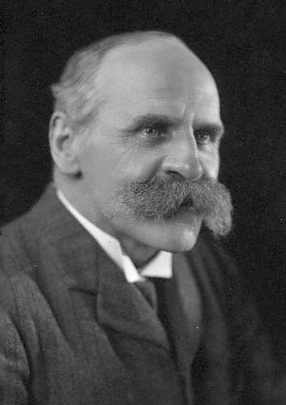
John Scott Haldane (2 May 1860 – 14/15 March 1936)
| J. B. S. Haldane | |
|---|---|

Haldane in 1914
|
(5 November 1892 – 1 December 1964)

Maurice Wilkins (15 December 1916 – 5 October 2004)

Erwin Schrödinger (12 August 1887 – 4 January 1961)
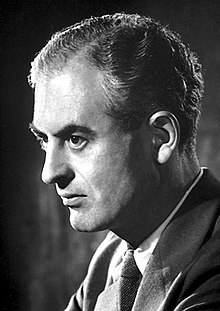
Sir Peter Medawar ( 28 February 1915 – 2 October 1987)

Barry Commoner (May 28, 1917 – September 30, 2012)
Enjoy the pictures of an amazing life
Harry Kroto with his father above

Margaret with David and Stephen

leaving Liverpool for Canada 1964

Kroto and his wife, Margaret.
______________
July 9, 2016
Professor Ken Edwards, Head of Genetics Department, The University of Leicester,
Dear Dr. Edwards,
I was very sad to learn of the passing of the great scientist Harry Kroto. Judging from comments of his close friends, Kroto was not only a great scientist but an even better man personally.
Tim Logan, chair of Chemistry and Biochemistry at Florida State: “What always brought out the best in Harry was his wife, Margaret. Margaret and Harry were always together, until the end of Harry’s life. She served as his business manager, scheduling his many speaking engagements around the world, organizing the travel, and supporting him in many, many ways. What I found so remarkable is that even after 57 years together, they were so obviously in love. Harry would include photos and sketches he made of her in his lectures, and he always acknowledged her as his moral compass.”
HAVE YOU EVER WONDERED WHY I WAS PROMPTED ORIGINALLY TO WRITE YOU? It was because Harry Kroto took the time in 2014 to correspond with me. After I wrote him in the spring and summer of 2014 he emailed me twice and then sent me a letter in November of 2014. In that letter he referred me to a film series Renowned Academics talk about God that featured your comments.
I have always been fascinated by brilliant individuals and recently I had the opportunity to come across a very interesting article by Michael Polanyi, LIFE TRANSCENDING PHYSICS AND CHEMISTRY, in the magazine CHEMICAL AND ENGINEERING NEWS, August 21, 1967, and I also got hold of a 1968 talk by Francis Schaeffer based on this article. ISN’T IT AMAZING THAT JUST LIKE KROTO’S FAMILY POLANYI HAD TO FLEE EUROPE BECAUSE OF HITLER’S INSANE GRUDGE AGAINST THE JEWS!!!!I know you don’t believe in God or the Devil but if anyone was demon-possessed it had to be Hitler.
Polanyi’s son John actually won the 1986 Nobel Prize for Chemistry. This article by Michael Polanyi concerns Francis Crick and James Watson and their discovery of DNA in 1953. Polanyi noted:
Mechanisms, whether man-made or morphological, are boundary conditions harnessing the laws of in
animate nature, being themselves irreducible to those laws. The pattern of organic bases in DNA which functions as a genetic code is a boundary condition irreducible to physics and chemistry. Further controlling principles of life may be represented as a hierarchy of boundary conditions extending, in the case of man, to consciousness and responsibility.
I am sending you this two CD’s of this talk because I thought you may find it very interesting. It includes references to not only James D. Watson, and Francis Crick but also Maurice Wilkins, Erwin Schrodinger, J.S. Haldane (his son was the famous J.B.S. Haldane), Peter Medawar, and Barry Commoner.
Adrian Rogers noted that Evolution has no answer for these three points:
1. The fossil record. Not only is the so-called missing link still missing, all of the transitional life forms so crucial to evolutionary theory are missing from the fossil record. There are thousands of missing links, not one!
2. The second law of thermodynamics. This law states that energy is winding down and that matter left to itself tends toward chaos and randomness, not greater organization and complexity. Evolution demands exactly the opposite process, which is observed nowhere in nature.
3. The origin of life. Evolution offers no answers to the origin of life. It simply pushes the question farther back in time, back to some primordial event in space or an act of spontaneous generation in which life simply sprang from nothing.
Let me start off by saying that this is not the first time that I have written you. Earlier I shared several letters of correspondence I had with Carl Sagan, and Antony Flew. Both men were strong believers in evolution as you are today. Instead of talking to you about their views today I wanted to discuss the views of you and Charles Darwin.
On April 5, 2015 at the Fellowship Bible Church Easter morning service in Little Rock, Arkansas our pastor Mark Henry described DOUBTING THOMAS and that description made me think of you. Moreover, your skeptical view towards Christianity reminds me of CHARLES DARWIN’S growing doubts throughout his life on these same theological issues such as skepticism in reaction to the claims of the Bible!!!
I’m an evangelical Christian and you are a secularist but I am sure we can both agree with the apostle Paul when he said in First Corinthians 15 that if Christ did not rise from the dead then Christians are to be most pited!!!! I attended Easter services this week and this issue came up and Mark Henry asserted that there is plenty of evidence that indicates that the Bible is historically accurate. Did you know that CHARLES DARWIN thought about this very subject quite a lot?
I just finished reading the online addition of the book Darwin, Francis ed. 1892. Charles Darwin: his life told in an autobiographical chapter, and in a selected series of his published letters [abridged edition]. London: John Murray. There are several points that Charles Darwin makes in this book that were very wise, honest, logical, shocking and some that were not so wise. The Christian Philosopher Francis Schaeffer once said of Darwin’s writings, “Darwin in his autobiography and in his letters showed that all through his life he never really came to a quietness concerning the possibility that chance really explained the situation of the biological world. You will find there is much material on this [from Darwin] extended over many manufacturers years that constantly he was wrestling with this problem.”
Your QUOTE from your interview with Alan Macfarlane:
ON RELIGION, I don’t have a belief; I hesitate to say I am an atheist as it sounds too positive and puts me in the Dawkins camp; my reasoning is that I don’t see anything in what we know about the universe and the way it operates any need to invoke anybody who changes things from time to time; once a rule had been set up it continued to operate for the last 13.7 billion years; as a biologist, having lived through Darwinism and the DNA revolution, it is now so clear to me that EVOLUTION and natural selection is a perfectly adequate explanation for the diversity of living form that we have; they clearly all share the same kind of information system and metabolic system; I don’t see any need to invoke a GOD who is active, nor have I had any direct personal experience which I could say was religious; how it was all set up, what created it in the first place, whether there are parallel universes, I don’t know, but I am not a believer; in my childhood I used to go to CHURCH; my parents came from different denominations, my mother was a Methodist and my father Church of England; they couldn’t agree on where to go to church so didn’t go very often, but insisted that I did; I was CONFIRMED and was a believer for a time; gradually came to my present views in my mid-twenties, but I may be wrong;
Quotes like this indicate to me that you are a DOUBTING THOMAS type. YOU MAY FIND IT INTERESTING THAT CHARLES DARWIN WAS ALSO INTERESTED IN THE HISTORICAL ASPECT OF THE BIBLE. When I read the book Charles Darwin: his life told in an autobiographical chapter, and in a selected series of his published letters, I also read a commentary on it by Francis Schaeffer and I wanted to both quote some of Charles Darwin’s own words to you and then include the comments of Francis Schaeffer on those words. I have also enclosed a CD with two messages from Adrian Rogers and Bill Elliff concerning Darwinism.
Darwin, C. R. to Doedes, N. D., 2 Apr 1873
“It is impossible to answer your question briefly; and I am not sure that I could do so, even if I wrote at some length. But I may say that the impossibility of conceiving that this grand and wondrous universe, with our conscious selves, arose through chance, seems to me the chief argument for the existence of God; but whether this is an argument of real value, I have never been able to decide…Nor can I overlook the difficulty from the immense amount of suffering through the world. I am aware that if we admit a First Cause, the mind still craves to know whence it came, and how it arose.”
Francis Schaeffer noted:
What he is saying is if you say there is a first cause, then the mind says, “Where did this come from?” I think this is a bit old fashioned, with some of the modern thinkers, this would not have carry as much weight today as it did when Darwin expressed it. Jean Paul Sartre said it as well as anyone could possibly say it. The philosophic problem is that something is there and not nothing being there. No one has the luxury of beginning with nothing. Nobody I have ever read has put forth that everything came from nothing. I have never met such a person in all my reading,or all my discussion. If you are going to begin with nothing being there, it has to be nothing nothing, and it can’t be something nothing. When someone says they believe nothing is there, in reality they have already built in something there. The only question is do you begin with an impersonal something or a personal something. All human thought is shut up to these two possibilities. Either you begin with an impersonal and then have Darwin’s own dilemma which impersonal plus chance, now he didn’t bring in the amount of time that modern man would though. Modern man has brought in huge amounts of time into the equation as though that would make a difference because I have said many times that time can’t make a qualitative difference but only a quantitative difference. The dilemma is it is either God or chance. Now you find this intriguing thing in Darwin’s own situation, he can’t understand how chance could have produced these two great factors of the universe and its form and the mannishness of man.
“Another source of conviction in the existence of God, connected with the reason and not with the feelings, impresses me as having much more weight. This follows from the extreme difficulty or rather impossibility of conceiving this immense and wonderful universe, including man with his capacity of looking far backwards and far into futurity, as the result of blind chance or necessity. When thus reflecting, I feel compelled to look to a First Cause having an intelligent mind in some degree analogous to that of man; and I deserve to be called a Theist. This conclusion was strong in my mind about the time, as far as I can remember, when I wrote the Origin of Species, and it is since that time that it has very gradually, with many fluctuations, become weaker. But then arises the doubt…”
Francis Schaeffer commented:
On the basis of his reason he has to say there must be an intelligent mind, someone analogous to man. You couldn’t describe the God of the Bible better. That is man is made in God’s image and therefore, you know a great deal about God when you know something about man. What he is really saying here is that everything in my experience tells me it must be so, and my mind demands it is so. Not just these feelings he talked about earlier but his MIND demands it is so, but now how does he counter this? How does he escape this? Here is how he does it!!!
Charles Darwin went on to observe: “—can the mind of man, which has, as I fully believe, been developed from a mind as low as that possessed by the lowest animals, be trusted when it draws such grand conclusions?”
Francis Schaeffer asserted:
So he says my mind can only come to one conclusion, and that is there is a mind behind it all. However, the doubt comes because his mind has come from the lowest form of earthworm, so how can I trust my mind. But this is a joker isn’t it? Then how can you trust his mind to support such a theory as this? He proved too much. The fact that Darwin found it necessary to take such an escape shows the tremendous weight of Romans 1, that the only escape he can make is to say how can I trust my mind when I come from the lowest animal the earthworm? Obviously think of the grandeur of his concept, I don’t think it is true, but the grandeur of his concept, so what you find is that Darwin is presenting something here that is wrong I feel, but it is not nothing. It is a tremendously grand concept that he has put forward. So he is accepting the dictates of his mind to put forth a grand concept which he later can’t accept in this basic area with his reason, but he rejects what he could accept with his reason on this escape. It really doesn’t make sense. This is a tremendous demonstration of the weakness of his own position.
Darwin also noted, “I cannot pretend to throw the least light on such abstruse problems. The mystery of the beginning of all things is insoluble by us, and I for one must be content to remain an Agnostic.”
Francis Schaeffer remarked:
What a stupid reply and I didn’t say wicked. It just seems to me that here is 2 plus 2 equals 36 at this particular place.
Darwin, C. R. to Graham, William 3 July 1881
Nevertheless you have expressed my inward conviction, though far more vividly and clearly than I could have done, that the Universe is not the result of chance.* But then with me the horrid doubt always arises whether the convictions of man’s mind, which has been developed from the mind of the lower animals, are of any value or at all trustworthy. Would any one trust in the convictions of a monkey’s mind, if there are any convictions in such a mind?
Francis Schaeffer observed:
Can you feel this man? He is in real agony. You can feel the whole of modern man in this tension with Darwin. My mind can’t accept that ultimate of chance, that the universe is a result of chance. He has said 3 or 4 times now that he can’t accept that it all happened by chance and then he will write someone else and say something different. How does he say this (about the mind of a monkey) and then put forth this grand theory? Wrong theory I feel but great just the same. Grand in the same way as when I look at many of the paintings today and I differ with their message but you must say the mark of the mannishness of man are one those paintings titanic-ally even though the message is wrong and this is the same with Darwin. But how can he say you can’t think, you come from a monkey’s mind, and you can’t trust a monkey’s mind, and you can’t trust a monkey’s conviction, so how can you trust me? Trust me here, but not there is what Darwin is saying. In other words it is very selective.
Now we are down to the last year of Darwin’s life.
* The Duke of Argyll (Good Words, April 1885, p. 244) has recorded a few words on this subject, spoken by my father in the last year of his life. “. . . in the course of that conversation I said to Mr. Darwin, with reference to some of his own remarkable works on the Fertilisation of Orchids, and upon The Earthworms,and various other observations he made of the wonderful contrivances for certain purposes in nature—I said it was impossible to look at these without seeing that they were the effect and the expression of mind. I shall never forget Mr. Darwin’s answer. He looked at me very hard and said, ‘Well, that often comes over me with overwhelming force; but at other times,’ and he shook his head vaguely, adding, ‘it seems to go away.'”
Francis Schaeffer summarized :
And this is the great Darwin, and it makes you cry inside. This is the great Darwin and he ends as a man in total tension.
Francis Schaeffer noted that in Darwin’s 1876 Autobiography that Darwin he is going to set forth two arguments for God in this and again you will find when he comes to the end of this that he is in tremendous tension. Darwin wrote,
At the present day the most usual argument for the existence of an intelligent God is drawn from the deep inward conviction and feelings which are experienced by most persons.Formerly I was led by feelings such as those just referred to (although I do not think that the religious sentiment was ever strongly developed in me), to the firm conviction of the existence of God and of the immortality of the soul. In my Journal I wrote that whilst standing in the midst of the grandeur of a Brazilian forest, ‘it is not possible to give an adequate idea of the higher feelings of wonder, admiration, and devotion which fill and elevate the mind.’ I well remember my conviction that there is more in man than the mere breath of his body; but now the grandest scenes would not cause any such convictions and feelings to rise in my mind. It may be truly said that I am like a man who has become colour-blind.
Francis Schaeffer remarked:
Now Darwin says when I look back and when I look at nature I came to the conclusion that man can not be just a fly! But now Darwin has moved from being a younger man to an older man and he has allowed his presuppositions to enter in to block his logic. These things at the end of his life he had no intellectual answer for. To block them out in favor of his theory. Remember the letter of his that said he had lost all aesthetic senses when he had got older and he had become a clod himself. Now interesting he says just the same thing, but not in relation to the arts, namely music, pictures, etc, but to nature itself. Darwin said, “But now the grandest scenes would not cause any such convictions and feelings to rise in my mind. It may be truly said that I am like a man who has become colour-blind…” So now you see that Darwin’s presuppositions have not only robbed him of the beauty of man’s creation in art, but now the universe. He can’t look at it now and see the beauty. The reason he can’t see the beauty is for a very, very , very simple reason: THE BEAUTY DRIVES HIM TO DISTRACTION. THIS IS WHERE MODERN MAN IS AND IT IS HELL. The art is hell because it reminds him of man and how great man is, and where does it fit in his system? It doesn’t. When he looks at nature and it’s beauty he is driven to the same distraction and so consequently you find what has built up inside him is a real death, not only the beauty of the artistic but the beauty of nature. He has no answer in his logic and he is left in tension. He dies and has become less than human because these two great things (such as any kind of art and the beauty of nature) that would make him human stand against his theory.
________________________
DO THESE WORDS OF DARWIN APPLY TO YOU TODAY? “I am like a man who has become colour-blind.” As a secularist you believe that it is sad indeed that millions of Christians are hoping for heaven but no heaven is waiting for them. Paul took a close look at this issue too. I Corinthians 15 asserts:
12 But if it is preached that Christ has been raised from the dead, how can some of you say that there is no resurrection of the dead?13 If there is no resurrection of the dead, then not even Christ has been raised. 14 And if Christ has not been raised, our preaching is useless and so is your faith. 15 More than that, we are then found to be false witnesses about God, for we have testified about God that he raised Christ from the dead. But he did not raise him if in fact the dead are not raised. 16 For if the dead are not raised, then Christ has not been raised either.17 And if Christ has not been raised, your faith is futile; you are still in your sins. 18 Then those also who have fallen asleep in Christ are lost. 19 If only for this life we have hope in Christ, we are of all people most to be pitied.
I sent you a CD that starts off with the song DUST IN THE WIND by Kerry Livgren of the group KANSAS which was a hit song in 1978 when it rose to #6 on the charts because so many people connected with the message of the song. It included these words, “All we do, crumbles to the ground though we refuse to see, Dust in the Wind, All we are is dust in the wind, Don’t hang on, Nothing lasts forever but the Earth and Sky, It slips away, And all your money won’t another minute buy.”
Kerry Livgren himself said that he wrote the song because he saw where man was without a personal God in the picture. Solomon pointed out in the Book of Ecclesiastes that those who believe that God doesn’t exist must accept three things. FIRST, death is the end and SECOND, chance and time are the only guiding forces in this life. FINALLY, power reigns in this life and the scales are never balanced. The Christian can face death and also confront the world knowing that it is not determined by chance and time alone and finally there is a judge who will balance the scales.
Both Kerry Livgren and the bass player Dave Hope of Kansas became Christians eventually. Kerry Livgren first tried Eastern Religions and Dave Hope had to come out of a heavy drug addiction. I was shocked and elated to see their personal testimony on The 700 Club in 1981 and that same interview can be seen on You Tube today. Livgren lives in Topeka, Kansas today where he teaches “Diggers,” a Sunday school class at Topeka Bible Church. DAVE HOPE is the head of Worship, Evangelism and Outreach at Immanuel Anglican Church in Destin, Florida.
The answer to find meaning in life is found in putting your faith and trust in Jesus Christ. The Bible is true from cover to cover and can be trusted.
Thank you again for your time and I know how busy you are.
Everette Hatcher, everettehatcher@gmail.com, http://www.thedailyhatch.org, cell ph 501-920-5733, Box 23416, LittleRock, AR 72221, United States
_______________________________________
Is the Bible historically accurate? Here are some of the posts I have done in the past on the subject: 1. The Babylonian Chronicle, of Nebuchadnezzars Siege of Jerusalem, 2. Hezekiah’s Siloam Tunnel Inscription. 3. Taylor Prism (Sennacherib Hexagonal Prism), 4. Biblical Cities Attested Archaeologically. 5. The Discovery of the Hittites, 6.Shishak Smiting His Captives, 7. Moabite Stone, 8. Black Obelisk of Shalmaneser III, 9A Verification of places in Gospel of John and Book of Acts., 9B Discovery of Ebla Tablets. 10. Cyrus Cylinder, 11. Puru “The lot of Yahali” 9th Century B.C.E., 12. The Uzziah Tablet Inscription, 13. The Pilate Inscription, 14. Caiaphas Ossuary, 14 B Pontius Pilate Part 2, 14c. Three greatest American Archaeologists moved to accept Bible’s accuracy through archaeology.,
______________ George Harrison Swears & Insults Paul and Yoko Lucy in the Sky with Diamonds- The Beatles The Beatles: I have dedicated several posts to this series on the Beatles and I don’t know when this series will end because Francis Schaeffer spent a lot of time listening to the Beatles and talking […]
The Beatles in a press conference after their Return from the USA Uploaded on Nov 29, 2010 The Beatles in a press conference after their Return from the USA. The Beatles: I have dedicated several posts to this series on the Beatles and I don’t know when this series will end because Francis […]
__________________ Beatles 1966 Last interview I have dedicated several posts to this series on the Beatles and I don’t know when this series will end because Francis Schaeffer spent a lot of time listening to the Beatles and talking and writing about them and their impact on the culture of the 1960’s. In this […]
_______________ The Beatles documentary || A Long and Winding Road || Episode 5 (This video discusses Stg. Pepper’s creation I have dedicated several posts to this series on the Beatles and I don’t know when this series will end because Francis Schaeffer spent a lot of time listening to the Beatles and talking and writing about […]
_______________ Francis Schaeffer pictured below: _____________________ I have included the 27 minute episode THE AGE OF NONREASON by Francis Schaeffer. In that video Schaeffer noted, ” Sergeant Pepper’s Lonely Hearts Club Band…for a time it became the rallying cry for young people throughout the world. It expressed the essence of their lives, thoughts and their feelings.” How Should […]
Crimes and Misdemeanors: A Discussion: Part 1 ___________________________________ Today I will answer the simple question: IS IT POSSIBLE TO BE AN OPTIMISTIC SECULAR HUMANIST THAT DOES NOT BELIEVE IN GOD OR AN AFTERLIFE? This question has been around for a long time and you can go back to the 19th century and read this same […]
____________________________________ Francis Schaeffer pictured below: __________ Francis Schaeffer has written extensively on art and culture spanning the last 2000years and here are some posts I have done on this subject before : Francis Schaeffer’s “How should we then live?” Video and outline of episode 10 “Final Choices” , episode 9 “The Age of Personal Peace and Affluence”, episode 8 […]
Love and Death [Woody Allen] – What if there is no God? [PL] ___________ _______________ How Should We then Live Episode 7 small (Age of Nonreason) #02 How Should We Then Live? (Promo Clip) Dr. Francis Schaeffer 10 Worldview and Truth Two Minute Warning: How Then Should We Live?: Francis Schaeffer at 100 Francis Schaeffer […]
___________________________________ Francis Schaeffer pictured below: ____________________________ Francis Schaeffer “BASIS FOR HUMAN DIGNITY” Whatever…HTTHR Dr. Francis schaeffer – The flow of Materialism(from Part 4 of Whatever happened to human race?) Dr. Francis Schaeffer – The Biblical flow of Truth & History (intro) Francis Schaeffer – The Biblical Flow of History & Truth (1) Dr. Francis Schaeffer […]
__
Milton Friedman and Dan Mitchell on the Post Office!!!
July 10, 2016 by Dan Mitchell
I don’t mind being polemical on occasion, but I generally don’t accuse my opponents of being “socialists.”
American leftists generally focus on redistribution and regulatory intervention andsocialism technically means that the government directly owns, operates, and controls various sectors of the economy (think, for example, of the difference between Obamacare and the U.K.’s system, where doctors are public employees and the government operates the hospitals).
But we do have a few islands of socialism in the United States. Education is probably the biggest sector of our economy that is dominated by government. The air traffic control system is another unfortunate example.
 Today, though, let’s focus on the Postal Service.
I wrote about this topic a couple of years ago, but we now have lots of additional evidence on why we should replace this costly and inefficient government monopoly with a system based on real competition and no subsidies.
My colleague Chris Edwards explains that, from an economic and taxpayer perspective, the postal monopoly is a dumpster fire.
The U.S. Postal Service (USPS) has lost more than $50 billion since 2007, even though it enjoys legal monopolies over letters, bulk mail, and access to mailboxes. The USPS has a unionized, bureaucratic, and overpaid workforce. And as a government entity, it pays no income or property taxes, allowing it to compete unfairly with private firms in the package and express delivery businesses. …the USPS needs a major overhaul. It should be privatized and opened to competition. But instead of reform, congressional Republicans are moving forward with legislation that tinkers around the edges. Their bill adjusts retiree health care, hikes stamp prices, and retains six-day delivery despite a 40 percent drop in letter volume since 2000. The bill would also create “new authority to offer non-postal products,” thus threatening to increase the tax-free entity’s unfair competition against private firms.
Amazingly, this is an area where European nations actually are more market-oriented than the United States.
Republican…timidity is particularly striking when you compare their no-reform bill to the dramatic postal reforms in Europe. …Since 2012 all EU countries have opened their postal industries to competition for all types of mail. A growing number of countries have privatized their postal systems, including Britain, Germany, Portugal, and the Netherlands. …On-the-ground competition is small but growing in Europe. In a dozen countries, new competitors have carved out more than five percent of the letter market, and in a handful of countries the share is more than ten percent. …the Europeans are giving entrepreneurs a chance. In response to even the modest competition that has developed so far, major European postal companies have “increased their efficiency and restructured their operations to reduce costs,” according to the EU report.
Veronique de Rugy of the Mercatus Center weighs in on the issue in a column forReason.
The Postal Service is a major business enterprise operated by the federal government. Thanks to Congress, it has something many business owners would love to have— protection from competition. Its monopoly on access to mailboxes and the delivery of first-class and standard mail means it doesn’t have to worry about someone offering a better service at a lower price. …unlike private businesses, the Postal Service has access to low-rate loans from the Department of the Treasury, effectively pays no income or property taxes, is exempt from local zoning rules and even has the power of eminent domain.
 In addition to all these favors, the Postal Service is getting a huge indirect subsidy for it’s unfunded pension system.
Congress mandated that the Postal Service start making payments to fund the generous retirement health benefits it has promised workers. This was an important reform because the Postal Service has built up an unfunded liability for these benefits of nearly $100 billion. Ideally, postal workers should be paying for these benefits from payroll contributions rather than leaving the liabilities to federal taxpayers down the road. Sadly, Congress is too timid to take on special interests that benefit from the inefficient status quo, such as postal unions, and won’t support serious reforms… A few years ago, President Barack Obama called for a $30 billion bailout from the federal government, a five-day delivery schedule and an increase in the price of stamps. Unfortunately, that would be a bad solution from the perspective of customers and taxpayers. It also would perpetuate the blatantly unfair competition with companies such as FedEx and UPS.
Amazingly, some statists actually want to expand the Postal Service.
One bad idea that “reform” Postal Service supporters are pushing is to allow the government service to compete with private firms in other industries, such as banking. That would be hugely unfair to taxpaying private businesses, and do we really believe that such a bureaucratic agency as the U.S. Postal Service could out-compete private businesses in other areas if there were a level playing field?
The simple way to think about this issue is that an expanded Postal Service would be like Fannie Mae and Freddie Mac, only able to operate because of special privileges.
Shane Otten, writing for E21, has an “undeliverable” message for the Postal Service.
…the United States Postal Service (USPS)…an independent agency of the U.S. government, …has exclusive control over the postal system. Like every other government monopoly, it has lost money—$56.8 billion since 2007. The Postal Service is a smorgasbord of common government failures, including high labor costs due to unions (including the American Postal Workers Union, the National Association of Letter Carriers, and the National Rural Letter Carriers’ Association), congressional burdens restricting needed changes, unfunded pensions… Postal workers earn between 24 percent and 36 percent more than comparable workers in the private sector. Because of this, labor costs represent approximately 80 percent of all expenses incurred by USPS. For comparison, private delivery service UPS’s labor costs only make up 62 percent of expenditures, even though UPS is unionized. And at union-free FedEx, labor costs come in at just 38 percent of total operating expenses.
Shane echoes Veronique’s argument about the Postal Service’s dodgy approach to pensions.
…the Post Office has not made a prefunding payment since fiscal year 2011. …the Postal Service pays nothing in federal, state, and local taxes on income, sales, property, and purchases. This saves the agency over $2 billion each year, giving it a major advantage over private competitors. The USPS is also immune from zoning regulations, tolls, vehicle registration, and parking tickets. …The Postal Service…can borrow money from the Treasury at a reduced interest rate. …borrowing at this artificially low rate is equivalent to a subsidy of almost $500 million.
By the way, I got castigated for saying it was a “bailout” when Congress said it was okay for the Postal Service to skip payments for employee pensions. I was basically correct, but should have referred to it as a “pre-bailout” or something like that.
The bottom line is that there’s no reason in a modern economy for a government to operate a business that delivers pieces of paper (and more than it would make sense to have government deliver pizzas). Indeed, this is such a slam-dunk issue that even the Washington Post is on the right side.
P.S. For what it’s worth, the Postal Service actually is constitutional. It’s one of thefederal government’s enumerated powers. But the fact that the federal government is allowed to maintain postal service doesn’t mean it’s obliged to do it.
P.P.S. Here’s my only example of Postal Service Humor.
P.P.P.S. Though if you have a very dark sense of humor, you may laugh at the “action” of this postal employee. I think he may deserve a retroactive promotion to the Bureaucrat Hall of Fame.
Related posts:
The War on Work Testing Milton Friedman: Government Control – Full Video More Great Moments in Federal Government Incompetence April 2, 2016 by Dan Mitchell I used to think the Equal Employment Opportunity Commission was the worst federal bureaucracy. After all, these are the pinheads who are infamous for bone-headed initiatives, such as: The EEOC making […]
Dr. Walter Williams Highlights from – Testing Milton Friedman Milton Friedman PBS Free to Choose 1980 Vol 8 of 10 Who Protects the Worker The Left’s Inequality Fixation Is Economically Foolish and Politically Impotent April 22, 2015 by Dan Mitchell I don’t understand the left’s myopic fixation on income inequality. If they genuinely care about the […]
Dr. Walter Williams Highlights from – Testing Milton Friedman Milton Friedman PBS Free to Choose 1980 Vol 8 of 10 Who Protects the Worker Walter E Williams – A Discussion About Fairness & Redistribution Testing Milton Friedman: Equality of Opportunity – Full Video Walter Williams, Freedom Fighter March 23, 2011 by Dan Mitchell I’ve been fortunate […]
__ Milton Friedman – The Four Ways to Spend Money What establishments are you most unsatisfied with? Probably government organizations like Dept of Motor Vehicles or Public Schools because there is no profit motive and they are not careful in the way they spend our money. Three Cheers for Profits and Free Markets April 7, 2015 […]
Dan Mitchell on Milton Friedman and Adam Smith’s perspective on spending other people’s money!!! Milton Friedman, Adam Smith, and Other People’s Money May 8, 2016 by Dan Mitchell From an economic perspective, too much government spending is harmful to economic performance because politicians and bureaucrats don’t have very good incentives to spend money wisely. More specifically, […]
Milton Friedman – Free Trade vs. Protectionism If Milton Friedman was here he would attack Trump’s proposal for a 45 percent tax on Chinese products! Dissecting Trumponomics March 22, 2016 by Dan Mitchell At this stage, it’s quite likely that Donald Trump will be the Republican presidential nominee. Conventional wisdom suggests that this means Democrats […]
Milton Friedman – Free Trade vs. Protectionism Free to Choose Part 2: The Tyranny of Control (Featuring Milton Friedman Donald Trump: Clueless about free trade Larry Elder rebuts candidate’s ‘they’re taking our jobs’ claim Published: 02/03/2016 at 6:39 PM One of Donald Trump’s talking points and biggest applause lines is how “they” – Japan, […]
Milton Friedman – Free Trade vs. Protectionism Free to Choose Part 2: The Tyranny of Control (Featuring Milton Friedman Mark J. Perry@Mark_J_Perry March 5, 2016 9:26 pm | AEIdeas Some economic lessons about international trade for Donald Trump from Milton Friedman and Henry George Carpe Diem Trump vs Friedman – Trade Policy Debate In […]
Milton Friedman – Free Trade vs. Protectionism Free to Choose Part 2: The Tyranny of Control (Featuring Milton Friedman Eight Questions for Protectionists September 23, 2011 by Dan Mitchell When asked to pick my most frustrating issue, I could list things from my policy field such as class warfare or income redistribution. But based on […]
Milton Friedman – Free Trade vs. Protectionism Free to Choose Part 2: The Tyranny of Control (Featuring Milton Friedman Trump, Sanders, and the Snake-Oil Economics of Protectionism March 19, 2016 by Dan Mitchell John Cowperthwaite deserves a lot of credit for Hong Kong’s prosperity. As a British appointee, he took a hands-off policy and allowed […]
____
Short clip from an interview with Woody Allen in occasion of the world premiere of his film “Café Society” at the Cannes film festival 2016.
Woody Allen’s first significantly Los Angeles-filmed feature since Annie Hall nearly 40 years ago is another bittersweet, lightly comic romance, this one set in the big studio heyday of the 1930s.
Wispy and familiar in its themes and humorous strokes, Cafe Society benefits from an exceptionally adept cast led by Jesse Eisenberg, Kristen Stewart and Steve Carell, as well as from a luminous glow that emphasizes both the old Hollywood nostalgia and the story’s basis in dreams and artifice (it’s the director’s first feature shot digitally, by Vittorio Storaro, no less). After a six-picture run with Sony Classics, this time Allen has chosen to go with Amazon Studios for the film’s domestic release on July 29, which will test the new distributor’s ability to hit the auteur’s target theatrical audience prior to home viewing availability.
Layered with a rich soundtrack of romantic tunes from the period, this is a familiar tale of love yearned for, gained, lost and savored after the fact. In other words, it’s a format Allen has relied upon many times before, but even past the age of 80, the still-fertile writer-director, amazingly sticking to his one-film-per-year rhythm (not to mention his upcoming TV series, also with Amazon), has created a small fiction of amiable appeal and vibrancy which goes down as easily as a fizzy cocktail.
Brooklyn kid Bobby Dorfman (Eisenberg) shows up in mid-1930s Hollywood hoping to get a job with his powerhouse agent uncle Phil (Carell), who makes the newcomer wait a bit before giving him an entry-level position (“We don’t want to emphasize the nepotism,” Phil says in all seriousness). Phil, who bears more than a passing resemblance to legendary agent Charles Feldman (who was Allen’s first Hollywood agent and the producer of What’s New, Pussycat?), can’t utter a sentence without name-dropping and seems in all ways the master of his universe. But he does have an Achilles heel — he’s married, but is nuts about his assistant, the comely young Vonnie (Stewart).
Assigned by Phil to show his nephew around (basically showing him a lot of stars’ homes), Vonnie initially cools Bobby’s amorous enthusiasm by claiming she has a boyfriend, but Allen adroitly pulls the long-reliable levers of classic farce to create complications among the three and build pressure in all of them: Phil keeps vacillating between his wife and Vonnie, Vonnie can’t make up her mind either and Bobby eventually decides he wants to move back to New York (the strongest anti-Hollywood sentiment Allen can manage now is having Bobby say, “It’s really a kind of boring, nasty, dog-eat-dog industry”).
All the same, there’s nothing caustic in Allen’s approach here; as usual, his characters are all wrapped up in their own neuroses, momentary desires and indecision, and they love to verbalize it all. Despite his delirious feelings about Vonnie, Bobby is also hard and hasty to a significant degree, more than is usual for Allen’s partly self-based protagonists, so when circumstances dictate, he has no trouble pulling up stakes and returning to New York to work for his big-shot gangster older brother Ben (Corey Stoll), who puts him in charge of a high-end nightclub (hence the film’s title).
The long final act, nearly 45 minutes, leapfrogs considerably in time and relies significantly on narration that sounds like it’s spoken by Allen himself, despite a stilted quality that gives it the feel of something being read cold from a piece of paper. Jeannie Berlin and Ken Stott (the latter could pass as the late Buddy Hackett’s brother) are comic highlights as the complaining parents of very different sons; that Bobby could marry and have a baby with a shiksa (Blake Lively) is one thing, but it drives them to existential angst that another is a king of the underworld.
Despite the shadow of innumerable bittersweet romances, including Allen’s own, that hangs over the trajectory of this love story, Cafe Society nonetheless generates a genuine, if mild, poignancy at the end for what the central characters have and what they don’t. There’s an entirely visible formula at work here, but Allen still knows how to milk it to reasonable effect.
Eisenberg has no trouble supplying the requisite neurotic quotient as the nominal Allen stand-in, but Stewart is good enough to almost make you wish for another version of The Great Gatsby just so she could play Daisy, and Carell layers his initially stock Hollywood big shot in unexpected ways that pay off rewardingly.
Many of the posh Hollywood scenes are wittily costumed by the resourceful Suzy Benzinger to have all the men suited in shades of tan and brown, and she has a field day with the glamorous women’s outfits throughout. Santo Loquasto’s production design takes you back to the town’s high-glamour days, while the cinematography — Storaro’s first work in the U.S. and on a mainstream feature in more than a decade — bathes everything in the exquisite artificiality of amber light.
Production: Gravier Productions, Perdido Productions
Cast: Jeannie Berlin, Steve Carell, Jesse Eisenberg, Blake Lively, Parker Posey, Kristen Stewart, Corey Stoll, Ken Stott
Director-screenwriter: Woody Allen
Producers: Lettie Aronson, Stephen Tenenbaum, Edward Walson
Executive producers: Ron Chez, Adam B. Stern
Director of photography: Vittorio Storaro
Production designer: Santo Loquasto
Costume designer: Suzy Benzinger
Editor: Alisa Lepselter
Casting: Patricia Kerrigan DiCerto, Juliet Taylor
Rated PG-13, 96 minutes
___________ Fifty Years Ago, Woody Allen PlottedMidnight in Paris in This Stand-up Routine By Kyle Buchanan Follow @kylebuchanan 341Shares Share254Tweet70Share8EmailPrint When Woody Allen won the Best Original Screenplay Oscar this year for writing Midnight in Paris, he set a record at age 76 as the oldest person to ever triumph in that category. Turns out, […]
_____ _______ Woody Allen Stand Up Comic 1964 1968 09 The Science Fiction Film Woody Allen’s stand-up comedy albums reissued in new box set BY JOSH TERRY ON DECEMBER 16, 2014, 12:10PM 1 COMMENT FACEBOOK TWITTER TUMBLR STUMBLEUPON REDDIT Before Woody Allen became the prolific director responsible for such classics as Manhattan and Annie Hall, he was a […]
Woody Allen Stand Up Comic 1964 1968 15 Brooklyn Separating The Art From the Artist With Woody Allen: The Stand-Up Years By Samantha Allen January 20, 2015 | 11:30am Share Tweet Share In the liner notes for Woody Allen: The Stand-Up Years 1964-1968, longtime director and producer Robert B. Weide (Curb Your Enthusiasm) waxes nostalgic […]
_ The first picture from Woody Allen’s new movie confirms that Joaquin Phoenix and Emma Stone are its stars. But what do we know about the bigger picture? Not saying much … Emma Stone and Joaquin Phoenix in Woody Allen’s Irrational Man. Photograph: PR Andrew Pulver @Andrew_Pulver Monday 13 April 2015 08.27 EDTLast modified on Monday […]
I love it when I find someone else who has a love for Woody Allen movies like I do. Evidently Paul Semel is person like that. Below is Paul Semel’s fine review: Woody Allen Stand Up Comic 1964 1968 01 The Vodka Ad JANUARY 12, 2015 Woody Allen The Stand-Up Years 1964-1968 Review Given that he’s […]
Woody Allen Stand Up Comic 1964 1968 05 Mechanical Objects Standing Up and Floating Out Our favorite things this week include Woody Allen’s “The Stand-Up Years,” “Inherent Vice” by Thomas Pynchon not Paul Thomas Anderson, and “Saga” by Brian K. Vaughan. MILK & HONEY Email this page Posted January 14, 2015 Allen’s Stand-Up Roots: On […]
____ Woody Allen’s past movies and the subject of the Meaning of Life examined!!! Out of the Past: Woody Allen, Nostalgia, the Meaning of Life, and Radio Days Kyle Turner Jul 25, 2014 Film, Twilight Time 1 Comment “I firmly believe, and I don’t say this as a criticism, that life is meaningless.” – Woody […]
Woody Allen Should Have Quoted Pascal: “Magic in the Moonlight” January 7, 2015 by Roger E. Olson 9 Comments Woody Allen Should Have Quoted Pascal: “Magic in the Moonlight” I am no Roger Ebert and don’t watch that many movies, but in my opinion, for what it’s worth, Woody Allen’s 2014 film “Magic in […]
______________ If anyone has read my blog for any length of time they know that I am the biggest Woody Allen fan of all time. No one except maybe Bergman has attacked the big questions in life as well as Woody Allen. Furthermore, Francis Schaeffer is my favorite Christian Philosopher and he spent a lot […]
___________ Woody Allen to make first TV series for Amazon Prime ‘I’m not sure where to begin,’ says 79-year-old Oscar-winner about his small screen debut, as streaming TV service seeks to gain march on rivals with exclusive content Comment: in signing Woody Allen, Amazon Prime has delivered a nuclear blast to the competition Woody […]
__
The new Woody Allen film, “Café Society,” is set in the nineteen-thirties—you know, that far-off land where movies were movies, cars were like boats, and a guy could wear a suit the color of peanut butter and still look good. Aside from a goggling glance at things to come, in “Sleeper” (1973), Allen’s preference, as a time traveller, has been for an express ticket to the past. The trip hasn’t always worked out, and Allen has been sage enough, in “Zelig” (1983) and “Midnight in Paris” (2011), to remind us how frail and treacherous history can be; and yet, more often than not, the destination has been a haven. Just look at “The Purple Rose of Cairo” (1985), “Radio Days” (1987), “Bullets Over Broadway” (1994), or the melodious “Sweet and Lowdown” (1999). Allen was born in 1935, which is why a movie like “Radio Days,” though full of tall warm tales, feels less like a fantasy and more like a family scrapbook.
The hero of the new film is Bobby Dorfman (Jesse Eisenberg), who lives in the Bronx with his father, Marty (Ken Stott), and his mother, Rose (Jeannie Berlin). We first meet Bobby as he arrives in Los Angeles, hoping to try his luck with his Uncle Phil. This is not such a bad idea. Phil Stern (Steve Carell) is a Hollywood agent, and we first meet him in a tuxedo, beside his pool, encircled by the beau monde of his trade. “I’m expecting a call from Ginger Rogers,” he says. Phil is forever expecting, taking, or making calls, although we never see the stars to whom, or of whom, he chats—not because he’s a fraud but because the movie gods of that epoch were and remain, to anyone of Allen’s vintage, beyond human reckoning, and certainly beyond impersonation. Likewise, when Phil gives his assistant, Vonnie (Kristen Stewart), the task of showing his nephew the town, what she and Bobby do is stand outside the homes of stars and gaze. They might as well be staring at the night sky.
The one place we do see a celebrity is onscreen—at a movie theatre, where Bobby and Vonnie watch Barbara Stanwyck, in “Lady in Red” (1935). It’s a perfect choice by Allen: not a great film but the sort of entertainment that—so we like to tell ourselves—swept smoothly into view on a regular basis. (And Stanwyck, in closeup, makes you catch your breath. That’s not nostalgia; that’s awe.) By now, needless to say, Bobby and Vonnie have grown close. Bobby is a klutz of the heart; rather than simply falling in love, he tumbles and trips—nicely caught in Eisenberg’s voluble patter, dotted with hiccups of anxiety. But there is, as there always must be, a hitch. Vonnie is stepping out with someone else. Worse still, the stepping needs to be stealthy, because the someone is Uncle Phil.
Love triangles, like other forms of romantic geometry, are nothing new in Allen’s films. What’s different about “Café Society” is how casually the telling of the tale proceeds. It’s not that Allen is going through the motions but that the motions no longer consume him. (That could imply the mellowing of the years, but consider Robert Bresson, who was Allen’s age, in his early eighties, when he made “L’Argent” (1983)—a narrative as taut as piano wire.) The Phil-shaped twist, for instance, is introduced early, without a scrap of suspense, and, when we tack back East, to a subplot about Bobby’s no-good brother, Ben (Corey Stoll), a hoodlum whose idea of friendly persuasion involves a pit of wet concrete, the mood of the movie barely skips a beat. People get shot in front of us, yet we are left with the shrugging sense that no harm was done. Later, with Ben’s backing, Bobby returns to New York, and they open a night club. It thrives, attracting the same brand of tony folk who had once thronged around Phil’s pool. A resourceful clan, the Dorfmans.
None of this, you could claim, is remotely credible, but “Café Society” does not seem like a confection or a skit. There is a gravity to it, and a tug of sadness, that cannot be accounted for by the story. In “Crimes and Misdemeanors” (1989), ostensibly a far more serious film, Allen says, of show business, that “it’s worse than dog-eat-dog. It’s dog-doesn’t-return-other-dog’s-phone-calls.” In “Café Society,” the hero says, of Hollywood, “It’s really a kind of boring, nasty, dog-eat-dog industry.” No kicker, no laugh. The performances, too, shy away from the nutty and the broad, and Carell, a master of the brave face, does a fine job of suggesting the strain behind Uncle Phil’s bonhomie. Better still is Stewart, who, despite the girlish touches in her outfits (headband, white ankle socks with strappy sandals), reveals a woman veiled in ruefulness, and her final moments, in which Vonnie muses on paths both taken and spurned, are a lovely act of suspension, done without a word.
If this film has a secret, it dwells in the cinematography—by Vittorio Storaro, no less, who shot “The Conformist,” “Last Tango in Paris,” and “Apocalypse Now.” He worked with Allen on a segment of “New York Stories” (1989), but “Café Society” marks their first full-length collaboration, and the result is ravishing to behold—more so, I think, than any Allen picture since Gordon Willis filmed “Manhattan” in black-and-white. No one has delved more fruitfully than Storaro into the depths of color, exploring its contribution to political and physical extremes, and you could argue that Allen should have summoned him sooner, to chart Cate Blanchett’s prostration in “Blue Jasmine” (2013). Is “Café Society” too slight an occasion for Storaro’s inquiring art? Maybe so, yet there are scenes here—particularly the interiors, in Phil’s office, in the bar where he takes Vonnie on the sly, and in the lowly apartment where Bobby cooks her a dinner for which she doesn’t show—that burn almost painfully with Woody Allen’s yearning for the past. It lies there glowing, as recognizable as a movie star and as homely as a hearth, forever out of reach.
The subject of “Life, Animated,” a new documentary directed by Roger Ross Williams, is Owen Suskind, who is now twenty-five years old. In the early nineteen-nineties, when Owen was three, he began to withdraw into himself. Neither his motor skills nor his powers of speech were functioning as they should. The change was so rapid as to leave his parents—Ron Suskind, then a reporter for the Wall Street Journal, and his wife, Cornelia—profoundly alarmed. They seemed to be losing the Owen they knew. In Ron’s words, “Someone kidnapped our son.”
They consulted a specialist, who diagnosed autism. The prospects of retrieving Owen, as it were, or of assuaging his condition in any substantial way, were arid. Then—“a year along, into his silence,” as Ron puts it—the family was watching a video of Disney’s “The Little Mermaid.” Suddenly, Owen spoke, repeating the villain’s words: “Just your voice.” Of all the lines in all the movies in all the world, he went for those. A doctor, however, dampened hopes by identifying a case of echolalia—in psychiatric terms, a parroting of sounds that carries no weight of meaning. Cut to the ninth birthday of Walter, Owen’s older brother, when Owen, having talked for four years in what Ron describes as “gibberish,” came into the kitchen and announced, “Walter doesn’t want to grow up, like Mowgli or Peter Pan.”
Only the chilliest viewer could watch the Suskinds recalling this event and not share in their astonishment and joy. Added to that was the strange realization that Disney was not an escape or a palliative for Owen but his principal tool for connecting with experience—making sense of it rather than feeling overwhelmed or mobbed. (In itself, his addiction to Disney films, plus his knack for learning them by heart, is not unusual. Any frazzled parent in the era of “Frozen” will confirm as much.) Often, he was drawn less to heroes than to sidekicks, such as Baloo, in “The Jungle Book,” or the cranky Iago, in “Aladdin,” even devising a Land of the Lost Sidekicks, with himself as their appointed protector. He wanted to help the helpers.
Owen has made immense progress, to which “Life, Animated” is a stirring tribute, yet it leaves a trail of questions unanswered or unasked. How many children with autism find a particular template, in the way that Owen found Disney, and, without such a model, are they more likely to be locked in? Would a kid bereft of the unstinting love, the intellectual curiosity, and the worldly means of the Suskinds be able to follow Owen’s course? Then, there are larger and more uneasy conundrums: You wonder how this film affects the cultural accusations that have long been levelled against Disney—that the products charm and infantilize one generation after another, offering a vision of life that is soluble and simplified to a fault. Does the story of Owen require us to retract that charge? At one point, with the Suskind boys grown up, Walter gently explains to his brother how people in love like to kiss. “They don’t just use their lips, they use their—?” Walter asks. Pause. “They use their feelings,” Owen replies. The other Walt would be proud. ♦
Related posts:
___________ Fifty Years Ago, Woody Allen PlottedMidnight in Paris in This Stand-up Routine By Kyle Buchanan Follow @kylebuchanan 341Shares Share254Tweet70Share8EmailPrint When Woody Allen won the Best Original Screenplay Oscar this year for writing Midnight in Paris, he set a record at age 76 as the oldest person to ever triumph in that category. Turns out, […]
_____ _______ Woody Allen Stand Up Comic 1964 1968 09 The Science Fiction Film Woody Allen’s stand-up comedy albums reissued in new box set BY JOSH TERRY ON DECEMBER 16, 2014, 12:10PM 1 COMMENT FACEBOOK TWITTER TUMBLR STUMBLEUPON REDDIT Before Woody Allen became the prolific director responsible for such classics as Manhattan and Annie Hall, he was a […]
Woody Allen Stand Up Comic 1964 1968 15 Brooklyn Separating The Art From the Artist With Woody Allen: The Stand-Up Years By Samantha Allen January 20, 2015 | 11:30am Share Tweet Share In the liner notes for Woody Allen: The Stand-Up Years 1964-1968, longtime director and producer Robert B. Weide (Curb Your Enthusiasm) waxes nostalgic […]
_ The first picture from Woody Allen’s new movie confirms that Joaquin Phoenix and Emma Stone are its stars. But what do we know about the bigger picture? Not saying much … Emma Stone and Joaquin Phoenix in Woody Allen’s Irrational Man. Photograph: PR Andrew Pulver @Andrew_Pulver Monday 13 April 2015 08.27 EDTLast modified on Monday […]
I love it when I find someone else who has a love for Woody Allen movies like I do. Evidently Paul Semel is person like that. Below is Paul Semel’s fine review: Woody Allen Stand Up Comic 1964 1968 01 The Vodka Ad JANUARY 12, 2015 Woody Allen The Stand-Up Years 1964-1968 Review Given that he’s […]
Woody Allen Stand Up Comic 1964 1968 05 Mechanical Objects Standing Up and Floating Out Our favorite things this week include Woody Allen’s “The Stand-Up Years,” “Inherent Vice” by Thomas Pynchon not Paul Thomas Anderson, and “Saga” by Brian K. Vaughan. MILK & HONEY Email this page Posted January 14, 2015 Allen’s Stand-Up Roots: On […]
____ Woody Allen’s past movies and the subject of the Meaning of Life examined!!! Out of the Past: Woody Allen, Nostalgia, the Meaning of Life, and Radio Days Kyle Turner Jul 25, 2014 Film, Twilight Time 1 Comment “I firmly believe, and I don’t say this as a criticism, that life is meaningless.” – Woody […]
Woody Allen Should Have Quoted Pascal: “Magic in the Moonlight” January 7, 2015 by Roger E. Olson 9 Comments Woody Allen Should Have Quoted Pascal: “Magic in the Moonlight” I am no Roger Ebert and don’t watch that many movies, but in my opinion, for what it’s worth, Woody Allen’s 2014 film “Magic in […]
______________ If anyone has read my blog for any length of time they know that I am the biggest Woody Allen fan of all time. No one except maybe Bergman has attacked the big questions in life as well as Woody Allen. Furthermore, Francis Schaeffer is my favorite Christian Philosopher and he spent a lot […]
___________ Woody Allen to make first TV series for Amazon Prime ‘I’m not sure where to begin,’ says 79-year-old Oscar-winner about his small screen debut, as streaming TV service seeks to gain march on rivals with exclusive content Comment: in signing Woody Allen, Amazon Prime has delivered a nuclear blast to the competition Woody […]
July 8, 2016 by Dan Mitchell
I’m like a broken record when it comes to entitlement spending. I’ve explained, ad nauseam, that programs such as Medicare, Medicaid, Obamacare, and Social Security must be reformed.
In part, genuine entitlement reform is a good idea because you get better economic performance when you replace tax-and-transfer schemes with private savings and competitive markets.
 But reform also is desperately needed because ofchanging demographics. Simply stated, leaving all the entitlement programs on autopilot is a recipe for a Greek-style fiscal crisis.
If you want a rigorous explanation of the issue, my colleague Jeff Miron has a must-read monograph on the topic. You should peruse the entire study, but here’s the key conclusion if you’re pressed for time.
…this paper projects fiscal imbalance as of every year between 1965 and 2014, using data-supported assumptions about gross domestic product (GDP) growth, revenue, and trends in mandatory spending on Social Security, Medicare, Medicaid, and other programs. The projections reveal that the United States has faced a growing fiscal imbalance since the early 1970s, largely as a consequence of continuous growth in mandatory spending. As of 2014, the fiscal imbalance stands at $117.9 trillion, with few signs of future improvement even if GDP growth accelerates or tax revenues increase relative to historic norms. Thus the only viable way to restore fiscal balance is to scale back mandatory spending policies, particularly on large health care programs such as Medicare, Medicaid, and the Affordable Care Act (ACA).
Jeff’s report is filled with sobering charts. I’ve picked out three that deserve special attention.
First, here’s a look back in history at the growing fiscal burden of entitlement programs.
Second, here’s a look forward at how the fiscal burden of entitlement programs will get even worse in coming decades.
Keep in mind, by the way, that the two above charts only show the fiscal burden of entitlement programs (sometimes referred to as “mandatory spending” since the laws “mandate” that money be given to anyone who is “entitled” based on various criteria).
When you add discretionary (annually appropriated) spending to the mix, as well as interest that is paid on the national debt, the numbers get even more grim.
Jeff adds everything together and shows, for each year between 1965 and 2014, the “present value” of the gap between what the government is promising to spend and how much revenue it is projected to collect.
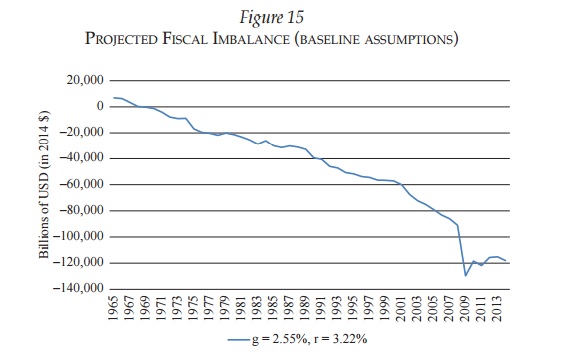
These numbers are especially horrific because “present value” is a measure of how much money the government would have to somehow obtain and set aside in order to have a nest egg capable of offsetting future deficits.
Needless to say, the federal government did not have access to $118 trillion (yes, trillion with a “t”) in 2014. And if there were updated numbers for 2015 and 2016 (which would probably be even higher than $118 trillion), the federal government still wouldn’t have access to that amount of money either.
Especially since the total annual output of the American economy is about $18 trillion.
So now you can understand why international bureaucracies like the IMF, BIS, and OECD estimate that the fiscal challenge in the United States may be even bigger than the problems in decrepit welfare states such as France and Italy.
Let’s get another perspective on the issue. James Capretta of the Ethics and Public Policy Center warns about the scope of the problem.
Despite what presidential candidates Donald Trump and Hillary Clinton have been saying on the campaign trail, the need to reform the nation’s major entitlement programs cannot be wished away. The primary cause of the nation’s fiscal problems, now and in the future, is the rapid rise in entitlement spending. In 1970, spending on Social Security and the major health care entitlement programs was 3.6 percent of GDP. In 2015, spending on these programs was 10.3 percent of GDP. By 2040, CBO expects spending on these programs to reach 14.2 percent of GDP. …entitlement reform is needed to put the federal government’s finances on a more stable foundation.
He outlines his preferred reforms, some of which I heartily embrace and some of what I think are too timid, but the key point is that he succinctly explains the need to act soon to avoid a giant long-term problem.
…reforms are not intended to create budgetary balance in the short-run. Large-scale change cannot be implemented in the major programs without significant transition periods, which means the reforms need to be enacted soon to reduce costs in fifteen, twenty, and twenty-five years. Skeptics may say it’s pointless to worry about fiscal problems that are more than twenty years off. They’re wrong. …The result is a misallocation of resources that undermines long-term economic growth. …Entitlement reform is an absolute necessity, as will soon become evident to everyone, one way or another.
The recent testimony by Nicholas Eberstadt of the American Enterprise Institute also is must reading.
In just two generations, the government…has effectively become an entitlements machine. …transfers have become a major component in the family budget of the average American household-and our dependence on these government transfers continues to rise. …Fifty years into our great social experiment of massive expansion of entitlement programs, there is ample evidence to indicate that the unintended consequences of this reconfigutation of American political and economic life have been major and adverse.
You should read the entire testimony, which is a comprehensive explanation of how entitlements are eroding American exceptionalism.
 And I’ve previously shared some of Eberstadt’s work on the growing dependency crisis in America.
In effect, our “social capital” of self reliance and the work ethic is beingreplaced by an entitlement mentality.
At the risk of understatement, that won’t end well. Heck, I don’t know which part is more depressing, theever-growing burden of spending or the fact that more and more Americans think it’s okay to live off the labor of others.
All I can say for sure is that this combination never was, is not now, and never will be a recipe for national success.
Let’s conclude with some sage observations by George Melloan of theWall Street Journal. He summarizes the problem as being a combination of too much spending and too little political courage. Here’s the too-much-spending part.
…we seem richer than we actually are because we have borrowed so heavily from future generations. …the nation’s slow growth and rising debt are already reducing the opportunities for upward mobility. …Recent projections of the future cost of current government obligations certainly won’t relieve…people’s worries. Those promises have expanded far beyond any reasonable projection of the government’s ability to extract enough revenue to cover them. …The Congressional Budget Office projects a steady rise in “mandatory” (i.e., entitlement) costs as a share of GDP out into the distant future. …The upshot: Americans are deep in debt, mainly thanks to government excesses.
And here’s the too-little-political-courage part.
The only real answer is that the entitlement programs will have to be reformed, and sooner better than later, because the longer reform is postponed the greater the fiscal imbalance will become and the greater its drain will be… Donald Trump is out to lunch on this issue, as he is on most questions that require more than a fatuous sound-bite answer. As for Hillary…, forget about it.
Sigh, how depressing. It seems like America will be “Europeanized.”
For additional background on the issue of debt, unfunded liabilities, and present value, this video is a great tutorial.
P.S. I must have taken LSD or crack earlier this year. That’s the only logical explanation for saying I was optimistic about entitlement reform.
Related posts:
The War on Work Testing Milton Friedman: Government Control – Full Video More Great Moments in Federal Government Incompetence April 2, 2016 by Dan Mitchell I used to think the Equal Employment Opportunity Commission was the worst federal bureaucracy. After all, these are the pinheads who are infamous for bone-headed initiatives, such as: The EEOC making […]
Dr. Walter Williams Highlights from – Testing Milton Friedman Milton Friedman PBS Free to Choose 1980 Vol 8 of 10 Who Protects the Worker The Left’s Inequality Fixation Is Economically Foolish and Politically Impotent April 22, 2015 by Dan Mitchell I don’t understand the left’s myopic fixation on income inequality. If they genuinely care about the […]
Dr. Walter Williams Highlights from – Testing Milton Friedman Milton Friedman PBS Free to Choose 1980 Vol 8 of 10 Who Protects the Worker Walter E Williams – A Discussion About Fairness & Redistribution Testing Milton Friedman: Equality of Opportunity – Full Video Walter Williams, Freedom Fighter March 23, 2011 by Dan Mitchell I’ve been fortunate […]
__ Milton Friedman – The Four Ways to Spend Money What establishments are you most unsatisfied with? Probably government organizations like Dept of Motor Vehicles or Public Schools because there is no profit motive and they are not careful in the way they spend our money. Three Cheers for Profits and Free Markets April 7, 2015 […]
Dan Mitchell on Milton Friedman and Adam Smith’s perspective on spending other people’s money!!! Milton Friedman, Adam Smith, and Other People’s Money May 8, 2016 by Dan Mitchell From an economic perspective, too much government spending is harmful to economic performance because politicians and bureaucrats don’t have very good incentives to spend money wisely. More specifically, […]
Milton Friedman – Free Trade vs. Protectionism If Milton Friedman was here he would attack Trump’s proposal for a 45 percent tax on Chinese products! Dissecting Trumponomics March 22, 2016 by Dan Mitchell At this stage, it’s quite likely that Donald Trump will be the Republican presidential nominee. Conventional wisdom suggests that this means Democrats […]
Milton Friedman – Free Trade vs. Protectionism Free to Choose Part 2: The Tyranny of Control (Featuring Milton Friedman Donald Trump: Clueless about free trade Larry Elder rebuts candidate’s ‘they’re taking our jobs’ claim Published: 02/03/2016 at 6:39 PM One of Donald Trump’s talking points and biggest applause lines is how “they” – Japan, […]
Milton Friedman – Free Trade vs. Protectionism Free to Choose Part 2: The Tyranny of Control (Featuring Milton Friedman Mark J. Perry@Mark_J_Perry March 5, 2016 9:26 pm | AEIdeas Some economic lessons about international trade for Donald Trump from Milton Friedman and Henry George Carpe Diem Trump vs Friedman – Trade Policy Debate In […]
Milton Friedman – Free Trade vs. Protectionism Free to Choose Part 2: The Tyranny of Control (Featuring Milton Friedman Eight Questions for Protectionists September 23, 2011 by Dan Mitchell When asked to pick my most frustrating issue, I could list things from my policy field such as class warfare or income redistribution. But based on […]
Milton Friedman – Free Trade vs. Protectionism Free to Choose Part 2: The Tyranny of Control (Featuring Milton Friedman Trump, Sanders, and the Snake-Oil Economics of Protectionism March 19, 2016 by Dan Mitchell John Cowperthwaite deserves a lot of credit for Hong Kong’s prosperity. As a British appointee, he took a hands-off policy and allowed […]
____
It is with sadness that I write this post having learned of the death of Sir Harold Kroto on April 30, 2016 at the age of 76. He was a scientist of remarkable abilities and a man of great humor too. In this series I posted the Memorial by Richard Dawkins for Dr. Kroto and I also looked at Kroto’s membership in CSICOP and his admiration for Bertrand Russell and his 2 emails he sent to me on 9-18-14. Peter Coles, Head of the School of Mathematical and Physical Sciences at the University of Sussex gave an excellent tribute Dr. Kroto which I posted too.
I did not know Harry Kroto personally but I did have the opportunity to correspond with him in 2014. I sent him a letter in the spring and two in the summer and he responded with an email on 9-18-14 and I thanked him for responding in an email and then he emailed me again and even sent me a letter on 11-21-14. In that 11-21-14 letter he referred me to the You Tube film series Renowned Academics Speaking About God which has over 300,000 views on You Tube and that prompted me on 11-29-14 to start my blog series RESPONDING TO HARRY KROTO’S BRILLIANT RENOWNED ACADEMICS!! Below are the links to the posts I have already done on previous Tuesdays in this series:
Arif Ahmed, Haroon Ahmed,Sir David Attenborough, Mark Balaguer, Horace Barlow, Michael Bate, Sir Patrick Bateson,Patricia Churchland, Aaron Ciechanover, Noam Chomsky,Alan Dershowitz, Hubert Dreyfus, Bart Ehrman, Stephan Feuchtwang, David Friend, Riccardo Giacconi, Ivar Giaever , Roy Glauber, Rebecca Goldstein, David J. Gross, Brian Greene, Susan Greenfield, Stephen F Gudeman, Alan Guth, Jonathan Haidt, Theodor W. Hänsch, Brian Harrison, Hermann Hauser, Roald Hoffmann, Bruce Hood, Herbert Huppert, Gareth Stedman Jones, Steve Jones, Shelly Kagan, Michio Kaku, Stuart Kauffman, Lawrence Krauss, Harry Kroto, George Lakoff, Elizabeth Loftus, Alan Macfarlane, Peter Millican, Marvin Minsky, Leonard Mlodinow, Yujin Nagasawa, Alva Noe, Douglas Osheroff, Jonathan Parry, Saul Perlmutter, Herman Philipse, Carolyn Porco, Robert M. Price, Lisa Randall, Lord Martin Rees, Alison Richard, Oliver Sacks, John Searle, Marcus du Sautoy, Simon Schaffer, J. L. Schellenberg, Lee Silver, Peter Singer, Walter Sinnott-Armstrong, Ronald de Sousa, Victor Stenger, John Sulston, Barry Supple, Leonard Susskind, Raymond Tallis, Neil deGrasse Tyson, C.J. van Rijsbergen, Alexander Vilenkin, Sir John Walker, Frank Wilczek, Steven Weinberg, and Lewis Wolpert,
Sir Harold Kroto – Beyond Belief
Sir Harold Kroto is Francis Eppes Professor in the Department of Chemistry and Biochemistry at Florida State University. In 1996, he was awarded the Nobel Prize in Chemistry for the discovery of C60 Buckminsterfullerene.
Ignorance, irrationality and irresponsibility of concession to faith based programs, Templeton Prizes, creationism, intelligent design, books, TV, FoxTV, mega-churches, and banks undermine education, science, economics, executive, legislative and judicial branches of government.
(mega-churches benefit financially by borrowing from BOA:
1. Tax exempt initiative;
2. No tangible product offered;
3. No real risk;
4. The congregants – Bank of America customers,
5. no wealth creation

Sir Harold Kroto with models of C60 Buckminsterfullerene

Sir Harold Kroto – Beyond Belief Conference 2008
__

In the video above Harry Kroto talks about the Carl Sagan’s book Demon Haunted World and here is the link to my review which is below:

THE DEMON-HAUNTED WORLD: Science as a Candle in the Dark by Carl Sagan. New York: Random House, 1995. 457 pages, extensive references, index. Hardcover; $25.95.
PSCF 48 (December 1996): 263.
Sagan is the David Duncan Professor of Astronomy and Space Sciences at Cornell University. He is author of many best sellers, including Cosmos, which became the most widely read science book ever published in the English language.
In this book Sagan discusses the claims of the paranormal and fringe-science. For instance, he examines closely such issues as astrology (p. 303), crop circles (p. 75), channelers (pp. 203-206), UFO abductees (pp. 185-186), faith-healing fakes (p. 229), and witch-hunting (p. 119). Readers of The Skeptical Inquirer will notice that Sagan’s approach is very similar.
Sagan writes:
The Committee for the Scientific Investigation of Claims of the Paranormal is an organization of scientists, academics, magicians, and others dedicated to skeptical scrutiny of emerging or full-blown pseudo-sciences. It was founded by the University of Buffalo philosopher Paul Kurtz in 1976. I’ve been affiliated with it since its beginning. Its acronym, CSICOP, is pronounced sci-cop C as if it’s an organization of scientists performing a police function CSICOP publishes a bimonthly periodical called The Skeptical Inquirer. On the day it arrives, I take it home from the office and pore through its pages, wondering what new misunderstandings will be revealed (p. 299).
Sagan points out that in 1991 two pranksters in England admitted that they had been making crop figures for 15 years. They flattened the wheat with a heavy steel bar. Later on they used planks and ropes, but the media paid brief attention to the confession of these hoaxers. Why? Sagan concludes, ‘Demons sell; hoaxers are boring and in bad taste’ (p. 76).
Christians must admire Sagan’s commitment to critical thinking, logic, and freedom of thought. He takes on many subjects in this book, and the vast majority of his analysis is exceptional. However, his opinions on religious matters are affected by his devotion to scientism. Sagan believes only that which can be proved by science is true. He disputes psychologist Charles Tart’s assertion that scientism is‘dehumanizing, despiritualizing’ (p. 267). Sagan comments, ‘There is very little doubt that, in the everyday world, matter (and energy) exist. The evidence is all around us. In contrast, as I’ve mentioned earlier the evidence for something non-material called `spirit’ or `soul’ is very much in doubt’ (p. 267).
Science can only prove things about the physical world, and it cannot prove anything about the spiritual world. Does that mean that the mind and soul don’t exist? Of course not! First, we must realize that science is not the only way to truth. Even Sagan must admit that he must justify values like ‘be objective’ or ‘report data honestly’. Where do those values come from? They came from outside science, but they must be in place for science to work.
Sagan gives an illustration that contrasts physics and metaphysics. He shows that the physicist’s idea will have to be discarded if tests fail in the laboratory. Therefore, the main difference between physics and metaphysics is that the meta-physicist has no laboratory. This is a cute story, but can science answer the basic questions that underline all knowledge? Metaphysics is necessary for science to take place. It is not true that science is superior to metaphysics like Sagan would have us believe. The presuppositions of science can only be validated by philosophy. J. P. Moreland has correctly said, ‘The validation of science is a philosophical issue, not a scientific one, and any claim to the contrary will be a self-refuting philosophical claim’ (Scaling the Secular City, p. 197).
Second, the absence of scientific evidence for the soul does not mean the soul does not exist. Sagan himself states, ‘Absence of evidence is not evidence of absence’ (p. 213).
I was impressed with the way Sagan put his inner thoughts on the table. For instance, he comments, ‘Plainly, there’s something within me that’s ready to believe in life after death…If some good evidence for life after death was announced, I’d be eager to examine it; but it would have to be real scientific data, not mere anecdote’ (pp. 203-204). What kind of evidence is Sagan looking for? It certainly is not vague prophecies. He states, ‘Think of how many religions attempt to validate themselves with prophecy…Think of how many people rely on these prophecies, however vague, however unfulfilled, to support or prop up their beliefs…Yet has there ever been a religion with the prophetic accuracy and reliability of science? (p. 30). The answer to that question is yes. Christianity can point to very clear passages such as Isaiah 53 and Daniel 11 written hundreds of years before the events occurred.
While comparing science to religion, Sagan comments, ‘Science is far from a perfect instrument of knowledge. It’s just the best we have (pp. 27-28). Here Sagan is only half right. Science is imperfect, but it is not better than the Bible.’
The Demon-Haunted World is a thought-provoking book that I thoroughly enjoyed. Some of Sagan’s anti-Christian views come through, but on the whole, this book uses critical thinking and logic and applies them to the claims of the paranormal and fringe-science of our day.
Reviewed by Everette Hatcher III, P.O. Box 23416, Little Rock, AR 72221.
The Twentieth Century – A Scientific and Secular Age
The twentieth century saw a revulsion against war, partly because of the horrors of the first and second World Wars, and partly because the mass media make us aware of atrocities and suffering all over the world. Both world wars, and especially the Nazi genocide against the Jews, made many question their faith in a loving god. We still have wars and the threats of war, but the United Nations exists to encourage negotiation and resolution of conflict by other means, and to police international law on the conduct of war and on human rights. Generally, there has been greater awareness and spread of human rights and democracy in the twentieth century.
Because of their belief that this world is the only one we have and that human problems can only be solved by humans, humanists have often been very active social reformers. The early Ethical Societies set up Neighbourhood Guilds to undertake social and educational work in city slums, where it was much needed in the days before a welfare state. Most humanists believe in democracy, open government and human rights, and support action on world poverty and the environment. Some were and are pacifists, and many are active in charities and politics. Ethical societies came together as the Ethical Union, which in the 1960s became the British Humanist Association, its first director being Harold Blackham and its first President Julian Huxley. The English social scientist and academic, and founder member of the British Humanist Association, Baroness Barbara Wootton (1897-1988) became the first woman to chair the proceedings of the House of Lords. She always spoke up for humanist causes, especially on social policy.
The twentieth century saw a decline in religious belief and an increase in secularisation in the developed world. Fewer people in Europe are actively religious and people are free to declare their disbelief in gods with little fear of reprisal or social disadvantage. Mobile populations and the mass media have made most parts of the world aware of a range of belief systems, and more liberal attitudes mean that people often feel free to choose a philosophy for themselves. The growth of studies such as anthropology, pioneered in Sir James Frazer’s exhaustive collection of myths and customs, showed religions as natural human creations, and encouraged a more tolerant attitude towards other cultures.
Few Christian intellectuals nowadays defend the literal truth of the Bible, but focus instead on its metaphorical truth and the exemplary life of Jesus. Religious beliefs have tended to evolve, casting some doubt in the minds of sceptics about what exactly Christians believe these days, or what they mean by “truth” or “God”. Theologians such as Teilhard de Chardin (1881-1955), Deitrich Bonhoeffer (1906-45), William James (1842-1910) and Paul Tillich (1886-1965), and developments such as liberation theology and the ideas of the Sea of Faith group, have done much to liberate academic Christian theology from religious dogma and to integrate secular and scientific ideas into Christianity. Many humanists today see little point in attacking beliefs that are no longer held except by a tiny minority of people.
On the other hand, there is still much popular conventional belief and there is a growing trend towards new religions and ideas, many of which are little more than superstition, and some of which are dangerous. In some countries there has been a growth in religious fundamentalism. Religion is still given special status and privileges in most countries, and non-religious people have often had to organise and campaign for their views to be heard.
Most twentieth century philosophers have worked on the assumption that morality is independent of religious faith e.g Sir Karl Popper, A J Ayer, G E Moore, Mary Warnock, Jean-Paul Sartre, Simone de Beauvoir, Wallace Matson, Antony Flew, Peter Singer, though it was still possible to cause a scandal in Britain by suggesting, as did Margaret Knight in a radio talk in the late 1950s, that morality and religion could usefully be separated.
There have been huge developments in science and medicine which have affected people’s lives and the way they think. As more and more people around the word acquire education, understanding of science has become much more widespread, and once controversial ideas such as Darwin’s theories about evolution are generally accepted. Thanks to the relatively new sciences of sociology, anthropology and psychology, our understanding of human nature and society has developed rapidly. Many scientists were and are humanists. Some, such as Sir Arthur Keith (1866-1995), Scottish scientist and anthropologist J B S Haldane, Sigmund Freud, Sir Julian Huxley and John Maynard Smith did much in the 20th century to spread understanding of science, of human nature and of evolution. Albert Einstein, who worked out the theory of relativity, one of the greatest achievements of the human intellect. was essentially a humanist and an Honorary Associate of the Rationalist Press Association.
Scientific and medical progress has produced new ethical dilemmas, and traditional religious teachings have not always been able to rise to the challenge.
Despite continued laws against blasphemy, artists and intellectuals have increasingly challenged religious privilege and conventions. In the first half of this century, the Bloomsbury Group (which included J M Keynes, Virginia Woolf (1882-1941), Leonard Woolf, E M Forster, Betrand Russell) were an influential group of writers, academics and artists, who were heavily influenced by the ethical theories of G E Moore, which stressed the values of friendship and aesthetic experience. Writers such as Thomas Hardy, George Bernard Shaw, H G Wells, and Joseph Conrad, were well-known free-thinkers and the novelist Arnold Bennett (1867-1931) was an Honorary Associate of the Rationalist Press Association from 1916.
Surveys indicate that at least a third of the population of Britain are agnostic or atheist, and about 36% of the population also share the positive moral values of humanism and the British Humanist Association. Amongst them are many well known people who support the aims and values of Humanism. The work of many of these people underlines the fact that you don’t need religion to be concerned about what is right and wrong.
The non-religious tradition of Humanism has survived through centuries of writers’ work, and the written word is still important in spreading positive views. Humanist writers include novelists Philip Pullman, Ian McEwan, Terry Pratchett, John Fowles, Arthur C Clarke, Kurt Vonnegut Jr, Iain Banks, Maureen Duffy, and Stephen Fry, and poets Seamus Heaney, Alan Brownjohn and Tony Harrison. The author Naomi Mitchison was an influential rationalist, and Isaac Asimov was President of the American Humanist Association for many years. Nobel Prize winner Octavio Paz was a lifelong humanist. Umberto Eco, Italian novelist and semiotician, is a member of the American Academy of Humanism. Gene Roddenberry, creator of Star Trek, was a humanist, as was writer, actor and raconteur Peter Ustinov. Novelist Salman Rushdie became an international cause celebre when he was the subject of a fatwa for offending Islam in his 1988 novel, Satanic Verses and spent many years in hiding in fear of his life.
Humanist journalists include Jonathan Meades, politician Roy Hattersley, and Sir Ludovic Kennedy (who is also a broadcaster, campaigner, and past President of the Voluntary Euthanasia Society, now Dignity in Dying). The well known “agony aunt” Claire Rayner was a writer, broadcaster and humanist. Previous BHA President Polly Toynbee is well-known as a columnist for The Guardian.
World-acclaimed sculptor Anish Kapoor supports Humanism, as does the art historian and former director of the National Gallery, Sir Michael Levey, who has written about Renaissance humanism, and painting during the Enlightenment. Painter Francis Bacon, generally considered one of the world’s most important post-war artists, challenged conventional religious imagery and had anti-clerical views.
Sir Michael Tippett the English composer, was an opponent of organised religion, and was a conscientious objector in the 1939-45 war. The well known director of plays and operas, Jonathan Miller, trained as a doctor and has retained an interest in medicine and psychology, for example, making television programmes about the human body and the history of atheism. Playwrights David Hare and Arthur Miller support Humanism, as do actors Steven Fry and Jane Asher. Harold Pinter and Vanessa Redgrave worked with the British Humanist Association in the 1960s, trying to reduce the religious bias in broadcasting, and to improve human rights.
Politics is an important way of improving human rights and the quality of life, here and abroad. In India radicals like Nehru and M N Roy were humanists, supported in this country by activists such as MP and humanist Fenner Brockway. Many of the mid-20th century founders of international co-operative institutions – such as Brock Chisholm, Peter Ritchie Calder and John Boyd Orr were humanists. Well-known humanists in the period included Baroness Blackstone, Nick Brown, Frank Dobson, Michael Foot, Lord Peston, Ken Livingstone, and many other MPs and peers. The late Earl Russell, Lord Dormand, and Lord Jenkins of Putney were all members of the Parliamentary Humanist Group. Today, the All Party Parliamentary Humanist Group has over 100 members.
In Britain, humanist Sir Kenneth Clucas was chairman of the National Association of Citizens Advice Bureaux for many years, while Sir Lou Sherman chaired the Housing Corporation.
Internationally, humanists continue to work for progress in human rights and overseas aid. Humanist organisations exist worldwide, varying their concerns and activities according to the situation in their country. For example in the USA, humanists are in the forefront of opposing the erosion of the constitutional commitment to separation of church and state. Humanists such as Conor Cruise O’Brien are ambassadors for the UN and international relations. Humanist and Nobel Peace Prize winner Professor Joseph Rotblat was also an important campaigner for nuclear disarmament and world peace. The Russian leader Mikhael Gorbachev, who led the USSR out of Communism, is a humanist.
From Aristotle and the ancient scientists in India and China onwards, scientists have been at the heart of the search for knowledge and truth without traditional ideas of god.
Writers and broadcasters on scientific topics, such as David Attenborough, Steven Pinker, Carl Sagan, and Richard Dawkins have done much to increase public understanding of science.
Today, there are many humanist biology professors such as Robin Dunbar (evolutionary psychology and behavioural ecology), Richard Dawkins (Darwinian evolution), Sir Alec Jeffreys (genetic fingerprinting), Sir David Smith (symbiosis), Robert Hinde, Lewis Wolpert (embryology), Peter Goodfellow (biotechnology), Steven Rose (brain function), Steve Jones (genetics), Sir Hans Kornberg (biochemistry) and Sir Thomas Blundell (plant biotechnology); chemistry professors such as Peter Atkins (physical chemistry); Nobel Prize-winning scientists such as SIR HAROLD KROTO and Sir John Sulston; and eminent physicians and medical scientists such as Sir Anthony Epstein (who discovered viruses linked with herpes), Sir David Weatherall (blood disorders), Sir James Gowans (immunology and AIDS), Sir Kenneth Stuart (liver and cardiovascular disorders), and Sir Roy Calne (transplant surgery). The late Francis Crick, one of the discoverers of DNA, biologist John Maynard Smith, and Sir Richard Doll, epidemiologist and discoverer of the link between smoking and cancer, were all humanists.
Astronomers, mathematicians and physicists include the late Sir Hermann Bondi (former President of the British Humanist Association), Sir Michael Atiyah (former President of the Royal Society), Lord Flowers (atomic structure), Sir Roger Penrose (topology and relativity) and Sir Francis Graham-Smith (radio astronomy, and former Astronomer Royal).
Many philosophers reject traditional ideas of god. They continue the non-religious tradition in philosophy, which has thrived from ancient times, and was developed by great thinkers such as David Hume, the Utilitarians, A J Ayer and Bertrand Russell (read his Why I am not a Christian), Sir Isaiah Berlin, philosopher and historian of ideas, was a non-believer and a member of the American Academy of Humanism. Humanist academics today include Simon Blackburn, Peter Singer (perhaps the most widely read current writer on ethics), Richard Norman, A C Grayling and Sheila McLean (medical ethics and law). The British Humanist Association sponsors a Humanist Philosophers’ Group.
Historians such as Sir Keith Thomas have researched and written about human beliefs and attitudes. Humanist sociologists, anthropologists and psychologists such as Laurie Taylor, Richard Leakey, Lord Runciman, Professors Robert Hinde and Robin Dunbar have studied human behaviour and thinking, and contributed to our understanding of human development. Professor Bernard Crick (politics) was chosen to lead the Government’s work on Citizenship Education. The economist and Nobel prize winner Professor Amartya Sen is a humanist.
Read more about current Patrons of Humanism.
_____
Related posts:
On November 21, 2014 I received a letter from Nobel Laureate Harry Kroto and it said: …Please click on this URL http://vimeo.com/26991975 and you will hear what far smarter people than I have to say on this matter. I agree with them. Harry Kroto I have attempted to respond to all of Dr. Kroto’s friends arguments […]

Communication at the The Royal Society Featuring: Professor Sir Harry Kroto, Alexei Leonov, Dr Richard Dawkins, Dr Brian May, Professor Stephen Hawking It is with sadness that I write this post having learned of the death of Sir Harold Kroto on April 30, 2016 at the age of 76. He was a scientist of […]

On November 21, 2014 I received a letter from Nobel Laureate Harry Kroto and it said: …Please click on this URL http://vimeo.com/26991975 and you will hear what far smarter people than I have to say on this matter. I agree with them. Harry Kroto Nick Gathergood, David-Birkett, Harry-Kroto I have attempted to respond to all of […]
(The Nobel chemistry laureates Harold Kroto, Robert Curl and Richard Smalley)

On November 21, 2014 I received a letter from Nobel Laureate Harry Kroto and it said: …Please click on this URL http://vimeo.com/26991975 and you will hear what far smarter people than I have to say on this matter. I agree with them. Harry Kroto I have attempted to respond to all of Dr. Kroto’s friends arguments […]

On November 21, 2014 I received a letter from Nobel Laureate Harry Kroto and it said: …Please click on this URL http://vimeo.com/26991975 and you will hear what far smarter people than I have to say on this matter. I agree with them. Harry Kroto I have attempted to respond to all of Dr. Kroto’s friends arguments […]
(Kroto and his wife, Margaret)
On November 21, 2014 I received a letter from Nobel Laureate Harry Kroto and it said: …Please click on this URL http://vimeo.com/26991975 and you will hear what far smarter people than I have to say on this matter. I agree with them. Harry Kroto Nick Gathergood, David-Birkett, Harry-Kroto I have attempted to respond to all of […]
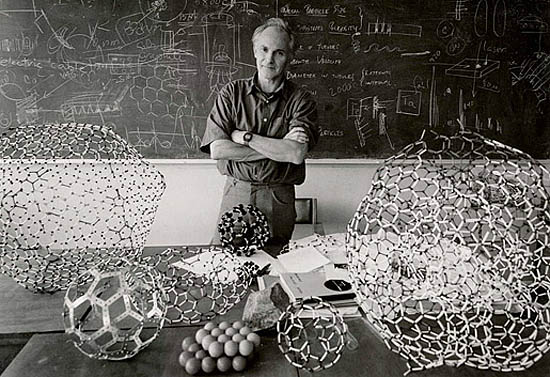
On November 21, 2014 I received a letter from Nobel Laureate Harry Kroto and it said: …Please click on this URL http://vimeo.com/26991975 and you will hear what far smarter people than I have to say on this matter. I agree with them. Harry Kroto I have attempted to respond to all of Dr. Kroto’s friends arguments […]
(Margaret and Harry Kroto with students at Lindau 2005)

On November 21, 2014 I received a letter from Nobel Laureate Harry Kroto and it said: …Please click on this URL http://vimeo.com/26991975 and you will hear what far smarter people than I have to say on this matter. I agree with them. Harry Kroto Nick Gathergood, David-Birkett, Harry-Kroto I have attempted to respond to all of […]

On November 21, 2014 I received a letter from Nobel Laureate Harry Kroto and it said: …Please click on this URL http://vimeo.com/26991975 and you will hear what far smarter people than I have to say on this matter. I agree with them. Harry Kroto Nick Gathergood, David-Birkett, Harry-Kroto I have attempted to respond to all of […]
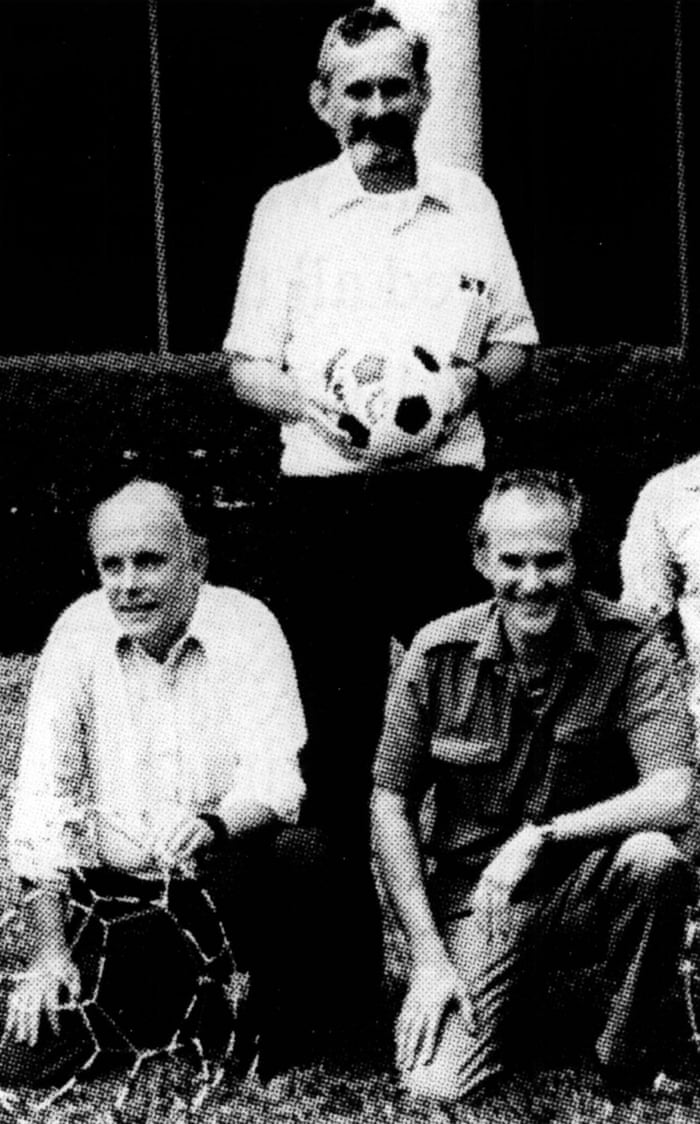
On November 21, 2014 I received a letter from Nobel Laureate Harry Kroto and it said: …Please click on this URL http://vimeo.com/26991975 and you will hear what far smarter people than I have to say on this matter. I agree with them. Harry Kroto I have attempted to respond to all of Dr. Kroto’s friends arguments […]

On November 21, 2014 I received a letter from Nobel Laureate Harry Kroto and it said: …Please click on this URL http://vimeo.com/26991975 and you will hear what far smarter people than I have to say on this matter. I agree with them. Harry Kroto I have attempted to respond to all of Dr. Kroto’s friends arguments […]
(With his son Stephen in Joshua Tree)

__ On November 21, 2014 I received a letter from Nobel Laureate Harry Kroto and it said: …Please click on this URL http://vimeo.com/26991975 and you will hear what far smarter people than I have to say on this matter. I agree with them. Harry Kroto I have attempted to respond to all of Dr. Kroto’s friends […]

On November 21, 2014 I received a letter from Nobel Laureate Harry Kroto and it said: …Please click on this URL http://vimeo.com/26991975 and you will hear what far smarter people than I have to say on this matter. I agree with them. Harry Kroto Sir Harry Kroto, FSU’s Francis Eppes Professor of Chemistry I […]
(Marg Kroto with two sons Stephen and David)
On November 21, 2014 I received a letter from Nobel Laureate Harry Kroto and it said: …Please click on this URL http://vimeo.com/26991975 and you will hear what far smarter people than I have to say on this matter. I agree with them. Harry Kroto I have attempted to respond to all of Dr. Kroto’s friends arguments […]

On November 21, 2014 I received a letter from Nobel Laureate Harry Kroto and it said: …Please click on this URL http://vimeo.com/26991975 and you will hear what far smarter people than I have to say on this matter. I agree with them. Harry Kroto Wikipedia notes: Mahzarin Banaji From Wikipedia, the free encyclopedia [hide]This article has […]
(With Marg in 1964)
On November 21, 2014 I received a letter from Nobel Laureate Harry Kroto and it said: …Please click on this URL http://vimeo.com/26991975 and you will hear what far smarter people than I have to say on this matter. I agree with them. Harry Kroto Wikipedia notes: Anthony Clifford “A. C.” Grayling (/ˈɡreɪlɪŋ/; born 3 April 1949) […]
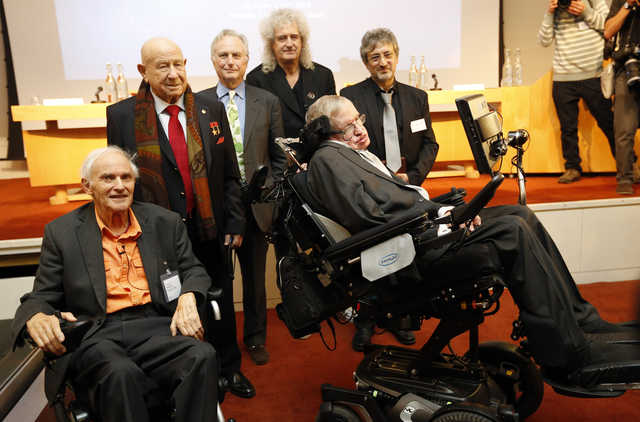
On November 21, 2014 I received a letter from Nobel Laureate Harry Kroto and it said: …Please click on this URL http://vimeo.com/26991975 and you will hear what far smarter people than I have to say on this matter. I agree with them. Harry Kroto _________________ Below you have picture of Dr. Harry Kroto: ______________ I have […]

__________


 The Daily Hatch