__________

__

The Rolling Stones ~ Jumpin’ Jack Flash. (1968)
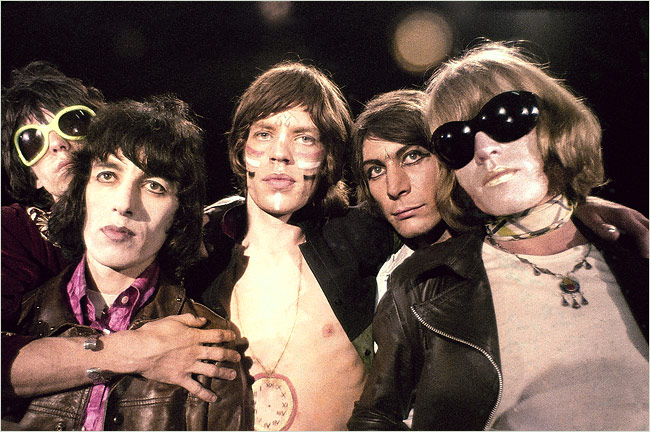

The Dirty Mac Band (John Lennon, Eric Clapton, Keith Richards & Mitch Mitchell) | FeelNumb.com
John Lennon, Eric Clapton, Keith Richards, Mitch Mitchell, Jimi Hendrix
____
 The Daily Hatch
__________
____
Eric Clapton and Jimi Hendrix were good friends!!
Hey Joe JIMI HENDRIX live images in 1969, in London! BBC! dedicated to cream”Sunshine of Your Love”. High quality and superior sound. ¡¡¡¡¡full screen!!!!!

Everyone wanted to meet or take a picture with the great Jimi Hendrix. Check it out some of the classic photos of Jimi with other musicians of his time…
Jimi Hendrix & The Who

Jimi Hendrix & Eric Clapton

Jimi Hendrix & Mick Jagger

Jimi Hendrix & Keith Richards

Jimi Hendrix & Brian Jones

Jimi Hendrix & Janis Joplin

Jimi Hendrix with Cream & Pink Floyd

Even “Legends” want to meet a “Legend”
Jimi Hendrix: ‘You never told me he was that good’
On the the 40th anniversary of the great guitarist’s death, Ed Vulliamy speaks to the people who knew him best and unearths a funny, if driven, superstar
The Jimi Hendrix Experience
The ‘extraordinary’ Jimi Hendrix with the Experience at Olympia, London, on 22 December 1967. Photograph: Ray Stevenson/Rex Features
Ed Vulliamy
Ed Vulliamy
Saturday 7 August 2010 19.02 EDT
On the morning of 21 September 1966, a Pan Am airliner from New York landed at Heathrow, carrying among its passengers a black American musician from a poor home. Barely known in his own country and a complete stranger to England, he had just flown first class for the first time in his life. His name was James Marshall Hendrix.
On 18 September 1970, four years later, I picked up a copy of London’s Evening Standard on my way home from school, something I never usually did. There was a story of extreme urgency on the front page and a picture of Hendrix playing at a concert – still ringing in my ears – at the Isle of Wight festival, only 18 days earlier. The text reported how Hendrix had died that morning in a hotel in the street, Lansdowne Crescent in Notting Hill, in which I had been born, and a block away from where I now lived.
During those three years and 362 days living in London, Hendrix had conjured – with his vision and sense of sound, his personality and genius – the most extraordinary guitar music ever played, the most remarkable sound-scape ever created; of that there is little argument. Opinion varies only over the effect his music has on people: elation, fear, sexual stimulation, sublimation, disgust – all or none of these – but always drop-jawed amazement.
The 40th anniversary of Hendrix’s death next month will be marked by the opening of an exhibition of curios and memorabilia at the only place he ever called home – a flat diagonally above that once occupied by the composer George Frideric Handel, on Brook Street in central London, in the double building now known as Handel House. The flat will be opened to the public for 12 days in September and there is talk about plans for a joint museum, adding Hendrix’s presence to that already established in the museum devoted to Handel. Involved in the discussions is the woman with whom Hendrix furnished the top flat of 23 Brook St, and with whom he lived: the only woman he ever really loved, Kathy Etchingham.
In a rare interview by telephone, (she has moved abroad), Ms Etchingham explains: “I want him to be remembered for what he was – not this tragic figure he has been turned into by nit-pickers and people who used to stalk us and collect photographs and ‘evidence’ of what we were doing on a certain day. He could be grumpy, and he could be terrible in the studio, getting exactly what he wanted – but he was fun, he was charming. I want people to remember the man I knew.”
When she met Hendrix (the same night he landed in London), he had already lived an interesting, if frustrating, 23 years. He was born to a father who cared, but not greatly, and a mother he barely knew – she died when he was 15 – but adored (she’s said to be the focus of two of his three great ballads, “Little Wing” and “Angel”). He had always been enthralled by guitar playing – a “natural”, immersed in R&B on the radio and the music of blues giants Albert King and Muddy Waters. When he was 18, he was offered the chance to avoid jail for a minor misdemeanour by joining the army, which he did, training for the 101st Airborne Division.
Robert Stredder, 29, kissing at the Isle of Wight festival, 1970
Read more
His military career was marked by friendship with a bass player called Billy Cox from West Virginia, with whom he would play his last concerts, and a report which read: “Individual is unable to conform to military rules and regulations. Misses bed check: sleeps while supposed to be working: unsatisfactory duty performance.”
Hendrix engineered his discharge in time to avoid being mobilised to Vietnam and worked hard as a backing guitarist for Little Richard, Curtis Knight, the Isley Brothers and others. But, arriving in New York to try and establish himself in his own right, Hendrix found he did not fit. The writer Paul Gilroy, in his recent book Darker Than Blue, makes the point that Hendrix’s life and music were propelled by two important factors: his being an “ex-paratrooper who gradually became an advocate of peace” and his “transgressions of redundant musical and racial rules”.
Advertisement
Hendrix didn’t fit because he wasn’t black enough for Harlem, nor white enough for Greenwich Village. His music was closer to the blues than any other genre; the Delta and Chicago blues which had captivated a generation of musicians, not so much in the US as in London, musicians such as John Mayall and Alexis Korner, and thereafter Eric Clapton, Peter Green, Jeff Beck and Jimmy Page among many others.
As luck would have it, the Brits were in town and Linda Keith, girlfriend of the Stones’ Keith Richards, persuaded Chas Chandler, bass player of the Animals, to go and listen to Hendrix play at the Cafe Wha? club in the Village. Chandler wanted to move into management and happened to be fixated by a song, “Hey Joe”, by Tim Rose.
“It was a song Chas knew would be a hit if only he could find the right person to play it,” says Keith Altham, then of the New Musical Express, who would later become a kind of embedded reporter with the Hendrix London entourage. “There he was, this incredible man, playing a wild version of that very song. It was like an epiphany for Chas – it was meant to be.”
“To be honest,” remembers Tappy Wright, the Animals’ roadie who came to Cafe Wha? with Chandler that night, “I wasn’t too impressed at first, but when he started playing with his teeth, and behind his head, it was obvious that here was someone different.”
Before long, Hendrix was aboard the plane to London with Chandler and the Animals’ manager, Michael Jeffery, to be met by Tony Garland, who would end up being general factotum for Hendrix’s management company, Anim. “When he arrived,” recalls Garland now, sitting on his barge beside the canal in Maida Vale, west London, where he now lives, “I filled out the customs form. We couldn’t say he’d come to work because he didn’t have a permit, so I told them he was a famous American star coming to collect his royalties.”
It is strange, tracking down Hendrix’s inner circle in London. His own musicians in his great band, the Experience – Noel Redding and Mitch Mitchell – are dead. Likewise, his two managers, Chandler and Jeffery, and one of his closest musician friends, the Rolling Stone Brian Jones; the other, Eric Burdon of the Animals, declined to be interviewed. But some members of the close-knit entourage are still around, such as Kathy Etchingham and Keith Altham, wearing a flaming orange jacket befitting the time of which he agrees to speak, in defiance of a heart attack only a few days before.
Lithofayne Pridgon: Jimi Hendrix’s original ‘foxy lady’
Read more
Music in London had reached a tumultuously creative moment when Hendrix arrived and was perfectly poised to receive him. “The performers were just your mates who played guitars,” recalls Altham. “It was tight – everyone knew everyone else. It was just Pete from the Who, Eric of Cream, or Brian and Mick of the Stones, all going to each other’s gigs.”
For reasons never quite explained, the blues – both in their acoustic Delta form, and Chicago blues plugged into an amplifier – had captivated this generation of English musicians more deeply than their American counterparts. Elderly blues musicians found themselves, to their amazement, courted for concerts, such as an unforgettable night at Hammersmith with Son House and Bukka White. Champion Jack Dupree married and settled in Yorkshire. “People [here] felt a certain affinity with the blues, music which added a bit of colour to grey life,” Altham continues. And as Garland points out: “White America was listening to Doris Day – black American music got nowhere near white AM radio. Jimi was too white for black radio. Here, there were a lot of white guys listening to blues from America and wanting to sound like their heroes.”
Advertisement
Things happened at speed after Hendrix landed. “’Come down to the Scotch,’ Chas told me the day Jimi arrived and hear what I found in New York,” recalls Altham. “Jimi couldn’t play because he had no work permit, but he jammed that night, and my first impression was that he’d make a great jazz musician.” That was the night, his first in London, that Hendrix met Kathy Etchingham. “It happened straightaway,” she recalls. “Here was this man: different, funny, coy – even about his own playing.”
“A short while later,” recalls Altham, “Chas took me to hear him at the Bag O’Nails club [in Soho] for one of his first proper gigs, turned to me and said, ‘What’ya think?’ I said I’d never heard anything like it in all my life.” At a concert in the same series, remembers Garland, “Michael Jeffery put an arm round Chas, another round me and said, ‘I think we’ve cracked it, mate.’” They had: Kit Lambert, according to Altham, literally scrambled across the tables to Chas at one of the shows and said, “in his plummy accent”, he had to sign him. Chas needed a record contract, Decca had turned Hendrix down (along with the Beatles) and Lambert was about to launch a new label, Track Records, with interest from Polydor: “The deal was done, on the back of a napkin,” says Altham.
Hendrix had formed his band at speed: a rhythm guitarist from Kent called Noel Redding – who had applied to join the Animals but to whom Hendrix now allocated bass guitar – and Mitch Mitchell, a jazz drummer seeking to mould himself in the style of John Coltrane’s great percussionist, Elvin Jones. With a stroke of genius, Jeffery came up with the only name befitting what was to follow: the Jimi Hendrix Experience. Is there any line in rock’n’roll more assuredly seductive as: “Are you experienced?/ Have you ever been experienced?/ Well, I have” (from 1967’s “Are You Experienced”)?
Paul McCartney, John Lennon and the other Beatles quickly converged to hear this phenomenon, along with the Stones and Pete Townshend. Arriving one night at the Bag O’Nails, Altham met Brian Jones “walking back up the stairs with tears in his eyes. I said, ‘Brian, what is it?’ and he replied, ‘It’s what he does, it chokes me’ – only he put it better than that”.
There was also curiosity from the emergent powerhouse of British blues: Cream and Eric Clapton. There was a particular night when Cream allowed Jimi to join them for a jam at the Regent Street Polytechnic in central London. Meeting Clapton had been among the enticements Chandler had used to lure Hendrix to Britain: “Hendrix blew into a version of [Howlin’ Wolf’s] ‘Killing Floor’,” recalls Garland, “and plays it at breakneck tempo, just like that – it stopped you in your tracks.” Altham recalls Chandler going backstage after Clapton left in the middle of the song “which he had yet to master himself”; Clapton was furiously puffing on a cigarette and telling Chas: “You never told me he was that fucking good.”
With a reputation, a recording contract and the adoration of his peers, Hendrix was allocated a flat belonging to Ringo Starr, in Montagu Square, in which he lived with Etchingham, Chandler and Chandler’s Swedish girlfriend, Lotta. It was not ideal, but base camp for an initial tour – as opening act for Cat Stevens and Engelbert Humperdinck, with the Walker Brothers topping the bill.
Something was needed, Chandler thought, whereby Hendrix could blow the successive acts off the stage and Altham had the beginning of an idea. He said: “’It’s a pity that you can’t set fire to your guitar.’ There was a pregnant pause in the dressing room, after which Chas said, ‘Go out and get some lighter fuel.’” Garland remembers: “I went out into Seven Sisters Road [in north London] to buy lighter fluid. At first, it didn’t make sense to me – there were too many things going on to worry about lighter fluid – but it all became clear in the end.”
Altham borrowed a lighter from Gary – the third Walker brother and drummer – and that night, at the Astoria theatre in central London, Hendrix set his guitar ablaze for the first time. “One of the security guards said, ‘Why are you waving it around your head?’” recalls Altham. “’Cause I’m trying to put it out,’ replied Jimi. Actually, he only did it three times after,” says Altham, “but it became a trademark.”
Advertisement
The touring began in earnest during that winter of 1966-7: around working men’s clubs and little theatres in the north of England. “That’s when I remember him at his very best,” recalls Etchingham. “And at his happiest. The small clubs in regional venues. When he was desperate to make a name for himself, but was also playing for himself. In the working men’s clubs, they just wanted some music to enjoy while they drank their beer. In the small theatres, people had come to hear him. But that was his best music ever – played for its own sake. None of these crazy expectations, no one hanging on – just the people he knew, liked and trusted, and his own music.”
But what was this music, this singular, uplifting, otherworldly, menacing, exotic and erotic sound? “Hendrix was a magpie,” says Altham. “He would take from blues, jazz – only Coltrane could play in that way – and Dylan was the greatest influence. But he’d listen to Mozart, he’d read sci-fi and Asimov and it would all go through his head and come out as Jimi Hendrix. Then there was just the dexterity – he was left-handed, but I remember people throwing him a right-handed guitar and Hendrix picking it up and playing it upside down.”
“And don’t forget,” says Tappy Wright, who acted as roadie at first, then joined the management team, “we were using the cheapest guitars. These were no Fenders or Stratocasters. These were Hofners we bought for a few quid. Very basic, but stretched to the fucking limit.”
The most precious insight comes from Etchingham. “People often saw Jimi on stage looking incredibly intense and serious. And suddenly this smile would come across his face, almost a laugh, for no apparent reason,” she says. “Well, I remember that very well, sitting on the bed or the floor at home in Brook Street. Sometimes, he would play a riff for hours, until he had it just right. Then this great smile would creep across his face or he’d throw his head back and laugh. Those were the moments he had got it right for himself, not for anyone else.”
Touring ran concurrent with work in the studio – first the singles: “Hey Joe”, the inimitable “Purple Haze” and “The Wind Cries Mary”, written for Kathy when Hendrix was left alone at home after she had stormed out from an argument, so the story goes (Mary is her middle name). “I never realised quite how hard he worked,” says Sarah Bardwell, director of the Handel House Museum, researching her new charge. The Experience would finish a concert up north, drive south, record between 3am and 9am, then return north for two more shows each day. LSD had yet to play a major role – if the Experience were on amphetamines, it was to keep the schedule.
In various studios, ending up at west London’s Olympic, work began. “I used to ring them up to book time,” recalls Etchingham. “Thirty quid an hour and they’d want the cheque there and then.” Chandler was aware of this and would occasionally hasten things along by taking what the band thought was a warm-up to be the finished product. “’What?’ the band would say,” recalls Altham. “’That’s it,’ Chas would reply. ‘Now for the next one.’”
But the soundscape unique to Hendrix, pushing the technology to its limits, was not serendipity, nor was it only about Hendrix’s genius: there was science behind the subliminal magic. “This was not ‘psychcolergic’, as Eric Burdon used to call it,” says Garland. “Hendrix knew exactly what he was doing.” And this process began with a man called Roger Mayer.
“We call this the Surrey blues Delta,” says Mayer, with a wave of his arms across the crazy-paving pathways of Worcester Park, near Surbiton. “Eric over here, Keith down the road, the Stones from there.” Mayer was an acoustician and sonic wave engineer for the Admiralty, a civil servant in the Ministry of Defence, but also an inventor of various electronic musical devices, including an improved wah-wah pedal and the “Octavia” guitar effect with its unique “doubling” effect. “I’d shown it to Jimmy Page, but he thought it was too far out. Jimi said, the moment we met, ‘Yeah, I’d like to try that stuff.’” “One of my favourite memories of all,” says Etchingham, “is Jimi and Roger huddled together over the console and the instruments, talking about stuff way over my head, and then this glorious thing happening.”
Advertisement
“We started from the premise that music was a mission, not a competition,” says Mayer, who describes himself as a “sonic consultant” to Hendrix. “That the basis was the blues, but that the framework of the blues was too tight. We’d talk first about what he wanted the emotion of the song to be. What’s the vision? He would talk in colours and my job was to give him the electronic palette which would engineer those colours so he could paint the canvas.
“Let me try to explain why it sounds like it does: when you listen to Hendrix, you are listening to music in its pure form,” he adds. “The electronics we used were ‘feed forward’, which means that the input from the player projects forward – the equivalent of electronic shadow dancing – so that what happens derives from the original sound and modifies what is being played. But nothing can be predictive – it is speed-forward analogue, a non-repetitive wave form, and that is the definition of pure music and therefore the diametric opposite of digital.
“Look, if you throw a pebble into a lake, you have no way of predicting the ripples – it depends on how you throw the stone, or the wind. Digital makes the false presumption that you can predict those ripples, but Jimi and I were always looking for the warning signs. The brain knows when it hears repetition that this is no longer music and what you hear when you listen to Hendrix is pure music. It took discussion and experiment, and some frustrations, but then that moment would come, we’d put the headphones down and say, ‘Got it. That’s the one.’
“But I take none of the credit,” insists Mayer. “You can build a racing car just like the one that won the 1955 grand prix. But if you can’t drive like Juan Manuel Fangio, you’re not going to win the grand prix. Jimi Hendrix only sounds like he does because he was Jimi Hendrix.”
Everyone knows that Hendrix had hundreds of women, often concurrently – but that is not as interesting as the fact that, says Altham, “Kathy Etchingham was the love of his life”. Mayer recalls them “oozing affection, even when there was a row – he needed her very badly indeed”. Hendrix called the flat into which he moved with her in 1968 “the only home I ever had”.
“We knew we wanted Mayfair,” says Etchingham, “so we could walk to the gigs, but the prices were high, even though it was a little seedy – £30 a week.” The couple furnished the split-level, top-floor apartment together with prints and wall hangings from Portobello Road. When Hendrix found out that Handel had lived downstairs, “he went round to HMV or One Stop Records to get Messiah,” says Sarah Bardwell. “What is so interesting is that they were both musicians from abroad, who came to London to make their name in this building.”
It feels extraordinary now to walk over the venerable floorboards past a replica of Handel’s harpsichord, portraits of the composer and the score of Messiah in the room in which it was composed, then up a wooden staircase to Hendrix’s whitewashed sitting room and bedroom above. Sarah Bardwell’s aim is for a joint Handel-Hendrix house museum of some kind. Blue English Heritage plaques accompany each other on the wall outside; Hendrix was added in 1997, a labour of devotion by Kathy Etchingham, who recalls English Heritage balking at the fact that the shop front below was a lingerie shop, “all mannequins wearing suspenders and knickers”, which needed covering up while the plaque was unveiled.
Now, it is the posh Jo Malone perfumery, though “in our day it was Mr Love’s cafe,” she recalls fondly. “On the corner of Oxford Street. And there was an Indian tea shop we’d go to in South Molton Street, and always HMV or One Stop – and we’d walk to the gigs along Regent Street or across Hanover Square, and maybe take a taxi home.”
Advertisement
The memories of the people who actually knew him overshadow the tragic, antiheroic Hendrix of popular imagination. Etchingham and Keith Altham recall a man with a sense of humour. “If things were getting tense in the studio,” says Altham, “he’d just play ‘Teddy Bears’ Picnic’.” Adds Tony Garland: “If I told Jimi to ‘kiss my arse’, he’d answer, ‘You’ve got a rubber neck, do it yourself’ with a sly grin. You always knew you were with someone quicker-witted than yourself.”
Altham also talks about Hendrix “saying nothing to reporters, or contradictory things, on purpose. He would pat his fingers against his lips mid-sentence and go, ‘etcetera, etcetera, etcetera’, in order to say, in effect, nothing. He wanted the music to speak. He also had this way of saying things that made you do a double take: ‘Did he really say that?’ Such as, just before he went on to play with Clapton, who was his idol, for the first time, he told me, ‘I want to see if he is as good as he thinks I am’ – which is not at all the remark you first think it is.”
But many of those who comprised Hendrix’s inner circle in London now talk about some demise in his mental agility once he became popular in his native US, a mass commodity caught between the triangle of his own “racially transgressive” music, his blackness and the black power movement, and his overwhelmingly white audience. Even then, though, Hendrix closed the 1969 Woodstock festival with a version of “The Star-Spangled Banner”, which became the anthem for both the movement against the war in Vietnam and Hendrix’s own complicated empathy with the young American fodder sent to fight it, as a former military man himself. Many of his childhood friends were over there, some never to return. The anthem made Jimi famous worldwide, veering into a vortex out of which emerged “Purple Haze”, a glorious, lyrical dirge – for something, for everything; an endpiece not only to Woodstock but to so many dreams.
“Chas Chandler would come into the studio and find two women in his chair,” recalls Tappy Wright. “’Get out of my chair!’ he’d say. And then, well, there were drugs, drugs, drugs. I never took any, because I had to make sure everyone got out of bed in the morning – but they were around, too much around.” Altham says that Chandler told him “that he gave Jimi an ultimatum: ‘Either I go or the hangers-on go.’ But there was no getting rid of them, so Chas quit and Jimi was left with Michael Jeffery”.
“Jimi was at his best when the fame never got in the way of the music,” says Etchingham, “and at his worst when the fame took over, when people who hardly knew him suddenly became his best friends.” “He had this thing,” says Altham, “of not being able to say no to people – and this became a problem.”
Even the flat on Brook Street became an open house, to journalists, anyone. “It’s funny,” says Sarah Bardwell. “Here we are trying to contact his old friends who are now superstars for our events and exhibition, and it’s like laying siege to Fort Knox! Yet Hendrix was available to anyone, perhaps almost too much so.”
Despite the distractions, there was one project consistently dear to Hendrix’s heart: the state-of-the-art Electric Lady Studios in New York, opened with a party on 26 August 1970, the night before he was due to fly back to England to play the Isle of Wight festival. Only Hendrix was almost too shy to appear and, when he did so, he retreated to the steps outside, where he met a young singer-songwriter too shy to enter the fray – Patti Smith. “It was all too much for me. Johnny Winter in there and all,” recalled Smith in a past interview with the Observer. “So I thought, ‘I’ll just sit awhile on the steps’ and out came Jimi and sat next to me. And he was so full of ideas; the different sounds he was going to create in this studio, wider landscapes, experiments with musicians and new soundscapes. All he had to do was get over back to England, play the festival and get back to work…”
Advertisement
It had been a long weekend on the Isle of Wight and, for me, an exciting one. I was compelled – not disgusted, as is the official history – by the determination of French and German anarchists to tear down the fences so that it be a free festival. I loved the fact that Notting Hill’s local band, Hawkwind, played outside the fence in protest at the ticket prices. The strange atmosphere added to the climactic moment, after the Who and others: the one set, at 2am on the Monday, for which it was imperative to get down from among the crowds on Desolation Row and force a way right to the front and concentrate or, rather, submit to hypnosis. The set by Jimi Hendrix.
It is written in the lore of Hendrixology that this was a terrible performance. Hendrix had arrived exhausted, by the previous month’s events, the upcoming tour, the day’s violence and by walkie-talkie voices that somehow made their way into the PA system. But all I remember, having just turned 16, is a dream coming true: the greatest rock musician of all time (one knew this with assurance) dressed in blazing red and purple silks, actually playing the version of “Sgt Pepper’s” about which I had read so much in NME, playing “Purple Haze”, “Voodoo Chile” and a long, searing “Machine Gun”, just yards away. I remember the sound – the sounds, plural – bombarding me from the far side of some emotional, existential, hallucinogenic and sexual checkpoint along the road towards the rest of my life. I remember him playing the horn parts to “Sgt Pepper’s” on his guitar! I remember the deafening and painful silence after he finished his fusillade and in the crowd a mixture of rapture, gratitude, enlightenment and affection.
Afterwards, Hendrix went on a reportedly disastrous tour of Scandinavia and Germany (failing to meet one of his two children, by a Swedish girlfriend – the other he had sired in New York and also never met), before returning to the Cumberland hotel and the room in which he gave his last ever interview, to Keith Altham. (To mark the anniversary, the Cumberland has designed and decorated these rooms in a swirl of colour, stocked it with Hendrix music and called it the Hendrix Suite, in which people can stay.)
“There were two women in the room,” recalls Altham. “One of them was a girlfriend called Devon Wilson and she was dodgy – she dealt him drugs and I can say that now because she’s dead. But he knew me well by this time and he seemed better than I’d seen him previously.” The interview is a remarkable one, utterly devoid of all the nonsense that would ensue about suicide and a death wish. On the tape, Hendrix laughs and jokes; he tells Altham about plans to re-form the Experience and tour England again.
On the night of 16 September, Hendrix went to Ronnie Scott’s without his guitar, hoping to jam with Eric Burdon’s new band, War. Burdon considered him unfit to play. The following night, he returned and joined his friend on stage. “I was tired, I missed it,” says Altham, “though, of course, I regret that now. It was the last time Hendrix ever played the guitar.”
Hendrix went on to a party with a German woman, Monika Dannemann, and back to her rooms at the Samarkand hotel in Lansdowne Crescent. There are so many accounts of exactly what happened next, but all converge on the fact that he had drunk a fair amount, taken some kind of amphetamines (“Black bombers, I think, given to him by Devon Wilson,” surmises Altham) and some of Danneman’s Vesparax sleeping pills, not knowing their strength. He vomited during the deep ensuing sleep, insufficiently conscious enough to throw up; Danneman panicked, and telephoned Burdon, who urged her to call an ambulance. But the greatest guitarist of all time was dead upon arrival at St Mary Abbot’s hospital, aged 27. (Sadly, Danneman took her own life in 1996.)
Advertisement
So it was, back in September 1970, that I made my way up Lansdowne Rise and round the corner to the Samarkand hotel after reading the news today, oh boy. I was amazed to have the pavement outside the address at which Jimi Hendrix had died that morning all to myself for a good couple of hours – not a soul. I went home, got some chalk, and wrote: “Scuse us while we kiss the sky, Jimi” on the flagstones (OK, but I was only 16) and retreated to watch. Nothing happened and after another hour, a man came out and washed the words away and I returned home to write a lament in my diary, which I still have, the Standard’s front page folded at the date.
Speculations about suicide and murder are too ridiculous to contemplate – most of them are probably concocted in order to dramatise and distract from the awful reality of such a genius dying in this way – but what does matter are Kathy Etchingham’s reflections. “Jimi died because the simple things got complicated. He was born to a father who was an alcoholic and a mother who died and he died because he was in that flat in Notting Hill with a complete stranger who gave him a load of sleeping pills without telling him how strong they were. It’s as simple and as complicated as that.
“I’m older and wiser now,” she says. “I enjoy culture and the fine things in life. I can look back and see all that more clearly than I did at the time – I was so young, only 24.” Of the compelling memoir she has written, Through Gypsy Eyes, she says: “I’d like to go over it again, fill in a few things, but what I want now, most of all from this anniversary, is for people to understand that it was in Britain that he was welcomed, it was there he was happy and such fun to be around – yes, grumpy at times, and a handful – but such a man. I’d like the young people to know that.”
“Let’s face it,” says Tappy Wright, “if Jimi had stayed with Kathy, he’d probably be alive and playing still. Plus, he always said he wanted to be buried in London, not Seattle, where he was born and his family lived. It wasn’t just me he told that, it was plenty of people – that this was home.” “Still,” says Etchingham, “at least we’ve got the plaque, the Handel House Museum, and I’m looking forward to seeing everyone in September. They were great times and we’ll take a trip down memory lane. Only 40 years is a long time and Jimi won’t be there.”
The Hendrix in Britain exhibition runs at Handel House museum, 25 Brook Street, London W1, from 25 Aug-7Nov. Hendrix’s rooms will be open from 15-26 Sep
Related posts:
Little One – From the Film, “Sarah’s Choice” Rebecca St James on faith and values – theDove.us Sarah’s Choice Trailer Sarah’s Choice – Behind the Scenes Rebecca St. James on Sarah’s Choice – CBN.com Rebecca St James Interview on Real Videos Sarah’s Choice – The Proposal Sarahs Choice Pregnancy Test Sarahs Choice Crossroad Sarah’s Choice […]
Lion – Rebecca St. James I will praise You – Rebecca St James Rebecca St James 1995 TBN – Everything I Do Rebecca St. James & Rachel Scott “Blessed Be Your Name” Rebecca St. James From Wikipedia, the free encyclopedia Rebecca St. James St. James in 2007 Background information Birth name Rebecca Jean Smallbone Also […]
Foster The People – Pumped up Kicks Foster the People From Wikipedia, the free encyclopedia Foster the People Foster the People at the 2011 MuchMusic Video Awards, from left to right: Pontius, Foster, and Fink Background information Origin Los Angeles, California, U.S. Genres Indie pop alternative rock indietronica alternative dance neo-psychedelia[1] Years active 2009–present Labels […]
‘Apple gave me advice’: Coldplay’s Chris Martin turned to 11-year-old daughter for words of wisdom ahead of Superbowl 50 By DAILYMAIL.COM REPORTER PUBLISHED: 00:58 EST, 2 February 2016 | UPDATED: 17:20 EST, 2 February 2016 n Facebook They’ve sold 80 million records and been around for 20 years. But Coldplay’s lead singer Chris Martin, 38, […]
__________ Chris Martin, Lead Singer of Coldplay: 5 Fast Facts You Need to Know Published 3:44 pm EDT, February 7, 2016 Updated 3:44 pm EDT, February 7, 2016 Comment By Lauren Weigle 17.6k (Getty) Chris Martin has been the front-man of the band Coldplay for about 20 years, though the band changed its name a […]
Christian Rock Pioneer Larry Norman’s Songs Part 14 I posted a lot in the past about my favorite Christian musicians such as Keith Green (I enjoyed reading Green’s monthly publications too), and 2nd Chapter of Acts and others. Today I wanted to talk about one of Larry Norman’s songs. David Rogers introduced me to Larry […]
Christian Rock Pioneer Larry Norman’s Songs Part 13 I posted a lot in the past about my favorite Christian musicians such as Keith Green (I enjoyed reading Green’s monthly publications too), and 2nd Chapter of Acts and others. Today I wanted to talk about one of Larry Norman’s songs. David Rogers introduced me to Larry […]
Christian Rock Pioneer Larry Norman’s Songs Part 12 I posted a lot in the past about my favorite Christian musicians such as Keith Green (I enjoyed reading Green’s monthly publications too), and 2nd Chapter of Acts and others. Today I wanted to talk about one of Larry Norman’s songs. David Rogers introduced me to Larry […]
Christian Rock Pioneer Larry Norman’s Songs Part 11 I posted a lot in the past about my favorite Christian musicians such as Keith Green (I enjoyed reading Green’s monthly publications too), and 2nd Chapter of Acts and others. Today I wanted to talk about one of Larry Norman’s songs. David Rogers introduced me to Larry […]
Christian Rock Pioneer Larry Norman’s Songs Part 10 more on Album “Only Visiting This Planet” I posted a lot in the past about my favorite Christian musicians such as Keith Green (I enjoyed reading Green’s monthly publications too), and 2nd Chapter of Acts and others. Today I wanted to talk about one of Larry Norman’s […]
Great article.
Owen Strachan|5:30 AM CT


In a news cycle driven by the latest quotes from Rick Perry, Barack Obama, and Mitt Romney, you would not expect to see Francis Schaeffer popping up on the daily ticker. The American expatriate, wearer-of-knickers, connoisseur of Swiss cosmopolitanism, and, above all, philosophically minded Calvinist public intellectual once made national headlines, to be sure. But suddenly he has returned, posthumously torturing the public square with supposed plans of a Christian political takeover, a master-strategy foiled in his day yet rising again in the phoenix of Michelle Bachmann’s presidential campaign.
Bad history and considerable ink-spilling aside, all this prompts a question: did Schaeffer ever really leave? A controversy recently erupted in the Twittersphere over this very matter. Alan Jacobs, one of evangelicalism’s most astute scholars, wrote in response to the aforementioned claims of Schaeffer-inspired dominionism, that he could not recall hearing the L’Abri founder’s name mentioned in 25 years of teaching in Christian academic institutions. Once one acknowledged that Schaeffer inspired evangelicals to engage ideas and appreciate art, Jacobs suggested that one had to concede that the man was no longer necessary.
Surely, Jacobs was right to suggest (implicitly) that the idea that Schaeffer’s work even now rouses hordes of evangelicals to attempt political takeover is ridiculous. But was Schaeffer’s influence really as circumscribed as suggested?
First things first: Schaeffer is unparalleled in evangelical history. There is no one who prefigures him and no one who now perfectly emulates him. Born in 1912, Schaeffer was raised in a Protestant home and came to faith in 1930. He studied and moved in fundamentalist circles in the 1930s and 40s and was influenced early on by famed controversialist Carl McIntire. Schaeffer moved to Europe in 1948 to conduct missionary work among children. Warming quickly to the physical beauty and intellectual spirit of Switzerland, Schaeffer and his wife, Edith, established L’Abri, a shelter-turned-community-turned-waystation, in 1955.
Through a variety of unusual encounters with spiritual pilgrims, Schaeffer soon earned a reputation as an evangelical guru, one to whom skeptics or struggling Christians could go for all-night conversation that led in many cases to personal transformation. The salon-like discussions were often taped and subsequently distributed throughout the world by Schaeffer devotees as a cycle developed: more guests distributing more tapes led to more guests. Schaeffer became something of an evangelical celebrity, with stories circulating throughout evangelicalism of visits from the son of President Gerald Ford, the children of Billy Graham, and counter-cultural mystic Timothy Leary.
In the mid-50s, Schaeffer began venturing back across the pond to lecture in the United States at schools like Harvard, MIT, Wheaton, Calvin, and many more, electrifying his audiences even as he provoked them. His talks ranged over Western philosophy and theology and held his audiences spellbound. The apologist knew how not to over-conclude, to leave his hearers on the edge of a rhetorical precipice. According to Baylor historian Barry Hankins, in a 1968 Wheaton College address, Schaeffer ended on a dime:
There is death in the city; there’s death in the city; there’s death in the city.
He then sat down. Those who believe in the cultivation of searing oratory will find ample means of growth in the Schaefferian corpus.
Hankins suggests that the two major tenets of Schaeffer’s speaking (and his broader program) were these: (1) Christianity is logically non-contradictory and (2) a system in which one can live consistently. Perhaps we could add a third: the living God reached out to a suffering world to offer it hope and salvation. Amid generous and wide-ranging engagement with major intellectual and cultural voices, Schaeffer propounded these themes in texts like He Is There and Is Not Silent, The God Who Is There, and Escape from Reason. His apologetic approach was presuppositional, but Schaeffer did not believe that this view abnegated understanding of and even affection for the non-Christian world. He practiced a rough-and-ready brand of cultural engagement but famously said that a Christian studies the world “with tears.” For Schaeffer, the intellectual life of the public Christian had intrinsic value even as it was, of necessity, missiological. One studied to understand, then set out to engage and persuade.
We cannot fully reconstruct the sweeping events, the great struggles and victories, of the evangelical icon in this piece. Such has been attempted, with a good deal of success, by two recent biographies, the first by British writer Colin Duriez entitled Francis Schaeffer: An Authentic Life (Crossway, 2008), the second by Hankins entitled Francis Schaeffer and the Shaping of Evangelical America (Eerdmans, 2009). These books—one popular, the other academic (but each valuable for either audience)—suggest by way of mere existence that Francis Schaeffer is an important figure for the contemporary evangelical movement. The same goes for prior works by authors including Lane Dennis, Scott Burson and Jerry Walls, and Christopher Catherwood. In 2008, Christianity Today published a cover story on L’Abri, noting by way of title that it was “Not Your Father’s L’Abri.” Whatever one of thinks of him—whether savant or kook—Schaeffer’s name is still on our lips.
Schaeffer’s legacy lives on in institutional form at Covenant Theological Seminary, which houses the Francis A. Schaeffer Institute. Headed by academic Jerram Barrs, a disciple of the apologist, the institute offers an annual lectureship, colloquia, and a fellows program that has drawn some of the brightest evangelical minds. Led by Bruce Little, the L. Russ Bush Center for Faith and Culture at Southeastern Baptist Theological Seminary recently acquired the Schaeffer papers and held a major conference in Schaeffer’s honor. The World Journalism Institute, affiliated with prominent evangelical writer Marvin Olasky, has a Francis Schaeffer Chair of Apologetics.
Prominent evangelical leaders and theologians who count (or counted) themselves deeply influenced by Schaeffer include William Brown, president of Cedarville University; David Wells of Gordon-Conwell Theological Seminary; William Edgar of Westminster Theological Seminary; James Sire of the University of Missouri; Harold O. J. Brown, late of Trinity Evangelical Divinity School; Lane Dennis of Crossway Books; Os Guinness; Udo Middleman; Barrs; Douglas Wilson; and Nancy Pearcey. Schaeffer’s books—and books about Schaeffer—are assigned reading at a wide range of evangelical schools, including TEDS (I read Hankins’s text in a doctoral seminar), The Southern Baptist Theological Seminary (several of Schaeffer’s works were assigned in my systematic theology classes taught by Al Mohler), Covenant Theological Seminary, Biola University, Southeastern Seminary, and many others. L’Abri shelters operate in 11 locations around the world and have grown in the last several decades, even if the movement seems in places to have distanced itself from Schaeffer (there is little about him on the L’Abri website, a quixotic reality).
Though he has won his eternal reward, Schaeffer’s ideas continue to animate Christians adhering to the conservative tradition, whether his defense of inerrancy, his care for the unborn, his love for art, film, and literature, or his belief in “true truth.” His 27 books continue to find an international audience. The “worldview thinking” that Schaeffer and other figures such as Carl F. H. Henry championed and popularized has essentially won the day as the dominant intellectual approach of evangelicalism, whether in the basement of the home-school consortium or the cavernous halls of the top-tier Christian university. Popular speakers and apologists like Chuck Colson, Josh McDowell, James Dobson, and Ravi Zacharias all promote this theocentric integration of intellectual and spiritual concerns, even if none of them has followed true Schaefferian suit and adopted knickers or a walking stick.
Schaeffer’s effect on evangelicalism, whether academic or popular, extends widely enough that it is difficult in the final analysis to quantify his influence. The number of pastors, scholars, missionaries, and other leaders affected by Francis Schaeffer number in the thousands, to be sure. Many of them frequent this site; some of them owe their love for theology and cultural engagement to Schaeffer, and others may credit their very salvation to him.
Was Schaeffer necessary? Is he relevant beyond a basic apprehension of the importance of ideas and art? Does his legacy endure and spread in our day? The answer to all three of these questions seems to be a decisive yes. Schaeffer was not a perfect man to his wife or family. He was not and did not present himself as an academic scholar, so one can find holes or mischaracterizations in his work. H did not seem to have a strong doctrine of the local church. He is not appreciated or even known by all evangelicals. Despite his flaws and the passage of time, however, we can conclude that Francis Schaeffer was a brilliant apologist who helped midcentury evangelicals by pioneering worldview thinking, cultural engagement, and robustly theological outreach to intellectuals, artists, and others whom Christians struggled to evangelize. He is worth studying, reading, and appreciating.
D. A. Carson has engaged the life and thought of Schaeffer with nuance. His work offers a fitting conclusion to our brief tour of the significance of the apologist: “In the aeons to come, there will be hundreds, perhaps thousands, of redeemed men and women who will rise up and call him blessed for helping them to escape from various intellectual and moral quagmires.” May that number only increase.
Owen Strachan is assistant professor of Christian theology and church history at Boyce College and executive director of the Council on Biblical Manhood & Womanhood. He blogs at Thought Life and is the co-author of the The Essential Edwards Collection.
‘Cafe Society’ review: Kristen Stewart, Jesse Eisenberg enliven otherwise dull nostalgia by Michael PhillipsContact Reporter Chicago Tribune July 7, 2016
There’s not much to “Cafe Society,” but for a while now Woody Allen has been getting by with not much happening at the keyboard. Thanks to the warm, glowing light lavished on the film by cinematographer Vittorio Storaro, shooting digitally, the writer-director’s 47th feature looks like a million bucks in that drippingly nostalgic late-period Allen way.
The dialogue? The dialogue ranges in value from a quarter-million to a buck eighty-three. Then again, the cast is pretty wonderful, particularly Jesse Eisenberg and Kristen Stewart, who conduct a stealthy acting class throughout “Cafe Society.” They remind us that even routine banter and sentiments can be made to work with a light touch, a little sincerity and the right faces in close-up.
MOST READ ENTERTAINMENT NEWS THIS HOUR
The actors look swell in their ’30s duds. (Allen regular Suzy Benzinger did the clothes; Santo Loquasto went to town on the production design.) If that sounds shallow, well, costumes matter, especially when swank escapism — Manhattan nightclubs and Hollywood parties, antidotes to the Depression — was foremost on Allen’s mind shooting “Cafe Society.” (He has acknowledged the project went over budget, completed for somewhere between $25 million and $30 million, higher than usual for Allen’s annual movie.)
Stewart and Eisenberg clicked beautifully in the lovely ’80s-set romantic fable “Adventureland,” and their subsequent film careers have become triumphs of the narrow-range but first-rate actor. All actors have their limitations, but with certain ones, dazzling versatility is neither their goal nor their forte. Eisenberg and Stewart are remarkably similar in their techniques. They hang back. They’re great listeners. Their know how to keep a scene moving, and how to pierce even an obvious moment of conflict or revelation or plain old exposition with a little arrow of truth. They have never been more appealingly glamorous than they are in Allen’s 1936-set seriocomedy, located in never-never Hollywood and grubbier, vital New York.
The story here is made up of stray stardust memories, fashioned around a fairly entertaining romantic triangle that turns into a quadrangle. Bobby Dorfman, the Eisenberg character, leaves the Bronx to make his fortune in Hollywood. He pays a visit to his big-time agent uncle (Steve Carell, playing a cliche, but not in a cliched way). Bobby falls hard for his uncle’s secretary, Vonnie (Stewart). He courts her, earnestly; she speaks of a faraway boyfriend, but she’s lying — she’s the lover of her employer, and Carell’s character, a blowhard but apparently sincere, keeps making noises about leaving his wife.
That covers one narrative line in “Cafe Society.” The other half, the East Coast half, deals with everything Bobby left behind, and why he eventually comes back. Bobby’s gangster brother (Corey Stoll) runs a sleek nightclub Bobby returns to manage. (Jeanne Berlin and Ken Stott play Bobby’s parents, and it’s too bad their material wasn’t better, more amusing, more something.) Blake Lively, currently dealing with that shark in “The Shallows,” appears on the scene as Bobby’s second chance and first wife. Then Vonnie drops back into Bobby’s life, and as Allen himself tells us in the guise of voice-over narrator, the young man has never really gotten the love of his life out of his mind.
The gangster scenes in “Cafe Society” couldn’t be flatter, or more hackneyed. The comedy works only fitfully well. But when the central players enact the scenes of courtship, and humanize even the weaker material, the movie quietly shifts into a more compelling gear. It’s strange, really. You don’t necessarily “believe” a damn thing in this movie, and to enjoy any of it, you must set aside the lingering questions of Allen’s off-screen behavior, and allegations of sexual abuse, long enough to take “Cafe Society” at face value.
This is Allen’s 47th feature in 50 years. I’ve long since given up hope that Allen wants to grapple with much of anything at this point beyond surface satisfactions. The score of “Cafe Society” leans hard on the canon of Rodgers & Hart, and “I Didn’t Know What Time It Was” opens the film, heard under the credits. “I thought I had a trick or two/ Up my imaginary sleeve,” goes one of Hart’s lyrics from that song. Does Allen believe he has a trick or two left to share? Some lines are so prosaic (“He was smitten by her face”) it’s hard to believe they made the final script.
The film’s depiction of romantic love comes down the usual: chance and timing and luck. Yes, well, can’t argue there. But then something interesting happens right at the end, not in terms of story, but tone. A complex and wisely bittersweet chord is struck, similar to the one at the end of “Vicky Cristina Barcelona” on the airport escalator, with the young women wondering what just hit them. Allen seems to recognize that wallowing in old love and seductive nostalgia has its drawbacks. “Cafe Society” is a good-looking nothing, but there are times — thanks more to Allen’s direction than his writing, and thanks mostly to the people acting out the masquerade — when “nothing” is sufficient.
Michael Phillips is a Tribune Newspapers critic.
Twitter @phillipstribune
“Cafe Society” — 2.5 stars
MPAA rating: PG-13 (for some violence, a drug reference, suggestive material and smoking)
Running time: 1:36
Opens: Friday
Related posts:
___________ Fifty Years Ago, Woody Allen PlottedMidnight in Paris in This Stand-up Routine By Kyle Buchanan Follow @kylebuchanan 341Shares Share254Tweet70Share8EmailPrint When Woody Allen won the Best Original Screenplay Oscar this year for writing Midnight in Paris, he set a record at age 76 as the oldest person to ever triumph in that category. Turns out, […]
_____ _______ Woody Allen Stand Up Comic 1964 1968 09 The Science Fiction Film Woody Allen’s stand-up comedy albums reissued in new box set BY JOSH TERRY ON DECEMBER 16, 2014, 12:10PM 1 COMMENT FACEBOOK TWITTER TUMBLR STUMBLEUPON REDDIT Before Woody Allen became the prolific director responsible for such classics as Manhattan and Annie Hall, he was a […]
Woody Allen Stand Up Comic 1964 1968 15 Brooklyn Separating The Art From the Artist With Woody Allen: The Stand-Up Years By Samantha Allen January 20, 2015 | 11:30am Share Tweet Share In the liner notes for Woody Allen: The Stand-Up Years 1964-1968, longtime director and producer Robert B. Weide (Curb Your Enthusiasm) waxes nostalgic […]
_ The first picture from Woody Allen’s new movie confirms that Joaquin Phoenix and Emma Stone are its stars. But what do we know about the bigger picture? Not saying much … Emma Stone and Joaquin Phoenix in Woody Allen’s Irrational Man. Photograph: PR Andrew Pulver @Andrew_Pulver Monday 13 April 2015 08.27 EDTLast modified on Monday […]
I love it when I find someone else who has a love for Woody Allen movies like I do. Evidently Paul Semel is person like that. Below is Paul Semel’s fine review: Woody Allen Stand Up Comic 1964 1968 01 The Vodka Ad JANUARY 12, 2015 Woody Allen The Stand-Up Years 1964-1968 Review Given that he’s […]
Woody Allen Stand Up Comic 1964 1968 05 Mechanical Objects Standing Up and Floating Out Our favorite things this week include Woody Allen’s “The Stand-Up Years,” “Inherent Vice” by Thomas Pynchon not Paul Thomas Anderson, and “Saga” by Brian K. Vaughan. MILK & HONEY Email this page Posted January 14, 2015 Allen’s Stand-Up Roots: On […]
____ Woody Allen’s past movies and the subject of the Meaning of Life examined!!! Out of the Past: Woody Allen, Nostalgia, the Meaning of Life, and Radio Days Kyle Turner Jul 25, 2014 Film, Twilight Time 1 Comment “I firmly believe, and I don’t say this as a criticism, that life is meaningless.” – Woody […]
Woody Allen Should Have Quoted Pascal: “Magic in the Moonlight” January 7, 2015 by Roger E. Olson 9 Comments Woody Allen Should Have Quoted Pascal: “Magic in the Moonlight” I am no Roger Ebert and don’t watch that many movies, but in my opinion, for what it’s worth, Woody Allen’s 2014 film “Magic in […]
______________ If anyone has read my blog for any length of time they know that I am the biggest Woody Allen fan of all time. No one except maybe Bergman has attacked the big questions in life as well as Woody Allen. Furthermore, Francis Schaeffer is my favorite Christian Philosopher and he spent a lot […]
___________ Woody Allen to make first TV series for Amazon Prime ‘I’m not sure where to begin,’ says 79-year-old Oscar-winner about his small screen debut, as streaming TV service seeks to gain march on rivals with exclusive content Comment: in signing Woody Allen, Amazon Prime has delivered a nuclear blast to the competition Woody […]
| Dan Peek | |
|---|---|

|
|
| Background information | |
| Birth name | Daniel Milton Peek |
| Born | November 1, 1950 Panama City, Florida |
| Died | July 24, 2011 (aged 60) Farmington, Missouri |
| Genres | Folk rock, soft rock, country rock, contemporary Christian |
| Instruments | Vocals, guitars, bass, keyboards, harmonica |
| Years active | 1969-2011 |
| Labels | Warner Bros., Lamb & Lion |
| Associated acts | America |
| Website | danpeek.com |
Daniel Milton “Dan” Peek (November 1, 1950 – July 24, 2011)[1] was a musician best known as a member of the folk rock band America from 1970 to 1977, together with Gerry Beckleyand Dewey Bunnell. He was also a “pioneer in contemporary Christian music“.[2][3]
[hide]
Peek was born in Panama City, Florida[1] on November 1, 1950 while his father was in the U.S. Air Force.
When Peek was a young boy, he suffered from rheumatoid arthritis and had to be hospitalized for weeks 100 miles (160 km) away from the family home; his parents could only visit occasionally. Peek remembered this experience when, about a year before he died, he decided to dispose of five of his vintage guitars. Because the Ronald McDonald Houses exist to provide housing for families of hospitalized children close to hospitals around the United States and the world, Peek donated these five guitars to the San Diego house, which were subsequently sold to a collector, resulting in a $50,000 donation.[4]
Peek moved to England in 1963 with his family when his father was assigned to a base in London, meeting Dewey Bunnell and Gerry Beckley at London Central High School.[3]
Beginning in 1963, Peek was educated at London Central Elementary High School at Bushey Hall in North London. In 1973 he married Catherine Maberry,[5] with whom he would write a number of songs, including “Lonely People“.[6] He published an autobiography entitled An American Band, based on America’s most successful period, and his own spiritual journey.[7]
Peek contributed lead and backing vocals, guitars, bass, keyboards, and harmonica to their recordings during his tenure in the band. As a member of America, Peek wrote or co-wrote four Top 100 singles: “Don’t Cross the River” (No. 35), “Lonely People” (No. 5), “Woman Tonight” (No. 44), and “Today’s the Day” (No. 23), all of which he also sang lead on. “Lonely People” and “Today’s the Day” also hit No. 1 on the Billboard AC charts.[5]
Peek abused alcohol and other drugs during this period. In 2004 he released an autobiography about that era entitled An American Band: The America Story which was very difficult for him to write because of the bad memories it brought up.[1]
Peek left the band shortly after the February 1977 release of the Harbor album. Years of life on the road had taken a toll on him.[7] He renewed his Christian faith and had begun to seek a different artistic direction than Beckley or Bunnell. He went on to sign with Pat Boone‘s Lamb & Lion Records[7] and found modest success as a pioneering artist in the emerging Christianpop music genre.
Peek’s debut solo album, All Things Are Possible was released in 1979. Chris Christian co-wrote, produced, and contributed acoustic guitar and backing vocals on the album. The title track reached the Billboard charts, making the Top 10 in the A/C Billboard chart and number 1 in the Christian charts, becoming one of the earliest contemporary Christian music crossover hits. Another song on the album, “Love Was Just Another Word”, was recorded in Los Angeles and written by Chris Christian and Steve Kipner. Gerry Beckley and Dewey Bunnell contributed the background vocals. This was the last time the three original members of America recorded together.[citation needed] At the22nd Grammy Awards, the album was nominated,[2] losing in the Contemporary Gospel category to The Imperials album Heed the Call. Peek followed All Things Are Possible with Doer of the Word, which hit number 2 in the Christian charts. Gerry Beckley contributed background vocals, which were recorded at Chris Christian’s studio in Los Angeles while Peek was there.[8]
Peek waited five years before releasing a second solo album, 1984’s Doer of the Word. 1986 saw the release of his Electrovoice album, again to the CCM market, which included a remake of “Lonely People”, featuring a very similar lead vocal treatment and overall arrangement to the original America version. He changed some of the song’s lyrics to reflect his Christian faith,[citation needed] for example, the lines “And ride that highway in the sky” and “You never know until you try” became “And give your heart to Jesus Christ”.
Peek spent much of the 1990s in semi-retirement, occasionally recording music at his home in Bodden Town, Grand Cayman Island.[7] He released several solo projects and collaborated with Ken Marvin and Brian Gentry as “Peace” on three albums. In the years before his death, Peek released music via his website. His last musical collaboration was performing lead vocal on a track on the 2011 album Steps on the Water by Etcetera.
Peek died in his sleep of fibrinous pericarditis on July 24, 2011, at age 60 at his home in Farmington, Missouri.[1][9] His interment was in Farmington’s Zolman Cemetery.
Table Key:
CCM – Contemporary Christian Music Chart
BB – Billboard Pop Singles Chart
AC – Billboard Adult Contemporary Chart
CB – Cash Box Singles Chart
| Year | Title Album ————————– Single |
CCM | BB[10] | AC[10] | CB[11] | Comments |
|---|---|---|---|---|---|---|
| 1979 | All Things Are Possible (album) | – | – | – | – | Produced by Chris Christian |
| 1979 | “All Things Are Possible” | 1 | 78 | 6 | 95 | 13 weeks at number 1. Nominated for a Grammy award. |
| 1980 | “Ready for Love” | – | – | – | – | 7 Canadian Adult Contemporary Chart |
| 1981 | “Divine Lady” | 23 | – | – | – | – |
| 1979 | On This Christmas Night | – | – | – | – | Various artists |
| 1979 | “The Star” | – | – | – | – | Produced by Chris Christian |
| 1984 | Doer of the Word (album) | – | – | – | – | Produced by Chris Christian |
| 1984 | “Doer of the Word” | 2 | – | – | – | Backing vocal by Gerry Beckley |
| 1985 | “Power and Glory” | – | – | – | – | – |
| 1986 | Electro Voice (album) | – | – | – | – | – |
| 1986 | “Lonely People” | 2 | – | – | – | Remake of Peek’s 1975 hit with America |
| 1986 | “Electro Voice” | 7 | – | – | – | – |
| 1986 | Christmas Greetings | – | – | – | – | Various artists |
| 1986 | “Sleep Baby Jesus” | – | – | – | – | |
| 1987 | Cross Over (album) | – | – | – | – | – |
| 1987 | “Cross Over” | 13 | – | – | – | – |
| 1988 | Best of Dan Peek | – | – | – | – | Compilation |
| 1989 | Light of the World[12] | – | – | – | – | With Marvin and Gentry |
| 1997 | Peace | – | – | – | – | Peace with Marvin and Gentry |
| 1998 | “Summer Rain” | – | – | – | – | Peace with Marvin and Gentry |
| 1999 | Bodden Town | – | – | – | – | – |
| 2000 | Under the Mercy | – | – | – | – | Peace with Marvin and Gentry |
| 2000 | “On Wings of Eagles” | – | – | – | – | – |
| 2000 | Caribbean Christmas | – | – | – | – | Instrumental |
| 2001 | Driftin’ | – | – | – | – | – |
| 2002 | Guitar Man | – | – | – | – | – |
| 2006 | Guitar Man II | – | – | – | – | Digital Internet release |
| 2007 | All American Boy | – | – | – | – | Digital Internet release |
| 2012 | Greatest Hits | – | – | – | – | Digital Internet release – Compilation |
| 2012 | Christian Artists Series: Dan Peek, Vol. 1 | – | – | – | – | Digital Internet release – Compilation |
| 2012 | Christian Artists Series: Dan Peek, Vol. 2 | – | – | – | – | Digital Internet release – Compilation |
| 2012 | Christian Artists Series: Dan Peek & Friends | – | – | – | – | Digital Internet release – Compilation with Various Artists |
| 2012 | Christmas With Dan Peek and Friends | – | – | – | – | Digital Internet release – Compilation with Various Artists |
Peek was born in Panama City, Fla., to a U.S. Air Force officer father. He moved to England in 1963 when his father was assigned to a base there, meeting Bunnell and Beckley at London Central High School. Peek and Beckley played in a band called The Days, and after Peek left to attend Old Dominion University in Virginia, Bunnell took his place.
Dan Peek, an original member of the rock band America who later forsook the group for a life in Christian music, died on Sunday at his home in Farmington, Mo. He was 60. …
|
||||||||||||||||||||||||||||||
|
______________
__

Francis and Edith Schaeffer pictured below:

___
Dan and Catherine Peek wedding day

___
Francis Schaeffer

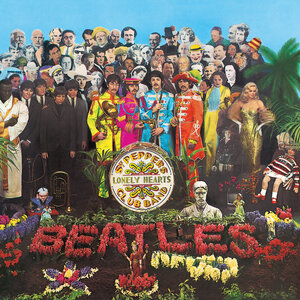
Sergeant Pepper’s Lonely Hearts Club Band
__
May 2, 2016
Paul McCartney
Dear Paul,
I so enjoyed the concert April 30th in Little Rock and you played one of my favorite Beatles songs ELEANOR RIGBY because it takes a long hard look at the loneliness felt by so many people in the world today. Another band also captured that same feel in one of their songs and it happened to be produced by your old friend GEORGE MARTIN who you also took time to recognize at the concert. The song is LONELY PEOPLE by the band AMERICA and it was written by Dan and Catherine Peek. Let’s take a look first at the lyrics of ELEANOR RIGBY:
Later came psychedelic rock, an attempt to find this experience without drugs. The younger people and the older ones tried drug taking but then turned to the eastern religions. Both drugs and the eastern religions seek truth inside one’s own head, a negation of reason. The central reason of the popularity of eastern religions in the west is a hope for a nonrational meaning to life and values….
Then the Beatles gradually came home. The last thing we find them doing is the YELLOW SUBMARINE. I sure a lot of parents thought this is much better than the old hard rock, but I thought it was a very sad thing because it really wasn’t a children’s story at all, but what it was in fact was a romantic statement and the fact is that is all there is. Just the same as [Ingmar] Bergman after he makes the movie SILENCE [1963] then he makes a comedy [ALL THESE WOMEN in 1964]. It is the same as Picasso when he pictures his child as a clown [Paul in a Clown Suit, 1924]. So we find the Beatles making the YELLOW SUBMARINE, but there is something more to it than this because Erich Segal made his reputation by writing the script for the movie version of YELLOW SUBMARINE and then he went on and wrote LOVE STORY. So what we have done is we have come around in a big circle. There was the destruction of the romantic. Students in the 1960’s said we are tired of the romantic of giving us optimistic statements with no sufficient base.
So the Beatles destroyed that and then they went through these various trips into non-reason but when they came out they had nothing left but the romantic. This is the tragedy of the young people starting with Berkeley in 1964. How right they were in saying we have largely a plastic culture. This is something the church should have been saying. These students said give us reality. Then the students tried those trips and they weren’t trips based on reality but they were separated from reason. It was trying to find answers in one’s own head whether it was the drug trip or the Eastern Religion trip. Then they came around in a big circle and what do we find–we end up with Segal’s LOVE STORY, just the romantic thing as one can imagine but with no adequate base at all, yet giving us a lovely romantic answer, which just like the YELLOW SUBMARINE is very, very sad because the Beatles and young people WERE GIVING UP THE SEARCH and just accepting something like this.
Now let’s turn to the song LONELY PEOPLE by the band AMERICA but let’s look at the later Christian version of the song written by Dan and Catherine Peek and they were the original writers of the original song. However, the original song did not have the answer to loneliness in it, but they found the answers to the big questions in life when they found Christ. Here is that Christian version of the song:
This is for all the lonely people
Thinkin’ that life has passed them by
Don’t give up until you drink from the silver cup
And give your heart to Jesus Christ
This is for all the single people
Thinkin’ that love has left them dry
Don’t give up until you drink from the silver cup
And give your heart to Jesus Christ
Well, He’s on his way
He’s coming back someday
He’s coming back to take us home
This is for all the lonely people
Thinkin’ that life has passed them by
Don’t give up until you drink from the silver cup
He’ll never take you down or He’ll never give you up
But you’ll never know until you try
Actually the answer to find meaning in life is found in putting your faith and trust in Jesus Christ. The Bible is true from cover to cover and can be trusted. Here are some of the posts I have done in the past on the subject and if you like you could just google these subjects: 1. The Babylonian Chronicle, of Nebuchadnezzars Siege of Jerusalem, 2. Hezekiah’s Siloam Tunnel Inscription.13. The Pilate Inscription, 14. Caiaphas Ossuary, 14 B Pontius Pilate Part 2, 14c. Three greatest American Archaeologists moved to accept Bible’s accuracy through archaeology.
“We wanted to set ourselves apart and not be seen as English guys trying to do American music, but instead accentuate that we were an American band,” Mr. Peek told The Jerusalem Post last year.
The group’s self-titled debut album was released in Britain in 1971 and in the United States by Warner Brothers the next year.
The band won a Grammy Award in 1973 as best new artist. A string of successful albums followed, including “Homecoming,” “Holiday,” “Hearts” and “Hideaway.” Many were produced by George Martin, who produced many of the Beatles’ records.
As Mr. Peek later recalled, those early years passed in a blur of airplanes and limousines, wealth, drugs and alcohol.
“Sex, drugs and rock ’n’ roll; it was the whole cornucopia of fleshly material,” he said in an interview with the Christian Broadcasting Network show “The 700 Club.” “I tried everything. I tasted every possible thing. I had a spiritual compass, but I abandoned it completely.”
In 1977, distraught at the turn his life had taken, Mr. Peek became a born-again Christian. He renounced drugs and alcohol and left the band. He signed with Lamb & Lion Records, a label founded by Pat Boone, for which he recorded “All Things Are Possible.” His other albums of religious music include “Electro Voice,” “Cross Over” and “Caribbean Christmas.” (Mr. Peek and his wife lived in the Cayman Islands for many years.)
Sincerely,
Everette Hatcher, everettehatcher@gmail.com, http://www.thedailyhatch.org, cell ph 501-920-5733, Box 23416, LittleRock, AR 72221
| “Lonely People” | ||||
|---|---|---|---|---|
| Single by America | ||||
| from the album Holiday | ||||
| B-side | “Mad Dog” | |||
| Released | November 27, 1974 | |||
| Genre | Pop Rock | |||
| Length | 2:27 | |||
| Label | Warner Bros. 8048 | |||
| Writer(s) | Dan Peek, Catherine Peek | |||
| Producer(s) | George Martin | |||
| America singles chronology | ||||
|
||||
“Lonely People” is a song written by the husband-and-wife team of Dan and Catherine Peek and recorded by America.
“Lonely People” was the second single release from America’s 1974 album Holiday. “Lonely People” reached number five on the Billboard Hot 100,[1] Dan Peek’s only credited song to reach that chart’s top 10,[2] and was America’s second number one on the Easy Listening chart, where it stayed for one week in February 1975.[3]
“Lonely People” was not automatically earmarked for the Holiday album: Peek unsuccessfully submitted a demo of the song for John Sebastian to consider recording.[4]
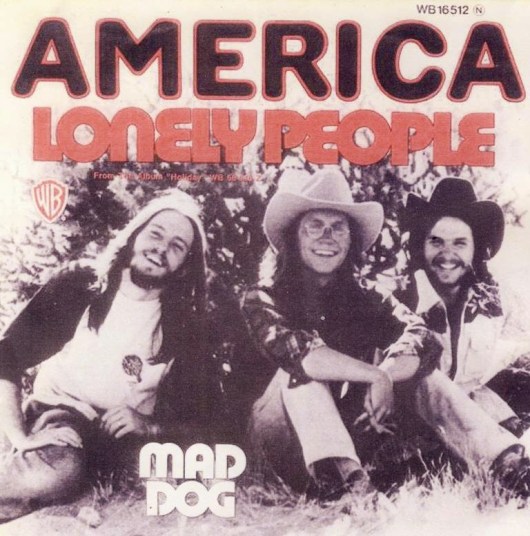
“Lonely People” was written as an optimistic response to the Beatles‘ song “Eleanor Rigby“. Peek considered “Eleanor Rigby” an “overwhelming” “picture…of the masses of lost humanity, drowning in grey oblivion” and would recall being “lacerated” on first hearing the lyrics of its chorus which run “All the lonely people: where do they all come from…where do they all belong”.[4] “Lonely People” was written within a few weeks of Peek’s 1973 marriage to Catherine Mayberry: Peek- “I always felt like a melancholy, lonely person. And now [upon getting married] I felt like I’d won.”[5] The lyrics of “Lonely People” advise “all the lonely people”: “Don’t give up until you drink from the silver cup”, a metaphor which Peek thus explains: “It’s possible to drink from another’s well of experience…and be refreshed.”[4]
Dan Peek would recall that in his post-America solo career he would utilize “Lonely People” to close his concerts, introducing the song “with words to the effect” “that Jesus is the answer to loneliness”. On the advice of a fan Peek began amending the actual lyrics of the song to convey this pro-Christian message and Peek recorded a lyrically revised version of “Lonely People” for his 1986 album Electro Voice. This revised version amended the original lyrics “And ride that highway in the sky” and “You never know until you try” to “And give your heart to Jesus Christ.”[6]
| Chart (1974) | Peak position |
|---|---|
| US Billboard Easy Listening | 1 |
| US Billboard Hot 100 | 5 |
| US Cash Box Singles Chart | 10 |
| US Record World Singles Chart | 9 |
| US Radio & Records Singles Chart | 12 |
Jars of Clay remade “Lonely People” for their 2003 album Who We Are Instead. Their version was featured on The WB TV series Everwood and was on the 2004 Everwood soundtrack album.
|
||||||||||||||||||||||||||||||
 |
This 1970s rock song-related article is a stub. You can help Wikipedia by expanding it. |
Related posts:
Little One – From the Film, “Sarah’s Choice” Rebecca St James on faith and values – theDove.us Sarah’s Choice Trailer Sarah’s Choice – Behind the Scenes Rebecca St. James on Sarah’s Choice – CBN.com Rebecca St James Interview on Real Videos Sarah’s Choice – The Proposal Sarahs Choice Pregnancy Test Sarahs Choice Crossroad Sarah’s Choice […]
Lion – Rebecca St. James I will praise You – Rebecca St James Rebecca St James 1995 TBN – Everything I Do Rebecca St. James & Rachel Scott “Blessed Be Your Name” Rebecca St. James From Wikipedia, the free encyclopedia Rebecca St. James St. James in 2007 Background information Birth name Rebecca Jean Smallbone Also […]
Foster The People – Pumped up Kicks Foster the People From Wikipedia, the free encyclopedia Foster the People Foster the People at the 2011 MuchMusic Video Awards, from left to right: Pontius, Foster, and Fink Background information Origin Los Angeles, California, U.S. Genres Indie pop alternative rock indietronica alternative dance neo-psychedelia[1] Years active 2009–present Labels […]
‘Apple gave me advice’: Coldplay’s Chris Martin turned to 11-year-old daughter for words of wisdom ahead of Superbowl 50 By DAILYMAIL.COM REPORTER PUBLISHED: 00:58 EST, 2 February 2016 | UPDATED: 17:20 EST, 2 February 2016 n Facebook They’ve sold 80 million records and been around for 20 years. But Coldplay’s lead singer Chris Martin, 38, […]
__________ Chris Martin, Lead Singer of Coldplay: 5 Fast Facts You Need to Know Published 3:44 pm EDT, February 7, 2016 Updated 3:44 pm EDT, February 7, 2016 Comment By Lauren Weigle 17.6k (Getty) Chris Martin has been the front-man of the band Coldplay for about 20 years, though the band changed its name a […]
Christian Rock Pioneer Larry Norman’s Songs Part 14 I posted a lot in the past about my favorite Christian musicians such as Keith Green (I enjoyed reading Green’s monthly publications too), and 2nd Chapter of Acts and others. Today I wanted to talk about one of Larry Norman’s songs. David Rogers introduced me to Larry […]
Christian Rock Pioneer Larry Norman’s Songs Part 13 I posted a lot in the past about my favorite Christian musicians such as Keith Green (I enjoyed reading Green’s monthly publications too), and 2nd Chapter of Acts and others. Today I wanted to talk about one of Larry Norman’s songs. David Rogers introduced me to Larry […]
Christian Rock Pioneer Larry Norman’s Songs Part 12 I posted a lot in the past about my favorite Christian musicians such as Keith Green (I enjoyed reading Green’s monthly publications too), and 2nd Chapter of Acts and others. Today I wanted to talk about one of Larry Norman’s songs. David Rogers introduced me to Larry […]
Christian Rock Pioneer Larry Norman’s Songs Part 11 I posted a lot in the past about my favorite Christian musicians such as Keith Green (I enjoyed reading Green’s monthly publications too), and 2nd Chapter of Acts and others. Today I wanted to talk about one of Larry Norman’s songs. David Rogers introduced me to Larry […]
Christian Rock Pioneer Larry Norman’s Songs Part 10 more on Album “Only Visiting This Planet” I posted a lot in the past about my favorite Christian musicians such as Keith Green (I enjoyed reading Green’s monthly publications too), and 2nd Chapter of Acts and others. Today I wanted to talk about one of Larry Norman’s […]
On November 21, 2014 I received a letter from Nobel Laureate Harry Kroto and it said:
…Please click on this URL http://vimeo.com/26991975
and you will hear what far smarter people than I have to say on this matter. I agree with them.
Harry Kroto

I have attempted to respond to all of Dr. Kroto’s friends arguments and I have posted my responses one per week for over a year now. Here are some of my earlier posts:
Arif Ahmed, Sir David Attenborough, Mark Balaguer, Horace Barlow, Michael Bate, Patricia Churchland, Aaron Ciechanover, Noam Chomsky,Alan Dershowitz, Hubert Dreyfus, Bart Ehrman, Stephan Feuchtwang, David Friend, Riccardo Giacconi, Ivar Giaever , Roy Glauber, Rebecca Goldstein, David J. Gross, Brian Greene, Susan Greenfield, Stephen F Gudeman, Alan Guth, Jonathan Haidt, Theodor W. Hänsch, Brian Harrison, Hermann Hauser, Roald Hoffmann, Bruce Hood, Herbert Huppert, Gareth Stedman Jones, Steve Jones, Shelly Kagan, Michio Kaku, Stuart Kauffman, Lawrence Krauss, Harry Kroto, George Lakoff, Elizabeth Loftus, Alan Macfarlane, Peter Millican, Marvin Minsky, Leonard Mlodinow, Yujin Nagasawa, Alva Noe, Douglas Osheroff, Jonathan Parry, Saul Perlmutter, Herman Philipse, Carolyn Porco, Robert M. Price, Lisa Randall, Lord Martin Rees, Oliver Sacks, John Searle, Marcus du Sautoy, Simon Schaffer, J. L. Schellenberg, Lee Silver, Peter Singer, Walter Sinnott-Armstrong, Ronald de Sousa, Victor Stenger, Barry Supple, Leonard Susskind, Raymond Tallis, Neil deGrasse Tyson, .Alexander Vilenkin, Sir John Walker, Frank Wilczek, Steven Weinberg, and Lewis Wolpert,
 Chris Hann (born in Cardiff in 1953) was Professor of Social Anthropology at the University of Kent between 1992 and 1999, when he was appointed as one of two founding Directors of the Max Planck Institute for Social Anthropology at Halle/Saale, Germany.He had previously taught anthropology at Cambridge University and had close links with UKC staff even before coming to Kent, especially with Paul Stirling, the first Professor of Sociology and Anthropology, who pioneered the anthropological study of modern Turkey. In addition to his own fieldwork in Anatolia, Hann has worked among Turkic speakers in Central Asia (Xinjiang, North-West China). Earlier projects took him to Hungary and Poland when these countries were still socialist. At the Max Planck Institute he heads a department which specializes in investigations of the postsocialist countries of the former Soviet bloc, and also of those East Asian countries which still describe themselves as socialist. Recent themes have included rural decollectivization, religion after communism, and the transformation of social security and kinship relations in the decentralized economies of “reform socialism”.Hann is an Editor of the European Journal of Sociology, a Fellow of the Berlin-Brandenburg Academy of Sciences, and Honorary Professor at the Martin Luther University, Halle-Wittenberg, and at the University of Leipzig.Professor Hann continues to collaborate with School of Anthropology and Conservation colleagues, particularly Dr Glenn Bowman.
In the second video below in the 96th clip in this series are his words and my response is below them.
Below is my letter responding to Dr. Hann’s quotation:
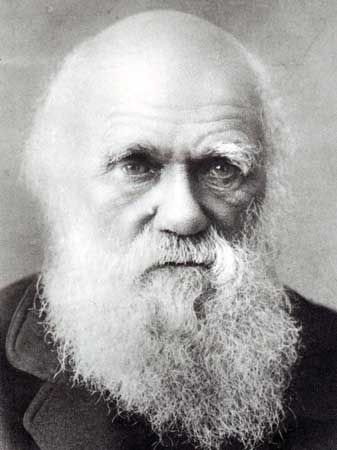
Charles Darwin

Francis and Edith Schaeffer

Rock Band KANSAS
July 8, 2016
Dear Dr. Hahn,
Let me start off by saying that this is not the first time that I have written you. Last time I talked also about Charles Darwin but today I want to directly respond to a quote you made. I think you have exaggerated if you truly think that you CAN’T IDENTIFY WITH belief in God. Charles Darwin also struggled with the same issue.
I just finished reading the online addition of the book Darwin, Francis ed. 1892. Charles Darwin: his life told in an autobiographical chapter, and in a selected series of his published letters [abridged edition]. London: John Murray. There are several points that Charles Darwin makes in this book that were very wise, honest, logical, shocking and some that were not so wise. The Christian Philosopher Francis Schaeffer once said of Darwin’s writings, “Darwin in his autobiography and in his letters showed that all through his life he never really came to a quietness concerning the possibility that chance really explained the situation of the biological world. You will find there is much material on this [from Darwin] extended over many many years that constantly he was wrestling with this problem.”
Quote from you:
If I take religion seriously nowadays as I do leading a number of recent projects at this institute, it is very much as social scientist interested in what holds the communities together and also in some sense in the spiritual commitments that human beings are capable of, all of that I find extremely interesting but I can’t identify with any of it myself.
Now this quote is why I thought of you when I read the words of Charles Darwin. You talk about the culture where you come from and how hardly anyone believes in God, but that is not the way it is worldwide. THERE IS AN INNER MORAL CONSCIENCE IN EVERY PERSON THAT POINTS THEM TO GOD AND EVERYONE ACTS ON MORAL MOTIONS.
When I read the book Charles Darwin: his life told in an autobiographical chapter, and in a selected series of his published letters, I also read a commentary on it by Francis Schaeffer and I wanted to both quote some of Charles Darwin’s own words to you and then include the comments of Francis Schaeffer on those words. I have also enclosed a CD with two messages from Adrian Rogers and Bill Elliff concerning Darwinism.
CHARLES DARWIN’S WORDS:
But now the grandest scenes would not cause any such convictions and feelings to rise in my mind. It may be truly said that I am like a man who has become colour-blind and the universal belief by men of the existence of redness makes my present loss of perception of not the least value as evidence. This argument would be a valid one if all men of all races had the same inward conviction of the existence of one God; but we know that this is very far from being the case. Therefore I cannot see that such inward convictions and feelings are of any weight as evidence of what really exists. The state of mind which grand scenes formerly excited in me, and which was intimately connected with a belief in God, did not essentially differ from that which is often called the sense of sublimity; and however difficult it may be to explain the genesis of this sense, it can hardly be advanced as an argument for the existence of God, any more than the powerful though vague and similar feelings excited by music.
Francis Schaeffer observed:
You notice that Darwin had already said he had lost his sense of music [appreciation]. However, he brings forth what I think is a false argument. I usually use it in the area of morality. I mention that materialistic anthropologists point out that different people have different moral [systems] and this is perfectly true, but what the materialist anthropologist can never point out is why man has a sense of moral motion and that is the problem here. Therefore, it is perfectly true that men have different concepts of God and different concepts of moral motion, but Darwin himself is not satisfied in his own position and WHERE DO THEY [MORAL MOTIONS] COME FROM AT ALL? So you are wrestling with the same dilemma here in this reference as you do in the area of all things human. For these men it is not the distinction that raises the problem, but it is the overwhelming factor of the existence of the humanness of man, the mannishness of man. The simple fact is he saw that you are shut up to either God or chance, and he said basically “I don’t see how it could be chance” and at the same time he looks at a mountain or listens to a piece of music it is a testimony that really chance isn’t sufficient enough. So gradually with the sensitivity of his own inborn self conscience he kills it. He deliberately kills the beauty so it doesn’t argue with his theory. Maybe I am being false to Darwin here. Who can say about Darwin’s subconscious thoughts? It seems to me though this is exactly the case. What you find is a man who can’t stand the argument of the external beauty and the mannishness of man so he just gives it up in this particular place.
_________________
Let make 2 points here. First, the Bible teaches that everyone knows in their heart that God exists because of the beauty of God’s creation and the conscience that God has planted in everyone’s heart (Romans 1).
Second, all humans have moral motions.
Francis Schaffer in his book THE GOD WHO IS THERE addresses these same issues:
“[in Christianity] there is a sufficient basis for morals. Nobody has ever discovered a way of having real “morals” without a moral absolute. If there is no moral absolute, we are left with hedonism (doing what I like) or some form of the social contract theory (what is best for society as a a hole is right). However, neither of these alternative corresponds to the moral motions that men have. Talk to people long enough and deeply enough, and you will find that they consider some things are really right and something are really wrong. Without absolutes, morals as morals cease to exist, and humanistic mean starting from himself is unable to find the absolute he needs. But because the God of the Bible is there, real morals exist. Within this framework I can say one action is right and another wrong, without talking nonsense.” 117
Romans 1:18-19 (Amplified Bible) ” For God’s wrath and indignation are revealed from heaven against all ungodliness and unrighteousness of men, who in their wickedness REPRESS and HINDER the truth and make it inoperative. For that which is KNOWN about God is EVIDENT to them and MADE PLAIN IN THEIR INNER CONSCIOUSNESS, because God has SHOWN IT TO THEM,”(emphasis mine). At the 37 minute mark on the CD that I sent you today Adrian Rogers noted, “”There is no such thing anywhere on earth as a true atheist. If a man says he doesn’t believe in God, then he is lying. God has put his moral consciousness into every man’s heart, and a man has to try to kick his conscience to death to say he doesn’t believe in God.”
ROMANS CHAPTER ONE IS RIGHT WHEN IT SAYS THAT GOD PUT THAT CONSCIENCE IN EVERYONE’S HEART THAT BEARS WITNESS THAT HE CREATED THEM FOR A PURPOSE AND THAT IS WHY THE VAST MAJORITY OF PEOPLE IN THE WORLD ARE ATTEMPTING TO SEEK OUT GOD!!!!
As a secularist you believe that it is sad indeed that millions of Christians are hoping for heaven but no heaven is waiting for them. Paul took a close look at this issue too:
I Corinthians 15 asserts:
12 But if it is preached that Christ has been raised from the dead, how can some of you say that there is no resurrection of the dead? 13 If there is no resurrection of the dead, then not even Christ has been raised. 14 And if Christ has not been raised, our preaching is useless and so is your faith. 15 More than that, we are then found to be false witnesses about God, for we have testified about God that he raised Christ from the dead. But he did not raise him if in fact the dead are not raised. 16 For if the dead are not raised, then Christ has not been raised either. 17 And if Christ has not been raised, your faith is futile; you are still in your sins. 18 Then those also who have fallen asleep in Christ are lost. 19 If only for this life we have hope in Christ, we are of all people most to be pitied.
I sent you a CD that starts off with the song DUST IN THE WIND by Kerry Livgren of the group KANSAS which was a hit song in 1978 when it rose to #6 on the charts because so many people connected with the message of the song. It included these words, “All we do, crumbles to the ground though we refuse to see, Dust in the Wind, All we are is dust in the wind, Don’t hang on, Nothing lasts forever but the Earth and Sky, It slips away, And all your money won’t another minute buy.”
Kerry Livgren himself said that he wrote the song because he saw where man was without a personal God in the picture. Solomon pointed out in the Book of Ecclesiastes that those who believe that God doesn’t exist must accept three things. FIRST, death is the end and SECOND, chance and time are the only guiding forces in this life. FINALLY, power reigns in this life and the scales are never balanced. The Christian can face death and also confront the world knowing that it is not determined by chance and time alone and finally there is a judge who will balance the scales.
Both Kerry Livgren and the bass player Dave Hope of Kansas became Christians eventually. Kerry Livgren first tried Eastern Religions and Dave Hope had to come out of a heavy drug addiction. I was shocked and elated to see their personal testimony on The 700 Club in 1981 and that same interview can be seen on You Tube today. Livgren lives in Topeka, Kansas today where he teaches “Diggers,” a Sunday school class at Topeka Bible Church. DAVE HOPE is the head of Worship, Evangelism and Outreach at Immanuel Anglican Church in Destin, Florida.
The answer to find meaning in life is found in putting your faith and trust in Jesus Christ. The Bible is true from cover to cover and can be trusted.
Thank you again for your time and I know how busy you are.
Everette Hatcher, everettehatcher@gmail.com, http://www.thedailyhatch.org, cell ph 501-920-5733, Box 23416, LittleRock, AR 72221, United States
PS: Is the Bible historically accurate? Here are some of the posts I have done in the past on the subject: 1. The Babylonian Chronicle, of Nebuchadnezzars Siege of Jerusalem, 2. Hezekiah’s Siloam Tunnel Inscription. 3. Taylor Prism (Sennacherib Hexagonal Prism), 4. Biblical Cities Attested Archaeologically. 5. The Discovery of the Hittites, 6.Shishak Smiting His Captives, 7. Moabite Stone, 8. Black Obelisk of Shalmaneser III, 9A Verification of places in Gospel of John and Book of Acts., 9B Discovery of Ebla Tablets. 10. Cyrus Cylinder, 11. Puru “The lot of Yahali” 9th Century B.C.E., 12. The Uzziah Tablet Inscription, 13. The Pilate Inscription, 14. Caiaphas Ossuary, 14 B Pontius Pilate Part 2, 14c. Three greatest American Archaeologists moved to accept Bible’s accuracy through archaeology.,
Related posts:
_______________ Francis Schaeffer pictured below: _____________________ I have included the 27 minute episode THE AGE OF NONREASON by Francis Schaeffer. In that video Schaeffer noted, ” Sergeant Pepper’s Lonely Hearts Club Band…for a time it became the rallying cry for young people throughout the world. It expressed the essence of their lives, thoughts and their feelings.” How Should […]
Crimes and Misdemeanors: A Discussion: Part 1 ___________________________________ Today I will answer the simple question: IS IT POSSIBLE TO BE AN OPTIMISTIC SECULAR HUMANIST THAT DOES NOT BELIEVE IN GOD OR AN AFTERLIFE? This question has been around for a long time and you can go back to the 19th century and read this same […]
____________________________________ Francis Schaeffer pictured below: __________ Francis Schaeffer has written extensively on art and culture spanning the last 2000years and here are some posts I have done on this subject before : Francis Schaeffer’s “How should we then live?” Video and outline of episode 10 “Final Choices” , episode 9 “The Age of Personal Peace and Affluence”, episode 8 […]
Love and Death [Woody Allen] – What if there is no God? [PL] ___________ _______________ How Should We then Live Episode 7 small (Age of Nonreason) #02 How Should We Then Live? (Promo Clip) Dr. Francis Schaeffer 10 Worldview and Truth Two Minute Warning: How Then Should We Live?: Francis Schaeffer at 100 Francis Schaeffer […]
___________________________________ Francis Schaeffer pictured below: ____________________________ Francis Schaeffer “BASIS FOR HUMAN DIGNITY” Whatever…HTTHR Dr. Francis schaeffer – The flow of Materialism(from Part 4 of Whatever happened to human race?) Dr. Francis Schaeffer – The Biblical flow of Truth & History (intro) Francis Schaeffer – The Biblical Flow of History & Truth (1) Dr. Francis Schaeffer […]

By DON STEINBERG
Updated July 6, 2016 7:11 p.m. ET
3 COMMENTS
Re-creating opulent 1930s Hollywood and post-Prohibition New York for Woody Allen’s new film, “Cafe Society,” Santo Loquasto found himself in comfortable territory. He’s been helping Mr. Allen depict bygone days on screen for more than three decades.
The movie, which opens on July 15, received mixed reviews when it premiered at the Cannes Film Festival in May. But critics raved about the scenery; Variety praised the “lusciously visualized period-Tinseltown backdrop,” calling it an “art deco daydream.”
Corey Stoll and Saul Stein in Woody Allen’s ‘Café Society’
Corey Stoll and Saul Stein in Woody Allen’s ‘Café Society’ PHOTO: \LIONS GATE/EVERETT COLLECTION
With 29 Allen films in his portfolio, the 71-year-old Mr. Loquasto started out doing costumes; he began to act as production designer in the late 1980s for such voyages to yesteryear as “Radio Days” and “Bullets Over Broadway,” which earned Mr. Loquasto Oscar nominations. He has done plenty of contemporary films for Mr. Allen and other directors, including Penny Marshall’s “Big.” He also worked on Broadway shows, including “Glengarry Glen Ross” and the current musical “Shuffle Along.”
–– ADVERTISEMENT ––
The big difference here is Mr. Allen’s return to celebrate Los Angeles, a town he’s had a reputation for putting down ever since his character in 1977 “Annie Hall” griped: “I don’t want to live in a city where the only cultural advantage is that you can make a right turn on a red light.” And: “I don’t respond well to mellow. If I get too mellow, I ripen and then rot.”
In truth, Mr. Allen doesn’t hate L.A. so much as he prefers to sleep at home in New York. Though the vintage Hollywood scenes look lavish, the production didn’t linger on the West Coast and used some New York set-ups to pose as L.A.
“We really shot less than a week in Los Angeles—over a weekend,” Mr. Loquasto says. That was largely a budget issue. “Comparable to period movies other people make, there’s no budget.”
Santo Loquasto, the production designer of Woody Allen’s ‘Cafe Society.’ ‘He never has savored the shots,’ Mr. Loquasto says of Mr. Allen. ‘He doesn’t really luxuriate if the joke doesn’t work.’
Santo Loquasto, the production designer of Woody Allen’s ‘Cafe Society.’ ‘He never has savored the shots,’ Mr. Loquasto says of Mr. Allen. ‘He doesn’t really luxuriate if the joke doesn’t work.’ PHOTO: LIONSGATE
The movie is about a polite and only slightly neurotic young man, Bobby Dorfman ( Jesse Eisenberg), who leaves his Bronx parents for Hollywood, where he works for his uncle, a wealthy agent ( Steve Carell), and falls in love with the agent’s assistant ( Kristen Stewart), causing some awkwardness. He retreats to New York to open a nightclub with his gangster brother ( Corey Stoll), and complications arise. The plot shares its basics with “A Second Hand Memory,” a melancholic 2004 play by Mr. Allen. Mr. Loquasto designed those sets.
There are dozens of showy shots of sunbathed L.A. exteriors and art-deco interiors—mansions, nightclubs, other hangouts. Mr. Allen doesn’t include a lot of scenery description in his screenplays, Mr. Loquasto says. “You have to draw out the information often. It’s far more conversational than you’d ever imagine. I’ll show him photos. We’ve built models. But he doesn’t really trust drawings so much.”
Jesse Eisenberg and Kristen Stewart in ‘Cafe Society’
Jesse Eisenberg and Kristen Stewart in ‘Cafe Society’ PHOTO: LIONSGATE
The opening scene originally was going to take place inside a re-creation of the extinct Cocoanut Grove nightclub in Los Angeles, to be rebuilt in a dilapidated 1930s dance hall in the Bronx. “Really in a horrible place, but quite marvelous,” Mr. Loquasto says. It would have cost too much to restore the hall, so they switched to shoot it as a poolside party at a modernist white mansion in Santa Monica once owned by Dolores Del Rio.
“The people were so accommodating,” Mr. Loquasto says of the home’s occupants. “We just didn’t go into the house. That was the deal.”
RELATED READING
Cannes 2016: This Year’s Coming Attractions (May 11, 2016)
An Interview With Woody Allen (July 8, 2015)
Amazon’s Newest Hire: Woody Allen (Jan. 13, 2015)
How Woody Allen Sees It (June 28, 2013)
For the agent-uncle’s extravagant home, they shot inside a 1928 Spanish Colonial Revival-style villa in Los Feliz. Its owners already had restored it impeccably. “Even the light switches were 1920s buttons,” Mr. Loquasto recalls. The home was sold while they were shooting, for a reported $11 million, to Patty Hearst’s daughter Lydia and comedy/podcast impresario Chris Hardwick.
The agent’s Hollywood office actually is the ornate office of the president of the Brooklyn Library. The exterior of the hotel where Bobby stays in California was in Los Feliz, but the inside was in Forest Hills, Queens, where Mr. Loquasto correctly surmised he would find homes in a style he calls “hacienda deco—plastered walls with arches and tile floors.”
In one scene, the two young lovebirds ogle Hollywood movie-star homes from the sidewalk. They’re real mansions, and Mr. Loquasto didn’t have to alter much to get a 1930s look.
“I hid security systems mostly,” he says.
Mr. Allen and cinematographer Vittorio Storaro (whose work includes Francis Ford Coppola’s “Apocalypse Now” and several Bernardo Bertolucci classics) wanted to contrast the L.A. scenes visually with those set back in Depression-era New York. Much is achieved with color. Some L.A. scenes are drenched in amber light.
“Well, there’s always that with Woody,” Mr. Loquasto says. “Honey-dipped is what I call it.”
In New York, they shot in a rundown apartment on Riverside Drive and built a small jazz club inside Reverend Ike’s United Palace theater in Harlem. The ritzy “Les Tropiques” nightclub that Bobby and his brother run was built from scratch on a Brooklyn soundstage.
Over the years, Mr. Loquasto has come to accept that Mr. Allen likes to nail the visual details, but it’s to achieve something romantic and quirky, not art for art’s sake. In the editing room after filming is done, substance tends to beat style. Mr. Allen is always most focused on telling his story.
“He never has savored the shots,” Mr. Loquasto says. “We have our long pans, but there are scenes—we have a little jazz club where I fought to get a flashing light outside the window, for the effect in the room. And he cuts just before you get to the window! He doesn’t really luxuriate if the joke doesn’t work.”
___________ Fifty Years Ago, Woody Allen PlottedMidnight in Paris in This Stand-up Routine By Kyle Buchanan Follow @kylebuchanan 341Shares Share254Tweet70Share8EmailPrint When Woody Allen won the Best Original Screenplay Oscar this year for writing Midnight in Paris, he set a record at age 76 as the oldest person to ever triumph in that category. Turns out, […]
_____ _______ Woody Allen Stand Up Comic 1964 1968 09 The Science Fiction Film Woody Allen’s stand-up comedy albums reissued in new box set BY JOSH TERRY ON DECEMBER 16, 2014, 12:10PM 1 COMMENT FACEBOOK TWITTER TUMBLR STUMBLEUPON REDDIT Before Woody Allen became the prolific director responsible for such classics as Manhattan and Annie Hall, he was a […]
Woody Allen Stand Up Comic 1964 1968 15 Brooklyn Separating The Art From the Artist With Woody Allen: The Stand-Up Years By Samantha Allen January 20, 2015 | 11:30am Share Tweet Share In the liner notes for Woody Allen: The Stand-Up Years 1964-1968, longtime director and producer Robert B. Weide (Curb Your Enthusiasm) waxes nostalgic […]
_ The first picture from Woody Allen’s new movie confirms that Joaquin Phoenix and Emma Stone are its stars. But what do we know about the bigger picture? Not saying much … Emma Stone and Joaquin Phoenix in Woody Allen’s Irrational Man. Photograph: PR Andrew Pulver @Andrew_Pulver Monday 13 April 2015 08.27 EDTLast modified on Monday […]
I love it when I find someone else who has a love for Woody Allen movies like I do. Evidently Paul Semel is person like that. Below is Paul Semel’s fine review: Woody Allen Stand Up Comic 1964 1968 01 The Vodka Ad JANUARY 12, 2015 Woody Allen The Stand-Up Years 1964-1968 Review Given that he’s […]
Woody Allen Stand Up Comic 1964 1968 05 Mechanical Objects Standing Up and Floating Out Our favorite things this week include Woody Allen’s “The Stand-Up Years,” “Inherent Vice” by Thomas Pynchon not Paul Thomas Anderson, and “Saga” by Brian K. Vaughan. MILK & HONEY Email this page Posted January 14, 2015 Allen’s Stand-Up Roots: On […]
____ Woody Allen’s past movies and the subject of the Meaning of Life examined!!! Out of the Past: Woody Allen, Nostalgia, the Meaning of Life, and Radio Days Kyle Turner Jul 25, 2014 Film, Twilight Time 1 Comment “I firmly believe, and I don’t say this as a criticism, that life is meaningless.” – Woody […]
Woody Allen Should Have Quoted Pascal: “Magic in the Moonlight” January 7, 2015 by Roger E. Olson 9 Comments Woody Allen Should Have Quoted Pascal: “Magic in the Moonlight” I am no Roger Ebert and don’t watch that many movies, but in my opinion, for what it’s worth, Woody Allen’s 2014 film “Magic in […]
______________ If anyone has read my blog for any length of time they know that I am the biggest Woody Allen fan of all time. No one except maybe Bergman has attacked the big questions in life as well as Woody Allen. Furthermore, Francis Schaeffer is my favorite Christian Philosopher and he spent a lot […]
___________ Woody Allen to make first TV series for Amazon Prime ‘I’m not sure where to begin,’ says 79-year-old Oscar-winner about his small screen debut, as streaming TV service seeks to gain march on rivals with exclusive content Comment: in signing Woody Allen, Amazon Prime has delivered a nuclear blast to the competition Woody […]
__
Jimi Hendrix being interviewed in England just seven days before his death .
September 11th 1970

On September 11, 1970, NME’s Keith Allston interviewed Jimi Hendrix in England. The interview turned out to be Hendrix’s last; he died a mere seven days later — forty-three years ago today, September 18, 1970 — at age 27.
You can hear the entire 30-plus-minute interview below.
It’s well known that Hendrix was set on branching out into a new musical phase in his later years, with collaborations with Miles Davis — and even Paul McCartney, apparently — in the planning or near-planning stages.
In the interview, Hendrix is contemplative and not totally sure where he’s bound next. He’s also pretty funny, as the following exchange proves:
Do you feel personally that you have enough money to live comfortably without necessarily making more as a sort of professional entertainer?
Ah, I don’t think so, not the way I’d like to live, because like I want to get up in the morning and just roll over in my bed into an indoor swimming pool and then swim to the breakfast table, come up for air and get maybe a drink of orange juice or something like that. Then just flop over from the chair into the swimming pool, swim into the bathroom and go on and shave and whatever.
You don’t want to live just comfortably, you wanna live luxuriously?
No! Is that luxurious? I was thinking about a tent, maybe, [laughs] overhanging … overhanging this … a mountain stream! [laughs].
Related posts:
Little One – From the Film, “Sarah’s Choice” Rebecca St James on faith and values – theDove.us Sarah’s Choice Trailer Sarah’s Choice – Behind the Scenes Rebecca St. James on Sarah’s Choice – CBN.com Rebecca St James Interview on Real Videos Sarah’s Choice – The Proposal Sarahs Choice Pregnancy Test Sarahs Choice Crossroad Sarah’s Choice […]
Lion – Rebecca St. James I will praise You – Rebecca St James Rebecca St James 1995 TBN – Everything I Do Rebecca St. James & Rachel Scott “Blessed Be Your Name” Rebecca St. James From Wikipedia, the free encyclopedia Rebecca St. James St. James in 2007 Background information Birth name Rebecca Jean Smallbone Also […]
Foster The People – Pumped up Kicks Foster the People From Wikipedia, the free encyclopedia Foster the People Foster the People at the 2011 MuchMusic Video Awards, from left to right: Pontius, Foster, and Fink Background information Origin Los Angeles, California, U.S. Genres Indie pop alternative rock indietronica alternative dance neo-psychedelia[1] Years active 2009–present Labels […]
‘Apple gave me advice’: Coldplay’s Chris Martin turned to 11-year-old daughter for words of wisdom ahead of Superbowl 50 By DAILYMAIL.COM REPORTER PUBLISHED: 00:58 EST, 2 February 2016 | UPDATED: 17:20 EST, 2 February 2016 n Facebook They’ve sold 80 million records and been around for 20 years. But Coldplay’s lead singer Chris Martin, 38, […]
__________ Chris Martin, Lead Singer of Coldplay: 5 Fast Facts You Need to Know Published 3:44 pm EDT, February 7, 2016 Updated 3:44 pm EDT, February 7, 2016 Comment By Lauren Weigle 17.6k (Getty) Chris Martin has been the front-man of the band Coldplay for about 20 years, though the band changed its name a […]
Christian Rock Pioneer Larry Norman’s Songs Part 14 I posted a lot in the past about my favorite Christian musicians such as Keith Green (I enjoyed reading Green’s monthly publications too), and 2nd Chapter of Acts and others. Today I wanted to talk about one of Larry Norman’s songs. David Rogers introduced me to Larry […]
Christian Rock Pioneer Larry Norman’s Songs Part 13 I posted a lot in the past about my favorite Christian musicians such as Keith Green (I enjoyed reading Green’s monthly publications too), and 2nd Chapter of Acts and others. Today I wanted to talk about one of Larry Norman’s songs. David Rogers introduced me to Larry […]
Christian Rock Pioneer Larry Norman’s Songs Part 12 I posted a lot in the past about my favorite Christian musicians such as Keith Green (I enjoyed reading Green’s monthly publications too), and 2nd Chapter of Acts and others. Today I wanted to talk about one of Larry Norman’s songs. David Rogers introduced me to Larry […]
Christian Rock Pioneer Larry Norman’s Songs Part 11 I posted a lot in the past about my favorite Christian musicians such as Keith Green (I enjoyed reading Green’s monthly publications too), and 2nd Chapter of Acts and others. Today I wanted to talk about one of Larry Norman’s songs. David Rogers introduced me to Larry […]
Christian Rock Pioneer Larry Norman’s Songs Part 10 more on Album “Only Visiting This Planet” I posted a lot in the past about my favorite Christian musicians such as Keith Green (I enjoyed reading Green’s monthly publications too), and 2nd Chapter of Acts and others. Today I wanted to talk about one of Larry Norman’s […]


 The Daily Hatch