After leaving the Animals in mid 1966, bassist Chas Chandler turned toward a new role as producer and manager. And he struck gold on his very first try. Once Chandler heard Jimi Hendrix, he knew there was something magical there. So he brought the guitarist to England later that year, hooked him up with an aspiring pair of musicians and unleashed the trio on an unsuspecting public.
Over the next two years, Chandler would serve as Hendrix’s manager and producer, working on the Experience’s singles and first two albums. His enthusiasm fueled Hendrix during the early days, but halfway through the recording of his third album in 1968, Electric Ladyland, much had changed within the band’s framework. Hendrix and the Experience were stars, and the stress was beginning to take its toll on Chandler.
“Chas and Jimi didn’t really get on in terms of how many people Jimi wanted in the control room,” recalled engineer Eddie Kramer in an interview with Uncut. “Chas felt that he, Jimi, was playing for the audience, as opposed to for the production. I think Jimi loved all that attention, and Chas thought it was a distraction. Then they split.”
Hendirx was starting to settle into the studio, turning his musical visions into reality. He spent hours recording, which Chandler thought was wasteful. “After he left, the gate was open and Jimi could experiment,” Kramer said. “The whole album was an experimental thing.”
After leaving Hendrix, Chandler took on his next project, the band Slade, who were huge in the U.K., even though they never made much of a dent in the U.S. Chandler passed away at the age of 57 from an aneurysm in 1996.
All along the watchtower
Princes kept the view
While all the women came and went
Barefoot servants too
Outside in the cold distance
A wildcat did growl
Two riders were approaching
And the wind began to howl, hey
All along the watchtower
All along the watchtower
Music video by The Jimi Hendrix Experience performing All Along The Watchtower. (C) 2009 Experience Hendrix L.L.C., underexclusive license to Sony Music Entertainment
The Animals – The House of the Rising Sun Mafia III Trailer 3
Bryan James “Chas” Chandler (18 December 1938 – 17 July 1996)[1] was an English musician, record producer and manager, best known as the original bassist in the Animals. He also managed the band Slade and Jimi Hendrix, about whom he was regularly interviewed until his death in 1996.
After Eric Burdon joined the band, the Alan Price Trio was renamed the Animals. Chandler’s bass lines were rarely given critical attention but some, including the opening riff of the group’s 1965 hit “We Gotta Get Out of This Place” subsequently received praise.[2][3] Chandler was also the most prominent of the group’s backing vocalists and did occasional songwriting with Burdon. in 1966, despite commercial success, Chandler became disillusioned with the lack of money, recalling that, “We toured non-stop for three years, doing 300 gigs a year and we hardly got a penny.”[1]
Jimi Hendrix and Slade
After the Animals underwent personnel changes in 1966, Chandler turned to becoming a talent scout, artist manager, and record producer. During his final tour with the Animals, Chandler saw a then-unknown Jimi Hendrix play in Cafe Wha?, a Greenwich Village, New York City nightclub. At the time Hendrix was performing under the name “Jimmy James.” In September, Chandler convinced James to accompany him to Britain,[3] which was made possible with the help of Michael Jeffery, who suggested that he revert to his actual name, and later suggested naming the band the Jimi Hendrix Experience. In Britain, Chandler recruited bassist Noel Redding and drummer Mitch Mitchell as the other members of the Experience. His enthusiasm fueled Hendrix during the early days, but halfway through the recording of his third album in 1968, Electric Ladyland, much had changed within the band’s framework.
Chandler was a key figure in Hendrix’s rise to critical and commercial success. Chandler provided the young musician with living accommodations and financed the Experience’s first single “Hey Joe”, before they had a recording contract.[2] He was also instrumental in introducing Hendrix to Eric Clapton. It was through this introduction that Hendrix was given the opportunity to play with Clapton and Cream on stage.[4] It was Chandler’s idea for Hendrix to set his guitar on fire, which made national news when this idea was used at a concert at the FinsburyAstoria Theatre and subsequently at the Monterey Pop festival. Hendrix’s sound engineer Eddie Kramer later recalled that Chandler was very hands on with the first two Hendrix albums, adding that “he was his mentor and I think it was very necessary.”[3]
By 1968, Chandler had become fed up with the recording sessions for Hendrix’s album Electric Ladyland, claiming they were self-indulgent. He left management services in the hands of Jeffery during the following year.[1] Chandler then managed and produced the British rock band Slade[5] for twelve years, during which they achieved six number one chart hits in the UK.
Expansion of music industry interests
Chandler bought IBC Studios which he renamed Portland Recording Studios, after the studio address of 35 Portland Place, London and ran it for four years until he sold it to Don Arden. Chandler also ran a series of record labels from the studios including Barn Records[5] and Six of the Best. He formed a music publishing agency, as well as a production company and management companies.[5]
Animals reunions
In 1977, Chandler played and recorded with the Animals during a brief reunion and he joined them again for a further revival in 1983, at which point he sold his business interests, in order to concentrate on being a musician.[5] During the early 1990s, he helped finance the development of Newcastle Arena, a ten-thousand seat sports and entertainment venue that opened in 1995.[2]
Death
Chandler died of an aortic aneurysm at Newcastle General Hospital on 17 July 1996,[6] only days after performing his final solo show. Chandler’s former home at 37 Second Avenue, Heaton is remembered with a black plaque placed on the wall by Newcastle City Council, which reads: “Chas Chandler 1938–1996. Founder member of the ‘Animals’. Manager of Jimi Hendrix & Slade. Co-founder of Newcastle Arena. Lived in this house 1938–1964.”[7]
Family
Chandler had one son Steffan, from his first marriage. He later married Madeleine Stringer, with whom he had a son, Ale, and two daughters, Elizabeth and Katherine.[citation needed]
Little One – From the Film, “Sarah’s Choice” Rebecca St James on faith and values – theDove.us Sarah’s Choice Trailer Sarah’s Choice – Behind the Scenes Rebecca St. James on Sarah’s Choice – CBN.com Rebecca St James Interview on Real Videos Sarah’s Choice – The Proposal Sarahs Choice Pregnancy Test Sarahs Choice Crossroad Sarah’s Choice […]
Lion – Rebecca St. James I will praise You – Rebecca St James Rebecca St James 1995 TBN – Everything I Do Rebecca St. James & Rachel Scott “Blessed Be Your Name” Rebecca St. James From Wikipedia, the free encyclopedia Rebecca St. James St. James in 2007 Background information Birth name Rebecca Jean Smallbone Also […]
Foster The People – Pumped up Kicks Foster the People From Wikipedia, the free encyclopedia Foster the People Foster the People at the 2011 MuchMusic Video Awards, from left to right: Pontius, Foster, and Fink Background information Origin Los Angeles, California, U.S. Genres Indie pop alternative rock indietronica alternative dance neo-psychedelia[1] Years active 2009–present Labels […]
‘Apple gave me advice’: Coldplay’s Chris Martin turned to 11-year-old daughter for words of wisdom ahead of Superbowl 50 By DAILYMAIL.COM REPORTER PUBLISHED: 00:58 EST, 2 February 2016 | UPDATED: 17:20 EST, 2 February 2016 n Facebook They’ve sold 80 million records and been around for 20 years. But Coldplay’s lead singer Chris Martin, 38, […]
__________ Chris Martin, Lead Singer of Coldplay: 5 Fast Facts You Need to Know Published 3:44 pm EDT, February 7, 2016 Updated 3:44 pm EDT, February 7, 2016 Comment By Lauren Weigle 17.6k (Getty) Chris Martin has been the front-man of the band Coldplay for about 20 years, though the band changed its name a […]
Christian Rock Pioneer Larry Norman’s Songs Part 14 I posted a lot in the past about my favorite Christian musicians such as Keith Green (I enjoyed reading Green’s monthly publications too), and 2nd Chapter of Acts and others. Today I wanted to talk about one of Larry Norman’s songs. David Rogers introduced me to Larry […]
Christian Rock Pioneer Larry Norman’s Songs Part 13 I posted a lot in the past about my favorite Christian musicians such as Keith Green (I enjoyed reading Green’s monthly publications too), and 2nd Chapter of Acts and others. Today I wanted to talk about one of Larry Norman’s songs. David Rogers introduced me to Larry […]
Christian Rock Pioneer Larry Norman’s Songs Part 12 I posted a lot in the past about my favorite Christian musicians such as Keith Green (I enjoyed reading Green’s monthly publications too), and 2nd Chapter of Acts and others. Today I wanted to talk about one of Larry Norman’s songs. David Rogers introduced me to Larry […]
Christian Rock Pioneer Larry Norman’s Songs Part 11 I posted a lot in the past about my favorite Christian musicians such as Keith Green (I enjoyed reading Green’s monthly publications too), and 2nd Chapter of Acts and others. Today I wanted to talk about one of Larry Norman’s songs. David Rogers introduced me to Larry […]
Christian Rock Pioneer Larry Norman’s Songs Part 10 more on Album “Only Visiting This Planet” I posted a lot in the past about my favorite Christian musicians such as Keith Green (I enjoyed reading Green’s monthly publications too), and 2nd Chapter of Acts and others. Today I wanted to talk about one of Larry Norman’s […]
When major changes occur, especially if they’re bad, people generally will try to understand what happened so they can avoid similar bad events in the future.
This is why, when we’re looking at major economic events, it’s critical to realize that narratives matter.
For instance, generation after generation of American students were taught that the Great Depression was the fault of capitalism run amok. But we now have lots of evidence that bad government policy caused the Great Depression and that the downturn was made more severe and longer lasting thanks to further policy mistakes by Hoover and Roosevelt.
The history textbooks are probably still wrong, but at least there’s a chance that interested students (and non-students) will come across more accurate explanations of what happened in the 1930s.
More recently, the same thing happened after the financial crisis. The statists immediately tried to convince people that the 2008 mess was a consequence of “Wall Street greed” and “deregulation.”
Fortunately, many experts were available to point out that the real problem was bad government policy, specifically easy money from the Fed and the corrupt system of subsidies from Fannie Mae and Freddie Mac.
So hopefully future history books won’t be as wrong about the financial crisis as they were about the Great Depression.
I raise these examples because I want to address another historical inaccuracy.
Let’s go back about 100 years ago to the s0-called “progressive era.” The conventional story is that this was a period when politicians reined in some of the excesses of big business. And if it wasn’t for that beneficial government intervention, we’d all still be oppressed peasants working in sweatshops.
There’s just one small problem with this narrative. It’s utter nonsense.
Let’s look specifically at the issue of sweatshops. Writing for the Independent Institute, Ben Powell looks at the history of sweatshops and whether workers were being mistreated.
He starts with a bit of history.
Sweatshops are an important stage in the process of economic development.As Jeffery Sachs puts it, “[S]weatshops are the first rung on the ladder out of extreme poverty”. …Working conditions have been harsh and standards of living low throughout most of human history. …Prior to the Industrial Revolution, textile production was decentralized to the homes of many rural families or artisans, and output was limited to what could be produced on the spinning wheel and hand loom. …Yarn spinning was mechanized in 1767 with the invention of the spinning jenny, and water power was harnessed shortly thereafter. With these inventions and steam power later, large-scale textile factories that are similar to today’s sweatshops emerged. The conditions in these early sweatshops were worse than those in many Third World sweatshops today. In some factories, workers toiled for sixteen hours a day, six days per week.
Then he looks at what actually happened in Great Britain, which is where sweatshops began.
Yet workers flocked to the mills. …sweatshop workers…were attracted by the opportunity to earn higher wages than they could elsewhere. In fact, economist Ludwig von Mises defended the factory system of the Industrial Revolution,…writing, “The factory owners did not have the power to compel anybody to take a factory job. They could only hire people who were ready to work for the wages offered to them. Low as these wage rates were, they were nonetheless more than these paupers could earn in any other field open to them.” …Mises’s argument is supported by historical evidence. Economist Joel Mokyr reports that workers earned a wage premium of 15 to 30 percent by working in the factories compared with other alternatives. The transformation of Great Britain during this time was dramatic. As economist and historian Donald McCloskey describes it, “In the 80 years or so after 1780 the population of Britain nearly tripled, the towns of Liverpool and Manchester became gigantic cities, the average income of the population more than doubled… Peter Lindert and Jeffery Williamson similarly find impressive gains in the standard of living between 1781 and 1851. Farm labor’s standard of living went up more than 60 percent, blue-collar workers’ standard increased more than 86 percent, and overall workers’ standard increased more than 140 percent. Along with this increase in the standard of living came a decrease in the share of women and children working beginning sometime between 1815 and 1820.
Ben then looks at the American experience. Once again, he finds that sweatshops allowed workers to earn more income than they could by staying on the farm.
And this was part of a process that enabled the United States to become much richer over time.
…workers flocked to the mills. At first, in the cities north of Boston it was mainly rural women and girls who left the farm to populate the early textile mills. During the 1830s in Lowell, a woman could earn $12 to $14 a month (in 1830s dollars) and after paying $5 for room and board in a company boarding house would have the rest left over for clothing, leisure, and savings. It wasn’t uncommon for women to return home to the farm after a year with $25 to $50 in a bank account. This was far more money than they could have earned on the farm and often more disposable cash than their fathers had. …much like in Great Britain, living standards improved over time. In 1820, before the Industrial Revolution, annual per capita income in the United States stood at a little more than $2,000. By 1850, it had grown by 50 percent to more than $3,000 and then doubled again by 1900 to more than $6,600. Along with the rise in incomes came improvements in working conditions and greater consumption.
Eventually, of course, the sweatshops disappeared. But Ben explains that it was because of higher living standards rather than government intervention.
Sweatshops are eliminated mainly through the process of industrialization that raises a country’s income. The increased income comes from increased worker productivity, which raises the upper bound of compensation. The increased productivity isn’t just in one firm, but in many firms and industries, and thus workers’ next-best alternatives improve, raising the lower bound of compensation. As the economy grows, the competitive process pushes wages up. Because health, safety, leisure, and so on are normal goods, workers demand more of their compensation on these margins as their total compensation increases. The result is the eventual disappearance of sweatshops.
Now let’s look at the broader issue of whether the “progressive era” was bad news for big business.
The answer is yes and no. Politicians imposed lots of legislation that was bad for the free market, but the crony capitalists of that era were big supporters of intervention.
Tim Carney elaborates in a column for the Washington Examiner.
Every American knows the fable of the Progressive Era and that “trust buster” Teddy Roosevelt wielding the big stick of federal power to battle the greedy corporations. We would be better off if more people knew the work of the man who dismantled this myth: historian Gabriel Kolko… His thesis: “The dominant fact of American political life” in the Progressive Period “was that big business led the struggle for the federal regulation of the economy.”
Here’s what really happened.
Many corporate titans in the early 20th Century, buying into the pervasive hubris of the day, believed that a state-managed economy was the inevitable end of a rational society—the conclusion of what Standard Oil’s top lobbyist Samuel Dodd called the “march of civilization.” Competition, in their eyes, was destructive redundancy. “Competition is industrial war,” James Logan of the U.S. Envelope Company wrote in 1901. “Ignorant, unrestricted competition carried to its logical conclusion means death to some of the combatants and injury for all.” Steel baron Andrew Carnegie constantly strove to turn the steel industry into a cartel and keep prices high. Competition, however, always had a way pulling prices down. As Carnegie wrote in 1908, “It always comes back to me that Government control, and that alone, will properly solve the problem.” Kolko also showed how the socialists welcomed corporate-state collusion to advance monopoly as part of “progress.”
And, as Tim explains, it’s still happening today.
This has its echoes in contemporary progressive politics… When conservatives challenged Obamacare’s individual mandate, the White House had the backing of the insurance industry and the hospital lobby. After Obama won at the Supreme Court, liberal Bill Scher wrote in the New York Times that progressive victories historically flow from the Left’s alliances with Big Business. …Liberal scholar William Galston at the Brookings Institution explains the economics at play. “Corporations have sizeable cash flows and access to credit markets, which gives them a cushion against adversity and added costs,” he wrote in 2013, explaining why the big guys often welcome regulation.
In other words, big business often is the enemy of genuine capitalism and free markets.
Milton Friedman’s FREE TO CHOOSE “The Tyranny of Control” Transcript and Video (60 Minutes) In 1980 I read the book FREE TO CHOOSE by Milton Friedman and it really enlightened me a tremendous amount. I suggest checking out these episodes and transcripts of Milton Friedman’s film series FREE TO CHOOSE: “The Failure of Socialism” and […]
In 1980 I read the book FREE TO CHOOSE by Milton Friedman and it really enlightened me a tremendous amount. I suggest checking out these episodes and transcripts of Milton Friedman’s film series FREE TO CHOOSE: “The Failure of Socialism” and “What is wrong with our schools?” and “Created Equal” and From Cradle to Grave, […]
In 1980 I read the book FREE TO CHOOSE by Milton Friedman and it really enlightened me a tremendous amount. I suggest checking out these episodes and transcripts of Milton Friedman’s film series FREE TO CHOOSE: “The Failure of Socialism” and “What is wrong with our schools?” and “Created Equal” and From Cradle to Grave, […]
In 1980 I read the book FREE TO CHOOSE by Milton Friedman and it really enlightened me a tremendous amount. I suggest checking out these episodes and transcripts of Milton Friedman’s film series FREE TO CHOOSE: “The Failure of Socialism” and “What is wrong with our schools?” and “Created Equal” and From Cradle to Grave, […]
In 1980 I read the book FREE TO CHOOSE by Milton Friedman and it really enlightened me a tremendous amount. I suggest checking out these episodes and transcripts of Milton Friedman’s film series FREE TO CHOOSE: “The Failure of Socialism” and “What is wrong with our schools?” and “Created Equal” and From Cradle to Grave, […]
In 1980 I read the book FREE TO CHOOSE by Milton Friedman and it really enlightened me a tremendous amount. I suggest checking out these episodes and transcripts of Milton Friedman’s film series FREE TO CHOOSE: “The Failure of Socialism” and “What is wrong with our schools?” and “Created Equal” and From Cradle to Grave, […]
In 1980 I read the book FREE TO CHOOSE by Milton Friedman and it really enlightened me a tremendous amount. I suggest checking out these episodes and transcripts of Milton Friedman’s film series FREE TO CHOOSE: “The Failure of Socialism” and “What is wrong with our schools?” and “Created Equal” and From Cradle to Grave, […]
In 1980 I read the book FREE TO CHOOSE by Milton Friedman and it really enlightened me a tremendous amount. I suggest checking out these episodes and transcripts of Milton Friedman’s film series FREE TO CHOOSE: “The Failure of Socialism” and “What is wrong with our schools?” and “Created Equal” and From Cradle to Grave, […]
Open letter to President Obama (Part 654) (Emailed to White House on July 22, 2013) President Obama c/o The White House 1600 Pennsylvania Avenue NW Washington, DC 20500 Dear Mr. President, I know that you receive 20,000 letters a day and that you actually read 10 of them every day. I really do respect you […]
Open letter to President Obama (Part 650) (Emailed to White House on July 22, 2013) President Obama c/o The White House 1600 Pennsylvania Avenue NW Washington, DC 20500 Dear Mr. President, I know that you receive 20,000 letters a day and that you actually read 10 of them every day. I really do respect you […]
In my December 22, 2014 letter to Elie Wiesel I made a few observations about Irving Kristol and Daniel Bell who I was very fascinated with because of some of their comments in the 1990′s. First, isn’t it worth noting that the Old Testament predicted that the Jews would regather from all over the world and form a new reborn nation of Israel.Second, it was also predicted that the nation of Israel would become a stumbling block to the whole world. Third, it was predicted that the Hebrew language would be used again as the Jews first language even though we know in 1948 that Hebrew at that time was a dead language!!!Fourth, it was predicted that the Jews would never again be removed from their land.
A God Who Remembers by Elie Wiesel
Uploaded on Mar 1, 2010
This is a short essay written and read by the author and Holocaust survivor, Elie Wiesel. “A God Who Remembers” was written for the NPR program “This I Believe” and aired April 7, 2008.
Along with writing, he was a professor of the humanities at Boston University, which created the Elie Wiesel Center for Jewish Studies in his honor. He was involved with Jewish causes, and helped establish the United States Holocaust Memorial Museum in Washington, D.C. In his political activities he also campaigned for victims of oppression in places like South Africa and Nicaragua and genocide in Sudan. He publicly condemned the 1915 Armenian genocide and remained a strong defender of human rights during his lifetime. He had been described as “the most important Jew in America” by the Los Angeles Times.[4]
Wiesel was awarded the Nobel Peace Prize in 1986, at which time the Norwegian Nobel Committee called him a “messenger to mankind,” stating that through his struggle to come to terms with “his own personal experience of total humiliation and of the utter contempt for humanity shown in Hitler‘s death camps”, as well as his “practical work in the cause of peace”, Wiesel had delivered a message “of peace, atonement and human dignity” to humanity.[5] He was a founding board member of the New York Human Rights Foundation and remained active throughout his life.[6][7]
Early life
The house in which Wiesel was born
Elie Wiesel was born in Sighet (now Sighetu Marmației), Maramureș in the Carpathian Mountains in Romania.[8] His parents were Sarah Feig and Shlomo Wiesel. At home, Wiesel’s family spoke Yiddish most of the time, but also German, Hungarian, and Romanian.[9][10] Wiesel’s mother, Sarah, was the daughter of Dodye Feig, a celebrated VizhnitzHasid and farmer from a nearby village. Dodye was active and trusted within the community.
Wiesel’s father, Shlomo, instilled a strong sense of humanism in his son, encouraging him to learn Hebrew and to read literature, whereas his mother encouraged him to study the Torah. Wiesel has said his father represented reason while his mother Sarah promoted faith.[11]
Wiesel had three siblings – older sisters Beatrice and Hilda, and younger sister Tzipora. Beatrice and Hilda survived the war and were reunited with Wiesel at a French orphanage. They eventually emigrated to North America, with Beatrice moving to Montreal, Quebec, Canada. Tzipora, Shlomo, and Sarah did not survive the Holocaust.
Imprisoned and orphaned during the Holocaust
Buchenwald concentration camp, photo taken April 16, 1945, five days after liberation of the camp. Wiesel is in the second row from the bottom, seventh from the left, next to the bunk post.[12]
In March 1944, Germany occupied Hungary which extended the Holocaust into that country.[a] Wiesel was 15, and he with his family, along with the rest of the town’s Jewish population, were placed in one of the two confinement ghettos set up in Máramarossziget (Sighet), the town where he had been born and raised. In May 1944, the Hungarian authorities, under German pressure, began to deport the Jewish community to the Auschwitz concentration camp, where up to 90% of the people were exterminated on arrival.[13]
After they were sent to Auschwitz, his mother and his younger sister were killed.[13] Wiesel and his father were later deported to the concentration camp at Buchenwald. Until that transfer, he admitted to Oprah Winfrey, his primary motivation for trying to survive Auschwitz was knowing that his father was still alive: “I knew that if I died, he would die.”[14] After they were taken to Buchenwald, however, his father only survived for eight months, dying just a few weeks before the camp was liberated.[13] In Night, Wiesel recalled the shame he felt when he heard his father being beaten and was unable to help.[13][15]
Wiesel was tattooed with inmate number “A-7713” on his left arm.[16][17] The camp was liberated by the U.S. Third Army on April 11, 1945.[18]
Elie Wiesel on What Happens When We Die | Super Soul Sunday | Oprah Winfrey Network
_____________________________
December 22, 2014
Professor Elie Wiesel, c/o Boston University Arts & Sciences Elie Wiesel Center for Judaic Studies,
Dear Dr Wiesel,
I have been to your fair town of Boston several times and on August 21, 2009 I got to see a Red Sox game against the Yankees. The Yankees had 23 hits and the Red Sox had 12 in a 20–11 Yankees victory where the total runs scored (31) is the most runs collected by both teams in the history of their rivalry.[288] I was pulling against the Yankees that day but there were two Yankee fans seated next to me and they were so loud that I thought some of the Red Sox fans were going to beer on their heads!!! THAT WAS THE ONLY PROFESSIONAL BASEBALL GAME I HAVE EVER ATTENDED AND IT TURNED OUT TO BE A HISTORICAL GAME!!!! I also got to attend the famous Park Street Church downtown and meet their wonderful pastor Gordon Hugenberger. The song “My Country, ‘Tis of Thee“, was first written and performed there in 1832!!!!
I have watched the movie GOD ON TRIAL over and over again and I found it very thought provoking.
On November 21, 2014 I received a letter from Nobel Laureate Harry Kroto who I have been corresponding with and it said:
and you will hear what far smarter people than I have to say on this matter. I agree with them.
Harry Kroto
__________________________
There are 3 videos in this series and they have statements by 150 academics and scientists and I saw that many of your friends were featured in this film series. I have been responding to some of the statements concerning God.
Today I am writing you for two reasons. First, I wanted to appeal to your Jewish Heritage and ask you to take a closer look at some Old Testament scriptures dealing with the land of Israel. Second, I wanted to point out some scientific evidence that caused Antony Flew to switch from an atheist (as you are now) to a theist. Twenty years I had the opportunity to correspond with two individuals that were regarded as two of the most famous atheists of the 20th Century, Antony Flew and Carl Sagan. (I have enclosed some of those letters between us.) I had read the books and seen the films of the Christian philosopher Francis Schaefferand he had discussed the works of both of these men. I sent both of these gentlemen philosophical arguments from Schaeffer in these letters and in the first letter I sent a cassette tape of my pastor’s sermon IS THE BIBLE TRUE? (CD is enclosed also.) You may have noticed in the news a few years that Antony Flew actually became a theist in 2004 and remained one until his death in 2010. Carl Sagan remained a skeptic until his dying day in 1996.
You will notice in the enclosed letter from June 1, 1994 that Dr. Flew commented, “Thank you for sending me the IS THE BIBLE TRUE? tape to which I have just listened with great interest and, I trust, profit.” It would be a great honor for me if you would take time and drop me a note and let me know what your reaction is to this same message.
Robert Lewis noted that many orthodox Jews believed through the centuries that God would honor the ancient prophecies that predicted that the Jews would be restored to the land of Israel, but then I notice the latest film series on the Jews done by an orthodox Jew seemed to ignore many of these scriptures. Recently I watched the 5 part PBS series Simon Schama’s THE STORY OF THE JEWS, and in the last episode Schama calls Israel “a miracle” but he is hoping that Israel can get along with the non-Jews in the area. Schama noted, “I’ve always thought that Israel is the consummation of some of the highest ethical values of Jewish traditional history, but creating a place of safety and defending it has sometimes challenged those same ethics and values”. There is an ancient book that sheds light on Israel’s plight today, and it is very clear about the struggles between the Jews and their cousins that surround them. It all comes down to what the Book of Genesis had to say concerning Abraham’s son by Hagar.
Genesis 16:11-12 (NIV)
11 The angel of the Lord also said to her:
“You are now pregnant and you will give birth to a son. You shall name him Ishmael, for the Lord has heard of your misery. 12 He will be a wild donkey of a man; his hand will be against everyone and everyone’s hand against him, and he will live in hostility toward all his brothers.”
The first 90 seconds of episode 5 opened though by allowing us all to experience the sirens and silence of that day in Spring, each year, when Israel halts to mark the Holocaust and I actually wept while I thought of those who had died. Schama noted, “”Today around half the Jews in the world live here in Israel. 6 million people. 6 million defeats for the Nazi program of total extermination.”
After World War II Schama tells about the events leading up to the re-birth of Israel. Here again Schama although a practicing Jewish believer did not bring in scripture to shed light on the issue. David O. Dykes who is pastor of Green Acres Baptist Church in Tyler, Texas has done just that:
The nation of Israel was destroyed in 70 A.D…Beginning in the early 20th century Jews started trickling back into Palestine at the risk of their lives. Then after World War II, the British government was given authority over Palestine and in 1948, Israel became a nation again through the action of the United Nations…This should not have come as a surprise to any Bible scholar, because this regathering of Israel is predicted many times in scripture. The prophet Amos wrote in Chapter 9:
14 And I will bring back the exiles of My people Israel, and they shall build the waste cities and inhabit them; and they shall plant vineyards and drink the wine from them; they shall also make gardens and eat the fruit of them.
15 And I will plant them upon their land, and they shall no more be torn up out of their land which I gave them, says the Lord your God.
Some people think the Amos prophecy was referring to the return of Israel after their Babylonian captitvity in 586 B.C. But the nation was uprooted in 70 A.D. And notice God said they would “NEVER AGAIN TO BE UPROOTED.”
Even the preservation of their language is a miracle. For centuries, Hebrew was a dead language spoken nowhere in the world. But within the last century, this dead language has been resurrected and now millions of Israelis speak Hebrew...Have you noticed how often Israel is in the news? They are only a small nation about the size of New Jersey.
I have checked out some of the details that David O. Dykes has provided and they check out. Philip Lieberman is a cognitive scientist at Brown University, and in a letter dated in 1995 he told me that only a few other languages besides Hebrew have ever been revived including some American Indian ones along with Celtic.
Also Zechariah 12:3 also verifies the newsworthiness of Israel now: And in that day I will make Jerusalem a burdensome stone for all peoples; all who lift it or burden themselves with it shall be sorely wounded. And all the nations of the earth shall come and gather together against it.
I do think that Isaiah also predicted the Jews would come from all over the earth back to their homeland Israel. Isaiah 11:11-12 states, “And in that day the Lord shall again lift up His hand a second time to recover (acquire and deliver) the remnant of His people which is left, from Assyria, from Lower Egypt, from Pathros, from Ethiopia, from Elam [in Persia], from Shinar [Babylonia], from Hamath [in Upper Syria], and from the countries ordering on the [Mediterranean] Sea. And He will raise up a signal for the nations and will assemble the outcasts of Israel and will gather together the dispersed of Judah from the four corners of the earth. (Amplified Bible)
I was reading THE BOOK OF DANIEL COMMENTARY (CambridgeUniversity Press, 1900) by the Bible critic SamuelRolles Driver, and on page 100 Dr. Driver commented that the country of Israel is obviously a thing of the past and has no place in prophecy in the future and the prophet Daniel was definitely wrong about that. I wonder what Dr. Driver would say if he lived to see the newspapers today?
In fact, my former pastor Robert Lewis at Fellowship Bible Church in his sermon “Let the Prophets Speak” on 1-31-99 noted that even the great Princeton Theologian Charles Hodge erred in 1871 when he stated:
The argument from the ancient prophecies is proved to be invalid because it would prove too much. If those prophecies foretell a literal restoration, they foretell that the temple is to be rebuilt, the priesthood restored, sacrifices again offered, and that the whole Mosaic ritual is to be observed in all its details, (Systematic Theology. [New York: Charles Scribner & Sons, 1871; reprint Grand Rapids, Michigan: Eerdman’s Publishing Co., 1949], 3:807).__
Robert Lewis went on to point out that the prophet Amos 2700 years ago predicted the destruction of Aram, Philistia, Tyre, Edom, Ammon, Moab and Israel, but at the end of the Book he said Israel would one day be returned to their land and never removed. We saw from Isaiah 11:11-12 that the Lord “will assemble the outcasts of Israel and will gather together the dispersed of Judah from the four corners of the earth.” And that certainly did happen after World War II. I corresponded with some secular Jewish Scholars on this back in the 1990’s such as Irving Kristol and Daniel Bell but they dismissed these type of Old Testament prophecies. In his letter of September 23, 1995, Daniel Bell wrote, “As to the survival of the Jewish people, I think of the remark of Samuel Johnson that there is nothing stronger than the knowledge that one may be hanged the next day to concentrate the mind–or the will.”
Daniel Bell and Irving Kristol
Daniel Bell
After looking at the accuracy of Old Testament, I want to turn my attention to the accuracy of the New Testament. Recently I was reading the book GOD’S NOT DEAD by Rick Broocks and in it he quotes Sir William Ramsay who was a scholar who originally went to Palestine to disprove the Book of Luke. Below is some background info on Ramsay followed by his story.
Sir William Mitchell Ramsay (15 March 1851, Glasgow –20 April 1939) was a Scottisharchaeologist and New Testament scholar. By his death in 1939 he had become the foremost authority of his day on the history of Asia Minor and a leading scholar in the study of the New Testament. From the post of Professor of Classical Art and Architecture at Oxford, he was appointed Regius Professor of Humanity (the Latin Professorship) at Aberdeen. Knighted in 1906 to mark his distinguished service to the world of scholarship, Ramsay also gained three honorary fellowships from Oxford colleges, nine honorary doctorates from British, Continental and North American universities and became an honorary member of almost every association devoted to archaeology and historical research. He was one of the original members of the British Academy, was awarded the Gold Medal of Pope Leo XIII in 1893 and the Victorian Medal of the Royal Geographical Society in 1906.
William Mitchell Ramsay was born on March 15, 1851 in Glasgow, Scotland. His father was a lawyer, but died when William was just six. Through the hard work of other family members, William attended the University of Aberdeen, achieving honors. Through means of a scholarship, he was then able to go to Oxford University and attend the college there named for St. John. His family resource also allowed him to study abroad, notably in Germany. It was under one of his professors that his love of history began. After receiving a new scholarship from another college at Oxford, he traveled to Asia Minor.
William, however, is most noted for beliefs pertaining to the Bible, not his early life. Originally, he labeled it as a ‘Book of Fables,’ having only third-hand knowledge. He neither read nor studied it, skeptically believing it to be of fiction and not historical fact. His interest in history would lead him on a search that would radically redefine his thoughts on that Ancient Book…
Some argue that Ramsay was originally just a product of his time. For example, the general consensus on the Acts of the Apostles (and its alleged writer Luke) was almost humouress:
“… [A]bout 1880 to 1890 the book of the Acts was regarded as the weakest part of the New Testament. No one that had any regard for his reputation as a scholar cared to say a word in its defence. The most conservative of theological scholars, as a rule, thought the wisest plan of defence for the New Testament as a whole was to say as little as possible about the Acts.”[1]
It was his dislike for Acts that launched him into a Mid-East adventure. With Bible-in-hand, he made a trip to the Holy Land. What William found, however, was not what he expected…
As it turns out, ‘ole Willy’ changed his mind. After his extensive study he concluded that Luke was one of the world’s greatest historians:
The more I have studied the narrative of the Acts, and the more I have learned year after year about Graeco-Roman society and thoughts and fashions, and organization in those provinces, the more I admire and the better I understand. I set out to look for truth on the borderland where Greece and Asia meet, and found it here [in the Book of Acts—KB]. You may press the words of Luke in a degree beyond any other historian’s, and they stand the keenest scrutiny and the hardest treatment, provided always that the critic knows the subject and does not go beyond the limits of science and of justice.[2]
Skeptics were strikingly shocked. In ‘Evidence that Demands a Verdict’ Josh Mcdowell writes,
“The book caused a furor of dismay among the skeptics of the world. Its attitude was utterly unexpected because it was contrary to the announced intention of the author years before…. for twenty years more, book after book from the same author came from the press, each filled with additional evidence of the exact, minute truthfulness of the whole New Testament as tested by the spade on the spot. The evidence was so overwhelming that many infidels announced their repudiation of their former unbelief and accepted Christianity. And these books have stood the test of time, not one having been refuted, nor have I found even any attempt to refute them.”[3]
The Bible has always stood the test of time. Renowned archaeologist Nelson Glueck put it like this:
“It may be stated categorically that no archaeological discovery has ever controverted a Biblical reference. Scores of archaeological findings have been made which conform in clear outline or exact detail historical statements in the Bible.”[4]
1) The Bearing of Recent Discovery on the Trustworthiness of the New Testament (1915) 2) Ibid 3) See page 366 4) See page 31 of: Rivers in the Desert: A History of the Negev (1959)
Thank you again for your time and I know how busy you are.
Gianfranco Gorgoni, Francesco Clemente and detail of General Animal (1984), Courtesy Thomas Ammann Fine Art AG, Zurich
The work of Italian contemporary artist Francesco Clemente is as diverse in style and influence as the life of its creator. Transcending traditional borders of culture, artistic movements, intellectual spheres and even medium, Clemente has developed a sense of decentered lexicality; his work standing as a testament to the synthesis of his personal travels and influences – among them, the artists he met and collaborated with in New York City in the 1980s. Portraits of the 1980s, currently on display in the Thomas Ammann Fine Art Gallery in Zurich until September 27, chronicles this engagement with New York’s intellectual and social community through a series of portraits, speaking to the friendships which both redefined Clemente’s own style and thrust him into the limelight of the international art scene.
Francesco Clemente, Name (1983), Courtesy Thomas Ammann Fine Art AG, Zurich
Born in Naples, Italy, in 1952, Clemente briefly studied architecture at the Università degli Studi di Roma, La Sapienza, before ultimately leaving the program to focus on art. His early works fluctuated between photography, drawing, watercolor, printmaking and painting, and he quickly gained attention during in the late 1970s early 1980s as part of the Neo-Expressionist movements (known as the “Transavanguardia” in Italy) of that time. Many have read Clemente’s work during this period as reacting against the conceptual and minimal art of the 1970s, and credit Clemente as being among one of the most recognized artists involved with revitalizing figurative painting, as well as reintroducing emotional heft to painting and drawing, particularly through his signature focus on the human form and special interest in identity and sexuality. Clemente himself has resisted specific labels, however, and his work seems to speak less to a conceptual rupture or defined statement, than to a potent fusion of a variety of influences.
Francesco Clemente, Everybody’s Child (1990), Courtesy Thomas Ammann Fine Art AG, Zurich
Often hailed as “nomadic”, Clemente spent many years of his career traveling and immersing himself in new cultures and experiences. In 1972, the artist traveled with Alighiero e Boetti to Afghanistan, and spent the next several years of his life making frequent visits to India – studying at Madras’s Theosophical Society in the late 1970s, and developing a strong interest in Hindu spirituality and Indian imagery – influences of which can be found in his forms and sensuous palette. During the 1980s, Clemente also traveled to Italy, the American Southwest, Jamaica, and a variety of other locations around the globe. Combining a unique enthusiasm for non-Western symbols and mythology, while steeping himself in studies of Romanticism and the Italian Renaissance, Clemente’s world is one of permeable boundaries – as vivid as it is dreamlike.
Gianfranco Gorgoni, Francesco and wife Alba (1983), Courtesy Thomas Ammann Fine Art AG, Zurich
When he moved with his family to a loft in New York City in 1981, Clemente began collaborative projects with a number of New York artists. Simultaneously developing a series of large oil paintings and working on several book projects, Clemente also worked closely with Andy Warholand Jean-Michel Basquiat during this time, and created images to accompany the works of many modern American poets, including Gregory Corso, Robert Creeley, as well as three unique pieces created with beat poet Allen Ginsberg. Clemente chronicled these collaborations, and documented the famous faces which visited his studio both in photographs and in portraiture. Bizarre shapes and distorted physicality combine in these portraits, with carefully chosen color schemes in oil on wood to articulate the characteristic sense of expanded consciousness many ascribe to Clemente’s work. Thirty of these works appear in the back room of Ammann’s gallery space, who, along with his sister Doris, has been among the most important collectors of Clemente over the years.
Gianfranco Gorgoni, Broadway Studio (1980s), Courtesy Thomas Ammann Fine Art AG, Zurich
Francesco Clemente (born in Naples March 23, 1952) is an Italian contemporary artist. Influenced by thinkers as diverse as Gregory Bateson, William Blake, Allen Ginsberg, and J Krishnamurti, the art of Francesco Clemente is inclusive and nomadic, crossing many borders, intellectual and geographical. Dividing his time between New York and Varanasi, in India, he has adopted for his paintings a vast variety of supports and mediums, exploring, discarding, and returning to oil paint, watercolor, pastel, and printmaking. His work develops in a non linear mode, expanding and contracting in a fragmentary way, not defined by a style, but rather by his recording of the fluctuations of the self, as he experiences it. The goal is to embrace an expanded consciousness, and to witness, playfully, the survival of the ecstatic experience in a materialistic society.
Clemente is a painter whose work spans four decades. His work is stylistically varied, inclusive, erotic and nomadic. It embraces diverse mediums and diverse cultures as well, aiming at finding wholeness through fragmentation and witnessing the survival of contemplation and pleasure in our mechanical age.
Clemente’s work is rooted in political utopia and expresses an anti materialistic stance. In the 1970s he moved from photography to drawing and anticipated the return to painting of the 1980s.
Clemente’s work is nomadic. In the 1980s he divided his time between India and New York. While briefly associated with Neo Expressionism he took an interest in collaborative works both with Indian craftsmen and with painters like Basquiat and Warhol, and poets like Creeley and Ginsberg in New York. In an interview with The Brooklyn Rail, Clemente commented “these poets had been looking at the East for inspiration and I was also anxious to evade the materialism of the West.”[1]
In the 1990s Clemente’s work explored intensely erotic imagery, inspired by the Tantric traditions both of India and Tibet, and turning contemporary preoccupations with identity and sexuality into an occasion to ask questions about the nature of the self.
In the 2000s Clemente’s work went through a darker and grotesque phase, returning in the last years to luminous images of repose and transformation.
Since the 1980s until today Clemente also chronicled New York intellectual and social life through a great number of portraits, contributing to the revival of a genre until then somehow discredited.
Clemente’s art has been presented in solo and group shows internationally.
Major retrospectives have been held in the 1990s at the Philadelphia Museum of Art, at The Royal Academy in London, at the Centre Pompidou, Paris and at the Sezon Museum of Art, Tokyo.
In 1999-2000 at the Solomon R Guggenheim Museum, New York and at the Guggenheim Museum, Bilbao.
In the 2000s at the Irish Museum of Modern Art in Dublin, at the Museo MADRE, Naples and at the Schirn Kunsthalle, Frankfurt.
An exhibition of selfportraits and of Clemente’s own version of the Tarot Cards was held at the Uffizi Gallery, Florence in 2011.
Francesco Clemente is a member of the American Academy of Arts and Letters. He lives and works in New York and Varanasi, India.
In the 2000s Clemente showed at the Irish Museum of Modern Art in Dublin, at the Museo MADRE in Naples, the Schirn Kunsthalle in Frankfurt, Uffizi Gallery in Florence and at Yale Museum of Art in 2013.
The artist is currently represented by Bruno Bischofberger in Switzerland and BlainSouthern in London and Mary Boone Gallery in New York.
Major retrospective 1999/2000, the Solomon R. Guggenheim Museum in New York and in Bilbao; Irish Museum of Modern Art, Dublin (2004); the Rose Art Museum, Massachusetts (2004); Museo Maxxi, Rome (2006), Museo Madre, Naples (2009), Schirn Kunsthalle, Frankfurt (2011), Uffizi Gallery, Florence (2011) and Yale University (2013).
Seidel, Max. Francesco Clemente: The Tarots. Hirmer Publishers. February 15, 2012. AmazonISBN 9783777445212
Clemente,Francesco; Hollein, Max and Walcott, Derek. Francesco Clemente: Palimpsest. Moderne Kunst Nürnberg. March 31, 2012. Barnes and NobleISBN 9783869842257
Clemente, Francesco. Francesco Clemte: Fifty One Days at Mount Abu. D’Offay, Anthony Gallery. April 2, 1999. Barnes and NobleISBN 9780947564773
Fischl, Eric; Ammann, Jean-Christophe; Young, Goeffrey; Clemente, Francesco. Eric Fischl: It’s Where I look…It’s How I See… Their World, My World, The World. Mary Boone Gallery/ Jablonka Gallery. February 1, 2009. Barnes and NobleISBN 9783931354329
Walcott, Derek. A Conversion.[4] Exhibition catalogue Deitch Projects, New York, Edizioni Charta, Milano 2009.
Rushdie, Salman. Being Francesco Clemente.[5] This essay was originally published as Salman Rushdie, “Being Francesco Clemente,” in Francesco Clemente: Self Portraits, exh. cat. (New York: Gagosian Gallery, 2006), pp. 5–10.
Kramrisch, Stella. The Twenty-Four Indian Miniatures.[6] This essay was originally published as Stella Kramrisch, “The Twenty-four Indian Miniatures,” in Francesco Clemente: Three Worlds, by Ann Percy and Raymond Foye, exh. cat (Philadelphia: Philadelphia Museum of Art, 1990), pp. 88–109.
Interviews
Kort, Pamela. Francesco Clemente in Conversation with Pamela Kort.[5] New York, March 26, 2011 (Published in Francesco Clemente, Palimpsest, exhibition catalogue Schirn Kunsthalle, Frankfurt, 2011)
Rose, Charlie. A conversation with artist Francesco Clemente.[7] New York, August 20, 2008
Why was Tony Curtis on the cover of SGT PEPPERS? I have no idea but if I had to hazard a guess I would say that probably it was because he was in the smash hit SOME LIKE IT HOT. Above from the movie SOME LIKE IT HOT __ __ Jojo was a man who […]
The Beatles were searching hard for meaning in life and one of their stops along the way was Eastern Religion. Here is a good review of the episode 016 HSWTL The Age of Non-Reason of HOW SHOULD WE THEN LIVE?, December 23, 2007: Together with the advent of the “drug Age” was the increased interest in the […]
George Harrison is the only member of the Beatles who stuck with Hinduism while the other three abandoned it shortly after their one trip to India. Francis Schaeffer noted, ” The younger people and the older ones tried drug taking but then turned to the eastern religions. Both drugs and the eastern religions seek truth inside […]
When I think of oppression in the history of the USA the institution of slavery comes to mind first, and also the Civil Rights fight of the 1960’s. During the 60’s the Beatles took on this subject with their song BLACKBIRD. Concerning OPPRESSION King Solomon many years ago in the Book of Ecclesiastes said that […]
_ The Beatles are featured in this episode below by Francis Schaeffer: The Beatles were looking for lasting satisfaction in their lives and their journey took them down many of the same paths that other young people of the 1960’s were taking INCLUDING THE PATH OF PSYCHEDELIC MUSIC AND FRAGMENTATION. No wonder in the video […]
__ ___ “Because” Aaaaaahhhhhh… Because the world is round it turns me on Because the world is round…aaaaaahhhhhhBecause the wind is high it blows my mind Because the wind is high…aaaaaaaahhhhLove is old, love is new Love is all, love is you Because the sky is blue, it makes me cry Because the sky […]
The Beatles spent the whole decade of the 1960’s searching for meaning in life and they tried several possible solutions but what areas did they probe in and what solutions if any did they come up with? Francis Schaeffer studied Beatles’ lives and music extensively and he weighs in on this. _ Francis Schaeffer […]
Although MAXWELL’S SILVER HAMMER was just a comical song about a person that was going around killing people with his hammer, it did bring up an interesting question that many in the 1960’s were starting to focus on: DOES MIGHT MAKE RIGHT? Science was being taken over by the SURVIVAL OF THE FITTEST mentality and […]
Above is John Lennon and Yoko Ono’s 1969 Christmas card to Karlheinz Stockhausen. Do you see the contrast between these 2 Beatles songs? One has the fragmented message brought to us by pessimistic modern man and the other an unified message filled with resolution. _ I know that John Lennon and Paul knew Karlheinz Stockhausen […]
_ Communication at the The Royal Society Featuring: Professor Sir Harry Kroto, Alexei Leonov, Dr Richard Dawkins, Dr Brian May, Professor Stephen Hawking, It is with sadness that I write this post having learned of the death of Sir Harold Kroto on April 30, 2016 at the age of 76. He was a scientist of […]
On November 21, 2014 I received a letter from Nobel Laureate Harry Kroto and it said: …Please click on this URL http://vimeo.com/26991975 and you will hear what far smarter people than I have to say on this matter. I agree with them. Harry Kroto Nick Gathergood, David-Birkett, Harry-Kroto I have attempted to respond to all of […]
On November 21, 2014 I received a letter from Nobel Laureate Harry Kroto and it said: …Please click on this URL http://vimeo.com/26991975 and you will hear what far smarter people than I have to say on this matter. I agree with them. Harry Kroto Nick Gathergood, David-Birkett, Harry-Kroto I have attempted to respond to all of […]
Jesse Eisenberg and Kristen Stewart pair off in Woody Allen’s beautiful-looking but overly familiar Hollywood love triangle
Going into a new Woody Allen film, there’s always the hope that it’s going to be major, like “Blue Jasmine,” and not one of his trifles, like the Allen movies that have opened the Cannes Film Festival in recent years (“Hollywood Ending,” “Midnight in Paris”). At this point, however, his track record vastly favors the probability that it’s going to be a trifle, at which point the question then becomes: Will it be one of his good ones — that is, one of those Allen fables that really sings? “Café Society,” starring Jesse Eisenberg as a sweetly naïve Bronx nebbish who journeys to Hollywood in the 1930s to seek his fortune, has been made with all the verve and high-style panache and star magnetism of a small-scale Allen gem. Yet the film, watchable as it is, never quite overcomes the sense that it’s a lavish diagram working hard to come off as a real movie. With intermittent romantic sparks struck between Eisenberg and his co-star, a poised and glowing Kristen Stewart, “Café Society” is likely to draw a larger swath of the Allen audience than his last two, “Magic in the Moonlight” and “Irrational Man.” But there may be a limit to its success, since it’s one of those Allen films that keeps talking about passion instead of actually making the audience feel it.
Eisenberg, looking handsome in wide-pleated pants and a curly pompadour, is the latest in a long line of actors who have been given the obvious directive to channel Allen’s onscreen spirit. But he does a more appealing job of it than most, because the Eisenberg mannerisms – the antic verbal dexterity, the slight sputter of people-pleasing insecurity – match up so organically with Allen’s own. Eisenberg plays Bobby Dorfman, who arrives in Hollywood looking to get a job in the office of his uncle, Phil (Steve Carell), a veteran agent so powerful that he can’t turn around at a pool party without being badgered about some deal he’s negotiating for Ginger Rogers or William Powell. We suspect — or maybe hope — that Phil is going to be the oily player who lures Bobby into his world of corrupt glamor, but Carell, looking appealingly fleshy, plays Phil as a busy, babbly Type A mensch who gives his nephew errands to run and finds the time to introduce him to all the right people.
One of those is Phil’s secretary, Vonnie (Stewart), a willowy but disarmingly level-headed former ingénue who claims to reject the Hollywood game. She takes Bobby on an impromptu tour of celebrity mansions, and they discuss the larger-than-life quality of movie stardom, which prompts Vonnie to insist: “I think I’d be happier being life-size.” Stewart makes you touch the reality of that line. She sheds some of her own halting mannerisms to play a woman of warmth who, with a twinkle, holds her ardor close to the vest, and the mood of quiet confidence fits the actress beautifully. It’s that quality that attracts the guileless Bobby, and it isn’t long before puppy love ensues.
There’s a twist, of course: Vonnie already has a boyfriend — and that lover, it’s revealed early on, is none other than Uncle Phil, who has promised to abandon his wife and marry Vonnie. There’s nothing very original about this love-triangle dilemma, especially in a Woody Allen film, where it directly mirrors so many of the setups in his earlier work, notably the adulterous tangle of “Manhattan.” The question is: Where will he take it this time? And the answer turns out to be: not somewhere very interesting. Carell’s Phil, even though he’s betraying his wife, is portrayed as such a victim of his own romantic devotion that it’s hard to root against him — and Vonnie, in fact, insists that she loves both men.
There’s a hint of novelty in the way this plays out against a lusciously visualized period-Tinseltown backdrop. And, indeed, Vittorio Storaro’s scrumptious, dark-toned cinematography is so breathtaking that it almost seems to be telling a story of its own. Storaro, that maestro of color and shadow, turns the wood-paneled offices and restaurants into an Art Deco daydream, and when Bobby and Vonnie are seated in Bobby’s motel room and the electricity goes out, the sudden illumination-by-candlelight looks like something out of “Barry Lyndon.” Every shot in “Café Society” glows with lustrous classicism. Yet all of this just makes you wish that Allen had brought the Old Hollywood setting to life with a richer sense of drama and play, the way that the Coen brothers did recently in “Hail, Caesar!”
If you’re wondering what the title means, “Café Society” refers to the high life back in New York City, where Bobby returns after being spurned by Vonnie. He goes to work in the nightclub owned by his cliché gangster of a brother, Ben (Corey Stoll), and he supposedly finds his place among the swells, but it’s hard to escape the slightly disappointing sense that the movie is starting all over again. And this time, more than ever, it’s telling rather than showing. Allen has chosen to narrate the film himself, which seems like a harmless enough gambit, but his voice, after a while, begins to sound almost syrupy with didactic melancholy, and we can’t help but notice that a lot of the stuff he’s telling us — Bobby gets to know politicians and gangsters! He becomes a man of the world! — should, in fact, have been the very substance of the movie’s plot. Eisenberg’s likable performance never gets a chance to grow; the character development mostly comes down to the fact that in the nightclub, he starts wearing a white tuxedo. He remains that same sweet kid, pining away. By the end, that seems to be the point: that a great many people walk around carrying the ghosts of love – a dream of what might have been. But that’s a message we need to feel in our hearts, rather than our heads, if it’s going to haunt us. Mostly, “Café Society” leaves you dreaming of the movie it might have been had Woody Allen made it by doing what he’s done in his best work: nudging himself out of his comfort zone.
interview of Woody Allen Café Society
Published on May 12, 2016
Cannes Report 2016 Day 1: Woody Allen on Café Society
Published on May 12, 2016
Daily reports from the Cannes Film Festival!
The 69th edition of the Cannes festival opened with Café Society by Cannes-favorite Woody Allen. VPRO Cinema spoke with the 80 year old director. http://www.vpro.nl/cannes
‘I cannot escape my own films’, Woody Allen tells FRANCE 24
Published on May 11, 2016
FRANCE 24’s Genie Godula interviewed legendary American movie director Woody Allen at the Cannes Film Festival on Wednesday. Allen has made one film a year for the past five decades, and “Café Society” makes him the only director in Cannes history to open the festival three times.
By Genie GODULA
Latest update : 2016-05-11
Cafe Society – intervista Jesse Eisenberg Kristen Stewart Woody Allen – Festival Cannes 2016
FRANCE 24 caught up with Kristen Stewart, who is getting ready to screen her second film at Cannes this year after starring in the Woody Allen opener, “Cafe Society”.
The Cannes red carpet got a real dose of star power with the world premiere of “Money Monster” on Thursday. Jodie Foster directs George Clooney and Julia Roberts in this thriller about a TV talk show host who is taken hostage after giving a bad financial tip. Foster made her Cannes debut when she was 13 for “Taxi Driver” but it was a first-time event for Roberts.
Blake Lively first shot to international fame thanks to the international TV hit “Gossip Girl”. Her career has exploded since then, spiced up by her movie star glamour and her Hollywood romance with actor-husband Ryan Reynolds. The actress told us more about her new shark film “The Shallows” and being a working mother.
___________ Fifty Years Ago, Woody Allen PlottedMidnight in Paris in This Stand-up Routine By Kyle Buchanan Follow @kylebuchanan 341Shares Share254Tweet70Share8EmailPrint When Woody Allen won the Best Original Screenplay Oscar this year for writing Midnight in Paris, he set a record at age 76 as the oldest person to ever triumph in that category. Turns out, […]
_____ _______ Woody Allen Stand Up Comic 1964 1968 09 The Science Fiction Film Woody Allen’s stand-up comedy albums reissued in new box set BY JOSH TERRY ON DECEMBER 16, 2014, 12:10PM 1 COMMENT FACEBOOK TWITTER TUMBLR STUMBLEUPON REDDIT Before Woody Allen became the prolific director responsible for such classics as Manhattan and Annie Hall, he was a […]
Woody Allen Stand Up Comic 1964 1968 15 Brooklyn Separating The Art From the Artist With Woody Allen: The Stand-Up Years By Samantha Allen January 20, 2015 | 11:30am Share Tweet Share In the liner notes for Woody Allen: The Stand-Up Years 1964-1968, longtime director and producer Robert B. Weide (Curb Your Enthusiasm) waxes nostalgic […]
_ The first picture from Woody Allen’s new movie confirms that Joaquin Phoenix and Emma Stone are its stars. But what do we know about the bigger picture? Not saying much … Emma Stone and Joaquin Phoenix in Woody Allen’s Irrational Man. Photograph: PR Andrew Pulver @Andrew_Pulver Monday 13 April 2015 08.27 EDTLast modified on Monday […]
I love it when I find someone else who has a love for Woody Allen movies like I do. Evidently Paul Semel is person like that. Below is Paul Semel’s fine review: Woody Allen Stand Up Comic 1964 1968 01 The Vodka Ad JANUARY 12, 2015 Woody Allen The Stand-Up Years 1964-1968 Review Given that he’s […]
Woody Allen Stand Up Comic 1964 1968 05 Mechanical Objects Standing Up and Floating Out Our favorite things this week include Woody Allen’s “The Stand-Up Years,” “Inherent Vice” by Thomas Pynchon not Paul Thomas Anderson, and “Saga” by Brian K. Vaughan. MILK & HONEY Email this page Posted January 14, 2015 Allen’s Stand-Up Roots: On […]
____ Woody Allen’s past movies and the subject of the Meaning of Life examined!!! Out of the Past: Woody Allen, Nostalgia, the Meaning of Life, and Radio Days Kyle Turner Jul 25, 2014 Film, Twilight Time 1 Comment “I firmly believe, and I don’t say this as a criticism, that life is meaningless.” – Woody […]
Woody Allen Should Have Quoted Pascal: “Magic in the Moonlight” January 7, 2015 by Roger E. Olson 9 Comments Woody Allen Should Have Quoted Pascal: “Magic in the Moonlight” I am no Roger Ebert and don’t watch that many movies, but in my opinion, for what it’s worth, Woody Allen’s 2014 film “Magic in […]
______________ If anyone has read my blog for any length of time they know that I am the biggest Woody Allen fan of all time. No one except maybe Bergman has attacked the big questions in life as well as Woody Allen. Furthermore, Francis Schaeffer is my favorite Christian Philosopher and he spent a lot […]
___________ Woody Allen to make first TV series for Amazon Prime ‘I’m not sure where to begin,’ says 79-year-old Oscar-winner about his small screen debut, as streaming TV service seeks to gain march on rivals with exclusive content Comment: in signing Woody Allen, Amazon Prime has delivered a nuclear blast to the competition Woody […]
and you will hear what far smarter people than I have to say on this matter. I agree with them.
Harry Kroto
I have attempted to respond to all of Dr. Kroto’s friends arguments and I have posted my responses one per week for over a year now. Here are some of my earlier posts:
Sir Colin Brian Blakemore, FRS, FMedSci (born 1 June 1944[1]), is a British neurobiologist, specialising in vision and the development of the brain, who is Professor of Neuroscience and Philosophy in theSchool of Advanced Study, University of London and Emeritus Professor of Neuroscience at the University of Oxford. He was formerly Chief Executive of the British Medical Research Council (MRC).[2][3][4] He is best known to the public as a communicator of science but also as the target of a long-running animal rights campaign. According to The Observer, he has been both “one of the most powerful scientists in theUK” and “a hate figure for the animal rights movement”.[5]
In the first video below in the 5th clip in this series are his words and my response is below them.
50 Renowned Academics Speaking About God (Part 1)
Another 50 Renowned Academics Speaking About God (Part 2)
A Further 50 Renowned Academics Speaking About God (Part 3)
________
Below is my response to Dr. Blakemore’s quote:
April 13, 2016
Professor Colin Blakemore, Institute of Philosophy, University of London,
Dear Professor Blakemore,
In the You Tube video “A Further 50 Renowned Academics Speaking About God (Part 1),” you asserted::
“I believe that I am the sum total of all the causal influences on me at the moment and that is not a trivial issue. If it [weren’t] true we would have to abandon everything that we believe about the causal universe, about one event causing another, by all events having antecedent causes. And say that human beings are set aside from the rest of the physical world and yet we know we’re made up of the bits and stuff that the rest of the world is made up of. All the molecules in you were once upon a time were in a star somewhere and they’ve ended up in you by chance. So why not believe that we could also give an account of how those molecules working inside them produce their actions and produce this curious impression that we have of the sense of self and choice as if there’s this kind of helmsmen inside there really deciding absolutely what they’re going to do irrespective of what the world tells them.”
You are a humanist and a proponent of determinism. First, does your view of secular humanism and science have a way to come up with optimism and values while embracing the materialistic naturalistic view? Second, you are a defender of DETERMINISM in your statement above.
Let me start with your views on humanism. I know that you are active in the BRITISH HUMANIST ASSOCIATION. H. J. Blackham was the founder of the BRITISH HUMANIST ASSOCIATION and he asserted:
“On humanist assumptions, life leads to nothing, and every pretense that it does not is a deceit. If there is a bridge over a gorge which spans only half the distance and ends in mid-air, and if the bridge is crowded with human beings pressing on, one after the other they fall into the abyss. The bridge leads nowhere, and those who are pressing forward to cross it are going nowhere….It does not matter where they think they are going, what preparations for the journey they may have made, how much they may be enjoying it all. The objection merely points out objectively that such a situation is a model of futility“( H. J. Blackham, et al., Objections to Humanism (Riverside, Connecticut: Greenwood Press, 1967).
On John Ankerberg’s show in 1986 there was a debate between Dr. Paul Kurtz, and Dr. Norman Geisler and when part of the above quote was read, Dr. Kurtz responded:
I think you may be quoting Blackham out of context because I’ve heard Blackham speak, and read much of what he said, but Blackham has argued continuously that life is full of meaning;
XXXXXXXXXXXXXXXXX
Harold J. Blackham (1903-2009)
Francis Schaeffer (1912-1984)
With that in mind I wanted to ask you what does the BRITISH HUMANIST ASSOCIATION have to offer in the area of meaning and values? Francis Schaeffer two months before he died said if he was talking to a gentleman he was sitting next to on an airplane about Christ he wouldn’t start off quoting Bible verses. Schaeffer asserted:
I would go back rather to their dilemma if they hold the modern worldview of the final reality only being energy, etc., I would start with that. I would begin as I stress in the book THE GOD WHO IS THERE about their own [humanist] prophets who really show where their view goes. For instance, Jacques Monod, Nobel Prize winner from France, in his book NECESSITY AND CHANCE said there is no way to tell the OUGHT from the IS. In other words, you live in a totally silent universe.
The men like Monod and Sartre or whoever the man might know that is his [humanist] prophet and they point out quite properly and conclusively what life is like, not just that there is no meaningfulness in life but everyone according to modern man is just living out some kind of game plan. It may be knocking 1/10th of a second off a downhill ski run or making one more million dollars. But all you are doing is making a game plan within the mix of a meaningless situation. WOODY ALLEN exploits this very strongly in his films. He really lives it. I feel for that man, and he has expressed it so thoroughly in ANNIE HALL and MANHATTAN and so on.
According to the Humanist worldview Jacques Monod the universe is silent about values and therefore his good friendWoody Allendemonstrated this very fact so well in his 1989 movieCRIMES AND MISDEMEANORS. In other words, if we can’t get our values from the Bible then the answer is MIGHT MAKES RIGHT!!!!
I CHALLENGE YOU TO TAKE 90 MINUTES AND WATCH THE MOVIE “CRIMES AND MISDEMEANORS” AND THEN ANSWER THE QUESTION: “What reason is there that Judah should not have his mistress eliminated if there is no God and afterlife of judgment and rewards?”
King Solomon closed the Book of Ecclesiastes (Richard Dawkins’ favorite Book of the Bible) with these words, “The end of the matter; all has been heard. Fear God and keep his commandments, for this is the whole duty of man.For God will bring every deed into judgment, with[d] every secret thing, whether good or evil.” With that in mind I have enclosed a short booklet called THIS WAS YOUR LIFE!
Now to the second point concerning DETERMINISM. I just finished reading the online addition of the book Darwin, Francis ed. 1892. Charles Darwin: his life told in an autobiographical chapter, and in a selected series of his published letters [abridged edition]. London: John Murray. There are several points that Charles Darwin makes in this book that were very wise, honest, logical, shocking and some that were not so wise. The Christian Philosopher Francis Schaeffer once said of Darwin’s writings, “Darwin in his autobiography and in his letters showed that all through his life he never really came to a quietness concerning the possibility that chance really explained the situation of the biological world. You will find there is much material on this [from Darwin] extended over many many years that constantly he was wrestling with this problem.”
This quote at the beginning of this letter from you made me think of you when I read the book Charles Darwin: his life told in an autobiographical chapter, and in a selected series of his published lettersbecause of what Darwin said the phrase MAN MUST DO HIS DUTY.I am going to quote some of Charles Darwin’s own words and then include the comments of Francis Schaeffer on those words. I have also enclosed a CD with two messages from Adrian Rogers and Bill Elliff concerning Darwinism.
I am sure you will excuse my writing at length, when I tell you that I have long been much out of health, and am now staying away from my home for rest.It is impossible to answer your question briefly; and I am not sure that I could do so, even if I wrote at some length. But I may say that the impossibility of conceiving that this grand and wondrous universe, with our conscious selves, arose through chance, seems to me the chief argument for the existence of God; but whether this is an argument of real value, I have never been able to decide…….Nor can I overlook the difficulty from the immense amount of suffering through the world. I am, also, induced to defer to a certain extent to the judgment of the many able men who have fully believed in God; but here again I see how poor an argument this is. The safest conclusion seems to me that the whole subject is beyond the scope of man’s intellect;but man can do his duty.”
Francis Schaeffer commented:
What he is saying is that at this point I have no answer. You find Darwin already in a modern hell. On his own position ruling out an answer but yet not being able to live without an answer. What he (Darwin) is saying is that at this point I have no answer, but the interesting thing is he puts a semicolon after that and then says, “but man can do his duty.” Darwin understands, he is a brilliant man, what he has said undercuts all duty and all morals. So he adds as a faith sentence, “but man can do his duty.” It doesn’t fit really, but he adds it because he sees that he must say this because otherwise what happens to man? You can switch on further down the road and Darwin would be appalled to see where his own position has been taken, through Freud and Deterministic psychology. Modern Man has a dilemma because the word “duty” doesn’t have a meaning anymore. (Determinism: The doctrine that human action is not free, but results from such causes as psychological and chemical makeup which render free-will an illusion.)
You will remember the thing I have quoted to you about Richard Speck and the psychologists who would stand in the evolutionary stream of Freud. Let me read to you from Newsweek September 25, 1967, a review of the book by Marvin Ziporyn BORN TO RAISE HELL interestingly enough printed by Groth Press, which is this psychologist’s analysis of Richard Speck in Chicago who killed these nurses in Chicago. It runs like this:
Ziporyn who lost his post at Chicago for publishing his work with Speck, diagnosed his patient as a man unable to control himself as a result of his own medical and emotional past. You weren’t any more responsible for what you did than a man is responsible for sneezing. he said to Speck at one point. That is Zoporyn’s biggest problem which is convincing Speck there is no difference in a sneeze and eight murders. Ziporyn admits he is a strict determinist and he is an adherent to Freud’s dictum that biology is destiny. He advocates rehabilitation. Determinists strive to change or regulate conditions rather than men but to avoid such tragedies as Richard Speck the scope of change it requires staggers the imagination.
The bigger dilemma is that man disappears. Who is hurt? The eight nurses are hurt, including their pain, terror and their sexual violation and it becomes nothing, zero in this type of analysis. Society has a terrible problem because there is no right and wrong in society, and that will deal with Darwin’s words “but man can do his duty” because those who take Darwin’s theory and extend it have eradicated the possibility of the word “duty.” …Darwin I think senses this but he doesn’t know how to handle it.
In Chapter 7, “THE MAN WITHOUT THE BIBLE,” of the book DEATH IN THE CITY, Schaeffer writes concerning Richard Speck and “Determinism”:
This view raises three serious questions. First of all, what about the nurses who were killed, some of them in a very violent fashion? These must then be written off. With this kind of explanation they become zero. Second, what about society? Society and the problems of ordering it also are written off. In such a situation, order in society is merely like a big machine dealing on a machine level with little machines. Third, what about Speck himself? The psychologist’s explanation does the most harm to him, for as a man he disappears. He simply becomes a flow of consciousness. He, too, becomes a zero.
In our generation there is a constant tendency to explain sin lightly and think that such an explanation is more humanitarian. But it is not. It decreases the importance and significance of man. Consequently, we can be glad for the sake of man that the Bible’s explanation is so emphatic. Paul repeats it in verse 25: “They exchanged the truth about God for a lie and worshipped and served the creature [that which has been created] rather than the Creator.” This is the second of the three repetitions.
Paul was thinking of the gods of silver and stone and also the worship of the universe or any part of it. He says men have made such gods rather than worshipping the living God. Even on the basis of what they know themselves to be, they should have known better. Isaiah said 700 years before, ‘Aren’t you silly to make gods that are less than yourself. You must carry them; they don’t carry you. Now isn’t it silly to make an integration point that is less than you yourself are.’ Paul used precisely the same argument on Mars Hill. Men who refuse to bow before God take the facts concerning the universe and man, push these facts through their own presuppositional grid, fail to carry their thinking to a reasonable conclusion, and so are faced with an overwhelming lie. Idols of stone are obvious lies because they are less than man, but so are non-Christian presuppositions such as the idea of the total uniformity of natural cause and effect in a closed system, the final explanation of the impersonal plus time plus chance, which ultimately makes man only a machine.
__________________
Below is the larger biblical passage of scripture that Schaeffer was referring to in Chapter 7, “THE MAN WITHOUT THE BIBLE,” of the book DEATH IN THE CITY:
Romans 1:18-32New American Standard Bible (NASB)
Unbelief and Its Consequences
18 For the wrath of God is revealed from heaven against all ungodliness and unrighteousness of men who suppress the truth in unrighteousness,19 becausethat which is known about God is evident within them; for God made it evident to them.20 For since the creation of the world His invisible attributes, His eternal power and divine nature, have been clearly seen, being understood through what has been made, so that they are without excuse.21 For even though they knew God, they did not honor Him as God or give thanks, but they became futile in their speculations, and their foolish heart was darkened.22 Professing to be wise, they became fools,23 and exchanged the glory of the incorruptible God for an image in the form of corruptible man and of birds and four-footed animals and crawling creatures.
24 Therefore God gave them over in the lusts of their hearts to impurity, so that their bodies would be dishonored among them.25 For they exchanged the truth of God for a lie, and worshiped and served the creature rather than the Creator, who is blessed forever. Amen.
26 For this reason God gave them over to degrading passions; for their women exchanged the natural function for that which is unnatural,27 and in the same way also the men abandoned the natural function of the woman and burned in their desire toward one another, men with men committing indecent acts and receiving in their own persons the due penalty of their error.
28 And just as they did not see fit to acknowledge God any longer, God gave them over to a depraved mind, to do those things which are not proper,29 being filled with all unrighteousness, wickedness, greed, evil; full of envy, murder, strife, deceit, malice; they are gossips,30 slanderers, haters of God, insolent, arrogant, boastful, inventors of evil, disobedient to parents,31 without understanding, untrustworthy, unloving, unmerciful;32 and although they know the ordinance of God, that those who practice such things are worthy of death, they not only do the same, but also give hearty approval to those who practice them.
Modern determinists have not presented only abstract theories. Rather, there have been two practical results. First, and most important, as their ideas about what people are have been increasingly accepted, people consciously or unconsciously have opened themselves to being treated as machines and treating other people as machines. Second, each theory of determinism has carried with it a method of manipulation. So even though many — even most — people may reject the concept that man is totally a product of psychological, sociological, or chemical conditioning, manipulation by these methods is still very much a live possibility. In fact, these techniques are all at the disposal of of authoritation states, and they are in some degree already being used.
Naturalism takes for granted the following tenets:
Nature is all there is.
All reality is comprised of or rooted in matter.
There is no supernatural—no Creator, no miracles, no souls,
no angels, no life after death.
Science becomes the only (or best) means of knowledge.
__________________
What is the answer to the problem of DETERMINISM? It is found in the Biblical view that the Bible is true and there was a place named THE GARDEN OF EDEN and the fact that God did create this world and it was not created by impersonal chance plus time.
The historic Christian position is that man’s dilemma has a moral cause. God, being nondetermined, created man as a nondetermined person. This is a difficult idea for anyone thinking in twentieth-century terms because most twentieth-century thinking sees man as determined. He is determined either by chemical factors, as the Marquis de Sade held and Francis Crick is trying to prove, or by psychological factors, as Freud and others have suggested, or by sociological factors, such as B.F. Skinner holds. In these cases, or as a result of a fusion of them, man is considered to be programmed. If this is the case, then man is not the tremendous thing the Bible says he is, made in the image of God as a personality who can make a free first choice. Because God created a true universe outside of himself (or as an extension of his essence), there is a true history which exists, man as created in God’s image is therefore a significant man in a significant history, who can choose to obey the commandments of God and love him, or revolt against him.
THE CRUX OF THE ISSUE IS DID MAN HAVE A CHOICE AND IS MAN RESPONSIBLE FOR HIS CHOICES?
REMEMBER THAT GREAT PASSAGE FROM ROMANS CHAPTER ONE THAT I QUOTED EARLIER IN THIS LETTER AND DARWIN’S WORDS IN THE APRIL 2, 1873 LETTER TO Doedes, N. D.?
Darwin noted, “It is impossible to answer your question briefly; and I am not sure that I could do so, even if I wrote at some length. But I may say that the impossibility of conceiving that this grand and wondrous universe, with our conscious selves, arose through chance, seems to me the chief argument for the existence of God; but whether this is an argument of real value, I have never been able to decide……”
Franicis Schaeffer observed:
So he sees here exactly the same that I would labor and what Paul gives in Romans chapter one, and that is first this tremendous universe [and it’s form] and the second thing, the mannishness of man and the concept of this arising from chance is very difficult for him to come to accept… You will notice that he divides it into the same exact two points that Paul does in Romans chapter one into and that Carl Gustav Jung (1875-1961) will in the problem of existence, the external universe, and man and his consciousness. Paul points out there are these two steps that man is confronted with, what I would call two things in the real world. The universe and it’s form and I usually quote Jean Paul Sartre here, and Sartre says the basic philosophic problem is that something is there rather than nothing is there and I then I add at the point the very thing that Darwin feels and that is it isn’t a bare universe that is out there, it is an universe in a specific form. I always bring in Einstein and the uniformity of the form of the universe and that it is constructed as a well formulated word puzzle or you have Carl Gustav Jung who says two things cut across a man’s will that he can not truly be autonomous, the external world and what Carl Gustav Jung would call his “collected unconsciousness.” It is the thing that churns up out of man, the mannishness of man. Darwin understood way back here this is a real problem. So he says “the impossibility of conceiving that this grand and wondrous universe,” part one, the real world, the external universe, and part two “with our conscious selves arose through chance” and then he goes on and says this is not “an argument of real value.”
Francis Schaeffer noted that in Darwin’s 1876 Autobiography that Darwin he is going to set forth two arguments for God in this and again you will find when he comes to the end of this that he is in tremendous tension. Darwin wrote,
At the present day the most usual argument for the existence of an intelligent God is drawn from the deep inward conviction and feelings which are experienced by most persons.Formerly I was led by feelings such as those just referred to (although I do not think that the religious sentiment was ever strongly developed in me), to the firm conviction of the existence of God and of the immortality of the soul. In my Journal I wrote that whilst standing in the midst of the grandeur of a Brazilian forest, ‘it is not possible to give an adequate idea of the higher feelings of wonder, admiration, and devotion which fill and elevate the mind.’ I well remember my conviction that there is more in man than the mere breath of his body; but now the grandest scenes would not cause any such convictions and feelings to rise in my mind. It may be truly said that I am like a man who has become colour-blind.
Francis Schaeffer remarked:
Now Darwin says when I look back and when I look at nature I came to the conclusion that man can not be just a fly! But now Darwin has moved from being a younger man to an older man and he has allowed his presuppositions to enter in to block his logic. These things at the end of his life he had no intellectual answer for. To block them out in favor of his theory. Remember the letter of his that said he had lost all aesthetic senses when he had got older and he had become a clod himself. Now interesting he says just the same thing, but not in relation to the arts, namely music, pictures, etc, but to nature itself. Darwin said, “But now the grandest scenes would not cause any such convictions and feelings to rise in my mind. It may be truly said that I am like a man who has become colour-blind…” So now you see that Darwin’s presuppositions have not only robbed him of the beauty of man’s creation in art, but now the universe. He can’t look at it now and see the beauty. The reason he can’t see the beauty is for a very, very , very simple reason: THE BEAUTY DRIVES HIM TO DISTRACTION. THIS IS WHERE MODERN MAN IS AND IT IS HELL. The art is hell because it reminds him of man and how great man is, and where does it fit in his system? It doesn’t. When he looks at nature and it’s beauty he is driven to the same distraction and so consequently you find what has built up inside him is a real death, not only the beauty of the artistic but the beauty of nature. He has no answer in his logic and he is left in tension. He dies and has become less than human because these two great things (such as any kind of art and the beauty of nature) that would make him human stand against his theory.
________________________
Can you still look at God’s beautiful creation and say that it just appears to be the work of an intellect? If so then you like Darwin can say, “I am like a man who has become colour-blind.”
_______________________________________
IF WE ARE LEFT WITH JUST THE MACHINE THEN WHAT IS THE FINAL CONCLUSION IF THERE WAS NO PERSONAL GOD THAT CREATED US? I sent you a CD that starts off with the song DUST IN THE WIND by Kerry Livgren of the group KANSAS which was a hit song in 1978 when it rose to #6 on the charts because so many people connected with the message of the song. It included these words, “All we do, crumbles to the ground though we refuse to see, Dust in the Wind, All we are is dust in the wind, Don’t hang on, Nothing lasts forever but the Earth and Sky, It slips away, And all your money won’t another minute buy.”
Kerry Livgren himself said that he wrote the song because he saw where man was without a personal God in the picture. Solomon pointed out in the Book of Ecclesiastes that those who believe that God doesn’t exist must accept three things. FIRST, death is the end and SECOND, chance and time are the only guiding forces in this life. FINALLY, power reigns in this life and the scales are never balanced. The Christian can face death and also confront the world knowing that it is not determined by chance and time alone and finally there is a judge who will balance the scales.
Both Kerry Livgren and the bass player Dave Hope of Kansas became Christians eventually. Kerry Livgren first tried Eastern Religions and Dave Hope had to come out of a heavy drug addiction. I was shocked and elated to see their personal testimony on The 700 Club in 1981 and that same interview can be seen on You Tube today. Livgren lives in Topeka, Kansas today where he teaches “Diggers,” a Sunday school class at Topeka Bible Church. DAVE HOPE is the head of Worship, Evangelism and Outreach at Immanuel Anglican Church in Destin, Florida.
About the film:
In 1973, six guys in a local band from America’s heartland began a journey that surpassed even their own wildest expectations, by achieving worldwide superstardom… watch the story unfold as the incredible story of the band KANSAS is told for the first time in the DVD Miracles Out of Nowhere.
The John Lennon and the Beatles really were on a long search for meaning and fulfillment in their lives just like King Solomon did in the Book of Ecclesiastes. Solomon looked into learning (1:12-18, 2:12-17), laughter, ladies, luxuries, and liquor (2:1-2, 8, 10, 11), and labor (2:4-6, 18-20). He fount that without God in the picture all […]
______________ George Harrison Swears & Insults Paul and Yoko Lucy in the Sky with Diamonds- The Beatles The Beatles: I have dedicated several posts to this series on the Beatles and I don’t know when this series will end because Francis Schaeffer spent a lot of time listening to the Beatles and talking […]
The Beatles in a press conference after their Return from the USA Uploaded on Nov 29, 2010 The Beatles in a press conference after their Return from the USA. The Beatles: I have dedicated several posts to this series on the Beatles and I don’t know when this series will end because Francis […]
__________________ Beatles 1966 Last interview I have dedicated several posts to this series on the Beatles and I don’t know when this series will end because Francis Schaeffer spent a lot of time listening to the Beatles and talking and writing about them and their impact on the culture of the 1960’s. In this […]
_______________ The Beatles documentary || A Long and Winding Road || Episode 5 (This video discusses Stg. Pepper’s creation I have dedicated several posts to this series on the Beatles and I don’t know when this series will end because Francis Schaeffer spent a lot of time listening to the Beatles and talking and writing about […]
_______________ Francis Schaeffer pictured below: _____________________ I have included the 27 minute episode THE AGE OF NONREASON by Francis Schaeffer. In that video Schaeffer noted, ” Sergeant Pepper’s Lonely Hearts Club Band…for a time it became the rallying cry for young people throughout the world. It expressed the essence of their lives, thoughts and their feelings.” How Should […]
Crimes and Misdemeanors: A Discussion: Part 1 ___________________________________ Today I will answer the simple question: IS IT POSSIBLE TO BE AN OPTIMISTIC SECULAR HUMANIST THAT DOES NOT BELIEVE IN GOD OR AN AFTERLIFE? This question has been around for a long time and you can go back to the 19th century and read this same […]
____________________________________ Francis Schaeffer pictured below: __________ Francis Schaeffer has written extensively on art and culture spanning the last 2000years and here are some posts I have done on this subject before : Francis Schaeffer’s “How should we then live?” Video and outline of episode 10 “Final Choices” , episode 9 “The Age of Personal Peace and Affluence”, episode 8 […]
Love and Death [Woody Allen] – What if there is no God? [PL] ___________ _______________ How Should We then Live Episode 7 small (Age of Nonreason) #02 How Should We Then Live? (Promo Clip) Dr. Francis Schaeffer 10 Worldview and Truth Two Minute Warning: How Then Should We Live?: Francis Schaeffer at 100 Francis Schaeffer […]
___________________________________ Francis Schaeffer pictured below: ____________________________ Francis Schaeffer “BASIS FOR HUMAN DIGNITY” Whatever…HTTHR Dr. Francis schaeffer – The flow of Materialism(from Part 4 of Whatever happened to human race?) Dr. Francis Schaeffer – The Biblical flow of Truth & History (intro) Francis Schaeffer – The Biblical Flow of History & Truth (1) Dr. Francis Schaeffer […]
Communication at the The Royal Society Featuring: Professor Sir Harry Kroto, Alexei Leonov, Dr Richard Dawkins, Dr Brian May, Professor Stephen Hawking,
I did not know Harry Kroto personally but I did have the opportunity to correspond with him in 2014. I sent him a letter in the spring and two in the summer and he responded with an email on 9-18-14 and I thanked him for responding in an email and then he emailed me again and even sent me a letter on 11-21-14. In that 11-21-14 letter he referred me to the You Tube film series Renowned Academics Speaking About God which has over 300,000 views on You Tube and that prompted me on 11-29-14 to start my blog series RESPONDING TO HARRY KROTO’S BRILLIANT RENOWNED ACADEMICS!! Below are the links to the posts I have already done on previous Tuesdays in this series:
I heard earlier this afternoon of the death at the age of 76 of the distinguished chemist Sir Harry Kroto.
Along with Robert Curl and Richard Smalley, Harry Kroto was awarded theNobel Prize for Chemistry in 1996 for the discovery of the C60 structure that became known as Buckminsterfullerene (or the “Buckyball” for short).
Harry had a long association with the University of Sussex and was a regular visitor to the Falmer campus even after he moved to the USA.
I remember first meeting him in the 1988 when, as a new postdoc fresh out of my PhD, I had just taken over organising the Friday seminars for the Astronomy Centre. One speaker called off his talk just an hour before it was due to start so I asked if anyone could suggest someone on campus who might stand in. Someone suggested Harry, whose office was nearby in the School of Molecular Sciences (now the Chichester Building). I was very nervous as I knocked on his door – Harry was already famous then – and held out very little hope that such a busy man would agree to give a talk with less than an hour’s notice. In fact he accepted immediately and with good grace gave a fine impromptu talk about the possibility that C60 might be a major component of interstellar dust. If only all distinguished people were so approachable and helpful!
I met him in campus more recently a couple of years ago when we met to talk about some work he had been doing on a range of things to do with widening participation in STEM subjects. I remember I had booked an hour in my calendar but we talked for at least three. He was brimming with ideas and energy then. It’s hard to believe he is no more.
Harry Kroto was a man of very strong views and he was not shy in expressing them. He cared passionately about science and was a powerful advocate for it. He will be greatly missed.
Rest in peace, Harry Kroto (1939-2016)
About Me
My name is Peter Coles and I’m Professor of Theoretical Astrophysics and Head of the School of Mathematical and Physical Sciences at the University of Sussex. My research is in the area of cosmology and the large-scale structure of the Universe.
I’ve published a few books that not many people read, and have been in a few TV programmes that not many people watched. But I’m not bitter…
In case you hadn’t realised “Telescoper” is an anagram of “Peter Coles”, which is quite ironic because as a theorist I don’t know one end of a telescope from the other (especially if it’s of reflecting type). Still, it could have been worse. I might have picked “Tesco Leper”.
Today I had the pleasure of attending three events with Nobel prize winning chemist Sir Harry Kroto. Sir Harry is an atheist with a Jewish father, and a friend of Richard Dawkins. He is not afraid to talk about religion as evidenced during his recent interview with Kim Hill and by numerous remarks during the sessions today.
As for me, I’m not an atheist (although I was brought up as such) so it is usually with some trepidation that I attend lectures and talks such as these, just in case my faith [1] is shattered. Over the years I have been to many university-based science lectures and found this fear to rarely be justified and the challenges to Christianity to actually be incredibly weak. To be fair, I go to such lectures and talks trying to be as open-minded as I can be, and trying to consider the facts presented both in their isolated form and as part of a larger worldview. Sir Harry’s talks however appeared to present little if anything that would convince me to change my mind, although I would love to have had the opportunity to have chatted with him one-on-one (or any another scientist) and let them try to convince me.
On this point, Dawkins and Sam Harris and others have something to gain by converting me. I’m involved in a church with students, and various other activities with friends and family. If they could convince me that I am wrong and that they are right, then I would join them and become an evangelist for their side. I could make new converts within my church friends and stop pestering my family over their salvation and the “hell” word that Dawkins and Sir Harry seem so offended about.
I should spend a moment on this “hell” topic too since it keeps coming up. What I see regarding this is both a double-standard and a straw-man fallacy. Let’s take the latter first.
Dawkins and Sir Harry have both quoted instances of children being scared by such things as “hell houses” or having children scared to the point of psychological damage in some way regarding hell. Yet this seems intellectually dishonest as I think Anthony Flew has pointed out. For example, take 1,000 church kids and (somehow) determine how many of them have psychological damage from their parents talking about hell. I know numerous kids and none of them to my knowledge live in some disturbed state, and nor do my kids, yet I make it no secret that hell is a reality according to the Bible. What the new atheists and Sir Harry appear to be doing is taking the (perhaps) one or two cases per 1,000 and citing these as if they are normal.
As for the double standard, let’s consider what atheists are teaching young people.Young person: you are part of a cosmic accident, a piece of highly evolved pond-scum. But don’t worry, you are good pond scum. And life is good and has much meaning. We don’t know what it is, but fear not for you can pretend life has meaning which should make you feel better and you will have less reason to follow 500 other New Zealanders each year by committing suicide. Yes, we know that the universe began with a big bang and ultimately will end in a whimpering heat death.But don’t worry, you will be long dead before that happens, and your ashes will be part of that (cough) meaningful utopia picture.
This leads on to another point which is the trouble universities are having recruiting science students. I’m not about to suggest that atheism and post-modernism are the reasons for the disinterest in science, but I think they do play a role. Consider, if you live a life that is ultimately meaningless (born, live, reproduce, die, nothingness), then why would you choose an occupation that is hard and doesn’t pay well?Why ought I live for the good of all and work on great science that helps improve lives rather than just live for myself? Of course atheists counter this by saying that they are philanthropic and good people to which I would often agree. But my question is why ought they be like that rather than be selfish and self centered? Christians (and some other) religious people know how they ought to behave, but atheists have to take a pragmatic view on oughts, yet one persons’ ought may differ from anothers’ought, so which do we choose and why?
I have a lot more thoughts on this topic but will finish on the question of knowledge as this is a biggie when it comes to scientists and their worldviews. As Sir harry pointed out on several occasions, he is not going to believe anything unless it is based on evidence. Yet this claim is itself self-refuting. Does he have evidence for not believing anything unless it is based on evidence? But I think it is worse that that and I should like to expand on this in another post sometime, but here is an outline.
Scientists often make the claim as Sir Harry does that we should not believe anything unless it is based on evidence. Yet it seems to me that non-religious scientists actually believe everything based on faith. For example:
Do they know the world was not created 5 minutes ago? If yes, what is the evidence? If no, then it must be taken on faith.
Do they use the laws of logic? If so, can they provide evidence that they are reliable? If yes, what is the evidence? If no, then it must be taken on faith.
Do scientists believe in the uniformity of nature? Do they believe that the next experiment will behave as the previous one? Will some experiment behave the same in another country, on another planet, in another galaxy, or at another time? If yes, what is the evidence? If no, then it must be taken on faith.
Let me finish now with a few big words and why I believe what I believe.
Epistemology is the branch of philosophy that deals with how we know what we know, while ontology deals with the nature of existence or being. I fail to understand how the science alone can access reality in any definite way because to do so requires meta-knowledge such as: are my senses are reliable, is nature uniform, am I a brain in a vat, and is the world the creation of a cosmic trickster? Science seems unable even in principle to access such knowledge. Christianity on the other hand begins in ontology with the existence of God and His revelation through the Bible which cuts through the veil and reveals a world created with order and meaning. C.S. Lewis wrote [2]:
(Below: The Inklings of Oxford – C.S. Lewis, J.R.R. Tolkien and Their Friends)
Men became scientific because they expected Law in Nature, and they expected Law in Nature because they believed in a Legislator. In most modern scientists this belief has died: it will be interesting to see how long their confidence in uniformity survives it. Two significant developments have already appeared—the hypothesis of a lawless sub-nature, and the surrender of the claim that science is true. We may be living nearer than we suppose to the end of the Scientific Age.
CS Lewis takes a walk around Magdalen College in Oxford.
I think a nice way to sum this up is to say that to gain certainty, we must begin in ontology as a grounding for epistemology. The law-giving legislator provides this starting point and provides a basis for science. On the other hand, beginning with epistemology as Dawkins and Sir Harry appear to do leads ultimately to total uncertainty because nothing can really be known for sure about anything. I think Rene Descartes realized this long ago. Should someone tell the new atheists?
Footnotes:
In case you are thinking that I am using “faith” as something that is disconnected from reason, I am certainly not. My faith is firmly anchored using a chain of reason to the historical claims of the Bible. These in turn are treated as other historical claims are, and weighed upon available evidence, logic, reasonableness and so on.
Lewis, C.S., Miracles: a Preliminary Study, Collins, London, p. 110, 1947.
Further reading:
Timothy Keller, The Reason for God, p.132 has a section “The Regularity of Nature” dealing with the problem of induction, David Hume and Bertrand Russell. Keller says that many scholars have argued in the last decades that modern science arose in its most sustained form out of Christian civilization due to belief in an all-powerful, personal God who created and sustains an orderly universe. I would add that reading for example, Homer’s Illiad, would not provide you with such a view of nature.
On November 21, 2014 I received a letter from Nobel Laureate Harry Kroto and it said: …Please click on this URL http://vimeo.com/26991975 and you will hear what far smarter people than I have to say on this matter. I agree with them. Harry Kroto I have attempted to respond to all of Dr. Kroto’s friends arguments […]
Communication at the The Royal Society Featuring: Professor Sir Harry Kroto, Alexei Leonov, Dr Richard Dawkins, Dr Brian May, Professor Stephen Hawking It is with sadness that I write this post having learned of the death of Sir Harold Kroto on April 30, 2016 at the age of 76. He was a scientist of […]
On November 21, 2014 I received a letter from Nobel Laureate Harry Kroto and it said: …Please click on this URL http://vimeo.com/26991975 and you will hear what far smarter people than I have to say on this matter. I agree with them. Harry Kroto Nick Gathergood, David-Birkett, Harry-Kroto I have attempted to respond to all of […]
(The Nobel chemistry laureates Harold Kroto, Robert Curl and Richard Smalley)
On November 21, 2014 I received a letter from Nobel Laureate Harry Kroto and it said: …Please click on this URL http://vimeo.com/26991975 and you will hear what far smarter people than I have to say on this matter. I agree with them. Harry Kroto I have attempted to respond to all of Dr. Kroto’s friends arguments […]
On November 21, 2014 I received a letter from Nobel Laureate Harry Kroto and it said: …Please click on this URL http://vimeo.com/26991975 and you will hear what far smarter people than I have to say on this matter. I agree with them. Harry Kroto I have attempted to respond to all of Dr. Kroto’s friends arguments […]
On November 21, 2014 I received a letter from Nobel Laureate Harry Kroto and it said: …Please click on this URL http://vimeo.com/26991975 and you will hear what far smarter people than I have to say on this matter. I agree with them. Harry Kroto Nick Gathergood, David-Birkett, Harry-Kroto I have attempted to respond to all of […]
On November 21, 2014 I received a letter from Nobel Laureate Harry Kroto and it said: …Please click on this URL http://vimeo.com/26991975 and you will hear what far smarter people than I have to say on this matter. I agree with them. Harry Kroto I have attempted to respond to all of Dr. Kroto’s friends arguments […]
(Margaret and Harry Kroto with students at Lindau 2005)
On November 21, 2014 I received a letter from Nobel Laureate Harry Kroto and it said: …Please click on this URL http://vimeo.com/26991975 and you will hear what far smarter people than I have to say on this matter. I agree with them. Harry Kroto Nick Gathergood, David-Birkett, Harry-Kroto I have attempted to respond to all of […]
On November 21, 2014 I received a letter from Nobel Laureate Harry Kroto and it said: …Please click on this URL http://vimeo.com/26991975 and you will hear what far smarter people than I have to say on this matter. I agree with them. Harry Kroto Nick Gathergood, David-Birkett, Harry-Kroto I have attempted to respond to all of […]
On November 21, 2014 I received a letter from Nobel Laureate Harry Kroto and it said: …Please click on this URL http://vimeo.com/26991975 and you will hear what far smarter people than I have to say on this matter. I agree with them. Harry Kroto I have attempted to respond to all of Dr. Kroto’s friends arguments […]
On November 21, 2014 I received a letter from Nobel Laureate Harry Kroto and it said: …Please click on this URL http://vimeo.com/26991975 and you will hear what far smarter people than I have to say on this matter. I agree with them. Harry Kroto I have attempted to respond to all of Dr. Kroto’s friends arguments […]
__ On November 21, 2014 I received a letter from Nobel Laureate Harry Kroto and it said: …Please click on this URL http://vimeo.com/26991975 and you will hear what far smarter people than I have to say on this matter. I agree with them. Harry Kroto I have attempted to respond to all of Dr. Kroto’s friends […]
On November 21, 2014 I received a letter from Nobel Laureate Harry Kroto and it said: …Please click on this URL http://vimeo.com/26991975 and you will hear what far smarter people than I have to say on this matter. I agree with them. Harry Kroto Sir Harry Kroto, FSU’s Francis Eppes Professor of Chemistry I […]
On November 21, 2014 I received a letter from Nobel Laureate Harry Kroto and it said: …Please click on this URL http://vimeo.com/26991975 and you will hear what far smarter people than I have to say on this matter. I agree with them. Harry Kroto I have attempted to respond to all of Dr. Kroto’s friends arguments […]
On November 21, 2014 I received a letter from Nobel Laureate Harry Kroto and it said: …Please click on this URL http://vimeo.com/26991975 and you will hear what far smarter people than I have to say on this matter. I agree with them. Harry Kroto Wikipedia notes: Mahzarin Banaji From Wikipedia, the free encyclopedia [hide]This article has […]
On November 21, 2014 I received a letter from Nobel Laureate Harry Kroto and it said: …Please click on this URL http://vimeo.com/26991975 and you will hear what far smarter people than I have to say on this matter. I agree with them. Harry Kroto Wikipedia notes: Anthony Clifford “A. C.” Grayling (/ˈɡreɪlɪŋ/; born 3 April 1949) […]
On November 21, 2014 I received a letter from Nobel Laureate Harry Kroto and it said: …Please click on this URL http://vimeo.com/26991975 and you will hear what far smarter people than I have to say on this matter. I agree with them. Harry Kroto _________________ Below you have picture of Dr. Harry Kroto: ______________ I have […]
On November 21, 2014 I received a letter from Nobel Laureate Harry Kroto and it said: …Please click on this URL http://vimeo.com/26991975 and you will hear what far smarter people than I have to say on this matter. I agree with them. Harry Kroto _________________ Below you have picture of Dr. Harry Kroto: ______________ I […]
On November 21, 2014 I received a letter from Nobel Laureate Harry Kroto and it said: …Please click on this URL http://vimeo.com/26991975 and you will hear what far smarter people than I have to say on this matter. I agree with them. Harry Kroto _________________ Below you have picture of Dr. Harry Kroto: ______________ I […]
_____ RESPONDING TO HARRY KROTO’S BRILLIANT RENOWNED ACADEMICS!! Part 69 On November 21, 2014 I received a letter from Nobel Laureate Harry Kroto and it said: …Please click on this URLhttp://vimeo.com/26991975 and you will hear what far smarter people than I have to say on this matter. I agree with them. Harry Kroto _________________ Below […]
_____ RESPONDING TO HARRY KROTO’S BRILLIANT RENOWNED ACADEMICS!! Part 68 On November 21, 2014 I received a letter from Nobel Laureate Harry Kroto and it said: …Please click on this URLhttp://vimeo.com/26991975 and you will hear what far smarter people than I have to say on this matter. I agree with them. Harry Kroto _________________ Below […]
___ On November 21, 2014 I received a letter from Nobel Laureate Harry Kroto and it said: …Please click on this URL http://vimeo.com/26991975 and you will hear what far smarter people than I have to say on this matter. I agree with them. Harry Kroto _________________ Below you have picture of Dr. Harry Kroto: ______________ I […]
_______ On November 21, 2014 I received a letter from Nobel Laureate Harry Kroto and it said: …Please click on this URL http://vimeo.com/26991975 and you will hear what far smarter people than I have to say on this matter. I agree with them. Harry Kroto _________________ Below you have picture of Dr. Harry Kroto: Professor Stephan […]
___ On November 21, 2014 I received a letter from Nobel Laureate Harry Kroto and it said: …Please click on this URL http://vimeo.com/26991975 and you will hear what far smarter people than I have to say on this matter. I agree with them. Harry Kroto _________________ Below you have picture of Dr. Harry Kroto: ______________ I […]
__ On November 21, 2014 I received a letter from Nobel Laureate Harry Kroto and it said: …Please click on this URL http://vimeo.com/26991975 and you will hear what far smarter people than I have to say on this matter. I agree with them. Harry Kroto _________________ Below you have picture of Dr. Harry Kroto: I have […]
On November 21, 2014 I received a letter from Nobel Laureate Harry Kroto and it said: …Please click on this URL http://vimeo.com/26991975 and you will hear what far smarter people than I have to say on this matter. I agree with them. Harry Kroto _________________ Below you have picture of Dr. Harry Kroto: ______________ I […]
On November 21, 2014 I received a letter from Nobel Laureate Harry Kroto and it said: …Please click on this URL http://vimeo.com/26991975 and you will hear what far smarter people than I have to say on this matter. I agree with them. Harry Kroto _________________ Below you have picture of Dr. Harry Kroto: ______________ Yujin […]
On November 21, 2014 I received a letter from Nobel Laureate Harry Kroto and it said: …Please click on this URL http://vimeo.com/26991975 and you will hear what far smarter people than I have to say on this matter. I agree with them. Harry Kroto _________________ Below you have picture of Dr. Harry Kroto: ______________ I have […]
On November 21, 2014 I received a letter from Nobel Laureate Harry Kroto and it said: …Please click on this URL http://vimeo.com/26991975 and you will hear what far smarter people than I have to say on this matter. I agree with them. Harry Kroto _________________ Below you have picture of Dr. Harry Kroto: ______________ I have […]
On November 21, 2014 I received a letter from Nobel Laureate Harry Kroto and it said: …Please click on this URL http://vimeo.com/26991975 and you will hear what far smarter people than I have to say on this matter. I agree with them. Harry Kroto _________________ Below you have picture of Dr. Harry Kroto: ______________ I have […]
Take a look at two atheists who try to affirm that morality is simultaneously objective and subjective.
Atheists deny that there is any design for the universe – they think there is no Designer. That means there is no way that the universe ought to be, objectively speaking. I.e. – when there were no humans around, there was no way the universe ought to have been. When humans appear, they evolve arbitrary customs and conventions in order to live together more peaceably. These are not real in any sense – they are just aids to survival and group cohesion. Different groups in different times and places evolve different rules, and no set of rules is any better than any other, because there is no way we ought to be. We call this atheistic/evolutionary form of morality “moral relativism”. It stands in contrast with the theistic view of morality, which is called “moral objectivism”.
In their view, slavery is not really right or wrong, it’s just a matter of opinion decided by majority rule in different social groups living in different places and times. Some groups in certain places and times think it’s right, and some groups in some places and times think it’s wrong. In our view (theism), God creates the universe, and he designs it to be a certain way. There is a certain way we ought to be. So if God thinks slavery is wrong, then it really is wrong, and his opinion of right and wrong becomes a duty for us.
What’s wrong with moral relativism?
I found this list of the seven flaws of moral relativism at the Australian site Faith Interface.
Here’s the summary:
Moral relativists can’t accuse others of wrongdoing.
Relativists can’t complain about the problem of evil.
Relativists can’t place blame or accept praise.
Relativists can’t make charges of unfairness or injustice.
Relativists can’t improve their morality.
Relativists can’t hold meaningful moral discussions.
Relativists can’t promote the obligation of tolerance.
Here’s my favorite flaw of relativism (#6):
Relativists can’t hold meaningful moral discussions. What’s there to talk about? If morals are entirely relative and all views are equal, then no way of thinking is better than another. No moral position can be judged as adequate or deficient, unreasonable, acceptable, or even barbaric. If ethical disputes make sense only when morals are objective, then relativism can only be consistently lived out in silence. For this reason, it is rare to meet a rational and consistent relativist, as most are quick to impose their own moral rules like “It’s wrong to push your own morality on others”. This puts relativists in an untenable position – if they speak up about moral issues, they surrender their relativism; if they do not speak up, they surrender their humanity. If the notion of moral discourse makes sense intuitively, then moral relativism is false.
I sometimes get a lot of flack from atheists who complain that I don’t let them make any moral statements without asking first them to ground morality on their worldview. And that’s because on atheism morality IS NOT rationally grounded, so they can’t answer. In an accidental universe, you can only describe people’s personal preferences or social customs, that vary by time and place. It’s all arbitrary – like having discussions about what food is best or what clothing is best. The answer is always going to be “it depends”. It depends on the person who is speaking because it’s a subjective claim, not an objective claim. There is no objective way we ought to behave, on atheism. What atheists are really talking about when they say that something is right or that something is wrong is that in our group, we have evolved these beliefs that this behavior is good or this behavior is bad – we have these group preferences.
The horror of atheism, then, is that they reduce murder and slaver to beingmatters of opinion. And these majority opinions are arbitrary and can be different in different times and places. When you are talking to an atheist, you are talking to a person who literally thinks that the decision to rape or not rape is the same as the decision to drive on the left side of the road or the right side of the road. In both cases, it’s just something that groups decide one way or another arbitrarily, depending on how they evolved in different places and at different times.
All Christians should be able to draw out the moral relativism of atheists and challenge them on it, because once they are forced to affirm objective morality, they have to affirm God as the moral lawgiver. Take some time and read the linked article, then ask your atheistic friends to justify their talk about right and wrong. What do they mean by right and wrong? Why would they sacrifice their own self-interest in order to do “right”? Is the only reason that atheists have to be “good” far of being caught and punished by their group for breaking these arbitrary rules that vary by place and time? Do atheists only do the “right” thing when others are watching?
E P I S O D E 1 0 Dr. Francis Schaeffer – Episode X – Final Choices 27 min FINAL CHOICES I. Authoritarianism the Only Humanistic Social Option One man or an elite giving authoritative arbitrary absolutes. A. Society is sole absolute in absence of other absolutes. B. But society has to be […]
E P I S O D E 9 Dr. Francis Schaeffer – Episode IX – The Age of Personal Peace and Affluence 27 min T h e Age of Personal Peace and Afflunce I. By the Early 1960s People Were Bombarded From Every Side by Modern Man’s Humanistic Thought II. Modern Form of Humanistic Thought Leads […]
E P I S O D E 8 Dr. Francis Schaeffer – Episode VIII – The Age of Fragmentation 27 min I saw this film series in 1979 and it had a major impact on me. T h e Age of FRAGMENTATION I. Art As a Vehicle Of Modern Thought A. Impressionism (Monet, Renoir, Pissarro, Sisley, […]
E P I S O D E 7 Dr. Francis Schaeffer – Episode VII – The Age of Non Reason I am thrilled to get this film series with you. I saw it first in 1979 and it had such a big impact on me. Today’s episode is where we see modern humanist man act […]
E P I S O D E 6 How Should We Then Live 6#1 Uploaded by NoMirrorHDDHrorriMoN on Oct 3, 2011 How Should We Then Live? Episode 6 of 12 ________ I am sharing with you a film series that I saw in 1979. In this film Francis Schaeffer asserted that was a shift in […]
E P I S O D E 5 How Should We Then Live? Episode 5: The Revolutionary Age I was impacted by this film series by Francis Schaeffer back in the 1970′s and I wanted to share it with you. Francis Schaeffer noted, “Reformation Did Not Bring Perfection. But gradually on basis of biblical teaching there […]
Dr. Francis Schaeffer – Episode IV – The Reformation 27 min I was impacted by this film series by Francis Schaeffer back in the 1970′s and I wanted to share it with you. Schaeffer makes three key points concerning the Reformation: “1. Erasmian Christian humanism rejected by Farel. 2. Bible gives needed answers not only as to […]
Francis Schaeffer’s “How should we then live?” Video and outline of episode 3 “The Renaissance” Francis Schaeffer: “How Should We Then Live?” (Episode 3) THE RENAISSANCE I was impacted by this film series by Francis Schaeffer back in the 1970′s and I wanted to share it with you. Schaeffer really shows why we have so […]
Francis Schaeffer: “How Should We Then Live?” (Episode 2) THE MIDDLE AGES I was impacted by this film series by Francis Schaeffer back in the 1970′s and I wanted to share it with you. Schaeffer points out that during this time period unfortunately we have the “Church’s deviation from early church’s teaching in regard […]
Francis Schaeffer: “How Should We Then Live?” (Episode 1) THE ROMAN AGE Today I am starting a series that really had a big impact on my life back in the 1970′s when I first saw it. There are ten parts and today is the first. Francis Schaeffer takes a look at Rome and why […]
Francis Schaeffer: “Whatever Happened to the Human Race” (Episode 5) TRUTH AND HISTORY Published on Oct 7, 2012 by AdamMetropolis This crucial series is narrated by the late Dr. Francis Schaeffer and former Surgeon General Dr. C. Everett Koop. Today, choices are being made that undermine human rights at their most basic level. Practices once […]
The opening song at the beginning of this episode is very insightful. Francis Schaeffer: “Whatever Happened to the Human Race” (Episode 4) THE BASIS FOR HUMAN DIGNITY Published on Oct 7, 2012 by AdamMetropolis This crucial series is narrated by the late Dr. Francis Schaeffer and former Surgeon General Dr. C. Everett Koop. Today, choices […]
Francis Schaeffer: “Whatever Happened to the Human Race” (Episode 3) DEATH BY SOMEONE’S CHOICE Published on Oct 6, 2012 by AdamMetropolis This crucial series is narrated by the late Dr. Francis Schaeffer and former Surgeon General Dr. C. Everett Koop. Today, choices are being made that undermine human rights at their most basic level. Practices […]
Francis Schaeffer: “Whatever Happened to the Human Race?” (Episode 2) SLAUGHTER OF THE INNOCENTS Published on Oct 6, 2012 by AdamMetropolis This crucial series is narrated by the late Dr. Francis Schaeffer and former Surgeon General Dr. C. Everett Koop. Today, choices are being made that undermine human rights at their most basic level. Practices […]
It is not possible to know where the pro-life evangelicals are coming from unless you look at the work of the person who inspired them the most. That person was Francis Schaeffer. I do care about economic issues but the pro-life issue is the most important to me. Several years ago Adrian Rogers (past president of […]
This essay below is worth the read. Schaeffer, Francis – “Francis Schaeffer and the Pro-Life Movement” [How Should We Then Live?, Whatever Happened to the Human Race?, A Christian Manifesto] Editor note: <p> </p> [The following essay explores the role that Francis Schaeffer played in the rise of the pro-life movement. It examines the place of […]
Woody Allen’s new film, which opens the Cannes Film Festival, is a bittersweet 1930s-set romance starring Jesse Eisenberg and Kristen Stewart.
Woody Allen’s first significantly Los Angeles-filmed feature since Annie Hall nearly 40 years ago is another bittersweet, lightly comic romance, this one set in the big studio heyday of the 1930s.
Wispy and familiar in its themes and humorous strokes, Cafe Society benefits from an exceptionally adept cast led by Jesse Eisenberg, Kristen Stewart and Steve Carell, as well as from a luminous glow that emphasizes both the old Hollywood nostalgia and the story’s basis in dreams and artifice (it’s the director’s first feature shot digitally, by Vittorio Storaro, no less). After a six-picture run with Sony Classics, this time Allen has chosen to go with Amazon Studios for the film’s domestic release on July 29, which will test the new distributor’s ability to hit the auteur’s target theatrical audience prior to home viewing availability.
Layered with a rich soundtrack of romantic tunes from the period, this is a familiar tale of love yearned for, gained, lost and savored after the fact. In other words, it’s a format Allen has relied upon many times before, but even past the age of 80, the still-fertile writer-director, amazingly sticking to his one-film-per-year rhythm (not to mention his upcoming TV series, also with Amazon), has created a small fiction of amiable appeal and vibrancy which goes down as easily as a fizzy cocktail.
Brooklyn kid Bobby Dorfman (Eisenberg) shows up in mid-1930s Hollywood hoping to get a job with his powerhouse agent uncle Phil (Carell), who makes the newcomer wait a bit before giving him an entry-level position (“We don’t want to emphasize the nepotism,” Phil says in all seriousness). Phil, who bears more than a passing resemblance to legendary agent Charles Feldman (who was Allen’s first Hollywood agent and the producer of What’s New, Pussycat?), can’t utter a sentence without name-dropping and seems in all ways the master of his universe. But he does have an Achilles heel — he’s married, but is nuts about his assistant, the comely young Vonnie (Stewart).
Assigned by Phil to show his nephew around (basically showing him a lot of stars’ homes), Vonnie initially cools Bobby’s amorous enthusiasm by claiming she has a boyfriend, but Allen adroitly pulls the long-reliable levers of classic farce to create complications among the three and build pressure in all of them: Phil keeps vacillating between his wife and Vonnie, Vonnie can’t make up her mind either and Bobby eventually decides he wants to move back to New York (the strongest anti-Hollywood sentiment Allen can manage now is having Bobby say, “It’s really a kind of boring, nasty, dog-eat-dog industry”).
All the same, there’s nothing caustic in Allen’s approach here; as usual, his characters are all wrapped up in their own neuroses, momentary desires and indecision, and they love to verbalize it all. Despite his delirious feelings about Vonnie, Bobby is also hard and hasty to a significant degree, more than is usual for Allen’s partly self-based protagonists, so when circumstances dictate, he has no trouble pulling up stakes and returning to New York to work for his big-shot gangster older brother Ben (Corey Stoll), who puts him in charge of a high-end nightclub (hence the film’s title).
The long final act, nearly 45 minutes, leapfrogs considerably in time and relies significantly on narration that sounds like it’s spoken by Allen himself, despite a stilted quality that gives it the feel of something being read cold from a piece of paper. Jeannie Berlin and Ken Stott (the latter could pass as the late Buddy Hackett’s brother) are comic highlights as the complaining parents of very different sons; that Bobby could marry and have a baby with a shiksa (Blake Lively) is one thing, but it drives them to existential angst that another is a king of the underworld.
Despite the shadow of innumerable bittersweet romances, including Allen’s own, that hangs over the trajectory of this love story, Cafe Society nonetheless generates a genuine, if mild, poignancy at the end for what the central characters have and what they don’t. There’s an entirely visible formula at work here, but Allen still knows how to milk it to reasonable effect.
Eisenberg has no trouble supplying the requisite neurotic quotient as the nominal Allen stand-in, but Stewart is good enough to almost make you wish for another version of The Great Gatsby just so she could play Daisy, and Carell layers his initially stock Hollywood big shot in unexpected ways that pay off rewardingly.
Many of the posh Hollywood scenes are wittily costumed by the resourceful Suzy Benzinger to have all the men suited in shades of tan and brown, and she has a field day with the glamorous women’s outfits throughout. Santo Loquasto’s production design takes you back to the town’s high-glamour days, while the cinematography — Storaro’s first work in the U.S. and on a mainstream feature in more than a decade — bathes everything in the exquisite artificiality of amber light.
Production: Gravier Productions, Perdido Productions
Cast: Jeannie Berlin, Steve Carell, Jesse Eisenberg, Blake Lively, Parker Posey, Kristen Stewart, Corey Stoll, Ken Stott
Director-screenwriter: Woody Allen
Producers: Lettie Aronson, Stephen Tenenbaum, Edward Walson
Executive producers: Ron Chez, Adam B. Stern
Director of photography: Vittorio Storaro
Production designer: Santo Loquasto
Costume designer: Suzy Benzinger
Editor: Alisa Lepselter
Casting: Patricia Kerrigan DiCerto, Juliet Taylor
___________ Fifty Years Ago, Woody Allen PlottedMidnight in Paris in This Stand-up Routine By Kyle Buchanan Follow @kylebuchanan 341Shares Share254Tweet70Share8EmailPrint When Woody Allen won the Best Original Screenplay Oscar this year for writing Midnight in Paris, he set a record at age 76 as the oldest person to ever triumph in that category. Turns out, […]
_____ _______ Woody Allen Stand Up Comic 1964 1968 09 The Science Fiction Film Woody Allen’s stand-up comedy albums reissued in new box set BY JOSH TERRY ON DECEMBER 16, 2014, 12:10PM 1 COMMENT FACEBOOK TWITTER TUMBLR STUMBLEUPON REDDIT Before Woody Allen became the prolific director responsible for such classics as Manhattan and Annie Hall, he was a […]
Woody Allen Stand Up Comic 1964 1968 15 Brooklyn Separating The Art From the Artist With Woody Allen: The Stand-Up Years By Samantha Allen January 20, 2015 | 11:30am Share Tweet Share In the liner notes for Woody Allen: The Stand-Up Years 1964-1968, longtime director and producer Robert B. Weide (Curb Your Enthusiasm) waxes nostalgic […]
_ The first picture from Woody Allen’s new movie confirms that Joaquin Phoenix and Emma Stone are its stars. But what do we know about the bigger picture? Not saying much … Emma Stone and Joaquin Phoenix in Woody Allen’s Irrational Man. Photograph: PR Andrew Pulver @Andrew_Pulver Monday 13 April 2015 08.27 EDTLast modified on Monday […]
I love it when I find someone else who has a love for Woody Allen movies like I do. Evidently Paul Semel is person like that. Below is Paul Semel’s fine review: Woody Allen Stand Up Comic 1964 1968 01 The Vodka Ad JANUARY 12, 2015 Woody Allen The Stand-Up Years 1964-1968 Review Given that he’s […]
Woody Allen Stand Up Comic 1964 1968 05 Mechanical Objects Standing Up and Floating Out Our favorite things this week include Woody Allen’s “The Stand-Up Years,” “Inherent Vice” by Thomas Pynchon not Paul Thomas Anderson, and “Saga” by Brian K. Vaughan. MILK & HONEY Email this page Posted January 14, 2015 Allen’s Stand-Up Roots: On […]
____ Woody Allen’s past movies and the subject of the Meaning of Life examined!!! Out of the Past: Woody Allen, Nostalgia, the Meaning of Life, and Radio Days Kyle Turner Jul 25, 2014 Film, Twilight Time 1 Comment “I firmly believe, and I don’t say this as a criticism, that life is meaningless.” – Woody […]
Woody Allen Should Have Quoted Pascal: “Magic in the Moonlight” January 7, 2015 by Roger E. Olson 9 Comments Woody Allen Should Have Quoted Pascal: “Magic in the Moonlight” I am no Roger Ebert and don’t watch that many movies, but in my opinion, for what it’s worth, Woody Allen’s 2014 film “Magic in […]
______________ If anyone has read my blog for any length of time they know that I am the biggest Woody Allen fan of all time. No one except maybe Bergman has attacked the big questions in life as well as Woody Allen. Furthermore, Francis Schaeffer is my favorite Christian Philosopher and he spent a lot […]
___________ Woody Allen to make first TV series for Amazon Prime ‘I’m not sure where to begin,’ says 79-year-old Oscar-winner about his small screen debut, as streaming TV service seeks to gain march on rivals with exclusive content Comment: in signing Woody Allen, Amazon Prime has delivered a nuclear blast to the competition Woody […]




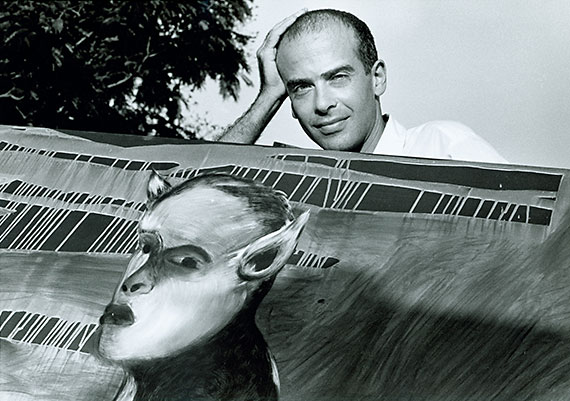





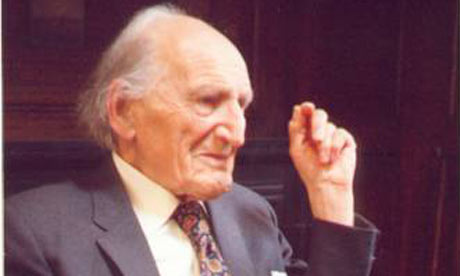
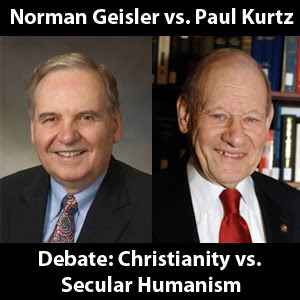


 :
:


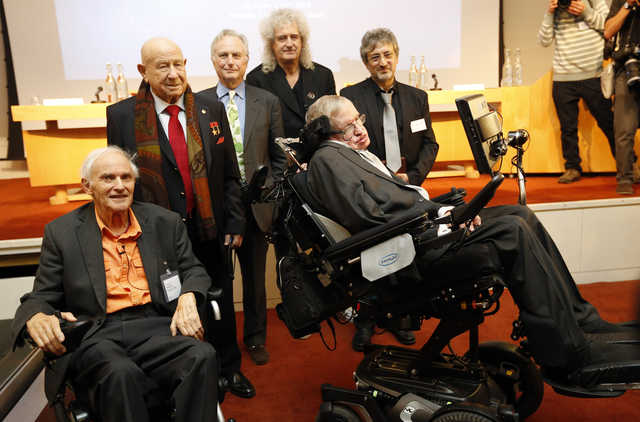


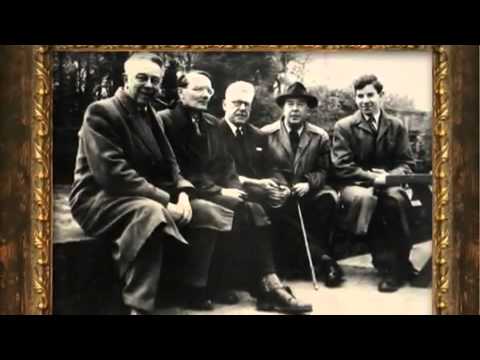


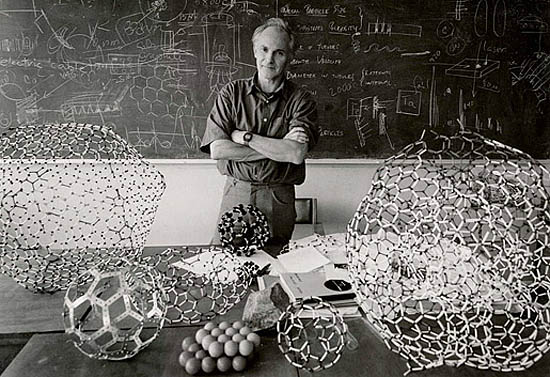






SHARE
TWEET
EMAIL EMAIL REDDIT