Letter Sixteen
Everything Is Spiritual Because God Made Everything
The painting of a picture, the work of a good shoemaker, the doctor, the lawyer – all these things are spiritual if they are done within the circle of what is taught in Scripture, looking to the Lord day by day for His help.
Thus everything is spiritual because the Lord made everything, and Christ died to redeem everything. And though full restoration will not come until Christ returns, it is our calling, looking to Christ for help, to try to bring substantial restoration in every area of life.
Of course, we all have fears; but we must learn to really trust the Lord, knowing that He loves us, on the basis of the work of Christ. We are all imperfect intellectually, psychologically, and morally. Yet the Lord does love us, and we do not need to be constantly overcome by fear. That is not to say that we all do not have fear at times. But that is different from constantly living under fear when we have all the promises of the Scripture, not just for the future but for our present day-by-day life. Christianity should give us freedom and not be a straitjacket. Rather than everything being prohibited, everything – except the specifically sinful things which the Scripture names – is in the area of our freedom.
I will try to answer your [list of] questions, though it is not easy within the limits of a letter:
–To be spiritually minded is to realize that we must have the wisdom God gives in the Scriptures, and not think as modern man thinks, that his own finite knowledge is a sufficient starting-place.
–You can think about anything [i.e., about every area of life rather than only about a limited “spiritual” area] – as long as you live within the circle of Scripture; that is, by recognizing God’s existence and, as God gives you the strength, rejecting what the Bible says is specifically sinful.
–[When the Bible speaks of seeking the things which are above, it is simply saying that we should see] everything from the perspective of God’s existence and what is taught in Scripture, rather than seeing things as though man were autonomous; or seeing things as though life consisted only of physical life and death…[without taking into account] the totality of reality, which of course includes above all the existence of God.
–In light of this it is perfectly acceptable to study secular subjects, provided they are seen in the proper perspective as I mentioned above. Any secular books may be read, and so on, as long as the individual remains sensitive as to how much he or she can stand. We do not all have the same strengths intellectually or psychologically, and we should not read or see what we really know is too much for us….
–Worldliness is seeing anything in life from a materialistic perspective – that is, from a perspective which makes the material world the final reality, and in which man’s finite wisdom (rather than Scripture) is everything. In other words, worldliness is removing any area of life or culture from under the judgment of Scripture.
The Infinite-Personal God: Thoughts from Francis Schaeffer’s Escape from Reason by Mark Peach The Scientific Age Uploaded by NoMirrorHDDHrorriMoN on Oct 3, 2011 _______________ Episode VII – The Age of Non Reason ____________________ Dr. Schaeffer’s sweeping epic on the rise and decline of Western thought and Culture _______________________ I love the works of Francis Schaeffer and I […]
The opening song at the beginning of this episode is very insightful. Francis Schaeffer: “Whatever Happened to the Human Race” (Episode 4) THE BASIS FOR HUMAN DIGNITY Published on Oct 7, 2012 by AdamMetropolis This crucial series is narrated by the late Dr. Francis Schaeffer and former Surgeon General Dr. C. Everett Koop. Today, choices […]
An Analysis Of Francis Schaeffer’s “The Church At The End Of The 20th Century” Dr. Frederick Meekins Episode VII – The Age of Non Reason ____________________ Episode 8: The Age Of Fragmentation Published on Jul 24, 2012 Dr. Schaeffer’s sweeping epic on the rise and decline of Western thought and Culture _______________________ I love the […]
Francis Schaeffer and the God who is there Episode VII – The Age of Non Reason ____________________ Episode 8: The Age Of Fragmentation Published on Jul 24, 2012 Dr. Schaeffer’s sweeping epic on the rise and decline of Western thought and Culture _______________________ I love the works of Francis Schaeffer and I have been on […]
How Should We Then Live? Episode 5: The Revolutionary Age Dr. Schaeffer’s sweeping epic on the rise and decline of Western thought and Culture _______________________ I love the works of Francis Schaeffer and I have been on the internet reading several blogs that talk about Schaeffer’s work and the work below by Hunter Baker was […]
“We don’t have forever” by Francis Schaeffer from 1980 The Scientific Age Uploaded by NoMirrorHDDHrorriMoN on Oct 3, 2011 Episode 8: The Age Of Fragmentation Published on Jul 24, 2012 Dr. Schaeffer’s sweeping epic on the rise and decline of Western thought and Culture _______________________ I love the works of Francis Schaeffer and I have been on […]
Getting Francis Schaeffer Right by Hunter Baker How Should We Then Live? Episode 5: The Revolutionary Age Episode VII – The Age of Non Reason Dr. Schaeffer’s sweeping epic on the rise and decline of Western thought and Culture _______________________ I love the works of Francis Schaeffer and I have been on the internet reading […]
Francis Schaeffer: “Whatever Happened to the Human Race” (Episode 5) TRUTH AND HISTORY Published on Oct 7, 2012 by AdamMetropolis This crucial series is narrated by the late Dr. Francis Schaeffer and former Surgeon General Dr. C. Everett Koop. Today, choices are being made that undermine human rights at their most basic level. Practices once […]
I have gone back and forth and back and forth with many liberals on the Arkansas Times Blog on many issues such as abortion, human rights, welfare, poverty, gun control and issues dealing with popular culture. Here is another exchange I had with them a while back. My username at the Ark Times Blog is Saline […]
Episode 8: The Age Of Fragmentation Published on Jul 24, 2012 Dr. Schaeffer’s sweeping epic on the rise and decline of Western thought and Culture _______________________ I love the works of Francis Schaeffer and I have been on the internet reading several blogs that talk about Schaeffer’s work and the work below was really helpful. […]
and you will hear what far smarter people than I have to say on this matter. I agree with them.
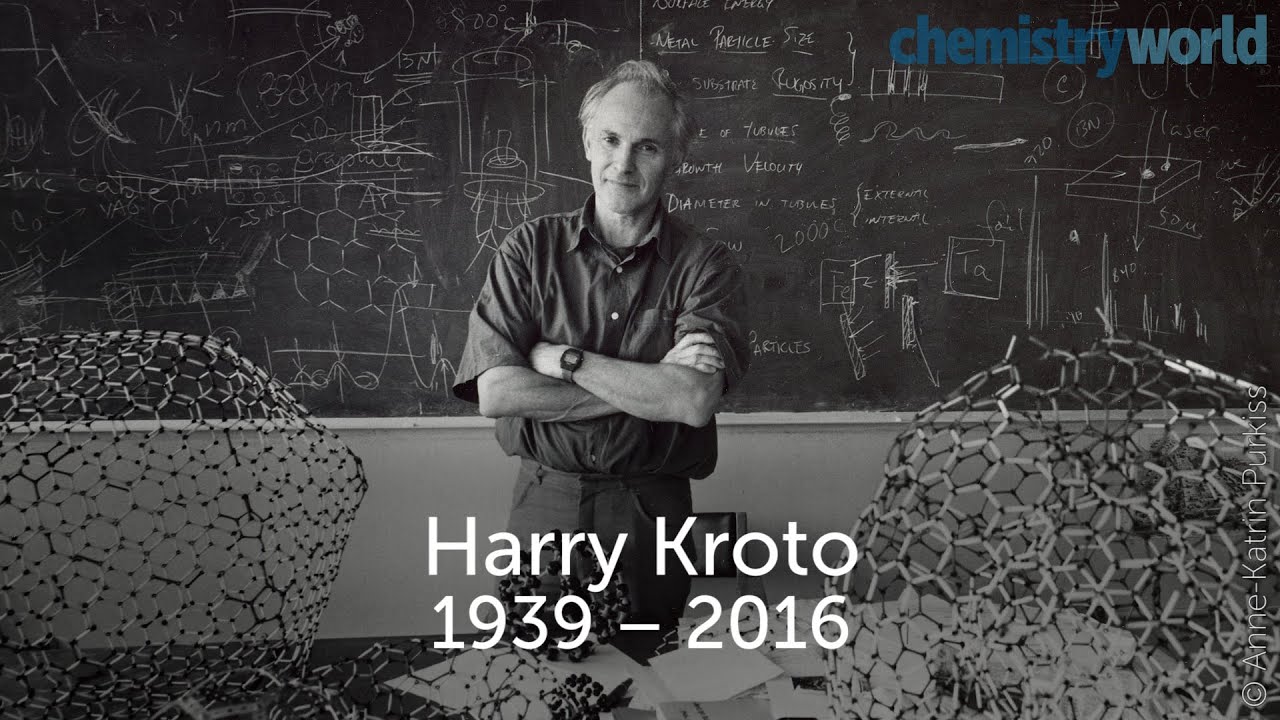
Harry Kroto
I have attempted to respond to all of Dr. Kroto’s friends arguments and I have posted my responses one per week for over a year now. Here are some of my earlier posts:
Born in the Royal Oldham Hospital, later living at the family home in Chadderton, Oldham from 1971,[22] Cox is best known to the public as the presenter of a number of science programmes for the BBC, boosting the popularity of subjects such as astronomy and physics.[23] He has been described as the natural successor for BBC’s scientific programming by both David Attenborough and the late Patrick Moore.[24][25] He also had some fame in the 1990s as the keyboard player for the pop band D:Ream.
Cox has appeared in many science programmes for BBC radio and television,[12] including In Einstein’s Shadow,[36] the BBC Horizon series,[37] (“The Six Billion Dollar Experiment”, “What on Earth is Wrong with Gravity?”, “Do You Know What Time It Is?”, and “Can we Make a Star on Earth?”) and as a voice-over for the BBC’s Bitesize revision programmes. Cox presented the five-part BBC Two television seriesWonders of the Solar System in early 2010 and a follow up four-part series, Wonders of the Universe, which began on 6 March 2011.[38] A new series, Wonders of Life, completed filming in June 2012,[39] which Cox describes as “a physicist’s take on life / natural history”.[40]
He co-presents Space Hoppers and has also featured in Dani’s House on CBBC.[41]
Brian Cox also presented a three part BBC series called ‘Science Britannica’ which sees him explore the contribution of British scientists over the last 350 years, as well as the relationship between British science and the public perception thereof.[42]
BBC Two commissioned Cox to copresent Stargazing Live, a three-day live astronomy series in January 2011 – co-presented with physicist-turned-comedian Dara Ó Briain and featuring chat show hostJonathan Ross[43] – linked to events across the United Kingdom. A second and a third series featuring a variety of guests ran in January 2012 and January 2013.[44]
Cox has also appeared numerous times at TED, giving talks on the LHC and particle physics.[47][48] In 2009 he appeared in People magazine‘s Sexiest Men Alive.[49] In 2010 he was featured in The Case for Mars by Symphony of Science. In November 2010 he made a promotional appearance in the Covent GardenApple Store, talking about his new e-book set to accompany his new television series as well as answering audience questions.[50]
Cox gave the Royal Television Society’s 2010 Huw Wheldon Memorial Lecture on “Science, a Challenge to TV Orthodoxy”, in which he examined problems in media coverage of science and news about science. It was subsequently broadcast on BBC Two. On 4 March, Frankenstein’s Science featured Cox in discussion with biographer Richard Holmes on Mary Shelley’s exploration of humanity’s desire to bring life to an inanimate object and whether the notion is possible, in both the 19th century and today.
On 6 March 2011, Cox appeared as a guest at Patrick Moore’s 700th episode anniversary of The Sky At Night. He has said that he is a lifelong fan of the programme, and that it helped inspire him to become a physicist. On 10 March 2011, Cox gave the Ninth Douglas Adams Memorial Lecture.
Cox has co-authored several books on physics including Why does E=mc2?[51] with Jeff Forshaw, and The Quantum Universe, also with Jeff Forshaw.[52]
Cox was the science advisor for the science fiction film Sunshine. On the DVD release, he provides an audio commentary where he discusses scientific accuracies (and inaccuracies) depicted in the film. He also was featured on the Discovery Channel special Megaworld: Switzerland. In 2013, he presented another series of “Wonders of Life”.
On 14 November 2013, BBC Two broadcast The Science of Doctor Who in celebration of Doctor Who’s 50th anniversary, in which Cox tackles the mysteries of time travel. The lecture was recorded at the Royal InstitutionFaraday Lecture Theatre. In November 2013, the BBC announced that Cox will present Human Universe on BBC Two.
Cox has received many awards for his efforts to publicise science. In 2002 he was elected an International Fellow of The Explorers Club and in 2006 Cox received the British Association’sLord Kelvin Award for this work.
On 15 March 2011, Cox won Best Presenter and Best Science / Natural History programme by the Royal Television Society for Wonders of the Universe. On 25 March 2011, Cox won twice at the Broadcasting Press Guild Awards for ‘Best Performer’ in a non-acting role, while Wonders of the Solar System was named best documentary series of 2010.[55][56]
In July 2012, Cox was awarded an honorary doctorate from the University of Huddersfield.[57] Later that year, he was awarded the Institute of Physics President’s medal by Sir Patrick Stewart, following which he gave a speech on the value of education in science and the need to invest more in future generations of scientists.[58] On 5 October 2012 Cox was awarded an honorary doctorate by the Open University for his “Exceptional contribution to Education and Culture”.[59] In 2012 he also was awarded theMichael Faraday Prize of the Royal Society “for his excellent work in science communication”[60]
“I’m comfortable with the unknown — that’s the point of science. There are places out there, billions of places out there, that we know nothing about. And the fact that we know nothing about them excites me, and I want to go out and find out about them. And that’s what science is. So I think if you’re not comfortable with the unknown, then it’s difficult to be a scientist… I don’t need an answer. I don’t need answers to everything. I want to have answers to find.”
― Brian Cox
The above quote from you was given when you were asked if SCIENCE WAS YOUR GOD and judging from the answer you gave it obvious is. If you are an atheist and a humanist then what do you have to say about the negative view that many humanists have about the ultimate meaningless of life?
I know that you are active in the BRITISH HUMANIST ASSOCIATION so I thought this short letter may interest you.
H. J. Blackham was the founder of the BRITISH HUMANIST ASSOCIATION and he asserted:
“On humanist assumptions, life leads to nothing, and every pretense that it does not is a deceit. If there is a bridge over a gorge which spans only half the distance and ends in mid-air, and if the bridge is crowded with human beings pressing on, one after the other they fall into the abyss. The bridge leads nowhere, and those who are pressing forward to cross it are going nowhere….It does not matter where they think they are going, what preparations for the journey they may have made, how much they may be enjoying it all. The objection merely points out objectively that such a situation is a model of futility“( H. J. Blackham, et al., Objections to Humanism (Riverside, Connecticut: Greenwood Press, 1967).
On John Ankerberg’s show in 1986 there was a debate between Dr. Paul Kurtz, and Dr. Norman Geisler and when part of the above quote was read, Dr. Kurtz responded:
I think you may be quoting Blackham out of context because I’ve heard Blackham speak, and read much of what he said, but Blackham has argued continuously that life is full of meaning;
Harold J. Blackham (1903-2009)
With that in mind I wanted to ask you what does the BRITISH HUMANIST ASSOCIATION have to offer in the area of meaning and values? Francis Schaeffer two months before he died said if he was talking to a gentleman he was sitting next to on an airplane about Christ he wouldn’t start off quoting Bible verses. Schaeffer asserted:
I would go back rather to their dilemma if they hold the modern worldview of the final reality only being energy, etc., I would start with that. I would begin as I stress in the book THE GOD WHO IS THERE about their own [humanist] prophets who really show where their view goes. For instance, Jacques Monod, Nobel Prize winner from France, in his book NECESSITY AND CHANCE said there is no way to tell the OUGHT from the IS. In other words, you live in a totally silent universe.
The men like Monod and Sartre or whoever the man might know that is his [humanist] prophet and they point out quite properly and conclusively what life is like, not just that there is no meaningfulness in life but everyone according to modern man is just living out some kind of game plan. It may be knocking 1/10th of a second off a downhill ski run or making one more million dollars. But all you are doing is making a game plan within the mix of a meaningless situation. WOODY ALLEN exploits this very strongly in his films. He really lives it. I feel for that man, and he has expressed it so thoroughly in ANNIE HALL and MANHATTAN and so on.
According to the Humanist worldview Jacques Monod the universe is silent about values and therefore his good friendWoody Allendemonstrated this very fact so well in his 1989 movieCRIMES AND MISDEMEANORS. In other words, if we can’t get our values from the Bible then the answer is MIGHT MAKES RIGHT!!!!
I CHALLENGE YOU TO TAKE 90 MINUTES AND WATCH THE MOVIE “CRIMES AND MISDEMEANORS” AND THEN ANSWER THE QUESTION: “What reason is there that Judah should not have his mistress eliminated if there is no God and afterlife of judgment and rewards?”
CRIMES AND MISDEMEANORS was written and directed by Woody Allen
Judah has his mistress eliminated through his brother’s underworld connections
Anjelica Huston
__
King Solomon closed the Book of Ecclesiastes (Richard Dawkins’ favorite Book of the Bible) with these words, “The end of the matter; all has been heard. Fear God and keep his commandments, for this is the whole duty of man.For God will bring every deed into judgment, with[d] every secret thing, whether good or evil.” With that in mind I have enclosed a short booklet called THIS WAS YOUR LIFE!
Thank you again for your time. I know how busy you are.
The John Lennon and the Beatles really were on a long search for meaning and fulfillment in their lives just like King Solomon did in the Book of Ecclesiastes. Solomon looked into learning (1:12-18, 2:12-17), laughter, ladies, luxuries, and liquor (2:1-2, 8, 10, 11), and labor (2:4-6, 18-20). He fount that without God in the picture all […]
______________ George Harrison Swears & Insults Paul and Yoko Lucy in the Sky with Diamonds- The Beatles The Beatles: I have dedicated several posts to this series on the Beatles and I don’t know when this series will end because Francis Schaeffer spent a lot of time listening to the Beatles and talking […]
The Beatles in a press conference after their Return from the USA Uploaded on Nov 29, 2010 The Beatles in a press conference after their Return from the USA. The Beatles: I have dedicated several posts to this series on the Beatles and I don’t know when this series will end because Francis […]
__________________ Beatles 1966 Last interview I have dedicated several posts to this series on the Beatles and I don’t know when this series will end because Francis Schaeffer spent a lot of time listening to the Beatles and talking and writing about them and their impact on the culture of the 1960’s. In this […]
_______________ The Beatles documentary || A Long and Winding Road || Episode 5 (This video discusses Stg. Pepper’s creation I have dedicated several posts to this series on the Beatles and I don’t know when this series will end because Francis Schaeffer spent a lot of time listening to the Beatles and talking and writing about […]
_______________ Francis Schaeffer pictured below: _____________________ I have included the 27 minute episode THE AGE OF NONREASON by Francis Schaeffer. In that video Schaeffer noted, ” Sergeant Pepper’s Lonely Hearts Club Band…for a time it became the rallying cry for young people throughout the world. It expressed the essence of their lives, thoughts and their feelings.” How Should […]
Crimes and Misdemeanors: A Discussion: Part 1 ___________________________________ Today I will answer the simple question: IS IT POSSIBLE TO BE AN OPTIMISTIC SECULAR HUMANIST THAT DOES NOT BELIEVE IN GOD OR AN AFTERLIFE? This question has been around for a long time and you can go back to the 19th century and read this same […]
____________________________________ Francis Schaeffer pictured below: __________ Francis Schaeffer has written extensively on art and culture spanning the last 2000years and here are some posts I have done on this subject before : Francis Schaeffer’s “How should we then live?” Video and outline of episode 10 “Final Choices” , episode 9 “The Age of Personal Peace and Affluence”, episode 8 […]
Love and Death [Woody Allen] – What if there is no God? [PL] ___________ _______________ How Should We then Live Episode 7 small (Age of Nonreason) #02 How Should We Then Live? (Promo Clip) Dr. Francis Schaeffer 10 Worldview and Truth Two Minute Warning: How Then Should We Live?: Francis Schaeffer at 100 Francis Schaeffer […]
___________________________________ Francis Schaeffer pictured below: ____________________________ Francis Schaeffer “BASIS FOR HUMAN DIGNITY” Whatever…HTTHR Dr. Francis schaeffer – The flow of Materialism(from Part 4 of Whatever happened to human race?) Dr. Francis Schaeffer – The Biblical flow of Truth & History (intro) Francis Schaeffer – The Biblical Flow of History & Truth (1) Dr. Francis Schaeffer […]
Jack Youngerman is an American abstract/ minimalist artist. Jack Youngerman was born in St. Louis, Missouri in the year 1926. Youngerman is a painter, jewelry designer, sculptor, and print maker.
Youngerman attended college at the University of North Carolina before graduating from the University of Missouri. He also served in the United States Navy.
The artist also studied at the Ecole des Beaux Arts located in Paris.
In this clip we view a group show that features Jack Youngerman’s work. His is the first piece of art:
Youngerman married a well known french actress.
The artist is part of many prominent collections including the Denver Art Museum and the San Francisco Museum of Modern Art.
Youngerman has won a Guggenheim Fellowship and also awards from the National Endowment for the Arts.
Price range information: Works range from $10,000 to $60,000. The artist worked in oils, gouache, prints, and bronzes.
What I enjoy most about Youngerman’s style is his sense of graphic design. Many pieces seem to be very similar to First Nations art, especially those works featuring black, red, and white. His style is very similar to the First Nations style of art work, but with more modern line work.
God On Trial Uploaded on Jan 8, 2012 God on Trial is a 2008 BBC/WGBH Boston television play written by Frank Cottrell Boyce, starring Antony Sher, Rupert Graves and Jack Shepherd. The play takes place in Auschwitz during World War II. The Jewish prisoners put God on trial in absentia for abandoning the Jewish […]
_______ President Carter with Adrian and Joyce Rogers in 1979 at the White House: Adrian Rogers in the White House pictured with President Ronald Reagan below: Francis Schaeffer pictured below: Over the last 20 years I have been writing many skeptics and sending them sermons by Adrian Rogers and printed material from the works […]
In my December 22, 2014 letter to Elie Wiesel I made a few observations about Irving Kristol and Daniel Bell who I was very fascinated with because of some of their comments in the 1990′s. First, isn’t it worth noting that the Old Testament predicted that the Jews would regather from all over the world and form a […]
Why was Tony Curtis on the cover of SGT PEPPERS? I have no idea but if I had to hazard a guess I would say that probably it was because he was in the smash hit SOME LIKE IT HOT. Above from the movie SOME LIKE IT HOT __ __ Jojo was a man who […]
The Beatles were searching hard for meaning in life and one of their stops along the way was Eastern Religion. Here is a good review of the episode 016 HSWTL The Age of Non-Reason of HOW SHOULD WE THEN LIVE?, December 23, 2007: Together with the advent of the “drug Age” was the increased interest in the […]
George Harrison is the only member of the Beatles who stuck with Hinduism while the other three abandoned it shortly after their one trip to India. Francis Schaeffer noted, ” The younger people and the older ones tried drug taking but then turned to the eastern religions. Both drugs and the eastern religions seek truth inside […]
When I think of oppression in the history of the USA the institution of slavery comes to mind first, and also the Civil Rights fight of the 1960’s. During the 60’s the Beatles took on this subject with their song BLACKBIRD. Concerning OPPRESSION King Solomon many years ago in the Book of Ecclesiastes said that […]
_ The Beatles are featured in this episode below by Francis Schaeffer: The Beatles were looking for lasting satisfaction in their lives and their journey took them down many of the same paths that other young people of the 1960’s were taking INCLUDING THE PATH OF PSYCHEDELIC MUSIC AND FRAGMENTATION. No wonder in the video […]
__ ___ “Because” Aaaaaahhhhhh… Because the world is round it turns me on Because the world is round…aaaaaahhhhhhBecause the wind is high it blows my mind Because the wind is high…aaaaaaaahhhhLove is old, love is new Love is all, love is you Because the sky is blue, it makes me cry Because the sky […]
The Beatles spent the whole decade of the 1960’s searching for meaning in life and they tried several possible solutions but what areas did they probe in and what solutions if any did they come up with? Francis Schaeffer studied Beatles’ lives and music extensively and he weighs in on this. _ Francis Schaeffer […]
On September 11, 1970, NME’s Keith Allston interviewed Jimi Hendrix in England. The interview turned out to be Hendrix’s last; he died a mere seven days later — forty-three years ago today, September 18, 1970 — at age 27.
You can hear the entire 30-plus-minute interview below.
It’s well known that Hendrix was set on branching out into a new musical phase in his later years, with collaborations with Miles Davis — and even Paul McCartney, apparently — in the planning or near-planning stages.
In the interview, Hendrix is contemplative and not totally sure where he’s bound next. He’s also pretty funny, as the following exchange proves:
Do you feel personally that you have enough money to live comfortably without necessarily making more as a sort of professional entertainer?
Ah, I don’t think so, not the way I’d like to live, because like I want to get up in the morning and just roll over in my bed into an indoor swimming pool and then swim to the breakfast table, come up for air and get maybe a drink of orange juice or something like that. Then just flop over from the chair into the swimming pool, swim into the bathroom and go on and shave and whatever.
You don’t want to live just comfortably, you wanna live luxuriously?
No! Is that luxurious? I was thinking about a tent, maybe, [laughs] overhanging … overhanging this … a mountain stream! [laughs].
Little One – From the Film, “Sarah’s Choice” Rebecca St James on faith and values – theDove.us Sarah’s Choice Trailer Sarah’s Choice – Behind the Scenes Rebecca St. James on Sarah’s Choice – CBN.com Rebecca St James Interview on Real Videos Sarah’s Choice – The Proposal Sarahs Choice Pregnancy Test Sarahs Choice Crossroad Sarah’s Choice […]
Lion – Rebecca St. James I will praise You – Rebecca St James Rebecca St James 1995 TBN – Everything I Do Rebecca St. James & Rachel Scott “Blessed Be Your Name” Rebecca St. James From Wikipedia, the free encyclopedia Rebecca St. James St. James in 2007 Background information Birth name Rebecca Jean Smallbone Also […]
Foster The People – Pumped up Kicks Foster the People From Wikipedia, the free encyclopedia Foster the People Foster the People at the 2011 MuchMusic Video Awards, from left to right: Pontius, Foster, and Fink Background information Origin Los Angeles, California, U.S. Genres Indie pop alternative rock indietronica alternative dance neo-psychedelia[1] Years active 2009–present Labels […]
‘Apple gave me advice’: Coldplay’s Chris Martin turned to 11-year-old daughter for words of wisdom ahead of Superbowl 50 By DAILYMAIL.COM REPORTER PUBLISHED: 00:58 EST, 2 February 2016 | UPDATED: 17:20 EST, 2 February 2016 n Facebook They’ve sold 80 million records and been around for 20 years. But Coldplay’s lead singer Chris Martin, 38, […]
__________ Chris Martin, Lead Singer of Coldplay: 5 Fast Facts You Need to Know Published 3:44 pm EDT, February 7, 2016 Updated 3:44 pm EDT, February 7, 2016 Comment By Lauren Weigle 17.6k (Getty) Chris Martin has been the front-man of the band Coldplay for about 20 years, though the band changed its name a […]
Christian Rock Pioneer Larry Norman’s Songs Part 14 I posted a lot in the past about my favorite Christian musicians such as Keith Green (I enjoyed reading Green’s monthly publications too), and 2nd Chapter of Acts and others. Today I wanted to talk about one of Larry Norman’s songs. David Rogers introduced me to Larry […]
Christian Rock Pioneer Larry Norman’s Songs Part 13 I posted a lot in the past about my favorite Christian musicians such as Keith Green (I enjoyed reading Green’s monthly publications too), and 2nd Chapter of Acts and others. Today I wanted to talk about one of Larry Norman’s songs. David Rogers introduced me to Larry […]
Christian Rock Pioneer Larry Norman’s Songs Part 12 I posted a lot in the past about my favorite Christian musicians such as Keith Green (I enjoyed reading Green’s monthly publications too), and 2nd Chapter of Acts and others. Today I wanted to talk about one of Larry Norman’s songs. David Rogers introduced me to Larry […]
Christian Rock Pioneer Larry Norman’s Songs Part 11 I posted a lot in the past about my favorite Christian musicians such as Keith Green (I enjoyed reading Green’s monthly publications too), and 2nd Chapter of Acts and others. Today I wanted to talk about one of Larry Norman’s songs. David Rogers introduced me to Larry […]
Christian Rock Pioneer Larry Norman’s Songs Part 10 more on Album “Only Visiting This Planet” I posted a lot in the past about my favorite Christian musicians such as Keith Green (I enjoyed reading Green’s monthly publications too), and 2nd Chapter of Acts and others. Today I wanted to talk about one of Larry Norman’s […]
Some critics think that some curators need to put more women in the mix when they do their big modernist shows, especially for the earlier decades of the century prior to the feminist movement. Museums don’t like to be held to a quota, of course, and besides, they glance around and claim not to see the talent. Or so it seems. And nothing changes.
Well, if the critics or curators visit Spanierman Modern on East 58th Street, they can take a look at Judith Godwin’sEchoes, No. 2 (1954), a smallish and dense abstraction of bold red and blue strokes whose movements could well echo those of Martha Graham, a friend and mentor to the artist since their meeting in New York in the 1950s. The slow-moving museum, perhaps less avid to fill the lacunae in its collection than one might wish, would be too late in any case, however, since the picture is already sold.
Godwin does not have a painting in the collection of the Museum of Modern Art, but perhaps she has other paintings from this period in her Greenwich Village studio.
A Virginia blueblood, Godwin has been living and working in the Village since 1953, when her parents dropped her off at the Barbizon Hotel, a genteel residence for young ladies, from which she promptly absented herself in favor of the bohemian life downtown. She was part of it all, studying with Hans Hofmann, sharing a studio with Franz Kline, showing with the Stable Gallery and Betty Parsons. Period photographs (in the Spanierman catalogue) show a tough, handsome lady — Godwin is gay — who could be the real-life version of beatnik characters played by Audrey or Katherine Hepburn.
It’s been years since she last showed in New York, though in 2009 she did have an exhibition of her abstractions from the 1950s and ‘60s at the McNay Art Museum in San Antonio. The pictures at Spanierman carry the spirit of the New York School through to the present. They have the muscularity of Kline and Hofmann, as well as the color wingspan of Helen Frankenthaler, the jagged-edged voids ofClyfford Still and the stately architectonics of Robert Motherwell.
Godwin’s canvases have a quality of rupture and brutality, too, that seems very contemporary. They shed the chains of what Hedda Sterne called the “logo” style, and resist that Ab-Ex period Zen design that has now turned into kitsch. It breaks apart, and it holds together. It’s the whole of an artist’s life, a world of the studio that is easily seen but only rarely lived.
Judith Godwin, “Paintings 1954-2002,” Nov. 30-Dec. 30, 2010, at Spanierman Modern, 53 East 58th Street, New York, N.Y. 10022. The paintings are selling fast; prices range from $12,000 to $70,000.
Judith Godwin (C’52) is one of Mary Baldwin College’s most prominent alumnae. After studying at Mary Baldwin for two years, she transferred to VCU where she completed her degree in 1952. She then moved to New York City in 1953 where, as a painter, she became associated with the Abstract Expressionist movement. Since then she has established herself and been recognized as a significant contemporary painter. Her work is in many prominent public and private collections, including The Museum of Modern Art (New York City), The Art Institute of Chicago, The Hirshhorn Museum (Washington, D.C.), and the Metropolitan Museum of Art (New York City), among many others.
Visit Judith Godwin’s web site for more information and images of her work:www.judithgodwin.info
READING THE PAINTINGS OF JUDITH GODWIN
by Paul Ryan
(This article originally appeared in the Fall 1998 issue of The Mary Baldwin College Magazine.)
The creative artist must work and always work — on himself and on his craft — that he may develop to the point where he can say what he has to say, and that he says this in his own language. This language is of course not always at once understood. It makes people furious when you speak your own language.
–Hans Hofmann (from his lecture of February 16, 1941 at the Riverside Museum, New York)
Installed prominently in the entrance hall of the Deming Fine Arts Building at Mary Baldwin College is a large-scale, abstract painting by New York artist and MBC alumna Judith Godwin (’52). Titled “Oriental Circus,” it was given as a gift by the artist to the college’s Department of Art and Art History in 1992, following its exhibition in Hunt Gallery as part of a group show of work by alumnae that same year. Measuring 50 inches in height and 126 inches wide, the oil painting is a triptych consisting of three equal-sized panels of stretched canvas. Its overall composition is a structured flurry of shapes, textures, and lines which are organized in such a way that the viewer’s eye is pulled from the left side of the painting to the right.
Articulated by certain forms that suggest the paraphernalia of jugglers and acrobats, this sense of energy and directed movement evokes the pleasure, anticipation, and constant flow of activity characteristic of a circus — although, this is not to say that the painting exists as a mere signifier for a particular event. Its pictorial identity is too complex to function at this level: it contains a space that is expansive yet enclosed, and a sense of form that simultaneously suggests restriction by and freedom from the influence of gravity — all operating within a field of lyrical, Matisse-like playfulness. Like much abstract painting which is based on direct and specific experience, Godwin’s “Oriental Circus” is a synthesis of personal impressions given permanent form through the raw materials of paint and canvas, and the creative processes of formal analysis and intuition. As such, it conjoins common perceptions of the viewer and artist, yet it exists simultaneously as an object of mystery evading any absolute or definitive translation.
As all serious abstraction in the modernist tradition has emerged out of particular movements and ideas in art history and/or the culture of the artist’s own time, Godwin’s work and style as a painter is grounded in Abstract Expressionism — an epoch in the visual arts which many critics and artists regard as the last great movement in Western painting. Embodying both the serious desire for stylistic advancement in the context of modernism’s linear progression, and a heroic approach to painting that embraced the philosophical notion of the “inward turn,” the originators of Abstract Expressionism constituted the avant-garde of the 1940s and 50s. Most of the significant work of this period reflected two points of view. The first was formalist theory which emphasized the importance of the physical materials and elements of art – the use of shape, scale, space, color, value, texture, etc. The leading critic of this approach was the formalist theorist Clement Greenberg who promoted the idea of a progressive historical narrative in culture which would culminate in works of art that were complete in their formal purity. The second important influence was a more emotionally charged artistic response to the dilemmas of the nuclear era immediately following World War II. This also had its roots in existentialism and what another prominent critic, Harold Rosenberg, referred to as “crisis content.” The result was a surge of new painting and sculpture in America that was staggering in its originality and sense of urgency.
Judith Godwin, Oriental Circus, 1986, 50″x126″, oil on canvas
A noteworthy aspect of Godwin’s connection to Abstract Expressionism, or the New York School (a more generalized description that some prefer to use because of the actual aesthetic diversity within this group of artists), is the personal association she had with several of its prominent practitioners, particularly Hans Hofmann and Franz Kline (whose Greenwich Village townhouse she acquired in 1963 and resided in until 2005). Having moved from Virginia to New York City in 1953 to study painting, Godwin was able to experience first-hand the excitement ushered in by the work and presence of the first generation of Abstract Expressionists, a wave of aesthetic innovation that helped to establish New York as the international art center, thereby shifting the creative and intellectual focus from Paris to Manhattan. Simultaneously, as a student and young artist she participated in the second generation’s task of building on and sometimes transforming the aesthetic practices of the New York School that had relatively quickly become canonized by the art world.
Prior to her move to New York, Godwin, a native of Suffolk, Virginia, attended Mary Baldwin College for two years. She studied art with Elizabeth Nottingham Day and Horace Day, who shared their interest in contemporary art and developments in New York with their students. Godwin left the college in 1950, and in 1951 enrolled at Richmond Professional Institute of the College of William and Mary (now Virginia Commonwealth University) where she was influenced by artists Theresa Pollak and Jewett Campbell. Pollak, who founded the School of the Arts at VCU, practiced and taught an aesthetic that was anchored in 20th century European modernism and the formalist theory and sense of pictorial integrity that guided American painting during the 1940s and ’50s. Campbell had studied with the Abstract Expressionist painter and influential teacher Hans Hofmann (Pollak, too, would eventually do so) and he encouraged serious students to do the same – hence, Godwin’s transition to New York.
Judith Godwin, Red Flurry, 1994, 36”x24”, oil on canvas
After a brief period of study at the Art Students’ League in New York in 1953, Godwin enrolled in Hofmann’s school in Provincetown, Massachusetts that summer. She continued to study with him at his New York school in the fall, and did so again in 1954. The impact of Hofmann on Godwin’s development as a painter perhaps cannot be emphasized enough. As a teacher, Hofmann was legendary for his ability to drive students to stretch their potential, but also for remaining as an authoritative influence in their work. For example, in discussing Hofmann’s teaching with me a number of years ago, Theresa Pollak, who studied with him in 1958 (the year he closed his school after 43 consecutive years of teaching), mentioned that it took her several years to emerge from his strong presence and opinionated voice. Yet, she, like Judith Godwin, adhered to some of his tenets throughout her painting career.
Strong-minded and vigorous in spirit, Hofmann believed in the profundity of the creative life. Indeed, he regarded painting as a metaphor for the forces at work in the universe and the existential struggles that spring from the human experience. Born in Germany in 1880 and later emigrating to the United States in 1931, Hofmann’s early years in Europe afforded a clear understanding of the important issues generated in the early 20th century by Fauvism (with its innovations in color) and Cubism (with its fracturing and distortion of space and form). His articulation of these matters provided a strong theoretical and practical foundation for the artistic development of his American students.
In an essay that accompanied a major retrospective exhibition of Hofmann’s work in 1990, organized by the Whitney Museum of American Art, the prominent art historian and critic Irving Sandler states that Hofmann “was the greatest art teacher of the twentieth century, that is, if a teacher’s stature is measured by the number of students who achieve national and international renown in their own right.” Sandler goes on to say that Hofmann “had the strongest influence on two generations of advanced American artists, the geometric abstractionists of the 1930s and the younger painters of the New York School who matured in the 1950s.”
Recognizing Godwin’s significant, though quiet, role in American art since 1950, in the fall of 1997 the Art Museum of Western Virginia (located in Roanoke) mounted a retrospective exhibition that spanned Godwin’s life as a painter. Co-curated by Mark Scala, then chief curator at the Museum, and Ann Gibson, associate professor of art at Stony Brook University in New York, the retrospective not only reflected a renewed interest by art historians in the artists of Godwin’s generation working in New York during the 1950s, but, it is also an acknowledgment of the depth of intellect and feeling contained in her work. Consisting of 24 paintings, the show included representative work from different phases of her career. The early paintings from the years she studied with Hofmann display an intense physicality that shortly would dissolve into forms and spaces of a more ephemeral nature. Work from 1955 through the mid-sixties reveals the achievement of a distinct language by Godwin marked by the dialectical elements of openness/spontaneity and structure/definition — a language which also demonstrates the dependence of genuine innovation upon tradition. Finally, several paintings from the mid-seventies through 1995 sometimes reflect slight stylistic shifts (especially regarding her palette), but never succumb to fashionableness and always assert the relevance of sincerity and meaning in an era of increasing cynicism and doubt.
In his article “Talking at Pomona,” the poet and critic David Antin discusses how the importance of a work of art is determined. He asserts that, assuming aesthetic integrity is a given, importance is mostly a matter of the quality of ideas, or of an idea, that the work embraces. That is to say, that the critical value of a work of art is in proportion to “…the degree that it is a modification [or advance] of the preceding [important] work…” For example, briefly put, one of the reasons Jackson Pollock is considered an important painter resides in the fact that his all-over poured paintings of the 1940s and ‘50s played a major role in removing Modernist painting from the constraints of Cubist space. Pollock’s work is considered an “advance” in the lineage of Modernist painting, and has become an icon for American-type painting of the 20th century. In the context of this type of art historical and critical criteria for determining importance as it relates to the work of Judith Godwin, it can be said that her significance largely, though not completely, lies in her success in moving beyond what had become conventions of Abstract Expressionist painting. In the catalog essay, “Judith Godwin: Style and Grace,” Ann Gibson outlines Godwin’s path in this achievement, describing how the artist “mined [Abstract Expressionism] as a language whose rich potential had only begun to be tapped — if only one could avoid its clichés and renovate the presuppositions entwined with its conventions.”
To build on what has come before, yet to avoid the clichés, has always been a major task and goal for the artist. And at mid-century in New York City the notion of originality was an ideal – an integral component of the avant-garde in its self-established mission to keep culture moving forward. The first generation of Abstract Expressionists had succeeded in moving beyond European modernism; Godwin’s teacher, Hans Hofmann, in an original language of expressionistic urgency and jubilance had combined the color theories of Cezanne and the Fauves with Cubist drawing (eventually escaping the grips of Cubist space); and Godwin, as represented by her paintings from 1955-1960, began to speak relatively early in her own voice. A synthesis of multiple aesthetic and personal influences, her paintings stylistically embrace a sense of pictorial structure achieved by Franz Kline, Hofmann’s theories regarding pictorial epth and the inherent flatness of the medium, and the Zen-like approach to space and form of the painter Kenzo Okada. Following the dictum of Hofmann that the artist say what she has to say in her own language, Judith Godwin has distinguished herself within the tradition of the New York School.
Paul Ryan is a painter and Professor of Art at Mary Baldwin College, Staunton, Virginia. He is also an art critic and contributing editor for Art PapersMagazine .
Works Cited:
David Antin, “Talking at Pomona,” Art Forum
(9/73).
Ann Gibson, “Judith Godwin: Style and Grace,” Judith Godwin: Style and Grace (catalog for the exhibition; The Art Museum of Western Virginia, Roanoke, Virginia, 1997).
Irving Sandler, “Hans Hofmann: The Dialectical Master,” Hans Hofmann (catalog for the exhibition, Hans Hofmann; The Whitney Museum of American Art, New York, 1990).
Mark Scala, “Judith Godwin and the New York School,” Judith Godwin: Style and Grace
God On Trial Uploaded on Jan 8, 2012 God on Trial is a 2008 BBC/WGBH Boston television play written by Frank Cottrell Boyce, starring Antony Sher, Rupert Graves and Jack Shepherd. The play takes place in Auschwitz during World War II. The Jewish prisoners put God on trial in absentia for abandoning the Jewish […]
_______ President Carter with Adrian and Joyce Rogers in 1979 at the White House: Adrian Rogers in the White House pictured with President Ronald Reagan below: Francis Schaeffer pictured below: Over the last 20 years I have been writing many skeptics and sending them sermons by Adrian Rogers and printed material from the works […]
In my December 22, 2014 letter to Elie Wiesel I made a few observations about Irving Kristol and Daniel Bell who I was very fascinated with because of some of their comments in the 1990′s. First, isn’t it worth noting that the Old Testament predicted that the Jews would regather from all over the world and form a […]
Why was Tony Curtis on the cover of SGT PEPPERS? I have no idea but if I had to hazard a guess I would say that probably it was because he was in the smash hit SOME LIKE IT HOT. Above from the movie SOME LIKE IT HOT __ __ Jojo was a man who […]
The Beatles were searching hard for meaning in life and one of their stops along the way was Eastern Religion. Here is a good review of the episode 016 HSWTL The Age of Non-Reason of HOW SHOULD WE THEN LIVE?, December 23, 2007: Together with the advent of the “drug Age” was the increased interest in the […]
George Harrison is the only member of the Beatles who stuck with Hinduism while the other three abandoned it shortly after their one trip to India. Francis Schaeffer noted, ” The younger people and the older ones tried drug taking but then turned to the eastern religions. Both drugs and the eastern religions seek truth inside […]
When I think of oppression in the history of the USA the institution of slavery comes to mind first, and also the Civil Rights fight of the 1960’s. During the 60’s the Beatles took on this subject with their song BLACKBIRD. Concerning OPPRESSION King Solomon many years ago in the Book of Ecclesiastes said that […]
_ The Beatles are featured in this episode below by Francis Schaeffer: The Beatles were looking for lasting satisfaction in their lives and their journey took them down many of the same paths that other young people of the 1960’s were taking INCLUDING THE PATH OF PSYCHEDELIC MUSIC AND FRAGMENTATION. No wonder in the video […]
__ ___ “Because” Aaaaaahhhhhh… Because the world is round it turns me on Because the world is round…aaaaaahhhhhhBecause the wind is high it blows my mind Because the wind is high…aaaaaaaahhhhLove is old, love is new Love is all, love is you Because the sky is blue, it makes me cry Because the sky […]
The Beatles spent the whole decade of the 1960’s searching for meaning in life and they tried several possible solutions but what areas did they probe in and what solutions if any did they come up with? Francis Schaeffer studied Beatles’ lives and music extensively and he weighs in on this. _ Francis Schaeffer […]
It is with sadness that I write this post having learned of the death of Sir Harold Kroto on April 30, 2016 at the age of 76. He was a scientist of remarkable abilities and a man of great humor too.
I did not know Harry Kroto personally but I did have the opportunity to correspond with him in 2014. I sent him a letter in the spring and two in the summer and he responded with an email on 9-18-16 and I thanked him for responding in an email and then he emailed me again and even sent me a letter on 11-21-14. In that 11-21-14 letter he referred me to the You Tube film series Renowned Academics Speaking About God which has over 300,000 views on You Tube and that prompted me on 11-29-14 to start my blog series RESPONDING TO HARRY KROTO’S BRILLIANT RENOWNED ACADEMICS!! Below are the links to the posts I have already done on previous Tuesdays in this series:
You are a chemist but your first love is graphic design. Is there common ground?
There are very similar processes involved. In science we seek to discover the patterns that underpin the way the universe works and take great delight when we uncover them. For me one of the most satisfying revelations is the fact that the simple number sequence 1, 3, 5… which maps on to (1×2), (1×2 + 3×2), (1×2 + 3×2 + 5×2)… leads us to the periodic table whose rows consist of 2, 8, 18… elements. Thus the numeric sequence 1, 3, 5… underpins the whole of chemistry and biology, and thus all of life. I get a similar sort of cathartic satisfaction when I create an effective drawing or a clever logo.
You won a Nobel for the discovery of Buckminsterfullerenes. What are they?
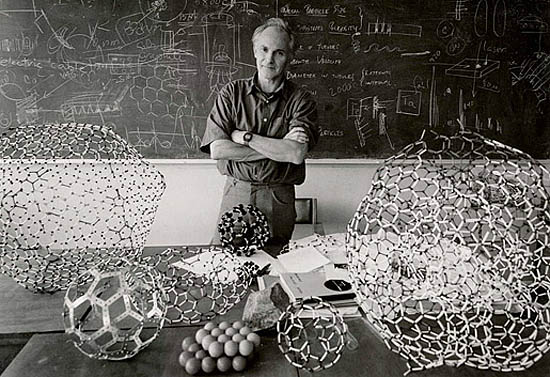
C60 Buckminsterfullerene (aka “Buckyball”) is a closed cage pure carbon molecule in which the atoms are arranged in the 12 pentagon/20 hexagon soccerball pattern. It is the first member of a vast family of such stable cages. Its importance lies in its spontaneous self-assembly from a chaotic carbon atom plasma, which opened our eyes to the fundamental forces controlling self-assembly on a nanoscale. The fact that they were discovered in an experiment to simulate the conditions in red giant stars suggested to me that this molecule must exist in space. This was confirmed in July this year and it seems – amazingly – that there may be as much as one per cent of the interstellar carbon budget locked up in the form of C60. I named it after Buckminster Fuller because his geodesic domes were a crucial clue in conjecturing what the structure might be.
Why does science matter?
For me science is first and foremost the philosophical construct that the human race has developed to determine, as reliably as possible, what might be true, can be true and more importantly cannot be true. It requires of course infinite doubt and evidence to have any reasonable degree of certainty. Science is about Truth with a capital T, but whether or not it is involved in how we should behave is not obvious. I believe that humanity is our (the human race’s) greatest single achievement and I do not give the credit for the development of this wonderful attribute to any outside (mystical) entity. Indeed anyone who looks at nature with a discerning eye sees that there is precious little humanity to be seen in the way that the world works. How anyone can believe that an ALL-POWERFUL ENTITY, with even an iota of humanitarian sensitivity, could have created a living system that is so blatantly, intrinsically CANNIBALISTIC is beyond my belief.
What do you believe?
I am well aware that for many people belief in a mystical entity which cares about them is a crucial factor in their lives – perhaps even a life-saving one. There is an amazing gentleman, in Tallahassee where I live, who on his release after wrongful imprisonment for 25 years in a Florida jail said, “I thank God for this day.” Belief in a God enabled him to remain a remarkably decent human being in terrible circumstances. But it was science, i.e. DNA fingerprinting developed by Alec Jeffries at Leicester University, that got him out! I see religion as the Achilles heel of the human race and the major impediment to rational thinking. A moment’s clear thinking indicates that essentially no religion can be true. I am pretty hardline when it comes to criticising the ludicrous socio-political influence wielded by the vast global Church/Mosque/Synagogue/Temple conglomerate. It is the biggest business on the planet, bringing in untold funding from hordes of gullible people, many of them extremely poor. It is by far the biggest confidence trick of all time.
Your lecture is about the threats to science education. What threats? [Kroto gave the 2010 Bernal Lecture on Science and Society at Birkbeck College, London on 28 October]
The teaching of “How what is True can be recognised” should surely be the first and foremost aim of education and thus the dual doubt-based evidence-required assessment approach of science is the primary thing that should be taught. Faith-based schooling is obviously antagonistic to this and it is intellectually irresponsible and ethically invidious that the Government is using taxpayers’ money to create more faith schools. Those that claim that there is no conflict between science and religion are intellectually blind to the intrinsic orthogonality of these mutually opposed human constructs. There are a few scientists (not many good ones) who do not see a problem and it seems to me they suffer from some form of intellectual schizophrenia.
Harry Kroto is Francis Eppes Professor of Chemistry at Florida State University, and was awarded the Nobel Prize for Chemistry in 1996. He has set up two influential science education organisations: Vega and Geoset
__
Dr. Kroto asserted:
How anyone can believe that an ALL-POWERFUL ENTITY, with even an iota of humanitarian sensitivity, could have created a living system that is so blatantly, intrinsically CANNIBALISTIC is beyond my belief.
The answer to this is that we are now living in a fallen world. Genesis chapter 3 tells us that man rebelled against God and that the result was this fallen world. Many people in this series RENOWNED ACADEMICS SPEAK ABOUT GOD have mentioned this same issue. I have already responded to the problem of evil and suffering with my earlier responses to Rebecca Goldstein, David Attenborough, Alan Dershowitz, and Shelly Kagan. Below is the quote from Jonathan Perry and then my response to him:
Since the age of about 15 or 16 I have been an agnostic. In later years I converted from being an agnostic to a somewhat dogmatic atheist. I think my personal attitudes to religion were actually hardened by doing the Banaras Study (about death)…. A lot of the ideas that were underlying what people were saying were really rather deeply disturbing and frankly personally unpleasant. You would meet a man whose son had died in some tragic circumstances and the Priest would be going on about the fruits of Karma and so on. I found this personally unattractive.
Interview with Jonathan Parry, Part 1
Interview with Jonathan Parry, Part 2
Professor Jonathan Perry below:
Below is a letter I wrote recently to Dr. Parry:
(pictured below during interview with Alan MacFarlane:
February 15, 2015
Dear Dr. Parry,
I just finished reading the online addition of the book Darwin, Francis ed. 1892. Charles Darwin: his life told in an autobiographical chapter, and in a selected series of his published letters [abridged edition]. London: John Murray. There are several points that Charles Darwin makes in this book that were very wise, honest, logical, shocking and some that were not so wise. The Christian Philosopher Francis Schaeffer once said of Darwin’s writings, “Darwin in his autobiography and in his letters showed that all through his life he never really came to a quietness concerning the possibility that chance really explained the situation of the biological world. You will find there is much material on this [from Darwin] extended over many many years that constantly he was wrestling with this problem.”
Here is a quote I ran across recently from you in your wonderful in depth interview with Alan Macfarlane :
Since the age of about 15 or 16 I have been an agnostic. In later years I converted from being an agnostic to a somewhat dogmatic atheist. I think my personal attitudes to religion were actually hardened by doing the Banaras Study (about death)…. A lot of the ideas that were underlying what people were saying were really rather deeply disturbing and frankly personally unpleasant. You would meet a man whose son had died in some tragic circumstances and the Priest would be going on about the fruits of Karma and so on. I found this personally unattractive.
On February 15, 2015 at our church service at FELLOWSHIP BIBLE CHURCH in Little Rock, Arkansas, our teaching pastor Brandon Barnard told the story of my good friends Roger and Terrie Cheuvront and the tragic death of their 19 year daughter Danaea on April 15, 2007 in a traffic accident. Just like you I was at the Funeral Home when the minister came in that very day, but unlike you I found the words of the pastor as a great comfort. The sermon on 2-15-15 was about the time that Jesus wept at sight of his friend Lazarus’ tomb, and this 11th chapter of John had comforted Terrie Cheuvront because she knew that Jesus had felt the same pain that we have and he will eventually raise us too from the dead and her daughter Danaea is even now in heaven with Christ.
Rev Barnard actually read these words from Terri at our service: “God never intended us to experience sin and death, but sin brought about this consequence. I could be mad at death and all that it meant but the amazing thing was when I realized God’s plan then God took the anger and replaced it with His grace. It made me realize at a deeper level what God had truly done for me on the cross. He conquered sin and death for me. What amazing glorious hope he gives us. We live because He lives. Yes I am separated from my daughter now but there will be a glorious reunion.”
Let me make three points concerning the problem of evil and suffering.First, the problem of evil and suffering hit this world in a big way because of Adam and what happened in Genesis Chapter 3. Second, if there is no God then there is no way to distinguish good from evil and there will be no ultimate punishment for Hitler and Josef Mengele. (By the way Mengele never faced punishment and lived his long life out in peace.) Third. Christ came and suffered and will destroy all evil from this world eventually forever.
“I am sure you will excuse my writing at length, when I tell you that I have long been much out of health, and am now staying away from my home for rest. It is impossible to answer your question briefly; and I am not sure that I could do so, even if I wrote at some length. But I may say that the impossibility of conceiving that this grand and wondrous universe, with our conscious selves, arose through chance, seems to me the chief argument for the existence of God; but whether this is an argument of real value, I have never been able to decide…....Nor can I overlook the difficulty from the immense amount of suffering through the world.”
Francis Schaeffer observed:
This of course is a valid problem. The only answer to the problem of evil is the biblical answer of the fall. Darwin has a problem because he never had a high view of revelation, so he doesn’t have the answer any more than the liberal theologian has the answer. If you don’t have a space-time fall then you don’t have an answer to suffering. If you have a very, very significant man at the beginning, Darwin did not have that, but if you had a very significant, wonderful man at the beginning and can change history then the fall is the possible answer that can be given to Darwin’s 2nd argument.
“But passing over the endless beautiful adaptations which we everywhere meet with, it may be asked how can the generally beneficent arrangement of the world be accounted for? Some writers indeed are so much impressed with the amount of suffering in the world, that they doubt, if we look to all sentient beings, whether there is more of misery or of happiness; whether the world as a whole is a good or a bad one. According to my judgment happiness decidedly prevails, though this would be very difficult to prove.”
Francis Schaeffer commented:
We come now to a funny situation where Darwin is arguing there is more happiness than sorry in the world. In this I think he is right. What he is saying if you could have a balance of 51% of happiness then it would open the door to thinking God is good, but I would never argue this way because it is not 51% of happiness versus 49% of unhappiness in the universe but how could a good God make unhappiness at all. The answer is in the [space time fall in Genesis].
If the truth of this conclusion be granted, it harmonizes well with the effects which we might expect from natural selection. If all the individuals of any species were habitually to suffer to an extreme degree, they would neglect to propagate their kind; but we have no reason to believe that this has ever, or at least often occurred. Some other considerations, moreover, lead to the belief that all sentient begins have been formed so as to enjoy, as a general rule, happiness. Every one who believes, as I do, that all the corporeal and mental organs (excepting those which are neither advantageous nor disadvantageous to the possessor) of all beings have been developed through natural selection, or the survival of the fittest, together with use or habit, will admit that these organs have been formed so that their possessors may compete successfully with other beings, and thus increase in number.
Francis Schaeffer noted:
What he is saying here is that from his own view he needs to hold that suffering is less than happiness otherwise what would drive the creatures on toward natural selection. The Christian of course does not have this problem. The Christian says everything is in agony because the whole has been thrown out of joint and there has been an reordering of the universe because of the fall. We don’t have to find such a balance as he was grappling with here.
The sum of such pleasures as these, which are habitual or frequently recurrent, give, as I can hardly doubt, to most sentient beings an excess of happiness over misery, although many occasionally suffer much. Such suffering is quite compatible with the belief in Natural Selection, which is not perfect in its action, but tends only to render each species as successful as possible in the battle for life with other species, in wonderfully complex and changing circumstances.That there is much suffering in the world no one disputes. Some have attempted to explain this with reference to man by imagining that it serves for his moral improvement. But the number of men in the world is as nothing compared with that of all other sentient beings, and they often suffer greatly without any moral improvement. This very old argument from the existence of suffering against the existence of an intelligent First Cause seems to me a strong one; whereas, as just remarked, the presence of much suffering agrees well with the view that all organic beings have been developed through variation and natural selection.
Francis Schaeffer :
He has to argue this otherwise what drove the creatures on. He has to have a 51% or 52% happiness. Then he says what does this do to God. We would answer if there is no space time fall it makes God if He exists the devil, on the other hand with a space time fall you have another answer.
WITHOUT THE VIEW THAT THE GARDEN OF EDEN EXISTED OR IN THE EXISTENCE OF HEAVEN THEN YOUR ANALYSIS IS THE ONLY ONE THAT IS PROBABLE. FURTHERMORE, IF WE WERE NOT CREATED BY GOD THEN WE HAVE NO HOPE FOR OUR ETERNAL FUTURES. I sent you a CD that starts off with the song DUST IN THE WIND by Kerry Livgren of the group KANSAS which was a hit song in 1978 when it rose to #6 on the charts because so many people connected with the message of the song. It included these words, “All we do, crumbles to the ground though we refuse to see, Dust in the Wind, All we are is dust in the wind, Don’t hang on, Nothing lasts forever but the Earth and Sky, It slips away, And all your money won’t another minute buy.”
Kerry Livgren himself said that he wrote the song because he saw where man was without a personal God in the picture. Solomon pointed out in the Book of Ecclesiastes that those who believe that God doesn’t exist must accept three things. FIRST, death is the end and SECOND, chance and time are the only guiding forces in this life. FINALLY, power reigns in this life and the scales are never balanced. The Christian can face death and also confront the world knowing that it is not determined by chance and time alone and finally there is a judge who will balance the scales.
Both Kerry Livgren and the bass player Dave Hope of Kansas became Christians eventually. Kerry Livgren first tried Eastern Religions and Dave Hope had to come out of a heavy drug addiction. I was shocked and elated to see their personal testimony on The 700 Club in 1981 and that same interview can be seen on You Tube today. Livgren lives in Topeka, Kansas today where he teaches “Diggers,” a Sunday school class at Topeka Bible Church. DAVE HOPE is the head of Worship, Evangelism and Outreach at Immanuel Anglican Church in Destin, Florida.
About the film:
In 1973, six guys in a local band from America’s heartland began a journey that surpassed even their own wildest expectations, by achieving worldwide superstardom… watch the story unfold as the incredible story of the band KANSAS is told for the first time in the DVD Miracles Out of Nowhere.
_____________________________
Adrian Rogers on Darwinism
74. Sir Harold Kroto and Charles Harper Take Questions – Beyond Belief 2006
On November 21, 2014 I received a letter from Nobel Laureate Harry Kroto and it said: …Please click on this URL http://vimeo.com/26991975 and you will hear what far smarter people than I have to say on this matter. I agree with them. Harry Kroto I have attempted to respond to all of Dr. Kroto’s friends arguments […]
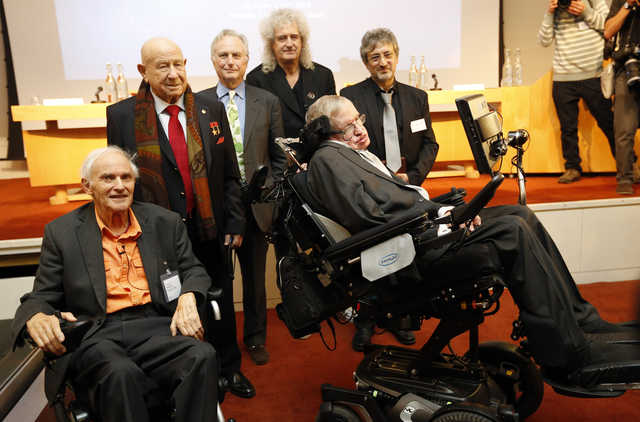
Communication at the The Royal Society Featuring: Professor Sir Harry Kroto, Alexei Leonov, Dr Richard Dawkins, Dr Brian May, Professor Stephen Hawking It is with sadness that I write this post having learned of the death of Sir Harold Kroto on April 30, 2016 at the age of 76. He was a scientist of […]
On November 21, 2014 I received a letter from Nobel Laureate Harry Kroto and it said: …Please click on this URL http://vimeo.com/26991975 and you will hear what far smarter people than I have to say on this matter. I agree with them. Harry Kroto Nick Gathergood, David-Birkett, Harry-Kroto I have attempted to respond to all of […]
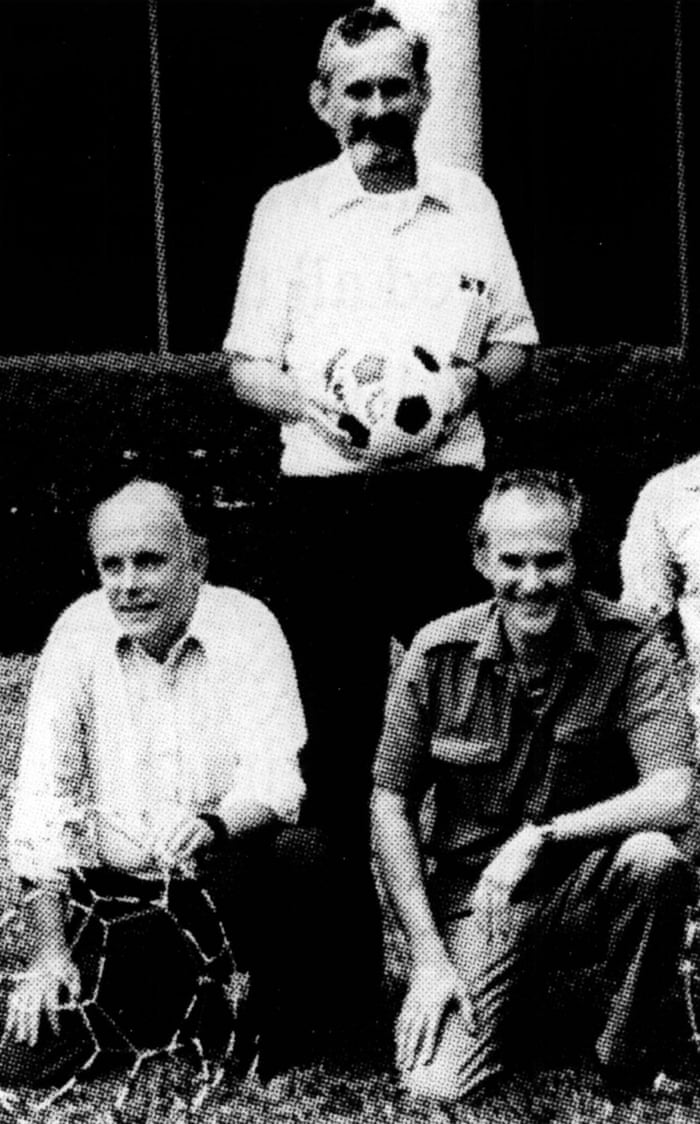
(The Nobel chemistry laureates Harold Kroto, Robert Curl and Richard Smalley)
On November 21, 2014 I received a letter from Nobel Laureate Harry Kroto and it said: …Please click on this URL http://vimeo.com/26991975 and you will hear what far smarter people than I have to say on this matter. I agree with them. Harry Kroto I have attempted to respond to all of Dr. Kroto’s friends arguments […]
On November 21, 2014 I received a letter from Nobel Laureate Harry Kroto and it said: …Please click on this URL http://vimeo.com/26991975 and you will hear what far smarter people than I have to say on this matter. I agree with them. Harry Kroto I have attempted to respond to all of Dr. Kroto’s friends arguments […]
On November 21, 2014 I received a letter from Nobel Laureate Harry Kroto and it said: …Please click on this URL http://vimeo.com/26991975 and you will hear what far smarter people than I have to say on this matter. I agree with them. Harry Kroto Nick Gathergood, David-Birkett, Harry-Kroto I have attempted to respond to all of […]
On November 21, 2014 I received a letter from Nobel Laureate Harry Kroto and it said: …Please click on this URL http://vimeo.com/26991975 and you will hear what far smarter people than I have to say on this matter. I agree with them. Harry Kroto I have attempted to respond to all of Dr. Kroto’s friends arguments […]
(Margaret and Harry Kroto with students at Lindau 2005)
On November 21, 2014 I received a letter from Nobel Laureate Harry Kroto and it said: …Please click on this URL http://vimeo.com/26991975 and you will hear what far smarter people than I have to say on this matter. I agree with them. Harry Kroto Nick Gathergood, David-Birkett, Harry-Kroto I have attempted to respond to all of […]
On November 21, 2014 I received a letter from Nobel Laureate Harry Kroto and it said: …Please click on this URL http://vimeo.com/26991975 and you will hear what far smarter people than I have to say on this matter. I agree with them. Harry Kroto Nick Gathergood, David-Birkett, Harry-Kroto I have attempted to respond to all of […]
On November 21, 2014 I received a letter from Nobel Laureate Harry Kroto and it said: …Please click on this URL http://vimeo.com/26991975 and you will hear what far smarter people than I have to say on this matter. I agree with them. Harry Kroto I have attempted to respond to all of Dr. Kroto’s friends arguments […]
On November 21, 2014 I received a letter from Nobel Laureate Harry Kroto and it said: …Please click on this URL http://vimeo.com/26991975 and you will hear what far smarter people than I have to say on this matter. I agree with them. Harry Kroto I have attempted to respond to all of Dr. Kroto’s friends arguments […]
__ On November 21, 2014 I received a letter from Nobel Laureate Harry Kroto and it said: …Please click on this URL http://vimeo.com/26991975 and you will hear what far smarter people than I have to say on this matter. I agree with them. Harry Kroto I have attempted to respond to all of Dr. Kroto’s friends […]
On November 21, 2014 I received a letter from Nobel Laureate Harry Kroto and it said: …Please click on this URL http://vimeo.com/26991975 and you will hear what far smarter people than I have to say on this matter. I agree with them. Harry Kroto Sir Harry Kroto, FSU’s Francis Eppes Professor of Chemistry I […]
On November 21, 2014 I received a letter from Nobel Laureate Harry Kroto and it said: …Please click on this URL http://vimeo.com/26991975 and you will hear what far smarter people than I have to say on this matter. I agree with them. Harry Kroto I have attempted to respond to all of Dr. Kroto’s friends arguments […]
On November 21, 2014 I received a letter from Nobel Laureate Harry Kroto and it said: …Please click on this URL http://vimeo.com/26991975 and you will hear what far smarter people than I have to say on this matter. I agree with them. Harry Kroto Wikipedia notes: Mahzarin Banaji From Wikipedia, the free encyclopedia [hide]This article has […]
On November 21, 2014 I received a letter from Nobel Laureate Harry Kroto and it said: …Please click on this URL http://vimeo.com/26991975 and you will hear what far smarter people than I have to say on this matter. I agree with them. Harry Kroto Wikipedia notes: Anthony Clifford “A. C.” Grayling (/ˈɡreɪlɪŋ/; born 3 April 1949) […]
On November 21, 2014 I received a letter from Nobel Laureate Harry Kroto and it said: …Please click on this URL http://vimeo.com/26991975 and you will hear what far smarter people than I have to say on this matter. I agree with them. Harry Kroto _________________ Below you have picture of Dr. Harry Kroto: ______________ I have […]
On November 21, 2014 I received a letter from Nobel Laureate Harry Kroto and it said: …Please click on this URL http://vimeo.com/26991975 and you will hear what far smarter people than I have to say on this matter. I agree with them. Harry Kroto _________________ Below you have picture of Dr. Harry Kroto: ______________ I […]
On November 21, 2014 I received a letter from Nobel Laureate Harry Kroto and it said: …Please click on this URL http://vimeo.com/26991975 and you will hear what far smarter people than I have to say on this matter. I agree with them. Harry Kroto _________________ Below you have picture of Dr. Harry Kroto: ______________ I […]
_____ RESPONDING TO HARRY KROTO’S BRILLIANT RENOWNED ACADEMICS!! Part 69 On November 21, 2014 I received a letter from Nobel Laureate Harry Kroto and it said: …Please click on this URLhttp://vimeo.com/26991975 and you will hear what far smarter people than I have to say on this matter. I agree with them. Harry Kroto _________________ Below […]
_____ RESPONDING TO HARRY KROTO’S BRILLIANT RENOWNED ACADEMICS!! Part 68 On November 21, 2014 I received a letter from Nobel Laureate Harry Kroto and it said: …Please click on this URLhttp://vimeo.com/26991975 and you will hear what far smarter people than I have to say on this matter. I agree with them. Harry Kroto _________________ Below […]
___ On November 21, 2014 I received a letter from Nobel Laureate Harry Kroto and it said: …Please click on this URL http://vimeo.com/26991975 and you will hear what far smarter people than I have to say on this matter. I agree with them. Harry Kroto _________________ Below you have picture of Dr. Harry Kroto: ______________ I […]
_______ On November 21, 2014 I received a letter from Nobel Laureate Harry Kroto and it said: …Please click on this URL http://vimeo.com/26991975 and you will hear what far smarter people than I have to say on this matter. I agree with them. Harry Kroto _________________ Below you have picture of Dr. Harry Kroto: Professor Stephan […]
___ On November 21, 2014 I received a letter from Nobel Laureate Harry Kroto and it said: …Please click on this URL http://vimeo.com/26991975 and you will hear what far smarter people than I have to say on this matter. I agree with them. Harry Kroto _________________ Below you have picture of Dr. Harry Kroto: ______________ I […]
__ On November 21, 2014 I received a letter from Nobel Laureate Harry Kroto and it said: …Please click on this URL http://vimeo.com/26991975 and you will hear what far smarter people than I have to say on this matter. I agree with them. Harry Kroto _________________ Below you have picture of Dr. Harry Kroto: I have […]
On November 21, 2014 I received a letter from Nobel Laureate Harry Kroto and it said: …Please click on this URL http://vimeo.com/26991975 and you will hear what far smarter people than I have to say on this matter. I agree with them. Harry Kroto _________________ Below you have picture of Dr. Harry Kroto: ______________ I […]
On November 21, 2014 I received a letter from Nobel Laureate Harry Kroto and it said: …Please click on this URL http://vimeo.com/26991975 and you will hear what far smarter people than I have to say on this matter. I agree with them. Harry Kroto _________________ Below you have picture of Dr. Harry Kroto: ______________ Yujin […]
On November 21, 2014 I received a letter from Nobel Laureate Harry Kroto and it said: …Please click on this URL http://vimeo.com/26991975 and you will hear what far smarter people than I have to say on this matter. I agree with them. Harry Kroto _________________ Below you have picture of Dr. Harry Kroto: ______________ I have […]
On November 21, 2014 I received a letter from Nobel Laureate Harry Kroto and it said: …Please click on this URL http://vimeo.com/26991975 and you will hear what far smarter people than I have to say on this matter. I agree with them. Harry Kroto _________________ Below you have picture of Dr. Harry Kroto: ______________ I have […]
On November 21, 2014 I received a letter from Nobel Laureate Harry Kroto and it said: …Please click on this URL http://vimeo.com/26991975 and you will hear what far smarter people than I have to say on this matter. I agree with them. Harry Kroto _________________ Below you have picture of Dr. Harry Kroto: ______________ I have […]
and you will hear what far smarter people than I have to say on this matter. I agree with them.
Harry Kroto
I have attempted to respond to all of Dr. Kroto’s friends arguments and I have posted my responses one per week for over a year now. Here are some of my earlier posts:
Skinner has delivered lectures at the Christian Gauss Seminars in Criticism at Princeton (1980), the Carlyle Lectures at Oxford (1980), the Messenger Lectures at Cornell (1983), the Tanner Lectures on Human Values at Harvard(1984), the T. S. Eliot Memorial Lectures at Kent (1995), the Ford Lectures at Oxford (2003), the Clarendon Lectures at Oxford (2011), the Clark Lectures at Cambridge (2012), the Academia Sinica Lectures in Taiwan (2013) and the Spinoza Lectures at University of Amsterdam (2014).
Skinner was Distinguished Visiting Professor at Queen Mary, University of London for the 2007–2008 academic year, and has been Barber Beaumont Professor of the Humanities at Queen Mary since October 2008.[2] In 2014 he held the Spinoza Chair of Philosophy at the University of Amsterdam[3]
In the first video below in the 36th clip in this series are his words and my response is below them.
50 Renowned Academics Speaking About God (Part 1)
Another 50 Renowned Academics Speaking About God (Part 2
A Further 50 Renowned Academics Speaking About God (Part 3)
___
Interview of Professor Quentin Skinner – part 1
Uploaded on Jun 2, 2008
Interview with the Regius Professor of History at Cambridge University on his life and work in 2008. For a downloadable version and textual summary, please see http://www.alanmacfarlane.com
All revenues donated to World Oral Literature Project
Interview of Professor Quentin Skinner – part 2
__________
Below is a letter I sent to Dr. Skinner and in the letter I respond to his quote:
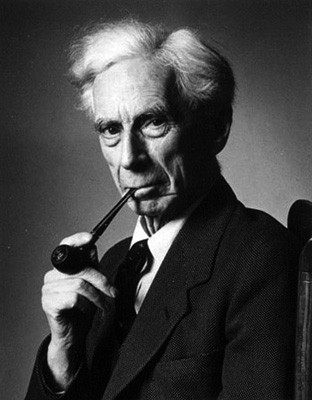
Bertrand Russell pictured below:
____
Francis Schaeffer (30 January 1912 – 15 May 1984[1]) and his wife Edith (November 3, 1914 – March 30, 2013)
James Watson (1928-) and Francis Crick (8 June 1916 – 28 July 2004)
Michael Polanyi, FRS[1] (11 March 1891 – 22 February 1976)
John Charles Polanyi, (born 23 January 1929)
___
John Scott Haldane (2 May 1860 – 14/15 March 1936)
Erwin Schrödinger (12 August 1887 – 4 January 1961)
Sir Peter Medawar ( 28 February 1915 – 2 October 1987)
Barry Commoner (May 28, 1917 – September 30, 2012)
Enjoy the pictures of an amazing life
Harry Kroto with his father above
Margaret with David and Stephen
leaving Liverpool for Canada 1964
Kroto and his wife, Margaret.
______________
July 16, 2016
Dr. Quentin Skinner, Professor of the Humanities, Queen Mary University of London,
Dear. Dr. Skinner,
I was very sad to learn of the passing of the great scientist Harry Kroto. Judging from comments of his close friends, Kroto was not only a great scientist but an even better man personally.
Tim Logan, chair of Chemistry and Biochemistry at Florida State: “What always brought out the best in Harry was his wife, Margaret. Margaret and Harry were always together, until the end of Harry’s life. She served as his business manager, scheduling his many speaking engagements around the world, organizing the travel, and supporting him in many, many ways. What I found so remarkable is that even after 57 years together, they were so obviously in love. Harry would include photos and sketches he made of her in his lectures, and he always acknowledged her as his moral compass.”
HAVE YOU EVER WONDERED WHY I WAS PROMPTED ORIGINALLY TO WRITE YOU? It was because Harry Kroto took the time in 2014 to correspond with me. After I wrote him in the spring and summer of 2014 he emailed me twice and then sent me a letter in November of 2014. In that letter he referred me to a film series Renowned Academics talk about God that featured your comments.
I have always been fascinated by brilliant individuals and recently I had the opportunity to come across a very interesting article by Michael Polanyi,LIFE TRANSCENDING PHYSICS AND CHEMISTRY, in the magazine CHEMICAL AND ENGINEERING NEWS, August 21, 1967, and I also got hold of a 1968 talk by Francis Schaeffer based on this article. ISN’T IT AMAZING THAT JUST LIKE KROTO’S FAMILY POLANYI HAD TO FLEE EUROPE BECAUSE OF HITLER’S INSANE GRUDGE AGAINST THE JEWS!!!!I know you don’t believe in God or the Devil but if anyone was demon-possessed it had to be Hitler.
Mechanisms, whether man-made or morphological, are boundary conditions harnessing the laws of in animate nature, being themselves irreducible to those laws. The pattern of organic bases in DNA which functions as a genetic code is a boundary condition irreducible to physics and chemistry. Further controlling principles of life may be represented as a hierarchy of boundary conditions extending, in the case of man, to consciousness and responsibility.
I am sending you this two CD’s of this talk because I thought you may find it very interesting. It includes references to not only James D. Watson, and Francis Crick but also Maurice Wilkins, Erwin Schrodinger, J.S. Haldane (his son was the famous J.B.S. Haldane), Peter Medawar, and Barry Commoner.
Adrian Rogers noted that Evolution has no answer for these three points:
1. The fossil record. Not only is the so-called missing link still missing, all of the transitional life forms so crucial to evolutionary theory are missing from the fossil record. There are thousands of missing links, not one!
2. The second law of thermodynamics. This law states that energy is winding down and that matter left to itself tends toward chaos and randomness, not greater organization and complexity. Evolution demands exactly the opposite process, which is observed nowhere in nature.
3. The origin of life. Evolution offers no answers to the origin of life. It simply pushes the question farther back in time, back to some primordial event in space or an act of spontaneous generation in which life simply sprang from nothing.
Let me start off by saying that this is not the first time that I have written you. Earlier I shared several letters of correspondence I had with Carl Sagan, and Antony Flew. Both men were strong believers in evolution as you are today. Instead of talking to you about their views today I wanted to discuss the views of Bertrand Russell since you are a big fan of his writings.
Your QUOTE from your interview with Alan Macfarlane:
I am an atheist; think that if we know anything it is that none of that could be true;
of course we may not know anything, so atheist is a bold word;
I'm a Richard Dawkins kind of atheist; there are two kinds,
the Marxists who think that though they are materialists
 what is interesting about religion in all forms is that it deformed very deep human yearnings
 and aspirations and that it is a very powerful route into trying to understand human psychology;
 another kind of atheist - David Hume or Bertrand Russell -
who mostly can't understand what these people are claiming, but in so far that I do it is obviously false,
and I am that kind of atheist, it just doesn't interest me at all;
On You Tube in the clip “Sir Harold Kroto – Beyond Belief 2008,” at the 14:35 mark Harry Kroto said, “As Bertrand Russell and really of course anytime I read anything [of his] I think it is fantastic and he said this about INTELLECTUAL INTEGRITY:
I mean by intellectual integrity the habit of deciding vexed questions in accordance with the evidence, or of leaving them undecided where the evidence is inconclusive.
— Bertrand Russell, “Can Religion Cure Our Troubles?” (1954)
While corresponding back and forth with Harry Kroto I did send this letter below that talked about Bertrand Russell and I wanted to share it with you:
To Harry Kroto, Dept of Chemistry and Biochemistry, c/o Florida State Univ,
6-26-14
Just the other day I sent you the CD called“Dust in the Wind, Darwin and Disbelief.” I know you may not have time to listen to the CD but on the first 2 1/2 minutes of that CD is the hit song “Dust in the Wind” by the rock group KANSAS and was written by Kerry Livgren in 1978. Would you be kind enough to read these words of that song given below and refute the idea that accepting naturalistic evolution with the exclusion of God must lead to the nihilistic message of the song! Or maybe you agree with Richard Dawkins and other scholars below?
DUST IN THE WIND:
I close my eyes only for a moment, and the moment’s gone
All my dreams pass before my eyes, a curiosity
Dust in the wind, all they are is dust in the wind
Same old song, just a drop of water in an endless sea
All we do crumbles to the ground, though we refuse to see
Dust in the wind, all we are is dust in the wind
Now, don’t hang on, nothing lasts forever but the earth and sky
It slips away, and all your money won’t another minute buy
_________________________________
Humans have always wondered about the meaning of life…life has no higher purpose than to perpetuate the survival of DNA…life has no design, no purpose, no evil and no good, nothing but blind pitiless indifference. —Richard Dawkins
______________
The vast majority of people believe there is a design or force in the universe; that it works outside the ordinary mechanics of cause and effect; that it is somehow responsible for both the visible and the moral order of the world. Modern biology has undermined this assumption…But beginning with Darwin, biology has undermined that tradition. Darwin in effect asserted that all living organisms had been created by a combination of chance and necessity–natural selection…First,God has no role in the physical world…Second,except for the laws of probability and cause and effect, there is no organizing principle in the world, and no purpose.(William B. Provine, “The End of Ethics?” in HARD CHOICES ( a magazine companion to the television series HARD CHOICES, Seattle: KCTS-TV, channel 9, University of Washington, 1980, pp. 2-3).
That Man is the product of causes which had no prevision of the end they were achieving; that his origin, his growth, his hopes and fears, his loves and his beliefs, are but the outcome of accidental collocations of atoms; …that all the labors of the ages, all the devotion, all the inspiration, all the noonday brightness of human genius, are destined to extinction in the vast death of the solar system, and that the whole temple of Man’s achievement must inevitably be buried beneath the debris of a universe in ruins—all these things, if not quite beyond dispute, are yet so nearly certain, that no philosophy which rejects them can hope to stand.Bertrand Russell
The British humanist H. J. Blackham (1903-2009) put it very plainly: “On humanist assumptions, life leads to nothing, and every pretense that it does not is a deceit. If there is a bridge over a gorge which spans only half the distance and ends in mid-air, and if the bridge is crowded with human beings pressing on, one after the other they fall into the abyss. The bridge leads nowhere, and those who are pressing forward to cross it are going nowhere….It does not matter where they think they are going, what preparations for the journey they may have made, how much they may be enjoying it all. The objection merely points out objectively that such a situation is a model of futility“( H. J. Blackham, et al., Objections to Humanism (Riverside, Connecticut: Greenwood Press, 1967).
I think you may be quoting Blackham out of context because I’ve heard Blackham speak, and read much of what he said, but Blackham has argued continuously that life is full of meaning; that there are points. The fact that one doesn’t believe in God does not deaden the appetite or the lust for living. On the contrary; great artists and scientists and poets and writers have affirmed the opposite.
I read the book FORBIDDEN FRUIT by Paul Kurtz and I had the opportunity to correspond with him but I still reject his view that optimistic humanism withstand the view of nihilism if one accepts there is no God. Christian philosopherR.C. Sproul put it best:
Nihilism has two traditional enemies–Theism and Naive Humanism. The theist contradicts the nihilist because the existence of God guarantees that ultimate meaning and significance of personal life and history. Naive Humanism is considered naive by the nihilist because it rhapsodizes–with no rational foundation–the dignity and significance of human life. The humanist declares that man is a cosmic accident whose origin was fortuitous and entrenched in meaningless insignificance. Yet in between the humanist mindlessly crusades for, defends, and celebrates the chimera of human dignity…Herein is the dilemma: Nihilism declares that nothing really matters ultimately…In my judgment, no philosophical treatise has ever surpassed or equaled the penetrating analysis of the ultimate question of meaning versus vanity that is found in the Book of Ecclesiastes.
________________
Kerry Livgren is the writer of the song “Dust in the Wind” and he said concerning that song in 1981 and then in 2006:
1981: “When I wrote “Dust in the Wind” I was writing about a yearning emptiness that I felt which millions of people identified with because the song was very popular.” 2006:“Dust In the Wind” was certainly the most well-known song, and the message was out of Ecclesiastes. I never ceased to be amazed at how the message resonates with people, from the time it came out through now. The message is true and we have to deal with it, plus the melody is memorable and very powerful. It disturbs me that there’s only part of the [Christian] story told in that song. It’s about someone yearning for some solution, but if you look at the entire body of my work, there’s a solution to the dilemma.”
Ecclesiastes reasons that chance and time have determined the past and will determine the future (9:11-13), and power reigns in this life and the scales are not balanced(4:1). Is that how you see the world? Solomon’s experiment was a search for meaning to life “under the sun.” Then in last few words in Ecclesiastes he looks above the sun and brings God back into the picture: “The conclusion, when all has been heard, is: Fear God and keep His commandments, because this applies to every person. For God will bring every act to judgment.”
In 2006 in the publication CROSSWALK Livgren noted:
Dust In the Wind” was certainly the most well-known song, and the message was out of Ecclesiastes. I never ceased to be amazed at how the message resonates with people, from the time it came out through now. The message is true and we have to deal with it, plus the melody is memorable and very powerful. It disturbs me that there’s only part of the [Christian] story told in that song. It’s about someone yearning for some solution, but if you look at the entire body of my work, there’s a solution to the dilemma.
__________
On 9-18-16 Dr. Kroto emailed twice:
Dear Everette
Thank you for your letter
re your question
“How does our life have any ultimate meaning”
I have no idea how others deal with this question
and do not even know whether it “means” anything
to ask such a question…I do not ask it of myself
re “ultimate meaning”
I give my own life “personal meaning” by doing “what I do”
that is all that matters to me
David Hume whom I consider to be a great philosopher said
“The life of man is of no greater importance to the universe than that of an oyster.”
….other good quotes for you here: http://www.goodreads.com/author/quotes/45726.David_Hume
The simple words of Dust in the wind…seems to makes sense to me
I do not need to analyse the words any more deeply
as I have said above…yes I agree with Myers re “my significance”
harry
PS NB
Thank you for writing to me but note that
I really am sorry that I have nothing more to say on any of the matters
which seem to interest you…
____
SECOND EMAIL from Dr. Kroto
Thank you
great story
I think we may see the good things the same way
but I do not gloss over the bad aspects of religiosity
but …some of the bad…cf ISIS
“With or without religion, you would have good people doing good things and evil people doing evil things. But for good people to do evil things, that takes religion.”
― Steven Weinberg
“Religion is an insult to human dignity. Without it you would have good people doing good things and evil people doing evil things.
But for good people to do evil things, that takes religion.”
― Steven Weinberg
______________ George Harrison Swears & Insults Paul and Yoko Lucy in the Sky with Diamonds- The Beatles The Beatles: I have dedicated several posts to this series on the Beatles and I don’t know when this series will end because Francis Schaeffer spent a lot of time listening to the Beatles and talking […]
The Beatles in a press conference after their Return from the USA Uploaded on Nov 29, 2010 The Beatles in a press conference after their Return from the USA. The Beatles: I have dedicated several posts to this series on the Beatles and I don’t know when this series will end because Francis […]
__________________ Beatles 1966 Last interview I have dedicated several posts to this series on the Beatles and I don’t know when this series will end because Francis Schaeffer spent a lot of time listening to the Beatles and talking and writing about them and their impact on the culture of the 1960’s. In this […]
_______________ The Beatles documentary || A Long and Winding Road || Episode 5 (This video discusses Stg. Pepper’s creation I have dedicated several posts to this series on the Beatles and I don’t know when this series will end because Francis Schaeffer spent a lot of time listening to the Beatles and talking and writing about […]
_______________ Francis Schaeffer pictured below: _____________________ I have included the 27 minute episode THE AGE OF NONREASON by Francis Schaeffer. In that video Schaeffer noted, ” Sergeant Pepper’s Lonely Hearts Club Band…for a time it became the rallying cry for young people throughout the world. It expressed the essence of their lives, thoughts and their feelings.” How Should […]
Crimes and Misdemeanors: A Discussion: Part 1 ___________________________________ Today I will answer the simple question: IS IT POSSIBLE TO BE AN OPTIMISTIC SECULAR HUMANIST THAT DOES NOT BELIEVE IN GOD OR AN AFTERLIFE? This question has been around for a long time and you can go back to the 19th century and read this same […]
____________________________________ Francis Schaeffer pictured below: __________ Francis Schaeffer has written extensively on art and culture spanning the last 2000years and here are some posts I have done on this subject before : Francis Schaeffer’s “How should we then live?” Video and outline of episode 10 “Final Choices” , episode 9 “The Age of Personal Peace and Affluence”, episode 8 […]
Love and Death [Woody Allen] – What if there is no God? [PL] ___________ _______________ How Should We then Live Episode 7 small (Age of Nonreason) #02 How Should We Then Live? (Promo Clip) Dr. Francis Schaeffer 10 Worldview and Truth Two Minute Warning: How Then Should We Live?: Francis Schaeffer at 100 Francis Schaeffer […]
___________________________________ Francis Schaeffer pictured below: ____________________________ Francis Schaeffer “BASIS FOR HUMAN DIGNITY” Whatever…HTTHR Dr. Francis schaeffer – The flow of Materialism(from Part 4 of Whatever happened to human race?) Dr. Francis Schaeffer – The Biblical flow of Truth & History (intro) Francis Schaeffer – The Biblical Flow of History & Truth (1) Dr. Francis Schaeffer […]
and you will hear what far smarter people than I have to say on this matter. I agree with them.
Harry Kroto
I have attempted to respond to all of Dr. Kroto’s friends arguments and I have posted my responses one per week for over a year now. Here are some of my earlier posts:
Paul Churchland (born October 21, 1942) is a Canadian philosopher noted for his studies in neurophilosophy and the philosophy of mind.[1] He is Professor Emeritus at the University of California, San Diego, where he held the Valtz Chair of Philosophy[2] and a joint appointment with the Cognitive Science Faculty and the Institute for Neural Computation.[3] He earned his Ph.D. from the University of Pittsburgh in 1969 under the direction of Wilfrid Sellars.[4] Churchland is the husband of philosopher Patricia Churchland, and it has been noted that, “Their work is so similar that they are sometimes discussed, in journals and books, as one person.”[5] He is also the father of two children, Mark and Anne Churchland, both of whom are neuroscientists.[6][7][8]
Professional career
Churchland began his professional career as an instructor at the University of Pittsburgh in 1969;[9] he also lectured at the University of Toronto from 1967-69.[10] In 1969, Churchland took a position at the University of Manitoba, where he would teach for fifteen years: as an assistant professor (1969–74) and associate professor (1974–79), and then as a full professor from 1979-1984.[11] Professor Churchland joined the Institute for Advanced Study in Princeton in 1982, staying as a member until 1983.[12] He joined the faculty at the University of California, San Diego in 1983, serving as Department Chair from 1986-1990.[13] He is a member of the Board of Trustees Moscow Center for Consciousness Studies of Philosophy Department, Moscow State University.[14]
Philosophical views
Along with his wife, Churchland is a major proponent of eliminative materialism, the belief that everyday mental concepts such as beliefs, feelings, and desires are part of a “folk psychology” of theoretical constructs without coherent definition, destined to simply be obviated by a thoroughly scientific understanding of human nature.
Just as modern science has discarded such notions as legends or witchcraft, Churchland maintains that a future, fully matured neuroscience is likely to have no need for “beliefs” (see propositional attitudes). In other words, he holds that beliefs are not ontologically real. Such concepts will not merely be reduced to more finely grained explanation and retained as useful proximate levels of description, but will be strictly eliminated as wholly lacking in correspondence to precise objective phenomena, such as activation patterns across neural networks. He points out that the history of science has seen many posits once considered real entities, such as phlogiston, caloric, the luminiferous ether, and vital forces, thus eliminated. In The Engine of Reason, The Seat of the Soul Churchland hypothesizes that consciousness might be explained in terms of a recurrent neural network with its hub in the intralaminar nucleus of the thalamus and feedback connections to all parts of the cortex. He says his proposal is probably mistaken in the neurological details, but on the right track in its use of recurrent neural networks to account for consciousness. This is notably a reductionist rather than eliminativist account of consciousness.
In the third video below in the 143rd clip in this series are his words and my response is below them.
50 Renowned Academics Speaking About God (Part 1)
Another 50 Renowned Academics Speaking About God (Part 2
A Further 50 Renowned Academics Speaking About God (Part 3)
Below is both a letter I wrote to Dr. Churchland back in 1994 and one I wrote him on July 9, 2016 and I respond to his quote in the second letter.
Adrian Rogers is pictured below and Francis Schaeffer above.
Watching the film HOW SHOULD WE THEN LIVE? in 1979 impacted my life greatly
Francis Schaeffer in the film WHATEVER HAPPENED TO THE HUMAN RACE?
Francis and Edith Schaeffer
_______
July 9, 2016
Dr. Paul Churchland, University of California San Diego,
Dear Dr. Churchland,
I would to do two things today.
FIRST, I wanted to respond to your quote from the You Tube series “Renowned Academics Speaking About God.”
SECOND, I would like to send you a portion of the letter I sent to you back in 1994.
YOUR QUOTE
If you think you already have the answer of truth whether scientific or moral and it is given to you from God, then you have a problem. You can no longer learn. Absolute truth is immutable and that is the most tragic thing of all. In order to buy needed authority [religions] have bought too much and it is self defeating. If you laws are infallible, if your laws are already perfect then you can’t possibly anything more from experience. Any creature that stops learning dies.
My first response is to challenge you to watch the WOODY ALLEN movie CRIMES AND MISDEMEANORS and just simply answer the question HOW CAN AN ATHEIST CONVINCE JUDAH NOT TO MURDER HIS TROUBLESOME MISTRESS?
Second let me just put before this short article that deals with the idea of an INFINITE REFERENCE POINT.
The beautiful Portland Head Lighthouse on the Maine coast.
It was the flash from this lighthouse I could see from the
balcony of my hotel in Ogunquit, far to the south.
No finite point has meaning without an infinite reference point.
Jean-Paul Sartre
I am the light of the world.
Jesus Christ (Matthew 5:14)
I stood outside on the deck of my hotel listening to the surf quietly lap the beach. It was a beautiful Maine evening, with stars blazing overhead and a gentle breeze blowing warm for early October. Out in the darkness my eyes traced a dim line of lights running along the shore of the peninsula that jutted far out to sea. Where the lights ended, I assumed, was lands end and where the open sea began. I was curious then, when I saw a light flash much farther out to sea. It didn’t take long to realize that the flash was from a lighthouse, which marked the true end of land. It was plain to me then how a lighthouse could make the difference between life and death to a ship sailing off the coast.
My friends and I had to laugh when
we saw this sign in Beijing, China,
north of the Forbidden City. It reminded
us all about the perilous journey of life.
A Point of Reference
As I thought about a ship sailing along the coast in rough waters without a reference point to warn it where it could run aground, it occurred to me how similar this is to navigating through life. Who could argue that life is not perilous? And how many lives have been shattered on the rocks of despair, meaninglessness, alcohol and drug addiction, bitterness, anxiety, etc.
How helpful it would be to have a point of reference to warn us of the dangers in life.
Even John-Paul Sartre (quoted above), a famous atheist existentialist, recognized that we finite human beings need an infinite reference point in order to have meaning. However, because Sartre didn’t believe there was an infinite reference point (God), he concluded that life is meaningless. “Man is absurd”, he said, “but he must grimly act as if he were not”. Sartre had worked through the implications of life without God, and his conclusion perfectly illustrates the hopelessness of the atheistic and secularist worldview.
The flash of the lighthouse interrupted my thoughts. Each time I saw it, I was amazed at how far out the shore really ran.
Worldview
All of us have worldviews that, consciously or unconsciously, guide us through life and affect our daily decisions…decisions that could move us closer to or farther away from dangers that could destroy our lives. Francis Schaeffer noted that our worldviews are based on “presuppositions” (1). For example, the presupposition that is championed at the secular university (and widely in our culture) today is the “uniformity of natural causes in a closed system”. Because, it is believed, the system is closed, then there can be nothing outside the system (i.e., God) and therefore, intervention from the outside (miracles or revelation from God) is impossible. With this presupposition, as Oxford mathematician John Lennox so eloquently stated, “we can’t even answer the simple questions of a child: Why am I here? What’s the meaning of life? And so on” (2). This is why Sartre, who believed in the closed system model, concluded that man is absurd.
If, on the other hand, you believe in the “uniformity of natural causes in an open system”, into which God can act, then revelation and miracles are entirely possible. We can receive answers to the simple questions of a child because there is a God who can speak into our system (such as through the Bible). He is our lighthouse.Then the statement by Jesus Christ that he is the light of the world (quoted above) makes sense.
View from my hotel balcony on the coast of Ogunquit, Maine.
At night I could see the Portland Head Lighthouse flashing in
the distance at the far right.
A North Star Francis Schaeffer went on to say that the Bible gives us an adequate reference point, a North Star for our lives in the infinite-personal God. God is infinite (and thus, provides us a needed infinite reference point), and at the same time personal. How was he personal? The apostle John wrote that God came into the world as a human, a person, whose name was Jesus Christ (3). Jesus reached out and touched the lepers (4), which everyone else was afraid to do because they didn’t want to catch leprosy! He restored the lame (5) and even brought the dead back to life (6). Its hard to imagine getting more personal than that. In fact, read the New Testament and you will learn of many broken lives that, when touched by him, were healed and restored. Truly his mission had profound implications for those whose lives had been shattered on the jagged rocks of life.
Amazingly, the good news for us is that Jesus is still at work, healing and restoring life to all who accept him! (7)
The lighthouse flashed again. Its no accident that Jesus described himself as the light of the world, or that John called him “the true light that gives light to everyone” (8).
It was getting late and I was growing tired. But I went back into my hotel room with a supernatural assurance that God was with me. As John wrote about Jesus: “The light shines in the darkness, and the darkness has not overcome it.” (9)
Footnotes:
(1) He is There He is not Silent, by Francis Schaeffer
(2) An interview with John Lennox, Professor Lennox discusses Christianity, atheism, and science
(3) John 1:1,14,17.
(4) Matthew 8:1-3.
(5) Mark 3:1-6.
(6) Mark 5:21-43; John 11:1-44.
(7) Romans 8:10-11.
(8) John 1:9.
(9) John 1:5.
You will notice in the above article that Francis Schaeffer is referenced. On May 15, 1994 on the 10th anniversary of the passing of Francis Schaeffer I sent a letter to you and here is a portion of that letter below:
I have enclosed a cassette tape by Adrian Rogers and it includes a story about Charles Darwin‘s journey from the position of theistic evolution to agnosticism. Here are the four bridges that Adrian Rogers says evolutionists can’t cross in the CD “Four Bridges that the Evolutionist Cannot Cross.” 1. The Origin of Life and the law of biogenesis. 2. The Fixity of the Species. 3.The Second Law of Thermodynamics. 4. The Non-Physical Properties Found in Creation.
In the first 3 minutes of the cassette tape is the hit song “Dust in the Wind.” Below I have given you some key points Francis Schaeffer makes about the experiment that Solomon undertakes in the book of Ecclesiastes to find satisfaction by looking into learning (1:16-18), laughter, ladies, luxuries, and liquor (2:1-3, 8, 10, 11), and labor (2:4-6, 18-20).
Schaeffer noted that Solomon took a look at the meaning of life on the basis of human life standing alone between birth and death “under the sun.” This phrase UNDER THE SUN appears over and over in Ecclesiastes. The Christian Scholar Ravi Zacharias noted, “The key to understanding the Book of Ecclesiastes is the term UNDER THE SUN — What that literally means is you lock God out of a closed system and you are left with only this world of Time plus Chance plus matter.”
Here the first 7 verses of Ecclesiastes followed by Schaeffer’s commentary on it:
The words of the Preacher, the son of David, king in Jerusalem. Vanity of vanities, says the Preacher, vanity of vanities! All is vanity. What does man gain by all the toil at which he toils under the sun? A generation goes, and a generation comes, but the earth remains forever. The sun rises, and the sun goes down, and hastens to the place where it rises. The wind blows to the south and goes around to the north; around and around goes the wind, and on its circuits the wind returns. All streams run to the sea, but the sea is not full; to the place where the streams flow, there they flow again.
Solomon is showing a high degree of comprehension of evaporation and the results of it. Seeing also in reality nothing changes. There is change but always in a set framework and that is cycle. You can relate this to the concepts of modern man. Ecclesiastes is the only pessimistic book in the Bible and that is because of the place where Solomon limits himself. He limits himself to the question of human life, life under the sun between birth and death and the answers this would give.
Solomon doesn’t place man outside of the cycle. Man doesn’t escape the cycle. Man is in the cycle. Birth and death and youth and old age.
There is no doubt in my mind that Solomon had the same experience in his life that I had as a younger man (at the age of 18 in 1930). I remember standing by the sea and the moon arose and it was copper and beauty. Then the moon did not look like a flat dish but a globe or a sphere since it was close to the horizon. One could feel the global shape of the earth too. Then it occurred to me that I could contemplate the interplay of the spheres and I was exalted because I thought I can look upon them with all their power, might, and size, but they could contempt nothing. Then came upon me a horror of great darkness because it suddenly occurred to me that although I could contemplate them and they could contemplate nothing yet they would continue to turn in ongoing cycles when I saw no more forever and I was crushed.
Let me show you some inescapable conclusions if you choose to live without God in the picture. Schaeffer noted that Solomon came to these same conclusions when he looked at life “under the sun.”
Death is the great equalizer (Eccl 3:20, “All go to the same place; all come from dust, and to dust all return.”)
Chance and time have determined the past, and they will determine the future. (Ecclesiastes 9:11-13 “I have seen something else under the sun: The race is not to the swift
or the battle to the strong, nor does food come to the wise or wealth to the brilliant or favor to the learned; but time and chance happen to them all. Moreover, no one knows when their hour will come: As fish are caught in a cruel net, or birds are taken in a snare, so people are trapped by evil times that fall unexpectedly upon them.”)
Power reigns in this life, and the scales are not balanced(Eccl 4:1; “Again I looked and saw all the oppression that was taking place under the sun: I saw the tears of the oppressed—
and they have no comforter; power was on the side of their oppressors— and they have no comforter.” 7:15 “In this meaningless life of mine I have seen both of these: the righteous perishing in their righteousness, and the wicked living long in their wickedness. ).
Nothing in life gives true satisfaction without God including knowledge (1:16-18), ladies and liquor (2:1-3, 8, 10, 11), and great building projects (2:4-6, 18-20).
There is no ultimate lasting meaning in life. (1:2)
By the way, the final chapter of Ecclesiastes finishes with Solomon emphasizing that serving God is the only proper response of man. Solomon looks above the sun and brings God back into the picture in the final chapter of the book in Ecclesiastes 12:13-14, “ Now all has been heard; here is the conclusion of the matter: Fear God and keep his commandments, for this is the whole duty of man. For God will bring every deed into judgment, including every hidden thing, whether it is good or evil.”
The answer to find meaning in life is found in putting your faith and trust in Jesus Christ. The Bible is true from cover to cover and can be trusted. In 1978 I heard the song “Dust in the Wind” by Kansas when it rose to #6 on the charts. That song told me that Kerry Livgren the writer of that song and a member of Kansas had come to the same conclusion that Solomon had and that “all was meaningless UNDER THE SUN,” and looking ABOVE THE SUN was the only option. I remember mentioning to my friends at church that we may soon see some members of Kansas become Christians because their search for the meaning of life had obviously come up empty even though they had risen from being an unknown band to the top of the music business and had all the wealth and fame that came with that.
Livgren wrote, “All we do, crumbles to the ground though we refuse to see, Dust in the Wind, All we are is dust in the wind, Don’t hang on, Nothing lasts forever but the Earth and Sky, It slips away, And all your money won’t another minute buy.”
Both Kerry Livgren and Dave Hope of Kansas became Christians eventually. Kerry Livgren first tried Eastern Religions and Dave Hope had to come out of a heavy drug addiction. I was shocked and elated to see their personal testimony on The 700 Club in 1981. Livgren lives in Topeka, Kansas today where he teaches “Diggers,” a Sunday school class at Topeka Bible Church. Hope is the head of Worship, Evangelism and Outreach at Immanuel Anglican Church in Destin, Florida.
Thank you Dr. Churchland for taking time to read this letter.
______________ George Harrison Swears & Insults Paul and Yoko Lucy in the Sky with Diamonds- The Beatles The Beatles: I have dedicated several posts to this series on the Beatles and I don’t know when this series will end because Francis Schaeffer spent a lot of time listening to the Beatles and talking […]
The Beatles in a press conference after their Return from the USA Uploaded on Nov 29, 2010 The Beatles in a press conference after their Return from the USA. The Beatles: I have dedicated several posts to this series on the Beatles and I don’t know when this series will end because Francis […]
__________________ Beatles 1966 Last interview I have dedicated several posts to this series on the Beatles and I don’t know when this series will end because Francis Schaeffer spent a lot of time listening to the Beatles and talking and writing about them and their impact on the culture of the 1960’s. In this […]
_______________ The Beatles documentary || A Long and Winding Road || Episode 5 (This video discusses Stg. Pepper’s creation I have dedicated several posts to this series on the Beatles and I don’t know when this series will end because Francis Schaeffer spent a lot of time listening to the Beatles and talking and writing about […]
_______________ Francis Schaeffer pictured below: _____________________ I have included the 27 minute episode THE AGE OF NONREASON by Francis Schaeffer. In that video Schaeffer noted, ” Sergeant Pepper’s Lonely Hearts Club Band…for a time it became the rallying cry for young people throughout the world. It expressed the essence of their lives, thoughts and their feelings.” How Should […]
Crimes and Misdemeanors: A Discussion: Part 1 ___________________________________ Today I will answer the simple question: IS IT POSSIBLE TO BE AN OPTIMISTIC SECULAR HUMANIST THAT DOES NOT BELIEVE IN GOD OR AN AFTERLIFE? This question has been around for a long time and you can go back to the 19th century and read this same […]
____________________________________ Francis Schaeffer pictured below: __________ Francis Schaeffer has written extensively on art and culture spanning the last 2000years and here are some posts I have done on this subject before : Francis Schaeffer’s “How should we then live?” Video and outline of episode 10 “Final Choices” , episode 9 “The Age of Personal Peace and Affluence”, episode 8 […]
Love and Death [Woody Allen] – What if there is no God? [PL] ___________ _______________ How Should We then Live Episode 7 small (Age of Nonreason) #02 How Should We Then Live? (Promo Clip) Dr. Francis Schaeffer 10 Worldview and Truth Two Minute Warning: How Then Should We Live?: Francis Schaeffer at 100 Francis Schaeffer […]
___________________________________ Francis Schaeffer pictured below: ____________________________ Francis Schaeffer “BASIS FOR HUMAN DIGNITY” Whatever…HTTHR Dr. Francis schaeffer – The flow of Materialism(from Part 4 of Whatever happened to human race?) Dr. Francis Schaeffer – The Biblical flow of Truth & History (intro) Francis Schaeffer – The Biblical Flow of History & Truth (1) Dr. Francis Schaeffer […]
and you will hear what far smarter people than I have to say on this matter. I agree with them.
Harry Kroto
I have attempted to respond to all of Dr. Kroto’s friends arguments and I have posted my responses one per week for over a year now. Here are some of my earlier posts:
Marcus was born in Montreal, Quebec, the son of Esther (née Cohen) and Myer Marcus. His interest in the sciences began at a young age. He excelled at mathematics at Baron Byng High School. He then studied at McGill University under Dr. Carl A. Winkler,[7] who had studied under Cyril Hinshelwood at the University of Oxford. At McGill, Marcus took more math courses than an average chemistry student, which would later aid him in creating his theory on electron transfer.[8]
Electron transfer is one of the simplest forms of a chemical reaction. It consists of one outer-sphere electron transfer between substances of the same atomic structure likewise to Marcus’s studies between bivalent and trivalent iron ions. Electron transfer may be one of the most basic forms of chemical reaction but without it life cannot exist. Electron transfer is used in all respiratory functions as well as photosynthesis. In the process of oxidizing food molecules, 2 hydrogen ions, 2 electrons, and an oxygen molecule react to make an exothermic reaction as well as H2O (water). Due to fact that electron transfer is such a broad, common, as well as essential reaction within nature, Marcus’s theory has become vital within the field of chemistry.
2H+ + 2e− + 1/2 O2 → H2O + heat
A type of chemical reaction linked to his many studies of electron transfer would be the transfer of an electron between metal ions in different states of oxidation. An example of this type of chemical reaction would be one between a bivalent and a trivalent iron ion in an aqueous solution. In Marcus’s time chemists were astonished at the slow rate in which this specific reaction took place. This attracted many chemists in the 1950s and is also what began Marcus’s interests in electron transfer. Marcus made many studies based on the principles that were found within this chemical reaction, and through his studies was able to create his famous Marcus theory. This theory gave way to new experimental programs that contributed to all branches within chemistry.[11]
Before receiving the Nobel Prize in 1992,[2] Marcus received the National Medal of Science in 1989,[12] the Irving Langmuir Award of the American Chemical Society in 1978,[13] the Willard Gibbs Award in 1988, the Theodore William Richards Award in 1990, the Pauling Medals in 1991, and the Remsen and Edgar Fahs Smith Awards in 1991, the Peter Debye Award of the American Chemical Society in 1988, the Robinson Award in 1982, the Centenary Medals of the Faraday Division of the Royal Society of Chemistry in 1988, Columbia University‘s Chandler Medal in 1983, Ohio State‘s William Lloyd Evans Award in 1990, the Wolf Prize in Chemistry in 1985 and the Hirschfelder Prize in Chemistry in 1993. Marcus has been a Member of the National Academy of Sciences since 1970, and a Member of the American Academy of Arts and Sciences since 1973.[13] He won the Wolf Prize in Chemistry in 1984.[14]
In the first video below in the 47th clip in this series are his words and my response is below them.
50 Renowned Academics Speaking About God (Part 1)
Another 50 Renowned Academics Speaking About God (Part 2
A Further 50 Renowned Academics Speaking About God (Part 3)
______
Below is a letter I sent to Dr. Marcus and I respond to his quote:
Enjoy the pictures of an amazing life
Harry Kroto with his father above
Margaret with David and Stephen
leaving Liverpool for Canada 1964
Kroto and his wife, Margaret.
______________
July 20, 2016
Dr. Rudolph A. Marcus, Chemistry Dept, Cal Tech,
Dear Dr. Marcus,
I was very sad to learn of the passing of the great scientist Harry Kroto. Judging from comments of his close friends, Kroto was not only a great scientist but an even better man personally.
Tim Logan, chair of Chemistry and Biochemistry at Florida State: “What always brought out the best in Harry was his wife, Margaret. Margaret and Harry were always together, until the end of Harry’s life. She served as his business manager, scheduling his many speaking engagements around the world, organizing the travel, and supporting him in many, many ways. What I found so remarkable is that even after 57 years together, they were so obviously in love. Harry would include photos and sketches he made of her in his lectures, and he always acknowledged her as his moral compass.”
HAVE YOU EVER WONDERED WHY I WAS PROMPTED ORIGINALLY TO WRITE YOU? It was because Harry Kroto took the time in 2014 to correspond with me. After I wrote him in the spring and summer of 2014 he emailed me twice and then sent me a letter in November of 2014. In that letter he referred me to a film series Renowned Academics talk about God that featured your comments.
Prof Rudolph A Marcus
Published on Jul 30, 2012
Transcription and spotting: Francesca Palummieri & Elena Irene Palumbo
Linguistic supervision: Francesca Bianchi (Università del Salento)
Scientific supervision: CarloAlberto Ratti (Università del Salento)
Video from: http://www.vega.org.uk/video/programm…
YOUR QUOTE FROM THE FILM ON THE VEGA WEBSITE WAS THIS: Rudolph Marcus
When my wife died I did see how comforting religion would be if you believed in an afterlife. But that is the way it is. I don’t know what makes some of us believe one thing and other people believe in something else, I haven’t found it and this is true in science also. Some people may feel they have to understand everything. I don’t feel that. I feel that eventually a lot more will be understood. It deals with the subject. It has nothing to do with religion. I believe that tackle certain problems, try to understand those, realize there are other problems that I just won’t be able to solve. I don’t have the expertise. Even if I did I may not be able to solve them, but I’m okay to live with that as long as I can find some problems that I feel excited about, that I know the experimental data and results are there and there has to an explanation. It is that fact actually which has driven us to formulate theories about those things.
Just like Kroto I have always been fascinated by brilliant individuals and recently I had the opportunity to come across a very interesting article by Michael Polanyi,LIFE TRANSCENDING PHYSICS AND CHEMISTRY, in the magazine CHEMICAL AND ENGINEERING NEWS, August 21, 1967, and I also got hold of a 1968 talk by Francis Schaeffer based on this article. ISN’T IT AMAZING THAT JUST LIKE KROTO’S FAMILY POLANYI HAD TO FLEE EUROPE BECAUSE OF HITLER’S INSANE GRUDGE AGAINST THE JEWS!!!!I know you don’t believe in God or the Devil but if anyone was demon-possessed it had to be Hitler.
Mechanisms, whether man-made or morphological, are boundary conditions harnessing the laws of in animate nature, being themselves irreducible to those laws. The pattern of organic bases in DNA which functions as a genetic code is a boundary condition irreducible to physics and chemistry. Further controlling principles of life may be represented as a hierarchy of boundary conditions extending, in the case of man, to consciousness and responsibility.
_
Francis Schaeffer (30 January 1912 – 15 May 1984[1]) and his wife Edith (November 3, 1914 – March 30, 2013)
James Watson (1928-) and Francis Crick (8 June 1916 – 28 July 2004)
Michael Polanyi, FRS[1] (11 March 1891 – 22 February 1976)
John Charles Polanyi, (born 23 January 1929)
I sent you earlier two CD’s of this talk because I thought you may find it very interesting. I was wondering if you had a chance to listen to them or if you can’t find them I would be glad to send them again to you. It includes references to not only James D. Watson, and Francis Crick but also Maurice Wilkins, Erwin Schrodinger, J.S. Haldane (his son was the famous J.B.S. Haldane), Peter Medawar, and Barry Commoner.
___
John Scott Haldane (2 May 1860 – 14/15 March 1936)
______________ George Harrison Swears & Insults Paul and Yoko Lucy in the Sky with Diamonds- The Beatles The Beatles: I have dedicated several posts to this series on the Beatles and I don’t know when this series will end because Francis Schaeffer spent a lot of time listening to the Beatles and talking […]
The Beatles in a press conference after their Return from the USA Uploaded on Nov 29, 2010 The Beatles in a press conference after their Return from the USA. The Beatles: I have dedicated several posts to this series on the Beatles and I don’t know when this series will end because Francis […]
__________________ Beatles 1966 Last interview I have dedicated several posts to this series on the Beatles and I don’t know when this series will end because Francis Schaeffer spent a lot of time listening to the Beatles and talking and writing about them and their impact on the culture of the 1960’s. In this […]
_______________ The Beatles documentary || A Long and Winding Road || Episode 5 (This video discusses Stg. Pepper’s creation I have dedicated several posts to this series on the Beatles and I don’t know when this series will end because Francis Schaeffer spent a lot of time listening to the Beatles and talking and writing about […]
_______________ Francis Schaeffer pictured below: _____________________ I have included the 27 minute episode THE AGE OF NONREASON by Francis Schaeffer. In that video Schaeffer noted, ” Sergeant Pepper’s Lonely Hearts Club Band…for a time it became the rallying cry for young people throughout the world. It expressed the essence of their lives, thoughts and their feelings.” How Should […]
Crimes and Misdemeanors: A Discussion: Part 1 ___________________________________ Today I will answer the simple question: IS IT POSSIBLE TO BE AN OPTIMISTIC SECULAR HUMANIST THAT DOES NOT BELIEVE IN GOD OR AN AFTERLIFE? This question has been around for a long time and you can go back to the 19th century and read this same […]
____________________________________ Francis Schaeffer pictured below: __________ Francis Schaeffer has written extensively on art and culture spanning the last 2000years and here are some posts I have done on this subject before : Francis Schaeffer’s “How should we then live?” Video and outline of episode 10 “Final Choices” , episode 9 “The Age of Personal Peace and Affluence”, episode 8 […]
Love and Death [Woody Allen] – What if there is no God? [PL] ___________ _______________ How Should We then Live Episode 7 small (Age of Nonreason) #02 How Should We Then Live? (Promo Clip) Dr. Francis Schaeffer 10 Worldview and Truth Two Minute Warning: How Then Should We Live?: Francis Schaeffer at 100 Francis Schaeffer […]
___________________________________ Francis Schaeffer pictured below: ____________________________ Francis Schaeffer “BASIS FOR HUMAN DIGNITY” Whatever…HTTHR Dr. Francis schaeffer – The flow of Materialism(from Part 4 of Whatever happened to human race?) Dr. Francis Schaeffer – The Biblical flow of Truth & History (intro) Francis Schaeffer – The Biblical Flow of History & Truth (1) Dr. Francis Schaeffer […]
Regular readers know that the two things that get me most excited are the Georgia Bulldogs and the fight against a bloated public sector that is ineffective in the best of circumstances and more often than not is a threat to our freedoms.
So you will not be surprised to know that I am delighted that former Georgia Bulldog star Fran Tarkenton (who also happened to play in the NFL) has a superb piece in the Wall Street Journal ripping apart the inherent inefficiency of government-run monopoly schools.
Here is the key passage.
Imagine the National Football League in an alternate reality. Each player’s salary is based on how long he’s been in the league. It’s about tenure, not talent. The same scale is used for every player, no matter whether he’s an All-Pro quarterback or the last man on the roster. For every year a player’s been in this NFL, he gets a bump in pay. The only difference between Tom Brady and the worst player in the league is a few years of step increases. And if a player makes it through his third season, he can never be cut from the roster until he chooses to retire, except in the most extreme cases of misconduct. Let’s face the truth about this alternate reality: The on-field product would steadily decline. Why bother playing harder or better and risk getting hurt? No matter how much money was poured into the league, it wouldn’t get better. In fact, in many ways the disincentive to play harder or to try to stand out would be even stronger with more money. Of course, a few wild-eyed reformers might suggest the whole system was broken and needed revamping to reward better results, but the players union would refuse to budge and then demonize the reform advocates: “They hate football. They hate the players. They hate the fans.” The only thing that might get done would be building bigger, more expensive stadiums and installing more state-of-the-art technology. But that just wouldn’t help.
This sounds absurd, of course, but Mr. Tarkenton goes on to explain that this is precisely how government schools operate.
If you haven’t figured it out yet, the NFL in this alternate reality is the real-life American public education system. Teachers’ salaries have no relation to whether teachers are actually good at their job—excellence isn’t rewarded, and neither is extra effort. Pay is almost solely determined by how many years they’ve been teaching. That’s it. After a teacher earns tenure, which is often essentially automatic, firing him or her becomes almost impossible, no matter how bad the performance might be. And if you criticize the system, you’re demonized for hating teachers and not believing in our nation’s children. Inflation-adjusted spending per student in the United States has nearly tripled since 1970. According to the Organization for Economic Cooperation and Development, we spend more per student than any nation except Switzerland, with only middling results to show for it.
Actually, I will disagree with the last sentence of this excerpt. We’re not even getting “middling results.” Here’s a chart from an earlier post showing that we’ve gotten more bureaucracy and more spending but no improvement over the past 40 years.
Milton Friedman’s FREE TO CHOOSE “The Tyranny of Control” Transcript and Video (60 Minutes) In 1980 I read the book FREE TO CHOOSE by Milton Friedman and it really enlightened me a tremendous amount. I suggest checking out these episodes and transcripts of Milton Friedman’s film series FREE TO CHOOSE: “The Failure of Socialism” and […]
In 1980 I read the book FREE TO CHOOSE by Milton Friedman and it really enlightened me a tremendous amount. I suggest checking out these episodes and transcripts of Milton Friedman’s film series FREE TO CHOOSE: “The Failure of Socialism” and “What is wrong with our schools?” and “Created Equal” and From Cradle to Grave, […]
In 1980 I read the book FREE TO CHOOSE by Milton Friedman and it really enlightened me a tremendous amount. I suggest checking out these episodes and transcripts of Milton Friedman’s film series FREE TO CHOOSE: “The Failure of Socialism” and “What is wrong with our schools?” and “Created Equal” and From Cradle to Grave, […]
In 1980 I read the book FREE TO CHOOSE by Milton Friedman and it really enlightened me a tremendous amount. I suggest checking out these episodes and transcripts of Milton Friedman’s film series FREE TO CHOOSE: “The Failure of Socialism” and “What is wrong with our schools?” and “Created Equal” and From Cradle to Grave, […]
In 1980 I read the book FREE TO CHOOSE by Milton Friedman and it really enlightened me a tremendous amount. I suggest checking out these episodes and transcripts of Milton Friedman’s film series FREE TO CHOOSE: “The Failure of Socialism” and “What is wrong with our schools?” and “Created Equal” and From Cradle to Grave, […]
In 1980 I read the book FREE TO CHOOSE by Milton Friedman and it really enlightened me a tremendous amount. I suggest checking out these episodes and transcripts of Milton Friedman’s film series FREE TO CHOOSE: “The Failure of Socialism” and “What is wrong with our schools?” and “Created Equal” and From Cradle to Grave, […]
In 1980 I read the book FREE TO CHOOSE by Milton Friedman and it really enlightened me a tremendous amount. I suggest checking out these episodes and transcripts of Milton Friedman’s film series FREE TO CHOOSE: “The Failure of Socialism” and “What is wrong with our schools?” and “Created Equal” and From Cradle to Grave, […]
In 1980 I read the book FREE TO CHOOSE by Milton Friedman and it really enlightened me a tremendous amount. I suggest checking out these episodes and transcripts of Milton Friedman’s film series FREE TO CHOOSE: “The Failure of Socialism” and “What is wrong with our schools?” and “Created Equal” and From Cradle to Grave, […]
Open letter to President Obama (Part 654) (Emailed to White House on July 22, 2013) President Obama c/o The White House 1600 Pennsylvania Avenue NW Washington, DC 20500 Dear Mr. President, I know that you receive 20,000 letters a day and that you actually read 10 of them every day. I really do respect you […]
Open letter to President Obama (Part 650) (Emailed to White House on July 22, 2013) President Obama c/o The White House 1600 Pennsylvania Avenue NW Washington, DC 20500 Dear Mr. President, I know that you receive 20,000 letters a day and that you actually read 10 of them every day. I really do respect you […]


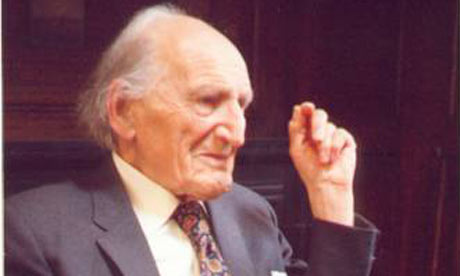
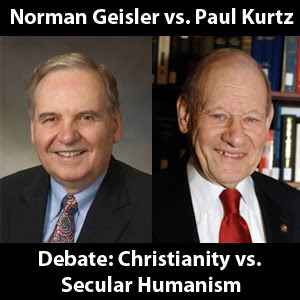


 Installed prominently in the entrance hall of the Deming Fine Arts Building at Mary Baldwin College is a large-scale, abstract painting by New York artist and MBC alumna Judith Godwin (’52). Titled “Oriental Circus,” it was given as a gift by the artist to the college’s Department of Art and Art History in 1992, following its exhibition in Hunt Gallery as part of a group show of work by alumnae that same year. Measuring 50 inches in height and 126 inches wide, the oil painting is a triptych consisting of three equal-sized panels of stretched canvas. Its overall composition is a structured flurry of shapes, textures, and lines which are organized in such a way that the viewer’s eye is pulled from the left side of the painting to the right.


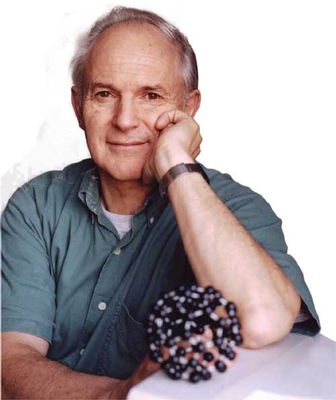 You are a chemist but your first love is graphic design. Is there common ground?