For instance, if tax rates increase, people may decide to earn and/or report less taxable income. When that happens, revenue won’t increase by as much as politicians hope.
And the reverse is true (in some cases, dramatically true) if tax rates decrease.
For today’s column, let’s look at a real-world example of the Laffer Curve.
Joshua Rauh of Stanford and Ryan Shyu of Amazon have new research that looks at what happened after California voters approved a big class-warfare tax increase in 2012.
Here are some excerpts from their study.
In this paper we study the question of the elasticity of the tax base with respect to taxation…on the universe of California taxpayers around the implementation of major 2012 ballot initiative, Proposition 30. …The Proposition 30 ballot initiative increased marginal income tax rates…by 3 percentage points for singles with over $500,000 in taxable income (married couples with over $1 million)…, the highest state-level marginal tax rate in the nation.…We…document a substantial onetime outflow of high-earning taxpayers from California in response to Proposition 30. …For those earning over $5 million, the rate of departures spiked from 1.5% after the 2011 tax year to 2.125% after the 2012 tax year, with a similar effect among taxpayers earning $2-5 million in 2012. …California top-earners on average report $522,000 less in taxable income in 2012, $357,000 less in 2013, and $599,000 less in 2014; this is relative to a baseline mean income of $4.15 million amongst our defined group of California top-earners in 2011. Compared to counterfactuals in similarly high-tax states, California top-earners on average report $352,000 less in taxable income in 2012, $373,000 less in 2013, and $481,000 less in 2014.
So some upper-income taxpayers moved and others (unsurprisingly) earned/reported less taxable income.
Did that have an impact on tax revenue?
The answer is yes.
…we assess the implications of our estimates for tax revenue in the context of California Proposition 30. A back of the envelope calculation based on our econometric estimates finds that the intensive and extensive margin responses to taxation combined to undo 45.2% of the revenue gains from taxation that otherwise would have accrued to California in the absence of behavioral responses within the first year and 60.9% within the first two years.
Wow, more than 60 percent of projected revenue evaporated within two years.
By the way, these estimates are based on data only through the middle of last decade. And something significant happened after that: The state and local tax deduction was curtailed as part of the Trump tax package.
The authors speculate that this will have very important implications.
…the “Tax Cuts and Jobs Act” (TCJA). Under this law, the top rate is 37% for single and head-of-household filers earning over $500,000, and for married filers earning over $600,000. Despite this nominal cut to top rates, the legislation on net increased rates on top earners because it capped state and local deductions at $10,000 total. … we use our top line intensive margin elasticity estimate to provide a ballpark quantification of the federal tax revenue implications of TCJA for the particular set of California high earners in our treatment group. …Consider a married California taxpayer earning $4.15 million of wage income. In 2017, this taxpayer pays a federal tax bill of $1,431,305. In 2018, incorporating the 8.6% income decrease, this taxpayer pays a federal tax bill of $1,333,946. This amounts to a 6.8% decrease in tax revenue, putting the TCJA on the wrong side of the Laffer Curve for high-earning individuals in California. … the TCJA increased incentives (in terms of the level of the average tax rate gap) to leave California for zero-tax states by 2.15 times the amount of Proposition 30 for those earning over $5 million, and by a factor of 2.43 for those earning from $2-5 million. Based on these scaling factors, we would predict an out-migration effect of 1.46% of those earning $2-5 million, and 1.51% of those earning $5 million.
None of this should be a surprise.
Indeed, I wrote back in 2012 that bad things would happen when Proposition 30 was approved.
I feel safe in stating that this measure is going to accelerate California’s economic decline. Some successful taxpayers are going to tunnel under the proverbial Berlin Wall and escape to states with better (or less worse) fiscal policy. …It goes without saying, of course, that California’s politicians…will act surprised when revenues fall short of projections because of the Laffer Curve.
To be fair, I don’t know if California politicians are genuinely surprised. I suspect many of them privately understand the adverse consequences of class-warfare tax policy. But they nonetheless support bad policy because they are motivated by a selfish desire to maximize votes.
In Part II, let’s look at Reagan’s track record on tax policy and ask whether we need another dose of “supply-side economics.”
When he took office, one of Reagan’s main goals was to lower marginal tax rates on American households. This was necessary for two reasons.
First, tax rates were too high, including a staggering 70-percent top rate for the personal income tax.
Second, more and more Americans were being hit by punitive tax rates because of “bracket creep.”
Since I’ve already written a lot about the problem of high tax rates, let’s address the second point.
During the 1970s, when inflation was high, there was understandable pressure to increase wages and salaries so that workers did not fall behind.
But when employees got pay raises to keep pace with inflation, that often meant they had to pay higher tax rates even though their inflation-adjusted incomes stayed constant.
This was not a trivial problem. Here’s a table from the study I recently wrote for the Club for Growth Foundation. As you can see, middle class households wound up paying much higher marginal tax rates as the 1970s came to a close.
President Reagan recognized this problem and he did two things to help American families.
First, he lowered tax rates across board as part of his 1981 tax cut and his 1986 tax reform, with the top tax rate dropping from 70 percent in 1980 to 28 percent in 1988.
Second, he “indexed” the personal income tax for inflation, meaning households no longer would be pushed into higher tax brackets because of bad monetary policy.
In 1981, Reagan convinced Congress to enact the Economic Recovery Tax Act, which phased in lower income tax rates for all taxpayers. …Equally important, Reagan got Congress to adopt “indexing,” which meant that tax brackets were automatically adjusted for inflation. That reform ensured that government no longer profited from inflation. During his second term, Reagan then worked with Congress to approve the Tax Reform Act of 1986. That legislation further lowered tax rates for all taxpayers. …the Reagan tax cuts helped trigger an economic boom. The United States experienced a record economic expansion, with millions of jobs being created and family incomes rising to record levels after the malaise and stagnation of the Carter years. Households earned more money, and they got to keep a greater share of their earnings. Net worth also increased substantially, putting America’s middle class in a very strong position.
By the way, even though my left-leaning friends are viscerally opposed to lower tax rates for upper-income taxpayers, it’s worth noting that the IRS wound up collecting more money from the rich after Reagan slashed tax rates. A lot more money.
But is Reagan’s supply-side tax policy still relevant today?
Some people think tax policy is no longer a problem because individual income tax rates are lower than they were when Reagan took office and indexing is still protecting people from inflation (which has recently been a problem).
For what it’s worth, I think personal income tax rates are still far too high.
But the main reason that we need Reaganomics 2.0 is that the United States faces a major problem with double taxation. To be more specific, the IRS imposes very harsh tax rates on income that is saved and invested.
Here’s Figure 9 from the paper. You can see on the left that America’s personal income tax rate is only slightly higher than the average of other rich nations and the corporate tax rate is only somewhat higher.
But you can see on the right where America really lags, with significantly higher tax burdens on capital gainsand dividend income.
Incidentally, the chart also shows that the United States would be wildly uncompetitive if Biden’s tax proposals were enacted.
P.S. The capital gains tax is not indexed for inflation, so people often are hit by that tax even when they lose money on an investment. That’s obviously another area where we need Reaganomics 2.0.
———-
This past article below from Dan Mitchell tells the story of Ronald Reagan’s successful strategy against inflation. I had a front row seat since I got to read the book and see the film FREE TO CHOOSE by Milton Friedman in 1980 who Reagan agreed with on this issue and I have included below the episode on inflation!
He also restored America’s national defenses and reoriented foreign policy, both of which led to the collapse of the Soviet Empire, a stupendous achievement that makes Reagan worthy of Mount Rushmore.
But he also has another great achievement, one that doesn’t receive nearly the level of appreciation that it deserves. President Reagan demolished the economic cancer of inflation.
Even Paul Krugman has acknowledged that reining in double-digit inflation was a major positive achievement. Because of his anti-Reagan bias, though, he wants to deny the Gipper any credit.
Robert Samuelson, in a column for the Washington Post, corrects the historical record.
Krugman recently wrote acolumnarguing that the decline of double-digit inflation in the 1980s was the decade’s big economic event, not the cuts in tax rates usually touted by conservatives. Actually, I agree with Krugman on this. But then he asserted that Ronald Reagan had almost nothing to do with it. That’s historically incorrect. Reagan was crucial. …Krugman’s error is so glaring.
Samuelson first provides the historical context.
For those too young to remember, here’s background. From 1960 to 1980, inflation — the general rise of retail prices —marched relentlessly upward. It went from 1.4 percent in 1960 to 5.9 percent in 1969 to 13.3 percent in 1979. The higher it rose, the more unpopular it became. …Worse, government seemed powerless to defeat it. Presidents deployed complex wage and price controls and guidelines. They didn’t work. The Federal Reserve — custodian of credit policies — veered between easy money and tight money, striving both to subdue inflation and to maintain “full employment” (taken as a 4 percent to 5 percent unemployment rate). It achieved neither. From the late 1960s to the early 1980s, there werefour recessions. Inflation became a monster, destabilizing the economy.
The column then explains that there was a dramatic turnaround in the early 1980s, as Fed Chairman Paul Volcker adopted a tight-money policy and inflation was squeezed out of the system much faster than almost anybody thought was possible.
But Krugman wants his readers to think that Reagan played no role in this dramatic and positive development.
Samuelson says this is nonsense. Vanquishing inflation would have been impossible without Reagan’s involvement.
What Reagan provided was political protection. The Fed’s previous failures to stifle inflation reflected its unwillingness to maintain tight-money policies long enough… Successive presidents preferred a different approach: the wage-price policies built on the pleasing (but unrealistic) premise that these could quell inflation without jeopardizing full employment. Reagan rejected this futile path. As the gruesome social costs of Volcker’s policies mounted — the monthly unemployment rate would ultimately rise to a post-World War II high of10.8 percent— Reagan’s approval ratings plunged. In May 1981, they were at 68 percent; by January 1983, 35 percent. Still, he supported the Fed. …It’s doubtful that any other plausible presidential candidate, Republican or Democrat, would have been so forbearing.
What’s the bottom line?
What Volcker and Reagan accomplished was an economic and political triumph. Economically, ending double-digit inflation set the stage for a quarter-century of near-automatic expansion… Politically, Reagan and Volcker showed that leaders can take actions that, though initially painful and unpopular, served the country’s long-term interests. …There was no explicit bargain between them. They had what I’ve called a “compact of conviction.”
By the way, Krugman then put forth a rather lame response to Samuelson, including the rather amazing claim that “[t]he 1980s were a triumph of Keynesian economics.”
As preached and practiced since the 1960s, Keynesian economics promised to stabilize the economy at levels of low inflation and high employment. By the early 1980s, this vision was in tatters, and many economists were fatalistic about controlling high inflation. Maybe it could be contained. It couldn’t be eliminated, because the social costs (high unemployment, lost output) would be too great. …This was a clever rationale for tolerating high inflation, and the Volcker-Reagan monetary onslaught demolished it. High inflation was not an intrinsic condition of wealthy democracies. It was the product of bad economic policies. This was the 1980s’ true lesson, not the contrived triumph of Keynesianism.
If anything, Samuelson is being too kind.
One of the key tenets of Keynesian economics is that there’s a tradeoff between inflation and unemployment (the so-called Phillips Curve).
Yet in the 1970s we had rising inflation and rising unemployment.
While in the 1980s, we had falling inflation and falling unemployment.
But if you’re Paul Krugman and you already have a very long list of mistakes (see here, here, here, here,here,here,here, here, andherefor a few examples), then why not go for the gold and try to give Keynes credit for the supply-side boom of the 1980s
P.S. Since today’s topic is Reagan, it’s a good opportunity to share my favorite poll of the past five years.
P.P.S. Here are some great videos of Reagan in action. And here’s one more if you need another Reagan fix.
Milton Friedman’s FREE TO CHOOSE “How to cure inflation” Transcript and Video (60 Minutes)
In 1980 I read the book FREE TO CHOOSE by Milton Friedman and it really enlightened me a tremendous amount. I suggest checking out these episodes and transcripts of Milton Friedman’s film series FREE TO CHOOSE: “The Failure of Socialism” and “What is wrong with our schools?” and “Created Equal” and From Cradle to Grave, and – Power of the Market.“If we could just stop the printing presses, we would stop inflation,” Milton Friedman says in “How to Cure Inflation” from the Free To Choose series. Now as then, there is only one cause of inflation, and that is when governments print too much money. Milton explains why it is that politicians like inflation, and why wage and price controls are not solutions to the problem.
http://www.freetochoosemedia.org/freetochoose/detail_ftc1980_transcript.php?page=9While many people have a fairly good grasp of what inflation is, few really understand its fundamental cause. There are many popular scapegoats: labor unions, big business, spendthrift consumers, greed, and international forces. Dr. Friedman explains that the actual cause is a government that has exclusive control of the money supply. Friedman says that the solution to inflation is well known among those who have the power to stop it: simply slow down the rate at which new money is printed. But government is one of the primary beneficiaries of inflation. By inflating the currency, tax revenues rise as families are pushed into higher income tax brackets. Thus, inflation transfers wealth and resources from the private to the public sector. In short, inflation is attractive to government because it is a way of increasing taxes without having to pass new legislation to raise tax rates. Inflation is in fact taxation without representation. Wage and price controls are not the cure for inflation because they treat only the symptom (rising prices) and not the disease (monetary expansion). History records that such controls do not work; instead, they have perverse effects on both prices and economic growth and undermine the fundamental productivity of the economy. There is only one cure for inflation: slow the printing presses. But the cure produces the painful side effects of a temporary increase in unemployment and reduced economic growth. It takes considerable political courage to undergo the cure. Friedman cites the example of Japan, which successfully underwent the cure in the mid-seventies but took five years to squeeze inflation out of the system. Inflation is a social disease that has the potential for destroying a free society if it is unchecked. Prolonged inflation undermines belief in the basic equity of the free market system because it tends to destroy the link between effort and reward. And it tears the social fabric because it divides society into winners and losers and sets group against group.(Taxation without representation: Getting knocked up to higher tax brackets because of inflation pt 1)http://www.youtube.com/watch?v=b1dTWDNKH3c
Volume 9 – How to Cure Inflation
Transcript:
Friedman: The Sierra Nevada’s in California 10,000 feet above sea level, in the winter temperatures drop to 40 below zero, in the summer the place bakes in the thin mountain air. In this unlikely spot the town of Body sprang up. In its day Body was filled with prostitutes, drunkards and gamblers part of a colorful history of the American West.
A century ago, this was a town of 10,000 people. What brought them here? Gold. If this were real gold, people would be scrambling for it. The series of gold strikes throughout the West brought people from all over the world, all kinds of people. They came here for one purpose and one purpose only, to strike it rich, quick. But in the process, they built towns, cities, in places where nobody would otherwise have dreamed of building a city. Gold built these cities and when the gold was exhausted, the cities collapsed and became ghost towns. Many of the people who came here ended up the way they began, broke and unhappy. But a few struck it rich. For them, gold was real wealth. But was it for the world as a whole. People couldn’t eat the gold, they couldn’t wear the gold, they couldn’t live in houses made of gold. Because there was more gold, they had to pay a little more gold to buy goods and services. The prices of things in terms of gold went up.
At tremendous cost, at sacrifice of lives, people dug gold out of the bowels of the earth. What happened to that gold? Eventually, at long last, it was transported to distant places only to be buried again under the ground. This time in the vaults of banks throughout the world. There is hardly anything that hasn’t been used for money; rock salt in Ethiopia, brass rings in West Africa, Calgary shells in Uganda, even a toy cannon. Anything can be used as money. Crocodile money in Malaysia, absurd isn’t it?
That beleaguered minority of the population that still smokes may recognize this stuff as the raw material from which their cigarettes are made. But in the early days of the colonies, long before the U.S. was established, this was money. It was the common money of Virginia, Maryland and the Carolinas. It was used for all sorts of things. The legislature voted that it could be used legally to pay taxes. It was used to buy food, clothing and housing. Indeed, one of the most interesting sites was to see the husky young fellows at that time, lug 100 pounds of it down to the docks to pay the costs of the passage of the beauteous young ladies who had come over from England to be their brides.
Now you know how money is. There’s a tendency for it to grow, for more and more of it to be produced and that’s what happened with this tobacco. As more tobacco was produced, there was more money. And as always when there’s more money, prices went up. Inflation. Indeed, at the very end of the process, prices were 40 times as high in terms of tobacco as they had been at the beginning of the process. And as always when inflation occurs, people complained. And as always, the legislature tried to do something. And as always, to very little avail. They prohibited certain classes of people from growing tobacco. They tried to reduce the total amount of tobacco grown, they required people to destroy part of their tobacco. But it did no good. Finally, many people took it into their own hands and they went around destroying other people’s tobacco fields. That was too much. Then they passed a law making it a capital offense, punishable by death, to destroy somebody else’s tobacco. Grecian’s Law, one of the oldest laws in economics, was well illustrated. That law says that cheap money drives out dear money and so it was with tobacco. Anybody who had a debt to pay, of course, tried to pay it in the worst quality of tobacco he had. He saved the good tobacco to sell overseas for hard money. The result was that bad money drove out good money.
Finally, almost a century after they had started using tobacco as money, they established warehouses in which tobacco was deposited in barrels, certified by an inspector according to his views as to it’s quality and quantity. And they issued warehouse certificates which people gave from one to another to pay for the bills that they accumulated.
These pieces of green printed paper are today’s counterparts of those tobacco certificates. Except that they bear no relation to any commodity. In this program I want to take you to Britain to see how inflation weakens the social fabric of society. Then to Tokyo, where the Japanese have the courage to cure inflation. To Berlin, where there is a lesson to be learned from the West Germans and how so called cures are often worse than the disease. And to Washington where our government keeps these machines working overtime. And I am going to show you how inflation can be cured.
The fact is that most people enjoy the early stages of the inflationary process. Britain, in the swinging 60’s, there was plenty of money around, business was brisk, jobs were plentiful and prices had not yet taken off. Everybody seemed happy at first. But by the early 70’s, as the good times rolled along, prices started to rise more and more rapidly. Soon, some of these people are going to lose their jobs. The party was coming to an end.
The story is much the same in the U.S. Only the process started a little later. We’ve had one inflationary party after another. Yet we still can’t seem to avoid them. How come?
Before every election our representatives would like to make us think we are getting a tax break. When they are able to do it, while at the same time actually raising our taxes because of a bit of magic they have in their kit bag. That magic is inflation. They reduced the tax rates but the taxes we have to pay go up because we are automatically shoved into higher brackets by the effective inflation. A neat trick. Taxation without representation.
_________________________________________
Pt 2 Many a political leader has been tempted to turn to wage and price controls despite their repeated failure in practice. On this subject they never seem to learn. But some lessons may be learned. That happened to British P
Bob Crawford: The more I work, it seems like the more they take off me. I know if I work an extra day or two extra days, what they take in federal income tax alone is almost doubled because apparently it puts you in a higher income tax bracket and it takes more off you.
Friedman: Bob Crawford lives with his wife and three children in a suburb of Pittsburgh. They’re a fairly average American family.
Mrs. Crawford: Don’t slam the door Daphne. Okay. Alright. What are you doing? Making your favorite dish.
Friedman: We went to the Crawford’s home after he had spent a couple of days working out his federal and state income taxes for the year. For our benefit, he tried to estimate all the other taxes he had paid as well. In the end, though, he didn’t discover much that would surprise anybody.
Bob Crawford: Inflation is going up, everything is getting more expensive. No matter what you do, as soon as you walk out of the house, everything went up. Your gas bills keep going up, electric bills, your gasoline, you can name a thousand things that are going up. Everything is going sky high. Your food. My wife goes to the grocery store. We used to live on say, $60 or $50 every two weeks just for our basic food. Now it’s $80 or $90 every two weeks. Things are just going out of sight as far as expense to live on. Like I say it’s getting tough. It seems like every month it gets worse and worse. And I don’t know where it’s going to end. At the end of the day that I spend nearly $6,000 of my earnings on taxes. That leaves me with a total of $12,000 to live on. It might seem like a lot of money, but five, six years ago I was earning $12,000.
Friedman: How does taxation without representation really effect how much the Crawford family has left to spend after it’s paid its income taxes. Well in 1972 Bob Crawford earned $12,000. Some of that income was not subject to income tax. After paying income tax on the rest he had this much left to spend. Six years later he was earning $18,000 a year. By 1978 the amount free from tax was larger. But he was now in a higher tax bracket so his taxes went up by a larger percentage than his income. However, those dollars weren’t worth anything like as much. Even his wages, let alone his income after taxes, hadn’t kept up with inflation. His buying power was lower than before. That is taxation without representation in practice.
Unnamed Individual: We have with us today you brothers that are sitting here today that were with us on that committee and I’d like to tell you….
Friedman: There are many traditional scapegoats blamed for inflation. How often have you heard inflation blamed on labor unions for pushing up wages. Workers, of course, don’t agree.
Unnamed Individual: But fellows this is not true. This is subterfuge. This is a myth. Your wage rates are not creating inflation.
Friedman: And he’s right. Higher wages are mostly a result of inflation rather than a cause of it. Indeed, the impression that unions cause inflation arises partly because union wages are slow to react to inflation and then there is pressure to catch up.
Worker: On a day to day basis, try to represent our own numbers. But that in fact is not the case. Not only can we not play catch up, we can’t even maintain a wage rate commensurate with the cost of living that’s gone up in this country.
Friedman: Another scapegoat for inflation is the cost of goods coming from abroad. Inflation, we’re told, is imported. Higher prices abroad driving up prices at home. It’s another way government can blame someone else for inflation. But this argument, too, is wrong. The prices of imports and the countries from which they come are not in terms of dollars, they are in terms of lira or yen or other foreign currencies. What happens to their prices in dollars depends on exchange rates which in turn reflect inflation in the United States.
Since 1973 some governments have had a field day blaming the Arabs for inflation. But if high oil prices were the cause of inflation, how is it that inflation has been less here in Germany, a country that must import every drop of oil and gas that it uses on the roads and in industry, then for example it is in the U.S. which produces half of its own oil. Japan has no oil of its own at all. Yet at the very time the Arabs were quadrupling oil prices, the Japanese people were bringing inflation down from 30 to less than 5% a year. The fallacy is to confuse particular prices like the price of oil, with prices in general. Back at home, President Nixon understood this.
Nixon: “Now here’s what I will not do. I will not take this nation down the road of wage and price controls however politically expedient that may seem. The pros of rationing may seem like an easy way out, but they are really an easy way in for more trouble. To the explosion that follows when you try to clamp a lid on a rising head of steam without turning down the fire under the pot, wage and price controls only postpone the day of reckoning. And in so doing, they rob every American of a very important part of his freedom.
Friedman: Now listen to this:
Nixon: “The time has come for decisive action. Action that will break the vicious circle of spiraling prices and costs. I am today ordering a freeze on all prices and wages throughout the United States for a period of 90 days. In addition, I call upon corporations to extend the wage price freeze to all dividends.”
Friedman: Many a political leader has been tempted to turn to wage and price controls despite their repeated failure in practice. On this subject they never seem to learn. But some lessons may be learned. That happened to British Prime Minister James Callahan who finally discovered that a very different economic myth was wrong. He told the Labor Party Conference about it in 1976.
James Callahan: “We used to think that you could use, spend your way out of a recession and increase employment by cutting taxes and boosting government spending. I tell you in all candor that option no longer exists. It only works on each occasion since the war by injecting a bigger dose of inflation into the economy followed by a higher level of unemployment as the next step. That’s the history of the last 20 years.”
Friedman: Well, it’s one thing to say it. One reason why inflation does so much harm is because it effects different groups differently. Some benefit and of course they attribute that to their own cleverness. Some are hurt, but of course they attribute that to the evil actions of other people. And the whole problem is made far worse by the false cures which government adopts, particularly wage and price control.
The garbage collectors in London felt justifiably aggrieved because their wages had not been permitted to keep pace with the cost of living. They struck, hurting not the people who impose the controls, but their friends and neighbors who had to live with mounting piles of rat infested garbage. Hospital attendants felt justifiably aggrieved because their wages had not been permitted to keep up with the cost of living. They struck, hurting not the people who impose the controls, but cancer patients who were turned out of hospital beds. The attendants behaved as a group in a way they never would have behaved as individuals. One group is set against another group. The social fabric of society is torn apart inflicting scars that it will take decades to heal and all to no avail because wage and price controls, far from being a cure for inflation, only make inflation worse.
Within the memory of most of our political leaders, there’s one vivid example of how economic ruin can be magnified by controls. And the classic demonstration of what to do when it happens.
_______________________________________________
(Wage and Price Controls don’t work)
Inflation is just like alcoholism. In both cases when you start drinking or when you start printing too much money, the good effects come first. The bad effects only come later.
That’s why in both cases there is a strong temptation to overdo it. To drink too much and to print too much money. When it comes to the cure, it’s the other way around. When you stop drinking or when you stop printing money, the bad effects come first and the good effects only come later.
Pt 3
Germany, 1945, a devastated country. A nation defeated in war. The new governing body was the Allied Control Commission, representing the United States, Britain, France and the Soviet Union. They imposed strict controls on practically every aspect of life including wages and prices. Along with the effects of war, the results were tragic. The basic economic order of the country began to collapse. Money lost its value. People reverted to primitive barter where they used cameras, fountain pens, cigarettes, whiskey as money. That was less than 40 years ago.
This is Germany as we know it today. Transformed into a place a lot of people would like to live in. How did they achieve their miraculous recovery? What did they know that we don’t know?
Early one Sunday morning, it was June 20, 1948, the German Minister of Economics, Ludwig Earhardt, a professional economist, simultaneously introduced a new currency, today’s Deutsche Mark, and in one fell swoop, abolished almost all controls on prices and wages. Why did he do it on a Sunday morning? It wasn’t as you might suppose because the Stock Markets were closed on that day, it was, as he loved to confess, because the offices of the American, the British, and the French occupation authorities were closed that day. He was sure that if he had done it when they open they would have countermanded the order. It worked like a charm. Within days, the shops were full of goods. Within months, the German economy was humming along at full steam. Economists weren’t surprised at the results, after all, that’s what a price system is for. But to the rest of the world it seemed an economic miracle that a defeated and devastated country could in little more than a decade become the strongest economy on the continent of Europe.
In a sense this city, West Berlin, is something of a unique economic test tube. Set as it is deep in Communist East Germany. Two fundamentally different economic systems collide here in Europe. Ours and theirs, separated by political philosophies, definitions of freedom and a steel and concrete wall.
To digress from inflation, economic freedom does not stand alone. It is part of a wider order. I wanted to show you how much difference it makes by letting you see how the people live on the other side of that Berlin Wall. But the East German authorities wouldn’t let us. The people over there speak the same language as the people over here. They have the same culture. They have the same for bearers. They are the same people. Yet you don’t need me to tell you how differently they live. There is one simple explanation. The political system over there cannot tolerate economic freedom. The political system over here could not exist without it.
But political freedom cannot be preserved unless inflation is kept in bounds. That’s the responsibility of government which has a monopoly over places like this. The reason we have inflation in the United States or for that matter anywhere in the world is because these pieces of paper and the accompanying book entry or their counterparts in other nations are growing more rapidly than the quantity of goods and services produced. The truth is inflation is made in one place and in one place only. Here in Washington. This is the only place were there are presses like this that turn out these pieces of paper we call money. This is the place where the power resides to determine how rapidly the amount of money shall increase.
What happened to all that noise? That’s what would happen to inflation if we stop letting the amount of money grow so rapidly. This is not a new idea. It’s not a new cure. It’s not a new problem. It’s happened over and over again in history. Sometimes inflation has been cured this way on purpose. Sometimes it’s happened by accident. During the Civil War the North, late in the Civil War, overran the place in the South where the printing presses were sitting up, where the pieces of paper were being turned out. Prior to that point, the South had a very rapid inflation. If my memory serves me right, something like 4% a month. It took the Confederacy something over two weeks to find a new place where they could set up their printing presses and start them going again. During that two week period, inflation came to a halt. After the two week period, when the presses started running again, inflation started up again. It’s that clear, that straightforward. More recently, there’s another dramatic example of the only effective way to deal with rampant inflation.
In 1973, Japanese housewives going to market were faced with an unpleasant fact. The cash in their purses seemed to be losing its value. Prices were starting to sore as the awful story of inflation began to unfold once again. The Japanese government knew what to do. What’s more, they were prepared to do it. When it was all over, economists were able to record precisely what had happened. In 1971 the quantity of money started to grow more rapidly. As always happens, inflation wasn’t affected for a time. But by late 1972 it started to respond. In early 73 the government reacted. It started to cut monetary growth. But inflation continued to soar for a time. The delayed reaction made 1973 a very tough year of recession. Inflation tumbled only when the government demonstrated its determination to keep monetary growth in check. It took five years to squeeze inflation out of the system. Japan attained relative stability. Unfortunately, there’s no way to avoid the difficult road the Japanese had to follow before they could have both low inflation and a healthy economy. First they had to live through a recession until slow monetary growth had its delayed effect on inflation.
Inflation is just like alcoholism. In both cases when you start drinking or when you start printing too much money, the good effects come first. The bad effects only come later.
That’s why in both cases there is a strong temptation to overdo it. To drink too much and to print too much money. When it comes to the cure, it’s the other way around. When you stop drinking or when you stop printing money, the bad effects come first and the good effects only come later. That’s why it’s so hard to persist with the cure. In the United States, four times in the 20 years after 1957, we undertook the cure. But each time we lacked the will to continue. As a result, we had all the bad effects and none of the good effects. Japan on the other hand, by sticking to a policy of slowing down the printing presses for five years, was by 1978 able to reap all the benefits, low inflation and a recovering economy. But there is nothing special about Japan. Every country that has had the courage to persist in a policy of slow monetary growth has been able to cure inflation and at the same time achieve a healthy economy.
___________________________________
Pt 4
The job of the Federal Reserve is not to run government spending; it’s not to run government taxation. The job of the Federal Reserve is to control the money supply and I believe, frankly, I have always believed as you know, that these are excuses and not reasons for the performance.
DISCUSSION
Participants: Robert McKenzie, Moderator; Milton Friedman; Congressman Clarence J. Brown; William M. Martin, Chairman of Federal Reserve 1951_1970; Beryl W. Sprinkel, Executive Vice President, Harris Bank, Chicago; Otmar Emminger, President, Ieutsche Bundesbank, Frankfurt West Germany
MCKENZIE: And here at the Harper Library of the University of Chicago, our distinguished guests have their own ideas, too. So, lets join them now.
BROWN: If you could control the money supply, you can certainly cut back or control the rate of inflation. I’d have to say that that prescription is a little bit easier to write than it is to fill. I think there are some other ways to do it and I would relate the money supply __ I think inflation is a measure of the relationship between money and the goods and services that money is meant to cover. And so if you can stimulate the goods, the production of goods and services, it’s helpful. It’s a little tougher to control the money supply, although I think it can be done, than just saying that you should control it, because we’ve got the growth of credit cards, which is a form of money; created, in effect, by the free enterprise system. It isn’t all just printed in Washington, but that may sound too defensive. I think he was right in saying that the inflation is Washington based.
MCKENZIE: Mr. Martin, nobody has been in the firing line longer than you, 17 years head of the Fed. Could you briefly comment on that and we’ll go around the group.
MARTIN: I want to say 19 years.
(Laughter)
MARTIN: I wouldn’t be out here if it weren’t for Milton Friedman, today. He came down and gave us advice from time to time.
FRIEDMAN: You’ve never taken it.
(Laughter)
MCKENZIE: He’s going to do some interviewing later, I warn you.
MARTIN: And I’m rather glad we didn’t take it __
(Laughter)
MARTIN: __ all the time.
SPRINKEL: In your 19 years as Chairman of the Federal Reserve, Bill, the average growth in the money supply was 3.1 percent per year. The inflation rate was 2.2 percent. Since you left, the money supply has exactly doubled. The inflation rate is average over 7 percent, and, of course, in recent times the money supply has been growing in double-digit territory as has our inflation rate.
EMMINGER: May I, first of all, confirm two facts which have been so vividly brought out in the film of Professor Friedman; namely, that at the basis of the relatively good performance of Western Germany were really two events. One, the establishment of a new sound money which we try to preserve sound afterwards. And, secondly, the jump overnight into a free market economy without any controls over prices and wages. These are the two fundamental facts. We have tried to preserve monetary stability by just trying to follow this prescription of Professor Friedman; namely, monetary discipline. Keeping monetary growth relatively moderate. I must, however, warn you it’s not so easy as it looks. If you just say, governments have to have the courage to persist in that course.
FRIEDMAN: Nobody does disagree with the proposition that excessive growth in money supply is an essential element in the inflationary process and that the real problem is not what to do, but how to have the courage and the will to do it. And I want to go and start, if I may, on that subject; because I think that’s what we ought to explore. Why is it we haven’t had the courage and don’t, and under what circumstances will we? And I want to start with Bill Martin because his experience is a very interesting experience. His 19 years was divided into different periods. In the first period, that average that Beryl Sprinkel spoke about, averaged two very different periods. An early period of very slow growth and slow inflation; a later period of what at the time was regarded as creeping inflation __ now we’d be delighted to get back to it. People don’t remember that at the time that Mr. Nixon introduced price and wage controls in 1971 to control an outrageous inflation, the rate of inflation was four-and-a-half percent per year. Today we’d regard that as a major achievement; but the part of the period when you were Chairman, was a period when the inflation rate was starting to creep up and money growth rate was also creeping up. Now if I go from your period, you were eloquent in your statements to the public, to the press, to everyone, about the evils of inflation, and about the determination on the Federal Reserve not to be the architect of inflation. Your successor, Arthur Burns, was just as eloquent. Made exactly the same kinds of statements as effectively, and again over and over again said the Federal Reserve will not be the architect of inflation. His successor, Mr. G. William Miller, made the same speeches, and the same statements, and the same protestations. His successor, Paul Volcker, he is making the same statements. Now my question to you is: Why is it that there has been such a striking difference between the excellent pronouncements of all Chairmen of the Fed, therefore it’s not personal on you. You have a lot of company, unfortunately for the country. Why is it that there has been such a wide diversion between the excellent pronouncements on the one hand and what I regard as a very poor performance on the other?
MARTIN: Because monetary policy is not the only element. Fiscal policy is equally important.
FRIEDMAN: You’re shifting the buck to the Treasury.
MARTIN: Yes.
FRIEDMAN: To the Congress. We’ll get to Mr. Brown, don’t worry.
MARTIN: Yeah, that’s right.
(Laughter)
MARTIN: The relationship of fiscal policy to monetary policy is one of the important things.
MCKENZIE: Would you remind us, the general audience, when you say “fiscal policy”, what you mean in distinction to “monetary policy”?
MARTIN: Well, taxation.
MCKENZIE: Yeah.
MARTIN: The raising revenue.
FRIEDMAN: And spending.
MARTIN: And spending.
FRIEDMAN: And deficits.
MARTIN: And deficits, yes, exactly. And I think that you have to realize that when I’ve talked for a long time about the independence of the Federal Reserve. That’s independence within the government, not independence of the government. And I’ve worked consistently with the Treasury to try to see that the government is financed. Now this gets back to spending. The government says they’re gonna spend a certain amount, and then it turns out they don’t spend that amount. It doubles.
FRIEDMAN: The job of the Federal Reserve is not to run government spending; it’s not to run government taxation. The job of the Federal Reserve is to control the money supply and I believe, frankly, I have always believed as you know, that these are excuses and not reasons for the performance.
MARTIN: Well that’s where you and I differ, because I think we would be irresponsible if we didn’t take into account the needs and what the government is saying and doing. I think if we just went on our own, irresponsibly, I say it on this, because I was in the Treasury before I came to this __
FRIEDMAN: I know. I know.
MARTIN: __ go to the Fed; and I know the other side of the picture. I think we’d be rightly condemned by the American people and by the electorate.
FRIEDMAN: Every central bank in this world, including the German Central Bank, including the Federal Reserve System, has the technical capacity to make the money supply do over a period of two or three or four months, not daily, but over a period, has the technical capacity to control it.
(Several people talking at once.)
FRIEDMAN: I cannot explain the kind of excessive money creation that has occurred, in terms of the technical incapacity of the Federal Reserve System or of the German Central Bank, or of the Bank of England, or any other central bank in the world.
EMMINGER: I wouldn’t say technically we are incapable of doing that, although we have never succeeded in controlling the money supply month that way. But I would say we can, technically, control it half yearly, from one half-year period to the next and that would be sufficient __
FRIEDMAN: That would be sufficient.
EMMINGER: __ for controlling inflation. But however I __
VOICE OFF SCREEN: It doesn’t move.
FRIEDMAN: I’m an economic scientist, and I’m trying to observe phenomena, and I observe that every Federal Reserve Chairman says one thing and does another. I don’t mean he does, the system does.
MCKENZIE: Yeah. How different is your setup in Germany? You’ve heard this problem of governments getting committed to spending and the Fed having, one way or the other, to accommodate itself to it. Now what’s your position on this very interesting problem?
EMMINGER: We are very independent of the government, from the government, but, on the other hand, we are an advisor of the government. Also on the budget deficits and they would not easily go before Parliament with a deficit which much of it is openly criticized and disapproved by the same bank. Why because we have a tradition in our country that we can also publicly criticize the government on his account. And second, as if happened in our case too, the government goes beyond what is tolerable for the sake of moral equilibrium. We have let it come through in the capital markets. That is to say they have enough interest rates that has drawn public criticism and that has had some effect on their attitude.
_________________________________________
Pt 5
I think that is a very important point that Dr. Emminger just made because there is not a one-to-one relationship between government deficits and what happens to the money supply at all. The pressure on the Federal Reserve comes indirectly. It comes because large government deficits, if they are financed in the general capital market, will drive up interest rates and then we have the right patents in Congress and their successors pressuring the Federal Reserve to enter in and finance the deficit by printing money as a way of supposedly holding down interest rates. Now before I turn to Mr. Brown and ask him that, I just want to make one point which is very important. The Federal Reserve’s activities in trying to hold down interest rates have put us in a position where we have the highest interest rates in history. It’s another example of how, of the difference between the announced intentions of a policy, and the actual results. But now I want to come to Clarence Brown and ask him, shift the buck to him, and put him on the hot seat for a bit. The government spending has been going up rapidly, Republican administration or Democratic administration. This is a nonpartisan issue, it doesn’t matter. Government deficits have been going up rapidly. Republican administration or Democratic administration. Why is it that here again you have the difference between pronouncements and performance? There is no Congressman, no Senator, who will come out and say, “I am in favor of inflation.” There is not a single one who will say, “I am in favor of big deficits.” They’ll all say we want to balance the budget, we want to hold down spending, we want an economical government. How do you explain the difference between performance and talk on the side of Congress?
BROWN:
FRIEDMAN: I think that is a very important point that Dr. Emminger just made because there is not a one-to-one relationship between government deficits and what happens to the money supply at all. The pressure on the Federal Reserve comes indirectly. It comes because large government deficits, if they are financed in the general capital market, will drive up interest rates and then we have the right patents in Congress and their successors pressuring the Federal Reserve to enter in and finance the deficit by printing money as a way of supposedly holding down interest rates. Now before I turn to Mr. Brown and ask him that, I just want to make one point which is very important. The Federal Reserve’s activities in trying to hold down interest rates have put us in a position where we have the highest interest rates in history. It’s another example of how, of the difference between the announced intentions of a policy, and the actual results. But now I want to come to Clarence Brown and ask him, shift the buck to him, and put him on the hot seat for a bit. The government spending has been going up rapidly, Republican administration or Democratic administration. This is a nonpartisan issue, it doesn’t matter. Government deficits have been going up rapidly. Republican administration or Democratic administration. Why is it that here again you have the difference between pronouncements and performance? There is no Congressman, no Senator, who will come out and say, “I am in favor of inflation.” There is not a single one who will say, “I am in favor of big deficits.” They’ll all say we want to balance the budget, we want to hold down spending, we want an economical government. How do you explain the difference between performance and talk on the side of Congress?
BROWN: Well, first I think we have to make one point. I’m not so much with the government as I am against it.
FRIEDMAN: I understand.
BROWN: As you know, I’m a minority member of Congress.
FRIEDMAN: Again, I’m not __ I’m not directing this at you personally.
BROWN: I understand, of course; and while the administrations, as you’ve mentioned, Republican and Democratic administrations, have both been responsible for increases in spending, at least in terms of their recommendations. It is the Congress and only the Congress that appropriates the funds and determines what the taxes are. The President has no authority to do that and so one must lay it at the feet of the U.S. Congress. Now, I guess we’d have to concede that it’s a little bit more fun to give away things than it is to withhold them. And this is the reason that the Congress responds to a general public that says, “I want you to cut everybody else’s program but the one in which I am most particularly interested. Save money, but incidentally, my wife is taking care of the orphanages and so lets try to help the orphanages,” or whatever it is. Let me try to make a point, if I can, however, on what I think is a new spirit moving within the Congress and that is that inflation, as a national affliction, is beginning to have an impact on the political psychology of many Americans. Now the Germans, the Japanese and others have had this terrific postwar inflation. The Germans have been through it twice, after World War I and World War II, and it’s a part of their national psyche. But we are affected in this country by the depression. Our whole tax structure is built on the depression. The idea of the tax structure in the past has been to get the money out of the mattress where it went after the banks failed in this country and jobs were lost, and out of the woodshed or the tin box in the back yard, get it out of there and put it into circulation. Get it moving, get things going. And one of the ways to do that was to encourage inflation. Because if you held on to it, the money would depreciate; and the other way was to tax it away from people and let the government spend it. Now there’s a reaction to that and people are beginning to say, “Wait just a minute. We’re not afflicted as much as we were by depression. We’re now afflicted by inflation, and we’d like for you to get it under control.” Now you can do that in another way and that without reducing the money supply radically. I think the Joint Economic Committee has recommended that we do it gradually. But the way that you can do it is to reduce taxes and the impact of government, that is the weight of government and increase private savings so that the private savings can finance some of the debt that you have.
FRIEDMAN: There is no way you can do it without reducing, in my opinion, the rate of monetary growth. And I, recognizing the facts, even though they ought not to be that way, I wonder whether you can reduce the rate of monetary growth unless Congress actually does reduce government spending as well as government taxes.
BROWN: The problem is that every time we use demand management, we get into a kind of an iron maiden kind of situation. We twist this way and one of the spikes grabs us here, so we twist that way and a spike over here gets us. And every recession has had higher basic unemployment rates than the previous recession in the last several years and every inflation has had higher inflation. We’ve got to get that tilt out of the society.
MCKENZIE: Wouldn’t it be fair to say, though, that a fundamental difference is the Germans are more deeply fearful of a return to inflation, having had the horrifying experience between the wars, especially. We tend to be more afraid of recession turning into depression.
EMMINGER: I think there is something in it and in particular in Germany the government would have to fear very much in their electoral prospects if they went into such an election period with a high inflation rate. But there is another important difference.
MARTIN: We fear unemployment more than inflation it seems.
EMMINGER: You fear unemployment, but unemployment is feared with us, too, but inflation is just as much feared. But there is another difference; namely, once you have got into that escalating inflation, every time the base, the plateau is higher, it’s extremely difficult to get out of it. You must avoid getting into that, now that’s very cheap advice from me because you are now.
(Laughing)
EMMINGER: But we had, for the last fifteen, twenty years, always studied foreign experiences, and told ourselves we never must get into this vicious circle. Once you are in, it takes a long time to get out of it. That is what I am preaching now, that we should avoid at all costs to get again into this vicious circle as we had it already in ’73_’74. It took us, also, four years to get out of it, although we were only at eight percent inflation. Four years to get down to three percent. So you __
MCKENZIE: Those were __ yes.
EMMINGER: You have, I think, the question of whether you can do if in a gradualist way over many, many years, or whether you don’t need a sort of shock treatment.
____________________________________
her we go into a period of still higher unemployment later on and have it to do all over again. That’s the only choice we face. And when the public at large recognizes that, they will then elect people to Congress, and a President to office who is committed to less government spending and to less government printing of money and until that happens we will not cure inflation
Pt 6
SPRINKEL: The film said it took the Japanese _ what _ four years?
FRIEDMAN: Five years.
SPRINKEL: Five years. But one of my greatest concerns is that we haven’t suffered enough yet. Most of the nations that have finally got their inflations __
BROWN: Bad election speech.
SPRINKEL: __ well, I’m not running for office, Clarence.
(Laughter)
SPRINKEL: Most countries that finally got their inflation under control had 20, 30 percent or worse inflation. Germany had much worse and the public supports them. We live in a Democracy, and we’re getting constituencies that gain from inflation. You look at people that own real estate, they’ve done very well.
MCKENZIE: Yes.
SPRINKEL: And how can we get there without going through even more pain, and I doubt that we will.
FRIEDMAN: If you ask who are the constituencies that have benefited most from inflation there are no doubt, it is the homeowners.
SPRINKEL: Yes.
FRIEDMAN: But it’s also the __ it’s also the Congressmen who have been able to vote higher spending without having to vote higher taxes. They have in fact __
BROWN: That’s right.
FRIEDMAN: __ Congress has in fact voted for inflation. But you have never had a Congressman on record to that effect. It’s the government civil servants who have their own salaries are indexed and tied to inflation. They have a retirement benefit, a retirement pension that’s tied to inflation. They qualify, a large fraction of them, for Social Security as well, which is tied to inflation. So that the beneficial __
BROWN: Labor contracts that are indexed and many pricing things that are tied to it.
FRIEDMAN: But the one thing that isn’t tied to inflation and here I want to come back and ask why Congress has been so __ so bad in this area, is our taxes. It has been impossible to get Congress to index the tax system so that you don’t have the present effect where every one percent increase in inflation pushes people up into higher brackets and forces them to pay higher taxes.
BROWN: Well, as you know, I’m an advocate of that.
FRIEDMAN: I know you are.
MCKENZIE: Some countries do that, of course.
FRIEDMAN: Oh, of course.
MCKENZIE: Canada does that. Indexes the __
BROWN: And I went up to Canada on a little weekend seminar program on indexing and came back an advocate of indexing because I found out that the people who are delighted with indexing are the taxpayers.
FRIEDMAN: Absolutely.
BROWN: Because as the inflation rate goes up their tax level either maintains at the same level or goes down. The people who are least __ well, the people who are very unhappy with it are the people who have to plan government spending because it is reducing the amount of money that the government has rather than watching it go up by ten or twelve billion. You get a little dividend to spend in this country, the bureaucrats do every year, but the politicians are unhappy with it too, as Dr. Friedman points out because, you see, politicians don’t get to vote a tax reduction, it happens automatically.
MCKENZIE: Yeah.
BROWN: And so you can’t go back and in a praiseworthy way tell your constituents that I am for you, I voted a tax reduction. And I think we ought to be able to index the tax system so that tax reduction is automatic, rather than have what we’ve had in the past, and that is an automatic increase in the taxes. And the politicians say, “Well, we’re sorry about inflation, but __”.
FRIEDMAN: You’re right and I want to __ I want to go and make a very different point. I sit here and berate you and you as government officials, and so on, but I understand very well that the real culprits are not the politicians, are not the central bankers, but it’s I and my fellow citizens. I always say to people when I talk about this, “If you want to know who’s responsible for inflation, look in the mirror.” It’s not because of the way you spend you money. Inflation doesn’t arise because you got consumers who are spendthrifts; they’ve always been spendthrifts. It doesn’t arise because you’ve got businessmen who are greedy. They’ve always been greedy. Inflation arises because we as citizens have been asking you as politicians to perform an impossible task. We’ve been asking you to spend somebody else’s money on us, but not to spend our money on anybody else.
BROWN: You don’t want us to cut back those dollars for education, right?
FRIEDMAN: Right. And, therefore, __ well, no, I do.
MCKENZIE: We’ve already had a program on that.
FRIEDMAN: We’ve already had a program on that and there’s no viewer of these programs who will be in any doubt about my position on that. But the public at large has not and this is where we come to the political will that Dr. Emminger quite properly talked about. It is __ everybody talks against inflation, but what he means is that he wants the prices of the things he sells to go up and the prices of the things he buys to go down. But, sooner or later, we come to the point where it will be politically profitable to end inflation. This is the point that __
SPRINKEL: Yes.
FRIEDMAN: __ I think you were making.
SPRINKEL: The suffering idea.
FRIEDMAN: Where do you think the __ you know, what do you think the rate of inflation has to be and judged by the experience of other countries before we will be in that position and when do you think that will happen?
SPRINKEL: Well, the evidence says it’s got to be over 20 percent. Now you would think we could learn from others rather than have to repeat mistakes.
FRIEDMAN: Apparently nobody can learn from history.
SPRINKEL: But at the present time we’re going toward higher and not lower inflation.
MCKENZIE: You said earlier, if you want to see who causes inflation look in the mirror.
FRIEDMAN: Right.
MCKENZIE: Now, for everybody watching and taking part in this, there must be some moral to that. What does need __ what has to be the change of attitude of the man in the mirror you’re looking at before we can effectively implement what you call a tough policy that takes courage?
FRIEDMAN: I think that the man in the mirror has to come to recognize that inflation is the most destructive disease known to modern society. There is nothing which will destroy a society so thoroughly and so fully as letting inflation run riot. He must come to recognize that he doesn’t have any good choices. That there are no easy answers. That once you get in this situation where the economy is sick of this insidious disease, there’s gonna be no miracle drug which will enable them to be well tomorrow. That the only choices he has, do I go through a tough period for four or five years of relatively high unemployment, relatively low growth or do I try to push it off by taking some more of the hair of the dog that bit me and get around it now at the cost of still higher unemployment, as Clarence Brown said, later on. The only choice this country faces, is whether we have temporary unemployment for a short period, as a side effect of curling inflation or whether we go into a period of still higher unemployment later on and have it to do all over again. That’s the only choice we face. And when the public at large recognizes that, they will then elect people to Congress, and a President to office who is committed to less government spending and to less government printing of money and until that happens we will not cure inflation.
____________________________________
FRIEDMAN: And therefore the crucial thing is to cut down total government spending from the point of view of inflation. From the point of view of productivity, some of the other measures you were talking about are far more important.
BROWN
Pt 7
BROWN: But, Dr. Friedman, let me __
(Applause)
BROWN: Let me differ with you to this extent. I think it is important that at the time you are trying to get inflation out of the economy that you also give the man in the street, the common man, the opportunity to have a little bit more of his own resources to spend. And if you can reduce his taxes at that time and then reduce government in that process, you give him his money to spend rather than having to yield up all that money to government. If you cut his taxes in a way to encourage it, to putting that money into savings, you can encourage the additional savings in a private sense to finance the debt that you have to carry, and you can also encourage the stimulation of growth in the society, that is the investment into the capital improvements of modernization of plant, make the U.S. more competitive with other countries. And we can try to do it without as much painful unemployment as we can get by with. Don’t you think that has some merit?
FRIEDMAN: The only way __ I am all in favor, as you know, of cutting government spending. I am all in favor of getting rid of the counterproductive government regulation that reduces productivity and disrupts investment. But __
BROWN: And we do that, we can cut taxes some, can we not?
FRIEDMAN: We should __ taxes __ but you are introducing a confusion that has confused the American people. And that is the confusion between spending and taxes. The real tax on the American people is not what you label taxes. It’s total spending. If Congress spends fifty billion dollars more than it takes in, if government spends fifty billion dollars, who do you suppose pays that fifty billion dollars?
BROWN: Of course, of course.
FRIEDMAN: The Arab Sheiks aren’t paying it. Santa Claus isn’t paying it. The Tooth Fairy isn’t paying it. You and I as taxpayers are paying it indirectly through hidden taxation.
MCKENZIE: Your view __
FRIEDMAN: And therefore the crucial thing is to cut down total government spending from the point of view of inflation. From the point of view of productivity, some of the other measures you were talking about are far more important.
BROWN: But if you concede that inflation and taxes are both part and parcel of the same thing, and if you cut spending __
FRIEDMAN: They’re not part and parcel of the same thing.
BROWN: If you cut spending you __ well, but, you take the money from them in one way or another. The average citizen.
FRIEDMAN: Absolutely.
BROWN: To finance the growth of government.
FRIEDMAN: That’s right.
BROWN: So if you cut back the size of government, you can cut both their inflation and their taxes.
FRIEDMAN: That’s right.
BROWN: If you __
FRIEDMAN: I am all in favor of that.
BROWN: All right.
FRIEDMAN: All I am saying is don’t kid yourself into thinking that there is some painless way to do it. There just is not.
BROWN: One other way is productivity. If you can __ if you can increase production, then the impact of inflation is less because you have more goods chasing __
FRIEDMAN: Absolutely, but you have to have a sense of proportion. From the point of view of the real income of the American people, nothing is more important than increasing productivity. But from the point of view of inflation, it’s a bit actor. It would be a miracle if we could raise our productivity from three to five percent a year, that would reduce inflation by two percent.
BROWN: No question, it won’t happen overnight, but it’s part of the __ it’s part of a long range squeezing out of inflation.
FRIEDMAN: There is only one way to ease the __ in my opinion there is only one way to ease the pains of curing inflation and that way is not available. That way is to make it credible to the American people that you are really going to follow the policy you say you’re going to follow. Unfortunately I don’t see any way we can do that.
(Several people talking at once.)
EMMINGER: Professor Friedman, that’s exactly the point which I wanted to illustrate by our own experience. We also had to squeeze out inflation and there was a painful time of one-and-a-half years, but after that we had a continuous lowering of the inflation rate with a slow upward movement in the economy since 1975. Year by year inflation went down and we had a moderate growth rate which has led us now to full employment.
FRIEDMAN: That’s what __
EMMINGER: So you can shorten this period by just this credibility and by a consensus you must have, also with the trade unions, with the whole population that they acknowledge that policy and also play their part in it. Then the pains will be much less.
SPRINKEL: You see in our case, expectations are that inflation’s going to get worse because it always has. This means we must disappoint in a very painful way those expectations and it’s likely to take longer, at least the first time around. Now our real problem has not been that we haven’t tried. We have tried and brought inflation down. Our real problem was, we didn’t stick to it. And then you have it all to do over.
BROWN: Well I would __ I would concede that psychology plays a great, perhaps even the major part, but I do believe that if you have private savings stimulated by your tax system, rather than discouraged by your tax system, you can finance some of that public debt by private savings rather than by inflation and the result will be to ease to some degree the paint of that heavy unemployment that you seem to suggest is the only way to deal with the problem.
FRIEDMAN: The talk is fine, but the problem is that it’s used to evade the key issue: How do you make it credible to the public that you are really going to stick to a policy? Four times we’ve tried it and four times we’ve stopped before we’ve run the course.
(Several people talking at once.)
MCKENZIE: There we leave the matter for tonight, and next week’s concluding program in this series is not to be missed.
Milton Friedman The Power of the Market 1-5 How can we have personal freedom without economic freedom? That is why I don’t understand why socialists who value individual freedoms want to take away our economic freedoms. I wanted to share this info below with you from Milton Friedman who has influenced me greatly over the […]
Milton Friedman: Free To Choose – The Failure Of Socialism With Ronald Reagan (Full) Published on Mar 19, 2012 by NoNationalityNeeded Milton Friedman’s writings affected me greatly when I first discovered them and I wanted to share with you. We must not head down the path of socialism like Greece has done. Abstract: Ronald Reagan […]
Worse still, America’s depression was to become worldwide because of what lies behind these doors. This is the vault of the Federal Reserve Bank of New York. Inside is the largest horde of gold in the world. Because the world was on a gold standard in 1929, these vaults, where the U.S. gold was stored, […]
George Eccles: Well, then we called all our employees together. And we told them to be at the bank at their place at 8:00 a.m. and just act as if nothing was happening, just have a smile on their face, if they could, and me too. And we have four savings windows and we […]
Milton Friedman’s Free to Choose (1980), episode 3 – Anatomy of a Crisis. part 1 FREE TO CHOOSE: Anatomy of Crisis Friedman Delancy Street in New York’s lower east side, hardly one of the city’s best known sites, yet what happened in this street nearly 50 years ago continues to effect all of us today. […]
Friedman Friday” Free to Choose by Milton Friedman: Episode “What is wrong with our schools?” (Part 3 of transcript and video) Here is the video clip and transcript of the film series FREE TO CHOOSE episode “What is wrong with our schools?” Part 3 of 6. Volume 6 – What’s Wrong with our Schools Transcript: If it […]
Here is the video clip and transcript of the film series FREE TO CHOOSE episode “What is wrong with our schools?” Part 2 of 6. Volume 6 – What’s Wrong with our Schools Transcript: Groups of concerned parents and teachers decided to do something about it. They used private funds to take over empty stores and they […]
Here is the video clip and transcript of the film series FREE TO CHOOSE episode “What is wrong with our schools?” Part 1 of 6. Volume 6 – What’s Wrong with our Schools Transcript: Friedman: These youngsters are beginning another day at one of America’s public schools, Hyde Park High School in Boston. What happens when […]
Friedman Friday” Free to Choose by Milton Friedman: Episode “Created Equal” (Part 3 of transcript and video) Liberals like President Obama want to shoot for an equality of outcome. That system does not work. In fact, our free society allows for the closest gap between the wealthy and the poor. Unlike other countries where free enterprise and other […]
Free to Choose by Milton Friedman: Episode “Created Equal” (Part 2 of transcript and video) Liberals like President Obama want to shoot for an equality of outcome. That system does not work. In fact, our free society allows for the closest gap between the wealthy and the poor. Unlike other countries where free enterprise and other freedoms are […]
Milton Friedman and Ronald Reagan Liberals like President Obama (and John Brummett) want to shoot for an equality of outcome. That system does not work. In fact, our free society allows for the closest gap between the wealthy and the poor. Unlike other countries where free enterprise and other freedoms are not present. This is a seven part series. […]
I am currently going through his film series “Free to Choose” which is one the most powerful film series I have ever seen. PART 3 OF 7 Worse still, America’s depression was to become worldwide because of what lies behind these doors. This is the vault of the Federal Reserve Bank of New York. Inside […]
I am currently going through his film series “Free to Choose” which is one the most powerful film series I have ever seen. For the past 7 years Maureen Ramsey has had to buy food and clothes for her family out of a government handout. For the whole of that time, her husband, Steve, hasn’t […]
Friedman Friday:(“Free to Choose” episode 4 – From Cradle to Grave, Part 1 of 7) Volume 4 – From Cradle to Grave Abstract: Since the Depression years of the 1930s, there has been almost continuous expansion of governmental efforts to provide for people’s welfare. First, there was a tremendous expansion of public works. The Social Security Act […]
_________________________ Pt3 Nowadays there’s a considerable amount of traffic at this border. People cross a little more freely than they use to. Many people from Hong Kong trade in China and the market has helped bring the two countries closer together, but the barriers between them are still very real. On this side […]
Aside from its harbor, the only other important resource of Hong Kong is people __ over 4_ million of them. Like America a century ago, Hong Kong in the past few decades has been a haven for people who sought the freedom to make the most of their own abilities. Many of them are […]
“FREE TO CHOOSE” 1: The Power of the Market (Milton Friedman) Free to Choose ^ | 1980 | Milton Friedman Posted on Monday, July 17, 2006 4:20:46 PM by Choose Ye This Day FREE TO CHOOSE: The Power of the Market Friedman: Once all of this was a swamp, covered with forest. The Canarce Indians […]
Milton Friedman: Free To Choose – The Failure Of Socialism With Ronald Reagan (Full) Published on Mar 19, 2012 by NoNationalityNeeded Milton Friedman’s writings affected me greatly when I first discovered them and I wanted to share with you. We must not head down the path of socialism like Greece has done. Abstract: Ronald Reagan […]
Inflation is having an effect on everything, even policy analysis.
Back in 2013, I wrote that Phil Mickelson was “California’s One-Man Laffer Curve” because he wanted to escape the Golden State to save about $1.2 million per year in taxes.
According to this story by CNBC, Jeff Bezos saved more than $600 million by moving from Seattle to Miami. That’s the steroid-fueled version of a one-man Laffer Curve.
Here are some excerpts from the report, which was authored by Robert Frank.
Jeff Bezos’ $2 billion stock sale last week came with an added perk: no state taxes. Last year, Bezosannounced on Instagram that he was leaving Seattle after nearly 30 years to move to Miami. He said the move was to be closer to his parents and his rocket launches at Blue Origin. The timing also suggested another reason: taxes. In 2022 Washington state imposed a new, 7% capital gains tax on sales of stocks or bonds of more than $250,000.Washington state doesn’t have a personal income tax, so the new levy marked the first time Bezos would face state taxes on his stock sales. …In 2022, when the tax took effect, Bezos stopped selling. He didn’t sell any Amazon stock in 2022 or 2023… After his move to Miami, Bezos made up for lost time. Last week, a filing with the SEC revealed that Bezos launched a pre-scheduled stock-selling plan to unload 50 million shares before Jan. 31, 2025. At today’s price, that would total more than $8.7 billion. Florida has no state income tax or a tax on capital gains. So on the $2 billion sale last week, he saved $140 million that he would have paid to Washington state. On the entire sale of 50 million shares over the next year, he will save at least $610 million. …he’s more than paid for his 417-foot yacht, Koru, with just his Florida tax savings.
I have two reactions to this report, one analytical and one visceral.
My analytical reaction is that this story is good news because it keeps money in the private sector where it will be used more productively and also because it sends a powerful signal to the proponents of a state suicide pact that it is foolish to overtax people who can easily move.
P.S. I wonder about the revenue implications of the state capital gains tax in Washington. Notwithstanding Bezos moving out, I’m sure there will be some revenue collected from this misguided levy. But that doesn’t mean the tax will be a net plus for politicians. You also need to consider that the exodus of successful taxpayers will lead to less revenue from sales taxes, property taxes, and other levies.
In the report, I ask “Is it time for Reaganomics 2.0?”
This week, I’m going to look at key economic issues and see whether Reagan’s policies worked and whether similar policies are needed again today.
We’ll start with fiscal policy. Here’s Figure 2 from the study, showing that the burden of federal spending, measured as a share of economic output, increased significantly during the 1970s.
Most troubling, almost all of the increase was because of additional domestic spending.
What happened during the Reagan years? Did policy improve?
As you can see from this next chart, Figure 3, Reagan reversed that worrisome trend. The burden of government spending fell during his years in office (Reagan’s budgets covered 1981-1989, but I also included 1980 and 1988 for people who focus on election years).
Most impressively, Reagan reduced the burden of domestic spending (both entitlements and discretionary) by 2.5 percentage points of GDP.
For those who want more information on Reagan’s successful spending restraint, I recommend this 2011 video.
The purpose of today’s column, though, is to focus on the future. Specifically, what are the challenges we face today and would a Reagan-style approach be appropriate?
The first part of that question is easy to answer. The federal government is far too big and America’s fiscal burden is projected to become an even bigger problem in the near future.
In the study, I included this chart from the Congressional Budget Office, which shows that the burden of federal spending is on a very bad upward trajectory over the next three decades.
The second part of the question also is easy to answer.
Reagan’s approach was to restrain spending and that same approach is needed today. Here’s some of what I wrote.
America’s spending problem today is worse than it was when Reagan was elected and inaugurated. The overall burden of spending has reached more than 24 percent of economic output and domestic spending by itself consumes more than 19 percent of GDP. …All this spending…undermines growth by diverting resources from the productive sector of the economy. …Domestic discretionary spending is a very ripe target for budget savings. …Entitlements are the major budget challenge. More than 70 percent of the federal budget is allocated to these programs, and that share will increase since entitlement spending is projected to become an even bigger burden in the future. …some sort of spending restraint would be desirable. One option is a…spending cap. The best model in the United States is Colorado’s Taxpayer Bill of Rights. The TABOR provision in Colorado’s constitution effectively limits spending so that it cannot grow faster than the combination of inflation plus population. …Globally, the best model is Switzerland’s spending cap.
And I also make the case for entitlement reform, including Medicare, Medicaid, and Social Security.
To conclude this column, let’s look at the big picture.
I wrote that some sort of spending cap is needed. To help make the case, I showed what would have happened to federal spending if Washington was subjected to a TABOR-style spending cap at the start of the Trump years.
As you can see in Figure 5. the savings would be enormous. Limiting spending increases to population plus inflation would have resulted in a federal budget of about $5 trillion for 2023, which is more than $1 trillion less than politicians actually spent.
There is a real debate about the shape of the Laffer Curve and the ideal point on the curve.
The fifth point recognizes that well-meaning and knowledgeable people can vigorously disagree.
Do changes in tax policy have big effects or small effects on the economy? How much revenue feedback will occur if there is a change in tax rates?
Just a couple of examples of questions that I have endlessly debated with reasonable folks on the left.
But let’s focus today on the unreasonable left. Or, to be more specific, let’s look at an editorial from the St. Louis Post-Dispatch.
Here are some portions of that newspaper’s simplistic screed.
…the deficit explosion…effectively disproved his theory that cutting taxes on the rich would increase government tax revenue. …Laffer continues to be unchastened…, even as Britain reels from a leadership shuffle caused by the catastrophic application of his very theories. Hand it to Laffer: Seldom does someone who is so often proven wrong have the gumption to maintain he’s right…His famous “Laffer curve” presumes to prove that tax cuts for the rich will spur economic investment, causing such strong economic growth that the government’s tax revenue would actually rise instead of falling. …Yes, the economy was robust in the 1980s after Reagan’s historic tax cuts. But that’s also when the era of big budget deficits began. …congressional Republicans and President Donald Trump in 2017 slashed corporate taxes in what they claimed was a necessary economy-booster… Then-Treasury Secretary Stephen Mnuchin’s famous vow that the tax-cut plan would “pay for itself” in growth — the very definition of Laffer’s theory — has since been exposed as the voodoo it always was.
Almost every sentence in the above excerpt cries out for correction.
For instance, Reagan and his team never claimed that the 1981 tax cuts would be self-financing (though IRS data shows that lower tax rates on the rich did produce more revenue).
And it’s absurd to blame the United Kingdom’s political instability on tax cuts that never occurred.
If Secretary Mnunchin claimed the entire tax cut would pay for itself, he clearly deserves to be mocked, but it’s worth noting that the lower corporate tax rate from the 2017 reform is very close to being self-financing.
Not that we should be surprised. Both the IMF and OECD have research showing that lower corporate tax rates do not necessarily lead to lower corporate tax revenues.
The bottom line is that the editorial board of the St. Louis Post-Dispatch obviously puts ideology above accuracy.
P.S. I can’t resist sharing one other excerpt from the editorial.
“The Kansas Experiment,” was a debacle. The state’s economy didn’t skyrocket, but the deficit did, forcing deep cuts to education before the legislature finally acknowledged defeat and reversed the tax cuts.
Once again, the editors are showing that ideology trumps accuracy. Here’s what really happened in Kansas. I hope we can have more defeats like that! Though I’ll be the first to admit that North Carolina is a much better role model.
In the case of business taxation, the most visually powerful evidence for the Laffer Curve is what happened to corporate tax revenue in Ireland after the corporate tax rate was slashed from 50 percent to 12.5 percent.
Tax revenue increased dramatically. Not just in nominal terms. Not just in inflation-adjusted terms.
Corporate receipts actually climbed as a share of GDP.
And this was during the decades when economic output was rapidly expanding.
Now let’s look at some evidence from a new study. Three professors from the University of Utah (Jeffrey Coles, Elena Patel, and Nather Seegert), and a Treasury Department economist (Matthew Smith) estimated what happens to taxable income for U.S. companies when there is a change in the corporate tax rate.
In response to a 10% increase in the expected marginal tax rate, private U.S. firms decrease taxable income by 9.1%, which indicates a discernibly more elastic response than prevailing estimates. This response reflects a decrease in taxable income of 3.0%arising from real economic responses to a firm’s scale of operations and 6.1% arising from accounting transactions via (for example) revenue and expense timing. Responsiveness to the corporate tax rate is more elastic if a firm uses cash (9.9%) rather than accrual accounting (7.4%), if the firm is small (9.9%) rather than large (8.6%), and if the firm discounts future cash flows at a lower rate.
The paper is filled with equation, graphs, and jargon, but the above excerpt tells us everything we need to know.
When tax rates go up, taxable income goes down (both because there is less economic activity and because companies have more incentive to manipulate the tax code).
But it does mean that politicians will not grab as much money as they hope when they increase tax rates. And that they won’t lose as much revenue as they fear when they lower tax rates (and we saw that most recently with the 2017 tax reform).
I’ll close by noting that this is additional evidence for why we should be thankful that Biden’s proposal for higher corporate tax rates was not enacted.
P.S. The chart at the beginning of this column may be the most visually powerful evidence for the corporate Laffer Curve. The most empirically powerful evidence, however, comes from very unlikely sources – the pro-tax IMF and the pro-tax OECD.
March 3, 2021
President Biden c/o The White House 1600 Pennsylvania Avenue NW Washington, DC 20500
Dear Mr. President,
______________________________
Dan Mitchell shows how ignoring the Laffer Curve is like running a stop sign!!!!
I’m thinking of inventing a game, sort of a fiscal version of Pin the Tail on the Donkey.
Only the way it will work is that there will be a map of the world and the winner will be the blindfolded person who puts their pin closest to a nation such asAustralia or Switzerland that has a relatively low risk of long-run fiscal collapse.
That won’t be an easy game to win since we have data from the BIS, OECD, and IMF showing that government is growing far too fast in the vast majority of nations.
We also know that many states and cities suffer from the same problems.
A handful of local governments already have hit the fiscal brick wall, with many of them (gee, what a surprise) from California.
The most spectacular mess, though, is about to happen in Michigan.
After decades of sad and spectacular decline, it has come to this for Detroit: The city is $19 billion in debt and on the edge of becoming the nation’s largest municipal bankruptcy. An emergency manager says the city can make good on only a sliver of what it owes — in many cases just pennies on the dollar.
I could continue with a long list of profligate governments, but you get the idea. Some of these governments are collapsing at a quicker pace and some at a slower pace. But all of them are in deep trouble because they don’t follow my Golden Rule about restraining the burden of government spending so that it grows slower than the private sector.
Detroit obviously is an example of a government that is collapsing sooner rather than later.
Why? Simply stated, as the size and scope of the public sector increased, that created very destructive economic and political dynamics.
More and more people got lured into the wagon of government dependency, which puts an ever-increasing burden on a shrinking pool of producers.
Meanwhile, organized interest groups such as government bureaucrats used their political muscle to extract absurdly excessive compensation packages, putting an even larger burden of the dwindling supply of taxpayers.
But that’s not the main focus of this post. Instead, I want to highlight a particular excerpt from the article and make a point about how too many people are blindly – perhaps willfully – ignorant of the Laffer Curve.
Check out this sentence.
Property tax collections are down 20 percent and income tax collections are down by more than a third in just the past five years — despite some of the highest tax rates in the state.
This is a classic “Fox Butterfield mistake,” which occurs when someone fails to recognize a cause-effect relationship. In this case, the reporter should have recognized that tax collections are down because Detroit has very high tax rates.
The city has a lot more problems than just high tax rates, of course, but can there be any doubt that productive people have very little incentive to earn and report taxable income in Detroit?
And that’s the essential insight of the Laffer Curve. Politicians can’t – or at least shouldn’t – assume that a 20 percent increase in tax rates will lead to a 20 percent increase in tax revenue. They also have to consider the degree to which a higher tax rate will cause a change in taxable income.
In some cases, higher tax rates will discourage people from earning more taxable income.
In some cases, higher tax rates will discourage people from reporting all the income they earn.
In some cases, higher tax rates will encourage people to utilize tax loopholes to shrink their taxable income.
In some cases, higher tax rates will encourage migration, thus causing taxable income to disappear.
The Laffer Curve charts a relationship between tax rates and tax revenue. While the theory behind the Laffer Curve is widely accepted, the concept has become very controversial because politicians on both sides of the debate exaggerate. This video shows the middle ground between those who claim “all tax cuts pay for themselves” and those who claim tax policy has no impact on economic performance. This video, focusing on the theory of the Laffer Curve, is Part I of a three-part series. Part II reviews evidence of Laffer-Curve responses. Part III discusses how the revenue-estimating process in Washington can be improved. For more information please visit the Center for Freedom and Prosperity’s web site: http://www.freedomandprosperity.org
Thank you so much for your time. I know how valuable it is. I also appreciate the fine family that you have and your commitment as a father and a husband.
Sincerely,
Everette Hatcher III, 13900 Cottontail Lane, Alexander, AR 72002, ph 501-920-5733,
We got to cut spending or we will be in a fiscal crisis like Greece!!! Question of the Week: Has the European Fiscal Crisis Ended? January 12, 2013 by Dan Mitchell I’ve frequently commented on Europe’s fiscal mess and argued that excessive government spending is responsible for both the sovereign debt crisis and the economic stagnation […]
The Flat Tax: How it Works and Why it is Good for America Uploaded by afq2007 on Mar 29, 2010 This Center for Freedom and Prosperity Foundation video shows how the flat tax would benefit families and businesses, and also explains how this simple and fair system would boost economic growth and eliminate the special-interest […]
I have put up lots of cartoons from Dan Mitchell’s blog before and they have got lots of hits before. Many of them have dealt with the economy, eternal unemployment benefits, socialism, Greece, welfare state or on gun control. President Obama really does think that all his answers lie in raising taxes on the rich when the […]
__________ President Reagan, Nancy Reagan, Tom Selleck, Dudley Moore, Lucille Ball at a Tribute to Bob Hope’s 80th birthday at the Kennedy Center. 5/20/83. __________________________ Dan Mitchell is very good at giving speeches and making it very simple to understand economic policy and how it affects a nation. Mitchell also talks about slowing the growth […]
The Laffer Curve – Explained Uploaded by Eddie Stannard on Nov 14, 2011 This video explains the relationship between tax rates, taxable income, and tax revenue. The key lesson is that the Laffer Curve is not an all-or-nothing proposition, where we have to choose between the exaggerated claim that “all tax cuts pay for themselves” […]
President Obama c/o The White House 1600 Pennsylvania Avenue NW Washington, DC 20500 Dear Mr. President, I know that you receive 20,000 letters a day and that you actually read 10 of them every day. I really do respect you for trying to get a pulse on what is going on out here. The way […]
Dan Mitchell does a great job explaining the Laffer Curve President Obama c/o The White House 1600 Pennsylvania Avenue NW Washington, DC 20500 Dear Mr. President, I know that you receive 20,000 letters a day and that you actually read 10 of them every day. I really do respect you for trying to get a […]
I have put up lots of cartoons from Dan Mitchell’s blog before and they have got lots of hits before. Many of them have dealt with the economy, eternal unemployment benefits, socialism, Greece, welfare state or on gun control. Today’s cartoon deals with the Laffer curve. Revenge of the Laffer Curve…Again and Again and Again March 27, 2013 […]
I have put up lots of cartoons from Dan Mitchell’s blog before and they have got lots of hits before. Many of them have dealt with the sequester, economy, eternal unemployment benefits, socialism, minimum wage laws, tax increases, social security, high taxes in California, Obamacare, Greece, welfare state or on gun control. President Obama’s favorite state must be California because […]
Class Warfare just don’t pay it seems. Why can’t we learn from other countries’ mistakes? Class Warfare Tax Policy Causes Portugal to Crash on the Laffer Curve, but Will Obama Learn from this Mistake? December 31, 2012 by Dan Mitchell Back in mid-2010, I wrote that Portugal was going to exacerbate its fiscal problems by raising […]
Republicans would be stupid to raise taxes. Don’t Get Bamboozled by the Fiscal Cliff: Five Policy Reasons and Five Political Reasons Why Republicans Should Keep their No-Tax-Hike Promises December 6, 2012 by Dan Mitchell The politicians claim that they are negotiating about how best to reduce the deficit. That irks me because our fiscal problem is […]
The Laffer Curve – Explained Uploaded by Eddie Stannard on Nov 14, 2011 This video explains the relationship between tax rates, taxable income, and tax revenue. The key lesson is that the Laffer Curve is not an all-or-nothing proposition, where we have to choose between the exaggerated claim that “all tax cuts pay for themselves” […]
Dan Mitchell’s article and the video from his organization takes a hard look at President Obama’s tax record. Dissecting Obama’s Record on Tax Policy October 30, 2012 by Dan Mitchell The folks at the Center for Freedom and Prosperity have been on a roll in the past few months, putting out an excellent series of videos […]
The Laffer Curve, Part I: Understanding the Theory Uploaded by afq2007 on Jan 28, 2008 The Laffer Curve charts a relationship between tax rates and tax revenue. While the theory behind the Laffer Curve is widely accepted, the concept has become very controversial because politicians on both sides of the debate exaggerate. This video shows […]
I got to hear Arthur Laffer speak back in 1981 and he predicted what would happen in the next few years with the Reagan tax cuts and he was right with every prediction. The Laffer Curve Wreaks Havoc in the United Kingdom July 1, 2012 by Dan Mitchell Back in 2010, I excoriated the new […]
You can’t blame someone for leaving one state for another if they have a better an opportunity to make money. Maryland to Texas, but Not Okay to Move from the United States to Singapore? July 12, 2012 by Dan Mitchell I’ve commented before about entrepreneurs, investors, and small business owners migrating from high tax states such […]
Raising taxes will not work. Liberals act like the Laffer Curve does not exist. The Laffer Curve Shows that Tax Increases Are a Very Bad Idea – even if They Generate More Tax Revenue April 10, 2012 by Dan Mitchell The Laffer Curve is a graphical representation of the relationship between tax rates, tax revenue, and […]
Dan Mitchell of the Cato Institute shows why Obama’s plan to tax the rich will not solve our deficit problem. Explaining in the New York Post Why Obama’s Soak-the-Rich Tax Policy Is Doomed to Failure April 17, 2012 by Dan Mitchell I think high tax rates on certain classes of citizens are immoral and discriminatory. If the […]
You want the rich to pay more? Dan Mitchell observed:I explained that “rich” taxpayers declared much more income and paid much higher taxes after Reagan reduced the top tax rate from 70 percent to 28 percent. Liberals don’t understand good tax policies. Against 3-1 Odds, Promoting Good Tax Policy on Government TV April 12, 2012 by […]
Class warfare again from President Obama. Rejecting the Buffett Rule and Fighting Obama’s Class Warfare on CNBC April 10, 2012 by Dan Mitchell I’ve already explained why Warren Buffett is either dishonest or clueless about tax policy. Today, on CNBC, I got to debate the tax scheme that President Obama has named after the Omaha investor. […]
Thanks for your recent letter about evolution and abortion. The correlation is hardly one to one; there are evolutionists who are anti-abortion and anti-evolutionists who are pro-abortion.You argue that God exists because otherwise we could not understand the world in our consciousness. But if you think God is necessary to understand the world, then why do you not ask the next question of where God came from? And if you say “God was always here,” why not say that the universe was always here? On abortion, my views are contained in the enclosed article (Sagan, Carl and Ann Druyan {1990}, “The Question of Abortion,” Parade Magazine, April 22.)
Here is the letter I wrote to Dr. Sagan in response to the letter he wrote to me:
Dr. Carl Sagan, Cornell University, Center for Radiophysics and Space Research, Space Sciences Building, Ithaca, New York, 14853-6801
January 10, 1996
Dear Mr. Sagan,
Thank you for taking time out of your busy schedule to write me back on 12-5-95. My response comes in five parts. I imagine you will find part four the most intriguing.
Are we so different from Animals? Or are we?
In my 8-30-95 letter I used Douglas Futuyma’s quote: “Whether people are explicitly religious or not they tend to imagine that humans are in some sense the center of the universe. And what evolution does is to remove humans from the center of the universe. We are just one product of a very long historical process that has given rise to an enormous amount of organisms, and we are just one of them. So in some sense there is nothing special about us.” This seems to dovetail nicely with your quote from SHADOWS OF FORGOTTEN ANCESTORS : “Why are we so different from animals? Or are we? Most of the philosophers conventionally judged great thought that humans are fundamentally different from other animals because of an immaterial ‘something’ for which no scientific evidence has been produced, that resides somewhere in the body of humans and in no one else on earth. Only a few argue, as Charles Darwin did, that the differences between our species and others are only differences of degree.”
(Charles Darwin)
Earlier in Darwin’s life he did not argue against the existence of an immortal soul. In fact, he held the Biblical view, but later he became an agnostic because he rejected 2 pieces of evidence I will talk about later. What is the Biblical view? Moreover, if science never comes up with evidence to back up the existence of the soul we can not rule out the possibility it exists.
(Carl Sagan and Anne Druyan pictured)
Are you proclaiming too much prematurely?
On April 18, 1981 in your speech to the AHA you made it clear that you rejected the atheistic position. You thought it was unwise to proclaim too much before enough data are in. You mentioned as cases in point “those committed atheists who believe there is compelling evidence that no god exists” (July/August 1981 issue of The Humanist, page 6).
That same point could be made concerning the existence of the soul. Do you have compelling evidence that the soul does not exist?
Will Scientism work with metaphysical questions?
I reject the view that only that which can be proved by science is true. God can not be proven by science. Is that why you are an agnostic? In your 12-5-95 letter you commented, “if you say ‘God was always here,’ why not say that the universe was always here?”
I am under the impression that the second Law of Thermodynamics pushes us to the conclusion that our universe had a beginning. But I did not want to spend time on that point. Instead, it should be emphasized that “God is a Spirit (a spiritual Being) and those who worship Him must worship Him in spirit and in truth (reality)” (John 4:24, Amplified Bible). In other words, scientism will not work when it comes to metaphysical questions.
What two pieces of evidence did Darwin wrestle with?
(Charles Darwin)
If you want evidence then you will only be given the same evidence that Charles Darwin had. I am going to quote 2 passages, and they both have a common message. That message has 3 points: 1) The conscience tells us of God’s existence. 2) Creatioon tells us the same. 3) If we reject both of those then God will eventually remove conviction from our hearts.
Don’t hold this against me, but I got this first passage out of the current issue of CREATION MAGAZINE:
At the present day the most usual argument for the existence of an intelligent God is drawn from the deep [#1] inward conviction and feelings which are experienced by most persons...Formerly I was led by feelings such as those…to the firm conviction of the existence of God, and of the immortality of the soul. In my Journal I wrote that [#2] whilst standing in the midst of the grandeur of a Brazilian forest, ‘it is not possible to give an adequate idea of the higher feelings of wonder, admiration, and devotion which fill and elevate the mind.’ I well remember my conviction that there is more in man than the mere breath of his body. [#3] But now the grandest scenes would not cause any such convictions and feelings to rise in my mind. It may be truly said that I am like a man who has become colour-blind…(Life and Letters of Charles Darwin, D. Appleton and Co., New York, 1911, Vol. a, page 29).
Romans 1:18-21 Amplified Bible:
18 For [God does not overlook sin and] the wrath of God is revealed from heaven against all ungodliness and unrighteousness of men who in their wickedness suppress and stifle the truth, 19 because that which is known about God is [#1] evident within them [in their inner consciousness], for God made it evident to them. 20 For ever since the creation of the world His invisible attributes, His eternal power and divine nature, have been clearly seen, [#2] being understood through His workmanship [all His creation, the wonderful things that He has made], so that they [who fail to believe and trust in Him] are without excuse and without defense. 21 For even though [a]they knew God [as the Creator], they did not [b]honor Him as God or give thanks [for His wondrous creation]. On the contrary, they became worthless in their thinking [godless, with pointless reasonings, and silly speculations], and their [#3] foolish heart was darkened.
Charles Darwin became an agnostic because he chose to reject the two pieces of evidence God gave him. Take a minute and read the enclosed letter to the editor of THE HUMANIST MAGAZINE. Where did our conscience come from if not from God? In your book SHADOWS OF FORGOTTEN ANCESTORS you quote Darwin’s wife warning him of the dangers of scientism on page 47. Wouldn’t it be wise to heed her advice????
Since Scientism will not work with metaphysics then what alternative does the skeptic have?
You have chosen to be known as a skeptic. Did you know that the word “skepticism” is derived from the Latin “scepticus (inquiring, reflective, doubting). A skeptic has an inquiring mind. It intrigues me that Christ spoke of those who were honest inquirers. Some can’t find God for the same reason a thief can’t find a policeman. They are unwilling to surrender their will to God. In fact, I read some amazing comments by some unbelievers to the effect that they would not be willing to serve God because they would not want to give up their independence. They would rather reign in hell. In John 7:16-17 Christ spoke to the doubters of His day: “My teaching is not My own, but His Who sent Me. If any man desires to do His will (God’s pleasure), he will know–have the needed illumination to recognize, can tell for himself–whether the teaching is from God, or whether I am speaking from Myself and of My own accord and on My own authority,” ((Amplified Bible). Adrian Rogers comments on this verse: “In plain English, this says that if a mansurrenders his will completely, God will reveal Himself to that man.” This is a recipe to get a revelation: #1 ingredient — an open Bible (best to read a chapter a day in the Gospel of John). #2 ingredient — an open heart (take 2 minutes before reading every day and pray “God, I don’t know whether You exist or not, but I want to know. And because I want to know, I will make an honest investigation, I will follow the results of that investigation wherever they lead me, regardless of the cost.”
Professor Peter Kreeft of the philosophy Department at Boston College wrote on page 291 in the book DOES GOD EXIST? published by Prometheus Books the following comments concerning the “prayer of the skeptic”: “Who could quarrel with that experiment? It’s like fairly testing the hypothesis that someone is in the closet, tied up, by knocking on the door. If the hypothesis is true, you may hear a reply. Why hesitate to knock?
The analogy is not perfect because I’m the case of the closet you can open the door and look with your eyes, while in the case of the invisible God you cannot. But you can still speak and listen with your mind and heart, and this constitutes a fair test, because the hypothesis maintains not only that God wants to reveal Himself to you, to set up a relationship of love and faith for a lifetime and beyond.
The hypothesis claims that ‘all who seek, find.’ So test it. Seek. I can only think of two reasons for hesitating: the fear that you will find nothing, and the fear that you will find something. Honestly, like love, casts out fear.”
Maybe you are at the point in your life where you are willing to try this. What do you have to lose? In 100 years everything we have now will be gone anyway.
It has been an honor to correspond with you. I know somewhat about the physical and spiritual challenges you face, and I will continue to pray for you. Best wishes.
Richard Dawkins on Carl Sagan, Einstein and Religion | A How To Academy …
—
Francis Schaeffer the Founder of the L’Abri community
The Cosmos Is All That Is
Francis Schaeffer wrote in 1981 in CHRISTIAN MANIFESTO chapter 3 The Destruction of Faith and Freedom:
Then there was a shift into materialistic science based on a philosophic change to the materialistic concept of final reality. This shift was based on no addition to the facts known. It was a choice, in faith, to see things that way. No clearer expression of this could be given than Carl Sagan’s arrogant statement on public television–made without any scientific proof for the statement–to 140 million viewers: “The cosmos is all that is or ever was or ever was or ever will be.” He opened the series, COSMOS, with this essentially creedal declaration and went on to build every subsequent conclusion upon it.
How Should We Then Live | Season 1 | Episode 6 | The Scientific Age
FEATURED ARTIST IS Jean-Michel Basquiat
I don’t listen to what art critics say. I don’t know anybody who needs a critic to find out what art is.
Jean-Michel Basquiat
For some obscure reason, the world of art and culture seems to have always had a macabre fascination with artists who died at a very young age, following the sinister maxim “die young and leave a pretty corpse“. This dark attraction finds a high point in the so-called “27 Club“, the name given to an unusually large group of artists, musicians and actors who died at the age of 27. Within the world of music the cases of Jim Morrison, Jimmy Hendrix, Janis Joplin or Kurt Cobain are well known, but the world of visual arts has also contributed to this tragic group, the most notable case being that of Jean-Michel Basquiat (1960-1988).
The figure of Basquiat, that of a poor artist from the black community who, at barely twenty years of age, managed to triumph in the normally perceived as elitist and snobbish contemporary art world, proved fascinating during his short life, and the attraction to it has grown dramatically in the midst of the 21st century, driven by social movements and the increasing appreciation of the work of African-American artists. As early as 1982, gallerist Jeffrey Deitch wrote of the artist, “Basquiat is likened to the wild boy raised by wolves (…) A child of the streets gawked at by the intelligentsia (…) But Basquiat is hardly a primitive. He’s more like a rock star”. Basquiat himself never hid his ambition. In explaining his reasons for leaving Annina Nosei’s gallery, he was brief, blunt and decisive: “I did not want to be a gallery mascot. I wanted to be a star”.
In 1981, the Galleria d’Arte Emilio Mazzoli in Modena presented the first solo exhibition of the artist, who was then only twenty years old. The following year, Bruno Bischofberger organized an ambitious Basquiat exhibition in Zurich. The success was resounding, and all the exhibited works are sold. 1982 was Basquiat’s “magic year”, in which, according to the artist himself, he created his best (and today best known) works, such as “Profit I” or “Boy and dog in a johnnypump“.
Basquiat suddenly found himself, at just over twenty years of age, at the top of the art world. He moved to Los Angeles, where he worked in a large studio provided by the gallery owner Larry Gagosian, and where he was often visited by his girlfriend, the singer Madonna. But this success also had its negative side: Basquiat began to abuse drugs, which often led him to a terrible state of paranoia. He returned to New York, where his addiction worsened. In a moment of despair, Basquiat “confided in Warhol that he was depressed and wanted to kill himself. But Warhol just laughed and told him to get some sleep” (Eric Fretz, “Jean-Michel Basquiat: A Biography”, 2010). On August 12, 1988, Basquiat was found dead of an overdose in his apartment. He was only 27 years old.
As discussed above, the fame and appreciation of Basquiat’s work has only grown. As expected, this has carried over to the art market, and in 2017, his work “Untitled (skull)” (1982) was sold at Sotheby’s for $110 million, one of the highest prices ever paid for a work of contemporary art.
Basquiat is undoubtedly the most important and best known of the graffiti movement that swept the New York scene in the early 1980s, but at least two other artists deserve recognition here: Kenny Scharf (born 1958) worked in Soho, where he exhibited at the Fun galleries (a name given by Scharf himself) Keith Haring (1958-1990) also worked in Soho and the East Village, but his style was even more fierce and self-destructive than Scharf’s. Haring, possibly the most important graffiti artist after Basquiat, was also a well-known personality outside the art world, participating in numerous campaigns against the AIDS epidemic. Other important figures of this movement were Mike Bildo, Tom Otterness or Rhonda Zwillinger.
I have gone back and forth and back and forth with many liberals on the Arkansas Times Blog on many issues such as abortion, human rights, welfare, poverty, gun control and issues dealing with popular culture. Here is another exchange I had with them a while back. My username at the Ark Times Blog is Saline […]
On March 17, 2013 at our worship service at Fellowship Bible Church, Ben Parkinson who is one of our teaching pastors spoke on Genesis 1. He spoke about an issue that I was very interested in. Ben started the sermon by reading the following scripture: Genesis 1-2:3 English Standard Version (ESV) The Creation of the […]
At the end of this post is a message by RC Sproul in which he discusses Sagan. Over the years I have confronted many atheists. Here is one story below: I really believe Hebrews 4:12 when it asserts: For the word of God is living and active and sharper than any two-edged sword, and piercing as far as the […]
In today’s news you will read about Kirk Cameron taking on the atheist Stephen Hawking over some recent assertions he made concerning the existence of heaven. Back in December of 1995 I had the opportunity to correspond with Carl Sagan about a year before his untimely death. Sarah Anne Hughes in her article,”Kirk Cameron criticizes […]
In this post we are going to see that through the years humanist thought has encouraged artists like Michelangelo to think that the future was extremely bright versus the place today where many artist who hold the humanist and secular worldview are very pessimistic. In contrast to Michelangelo’s DAVID when humanist man thought he […]
_________ Antony Flew on God and Atheism Published on Feb 11, 2013 Lee Strobel interviews philosopher and scholar Antony Flew on his conversion from atheism to deism. Much of it has to do with intelligent design. Flew was considered one of the most influential and important thinker for atheism during his time before his death […]
How does a single fertilised egg divide and morph into an embryo with head, tail, limbs and organs? That question was an inexhaustible source of fascination to the biologist Lewis Wolpert, who has died aged 91. With a twinkle in his eye, he told audiences it was not birth, marriage or death, but gastrulation – the stage in which a uniform ball of cells folds to become differentiated layers with the beginnings of a gut – that was “truly the most important time in your life”.
Wolpert combined his interest in fundamental problems of development with a parallel career as a science communicator. He enjoyed performing in public, and brooked no compromise in his quest to persuade people that “science is the best way to understand the world”. He broadcast frequently on BBC radio and TV, and wrote a number of popular books. The best known of these, Malignant Sadness (1999), was a fiercely objective attempt to understand his own experience of a severe depression that he suffered at the age of 65. He gave the Royal Institution Christmas lectures in 1986, chaired the Committee on the Public Understanding of Science from 1994 until 1998, and won the Royal Society’s Michael Faraday prize (for science communication) in 2000.
He was not afraid to court controversy, dismissing bioethical concerns about embryo research and human cloning as “a gross load of nonsense”. An avowed atheist, he engaged in public debates about science and religion. However, he distanced himself from more militant atheists in acknowledging that some people benefit from religious experience. For many years he was vice-president and later patron of the British Humanist Association (now Humanists UK).
Wolpert re-established the central importance of pattern formation in embryonic development, a subject that had fallen into neglect. In a key paper of 1969 he proposed that the way an embryonic cell interprets its genetic instructions ultimately to become bone or cartilage, or part of an elbow or a finger, depends on its position. According to this model, the cell “knows” where it is in relation to sources of chemical signals called morphogens, because the strength of the signals varies with distance from the source.
The idea was not instantly accepted. Wolpert vividly remembered a meeting at the Marine Biological Laboratory at Woods Hole in Massachusetts, in the US, where American participants cold-shouldered him after he gave his paper. The next morning the molecular biologist (and later Nobel prize winner) Sydney Brenner – whom Wolpert had known as an undergraduate at Witwatersrand University, Johannesburg – found him standing in the sea in despair. Brenner told him to take no notice, and that he had been thinking along the same lines. “He totally saved me,” said Wolpert.
He had worked initially with experimentally tractable sea urchin embryos and the freshwater invertebrate Hydra, which can regenerate from a damaged stump. But after taking up the chair in biology as applied to medicine at the Middlesex hospital medical school in 1966 he switched to limb development in chick embryos: how you make a hand, he thought, would be a question more relevant to medicine. For the rest of his career he continued to design experiments to test his model. He credited his technician, Amata Hornbruch, with being his “hands” in the laboratory work, for which he had no interest and not much aptitude.
Another collaborator was Cheryll Tickle, who joined him as a postdoctoral researcher and went on to be a leader in the field. She cites him as a mentor who “allowed me the freedom to develop and did not put me down”. Wolpert was not directly involved in identifying individual morphogens, but discoveries relating to the genetic control of pattern formation have largely borne out his theories. As lead author of the definitive textbook Principles of Development, now in its sixth edition, his influence on the field was immense. In 2018 the Royal Society awarded him its highest honour, the Royal Medal.
Wolpert was born in Johannesburg, South Africa, the only surviving child of William, a manager in a newsagent and bookshop, and his wife, Sarah (nee Suzman). In a frank interview for the British Library’s National Life Stories collection, he remembered his parents with little warmth: his father would tolerate no contradiction, and his mother cared only for appearances in their Jewish social circle. He felt more positively about other relatives: one of his uncles, a distinguished doctor, was married to the anti-apartheid politician Helen Suzman, and he spent some time living in their home.
He studied civil engineering at the University of the Witwatersrand, where he became involved in progressive politics, helping to distribute communist literature in the townships; in 1952 he met Nelson Mandela. After two years working on soil mechanics as assistant to the director of the Building Research Institute in Pretoria, he hitchhiked to Europe, working briefly for the water planning board in Israel before studying soil mechanics at Imperial College London.
Wolpert was born in Johannesburg, South Africa, the only surviving child of William, a manager in a newsagent and bookshop, and his wife, Sarah (nee Suzman). In a frank interview for the British Library’s National Life Stories collection, he remembered his parents with little warmth: his father would tolerate no contradiction, and his mother cared only for appearances in their Jewish social circle. He felt more positively about other relatives: one of his uncles, a distinguished doctor, was married to the anti-apartheid politician Helen Suzman, and he spent some time living in their home.
He studied civil engineering at the University of the Witwatersrand, where he became involved in progressive politics, helping to distribute communist literature in the townships; in 1952 he met Nelson Mandela. After two years working on soil mechanics as assistant to the director of the Building Research Institute in Pretoria, he hitchhiked to Europe, working briefly for the water planning board in Israel before studying soil mechanics at Imperial College London.
His life was changed when a friend in South Africa, Wilfred Stein, wrote to suggest he apply his knowledge of mechanics to the study of dividing cells. The biophysicist James Danielli at King’s College London accepted him as a PhD student, and with a Swedish colleague, Trygve Gustafson, he went on to measure the mechanical forces involved in cell division. He was promoted to lecturer and reader (in zoology) at King’s before taking up the chair of biology as applied to medicine at the Middlesex (transferred to University College London after the two institutions merged), where he remained until he retired aged 74.
He began broadcasting regularly on BBC Radio 3 and 4 in the early 1980s. A series of broadcast conversations with scientists was published in book form as A Passion for Science in 1988. Further popular books included How We Live and Why We Die: The Secret Lives of Cells (2009), The Triumph of the Embryo (1991), and an investigation into religious belief, Six Impossible Things Before Breakfast (2006). Still writing in his 80s, Wolpert fell victim to the perils of online research when his last two books, You’re Looking Very Well (2011; on ageing) and Why Can’t a Woman Be More Like a Man? (2014) proved to contain unattributed passages from other writers’ works. Wolpert apologised, saying the apparent plagiarism was “totally inadvertent and due to carelessness”.
Wolpert married Elizabeth Brownstein, whom he had known in South Africa, in 1961, and they had four children, two of whom, Daniel and Miranda, also became at different times professors at UCL, in neuroscience and clinical psychology, respectively.
The marriage to Elizabeth ended in divorce, and in 1993 Wolpert married the Australian writer Jill Neville. It was when his working and home lives were at their most secure and harmonious that a suicidal episode led to him spending three weeks in hospital. He recovered after treatment with antidepressants and cognitive behavioural therapy. Jill died suddenly of cancer in 1997.
In 2016 he married Alison Hawkes, after a longstanding relationship. She survives him, along with his children, Miranda, Daniel, Jessica and Matthew, two stepchildren, Judy and Luke, and six grandchildren.
• Lewis Wolpert, biologist, born 19 October 1929; died 28 January 2021
A message from Betsy Reed, editor of the Guardian US
I hope you appreciated this article. Before you move on, I wanted to ask if you would consider supporting the Guardian’s journalism as we enter one of the most consequential news cycles of our lifetimes in 2024.
From Elon Musk to the Murdochs, a small number of billionaire owners have a powerful hold on so much of the information that reaches the public about what’s happening in the world. The Guardian is different. We have no billionaire owner or shareholders to consider. Our journalism is produced to serve the public interest – not profit motives.
And we avoid the trap that befalls much US media: the tendency, born of a desire to please all sides, to engage in false equivalence in the name of neutrality. We always strive to be fair. But sometimes that means calling out the lies of powerful people and institutions – and making clear how misinformation and demagoguery can damage democracy.
From threats to election integrity, to the spiralling climate crisis, to complex foreign conflicts, our journalists contextualise, investigate and illuminate the critical stories of our time. As a global news organisation with a robust US reporting staff, we’re able to provide a fresh, outsider perspective – one so often missing in the American media bubble.
Around the world, readers can access the Guardian’s paywall-free journalism because of our unique reader-supported model. That’s because of people like you. Our readers keep us independent, beholden to no outside influence and accessible to everyone – whether they can afford to pay for news, or not.
If you can, please consider supporting us just once from $1, or better yet, support us every month with a little more. Thank you.
and you will hear what far smarter people than I have to say on this matter. I agree with them.
Harry Kroto
Nick Gathergood, David-Birkett, Harry-Kroto
I have attempted to respond to all of Dr. Kroto’s friends arguments and I have posted my responses one per week for over a year now. Here are some of my earlier posts:
In the second video below in the 64th clip in this series are his words and my response is below them.
50 Renowned Academics Speaking About God (Part 1)
Another 50 Renowned Academics Speaking About God (Part 2)
A Further 50 Renowned Academics Speaking About God (Part 3)
_________________________________
Lewis Wolpert Quote:
I am not against people being religious. I think it helps you a great deal. I am against religion when it interferes in the lives of other people…If you believe for example that the fertilized egg is really a human being which some people in your religious organizations believe then I am very hostile to you because it is nonsense and this is one of my subjects developmental biology or if you are against contraception for religious reason then therefore AIDS can become more common. So I am not against people having a belief in God. I do believe that believe is false. Whatever arguments I give you I have no delusion that I will persuade you to change your minds.
Dr. Lewis Wolpert, Emeritus Professor in Cell and Developmental Biology.University College London, Gower Street
London WC1E 6BT, United Kingdom
May 15, 2014 (66th anniversary of rebirth of Israel)
Dear Dr. Wolpert
I really enjoyed watching your debate with William Lane Craig. I also appreciated your humor.
Today I am writing you for two reasons. First, I wanted to appeal to your Jewish Heritage and ask you to take a closer look at some Old Testament scriptures dealing with the land of Israel. Second, I wanted to point out some scientific evidence that caused Antony Flew to switch from an atheist (as you are now) to a theist. Twenty years I had the opportunity to correspond with two individuals that were regarded as two of the most famous atheists of the 20th Century, Antony Flew and Carl Sagan. (I have enclosed some of those letters between us.) I had read the books and seen the films of the Christian philosopher Francis Schaeffer and he had discussed the works of both of these men. I sent both of these gentlemen philosophical arguments from Schaeffer in these letters and in the first letter I sent a cassette tape of my pastor’s sermon IS THE BIBLE TRUE? (CD is enclosed also.) You may have noticed in the news a few years ago that Antony Flew actually became a theist in 2004 and remained one until his death in 2010. Carl Sagan remained a skeptic until his dying day in 1996.
You will notice in the enclosed letter from June 1, 1994 that Dr. Flew commented, “Thank you for sending me the IS THE BIBLE TRUE? tape to which I have just listened with great interest and, I trust, profit.” It would be a great honor for me if you would take time and drop me a note and let me know what your reaction is to this same message.
Robert Lewis noted that many orthodox Jews believed through the centuries that God would honor the ancient prophecies that predicted that the Jews would be restored to the land of Israel, but then I notice the latest film series on the Jews done by an orthodox Jew seemed to ignore many of these scriptures. Recently I watched the 5 part PBS series Simon Schama’s THE STORY OF THE JEWS, and in the last episode Schama calls Israel “a miracle” but he is hoping that Israel can get along with the non-Jews in the area. Schama noted, “I’ve always thought that Israel is the consummation of some of the highest ethical values of Jewish traditional history, but creating a place of safety and defending it has sometimes challenged those same ethics and values”. There is an ancient book that sheds light on Israel’s plight today, and it is very clear about the struggles between the Jews and their cousins that surround them. It all comes down to what the Book of Genesis had to say concerning Abraham’s son by Hagar.
Genesis 16:11-12 (NIV)
11 The angel of the Lord also said to her:
“You are now pregnant and you will give birth to a son. You shall name him Ishmael, for the Lord has heard of your misery. 12 He will be a wild donkey of a man; his hand will be against everyone and everyone’s hand against him, and he will live in hostility toward all his brothers.”
The first 90 seconds of episode 5 opened though by allowing us all to experience the sirens and silence of that day in Spring, each year, when Israel halts to mark the Holocaust and I actually wept while I thought of those who had died. Schama noted, “”Today around half the Jews in the world live here in Israel. 6 million people. 6 million defeats for the Nazi program of total extermination.”
After World War II Schama tells about the events leading up to the re-birth of Israel. Here again Schama although a practicing Jewish believer did not bring in scripture to shed light on the issue. David O. Dykes who is pastor of Green Acres Baptist Church in Tyler, Texas has done just that:
The nation of Israel was destroyed in 70 A.D…Beginning in the early 20th century Jews started trickling back into Palestine at the risk of their lives. Then after World War II, the British government was given authority over Palestine and in 1948, Israel became a nation again through the action of the United Nations…This should not have come as a surprise to any Bible scholar, because this regathering of Israel is predicted many times in scripture. The prophet Amos wrote in Chapter 9:
14 And I will bring back the exiles of My people Israel, and they shall build the waste cities and inhabit them; and they shall plant vineyards and drink the wine from them; they shall also make gardens and eat the fruit of them.
15 And I will plant them upon their land, and they shall no more be torn up out of their land which I gave them, says the Lord your God.
Some people think the Amos prophecy was referring to the return of Israel after their Babylonian captitvity in 586 B.C. But the nation was uprooted in 70 A.D. And notice God said they would “NEVER AGAIN TO BE UPROOTED.”
Even the preservation of their language is a miracle. For centuries, Hebrew was a dead language spoken nowhere in the world. But within the last century, this dead language has been resurrected and now millions of Israelis speak Hebrew...Have you noticed how often Israel is in the news? They are only a small nation about the size of New Jersey.
I have checked out some of the details that David O. Dykes has provided and they check out. Philip Lieberman is a cognitive scientist at Brown University, and in a letter dated in 1995 he told me that only a few other languages besides Hebrew have ever been revived including some American Indian ones along with Celtic.
Also Zechariah 12:3 also verifies the newsworthiness of Israel now: And in that day I will make Jerusalem a burdensome stone for all peoples; all who lift it or burden themselves with it shall be sorely wounded. And all the nations of the earth shall come and gather together against it.
I do think that Isaiah also predicted the Jews would come from all over the earth back to their homeland Israel. Isaiah 11:11-12 states, “And in that day the Lord shall again lift up His hand a second time to recover (acquire and deliver) the remnant of His people which is left, from Assyria, from Lower Egypt, from Pathros, from Ethiopia, from Elam [in Persia], from Shinar [Babylonia], from Hamath [in Upper Syria], and from the countries ordering on the [Mediterranean] Sea. And He will raise up a signal for the nations and will assemble the outcasts of Israel and will gather together the dispersed of Judah from the four corners of the earth. (Amplified Bible)
I was reading THE BOOK OF DANIEL COMMENTARY (CambridgeUniversity Press, 1900) by the Bible critic SamuelRolles Driver, and on page 100 Dr. Driver commented that the country of Israel is obviously a thing of the past and has no place in prophecy in the future and the prophet Daniel was definitely wrong about that. I wonder what Dr. Driver would say if he lived to see the newspapers today?
In fact, my former pastor Robert Lewis at Fellowship Bible Church in his sermon “Let the Prophets Speak” on 1-31-99 noted that even the great Princeton Theologian Charles Hodge erred in 1871 when he stated:
The argument from the ancient prophecies is proved to be invalid because it would prove too much. If those prophecies foretell a literal restoration, they foretell that the temple is to be rebuilt, the priesthood restored, sacrifices again offered, and that the whole Mosaic ritual is to be observed in all its details, (Systematic Theology. [New York: Charles Scribner & Sons, 1871; reprint Grand Rapids, Michigan: Eerdman’s Publishing Co., 1949], 3:807).__
Robert Lewis went on to point out that the prophet Amos 2700 years ago predicted the destruction of Aram, Philistia, Tyre, Edom, Ammon, Moab and Israel, but at the end of the Book he said Israel would one day be returned to their land and never removed. We saw from Isaiah 11:11-12 that the Lord “will assemble the outcasts of Israel and will gather together the dispersed of Judah from the four corners of the earth.” And that certainly did happen after World War II. I corresponded with some secular Jewish Scholars on this back in the 1990’s such as Irving Kristol and Daniel Bell but they dismissed these type of Old Testament prophecies. In his letter of September 23, 1995, Daniel Bell wrote, “As to the survival of the Jewish people, I think of the remark of Samuel Johnson that there is nothing stronger than the knowledge that one may be hanged the next day to concentrate the mind–or the will.”
After looking at the accuracy of Old Testament, I want to turn my attention to the accuracy of the New Testament. Recently I was reading the book GOD’S NOT DEAD by Rick Broocks and in it he quotes Sir William Ramsay who was a scholar who originally went to Palestine to disprove the Book of Luke. Below is some background info on Ramsay followed by his story.
Sir William Mitchell Ramsay (15 March 1851, Glasgow –20 April 1939) was a Scottisharchaeologist and New Testament scholar. By his death in 1939 he had become the foremost authority of his day on the history of Asia Minor and a leading scholar in the study of the New Testament. From the post of Professor of Classical Art and Architecture at Oxford, he was appointed Regius Professor of Humanity (the Latin Professorship) at Aberdeen. Knighted in 1906 to mark his distinguished service to the world of scholarship, Ramsay also gained three honorary fellowships from Oxford colleges, nine honorary doctorates from British, Continental and North American universities and became an honorary member of almost every association devoted to archaeology and historical research. He was one of the original members of the British Academy, was awarded the Gold Medal of Pope Leo XIII in 1893 and the Victorian Medal of the Royal Geographical Society in 1906.
William Mitchell Ramsay was born on March 15, 1851 in Glasgow, Scotland. His father was a lawyer, but died when William was just six. Through the hard work of other family members, William attended the University of Aberdeen, achieving honors. Through means of a scholarship, he was then able to go to Oxford University and attend the college there named for St. John. His family resource also allowed him to study abroad, notably in Germany. It was under one of his professors that his love of history began. After receiving a new scholarship from another college at Oxford, he traveled to Asia Minor.
William, however, is most noted for beliefs pertaining to the Bible, not his early life. Originally, he labeled it as a ‘Book of Fables,’ having only third-hand knowledge. He neither read nor studied it, skeptically believing it to be of fiction and not historical fact. His interest in history would lead him on a search that would radically redefine his thoughts on that Ancient Book…
Some argue that Ramsay was originally just a product of his time. For example, the general consensus on the Acts of the Apostles (and its alleged writer Luke) was almost humorous:
“… [A]bout 1880 to 1890 the book of the Acts was regarded as the weakest part of the New Testament. No one that had any regard for his reputation as a scholar cared to say a word in its defence. The most conservative of theological scholars, as a rule, thought the wisest plan of defence for the New Testament as a whole was to say as little as possible about the Acts.”[1]
It was his dislike for Acts that launched him into a Mid-East adventure. With Bible-in-hand, he made a trip to the Holy Land. What William found, however, was not what he expected…
As it turns out, ‘ole Willy’ changed his mind. After his extensive study he concluded that Luke was one of the world’s greatest historians:
The more I have studied the narrative of the Acts, and the more I have learned year after year about Graeco-Roman society and thoughts and fashions, and organization in those provinces, the more I admire and the better I understand. I set out to look for truth on the borderland where Greece and Asia meet, and found it here [in the Book of Acts—KB]. You may press the words of Luke in a degree beyond any other historian’s, and they stand the keenest scrutiny and the hardest treatment, provided always that the critic knows the subject and does not go beyond the limits of science and of justice.[2]
Skeptics were strikingly shocked. In ‘Evidence that Demands a Verdict’ Josh Mcdowell writes,
“The book caused a furor of dismay among the skeptics of the world. Its attitude was utterly unexpected because it was contrary to the announced intention of the author years before…. for twenty years more, book after book from the same author came from the press, each filled with additional evidence of the exact, minute truthfulness of the whole New Testament as tested by the spade on the spot. The evidence was so overwhelming that many infidels announced their repudiation of their former unbelief and accepted Christianity. And these books have stood the test of time, not one having been refuted, nor have I found even any attempt to refute them.”[3]
The Bible has always stood the test of time. Renowned archaeologist Nelson Glueck put it like this:
“It may be stated categorically that no archaeological discovery has ever controverted a Biblical reference. Scores of archaeological findings have been made which conform in clear outline or exact detail historical statements in the Bible.”[4]
1) The Bearing of Recent Discovery on the Trustworthiness of the New Testament (1915)
2) Ibid
3) See page 366
4) See page 31 of: Rivers in the Desert: A History of the Negev (1959)
Thank you again for your time and I know how busy you are.
The John Lennon and the Beatles really were on a long search for meaning and fulfillment in their lives just like King Solomon did in the Book of Ecclesiastes. Solomon looked into learning (1:12-18, 2:12-17), laughter, ladies, luxuries, and liquor (2:1-2, 8, 10, 11), and labor (2:4-6, 18-20). He fount that without God in the picture all […]
______________ George Harrison Swears & Insults Paul and Yoko Lucy in the Sky with Diamonds- The Beatles The Beatles: I have dedicated several posts to this series on the Beatles and I don’t know when this series will end because Francis Schaeffer spent a lot of time listening to the Beatles and talking […]
The Beatles in a press conference after their Return from the USA Uploaded on Nov 29, 2010 The Beatles in a press conference after their Return from the USA. The Beatles: I have dedicated several posts to this series on the Beatles and I don’t know when this series will end because Francis […]
__________________ Beatles 1966 Last interview I have dedicated several posts to this series on the Beatles and I don’t know when this series will end because Francis Schaeffer spent a lot of time listening to the Beatles and talking and writing about them and their impact on the culture of the 1960’s. In this […]
_______________ The Beatles documentary || A Long and Winding Road || Episode 5 (This video discusses Stg. Pepper’s creation I have dedicated several posts to this series on the Beatles and I don’t know when this series will end because Francis Schaeffer spent a lot of time listening to the Beatles and talking and writing about […]
_______________ Francis Schaeffer pictured below: _____________________ I have included the 27 minute episode THE AGE OF NONREASON by Francis Schaeffer. In that video Schaeffer noted, ” Sergeant Pepper’s Lonely Hearts Club Band…for a time it became the rallying cry for young people throughout the world. It expressed the essence of their lives, thoughts and their feelings.” How Should […]
Crimes and Misdemeanors: A Discussion: Part 1 ___________________________________ Today I will answer the simple question: IS IT POSSIBLE TO BE AN OPTIMISTIC SECULAR HUMANIST THAT DOES NOT BELIEVE IN GOD OR AN AFTERLIFE? This question has been around for a long time and you can go back to the 19th century and read this same […]
____________________________________ Francis Schaeffer pictured below: __________ Francis Schaeffer has written extensively on art and culture spanning the last 2000years and here are some posts I have done on this subject before : Francis Schaeffer’s “How should we then live?” Video and outline of episode 10 “Final Choices” , episode 9 “The Age of Personal Peace and Affluence”, episode 8 […]
Love and Death [Woody Allen] – What if there is no God? [PL] ___________ _______________ How Should We then Live Episode 7 small (Age of Nonreason) #02 How Should We Then Live? (Promo Clip) Dr. Francis Schaeffer 10 Worldview and Truth Two Minute Warning: How Then Should We Live?: Francis Schaeffer at 100 Francis Schaeffer […]
___________________________________ Francis Schaeffer pictured below: ____________________________ Francis Schaeffer “BASIS FOR HUMAN DIGNITY” Whatever…HTTHR Dr. Francis schaeffer – The flow of Materialism(from Part 4 of Whatever happened to human race?) Dr. Francis Schaeffer – The Biblical flow of Truth & History (intro) Francis Schaeffer – The Biblical Flow of History & Truth (1) Dr. Francis Schaeffer […]
Thanks for your recent letter about evolution and abortion. The correlation is hardly one to one; there are evolutionists who are anti-abortion and anti-evolutionists who are pro-abortion.You argue that God exists because otherwise we could not understand the world in our consciousness. But if you think God is necessary to understand the world, then why do you not ask the next question of where God came from? And if you say “God was always here,” why not say that the universe was always here? On abortion, my views are contained in the enclosed article (Sagan, Carl and Ann Druyan {1990}, “The Question of Abortion,” Parade Magazine, April 22.)
I was blessed with the opportunity to correspond with Dr. Sagan, and in his December 5, 1995 letter Dr. Sagan went on to tell me that he was enclosing his article “The Question of Abortion: A Search for Answers”by Carl Sagan and Ann Druyan. I am going to respond to several points made in that article. Here is a portion of Sagan’s article (here is a link to the whole article):
(both Adrian Rogers and Francis Schaeffer mentioned Carl Sagan in their books and that prompted me to write Sagan and expose him to their views.
For the complete text, including illustrations, introductory quote, footnotes, and commentary on the reaction to the originally published article see Billions and Billions.
The issue had been decided years ago. The court had chosen the middle ground. You’d think the fight was over. Instead, there are mass rallies, bombings and intimidation, murders of workers at abortion clinics, arrests, intense lobbying, legislative drama, Congressional hearings, Supreme Court decisions, major political parties almost defining themselves on the issue, and clerics threatening politicians with perdition. Partisans fling accusations of hypocrisy and murder. The intent of the Constitution and the will of God are equally invoked. Doubtful arguments are trotted out as certitudes. The contending factions call on science to bolster their positions. Families are divided, husbands and wives agree not to discuss it, old friends are no longer speaking. Politicians check the latest polls to discover the dictates of their consciences. Amid all the shouting, it is hard for the adversaries to hear one another. Opinions are polarized. Minds are closed.
Is it wrong to abort a pregnancy? Always? Sometimes? Never? How do we decide? We wrote this article to understand better what the contending views are and to see if we ourselves could find a position that would satisfy us both. Is there no middle ground? We had to weigh the arguments of both sides for consistency and to pose test cases, some of which are purely hypothetical. If in some of these tests we seem to go too far, we ask the reader to be patient with us–we’re trying to stress the various positions to the breaking point to see their weaknesses and where they fail.
In contemplative moments, nearly everyone recognizes that the issue is not wholly one-sided. Many partisans of differing views, we find, feel some disquiet, some unease when confronting what’s behind the opposing arguments. (This is partly why such confrontations are avoided.) And the issue surely touches on deep questions: What are our responses to one another? Should we permit the state to intrude into the most intimate and personal aspects of our lives? Where are the boundaries of freedom? What does it mean to be human?
Of the many actual points of view, it is widely held–especially in the media, which rarely have the time or the inclination to make fine distinctions–that there are only two: “pro-choice” and “pro-life.” This is what the two principal warring camps like to call themselves, and that’s what we’ll call them here. In the simplest characterization, a pro-choicer would hold that the decision to abort a pregnancy is to be made only by the woman; the state has no right to interfere. And a pro-lifer would hold that, from the moment of conception, the embryo or fetus is alive; that this life imposes on us a moral obligation to preserve it; and that abortion is tantamount to murder. Both names–pro-choice and pro-life–were picked with an eye toward influencing those whose minds are not yet made up: Few people wish to be counted either as being against freedom of choice or as opposed to life. Indeed, freedom and life are two of our most cherished values, and here they seem to be in fundamental conflict.
Let’s consider these two absolutist positions in turn. A newborn baby is surely the same being it was just before birth. There ‘s good evidence that a late-term fetus responds to sound–including music, but especially its mother’s voice. It can suck its thumb or do a somersault. Occasionally, it generates adult brain-wave patterns. Some people claim to remember being born, or even the uterine environment. Perhaps there is thought in the womb. It’s hard to maintain that a transformation to full personhood happens abruptly at the moment of birth. Why, then, should it be murder to kill an infant the day after it was born but not the day before?
As a practical matter, this isn’t very important: Less than 1 percent of all tabulated abortions in the United States are listed in the last three months of pregnancy (and, on closer investigation, most such reports turn out to be due to miscarriage or miscalculation). But third-trimester abortions provide a test of the limits of the pro-choice point of view. Does a woman’s “innate right to control her own body” encompass the right to kill a near-term fetus who is, for all intents and purposes, identical to a newborn child?
——-
End of Sagan Excerpt
When I was in high school the book and film series named WHATEVER HAPPENED TO THE HUMAN RACE? came out and it featured Doctor C. Everett Koop and Francis Schaeffer and they looked at the issues of abortion, infanticide, and youth euthanasia and they looked at comments from such scholars as Peter Singer and James D. Watson.
C. Everett Koop pictured above and Peter Singer below
Peter Singer, an endowed chair at Princeton’s Center for Human Values, said, “Killing a disabled infant is not morally equivalent to killing a person. Very often it is not wrong at all.”
James D.Watson
In May 1973, James D. Watson, the Nobel Prize laureate who discovered the double helix of DNA, granted an interview to Prism magazine, then a publication of the American Medical Association. Time later reported the interview to the general public, quoting Watson as having said, “If a child were not declared alive until three days after birth, then all parents could be allowed the choice only a few are given under the present system. The doctor could allow the child to die if the parents so choose and save a lot of misery and suffering. I believe this view is the only rational, compassionate attitude to have.”
Carl Sagan
On August 30, 1995 I mailed a letter to Carl Sagan that probably prompted this discussion on abortion and it enclosed a lengthy story from Adrian Rogers about an abortion case in Pine Bluff, Arkansas that almost became an infanticide case:
An excerpt from the Sunday morning message (11-6-83) by Adrian Rogers in Memphis, TN.
I want to tell you that secular humanism and so-called abortion rights are inseparably linked together. We have been taught that our bodies and our children are the products of the evolutionary process, and so therefore human life may not be all that valuable to begin with. We have come today to where it is legal and even considered to be a good thing to put little babies to death…15 million little babies put to death since 1973 because of this philosophy of Secular Humanism.
How did the court make that type of decision? You would think it would be so obvious. You can’t do that! You can’t kill little babies! Why? Because the Bible says! Friend, they don’t give a hoot what the Bible says! There used to be a time when they talked about what the Bible says because there was a time that we as a nation had a constitution that was based in the Judeo-Christian ethic, but today if we say “The Bible says” or “God says “Separation of Church and State. Don’t tell us what the Bible says or what God says. We will tell you what we think!” Therefore, they look at the situation and they decide if it is right or wrong purely on the humanistic philosophy that right and wrong are relative and the situation says what is right or what is wrong.
This little girl just 19 years old went into the doctor’s office and he examined her. He said, “We can take take of you.” He gave her an injection in her arm that was to cause her to go into labor and to get rid of that protoplasm, that feud, that little mass that was in her, but she wasn’t prepared for the sound she was about to hear. It was a little baby crying. That little baby weighed 13 ounces. His hand the size of my thumbnail. You know what the doctor did. The doctor put that little baby in a grocery sack and gave it to Maria’s two friends who were with her in that doctor office and Said, “It will stop making those noises after a while.”
(Adrian Rogers pictured above)
Pine Bluff, Arkansas
They took that grocery sack and Maria home and one hour passed and two hours passed and that baby was still crying and panting for his life in that grocery sack. They took that little baby down to the hospital there in Pine Bluff, Arkansas, and they called an obstetrician and he called a pediatrician and they called nurses and they began to work on that little baby. Today that baby is alive and well and healthy, that little mass of protoplasm. That little thing that wasn’t a human being is alive and well. I want to tell you they spent $150,000 to save the life of that baby. NOW CAN YOU EXPLAIN TO ME HOW THEY CAN SPEND $150,000 TO SAVE THE LIFE OF SOMETHING THAT SOMEBODY WAS PAYING ANOTHER DOCTOR TO TAKE THE LIFE OF? The same life!!! Are you going to tell me that is not a baby? Are you going to tell me that if that baby had been put to death it would not have been murder? You will never convince me of that. What has happened to us in America? We have been sold a bill of goods by the Secular Humanists!
Carl Sagan was elected the HUMANIST OF THE YEAR in 1982 by the AMERICAN HUMANIST ASSOCIATION
Carl Sagan asked, “Does a woman’s “innate right to control her own body” encompass the right to kill a near-term fetus who is, for all intents and purposes, identical to a newborn child?”
____________
Pt 1 of 2 Listen to this Important Message by Francis Schaeffer
Published on Sep 30, 2013
This message “A Christian Manifesto” was given in 1982 by the late Christian Philosopher Francis Schaeffer when he was age 70 at D. James Kennedy’s Corral Ridge Presbyterian Church. Listen to this important message where Dr. Schaeffer says it is the duty of Christians to disobey the government when it comes in conflict with God’s laws. So many have misinterpreted Romans 13 to mean unconditional obedience to the state. When the state promotes an evil agenda and anti-Christian statues we must obey God rather than men. Acts I use to watch James Kennedy preach from his TV pulpit with great delight in the 1980’s. Both of these men are gone to be with the Lord now. We need new Christian leaders to rise up in their stead. To view Part 2 See Francis Schaeffer Lecture- Christian Manifesto Pt 2 of 2 video The religious and political freedom’s we enjoy as Americans was based on the Bible and the legacy of the Reformation according to Francis Schaeffer. These freedoms will continue to diminish as we cast off the authority of Holy Scripture. In public schools there is no other view of reality but that final reality is shaped by chance. Likewise, public television gives us many things that we like culturally but so much of it is mere propaganda shaped by a humanistic world and life view.
_____________________________
I was able to watch Francis Schaeffer deliver a speech on a book he wrote called “A Christian Manifesto” and I heard him in several interviews on it in 1981 and 1982. I listened with great interest since I also read that book over and over again. Below is a portion of one of Schaeffer’s talks on a crucial subject that is very important today too.
A great talk by Francis Schaeffer:A Christian Manifesto by Dr. Francis A. SchaefferThis address was delivered by the late Dr. Schaeffer in 1982 at the Coral Ridge Presbyterian Church, Fort Lauderdale, Florida. It is based on one of his books, which bears the same title._________
Infanticide and youth enthansia ———So what we find then, is that the medical profession has largely changed — not all doctors. I’m sure there are doctors here in the audience who feel very, very differently, who feel indeed that human life is important and you wouldn’t take it, easily, wantonly. But, in general, we must say (and all you have to do is look at the TV programs), all you have to do is hear about the increased talk about allowing the Mongoloid child — the child with Down’s Syndrome — to starve to death if it’s born this way. Increasingly, we find on every side the medical profession has changed its views.
The view now is, “Is this life worth saving?”I look at you… You’re an older congregation than I am usually used to speaking to. You’d better think, because — this — means — you! It does not stop with abortion and infanticide. It stops at the question, “What about the old person? Is he worth hanging on to?” Should we, as they are doing in England in this awful organization, EXIT, teach older people to commit suicide? Should we help them get rid of them because they are an economic burden, a nuisance? I want to tell you, once you begin chipping away the medical profession…
The intrinsic value of the human life is founded upon the Judeo-Christian concept that man is unique because he is made in the image of God, and not because he is well, strong, a consumer, a sex object or any other thing. That is where whatever compassion this country has is, and certainly it is far from perfect and has never been perfect. Nor out of the Reformation has there been a Golden Age, but whatever compassion there has ever been, it is rooted in the fact that our culture knows that man is unique, is made in the image of God. Take it away, and I just say gently, the stopper is out of the bathtub for all human life.
FEATURED ARTIST IS Paul Gauguin
“Copying nature — what is that supposed to mean? Follow the masters! But why should one follow them? The only reason they are masters is that they didn’t follow anybody!”
Paul Gauguin
Paul Gauguin – Portrait de lartiste au Christ jaune – 1891
Paul Gauguin (1848-1903) is one of the most fascinating figures to emerge from the impressionist movement, a style that he soon abandoned in order to develop a personal style, sometimes related to symbolism, and essential to understand the avant-garde movements of the 20th century, such as fauvism and expressionism.
Imagen: Paul Gauguin: “Portrait de l’artiste au Christ jaune”, 1891. Oil on canvas, 38 x 46 cm. Paris, Musée d’Orsay
As Raymond Cogniat rightly pointed out, Gauguin, younger than the leading figures of Impressionism, was unable to take part in its formation, arriving “too late to give it the stamp of a new personal contribution“, experiencing it “as an initiation, not a discovery” (Raymond Cogniat, “Gauguin”, 1947). Moreover, Gauguin, born in Paris in 1848, spent several years of his childhood in Peru, where his mother gathered a small collection of pre-Columbian ceramics. All this formed the ideal breeding ground for Gauguin’s maturing attraction to adventure, to the “exotic” landscapes that would mark his adult life, his mature art, and thus the evolution of Western painting.
However, unlike other artists of his time, he did not begin painting at a very young age, but in 1873,just one year before the First Impressionist Exhibition. The paintings made by Gauguin in the 1870s show a clear influence of Pissarro, whom he admired. As a “conclusion” of this first impressionist stage, Gauguin took part in the impressionist exhibitions of 1881 and 1884. After this, Gauguin went through a period of economic difficulties. He travelled with his wife, the Danish Mette-Sophie Gad, to Copenhagen, but returned with one of his sons to Paris in 1885, while his wife remained in Denmark with the rest of the family. This is the period in which Gauguin made some of his most important paintings depicting the life in Brittany, although the key event for his future career were the trips he made to Panama and Martinique.
Although Gauguin only stayed a few months in Martinique, where he painted 11 works, the letters written during this period show the artist’s emotion towards nature and the “exotic” way of life. “Gauguin’s love for tropical countries, that passion, was an escape from civilisation. But it was also a search for that happiness experienced in his childhood years in South America” (Ingo F. Walther, “Gauguin”, 1989). He returned to France and in 1888 he moved to Arles to live with the painter Vincent van Gogh. The nine months that the two painters spent living together rank among the most intense, debated and strange chapters in the history of modern painting, which ended with the famous episode of Van Gogh cutting off part of his own ear (although recent studies indicate that it may have been Gauguin who cut it off) and Gauguin fleeing Arles, never to return again.
Paul Gauguin: “Bretonnes causant” (“La Danse des quatre Bretonnes”), 1891. Oil on canvas, 71,8 x 91,4 cm. Neue Pinakothek, Munich. Paul Gauguin: “D’où venons-nous? Que sommes-nous? Où allons-nous?”, 1897. Oil on canvas, 139.1 x 374.6 cm. Museum of Fine Arts, Boston.
In 1891, after having sold most of his works at the Hôtel Drouot in Paris, Gauguin travelled to Tahiti, in search of an artistic redemption, a comeback to the primitive and the exotic that could help him to find a way in which his Art could be “purified”. About Gauguin’s time in the Pacific, undoubtedly the most famous and fascinating period of his career, a complete essay -“Gauguin in the Tropics“- has been written here in theartwolf.com, so we will not go into details in this brief biography.
Today, Paul Gauguin’s works, especially those created during his time in Tahiti and the Marquesas Islands, continue to fascinate. The artist’s personal life, his relationship with his family and friends, and his now reprehensible relations with the young women of Tahiti, only add fuel to this fascination. Gauguin is also one of the most sought-after artists in the art market, and in 2015, his “Nafea Faa Ipoipo” was sold to Qatar for a price between $200 million and $300 million, one of the highest sums ever paid for a painting.
Francis Schaeffer: “Whatever Happened to the Human Race” (Episode 1) ABORTION OF THE HUMAN RACE Published on Oct 6, 2012 by AdamMetropolis The 45 minute video above is from the film series created from Francis Schaeffer’s book “Whatever Happened to the Human Race?” with Dr. C. Everett Koop. This book really helped develop my political views […]By Everette Hatcher III | Posted in Founding Fathers, Francis Schaeffer, Prolife | Edit | Comments (1)
Francis Schaeffer’s “How should we then live?” Video and outline of episode 3 “The Renaissance” Francis Schaeffer: “How Should We Then Live?” (Episode 3) THE RENAISSANCE I was impacted by this film series by Francis Schaeffer back in the 1970′s and I wanted to share it with you. Schaeffer really shows why we have so […]By Everette Hatcher III | Posted in Francis Schaeffer | Edit | Comments (0)
Francis Schaeffer: “How Should We Then Live?” (Episode 1) THE ROMAN AGE Today I am starting a series that really had a big impact on my life back in the 1970′s when I first saw it. There are ten parts and today is the first. Francis Schaeffer takes a look at Rome and why […]By Everette Hatcher III | Posted in Francis Schaeffer | Edit | Comments (0)
Francis Schaeffer: “Whatever Happened to the Human Race” (Episode 5) TRUTH AND HISTORY Published on Oct 7, 2012 by AdamMetropolis This crucial series is narrated by the late Dr. Francis Schaeffer and former Surgeon General Dr. C. Everett Koop. Today, choices are being made that undermine human rights at their most basic level. Practices once […]By Everette Hatcher III | Posted in Francis Schaeffer | Edit | Comments (0)
The opening song at the beginning of this episode is very insightful. Francis Schaeffer: “Whatever Happened to the Human Race” (Episode 4) THE BASIS FOR HUMAN DIGNITY Published on Oct 7, 2012 by AdamMetropolis This crucial series is narrated by the late Dr. Francis Schaeffer and former Surgeon General Dr. C. Everett Koop. Today, choices […]By Everette Hatcher III | Posted in Francis Schaeffer | Edit | Comments (0)
Francis Schaeffer: “Whatever Happened to the Human Race” (Episode 3) DEATH BY SOMEONE’S CHOICE Published on Oct 6, 2012 by AdamMetropolis This crucial series is narrated by the late Dr. Francis Schaeffer and former Surgeon General Dr. C. Everett Koop. Today, choices are being made that undermine human rights at their most basic level. Practices […]By Everette Hatcher III | Posted in Francis Schaeffer | Edit | Comments (0)
Francis Schaeffer: “Whatever Happened to the Human Race?” (Episode 2) SLAUGHTER OF THE INNOCENTS Published on Oct 6, 2012 by AdamMetropolis This crucial series is narrated by the late Dr. Francis Schaeffer and former Surgeon General Dr. C. Everett Koop. Today, choices are being made that undermine human rights at their most basic level. Practices […]By Everette Hatcher III | Posted in Francis Schaeffer | Edit | Comments (0)
It is not possible to know where the pro-life evangelicals are coming from unless you look at the work of the person who inspired them the most. That person was Francis Schaeffer. I do care about economic issues but the pro-life issue is the most important to me. Several years ago Adrian Rogers (past president of […]By Everette Hatcher III | Posted in Francis Schaeffer | Edit | Comments (0)
This essay below is worth the read. Schaeffer, Francis – “Francis Schaeffer and the Pro-Life Movement” [How Should We Then Live?, Whatever Happened to the Human Race?, A Christian Manifesto] Editor note: <p> </p> [The following essay explores the role that Francis Schaeffer played in the rise of the pro-life movement. It examines the place of […]By Everette Hatcher III | Posted in Francis Schaeffer | Edit | Comments (0)
Great article on Schaeffer. Who was Dr. Francis A. Schaeffer? By Francis Schaeffer The unique contribution of Dr. Francis Schaeffer on a whole generation was the ability to communicate the truth of historic Biblical Christianity in a way that combined intellectual integrity with practical, loving care. This grew out of his extensive understanding of the Bible […]By Everette Hatcher III | Posted in Francis Schaeffer | Edit | Comments (0)
I have gone back and forth and back and forth with many liberals on
the Arkansas Times Blog on many issues such as abortion, human rights,
welfare, poverty, gun control and issues dealing with popular culture.
Here is another exchange I had with them a while back. My username at
the Ark Times Blog is Saline […]
By Everette Hatcher III | Posted in Francis Schaeffer, Prolife | Edit | Comments (0)
On March 17, 2013 at our worship service at Fellowship Bible Church,
Ben Parkinson who is one of our teaching pastors spoke on Genesis 1. He
spoke about an issue that I was very interested in. Ben started the
sermon by reading the following scripture: Genesis 1-2:3 English
Standard Version (ESV) The Creation of the […]
By Everette Hatcher III | Posted in Adrian Rogers, Atheists Confronted, Current Events | TaggedBen Parkinson, Carl Sagan | Edit | Comments (0)
In today’s news you will read about Kirk Cameron taking on the
atheist Stephen Hawking over some recent assertions he made concerning
the existence of heaven. Back in December of 1995 I had the opportunity
to correspond with Carl Sagan about a year before his untimely death.
Sarah Anne Hughes in her article,”Kirk Cameron criticizes […]
By Everette Hatcher III | Posted in Atheists Confronted | Edit | Comments (2)
In this post we are going to see that through the years humanist
thought has encouraged artists like Michelangelo to think that the
future was extremely bright versus the place today where many artist who
hold the humanist and secular worldview are very pessimistic. In
contrast to Michelangelo’s DAVID when humanist man thought he […]
In 1992 I began to write skeptics letters after reading their books and articles and watching their films and I was introduced to Carl Sagan’s name by a book published in 1968 by Francis Schaeffer.
Francis Schaeffer in his book HE IS THERE AND HE IS NOT SILENT (Chapter 4) asserts:
Because men have lost the objective basis for certainty of knowledge in the areas in which they are working, more and more we are going to find them manipulating science according to their own sociological or political desires rather than standing upon concrete objectivity. We are going to find increasingly what I would call sociological science, where men manipulate the scientific facts. Carl Sagan (1934-1996),professor of astronomy and space science at Cornell University, demonstrates that the concept of a manipulated science is not far-fetched. He mixes science and science fiction constantly. He is a true follower of Edgar Rice Burroughs (1875-1950). The media gives him much TV prime time and much space in the press and magazine coverage, and the United State Government spent millions of dollars in the special equipment which was included in the equipment of the Mars probe–at his instigation, to give support to his obsessive certainty that life would be found on Mars, or that even large-sized life would be found there. With Carl Sagan the line concerning objective science is blurred, and the media spreads his mixture of science and science fiction out to the public as exciting fact.
In another essay (Are We Alone in the Universe?) I summarized the calculations of Christian astronomer Hugh Ross. Ross estimated the probabilities of all the necessary conditions for life occurring by natural processes. Ross concluded that if all we have to depend on are physical and chemical processes, then we are alone in the universe. Life could have evolved nowhere else. Even the biochemical complexities of living cells are revealing that life requires intelligence (See my review of Darwin’s Black Box.). Sagan’s confidence that life is super-abundant in the universe is grossly out of proportion.
The second reason for Sagan’s hope of other civilizations was expressed well by Ellie Arroway. An international panel, assigned the task of choosing the one individual who would enter the machine and perhaps visit this alien civilization, queried each candidate what one question they would ask. Ellie said she would want to know how they survived their technological adolescence without destroying themselves. Sagan has been a tireless supporter of nuclear disarmament. He truly feared that we would destroy ourselves before we reached our full potential. In the opening scene of his Cosmos television series, he remarked that our species was “young and curious and brave; it showed much promise.”(4) Couple this fear with the conviction that there is no God, and the only source of hope for a salvation from ourselves is another civilization more advanced than us, giving us some pointers for survival.
This confidence that an alien culture that could contact us would be more advanced than us is not unreasonable. If they have the technology to purposefully contact us, and this is something we cannot do, then their technology must be beyond ours. What is never explained, however, even though it is raised in the movie, is why we would expect this alien culture to be benevolent. It is just as likely, if not more so, that an alien civilization would be more of the variety depicted in the movie Independence Day. This hope reflects more on Carl Sagan’s optimistic cosmic humanism that any scientific reality.
Who Will Save Us, God or Aliens?
The movie Contact tells us of a more realistic scenario for a first encounter with an alien civilization, than, say, Men in Black. A radio signal is received from space that is broadcast at a frequency that is equal to the value of hydrogen times pi and gets our attention by counting the prime numbers from 1 to 101 in sequence. The message is authenticated as coming from the star Vega, 26 light years away. The message is eventually decoded and found to contain the plans for constructing a machine for one person to apparently travel out into the galaxy. Ellie Arroway, a young astronomer who discovers the message, eventually boards the machine and travels out into space for a close encounter of a supposedly more realistic kind.
A very tantalizing line is repeated three times in the course of the film. When Ellie Arroway, as a child, asks her father if there are any life forms out in the universe, he says that if there isn’t, it would be an awful waste of space. Palmer Joss repeats the line to an adult Ellie as they engage in a conversation under a starry sky in Puerto Rico. It is a poignant scene as Ellie clearly is stunned as she recalls her father saying the same thing. Ellie, herself, repeats the phrase at the end of the film as she is addressing a group of school children and is asked if there is life out there in space.
Sagan has drawn a bead on the argument for the existence of God from design, or the teleological argument. Waste implies misdirected design. If the universe was created for us and we are alone, why does it have to be so big? Surely we could have survived quite well in a much smaller and economical universe. But if you think about it, Scripture proclaims that the heavens declare the glory of God, not man (Ps. 19:1). Indeed, if the universe was created only for man’s benefit, then it is a waste of space. We don’t deserve it. But if the main purpose of the universe is to glorify the splendid, eternal, all-powerful God, it could never be big enough.
Another interesting theme is the form that the alien takes. After Ellie travels through the galaxy, she arrives at a large docking space station. She is somehow transported to a beach, resembling a picture of Pensacola, Florida she drew as a child. Eventually, a figure approaches. It is her father. The alien appears to her in the form of her father. He tells her that they thought this would make it easier for her.
It’s fascinating that Sagan often complains that if God exists, why doesn’t he make himself plain? Why not a cross in the sky or a mathematical formula in the Bible? Why is everything so obscure? One answer from Philip Yancey’s book, Disappointment with God, is that God did reveal himself plainly to Israel during the Exodus and they still rebelled, and Jesus performed incredible miracles and still most rejected him. The Father does not want to coerce our love. So isn’t it interesting that in Sagan’s own story, when a superior intelligence wants to make contact with us, they put us in familiar surroundings, take on our form, and speak our language?! If they appeared to us in their true form, we would be repulsed. Isn’t that precisely what the Father did for us in sending Jesus to live among us? It appears that Carl Sagan has unwittingly answered his own objection.
The Worldview of Carl Sagan
Carl Sagan began his highly acclaimed public television series Cosmos with a grand overview of the universe and our place within it. With a crashing surf in the background, Sagan declares,
“The cosmos is all that is or ever was or ever will be.”(5)
Sagan eloquently expresses his conviction that matter and energy are all that exist. He goes on to describe his awe and wonder of the universe. He describes a tingling in the spine, a catch in the voice, as the greatest of mysteries is approached. With excitement, Sagan tells us our tiny planetary home the Earth is lost somewhere between immensity and eternity, thus poignantly emphasizing our simultaneous value and insignificance.
In the movie Contact, Dr. Ellie Arroway expresses this awe and wonder at several points in the film. The most dramatic episode occurs during her galactic space flight when she is confronted with the wonders to be seen near the center of the galaxy. She is at a loss for words in the face of such beauty and humbly suggests that a poet may have been a better choice to send on the trip.
While this is all very moving, the great emotion seems strangely misplaced and inappropriate. If the cosmos is indeed all there is or ever was or ever will be, why get excited? If we are lost between immensity and eternity, shouldn’t our reaction be one of existential terror, not awe? Sagan borrows his excitement from a Christian worldview where the heavens declare the glory of God, which should produce a tingle in the spine and a catch in the voice.
In the next to final scene in Contact, Ellie attempts to defend herself by finally admitting that she has no evidence of her trip through the galaxy. But she has been given something wonderful, a vision of the universe that tells us how tiny, insignificant, rare and precious we are. In Cosmos, Sagan reflects that while we are a species that is young and curious and brave, our place in the universe is to be compared to “a mote of dust that floats in the morning sky.”(6)
How can we be tiny and insignificant and rare and precious at the same time? Clearly Sagan cannot live consistently within his own worldview. His view of the universe dictates that all is meaningless chance and we are nothing special, yet he irrationally rejects the despair that logically follows in favor of being curious, brave, rare, and precious.
As Sagan neared death, many around the world were praying for him. Though clearly an enemy of the faith, the closing sentences of the novel Contact indicated a belief, a hope, in an intelligence that antedates the universe. Might he see the whole truth before he passes into eternity? In his final book Billions and Billions, his wife Ann Druyan writes, “Contrary to the fantasies of fundamentalists, there was no deathbed conversion…. Even at this moment when anyone would be forgiven for turning away from the reality of our situation, Carl was unflinching.”(7) In reflecting on the many cards and letters she received upon his death from people telling of the impact Sagan had on their lives, she writes, “These thoughts comfort me and lift me out of my heartache. They allow me to feel, without resorting to the supernatural, that Carl lives.”(8) Sadly, Carl does live, but not as she believes. Remember that enemies of the faith are lost and in need of a Savior. But even though they may be prayed for and witnessed to by colleagues up to the end, many, including Carl Sagan, will still, defiantly, die in their sins. It is a bitter, needless grief.
Notes
1. Carl Sagan, Contact (NY: Pocket Books [Simon and Schuster], 1986).
2. Carl Sagan, The Demon-Haunted World (New York: Ballantine Books, 1996), p. 459.
3. Sagan, Contact, p. 20.
4. Carl Sagan, Cosmos Video, “Episode 1: The Shores of the Cosmic Ocean” (Turner Home Entertainment, 1989).
5. Ibid.
6. Carl Sagan, Cosmos (New York: Random House, 1980), p. 4.
7. Carl Sagan, Billions and Billions (New York: Random House, 1997), p. 225.
Charles Darwin also tried to put a positive spin on his evolutionary views. Darwin wrote, “Believing as I do that man in the distant future will be a far more perfect creature than he now is…”
Francis Schaeffer commented:
Now you have now the birth of Julian Huxley’s evolutionary optimistic humanism already stated by Darwin. Darwin now has a theory that man is going to be better. If you had lived at 1860 or 1890 and you said to Darwin, “By 1970 will man be better?” He certainly would have the hope that man would be better as Julian Huxley does today. Of course, I wonder what he would say if he lived in our day and saw what has been made of his own views in the direction of (the mass murder) Richard Speck (and deterministic thinking of today’s philosophers). I wonder what he would say. So you have the factor, already the dilemma in Darwin that I pointed out in Julian Huxley and that is evolutionary optimistic humanism rests always on tomorrow. You never have an argument from the present or the past for evolutionary optimistic humanism.
You can have evolutionary nihilism on the basis of the present and the past. Every time you have someone bringing in evolutionary optimistic humanism it is always based on what is going to be produced tomorrow. When is it coming? The years pass and is it coming? Arthur Koestler doesn’t think it is coming. He sees lots of problems here and puts forth for another solution.
Darwin wrote, “…it is an intolerable thought that he and all other sentient beings are doomed to complete annihilation after such long-continued slow progress. To those who fully admit the immortality of the human soul, the destruction of our world will not appear so dreadful…”
Francis Schaeffer commented:
Here you feel Marcel Proust and the dust of death is on everything today because the dust of death is on everything tomorrow. Here you have the dilemma of Nevil Shute’s ON THE BEACH. If it is true that all we have left is biological continuity and biological complexity, which is all we have left in Darwinism here, or in many of the modern philosophies, then you can’t stand Shute’s ON THE BEACH. Maybe tomorrow at noon human life may be wiped out. Darwin already feels the tension, because if human life is going to be wiped out tomorrow, what is it worth today? Darwin can’t stand the thought of death of all men. Charlie Chaplin when he heard there was no life on Mars said, “I’m lonely.”
You think of the Swedish Opera (ANIARA) that is pictured inside a spaceship. There was a group of men and women going into outer space and they had come to another planet and the singing inside the spaceship was normal opera music. Suddenly there was a big explosion and the world had blown up and these were the last people left, the only conscious people left, and the last scene is the spaceship is off course and it will never land, but will just sail out into outer space. They say when it was shown in Stockholm the first time, the tough Swedes with all their modern mannishness, came out (after the opera was over) with hardly a word said, just complete silence.
Darwin already with his own position says he CAN’T STAND IT!! You can say, “Why can’t you stand it?” We would say to Darwin, “You were not made for this kind of thing. Man was made in the image of God. Your CAN’T- STAND- IT- NESS is screaming at you that your position is wrong. Why can’t you listen to yourself?”
You find all he is left here is biological continuity, and thus his feeling as well as his reason now is against his own theory, yet he holds it against the conclusions of his reason. Reason doesn’t make it hard to be a Christian. Darwin shows us the other way. He is holding his position against his reason.
Aniara is an opera in two acts by Karl-Birger Blomdahl, with a libretto by Erik Lindegren based on the poem Aniara by Harry Martinson, that was premiered in 1959.[1] Subtitle of poem and opera is the ambiguous phrase En revy om människan i tid och rum: “A revue/review about Man in Time and Space”.[2]
The score of Aniara is varied and makes full use of a range of musical idioms, including jazz, serial writing and an electronic tape. The narrative is sung primarily by Mimaroben, a bass-baritone, who operates the electronic tape, Mima, the computer, and by the chorus.[1] In essence the opera (and poem) deal with the relationship between the individual and the group through time.
Many representatives of the international press were in Stockholm for the premiere in 1959 at a time when the space age was beginning.[2] Blomdahl said in interview that the opera (in common with his next opera Herr von Hancken) was founded on “modern man’s complexity and his basically impossible situation”; Aniara dealt with “the downfall of the group”.[3] A production was mounted in Gothenburg in 1994.[4]
Controlled by the computer Mima, the space shipAniara leaves the poisoned Earth, heading for Mars. Through Mimaroben, who is the operator of Mima, the emigrants learn of the evil of mankind.
During the celebration of midsummer, the vessel is thrown off course, causing panic, and forcing a journey to the constellationLyra which commander Chefone says will last for the rest of the lives of the crew and passengers. When the Earth is destroyed, Mima cannot continue, and Sandon makes jokes about the safety on board, but when the mute describes in signs the end of the world he becomes silent. Chefone blames Mimaroben, who, with the pilot Isagel, is taken away.
The commander deals as best he can with the increased despair and moral deterioration among those aboard, depicted in a scene in a hall of mirrors, where Daisy Dodd, her lesbian partner, and the passengers dance, and the blind poetess speaks of her cult of Light, which has replaced Mima. The body of the dead chief technician is shot into outer space in the direction of the star Rigel. The 20th anniversary of the voyage is celebrated, and the blind poetess ecstatically sees the city of heaven, but is taken away.
The final scene shows the last night onboard where Isagel dances and the blind poetess sings of the joy of death. A light beam sweeps over the dead passengers and Mimaroben prepares for the end. Finally darkness descends over the occupants of the space ship, and the audience in the theatre.
The first performance was broadcast by Swedish Radio; a subsequent recording was conducted by Stig Westerberg, and included Viveka Anderberg, Björn Haugan, Stefan Parkman, Mikael Samuelson, Thomas Sunnegårdh and Jerker Arvidssonin among the cast.
Carl Sagan, in full Carl Edward Sagan, (born November 9, 1934, Brooklyn, New York, U.S.—died December 20, 1996, Seattle, Washington), American astronomer and science writer. A popular and influential figure in the United States, he was controversial in scientific, political, and religious circles for his views on extraterrestrial intelligence, nuclear weapons, and religion. Sagan wrote the article “life” for the 1970 printing of the 14th edition of the Encyclopædia Britannica (1929–73).
Sagan attended the University of Chicago, where he earned a bachelor’s and a master’s degree in physics in 1955 and 1956, respectively, and a doctorate in astronomy and astrophysics in 1960. From 1960 to 1962 he was a fellow in astronomy at the University of California, Berkeley, and from 1962 to 1968 he worked at Harvard University and the Smithsonian Astrophysical Observatory. His early work focused on the physical conditions of the planets, especially the atmospheres of Venus and Jupiter. During that time he became interested in the possibility of lifebeyond Earth and the search for extraterrestrial intelligence (SETI), a controversial research field he did much to advance. For example, building on earlier work by American chemists Stanley Miller and Harold Urey, he demonstrated that amino acids and nucleic acids—the building blocks of life—could be produced by exposing a mixture of simple chemicals to ultraviolet radiation. Some scientists criticized Sagan’s work, arguing that it was unreasonable to use resources for SETI, a fantasy project that was almost certainly doomed to failure.
and you will hear what far smarter people than I have to say on this matter. I agree with them.
Harry Kroto
I have attempted to respond to all of Dr. Kroto’s friends arguments and I have posted my responses one per week for over a year now. Here are some of my earlier posts:
In the 1st video below in the 45th clip in this series are his words and my response is below them.
50 Renowned Academics Speaking About God (Part 1)
Another 50 Renowned Academics Speaking About God (Part 2
A Further 50 Renowned Academics Speaking About God (Part 3)
–
CARL SAGAN interview with Charlie Rose:
“…faith is belief in the absence of evidence. To believe in the absence of evidence, in my opinion, is a mistake. The idea is to hold belief until there is compelling evidence. If the Universe does not comply with our previous propositions, then we have to change…Religion deals with history poetry, great literature, ethics, morals, compassion…where religion gets into trouble is when it pretends to know something about science,”
______________ George Harrison Swears & Insults Paul and Yoko Lucy in the Sky with Diamonds- The Beatles The Beatles: I have dedicated several posts to this series on the Beatles and I don’t know when this series will end because Francis Schaeffer spent a lot of time listening to the Beatles and talking […]
The Beatles in a press conference after their Return from the USA Uploaded on Nov 29, 2010 The Beatles in a press conference after their Return from the USA. The Beatles: I have dedicated several posts to this series on the Beatles and I don’t know when this series will end because Francis […]
__________________ Beatles 1966 Last interview I have dedicated several posts to this series on the Beatles and I don’t know when this series will end because Francis Schaeffer spent a lot of time listening to the Beatles and talking and writing about them and their impact on the culture of the 1960’s. In this […]
_______________ The Beatles documentary || A Long and Winding Road || Episode 5 (This video discusses Stg. Pepper’s creation I have dedicated several posts to this series on the Beatles and I don’t know when this series will end because Francis Schaeffer spent a lot of time listening to the Beatles and talking and writing about […]
_______________ Francis Schaeffer pictured below: _____________________ I have included the 27 minute episode THE AGE OF NONREASON by Francis Schaeffer. In that video Schaeffer noted, ” Sergeant Pepper’s Lonely Hearts Club Band…for a time it became the rallying cry for young people throughout the world. It expressed the essence of their lives, thoughts and their feelings.” How Should […]
Crimes and Misdemeanors: A Discussion: Part 1 ___________________________________ Today I will answer the simple question: IS IT POSSIBLE TO BE AN OPTIMISTIC SECULAR HUMANIST THAT DOES NOT BELIEVE IN GOD OR AN AFTERLIFE? This question has been around for a long time and you can go back to the 19th century and read this same […]
____________________________________ Francis Schaeffer pictured below: __________ Francis Schaeffer has written extensively on art and culture spanning the last 2000years and here are some posts I have done on this subject before : Francis Schaeffer’s “How should we then live?” Video and outline of episode 10 “Final Choices” , episode 9 “The Age of Personal Peace and Affluence”, episode 8 […]
Love and Death [Woody Allen] – What if there is no God? [PL] ___________ _______________ How Should We then Live Episode 7 small (Age of Nonreason) #02 How Should We Then Live? (Promo Clip) Dr. Francis Schaeffer 10 Worldview and Truth Two Minute Warning: How Then Should We Live?: Francis Schaeffer at 100 Francis Schaeffer […]
___________________________________ Francis Schaeffer pictured below: ____________________________ Francis Schaeffer “BASIS FOR HUMAN DIGNITY” Whatever…HTTHR Dr. Francis schaeffer – The flow of Materialism(from Part 4 of Whatever happened to human race?) Dr. Francis Schaeffer – The Biblical flow of Truth & History (intro) Francis Schaeffer – The Biblical Flow of History & Truth (1) Dr. Francis Schaeffer […]
I was influenced by Francis Schaeffer’s books and films and Adrian Rogers’ sermons when I grew up. I want to make the point that no one influenced the pro-life movement more than Francis Schaeffer!!! Schaeffer energized the movement and that is why it is appropriate that on May 15, 1994, ten years the anniversary of Francis Schaeffer’s passing I would mail a letter to Carl Sagan that get him to ultimately respond to Schaeffer’s views on abortion which I included 3 letters that followed.
Francis Schaeffer and Adrian Rogers
On August 30, 1995, in my letter to Carl Sagan I included my published letter to the editor in that very day’s Arkansas Democrat-Gazette and it appeared under the title THE HUMANIST WORLD VIEW. This got Sagan’s notice and in his letter of December 5, 1995, Sagan disagreed with me concerning the close relationship between atheistic evolutionists and the abortion movement. Actually I wrote: Adrian Rogers, a former president of the Southern Baptist Convention, has rightly said, “Secular Humanism and so-called abortion rights are inseparably linked together.”
In another letter I noted that Nelson Price in THE EMMANUEL FACTOR (1987) tells the story about Brown Trucking Company in Georgia who used to give polygraph tests to their job applicants. However, in part of the test the operator asked, “Do you believe in God?” In every instance when a professing atheist answered “No,” the test showed the person to be lying. My pastor Adrian Rogers used to tell this same story to illustrate Romans 1:19 and it was his conclusion that “there is no such thing anywhere on earth as a true atheist. If a man says he doesn’t believe in God, then he is lying. God has put his moral consciousness into every man’s heart, and a man has to try to kick his conscience to death to say he doesn’t believe in God.” Sagan’s December 5, 1995 letter to me included the sentence “You argue that God exists because otherwise we could not understand the world in our consciousness,” and this may have been his short to this story above possibly.
I disagree with his assertion that there is a widespread ”Problem of Radicals Killing Abortion Doctors.” I know that Sagan included a radical evangelical killer in his book CONTACT, but in reality those are hard to find and I have provided a more detailed response in a past post. Let me briefly respond today with a picture:
—-
Sagan rightly noted, “New knowledge of embryology, the physicians said, had shown the fetus to be human even before quickening.” This brings me to Bernard Nathanson’s powerful testimony on why he gave up his abortion activities and spent the rest of his life in the pro-life promoting his film THE SILENT SCREAM because of the technology of ultrasound and how, for the first time ever, we could actually see inside the womb.
On January 10, 1996, I wrote my response letter to Carl Sagan and I included an additional insert from Francis Schaeffer that showed The humanist base leads to meaningless and The Bible is God’s revealed truth and it tells us about our origin.
A Christian Manifesto by Dr. Francis A. Schaeffer The following address was delivered by the late Dr. Schaeffer in 1982 at the Coral Ridge Presbyterian Church, Fort Lauderdale, Florida. It is based on one of his books, which bears the same title.
What we have, and take so poorly for granted, is unique. It was brought forth by a specific world view and that specific world view was the Judeo-Christian world view especially as it was refined in the Reformation, putting the authority indeed at a central point — not in the Church and the state and the Word of God, but rather the Word of God alone. All the benefits which we know — I would repeat — which we have taken so easily and so much for granted, are unique. They have been grounded on the certain world view that there was a Creator there to give inalienable rights. And this other view over here, which has become increasingly dominant, of the material-energy final world view (shaped by pure chance) never would have, could not, has, no basis of values, in order to give such a balance of freedom…It is the same with the television programs. Public television gives us many things that many of us like culturally, but is also completely committed to a propaganda position that the last reality is only material / energy shaped by pure chance. Clark’s Civilization, Brunowski, The Ascent of Man, Carl Sagan’s Cosmos — they all say it. There is only one final view of reality that’s possible and that is that the final reality is material or energy shaped by pure chance.
Best of Carl Sagan on Religion
How Carl Sagan Strengthened My Faith
Below are Francis Schaeffer and his son Franky:
In 1992 I began to write skeptics letters after reading their books and articles and watching their films and I was introduced to Carl Sagan’s name by a book published in 1968 by Francis Schaeffer.
Francis Schaeffer in his book HE IS THERE AND HE IS NOT SILENT (Chapter 4) asserts:
Because men have lost the objective basis for certainty of knowledge in the areas in which they are working, more and more we are going to find them manipulating science according to their own sociological or political desires rather than standing upon concrete objectivity. We are going to find increasingly what I would call sociological science, where men manipulate the scientific facts. Carl Sagan (1934-1996),professor of astronomy and space science at Cornell University, demonstrates that the concept of a manipulated science is not far-fetched. He mixes science and science fiction constantly. He is a true follower of Edgar Rice Burroughs (1875-1950). The media gives him much TV prime time and much space in the press and magazine coverage, and the United State Government spent millions of dollars in the special equipment which was included in the equipment of the Mars probe–at his instigation, to give support to his obsessive certainty that life would be found on Mars, or that even large-sized life would be found there. With Carl Sagan the line concerning objective science is blurred, and the media spreads his mixture of science and science fiction out to the public as exciting fact.
Richard Dawkins on Carl Sagan, Einstein and Religion | A How To Academy …
—
Francis Schaeffer the Founder of the L’Abri community
This is the fourth part of the letter to Carl Sagan, but the third part was posted last week on my blog.
The 5 Conclusions of Humanism according to King Solomon of Israel in the Book of Ecclesiastes!!!!!
The Humanistic world view tells us there is no afterlife and all we have is this life “under the sun.”
SECTION 3 A Study in the Book of Ecclesiastes done by Francis Schaeffer (Christian Philosopher). Solomon limits himself to “under the sun” – In other words the meaning of life on the basis of human life standing alone between birth and death. It is indeed the book of modern man. Solomon is the universal man with unlimited resources who says let us see where I go. Ravi Zacharias –
“The key to understanding the Book of Ecclesiastes is the term ‘under the sun.’ What that literally means is you lock God out of a closed system and you are left with only this world of time plus chance plus us (Matter)”
1st Conclusion: Nothing in life truly satisfies and that includes wisdom, great works and pleasure. A) Will wisdom satisfy someone under the sun? We know it is good in its proper place. Take a look at this quote by Mike Malone: “Knowing God is the deepest longing of the human heart. It is knowledge so high and lofty that it transcends language, which can never exhaust the glorious reality of God. The wise man would take you by the hand and lead you to the fountain, where you may drink to your heart’s content, never tasting enough, yet never failing to be satisfied.” But what did Solomon find out about wisdom “under the sun”? Ecclesiastes 1:16-18 (Living Bible): I said to myself, ‘Look, I am better educated than any of the kings before me in Jerusalem. I have greater wisdom and knowledge.’So I worked hard to be wise instead of foolish[c]—but now I realize that even this was like chasing the wind. For the more my wisdom, the more my grief; to increase knowledge only increases distress.”
B) Do great works of men bring satisfaction?Ecclesiastes 2:4-6, 18-20: Then I tried to find fulfillment by inaugurating a great public works program: homes, vineyards, gardens, parks, and orchards for myself, and reservoirs to hold the water to irrigate my plantations.And I am disgusted about this—that I must leave the fruits of all my hard work to others. 19 And who can tell whether my son will be a wise man or a fool? And yet all I have will be given to him—how discouraging!So I turned in despair from hard work as the answer to my search for satisfaction.C) Does pleasure give lasting satisfaction?
KJV and Living Bible Ecclesiastes 2:1-3, 8, 10, 11: I said in mine heart, Go to now, I will prove thee with mirth, therefore enjoy pleasure: and, behold, this also is vanity.2 I said of laughter, It is mad: and of mirth, What doeth it? 3 I sought in mine heart to give myself unto wine, yet acquainting mine heart with wisdom; and to lay hold on folly,And then there were my many beautiful concubines.10 Anything I wanted I took and did not restrain myself from any joy…11 But as I looked at everything I had tried, it was all so useless, a chasing of the wind, and there was nothing really worthwhile anywhere… 2nd Conclusion: Power reigns in this life and the scales are not balanced!!!!!Ecclesiastes 4:1 (King James Version): So I returned, and considered all the oppressions that are done under the sun: and behold the tears of such as were oppressed, and they had no comforter; and on the side of their oppressors there was power; but they had no comforter. Ecclesiastes 7:15 (King James Version) All things have I seen in the days of my vanity: there is a just man that perisheth in his righteousness, and there is a wicked man that prolongeth his life in his wickedness.If you are a humanist you must admit that men like Hitler will not be punished in the afterlife because you deny there is an afterlife? Right?
3rd Conclusion – Death is the great equalizer. Just as the beasts will not be remembered so ultimately brilliant men will not be remembered. Ecclesiastes 3:20 “All go unto one place; All are of the dust, and all turn to dust again.” Here Solomon comes to the same point that Kerry Livgren came to in January of 1978 when he wrote the hit song DUST IN THE WIND. Can you refute the nihilistic claims of this song within the humanistic world view? Solomon couldn’t but maybe you can.
4th Conclusion – Chance and time plus matter (us) has determined the past and it will determine the future.By the way, what are the ingredients that make evolution work? George Wald – “Time is the Hero.”
Jacques Monod – “Pure chance, absolutely free but blind, is at the root of the stupendous edifice of evolution.”
496 × 744Images may be subject to copyright. Learn More
182 × 268Images may be subject to copyright. Learn More
I can not think of a better illustration of this in action than the movie ON THE BEACH by Nevil Shute. On May 4, 1994 I watched the movie for the first time and again I thought of the humanist who believes that history is not heading somewhere with a purpose but is guided by pure chance, absolutely free but blind. I thought of the passage Ecclesiastes 9:10-12 Whatsoever thy hand findeth to do, do it with thy might; for there is no work, nor device, nor knowledge, nor wisdom, in the grave, whither thou goest.11 I returned, and saw under the sun, that the race is not to the swift, nor the battle to the strong, neither yet bread to the wise, nor yet riches to men of understanding, nor yet favour to men of skill; but time and chance happeneth to them all.12 For man also knoweth not his time: as the fishes that are taken in an evil net, and as the birds that are caught in the snare; so are the sons of men snared in an evil time, when it falleth suddenly upon them.
5th Conclusion – Life is just a series ofcontinual and unending cycles and man is stuck in the middle of the cycle. Youth, old age, Death. Does Solomon at this point embrace nihilism? Yes!!! He exclaims that the hates life (Ecclesiastes 2:17), he longs for death (4:2-3) Yet he stills has a fear of death (2:14-16). How do you want your life to go the next million years? The humanist world view has no answer (see H. J. Blackham earlier quote). Ecclesiastes2:15-16: 15 Then said I in my heart, As it happeneth to the fool, so it happeneth even to me; and why was I then more wise? Then I said in my heart, that this also is vanity.16 For there is no remembrance of the wise more than of the fool for ever; seeing that which now is in the days to come shall all be forgotten. And how dieth the wise man? as the fool.(Also refer to the lyrics of the song DUST IN THE WIND by the group KANSAS).Can you refute any of the conclusions of Solomon? Will you ridicule this material. In 1988 in the September-October of the HUMANIST MAGAZINE a 3 page article was devoted to cutting Schaeffer down to size, but even in that article which was called FRANCIS SCHAEFFER: A LOOK AT ONE OF THE FOREMOST FIGURES IN THE CRUSADE AGAINST HUMANISM the writer gave Schaeffer his due by saying “Schaeffer’s books are not the typical hodge-podge of newspaper headlines and obscure Biblical prophecies, as in Hal Lindsey’s books. Schaeffer demonstrates a familiarity with the major theologians and some understanding of philosophy, art and literature. His books are clearly in a different league from the typical evangelical Christian reading matter…:” Why did I write about the meaning of life in this letter addressed to you?????? The answer is very simple: You have a spiritual need that must be met, and only Christ can meet it!!!! In the introduction of the book A SHATTERED VISAGE, Ravi Zacharias said this “The most telling aspect of the afternoon I spoke to a group of scientists at the Bell Lab in Holmdel, NJ was the nature of the questions that were raised following the address. None had to do with the technical or scientific expertise that the audience represented. They all had to do with the heart searching questions of men and women in pursuit of meaning of life. I have found these same questions asked time and time again in a variety of settings. After the intellectual that comes to the fore.” Ecclesiastes 3:11b “God has planted eternity in the hearts of men.”
Charles Spurgeon “The soul is insatiable till it finds the savoir.”I want to finish with a prediction: There is coming a time in your life that the most important thing to you will be to get your prayer answered by God. When I was ridden in a hospital many years ago I was told that I may not live. My thoughts turned to spiritual things. Does it take a tragic situation for you to wake up? I will pray that you see the humanistic worldview for what it is, and that you would honestly pursue the Bible. Thank you for your time
Finally I have enclosed a copy of my letter published in the Arkansas Democrat-Gazette Newspaper on April 22, 1994:
A BANKRUPT WORLDVIEW
Brian Bolton, the ordained humanist minister, asserted that humanism deserves out respect in his March 27 article. Does it really?
Humanism is the belief that we are limited to human life standing alone between birth and death. There is no belief in God and the afterlife. Three thousand years ago, Solomon took a look at this humanistic world view in the Book of Ecclesiastes when he limited himself to examining life “under the sun.”
Humanists will tell you that the world evolved, and just as time and chance have determined the human race’s past, it will also determine the human race’s future. Ecclesiastes says, “I returned and saw under the sun that the race is not to the swift, nor the battle to the strong, neither yet bread to the wise, nor yet riches to men of understanding, nor yet favor to men of skill; but time and chance happeneth to them all.”
Solomon saw that the humanistic world view was bankrupt because without God in the picture man’s future was left up to time and chance.
When I play with my two children, they constantly are saying, “Daddy, watch me!” Their hearts long for my personal attention just as my heart longs for a daily personal relationship with a God who cares about me.
Why respect a religion like humanism that hands your future over to time and chance instead of a God who created you for a purpose? Humanism tells you that you are just a face in the crowd, and 1 million years from now it will be as though you never existed. Is Bolton a naive humanist who has avoided this conclusion?
Everette Hatcher III
The Cosmos Is All That Is
Francis Schaeffer wrote in 1981 in CHRISTIAN MANIFESTO chapter 3 The Destruction of Faith and Freedom:
Then there was a shift into materialistic science based on a philosophic change to the materialistic concept of final reality. This shift was based on no addition to the facts known. It was a choice, in faith, to see things that way. No clearer expression of this could be given than Carl Sagan’s arrogant statement on public television–made without any scientific proof for the statement–to 140 million viewers: “The cosmos is all that is or ever was or ever was or ever will be.” He opened the series, COSMOS, with this essentially creedal declaration and went on to build every subsequent conclusion upon it.
How Should We Then Live | Season 1 | Episode 6 | The Scientific Age
–
FEATURED ARTIST IS RAPHAEL
RAFFAELLO SANZIO (1483-1520)
Equally loved and hated in different eras, no one can doubt that Raphael is one of the greatest geniuses of the Renaissance, with an excellent technique in terms of drawing and color.
I have gone back and forth and back and forth with many liberals on the Arkansas Times Blog on many issues such as abortion, human rights, welfare, poverty, gun control and issues dealing with popular culture. Here is another exchange I had with them a while back. My username at the Ark Times Blog is Saline […]
On March 17, 2013 at our worship service at Fellowship Bible Church, Ben Parkinson who is one of our teaching pastors spoke on Genesis 1. He spoke about an issue that I was very interested in. Ben started the sermon by reading the following scripture: Genesis 1-2:3 English Standard Version (ESV) The Creation of the […]
At the end of this post is a message by RC Sproul in which he discusses Sagan. Over the years I have confronted many atheists. Here is one story below: I really believe Hebrews 4:12 when it asserts: For the word of God is living and active and sharper than any two-edged sword, and piercing as far as the […]
In today’s news you will read about Kirk Cameron taking on the atheist Stephen Hawking over some recent assertions he made concerning the existence of heaven. Back in December of 1995 I had the opportunity to correspond with Carl Sagan about a year before his untimely death. Sarah Anne Hughes in her article,”Kirk Cameron criticizes […]
In this post we are going to see that through the years humanist thought has encouraged artists like Michelangelo to think that the future was extremely bright versus the place today where many artist who hold the humanist and secular worldview are very pessimistic. In contrast to Michelangelo’s DAVID when humanist man thought he […]
_________ Antony Flew on God and Atheism Published on Feb 11, 2013 Lee Strobel interviews philosopher and scholar Antony Flew on his conversion from atheism to deism. Much of it has to do with intelligent design. Flew was considered one of the most influential and important thinker for atheism during his time before his death […]
Adrian Rogers is pictured below and Francis Schaeffer above.
Watching the film HOW SHOULD WE THEN LIVE? in 1979 impacted my life greatly
Francis Schaeffer in the film WHATEVER HAPPENED TO THE HUMAN RACE?
Francis and Edith Schaeffer
_______
On May 15, 1994 on the 10th anniversary of the passing of Francis Schaeffer I sent a letter to Carl Sagan and here is a portion of that letter below:
I have enclosed a cassette tape by Adrian Rogers and it includes a story about Charles Darwin‘s journey from the position of theistic evolution to agnosticism. Here are the four bridges that Adrian Rogers says evolutionists can’t cross in the CD “Four Bridges that the Evolutionist Cannot Cross.” 1. The Origin of Life and the law of biogenesis. 2. The Fixity of the Species. 3.The Second Law of Thermodynamics. 4. The Non-Physical Properties Found in Creation.
In the first 3 minutes of the cassette tape is the hit song “Dust in the Wind.” Below I have given you some key points Francis Schaeffer makes about the experiment that Solomon undertakes in the book of Ecclesiastes to find satisfaction by looking into learning (1:16-18), laughter, ladies, luxuries, and liquor (2:1-3, 8, 10, 11), and labor (2:4-6, 18-20).
Schaeffer noted that Solomon took a look at the meaning of life on the basis of human life standing alone between birth and death “under the sun.” This phrase UNDER THE SUN appears over and over in Ecclesiastes. The Christian Scholar Ravi Zacharias noted, “The key to understanding the Book of Ecclesiastes is the term UNDER THE SUN — What that literally means is you lock God out of a closed system and you are left with only this world of Time plus Chance plus matter.”
Here the first 7 verses of Ecclesiastes followed by Schaeffer’s commentary on it:
The words of the Preacher, the son of David, king in Jerusalem. Vanity of vanities, says the Preacher, vanity of vanities! All is vanity. What does man gain by all the toil at which he toils under the sun? A generation goes, and a generation comes, but the earth remains forever. The sun rises, and the sun goes down, and hastens to the place where it rises. The wind blows to the south and goes around to the north; around and around goes the wind, and on its circuits the wind returns. All streams run to the sea, but the sea is not full; to the place where the streams flow, there they flow again.
Solomon is showing a high degree of comprehension of evaporation and the results of it. Seeing also in reality nothing changes. There is change but always in a set framework and that is cycle. You can relate this to the concepts of modern man. Ecclesiastes is the only pessimistic book in the Bible and that is because of the place where Solomon limits himself. He limits himself to the question of human life, life under the sun between birth and death and the answers this would give.
Solomon doesn’t place man outside of the cycle. Man doesn’t escape the cycle. Man is in the cycle. Birth and death and youth and old age.
There is no doubt in my mind that Solomon had the same experience in his life that I had as a younger man (at the age of 18 in 1930). I remember standing by the sea and the moon arose and it was copper and beauty. Then the moon did not look like a flat dish but a globe or a sphere since it was close to the horizon. One could feel the global shape of the earth too. Then it occurred to me that I could contemplate the interplay of the spheres and I was exalted because I thought I can look upon them with all their power, might, and size, but they could contempt nothing. Then came upon me a horror of great darkness because it suddenly occurred to me that although I could contemplate them and they could contemplate nothing yet they would continue to turn in ongoing cycles when I saw no more forever and I was crushed.
Let me show you some inescapable conclusions if you choose to live without God in the picture. Schaeffer noted that Solomon came to these same conclusions when he looked at life “under the sun.”
Death is the great equalizer (Eccl 3:20, “All go to the same place; all come from dust, and to dust all return.”)
Chance and time have determined the past, and they will determine the future. (Ecclesiastes 9:11-13 “I have seen something else under the sun: The race is not to the swift
or the battle to the strong, nor does food come to the wise or wealth to the brilliant or favor to the learned; but time and chance happen to them all. Moreover, no one knows when their hour will come: As fish are caught in a cruel net, or birds are taken in a snare, so people are trapped by evil times that fall unexpectedly upon them.”)
Power reigns in this life, and the scales are not balanced(Eccl 4:1; “Again I looked and saw all the oppression that was taking place under the sun: I saw the tears of the oppressed—
and they have no comforter; power was on the side of their oppressors— and they have no comforter.” 7:15 “In this meaningless life of mine I have seen both of these: the righteous perishing in their righteousness, and the wicked living long in their wickedness. ).
Nothing in life gives true satisfaction without God including knowledge (1:16-18), ladies and liquor (2:1-3, 8, 10, 11), and great building projects (2:4-6, 18-20).
There is no ultimate lasting meaning in life. (1:2)
By the way, the final chapter of Ecclesiastes finishes with Solomon emphasizing that serving God is the only proper response of man. Solomon looks above the sun and brings God back into the picture in the final chapter of the book in Ecclesiastes 12:13-14, “ Now all has been heard; here is the conclusion of the matter: Fear God and keep his commandments, for this is the whole duty of man. For God will bring every deed into judgment, including every hidden thing, whether it is good or evil.”
The answer to find meaning in life is found in putting your faith and trust in Jesus Christ. The Bible is true from cover to cover and can be trusted. In 1978 I heard the song “Dust in the Wind” by Kansas when it rose to #6 on the charts. That song told me that Kerry Livgren the writer of that song and a member of Kansas had come to the same conclusion that Solomon had and that “all was meaningless UNDER THE SUN,” and looking ABOVE THE SUN was the only option. I remember mentioning to my friends at church that we may soon see some members of Kansas become Christians because their search for the meaning of life had obviously come up empty even though they had risen from being an unknown band to the top of the music business and had all the wealth and fame that came with that.
Livgren wrote, “All we do, crumbles to the ground though we refuse to see, Dust in the Wind, All we are is dust in the wind, Don’t hang on, Nothing lasts forever but the Earth and Sky, It slips away, And all your money won’t another minute buy.”
Both Kerry Livgren and Dave Hope of Kansas became Christians eventually. Kerry Livgren first tried Eastern Religions and Dave Hope had to come out of a heavy drug addiction. I was shocked and elated to see their personal testimony on The 700 Club in 1981. Livgren lives in Topeka, Kansas today where he teaches “Diggers,” a Sunday school class at Topeka Bible Church. Hope is the head of Worship, Evangelism and Outreach at Immanuel Anglican Church in Destin, Florida.
J.I.PACKER WROTE OF SCHAEFFER, “His communicativestyle was not that of acautious academic who labors for exhaustive coverage and dispassionate objectivity. It was rather that of an impassioned thinker who paints his vision of eternal truth in bold strokes and stark contrasts.Yet it is a fact thatMANY YOUNG THINKERS AND ARTISTS…HAVE FOUND SCHAEFFER’S ANALYSES A LIFELINE TO SANITY WITHOUT WHICH THEY COULD NOT HAVE GONE ON LIVING.”
Francis Schaeffer in Art and the Bible noted, “Many modern artists, it seems to me, have forgotten the value that art has in itself. Much modern art is far too intellectual to be great art. Many modern artists seem not to see the distinction between man and non-man, and it is a part of the lostness of modern man that they no longer see value in the work of art as a work of art.”
Many modern artists are left in this point of desperation that Schaeffer points out and it reminds me of the despair that Solomon speaks of in Ecclesiastes. Christian scholar Ravi Zacharias has noted, “The key to understanding the Book of Ecclesiastes is the term ‘under the sun.’ What that literally means is you lock God out of a closed system, and you are left with only this world of time plus chance plus matter.” THIS IS EXACT POINT SCHAEFFER SAYS SECULAR ARTISTSARE PAINTING FROM TODAY BECAUSE THEY BELIEVED ARE A RESULTOF MINDLESS CHANCE.
and you will hear what far smarter people than I have to say on this matter. I agree with them.
Harry Kroto
I have attempted to respond to all of Dr. Kroto’s friends arguments and I have posted my responses one per week for over a year now. Here are some of my earlier posts:
In the 1st video below in the 45th clip in this series are his words and my response is below them.
50 Renowned Academics Speaking About God (Part 1)
Another 50 Renowned Academics Speaking About God (Part 2
A Further 50 Renowned Academics Speaking About God (Part 3)
–
CARL SAGAN interview with Charlie Rose:
“…faith is belief in the absence of evidence. To believe in the absence of evidence, in my opinion, is a mistake. The idea is to hold belief until there is compelling evidence. If the Universe does not comply with our previous propositions, then we have to change…Religion deals with history poetry, great literature, ethics, morals, compassion…where religion gets into trouble is when it pretends to know something about science,”
______________ George Harrison Swears & Insults Paul and Yoko Lucy in the Sky with Diamonds- The Beatles The Beatles: I have dedicated several posts to this series on the Beatles and I don’t know when this series will end because Francis Schaeffer spent a lot of time listening to the Beatles and talking […]
The Beatles in a press conference after their Return from the USA Uploaded on Nov 29, 2010 The Beatles in a press conference after their Return from the USA. The Beatles: I have dedicated several posts to this series on the Beatles and I don’t know when this series will end because Francis […]
__________________ Beatles 1966 Last interview I have dedicated several posts to this series on the Beatles and I don’t know when this series will end because Francis Schaeffer spent a lot of time listening to the Beatles and talking and writing about them and their impact on the culture of the 1960’s. In this […]
_______________ The Beatles documentary || A Long and Winding Road || Episode 5 (This video discusses Stg. Pepper’s creation I have dedicated several posts to this series on the Beatles and I don’t know when this series will end because Francis Schaeffer spent a lot of time listening to the Beatles and talking and writing about […]
_______________ Francis Schaeffer pictured below: _____________________ I have included the 27 minute episode THE AGE OF NONREASON by Francis Schaeffer. In that video Schaeffer noted, ” Sergeant Pepper’s Lonely Hearts Club Band…for a time it became the rallying cry for young people throughout the world. It expressed the essence of their lives, thoughts and their feelings.” How Should […]
Crimes and Misdemeanors: A Discussion: Part 1 ___________________________________ Today I will answer the simple question: IS IT POSSIBLE TO BE AN OPTIMISTIC SECULAR HUMANIST THAT DOES NOT BELIEVE IN GOD OR AN AFTERLIFE? This question has been around for a long time and you can go back to the 19th century and read this same […]
____________________________________ Francis Schaeffer pictured below: __________ Francis Schaeffer has written extensively on art and culture spanning the last 2000years and here are some posts I have done on this subject before : Francis Schaeffer’s “How should we then live?” Video and outline of episode 10 “Final Choices” , episode 9 “The Age of Personal Peace and Affluence”, episode 8 […]
Love and Death [Woody Allen] – What if there is no God? [PL] ___________ _______________ How Should We then Live Episode 7 small (Age of Nonreason) #02 How Should We Then Live? (Promo Clip) Dr. Francis Schaeffer 10 Worldview and Truth Two Minute Warning: How Then Should We Live?: Francis Schaeffer at 100 Francis Schaeffer […]
___________________________________ Francis Schaeffer pictured below: ____________________________ Francis Schaeffer “BASIS FOR HUMAN DIGNITY” Whatever…HTTHR Dr. Francis schaeffer – The flow of Materialism(from Part 4 of Whatever happened to human race?) Dr. Francis Schaeffer – The Biblical flow of Truth & History (intro) Francis Schaeffer – The Biblical Flow of History & Truth (1) Dr. Francis Schaeffer […]
“If we do not oppose abortion at some stage of pregnancy, is there not a danger of dismissing an entire category of human beings as unworthy of our protection and respect?”
—-
Does Carl Sagan and other atheists do believe unborn children worthy enough to be protected?
“In the flood of the loss of humanness in our age ― including the flow from abortion-on-demand to infanticide and on to euthanasia ― the only thing that can stem the tide is the certainty of the absolute uniqueness and value of people. And the only thing which gives us this is the knowledge that people are made in the image of God. We have no other final protection. And the only way we know that people are made in the image of God is through the Bible and the Incarnation of Christ, which we know from the Bible.
“If people are not made in the image of God, the pessimistic, realistic humanist is right: the human race is indeed an abnormal wart on the smooth face of a silent and meaningless universe. In this setting, abortion, infanticide, and euthanasia (including the killing of mentally deranged criminals, the severely handicapped, or the elderly who are an economic burden) are completely logical. Any person can be obliterated for what society at one moment thinks of as its own social or economic good. Without the Bible and without the revelation in Christ (which is only told to us in the Bible) there it nothing to stand between us and our children and the eventual acceptance of the monstrous inhumanities of the age.” [The Complete Works of Francis A. Schaeffer V, (Wheaton, IL: Crossway Books, 1982), p. 405-406]
In the flood of the loss of humanness in our age – including the flow from abortion-on-demand to infanticide and on to euthanasia – the only thing that can stem this tide is the certainty of the absolute uniqueness and value of people. And the only thing which gives us that is the knowledge that people are made in the image of God. We have no other final protection. And the only way we know that people are made in the image of God is through the Bible and in the incarnation of Christ, which we know from the Bible.
If people are not made in the image of God, the pessimistic, realistic humanist is right: the human race is an abnormal wart on the smooth face of a silent and meaningless universe. In this setting, abortion, infanticide, and euthanasia (including the killing of mentally deranged criminals, the severely handicapped, or the elderly who are an economic burden) are completely logical… Without the Bible and without the revelation in Christ (which is only told to us in the Bible) there is nothing to stand between us and our children and the eventual acceptance of the monstrous inhumanities of the age.
Francis Schaeffer (with C Everett Koop), “Whatever Happened to the Human Race?”
Note: I just got back from overseas. This is a guest post that somehow got stuck on our WordPress. It is by Nate Sonner who is co-founder of Christian Worldview Discipleship. He and his wife live in Dumaguete City, Philippines.
His website can be found here and his Twitter account here.
Abortion is arguably the religious and social issue of our day. Since it became legal in the United States, around 56 millionchildren have been killed. To ignore such an issue, as a Christian, would be unfaithful to God who made man in His image. We as believers must be equipped to discuss and offer a defense. Also, the devaluation of human beings in the womb is not a view held in isolation. Many fail to realize that the fundamental beliefs behind modern bioethics don’t merely affect the unborn, but human beings at all stages of life. If these basic assumptions continue on, unchallenged by Christians who stand unapologetically upon God’s Word, we will continue to see the devaluation of all people.
An Inadequate Approach
The Christian pro-life position recognizes that the unborn are human persons, and therefore have all the rights and protection that comes with being a person. A common argument against pro-abortion advocates is that if it is a human baby, then it shouldn’t be killed. However, if the fetus is just a mass of tissue, like a tumor, then we can do what we want with it. The assertion is that the pro-abortion community must defend that the fetus is not a human baby. Therefore, it’s our task to show that, scientifically, it is a human child, regardless of size and location and dependency, and that should settle the issue. The proposed dilemma is: either the fetus is matter, or a child; it’s either a mass of tissue, or a person. No third option available. That’s the choice, therefore the only defense against the Christian pro-life view is to assert that the fetus is just a blob of matter.1
The underlying assumption is that people in favor of abortion simply need information, an education. Ignorance is the problem! That’s all. That’s the reason why they abort, because they simply don’t know that it is a baby. These helpless women have been misled, and are blithely skipping along to the abortion mill, unaware of their child within them. Once scientific proof is given that the fetus is a human being, then abortion will be immediately recognized as murder, and abortion will be illegal.2 If they already knew the fetus is a baby, they wouldn’t kill it, because that would obviously be murder. Right? Only criminals would say it’s acceptable, even virtuous, to kill their child. Right?
How can we take this sentiment seriously? “If everyone just knew the facts, that the fetus is a human being, then abortion would be illegal immediately.” Really? Who exactly doesn’t know the facts?
Who exactly doesn’t know that there’s a human baby in the womb? If you take these kinds of common Christian objections to abortion seriously, you might start believing that nobody has ultrasound technology anymore. Or are extremely forgetful (we’ve been popping out human babies for thousands of years). Everyone who’s opinion matters knows that it’s a baby. The doctors know it’s a baby. Anyone who’s around the ultrasound machine knows it’s a baby. The baby has eyes and ears and fingerprints. The geneticists know it’s a baby (like you need to be one to know that). Everyone knows. You really think that the pregnant woman herself has any doubt about what’s growing inside her?
Like she wakes up one morning and seriously believes she has a tumor or something. Really? Like for the first time in thousands of years we are suddenly not sure about what goes on inside a pregnant woman. How many of you aren’t sure that you’re human? Because you came from the womb, and apparently a whole lot of people don’t know what goes on in there.
Nobody is confused about what pregnant women give birth to. Human beings reproduce human beings! Do we really think that’s the issue? Nobody is confused about that. The only confused people are the Christian pro-life advocates using these arguments! We’re the ones who are confused in this debate. Many of us actually believe that human beings don’t already know they reproduce human beings. How odd does that sound? Walk up to the person on the street and ask, “Did you know that when a man and a woman love each other very much, they make human babies?” You just might get slapped for asking such an obvious question. Do we really think anybody doesn’t know?
Yet, lo and behold, the baby killing business is as profitable as ever. There is a huge disjunction between these claims by Christians and the actual state of affairs. Why then, since the facts are known, is abortion still legal? Obviously, the common Christian approach to abortion are based on bad thinking. Evidently, the evidence and facts are not enough!
Wrong. Contrary to much opinion, there is a consensus in the medical community about when life begins. There is consensus that the fetus is biologically a human. No informed advocate of abortion is denying this. Nancy Pearcey affirms:
In the past, abortion supporters simply denied that the fetus is human: “It’s just a blob of tissue.” Today, however, due to advances in genetics and DNA, virtually no ethicist denies that the fetus is human — biologically, genetically, physiologically human. Even the arch-radical Peter Singer acknowledges that “the life of a human organism begins at conception.”3
Confused? It gets better (or worse). R.C. Sproul Jr. clarifies:
Now, I used to think, that people who secured abortions were misled, that they were lied to, that they didn’t know. And it’s certainly conceivable, though unlikely, but it’s conceivable that 40 years ago at the dawn of Roe v. Wade, that there were people who really did buy into this “mass of tissue” argument. But that argument friends has been dead, for 20 years. Everyone knows it’s a baby. It’s now being admitted that it’s a baby. Even by those who are pro-choice, publicly in print, admitted, “We know it’s a baby, but we still ought to be able to kill it.” That’s ironically some welcome honesty. But if you go to the mill and you talk to these women who are on their way in that door you didn’t have to wait for these articles where people are coming out, they knew, when you speak to them, they know what they’re doing, their response, even among those who profess to be Christians, is not “it’s just tissue,” it’s not “it’s no big deal,” it’s “I can be forgiven, I have the right, I know I’m killing my baby.” We all know. They know. Which means that this misguided, poor, innocent, pregnant girl is a myth. This is a heartless woman, who may indeed find herself in a difficult bind, and who’s solution is to murder her baby.4
Case closed! That was supposed to do it. Abortion should be illegal now, since it’s finally admitted that the fetus is in fact a human life. Right? The only defense for abortion was supposed to be that it’s not a child. The case was that the pro-abortion advocate must not know it’s a baby. But, they actually do, since 20 years ago. And abortion is still on demand, during those last 20 years. There was only supposed to be two choices: baby, or matter. We all know it’s a baby. What is the difficulty, then? Evidently, the issue is a bit more complex than the “baby or matter” dilemma. What is the deeper issue?
The situation so far is that the pro-abortion powers-that-be admit it is a baby, and those acquiring abortions admit it, too. Both sides of the debate agree: the fetus is a living human child. Yet, they still insist on killing those babies. Abortion-on-demand is still policy. The implication is that simply being human does not automatically grant worth. Being a human life is not enough to warrant protection. As it turns out, there is a third option to add to the proposed dilemma. Here’s a crucial distinction made in modern bioethics: a human is not automatically a person. In his book Culture of Death, Wesley J. Smith reveals,
Cutting-edge bioethics now holds that there is nothing special per se in being human, and thus bioethicists have generally abandoned the sanctity-of-life ethic that proclaims the inherent moral worth of all people. The favored term for humans used by movement advocates is not “people” or even “individuals,” but “beings”—a term that includes nonhumans. According to the movement’s leading lights, a “being” may or may not be entitled to membership in the “moral community,” which is what truly matters. . . one earns this status by possessing certain “relevant characteristics”—usually a minimum level of cognitive functioning—that bioethicists consider essential for significant moral standing. Those with sufficient cognitive qualifications to achieve membership in the moral community are often called “persons,” who have moral rights. Those who fail this test, on the other hand, are denigrated as nonpersons, who have little or no moral worth.5
This fine distinction has become a refuge to many who are firmly pro-abortion, yet know full well that a living, human child lives in the womb. What else could be appealed to? To be a modernist with respect to abortion won’t work out: scientifically, it’s a human being. Oops. Time to “leap” to another level. Let’s be postmodern about this, and appeal to some nebulous area ruled by completely arbitrary criteria. Where science fails, it is conveniently abandoned in favor of an arbitrary distinction. Perhaps faithfulness to “science” wasn’t really the issue to begin with, then?
In the end, I have to agree that life begins at conception. So yes, abortion is ending that life. But perhaps the fact of life isn’t what is important. It’s whether that life has grown enough to take on human characteristics, to start becoming a person.
In its early stages, the foetus [sic] clearly hasn’t, so I have no problems with early abortions. . . But once an embryo has developed enough to feel pain, or begin a personality, then it has moved from cell life into the first stages of being a human. Then, for me, ending that life is wrong. . . Killing a person, a recognisable [sic] human being, is murder. That’s why late abortion will always be tricky. Who are we to say whether the life inside is a person, or not? 6
Take note of the blatant contradiction in the quotation above. Human characteristics, feeling pain, and personality are associated with the baby becoming a human person. To kill a human being is murder. Then she says, “Who are we to say whether the life inside is a person, or not?” Sounds to me like she just did! Human characteristics, feeling pain, personality. My questions is, why do those determine personhood? In principle, couldn’t the criteria be changed? Obviously, the basis is not being genetically human.
To put it bluntly, if a Christian objects to a pro-abortionist with the fact that the fetus is a baby, the pro-abortionist may very well say, “So what?” Today, that is not the issue.
The question is, how did such a fine distinction come about? In common vernacular, human and person are used interchangeably. Christian pro-lifers will say “it’s a person living in the womb!” (meaning “human child”). Then the pro-abortion advocate responds, “Not yet.” Huh?
An Inadequate Worldview
Francis Schaeffer recognized the real issue, back in 1979. I’ll quote him at length, several times:
Our society has put to death its own offspring, millions of them. Our society has justified taking their lives, even claiming it a virtue to do so. It has been said this is a new step in our progress toward a liberated humanity.
Such a situation has not come out of a vacuum. Each of us has an overall way of looking at the world, which influences what we do day by day. This is what we call a “world-view.” And all of us have a world-view, whether we realize it or not. We act in accordance with our world-view, and our world-view rests on what to us is the ultimate truth.
What has produced the inhumanity . . . is that society in the West has adopted a world-view which says that all reality is made up only of matter. This view is sometimes referred to as philosophic materialism, because it holds that only matter exists; sometimes it is called naturalism, because it says that no supernatural exists. Humanism which begins from man alone and makes man the measure of all things usually is materialistic in its philosophy. Whatever the label, this is the underlying world-view of our society today. In this view the universe did not get here because it was created by a “supernatural” God. . . its present form just happened as a result of chance events way back in time.7
Within this world-view there is no room for believing that a human being has any final distinct value above that of an animal or of nonliving matter. People are merely a different arrangement of molecules. . . this humanist world-view has also brought us to the present devaluation of human life.8
Materialistic humanism. That’s why. And this worldview is taken for granted and taught throughout every level of Western education, today. This is how people can recognize that the unborn is a child and still be pro-abortion. What is real? Matter. How did we get here? Chance, with lots of time. Based on those premises, those fundamental beliefs, what is a human? Just more matter. No doubt a smarter, more complex, more productive arrangement of molecules; but purely matter, none the less. As the late Christopher Hitchens once said, we are “higher primates.” Humans are at the top of the ladder, but equally void of inherent value or worth.
What, then, of the worth of human life? Obviously there are many non-christians that value life. I’ve known several non-christians who were intensely pro-life! To infer that those who are assuming materialistic humanism do not make value claims would be incorrect. They do, for various reasons. The issue is whether they have a sufficient foundation for their value claims. They hold them and in practice they affirm values. But, if materialistic humanists hold that only matter exists, what is the consensus on something immaterial? Science (which is limited to the material) has verified that the unborn are humans. Yet, we see this distinction: it’s not necessarily a “person.” What decides that state of being a “person,” if not science? The criteria for gaining knowledge was supposed to be science! If the material is all that is real, yet people still hold to moral standards, then it follows that there has been a separation between what is material and immaterial, since those standards are not material. Since science can only confirm that a fetus is a human child, what decides that immaterial thing about being a “person”?
“With the rise of empiricism, however, religion was reduced to private feelings. Emotional comfort. The concept of truth as a unified, coherent worldview was shattered.
The division of truth is often referred to as the fact/value split . . . It is the assumption that objective knowledge is possible only in the realm of empirical facts, while morality and religion are merely values. The term literally means whatever I value. Whatever is important to me. My likes and preferences.” 9
It makes sense that if only the material is real, then empiricism (knowledge limited by sense experience) is the only way we can learn what is true. Therefore, truth cannot account for anything beyond the physical! Morals and values cannot be weighed, measured, or examined empirically. So, it follows that religion and morality are not verifiable truths, just personal preferences and emotional expressions. Religion and morality have no connection to empirical facts.
In her excellent and highly recommended book, which I will quote often, Saving Leonardo: A Call to Resist the Secular Assault on Mind, Morals, and Meaning, Nancy Pearcey illustrates this dichotomy, crediting Francis Schaeffer:
Francis Schaeffer was among the first in the evangelical world to identify the problem. Although he did not use the terms facts versus values, clearly he was getting at the same idea. Using the metaphor of a building, he warned that truth had been split into two stories. The lower story consists of scientific facts, which are held to be empirically testable and universally valid. The upper story includes things like morality, theology, and aesthetics, which are now regarded as subjective and culturally relative. Essentially the upper story became a convenient dumping ground for anything that an empiricist worldview did not recognize as real. Schaeffer used a simple graphic, which we can adapt like this:
The two-story concept of truth
VALUES
Private, subjective, relative
_________________________________________
FACTS
Public, objective, universal10
This accounts for the current mentality of pro-abortion advocates. Body, biology (fact) is disconnected from personhood (value). Facts are what can be known empirically, and facts are “value-free” or neutral. They carry no meaning or ethical obligations with them. The lower story of facts is objective and universal, while the upper story of values is personal and subjective. Objectivism is the lower story, relativism is the upper story. Ever heard anyone say, “don’t force your scientific facts on me!” No. That defense is only brought up when it comes to morals and religion. Values, ethics, and religion are your thing. Don’t force your personal beliefs on me. In a sense, reality is still dominated by modernism while values are surrendered to postmodernism.
The fact/value split is the underlying presupposition (fundamental commitment) that results in “person” not following from “human”, anymore. What can be known through science is that the fetus is genetically human, and it’s alive since conception. But, is “personhood” material? Can that, or when it happens, be tested scientifically? Nope. Exactly. Here is the current tactic of the pro-abortion advocate illustrated by the fact/value split:
Personhood theory
PERSON
“Persons” have freedom and moral dignity
__________________________________________
BODY
“Humans” are disposable machines
A flaw in this theory is that once personhood is separated from biology, no one can agree how to define it. 11
Personhood is arbitrary, and therefore there’s no consensus. Since we can’t observe through our senses what or when “personhood” is, it’s left up to experts’ personal criteria (as a result of their anti-Christian presuppositions, which weren’t tested by science either!). Personhood has been completely detached from scientific fact, which means pro-abortionists (who claim to be “scientific”) are enforcing their personal criteria on the issue! Personhood is separated from reality as they see it (empirical fact), leaving it to be tossed to and fro by their personal and unscientific beliefs. How ironic.
According to British bioethicist John Harris, “Nine months of development leaves the human embryo far short of the emergence of anything that can be called a person.”
James Watson of DNA fame recommended giving a newborn baby three days of genetic testing before deciding whether the child should be allowed to live. Singer considers personhood a “gray” area even at three years of age. (After all, how much cognitive functioning does a toddler have?) 12
As we have seen, the real problem is not about mere scientific evidence. It is not about asking the pro-abortionist, “What is the unborn?” according to genetics and biology. That question has been answered (for the last 20 years). It’s a baby. The pro-abortion ethicists admit it’s a baby. The women making appointments at abortion mills know it’s their child. Presenting the evidence, then, is not what needs doing.
After all, aren’t both sides looking at the same evidence? If we all know it’s a baby, then why do many still argue that we are able to kill it? Why do children continue to be killed, knowingly?
We are all looking at the same evidence. Could it be that people do not “see” evidence the same way? What stands in between facts and people is interpretation. The objective is known subjectively. What is actually there is seen by an interpreter. There are no “brute facts” that exist independent of interpretation (including God’s interpretation). We all interpret the world, the facts around us, according to rock-bottom assumptions. It is naïve to merely present the evidence as if it can be interpreted in a neutral fashion, independent of biases. We all see the evidence, but we also interpret it.The evidence does not mean the same thing to everyone. The key is how evidence is interpreted. Even the fact that a baby is in the womb is not a “brute fact,” but is subject to interpretation according to fundamental criteria.
The question is, by what criteria? All of us have criteria. We have basic, fundamental beliefs about reality, knowledge, and conduct. These most basic beliefs, or presuppositions, form the network by which everything is interpreted: a worldview. They determine how we “see” the world. That human child in the womb is interpreted according to an individual’s worldview, along with what should or should not be done with that child.
Why doesn’t the unbelieving world “see” correctly, then? Why is their worldview not true to reality as it really is? The bottom line: sin. More specifically, the effects of sin on the mind, also called the “noetic effects of sin” (see Gen. 6:5; Rom. 1:18, 25; 8:6, 20; 12:2; 1 Cor. 1:21; Eph. 4:23, for example). When our first parents rebelled against God, not only were the will and emotions affected, but the mind as well. The whole person, intellect and affections, was turned against God. All of mankind fell in Adam, and now by default suppresses the knowledge of God in unrighteousness: “Their thinking became nonsense, and their senseless minds were darkened. Claiming to be wise, they became fools” (Romans 1:21b-22). Those who remain in Adam live according to “the futility of their thoughts. They are darkened in their understanding, excluded from the life of God, because of the ignorance that is in them and because of the hardness of their hearts” (Ephesians 4:17-18). Unbelievers reject God, the source of truth, and therefore cannot interpret anything truly! As Greg Bahnsen says, “By refusing to submit to the authority of Christ’s Word at the very beginning of his thinking the sinner’s mind is at enmity against God and he is epistemologically incapacitated altogether. . . Fallen man is incapacitated from seeing things as they really are.”13 Because they deny Him, they cannot use their minds correctly, nor know anything truly.
This is where the real issue lies. Merely asserting what the unborn is is superficial. That is attempting to kill a weed by cutting the branches and leaves. The only correct, effective way is to attack the roots. The roots of the pro-abortionist is their worldview, their presuppositions. That’s where the problem lies, and it is the worldview that must be dealt with. The “debate” is at that level. The debate is not at the level of “either just matter or a person.” That’s merely the symptom. If Christians on the pro-life side are still engaging in debate with the “matter or person” false dilemma, it may betray their lack of understanding concerning worldviews in general, and particularly the fact/value split currently being assumed throughout Western culture. That is what needs to be addressed.
The Adequate Approach
We must accept the reality that we are not merely coming up against an isolated belief, but an entire network of interdependent convictions. It is not our mere pro-life commitment against their pro-abortion commitment. It is our entire Christian worldview against theirs. Since that is the case, our method must follow in kind. This demands a “Worldview Approach.”
We must expose the materialistic humanist worldview and fact/value split. Spoiler alert: the pro-abortionist may not be conscious of their worldview! It follows then that they will neither be conscious of their inevitable inconsistency. We must bring the pro-abortionist to an awareness, a consciousness, of their underlying fundamental commitment. Then, we must reveal how their anti-Christian worldview cannot sustain itself. This is known as “taking the roof off,” or driving their view to the logical conclusion.
The unbeliever cannot live out their worldview consistently because it doesn’t match reality. They have to, in a sense, irrationally “leap” in order to compensate for their inadequate presuppositions. They can deny reality, but they can’t stop being human or escape God’s world. They claim materialism in principle, but in practice they live as if there’s more. Indeed, many leap to the “value” level because they cannot live with only the physical. Empirical facts are claimed to be “value-free” and morally neutral. To claim that only the material is real, is to say that inherent value is not real. Therefore, their life has no inherent value. But, they cannot live that out, because they are in fact human and living in God’s world, which is not limited to the material. We must make this evident to them by internally critiquing their anti-Christian worldview. For the sake of argument, we assume their assumptions, and show how they lead to absurdity if applied consistently. One example of this (there are many possibilities) would be asking them why theyqualify as a “person,” what criteria decides that, where did it come from, and then show how it’s ultimately subjective and therefore not constant, but could in principle disqualify them. If they are consistent, they will have to admit their personhood and value is not guaranteed, based on their presuppositions. We must help them become self-conscious of their basic assumptions, and show their inadequacy in accounting for reality as God has made it. In this way, we begin to “demolish arguments” (2 Corinthians 10:4b)
Anyone who assumes the fact/value split has no right to make value claims, let alone truth claims. They have no right to make value claims, because they only grant materialism. They have no right to claim any truth whatsoever, because they deny God who is the source of truth.
The Adequate Worldview
After exposing the worldview of the pro-abortionist, and finding it lacking by way of internal critique, we then offer them to come and see reality from the Christian worldview, the point of view of Scripture. We show that the Christian Worldview provides the answer, not merely the best answer, but the only answer. Christianity is the only valid worldview. There is no possibility for it to be otherwise.
“So it is naïve and irresponsible to imagine that this world-view will reverse the direction in the future. A well-meaning commitment to “do what is right” will not be sufficient. Without a firm set of principles that flows out of a world-view that gives an adequate reason for a unique value to all human life, there cannot be and will not be any substantial resistance to the present evil brought on by the low view of human life we have been considering in previous chapters. It was the materialistic world-view that brought in the inhumanity; it must be a different world-view that drives it out.” 14
It is nonsensical to think that retaining their materialistic worldview will lead to change. It was the corrupt foundations that led to this situation, and it does not have the stability to fix it. Also, it disagrees with reality as God created it. Any anti-Christian worldview, by definition, denies Him altogether. Naturally then, it is neither right nor effective to share non-christian ground with the unbeliever in handling this issue. It is their worldview, their foundation, that results in their position. It would be foolish to think they will change while continuing to stand on it. Any change in conviction necessitates a change in their basic commitments. We cannot stand on their ground, we must remain firmly planted on the only correct worldview.
The Christian worldview accounts for all reality. There is no split. The Bible (and therefore, God) presents truth as a whole, there’s no splitting between facts and values; Biblical truth accounts for both. The Bible shows reality to not only be material, but also immaterial. God created all of reality. God gave us His Word, which correctly interprets reality. God is the source of both, and therefore the two correspond to each other. Scripture says reality is not only material, but also immaterial. Scripture presents a worldview that is unified and coherent.
If we set aside our Christian bias (which is the right bias), and basis, what exactly would we have by which to justify the inherent value of the unborn? God gave that value, which only makes sense within the entirety of His revelation in Scripture. God-given value of the human being does not make sense in a God-free worldview. What Scripture declares about people does not fit in a worldview that denies Scripture. If we set aside our Christian ground, we have nothing. We’ll be building on sand, with the unbeliever. Such would not be faithful, for all of life (including our way of thinking and methods) must submit to the Lordship of Christ. Even the tools God has given us, such as reason and logic, have no foundation apart from God’s revelation. To attempt to use these gifts, while setting aside the Giver, is wrong. Do we not share them in common with the unbeliever? Yes, because they know God (Romans 1:21), are made in God’s image, and live in His world, despite their denial of Him. But, they use them without basis, nor for God’s glory. They attempt to use these gifts, while setting aside the Giver. They suppress their knowledge of God, and deny their being made in His image, and use His gives in rebellion. That is the mindset of unbelief, independent of God’s authority, which is autonomy. The tools we have are not a foundation unto themselves, but are upheld by God and dependent upon the total drama of Scripture. They only make sense from within the Christian worldview. They are not isolated, but interdependent within the larger framework.
“The infinite God has spoken. None of the many finite attempts to define truth, doomed to failure as we have seen, is necessary. God has communicated to man, the infinite to the finite. God has communicated, in addition, in words that are understandable to us. The One who made man capable of language in the first place has communicated truth about both spiritual reality and physical reality, about both the nature of God and the nature of man, about both events in past history and events in the future. Where all humanistic systems of thought are unable to give an adequate explanation of things, the Bible as God’s statement is adequate.” 15
Applied to abortion, we show that, according to the Christian worldview, man is made in the image of the personal God (Genesis 1:26-30, 2:7, 5:1-3, 9:5-6, James 3:9). This is the reason God gives for valuing man’s life. In fact, the whole medical enterprise is meaningless (!) apart from the Christian worldview. Any justification for medical practice will inevitably boil down to subjectivism. The whole man (person) is valuable. Notice: the whole man, body and soul (material and immaterial). Value is necessarily linked to being human. One automatically follows from the other. Man is qualitatively different than the rest of creation. No other created thing has God’s image. Mankind is unique. Only the Christian worldview can support a substantial “uniqueness” for man. Contrarily, materialism recognizes man as merely more complex, but not different from any other group of molecules around “it.”
“Unlike the evolutionary concept of an impersonal beginning plus time plus chance, the Bible gives an account of man’s origin as a finite person made in God’s image, that is, like God. We see then how man can have personality and dignity and value. Our uniqueness is guaranteed, something which is impossible in the materialistic system. If there is no qualitative distinction between man and other organic life (animals or plants), why should we feel greater concern over the death of a human being than over the death of a laboratory rat? Is man in the end any higher?
Though this is the logical end of the materialistic system, men and women still usually in practice assume that people have some real value.”16
Again, only the Christian worldview can provide the adequate basis for protecting the life of the unborn. Only from the Christian worldview as a whole can we approach this issue. The inherent worth of the human child is not an isolated belief. It is interdependent on fundamental criteria found in Scripture alone. The pro-abortionist’s denial of the child’s worth is not an isolated belief, but arises from their anti-Christian presuppositions. Because this is the case, we must oppose their entire worldview with the worldview provided by Scripture. We cannot argue for a Scriptural result from un-Scriptural grounds. We must remain committed to God’s revelation. In essence, we are combating their unbelief with the teaching of Scripture, itself. We are confronting their suppression of their knowledge of God and their own “createdness” in His image with the powerful, infallible, and effective Word of God. Their convictions will not align with Scripture if they remain standing on their unbelieving foundation. They must leave their anti-Christian commitments and unconditionally surrender to God’s authority.
“In the flood of the loss of humanness in our age—including the flow from abortion-on-demand to infanticide and on to euthanasia—the only thing that can stem this tide is the certainty of the absolute uniqueness and value of people. And the only thing which gives us this is the knowledge that people are made in the image of God. We have no other final protection. And the only way we know that people are made in the image of God is through the Bible and the Incarnation of Christ, which we know from the Bible.
If people are not made in the image of God, the pessimistic, realistic humanist is right: the human race is indeed an abnormal wart on the smooth face of a silent and meaningless universe. In this setting, abortion, infanticide, and euthanasia (including the killing of mentally deranged criminals, the severely handicapped, or the elderly who are an economic burden) are completely logical. Any person can be obliterated for what society at one moment thinks of as its own social or economic good. Without the Bible and without the revelation in Christ (which is only told to us in the Bible) there is nothing to stand between us and our children and the eventual acceptance of the monstrous inhumanities of the age.”17
To say “it’s a person, human, or alive” is meaningless to the materialistic humanist. The issue of value, human life value, what makes it different, is a worldview question. “It’s alive!” “Ok, so is the cockroach.” It is merely a different arrangement of matter. Any value given is ungrounded and detached from the “fact” level, and therefore variable without consensus. That’s where the “personhood” debate is. Because of the Fact/Value Split, personhood can’t be agreed upon, because it has no connection to fact—publicly verifiable truth (according to scientific method).
To say it’s alive and human is meaningless. Why should it be treated any differently? Why should there be something higher than my preference when deciding it’s value and what to do with it? Only the Christian worldview can answer. God’s Word says that reality, this universe, is not the result of impersonal matter in motion. The universe is created by the personal God, and is not just matter. God’s Word says that Mankind is not the same as the rest of Creation, but that Man is made in the image of God. Humans have value because God made humans in His image (Genesis 1:26-30, 2:7, 5:1-3, 9:5-6, James 3:9.), it is derived value. That is where “personhood” actually comes from (but not as a separate issue from biology). Biblically, to be human necessarily means to be a person. The personal God made Man (persons) in His Image. Hence, in the covenant with Noah, “Whoever sheds man’s blood, his blood will be shed by man, forGod made man in His image.” Genesis 9:6 [emphasis mine]. That is the firm foundation for valuing and protecting human life, including the unborn. No other criteria exists. Therefore, it is inadequate, and I think naïve, to simply prove that the unborn are alive and human. We must go deeper. It’s not the stems and leaves of weeds that we attack, but their roots. An attack at the worldview level is mandated. Hence, a Worldview Apologetic, or Presuppositional Apologetic. We stand firmly on the presupposition of God’s Word, as the only answer and basis, and we expose the opposing worldview, reducing it to absurdity by internal critique.
Only the Bible provides the answer: Are human beings always valuable persons, regardless of life-stage? Yes, because the personal God made Man in His image. Only based on that can there be protection for the unborn. And if the opposition denies it, we “take the roof off” of their assertions. We let reality cave in on them and, for the sake of argument, drive them to the logical, hopeless conclusion of their unbelieving worldview.
“But when we accept Christ as Savior, we must also acknowledge and then act upon the fact that if He is our Savior, He is also our Lord in all of life. He is Lord not just in religious things and not just in cultural things such as art and music, but in our intellectual lives and in business and our attitude toward the devaluation of people’s humanness in our culture. Acknowledging Christ’s Lordship and placing ourselves under what is taught in the whole Bible includes thinking and acting as citizens in relation to our government and its laws. We must know what those laws are and act responsibly to help to change them if they do not square with the Bible’s concepts of justice and humanness. The biblical answers have to be lived and not just thought.
We must live under the Lordship of Christ in all the areas of life—at great cost, if need be. . . Who is on the cutting edge here? The doctor who pays the price of having certain hospitals closed to him because he will not perform abortions. The businessman who knows he is forfeiting advancement in his company because he will not go along with some inhuman practice of his company. The professor of sociology who is willing to lose his post because he will not teach sociology on the basis of determinism. The pastor who loses his church rather than follow the dictates of a liberal theology or a “trashy Christianity.” Or the pastor who preaches the Bible, stressing that today’s people are called to sacrificial action, rather than keeping his congregation comfortable while death, spiritual and physical, is built up year after year for their children and grandchildren. Examples could be endlessly multiplied.”17
“Without the uniqueness and inherent dignity of each human being, no matter how old or young, sick or well, resting on the fact that each person is made in the image of God, there is no sufficient foundation to build on as we resist the loss of humanness in our generation. So we would say again to those of you who are Christians, do not allow your only base, your only hope to be able to stand—namely, the Bible—to be weakened by however subtle means.”18
‘The abortion argument, unless I am mistaken, is about one thing: whether or not the fetus is a person or just matter. This really is the only question worth debating in abortion, and it is the only one that is relevant. For no one, except vile criminals, would argue that a woman has the right to choose to kill a child. . . Abortion advocates must defend that a fetus is not a person. However, most of them cannot. This is partly because there is no consensus in the medical field or scientific community on when “life” begins, when “the matter” becomes a person.’
Sproul, R.C., Abortion: A Rational Look at An Emotional Issue (p. 7). Kindle Edition.
“I am convinced that if somehow it could be proven conclusively that the destruction of unborn babies is in fact the willful destruction of living human beings, the debate on abortion would be all but over, and the law of the land would as clearly prohibit abortion as it does all forms of homicide.”
Schaeffer, Francis A., Whatever Happened to the Human Race? p. 353-354 (1979), in The Complete Works of Francis A. Schaeffer: A Christian Worldview, Volume Five, A Christian View of the West, copyright 1982.
, p. 356
Pearcey, Nancy (2010-09-01). Saving Leonardo: A Call to Resist the Secular Assault on Mind, Morals, and Meaning (p. 24). B&H Publishing. Kindle Edition.
Greg Bahnsen. Presuppositional Apologetics (Kindle Locations 1370-1372, 1373-1374). American Vision.
Schaeffer, Francis A., Whatever Happened to the Human Race? p. 356 (1979), in The Complete Works of Francis A. Schaeffer: A Christian Worldview, Volume Five, A Christian View of the West, copyright 1982.
, p. 382
, p. 383
, p. 407
, p. 408
Share thi
223 × 373Images may be subject to copyright. Learn More
Thanks for your recent letter about evolution and abortion. The correlation is hardly one to one; there are evolutionists who are anti-abortion and anti-evolutionists who are pro-abortion.You argue that God exists because otherwise we could not understand the world in our consciousness. But if you think God is necessary to understand the world, then why do you not ask the next question of where God came from? And if you say “God was always here,” why not say that the universe was always here? On abortion, my views are contained in the enclosed article (Sagan, Carl and Ann Druyan {1990}, “The Question of Abortion,” Parade Magazine, April 22.)
I mentioned earlier that I was blessed with the opportunity to correspond with Dr. Sagan. In his December 5, 1995 letter Dr. Sagan went on to tell me that he was enclosing his article “The Question of Abortion: A Search for Answers”by Carl Sagan and Ann Druyan. I am going to respond to several points made in that article. Here is a portion of Sagan’s article (here is a link to the whole article):
For the complete text, including illustrations, introductory quote, footnotes, and commentary on the reaction to the originally published article see Billions and Billions.
The issue had been decided years ago. The court had chosen the middle ground. You’d think the fight was over. Instead, there are mass rallies, bombings and intimidation, murders of workers at abortion clinics, arrests, intense lobbying, legislative drama, Congressional hearings, Supreme Court decisions, major political parties almost defining themselves on the issue, and clerics threatening politicians with perdition. Partisans fling accusations of hypocrisy and murder. The intent of the Constitution and the will of God are equally invoked. Doubtful arguments are trotted out as certitudes. The contending factions call on science to bolster their positions. Families are divided, husbands and wives agree not to discuss it, old friends are no longer speaking. Politicians check the latest polls to discover the dictates of their consciences. Amid all the shouting, it is hard for the adversaries to hear one another. Opinions are polarized. Minds are closed.
Is it wrong to abort a pregnancy? Always? Sometimes? Never? How do we decide? We wrote this article to understand better what the contending views are and to see if we ourselves could find a position that would satisfy us both. Is there no middle ground? We had to weigh the arguments of both sides for consistency and to pose test cases, some of which are purely hypothetical. If in some of these tests we seem to go too far, we ask the reader to be patient with us–we’re trying to stress the various positions to the breaking point to see their weaknesses and where they fail.
In contemplative moments, nearly everyone recognizes that the issue is not wholly one-sided. Many partisans of differing views, we find, feel some disquiet, some unease when confronting what’s behind the opposing arguments. (This is partly why such confrontations are avoided.) And the issue surely touches on deep questions: What are our responses to one another? Should we permit the state to intrude into the most intimate and personal aspects of our lives? Where are the boundaries of freedom? What does it mean to be human?
Of the many actual points of view, it is widely held–especially in the media, which rarely have the time or the inclination to make fine distinctions–that there are only two: “pro-choice” and “pro-life.” This is what the two principal warring camps like to call themselves, and that’s what we’ll call them here. In the simplest characterization, a pro-choicer would hold that the decision to abort a pregnancy is to be made only by the woman; the state has no right to interfere. And a pro-lifer would hold that, from the moment of conception, the embryo or fetus is alive; that this life imposes on us a moral obligation to preserve it; and that abortion is tantamount to murder. Both names–pro-choice and pro-life–were picked with an eye toward influencing those whose minds are not yet made up: Few people wish to be counted either as being against freedom of choice or as opposed to life. Indeed, freedom and life are two of our most cherished values, and here they seem to be in fundamental conflict.
Let’s consider these two absolutist positions in turn. A newborn baby is surely the same being it was just before birth. There ‘s good evidence that a late-term fetus responds to sound–including music, but especially its mother’s voice. It can suck its thumb or do a somersault. Occasionally, it generates adult brain-wave patterns. Some people claim to remember being born, or even the uterine environment. Perhaps there is thought in the womb. It’s hard to maintain that a transformation to full personhood happens abruptly at the moment of birth. Why, then, should it be murder to kill an infant the day after it was born but not the day before?
As a practical matter, this isn’t very important: Less than 1 percent of all tabulated abortions in the United States are listed in the last three months of pregnancy (and, on closer investigation, most such reports turn out to be due to miscarriage or miscalculation). But third-trimester abortions provide a test of the limits of the pro-choice point of view. Does a woman’s “innate right to control her own body” encompass the right to kill a near-term fetus who is, for all intents and purposes, identical to a newborn child?
We believe that many supporters of reproductive freedom are troubled at least occasionally by this question. But they are reluctant to raise it because it is the beginning of a slippery slope. If it is impermissible to abort a pregnancy in the ninth month, what about the eighth, seventh, sixth … ? Once we acknowledge that the state can interfere at any time in the pregnancy, doesn’t it follow that the state can interfere at all times?
Abortion and the slippery slope argument above
This conjures up the specter of predominantly male, predominantly affluent legislators telling poor women they must bear and raise alone children they cannot afford to bring up; forcing teenagers to bear children they are not emotionally prepared to deal with; saying to women who wish for a career that they must give up their dreams, stay home, and bring up babies; and, worst of all, condemning victims of rape and incest to carry and nurture the offspring of their assailants. Legislative prohibitions on abortion arouse the suspicion that their real intent is to control the independence and sexuality of women…
And yet, by consensus, all of us think it proper that there be prohibitions against, and penalties exacted for, murder. It would be a flimsy defense if the murderer pleads that this is just between him and his victim and none of the government’s business. If killing a fetus is truly killing a human being, is it not the duty of the state to prevent it? Indeed, one of the chief functions of government is to protect the weak from the strong.
If we do not oppose abortion at some stage of pregnancy, is there not a danger of dismissing an entire category of human beings as unworthy of our protection and respect? And isn’t that dismissal the hallmark of sexism, racism, nationalism, and religious fanaticism? Shouldn’t those dedicated to fighting such injustices be scrupulously careful not to embrace another?
and you will hear what far smarter people than I have to say on this matter. I agree with them.
Harry Kroto
I have attempted to respond to all of Dr. Kroto’s friends arguments and I have posted my responses one per week for over a year now. Here are some of my earlier posts:
Another 50 Renowned Academics Speaking About God (Part 2
A Further 50 Renowned Academics Speaking About God (Part 3)
–
CARL SAGAN interview with Charlie Rose:
“…faith is belief in the absence of evidence. To believe in the absence of evidence, in my opinion, is a mistake. The idea is to hold belief until there is compelling evidence. If the Universe does not comply with our previous propositions, then we have to change…Religion deals with history poetry, great literature, ethics, morals, compassion…where religion gets into trouble is when it pretends to know something about science,”
______________ George Harrison Swears & Insults Paul and Yoko Lucy in the Sky with Diamonds- The Beatles The Beatles: I have dedicated several posts to this series on the Beatles and I don’t know when this series will end because Francis Schaeffer spent a lot of time listening to the Beatles and talking […]
The Beatles in a press conference after their Return from the USA Uploaded on Nov 29, 2010 The Beatles in a press conference after their Return from the USA. The Beatles: I have dedicated several posts to this series on the Beatles and I don’t know when this series will end because Francis […]
__________________ Beatles 1966 Last interview I have dedicated several posts to this series on the Beatles and I don’t know when this series will end because Francis Schaeffer spent a lot of time listening to the Beatles and talking and writing about them and their impact on the culture of the 1960’s. In this […]
_______________ The Beatles documentary || A Long and Winding Road || Episode 5 (This video discusses Stg. Pepper’s creation I have dedicated several posts to this series on the Beatles and I don’t know when this series will end because Francis Schaeffer spent a lot of time listening to the Beatles and talking and writing about […]
_______________ Francis Schaeffer pictured below: _____________________ I have included the 27 minute episode THE AGE OF NONREASON by Francis Schaeffer. In that video Schaeffer noted, ” Sergeant Pepper’s Lonely Hearts Club Band…for a time it became the rallying cry for young people throughout the world. It expressed the essence of their lives, thoughts and their feelings.” How Should […]
Crimes and Misdemeanors: A Discussion: Part 1 ___________________________________ Today I will answer the simple question: IS IT POSSIBLE TO BE AN OPTIMISTIC SECULAR HUMANIST THAT DOES NOT BELIEVE IN GOD OR AN AFTERLIFE? This question has been around for a long time and you can go back to the 19th century and read this same […]
____________________________________ Francis Schaeffer pictured below: __________ Francis Schaeffer has written extensively on art and culture spanning the last 2000years and here are some posts I have done on this subject before : Francis Schaeffer’s “How should we then live?” Video and outline of episode 10 “Final Choices” , episode 9 “The Age of Personal Peace and Affluence”, episode 8 […]
Love and Death [Woody Allen] – What if there is no God? [PL] ___________ _______________ How Should We then Live Episode 7 small (Age of Nonreason) #02 How Should We Then Live? (Promo Clip) Dr. Francis Schaeffer 10 Worldview and Truth Two Minute Warning: How Then Should We Live?: Francis Schaeffer at 100 Francis Schaeffer […]
___________________________________ Francis Schaeffer pictured below: ____________________________ Francis Schaeffer “BASIS FOR HUMAN DIGNITY” Whatever…HTTHR Dr. Francis schaeffer – The flow of Materialism(from Part 4 of Whatever happened to human race?) Dr. Francis Schaeffer – The Biblical flow of Truth & History (intro) Francis Schaeffer – The Biblical Flow of History & Truth (1) Dr. Francis Schaeffer […]
Got some bad news on 11-17-23 that my PET SCAN found a lot of cancer in my liver too which puts me in stage 4 pancreatic cancer and a life expectancy of 6 months and with possible success from chemotherapy treatments my life may be extended up to 2 years with 5% chance of 5 years. Need all the prayer partners I can get so feel free to tell others!!!
Here is a short summary of Jehovah Tsidkenu that I got off the internet:
Jehovah is actually YHWH (see Yahwehabove) and means Lord and Master. It is the promised and proper name of God. Tsidkenu means justice, rightness, righteousness, deliverance, victory, and prosperity. Used together Jehovah Tsidkenu means The LordWho Is Our Righteousness. God himself stands for us and provides us with His righteousness and justice when we don’t have any in ourselves. He is the one who provides victory and our prosperity.
2.4.24 – 9am Weekend Service // He is __________ // Mark Henry
23 “Woe to the shepherds who destroy and scatter the sheep of my pasture!” declares the Lord.2 Therefore thus says the Lord, the God of Israel, concerning the shepherds who care for my people: “You have scattered my flock and have driven them away, and you have not attended to them. Behold, I will attend to you for your evil deeds, declares the Lord.3 Then I will gather the remnant of my flock out of all the countries where I have driven them, and I will bring them back to their fold, and they shall be fruitful and multiply.4 I will set shepherds over them who will care for them, and they shall fear no more, nor be dismayed, neither shall any be missing, declares the Lord.
5 “Behold, the days are coming, declares the Lord, when I will raise up for David a righteous Branch, and he shall reign as king and deal wisely, and shall execute justice and righteousness in the land.6 In his days Judah will be saved, and Israel will dwell securely. And this is the name by which he will be called: ‘The Lord is our righteousness.’
1) GOD IS OUR STANDARD FOR RIGHTEOUSNESS.
–
Righteousness is the standard that God requires for his people to be acceptable to Him!!!
Luke 18:9-14
The Pharisee and the Tax Collector
9 He also told this parable to some who trusted in themselves that they were righteous, and treated others with contempt:10 “Two men went up into the temple to pray, one a Pharisee and the other a tax collector.11 The Pharisee, standing by himself, prayed[a] thus: ‘God, I thank you that I am not like other men, extortioners, unjust, adulterers, or even like this tax collector.12 I fast twice a week; I give tithes of all that I get.’13 But the tax collector, standing far off, would not even lift up his eyes to heaven, but beat his breast, saying, ‘God, be merciful to me, a sinner!’14 I tell you, this man went down to his house justified, rather than the other. For everyone who exalts himself will be humbled, but the one who humbles himself will be exalted.”
Psalm 71:19
English Standard Version
19 Your righteousness, O God, reaches the high heavens. You who have done great things, O God, who is like you?
2)WE HAVE NO RIGHTEOUSNESS OF OUR OWN.
Isaiah 6:1-5
English Standard Version
Isaiah’s Vision of the Lord
6 In the year that King Uzziah died I saw the Lord sitting upon a throne, high and lifted up; and the train[a] of his robe filled the temple.2 Above him stood the seraphim. Each had six wings: with two he covered his face, and with two he covered his feet, and with two he flew.3 And one called to another and said:
“Holy, holy, holy is the Lord of hosts; the whole earth is full of his glory!”[b]
4 And the foundations of the thresholds shook at the voice of him who called, and the house was filled with smoke.5 And I said: “Woe is me! For I am lost; for I am a man of unclean lips, and I dwell in the midst of a people of unclean lips; for my eyes have seen the King, the Lord of hosts!”
Romans 3:10-24
English Standard Version
10 as it is written:
“None is righteous, no, not one; 11 no one understands; no one seeks for God. 12 All have turned aside; together they have become worthless; no one does good, not even one.” 13 “Their throat is an open grave; they use their tongues to deceive.” “The venom of asps is under their lips.” 14 “Their mouth is full of curses and bitterness.” 15 “Their feet are swift to shed blood; 16 in their paths are ruin and misery, 17 and the way of peace they have not known.” 18 “There is no fear of God before their eyes.”
19 Now we know that whatever the law says it speaks to those who are under the law, so that every mouth may be stopped, and the whole world may be held accountable to God.20 For by works of the law no human being[a] will be justified in his sight, since through the law comes knowledge of sin.
The Righteousness of God Through Faith
21 But now the righteousness of God has been manifested apart from the law, although the Law and the Prophets bear witness to it—22 the righteousness of God through faith in Jesus Christ for all who believe. For there is no distinction:23 for all have sinned and fall short of the glory of God,24 and are justified by his grace as a gift, through the redemption that is in Christ Jesus,
–
3)WE CAN HAVE GOD’S RIGHTEOUSNESS THROUGH FAITH IN JESUS CHRIST.
–
Romans 3
The Righteousness of God Through Faith
21 But now the righteousness of God has been manifested apart from the law, although the Law and the Prophets bear witness to it—22 the righteousness of God through faith in Jesus Christ for all who believe. For there is no distinction:23 for all have sinned and fall short of the glory of God,
2 Corinthians 5:21
English Standard Version
21 For our sake he made him to be sin who knew no sin, so that in him we might become the righteousness of God.
Romans 10:8-10
English Standard Version
8 But what does it say? “The word is near you, in your mouth and in your heart” (that is, the word of faith that we proclaim);9 because, if you confess with your mouth that Jesus is Lord and believe in your heart that God raised him from the dead, you will be saved.10 For with the heart one believes and is justified, and with the mouth one confesses and is saved.
4)WE NEED TO LIVE LIKE JESUS IS OUR RIGHTEOUSNESS.
1 Peter 2:24
English Standard Version
24 He himself bore our sins in his body on the tree, that we might die to sin and live to righteousness. By his wounds you have been healed.
In Christ Alone (Official Lyric Video) – Keith & Kristyn Getty, Alison K…
In Christ alone, my hope is found He is my light, my strength, my song This Cornerstone, this solid ground Firm through the fiercest drought and storm What heights of love, what depths of peace When fears are stilled, when strivings cease My Comforter, my All in All Here in the love of Christ I stand
In Christ alone, who took on flesh Fullness of God in helpless babe This gift of love and righteousness Scorned by the ones He came to save ‘Til on that cross as Jesus died The wrath of God was satisfied For every sin on Him was laid Here in the death of Christ I live, I live
There in the ground His body lay Light of the world by darkness slain Then bursting forth in glorious Day Up from the grave He rose again And as He stands in victory Sin’s curse has lost its grip on me For I am His and He is mine Bought with the precious blood of Christ
No guilt in life, no fear in death This is the power of Christ in me From life’s first cry to final breath Jesus commands my destiny No power of hell, no scheme of man Can ever pluck me from His hand Till He returns or calls me home Here in the power of Christ I’ll stand
—
According to the Romans 3:23, “For all have sinned, and come short of the glory of God.” In fact, this verse is a key part of what is called THE ROMAN ROAD TO SALVATION.
The Roman Road: A Well-engineered Path to Salvation
The Roman Road is a collection of verses in Paul’s Epistle to the Romans that offers a clear and structured path to Jesus Christ. Although many people believe they will go to heaven because they have lived a good life, done charity work, been baptized as a child, attended church, or treated others fairly, the Bible declares that none of us can live up to God’s standards of righteousness. Therefore, we need a road to God that doesn’t rely on anything we do, but rather, relies on the gift of His grace alone.
The Roman Road: Follow this Map
The Roman Road provides a detailed map for our salvation and eternal fellowship with God. Just follow these steps:
1. We must acknowledge God as the Creator of everything, accepting our humble position in God’s created order and purpose. Romans 1:20-21
“For since the creation of the world His invisible attributes are clearly seen, being understood by the things that are made, even His eternal power and Godhead, so that they are without excuse, because, although they knew God, they did not glorify Him as God, nor were thankful, but became futile in their thoughts, and their foolish hearts were darkened.”
2. We must realize that we are sinners and that we need forgiveness. None of us are worthy under God’s standards. Romans 3:23
“For all have sinned, and fall short of the glory of God.”
3. God gave us the way to be forgiven of our sins. He showed us His love by giving us the potential for life through the death of His Son, Jesus Christ. Romans 5:8
“But God demonstrates His love toward us, in that, while we were still sinners, Christ died for us.”
4. If we remain sinners, we will die. However, if we repent of our sins, and accept Jesus Christ as our Lord and Savior, we will have eternal life. Romans 6:23
“For the wages of sin is death, but the gift of God is eternal life in Christ Jesus our Lord.”
5. Confess that Jesus Christ is Lord and believe in your heart that God raised Him from the dead and you are saved. Romans 10:9-10
“That if you confess with your mouth the Lord Jesus and believe in your heart that God has raised Him from the dead, you will be saved. For with the heart one believes unto righteousness, and with the mouth confession is made unto salvation.”
6. There are no other religious formulas or rituals. Just call upon the name of the Lord and you will be saved! Romans 10:13
“For whoever calls on the name of the LORD shall be saved.”
7. Determine in your heart to make Jesus Christ the Lord of your life today. Romans 11:36
“For of Him and through Him and to Him are all things, to whom be glory forever. Amen.”
The Roman Road: Are You Ready?
The Roman Road shows you the path – are you ready to accept God’s gift of Salvation now? If so, believe in what Jesus Christ did for you on the cross, repent of your sins, and commit the rest of your life to Him. This is not a ritual, just a prayerful guideline for your sincere step of faith:
“Father, I know that I have broken your laws and my sins have separated me from you. I am truly sorry, and now I want to turn away from my past sinful life toward you. Please forgive me, and help me avoid sinning again. I believe that your son, Jesus Christ died for my sins, was resurrected from the dead, is alive, and hears my prayer. I invite Jesus to become the Lord of my life, to rule and reign in my heart from this day forward. Please send your Holy Spirit to help me obey You, and to do Your will for the rest of my life. In Jesus’ name I pray, Amen.”
“Repent, and let every one of you be baptized in the name of Jesus Christ for the remission of sins; and you shall receive the gift of the Holy Spirit.” (Acts 2:38)
If you decided to receive Jesus today, welcome to God’s family. Now, as a way to grow closer to Him, the Bible tells us to follow up on our commitment.
Spend time with God each day. It does not have to be a long period of time. Just develop the daily habit of praying to Him and reading His Word. Ask God to increase your faith and your understanding of the Bible.
Seek fellowship with other followers of Jesus. Develop a group of believing friends to answer your questions and support you.
What are the major characteristics of your life as a Christian? Stop and answer that question as honestly as you can. As a reader of Tabletalk, you probably understand yourself to be a sincere follower of Christ. What are the major characteristics of the life of a follower of Christ? Many of us have one word that comes to our minds: love. Indeed, our lives are to be marked by our love for God and others as we perceive God’s love for us.
Writing about the characteristics of the Christian life, Paul says, “The fruit of the Spirit is love” (Gal. 5:22). Love is the first characteristic listed as the fruit of the Holy Spirit in our lives. But many Christians are surprised by the second characteristic that Paul mentions. What is the very next characteristic in Paul’s list? It is “joy.” It is right there after “love”—“joy.”
How can joy be such a distinguishing mark for the Christian? The world can know joy, just as it can know love. How, then, is the joy wrought by the Holy Spirit different from the world’s joy? It is a transcendent joy. How can that be? We are quite ordinary people. This joy has a supernatural aspect. The source of this joy is a heart that has been changed by the Holy Spirit—a heart that has been produced by a rebirth. It is a joy empowered by the Holy Spirit, who indwells us and is constantly transforming our lives. This reborn and indwelled life arises every morning and shouts, “This is the day that the Lord has made; let us rejoice and be glad in it” (Ps. 118:24). It celebrates the physical and spiritual feasts that the Lord brings to our lives daily.
I love the eighth chapter of Nehemiah. A remnant of Israel has returned to Jerusalem from exile in Babylon. The people are being called by their leaders, Ezra and Nehemiah, through the Word of God to celebrate the harvest Feast of Booths. Evidently, Israel had not celebrated this feast for decades. Read about it for yourself:
And Nehemiah, who was the governor, and Ezra the priest and scribe, and the Levites who taught the people said to all the people, “This day is holy to the Lordyour God; do not mourn or weep.” For all the people wept as they heard the words of the Law. Then he said to them, “Go your way. Eat the fat and drink sweet wine and send portions to anyone who has nothing ready, for this day is holy to our Lord. And do not be grieved, for the joy of the Lord is your strength.” So the Levites calmed all the people, saying, “Be quiet, for this day is holy; do not be grieved.” And all the people went their way to eat and drink and to send portions and to make great rejoicing, because they had understood the words that were declared to them. (Neh. 8:9–12)
God was calling His people to remember and joyously celebrate that He is the Lord of the harvest. Does He not still call us to do this? Are we daily reveling in the immensity of God’s physical and spiritual provisions?
On our worst days, we are still bathed in God’s incomparable grace.
SHARE
Paul said it this way: “Rejoice in the Lord always; again I will say, rejoice” (Phil. 4:4). Notice the word “always”—it is to be a constant joy. By the power of the Holy Spirit, it is a joy that we choose even in the worst circumstances. When Paul and Silas were in the physical and spiritual darkness of the innermost part of a jail in Philippi, when their backs had been laid open by a torturous beating and they were in stocks, what did they do? They chose to pray and sing (Acts 16:25). Their joy transcended this awful midnight of their lives. On our worst days, we are still bathed in God’s incomparable grace. The horrific events of our lives cannot remove the sovereignty of God the Holy Spirit from our reborn hearts, the blood of Christ from our souls, and the certainty of coming glory from our minds. It is in the darkest of times that this joy shines the brightest. This joy is a powerful witness to the world around us.
The returning exiles wrote a song in their joyful celebration:
When the Lord restored the fortunes of Zion, we were like those who dream. Then our mouth was filled with laughter, and our tongue with shouts of joy; then they said among the nations, “The Lord has done great things for them.” The Lord has done great things for us; we are glad. (Ps. 126:1–3)
The world was in awe of their joy. Does our joy daily say to the world, “The Lord has done great things for us”? The Philippian jailer was converted when he observed the transcendent joy of Paul and Silas.
Ezra and Nehemiah said to the people, “Do not be grieved, for the joy of the Lord is your strength.” We want to say: “No, Nehemiah, you got that wrong. It should be that the strength of the Lord is your joy.” But he did not say that. He said, “The joy of the Lord is your strength.” Believer, what keeps our lives from being eaten alive by sorrow and despair? What keeps us from cynicism and hopelessness? The joy of the Lord is our strength. The word translated “strength” can also be translated “fortress” or “refuge.” Thus, we can say, “The joy of the Lord is our fortress, our refuge.”
Many great cities of the ancient world had an acropolis. When the city was attacked by the enemy, the inhabitants of the city retreated to the acropolis, the fortified height of the city. The acropolis of the kingdom of God is the joy of the Lord. That is our fortress.
So today, I am forced to ask myself, “Is this transcendent joy a hallmark, a distinguishing characteristic, of my life?”
“Be of Good Cheer—The World Has Overcome Us!”
Here we see the vivid contrast between pessimistic existentialism and Christianity. Christianity also features a ringing call to courage. The most frequent negative prohibition found in the New Testament comes from the lips of Jesus—”Fear not!” This command is given so often by Christ that it almost seems like a greeting. One gets the impression that virtually every time Jesus appears to His disciples, He begins the conversation by saying, “Fear not.”
Here is the difference between the message of Jesus and that of existentialism. Jesus said, “Be of good cheer, for I have overcome the world.” The existentialist declares, “Be of good cheer, the world has overcome us.”
Jesus gives a reason for good cheer. He was not a first-century Good Humor Man spreading sweetness and light with saccharin frivolity, singing, “Pack up your troubles in an old kit bag and smile, smile, smile.” His exhortation to joy was based on a real triumph, an ultimate victory He achieved over the threatening forces of chaos.
By contrast the existential cry to courage is based on nothing. It recognizes an ultimate triumph of chaos and clings to an irrational courage. Albert Camus understood this tension when he said that the only serious question left for philosophers to discuss was the question of suicide.
The contradictory character of existentialism was mirrored in the protest movement of the youth counterculture in the sixties. Two slogans became popular: “Do your own thing!” and “Tell it like it is!” On the one hand there was a massive revolt against traditional values and a call to radical subjectivism. The subject does his own thing. There are no objective norms to obey.
On the other hand the summons to the older generation was to objective truth telling. “Tell it like it is!” The slogan suggests that there is such a thing as objective reality, what Francis Schaeffer called “true truth.” The youth were angry with their elders for being hypocrites, for living contradictory lives. At the same time the young people were exalting the “virtue” of living contradictory lives.
The contradiction appeared at another level. At the same time the students were denying classical personal ethics by embracing the sexual revolution and the drug culture, they were screaming for a loftysocial ethic with respect to civil rights, world peace, and ecological balance. They wanted a world with love including “free love” with no private responsibility; a world without killing, except for unborn babies, and a world where the environment was pure of toxic substances, except for the ones they used on themselves.
With the impact of existentialism on American culture a serious attempt was made to achieve a synthesis between Christianity and existentialism. Instead of looking to the pessimistic heroes of the movement, the nineteenth-century philosopher Soren Kierkegaard became the focal point of interest. Kierkegaard was seen as the father of Christian existentialism. Kierkegaard’s emphasis on personal passion struck a chord in the hearts of Christians. He differentiated among levels or stages of life. The level where most people live is either at a moralistic one or what he called an “aesthetic” level. The aesthetic level is the stage of the observer or the “spectator.” The spectator looks at life but stays on the sidelines. He avoids passionate involvement in life.
Kierkegaard understood profoundly that Christianity is not a spectator sport. It demands passionate commitment. Christianity can never be reduced to cold, abstract creeds, or rational systems of doctrine. Truth is not always found in neat packages. It is often paradoxical, according to Kierkegaard.
He spawned on the one hand a renewal of personal commitment to Christ, of Christians plunging into the work of Christ with passion. He also spawned a movement in theology that exalted the irrational. The contradiction became not only acceptable to theologians, but desirable. “Systematic” theology suddenly became suspect because it sought a kind of consistency and coherency that left no room for contradictions.
This new orthodoxy was fashioned along dialectical lines. I once listened to a debate between an orthodox theologian and a dialectical theologian. The latter was blatantly speaking in contradictions to the former’s utter consternation. Finally in a spirit of frustration the orthodox man said, “Please, sir, tell me theology once without the dialectic so I can understand what you are saying.”
The orthodox man was aware that contradictions are unintelligible. No one can understand them, not even dialectical theologians. When we use them we are revealing our confusion, not our brilliance.
A final element that grew out of religious existentialism was a new stress on human personal relationships. Martin Buber, a Jewish philosopher, stressed the importance of what he called, “I-Thou” relationships. People are not things. They are not impersonal objects to be studied dispassionately. They are not numbers. We use things. People are not to be used. When I relate to another person I am not relating to an “it.” Human relationships are to be subject-subject, notsubject-object.
The I-Thou concept helped awaken a new consciousness to people as people. Jews are not cattle to be exterminated by a “final solution.” Blacks are not “niggers” to be treated as chattel. Women are not playthings to be used as toys. There must be no such thing as a “Playmate of the Month.”
Here was a solid protest against the widespread depersonalization of culture. The theologians who sought to combine existentialism and Christianity gave us a mixed blessing. They were correct in seeing that Christian faith demands personal passion. They were correct in stressing the personal element of human relationships. They were correct in seeing that the Christian faith is more than rationality. Sadly, however, too often they threw out the baby with the bath water. Their protest against rationality became too severe. Their antisystem perspective began to wallow in contradiction.
Surely Christianity is more than rationality. But it is not less.
*****
This is part eleven of R.C. Sproul’s book Lifeviews first published by Revell in 1986. In this series we are learning how Christians are called by God to make an impact on culture and society.
I have gone back and forth and back and forth with many liberals on the Arkansas Times Blog on many issues such as abortion, human rights, welfare, poverty, gun control and issues dealing with popular culture. Here is another exchange I had with them a while back. My username at the Ark Times Blog is Saline […]
It is not possible to know where the pro-life evangelicals are coming from unless you look at the work of the person who inspired them the most. That person was Francis Schaeffer. I do care about economic issues but the pro-life issue is the most important to me. Several years ago Adrian Rogers (past president of […]
I got this off a Christian blog spot. This person makes some good points and quotes my favorite Christian philosopher Francis Schaeffer too. Prostitution, Chaos, and Christian Art The newest theatrical release of Victor Hugo’s 1862 novel “Les Miserables” was released on Christmas, but many Christians are refusing to see the movie. The reason simple — […]
Francis Schaeffer was truly a great man and I enjoyed reading his books. A theologian #2: Rev. Francis Schaeffer Duriez, Colin. Francis Schaeffer: An Authentic Life. Wheaton, IL: Crossway Books, 2008. Pp. 240. Francis Schaeffer is one of the great evangelical theologians of our modern day. I was already familiar with some of his books and his […]
Francis Schaeffer: “Whatever Happened to the Human Race?” (Episode 2) SLAUGHTER OF THE INNOCENTS Published on Oct 6, 2012 by AdamMetropolis ___________ The 45 minute video above is from the film series created from Francis Schaeffer’s book “Whatever Happened to the Human Race?” with Dr. C. Everett Koop. This book really helped develop my political views […]
The Francis and Edith Schaeffer Story Pt.1 – Today’s Christian Videos The Francis and Edith Schaeffer Story – Part 3 of 3 Francis Schaeffer: “Whatever Happened to the Human Race” (Episode 1) ABORTION OF THE HUMAN RACE Published on Oct 6, 2012 by AdamMetropolis ________________ Picture of Francis Schaeffer and his wife Edith from the […]
THE MARK OF A CHRISTIAN – CLASS 1 – Introduction Published on Mar 7, 2012 This is the introductory class on “The Mark Of A Christian” by Francis Schaeffer. The class was originally taught at Redeemer Presbyterian Church in Overland Park, KS by Dan Guinn from FrancisSchaefferStudies.org as part of the adult Sunday School hour […]
Francis Schaeffer: “Whatever Happened to the Human Race?” (Episode 2) SLAUGHTER OF THE INNOCENTS Published on Oct 6, 2012 by AdamMetropolis The 45 minute video above is from the film series created from Francis Schaeffer’s book “Whatever Happened to the Human Race?” with Dr. C. Everett Koop. This book really helped develop my political views concerning […]
Francis Schaeffer: “Whatever Happened to the Human Race” (Episode 1) ABORTION OF THE HUMAN RACE Published on Oct 6, 2012 by AdamMetropolis The 45 minute video above is from the film series created from Francis Schaeffer’s book “Whatever Happened to the Human Race?” with Dr. C. Everett Koop. This book really helped develop my political views […]
I have gone back and forth and back and forth with many liberals on the Arkansas Times Blog on many issues such as abortion, human rights, welfare, poverty, gun control and issues dealing with popular culture. Here is another exchange I had with them a while back. My username at the Ark Times Blog is Saline […]
Francis Schaeffer: “Whatever Happened to the Human Race” (Episode 5) TRUTH AND HISTORY Published on Oct 7, 2012 by AdamMetropolis The 45 minute video above is from the film series created from Francis Schaeffer’s book “Whatever Happened to the Human Race?” with Dr. C. Everett Koop. This book really helped develop my political views concerning abortion, […]


…We…document a substantial onetime outflow of high-earning taxpayers from California in response to Proposition 30. …For those earning over $5 million, the rate of departures spiked from 1.5% after the 2011 tax year to 2.125% after the 2012 tax year, with a similar effect among taxpayers earning $2-5 million in 2012. …California top-earners on average report $522,000 less in taxable income in 2012, $357,000 less in 2013, and $599,000 less in 2014; this is relative to a baseline mean income of $4.15 million amongst our defined group of California top-earners in 2011. Compared to counterfactuals in similarly high-tax states, California top-earners on average report $352,000 less in taxable income in 2012, $373,000 less in 2013, and $481,000 less in 2014.
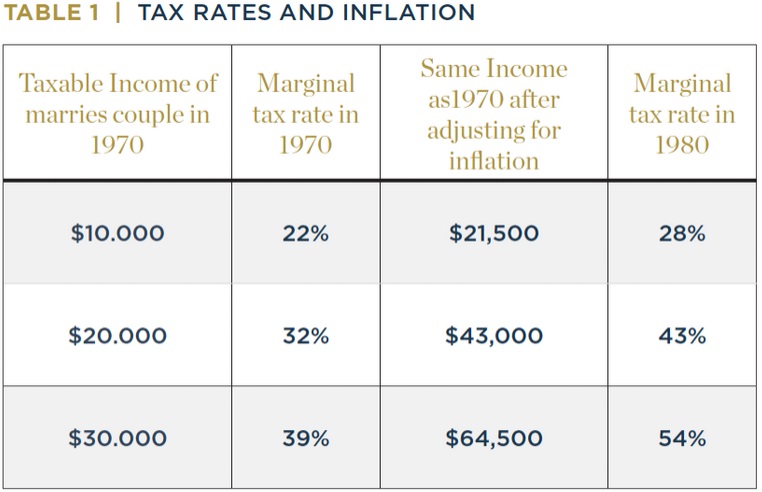
That reform ensured that government no longer profited from inflation. During his second term, Reagan then worked with Congress to approve the Tax Reform Act of 1986. That legislation further lowered tax rates for all taxpayers. …the Reagan tax cuts helped trigger an economic boom. The United States experienced a record economic expansion, with millions of jobs being created and family incomes rising to record levels after the malaise and stagnation of the Carter years. Households earned more money, and they got to keep a greater share of their earnings. Net worth also increased substantially, putting America’s middle class in a very strong position.

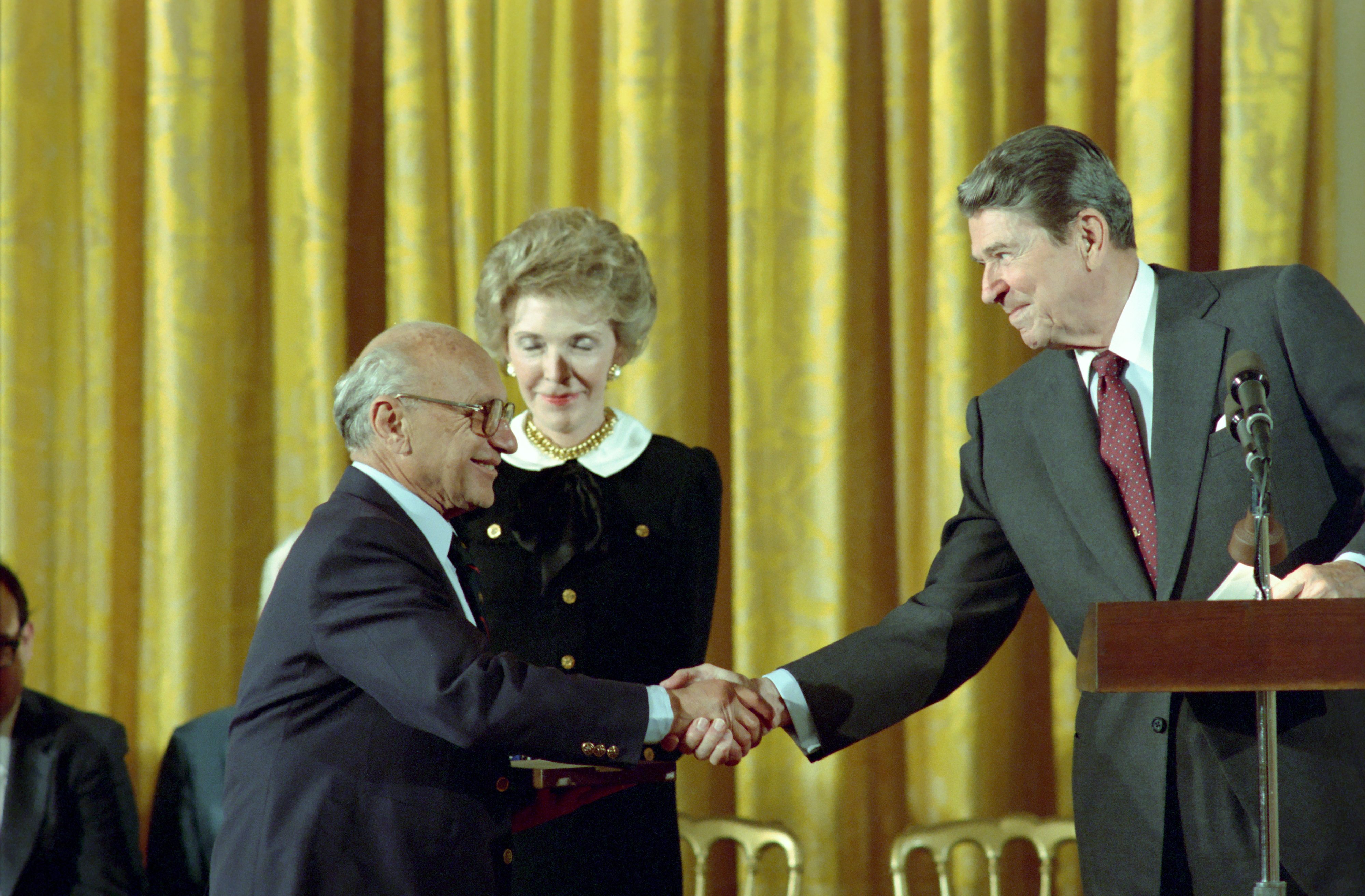
 He also restored America’s national defenses and reoriented foreign policy, both of which led to the collapse of the Soviet Empire, a stupendous achievement that makes Reagan worthy of Mount Rushmore.
 (the so-called Phillips Curve).




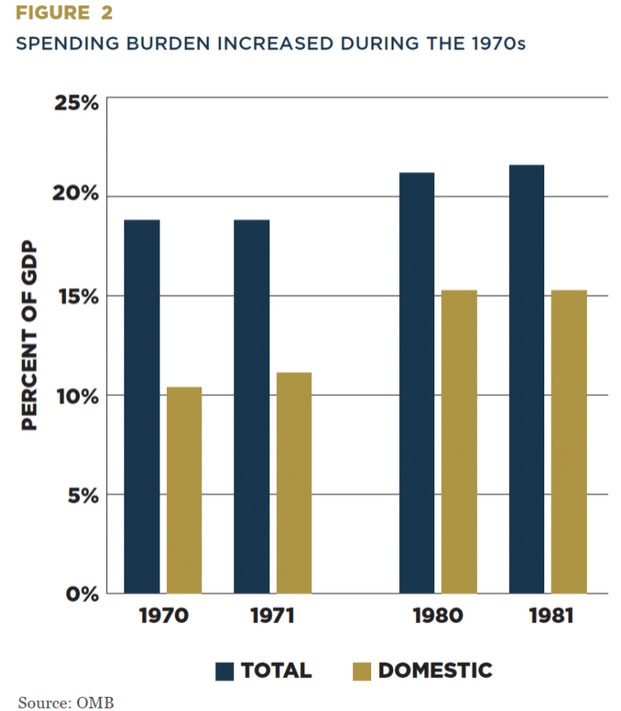
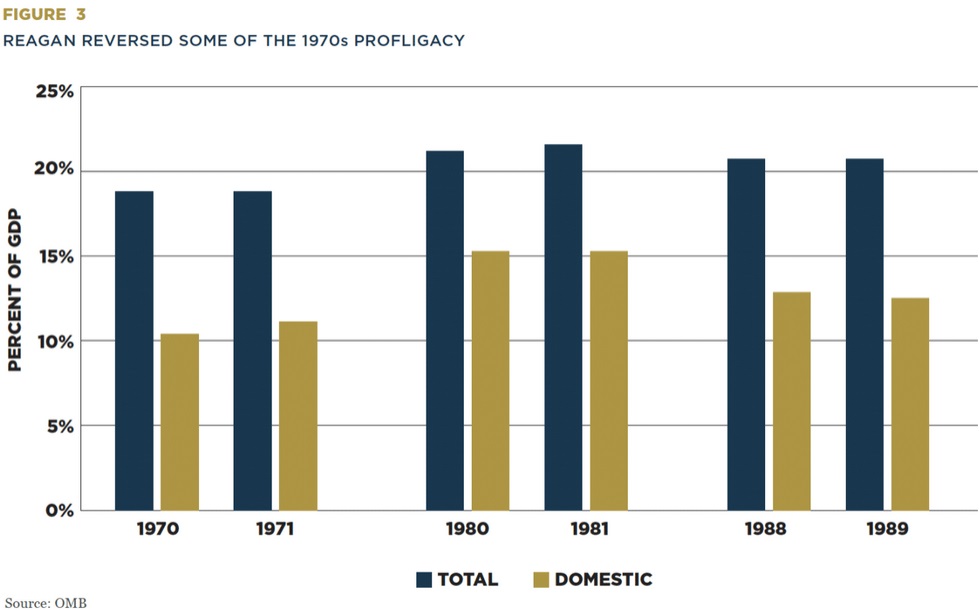
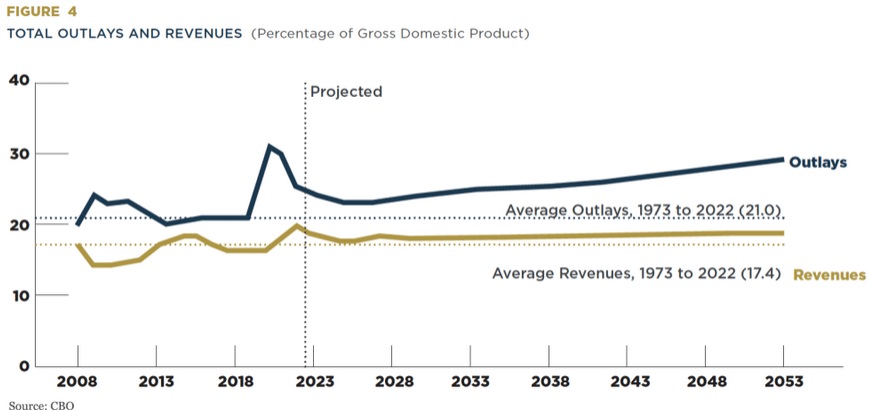

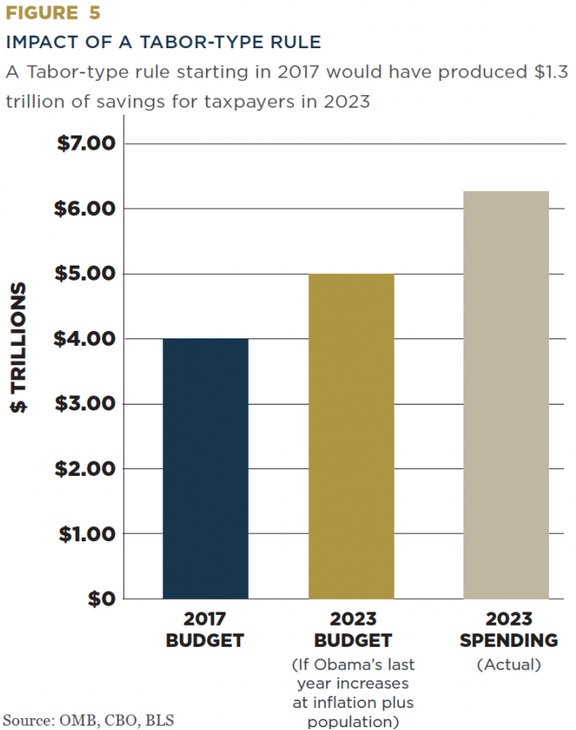

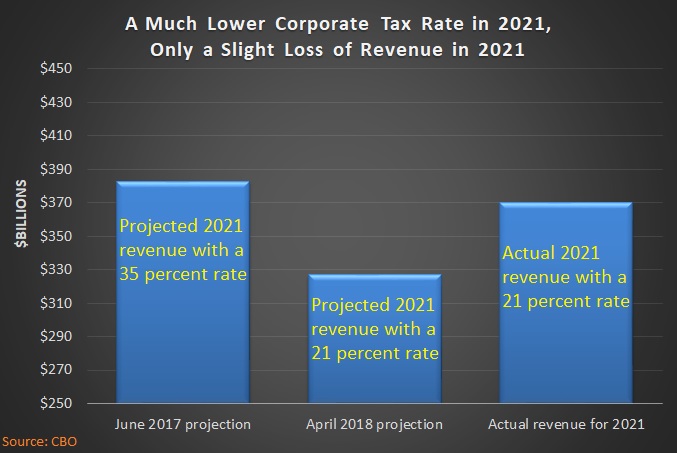
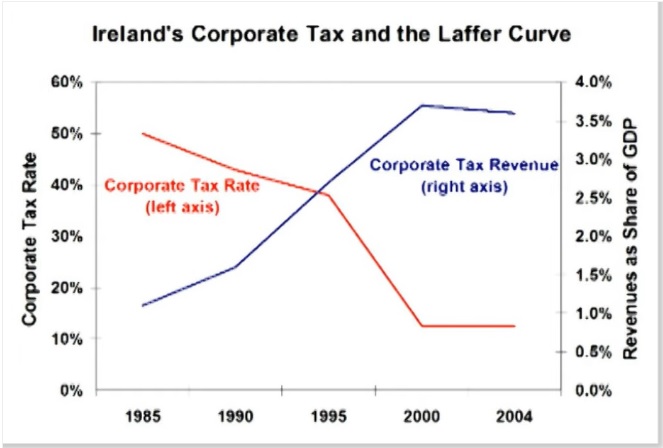


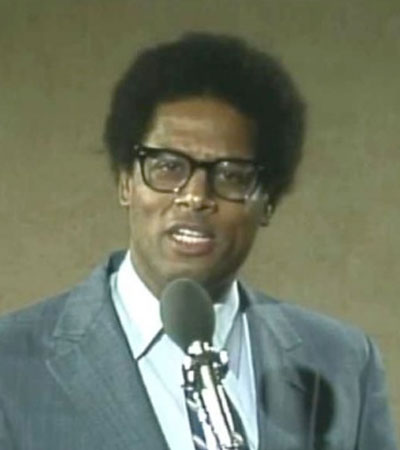


































 Carl Sagan. Credit: NASA



 The Daily Hatch
