Category Archives: Uncategorized

FRANCIS SCHAEFFER ANALYZES ART AND CULTURE PART 458 (Dead Kennedys) I have lots of young people come to us and [they] can’t find any meaning to life. It’s the meaning of the words “punk rock.” SCHAEFFER TAKES LOOK AT ECCLESIASTES AND THE ISSUE OF DEATH AND SUICIDE!! Featured artist is Diana Al-Hadid

__

This post includes a lot of material that is very depressing, but don’t stop reading until you get to the end of this long post. There is hope.

Francis Schaeffer noted:

I have lots of young people and older ones come to us from the ends of the earth. And as they come to us, they have gone to the end of this logically and they are not living in a romantic setting. They realize what the situation is. They can’t find any meaning to life. It’s the meaning to the black poetry. It’s the meaning of the black plays. It’s the meaning of all this. It’s the meaning of the words “punk rock.”

__

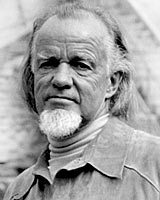
Francis Schaeffer pictured below in 1971 at L Abri
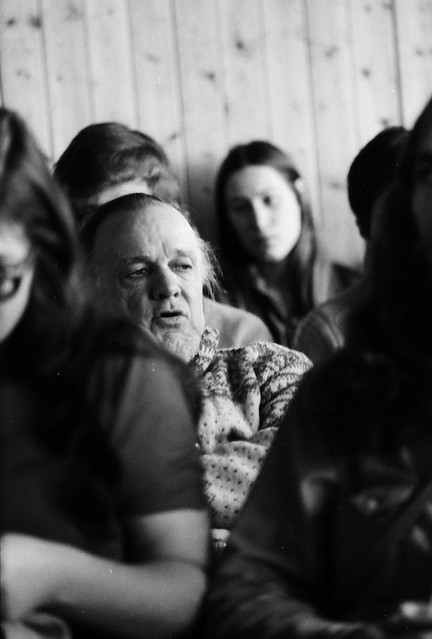
Image result for francis schaeffer labri

_

Image result for francis schaeffer labri

-—

Lyrics from Dead Kennedys song SOUP IS GOOD FOOD below:

We’re sorry
But you’re no longer needed
Or wanted
Or even cared about here
Machines can do a better job than you
This is what you get for asking questions
The unions agree
‘Sacrifices must be made’
Computers never go on strike
To save the working man you’ve got to put him out to pasture
Looks like we’ll have to let you go
Doesn’t it feel fulfilling to know
That you-the human being-are now obsolete
And there’s nothing in hell we’ll let you do about it
Soup is good food-(We don’t need you any more)
You made a good meal-(We don’t need you any more)
Now how do you feel-(We don’t need you any more)
To be s$&@ out our ass
And thrown in the cold like a piece of trash
We’re sorry
You’ll just have to leave
Unemployment runs out after just six weeks
How does it feel to be a budget cut?
You’re snipped
You no longer exist
Your number’s been purged from our central computer
So we can rig the facts
And sweep you under the rug
See our chart? Unemployment’s going down
If that ruins your life that’s your problem
Soup is Good Food, Etc.
We’re sorry
We hate to interrupt
But it’s against the law to jump off this bridge
You’ll just have to kill yourself somewhere else
A tourist might see you
And we wouldn’t want that
I’m just doing my job, you know
So say uncle
And we’ll take you to the mental health zoo
Force feed you mind-melting chemicals
Til even the outside world looks great
In hi-tech science research labs
It costs too much to bury all the dead
The mutilated disease-injected
Surplus rats who can’t be used anymore
So they’re dumped (with no minister present)
In a spiraling corkscrew dispose-all unit
Ground into sludge and flushed away
Aw geez
Soup is good food
You made a good meal, etc:.
We know how much you’d like to die
We joke about it on our coffee breaks
But we’re paid to force you to have a nice day
In the wonderful world we made just for you
“Poor Rats”, we human rodents chuckle
At least we get a dignified cremation
At yet
At 6:00 tomorrow morning
It’s time to get up and go to work
Source: LyricFind

I don’t need your way of life
I can’t stand your attitudes
I can do without your strife
I don’t need this f$&@$gworld
I don’t need this f&$@$g world
This world brings me down
Gag with every breath
This world brings me down
I’m looking forward to death
It seems so unreal to me
So much hate and so mouch pity
I can’t take another day
It’s such a bore
It gets me really sore
I don’t need this f&$@&g world
I don’t need this f$&@$g world
This world brings me down
Gag with every breath
This world brings me down
I’m looking forward to death
Looking forward to death
Source: LyricFind

—-

Dead Kennedys are an American punk rock band that formed in San Francisco, California, in 1978. The band was one of the defining hardcore punk bands during its initial eight-year run.[4]

Dead Kennedys’ lyrics were usually political in nature, satirizing establishment political figures (liberal and conservative) and authority in general, as well as popular culture and even the punk movement itself. During their initial incarnation between 1978 and 1986, they attracted considerable controversy for their provocative lyrics and artwork. Several stores refused to stock their recordings, provoking debate about censorship in rock music; in the mid-1980s, vocalist and primary lyricist Jello Biafra became an active campaigner against the Parents Music Resource Center. This culminated in an obscenity trial between 1985 and 1986, which resulted in a hung jury.

The group released a total of four studio albums and one EP before disbanding in 1986. Following the band’s dissolution, Biafra continued to collaborate and record with other artists including D.O.A., NoMeansNo and his own bands Lard and the Guantanamo School of Medicine, as well as releasing several spoken word performances.

In 2000 (upheld on appeal in 2003), Biafra lost an acrimonious legal case initiated by his former Dead Kennedys band mates over songwriting credits and unpaid royalties. In 2001, the band reformed without Biafra; various singers have since been recruited for vocal duties.

HistoryEdit

Formation of the band (1978–79)Edit

Dead Kennedys formed in June 1978 in San Francisco, California, when East Bay Ray (Raymond Pepperell) advertised for bandmates in the newspaper The Recycler, after seeing a ska-punkshow at Mabuhay Gardens in San Francisco. The original band lineup consisted of Jello Biafra (Eric Reed Boucher) on vocals, East Bay Ray on guitar, Klaus Flouride (Geoffrey Lyall) on bass, 6025 (Carlos Cadona) on rhythm guitar and Ted (Bruce Slesinger) on drums and percussion. This lineup recorded their first demos. Their first live show was on July 19, 1978 at Mabuhay Gardens in San Francisco, California. They were the opening act on a bill that included DV8 and Negative Trend with The Offs headlining.

Dead Kennedys played numerous shows at local venues afterwards. Due to the provocative name of the band, they sometimes played under pseudonyms, including “The DK’s”, “The Sharks”, “The Creamsicles” and “The Pink Twinkies”. The band’s real name generated controversy. San Francisco Chronicle columnist Herb Caen wrote in November 1978, “Just when you think tastelessness has reached its nadir, along comes a punk rock group called ‘The Dead Kennedys’, which will play at Mabuhay Gardens on Nov. 22, the 15th anniversary of John F. Kennedy’s assassination.” Despite mounting protests, the owner of Mabuhay declared, “I can’t cancel them NOW—there’s a contract. Not, apparently, the kind of contract some people have in mind.”[5] However, despite popular belief, the name was not meant to insult the Kennedy family, but according to Biafra, “to bring attention to the end of the American Dream”.[6]

6025 left the band in March 1979 under somewhat unclear circumstances, generally considered to be musical differences. In June, the band released their first single, “California Über Alles“, on Biafra and East Bay Ray’s independent label, Alternative Tentacles. The band followed with a poorly attended East Coast tour, being a new and fairly unknown band at the time, without a full album release.

Francis Schaeffer noted:

I have lots of young people and older ones come to us from the ends of the earth. And as they come to us, they have gone to the end of this logically and they are not living in a romantic setting. They realize what the situation is. They can’t find any meaning to life. It’s the meaning to the black poetry. It’s the meaning of the black plays. It’s the meaning of all this. It’s the meaning of the words “punk rock.”

“They are the natural outcome of a change from a Christian World View to a Humanistic one…
The result is a relativistic value system. A lack of a final meaning to life — that’s first. Why does human life have any value at all, if that is all that reality is? Not only are you going to die individually, but the whole human race is going to die, someday. It may not take the falling of the atom bombs, but someday the world will grow too hot, too cold. That’s what we are told on this other final reality, and someday all you people not only will be individually dead, but the whole conscious life on this world will be dead, and nobody will see the birds fly. And there’s no meaning to life.

As you know, I don’t speak academically, shut off in some scholastic cubicle, as it were. I have lots of young people and older ones come to us from the ends of the earth. And as they come to us, they have gone to the end of this logically and they are not living in a romantic setting. They realize what the situation is. They can’t find any meaning to life. It’s the meaning to the black poetry. It’s the meaning of the black plays. It’s the meaning of all this. It’s the meaning of the words “punk rock.” And I must say, that on the basis of what they are being taught in school, that the final reality is only this material thing, they are not wrong. They’re right! On this other basis there is no meaning to life and not only is there no meaning to life, but there is no value system that is fixed, and we find that the law is based then only on a relativistic basis and that law becomes purely arbitrary.

OUTLINE OF ECCLESIATES BY SCHAEFFER

_______

William Lane Craig on Man’s predicament if God doesn’t exist

Read Waiting for Godot by Samuel Beckett. During this entire play two men carry on trivial conversation while waiting for a third man to arrive, who never does. Our lives are like that, Beckett is saying; we just kill time waiting—for what, we don’t know.

Thus, if there is no God, then life itself becomes meaningless. Man and the universe are without ultimate significance.

Francis Schaeffer looks at Nihilism of Solomon and the causes of it!!!

Notes on Ecclesiastes by Francis Schaeffer

Solomon is the author of Ecclesiastes and he is truly an universal man like Leonardo da Vinci.

Two men of the Renaissance stand above all others – Michelangelo and Leonardo da Vinci and it is in them that one can perhaps grasp a view of the ultimate conclusion of humanism for man. Michelangelo was unequaled as a sculptor in the Renaissance and arguably no one has ever matched his talents.

The other giant of the Renaissance period was Leonardo da Vinci – the perfect Renaissance Man, the man who could do almost anything and does it better than most anyone else. As an inventor, an engineer, an anatomist, an architect, an artist, a chemist, a mathematician, he was almost without equal. It was perhaps his mathematics that lead da Vinci to come to his understanding of the ultimate meaning of Humanism. Leonardo is generally accepted as the first modern mathematician. He not only knew mathematics abstractly but applied it in his Notebooks to all manner of engineering problems. He was one of the unique geniuses of history, and in his brilliance he perceived that beginning humanistically with mathematics one only had particulars. He understood that man beginning from himself would never be able to come to meaning on the basis of mathematics. And he knew that having only individual things, particulars, one never could come to universals or meaning and thus one only ends with mechanics. In this he saw ahead to where our generation has come: everything, including man, is the machine.

Leonardo da Vinci compares well to Solomon and they  both were universal men searching for the meaning in life. Solomon was searching for a meaning in the midst of the details of life. His struggle was to find the meaning of life. Not just plans in life. Anybody can find plans in life. A child can fill up his time with plans of building tomorrow’s sand castle when today’s has been washed away. There is  a difference between finding plans in life and purpose in life. Humanism since the Renaissance and onward has never found it and it has never found it since. Modern man has not found it and it has always got worse and darker in a very real way.

We have here the declaration of Solomon’s universality:

1 Kings 4:30-34

English Standard Version (ESV)

30 so that Solomon’s wisdom surpassed the wisdom of all the people of the east and all the wisdom of Egypt. 31 For he was wiser than all other men, wiser than Ethan the Ezrahite, and Heman, Calcol, and Darda, the sons of Mahol, and his fame was in all the surrounding nations. 32 He also spoke 3,000 proverbs, and his songs were 1,005. 33 He spoke of trees, from the cedar that is in Lebanon to the hyssop that grows out of the wall. He spoke also of beasts, and of birds, and of reptiles, and of fish. 34 And people of all nations came to hear the wisdom of Solomon, and from all the kings of the earth, who had heard of his wisdom.

_________________________

Here is the universal man and his genius. Solomon is the universal man with a empire at his disposal. Solomon had it all.

Ecclesiastes 1:3

English Standard Version (ESV)

What does man gain by all the toil
    at which he toils under the sun?

Schaeffer noted that Solomon took a look at the meaning of life on the basis of human life standing alone between birth and death “under the sun.” This phrase UNDER THE SUN appears over and over in Ecclesiastes.

(Added by me:The Christian Scholar Ravi Zacharias noted, “The key to understanding the Book of Ecclesiastes is the term UNDER THE SUN — What that literally means is you lock God out of a closed system and you are left with only this world of Time plus Chance plus matter.” )

Man is caught in the cycle

Ecclesiastes 1:1-7

English Standard Version (ESV)

All Is Vanity

The words of the Preacher, the son of David, king in Jerusalem.

Vanity of vanities, says the Preacher,
    vanity of vanities! All is vanity.
What does man gain by all the toil
    at which he toils under the sun?
A generation goes, and a generation comes,
    but the earth remains forever.
The sun rises, and the sun goes down,
    and hastens to the place where it rises.
The wind blows to the south
    and goes around to the north;
around and around goes the wind,
    and on its circuits the wind returns.
All streams run to the sea,
    but the sea is not full;
to the place where the streams flow,
    there they flow again.

All things are full of weariness;
    a man cannot utter it;
the eye is not satisfied with seeing,
    nor the ear filled with hearing.
What has been is what will be,
    and what has been done is what will be done,
    and there is nothing new under the sun.
10 Is there a thing of which it is said,
    “See, this is new”?
It has been already
    in the ages before us.

_____________

Solomon is showing a high degree of comprehension of evaporation and the results of it. Seeing also in reality nothing changes. There is change but always in a set framework and that is cycle. You can relate this to the concepts of modern man. Ecclesiastes is the only pessimistic book in the Bible and that is because of the place where Solomon limits himself. He limits himself to the question of human life, life under the sun between birth and death and the answers this would give.

Ecclesiastes 1:4

English Standard Version (ESV)

A generation goes, and a generation comes,
    but the earth remains forever.

___________________

Ecclesiastes 4:16

English Standard Version (ESV)

16 There was no end of all the people, all of whom he led. Yet those who come later will not rejoice in him. Surely this also is vanity and a striving after wind.

__________________________

In verses 1:4 and 4:16 Solomon places man in the cycle. He doesn’t place man outside of the cycle. Man doesn’t escape the cycle. Man is only cycle. Birth and death and youth and old age. With this in mind Solomon makes this statement.

Ecclesiastes 6:12

12 For who knows what is good for a man during his lifetime, during the few years of his futile life? He will spend them like a shadow. For who can tell a man what will be after him under the sun?

____________________

There is no doubt in my mind that Solomon had the same experience in his life that I had as a younger man. I remember standing by the sea and the moon arose and it was copper and beauty. Then the moon did not look like a flat dish but a globe or a sphere since it was close to the horizon. One could feel the global shape of the earth too. Then it occurred to me that I could contemplate the interplay of the spheres and I was exalted because I thought I can look upon them with all their power, might, and size, but they could contempt nothing and I felt as man as God. Then came upon me a horror of great darkness because it suddenly occurred to me that although I could contemplate them and they could contemplate nothing yet they would continue to turn in ongoing cycles when I saw no more forever and I was crushed.

THIS IS SOLOMON’S FEELING TOO. The universal man, Solomon, beyond our intelligence with an empire at his disposal with the opportunity of observation so he could recite these words here in Ecclesiastes 6:12, “For who knows what is good for a man during his lifetime, during the few years of his futile life? He will spend them like a shadow. For who can tell a man what will be after him under the sun?”

Lack of Satisfaction in life

In Ecclesiastes 1:8 he drives this home when he states, “All things are wearisome; Man is not able to tell itThe eye is not satisfied with seeing, Nor is the ear filled with hearing.” Solomon is stating here the fact that there is no final satisfaction because you don’t get to the end of the thing. THERE IS NO FINAL SATISFACTION. This is related to Leonardo da Vinci’s similar search for universals and then meaning in life. 

In Ecclesiastes 5:11 Solomon again pursues this theme, When good things increase, those who consume them increase. So what is the advantage to their owners except to look on?”  Doesn’t that sound modern? It is as modern as this evening. Solomon here is stating the fact there is no reaching completion in anything and this is the reason there is no final satisfaction. There is simply no place to stop. It is impossible when laying up wealth for oneself when to stop. It is impossible to have the satisfaction of completion. 

Pursuing Learning

Now let us look down the details of his searching.

In Ecclesiastes 1: 13a we have the details of the universal man’s procedure. “And I set my mind to seek and explore by wisdom concerning all that has been done under heaven.”

So like any sensible man the instrument that is used is INTELLECT, and RAITIONALITY, and LOGIC. It is to be noted that even men who despise these in their theories begin and use them or they could not speak. There is no other way to begin except in the way they which man is and that is rational and intellectual with movements of that is logical within him. As a Christian I must say gently in passing that is the way God made him.

So we find first of all Solomon turned to WISDOM and logic. Wisdom is not to be confused with knowledge. A man may have great knowledge and no wisdom. Wisdom is the use of rationality and logic. A man can be very wise and have limited knowledge. Here he turns to wisdom in all that implies and the total rationality of man.

Works of Men done Under the Sun

After wisdom Solomon comes to the great WORKS of men. Ecclesiastes 1:14,  “I have seen all the works which have been done under the sun, and behold, all is [p]vanity and striving after wind.” Solomon is the man with an empire at this disposal that speaks. This is the man who has the copper refineries in Ezion-geber. This is the man who made the stables across his empire. This is the man who built the temple in Jerusalem. This is the man who stands on the world trade routes. He is not a provincial. He knew what was happening on the Phonetician coast and he knew what was happening in Egypt. There is no doubt he already knew something of building. This is Solomon and he pursues the greatness of his own construction and his conclusion is VANITY AND VEXATION OF SPIRIT.

Ecclesiastes 2:18-20

18 Thus I hated all the fruit of my labor for which I had labored under the sun, for I must leave it to the man who will come after me. 19 And who knows whether he will be a wise man or a fool? Yet he will have control over all the fruit of my labor for which I have labored by acting wisely under the sun. This too is vanity. 20 Therefore I completely despaired of all the fruit of my labor for which I had labored under the sun.

He looked at the works of his hands, great and multiplied by his wealth and his position and he shrugged his shoulders.

Ecclesiastes 2:22-23

22 For what does a man get in all his labor and in his striving with which he labors under the sun? 23 Because all his days his task is painful and grievous; even at night his mind does not rest. This too is vanity.

Man can not rest and yet he is never done and yet the things which he builds will out live him. If one wants an ironical three phrases these are they. There is a Dutch saying, “The tailor makes many suits but one day he will make a suit that will outlast the tailor.”

God has put eternity in our hearts but we can not know the beginning or the end of the thing from a vantage point of UNDER THE SUN

Ecclesiastes 1:16-18

16 I said to myself, “Behold, I have magnified and increased wisdom more than all who were over Jerusalem before me; and my mind has observed a wealth of wisdom and knowledge.” 17 And I set my mind to know wisdom and to know madness and folly; I realized that this also is striving after wind.18 Because in much wisdom there is much grief, and increasing knowledge results in increasing pain.

Solomon points out that you can not know the beginnings or what follows:

Ecclesiastes 3:11

11 He has made everything  appropriate in its time. He has also set eternity in their heart, yet so that man will not find out the work which God has done from the beginning even to the end.

Ecclesiastes 1:11

11 There is no remembrance of earlier things; And also of the later things which will occur, There will be for them no remembrance among those who will come later still.

Ecclesiastes 2:16

16 For there is no lasting remembrance of the wise man as with the fool, inasmuch as in the coming days all will be forgotten. And how the wise man and the fool alike die!

You bring together here the factor of the beginning and you can’t know what immediately follows after your death and of course you can’t know the final ends. What do you do and the answer is to get drunk and this was not thought of in the RUBAIYAT OF OMAR KAHAYYAM:

Ecclesiastes 2:1-3

I said to myself, “Come now, I will test you with pleasure. So enjoy yourself.” And behold, it too was futility. I said of laughter, “It is madness,” and of pleasure, “What does it accomplish?” I explored with my mind how to stimulate my body with wine while my mind was guiding me wisely, and how to take hold of folly, until I could see what good there is for the sons of men to do under heaven the few years of their lives.

The Daughter of the Vine:

You know, my Friends, with what a brave Carouse
I made a Second Marriage in my house;
Divorced old barren Reason from my Bed,
And took the Daughter of the Vine to Spouse.

from the Rubaiyat of Omar Khayyam (Translation by Edward Fitzgerald)

A perfectly good philosophy coming out of Islam, but Solomon is not the first man that thought of it nor the last. In light of what has been presented by Solomon is the solution just to get intoxicated and black the think out? So many people have taken to alcohol and the dope which so often follows in our day. This approach is incomplete, temporary and immature. Papa Hemingway can find the champagne of Paris sufficient for a time, but one he left his youth he never found it sufficient again. He had a lifetime spent looking back to Paris and that champagne and never finding it enough. It is no solution and Solomon says so too.

Ecclesiastes 2:4-11

I enlarged my works: I built houses for myself, I planted vineyards for myself; I made gardens and parks for myself and I planted in them all kinds of fruit trees; I made ponds of water for myself from which to irrigate a forest of growing trees. I bought male and female slaves and I had homeborn slaves. Also I possessed flocks and herds larger than all who preceded me in Jerusalem. Also, I collected for myself silver and gold and the treasure of kings and provinces. I provided for myself MALE AND  FEMALE SINGERS AND THE PLEASURES OF MEN–MANY CONCUBINES.

Then I became great and increased more than all who preceded me in Jerusalem. My wisdom also stood by me. 10 All that my eyes desired I did not refuse them. I did not withhold my heart from any pleasure, for my heart was pleased because of all my labor and this was my reward for all my labor.11 Thus I considered all my activities which my hands had done and the labor which I had exerted, and behold all was vanity and striving after wind and there was no profit under the sun.

He doesn’t mean there is no temporary profit but there is no real profit. Nothing that lasts. The walls crumble if they are as old as the Pyramids. You only see a shell of the Pyramids and not the glory that they were. This is what Solomon is saying. Look upon Solomon’s wonder and consider the Cedars of Lebanon which were not in his domain but at his disposal.

Ecclesiastes 6:2

a man to whom God has given riches and wealth and honor so that his soul lacks nothing of all that he desires; yet God has not empowered him to eat from them, for a foreigner enjoys them. This is vanity and a severe affliction.

Can someone stuff himself with food he can’t digest? Solomon came to this place of strife and confusion when he went on in his search for meaning.

 Oppressed have no comforter

Ecclesiastes 4:1

 Then I looked again at all the acts of oppression which were being done under the sun. And behold I saw the tears of the oppressed and that they had no one to comfort them; and on the side of their oppressors was power, but they had no one to comfort them.

Between birth and death power rules. Solomon looked over his kingdom and also around the world and proclaimed that right does not rule but power rules.

Ecclesiastes 7:14-15

14 In the day of prosperity be happy, but in the day of adversity consider—God has made the one as well as the other so that man will not discover anything that will be after him.

15 I have seen everything during my lifetime of futility; there is a righteous man who perishes in his righteousness and there is a wicked man who prolongs his life in his wickedness.

Ecclesiastes 8:14

14 There is futility which is done on the earth, that is, there are righteous men to whom it happens according to the deeds of the wicked. On the other hand, there are evil men to whom it happens according to the deeds of the righteous. I say that this too is futility.

We could say it in 20th century language, “The books are not balanced in this life.”

Pursuing Ladies

If one would flee to alcohol, then surely one may choose sexual pursuits to flee to. Solomon looks in this area too.

Ecclesiastes 7:25-28

25 I directed my mind to know, to investigate and to seek wisdom and an explanation, and to know the evil of folly and the foolishness of madness. 26 And I discovered more bitter than death the woman whose heart is snares and nets, whose hands are chains. One who is pleasing to God will escape from her, but the sinner will be captured by her.

27 “Behold, I have discovered this,” says the Preacher, “adding one thing to another to find an explanation, 28 I have looked for other answers but have found none. I found one man in a thousand that I could respect, but not one woman. (Good News Translation on verse 28)

One can understand both Solomon’s expertness in this field and his bitterness.

I Kings 11:1-3 (New American Standard Bible) 

11 Now King Solomon loved many foreign women along with the daughter of Pharaoh: Moabite, Ammonite, Edomite, Sidonian, and Hittite women, from the nations concerning which the Lord had said to the sons of Israel, “You shall not associate with them, nor shall they associate with you, for they will surely turn your heart away after their gods.” Solomon held fast to these in love. He had seven hundred wives, princesses, and three hundred concubines, and his wives turned his heart away.

An expert but also the reason for his bitterness. Certainly there have been many men over the centuries who have daydreamed of Solomon’s wealth in this area [of women], but at the end it was sorry, not only sorry but nothing and less than nothing. The simple fact is that one can not know woman in the real sense by pursuing 1000 women. It is not possible. Woman is not found this way. All that is left in this setting if one were to pursue the meaning of life in this direction is this most bitter word found in Ecclesiastes 7:28, “I have looked for other answers but have found none. I found one man in a thousand that I could respect, but not one woman.” (Good News Translation on verse 28) He was searching in the wrong way. He was searching for the answer to life in the limited circle of that which is beautiful in itself but not an answer finally in sexual life. More than that he finally tried to find it in variety and he didn’t even touch one woman at the end.

Relative truth/ Chance and time/ death comes to fool and wiseman/ tried pagan religions

He plunged in such a scientific procedure finally into the thought of final relative truth.

Ecclesiastes 8:6-7

For there is a time and a way for everything, although man’s trouble lies heavy on him. For he does not know what is to be, for who can tell him how it will be?

In such a setting he is led into misery. Relative truth is also expressed in Ecclesiastes 3:1, “For everything there is a season, and a time for every matter under heaven…” He is not saying this in a positive sense, but it is in a negative sense here. Relative truth in light of Ecclesiastes 8:6-7. When you come to the concept of relative truth only one more step remains and that is that chance rules. Chance is king.

__

Ecclesiastes 9:11

11 Again I saw that under the sun the race is not to the swift, nor the battle to the strong, nor bread to the wise, nor riches to the intelligent, nor favor to those with knowledge, but time and chance happen to them all.

Chance rules. If a man starts out only from himself and works outward it must eventually if he is consistent seem so that only chance rules and naturally in such a setting you can not expect him to have anything else but finally a hate of life.

Ecclesiastes 2:17-18a

17 So I hated life, because what is done under the sun was grievous to me, for all is vanity and a striving after wind. 18 I hated all my toil in which I toil under the sun…

That first great cry “So I hated life.” Naturally if you hate life you long for death and you find him saying this in Ecclesiastes 4:2-3:

And I thought the dead who are already dead more fortunate than the living who are still alive. But better than both is he who has not yet been and has not seen the evil deeds that are done under the sun.

He lays down an order. It is best never have to been. It is better to be dead, and worse to be alive. But like all men and one could think of the face of Vincent Van Gogh in his final paintings as he came to hate life and you watch something die in his self portraits, the dilemma is double because as one is consistent and one sees life as a game of chance, one must come in a way to hate life. Yet at the same time men never get beyond the fear to die. Solomon didn’t either. So you find him in saying this.

Ecclesiastes 2:14-15

14 The wise person has his eyes in his head, but the fool walks in darkness. And yet I perceived that the same event happens to all of them. 15 Then I said in my heart, “What happens to the fool will happen to me also. Why then have I been so very wise?” And I said in my heart that this also is vanity.

The Hebrew is stronger than this and it says “it happens EVEN TO ME,” Solomon on the throne, Solomon the universal man. EVEN TO ME, even to Solomon.

Ecclesiastes 3:18-21

18 I said in my heart with regard to the children of man that God is testing them that they may see that they themselves are but beasts. 19 For what happens to the children of man and what happens to the beasts is the same; as one dies, so dies the other. They all have the same breath, and man has no advantage over the beasts, for all is vanity.[n] 20 All go to one place. All are from the dust, and to dust all return.21 Who knows whether the spirit of man goes upward and the spirit of the beast goes down into the earth?

What he is saying is as far as the eyes are concerned everything grinds to a stop at death.

Ecclesiastes 4:16

16 There was no end of all the people, all of whom he led. Yet those who come later will not rejoice in him. Surely this also is vanity and a striving after wind.

That is true. There is no place better to feel this than here in Switzerland. You can walk over these hills and men have walked over these hills for at least 4000 years and when do you know when you have passed their graves or who cares? It doesn’t have to be 4000 years ago. Visit a cemetery and look at the tombstones from 40 years ago. Just feel it. IS THIS ALL THERE IS? You can almost see Solomon shrugging his shoulders.

Ecclesiastes 8:8

There is no man that hath power over the spirit to retain the spirit; neither hath he power in the day of death: and there is no discharge in that war; neither shall wickedness deliver those that are given to it. (King James Version)

A remarkable two phrase. THERE IS NO DISCHARGE IN THAT WAR or you can translate it “no casting of weapons in that war.” Some wars they come to the end. Even the THIRTY YEARS WAR (1618-1648) finally finished, but this is a war where there is no casting of weapons and putting down the shield because all men fight this battle and one day lose. But more than this he adds, WICKEDNESS WON’T DELIVER YOU FROM THAT FIGHT. Wickedness delivers men from many things, from tedium in a strange city for example. But wickedness won’t deliver you from this war. It isn’t that kind of war. More than this he finally casts death in the world of chance.

Ecclesiastes 9:12

12 For man does not know his time. Like fish that are taken in an evil net, and like birds that are caught in a snare, so the children of man are snared at an evil time, when it suddenly falls upon them.

Death can come at anytime. Death seen merely by the eye of man between birth and death and UNDER THE SUN. Death too is a thing of chance. Albert Camus speeding in a car with a pretty girl at his side and then Camus dead. Lawrence of Arabia coming up over a crest of a hill 100 miles per hour on his motorcycle and some boys are standing in the road and Lawrence turns aside and dies.

————

Woody Allen has embraced NIHILISM but he continues marching on.

Image result for woody allen

In the movie MIDNIGHT IN PARIS the idea of nihilism is clearly taught.

(Disclaimer: I am friends with atheists who live very good lives and have  embraced life. I am not accusing  all atheists of embracing nihilism, but just that some like Woody Allen have nihilistic tendencies. However, a few have taken the logic of NIHILISM a step further and that could possibly lead to SUICIDE.)

Adriana and Gil Pender in MIDNIGHT IN PARIS

In the movie Gertrude Stein says to Gil, “Now, about your book,it’s very unusual, indeed.I mean, in a way, it’s almost like science fiction….The artist’s job is not to succumb to DESPAIR,but to find an antidote for the emptiness of existence.You have a clear and lively voice. Don’t be such a defeatist.”

Also in the film we find this exchange:

ADRIANA: I can never decide whether Paris is more beautiful by day or by night.

GIL PENDER: No, you can’t. You couldn’t pick one. I mean,I can give you a checkmate argument for each side.You know, I sometimes think,”How’s anyone gonna come up with a book, or a painting, or a symphony or a sculpture that can compete with a great city?”You can’t, ’cause, like,you look around, every…every street, every boulevard is its own special art form.And when you think that in the cold,violent, meaningless universe,that Paris exists, these lights…I mean, come on, there’s nothing happening on Jupiter or Neptune,but from way out in space you can see these lights, the cafe’s, people drinking, and singing…I mean, for all we know, Paris is the hottest spot in the universe.

Annie Hall – The Opening Scene [HD]

Manhattan
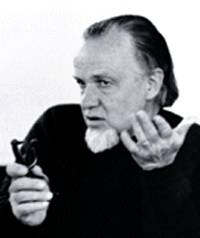
Image result for francis schaeffer

Francis Schaeffer two months before he died said if he was talking to a gentleman he was sitting next to on an airplane about Christ he wouldn’t start off quoting Bible verses. Schaeffer asserted:

I would go back rather to their dilemma if they hold the modern worldview of the final reality only being energy, etc., I would start with that. I would begin as I stress in the book THE GOD WHO IS THERE about their own [humanist] prophets who really show where their view goes. For instance, Jacques Monod, Nobel Prize winner from France, in his book NECESSITY AND CHANCE said there is no way to tell the OUGHT from the IS. In other words, you live in a totally silent universe. 

The men like Monod and Sartre or whoever the man might know that is his [humanist] prophet and they point out quite properly and conclusively what life is like, not just that there is no meaningfulness in life but everyone according to modern man is just living out some kind of game plan. It may be knocking 1/10th of a second off a downhill ski run or making one more million dollars. But all you are doing is making a game plan within the mix of a meaningless situation. WOODY ALLEN exploits this very strongly in his films. He really lives it. I feel for that man, and he has expressed it so thoroughly in ANNIE HALL and MANHATTAN and so on.

Francis Schaeffer is correct about Woody Allen and that Allen has embraced nihilism. I hope that many will read below at the bottom of this post about the men Dave Hope and Kerry Livgren of the rock group KANSAS who also came to the end of themselves but they turned away from nihilism and found meaning to their lives.
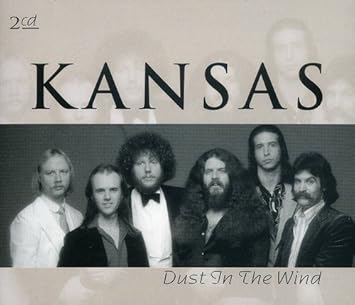
Image result for kansas dust in the wind

.

_

_

A suicide attempt appears in MIDNIGHT IN PARIS when Zelda Fitzgerald goes to the Seine River with the intention of jumping and Gil Pender stops her. It seems the nihilist worldview of Woody Allen keeps him putting suicides into his films.

Remember Professor Levy from the movie CRIMES AND MISDEMEANOR? After addressing the question  IS IT POSSIBLE TO BE AN OPTIMISTIC SECULAR HUMANIST THAT DOES NOT BELIEVE IN GOD OR AN AFTERLIFE? Levy jumps out a window!!!

After Levy committed suicide, Cliff reviewed a clip from the documentary footage in which Levy states: “But we must always remember that when we are born we need a great deal of love to persuade us to stay in life. Once we get that love, it usually lasts us. But the universe is a pretty cold place. It’s we who invest it with our feelings. And under certain conditions, we feel that the thing isn’t worth it anymore.”

Hearing the news of Levy’s death, Halley says, “No matter how elaborate a philosophical system you work out, in the end it’s got to be incomplete.”

Professor Levy seen below:

Crimes e Pecados

What is Woody Allen’s main outlook on life? Francis Schaeffer described it as existentialism. 

______________

__________

     
  Materialistic Humanism: The World-View of Our Era

So some humanists act as if they have a great advantage over Christians. They act as if the advance of science and technology and a better understanding of history (through such concepts as the evolutionary theory) have all made the idea of God and Creation quite ridiculous.
This superior attitude, however, is strange because one of the most striking developments in the last half-century is the growth of a profound pessimism among both the well-educated and less-educated people. The thinkers in our society have been admitting for a long time that they have no final answers at all.
Take Woody Allen, for example. Most people know his as a comedian, but he has thought through where mankind stands after the “religious answers” have been abandoned. In an article in Esquire (May 1977), he says that man is left with:
… alienation, loneliness [and] emptiness verging on madness…. The fundamental thing behind all motivation and all activity is the constant struggle against annihilation and against death. It’s absolutely stupefying in its terror, and it renders anyone’s accomplishments meaningless. As Camus wrote, it’s not only that he (the individual) dies, or that man (as a whole) dies, but that you struggle to do a work of art that will last and then you realize that the universe itself is not going to exist after a period of time. Until those issues are resolved within each person – religiously or psychologically or existentially – the social and political issues will never be resolved, except in a slapdash way.
Allen sums up his view in his film Annie Hall with these words: “Life is divided into the horrible and the miserable.”


  Reason Is Dead

However, our intention here is neither to go into the history of irrationalism, nor to examine the proponents of existentialism in our own century, but rather to concentrate on its main thesis. It is this that confronts us on all sides today, and it is impossible to understand modern man without understanding this concept.
Because we shall be using several terms a great deal now, we would ask the reader to attend carefully. When we speak of irrationalism or existentialism or the existential methodology, we are pointing to a quite simple idea. It may have been expressed in a variety of complicated ways by philosophers, but it is not a difficult concept.
Imagine that you are at the movies watching a suspense film. As the story unfolds, the tension increases until finally the hero is trapped in some impossible situation and everyone is groaning inwardly, wondering how he is going to get out of the mess. The suspense is heightened by the knowledge (of the audience, not the hero) that help is on the way in the form of the good guys. The only question is: will the good guys arrive in time?
Now imagine for a moment that the audience is slipped the information that there are no good guys, that the situation of the hero is not just desperate, but completely hopeless. Obviously, the first thing that would happen is that the suspense would be gone. You and the entire audience would simply be waiting for the axe to fall.
If the hero faced the end with courage, this would be morally edifying, but the situation itself would be tragic. If, however, the hero acted as if help were around the corner and kept buoying himself up with this thought (“Someone is on the way!” – “Help is at hand!”), all you could feel for him would be pity. It would be a means to keep hope alive within a hopeless situation. The hero’s hope would change nothing on the outside; it would be unable to manufacture, out of nothing, good guys coming to the rescue. All it would achieve would the hero’s own mental state of hopefulness rather than hopelessness.
The hopefulness itself would rest on a lie or an illusion and thus, viewed objectively, would be finally absurd. And if the hero really knew what the situation was, but consciously used the falsehood to buoy up his feelings and go whistling along, we would either say, “Poor guy!” or “He’s a fool.” It is this kind of conscious deceit that someone like Woody Allen has looked full in the face and will have none of.
Now this is what the existential methodology is about. If the universe we are living in is what the materialistic humanists say it is, then with our reason (when we stop to think about it) we could find absolutely no way to have meaning or morality or hope or beauty. This would plunge us into despair. We would have to take seriously the challenge of Albert Camus (1913-1960) in the first sentence of The Myth of Sisyphus: “There is but one truly serious philosophical problem, and that is suicide.”92 Why stay alive in an absurd universe? Ah! But that is not where we stop. We say to ourselves – “There is hope!” (even though there is no help). “We shall overcome!” (even though nothing is more certain than that we shall be destroyed, both individually at death and cosmically with the end of all conscious life). This is what confronts us on all sides today: the modern irrational-ism.

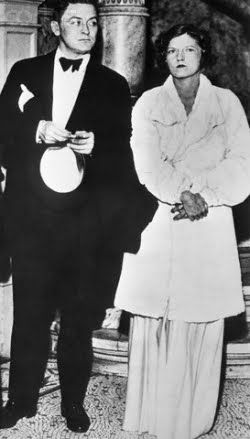
(Scott and Zelda pictured below)
Dr. Francis Schaeffer – The Biblical flow of Truth & History (intro)

Francis Schaeffer – The Biblical Flow of History & Truth (1)

Dr. Francis Schaeffer – The Biblical Flow of Truth & History (part 2)

Ernest Hemingway and  both his good friend Scott Fitzgerald and Scott’s wife Zelda tried to blot it all out with alcohol and later in the film MIDNIGHT IN PARIS we see Zelda trying to commit suicide.  She actually was in different stages of mental distress the last 15 years of her life which ended at age 48 when a fire killed 9 people at Highland Hospital in Asheville, North Carolina (according to Wikipedia). Unfortunately her husband F. Scott Fitzgerald died 8 years earlier in 1940 from alcoholism.  Ernest Hemingway ended his life on  July 2, 1961 by shooting himself with his favorite shotgun.
(An older Zelda in 1942 seen below)
__
(Francis Scott Key Fitzgerald with friend Ernest Hemingway, left)
 

midnight in paris – Fitzgeralds and Hemingway

______________

ZELDA FITZGERALD: You look lost!-

GIL PENDER: Oh, yeah!- You’re an American?-

ZELDA FITZGERALD: If you count Alabama as America, which I do.I miss the bathtub gin. What do you do?-

GIL PENDER: Me? I’m a writer.-

ZELDA FITZGERALD: Who do you write?-

GIL PENDER: Oh, right now I’m working on a novel.- Oh, yes?

ZELDA FITZGERALD: I’m Zelda, by the way. Oh, Scott! Scott!- Yes, what it is, sweetheart?- Here’s a writer, from, um… where?-

GIL PENDER: California.

SCOTT FITZGERALD: Scott Fitzgerald, and who are you, old sport?

GIL PENDER: Gil…the… You havethe same names as…As what? Scott Fitzgerald and…Scott and Zelda Fitzgerald.

SCOTT FITZGERALD:The Fitzgeralds. Isn’t she beautiful?

GIL PENDER: Yes. Yes! Yeah, that’s… that’sa coincidence…like….uh…

ZELDA FITZGERALD: You have a glazed look in your eye. Stunned.Stupefied. Anesthetized. Lobotomized

GIL PENDER: I…I…keep looking at the man playing piano, and I believe it or not, recognize hisface from some old sheet music.

ZELDA FITZGERALD: I know I can be one of the great writers of musical lyrics- not that I can write melodies, and I try,and then I hear the songs he writes, and then I realize: I’ll never write a great lyric,- and MY TALENT REALLY LIES IN DRINKING.-

SCOTT FITZGERALD: Sure does.

Later in MIDNIGHT IN PARIS we find Zelda attempting to jump in the Seine river and end her life.
 GIL PENDER:God, is that who I think it is?
ADRIANA: What is she doing here,staring into the water?Oh my God! Zelda, what are you doing?!- Please?
ZELDA: I don’t want to live!-
ADRIANA: Stop!- What is it?-
ZELDA: Scott and that beautiful countess.They were– It was so obvious they were whispering about me,and the more they drank, the more he fell in love with her!
GIL PENDER: He…Scott loves only you.- I can tell you that with absolute certainty.-
ZELDA: No.- He’s tired of me!-
GIL PENDER: You’re wrong. You’re wrong. I know.-
ZELDA: How?-
GIL PENDER: Trust me. I know.- Sometimes you get a feel for people, and I get…-
ZELDA: My skin hurts!-
ADRIANA: What do you mean?-
ZELDA: I don’t wanna…I hate the way I look!
ADRIANA:Don’t do that!-
GIL PENDER: Here. Take this.-
ZELDA:What is this?
GIL PENDER: It’s a Valium. It’llmake you feel better.-
ADRIANA:You carry medicine?-
GIL PENDER: No, not normally.It’s just since I’vebeen engaged to Inez,I’ve been having panic attacks, but I’msure they’ll subside after the wedding.
ADRIANA: I’ve never heard of Valium. What is this?
GIL PENDER:It’s the…pill of the future.
 __
I have posted this article below earlier but I wanted to include a portion of it today.

Tuesday, 13 September 2011

Philosophical Atheist, Before you Commit Suicide Read Ecclesiastes

People interested in truth often look to philosophy for answers. However, atheist philosophies offer more questions than answers, and this has serious consequences. Statistics show that atheists end up more prone to suicide than people who have a spiritual foundation.[1] One woman, Sharon Rocha, ended up committing suicide after reading an article at the Raving Atheists blog. In her suicide note, Rocha stated “I have been stripped of my delusions… The universe is a cold, uncaring place in which life is short, meaningless and full of suffering.”[2] If you are an atheist thinking of suicide or just seriously interested in the meaning of life, I recommend reading Solomon’s book Ecclesiastes. The book outlines the deceptions of a false perception of reality and the delight of knowing the God who created the universe for a good purpose.

The name Ecclesiastes is translated from Latin into The Preacher. So what exactly is the connection between philosophy and a preacher preaching the gospel? Well, as I’ve written various articles on Christianity, I’ve found that few atheists are interested in reading them. However, when I’ve pointedly challenged the philosophical roots of atheism, I’ve found some atheists eager to step up and defend their beliefs through dialogue and debate. Philosophical questions and challenges are at the core of the book of Ecclesiastes and there is an undertone of evangelism. There’s a saying “You can attract more bees with honey than with vinegar.” But, as we’ll see in Ecclesiastes, you can attract even more bees by prodding the beehive. But you’d better be prepared for what you’re getting into.

Ecclesiastes 12.11 states: “The words of the wise are like goads, their collected sayings like firmly embedded nails–given by one Shepherd.” (NIV)

Goads are pointed prods that are used to help direct cattle and sheep. Words of truth prick the conscience and help to guide people towards moral and ethical reason. The firmly embedded nails signify the fixed principles of logic and the reality of absolute truth. Words of logic help to pin down people who have developed a false paradigm and a false view of reality. Logic helps people to see that their beliefs are not in harmony with reality.

Dr. Francis schaeffer – The flow of Materialism(from Part 4 of Whatever happened to human race?)

Meaninglessness and Materialism

There is a wealth of insight in the book of Ecclesiastes, but you can break down the main philosophical aspects into three main points:

1. The Emptiness of Worldly Pre-occupations – Eccl. 2:1-11

2. The Brevity of Life – Eccl. 12:1-8

3. The Only Logical Purpose in Life – Eccl. 12:13-14[9]

Solomon begins Ecclesiastes 1.2-3 announcing “‘Meaningless! Meaningless!’ says the Teacher. ‘Utterly meaningless! Everything is meaningless.’ What do people gain from all their labors at which they toil under the sun?” How discouraging can you get? The key to understanding the book of Ecclesiastes is to understand that he makes many false statements based upon a materialist perspective, in viewing everything “under the sun” as meaningless. Solomon addresses common materialist idols in society and shows why these are meaningless and empty pursuits. Solomon tries learning, laughter an liquor in an attempt to find satisfaction, but he’s left empty.

Solomon was the perfect candidate to dispel the illusion that wealth and physical pleasure can bring the kind of deep fulfillment we’re searching for in life. As the wealthiest man in history he had everything available at his fingertips. Whatever he desired, he could have. But time after time he was struck by the emptiness of all these material allurements.

Common folks don’t have the money to be able to fulfill whatever whim we may have. In society we are led to believe that if we just had a bigger house, a better job, a more pleasant husband or wife, or whatever it may be, then we would be happy. For us common folks, happiness may seem as though it’s always just around the corner. If only… then I’d be happy. But Solomon became the ultimate object lesson in this regard because he was able to try anything and everything he wanted and he finding out first-hand that materialism represents a sad and vacuous existence compared to theism.

King Solomon of Israel wrote the book of Ecclesiastes after he had backslidden to a certain degree. He had known what was right, but disobeyed God in his life and took on many wives, horse stables and wealth, though these things were forbidden for a king of Israel. Deuteronomy 17:16-17 outlines:

“Only he shall not multiply horses to himself, nor cause the people to return to Egypt, to the end that he may multiply horses; because Yahweh has said to you, You shall henceforth return no more that way. Neither shall he multiply wives to himself, that his heart not turn away: neither shall he greatly multiply to himself silver and gold.”

It seems Solomon allowed his great wisdom get to his head, so to speak, and to fill him with pride. His heart gradually became dulled to God’s presence and purpose. But, nevertheless, God disciplined him and allowed him to see his folly. Though he had made mistakes, Solomon offers that truth is still truth and a person should continue to teach the truth as God guides:

“And moreover, because the preacher was wise, he still taught the people knowledge; yea, he gave good heed, and sought out, and set in order many proverbs.”[10]

Though he learned lessons the hard way, Solomon gave “good heed” to present the truths that he learned and to help teach people his wisdom. It seems he may have been the first “life coach.” In the United States the “pursuit of happiness” is considered a fundamental right from the Declaration of Independence. But this pursuit, in and of itself, can become destructive when relativism rules. A 2011 study shows the 10 countries with the highest suicide rates tend to be countries where atheism has predominated. Most on the list are countries of the former Soviet Union where atheism was enforced by the state for over 70 years.[11] Other statistics bear out the fact that atheists are more prone to suicide than theists. The American Journal of Psychiatry published an article December 2004, Religious Affiliation and Suicide Attempt, with some basic conclusions:

“CONCLUSIONS: Religious affiliation is associated with less suicidal behavior in depressed inpatients. After other factors were controlled, it was found that greater moral objections to suicide and lower aggression level in religiously affiliated subjects may function as protective factors against suicide attempts. Further study about the influence of religious affiliation on aggressive behavior and how moral objections can reduce the probability of acting on suicidal thoughts may offer new therapeutic strategies in suicide prevention.”[12]

Two key aspects were cited in the AJP article: less aggressive behavior and a moral objection to suicide. The decrease of aggression in spiritual people may have to do with the knowledge that there is in-fact deep meaning in life. Sometimes intellectuals are prone to suicide. Solomon confirmed that materialist knowledge without spiritual truth brings grief: “For with much wisdom comes much sorrow; the more knowledge, the more grief.”[13]

(Alan Sandage below)

Like Solomon, people who have large IQs can tend to have inflated egos. In 2010, in an exclusive interview with the Guardian, Stephen Hawking declared that heaven is a “fairy tale” for fearful people.[14] He is correct in one sense that Christians are fearful in that we fear God with a sense of awe and wonder at his majestic wisdom and power. In contrast to Hawking, the Jewish physicist Alan Sandage was an atheist most of his life but simply could not dispel all the evidence he had seen in the cosmos pointing to God’s necessary existence. He became a Christian at age 60, explaining, “I could not live a life full of cynicism. I chose to believe, and a peace of mind came over me.”[15] One of the reasons Sandage believed was the complexity of the universe: “The world is too complicated in all its parts and interconnections to be due to chance alone.”[16]

(Stephen Hawking below in black and white and then a picture from recent movie about Hawking)

It doesn’t take a great mind to understand what Solomon and Sandage knew, it only takes an open mind. Three decades ago, Stephen Hawking declared humanity was on the verge of discovering the “theory of everything”with a 50 per cent chance of knowing it by 2000. But by 2010 Hawking had given up hope.[17] If only Hawking had read the book of Ecclesiastes, he could have saved a lot of wasted time: “He has also set eternity in the hearts of men; yet they cannot fathom what God has done from beginning to end.”[18] Hawking is a good example showing that intelligence and wisdom are two very distinct things.

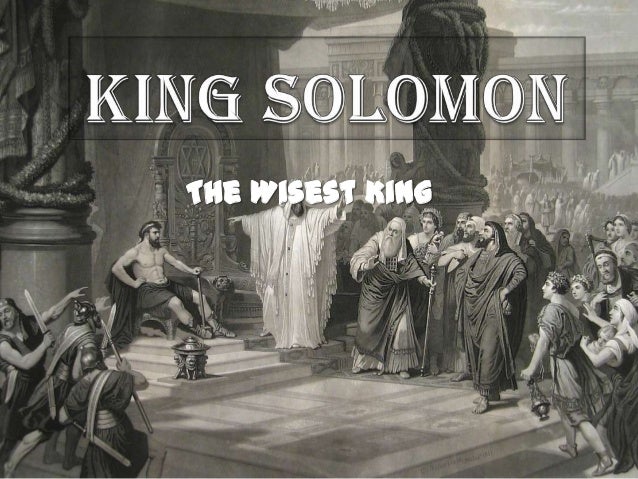
(King Solomon author of Ecclesiastes below
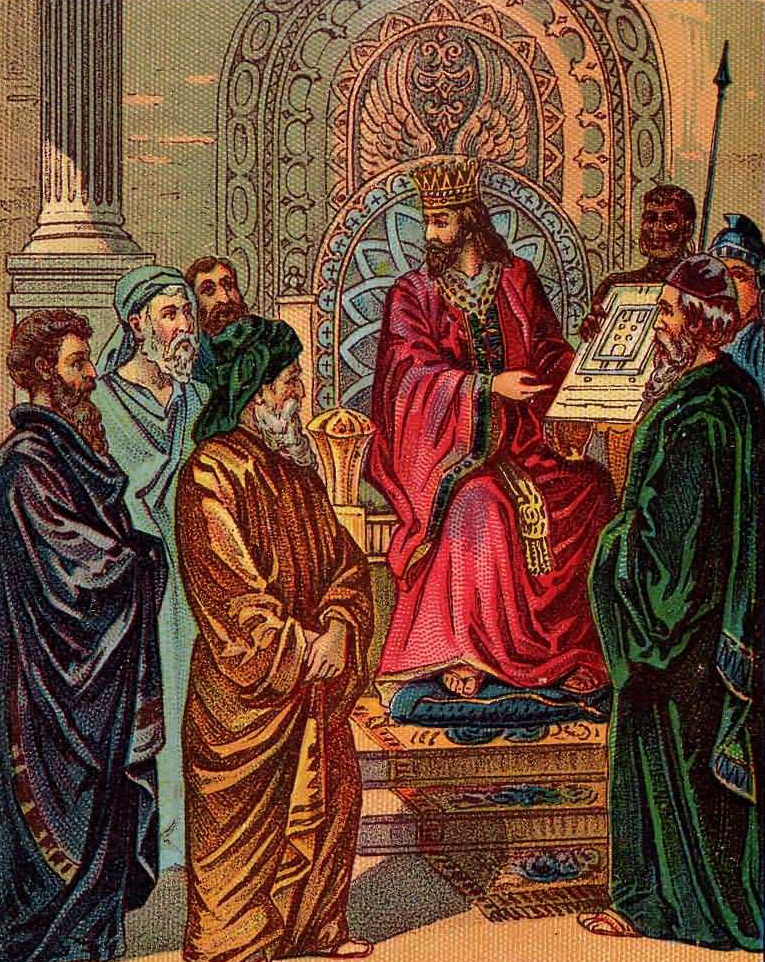
The “one shepherd” mentioned in Ecclesiastes 12.9 seems to portray Jesus. In John 10.11, Jesus is quoted as saying “I am the good shepherd. The good shepherd lays down his life for the sheep.” NIV Jesus is also referred to as the “word made flesh.” In this sense Jesus is the source of all truth and spiritual satisfaction, as implied by Psalm 81:16. “I would satisfy you with wild honey from the rock”, Jesus being the rock of our salvation.The Logical Conclusions             One of the conclusions of Ecclesiastes is that we can live a live of true joy when God is the foundation of our lives:“It is good and fitting for one to eat and drink, and to enjoy the good of all his labor in which he toils under the sun all the days of his life which God gives him; for it is his heritage. As for every man to whom God has given riches and wealth, and given him power to eat of it, to receive his heritage and rejoice in his labor—this is the gift of God. For he will not dwell unduly on the days of his life, because God keeps him busy with the joy of his heart.”[19]Another conclusion is that there is ultimate justice in the world and this knowledge has ramifications for a healthy personal life and for a healthy society:

“Now all has been heard; here is the conclusion of the matter: Fear God and keep his commandments, for this is the duty of all mankind. For God will bring every deed into judgment, including every hidden thing, whether it is good or evil.”[20]

We will be less prone to bitterness when we realize God will address all injustice in the future. And we understand why corruption is rampant today in society because many people do not believe there is any kind of accountability to our Creator. People assume that they can do anything they can get away with. Hopefully more people will recognize that atheism neither works as a personal philosophy nor as a good basis for society.

Even Communist China sees that theism is pragmatically more effective and beneficial than an atheistic model of society: “The officially atheist Chinese government is surprisingly open to Christianity, at least partially, because it sees a link between the faith and economic success, said a sought after scholar who has relations with governments in Asia.”[21] Dr. William Jeynes, senior fellow of The Witherspoon Institute in Princeton, N.J., outlined this fact. But the truth is a dangerous thing and has a way of shaking up deceptive paradigms: “Jeynes concluded by saying that the key message he wants to convey is that China is both open to Christianity and nervous about the religion because of the potential problems it could bring to the communist government.”[22]

Endnotes

[1] American Journal of Psychiatry, Religious Affiliation and Suicide Attempt, Kanita Dervic, M.D., Maria A. Oquendo, M.D., et al., Am J Psychiatry 161:2303-2308, December 2004 (http://ajp.psychiatryonline.org/cgi/content/abstract/161/12/2303)
[2] Raving Theist, Peterson Mother Commits Suicide After Reading Atheist Blog, (http://ravingatheist.com/2003/05/peterson-mother-commits-suicide-after-reading-atheist-blog/)
[3] Proverbs 24.13, NIV
[4] IN DEFENSE OF NON-NATURAL, NON-THEISTIC MORAL REALISM” Erik Wielenberg FAITH AND PHILOSOPHY, Vol. 26 No. 1 January 2009 (http://philpapers.org/archive/WIEIDO.1.pdf)
[5] Ibid.
[6] Ibid.
[7] Ecclesiastes 6.7 (NIV)
[8] Ecclesiastes 1.8b, KJV
[9] Ecclesiastes: Guide to Evangelism (http://www.discoveret.org/lcoc/news/01n0606.htm)
[10] Ecclesiastes 12.9, KJV
[11] Top 10 Countries With Highest Suicide Rates – 2011, (http://www.top-10lists.com/2011/05/top-10-countries-with-highest-suicide.html)
[12] See American Journal of Psychiatry
[13] Ecclesiastes 1.18
[14] The Guardian, Stephen Hawking: ‘There is no heaven; it’s a fairy story’, (http://www.guardian.co.uk/science/2011/may/15/stephen-hawking-interview-there-is-no-heaven)
[15] The Telegraph, Allan Sandage (http://www.telegraph.co.uk/news/obituaries/science-obituaries/8150004/Allan-Sandage.html)
[16] Leadership U, A Scientist Reflects on Religious Belief (http://www.leaderu.com/truth/1truth15.html)
[17] New Scientist, Stephen Hawking says there’s no theory of everything,  September 2, 2010,
(http://www.newscientist.com/blogs/culturelab/2010/09/stephen-hawking-says-theres-no-theory-of-everything.html)
[18]  Ecclesiastes 3.11b, NIV
[19] Ecclesiastes. 5:18-20
[20] Ecclesiastes 12:13-14, NIV
[21] The Christian Post, Scholar: China Notices Link Between Christianity, U.S. Economic Success (http://www.christianpost.com/news/scholar-china-notices-link-between-christianity-us-economic-success-50287/)
[22] Ibid.

____

If we are left with only time and chance and the view of the UNIFORMITY OF  NATURAL CAUSES in a closed system then our only choice is NIHILISM.  TWO OTHER ALSO HELD THIS SAME view  of uniformity of natural causes in a closed system in 1978 when their hit song DUST IN THE WIND rose to the top 10 in the music charts.

_______________________________________

IF WE ARE LEFT WITH JUST THE MACHINE THEN WHAT IS THE FINAL CONCLUSION IF THERE WAS NO PERSONAL GOD THAT CREATED US? Examine the  song DUST IN THE WIND by Kerry Livgren of the group KANSAS which was a hit song in 1978 when it rose to #6 on the charts because so many people connected with the message of the song. It included these words, “All we do, crumbles to the ground though we refuse to see, Dust in the Wind, All we are is dust in the wind, Don’t hang on, Nothing lasts forever but the Earth and Sky, It slips away, And all your money won’t another minute buy.”

Kerry Livgren himself said that he wrote the song because he saw where man was without a personal God in the picture. Solomon pointed out in the Book of Ecclesiastes that those who believe that God doesn’t exist must accept three things. FIRST, death is the end and SECOND, chance and time are the only guiding forces in this life.  FINALLY, power reigns in this life and the scales are never balanced. The Christian can  face death and also confront the world knowing that it is not determined by chance and time alone and finally there is a judge who will balance the scales.

Related image

Both Kerry Livgren and the bass player Dave Hope of Kansas became Christians eventually. Kerry Livgren first tried Eastern Religions and Dave Hope had to come out of a heavy drug addiction. I was shocked and elated to see their personal testimony on The 700 Club in 1981 and that same  interview can be seen on You Tube today. Livgren lives in Topeka, Kansas today where he teaches “Diggers,” a Sunday school class at Topeka Bible ChurchDAVE HOPE is the head of Worship, Evangelism and Outreach at Immanuel Anglican Church in Destin, Florida.

(Kerry Livgren in front and Dave Hope in background)

Image result for kerry livgren kansas

The answer to find meaning in life is found in putting your faith and trust in Jesus Christ. The Bible is true from cover to cover and can be trusted.

You can hear DAVE HOPE and Kerry Livgren’s stories from this youtube link:

(part 1 ten minutes)

(part 2 ten minutes)

Kansas – Dust in the Wind (Official Video)

Uploaded on Nov 7, 2009

Pre-Order Miracles Out of Nowhere now at http://www.miraclesoutofnowhere.com

About the film:
In 1973, six guys in a local band from America’s heartland began a journey that surpassed even their own wildest expectations, by achieving worldwide superstardom… watch the story unfold as the incredible story of the band KANSAS is told for the first time in the DVD Miracles Out of Nowhere.

_____________________________

Let me close by talking to you about the ROMAN ROAD TO CHRIST.

  1. Rom. 3:10, “As it is written, ‘There is none righteous, not even one . . . “
  2. Rom. 3:23, “For all have sinned and fall short of the glory of God.”
  3. Rom. 5:12, “Therefore, just as through one man sin entered into the world, and death through sin, and so death spread to all men, because all sinned.”
  4. Rom. 6:23, “For the wages of sin is death, but the free gift of God is eternal life in Christ Jesus our Lord.”
  5. Rom. 5:8, “But God demonstrates His own love toward us, in that while we were yet sinners, Christ died for us.”
  6. Rom. 10:9-10, “if you confess with your mouth Jesus as Lord, and believe in your heart that God raised Him from the dead, you shall be saved; for with the heart man believes, resulting in righteousness, and with the mouth he confesses, resulting in salvation.”
  7. Rom. 10:13, “For whoever will call upon the name of the Lord will be saved.”

Featured artist is Diana Al-Hadid

Related posts:

“Woody Wednesday” ECCLESIASTES AND WOODY ALLEN’S FILMS: SOLOMON “WOULD GOT ALONG WELL WITH WOODY!” (Part 7 MIDNIGHT IN PARIS Part F, SURREALISTS AND THE IDEA OF ABSURDITY AND CHANCE)

Woody Allen believes that we live in a cold, violent and meaningless universe and it seems that his main character (Gil Pender, played by Owen Wilson) in the movie MIDNIGHT IN PARIS shares that view. Pender’s meeting with the Surrealists is by far the best scene in the movie because they are ones who can […]

“Woody Wednesday” ECCLESIASTES AND WOODY ALLEN’S FILMS: SOLOMON “WOULD GOT ALONG WELL WITH WOODY!” (Part 6 MIDNIGHT IN PARIS Part E, A FURTHER LOOK AT T.S. Eliot’s DESPAIR AND THEN HIS SOLUTION)

In the last post I pointed out how King Solomon in Ecclesiastes painted a dismal situation for modern man in life UNDER THE SUN  and that Bertrand Russell, and T.S. Eliot and  other modern writers had agreed with Solomon’s view. However, T.S. Eliot had found a solution to this problem and put his faith in […]

“Woody Wednesday” ECCLESIASTES AND WOODY ALLEN’S FILMS: SOLOMON “WOULD GOT ALONG WELL WITH WOODY!” (Part 5 MIDNIGHT IN PARIS Part D, A LOOK AT T.S. Eliot’s DESPAIR AND THEN HIS SOLUTION)

In MIDNIGHT IN PARIS Gil Pender ponders the advice he gets from his literary heroes from the 1920’s. King Solomon in Ecclesiastes painted a dismal situation for modern man in life UNDER THE SUN  and many modern artists, poets, and philosophers have agreed. In the 1920’s T.S.Eliot and his  house guest Bertrand Russell were two of […]

“Woody Wednesday” ECCLESIASTES AND WOODY ALLEN’S FILMS: SOLOMON “WOULD GOT ALONG WELL WITH WOODY!” (Part 4 MIDNIGHT IN PARIS Part C, IS THE ANSWER TO FINDING SATISFACTION FOUND IN WINE, WOMEN AND SONG?)

Ernest Hemingway and Scott Fitzgerald left the prohibitionist America for wet Paris in the 1920’s and they both drank a lot. WINE, WOMEN AND SONG  was their motto and I am afraid ultimately wine got the best of Fitzgerald and shortened his career. Woody Allen pictures this culture in the first few clips in the […]

“Woody Wednesday” ECCLESIASTES AND WOODY ALLEN’S FILMS: SOLOMON “WOULD GOT ALONG WELL WITH WOODY!” (Part 3 MIDNIGHT IN PARIS Part B, THE SURREALISTS Salvador Dali, Man Ray, and Luis Bunuel try to break out of cycle!!!)

In the film MIDNIGHT IN PARIS Woody Allen the best scene of the movie is when Gil Pender encounters the SURREALISTS!!!  This series deals with the Book of Ecclesiastes and Woody Allen films.  The first post  dealt with MAGIC IN THE MOONLIGHT and it dealt with the fact that in the Book of Ecclesiastes Solomon does contend […]

“Woody Wednesday” ECCLESIASTES AND WOODY ALLEN’S FILMS: SOLOMON “WOULD GOT ALONG WELL WITH WOODY!” (Part 2 MIDNIGHT IN PARIS Part A, When was the greatest time to live in Paris? 1920’s or La Belle Époque [1873-1914] )

In the film MIDNIGHT IN PARIS Woody Allen is really looking at one main question through the pursuits of his main character GIL PENDER. That question is WAS THERE EVER A GOLDEN AGE AND DID THE MOST TALENTED UNIVERSAL MEN OF THAT TIME FIND TRUE SATISFACTION DURING IT? This is the second post I have […]

“Woody Wednesday” ECCLESIASTES AND WOODY ALLEN’S FILMS: SOLOMON “WOULD GOT ALONG WELL WITH WOODY!” (Part 1 MAGIC IN THE MOONLIGHT)

I am starting a series of posts called ECCLESIASTES AND WOODY ALLEN’S FILMS: SOLOMON “WOULD GOT ALONG WELL WITH WOODY!” The quote from the title is actually taken from the film MAGIC IN THE MOONLIGHT where Stanley derides the belief that life has meaning, saying it’s instead “nasty, brutish, and short. Is that Hobbes? I would have […]

The Surrealists, Woody Allen, Ecclesiastes, Chance and Absurdity!!!

Bright Lights, Brilliant Minds A Tale of Three Cities Episode:2 Paris 1928 BBC Documentary 2014

Published on Aug 28, 2014

Bright Lights, Brilliant Minds A Tale of Three Cities Episode:2 Paris 1928 BBC Documentary 2014

Dr James Fox tells the story of Paris in 1928. It was a city that attracted people dreaming of a better world after World War I. This was the year when the surrealists Magritte, Dali and Bunuel brought their bizarre new vision to the people, and when emigre writers and musicians such as Ernest Hemingway and George Gershwin came looking for inspiration.

Paris in 1928 was where black musicians and dancers like Josephine Baker found adulation, where Cole Porter took time off from partying to write Let’s Do it, and where radical architect Le Corbusier planned a modernist utopia that involved pulling down much of Paris itself.

Midnight In Paris: A Review

In Film, Reviews on June 16, 2011 at 10:16 am by ERIC PLAAG AND MATT SMITH

Gil, who once lived in Paris briefly, longs for the era of great writing that was the 1920s, when the city was populated by great artists intermingling and collaborating and drinking, like Hemingway, Picasso, Fitzgerald, Dali, and so on. One night after having suffered through another one of Inez’s pseudo-intellectual friend Paul’s (a squirmingly awkward and hilarious turn by Michael Sheen) speeches about art, instead of going dancing with the group, Gil decides to walk back to the hotel and wander the streets at night, gathering some fresh and air and inspiration. He gets lost during this sojourn, and picked up, half drunk, by a couple in an old Peugeot. The people are Zelda and F. Scott Fitzgerald, and soon Gil is hobnobbing with everyone from Ernest Hemingway and Pablo Picasso to Salvador Dali and Luis Bunuel, and having his novel read and critiqued by Gertrude Stein.

__________

The wine, women and song of Paris

Gil Pender (Owen Wilson) is a successful screenwriter who wants more from life. While on holiday in Paris with his fiancée Inez (Rachel McAdams) and her stuffy, conservative parents, Gil’s finds himself at a creative impasse, working on his novel about nostalgia. Goaded by Inez to stick to money-making movies, Gil separates himself from the group one night – lost and drunk – and at the stroke of twelve, finds himself back in 1920′s Paris. There, he runs into all the greats including Cole Porter, F. Scott Fitzgerald, Ernest Hemingway, Gertrude Stein and Alice B. Toklas. When he meets Picasso’s girlfriend Adriana (Marion Cotillard), Gil’s got to choose between the past and present.

GAC_MidnightInParis

___

——

Kansas – Dust In The Wind

Ecclesiastes 1

Published on Sep 4, 2012

Calvary Chapel Spring Valley | Sunday Evening | September 2, 2012 | Pastor Derek Neider

_____________________

Related posts

_________

__

FRANCIS SCHAEFFER ANALYZES ART AND CULTURE Part 457 “Who would rally against Reason?” (Schaeffer v. Richard Dawkins) Featured Artist is Susan Philipsz

_

Bill Maher and Richard Dawkins

__

Image result for francis schaeffer

__

Image result for richard dawkins peter singer

__

Image result for francis schaeffer

Francis and Edith Schaeffer at their home in Switzerland with some visiting friends

__

Image result for richard dawkins young

Schaeffer with his wife Edith in Switzerland.


Image result for john lennox and richard dawkins

Richard Dawkins and John Lennox

_

DawkinsWard

_

Image result for francis schaeffer c. everett koop whatever happened to human race?

_

Dawkins, Hitchens, Dennett, Harris 

Image result for four horsemen richard dawkins

Canary Islands 2014: Harold Kroto and Richard Dawkins

Image result for harry kroto richard dawkins

__

Francis Schaeffer pictured below:

The Basis of Human Dignity by Francis Schaeffer

Richard Dawkins, founder of the Richard Dawkins Foundation for Reason and Science. Credit: Don Arnold Getty Images

March 12, 2019

Richard Dawkins c/o Richard Dawkins Foundation, 
Washington, DC 20005

Dear Mr. Dawkins,

i have enjoyed reading about a dozen of your books and some of the most intriguing were The God DelusionAn Appetite for Wonder: The Making of a Scientist, and Brief Candle in the Dark: My Life in Science.

I wanted to comment on something you wrote in your book Science in the Soul: Selected Writings of a Passionate Rationalist, and here is the quote: 

Who would rally against reason?

March 24th is a landmark date for Washington, D.C. Thousands will converge on the world’s leading capital city to celebrate … Continued

—-

In this article WHO WOULD RALLY AGAINST REASON? You argue over and over that one must follow the evidence where it leads!!!!

Below is a piece of that evidence given by Francis Schaeffer concerning the accuracy of the Bible.

TRUTH AND HISTORY (chapter 5 of WHATEVER HAPPENED TO THE HUMAN RACE?)

In the previous chapter we saw that the Bible gives us the explanation for the existence of the universe and its form and for the mannishness of man. Or, to reverse this, we came to see that the universe and its form and the mannishness of man are a testimony to the truth of the Bible. In this chapter we will consider a third testimony: the Bible’s openness to verification by historical study.

Christianity involves history. To say only that is already to have said something remarkable, because it separates the Judeo-Christian world-view from almost all other religious thought. It is rooted in history.

The Bible tells us how God communicated with man in history. For example, God revealed Himself to Abraham at a point in time and at a particular geographical place. He did likewise with Moses, David, Isaiah, Daniel and so on. The implications of this are extremely important to us. Because the truth God communicated in the Bible is so tied up with the flow of human events, it is possible by historical study to confirm some of the historical details.

It is remarkable that this possibility exists. Compare the information we have from other continents of that period. We know comparatively little about what happened in Africa or South America or China or Russia or even Europe. We see beautiful remains of temples and burial places, cult figures, utensils, and so forth, but there is not much actual “history” that can be reconstructed, at least not much when compared to that which is possible in the Middle East.

When we look at the material which has been discovered from the Nile to the Euphrates that derives from the 2500-year span before Christ, we are in a completely different situation from that in regard to South America or Asia. The kings of Egypt and Assyria built thousands of monuments commemorating their victories and recounting their different exploits. Whole libraries have been discovered from places like Nuzu and Mari and most recently at Elba, which give hundreds of thousands of texts relating to the historical details of their time. It is within this geographical area that the Bible is set. So it is possible to find material which bears upon what the Bible tells us.

The Bible purports to give us information on history. Is the history accurate? The more we understand about the Middle East between 2500 B.C. and A.D. 100, the more confident we can be that the information in the Bible is reliable, even when it speaks about the simple things of time and place.

The site of the biblical city called Lachish is about thirty miles southwest of Jerusalem. This city is referred to on a number of occasions in the Old Testament. Imagine a busy city with high walls surrounding it, and a gate in front that is the only entrance to the city. We know so much about Lachish from archaeological studies that a reconstruction of the whole city has been made in detail. This can be seen at the British Museum in the Lachish Room in the Assyrian section.

There is also a picture made by artists in the eighth century before Christ, the Lachish Relief, which was discovered in the city of Nineveh in the ancient Assyria. In this picture we can see the Jewish inhabitants of Lachish surrendering to Sennacherib, the king of Assyria. The details in the picture and the Assyrian writing on it give the Assyrian side of what the Bible tells us in Second Kings:

2 Kings 18:13-16

New American Standard Bible (NASB)

13 Now in the fourteenth year of King Hezekiah, Sennacherib king of Assyria came up against all the fortified cities of Judah and seized them. 14 Then Hezekiah king of Judah sent to the king of Assyria at Lachish, saying, “I have done wrong. Withdraw from me; whatever you impose on me I will bear.” So the king of Assyria required of Hezekiah king of Judah three hundred talents of silver and thirty talents of gold. 15 Hezekiah gave him all the silver which was found in the house of the Lord, and in the treasuries of the king’s house. 16 At that time Hezekiah cut off the gold from the doors of the temple of the Lord, and from the doorposts which Hezekiah king of Judah had overlaid, and gave it to the king of Assyria.

________

We should notice two things about this. First, this is a real-life situation–a real siege of a real city with real people on both sides of the war–and it happened at a particular date in history, near the turn of the eighth century B.C. Second, the two accounts of this incident in 701 B.C. (the account from the Bible and the Assyrian account from Nineveh) do not contradict, but rather confirm each other. The history of Lachish itself is not so important for us, but some of its smaller historical details.

The answer to find meaning in life is found in putting your faith and trust in Jesus Christ. The Bible is true from cover to cover and can be trusted.

Thank you again for your time and I know how busy you are.

Everette Hatcher, everettehatcher@gmail.comhttp://www.thedailyhatch.org, cell ph 501-920-5733, Box 23416, LittleRock, AR 72221, United States

Francis Schaeffer in 1984

Christian Manifesto by Francis Schaeffer

Francis Schaeffer in 1982

—-

Whatever Happened to the Human Race? Episode 1

Image result for richard dawkins brief candle in the dark

Garik Israelian, Stephen Hawking, Alexey Leonov, Brian May, Richard Dawkins and Harry Kroto

—-

—-

—-

—-

__

Featured artist is Susan Philipsz

Susan Philipsz was born in Glasgow, Scotland, in 1965. Philipsz’s work explores the psychological and sculptural dimensions of sound, with recordings of her voice and a variety of reworked musical compositions. Interested in the power of sound to trigger emotion, Philipsz responds to the architecture and history of the spaces in which her pieces are installed; her works prompt introspection and an examination of personal and collective memories, losses, and yearnings.

Philipsz received a BFA in sculpture from Duncan of Jordanstone College in Dundee, Scotland, in 1993 and an MFA from the University of Ulster in Belfast in 1994. Her awards and residencies include an Honorary Doctor of Laws, University of Dundee, Scotland (2017); Turner Prize (2010); shortlist for Glenfiddich Spirit of Scotland Award (2010); Kunst-Werke Berlin Artist Residency (2002); and MoMA PS1 Fellowship (2000). She has had major exhibitions at Hamburger Bahnhof (2014); Museum of Modern Art (2013); Carnegie Museum of Art (2013); documenta 13 (2012); Museum of Contemporary Art, Chicago (2011); Institute of Contemporary Art, London (2008); 55th Carnegie International (2008); and Skulptur Projekte, Muenster (2007). Philipsz lives and works in Berlin.

—-

Related posts:

RESPONDING TO HARRY KROTO’S BRILLIANT RENOWNED ACADEMICS!! Part 48 Nobel Prize Winner and Global Warming Denier Ivar Giaever “I think religion is to blame for a lot of the ills in this world!”

October 20, 2015 – 5:20 am

  On November 21, 2014 I received a letter from Nobel Laureate Harry Kroto and it said: …Please click on this URL http://vimeo.com/26991975 and you will hear what far smarter people than I have to say on this matter. I agree with them. Harry Kroto _________________ Below you have picture of 1996 Chemistry Nobel Prize Winner […]

September 24, 2015 – 5:42 am

The Beatles were “inspired by the musique concrète of German composer and early electronic music pioneer Karlheinz Stockhausen…”  as SCOTT THILL has asserted. Francis Schaeffer noted that ideas of  “Non-resolution” and “Fragmentation” came down German and French streams with the influence of Beethoven’s last Quartets and then the influence of Debussy and later Schoenberg’s non-resolution which is in total contrast […]

RESPONDING TO HARRY KROTO’S BRILLIANT RENOWNED ACADEMICS!! Part 42 Peter Singer, Professor of Bioethics at Princeton University, THE PROBLEM OF EVIL

September 8, 2015 – 5:10 am

  _______ On November 21, 2014 I received a letter from Nobel Laureate Harry Kroto and it said: …Please click on this URL http://vimeo.com/26991975 and you will hear what far smarter people than I have to say on this matter. I agree with them. Harry Kroto _________________ Below you have picture of 1996 Chemistry Nobel Prize […]

RESPONDING TO HARRY KROTO’S BRILLIANT RENOWNED ACADEMICS!! Bart Ehrman “Why should one think that God performed the miracle of inspiring the words in the first place if He didn’t perform the miracle of preserving the words?”

September 2, 2015 – 8:42 am

On November 21, 2014 I received a letter from Nobel Laureate Harry Kroto and it said: …Please click on this URL http://vimeo.com/26991975 and you will hear what far smarter people than I have to say on this matter. I agree with them. Harry Kroto ____________________ Below you have picture of 1996 Chemistry Nobel Prize Winner Dr. […]

RESPONDING TO HARRY KROTO’S BRILLIANT RENOWNED ACADEMICS!! Carl Sagan Part 9 LARRY VARDIMAN: Carl Sagan was a strong advocate of the search for extraterrestrial intelligence because he believed there was no evidence for God and that evolution explained our existence. He told me in 1994 on the 25th anniversary of the SETI program which he helped sponsor, “We’ve been looking for intelligent life beyond the earth for over 25 years now, but we haven’t found any. There must be something special about the earth. I would be happy to find even stupid life!”

Carl Sagan, in full Carl Edward Sagan, (born November 9, 1934, Brooklyn, New York, U.S.—died December 20, 1996, Seattle, Washington), American astronomer and science writer. A popular and influential figure in the United States, he was controversial in scientific, political, and religious circles for his views on extraterrestrial intelligence, nuclear weapons, and religion. Sagan wrote the article “life” for the 1970 printing of the 14th edition of the Encyclopædia Britannica (1929–73).

Sagan attended the University of Chicago, where he earned a bachelor’s and a master’s degree in physics in 1955 and 1956, respectively, and a doctorate in astronomy and astrophysics in 1960. From 1960 to 1962 he was a fellow in astronomy at the University of California, Berkeley, and from 1962 to 1968 he worked at Harvard University and the Smithsonian Astrophysical Observatory. His early work focused on the physical conditions of the planets, especially the atmospheres of Venus and Jupiter. During that time he became interested in the possibility of lifebeyond Earth and the search for extraterrestrial intelligence (SETI), a controversial research field he did much to advance. For example, building on earlier work by American chemists Stanley Miller and Harold Urey, he demonstrated that amino acids and nucleic acids—the building blocks of life—could be produced by exposing a mixture of simple chemicals to ultraviolet radiation. Some scientists criticized Sagan’s work, arguing that it was unreasonable to use resources for SETI, a fantasy project that was almost certainly doomed to failure.

On November 21, 2014 I received a letter from Nobel Laureate Harry Kroto and it said:

…Please click on this URL http://vimeo.com/26991975

and you will hear what far smarter people than I have to say on this matter. I agree with them.

Harry Kroto

I have attempted to respond to all of Dr. Kroto’s friends arguments and I have posted my responses one per week for over a year now. Here are some of my earlier posts:

Arif AhmedHaroon Ahmed,  Jim Al-Khalili, Sir David AttenboroughMark Balaguer, Horace Barlow, Michael BateSir Patrick BatesonSimon Blackburn, Colin Blakemore, Ned BlockPascal BoyerPatricia ChurchlandAaron CiechanoverNoam Chomsky, Brian CoxPartha Dasgupta,  Alan Dershowitz, Frank DrakeHubert Dreyfus, John DunnBart Ehrman, Mark ElvinRichard Ernst, Stephan Feuchtwang, Robert FoleyDavid Friend,  Riccardo GiacconiIvar Giaever , Roy GlauberRebecca GoldsteinDavid J. Gross,  Brian Greene, Susan GreenfieldStephen F Gudeman,  Alan Guth, Jonathan HaidtTheodor W. Hänsch, Brian Harrison,  Stephen HawkingHermann Hauser, Robert HindeRoald Hoffmann,  Bruce HoodGerard ‘t HooftCaroline HumphreyNicholas Humphrey,  Herbert Huppert,  Gareth Stedman Jones, Steve JonesShelly KaganMichio Kaku,  Stuart KauffmanMasatoshi Koshiba,  Lawrence KraussHarry Kroto, George Lakoff,  Rodolfo LlinasElizabeth Loftus,  Alan MacfarlaneDan McKenzie,  Mahzarin BanajiPeter MillicanMarvin MinskyLeonard Mlodinow,  P.Z.Myers,   Yujin NagasawaAlva NoeDouglas Osheroff, David Parkin,  Jonathan Parry, Roger Penrose,  Saul PerlmutterHerman Philipse,  Carolyn PorcoRobert M. PriceVS RamachandranLisa RandallLord Martin ReesColin RenfrewAlison Richard,  C.J. van Rijsbergen,  Oliver Sacks, John SearleMarcus du SautoySimon SchafferJ. L. Schellenberg,   Lee Silver Peter Singer,  Walter Sinnott-ArmstrongRonald de Sousa, Victor StengerJohn SulstonBarry Supple,   Leonard Susskind, Raymond TallisMax TegmarkNeil deGrasse Tyson,  Martinus J. G. Veltman, Craig Venter.Alexander Vilenkin, Sir John Walker, James D. WatsonFrank WilczekSteven Weinberg, and  Lewis Wolpert,

In  the 1st video below in the 45th clip in this series are his words and  my response is below them. 

50 Renowned Academics Speaking About God (Part 1)

Another 50 Renowned Academics Speaking About God (Part 2

A Further 50 Renowned Academics Speaking About God (Part 3)

CARL SAGAN interview with Charlie Rose:

“…faith is belief in the absence of evidence. To believe in the absence of evidence, in my opinion, is a mistake. The idea is to hold belief until there is compelling evidence. If the Universe does not comply with our previous propositions, then we have to change…Religion deals with history poetry, great literature, ethics, morals, compassion…where religion gets into trouble is when it pretends to know something about science,”

I would respond that there is evidence that Christianity is true. The Bible has fulfilled prophecy in it, and 53 historical notable people in the Bible have been confirmed through archaeological evidence! Also there is compelling evidence that the Bible contains sound medical principles that clearly predate their more recent discovery by thousands of years

Francis Schaeffer wrote in 1981 in CHRISTIAN MANIFESTO chapter 3 The Destruction of Faith and Freedom:

Then there was a shift into materialistic science based on a philosophic change to the materialistic concept of final reality. This shift was based on no addition to the facts known. It was a choice, in faith, to see things that way. No clearer expression of this could be given than Carl Sagan’s arrogant statement on public television–made without any scientific proof for the statement–to 140 million viewers: “The cosmos is all that is or ever was or ever was or ever will be.” He opened the series, COSMOS, with this essentially creedal declaration and went on to build every subsequent conclusion upon it. 

SETI Radio Telescope Goes Back Online

BY LARRY VARDIMAN, PH.D.  *   |

TUESDAY, JANUARY 31, 2012

Share Email Facebook Twitter Pinterest

The SETI (Search for Extraterrestrial Intelligence) Institute announced December 5, 2011, that it will begin monitoring radio waves that it hopes might be sent out by life forms on a planet recently discovered by NASA. The Allen Telescope Array at Hat Creek Observatory near Redding, California, had been shut down since April 2011 for lack of funding by NASA, but has now raised monies from independent supporters and negotiated a deal with the U.S. Air Force in order to start operations once again.1

The search for extraterrestrial life is one of the foundational missions of NASA that drives not only the SETI project but also motivates many of the missions to the planets.2 Carl Sagan was a principal investigator of the Voyager program, one of the most successful early missions to fly by the planets of the solar system. The mission was heavily influenced by his interest in finding extraterrestrial life. The Voyager 1 and Voyager 2 spacecraft are currently at the outer edge of the solar system and carry plaques on them with a message to be read by any extraterrestrials who might find them.

Carl Sagan was a strong advocate of the search for extraterrestrial intelligence because he believed there was no evidence for God and that evolution explained our existence. He told me in 1994 on the 25th anniversary of the SETI program which he helped sponsor, “We’ve been looking for intelligent life beyond the earth for over 25 years now, but we haven’t found any. There must be something special about the earth. I would be happy to find even stupid life!”3

The SETI radio telescope was brought out of mothballs because of the recent report that Kepler-22b, an earth-like planet, was found orbiting the “habitable zone” of the sun-like star KIC 10593626 about 600 light-years from earth.4,5,6 The position of the field of view in the sky is in the Cygnus-Lyra region just above the galactic plane looking down the Orion arm of our galaxy. It was reported to be the first planet with a measured radius to orbit the habitable zone of any star other than the sun.

Kepler-22b was discovered by the space telescope Kepler shown in Figure 1. Since its launch by NASA in 2009, over 1,200 candidate planets have been analyzed in sizes ranging from smaller than earth to twice as large as Jupiter and with orbital periods from less than a day to more than a year. There have been other planets reported within the last few years, but one or more of their properties seem to challenge the claim that they are fully earth-like. For example, planet Gliese 581g was claimed to be in the Goldilocks zone (not too hot and not too cold) where liquid water could exist on its surface. ICR Science Writer Brian Thomas discussed the problems with this claim in an earlier Acts & Facts article.7 Also, another planet near the star, LkCa 15, was said to be evolving. Thomas discussed the problems with this claim in an online ICR news article.8

Attempts to find other worlds that originate and support life continue to turn up empty. Even if such a planet is found with the proper conditions to support life—a rocky surface, temperatures between the freezing and boiling points of water, moderate pressure, appropriate gases, and no dangerous radiation—it still needs life to originate in some way. The theory of evolution requires life to be generated from inanimate materials and then change into more complex forms. The origin of dumb life is only half the battle for evolutionists. The formation of intelligent life is the other half. But, if any life can be found elsewhere, evolutionists believe it will make the case that evolution produced life on earth.

Up until now, no other planet with the proper conditions for life to exist has been found. But even if one is found, the theory of evolution has not been proven until life has also been found. Consequently, the SETI radio telescope will be trained on the planets the Kepler Project identifies as earth-like to increase the odds of detecting life. Isn’t it strange that astronomers are looking through their telescopes and searching the heavens for a signal containing information that indicates intelligent life exists somewhere beyond earth, while biologists are peering through their microscopes denying that the information they see in DNA molecules was placed there by an intelligent Creator?

Many verses in the Bible tell us that God created man to exercise dominion over this beautiful planet. There is certainly something special about earth. Scripture also implies that God created life on earth alone, not anywhere else in the universe. One verse allows me to say with confidence that intelligent life will not be found elsewhere—“For Christ also hath once suffered for sins, the just for the unjust, that he might bring us to God, being put to death in the flesh, but quickened by the Spirit” (1 Peter 3:18). If Christ died only oncehere on earth, He could not have died for intelligent life on planets elsewhere. Otherwise, God would be unjust in saving only us on earth. Since God is just and righteous altogether, we on earth must be the only intelligent beings anywhere.

References 

  1. SETI Search Resumes at Allen Telescope Array, Targeting New Planets. SETI Institute press release, December 5, 2011.
  2. Thomas, B. SETI Funding Linked to Belief in EvolutionICR News. Posted on icr.org May 9, 2011.
  3. Personal communication. My conversations with Carl Sagan are discussed in Vardiman, L. 1995. Carl Sagan’s Pale Blue DotActs & Facts. 24 (6).
  4. Klotz, I. Planet found orbiting habitable zone of sun-like star. Reuters, December 6, 2011.
  5. Borucki, W. J. et al. Kepler-22b: A 2.4 Earth-radius Planet in the Habitable Zone of a Sun-like Star. Astrophysical Journal, arXiv:1112.1640v1. Posted on arxiv.org December 7, 2011.
  6. Borucki, W. J. et al. 2008. KEPLER: Search for Earth-Size Planets in the Habitable Zone. Proceedings of the International Astronomical Union. 4: 289-299.
  7. Thomas, B. 2010. Doubts Raised About the “Goldilocks” PlanetActs & Facts. 39 (12): 17.
  8. Thomas, B. Did Astronomers Find an Evolving Planet? ICR News. Posted on icr.org November 3, 2011.

* Dr. Vardiman is Senior Research Scientist, Astro/Geophysics at the Institute for Creation Research. 

Cite this article: Vardiman, L. 2012. SETI Radio Telescope Goes Back Online. Acts & Facts. 41 (2): 10-11.

How Should We Then Live | Season 1 | Episode 6 | The Scientific Age

Related posts:

FRANCIS SCHAEFFER ANALYZES ART AND CULTURE Part 52 THE BEATLES (Part D, There is evidence that the Beatles may have been exposed to Francis Schaeffer!!!) (Feature on artist Anna Margaret Rose Freeman )

______________   George Harrison Swears & Insults Paul and Yoko Lucy in the Sky with Diamonds- The Beatles The Beatles:   I have dedicated several posts to this series on the Beatles and I don’t know when this series will end because Francis Schaeffer spent a lot of time listening to the Beatles and talking […]

FRANCIS SCHAEFFER ANALYZES ART AND CULTURE Part 51 THE BEATLES (Part C, List of those on cover of Stg.Pepper’s ) (Feature on artist Raqib Shaw )

  The Beatles in a press conference after their Return from the USA Uploaded on Nov 29, 2010 The Beatles in a press conference after their Return from the USA. The Beatles:   I have dedicated several posts to this series on the Beatles and I don’t know when this series will end because Francis […]

FRANCIS SCHAEFFER ANALYZES ART AND CULTURE Part 50 THE BEATLES (Part B, The Psychedelic Music of the Beatles) (Feature on artist Peter Blake )

__________________   Beatles 1966 Last interview I have dedicated several posts to this series on the Beatles and I don’t know when this series will end because Francis Schaeffer spent a lot of time listening to the Beatles and talking and writing about them and their impact on the culture of the 1960’s. In this […]

FRANCIS SCHAEFFER ANALYZES ART AND CULTURE Part 49 THE BEATLES (Part A, The Meaning of Stg. Pepper’s Cover) (Feature on artist Mika Tajima)

_______________ The Beatles documentary || A Long and Winding Road || Episode 5 (This video discusses Stg. Pepper’s creation I have dedicated several posts to this series on the Beatles and I don’t know when this series will end because Francis Schaeffer spent a lot of time listening to the Beatles and talking and writing about […]

FRANCIS SCHAEFFER ANALYZES ART AND CULTURE PART 48 “BLOW UP” by Michelangelo Antonioni makes Philosophic Statement (Feature on artist Nancy Holt)

_______________ Francis Schaeffer pictured below: _____________________ I have included the 27 minute  episode THE AGE OF NONREASON by Francis Schaeffer. In that video Schaeffer noted,  ” Sergeant Pepper’s Lonely Hearts Club Band…for a time it became the rallying cry for young people throughout the world. It expressed the essence of their lives, thoughts and their feelings.” How Should […]

FRANCIS SCHAEFFER ANALYZES ART AND CULTURE Part 47 Woody Allen and Professor Levy and the death of “Optimistic Humanism” from the movie CRIMES AND MISDEMEANORS Plus Charles Darwin’s comments too!!! (Feature on artist Rodney Graham)

Crimes and Misdemeanors: A Discussion: Part 1 ___________________________________ Today I will answer the simple question: IS IT POSSIBLE TO BE AN OPTIMISTIC SECULAR HUMANIST THAT DOES NOT BELIEVE IN GOD OR AN AFTERLIFE? This question has been around for a long time and you can go back to the 19th century and read this same […]

FRANCIS SCHAEFFER ANALYZES ART AND CULTURE PART 46 Friedrich Nietzsche (Featured artist is Thomas Schütte)

____________________________________ Francis Schaeffer pictured below: __________ Francis Schaeffer has written extensively on art and culture spanning the last 2000years and here are some posts I have done on this subject before : Francis Schaeffer’s “How should we then live?” Video and outline of episode 10 “Final Choices” , episode 9 “The Age of Personal Peace and Affluence”, episode 8 […]

FRANCIS SCHAEFFER ANALYZES ART AND CULTURE Part 45 Woody Allen “Reason is Dead” (Feature on artists Allora & Calzadilla )

Love and Death [Woody Allen] – What if there is no God? [PL] ___________ _______________ How Should We then Live Episode 7 small (Age of Nonreason) #02 How Should We Then Live? (Promo Clip) Dr. Francis Schaeffer 10 Worldview and Truth Two Minute Warning: How Then Should We Live?: Francis Schaeffer at 100 Francis Schaeffer […]

FRANCIS SCHAEFFER ANALYZES ART AND CULTURE Part 44 The Book of Genesis (Featured artist is Trey McCarley )

___________________________________ Francis Schaeffer pictured below: ____________________________ Francis Schaeffer “BASIS FOR HUMAN DIGNITY” Whatever…HTTHR Dr. Francis schaeffer – The flow of Materialism(from Part 4 of Whatever happened to human race?) Dr. Francis Schaeffer – The Biblical flow of Truth & History (intro) Francis Schaeffer – The Biblical Flow of History & Truth (1) Dr. Francis Schaeffer […]

__

__

Quotations Missing from Bartlett’s (Milton Friedman:Is there some society you know that doesn’t run on greed? The world runs on individuals pursuing their separate interests. The great achievements of civilization have not come from government bureaus. Einstein didn’t construct his theory under order from a bureaucrat. Henry Ford didn’t revolutionize the automobile industry that way. In the only cases in which the masses have escaped from the kind of grinding poverty you’re talking about, the only cases in recorded history, are where they have had capitalism and largely free trade!)

MARCH 6, 2023 9:48AM

Quotations Missing from Bartlett’s

By David Boaz


SHARE

Over at The Dispatch (ungated here) I have a critique of the latest edition of Bartlett’s Familiar Quotations. As I say, Bartlett’s is “the gold standard of quotations, the place anyone can go to confirm a quote and see the source.” But its editors “seem far more familiar with the words of liberal, leftist, and socialist sources than those of conservatives and libertarians.”

Over the past 40 years, since the rise of Ronald Reagan, Margaret Thatcher, John Paul II, and even Deng Xiaoping, the world has seen a turn toward markets and economic freedom (albeit with a fall in 2020 during the pandemic lockdowns). But the thinkers and leaders of that historic change are heavily underrepresented in Bartlett’s.

F. A. Hayek, Milton Friedman, Ludwig von Mises, and Ayn Rand get four citations each, which is slightly better than the 1992 and 2012 editions. But Karl Marx (with Friedrich Engels), whose intellectual stock is surely declining, has risen from 18 citations to 23 in the years since the collapse of Soviet communism.

P. J. O’Rourke gets only one citation. John Rawls is included, but not Robert Nozick. Reagan, one of our most quotable presidents, is represented with 11 quotes, up from 3 in the 1992 edition. Barack Obama gets 21 and John F. Kennedy 29.

In the interest of helping out the editors of the next edition, below I include some quotations that seem to me at least as “familiar” and/​or “worthy of perpetuation” as many of the Bartlett’s selections. (If your favorite quotation is not here, it just might be in Bartlett’s.)

The Bible

Samuel told all the words of the Lord unto the people that asked of him a king.

And he said, This will be the manner of the king that shall reign over you: He will take your sons, and appoint them for himself, for his chariots, and to be his horsemen; and some shall run before his chariots.

And he will appoint him captains over thousands, and captains over fifties; and will set them to ear his ground, and to reap his harvest, and to make his instruments of war, and instruments of his chariots.

And he will take your daughters to be confectionaries, and to be cooks, and to be bakers.

And he will take your fields, and your vineyards, and your oliveyards, even the best of them, and give them to his servants.

And he will take the tenth of your seed, and of your vineyards, and give to his officers, and to his servants.

And he will take your menservants, and your maidservants, and your goodliest young men, and your asses, and put them to his work.

He will take the tenth of your sheep: and ye shall be his servants.

And ye shall cry out in that day because of your king which ye shall have chosen you; and the Lord will not hear you in that day.

I Samuel 8 (King James Version)

Lao‐​tzu

Without law or compulsion, men would dwell in harmony. I Ching, 32

The more prohibitions there are, The poorer the people will be.

The more laws are promulgated, The more thieves and bandits there will be.

Therefore a sage has said:

So long as I “do nothing” the people will of themselves be transformed.

So long as I love quietude, the people will of themselves go straight.

So long as I act only by inactivity the people will of themselves become prosperous. I Ching, 57

The people starve because those above them eat too much tax‐​grain. That is the only reason why they starve. The people are difficult to keep in order because those above them interfere. That is the only reason why they are so difficult to keep in order. I Ching, 75

John Locke

The end of Law is not to abolish or restrain, but to preserve and enlarge Freedom: For in all the states of created beings capable of Laws, where there is no Law, there is no Freedom. For Liberty is to be free from restraint and violence from others which cannot be, where there is no Law: But Freedom is not, as we are told, A Liberty for every Man to do what he lists: (For who could be free, when every other Man’s Humour might domineer over him?) But a Liberty to dispose, and order, as he lists, his Persons, Actions, Possessions, and his whole Property, within the Allowance of those Laws under which he is; and therein not to be subject to the arbitrary Will of another, but freely follow his own. Second Treatise of Government

Though the earth, and all inferior creatures, be common to all men, yet every man has a property in his own person: this no body has any right to but himself. The labour of his body, and the work of his hands, we may say, are properly his. Whatsoever then he removes out of the state that nature hath provided, and left it in, he hath mixed his labour with, and joined to it something that is his own, and thereby makes it his property. It being by him removed from the common state nature hath placed it in, it hath by this labour something annexed to it, that excludes the common right of other men: for this labour being the unquestionable property of the labourer, no man but he can have a right to what that is once joined to, at least where there is enough, and as good, left in common for others. Second Treatise of Government

Adam Smith

Little else is requisite to carry a state to the highest degree of opulence from the lowest barbarism, but peace, easy taxes, and a tolerable administration of justice; all the rest being brought about by the natural course of things. All governments which thwart this natural course, which force things into another channel, or which endeavour to arrest the progress of society at a particular point, are unnatural, and to support themselves are obliged to be oppressive and tyrannical. Manuscript, 1755

Thomas Paine

Could we take off the dark covering of antiquity … we should find the first [king] nothing better than the principal ruffian of some restless gang, whose savage manners or pre‐​eminence in subtlety obtained him the title of chief among plunderers. Common Sense

A French bastard landing with an armed Banditti and establishing himself king of England against the consent of the natives, is in plain terms a very paltry rascally original. It certainly hath no divinity in it. Common Sense

There are two distinct classes of men in the nation, those who pay taxes, and those who receive and live upon the taxes. Address to Addressers, 1792

In reviewing the history of the English government, its wars and its taxes, a by‐​stander, not blinded by prejudice, nor warped by interest, would declare, that taxes were not raised to carry on wars, but that wars were raised to carry on taxes. The Rights of Man

Thomas Jefferson

Peace, commerce, and honest friendship with all nations, entangling alliances with none. First Inaugural Address

We have more machinery of government than is necessary, too many parasites living on the labor of the industrious. Letter to William Ludlow, 1824

May it be to the world, what I believe it will be, (to some parts sooner, to others later, but finally to all,) the signal of arousing men to burst the chains under which monkish ignorance and superstition had persuaded them to bind themselves, and to assume the blessings and security of self‐​government. The form which we have substituted restores the free right to the unbounded exercise of reason, and freedom of opinion. All eyes are opened or opening, to the rights of man. The general spread of the lights of science has already laid open to every view the palpable truth that the mass of mankind has not been born with saddles on their backs, nor a favored few booted and spurred, ready to ride them legitimately, by the grace of God. Letter to the Mayor of Washington, 1826

Mary Wollstonecraft

The birthright of man … is such a degree of liberty, civil and religious, as is compatible with the liberty of every other individual with whom he is united in a social compact, and the continued existence of that compact. A Vindication of the Rights of Men

“Consider, I address you as a legislator, whether, when men contend for their freedom, and to be allowed to judge for themselves respecting their own happiness, it be not inconsistent and unjust to subjugate women, even though you firmly believe that you are acting in the manner best calculated to promote their happiness?” A Vindication of the Rights of Woman

Angelina Grimké

The investigation of the rights of the slave has led me to a better understanding of my own. I have found the Anti‐​Slavery cause to be the high school of morals in our land—the school in which human rights are more fully investigated, and better understood and taught, than in any other. Letter to Catherine Beecher

E. L Godkin

To the principles and precepts of Liberalism the prodigious material progress of the age was largely due. Freed from the vexatious meddling of governments, men devoted themselves to their natural task, the bettering of their condition, with the wonderful results which surround us. But it now seems that its material comfort has blinded the eyes of the present generation to the cause which made it possible.…

Only a remnant, old men for the most part, still uphold the liberal doctrine, and when they are gone, it will have no champions.… The old fallacy of divine right has once more reasserted its power, and before it is again repudiated, there must be international struggles on a terrific scale. The Nation, 1900

H. L. Mencken

Under democracy one party always devotes its chief energies to trying to prove that the other party is unfit to rule–and both commonly succeed, and are right. Minority Report

The whole aim of practical politics is to keep the populace alarmed (and hence clamorous to be led to safety) by an endless series of hobgoblins, most of them imaginary. In Defense of Women

Isabel Paterson

Most of the harm in the world is done by good people, and not by accident, lapse, or omission. It is the result of their deliberate actions, long persevered in, which they hold to be motivated by high ideals toward virtuous ends. The God of the Machine

If the full roll of sincere philanthropists were called, from the beginning of time, it would be found that all of them together by their strictly philanthropic activities have never conferred upon humanity one‐​tenth of the benefit derived from the normally self‐​interested efforts of Thomas Alva Edison, to say nothing of the greater minds who worked out the scientific principles which Edison applied. The God of the Machine

Ludwig von Mises

The alternative is not plan or no plan. The question is whose planning? Should each member of society plan for himself, or should a benevolent government alone plan for them all? Human Action

The ultimate ideal envisioned by liberalism is the perfect cooperation of all mankind, taking place peacefully and without friction. Liberal thinking always has the whole of humanity in view and not just parts. It does not stop at limited groups; it does not end at the border of the village, of the province, of the nation, or of the continent. Its thinking is cosmopolitan and ecumenical: it takes in all men and the whole world. Liberalism is, in this sense, humanism; and the liberal, a citizen of the world, a cosmopolite. Liberalism

F. A. Hayek

Mr. [Irving R.] Levine: How do you cure inflation?

Dr. Von Hayek: You stop printing money.…In a sense, stopping the printing presses is a figurative expression, because it is being done now by creating credit by the Federal Reserve System.

“Meet the Press,” June 22, 1975, NBC News

Our civilisation depends, not only for its origin but also for its preservation, on what can be precisely described only as the extended order of human cooperation, an order more commonly, if somewhat misleadingly, known as capitalism. The Fatal Conceit

“Emergencies” have always been the pretext on which the safeguards of individual liberty have been eroded – and once they are suspended it is not difficult for anyone who has assumed emergency powers to see to it that the emergency will persist. Law, Legislation, and Liberty, vol. 3

We must make the building of a free society once more an intellectual adventure, a deed of courage. What we lack is a liberal Utopia, a programme which seems neither a mere defence of things as they are nor a diluted kind of socialism, but a truly liberal radicalism which does not spare the susceptibilities of the mighty. The Intellectuals and Socialism

Milton Friedman

Well first of all, tell me: Is there some society you know that doesn’t run on greed? You think Russia doesn’t run on greed? You think China doesn’t run on greed? What is greed? Of course, none of us are greedy, it’s only the other fellow who’s greedy. The world runs on individuals pursuing their separate interests. The great achievements of civilization have not come from government bureaus. Einstein didn’t construct his theory under order from a bureaucrat. Henry Ford didn’t revolutionize the automobile industry that way. In the only cases in which the masses have escaped from the kind of grinding poverty you’re talking about, the only cases in recorded history, are where they have had capitalism and largely free trade. If you want to know where the masses are worse off, worst off, it’s exactly in the kinds of societies that depart from that. So that the record of history is absolutely crystal clear, that there is no alternative way so far discovered of improving the lot of the ordinary people that can hold a candle to the productive activities that are unleashed by the free‐​enterprise system. Donahue, 1979

A society that puts equality before freedom will get neither. A society that puts freedom before equality will get a high degree of both. Free to Choose

One of the great mistakes is to judge policies and programs by their intentions rather than their results. The Open Mind, PBS, 1975

SCHOOL CHOICE | VIDEO

MILTON FRIEDMAN AND RONALD REAGAN: AN ENDURING RELATIONSHIP

By John Fund on Aug 18, 2011

Early in the morning on July 29, 2011, Wall Street Journal columnist John Fund spoke to a large and enthusiastic crowd at the downtown branch of the Kansas City Public Library. The topic was the relationship between Milton Friedman and Ronald Reagan, and the positive effects on the national policy that Friedman’s influence and Reagan’s actions bestowed. The talk was in celebration and remembrance of Milton Friedman, and coincided with other talks around the nation also sponsored by the Friedman Foundation for Educational Choice. July 31st would have been Milton Friedman’s 99th birthday.

Milton Friedman and Ronald Reagan: An Enduring Relationship – John Fund – Show-Me Institute

Related posts:

FREE TO CHOOSE WITH MILTON FRIEDMAN

Milton Friedman and Margaret Thatcher were two of my heroes and I know that you can learn a great deal from their lives and their economic philosophies. Ronald Reagan and Margaret Thatcher were both were influenced by Milton Friedman. I suggest checking out these episodes of Milton Friedman’s film series FREE TO CHOOSE: “The Failure of Socialism” and “What is wrong with our schools?”  and “Created Equal”  and  From Cradle to Grave, and – Power of the Market.

Related posts:Milton Friedman’s “Free to Choose” film transcripts and videos here on http://www.thedailyhatch.org

I have many posts on my blog that include both the transcript and videos of Milton Friedman’s film series “Free to Choose” and here are the episodes that I have posted.

_____________

Here are the posts and you can find the links in order below this.

The Power of the Market from 1990

The Failure of Socialism from 1990

The Anatomy of a Crisis from 1980

What is wrong with our schools?  from 1980

Created Equal from 1980

From Cradle to Grave from 1980

The Power of the Market 1980

Debate on Inflation from 1980

Milton Friedman is the short one!!!

Milton Friedman’s Free to Choose (1980), episode 3 – Anatomy of a Crisis. part 1

“The Power of the Market” episode of Free to Choose in 1990 by Milton Friedman (Part 5)

July 5, 2012 – 10:29 am

Milton Friedman The Power of the Market 5-5 How can we have personal freedom without economic freedom? That is why I don’t understand why socialists who value individual freedoms want to take away our economic freedoms.  I wanted to share this info below with you from Milton Friedman who has influenced me greatly over the […] By Everette Hatcher III | Posted in Milton Friedman | Edit | Comments (0)

“The Power of the Market” episode of Free to Choose in 1990 by Milton Friedman (Part 4)

July 2, 2012 – 9:39 am

Milton Friedman The Power of the Market 4-5 How can we have personal freedom without economic freedom? That is why I don’t understand why socialists who value individual freedoms want to take away our economic freedoms.  I wanted to share this info below with you from Milton Friedman who has influenced me greatly over the […] By Everette Hatcher III | Posted in Milton Friedman | Edit | Comments (0)

“The Power of the Market” episode of Free to Choose in 1990 by Milton Friedman (Part 3)

June 28, 2012 – 6:41 am

Milton Friedman The Power of the Market 3-5 How can we have personal freedom without economic freedom? That is why I don’t understand why socialists who value individual freedoms want to take away our economic freedoms.  I wanted to share this info below with you from Milton Friedman who has influenced me greatly over the […] By Everette Hatcher III | Posted in Milton Friedman | Edit | Comments (0)

“The Power of the Market” episode of Free to Choose in 1990 by Milton Friedman (Part 2)

June 25, 2012 – 7:55 am

Milton Friedman The Power of the Market 2-5 How can we have personal freedom without economic freedom? That is why I don’t understand why socialists who value individual freedoms want to take away our economic freedoms.  I wanted to share this info below with you from Milton Friedman who has influenced me greatly over the […] By Everette Hatcher III | Posted in Milton Friedman | Edit | Comments (0)

“The Power of the Market” episode of Free to Choose in 1990 by Milton Friedman (Part 1)

June 21, 2012 – 7:39 am

Milton Friedman The Power of the Market 1-5 How can we have personal freedom without economic freedom? That is why I don’t understand why socialists who value individual freedoms want to take away our economic freedoms.  I wanted to share this info below with you from Milton Friedman who has influenced me greatly over the […] By Everette Hatcher III | Posted in Milton Friedman | Tagged arnold schwarzenegger. | Edit | Comments (0)

Milton Friedman’s Free to Choose (1980), episode 3 – Anatomy of a Crisis. part 1

“Friedman Friday” EPISODE “The Failure of Socialism” of Free to Choose in 1990 by Milton Friedman (Part 5)

January 4, 2013 – 1:35 am

Milton Friedman: Free To Choose – The Failure Of Socialism With Ronald Reagan (Full) Published on Mar 19, 2012 by NoNationalityNeeded Milton Friedman’s writings affected me greatly when I first discovered them and I wanted to share with you. Abstract: Ronald Reagan introduces this program, and traces a line from Adam Smith’s “The Wealth of […] By Everette Hatcher III | Posted in Milton Friedman, spending out of control | Edit | Comments (0)

“Friedman Friday” EPISODE “The Failure of Socialism” of Free to Choose in 1990 by Milton Friedman (Part 4)

December 28, 2012 – 1:27 am

Milton Friedman: Free To Choose – The Failure Of Socialism With Ronald Reagan (Full) Published on Mar 19, 2012 by NoNationalityNeeded Milton Friedman’s writings affected me greatly when I first discovered them and I wanted to share with you. Abstract: Ronald Reagan introduces this program, and traces a line from Adam Smith’s “The Wealth of […] By Everette Hatcher III | Posted in Milton Friedman, spending out of control | Edit | Comments (0)

“Friedman Friday” EPISODE “The Failure of Socialism” of Free to Choose in 1990 by Milton Friedman (Part 3)

December 21, 2012 – 1:22 am

Milton Friedman: Free To Choose – The Failure Of Socialism With Ronald Reagan (Full) Published on Mar 19, 2012 by NoNationalityNeeded Milton Friedman’s writings affected me greatly when I first discovered them and I wanted to share with you. Abstract: Ronald Reagan introduces this program, and traces a line from Adam Smith’s “The Wealth of […] By Everette Hatcher III | Posted in Milton Friedman, President Obama | Edit | Comments (0)

“Friedman Friday” EPISODE “The Failure of Socialism” of Free to Choose in 1990 by Milton Friedman (Part 2)

December 14, 2012 – 1:09 am

Milton Friedman: Free To Choose – The Failure Of Socialism With Ronald Reagan (Full) Published on Mar 19, 2012 by NoNationalityNeeded Milton Friedman’s writings affected me greatly when I first discovered them and I wanted to share with you. Abstract: Ronald Reagan introduces this program, and traces a line from Adam Smith’s “The Wealth of […] By Everette Hatcher III | Posted in Milton Friedman, President Obama | Edit | Comments (0)

“Friedman Friday,” EPISODE “The Failure of Socialism” of Free to Choose in 1990 by Milton Friedman (Part 1)

December 7, 2012 – 5:55 am

Milton Friedman: Free To Choose – The Failure Of Socialism With Ronald Reagan (Full) Published on Mar 19, 2012 by NoNationalityNeeded Milton Friedman’s writings affected me greatly when I first discovered them and I wanted to share with you. We must not head down the path of socialism like Greece has done. Abstract: Ronald Reagan […] By Everette Hatcher III | Posted in Milton Friedman, President Obama | Edit | Comments (1)

FRANCIS SCHAEFFER ANALYZES ART AND CULTURE PART 456 (Rancid) I have lots of young people come to us and [they] can’t find any meaning to life. It’s the meaning of the words “punk rock.” SCHAEFFER TAKES LOOK AT ECCLESIASTES AND ESCAPING INTO ALCOHOL Featured artist is Marela Zacarias

__

The two best songs are TIME BOMB and JUNKIE MAN. My friend Jordan has followed Rancid longer than I have and he likes EAST BAY NIGHT

3,000 years ago Solomon looked at the issue of escapism through alcohol or drugs just like Rancid did with their song “Junkie Man.” Here are the lyrics below:

The common man don’t suffer pain like this
Only the soul that has never been kissed
Let us adore our beatiful son
He’s riding on the rivers of Babylon
Booting up and shooting up and bring on the brightness
See the son of God is coming up and I see a likeness
Internalize the lunacy, the misery is showing
When you’re brought up, you’re caught up in a system that is going
No one answers, no one takes that call from you (times 3)
Junkie man, tell me what you’re story is (times 2)
Water I desire
Some parents’ house is on fire
Slowly the house gonna burn to the ground
The neighborhood will watch, they’re gonna sound
Will someone be a witness, please tell me that he’s crazy
But he’s not and they know that and can’t get him ’cause he’s not crazy
Beat him, lock him, knock him, take away his authority
Hit ’em, ship ’em, club ’em, submitted conformity
No one answers, no one takes that call from you
Junkie man, tell me what your story is
My hand went blind
You’re in the vane, clairvoyant
My hand went blind
I make love to my trance sister
My trance sister
And my trance parents see from the balcony
I looked out on the big field
On the big field, it opens like the cover of an old bible
And out come the wolves
Out come the wolves, their paws trampling the snow and the alphabet
I stand on my head watching it all go away
Booting up and shooting up and bring on the brightness
See the son of God is coming up and I see a likeness
Internalize the lunacy, the misery is showing
When you’re brought up, you’re caught up in a system that is going
No one answers, no one takes that call from you
Junkie man, tell me what you’re story is
Source: Musixmatch

Junkie Man Tell me Your Story!

My favorite song on this album would have to be “Junkie Man”.  Honestly, one reason for this was because when I first typed in Rancid on youtube.com, this was the first song I came across to click.  The hook is extremely catchy though, which is the second reason why it is my favorite.  I cannot listen to this song without finding myself chanting, “Junkie Man tell me what your story is.”  Then after the second utterance of the chorus, I finally hear the Junkie man’s story, which is the third reason.  A fragmented story sounding like a scratched record the way it repeated certain lines, I felt like this was one of the strongest moments in the song.   We requested hearing his story and when we actually hear it, in our heads most of us are saying, “WHAT!”  This is the moment when we realize that this is what a junkie probably sounds like.  Their heads are not in their right mind and this is the reason why people ignore them.

The song overall talks about a man rejected by society basically because people think he is crazy.  He is a town local who always has some radical story to tell which most likely sounds barbaric at times and no one in town basically wants to listen to him because of his presumed lunacy.  From the way the song makes him seem,

__

This is just the image I perceive though.  Whenever I think of a junkie man that no one wants to listen to, I think of the crazy old people that I live around.  I usually try to avoid them by crossing the street or turning around because I know they are going to chat away about nonsense.  Not only that though, but they are usually the senile old man that doesn’t want to cut off their beard.

After listening to this song a few more times however, I actually thought about the meaning of a junkie.  A junkie usually is a drug addict that is at a point where their life is a mess and they may need intensive rehabilitation.   Then I think about how I treat the junkies around my way like the senile old men.  They are also victim to me avoiding them.  Now when I listen to this song, I think of a man named Tony.  He is a crack head who I known from my adolescence.  Nowadays he spends his time on Ocean Avenue spouting pure non-sense on the streets and no one pays any attention to him.  Plus the Junkie in the song sounds “stoned”.  He is putting random images in the listeners head such as making love to his trance sister and the big field opening with wolves running across.  There may be a deeper meaning to his story though.  The wolves may symbolize people coming for him because of his drug problem. His hand going blind would refer to him not being able to see his hand straight because he was high.  His trance sister would be the female he is getting high with and is also within the trance caused by the drug.   There are many further conclusions that can be drawn.  Either way though, with or without a deeper meaning, you get the thought of, “What is he talking about!” ringing in your head.  This is what truly makes this song special to me.

Overall, I rate this song 5 out of 5.  It’s somewhat easier to understand then the others in   the album.  It’s easily relatable to the local junkies in the town.  It is more innovative then the other songs because it adds a little side story to take our thoughts away from the music and instead listen to the junkie man, thus helping us understand the song better.  Lastly, it is just darn right catchy.   Again this song gets 5 out of 5, and is voted as my top favorite of the album.

Interesting Links:  Inspired by this Rancid song, here is a junkie man telling his story!  His story is awfully different than the Junkie in the song in two ways:

  1. He sounds pretty sober to me.
  2. People are listening to him!

Perhaps he is making us think of this song in a different way.  Conveying the message that this is what happens to junkies and that no one is going to be there to help you or even attempt to listen to you.   Anyways, enjoy his story!

http://www.youtube.com/watch?v=cpz661CNr4k

—-

https://en.m.wikipedia.org/wiki/Rancid_(band)

American punk rock band formed in Berkeley, California in 1991. Founded by former members of the band Operation Ivy, Rancid is often credited as being among the wave of bands which revived mainstream interest in punk rock in the United States during the mid-1990s.[7] Over their 28-year career, Rancid remained signed to an independent record label and retained much of its original fan-base, most of which was connected to its underground musical roots.[8]

——

—-

—-

——

Francis Schaeffer noted:

I have lots of young people and older ones come to us from the ends of the earth. And as they come to us, they have gone to the end of this logically and they are not living in a romantic setting. They realize what the situation is. They can’t find any meaning to life. It’s the meaning to the black poetry. It’s the meaning of the black plays. It’s the meaning of all this. It’s the meaning of the words “punk rock.”

“They are the natural outcome of a change from a Christian World View to a Humanistic one…
The result is a relativistic value system. A lack of a final meaning to life — that’s first. Why does human life have any value at all, if that is all that reality is? Not only are you going to die individually, but the whole human race is going to die, someday. It may not take the falling of the atom bombs, but someday the world will grow too hot, too cold. That’s what we are told on this other final reality, and someday all you people not only will be individually dead, but the whole conscious life on this world will be dead, and nobody will see the birds fly. And there’s no meaning to life.

As you know, I don’t speak academically, shut off in some scholastic cubicle, as it were. I have lots of young people and older ones come to us from the ends of the earth. And as they come to us, they have gone to the end of this logically and they are not living in a romantic setting. They realize what the situation is. They can’t find any meaning to life. It’s the meaning to the black poetry. It’s the meaning of the black plays. It’s the meaning of all this. It’s the meaning of the words “punk rock.” And I must say, that on the basis of what they are being taught in school, that the final reality is only this material thing, they are not wrong. They’re right! On this other basis there is no meaning to life and not only is there no meaning to life, but there is no value system that is fixed, and we find that the law is based then only on a relativistic basis and that law becomes purely arbitrary.

OUTLINE OF ECCLESIATES BY SCHAEFFER

_______

William Lane Craig on Man’s predicament if God doesn’t exist

Read Waiting for Godot by Samuel Beckett. During this entire play two men carry on trivial conversation while waiting for a third man to arrive, who never does. Our lives are like that, Beckett is saying; we just kill time waiting—for what, we don’t know.

Thus, if there is no God, then life itself becomes meaningless. Man and the universe are without ultimate significance.

Francis Schaeffer looks at Nihilism of Solomon and the causes of it!!!

Notes on Ecclesiastes by Francis Schaeffer

Solomon is the author of Ecclesiastes and he is truly an universal man like Leonardo da Vinci.

Two men of the Renaissance stand above all others – Michelangelo and Leonardo da Vinci and it is in them that one can perhaps grasp a view of the ultimate conclusion of humanism for man. Michelangelo was unequaled as a sculptor in the Renaissance and arguably no one has ever matched his talents.

The other giant of the Renaissance period was Leonardo da Vinci – the perfect Renaissance Man, the man who could do almost anything and does it better than most anyone else. As an inventor, an engineer, an anatomist, an architect, an artist, a chemist, a mathematician, he was almost without equal. It was perhaps his mathematics that lead da Vinci to come to his understanding of the ultimate meaning of Humanism. Leonardo is generally accepted as the first modern mathematician. He not only knew mathematics abstractly but applied it in his Notebooks to all manner of engineering problems. He was one of the unique geniuses of history, and in his brilliance he perceived that beginning humanistically with mathematics one only had particulars. He understood that man beginning from himself would never be able to come to meaning on the basis of mathematics. And he knew that having only individual things, particulars, one never could come to universals or meaning and thus one only ends with mechanics. In this he saw ahead to where our generation has come: everything, including man, is the machine.

Leonardo da Vinci compares well to Solomon and they  both were universal men searching for the meaning in life. Solomon was searching for a meaning in the midst of the details of life. His struggle was to find the meaning of life. Not just plans in life. Anybody can find plans in life. A child can fill up his time with plans of building tomorrow’s sand castle when today’s has been washed away. There is  a difference between finding plans in life and purpose in life. Humanism since the Renaissance and onward has never found it and it has never found it since. Modern man has not found it and it has always got worse and darker in a very real way.

We have here the declaration of Solomon’s universality:

1 Kings 4:30-34

English Standard Version (ESV)

30 so that Solomon’s wisdom surpassed the wisdom of all the people of the east and all the wisdom of Egypt. 31 For he was wiser than all other men, wiser than Ethan the Ezrahite, and Heman, Calcol, and Darda, the sons of Mahol, and his fame was in all the surrounding nations. 32 He also spoke 3,000 proverbs, and his songs were 1,005. 33 He spoke of trees, from the cedar that is in Lebanon to the hyssop that grows out of the wall. He spoke also of beasts, and of birds, and of reptiles, and of fish. 34 And people of all nations came to hear the wisdom of Solomon, and from all the kings of the earth, who had heard of his wisdom.

_________________________

Here is the universal man and his genius. Solomon is the universal man with a empire at his disposal. Solomon had it all.

Ecclesiastes 1:3

English Standard Version (ESV)

What does man gain by all the toil
    at which he toils under the sun?

Schaeffer noted that Solomon took a look at the meaning of life on the basis of human life standing alone between birth and death “under the sun.” This phrase UNDER THE SUN appears over and over in Ecclesiastes.

(Added by me:The Christian Scholar Ravi Zacharias noted, “The key to understanding the Book of Ecclesiastes is the term UNDER THE SUN — What that literally means is you lock God out of a closed system and you are left with only this world of Time plus Chance plus matter.” )

Man is caught in the cycle

Ecclesiastes 1:1-7

English Standard Version (ESV)

All Is Vanity

The words of the Preacher, the son of David, king in Jerusalem.

Vanity of vanities, says the Preacher,
    vanity of vanities! All is vanity.
What does man gain by all the toil
    at which he toils under the sun?
A generation goes, and a generation comes,
    but the earth remains forever.
The sun rises, and the sun goes down,
    and hastens to the place where it rises.
The wind blows to the south
    and goes around to the north;
around and around goes the wind,
    and on its circuits the wind returns.
All streams run to the sea,
    but the sea is not full;
to the place where the streams flow,
    there they flow again.

All things are full of weariness;
    a man cannot utter it;
the eye is not satisfied with seeing,
    nor the ear filled with hearing.
What has been is what will be,
    and what has been done is what will be done,
    and there is nothing new under the sun.
10 Is there a thing of which it is said,
    “See, this is new”?
It has been already
    in the ages before us.

_____________

Solomon is showing a high degree of comprehension of evaporation and the results of it. Seeing also in reality nothing changes. There is change but always in a set framework and that is cycle. You can relate this to the concepts of modern man. Ecclesiastes is the only pessimistic book in the Bible and that is because of the place where Solomon limits himself. He limits himself to the question of human life, life under the sun between birth and death and the answers this would give.

Ecclesiastes 1:4

English Standard Version (ESV)

A generation goes, and a generation comes,
    but the earth remains forever.

___________________

Ecclesiastes 4:16

English Standard Version (ESV)

16 There was no end of all the people, all of whom he led. Yet those who come later will not rejoice in him. Surely this also is vanity and a striving after wind.

__________________________

In verses 1:4 and 4:16 Solomon places man in the cycle. He doesn’t place man outside of the cycle. Man doesn’t escape the cycle. Man is only cycle. Birth and death and youth and old age. With this in mind Solomon makes this statement.

Ecclesiastes 6:12

12 For who knows what is good for a man during his lifetime, during the few years of his futile life? He will spend them like a shadow. For who can tell a man what will be after him under the sun?

____________________

There is no doubt in my mind that Solomon had the same experience in his life that I had as a younger man. I remember standing by the sea and the moon arose and it was copper and beauty. Then the moon did not look like a flat dish but a globe or a sphere since it was close to the horizon. One could feel the global shape of the earth too. Then it occurred to me that I could contemplate the interplay of the spheres and I was exalted because I thought I can look upon them with all their power, might, and size, but they could contempt nothing and I felt as man as God. Then came upon me a horror of great darkness because it suddenly occurred to me that although I could contemplate them and they could contemplate nothing yet they would continue to turn in ongoing cycles when I saw no more forever and I was crushed.

THIS IS SOLOMON’S FEELING TOO. The universal man, Solomon, beyond our intelligence with an empire at his disposal with the opportunity of observation so he could recite these words here in Ecclesiastes 6:12, “For who knows what is good for a man during his lifetime, during the few years of his futile life? He will spend them like a shadow. For who can tell a man what will be after him under the sun?”

Lack of Satisfaction in life

In Ecclesiastes 1:8 he drives this home when he states, “All things are wearisome; Man is not able to tell itThe eye is not satisfied with seeing, Nor is the ear filled with hearing.” Solomon is stating here the fact that there is no final satisfaction because you don’t get to the end of the thing. THERE IS NO FINAL SATISFACTION. This is related to Leonardo da Vinci’s similar search for universals and then meaning in life. 

In Ecclesiastes 5:11 Solomon again pursues this theme, When good things increase, those who consume them increase. So what is the advantage to their owners except to look on?”  Doesn’t that sound modern? It is as modern as this evening. Solomon here is stating the fact there is no reaching completion in anything and this is the reason there is no final satisfaction. There is simply no place to stop. It is impossible when laying up wealth for oneself when to stop. It is impossible to have the satisfaction of completion. 

Pursuing Learning

Now let us look down the details of his searching.

In Ecclesiastes 1: 13a we have the details of the universal man’s procedure. “And I set my mind to seek and explore by wisdom concerning all that has been done under heaven.”

So like any sensible man the instrument that is used is INTELLECT, and RAITIONALITY, and LOGIC. It is to be noted that even men who despise these in their theories begin and use them or they could not speak. There is no other way to begin except in the way they which man is and that is rational and intellectual with movements of that is logical within him. As a Christian I must say gently in passing that is the way God made him.

So we find first of all Solomon turned to WISDOM and logic. Wisdom is not to be confused with knowledge. A man may have great knowledge and no wisdom. Wisdom is the use of rationality and logic. A man can be very wise and have limited knowledge. Here he turns to wisdom in all that implies and the total rationality of man.

Works of Men done Under the Sun

After wisdom Solomon comes to the great WORKS of men. Ecclesiastes 1:14,  “I have seen all the works which have been done under the sun, and behold, all is [p]vanity and striving after wind.” Solomon is the man with an empire at this disposal that speaks. This is the man who has the copper refineries in Ezion-geber. This is the man who made the stables across his empire. This is the man who built the temple in Jerusalem. This is the man who stands on the world trade routes. He is not a provincial. He knew what was happening on the Phonetician coast and he knew what was happening in Egypt. There is no doubt he already knew something of building. This is Solomon and he pursues the greatness of his own construction and his conclusion is VANITY AND VEXATION OF SPIRIT.

Ecclesiastes 2:18-20

18 Thus I hated all the fruit of my labor for which I had labored under the sun, for I must leave it to the man who will come after me. 19 And who knows whether he will be a wise man or a fool? Yet he will have control over all the fruit of my labor for which I have labored by acting wisely under the sun. This too is vanity. 20 Therefore I completely despaired of all the fruit of my labor for which I had labored under the sun.

He looked at the works of his hands, great and multiplied by his wealth and his position and he shrugged his shoulders.

Ecclesiastes 2:22-23

22 For what does a man get in all his labor and in his striving with which he labors under the sun? 23 Because all his days his task is painful and grievous; even at night his mind does not rest. This too is vanity.

Man can not rest and yet he is never done and yet the things which he builds will out live him. If one wants an ironical three phrases these are they. There is a Dutch saying, “The tailor makes many suits but one day he will make a suit that will outlast the tailor.”

God has put eternity in our hearts but we can not know the beginning or the end of the thing from a vantage point of UNDER THE SUN

Ecclesiastes 1:16-18

16 I said to myself, “Behold, I have magnified and increased wisdom more than all who were over Jerusalem before me; and my mind has observed a wealth of wisdom and knowledge.” 17 And I set my mind to know wisdom and to know madness and folly; I realized that this also is striving after wind.18 Because in much wisdom there is much grief, and increasing knowledge results in increasing pain.

Solomon points out that you can not know the beginnings or what follows:

Ecclesiastes 3:11

11 He has made everything  appropriate in its time. He has also set eternity in their heart, yet so that man will not find out the work which God has done from the beginning even to the end.

Ecclesiastes 1:11

11 There is no remembrance of earlier things; And also of the later things which will occur, There will be for them no remembrance among those who will come later still.

Ecclesiastes 2:16

16 For there is no lasting remembrance of the wise man as with the fool, inasmuch as in the coming days all will be forgotten. And how the wise man and the fool alike die!

You bring together here the factor of the beginning and you can’t know what immediately follows after your death and of course you can’t know the final ends. What do you do and the answer is to get drunk and this was not thought of in the RUBAIYAT OF OMAR KAHAYYAM:

Ecclesiastes 2:1-3

I said to myself, “Come now, I will test you with pleasure. So enjoy yourself.” And behold, it too was futility. I said of laughter, “It is madness,” and of pleasure, “What does it accomplish?” I explored with my mind how to stimulate my body with wine while my mind was guiding me wisely, and how to take hold of folly, until I could see what good there is for the sons of men to do under heaven the few years of their lives.

The Daughter of the Vine:

You know, my Friends, with what a brave Carouse
I made a Second Marriage in my house;
Divorced old barren Reason from my Bed,
And took the Daughter of the Vine to Spouse.

from the Rubaiyat of Omar Khayyam (Translation by Edward Fitzgerald)

A perfectly good philosophy coming out of Islam, but Solomon is not the first man that thought of it nor the last. In light of what has been presented by Solomon is the solution just to get intoxicated and black the think out? So many people have taken to alcohol and the dope which so often follows in our day. This approach is incomplete, temporary and immature. Papa Hemingway can find the champagne of Paris sufficient for a time, but one he left his youth he never found it sufficient again. He had a lifetime spent looking back to Paris and that champagne and never finding it enough. It is no solution and Solomon says so too.

——————

(End of Schaeffer comments)

I want to talk about a subject that is very sad indeed and it is the attempt by many today to find  their meaning in life through drugs and alcohol. Perhaps they are trying to escape the hard realities of life by taking this path. Like everyone around us, I too have many close friends and relatives who have fallen into this trap. I have a great deal of compassion for these individuals. In fact, several times this month I have taken time to drive individuals from a facility that my church sponsors to AA meetings. We want these individuals to overcome their addictions and live in victory.  I can’t do anything to go back and  save those who have passed on in the past, but I can do something to encourage those who have obstacles to overcome today!!!!

Our church FELLOWSHIP BIBLE CHURCH sponsors HIDDEN CREEK REENTRY CENTER,  Assisting incarcerated individuals with a successful transition to their community. I have had the joy of giving some of my time to help these gentlemen. Let me share some posts from their Facebook page:

So proud of these guys… They had the honor to go with Mr.Glover yesterday to a school to speak to some children.

Well its been a eye jerker today… great tears of joy!! I have watched these guys grow so much… I pray they continue to grow out there… next month they graduate the program!!

_______
I have just finished a book about a man who had a tough time breaking drug addition and the it is entitled,  FEARLESS: The undaunted courage and ultimate sacrifice of Navy Seal Team Six Operator Adam Brown by Eric Blehm.
This is how the book opens:

When Adam Brown woke up on March 17, 2010, he didn’t know he would die that night in the Hindu Kush mountains of Afghanistan—but he was ready….Adam Brown did understand what it meant to disappoint, to feel the shame he’d experienced on a hot, humid August afternoon years earlier when his parents had him arrested.“It’s time for you to face what you’ve done,” his father had told him in 1996, just before Adam was handcuffed and escorted to the backseat of the Garland County sheriff’s cruiser. When the deputy slammed the car door shut, Adam watched his mother’s legs buckle, and as she collapsed, his dad caught her and held her tightly against him. She began to cry, and Adam knew he had broken her heart.That vision—of his mother sobbing into his father’s chest—would haunt him for the rest of his life, but it also sparked the journey that defined who he would become. Officially known as a Chief Special Warfare Operator (SEAL), Adam Brown was one of the most respected Special Operations warriors in the U.S. Navy.

____
Why do so many individuals today turn to drugs or liquor?  There are various reasons, but let us look at the reason Ernest Hemingway became a drunk.
Ernest Hemingway turned to liquor as a device of escapism because he reached the conclusion that life has no lasting meaning.
“Some lived in it and never felt it but he knew it all was nada y pues nada y nada y pues nada.” This quote from Hemingway’s short story A Clean Well Lighted Place shows that Ernest Hemingway embraced nihilism. The Spanish word NADA meaning NOTHING. The old man in the story tried the previous week to commit suicide but was saved by his niece, and he saw it as a temporary saving.
Hemingway also wrote in his last book THE GARDEN OF EDEN,“Happiness in intelligent people is the rarest thing I know.”A sensational bestseller when it appeared in 1986, The Garden of Eden is the last uncompleted novel of Ernest Hemingway, which he worked on intermittently from 1946 until his death in 1961.
In you go to You Tube and watch the video Woody Allen talks ‘Midnight in Paris’ which was posted on January 27, 2017 and runs 43 minutes and 37 seconds, you will notice at the 27 minute mark that Woody Allen says:

I have never gotten to the point where I can give an optimistic view of anything. I have these ideas for stories that I hope are entertaining and I am always criticized for being pessimistic or nihilistic. To me this is just a realistic appraisal of life. What I have learned over the years is that there is no other solution to it. There is no satisfying answer. There is no optimistic answer I can give anybody.

Ernest Hemingway in one of his stories ( A FAREWELL TO ARMS)is looking at a burning log with ants running on it. This is the kind of thinking that has over powered me over the years and slips into my stories.

Drinking was a large part of Hemingway’s life. Solomon in the Book of Ecclesiastes also takes a long look at liquor and tries to see if it will bring any satisfaction UNDER THE SUN.

In fact, Solomon  filled his home with the best wine (Eccl 2:3).

Concerning the Book of Ecclesiastes Francis Schaeffer noted:

Solomon was searching for a meaning in the midst of the details of life. His struggle was to find the meaning of life.  Humanism since the Renaissance and onward has never found it and it has never found it. Modern man has not found it and it has always got worse and darker in a very real way.

Ecclesiastes is the only pessimistic book in the Bible and that is because of the place where Solomon limits himself. He limits himself to the question of human life, life UNDER THE SUN between birth and death and the answers this would give.

—-

In 1978 I heard the song “Dust in the Wind” by Kansas when it rose to #6 on the charts. That song told me thatKerry Livgren the writer of that song and a member of Kansas had come to the same conclusion that Solomon had. I remember mentioning to my friends at church that we may soon see some members of Kansas become Christians because their search for the meaning of life had obviously come up empty even though they had risen from being an unknown band to the top of the music business and had all the wealth and fame that came with that. Furthermore, like Solomon and Coldplay, they realized death comes to everyone and “there must be something more.”

Livgren wrote:

“All we do, crumbles to the ground though we refuse to see, Dust in the Wind, All we are is dust in the wind, Don’t hang on, Nothing lasts forever but the Earth and Sky, It slips away, And all your money won’t another minute buy.”

Both Kerry Livgren and Dave Hope of Kansas became Christians eventually. Kerry Livgren first tried Eastern Religions and Dave Hope had to come out of a heavy drug addiction. I was shocked and elated to see their personal testimony on The 700 Club in 1981 and that same  interview can be seen on youtube today. Livgren lives in Topeka, Kansas today where he teaches “Diggers,” a Sunday school class at Topeka Bible Church. Hope is the head of Worship, Evangelism and Outreach at Immanuel Anglican Church in Destin, Florida.

The movie maker Woody Allen has embraced the nihilistic message of the song “Dust in the Wind” by Kansas. David Segal in his article, “Things are Looking Up for the Director Woody Allen. No?” (Washington Post, July 26, 2006), wrote, “Allen is evangelically passionate about a few subjects. None more so than the chilling emptiness of life…The 70-year-old writer and director has been musing about life, sex, work, death and his generally futile search for hope…the world according to Woody is so bereft of meaning, so godless and absurd, that the only proper response is to curl up on a sofa and howl for your mommy.”

The song “Dust in the Wind” recommends, “Don’t hang on.” Allen himself says, “It’s just an awful thing and in that context you’ve got to find an answer to the question: ‘Why go on?’ ”  It is ironic that Chris Martin the leader of Coldplay regards Woody Allen as his favorite director.

Lets sum up the final conclusions of these gentlemen:  Coldplay is still searching for that “something more.” Woody Allen has concluded the search is futile. Livgren and Hope of Kansas have become Christians and are involved in fulltime ministry. Solomon’s experiment was a search for meaning to life “under the sun.” Then in last few words in the Book of Ecclesiastes he looks above the sun and brings God back into the picture: “The conclusion, when all has been heard, is: Fear God and keep His commandments, because this applies to every person. For God will bring every act to judgment, everything which is hidden, whether it is good or evil.”

You can hear Kerry Livgren’s story from this youtube link:

(part 1 ten minutes)

(part 2 ten minutes)

Kansas – Dust In The Wind

Ecclesiastes 1

Published on Sep 4, 2012

Calvary Chapel Spring Valley | Sunday Evening | September 2, 2012 | Pastor Derek Neider

Featured artist is Marela Zacarias

_____________________

Related posts

_________

__

MUSIC MONDAY Aldous Huxley and the rock band Red Hot Chili Peppers and the song “Under The Bridge”

——

Red Hot Chili Peppers – Under The Bridge [Official Music Video]

Why Red Hot Chili Peppers’ Under The Bridge is Anthony Kiedis’ most honest song

1 November 2022, 12:16 | Updated: 1 November 2022, 12:20

By Jenny Mensah

How the memory of drug addiction prompted the Chili Peppers frontman to write one of the band’s most iconic classics.

Red Hot Chili Peppers released their ground-breaking fifth studio album Blood, Sex, Sugar, Magik on 24 September 1991.https://d-20325024893703771031.ampproject.net/2211302304002/frame.html

The record saw the band break into the mainstream with singles in the likes of Give It Away, Suck My Kiss, and their mournful ballad Under the Bridge. Watch its Gus Van Sant-directed video above.

The eleventh track on the album captured the hearts of many, with John Frusciante’s famous riffs combined with Anthony Kiedis’ heartbreaking lyrics. 

But why has it continued to stand the test of time?

Find out why it’s one of the band’s most enduring tracks and arguably Kiedis’ most honest song…

Anthony Kiedis in Red Hot Chili Peppers' Under The Bridge video
Anthony Kiedis in Red Hot Chili Peppers’ Under The Bridge video. Picture: YouTube/Red Hot Chili Peppers

READ MORE: The meaning behind Californication by Red Hot Chili Peppers

Drugs have had a hugely negative impact on the California punk rockers over the years, with the band losing their original member Hillel Slovak to a heroin overdose in 1988.

Red Hot Chili Peppers in Washington, 1988: Flea, Anthony Kiedis, Hillel Slovak and Jack Irons
Red Hot Chili Peppers in Washington, 1988: Flea, Anthony Kiedis, Hillel Slovak and Jack Irons.Picture: Joe Dilworth/Photoshot/Getty Images

Three years following the death of Hillel (after appointing John Frusciante as their new guitarist and releasing their Mother’s Milk LP) the band set about writing their fifth studio album, Blood Sugar Sex Magik.

Anthony Kiedis was clean during this period of time, and began to feel isolated from his bandmates – especially Flea and Frusciante, who still smoked marijuana together.

Driving home from rehearsals one night he began singing to himself about his feelings of loneliness, and reflected on how drugs had negatively affected his relationships with loved ones- including his former girlfriend Ione Sky.

As he documents in his Scar Tissue memoir, producerRick Rubin used to call him to check up on him and review his material.

When looking through his writing he found a poem entitled Under The Bridge and – instantly touched by their lyrics – Rubin implored Kiedis to show them to the rest of his band.

Kiedis was reluctant, thinking the song too gentle for the Chili Peppers- who still had a very energetic, funk-based sound.

But, after singing the lyrics to Frusciante and drummer Chad Smith, the frontman recalls that they simply: “got up and walked over to their instruments and started finding the beat and guitar chords to match it”.

“I don’t ever want to feel/ Like I did that day/ Take me to the place I love/ Take me all the way”

Anthony Kiedis of Red Hot Chili Peppers around the time of the band's Bloog Sugar Sex Magik album.
Anthony Kiedis of Red Hot Chili Peppers around the time of the band’s Bloog Sugar Sex Magik album.Picture: JA Barratt/Photoshot/Getty Images

Speaking about his famous final verse which literally describes the bleak process of scoring and injecting heroin, Kiedis explains: “What that was referring to was a point in time about five years ago when I had nothing in my life, no friends or no places to live, no car or relationship with my family.

“All I had was this connection of mine named Mario. He was a Mexican mafia ex-convict and he and I would stroll the streets of downtown (L.A) looking for our next score. And one particular afternoon it was very hot in the middle of summer and I’d been up for days, and he and I had found what we were looking for and we went to this bridge that was downtown in the middle of Los Angeles in this ghetto.”

“And there was a freeway bridge, and there was this little passage way that you had to go through, and only certain members of this Mexican gang who were all ex-convicts were allowed to go there, and the reason they let me in is because this guy Mario said I was going out with his sister, which was a lie just so we could go in there…”

He adds: “And that always sticks in my brain as a low point in my life.”

While at his lowest point, Kiedis does find some salvation in the chorus, pledging not to feel like he did that day. 

While some might think the place he loves is the high of a heroin hit, Kiedis revealed in the same interview: “The place I love is where I am now”.

The frontman never revealed the exact whereabouts of the titular bridge, but many have tried to use clues in his interviews and his autobiography to find it, with Vulture citing a small tunnel underneath Wilshire Boulevard in MacArthur Park as its possible location in 2012.

Sadly, it wasn’t to be the last time the group was marred by drug use. 

Kiedis was set to relapse, while John Frusciante’s well-documented struggle with addiction would hit an all-time low when he left the band for the first time in 1992.

Although Under The Bridge is a song about both the isolation of addiction and recovery, it manages to be both gentle and triumphant, while remaining one of the band’s most-loved hits.

Red Hot Chili Peppers – Under The Bridge [Official Music Video]


—————

Image result for francis schaeffer

630 × 400Images may be subject to copyright. Learn More

In his book HOW SHOULD WE THEN LIVE? Francis Schaeffer noted:

The man who followed on from that point was English–Aldous Huxley (1894-1963). He proposed drugs as a solution. We should, he said, give healthy people drugs and they can then find truth inside their own heads. All that was left for Aldous Huxley and those who followed him was truth inside a person’s own head. With Huxley’s idea, what began with the existential philosophers – man’s individual subjectivity attempting to give order as well as meaning, in contrast to order being shaped by what is objective or external to oneself – came to its logical conclusion. Truth is in one’s own head. The ideal of objective truth was gone.

Image result for aldous huxley

This emphasis on hallucinogenic drugs brought with it many rock groups–for example, Cream, Jefferson Airplane, Grateful Dead, Incredible String Band, Pink Floyd, and Jimi Hendrix. Most of their work was from 1965-1958. The Beatles’Sergeant Pepper’s Lonely Hearts Club Band (1967) also fits here. This disc is a total unity, not just an isolated series of individual songs, and for a time it became the rallying cry for young people throughout the world. As a whole, this music was the vehicle to carry the drug culture and the mentality which went with it across frontiers which were almost impassible by other means of communication.

Here is a good review of the episode 016 HSWTL The Age of Non-Reason of HOW SHOULD WE THEN LIVE?, December 23, 2007:

Together with the advent of the “drug Age” was the increased interest in the West in  the religious experience of Hinduism and Buddhism. Schaeffer tells us that: “This grasping for a nonrational meaning to life and values is the central reason that these Eastern religions are so popular in the West today.”  Drugs and Eastern religions came like a flood into the Western world.  They became the way that people chose to find meaning and values in life.  By themselves or together, drugs and Eastern religion became the way that people searched inside themselves for ultimate truth.

Along with drugs and Eastern religions there has been a remarkable increase “of the occult appearing as an upper-story hope.”  As modern man searches for answers it “many moderns would rather have demons than be left with the idea that everything in the universe is only one big machine.”  For many people having the “occult in the upper story of nonreason in the hope of having meaning” is better than leaving the upper story of nonreason empty. For them horror or the macabre are more acceptable than the idea that they are just a machine.

Francis Schaeffer has correctly argued:

The universe was created by an infinite personal God and He brought it into existence by spoken word and made man in His own image. When man tries to reduce [philosophically in a materialistic point of view] himself to less than this [less than being made in the image of God] he will always fail and he will always be willing to make these impossible leaps into the area of nonreason even though they don’t give an answer simply because that isn’t what he is. He himself testifies that this infinite personal God, the God of the Old and New Testament is there. 

Johnny Cash had a long struggle with drugs and his story was told in an earlier post.


Related posts:

FRANCIS SCHAEFFER ANALYZES ART AND CULTURE Part 53 THE BEATLES (Part E, Stg. Pepper’s and John Lennon’s search in 1967 for truth was through drugs, money, laughter, etc & similar to King Solomon’s, LOTS OF PICTURES OF JOHN AND CYNTHIA) (Feature on artist Yoko Ono)

April 2, 2015 – 7:05 am

The John Lennon and the Beatles really were on a long search for meaning and fulfillment in their lives  just like King Solomon did in the Book of Ecclesiastes. Solomon looked into learning (1:12-18, 2:12-17), laughter, ladies, luxuries, and liquor (2:1-2, 8, 10, 11), and labor (2:4-6, 18-20). He fount that without God in the picture all […]

By Everette Hatcher III|Posted in Current EventsFrancis Schaeffer|Edit|Comments (0)

FRANCIS SCHAEFFER ANALYZES ART AND CULTURE Part 52 THE BEATLES (Part D, There is evidence that the Beatles may have been exposed to Francis Schaeffer!!!) (Feature on artist Anna Margaret Rose Freeman )

March 22, 2015 – 12:30 am

______________   George Harrison Swears & Insults Paul and Yoko Lucy in the Sky with Diamonds- The Beatles The Beatles:   I have dedicated several posts to this series on the Beatles and I don’t know when this series will end because Francis Schaeffer spent a lot of time listening to the Beatles and talking […]

By Everette Hatcher III|Posted in Francis Schaeffer|Tagged Anna Margaret Rose FreemanGeorge HarrisonJohn LennonPaul MacCartneyRingo StarrStg. Pepper’s Lonely Hearts Club Band|Edit|Comments (0)

FRANCIS SCHAEFFER ANALYZES ART AND CULTURE Part 51 THE BEATLES (Part C, List of those on cover of Stg.Pepper’s ) (Feature on artist Raqib Shaw )

March 19, 2015 – 12:21 am

  The Beatles in a press conference after their Return from the USA Uploaded on Nov 29, 2010 The Beatles in a press conference after their Return from the USA. The Beatles:   I have dedicated several posts to this series on the Beatles and I don’t know when this series will end because Francis […]

By Everette Hatcher III|Posted in Francis Schaeffer|Tagged George HarrisonJohn LennonPaul MacCartneyRaqib ShawRingo Starr|Edit|Comments (0)

FRANCIS SCHAEFFER ANALYZES ART AND CULTURE Part 50 THE BEATLES (Part B, The Psychedelic Music of the Beatles) (Feature on artist Peter Blake )

March 12, 2015 – 12:16 am

__________________   Beatles 1966 Last interview I have dedicated several posts to this series on the Beatles and I don’t know when this series will end because Francis Schaeffer spent a lot of time listening to the Beatles and talking and writing about them and their impact on the culture of the 1960’s. In this […]

By Everette Hatcher III|Posted in Francis Schaeffer|Tagged George HarrisonJohn LennonPaul MacCartneyPeter BlakeRingo Starr|Edit|Comments (1)

FRANCIS SCHAEFFER ANALYZES ART AND CULTURE Part 49 THE BEATLES (Part A, The Meaning of Stg. Pepper’s Cover) (Feature on artist Mika Tajima)

March 5, 2015 – 4:47 am

_______________ The Beatles documentary || A Long and Winding Road || Episode 5 (This video discusses Stg. Pepper’s creation I have dedicated several posts to this series on the Beatles and I don’t know when this series will end because Francis Schaeffer spent a lot of time listening to the Beatles and talking and writing about […]

By Everette Hatcher III|Posted in Francis Schaeffer|Tagged BeatlesMika Tajima|Edit|Comments (0)

FRANCIS SCHAEFFER ANALYZES ART AND CULTURE PART 48 “BLOW UP” by Michelangelo Antonioni makes Philosophic Statement (Feature on artist Nancy Holt)

February 26, 2015 – 4:57 am

_______________ Francis Schaeffer pictured below: _____________________ I have included the 27 minute  episode THE AGE OF NONREASON by Francis Schaeffer. In that video Schaeffer noted,  ” Sergeant Pepper’s Lonely Hearts Club Band…for a time it became the rallying cry for young people throughout the world. It expressed the essence of their lives, thoughts and their feelings.” How Should […]

By Everette Hatcher III|Posted in Francis Schaeffer|Tagged Blow UpDavid Hemmings,Michelangelo AntonioniNancy HoltSarah Miles.Vanessa Redgrave|Edit|Comments (0)

FRANCIS SCHAEFFER ANALYZES ART AND CULTURE Part 47 Woody Allen and Professor Levy and the death of “Optimistic Humanism” from the movie CRIMES AND MISDEMEANORS Plus Charles Darwin’s comments too!!! (Feature on artist Rodney Graham)

February 19, 2015 – 5:33 am

Crimes and Misdemeanors: A Discussion: Part 1 ___________________________________ Today I will answer the simple question: IS IT POSSIBLE TO BE AN OPTIMISTIC SECULAR HUMANIST THAT DOES NOT BELIEVE IN GOD OR AN AFTERLIFE? This question has been around for a long time and you can go back to the 19th century and read this same […]

By Everette Hatcher III|Posted in Francis SchaefferWoody Allen|Tagged alan aldaAnjelica Hustonmia farrowSam Waterston|Edit|Comments (0)

FRANCIS SCHAEFFER ANALYZES ART AND CULTURE PART 46 Friedrich Nietzsche (Featured artist is Thomas Schütte)

February 12, 2015 – 5:00 am

____________________________________ Francis Schaeffer pictured below: __________ Francis Schaeffer has written extensively on art and culture spanning the last 2000years and here are some posts I have done on this subject before : Francis Schaeffer’s “How should we then live?” Video and outline of episode 10 “Final Choices” , episode 9 “The Age of Personal Peace and Affluence”, episode 8 […]

By Everette Hatcher III|Posted in Francis Schaeffer|Tagged Bertrand RussellFriedrich Nietzsche,H.G. Wellsjean paul sartreKai NielsenRichard TaylorRichard WurmbrandThomas Schütte|Edit|Comments (0)

FRANCIS SCHAEFFER ANALYZES ART AND CULTURE Part 45 Woody Allen “Reason is Dead” (Feature on artists Allora & Calzadilla )

February 5, 2015 – 4:31 am

Love and Death [Woody Allen] – What if there is no God? [PL] ___________ _______________ How Should We then Live Episode 7 small (Age of Nonreason) #02 How Should We Then Live? (Promo Clip) Dr. Francis Schaeffer 10 Worldview and Truth Two Minute Warning: How Then Should We Live?: Francis Schaeffer at 100 Francis Schaeffer […]

By Everette Hatcher III|Posted in Francis SchaefferWoody Allen|Tagged Allora & Calzadilla|Edit|Comments (0)

FRANCIS SCHAEFFER ANALYZES ART AND CULTURE Part 44 The Book of Genesis (Featured artist is Trey McCarley )

January 29, 2015 – 5:01 am

___________________________________ Francis Schaeffer pictured below: ____________________________ Francis Schaeffer “BASIS FOR HUMAN DIGNITY” Whatever…HTTHR Dr. Francis schaeffer – The flow of Materialism(from Part 4 of Whatever happened to human race?) Dr. Francis Schaeffer – The Biblical flow of Truth & History (intro) Francis Schaeffer – The Biblical Flow of History & Truth (1) Dr. Francis Schaeffer […]

By Everette Hatcher III|Posted in Francis 


Dan Mitchell: The Harmful Consequences of China’s Leftward Shift (Also Milton Friedman on the earlier miracle of Hong Kong!!)

The Harmful Consequences of China’s Leftward Shift

Back in 2019, I divided China’s recent economic history into three periods.

The net result of these three periods is that China did enjoy some growth thanks to partial liberalization. The good news is that the wrenching destitution and suffering of the Mao years is now just an unpleasant memory.

But the bad news is that China is still not a rich nation.

It lags far behind the United States, and I noted just a few months ago that Poland has been out-performing China in recent decades.

And there’s no reason to expect much future progress because of Xi’s misguided policies.

Writing for National Review, Veronique de Rugy noted that Chinese officials are sabotaging the nation with industrial policy – and she warns against similar mistakes in the United States.

…some of us were always skeptical of the notion that China would achieve great economic success after having reversed its move toward market liberalization in 2012 and returned to central planning for its industrial policy. …The idea that a country can become rich through central planning is a myth. …malinvestment, economic distortion, and politically driven policies replete with special-interest-driven handouts, all of which are characteristic features of central planning, eventually inflict a sizeable economic toll that’s impossible to hide. When this happens, the economy slows, companies collapse. …we have a deep historical record that shows repeatedly that state direction of economic activity impoverishes rather than enriches. Many people in America today — on the left and right — still have faith that central planning can work economic marvels, and that we should therefore emulate China’s policies. …Too many politicians, economists, and pundits are invested in the illusion that — equipped with models that can ostensibly predict the future — they can design clever plans to organize the economy.

It’s no surprise that bad policy has bad economic consequences. But it also appears that bad policy has adverse psychological effects as well.

Here are some excerpts from a Washington Postcolumn by Nicholas Eberstadt of the American Enterprise Institute.

China is in the midst of a quiet but stunning nationwide collapse of birthrates. …China’s nosedive in childbearing is a silent alarm. It signals deep disaffection with the bleak future the regime is engineering for its subjects. In this land without democracy, the birth collapse can be read as a landslide vote of no confidence in President Xi Jinping’s rule. …Since 2013 — the year Xi completed his ascent to power — the rate of first marriages in China has fallen by well over half. Headlong flights from bothchildbearing and marriage are taking place in China today. …Birth shocks of this order almost never occur under stable modern governments during peacetime. …“the birth of a baby,” in the words of the government-run publication People’s Daily, remains “a state affair.” But now Beijing wants morebabies from its subjects. A dictatorship may use bayonets to depress birthrates — but it is much trickier to deploy police state tactics to force birthrates up. …The dictatorship has brought this demographic defiance upon itself.

Unhappy and pessimistic people don’t have children.

And some of them also will vote with their feet, as reported by Jason DouglasKeith Zhai, and Stella Yifan Xie for the Wall Street Journal.

Well-heeled Chinese are leaving China for Singapore, attracted by the city-state’s low taxes and high-quality education, amid anxiety over China’s direction under leader Xi Jinping. …Around 10,800 wealthy Chinese left the country in 2022, according to estimates from New World Wealth, a research firmthat tracks the movements and spending habits of the world’s high-net-worth citizens.…Singapore…has particular attractions for Chinese citizens. It is relatively close to Hong Kong and the Chinese mainland, Mandarin is widely spoken alongside English, and the city boasts excellent schools and a financial sector heavily focused on wealth management. …permanent residency and a fast-track route to Singaporean citizenship are available for those willing to invest at least 2.5 million Singapore dollars ($1.9 million) in new or existing Singapore businesses. …another factor driving Chinese nationals to move abroad is unease over a darkening climate for accumulating wealth in China, as Mr. Xi talks up the need for greater redistribution in his drive for a more egalitarian society.

I’m not surprised that class warfare discourages entrepreneurs. That’s true everywhere in the world.

The exodus from China also was addressed by Li Yuan in an article for the New York Times.

They went to Singapore, Dubai, Malta, London, Tokyo and New York — anywhere but their home country of China, where they felt that their assets, and their personal safety, were increasingly at the mercy of the authoritarian government. …Many of them are still scarred by the last few years, during which China’s leadership went after the country’s biggest private enterprises, vilified its most celebrated entrepreneurs, decimated entire industries with arbitrary regulation… Singapore works because about three million of its citizens, or three-quarters, are ethnic Chinese, and many speak Mandarin. They also like that it is business-friendly and global-minded and, most of all, upholds the rule of law. …For decades, Hong Kong played the role of safe haven for mainland entrepreneurs because of its autonomy from China. That crumbled after Beijing introduced a national security law in the territory in 2020.

Given that is used to be a role model, the last two sentences about Hong Kong are rather depressing.

I’ll close by observing that China’s economic outlook may be even worse than we think because of dishonest data. And if China follows bad advice from the IMF and OECD, the outlook will become even gloomier.


Testing Milton Friedman: Free Markets – Full Video

Hong Kong is a truly remarkable jurisdiction.

Can you name, after all, another government in the world that brags about how little it spends on redistribution programs andhow few people are dependent on government?

And how many jurisdictions adopt private Social Security systems to help make sure the burden of government spending doesn’t climb above 20 percent of GDP?

No wonder Hong Kong routinely is at the top of the rankings in both Economic Freedom of the World and the Index of Economic Freedom.

Here is some additional evidence of Hong Kong’s sensible approach. Below is a slide from a presentation by Hong Kong government officials, quoting the current Financial Secretary and all his predecessors, covering both the period of Chinese sovereignty and British sovereignty. As you can see, the one constant theme is free markets and small government.

For additional background, let’s enjoy the insight of one of these men.

In a column for Reason, my Cato Institute colleague Marian Tupy reminisces on his meeting with John Cowperthwaite, one of the British-appointed economic advisers.

…a young Scottish civil servant named John Cowperthwaite arrived in the colony to oversee its economic development. Some 50 years later, I met Cowperthwaite in St Andrews, Scotland, where I was a student and he was enjoying his retirement. As he told me, “I came to Hong Kong and found the economy working just fine. So, I left it that way.” …Of all the policies that we discussed, one stands out in my mind. I asked him to name the one reform that he was most proud of. “I abolished the collection of statistics,” he replied. Cowperthwaite believed that statistics are dangerous, because they enable social engineers of all stripes to justify state intervention in the economy. At some point during our first conversation I managed to irk him by suggesting that he was chiefly known “for doing nothing.” In fact, he pointed out, keeping the British political busy-bodies from interfering in Hong Kong’s economic affairs took up a large portion of his time.

I especially like Cowperthwaite’s insight about the downside risk of letting governments collect a lot of data.

Something that’s worth considering in a world where governments want to engage in massive data collection and data sharing for purposes of imposing and enforcing bad global tax policy.

But let’s not get sidetracked. Economic freedom in Hong Kong is today’s topic. With that in mind, here’s a chart from Marian’s column. It shows that Hong Kong used to be much poorer than the United Kingdom. But after decades of faster growth (thanks to good policy), Hong Kong is now more prosperous than its former colonial master.

In other words, Hong Kong didn’t just converge with one of the world’s richest countries, which by itself would be a remarkable and unusual achievement. It actually became richer.

This is tremendous evidence on the benefits of good policy and the importance of strong, long-run growth.

Let’s close by looking at this issue of growth and development. Here’s a video from Marginal Revolution, narrated by Professor Alex Tabarrok of George Mason University. You should watch it from start to finish, but if you’re pressed for time, make sure to at least watch the first 2:10.

Puzzle of Growth: Rich Countries and Poor Countries

There are two things that are worth emphasizing from the video.

The productivity of workers (and therefore the pay of workers) is dependent on the quantity and quality of capital.

Entrepreneurs play a key role in figuring out the best ways of mixing labor and capital and this innovation boosts productivity.

By the way, there are two sins of omission in the video. If you watch the whole thing, you’ll notice it mentions that strong economic performance is linked to therule of law, property rights, free trade, and sensible regulation.

All that is true. But what about a stable monetary system? And what about areasonable tax regime and a modest burden of government spending?

But I’m nitpicking. Let’s close with another video from Marginal Revolution. You should once again watch the entire video, but for those in a rush, I adjusted the settings so it starts at the most important part.

Growth Rates Are Crucial

The video uses GDP data that is adjusted for both inflation and population, which is a very useful approach. But the key lesson, as Professor Tabarrok explained, is that even small sustained changes in growth have enormous implications for long-run prosperity.

Indeed, that’s why Hong Kong is now richer than the United Kingdom. And it’s also worth noting that Hong Kong (and Singapore) are passing the United States.

Related posts:

FRIEDMAN FRIDAY Milton Friedman’s FREE TO CHOOSE “The Tyranny of Control” Transcript and Video (60 Minutes)

Milton Friedman’s FREE TO CHOOSE “The Tyranny of Control” Transcript and Video (60 Minutes) In 1980 I read the book FREE TO CHOOSE by Milton Friedman and it really enlightened me a tremendous amount.  I suggest checking out these episodes and transcripts of Milton Friedman’s film series FREE TO CHOOSE: “The Failure of Socialism” and […]

FRIEDMAN FRIDAY “The Tyranny of Control” in Milton Friedman’s FREE TO CHOOSE Part 7 of 7 (Transcript and Video) “I’m not pro business, I’m pro free enterprise, which is a very different thing, and the reason I’m pro free enterprise”

In 1980 I read the book FREE TO CHOOSE by Milton Friedman and it really enlightened me a tremendous amount.  I suggest checking out these episodes and transcripts of Milton Friedman’s film series FREE TO CHOOSE: “The Failure of Socialism” and “What is wrong with our schools?”  and “Created Equal”  and  From Cradle to Grave, […]

FRIEDMAN FRIDAY “The Tyranny of Control” in Milton Friedman’s FREE TO CHOOSE Part 6 of 7 (Transcript and Video) “We are the ones who promote freedom, and free enterprise, and individual initiative, And what do we do? We force puny little Hong Kong to impose limits, restrictions on its exports at tariffs, in order to protect our textile workers”

In 1980 I read the book FREE TO CHOOSE by Milton Friedman and it really enlightened me a tremendous amount.  I suggest checking out these episodes and transcripts of Milton Friedman’s film series FREE TO CHOOSE: “The Failure of Socialism” and “What is wrong with our schools?”  and “Created Equal”  and  From Cradle to Grave, […]

FRIEDMAN FRIDAY “The Tyranny of Control” in Milton Friedman’s FREE TO CHOOSE Part 5 of 7 (Transcript and Video) “There is no measure whatsoever that would do more to prevent private monopoly development than complete free trade”

In 1980 I read the book FREE TO CHOOSE by Milton Friedman and it really enlightened me a tremendous amount.  I suggest checking out these episodes and transcripts of Milton Friedman’s film series FREE TO CHOOSE: “The Failure of Socialism” and “What is wrong with our schools?”  and “Created Equal”  and  From Cradle to Grave, […]

FRIEDMAN FRIDAY “The Tyranny of Control” in Milton Friedman’s FREE TO CHOOSE Part 4 of 7 (Transcript and Video) ” What we need are constitutional restraints on the power of government to interfere with free markets in foreign exchange, in foreign trade, and in many other aspects of our lives.”

In 1980 I read the book FREE TO CHOOSE by Milton Friedman and it really enlightened me a tremendous amount.  I suggest checking out these episodes and transcripts of Milton Friedman’s film series FREE TO CHOOSE: “The Failure of Socialism” and “What is wrong with our schools?”  and “Created Equal”  and  From Cradle to Grave, […]

FRIEDMAN FRIDAY “The Tyranny of Control” in Milton Friedman’s FREE TO CHOOSE Part 3 of 7 (Transcript and Video) “When anyone complains about unfair competition, consumers beware, That is really a cry for special privilege always at the expense of the consumer”

In 1980 I read the book FREE TO CHOOSE by Milton Friedman and it really enlightened me a tremendous amount.  I suggest checking out these episodes and transcripts of Milton Friedman’s film series FREE TO CHOOSE: “The Failure of Socialism” and “What is wrong with our schools?”  and “Created Equal”  and  From Cradle to Grave, […]

FRIEDMAN FRIDAY “The Tyranny of Control” in Milton Friedman’s FREE TO CHOOSE Part 2 of 7 (Transcript and Video) “As always, economic freedom promotes human freedom”

In 1980 I read the book FREE TO CHOOSE by Milton Friedman and it really enlightened me a tremendous amount.  I suggest checking out these episodes and transcripts of Milton Friedman’s film series FREE TO CHOOSE: “The Failure of Socialism” and “What is wrong with our schools?”  and “Created Equal”  and  From Cradle to Grave, […]

FRIEDMAN FRIDAY “The Tyranny of Control” Milton Friedman’s FREE TO CHOOSE Part 1 of 7 (Transcript and Video) “Adam Smith’s… key idea was that self-interest could produce an orderly society benefiting everybody, It was as though there were an invisible hand at work”

In 1980 I read the book FREE TO CHOOSE by Milton Friedman and it really enlightened me a tremendous amount.  I suggest checking out these episodes and transcripts of Milton Friedman’s film series FREE TO CHOOSE: “The Failure of Socialism” and “What is wrong with our schools?”  and “Created Equal”  and  From Cradle to Grave, […]

Open letter to President Obama (Part 654) “The Tyranny of Control” in Milton Friedman’s FREE TO CHOOSE Part 7 of 7 (Transcript and Video) “I’m not pro business, I’m pro free enterprise, which is a very different thing, and the reason I’m pro free enterprise”

Open letter to President Obama (Part 654) (Emailed to White House on July 22, 2013) President Obama c/o The White House 1600 Pennsylvania Avenue NW Washington, DC 20500 Dear Mr. President, I know that you receive 20,000 letters a day and that you actually read 10 of them every day. I really do respect you […]

Open letter to President Obama (Part 650) “The Tyranny of Control” in Milton Friedman’s FREE TO CHOOSE Part 6 of 7 (Transcript and Video) “We are the ones who promote freedom, and free enterprise, and individual initiative, And what do we do? We force puny little Hong Kong to impose limits, restrictions on its exports at tariffs, in order to protect our textile workers”

Open letter to President Obama (Part 650) (Emailed to White House on July 22, 2013) President Obama c/o The White House 1600 Pennsylvania Avenue NW Washington, DC 20500 Dear Mr. President, I know that you receive 20,000 letters a day and that you actually read 10 of them every day. I really do respect you […]

_________

Dan Mitchell: Simply stated, the folks who oppose fixing entitlements – including so-called national conservatives and politicians such as Donald Trump– are in favor of giant tax increases on lower-income and middle-class Americans!

——

Big-Spending Republicans Are Big-Taxing Republicans

My Fifteenth Theorem of Government points out there is an “unavoidable choice” between entitlement reform and tax policy.

Simply stated, the folks who oppose fixing entitlements – including so-called national conservatives and politicians such as Donald Trump– are in favor of giant tax increases on lower-income and middle-class Americans.

They don’t admit their support for huge tax hikes on regular people, of course, but that’s the inevitable outcome if fiscal policy is left on autopilot. Even Paul Krugman admits that’s what will happen.

This process already is underway in the United Kingdom.

The Conservative Party became recklessly profligateunder Boris Johnson, causing a big bump in the country’s (already excessive) spending trajectory.

And bad spending policy is now leading to bad tax policy (the British pound no longer is the world’s reserve currency, so there’s not as much ability to finance ever-expanding spending by endlessly issuing new debt).

As explained in a Wall Street Journal editorial from last November, Prime Minister Rishi Sunak and his Chancellor of the Exchequer Jeremy Hunt have a tax agenda somewhat akin to Joe Biden’s.

The Chancellor and his boss, Prime Minister Rishi Sunak, are making a particular tax grab at highly mobile workers, especially in financial services, by reducing the threshold for the top 45% income-tax rate to £125,000 from £150,000. The Treasury pretends this will rake in an additional £3.8 billion in revenue over six years…Mr. Hunt is increasing the top corporate tax rate to 25% from 19% and imposing a global minimum tax not even the European Union has managed to implement. …Mr. Sunak’s Conservative Party ditched Ms. Truss’s supply-side tax and regulatory reforms in favor of this plan to tax and spend Britain to prosperity. One of those strategies boasts a proven track record of success and the other has a history of failure. The Tories can explain their choice to voters at the next election.

In a column for CapX, Conor Holohan made similar points, while also pointing out the corporate tax hike won’t raise nearly as much money and Sunak and Hunt are hoping to collect.

Hunt is right to want to balance the books and avoid passing on huge levels of debt to future generations. But to raise corporation tax on such a scale risks turning away those businesses which will be central to the growth and investment we need to generate the receipts that will pay the nation’s bills…. But that static approach doesn’t..reflect the fact that businesses are being discouraged from investing in Britain because of the planned increase in corporation tax. …The TaxPayers’ Alliance (TPA) dynamic tax model..suggests the planned corporation tax rise could cost £30.2bn of lost GDP after a decade. This slower growth would see almost two thirds of the expected revenue from the rise to be lost through lower receipts. …By raising corporation tax on this scale, the Government will be eroding that tax base, and we will see more companies like AstraZeneca deciding that there are more competitive places to be investing.

Steve Entin of the Tax Foundation also did some economic analysis and is not impressed with the Sunak-Hunt tax-and-spend agenda.

…the Sunak-Hunt tax plan will raise labor costs and reduce hours worked. It will increase tax hurdles for new corporate investment, discouraging capital formation. With less labor and capital, real output and employment will fall, increasing the economic pain… The system phases out the untaxed personal allowance for incomes between £100,000 and £125,140, at a rate of £1 for every £2 of income over £100,000.This results in a de facto 60 percent tax band in the middle of the 40 percent band. …The Sunak-Hunt plan…leaves the pending rise in the corporation tax in place. It raises the windfall profits tax on oil and gas producers and imposes a new tax on electricity generation, which will drive up the cost of energy, prompting the government to promise more spending on energy grants to consumers. …The Sunak-Hunt tax plan…estimates another 6 million workers will be pushed onto the tax roles due to the freezes. …History is clear. Lowering budget deficits via spending restraint frees resources for additional private output and jobs. …It is folly to think deficit reduction by means of a corporation tax increase would lower interest rates enough to spur investment despite the direct damage from the tax

Let’s close with a few passages from another Wall Street Journal editorial, this one published just yesterday.

U.K. Prime Minister Rishi Sunak promised economic expertise… British businesses think he needs a refresher. Witness the brewing revolt against the mammoth tax increases Mr. Sunak cooked up with Chancellor Jeremy Hunt. …they want to raise the top corporate tax rate to 25% from 19%; reduce the threshold for the top 45% personal income-tax rate to £125,140 from £150,000; and soak the middle class by freezing tax brackets…The ruling Conservatives have convinced themselves that only a balanced budget can induce businesses to invest in Britain. But…James Dyson of vacuum cleaner fame wrote in the Telegraph in January that the Tory policy of tax hikes and overregulation is “short-sighted” and “stupid.” …Pharma giant AstraZeneca last month said it will build a £320 million factory in low-tax Ireland instead of the U.K. “because the [U.K.] tax rate was discouraging.” Shell is reevaluating $25 billion in oil and gas investments after Mr. Hunt cranked up a windfall-profits tax on top of the regular corporate rate. …The business revolt is a warning that the taxes will be fiscal duds. …That may leave the Tories defending a record of slow growth, high taxes and more deficits and debt at the next election. A party of the right that loses its low-tax, pro-growth economic credibility is headed for defeat.

Some readers may not care about fiscal policy in the United Kingdom.

But today’s column is a warning sign about what will happen in the United States if Republicans surrenderon spending and entitlement programs are left on autopilot.

I won’t pretend that genuine entitlement reform will be politically easy. But my message to my Republicans friends is that a tax-increase agenda is not just economically destructive, but also politically suicidal.

A GOP that strays from Reagan-style classical liberalism is bad news.

———-

The Most Laughable Tweet of 2022

I’ve shared some notable tweets this year.

Today, we’re going to expand on this list with the “most laughable” tweet of 2022. But this tweet from the Republican National Committee is a case of accidental humor rather than deliberate humor.

As you might expect, the RNC did not bother trying to prove its statement.

That’s because the Republican party generally does a terrible job. Donald Trump expanded government. George W. Bush expanded government. And George H.W. Bush expanded government.

You have to go all the way back to Ronald Reagan to find a Republican who actually was on the side of taxpayers (and before him, you have to go all the way back to Coolidge).

Indeed, Republicans usually wind up expanding government faster than Democrats.

And that’s not because of the defense budget. Even when looking at just domestic spending, Republicans (other than Reagan) have a worse track record.

I have to wonder whether the folks at the RNC were doing hallucinogenic drugs when they sent out that tweet? Or was it a naive intern who heard a few speeches and was tricked into thinking the GOP actually cared about shrinking government.

The latter possibility is a good excuse to share this cartoon.

But let’s also look at some serious analysis.

Here are some excerpts from a column in the Wall Street Journal by Kimberley Strassel. She was motivated by a pork-filled handout to the tech industry this past summer, but then proceeded to list many other sins.

The GOP that is assisting in this quarter-trillion-dollar spendathon is the same GOP that last year provided the votes for a $1 trillion infrastructure boondoggle. The same GOP that in 2020 signed on to not one, not two, three or four, but five Covid “relief” bills, to the tune of some $3.5 trillion. The same GOP that…blew through discretionary spending caps. The same GOP that has unofficially re-embraced earmarks. The party occasionally takes a breather—say to gripe about the Democrats’ $1.9 trillion Covid bill in 2021—but then it’s right back to the spending grindstone. When was the last time anyone heard a Republican talk about the need to reform Social Security or Medicare? That disappeared with the election of Donald Trump (opposed to both)… Instead, a growing faction of the party sees a future in buying the votes of working- and middle-class voters with costly new entitlement proposals of their own, such as expanded child tax credits.

I don’t know whether to laugh or cry.

But since laughing is more fun, here’s a cartoon about earmarks (which recently were endorsed by Republican lawmakers).

I’ll close with a tiny bit of optimism.

I’ve dealt with hundreds of politicians over the years, most of whom were Republicans.

By and large, they usually understand that big government is bad for prosperity. But there are two things that have an impact on their voting behavior.

  1. They are afraid of being rejected by voters who want freebies (especially the ones they already are receiving).
  2. But they might be willing to cast courageous votes if there is a real chance of a long-run change in policy.

To elaborate on the second point, there have been three periods of spending restraint in my lifetime: 1) the Reagan years, 2) the Clinton years, and 3) the Tea Party years.

In all three cases, there was a critical mass of lawmakers who were willing to do the right thing in spite of the usual incentives in Washington to do the wrong thing.

Is there a 4th period in our future? That depends on whether the GOP returns to Reaganism.

————

A.F. Branco for Oct 21, 2021

December 22, 2022

The Honorable t John Thune of Soth Dakota
United States Senate
Washington, D.C. 20510

Dear Senator John Thune,

The federal government debt is growing so much that it is endangering us because if things keep going like they are now we will not have any money left for the national defense because we are so far in debt as a nation.

We have been spending so much on our welfare state through food stamps and other programs that I am worrying that many of our citizens are becoming more dependent on government and in many cases they are losing their incentive to work hard because of the welfare trap the government has put in place. 

Other nations in Europe have gone down this road and we see what mess this has gotten them in. People really are losing their faith in big government and they want more liberty back.

It seems to me we have to get back to the founding  principles that made our country great.  We also need to realize that a big government will encourage waste and corruptionThe recent scandals in our government have proved my point.

We got to stop spending so much money and start paying off our national debt or the future of our children and grandchildren will be very sad indeed. Everyone knows that entitlement spending must be cut but it seems we are not brave enough to do it.

TRUE CONSERVATIVES are not the problem because they voted AGAINST THE OMNIBUS SPENDING BILL THAT DEMOCRATS AND RINO REPUBLICANS LIKE YOU IN THE SENATE HAVE VOTED FOR!!! Why did you betray your conservative supporters back home?


Kennedy votes against $1.7 trillion omnibus package

Dec 22 2022

Watch Kennedy’s statement here.

WASHINGTON – Sen. John Kennedy (R-La.) released the above statement after voting against the $1.7 trillion government appropriations package.

Key excerpts from the senator’s statement are below:

“Here’s the main reason I voted against the budget: Inflation. As I’ve said before, inflation is ravaging the American Dream. It’s a cancer on the American Dream, and we’re not going to get control of it until Congress stops spending so much money.”

“We’ve got to slow the rate of growth of spending and debt. Now, look, I’m not naive. There are many people here in Washington, not just on the Democratic side—there are many big-government Republicans as well—and their attitude is, ‘We can’t possibly spend enough money.’ If they ran out of money to spend and couldn’t borrow any more, they would think about taking out a reverse mortgage on Alaska to get the money. But there are enough Republicans on Capitol Hill for us to be able to slow the rate of growth and spending, and this bill didn’t do that.”

“The question becomes . . . What’s the best way to achieve the best budget? Do we sit down and do it now, or do we wait until we have a majority of Republicans in the House of Representatives? And I said all along, we should wait.” 

“Here’s what it comes down to: Would you rather have Nancy Pelosi decide what the federal budget is going to be, or would you rather wait until he’s sworn in as Speaker of the House and have Kevin McCarthy? And that, to me, is a no brainer, and there was never any doubt in my mind that the prudent decision, in terms of controlling spending, was to wait for Kevin McCarthy [instead of] allowing Speaker Pelosi to make the decision.”


Sincerely,

Everette Hatcher, everettehatcher@gmail.Com, cell 501-920-5733, http://www.thedailyhatch.org, PS:PLEASE RETURN TO YOUR CONSERVATIVE ROOTS!!!! I have always been a big fan of yours in the past!


—-

Related posts:

The 66 brave Tea Party Republicans who voted against the debt ceiling increase last time back in August of 2011!!!

January 2, 2013 – 8:15 am

President Ronald Reagan once said, “I have only one thing to say to the tax increasers: Go ahead, make my day.” ____________ Here below is a list of those 66 brave Republicans that voted against the debt ceiling increase listed below in August of 2011. The ones in blue are the ones that I have […]

By Everette Hatcher III | Posted in President ObamaSpeaker of the House John Boehnerspending out of controlTaxes | Edit | Comments (0)

Mission accomplished!!! Rick Crawford joins Tea Party Republicans and votes against kick the can down the road “fiscal cliff deal”

January 2, 2013 – 7:13 am

  _________________ President Ronald Reagan wisely said: “The federal government has taken too much tax money from the people, too much authority from the states, and too much liberty with the Constitution.” You would think that the Republicans who talk so much of cutting spending would try to get a plan that cuts spending 3 […]

By Everette Hatcher III | Posted in President ObamaSpeaker of the House John Boehnerspending out of controlTaxes | Edit | Comments (0)

Open letter to President Obama (Part 201)Tea Party favorite Representative links article “Prescott and Ohanian: Taxes Are Much Higher Than You Think”

December 21, 2012 – 9:47 am

    (Emailed to White House on 12-21-12.) President Obama c/o The White House 1600 Pennsylvania Avenue NW Washington, DC 20500 Dear Mr. President, I know that you receive 20,000 letters a day and that you actually read 10 of them every day. I really do respect you for trying to get a pulse on […]

By Everette Hatcher III | Posted in Milton FriedmanPresident Obamaspending out of controlTaxes | Edit | Comments (0)

Open letter to President Obama (Part 200.2)Tea Party Republican Representative takes on the President concerning fiscal cliff

December 21, 2012 – 9:37 am

(Emailed to White House on 12-21-12.) President Obama c/o The White House 1600 Pennsylvania Avenue NW Washington, DC 20500 Dear Mr. President, I know that you receive 20,000 letters a day and that you actually read 10 of them every day. I really do respect you for trying to get a pulse on what is […]

By Everette Hatcher III | Posted in Milton FriedmanPresident ObamaRonald Reaganspending out of controlTaxes | Edit | Comments (0)

Open letter to President Obama (Part 200.1)Tea Party favorite Representative shares link on facebook

December 21, 2012 – 5:10 am

(Emailed to White House on 12-21-12) President Obama c/o The White House 1600 Pennsylvania Avenue NW Washington, DC 20500 Dear Mr. President, I know that you receive 20,000 letters a day and that you actually read 10 of them every day. I really do respect you for trying to get a pulse on what is […]

By Everette Hatcher III | Posted in President ObamaRonald Reaganspending out of controlTaxes | EditComments (0)

Open letter to President Obama (Part 199) Tea Party favorite takes on President

December 20, 2012 – 3:09 pm

  The federal government has a spending problem and Milton Friedman came up with the negative income tax to help poor people get out of the welfare trap. It seems that the government screws up about everything. Then why is President Obama wanting more taxes? _______________ Milton Friedman – The Negative Income Tax Published on […]

By Everette Hatcher III | Posted in President Obamaspending out of controlTaxes | Edit | Comments (0)

Tea Party Heroes Rep. David Schweikert (R-AZ),Justin Amash (R-MI), Tim Huelskamp (R-KS) have been punished by Boehner

December 6, 2012 – 8:55 am

I was sad to read that the Speaker John Boehner has been involved in punishing tea  party republicans. Actually I have written letters to several of these same tea party heroes telling them that I have emailed Boehner encouraging him to listen to them. Rep. David Schweikert (R-AZ),Justin Amash (R-MI), and Tim Huelskamp (R-KS). have been contacted […]

By Everette Hatcher III | Posted in Current EventsSpeaker of the House John Boehnerspending out of control | Edit | Comments (0)

Some Tea Party heroes (Part 10)

November 9, 2012 – 7:47 am

Michael Tanner of the Cato Institute in his article, “Hitting the Ceiling,” National Review Online, March 7, 2012 noted: After all, despite all the sturm und drang about spending cuts as part of last year’s debt-ceiling deal, federal spending not only increased from 2011 to 2012, it rose faster than inflation and population growth combined. […]

By Everette Hatcher III | Posted in spending out of controlTaxes | Edit | Comments (0)

Some Tea Party heroes (Part 9)

November 9, 2012 – 7:42 am

Michael Tanner of the Cato Institute in his article, “Hitting the Ceiling,” National Review Online, March 7, 2012 noted: After all, despite all the sturm und drang about spending cuts as part of last year’s debt-ceiling deal, federal spending not only increased from 2011 to 2012, it rose faster than inflation and population growth combined. […]

By Everette Hatcher III | Posted in spending out of controlTaxes | Edit | Comments (0)

49 posts on Tea Party heroes of mine

November 9, 2012 – 7:33 am

Some of the heroes are Mo Brooks, Martha Roby, Jeff Flake, Trent Franks, Duncan Hunter, Tom Mcclintock, Devin Nunes, Scott Tipton, Bill Posey, Steve Southerland and those others below in the following posts. THEY VOTED AGAINST THE DEBT CEILING INCREASE IN 2011 AND WE NEED THAT TYPE OF LEADERSHIP NOW SINCE PRESIDENT OBAMA HAS BEEN […]

By Everette Hatcher III | Posted in spending out of controlTaxes | Edit | Comments (0)

Some Tea Party Republicans win and some lose

November 7, 2012 – 8:39 am

I hated to see that Allen West may be on the way out. ABC News reported: Nov 7, 2012 7:20am What Happened to the Tea Party (and the Blue Dogs?) Some of the Republican Party‘s most controversial House members are clinging to narrow leads in races where only a few votes are left to count. […]

By Everette Hatcher III | Posted in Current Events | Edit | Comments (0)

Some Tea Party heroes (Part 8)

November 6, 2012 – 7:59 am

Rep Himes and Rep Schweikert Discuss the Debt and Budget Deal Michael Tanner of the Cato Institute in his article, “Hitting the Ceiling,” National Review Online, March 7, 2012 noted: After all, despite all the sturm und drang about spending cuts as part of last year’s debt-ceiling deal, federal spending not only increased from 2011 […]

By Everette Hatcher III | Posted in spending out of controlTaxes | Edit | Comments (0)

Some Tea Party heroes (Part 7)

November 5, 2012 – 6:48 am

Michael Tanner of the Cato Institute in his article, “Hitting the Ceiling,” National Review Online, March 7, 2012 noted: After all, despite all the sturm und drang about spending cuts as part of last year’s debt-ceiling deal, federal spending not only increased from 2011 to 2012, it rose faster than inflation and population growth combined. […]

By Everette Hatcher III | Posted in spending out of controlTaxes | Edit | Comments (0)

Who are the Tea Party Heroes from the 87 Freshmen Republicans?

November 3, 2012 – 1:31 pm

Here is a study done on the votes of the 87 incoming freshman republicans frm the Club for Growth. Freshman Vote Study In the 2010 election, 87 freshmen House Republicans came to Washington pledging fealty to the Tea Party movement and the ideals of limited government and economic freedom. The mainstream media likes to say […]

By Everette Hatcher III | Posted in spending out of controlTaxes | Edit | Comments (0)

Max Brantley of Arkansas Times upset at Tea Party’s success

August 6, 2012 – 6:48 am

Stimulating the economy comes from giving the private sector incentive to grow or in other words cutting taxes for job creators and not class warfare. Sadly we have had too many RINOS out there. The Tea Party is the answer for that. The liberal Arkansas Times blog runned by Max Brantley is upset that the Tea […]

By Everette Hatcher III | Posted in Arkansas TimesCato InstituteMax Brantleyspending out of controlTaxes | Edit | Comments (0)

Tea Party Conservative Senator Mike Lee interview

July 16, 2012 – 6:42 am

Tea Party Conservative Senator Mike Lee interview Here is an excellent interview above with Senator Lee with a fine article below from the Heritage Foundation. Sen. Mike Lee (R-UT) came to Washington as the a tea-party conservative with the goal of fixing the economy, addressing the debt crisis and curbing the growth of the federal […]

By Everette Hatcher III | Posted in President Obamaspending out of control | Tagged balanced budget amendmentfreedom agendasaving social securitysenate ratificationsenator lee. | Edit | Comments (0)

Some Tea Party heroes (Part 6)

June 12, 2012 – 6:23 am

I feel so strongly about the evil practice of running up our national debt. I was so proud of Rep. Todd Rokita who voted against the Budget Control Act of 2011 on August 11, 2011. He made this comment:   For decades now, we have spent too much money on ourselves and have intentionally allowed our […]

By Everette Hatcher III | Posted in Social SecurityTaxes | Edit | Comments (0)

Some Tea Party heroes (Part 5)

June 8, 2012 – 6:28 am

Rep. Quayle on Fox News with Neil Cavuto __________________ We have to get people realize that the most important issue is the debt!!! Recently I read a comment by Congressman Ben Quayle (R-AZ) made  after voting against the amended Budget Control Act on August 1, 2011. He said it was important to compel “Congressional Democrats and […]

By Everette Hatcher III | Posted in spending out of controlTaxes | Edit | Comments (0)

Some Tea Party heroes (Part 4)

June 4, 2012 – 7:19 am

What future does our country have if we never even attempt to balance our budget. I read some wise words by Congressman Jeff Landry (R, LA-03) regarding the  debt ceiling deal that was passed on August 1, 2011:”Throughout this debate, the American people have demanded a real cure to America’s spending addiction – a Balanced Budget […]

By Everette Hatcher III | Posted in spending out of controlTaxes | Edit | Comments (0)

Some Tea Party heroes (Part 3)

May 25, 2012 – 11:46 am

I read some wise comments by Idaho First District Congressman Raúl R. Labrador concerning the passage of the Budget Control Act on August 1, 2011 and I wanted to point them out: “The legislation  lacks a rock solid commitment to passage of a balanced budget amendment, which I believe is necessary to saving our nation.” I just […]

By Everette Hatcher III | Posted in spending out of controlTaxes | Edit | Comments (0)


Gun control arguments just don’t make any sense, but President Obama still supports gun control

April 23, 2013 – 1:55 pm

Gun control arguments just don’t make any sense, but President Obama still supports gun control. Laughing at Obama’s Belly Flop on Gun Control April 23, 2013 by Dan Mitchell I’ve shared serious articles on gun control, featuring scholars such as John Lott and David Kopel. I also posted testimonials from gun experts and an honest liberal. […]

By Everette Hatcher III | Posted in Cato InstituteEconomist Dan MitchellGun ControlPresident Obama | Edit|Comments (2)

My favorite 10 videos on gun rights and gun control

April 19, 2013 – 12:48 pm

Gun Control explained Merry Christmas  from the 2nd Amendment Buy a Shotgun Joe Biden Lying AR-15 Make your own Gun Free Zone PRK Arms on CBS 47 news,  Fresno Suzanna Gratia Hupp explains meaning of 2nd Amendment! Penn and Teller – Gun Control and Columbine Somebody Picked the Wrong Girl 5 Facts About Guns, Schools, […]

By Everette Hatcher III | Posted in Cato InstituteEconomist Dan MitchellGun Control | Edit|Comments (0)

The United Nations is full of gun control nuts (includes gun poster)

April 15, 2013 – 1:06 pm


FRANCIS SCHAEFFER ANALYZES ART AND CULTURE PART 454 (Television) I have lots of young people come to us and [they] can’t find any meaning to life. It’s the meaning of the words “punk rock.” SCHAEFFER TAKES LOOK AT ECCLESIASTES AND THE ISSUE OF SEXUAL PROMISCUITY (Last Letter I Wrote To HUGH HEFNER) Featured artist is Allan McCollum

__

—-

Television is an American rock band from New York City, most notably active in the 1970s. The group was founded by Tom Verlaine, Richard Lloyd, Billy Ficca, and Richard Hell. An early fixture of CBGB and the 1970s New York rock scene, the band is considered influential in the development of punkand alternative music.[4][5][6]

—-

——

__

Francis Schaeffer noted:

I have lots of young people and older ones come to us from the ends of the earth. And as they come to us, they have gone to the end of this logically and they are not living in a romantic setting. They realize what the situation is. They can’t find any meaning to life. It’s the meaning to the black poetry. It’s the meaning of the black plays. It’s the meaning of all this. It’s the meaning of the words “punk rock.”

Where did young people turn most often in the 1960’s and 1970’s when they looked to escape? Unfortunately they many times look for meaning in life through new sexual relationships. Take a look at the lyrics from the song Venus:

It was a tight toy night, streets so bright
The world was so thin between my bones and skin
There stood another person who was a little surprised
To be face to face with a world so alive
How I fell (did you feel low?)
No (huh?)
I fell right into the arms of Venus De Milo
You know it’s all like some new kind of drug
My senses are sharp and my hands are like gloves
Broadway looked so medieval
It seemed to flap, like little pages
And I fell sideways laughing
With a friend from many stages
How we felt (did you feel low?)
Not at all (huh?)
I fell right into the arms of Venus De Milo
Suddenly my eyes went so soft and shaky
I knew there was pain but pain is not aching
Then Richie, Richie said
“Hey man, let’s dress up like cops, think of what we could do”
Something, something said “you better not”
And I fell (did you feel low?)
Nah (huh?)
I stood up, walked out of the arms of Venus De Milo
Source: LyricFind
Songwriters: Tom Verlaine
Venus lyrics © Universal Music Publishing Group

——

The Venus de Milo (Greek: Αφροδίτη της Μήλου, Aphroditi tis Milou) is an ancient Greek statue and one of the most famous works of ancient Greek sculpture. Initially it was attributed to the sculptor Praxiteles, but based on an inscription that was on its plinth, the statue is now thought to be the work of Alexandros of Antioch.[citation needed]

Venus de Milo
Greek: Αφροδίτη της Μήλου
Venus de Milo on display at the Louvre
Artist Alexandros of Antioch
Year Between 130 and 100 BC
Type Marble
Dimensions 203 cm (80 in)
Condition Arms broken off; otherwise intact
Location Louvre Museum, Paris, France
48.859958°N 2.337269°ECreated sometime between 130 and 100 BC, the statue is believed to depict Aphrodite, the Greek goddess of love and beauty. However, some scholars claim it is the sea-goddess Amphitrite, venerated on Milos.[1] It is a marble sculpture, slightly larger than life size at 203 cm (6 ft 8 in) high. Part of an arm and the original plinth were lost following the statue’s discovery. It is currently on permanent display at the Louvre Museum in Paris. The statue is named after Aphrodite’s Roman name, Venus, and the Greek island of Milos, where it was discovered.

Aphrodite[a] is an ancient Greek goddessassociated with love, beauty, pleasure, passion and procreation. She is identified with the planet Venus, which is named after the Roman goddess Venus, with whom Aphrodite was extensively syncretized. Aphrodite’s major symbols include myrtles, roses, doves, sparrows, and swans.

—-

“They are the natural outcome of a change from a Christian World View to a Humanistic one…
The result is a relativistic value system. A lack of a final meaning to life — that’s first. Why does human life have any value at all, if that is all that reality is? Not only are you going to die individually, but the whole human race is going to die, someday. It may not take the falling of the atom bombs, but someday the world will grow too hot, too cold. That’s what we are told on this other final reality, and someday all you people not only will be individually dead, but the whole conscious life on this world will be dead, and nobody will see the birds fly. And there’s no meaning to life.

As you know, I don’t speak academically, shut off in some scholastic cubicle, as it were. I have lots of young people and older ones come to us from the ends of the earth. And as they come to us, they have gone to the end of this logically and they are not living in a romantic setting. They realize what the situation is. They can’t find any meaning to life. It’s the meaning to the black poetry. It’s the meaning of the black plays. It’s the meaning of all this. It’s the meaning of the words “punk rock.” And I must say, that on the basis of what they are being taught in school, that the final reality is only this material thing, they are not wrong. They’re right! On this other basis there is no meaning to life and not only is there no meaning to life, but there is no value system that is fixed, and we find that the law is based then only on a relativistic basis and that law becomes purely arbitrary.

OUTLINE OF ECCLESIATES BY SCHAEFFER

_______

William Lane Craig on Man’s predicament if God doesn’t exist

Read Waiting for Godot by Samuel Beckett. During this entire play two men carry on trivial conversation while waiting for a third man to arrive, who never does. Our lives are like that, Beckett is saying; we just kill time waiting—for what, we don’t know.

Thus, if there is no God, then life itself becomes meaningless. Man and the universe are without ultimate significance.

Francis Schaeffer looks at Nihilism of Solomon and the causes of it!!!

Notes on Ecclesiastes by Francis Schaeffer

Solomon is the author of Ecclesiastes and he is truly an universal man like Leonardo da Vinci.

Two men of the Renaissance stand above all others – Michelangelo and Leonardo da Vinci and it is in them that one can perhaps grasp a view of the ultimate conclusion of humanism for man. Michelangelo was unequaled as a sculptor in the Renaissance and arguably no one has ever matched his talents.

The other giant of the Renaissance period was Leonardo da Vinci – the perfect Renaissance Man, the man who could do almost anything and does it better than most anyone else. As an inventor, an engineer, an anatomist, an architect, an artist, a chemist, a mathematician, he was almost without equal. It was perhaps his mathematics that lead da Vinci to come to his understanding of the ultimate meaning of Humanism. Leonardo is generally accepted as the first modern mathematician. He not only knew mathematics abstractly but applied it in his Notebooks to all manner of engineering problems. He was one of the unique geniuses of history, and in his brilliance he perceived that beginning humanistically with mathematics one only had particulars. He understood that man beginning from himself would never be able to come to meaning on the basis of mathematics. And he knew that having only individual things, particulars, one never could come to universals or meaning and thus one only ends with mechanics. In this he saw ahead to where our generation has come: everything, including man, is the machine.

Leonardo da Vinci compares well to Solomon and they  both were universal men searching for the meaning in life. Solomon was searching for a meaning in the midst of the details of life. His struggle was to find the meaning of life. Not just plans in life. Anybody can find plans in life. A child can fill up his time with plans of building tomorrow’s sand castle when today’s has been washed away. There is  a difference between finding plans in life and purpose in life. Humanism since the Renaissance and onward has never found it and it has never found it since. Modern man has not found it and it has always got worse and darker in a very real way.

We have here the declaration of Solomon’s universality:

1 Kings 4:30-34

English Standard Version (ESV)

30 so that Solomon’s wisdom surpassed the wisdom of all the people of the east and all the wisdom of Egypt. 31 For he was wiser than all other men, wiser than Ethan the Ezrahite, and Heman, Calcol, and Darda, the sons of Mahol, and his fame was in all the surrounding nations. 32 He also spoke 3,000 proverbs, and his songs were 1,005. 33 He spoke of trees, from the cedar that is in Lebanon to the hyssop that grows out of the wall. He spoke also of beasts, and of birds, and of reptiles, and of fish. 34 And people of all nations came to hear the wisdom of Solomon, and from all the kings of the earth, who had heard of his wisdom.

_________________________

Here is the universal man and his genius. Solomon is the universal man with a empire at his disposal. Solomon had it all.

Ecclesiastes 1:3

English Standard Version (ESV)

What does man gain by all the toil
    at which he toils under the sun?

Schaeffer noted that Solomon took a look at the meaning of life on the basis of human life standing alone between birth and death “under the sun.” This phrase UNDER THE SUN appears over and over in Ecclesiastes.

(Added by me:The Christian Scholar Ravi Zacharias noted, “The key to understanding the Book of Ecclesiastes is the term UNDER THE SUN — What that literally means is you lock God out of a closed system and you are left with only this world of Time plus Chance plus matter.” )

Man is caught in the cycle

Ecclesiastes 1:1-7

English Standard Version (ESV)

All Is Vanity

The words of the Preacher, the son of David, king in Jerusalem.

Vanity of vanities, says the Preacher,
    vanity of vanities! All is vanity.
What does man gain by all the toil
    at which he toils under the sun?
A generation goes, and a generation comes,
    but the earth remains forever.
The sun rises, and the sun goes down,
    and hastens to the place where it rises.
The wind blows to the south
    and goes around to the north;
around and around goes the wind,
    and on its circuits the wind returns.
All streams run to the sea,
    but the sea is not full;
to the place where the streams flow,
    there they flow again.

All things are full of weariness;
    a man cannot utter it;
the eye is not satisfied with seeing,
    nor the ear filled with hearing.
What has been is what will be,
    and what has been done is what will be done,
    and there is nothing new under the sun.
10 Is there a thing of which it is said,
    “See, this is new”?
It has been already
    in the ages before us.

_____________

Solomon is showing a high degree of comprehension of evaporation and the results of it. Seeing also in reality nothing changes. There is change but always in a set framework and that is cycle. You can relate this to the concepts of modern man. Ecclesiastes is the only pessimistic book in the Bible and that is because of the place where Solomon limits himself. He limits himself to the question of human life, life under the sun between birth and death and the answers this would give.

Ecclesiastes 1:4

English Standard Version (ESV)

A generation goes, and a generation comes,
    but the earth remains forever.

___________________

Ecclesiastes 4:16

English Standard Version (ESV)

16 There was no end of all the people, all of whom he led. Yet those who come later will not rejoice in him. Surely this also is vanity and a striving after wind.

__________________________

In verses 1:4 and 4:16 Solomon places man in the cycle. He doesn’t place man outside of the cycle. Man doesn’t escape the cycle. Man is only cycle. Birth and death and youth and old age. With this in mind Solomon makes this statement.

Ecclesiastes 6:12

12 For who knows what is good for a man during his lifetime, during the few years of his futile life? He will spend them like a shadow. For who can tell a man what will be after him under the sun?

____________________

There is no doubt in my mind that Solomon had the same experience in his life that I had as a younger man. I remember standing by the sea and the moon arose and it was copper and beauty. Then the moon did not look like a flat dish but a globe or a sphere since it was close to the horizon. One could feel the global shape of the earth too. Then it occurred to me that I could contemplate the interplay of the spheres and I was exalted because I thought I can look upon them with all their power, might, and size, but they could contempt nothing and I felt as man as God. Then came upon me a horror of great darkness because it suddenly occurred to me that although I could contemplate them and they could contemplate nothing yet they would continue to turn in ongoing cycles when I saw no more forever and I was crushed.

THIS IS SOLOMON’S FEELING TOO. The universal man, Solomon, beyond our intelligence with an empire at his disposal with the opportunity of observation so he could recite these words here in Ecclesiastes 6:12, “For who knows what is good for a man during his lifetime, during the few years of his futile life? He will spend them like a shadow. For who can tell a man what will be after him under the sun?”

Lack of Satisfaction in life

In Ecclesiastes 1:8 he drives this home when he states, “All things are wearisome; Man is not able to tell itThe eye is not satisfied with seeing, Nor is the ear filled with hearing.” Solomon is stating here the fact that there is no final satisfaction because you don’t get to the end of the thing. THERE IS NO FINAL SATISFACTION. This is related to Leonardo da Vinci’s similar search for universals and then meaning in life. 

In Ecclesiastes 5:11 Solomon again pursues this theme, When good things increase, those who consume them increase. So what is the advantage to their owners except to look on?”  Doesn’t that sound modern? It is as modern as this evening. Solomon here is stating the fact there is no reaching completion in anything and this is the reason there is no final satisfaction. There is simply no place to stop. It is impossible when laying up wealth for oneself when to stop. It is impossible to have the satisfaction of completion. 

Pursuing Learning

Now let us look down the details of his searching.

In Ecclesiastes 1: 13a we have the details of the universal man’s procedure. “And I set my mind to seek and explore by wisdom concerning all that has been done under heaven.”

So like any sensible man the instrument that is used is INTELLECT, and RAITIONALITY, and LOGIC. It is to be noted that even men who despise these in their theories begin and use them or they could not speak. There is no other way to begin except in the way they which man is and that is rational and intellectual with movements of that is logical within him. As a Christian I must say gently in passing that is the way God made him.

So we find first of all Solomon turned to WISDOM and logic. Wisdom is not to be confused with knowledge. A man may have great knowledge and no wisdom. Wisdom is the use of rationality and logic. A man can be very wise and have limited knowledge. Here he turns to wisdom in all that implies and the total rationality of man.

Works of Men done Under the Sun

After wisdom Solomon comes to the great WORKS of men. Ecclesiastes 1:14,  “I have seen all the works which have been done under the sun, and behold, all is [p]vanity and striving after wind.” Solomon is the man with an empire at this disposal that speaks. This is the man who has the copper refineries in Ezion-geber. This is the man who made the stables across his empire. This is the man who built the temple in Jerusalem. This is the man who stands on the world trade routes. He is not a provincial. He knew what was happening on the Phonetician coast and he knew what was happening in Egypt. There is no doubt he already knew something of building. This is Solomon and he pursues the greatness of his own construction and his conclusion is VANITY AND VEXATION OF SPIRIT.

Ecclesiastes 2:18-20

18 Thus I hated all the fruit of my labor for which I had labored under the sun, for I must leave it to the man who will come after me. 19 And who knows whether he will be a wise man or a fool? Yet he will have control over all the fruit of my labor for which I have labored by acting wisely under the sun. This too is vanity. 20 Therefore I completely despaired of all the fruit of my labor for which I had labored under the sun.

He looked at the works of his hands, great and multiplied by his wealth and his position and he shrugged his shoulders.

Ecclesiastes 2:22-23

22 For what does a man get in all his labor and in his striving with which he labors under the sun? 23 Because all his days his task is painful and grievous; even at night his mind does not rest. This too is vanity.

Man can not rest and yet he is never done and yet the things which he builds will out live him. If one wants an ironical three phrases these are they. There is a Dutch saying, “The tailor makes many suits but one day he will make a suit that will outlast the tailor.”

God has put eternity in our hearts but we can not know the beginning or the end of the thing from a vantage point of UNDER THE SUN

Ecclesiastes 1:16-18

16 I said to myself, “Behold, I have magnified and increased wisdom more than all who were over Jerusalem before me; and my mind has observed a wealth of wisdom and knowledge.” 17 And I set my mind to know wisdom and to know madness and folly; I realized that this also is striving after wind.18 Because in much wisdom there is much grief, and increasing knowledge results in increasing pain.

Solomon points out that you can not know the beginnings or what follows:

Ecclesiastes 3:11

11 He has made everything  appropriate in its time. He has also set eternity in their heart, yet so that man will not find out the work which God has done from the beginning even to the end.

Ecclesiastes 1:11

11 There is no remembrance of earlier things; And also of the later things which will occur, There will be for them no remembrance among those who will come later still.

Ecclesiastes 2:16

16 For there is no lasting remembrance of the wise man as with the fool, inasmuch as in the coming days all will be forgotten. And how the wise man and the fool alike die!

You bring together here the factor of the beginning and you can’t know what immediately follows after your death and of course you can’t know the final ends. What do you do and the answer is to get drunk and this was not thought of in the RUBAIYAT OF OMAR KAHAYYAM:

Ecclesiastes 2:1-3

I said to myself, “Come now, I will test you with pleasure. So enjoy yourself.” And behold, it too was futility. I said of laughter, “It is madness,” and of pleasure, “What does it accomplish?” I explored with my mind how to stimulate my body with wine while my mind was guiding me wisely, and how to take hold of folly, until I could see what good there is for the sons of men to do under heaven the few years of their lives.

The Daughter of the Vine:

You know, my Friends, with what a brave Carouse
I made a Second Marriage in my house;
Divorced old barren Reason from my Bed,
And took the Daughter of the Vine to Spouse.

from the Rubaiyat of Omar Khayyam (Translation by Edward Fitzgerald)

A perfectly good philosophy coming out of Islam, but Solomon is not the first man that thought of it nor the last. In light of what has been presented by Solomon is the solution just to get intoxicated and black the think out? So many people have taken to alcohol and the dope which so often follows in our day. This approach is incomplete, temporary and immature. Papa Hemingway can find the champagne of Paris sufficient for a time, but one he left his youth he never found it sufficient again. He had a lifetime spent looking back to Paris and that champagne and never finding it enough. It is no solution and Solomon says so too.

Ecclesiastes 2:4-11

I enlarged my works: I built houses for myself, I planted vineyards for myself; I made gardens and parks for myself and I planted in them all kinds of fruit trees; I made ponds of water for myself from which to irrigate a forest of growing trees. I bought male and female slaves and I had homeborn slaves. Also I possessed flocks and herds larger than all who preceded me in Jerusalem. Also, I collected for myself silver and gold and the treasure of kings and provinces. I provided for myself MALE AND  FEMALE SINGERS AND THE PLEASURES OF MEN–MANY CONCUBINES.

Then I became great and increased more than all who preceded me in Jerusalem. My wisdom also stood by me. 10 All that my eyes desired I did not refuse them. I did not withhold my heart from any pleasure, for my heart was pleased because of all my labor and this was my reward for all my labor.11 Thus I considered all my activities which my hands had done and the labor which I had exerted, and behold all was vanity and striving after wind and there was no profit under the sun.

He doesn’t mean there is no temporary profit but there is no real profit. Nothing that lasts. The walls crumble if they are as old as the Pyramids. You only see a shell of the Pyramids and not the glory that they were. This is what Solomon is saying. Look upon Solomon’s wonder and consider the Cedars of Lebanon which were not in his domain but at his disposal.

Ecclesiastes 6:2

a man to whom God has given riches and wealth and honor so that his soul lacks nothing of all that he desires; yet God has not empowered him to eat from them, for a foreigner enjoys them. This is vanity and a severe affliction.

Can someone stuff himself with food he can’t digest? Solomon came to this place of strife and confusion when he went on in his search for meaning.

 Oppressed have no comforter

Ecclesiastes 4:1

 Then I looked again at all the acts of oppression which were being done under the sun. And behold I saw the tears of the oppressed and that they had no one to comfort them; and on the side of their oppressors was power, but they had no one to comfort them.

Between birth and death power rules. Solomon looked over his kingdom and also around the world and proclaimed that right does not rule but power rules.

Ecclesiastes 7:14-15

14 In the day of prosperity be happy, but in the day of adversity consider—God has made the one as well as the other so that man will not discover anything that will be after him.

15 I have seen everything during my lifetime of futility; there is a righteous man who perishes in his righteousness and there is a wicked man who prolongs his life in his wickedness.

Ecclesiastes 8:14

14 There is futility which is done on the earth, that is, there are righteous men to whom it happens according to the deeds of the wicked. On the other hand, there are evil men to whom it happens according to the deeds of the righteous. I say that this too is futility.

We could say it in 20th century language, “The books are not balanced in this life.”

Pursuing Ladies

If one would flee to alcohol, then surely one may choose sexual pursuits to flee to. Solomon looks in this area too.

Ecclesiastes 7:25-28

25 I directed my mind to know, to investigate and to seek wisdom and an explanation, and to know the evil of folly and the foolishness of madness. 26 And I discovered more bitter than death the woman whose heart is snares and nets, whose hands are chains. One who is pleasing to God will escape from her, but the sinner will be captured by her.

27 “Behold, I have discovered this,” says the Preacher, “adding one thing to another to find an explanation, 28 I have looked for other answers but have found none. I found one man in a thousand that I could respect, but not one woman. (Good News Translation on verse 28)

One can understand both Solomon’s expertness in this field and his bitterness.

I Kings 11:1-3 (New American Standard Bible) 

11 Now King Solomon loved many foreign women along with the daughter of Pharaoh: Moabite, Ammonite, Edomite, Sidonian, and Hittite women, from the nations concerning which the Lord had said to the sons of Israel, “You shall not associate with them, nor shall they associate with you, for they will surely turn your heart away after their gods.” Solomon held fast to these in love. He had seven hundred wives, princesses, and three hundred concubines, and his wives turned his heart away.

An expert but also the reason for his bitterness. Certainly there have been many men over the centuries who have daydreamed of Solomon’s wealth in this area [of women], but at the end it was sorry, not only sorry but nothing and less than nothing. The simple fact is that one can not know woman in the real sense by pursuing 1000 women. It is not possible. Woman is not found this way. All that is left in this setting if one were to pursue the meaning of life in this direction is this most bitter word found in Ecclesiastes 7:28, “I have looked for other answers but have found none. I found one man in a thousand that I could respect, but not one woman.” (Good News Translation on verse 28) He was searching in the wrong way. He was searching for the answer to life in the limited circle of that which is beautiful in itself but not an answer finally in sexual life. More than that he finally tried to find it in variety and he didn’t even touch one woman at the end.

—-

Last letter I wrote to Hugh Hefner seen below:

Larry Joe Speaks  (August 20, 1947 to April 7, 2017)

Photo of Larry Joe Speaks

__

__

Image result for bill elliff

________

Image result for king solomon

____

Francis Schaeffer pictured above

_______

June 30, 2017

Hugh Hefner

Playboy Mansion16236 Charing Cross RoadLos Angeles, CA 90024

Dear Hugh,

I started these series of letters on the meaning of it all on April 7, 2017 when  my good friend Larry Speaks died. Larry’s favorite sermon was WHO  IS JESUS? by Adrian Rogers and he gave hundreds of CD copies of that sermon away. I actually ran the copies off  for him and since the sermon was only 37 minutes long and the CD went 60 minutes, I also put on there another sermon by Bill Elliff too called WHAT WILL HAPPEN AT THE END OF TIME? Later in this letter I want to share a portion of that message with you. All of these letters I have written you have dealt with what Solomon had to say concerning the search for satisfaction in life UNDER THE SUN (without God in the picture.) Probably his most disappointing discovery was that being a ladies man left him unsatisfied.

Ecclesiastes 2:8-10The Message (MSG)

I piled up silver and gold,
loot from kings and kingdoms.
I gathered a chorus of singers to entertain me with song,
and—most exquisite of all pleasures—
    voluptuous maidens for my bed.

9-10 Oh, how I prospered! I left all my predecessors in Jerusalem far behind, left them behind in the dust. What’s more, I kept a clear head through it all. Everything I wanted I took—I never said no to myself. I gave in to every impulse, held back nothing. I sucked the marrow of pleasure out of every task—my reward to myself for a hard day’s work!

1 Kings 11:1-3 English Standard Version (ESV)

11 Now King Solomon loved many foreign women, along with the daughter of Pharaoh: Moabite, Ammonite, Edomite, Sidonian, and Hittite women, from the nations concerning which the Lord had said to the people of Israel, “You shall not enter into marriage with them, neither shall they with you, for surely they will turn away your heart after their gods.” Solomon clung to these in love. He had 700 wives, who were princesses, and 300 concubines. And his wives turned away his heart.

Francis Schaeffer observed concerning Solomon, “You can not know woman but knowing 1000 women.”

King Solomon in Ecclesiastes 2:11 sums up his search for meaning in the area of the Sexual Revolution with these words, “…behold, all was vanity and a striving after wind, and there was nothing to be gained under the sun.”

__

In fact, the Book of Ecclesiastes shows that Solomon came to the conclusion that NOTHING in life gives true satisfaction without God including knowledge (1:16-18), LADIES and liquor (2:1-3, 8, 10, 11), and great building projects (2:4-6, 18-20). You can only find a lasting meaning to your life by looking above the sun and bring God back into the picture.

Solomon’s experiment was a search for meaning to life “under the sun.” Then in last few words in the Book of Ecclesiastes he looks above the sun and brings God back into the picture: “The conclusion, when all has been heard, is: Fear God and keep His commandments, because this applies to every person. For God will bring every act to judgment, everything which is hidden, whether it is good or evil.”

Keith Hefner and Hugh Hefner

According to the Bible God will bring every act to judgment!!! Below is a portion of Bill Elliff’s message that deals with this:

WHAT WILL HAPPEN AT THE END OF TIME? I want to look at this picture of what will happen to everyone of us at the end of time. Let’s read our scripture passage.

Luke 12:1-10 English Standard Version (ESV)

Beware of the Leaven of the Pharisees

12 In the meantime, when so many thousands of the people had gathered together that they were trampling one another, he began to say to his disciples first, “Beware of the leaven of the Pharisees, which is hypocrisy. Nothing is covered up that will not be revealed, or hidden that will not be known. Therefore whatever you have said in the dark shall be heard in the light, and what you have whispered in private rooms shall be proclaimed on the housetops.

Have No Fear

“I tell you, my friends, do not fear those who kill the body, and after that have nothing more that they can do. But I will warn you whom to fear: fear him who, after he has killed, has authority to cast into hell. Yes, I tell you, fear him! Are not five sparrows sold for two pennies?[b]And not one of them is forgotten before God. Why, even the hairs of your head are all numbered. Fear not; you are of more value than many sparrows.

Acknowledge Christ Before Men

“And I tell you, everyone who acknowledges me before men, the Son of Man also will acknowledge before the angels of God, but the one who denies me before men will be denied before the angels of God. 10 And everyone who speaks a word against the Son of Man will be forgiven, but the one who blasphemes against the Holy Spirit will not be forgiven.

___________

What will happen at the end of time?

FIRST OF ALL, Jesus says it will be a time of the revelation of the secrets of your life.

A great time of revealing and uncovering, when unknown things to some become known to all. There is coming a day when what you really are will be revealed.

There is something inside us that thinks we can hide things from each other and hide things from God. Have you ever played HIDE AND SEEK with a group of young children? They will hide in plain view but in their mind they are hidden. My smallest children will put their hands over their eyes and they think that since they can’t see me that they are hidden from my sight. But the truth of the matter is that I can see them so clearly and sometimes we think that because we can’t see God that He can’t see us. Last week we read Hebrews 4:13 that says, “And not a creature exists that is concealed from His sight, but all things are open and exposed, and revealed to the eyes of Him with whom we have to give account.” One day the secrets of our heart will be revealed. In the brief days of our life, 20, 30, 40, 50, 60, 70 years that God may give you, or maybe a few years beyond that, we may do a good job of hiding those secrets, but one day the secrets of our lives will be revealed before God.

NEXT after the revelation of the secrets of your life there will be a great revelation of God’s authority.

Do you know what a sovereign is? A sovereign is one who has complete authority. He has the authority and he has the authority to carry it out.

There are 3 kinds of authority. First, voluntary authority such as you choosing to work for an employer. Second, seized authority like a murderer. Third, God is an absolute authority and He is the sovereign and He is over everything. It is right for Him to be over everything because He made everything. He is a God of perfect love,  a God of perfect mercy, a God of perfect grace, a God of perfect compassion, but He is a God of perfect righteousness.  If He was any less than that then He wouldn’t be God. He is a God of perfect holiness and authority. He has wooed us and called us and given us every opportunity to come, but He is a God who one day who will reveal. He has absolute authority over your life.

Look again at verses 4 and 5:

“I tell you, my friends, do not fear those who kill the body, and after that have nothing more that they can do. But I will warn you whom to fear: fear him who, after he has killed, has authority to cast into hell. Yes, I tell you, fear him!

God has the authority to do that. There is coming a day when there will be a great separation and a great dividing. It is all over the scriptures. God has given us the moment of grace to come and trust in Him and give our lives to Him, but one day the door will be closed and then the division will come. He will say to some come into my kingdom that I have prepared for you and he will say to others you are headed to an eternity separated. You have chosen your fate for all eternity. There will permanent separation from God in hell.

FINALLY, it will be a day of the revelation of the substance of your relationship to God.

Look at verses 8 and 9: “And I tell you, everyone who acknowledges me before men, the Son of Man also will acknowledge before the angels of God, but the one who denies me before men will be denied before the angels of God.

The Pharisees said they had a relationship with God but they were hypocrites and there was no substance to their relationship. Jesus is saying that when the secrets of your heart are revealed God will determine the substance of your relationship to God and whether it is real or not.

The answer to find meaning in life is found in putting your faith and trust in Jesus Christ. The Bible is true from cover to cover and can be trusted. Below is a piece of that evidence given by Francis Schaeffer concerning the accuracy of the Bible.

Thanks for your time.

Sincerely,

Everette Hatcher, everettehatcher@gmail.com, http://www.thedailyhatch.org, cell ph 501-920-5733, Box 23416, LittleRock, AR 72221

—-

In 1978 I heard the song “Dust in the Wind” by Kansas when it rose to #6 on the charts. That song told me thatKerry Livgren the writer of that song and a member of Kansas had come to the same conclusion that Solomon had. I remember mentioning to my friends at church that we may soon see some members of Kansas become Christians because their search for the meaning of life had obviously come up empty even though they had risen from being an unknown band to the top of the music business and had all the wealth and fame that came with that. Furthermore, like Solomon and Coldplay, they realized death comes to everyone and “there must be something more.”

Livgren wrote:

“All we do, crumbles to the ground though we refuse to see, Dust in the Wind, All we are is dust in the wind, Don’t hang on, Nothing lasts forever but the Earth and Sky, It slips away, And all your money won’t another minute buy.”

Both Kerry Livgren and Dave Hope of Kansas became Christians eventually. Kerry Livgren first tried Eastern Religions and Dave Hope had to come out of a heavy drug addiction. I was shocked and elated to see their personal testimony on The 700 Club in 1981 and that same  interview can be seen on youtube today. Livgren lives in Topeka, Kansas today where he teaches “Diggers,” a Sunday school class at Topeka Bible Church. Hope is the head of Worship, Evangelism and Outreach at Immanuel Anglican Church in Destin, Florida.

The movie maker Woody Allen has embraced the nihilistic message of the song “Dust in the Wind” by Kansas. David Segal in his article, “Things are Looking Up for the Director Woody Allen. No?” (Washington Post, July 26, 2006), wrote, “Allen is evangelically passionate about a few subjects. None more so than the chilling emptiness of life…The 70-year-old writer and director has been musing about life, sex, work, death and his generally futile search for hope…the world according to Woody is so bereft of meaning, so godless and absurd, that the only proper response is to curl up on a sofa and howl for your mommy.”

The song “Dust in the Wind” recommends, “Don’t hang on.” Allen himself says, “It’s just an awful thing and in that context you’ve got to find an answer to the question: ‘Why go on?’ ”  It is ironic that Chris Martin the leader of Coldplay regards Woody Allen as his favorite director.

Lets sum up the final conclusions of these gentlemen:  Coldplay is still searching for that “something more.” Woody Allen has concluded the search is futile. Livgren and Hope of Kansas have become Christians and are involved in fulltime ministry. Solomon’s experiment was a search for meaning to life “under the sun.” Then in last few words in the Book of Ecclesiastes he looks above the sun and brings God back into the picture: “The conclusion, when all has been heard, is: Fear God and keep His commandments, because this applies to every person. For God will bring every act to judgment, everything which is hidden, whether it is good or evil.”

You can hear Kerry Livgren’s story from this youtube link:

(part 1 ten minutes)

(part 2 ten minutes)

Kansas – Dust In The Wind

Ecclesiastes 1

Published on Sep 4, 2012

Calvary Chapel Spring Valley | Sunday Evening | September 2, 2012 | Pastor Derek Neider

Featured artist is Allan McCollum

_____________________

Related posts

_________

__

The Monkees – “Pleasant Valley Sunday” – ORIGINAL VIDEO – HQ

_____

The comments that Francis Schaeffer makes below on SHE’s LEAVING HOME could have been made about this Monkey song below. Wikipedia notes: Cowriter Carole King stated in her autobiography that after she and her husband Gerry Goffin had earned enough money from songwriting royalties, they moved from New York City to West Orange, New Jersey. Goffin disliked their suburban life and wrote lyrics to document the feeling that became “Pleasant Valley Sunday”.[7] The lyrics are a social commentary on status symbols, creature comforts, life in suburbia and “keeping up with the Joneses“.

The Monkees – “Pleasant Valley Sunday” – ORIGINAL VIDEO – HQ

____

Pleasant Valley Sunday

Article Talk

Pleasant Valley Sunday” is a song by the Monkees, released in 1967. It was written by Gerry Goffin and Carole King. Inspired by a street named Pleasant Valley Way and their move to suburban West Orange, New Jersey, Goffin and King wrote the song about dissatisfaction with the life in the suburbs.[3]

“Pleasant Valley Sunday”
US single cover
Single by the Monkees
from the album Pisces, Aquarius, Capricorn & Jones Ltd.
B-sideWords
ReleasedJuly 1967
Recorded10, 11 & 13 June 1967
StudioRCA VictorHollywood
GenrePop rock[1]psychedelic rock[2]
Length3:10
LabelColgems No. 1007
Songwriter(s)Gerry GoffinCarole King
Producer(s)Chip Douglas
The Monkees singles chronology
A Little Bit Me, a Little Bit You” 
(1967)”Pleasant Valley Sunday” 
(1967)”Daydream Believer” 
(1967)

The Monkees’ version differs somewhat from Goffin and King’s demo, and their recording features a well-known guitar intro played by Michael Nesmithand a reverb ending.[4] Micky Dolenz sang the lead. It became one of the Monkees’ most successful singles, peaking at No. 3 and continuing their string of top 10 hits.[5] The song was included on Pisces, Aquarius, Capricorn & Jones Ltd.[6]

WritingEdit

Cowriter Carole King stated in her autobiography that after she and her husband Gerry Goffin had earned enough money from songwriting royalties, they moved from New York City to West Orange, New Jersey. Goffin disliked their suburban life and wrote lyrics to document the feeling that became “Pleasant Valley Sunday”.[7] The lyrics are a social commentary on status symbols, creature comforts, life in suburbia and “keeping up with the Joneses“.

Many alternative interpretations exist regarding the lyrics. In the book SuburbiaNation, Robert Beuka described the lyrics as “a wry commentary on the materialistic and anesthetized sensibilities of the adult generation in suburbia…”[8] Brian Ward wrote in The 1960s: A Documentary Reader that the song was more associated with the New Left and the counterculture.[9] Michael Nesmith jokingly stated in a 1978 interview with Blitz magazine that the song was written about “a mental institution.”[10][11]Deanna D. Sellnow, author of The Rhetorical Power of Popular Culture, commented that, despite so many definitions about the song’s meaning, its rhetorical message is actually “bleak.”[12]

RecordingEdit

King recorded a demo of “Pleasant Valley Sunday”, later included in the 2012 compilation album The Legendary Demos,[13] but the Monkees‘ version has a faster tempo and some alterations to the bridgelyrics (“Creature comfort goals/Can only numb my soul/I need a change of scenery/My thoughts all seem to stray/To places far away/I don’t ever want to see/Another Pleasant Valley Sunday….” was changed to “Creature comfort goals/They only numb my soul/And make it hard for me to see/My thoughts all seem to stray/To places far away/I need a change of scenery.”). The Monkees’ producer Chip Douglas, who was responsible for these changes, stated that King disapproved of them.[14]

“Pleasant Valley Sunday” was recorded during the Pisces, Aquarius, Capricorn & Jones Ltd. sessions. The Monkees, who had been fighting to exert more control over their records, and who had recorded an album, Headquarters, on which more of the instruments were played by themselves, used more session musicians for the album tracks. The basic track for “Pleasant Valley Sunday” was recorded on June 10, 1967 with Michael Nesmith on electric guitar, Peter Tork on piano, Douglas on bass guitar and session musician Eddie Hoh on drums.[15] Micky Dolenz was present at the session and may have played acoustic guitar.[4] The next day, Nesmith overdubbed another electric guitar part, while Hoh recorded percussion (shaker and conga) overdubs and Bill Chadwick, a friend of the Monkees, performed a second acoustic guitar portion.[4] The Monkees (including Davy Jones) recorded their vocals, with the possible participation of Douglas, on June 13. Nesmith played another guitar part, while Hoh overdubbed more percussion. Dolenz sang lead, with Nesmith harmonizing.[4]

The distinctive guitar intro (and the main riff) was played by Nesmith on a black Gibson Les Paul guitar through three Vox Super Beatle amplifiers.[16]Douglas wrote the intro based on the riff of the Beatles‘ “I Want to Tell You.”[17]

For the song’s ending, Douglas and engineer Hank Cicalo tried to “keep pushing everything up,” increasingly adding reverberation and echo until the sound became unrecognizable before fading out.[6]Separate mono and stereo versions were mixed for single and album records.

Release and receptionEdit

Billboard described the single as a “strong, easy rocker” that is “excitingly performed.”[18]  Cash Boxsaid that it’s “an up-tempo happy-flavored ditty celebrating summertime activities that are regarded as All-American and quaint.”[19] Tork praised the vocal performances of both Dolenz and Nesmith.[20]The single peaked at No. 3 on the Hot 100 and was repeatedly featured in the second season of their television series. The song also appeared on the fourth Monkees album, Pisces, Aquarius, Capricorn & Jones Ltd., in November 1967. While mono copies of the album included the same version heard on the single, stereo copies featured a version with a different take of the first verse and an additional backing vocal during the break. A different stereo mix, more closely replicating the single version, appeared on the 1991 Monkees box set Listen to the Band.

In February 1986, MTV aired a marathon of episodes of The Monkees titled Pleasant Valley Sunday, which sparked a second wave of interest in the band. Dolenz, Tork and Jones, already on tour, went from playing small venues to arenas and stadiums in the following weeks.

The B-side of the “Pleasant Valley Sunday” single, “Words“, was written by Boyce and Hart. On the Pisces album, the song is introduced by Tork’s brief spoken-word track “Peter Percival Patterson’s Pet Pig Porky.”

PersonnelEdit

Credits from Andrew Sandoval.[4]

Session musicians and production staffEdit

Chart performanceEdit

Weekly chartsEditChart (1967)Peak
positionAustralia Kent Music Report10Canada RPM1Germany18Ireland11New Zealand[22]2Norway4UK Singles Chart[23]11US Billboard Hot 100[24]3US Cash Box Top 1003
Year-end chartsEditChart (1967)RankCanada24US Billboard Hot 100[25]74US Cash Box62

In popular cultureEdit

References

Further reading

External links

__——

____
I have read over 40 autobiographies by ROCKERS and it seems to me that almost every one of those books can be reduced to 4 points. Once fame hit me then I became hooked on drugs. Next I became an alcoholic (or may have been hooked on both at same time). Thirdly, I chased the skirts and thought happiness would be found through more sex with more women. Finally, in my old age I have found being faithful to my wife and getting over addictions has led to happiness like I never knew before. (Almost every autobiography I have read from rockers has these points in it although Steven Tyler is still chasing the skirts!!). Paul was a playboy early on when with the Beatles but he settled down when he met Linda. Paul has not written an autobiography but I highly recommend the book PAUL MCCARTNEY: THE LIFE by Philip Norman. 

_

August 13, 2022

Paul McCartney

Dear Paul,

I was so pumped up to attend your fine concert in Little Rock in 2016. I got a big kick out of taking my family to see Ringo at Orange Beach, Alabama on July 4th, 2012. It was a great show. In fact, I have been so focused on the Beatles in recent years that I have done over a year worth of weekly posts on my blog http://www.thedailyhatch.org ever Thursday entitled FRANCIS SCHAEFFER ANALYZES ART AND CULTURE and posts 49 to 101 have been about the Beatles with more to come. In fact, if you google the words FRANCIS SCHAEFFER BEATLES you the first 10 items that pop up will be links to my blog posts on Thursdays about the Beatles and what Francis Schaeffer had to say about them. 

Let me give you a taste of post #67 FRANCIS SCHAEFFER ANALYZES ART AND CULTURE Part 64 THE BEATLES (Part P The Meaning of Stg. Pepper’s song SHE’S LEAVING HOME according to Schaeffer!!!!) (Featured artist Stuart Sutcliffe) 

Melanie Coe ran away from home in 1967 when she was 15. Paul McCartney read about her in the papers and wrote ‘She’s Leaving Home’ for Sgt.Pepper’s. Melanie didn’t know Paul’s song was about her, but actually, the two did meet earlier, when Paul was the judge and Melanie a contestant in Ready Steady Go!

The subtitles are produced live for The One Show, so some seconds late and with a few mistakes.

Melanie at 17 in the picture that made the front pages in 1967 and inspired the Beatles.

Melanie’s first moment of fame, receiving a prize from Paul McCartney for miming to Brenda Lee on Ready Steady Go! in 1963

Melanie in 2008

She’s Leaving Home
The Beatles
Sgt. Pepper’s

Wednesday morning at five o’clock as the day begins
Silently closing her bedroom door
Leaving the note that she hoped would say more
She goes downstairs to the kitchen clutching her hankerchief
Quietly turing the backdoor key
Stepping outside she is free.
She (We gave her most of our lives)
is leaving (Sacraficed most of our lives)
home (We gave her everything money could buy)
She’s leaving home after living alone
For so many years. Bye, bye
Father snores as his wife gets into her dressing gown
Picks up the letter that’s lying there
Standing alone at the top of the stairs
She breaks down and cries to her husband
Daddy our baby’s gone.
Why would she treat us so thoughtlessly
How could she do this to me.
She (We never though of ourselves)
Is leaving (Never a thought for ourselves)
home (We struggled hard all our lives to get by)
She’s leaving home after living alone
For so many years. Bye, bye
Friday morning at nine o’clock she is far away
Waiting to keep the appointment she made
Meeting a man from the motor trade.
She What did we do that was wrong
Is having We didn’t know it was wrong
Fun Fun is the one thing that money can’t buy
Something inside that was always denied
For so many years. Bye, Bye
She’s leaving home bye bye

Why is she leaving home? Francis Schaeffer noted on pages  15-17 in volume 4 of THE COMPLETE WORKS OF FRANCIS SCHAEFFER from the original book “The Church at the end of the 20th Century”  the reason she left and it was because of the bankruptcy of the materialistic views of her parents. Schaeffer points that for many years there was one message that the  media was promoting and that was since we now believe in the “UNIFORMITY OF NATURAL CAUSES IN A CLOSED SYSTEM we are left with only the impersonal plus time plus chance.” Schaeffer continued:What is taught is that there is no final truth,  no meaning, no absolutes, that it is only that we have not found truth and meaning, but that they do not exist. The student and the common man may not be able to analyze it, but day after day, day after day, they are being battered by this concept.  We have now had several generations exposed to this and we must not be blind to the fact that it is being excepted increasingly.In contrast, this way of thinking has not had as much influence on the middle class. Many of these keep thinking in the old way as a memory of the time before the Christian base was lost in this post-Christian world. However,  the majority in the middle-class have no real basis for their values since so many have given up the Christian viewpoint. They just function on the “memory.” This is why so many young people have felt that the middle class is ugly. They feel middle-class people are plastic,  ugly and plastic because they try to tell others what to do on the basis of their own values but with no ground for those values.They  have no base and they have no clear categories for their choices of right and wrong. Their choices tend to turn on what is for their material benefit. Take for example the fact faculty members who cheered when the student revolt struck against the administration  and who immediately began to howl when the students started to burn up faculty manuscripts. They have no categories to say this is right and that is wrong. Many such people still hang on to their old values by memory but they have no base for them at all. A few years ago John Gardner head of the urban coalition spoke in Washington to a group of student leaders. His topic was on restoring values in our culture. When he finished there was a dead silence then finally one man from Harvard stood up and in a moment of brilliance asked, “Sir upon what base do you build your values?” I have never felt more sorry for anybody in my life. He simply looked down and said, “I do not know.” I had spoken that same day about what I was writing in the first part of this book. It was almost too good an illustration of my lecture. Here was a man appealing to the young people for a return to values but he is offering nothing to build on.  man who was trying to tell his hearers not to drop out and yet giving no reason why they should not. Functioning only on a dim memory, these are the parents who have turned off their children when their children ask why and how. When their children crying out, “Yours is a plastic culture.” They are silent. We had the response so beautifully stated in the 1960s in the Beatles’ Sergeant Pepper’s song “She is leaving home.”  “We gave her everything money could buy.” This is the only answer many parents can give.They are bothered about what they read in the newspapers concerning the way the country and the culture are going. When they read of the pornographic plays, see pornographic films on TV, they are distressed. They have a vague unhappiness about it, feel threatened by all of it and yet have no base upon which to found their judgments. And tragically such people are everywhere. They constitute the largest body in our culture-northern Europe, Britain, and also in America and other countries as well. They are a majority-what is called for a time the “silent majority”–but they are weak as water. They are people who like the old ways because they are pleasant memories, because they give what to them is a comfortable way to live but they have no basis for their values. Education for example is excepted and pressed upon their children as the only thinkable thing to pursue. Success  is starting the child at the earliest possible age and then within the least possible years he is obtaining a Masters or PhD degree. Yet if the child asks why?, the only answers are first because it gives social status and then because statistics show that if you have a university or college education you will make more money. There is no base for real values are even the why of a real education. ________ When you think about the song SHE’S LEAVING HOME, you must come to the conclusion that the Beatles knew exactly what was going through the young person’s mind in the 1960’s. No wonder in the video THE AGE OF NON-REASON (which is on You Tube under the title HOW SHOULD WE THEN LIVE? EPISODE 7)  Schaeffer noted,  ” Sergeant Pepper’s Lonely Hearts Club Band…for a time it became the rallying cry for young people throughout the world. It expressed the essence of their lives, thoughts and their feelings.”

Billy Graham had a similar message to the young people in 1969 that they like the girl in SHE’S LEAVING HOME was right to Re just her parents materialism!!!

Billy Graham, hippies, and the rock concert

Posted on March 5, 2018 by Steve-O

The 1969 Miami Rock Music Festival featured the Grateful Dead, Santana, Canned Heat, Johnny Winter, Vanilla Fudge and, interestingly enough, Billy Graham.

What follows is Billy Graham’s description of his countercultural gospel message at the Miami Rock Music Festival found in his autobiography Just As I Am.

It was eleven o’clock on a Sunday morning, but I was most definitely not in church. Instead, to the horror of some, I was attending the 1969 Miami Rock Music Festival.

America in 1969 was in the midst of cataclysmic social upheaval. Stories of violent student protests against the Vietnam War filled the media. Images from the huge Woodstock music festival that took place just six months before the Miami event near Bethel, New York – for many a striking symbol of the anti-establishment feelings of a whole generation of rebellious youth – were still firmly etched in the public’s memory.

Concert promoter Norman Johnson perhaps hoped my presence would neutralize at least some of the fierce opposition he had encountered from Miami officials. Whatever his reasons, I was delighted for the opportunity to speak from the concert stage to young people who probably would have felt uncomfortable in the average church, and yet whose searching questions about life and sharp protests against society’s values echoed from almost every song.

“I gladly accept your kind invitation to speak to those attending the Miami Rock Festival on Sunday morning, December 28,” I wired him the day before Christmas. “They are the most exciting and challenging generation in American history.”

As I stepped onto the platform that Sunday morning, several thousand young people were lolling on the straw-covered ground or wandering around the concert site in the warm December sun, waiting for such groups as the Grateful Dead and Santana to make their appearance. A few were sleeping; the nonstop music had quit around four that morning.

In order to get a feel for the event, for a few hours the night before I put on a simple disguise and slipped into the crowd. My heart went out to them. Though I was thankful for their youthful exuberance, I was burdened by their spiritual searching and emptiness.

A bearded youth who had come all the way from California for the event recognized me. “Do me a favor,” he said to me with a smile, “and say a prayer to thank God for good friends and good weed.” Every evening at sunset, he confided to me, he got high on marijuana and other drugs.

“You can also get high on Jesus,” I replied.

That Sunday morning, I came prepared to be shouted down, but instead I was greeted with scattered applause. Most listened politely as I spoke. I told the young people that I had been listening carefully to the message of their music. We reject your materialism, it seemed to proclaim, and we want something of the soul. Jesus was a nonconformist, I reminded them, and He could fill their souls and give them meaning and purpose in life. “Tune in to God today, and let Him give you faith. Turn on to His power.”

Afterward two dozen responded by visiting a tent on the grounds set up by a local church as a means of outreach. During the whole weekend, the pastor wrote me later, 350 young people made commitments to Christ, and two thousand New Testaments were distributed.

As I have reflected on my own calling as an evangelist, I frequently recall the words of Christianity’s greatest evangelist, the Apostle Paul: “It has always been my ambition to preach the gospel where Christ was not known … ” (Romans 15:20). … I once told an interviewer that I would be glad to preach in Hell itself-if the Devil would let me out again!

Excerpted from Just As I Am: The Autobiography of Billy Graham (Harper Collins 1997).

Actually the answer to find meaning in life is found in putting your faith and trust in Jesus Christ. The Bible is true from cover to cover and can be trusted.

Thanks for your time.

Sincerely,

Everette Hatcher, everettehatcher@gmail.com, http://www.thedailyhatch.org, cell ph 501-920-5733, Box 23416, LittleRock, AR 72221

______________

Related posts:

MUSIC MONDAY The song LITTLE ONE sung by Rebecca St. James in the film SARAH’S CHOICE

May 30, 2016 – 12:39 am

Little One – From the Film, “Sarah’s Choice” Rebecca St James on faith and values – theDove.us Sarah’s Choice Trailer Sarah’s Choice – Behind the Scenes Rebecca St. James on Sarah’s Choice – CBN.com Rebecca St James Interview on Real Videos Sarah’s Choice – The Proposal Sarahs Choice Pregnancy Test Sarahs Choice Crossroad Sarah’s Choice […]By Everette Hatcher III | Posted in Current Events | Edit | Comments (0)

MUSIC MONDAY Rebecca St James

May 23, 2016 – 12:13 am

Lion – Rebecca St. James I will praise You – Rebecca St James Rebecca St James 1995 TBN – Everything I Do Rebecca St. James & Rachel Scott “Blessed Be Your Name” Rebecca St. James From Wikipedia, the free encyclopedia Rebecca St. James St. James in 2007 Background information Birth name Rebecca Jean Smallbone Also […]By Everette Hatcher III | Posted in Current Events | Edit | Comments (0)

MUSIC MONDAY “Foster the People” Cubbie Fink married to Rebecca St. James who is one of my favorite Christian singers!!!

May 16, 2016 – 7:13 am

Foster The People – Pumped up Kicks Foster the People From Wikipedia, the free encyclopedia Foster the People Foster the People at the 2011 MuchMusic Video Awards, from left to right: Pontius, Foster, and Fink Background information Origin Los Angeles, California, U.S. Genres Indie pop alternative rock indietronica alternative dance neo-psychedelia[1] Years active 2009–present Labels […]By Everette Hatcher III | Posted in Current Events | Edit | Comments (0)

MUSIC MONDAY ‘Apple gave me advice’: Coldplay’s Chris Martin turned to 11-year-old daughter for words of wisdom ahead of Superbowl 50 By DAILYMAIL.COM REPORTER PUBLISHED: 00:58 EST, 2 February 2016

May 9, 2016 – 1:12 am

‘Apple gave me advice’: Coldplay’s Chris Martin turned to 11-year-old daughter for words of wisdom ahead of Superbowl 50 By DAILYMAIL.COM REPORTER PUBLISHED: 00:58 EST, 2 February 2016 | UPDATED: 17:20 EST, 2 February 2016 n Facebook They’ve sold 80 million records and been around for 20 years. But Coldplay’s lead singer Chris Martin, 38, […]By Everette Hatcher III | Posted in Current Events | Edit | Comments (0)

MUSIC MONDAY Chris Martin, Lead Singer of Coldplay: 5 Fast Facts You Need to Know Published 3:44 pm EDT, February 7, 2016

May 2, 2016 – 1:05 am

__________ Chris Martin, Lead Singer of Coldplay: 5 Fast Facts You Need to Know Published 3:44 pm EDT, February 7, 2016 Updated 3:44 pm EDT, February 7, 2016 Comment By Lauren Weigle 17.6k (Getty) Chris Martin has been the front-man of the band Coldplay for about 20 years, though the band changed its name a […]By Everette Hatcher III | Posted in Current Events | Edit | Comments (0)

MUSIC MONDAY Christian Rock Pioneer Larry Norman’s Songs Part 14

April 25, 2016 – 12:57 am

Christian Rock Pioneer Larry Norman’s Songs Part 14 I posted a lot in the past about my favorite Christian musicians such as Keith Green (I enjoyed reading Green’s monthly publications too), and 2nd Chapter of Acts and others. Today I wanted to talk about one of Larry Norman’s songs. David Rogers introduced me to Larry […]By Everette Hatcher III | Posted in Current Events | Edit | Comments (0)

MUSIC MONDAY Christian Rock Pioneer Larry Norman’s Songs Part 13

April 18, 2016 – 12:56 am

Christian Rock Pioneer Larry Norman’s Songs Part 13 I posted a lot in the past about my favorite Christian musicians such as Keith Green (I enjoyed reading Green’s monthly publications too), and 2nd Chapter of Acts and others. Today I wanted to talk about one of Larry Norman’s songs. David Rogers introduced me to Larry […]By Everette Hatcher III | Posted in Current Events | Edit | Comments (0)

MUSIC MONDAY Christian Rock Pioneer Larry Norman’s Songs Part 12

April 11, 2016 – 1:30 am

Christian Rock Pioneer Larry Norman’s Songs Part 12 I posted a lot in the past about my favorite Christian musicians such as Keith Green (I enjoyed reading Green’s monthly publications too), and 2nd Chapter of Acts and others. Today I wanted to talk about one of Larry Norman’s songs. David Rogers introduced me to Larry […]By Everette Hatcher III | Posted in Current Events | Edit | Comments (0)

MUSIC MONDAY Christian Rock Pioneer Larry Norman’s Songs Part 11

April 4, 2016 – 1:23 am

Christian Rock Pioneer Larry Norman’s Songs Part 11 I posted a lot in the past about my favorite Christian musicians such as Keith Green (I enjoyed reading Green’s monthly publications too), and 2nd Chapter of Acts and others. Today I wanted to talk about one of Larry Norman’s songs. David Rogers introduced me to Larry […]By Everette Hatcher III | Posted in Current Events | Edit | Comments (0)

MUSIC MONDAY Christian Rock Pioneer Larry Norman’s Songs Part 10 more on Album “Only Visiting This Planet”

March 28, 2016 – 1:22 am

Christian Rock Pioneer Larry Norman’s Songs Part 10 more on Album “Only Visiting This Planet” I posted a lot in the past about my favorite Christian musicians such as Keith Green (I enjoyed reading Green’s monthly publications too), and 2nd Chapter of Acts and others. Today I wanted to talk about one of Larry Norman’s […]By Everette Hatcher III | Posted in Current Events | Edit | Comments (0)