Category Archives: Atheists Confronted

RESPONDING TO HARRY KROTO’S BRILLIANT RENOWNED ACADEMICS!! Part 114 Robert Foley  is a British anthropologist, archaeologist, and academic, specializing in human evolution: “I go to Chapel but technically I am an agnostic in the Huxley sense, that one cannot be absolutely certain, but for all practical purposes I am an atheist”

On November 21, 2014 I received a letter from Nobel Laureate Harry Kroto and it said:

…Please click on this URL http://vimeo.com/26991975

and you will hear what far smarter people than I have to say on this matter. I agree with them.

Harry Kroto

Nick Gathergood, David-Birkett, Harry-Kroto

I have attempted to respond to all of Dr. Kroto’s friends arguments and I have posted my responses one per week for over a year now. Here are some of my earlier posts:

Arif Ahmed, Sir David AttenboroughMark Balaguer, Horace Barlow, Michael BatePatricia ChurchlandAaron CiechanoverNoam Chomsky,Alan DershowitzHubert Dreyfus, Bart Ehrman, Stephan FeuchtwangDavid Friend,  Riccardo GiacconiIvar Giaever , Roy GlauberRebecca GoldsteinDavid J. Gross,  Brian Greene, Susan GreenfieldStephen F Gudeman,  Alan Guth, Jonathan HaidtTheodor W. Hänsch, Brian Harrison,  Hermann HauserRoald Hoffmann,  Bruce HoodHerbert Huppert,  Gareth Stedman Jones, Steve JonesShelly KaganMichio Kaku,  Stuart Kauffman,  Lawrence KraussHarry Kroto, George LakoffElizabeth Loftus,  Alan MacfarlanePeter MillicanMarvin MinskyLeonard Mlodinow,  Yujin NagasawaAlva NoeDouglas Osheroff,  Jonathan Parry,  Saul PerlmutterHerman Philipse,  Carolyn PorcoRobert M. PriceLisa RandallLord Martin Rees,  Oliver Sacks, John SearleMarcus du SautoySimon SchafferJ. L. Schellenberg,   Lee Silver Peter Singer,  Walter Sinnott-ArmstrongRonald de Sousa, Victor StengerBarry Supple,   Leonard Susskind, Raymond TallisNeil deGrasse Tyson,  .Alexander Vilenkin, Sir John WalkerFrank WilczekSteven Weinberg, and  Lewis Wolpert,

Robert Foley (academic)

From Wikipedia, the free encyclopedia
Professor
Robert Foley
FBA
Professor Robert Foley,Wadi Mathendous, January 2011.jpg

Foley in 2011
Born Robert Andrew Foley
18 March 1953 (age 63)
Sussex, England
Nationality British
Fields Human evolution
Prehistoric archaeology
Institutions University of Durham
University of Cambridge
Alma mater Peterhouse, Cambridge
Thesis  (1980)
Notable awards Fellow of the British Academy(2007)

Robert Andrew Foley, FBA (born 18 March 1953) is a British anthropologist, archaeologist, and academic, specialising in human evolution. From 1977 to 1985, he was a lecturer in anthropology at the University of Durham. He has been a fellow of King’s College, Cambridge since 1987, and Leverhulme Professor of Human Evolution at the University of Cambridge since 2003.[1]

Early career[edit]

Foley was born on 18 March 1953 in Sussex, England, to Nelson and Jean Foley.[2][1] He was educated at Ardingly College and Peterhouse, Cambridge where he earned an MA and PhD in archaeology.

Academic career[edit]

From 1977 to 1985, Foley was a Lecturer in Anthropology at the University of Durham. He then returned to the University of Cambridge to take up a post in the Department of Biological Anthropology. From 1986 to 1998, he was a lecturer in Biological Anthropology. Since 1987, he has been a Fellow of King’s College, Cambridge. From 1998 to 2003, he was Reader in Evolutionary Anthropology. He co-founded the Leverhulme Centre for Human Evolutionary Studies in 2001 with Marta Mirazón Lahr, and has been its director since its inception. The Centre was designed to provide a home for the Duckworth Collection, and first class laboratories and facilities to support research in human evolution which integrated genetics, anthropology, and other fields.[3] In 2003, he was appointed Leverhulme Professor of Human Evolution.[1][4]

Research[edit]

Foley has carried out research in many aspects of evolutionary theory, human evolution, prehistory and more recently human evolutionary genetics. His early work was on the Later Stone Age of East Africa, where he developed methods and ideas to study the landscape distributions of artefacts, giving rise to the sub-field of Off-Site Archaeology.[5] In his work on human evolution he has emphasized an evolutionary ecological approach, seeing human adaptations as solutions to the problems faced by hominins in the environments in which they were living.[6] This evolutionary research has also explored the relationship between climate and evolutionary change,[7] the evolution of social behavior (finite social space model), and patterns of hominin diversity. This approach was summarized in two books – Another Unique Species, and Humans Before Humanity.

Since the 1990s, Foley has collaborated with Marta Mirazón Lahr on research relating to the evolution of modern humans and their diversity. Their work has argued for multiple dispersals of early humans out of Africa, and the use of the ‘southern route’. Their approach has emphasized the role of geographical factors in shaping human evolution, and a central role for dispersals as the process by which diversity evolves.[8][9][10]

He has co-led expeditions and archaeological excavations with Mirazon Lahr in the Solomon Islands, the Central Sahara, and Kenya, particularly in the Turkana Basin. In Turkana, Foley and Mirazon Lahr study the late Quaternary record of human occupation in the basin, and have recently described a group of 10,000 year-old skeletons from the site of Nataruk that died as part of conflict between hunter-gatherer bands.[11]

In the last decade, Foley has been involved in several aspects of evolutionary psychology and linguistics, exploring questions related to the evolution of human cognition, human language and its use as a mechanism is the evolution of society and social boundaries.

Honours[edit]

In 2007, Foley was elected a Fellow of the British Academy (FBA).[12]

Categories:

In  the first video below in the 48th clip in this series are his words and  my response is below them. 

50 Renowned Academics Speaking About God (Part 1)

Another 50 Renowned Academics Speaking About God (Part 2)

A Further 50 Renowned Academics Speaking About God (Part 3)

_________________________________

Below is a letter I wrote to Dr. Foley and in it I respond to his quote from You Tube:

Before I gEt to the letter to Dr. Foley, I want to say that part of the letter below includes a story by Brandon Barnard about the experience of sitting COURT SIDE at a basketball game with thousands of people attending. I just recently got to experience that on January 14, 2017. I got to see  the Arkansas State Red Wolves at University of Arkansas Little Rock Trojans basketball game COURT SIDE. It an unique situation because we got the red carpet treatment with the concessions being delivered to our seats and the errant passes landing in our lap. Then when I got home I noticed Luke and I on the news. You can see us below on the right.  Luke has on  his red Razorback sweater and shorts and I am wearing my blue shirt behind the UALR player (white jersey) on the right side of the screen.

I told Luke, “It took me 55 years to get a seat COURT SIDE!” He responded, “Well, it took me 10 years.”

img_2255

Below is the letter to Dr. Foley which includes the story about sitting COURT SIDE


March 27, 2016

Professor Robert Foley, c/o Cambridge Language Sciences Strategic Initiative, Dept. of Theoretical and Applied Linguistics, 9 West Road, Cambridge, CB3 9DP

Dear Dr. Foley,

I learned much from your in-depth interview with Dr. Alan MacFarlane. Since you have studied science all your life I thought you would be interested in the subject of this letter today and when I heard your interview with Dr. MacFarlane that  that prompted me to send you two CD’s today. Recently I had the opportunity to come across a very interesting article by Michael Polanyi, LIFE TRANSCENDING PHYSICS AND CHEMISTRY, in the magazine CHEMICAL AND ENGINEERING NEWS, August 21, 1967, and I also got hold of a 1968 talk by Francis Schaeffer based on this article. Polanyi’s son John actually won the 1986 Nobel Prize for Chemistry. This article by Michael Polanyi concerns Francis Crick and James Watson and their discovery of DNA in 1953. Polanyi noted:

Mechanisms, whether man-made or morphological, are boundary conditions harnessing the laws of in
animate nature, being themselves irreducible to those laws. The pattern of organic bases in DNA which functions as a genetic code is a boundary condition irreducible to physics and chemistry. Further controlling principles of life may be represented as a hierarchy of boundary conditions extending, in the case of man, to consciousness and responsibility.

____

James Watson (1928-) and Francis Crick  (8 June 1916 – 28 July 2004)

Michael Polanyi, FRS[1] (11 March 1891 – 22 February 1976)

John Charles Polanyi,  (born 23 January 1929)

I am sending you this two CD’s of this talk because I thought you may find it very interesting. It includes references to not only James D. Watson, and Francis Crick but also  Maurice Wilkins, Erwin Schrodinger, J.S. Haldane (his son was the famous J.B.S. Haldane), Peter Medawar, and Barry Commoner.

___
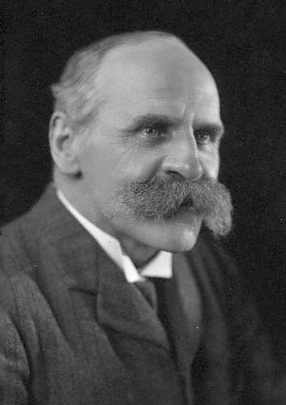
John Scott Haldane (2 May 1860 – 14/15 March 1936)

J. B. S. Haldane
J. B. S. Haldane.jpg

Haldane in 1914

(5 November 1892 – 1 December 1964)

Maurice Wilkins (15 December 1916 – 5 October 2004)

Erwin Schrödinger (12 August 1887 – 4 January 1961)
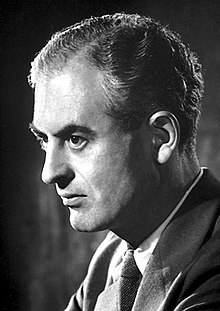
Sir Peter Medawar ( 28 February 1915 – 2 October 1987)

Barry Commoner (May 28, 1917 – September 30, 2012)

In the You Tube video “A Further 50 Renowned Academics Speaking About God (Part 1),” you asserted:

 As a high Anglican school, everybody was expected to be confirmed; I did lessons with the chaplain and at the end he told us to go away and think deeply about why we were being confirmed; I did so and told him that I was only doing it because if I did so I would get an extra Sunday out; as this was the only reason I did not feel I should be confirmed; I was about fourteen at the time and I did not give much thought to religion after that time; I love going to church, and my wife, who was brought up a Catholic, is horrified by my aesthetic enjoyment of it; like many English people I like the sounds, the familiarity, the rhythms, and music; I go to Chapel but technically I am an agnostic in the Huxley sense, that one cannot be absolutely certain, but for all practical purposes I am an atheist; I don’t remember ever having a great deal of anxiety about that; religion for me is a nice social backdrop; obviously, being interested in human evolution I have then thought much about the nature of religion; I am fairly convinced that religion plays a major role in human evolution, which has nothing to do with whether it is true or not; Pascal Boyer’s ideas are very sensible, that religion plays an important role in forming communities, forming largely antagonistic relationships between groups, in providing mechanisms for coercion or conformism – all those things work better with religion; there is a tendency to believe, and to believe what others believe – very few of us think in ways different to those immediately around us – suggest there are strong conformism genes; this is also true of politics and other things, not just religion; on the actual content of religion, I would say that most religions allow you to increase your self belief; I think that Darwinism is one of the least adaptive beliefs in the world as it is basically saying that we are not important in the big scheme of things; one of the reasons that it is not widely accepted is that it is too simple, and this goes against the grain of much of social science; the second is that as a system of belief it downplays the egocentric view; if I want a reason to dominate the world, Darwinism is not going to give it to me; for me, religious belief is a very interesting thing, and I diverge from someone like Dawkins who I think has a very old-fashioned, Frazerian, notion of religion, that magic, witchcraft, religion, science, are somehow a progressive system of thought; …I think the problem with having an Anglican background is that one has a very benign view of religion; we have learned throughout history as well as our own immediate experiences that religion can be very brutal and nasty; that would make me much closer to Dawkins’ position; one can see in Islam with the oppression of women; I am fanatically opposed to capital punishment, so in Saudi Arabia and so on, what is done in the name of religion is appalling; there have been times when religion has made the world a better place, at others, worse, so we have to make ad-hoc decisions; what I would fight very strongly against is the creeping back of religion into governance; I am a child of the Enlightenment, and would not want to see us go back

I am going to answer you in an indirect way. Today is Easter and sometimes a song will just minister to a person in a special way and I heard this song at church today and I wanted to share it with you. It is  called MAN OF SORROWS and it can be found on You Tube Man Of Sorrows – Hillsong Live (2013 Album Glorious Ruins) Worship Song with Lyrics and here are the lyrics:

“Man Of Sorrows”

Man of sorrows Lamb of God
By His own betrayed
The sin of man and wrath of God
Has been on Jesus laid

Silent as He stood accused
Beaten mocked and scorned
Bowing to the Father’s will
He took a crown of thorns

Oh that rugged cross
My salvation
Where Your love poured out over me
Now my soul cries out
Hallelujah
Praise and honour unto Thee

Sent of heaven God’s own Son
To purchase and redeem
And reconcile the very ones
Who nailed Him to that tree

Now my debt is paid
It is paid in full
By the precious blood
That my Jesus spilled

Now the curse of sin
Has no hold on me
Whom the Son sets free
Oh is free indeed

See the stone is rolled away
Behold the empty tomb
Hallelujah God be praised
He’s risen from the grave

We sang that song at our Easter service.

On Easter morning March 27, 2016 at FELLOWSHIP BIBLE CHURCH our teaching pastor Brandon Barnard delivered the message THIS CHANGES EVERYTHING based on I Corinthians chapter 15 and I wanted to share a portion of that sermon with you today.

Image result for brandon barnard fellowship bible church

This day is the day that changes everything. The resurrection changes everything and that is why we are gathered here today to celebrate the resurrection of our Lord Jesus Christ because it changes everything. HAVE YOU EVER EXPERIENCED A LIFE CHANGING MOMENT? Have you ever had something unexpected happen in your world that really changed the whole experience for you?

Recently I took my son Caleb on a getaway weekend. It was a Father/Son Manhood weekend for us, one of the milestones we do here at Fellowship Bible Church.

We decided to go to San Antonio and a San Antonio Spurs game. It was the  same weekend that Star Wars was coming out. So I booked a hotel down at the River Walk. We fly down and went to Star Wars during the day and that evening we had trouble buying tickets to the San Antonio Spurs game but we dropped $200 on some seats pretty high up in the area.

Image result for december 18, 2015 LA Clippers at San Antonio Spurs pictures

After taking selfies we go to the concession stand and as we are approaching the counter and all of a sudden a guy comes out of no where and says, “Hey, is it just you and your son tonite?”

I responded, “Yet it is.” He said, “How would you like to sit  COURT-SIDE?”

Image result for december 18, 2015 LA Clippers at San Antonio Spurs pictures

My son’s eyes got as big as bowling balls. This guy says,  “My brother and his wife and I have season tickets and he is not going to be here tonite and if you want to sit court-side these tickets are yours. Merry Christmas.”

I was speechless. We follow this guy to our court-side seats.  We went from near the roof to court-side. My son Caleb was giving Hi-Fives to the LA Clipper players. It is a good seat when you have to tell the ref to move.

Image result for december 18, 2015 LA Clippers at San Antonio Spurs pictures

My wife and Dad and everyone else is texting me, “We see you on TV every time down the court!” At one point the basketball comes out of bounds and I catch it and my son and I are [freaking out.]

The fans behind us tell us that with these tickets you get free access to the buffet and we could eat and drink all we wanted.

Image result for december 18, 2015 LA Clippers at San Antonio Spurs pictures

At one point I looked down at the tickets they gave us and I saw the price and it was $1650 each ticket. My son Caleb said, “I don’t want this day to end!!”

We were blown away. It was a game changer. I was blown away that someone would give us that kind of opportunity.  It was a once in a lifetime opportunity, and it changed everything for us that evening.

Image result for december 18, 2015 LA Clippers at San Antonio Spurs pictures


This day is the day that changes everything. The resurrection changes everything and that is why we are gathered here today to celebrate the resurrection of our Lord Jesus Christ because it changes everything.

Some of you are going to be blown away by the opportunity before you this Easter morning because the resurrection of Jesus Christ stands at the very heart of Christianity. If what we we are gathered here to celebrate did not happen then people need to pity us as believers.  They need to feel sorry for you and me more than anyone on earth because we have set our hopes firmly on a lie.

But if the resurrection really did happen, then we need to repent and we need to believe in Jesus and we need to rejoice that we have hope in this life and the life to come. 

Paul wrote this to the believers in Corinth.

1 Corinthians 15:3-6, 13-21 English Standard Version (ESV)

3 For I delivered to you as of first importance what I also received: that Christ died for our sins in accordance with the Scriptures, that he was buried, that he was raised on the third day in accordance with the Scriptures, and that he appeared to Cephas, then to the twelve. Then he appeared to more than five hundred brothers at one time, most of whom are still alive, though some have fallen asleep.

13 But if there is no resurrection of the dead, then not even Christ has been raised. 14 And if Christ has not been raised, then our preaching is in vain and your faith is in vain. 15 We are even found to be misrepresenting God, because we testified about God that he raised Christ, whom he did not raise if it is true that the dead are not raised.16 For if the dead are not raised, not even Christ has been raised. 17 And if Christ has not been raised, your faith is futile and you are still in your sins. 18 Then those also who have fallen asleep in Christ have perished.19 If in Christ we have hope[a] in this life only, we are of all people most to be pitied.

20 But in fact Christ has been raised from the dead, the firstfruits of those who have fallen asleep. 21 For as by a man came death, by a man has come also the resurrection of the dead.

_____

If Christ hasn’t been raised then these facts are true:

  1. PREACHING AND FAITH ARE IN VAIN.
  2. WE ARE FALSE WITNESSES
  3. WE ARE STILL IN OUR SINS.
  4. THOSE WHO DIED IN FAITH ARE STILL DEAD
  5. WE ARE TO BE PITIED MORE THAN ANYONE ELSE IN THE WORLD.

Verse 20 says, “but Christ has been raised!!! Therefore, these things are true:

  1. Our faith is significant, valuable and eternal.
  2. we are truth tellers!!
  3. we are forgiven of our sins.
  4. death is not our final stop.
  5. don’t pity us but join us in believing in Jesus Christ.

You said above that you are an atheist. However, would you agree that if the Bible is correct in regards to history then Jesus did rise from the grave? Let’s take a closer look at evidence concerning the accuracy of the Bible.

I know that you highly respected Surgeon General C. Everett Koop and he co-authored with Francis Schaeffer the book WHATEVER HAPPENED TO THE HUMAN RACE? Below is a piece of evidence from that book.


Francis Schaeffer (30 January 1912 – 15 May 1984[1])  and his wife Edith  (November 3, 1914 – March 30, 2013)

C. Everett Koop, MD (October 14, 1916 – February 25, 2013) 13th Surgeon General of the United States


__

Two things should be mentioned about the time of Moses in Old Testament history.

First, consider the archaeological evidence that relates to the period. True, it is not of the same explicitness that we have found, say, in relation to the existence of Ahab or Jehu or Jehoiakim. We have no inscription from Egypt which refers to Moses being taken out of the bulrushes and removed from the waterproof basket his mother had made him. But this does not mean that the Book of Exodus is a fictitious account, as some critics has suggested. Some say it is simply an idealized reading-back into history by the Jews under the later monarchy. There is not a reason why these “books of Moses,” as they are called, should not be treated as history, just as we have been forced to treat the Books of Kings and Chronicles dating 500 years later.

There is ample evidence about the building projects of the Egyptian kings, and the evidence we have fits well with Exodus. There are scenes of brick-making (for example, Theban Tomb 100 of Rekhmire). Contemporary parchments and papyri tell of production targets which had to be met. One speaks of a satisfied official report of his men as “making their quota of bricks daily” (Papyrus Anastasi III vso, p.3, in the British Museum. Also Louvre Leather Roll in the Louvre, Paris, col ii, mentions quotes of bricks and “taskmasters”). Actual bricks found show signs of straw which had to be mixed in with the clay, just as Exodus says. This matter of bricks and straw is further affirmed by the record that one despairing official complained, “There are no men to make bricks nor straw in my area.”

We know from contemporary discoveries that Semites were found at all levels of Egypt’s cosmopolitan society. (Brooklyn Museum, New York, no. 35, 1446. Papyrus Brooklyn). There is nothing strange therefore about Joseph’s becoming so important in the pharaoh’s court.

The store cities of Pithom and Raamses (Rameses) mentioned in Exodus 1:11 are well known in Egyptian inscriptions. Raamses was actually in the east-Delta capital, Pi-Ramses (near Goshen), where the Israelites would have had ample experience of agriculture. Thus, the references to agriculture found in the law of Moses would not have been strange to the Israelites even though they were in the desert at the time the law was given. Certainly there is no reason to say, as some critics do, that these sections on agriculture were an indication of a reading-back from a latter period when the Jews were settled in Canaan.

The form of the covenant made at Sinai has remarkable parallels with the covenant forms of other people at that time. (On covenants and parties to a treaty, the Louvre; and Treaty Tablet from Boghaz Koi (i.e., Hittite) in Turkey, Museum of Archaeology in Istanbul.) The covenant form at Sinai resembles just as the forms of letter writings of the first century after Christ (the types of introductions and greetings) are reflected in the letters of the apostles in the New Testament, it is not surprising to find the covenant form of the second millennium before Christ reflected in what occurred at Mount Sinai. God has always spoken to people within the culture of their time, which does not mean that God’s communication is limited by that culture. It is God’s communication but within the forms appropriate to the time.

The Pentateuch tells us that Moses led the Israelites up the east side of the Dead Sea after their long stay in the desert. There they encountered the hostile kingdom of Moab. We have firsthand evidence for the existence of this kingdom of Moab–contrary to what has been said by critical scholars who have denied the existence of Moab at this time. It can be found in a war scene from a temple at Luxor (Al Uqsor). This commemorates a victory by Ramses II over the Moabite nation at Batora (Luxor Temple, Egypt).

Also the definite presence of the Israelites in west Palestine (Canaan) no later than the end of the thirteenth century B.C. is attested by a victory stela of Pharaoh Merenptah (son and successor of Ramses II) to commemorate his victory over Libya (Israel Stela, Cairo Museum, no. 34025). In it he mentions his previous success in Canaan against Aschalon, Gize, Yenom, and Israel; hence there can be no doubt the nation of Israel was in existence at the latest by this time of approximately 1220 B.C. This is not to say it could not have been earlier, but it cannot be later than this date.

Christ came and laid his life down to die for our sins and there is evidence that indicates the Bible is true!!!!! Some 400 years before crucifixion was invented, both Israel’s King David and the prophet Zechariah described the Messiah’s death in words that perfectly depict that mode of execution. Further, they said that the body would be pierced and that none of the bones would be broken, contrary to customary procedure in cases of crucifixion (Psalm 22 and 34:20; Zechariah 12:10). Again, historians and New Testament writers confirm the fulfillment: Jesus of Nazareth died on a Roman cross, and his extraordinarily quick death eliminated the need for the usual breaking of bones. A spear was thrust into his side to verify that he was, indeed, dead.

Psalm 22 New American Standard Bible (NASB)

A Cry of Anguish and a Song of Praise.

For the choir director; upon [a]Aijeleth Hashshahar. A Psalm of David.

22 My God, my God, why have You forsaken me?
[b]Far from my deliverance are the words of my [c]groaning.
O my God, I cry by day, but You do not answer;
And by night, but [d]I have no rest.
But I am a worm and not a man,

A reproach of men and despised by the people.
7 All who see me [g]sneer at me;
They [h]separate with the lip, they wag the head, saying,
[i]Commit yourself to the Lord; let Him deliver him;
Let Him rescue him, because He delights in him.”

12 Many bulls have surrounded me;
Strong bulls of Bashan have encircled me.
13 They open wide their mouth at me,
As a ravening and a roaring lion.
14 I am poured out like water,
And all my bones are out of joint;
My heart is like wax;
It is melted within [l]me.
15 My strength is dried up like a potsherd,
And my tongue cleaves to my jaws;
And You lay me [m]in the dust of death.
16 For dogs have surrounded me;
[n]A band of evildoers has encompassed me;
[o]They pierced my hands and my feet.
17 I can count all my bones.
They look, they stare at me;
18 They divide my garments among them,
And for my clothing they cast lots.

Francis Schaeffer ended HOW SHOULD WE THEN LIVE? Episode 7 with these words:

When we think of Christ of course we think of his substitutionary death upon the cross when he who claimed to be God died in a substitutionary way and as such his death had infinite value and as we accept  that gift raising the empty hands of faith with no humanistic elements we have that which is real life and that is being in relationship to the infinite personal God who is there and being in a personal relationship to Him. But Christ brings life in another way that is not as often clearly thought about perhaps. He connects himself with what the Bible teaches in his teaching and as such he is a prophet as well as a savior. It is upon the basis of what he taught  and the Bible teaches because he himself wraps these together that we have life instead of death in the sense of having some knowledge that is more than men can have from himself, beginning from himself alone. Both of these elements are the place where Christ gives us life.  

The answer to find meaning in life is found in putting your faith and trust in Jesus Christ. The Bible is true from cover to cover and can be trusted.

Thanks for your time.

Sincerely,

Everette Hatcher, everettehatcher@gmail.com, http://www.thedailyhatch.org, cell ph 501-920-5733, Box 23416, LittleRock, AR 72221

Interview with Professor Robert Foley, Part 1

Uploaded on Jan 24, 2012

An interview of Professor Robert Foley on his life and work as a biological anthropologist. Please see http://www.alanmacfarlane.com for the wider context.
Filmed on 27 April 2010
All revenues to World Oral Literature Project

______________________

Interview with Professor Robert Foley, Part 2

Uploaded on Jan 27, 2012

An interview of Professor Robert Foley on his life and work as a biological anthropologist. Please see http://www.alanmacfarlane.com for the wider context.
Filmed on 27 April 2010
All revenues to World Oral Literature Project


Related posts:

FRANCIS SCHAEFFER ANALYZES ART AND CULTURE Part 53 THE BEATLES (Part E, Stg. Pepper’s and John Lennon’s search in 1967 for truth was through drugs, money, laughter, etc & similar to King Solomon’s, LOTS OF PICTURES OF JOHN AND CYNTHIA) (Feature on artist Yoko Ono)

The John Lennon and the Beatles really were on a long search for meaning and fulfillment in their lives  just like King Solomon did in the Book of Ecclesiastes. Solomon looked into learning (1:12-18, 2:12-17), laughter, ladies, luxuries, and liquor (2:1-2, 8, 10, 11), and labor (2:4-6, 18-20). He fount that without God in the picture all […]

FRANCIS SCHAEFFER ANALYZES ART AND CULTURE Part 52 THE BEATLES (Part D, There is evidence that the Beatles may have been exposed to Francis Schaeffer!!!) (Feature on artist Anna Margaret Rose Freeman )

______________   George Harrison Swears & Insults Paul and Yoko Lucy in the Sky with Diamonds- The Beatles The Beatles:   I have dedicated several posts to this series on the Beatles and I don’t know when this series will end because Francis Schaeffer spent a lot of time listening to the Beatles and talking […]

FRANCIS SCHAEFFER ANALYZES ART AND CULTURE Part 51 THE BEATLES (Part C, List of those on cover of Stg.Pepper’s ) (Feature on artist Raqib Shaw )

  The Beatles in a press conference after their Return from the USA Uploaded on Nov 29, 2010 The Beatles in a press conference after their Return from the USA. The Beatles:   I have dedicated several posts to this series on the Beatles and I don’t know when this series will end because Francis […]

FRANCIS SCHAEFFER ANALYZES ART AND CULTURE Part 50 THE BEATLES (Part B, The Psychedelic Music of the Beatles) (Feature on artist Peter Blake )

__________________   Beatles 1966 Last interview I have dedicated several posts to this series on the Beatles and I don’t know when this series will end because Francis Schaeffer spent a lot of time listening to the Beatles and talking and writing about them and their impact on the culture of the 1960’s. In this […]

FRANCIS SCHAEFFER ANALYZES ART AND CULTURE Part 49 THE BEATLES (Part A, The Meaning of Stg. Pepper’s Cover) (Feature on artist Mika Tajima)

_______________ The Beatles documentary || A Long and Winding Road || Episode 5 (This video discusses Stg. Pepper’s creation I have dedicated several posts to this series on the Beatles and I don’t know when this series will end because Francis Schaeffer spent a lot of time listening to the Beatles and talking and writing about […]

FRANCIS SCHAEFFER ANALYZES ART AND CULTURE PART 48 “BLOW UP” by Michelangelo Antonioni makes Philosophic Statement (Feature on artist Nancy Holt)

_______________ Francis Schaeffer pictured below: _____________________ I have included the 27 minute  episode THE AGE OF NONREASON by Francis Schaeffer. In that video Schaeffer noted,  ” Sergeant Pepper’s Lonely Hearts Club Band…for a time it became the rallying cry for young people throughout the world. It expressed the essence of their lives, thoughts and their feelings.” How Should […]

FRANCIS SCHAEFFER ANALYZES ART AND CULTURE Part 47 Woody Allen and Professor Levy and the death of “Optimistic Humanism” from the movie CRIMES AND MISDEMEANORS Plus Charles Darwin’s comments too!!! (Feature on artist Rodney Graham)

Crimes and Misdemeanors: A Discussion: Part 1 ___________________________________ Today I will answer the simple question: IS IT POSSIBLE TO BE AN OPTIMISTIC SECULAR HUMANIST THAT DOES NOT BELIEVE IN GOD OR AN AFTERLIFE? This question has been around for a long time and you can go back to the 19th century and read this same […]

FRANCIS SCHAEFFER ANALYZES ART AND CULTURE PART 46 Friedrich Nietzsche (Featured artist is Thomas Schütte)

____________________________________ Francis Schaeffer pictured below: __________ Francis Schaeffer has written extensively on art and culture spanning the last 2000years and here are some posts I have done on this subject before : Francis Schaeffer’s “How should we then live?” Video and outline of episode 10 “Final Choices” , episode 9 “The Age of Personal Peace and Affluence”, episode 8 […]

FRANCIS SCHAEFFER ANALYZES ART AND CULTURE Part 45 Woody Allen “Reason is Dead” (Feature on artists Allora & Calzadilla )

Love and Death [Woody Allen] – What if there is no God? [PL] ___________ _______________ How Should We then Live Episode 7 small (Age of Nonreason) #02 How Should We Then Live? (Promo Clip) Dr. Francis Schaeffer 10 Worldview and Truth Two Minute Warning: How Then Should We Live?: Francis Schaeffer at 100 Francis Schaeffer […]

FRANCIS SCHAEFFER ANALYZES ART AND CULTURE Part 44 The Book of Genesis (Featured artist is Trey McCarley )

___________________________________ Francis Schaeffer pictured below: ____________________________ Francis Schaeffer “BASIS FOR HUMAN DIGNITY” Whatever…HTTHR Dr. Francis schaeffer – The flow of Materialism(from Part 4 of Whatever happened to human race?) Dr. Francis Schaeffer – The Biblical flow of Truth & History (intro) Francis Schaeffer – The Biblical Flow of History & Truth (1) Dr. Francis Schaeffer […]

__

FRANCIS SCHAEFFER ANALYZES ART AND CULTURE PART 147, John Hospers Part C, this post includes portion of 6-2-94 letter from Hospers to me blasting Christian Evangelicalism,(Featured artist is Ron Gorchov )

I sent a cassette tape of Adrian Rogers on Evolution to John Hospers in May of 1994 which was the 10th anniversary of Francis Schaeffer’s passing and I promptly received a typed two page response from Dr. John Hospers. Dr. Hospers had both read my letter and all the inserts plus listened to the whole sermon and had some very angry responses. If you would like to hear the sermon from Adrian Rogers and read the transcript then refer to my earlier post at this link.  Over the last few weeks I have posted  portions of Dr. Hospers’ letter and portions of the cassette tape that he listened to back in 1994, but today I want  to look at some other comments made on that cassette tape that John Hospers listened to and I will also post a few comments that Dr. Hospers made in that 2 page letter.

__

John Hospers: From 1776 to 1984

Interview with
John Hospers
by Karen Minto

Q: Where did you grow up?

Hospers: I was born and raised in a small Dutch town near Des Moines, Iowa, settled by the Dutch in 1847. The first language I learned was Dutch, and almost everyone in the town spoke it, as well as English. The Dutch Reformed Church dominated the life of the town, though there was no religious training in the public schools. People were very industrious and hard-working. I don’t think anyone in the town was on welfare, and the average income of families was the highest in the state. There were tulip gardens all over the place, and every year in May they’d have an annual tulip festival—everyone in Dutch costume, scrubbing the streets, singing Dutch songs—the whole bit. More important to me were the dogs and cats I always had, and finding homes for stray animals.

Q: What early influences affected your intellectual development?

Hospers: The religious influence was very strong, and at first I absorbed it like everyone else. It was a long time before I knew of anyone who did not share the prevailing Calvinism. Later, I got to thinking about it critically more and more, and that is undoubtedly what started my interest in philosophy, though at that time I was unaware that there was a subject by that name.

In sixth grade I read every article on astronomy in the school’s World Book Encyclopedia, and then I borrowed every book on astronomy that the city library had. I would figure out when different stars and planets would rise, and stay up at night waiting for it to happen. The laws of physics and astronomy never let me down.

The Central College campus was just a block from our house, and I would go to the college observatory and show the college students the rings of Saturn and various double stars. When I got to college myself, the dean, who taught astronomy, delegated the job of teaching it to me. It was my first and best teaching experience—I prepared the tests, taught the class, preparing the lectures and discussions with care. Here I was, a 17-year-old, teaching astronomy to college seniors. Sometimes the dean would drop in and smile, telling the class “I’ll leave you to John—he knows more about astronomy than I do.” Whatever compliments I have ever received, this was the one that meant the most to me.

A cousin who planned to go on to Harvard to study English influenced me to major in that subject. There wasn’t a lot of philosophy being taught at the college, so in addition to taking the few philosophy courses, I took a major in English. I might have stuck with astronomy, except that no one thought that such a subject would lead to any professional future. Meanwhile, even prior to courses in philosophy, I was having more doubts about religion: the usual ones about how one could know that this religion possessed the truth rather than another, how one could get knowledge of God, and so on. What saved me was the reading of David Hume’s Dialogues Concerning Natural Religion—which I still think is the greatest book ever written on the subject. It reflected so many of my own thoughts that I knew I was not alone. I remember thinking, for example, that if God is both all-good and all-powerful, he would not let people and animals suffer. If he couldn’t prevent their suffering, he is not omnipotent, and if he doesn’t want to prevent it he is not all-good. We excuse a surgeon for inflicting suffering if he can’t cure the patient any other way, but an omnipotent benevolent deity would not have that excuse. That source of doubt was more important to me than the usual ones about where did God come from. I concluded with Hume that no attempt to get round this dilemma was successful.

I went on to get a Master’s degree in English at the State University of Iowa. I was all set to teach Shakespeare and Shelley, but I never got to do it: when I was offered a scholarship at Columbia University, I asked whether I could change my major to philosophy. That was okay with them, so it was in philosophy that I finally got my Ph.D., though I skated on pretty thin ice because of my comparative lack of background in philosophy. But the literature background prepared me well for a dissertation in aesthetics, which became my major field of study in philosophy.

Q: What philosophers did you most respect in graduate school?

Hospers: Hume and Mill. Also Plato and Aristotle, and to some extent Descartes and Locke. But Hume most of all—both his historical and epistemological works—which I admired as much for the beauty and clarity of his style as for what he said. It wasn’t until later that I got into contemporary philosophers such as William James, Blanshard, and most of all G. E. Moore, who was for a year my teacher at Columbia.

Q: What is your best philosophical work?

Hospers: Probably the aesthetics book, Understanding the Arts. The most famous section I ever wrote was the 100-page first chapter of Introduction to Philosophical Analysis, entitled “Words and the World,” which introduced a whole generation of students to philosophy via the study of language, and for which I am still best known. I also picked up some notoriety with my long piece in the Encyclopedia of Philosophy, “Aesthetics, Problems of,” and even more with my 40,000-word article in the Encyclopedia Britannica, “Art, Philosophy of.”

[…]

Q: You used to be a determinist. Are you still?

Hospers: This depends on what the word “determinism” (like so many words ending in -ism) is taken to mean. Some people say that all events are predetermined by God; I see no reason to accept that view. Or that “it’s all determined by laws of nature”—if you knew all the laws and all the initial conditions, you could predict everything (as Newton did with regard to the planetary orbits). The problem is (one of many) that if you made the prediction and the predicted event didn’t occur, we would say, without any further evidence, that we hadn’t considered all the conditions—we’d take the very fact of the prediction going wrong as evidence that there was an error in our statement of the conditions. Thus the statement becomes what philosophers call a “functional tautology.” Sure, all our actions have causes. Do we really want to say that some of our actions have no causes at all? Freedom says “I cause my actions.” Determinism (in the unobjectionable sense) says “My actions are caused by me.” They are two sides of the same coin.

Q: How well did David Kelley defend direct realism in The Evidence of the Senses?

Hospers: I confess that I’ve never read it all the way through. Some years ago I was much more involved with problems of perception than I am now; his book came too late on the scene for me. But he writes with admirable clarity and doesn’t confuse one sub-problem with another, as so many writers do.

Many writers have defended direct realism, e.g. John Laird’s A Theory of Direct Realism. I must say I was never totally convinced by this view. It still seems to me that smells and tastes, and even colors, vary enormously from one percipient to another because of the differences in our sense-organs. Not only in our sense-organs, but in our state of mind: the dessert no longer tastes sweet after we have eaten something that tasted sweet just before. What does exist out there are certain chemical properties of the dish, and also of the human nose. But you can’t say that something has a property A and also doesn’t have it–only that it seems to one person that it has A, and doesn’t seem so to another. However, it may be that David doesn’t want to deny any of this. I’m afraid I’d have to go and spend some time with the book again.

Q: What did you think of Sciabarra’s view that Rand was a dialectical thinker, and absorbed her method of doing philosophy from Russian culture?

Hospers: Amen! That’s what I thought all along, and reading his book provided a confirmation I had greatly sought. “Dialectical” characterizes her method throughout, and helps to explain why Ayn and I came from different starting points, and conceived the issues differently. In view of this it’s amazing that we got on as well as we did. Her method was quite immune to the subtleties of language. Naturally, I believe that the method of philosophical analysis as done largely in Anglo-American philosophy is preferable; at least it gets the questions straight. I wish she had been exposed early on to the clarifying light of contemporary Anglo-American philosophy. There is one book I would like to have gone through with her step by step: Alexander B. Johnson’s A Treatise on Language, published in 1836. He was never attached to any college or university, but figured out the fundamentals all by himself—truly one of the great figures of American philosophy. Very few people know about him, even today.

Q: What is the most profound thing that Rand got right in basic philosophy?

Hospers: Several things (I couldn’t pick out just one). That reality is there independently of us. That it cannot both be X and not-X at the same time in the same respect; that ideas can change the world, for better or for worse. That within limits, our destiny lies in our own hands.

She was right about value—though (she was probably unaware of it) the American philosopher Ralph Barton Barry had carved out much of the same domain in his Realms of Value. The deathless robot example had been used by Richard Taylor in his Good and Evil, to similarly powerful effect. Unlike Perry, Taylor drew from his working out of the concept of value a social-political ethics very similar to Rand’s, in his marvelous little book Freedom, Anarchy, and the Law, which I have occasionally used as a text in my political philosophy course. “All great minds run in the same channel,” it has been said—and while this isn’t true, more Randians should realize that other minds than Ayn Rand’s have had some of her most important ideas. The whole structure—the integrated system—is unique to her, but many of the ingredients have been created by others, often in unexpectedly subtle ways, and devotees of Rand should really appreciate this—they have often spoken as if hers was the only great mind that ever existed, and as if her ideas were spun directly from the head of Zeus.

Q: What is your vision of the future of Rand’s philosophy, say in a hundred years?

Hospers: I’m not in the prediction business. I’d say here what I always say in response to questions in ethics: “It all depends.” If free-market ideas and limited government really are the wave of the future, Rand will surely be seen as its Moses, leading the people into the promised land. But if the U.S. continues on the path to government-by-bureaucracy, Randian political ideas will remain what they are today, a discussion piece for a small but articulate minority. And in any future international crisis, the government will expand further and individualist ideas will tend to be drowned out.

Of course, her social-political philosophy is only a small part of her total philosophy, but it’s the part for which she is most famous. I doubt that her metaphysical views will take hold in the absence of her social and political ideas. They are the tail that wags the dog.

Q: What about the universities? Is getting Objectivism into the universities a valid strategic goal for the Objectivist movement?

Hospers: Universities have always been centers of statism, because professors believe they can do better when subsidized by the state than they could do in the free market. I don’t see this changing very much. Also, there are many technical issues discussed in philosophy departments on which Rand either has nothing to say or says something ill-informed because she had only a glancing acquaintance with what was going on in philosophy and other departments in the universities. Her review of John Rawls’ A Theory of Justice without having taken the trouble to read the book, is a case in point. She didn’t do enough careful work in relation to views that she opposed.

Q: Do you have any advice to graduate students in philosophy?

Hospers: Be careful and be prepared for the worst. Most heads of departments don’t like Objectivist views (if they know anything about them at all), and one is less likely to be hired—and there are many more Ph.D.s being graduated in philosophy than the present market can place. So you might have to end up teaching something else. Or not teaching at all. Don’t go into teaching unless you are really dedicated. Most students would do better to go into something that pays, and study philosophy in their spare time.

Q: What is your assessment of the quality of liberal education in America? Has it got much worse?

Hospers: Yes, it has. Science departments are still tops, but the humanities have deteriorated. Much of philosophy is still pretty solid, though there is an emphasis on courses with popular titles that teach one very little about philosophical concepts. Much of it is just junk—instead of clarifying the student’s mind, it throws more words out, which the student takes down in notes, and the student may even fancy that she has learned something in philosophy. A lecture, it’s said, is something that goes from the notes of the teacher to the notes of the student without having gone through the minds of either. Philosophy has to be done slowly and carefully, from the ground up, Oxford-tutorial style, with the teacher correcting the student at every step of the way. The large lecture-hall courses in philosophy don’t begin to do that; they may give the student the delusion that something has been learned, and meanwhile a wonderful source of wisdom and guidance to living one’s life is out there and the student never gets a hint that it’s there. It’s a tragic situation—a waste of the student’s time. Literature courses have become corrupted in different ways: instead of a systematic study of Shakespeare or Milton, one just gets “impressions” and “interpretations” (the one supposedly as good as the other). When I studied Shakespeare you couldn’t get by with such drivel—indeed you had to know the material thoroughly, and every student had powerful responses to Shakespeare’s poetry, so that it would make a difference their lives. I used to commit passages of Shakespeare to memory, repeating them out loud while driving to school—I don’t think much of this goes on any more.

Most important of all perhaps is that this is the “first illiterate generation,” brought up on television and not trained to do anything with words—to write them, to combine them creatively in essays, and to read, read, and read. Some students still read a lot—though they’d rather look up a topic on the computer and pretend they know about it than actually look at a book themselves. But even graduate students I know don’t read just for the love of it. They will read on a topic if their graduate program requires it, but just to immerse themselves in books for the sheer joy of acquainting themselves with other minds—it seems to me that’s quite rare these days.

Last year I asked my ethics class to write a few pages on justice, before we discussed the topic in the course. Most of the papers were ill-organized and inarticulate, and the kids wrote as if “anything goes” in using language (do we believe “anything goes” when we’re trying to repair a car?). They thought they had done well—just putting down impressions—and thought I was “much too opinionated” in correcting them, though if I’d been conscientious I would have had to write more words in commenting on their papers than they had written in the papers. Then I saw a paper that was so clear, and had such elegant simplicity, that I could barely believe it—nothing complicated, nothing even taken from books, just the working out of a few fairly simple ideas. The girl who wrote it was from Korea and had learned English only six years before, in Korea. She had learned it “the correct way,” as a foreign language, paying attention to grammar and construction. How had this girl, who had had no philosophy course before, come to do better than any of the American-born students? I remembered that until after World War II, Korea had been controlled by Japan, and no Korean was permitted to embark on higher education. There it was—in a few years the Koreans have got way ahead of us (this girl wasn’t the only example), though we may still think we’re tops. The thought that scared me was, if they can rise so fast, we can fall pretty fast too. American students are near the bottom of the list in language, mathematics, and other subjects. How can we survive if we continue in the direction we are going?

Q: Why does Borders stock so much Continental philosophy and post-modern junk? Who buys that stuff?

Hospers: Instructors like to assign it, to mystify students and show them how much more learned they (the instructors) are. But I doubt that that’s the main reason. It’s the magic of words again. There are certain words in titles, such as “the meaning of life,” which turn students on, and they think they are getting philosophy just because the book is stocked on a shelf labeled “philosophy.” They are fascinated by the occult, and often identify metaphysics with occultism of some kind—with the mysterious or the mystical, with E.S.P. and “inner revelation” as the key to knowledge. What they actually learn from all this is: nothing. But bookstores stock it because the untutored and the unwary buy it.

Q: Did you see the Sense of Life documentary? What did you think of it?

Hospers: I was moved by some parts of it, especially those parts in which Rand in her inimitable voice speaks with conviction about the topics at hand—especially in the interviews in the New Orleans gold conference, which I hadn’t heard before. I was again bowled over by her ability to say something with simple elegance, and to trace so relentlessly the consequences of her opponents’ ideas. I wanted to tell her how much she meant to all of us.

The parts dealing with the early years were revealing and moving. One disadvantage was that the film was told solely from the point of view of her followers. It would have had a richer texture if it had described some of the ideas being discussed by those who honored her and cared for her but didn’t necessarily believe that every word was sacred scripture.

Q: What is your favorite scene in Atlas Shrugged?

Hospers: There are so many—how can I choose? I guess I’d have to say the scene between Dagny and the tramp in the train, on what happened to Twentieth Century Motors, and why. It’s such a great literary piece—and it presents, as she does so well, the consequences of acting on certain ideas—in this case “To each according to his ability, to each according to his need.” When I finish reading those ten pages aloud to the class, half of them don’t understand it or don’t care, and the other half is thunderstruck—they have been hit over the head with new ideas, which they have never heard before, and they don’t quite know how to handle it or what to do about it. Many a future Objectivist has taken root from that reading in my class—and I’ve done it annually for about thirty years.

[…]

A Full Context exclusive – John Hospers’ “Memories of Ayn Rand”

from Full Context, Vol. 10, No. 9
(May 1998)
Issues of Full Context containing the full transcripts of our interviews are available here.

Image result for john hospers ayn rand

Here is another quote from Dr. John Hospers’ June 2, 1994 letter that commented on Adrian Rogers message on Evolution:

I find it [GRADUAL EVOLUTION] much more compatible with the way reality works in other areas to believe that it came gradually over millions of years. (No, the dinosaurs did not “on the 6th day” — but long before man. The evidence of the rocks is pretty convincing on this, unless you want to say that God planted false evidence in the rocks in order to try man’s faith (as some said 10 years ago). (And the sun had to be there before the third day, since without the sun’s light there would be no day and night on the earth!)

During the 1990′s I actually made it a practice to write famous atheists and scientists that were mentioned by Adrian Rogers and Francis Schaeffer and challenge them with the evidence for the Bible’s historicity and the claims of the gospel. Usually I would send them a cassette tape of Adrian Rogers’ messages “6 reasons I know the Bible is True,” “The Final Judgement,” “Who is Jesus?” and the message by Bill Elliff, “How to get a pure heart.”  I would also send them printed material from the works of Francis Schaeffer and a personal apologetic letter from me addressing some of the issues in their work. My second cassette tape that I sent to both Antony Flew and George Wald was Adrian Rogers’ sermon on evolution and here below you can watch that very sermon on You Tube.   Carl Sagan also took time to correspond with me about a year before he died. 

(Francis Schaeffer pictured below)

Image result for francis schaeffer

Adrian Rogers pictured below

I have posted on Adrian Rogers’ messages on Evolution before but here is a complete message on it.

Evolution: Fact of Fiction? By Adrian Rogers

_______________________________________


(This next paragraph is my comment and not Adrian Rogers) This might interest you that good friend in Little Rock Craig Carney had an uncle named  Warren Carney and Warren was born in 1917 and he was the last living witness of the Scopes Monkey trial but he died in June of 2015. His father took him to the trial every day since they lived in Dayton and it was the biggest happening in the town’s history. Also I attended the funeral of Dr. Robert G. Lee (1886-1978) at Bellevue Baptist in Memphis and he is the minister who presided over William Jennings Bryan’s funeral in 1925.

(William Jennings Bryan)

(Dr. Robert G. Lee )

_______________________________

b. The Fixity of the Species
The second bridge the evolutionist cannot cross is the steadfastness, the fixity, of the species—that is, “the basic categories of life.”

Now, what does the Bible say about the species? Well, Genesis 1, verses 11–12: “And God said, Let the earth bring forth grass, the herb yielding seed, and the fruit tree yielding fruit”—now, listen to this phrase—“after his kind, whose seed is in itself, upon the earth: and it was so. And the earth brought forth grass, and herb yielding seed after his kind, and the tree yielding fruit, whose seed was in itself, after his kind: and God saw that it was good” (Genesis 1:11–12). You continue this passage. Ten times God uses this phrase, “after his kind”—“after his kind,” “after his kind”—because like produces like.

Now, the evolutionist must believe that reproduction does not always come kind after kind. There has to be a mutation—or a transmutation, rather—between species—that you can become a protozoa; and then you can become an un-segmented worm; and then you may become a fish; and then you may become a reptile, and move from one species to another. Now, all of us know there is such a thing as mutation. If you have roses, you can get various varieties of roses. If you have dogs—canines—you can have everything from a poodle to a Great Dane, but they’re still canines; they’re still dogs. The scientists have bombarded fruit flies with gamma rays or some kind of rays to cause mutations, and they get all kinds of strange fruit flies. But, they never get June bugs; they’re still fruit flies. You see, there are variations and adaptations that God has built, but you never have one species turning to another species. You never have a cat turn into a dog that turns to a cow that turns to a horse. You just don’t have that.

Now, men have tried to do that. I heard, one time, about a marine biologist who tried to take one of these beautiful shell creatures called an abalone and cross it with a crocodile. What he got was a crock of baloney. And, anytime anybody tries this, that’s exactly what they come up with.
Now, you say, “Pastor Rogers, why are you so certain about the fixity of the species, the steadfastness of the species?” Number one: because the Bible teaches it, and that’s enough for me. But, let’s move beyond that. We’re not talking about theological reasons now; we’re talking about logical reasons. Friend, if this is true, you would expect to find transitional forms in the fossils. There are billions of fossils; there are trillions of fossils— multiplied fossils. In not one instance—are you listening?—in not one instance do we find a transitional form. None—there are none.

Now, there are some people who will attempt to show you a proof of these, but I can tell you that eminent scientists have proven that these are not true. You would think that if man has evolved for millions and billions of years, and that life has evolved from one-celled life, some amoeba, to what we have today, that, in the fossils in the earth, we would find these transitional forms. But, they’re not there. The people talking about finding the missing link… Friend, the whole chain is missing—the whole chain is missing. Now, you ask them to prove it—that that is not true; and, they cannot come up with evidence. Well, you say, “But Pastor, they seem to have the proof. What about these ape-men? What about these people who lived in caves—these cave dwellers?” We have cave dwellers today. People have lived in caves through the years. “But, what about these things that we see in the museum? What about these creatures in this Time-Life advertisement?” Those are the products of imagination, and artistry, and plaster of Paris.

Adrian Rogers pastor of Bellevue Baptist in Memphis visiting with Ronald Reagan in White House pictured above.

Below Bellevue Baptist pictured in 1975:

Some years ago—in 1925, I believe it was—in Tennessee—Dayton, Tennessee— we had something called The Monkey Trial. Clarence Darrow and William Jennings Bryan were in a court case. A teacher had taught evolution in school, and there were people who sued that evolution should not be taught in school. Now it is reversed— you’re sued if you don’t teach evolution in school. But, there was a great debate, and Clarence Darrow, who was a very brilliant lawyer, was presenting evidence for evolution. Part of the evidence that Clarence Darrow presented was Nebraska Man, and he had all of these pictures.

Now, what had happened is there was a man named Harold Cook. And, Harold Cook had found a piece of evidence, and out of that piece of evidence the artist had created this half-man, half-ape—this Nebraska Man. Well, what was it that Clarence Darrow used as evidence that Harold Cook had discovered? It was a tooth. I didn’t say, “teeth”; I said, “tooth.” He had a tooth; and, with that tooth, he had devised a race—male and female.

I was interested in reading, in my research for this message, where a creationist went to the University of Nebraska, where they have the campus museum. And, since he’s named Nebraska Man, they have the replica of Nebraska Man there, in the museum. So, this creationist went in there and said, “I want to see Nebraska Man.” So, they took him in there, and in a case were the skull and the skeleton of Nebraska Man. And, the creationist said, “Are these the actual bones of Nebraska Man?” “Oh,” he said, “no, they’re not the actual bones.” “Well,” the man said, “where could I see the actual bones?” “Oh,” he said, “well, we don’t have the bones. These are plaster of Paris casts of Nebraska Man.” “Well, you must have had the bones to make the cast.” The man in charge seemed embarrassed. “We don’t have any bones. All we have is a tooth.” That’s Nebraska Man. And, what they had done was to take a tooth, take some imagination, take an artist, take plaster of Paris, take some paste and some hair, and glue it on him—make a male, make a female, make a civilization called Nebraska Man out of one—one—tooth.

When I was in school, I studied about the Java ape-man. If you go back as far as I do, you studied about the Java ape-man. Where’d he come from? Well, in 1891, Sir Eugene Dubois found, in Java, the top of a skull, the fragment of a left thighbone, and three molar teeth. He announced the missing link had been found—750,000 years old. These bones that he found—these sparse bones—were not found together, and they were found scattered, over the space of one year. Twenty-four eminent scientists got together to investigate these bones; they were from Europe. There was no agreement. Ten said that they were the bones of an ape; seven said that they were the bones of a man; seven said that it was the missing link. Later, Dubois himself had to confess that it was the remains of an ape. But, in the museum, he is called Pithecanthropus Erectus— “the ape-man who stands up.” But, he’s just an ape.

What about the Piltdown man? I, in college, was introduced to the Piltdown man. Where’d we get his name? Well, Charles Dawson, in Piltdown, England, found in a gravel pit a piece of a jaw, two molar teeth, and a piece of a skull. For 50 years, this was known as “the Piltdown man,” but it was later shown to be a hoax. And, The Reader’s Digest, in 1958, said this—and I quote: “The great Piltdown hoax was an ape only 50 years old. Its teeth had been filed down and artificially colored.” Well, we laugh at that, and we say anybody could have a joke pulled on him. Yes, but friend, the scientists took this and put it in the museum for 50 years. Do you see how anxious man is to make a monkey of himself? I mean, it was a hoax.

__________________________________________________________________________

Image result for painting A Discussion on the Piltdown Skull

The painting, entitled “A Discussion on the Piltdown Skull,” is based on a meeting at the Royal College of Surgeons on the afternoon of August 11, 1913, during which the participants presented their views on the anatomy of Piltdown man. One or more of these men may have been involved in committing the fraud, while others were the unwitting victims. The anthropologist Arthur Keith (wearing the white laboratory coat) is seated at the table examining the Piltdown skull. Seated to Keith’s left are the osteologist William Pycraft and the zoologist Ray Lankester. The dentist Arthur Underwood stands in front, to Keith’s right. Standing in the back (from Keith’s far left) are the geologist Arthur Smith Woodward, the amateur paleontologist Charles Dawson, the anatomist Grafton Elliot Smith, and Frank Barlow, an assistant to Woodward. Other notables in the Piltdown affair, such as Pierre Teilhard de Chardin, Lewis Abbot and Martin Hinton, were not present at the discussion. On the back wall, a portrait of Charles Darwin presides over the meeting. (Photograph courtesy of the Geological Society of London.)

______________________________________________

And, Dr. Austin H. Clark, noted biologist of the Smithsonian Institute,  said this—listen to this, this is Smithsonian: “There is no evidence which would show man developing step-by-step from lower forms of life. There is nothing to show that man was in any way connected with monkeys. He appeared suddenly and in substantially the same form as he is today. There are no such things as missing links. So far as concerns the major groups of animals, the creationists appear to have the best argument. There is not the slightest evidence that any one of the major groups arose from any other.” Folks, again—not that I’m embarrassed at being a Baptist preacher—but that’s not a Baptist preacher speaking; that’s a biologist at the Smithsonian.

There’s a man today who’s going about speaking on college campuses. His name is Dr. Philip E. Johnson. He’s a Harvard gradate and also a graduate of the University of Chicago. He’s an attorney—and no mean attorney. He has served as a law clerk for the Chief Justice of the United State Supreme Court. I want you… And, by the way, Mr. Johnson, whose books are in our library and in our bookstore, I believe, is a true believer and does not believe in evolution. He’s brilliant. And, he tells the following story of a lecture given by Colin Patterson at the American Museum of Natural History in 1981. Let me tell you who Patterson is. Patterson is a senior paleontologist—that means, just simply, “someone who studies ancient events, and creatures, and so forth”—he is a senior paleontologist at the British Natural History Museum. And, I’ve been to that museum. As you walk in, the first thing you see is the head of Darwin there—the bust of Darwin. He is—Colin Patterson is—the senior paleontologist at the British Natural History Museum, and he is the author of that museum’s general text on evolution. So, this guy’s no “6” or “7.” When it comes to science, he’s a “9” or “10.”

(Phillip Johnson)

(Colin Patterson)

Now, Philip Johnson, who is this lawyer from Harvard, quotes Colin Patterson, and he says this happened: He says—Patterson is lecturing now, and Philip Johnson is talking about it; and, here’s what Philip Johnson says: “First, Patterson asked his audience of experts a question which reflected his own doubts about much of what has been thought to be secured knowledge about evolution.” Now, here’s this man; he’s asking his colleagues this question: “Can you tell me anything you know about evolution—any one thing—that is true?” A good question: “Can you tell me…”—now listen; it’s kind of funny—“Can you tell me anything—any one thing—you know is true?” Now, here are these learned men sitting out there. And, let me tell you what happened: He said, “I tried that question on the geology staff at the Field Museum of Natural History, and the only answer I got was silence. I tried it on the members of the Evolutionary Morphology Seminar in the University of Chicago”—morphology means, “to change from one form to another”—I tried it on the members of the Evolutionary Morphology Seminar in the University of Chicago, a very prestigious body of evolutionists, and all I got there was silence for a long time. Eventually, one person said, ‘I do know one thing: It ought not to be taught in high school.’”
Now, get the setting: Here is a man, a brilliant scientist from the British Museum, who has written a book on the thing. And, he gets these high muckety-mucks out there—these intellectual top waters—and he said, “

Can you tell me one thing that you know to be true—that you know to be true?” Silence. Only thing one of them said: “I know that it ought not to be taught in high school.”

You see, folks, there are some bridges that they cannot cross. One bridge is the origin of life. George Wald said, “That’s impossible, but I believe it—spontaneous generation—because I don’t want to believe in God.” The other is the fixity of the species. We don’t have any evolutionary fossilized remains, missing links.

__

12/09/2013

Featured Artist Today is Ron Gorchov

Ron Gorchov Looks to The Greeks

It is often said that artists never retire, and American abstract painter Ron Gorchov is no exception. Now in his early 80s, Gorchov nevertheless continues to quietly push his work in strange new directions. His latest exhibit, a low-key affair at the Lesley Heller Workspace at 54 Orchard Street, offers up an collection of minimal watercolor compositions influenced primarily by Greek Mythology.

The ameba-like watercolor paintings represent something of a departure for Gorchov, who is best-known for his curved paintings — large canvases bound to custom-bowed stretchers — that resemble the shapes of shields, saddles, and primitive masks. “My paintings are mostly made from reverie, and luck,” he once told The Brooklyn Rail. “I think painting, per se, is an ideal way to criticize the work you already admire because that way you can take the best things in it and try to make your work to be the next consequential step. I mean, to me, that’s a given tradition in creative thought: to build on what you’re seeing that you love and try to bring it to new and unknown terrain.”

Born in Chicago in 1930, Gorchov began painting at the age of 14 when he began taking classes at the Art Institute of Chicago. He has been working in New York since the early 1950s, when he arrived with his wife, newborn son, and all but $80 to his name. Since arriving he has made paintings that are now in permanent collections at The Met, MoMA, and Guggenheim, to name a few. His contemporaries include Willem de Kooning, Mark Rothko, and Joel Shapiro.

Gorchov’s watercolor paintings will be on display at the Lesley Heller Workspace through October 13th.

Lane Koivu 

Ron Gorchov at CHEIM & READ

Published on Apr 7, 2012

James Kalm has the distinct pleasure of bringing viewers this brief tour of recent paintings by one of New York’s most enigmatic artists, Ron Gorchov. Though a member of the New York art world since the early fifties, it was in the late sixties that Gorchov devised his unique painting support, often referred to as a “saddle shape”. The use of this convex surface was a refutation of Clement Greenberg’s dogmatic idea that the picture plane must be flat, and rectangular. Along with his “saddle shape” canvases Gorchov has developed a “stack” format, a series of curved planes overlaying each other, that he paints sophisticated color studies on. This exhibition presents recent examples of Gorchov’s works that display his innovative comingling of painting and sculpture and the mastery of his means. Includes an appreciation by Jonathan Lasker.

Featured artist is Ron Gorchov

From Wikipedia, the free encyclopedia

Ron Gorchov (born 1930) is an American artist who has been working with curved surface paintings and shaped canvases since 1967.[1] Gorchov’s primary invention consists of finely fitted, curved wooden frames resembling shields or saddles, across which is stretched linen or canvas. He uses simple paired strokes to create images that play with asymmetry within a basically symmetrical design, creating his emblematic doubled or mirrored image.[2]

Gorchov’s paintings are included in many prominent collections, including the Metropolitan Museum of Art, The Museum of Modern Art, the Whitney Museum of American Art, the Detroit Institute of Art, and the Guggenheim.

Biography[edit]

Gorchov’s career as an artist began in 1944, at the age of fourteen, when he began taking classes at the Art Institute of Chicago. Many of his fellow students were servicemen returning from World War II who used G.I. Billbenefits to pay for art materials. “A veteran… gave me a paper bag with all his half-squeezed oil paint tubes and a whole bunch of old brushes and he said they’d be good luck.”.[3]

Gorchov attended the University of Mississippi in 1947 and called it “the most unlikely place I could go. The deep south was exotic. I went fishing with William Faulkner…but because of the horrific racial problem I was mentally not at all able to think about art.”[4] Gorchov returned to Chicago and took both academic and art classes at Roosevelt College and the Art Institute. In 1953, Gorchov came to New York with his wife and newborn son and eighty dollars. The family moved into the Marlton Hotel, across the street from where the Whitney Museum used to be and what is now the New York Studio School.

Gorchov’s career has included impressive showings at Susan Caldwell and Pat Hamilton galleries in the 1970s, followed by Hamilton, Marlborough, and Jack Tilton galleries in New York and galerie m in Germany in the 1980s. In 1972, Gorchov installed two of his “experiments in neocontructivism: multipaneled stacks of heraldic monochromes” [5] at the Everson Museum of Art in Syracuse, New York. One of these stacked works, titled Set, was later included in Rooms, the inaugural exhibition at P.S. 1 Contemporary Art Center in New York in 1976, while the other, titled Entrance, was also exhibited at P.S. 1 in 1979. In 2006 Gorchov’s work was again shown at P.S. 1 in a solo show titled Ron Gorchov: Double Trouble.

Tradition[edit]

Gorchov is sometimes known as a “perennially emerging artist.”.[6] His first appearance on the scene was in 1960, when he was included in the Whitney Museum’s Young America 1960: Thirty American Painters Under Thirty-Sixexhibition. Some years later Gorchov was rediscovered by Dorothy Miller, then a curator at MoMA, who chose him for Art in America’s “New Talent U.S.A.: Painting.”

Gorchov was part of a group of artists working in Manhattan in the 1960s and 70s that was responding to the concept of “Action Painting” as defined by Harold Rosenberg, a concept that purported to demolish pictorial conventions and held as suspect the notions of facility and harmonious composition.[7] His work shows an affinity with that of Arshile Gorky (Gorchov was at one point affiliated with Gorky’s mentor John D. Graham), Joel Shapiroand Richard Tuttle.[8] He was a mentor to Willem de Kooning and friendly with Mark Rothko.[9]

References[edit]

  1. Jump up^ Ron Gorchov, Answers to Gavin Spanierman Questionnaire, 2007
  2. Jump up^ Robert Storr, catalog essay, 1990
  3. Jump up^ Ron Gorchov with Robert Storr and Phong Bui, The Brooklyn Rail, September 2006
  4. Jump up^ Ron Gorchov with Robert Storr and Phong Bui, The Brooklyn Rail, September 2006
  5. Jump up^ Robert Storr, ArtForum, September 2005
  6. Jump up^ Robert Storr, catalog essay, 1990
  7. Jump up^ Robert Storr, catalog essay, 1990
  8. Jump up^ Missing in action: Robert Storr on Ron Gorchov, ArtForum, September 2005
  9. Jump up^ Robert Storr, catalog essay, 1990

_______

Related posts:

FRANCIS SCHAEFFER ANALYZES ART AND CULTURE PART 135 H. J. Blackham Part C Featured artist is Richard Anuszkiewicz

________     H. J. Blackham H. J. Blackham, (31 March 1903 – 23 January 2009), was a leading and widely respected British humanist for most of his life. As a young man he worked in farming and as a teacher. He found his niche as a leader in the Ethical Union, which he steadfastly […]

FRANCIS SCHAEFFER ANALYZES ART AND CULTURE PART 134 H.J.Blackham Part B (Featured artist is Richard M. Loving)

H.J.Blackham pictured below: I had to pleasure of corresponding with Paul Kurtz in the 1990’s and he like H. J. Blackham firmly believed that religion was needed to have a basis for morals. At H. J. Blackham’s funeral in 2009 these words were read from Paul Kurtz: Paul Kurtz Founder and Chair, Prometheus Books and the […]

FRANCIS SCHAEFFER ANALYZES ART AND CULTURE PART 133 A Portion of my 1994 letter to H. J. Blackham on the 10th Anniversary of Francis Schaeffer’s passing (Featured artist is Billy Al Bengston )

H. J. Blackham pictured below:   On May 15, 1994 on the 10th anniversary of the passing of Francis Schaeffer I sent a letter to H.J. Blackham and here is a portion of that letter below: I have enclosed a cassette tape by Adrian Rogers and it includes  a story about  Charles Darwin‘s journey from […]

FRANCIS SCHAEFFER ANALYZES ART AND CULTURE PART 132 Part D Ellsworth Kelly (Featured artist is Ronald Davis )

  I featured the artwork of Ellsworth Kelly on my blog both on November 23, 2015 and December 17, 2015. Also I mailed him a letter on November 23, 2015, but I never heard back from him.  Unfortunately he died on December 27, 2015 at the age of 92. Who were the artists who influenced […]

FRANCIS SCHAEFFER ANALYZES ART AND CULTURE PART 131 Part C Ellsworth Kelly (Featured artist is Janet Fish )

__ I featured the artwork of Ellsworth Kelly on my blog both on November 23, 2015 and December 17, 2015. Also I mailed him a letter on November 23, 2015, but I never heard back from him.  Unfortunately he died on December 27, 2015 at the age of 92.       Who were the […]

FRANCIS SCHAEFFER ANALYZES ART AND CULTURE PART 130 Part B Ellsworth Kelly (Featured artist is Art Green )

Andy, Ellsworth Kelly, Richard Koshalek and unidentified guest, 1980s I featured the artwork of Ellsworth Kelly on my blog both on November 23, 2015 and December 17, 2015. Also I mailed him a letter on November 23, 2015, but I never heard back from him.  Unfortunately he died on December 27, 2015 at the age […]

FRANCIS SCHAEFFER ANALYZES ART AND CULTURE PART 129 Part A Ellsworth Kelly (Featured artist is Sherrie Levine )

How Should We Then Live – Episode 8 – The Age of Fragmentation   I featured the artwork of Ellsworth Kelly on my blog both on November 23, 2015 and December 17, 2015. Also I mailed him a letter on November 23, 2015, but I never heard back from him.  Unfortunately he died on December […]

FRANCIS SCHAEFFER ANALYZES ART AND CULTURE PART 128 Will Provine, Determinism, Part F (Featured artist is Pierre Soulages )

Today I am bringing this series on William Provine to an end.  Will Provine’s work was cited by  Francis Schaeffer  in his book WHATEVER HAPPENED TO THE HUMAN RACE? I noted: I was sad to learn of Dr. Provine’s death. William Ball “Will” Provine (February 19, 1942 – September 1, 2015) He grew up an […]

FRANCIS SCHAEFFER ANALYZES ART AND CULTURE PART 127 Will Provine, Killer of the myth of Optimistic Humanism Part E (Featured artist is Jim Dine )

___ Setting the record straight was Will Provine’s widow Gail when she stated, “[Will] did not believe in an ULTIMATE meaning in life (i.e. God’s plan), but he did believe in proximate meaning (i.e. relationships with people — friendship and especially LOVE🙂 ). So one’s existence is ultimately senseless and useless, but certainly not to those […]

FRANCIS SCHAEFFER ANALYZES ART AND CULTURE PART 126 Will Provine, Killer of the myth of Optimistic Humanism Part D (Featured artists are Elena and Olivia Ceballos )

I was sad when I learned of Will Provine’s death. He was a very engaging speaker on the subject of Darwinism and I think he correctly realized what the full ramifications are when accepting evolution. This is the fourth post I have done on Dr. Provine and the previous ones are these links, 1st, 2nd […]

__

RESPONDING TO HARRY KROTO’S BRILLIANT RENOWNED ACADEMICS!! Part 113 Seth Lloyd professor of mechanical engineering, MIT,  This is great if you want to believe that God made the laws of the universe so life could exist, but a more prosaic and less divine explanation is, “Oh, there are these different branches of the multiverse… and we just happen to in the ones where life can exist”

On November 21, 2014 I received a letter from Nobel Laureate Harry Kroto and it said:

…Please click on this URL http://vimeo.com/26991975

and you will hear what far smarter people than I have to say on this matter. I agree with them.

Harry Kroto


I have attempted to respond to all of Dr. Kroto’s friends arguments and I have posted my responses one per week for over a year now. Here are some of my earlier posts:

Arif Ahmed, Sir David AttenboroughMark Balaguer, Horace Barlow, Michael BatePatricia ChurchlandAaron CiechanoverNoam Chomsky,Alan DershowitzHubert Dreyfus, Bart Ehrman, Stephan FeuchtwangDavid Friend,  Riccardo GiacconiIvar Giaever , Roy GlauberRebecca GoldsteinDavid J. Gross,  Brian Greene, Susan GreenfieldStephen F Gudeman,  Alan Guth, Jonathan HaidtTheodor W. Hänsch, Brian Harrison,  Hermann HauserRoald Hoffmann,  Bruce HoodHerbert Huppert,  Gareth Stedman Jones, Steve JonesShelly KaganMichio Kaku,  Stuart Kauffman,  Lawrence KraussHarry Kroto, George LakoffElizabeth Loftus,  Alan MacfarlanePeter MillicanMarvin MinskyLeonard Mlodinow,  Yujin NagasawaAlva NoeDouglas Osheroff,  Jonathan Parry,  Saul PerlmutterHerman Philipse,  Carolyn PorcoRobert M. PriceLisa RandallLord Martin Rees,  Oliver Sacks, John SearleMarcus du SautoySimon SchafferJ. L. Schellenberg,   Lee Silver Peter Singer,  Walter Sinnott-ArmstrongRonald de Sousa, Victor StengerBarry Supple,   Leonard Susskind, Raymond TallisNeil deGrasse Tyson,  .Alexander Vilenkin, Sir John WalkerFrank WilczekSteven Weinberg, and  Lewis Wolpert,

Seth Lloyd

From Wikipedia, the free encyclopedia
Seth Lloyd
Seth Lloyd.jpg

Seth Lloyd in 2013
Born August 2, 1960 (age 54)
Residence United States
Nationality American
Fields Physicist
Institutions Massachusetts Institute of Technology
California Institute of Technology
Los Alamos National Laboratory
Santa Fe Institute
Alma mater Phillips Academy (1978)
Harvard College (A.B., 1982)
Cambridge University (M.Phil, 1984)
Rockefeller University (Ph.D., 1988)
Doctoral advisor Heinz Pagels
Doctoral students Daniel S. Abrams
Richard Joseph Nelson
Lin Tian
Known for Studying limits of computation
Programming the Universe

Seth Lloyd (born 1960) is a professor of mechanical engineering at the Massachusetts Institute of Technology. He refers to himself as a “quantum mechanic”.

His research area is the interplay of information with complex systems, especially quantum systems. He has performed seminal work in the fields of quantum computation and quantum communication, including proposing the first technologically feasible design for a quantum computer, demonstrating the viability of quantum analog computation, proving quantum analogs of Shannon’s noisy channel theorem, and designing novel methods for quantum error correction and noise reduction.

In  the second video below in the 87th clip in this series are his words and  my response is below them. 

50 Renowned Academics Speaking About God (Part 1)

Another 50 Renowned Academics Speaking About God (Part 2)

A Further 50 Renowned Academics Speaking About God (Part 3)

_________________________________

Below is my letter responding to Dr. Lloyd’s quote:

October 9, 2015

Dr. Seth Lloyd, Professor of Mechanical Engineering,  c/o Massachusetts Institute of Technology,

Dear Dr. Lloyd,

In the film series  Renowned Academics Speaking About God you made the following statement:

We have seen recently as we have gotten a much better grasp of the way the universe is put together and how universes might exist that the parameters of our universe of our universe things like values of fundamental coupling constance, appear at levels where it allows things like life to exist. Of course, this is great if you want to believe that God made the laws of the universe so life could exist, but a more prosaic and less divine explanation is, “Oh, there are these different branches of the multiverse… and we just happen to in the ones where life can exist.”

In an earlier letter I mentioned in passing the correspondence I had with Antony Flew and how he later left atheism behind about 9 years later after I corresponded with him in the 1990’s. Flew wrote about the Fine Tuning Argument in his last book. and here is a portion of it below:

__________

The Fine Tuning Argument for the Existence of God from Antony Flew!

Imagine entering a hotel room on your next vacation. The CD player on the bedside table is softly playing a track from your favorite recording. The framed print over the bed is identical to the image that hangs over the fireplace at home. The room is scented with your favorite fragrance…You step over to the minibar, open the door, and stare in wonder at the contents. Your favorite beverage. Your favorite cookies and candy. Even the brand of bottled water you prefer…You notice the book on the desk: it’s the latest volume by your favorite author…

Chances are, with each new discovery about your hospitable new environment, you would be less inclined to think it has all a mere coincidence, right? You might wonder how the hotel managers acquired such detailed information about you. You might marvel at their meticulous preparation. You might even double-check what all this is going to cost you. But you would certainly be inclined to believe that someone knew you were coming.      There Is A God  (2007)  p.113-4

_________

Does God Exist? by Brett Knukle of STAND TO REASON

In January of 2004, the atheist community was rocked by a major announcement. Antony Flew, probably the world’s most influential atheist of the last 50 years, publicly acknowledged his move from atheism to belief in God’s existence (he hasn’t embraced Christianity just yet, though). Let me give you some perspective. Flew’s announcement is equivalent to Billy Graham calling a press conference and telling the world he is leaving Christianity. Can you imagine the shock-waves throughout the Christian world?

So why did this life-long atheist ditch atheism? Flew said he “had to go where the evidence leads.” And what was that evidence? “I think that the most impressive arguments for God’s existence are those that are supported by recent scientific discoveries…I think the argument to Intelligent Design is enormously stronger than it was when I first met it.”

Whoa. Did you hear that? A really smart atheist was convinced by the scientific evidence for God’s existence. If only everyone could be as open-minded and honest as Flew. So what is Intelligent Design? And what evidence is he referring to?

Intelligent Design makes two basic claims: 1) Intelligent agents leave behind evidence or “fingerprints” and 2) in the natural world we have discovered those fingerprints. The first claim is uncontroversial.

Think about it. You’re an intelligent agent. Everywhere you go you leave behind evidence of your presence. It could be a note you wrote, clothes you left on the floor, or actual fingerprints you smudged on a sliding glass door. If someone enters a room after you and looks closely enough, they’ll find evidence you had been there. Likewise, when we investigate the natural world, we find Someone’s fingerprints. Here are two examples.

First, scientific discoveries of the last century provide strong evidence the universe exploded into existence in the Big Bang. Yes, I said the Big Bang. And no, if you accept the Big Bang it does not mean you accept evolution. This is an unfortunate myth Christians sometimes believe. If Big Bang evidence is persuasive to you, then you must also accept an old universe (approximately 12 billions years old). But some Christians think an old earth is necessarily connected to evolution. That’s nonsense. In fact, don’t get stuck on debates about the age of the earth. It’s more important that God created than when He created. Whether you think the earth is young or old, Christians on both sides can join forces against macroevolution.

The important thing about the Big Bang is it points to a beginning and therefore, to a Beginner or First Cause. If you heard a small bang in the room next door and asked your mom what caused it and she said it was nothing, would you be satisfied with her answer? Of course not. You’d check it out for yourself. You’d look for the cause of the small bang. Well, what’s true of small bangs is true of big bangs. The Big Bang implies a beginning and therefore, a Beginner. And no one fits that description better than God.

Second, recent scientific discoveries show our universe is finely tuned. This simply means there are certain details in the universe that had to be “just right” in order to produce life. For example, the gravitational force must be constant. The expansion rate of the universe must be constant. A life-sustaining solar system can have only one star. And on and on.

Scientists tell us there are more than 50 “just right” details in the universe that make life on planet earth possible. What are the chances of this happening? Really smart guys who calculate this stuff tell us there is a trillionth of a trillionth of a trillionth of a trillionth of a percent chance. In other words, there is no chance for chance. Instead, a finely tuned universe points to a Fine Tuner, God. These are just two examples of the evidence but we’ve got more. Biological information in DNA. Irreducible complexity at the molecular level. Earth’s special location in the universe. The more we discover about our universe, the more we see God’s fingerprints all around us.

_________

Recently I had the opportunity to come across a very interesting article by Michael Polanyi, LIFE TRANSCENDING PHYSICS AND CHEMISTRY, in the magazine CHEMICAL AND ENGINEERING NEWS, August 21, 1967, and I also got hold of a 1968 talk by Francis Schaeffer based on this article. Polanyi’s son John actually won the 1986 Nobel Prize for Chemistry. This article by Michael Polanyi concerns Francis Crick and James Watson and their discovery of DNA in 1953. Polanyi noted:

Mechanisms, whether man-made or morphological, are boundary conditions harnessing the laws of in
animate nature, being themselves irreducible to those laws. The pattern of organic bases in DNA which functions as a genetic code is a boundary condition irreducible to physics and chemistry. Further controlling principles of life may be represented as a hierarchy of boundary conditions extending, in the case of man, to consciousness and responsibility.

I would like to send you a CD copy of this talk because I thought you may find it very interesting. It includes references to not only James D. Watson, and Francis Crick but also  Maurice Wilkins, Erwin Schrodinger, J.S. Haldane (his son was the famous J.B.S. Haldane), Peter Medawar, and Barry Commoner. I WONDER IF YOU EVER HAD THE OPPORTUNITY TO RUN ACROSS THESE MEN OR ANY OF THEIR FORMER STUDENTS?

Below is a portion of the transcript from the CD and Michael Polanyi’s words are in italics while Francis Schaeffer’s words are not:

During the past 15 years, I have worked on these questions, achieving gradually stages of the argument presented in this paper. These are:

  1. Machines are not formed by physical and chemical equilibration. 
  2. The functional terms needed for characterizing a machine cannot for defined in terms of physics and chemistry. 

Polanyi is talking about specific machines but I would include the great cause and effect machine of the external universe that functions on a cause and effect basis. So if this is true of the watch,  then you have to ask the same question about the total machine that Sartre points out that is there, and that is the cause and effect universe. Polanyi doesn’t touch on this and he doesn’t have an answer, and I know people who know him. Yet nevertheless he sees the situation exactly as it is. And I would point out what  Alfred North Whitehead (1861–1947) and J. Robert Oppenheimer (1904–1967) said and that it needed a Christian consensus to produce modern science because it was the Christian consensus that gave the concept that the world being created by a reasonable God and that it could be found out and discovered by reason. So the modern science when it began with Copernicus and Galileo and all these men conceived that the cause and effect system of the universe would be there on the basis that it was created by a reasonable God, and that is Einstein’s big dilemma and that is why he became a mystic at the end of life…What Polanyi says here can be extended to the watch, and the bridge and the automobile but also to the big cause and effect universe. You have to give some kind of answer to this too and I would say this to Michael Polanyi if I ever have a chance to talk to him. You need another explanation too Polanyi.

3. No physical chemical topography will tell us that we have a machine before us and what its functions are. 

In other words, if you only know the chemicals and the physics you don’t know if you have a machine. It may just be junk. So nobody in the world could tell if it was a machine from merely the “physical chemical-topography.” You have to look at the machineness of the machine to say it is a machine. You could take an automobile and smash it into a small piece of metal with a giant press and it would have the same properties of the automobile, but the automobile would have disappeared. The automobile-ness of the automobile is something else than the physical chemical-topography.

4. Such a topography can completely identify one particular specimen of a machine, but can tell us nothing about a class of machines. 

5. And if we are asked how the same solid system can be subject to control by two independent principles, the answer is: The boundary conditions of the system are free of control by physics and can be controlled therefore by nonphysical, purely technical, principles. 

In other words you have to explain the engineering by something other than merely physical principles and of course it is. You can’t explain the watchness of the watch merely by this. You can explain it on the basis of engineering principles in which the human mind conceives of a use for the machine and produces the machine. But notice where Polanyi is and that is in our argument of a need of personality in the universe though Polanyi doesn’t draw this final conclusion, though I thought that is the only explanation.

If you look at the watch a man has made it for the purpose of telling time. When you see the automobile a man has made it for the purpose of locomotion and the explanation of the difference is not in the chemical and physical properties but in the personality of a man to make these two different machines for two different purposes out of the same material. So what you are left here is the need of personality in the universe.

Turn next to living things. Of the points that apply to machines the first point fails to apply to living beings. For it is not obviously clear that living things are not formed by mere physical-chemical equilibration. 

I would say “it is not obviously clear” but you don’t have any explanation. Polanyi is left without an argument of origin just as much as Crick and Watson at this point. Simply because Polanyi hasn’t taken the next logical step from his own argument. I’m sure if the apostle Paul was standing here talking to Polanyi he would cheer as against Crick and Watson and then he would say to Polanyi, “Why do you hold the truth in unrighteousness. Why don’t you carry it to it’s logical conclusion?” But never-mind in the argument with Crick and Madawar Polanyi’s argument cuts just as deeply even though he doesn’t take it to its logical conclusion.

And at this point, strangely enough, the discovery of DNA, which is so widely thought to prove that life is mere chemistry, provides the missing link for proving the contrary. 

When Crick and Watson turned up DNA they said now we have the winning piece but in reality Polanyi tips his hat and says no, thank you very much you have provided me the winning piece.

The theory of Crick and Watson, that four alternative substituents lining a DNA chain convey an amount of information approximating that of the total number of such possible configurations, amounts to saying that the particular alignment present in a DNA molecule is not determined by chemical forces.  

The fact that it is an information chain just shows that the chemical and physical properties of the DNA molecule chain does not explain it, because all these other factors Polanyi has mentioned enter in.

And the additional theory, that the information of a DNA molecule is embodied in the morphology of the corresponding offspring, assures us of the fact that this morphology is not the product of a chemical equililbration, but is designed by other than chemical forces. This is the step that my present paper adds to my earlier arguments. 

And you notice what he does here and it is intriguing. Polanyi uses the words “is designed by.” As soon as you do that you enter the note of personality. It is the same kind of thing as people suddenly slipping over and speaking of “nature producing” and nature doing this. In other words, personifying nature. This is another form of what I would call semantic mysticism. By using the words “designed by,” even though he hasn’t come to the conclusion of it all, of the personal beginning, yet nevertheless, the interesting thing is he is using personalized language. So in reality you have Polanyi himself with his great brain slipping over to semantic mysticism to remove the pressure on himself because “designed by” relates it to the engineering principle of the man making a machine, but who designed nature? This is left as a complete vacuum in Polanyi’s argument.

Turning back in the article and you will see Polanyi has done this a couple of times at important points. Back on page 57 we find Polanyi saying “They do not come into being by physical-chemical equilibration, but are shaped by man. They are shaped and designed for a specific purpose.” He is talking about the making of a machine and he right of course. You look at a watch and you know a man has made this watch in distinction to making the automobile with the same chemical and physical properties.

So that in reality if you are going to use “designed by” it carries back to the mentality that it is true when you look at the watch then why should you stop when you look at the total?

Again on page 64 he uses this type of terminology when he speaks of chance: “The question is whether or not the logical range of random mutations includes the formation of novel principles not definable in terms of physics and chemistry. It seems very unlikely that it does include it.” 

In other words, he says chance can’t. Then we come back to this thing on the computer by Murray Eden of MIT and it brings us back to the first lecture on CHANCE AND EVOLUTION in this series of two lectures and to Darwin himself who said, can I really believe that chance produced this? To the end of his life he kept on saying I can’t really accept it. I really can’t live with it even though it’s in my system and theory of evolution. Then Polanyi comes all around here and when he is done what he leaves you with is “designed by” and it is a semantic mysticism because who is doing the designing in this system? Who starts the whole thing if you can’t explain it by chemical and physical properties and chance?

If you can’t accept the impersonal plus time plus chance as producing it then what you are left with is a beginning with personality, just as you look at the watchness of the watch.

Polanyi has completely smashed Crick and Watson’s argument concerning DNA, but it still leaves Polanyi without a satisfactory answer and for that you would have to come to the Christian answer. Now in conclusion I will read straight through the introduction of the magazine because it is a strong summary of the case he has put forth:

DNA (deoxyribonucleic acid) may determine the boundary (the morphology) of a biological system. But the form and function of the resulting biological system cannot be explained by the laws governing its parts. An example of this principle may be found in administrative hierarchies. Here, a higher authority governs lower levels while relying on that autonomous workings of these lower levels. 

A similar irreducibility may be found in machines. Their design, shape, and operation are comprehensive features not due to physical and chemical forces. A description of a machine in physical and chemical terms would result in a topography of atoms and molecules unique to the subject. It could not identify the machine as belonging to a class of machines based on certain operational principles. 

Biological systems, like machines, have, therefore, functions and forms inexplicable by chemical and physical laws. The argument that the DNA molecule determines genetic processes in living systems does not indicate reducibility. A DNA molecule essentially transmits information to a developing cell. Similarly a book transmits information a book transmits information. But the  transmission of the information cannot be represented in terms of chemical and physical principles. In other words, the operation of the book is not reducible to chemical terms. Since DNA operates by transmission of (genetic) information, its function cannot be described by chemical laws either. 

The life process is essentially the development of a fertilized cell, as the result of information imparted by DNA. Transmission of this information is non-chemical and nonphysical, and is the controlling factor in the life process. The description of a chemical and physical laws which govern its atomic constituents. 

____

Thank you for your time. I know how busy you are and I want to thank you for taking the time to read this letter.

Sincerely,

Everette Hatcher,

P.O. Box 23416, Little Rock, AR 72221, United States, cell ph 501-920-5733, everettehatcher@gmail.com

________

Related posts:

FRANCIS SCHAEFFER ANALYZES ART AND CULTURE Part 53 THE BEATLES (Part E, Stg. Pepper’s and John Lennon’s search in 1967 for truth was through drugs, money, laughter, etc & similar to King Solomon’s, LOTS OF PICTURES OF JOHN AND CYNTHIA) (Feature on artist Yoko Ono)

The John Lennon and the Beatles really were on a long search for meaning and fulfillment in their lives  just like King Solomon did in the Book of Ecclesiastes. Solomon looked into learning (1:12-18, 2:12-17), laughter, ladies, luxuries, and liquor (2:1-2, 8, 10, 11), and labor (2:4-6, 18-20). He fount that without God in the picture all […]

FRANCIS SCHAEFFER ANALYZES ART AND CULTURE Part 52 THE BEATLES (Part D, There is evidence that the Beatles may have been exposed to Francis Schaeffer!!!) (Feature on artist Anna Margaret Rose Freeman )

______________   George Harrison Swears & Insults Paul and Yoko Lucy in the Sky with Diamonds- The Beatles The Beatles:   I have dedicated several posts to this series on the Beatles and I don’t know when this series will end because Francis Schaeffer spent a lot of time listening to the Beatles and talking […]

FRANCIS SCHAEFFER ANALYZES ART AND CULTURE Part 51 THE BEATLES (Part C, List of those on cover of Stg.Pepper’s ) (Feature on artist Raqib Shaw )

  The Beatles in a press conference after their Return from the USA Uploaded on Nov 29, 2010 The Beatles in a press conference after their Return from the USA. The Beatles:   I have dedicated several posts to this series on the Beatles and I don’t know when this series will end because Francis […]

FRANCIS SCHAEFFER ANALYZES ART AND CULTURE Part 50 THE BEATLES (Part B, The Psychedelic Music of the Beatles) (Feature on artist Peter Blake )

__________________   Beatles 1966 Last interview I have dedicated several posts to this series on the Beatles and I don’t know when this series will end because Francis Schaeffer spent a lot of time listening to the Beatles and talking and writing about them and their impact on the culture of the 1960’s. In this […]

FRANCIS SCHAEFFER ANALYZES ART AND CULTURE Part 49 THE BEATLES (Part A, The Meaning of Stg. Pepper’s Cover) (Feature on artist Mika Tajima)

_______________ The Beatles documentary || A Long and Winding Road || Episode 5 (This video discusses Stg. Pepper’s creation I have dedicated several posts to this series on the Beatles and I don’t know when this series will end because Francis Schaeffer spent a lot of time listening to the Beatles and talking and writing about […]

FRANCIS SCHAEFFER ANALYZES ART AND CULTURE PART 48 “BLOW UP” by Michelangelo Antonioni makes Philosophic Statement (Feature on artist Nancy Holt)

_______________ Francis Schaeffer pictured below: _____________________ I have included the 27 minute  episode THE AGE OF NONREASON by Francis Schaeffer. In that video Schaeffer noted,  ” Sergeant Pepper’s Lonely Hearts Club Band…for a time it became the rallying cry for young people throughout the world. It expressed the essence of their lives, thoughts and their feelings.” How Should […]

FRANCIS SCHAEFFER ANALYZES ART AND CULTURE Part 47 Woody Allen and Professor Levy and the death of “Optimistic Humanism” from the movie CRIMES AND MISDEMEANORS Plus Charles Darwin’s comments too!!! (Feature on artist Rodney Graham)

Crimes and Misdemeanors: A Discussion: Part 1 ___________________________________ Today I will answer the simple question: IS IT POSSIBLE TO BE AN OPTIMISTIC SECULAR HUMANIST THAT DOES NOT BELIEVE IN GOD OR AN AFTERLIFE? This question has been around for a long time and you can go back to the 19th century and read this same […]

FRANCIS SCHAEFFER ANALYZES ART AND CULTURE PART 46 Friedrich Nietzsche (Featured artist is Thomas Schütte)

____________________________________ Francis Schaeffer pictured below: __________ Francis Schaeffer has written extensively on art and culture spanning the last 2000years and here are some posts I have done on this subject before : Francis Schaeffer’s “How should we then live?” Video and outline of episode 10 “Final Choices” , episode 9 “The Age of Personal Peace and Affluence”, episode 8 […]

FRANCIS SCHAEFFER ANALYZES ART AND CULTURE Part 45 Woody Allen “Reason is Dead” (Feature on artists Allora & Calzadilla )

Love and Death [Woody Allen] – What if there is no God? [PL] ___________ _______________ How Should We then Live Episode 7 small (Age of Nonreason) #02 How Should We Then Live? (Promo Clip) Dr. Francis Schaeffer 10 Worldview and Truth Two Minute Warning: How Then Should We Live?: Francis Schaeffer at 100 Francis Schaeffer […]

FRANCIS SCHAEFFER ANALYZES ART AND CULTURE Part 44 The Book of Genesis (Featured artist is Trey McCarley )

___________________________________ Francis Schaeffer pictured below: ____________________________ Francis Schaeffer “BASIS FOR HUMAN DIGNITY” Whatever…HTTHR Dr. Francis schaeffer – The flow of Materialism(from Part 4 of Whatever happened to human race?) Dr. Francis Schaeffer – The Biblical flow of Truth & History (intro) Francis Schaeffer – The Biblical Flow of History & Truth (1) Dr. Francis Schaeffer […]

__

RESPONDING TO HARRY KROTO’S BRILLIANT RENOWNED ACADEMICS!!  Robert Coleman Richardson, physicist, Cornell, “I do not believe in an anthropomorphic GOD, somebody that’s a MAN and somehow or other made things”

On November 21, 2014 I received a letter from Nobel Laureate Harry Kroto and it said:

…Please click on this URL http://vimeo.com/26991975

and you will hear what far smarter people than I have to say on this matter. I agree with them.

Harry Kroto

I have attempted to respond to all of Dr. Kroto’s friends arguments and I have posted my responses one per week for over a year now. Here are some of my earlier posts:

Arif AhmedHaroon Ahmed,  Jim Al-Khalili, Louise Antony, Sir David AttenboroughMark BalaguerMahzarin Banaji Horace Barlow, Michael BateSir Patrick BatesonSimon Blackburn, Colin Blakemore, Ned BlockPascal BoyerSean Carroll, Patricia ChurchlandPaul Churchland, Aaron CiechanoverNoam Chomsky, Brian CoxPartha Dasgupta,  Alan Dershowitz, Jared DiamondFrank DrakeHubert Dreyfus, John DunnAlan Dundes, Christian de Duve, Ken EdwardsBart Ehrman, Mark ElvinRichard Ernst, Stephan Feuchtwang, Sir Raymond FirthRobert FoleyDavid Friend,  Riccardo GiacconiIvar Giaever , Roy GlauberRebecca Goldstein, A.C.GraylingDavid J. Gross,  Brian Greene, Susan Greenfield, Stephen Jay GouldStephen F Gudeman,  Alan Guth, Jonathan Haidt, Chris Hann,  Theodor W. Hänsch, Brian Harrison,  Stephen HawkingHermann Hauser, Peter HiggsRobert HindeRoald Hoffmann,  Bruce HoodGerard ‘t HooftCaroline HumphreyNicholas Humphrey,  Herbert Huppert,  Sir Andrew Fielding HuxleyLisa Jardine, Gareth Stedman Jones, Steve JonesShelly KaganMichio Kaku,  Stuart KauffmanChristof Koch, Masatoshi Koshiba,  Lawrence KraussHarry Kroto, George Lakoff,  Rodolfo Llinas, Seth Lloyd,  Elizabeth Loftus,  Alan Macfarlane,  Rudolph A. Marcus, Colin McGinnDan McKenzie,  Michael MannPeter MillicanMarvin MinskyLeonard Mlodinow,  P.Z.Myers,   Yujin NagasawaAlva NoeDouglas Osheroff, David Parkin,  Jonathan Parry, Roger Penrose,  Saul Perlmutter, Max PerutzHerman Philipse,  Carolyn PorcoRobert M. PriceVS RamachandranLisa RandallLord Martin ReesColin RenfrewAlison Richard,  C.J. van Rijsbergen,  Oliver Sacks, John SearleMarcus du SautoySimon SchafferJ. L. Schellenberg,   Lee Silver Peter Singer,  Walter Sinnott-ArmstrongQuentin SkinnerRonald de Sousa, Victor StengerJohn SulstonBarry Supple,   Leonard Susskind, Raymond TallisMax Tegmark, Michael Tooley,  Neil deGrasse Tyson,  Martinus J. G. Veltman, Craig Venter.Alexander Vilenkin, Sir John Walker, James D. WatsonFrank WilczekSteven Weinberg, and  Lewis Wolpert,

Robert Coleman Richardson

From Wikipedia, the free encyclopedia
Robert Coleman Richardson
Robert Coleman Richardson.jpg
Born June 26, 1937
Washington, D.C., U.S.
Died February 19, 2013 (aged 75)
Ithaca, New York, U.S.
Residence United States
Nationality United States
Fields Physics
Institutions Cornell University
Alma mater Virginia Tech (B.S., M.S.)
Duke University (Ph.D.)
Doctoral advisor Horst Meyer
Known for Discovering superfluidity in helium-3
Notable awards Oliver E. Buckley Condensed Matter Prize (1970)
Nobel Prize in Physics (1996)

Robert Coleman Richardson (June 26, 1937 – February 19, 2013)[1] was an American experimental physicist whose area of research included sub-millikelvin temperature studies of helium-3. Richardson, along with David Lee, as senior researchers, and then graduate student Douglas Osheroff, shared the 1996 Nobel Prize in Physics for their 1972 discovery of the property of superfluidity in helium-3 atoms in the Cornell University Laboratory of Atomic and Solid State Physics.[2][3][4]

Richardson was born in Washington D.C. He went to high school at Washington-Lee in Arlington, Virginia. He later described Washington-Lee’s biology and physics courses as “very old-fashioned” for the time. “The idea of ‘advanced placement’ had not yet been invented,” he wrote in his Nobel Prize autobiography. He took his first calculus course when he was a sophomore in college.[5]

Richardson attended Virginia Tech and received a B.S. in 1958 and a M.S. in 1960. He received his PhD from Duke University in 1965.

At the time of his death, he was the Floyd Newman Professor of Physics at Cornell University, although he no longer operated a laboratory. From 1998 to 2007 he served as Cornell’s vice provost for research, and from 2007 to 2009 was senior science adviser to the president and provost. His past experimental work focused on using Nuclear Magnetic Resonance to study the quantum properties of liquids and solids at extremely low temperatures.

Richardson was an Eagle Scout, and mentioned the Scouting activities of his youth in the biography he submitted to the Nobel Foundation at the time of his award.[1] Richardson was an atheist.[6]

References[edit]

  1. ^ Jump up to:a b Biography on the Nobel Foundation website
  2. Jump up^ Osheroff, DD; RC Richardson; DM Lee (1972). “Evidence for a New Phase of Solid He3”. Physical Review Letters. 28 (14): 885–888. Bibcode:1972PhRvL..28..885O. doi:10.1103/PhysRevLett.28.885.
  3. Jump up^ Osheroff, DD; WJ Gully; RC Richardson; DM Lee (1972). “New Magnetic Phenomena in Liquid He3 below 3mK”. Physical Review Letters. 29 (14): 920–923. Bibcode:1972PhRvL..29..920O. doi:10.1103/PhysRevLett.29.920.
  4. Jump up^ “The Nobel Prize in Physics 1996”. The Nobel Prize in Physics. Nobel Foundation. 2007. Retrieved 2007-08-05.
  5. Jump up^ Chang, Kenneth. (2013, February 22). Robert C. Richardson, 75, Laureate in Physics, Dies. The New York Times, p B14.
  6. Jump up^ J. (2011). 50 Renowned Academics Speaking About God (Part 1). Retrieved September 04, 2016, from https://www.youtube.com/watch?v=s47ArcQL-XQBut, I do not believe in an anthropomorphic god…”

External links[edit]

_

In  the first video below in the 2nd clip in this series are his words and  my response is below them. 

50 Renowned Academics Speaking About God (Part 1)

Another 50 Renowned Academics Speaking About God (Part 2)

A Further 50 Renowned Academics Speaking About God (Part 3)

__

Robert Coleman Richardson Quote: 

I do not believe in an anthropomorphic GOD, somebody that’s a MAN and somehow or other made things. And to answer the question about the afterlife. All I can say is that it would be great, but I have no conviction that there is an afterlife. 

Let me start off by saying that I don’t believe an anthropomorphic God, and the vast majority of Christians don’t hold this view either while the Mormons do. I read a great article on this in the Christian Research Institute article,Recognizing and Interpreting Anthropomorphic Language,” by  Ron Rhodes. 

John Piippo seemed to agree with me on this point, and in his article 50 Renowned Academics (Atheists) Speaking About God – A Review, (August 05, 2011) he noted:

  1. Robert Coleman Richardson (physics)
  1. “I do not believe in an anthropomorphic “God,” somebody that’s a “man” and somehow or other made things.” Well I don’t believe in an “anthropomorphic God” either. All Coleman gives us is a personal credo which even theists can affirm. So this little confessional adds no weight to the discussion.

My former pastor Adrian Rogers talks about who Jesus actually was in this short article below:

Who Is This Man Called Jesus?

Many believe Christ to be a savior, but not THE Savior. These skeptics put Jesus in the same class with Mohammed, Buddha, Confucius, Ghandi, and others. But Jesus was unique. He was God in human flesh — 100% God and 100% man.

John 14:6 tells us that Jesus is the only way to heaven. There is no other way. You must trust that He is Lord and surrender your life to Him completely. Is that true with you? Have you surrendered yourself completely to the Savior Jesus and made Him Lord of your life?

I have been asked, “Do you believe that a Jew without Jesus is lost?” I say, “I believe that one of my own dear children is lost without Jesus Christ.” It isn’t a matter of whether a person is a Jew or a Gentile. It’s not a matter of race, or face, or place — it’s a matter of grace. People are saved or lost according to what they do with the Son of God.

I’m going to tell you how you can know for sure that Jesus Christ is Who He said He is. Jesus is either a liar, a lunatic, or Lord. You must decide.

Jesus walked upon this earth. He was born and He died. How do we know this? We know it for three reasons.

The Personal Witness Of The Saints
Acts 10:39-41 says, “And we are witnesses of all things which He did both in the land of the Jews, and in Jerusalem; whom they slew and hanged on a tree: Him God raised up the third day, and showed Him openly; not to all the people, but unto witnesses chosen before of God, even to us, who did eat and drink with Him after He rose from the dead.”

Over 500 people saw Jesus after His death and most of these died because of their belief. Let me say, a man may live for a lie, but would he die for one?

The Prophetic Witness Of The Scriptures
Acts 10:43 says, “To Him give all the prophets witness, that through His name whosoever believeth in Him shall receive remission of sins.” When the writer says “all the prophets,” he is talking about the prophets from Genesis to Malachi (remember, the New Testament hadn’t been written yet).

In Genesis 3, we read about the One who will bruise the head of the serpent. In Genesis 12, He is going to come from the seed of Abraham. In Genesis 22, we read about the sacrifice of Isaac on the very mountain where Jesus was later crucified! The entire book of Leviticus is filled with pictures of blood-atoning sacrifices for sin. You’ll read about the prophetic crucifixion of Jesus in Psalm 22. In Micah 5:2, it is told clearly that Jesus will be born in Bethlehem.

I could go on and on, but the bottom line is: there is but one plan of salvation in all the Bible and that is through the blood-atoning sacrifice of the God-Man, Jesus Christ.


The Powerful Witness Of The Spirit

The Holy Spirit takes the Word of God and says, “Amen. It is written. It is truth.” I thank God that I don’t have to try and talk you into believing Jesus. If there’s anything I can talk you into, there’s someone who can talk you right out of it!

1 John 5:9-11 says, “If we receive the witness of men, the witness of God is greater: for this is the witness of God which He hath testified of His Son. He that believeth on the Son of God hath the witness in himself: he that believeth not God hath made him a liar; because he believeth not the record that God gave of his Son. And this is the record, that God hath given to us eternal life, and this life is in His Son.”

I want you to have a “know-so” salvation, not a “hope-so.” Do you know that if you died tonight that you would go to heaven? Notice I didn’t say, “Do you hope that if you died tonight that you would go to heaven.” Repent and believe today so you can have a “know-so” salvation!

___________________________

Many people question the fact that God would send Jesus to come see us. Richard Feynam said sending someone to the world like Christ in the form of a human was too “provincial,” but let us examine Carl Sagan’s same criticism and compare it to what actually happened in Sagan’s film CONTACT: 

Carl Sagan had to live  in the world that God made with the conscience that God gave him. This created a tension. As you know the movie CONTACT was written by Carl Sagan and it was about Dr. Arroway’s SEARCH FOR EXTRATERRESTRIAL INTELLIGENCE (SETI) program and her desire to make contact with aliens and ask them questions. It is my view that Sagan should have examined more closely  the accuracy of the Bible and it’s fulfilled prophecies from the Old Testament in particular before chasing after aliens from other planets for answers. Sagan himself had written,”Plainly, there’s something within me that’s ready to believe in life after death…If some good evidence for life after death was announced, I’d be eager to examine it; but it would have to be real scientific data, not mere antedote”(pp 203-204, The DemonHaunted World, 1995).

Sagan said he had taken a look at Old Testament prophecy and it did not impress him because it was too vague. He had taken a look at Christ’s life in the gospels, but said it was unrealistic for God to send a man to communicate for God. Instead, Sagan suggested that God could have written a mathematical formula in the Bible or put a cross in the sky. However, what happens at the conclusion of the movie CONTACT?  This is Sagan’s last message to the world in the form of the movie that appeared shortly after his death. Dr Arroway (Jodie Foster) who is a young atheistic scientist who meets with an alien and this alien takes the form of Dr. Arroway’s father. The alien tells her that they thought this would make it easier for her. In fact, he meets her on a beach that resembles a beach that she grew up near so she would also be comfortable with the surroundings. Carl Sagan when writing this script chose to put the alien in human form so Dr. Arroway could relate to the alien. Christ chose to take our form and come into our world too and still many make up excuses for not believing.

Lastly, Carl Sagan could not rid himself of the “mannishness of man.” Those who have read Francis Schaeffer’s many books know exactly what I am talking about. We are made in God’s image and we are living in God’s world. Therefore, we can not totally suppress the objective truths of our unique humanity. In my letter of Jan 10, 1996 to Dr. Sagan, I really camped out on this point a long time because I had read Sagan’s  book SHADOWS OF FORGOTTON ANCESTORS  and in it  Sagan attempts to  totally debunk the idea that we are any way special. However, what does Dr. Sagan have Dr. Arroway say at the end of the movie CONTACT when she is testifying before Congress about the alien that  communicated with her? See if you can pick out the one illogical word in her statement: “I was given a vision how tiny, insignificant, rare and precious we all are. We belong to something that is greater than ourselves and none of us are alone.”

Dr Sagan deep down knows that we are special so he could not avoid putting the word “precious” in there. Francis Schaeffer said unbelievers are put in a place of tension when they have to live in the world that God has made because deep down they know they are special because God has put that knowledge in their hearts.We are not the result of survival of the fittest and headed back to the dirt forevermore. This is what Schaeffer calls “taking the roof off” of the unbeliever’s worldview and showing the inconsistency that exists.

In several of my letters to Sagan I quoted this passage below:

Romans 1:17-22 (Amplified Bible)

17For in the Gospel a righteousness which God ascribes is revealed, both springing from faith and leading to faith [disclosed through the way of faith that arouses to more faith]. As it is written, The man who through faith is just and upright shall live and shall live by faith.(A)

18For God’s [holy] wrath and indignation are revealed from heaven against all ungodliness and unrighteousness of men, who in their wickedness repress and hinder the truth and make it inoperative.

19For that which is known about God is evident to them and made plain in their inner consciousness, because God [Himself] has shown it to them.

20For ever since the creation of the world His invisible nature and attributes, that is, His eternal power and divinity, have been made intelligible and clearly discernible in and through the things that have been made (His handiworks). So [men] are without excuse [altogether without any defense or justification],(B)

21Because when they knew and recognized Him as God, they did not honor and glorify Him as God or give Him thanks. But instead they became futile and [a]godless in their thinking [with vain imaginings, foolish reasoning, and stupid speculations] and their senseless minds were darkened.

22Claiming to be wise, they became fools [professing to be smart, they made simpletons of themselves].

__________________________________________

Can a man  or a woman find lasting meaning without God? Three thousand years ago, Solomon took a look at life “under the sun” in his book of Ecclesiastes. Christian scholar Ravi Zacharias has noted, “The key to understanding the Book of Ecclesiastes is the term ‘under the sun.’ What that literally means is you lock God out of a closed system, and you are left with only this world of time plus chance plus matter.”

Let me show you some inescapable conclusions if you choose to live without God in the picture. Solomon came to these same conclusions when he looked at life “under the sun.”

  1. Death is the great equalizer (Eccl 3:20, “All go to the same place; all come from dust, and to dust all return.”)
  2. Chance and time have determined the past, and they will determine the future.  (Ecclesiastes 9:11-13 “I have seen something else under the sun:  The race is not to the swift
    or the battle to the strong, nor does food come to the wise or wealth to the brilliant  or favor to the learned; but time and chance happen to them all.  Moreover, no one knows when their hour will come: As fish are caught in a cruel net, or birds are taken in a snare, so people are trapped by evil times  that fall unexpectedly upon them.”)
  3. Power reigns in this life, and the scales are not balanced(Eccl 4:1; “Again I looked and saw all the oppression that was taking place under the sun: I saw the tears of the oppressed—
    and they have no comforter; power was on the side of their oppressors—  and they have no comforter.” 7:15 “In this meaningless life of mine I have seen both of these: the righteous perishing in their righteousness,  and the wicked living long in their wickedness. ).
  4. Nothing in life gives true satisfaction without God including knowledge (1:16-18), ladies and liquor (2:1-3, 8, 10, 11), and great building projects (2:4-6, 18-20).
  5. There is no ultimate lasting meaning in life. (1:2)

By the way, the final chapter of Ecclesiastes finishes with Solomon emphasizing that serving God is the only proper response of man. Solomon looks above the sun and brings God back into the picture in the final chapter of the book in Ecclesiastes 12:13-14:

13 Now all has been heard;
here is the conclusion of the matter:
Fear God and keep his commandments,
for this is the whole duty of man.

 14 For God will bring every deed into judgment,
including every hidden thing,
whether it is good or evil

_______________

The answer to find meaning in life is found in putting your faith and trust in Jesus Christ. The Bible is true from cover to cover and can be trusted.

In 1978 I heard the song “Dust in the Wind” by Kansas when it rose to #6 on the charts. That song told me that Kerry Livgren the writer of that song and a member of Kansas had come to the same conclusion that Solomon had and that “all was meaningless.” I remember mentioning to my friends at church that we may soon see some members of Kansas become Christians because their search for the meaning of life had obviously come up empty even though they had risen from being an unknown band to the top of the music business and had all the wealth and fame that came with that.

Livgren wrote:

“All we do, crumbles to the ground though we refuse to see, Dust in the Wind, All we are is dust in the wind, Don’t hang on, Nothing lasts forever but the Earth and Sky, It slips away, And all your money won’t another minute buy.”

Both Kerry Livgren and Dave Hope of Kansas became Christians eventually. Kerry Livgren first tried Eastern Religions and Dave Hope had to come out of a heavy drug addiction. I was shocked and elated to see their personal testimony on The 700 Club in 1981 and that same  interview can be seen on youtube today. Livgren lives in Topeka, Kansas today where he teaches “Diggers,” a Sunday school class at Topeka Bible Church. Hope is the head of Worship, Evangelism and Outreach at Immanuel Anglican Church in Destin, Florida.

You can hear Kerry Livgren’s story from this youtube link:

(part 1 ten minutes)

(part 2 ten minutes)

Kansas – Dust In The Wind

____________

Related posts:

Taking on Ark Times Bloggers on various issues Part F “Carl Sagan’s views on how God should try and contact us” includes film “The Basis for Human Dignity”

I have gone back and forth and back and forth with many liberals on the Arkansas Times Blog on many issues such as abortion, human rights, welfare, poverty, gun control  and issues dealing with popular culture. Here is another exchange I had with them a while back. My username at the Ark Times Blog is Saline […]

Carl Sagan v. Nancy Pearcey

On March 17, 2013 at our worship service at Fellowship Bible Church, Ben Parkinson who is one of our teaching pastors spoke on Genesis 1. He spoke about an issue that I was very interested in. Ben started the sermon by reading the following scripture: Genesis 1-2:3 English Standard Version (ESV) The Creation of the […]

Review of Carl Sagan book (Part 4 of series on Evolution)

Review of Carl Sagan book (Part 4 of series on Evolution) The Long War against God-Henry Morris, part 5 of 6 Uploaded by FLIPWORLDUPSIDEDOWN3 on Aug 30, 2010 http://www.icr.org/ http://store.icr.org/prodinfo.asp?number=BLOWA2http://store.icr.org/prodinfo.asp?number=BLOWASGhttp://www.fliptheworldupsidedown.com/blog _______________________ I got this from a blogger in April of 2008 concerning candidate Obama’s view on evolution: Q: York County was recently in the news […]

Review of Carl Sagan book (Part 3 of series on Evolution)

Review of Carl Sagan book (Part 3 of series on Evolution) The Long War against God-Henry Morris, part 4 of 6 Uploaded by FLIPWORLDUPSIDEDOWN3 on Aug 30, 2010 http://www.icr.org/ http://store.icr.org/prodinfo.asp?number=BLOWA2http://store.icr.org/prodinfo.asp?number=BLOWASGhttp://www.fliptheworldupsidedown.com/blog______________________________________ I got this from a blogger in April of 2008 concerning candidate Obama’s view on evolution: Q: York County was recently in the news […]

Carl Sagan versus RC Sproul

At the end of this post is a message by RC Sproul in which he discusses Sagan. Over the years I have confronted many atheists. Here is one story below: I really believe Hebrews 4:12 when it asserts: For the word of God is living and active and sharper than any two-edged sword, and piercing as far as the […]

Review of Carl Sagan book (Part 4 of series on Evolution)jh68

Review of Carl Sagan book (Part 4 of series on Evolution) The Long War against God-Henry Morris, part 5 of 6 Uploaded by FLIPWORLDUPSIDEDOWN3 on Aug 30, 2010 http://www.icr.org/ http://store.icr.org/prodinfo.asp?number=BLOWA2http://store.icr.org/prodinfo.asp?number=BLOWASGhttp://www.fliptheworldupsidedown.com/blog _______________________ This is a review I did a few years ago. THE DEMON-HAUNTED WORLD: Science as a Candle in the Dark by Carl […]

Review of Carl Sagan book (Part 3 of series on Evolution)

Review of Carl Sagan book (Part 3 of series on Evolution) The Long War against God-Henry Morris, part 4 of 6 Uploaded by FLIPWORLDUPSIDEDOWN3 on Aug 30, 2010 http://www.icr.org/ http://store.icr.org/prodinfo.asp?number=BLOWA2http://store.icr.org/prodinfo.asp?number=BLOWASGhttp://www.fliptheworldupsidedown.com/blog______________________________________ I was really enjoyed this review of Carl Sagan’s book “Pale Blue Dot.” Carl Sagan’s Pale Blue Dot by Larry Vardiman, Ph.D. […]

Atheists confronted: How I confronted Carl Sagan the year before he died jh47

In today’s news you will read about Kirk Cameron taking on the atheist Stephen Hawking over some recent assertions he made concerning the existence of heaven. Back in December of 1995 I had the opportunity to correspond with Carl Sagan about a year before his untimely death. Sarah Anne Hughes in her article,”Kirk Cameron criticizes […]

FRANCIS SCHAEFFER ANALYZES ART AND CULTURE Part 18 “Michelangelo’s DAVID is the statement of what humanistic man saw himself as being tomorrow” (Feature on artist Paul McCarthy)

In this post we are going to see that through the years  humanist thought has encouraged artists like Michelangelo to think that the future was extremely bright versus the place today where many artist who hold the humanist and secular worldview are very pessimistic.   In contrast to Michelangelo’s DAVID when humanist man thought he […]

Was Antony Flew the most prominent atheist of the 20th century?

_________ Antony Flew on God and Atheism Published on Feb 11, 2013 Lee Strobel interviews philosopher and scholar Antony Flew on his conversion from atheism to deism. Much of it has to do with intelligent design. Flew was considered one of the most influential and important thinker for atheism during his time before his death […]

FRANCIS SCHAEFFER ANALYZES ART AND CULTURE PART 146, John Hospers Part B this post includes portion of 6-2-94 letter from Hospers to me blasting Christian Evangelicalism,(Featured artist is Irving Petlin )

I sent a cassette tape of Adrian Rogers on Evolution to John Hospers in May of 1994 which was the 10th anniversary of Francis Schaeffer’s passing and I promptly received a typed two page response from Dr. John Hospers. Dr. Hospers had both read my letter and all the inserts plus listened to the whole sermon and had some very angry responses. If you would like to hear the sermon from Adrian Rogers and read the transcript then refer to my earlier post at this link.  Over the last few weeks I have posted  portions of Dr. Hospers’ letter and portions of the cassette tape that he listened to back in 1994, but today I want  to look at some other comments made on that cassette tape that John Hospers listened to and I will also post a few comments that Dr. Hospers made in that 2 page letter.

John Hospers on His Friendship with Ayn Rand

Published on May 9, 2012

John Hospers talks about his friendship with Ayn Rand at an International Society of Individual Liberty event in 1996. He talks about her mannerisms and aesthetic tastes, her writing style, the kinds of people she surrounded herself with, and memorable conversations they shared regarding philosophy.

Philosopher and Libertarian nominee for US president
John Hospers
John Hospers’s free-market politics were inspired by the ideas of novelist Ayn Rand

Anyone over the age of 40 who has ever studied philosophy is likely to have on their shelves at least one edition of the mandatory student primer, An Introduction to Philosophical Analysis, first published in the mid-1950s. Its author, John Hospers, who has died aged 93, was emeritus professor in philosophy at the University of Southern California.

“I want to be remembered as a philosophical instructor who could clarify questions, and present good ideas clearly,” he wrote. He will also be remembered as one of the founders of the individualistic, anti-government Libertarian party in the US, which had links to the laissez-faire economists Friedrich Hayek and Alan Greenspan. He wrote one of the party’s key texts, Libertarianism: A Political Philosophy for Tomorrow, and, in 1972, was the first Libertarian party nominee for president. Many contempories considered him to be the first openly gay candidate for President but since his death his family have strenuously denied that he was gay. His campaign photograph had the heading “Break free from Big Brother”. Hospers and his vice-presidential nominee, Theodora Nathan, each won an electoral college vote from a renegade Republican elector. Hospers soon abandoned full-time politics for a return to academia.

A

He was born in Pella, a small town near Des Moines, Iowa. Pella had been founded by Dutch religious refugees in the 18th century, and Dutch was Hospers’s first language, tulip gardens his aesthetic, self-reliance and Calvinism his religious codes. It was David Hume’s Dialogues Concerning Natural Religion that later helped him struggle free of the Dutch Reformed Church and engendered his interest in philosophy.

His first boyhood love was astronomy. He would go to the nearby college observatory to view, and to show college students, the rings of Saturn and various double stars. When at college himself, aged 17, he was often delegated to replace the dean in giving astronomy classes to college seniors. After graduating with an MA in English literature from the University of Iowa in 1941, Hospers was offered a scholarship in philosophy at Columbia University, where he studied for a year under the British analytic philosopher GE Moore, who was a visiting professor. He got his PhD in 1944. His first book, Meaning and Truth in the Arts, published in 1946 while he was teaching at Columbia, was based on his dissertation.

He wrote extensively on ethics and aesthetics, and taught philosophy at Brooklyn College in New York, the University of North Carolina and the University of Minnesota. His libertarianism was inspired by Ayn Rand, the self-declared philosopher and cult hero of the free market, with whom he was, for a limited time, close friends.

Hospers encountered Rand in 1960 when she came to lecture at Brooklyn College. They met for lunch and were still avidly talking five hours later. That evening he “plunged into” her novel Atlas Shrugged, which was “heady wine” to him. He became infatuated with Rand and her scorn for altruism and state welfare. They would meet every two or three weeks and hold, till 4am or even 6am, talks that Hospers described as “among the most intellectually exhilarating of my life”.

He was said to be the only person, bar one, who was able to debate amicably with the histrionic Rand. However, differences in opinion over determinism (she, unlike him, was a stern believer in unconditioned free will), the possible necessity of military conscription (which he, unlike her, advocated), and logic (which was not her forte), caused strains in their friendship, which she abruptly terminated in 1962 after he had publicly questioned her views on aesthetics. He never saw her again. Hospers continued to be influenced by Rand and to brood, often tearfully, over their relationship.

His students and friends described him as a warm and delightful conversationalist and a wonderful listener. He antagonised many Libertarians by opposing one of their tenets – the open borders policy – in a 1998 article excoriating unrestrained Mexican immigration, and by defending the Iraq war in his revised edition of Libertarianism in 2007. By then, he had left the party and been instrumental in setting up the Republican Liberty Caucus.

John Hospers, philosopher, born 9 June 1918; died 12 June 2011

This article was amended on 16 August 2011. The original stated without qualification that he was the first openly gay candidate for President but the article now reflects the familiy’s strenuous denial that he was gay.

Here is a quote from June 2, 1994 letter from John Hospers:

“Apparently the idea that human beings came on the scene thru GRADUAL DEVELOPMENT, rather than POPPING SUDDENLY INTO EXISTENCE as you seem to think, is unnerving to you.”

__

During the 1990′s I actually made it a practice to write famous atheists and scientists that were mentioned by Adrian Rogers and Francis Schaeffer and challenge them with the evidence for the Bible’s historicity and the claims of the gospel. Usually I would send them a cassette tape of Adrian Rogers’ messages “6 reasons I know the Bible is True,” “The Final Judgement,” “Who is Jesus?” and the message by Bill Elliff, “How to get a pure heart.”  I would also send them printed material from the works of Francis Schaeffer and a personal apologetic letter from me addressing some of the issues in their work. My second cassette tape that I sent to both Antony Flew and George Wald was Adrian Rogers’ sermon on evolution and here below you can watch that very sermon on You Tube.   Carl Sagan also took time to correspond with me about a year before he died. 

(Francis Schaeffer pictured below)

Image result for francis schaeffer

Adrian Rogers pictured below

I have posted on Adrian Rogers’ messages on Evolution before but here is a complete message on it.

Evolution: Fact of Fiction? By Adrian Rogers

_

Don’t get the idea that it’s just evangelical Christians—fundamentalists—who refuse evolution. Many of the greatest scientists who’ve ever lived in the past were creationists. Let me name some of them. This is the “Hall of Fame” in science: Michael Faraday, Lord Kelvin, Joseph Lister, Louis Pasteur, Isaac Newton, Johannes Kepler, Sir William Ramsey, Lord Francis Bacon, Samuel Morris. And, we could name others. All of these men were great scientists, and all of them were creationists.

1. Four Bridges that the Evolutionist Cannot Cross

Now, I said I rejected evolution. The first reason is for logical reasons. There are four bridges that the evolutionist cannot cross; and, I want to mention these, and this is all under the heading of logical reasons.

a. The Origin of Life
The first bridge the evolutionists cannot logically cross is the origin of life—the origin of life. Now, whence came life? Well, if you’re a Bible believer, you know what the Bible says, in Genesis 1, verse 24: “And God said, Let the earth bring forth the living creature after his kind, cattle, and creeping thing, and beast of the earth after his kind: and it was so” (Genesis 1:24). What does the evolutionist say? Well, he’s reduced to guesses. From whence came life?

One theory is—and you won’t believe this, but it’s been advanced by men who are supposed to be men of science—that some germ of life from some distant place in space hijacked a meteor, or was carried by a meteor, to Earth; and, that’s how life originated on Earth. All that does is just move the question back: How did life originate somewhere out yonder in space?

Others talk about something called spontaneous generation. That is—the way they love to explain it sounds so scientific—a fortuitous concourse of atoms. Well, that means, “kind of a flash of lightning through gas vapors, or green scum, or something.” Here’s this original soup; and now, ipso facto, it somehow just comes together—bing, there’s life.

(George Wald  is pictured above and I had the opportunity to correspond with him)

Let me tell you something: Dr. George Wald–Professor Emeritus of Biology at Harvard University—he won the Nobel Prize in Biology in 1971—writing in Scientific American on the origin of life, has said this—and I want you to listen carefully: “There are only two possibilities as to how life arose: One is spontaneous generation arising to evolution. The other is a supernatural creative act of God. There is no third possibility.” And, we would all say amen. Either God did it, or it just happened accidentally. All right. But now, let’s go on. So far, he’s doing good. He said there’s no third possibility. “Spontaneous generation, that life arose from nonliving matter, was scientifically disproved 120 years ago”—that was 120 years from when he made this statement—“by Louis Pasteur and others. That leaves us with only one possible conclusion: that life arose as a supernatural creative act of God.” So far, so good. But now, tune your ears, and don’t miss this. I want you to hear what this Nobel Prize winning scientist, Professor Emeritus of Biology at Harvard, said. Now remember, he said there are only two possibilities: Either there’s a creative act of God, or it is spontaneous generation that arises or moves to evolution. He said—and I’m continuing to quote: “I will not accept that…”—what that is he referring to? That it is a supernatural creative act of God—“I will not accept that philosophically, because I do not want to believe in God. Therefore, I choose to believe what I know is scientifically impossible: spontaneous generation arising to evolution.” Two theories: God did it; it just happened. “To say it just happened is impossible, but I believe it, because I don’t want to believe in God”—written in Scientific American.

Let me tell you, another evolutionist, Sir Arthur Keith, confessed this: “The only alternative to some form of evolution is special creation, which is unthinkable.” “That’s the only alternative,” he says, “that God did it.” He said, “Man, that’s just unthinkable.”

Scientist D. M. S. Watson displayed his prejudice when he wrote, “Evolution is a theory universally accepted—not because it can be proved by logically coherent evidence to be true, but because the only alternative, special creation, is clearly incredible.” “We accept it,” he says, “not because it can be proven, but to believe in God—oh no. So, we have to believe it.”

Now, what I want you to see is, therefore, that evolution is not truly science; it is philosophy. It is a bias against God. It is the next best guess of those who will not accept divine creation—the origin of life. For 2,000 years, man believed in spontaneous generation of life, because they did not know what Louis Pasteur discovered. And so, men would see some slimy water; and, after a while, there’d be wiggle tails in that water. They say, “Ah, life comes from that.” They would see some putrefaction on the ground; and, after a while, they would see maggots working in that putrefaction. “Ah, life comes out of putrefaction.” Or, they would see some rags—cheese rags, or whatever— and, after a while, mice would appear; and so, they said, “Look, that’s where life comes from. It comes spontaneously.”

But then, more than a century ago, Pasteur said that was impossible, and he proved spontaneous generation of life impossible. And, I want to tell you a basic axiom of biology: that life only arises from life. That is a basic axiom of biology. No biologist today would dare say that you can get life from anything other than life. They would say, scientifically, it is impossible to get life from nonliving matter. This law in science is called the law of biogenesis. It is a basic law of science. And, the evolutionist, without any proof—none, nada, none—would say it happened: “We know it’s impossible, but it had to happen, because we don’t believe in God.” No evolutionist—none—can show the origin of life. But, in order to prove evolution, friend, he’s got to start with the origin of life. He cannot cross that bridge.

(Louis Pasteur)

__________________

Irving Petlin is featured artist today 

______

Irving Petlin at Kent 2010.mov

Uploaded on Feb 2, 2010

ARTIST PROFILE

Pastel Master Irving Petlin

By Gwyn McAllister

Artist Irving Petlin has led a remarkable life. He has enjoyed great success and mingled with groundbreakers and luminaries in two worlds – both in his creative pursuits and in his human rights efforts. He’s earned a reputation both for his art and for his role as one of the most recognized artist/activists who led the fight against U.S. involvement in the Vietnam War. And both his political and artistic pursuits have been of equal importance to him.

In his long career as an artist Mr. Petlin has been acquainted with some of the world’s most successful contemporary artists, as well as a number of the legendary beat poets and writers. His work has hung in the renowned museums of the world, and he has spent time variously in Chicago, San Francisco, Los Angeles, New York and Paris – where he lives today – splitting his time between an apartment in the 5th Arrondisment and an 18th century farm in Chilmark.

Running concurrently with his career as a painter and pastel artist, has been a lifelong commitment to political – in particular anti-war – initiatives. During the Vietnam War era Mr. Petlin was an organizer of both the Los Angeles Artist Protest Committee and the Art Workers Coalition in New York City. “I literally gave ten years of my life trying to end the war,” says Mr. Petlin, a strikingly handsome man, whose vitality and impressive mane of thick curly white hair bely his almost 80 years.

Though he has spent summers living and working on the Vineyard for 38 years, the artist had never had a public showing of his work on Island – until this year. The A Gallery in Oak Bluffs has the distinction of being the first Vineyard venue to host an exhibition of Mr. Petlin’s dreamlike allegorical work.

“For years people asked me, ‘Why don’t you have a show here?’” said the artist in an interview at his Chilmark studio, “The artists on the Vineyard only have a short window to show their work. Why should I take up that window when I sell elsewhere?”

Elsewhere being prestigious galleries all over Europe and many of the major American cities including New York, San Francisco, Boston, Chicago, Philadelphia and Los Angeles. Petlin’s work is included in the permanent collections of New York City’s Metropolitan Museum, Whitney Museum, Museum of Modern Art and the Jewish Museum, the Pompidou Center in Paris, London’s Barbican Centre, the Hirshhorn Museum in Washington D.C., The Los Angeles County Museum, The Art Institute of Chicago, the Philadelphia Museum of Art, the Pennsylvania Academy of Art and Boston’s Museum of Fine Arts – to name a few.

Mr. Petlin is known as one of the modern masters of pastel – a medium that he focuses on exclusively while at his summer home on the Vineyard.

“I started working in pastels while I was in Arles in 1961,” said Mr. Petlin, “It was hot. I was working on a balcony with the city and the dust. When I came to the Vineyard in ‘76 it turned out that the pastels were transportable. I associate it with the summer – the dust, the heat.”

Oftentimes, subject matter that Mr. Petlin has explores in pastels while at his home in Chilmark winds up as the theme for oil paintings that he creates at his studio in Paris. “The pastel or the idea of drawing is a way of scouting subject mater for the paintings,” he says. “You kind of explore things with pastels. It acts as a scout for your mind. You experiment with material you haven’t tried out before. Some people call it dry painting. To me it’s more beautiful than a painting in many ways.”

Through stark contrasts of color and varying textures, created in part by using the finest of handmade papers and a medium that lends itself to both fine line and atmospheric color, Mr Petlin creates works that are both visually striking and compellingly complex. They can be appreciated on dual levels – the aesthetic as well as the intellectual.

Mr. Petlin works in the lower level of an historic barn which was once used as a stable by the actor Jimmy Cagney. The studio is reached by ascending a narrow path behind the barn turned house, which is the summer home that he shares with his wife, poet Sarah Petlin. “I loved working here from the very beginning,” he says of the Vineyard, “I found that I was very productive here.”

Mr. Petlin proudly explains that the farm where he lives and works is the 13th oldest in Chilmark – having been constructed in 1719. The property includes four buildings – the farmhouse that was once an inn frequented by visitors traversing the length of the Island, the barn where the Petlins now reside, a windmill/pump house, and the creamery, a small cottage that was the couple’s first Vineyard home.

While Mr. Petlin and his wife enjoy an idyllic existence today, the artist has thrown himself into the fray for most of his adult life – getting involved in the American Civil rights movement, anti-war protests during both the Vietnam and Gulf Wars and other conflicts in both the U. S. And Europe.

From military man to anti-war leader Mr. Petlin, who is the son of Russian Jewish immigrants from Chicago, studied at both the University of Chicago and the Art Institute of Chicago during the height of the Chicago Imagist Movement. Among his classmates were sculptor Claes Oldenberg (a close friend) and pop artist Robert Indiana.

In 1956 Mr. Petlin obtained a full scholarship to Yale University, having been recruited by famed artist and art educator Joseph Albers. Mr. Petlin earned a masters degree in painting before he was drafted into the army.

It was while serving two years in San Francisco in military intelligence that Mr. Petlin became immersed in the world of the beats. “At night I met all of these people – Ginsberg, Corso, McClure. All of them,” he says. He also found time to paint – renting a studio in San Francisco’s famed Bohemian center, the Monkey Block.

After completing his military service Petlin travelled to Paris on a Ryerson fellowship. En route he met his wife Sarah, to whom he is still happily married today.

In Paris Mr. Petlin started to enjoy critical and popular success as an artist. He showed his work in the same gallery as some of the prominent surrealists of the day included Max Ernst and Roberto Matta. He met Giacometti and Balthus, among others.

“Europe was going through a recovery,” he says, “It’s not what it is now. Everybody was poor, but everybody was doing stuff – painting, working raising families. You didn’t have to have a lot of money to survive.”

As much as he loved the Paris scene and his life there as a family man, Mr. Petlin was drawn back to the home of his birth by a sense of duty.

“I was in France during the time of the Algerian War of Independence. I saw what can happen to a country in that kind of a struggle. The American Civil Rights movement had just started and I sensed the beginnings of the Vietnam War. I said to Sarah, ‘I can’t stay here while all of this is going on. A chapter of American life is beginning and we need to be part of it.’”

In 1963 The couple moved to Los Angeles. Mr. Petlin served as a visiting professor at UCLA. The time was a precarious one is the U.S. with the conflict in Asia on the verge of dividing the nation. “It was the beginning of the artist movement against the war in Vietnam,” says Mr. Petlin.

Mr. Petlin was among the most actively involved of American artists working towards peace. As one of the founders of the Los Angeles based Artists Protest Committee, he organized the erection of the Peace Tower, a 58 foot steel tetrahedron by sculptor Mark Di Suvero which displayed over 400 paintings donated by artists including Robert Motherwell, Mark Rothko, and Frank Stella . Among those who were drawn to rallies at the Peace Tower were Susan Sontag, Ken Kesey and the Merry Pranksters.

Mr. Petlin recalls defending the tower against vandals during the four months that it stood as s symbol of protest. He famously warded off one would be attacker with a broken lightbulb.

In 1966 the Petlins moved to New York City where Mr. Petlin spent worked as a professor at Cooper Union. He continued his involvement in the peace movement, playing an important role in the Art Workers Coalition’s (AWC) opposition efforts. The AWC was a organization comprised of artists, art critics and dealers that took on many of the major art institutions in New York City on a variety of civil rights issues.

Among those involved in the AWC were some household names. “I knew [Robert] Rauschenberg, [Jasper] Johns, Frank Stella,” says Mr. Petlin, “There was very little distinction between artists who were well known and making money and young artists who were just starting out. It was a time when people were able to submerge their own egos for an effort.”

Many of the Coalition members remained active, even after the group disbanded in 1971. “We kept up all the way up to the Iraq War years,” says Mr. Petlin, “hosting various events around the Attica Riots and the U.S. Intervention in Central America.”

Bi-Continental Life: Paris and the Vineyard
Around the time of the Gulf War, Mr. Petlin finally became disillusioned with U.S. policy and decided to return to Paris, after 28 years in New York. “I needed desperately to devote myself more to my work,” he says, “I needed also to redeem the promise I had made to Sarah to return to Paris. .”

By this time, Mr. Petlin had become very well respected in the international art world. His work was being sold in galleries throughout Europe and the U.S. He had been among the artists included in the Paris Biennal (1961), the Whitney [Museum of Art, NYC] Biennial (1973) and the Venice Bienale (1982).

Although early on in his career he was influenced by the surrealists and abstract expressionists, Mr. Petlin eventually forged his own style, using, variously, pastels and oils, to depict dreamlike landscapes featuring allegorical figures.

He sometimes employs diptychs or triptychs to tell a complex story, generally one with a political or a humanist message. The pastel drawings and paintings are often dissected giving a kaleidoscope effect, or feature figures separated from the scene by a small frame, or hovering ghostlike over the landscape. All of the elements have symbolism – from the sketchy city skylines or massive mountainous backdrops, to the often faceless, sometimes indistinct or only partially realized figures. Some symbols are repeated like the image of “the stopped watch” featured in a series of pastels from a recent Paris exhibit. The watch represents the timepiece found in the rubble after the bombing of Hiroshima.

The artist’s palette covers a wide range. He uses contrast – vivid blues, yellows and reds punctuating stark sepia and earth toned landscapes. Mr. Petlin purchases all of his pastels from the Maison de Pastel de Henri Roche, who have been hand making pastels in France for years and were the suppliers for Degas, Redon and other artists of note. Mr. Petlin explains that the sticks are pure pigment from nature hand rolled today by two women who jealously guard the secret to their purity and brilliance.

At his studio in Chilmark, boxes of these pastels draw one’s attention. They are remarkable for their striking color and – whittled down by use into a variety of shapes and sizes, and sorted into color groupings in wooden boxes – they present a form of artwork on their own.

Mr. Petlin uses his time on the Vineyard to create work that he will then show in Paris during the fall and winter. However, this year, in a reversal of tradition, he worked on the Vineyard paintings all spring in Paris so that he would have a body of work ready for the A Gallery show in August. Appropriately then, given the distance from his subject, the theme of show draws on the quality of recollection and imaginings.

The show was titled Mythology … and the Island. “All Islands have mythology of some kind,” says Mr. Petlin, “Going back to the Greeks. For me the mythology of the Vineyard has to do with absences. When you’re away from it and you think about it, it takes on almost a symbology in your mind.” Referring to the show’s theme, he says, “It’s a personal mythology as well as a general mythology.”

The personal is very much the focus of one of the trio of series in the show. “The Cottage” drawings feature the Creamery – the same Chilmark structure that was the very first home that Mr. Petlin owned, and that represents his fond memories of his past life with his family on the Island. The Petlins, along with two other families, scraped together enough money to collectively purchase the property in 1976. The cottage, where Petlin, his wife and two children, spent many a summer, holds fond memories continuing on through the present day when children and grandchildren now come to visit.

The second series “The Fish and the Boat” are representative of the very essence of the Vineyard itself. “The Three Brothers” series envisions a scene where Mr. Petlin and his siblings are united on the beach, something that has only occurred in the artist’s imagination.

Symbols and Myths
Mythology has always played a part in the artist’s work. As has the idea of the elusive and shifting nature of memory. He has a tendency to draw on Greek myths, Biblical stories, Shakespeare and a host of other sources to comment on current situations or universal themes.

There are a number of recurring figures which pop up in Mr. Petlin’s work – whether he’s depicting a Paris scene, a wooded landscape or a beach. Among them are “The Guardian of Memory” – who, staff in hand, has the look of a character from classical antiquity. Images of wanderers are also commonly found in the artist’s work. They are often depicted traveling on foot or by boat – another of Mr. Petlin’s favored symbols. “It’s the nature of our lives – whether we actually live it or not – to be interested in what’s over there,” says Mr. Petlin, “It’s a kind of yearning for knowledge beyond the horizon.”

The artist’s work has a dreamlike quality with figures overshadowed by the landscape but, still, very much the focal point. There is something somewhat foreboding about Mr. Petlin’s images, a sense of unrest, a seeking. His landscapes have an almost apocalyptic feel. There is clearly a sense of both a universal and a personal voyage – one whose realization is, as yet, undetermined.

Mr. Petlin’s own remarkable odyssey – his struggles, his victories and his frustrations – have certainly informed his work. Still, the overarching message is one of optimism.

“I transform ordinariness into something wondrous as a matter of course,” says the artist, “The ordinary world we live in, despite its falseness and despite its toxic nature, is capable of being transformed meteorically. It’s important to show people that they can take things and alter them. I did it artistically and I did it politically.”

A characteristic understatement from a man whose selflessness is matched only by his gentle humility.

Irving Petlin

From Wikipedia, the free encyclopedia
Irving Petlin
Irving Petlin at Kent Fine Art, New York, 2015.tif

Irving Petlin at Kent Fine Art, New York, 2015
Born December 17, 1934
Chicago, IL, United States
Nationality American
Education Art Institute of Chicago 1953-1956.Yale University, MFA, 1960
Known for Painting, Pastel
Movement Chicago Imagist

Irving Petlin (born December 17, 1934 in Chicago, Illinois) is an American artist and painter renowned for his mastery of the pastel medium and collaborations with other artists (including Mark di Suvero and Leon Golub) and for his work in the “series form”[1] in which he uses the raw material of pastel, oil paint and unprimed linen, and finds inspiration in the work of writers and poets including Primo Levi, Bruno Schulz, Paul Celan, Michael Palmer and Edmond Jabès.[2]

Petlin attended the Art Institute of Chicago from 1953-1956 where he received his BFA during the height of the Chicago Imagist movement. At a critical juncture Petlin attended Yale to study under Josef Albers, subsequently earning his MFA in 1960.[2] In 1964, his work was shown at the Hanover Gallery in London and Galerie du Dragon in Paris, where he influenced the Nouvelle figuration (fr) movement. That same year, Petlin was invited to teach at UCLA as a visiting artist, along with artists Richard Diebenkorn and Llyn Foulkes.

While in California, he was a principal organizer of the “Artist’s Protest movement against the war in Vietnam.” In open meetings held at the Dwan Gallery, of which John Weber is the director, he founded the Artists’ Protest Committee. In 1966, Petlin planned the Peace Tower with help of Mark di Suvero, as well as Philip Lieder, Craig Kauffman, Larry Bell, Walter Hopps, Rolf Nelson, Judy Chicago, Lloyd Hamrol, Hardy Hanson, Eric Orr, Tanya Nuefeld, and others. “The Artists’ Call” for the tower is published in four languages, and works arrive from all over the world to be attached to it. The finished tower, was dedicated by Susan Sontag and untimately attacked overnight. The following year, in 1965, Petlin had his first major one-man exhibition held at the Palais des Beaux Arts in Brussels. Shortly thereafter, he returned to New York with his family and moved into an apartment on West 11th Street. At this time, his growing commitment to the American milieu resulted in the completion of the painting The Burning of Los Angeles. During this period, Petlin is a founder and a participant in Artists and Writers Against the War in Vietnam, the Art Workers Coalition, the Art Strike, the Moratorium, the Venice Biennale.

Since the 1960s, when he became one of the founding members of “Artists and Writers Against the War in Vietnam,” Petlin has been a leader in artists’ political activism. He created the iconic anti-Vietnam War poster And babies in 1969. Petlin has continued his militant interventions after the 1960s through such activities as his participation in the “Artists’ Call Against the U.S. Intervention in Central America”.[3] Petlin has taught at the University of California, Los Angeles, the Cooper Union in New York, as well as the Pennsylvania Academy of the Fine Arts in Philadelphia. He currently resides in Paris, New York and Martha’s Vineyard, Massachusetts.

Selected exhibitions[edit]

  • 2014 “The Still Open Case of Irving Petlin”. Kent Fine Art, New York[4]
  • 2014 “Paris Show”: Galerie Jacques Leegenhoek[5]
  • 2012 Irving Petlin: Storms: After Redon. Kent Fine Art, New York
  • 2010 Irving Petlin: Major Paintings, 1979-2009. Kent Gallery, New York
  • 2007 Orpheus, Pastels. Galerie Ditesheim, FIAC, Paris
  • 2006 Este Mundo. Kent Gallery, New York
  • 2002 Irving Petlin. Galerie Krugier-Ditesheim Art Contemporain, Geneva, Switzerland
  • 2001 Out of the Shadows. School of the Museum of Fine Art, Boston
  • 1998 A Tribute to Meyer Schapiro. Jan Krugier Gallery, New York
  • 1997 Le Monde D’Edmond Jabes, Pastels. Krugier-Ditesheim Art Contemporain, Geneva
  • 1996 Paris is White. Kent Gallery, New York
  • 1995 Irving Petlin: 1955-1995, Disegni nacosti. Studio d’ Arte Recalcati, Turin, Italy
  • 1993 Swiat Brunona Shulza. Galerie Kordegarda, Varsovie, Poland
  • 1992 Memories Drawn from Bruno Schulz and Others. Kent Gallery, New York
  • 1990 Israel in Egypt. Kent Fine Art, New York
  • 1990 The Periodic Table. Gallery 400, University of Chicago, IL
  • 1990 Chagall to Kitaj: Jewish Experience in 20th Century Art. Barbican Art Gallery London, England
  • 1989 A Different War: Vietnam in Art. Whatcom Museum, Bellingham, WA. Curated by Lucy Lippard.
  • 1988 Pastels 1961-1987. Kent Fine Art, New York, NY
  • 1987 Weisswald. Kent Fine Art, New York
  • 1982 Irving Petlin: Recent Paintings and Pastels. Marlborough Fine Art, London, UK
  • 1982 The Venice Biennale, Italian Pavilion, Venice, Italy
  • 1981 Drawings from the Studio, 1972-1981. University of California at Santa Cruz
  • 1980 Irving Petlin, Pastels. Galerie Nina Dausset, Paris
  • 1978 Rubbings (Large Paintings, Small Pastels). Neuberger Museum-SUNY, Purchase, NY & Arts Club of Chicago, Chicago, Il
  • 1977 Galleria Bergamini, Milan, Italy
  • 1974 Documenta, Torino, Italy
  • 1973 Biennial Exhibition of Contemporary American Art, Whitney Museum New York, NY
  • 1972 Galleria Bergamini, Milan, Italy
  • 1968 Irving Petlin: Opere recent. Galleria Il Fante Di Spade, Rome, Italy
  • 1967 Odyssia Gallery, New York
  • 1966 Rolf Nelson Gallery, Los Angeles
  • 1965 Petlin Palais des Beaux-Arts, Brussels, Belgium
  • 1964 American Show, Art Institute of Chicago, Chicago, IL
  • 1963 Petlin: Peintures 1962-1963. Galerie du Dragon, Paris, France
  • 1961 Paris Biennal, American Section. Paris, France
  • 1960 Petlin, Galerie du Dragon, Paris, France
  • 1958 Dilexi Gallery, San Francisco, CA
  • 1956 Cliffdweller Gallery, Chicago, IL
  • 1954 Exhibition Momentum. Chicago, IL
  • 1953-56 Art Institute, Chicago, IL

References[edit]

  1. Jump up^ Palmer, Michael. Active Boundaries: Selected Essays and Talks. New York: New Directions Publishing, 2008. p. 164
  2. ^ Jump up to:a b “Irving Petlin: A retrospective”. Absolutearts.com. 2010-01-29. Retrieved 2014-06-02.
  3. Jump up^ International School of Painting, Drawing, and Sculpture in Umbria, Italy Archived November 12, 2009, at the Wayback Machine.
  4. Jump up^ http://www.kentfineart.net
  5. Jump up^ http://www.pierrejoris.com/blog/?p=13753

External links[edit]

Petlin sites and artist pages
Others on Petlin, including reviews & perspectives
Petlin in his own words

___

___

Related posts:

FRANCIS SCHAEFFER ANALYZES ART AND CULTURE PART 135 H. J. Blackham Part C Featured artist is Richard Anuszkiewicz

________     H. J. Blackham H. J. Blackham, (31 March 1903 – 23 January 2009), was a leading and widely respected British humanist for most of his life. As a young man he worked in farming and as a teacher. He found his niche as a leader in the Ethical Union, which he steadfastly […]

FRANCIS SCHAEFFER ANALYZES ART AND CULTURE PART 134 H.J.Blackham Part B (Featured artist is Richard M. Loving)

H.J.Blackham pictured below: I had to pleasure of corresponding with Paul Kurtz in the 1990’s and he like H. J. Blackham firmly believed that religion was needed to have a basis for morals. At H. J. Blackham’s funeral in 2009 these words were read from Paul Kurtz: Paul Kurtz Founder and Chair, Prometheus Books and the […]

FRANCIS SCHAEFFER ANALYZES ART AND CULTURE PART 133 A Portion of my 1994 letter to H. J. Blackham on the 10th Anniversary of Francis Schaeffer’s passing (Featured artist is Billy Al Bengston )

H. J. Blackham pictured below:   On May 15, 1994 on the 10th anniversary of the passing of Francis Schaeffer I sent a letter to H.J. Blackham and here is a portion of that letter below: I have enclosed a cassette tape by Adrian Rogers and it includes  a story about  Charles Darwin‘s journey from […]

FRANCIS SCHAEFFER ANALYZES ART AND CULTURE PART 132 Part D Ellsworth Kelly (Featured artist is Ronald Davis )

  I featured the artwork of Ellsworth Kelly on my blog both on November 23, 2015 and December 17, 2015. Also I mailed him a letter on November 23, 2015, but I never heard back from him.  Unfortunately he died on December 27, 2015 at the age of 92. Who were the artists who influenced […]

FRANCIS SCHAEFFER ANALYZES ART AND CULTURE PART 131 Part C Ellsworth Kelly (Featured artist is Janet Fish )

__ I featured the artwork of Ellsworth Kelly on my blog both on November 23, 2015 and December 17, 2015. Also I mailed him a letter on November 23, 2015, but I never heard back from him.  Unfortunately he died on December 27, 2015 at the age of 92.       Who were the […]

FRANCIS SCHAEFFER ANALYZES ART AND CULTURE PART 130 Part B Ellsworth Kelly (Featured artist is Art Green )

Andy, Ellsworth Kelly, Richard Koshalek and unidentified guest, 1980s I featured the artwork of Ellsworth Kelly on my blog both on November 23, 2015 and December 17, 2015. Also I mailed him a letter on November 23, 2015, but I never heard back from him.  Unfortunately he died on December 27, 2015 at the age […]

FRANCIS SCHAEFFER ANALYZES ART AND CULTURE PART 129 Part A Ellsworth Kelly (Featured artist is Sherrie Levine )

How Should We Then Live – Episode 8 – The Age of Fragmentation   I featured the artwork of Ellsworth Kelly on my blog both on November 23, 2015 and December 17, 2015. Also I mailed him a letter on November 23, 2015, but I never heard back from him.  Unfortunately he died on December […]

FRANCIS SCHAEFFER ANALYZES ART AND CULTURE PART 128 Will Provine, Determinism, Part F (Featured artist is Pierre Soulages )

Today I am bringing this series on William Provine to an end.  Will Provine’s work was cited by  Francis Schaeffer  in his book WHATEVER HAPPENED TO THE HUMAN RACE? I noted: I was sad to learn of Dr. Provine’s death. William Ball “Will” Provine (February 19, 1942 – September 1, 2015) He grew up an […]

FRANCIS SCHAEFFER ANALYZES ART AND CULTURE PART 127 Will Provine, Killer of the myth of Optimistic Humanism Part E (Featured artist is Jim Dine )

___ Setting the record straight was Will Provine’s widow Gail when she stated, “[Will] did not believe in an ULTIMATE meaning in life (i.e. God’s plan), but he did believe in proximate meaning (i.e. relationships with people — friendship and especially LOVE🙂 ). So one’s existence is ultimately senseless and useless, but certainly not to those […]

FRANCIS SCHAEFFER ANALYZES ART AND CULTURE PART 126 Will Provine, Killer of the myth of Optimistic Humanism Part D (Featured artists are Elena and Olivia Ceballos )

I was sad when I learned of Will Provine’s death. He was a very engaging speaker on the subject of Darwinism and I think he correctly realized what the full ramifications are when accepting evolution. This is the fourth post I have done on Dr. Provine and the previous ones are these links, 1st, 2nd […]

__

RESPONDING TO HARRY KROTO’S BRILLIANT RENOWNED ACADEMICS!! Christian de Duve, Nobel Prize-winning Belgian cytologist and biochemist, “There is a complete disassociation between the dogma and belief and the way we scientists approach the search for truth.” (Post includes portion of my 5-15-94 letter to him)


On November 21, 2014 I received a letter from Nobel Laureate Harry Kroto and it said:

…Please click on this URL http://vimeo.com/26991975

and you will hear what far smarter people than I have to say on this matter. I agree with them.

Harry Kroto

I have attempted to respond to all of Dr. Kroto’s friends arguments and I have posted my responses one per week for over a year now. Here are some of my earlier posts:

Arif AhmedHaroon Ahmed,  Jim Al-Khalili, Sir David AttenboroughMark Balaguer, Horace Barlow, Michael BateSir Patrick BatesonSimon Blackburn, Colin Blakemore, Ned BlockPascal BoyerPatricia ChurchlandAaron CiechanoverNoam Chomsky, Brian CoxPartha Dasgupta,  Alan Dershowitz, Frank DrakeHubert Dreyfus, John DunnBart Ehrman, Mark ElvinRichard Ernst, Stephan Feuchtwang, Robert FoleyDavid Friend,  Riccardo GiacconiIvar Giaever , Roy GlauberRebecca GoldsteinDavid J. Gross,  Brian Greene, Susan GreenfieldStephen F Gudeman,  Alan Guth, Jonathan HaidtTheodor W. Hänsch, Brian Harrison,  Stephen HawkingHermann Hauser, Robert HindeRoald Hoffmann,  Bruce HoodGerard ‘t HooftCaroline HumphreyNicholas Humphrey,  Herbert Huppert,  Gareth Stedman Jones, Steve JonesShelly KaganMichio Kaku,  Stuart KauffmanMasatoshi Koshiba,  Lawrence KraussHarry Kroto, George Lakoff,  Rodolfo LlinasElizabeth Loftus,  Alan MacfarlaneDan McKenzie,  Mahzarin BanajiPeter MillicanMarvin MinskyLeonard Mlodinow,  P.Z.Myers,   Yujin NagasawaAlva NoeDouglas Osheroff, David Parkin,  Jonathan Parry, Roger Penrose,  Saul PerlmutterHerman Philipse,  Carolyn PorcoRobert M. PriceVS RamachandranLisa RandallLord Martin ReesColin RenfrewAlison Richard,  C.J. van Rijsbergen,  Oliver Sacks, John SearleMarcus du SautoySimon SchafferJ. L. Schellenberg,   Lee Silver Peter Singer,  Walter Sinnott-ArmstrongRonald de Sousa, Victor StengerJohn SulstonBarry Supple,   Leonard Susskind, Raymond TallisMax TegmarkNeil deGrasse Tyson,  Martinus J. G. Veltman, Craig Venter.Alexander Vilenkin, Sir John Walker, James D. WatsonFrank WilczekSteven Weinberg, and  Lewis Wolpert,

Christian de Duve

From Wikipedia, the free encyclopedia
Christian de Duve
Christian de Duve.tif

de Duve lecturing on the origin of the eukaryotic cell in October 2012
Born Christian René Marie Joseph de Duve
2 October 1917
Thames Ditton, Surrey, Great Britain
Died 4 May 2013 (aged 95)
Grez-Doiceau, Belgium
Residence Belgium
Citizenship Belgian
Nationality Belgium
Fields
Institutions
Alma mater
  • Onze-Lieve-Vrouwecollege
  • Catholic University of Leuven
Known for Cell organelles
Notable awards
Spouse Janine Herman (m. 1943; d. 2008)
Children
  • Two sons, two daughters:
  • Thierry de Duve
  • Alain de Duve
  • Anne de Duve
  • Françoise de Duve

Dutch Queen Beatrix meets 5 Nobel Prize winners: Paul Berg, Christian de Duve, Steven Weinberg, Manfred Eigen, Nicolaas Bloembergen (1983)

Christian René Marie Joseph, Viscount de Duve (2 October 1917 – 4 May 2013) was a Nobel Prize-winning Belgian cytologist and biochemist.[2][3] He made serendipitous discoveries of two cell organelles, peroxisome and lysosome, for which he shared the Nobel Prize in Physiology or Medicine in 1974 with Albert Claude and George E. Palade (“for their discoveries concerning the structural and functional organization of the cell”).[4] In addition to peroxisome and lysosome, he invented the scientific names such as autophagy, endocytosis, and exocytosis in a single occasion.[5][6][7][8][9]

A son of Belgian refugees during the First World War, de Duve was born in Thames Ditton, Surrey, Great Britain.[10] His family returned to Belgium in 1920. He was educated by the Jesuits at Onze-Lieve-Vrouwinstituut in Antwerp, and studied medicine at the Catholic University of Leuven. Upon earning his MD in 1941, he joined research in chemistry, working on insulin and its role in diabetes mellitus. His thesis earned him the highest university degree agrégation de l’enseignement supérieur (equivalent to PhD) in 1945. With his work on the purification of penicillin, he obtained an MSc degree in 1946. He went for further training under (later Nobel Prize winners) Hugo Theorell at the Karolinska Institutet in Stockholm, and Carl and Gerti Cori at the Washington University in St. Louis. He joined the faculty of medicine at Leuven in 1947. In 1960 he was invited to the Rockfeller Institute (now Rockefeller University). With mutual arrangement with Leuven, he became professor in both universities from 1962, dividing his time between Leuven and New York. He became emeritus professor of Leuven university in 1985, and of Rockefeller in 1988.

De Duve was decorated with Viscount in 1989 by King Baudouin of Belgium. He was also a recipient of Francqui Prize, Gairdner Foundation International Award, Heineken Prize, and E. B. Wilson Medal. In 1974 he founded the International Institute of Cellular and Molecular Pathology in Brussels, eventually renamed the de Duve Institute in 2005. He was the founding President of the L’Oréal-UNESCO Awards for Women in Science.[11]

He died on 4 May (Saturday) 2013 by self-induced euthanasia in the presence of all of his children.[12]

Early life and education[edit]

De Duve was born of a shopkeeper Alphonse de Duve and wife Madeleine Pungs in the village of Thames Ditton, near London. His parents fled Belgium at the outbreak of the First World War. After the war in 1920, at age three, he and his family returned to Belgium. He was a precocious boy, always the best student (primus perpetuus as he recalled) in school, except for one year when he was pronounced “out of competition” to give chance to other students.[2] He was educated by the Jesuits at Onze-Lieve-Vrouwinstituut in Antwerp, before studying at the Catholic University of Leuven in 1934.[13] He wanted to specialize in endocrinology and joined the laboratory of the Belgian physiologist Joseph P. Bouckaert. During his last year at medical school in 1940, the Germans invaded Belgium. He was drafted to the Belgian army, and posted in southern France as medical officer. There, he was almost immediately taken as prisoner of war by Germans. But fortunate of his ability to speak fluent German and Flemish, he outwitted his captors and escaped back to Belgium. (The adventure he later described as “more comical than heroic”.)[14] He immediately continued his medical course, and obtained his MD in 1941 from Leuven. His primary research was on insulin and its role in glucose metabolism. He made an initial discovery that a commercial preparation of insulin was contaminated with another pancreatic hormone, the insulin antagonist glucagon. However, laboratory supplies at Leuven were in shortage, he therefore enrolled in a programme to earn a degree in chemistry at the Cancer Institute. His research on insulin was summed up in a 400-page book titled Glucose, Insuline et Diabète (Glucose, Insulin and Diabetes) published in 1945, simultaneously in Brussels and Paris. The book was condensed into a technical dissertation which earned him the most advanced degree at the university level agrégation de l’enseignement supérieur (an equivalent of a doctorate – he called it “a sort of glorified Ph.D.”) in 1945.[14] His thesis was followed by a number of scientific publications.[15] He subsequently obtained MSc in chemistry in 1946, for which he worked on the purification of penicillin.[16][17] To enhance his skill in biochemistry, he trained in the laboratory of Hugo Theorell (who later won The Nobel Prize in Physiology or Medicine in 1955) at the Nobel Medical Institute in Stockholm for 18 months during 1946-1947. In 1947 he received a financial assistance as Rockefeller Foundation fellow and worked for six months with Carl and Gerti Cori‘s at Washington University in St. Louis (the husband and wife were joint winners of The Nobel Prize in Physiology or Medicine in 1947).[18]

Career and research[edit]

In March 1947 de Duve joined the faculty of the medical school of the Catholic University of Leuven teaching physiological chemistry. In 1951 he became full professor. In 1960 Detlev Bronk, the then president of the Rockfeller Institute (what is now Rockefeller University) of New York City, met him at Brussels and offered him professorship and a laboratory. The rector of Leuven, afraid of entirely losing de Duve, made a compromise over dinner that de Duve would still be under part-time appointment with a relief from teaching and conducting examinations. The rector and Bronk made an agreement which would intilally last for five years. The official implementation was in 1962, and de Duve simultaneously headed the research laboratories at Leuven and at Rockefeller University, dividing his time between New York and Leuven.[19] In 1969 the Leuven university was split into two separate universities. He joined the French-speaking side of Université catholique de Louvain. He took emeritus status at Université catholique de Louvain in 1985 and at Rockefeller in 1988, though he continued to conduct research. Among other subjects, he studied the distribution of enzymes in rat liver cells using rate-zonal centrifugation. His work on cell fractionation provided an insight into the function of cell structures. He specialized in subcellular biochemistry and cell biology and discovered new cell organelles.[20][21][22][23][24][25][26][27][28][29][30][31][32][33]

Personal life[edit]

De Duve was brought up as a Roman Catholic. In his later years he tended towards agnosticism, if not strict atheism.[67][68] However, de Duve also thought that “Most biologists, today, tend to see life and mind as cosmic imperatives, written into the very fabric of the universe, rather than as extraordinarily improbable products of chance.[69] “It would be an exaggeration to say I’m not afraid of death,” he explicitly said to a Belgian newspaper Le Soir just a month before his death, “but I’m not afraid of what comes after, because I’m not a believer.”[70][71] He strongly supported biological evolution as a fact, and dismissive of creation science and intelligent design, as explicitly stated in his last book, Genetics of Original Sin: The Impact of Natural Selection on the Future of Humanity. He was among the seventy-eight Nobel laureates in science to endorse the effort to repeal Louisiana Science Education Act of 2008.[72]

De Duve married Janine Herman on 30 September 1943. Together they had had two sons, Thierry and Alain, and two daughters, Anne and Françoise. Janine died in 2008, aged 86.[16]

Death[edit]

De Duve died on 4 May 2013, at his home in Nethen, Belgium, at the age of 95. He decided to end his life by legal euthanasia, performed by two doctors before his four children. He had been long suffering from cancer and atrial fibrillation, and his health problems were exacerbated by a recent fall in his home. He is survived by two sons and two daughters; two brothers, Pierre and Daniel; seven grandchildren; and two great-grandchildren.[73][74][75]

De Duve was cremated as he had willed, and his ashes were distributed among family members and friends.[3]

Awards and honours[edit]

De Duve won the Francqui Prize for Biological and Medical Sciences in 1960, and the Nobel Prize for Physiology or Medicine in 1974. King Baudouin of Belgium honoured him to Viscount in 1989.[16] He was the recipient of the Canada Gairdner International Award in 1967, and the Dr H.P. Heineken Prize for Biochemistry and Biophysics in 1973 from the Royal Netherlands Academy of Arts and Sciences. He was elected a foreign associate of the US National Academy of Sciences in 1975. He won the Harden Medal of the Biochemical Society of Great Britain in 1978; the Theobald Smith Award from the Albany Medical College in 1981; the Jimenez Diaz Award in 1985; the Innovators of Biochemistry Award from Medical College of Virginia in 1986; and the E. B. Wilson Medal from the American Society for Cell Biology in 1989.[76] He was also a member of the Royal Academies of Medicine and the Royal Academy of Sciences, Arts, and of Literature of Belgium; the Pontifical Academy of Sciences of the Vatican; the American Academy of Arts and Sciences; the French National Academy of Medicine; the Academy of Sciences of Paris; the Deutsche Akademie der Naturforscher Leopoldina; the American Philosophical Society. He was elected a Foreign Member of the Royal Society (ForMemRS) in 1988.[1] In addition, he received honorary doctorates from eighteen universities around the world.[18]

Legacy[edit]

De Duve founded a multidisciplinary biomedical research institute at Université catholique de Louvain in 1974, called the International Institute of Cellular and Molecular Pathology (ICP), and later renamed “de Duve Institute.”[77] He remained its president until 1991. On his 80th birthday in 1997 it was renamed the Christian de Duve Institute of Cellular Pathology. In 2005 it was further contracted to simply the de Duve Institute.[78]

De Duve was one of the founding members of the Belgian Society of Biochemistry and Molecular Biology, established on 15 September 1951.[79]

De Duve is remembered as an inventor of important scientific terminology. He coined the word lysosome in 1955, peroxisome in 1966, and autophagy, endocytosis, and exocytosis in one instance at the Ciba Foundation Symposium on Lysosomes held in London during 12–14 February 1963, while he, “was in a word-coining mood.”[21][80]

De Duve’s life, including his work resulting in a Nobel Prize, and his passion for biology is the subject of a documentary film Portrait of a Nobel Prize: Christian de Duve (Portrait de Nobel : Christian de Duve), directed by Aurélie Wijnants. It was first aired on Eurochannel in 2012.[81]

__

In  the third video below in the 144th clip in this series are his words and  my response is below them. 

50 Renowned Academics Speaking About God (Part 1)

Another 50 Renowned Academics Speaking About God (Part 2

A Further 50 Renowned Academics Speaking About God (Part 3)

____

Quote from Christian de Duve in the film series “A Further 50 Renowned Academics Speaking About God (Part 3)” and my response below ( Original interview was in 2005 and was conducted by Harry Kroto at the annual Lindau meeting):

Of course, I fully agree with you and I think with most of my fellow scientists. There is a complete disassociation between the dogma and belief and the way we scientists approach the search for truth.   And so obviously as a scientist and being brought up as a Catholic I could not safely continue accepting the teaching of the church. 

Let me make two observations here.

FIRST, I think a person needs to take time examine the historical accuracy of the Bible. If the Bible is true then history and historical records should have something to say about that.

Here are some of the posts I have done in the past on the subject and if you like you could just google these subjects: 1. The Babylonian Chronicleof Nebuchadnezzars Siege of Jerusalem2. Hezekiah’s Siloam Tunnel Inscription. 3. Taylor Prism (Sennacherib Hexagonal Prism)4. Biblical Cities Attested Archaeologically. 5. The Discovery of the Hittites6.Shishak Smiting His Captives7. Moabite Stone8Black Obelisk of Shalmaneser III9A Verification of places in Gospel of John and Book of Acts., 9B Discovery of Ebla Tablets10. Cyrus Cylinder11. Puru “The lot of Yahali” 9th Century B.C.E.12. The Uzziah Tablet Inscription13. The Pilate Inscription14. Caiaphas Ossuary14 B Pontius Pilate Part 214c. Three greatest American Archaeologists moved to accept Bible’s accuracy through archaeology.,

SECOND, if there is no lasting meaning to life then CHANCE RULES. Let me discuss that a little more below.

Christian de Duve was very critical of Creationism!!!

Chrisian de Duve was a very sharp critic of creationism even though he grew up in a family that who were committed Catholics. In the Wikipedia article cited above we read these words:

“Most biologists, today, tend to see life and mind as cosmic imperatives, written into the very fabric of the universe, rather than as extraordinarily improbable products of chance.[69] “It would be an exaggeration to say I’m not afraid of death,” he explicitly said to a Belgian newspaper Le Soir just a month before his death, “but I’m not afraid of what comes after, because I’m not a believer.”[70][71] He strongly supported biological evolution as a fact, and dismissive of creation science and intelligent design, as explicitly stated in his last book, Genetics of Original Sin: The Impact of Natural Selection on the Future of Humanity. He was among the seventy-eight Nobel laureates in science to endorse the effort to repeal Louisiana Science Education Act of 2008.[72]

I do want to salute him for at least taking a careful look and seeing that there were clearly two different paths we can take philosophically. We can either realize that the answer to find meaning in life is found in putting your faith and trust in Jesus Christ and the Bible is true from cover to cover and can be trusted. Or we have to say that it is all by CHANCE. Below are the words of Christian de Duve: 

“The answer of modern molecular biology to this much-debated question is categorical: chance, and chance alone, did it all, from primeval soup to man, with only natural selection to sift its effects. This affirmation now rests on overwhelming factual evidence.”

A Guided Tour Of The Living Cell, Volume Two, Page 357
Scientific American Library, 1984

Portion of my 5-15-94 letter to Christian de Duve

On May 15, 1994 on the 10th anniversary of the passing of Francis Schaeffer I attempted to send a letter to almost every living Nobel Prize winner and I believe  Dr.Christian de Duve  was probably among that group and here is a portion of that letter below:

I have enclosed a cassette tape by Adrian Rogers and it includes  a story about  Charles Darwin‘s journey from  the position of theistic evolution to agnosticism. Here are the four bridges that Adrian Rogers says evolutionists can’t cross in the CD  “Four Bridges that the Evolutionist Cannot Cross.” 1. The Origin of Life and the law of biogenesis. 2. The Fixity of the Species. 3.The Second Law of Thermodynamics. 4. The Non-Physical Properties Found in Creation.  

Evolution Fact of Fiction Adrian Rogers (same message I put on cassette tape back in 1994)

Uploaded on Nov 13, 2011

The Theory of Evolution Destroyed!!


Adrian Rogers is pictured below and Francis Schaeffer above.

In the first 3 minutes of the cassette tape is the hit song “Dust in the Wind.” Below I have given you some key points  Francis Schaeffer makes about the experiment that Solomon undertakes in the book of Ecclesiastes to find satisfaction by  looking into  learning (1:16-18), laughter, ladies, luxuries,  and liquor (2:1-3, 8, 10, 11), and labor (2:4-6, 18-20).

Schaeffer noted that Solomon took a look at the meaning of life on the basis of human life standing alone between birth and death “under the sun.” This phrase UNDER THE SUN appears over and over in Ecclesiastes. The Christian Scholar Ravi Zacharias noted, “The key to understanding the Book of Ecclesiastes is the term UNDER THE SUN — What that literally means is you lock God out of a closed system and you are left with only this world of Time plus Chance plus matter.”

Here the first 7 verses of Ecclesiastes followed by Schaeffer’s commentary on it:

The words of the Preacher, the son of David, king in Jerusalem. Vanity of vanities, says the Preacher, vanity of vanities! All is vanity. What does man gain by all the toil at which he toils under the sun? A generation goes, and a generation comes, but the earth remains forever. The sun rises, and the sun goes down, and hastens to the place where it rises. The wind blows to the south and goes around to the north; around and around goes the wind, and on its circuits the wind returns. All streams run to the sea, but the sea is not full; to the place where the streams flow, there they flow again.  

Solomon is showing a high degree of comprehension of evaporation and the results of it.  Seeing also in reality nothing changes. There is change but always in a set framework and that is cycle. You can relate this to the concepts of modern man. Ecclesiastes is the only pessimistic book in the Bible and that is because of the place where Solomon limits himself. He limits himself to the question of human life, life under the sun between birth and death and the answers this would give.

Solomon doesn’t place man outside of the cycle. Man doesn’t escape the cycle. Man is in the cycle. Birth and death and youth and old age.

There is no doubt in my mind that Solomon had the same experience in his life that I had as a younger man (at the age of 18 in 1930). I remember standing by the sea and the moon arose and it was copper and beauty. Then the moon did not look like a flat dish but a globe or a sphere since it was close to the horizon. One could feel the global shape of the earth too. Then it occurred to me that I could contemplate the interplay of the spheres and I was exalted because I thought I can look upon them with all their power, might, and size, but they could contempt nothing. Then came upon me a horror of great darkness because it suddenly occurred to me that although I could contemplate them and they could contemplate nothing yet they would continue to turn in ongoing cycles when I saw no more forever and I was crushed.

Watching the film HOW SHOULD WE THEN LIVE? in 1979 impacted my life greatly

Francis Schaeffer in the film WHATEVER HAPPENED TO THE HUMAN RACE?

Francis and Edith Schaeffer


_______

Let me show you some inescapable conclusions if you choose to live without God in the picture. Schaeffer noted that Solomon came to these same conclusions when he looked at life “under the sun.”

  1. Death is the great equalizer (Eccl 3:20, “All go to the same place; all come from dust, and to dust all return.”)
  2. Chance and time have determined the past, and they will determine the future.  (Ecclesiastes 9:11-13 “I have seen something else under the sun:  The race is not to the swift
    or the battle to the strong, nor does food come to the wise or wealth to the brilliant  or favor to the learned; but time and chance happen to them all.  Moreover, no one knows when their hour will come: As fish are caught in a cruel net, or birds are taken in a snare, so people are trapped by evil times  that fall unexpectedly upon them.”)
  3. Power reigns in this life, and the scales are not balanced(Eccl 4:1; “Again I looked and saw all the oppression that was taking place under the sun: I saw the tears of the oppressed—
    and they have no comforter; power was on the side of their oppressors—  and they have no comforter.” 7:15 “In this meaningless life of mine I have seen both of these: the righteous perishing in their righteousness,  and the wicked living long in their wickedness. ).
  4. Nothing in life gives true satisfaction without God including knowledge (1:16-18), ladies and liquor (2:1-3, 8, 10, 11), and great building projects (2:4-6, 18-20).
  5. There is no ultimate lasting meaning in life. (1:2)

By the way, the final chapter of Ecclesiastes finishes with Solomon emphasizing that serving God is the only proper response of man. Solomon looks above the sun and brings God back into the picture in the final chapter of the book in Ecclesiastes 12:13-14, “ Now all has been heard; here is the conclusion of the matter: Fear God and keep his commandments, for this is the whole duty of man.  For God will bring every deed into judgment, including every hidden thing, whether it is good or evil.”

The answer to find meaning in life is found in putting your faith and trust in Jesus Christ. The Bible is true from cover to cover and can be trusted. In 1978 I heard the song “Dust in the Wind” by Kansas when it rose to #6 on the charts. That song told me that Kerry Livgren the writer of that song and a member of Kansas had come to the same conclusion that Solomon had and that “all was meaningless UNDER THE SUN,” and looking ABOVE THE SUN was the only option.  I remember mentioning to my friends at church that we may soon see some members of Kansas become Christians because their search for the meaning of life had obviously come up empty even though they had risen from being an unknown band to the top of the music business and had all the wealth and fame that came with that.

Livgren wrote, “All we do, crumbles to the ground though we refuse to see, Dust in the Wind, All we are is dust in the wind, Don’t hang on, Nothing lasts forever but the Earth and Sky, It slips away, And all your money won’t another minute buy.”

Both Kerry Livgren and Dave Hope of Kansas became Christians eventually. Kerry Livgren first tried Eastern Religions and Dave Hope had to come out of a heavy drug addiction. I was shocked and elated to see their personal testimony on The 700 Club in 1981.  Livgren lives in Topeka, Kansas today where he teaches “Diggers,” a Sunday school class at Topeka Bible Church. Hope is the head of Worship, Evangelism and Outreach at Immanuel Anglican Church in Destin, Florida.

Related posts:

FRANCIS SCHAEFFER ANALYZES ART AND CULTURE Part 52 THE BEATLES (Part D, There is evidence that the Beatles may have been exposed to Francis Schaeffer!!!) (Feature on artist Anna Margaret Rose Freeman )

______________   George Harrison Swears & Insults Paul and Yoko Lucy in the Sky with Diamonds- The Beatles The Beatles:   I have dedicated several posts to this series on the Beatles and I don’t know when this series will end because Francis Schaeffer spent a lot of time listening to the Beatles and talking […]

FRANCIS SCHAEFFER ANALYZES ART AND CULTURE Part 51 THE BEATLES (Part C, List of those on cover of Stg.Pepper’s ) (Feature on artist Raqib Shaw )

  The Beatles in a press conference after their Return from the USA Uploaded on Nov 29, 2010 The Beatles in a press conference after their Return from the USA. The Beatles:   I have dedicated several posts to this series on the Beatles and I don’t know when this series will end because Francis […]

FRANCIS SCHAEFFER ANALYZES ART AND CULTURE Part 50 THE BEATLES (Part B, The Psychedelic Music of the Beatles) (Feature on artist Peter Blake )

__________________   Beatles 1966 Last interview I have dedicated several posts to this series on the Beatles and I don’t know when this series will end because Francis Schaeffer spent a lot of time listening to the Beatles and talking and writing about them and their impact on the culture of the 1960’s. In this […]

FRANCIS SCHAEFFER ANALYZES ART AND CULTURE Part 49 THE BEATLES (Part A, The Meaning of Stg. Pepper’s Cover) (Feature on artist Mika Tajima)

_______________ The Beatles documentary || A Long and Winding Road || Episode 5 (This video discusses Stg. Pepper’s creation I have dedicated several posts to this series on the Beatles and I don’t know when this series will end because Francis Schaeffer spent a lot of time listening to the Beatles and talking and writing about […]

FRANCIS SCHAEFFER ANALYZES ART AND CULTURE PART 48 “BLOW UP” by Michelangelo Antonioni makes Philosophic Statement (Feature on artist Nancy Holt)

_______________ Francis Schaeffer pictured below: _____________________ I have included the 27 minute  episode THE AGE OF NONREASON by Francis Schaeffer. In that video Schaeffer noted,  ” Sergeant Pepper’s Lonely Hearts Club Band…for a time it became the rallying cry for young people throughout the world. It expressed the essence of their lives, thoughts and their feelings.” How Should […]

FRANCIS SCHAEFFER ANALYZES ART AND CULTURE Part 47 Woody Allen and Professor Levy and the death of “Optimistic Humanism” from the movie CRIMES AND MISDEMEANORS Plus Charles Darwin’s comments too!!! (Feature on artist Rodney Graham)

Crimes and Misdemeanors: A Discussion: Part 1 ___________________________________ Today I will answer the simple question: IS IT POSSIBLE TO BE AN OPTIMISTIC SECULAR HUMANIST THAT DOES NOT BELIEVE IN GOD OR AN AFTERLIFE? This question has been around for a long time and you can go back to the 19th century and read this same […]

FRANCIS SCHAEFFER ANALYZES ART AND CULTURE PART 46 Friedrich Nietzsche (Featured artist is Thomas Schütte)

____________________________________ Francis Schaeffer pictured below: __________ Francis Schaeffer has written extensively on art and culture spanning the last 2000years and here are some posts I have done on this subject before : Francis Schaeffer’s “How should we then live?” Video and outline of episode 10 “Final Choices” , episode 9 “The Age of Personal Peace and Affluence”, episode 8 […]

FRANCIS SCHAEFFER ANALYZES ART AND CULTURE Part 45 Woody Allen “Reason is Dead” (Feature on artists Allora & Calzadilla )

Love and Death [Woody Allen] – What if there is no God? [PL] ___________ _______________ How Should We then Live Episode 7 small (Age of Nonreason) #02 How Should We Then Live? (Promo Clip) Dr. Francis Schaeffer 10 Worldview and Truth Two Minute Warning: How Then Should We Live?: Francis Schaeffer at 100 Francis Schaeffer […]

FRANCIS SCHAEFFER ANALYZES ART AND CULTURE Part 44 The Book of Genesis (Featured artist is Trey McCarley )

___________________________________ Francis Schaeffer pictured below: ____________________________ Francis Schaeffer “BASIS FOR HUMAN DIGNITY” Whatever…HTTHR Dr. Francis schaeffer – The flow of Materialism(from Part 4 of Whatever happened to human race?) Dr. Francis Schaeffer – The Biblical flow of Truth & History (intro) Francis Schaeffer – The Biblical Flow of History & Truth (1) Dr. Francis Schaeffer […]

__
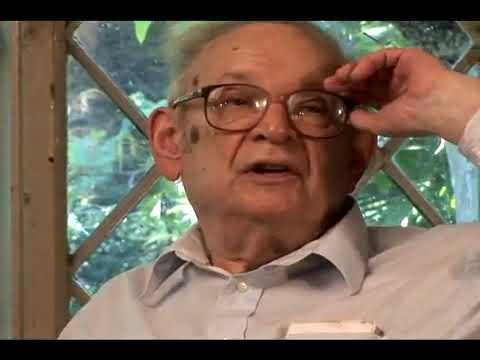
RESPONDING TO HARRY KROTO’S BRILLIANT RENOWNED ACADEMICS!! Part 112 Frank Drake, SETI, “The way you understand things is to observe and to deduce from the observations the answers to your questions, but when it come to the question of WHY there is no data and I don’t know any way to get the data”

On November 21, 2014 I received a letter from Nobel Laureate Harry Kroto and it said:

…Please click on this URL http://vimeo.com/26991975

and you will hear what far smarter people than I have to say on this matter. I agree with them.

Harry Kroto

I have attempted to respond to all of Dr. Kroto’s friends arguments and I have posted my responses one per week for over a year now. Here are some of my earlier posts:

Arif Ahmed, Sir David AttenboroughMark Balaguer, Horace Barlow, Michael BatePatricia ChurchlandAaron CiechanoverNoam Chomsky,Alan DershowitzHubert Dreyfus, Bart Ehrman, Stephan FeuchtwangDavid Friend,  Riccardo GiacconiIvar Giaever , Roy GlauberRebecca GoldsteinDavid J. Gross,  Brian Greene, Susan GreenfieldStephen F Gudeman,  Alan Guth, Jonathan HaidtTheodor W. Hänsch, Brian Harrison,  Hermann HauserRoald Hoffmann,  Bruce HoodHerbert Huppert,  Gareth Stedman Jones, Steve JonesShelly KaganMichio Kaku,  Stuart Kauffman,  Lawrence KraussHarry Kroto, George LakoffElizabeth Loftus,  Alan MacfarlanePeter MillicanMarvin MinskyLeonard Mlodinow,  Yujin NagasawaAlva NoeDouglas Osheroff,  Jonathan Parry,  Saul PerlmutterHerman Philipse,  Carolyn PorcoRobert M. PriceLisa RandallLord Martin Rees,  Oliver Sacks, John SearleMarcus du SautoySimon SchafferJ. L. Schellenberg,   Lee Silver Peter Singer,  Walter Sinnott-ArmstrongRonald de Sousa, Victor StengerBarry Supple,   Leonard Susskind, Raymond TallisNeil deGrasse Tyson,  .Alexander Vilenkin, Sir John WalkerFrank WilczekSteven Weinberg, and  Lewis Wolpert,

Frank Drake

From Wikipedia, the free encyclopedia
For the comic book character, see Frank Drake (comics).
Frank Drake
Frank Drake - edit.jpg

Frank Drake
Born May 28, 1930 (age 85)
Chicago, Illinois
Citizenship United States of America
Nationality American
Fields Astronomy
Alma mater Cornell University
Harvard University
Known for SETI
Drake equation

Frank Donald Drake (born May 28, 1930) is an American astronomer and astrophysicist. He is most notable as one of the pioneers in the search for extraterrestrial intelligence, including the founding of SETI,[1][2][3][4] mounting the first observational attempts at detecting extraterrestrial communications in 1960 in Project Ozma, developing the Drake equation, and as the creator of theArecibo Message, a digital encoding of an astronomical and biological description of the Earth and its lifeforms for transmission into the cosmos.

Early life and education[edit]

Born on May 28, 1930, in Chicago, Illinois, as a youth Drake loved electronics and chemistry. He reports that he considered the possibility of life existing on other planets as an eight-year-old, but never discussed the idea with his family or teachers due to the prevalent religious ideology.

He enrolled at Cornell University on a Navy Reserve Officer Training Corps scholarship. Once there he began studying astronomy. His ideas about the possibility of extraterrestrial life were reinforced by a lecture from astrophysicist Otto Struve in 1951. After college, he served briefly as an electronics officer on the heavy cruiser USS Albany. He then went on to graduate school atHarvard to study radio astronomy.

Drake’s hobbies include lapidary and the cultivation of orchids.

Career[edit]

Although explicitly linked with modern views on the likelihood and detectability of extraterrestrial civilizations, Drake started his career undertaking radio astronomical research at the National Radio Astronomy Observatory (NRAO) in Green Bank, West Virginia, and later the Jet Propulsion Laboratory. He conducted key measurements which revealed the presence of a Jovian ionosphere andmagnetosphere.

In the 1960s, Drake spearheaded the conversion of the Arecibo Observatory to a radio astronomical facility, later updated in 1974 and 1996. As a researcher, Drake was involved in the early work on pulsars. In this period, Drake was a professor at Cornell University and Director of the National Astronomy and Ionosphere Center (NAIC) – the formal name for the Arecibo facility. In 1974 he wrote the Arecibo message.[5]

He is one of the pioneers of the modern field of the search for extraterrestrial intelligence with Giuseppe Cocconi, Philip Morrison, Iosif Shklovsky, and Carl Sagan.

Drake co-designed the Pioneer plaque with Carl Sagan in 1972, the first physical message sent into space. The plaque was designed to be understandable by extraterrestrials should they encounter it. He later supervised the creation of theVoyager Golden Record. He was elected to the American Academy of Arts and Sciences in 1974.

Drake is a member of the National Academy of Sciences where he chaired the Board of Physics and Astronomy of the National Research Council (1989–92). He also served as President of the Astronomical Society of the Pacific. He was a Professor of Astronomy at Cornell University (1964–84) and served as the Director of the Arecibo Observatory. He is currently involved in “The Carl Sagan Center for the Study of life in the Universe” at the SETI Institute.[6]

He is Emeritus Professor of Astronomy and Astrophysics [7] at the University of California at Santa Cruz where he also served as Dean of Natural Sciences (1984–88). He serves on the Board of Trustees of the SETI Institute.

In  the third video below in the 124th clip in this series are his words and  my response is below them. 

50 Renowned Academics Speaking About God (Part 1)

Another 50 Renowned Academics Speaking About God (Part 2)

A Further 50 Renowned Academics Speaking About God (Part 3)

Below is the letter I wrote to Dr. Drake responding to his quote on You Tube.

May 24, 2016

Frank Drake c/o SETI Institute

Dear Dr. Drake,

I have seen several of your interviews on You Tube  and that prompted me to write you today. Let me start off by saying that this is not the first time that I have written you. Earlier I shared several letters of correspondence I had with Carl Sagan, and Antony Flew. Both men were strong believers in evolution as you are today. Instead of talking to you about their views today I wanted to discuss the views of you and Charles Darwin. Previously I wrote you concerning Carl Sagan’s passion for the SEARCH FOR EXTRATERRESTRIAL INTELLIGENCE (SETI) program which I know you were partnering with him.


Charles Robert Darwin, (12 February 1809 – 19 April 1882)

__

Frank Drake and Nick Sagan

TWO THINGS MADE ME THINK OF YOU. On April 5, 2015 at the Fellowship Bible Church Easter morning service in Little Rock, Arkansas our pastor Mark Henry described DOUBTING THOMAS and that description made me think of you.  Moreover, your skeptical view towards  Christianity reminds me of CHARLES DARWIN’S growing doubts throughout his life on these same theological issues such as skepticism in reaction to the claims of the Bible!!!

I’m an evangelical Christian and you are a secularist but I am sure we can both agree with the apostle Paul when he said in First Corinthians 15 that if Christ did not rise from the dead then Christians are to be most pited!!!! I attended Easter services this week and this issue came up and Mark Henry asserted that there is plenty of evidence that indicates that the Bible is historically accurate. Did you know that CHARLES DARWIN thought about this very subject quite a lot?

I just finished reading the online addition of the book Darwin, Francis ed. 1892. Charles Darwin: his life told in an autobiographical chapter, and in a selected series of his published letters [abridged edition]. London: John Murray. There are several points that Charles Darwin makes in this book that were very wise, honest, logical, shocking and some that were not so wise. The Christian Philosopher Francis Schaeffer once said of Darwin’s writings, “Darwin in his autobiography and in his letters showed that all through his life he never really came to a quietness concerning the possibility that chance really explained the situation of the biological world. You will find there is much material on this [from Darwin] extended over many manufacturers years that constantly he was wrestling with this problem.”

Your quote from the You Tube series RENOWNED ACADEMICS SPEAKING ABOUT GOD:

The way you understand things is to observe and to deduce from the observations the answers to your questions, but when it come to the question of WHY there is no data and I don’t know any way to get the data and so I think it may be, disappointing as it may seem, beyond our reach.

You can see why I compare you to DOUBTING THOMAS  when considering the accuracy of the Bible. YOU MAY FIND IT INTERESTING THAT CHARLES DARWIN WAS ALSO INTERESTED IN THE HISTORICAL ASPECT OF THE BIBLE. When I read the book  Charles Darwin: his life told in an autobiographical chapter, and in a selected series of his published letters, I also read  a commentary on it by Francis Schaeffer and I wanted to both  quote some of Charles Darwin’s own words to you and then include the comments of Francis Schaeffer on those words. I have also enclosed a CD with two messages from Adrian Rogers and Bill Elliff concerning Darwinism.

Charles Darwin observed:

“But I was very unwilling to give up my belief; I feel sure of this, for I can well remember often and often inventing day-dreams of old letters between distinguished Romans, and manuscripts being discovered at Pompeii or elsewhere, which confirmed in the most striking manner all that was written in the Gospels.


Francis Schaeffer (30 January 1912 – 15 May 1984)

Francis Schaeffer commented:

This is very sad. He lies on his bunk and the Beagle tosses and turns and he makes daydreams, and his dreams and hopes are that someone would find in Pompeii or some place like this, an old manuscript by a distinguished Roman that would put his stamp of authority on it, which would be able to show that Christ existed. This is undoubtedly what he is talking about. Darwin gave up this hope with great difficulty. I think he didn’t want to come to the position where his accepted presuppositions were driving him. He didn’t want to give it up, just as an older man he understood where it would lead and “man can do his duty.” Instinctively this of brains understood where this whole thing was going to eventually go…

SINCE CHARLES DARWIN’S DEATH WE NOW HAVE LOTS OF HISTORICAL RECORDS AND MUCH EVIDENCE FROM THE FIELD OF ARCHAEOLOGY THAT SHOW THE BIBLE IS HISTORICALLY ACCURATE.

**************TAKE TIME TO CONSIDER THIS EVIDENCE BELOW********************

I  have been amazed at the prophecies in the Bible that have been fulfilled in history, and also many of the historical details in the Bible have been confirmed by archaeology too. One of the most amazing is the prediction that the Jews would be brought back and settle in Jerusalem again. Another prophecy in Psalms 22 describes the Messiah dying on a cross  almost 1000 years before the Romans came up with this type of punishment.

Many times it has been alleged that the author of the Book of Daniel was from a later period but how did a later author know these 5 HISTORICAL FACTS? How did he know [1] that Belshazzar was ruling during the last few years of the Babylonian Empire when the name “Belshazzar” was lost to history until 1853 when it was uncovered in the monuments? [2] The author also knew that the Babylonians executed individuals by casting them into fire, and that the Persians threw the condemned to the lions. [3] He knew  the practice in the 6th Century was to mention first the Medes, then the Persians and not the other way around. [4] Plus he knew the laws made by Persian kings could not be revoked and [5] he knew that in the sixth century B.C., Susa was in the province of Elam (Dan. 8:2). Of course, the Book of Daniel (2:37-42) clearly predicted the rise of the 4 world empires in the correct order of Babylon, Medo-Persia, Greece, and Rome.

One of the top 10 posts on my blog on this next subject concerning Tyre.   John MacArthur went through every detail of the prophecy concerning Tyre and how history shows the Bible prophecy was correct.  Sagan said he had taken a look at Old Testament prophecy and it did not impress him because it was too vague.

HOW CAN ANYONE SAY THAT THIS FOLLOWING PROPHECY CONCERNING TYRE IS “TOO VAGUE?”

Below is an outline from a sermon from Dr. John MacArthur

Photo of John MacArthur

________________

John MacArthur on the amazing fulfilled prophecy on Tyre and how it was fulfilled by historical events.

LESSON

I. BIBLICAL PROPHECY CONCERNING TYRE (Ezekiel 26:1–28:19)

A. The Forecast

1. The specifics

a) That King Nebuchadnezzar of Babylon would destroy the mainland city of Tyre (26:7-8).

b) That many nations would rise up against Tyre. These nations would come like waves of the sea, one after another (26:3- 4).

c) That Tyre will be made like a flat rock (26:4, 14).

d) That fisherman will dry their nets there (26:5, 14).

e) That the rubble of the city would be cast into the sea (26:12).

f) That Tyre would never be rebuilt (26:14).

2. The setting

Tyre was a great city. It was one of the largest and most powerful cities of Phoenicia, which is modern day Lebanon.

It was well fortified. A great wall protected the city from land attacks while their world-renowned fleet protected them from attack by sea.

Tyre was a flourishing city during the time when Joshua led Israel into the Promised Land. King Hiram, who began his reign during the rule of David, offered David cedars from Tyre to build his palace. He also loaned David his artisans to craft parts of the great palace (1 Chron. 14:1). Hiram also helped Solomon build the Temple by floating cedars down the shoreline to be picked up and hauled to Jerusalem (2 Chron. 2:16). So Tyre was a great city, and both David and Solomon looked to it for aid.

B. The Fulfillment

1. The prophetic call

a) To Nebuchadnezzar

Not long after the prophecy given by Ezekiel, Nebuchadnezzar did exactly what had been predicted–he laid siege against the city in 585 B.C. For thirteen years Nebuchadnezzar cut off the flow of supplies into the city. In 537 B.C. he finally succeeded in breaking the gates down, but found the city almost empty.

During the thirteen-year siege, the people of Tyre moved all their possessions by ship to an island one-half mile offshore. So Nebuchadnezzar gained no plunder (Ezek. 29:17- 20). Although he destroyed the mainland city (Ezek. 26:8), the new city offshore continued to flourish for 250 years. The prophecy of Ezekiel 26:12–“they shall lay thy stones and thy timber and thy dust in the midst of the water”–remained unfulfilled.

b) To Alexander the Great

At age twenty-two, Alexander the Great came east conquering the known world with an army of between thirty and forty thousand men. Having defeated the Persians under Darius III, Alexander was on the march toward Egypt.

(1) The dilemma

Alexander arrived in the Phoenician territory and demanded that the cities open their gates to him. The citizens of Tyre refused, feeling they were secure on their island with their superior fleet.

(2) The decision

Realizing he did not have a fleet that could match Tyre’s, Alexander decided to build a causeway to the island using the ruins from the mainland city. It was about two hundred feet wide. The prophet said that the city would be thrown into the water, and that’s exactly what happened.

(3) The details

Arrian, a Greek historian, wrote about the overthrow of Tyre and how it was accomplished (The Campaigns of Alexander [New York: Penquin, 1958], pp. 132-43). The fortification of Tyre resembled Alcatraz. The city sat offshore like a rock with walls that came down to the edge of the water. Alexander set out to build the only means to approach the city–a land peninsula. Soldiers started pitching rubble into the water, leveling it off as they went so they could march on it. The water got deeper as they approached the island, and to make their task even more difficult, the people of Tyre bombarded them with missiles.

Werner Keller in The Bible as History tells us that to safeguard the operation, Alexander built mobile shields called “tortoises” (New York: Bantam, 1956], p. 361). Knowing that when they reached the city they would have to scale the walls, Alexander built “Hele-poleis,” which were mobile siege towers 160 foot high. The idea was to roll these structures across the causeway and push them up against the walls. A drawbridge on the front of the towers enabled the soldiers to march across the top of the walls and into the city.

Alexander’s men were under constant attack from people within the city and from the Tyrian navy. Realizing that he needed ships to defend his flanks, Alexander returned to the cities he had conquered and demanded their assistance. That fulfilled the prophecy that God “will cause many nations to come up against thee, as the sea causeth its waves to come up” (Ezek. 26:3).

(4) The destruction

Alexander’s plan succeeded. Eight thousand people were slain and thirty thousand were sold into slavery. It took Alexander seven months to conquer Tyre. The causeway he built can be seen to this day.

2. The prophetic result

How did Ezekiel know all those things would happen? The only explanation is he expressed the mind of God. Historian Philip Myers said, “Alexander the Great reduced it [Tyre] to ruins (332 B.C.). She recovered in a measure from this blow, but never regained the place she had previously held in the world. The larger part of the site … is now as bare as the top of a rock–a place where the fishermen that still frequent the spot spread their nets to dry” (General History for Colleges and High Schools [Boston: Ginn and Co., 1889], p. 55). That fulfills the prophecies of Ezekiel 26:4-5, 14. The island city was repopulated, later to be destroyed by the Moslems in A.D. 1281. However, God said the mainland city would never be rebuilt–and it never has. Jerusalem has been rebuilt many times but Tyre will never be rebuilt because a prophet in Babylon said twenty-five centuries ago, “Thou shalt be built no more” (Ezek. 26:14).

___________________

ANY HISTORIAN CAN HAVE ACCESS TO ALL OF THESE RECORDS. WHY NOT TAKE A FEW MOMENTS AND CHECK OUT THESE FACTS YOURSELF? As a secularist you believe that it is sad indeed that millions of Christians are hoping for heaven but no heaven is waiting for them. Paul took a close look at this issue too:

I Corinthians 15 asserts:

12 But if it is preached that Christ has been raised from the dead, how can some of you say that there is no resurrection of the dead? 13 If there is no resurrection of the dead, then not even Christ has been raised. 14 And if Christ has not been raised, our preaching is useless and so is your faith. 15 More than that, we are then found to be false witnesses about God, for we have testified about God that he raised Christ from the dead. But he did not raise him if in fact the dead are not raised. 16 For if the dead are not raised, then Christ has not been raised either. 17 And if Christ has not been raised, your faith is futile; you are still in your sins. 18 Then those also who have fallen asleep in Christ are lost. 19 If only for this life we have hope in Christ, we are of all people most to be pitied.

I sent you a CD that starts off with the song DUST IN THE WIND by Kerry Livgren of the group KANSAS which was a hit song in 1978 when it rose to #6 on the charts because so many people connected with the message of the song. It included these words, “All we do, crumbles to the ground though we refuse to see, Dust in the Wind, All we are is dust in the wind, Don’t hang on, Nothing lasts forever but the Earth and Sky, It slips away, And all your money won’t another minute buy.”

Kerry Livgren himself said that he wrote the song because he saw where man was without a personal God in the picture. Solomon pointed out in the Book of Ecclesiastes that those who believe that God doesn’t exist must accept three things. FIRST, death is the end and SECOND, chance and time are the only guiding forces in this life.  FINALLY, power reigns in this life and the scales are never balanced. The Christian can  face death and also confront the world knowing that it is not determined by chance and time alone and finally there is a judge who will balance the scales.

Both Kerry Livgren and the bass player Dave Hope of Kansas became Christians eventually. Kerry Livgren first tried Eastern Religions and Dave Hope had to come out of a heavy drug addiction. I was shocked and elated to see their personal testimony on The 700 Club in 1981 and that same  interview can be seen on You Tube today. Livgren lives in Topeka, Kansas today where he teaches “Diggers,” a Sunday school class at Topeka Bible ChurchDAVE HOPE is the head of Worship, Evangelism and Outreach at Immanuel Anglican Church in Destin, Florida.

The answer to find meaning in life is found in putting your faith and trust in Jesus Christ. The Bible is true from cover to cover and can be trusted.

Thank you again for your time and I know how busy you are.

Everette Hatcher, everettehatcher@gmail.com, http://www.thedailyhatch.org, cell ph 501-920-5733, Box 23416, LittleRock, AR 72221, United States

________

Related posts:

FRANCIS SCHAEFFER ANALYZES ART AND CULTURE Part 53 THE BEATLES (Part E, Stg. Pepper’s and John Lennon’s search in 1967 for truth was through drugs, money, laughter, etc & similar to King Solomon’s, LOTS OF PICTURES OF JOHN AND CYNTHIA) (Feature on artist Yoko Ono)

The John Lennon and the Beatles really were on a long search for meaning and fulfillment in their lives  just like King Solomon did in the Book of Ecclesiastes. Solomon looked into learning (1:12-18, 2:12-17), laughter, ladies, luxuries, and liquor (2:1-2, 8, 10, 11), and labor (2:4-6, 18-20). He fount that without God in the picture all […]

FRANCIS SCHAEFFER ANALYZES ART AND CULTURE Part 52 THE BEATLES (Part D, There is evidence that the Beatles may have been exposed to Francis Schaeffer!!!) (Feature on artist Anna Margaret Rose Freeman )

______________   George Harrison Swears & Insults Paul and Yoko Lucy in the Sky with Diamonds- The Beatles The Beatles:   I have dedicated several posts to this series on the Beatles and I don’t know when this series will end because Francis Schaeffer spent a lot of time listening to the Beatles and talking […]

FRANCIS SCHAEFFER ANALYZES ART AND CULTURE Part 51 THE BEATLES (Part C, List of those on cover of Stg.Pepper’s ) (Feature on artist Raqib Shaw )

  The Beatles in a press conference after their Return from the USA Uploaded on Nov 29, 2010 The Beatles in a press conference after their Return from the USA. The Beatles:   I have dedicated several posts to this series on the Beatles and I don’t know when this series will end because Francis […]

FRANCIS SCHAEFFER ANALYZES ART AND CULTURE Part 50 THE BEATLES (Part B, The Psychedelic Music of the Beatles) (Feature on artist Peter Blake )

__________________   Beatles 1966 Last interview I have dedicated several posts to this series on the Beatles and I don’t know when this series will end because Francis Schaeffer spent a lot of time listening to the Beatles and talking and writing about them and their impact on the culture of the 1960’s. In this […]

FRANCIS SCHAEFFER ANALYZES ART AND CULTURE Part 49 THE BEATLES (Part A, The Meaning of Stg. Pepper’s Cover) (Feature on artist Mika Tajima)

_______________ The Beatles documentary || A Long and Winding Road || Episode 5 (This video discusses Stg. Pepper’s creation I have dedicated several posts to this series on the Beatles and I don’t know when this series will end because Francis Schaeffer spent a lot of time listening to the Beatles and talking and writing about […]

FRANCIS SCHAEFFER ANALYZES ART AND CULTURE PART 48 “BLOW UP” by Michelangelo Antonioni makes Philosophic Statement (Feature on artist Nancy Holt)

_______________ Francis Schaeffer pictured below: _____________________ I have included the 27 minute  episode THE AGE OF NONREASON by Francis Schaeffer. In that video Schaeffer noted,  ” Sergeant Pepper’s Lonely Hearts Club Band…for a time it became the rallying cry for young people throughout the world. It expressed the essence of their lives, thoughts and their feelings.” How Should […]

FRANCIS SCHAEFFER ANALYZES ART AND CULTURE Part 47 Woody Allen and Professor Levy and the death of “Optimistic Humanism” from the movie CRIMES AND MISDEMEANORS Plus Charles Darwin’s comments too!!! (Feature on artist Rodney Graham)

Crimes and Misdemeanors: A Discussion: Part 1 ___________________________________ Today I will answer the simple question: IS IT POSSIBLE TO BE AN OPTIMISTIC SECULAR HUMANIST THAT DOES NOT BELIEVE IN GOD OR AN AFTERLIFE? This question has been around for a long time and you can go back to the 19th century and read this same […]

FRANCIS SCHAEFFER ANALYZES ART AND CULTURE PART 46 Friedrich Nietzsche (Featured artist is Thomas Schütte)

____________________________________ Francis Schaeffer pictured below: __________ Francis Schaeffer has written extensively on art and culture spanning the last 2000years and here are some posts I have done on this subject before : Francis Schaeffer’s “How should we then live?” Video and outline of episode 10 “Final Choices” , episode 9 “The Age of Personal Peace and Affluence”, episode 8 […]

FRANCIS SCHAEFFER ANALYZES ART AND CULTURE Part 45 Woody Allen “Reason is Dead” (Feature on artists Allora & Calzadilla )

Love and Death [Woody Allen] – What if there is no God? [PL] ___________ _______________ How Should We then Live Episode 7 small (Age of Nonreason) #02 How Should We Then Live? (Promo Clip) Dr. Francis Schaeffer 10 Worldview and Truth Two Minute Warning: How Then Should We Live?: Francis Schaeffer at 100 Francis Schaeffer […]

FRANCIS SCHAEFFER ANALYZES ART AND CULTURE Part 44 The Book of Genesis (Featured artist is Trey McCarley )

___________________________________ Francis Schaeffer pictured below: ____________________________ Francis Schaeffer “BASIS FOR HUMAN DIGNITY” Whatever…HTTHR Dr. Francis schaeffer – The flow of Materialism(from Part 4 of Whatever happened to human race?) Dr. Francis Schaeffer – The Biblical flow of Truth & History (intro) Francis Schaeffer – The Biblical Flow of History & Truth (1) Dr. Francis Schaeffer […]

__

RESPONDING TO HARRY KROTO’S BRILLIANT RENOWNED ACADEMICS!!  Richard Feynman, theoretical physicist, Cal Tech, “I can’t believe the special stories that have been made up… because they seem to be be too simple, too local, too provincial”

On November 21, 2014 I received a letter from Nobel Laureate Harry Kroto and it said:

…Please click on this URL http://vimeo.com/26991975

and you will hear what far smarter people than I have to say on this matter. I agree with them.

Harry Kroto

I have attempted to respond to all of Dr. Kroto’s friends arguments and I have posted my responses one per week for over a year now. Here are some of my earlier posts:

Arif AhmedHaroon Ahmed,  Jim Al-Khalili, Louise Antony, Sir David AttenboroughMark BalaguerMahzarin Banaji Horace Barlow, Michael BateSir Patrick BatesonSimon Blackburn, Colin Blakemore, Ned BlockPascal BoyerSean Carroll, Patricia ChurchlandPaul Churchland, Aaron CiechanoverNoam Chomsky, Brian CoxPartha Dasgupta,  Alan Dershowitz, Jared DiamondFrank DrakeHubert Dreyfus, John DunnAlan Dundes, Christian de Duve, Ken EdwardsBart Ehrman, Mark ElvinRichard Ernst, Stephan Feuchtwang, Sir Raymond FirthRobert FoleyDavid Friend,  Riccardo GiacconiIvar Giaever , Roy GlauberRebecca Goldstein, A.C.GraylingDavid J. Gross,  Brian Greene, Susan Greenfield, Stephen Jay GouldStephen F Gudeman,  Alan Guth, Jonathan Haidt, Chris Hann,  Theodor W. Hänsch, Brian Harrison,  Stephen HawkingHermann Hauser, Peter HiggsRobert HindeRoald Hoffmann,  Bruce HoodGerard ‘t HooftCaroline HumphreyNicholas Humphrey,  Herbert Huppert,  Sir Andrew Fielding HuxleyLisa Jardine, Gareth Stedman Jones, Steve JonesShelly KaganMichio Kaku,  Stuart KauffmanChristof Koch, Masatoshi Koshiba,  Lawrence KraussHarry Kroto, George Lakoff,  Rodolfo Llinas, Seth Lloyd,  Elizabeth Loftus,  Alan Macfarlane,  Rudolph A. Marcus, Colin McGinnDan McKenzie,  Michael MannPeter MillicanMarvin MinskyLeonard Mlodinow,  P.Z.Myers,   Yujin NagasawaAlva NoeDouglas Osheroff, David Parkin,  Jonathan Parry, Roger Penrose,  Saul Perlmutter, Max PerutzHerman Philipse,  Carolyn PorcoRobert M. PriceVS RamachandranLisa RandallLord Martin ReesColin RenfrewAlison Richard,  C.J. van Rijsbergen,  Oliver Sacks, John SearleMarcus du SautoySimon SchafferJ. L. Schellenberg,   Lee Silver Peter Singer,  Walter Sinnott-ArmstrongQuentin SkinnerRonald de Sousa, Victor StengerJohn SulstonBarry Supple,   Leonard Susskind, Raymond TallisMax Tegmark, Michael Tooley,  Neil deGrasse Tyson,  Martinus J. G. Veltman, Craig Venter.Alexander Vilenkin, Sir John Walker, James D. WatsonFrank WilczekSteven Weinberg, and  Lewis Wolpert,

Richard Feynman

From Wikipedia, the free encyclopedia
“Feynman” redirects here. For other uses, see Feynman (disambiguation).
Richard Feynman
Richard Feynman Nobel.jpg
Born Richard Phillips Feynman
May 11, 1918
Queens, New York, U.S.
Died February 15, 1988 (aged 69)
Los Angeles, California, U.S.
Resting place Mountain View Cemetery and Mausoleum, Altadena, California, U.S.
Nationality American
Fields Theoretical physics
Institutions Cornell University
California Institute of Technology
Alma mater Massachusetts Institute of Technology
Princeton University
Thesis The Principle of Least Action in Quantum Mechanics (1942)
Doctoral advisor John Archibald Wheeler
Doctoral students
Other notable students
Known for
Notable awards
Spouse Arline Greenbaum (m. 1941; d. 1945)
Mary Louise Bell (m. 1952–56)
Gweneth Howarth (m. 1960)
Children Carl Feynman
Michelle Feynman
Signature

Richard Phillips Feynman (/ˈfnmən/; May 11, 1918 – February 15, 1988) was an American theoretical physicist known for his work in the path integral formulation of quantum mechanics, the theory of quantum electrodynamics, and the physics of the superfluidity of supercooled liquid helium, as well as in particle physics for which he proposed the parton model. For his contributions to the development of quantum electrodynamics, Feynman, jointly with Julian Schwinger and Sin’ichirō Tomonaga, received the Nobel Prize in Physics in 1965.

Feynman developed a widely used pictorial representation scheme for the mathematical expressions governing the behavior of subatomic particles, which later became known as Feynman diagrams. During his lifetime, Feynman became one of the best-known scientists in the world. In a 1999 poll of 130 leading physicists worldwide by the British journal Physics World he was ranked as one of the ten greatest physicists of all time.[1]

He assisted in the development of the atomic bomb during World War II and became known to a wide public in the 1980s as a member of the Rogers Commission, the panel that investigated the Space Shuttle Challenger disaster. In addition to his work in theoretical physics, Feynman has been credited with pioneering the field of quantum computing, and introducing the concept of nanotechnology. He held the Richard C. Tolmanprofessorship in theoretical physics at the California Institute of Technology.

Feynman was a keen popularizer of physics through both books and lectures, including a 1959 talk on top-down nanotechnology called There’s Plenty of Room at the Bottom, and the three-volume publication of his undergraduate lectures, The Feynman Lectures on Physics. Feynman also became known through his semi-autobiographical books Surely You’re Joking, Mr. Feynman! and What Do You Care What Other People Think? and books written about him, such as Tuva or Bust! and Genius: The Life and Science of Richard Feynman by James Gleick.

Early life[edit]

Richard Phillips Feynman was born on May 11, 1918, in Queens, New York City,[2] to Lucille née Phillips, a homemaker, and Melville Arthur Feynman, a sales manager,[3] originally from Minsk in Belarus,[4] in those days part of the Russian Empire; both were Ashkenazi Jews.[5] They were not religious, and by his youth, Feynman described himself as an “avowed atheist“.[6] He also stated “To select, for approbation the peculiar elements that come from some supposedly Jewish heredity is to open the door to all kinds of nonsense on racial theory”, and adding, “at thirteen I was not only converted to other religious views, but I also stopped believing that the Jewish people are in any way ‘the chosen people‘.”[7] Later in his life, during a visit to the Jewish Theological Seminary, he encountered the Talmud for the first time and remarked that it contained a medieval kind of reasoning and was a wonderful book.[8]

Like Albert Einstein and Edward Teller, Feynman was a late talker, and by his third birthday had yet to utter a single word. He retained a Brooklyn accent as an adult.[9][10] That accent was thick enough to be perceived as an affectation or exaggeration[11][12] – so much so that his good friends Wolfgang Pauli and Hans Bethe once commented that Feynman spoke like a “bum”.[11] The young Feynman was heavily influenced by his father, who encouraged him to ask questions to challenge orthodox thinking, and who was always ready to teach Feynman something new. From his mother, he gained the sense of humor that he had throughout his life. As a child, he had a talent for engineering, maintained an experimental laboratory in his home, and delighted in repairing radios. When he was in grade school, he created a home burglar alarm system while his parents were out for the day running errands.[13]

When Richard was five years old, his mother gave birth to a younger brother, Henry Philips, who died at four weeks of age on February 25, 1924.[14] Four years later, Richard’s sister Joan was born, and the family moved to Far Rockaway, Queens.[3] Though separated by nine years, Joan and Richard were close, as they both shared a natural curiosity about the world. Their mother thought that women did not have the cranial capacity to comprehend such things. Despite their mother’s disapproval of Joan’s desire to study astronomy, Richard encouraged his sister to explore the universe. Joan eventually became an astrophysicist specializing in interactions between the Earth and the solar wind.[15]

Manhattan Project[edit]

Feynman’s Los Alamos ID badge

In 1941, with World War II raging in Europe but the United States not yet at war, Feynman spent the summer working on ballistics problems at the Frankford Arsenal in Pennsylvania.[43][44] After the attack on Pearl Harbor had brought the United States into the war, Feynman was recruited by Robert R. Wilson, who was working on means to produce enriched uranium for use in an atomic bomb, as part of what would become the Manhattan Project.[45][46] Wilson’s team at Princeton was working on a device called an isotron, which would electromagnetically separate uranium-235 from uranium-238. This was done in a quite different manner from that used by the calutron that was under development by a team under Wilson’s former mentor, Ernest O. Lawrence, at the Radiation Laboratory at the University of California. On paper, the isotron was many times as efficient as the calutron, but Feynman and Paul Olum struggled to determine whether or not it was practical. Ultimately, on Lawrence’s recommendation, the isotron project was abandoned.[47]

At this juncture, in early 1943, Robert Oppenheimer was establishing the Los Alamos Laboratory, a secret laboratory on a remote mesa in New Mexico where atomic bombs would be designed and built. An offer was made to the Princeton team to be redeployed there. “Like a bunch of professional soldiers,” Wilson later recalled, “we signed up, en masse, to go to Los Alamos.”[48] Like many other young physicists, Feynman soon fell under the spell of the charismatic Oppenheimer, who telephoned Feynman long distance from Chicago to inform him that he had found a sanatorium in Albuquerque, New Mexico, for Arline. They were among the first to depart for New Mexico, leaving on a train on March 28, 1943. The railroad supplied Arline with a wheelchair, and Feynman paid extra for a private room for her.[49]

At Los Alamos, Feynman was assigned to Hans Bethe’s Theoretical (T) Division,[50] and impressed Bethe enough to be made a group leader.[51] He and Bethe developed the Bethe–Feynman formula for calculating the yield of a fission bomb, which built upon previous work by Robert Serber.[52] As a junior physicist, he was not central to the project. He administered the computation group of human computers in the theoretical division. With Stanley Frankel and Nicholas Metropolis, he assisted in establishing a system for using IBM punched cards for computation.[53] He invented a new method of computing logarithms that he later used on the Connection Machine.[54][55]Other work at Los Alamos included calculating neutron equations for the Los Alamos “Water Boiler”, a small nuclear reactor, to measure how close an assembly of fissile material was to criticality.[56]

On completing this work, Feynman was sent to the Clinton Engineer Works in Oak Ridge, Tennessee, where the Manhattan Project had its uranium enrichment facilities. He aided the engineers there in devising safety procedures for material storage so that criticality accidents could be avoided, especially when enriched uranium came into contact with water, which acted as a neutron moderator. He insisted on giving the rank and file a lecture on nuclear physics so that they would realize the dangers.[57] He explained that while any amount of unenriched uranium could be safely stored, the enriched uranium had to be carefully handled. He developed a series of safety recommendations for the various grades of enrichments.[58] He was told that if the people at Oak Ridge gave him any difficulty with his proposals, he was to inform them that Los Alamos “could not be responsible for their safety otherwise”.[59]

At the 1946 colloquium on the Super at the Los Alamos Laboratory. Feynman is in the second row, fourth from the left, next to Robert Oppenheimer

Returning to Los Alamos, Feynman was put in charge of the group responsible for the theoretical work and calculations on the proposed uranium hydride bomb, which ultimately proved to be infeasible.[51][60] He was sought out by physicist Niels Bohr for one-on-one discussions. He later discovered the reason: most of the other physicists were too much in awe of Bohr to argue with him. Feynman had no such inhibitions, vigorously pointing out anything he considered to be flawed in Bohr’s thinking. He said he felt as much respect for Bohr as anyone else, but once anyone got him talking about physics, he would become so focused he forgot about social niceties. Perhaps because of this, Bohr never warmed to Feynman.[61][62]

Due to the top secret nature of the work, the Los Alamos Laboratory was isolated. Feynman indulged his curiosity by discovering the combination locks on cabinets and desks used to secure papers. He found that people tended to leave their safes unlocked, or leave them on the factory settings, or write the combinations down, or use easily guessable combinations like dates.[63] Feynman played jokes on colleagues. In one case he found the combination to a locked filing cabinet by trying the numbers he thought a physicist would use (it proved to be 27–18–28 after the base of natural logarithms, e = 2.71828…), and found that the three filing cabinets where a colleague kept a set of atomic bomb research notes all had the same combination. He left a series of notes in the cabinets as a prank, which initially spooked his colleague, Frederic de Hoffmann, into thinking a spy or saboteur had gained access to atomic bomb secrets.[64]

Feynman’s salary was $380 a month, about half what he needed to cover his modest living expenses and Arline’s medical bills. The rest came from her $3,300 in savings.[65] On weekends, Feynman drove to Albuquerque to see his ailing wife in a car borrowed from his good friend Klaus Fuchs.[66][67] Asked who at Los Alamos was most likely to be a spy, Fuchs speculated that Feynman, with his safe cracking and frequent trips to Albuquerque, was the most likely candidate.[66] When Fuchs confessed to being a spy for the Soviet Union in 1950, this would be seen in a different light.[68] The FBI would compile a bulky file on Feynman.[69]

Feynman (center) with Robert Oppenheimer (viewer’s right, next to Feynman) at a Los Alamos Laboratory social function during the Manhattan Project

Feynman was working in the computing room when he was informed that Arline was dying. He borrowed Fuchs’ car and drove to Albuquerque where he sat with her for hours until she died on June 16, 1945.[70] He immersed himself in work on the project and was present at the Trinity nuclear test. Feynman claimed to be the only person to see the explosion without the very dark glasses or welder’s lenses provided, reasoning that it was safe to look through a truck windshield, as it would screen out the harmful ultraviolet radiation. On witnessing the blast, Feynman ducked towards the floor of his truck because of the immense brightness of the explosion, where he saw a temporary “purple splotch” afterimage of the event.[71]

Cornell[edit]

Feynman nominally held an appointment at the University of Wisconsin–Madison as an assistant professor of physics, but was on unpaid leave during his involvement in the Manhattan project.[72] In 1945, he received a letter from Dean Mark Ingraham of the College of Letters and Science requesting his return to the university to teach in the coming academic year. His appointment was not extended when he did not commit to returning. In a talk given there several years later, Feynman quipped, “It’s great to be back at the only university that ever had the good sense to fire me.”[73]

As early as 30 October 1943, Bethe had written to the chairman of the physics department of his university, Cornell, to recommend that Feynman be hired. On 28 February 1944, this was endorsed by Robert Bacher,[74] also from Cornell,[75] and one of the most senior scientists at Los Alamos.[76] This led to an offer being made in August 1944, which Feynman accepted. Oppenheimer had also hoped to recruit Feynman to the University of California, but the head of the physics department, Raymond T. Birge was reluctant. Eventually, he made Feynman an offer in May 1945, but Feynman turned it down. Cornell did, however, match its salary offer of $3,900 per annum.[74] Feynman became one of the first of the Los Alamos Laboratory’s group leader to depart, leaving for Ithaca, New York, in October 1945.[77]

Since Feynman was no longer working at the Los Alamos Laboratory, he was no longer exempt from the draft and was called up by the Army in the fall of 1946. He avoided this by faking mental illness, and the Army gave him a 4-F exemption on mental grounds.[78][79] This may not have been an incorrect assessment; his father died suddenly on 8 October 1946, and Feynman suffered from depression.[80] On October 17, 1946, he wrote a letter to Arline, expressing his deep love and heartbreak. This letter was sealed and only opened after his death. “Please excuse my not mailing this,” the letter concluded, “but I don’t know your new address.”[81]

Unable to focus on research problems, Feynman began tackling physics problems, not for utility, but for self-satisfaction.[80] One of these involved analyzing the physics of a twirling, nutating disk as it is moving through the air, inspired by an incident in the cafeteria at Cornell when someone tossed a dinner plate in the air.[82] He read the work of Sir William Rowan Hamilton on quaternions, and attempted unsuccessfully to use them to formulate a relativistic theory of electrons. His work during this period, which used equations of rotation to express various spinning speeds, ultimately proved important to his Nobel Prize–winning work, yet because he felt burned out and had turned his attention to less immediately practical problems, he was surprised by the offers of professorships from other renowned universities, including the Institute for Advanced Study, the University of California, Los Angeles, and the University of California, Berkeley.[80]

Feynman diagram of electron/positron annihilation

Feynman was not the only frustrated theoretical physicist in the early post-war years. Quantum electrodynamics suffered from infinite integrals in perturbation theory. These were clear mathematical flaws in the theory, which Feynman and Wheeler had unsuccessfully attempted to work around.[83] “Theoreticians”, noted Murray Gell-Mann, “were in disgrace.”[84] In June 1947, leading American physicists met at the Shelter Island Conference. For Feynman, it was his “first big conference with big men … I had never gone to one like this one in peacetime.”[85] The problems plaguing quantum electrodynamics were discussed, but the theoreticians were completely overshadowed by the achievements of the experimentalists, who reported the discovery of the Lamb shift, the measurement of the magnetic moment of the electron, and Robert Marshak‘s two-meson hypothesis.[86]

Bethe took the lead from the work of Hans Kramers, and derived a renormalized non-relativistic quantum equation for the Lamb shift. The next step was to create a relativistic version. Feynman thought that he could do this, but when he went back to Bethe with his solution, it did not converge.[87] Feynman carefully worked through the problem again, applying the path integral formulation that he had used in his thesis. Like Bethe, he made the integral finite by applying a cut-off term. The result corresponded to Bethe’s version.[88][89] Feynman presented his work to his peers at the Pocono Conference in 1948. It did not go well. Julian Schwinger gave a long presentation of his work in quantum electrodynamics, and Feynman then offered his version, titled “Alternative Formulation of Quantum Electrodynamics”. The unfamiliar Feynman diagrams, used for the first time, puzzled the audience. Feynman failed to get his point across, and Paul Dirac, Edward Teller and Niels Bohr all raised objections.[90][91]

To Freeman Dyson, one thing at least was clear: Sin’ichirō Tomonaga, Schwinger and Feynman understood what they were talking about even if no one else did, but had not published anything. Moreover, he was convinced that Feynman’s formulation was easier to understand, and ultimately managed to convince Oppenheimer that this was the case.[92] Dyson published a paper in 1949, which added new rules to Feynman’s that told how to implement renormalization.[93] Feynman was prompted to publish his ideas in the Physical Review in a series of papers over three years.[94] His 1948 papers on “A Relativistic Cut-Off for Classical Electrodynamics” attempted to explain what he had been unable to get across at Pocono.[95] His 1949 paper on “The Theory of Positrons” addressed the Schrödinger equation and Dirac Equation, and introduced what is now called the Feynman propagator.[96] Finally, in papers on the “Mathematical Formulation of the Quantum Theory of Electromagnetic Interaction” in 1950 and “An Operator Calculus Having Applications in Quantum Electrodynamics” in 1951, he developed the mathematical basis of his ideas, derived familiar formulae and advanced new ones.[97]

While papers by others initially cited Schwinger, papers citing Feynman and employing Feynman diagrams appeared in 1950, and soon became prevalent.[98] Students learned and used the powerful new tool that Feynman had created. Eventually, computer programs were written to compute Feynman diagrams, providing a tool of unprecedented power. It is possible to write such programs because the Feynman diagrams constitute a formal language with a formal grammar. Marc Kac provided the formal proofs of the summation under history, showing that the parabolic partial differential equation can be reexpressed as a sum under different histories (that is, an expectation operator), what is now known as the Feynman–Kac formula, the use of which extends beyond physics to many applications of stochastic processes.[99] To Schwinger, the Feynman diagram was “pedagogy, not physics”.[100]

By 1949, Feynman was becoming restless at Cornell. He never settled into a particular house or apartment, living in guest houses or student residences, or with married friends “until these arrangements became sexually volatile”.[101] He liked to date undergraduates, hire prostitutes, and sleep with the wives of friends.[102] He was not fond of Ithaca’s cold winter weather, and pined for a warmer climate.[103] Above all, at Cornell he was always in the shadow of Hans Bethe.[101] Feynman did, however, look back favorably on the Telluride House, where he resided for a large period of his Cornell career. In an interview he described the House as “a group of boys that [sic] have been specially selected because of their scholarship, because of their cleverness or whatever it is, to be given free board and lodging and so on, because of their brains”. He enjoyed the house’s convenience and said that “it’s there that I did the fundamental work” for which he won the Nobel Prize.[104][105]

Caltech years[edit]

Personal and political life[edit]

Feynman spent several weeks in Rio de Janeiro in July 1949,[106] and brought back a woman called Clotilde from Copacabana who lived with him in Ithaca for a time. In addition to the cold weather, there was also the Cold War. The Soviet Union detonated its first atomic bomb in 1949, generating anti-communist hysteria.[107] Fuchs was arrested as a Soviet spy in 1950, and the FBI questioned Bethe about Feynman’s loyalty.[108] Physicist David Bohm was arrested on December 4, 1950,[109] and emigrated to Brazil in October 1951.[110] A girlfriend told Feynman that he should consider moving to South America.[107] He had a sabbatical coming for 1951–52,[111] and elected to spend it in Brazil, where he gave courses at the Centro Brasileiro de Pesquisas Físicas. In Brazil, Feynman was particularly impressed with the Samba music, and learned to play a metal percussion instrument, the frigideira.[112] He was an enthusiastic amateur player of bongo drums and often played them in the pit orchestra in musicals.[113] He spent time in Rio with his good friend Bohm, but Bohm could not convince Feynman to take up investigating Bohm’s ideas on physics.[114]

Feynman did not return to Cornell. Bacher, who had been instrumental in bringing Feynman to Cornell, had lured him to the California Institute of Technology (Caltech). Part of the deal was that he could spend his first year on sabbatical in Brazil.[115][101] He had become smitten by Mary Louise Bell, a platinum blonde from Neodesha, Kansas. They had met in a cafeteria in Cornell, where she had studied the history of Mexican art and textiles. She later followed him to Caltech, where he gave a lecture. While he was in Brazil, she had taught classes on the history of furniture and interiors at Michigan State University. He proposed to her by mail from Rio de Janeiro, and they married in Boise, Idaho, on June 28, 1952, shortly after he returned. They frequently quarrelled and she was frightened by his violent temper. Their politics were different; although he registered and voted as a Republican, she was more conservative, and her opinion on the 1954 Oppenheimer security hearing (“Where there’s smoke there’s fire”) offended him. They separated on May 20, 1956. An interlocutory decree of divorce was entered on June 19, 1956, on the grounds of “extreme cruelty”. The divorce became final on May 5, 1958.[116][117]

In the wake of the 1957 Sputnik crisis, the U.S. government’s interest in science rose for a time. Feynman was considered for a seat on the President’s Science Advisory Committee, but was not appointed. At this time the FBI interviewed a woman close to Feynman, possibly Mary Lou, who sent a written statement to J. Edgar Hoover on August 8, 1958:

I do not know—but I believe that Richard Feynman is either a Communist or very strongly pro-Communist—and as such as [sic] a very definite security risk. This man is, in my opinion, an extremely complex and dangerous person, a very dangerous person to have in a position of public trust … In matters of intrigue Richard Feynman is, I believe immensely clever—indeed a genius—and he is, I further believe, completely ruthless, unhampered by morals, ethics, or religion—and will stop at absolutely nothing to achieve his ends.[117]

The government did, however, send Feynman to Geneva for the September 1958 Atoms for Peace Conference. On the beach on Lake Geneva, he met Gweneth Howarth, who was from Ripponden, Yorkshire, and working in Switzerland as an au pair. Feynman’s love life had been turbulent since his divorce; his previous girlfriend had walked off with his Albert Einstein Award medal, and, on the advice of an earlier girlfriend, had feigned pregnancy and blackmailed him into paying for an abortion, then used the money to buy furniture. When Feynman found that Howarth was being paid only $25 a month, he offered her $20 a week to be his live-in maid. That this sort of behavior was illegal was not overlooked; Feynman had a friend, Matthew Sands, act as her sponsor. Howarth pointed out that she already had two boyfriends, but eventually decided to take Feynman up on his offer, and arrived in Altadena, California, in June 1959. She made a point of dating other men but Feynman proposed in the spring of 1960. They were married on September 24, 1960, at the Huntington Hotel in Pasadena. They had a son, Carl, in 1962, and adopted a daughter, Michelle, in 1968.[118][119] Besides their home in Altadena, they had a beach house in Baja California, purchased with the money from Feynman’s Nobel Prize.[120]

Feynman tried LSD during his professorship at Caltech.[121][122] He also tried marijuana and ketamine experiences at John Lilly‘s famed sensory deprivation tanks, as a way of studying consciousness.[121][123] He gave up alcohol when he began to show vague, early signs of alcoholism, as he did not want to do anything that could damage his brain.[122]

Physics[edit]

At Caltech, Feynman investigated the physics of the superfluidity of supercooled liquid helium, where helium seems to display a complete lack of viscosity when flowing. Feynman provided a quantum-mechanical explanation for the Soviet physicist Lev D. Landau’s theory of superfluidity.[124] Applying the Schrödinger equation to the question showed that the superfluid was displaying quantum mechanical behavior observable on a macroscopic scale. This helped with the problem of superconductivity, but the solution eluded Feynman.[125] It was solved with the BCS theory of superconductivity, proposed by John Bardeen, Leon Neil Cooper, and John Robert Schrieffer.[124]

Richard Feynman at the Robert Treat Paine Estate in Waltham, Massachusetts, in 1984.

With Murray Gell-Mann, Feynman developed a model of weak decay, which showed that the current coupling in the process is a combination of vector and axial currents (an example of weak decay is the decay of a neutron into an electron, a proton, and an antineutrino). Although E. C. George Sudarshan and Robert Marshak developed the theory nearly simultaneously, Feynman’s collaboration with Murray Gell-Mann was seen as seminal because the weak interaction was neatly described by the vector and axial currents. It thus combined the 1933 beta decay theory of Enrico Fermi with an explanation of parity violation.[126]

From his diagrams of a small number of particles interacting in spacetime, Feynman could then model all of physics in terms of the spins of those particles and the range of coupling of the fundamental forces. Feynman attempted an explanation of the strong interactions governing nucleons scattering called the parton model. The parton model emerged as a complement to the quark model developed by Gell-Mann. The relationship between the two models was murky; Gell-Mann referred to Feynman’s partons derisively as “put-ons”. In the mid-1960s, physicists believed that quarks were just a bookkeeping device for symmetry numbers, not real particles; the statistics of the Omega-minus particle, if it were interpreted as three identical strange quarks bound together, seemed impossible if quarks were real.[127][128]

The SLAC National Accelerator Laboratory deep inelastic scattering experiments of the late 1960s showed that nucleons (protons and neutrons) contained point-like particles that scattered electrons. It was natural to identify these with quarks, but Feynman’s parton model attempted to interpret the experimental data in a way that did not introduce additional hypotheses. For example, the data showed that some 45% of the energy momentum was carried by electrically neutral particles in the nucleon. These electrically neutral particles are now seen to be the gluons that carry the forces between the quarks, and their three-valued color quantum number solves the Omega-minus problem. Feynman did not dispute the quark model; for example, when the fifth quark was discovered in 1977, Feynman immediately pointed out to his students that the discovery implied the existence of a sixth quark, which was discovered in the decade after his death.[127][129]

After the success of quantum electrodynamics, Feynman turned to quantum gravity. By analogy with the photon, which has spin 1, he investigated the consequences of a free massless spin 2 field, and derived the Einstein field equation of general relativity, but little more. The computational device that Feynman discovered then for gravity, “ghosts”, which are “particles” in the interior of his diagrams that have the “wrong” connection between spin and statistics, have proved invaluable in explaining the quantum particle behavior of the Yang–Mills theories, for example, quantum chromodynamics and the electro-weak theory.[130] He did work on all four of the forces of nature: electromagnetic, the weak force, the strong force and gravity. John and Mary Gribbin say in their book on Feynman: “Nobody else has made such influential contributions to the investigation of all four of the interactions”.[131]

Partly as a way to bring publicity to progress in physics, Feynman offered $1,000 prizes for two of his challenges in nanotechnology; one was claimed by William McLellan and the other by Tom Newman.[132] He was also one of the first scientists to conceive the possibility of quantum computers.[133][134] In 1984–86, he developed a variational method for the approximate calculation of path integrals, which has led to a powerful method of converting divergent perturbation expansions into convergent strong-coupling expansions (variational perturbation theory) and, as a consequence, to the most accurate determination[135] of critical exponents measured in satellite experiments.[136]

Surely You’re Joking Mr. Feynman[edit]

In the 1960s, Feynman began thinking of writing an autobiography, and he began granting interviews to historians. In the 1980s, working with Ralph Leighton (Robert Leighton’s son), he recorded chapters on audio tape that Robert transcribed. The book was published in 1985 as Surely You’re Joking, Mr. Feynman! and became a best-seller. The publication of the book brought a new wave of protest about Feynman’s attitude toward women. There had been protests over his alleged sexism in 1968, and again in 1972. It did not help that Jenijoy La Belle, who had been hired as Caltech’s first female professor in 1969, was refused tenure in 1974. She filed suit with the Equal Employment Opportunity Commission, which ruled against Caltech in 1977, adding that she had been paid less than male colleagues. La Belle finally received tenure in 1979. Many of Feynman’s colleagues were surprised that he took her side. He had gotten to know her, and both liked and admired her.[146][147]

Gell-Mann was upset by Feyman’s account in the book of the weak interaction work, and threatened to sue, resulting in a correction being inserted in later editions.[148] This incident was just the latest provocation in a decades-long bad feeling between the two scientists. Gell-Mann often expressed frustration at the attention Feynman received;[149] he remarked: “[Feynman] was a great scientist, but he spent a great deal of his effort generating anecdotes about himself.”[150] He noted that Feynman’s eccentricities included a refusal to brush his teeth, which he advised others not to do on national television, despite dentists showing him scientific studies that supported the practice.[150]

Challenger disaster[edit]

Feynman played an important role on the Presidential Rogers Commission, which investigated the Challenger disaster. During a televised hearing, Feynman demonstrated that the material used in the shuttle’s O-rings became less resilient in cold weather by compressing a sample of the material in a clamp and immersing it in ice-cold water.[151] The commission ultimately determined that the disaster was caused by the primary O-ring not properly sealing in unusually cold weather at Cape Canaveral.[152]

Feynman devoted the latter half of his book What Do You Care What Other People Think? to his experience on the Rogers Commission, straying from his usual convention of brief, light-hearted anecdotes to deliver an extended and sober narrative. Feynman’s account reveals a disconnect between NASA‘s engineers and executives that was far more striking than he expected. His interviews of NASA’s high-ranking managers revealed startling misunderstandings of elementary concepts. For instance, NASA managers claimed that there was a 1 in 100,000 chance of a catastrophic failure aboard the shuttle, but Feynman discovered that NASA’s own engineers estimated the chance of a catastrophe at closer to 1 in 200. He concluded that NASA management’s estimate of the reliability of the space shuttle was unrealistic, and he was particularly angered that NASA used it to recruit Christa McAuliffe into the Teacher-in-Space program. He warned in his appendix to the commission’s report (which was included only after he threatened not to sign the report), “For a successful technology, reality must take precedence over public relations, for nature cannot be fooled.”[153]

Recognition and awards[edit]

The first public recognition of Feynman’s work came in 1954, when Lewis Strauss, the chairman of the Atomic Energy Commission (AEC) notified him that he had won the Albert Einstein Award, which was worth $15,000 and came with a gold medal. Because of Strauss’ actions in stripping Oppenheimer of his security clearance, Feynman was reluctant to accept the award, but Isidor Isaac Rabi cautioned him: “You should never turn a man’s generosity as a sword against him. Any virtue that a man has, even if he has many vices, should not be used as a tool against him.”[154] This was followed by the AEC’s Ernest Orlando Lawrence Award in 1962.[155] In 1965, he shared the Nobel Prize in Physics with Schwinger and Tomonaga “for their fundamental work in quantum electrodynamics, with deep-ploughing consequences for the physics of elementary particles”.[156] He was elected a Foreign Member of the Royal Society in 1965,[2][157] and received the Oersted Medal in 1972,[158] and the National Medal of Science in 1979.[159] He was elected a member of the National Academy of Sciences, but ultimately resigned and is no longer listed by them.[160]

Death[edit]

In 1978 Feynman sought medical treatment for abdominal pains, and was diagnosed with liposarcoma, a rare form of cancer. Surgeons removed a tumor the size of a football that had crushed his kidney and spleen. Further operations were performed in October 1986 and October 1987.[161] He was again hospitalized at the UCLA Medical Center on February 3, 1988. A ruptured duodenal ulcer caused kidney failure, and he declined to undergo the dialysis that might have prolonged his life for a few months. Watched over by his wife Gweneth, sister Joan, and cousin Frances Lewine, he died on February 15, 1988.[162]

When the end was near, Feynman asked Danny Hillis why he was so sad. He replied that he thought Feynman was going to die soon. Feynman said that that sometimes bothered him, too, adding, when you get to be as old as he was, and have told so many stories to so many people, even when he was dead he wouldn’t be completely gone.[163]

Near the end of his life, Feynman attempted to visit the Russian land of Tuva, a dream thwarted by Cold War bureaucratic issues – the letter from the Soviet government authorizing the trip was not received until the day after he died. His daughter Michelle later undertook the journey.[164] His burial was at Mountain View Cemetery and Mausoleum in Altadena.[165] His last words were: “I’d hate to die twice. It’s so boring.”[164]

Films and plays[edit]

  • Infinity, a movie both directed by and starring Matthew Broderick as Feynman, depicting his love affair with his first wife and ending with the Trinity test. 1996.
  • Parnell, Peter (2002) “QED” Applause Books, ISBN 978-1-55783-592-5, (play).
  • Whittell, Crispin (2006) “Clever Dick” Oberon Books, (play)
  • “The Quest for Tannu Tuva”, with Richard Feynman and Ralph Leighton. 1987, BBC Horizon and PBS Nova (entitled “Last Journey of a Genius”).
  • “No Ordinary Genius” A two-part documentary about Feynman’s life and work, with contributions from colleagues, friends and family. 1993, BBC Horizon and PBS Nova (a one-hour version, under the title “The Best Mind Since Einstein”) (2 × 50-minute films)
  • The Challenger (2013) A BBC Two factual drama starring William Hurt, tells the story of American Nobel prize-winning physicist Richard Feynman’s determination to reveal the truth behind the 1986 space shuttle Challenger disaster.
  • The Fantastic Mr Feynman. One hour documentary. 2013, BBC TV.

External links[edit]

In  the first video below in the 3rd clip in this series are his words and  my response is below them. 

50 Renowned Academics Speaking About God (Part 1)

Another 50 Renowned Academics Speaking About God (Part 2)

A Further 50 Renowned Academics Speaking About God (Part 3)

__

John Piippo in his article 50 Renowned Academics (Atheists) Speaking About God – A Review, (August 05, 2011) concerning Feynam’s quote (which is in bold).

  1. Richard Feynman (physics)
  1. “I can’t believe the special stories that have been made up… because they seem to be be too simple, too local, too provincial.” I think this is a good objection, one to be taken seriously. I don’t, of course, think it is adequate to claim that the Jesus story has been “made up.” We need to bring in historical studies here. The Jesus-claim is that it is a story rooted in historical events. Historiographical research contains its own unique set of problems, especially as regards the matter of “evidence.”

Let me give 4 short responses.

FIRST, Romans 1 points that every person has a God-given conscience instead of them that tells them that God exists. The interesting factor is that this can be tested by a lie-detector and there was a proposition I made to the FELLOWS of CSICOP concerning that in the 1990’s.  I was very honored that many of the them replied (including Antony Flew and Carl Sagan).

SECOND, let me recommend a book  by Sean McDowell and Jonathan Marrow, called Is God Just a Human Invention? And Seventeen Other Questions Raised by the New Atheists.

THIRD,  there is plenty of evidence from archaeology showing the Bible is true from cover to cover and can be trusted. What about the events in the Bible which claim to be the works of God? Can they be tested by a examination of the historical and archaeological records?  Here are some of the posts I have done in the past on the subject: 1. The Babylonian Chronicleof Nebuchadnezzars Siege of Jerusalem2. Hezekiah’s Siloam Tunnel Inscription. 3. Taylor Prism (Sennacherib Hexagonal Prism)4. Biblical Cities Attested Archaeologically. 5. The Discovery of the Hittites6.Shishak Smiting His Captives7. Moabite Stone8Black Obelisk of Shalmaneser III9A Verification of places in Gospel of John and Book of Acts., 9B Discovery of Ebla Tablets10. Cyrus Cylinder11. Puru “The lot of Yahali” 9th Century B.C.E.12. The Uzziah Tablet Inscription13. The Pilate Inscription14. Caiaphas Ossuary14 B Pontius Pilate Part 214c. Three greatest American Archaeologists moved to accept Bible’s accuracy through archaeology.,

FOURTH, sending someone to the world like Christ in the form of a human was too “provincial” according to Feynam, but let us examine Carl Sagan’s same criticism and compare it to his own book CONTACT:

Carl Sagan had to live  in the world that God made with the conscience that God gave him. This created a tension. As you know the movie CONTACT was written by Carl Sagan and it was about Dr. Arroway’s SEARCH FOR EXTRATERRESTRIAL INTELLIGENCE (SETI) program and her desire to make contact with aliens and ask them questions. It is my view that Sagan should have examined more closely  the accuracy of the Bible and it’s fulfilled prophecies from the Old Testament in particular before chasing after aliens from other planets for answers. Sagan himself had written,”Plainly, there’s something within me that’s ready to believe in life after death…If some good evidence for life after death was announced, I’d be eager to examine it; but it would have to be real scientific data, not mere antedote”(pp 203-204, The DemonHaunted World, 1995).

Sagan said he had taken a look at Old Testament prophecy and it did not impress him because it was too vague. He had taken a look at Christ’s life in the gospels, but said it was unrealistic for God to send a man to communicate for God. Instead, Sagan suggested that God could have written a mathematical formula in the Bible or put a cross in the sky. However, what happens at the conclusion of the movie CONTACT?  This is Sagan’s last message to the world in the form of the movie that appeared shortly after his death. Dr Arroway (Jodie Foster) who is a young atheistic scientist who meets with an alien and this alien takes the form of Dr. Arroway’s father. The alien tells her that they thought this would make it easier for her. In fact, he meets her on a beach that resembles a beach that she grew up near so she would also be comfortable with the surroundings. Carl Sagan when writing this script chose to put the alien in human form so Dr. Arroway could relate to the alien. Christ chose to take our form and come into our world too and still many make up excuses for not believing.

Lastly, Carl Sagan could not rid himself of the “mannishness of man.” Those who have read Francis Schaeffer’s many books know exactly what I am talking about. We are made in God’s image and we are living in God’s world. Therefore, we can not totally suppress the objective truths of our unique humanity. In my letter of Jan 10, 1996 to Dr. Sagan, I really camped out on this point a long time because I had read Sagan’s  book SHADOWS OF FORGOTTON ANCESTORS  and in it  Sagan attempts to  totally debunk the idea that we are any way special. However, what does Dr. Sagan have Dr. Arroway say at the end of the movie CONTACT when she is testifying before Congress about the alien that  communicated with her? See if you can pick out the one illogical word in her statement: “I was given a vision how tiny, insignificant, rare and precious we all are. We belong to something that is greater than ourselves and none of us are alone.”

Dr Sagan deep down knows that we are special so he could not avoid putting the word “precious” in there. Francis Schaeffer said unbelievers are put in a place of tension when they have to live in the world that God has made because deep down they know they are special because God has put that knowledge in their hearts.We are not the result of survival of the fittest and headed back to the dirt forevermore. This is what Schaeffer calls “taking the roof off” of the unbeliever’s worldview and showing the inconsistency that exists.

In several of my letters to Sagan I quoted this passage below:

Romans 1:17-22 (Amplified Bible)

17For in the Gospel a righteousness which God ascribes is revealed, both springing from faith and leading to faith [disclosed through the way of faith that arouses to more faith]. As it is written, The man who through faith is just and upright shall live and shall live by faith.(A)

18For God’s [holy] wrath and indignation are revealed from heaven against all ungodliness and unrighteousness of men, who in their wickedness repress and hinder the truth and make it inoperative.

19For that which is known about God is evident to them and made plain in their inner consciousness, because God [Himself] has shown it to them.

20For ever since the creation of the world His invisible nature and attributes, that is, His eternal power and divinity, have been made intelligible and clearly discernible in and through the things that have been made (His handiworks). So [men] are without excuse [altogether without any defense or justification],(B)

21Because when they knew and recognized Him as God, they did not honor and glorify Him as God or give Him thanks. But instead they became futile and [a]godless in their thinking [with vain imaginings, foolish reasoning, and stupid speculations] and their senseless minds were darkened.

22Claiming to be wise, they became fools [professing to be smart, they made simpletons of themselves].

__________________________________________

Can a man  or a woman find lasting meaning without God? Three thousand years ago, Solomon took a look at life “under the sun” in his book of Ecclesiastes. Christian scholar Ravi Zacharias has noted, “The key to understanding the Book of Ecclesiastes is the term ‘under the sun.’ What that literally means is you lock God out of a closed system, and you are left with only this world of time plus chance plus matter.”

Let me show you some inescapable conclusions if you choose to live without God in the picture. Solomon came to these same conclusions when he looked at life “under the sun.”

  1. Death is the great equalizer (Eccl 3:20, “All go to the same place; all come from dust, and to dust all return.”)
  2. Chance and time have determined the past, and they will determine the future.  (Ecclesiastes 9:11-13 “I have seen something else under the sun:  The race is not to the swift
    or the battle to the strong, nor does food come to the wise or wealth to the brilliant  or favor to the learned; but time and chance happen to them all.  Moreover, no one knows when their hour will come: As fish are caught in a cruel net, or birds are taken in a snare, so people are trapped by evil times  that fall unexpectedly upon them.”)
  3. Power reigns in this life, and the scales are not balanced(Eccl 4:1; “Again I looked and saw all the oppression that was taking place under the sun: I saw the tears of the oppressed—
    and they have no comforter; power was on the side of their oppressors—  and they have no comforter.” 7:15 “In this meaningless life of mine I have seen both of these: the righteous perishing in their righteousness,  and the wicked living long in their wickedness. ).
  4. Nothing in life gives true satisfaction without God including knowledge (1:16-18), ladies and liquor (2:1-3, 8, 10, 11), and great building projects (2:4-6, 18-20).
  5. There is no ultimate lasting meaning in life. (1:2)

By the way, the final chapter of Ecclesiastes finishes with Solomon emphasizing that serving God is the only proper response of man. Solomon looks above the sun and brings God back into the picture in the final chapter of the book in Ecclesiastes 12:13-14:

13 Now all has been heard;
here is the conclusion of the matter:
Fear God and keep his commandments,
for this is the whole duty of man.

 14 For God will bring every deed into judgment,
including every hidden thing,
whether it is good or evil

_______________

The answer to find meaning in life is found in putting your faith and trust in Jesus Christ. The Bible is true from cover to cover and can be trusted.

In 1978 I heard the song “Dust in the Wind” by Kansas when it rose to #6 on the charts. That song told me that Kerry Livgren the writer of that song and a member of Kansas had come to the same conclusion that Solomon had and that “all was meaningless.” I remember mentioning to my friends at church that we may soon see some members of Kansas become Christians because their search for the meaning of life had obviously come up empty even though they had risen from being an unknown band to the top of the music business and had all the wealth and fame that came with that.

Livgren wrote:

“All we do, crumbles to the ground though we refuse to see, Dust in the Wind, All we are is dust in the wind, Don’t hang on, Nothing lasts forever but the Earth and Sky, It slips away, And all your money won’t another minute buy.”

Both Kerry Livgren and Dave Hope of Kansas became Christians eventually. Kerry Livgren first tried Eastern Religions and Dave Hope had to come out of a heavy drug addiction. I was shocked and elated to see their personal testimony on The 700 Club in 1981 and that same  interview can be seen on youtube today. Livgren lives in Topeka, Kansas today where he teaches “Diggers,” a Sunday school class at Topeka Bible Church. Hope is the head of Worship, Evangelism and Outreach at Immanuel Anglican Church in Destin, Florida.

You can hear Kerry Livgren’s story from this youtube link:

(part 1 ten minutes)

(part 2 ten minutes)

Kansas – Dust In The Wind

____________

Related posts:

Taking on Ark Times Bloggers on various issues Part F “Carl Sagan’s views on how God should try and contact us” includes film “The Basis for Human Dignity”

I have gone back and forth and back and forth with many liberals on the Arkansas Times Blog on many issues such as abortion, human rights, welfare, poverty, gun control  and issues dealing with popular culture. Here is another exchange I had with them a while back. My username at the Ark Times Blog is Saline […]

Carl Sagan v. Nancy Pearcey

On March 17, 2013 at our worship service at Fellowship Bible Church, Ben Parkinson who is one of our teaching pastors spoke on Genesis 1. He spoke about an issue that I was very interested in. Ben started the sermon by reading the following scripture: Genesis 1-2:3 English Standard Version (ESV) The Creation of the […]

Review of Carl Sagan book (Part 4 of series on Evolution)

Review of Carl Sagan book (Part 4 of series on Evolution) The Long War against God-Henry Morris, part 5 of 6 Uploaded by FLIPWORLDUPSIDEDOWN3 on Aug 30, 2010 http://www.icr.org/ http://store.icr.org/prodinfo.asp?number=BLOWA2http://store.icr.org/prodinfo.asp?number=BLOWASGhttp://www.fliptheworldupsidedown.com/blog _______________________ I got this from a blogger in April of 2008 concerning candidate Obama’s view on evolution: Q: York County was recently in the news […]

Review of Carl Sagan book (Part 3 of series on Evolution)

Review of Carl Sagan book (Part 3 of series on Evolution) The Long War against God-Henry Morris, part 4 of 6 Uploaded by FLIPWORLDUPSIDEDOWN3 on Aug 30, 2010 http://www.icr.org/ http://store.icr.org/prodinfo.asp?number=BLOWA2http://store.icr.org/prodinfo.asp?number=BLOWASGhttp://www.fliptheworldupsidedown.com/blog______________________________________ I got this from a blogger in April of 2008 concerning candidate Obama’s view on evolution: Q: York County was recently in the news […]

Carl Sagan versus RC Sproul

At the end of this post is a message by RC Sproul in which he discusses Sagan. Over the years I have confronted many atheists. Here is one story below: I really believe Hebrews 4:12 when it asserts: For the word of God is living and active and sharper than any two-edged sword, and piercing as far as the […]

Review of Carl Sagan book (Part 4 of series on Evolution)jh68

Review of Carl Sagan book (Part 4 of series on Evolution) The Long War against God-Henry Morris, part 5 of 6 Uploaded by FLIPWORLDUPSIDEDOWN3 on Aug 30, 2010 http://www.icr.org/ http://store.icr.org/prodinfo.asp?number=BLOWA2http://store.icr.org/prodinfo.asp?number=BLOWASGhttp://www.fliptheworldupsidedown.com/blog _______________________ This is a review I did a few years ago. THE DEMON-HAUNTED WORLD: Science as a Candle in the Dark by Carl […]

Review of Carl Sagan book (Part 3 of series on Evolution)

Review of Carl Sagan book (Part 3 of series on Evolution) The Long War against God-Henry Morris, part 4 of 6 Uploaded by FLIPWORLDUPSIDEDOWN3 on Aug 30, 2010 http://www.icr.org/ http://store.icr.org/prodinfo.asp?number=BLOWA2http://store.icr.org/prodinfo.asp?number=BLOWASGhttp://www.fliptheworldupsidedown.com/blog______________________________________ I was really enjoyed this review of Carl Sagan’s book “Pale Blue Dot.” Carl Sagan’s Pale Blue Dot by Larry Vardiman, Ph.D. […]

Atheists confronted: How I confronted Carl Sagan the year before he died jh47

In today’s news you will read about Kirk Cameron taking on the atheist Stephen Hawking over some recent assertions he made concerning the existence of heaven. Back in December of 1995 I had the opportunity to correspond with Carl Sagan about a year before his untimely death. Sarah Anne Hughes in her article,”Kirk Cameron criticizes […]

FRANCIS SCHAEFFER ANALYZES ART AND CULTURE Part 18 “Michelangelo’s DAVID is the statement of what humanistic man saw himself as being tomorrow” (Feature on artist Paul McCarthy)

In this post we are going to see that through the years  humanist thought has encouraged artists like Michelangelo to think that the future was extremely bright versus the place today where many artist who hold the humanist and secular worldview are very pessimistic.   In contrast to Michelangelo’s DAVID when humanist man thought he […]

Was Antony Flew the most prominent atheist of the 20th century?

_________ Antony Flew on God and Atheism Published on Feb 11, 2013 Lee Strobel interviews philosopher and scholar Antony Flew on his conversion from atheism to deism. Much of it has to do with intelligent design. Flew was considered one of the most influential and important thinker for atheism during his time before his death […]

________

FRANCIS SCHAEFFER ANALYZES ART AND CULTURE PART 145 PHILOSOPHER AND 1972 LIBERTARIAN PRESIDENTIAL CANDIDATE JOHN HOSPERS Part A, this post includes portion of 6-2-94 letter from Hospers to me blasting Christian Evangelicalism, (Featured artist is Roxy Paine)

I have enjoyed doing this series of posts on John Hospers because he was a very interesting philosopher. I had been deeply influenced in the late 1970’s and early 1980’s by Milton Friedman and I knew that John Hospers had been a close friend of Ayn Rand and the first Libertarian Presidential Candidate in 1972 so I was drawn to his writings.

I sent a cassette tape of Adrian Rogers on Evolution to John Hospers in May of 1994 which was the 10th anniversary of Francis Schaeffer’s passing and I promptly received a typed two page response from Dr. John Hospers. Dr. Hospers had both read my letter and all the inserts plus listened to the whole sermon and had some very angry responses. If you would like to hear the sermon from Adrian Rogers and read the transcript then refer to my earlier post at this link.  Over the last few weeks I have posted  portions of Dr. Hospers’ letter and portions of the cassette tape that he listened to back in 1994, but today I want  to look at some other comments made on that cassette tape that John Hospers listened to and I will also post a few comments that Dr. Hospers made in that 2 page letter.


John Hospers Looks Back at His Career

Memoir

Hospers on his friendship with Ayn Rand

John Hospers

From Wikipedia, the free encyclopedia
“Hospers” redirects here. For the community in the midwestern United States, see Hospers, Iowa.
John Hospers
John Hospers 1998.jpg

Hospers in 1998
Personal details
Born June 9, 1918
Pella, Iowa, U.S.
Died June 12, 2011 (aged 93)
Los Angeles, California, U.S.
Political party Libertarian
Alma mater Central College, Iowa
University of Iowa
Columbia University

John Hospers (June 9, 1918 – June 12, 2011)[1] was an American philosopher and politician. In 1972 he became the first presidential candidate of the Libertarian Party, and was the only minor party candidate to receive an electoral vote in that year’s U.S. presidential election, and also the most recent third-party candidate to receive an electoral vote (although there have been incidents of faithless electors since then).[2]

Education and career[edit]

John Hospers was born on June 9, 1918 in Pella, Iowa, the son of Dena Helena (Verhey) and John De Gelder Hospers. He graduated from Central College. Hospers earned advanced degrees from the University of Iowa and Columbia University. He conducted research, wrote, and taught in areas of philosophy, including aesthetics and ethics. He taught philosophy at Brooklyn College and at the University of Southern California, where for many years he was chairman of the philosophy department and professor emeritus.[3]

In 2002, an hour-long video about Hospers’ life, work, and philosophy was released by the Liberty Fund of Indianapolis, as part of its Classics of Liberty series.[4]

Works[edit]

Hospers’ books include:[5]

  • Meaning and Truth in the Arts (1946)
  • Introductory Readings in Aesthetics (1969)
  • Artistic Expression (1971)
  • Libertarianism – A Political Philosophy for Tomorrow (1971)
  • Understanding the Arts (1982)
  • Law and the Market (1985)
  • Human Conduct (now in its 3rd edition, 1995)
  • An Introduction to Philosophical Analysis (now in the 4th edition, 1996)

Hospers was editor of three anthologies, and contributed to books edited by others. He wrote more than 100 articles in various scholarly and popular journals.[6]

Hospers was editor of The Personalist (1968–1982) and The Monist (1982–1992),[5] and was a senior editor at Liberty magazine.[7]

Image result for john hospers ayn rand

Friendship with Ayn Rand[edit]

During the period he taught philosophy at Brooklyn College, Hospers was very interested in Objectivism. He appeared on radio shows with Ayn Rand, and devoted considerable attention to her ideas in his ethics textbook Human Conduct.[8]

According to Rand’s biographer, Barbara Branden, Hospers met Rand when she addressed the student body at Brooklyn College. They became friends, and had lengthy philosophical conversations. Rand’s discussions with Hospers contributed to her decision to write nonfiction. Hospers read Atlas Shrugged (1957), which he considered an aesthetic triumph.[9] Although Hospers became convinced of the validity of Rand’s moral and political views, he disagreed with her about issues of epistemology, the subject of their extensive correspondence.[10] Rand broke with Hospers after he criticized her talk on “Art and Sense of Life“, before the American Society of Aesthetics at Harvard.[11]

1972 presidential candidacy[edit]

In the 1972 U.S. Presidential election, Hospers and Tonie Nathan were the first presidential and vice-presidential nominees, respectively, of the newly formed Libertarian Party.[5] The Libertarian Party was poorly organized, and Hospers and Nathan managed to get on the ballot in only two states[12] (Washington and Colorado), receiving 3,674 popular votes.[13]

Hospers and Nathan received one electoral vote from faithless elector Roger MacBride, a Republican from Virginia, resulting in Nathan becoming the first woman to receive an electoral vote in a United States presidential election.[12][14]

See also[edit]

External links[edit]

Party political offices
First Libertarian nominee for President of the United States
1972
Succeeded by
Roger MacBride

___

Here is a quote from June 2, 1994 letter from John Hospers:

How we got here seems to me less important than what we do with our lives now that we’re here; but for some reason your preacher-friend (Adrian Rogers) finds it important to try to demolish (quite unsuccessfully) a scientific theory that has received lots of confirmation from every scientific quarter during the last 1 1/2 centuries. 

__

During the 1990′s I actually made it a practice to write famous atheists and scientists that were mentioned by Adrian Rogers and Francis Schaeffer and challenge them with the evidence for the Bible’s historicity and the claims of the gospel. Usually I would send them a cassette tape of Adrian Rogers’ messages “6 reasons I know the Bible is True,” “The Final Judgement,” “Who is Jesus?” and the message by Bill Elliff, “How to get a pure heart.”  I would also send them printed material from the works of Francis Schaeffer and a personal apologetic letter from me addressing some of the issues in their work. My second cassette tape that I sent to both Antony Flew and George Wald was Adrian Rogers’ sermon on evolution and here below you can watch that very sermon on You Tube.   Carl Sagan also took time to correspond with me about a year before he died. 

(Francis Schaeffer pictured below)

Image result for francis schaeffer

Adrian Rogers pictured below

I have posted on Adrian Rogers’ messages on Evolution before but here is a complete message on it.

Evolution: Fact of Fiction? By Adrian Rogers

Colossians chapter 1—before I tell you what I don’t believe, let me tell you what I do
believe. I can give it to you in a few verses, with gratefulness. I want to join the Apostle Paul in saying, “Giving thanks unto the Father, which hath made us meet to be partakers of the inheritance of the saints in light: who hath delivered us from the power of darkness, and hath translated us into the kingdom of his dear Son: in whom we have redemption through his blood, even the forgiveness of sins: who”—this is Jesus—“is the image of the invisible God, the firstborn of every creature: for by him”—that is, “by Jesus”—“were all things created, that are in heaven, and that are in earth, visible and invisible, whether they be thrones, or dominions, or principalities, or powers: all things were created by him, and for him: and he is before all things, and by him all things consist” (Colossians 1:12–17). Can you say amen to that? Friend, that’s my faith. Without any stutter, stammer, apology, or fear of contradiction from above, that is what I believe.

The big question is this: Did God make man, or did man make God? That is, is man in the image of God, or is God in the imagination of man? Is man just an animal, just a clever creature? Did mankind come up here, somehow accidentally, and spontaneously? Did we all arrive from prehistoric slime? Well, if you go to public schools, that’s what you’re going to learn.

(Adrian Rogers pictured below with Bear Bryant)

Time Magazine carried an ad for the Time-Life Book Series. Now, the Time-Life Book Series is called The Emergence of Man. I want to read that advertisement to you. And, by the way, this book, The Emergence of Man, is found in almost all public libraries, and it’s found in most of our public schools—elementary and junior high schools, that is. So, let me read from the ad that is common fare in the public libraries and public schools. Here’s the ad—and I quote: “Today, that creature who first began to raise himself above other animals no longer exists. He has become unique, set apart from the two million other species living on the planet by a thumb that makes your hand a precision tool, by a means that locks you into a comfortable upright position, and by your capacity for abstract thought and speech.” You see, that’s what they say differentiates you from an ape or some other creature. And then, they go on to say: “All of this and more has enabled your species to dominate the earth and let you share with every other creature that ever lived the same origin.”

Now, listen to this: “The same accident that led to the spontaneous generation of the first-celled slimy algae, 3½ billion years ago.” It’s always interesting to me how they know these dates—“3½ billion years ago.” Then, they ask, in this advertisement: “How did it all happen? What was the evolutionary process that led man and his conquest of a harsh and hostile environment? You will find the amazing story in Time-Life Books’ new series, The Emergence of Man. You will feel a sense of immediacy, invisible adventure, in incredible lifelike, pictorial, technical photo painting.”

Now, I want you to listen to that phrase, “You will feel a sense of immediacy, invisible adventure, in incredible lifelike, pictorial, technical photo painting.” I mean, you look at it; you say, “Wow, here are the pictures. Just look at that! They all have pictures. Here are the ape-men. We can see them progressing. And, there’s the lifelike, technical photo painting of these creatures.”
Well, just what is evolution, anyway? Darwin wrote his book, The Origin of the Species. And, he was a famous evolutionist—the father of evolution. And, he says this, on page 23—Darwin says this: “Analogy would lead me to the belief that all animals and plants are descended from some one prototype. All organisms start from a common origin. From some low and intermediate forms both animals and plants have been developed. All organic things which have ever lived on Earth may be descended from some one primordial form.”

(Charles Darwin)

Now, what is the primary tool of evolution? Well, the primary tools of the evolutionary process, according to Darwin, are two things: One is mutation—that things keep changing; and then, next, natural selection, which has led to the survival of the fittest. And so, over billions of years, we see man—who starts out as some primordial ooze, slime—and, he becomes primitive protozoa. Somehow—magically, accidentally, mysteriously—non-organic matter, nonliving matter, gains a spark of life; and, you get a one-celled organism, a protozoa. And, given a few billion years, that becomes an un¬segmented worm. You didn’t know you were once a worm? And then, that un¬segmented worm becomes a fish. And then, that fish becomes an amphibian. And then, that amphibian becomes a reptile. And then, that reptile becomes a bird. And then, that, bird becomes a mammal. And, somehow, that mammal turns into man.

Now, here’s what they were asked to believe, and here’s what, in public schools, you must be taught: that nothing plus time plus chance changes amoebas to astronauts, molecules to monkeys, and then to man. Now, friend, I submit to you—and I’m not really trying to be funny—that is a fairy tale for adults. They believe that time plus chance can turn frogs into princes. The late great Dr. W. A. Criswell used to quote a little poem: Once I was a tadpole beginning to begin.

Then I was a frog with my tail tucked in.
Then I was a monkey in a banyan tree.
And now I am a professor with a Ph.D. (author unknown) That’s what they believe.

I. Three Reasons Why I Reject Evolution

Now, I want to say again, that I wholeheartedly reject this monkey mythology. And, I don’t want to be convoluted; I want to be very simple. I want to give you three basic reasons why I reject evolution.

A. Logical Reasons

First of all, I reject evolution for logical reasons—I reject it for logical reasons. Now, don’t get the idea that you have to check your brain behind the door not to believe in evolution. Many intelligent and well-trained scientists—listen to me—are moving away from this theory, and it is not necessarily because they are Bible believers; it is because of the lack of evidence for evolution. And, many of our kids are only hearing one side of the story.

Let me tell you what some scientists,not Baptist preachers, are saying—but some well-known, respected scientists like Dr. Newton Tahmisian, a physiologist for the Atomic Energy Commission. Here’s what he stated—and I’m quoting him: “Scientists who go about teaching that evolution is a fact of life are great con-men, and the story they are telling may be the greatest hoax ever. In explaining evolution, we do not have one iota of fact”—“In explaining evolution, we do not have one iota of fact.” That’s an eminent scientist who says that.

Robert Etheridge of the British Museum noted,  “In all this great museum there is not a particle of evidence of transmutation of species. Nine-tenths of the talk of evolutionists is sheer nonsense, not founded on observation and wholly unsupported by fact. This museum is full of proofs of the utter falsity of their views.”

(In my effort to look up Robert Etheridge I found that according to Wikipedia Robert Etheridge Jr (23 May 1847 – 4 January 1920)  was educated at the Royal School of Mines, London, under Thomas Huxley, and was trained as a palaeontologist by his father.)

Let me quote you another. Sir Ambrose Fleming (1849-1949), president of the Philosophical Society of Great Britain, explained this—again, I quote: “The evolutional theory is purely the product of the imagination.” Now, this is a scientist—not an ordinary scientist, an extraordinary one—the president—the president—of the Philosophical Society of Great Britain.

The late president of the Royal College of Surgeons in Great Britain, a leading British surgeon, Dr. Cecil Wakeley (1892-1979) has said this—listen: “When I was a medical student, I was taught the theory of evolution, but I never believed it.” Now, this is a leading scientist and surgeon.

Swedish embryologist, Dr. Søren Løvtrup, wrote this—I want you to listen to this quote: “I believe that, one day, the Darwinian myth will be ranked the greatest deceit in the history of science. When this happens, many people will pose the question, ‘How did this ever happen?’” Now again, I want to remind you this is not some Bible-thumping preacher. I have nothing against Bible-thumping preachers, which I happen to be one. But, that’s not who’s saying this. This is an embryologist of no mean repute. (Løvtrup, Søren, 1987, Darwinism: The Refutation of a Myth, p.422, London: Croom and Helm).

Don’t get the idea that it’s just evangelical Christians—fundamentalists—who refuse evolution. Many of the greatest scientists who’ve ever lived in the past were creationists. Let me name some of them. This is the “Hall of Fame” in science: Michael Faraday, Lord Kelvin, Joseph Lister, Louis Pasteur, Isaac Newton, Johannes Kepler, Sir William Ramsey, Lord Francis Bacon, Samuel Morris. And, we could name others. All of these men were great scientists, and all of them were creationists.

___

Roxy Paine – Kansas City Public Television

Uploaded on Mar 10, 2011

Roxy Paine’s stainless steel sculpture “Ferment” to be permanently installed at Nelson-Atkins Museum in Kansas City.

Roxy Paine – Produced by Philip Dolin & Molly Bernstein, Particle Productions, Inc

Uploaded on Nov 22, 2010

___

Featured artist is Roxy Paine

Roxy Paine

From Wikipedia, the free encyclopedia
Roxy Paine
Roxy Paine MSG.jpg

Roxy Paine’s Conjoined, 2007, installed inMadison Square Park, New York
Nationality American
Education College of Santa Fe (now Santa Fe University of Art and Design),Pratt Institute
Known for Sculpture,

Roxy Paine (born 1966,[1] New York) is an American artist.[2] He was educated at both the College of Santa Fe (now Santa Fe University of Art and Design) in New Mexico and the Pratt Institute in New York.[3]

Since 1990, Paine’s work has been internationally exhibited and is included in major collections such as the De Pont Museum of Contemporary Art, Tilburg, The Netherlands; Hirshhorn Museum, Washington, D.C.; Israel Museum, Jerusalem;Museum of Modern Art, New York, NY; San Francisco Museum of Modern Art, CA; and the Whitney Museum of American Art, New York, NY. His dendroid sculptures can be found at various museums and foundations including the Olympic Sculpture Park, Seattle; Wanas Foundation, Knislinge, Sweden; Montenmedio Arte Contemporaneo NMAC, Cadiz, Spain; the Nelson-Atkins Museum of Art, Kansas City; the Crystal Bridges Museum of American Art, Bentonville, Arkansas and theNational Gallery of Canada, Ottawa, Ontario. Roxy Paine lives and works in Brooklyn[1] and Treadwell, New York.[4]

Work[edit]

In his body of work, Roxy Paine mirrors natural processes, drawing increasingly on the tension between organic and man-made environments, between the human desire for order and nature’s drive to reproduce. His highly detailed simulations of natural phenomena include an ambitious series of hand-wrought stainless steel trees, vitrines of mushroom and plant life in various states of decay and several large-scale machines designed to replicate creative processes. Collectively, his works demonstrate the human attempt to impose order on natural forces, depicting the struggle between the natural and the artificial, the rational and the instinctual. Paine has said, “I’m interested in taking entities that are organic and outside of the industrial realm, feeding them into an industrial system, and seeing what results from that force-feeding. The end results are a seamless containment of these opposites.”[5]

Paine is represented by Kavi Gupta in Chicago and Berlin,[6] and by Marianne Boesky Gallery in New York.[7]

Early work[edit]

Paine began showing his work in Williamsburg, Brooklyn in 1990 and 1991 at an artist run collective called Brand Name Damages (which he helped to found) and he had his first solo exhibition at the short-lived Herron Test-Site in October 1992. His early work consisted of kinetic and time-based sculptures such as Viscous Pult, 1990, which consisted of a paint brush smearing ketchup, white paint and motor oil on the gallery space’s front window; and Displaced Sink, 1992, which had a leaking pipe in the ceiling dripping water on a tall stack of soap bars, leaving a pool of semi-liquid soap to collect on the gallery floor.[8]

Roxy Paine’s Dinner of the Dictators, 1993-95.

His next solo exhibition was at Ronald Feldman Gallery in 1995, and it included other kinetic works, but the central and most critically acclaimed work was a piece called Dinner of the Dictators, 1993–95, a vitrine enclosing the taxidermied favorite meals of infamous dictators, ranging from Genghis Khan and Adolf Hitler to Napoleon Bonaparte and Suharto. The research alone took eight months, and overall, the work took two years to produce, opening Paine to new approaches and processes in his work.[9]

From this point onwards, Paine’s work separated into a few distinct but nevertheless related categories. The first involves naturalistic works: minutely precise reproductions of natural objects like mushrooms, leafy plants or poppies. A second category consists of machine-based works: he has devised a number of conceptually-challenging art-making machines, like the SCUMAK (Auto Sculpture Maker), 1998, PMU (Painting Manufacturing Unit), 1999–2000,[10] and the Erosion Machine, 2005. Bridging the gap between the naturalistic and mechanized works, Paine also creates large-scale stainless steel trees and boulders of varying sizes (ranging from 8 – 50 feet in height).

Replicants[edit]

Roxy Paine’s Amanita Field, 2001, installed in Germany.

Paine’s vitrines and botanical works often feature replicas of plants that have been discovered as extremely poisonous or have been used by humans for experimental hallucinogenic or drug experiences. The living plants are cast and subsequently rendered in thermoset polymers, paint, lacquer, and epoxy, among other materials. Crop, 1997–98, shows a field of poppies, with ripened pods exposing the evidence of raw opium being readied for harvest. The piece embodies the shifting views of the beauty of a field of wild flowers and the grave potential of drug addiction.[11] Amanita Muscaria Field, 2000, shows a field of psychoactive mushrooms that appear as if they are sprouting from the gallery floor. This field might present multiple readings: are these works a hallucinogenic vision on their own or do they represent the plant life that offers the possibility of arriving at that vision? Another related series of works is that of the Dead Amanita vitrines, lifelike mushrooms seem to be decaying under glass. The genusAmanita is a group of poisonous and psychoactive mushrooms that has some species that are among the deadliest if ingested by humans.

Roxy Paine’s Datura 2, 2006

Another example is the leafy plant genus Datura, which has long been used as a poison and hallucinogen; many species are known by common names such as Hell’s Bells or Devil’s weed. Paine’s re-creation of various species of Datura take on a state of potential, presenting us with a deceptively simple plant that nonetheless contains complex molecules that can give rise to an altered state of consciousness.

Machines[edit]

Removing the artist’s hand in the creative process and replacing it with a computer program is the crux of Roxy Paine’s machine-based works. His first art-making machine, Paint Dipper, 1997, employed a steel armature that continuously dipped canvases into a vat of paint over the course of time, creating works that collect latex paint stalactites along the bottom edge. SCUMAK (Auto Sculpture Maker), 1998–2001, melts plastic with pigments and periodically extrudes them onto a conveyor belt, creating bulbous shaped sculptures that are each unique.

Roxy Paine’s SCUMAK 2, 2001, installed at the Museum of Contemporary Art, Detroit, 2007.

PMU (Painting Manufacturing Unit), from 1999–2000, involves a metal painting arm that is programmed to expel white paint onto a canvas according to specific instructions programmed into the machine. The resulting works often can evoke landscapes or possibly layers of geological sediment.

Most recently, Paine introduced his Erosion Machine, 2005, which consists of a robotic arm that traces and cuts patterns into large blocks of stone. The course of the arm’s movement is determined by data sets, such as weather conditions and school test results. The work suggests the corrosive effects of human imposition on the environment while at the same time represents the transformation of the banal into the beautiful.

About the SCUMAK (Auto Sculpture Maker), art historian Jonathan Fineburg wrote that “The beauty of the machine and the eccentricity of the results are also a paean to the romantic. Paine positions both his gardens and his machines at a fluid interface of man, nature, and science; they take the viewer to an intuitive experience of the liminal place at which scientists have arrived as they begin to redesign the human genome and connect living neurons with silicon chips.”[12]

Dendroids[edit]

Roxy Paine uses both mechanical means and the innate logic of natural forms to create his “Dendroid” tree-like sculptures. Paine’s meticulous research and observation of a variety of tree species help him to understand the “language” of how a tree grows, and from there he creates fictional tree species that grow to a logic of their own. Paine has said:

I’ve processed the idea of a tree and created a system for its form. I take this organic majestic being and break it down into components and rules. The branches are translated into pipe and rod.[13]

Employing the language that he has invented pertaining to each of these fictive species, Paine’s trees are “grown” through a laborious process of welding together the cylindrical piping and rods of diminishing size.[14] He has also described his aims with the Dendroids series by saying, “I have been seeking to expand the edges of the language, and send the work outward into those edges. Essentially, I am establishing the rules of a language, only to then break those rules.”[15]

The first of these dendroids was Impostor, 1999, now at the Wanas Foundation, in Knislinge, Sweden. Roxy has gone on to create twenty-five of these sculptures, including Bluff, 2002, which premiered in New York’s Central Park during the Whitney Biennial in 2002, and the very ambitious Conjoined, 2007, recently on display in Manhattan’s Madison Square Park (through December 31, 2007). Conjoined is a 40 ft tall by 45 ft wide sculpture of two trees whose branches cantilever in space and connect in mid air. Paine creates two different fictional tree species where each branch from one tree joins with a branch from the other. For the observer, it is unclear where one tree begins and the other ends. “Conjoined” was acquired in 2008 by and is on display at the Modern Art Museum of Fort Worth.

Paine’s recent sculpture, Inversion, 2008, was installed in the Public Art Projects section of Art Basel 39, in Basel, Switzerland in June 2008. It was also part ofFREEDOM: Den Haag Sculptuur 2008 in The Hague, Netherlands through August 2008.

Maelstrom, 2009, was on view at the Metropolitan Museum of Art from April 28 – November 29, 2009 [16] and Graft, 2009 was installed at the National Gallery of Art Sculpture Garden in Washington, DC, in the fall of 2009. When asked about Maelstrom Paine described it as existing on five “levels” at once:

“On one level, it’s a forest that has been downed by an unseen force—a force of nature or, perhaps, a force of man. I also want the sculpture to be the force itself, a swirling, churning force. The word ‘maelstrom’ actually has a Dutch root; it literally means ‘grinding stream,’ …The third state is trees in the state of becoming abstractions. There are areas with recognizable tree parts and then others where representation is stretching, breaking apart, and coalescing again… I want the fourth state of trance to be a pipeline in a factory that’s run amuck. This is getting back to the root of the material, so to speak, which is purely industrial. Here the piece is embracing its source. And, finally, the fifth state is that of a mental storm, or what I envision happens during an epileptic seizure.”

Distillation, 2010, was on view at James Cohan Gallery in New York from October 16 – December 11, 2010,[17] and One Hundred Foot Line, 2010, was installed permanently at the National Gallery of Canada, in Ottawa, Ontario.[18] Distillation, as described by Hilarie Sheets in The New York Times,

pushes the metaphoric content that underpins these sculptures to new extremes. It still uses arboreal forms, but they now mesh with other overtly defined branching systems: a vascular network of arteries and veins with two plump kidneys, mushroom colonies and their germinating mycelia, neuron bundles and taxonomic diagrams, and raw pipelines connected to steel tanks and industrial valves.[19]

Ferment was permanently installed in April 2011 on the south lawn of The Nelson-Atkins Museum of Art in Kansas City, MO. Taking more than three years to produce, this 56-ft tall stainless steel dendroid sculpture, as described by Paine, “was trying to capture a churning, swirling force.”

Dioramas[edit]

In September 2013 Roxy Paine debuted the first two installations of a new series of work utilizing large-scale dioramas. The two installations were revealed in an exhibition at the Kavi Gupta gallery in Chicago.[20] The new pieces, meticulously carved from wood, are life-size replicas of a fast-food restaurant and a control room, respectively.

Roxy Paine’s “Carcass,” 2013 installed at Kavi Gupta CHICAGO

The new work draws from a complex dialog of Western and Eastern philosophies which both embrace and deconstruct the values and conceptual core of Paine’s earlier work. Christian Viveros-Faune, in an interview with Paine,[21] discussed Paine’s interests in the Japanese philosophical aesthetic of Wabi-Sabi, which emphasizes the beauty within natural and unpredictable flaws. Paine also told Viveros-Faune of an interest in Poststructuralism and the theories of Michel Foucault on Episteme, as described by Paine[22]

“I have been very influenced by Foucault’s idea of the episteme, the knowledge structure and base of an era which determines what kind of questions can and cannot be asked at any point in time. I think it is particularly pertinent at this moment when the amount of information is so vast, and access to it so instantaneous; yet the kinds of questions being asked feel throttled and narrow, a retreat into the comforts of each person’s hyper-specialized realm of knowledge.”[21]

Paine further discussed his interest in the new work as a manifestation of “A copy of a copy of a copy,” which could be connected Foucault’s fellow poststructuralist, Jean Baudrillard.

Gallery[edit]

Selected exhibitions[edit]

Solo Exhibitions

2015
Articulated Confusion: The Drawings of Roxy Paine, Frederik Meijer Gardens and Sculpture Park, Grand Rapids, MI[1]

2014
Marianne Boesky, New York, NY[1]

2013
Roxy Paine, Kavi Gupta, Chicago, September 20 – December 20, 2013[20]

2011
Roxy Paine: Scumaks and Dendroids, Nelson-Atkins Museum of Art, Kansas City, MO, April 29 – August 28, 2011

2010
Roxy Paine: Distillation, James Cohan Gallery, New York, October 16 – December 11, 2010

Roxy Paine, Wanas Foundation, Knislinge, Sweden

Roxy Paine: Scumaks, The Mill, Trinity College, Hartford, Connecticut

2009
Roxy Paine: Dendroid Drawings and Maquettes, James Cohan Gallery, New York, May 1 – June 6, 2009

Roxy Paine on the Roof: Maelstrom, The Metropolitan Museum of Art Roof Garden, New York, NY, April 28 – November 29, 2009

2008

Roxy Paine: SCUMAKS”, James Cohan Gallery, New York, Opened June 26, 2008

2007
Roxy Paine, Madison Square Park, New York, NY, May 15 – December 31, 2007

2006
Roxy Paine: PMU, curated by Bruce Guenther, Portland Art Museum, Portland, OR, February 25 – May 28, 2006

2004
Roxy Paine: New Work, James Cohan Gallery, New York, January 14 – February 25, 2004

Defunct, Aspen Art Museum, Aspen, CO, 2004

2002
‘Roxy Paine, James Cohan Gallery, New York, November 8 – December 22, 2002

Scumak, Bernard Toale Gallery, Boston

Roxy Paine: Second Nature, co-curated by Joseph Ketner and Lynn Herbert, Rose Art Museum, Brandeis University, Waltham, MA. Traveled to Contemporary Arts Museum Houston, TX; SITE Santa Fe, New Mexico; De Pont Foundation for Contemporary Art, Tilburg, Netherlands (April 2002 through January 2004)

2001
Roxy Paine, Museum of Contemporary Art, North Miami, FL, November 11, 2001 – January 27, 2002

Roxy Paine, Grand Arts, Kansas City, MO, June 29 – August 11, 2001

“Roxy Paine”, Christopher Grimes Gallery, Los Angeles, May 26 – June 30, 2001

“Roxy Paine”, James Cohan Gallery, New York, April 5 – May 5, 2001

Roxy Paine, Galerie Thomas Schulte, Berlin, Germany, February 13 – April 20, 2001

1999
“Roxy Paine”, Roger Bjorkholmen Gallery, Stockholm, Sweden, February 26 – March 31, 1999

Roxy Paine, Ronald Feldman Fine Arts, New York, NY, January 9 – February 13, 1999

1998
Roxy Paine, Musee D’Art Americain Giverny, Giverny, France, June 1 – November 15, 1998. Traveled to Lunds Kunsthall, Lund, Sweden, March 6 – April 18, 1999

Roxy Paine, Renate Schroder Galerie, Koln, Germany, April 24 – June 6, 1998

1997
“Roxy Paine”, Ronald Feldman Fine Arts, New York, March 15 – April 26, 1997 “Roxy Paine”, Temple Gallery, Tyler School of Art, Temple University, Philadelphia, September 5 – October 11, 1997

1995
Roxy Paine, Ronald Feldman Fine Arts, New York, NY, April 29 – June 3, 1995

1992
Roxy Paine, Herron Test-Site, Brooklyn, NY, October 9 – November 8, 1992

1991
Horns, The Knitting Factory, New York, December 3–31, 1991

Group Exhibitions

2013
“Out of Hand: Materializing the Postdigital”, Museum of Art and Design, New York, NY[1]

2012
Lifelike, Walker Art Center, Minneapolis, MN

2011
Color in Flux, Westerburg Museuum fur modern Kunst, Bermen, Germany
Nod Nod Wink Wink: Conceptual Art in New Mexico and Its Influences, The Harwood Museum of Art, Taos, New Mexico

2010
The Secret Life of Trees, Monica de Cardenas Galleria, Zuoz, Switzerland
Out of the Woods, Leslie Tonkonow, New York
17th Biennale of Sydney: The Beauty of Distance: Songs of Survival in a Precarious Age, Sydney, Australia

2009
Reflection, Refraction, Reconfiguration: Mediated Images from the Collection of Polly and Mark Addison, University Art Museum, Colorado State University, Fort Collins, CO
Remote Proximity: Nature in Contemporary Art, Kunstmuseum Bonn, Bonn, Germany
The Rose at Brandeis: Works From the Collection, The Rose Art Museum, Brandeis University, Waltham, MA

2008
Bending Nature, Franklin Park Conservatory, Columbus, OH
Bizarre Perfection, Israel Museum, Jerusalem, Israel
Freedom: Den Haag Sculpture 2008, The Hague, The Netherlands
Public Art Projects, Art Basel 39, Basel, Switzerland
Paragons: New Abstraction from the Albright-Knox Gallery, Doris McCarthy Gallery, University of Toronto Scarborough, Toronto, Ontario

2007
Delicatessen, Dorothy F. Schmidt Center Gallery, Florida Atlantic University, Boca Raton, Florida
Art Machines/Machine Art, Schirn Kunsthalle, Frankfurt, Germany. Travelled to Museum Tinguely, Basel, Switzerland (through July 2008)
Molecules that Matter, Tang Teaching Museum, Saratoga Springs, NY. Travelled to Chemical Heritage Foundation, Philadelphia, Pennsylvania; College of Wooster Art Museum, Wooster, Ohio (through May 2009)
The Outdoor Gallery: 40 Years of Public Art in New York City Parks, The Arsenal Gallery in Central Park, New York
Drawings from the Collection of Martina Yamin, Davis Museum and Cultural Center, Wellesley College, MA

2006
Recent Acquisitions, Musée d’art contemporain de Montréal, Montreal, Canada, October 28, 2006 – March 25, 2007
Meditations in an Emergency, Museum of Contemporary Art Detroit, MI, October 28, 2006 – April 29, 2007
A Brighter Day, James Cohan Gallery, New York, NY
Garden Paradise, curated by Lacy Davisson Doyle and Clare Weiss, The Arsenal Gallery in Central Park, New York, NY
American Academy Invitational Exhibition of Painting and Sculpture, The American Academy of Arts and Letters, New York, March 7 – April 9
Uneasy Nature, curated by Xandra Eden, Weatherspoon Art Museum, The University of North Carolina, Greensboro, NC, February 18 – May 28

2005
Ecstasy: In and About Altered States, organized by Paul Schimmel with Gloria Sutton, Museum of Contemporary Art, Los Angeles, CA
The Empire of Sighs, Numark Gallery, Washington D.C.
Extreme Abstraction, Albright Knox Art Gallery, Buffalo, NY
Sculpture, James Cohan Gallery, New York
Flower Myth. Vincent van Gogh to Jeff Koons, Fondation Beyeler, Riehen/Basel, Switzerland
Material Terrain: A Sculptural Exploration of Landscape and Place, curated by Carla Hanzal, commissioned by Laumeier Sculpture Park, St. Louis, MO. Traveling to Santa Cruz Museum of Art and History, Santa Cruz, CA; University of Arizona Museum of Art, Tucson, AZ; Memphis Brooks Museum of Art, Memphis, TN; Cheekwood Museum of Art, Nashville, TN; Lowe Art Museum, University of Miami, Coral Gables, FL (February 2005 through December 2007)

2004
PILLish: Harsh Realities and Gorgeous Disasters, curated by Cydney Payton, Museum of Contemporary Art Denver, Denver, CO, through January 2, 2005
Paintings That Paint Themselves, or so it seems, Kresge Art Museum, Michigan State University, East Lansing, MI
Summer Show, James Cohan Gallery, New York
Between the Lines, James Cohan Gallery, New York
The Flower as Image, Louisiana Museum for Moderne Kunst, Humlebaek, Denmark
Natural Histories: Realism Revisited, Scottsdale Museum of Contemporary Art, Scottsdale, AZ, May 29 – September 12

2003
Work Ethic, Baltimore Museum of Art, Baltimore, Maryland, October 12, 2003 – January 11, 2004. Traveled to the Des Moines Center for the Arts May 15 – August 1, 2004
UnNaturally, organized by Independent Curators International (ICI), curated by Mary-Kay Lombino. Traveled to Contemporary Art Museum, University of South Florida, Tampa, FL; H & R Block Artspace at the Kansas City Art Institute, Kansas City, MO; Fisher Gallery, University of Southern California, Los Angeles, CA; Copia: The American Center for Wine, Food and the Arts, Napa, CA; Lowe Art Museum, University of Miami, Coral Gables, FL (January 2003 through November 2004)
The Great Drawing Show 1550-2003 A.D, Michael Kohn Gallery, Los Angeles, April 12 – May 31
Decade, Schroeder Romero, Brooklyn, April 11 – May 19

2002
The Whitney Biennial in Central Park, curated by Tom Eccles, organized by the Public Art Fund, New York in collaboration with The Whitney Museum of American Art, New York
Early Acclaim: Emerging Artist Award Recipients 1997-2001, The Aldrich Museum of Contemporary Art, Ridgefield, CT, September 22 – December 31

2001
Painting Matter, James Cohan Gallery, New York, May 3 – June 15, 2002
2001 Brooklyn!, Palm Beach Institute of Contemporary Art, Palm Beach, FL, September 4 – November 25
Arte y Naturaleza, Outdoor Sculpture Garden, Montenmedio Arte Contemporaneo, Cadiz, Spain, June 2 – October 2
Present Tense 6, Israel Museum, Jerusalem, Israel, May – December
A Contemporary Cabinet of Curiosities – Selections from the Vicki and Kent Logan Collection, California College of Arts and Crafts, San Francisco, January 17 – March 3
Give and Take, Serpentine Gallery in collaboration with the Victoria and Albert Museum, London, January 30 – April 1
Making the Making, Apex Art, New York, January 5 – February 3
Waterworks: U.S. Akvarell 2001, curated by Kim Levin, Nordiska Akvarellmuseet, Skarhamn, Sweden
01.01.01: Art in Technological Times, San Francisco Museum of Modern Art, San Francisco, CA
All-Terrain, Contemporary Art Center of Virginia, Virginia Beach, VA

2000
From a Distance: Approaching Landscape, curated by Jessica Morgan, Institute of Contemporary Art, Boston, MA
WILDflowers, Katonah Museum of Art, Katonah, NY, July 28 – October 3
Working in Brooklyn: Beyond Technology, Brooklyn Museum of Art, Brooklyn, NY, July 1 – September 12
5th Lyon Biennale of Contemporary Art: Sharing Exoticism, Lyon Biennale, Lyon, France, June 27 – September 24
Vision Ruhr, Dortmund Coal Factory, Dortmund, Germany, May 11 – August 20
The Greenhouse Effect, Serpentine Gallery, London, April 4 – May 21
Sites Around the City: Art and Environment, curated by Heather Sealy Lineberry, Arizona State University Art Museum, Tempe, AZ, March 4 – June 4
Greater New York: New Art in New York Now, PS1 Contemporary Art Center in collaboration with the Museum of Modern Art, New York, February 27 – April 16
Visionary Landscape, Christopher Grimes Gallery, Santa Monica, CA, January 8 – February 19. Travelled to The End, Exit Art/The First World, New York, January 29 – April 8
As Far As the Eye Can See, Atlanta College of Art Gallery, Atlanta, GA, January 29 – March 7

1999
Best of the Season: Selected Work from the 1998-99 Gallery Season, The Aldrich Contemporary Art Museum, Ridgefield, CT, September 26 – January 9, 1999

1998
Interlacings: The Craft of Contemporary Art, Whitney Museum of American Art at Champion, Stamford, CT, September 10 – November 21
22/21, Emily Lowe Gallery/Hofstra Museum, Hempstead, NY, September 8 – October 25
Elise Goodheart Fine Art, Sag Harbor, NY, July 24 – August 16
DNA Gallery, Provincetown, MA, July 17 – August 5
Nine International Artists at Wanas, 1998, Wanas Foundation, Knislinge, Sweden, May 24 – August 18
Landscapes, Meyerson & Nowinski, Seattle, WA, January 8 – March 1

1997
Redefinitions, A View From Brooklyn, California State University, Fullerton, CA, November 9 – December 11
Sculpture, James Graham & Sons, New York, July 10 – August 29
Summer of Love, Fotouhi Cramer Gallery, New York, July 2 – August 2
Artists Respond to 2001: Space Odyssey, Williamsburg Arts and Historical Society, Brooklyn, June 21 – July 26
Benefit for Pat Hearn, Morris-Healey Gallery, New York, February 26 – March 9
9 to 5 at Metrotech: New Commissions for the Common, The Public Art Fund, Brooklyn, NY, October 30, 1997 – May 31, 1998
Best of the Season 1996-97, The Aldrich Museum of Contemporary Art, Ridgefield, CT, September 14 – January 4, 1997
Current Undercurrent: Working in Brooklyn, Brooklyn Museum of Art, Brooklyn, July 25, 1997 – January 25, 1998

1996
Imaginary Beings, Exit Art/The First World, New York, December 2 – January 27, 1996
Art on Paper, Weatherspoon Art Gallery, The University of North Carolina, Greensboro, NC, November 12 – January 21, 1996
Human/Nature, The New Museum of Contemporary Art, New York, NY, April 20 – May 18
Better Living Through Chemistry, Randolph Street Gallery, Chicago, March – April, 1996
Momenta Art, Inside Out, Brooklyn, September 15 – October 7, 1996
Currents in Contemporary Art, Christie’s East, New York, July 22–31, 1996
Inside: The Work of Art, California Center for the Arts, Escondido, CA, June 16 – October 13, 1996
Wish You Were Here, Bronwyn Keenan Gallery, New York, March 1–30, 1996
New York State Biennial, New York State Museum, Albany, NY, February 8 – May 26, 1996
NY Withdrawing, Ronald Feldman Fine Arts, New York, January 13 – February 17, 1996
Multiples, Pierogi 2000, Brooklyn, NY, December 2, 1995 – January 15, 1996

1995
Lookin’ Good-Feelin’, 450 Broadway Gallery, New York, December 5–9, 1995

1994
Red Windows: Benefit for Little Red School House, Barneys Windows, November – December, 1994
Spring Benefit, Sculpture Center, New York, April 19, 1994
Garden of Sculptural Delights, Exit Art/The First World, New York, NY, March 2 – April 23, 1994
Free Falling, Berlin Shafir Gallery, New York, January 22 – February 19, 1994

1993
UNTITLED (14), Ronald Feldman Fine Arts, New York, November 13 – December 23, 1993
INFLUX, Gallery 400, Chicago, November 3 – December 4, 1993
4 Walls Benefit, David Zwirner Gallery, New York, November 1993
Fantastic Wandering, Cummings Art Center, New London, CT, October 9 – November 10, 1993
Extracts, Islip Art Museum, Islip, NY, August 8 – September 19, 1993
Real Art Ways, Popular Mechanics, Hartford, CT, June 19 – July 16, 1993
Outside Possibilities ’93, The Rushmore Festival at Woodbury, New York, June 5 – July 4, 1993
The Nature of the Machine, Chicago Cultural Center, Chicago, April 3 – May 30, 1993
Out of Town: The Williamsburg Paradigm, Krannert Art Museum, University of Illinois, Champaign, IL, January 22- February 28, 1993

1992
Fever, Exit Art, New York, December 14, 1992 – February 6, 1993

1991
Group, Jimenez-Algus Gallery, Brooklyn, September 13 – October 13, 1991
Generator 547, Entropy, New York, August 2 – September 5, 1991
Tweeking the Human, Brand Name Damages and Minor Injury Galleries, Brooklyn, June 7–31, 1991
The Ego Show, Minor Injury Gallery, Brooklyn, April 5 – May 2, 1991

1990
Desire and Deception, Brand Name Damages, Brooklyn, October 9–21, 1990
Group Show, Ridge Street Gallery, New York, September 3–26, 1990
Roxy Paine and David Fasoldt, Brand Name Damages, Brooklyn, NY, March 29 – April 6, 1990

Awards[edit]

Public collections[edit]

  • City of Beverly Hills, CA
  • Crystal Bridges Museum of American Art, Bentonville, AR
  • De Pont Museum of Contemporary Art, Tilburg, The Netherlands
  • Denver Art Museum, Denver, CO
  • Frederik Meijer Gardens and Sculpture Park, Grand Rapids, MI
  • Hirshhorn Museum and Sculpture Garden, Washington, D.C.
  • Il Giardino Dei Lauri, Città della Pieve (PG), Italy
  • Israel Museum, Jerusalem
  • Modern Art Museum of Fort Worth, TX
  • Museum of Modern Art, New York, NY
  • National Gallery of Art Sculpture Garden, Washington, D.C.
  • National Gallery of Canada, Ottawa, ON
  • Nelson-Atkins Museum of Art, Kansas City, MO
  • The New School for Social Research, New York, NY
  • North Carolina Museum of Art, Raleigh, NC
  • Fundación NMAC, Cadiz, Spain
  • Olympic Sculpture Park, Seattle Art Museum, WA
  • Rose Art Museum, Brandeis University, Waltham, MA
  • Saint Louis Art Museum, St. Louis, MO
  • San Francisco Museum of Modern Art, CA
  • Sheldon Memorial Art Gallery, University of Nebraska, Lincoln, NE
  • Wanas Foundation, Knislinge, Sweden
  • Whitney Museum of American Art, New York, NY

See Also[edit]

References[edit]

  1. ^ Jump up to:a b c d e http://kavigupta.com/artist/roxypaine/cv
  2. Jump up^ http://www.artdaily.com/index.asp?int_new=35086&int_sec=2
  3. Jump up^ http://www.nga.gov/collection/paineinfo.shtm
  4. Jump up^ http://www.artinamericamagazine.com/features/roxy-paine/3/
  5. Jump up^ Tsien, Billie http://bombsite.com/issues/107/articles/3261 “Roxy Paine” BOMB Magazine Spring 2009, retrieved July 27, 2011
  6. Jump up^ http://kavigupta.com/artists
  7. Jump up^ http://www.marianneboeskygallery.com/artists
  8. Jump up^ Volk, Gregory. ‘Roxy Paine: Dreams and Mathematics’ in Roxy Paine: Second Nature, 2002. Page 27, Contemporary Arts Museum, Houston and Rose Art Museum, Brandeis University, Waltham, MA.
  9. Jump up^ Volk, Gregory. Page 28-29.
  10. Jump up^ Tan, Lin (2001). “Roxy Paine June 29 – August 11, 2001”. Grand Arts, Kansas City, Missouri.
  11. Jump up^ Volk, Gregory. Page 33.
  12. Jump up^ Fineburg, Jonathan. Art Since 1940: Strategies of Being, Second Edition, 2000. Page 498-499, Harry N. Abrams, Publishers, New York, NY.
  13. Jump up^ Roxy Paine, interviewed by Allan McCollum. Bluff catalogue, 2002, Page 24. Public Art Fund and James Cohan Gallery.
  14. Jump up^ Neil, Jonathan T.D. ‘Do Androids Dream of Making Art? Roxy Paine’s Robot Artworks and Artificial Environments Ask Just that Question’ in Art Review, August 2006.
  15. Jump up^ Tsien, Billie http://bombsite.com/issues/107/articles/3261 “Roxy Paine” BOMB Magazine Spring 2009, retrieved July 27, 2011
  16. Jump up^ Metropolitan Museum website
  17. Jump up^ James Cohan Gallery:Distillation
  18. Jump up^ Sheets, Hilarie. ‘Man of Steel’s Industrial Web Mirroring Nature,’ The New York Times, October 17, 2010.
  19. ^ Jump up to:a b http://kavigupta.com/exhibition/146/apparatus
  20. ^ Jump up to:a b http://kavigupta.com/pressitem/360
  21. Jump up^ http://kavigupta.com/artist/roxypaine/press

External links[edit]

____

Related posts:

FRANCIS SCHAEFFER ANALYZES ART AND CULTURE PART 135 H. J. Blackham Part C Featured artist is Richard Anuszkiewicz

________     H. J. Blackham H. J. Blackham, (31 March 1903 – 23 January 2009), was a leading and widely respected British humanist for most of his life. As a young man he worked in farming and as a teacher. He found his niche as a leader in the Ethical Union, which he steadfastly […]

FRANCIS SCHAEFFER ANALYZES ART AND CULTURE PART 134 H.J.Blackham Part B (Featured artist is Richard M. Loving)

H.J.Blackham pictured below: I had to pleasure of corresponding with Paul Kurtz in the 1990’s and he like H. J. Blackham firmly believed that religion was needed to have a basis for morals. At H. J. Blackham’s funeral in 2009 these words were read from Paul Kurtz: Paul Kurtz Founder and Chair, Prometheus Books and the […]

FRANCIS SCHAEFFER ANALYZES ART AND CULTURE PART 133 A Portion of my 1994 letter to H. J. Blackham on the 10th Anniversary of Francis Schaeffer’s passing (Featured artist is Billy Al Bengston )

H. J. Blackham pictured below:   On May 15, 1994 on the 10th anniversary of the passing of Francis Schaeffer I sent a letter to H.J. Blackham and here is a portion of that letter below: I have enclosed a cassette tape by Adrian Rogers and it includes  a story about  Charles Darwin‘s journey from […]

FRANCIS SCHAEFFER ANALYZES ART AND CULTURE PART 132 Part D Ellsworth Kelly (Featured artist is Ronald Davis )

  I featured the artwork of Ellsworth Kelly on my blog both on November 23, 2015 and December 17, 2015. Also I mailed him a letter on November 23, 2015, but I never heard back from him.  Unfortunately he died on December 27, 2015 at the age of 92. Who were the artists who influenced […]

FRANCIS SCHAEFFER ANALYZES ART AND CULTURE PART 131 Part C Ellsworth Kelly (Featured artist is Janet Fish )

__ I featured the artwork of Ellsworth Kelly on my blog both on November 23, 2015 and December 17, 2015. Also I mailed him a letter on November 23, 2015, but I never heard back from him.  Unfortunately he died on December 27, 2015 at the age of 92.       Who were the […]

FRANCIS SCHAEFFER ANALYZES ART AND CULTURE PART 130 Part B Ellsworth Kelly (Featured artist is Art Green )

Andy, Ellsworth Kelly, Richard Koshalek and unidentified guest, 1980s I featured the artwork of Ellsworth Kelly on my blog both on November 23, 2015 and December 17, 2015. Also I mailed him a letter on November 23, 2015, but I never heard back from him.  Unfortunately he died on December 27, 2015 at the age […]

FRANCIS SCHAEFFER ANALYZES ART AND CULTURE PART 129 Part A Ellsworth Kelly (Featured artist is Sherrie Levine )

How Should We Then Live – Episode 8 – The Age of Fragmentation   I featured the artwork of Ellsworth Kelly on my blog both on November 23, 2015 and December 17, 2015. Also I mailed him a letter on November 23, 2015, but I never heard back from him.  Unfortunately he died on December […]

FRANCIS SCHAEFFER ANALYZES ART AND CULTURE PART 128 Will Provine, Determinism, Part F (Featured artist is Pierre Soulages )

Today I am bringing this series on William Provine to an end.  Will Provine’s work was cited by  Francis Schaeffer  in his book WHATEVER HAPPENED TO THE HUMAN RACE? I noted: I was sad to learn of Dr. Provine’s death. William Ball “Will” Provine (February 19, 1942 – September 1, 2015) He grew up an […]

FRANCIS SCHAEFFER ANALYZES ART AND CULTURE PART 127 Will Provine, Killer of the myth of Optimistic Humanism Part E (Featured artist is Jim Dine )

___ Setting the record straight was Will Provine’s widow Gail when she stated, “[Will] did not believe in an ULTIMATE meaning in life (i.e. God’s plan), but he did believe in proximate meaning (i.e. relationships with people — friendship and especially LOVE🙂 ). So one’s existence is ultimately senseless and useless, but certainly not to those […]

FRANCIS SCHAEFFER ANALYZES ART AND CULTURE PART 126 Will Provine, Killer of the myth of Optimistic Humanism Part D (Featured artists are Elena and Olivia Ceballos )

I was sad when I learned of Will Provine’s death. He was a very engaging speaker on the subject of Darwinism and I think he correctly realized what the full ramifications are when accepting evolution. This is the fourth post I have done on Dr. Provine and the previous ones are these links, 1st, 2nd […]

__


______________________

RESPONDING TO HARRY KROTO’S BRILLIANT RENOWNED ACADEMICS! Sir Raymond Firth, Professor of Anthropology at London School of Economics, “Religion [is] an essentially human product” (Includes a portion of my 5-15-94 letter to Dr. Firth)

_________


On November 21, 2014 I received a letter from Nobel Laureate Harry Kroto and it said:

…Please click on this URL http://vimeo.com/26991975

and you will hear what far smarter people than I have to say on this matter. I agree with them.

Harry Kroto

I have attempted to respond to all of Dr. Kroto’s friends arguments and I have posted my responses one per week for over a year now. Here are some of my earlier posts:

Arif AhmedHaroon Ahmed,  Jim Al-Khalili, Louise Antony, Sir David AttenboroughMark Balaguer, Horace Barlow, Michael BateSir Patrick BatesonSimon Blackburn, Colin Blakemore, Ned BlockPascal BoyerPatricia ChurchlandAaron CiechanoverNoam Chomsky, Brian CoxPartha Dasgupta,  Alan Dershowitz, Frank DrakeHubert Dreyfus, John Dunn, Ken EdwardsBart Ehrman, Mark ElvinRichard Ernst, Stephan Feuchtwang, Robert FoleyDavid Friend,  Riccardo GiacconiIvar Giaever , Roy GlauberRebecca GoldsteinDavid J. Gross,  Brian Greene, Susan Greenfield, Stephen Jay GouldStephen F Gudeman,  Alan Guth, Jonathan Haidt, Chris Hann,  Theodor W. Hänsch, Brian Harrison,  Stephen HawkingHermann Hauser, Peter HiggsRobert HindeRoald Hoffmann,  Bruce HoodGerard ‘t HooftCaroline HumphreyNicholas Humphrey,  Herbert Huppert,  Sir Andrew Fielding HuxleyGareth Stedman Jones, Steve JonesShelly KaganMichio Kaku,  Stuart KauffmanMasatoshi Koshiba,  Lawrence KraussHarry Kroto, George Lakoff,  Rodolfo Llinas, Seth Lloyd,  Elizabeth Loftus,  Alan Macfarlane, Colin McGinnDan McKenzie,  Mahzarin Banaji, Michael MannPeter MillicanMarvin MinskyLeonard Mlodinow,  P.Z.Myers,   Yujin NagasawaAlva NoeDouglas Osheroff, David Parkin,  Jonathan Parry, Roger Penrose,  Saul PerlmutterHerman Philipse,  Carolyn PorcoRobert M. PriceVS RamachandranLisa RandallLord Martin ReesColin RenfrewAlison Richard,  C.J. van Rijsbergen,  Oliver Sacks, John SearleMarcus du SautoySimon SchafferJ. L. Schellenberg,   Lee Silver Peter Singer,  Walter Sinnott-ArmstrongRonald de Sousa, Victor StengerJohn SulstonBarry Supple,   Leonard Susskind, Raymond TallisMax Tegmark, Michael Tooley,  Neil deGrasse Tyson,  Martinus J. G. Veltman, Craig Venter.Alexander Vilenkin, Sir John Walker, James D. WatsonFrank WilczekSteven Weinberg, and  Lewis Wolpert,

Raymond Firth

From Wikipedia, the free encyclopedia
Sir Raymond Firth
Professor Sir Raymond Firth, c1965.jpg
Born 25 March 1901
Auckland,
New Zealand
Died 22 February 2002 (aged 100)
London,
England
Fields Ethnologist
Academic advisors Bronisław Malinowski
Doctoral students Edmund Leach

Sir Raymond William Firth, CNZM, FBA (25 March 1901 – 22 February 2002) was an ethnologist from New Zealand. As a result of Firth’s ethnographic work, actual behaviour of societies (social organization) is separated from the idealized rules of behaviour within the particular society (social structure). He was a long serving Professor of Anthropology at London School of Economics, and is considered to have singlehandedly created a form of British economic anthropology.[1]

Early life and academic career[edit]

Firth was born to Wesley and Marie Firth in Auckland, New Zealand, in 1901. He was educated at Auckland Grammar School, and then at Auckland University College, where he graduated in economics in 1921.[2] He took his MA there in 1922, and a diploma in social science in 1923.[3] In 1924 he began his doctoral research at the London School of Economics. Originally intending to complete a thesis in economics, a chance meeting with the eminent social anthropologist Bronisław Malinowski led to him to alter his field of study to ‘blending economic and anthropological theory with Pacific ethnography’.[2] It was possibly during this period in England that he worked as research assistant to Sir James G Frazer, author of The Golden Bough.[4] Firth’s doctoral thesis was published in 1929 as Primitive Economics of the New Zealand Māori.

After receiving his PhD in 1927 Firth returned to the southern hemisphere to take up a position at the University of Sydney, although he did not start teaching immediately as a research opportunity presented itself. In 1928 he first visited Tikopia, the southernmost of the Solomon Islands, to study the untouched Polynesian society there, resistant to outside influences and still with its pagan religion and undeveloped economy.[2] This was the beginning of a long relationship with the 1200 people of the remote four mile long island, and resulted in ten books and numerous articles written over many years. The first of these, We the Tikopia: A Sociological Study of Kinship in Primitive Polynesia was published in 1936 and seventy years on is still used as a basis for many university courses about Oceania.[5]

In 1930 he started teaching at the University of Sydney. On the departure for Chicago of Alfred Radcliffe-Brown, Firth succeeded him as acting Professor. He also took over from Radcliffe-Brown as acting editor of the journal Oceania, and as acting director of the Anthropology Research Committee of the Australian National Research Committee.

After 18 months he returned to the London School of Economics in 1933 to take up a lectureship, and was appointed Reader in 1935. Together with his wife Rosemary Firth, also to become a distinguished anthropologist, he undertook fieldwork in Kelantan and Terengganu in Malaya in 1939-1940.[6] During the Second World War Firth worked for British naval intelligence, primarily writing and editing the four volumes of the Naval Intelligence Division Geographical Handbook Series that concerned the Pacific Islands.[7] During this period Firth was based in Cambridge, where the LSE had its wartime home.

Firth succeeded Malinowski as Professor of Social Anthropology at LSE in 1944, and he remained at the School for the next 24 years.[2] In the late 1940s he was a member of the Academic Advisory Committee of the then-fledgling Australian National University, along with Sir Howard Florey (co-developer of medicinal penicillin), Sir Mark Oliphant (a nuclear physicist who worked on the Manhattan Project), and Sir Keith Hancock (Chichele Professor of Economic History at Oxford). Firth was particularly focused on the creation of the university’s School of Pacific Studies.[8]

He returned to Tikopia on research visits several times, although as travel and fieldwork requirements became more burdensome he focused on family and kinship relationships in working- and middle-class London.[6]Firth left LSE in 1968, when he took up a year’s appointment as Professor of Pacific Anthropology at the University of Hawaiʻi. There followed visiting professorships at British Columbia (1969), Cornell (1970), Chicago (1970-1), the Graduate School of the City University of New York (1971) and UC Davis (1974). The second festschrift published in his honour described him as ‘perhaps the greatest living teacher of anthropology today’.[3]

After retiring from teaching work, Firth continued with his research interests, and right up until his hundredth year he was producing articles. He died in London a few weeks before his 101st birthday: his father had lived to 104.

Personal life[edit]

Firth married Rosemary Firth (née Upcott) in 1936 and she died in 2001; they had one son, Hugh, who was born in 1946. He was raised a Methodist then later became a humanist and an atheist, a decision influenced by his anthropological studies.[9][10] He was one of the signers of the Humanist Manifesto.[11]

  •  Sir Raymond Firth)

Papers[edit]

Sir Raymond Firth’s papers are held at the London School of Economics – including his photographic collection

 ____

In  the second video below in the 54th clip in this series are his words and  my response is below them. 

50 Renowned Academics Speaking About God (Part 1)

Another 50 Renowned Academics Speaking About God (Part 2)

A Further 50 Renowned Academics Speaking About God (Part 3)

________

Sir Raymond Firth:

I think that religion has always been one of my interests, looking at it as an essentially human product…

I would like to give 3 responses to the above assertion made by Dr. Firth.

FIRST, Romans 1 points that every person has a God-given conscience instead of them that tells them that God exists. I go into this further in a June 17, 2014 letter I wrote to Harry Kroto (which is below). The interesting factor is that this can be tested by a lie-detector.

SECOND, let me recommend a book  by Sean McDowell and Jonathan Marrow, called Is God Just a Human Invention? And Seventeen Other Questions Raised by the New Atheists. I have included a review of it later in this post.

THIRD, Solomon showed very clearly in the Book of Ecclesiastes that without God in the picture when one looks at life UNDER THE SUN the only conclusions one can reach is that life is meaningless and there is no satisfaction anywhere. Firth’s close friend H.J.Blackham who founded the BRITISH HUMANIST ASSOCIATION where Firth belonged as a member has eloquently stated:

On humanist assumptions, life leads to nothing, and every pretense that it does not is a deceit. If there is a bridge over a gorge which spans only half the distance and ends in mid-air, and if the bridge is crowded with human beings pressing on, one after the other they fall into the abyss. The bridge leads nowhere, and those who are pressing forward to cross it are going nowhere….It does not matter where they think they are going, what preparations for the journey they may have made, how much they may be enjoying it all. The objection merely points out objectively that such a situation is a model of futility“( H. J. Blackham, et al., Objections to Humanism (Riverside, Connecticut: Greenwood Press, 1967).

Harold John Blackham (31 March 1903 – 23 January 2009)

___

In fact, I sent Dr. Firth I sheet of quotes on May 15, 1994 that included that quote above from his friend H.J. Blackham but I never received a return letter from him. I have included a portion of that letter that I sent to Dr. Firth at the end of this post. Here is another section from that letter:

Let me show you some inescapable conclusions if you choose to live without God in the picture. Schaeffer noted that Solomon came to these same conclusions when he looked at life “under the sun.”

  1. Death is the great equalizer (Eccl 3:20, “All go to the same place; all come from dust, and to dust all return.”)
  2. Chance and time have determined the past, and they will determine the future.  (Ecclesiastes 9:11-13 “I have seen something else under the sun:  The race is not to the swift
    or the battle to the strong, nor does food come to the wise or wealth to the brilliant  or favor to the learned; but time and chance happen to them all.  Moreover, no one knows when their hour will come: As fish are caught in a cruel net, or birds are taken in a snare, so people are trapped by evil times  that fall unexpectedly upon them.”)
  3. Power reigns in this life, and the scales are not balanced(Eccl 4:1; “Again I looked and saw all the oppression that was taking place under the sun: I saw the tears of the oppressed—
    and they have no comforter; power was on the side of their oppressors—  and they have no comforter.” 7:15 “In this meaningless life of mine I have seen both of these: the righteous perishing in their righteousness,  and the wicked living long in their wickedness. ).
  4. Nothing in life gives true satisfaction without God including knowledge (1:16-18), ladies and liquor (2:1-3, 8, 10, 11), and great building projects (2:4-6, 18-20).
  5. There is no ultimate lasting meaning in life. (1:2)

By the way, the final chapter of Ecclesiastes finishes with Solomon emphasizing that serving God is the only proper response of man. Solomon looks above the sun and brings God back into the picture in the final chapter of the book in Ecclesiastes 12:13-14, “ Now all has been heard; here is the conclusion of the matter: Fear God and keep his commandments, for this is the whole duty of man.  For God will bring every deed into judgment, including every hidden thing, whether it is good or evil.”

______________________

Harry Kroto, Dept of Chemistry and Biochemistry, c/o Florida State

June 17, 2014

Dear Dr. Kroto,

I noticed that you are on the Committee for the Scientific Investigation of Claims of the Paranormal (CSICOP) and that prompted me to send this material to you today.

A couple of months ago I mailed you a letter that contained correspondence I had with Antony Flew and Carl Sagan and I also included some of the material I had sent them from Adrian Rogers and Francis Schaeffer. Did you have a chance to listen to the IS THE BIBLE TRUE? CD yet? I also wanted to let know some more about about Francis Schaeffer. Ronald Reagan said of Francis Schaeffer, “He will long be remembered as one of the great Christian thinkers of our century, with a childlike faith and a profound compassion toward others. It can rarely be said of an individual that his life touched many others and affected them for the better; it will be said of Francis Schaeffer that his life touched millions of souls and brought them to the truth of their creator.”

Thirty years ago the christian philosopher and author Francis Schaeffer (1912-1984) died and on the 10th anniversary of his passing in 1994 I wrote a number of the top evolutionists, humanists and atheistic scholars in the world and sent them a story about Francis Schaeffer in 1930 when he left agnosticism and embraced Christianity. I also sent them  a cassette tape with the title “Four intellectual bridges evolutionists can’t cross” by Adrian Rogers (1931-2005) and some of the top  scholars who corresponded with me since that time include Ernest Mayr (1904-2005), George Wald (1906-1997), Carl Sagan (1934-1996),  Robert Shapiro (1935-2011), Nicolaas Bloembergen (1920-),  Brian Charlesworth (1945-),  Francisco J. Ayala (1934-) Elliott Sober (1948-), Kevin Padian (1951-), Matt Cartmill (1943-) , Milton Fingerman (1928-), John J. Shea (1969-), , Michael A. Crawford (1938-), (Paul Kurtz (1925-2012), Sol Gordon (1923-2008), Albert Ellis (1913-2007), Barbara Marie Tabler (1915-1996), Renate Vambery (1916-2005), Archie J. Bahm (1907-1996), Aron S “Gil” Martin ( 1910-1997), Matthew I. Spetter (1921-2012), H. J. Eysenck (1916-1997), Robert L. Erdmann (1929-2006), Mary Morain (1911-1999), Lloyd Morain (1917-2010),  Warren Allen Smith (1921-), Bette Chambers (1930-),  Gordon Stein (1941-1996) , Milton Friedman (1912-2006), John Hospers (1918-2011), and Michael Martin (1932-).

Corliss Lamont and Herbert A. Tonne pictured above. 

The truth is that I am an evangelical Christian and I have enjoyed developing relationships with skeptics and humanists over the years. Back in 1996 I took my two sons who were 8  and 10 yrs old back then to New York, Washington, Philadelphia, Delaware, and New Jersey and we had dinner one night with Herbert A. Tonne, who was one of the signers of the Humanist Manifesto II. The Late Professor John George who has written books for Prometheus Press was my good friend during the last 10 years of his life. (I still miss him today.) We often ate together and were constantly talking on the phone and writing letters to one another.

It is a funny story how I met Dr. George. As an evangelical Christian and a member of the Christian Coalition, I felt obliged to expose a misquote of John Adams’ I found in an article entitled “America’s Unchristian Beginnings” by the self-avowed atheist Dr. Steven Morris. However, what happened next changed my focus to the use of misquotes, unconfirmed quotes, and misleading attributions by the religious right.

In the process of attempting to correct Morris, I was guilty of using several misquotes myself. Professor John George of the University of Central Oklahoma political science department and coauthor (with Paul Boller Jr.) of the book THEY NEVER SAID IT! set me straight. George pointed out that George Washington never said, “It is impossible to rightly govern the world without God and the Bible. I had cited page 18 of the 1927 edition of HALLEY’S BIBLE HANDBOOK. This quote was probably generated by a similar statement that appears in A LIFE OF WASHINGTON by James Paulding. Sadly, no one has been able to verify any of the quotes in Paulding’s book since no footnotes were offered.

Paul F. Boller Jr.: 1916–2014

After reading THEY NEVER SAID IT! I had a better understanding of how widespread the problem of misquotes is. Furthermore, I discovered that many of these had been used by the leaders of the religious right. I decided to confront some individuals concerning their misquotes. WallBuilders, the publisher of David Barton’s THE MYTH OF SEPARATION, responded by providing me with their “unconfirmed  quote” list which contained a dozen quotes widely used by the religious right.

Sadly some of the top leaders of my own religious right have failed to take my encouragement to stop using these quotes and they have either claimed that their critics were biased skeptics who find the truth offensive or they defended their own method of research and claimed the secondary sources were adequate.

I have enclosed that same CD by Adrian Rogers that I sent 20 years ago although the second half does include a story about  Charles Darwin‘s journey from  the position of theistic evolution to agnosticism. Here are the four bridges that Adrian Rogers says evolutionists can’t cross in the CD  “Four Bridges that the Evolutionist Cannot Cross.” 1. The Origin of Life and the law of biogenesis. 2. The Fixity of the Species. 3.The Second Law of Thermodynamics. 4. The Non-Physical Properties Found in Creation.  

In the first 3 minutes of the CD is the hit song “Dust in the Wind.” In the letter 20 years ago I gave some of the key points Francis Schaeffer makes about the experiment that Solomon undertakes in the book of Ecclesiastes to find satisfaction by  looking into  learning (1:16-18), laughter, ladies, luxuries,  and liquor (2:1-3, 8, 10, 11), and labor (2:4-6, 18-20).

I later learned this book of Ecclesiastes was Richard Dawkins’ favorite book in the Bible. Schaeffer noted that Solomon took a look at the meaning of life on the basis of human life standing alone between birth and death “under the sun.” This phrase UNDER THE SUN appears over and over in Ecclesiastes. The Christian Scholar Ravi Zacharias noted, “The key to understanding the Book of Ecclesiastes is the term UNDER THE SUN — What that literally means is you lock God out of a closed system and you are left with only this world of Time plus Chance plus matter.” No wonder Ecclesiastes is Richard Dawkins’ favorite book of the Bible! 

Here the first 7 verses of Ecclesiastes followed by Schaeffer’s commentary on it:

The words of the Preacher, the son of David, king in Jerusalem. Vanity of vanities, says the Preacher, vanity of vanities! All is vanity. What does man gain by all the toil at which he toils under the sun? A generation goes, and a generation comes, but the earth remains forever. The sun rises, and the sun goes down, and hastens to the place where it rises. The wind blows to the south and goes around to the north; around and around goes the wind, and on its circuits the wind returns. All streams run to the sea, but the sea is not full; to the place where the streams flow, there they flow again.  

Solomon is showing a high degree of comprehension of evaporation and the results of it. (E.O.Wilson has marveled at Solomon’s scientific knowledge of ants that was only discovered in the 1800’s.) Seeing also in reality nothing changes. There is change but always in a set framework and that is cycle. You can relate this to the concepts of modern man. Ecclesiastes is the only pessimistic book in the Bible and that is because of the place where Solomon limits himself. He limits himself to the question of human life, life under the sun between birth and death and the answers this would give.

(Harvard’s E.O. Wilson below)

Solomon doesn’t place man outside of the cycle. Man doesn’t escape the cycle. Man is in the cycle. Birth and death and youth and old age.

(Francis Schaeffer pictured above)

There is no doubt in my mind that Solomon had the same experience in his life that I had as a younger man (at the age of 18 in 1930). I remember standing by the sea and the moon arose and it was copper and beauty. Then the moon did not look like a flat dish but a globe or a sphere since it was close to the horizon. One could feel the global shape of the earth too. Then it occurred to me that I could contemplate the interplay of the spheres and I was exalted because I thought I can look upon them with all their power, might, and size, but they could contempt nothing. Then came upon me a horror of great darkness because it suddenly occurred to me that although I could contemplate them and they could contemplate nothing yet they would continue to turn in ongoing cycles when I saw no more forever and I was crushed.

You are an atheist and you have a naturalistic materialistic worldview, and this short book of Ecclesiastes should interest you because the wisest man who ever lived in the position of King of Israel came to THREE CONCLUSIONS that will affect you.

FIRST, chance and time have determined the past, and they will determine the future.  (Ecclesiastes 9:11-13)

These two verses below  take the 3 elements mentioned in a naturalistic materialistic worldview (time, chance and matter) and so that is all the unbeliever can find “under the sun” without God in the picture. You will notice that these are the three elements that evolutionists point to also.

Ecclesiastes 9:11-12 is following: I have seen something else under the sun: The race is not to the swift or the battle to the strong, nor does food come to the wise or wealth to the brilliant or favor to the learned; but time and chance happen to them all. Moreover, no one knows when their hour will come: As fish are caught in a cruel net, or birds are taken in a snare, so people are trapped by evil times that fall unexpectedly upon them.

SECOND, Death is the great equalizer (Eccl 3:20, “All go to the same place; all come from dust, and to dust all return.”)

THIRD, Power reigns in this life, and the scales are not balanced(Eccl 4:1, 8:15)

Ecclesiastes 4:1-2: “Next I turned my attention to all the outrageous violence that takes place on this planet—the tears of the victims, no one to comfort them; the iron grip of oppressors, no one to rescue the victims from them.” Ecclesiastes 8:14; “ Here’s something that happens all the time and makes no sense at all: Good people get what’s coming to the wicked, and bad people get what’s coming to the good. I tell you, this makes no sense. It’s smoke.”

Solomon had all the resources in the world and he found himself searching for meaning in life and trying to come up with answers concerning the afterlife. However, it seems every door he tries to open is locked. Today men try to find satisfaction in learning, liquor, ladies, luxuries, laughter, and labor and that is exactly what Solomon tried to do too.  None of those were able to “fill the God-sized vacuum in his heart” (quote from famous mathematician and philosopher Blaise Pascal). You have to wait to the last chapter in Ecclesiastes to find what Solomon’s final conclusion is.

In 1978 I heard the song “Dust in the Wind” by Kansas when it rose to #6 on the charts. That song told me that Kerry Livgren the writer of that song and a member of Kansas had come to the same conclusion that Solomon had. I remember mentioning to my friends at church that we may soon see some members of Kansas become Christians because their search for the meaning of life had obviously come up empty even though they had risen from being an unknown band to the top of the music business and had all the wealth and fame that came with that. Furthermore, Solomon realized death comes to everyone and there must be something more.

Livgren wrote:

All we do, crumbles to the ground though we refuse to see, Dust in the Wind, All we are is dust in the wind, Don’t hang on, Nothing lasts forever but the Earth and Sky, It slips away, And all your money won’t another minute buy.”

Take a minute and compare Kerry Livgren‘s words to that of the late British humanist H.J. Blackham:

On humanist assumptions, life leads to nothing, and every pretense that it does not is a deceit. If there is a bridge over a gorge which spans only half the distance and ends in mid-air, and if the bridge is crowded with human beings pressing on, one after the other they fall into the abyss. The bridge leads nowhere, and those who are pressing forward to cross it are going nowhere….It does not matter where they think they are going, what preparations for the journey they may have made, how much they may be enjoying it all. The objection merely points out objectively that such a situation is a model of futility“( H. J. Blackham, et al., Objections to Humanism (Riverside, Connecticut: Greenwood Press, 1967).

Harold John Blackham (31 March 1903 – 23 January 2009)

_____________________________________

Both Kerry Livgren and the bass player DAVE HOPE of Kansas became Christians eventually. Kerry Livgren first tried Eastern Religions and DAVE HOPE had to come out of a heavy drug addiction. I was shocked and elated to see their personal testimony on The 700 Club in 1981 and that same  interview can be seen on youtube today. Livgren lives in Topeka, Kansas today where he teaches “Diggers,” a Sunday school class at Topeka Bible ChurchDAVE HOPE is the head of Worship, Evangelism and Outreach at Immanuel Anglican Church in Destin, Florida.

Solomon’s experiment was a search for meaning to life “under the sun.” Then in last few words in the Book of Ecclesiastes he looks above the sun and brings God back into the picture: “The conclusion, when all has been heard, is: Fear God and keep His commandments, because this applies to every person. For God will bring every act to judgment, everything which is hidden, whether it is good or evil.”

The answer to find meaning in life is found in putting your faith and trust in Jesus Christ. The Bible is true from cover to cover and can be trusted.

Now on to the other topic I wanted to discuss with you today. I wanted to write you today for one reason. IS THERE A GOOD CHANCE THAT DEEP DOWN IN YOUR CONSCIENCE  you have repressed the belief in your heart that God does exist and IS THERE A POSSIBILITY THIS DEEP BELIEF OF YOURS CAN BE SHOWN THROUGH A LIE-DETECTOR? (Back in the late 1990’s I had the opportunity to correspond with over a dozen members of CSICOP on just this very issue.)

I have a good friend who is a street preacher who preaches on the Santa Monica Promenade in California and during the Q/A sessions he does have lots of atheists that enjoy their time at the mic. When this happens he  always quotes Romans 1:18-19 (Amplified Bible) ” For God’s wrath and indignation are revealed from heaven against all ungodliness and unrighteousness of men, who in their wickedness REPRESS and HINDER the truth and make it inoperative. For that which is KNOWN about God is EVIDENT to them and MADE PLAIN IN THEIR INNER CONSCIOUSNESS, because God  has SHOWN IT TO THEM,”(emphasis mine). Then he  tells the atheist that the atheist already knows that God exists but he has been suppressing that knowledge in unrighteousness. This usually infuriates the atheist.

My friend draws some large crowds at times and was thinking about setting up a lie detector test and see if atheists actually secretly believe in God. He discussed this project with me since he knew that I had done a lot of research on the idea about 20 years ago.

Nelson Price in THE EMMANUEL FACTOR (1987) tells the story about Brown Trucking Company in Georgia who used to give polygraph tests to their job applicants. However, in part of the test the operator asked, “Do you believe in God?” In every instance when a professing atheist answered “No,” the test showed the person to be lying. My pastor Adrian Rogers used to tell this same story to illustrate Romans 1:19 and it was his conclusion that “there is no such thing anywhere on earth as a true atheist. If a man says he doesn’t believe in God, then he is lying. God has put his moral consciousness into every man’s heart, and a man has to try to kick his conscience to death to say he doesn’t believe in God.”

(Adrian Rogers at White House)

It is true that polygraph tests for use in hiring were banned by Congress in 1988.  Mr and Mrs Claude Brown on Aug 25, 1994  wrote me a letter confirming that over 15,000 applicants previous to 1988 had taken the polygraph test and EVERY-TIME SOMEONE SAID THEY DID NOT BELIEVE IN GOD, THE MACHINE SAID THEY WERE LYING.

It had been difficult to catch up to the Browns. I had heard about them from Dr. Rogers’ sermon but I did not have enough information to locate them. Dr. Rogers referred me to Dr. Nelson Price and Dr. Price’s office told me that Claude Brown lived in Atlanta. After writing letters to all 9 of the entries for Claude Brown in the Atlanta telephone book, I finally got in touch with the Browns.

Adrian Rogers also pointed out that the Bible does not recognize the theoretical atheist.  Psalms 14:1: The fool has said in his heart, “There is no God.”  Dr Rogers notes, “The fool is treating God like he would treat food he did not desire in a cafeteria line. ‘No broccoli for me!’ ” In other words, the fool just doesn’t want God in his life and is a practical atheist, but not a theoretical atheist. Charles Ryrie in the The Ryrie Study Bible came to the same conclusion on this verse.

Here are the conclusions of the experts I wrote in the secular world concerning the lie detector test and it’s ability to get at the truth:

Professor Frank Horvath of the School of Criminal Justice at Michigan State University has testified before Congress concerning the validity of the polygraph machine. He has stated on numerous occasions that “the evidence from those who have actually been affected by polygraph testing in the workplace is quite contrary to what has been expressed by critics. I give this evidence greater weight than I give to the most of the comments of critics” (letter to me dated October 6, 1994).

There was no better organization suited to investigate this claim concerning the lie detector test than the Committee for the Scientific Investigation of Claims of the Paranormal (CSICOP). This organization changed their name to the Committe for Skeptical Inquiry in 2006. This organization includes anyone who wants to help debunk the whole ever-expanding gamut of misleading, outlandish, and fraudulent claims made in the name of science. I AM WRITING YOU TODAY BECAUSE YOU ARE ASSOCIATED WITH CSICOP.

I read The Skeptical Review(publication of CSICOP) for several years during the 90’s and I would write letters to these scientists about taking this project on and putting it to the test.  Below are some of  their responses (15 to 20 years old now):

1st Observation: Religious culture of USA could have influenced polygraph test results.
ANTONY FLEW  (formerly of Reading University in England, now deceased, in a letter to me dated 8-11-96) noted, “For all the evidence so far available seems to be of people from a culture in which people are either directly brought up to believe in the existence of God or at least are strongly even if only unconsciously influenced by those who do. Even if everyone from such a culture revealed unconscious belief, it would not really begin to show that — as Descartes maintained— the idea of God is so to speak the Creator’s trademark, stamped on human souls by their Creator at their creation.”

2nd Observation: Polygraph Machines do not work. JOHN R. COLE, anthropologist, editor, National Center for Science Education, Dr. WOLF RODER, professor of Geography, University of Cincinnati, Dr. SUSAN BLACKMORE,Dept of Psychology, University of the West of England, Dr. CHRISTOPHER C. FRENCH, Psychology Dept, Goldsmith’s College, University of London, Dr.WALTER F. ROWE, The George Washington University, Dept of Forensic Sciences, Graduate School of Arts and Sciences.

3rd Observation: The sample size probably was not large enough to apply statistical inference. (These gentlemen made the following assertion before I received the letter back from Claude Brown that revealed that the sample size was over 15,000.) JOHN GEOHEGAN, Chairman of New Mexicans for Science and Reason, Dr. WOLF RODER, and Dr WALTER F. ROWE (in a letter dated July 12, 1994) stated, “The polygraph operator for Brown Trucking Company has probably examined only a few hundred or a few thousand job applicants. I would surmise that only a very small number of these were actually atheists. It seems a statistically insignificant (and distinctly nonrandom) sampling of the 5 billion human beings currently inhabiting the earth. Dr. Nelson Price also seems to be impugning the integrity of anyone who claims to be an atheist in a rather underhanded fashion.”

4th Observation: The question (Do you believe in God?)  was out of place and it surprised the applicants. THOMAS GILOVICH, psychologist, Cornell Univ., Dr. ZEN FAULKES, professor of Biology, University of Victoria (Canada), ROBERT CRAIG, Head of Indiana Skeptics Organization, Dr. WALTER ROWE, 
 
5th Observation: Proof that everyone believes in God’s existence does not prove that God does in fact exist. PAUL QUINCEY, Nathional Physical Laboratory,(England), Dr. CLAUDIO BENSKI, Schneider Electric, CFEPP, (France),
6th Observation: Both the courts and Congress recognize that lie-detectors don’t work and that is why they were banned in 1988.  (Governments and the military still use them.)
Dr WALTER ROWE, KATHLEEN M. DILLION, professor of Psychology, Western New England College.
7th Observation:This information concerning Claude Brown’s claim has been passed on to us via a tv preacher and eveybody knows that they are untrustworthy– look at their history. WOLF RODER.
______________
Solomon wisely noted in Ecclesiastes 3:11 “God has planted eternity in the heart of men…” (Living Bible). No wonder Bertrand Russell wrote in his autobiography, “It is odd, isn’t it? I feel passionately for this world and many things and people in it, and yet…what is it all? There must be something more important, one feels, though I don’t believe there is. I am haunted. Some ghosts, for some extra mundane regions, seem always trying to tell me something that I am to repeat to the world, but I cannot understand that message.”
Gene Emery, science writer for Providence Journal-Bulletin is a past winner of the CSICOP “Responsibility in Journalism Award” and he had the best suggestion of all when he suggested, “Actually, if you want to make a good case about whether Romans 1:19 is true, arrange to have a polygraph operator (preferably an atheist or agnostic) brought to the next CSICOP meeting. (I’m not a member of CSICOP, by the way, so I can’t give you an official invitation or anything.) If none of the folks at that meeting can convince the machine that they truly believe in God, maybe there is, in fact, an innate willingness to believe in God.”

DO YOU HAVE ANY REACTIONS TO ADD TO THESE 7 OBSERVATIONS THAT I GOT 15 YEARS AGO? Thank you again for your time and I know how busy you are.

Everette Hatcher, everettehatcher@gmail.com, http://www.thedailyhatch.org, cell ph 501-920-5733, Box 23416, LittleRock, AR 72221

_____

___

Adrian Rogers is pictured below and Francis Schaeffer above.

Watching the film HOW SHOULD WE THEN LIVE? in 1979 impacted my life greatly

Francis Schaeffer in the film WHATEVER HAPPENED TO THE HUMAN RACE?

Francis and Edith Schaeffer

_______

On May 15, 1994 on the 10th anniversary of the passing of Francis Schaeffer I sent a letter to Dr. Raymond Firth since he was a very prominent British humanist and  here is a portion of that letter below:

I have enclosed a cassette tape by Adrian Rogers and it includes  a story about  Charles Darwin‘s journey from  the position of theistic evolution to agnosticism. Here are the four bridges that Adrian Rogers says evolutionists can’t cross in the CD  “Four Bridges that the Evolutionist Cannot Cross.” 1. The Origin of Life and the law of biogenesis. 2. The Fixity of the Species. 3.The Second Law of Thermodynamics. 4. The Non-Physical Properties Found in Creation.  

In the first 3 minutes of the cassette tape is the hit song “Dust in the Wind.” Below I have given you some key points  Francis Schaeffer makes about the experiment that Solomon undertakes in the book of Ecclesiastes to find satisfaction by  looking into  learning (1:16-18), laughter, ladies, luxuries,  and liquor (2:1-3, 8, 10, 11), and labor (2:4-6, 18-20).

Schaeffer noted that Solomon took a look at the meaning of life on the basis of human life standing alone between birth and death “under the sun.” This phrase UNDER THE SUN appears over and over in Ecclesiastes. The Christian Scholar Ravi Zacharias noted, “The key to understanding the Book of Ecclesiastes is the term UNDER THE SUN — What that literally means is you lock God out of a closed system and you are left with only this world of Time plus Chance plus matter.”

Here the first 7 verses of Ecclesiastes followed by Schaeffer’s commentary on it:

The words of the Preacher, the son of David, king in Jerusalem. Vanity of vanities, says the Preacher, vanity of vanities! All is vanity. What does man gain by all the toil at which he toils under the sun? A generation goes, and a generation comes, but the earth remains forever. The sun rises, and the sun goes down, and hastens to the place where it rises. The wind blows to the south and goes around to the north; around and around goes the wind, and on its circuits the wind returns. All streams run to the sea, but the sea is not full; to the place where the streams flow, there they flow again.  

Solomon is showing a high degree of comprehension of evaporation and the results of it.  Seeing also in reality nothing changes. There is change but always in a set framework and that is cycle. You can relate this to the concepts of modern man. Ecclesiastes is the only pessimistic book in the Bible and that is because of the place where Solomon limits himself. He limits himself to the question of human life, life under the sun between birth and death and the answers this would give.

Solomon doesn’t place man outside of the cycle. Man doesn’t escape the cycle. Man is in the cycle. Birth and death and youth and old age.

There is no doubt in my mind that Solomon had the same experience in his life that I had as a younger man (at the age of 18 in 1930). I remember standing by the sea and the moon arose and it was copper and beauty. Then the moon did not look like a flat dish but a globe or a sphere since it was close to the horizon. One could feel the global shape of the earth too. Then it occurred to me that I could contemplate the interplay of the spheres and I was exalted because I thought I can look upon them with all their power, might, and size, but they could contempt nothing. Then came upon me a horror of great darkness because it suddenly occurred to me that although I could contemplate them and they could contemplate nothing yet they would continue to turn in ongoing cycles when I saw no more forever and I was crushed.

Let me show you some inescapable conclusions if you choose to live without God in the picture. Schaeffer noted that Solomon came to these same conclusions when he looked at life “under the sun.”

  1. Death is the great equalizer (Eccl 3:20, “All go to the same place; all come from dust, and to dust all return.”)
  2. Chance and time have determined the past, and they will determine the future.  (Ecclesiastes 9:11-13 “I have seen something else under the sun:  The race is not to the swift
    or the battle to the strong, nor does food come to the wise or wealth to the brilliant  or favor to the learned; but time and chance happen to them all.  Moreover, no one knows when their hour will come: As fish are caught in a cruel net, or birds are taken in a snare, so people are trapped by evil times  that fall unexpectedly upon them.”)
  3. Power reigns in this life, and the scales are not balanced(Eccl 4:1; “Again I looked and saw all the oppression that was taking place under the sun: I saw the tears of the oppressed—
    and they have no comforter; power was on the side of their oppressors—  and they have no comforter.” 7:15 “In this meaningless life of mine I have seen both of these: the righteous perishing in their righteousness,  and the wicked living long in their wickedness. ).
  4. Nothing in life gives true satisfaction without God including knowledge (1:16-18), ladies and liquor (2:1-3, 8, 10, 11), and great building projects (2:4-6, 18-20).
  5. There is no ultimate lasting meaning in life. (1:2)

By the way, the final chapter of Ecclesiastes finishes with Solomon emphasizing that serving God is the only proper response of man. Solomon looks above the sun and brings God back into the picture in the final chapter of the book in Ecclesiastes 12:13-14, “ Now all has been heard; here is the conclusion of the matter: Fear God and keep his commandments, for this is the whole duty of man.  For God will bring every deed into judgment, including every hidden thing, whether it is good or evil.”

The answer to find meaning in life is found in putting your faith and trust in Jesus Christ. The Bible is true from cover to cover and can be trusted. In 1978 I heard the song “Dust in the Wind” by Kansas when it rose to #6 on the charts. That song told me that Kerry Livgren the writer of that song and a member of Kansas had come to the same conclusion that Solomon had and that “all was meaningless UNDER THE SUN,” and looking ABOVE THE SUN was the only option.  I remember mentioning to my friends at church that we may soon see some members of Kansas become Christians because their search for the meaning of life had obviously come up empty even though they had risen from being an unknown band to the top of the music business and had all the wealth and fame that came with that.

Livgren wrote, “All we do, crumbles to the ground though we refuse to see, Dust in the Wind, All we are is dust in the wind, Don’t hang on, Nothing lasts forever but the Earth and Sky, It slips away, And all your money won’t another minute buy.”

Both Kerry Livgren and Dave Hope of Kansas became Christians eventually. Kerry Livgren first tried Eastern Religions and Dave Hope had to come out of a heavy drug addiction. I was shocked and elated to see their personal testimony on The 700 Club in 1981.  Livgren lives in Topeka, Kansas today where he teaches “Diggers,” a Sunday school class at Topeka Bible Church. Hope is the head of Worship, Evangelism and Outreach at Immanuel Anglican Church in Destin, Florida.

Saturday, January 07, 2012

Book Review: Is God Just a Human Invention? And Seventeen Other Questions Raised by the New Atheists

One of the brashest challenges that religious truth has experienced over the past several decades is the remarkable rise of the pugnacious New Atheists. Sean McDowell and Jonathan Marrow, new generation Christian apologists, have undertaken the task of contesting this anti-theistic upsurge. And in Is God Just a Human Invention? And Seventeen Other Questions Raised by the New Atheists the authors have pulled together a wide range of research that powerfully critiques the arguments from the combative non-theists.

Worldviews are in dispute: Christian theism vs. modern atheism. There are powerful and compelling arguments for the existence of God, but one wouldn’t know it if one only read the works of Hitchens, Harris, and Dawkins. They assert numerous fallacious and deceptive arguments as they often erect the frailest of straw men in order to push them down with the greatest of rhetorical ease.

You would think that atheism is a forceful challenger to Christianity. But McDowell and Morrow argue that the New Atheism, as aggressive as it is, does not provide the evidential or philosophical truth. The more important consideration, they advocate, is what worldview has the preeminent rational arguments and historical facts on its side.
They proceed to make the case that Christian theism, categorically, provides the finest evidence and makes the most sense.

The authors deal with the scientific and philosophical challenges to Christian theism in a reasoned and respectful manner.
In Is God Just a Human Invention? topics include:

  • The relationship between reason and faith
  • A defense of miracles
  • The origin of the cosmos
  • The reality of soul/body dualism
  • Flaws in Darwinian thought
  • The biblical view of slavery and genocide
  • The remarkable rise and impact of a new generation of Christian philosophers
  • The exclusivity of Jesus Christ
  • And much more.

The apologists begin with an examination and refutation of the atheist accusation that “faith … is belief without supportive evidence” (atheist Victor Stenger, p. 19). “The idea that faith is opposed to reason permeates the writings of the New Atheists.” This allegation is erroneous inasmuch as Christianity doesn’t value blind faith and irrationality since biblical faith is “belief in the light of the evidence” (pp. 19-21). They make it clear that Christianity is not to be lumped together with irrational religions because it “values the role of the mind which includes the proper use of reasoning and argumentation” (p. 22).  A list of supporting quotes by Christian thinkers across time is posited as one of many helpful tools within this essay. The reader then learns that all men, even atheists, have faith in their daily lives. One trusts the unfamiliar pilot of a plane one boards; one has faith that the electrician properly wires your house; one trusts the cook at the restaurant where one eats, etc. (p. 24). Thus religious followers are not the only people with faith; all men have faith in things they have not seen, often this faith is not based on evidence. Moreover, atheists have blind faith in the idea that the universe “came into existence from nothing,” that life emerged from non-life, and the mind arose from mere matter (p. 25).

This section ends with brief expositions of the classic proofs for God’s existence presented in a clear and persuasive manner, but too diminutive to be useful standing alone (p. 28-29, the remainder of the book supplements and defends their claims nicely).

The writers in the next chapter tackle the alleged conflict between science and religion. “There is no inherent conflict between Christianity and science” (although there is antagonism at times), since most of the early pioneering scientists were theists. Furthermore, the universe was created by God; Galileo’s new theories (he remained a theist) were not handled wisely, but the skeptics exaggerate the conflict; and naturalism fails to supply the underlying ontological (the nature of matter) and epistemic (ground for knowledge) resources required and presupposed by science. Naturalism is defined by Dawkins as the view that nothing exists “beyond the natural, physical world” (p. 37).  The problem is naturalism “ultimately undermines any basis for confidence” in nature’s order and the powers of reason (p. 37). Likewise, naturalism leads to skepticism regarding our senses and rational notions forasmuch as men are mere products of blind evolutionary processes. Thus, under a naturalistic worldview, there’s no reason to trust our reason or our senses; they were merely the result of blind Darwinian accidents.

If the mind has developed through blind, irrational, and material processes of Darwinian evolution, then why should we trust it at all? Why should we believe that the human brain—outcome of an accidental process—actually puts us in touch with reality? Science cannot be used as an answer to this question, because science itself relies upon these very assumptions (p. 39).

The section ends with a very succinct essay by John W. Montgomery that presses the truth that Christianity has the necessary explanatory power required for science and intelligibility; what’s more, it alone offers a Saving Redeemer. This essay would make a fine pamphlet to print as a witnessing tract (pp. 42-43).

Chapter Three offers a defense of miracles as the authors challenge many assumptions and proposed methodology posited by naturalists who oppose the possibility of miracles; after all, “if a transcendent God exists, then it seems eminently possible that He has acted in the universe” (p. 46). So combating the faulty presuppositions of the naturalist is an important aspect of an evenhanded defense of miracles. The authors rest their case for miracles on all the cumulative evidence for God’s existence: Cosmological, Design, and Moral arguments as well as the evidence for the human soul and Christ’s Resurrection. Thus there is a large amount of compelling evidence for God and God has the ability to perform miracles, and miracles “seem quite probable” (p. 46).

The chapter proceeds to directly contest Hume’s case against miracles. First they counter Hume’s underlying ideas because many of the New Atheists employ Hume’s longstanding arguments. The authors expose Hume’s circular reasoning:

Hume presumes to know the uniformity of human experience prior to considering the evidence. To assert that uniform experience counts against miracles is to assume that all miracle claims are false. But how can he make such a claim before examining the facts? Well, he simply assumes it (pp. 47-48).

Since vicious circular arguments are fallacious, this part of Hume’s case fails before it can get off the ground.

Second they successfully attack Hume’s theory that one should never believe the improbable. If one must view all life this way, one can never see anyone win the lottery or draw a royal flush since it’s very improbable (p. 48).  But we observe royal flush winners even though it is very improbable that one can hold such a hand. Under Hume’s critique of miracles, one “would not be justified in believing” that improbable winning hands occur. “But surely it is perfectly reasonable to believe that an improbable event can occasionally occur” (p. 48). Thus Hume’s improbability critique against miracles misses the mark.

The rest of the chapter delivers some credible counters vis-à-vis the remainder of Hume’s case against supernatural marvels, including a concise defense of the majestic miracle of the resurrection of Jesus of Nazareth (pp. 47-54).

The New Atheists boldly claim that miracles are impossible. Yet, as we have seen, this denial is not based on any scientific or historical evidence, but rather comes out of a philosophical commitment to naturalism (p. 54).

The subsequent chapter focuses on Darwinian evolution as anti-Darwinian quotes from non-theistic and theistic scientists are brought to bear upon this highly favored theory. Added to this is the case of Intelligent Design. Rational design of biological life is the case since many pursuits of truth seek evidence for design (or information) as evidence for the agency of intelligence; this includes SETI research, forensic science, and archeological examination (p. 59). If it’s a suitable scientific tool in those cases, it can be in the analysis of biological design.

Additionally, Morrow and McDowell highlight the distinction between macroevolution (changes from one species into another different species) and microevolution (small changes within a kind) as a way to clarify the dispute between Divine creation and Darwinian evolution:

If you’ve only read the New Atheists, then you may think evolution is the only game in town.  … But that is not the whole story. When examined closely, their most compelling examples turn out to be (at best) evidence for microevolution. Not only is the evidence for Darwinian evolution lacking, compelling evidence for design can be found from the tiniest cell to the origin and structure of the universe (p. 67).

The Kalam argument comes next. They define it via William Lane Craig:

  1. Whatever begins to exist has a cause.
  2. The universe began to exist.
  3. Therefore, the universe has a cause (p. 74).

A lucid exposition defending the argument follows as they discuss the Big Bang theory, the Second Law of Thermodynamics, and some of Stephen Hawking’s ideas (they didn’t interact with Hawking’s latest theory: one aspect of his new view is that nothing could have created everything, Hawking: The Grand Design, 2010).

The volume adds essays about how life began (pp. 71-82) and the Fine Tuning argument (everything is just right for life, pp. 95-107) as they stack up their imposing cumulative case for Christian theism.

Chapter eight contends that a purely material reality cannot produce consciousness.1They argue for an immaterial aspect of the mind using:

  • The New Atheists’ words against them
  • Documented Near Death Experiences
  • Intention and free choice
  • The need of an enduring personhood over time (a person is more than the sum of one’s physical parts)2
  • Mental states which “cannot be described in physical terms” (“how much a thought weighs, or how long your beliefs could be stretched out,” pp. 109-115).

It’s difficult to see how a mind could arise from nonmind through the purposeless, material, mindless process of evolution. It’s much easier to see how a Conscious Mind could produce the human consciousness (p. 116).

McDowell and Morrow go on to rebut various atheistic notions such as: theism is a mere product of wishful thinking, Dawkins’ Meme theory, and blind natural selection (Chapter 9). Thus it is “reasonable to conclude that God exists” which means that it is “also possible to infer that the reason so many humans have desires for and beliefs in the divine points to God’s desire to be known” (p. 129).

The authors then defend Christianity against the unfair charge that it is dangerous as they expose the massive death toll that political atheism racked up by atheists Stalin, Mao, and Pol Pot.  These anti-theistic leaders murdered tens of millions of innocent people (pp. 135-147).

The next section gives a brief but suitable explanation of Old Testament ethics by means of the employment of context, proper hermeneutical applications, and cultural veracities to make their case. Moreover, they press the moral truths that Jesus lived out (accepting the needy, healing, and His vicarious atonement) and commanded (turn the other cheek, give, seek peace, love, and forgive) as the most profound moral standard ever offered (pp. 148-155). Additionally they provide fine essays concerning the doctrine of eternal punishment, God’s command to go to war, and the appropriate view of sexual morality (pp. 159-196). They add: “True freedom is found not in throwing off Christian morality, but in embracing it wholeheartedly” p. 194).

The succeeding portion seeks to demonstrate that atheism lacks the ontic grounding for objective moral truths. Atheists can know what is moral (epistemic explanation); they can know right from wrong. Nonetheless, atheism lacks an objective and perfect ontic ground to issue objective moral commandments as well as the means to hold all moral lawbreakers to an account.

“In the theistic view, objective moral laws are grounded in the reality of a Moral Lawgiver. So what grounds morality in a world without God? (p. 198).” Without theism nothing has the ontic stature to ground objective moral truths.

Their chapter regarding the most perplexing problem: Why does an all-good and omnipotent God allow evil (theodicy) and suffering? This segment is short but convincing. Still, the authors know that the problem of evil has no easy solution when it comes to real pain.

They rightly profess: “According to the Bible, a day will come when every broken heart will be mended, every illness healed. God will set the world right. Death will not have the final word—Jesus Christ made certain of that” (p. 219).

Chapter seventeen is a fascinating look at the innumerable things modern men take for granted that resulted from the application of the Christian worldview or its extension and influence. This includes charity, hospitals, orphanages, rights for infants and women, and the ending of culturally mandated abuse of people across the globe. Hence, Christianity has been and continues to be good for the world: “Christianity has been a force for good in the past, continues to be so today, and will be tomorrow as long as Christians pay close attention to the teaching and example of Jesus” (p. 233).

As they cross home plate the two apologists forward a critique of the dreamt up religion of the Flying Spaghetti Monster; in contrast to this puerile invention, they offer a superb apologia for the wonder of Christ. At that juncture they bless the reader with their personal testimonies (pp. 237-264).

Is God Just a Human Invention? is loaded with exceptional quotes from Christian and non-Christian thinkers. Additionally, the book furnishes very short essays at the back of each chapter from various erudite Christian scholars that augment the thesis of what was advanced by the authors.

This volume combines simplicity and applicability without forfeiting precision. The authors lead the reader into the full girth of the many contemporary discussions concerning the defense of Christianity. They offer several of the leading arguments for Christian theism while toppling some of the most belligerent of the objections promoted by the New Atheists. They have written, with abundant care, to attain a thoroughness that is not often established in popular books. The wisdom and excellence with which each chapter is written makes this a crucial volume for the budding apologist’s library.


Apologetics 315 Book Reviewer Mike A. Robinson is an avid reader and reviewer; he has authored 14 books using leading-edge apologetics that make an impact on average people. More of his work can be found at http://theLordGodExists.com.


  1.  The atheist who maintains that only the physical world exists is claiming that nothing spiritual or nonmaterial exists; this includes an enduring immaterial soul. Without an ongoing immaterial apsect of personhood, after seven years, everyone is a different person. So the atheist cannot account for personal identity. By his standard of a physical-only world, everyone is a different person after seven years because every physical atom has been swapped for new ones. If we consist of only physical matter, and are devoid of a nonmaterial soul, under the atheist physical-only view, after our bodily atoms were completely exchanged for new ones, we would be different people. The atheist, under his worldview, is not married to the woman he married nine years ago. They are totally different physically, due to the complete exchange of bodily atoms after seven years. If he has a child over the age of seven, by the atheist’s standard, the kid is not the same child that was born to them. Therefore, if he wanted to be consistent in his worldview, he should throw away all his baby pictures and their wedding album. The atheist husband still hugs his wife without being unfaithful to her, since people have souls. He will still take his kid to the park and buy him a balloon. But he will not buy the unknown kid who is next to him a balloon. The atheist knows that his child is the same child who was born to him years before because he has an enduring immaterial soul. Can the information in one’s DNA be the basis for personal identity? No, since twins have the same DNA but they are two different individuals (http://thelordgodexists.com/2011/05/enduring-personal-identity-presupposes-god-part-i/).
  2. For more on the “problem of enduring personal identity” see: Keith Ward: More Than Matter, pp. 64-80; J.P. Moreland: Scaling the Secular City, pp. 88-89; and for a Thomistic view see: Edward Feser: The Last Superstition, pp. 203-208).

Related posts:

FRANCIS SCHAEFFER ANALYZES ART AND CULTURE Part 53 THE BEATLES (Part E, Stg. Pepper’s and John Lennon’s search in 1967 for truth was through drugs, money, laughter, etc & similar to King Solomon’s, LOTS OF PICTURES OF JOHN AND CYNTHIA) (Feature on artist Yoko Ono)

The John Lennon and the Beatles really were on a long search for meaning and fulfillment in their lives  just like King Solomon did in the Book of Ecclesiastes. Solomon looked into learning (1:12-18, 2:12-17), laughter, ladies, luxuries, and liquor (2:1-2, 8, 10, 11), and labor (2:4-6, 18-20). He fount that without God in the picture all […]

FRANCIS SCHAEFFER ANALYZES ART AND CULTURE Part 52 THE BEATLES (Part D, There is evidence that the Beatles may have been exposed to Francis Schaeffer!!!) (Feature on artist Anna Margaret Rose Freeman )

______________   George Harrison Swears & Insults Paul and Yoko Lucy in the Sky with Diamonds- The Beatles The Beatles:   I have dedicated several posts to this series on the Beatles and I don’t know when this series will end because Francis Schaeffer spent a lot of time listening to the Beatles and talking […]

FRANCIS SCHAEFFER ANALYZES ART AND CULTURE Part 51 THE BEATLES (Part C, List of those on cover of Stg.Pepper’s ) (Feature on artist Raqib Shaw )

  The Beatles in a press conference after their Return from the USA Uploaded on Nov 29, 2010 The Beatles in a press conference after their Return from the USA. The Beatles:   I have dedicated several posts to this series on the Beatles and I don’t know when this series will end because Francis […]

FRANCIS SCHAEFFER ANALYZES ART AND CULTURE Part 50 THE BEATLES (Part B, The Psychedelic Music of the Beatles) (Feature on artist Peter Blake )

__________________   Beatles 1966 Last interview I have dedicated several posts to this series on the Beatles and I don’t know when this series will end because Francis Schaeffer spent a lot of time listening to the Beatles and talking and writing about them and their impact on the culture of the 1960’s. In this […]

FRANCIS SCHAEFFER ANALYZES ART AND CULTURE Part 49 THE BEATLES (Part A, The Meaning of Stg. Pepper’s Cover) (Feature on artist Mika Tajima)

_______________ The Beatles documentary || A Long and Winding Road || Episode 5 (This video discusses Stg. Pepper’s creation I have dedicated several posts to this series on the Beatles and I don’t know when this series will end because Francis Schaeffer spent a lot of time listening to the Beatles and talking and writing about […]

FRANCIS SCHAEFFER ANALYZES ART AND CULTURE PART 48 “BLOW UP” by Michelangelo Antonioni makes Philosophic Statement (Feature on artist Nancy Holt)

_______________ Francis Schaeffer pictured below: _____________________ I have included the 27 minute  episode THE AGE OF NONREASON by Francis Schaeffer. In that video Schaeffer noted,  ” Sergeant Pepper’s Lonely Hearts Club Band…for a time it became the rallying cry for young people throughout the world. It expressed the essence of their lives, thoughts and their feelings.” How Should […]

FRANCIS SCHAEFFER ANALYZES ART AND CULTURE Part 47 Woody Allen and Professor Levy and the death of “Optimistic Humanism” from the movie CRIMES AND MISDEMEANORS Plus Charles Darwin’s comments too!!! (Feature on artist Rodney Graham)

Crimes and Misdemeanors: A Discussion: Part 1 ___________________________________ Today I will answer the simple question: IS IT POSSIBLE TO BE AN OPTIMISTIC SECULAR HUMANIST THAT DOES NOT BELIEVE IN GOD OR AN AFTERLIFE? This question has been around for a long time and you can go back to the 19th century and read this same […]

FRANCIS SCHAEFFER ANALYZES ART AND CULTURE PART 46 Friedrich Nietzsche (Featured artist is Thomas Schütte)

____________________________________ Francis Schaeffer pictured below: __________ Francis Schaeffer has written extensively on art and culture spanning the last 2000years and here are some posts I have done on this subject before : Francis Schaeffer’s “How should we then live?” Video and outline of episode 10 “Final Choices” , episode 9 “The Age of Personal Peace and Affluence”, episode 8 […]

FRANCIS SCHAEFFER ANALYZES ART AND CULTURE Part 45 Woody Allen “Reason is Dead” (Feature on artists Allora & Calzadilla )

Love and Death [Woody Allen] – What if there is no God? [PL] ___________ _______________ How Should We then Live Episode 7 small (Age of Nonreason) #02 How Should We Then Live? (Promo Clip) Dr. Francis Schaeffer 10 Worldview and Truth Two Minute Warning: How Then Should We Live?: Francis Schaeffer at 100 Francis Schaeffer […]

FRANCIS SCHAEFFER ANALYZES ART AND CULTURE Part 44 The Book of Genesis (Featured artist is Trey McCarley )

___________________________________ Francis Schaeffer pictured below: ____________________________ Francis Schaeffer “BASIS FOR HUMAN DIGNITY” Whatever…HTTHR Dr. Francis schaeffer – The flow of Materialism(from Part 4 of Whatever happened to human race?) Dr. Francis Schaeffer – The Biblical flow of Truth & History (intro) Francis Schaeffer – The Biblical Flow of History & Truth (1) Dr. Francis Schaeffer […]

_____