7 My son,(A) keep my words and store up my commands within you. 2 Keep my commands and you will live;(B) guard my teachings as the apple of your eye. 3 Bind them on your fingers; write them on the tablet of your heart.(C) 4 Say to wisdom, “You are my sister,” and to insight, “You are my relative.” 5 They will keep you from the adulterous woman, from the wayward woman with her seductive words.(D)
6 At the window of my house I looked down through the lattice. 7 I saw among the simple, I noticed among the young men, a youth who had no sense.(E) 8 He was going down the street near her corner, walking along in the direction of her house 9 at twilight,(F) as the day was fading, as the dark of night set in.
10 Then out came a woman to meet him, dressed like a prostitute and with crafty intent. 11 (She is unruly(G) and defiant, her feet never stay at home; 12 now in the street, now in the squares, at every corner she lurks.)(H) 13 She took hold of him(I) and kissed him and with a brazen face she said:(J)
14 “Today I fulfilled my vows, and I have food from my fellowship offering(K) at home. 15 So I came out to meet you; I looked for you and have found you! 16 I have covered my bed with colored linens from Egypt. 17 I have perfumed my bed(L) with myrrh,(M) aloes and cinnamon. 18 Come, let’s drink deeply of love till morning; let’s enjoy ourselves with love!(N) 19 My husband is not at home; he has gone on a long journey. 20 He took his purse filled with money and will not be home till full moon.”
21 With persuasive words she led him astray; she seduced him with her smooth talk.(O) 22 All at once he followed her like an ox going to the slaughter, like a deer[a] stepping into a noose[b](P) 23 till an arrow pierces(Q) his liver, like a bird darting into a snare, little knowing it will cost him his life.(R)
24 Now then, my sons, listen(S) to me; pay attention to what I say. 25 Do not let your heart turn to her ways or stray into her paths.(T) 26 Many are the victims she has brought down; her slain are a mighty throng. 27 Her house is a highway to the grave, leading down to the chambers of death.(U)
MY FAVORITE PART OF THE CHAPTER IS:
I spotted a young man without any sense Arriving at the corner of the street where she lived, Just then, a woman met him— she’d been lying in wait for him, dressed to seduce him. Brazen and brash she was, Walking the streets….She boldly took his arm and said, Come, let’s make love all night,
All at once he follows her, as an ox goes to the slaughter, for many a victim has she laid low, and all her slain are a mighty throng.
“Beverly Hills” is a song by American rock band Weezer. It is the first single from the band’s fifth album, Make Believe. “Beverly Hills” was released to US radio on March 28, 2005. The song features Stephanie Eitel of Agent Sparks on the chorus on backup vocals, performing the “gimme, gimme” hook.
Rivers Cuomo‘s story behind “Beverly Hills”: “I was at the opening of the new Hollywood Bowl and I flipped through the program and I saw a picture of Wilson Phillips. And for some reason I just thought how nice it would be to marry, like, an ‘established’ celebrity and live in Beverly Hills and be part of that world. And it was a totally sincere desire. And then I wrote that song, Beverly Hills. For some reason, by the time it came out—and the video came out—it got twisted around into something that seemed sarcastic. But originally it wasn’t meant to be sarcastic at all.”[3]
Cuomo stated that “Beverly Hills” and its solo, third verse, and last chorus of “Falling for You” (from Pinkerton) are his proudest musical achievements: “It’s incredibly fun: a great beat, guitar riffs, catchy vocal style. Besides that, I think the lyrics are incredible in a very understated way. I might as well enjoy my life and watch the stars play. I love it! With this one song we were able to transcend our little niche and connect with all kinds of people, young and old, from all kinds of backgrounds.”[4]
This section needs additional citations for verification.(March 2021)The song is the band’s most commercially successful single. It topped the BillboardModern Rock Tracks chart for a week, spending months near the top of the Billboard Hot 100 (peaking at number 10) and being certified gold on June 6, 2005; it was also the band’s first song to chart there since “Undone – The Sweater Song” at number 57 in 1994 after 11 years since the rest of Weezer’s other hits from the past had only managed to chart only on the Hot 100 Airplay or the Bubbling Under Hot 100chart. As of September 2018, it is still the band’s highest-charting Hot 100 single. As of January 2006, the digital single has been purchased over 962,000 times on iTunes. It also did very well on other Billboard charts, such as Adult Top 40 (number eight peak), Mainstream Top 40 (number two peak), Hot Digital Songs (number one peak) and Mainstream Rock Tracks (number 26 peak).
The song also made the top 10 on the UK Singles Chart, peaking at number nine, and remaining on the chart for five weeks. The song was nominated for Best Rock Song at the 48th Annual Grammy Awards, the first ever nomination for the band. The video for the song was nominated at the 2005 MTV Video Music Awards for Best Rock Video. The song won College Song of the Year at the 54th Annual Broadcast Music Incorporated Pop Awards.[5]“Beverly Hills” stayed at number one on the Modern Rock charts for one week. It was the first number one for Weezer, but this record was later met with “Perfect Situation,” Make Believe‘s third single, which held the pole position for four weeks. The song was the third highest selling digital download of 2005 in the US according to Nielsen SoundScan.[6]
I started this series on my letters and postcards to Hugh Hefner back in September when I read of the passing of Mr. Hefner. There are many more to come. It is my view that he may have taken time to look at glance at one or two of them since these postcards were short and from one of Hef’s favorite cities!!!!
8-23-16
Dear Hef,
I arrived today in Vegas at 4pm on 8-23-16. While I was in the front office of the hotel there a young man checking in and he was asked how many would be staying in his room this week and he gave a very ambiguous answer.
It made me think of these words from King Solomon in Proverbs 7: I spotted a young man without any sense Arriving at the corner of the street where she lived, Just then, a woman met him— she’d been lying in wait for him, dressed to seduce him. Brazen and brash she was, Walking the streets….She boldly took his arm and said, Come, let’s make love all night,
All at once he follows her, as an ox goes to the slaughter, for many a victim has she laid low, and all her slain are a mighty throng.
I wrote to Hefner in an earlier letter these words:
Francis Schaeffer observed concerning Solomon, “You can not know woman by knowing 1000 women.”
__________
Exalting Jesus in Ecclesiastes Daniel Akin, Jonathan Akin and Tony Merida:
Finally, Solomon indulged in sexual pleasure. In addition to 700 wives (1 Kgs 11), he had 300 concubines (cf. Eccl 2:8). A concubine was a woman given to a man simply for the purpose of sexual pleasure. Concubines were objects. Thus, Solomon could out-locker-room-boast basketball all-star Wilt Chamberlain (who once infamously claimed to have been with 20,000 women!) and infamous playboy Hugh Hefner. So many people are on an endless search for sexual pleasure. They may not have a thousand women literally, but they have that many or more in their pornographic internet history or their romance novels. They constantly look for a new illicit experience in order to be satisfied, but like Solomon they come away empty and disappointed—the high only lasts so long.
_
Genital elephantiasisis an important medical problem in the tropics. It usually affects young and productive age group, and is associated with physical disability and extreme mental anguish. The majority of cases are due to filariasis; however, a small but significant proportion of patients develop genital elephantiasis due to bacterial sexually transmitted infections (STIs), mainly lymphogranuloma venereum (LGV) and donovanosis.
The counterfeit pleasure of an affair can never overcome the ways infidelity can destroy a life and marriage.
By Dave Boehi
We were praying for someone who was cheating on his wife. And I was struck by what one person said in his prayer: “Lord, work in his heart so that he will think less about the pleasure he is experiencing and more about the pain he is causing.”
That seemed quite appropriate to me. A spouse who is caught up in adultery is living only for the moment, caught up in a fantasy of excitement and desire, and ignoring the very real consequences.
Recently a seminary paper came across my desk titled “100 Consequences of Adultery,” written by Philip Jay, a student at Phoenix Seminary. The list provides a stark wake-up call about the ways infidelity can destroy a life and marriage. Here’s a selection from Jay’s list, presented with his permission:
If I committed adultery…
My relationship with God would suffer from a break in fellowship.
I would need to seek forgiveness from my Lord.
I would suffer from the emotional consequences of guilt.
I would spend countless hours replaying the failure.
My wife would suffer the scars of this abuse more deeply than I could begin to describe.
My wife would spend countless hours in counseling.
My wife’s recovery would be long and painful.
Her pain would grieve me deeply and compound my own suffering and shame.
Our relationship would suffer a break in trust, fellowship, and intimacy.
We would be together, yet feel great loneliness.
The reputation of my family would suffer loss.
My sons would be deeply disappointed and bewildered.
My grandchildren would not understand.
My friends would be disappointed and would question my integrity.
I would lose my job at church.
My witness among neighbors would become worthless.
My witness to my brother would be worthless.
My testimony among my wife’s family would be damaged.
I might never be employed by a church again.
I might never be in men’s ministry leadership.
I would suffer God’s discipline.
Satan would be thrilled at my failure.
Satan would work overtime to be sure my shame never departed.
My wife might divorce me.
My children might never speak to me.
Our mutual friends would shy away from us and break fellowship.
I would bring emotional pain to the woman.
I would bring reproach upon the woman.
If the woman is married, her husband might attempt to bring harm.
He might divorce her.
An unwanted child could be produced.
My part in conception might trigger an abortion, the killing of an innocent child.
Disease might result.
Some might conclude that all Christians are hypocrites.
My business could fail because I couldn’t be trusted.
My leadership among those I have led in the past might also be diminished in impact.
My zeal for ministry would suffer and possibly result in others not continuing in ministry.
My health would suffer.
I might have to start life over again.
This same sin might be visited upon my family for four generations.
It’s a pretty sobering list, isn’t it? What’s even more sobering is that many people will consider these consequences and still proceed in their sin. The fantasy is more important to them than the reality.
Also note that, though the list reflects a man’s perspective, nearly all the consequences would also apply to a wife committing adultery. The biggest benefit of this list may be in helping all of us realize the need to set up strict safeguards to ensure that we are faithful in our marriage commitment. If I am convinced of what adultery would do to me and to my family, I will watch my wandering eyes, guard my thought life, and avoid any situations that could put me in harm’s way.
3. FamilyLife exists to help husbands and wives connect with each other around God’s best for their marriage and family. Articles like this are possible in part because of regular financial support of people like you. Will you help us help others with a gift today?
Meet the Author: Dave Boehi
Dave Boehi is a senior editor at FamilyLife. He has written one book (I Still Do), coauthored the Preparing for Marriage workbook, edited dozens of books and Bible studies, and produces the FamilyLife e-newsletter Help & Hope. Dave and his wife, Merry, live in Little Rock, Arkansas, and have two married daughters.
Ecclesiastes 2-3 Published on Sep 19, 2012 Calvary Chapel Spring Valley | Sunday Evening | September 16, 2012 | Derek Neider _____________________________ I have written on the Book of Ecclesiastes and the subject of the meaning of our lives on several occasions on this blog. In this series on Ecclesiastes I hope to show how secular […]
Is Love All You Need? Jesus v. Lennon Posted on January 19, 2011 by Jovan Payes 0 On June 25, 1967, the Beatles participated in the first worldwide TV special called “Our World”. During this special, the Beatles introduced “All You Need is Love”; one of their most famous and recognizable songs. In it, John Lennon […]
___________________ Something happened to the Beatles in their journey through the 1960’s and although they started off wanting only to hold their girlfriend’s hand it later evolved into wanting to smash all previous sexual standards. The Beatles: Why Don’t We Do It in the Road? _______ Beatle Ringo Starr, and his girlfriend, later his wife, […]
__________ Marvin Minsky __ I was sorry recently to learn of the passing of one of the great scholars of our generation. I have written about Marvin Minsky several times before in this series and today I again look at a letter I wrote to him in the last couple of years. It is my […]
Why was Tony Curtis on the cover of SGT PEPPERS? I have no idea but if I had to hazard a guess I would say that probably it was because he was in the smash hit SOME LIKE IT HOT. Above from the movie SOME LIKE IT HOT __ __ Jojo was a man who […]
__ Francis Schaeffer did not shy away from appreciating the Beatles. In fact, SERGEANT PEPPER’S LONELY HEARTS CLUB BAND album was his favorite and he listened to it over and over. I am a big fan of Francis Schaeffer but there are detractors that attack him because he did not have all the degrees that they […]
On 11-15-05 Adrian Rogers passed over to glory and since it is the 10th anniversary of that day I wanted to celebrate his life in two ways. First, I wanted to pass on some of the material from Adrian Rogers’ sermons I have sent to prominent atheists over the last 20 years. Second, I wanted […]
Looking back on his life as a Beatle Paul said at a certain age you start to think “Wow, I have to get serious. I can’t just be a playboy all of my life.” It is true that the Beatles wrote a lot about girls!!!!!! The Beatles – I Want To Hold your Hand [HD] Although […]
Dr. Steven Pinker said of the late E.O.Wilson today:
Sad indeed. A great scientist and a lovely man (I’m still grateful for a letter of encouragement he wrote to me early in my career, before we were colleagues). We disagreed about some things, but it didn’t affect his generosity and willingness to engage.
__
I was introduced to the works of Edward O. Wilson in the 1970’s because Francis Schaeffer quoted him several times. That led me to read many of his books and I started to correspond with him in 2014 and I received my last email from him in 2018.
I took Dr. Wilson’s advice and read his book THE MEANING OF HUMAN EXISTENCE which I consider my favorite especially because the meaning of life and the BOOK OF ECCLESIASTES has always been my favorite subject matter to study.
Professor and Curator of Entomology at the Museum of Comparative Zoology at Harvard University Edward O Wilson
Passing out CD’s at Harvard on 8-27-17! (Below is the statue of John Harvard near where the student tours began)
I had the unique opportunity to spend a large portion of 8-27-17 visiting the Harvard campus. I was glad to get the opportunity to actually tag along with several tours of the campus conducted by current students for the parents of incoming freshmen and their children. This led to opportunities to pass out CD’s and this paperwork you see below concerning my past correspondence with famous atheists (many of them Harvard professors of the past and present).
George Wald Nobel Prize Winner from HARVARD
During the 1990′s I actually made it a practice to write famous atheists and scientists that were mentioned by Adrian Rogers and Francis Schaeffer and challenge them with the evidence for the Bible’s historicity and the claims of the gospel. Usually I would send them a cassette tape of Adrian Rogers’ messages “6 reasons I know the Bible is True,” “The Final Judgement,” “Who is Jesus?” and the message by Bill Elliff, “How to get a pure heart.” I would also send them printed material from the works of Francis Schaeffer and a personal apologetic letter from me addressing some of the issues in their work. My second cassette tape that I sent to both Antony Flew and George Wald of HARVARD was Adrian Rogers’ sermon on EVOLUTION. Both men listened to the messages then wrote me back twice each.
Francis Schaeffer pictured above.
I think that Antony Flew may have pondered this quote from George Wald of HARVARD which was in Adrian Rogers’ sermon BECAUSE Flew referred to this SAME quote in his last book!!!!
Dr. George Wald of HARVARD:
“When it comes to the origin of life, we have only two possibilities as to how life arose. One is spontaneous generation arising to evolution; the other is a supernatural creative act of God. There is no third possibility…Spontaneous generation was scientifically disproved one hundred years ago by Louis Pasteur, Spellanzani, Reddy and others. That leads us scientifically to only one possible conclusion — that life arose as a supernatural creative act of God…I will not accept that philosophically because I do not want to believe in God. Therefore, I choose to believe in that which I know is scientifically impossible, spontaneous generationarising to evolution.” – Scientific American, August, 1954.
Adrian Rogers said the lack of an answer for the origin of life was a big reason Rogers rejected evolution. Rogers noted, “Evolution offers no answers to the origin of life. It simply pushes the question farther back in time, back to some primordial event in space or an act of spontaneous generation in which life simply sprang from nothing.”
I actually had the chance to correspond with George Wald twice before his death. He wrote me two letters and in the first one he suggested that he was just using hyperbole when he made the assertion that is quoted by Dr. Rogers. He also suggested the religion of Buddhism although he said he was not a Buddhist himself, but he thought that would be closest to the truth which he thought was atheism. This does seem to contradict what Flew says of Wald’s views in the 1990’s. Flew contended concerning Wald:
In later years, he concluded that a preexisting mind, which he posits as the matrix of physical reality, composed a physical universe that breeds life: ‘the stuff of which physical reality is constructed is mind-stuff. It is mind that has composed a physical universe that breeds life…’
Notice the quote in Antony Flew’s book, THERE IS A GOD: The Nobel Prize-winning physiologist George Wald once famously argued that “We choose to believe the impossible: that life arose spontaneously by chance”
Here are some excerpts from the book “THERE IS A GOD: How the world’s most notorious atheist changed his mind” by Anthony Flew with Roy Abraham Varghese (Harper One, 2007). This book is available for about €10 on http://www.amazon.co.uk.
Here is a taster of what the book contains:
Chapter 4 “A pilgrimage of reason”
“The leaders of science over the last hundred years, along with some of today’s most influential scientists, have built a philosophically compelling vision of a rational universe that sprang from a divine mind” (Anthony Flew). One could say that this vision was prompted by a response to three big questions – (a)How did the laws of nature come to be? (b)How did life as a phenomenon originate from non-life? (c)How did the universe, by which we mean all that is physical, come into existence?
Chapter 5 “Who wrote the laws of nature?”
The important point is not merely that there are regularities in nature, but that these regularities are mathematically precise, universal, and “tied together”. Einstein spoke of them as “reason incarnate”. The question we should ask is how nature came packaged in this fashion.
We can put the issue this way: (a)Where do the laws of physics come from? (b)Why is it that we have these laws instead of some other set? (c)How is it that we have a set of laws that drives featureless gases to life, consciousness and intelligence?
Chapter 6 “Did the universe know that we were coming?”
“The more I examine the universe and study the details of its architecture, the more evidence I find that the universe in some sense knew we were coming” (Physicist Freeman Dyson).
In other words, the laws of nature seem to have been crafted and fine-tuned so as to move the universe towards the emergence and sustenance of life.
Chapter 7 “How did life go live?”
How can a universe of mindless matter produce beings with intrinsic ends, self-replication capabilities, and “coded chemistry”? How can self-reproduction arise by natural means from a material base? Why does living matter possess an inherent goal or end-centered organisation that is nowhere present in the matter that preceded it? “Life is more than just complex chemical reactions. The cell is also an information-storing, processing and replicating system. We need to explain the origin of this information, and the way in which the information processing machinery came to exist”. (Paul Davies, physicist and cosmologist)
(Paul Davies pictured below)
The Nobel Prize-winning physiologist George Wald once famously argued that “We choose to believe the impossible: that life arose spontaneously by chance”
Chapter 8 “Did something come from nothing?”
Here, Flew notes how modern cosmology has placed the need to explain the universe center stage again.
“No matter how you describe the universe – as having existed for ever, or as having originated from a point outside space-time, or else in space but not in time, or as starting off so quantum-fuzzily that there was no definite point at which it started, or as having a total energy that is zero – the people who see a problem in the sheer existence of Something Rather Than Nothing will be little inclined to agree that the problem has been solved” (John Leslie).
(Dr. John Leslie seen below)
In other words, “the universe is something that begs an explanation” (Richard Swinburne.)
THREE THINGS I HAVE LEARNED WHILE CORRESPONDING WITH ATHEISTS SINCE 1992!!!
I have learned several things about atheists in the last 20 years while I have been corresponding with them. First, they know in their hearts that God exists and they can’t live as if God doesn’t exist, but they will still search in some way in their life for a greater meaning. Second, many atheists will take time out of their busy lives to examine the evidence that I present to them. Third, there is hope that they will change their views.
Let’s go over again a few points I made at the first of this post. My first point is backed up by Romans 1:18-19 (Amplified Bible) ” For God’s wrath and indignation are revealed from heaven against all ungodliness and unrighteousness of men, who in their wickedness REPRESSandHINDER the truth and make it inoperative. For that which is KNOWN about God is EVIDENT to them andMADE PLAIN IN THEIR INNER CONSCIOUSNESS, because God has SHOWN IT TO THEM,”(emphasis mine). I have discussed this many times on my blog and even have interacted with many atheists from CSICOP in the past. (I first heard this from my pastor Adrian Rogers back in the 1980’s.)
My second point is that many atheists will take the time to consider the evidence that I have presented to them and will respond. The late Adrian Rogers was my pastor at Bellevue Baptist when I grew up and I sent his sermon on evolution and another on the accuracy of the Bible to many atheists to listen to and many of them did. I also sent many of the arguments from Francis Schaeffer also.
(Above:Adrian Rogers visiting with President Reagan)
Many of these scholars have taken the time to respond back to me in the last 20 years and some of the names included are Francisco J. Ayala (1934-),
Third, there is hope that an atheist will reconsider his or her position after examining more evidence. Twenty years I had the opportunity to correspond with two individuals that were regarded as two of the most famous atheists of the 20th Century, Antony Flew and Carl Sagan. I had read the books and seen the films of the Christian philosopher Francis Schaeffer and he had discussed the works of both of these men. I sent both of these gentlemen philosophical arguments from Schaeffer in these letters and in the first letter I sent a cassette tape of my pastor’s sermon IS THE BIBLE TRUE? You may have noticed in the news a few years that Antony Flew actually became a theist in 2004 and remained one until his death in 2010. Carl Sagan remained a skeptic until his dying day in 1996.Antony Flew wrote me back several times and in the June 1, 1994 letter he commented, “Thank you for sending me the IS THE BIBLE TRUE? tape to which I have just listened with great interest and, I trust, profit.” I later sent him Adrian Rogers’ sermon on evolution too.
The ironic thing is back in 2008 I visited the Bellevue Baptist Book Store and bought the book There Is A God – How the World’s Most Notorious Atheist Changed His Mind, by Antony Flew, and it is in this same store that I bought the message by Adrian Rogers in 1994 that I sent to Antony Flew. Although Antony Flew did not make a public profession of faith he did admit that the evidence for God’s existence was overwhelming to him in the last decade of his life. His experience has been used in a powerful way to tell others about Christ. Let me point out that while on airplane when I was reading this book a gentleman asked me about the book. I was glad to tell him the whole story about Adrian Rogers’ two messages that I sent to Dr. Flew and I gave him CD’s of the messages which I carry with me always. Then at McDonald’s at the Airport, a worker at McDonald’s asked me about the book and I gave him the same two messages from Adrian Rogers too. It reminds me of Psalm 43:3 which is printed on the front wall the entrance of Bellevue Baptist which says, “O send out thy light and thy truth.” That certainly has happened through the years.
The cassette tape I sent to these atheistic scientists and philosophers started off with the 3 minute song DUST IN THE WIND by the rock group KANSAS. In 1978 I heard the song “Dust in the Wind” by Kansas when it rose to #6 on the charts. That song told me that Kerry Livgren the writer of that song and a member of Kansas had come to the same conclusion that Solomon had in the BOOK OF ECCLESIASTES. I remember mentioning to my friends at church that we may soon see some members of Kansas become Christians because their search for the meaning of life had obviously come up empty even though they had risen from being an unknown band to the top of the music business and had all the wealth and fame that came with that. Furthermore, Solomon realized death comes to everyone and there must be something more. Just 3 years later I turned on THE 700 Club on TV and saw the testimony of Kerry Livgren and Dave Hope as they had found what they were looking for by making Christ the Lord of their lives.
In 1970, Kerry Livgren formed the first Kansas, an experimental rock band that was a cross between Frank Zappa and King Crimson, with horns.
This interview took place in May, 1984.
God
Before Kansas got signed you could sum up everything I’d written in two words: I’m searching. But from that point on you could sum it all up by saying: I’ve found. What changed was my world view. I went from one of existential despair to one of joy and peace. I write about God almost exclusively at this point. Basically it’s always been that way. And when that’s the subject, by definition, there are no limits to what you can say. If you look at my lyrics, even “Dust in the Wind” is a song about the transitory nature of our physical lives. That falls under the umbrella heading of God. If you find something fulfilling then you want to communicate it to other people. What could you write about, ultimately, that could be more interesting?
Lyrics of “Dust In The Wind” I close my eyes only for a moment, and the moment’s gone, All my dreams pass before my eyes, a curiosity, Dust in the wind, all they are is dust in the wind, Same old song, just a drop of water in an endless sea, All we do crumbles to the ground, though we refuse to see, Dust in the wind, all we are is dust in the wind, Now, don’t hang on, nothing lasts forever but the earth and sky, It slips away, and all your money won’t another minute buy, Dust in the wind, all we are is dust in the wind…. Go to YOUTUBE and search for KANSAS 700 CLUB and you see the clip of Dave Hope and Kerry Livgren of Kansas telling about their faith journey. Let me also suggest these verses from the Romans Road of Salvation: Romans 3:23 KJV “For all have sinned, and come short of the glory of God;”Romans 6:23 KJV “For the wages of sin is death; but the gift of God is eternal life through Jesus Christ our Lord.”Romans 5:8 KJV “But God commendeth his love toward us, in that, while we were yet sinners, Christ died for us.”Romans 10:9 KJV “That if thou shalt confess with thy mouth the Lord Jesus, and shalt believe in thine heart that God hath raised him from the dead, thou shalt be saved.”Romans 10:13 KJV “For whosoever shall call upon the name of the Lord shall be saved.”Romans 8:1 KJV “There is therefore now no condemnation to them which are in Christ Jesus, who walk not after the flesh, but after the Spirit.”Romans 8:38-39 KJV “For I am persuaded, that neither death, nor life, nor angels, nor principalities, nor powers, nor things present, nor things to come, nor height, nor depth, nor any other creature, shall be able to separate us from the love of God, which is in Christ Jesus our Lord.”
This was written by Kansas guitarist Kerry Livgren. According to Livgren, the song was not written to express anything specifically religious, though it certainly expresses spiritual searching and other ideas.
Livgren became an evangelical Christian in 1980, and has said that his songwriting to that point was all about “searching.” Regarding this song, he explained: “I felt a profound urge to ‘Carry On’ and continue the search. I saw myself as the ‘Wayward Son,’ alienated from the ultimate reality, and yet striving to know it or him. The positive note at the end (‘Surely heaven waits for you’) seemed strange and premature, but I felt impelled to include it in the lyrics. It proved to be prophetic.”
Carry on my wayward son,
For there’ll be peace when you are done
Lay your weary head to rest
Don’t you cry no more
Once I rose above the noise and confusion
Just to get a glimpse beyond the illusion
I was soaring ever higher, but I flew too high
Though my eyes could see I still was a blind man
Though my mind could think I still was a mad man
I hear the voices when I’m dreamin’, I can hear them say
Carry on my wayward son,
For there’ll be peace when you are done
Lay your weary head to rest
Don’t you cry no more
Masquerading as a man with a reason
My charade is the event of the season
And if I claim to be a wise man, it surely means that I don’t know
On a stormy sea of moving emotion
Tossed about I’m like a ship on the ocean
I set a course for winds of fortune, but I hear the voices say
Carry on my wayward son,
For there’ll be peace when you are done
Lay your weary head to rest
Don’t you cry no more
Carry on, you will always remember
Carry on, nothing equals the splendor
Now your life’s no longer empty
Surely heaven waits for you
Carry on my wayward son, For there’ll be peace when you are done Lay your weary head to rest
Don’t you cry no moreWriter/s: KERRY LIVGREN, KERRY A LIVGREN
Publisher: Sony/ATV Music Publishing LLC
Lyrics licensed and provided by LyricFind
What some evidence showing the Bible is historically accurate?
_____
Adrian Rogers: How You Can Be Certain the Bible Is the Word of God [#172…
The John Lennon and the Beatles really were on a long search for meaning and fulfillment in their lives just like King Solomon did in the Book of Ecclesiastes. Solomon looked into learning (1:12-18, 2:12-17), laughter, ladies, luxuries, and liquor (2:1-2, 8, 10, 11), and labor (2:4-6, 18-20). He fount that without God in the picture all […]
______________ George Harrison Swears & Insults Paul and Yoko Lucy in the Sky with Diamonds- The Beatles The Beatles: I have dedicated several posts to this series on the Beatles and I don’t know when this series will end because Francis Schaeffer spent a lot of time listening to the Beatles and talking […]
The Beatles in a press conference after their Return from the USA Uploaded on Nov 29, 2010 The Beatles in a press conference after their Return from the USA. The Beatles: I have dedicated several posts to this series on the Beatles and I don’t know when this series will end because Francis […]
__________________ Beatles 1966 Last interview I have dedicated several posts to this series on the Beatles and I don’t know when this series will end because Francis Schaeffer spent a lot of time listening to the Beatles and talking and writing about them and their impact on the culture of the 1960’s. In this […]
_______________ The Beatles documentary || A Long and Winding Road || Episode 5 (This video discusses Stg. Pepper’s creation I have dedicated several posts to this series on the Beatles and I don’t know when this series will end because Francis Schaeffer spent a lot of time listening to the Beatles and talking and writing about […]
_______________ Francis Schaeffer pictured below: _____________________ I have included the 27 minute episode THE AGE OF NONREASON by Francis Schaeffer. In that video Schaeffer noted, ” Sergeant Pepper’s Lonely Hearts Club Band…for a time it became the rallying cry for young people throughout the world. It expressed the essence of their lives, thoughts and their feelings.” How Should […]
Crimes and Misdemeanors: A Discussion: Part 1 ___________________________________ Today I will answer the simple question: IS IT POSSIBLE TO BE AN OPTIMISTIC SECULAR HUMANIST THAT DOES NOT BELIEVE IN GOD OR AN AFTERLIFE? This question has been around for a long time and you can go back to the 19th century and read this same […]
____________________________________ Francis Schaeffer pictured below: __________ Francis Schaeffer has written extensively on art and culture spanning the last 2000years and here are some posts I have done on this subject before : Francis Schaeffer’s “How should we then live?” Video and outline of episode 10 “Final Choices” , episode 9 “The Age of Personal Peace and Affluence”, episode 8 […]
Love and Death [Woody Allen] – What if there is no God? [PL] ___________ _______________ How Should We then Live Episode 7 small (Age of Nonreason) #02 How Should We Then Live? (Promo Clip) Dr. Francis Schaeffer 10 Worldview and Truth Two Minute Warning: How Then Should We Live?: Francis Schaeffer at 100 Francis Schaeffer […]
___________________________________ Francis Schaeffer pictured below: ____________________________ Francis Schaeffer “BASIS FOR HUMAN DIGNITY” Whatever…HTTHR Dr. Francis schaeffer – The flow of Materialism(from Part 4 of Whatever happened to human race?) Dr. Francis Schaeffer – The Biblical flow of Truth & History (intro) Francis Schaeffer – The Biblical Flow of History & Truth (1) Dr. Francis Schaeffer […]
Bertrand dogmatically states that OPTIMISTIC HUMANISM IS NOT POSSIBLE in his work A FREE MAN’S WORSHIP. “A Free Man’s Worship” (first published as “The Free Man’s Worship” in Dec. 1903) is perhaps Bertrand Russell’s best known and most reprinted essay. Here are his exact words:
Such, in outline, but even more purposeless, more void of meaning, is the world which Science presents for our belief. Amid such a world, if anywhere, our ideals henceforward must find a home. That Man is the product of causes which had no prevision of the end they were achieving; that his origin, his growth, his hopes and fears, his loves and his beliefs, are but the outcome of accidental collocations of atoms; that no fire, no heroism, no intensity of thought and feeling, can preserve an individual life beyond the grave; that all the labours of the ages, all the devotion, all the inspiration, all the noonday brightness of human genius, are destined to extinction in the vast death of the solar system, and that the whole temple of Man’s achievement must inevitably be buried beneath the debris of a universe in ruins–all these things, if not quite beyond dispute, are yet so nearly certain, that no philosophy which rejects them can hope to stand. Only within the scaffolding of these truths, only on the firm foundation of unyielding despair, can the soul’s habitation henceforth be safely built.
and you will hear what far smarter people than I have to say on this matter. I agree with them.
Harry Kroto
Nick Gathergood, David-Birkett, Harry-Kroto
I have attempted to respond to all of Dr. Kroto’s friends arguments and I have posted my responses one per week for over a year now. Here are some of my earlier posts:
Bertrand Russell, in full Bertrand Arthur William Russell, 3rd Earl Russell of Kingston Russell, Viscount Amberley of Amberley and of Ardsalla (born May 18, 1872, Trelleck, Monmouthshire, Wales—died Feb. 2, 1970, Penrhyndeudraeth, Merioneth), British philosopher, logician, and social reformer, founding figure in the analyticmovement in Anglo-American philosophy, and recipient of the Nobel Prize for Literature in 1950. Russell’s contributions to logic, epistemology, and the philosophy of mathematics established him as one of the foremost philosophers of the 20th century. To the general public, however, he was best known as a campaigner for peace and as a popular writer on social, political, and moral subjects. During a long, productive, and often turbulent life, he published more than 70 books and about 2,000 articles, married four times, became involved in innumerable public controversies, and was honoured and reviled in almost equal measure throughout the world. Russell’s article on the philosophical consequences of relativity appeared in the 13th edition of the Encyclopædia Britannica.
In the first video below in the 14th clip in this series are his words and I will be responding to them in the next few weeks since Sir Bertrand Russell is probably the most quoted skeptic of our time, unless it was someone like Carl Sagan or Antony Flew.
50 Renowned Academics Speaking About God (Part 1)
Another 50 Renowned Academics Speaking About God (Part 2)
A Further 50 Renowned Academics Speaking About God (Part 3)
__
Quote from Bertrand Russell:
Q: Why are you not a Christian?
Russell: Because I see no evidence whatever for any of the Christian dogmas. I’ve examined all the stock arguments in favor of the existence of God, and none of them seem to me to be logically valid.
Q: Do you think there’s a practical reason for having a religious belief, for many people?
Russell: Well, there can’t be a practical reason for believing what isn’t true. That’s quite… at least, I rule it out as impossible. Either the thing is true, or it isn’t. If it is true, you should believe it, and if it isn’t, you shouldn’t. And if you can’t find out whether it’s true or whether it isn’t, you should suspend judgment. But you can’t… it seems to me a fundamental dishonesty and a fundamental treachery to intellectual integrity to hold a belief because you think it’s useful, and not because you think it’s true.
__
______
___
_______
Francis Schaeffer noted in his book HOW SHOULD WE THEN LIVE? (p. 182 in Vol 5 of Complete Works) in the chapter The Breakdown in Philosophy and Science:
(Bertrand Russell pictured below)
In his lecture at Acapulco, George Wald finished with only one final value. It was the same one with which English philosopher Bertrand Russell (1872-1970) was left. For Wald and Russell and for many other modern thinkers, the final value is the biological continuity of the human race. If this is the only final value, one is left wondering why this then has importance.
(George Wald pictured below)
Now having traveled from the pride of man in the High Renaissance and the Enlightenment down to the present despair, we can understand where modern people are. They have no place for a personal God. But equally they have no place for man as man, or for love, or for freedom, or for significance. This brings a crucial problem. Beginning only from man himself, people affirm that man is only a machine. But those who hold this position cannot live like machines! If they could, there would have been no tensions in their intellectual position or in their lives. But even people who believe they are machines cannot live like machines, and thus they must “leap upstairs” against their reason and try to find something which gives meaning to life, even though to do so they have to deny their reason.
“…It is an intolerable thought that he and all other sentient beings are doomed to complete annihilation after such long-continued slow progress. To those who fully admit the immortality of the human soul, the destruction of our world will not appear so dreadful…”
Francis Schaeffer commented:
Here you feel Marcel Proust and the dust of death is on everything today because the dust of death is on everything tomorrow. Here you have the dilemma of Nevil Shute’s ON THE BEACH. If it is true that all we have left is biological continuity and biological complexity, which is all we have left in Darwinism here, or in many of the modern philosophies, then you can’t stand Shute’s ON THE BEACH. Maybe tomorrow at noon human life may be wiped out. Darwin already feels the tension, because if human life is going to be wiped out tomorrow, what is it worth today? Darwin can’t stand the thought of death of all men. Charlie Chaplin when he heard there was no life on Mars said, “I’m lonely.”
You think of the Swedish Opera (ANIARA) that is pictured inside a spaceship. There was a group of men and women going into outer space and they had come to another planet and the singing inside the spaceship was normal opera music. Suddenly there was a big explosion and the world had blown up and these were the last people left, the only conscious people left, and the last scene is the spaceship is off course and it will never land, but will just sail out into outer space. They say when it was shown in Stockholm the first time, the tough Swedes with all their modern mannishness, came out (after the opera was over) with hardly a word said, just complete silence.
Darwin already with his own position says he CAN’T STAND IT!! You can say, “Why can’t you stand it?” We would say to Darwin, “You were not made for this kind of thing. Man was made in the image of God. Your CAN’T- STAND- IT- NESS is screaming at you that your position is wrong. Why can’t you listen to yourself?”
You find all he is left here is biological continuity, and thus his feeling as well as his reason now is against his own theory, yet he holds it against the conclusions of his reason. Reason doesn’t make it hard to be a Christian. Darwin shows us the other way. He is holding his position against his reason.
Francis Schaeffer noted thatin Darwin’s 1876 Autobiography that Darwin he is going to set forth two arguments for God in this and again you will find when he comes to the end of this that he is in tremendous tension. Darwin wrote,
“At the present day the most usual argument for the existence of an intelligent God is drawn from the deep inward conviction and feelings which are experienced by most persons.Formerly I was led by feelings such as those just referred to, …to the firm conviction of the existence of God and of the immortality of the soul. In my Journal I wrote that whilst standing in the midst of the grandeur of a Brazilian forest, ‘it is not possible to give an adequate idea of the higher feelings of wonder, admiration, and devotion which fill and elevate the mind.’ I well remember my conviction that there is more in man than the mere breath of his body; but now the grandest scenes would not cause any such convictions and feelings to rise in my mind. It may be truly said that I am like a man who has become COLOUR-BLIND.”
Francis Schaeffer remarked:
Now Darwin says when I look back andwhen I look at nature I came to the conclusion that man can not be just a fly!But now Darwin has moved from being a younger man to an older man and he has allowed his presuppositions to enter in to block his logic, these things at the end of his life he had no intellectual answer for. To block them out in favor of his theory. Remember the letter of his that said he had lost all aesthetic senses when he had got older and he had become a clod himself. Now interesting he says just the same thing, but not in relation to the arts, namely music, pictures, etc, but to nature itself. Darwin said,“But now the grandest scenes would not cause any such convictions and feelings to rise in my mind. It may be truly said that I am like a man who has become colour-blind…”So now you see that Darwin‘s presuppositions have not only robbed him of the beauty of man’s creation in art, but now the universe. He can’t look at it now and see the beauty.The reason he can’t see the beauty is for a very, very , very simple reason:THE BEAUTY DRIVES HIM TO DISTRACTION. THIS IS WHERE MODERN MAN IS AND IT IS HELL. The art is hell because it reminds him of man and how great man is, and where does it fit in his system? It doesn’t. When he looks at nature and it’s beauty he is driven to the same distraction and so consequently you find what has built up inside him is a real death, not only the beauty of the artistic but the beauty of nature. He has no answer in his logic and he is left in tension. He dies and has become less than human because thesetwo great things (such as any kind of art and the beauty of nature)that would make him human stand against his theory.
It is quite true what you say, that you have never expressed yourself—but who has, that has anything to express? The things one says are all unsuccessful attempts to say something else—something that perhaps by its very nature cannot be said. I know that I have struggled all my life to say something that I never shall learn how to say. And it is the same with you. It is so with all who spend their lives in the quest of something elusive, and yet omnipresent, and at once subtle and infinite. One seeks it in music, and the sea, and sunsets; at times I have seemed very near it in crowds when I have been feeling strongly what they were feeling; one seeks it in love above all. But if one lets oneself imagine one has found it, some cruel irony is sure to come and show one that it is not really found. The outcome is that one is a ghost, floating through the world without any real contact. Even when one feels nearest to other people, something in one seems obstinately to belong to God and to refuse to enter into any earthly communion—at least that is how I should express it if I thought there was a God. It is odd isn’t it? I care passionately for this world, and many things and people in it, and yet…what is it all? There must be something more important, one feels, though I don’t believe there is. I am haunted—some ghost, from some extra-mundane region, seems always trying to tell me something that I am to repeat to the world, but I cannot understand the message. But it is from listening to the ghost that one comes to feel oneself a ghost. I feel I shall find the truth on my deathbed and be surrounded by people too stupid to understand—fussing about medicines instead of searching for wisdom.
Here below is the song DUST IN THE WIND performed by the rock group KANSAS and was written by Kerry Ligren in 1978. I challenge anyone to read these words of that song given below and refute the idea that accepting naturalistic evolution with the exclusion of God must lead to the nihilistic message of the song!
DUST IN THE WIND:
I close my eyes only for a moment, and the moment’s gone
All my dreams pass before my eyes, a curiosity
Dust in the wind, all they are is dust in the wind
Same old song, just a drop of water in an endless sea
All we do crumbles to the ground, though we refuse to see
Dust in the wind, all we are is dust in the wind
Now, don’t hang on, nothing lasts forever but the earth and sky
It slips away, and all your money won’t another minute buy
Music video by Kansas performing Dust In The Wind. (c) 2004 Sony Music Entertainment Inc.
_________________________________
Francis Schaeffer notes that Russell’s mechanistic worldview does not allow for a personal God that created us and that means there is no other conclusion other than nihilism. It seems at one point Russell did embrace nihilism when he asserted:
(Bertrand Russell when he was younger made this comment below)
That Man is the product of causes which had no prevision of the end they were achieving; that his origin, his growth, his hopes and fears, his loves and his beliefs, are but the outcome of accidental collocations of atoms; …that all the labors of the ages, all the devotion, all the inspiration, all the noonday brightness of human genius, are destined to extinction in the vast death of the solar system, and that the whole temple of Man’s achievement must inevitably be buried beneath the debris of a universe in ruins—all these things, if not quite beyond dispute, are yet so nearly certain, that no philosophy which rejects them can hope to stand.Bertrand Russell
The British humanist H. J. Blackham (1903-2009) put it very plainly: “On humanist assumptions, life leads to nothing, and every pretense that it does not is a deceit. If there is a bridge over a gorge which spans only half the distance and ends in mid-air, and if the bridge is crowded with human beings pressing on, one after the other they fall into the abyss. The bridge leads nowhere, and those who are pressing forward to cross it are going nowhere….It does not matter where they think they are going, what preparations for the journey they may have made, how much they may be enjoying it all. The objection merely points out objectively that such a situation is a model of futility“( H. J. Blackham, et al., Objections to Humanism (Riverside, Connecticut: Greenwood Press, 1967).
Harold John Blackham (1903 – 2009) was founder of British Humanist Association (pictured below)
I think you may be quoting Blackham out of context because I’ve heard Blackham speak, and read much of what he said, but Blackham has argued continuously that life is full of meaning; that there are points. The fact that one doesn’t believe in God does not deaden the appetite or the lust for living. On the contrary; great artists and scientists and poets and writers have affirmed the opposite.
I read the book FORBIDDEN FRUIT by Paul Kurtz and I had the opportunity to correspond with him but I still reject his view that optimistic humanism can withstand the view of nihilism if one accepts there is no God. Christian philosopherR.C. Sproul put it best:
Nihilism has two traditional enemies–Theism and Naive Humanism. The theist contradicts the nihilist because the existence of God guarantees that ultimate meaning and significance of personal life and history. Naive Humanism is considered naive by the nihilist because it rhapsodizes–with no rational foundation–the dignity and significance of human life. The humanist declares that man is a cosmic accident whose origin was fortuitous and entrenched in meaningless insignificance. Yet in between the humanist mindlessly crusades for, defends, and celebrates the chimera of human dignity…Herein is the dilemma: Nihilism declares that nothing really matters ultimately…In my judgment, no philosophical treatise has ever surpassed or equaled the penetrating analysis of the ultimate question of meaning versus vanity that is found in the Book of Ecclesiastes.
________________
Francis Schaeffer noted that Solomon took a look in Ecclesiastes at the meaning of life on the basis of human life standing alone between birth and death “under the sun.” This phrase UNDER THE SUN appears over and over in Ecclesiastes. The Christian Scholar Ravi Zacharias noted, “The key to understanding the Book of Ecclesiastes is the term UNDER THE SUN — What that literally means is you lock God out of a closed system and you are left with only this world of Time plus Chance plus matter.”
Kerry Livgren is the writer of the song “Dust in the Wind” and he said concerning that song in 1981 and then in 2006:
1981: “When I wrote “Dust in the Wind” I was writing about a yearning emptiness that I felt which millions of people identified with because the song was very popular.” 2006:“Dust In the Wind” was certainly the most well-known song, and the message was out of Ecclesiastes. I never ceased to be amazed at how the message resonates with people, from the time it came out through now. The message is true and we have to deal with it, plus the melody is memorable and very powerful. It disturbs me that there’s only part of the [Christian] story told in that song. It’s about someone yearning for some solution, but if you look at the entire body of my work, there’s a solution to the dilemma.”
Ecclesiastes reasons that chance and time have determined the past and will determine the future (9:11-13), and power reigns in this life and the scales are not balanced(4:1). Is that how you see the world? Solomon’s experiment was a search for meaning to life “under the sun.” Then in last few words in Ecclesiastes he looks above the sun and brings God back into the picture: “The conclusion, when all has been heard, is: Fear God and keep His commandments, because this applies to every person. For God will bring every act to judgment.”
You can hear DAVE HOPE and Kerry Livgren’s stories from this youtube link:
(part 1 ten minutes)
__________
Kansas, circa 1973 (Phil Ehart, Kerry Livgren, Steve Walsh, Rich Williams, Robby Steinhardt, Dave Hope) (photo credit: DON HUNSTEIN)
Francis Schaeffer on pages 178 to 179 of volume 1 THE GOD WHO IS THERE asserted:
I do not believe that there is a leap of faith needed; there are good and sufficient reasons to know why Christianity is true–and more than that, that is the Bible’s insistence. The Bible’s emphasis is that there are good and sufficient reasons to know Christianity is true, so much so that we are disobedient and guilty if we do not believe it.
The Christian system (what is taught in the whole Bible) is a unity of thought. Christianity is not just a lot of bits and pieces–there is a beginning and an end, a whole system of truth, and this system is the only system that will stand up to all the questions that are presented to us as we face the reality of existence. Some of the other systems answer some of the questions but leave others unanswered. I believe it is only Christianity that gives the answers to all the crucial questions.
What are those questions? The questions are those which are presented to us as we face the reality of existence. God shuts us up to reality. We cannot escape the reality of what is, no matter what we say we believe or think.
This reality of which I speak falls into two parts: the fact that the universe truly exists and it has form, and then what I would call the “mannishness” of man–which is my own term for meaning that man is unique. People have certain qualities that must be explained.
God has shut up all people to these things, and I always like to go back to the statement of Jean-Paul Sartre, though he had no answer for his own statement, and that is that the basic philosophic question is that something is there. Things do exist, and this demands an explanation for their existence. I would then go beyond Sartre’s statement to one by Albert Einstein. Einstein said that the most amazing thing about the universe is that we can know something truly about it.In other words, it has a form that is comprehensible, even though we cannot exhaust it. And then I would say beyond that–no matter what people say they are, they are what they are, that is, man is unique as made in the image of God. Any system of thought, to be taken seriously, has to at least try to explain these two great phenomena of the universe and man. In other words, we are talking about objective truth related to reality and not just something within our own heads.
Now I would like to add a corollary to this: in WHATEVER HAPPENED TO THE HUMAN RACE?, and especially the extensive notes of the fifth chapter, there is a third thing and that is the way the Bible measures up to history. Once we say that, this is very exciting. It is very exciting because other religions are not founded in history, they are “out there” somewhere, or you can think of them as inside of your own head–whichever way you are looking at it. On the other hand, the Bible claims to be rooted in history. Whether we are considering the history of the Old Testament, whether we are considering the history of Christ, including the resurrection, or Paul’s journeys, it is insisted on as real history. So now we have three interwoven parts. Usually I have dealt with the twentieth-century person, but the third is also there. We have to face the reality of the universe and its having an existence and having a form. We have to face the reality in the uniqueness of man. We are able to discuss the fact that the Bible is rooted in history.
____
Schaeffer then points to the historical accuracy of the Bible:
The Bible and Archaeology – Is the Bible from God? (Kyle Butt 42 min)
Today we look at the 3rd letter in the Kroto correspondence and his admiration of Bertrand Russell. (Below The Nobel chemistry laureates Harold Kroto, Robert Curl and Richard Smalley) It is with sadness that I write this post having learned of the death of Sir Harold Kroto on April 30, 2016 at the age of […]
On November 21, 2014 I received a letter from Nobel Laureate Harry Kroto and it said: …Please click on this URL http://vimeo.com/26991975 and you will hear what far smarter people than I have to say on this matter. I agree with them. Harry Kroto _________________ Below you have picture of Dr. Harry Kroto: Gareth Stedman […]
Top 10 Woody Allen Movies __________ John Piippo makes the case that Bertrand Russell would have loved Woody Allen because they both were atheists who don’t deny the ramifications of atheism!!! Monday, August 06, 2012 (More On) Woody Allen’s Atheism As I wrote in a previous post, I like Woody Allen. I have long admired his […]
______ Top 10 Woody Allen Movies PBS American Masters – Woody Allen A Documentary 01 PBS American Masters – Woody Allen A Documentary 02 __________ John Piippo makes the case that Bertrand Russell would have loved Woody Allen because they both were two atheists who don’t deny the ramifications of atheism!!! Monday, August 06, 2012 […]
THE MORAL ARGUMENT BERTRAND RUSSELL But aren’t you now saying in effect, I mean by God whatever is good or the sum total of what is good — the system of what is good, and, therefore, when a young man loves anything that is good he is loving God. Is that what you’re […]
Great debate Fr. Frederick C. Copleston vs Bertrand Russell – Part 1 Uploaded by riversonthemoon on Jul 15, 2009 BBC Radio Third Programme Recording January 28, 1948. BBC Recording number T7324W. This is an excerpt from the full broadcast from cassette tape A303/5 Open University Course, Problems of Philosophy Units 7-8. Older than 50 years, […]
Uploaded by riversonthemoon on Jul 15, 2009 BBC Radio Third Programme Recording January 28, 1948. BBC Recording number T7324W. This is an excerpt from the full broadcast from cassette tape A303/5 Open University Course, Problems of Philosophy Units 7-8. Older than 50 years, out of UK/BBC copyright. Pardon the hissy audio. It was recorded 51 […]
Fr. Frederick C. Copleston vs Bertrand Russell – Part 1 Uploaded by riversonthemoon on Jul 15, 2009 BBC Radio Third Programme Recording January 28, 1948. BBC Recording number T7324W. This is an excerpt from the full broadcast from cassette tape A303/5 Open University Course, Problems of Philosophy Units 7-8. Older than 50 years, out of […]
THE MORAL ARGUMENT BERTRAND RUSSELL But aren’t you now saying in effect, I mean by God whatever is good or the sum total of what is good — the system of what is good, and, therefore, when a young man loves anything that is good he is loving God. Is that what you’re […]
Fr. Frederick C. Copleston vs Bertrand Russell – Part 1 Uploaded by riversonthemoon on Jul 15, 2009 BBC Radio Third Programme Recording January 28, 1948. BBC Recording number T7324W. This is an excerpt from the full broadcast from cassette tape A303/5 Open University Course, Problems of Philosophy Units 7-8. Older than 50 years, out of […]
and you will hear what far smarter people than I have to say on this matter. I agree with them.
Harry Kroto
Nick Gathergood, David-Birkett, Harry-Kroto
I have attempted to respond to all of Dr. Kroto’s friends arguments and I have posted my responses one per week for over a year now. Here are some of my earlier posts:
Bertrand Russell was a British philosopher, mathematician, logician, social activist, writer, critic, pacifist, and intellectual. He owned a huge fame for his works on analytical philosophy, mathematical logic, linguistics, anti-imperialism, human rights and so on. In the academic fields of mathematics and logic, he is famous for his great works including ‘Principia Mathematica’.
Bertrand Russell born on May 18, 1872, in Monmouthshire, UK. He got an influential and intellectual family by birth. His parents, Lord and Lady Amberly supported Birth control when many people thought it as blasphemous. Lord Amberly was an atheist, which influenced child Russell very much. Russell lost his parents at childhood. After that, his grandmother started to look after Russell and his two siblings; Frank and Rachel. Russell’s education started at home with the help of his brother, Frank and some tutors. Frank taught him euclidean geometry, which changed his life.
Bertrand Russell
Russell went to Trinity College of Cambridge University in 1890. In 1895, he became wrangler and obtained a first class with distinction in philosophy. The college authority elected him as a fellow. After leaving college, he worked as an attache in the British embassy in France. Later he worked as an academician and lecturer in different Universities in Europe. He also America including Cambridge and Harvard.
Russell’s early works began with his affection on mathematics and logic. Although his outlook towards social and political theories led him to publish ‘German Social Democracy’. He wrote many articles on logic and foundation of mathematics, such as ‘An Essay on the foundations of Geometry’, ‘The Principles of Mathematics’, ‘An introduction to the Mathematical Philosophy’, ‘Mysticism and logic’, ‘Our Knowledge about External World’ and so on. His later works were on political and social activism, which led him to swim against the current of traditional belief systems. ‘Marriage and Morals’, ‘Why I am not a Christian’, ‘war crimes in Vietnam’, ‘Unarmed Victory’, ‘Religion and Science’, ‘Theory and Practice of Bolshevism in Russia’, ‘Problems of China’ are his renowned works. He also achieved Nobel prize in literature in 1950.
Read Biography of: Elon Musk
Russell married four times. His first wife was Alys Pearsall Smith. Dora Russell, Patricia Spence, and Edith Finch Russell were his wives in his later part of life. Bertrand Russell died on February 2 in 1970. The present world still recognizes him as one of the greatest thinkers of the modern time.
Profile
Family
External Links
Born: May 18, 1872, Trellech, United Kingdom
Died: February 2, 1970, Penrhyndeudraeth, United Kingdom
Influenced: Sidney Hook, Noam Chomsky, Isaac Asimov, More
In the first video below in the 14th clip in this series are his words and I will be responding to them in the next few weeks since Sir Bertrand Russell is probably the most quoted skeptic of our time, unless it was someone like Carl Sagan or Antony Flew.
50 Renowned Academics Speaking About God (Part 1)
Another 50 Renowned Academics Speaking About God (Part 2)
A Further 50 Renowned Academics Speaking About God (Part 3)
__
Quote from Bertrand Russell:
Q: Why are you not a Christian?
Russell: Because I see no evidence whatever for any of the Christian dogmas. I’ve examined all the stock arguments in favor of the existence of God, and none of them seem to me to be logically valid.
Q: Do you think there’s a practical reason for having a religious belief, for many people?
Russell: Well, there can’t be a practical reason for believing what isn’t true. That’s quite… at least, I rule it out as impossible. Either the thing is true, or it isn’t. If it is true, you should believe it, and if it isn’t, you shouldn’t. And if you can’t find out whether it’s true or whether it isn’t, you should suspend judgment. But you can’t… it seems to me a fundamental dishonesty and a fundamental treachery to intellectual integrity to hold a belief because you think it’s useful, and not because you think it’s true.
‘The secular humanist outlook… is committed to… scepticism of a theistic God… for it finds insufficient evidence…’ – Paul Kurtz[1]
(Lewis Wolpert pictured above)
Cell biologist Lewis Wolpert has recently attained a measure of notoriety with the British public, primarily through the publication of his book Six Impossible Things Before Breakfast: The Evolutionary Origins of Belief (Faber, 2006) and through his participation in a public debate on the existence of God with Christian philosopher William Lane Craig; a debate held on 27th February 2007 at Westminster Central Hall in London, hosted by the well-known journalist John Humphrys and reported by him in a major article for the DailyTelegraph.[2] Professor Wolpert, who is a vice president of the British Humanist Association, admits that he ‘stopped believing in God when I was 15 or 16 because he didn’t give me what I asked for’[3]; but he has subsequently and repeatedly justified his atheism by asserting that: ‘There is absolutely no evidence for the existence of God.’[4]
Problems with the Presumption of Atheism
Reliance upon the ‘Insufficient Evidence’ objection is a risky gambit for the atheist, for as philosopher William Rowe observes: ‘To fail to provide any arguments for the non-existence of God is… to virtually concede the debate to the person who at least gives some arguments, however weak, in behalf of the position that God exists.’[5] Atheism put forward on the basis that there is insufficient evidence for belief in God (and that in the absence of such evidence it is atheism that should be given the benefit of the doubt rather than theism or agnosticism) stands before the constant possibility that new evidence, or a better formulation and appreciation of old evidence, might turn up. Such atheism cannot afford to be dogmatic, for: ‘even if the theist could not muster good arguments for God’s existence, atheism still would not be shown to be true.’[6] As atheist philosopher Kai Nielsen admits: ‘To show that an argument is invalid or unsound is not to show that the conclusion of the argument is false…. All the proofs of God’s existence may fail, but it still may be the case that God exists.’[7]
According to Robert A. Harris: ‘a common sense look at the world, with all its beauty, apparent design, meaning, and vibrancy, would seem to predispose a neutral observer to presume that God exists unless good evidence for his non-existence could be brought to bear… The fact that materialists often struggle with this issue, working to explain away the design of the creation, for example, would seem to back up this claim.’[8] Nevertheless, British humanist Richard Norman asserts that: ‘the onus is on those who believe in a god to provide reasons for that belief. If they cannot come up with good reasons, then we should reject the belief.’[9] It was another British philosopher, Antony Flew (who recently became a theist[10]), who most famously urged that the ‘onus of proof must lie upon the theist’,[11] and that unless compelling reasons for God’s existence could be given there should be a ‘presumption of atheism.’ However, by ‘atheism’ Flew meant merely ‘non-theism’, a non-standard definition of ‘atheism’ that includes agnosticism but excludes atheism as commonly understood. The presumption of atheism is therefore not particularly interesting unless (as with Richard Norman explicitly and Lewis Wolpert implicitly) it really is the presumption of atheism rather than the presumption of agnosticism. However, the former is far harder to defend than the latter:
the ‘presumption of atheism’ demonstrates a rigging of the rules of philosophical debate in order to play into the hands of the atheist, who himself makes a truth claim. Alvin Plantinga correctly argues that the atheist does not treat the statements ‘God exists’ and ‘God does not exist’ in the same manner. The atheist assumes that if one has no evidence for God’s existence, then one is obligated to believe that God does not exist – whether or not one has evidence againstGod’s existence. What the atheist fails to see is that atheism is just as much a claim to know something (‘God does not exist’) as theism (‘God exists’). Therefore, the atheist’s denial of God’s existence needs just as much substantiation as does the theist’s claim; the atheist must give plausible reasons for rejecting God’s existence… in the absence of evidence for God’s existence, agnosticism, not atheism, is the logical presumption. Even if arguments for God’s existence do not persuade, atheism should not be presumed because atheism is not neutral; pure agnosticism is. Atheism is justified only if there is sufficient evidence against God’s existence.[12]
As Scott Shalkowski writes: ‘suffice it to say that if there were no evidence at all for belief in God, this would [at best] legitimize merely agnosticism unless there is evidence against the existence of God.’[13] Steven Lovell similarly points out that, to avoid a double standard, the atheist cannot use the ‘Insufficient Evidence’ argument alone, but must combine it with one or more of the other objections to belief:
Time and again I’ve heard people say that they don’t believe in God because they think there is insufficient evidence for His existence. If the person saying this is an atheist (one who thinks that God doesn’t exist, that ‘God exists’ is a false statement), then they imply that they do have enough evidence for their atheism. Clearly, if we reject belief in God due to (alleged) insufficient evidence, then we would be irrational to accept atheism, if the evidence for God’s non-existence were similarly insufficient. It would be a radical inconsistency. If theistic belief requires evidence, so must atheistic belief. If we have no evidence either way, then the logical conclusion would be agnosticism.[14]
There are, then, a number of serious problems with using the claim that there is insufficient evidence to justify belief in God to justify a default ‘presumption of atheism’ as Wolpert does.
A Popular Objection to Theism
Despite these problems, the ‘Insufficient Evidence’ objection to theism is widely used by contemporary atheists. A 1998 survey of 1,700 American skeptics conducted by Skeptics Society director Michael Shermer and MIT social scientist Frank Sulloway showed that 37.9% of non-theistic skeptics said they didn’t believe in God because there is no proof. The 2005 Dare to Engage Questionnaire, which surveyed nearly five hundred 15-18 years old students, found that among self-designated atheists (20% of respondents) who took the opportunity to give an explanation of their disbelief, the third most popular response (given by 13% of those giving a reason for their atheism) was that there is a pervasive lack of evidence for God.
The ‘Insufficient Evidence’ objection can be traced back to Bertrand Russell. Asked what he would say if he found himself standing before God on the judgement day being asked, ‘Why didn’t you believe in me?,’ Russell replied: ‘I’d say, “Not enough evidence, God! Not enough evidence!”’ Richard Dawkins says that in the same situation: ‘I’d quote Bertrand Russell: “Not enough evidence, God, not enough evidence.”’[15] (There is an interesting difference in attitude on this point between Russell et alon the one hand, and H.L. Mencken on the other hand, who answered essentially the same question by saying: ‘If I do fetch up with the twelve apostles, I shall say, “Gentlemen, I was wrong”.’[16] In this context we should not shy away from the fact that atheists may – and note that I say may rather than will – fail to appreciate genuine evidence for theism due to non-rational factors. As Piers Benn acknowledges: ‘since some theistic religions teach that sin can impair our thinking, we risk begging the question against those religions if we assume that if we can see no good reason for believing them, then they are almost certainly false.’[17])
According to Richard Dawkins’ latest book, The God Delusion[18], if one examines natural theology: ‘the arguments turn out to be spectacularly weak.’[19] He actually goes so far as to say that: ‘there is no evidence in favour of the God Hypothesis.’[20]This is an astonishing claim for Dawkins to make, since he once defined biology as ‘the study of complicated things that give the appearance of having been designed for a purpose.’[21] There is, then, according to Dawkins himself, at the very least, prima facie evidence for the God hypothesis. The Humanist Manifesto II, drafted by Paul Kurtz and Edwin H. Wilson, declares with more caution than Dawkins, or Wolpert, that: ‘We find insufficient evidence for belief in the existence of a supernatural… theism… is an unproven and outmoded faith.’[22] (The term ‘outmoded’ here is a fine example of what C.S. Lewis called ‘chronological snobbery’.[23])
Taking a historical view on the same objection, Kai Nielson states that:
Starting with the early Enlightenment figures, finding acute and more fully developed critiques in Hume and Kant, and carried through by their contemporary rational reconstructers (e.g., Mackie, and Martin), the various arguments for the existence of God have been so thoroughly refuted that few would try to defend them today and even those few who do, do so in increasingly attenuated forms.[24]
Professor Wolpert likewise praises David Hume’s scepticism, stating: ‘Hume is the only philosopher I take seriously…[25] However, such claims are surprisingly out of touch with the reality of contemporary practice in the philosophy of religion. What William Lane Craig calls ‘the obsolete, 18th century objections of Hume and Kant’[26] have received substantial replies from contemporary philosophers.[27] David Hume, in particular, is widely regarded as an over-rated thinker who inspires much unnecessary kow-towing.[28] According to James F. Sennett and Douglas Groothuis: ‘Natural theology is alive and well in contemporary philosophy; the supposed Humean refutation of the enterprise is a myth whose exposure is long overdue.’[29]
Many contemporary philosophers give their endorsement to the project of natural theology, and while individual arguments for God may often be defended in more rigorously cautious terms than was the norm in medieval scholasticism, today’s natural theology can hardly be called ‘attenuated’ when philosophers like Robert C. Koons are prepared to say that: ‘the evidence for theism has never been so clear and so strong as it is now.’[30]
However, questioning the claim that there is insufficient evidence for God’s existence is not the only way of responding to Wolpert’s ‘Insufficient Evidence’ objection. Many philosophers question the assumption that it is necessarily irrational to believe in God in the absence of evidential justification. After all, there are plenty of other beliefs about reality that appear to be rational to hold in the complete absence of evidential justification (e.g. the belief that the world is not a computer simulation as in the film The Matrix), and the demand for evidence can neither be fulfilled ad infinitum (i.e. it is impossible to justify all our beliefs) nor be consistently applied to itself (what evidential justification is there for the belief that all beliefs must have evidential justification in order to be rational?).
Questioning the Demand for Evidence
‘A truth can come into the mind in two ways, namely as known in itself, and as known through another. What is known in itself is like a principle, and is perceived immediately by the mind….’ – Thomas Aquinas [31]
Sam Harris is another prominent atheist who, like Wolpert, condemns theists for adhering to a belief without any evidential basis: ‘While believing strongly, without evidence, is considered a mark of madness or stupidity in any other area of our lives, faith in God still holds immense prestige in our society.’[32] Harris makes two mistakes in the space of this sentence. On the one hand, few theists would concede Harris’ assumption that their belief in God is predicated upon an absence of evidence. On the other hand, evidence is not always necessary for rational belief. Contra Harris, believing strongly without evidence is in fact considered a mark of rationality and common sense in many areas of life. For example, seriously doubting that the universe is older than five minutes old would rightly be considered a mark of madness or stupidity by most people; but the belief that the universe is older than this, rather than having been created five minutes ago complete with every empirical appearance of greater age (a belief held by Harris), must by the very nature of the case be accepted without evidential support. Hence ‘being rational’ and ‘having evidential support’ cannot be one and the same thing. It is all well and good to demand that people hold all their beliefs rationally(for example, we shouldn’t pick our beliefs at random and we shouldn’t hold them in the face of overwhelming counter-evidence), but there is little sense in demanding that people hold all their beliefs on the basis of evidence.
Harris writes that ‘An atheist is simply a person who believes that [theists] should be obliged to present evidence for [God’s] existence…’,[33] but the fact that the demand that every belief be justified with evidence is self-defeating (on the one hand, what is the evidence for this claim? On the other hand, how would one ever satisfy this demand?) means that the basic ‘not enough evidence’ argument deployed by Dawkins, Harris, Wolpert and other atheists is unsound because it is built upon a false premise. As philosopher John O’Leary-Hawthorne points out: ‘The basic argument from no evidence relies on the idea that in order to rationally believe something we need evidence for it. But from the perspective of many philosophers, the latter claim represents a gross oversimplification.’[34]
For example, we often find ourselves with perceptual beliefs (e.g. ‘I see a tree’) not because we have argued our way to the belief in question, but simply because our cognitive faculties lead us to hold that belief. Then again, I simply remember drinking coffee with friends yesterday; I don’t argue my way to the conclusion that I had coffee with friends yesterday based upon the available evidence. Despite the fact that my memory has proven unreliable on some occasions (something I only know through memory), there is no need for me to obtain independent evidence as to whether or not I drank coffee with friends yesterday in order for my belief in this matter to be rational, a belief that I am within my epistemic rights to accept as an item of knowledge on my part. The veridical nature of my memory in this matter is one of my ‘basic’ beliefs. Fundamental moral beliefs are likewise basic beliefs: ‘Somewhere in one’s moral reasoning one reaches a set of beliefs that are bearers of intrinsic value; they are not valued as a means to some other end or for some extrinsic reason. At this level one reaches one’s basic moral beliefs.’[35] There are in point of fact: ‘A whole host of other kinds of beliefs are also typically basic. There are, for example, elementary truths of logic… There are certain mathematical beliefs. And there are certain framework or fundamental beliefs such as belief in an external world, belief in the self, etc. These are foundational beliefs that we typically reason from and not to…’[36] Indeed, the existence of some basic beliefs in our web of beliefs is an epistemic necessity, for as Roy Clouser points out:
it is impossible that the only beliefs we have the right to be certain about are the ones that we have proven… First, if everything needed to be proven, then the premises of every proof would also need to be proven. But if you need to prove the premises of every proof, you would then need a proof for your proof, and a proof for the proof of your proof, and so on – forever. Thus it makes no sense to demand that everything be proven because an infinite regress of proofs is impossible. So when the premises of an argument are themselves in need of proof, the series of arguments needed to prove its premises must eventually end with an argument whose premises are all ‘basic’, that is, not in need of proof… not all beliefs need proof, and proving anything depends on having beliefs that don’t need it… A second reason why not every belief needs proof is that the rules for drawing inferences correctly, the truths of logic and mathematics, cannot themselves have proofs because they are the very rules we must use in order to prove anything. If we were to use them to construct proofs of themselves, the proofs would already be assuming the truth of the very rules we were trying to prove! So proofs need belief in unproven rules as well as premises that we can know without proof…[37]
Without rejecting the claim that there are good arguments for belief in God, it can be cogently argued that belief in God can be rational without being based upon arguments for his existence. As Alan G. Padgett writes: ‘belief in God can be and often is perfectly legitimate and proper without any philosophical arguments. In other words, Christian faith does not depend upon the practice of philosophy (specifically natural theology) but rather upon more direct, immediate, and spiritual sources of the knowledge of God.’[38] Such ‘properly basic’ belief in God is not a matter of ‘blind faith’, since it is not the result of simply picking a belief out of the air and since it remains sensitive to the need to defend belief against evidential challenges.
William Lane Craig attempted to point out this defect in the ‘Insufficient Evidence’ argument to Professor Wolpert before their recent debate on the existence of God in London, but without success…
Craig vs. Wolpert – a mini-debate from Radio 4
In a mini debate between William Lane Craig and Lewis Wolpert held on BBC Radio 4 prior to their lengthier public encounter on the subject of God’s existence, Wolpert simply failed to understand Craig’s philosophical points about the ‘Insufficient Evidence’ objection. Having said that he thinks there is evidence for God (Craig mentions the Kalam cosmological argument, the moral argument and the fine tuning design argument), Craig challenged Wolpert’s assumption that one must have evidence for God in order to rationally believe in God. Craig points to the existence of so-called ‘properly basic beliefs’, that is, beliefs that are rational to hold but which are not justified on the basis of other beliefs. If there were no properly basic beliefs humans could not rationally believe anything, because we would have to have an infinite regress of evidence for all our beliefs, which is impossible. Despite having had this explained to him with the use of several analogies, Wolpert revealed that he just didn’t get the point by simply repeating the same ‘Insufficient Evidence’ objection.
Far from incidentally, the same point about infinite regress and explanation came into play when Craig answered Wolpert’s use of the ‘Who designed the designer?’ objection to the design argument (an objection beloved by Richard Dawkins in The God Delusion). Craig pointed out that for an explanation of some set of data to be rational, one need not have an explanation of the explanation – if one did have to do that then explanation would be impossible because to explain anything would invoke an infinite regress, in which case science would be impossible. Hence Wolpert’s use of the ‘explain that explanation’ demand is rather ironic!
Philosopher Tom Price has provided a concise summary of the public debate between Craig and Wolpert following their Radio 4 encounter, a debate which showed Wolpert failing to learn the lesson of his mini-debate with Craig:
Craig: God exists, here is the evidence. Wolpert: God doesn’t exist, there is no evidence. Craig: God exists, here is the evidence. Wolpert: God doesn’t exist, who made God? Craig: God does exist, he is an uncaused eternal being. Here is the evidence. Wolpert: God doesn’t exist. He hasn’t done anything in the last 2,000 years. Craig: That’s chronological snobbery. You don’t tell the time with an argument, you don’t tell if an argument is true or false, of if evidence is good or bad with a watch. Wolpert: God doesn’t exist. We believe because we have a notion of cause and effect, this leads to toolmaking, and also to belief in God. Craig: That’s the genetic fallacy. To confuse the origin of a belief with its truth or falsity. You need to deal with the arguments and evidence that I have presented. Wolpert: God doesn’t exist. There is no evidence. Who made God? Craig: Here is the evidence. God is an uncaused being. God does exist. Wolpert: God doesn’t exist. There is no evidence. Craig: God does exist. Here is the evidence.[39]
Or as John Humphrys, who chaired the debate, reports:
you might assume that a debate between someone like Craig and someone like Wolpert – a Jew who lost his faith when he was 15 – would produce a riveting intellectual knockabout at least and a profound discussion of whether God is delusion or reality at best. Sadly it didn’t work out like that. They might as well have been talking in different languages.
Here’s the essence of Craig’s case:
God created the universe. The proof lies in the premise that whatever begins to exist has a cause. The universe began to exist; therefore it has a cause. It was brought into existence by something which is greater than (and beyond) it. And that something was a ‘personal being’.
God ‘fine tunes’ the universe… There is no other logical explanation for the way things operate.
Without God there can be no set of [objective] moral values.
The ‘historical facts’ of the life of Jesus prove the basis for Christianity.
God can be known and experienced [in a properly basic manner].
And here’s the essence of Wolpert’s rebuttal: its all bunkum. Every bit of it.[40]
Wolpert’s defence of atheism consisted of a few irrelevant, invalid arguments against the rationality of belief in God’s existence on the one hand (instances of chronological snobbery and the genetic fallacy respectively) and a total failure to interact with the purported evidence for God on the other hand, apparently on the grounds ‘that there is no evidence’ with which to interact! Given Craig’s use of the Kalam cosmological argument, it is interesting to note that Wolpert candidly admits he has no alternative explanation for the Big Bang: ‘And then, of course, there’s the whole problem of where the universe itself came from. And that is a great mystery. Big bang, big schmang! How did that all happen? I haven’t got a clue.’[41] How can someone who makes such repeated use of the ‘Insufficient Evidence’ objection fail so totally to even ‘deal with the argument and evidence’ presented by Craig? The answer to this question recently became clear in an interview between Wolpert and another Christian philosopher…
Wolpert’s Question-Begging Obscurantism
In the hands of Lewis Wolpert, the ‘insufficient evidence’ objection is not at all what it seems. Wolpert says that atheism is justified because: ‘There is absolutely no evidence for the existence of God.’[42] However, this assertion amounts to a magician-worthy piece of misdirection, a philosophical slight-of-hand. Professor Keith Ward of Oxford University had the following revealing exchange with Wolpert concerning his ‘Insufficient Evidence’ justification in the course of an interview for the March 2007 edition of Third Way magazine:
Ward: What sort of evidence would count for you? Would it have to be scientific evidence of some sort? Wolpet: Well, no… I think I read somewhere: If he turned the pond on Hamstead Heath into good champagne, it would be quite impressive… Ward: A miracle would be sufficient? Wolpert: But then you have to remember what David Hume said, that you wouldn’t believe in a reported miracle unless ‘the falsehood of [the] testimony would be more miraculous than the event which [it] relates.’ Ward: Its one of his worst arguments, in my view. Wolpert: Hume is the only philosopher I take seriously. I’m big against philosophy…[43]
Wolpert justifies his atheism by complaining that there is no evidence for the existence of God. So what sort of evidence would he accept? Would he accept scientific evidence? On Humean grounds (grounds that are widely accepted by contemporary philosophers to be defunct), he would not. Later in the same interview Ward asked Wolpert whether (in principle) there could be evidence of providence in history? Wolpert replied that there ‘absolutely [could] not’[44] be any such evidence. Wolpert seems to include the evidence of religious experience among purported scientific evidence for God, because having provided a standard explanation of such experience in terms of evolutionary psychology (and despite admitting ‘I don’t have a good explanation, to be quite honest’[45] for why he himself has escaped the evolutionary pressure to believe), Wolpert feels that he can dismiss all such experiences as delusional (an unsurprising move for someone who is a self-confessed ‘reductionist and a materialist’[46]). If Wolpert rules out scientific evidence for theism, will he accept philosophical evidence? He will not, because he is ‘big against philosophy’ (although he will embrace a double standard in order to allow Hume into the fold, to shore it up against scientific evidence for deity).
Having excluded a priori the very possibility of there being any evidence for God it is perhaps unsurprising that Wolpert can find none, or that he would fail to engage with purported evidence for God offered to him by Professor Craig. What is surprising is that having excluded a priori the possibility of there being any evidence for God, Wolpert should shirk the task of showing why Craig’s evidence is insufficient (where exactly do Craig’s arguments for God go wrong? Do they have false premises? Do they have invalid logic? Wolpert does not say) whilst continuing to justify his atheism primarily by repeating that ‘the evidence for God is not very good from my point of view.’[47]
Wolpert’s complaint is ultimately not that there is insufficient evidence for theism. Rather it is that since the possibility of there being sound evidence for theism would require materialism to be false, and since materialism is true, there can’t possibly be any sound evidence for theism. In other words Wolpert doesn’t merely think that there isn’t any evidence for God, he thinks that there can’t be any evidence for God. These are significantly different claims, and so it is non-trivial when Wolpert substitutes one for the other. There would be nothing wrong with taking this approach if Wolpert provided arguments purporting to show that materialism is true (or at least that theism is false), if he was prepared to enter into philosophical debate concerning the soundness of those arguments, and if he was prepared to extend the same courtesy to the theistic arguments of academics like Craig or Ward. Unfortunately Wolpert does not appear to be interested in fulfilling any of these conditions. Wolpert simply repeats the mantra that there is no evidence for God. Like doubting Thomas Lewis Wolpert says ‘I will not believe unless I see’; but unlike Thomas he keeps his eyes resolutely shut.
Wolpert and the Origin of Life
For example, during his interview with Keith Ward, Wolpert commented that:
How the cell came about is just… Wow! It’s absolutely mind-blowing. It’s truly miraculous – almost in a religious sense. I think we understand quite a lot about evolution – although even in later evolution there are problems for which we don’t have good explanations – but the origin of life itself, the origin of the cell itself, that’s not solved at all.[48]
Having heard such an interesting admission of scientific ignorance Ward asked Wolpert whether he was happy to be described as a neo-Darwinian, and the following revealing exchange followed:
Wolpert: I’m afraid I would have to say that, yes. Ward: So, even though you find it ‘miraculous’, you think we must account for the emergence of life purely in terms of random mutation and natural selection? Wolpert: That’s the line we must pursue, yes. Ward: Why ‘must’? Wolpert: Because there really is no other way. Otherwise, you can only invoke God.[49]
In other words, Wolpert believes that the inherent capacities of the natural world (putting aside the cosmological question of why there is a natural world in the first place) must account for – and therefore must be capable of accounting for – both the origin and diverse nature of life on Earth because this conclusion is philosophically deduced (not because it is scientifically inferred) from the assumption that God could not possibly feature in the true account of these matters – presumably because, as a materialist, Wolpert believes that there is no God to feature in the true account of these matters. Once again Wolpert closes his eyes to the possibility of evidence pointing towards God’s existence by simply assuming that God does not exist! Once again, Wolpert’s use of the ‘Insufficient Evidence’ objection to belief in God is exposed as a rhetorical façade hiding a circular argument.
Conclusion
‘I am going to confront you with evidence before the Lord’ (1 Samuel 12:7)
Atheists, agnostics and theists alike should avoid Lewis Wolpert’s narrow-minded approach to the question of God’s existence, an approach that amounts to saying ‘My mind is made up, don’t confuse me with the evidence.’ We all have our own personal default position on the subject of God’s existence, but we owe it to each-other and to ourselves (and perhaps we even owe it to God) to take the alternatives seriously enough to decry blind faith.
[5] William Rowe ‘Reflections on the Craig-Flew Debate’ in Stan W. Wallace (ed.), Does God Exist? The Craig-Flew Debate, (London: Ashgate, 2003), p. 70-71.
[13] Scott A. Shalkowski, ‘Atheological Apologetics’ in R. Douglas Geivett & Brendan Sweetman (ed.’s), Contemporary Perspectives on Religious Epistemology, (Oxford, 1992), p. 63.
[16] H.L. Mencken, quoted by Alistair Cooke in Clifton Fadiman (ed.), p. 123.
[17] Piers Benn, ‘Is Atheism A Faith Position?’, Think, issue thirteen, summer 2006, p. 27.
[18] On The God Delusion, cf: Terry Eagleton, ‘Lunging, Flailing, Mispunching’, London Review of Books Vol. 28 No. 20, 19 October 2006 @ www.lrb.co.uk/v28/n20/eagl01_.html;
[27] On Kant, cf. Norman L. Geisler, Christian Apologetics, (Baker, 1976)
[28] cf: R. Douglas Geivett & Gary R. Habermas (ed.’s), In Defence of Miracles, (Apollos, 1997); James F. Sennett & Douglas Groothuis (ed.’s), In Defence of Natural Theology: A Post-Humean Assessment, (Downers Grove: IVP, 2005); Richard Swinburne, ‘The Argument from Design’ in R. Douglas Geivett & Brendan Sweetman (ed.’s), Contemporary Perspectives on Religious Epistemology, (Oxford University Press, 1992); Charles Taliaferro & Anders Hendrickson, ‘Hume’s Racism and His Case Against the Miraculous’, Philosophia Christi, Volume 4, Number 2, 2002; Peter S. Williams, ‘Design and the Humean Touchstone’ @ www.arn.org/docs/williams/pw_humeantouchstone.htm
[29] James F. Sennett & Douglas Groothuis, editors of In Defence of Natural Theology: A Post-Humean Assessment, (IVP, 2005), p. 15.
[30] Robert C. Koons, ‘Science and Theism: Concord, not Conflict’, in Paul Copan & Paul K. Moser (ed.’s), The Rationality of Theism, (London: Routledge, 2003), p. 73.
[31] Thomas Aquinas, Summa Theologica, (Benzinger Brothers, 1911) Ia., Q84, a2, quoted in Louis P. Pojman, What Can We Know? An Introduction to a Theory of Knowledge, (Belmont, CA: Wadsworth, 1995), p. 89.
[32] Sam Harris, Letter to a Christian Nation, (Bantam, 2007), p. 67.
Francis Schaeffer on pages 178 to 179 of volume 1 THE GOD WHO IS THERE asserted:
I do not believe that there is a leap of faith needed; there are good and sufficient reasons to know why Christianity is true–and more than that, that is the Bible’s insistence. The Bible’s emphasis is that there are good and sufficient reasons to know Christianity is true, so much so that we are disobedient and guilty if we do not believe it.
The Christian system (what is taught in the whole Bible) is a unity of thought. Christianity is not just a lot of bits and pieces–there is a beginning and an end, a whole system of truth, and this system is the only system that will stand up to all the questions that are presented to us as we face the reality of existence. Some of the other systems answer some of the questions but leave others unanswered. I believe it is only Christianity that gives the answers to all the crucial questions.
What are those questions? The questions are those which are presented to us as we face the reality of existence. God shuts us up to reality. We cannot escape the reality of what is, no matter what we say we believe or think.
This reality of which I speak falls into two parts: the fact that the universe truly exists and it has form, and then what I would call the “mannishness” of man–which is my own term for meaning that man is unique. People have certain qualities that must be explained.
God has shut up all people to these things, and I always like to go back to the statement of Jean-Paul Sartre, though he had no answer for his own statement, and that is that the basic philosophic question is that something is there. Things do exist, and this demands an explanation for their existence. I would then go beyond Sartre’s statement to one by Albert Einstein. Einstein said that the most amazing thing about the universe is that we can know something truly about it.In other words, it has a form that is comprehensible, even though we cannot exhaust it. And then I would say beyond that–no matter what people say they are, they are what they are, that is, man is unique as made in the image of God. Any system of thought, to be taken seriously, has to at least try to explain these two great phenomena of the universe and man. In other words, we are talking about objective truth related to reality and not just something within our own heads.
Now I would like to add a corollary to this: in WHATEVER HAPPENED TO THE HUMAN RACE?, and especially the extensive notes of the fifth chapter, there is a third thing and that is the way the Bible measures up to history. Once we say that, this is very exciting. It is very exciting because other religions are not founded in history, they are “out there” somewhere, or you can think of them as inside of your own head–whichever way you are looking at it. On the other hand, the Bible claims to be rooted in history. Whether we are considering the history of the Old Testament, whether we are considering the history of Christ, including the resurrection, or Paul’s journeys, it is insisted on as real history. So now we have three interwoven parts. Usually I have dealt with the twentieth-century person, but the third is also there. We have to face the reality of the universe and its having an existence and having a form. We have to face the reality in the uniqueness of man. We are able to discuss the fact that the Bible is rooted in history.
____
Schaeffer then points to the historical accuracy of the Bible:
The Bible and Archaeology – Is the Bible from God? (Kyle Butt 42 min)
Today we look at the 3rd letter in the Kroto correspondence and his admiration of Bertrand Russell. (Below The Nobel chemistry laureates Harold Kroto, Robert Curl and Richard Smalley) It is with sadness that I write this post having learned of the death of Sir Harold Kroto on April 30, 2016 at the age of […]
On November 21, 2014 I received a letter from Nobel Laureate Harry Kroto and it said: …Please click on this URL http://vimeo.com/26991975 and you will hear what far smarter people than I have to say on this matter. I agree with them. Harry Kroto _________________ Below you have picture of Dr. Harry Kroto: Gareth Stedman […]
Top 10 Woody Allen Movies __________ John Piippo makes the case that Bertrand Russell would have loved Woody Allen because they both were atheists who don’t deny the ramifications of atheism!!! Monday, August 06, 2012 (More On) Woody Allen’s Atheism As I wrote in a previous post, I like Woody Allen. I have long admired his […]
______ Top 10 Woody Allen Movies PBS American Masters – Woody Allen A Documentary 01 PBS American Masters – Woody Allen A Documentary 02 __________ John Piippo makes the case that Bertrand Russell would have loved Woody Allen because they both were two atheists who don’t deny the ramifications of atheism!!! Monday, August 06, 2012 […]
THE MORAL ARGUMENT BERTRAND RUSSELL But aren’t you now saying in effect, I mean by God whatever is good or the sum total of what is good — the system of what is good, and, therefore, when a young man loves anything that is good he is loving God. Is that what you’re […]
Great debate Fr. Frederick C. Copleston vs Bertrand Russell – Part 1 Uploaded by riversonthemoon on Jul 15, 2009 BBC Radio Third Programme Recording January 28, 1948. BBC Recording number T7324W. This is an excerpt from the full broadcast from cassette tape A303/5 Open University Course, Problems of Philosophy Units 7-8. Older than 50 years, […]
Uploaded by riversonthemoon on Jul 15, 2009 BBC Radio Third Programme Recording January 28, 1948. BBC Recording number T7324W. This is an excerpt from the full broadcast from cassette tape A303/5 Open University Course, Problems of Philosophy Units 7-8. Older than 50 years, out of UK/BBC copyright. Pardon the hissy audio. It was recorded 51 […]
Fr. Frederick C. Copleston vs Bertrand Russell – Part 1 Uploaded by riversonthemoon on Jul 15, 2009 BBC Radio Third Programme Recording January 28, 1948. BBC Recording number T7324W. This is an excerpt from the full broadcast from cassette tape A303/5 Open University Course, Problems of Philosophy Units 7-8. Older than 50 years, out of […]
THE MORAL ARGUMENT BERTRAND RUSSELL But aren’t you now saying in effect, I mean by God whatever is good or the sum total of what is good — the system of what is good, and, therefore, when a young man loves anything that is good he is loving God. Is that what you’re […]
Fr. Frederick C. Copleston vs Bertrand Russell – Part 1 Uploaded by riversonthemoon on Jul 15, 2009 BBC Radio Third Programme Recording January 28, 1948. BBC Recording number T7324W. This is an excerpt from the full broadcast from cassette tape A303/5 Open University Course, Problems of Philosophy Units 7-8. Older than 50 years, out of […]
I was saddened to learn of the passing of Dr. Nicolaas Bloembergen. Today I will be looking back at some of my interaction with him and I will continue this in a few more posts in future weeks.
and you will hear what far smarter people than I have to say on this matter. I agree with them. Harry Kroto
I have attempted to respond to all of Dr. Kroto’s friends arguments and I have posted my responses one per week for over a year now. Here are some of my earlier posts:
In the first video below in the 9th clip in this series are his words and will be responding to them in the next few weeks.
50 Renowned Academics Speaking About God (Part 1)
Another 50 Renowned Academics Speaking About God (Part 2)
A Further 50 Renowned Academics Speaking About God (Part 3)
_
Died at 97 Dutch American physicist Nicolaas Bloembergen
Published on Sep 8, 2017
Nicolaas “Nico” Bloembergen was born on March 11, 1920 and died on September 5, 2017. He was a Dutch-American physicist and Nobel laureate, recognized for his work in developing driving principles behind nonlinear optics for laser spectroscopy.During his career, he was a professor at both Harvard University and later at the University of Arizona.
_______
I wanted to share with you a correspondence I had with Dr. Nicolaas Bloembergen of Harvard. He won the Nobel Prize in Physics in 1981 and was born in Dordrecht, the Netherlands on March 11, 1920. He spent the last two years of World War II hiding from the Nazis. I found his story very interesting.
In his September 6, 1995 letter to me he wrote:
Less zealotry and more compassion for those who have different concepts of the world from yours would help make this world more livable.
I RESPONDED IN AN EARLIER POST WITH WHAT I RESPONDED WITH IN 1995. Below are some more thoughts on this issue.
Is religion the cause of most wars?
March 28, 2016 by Lane
atheism, Religion, Richard Dawkins, Sam Harris, wars 0 Comment
Is religion the cause of most wars? Well, according to Sam Harris and Richard Dawkins, avowed proponents of the New Atheism (nothing new about the substance, just voiced in a new and vitriolic tone), the answer is yes, religion is the cause of most wars. Harris states that religion is, “the most prolific source of violence in our history” (The End of Faith page 27). Not to be outdone, Richard Dawkins offers the claim that, “There’s no doubt that throughout history religious faith has been a major motivator for war and for destruction.” When one hears such ‘truth’ claims being propounded, a simple, but yet, profound question must be asked, “is that true?” Sad to say, most people don’t take the time to ask this simple three word question when hearing such supposed truth claims.
I thought it would be interesting to take Harris and Dawkins’ claims, and ask the question, “but is that true?” and then follow the evidence were it leads. The following are a list of facts (not rhetoric) that help to bring Harris and Dawkins supposed truth claim out of the darkness and into the light:
In 5 millennia worth of wars—1,763 total—only 123 (or about 7%) were religious in nature (according to author Vox Day in the book The Irrational Atheist). If you remove the 66 wars waged in the name of Islam, it cuts the number down to a little more than 3%. A second scholarly source, The Encyclopedia of War edited by Gordon Martel, confirms this data, concluding that only 6% of the wars listed in its pages can be labelled religious wars. William Cavanaugh’s book, The Myth of Religious Violence, exposes the “wars of religion” claim. a recent report (2014) from the Institute for Economics and Peace further debunks this myth. A strong case can be made that atheism, not religion, and certainly not Christianity, is responsible for a far greater degree of bloodshed. Indeed, R.J. Rummel’s work in Lethal Politics and Death by Government has the secular body count at more than 100 million…in the 20th century alone.
Atheist and anthropologist, Scot Atran, in his book, God and the Ivory Tower, offers the following summary on the issue, “Moreover, the chief complaint against religion—that it is history’s prime instigator of intergroup conflict—does not withstand scrutiny. Religions issues motivate only a small minority of recorded wars. The Encyclopedia of Wars surveyed 1,763 violent conflicts across history; only 123 (7 percent) were religious. A BBC-sponsored “God & War” audit, which evaluated major conflicts over 3,500 years and rated them on a 0-5 scale for religious motivation (Punic Wars=0 Crusades=5), found that more than 60% had no religious motivation. Less than 7% earned a rating greater than 3. There was little religious motivation for the internecine Russian and Chinese conflicts or the world wars responsible for history’s most lethal century of international bloodshed.”
The conclusion: between 6-7% of all wars have been religious in nature. (the Islamic dynamic set aside) When you consider that the body count that has been tallied in the 20th century under atheist/naturalist/Darwinian evolution promoting governments has come to over 100 million, one has to ask, “what ideology is truly the driving force behind the vast majority of wars waged by humanity?” The evidence does seem somewhat conclusive, doesn’t it?
There is no arguing that religion has been the cause of war and violence on occasion, but it is a gross overstatement, exaggeration and distortion of the facts to say that “the most prolific source of violence in our history” has been “religious faith.” Obviously, Harris and Dawkins are not historians, nor have they consulted the experts in the field of history.
The Bible is specific as to the cause of war, that of the “lust of the flesh, the lust of the eyes and the pride of life,” which James sums up in his epistle: “From whence come wars and fightings among you? come they not hence, even of your lusts that war in your members? Ye lust, and have not: ye kill, and desire to have, and cannot obtain: ye fight and war, yet ye have not, because ye ask not. Ye ask, and receive not, because ye ask amiss, that ye may consume it upon your lusts.” James 4:1-3
Jesus gave us the antidote to lust, and as such, wars: “You have heard that it was said, ‘An eye for an eye and a tooth for a tooth.’ But I say to you, Do not resist the one who is evil. But if anyone slaps you on the right cheek, turn to him the other also. And if anyone would sue you and take your tunic, let him have your cloak as well. And if anyone forces you to go one mile, go with him two miles. Give to the one who begs from you, and do not refuse the one who would borrow from you. “You have heard that it was said, ‘You shall love your neighbor and hate your enemy.’ But I say to you, Love your enemies and pray for those who persecute you, so that you may be sons of your Father who is in heaven. (Matthew 5:38-45 ESV)
Religion & War–Dr. Ravi Zacharias New Atheist proponents often condemns and points the finger at religion for the suffering of the earth, and in particular, as being the cause of most of the wars and suffering that results. Ravi Zacharias deals with this alleged truth claim head on in the following video clip.
Dr Ravi Zacharias: Religion & War
Published on Jun 1, 2013
Atheism often condemns and points the finger at religion for the suffering of the earth. Christianity has never been the cause of war. only the false followers. however, evolutionists, such as Hitler have murdered many more people in over a short span of time, because in his moral view, he decided that a certain group of people weren’t fit for survival. so the religious variable is simply out of the question, when dealing with morality.
Other Resources: “Religion Causes Wars”–Tom Price, here Stand to Reason radio podcast, “Christianity the cause of most wars? Nope,” by Greg Koukl–found, here Resource for the above article: Is Religion the Cause of Most Wars?–Brett Kunkle–article, here
The John Lennon and the Beatles really were on a long search for meaning and fulfillment in their lives just like King Solomon did in the Book of Ecclesiastes. Solomon looked into learning (1:12-18, 2:12-17), laughter, ladies, luxuries, and liquor (2:1-2, 8, 10, 11), and labor (2:4-6, 18-20). He fount that without God in the picture all […]
______________ George Harrison Swears & Insults Paul and Yoko Lucy in the Sky with Diamonds- The Beatles The Beatles: I have dedicated several posts to this series on the Beatles and I don’t know when this series will end because Francis Schaeffer spent a lot of time listening to the Beatles and talking […]
The Beatles in a press conference after their Return from the USA Uploaded on Nov 29, 2010 The Beatles in a press conference after their Return from the USA. The Beatles: I have dedicated several posts to this series on the Beatles and I don’t know when this series will end because Francis […]
__________________ Beatles 1966 Last interview I have dedicated several posts to this series on the Beatles and I don’t know when this series will end because Francis Schaeffer spent a lot of time listening to the Beatles and talking and writing about them and their impact on the culture of the 1960’s. In this […]
_______________ The Beatles documentary || A Long and Winding Road || Episode 5 (This video discusses Stg. Pepper’s creation I have dedicated several posts to this series on the Beatles and I don’t know when this series will end because Francis Schaeffer spent a lot of time listening to the Beatles and talking and writing about […]
_______________ Francis Schaeffer pictured below: _____________________ I have included the 27 minute episode THE AGE OF NONREASON by Francis Schaeffer. In that video Schaeffer noted, ” Sergeant Pepper’s Lonely Hearts Club Band…for a time it became the rallying cry for young people throughout the world. It expressed the essence of their lives, thoughts and their feelings.” How Should […]
Crimes and Misdemeanors: A Discussion: Part 1 ___________________________________ Today I will answer the simple question: IS IT POSSIBLE TO BE AN OPTIMISTIC SECULAR HUMANIST THAT DOES NOT BELIEVE IN GOD OR AN AFTERLIFE? This question has been around for a long time and you can go back to the 19th century and read this same […]
____________________________________ Francis Schaeffer pictured below: __________ Francis Schaeffer has written extensively on art and culture spanning the last 2000years and here are some posts I have done on this subject before : Francis Schaeffer’s “How should we then live?” Video and outline of episode 10 “Final Choices” , episode 9 “The Age of Personal Peace and Affluence”, episode 8 […]
Love and Death [Woody Allen] – What if there is no God? [PL] ___________ _______________ How Should We then Live Episode 7 small (Age of Nonreason) #02 How Should We Then Live? (Promo Clip) Dr. Francis Schaeffer 10 Worldview and Truth Two Minute Warning: How Then Should We Live?: Francis Schaeffer at 100 Francis Schaeffer […]
___________________________________ Francis Schaeffer pictured below: ____________________________ Francis Schaeffer “BASIS FOR HUMAN DIGNITY” Whatever…HTTHR Dr. Francis schaeffer – The flow of Materialism(from Part 4 of Whatever happened to human race?) Dr. Francis Schaeffer – The Biblical flow of Truth & History (intro) Francis Schaeffer – The Biblical Flow of History & Truth (1) Dr. Francis Schaeffer […]
and you will hear what far smarter people than I have to say on this matter. I agree with them.
Harry Kroto
I have attempted to respond to all of Dr. Kroto’s friends arguments and I have posted my responses one per week for over a year now. Here are some of my earlier posts:
In the first video below in the 14th clip in this series are his words and I will be responding to them in the next few weeks since Sir Bertrand Russell is probably the most quoted skeptic of our time, unless it was someone like Carl Sagan or Antony Flew.
50 Renowned Academics Speaking About God (Part 1)
Another 50 Renowned Academics Speaking About God (Part 2)
A Further 50 Renowned Academics Speaking About God (Part 3)
__
Quote from Bertrand Russell:
Q: Why are you not a Christian?
Russell: Because I see no evidence whatever for any of the Christian dogmas. I’ve examined all the stock arguments in favor of the existence of God, and none of them seem to me to be logically valid.
Q: Do you think there’s a practical reason for having a religious belief, for many people?
Russell: Well, there can’t be a practical reason for believing what isn’t true. That’s quite… at least, I rule it out as impossible. Either the thing is true, or it isn’t. If it is true, you should believe it, and if it isn’t, you shouldn’t. And if you can’t find out whether it’s true or whether it isn’t, you should suspend judgment. But you can’t… it seems to me a fundamental dishonesty and a fundamental treachery to intellectual integrity to hold a belief because you think it’s useful, and not because you think it’s true.
__
Today I am not going to attack this quote above from Russell. I have done that enough in the past. Today I am going to look at Russell’s notes on communism and also examine his personal meeting with Lenin. Lenin just laughed when Lenin said that it was the plan for the poor peasants to hang the peasants that were a little better well off. This comment caught Russell off guard. Russell had already noted that Lenin was a “great man.” However, this embracing of violence caught Russell by surprise.
Then I will look at an examination of communism by Francis Schaeffer who will tell us why Communism ALWAYS fails to give the freedoms that it says it will and why so many young people are caught up in its idealistic promises.
“I am completely at a loss to understand how it came about that some people who are both humane and intelligent could find something to admire in the vast slave camp produced by Stalin.”
In relation to any political doctrine there are two questions to be asked: (1) Are its theoretical tenets true? (2) Is its practical policy likely to increase human happiness? For my part, I think the theoretical tenets of Communism are false, and I think its practical maxims are such as to produce an immeasurable increase of human misery.
The theoretical doctrines of Communism are for the most part derived from Marx. My objections to Marx are of two sorts: one, that he was muddle-headed; and the other, that his thinking was almost entirely inspired by hatred. The doctrine of surplus value, which is supposed to demonstrate the exploitation of wage-earners under capitalism, is arrived at: (a) by surreptitiously accepting Malthus’s doctrine of population, which Marx and all his disciples explicitly repudiate; (b) by applying Ricardo’s theory of value to wages, but not to the prices of manufactured articles. He is entirely satisfied with the result, not because it is in accordance with the facts or because it is logically coherent, but because it is calculated to rouse fury in wage-earners. Marx’s doctrine that all historical events have been motivated by class conflicts is a rash and untrue extension to world history of certain features prominent in England and France a hundred years ago. His belief that there is a cosmic force called Dialectical Materialism which governs human history independently of human volitions, is mere mythology. His theoretical errors, however, would not have mattered so much but for the fact that, like Tertullian and Carlyle, his chief desire was to see his enemies punished, and he cared little what happened to his friends in the process.
Marx’s doctrine was bad enough, but the developments which it underwent under Lenin and Stalin made it much worse. Marx had taught that there would be a revolutionary transitional period following the victory of the proletariat in a civil war and that during this period the proletariat, in accordance with the usual practice after a civil war, would deprive its vanquished enemies of political power. This period was to be that of the dictatorship of the proletariat. It should not be forgotten that in Marx’s prophetic vision the victory of the proletariat was to come after it had grown to be the vast majority of the population. The dictatorship of the proletariat therefore as conceived by Marx was not essentially anti-democratic. In the Russia of 1917, however, the proletariat was a small percentage of the population, the great majority being peasants. it was decreed that the Bolshevik party was the class-conscious part of the proletariat, and that a small committee of its leaders was the class-conscious part of the Bolshevik party. The dictatorship of the proletariat thus came to be the dictatorship of a small committee, and ultimately of one man – Stalin. As the sole class-conscious proletarian, Stalin condemned millions of peasants to death by starvation and millions of others to forced labour in concentration camps. He even went so far as to decree that the laws of heredity are henceforth to be different from what they used to be, and that the germ-plasm is to obey Soviet decrees but that that reactionary priest Mendel. I am completely at a loss to understand how it came about that some people who are both humane and intelligent could find something to admire in the vast slave camp produced by Stalin.
I have always disagreed with Marx. My first hostile criticism of him was published in 1896. But my objections to modern Communism go deeper than my objections to Marx. It is the abandonment of democracy that I find particularly disastrous. A minority resting its powers upon the activities of secret police is bound to be cruel, oppressive and obscuarantist. The dangers of the irresponsible power cane to be generally recognized during the eighteenth and nineteenth centuries, but those who have forgotten all that was painfully learnt during the days of absolute monarchy, and have gone back to what was worst in the middle ages under the curious delusion that they were in the vanguard of progress.
There are signs that in course of time the Russian régime will become more liberal. But, although this is possible, it is very far from certain. In the meantime, all those who value not only art and science but a sufficiency of bread and freedom from the fear that a careless word by their children to a schoolteacher may condemn them to forced labour in a Siberian wilderness, must do what lies in their power to preserve in their own countries a less servile and more prosperous manner of life.
There are those who, oppressed by the evils of Communism, are led to the conclusion that the only effective way to combat these evils is by means of a world war. I think this a mistake. At one time such a policy might have been possible, but now war has become so terrible and Communism has become so powerful that no one can tell what would be left after a world war, and whatever might be left would probably be at least as bad as present -day Communism. This forecast does not depend upon the inevitable effects of mass destruction by means of hydrogen and cobalt bombs and perhaps of ingeniously propagated plagues. The way to combat Communism is not war. What is needed in addition to such armaments as will deter Communists from attacking the West, is a diminution of the grounds for discontent in the less prosperous parts of the non-communist world. In most of the countries of Asia, there is abject poverty which the West ought to alleviate as far as it lies in its power to do so. There is also a great bitterness which was caused by the centuries of European insolent domination in Asia. This ought to be dealt with by a combination of patient tact with dramatic announcements renouncing such relics of white domination as survive in Asia. Communism is a doctrine bred of poverty, hatred and strife. Its spread can only be arrested by diminishing the area of poverty and hatred.
itself an excerpt from
“The Practice and Theory of Bolshevism” By Bertrand Russell.
Webmaster’s note
The last paragraph (especially) shows that Russell’s atheism has nothing in common with Marxist-Leninism. It refutes the idea that the USSR is a lesson against the rejection of religion, because it had exactly the faults that mar any dogmatic belief.
Soon after my arrival in Moscow I had an hour’s conversation with Lenin in English, which he speaks fairly well. An interpreter was present, but his services were scarcely required. Lenin’s room is very bare; it contains a big desk, some maps on the walls, two book-cases, and one comfortable chair for visitors in addition to two or three hard chairs. It is obvious that he has no love of luxury or even comfort. He is very friendly, and apparently simple, entirely without a trace of hauteur.
If one met him without knowing who he was, one would not guess that he is possessed of great power or even that he is in any way eminent. I have never met a personage so destitute of self-importance. He looks at his visitors very closely, and screws up one eye, which seems to increase alarmingly the penetrating power of the other. He laughs a great deal; at first his laugh seems merely friendly and jolly, but gradually I came to feel it rather grim. He is dictatorial, calm, incapable of fear, extraordinarily devoid of self-seeking, an embodied theory.
The MATERIALIST conception of history, one feels, is his life-blood. He resembles a professor in his desire to have the theory understood and in his fury with those who misunderstand or disagree, as also in his love of expounding, I got the impression that he despises a great many people and is an intellectual aristocrat.
When I suggested that whatever is possible in England can be achieved without bloodshed, he waved aside the suggestion as fantastic. I got little impression of knowledge or psychological imagination as regards Great Britain. Indeed the whole tendency of Marxianism is against psychological imagination, since it attributes everything in politics to purely MATERIAL causes.
I asked him next whether he thought it possible to establish Communism firmly and fully in a country containing such a large majority of peasants. He admitted that it was difficult, and laughed over the exchange the peasant is compelled to make, of food for paper; the worthlessness of Russian paper struck him as comic. But he said—what is no doubt true—that things will right themselves when there are goods to offer to the peasant. For this he looks partly to electrification in industry, which, he says, is a technical necessity in Russia, but will take ten years to complete. He spoke with enthusiasm, as they all do, of the great scheme for generating electrical power by means of peat. Of course he looks to the raising of the blockade as the only radical cure; but he was not very hopeful of this being achieved thoroughly or permanently except through revolutions in other countries. Peace between Bolshevik Russia and capitalist countries, he said, must always be insecure; the Entente might be led by weariness and mutual dissensions to conclude peace, but he felt convinced that the peace would be of brief duration. I found in him, as in almost all leading Communists, much less eagerness than existed in our delegation for peace and the raising of the blockade. He believes that nothing of real value can be achieved except through world revolution and the abolition of capitalism; I felt that he regarded the resumption of trade with capitalist countries as a mere palliative of doubtful value.
He described the division between rich and poor peasants, and the Government propaganda among the latter against the former, leading to acts of violence which he seemed to find amusing. He spoke as though the dictatorship over the peasant would have to continue a long time, because of the peasant’s desire for free trade. He said he knew from statistics (what I can well believe) that the peasants have had more to eat these last two years than they ever had before, “and yet they are against us,” he added a little wistfully. I asked him what to reply to critics who say that in the country he has merely created peasant proprietorship, not Communism; he replied that that is not quite the truth, but he did not say what the truth is.
The last question I asked him was whether resumption of trade with capitalist countries, if it took place, would not create centres of capitalist influence, and make the preservation of Communism more difficult? It had seemed to me that the more ardent Communists might well dread commercial intercourse with the outer world, as leading to an infiltration of heresy, and making the rigidity of the present system almost impossible. I wished to know whether he had such a feeling. He admitted that trade would create difficulties, but said they would be less than those of the war. He said that two years ago neither he nor his colleagues thought they could survive against the hostility of the world. He attributes their survival to the jealousies and divergent interests of the different capitalist nations; also to the power of Bolshevik propaganda. He said the Germans had laughed when the Bolsheviks proposed to combat guns with leaflets, but that the event had proved the leaflets quite as powerful. I do not think he recognizes that the Labour and Socialist parties have had any part in the matter. He does not seem to know that the attitude of British Labour has done a great deal to make a first-class war against Russia impossible, since it has confined the Government to what could be done in a hole-and-corner way, and denied without a too blatant mendacity.
I think if I had met him without knowing who he was, I should not have guessed that he was a great man; he struck me as too opinionated and narrowly orthodox. His strength comes, I imagine, from his honesty, courage, and unwavering faith—religious faith in the Marxian gospel, which takes the place of the Christian martyr’s hopes of Paradise, except that it is less egotistical. He has as little love of liberty as the Christians who suffered under Diocletian, and retaliated when they acquired power. Perhaps love of liberty is incompatible with whole-hearted belief in a panacea for all human ills. If so, I cannot but rejoice in the sceptical temper of the Western world.
I went to Russia a Communist; but contact with those who have no doubts has intensified a thousandfold my own doubts, not as to Communism in itself, but as to the wisdom of holding a creed so firmly that for its sake men are willing to inflict widespread misery.
“When I met Lenin, I had much less impression of a great man than I had expected; my most vivid impressions were of Mongolian cruelty and bigotry. When I put a question to him about socialism in agriculture, he explained with glee how he had incited the poorer peasants against the richer ones, ‘and they soon hanged them from the nearest tree—ha! ha! ha!’ His guffaw at the thought of those massacred made my blood run cold.”
Bertrand Russell, “Eminent Men I Have Known” (courtesy of Richard Brookhiser)
_
_
Communism catches the attention of the young at heart but it has always brought repression wherever it is tried. “True Communism has never been tried” is something I was told just a few months ago by a well meaning young person who was impressed with the ideas of Karl Marx. I responded that there are only 5 communist countries in the world today and they lack political, economic and religious freedom.
Hope in Marxism-Leninism is a leap in the area of nonreason. From the Russian Revolution until 1959 a total of 66 million prisoners died. This was deemed acceptable to the leaders because internal security was to be gained at any cost. The ends justified the means. The materialism of Marxism gives no basis for human dignity or rights. These hold to their philosophy against all reason and close their eyes to the oppression of the system.
#02 How Should We Then Live? (Promo Clip) Dr. Francis Schaeffer
WHY DOES COMMUNISM FAIL?
Communism has always failed because of its materialist base. Francis Schaeffer does a great job of showing that in this clip below. Also Schaeffer shows that there were lots of similar things about the basis for both the French and Russia revolutions and he exposes the materialist and humanist basis of both revolutions.
Schaeffer compares communism with French Revolution and Napoleon.
1. Lenin took charge in Russia much as Napoleon took charge in France – when people get desperate enough, they’ll take a dictator.
Other examples: Hitler, Julius Caesar. It could happen again.
2. Communism is very repressive, stifling political and artistic freedom. Even allies have to be coerced. (Poland).
Communists say repression is temporary until utopia can be reached – yet there is no evidence of progress in that direction. Dictatorship appears to be permanent.
3. No ultimate basis for morality (right and wrong) – materialist base of communism is just as humanistic as French. Only have “arbitrary absolutes” no final basis for right and wrong.
How is Christianity different from both French Revolution and Communism?
Contrast N.T. Christianity – very positive government reform and great strides against injustice. (especially under Wesleyan revival).
Bible gives absolutes – standards of right and wrong. It shows the problems and why they exist (man’s fall and rebellion against God).
WHY DOES THE IDEA OF COMMUNISM CATCH THE ATTENTION OF SO MANY IDEALISTIC YOUNG PEOPLE? The reason is very simple.
In HOW SHOULD WE THEN LIVE? The Rise and Decline of Western Thought and Culture, the late Francis A. Schaeffer wrote:
Materialism, the philosophic base for Marxist-Leninism, gives no basis for the dignity or rights of man. Where Marxist-Leninism is not in power it attracts and converts by talking much of dignity and rights, but its materialistic base gives no basis for the dignity or rights of man. Yet is attracts by its constant talk of idealism.
To understand this phenomenon we must understand that Marx reached over to that for which Christianity does give a base–the dignity of man–and took the words as words of his own. The only understanding of idealistic sounding Marxist-Leninism is that it is (in this sense) a Christian heresy. Not having the Christian base, until it comes to power it uses the words for which Christianity does give a base. But wherever Marxist-Leninism has had power, it has at no place in history shown where it has not brought forth oppression. As soon as they have had the power, the desire of the majority has become a concept without meaning.
Is Christianity at all like Communism?
Sometimes Communism sounds very “Christian” – desirable goals of equality, justice, etc but these terms are just borrowed from the New Testament. Schaeffer elsewhere explains by saying Marxism is a Christian heresy.
Below is a great article. Free-lance columnist Bradley R. Gitz, who lives and teaches in Batesville, received his Ph.D. in political science from the University of Illinois.
This article was published January 30, 2011 at 2:28 a.m. Here is a portion of that article below:
A final advantage is the mutation of socialism into so many variants over the past century or so. Precisely because Karl Marx was unclear as to how it would work in practice, socialism has always been something of an empty vessel into which would be revolutionaries seeking personal meaning and utopian causes to support can pour pretty much anything.
A desire to increase state power, soak the rich and expand the welfare state is about all that is left of the original vision. Socialism for young lefties these days means “social justice” and compassion for the poor, not the gulag and the NKVD.
In the end, the one argument that will never wash is that communismcan’t be said to have failed because it was never actually tried. This is a transparent intellectual dodge that ignores the fact that “people’s democracies” were established all over the place in the first three decades after World War II.
Such sophistry is resorted to only because communism in all of those places produced hell on earth rather than heaven.
That the attempts to build communism in a remarkable variety of different geographical regions led to only tyranny and mass bloodshed tells us only that it was never feasible in the first place, and that societies built on the socialist principle ironically suffer from the kind of “inner contradictions” that Marx mistakenly predicted would destroy capitalism.
Yes, all economies are mixed in nature, and one could plausibly argue that the socialist impulse took the rough edges off of capitalism by sponsoring the creation of welfare-state programs that command considerable public support.
But the fact remains that no society in history has been able to achieve sustained prosperity without respect for private property and market forces of supply and demand. Nations, therefore, retain their economic dynamism only to the extent that they resist the temptation to travel too far down the socialist road.
#02 How Should We Then Live? (Promo Clip) Dr. Francis Schaeffer
Francis Schaeffer notes:
At Berkeley the Free Speech Movement arose simultaneously with the hippie world of drugs. At first it was politically neither left nor right, but rather a call for the freedom to express any political views on Sproul Plaza. Then soon the Free Speech Movement became the Dirty Speech Movement, in which freedom was seen as shouting four-letter words into a mike. Soon after, it became the platform for the political New Left which followed the teaching of Herbert Marcuse. Marcuse was a German professor of philosophy related to the neo-Marxist teaching of the “Frankfurt School,” along with...Jurgen Habermas (1929-).
Herbert Marcuse, “Liberation from the Affluent Society” (1967)
Brannon Howse talks some about the Frankfurt School in some of his publications too.
During the 1960’s many young people were turning to the New Left fueled by Marcuse and Habermas but something happened to slow many young people’s enthusiasm for that movement.
1970 bombing took away righteous standing of Anti-War movement
Francis Schaeffer mentioned the 1970 bombing in his film series “How should we then live?” and I wanted to give some more history on it. Schaeffer asserted:
In the United States the New Left also slowly ground down,losing favor because of the excesses of the bombings, especially in the bombing of the University of Wisconsin lab in 1970, where a graduate student was killed. This was not the last bomb that was or will be planted in the United States. Hard-core groups of radicals still remain and are active, and could become more active, but the violence which the New Left produced as its natural heritage (as it also had in Europe) caused the majority of young people in the United States no longer to see it as a hope. So some young people began in 1964 to challenge the false values of personal peace and affluence, and we must admire them for this. Humanism, man beginning only from himself, had destroyed the old basis of values, and could find no way to generate with certainty any new values. In the resulting vacuum the impoverished values of personal peace and affluence had comes to stand supreme. And now, for the majority of the young people, after the passing of the false hopes of drugs as an ideology and the fading of the New Left, what remained? Only apathy was left. In the United States by the beginning of the seventies, apathy was almost complete. In contrast to the political activists of the sixties, not many of the young even went to the polls to vote, even though the national voting age was lowered to eighteen. Hope was gone.
After the turmoil of the sixties, many people thought that it was so much the better when the universities quieted down in the early seventies. I could have wept. The young people had been right in their analysis, though wrong in their solutions. How much worse when many gave up hope and simply accepted the same values as their parents–personal peace and affluence. (How Should We Then Live, pp. 209-210
Aug. 24 marked the 41st anniversary of the Sterling Hall bombing on the University of Wisconsin-Madison campus.
Four men planned the bomb at the height of the student protests over the Vietnam War. Back then, current Madison Mayor Paul Soglin was one of the leaders of those student protests in the capitol city. This weekend, Soglin recalled the unrest felt by UW-Madison students.
“The anti-war movement adopted a lot of its tactics and strategies from the civil rights movement which was about ten years older,” said Soglin. “It was one of picketing, demonstration, and passive resistance.”
The four men who planned the bombing focused on the Army Mathematics Research Center housed in Sterling Hall because it was funded by the U.S. Department of Defense and therefore, worked on weapons technology. Karl Armstrong was one of the four men and he recently spoke with CBS News in his first television interview detailing the moments right before the bomb was set off.
“He asked me, he says, ‘Should we go ahead? Are we gonna do this?’ I think I made a comment to him about something like, ‘Now, I know what war is about,'” remembered Armstrong. “And I told him to light it.”
The bomb killed one researcher and father of three, 33-year-old Robert Fassnacht, although Armstrong maintains they planned the attack thinking no one would get hurt. The four men heard about the death as they were in their getaway car after the bomb went off.
“I felt good about doing the bombing, the bombing per se, but not taking someone’s life,” recalled Armstrong.
The researcher’s wife told CBS News that she harbors no ill will toward Armstrong and the other bombers. Three of the four men were captured and served time in prison. Armstrong served eight years of a 23-year sentence.
The fourth man, Leo Burt, was last seen in the fall of 1970 in Ontario and is to this day, still wanted by the FBI, with a $150,000 reward for his capture.
Today we look at the 3rd letter in the Kroto correspondence and his admiration of Bertrand Russell. (Below The Nobel chemistry laureates Harold Kroto, Robert Curl and Richard Smalley) It is with sadness that I write this post having learned of the death of Sir Harold Kroto on April 30, 2016 at the age of […]
On November 21, 2014 I received a letter from Nobel Laureate Harry Kroto and it said: …Please click on this URL http://vimeo.com/26991975 and you will hear what far smarter people than I have to say on this matter. I agree with them. Harry Kroto _________________ Below you have picture of Dr. Harry Kroto: Gareth Stedman […]
Top 10 Woody Allen Movies __________ John Piippo makes the case that Bertrand Russell would have loved Woody Allen because they both were atheists who don’t deny the ramifications of atheism!!! Monday, August 06, 2012 (More On) Woody Allen’s Atheism As I wrote in a previous post, I like Woody Allen. I have long admired his […]
______ Top 10 Woody Allen Movies PBS American Masters – Woody Allen A Documentary 01 PBS American Masters – Woody Allen A Documentary 02 __________ John Piippo makes the case that Bertrand Russell would have loved Woody Allen because they both were two atheists who don’t deny the ramifications of atheism!!! Monday, August 06, 2012 […]
THE MORAL ARGUMENT BERTRAND RUSSELL But aren’t you now saying in effect, I mean by God whatever is good or the sum total of what is good — the system of what is good, and, therefore, when a young man loves anything that is good he is loving God. Is that what you’re […]
Great debate Fr. Frederick C. Copleston vs Bertrand Russell – Part 1 Uploaded by riversonthemoon on Jul 15, 2009 BBC Radio Third Programme Recording January 28, 1948. BBC Recording number T7324W. This is an excerpt from the full broadcast from cassette tape A303/5 Open University Course, Problems of Philosophy Units 7-8. Older than 50 years, […]
Uploaded by riversonthemoon on Jul 15, 2009 BBC Radio Third Programme Recording January 28, 1948. BBC Recording number T7324W. This is an excerpt from the full broadcast from cassette tape A303/5 Open University Course, Problems of Philosophy Units 7-8. Older than 50 years, out of UK/BBC copyright. Pardon the hissy audio. It was recorded 51 […]
Fr. Frederick C. Copleston vs Bertrand Russell – Part 1 Uploaded by riversonthemoon on Jul 15, 2009 BBC Radio Third Programme Recording January 28, 1948. BBC Recording number T7324W. This is an excerpt from the full broadcast from cassette tape A303/5 Open University Course, Problems of Philosophy Units 7-8. Older than 50 years, out of […]
THE MORAL ARGUMENT BERTRAND RUSSELL But aren’t you now saying in effect, I mean by God whatever is good or the sum total of what is good — the system of what is good, and, therefore, when a young man loves anything that is good he is loving God. Is that what you’re […]
Fr. Frederick C. Copleston vs Bertrand Russell – Part 1 Uploaded by riversonthemoon on Jul 15, 2009 BBC Radio Third Programme Recording January 28, 1948. BBC Recording number T7324W. This is an excerpt from the full broadcast from cassette tape A303/5 Open University Course, Problems of Philosophy Units 7-8. Older than 50 years, out of […]
Francis Schaeffer talked about popular culture and I have access to hundreds of his talks from the 1960’s and he commented in one of those recordings that Sean Connery had a villa close to where Schaeffer lived in Switzerland. In that same talk in 1966 Schaeffer went on said the following about the character James Bond:
The most famous of this kind of thing today in cinema is James Bond. Fortunately we have an expert
INTERVIEWER: But your style goes deeper than this. You have developed what I suppose we can best describe as the anti-hero, haven’t you? I don’t quite believe in the notion of the anti-hero…Since then something else has emerged , something very interesting . That is the James Bond kind of hero . I call this the consumergoods hero. This is the man who surrounds himself with all the things which are technique—with charms of super cars, super and expendable girls, with cigarette lighters that go off with a bang, with everything which in artistic terms replaces love or emotion.
(Schaeffer states ”Let me read it again.”) with everything which in artistic terms replaces love or emotion. (Schaeffer “There is no place in James Bond for love or emotion. John Le carrie is absolutely right in this.)
You could take James Bond on that magic carpet and, given the prerequisites of the affluent society, given above all an identifiable villain of whatever kind—and weak people need enemies—you could dump him in the middle of Moscow and you would get a ready-made Soviet agent. I find him in this sense extremely cosmopolitan. He is an Etonian and so on, but in fact he seems to me to correspond more to the kind of international manager type—the young rich fellow of thirty-eight or thirty-nine who has discovered that promiscuity is one of the privileges of wealth; who has developed a pretty hard-nosed cynicism towards any sense of moral obligation.
This article needs additional citations for verification.(December 2009)
“We Have All the Time in the World” is a James Bond theme and popular song sung by Louis Armstrong. Its music was composed by John Barryand the lyrics by Hal David. It is a secondary musical theme in the 1969 Bond film On Her Majesty’s Secret Service, the title theme being the instrumental “On Her Majesty’s Secret Service”, also composed by Barry. The song title is taken from Bond’s final words in both the novel and the film, spoken after the death of Tracy Bond, his wife. Armstrong was too ill to play his trumpet therefore it was played by another musician.[1] Barry chose Armstrong because he felt he could “deliver the title line with irony”.[2]
We Have All The Time In The World
Song by Louis Armstrong
We have all the time in the world Time enough for life to unfold All the precious things love has in store We have all the love in the world If that’s all we have, you will find We need nothing more
Every step of the way will find us With the cares of the world far behind us
We have all the time in the world Just for love Nothing more, nothing less Only love
Every step of the way will find us With the cares of the world far behind us, yes
We have all the time in the world Just for love Nothing more, nothing less Only love
Only Love
Louis Armstrong – We Have All The Time in The World – 007 At Her Majesty…
NO TIME TO DIE | Final US Trailer
(Daniel Craig starred as James Bond in NO TIME TO DIE)
When I watched latest James Bond movie it reminded me of my May 15, 1994 letter to Stephen Jay Gould in which I quote Francis Schaeffer: “Then came upon me a horror of great darkness because it suddenly occurred to me that although I could contemplate them [the sun and moon] and they could contemplate nothing yet they would continue to turn in ongoing cycles when I saw no more forever and I was crushed” (which Schaeffer said while quoting Solomon in Ecclesiastes).
When I entered the theater in Los Angeles on Friday October 9, 2021 to see the James Bond movie NO TIME TO DIE, I had two thoughts about the title. First, it occurred to me that James Bond and I were about the same age (I was born in 1961 and Bond was born in the movies in 1962).
(Bond in 1962 DR. NO)
Sean Connery as James Bond in Dr. No (1962)
Second, I thought that my recent heart problems in July of 2020 meant that surely James Bond would outlive me, and I was sad, and I thought of the words of King Solomon in
Ecclesiastes 1:2-11;3:18-19 (Living Bible): 2 In my opinion, nothing is worthwhile; everything is futile. 3-7 For what does a man get for all his hard work?Generations come and go, but it makes no difference.[b] The sun rises and sets and hurries around to rise again. The wind blows south and north, here and there, twisting back and forth, getting nowhere.* The rivers run into the sea, but the sea is never full, and the water returns again to the rivers and flows again to the sea . .everything is unutterably weary and tiresome. No matter how much we see, we are never satisfied; no matter how much we hear, we are not content. History merely repeats itself…For men and animals both breathe the same air, and both die. So mankind has no real advantage over the beasts; what an absurdity!
These words reminded of how Francis Schaeffer related them to his experience in 1930 as a 18 year old.
FRANCIS SCHAEFFER: There is no doubt in my mind that Solomon had the same experience in his life that I had as a younger man (at the age of 18 in 1930). I remember standing by the sea and the moon arose and it was copper and beauty. Then the moon did not look like a flat dish but a globe or a sphere since it was close to the horizon. One could feel the global shape of the earth too. Then it occurred to me that I could contemplate the interplay of the spheres and I was exalted because I thought I can look upon them with all their power, might, and size, but they could contempt nothing. Then came upon me a horror of great darkness because it suddenly occurred to me that although I could contemplate them and they could contemplate nothing yet they would continue to turn in ongoing cycles when I saw no more forever and I was crushed.
The Rolling Stones – (I Can’t Get No) Satisfaction (Official Lyric Video)
James Bond’s life reminds me of the Book of ECCLESIASTES and of the songs I CAN’T GET NO SATISFACTION by the Stones and DUST IN THE WIND by Kansas. This became apparent to me when in the late 1970’s when I started studying the Book of ECCLESIASTES after hearing a sermon by Adrian Rogers.
I have been bugging people at Bellevue Baptist tape library in Memphis for this following message for 29 years and it now has become available. In fact, I had to construct from my memory from 1976 what the outline from that sermon and I incorrectly said it was
HERE BELOW IS SOLOMON’S SEARCH IN THE AREA OF THE 6 “L” WORDS. He looked into learning (1:16-18), laughter, ladies, luxuries, and liquor (2:1-3, 8, 10, 11), and labor (2:4-6, 18-20).
In fact, now I have rediscovered that it actually was:
LEARNING, LAUGHING, LIQUOR, LUXURY, LUST, and finally he looked in the last chapter of ECCLESIASTES and stopped looking for meaning in life from other things and turned his attention to obeying the LORD!
My only mistakes in my memory was changing LUST to LADIES and the subject of LABOR was also covered in discussion on LUXURY. I also didn’t realize he added one more L word in with the LORD.
Here is the link to that message I heard in April of 1976 at Evangelical Christian School by Adrian Rogers:
I want to share a message that Adrian Rogers loved to share with young people and I had been able to access this message again until recently when my son and grandson pointed me to the OUT OF THE VAULT series and the APP which I added to my phone! Since I just discovered this I started working on this post and I have included the message THE QUEST FOR THE BEST at this link https://subsplash.com/loveworthfinding/lb/mi/+h3z74mr and the edited transcript below. But first let me give you a summary of what took place after I heard this message back in April of 1976 when I was 14 and in the 8th grade.
There are 5 events that took place from April of 1976 to May 15, 1994 that affected my blog (2011-present) more than any other events.
First, I heard a sermon THE QUEST FOR THE BEST by Adrian Rogers on Ecclesiastes at my Junior High Chapel that started my life long love of the Book of Ecclesiastes.
Second, the song DUST IN THE WIND by the rock group KANSAS was released in January of 1978 and I linked it’s message to that of Ecclesiastes.
Third, in 1981 on the 700 Club that both Kerry Livgren and Dave Hope of KANSAS had been born again and put their faith alone in Christ for their eternal salvation.
Fourth, in 1990 I heard a recorded message from the 1960’s by Francis Schaeffer on the Book of Ecclesiastes. It shows the 5 pessimist conclusions humanists must come to when looking at life UNDER THE SUN (without God in the picture).
Fifth, I sent out over 250 letters on Ecclesiastes and Evolution to prominent skeptics and scientists across the world with the song DUST IN THE WIND in the first 3 minutes on the audio tape followed by Adrian Rogers sermon FOUR BRIDGES THE EVOLUTIONIST CAN NOT CROSS.
Adrian Rogers: Evolution Fact or Fiction (#1914)
This message on Ecclesiastes was originally given by Adrian Rogers on June 20, 1973 under the title THE QUEST FOR THE BEST but I heard him give it to the Evangelical Christian School Junior High Chapel in April of 1976 when I was a 14 year old 8th grader. That started me on a journey of studying the Book of Ecclesiastes and on January 16, 1978 the song DUST IN THE WIND was released and the song peaked at No. 6 on the Billboard Hot 100 the week of April 22, 1978, That song told me that Kerry Livgren the writer of that song and a member of Kansas had come to the same conclusion that Solomon had. I remember mentioning to my friends at church that we may soon see some members of Kansas become Christians because their search for the meaning of life had obviously come up empty even though they had risen from being an unknown band to the top of the music business and had all the wealth and fame that came with that.
Livgren wrote:
“All we do, crumbles to the ground though we refuse to see, Dust in the Wind, All we are is dust in the wind, Don’t hang on, Nothing lasts forever but the Earth and Sky, It slips away, And all your money won’t another minute buy.”
Kansas – Dust in the Wind (Official Video)
Both Kerry Livgren and Dave Hope of Kansas became Christians eventually. Kerry Livgren first tried Eastern Religions and Dave Hope had to come out of a heavy drug addiction. I was shockedand elated to see their personal testimony on The 700 Club in 1981 and that same interview can be seen on youtube today. Livgren lives in Topeka, Kansas today where he teaches “Diggers,” a Sunday school class at Topeka Bible Church. Hope is the head of Worship, Evangelism and Outreach at Immanuel Anglican Church in Destin, Florida.
Kerry Livgren/Dave Hope: 700 Club Interview (Kansas) Part 1
Kerry Livgren/Dave Hope: 700 Club Interview (Kansas) Part 2
SOME MAY WONDER WHY I THINK JAMES BOND REMINDS ME OF ECCLESIASTES? READ THIS PORTION OF ADRIAN ROGERS SERMON BELOW AND I THINK YOU WILL SEE THE COMPARISON OF SOLOMON AND JAMES BOND’S FREE LOVE LIFESTYLE:
Next King Solomon tried LUST. Ecclesiastes 2:10 “And whatsoever mine eyes desired I kept not from them.” Solomon had 700 wives. He had the first Bunny Club. He believed for a while in Hugh Hefner’s philosophy and he thought maybe this was the answer to life. You see he is searching. He is trying to find what the true meaning of life is. Let me tell you young people that when it comes to the difference between love and lust you better know the difference.
Solomon happens to be talking to his son; that’s why he’s talking to his son about the girls. But I just want to say a word to some of you girls, also, about some of these guys. You know what a man will do? He’ll come to a girl and date a girl and take her out and wine her and dine her and then he’ll begin to say to her, I love you. I really love you. He’ll tell her that several times. He’ll just pour the sugar in her ear, and then he’ll say to her, Do you love me? And if she says, Yes, then he’ll say, Prove it. And what he means by that is he wants her to show her love, to prove her love by sexual immorality. If there’s one thing that doesn’t prove love, it’s that.
Do you know what proves love? Do you know what really proves love? You are able to appreciate and enjoy a person and that person’s character without having to sully their purity by doing it.
This guy says to this gal, Oh, I just can’t wait. I just can’t wait! I just can’t wait! The Bible says Jacob waited for Rachel seven years because of the love that he had for her, and it seemed as a few days. You see, lust can’t wait. Love can wait. Lust wants to get. Love wants to give. And when that guy says, I love you, I love you, I love you, what he really means is I love me, I love me, I love me. Oh, he loves you, but not with Bible love.
A man goes out here in an orange grove. He gets one of those big succulent oranges. He takes his pin knife and cuts a plug out of it, puts it up to his mouth, and squeezes all of the juice out of it. Then he throws it on the ground like a piece of garbage, wipes his mouth and says, Man, I just love oranges. Young lady, that’s the way he loves you! And when you’re left like a piece of garbage, he says, Boy, that was wonderful. Aren’t oranges good! But what he really means is, I love me.
____________
ADDITIONAL SCRIPTURES FROM ECCLESIASTES BELOW
Ecclesiastes 2:8-10The Message (MSG)
I piled up silver and gold, loot from kings and kingdoms. I gathered a chorus of singers to entertain me with song, and—most exquisite of all pleasures— voluptuous maidens for my bed.
9-10 Oh, how I prospered! I left all my predecessors in Jerusalem far behind, left them behind in the dust. What’s more, I kept a clear head through it all. Everything I wanted I took—I never said no to myself. I gave in to every impulse, held back nothing. I sucked the marrow of pleasure out of every task—my reward to myself for a hard day’s work!
1 Kings 11:1-3 English Standard Version (ESV)
11 Now King Solomon loved many foreign women, along with the daughter of Pharaoh: Moabite, Ammonite, Edomite, Sidonian, and Hittite women, 2 from the nations concerning which the Lord had said to the people of Israel, “You shall not enter into marriage with them, neither shall they with you, for surely they will turn away your heart after their gods.” Solomon clung to these in love. 3 He had 700 wives, who were princesses, and 300 concubines. And his wives turned away his heart.
(Francis Schaeffer observed concerning Solomon, “You can not know woman but knowing 1000 women.”)
King Solomon in Ecclesiastes 2:11 sums up his search for meaning in the area of the Sexual Revolution with these words, “…behold, all was vanity and a striving after wind, and there was nothing to be gained under the sun.”
————-
BACK TO ADRIAN ROGERS TRANSCRIPT
People say “Free Love.” If it is free then it is not love. Love is committment. People say, “You are just trying to keep me from having fun. I am trying to let you have fun. When God says “Don’t commit adultery” or “Flee Fornification” God is trying to keep sex for you. It is God’s most precious gift. Don’t defile it. You wait until you can have a sanctified and holy marriage. Because if you break God’s laws you will also break your heart.
God’s laws are for your welfare.
God is not a tyrant in heaven making a bunch of laws to make you squirm like a worm in hot ashes as you try to keep those laws. God loves you. Every time God says “Thou shalt not,” God is simply saying, “Don’t hurt yourself.” And every time God says, “Thou shalt,” God is saying, “Help yourself to happiness.” God has something so wonderful for you. If you obey God’s laws you will discover it is the way to happiness and peace.
King Solomon tried LUST and he found that was not the answer. He tried all of these other things and he looked everywhere he knew to look but then he discovered the meaning in his quest for the best. Do you know he tried last of all that really satisfied him?
The Answer is found in Ecclesiastes 12:13-14:
Let us hear the conclusion of the whole matter: Fear God, and keep his commandments: for this is the whole duty of man. For God shall bring every work into judgment, with every secret thing, whether it be good, or whether it be evil.
He tried the LORD. Let us hear the conclusion of the whole matter: Fear God.. He said take it from a man who tried everything and give your heart to the LORD. Not only is Solomon saying give your heart to the LORD but he is saying do it while you are young. I know what a lot of you are thinking which is “One of these days I will try the LORD when I get old and it is no more fun to go around and party then I will try the LORD when I get to be an old man like Solomon was.” Well, hear is what Solomon said in Ecclesiastes 12:1:
Remember now thy Creator in the days of thy youth, while the evil days come not, nor the years draw nigh, when thou shalt say, I have no pleasure in them;
God knew there would be preachers like Adrian Rogers talking to guys and gals like you. So God put this in the Bible. You don’t have to learn certain things by experience. You can learn some things from God’s word. You can simply take them by faith. People say “Young people just have to sew their wild oats.” No they don’t but if they do sew them then they have to reap them. But how better to learn from God’s word? Solomon is saying I wish someone had told me this when I was a teenager. Here is a man with a burned out life and he wrote in God’s inspired word I tried the rest of that and it doesn’t work and the conclusion of the whole matter is fear God. You say “Adrian Rogers you are a preacher so I would expect you to say that.” I loved the LORD as a highschool senior and I was president of my class and captain of the football team. The girl I dated knew the Lord Jesus. We ended our dates with prayer and I am married to her now. I tell you as I look back on my high school and my college I thank God that I knew the Lord.
I’d be a Christian if there were no Heaven or Hell, just to know the Lord Jesus Christ in this life. Don’t feel sorry for me because I know the Lord. I am not losing anything. Friends all around me are trying to find what the heart yearns for by sin undermine, I have the secret, I know where it is found, only true pleasures in Jesus abound. Jesus is all people need in this world today.
Blindly they strive, for sin darkens their way.
Oh to pull back the grim curtains of night,
One look at Jesus, and all will be light. (Harry D. Loes)
The most glorious fact in the world is that you can know God personally. The saddest fact is that so many fail to do it.
May God protect you and give you peace, joy and health and may your generation help us out the mess that my generation got us into. God bless you and we love you and thank God for you.
At 59 years of age I was not very excited to learn that my heart was giving out on me. A little over a year ago I was told by my heart doctor that I would have to go into the hospital and get a heart stent put in because my heart was too weak to have open heart surgery. . Next I knew it was 6 am on the morning of July 15, 2020, and I was lying on the operating table and the doctor was telling me that the anesthesia would start to work and that I would be falling to sleep soon and then he would start working on putting in my heart stent. Then mid-sentence (it seemed) the doctor announced that the operation was over and the operation to put in my stent did not work. It had appeared to me that I had several hours of me being asleep disappear from my life. Actually several hours had passed by with me not realizing it.Then the doctor told me that I would stay in the hospital (at Baptist Hospital in Little Rock pictured above) for a week till my open heart surgery would take place. (The danger of getting exposed to COVID-19 was too great to send me home.) That gave me a lot of time to think about my life and on July 22, 2020 (exactly one year from today) I went to the operating table. My thoughts leading up to this moment concentrated on my faith in Christ alone for my salvation and on the reliability of the Word of God. The constant thought I had that week was that the moment I laid on the operating table and went under the influence of anesthesia I would it seem wake up instantly and the operation would be over and I would either be in the recovery room or if the operation went poorly then I would be in my eternal home! Sure enough I fell asleep on the operating table at 6am and woke up immediately (it seemed) to find myself thrilled to be alive!!! I stayed awake for 35 hours in a row and finally got some rest after I was given some morphine. The happiest moment was when I saw my wife Jill come see me in the hospital. Seeing Jill inspired me to take my first walk and start my rehabilitation. 5 days later I was out of the hospital and soon after I would be walking 4 miles a day after a 5-bypass heart operation.We all are going to face a similar day in the future and it is best to think long and hard about our eternal destiny. Are you relying on your faith alone in Christ for your salvation? The Bible is true and can be trusted.Romans 6:23, “For the wages of sin is death; but the GIFT OF GOD IS ETERNAL LIFE THROUGH JESUS CHRIST OUR LORD.” The first part of this verse is about the judgment sinners must face if not pardoned, but the second part is about Christ who paid our sin debt!!! Did you know that Romans 6:23 is part of what we call the Roman Road to Christ. Here is how it goes:
Because of our sin, we are separated from God. For all have sinned and fall short of the glory of God. (Romans 3:23)
The Penalty for our sin is death. For the wages of sin is death, but the gift of God is eternal life in Jesus Christ our Lord.(Romans 6:23)
The penalty for our sin was paid by Jesus Christ! But God demonstrates His own love toward us, in that while we were yet sinners, Christ died for us. (Romans 5:8)
If we repent of our sin, then confess and trust Jesus Christ as our Lord and Savior, we will be saved from our sins! For whoever calls on the name of the Lord shall be saved. (Romans 10:13) …if you confess with your mouth the Lord Jesus and believe in your heart that God has raised Him from the dead, you will be saved. For with the heart one believes unto righteousness, and with the mouth confession is made unto salvation. (Romans 10:9,10)
“In Daniel Craig’s final outing as the suave superspy, James Bond finally gets a life,” Richard Trenholm said in CNET’s No Time to Die review, which is out now in the US and in Australia on Nov. 11. “The result is an epic, explosive and emotional swan song that throws everything it has against the wall for a genuinely unique entry in the series.” That’s especially true of the bold and unprecedented ending.
Bioterrorist Lyutsifer Safin (Rami Malek) drags Bond’s former lover Madeleine Swann (Lea Seydoux) and her daughter Mathilde to his classic villain lair on an old World War II island base between Japan and Russia. Earlier, Madeleine insisted Mathilde wasn’t Bond’s kid, but those striking blue eyes suggest otherwise.
Madeleine’s father, the late Mr. White, killed Safin’s family on behalf of terrorist group Spectre when Safin was just a wee lad, so he killed Madeleine’s mother to get back at Mr. White. Madeleine got trapped under ice as she tried to escape this attack, but Safin saved her and became obsessed like a big weirdo.
Safin already forced her to take part in his scheme to wipe out Spectre with Heracles, a DNA-based bioweapon containing nanobots that target specific people. Bond unwittingly completes her mission to kill captive Spectre boss Ernst Stavro Blofeld (Christoph Waltz), as part of Safin’s revenge (cue maniacal laughter). But there’s more: from his base, Safin intends to launch Heracles globally, infecting millions (laughter intensifies).
Newly reinstated as 007, Bond and fellow 00 agent Nomi (Lashana Lynch) infiltrate the island and seemingly succeed in opening the silo doors for a missile strike ordered by M (Ralph Fiennes) to wipe out Safin’s base. Nomi escapes with Madeleine and Mathilde, while Bond sticks around to make sure the base is destroyed.
Bond’s fate
The silo doors start to close, so Bond rushes back to reopen them. Could it be a trap? It definitely is.
Safin gets the drop on 007, shooting Bond several times and infecting him with nanobots coded to Madeleine’s DNA — meaning he can never touch her or Mathilde again without killing them. What a jerk.
Bond numbly executes Safin and re-opens the silo doors, but it’s clear he doesn’t have time to escape. Severely wounded, he climbs a ladder to the roof and calls Madeleine to tell her he loves her.
“You have all the time in the world,” he says
“She does have your eyes,” she responds, confirming that Mathilde is his daughter.
“I know,” he says, as the missiles come down on the base. “I know.”
With that, Bond is enveloped in the explosions.
Wait, James Bond dies?
Yes, for the first time in the character’s 59-year cinematic history (and 68-year literary one), 007 is killed. The movie’s title lied to us. It’s pretty definitive too; he’d been badly wounded by Safin and the missile strike wiped out the island. But the legendary spy also seemed at peace with his fate.
This comes after Bond became a father for the first time (that we know of) and seemed ready to settle down with Madeleine and Matilde, making it all the more devastating. Pardon me, I have something in my eye.
Daniel Craig’s James Bond: 2006-2021MGM
What happens after his death?
Nomi returns to MI6 headquarters in London and M gathers her, Moneypenny, Tanner and Q (Naomie Harris, Rory Kinnear and Ben Whishaw) in an emotional toast to their late colleague during which M reads a quote from author Jack London.
“The proper function of man is to live, not to exist,” he says. “I shall not waste my days in trying to prolong them. I shall use my time.”
This was previously used in Ian Fleming’s You Only Live Twice novel, appearing in Bond’s obituary when the world thought he’d died.
The final moments take us to the spectacular Italian mountainside city of Matera, where we met Madeleine and Bond at the start of the movie. This time, she’s driving with their daughter.
“Mathilde, I’m going to tell you a story about a man,” Madeleine says. “His name was Bond, James Bond.”
Longtime Bond fans will recognize that We Have All the Time in the World from 1969’s On Her Majesty’s Secret Service, the sixth movie in the franchise and George Lazenby‘s one and only outing in the role.
The title is darkly ironic — it’s taken from Bond’s final line after his new wife, Tracy, is fatally shot by Blofeld’s goon.
No Time To Die echoes On Her Majesty’s Secret Service in that it sees Bond growing as a person and apparently willing to leave spycraft behind to settle down. In both instances, fate intervenes — and something appears to have gotten in my eye again.
Is there a post-credits scene?
No Time To Die doesn’t have a post-credits scene, but if you stick around to the end you’ll see the classic words “James Bond will return.”
The phrase has never been more reassuring, but we don’t know yet who’ll be taking over from Craig.
The future 007
The search for the next Bond actor will begin in 2022, producer Barbara Broccoli told BBC Radio 4’s Today program, according to Deadline.
“We want Daniel to have his time of celebration,” she said. “Next year we’ll start thinking about the future.”
The Bond franchise has always been a bit fuzzy in terms of continuity — newer actors’ movies sometimes referred to events from a previous era, so it seemed like Sean Connery, Lazenby, Roger Moore, Timothy Dalton and Pierce Brosnan were all playing the same person.
However, Craig’s first movie, Casino Royale, rebooted the franchise in 2006. So his movies are a self-contained series, and the death of his version of the character closes the loop on that narrative. Goodbye, Mr. Bond.
If Broccoli and fellow producer Michael G. Wilson are feeling truly daring, Bond’s nephew appeared in 1991 cartoon James Bond Jr.Perhaps it’s time to bring young Bond out of obscurity?
Louis Armstrong – We Have All The Time in The World – 007 At Her Majesty…
On May 15, 1994 on the 10th anniversary of the passing of Francis Schaeffer I mailed the following letter to Stephen Jay Gould.
Could you take 3 minutes and attempt to refute the nihilistic message of the song (DUST IN THE WIND) which appears at the beginning of the enclosed audio tape followed by Adrian Rogers sermon FOUR BRIDGES THE EVOLUTIONIST CAN NOT CROSS.
Back in 1980 I watched the series COSMOS and on May 5, 1994 I again sat down to watch it again. In this letter today I will tell you of 3 GENTLEMEN who contemplated the world around them. The first one is an evolutionist by the name of Carl Sagan. Mr. Sagan is what I would call a humanist full of optimism.
The second man also sought to contemplate the world around him and this man was King Solomon of Israel. In the Book of Ecclesiastes, Solomon limits himself to the question of human life lived “under the sun” between birth and death and what answers this would give (that is exactly what Mr. Sagan has done in COSMOS).It is this belief that life is only between birth and death that eventually causes Solomon to embrace nihilism. In the first few words of Ecclesiastes he observes the continual cycles of the earth and makes some very interesting conclusions”…to search for understanding about everything in the universe.”
The third man I want to mention is Francis Schaeffer who I believe was the greatest Christian philosopher of the 20th century. However, when he was a young agnostic many years ago he also had an experience similar to King Solomon’s when he contemplated the world and universe around him.contemplated the world and the universe around him.CARL SAGAN:”Our contemplations of the Cosmos stir us. There is a tingling in the spine, a catch in the voice, a faint sensation as if a distant memory of falling from a great height. We know we are approaching the grandest of mysteries.”KING SOLOMON: Ecclesiastes 1:2-11;3:18-19 (Living Bible): 2 In my opinion, nothing is worthwhile; everything is futile. 3-7 For what does a man get for all his hard work?Generations come and go, but it makes no difference.[b] The sun rises and sets and hurries around to rise again. The wind blows south and north, here and there, twisting back and forth, getting nowhere.* The rivers run into the sea, but the sea is never full, and the water returns again to the rivers and flows again to the sea . .everything is unutterably weary and tiresome. No matter how much we see, we are never satisfied; no matter how much we hear, we are not content. History merely repeats itself…For men and animals both breathe the same air, and both die. So mankind has no real advantage over the beasts; what an absurdity!—-What Solomon said ties into this following statement by evolutionist Douglas Futuyma – “Whether people are explicitly religious or not they tend to imagine that humans are in some sense the center of the universe. And what evolution does is to remove humans from the center of the universe. We are just one product of a very long historical process that has given rise to an enormous amount of organisms, and we are just one of them. So in one sense there is nothing special about us.”
———-FRANCIS SCHAEFFER: There is no doubt in my mind that Solomon had the same experience in his life that I had as a younger man (at the age of 18 in 1930). I remember standing by the sea and the moon arose and it was copper and beauty. Then the moon did not look like a flat dish but a globe or a sphere since it was close to the horizon. One could feel the global shape of the earth too. Then it occurred to me that I could contemplate the interplay of the spheres and I was exalted because I thought I can look upon them with all their power, might, and size, but they could contempt nothing. Then came upon me a horror of great darkness because it suddenly occurred to me that although I could contemplate them and they could contemplate nothing yet they would continue to turn in ongoing cycles when I saw no more forever and I was crushed.
__________________PAGE 1 B
Solomon died 3000 years ago and Francis Schaeffer passed away on May 15, 1984 exactly 10 years ago.I firmly believe Solomon was correct when he said in Ecclesiastes 7:2 “It is better to spend your time at funerals than at festivals. For you are going to die, and it is a good thing to think about it while there is time.”Suppose that you to learn that you only had just one year to live—the number of your days would be 365. What would you do with the precious few days that remained to you? With death stalking you, you would have little interest in trivial subjects and would instead be concerned with essentials. I know that is what I did when I was bed ridden in a hospital in Memphis at age 15. I was told that I may not live. My thoughts turned to spiritual things. Thank you for your time.Sincerely,Everette Hatcher III, 13900 Cottontail lane, ALEXANDER, AR 72002, TIME MAGAZINE May 28, 1984:DIED, Francis Schaeffer, 72. Christian theologian and a leading scholar of evangelical Protestantism; of cancer; in Rochester, Minn. Schaeffer, a Philadelphia-born Presbyterian, and his wife in 1955 founded L’Abri (French for ‘the shelter’), a chalet in the Swiss Alps known among students and intellectuals for a reasoned rather than emotional approach to religious counseling. His 23 philosophical books include the bestseller How Should We Then Live? (1976).” (January 30, 1912-May 15, 1985)
Adrian Rogers is pictured below and Francis Schaeffer above.
Watching the film HOW SHOULD WE THEN LIVE? in 1979 impacted my life greatly
Francis Schaeffer in the film WHATEVER HAPPENED TO THE HUMAN RACE?
and you will hear what far smarter people than I have to say on this matter. I agree with them.
Harry Kroto
__
(Harry Kroto pictured below)
I have attempted to respond to all of Dr. Kroto’s friends arguments and I have posted my responses one per week for over a year now. Here are some of my earlier posts:
I never met Stephen Jay Gould, though I did attend a lecture he gave two years ago. Still, that hour explained many of the opinions I’d heard of him: love, hate, joy, envy, and respect. Like a lot of people who make a difference, Gould was a study in contrasts. You also had to wonder whether he ran according to a different clock than the rest of us. The campy cliché 24/7 didn’t apply to Gould—he could not have fit so much in a 24-hour day and a 60-year life. Gould was first and forem
Jun 10, 2002
BARRY PALEVITZ
1I never met Stephen Jay Gould, though I did attend a lecture he gave two years ago. Still, that hour explained many of the opinions I’d heard of him: love, hate, joy, envy, and respect. Like a lot of people who make a difference, Gould was a study in contrasts. You also had to wonder whether he ran according to a different clock than the rest of us. The campy cliché 24/7 didn’t apply to Gould—he could not have fit so much in a 24-hour day and a 60-year life.
Gould was first and foremost a scientist. His immediate research area, the evolution of land snails, might seem quaint to some, but his impact transcended those bounds. Most scientists, and others as well, knew him as a bold thinker and synthesizer unafraid to ruffle feathers, particularly with his Punctuated Equilibrium hypothesis. Together with Niles Eldredge of the American Museum of Natural History, Gould tried to explain why species suddenly change in the fossil record. The jumps were real rather than illusory, they argued, and not the product of poor preservation of intermediate forms. Searching for such forms was pointless because they don’t exist. Instead, much of evolution is characterized by static periods in which organisms don’t change, interspersed with rapid speciation events.
Published in 1972, the hypothesis pitted Gould against gradualists adhering to traditional Darwinian explanations. It may seem more like a molehill than a mountain now, but at the time debate over the idea was pretty heated. “It was shocking in ’72,” says evolutionary ecologist Massimo Pigliucci of the University of Tennessee in Knoxville. “It sparked a lot of papers,” and that’s why “it was one of the most important papers of the 20th century,” he concludes.
Whether change happens gradually or in fits depends on what you define as fast in geological terms. We now know that species can dramatically adapt to environmental changes in just a few years. Male guppies rapidly resume bright coloration for sexual display once predation pressure disappears and standing out is advantageous. By virtue of molecular genetics and developmental biology, we also know that one or a few mutations in major regulatory genes generate major changes in body form. It works in plants as well as animals—just one inactivated gene changes a bilaterally symmetrical flower into a radial one.
In a way, Gould prefaced such advances. You also see Gould’s insight on evolution and development in his books, The Panda’s Thumb and Ontogeny and Phylogeny. Pigliucci considers the latter Gould’s “most important contribution. It was one of those books that changes a field.” With Elizabeth Vrba, Gould coined the term exaptation to explain how evolution reuses parts and processes to invent new ones.
Like a lot of people who shake things up, Gould had his detractors, including evolutionary adaptationists and gradualists. Still, while “there are good reasons to question some of his contributions, several of my colleagues went overboard,” admits Pigliucci.
Just last March, Gould summed up what he’d learned about evolution—and synthesized still more—in The Structure of Evolutionary Theory. Despite flaws, Gould’s 1,433-page tome is “a magnificent summary of a quarter century of influential thinking and a major publishing event in evolutionary biology,” concluded Mark Ridley in a New York Times review.
Science Popularizer
Gould had another, very public side. Along with Carl Sagan, he was one of the 20th century’s leading spokespeople and popularizers of science. While Sagan often made The Johnny Carson Show his venue, Gould reached young people in cartoon form on The Simpsons. Over the course of 28 years, he authored 300 essays in Natural History, with assorted forays into Discover and elsewhere. Unlike Sagan, Gould made it into the National Academy of Sciences despite his public persona. “I was inspired by his popular writings,” says Pigliucci, who does his own share of communicating with the public about evolution. “How many scientists bother to do that stuff?”
Gould had many strengths as a writer, but what garnered so many fans was his impeccable prose and incredible mix of metaphor, baseball, art, and literature. In a forthcoming analysis of Gould’s 300 Natural History essays in the journal Social Studies of Science, Michael Shermer, publisher of Skeptic Magazine, documented 53 mentions of the Bible, 21 of Gilbert and Sullivan (a Gould favorite), 19 of Shakespeare, and eight of Alexander Pope. He also found 16 Latin phrases, nine in French, six in German, and one in Italian. Adds Shermer, “73% contain a significant historical element.” It’s no surprise that Gould was as much a favorite on the humanities side of American campuses as in science labs.
Gould’s writing was anthologized for freshmen English courses, notes Hugh Ruppersburg, professor of English and associate dean of Arts and Sciences at the University of Georgia in Athens. “His essays … were excellent examples of nonfiction prose.” Ruppersburg thinks Gould was better than science writers who aren’t professional scientists. “There was something about the way he expressed concepts that made it clear he learned them himself,” he says.
One of the people who anthologized Gould’s work is Penn State English professor John Selzer. “He was a very gifted individual, cosmopolitan in his allusions and metaphors—a lot of fun to read,” he says. Selzer picked Spandrels of San Marco, coauthored by Gould and Harvard colleague Richard Lewontin, as a prime example. Another reason Selzer thinks Gould was a hit in the humanities was his “strong argumentative edge and a real sense of voice” in taking sides on issues such as sociobiology.
Opinions are split, however, on how good a writer Gould really was, at least later in life. Pigliucci won’t argue about Gould’s early work, but thinks his writing style became “baroque.” There were so many metaphors and diversions, it was hard to follow where he was going. At one point in Gould’s Rocks of Ages, which elaborated on his nonoverlapping magisteria argument for distinguishing science and religion, I almost screamed, “No!” after reading what seemed like the hundredth use of the word exegesis.
From my point of view, Gould was at his best in explaining the history, philosophy, and methods of science to a public that, despite his best efforts, is still woefully ignorant of the subjects. “Half the book was history,” marvels Pigliucci of Ontogeny and Phylogeny. “Scientists have a stupid tendency to ignore history,” he says, but not Gould. Maybe his training in paleontology made history an obvious tool. Opines Shermer, “As a historian and philosopher of science, Gould was intensely interested in the interaction between individual scientists and their cultures.”
Creationism Wars
Perhaps nowhere save human cloning does science conflict with culture as does evolution with fundamentalist religion. Gould “was a public scientist,” says Barbara Forrest, a historian at Southeastern Louisiana University in Hammond who studies creationism. Forrest appreciated Gould’s willingness to stand up for evolution in public school science curricula. Unlike many of his evolutionist colleagues, Gould thought the battle worth fighting. He even testified in the famous McLean v. Arkansas Board of Education case. Federal judge William Overton in part used Gould’s testimony in 1982 to outlaw equal time for so-called scientific creationism in Arkansas schools. It wasn’t easy for Gould, whose words and ideas were often misrepresented by creationists. “He was prone to comments that can easily be extracted from text and taken to mean exactly the opposite of what he meant,” says Elizabeth Craig of Kansas Citizens for Science.
When creationism mutated into its latest incarnation, ‘intelligent design theory,’ about 10 years ago, Gould again pitched in, for example, with his book Rocks of Ages and a Time magazine commentary on the Kansas School Board decision to remove evolution from state science standards. Michigan State University philosopher Robert Pennock used two of Gould’s essays in a recent, mammoth point-counterpoint analysis of intelligent design. Says Forrest, “A person as important in science as he was thought it worthwhile to get involved. He lent his reputation to get the attention of the media. He did what I wish more scientists would do.”
Pugnacious, or Obnoxious?
Gould was a fascinating, complex character who had weaknesses as well as strengths, including a reputation for arrogance. Many scientists still resent the rough treatment Gould and Lewontin gave soft-spoken biologist E.O. Wilson, father of the sociobiology field, back in the 1970s. The word around Harvard Yard, at least among some students, was that Gould was arrogant. Still, his classes filled. In a touching letter to the New York Times on May 22, a student in Gould’s history of life class paid tribute, calling Gould’s teaching: “a tour de force that Harvard students may not see the likes of any time soon.”
My Two Cents
Will Rogers once said of an American president, “He puts his pants on one leg at a time,” meaning he’s only human. The question is, do we hold Gould’s personal failings so important that they distort the sum of his life in science and society? The answer is no. When all is said and done, Gould made a big difference. With the death of Carl Sagan in 1996, and now Stephen Jay Gould, science is much the poorer, given that so many of its practitioners shy away from making their work accessible to the public.
On the bright side, for the first time, more than 50% of Americans agree that humans evolved from simpler animals, according to a recent National Science Board survey. We still have great science popularizers, such as E.O. Wilson and Jared Diamond. And more have come out of the ivory closet, witness testimony and articles about biotechnology and cloning. Still, we’ll miss YOU, Steve.Barry A. Palevitz (palevitz@dogwood.botany.uga.edu) is a contributing editor.
1986: The internationally-acclaimed artist, Robert Rauschenberg, with paleontologist and evolutionary biologist, Stephen Jay Gould during the American Academy of Achievement’s 25th-anniversary Summit at historic Mount Vernon, Virginia; 1987: Awards Council member Dr. Stephen Jay Gould presents the Academy of Achievement’s Golden Plate Award to Dr. Jane Goodall at the Banquet of the Golden Plate gala ceremonies in Scottsdale, Arizona.
Stephen Jay Gould is the scholar I will look at today.In the third video below in the 147th clip in this series are his words “If I were a bacteria I would be quite satisfied that I was dominating the planet…I don’t know why consciousness should be seen as any state of higher being especially if you use the evolutionist primary criterion of success measured by duration” and I have responded directly to this quote in any earlier post.
50 Renowned Academics Speaking About God (Part 1)
Another 50 Renowned Academics Speaking About God (Part 2)
A Further 50 Renowned Academics Speaking About God (Part 3)
In 1978 I heard the song “Dust in the Wind” by Kansas when it rose to #6 on the charts. That song told me that Kerry Livgren the writer of that song and a member of Kansas had come to the same conclusion that Solomon had. I remember mentioning to my friends at church that we may soon see some members of Kansas become Christians because their search for the meaning of life had obviously come up empty even though they had risen from being an unknown band to the top of the music business and had all the wealth and fame that came with that. Furthermore, Solomon realized death comes to everyone and there must be something more.
(This is the reason I put the 3 minute song DUST IN THE WIND at the beginning of the audio cassette tape I sent to these atheists on May 15, 1994!!!)
Livgren wrote:
“All we do, crumbles to the ground though we refuse to see, Dust in the Wind, All we are is dust in the wind, Don’t hang on, Nothing lasts forever but the Earth and Sky, It slips away, And all your money won’t another minute buy.”
Take a minute and compare Kerry Livgren’s words to that of the late British humanist H.J. Blackham:
“On humanist assumptions, life leads to nothing, and every pretense that it does not is a deceit. If there is a bridge over a gorge which spans only half the distance and ends in mid-air, and if the bridge is crowded with human beings pressing on, one after the other they fall into the abyss. The bridge leads nowhere, and those who are pressing forward to cross it are going nowhere….It does not matter where they think they are going, what preparations for the journey they may have made, how much they may be enjoying it all. The objection merely points out objectively that such a situation is a model of futility“( H. J. Blackham, et al., Objections to Humanism (Riverside, Connecticut: Greenwood Press, 1967).
_____________________________________
Both Kerry Livgren and the bass player DAVE HOPE of Kansas became Christians eventually. Kerry Livgren first tried Eastern Religions and DAVE HOPE had to come out of a heavy drug addiction. I was shocked and elated to see their personal testimony on The 700 Club in 1981 and that same interview can be seen on youtube today. Livgren lives in Topeka, Kansas today where he teaches “Diggers,” a Sunday school class at Topeka Bible Church. DAVE HOPE is the head of Worship, Evangelism and Outreach at Immanuel Anglican Church in Destin, Florida.
_
Kerry Livgren/Dave Hope: 700 Club Interview (Kansas) Part 2
__________________ Beatles 1966 Last interview I have dedicated several posts to this series on the Beatles and I don’t know when this series will end because Francis Schaeffer spent a lot of time listening to the Beatles and talking and writing about them and their impact on the culture of the 1960’s. In this […]By Everette Hatcher III | Posted in Francis Schaeffer | Tagged George Harrison, John Lennon, Paul MacCartney, Peter Blake, Ringo Starr | Edit | Comments (1)
_______________ The Beatles documentary || A Long and Winding Road || Episode 5 (This video discusses Stg. Pepper’s creation I have dedicated several posts to this series on the Beatles and I don’t know when this series will end because Francis Schaeffer spent a lot of time listening to the Beatles and talking and writing about […]By Everette Hatcher III | Posted in Francis Schaeffer | Tagged Beatles, Mika Tajima | Edit|Comments (0)
_______________ Francis Schaeffer pictured below: _____________________ I have included the 27 minute episode THE AGE OF NONREASON by Francis Schaeffer. In that video Schaeffer noted, ” Sergeant Pepper’s Lonely Hearts Club Band…for a time it became the rallying cry for young people throughout the world. It expressed the essence of their lives, thoughts and their feelings.” How Should […]By Everette Hatcher III | Posted in Francis Schaeffer | Tagged Blow Up, David Hemmings,Michelangelo Antonioni, Nancy Holt, Sarah Miles., Vanessa Redgrave | Edit |Comments (0)
Crimes and Misdemeanors: A Discussion: Part 1 ___________________________________ Today I will answer the simple question: IS IT POSSIBLE TO BE AN OPTIMISTIC SECULAR HUMANIST THAT DOES NOT BELIEVE IN GOD OR AN AFTERLIFE? This question has been around for a long time and you can go back to the 19th century and read this same […]By Everette Hatcher III | Posted in Francis Schaeffer, Woody Allen | Tagged alan alda, Anjelica Huston, mia farrow, Sam Waterston | Edit | Comments (0)
Love and Death [Woody Allen] – What if there is no God? [PL] ___________ _______________ How Should We then Live Episode 7 small (Age of Nonreason) #02 How Should We Then Live? (Promo Clip) Dr. Francis Schaeffer 10 Worldview and Truth Two Minute Warning: How Then Should We Live?: Francis Schaeffer at 100 Francis Schaeffer […]By Everette Hatcher III | Posted in Francis Schaeffer, Woody Allen | Tagged Allora & Calzadilla |Edit| Comments (0)
___________________________________ Francis Schaeffer pictured below: ____________________________ Francis Schaeffer “BASIS FOR HUMAN DIGNITY” Whatever…HTTHR Dr. Francis schaeffer – The flow of Materialism(from Part 4 of Whatever happened to human race?) Dr. Francis Schaeffer – The Biblical flow of Truth & History (intro) Francis Schaeffer – The Biblical Flow of History & Truth (1) Dr. Francis Schaeffer […]By Everette Hatcher III | Posted in Francis Schaeffer | Tagged Trey McCarley | Edit | Comments (0)
“Beverly Hills” is a song by American rock band Weezer. It is the first single from the band’s fifth album, Make Believe. “Beverly Hills” was released to US radio on March 28, 2005. The song features Stephanie Eitel of Agent Sparks on the chorus on backup vocals, performing the “gimme, gimme” hook.
Rivers Cuomo‘s story behind “Beverly Hills”: “I was at the opening of the new Hollywood Bowl and I flipped through the program and I saw a picture of Wilson Phillips. And for some reason I just thought how nice it would be to marry, like, an ‘established’ celebrity and live in Beverly Hills and be part of that world. And it was a totally sincere desire. And then I wrote that song, Beverly Hills. For some reason, by the time it came out—and the video came out—it got twisted around into something that seemed sarcastic. But originally it wasn’t meant to be sarcastic at all.”[3]
Cuomo stated that “Beverly Hills” and its solo, third verse, and last chorus of “Falling for You” (from Pinkerton) are his proudest musical achievements: “It’s incredibly fun: a great beat, guitar riffs, catchy vocal style. Besides that, I think the lyrics are incredible in a very understated way. I might as well enjoy my life and watch the stars play. I love it! With this one song we were able to transcend our little niche and connect with all kinds of people, young and old, from all kinds of backgrounds.”[4]
This section needs additional citations for verification.(March 2021)The song is the band’s most commercially successful single. It topped the BillboardModern Rock Tracks chart for a week, spending months near the top of the Billboard Hot 100 (peaking at number 10) and being certified gold on June 6, 2005; it was also the band’s first song to chart there since “Undone – The Sweater Song” at number 57 in 1994 after 11 years since the rest of Weezer’s other hits from the past had only managed to chart only on the Hot 100 Airplay or the Bubbling Under Hot 100chart. As of September 2018, it is still the band’s highest-charting Hot 100 single. As of January 2006, the digital single has been purchased over 962,000 times on iTunes. It also did very well on other Billboard charts, such as Adult Top 40 (number eight peak), Mainstream Top 40 (number two peak), Hot Digital Songs (number one peak) and Mainstream Rock Tracks (number 26 peak).
The song also made the top 10 on the UK Singles Chart, peaking at number nine, and remaining on the chart for five weeks. The song was nominated for Best Rock Song at the 48th Annual Grammy Awards, the first ever nomination for the band. The video for the song was nominated at the 2005 MTV Video Music Awards for Best Rock Video. The song won College Song of the Year at the 54th Annual Broadcast Music Incorporated Pop Awards.[5]“Beverly Hills” stayed at number one on the Modern Rock charts for one week. It was the first number one for Weezer, but this record was later met with “Perfect Situation,” Make Believe‘s third single, which held the pole position for four weeks. The song was the third highest selling digital download of 2005 in the US according to Nielsen SoundScan.[6]
I started this series on my letters and postcards to Hugh Hefner back in September when I read of the passing of Mr. Hefner. There are many more to come. It is my view that he may have taken time to look at glance at one or two of them since these postcards were short and from one of Hef’s favorite cities!!!!
8-23-16
Dear Hef,
I arrived today in Vegas at 4pm on 8-23-16. While I was in the front office of the hotel there a young man checking in and he was asked how many would be staying in his room this week and he gave a very ambiguous answer.
It made me think of these words from King Solomon in Proverbs 7: I spotted a young man without any sense Arriving at the corner of the street where she lived, Just then, a woman met him— she’d been lying in wait for him, dressed to seduce him. Brazen and brash she was, Walking the streets….She boldly took his arm and said, Come, let’s make love all night,
All at once he follows her, as an ox goes to the slaughter, for many a victim has she laid low, and all her slain are a mighty throng.
I wrote to Hefner in an earlier letter these words:
Francis Schaeffer observed concerning Solomon, “You can not know woman by knowing 1000 women.”
__________
Exalting Jesus in Ecclesiastes Daniel Akin, Jonathan Akin and Tony Merida:
Finally, Solomon indulged in sexual pleasure. In addition to 700 wives (1 Kgs 11), he had 300 concubines (cf. Eccl 2:8). A concubine was a woman given to a man simply for the purpose of sexual pleasure. Concubines were objects. Thus, Solomon could out-locker-room-boast basketball all-star Wilt Chamberlain (who once infamously claimed to have been with 20,000 women!) and infamous playboy Hugh Hefner. So many people are on an endless search for sexual pleasure. They may not have a thousand women literally, but they have that many or more in their pornographic internet history or their romance novels. They constantly look for a new illicit experience in order to be satisfied, but like Solomon they come away empty and disappointed—the high only lasts so long.
_
Genital elephantiasisis an important medical problem in the tropics. It usually affects young and productive age group, and is associated with physical disability and extreme mental anguish. The majority of cases are due to filariasis; however, a small but significant proportion of patients develop genital elephantiasis due to bacterial sexually transmitted infections (STIs), mainly lymphogranuloma venereum (LGV) and donovanosis.
The counterfeit pleasure of an affair can never overcome the ways infidelity can destroy a life and marriage.
By Dave Boehi
We were praying for someone who was cheating on his wife. And I was struck by what one person said in his prayer: “Lord, work in his heart so that he will think less about the pleasure he is experiencing and more about the pain he is causing.”
That seemed quite appropriate to me. A spouse who is caught up in adultery is living only for the moment, caught up in a fantasy of excitement and desire, and ignoring the very real consequences.
Recently a seminary paper came across my desk titled “100 Consequences of Adultery,” written by Philip Jay, a student at Phoenix Seminary. The list provides a stark wake-up call about the ways infidelity can destroy a life and marriage. Here’s a selection from Jay’s list, presented with his permission:
If I committed adultery…
My relationship with God would suffer from a break in fellowship.
I would need to seek forgiveness from my Lord.
I would suffer from the emotional consequences of guilt.
I would spend countless hours replaying the failure.
My wife would suffer the scars of this abuse more deeply than I could begin to describe.
My wife would spend countless hours in counseling.
My wife’s recovery would be long and painful.
Her pain would grieve me deeply and compound my own suffering and shame.
Our relationship would suffer a break in trust, fellowship, and intimacy.
We would be together, yet feel great loneliness.
The reputation of my family would suffer loss.
My sons would be deeply disappointed and bewildered.
My grandchildren would not understand.
My friends would be disappointed and would question my integrity.
I would lose my job at church.
My witness among neighbors would become worthless.
My witness to my brother would be worthless.
My testimony among my wife’s family would be damaged.
I might never be employed by a church again.
I might never be in men’s ministry leadership.
I would suffer God’s discipline.
Satan would be thrilled at my failure.
Satan would work overtime to be sure my shame never departed.
My wife might divorce me.
My children might never speak to me.
Our mutual friends would shy away from us and break fellowship.
I would bring emotional pain to the woman.
I would bring reproach upon the woman.
If the woman is married, her husband might attempt to bring harm.
He might divorce her.
An unwanted child could be produced.
My part in conception might trigger an abortion, the killing of an innocent child.
Disease might result.
Some might conclude that all Christians are hypocrites.
My business could fail because I couldn’t be trusted.
My leadership among those I have led in the past might also be diminished in impact.
My zeal for ministry would suffer and possibly result in others not continuing in ministry.
My health would suffer.
I might have to start life over again.
This same sin might be visited upon my family for four generations.
It’s a pretty sobering list, isn’t it? What’s even more sobering is that many people will consider these consequences and still proceed in their sin. The fantasy is more important to them than the reality.
Also note that, though the list reflects a man’s perspective, nearly all the consequences would also apply to a wife committing adultery. The biggest benefit of this list may be in helping all of us realize the need to set up strict safeguards to ensure that we are faithful in our marriage commitment. If I am convinced of what adultery would do to me and to my family, I will watch my wandering eyes, guard my thought life, and avoid any situations that could put me in harm’s way.
3. FamilyLife exists to help husbands and wives connect with each other around God’s best for their marriage and family. Articles like this are possible in part because of regular financial support of people like you. Will you help us help others with a gift today?
Meet the Author: Dave Boehi
Dave Boehi is a senior editor at FamilyLife. He has written one book (I Still Do), coauthored the Preparing for Marriage workbook, edited dozens of books and Bible studies, and produces the FamilyLife e-newsletter Help & Hope. Dave and his wife, Merry, live in Little Rock, Arkansas, and have two married daughters.
Ecclesiastes 2-3 Published on Sep 19, 2012 Calvary Chapel Spring Valley | Sunday Evening | September 16, 2012 | Derek Neider _____________________________ I have written on the Book of Ecclesiastes and the subject of the meaning of our lives on several occasions on this blog. In this series on Ecclesiastes I hope to show how secular […]
Is Love All You Need? Jesus v. Lennon Posted on January 19, 2011 by Jovan Payes 0 On June 25, 1967, the Beatles participated in the first worldwide TV special called “Our World”. During this special, the Beatles introduced “All You Need is Love”; one of their most famous and recognizable songs. In it, John Lennon […]
___________________ Something happened to the Beatles in their journey through the 1960’s and although they started off wanting only to hold their girlfriend’s hand it later evolved into wanting to smash all previous sexual standards. The Beatles: Why Don’t We Do It in the Road? _______ Beatle Ringo Starr, and his girlfriend, later his wife, […]
__________ Marvin Minsky __ I was sorry recently to learn of the passing of one of the great scholars of our generation. I have written about Marvin Minsky several times before in this series and today I again look at a letter I wrote to him in the last couple of years. It is my […]
Why was Tony Curtis on the cover of SGT PEPPERS? I have no idea but if I had to hazard a guess I would say that probably it was because he was in the smash hit SOME LIKE IT HOT. Above from the movie SOME LIKE IT HOT __ __ Jojo was a man who […]
__ Francis Schaeffer did not shy away from appreciating the Beatles. In fact, SERGEANT PEPPER’S LONELY HEARTS CLUB BAND album was his favorite and he listened to it over and over. I am a big fan of Francis Schaeffer but there are detractors that attack him because he did not have all the degrees that they […]
On 11-15-05 Adrian Rogers passed over to glory and since it is the 10th anniversary of that day I wanted to celebrate his life in two ways. First, I wanted to pass on some of the material from Adrian Rogers’ sermons I have sent to prominent atheists over the last 20 years. Second, I wanted […]
Looking back on his life as a Beatle Paul said at a certain age you start to think “Wow, I have to get serious. I can’t just be a playboy all of my life.” It is true that the Beatles wrote a lot about girls!!!!!! The Beatles – I Want To Hold your Hand [HD] Although […]
Dr. Francis Schaeffer – The Naturalistic, Materialistic, World View
Francis Schaeffer and Gospel of Christ in the pages of the Bible
Francis Schaeffer’s term the “Mannishness of Man” and how it relates to Woody Allen and Charles Darwin!!! Schaeffer noted that everyone has these two things constantly pulling at them. First, it is the universe and its form and second, it is the mannishness of man. If one does not realize that God created them in the image of God where they can know right and wrong and worship their Creator then they will be longing throughout their life and even though they may say that we are a product of chance, like Allen did in his recent film MAGIC IN THE MOONLIGHT, he still is left with an empty feeling. Furthermore, Paul in Romans 1 brings out these same two factors. In this post I am not going to spend much time on the demonstration that Woody Allen has dealt with the issues for the simple reason that I have done that over and over again in my previous posts. However, I will look at what Schaeffer says about Allen but mostly what he says about Charles Darwin and I will be providing extensive quotes from Darwin’s own autobiography Darwin, Francis ed. 1892. Charles Darwin: his life told in an autobiographical chapter, and in a selected series of his published letters [abridged edition]. London: John Murray.
The Search for an Adequate World-View: A Question of Method
Before we consider various possibilities, we must settle the question of method. What is it we are expecting our “answer” to answer?
There are a number of things we could consider, but at this point we want to concentrate on just two. The first is what we will call “the universe and its form,” and the second is “the mannishness of man.” The first draws attention to the fact that the universe around us is like an amazing jigsaw puzzle. We see many details, and we want to know how they fit together. That is what science is all about. Scientists look at the details and try to find out how they all cohere. So the first question that has to be answered is: how did the universe get this way? How did it get this form, this pattern, this jigsawlike quality it now has?
Second, “the mannishness of man” draws attention to the fact that human beings are different from all other things in the world. Think, for example, of creativity. People in all cultures of all ages have created many kinds of things, from “High Art” to flower arrangements, from silver ornaments to high-technology supersonic aircraft. This is in contrast to the animals about us. People also fear death, and they have the aspiration to truly choose. Incidentally, even those who in their writings say we only think we choose quickly fall into words and phrases that only make sense if they are wrong and we do truly choose. Human beings are also unique in that they verbalize. That is, people put concrete and abstract concepts into words which communicate these concepts to other people. People also have an inner life of the mind; they remember the past and make projections into the future. One could name other factors, but these are enough to differentiate people from other things in the world.
What world-view adequately explains the remarkable phenomenon of the distinctiveness of human beings? There is one world-view which can explain the explain the existence of the universe, its form, and the uniqueness of people – the world-view given to us in the Bible. There is a remarkable parallel between the way scientists go about checking to see if what they think about reality does in fact correspond to it and the way the biblical world-view can be checked to see if it is true.
Many people, however, react strongly against this sort of claim. They see the problem – Where has everything come from and why is it the way it is? – but they do not want to consider a solution which involves God. God, they say, belongs to “religion,” and religious answers, they say, do not deal with facts. Only science deals with facts. Thus, they say, Christian answers are not real answers; they are “faith answers.”
This is a strange reaction, because modern people pride themselves on being open to new ideas, on being willing to consider opinions which contradict what has been believed for a long time. They think this is what “being scientific” necessitates. Suddenly, however, when one crosses into the area of the “big” and most basic questions (like those we are considering now) with an answer involving God, the shutters are pulled down, the open mind closes and a very different attitude, a dogmatic rationalism, takes over.80
This is curious -first, because few seem to notice that the humanist explanations of the big and most basic questions is just as much a “faith answer” as any could be. With the humanist world-view everything begins with only matter; whatever has developed has developed only within matter, a reordering of matter by chance. Even though materialistic scientists have no scientific understanding of why things exist, nor any certain scientific understanding of how life began, and even though this world-view leaves them with vast problems – the problems Woody Allen has described of “alienation, loneliness [and] emptiness verging on madness” – many modern people still reject at once any solution which uses the word God, in favor of the materialistic humanist “answer” which answers nothing. This is simply prejudice at work.
We need to understand, however, that this prejudice is both recent and arbitrary. Professor Ernest Becker, who taught at the University of California at Berkeley and San Francisco State College, said that for the last half-million years people have always believed in two worlds – one that was visible and one that was invisible. The visible world was where they lived their everyday lives; the invisible world was more powerful, for the meaning and existence of the visible world was dependent on it. Suddenly in the last century and a half, as the ideas of the Enlightenment have spread to the whole of Western culture, we have been told quite arbitrarily that there is no invisible world. This has become dogma for many secular people today.
Christians try to answer prejudices like these by pointing out that the biblical system does not have to be accepted blindly, any more than the scientific hypotheses have to be accepted blindly. What a scientist does is to examine certain phenomena in the world. He then casts about for an explanation that will make sense of these phenomena. That is the hypothesis. But the hypothesis has to be checked. So a careful checking operation is set up, designed to see if there is, in fact, a correspondence between what has been observed and what has been hypothesized. If it does correspond, a scientist accepts the explanation as correct; if it does not, he rejects it as false and looks for an alternative explanation. Depending on how substantially the statement has been “verified,” it becomes accepted as a “law” within science, such as the law of gravity or the second law of thermodynamics.
What we should notice is the method. It is rather like trying to find the right key to fit a particular lock. We try the first key and then the next and the next until finally, if we are fortunate, one of them fits. The same principle applies, so Christians maintain, when we consider the big questions. Here are the phenomena. What key unlocks their meaning? What explanation is correct?
We may consider the materialistic humanist alternative, the Eastern religious alternative, and so on. But each of these leaves at least a part of these most basic questions unanswered. So we turn to examine the Christian alternative.
Obviously, Christians do not look on the Bible as simply an alternative. As Christians we consider it to be objectively true, because we have found that it does give the answers both in knowledge and in life. For the purposes of discussion, however, we invite non-Christians to consider it as an alternative – not to be accepted blindly, but for good and sufficient reasons.
But note this – the physical scientist does something very easy, compared to those who tackle the really important and central questions for mankind. He examines a tiny portion of the real world – a leaf, a cell, an atom, a particle – and, because these things are not personal and obey very precise laws, he is able to arrive at explanations with relative ease. C. F. A. Pantin, who was professor of zoology at Cambridge University, once said: “Very clever men are answering the relatively easy questions of the natural examination paper.” This is not to disparage physical science. It works consistently with its own principles of investigation, looking further and further into the material of the world around us. But it only looks at part of the world. As Professor W. H. Thorpe of Cambridge University says, it is “a deliberate restriction to certain areas of our total experience – a technique for understanding certain parts of that experience and achieving mastery over nature.”
We are not then moving from definite things to indefinite things, when we look at those aspects of our experience which are more central than the study of an individual physical thing such as a leaf, a cell, an atom, or a particle. Rather, we are turning from a small part of reality to a larger part of reality. Picture a scientist for a moment: he is looking at a particular detail and carrying out his scientific investigation according to the recognized procedures. We have already discussed the method he uses to find the answers. Now we need to draw back and consider the whole phenomenon we are looking at, that is, the scientist carrying out his experiment. When the scientist is seated at his desk, he is able to find answers to his questions only because he has made two colossal assumptions about his situation, in fact about the entire world. He is assuming first of all that the things he is looking at do fit together somehow, even if some areas – such as particle physics – cannot at this time be fitted into a simple explanation. If the scientist did not assume that the things he is studying somehow fit together, he would not be trying to find an answer. Second, he is assuming that he as a person is able to find answers.
In other words, the big questions constitute the very framework within which the scientist is operating. To quote Thorpe again, “I recently heard one of the most distinguished theoretical scientists state that his own scientific drive was based on two fundamental attitudes: a conviction of his own responsibility and an awe at the beauty and harmony of nature.” So we have to resist any suggestion that to be involved in answering the big questions is somehow to be getting further and further away from “the real world.”
The opposite is the case. It is as we come to these big questions that we approach the real world that every one of us is living in twenty-four hours a day – the world of real persons who can think and so work out problems such as how to get to the other side of town, persons who can love, persons who can make moral decisions. These are, in other words, the phenomena which cry out for an adequate explanation. These are the things we know best about ourselves and the world around us. What world-view can encompass them?
C. S. Lewis pointed out that there are only two alternatives to the Christian answer – the humanist philosophy of the West and the pantheist philosophy of the East. We would agree. We agree, too, with his observation that Eastern philosophy is an “opposite” to the Christian system, but we shall look at that later. For the present our attention is directed toward the materialistic world-view of the West.
From time to time we read in the press or hear on the radio that an oil tanker has run aground on rocks and that the crude oil is being driven by the wind and currents onto an otherwise beautiful coast. We can picture the problem of humanism in that way. There is a rock on which all humanist philosophy must run aground. It is the problem of relative knowledge and relative morality or, to put it another way, the problem of finiteness or limitation. Even if mankind now had perfect moral integrity regarding the world, people would still be finite. People are limited. This fact, coupled with the rejection of the possibility of having answers from God, leads humanists into the problem of relative knowledge. There has been no alternative to this relativity for the past 200 years, and there can be no alternative within the humanist world-view. That is what we want to show now.
A nice parallel can be made between Woody Allen’s struggle with the issue of the mannishness of man and that of Charles Darwin. Below is something that Charles Darwin wrote looking back on his life:
“It is impossible to answer your question briefly; and I am not sure that I could do so, even if I wrote at some length. But I may say that the impossibility of conceiving that this grand and wondrous universe, with our conscious selves, arose through chance, seems to me the chief argument for the existence of God; but whether this is an argument of real value, I have never been able to decide.
Francis Schaeffer observed:
So he sees here exactly the same that I would labor and what Paul gives in Romans chapter one, and that is first this tremendous universe [and it’s form] and the second thing, the mannishness of man and the concept of this arising from chance is very difficult for him to come to accept and he is forced to leap into this, his own kind of Kierkegaardian leap, but he is forced to leap into this because of his presuppositions but when in reality the real world troubles him. He sees there is no third alternative. If you do not have the existence of God then you only have chance. In my own lectures I am constantly pointing out there are only two possibilities, a personal God or this concept of the impersonal plus time plus chance. You will notice that he divides it into the same two points that Paul does in Romans into and that Carl Gustav Jung (1875-1961) will in the problem of existence, the external universe, and man and his consciousness. Paul points out there are these two things that man is confronted with. Two things is the real world, the universe and its form and I usually quote Jean Paul Sartre here, and Sartre says the basic philosophic problem is that something is there rather than nothing is there and I then I add at the point the very thing that Darwin feels and that is it isn’t a bare universe that is out there, it is an universe in a specific form. I always bring in Einstein and the uniformity of the form of the universe and that it is constructed as a well formulated word puzzle or you have Carl Gustav Jung who says two things cut across a man’s will that he can not truly be automous, the external world and what Carl Gustav Jung would call his “collected unconsciousness.” It is the thing that curns up out of man, the mannishness of man. Darwin understood way back here this is a real problem. So he says “the impossibility of conceiving that this grand and wondrouse universe,” part one, the real world, the external universe, and part two “with our conscious selves arose through chance” and then he goes on and says this is not “an argument of real value.” This only thing he has to put in its place is his faith in his own theory.
______________
Here below is the Romans passage that Schaeffer is referring to and verse 19 refers to what Schaeffer calls “the mannishness of man” and verse 20 refers to Schaeffer’s other point which is “the universe and it’s form.”
Romans 1:18-22Amplified Bible (AMP)
18 For God’s [holy] wrath and indignation are revealed from heaven against all ungodliness and unrighteousness of men, who in their wickedness repress and hinder the truth and make it inoperative.
19 For that which is known about God is evident to them and made plain in their inner consciousness, because God [Himself] has shown it to them.
20 For ever since the creation of the world His invisible nature and attributes, that is, His eternal power and divinity, have been made intelligible and clearly discernible in and through the things that have been made (His handiworks). So [men] are without excuse [altogether without any defense or justification],
21 Because when they knew and recognized Him as God, they did not honor andglorify Him as God or give Him thanks. But instead they became futile andgodless in their thinking [with vain imaginings, foolish reasoning, and stupid speculations] and their senseless minds were darkened.
22 Claiming to be wise, they became fools [professing to be smart, they made simpletons of themselves].
Francis Schaeffer commented:
Now Darwin is going to set forth two arguments for God in this and again you will find when he comes to the end of this that he is in tremendous tension. Darwin wrote,
“At the present day the most usual argument for the existence of an intelligent God is drawn from the deep inward conviction and feelings which are experienced by most persons. Formerly I was led by feelings such as those just referred to (although I do not think that the religious sentiment was ever strongly developed in me), to the firm conviction of the existence of God and of the immortality of the soul. In my Journal I wrote that whilst standing in the midst of the grandeur of a Brazilian forest, ‘it is not possible to give an adequate idea of the higher feelings of wonder, admiration, and devotion which fill and elevate the mind.’ I well remember my conviction that there is more in man than the mere breath of his body; but now the grandest scenes would not cause any such convictions and feelings to rise in my mind. It may be truly said that I am like a man who has become colour-blind,
Francis Schaeffer observed:
Now Darwin says when I look back and when I look at nature I came to the conclusion that man can not be just a fly! But now Darwin has moved from being a younger man to an older man and he has allowed his presuppositions to enter in to block his logic. These things at the end of his life he had no intellectual answer for. To block them out in favor of his theory. Remember the letter of his that said he had lost all aesthetic senses when he had got older and he had become a clod himself. Now interesting he says just the same thing, but not in relation to the arts, namely music, pictures, etc, but to nature itself. Darwin said, “But now the grandest scenes would not cause any such convictions and feelings to rise in my mind. It may be truly said that I am like a man who has become colour-blind…” So now you see that his presuppositions have not only robbed him of the beauty of man’s creation in art, but now the universe. He can’t look at it now and see the beauty. The reason he can’t see the beauty is very simple: THE BEAUTY DRIVES HIM TO DISTRACTION. THIS IS WHERE MODERN MAN IS AND IT IS HELL. The art is hell because it reminds him of man and how great man is, and where does it fit in his system? It doesn’t. When he looks at nature and it’s beauty he is driven to the same distraction and so consequently you find what has built up inside him is a real death, not only the beauty of the artistic but the beauty of nature.
Darwin wrote:
…and the universal belief by men of the existence of redness makes my present loss of perception of not the least value as evidence. This argument would be a valid one if all men of all races had the same inward conviction of the existence of one God; but we know that this is very far from being the case. Therefore I cannot see that such inward convictions and feelings are of any weight as evidence of what really exists. The state of mind which grand scenes formerly excited in me, and which was intimately connected with a belief in God, did not essentially differ from that which is often called the sense of sublimity; and however difficult it may be to explain the genesis of this sense, it can hardly be advanced as an argument for the existence of God, any more than the powerful though vague and similar feelings excited by music.
Francis Schaeffer noted:
You notice that Darwin had already said he had lost his sense of music [appreciation]. However, he brings forth what I think is a false argument. I usually use it in the area of morality. I mention that anthropologists point out that different people have different moral [systems] and this is perfectly true, but what the materialist anthropologist can never point out is why man has a sense of moral motion and that is the problem here. Therefore, it is perfectly true that men have different concepts of God and different concepts of moral motion, but Darwin himself is not satisfied in his own position and WHERE DO THEY [MORAL MOTIONS] COME FROM AT ALL? So you are wrestling with the same dilemma here in this reference as you do in the area of all things human. For these men it is not the distinction that raises the problem, but it is the overwhelming factor of the existence of the humanness of man, the mannishness of man. The simple fact is he saw that you are shut up to either God or chance, and he said basically “I don’t see how it could be chance” and at the same time he looks at a mountain or listens to a piece of music it is a testimony that really chance isn’t sufficient enough. So gradually with the sensitivity of his own inborn self conscience he kills it. He deliberately kills the beauty so it doesn’t argue with his theory. Maybe I am being false to Darwin here. Who can say about Darwin’s subconscious thoughts? It seems to me though this is exactly the case. What you find is a man who can’t stand the argument of the external beauty and the mannishness of man so he just gives it up in this particular place.
In 1972’s Play It Again, Sam, Allen plays a film critic trying to get over his wife’s leaving him by dating again. In one scene, Allen tries to pick up a depressive woman in front of the early Jackson Pollock work. This painting, because of its elusive title, has been the subject of much debate as to what it portrays. This makes for a nifty gag when Allen strolls up and asks the suicidal belle, “What does it say to you?”
______________
Woody Allen in Play It Again Sam
Uploaded on May 20, 2009
Scene from ‘Play it Again Sam’ (1972)
____________
Allan: That’s quite a lovely Jackson Pollock, isn’t it?
Museum Girl: It restates the negativeness of the universe. The hideous lonely emptiness of existence. Nothingness. The predicament of Man forced to live in a barren, Godless eternity like a tiny flame flickering in an immense void with nothing but waste, horror and degradation, forming a useless bleak straitjacket in a black absurd cosmos.
____ Woody Allen’s past movies and the subject of the Meaning of Life examined!!! Out of the Past: Woody Allen, Nostalgia, the Meaning of Life, and Radio Days Kyle Turner Jul 25, 2014 Film, Twilight Time 1 Comment “I firmly believe, and I don’t say this as a criticism, that life is meaningless.” – Woody […]
__________ I wrote on this yesterday and will continue to write on it for a while. Below is a very fine article by Mike Huckabee on the subject. American people have to take up the slack for absentee president. (Photo: Philippe Wojazer, AFP/Getty Images) 3237CONNECT 21TWEETLINKEDIN 35COMMENTEMAILMORE Woody Allen said that “80% of success is […]
40 songs from Past Woody Films plus song I suggested for Woody Allen’s new film from Pee Wee Spitelera (Clarinetist at Al Hirts’ Club, New Orleans) ___________ Woody Allen – Songs from Woody Allen’s Films Published on Oct 7, 2013 Woody Allen – Songs from Woody Allen’s Films Upload the album here :http://bit.ly/17BenPD iTunes […]
______________________ God and Carpeting: The Theology of Woody Allen Details Written by David M. of the group “Jews for Jesus” Woody Allen about meaning and truth of life on Earth Dick & Woody get semi-metaphysical Woody Allen interview 1971 PART 2/4 Woody Allen interview 1971 PART 1/4 God and Carpeting: The Theology of Woody […]
_______ Woody Allen’s recent films have done very well!!! Below Allen discusses them. 12 Questions for Woody Allen Woody Allen: American Master The reluctant auteur opens up By Roger Friedman | 07/30/14 11:13am Would it kill you to know that Woody Allen is just like us? He’s got two teenage girls who listen to pop […]
____________ Everything You Always Wanted To Know About Woody Allen’s 2015 Film September 26, 2014 · by William Miller · in Actors, Everything You Always Wanted To Know, Films In keeping with his decades old habit of a film a year, there will be a 2015 Film written and directed by Woody Allen. With production […]
____________ Everything You Always Wanted To Know About Woody Allen’s 2015 Film September 26, 2014 · by William Miller · in Actors, Everything You Always Wanted To Know, Films In keeping with his decades old habit of a film a year, there will be a 2015 Film written and directed by Woody Allen. With production […]
_______ Woody Allen’s recent films have done very well!!! Below Allen discusses them. 12 Questions for Woody Allen Woody Allen: American Master The reluctant auteur opens up By Roger Friedman | 07/30/14 11:13am Would it kill you to know that Woody Allen is just like us? He’s got two teenage girls who listen to pop […]
____________________________________________________________________________________________________ Francis Schaeffer below pictured on cover of World Magazine: __________________ Francis Schaeffer has written extensively on art and culture spanning the last 2000years and here are some posts I have done on this subject before : Francis Schaeffer’s “How should we then live?” Video and outline of episode 10 “Final Choices” , episode 9 “The Age […]
______________________ God and Carpeting: The Theology of Woody Allen Details Written by David M. of the group “Jews for Jesus” Woody Allen about meaning and truth of life on Earth Dick & Woody get semi-metaphysical Woody Allen interview 1971 PART 2/4 Woody Allen interview 1971 PART 1/4 God and Carpeting: The Theology of Woody Allen […]
Had the honour and pleasure of speaking at the Craik Club today at @CambPsych, where I got to meet Horace Barlow and John Mollon.
——
April 18, 2020
Dr. Horace Barlow, Cambridge CB3 9AX, England
Dear Dr. Barlow,
As you know I have been writing you since 2015 and I was so thrilled to get a detailed letter back from you in November of 2017 that answered several of the questions that I have asked you about Charles Darwin’s views. In many of the letters I have written to you have referred also to Solomon and his words in the last book he wrote which was ECCLESIASTES. Well, Ricky Gervais has written and starred in a film series on Netflix called AFTER LIFE that reminds me of a modern day Solomon looking in vain for the meaning in life UNDER THE SUN in the fictional town Tambury which is really filmed in London.
Today I got to ask a question to Ricky and he took time to answer me and I thought you would enjoy some of my open letter to Ricky which I published today:
I have been a big fan of yours for 20 years now and I have taken an interest especially in your philosophical views concerning atheism and your attacks on Christianity, and since 2016 I have written you 9 letters basically concerning the Book of Ecclesiastes and the subject of nihilism. Then I ran across your series AFTER LIFE and Tony reminded me so much of Solomon in the Book of Ecclesiastes and the nihilism that Solomon embraced.
Today, Saturday April 18, 2020 at 6pm in London and noon in Arkansas, I had a chance to ask you on your Twitter Live broadcast “Is Tony a Nihilist?” At the 20:51 mark you answer my question with the following comments:
Not, I mean he [Tony] dabbles with it [nihilism] but a lot of this stuff is like he is being provocative and he is trying to sort of hurt people. No, It is difficult to say. I don’t. The one thing he wants he can’t have so he is angry. He has to compromise. He had the perfect marriage and he doesn’t know how to act or feel anymore. He is confused. He is in pain. He is ill. He is probably ill you know. If you are not right in your [mind] then you are ill, and you can’t just step out of it. You know. You even know you are not normal or well, but what can you do? You don’t feel good. That will do. Did we get serious then? That won’t happen again!
It seems to me that you would classify Tony as angry and confused but not a nihilist. You are the writer so you should know, but let me ask you if you can philosophically back up the view that Tony is not living the life of a nihilist (one who does think there are no rules for his life and no purpose for his life and no basis for morality).
As a member of the British Humanist Association you are familiar with the view of optimistic humanism. Let me share some views on that:
Paul Kurtz – (writer of Humanist Manifesto 2 in 1973 and Dr. Kurtz was a very kind gentleman who took time to correspond with me.)
“The universe is neutral, indifferent to man’s existential yearnings. But we instinctively discover life, experience its throb, its excitement, its attraction. Life is here to be lived, enjoyed, suffered, and endured…Again–one cannot ‘prove’ this normative principle to everyone’s satisfaction. Living beings tend instinctively to maintain themselves and to reproduce beyond ultimate justification. It is a brute fact of our contingent natures; It is an instinctive desire to live.”
220 × 330Images may be subject to copyright. Learn More
J.P. Moreland – “2 Objections to optimistic humanism: #1 There is no rational justification for choosing it over nihilism. As far as rationality is concerned, it has nothing to offer over nihilism. Therefore, optimistic humanism suffers from some of the same objections we raised against nihilism. Kurtz himself admits that the ultimate values of humanism are incapable of rational justification!!!!!! #2 Optimistic Humanism really answers the question of the meaning of life in the negative, just as nihilism does. For the optimistic humanist life has no objective value or purpose; It offers only subjective satisfaction, one should think long and hard before embracing such a horrible view. If there is a decent case that life has objective value and purpose, then such a case should be given as good a hearing as possible.
R.C. Sproul:Nihilism has two traditional enemies–Theism and Naive Humanism. The theist contradicts the nihilist because the existence of God guarantees that ultimate meaning and significance of personal life and history. Naive Humanism is considered naive by the nihilist because it rhapsodizes–with no rational foundation–the dignity and significance of human life. The humanist declares that man is a cosmic accident whose origin was fortuitous and entrenched in meaningless insignificance. Yet in between the humanist mindlessly crusades for, defends, and celebrates the chimera of human dignity…Herein is the dilemma: Nihilism declares that nothing really matters ultimately…In my judgment, no philosophical treatise has ever surpassed or equaled the penetrating analysis of the ultimate question of meaning versus vanity that is found in the Book of Ecclesiastes
The humanist H. J. Blackham was the founder of the British Humanist Association and he asserted: “On humanist assumptions, life leads to nothing, and every pretense that it does not is a deceit. If there is a bridge over a gorge which spans only half the distance and ends in mid-air, and if the bridge is crowded with human beings pressing on, one after the other they fall into the abyss. The bridge leads nowhere, and those who are pressing forward to cross it are going nowhere….It does not matter where they think they are going, what preparations for the journey they may have made, how much they may be enjoying it all. The objection merely points out objectively that such a situation is a model of futility“( H. J. Blackham, et al., Objections to Humanism (Riverside, Connecticut: Greenwood Press, 1967). Francis Schaeffer comments concerning Blackham’s assertion, “One does not have to be highly educated to understand this. It follows directly from the starting point of the humanists’ position, namely, that everything is just matter. That is, that which has exited forever and in ever is only some form of matter or energy, and everything in our world now is this and only this in a more or less complex form.”
The 5 Conclusions of Humanism according to King Solomon of Israel in the Book of Ecclesiastes!!!!!
The Humanistic world view tells us there is no afterlife and all we have is this life “under the sun.”
Francis Schaeffer (Christian Philosopher) notes Solomon limits himself to “under the sun” – In other words the meaning of life on the basis of human life standing alone between birth and death. It is indeed the book of modern man. Solomon is the universal man with unlimited resources who says let us see where I go. Ravi Zacharias –
“The key to understanding the Book of Ecclesiastes is the term ‘under the sun.’ What that literally means is you lock God out of a closed system and you are left with only this world of time plus chance plus us (Matter)”
1st Conclusion: Nothing in life truly satisfies and that includes wisdom, great works and pleasure. A) Will wisdom satisfy someone under the sun? We know it is good in its proper place. T
But what did Solomon find out about wisdom “under the sun”? Ecclesiastes 1:16-18 (Living Bible): I said to myself, ‘Look, I am better educated than any of the kings before me in Jerusalem. I have greater wisdom and knowledge.’So I worked hard to be wise instead of foolish[c]—but now I realize that even this was like chasing the wind. For the more my wisdom, the more my grief; to increase knowledge only increases distress.” (That is NIHILISM!!!!)
—
KJV and Living Bible Ecclesiastes 2:1-3, 8, 10, 11: I said in mine heart, Go to now, I will prove thee with mirth, therefore enjoy pleasure: and, behold, this also is vanity.2 I said of laughter, It is mad: and of mirth, What doeth it? 3 I sought in mine heart to give myself unto wine, yet acquainting mine heart with wisdom; and to lay hold on folly,And then there were my many beautiful concubines.10 Anything I wanted I took and did not restrain myself from any joy…11 But as I looked at everything I had tried, it was all so useless, a chasing of the wind, and there was nothing really worthwhile anywhere…
2nd Conclusion: Power reigns in this life and the scales are not balanced!!!!!Ecclesiastes 4:1 (King James Version): So I returned, and considered all the oppressions that are done under the sun: and behold the tears of such as were oppressed, and they had no comforter; and on the side of their oppressors there was power; but they had no comforter. Ecclesiastes 7:15 (King James Version) All things have I seen in the days of my vanity: there is a just man that perisheth in his righteousness, and there is a wicked man that prolongeth his life in his wickedness.If you are a humanist you must admit that men like Hitler will not be punished in the afterlife because you deny there is an afterlife? Right?
3rd Conclusion – Death is the great equalizer. Just as the beasts will not be remembered so ultimately brilliant men will not be remembered. Ecclesiastes 3:20 “All go unto one place; All are of the dust, and all turn to dust again.” Here Solomon comes to the same point that Kerry Livgren came to in January of 1978 when he wrote the hit song DUST IN THE WIND. Can you refute the nihilistic claims of this song within the humanistic world view? Solomon couldn’t but maybe you can.
4th Conclusion – Chance and time plus matter (us) has determined the past and it will determine the future.By the way, what are the ingredients that make evolution work? George Wald – “Time is the Hero.”
Jacques Monod – “Pure chance, absolutely free but blind, is at the root of the stupendous edifice of evolution.”
496 × 744Images may be subject to copyright. Learn More
I can not think of a better illustration of this in action than the movie ON THE BEACH by Nevil Shute. On May 4, 1994 I watched the movie for the first time and again I thought of the humanist who believes that history is not heading somewhere with a purpose but is guided by pure chance, absolutely free but blind. I thought of the passage Ecclesiastes 9:10-12 Whatsoever thy hand findeth to do, do it with thy might; for there is no work, nor device, nor knowledge, nor wisdom, in the grave, whither thou goest.11 I returned, and saw under the sun, that the race is not to the swift, nor the battle to the strong, neither yet bread to the wise, nor yet riches to men of understanding, nor yet favour to men of skill; but time and chance happeneth to them all.12 For man also knoweth not his time: as the fishes that are taken in an evil net, and as the birds that are caught in the snare; so are the sons of men snared in an evil time, when it falleth suddenly upon them.
5th Conclusion – Life is just a series ofcontinual and unending cycles and man is stuck in the middle of the cycle. Youth, old age, Death.
Does Solomon at this point embrace nihilism? Yes!!! He exclaims that the hates life (Ecclesiastes 2:17), he longs for death (4:2-3) Yet he stills has a fear of death (2:14-16).
I first starting studying Ecclesiastes in 1976 when I heard Adrian Rogers give a sermon on the nihilism of King Solomon. These facts in Ecclesiastes inspired the author of the song DUST IN THE WIND. Kerry Livgren of KANSAS, who wrote the song noted, “I happened to be reading a book of American Indian poetry and somewhere in it I came across the line, ‘We’re just dust in the wind.’ I remembered in the BOOK of ECCLESIASTES where it said, ‘All is vanity,’ ” Livgren said of the passage that it reminds man he came from dust and will return to dust.
I remember a visit in 1976 that Adrian Rogers made to our Junior High Chapel service at EVANGELICAL CHRISTIAN SCHOOL, and it was that day that I personally began a lifelong interest in King Solomon’s life, and his search for satisfaction as pictured in the Book of Ecclesiastes.
(Kerry Livgren, Dave Hope in back)
Solomon was searching for meaning and satisfaction in life in what Rogers called the 6 big L words in the Book of Ecclesiastes. He looked into Learning (1:16-18), Laughter, Ladies, Luxuries, and Liquor (2:1-3, 8, 10, 11), and Labor (2:4-6, 18-20).
Ecclesiastes 2:8-10The Message (MSG)
I piled up silver and gold, loot from kings and kingdoms. I gathered a chorus of singers to entertain me with song, and—most exquisite of all pleasures— voluptuous maidens for my bed.
9-10 Oh, how I prospered! I left all my predecessors in Jerusalem far behind, left them behind in the dust. What’s more, I kept a clear head through it all. Everything I wanted I took—I never said no to myself. I gave in to every impulse, held back nothing. I sucked the marrow of pleasure out of every task—my reward to myself for a hard day’s work!
(Edward John Poynter Painting below of Solomon)
Francis Schaeffer observed concerning Solomon, “You can not know woman by knowing 1000 women.”
King Solomon in Ecclesiastes 2:11 sums up his search for meaning with these words, “…behold, all was vanity and a striving after wind, and there was nothing to be gained under the sun.”
After hearing the sermon by Adrian Rogers in 1976, I took a special interest in the Book of Ecclesiastes and then the next year I bought the album POINT OF KNOW RETURN by the group rock group KANSAS. On that album was the song “Dust in the Wind” and it rose to #6 on the charts in 1978. That song told me that Kerry Livgren the writer of that song had come to the same conclusion that Solomon had. I remember mentioning to my friends at church that we may soon see some members of KANSAS become Christians because their search for the meaning of life had obviously come up empty even though they had risen from being an unknown band to the top of the music business and had all the wealth and fame that came with that.
(That is the same reason I am excited about Ricky’s series AFTER LIFE!!!)
_____________________
–
Furthermore, Solomon realized death comes to everyone and there must be something more. I was hoping the members of KANSAS would keep looking for something more than just material pursuits UNDER THE SUN.
Livgren wrote:
“All we do, crumbles to the ground though we refuse to see, Dust in the Wind, All we are is dust in the wind, Don’t hang on, Nothing lasts forever but the Earth and Sky, It slips away, And all your money won’t another minute buy.”
Both Kerry Livgren and the bass player DAVE HOPE of KANSAS became Christians eventually. Kerry Livgren first tried Eastern Religions and DAVE HOPE had to come out of a heavy drug addiction. I was elated to see their personal testimony on The 700 Club in 1981 and that same interview can be seen on youtube today. Livgren lives in Topeka, Kansas today where he teaches “Diggers,” a Sunday school class at Topeka Bible Church. DAVE HOPE is the head of Worship, Evangelism and Outreach at Immanuel Anglican Church in Destin, Florida.
By the way, the final chapter of Ecclesiastes finishes with Solomon emphasizing that serving God is the only proper response of man. Solomon looks above the sun and brings God back into the picture.
13 Now all has been heard;
here is the conclusion of the matter:
Fear God and keep his commandments,
for this is the whole duty of man.
14 For God will bring every deed into judgment,
including every hidden thing,
whether it is good or evil
I found Dr. Barlow to be a true gentleman and he was very kind to take the time to answer the questions that I submitted to him. In the upcoming months I will take time once a week to pay tribute to his life and reveal our correspondence. In the first week I noted:
Today I am posting my first letter to him in February of 2015 which discussed Charles Darwin lamenting his loss of aesthetic tastes which he blamed on Darwin’s own dedication to the study of evolution. In a later return letter, Dr. Barlow agreed that Darwin did in fact lose his aesthetic tastes at the end of his life.
In the third week, I look at the life of Brandon Burlsworth in the November 28, 2016 letter and the movie GREATER and the problem of evil which Charles Darwin definitely had a problem with once his daughter died.
On the 4th letter to Dr. Barlow looks at Darwin’s admission that he at times thinks that creation appears to look like the expression of a mind. Francis Schaeffer discusses Darwin’s own words in 1968 sermon at this link.
My Fifth Letter concerning Charles Darwin’s views on MORAL MOTIONS Which was mailed on March 1, 2017. Francis Schaeffer discusses Darwin’s own words concerning moral motions in Schaeffer’s 1968 sermon at this link.
6th letter on May 1, 2017 in which Charles Darwin’s hopes are that someone would find in Pompeii an old manuscript by a distinguished Roman that would show that Christ existed! Francis Schaeffer discusses Darwin’s own words concerning the possible manuscript finds in Schaeffer’s 1968 sermon at this link
7th letter on Darwin discussing DETERMINISM dated 7-1-17 . Francis Schaeffer discusses Darwin’s own words concerning determinism in Schaeffer’s 1968 sermon at this link.
8th letter responds to Dr. Barlow’s letter to me concerning Francis Schaeffer discussing Darwin’s own words concerning chance in Schaeffer’s 1968 sermon at this link.
9th letter in response to 11-22-17 letter I received from Professor Horace Barlow was mailed on 1-2-18 and included Charles Darwin’s comments on William Paley. Francis Schaeffer discusses Darwin’s own words concerning William Paley in Schaeffer’s 1968 sermon at this link.
10th letter in response to 11-22-17 letter I received from Professor Horace Barlow was mailed on 2-2-18 and includes Darwin’s comments asking for archaeological evidence for the Bible! Francis Schaeffer discusses Darwin’s own words concerning His desire to see archaeological evidence supporting the Bible’s accuracy in Schaeffer’s 1968 sermon at this link.
11th letterI mailed on 3-2-18 in response to 11-22-17 letter from Barlow that asserted: It is also sometimes asked whether chance, even together with selection, can define a “MORAL CODE,” which the religiously inclined say is defined by their God. I think the answer is “Yes, it certainly can…” Francis Schaeffer discusses Darwin’s own words concerning A MORAL CODE in Schaeffer’s 1968 sermon at this link.
12th letter on March 26, 2018 breaks down song DUST IN THE WIND “All we do, crumbles to the ground though we refuse to see, Dust in the Wind, All we are is dust in the wind, Don’t hang on, Nothing lasts forever but the Earth and Sky, It slips away, And all your money won’t another minute buy.”
In 13th letter I respond to Barlow’s November 22, 2017 letter and assertion “He {Darwin} clearly did not lose his sense of the VALUE of TRUTH, and of the importance of FOREVER SEARCHING it out.”
In 14th letter to Dr. Barlow on 10-2-18, I assert: “Let me demonstrate how the Bible’s view of the origin of life fits better with the evidence we have from archaeology than that of gradual evolution.”
In 15th letter in November 2, 2018 to Dr. Barlow I quote his relative Randal Keynes Who in the Richard Dawkins special “The Genius of Darwin” makes this point concerning Darwin, “he was, at different times, enormously confident in it,
and at other times, he was utterly uncertain.”
In 16th Letter on 12-2-18 to Dr. Barlow I respond to his letter that stated, If I am pressed to say whether I think belief in God helps people to make wise and beneficial decisions I am bound to say (and I fear this will cause you pain) “No, it is often very disastrous, leading to violence, death and vile behaviour…Muslim terrorists…violence within the Christian church itself”
17th letter sent on January 2, 2019 shows the great advantage we have over Charles Darwin when examining the archaeological record concerning the accuracy of the Bible
In the 18th letter I respond to the comment by Charles Darwin: “My mind seems to have become a kind of machine for grinding general laws out of large collections of facts, but why this should have caused the atrophy of that part of the brain alone, on which the higher tastes depend, I cannot conceive….The loss of these tastes is a loss of happiness.” Francis Schaeffer discusses Darwin’s own words on his loss of aesthetic tastes in Schaeffer’s 1968 sermon at this link.
In 19th letter on 2-2-19 I discuss Steven Weinberg’s words, But if language is to be of any use to us, we ought to try to preserve the meanings of words, and “God” historically has not meant the laws of nature. It has meant an interested personality.
In the 20th letter on 3-2-19 I respond to Charles Darwin’s comment, “At the present day the most usual argument for the existence of an intelligent God is drawn from the deep [#1] inward conviction and feelings which are experienced by most persons...Formerly I was led by feelings such as those…to the firm conviction of the existence of God, and of the immortality of the soul. In my Journal I wrote that [#2] whilst standing in the midst of the grandeur of a Brazilian forest, ‘it is not possible to give an adequate idea of the higher feelings of wonder, admiration, and devotion which fill and elevate the mind.’ I well remember my conviction that there is more in man than the mere breath of his body. [#3] But now the grandest scenes would not cause any such convictions and feelings to rise in my mind. It may be truly said that I am like a man who has become colour-blind.” Francis Schaeffer discusses Darwin’s own words concerning his former belief in God in Schaeffer’s 1968 sermon at this link.
In the 21st letter on May 15, 2019 to Dr Barlow I discuss the writings of Francis Schaeffer who passed away the 35 years earlier on May 15, 1985. Francis Schaeffer discusses Darwin’s own words at length in Schaeffer’s 1968 sermon at this link.
In the 22nd letter I respond to Charles Darwin’s words, “I can indeed hardly see how anyone ought to wish Christianity to be true; for if so the plain language of the text seems to show that the men who do not believe…will be everlastingly punished. And this is a damnable doctrine.” Francis Schaeffer discusses Darwin’s own words about hell in Schaeffer’s 1968 sermon at this link.
In 23rd postcard sent on 7-2-19 I asked Dr Barlow if he was a humanist. Sir Julian Huxley, founder of the American Humanist Association noted, “I use the word ‘humanist’ to mean someone who believes that man is just as much a natural phenomenon as an animal or plant; that his body, mind and soul were not supernaturally created but are products of evolution, and that he is not under the control or guidance of any supernatural being.”
In my 24th letter on 8-2-19 I quote Jerry Bergman who noted Jean Louis Agassiz (1807-1873) is regarded as one of the greatest scientists of the 19th century. A founding father of the modern American scientific establishment, Agassiz was also a lifelong opponent of Charles Darwin’s theory of evolution. Agassiz “ruled in professorial majesty at Harvard’s Museum of Comparative Zoology.”
In my 25th letter on 9-2-19 I respond to Charles Darwin’s assertion, “This argument would be a valid one if all men of ALL RACES had the SAME INWARD CONVICTION of the existence of one God; but we know that this is very far from being the case.” Francis Schaeffer discusses Darwin’s own words concerning MORAL MOTIONS in Schaeffer’s 1968 sermon at this link.
In my 26th letteron 10-2-19 I quoted Bertrand Russell’s daughter’s statement, “I believe myself that his whole life was a search for God…. Indeed, he had first taken up philosophy in hope of finding proof of the evidence of the existence of God … Somewhere at the back of my father’s mind, at the bottom of his heart, in the depths of his soul there was an empty space that had once been filled by God, and he never found anything else to put in it”
In my 27th letter on 11-2-19 I disproved Richard Dawkins’ assertion, “Genesis says Abraham owned camels, but archaeological evidence shows that the camel was not domesticated until many centuries after Abraham.” Furthermore, I gave more evidence indicating the Bible is historically accurate.
In my 28th letter on 12-2-19 I respond to Charles Darwin’s statement, “I am glad you were at the Messiah, it is the one thing that I should like to hear again, but I dare say I should find my soul too dried up to appreciate it as in old days; and then I should feel very flat, for it is a horrid bore to feel as I constantly do, that I am a withered leaf for every subject except Science. It sometimes makes me hate Science.” Francis Schaeffer discusses Darwin’s own words concerning MORAL MOTIONS in Schaeffer’s 1968 sermon at this link.
In my 29th letter on 12-25-19 I responded to Charles Darwin’s statement, “I have said that in one respect my mind has changed during the last twenty or thirty years. Up to the age of thirty, or beyond it, poetry of many kinds…gave me great pleasure, and even as a schoolboy I took intense delight in Shakespeare, especially in the historical plays. I have also said that formerly pictures gave me considerable, and music very great delight. But now for many years I cannot endure to read a line of poetry: I have tried lately to read Shakespeare, and found it so intolerably dullthat it nauseated me…. My mind seems to have become a kind of machine for grinding general laws out of large collections of facts, but why this should have caused the atrophy of that part of the brain alone, on which the higher tastes depend, I cannot conceive… The loss of these tastes is a loss of happiness…” Francis Schaeffer discusses Darwin’s own words concerning his loss of aesthetic tastes in Schaeffer’s 1968 sermon at this link.
In my 30th letter on 2-2-20 I quote Dustin Shramek who asserted, “Without God the universe is the result of a cosmic accident, a chance explosion. There is no reason for which it exist. As for man, he is a freak of nature–a blind product of matter plus time plus chance. Man is just a lump of slime that evolved into rationality. There is no more purpose in life for the human race than for a species of insect; for both are the result of the blind interaction of chance and necessity.”
IIn my 31st letter on 3-18-20 I quote Francis Schaeffer who noted, “Darwin is saying that he gave up the New Testament because it was connected to the Old Testament. He gave up the Old Testament because it conflicted with his own theory. Did he have a real answer himself and the answer is no. At the end of his life we see that he is dehumanized by his position and on the other side we see that he never comes to the place of intellectual satisfaction for himself that his answers were sufficient.” Francis Schaeffer discusses Darwin’s own words concerning his loss of his Christian faith in Schaeffer’s 1968 sermon at this link.
In my 32nd letteron 4-18-20 quoted H.J. Blackham on where humanism leads “On humanist assumptions, life leads to nothing, and every pretense that it does not is a deceit. If there is a bridge over a gorge which spans only half the distance and ends in mid-air, and if the bridge is crowded with human beings pressing on, one after the other they fall into the abyss. The bridge leads nowhere, and those who are pressing forward to cross it are going nowhere….It does not matter where they think they are going, what preparations for the journey they may have made, how much they may be enjoying it all. The objection merely points out objectively that such a situation is a model of futility“
and you will hear what far smarter people than I have to say on this matter. I agree with them.
Harry Kroto
__________________________
There are 3 videos in this series and they have statements by 150 academics and scientists and I hope to respond to all of them. Wikipedia notes Horace Basil BarlowFRS was a British visual neuroscientist.
In 1953 Barlow discovered that the frog brain has neurons which fire in response to specific visual stimuli. This was a precursor to the work of Hubel and Wiesel on visual receptive fields in the visual cortex. He has made a long study of visual inhibition, the process whereby a neuron firing in response to one group of retinal cells can inhibit the firing of another neuron; this allows perception of relative contrast.
In 1961 Barlow wrote a seminal article where he asked what the computational aims of the visual system are. He concluded that one of the main aims of visual processing is the reduction of redundancy. While the brightnesses of neighbouring points in images are usually very similar, the retina reduces this redundancy. His work thus was central to the field of statistics of natural scenes that relates the statistics of images of real world scenes to the properties of the nervous system.
Barlow and his co-workers also did substantial work in the field of factorial codes. The goal was to encode images with statistically redundant components or pixels such that the code components are statistically independent. Such codes are hard to find but highly useful for purposes of image classification etc.
His comments can be found on the 3rd video and the 128th clip in this series. Below the videos you will find his words.
50 Renowned Academics Speaking About God (Part 1)
Another 50 Renowned Academics Speaking About God (Part 2)
A Further 50 Renowned Academics Speaking About God (Part 3)
_______________
Interview of Horace Barlow – part 1
Published on Jun 18, 2014
Interviewed and filmed by Alan Macfarlane on 5 March 2012
______________________
Interview of Horace Barlow – part 2
Horace Barlow’s quote taken from interview with Alan Macfarlane:
HAS RELIGION EVER BEEN IMPORTANT TO YOU? IS IT IMPORTANT TO YOU? No, it is not important to me. Saying you don’t believe in God is a very foolish thing to say as it doesn’t explain why so many people talk about it, there has got to be more to it than that; also I think one has to respect what some godly people say and some of the things they do; I wish one could make more sense of it but I don’t think the godly people have done a very good job; I was never baptized or confirmed so have never been a practitioner, and I don’t miss it; DO YOU THINK THAT SCIENCE HAS DIS-PROVEN RELIGION AS DAWKINS ARGUES? I think it [science] provides some hope of acting rationally to handle the social and political problems we have to deal with on a personal level and one a worldwide level. Religion is a way of perpetuating a way of thought that might have otherwise been lost, and I imagine that is fine.
Dr. Barlow’s only three solid claims in this response to Alan Macfarlane is that science is #1 the best help today with our social problems,(which is in the original clip), #2 Saying you don’t believe in God (position of atheism) is foolish, and #3 we need an explanation for why so many people talk about [God.]
My response to #1 is to look at how the secular humanists have messed up so many things in the past and I include Barlow’s personal family friend Margaret Mead in that. My responses to #2 and #3 were both covered in my earlier response to Roald Hoffmann.
(Roald Hoffmann is a Nobel Prize winner who I have had the honor of corresponding with in the past. Pictured below)
(This July 1933 photo shows [left to right] anthropologist Gregory Bateson with Margaret Mead)
Horace Barlow’s words from interview conducted by Alan Macfarlane:
I don’t ever remember going to Bateson’s house in Granchester as a child; William Bateson’s wife was a friend of my mother’s; when Gregory Bateson was out in Bali he met Margaret Mead; Beatrice Bateson, his mother, felt she was too old to go out and inspect her so she sent my mother instead; she flew off in an Imperial Airlines plane and we saw her off from Hendon; that must have been 1937-8; my mother got on very well with Margaret Mead – she was not altogether convinced by her, but very impressed by her breadth of knowledge and energy; she came and stayed with us many times; I was even more sceptical than my mother and thought she was a very impressive person; Gregory was born 1904 and my mother, in 1886, so there was quite a big age difference between them; I never got on close intellectual terms with Gregory even though we were to some extent interested in the same sort of thing, both in cybernetics and psychology, and his ideas were always interesting; however, my model of a scientist was taken from my mother and not from Gregory; my mother was interested in genetics and the paper for which she was famous was on the reproductive system in plants like cowslips; my mother reasoned like a scientist whereas Gregory was a guru – he liked to think things out for himself; he obviously influenced many others too; I saw him once or twice when I went to Berkeley
Postscript:
I was sad to see that Jon Stewart is stepping down from the DAILY SHOW so I wanted to include one of the best clips I have ever seen on his show and it is a short debate between the brilliant scientists Edward J. Larson (an evolutionist), William A. Dembski (an Intelligent Design Proponent), and then he threw in a nutball in for laughs, Ellie Crystal (a metaphysical theorist). Dembski gives several great examples of design and it reminded me of many of the words of Darwin show above in my letter to Horace Barlow.
William Dembski on The Jon Stewart Show
Uploaded on Nov 15, 2010
Wednesday September 14, 2005 – Jon Stewart’s “Evolution, Schmevolution” segment with panelists Edward J. Larson (an evolutionist), William A. Dembski (an Intelligent Design Proponent), and Ellie Crystal (a metaphysical theorist).
I have gone back and forth and back and forth with many liberals on the Arkansas Times Blog on many issues such as abortion, human rights, welfare, poverty, gun control and issues dealing with popular culture. Here is another exchange I had with them a while back. My username at the Ark Times Blog is Saline […]
On March 17, 2013 at our worship service at Fellowship Bible Church, Ben Parkinson who is one of our teaching pastors spoke on Genesis 1. He spoke about an issue that I was very interested in. Ben started the sermon by reading the following scripture: Genesis 1-2:3 English Standard Version (ESV) The Creation of the […]
At the end of this post is a message by RC Sproul in which he discusses Sagan. Over the years I have confronted many atheists. Here is one story below: I really believe Hebrews 4:12 when it asserts: For the word of God is living and active and sharper than any two-edged sword, and piercing as far as the […]
In today’s news you will read about Kirk Cameron taking on the atheist Stephen Hawking over some recent assertions he made concerning the existence of heaven. Back in December of 1995 I had the opportunity to correspond with Carl Sagan about a year before his untimely death. Sarah Anne Hughes in her article,”Kirk Cameron criticizes […]


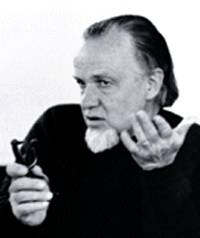


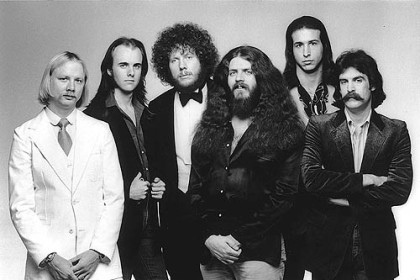
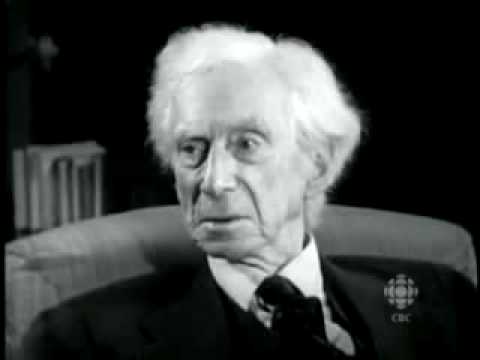

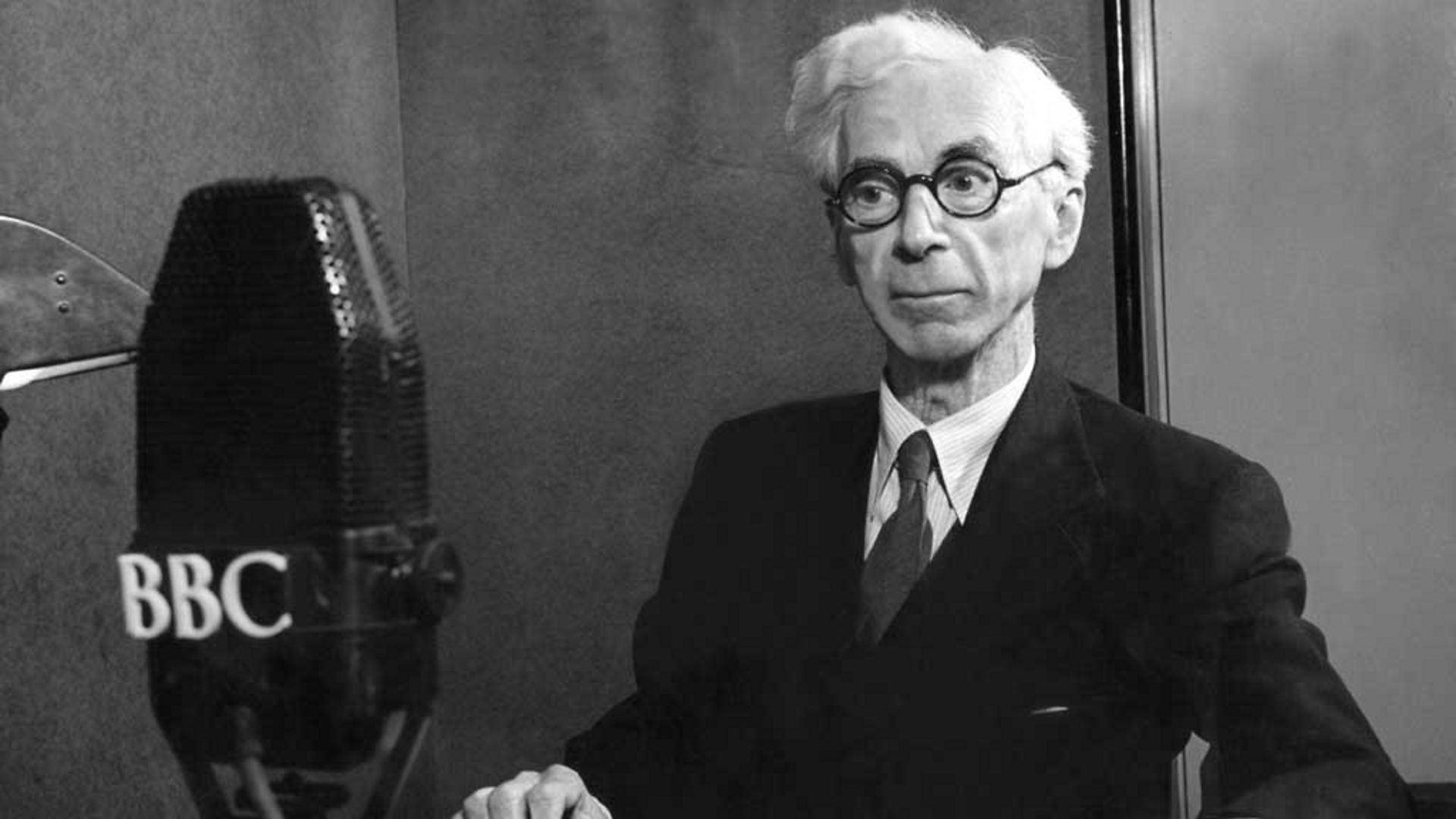

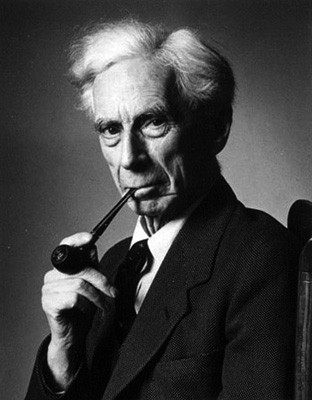


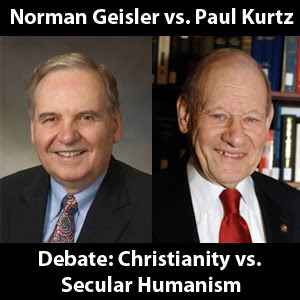



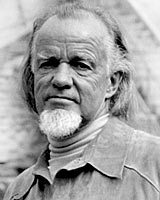


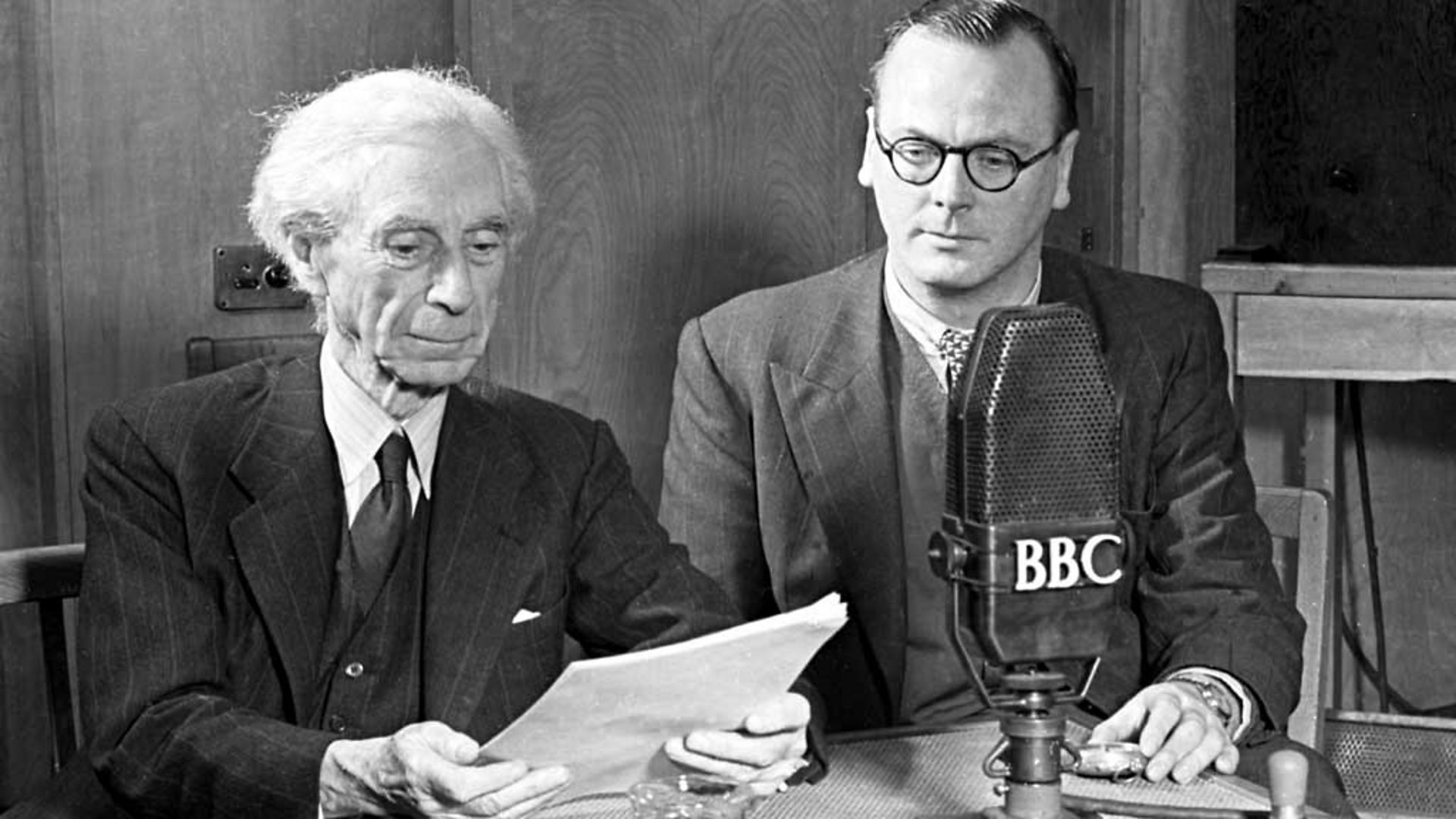





_(cropped).jpg)



:max_bytes(150000):strip_icc()/King-Solomon-GettyImages-537859698-57cd84f13df78c71b62edb3b.jpg)
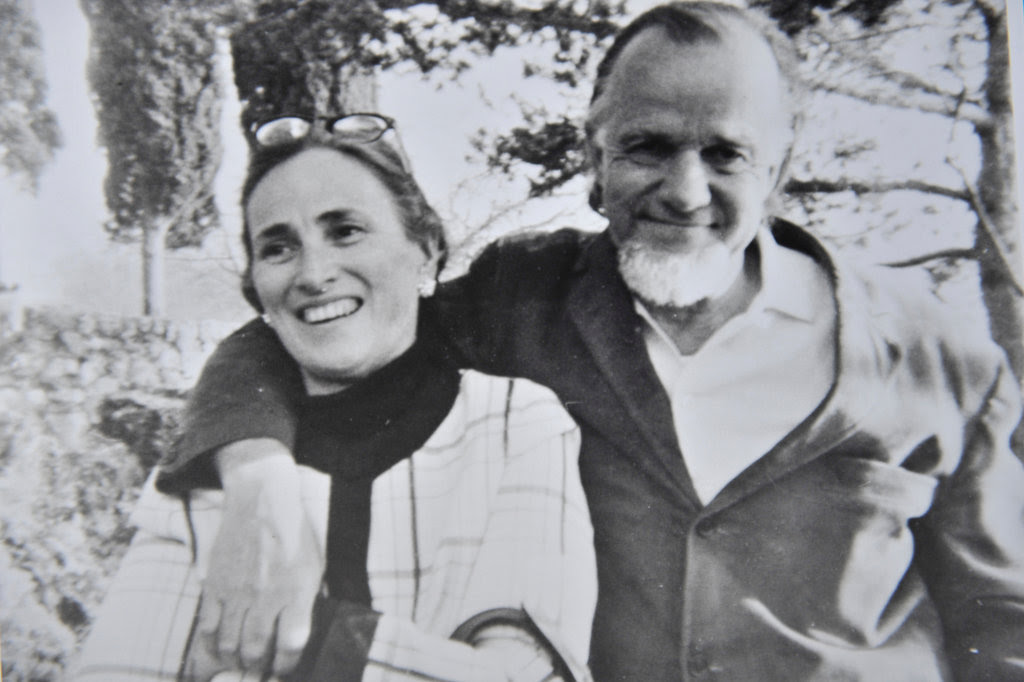


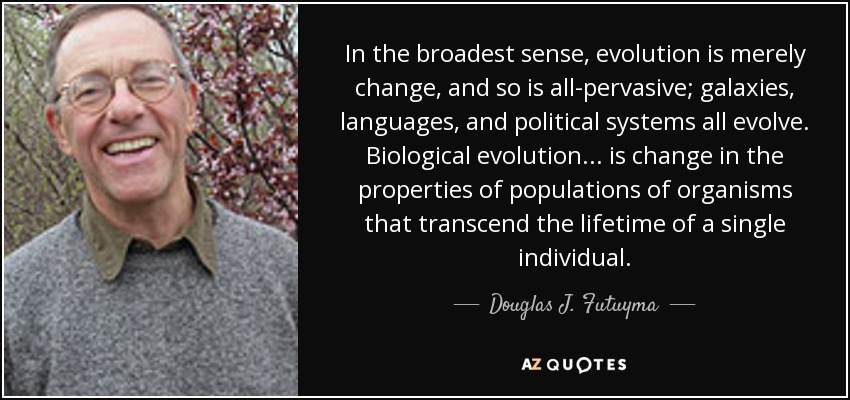

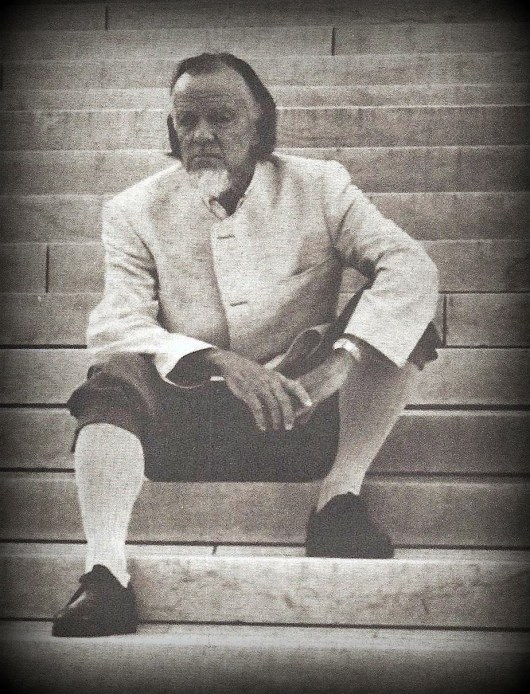


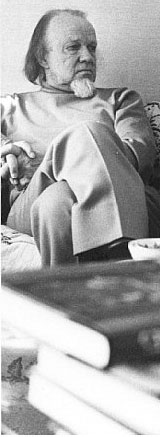


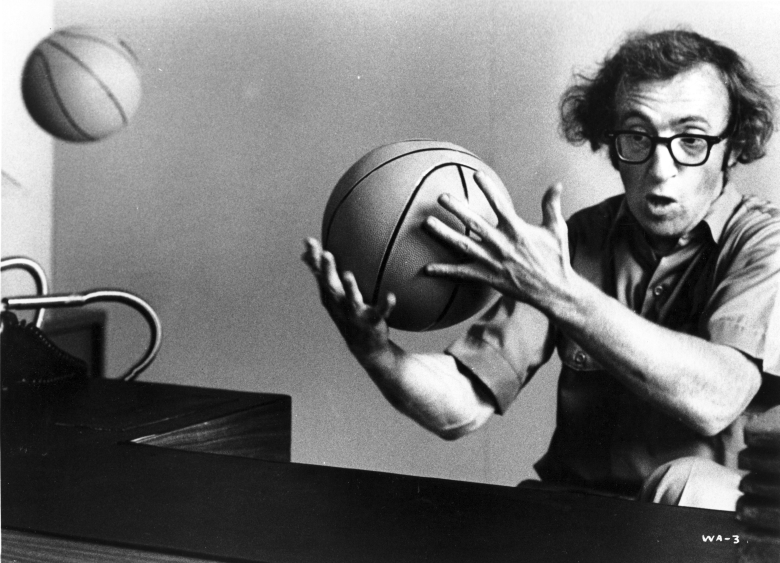
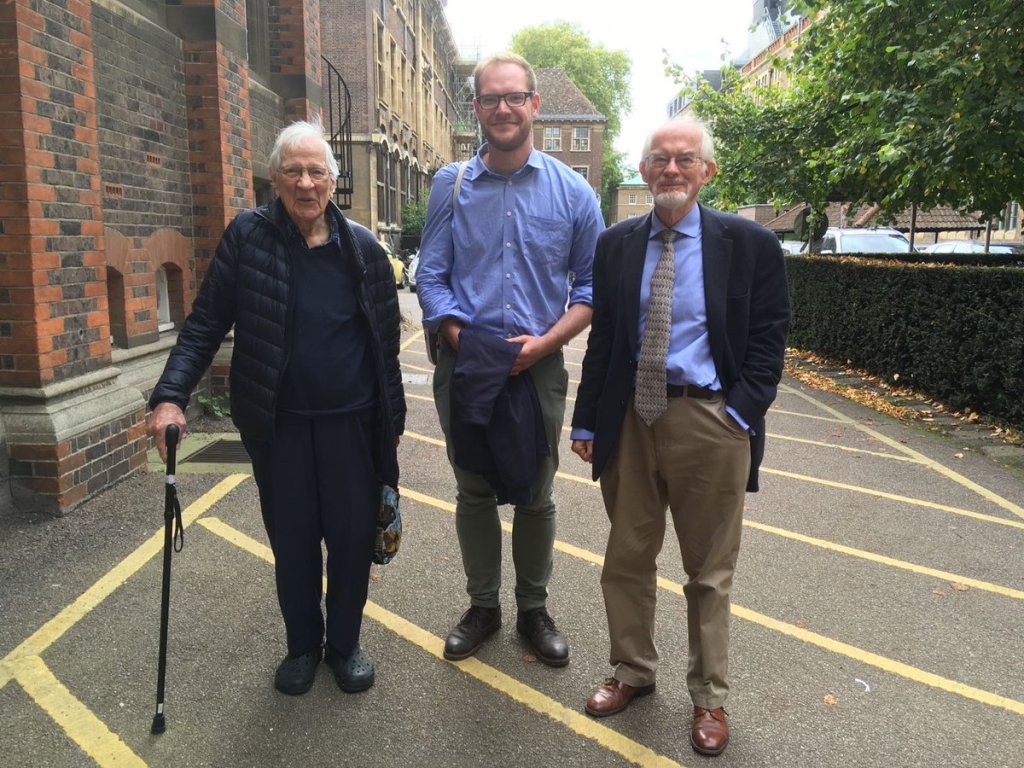


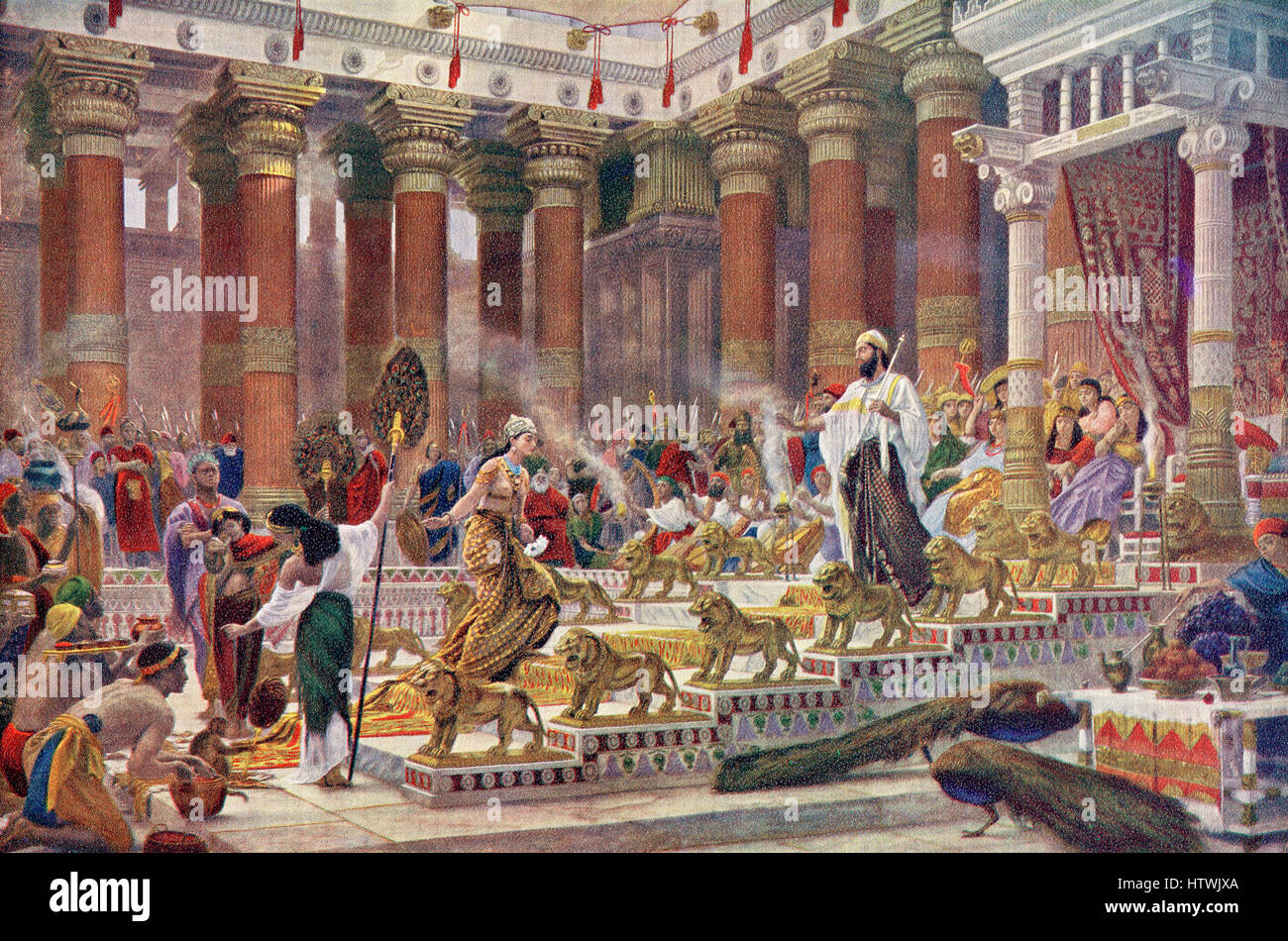




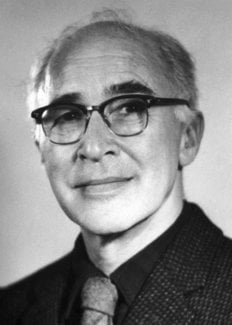
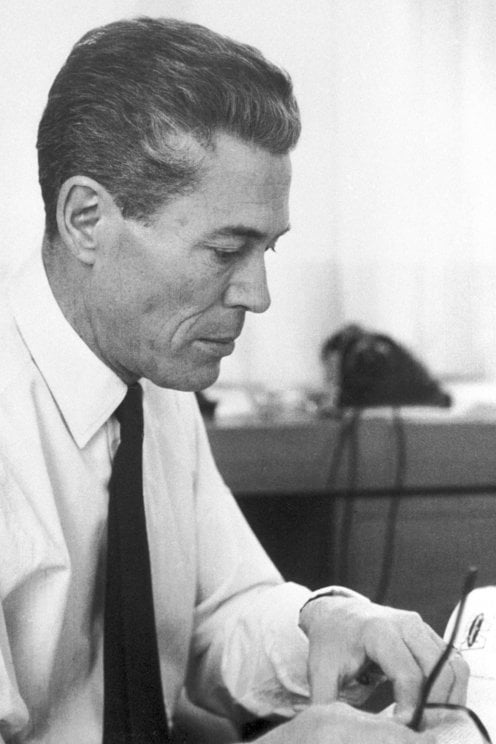


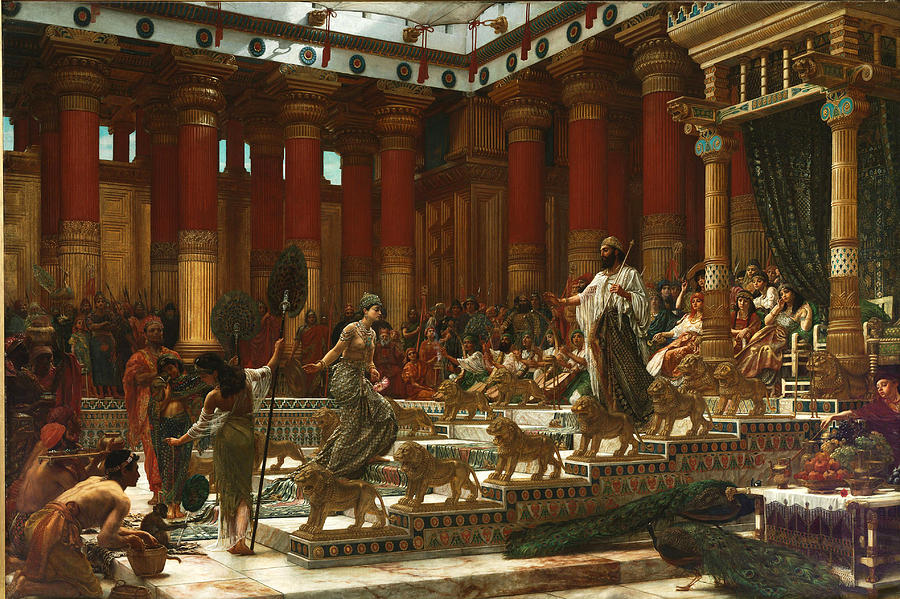





 The Daily Hatch