
—
|
Traute Lafrenz
|
|
|---|---|

Lafrenz in c. 1943
|
|
| Born | 3 May 1919 |
| Died | 6 March 2023 (aged 103)
Yonges Island, Meggett, South Carolina, US
|
Early lifeEdit
Involvement in the Weiße RoseEdit
In late 1942, she brought the third White Rose flyer to Hamburg[5][8] and redistributed them with her former classmate Heinz Kucharski. When Hans and Sophie Scholl were arrested at the University of Munich on 18 February 1943 for spreading anti-war leaflets, Lafrenz was also put under investigation by the Gestapo. She was arrested, along with Alexander Schmorell and Kurt Huber, on 15 March. During her interrogation by the Gestapo, Lafrenz succeeded in disguising the full extent of her involvement in the distribution of leaflets. As a result, she was sentenced to one year in prison on 19 April 1943, by the Volksgerichtshof (first senate) for her role as a confidant.[5][9][10] After her release, she was arrested and imprisoned once again by the Gestapo.[5] Her trial was set for April 1945. Had it proceeded, she most likely would have been sentenced to death, but the Allies liberated the prison where she was held three days before her trial was supposed to commence, likely saving her life.[11]
After the warEdit
In 2019, she received the Order of Merit of the Federal Republic of Germany on her 100th birthday.[4][15][16]
On 6 March 2023, Lafrenz died on Yonges Island, South Carolina, at the age of 103 as the last living member of the White Rose group.[17][1]
Schaeffer pictured in his film WHATEVER HAPPENED TO THE HUMAN RACE?
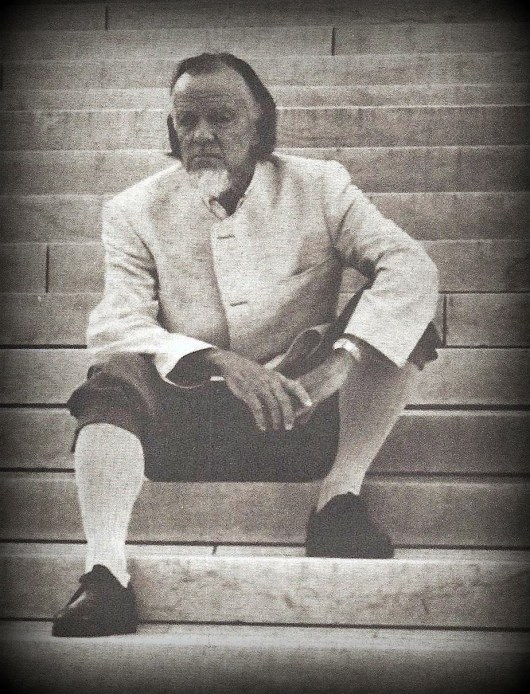
Francis Schaeffer “BASIS FOR HUMAN DIGNITY” Whatever…HTTHR
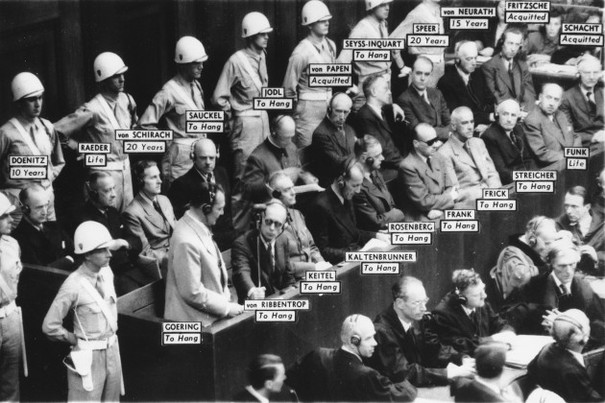
The Devaluing of Life in America
It started with the acceptance of the attitude basic in the euthanasia movement, that there is such a thing as life not worthy to be lived…. …. The first direct order for euthanasia was issued by Hitler on Sept. 1, 1939…. All state institutions were required to report on patients who had been ill for five years or more or who were unable to work, by filling out questionnaires giving name, race, marital status, nationality, next of kin, whether regularly visited and by whom, who bore the financial responsibility and so forth. The decision regarding which patients should be killed was made entirely on the basis of this brief information by expert consultants, most of whom were professors of psychiatry in the key universities. These consultants never saw the patients themselves.

The Nazis set up an organization specifically for the killing of children, which they called, “Realm’s Committee for Scientific Approach to Severe Illness Due to Heredity and Constitution.” Children were transported to the killing centers by “The Charitable Transport Company for the Sick.” “The Charitable Foundation for Institutional Care” collected the cost of killing the children from the relatives, who did not know that they were paying to kill their own kinfolk. The cause of death was falsified on the death certificates. [Francis A. Schaeffer and C. Everett Koop, M.D., Whatever Happened to the Human Race? (Old Tappan, NJ: Fleming H. Revell Company, 1979), pp. 103-107].
Defence Counsel

It hasn’t been too far back in the history of the United States, that black people were sold like cattle in our slave markets. For economic reasons, white society had classified them as “nonhuman.” The U S Supreme Court upheld this lie in its infamous Dred Scott Decision.
Dr. Martin Luther King Jr. speaking as Rev. Jesse Jackson listens on.

Jesse L. Jackson, in 1977, tied the prior treatment of blacks with our present treatment of the preborn:
You could not protest the existence or treatment of slaves on the plantation because that was private and therefore outside your right to be concerned…. The Constitution called us three-fifths human and the whites further dehumanized us by calling us `n@$%#rs.’ It was part of the dehumanizing process…. These advocates taking life prior to birth do not call it killing or murder, they call it abortion. They further never talk about aborting a baby because that would imply something human…. Fetus sounds less than human and therefore can be justified…. What happens to the mind of a person, and the moral fabric of a nation, that accepts the aborting of the life of a baby without a pang of conscience? What kind of a person and what kind of a society will we have twenty years hence if life can be taken so casually? It is that question, the question of our attitude, our value system, and our mind set with regard to the nature and the worth of life itself that is the central question confronting mankind. Failure to answer that question affirmatively may leave us with a hell right here on earth. [Francis A. Schaeffer and C. Everett Koop, M.D., Whatever Happened to the Human Race? (Old Tappan, NJ: Fleming H. Revell Company, 1979), p. 209.]
Twenty-five years after Rev. Jackson’s prediction, we have seen 45,000,000 preborn children killed for convenience and money. There is no telling how many newborns have been sedated and deliberately left to die of starvation.
For a former “insider” expose of the brutal and woman-exploiting abortion industry, read Carol Everett’s book, Blood Money (Sisters, OR: Multnomah Press Books, 1992). Her book tore at my heart. It spoke of how degenerate a part of the medical community had become. Carol Everett later found Christ and now ministers hope and healing.
The infamous pathologist Jack Kevorkian has grabbed headlines by murdering sick people. But, secretly in the hospitals, how many old and sick people have been “put to sleep” by other physicians simply by administering an overdose of medication, or by withholding needed medication?
I was touched, influenced and inspired by the ideas of Bill Bennett. See William J. Bennett, The De-Valuing of America—The Fight for Our Culture and Our Children (New York: Simon and Schuster, 1992).
__________________

Leo Alexander
Dr. Leo Alexander (October 11, 1905 – July 20, 1985) was an American psychiatrist, neurologist, educator, and author, of Austrian-Jewish origin. He was a key medical advisor during the Nuremberg Trials. Alexander wrote part of the Nuremberg Code, which provides legal and ethical principles for scientific experiment on humans.
Contents
[hide]
Life[edit]
Born in Vienna, Austria-Hungary, Alexander was the son of a physician. He graduated from the University of Vienna Medical School in 1929, interned in psychiatry at the University of Frankfurt, then emigrated to the United States in 1933. He taught at the medical schools of Harvard University and Duke University. During the war, he worked in Europe under United States Secretary of War Robert P. Patterson as an army medical investigator with the rank of Major. After the war, he was appointed chief medical advisor to Telford Taylor, the U.S. Chief of Counsel for War Crimes, and participated in the Nuremberg Trials in November 1946. He conceived the principles of the Nuremberg Code after observing and documenting German SS medical experiments at Dachau, and instances ofsterilization and euthanasia. Alexander later wrote that “science under dictatorship becomes subordinated to the guiding philosophy of the dictatorship.”[1]
Later, he served as assistant clinical professor of psychiatry at Tufts University Medical School, where he stayed for almost 30 years. As a consultant for the Boston Police Department, Alexander was instrumental in solving the Boston Strangler case.[2] He directed the Multiple Sclerosis Center at Boston State Hospital, where he researched multiple sclerosis and studied neuropathology. He arranged for the treatment of 40 German Nazi concentration camp victims who had been injected by Dr. Josef Mengele with a precursor to gas gangrene, and provided them with psychiatric therapy.[3] Alexander wrote several books on psychiatry and neuropathology, and coined the terms thanatology—defined as the study of death—and ktenology—the science of killing.[4]
Alexander died of cancer in 1985 in Weston, Massachusetts, survived by three children.
Notes[edit]
- Jump up^ Alexander, Leo (1949). “Medical Science under Dictatorship”. New England Journal of Medicine 241 (2): 39–47. doi:10.1056/NEJM194907142410201. PMID 18153643.
- Jump up^ Gale, 2007.
- Jump up^ New York Times, 1985.
- Jump up^ Marrus, 1999.
References[edit]
- Contemporary Authors Online, Gale, 2007. Reproduced in Biography Resource Center. Farmington Hills, Mich.: Thomson Gale. 2007. Retrieved on May 5, 2007.
- Kindwall, Josef A. (September 1949). “Doctors of Infamy (review)”. Annals of the American Academy of Political and Social Science 265: 190–191. doi:10.1177/000271624926500146. JSTOR 1026587.
- Marrus, Michael R. (1999). “The Nuremberg Doctors’ Trial in Historical Context”. Bulletin of the History of Medicine 73 (1): 106–123. doi:10.1353/bhm.1999.0037. PMID 10189729.
- “Dr. Leo Alexander, Psychiatrist, Fiance of Mrs. Anne”. New York Times. 1969-12-07. p. 106.
- “Dr. Leo Alexander, 79; Nuremberg Trial Aide”. New York Times. 1985-07-24. p. B5.
External links[edit]
|

The Indivisible Fight for Life
by Nat Hentoff. Presented at AUL Forum, 19 October 1986, Chicago. This article is part of no violence period.
I’ll begin by indicating how I became aware, very belatedly, of the “indivisibility of life.” I mention this fragment of autobiography only be cause I think it may be useful to those who are interested in bringing others like me – some people are not interested in making the ranks more heterogeneous, but others are, as I’ve been finding out – to a realization that the “slippery slope” is far more than a metaphor.
When I say “like me,” I suppose in some respects I’m regarded as a “liberal,” although I often stray from that category, and certainly a civil libertarian – though the ACLU and I are in profound disagreement on the matters of abortion, handicapped infants and euthanasia, because I think they have forsaken basic civil liberties in dealing with these issues. I’m considered a liberal except for that unaccountable heresy of recent years that has to do with pro-life matters.
It’s all the more unaccountable to a lot of people because I remain an atheist, a Jewish atheist. (That’s a special branch of the division.) I think the question I’m most often asked from both sides is, “How do you presume to have this kind of moral conception without a belief in God?” And the answer is, “It’s harder.” But it’s not impossible.
For me, this transformation started with the reporting I did on the Babies Doe. While covering the story, I came across a number of physicians, medical writers, staff people in Congress and some members of the House and Senate who were convinced that making it possible for a spina bifida or a Down syndrome infant to die was the equivalent of what they called a “late abortion.” And surely, they felt, there’s nothing wrong with that.
Now, I had not been thinking about abortion at all. I had not thought about it for years. I had what W. H. Auden called in another context a “rehearsed response.” You mentioned abortion and I would say, “Oh yeah, that’s a fundamental part of women’s liberation,” and that was the end of it.
But then I started hearing about “late abortion.” The simple “fact” that the infant had been born, proponents suggest, should not get in the way of mercifully saving him or her from a life hardly worth living. At the same time, the parents are saved from the financial and emotional burden of caring for an imperfect child.
And then I heard the head of the Reproductive Freedom Rights unit of the ACLU saying – this was at the same time as the Baby Jane Doe story was developing on Long Island – at a forum, “I don’t know what all this fuss is about. Dealing with these handicapped infants is really an extension of women’s reproductive freedom rights, women’s right to control their own bodies.”
That stopped me. It seemed to me we were not talking about Roe v. Wade. These infants were born. And having been born, as persons under the Constitution, they were entitled to at least the same rights as people on death row – due process, equal protection of the law. So for the first time, I began to pay attention to the “slippery slope” warnings of pro-lifers I read about or had seen on television. Because abortion had become legal and easily available, that argument ran – as you well know – infanticide would eventually become openly permissible, to be followed by euthanasia for infirm, expensive senior citizens.
And then in the New York Review of Books , I saw the respected, though not by me, Australian bio-ethicist Peter Singer boldly assert that the slope was not slippery at all, but rather a logical throughway once you got on to it. This is what he said – and I’ve heard this in variant forms from many, many people who consider themselves compassionate, concerned with the pow erless and all that.
Singer: “The pro-life groups were right about one thing, the location of the baby inside or outside the womb cannot make much of a moral difference. We cannot coherently hold it is alright to kill a fetus a week before birth, but as soon as the baby is born everything must be done to keep it alive. The solution, however,” said Singer, “is not to accept the pro-life view that the fetus is a human being with the same moral status as yours or mine. The solution is the very opposite, to abandon the idea that all human life is of equal worth.” Which, of course, the majority of the Court had already done in Roe v. Wade.
Recently, I was interviewing Dr. Norman Levinsky, Chief of Medicine of Boston University Medical Center and a medical ethicist. He is one of those rare medical ethicists who really is concerned with nurturing life, as contrasted with those of his peers who see death as a form of treatment. He told me that he is much disturbed by the extent to which medical decisions are made according to the patient’s age. He says there are those physicians who believe that life is worth less if you’re over 80 than if you’re 28.
LEO ALEXANDER pictured below:
So this is capsulizing an incremental learning process. I was beginning to learn about the indivisibility of life. I began to interview people, to read, and I read Dr. Leo Alexander. Joe Stanton, who must be the greatest single resource of information, at least to beginners – and, I think, non-beginners – in this field, sent me a whole lot of stuff, including Dr. Leo Alexander’s piece in the New England Journal of Medicine in the 1940s. And then I thought of Dr. Alexander when I saw an April 1984 piece in theNew England Journal of Medicine by 10 physicians defending the withdrawal of food and water from certain “hopelessly ill” patients. And I found out that Dr. Alexander was still alive then but didn’t have much longer to live. And he said to Patrick Duff, who is a professor of philosophy at Clarke University and who testified in the Brophy case, about that article, “It is much like Germany in the 20s and 30s. The barriers against killing are coming down.”
Nearly two years later, as you know, the seven member judicial council of theAmerican Medical Association ruled unanimously that it is ethical for doctors to withhold “all means of life-prolonging medical treatment” in cluding food and water, if the patient is in a coma that is “beyond doubt irreversible” and “there are adequate safeguards to confirm the accuracy of the diagnosis.” Now keep in mind “beyond doubt irreversible” and “adequate safeguards to confirm the accuracy of the diagnosis.” Death, to begin with, may not be imminent for food and water to be stopped, according to the AMA.
Then Dr. Nancy Dickey, who is chairman of the council that made that ruling, noted that there is no medical definition of”adequate safeguards,” no checklist that doctors would have to fill out in each case. The decision would be up to each doctor.
Aside from the ethics of this, for the moment, I would point out that the New England Journal of Medicine, or at least the editor, Dr. Arnold Relman, said fairly recently that there are at least 40,000 incompetent physicians in the United States – incompetent or impaired. At least.
Back to Dr. Norman Levinsky. This is all part of this learning process. It is not a huge step, he said, from stopping the feeding to giving the patient a little more morphine to speed his end. I mean it is not a big step from passive to active euthanasia.
Well, in time, a rather short period of time, I became pro-life across the board, which led to certain social problems, starting at home. My wife’s most recurrent attack begins with, “You are creating social mischief,” and there are people at my paper who do not speak to me anymore. In most cases, that’s no loss.
And I began to find out, in a different way, how the stereotypes about pro-lifers work. When you’re one of them and you read about the stereotypes, you get a sort of different perspective.
There’s a magazine called the Progressive. It’s published in Madison, Wisconsin. It comes out of the progressive movement of Senator Lafolette, in the early part of this century. It is very liberal. Its staff, the last I knew, was without exception pro-abortion. But its editor is a rare editor in that he believes not only that his readers can stand opinions contrary to what they’d like to hear, but that it’s good for them. His name is Erwin Knoll and he published a long piece by Mary Meehan, who is one of my favorite authors, which pointed out that for the left, of all groups of society, not to understand that the most helpless members of this society are the preborn – a word that I picked up today, better than unborn – is strange, to say the least.
The article by Meehan produced an avalanche of letters. I have not seen such vitriol since Richard Nixon was president – and he deserved it. One of the infuriated readers said pro-life is only a code word representing the kind of neo-fascist, absolutist thinking that is the antithesis to the goals of the left. What, exactly, are the anti-abortionists for? School prayer, a strong national defense, the traditional family characterized by patriarchal dominance. And what are they against? School busing, homosexuals, divorce, sex education, the ERA, welfare, contraception and birth control. I read that over five or six times and none of those applied to me.
I began to wonder if Meehan and I were the only pro-life people who came from the left. Meehan has a long background in civil rights work. And by the way, she said in the piece, “It is out of characterfor the left to neglect the weak and helpless. The traditional mark of the left has been its protection of the underdog, the weak and the poor. The unborn child is the most helpless form of humanity, even more in need of protection than the poor tenant farmer or the mental patient. The basic instinct of the left is to aid those who cannot aid themselves. And that instinct is absolutely sound. It’s what keeps the human proposition going.”
I’ll give you a quick footnote on the Progressive. Erwin Knoll got a series of ads, tiny ads because they couldn’t pay very much even at the magazine’s rates, from a group called Feminists for Life or America – a group, by the way, that is anti-nuclear weapons and is also very pro-life in terms of being anti-abortion. And the ads ran. There is a group called the Funding Exchange which is made up of foundations which are put into operation and headed by the scions of the rich. These are children who are trying to atone for their parents’ rapaciousness by doing good. The children are liberals. The Funding Exchange was so horrified to see those three tiny ads that even though the Progressive is soundly pro-abortion, the Funding Exchange not only dropped the grant they had given the Progressive, but they made a point of telling Erwin Knoll that they were going to make sure that other foundations didn’t give them any money either. I’m always in trigued at how few people understand that free speech encompasses a little more than the speech you like.
Well eventually, in addition to Mary Meehan, I found that there were a number of other pro-lifers who also do not cherish the MX missile, William Bradford Reynolds, or Ronald Reagan. And one of them is Juli Loesch, who writes and speaks against both war and abortion. She is the founder of Pro-lifers for Survival, which describes itself as a network of women and men supporting alternatives to abortion and nuclear arms. She’s rather rare, I find in my limited experience, among combatants on all sides of this question because she is unfailingly lucid – and she has a good sense of humor. In an interview in the U.S. Catholic she said that combining her various pro-life preoccupations “was the most fun I’ve ever had in my life. It’s great because you always have common ground with someone. For example, if you’re talking to pro-lifers you can always warmup the crowd, so to speak, by saying a lot of anti-abortion stuff. After you’ve got everybody celebrating the principles they all hold dear, you apply those principles to the nuclear arms issue. For instance, I’ll say ‘this nuclear radiation is going to destroy the unborn in the womb all over the world.’ And then I always lay a quote by the late Herman Kahn on them. He pointed out that about 100 million embryonic deaths would result from limited nuclear war. One hundred million embryonic deaths is of limited significance, he said, because human fecundity being what it is, the slight reduction in fecundity should not be a matter of serious concern even to individuals. Tell that to a pro-life group,” she says, “and their response will be, ‘That guy’s an abortionist.’ Well what he was was a nuclear strategist.”
I found other allies as a result of having been interviewed on National Public Radio as the curiosity of the month. Letters came in from around the country, most of them saying essentially what a woman from Illinois wrote:
“I feel as you do, that it is ethically, not to mention logically, inconsistent to oppose capital punishment and nuclear armament while supporting abortion and/or euthanasia.”
The most surprising letters were two from members of the boards of two state affiliates of the ACLU. Now I’m a former member of the national board and I was on the New York board for 17 years, and I well know the devotion of the vast number of the rank and file, let alone the leadership, to abortion. rights. So I was surprised to get these letters. One board member from Maryland said we had a board meeting where we approved with only one dissent (his) the decision of the national board to put the right to abortion at the top of its priorities – the top of its priorities. Forget the First Amendment and the Fourth, let Edwin Meese take care of those. There was no discussion, he said, of the relation of abortion to capital punishment.
The most interesting letter was from Barry Nakell, who is a law profes sor at the University of North Carolina. He is one of the founders of the affiliate of the ACLU there. And he gave me a copy of a speech he made in 1985 at the annual meeting in Chapel Hill of the North Carolina Civil Liberties Union. He reminded the members that the principle of respect for the dignity of life was the basis for the paramount issue on the North Carolina Civil Liberties Union agenda since its founding. That group was founded because of their opposition to capital punishment. Yet, he said, supporting Roe v. Wade, these civil libertarians were agreeing that the Constitution protects the right to take life. The situation is a little backward, Nakell told his brothers and sisters. In the classical position, the Constitu tion would be interpreted to protect the right to life, and pro-abortion advocates would be pressing to relax that constitutional guarantee. In Roe v. Wade, the Supreme Court turned that position upside down and the ACLU went along, taking the decidedly odd civil libertarian position that some lives are less worthy of protection than other lives. I asked Nakell how his heresy had been received. Apparently they’re much more polite down there than they are in New York. “With civility,” he said. As a matter of fact, he added, there were several members of the board who had been troubled for some time, but it’s interesting, they didn’t quite want to come out and say they were worried about Roe v. Wade,that they were worried about abortion. But Nakell took the first step. He’s an optimist by temperament and he tells me he expects to make more progress. And then he told me about a bumper sticker he had seen recently in North Carolina- “Equal Rights for Unborn Women.”
For several years now I’ve been researching a profile of Cardinal O’Connor of New York, which will be a book eventually. And in the course of that I came across Cardinal Bernardin’s “seamless garment” concept. It’s a phrase he does not use any more because of internal political reasons. It is now called the “consistent ethic of life,” which is fine by me. I miss “seamless garment” though, because there’s a nice literary flavor to it. But I’ll accept “consistent ethic of life.” Bernardin said, in a speech at Fordham that has won him considerable plaudits and considerable dissonance, “[N]uclear war threatens life on a previously unimaginable scale. Abortion takes life daily on a horrendous scale. Public executions are fast becoming weekly events in the most advanced technological society in history, and euthanasia is now openly discussed and even advocated. Each of these assaults on life has its own meaning and morality. They cannot be collapsed into one problem, but they must be confronted as pieces of a larger pattern.”
That had a profound effect on me. It’s not new. As a matter of fact, Juli Loesch thought of it before he did, as did the people at The Catholic Worker who got it, of course, from Dorothy Day. And it goes further back into the centuries. But there was something about the way Bernardin put it that hit me very hard.
So I decided by now, because I was considered by some people to be a reliable pro-lifer, I decided to go out to Columbus, Ohio, where I had been asked to speak at the annual Right to Life convention. And, I thought, I’m going to bring them the word, if they haven’t heard it before from Cardinal Bernardin. At first they were delighted to see me, but that didn’t last very long. Jack Willke and Mrs. Willke were there, and they can attest to the fact that in some respects I’m lucky to be here. I pointed out that pro-lifers – maybe this is chutzpah, telling people who have been in this all their lives what you’ve discovered in 20 minutes – that pro-lifers ought to be opposing capital punishment and nuclear armament and the Reagan budget with its dedicated care for missiles as it cuts funds for the Women/Infant/Children Program that provides diet supplements and medical checkups for mothers in poverty. Surely, I said, they should not emulate the President in these matters – and here I stole a line from Congressman Barney Frank – they should not emulate the President in being pro-life only up to the moment of birth. Well the faces before me began to close, and from the middle and the back of the dining room there were shouts. I couldn’t make out the words, but they were not approving. As I went on, there were more shouts as well as growls and table-thumping of an insistence that indicated a tumbrel awaited outside. I finally ended my speech to a chorus of howls, and several of the diners rushed toward the dais. I did not remember ever intending to die for this cause, but as it turned out the attacks were all verbal. Most of the disappointed listeners, once they caught their breath, charitably ascribed my failure to understand the total unrelatedness of nuclear arms and abortion to my not yet having found God.
But I discovered in other places that I didn’t have to bring them the news of the consistent ethic of life. I talked at the Catholic church outside Stamford, Connecticut last week, and they – including the pastor – understood the “consistent ethic of life” agreat deal better than I did. So I see some real hope for my point of view.
There are a lot of people like me out there who are troubled by abortion. That should not stop them from joining at least one of the more possibly compatible groups, but it does. They are unwilling to join what they consider to be the forces of Reagan, Rambo and Rehnquist. But there are beginning to be pro-life forces that they can in conscience – they have consciences too – join. One of them is Pro-lifers for Survival, another is Feminists for Life of America. And there is something that just started that I find very interesting. It’s very small now. It’s the first consistent-ethic-of-life political action committee, and it’s called JustLife. The people who started it were some what dismayed that anti-abortionists like Jerry Falwell, Pat Robertson, Jimmy Swaggart and other such household names were giving the impres sion that if Christ were in the Senate, he’d vote for Star Wars. The founders of JustLife thought that a new assembly of Christians – most of them, by the way, theologically conservative evangelicals and Catholics – ought, there fore, to start the political action committee.
What they aim to show is that there is another Christian perspective on these matters. JustLife is supporting candidates who advocate what it calls, again, a “consistent ethic of life.” A candidate does not have to be a Christian to get help from this PAC, but he or she does have to oppose abortion. Another requirement is a determination to end, rather than further institutionalize, the nuclear arms race. They’re against the MX missile. They’re against Star Wars. Now I think you see that the nuclear part of their program is mild. I’m a disciple of A. J. Muste. He was a Christian pacifist. The new PAC does not go so far as Muste or Dorothy Day. Instead, it urges verifiable multi-lateral disarmament. Everybody’s for that, except when you get to the negotiating table. One board member, Kathleen Hayes, who is managing editor of the Christian magazine, The Other Side, told the Catholic Register that she believes that unilateral disarmament is ultimately what the gospel would call us to. But the aim of JustLife is to pick up votes, and there’s a much more powerful gospel if you want to pick up votes, and that’s called deterrence.
The third basic criterion the candidate has to meet to get money from JustLife, is that he or she must recognize that there are actual poor people out there – not just freeloaders, as the Attorney General has suggested. Once the poor are seen as three dimensional, a JustLife candidate has to show that he or she would work to get them health care, housing and food. For as it was said, “Blessed are the hungry, for they shall be filled.” Distilling its tripartite credo in its first fundraising letter, JustLife em phasizes, “[W]e support an unborn child’s right to life. We also support that child’s right to adequate nutrition, housing, education and health care. We support that child’s right to live in a safe world.”
Now this political witness by Christians going contrary to the politics of most other pro-life groups – that is, those pro-life groups that have political agenda- is obviously well within the rights of free speech and assembly. Yet another interesting thing, and I find this dismaying, is that while a number of Catholic bishops agree with the thrust of JustLife – in fact one of them was originally on the board, and a consistent ethic of life is now an official position of the National Conference of Catholic Bishops as of last November – there are no Catholic bishops on the board of JustLife. The main reason is that there is a current lawsuit brought by Larry Lader, the pro-abortionist, challenging the tax-exempt status of the Catholic church on the charge that it has been engaged in political campaigning and in lobbying against abortion. Because of the length of that suit, its cost and its still uncertain outcome, the bishops are experiencing a chilling effect. And I’ve seen no editorials about that from people who would ordinarily be concerned with the First Amend ment.
Meanwhile, JustLife, having announced publicly its existence in June, has raised $45,000 from 1,300 contributors, expects to reach $60,000 by the end of the year and is gearing up for 1988. I’ll show you how it works in one state, because this could eventually happen elsewhere. In Nevada, the Pro-Family Coalition has endorsed Republican James Santini, but since Santini is against both the nuclear freeze and funding for poverty programs, JustLife is on the side of Congressman Harry Reid, who votes to fill the hungry, slim down the Pentagon and is also against abortion. They’re both against abortion, but only one, says JustLife, keeps on caring for life after birth. I would like to see this group grow, and other groups do the same thing or similar things. [Reid won in November.]
On Sunday October 25th, Cardinal O’Connor had a letter read at all masses at all parishes in the Archdiocese of New York. It was Respect Life Sunday. And this is how the letter began: “I am frightened and chilled by the continuing destruction of unborn human life, and now we are seeing precisely what we have been predicting all along. Once the victory seemed to be won on legalizing the killing of the unborn, attention was turned to the terminally ill. Now we are hearing a clamor thoughout the United States for legislation that will lift any regulations whatsoever in regard to sustaining the life of a terminally ill patient. Indeed the move is toward authorizing the deliberate speeding up of the deaths of vulnerable patients by starvation or dehydration. It all goes together. What is permitted today is often demanded tomorrow. If the current contempt for the unborn continues, in my judgment we will soon see required genetic screening programs, with public health authorities urging mothers to abort babies that may be born with defects. I’ve been reading that this summer the state of California has introduced a program which moves precisely in that direction. I plead with you to reflect with utmost urgency on what is happening. Do not think that your life, or your aging parents’ lives, or the lives of the handicapped, the cancerous, the so-called ‘useless,’ are secure if the proponents of euthanasia have their way.”
Finally, with that in mind, back in 1971, two years before Roe v. Wade, in the state of New York, the legislature, after much pressure, decided to decriminalize abortion and make it a good deal easier. At the time, a significant editorial was delivered on the local CBS station by Sherri Henry, who has since become a big-time talk show host. And she wrote then, “[A]bortion is no longer illegal in New York. It is nothing to be ashamed of, nothing to fear. It is one sensible method of dealing with such problems as overpopulation, illegitimacy, and possible birth defects. It is one way of fighting the rising welfare rolls and the increasing number of child abuse cases.
Very simple. When there are no children, they can’t be abused. When there are no severely handicapped children or adults, we will all save money. When everyone in failing health has to die by a certain age, how much more aesthetic our society will be.
Most people will begin to understand the lethal logic of the abortionists, the advocates of euthanasia, and the AMA, if this logic is presented lucidly, persistently and on the basis of the indivisibility of all life. All life.
________________
Artist featured today is Ray Johnson
Ray Johnson Doc – Brush and the Water Pt. 1

RAY JOHNSON (1927–95) was several artists in one: a Black Mountain-trained painter whose early rejection of Abstract Expressionist purity was as deliberate as Rauschenberg’s, Johns’s, and Twombly’s (in whose fireplace Johnson burned his student work); a formal collagist who combined Joseph Cornell’s gift for lending personal and symbolic weight to scrap material with a Warholian eye for transformative Camp; the founder and distribution node of “The New York Correspondence [sometimes ‘Correspondance‘] School,” which helped initiate the genre of “mail art”; a performer whose koan-like “Nothings,” which might consist of little more than Johnson standing in a bank lobby chewing peanut-butter cups and silently reading Walt Whitman, contrasted starkly with the antic, multi-media “Happenings” of the ’60s and ’70s. An insider’s outsider, three decades of such activity made Johnson “the most famous unknown artist in New York,” as one review put it, but he withdrew from the art world and market in the ’80s and ’90s, working privately while underlining his absence with thousands of typed and Xeroxed mailings. (Prophetically, his self-isolation roughly coincided with the rise of the Internet.) On a Friday the 13th in 1995, he drove to Orient, Long Island, warned one or two intimates of a coming “mail event” by phone, and dropped himself off a country bridge like a letter into a slot, leaving his Sag Harbor home and studio as a series of carefully staged tableaux. Like this last, self-canceling gesture, each of Johnson’s works — many of which were initially aimed at a single postal recipient — connects to hundreds of others through visual and verbal puns and cultural allusions, but the man at their center and his ultimate intent remain unfathomable, as though meaning itself were a vast, networked conspiracy.
***
On his or her birthday, HiLobrow irregularly pays tribute to one of our high-, low-, no-, or hilobrow heroes. Also born this date: Louis Althusser.
READ MORE about members of the Postmodernist Generation (1924-33).
Ray Johnson Doc – Brush and the Water Pt. 2

Ray Johnson (center right) in Josef Albers’ class at Black Mountain College, c. 1948
A CONVERSATION WITH RAY JOHNSON AND JOHN HELD, JR. (DECEMBER 2, 1977)
THIS IS A CONVERSATION BETWEEN RAY JOHNSON AND JOHN HELD, JR. (DECEMBER 2, 1977). I PROCESSED THE ORIGINAL VHS WITH JOHN’S PERMISSION FOR PRESENTATION ON YOU TUBE.
(Ray Johnson and Richard Lippold at Black Mountain College)

How to Draw a Bunny: The Ray Johnson Memorial Show (dvd extra feature)
REVIEW: RAY JOHNSON & ROBERT WARNER
“Tables of Contents:
Ray Johnson & Robert Warner: Bob Box Archive”
Berkeley Art Museum and Pacific Film Archive
University of California, Berkeley
January 27-May 20, 2012
Lectures by:
Robert Warner, January 27
Dickran Tashjian, April 18

Ray Johnson has become a cult hero, in large part due to his posthumous film portrait, “How to Draw a Bunny.” During his life (1927-1995), he was known as, “the most famous unknown artist in New York.” Those of us who knew him when…when no one else did…we treasured him. We knew he was the real deal and an inspiration on how to conduct an artful life.
Purposely avoiding public recognition in life, Johnson knew the art world in detail, having attended Black Mountain College, trained by Josef Albers, befriended by John Cage, Merce Cunningham, Robert Rauschenberg, Ruth Awawa, et al.
Johnson was generous in sharing his friendships with others. In the late 1970s, he introduced me to William Copley (aka Cply), a friend of Marcel Duchamp, who was recovering from burns in Key West, Florida, while I was there on vacation. Copley was a functionary for Duchamp, gathering needed materials for the master artist’s last work, “Etant Donnés,” which was created in secret. Copley was necessary in perpetuating the ruse that Duchamp had “quit making art.”
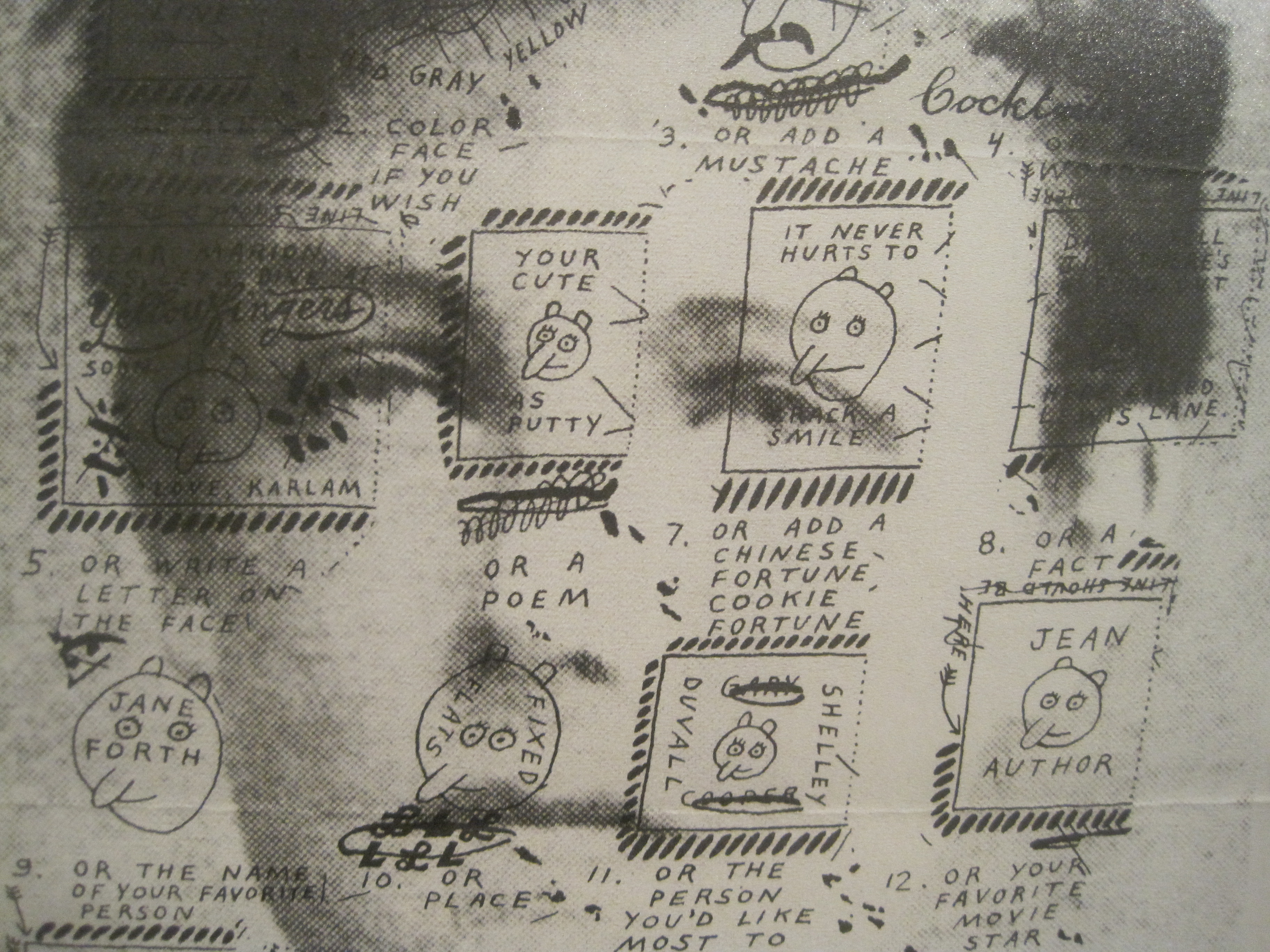
Ray Johnson
So too, did Johnson use Robert Warner to run his errands in New York City, while Johnson secluded himself in the North Shore Long Island suburb of Locust Valley. Mugged the same day Warhol was shot, Ray took himself out of the scene, making occasional forays into the city, but relying on others like Warner to perpetuate his artistic presence, by asking him, for instance, to carry out mysterious deliveries to Jasper Johns.
Sequestered from the scene, using a third parties to intervene in his “performances,” Johnson continued his traditions of “nothings,” or “non-happenings,” which he labeled many of his public performances. If “happenings” were created situations to elevate one above the happenstance of existence , “nothings” blended activity with everyday life…nothing special.
Johnson’s prime motivation was the aesthetic distribution of communication – not only through the postal system, with which he is associated as the Father of Mail Art – but by various mediums, including the telephone. Johnson persistent daytime telephone calls to Warner, caused Bob’s boss (an optician) to pull the plug on these workday performances. But by then, Bob had proved himself.
Johnson’s mailed works often included an “acid test.” They were freely given, but included calls for reciprocal response. Many of his mailings contained admonitions to “add and pass” or “add and return,” challenging the “purity quotient” of the receiver. Did the correspondent conform to instruction? Was the original photocopied first and then passed along? Was the admonition ignored? Bob Warner was subjected to a variety of these tasks, proving his trustworthiness.
Having earned his stripes, Warner was given fifteen cardboard boxes stuffed with received mail and scores of addressed but unsent envelopes. Warner was instructed to forward two of the boxes to another party. For years, Warner kept the remaining thirteen boxes unopened and intact. In 2010, Esopus Magazine, sponsored a project through their gallery affiliate, whereby Warner would open the boxes in public and inventory the works.
After the exhibition, the newly inventoried works traveled to Philadelphia, with Berkeley the third stop of the tour. It was recommended to the Berkeley Museum by Dickran Tasjanian, a professor emeritus from the University of California, Irvine, recently retired to the Bay Area. The author of Skyscraper Primitives: Dada and the American Avant-Garde, 1910-1925, and Boatload of Madman: Surrealism and the American Avant-Garde, 1920-1950,” the scholar, an acquaintance of Warner, was aptly suited to appreciate Johnson’s difficult fit into these previous avant-gardes.
Tasjanian’s admiration was made easier by his and Johnson’s mutual appreciation of Joseph Cornell. Tashjian also authored, Joseph Cornell: Gifts of Desire, and Johnson counted Cornell among his circle of friends. A critical remark that Ray found amusing and often circulated was, “Johnson is to the letter, what Cornell was to the box.”

Both Warner and Tasjanian conducted gallery talks – Warner at the opening of the exhibition, and Tasjanian during its course. Both talks were well attended and served to inform the curious. Spread out on thirteen tables, the contents of the thirteen boxes needed some clarification.
At first sight, the items appear to be piles of flotsam and jetsam, with no apparent relationship to one another. The collection was not selected by Johnson, but generated by the Mail Art network. In deciphering the accumulation, there are clues for the initiated. For instance – a collection of belts, which related to Johnson’s fascination with snakes (and penises), and were in all likelihood, remnants of his 1970s era, “Spam Belt Club.” Johnson would often include instructions to his correspondents to send objects to an unwitting third party- for example, “Send slips to Lucy Lippard.” In turn, Johnson would often be the recipient of his correspondents peccadillos.
The boxes also contained items returned and embellished by correspondents as requested by Johnson, including a Johnson exhibition poster altered and returned by Bay Area artist William Wiley.
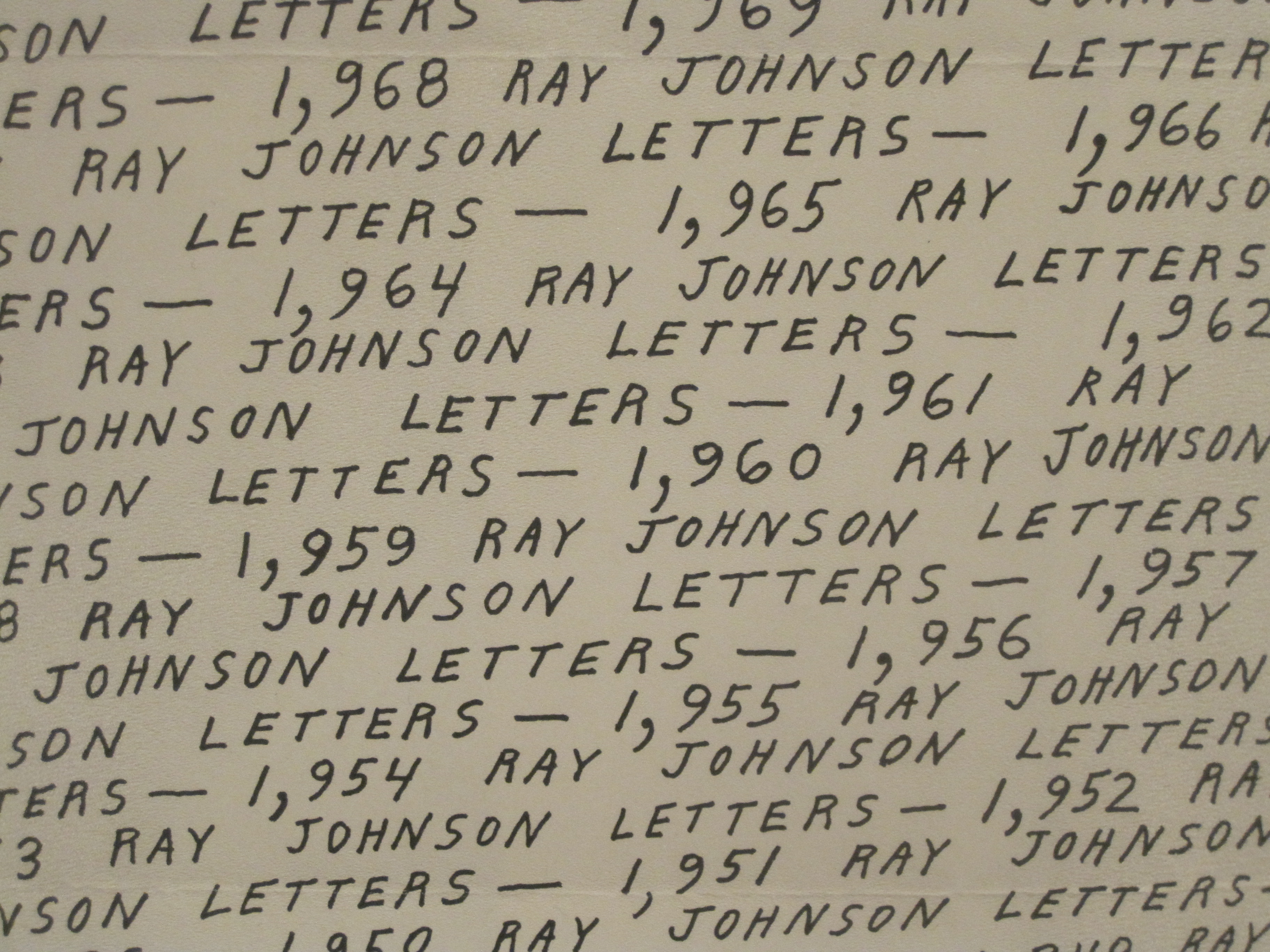
Ray Johnson
Also on exhibition are several of Johnson’s more formal collages, composed of wood or compressed cardboard, often bearing images first found in his mailings. Rarely shown during his lifetime, these works have gained increased recognition through their exhibition by the Ray Johnson Estate, administered by the Richard L. Feigen & Co., New York.
Despite the elegance of the framed collages, and their obvious appeal to collectors, the true importance of Ray Johnson lies in his preoccupation with the distribution of the artwork, in the process of which, he established a worldwide network, which continues to uphold his practice of freely circulated works, stimulating long distance aesthetic communication, friendship, and community.
Written by John Held, Jr.
Interview between Ray Johnson and John Held, Jr. linked here
___________

________________
Francis Schaeffer’s “How should we then live?” Video and outline of episode 10 “Final Choices” (Schaeffer Sundays)
E P I S O D E 1 0 Dr. Francis Schaeffer – Episode X – Final Choices 27 min FINAL CHOICES I. Authoritarianism the Only Humanistic Social Option One man or an elite giving authoritative arbitrary absolutes. A. Society is sole absolute in absence of other absolutes. B. But society has to be […]
Francis Schaeffer’s “How should we then live?” Video and outline of episode 9 “The Age of Personal Peace and Affluence” (Schaeffer Sundays)
E P I S O D E 9 Dr. Francis Schaeffer – Episode IX – The Age of Personal Peace and Affluence 27 min T h e Age of Personal Peace and Afflunce I. By the Early 1960s People Were Bombarded From Every Side by Modern Man’s Humanistic Thought II. Modern Form of Humanistic Thought Leads […]
Francis Schaeffer’s “How should we then live?” Video and outline of episode 8 “The Age of Fragmentation” (Schaeffer Sundays)
E P I S O D E 8 Dr. Francis Schaeffer – Episode VIII – The Age of Fragmentation 27 min I saw this film series in 1979 and it had a major impact on me. T h e Age of FRAGMENTATION I. Art As a Vehicle Of Modern Thought A. Impressionism (Monet, Renoir, Pissarro, Sisley, […]
Francis Schaeffer’s “How should we then live?” Video and outline of episode 7 “The Age of Non-Reason” (Schaeffer Sundays)
E P I S O D E 7 Dr. Francis Schaeffer – Episode VII – The Age of Non Reason I am thrilled to get this film series with you. I saw it first in 1979 and it had such a big impact on me. Today’s episode is where we see modern humanist man act […]
Francis Schaeffer’s “How should we then live?” Video and outline of episode 6 “The Scientific Age” (Schaeffer Sundays)
E P I S O D E 6 How Should We Then Live 6#1 Uploaded by NoMirrorHDDHrorriMoN on Oct 3, 2011 How Should We Then Live? Episode 6 of 12 ________ I am sharing with you a film series that I saw in 1979. In this film Francis Schaeffer asserted that was a shift in […]
Francis Schaeffer’s “How should we then live?” Video and outline of episode 5 “The Revolutionary Age” (Schaeffer Sundays)
E P I S O D E 5 How Should We Then Live? Episode 5: The Revolutionary Age I was impacted by this film series by Francis Schaeffer back in the 1970′s and I wanted to share it with you. Francis Schaeffer noted, “Reformation Did Not Bring Perfection. But gradually on basis of biblical teaching there […]
Francis Schaeffer’s “How should we then live?” Video and outline of episode 4 “The Reformation” (Schaeffer Sundays)
Dr. Francis Schaeffer – Episode IV – The Reformation 27 min I was impacted by this film series by Francis Schaeffer back in the 1970′s and I wanted to share it with you. Schaeffer makes three key points concerning the Reformation: “1. Erasmian Christian humanism rejected by Farel. 2. Bible gives needed answers not only as to […]
“Schaeffer Sundays” Francis Schaeffer’s “How should we then live?” Video and outline of episode 3 “The Renaissance”
Francis Schaeffer’s “How should we then live?” Video and outline of episode 3 “The Renaissance” Francis Schaeffer: “How Should We Then Live?” (Episode 3) THE RENAISSANCE I was impacted by this film series by Francis Schaeffer back in the 1970′s and I wanted to share it with you. Schaeffer really shows why we have so […]
Francis Schaeffer’s “How should we then live?” Video and outline of episode 2 “The Middle Ages” (Schaeffer Sundays)
Francis Schaeffer: “How Should We Then Live?” (Episode 2) THE MIDDLE AGES I was impacted by this film series by Francis Schaeffer back in the 1970′s and I wanted to share it with you. Schaeffer points out that during this time period unfortunately we have the “Church’s deviation from early church’s teaching in regard […]
Francis Schaeffer’s “How should we then live?” Video and outline of episode 1 “The Roman Age” (Schaeffer Sundays)
Francis Schaeffer: “How Should We Then Live?” (Episode 1) THE ROMAN AGE Today I am starting a series that really had a big impact on my life back in the 1970′s when I first saw it. There are ten parts and today is the first. Francis Schaeffer takes a look at Rome and why […]
By Everette Hatcher III | Posted in Francis Schaeffer | Edit | Comments (0)
____________
__________________

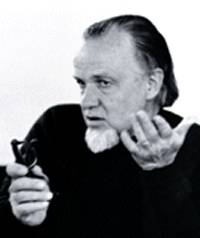
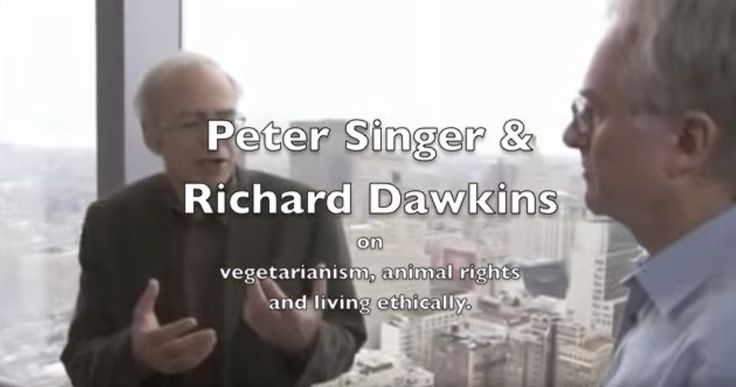





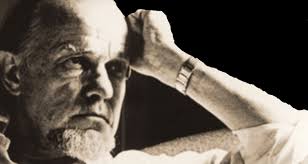

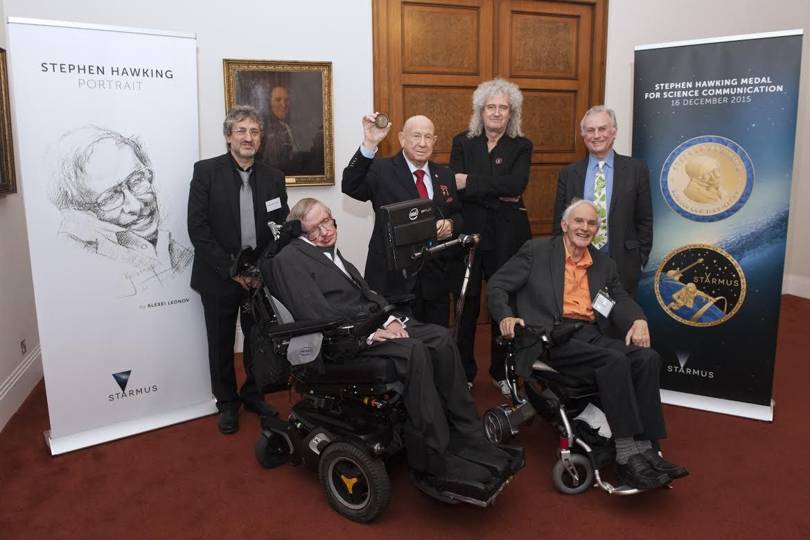













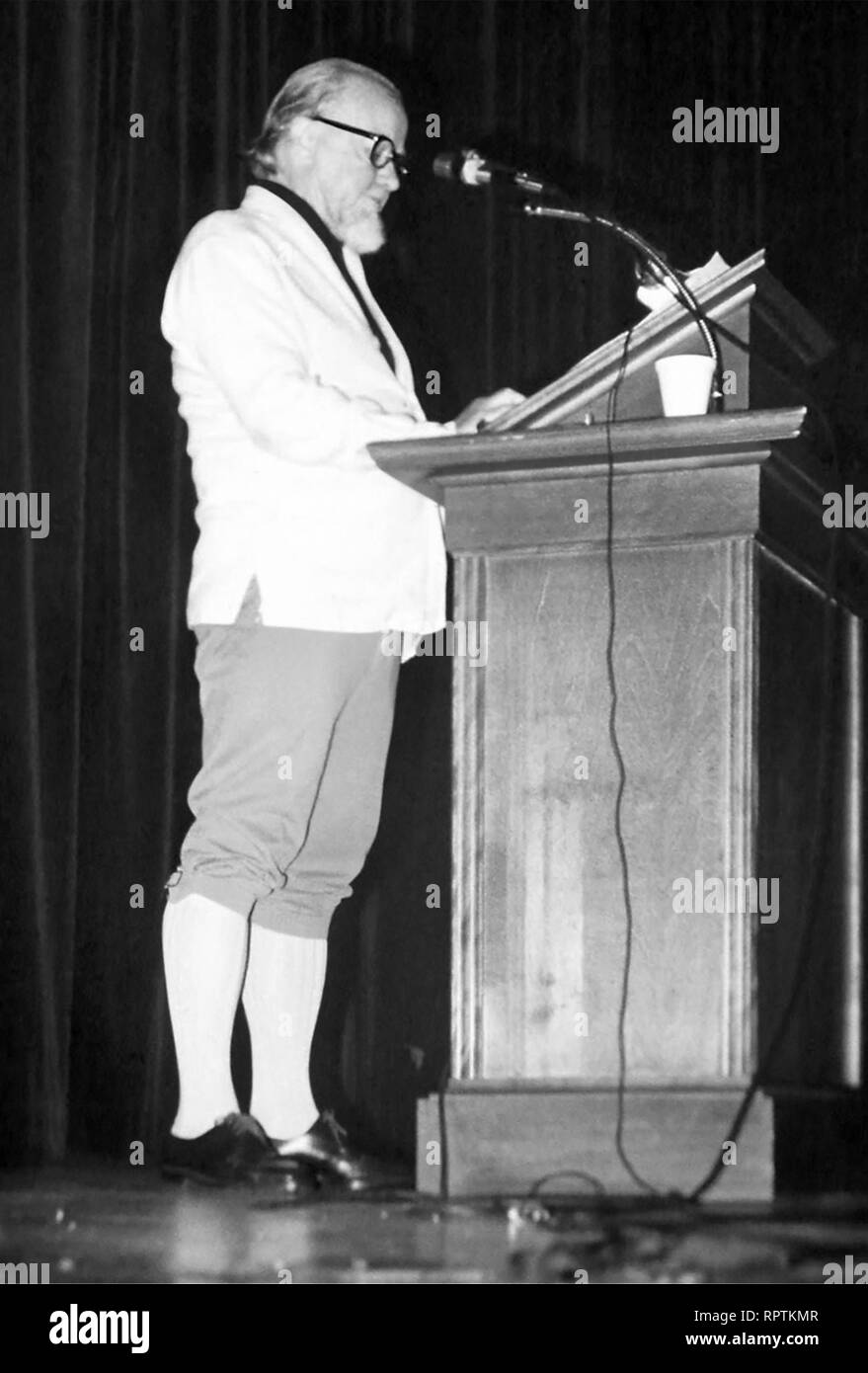





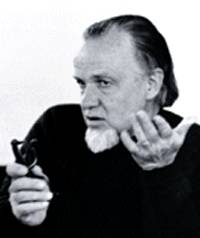








 True discernment has suffered a horrible setback in the past few decades because reason itself has been under attack within the church. As Francis Schaeffer warned nearly thirty years ago in The God Who Is There, the church is following the irrationality of secular philosophy. Consequently, reckless faith has overrun the evangelical community. Many are discarding doctrine in favor of personal experience. Others say they are willing to disregard crucial biblical distinctives in order to achieve external unity among all professing Christians. True Christianity marked by intelligent, biblical faith seems to be declining even among the most conservative evangelicals.THE ABANDONMENT OF OBJECTIVE TRUTHThe visible church in our generation has become astonishingly tolerant of aberrant teaching and outlandish ideas—and frighteningly intolerant of sound teaching. The popular evangelical conception of “truth” has become almost completely subjective. Truth is viewed as fluid, always relative, never absolute. To suggest that any objective criterion might be used to distinguish truth from error is to be egregiously out of step with the spirit of the age. In some circles, Scripture itself has been ruled out as a reliable test of truth. After all, the Bible can be interpreted in so many different ways—who can say which interpretation is right? And many believe there is truth beyond the Bible.All this relativity has had disastrous effects on the typical Christian’s ability to discern truth from error, right from wrong, good from evil. The plainest teachings of the Bible are being questioned among people who declare themselves believers in the Bible. For example, some Christians are no longer certain whether homosexuality should be classed as a sin. Others argue that the feminist agenda is compatible with biblical Christianity. “Christian” television, radio, books, and magazines serve up a preposterous smorgasbord of ideas from the merely capricious to the downright dangerous—and the average Christian is woefully ill-equipped to sort out the lies from the truth.Even to suggest that a sorting between lies and truth is necessary is viewed by many as perilously intolerant. There is a notion abroad that any dispute over doctrine is inherently evil. Concern for orthodoxy is regarded as incompatible with Christian unity. Doctrine itself is labeled divisive and those who make doctrine an issue are branded uncharitable. No one is permitted to criticize anyone else’s beliefs, no matter how unbiblical those beliefs seem to be. A recent article in Christianity Today exemplifies the trend. The article, titled “Hunting for Heresy,” profiled two well-known Christian leaders who had “come under withering attack for controversial writings.”1One is a popular speaker on the college lecture circuit and a bestselling author. He wrote a book in which he encouraged homosexuals to establish permanent live-together relationships (albeit celibate ones). He suggests the evangelical community suffers from “homophobia.” He is convinced that permanent living arrangements between homosexuals are the only alternative to loneliness for people he believes are “born with a homosexual orientation.” This man’s wife has published an article in a homosexual magazine in which she enthusiastically affirms” monogamous sexual relationships between homosexuals. The speaker-author says he has a “very, very strong” disagreement with his wife’s approval of homosexual sex, but his own view seems to allow homosexuals to engage in other kinds of physical intimacy short of actual intercourse.The other Christian leader profiled in the Christianity Today article is a woman who, with her husband, is a featured speaker for a popular, nationally-syndicated radio and television ministry. Their ministry is not a weird offshoot from some fringe cult, but an established, well-respected mainstay from the evangelical heartland. She also serves as chairperson of one of the largest evangelical student organizations in the world. This woman has written a book in which she chronicles some rather peculiar spiritual experiences. She dedicates the book to her male alter ego, an imaginary person named “Eddie Bishop” who romances her in her dreams. This woman says she also has visions of “the Christ child that is within” her. He appears to her as a drooling, emaciated, barefoot “idiot child” in a torn undershirt—”its head totally bald and lolled to one side.” The woman has engaged the services of a Catholic nun who serves as her “spiritual director,” helping to interpret her dreams and fantasies. The book mingles mysticism, Jungian psychology, out-of-body experiences, feminist ideas, subjective religious experience, and this woman’s romantic fantasies into an extraordinary amalgam. The book is frankly so bizarre that it is disturbing to read.The remarkable thing about the Christianity Today article is that the story was not written to expose the aberrant ideas being taught by these two leading evangelicals. Instead, what the magazine’s editors deemed newsworthy was the fact that these people were under attack for their views.In the world of modern evangelicalism, it is allowable to advocate the most unconventional, unbiblical doctrines—as long as you afford everyone else the same privilege. About the only thing that is taboo nowadays is the intolerance of those who dare to point out others’ errors. Anyone today who is bold enough to suggest that someone else’s ideas or doctrines are unsound or unbiblical is dismissed at once as contentious, divisive, unloving, or unchristian. It is all right toespouse any view you wish, but it is not all right to criticize another person’s views—no matter how patently unbiblical those views may be.When tolerance is valued over truth, the cause of truth always suffers. Church history shows this to be so. Only when the people of God have mounted a hardy defense of truth and sound doctrine has the church flourished and grown strong. The Reformation, the Puritan era, and the Great Awakenings are all examples of this. The times of decline in the history of the church have always been marked by an undue emphasis on tolerance—which leads inevitably to carelessness, worldliness, doctrinal compromise, and great confusion in the church.ADRIFT ON A SEA OF SUBJECTIVITYThat the church would lose her moorings in this particular age, however, poses greater dangers than ever. For in the past hundred years or so, the world has changed in a dramatic and very frightening way. People no longer look at truth the way they used to. In fact, we live under a prevailing philosophy that has become hostile to the very idea of absolute truth.From the beginning of recorded history until late last century, virtually all human philosophy assumed the necessity of absolute truth. Truth was universally understood as that which is true, not false; factual, not erroneous; correct, not incorrect; moral, not immoral; just, not unjust; right, not wrong. Practically all philosophers since the time of Plato assumed the objectivity of truth. Philosophy itself was a quest for the highest understanding of truth. Such a pursuit was presumed to be possible, even necessary, because truth was understood to be the same for every person. This did not mean that everyone agreed what truth was, of course. But virtually all agreed that whatever was true was true for everyone.That all changed in the nineteenth century with the birth of existentialism. Existentialism defies precise definition, but it includes the concept that the highest truth is subjective (having its source in the individual’s mind) rather than objective (something that actually exists outside the individual). Existentialism elevates individual experience and personal choice, minimizing or ruling out absolute standards of truth, goodness, morality, and such things. We might accurately characterize existentialism as the abandonment of objectivity. Existentialism is inherently anti-intellectual, against reason, irrational.Danish philosopher Søren Kierkegaard first used the term “existential.” Kierkegaard’s life and philosophy revolved around his experiences with Christianity. Christian ideas and biblical terminology reverberate in many of his writings. He wrote much about faith and certainly regarded himself as a Christian. Many of his ideas began as a legitimate reaction against the stale formalism of the Danish Lutheran state church. He was rightly offended at the barren ritualism of the church, properly outraged that people who had no love for God called themselves Christians just because they happened to be born in a “Christian” nation.But in his reaction against the lifeless state church, Kierkegaard set up a false antithesis. He decided that objectivity and truth were incompatible. To counter the passionless ritualism and lifeless doctrinal formulas he saw in Danish Lutheranism, Kierkegaard devised an approach to religion that was pure passion, altogether subjective. Faith, he suggested, means the rejection of reason and the exaltation of feeling and personal experience. It was Kierkegaard who coined the expression “leap of faith.” Faith to him was an irrational experience, above all a personal choice. He recorded these words in his journal on August 1, 1835: “The thing is to find a truth which is true for me, to find the idea for which I can live and die.”2Clearly, Kierkegaard had already rejected as inherently worthless the belief that truth is objective. His journal continues with these words:What would be the use of discovering so-called objective truth …. What good would it do me if truth stood before me, cold and naked, not caring whether I recognized her or not, and producing in me a shudder of fear rather than a trusting devotion? … I am left standing like a man who has rented a house and gathered all the furniture and household things together, but has not yet found the beloved with whom to share the joys and sorrows of his life…. It is this divine side of man, his inward action, which means everything—not a mass of [objective] information.3Having repudiated the objectivity of truth, Kierkegaard was left longing for an existential experience, which he believed would bring him a sense of personal fulfillment. He stood on the precipice, preparing to make his leap of faith. Ultimately, the idea he chose to live and die for was Christianity, but it was a characteristically subjective brand of Christianity that he embraced.Though Kierkegaard was virtually unknown during his lifetime, his writings have endured and have deeply influenced all subsequent philosophy. His idea of “truth that is true for me” infiltrated popular thought and set the tone for our generations radical rejection of all objective standards.Kierkegaard knew how to make irrationalism sound profound. “God does not exist; He is eternal,” he wrote. He believed Christianity was full of “existential paradoxes,” which he regarded as actual contradictions, proof that truth is irrational.Using the example of Abraham’s willingness to sacrifice Isaac (Gen. 22:1-19), Kierkegaard suggested that God called Abraham to violate moral law in slaying his son. For Kierkegaard, Abraham’s willingness to “suspend” his ethical convictions epitomized the leap of faith that is demanded of everyone. Kierkegaard believed the incident proved that “the single individual [Abraham] is higher than the universal [moral law].”4 Building on that conclusion, the Danish philosopher offered this observation: “Abraham represents faith…. He acts by virtue of the absurd, for it is precisely [by virtue of] the absurd that he as the single individual is higher than the universal.”5 “[I] cannot understand Abraham,” Kierkegaard declared, “even though in a certain demented sense I admire him more than all others.”6It is not difficult to see how such thinking thrusts all truth into the realm of pure subjectivity—even to the point of absurdity or dementia. Everything becomes relative. Absolutes dematerialize. The difference between truth and nonsense becomes meaningless. All that matters is personal experience.And one person’s experience is as valid as another’s—even if everyone’s experiences lead to contradictory conceptions of truth. “Truth that is true for me” might be different from someone else’s truth. In fact, our beliefs might be obviously contradictory, yet another person’s “truth” in no way invalidates mine. Because “truth”is authenticated by personal experience, its only relevance is for the individual who makes the leap of faith. That is existentialism.Existentialism caught on in a big way in secular philosophy. Friedrich Nietzsche, for example, also rejected reason and emphasized the will of the individual. Nietzsche probably knew nothing of Kierkegaard’s works, but their ideas paralleled at the key points. Unlike Kierkegaard, however, Nietzsche never made the leap of faith to Christianity. Instead, he leapt to the conclusion that God is dead. The truth that was “true for him,” it seems, turned out to be the opposite of the truth Kierkegaard chose. But their epistemology (the way they arrived at their ideas) was exactly the same.Later existentialists, such as Martin Heidegger and Jean-Paul Sartre, refined Kierkegaard’s ideas while following the atheism of Nietzsche. Heidegger and Sartre both believed that reason is futile and life basically meaningless. Those ideas have been a powerful force in twentieth-century thought. As the world continues to grow more atheistic, more secular, and more irrational, it helps to understand that it is being propelled in that direction by strong existentialist influences.EXISTENTIALISM INVADES THE CHURCH But don’t get the idea that existentialism’s influence is limited to the secular world. From the moment Kierkegaard wedded existentialist ideas with Christianity, neo-orthodox theology was the inevitable outcome.Neo-orthodoxy is the term used to identify an existentialist variety of Christianity. Because it denies the essential objective basis of truth—the absolute truth and authority of Scripture—neo-orthodoxy must be understood as pseudo-Christianity. Its heyday came in the middle of the twentieth century with the writings of Karl Barth, Emil Brunner, Paul Tillich, and Reinhold Niebuhr. Those men echoed the language and the thinking of Kierkegaard, speaking of the primacy of “personal authenticity,” while downplaying or denying the significance of objective truth. Barth, the father of neo-orthodoxy, explicitly acknowledged his debt to Kierkegaard.7Neo-orthodoxy’s attitude toward Scripture is a microcosm of the entire existentialist philosophy: the Bible itself is not objectively the Word of God, but it becomes the Word of God when it speaks to me individually. In neo-orthodoxy, that same subjectivism is imposed on all the doctrines of historic Christianity. Familiar terms are used, but are redefined or employed in a way that is purposely vague—not to convey objective meaning, but to communicate a subjective symbolism. After all, any “truth” theological terms convey is unique to the person who exercises faith. What the Bible means becomes unimportant. What it means to me is the relevant issue. All of this resoundingly echoes Kierkegaard’s concept of “truth that is true for me.”Thus while neo-orthodox theologians often sound as if they are affirming traditional beliefs, their actual system differs radically from the historic understanding of the Christian faith. By denying the objectivity of truth, they relegate all theology to the realm of subjective relativism. It is a theology perfectly suited for the age in which we live.And that is precisely why it is so deadly.Francis Schaeffer’s 1968 work The God Who Is There included a perceptive analysis of Kierkegaard’s influence on modern thought and modern theology.8 Schaeffer named the boundary between rationality and irrationality “the line of despair.” He noted that existentialism pushed secular thought below the line of despair sometime in the nineteenth century. Religious neo-orthodoxy was simply a johnny-come-lately response of theologians who were jumping on the existentialist bandwagon, following secular art, music, and general culture: “Neo-orthodoxy gave no new answer. What existential philosophy had already said in secular language, it now said in theological language…. [With the advent of neo-orthodoxy,] theology too has gone below the line of despair.”9Schaeffer went on to analyze how neo-orthodoxy ultimately gives way to radical mysticism:Karl Barth opened the door to the existentialistic leap in theology… He has been followed by many more, men like Reinhold Niebuhr, Paul Tillich, Bishop John Robinson, Alan Richardson and all the new theologians. They may differ in details, but their struggle is still the same—it is the struggle of modern man who has given up [rationality]. As far as the theologians are concerned … their new system is not open to verification, it must simply be believed.10Such a system, Schaeffer points out, has no integrity. Those who espouse it cannot live with the repercussions of their own illogic. “In practice a man cannot totally reject [rationality], however much his system leads him to it, unless he experiences … some form of mental breakdown.” Thus people have been forced to an even deeper level of despair: “a level of mysticism with nothing there.”11MYSTICISM: IRRATIONALITY GONE TO SEEDMysticism is the idea that spiritual reality is found by looking inward. Mysticism is perfectly suited for religious existentialism; indeed, it is its inevitable consequence. The mystic disdains rational understanding and seeks truth instead through the feelings, the imagination, personal visions, inner voices, private illumination, or other purely subjective means. Objective truth becomes practically superfluous. Mystical experiences are therefore self-authenticating; that is, they are not subject to any form of objective verification. They are unique to the person who experiences them. Since they do not arise from or depend upon any rational process, they are invulnerable to any refutation by rational means.Arthur L. Johnson writes,The experience convinces the mystic in such a way, and to such a degree, that lie simply cannot doubt its value and the correctness of what he believes it “says.”…In its crudest form this position says that believing something to be so makes it so. The idea is that ultimate reality is purely mental; therefore one is able to create whatever reality one wishes. Thus the mystic “creates” truth through his experience. In a less extreme form, the view seems to be that there are “alternate realities,” one as real as another, and that these “break in upon” the mystic in his experiences. Whatever form is taken, the criterion of truth is again a purely private and subjective experience that provides no means of verification and no safeguard against error. Nevertheless, it is seen by the mystic as being above question by others.The practical result of all this is that it is nearly impossible to reason with any convinced mystic. Such people are generally beyond the reach of reason.12Mysticism is therefore antithetical to discernment. It is an extreme form of reckless faith.Mysticism is the great melting pot into which neo-orthodoxy, the charismatic movement, anti-intellectual evangelicals, and even some segments of Roman Catholicism have been synthesized. It has produced movements like the Third Wave (a neo-charismatic movement with excessive emphasis on signs, wonders, and personal prophecies); Renovaré (an organization that blends teachings from monasticism, ancient Catholic mysticism, Eastern religion, and other mystical traditions); the spiritual warfare movement (which seeks to engage demonic powers in direct confrontation); and the modern prophecy movement (which encourages believers to seek private, extrabiblical revelation directly ftom God). The influx of mysticism has also opened evangelicalism to New-Age concepts like subliminal thought- control, inner healing, communication with angels, channeling, dream analysis, positive confession, and a host of other therapies andpractices coming directly from occult and Eastern religions. The face of evangelicalism has changed so dramatically in the past twenty years that what is called evangelicalism today is beginning to resemble what used to be called neo-orthodoxy. If anything, some segments of contemporary evangelicalism are even more subjective in their approach to truth than neo-orthodoxy ever was.It could be argued that evangelicalism never successfully resisted neo-orthodoxy. Twenty years ago evangelicals took a heroic stand against neo-orthodox influences on the issue of biblical inerrancy. But whatever victory was gained in that battle is now being sacrificed on the altar of mysticism. Mysticism renders biblical inerrancy irrelevant. After all, if the highest truth is subjective and comes from within us, then it doesn’t ultimately matter if the specifics of Scripture are true or not. If the content of faith is not the real issue, what does it really matter if the Bible has errors or not?In other words, neo-orthodoxy attacked the objective inspiration of Scripture. Evangelical mysticism attacks the objective interpretation of Scripture. The practical effect is the same. By embracing existential relativism, evangelicals are forfeiting the very riches they fought so hard to protect. If we can gain meaningful guidance from characters who appear in our fantasies, why should we bother ourselves with what the Bible says? If we are going to disregard or even reject the biblical verdict against homosexuality, what difference does it make if the historical and factual matter revealed in Scripture is accurate or inaccurate? If personal prophecies, visions, dreams, and angelic beings are available to give us up-to-the-minute spiritual direction—”fresh revelation” as it is often called—who cares if Scripture is without error in the whole or in the parts?Mysticism further nullifies Scripture by pointing people away from the sure Word of God as the only reliable object of faith. Warning of the dangers of mysticism, Schaeffer wrote,Probably the best way to describe this concept of modern theology is to say that it is faith in faith, rather than faith directed to an object which is actually there…. A modern man cannot talk about the object of his faith, only about the faith itself. So he can discuss the existence of his faith and its “size” as it exists against all reason, but that is all. Modern man’s faith turns inward…. Faith is introverted, because it has no certain object … it is rationally not open to discussion. This position, I would suggest, is actually a greater despair and darkness than the position of those modern men who commit suicide.“13The faith of mysticism is an illusion. “Truth that is true for me” is irrelevant to anyone else, because it lacks any objective basis. Ultimately, therefore, existential faith is impotent to lift anyone above the level of despair. All it can do is seek more experiences and more feelings. Multitudes are trapped in the desperate cycle of feeding off one experience while zealously seeking the next. Such people have no real concept of truth; they just believe. Theirs is a reckless faith.MEANWHILE, AT THE OTHER END OF THE SPECTRUM…Mysticism, however, is not the only form of reckless faith that threatens the contemporary church. A new movement has been gaining strength lately. Evangelicals are leaving the fold and moving into Eastern Orthodoxy, Roman Catholicism, and liturgical high-church Protestantism. Rejecting the ever-changing subjectivism of a free- wheeling existential Protestantism, they seek a religion with historical roots. Turned off by the shallow silliness that has overrun the evangelical movement, they desire a more magisterial approach. Perhaps sensing the dangers of a religion that points people inward, they choose instead a religion that emphasizes external ceremonies and dogmatic hierarchical authority.I listened to the taped testimony of one of these converts to Roman Catholicism, a former Protestant minister. He said he had graduated with highest honors from a leading Protestant seminary. He told his audience that as a student he was rabidly anti-Catholic and fully committed to Protestant Reformed doctrine (although he refuted this himself by admitting he had already rejected the crucial doctrine of justification by faith). After college he began to read Roman Catholic writings and found himself drawn to Catholic theology and liturgy. He described his initial resistance to the doctrines of purgatory, the perpetual virginity of Mary, transubstantiation, and prayers to Mary and the saints. All of those doctrines are easily disproved by the Bible.14 But this man—acknowledging that he could find no warrant anywhere in Scripture for praying to Mary—nevertheless completely changed his outlook on such matters after he tried praying the rosary and received an answer to a very specific prayer. He concluded that it must have been Mary who answered his prayer and immediately began praying regularly to her. Ultimately, he decided the Bible alone was not a sufficient rule of faith for believers, and he put his faith in papal authority and church tradition.That man’s leap of faith may not have been of the existential variety, but it was a blind leap nonetheless. He chose the other extreme of reckless faith, the kind that makes extrabiblical religious tradition the object of one’s faith.This kind of faith is reckless because it subjugates the written Word of God to oral tradition, church authority, or some other human criterion. It is an uncritical trust in an earthly religious authority—the pope, tradition, a self-styled prophet like David Koresh, or whatever. Such faith rarely jettisons Scripture altogether—but by forcing God’s Word into the mold of religious tradition, it invalidates the Word of God and renders it of no effect (cf. Matt. 15:6).The man whose taped testimony I heard is now an apologist for the Roman Catholic Church. He speaks to Catholic congregations and tells them how to counter biblical arguments against Catholicism. At the end of his testimony tape, he deals briefly with the official Catholic attitude toward Scripture. He is eager to assure his listeners that the modern Roman Catholic Church has no objection if Catholic people want to read Scripture for themselves. Even personal Bible study is all right, he says—but then hastens to add that it is not necessary to go overboard. “A verse or two a day is enough.” This man, a seminary graduate, surely should be aware that a comment like that seriously understates the importance of the written Word of God. We are commanded to meditate on Scripture day and night (Josh. 1:8; Ps. 1:2). We are to let it fill our hearts at all times (Deut. 6:6-9). We must study it diligently and handle it rightly (2 Tim. 2:15). The Bible alone is able to give us the wisdom that leads to salvation, then adequately equip us for every good work (2 Tim. 3:15-17).Discernment depends on a knowledge of Scripture. Those who are content to listen gullibly to some voice of human authority rather than hearing God’s Word and letting it speak for itself cannot be discerning. Theirs is a reckless, irrational faith.We identified the inward-looking extreme of reckless faith as mysticism. We could call this other variety rote tradition. In Isaiah 29:13, that is precisely how God Himself characterized it: “This people their lip service, but draw near with their words and honor Me with their lip service, but they remove their hearts far from Me, and their reverence for Me consists of tradition learned by rote” (emphasis added).Scripture has nothing but condemnation for rote tradition. Barren religious ritual, sacerdotal formalism, or liturgy out of a book are not the same as worship. Real worship, like faith, must engage the mind. Jesus said, “The true worshipers … worship the Father in spirit and truth; for such people the Father seeks to be His worshipers” (John 4:23).Did you realize that rote tradition was the very error for which Jesus condemned the Pharisees? He told them,“Rightly did Isaiah prophesy of you hypocrites, as it is written, ‘This people honors Me with their lips, but their heart is far away from Me. But in vain do they worship Me. teaching as doctrines the precepts of men.’ Neglecting the commandment of God, you hold to the tradition of men.”He was also saying to them, “You nicely set aside the commandment of God in order to keep your tradition” (Mark 7:6-9).Rote tradition is not unlike mysticism in that it also bypasses the mind. Paul said this of the Jews who were so absorbed in their empty religious traditions:I bear them witness that they have a zeal for God, but not in accordance with knowledge. For not knowing about God’s righteousness, and seeking to establish their own, they did not subject themselves to the righteousness of God. For Christ is the end of the law for righteousness to everyone who believes (Rom. 10:2-4).Their problem was not a lack of zeal. It was not that they were short on enthusiasm, emotionally flat, or slothful about religious observances. The issue was that the zeal they displayed was rote tradition, “not in accordance with knowledge.” They were not sufficiently discerning, and therefore their faith itself was deficient.Paul is specific in stating that their ignorance lay in trying to establish their own righteousness rather than submitting to the righteousness of God. This passage comes at the culmination of Paul’s doctrinal discussion in Romans. In context it is very clear that he was talking about the doctrine ofjustification by faith. He had thoroughly expounded this subject beginning in chapter 3. He said we are “justified as a gift by His grace through the redemption which is in Christ Jesus” (3:24). Justification is “by faith apart from works of the Law” (v.28). “God reckons righteousness apart from works” (Rom. 4:6).But instead of seeking the perfect righteousness of Christ, which God reckons to those who believe, the unbelieving Jews had set out to try to establish a righteousness of their own through works. That is where rote tradition always leads. It is a religion of works. Thus the ritualistic, unbelieving Pharisees are an exact parallel to Roman Catholicism, Eastern Orthodoxy, and most forms of ritual-laden Protestantism. All of them deny justification by faith.If the Pharisees or their followers had used the Scriptures as their standard of truth rather than rabbinical tradition, they would have known that God justifies sinners by faith. Repeatedly, Jesus said things to them like “Did you never read in the Scriptures . . . ?” (Matt. 21:42); “You are mistaken, not understanding the Scriptures, or the power of God” (22:29); and, “Are you the teacher of Israel, and do not understand these things?” (John 3:10). What He continually chided them for was their ignorance of the Scriptures. They had set rote tradition in place of the written Word of God (Matt. 15:6), and they were condemned for it.Contrast the way Luke commended the Bereans for their noblemindedness: “For they received the word [the New Testament gospel from the apostles] with great eagerness, examining the Scriptures [the Old Testament books] daily, to see whether these things were so” (Acts 17:1 1). What made the Bereans worthy of commendation? Their eagerness to be discerning. They rightly refused to blindly accept anyone’s teaching (even that of the apostles) without clear warrant from God’s Word.Spiritual discernment is, I believe, the only antidote to the existentialism of our age. Until’Christians regain the will to test everything by the rule of Scripture, reject what is false, and hold fast to what is true, the church will struggle and falter, and our testimony to a world in sin will be impaired.But if the church will rise up and stand for the truth of God’s Word against all the lies of this evil world, then we will begin to see the power of truth that sets people free (John 8:32).Endnotes1. John W. Kennedy, “Hunting for Heresy,” Christianity Today (16 May 1994).2. Robert Bretall, cd., A Kierkegaard Anthology (Princeton, N. J.: Princeton University Press, 1946), 5 (emphasis in original).3. Ibid.4. Søren Kierkegaard, Fear and Trembling, Howard V. Hong and Edna H. Hong, trans. (Princeton, N. J.: Princeton University Press, 1983), 55.5. Ibid.6. Ibid., 57.7. Karl Barth, The Epistle to the Romans, Edwyn C. Hoskyns, trans. (London: Oxford University Press, 1933). Barth cites Kierkegaard repeatedly in this, one of his earliest works.8. Francis Schaeffer, The God Who Is There, in The Complete Works of Francis A. Schaeffer, Volume I (Wheaton, Ill.: Crossway Books, 1982).9. Ibid., 53.10. Ibid., 55.11. Ibid., 58.12. Arthur L. Johnson, Faith Misguided: Exposing the Dangers of Mysticism (Chicago: Moody Press, 1988), 31-32.13. Schaeffer, 64-65, emphasis added.14. Purgatory: Luke 23:42-43 and 2 Cor. 5:8 indicate that believers go immediately to be with Christ at death. Perpetual Virginity of Mary: Matt. 1:25 states that Joseph kept Mary a virgin only until Jesus’ birth, and John 2:12 and Acts 1:14 reveal that Jesus had brothers. Transubstantiation: Heb. 7:27 and 10:12 teach that Christ made one sacrifice for sins forever; there is no need for the daily sacrifice of the Mass. Prayers to Mary and the saints: prayers, adoration, and spiritual veneration offered to anyone but God is expressly forbidden by the first commandment and elsewhere throughout Scripture (Ex. 20:3; Matt. 4:10; Acts 10:25-26; Rev. 19:10; Rev. 22:8-9).Excerpt from Reckless Faith: When the Church Loses Its Will to Discern, © 1994 by John MacArthur.We do pray this article has blessed you in some way. Our prayer is that you will use this message to better understand what is happening in our churches today.Blessings,


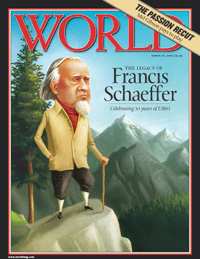




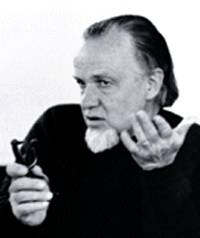


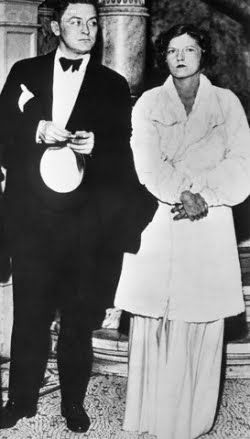





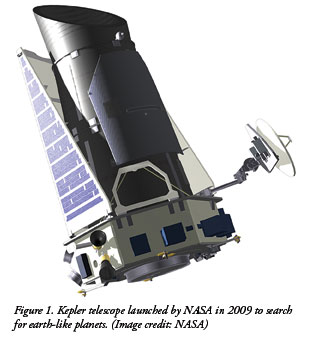 Kepler-22b was discovered by the space telescope Kepler shown in Figure 1. Since its launch by NASA in 2009, over 1,200 candidate planets have been analyzed in sizes ranging from smaller than earth to twice as large as Jupiter and with orbital periods from less than a day to more than a year. There have been other planets reported within the last few years, but one or more of their properties seem to challenge the claim that they are fully earth-like. For example, planet Gliese 581g was claimed to be in the Goldilocks zone (not too hot and not too cold) where liquid water could exist on its surface. ICR Science Writer Brian Thomas discussed the problems with this claim in an earlier Acts & Facts article.7 Also, another planet near the star, LkCa 15, was said to be evolving. Thomas discussed the problems with this claim in an online ICR news article.8


 The Daily Hatch