Jo Stafford – I Love You 1944 Words & Music By Cole Porter “I Love You” is a song written by Cole Porter in 1944 for his stage musical Mexican Hayride.
“I get a kick out of you” Louis Armstrong
Uploaded on Jan 19, 2012
“I get a kick out of you” Cole Porter
Al Bowlly Ray Noble – I’ve Got You Under My Skin 1936 Cole Porter
Uploaded on May 28, 2011
September 25, 1936 – Victor Records 25422
Albert Allick “Al” Bowlly (7 January 1898 — 17 April 1941) was a popular Jazz guitarist, singer, and crooner in the United Kingdom and later in the United States of America during the 1930s, making more than 1,000 recordings between 1927 and 1941. Bowlly showcased a diverse range of material unsurpassed by any contemporary other than perhaps Bing Crosby. He was also a truly international recording artist. He was killed by the explosion of a parachute mine outside his flat in Duke’s Court, 32 Duke Street, St James, London during the Blitz.
In the still of the night – De Lovely
Uploaded on Mar 25, 2010
by Cole Porter.
In the still of the night
As I gaze from my window
At the moon in its flight
My thoughts all stray to you
In the still of the night
All the world is in slumber
All the times without number
Darling when I say to you
Do you love me, as I love you
Are you my life to be, my dream come true
Or will this dream of mine fade out of sight
Like the moon growing dim, on the rim of the hill
In the chill, still, of the night
Like the moon growing dim, on the rim of the hill
In the chill, still, of the night
Cole Porter was born in Peru, Indiana on June 9, 1891. As a boy he took lessons in piano and violin, and began writing songs while in prep school. He attended Yale College (Class of 1913), where he composed fight songs that are still used today. After graduating, he went on to Harvard Law School, but he had little interest in law and soon began studying music instead. Porter would later complete his musical education at the Schola Cantorum in Paris.
Porter’s first Broadway show, See America First, was staged in 1916, and over the ensuing decade he wrote several more shows, but did not have his first big hit until 1929, with Fifty Million Frenchmen. From then on he was one of Broadway’s most popular composers; his subsequent credits included Gay Divorce, Anything Goes, Panama Hattie, and Kiss Me, Kate. He composed numerous songs that became standards, including “Let’s Do It,” “What Is This Thing Called Love?,” “Night and Day,” “Anything Goes,” “You’re the Top,” “I’ve Got You Under My Skin,” “Begin the Beguine,” “Just One of Those Things,” ” Ev’ry Time We Say Goodbye,” “Don’t Fence Me In,” and “Brush Up Your Shakespeare.” In an era when most composers of popular songs worked with lyricists, Porter distinguished himself by writing his own verses, which were notable for their wit and sophistication.
Unlike contemporaries such as George Gershwin and Irving Berlin, who grew up in the poor immigrant neighborhoods of New York, Porter was born into a prosperous Midwestern family, and he married a wealthy divorcée, Linda Lee Thomas. Eventually he also earned a large income from his songs. Porter was thus able to live the life of high society, enjoying frequent trips to Europe and countless parties with celebrities and aristocrats. In 1937, however, Porter’s life took a tragic turn when both of his legs were crushed by a horse, leaving him unable to walk and in chronic pain. Cole Porter died in Santa Monica, California on October 15, 1964 at the age of 73.
– Biography Source: MSS 82, The Cole Porter Collection in the Irving S. Gilmore Music Library of Yale University.
Cole Porter “Let’s Do it, Let’s Fall in Love” in the movie MIDNIGHT IN PARIS Midnight in Paris – Let’s Do It Let’s do it : Cole Porter.( Midnight in Paris ) Celebrate Wikipedia Loves Libraries at your institution in October/November. Let’s Do It, Let’s Fall in Love From Wikipedia, the free encyclopedia Jump to: […]
The song used in “Midnight in Paris” I am going through the famous characters that Woody Allen presents in his excellent movie “Midnight in Paris.” By the way, I know that some of you are wondering how many posts I will have before I am finished. Right now I have plans to look at Fitzgerald, Heminingway, Juan […]
_______ Cary Grant as Cole Porter Night And Day Uploaded on Apr 29, 2009 Cary Grant interpreta Cole Porter no filme Night and Day. night and day-you do something to me song Uploaded on Dec 4, 2009 http://download21th.blogspot.com/you do something to me song from night and day.Night and Day is a 1946 Technicolor […]
________ Biography of Cole Porter with videos of some of his best songs Part 1 Sinatra: I Concentrate On You rec 1947 Uploaded on Aug 26, 2010 One of the great Cole Porter songs and just possibly the most perfect recording of a popular ballad ever made – a Sinatra masterpiece arranged and conducted by […]
In the last chapter, Schaeffer pointed out how the Middle Ages saw a split of the disciplines of theology and philosophy. In the Renaissance, the fruit of that shift continued in scholasticism in the south of Europe. The philosophers idolized the past, but not the early Church. They, instead, looked back to the pagan classics. In the pagan classics, they found the fuel for the man-centered fire that had been burning under the surface for centuries, couched in the language of the Roman church.
“Oh supreme liberality of the Father God! Oh most high and marvelous joy of the human creature, to whom has been granted to have what it chooses, to be what it decides!” – Pico Della Mirandola
With the increasing rift between theology and philosophy, the scholastics looked for even more subtler questions to pose to display their intellectual prowess.
An effect of the move toward more Aristotelian thought was a focus on the reality of nature. According to Schaeffer, Giotto is an example of an artist who gave nature a more proper place. His people were real people. This is a good thing in some sense.
“God made the world, nature is indeed important – and nature was now being portrayed more like it actually is.”
Dante’s compartmentalization between sensual love and ideal love. “The wife was a dray horse; the idealized woman, a disembodied phantom.”
Although this past age did include the early Christian church, it became increasingly clear that the sort of human autonomy that many of the Renaissance humanists had in mind referred exclusively to the non-Christian Greco-Roman world. Thus, Renaissance humanism steadily evolved toward modern humanism—a value system rooted in the belief that man is his own measure, that man is autonomous, totally independent.
We see a type of modern relativism in just about every area of our culture. It’s in every Bible study where the statement “What this means to me…” is entertained. Man is the starting point rather than the intent of the author.
It was the humanists of that time who, under the enthusiasm for the classics, spoke of what had immediately preceded them as a “Dark Age” and talked of a “rebirth” in their own era.
Schaeffer, F. A. (1982). The complete works of Francis A. Schaeffer: a Christian worldview (Vol. 5, p. 109). Westchester, IL: Crossway Books.
But for the men of the Renaissance the new view of perspective was also something more: it placed man in the center of this space, and space became subordinated to mathematical principles spun out of the mind of man.
Schaeffer, F. A. (1982). The complete works of Francis A. Schaeffer: a Christian worldview (Vol. 5, p. 110). Westchester, IL: Crossway Books.
Schaeffer makes the point that portraits became an accepted art form during this time, further demonstrating the man-centered ideology that was gaining exponential speed.
However, not all art was man-centered. He looks to the Adoration of the Lamb by Jan Van Eck. Van Eck understood the biblical doctrine of Christ as substitute and painted a very real expression of His redemption of the physical world.
It was good that nature was given a proper place. And there could have continued an emphasis on real people in a real world which God had made—with the particulars, the individual things, important because God made the whole world.
Schaeffer, F. A. (1982). The complete works of Francis A. Schaeffer: a Christian worldview (Vol. 5, p. 113). Westchester, IL: Crossway Books.
Man made himself increasingly independent and autonomous, and with this came an increasing loss of anything which gave meaning, either to the individual things in the world or to man. With this we begin to see the dilemma of humanism which is still with us today.
Schaeffer, F. A. (1982). The complete works of Francis A. Schaeffer: a Christian worldview (Vol. 5, p. 113). Westchester, IL: Crossway Books.
In contrast to the meaning behind the particulars, we see in Van Eck, Schaeffer points to the Red Virgin by Fouquet as an example of art without meaning, particulars stripped of their unifying principle. The Red Virgin was set up in the form of a portrait of the Virgin Mary, but the model for the painting was the King’s mistress with her breast exposed. It is an expression of Mary with all of the holiness attributed to her at the time removed, but also all meaning was being destroyed. “Virgin” no longer means virgin in this painting by Fouquet.
In my opinion, this next quote is the most important statement in the chapter.
[Leonardo] was one of the unique geniuses of history, and in his brilliance he perceived that beginning humanistically with mathematics one only had particulars. He understood that man beginning from himself would never be able to come to meaning on the basis of mathematics. And he knew that having only individual things, particulars, one never could come to universals or meaning and thus one only ends with mechanics. In this, he saw ahead to where our generation has come: everything, including man, is the machine.
Schaeffer, F. A. (1982). The complete works of Francis A. Schaeffer: a Christian worldview (Vol. 5, p. 115). Westchester, IL: Crossway Books.
Leonardo, died in despondency because could not reconcile meaning in the particulars. Humanism had already begun to show that pessimism is its natural conclusion.
______________
___________
프란시스 쉐퍼 – 그러면 우리는 어떻게 살 것인가 introduction (Episode 1)
How Should We then Live Episode 7 small (Age of Nonreason)
#02 How Should We Then Live? (Promo Clip) Dr. Francis Schaeffer
The clip above is from episode 9 THE AGE OF PERSONAL PEACE AND AFFLUENCE
10 Worldview and Truth
In above clip Schaeffer quotes Paul’s speech in Greece from Romans 1 (from Episode FINAL CHOICES)
Two Minute Warning: How Then Should We Live?: Francis Schaeffer at 100
A Christian Manifesto Francis Schaeffer
Francis Schaeffer “BASIS FOR HUMAN DIGNITY” Whatever…HTTHR
In the last chapter, Schaeffer pointed out how the Middle Ages saw a split of the disciplines of theology and philosophy. In the Renaissance, the fruit of that shift continued in scholasticism in the south of Europe. The philosophers idolized the past, but not the early Church. They, instead, looked back to the pagan classics. In the pagan classics, they found the fuel for the man-centered fire that had been burning under the surface for centuries, couched in the language of the Roman church.
“Oh supreme liberality of the Father God! Oh most high and marvelous joy of the human creature, to whom has been granted to have what it chooses, to be what it decides!” – Pico Della Mirandola
With the increasing rift between theology and philosophy, the scholastics looked for even more subtler questions to pose to display their intellectual prowess.
An effect of the move toward more Aristotelian thought was a focus on the reality of nature. According to Schaeffer, Giotto is an example of an artist who gave nature a more proper place. His people were real people. This is a good thing in some sense.
“God made the world, nature is indeed important – and nature was now being portrayed more like it actually is.”
Dante’s compartmentalization between sensual love and ideal love. “The wife was a dray horse; the idealized woman, a disembodied phantom.”
Although this past age did include the early Christian church, it became increasingly clear that the sort of human autonomy that many of the Renaissance humanists had in mind referred exclusively to the non-Christian Greco-Roman world. Thus, Renaissance humanism steadily evolved toward modern humanism—a value system rooted in the belief that man is his own measure, that man is autonomous, totally independent.
We see a type of modern relativism in just about every area of our culture. It’s in every Bible study where the statement “What this means to me…” is entertained. Man is the starting point rather than the intent of the author.
It was the humanists of that time who, under the enthusiasm for the classics, spoke of what had immediately preceded them as a “Dark Age” and talked of a “rebirth” in their own era.
Schaeffer, F. A. (1982). The complete works of Francis A. Schaeffer: a Christian worldview (Vol. 5, p. 109). Westchester, IL: Crossway Books.
But for the men of the Renaissance the new view of perspective was also something more: it placed man in the center of this space, and space became subordinated to mathematical principles spun out of the mind of man.
Schaeffer, F. A. (1982). The complete works of Francis A. Schaeffer: a Christian worldview (Vol. 5, p. 110). Westchester, IL: Crossway Books.
Schaeffer makes the point that portraits became an accepted art form during this time, further demonstrating the man-centered ideology that was gaining exponential speed.
However, not all art was man-centered. He looks to the Adoration of the Lamb by Jan Van Eck. Van Eck understood the biblical doctrine of Christ as substitute and painted a very real expression of His redemption of the physical world.
It was good that nature was given a proper place. And there could have continued an emphasis on real people in a real world which God had made—with the particulars, the individual things, important because God made the whole world.
Schaeffer, F. A. (1982). The complete works of Francis A. Schaeffer: a Christian worldview (Vol. 5, p. 113). Westchester, IL: Crossway Books.
Man made himself increasingly independent and autonomous, and with this came an increasing loss of anything which gave meaning, either to the individual things in the world or to man. With this we begin to see the dilemma of humanism which is still with us today.
Schaeffer, F. A. (1982). The complete works of Francis A. Schaeffer: a Christian worldview (Vol. 5, p. 113). Westchester, IL: Crossway Books.
In contrast to the meaning behind the particulars, we see in Van Eck, Schaeffer points to the Red Virgin by Fouquet as an example of art without meaning, particulars stripped of their unifying principle. The Red Virgin was set up in the form of a portrait of the Virgin Mary, but the model for the painting was the King’s mistress with her breast exposed. It is an expression of Mary with all of the holiness attributed to her at the time removed, but also all meaning was being destroyed. “Virgin” no longer means virgin in this painting by Fouquet.
In my opinion, this next quote is the most important statement in the chapter.
[Leonardo] was one of the unique geniuses of history, and in his brilliance he perceived that beginning humanistically with mathematics one only had particulars. He understood that man beginning from himself would never be able to come to meaning on the basis of mathematics. And he knew that having only individual things, particulars, one never could come to universals or meaning and thus one only ends with mechanics. In this, he saw ahead to where our generation has come: everything, including man, is the machine.
Schaeffer, F. A. (1982). The complete works of Francis A. Schaeffer: a Christian worldview (Vol. 5, p. 115). Westchester, IL: Crossway Books.
Leonardo, died in despondency because could not reconcile meaning in the particulars. Humanism had already begun to show that pessimism is its natural conclusion.
______________ The Beatles documentary || A Long and Winding Road || Episode 5 (This video discusses Stg. Pepper’s creation I have dedicated several posts to this series on the Beatles and I don’t know when this series will end because Francis Schaeffer spent a lot of time listening to the Beatles and talking and writing […]
_______________________ When I’m Sixty-Four- The Beatles The Beatles first radio interview (10/27/1962) Published on Mar 3, 2013 The Beatles (John Lennon, Paul McCartney, George Harrison and Ringo Starr) with Monty Lister at their first radio interview, 27 October 1962. Before their fourth and final live appearance at the Hulme Hall in Birkenhead, The Beatles recorded […]
Great Album I have dedicated several posts to this series on the Beatles and I don’t know when this series will end because Francis Schaeffer spent a lot of time listening to the Beatles and talking and writing about them and their impact on the culture of the 1960’s. In this series we have […]
________________ _____________________________ Francis Schaeffer pictured below: ______________ I was impacted by this film series by Francis Schaeffer back in the 1970’s and I wanted to share it with you. Schaeffer makes three key points concerning the Reformation: “1. Erasmian Christian humanism rejected by Farel. 2. Bible gives needed answers not only as to how to be right […]
How Should We Then Live? outline Episode VII – The Age of Non Reason ____________________ Episode 8: The Age Of Fragmentation Published on Jul 24, 2012 Dr. Schaeffer’s sweeping epic on the rise and decline of Western thought and Culture _______________________ I love the works of Francis Schaeffer and I have been on the internet […]
___________________________________ 프란시스 쉐퍼 – 그러면 우리는 어떻게 살 것인가 introduction (Episode 1) How Should We then Live Episode 7 small (Age of Nonreason) #02 How Should We Then Live? (Promo Clip) Dr. Francis Schaeffer The clip above is from episode 9 THE AGE OF PERSONAL PEACE AND AFFLUENCE 10 Worldview and Truth In above clip […]
Open letter to President Obama (Part 491) (Emailed to White House on 5-3-13.) President Obama c/o The White House 1600 Pennsylvania Avenue NW Washington, DC 20500 Dear Mr. President, I know that you receive 20,000 letters a day and that you actually read 10 of them every day. I really do respect you for trying to get […]
__________________ Francis Schaeffer pictured below: _______________- I want to make two points today. First, Greg Koukl has rightly noted that the nudity of a ten year old girl in the art of Robert Mapplethorpe is not defensible, and it demonstrates where our culture is morally. It the same place morally where Rome was 2000 years […]
Review of Francis Schaeffer’s book and film series “How should we then live?” by Douglas Groothuis, Ph.D. Episode VII – The Age of Non Reason ____________________ Episode 8: The Age Of Fragmentation Published on Jul 24, 2012 Dr. Schaeffer’s sweeping epic on the rise and decline of Western thought and Culture _______________________ I love the […]
Francis Schaeffer Whatever Happened to the Human Race (Episode 1) ABORTION This essay below is worth the read. Schaeffer, Francis – “Francis Schaeffer and the Pro-Life Movement” [How Should We Then Live?, Whatever Happened to the Human Race?, A Christian Manifesto] Editor note: <p> </p> [The following essay explores the role that Francis Schaeffer played […]
How Should We Then Live? outline Episode VII – The Age of Non Reason ____________________ Episode 8: The Age Of Fragmentation Published on Jul 24, 2012 Dr. Schaeffer’s sweeping epic on the rise and decline of Western thought and Culture _______________________ I love the works of Francis Schaeffer and I have been on the internet […]
Review of Francis Schaeffer’s book and film series “How should we then live?” by Douglas Groothuis, Ph.D. How Should We then Live Episode 7 small (Age of Nonreason) #02 How Should We Then Live? (Promo Clip) Dr. Francis Schaeffer The clip above is from episode 9 THE AGE OF PERSONAL PEACE AND AFFLUENCE 10 Worldview […]
How Should We Then Live 4-1 I was impacted by this film series by Francis Schaeffer back in the 1970’s and I wanted to share it with you. Schaeffer makes three key points concerning the Reformation: “1. Erasmian Christian humanism rejected by Farel. 2. Bible gives needed answers not only as to how to be right with […]
July 31st is the birth date of one of the great intellectuals of the freedom philosophy. Milton Friedman (1912–2006) would have been 101 today.
Friedman Legacy Day is being celebrated at 144 events: 90 in 44 states and Washington,D.C., and 54 events in 25 countries abroad. Here in Houston, a “Milton Friedman Rocks” party is tonight.
Friedman was more than a technical economist and early Nobel Laureate in this field; he was a popularizer of the case for free markets. His shorter tracts and biweekly column for Newsweek covered a variety of in-the-news issues, including energy. And he became more libertarian and appreciative of Austrian School economics (market-process economics), the rival to his Chicago School of economics, as time went on.
Friedman’s insight into the distortions from government intervention shortages are timeless. Consider this from Milton and Rose Friedmans’ classic, Free to Choose(1979: p. 219):
Economists may not know much. But we know one thing very well: how to produce surpluses and shortages. Do you want a surplus? Have the government legislate a minimum price that is above the price that would otherwise prevail…. Do you want a shortage? Have the government legislate a maximum price that is below the price that would otherwise prevail.
Still the major example of our time is the 1970s energy crisis in the United States–the result of price and allocation controls by the Department of Energy. But get ready for a new chamber of economic horrors.
With ObamaCare’s use of price and allocation controls–and the growing problem of Medicare today–shortages and strife are upon us in the all-important health care field. The Wall Street Journal article, More Doctors Steer Clear of Medicare, said as much this week:
Fewer American doctors are treating patients enrolled in the Medicare health program for seniors, reflecting frustration with its payment rates and pushback against mounting rules, according to health experts…. [T[he number [of doctors] who don’t participate in private insurance contracts, while smaller, is growing—just as millions of Americans are poised to gain access to such coverage under the new health law next year.
All said, health experts say the number of doctors going “off grid” isn’t enough to undermine the Affordable Care Act, but they say some Americans may have difficulty finding doctors who will take their new benefits or face long waits for appointments with those who do.
Rationing by time and inconvenience instead of dollars–just like those old gasoline lines! Anger, arguments, violence, waste, gaming–it will happen in waiting rooms just as it happened in the car queues.
Here is Friedman on the 1970s energy crisis:
“It is a mark of how far we have gone on the road to serfdom that government allocation and rationing of oil is the automatic response to the oil crisis.”
– Milton Friedman, “Why Some Prices Should Rise,” Newsweek, November 19, 1973.
“The present oil crisis has not been produced by the oil companies. It is a result of government mismanagement exacerbated by the Mideast war.”
– Milton Friedman, “Why Some Prices Should Rise,” Newsweek, November 19, 1973.
“Lines are forming at those gas stations that are open. The exasperated motorists are cursing; the service-station attendants are fuming; the politicians are promising. The one thing few people seem to be doing is thinking….
How can thinking people believe that a government that cannot deliver the mail can deliver gas better than Exxon, Mobil, Texaco, Gulf, and the rest?”
– Milton Friedman, “FEO and the Gas Lines,” Newsweek, Marc 4, 1974.
“The long gasoline lines that suddenly emerged in 1974 after the OPEC oil embargo … and again in the spring and summer of 1979 after the revolution in Iran, [came after] a sharp disturbance in the supply of crude oil from abroad.
But that did not lead to gasoline lines in Germany or Japan, which are wholly dependent on imported oil. It lead to long gasoline lines in the United States, even though … for one reason and one reason only: because legislation, administered by a government agency, did not permit the price system to function.”
– Milton and Rose Friedman, Free to Choose (New York: Harcourt Brace Jovanovich, 1979), p. 14.
“There is one simple way to end the energy crisis and gasoline shortages tomorrow—and we mean tomorrow and not six months from now, nor six years from now. Eliminate all controls on the prices of crude oil and other petroleum products.”
– Milton and Rose Friedman, Free to Choose (New York: Harcourt Brace Jovanovich, 1979), pp. 219.
“There has been an energy crisis because government created one. Of course, government has not done so deliberately. Presidents Nixon, Ford, or Carter never sent a message to Congress asking it to legislate an energy crisis and long gasoline lines. But he who says A must say B. Ever since President Nixon froze wages and prices on August 15, 1971, the government has imposed maximum prices on crude oil, gasoline at retail, and other petroleum products.”
– Milton and Rose Friedman, Free to Choose (New York: Harcourt Brace Jovanovich, 1979), pp. 219.
Appendix:Nixon’s Price Control Order (August 1971)
Richard Nixon is the father of the energy crisis–and the resulting politicization of energy. His price control order of August 15, 1971, one of the more infamous and devastating economic interventions in American peacetime history, caused oil shortages before the Arab Embargo of October 1973.
Here is what Milton Friedman said in ‘real time’ on Nixon’s surprise decision.
“I regret exceedingly that he decided to impose a ninety-day freeze on prices and wages. That is one of those ‘very plausible schemes … with very pleasing commencements, [that] have often shameful and lamentable conclusions’.”
– Milton Friedman, “Why the Freeze is a Mistake,” Newsweek, August 30, 1971.
“Individual price and wage changes will not be prevented. In the main, price changes will simply be concealed by taking the form of changes in discounts, service, and quality, and wage changes, in overtime, perquisites and so on…. But to whatever extent the freeze is enforced, it will do harm by distorting relative prices.”
– Milton Friedman, “Why the Freeze is a Mistake,” Newsweek, August 30, 1971
“By encouraging men to spy and report on one another, by making it in the private interest of large numbers of citizens to evade the controls, and by making actions illegal that are in the public interest, the controls undermine individual morality.”
– Milton Friedman, “Morality and Controls,” Newsweek, October 28, 1971.
Milton Friedman – Health Care Reform (1992) pt 3/4
Milton Friedman – Health Care Reform (1992) pt 4/4
I have written about Obamacare over and over again on this blog. Dan Mitchell has shared many funny cartoons about Obamacare too. Milton Friedman has spoken out about government healthcare many times in the past and his film series FREE TO CHOOSE is on You Tube and I encourage you to watch it. It is clear that the federal government debt is growing so much that it is endangering us because if things keep going like they are now we will not have any money left for the national defense because we are so far in debt as a nation.
__________ Enzi statement on the Supreme Court’s King Vs. Burwell decision 5 Takeaways From Today’s Supreme Court Ruling on Obamacare Wicker Comments on King v Burwell Supreme Court Decision Senator Lankford Discusses the King v. Burwell Supreme Court Decision Congressman Steve King Response to SCOTUS King v. Burwell Ruling Obamacare and the Odious Anti-Constitutionalism of […]
Open letter to President Obama (Part 718) (Emailed to White House on 6-25-13.) President Obama c/o The White House 1600 Pennsylvania Avenue NW Washington, DC 20500 Dear Mr. President, I know that you receive 20,000 letters a day and that you actually read 10 of them every day. I really do respect you for trying to get […]
______ Milton Friedman’s Free to Choose (1980), episode 3 – Anatomy of a Crisis. part 1 The Region – Banking and Policy Issues Magazine – Interview with Milton Friedman June 1992 In his new book, Money Mischief, economist Milton Friedman compares inflation to alcoholism; blames the rise of Chinese communism, in large part, on an […]
______ Milton Friedman – A Conversation On Minimum Wage Milton Friedman Interview Milton Friedman is Professor Emeritus of Economics at the University of Chicago and Senior Fellow at the Hoover Institution.Dr. Friedman received the 1976 Nobel Memorial Prize for Economic Science. Member of the research staff of the National Bureau of Economic Research from 1937 […]
________ Milton Friedman on Donahue – 1979 Uploaded on Aug 26, 2009 Dr. Milton Friedman, Nobel Laureate, promoting “Free to Choose” on the show Donahue. Walter E. Williams: Milton Friedman was an economist’s economist Print Font [+] [-] Leave a comment » By Walter E. Williams Published: Wednesday, Dec. 6 2006 12:00 a.m. MST Walter […]
_______ José Niño José Niño is a graduate student based in Santiago, Chile. A citizen of the world, he has lived in Venezuela, Colombia, and the United States. He is currently an international research analyst with the Acton Circle of Chile. Follow@JoseAlNino. 40 Years Later: Milton Friedman’s Legacy in Chile “Chilean Miracle” Struck a Blow […]
____ Milton Friedman – The Negative Income Tax The Conservative Case for a Guaranteed Basic Income NOAH GORDON AUG 6, 2014 Creating a wage floor is an effective way to fight poverty—and it would reduce government spending and intrusion. Swiss backers of a minimum income spread out coins in Bern. Denis Balibouse/Reuters Last week, my […]
________________ Which Fed Bill Would Milton Friedman Have Liked? Posted on March 10, 2015by John Taylor Writing last week on the Cato at Liberty blog, Steve Hanke argued that Milton Friedman would have supported the “Audit the Fed” bill recently introduced in the Senate. Steve’s reasoning is based on Friedman’s 1962 essay “Should there be an […]
A great speech below: Here are the myths:Robber Baron Myth, The Cause of Great Depression Myth, The Demand for Government Service Myth, The Free Lunch Smith, and The Robin Hood Myth. 1) the Robber Baron Myth, 2) the Great Depression Myth, 3) the Demand for Government Service Myth, 4) the Free Lunch Myth, and 5) […]
_______________ FEATURED ARTICLE | SEPTEMBER 4, 2006 An Interview with Milton Friedman Milton Friedman* I recently sat down with Milton Friedman, a few days before his 94th birthday, to discuss the impact of two of his most important contributions to economics and liberty: A Monetary History of the United States, 1870-1960 [co-written] with Anna Schwartz, […]
Milton Friedman on Self-Interest and the Profit Motive 1of2 Milton Friedman on Self-Interest and the Profit Motive 2of2 The Social Responsibility of Business is to Increase its Profits by Milton FriedmanThe New York Times Magazine, September 13, 1970. Copyright @ 1970 by The New York Times Company. When I hear businessmen speak eloquently about the […]
____________ Levin on Milton Friedman: ‘One Thing to Have Free Immigration to Jobs, Another for Welfare’ By Michael Morris | January 16, 2015 | 5:12 PM EST During his show on January 15, 2015, Nationally syndicated radio host Mark Levin recalled the famed economist Milton Friedman and explored an important reason why open immigration, despite […]
In 1967 the Beatles had honored Stockhausen by putting his photo on the cover of their Sergeant Pepper [sic] album. When John Lennon was murdered in December 1980, Stockhausen said in a telephone interview:
“Lennon often used to phone me. He was particularly fond of my Hymnen and Gesang der Jünglinge, and got many things from them, for example in Strawberry Fields Forever. And his texts also made young people prick up their ears. In my eyes, John Lennon was the most important mediator between popular and serious music of this century.” Michael Kurtz; “Stockhausen: A Biography”, 1994
It was announced last week that Karlheinz Stockhausen , one of the most important and controversial postwar composers, passed away on Friday, December 7 at his home in western Germany. He was 79.
So taken were the Beatles by Stockhausen’s music that he was included among the Beatle’s other heroes and idols on the cover of Sgt. Pepper’s Lonely Hearts Club Band in 1967.
See this page on our sister-site, The Internet Beatles Album, for more about theSgt. Pepper’s cover.
The recording emerged from Revolution 1, the final six minutes of which formed a lengthy, mostly instrumental jam. Lennon took the recording and added a range of vocals, tape loops and sound effects, creating Revolution 9, the longest track released during The Beatles’ career.
The slow version of Revolution on the album went on and on and on and I took the fade-out part, which is what they sometimes do with disco records now, and just layered all this stuff over it. It was the basic rhythm of the original Revolution going on with some 20 loops we put on, things from the archives of EMI.
John Lennon
All We Are Saying, David Sheff
Although he made no direct contribution to Revolution 9, being in New York at the time, Paul McCartney had made a similar sound collage, the unreleased 14-minute Carnival Of Light, 18 months previously.
Revolution 9 was quite similar to some stuff I’d been doing myself for fun. I didn’t think that mine was suitable for release, but John always encouraged me.
Paul McCartney
Anthology
The other Beatles and George Martin are said to have persuaded Lennon not to include Revolution 9 on the White Album, to no avail. Although McCartney had long been interested in musique concrète, particularly Karlheinz Stockhausen’s Gesang der Jünglinge, it is likely that he was concerned at the effect Revolution 9 would have on the group’s public perception.
I don’t know what influence Revolution 9 had on the teenybopper fans, but most of them didn’t dig it. So what am I supposed to do?
John Lennon, 1969
Anthology
It wasn’t only the group’s teenage fans who were confused by Revolution 9. Charles Manson found a wealth of symbolism in the track’s loops and effects, and thought that Lennon’s shouts of ‘Right!’ were, in fact, a call to ‘rise’ up in revolt.
Manson drew a parallel between Revolution 9 and the Bible’s book of Revelation. He thought The Beatles were variously four angels sent to kill a third of mankind, or four locusts mentioned in Revelation 9, which he equated with beetles.
Revolution 9 was an unconscious picture of what I actually think will happen when it happens; just like a drawing of a revolution. All the thing was made with loops. I had about 30 loops going, fed them onto one basic track. I was getting classical tapes, going upstairs and chopping them up, making it backwards and things like that, to get the sound effects. One thing was an engineer’s testing voice saying, ‘This is EMI test series number nine’. I just cut up whatever he said and I’d number nine it. Nine turned out to be my birthday and my lucky number and everything. I didn’t realise it: it was just so funny the voice saying, ‘number nine’; it was like a joke, bringing number nine into it all the time, that’s all it was.
John Lennon
Rolling Stone, 1970
Revolution 9 also featured in the ‘Paul is dead’ myth, after it was discovered that the ‘number nine’ motif, when played backwards, sounded like ‘Turn me on, dead man’. A number of other elements of the recording featured in the myth, including the sound of a car crashing followed by an explosion.
The pessimism of modern man comes from the realization that there is no “universal system” that can explain everything. Man with himself at the center of the universe cannot explain the world and how it got here, or even man and his place in it. Today, knowledge has become relative. The relativity of knowledge allows for many perspectives. Many people can have different views, without there being a “right” or “wrong” view. Many different views are just many different views, many different concepts, theories, ideas, systems, none are right or wrong–they are just different.
In a culture we see the same “relative” approach to concepts, styles, morals, views, some competing, some supporting but none are better or worse than any other. This “relativity” emphasizes disconnection and chaos not coherence, connectivity, and order. How did we get to this point? How did so much of the world come to have these beliefs about pessimism and relativism?
If the “Age of Nonreason” was the recognition of man’s pessimism and his resulting flight into absurdity, then, the “Age of Fragmentation” represents the modes of communication of that pessimism and Nonreason. Rather than a philosophy, the Age of Fragmentation is really the story of how modern pessimism has been propagated geographically, culturally and socially to almost all mankind.
Schaeffer opens this chapter of How Should We Then Live with the following statement: “Modern pessimism and modem fragmentation have spread in three distinct ways across to people of our own culture and to people worldwide. Geographically, it spread from the European mainland to England, after a time jumping the Atlantic to the United States. Culturally, it spread in the various disciplines from philosophy to art, to music, to general culture (the novel, poetry, drama, films), and to theology. Socially, it spread from the intellectuals to the educated and then through the mass media to everyone.” It is primarily in the culture, through its art, music, literature, and drama/films that man comes to learn how sees and understands himself. It is in the output of modern culture that the humanist’s soul is revealed. As we consider the “Age of Fragmentation” consider the statement that “As a man thinketh, so is he.”
The social spread of modern pessimism introduced a phenomenon that has been called the “generation gap.” The generation gap came about as the younger generations were introduced to new thoughts and ideas while their elders still held the “old” ways. Those who held the old ways did so more from habit than conviction. They were without a foundation for the values they claimed to hold so dear. With the recognition by the younger generation that there was no basis for the beliefs that their elders held, a gap in belief systems of the generations appeared. Dead traditions, empty values, force of habit, described the older generation while change, new thinking, pessimism in reason, optimism in Nonreason, became the foundation for the values of the younger generation. Welcome to the generation gap.
Today, Western Culture has almost reached what Schaeffer calls a “monolithic consensus.” The overwhelming consensus is the basic dichotomy of humanism–-reason leads to pessimism and optimism is in the area of Nonreason. This view was first taught in philosophy, then it was presented in art, music, literature, and drama/film, seeping throughout the culture, eventually even into theology–-Welcome to the Age of Fragmentation!
How did art come to be used as a vehicle for modern thought? Art in general and painting in particular has always seemed to represent the thought of the day. It is one thing to read about the thought of a particular period but the thought comes alive when one looks at the art of the period. It was no different with modern thought and its wrestling with the “dichotomy of humanism” and modern art. As Schaeffer explains, the way to modern art began in response to “the way naturalists were painting.” The naturalist painters could replicate the scene which they were painting but the viewer was left to ask the question “Is there any meaning to what I am looking at?” And on reflection the answer was no because the “art had become sterile.” This began to change with the rise of Impressionism.
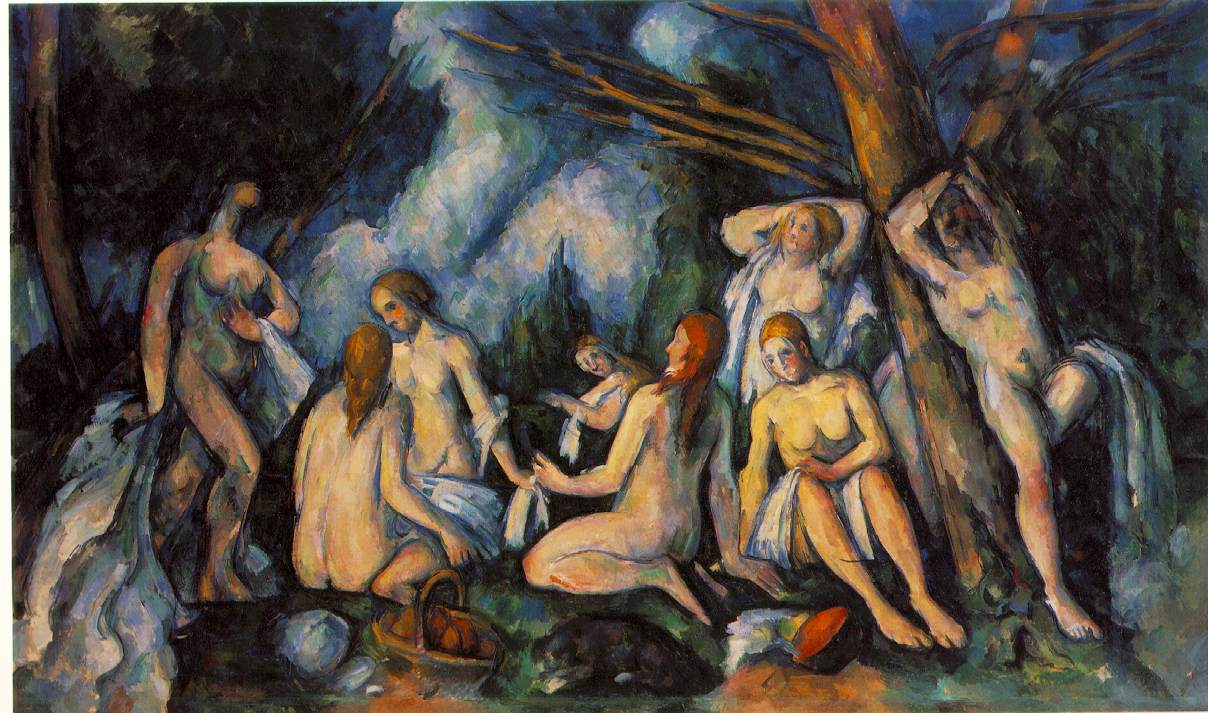
Impressionism was a major movement, first in painting and later in music, that developed primarily in France during the late 19th and early 20th centuries. Impressionist painting comprises the work produced between about 1867 and 1886 by a group of artists who shared a set of related approaches and techniques. The most conspicuous characteristic of Impressionism was an attempt to accurately and objectively record visual reality with transient effects of light and color. The principal Impressionist painters were Claude Monet, Pierre Auguste Renoir, Camille Pissarro, Alfred Sisley, Berthe Morisot, Armand Guillaumin, and Frédéric Bazille, who worked together, influenced each other, and exhibited together independently. Edgar Degas and Paul Cézanne also painted in an Impressionist style for a time in the early 1870s.
The period of Impressionism and Postimpressionism painting was about appearance and reality. There were no universals in impressionistic painting. The Impressionist painters were all great artists yet their works leave unanswered the question “where is the reality?” “These men painted only what their eyes brought them, but this left the question whether there was a reality behind the light waves reaching the eyes.”
Claude Monet’s Haystack series of 1890-1891 provide us with something of a bridge between the impressionist and postimpressionist painters. The series did not function as an accurate record of sequence of time nor as a row of stacks of wheat. Instead, asMonet told Geffroy, he was “more and more driven with the need to render ce que j’epreuve”—what he felt or experienced as he encountered the world of nature. And he came to experience nature differently. “For me, landscape hardly exists at all as landscape, because its appearance is constantly changing,” he said; “but it lives by virtue of its surroundings—the air and light—which vary continually.” A single painting of the subject denies this constant variation over time. So what Monet pursued was not the objective fact of these stacks of grain, as defined by light and air, but how his eye perceived them over the passage of time. The landscape served, then, as a point of departure, a vehicle for artistic self-expression. Monet’s series is testimony to one of the basic tenets of modern art: the notion that the artist can reconstruct nature according to the formal and expressive potential of the image itself. One might suggest that here reality became a dream. “As reality tended to become a dream, Impressionism as a movement fell apart. With Impressionism the door was opened for art to become the vehicle for modern thought.”
Postimpressionism is an umbrella term that encompasses a variety of artists who were influenced by Impressionism but took their art in other directions. The postimpressionist period lasts from 1880 to the 1900. There is no single well-defined style of Postimpressionism, but in general it is less idyllic and more emotionally charged than Impressionist work. The classic postimpressionists are Paul Gauguin, Paul Cezanne, Vincent van Gogh, Henri Rousseau and Henri de Toulouse-Lautrec. The Pointillists and Les Nabis are also generally included among the Postimpressionists.
Breaking free of the naturalism of Impressionism in the late 1880s, this group of young painters sought independent artistic styles for expressing emotions rather than simply optical impressions, concentrating on themes of deeper symbolism. By using simplified colors and definitive forms, their art was characterized by a renewed aesthetic sense as well as abstract tendencies. The postimpressionist painters, responding to Impressionism, followed diverse stylistic paths in search of authentic intellectual and artistic achievements. These artists, often working independently, are today called postImpressionists. These postimpressionists attempted to find the way back to reality, to the absolute behind the particulars. “They felt the loss of universals, tried to solve the problem, and they failed. It is not that these painters were always consciously painting their philosophy of life, but in their work as a whole, their worldview was often reflected.” The art of the great postimpressionists “became the vehicle for modern man’s view of the fragmentation of truth and life.”
Painting expresses an idea as a work of art. From this point art could move to the extremes of ultranaturalism, such as the photo-realists or to abstraction, where “reality becomes so fragmented that it disappears, and man is left to make up his personal world.” Wassily Kandinsky (1866-1944), a Russian-born artist was one of the first creators of pure abstraction in modern painting.
Kandinsky was never solely a painter, but a theoretician, and organizer at the same time. A gifted author, he expressed his views on art and artistic activity in his numerous writings. After successful avant-garde exhibitions, he founded the influential Munich group Der Blaue Reiter (The Blue Rider; 1911-14) and began completely abstract painting. His forms evolved from fluid and organic to geometric and, finally, to pictographic (e.g. Tempered Élan, 1944).
Besides painting and writing, Kandinsky, was an accomplished musician. He once said: “Color is the keyboard, the eyes are the harmonies, the soul is the piano with many strings. The artist is the hand that plays, touching one key or another, to cause vibrations in the soul.” The concept that color and musical harmony are linked has a long history, intriguing scientists such as Sir Isaac Newton. Kandinsky used color in a highly theoretical way associating tone with timbre (the sound’s character), hue with pitch, and saturation with the volume of sound. He even claimed that when he saw color he heard music. In 1912 Kandinsky wrote an article titled “About the Question of Form” in The Blue Rider saying that, “since the old harmony (a unity of knowledge) had been lost, only two possibilities remained–extreme naturalism or extreme abstraction.” “Both,” he said, “were equal.”
Pablo Picasso’s (1881-1973) painting Les Demoiselles d’Avignon is a significant work in the genesis of modern art. The painting portrays five naked prostitutes in a brothel; two pushing aside curtains around the space where the other women strike seductive and erotic poses—but their figures are composed of flat, splintered planes rather than rounded volumes, their eyes are lopsided or staring or asymmetrical, and the two women at the right have threatening masks for heads. The space, too, which should recede, comes forward in jagged shards, like broken glass. In the still life, at the bottom, a piece of melon slices the air like a scythe.
The faces of the figures at the right are influenced by African masks, which Picasso assumed had functioned as magical protectors against dangerous spirits: this work, he said later, was his “first exorcism painting.” A specific danger he had in mind was life-threatening sexual disease, a source of considerable anxiety in Paris at the time; earlier sketches for the painting more clearly link sexual pleasure to mortality. In its brutal treatment of the body and its clashes of color and style (other sources for this work include ancient Iberian statuary and the work of Paul Cézanne), Les Demoiselles d’Avignon marks a radical break from traditional composition and perspective.
The result of months of preparation and revision, this painting revolutionized the art world when first seen in Picasso’s studio. Its monumental size, 8′ x 7′ 8″, underscored, “the shocking incoherence resulting from the outright sabotage of conventional representation.” Picasso drew on sources as diverse as Iberian sculpture, African tribal masks, and El Greco’s painting to make this startling composition.
In great art the technique fits the worldview being presented, and fragmentation or abstraction well fits the worldview of modern man. The technique expresses both “the concept of a fragmented world and fragmented man.” A world-famous photographer and writer, David Douglas Duncan, a friend of Pablo Picasso, about whom he published six coffee-table books, “says about a certain set of Picasso’s pictures in Picasso’s private collection is in a way a summing up of much of Picasso’s work: ‘Of course, not one of these pictures was actually a portrait but his prophecy of a ruined world.”“ Abstract art “was a complete break with the art of the Renaissance which had been founded on man’s humanist hope.” We saw In Les Demoiselles d’Avignon people were no longer human: “the humanity had been lost.” This becomes increasingly apparent that the techniques of art become more advanced “humanity was increasingly fragmented.” Fragmentation and abstraction, in art, was a wide road to “the absurdity of all things.”
Dada was an informal international movement that began with the start of the First World War. Primarily, in Europe and North America, Dada was an antiwar movement, “a protest against the bourgeois nationalist and colonialist interests which many Dadaists believed were the root cause of the war, and against the cultural and intellectual conformity—in art and more broadly in society—that corresponded to the war.” Most Dadaists believed that “the ‘reason’ and ‘logic’ of bourgeois capitalist society had led people into war. They expressed their rejection of that ideology in artistic expression that appeared to reject logic and embrace chaos and irrationality.” For example, George Grosz later recalled that his Dadaist art was intended as a protest “against this world of mutual destruction.”
Dadaists rebelled against what modern society and culture were. Dada was not art. It was anti-art. “According to its proponents, Dada was not art—it was ‘anti-art’ in the sense that Dadaists protested the contemporary academic and cultured values of art.” The intent of Dada was to “destroy traditional culture and aesthetics.” The Dada movement, more than an antiwar protest movement, popularized the absurd, not simply in art but in everything. Schaeffer concludes: “Dada carried to its logical conclusion the notion of all having come about by chance; the result was the final absurdity of everything, including humanity.”
Schaeffer concludes this section of art as a vehicle of Modern Thought by reviewing the progression of philosophical thought and its interweaving with art. “the philosophers from Rousseau, Kant, Hegel and Kierkegaard onward, having lost their hope of a unity of knowledge and a unity of life, presented a fragmented conception of reality; then the artists painted that way. It was the artist, however, who first understood that the end of this view was the absurdity of all things.” This is the way “the concept of fragmented reality spread in the twentieth century. The philosophers first formulated intellectually what the artists later depicted artistically.”
Perhaps the most widely popular method of spreading the message of modern thought has been music. Schaeffer believes Beethoven and his The Last Quartets were the doorway to modern music. The influence of the “quartets” was obvious in the two streams of classical music that evolved from them: the German and the French. Beethoven’s influence is seen in those that followed him: Wagner, Mahler and Schoenberg.
It is with Arnold Schoenberg’s (1874–1951) that we come into the music which became the “vehicle for modern thought.” Schoenberg, an Austrian and later American Composer, is “associated with the expressionist movements in early 20th-century German poetry and art, and he was among the first composers to embrace atonal motivic development.” Schoenberg was best known for his twelve-tone technique. The compositional technique involving tone rows was a rejection of the past tradition in music. Schaeffer tells us: “This was ‘modern’ in that there was perpetual variation with no resolution.” Schaeffer highlights the difference in resolution between Bach and Schoenberg. Schoenberg’s music with no resolution “stands in sharp contrast to Bach who, on his biblical base, had much diversity but always resolution. Bach’s music had resolution because as a Christian he believed that there will be resolution both for each individual life and for history. As the music which came out of the biblical teaching of the Reformation was shaped by that worldview, so the worldview of modern man shapes modern music.”
Claude Debussy (1862-1918) was the most important French composer of the early twentieth century. As Schaeffer suggests “His direction was not so much that of nonresolution but of fragmentation.” Debussy’s importance comes in that he “opened the door to fragmentation in music and influenced most composers since, not only in classical music but in popular music and rock as well. Even the music that is one of the glories of America–black jazz and black spirituals–was gradually infiltrated.”
The fragmentation in music is parallel to the fragmentation which occurred in painting. The fragmentation in music and in painting were not only changes in techniques but an expression of the worldview of the artists and in turn brought this worldview to people throughout the world. Art and music brought a worldview of fragmentation and abstraction to people who would never have opened a book of philosophy, or would have had any interest in a “worldview.” Popular music beginning with some elements of rock in the 60s carried its message of fragmentation to the young people of the world. Music has become the universal language of the world and with it, this message of fragmentation and abstraction.
Besides music and painting, poetry, drama, literature, and films have also carried these ideas to the world. With the coming of the internet and world communications the message has become one that continually bombard us-–“shouting at us a fragmented view of the universe and of life.” The most successful vehicle for proclaiming the message of fragmentation came in films. Schaeffer observes: “The important concepts of philosophy increasingly began to come not as formal statements of philosophy but rather as expressions in art, music, novels, poetry, drama, and the cinema.” As our culture becomes more visual we see (pun intended) more and more “major philosophic statements . . . made through films.” Philosophers are no longer found in academe, today. They are more likely found directing or producing movies with “a message.” And more than likely the message is “absurd, ” abstract and fragmented.
What do the movies “the Deer Hunter,” “The Departed,” “Midnight Cowboy,” “Unforgiven,” “American Beauty,” and “Silence of the Lambs” share? Yes, they won an academy award for Best Picture–-but what was the message that they conveyed to their worldwide audiences? What is the purpose of adult movie such as “Golden Compass” being advertised as a child’s movie? And we have not even addressed television! Seven days a week, twenty-four hours a day we are overloaded with a humanistic worldview. A worldview that is without hope, without answers, and is becoming more and more absurd. Schaeffer warns: “Modern people are in trouble indeed. These things are not shut up within the art museums, the concert halls and rock festivals, the stage and movies, or the theological seminaries. People function on the basis of their worldview.” Is there any wonder “that it is unsafe to walk at night through the streets of today’s cities?” “As a man thinketh, so is he.”
Kirchherr met artist Sutcliffe in the Kaiserkeller bar in Hamburg in 1960, where he was playing bass with the Beatles, and was later engaged to him, before his death in 1962. Although Kirchherr has taken very few photographs since 1967, her early work has been exhibited in Hamburg, Bremen, London, Liverpool, New York City, Washington, D.C., Tokyo, Vienna and at the Rock ‘n’ Roll Hall of Fame. She has published three limited-edition books of photographs.
Astrid Kirchherr was born in 1938 in Hamburg, Germany, and is the daughter of a former executive of the German branch of the Ford Motor Company. During World War II she was evacuated to the safety of the Baltic Sea where she remembered seeing dead bodies on the shore (after the ships Cap Arcona and the SS Deutschland had been bombed and sunk) and the destruction in Hamburg when she returned.[1]
After her graduation, Kirchherr enrolled in the Meisterschule für Mode, Textil, Graphik und Werbung in Hamburg, as she wanted to study fashion design but demonstrated a talent for black-and-white photography.[2][3] Reinhard Wolf, the school’s main photographic tutor, convinced her to switch courses and promised that he would hire her as his assistant when she graduated.[4] Kirchherr worked for Wolf as his assistant from 1959 until 1963.[5]
In the late 1950s and early 1960s Kirchherr and her art school friends were involved in the European existentialist movement whose followers were later nicknamed “Exis” by Lennon.[6] In 1995 she told BBC Radio Merseyside: “Our philosophythen, because we were only little kids, was wearing black clothes and going around looking moody. Of course, we had a clue who Jean-Paul Sartre was.[7] We got inspired by all the French artists and writers, because that was the closest we could get. England was so far away, and America was out of the question. So France was the nearest. So we got all the information from France, and we tried to dress like the French existentialists… We wanted to be free, we wanted to be different, and tried to be cool, as we call it now.”[8][9]
“In some ways I was more like a mother figure. When George was being deported for being underage and not having a work permit, I looked after him,
Print cover featuring an early photo of the Beatles, signed by Astrid Kirchherr
Kirchherr, Voormann and Vollmer were friends who had all attended the Meisterschule, and shared the same ideas about fashion, culture and music. Voormann became Astrid’s boyfriend, and moved into the Kirchherr home, where he had his own room.[10] In 1960, after Kirchherr and Vollmer had had an argument with Voormann, he wandered down the Reeperbahn (in the St. Pauli district of Hamburg) and heard music coming from the Kaiserkeller club. Voormann walked in and watched a performance by a group called the Beatles: Lennon, McCartney, Harrison, Sutcliffe and Best, their drummer at the time.[11] Voormann asked Kirchherr and Vollmer to listen to this new music, and after being persuaded to visit the Kaiserkeller (which was in the rough area of the Reeperbahn),[12] Kirchherr decided that all she wanted to do was to be as close to the Beatles as she could.[13] The trio of friends had never heard this new music called Rock n’ Roll before, having previously only listened to Trad jazz, with some Nat King Cole and The Platters mixed in.[6][14] The trio then visited the Kaiserkeller almost every night, arriving at 9 o’clock and sitting by the front of the stage.[15] Kirchherr later said: “It was like a merry-go-round in my head, they looked absolutely astonishing… My whole life changed in a couple of minutes. All I wanted was to be with them and to know them.”[16]
Kirchherr later said that she, Voormann and Vollmer felt guilty about being German, and about Germany’s recent history. Meeting the Beatles was something very special for her, although she knew that English people would think that she ate sauerkraut, and would comment on her heavy German accent, but they made jokes about it together.[10] Lennon would make sarcastic remarks from the stage, saying “You Krauts, we won the war,” knowing that very few Germans in the audience spoke English, but any English sailors present would roar with laughter.[12]
Sutcliffe was fascinated by the trio, but especially Kirchherr, and thought they looked like “real bohemians“. Bill Harry later said that when Kirchherr walked in, every head would immediately turn her way, and that she always captivated the whole room.[6] Sutcliffe wrote to a friend that he could hardly take his eyes off her and had tried to talk to Kirchherr during the next break, but she had already left the club.[6] Sutcliffe managed to meet them eventually, and learned that all three had attended the Meisterschule, which was the same type of art college that Lennon and Sutcliffe had attended in Liverpool.[6] (Note: Meisterschule für Mode, Textil, Grafik und Werbung [Master Craftspeople College for Fashion, Textile, Graphics, and Advertising], although it is now called the University of Applied Sciences).[17]
Kirchherr asked the Beatles if they would mind letting her take photographs of them in a photo session, which impressed them, as other groups only had snapshots that were taken by friends. The next morning Kirchherr took photographs with a Rolleicord camera,[18] at a fairground in a municipal park called Hamburger Dom which was close to the Reeperbahn,[12] and in the afternoon she took them all (minus Best, who decided not to go) to her mother’s house in Altona.[16][19] Kirchherr’s bedroom (which was all in black, including the furniture, with silver foil on the walls and a large tree branch suspended from the ceiling), was decorated especially for Voormann, whom she had a relationship with, although after the visits to the Kaiserkeller their relationship became purely platonic. Kirchherr started dating Sutcliffe, although she always remained a close friend of Voormann.[5][20]
Kirchherr later supplied Sutcliffe and the other Beatles with Preludin, which, when taken with beer, made them feel euphoric and helped to keep them awake until the early hours of the morning. The Beatles had taken Preludin before, but it was only possible at that time to get Preludin with a doctor’s prescription note, so Kirchherr’s mother got them from a local chemist, who supplied them without asking questions.[21] After meeting Kirchherr, Lennon filled his letters to Cynthia Powell (his girlfriend at the time) with “Astrid said this, Astrid did that”,[22] which made Powell jealous, until she read that Sutcliffe was in a relationship with Kirchherr.[23] When Powell visited Hamburg with Dot Rhone (McCartney’s girlfriend at the time) in April 1961, they stayed at Kirchherr’s house.[24] In August 1963, Kirchherr met Lennon and Cynthia in Paris while they were both there for a belated honeymoon, as Kirchherr was there with a girlfriend for a few days’ holiday. The four of them went from wine bar to wine bar and finally ended up back at Kirchherr’s lodgings, where all four fell asleep on Kirchherr’s single bed.[25]
The Beatles met Kirchherr again in Hamburg in 1966 when they were touring Germany, and Kirchherr gave Lennon the letters he had written to Sutcliffe in 1961 and 1962. Lennon said it was “the best present I’ve had in years”.[26] All of the Beatles wrote many letters to Kirchherr: “I only have a couple from George [Harrison], which I’ll never show anyone, but he wrote so many. So did the others. I probably threw them away. You do that when you’re young – you don’t think of the future.”[9] Harrison later asked Kirchherr to arrange the cover of his Wonderwall Music album in 1968.[27]
Kirchherr is credited with inventing the Beatles’ moptop haircut although she disagrees, saying: “All that rubbish people said, that I created their hairstyle, that’s rubbish! Lots of German boys had that hairstyle. Stuart [Sutcliffe] had it for a long while and the others copied it. I suppose the most important thing I contributed to them was friendship.”[28][29] In 1995, Kirchherr told BBC Radio Merseyside: “All my friends in art school used to run around with this sort of what you call Beatles haircut. And my boyfriend then, Klaus Voormann, had this hairstyle, and Stuart liked it very very much. He was the first one who really got the nerve to get the Brylcreem out of his hair and asking me to cut his hair for him. Pete [Best] has really curly hair and it wouldn’t work.”[8] Kirchherr says that after she cut Sutcliffe’s hair, Harrison asked her to do the same when she was visiting Liverpool, and Lennon and McCartney had their hair cut in the same style while they were in Paris, by Kirchherr’s friend, Vollmer, who was living there at the time as an assistant to photographer William Klein.[12]
After moving into the Kirchherr family’s house, Sutcliffe used to borrow her clothes, as he was the same height as Kirchherr. He wore her leather pants and jackets, collarless jackets, over-sized shirts, and long scarves. He also borrowed acorduroy suit with no lapels that he wore on stage, which prompted Lennon to sarcastically ask if his mother had lent him the suit.[12]
Astrid Kirchherr remained friends with the Beatles and also accompanied them while they where filming ‘A Hard Day’s Night’ in 1964, where she took more
Sutcliffe wrote to friends that he was infatuated with Kirchherr, and asked her friends which colours, films, books and painters she liked, and whom she fancied. Best later commented that the beginning of their relationship was, “like one of those fairy stories”.[30] Kirchherr says that she immediately fell in love with Sutcliffe, and still calls him “the love of my life”.[12] Kirchherr and Sutcliffe got engaged in November 1960, and exchanged rings, as is the German custom.[31] Sutcliffe later wrote to his parents that he was engaged to Kirchherr, which they were shocked to learn, as they thought he would give up his career as an artist,[32] although he told Kirchherr that he would like to be an art teacher in London or Germany in the future.[12] Sutcliffe later borrowed money from Kirchherr for the airfare to fly back to Liverpool in February 1961, returning to Hamburg in March.[33][34]
Kirchherr and Sutcliffe went to Liverpool in the summer of 1961, as Kirchherr wanted to meet Sutcliffe’s family (and to see Liverpool) before their marriage. Everybody was expecting a strange beatnik artist from Hamburg, but Kirchherr turned up at the Sutcliffe’s house at 37 Aigburth Drive, Liverpool, bearing a single long-stemmed orchid in her hand as a present, and dressed in a round-necked cashmere sweater and tailored skirt.[35] In 1962, Sutcliffe collapsed in the middle of an art class in Hamburg. He was suffering from intense headaches, and Kirchherr’s mother had German doctors perform various checks on him, although they were unable to determine exactly what was causing the headaches. While living at the Kirchherrs’ house in Hamburg his condition got worse. On 10 April 1962, Kirchherr’s mother phoned her daughter at work and told her Sutcliffe was not feeling well, had been brought back to the house, and an ambulance had been called for.[12] Kirchherr rushed home and rode with Sutcliffe in the ambulance, but he died in her arms before it reached the hospital.[36]
Astrid Kirchherr & Stuart Sutcliffe
Three days later Kirchherr met Lennon, McCartney and Best at the Hamburg airport (they were returning to Hamburg to perform) and told them Sutcliffe had died of a brain haemorrhage.[37] Harrison and manager Brian Epstein arrived on another plane sometime later with Sutcliffe’s mother, who had been informed by telegram.[12] Harrison and Lennon were helpful towards the distraught Kirchherr, with Lennon telling her one day that she definitely had to decide if she wanted to “Live or die, there is no other question.”[12]
In 1964, Kirchherr became a freelance photographer, and with her colleague Max Scheler she took “behind the scenes” photographs of the Beatles during the filming of “A Hard Day’s Night“, as an assignment for the German Stern magazine. Epstein had forbidden any publicity photographs to be taken without his permission, but Kirchherr phoned Harrison, who said he would arrange it, but added, “Only if they pay you.”[12]
St. George’s Hall, Liverpool. Kirchherr took photographs of Liverpool groups as they stood on the front steps
Stern phoned Bill Harry at his Mersey Beat newspaper and asked if he could arrange a photograph of all the groups in Liverpool,[38] so Harry suggested Kirchherr be the photographer, although Kirchherr later said she placed an advertisement in the Liverpool Echo newspaper.[12] Kirchherr and Scheler said that any group who wanted their photograph taken in front of St. George’s Hallwould be paid £1 per musician,[18] but over 200 groups turned up on the day, which meant Kirchherr and Scheler soon ran out of money.[8][39] Kirchherr didn’t publish the photographs until 1995, in a book called Liverpool Days, which is a limited edition collection of black-and-white photographs.[8] In 1999, a companion book called Hamburg Days was published (a two-volume limited edition), containing a set of photographs by Kirchherr and “memory drawings” by Voormann. The drawings are recollections of places and situations that Voormann clearly remembers, but Kirchherr had never photographed, or had lost the photographs.[40]
Kirchherr described how difficult it was to be accepted as a female photographer in the 1960s: “Every magazine and newspaper wanted me to photograph the Beatles again. Or they wanted my old stuff, even if it was out of focus, whether they were nice or not. They wouldn’t look at my other work. It was very hard for a girl photographer in the 60s to be accepted. In the end I gave up. I’ve hardly taken a photo since 1967.[27]” Kirchherr was quoted as saying that When We Was Fab (Genesis Publications 2007), would be her last book of photographs: “I have decided it is time to create one book in which I am totally involved so that it contains the pictures I like most, printed the way I would print them, even down to the text and design…. This book is me and that is why it will be the last one. The very last one.”[41]
Kirchherr has expressed respect for other photographers, such as Annie Leibovitz (because of the humour in her work), Irving Penn, Richard Avedon, Jim Rakete and Reinhard Wolf (German Wikipedia), and French film-makers François Truffaut, and Jean Cocteau.[1] Kirchherr said that her favourite photos are the ones she took of Sutcliffe by the Baltic sea, and of Lennon and Harrison in her attic room at 45a Eimsbütteler Strasse. She has expressed reservations about digital photography, saying that a photographer should concentrate on the art of photography and not on the technical results, although admitting that she knows nothing about computers and is “afraid of the internet”.[1]
Kirchherr admits that she is not good at business as she is not organised enough, and has never really looked after the negatives of her photographs to prove ownership.[27] Her business partner Ulf Krüger—a songwriter and record producer—successfully found many of Astrid’s negatives and photographs and had them copyrighted, although he believes that Kirchherr has lost £500,000 over the years because of people using her photographs without permission.[18][27] In July 2001 Kirchherr visited Liverpool to open an exhibition of her work at the Mathew Street art gallery, which is close to the former site of The Cavern Club. She appeared as a guest at the city’s Beatles Week Festival during the August Bank Holiday.[42] Kirchherr’s work has been exhibited internationally in places, such as Hamburg, Bremen, London, Liverpool, New York City, Washington D.C., Tokyo, Vienna, and at the Rock ‘n’ Roll Hall of Fame.
In 1967, Kirchherr married English drummer Gibson Kemp (born Gibson Stewart Kemp, 1945, Liverpool, Lancashire), who had replaced Ringo Starr in Rory Storm and the Hurricanes. The marriage ended in divorce after seven years.[6] She then worked as a barmaid, as an interior designer, and then for a music publishing firm,[18] getting married for a second time to a German businessman.[12] Kirchherr worked as an advisor in 1994, on the film Backbeat, which portrayed Kirchherr, Sutcliffe and the Beatles during their early days in Hamburg.[8] She was impressed with Stephen Dorff (who played Sutcliffe in the film), commenting that he was the right age (19-years-old at the time), and his gestures, the way he smoked, and talked were so like Sutcliffe’s that she had goose pimples. Kirchherr was portrayed in the film by actress Sheryl Lee.[27]
Since the mid-1990s Kirchherr and business partner Krüger have operated the K&K photography shop in Hamburg, offering custom vintage prints, books and artwork for sale. K&K periodically helps arrange Beatles’ conventions and other Beatles’ events in the Hamburg area.[43] She has no children, and now lives alone: “”My [second] marriage ended in 1985… I regretted I had no children. I just couldn’t see me have [sic] any. But now I am pleased when I see the situation the world is in. I live alone and am very happy.”[9]
Francis Schaeffer’s favorite album was SGT. PEPPER”S and he said of the album “Sergeant Pepper’s Lonely Hearts Club Band…for a time it became the rallying cry for young people throughout the world. It expressed the essence of their lives, thoughts and their feelings.” (at the 14 minute point in episode 7 of HOW SHOULD WE THEN LIVE? )
How Should We Then Live – Episode Seven – 07 – Portuguese Subtitles
“Sergeant Pepper’s Lonely Hearts Club Band, became the rallying cry for young people throughout the world. It expressed the essence of their lives, thoughts and their feelings…” Francis Schaeffer (1912-1984). We take a look today at how the Beatles were featured in Schaeffer’s film. How Should We then Live Episode 7 small On You Tube […]
One would think that the young people of the 1960’s thought little of death but is that true? The most successful song on the SGT PEPPER’S album was about the sudden death of a close friend and the album cover was pictured in front of a burial scene. Francis Schaeffer’s favorite album was SGT. […]
_________ I think it is revolutionary for a 18 year old Paul McCartney to write a song about an old person nearing death. This demonstrates that the Beatles did really think about the process of life and its challenges from birth to day in a complete way and the possible answer. Solomon does that too […]
_____________ Karlheinz Stockhausen was friends with both Lennon and McCartney and he influenced some of their music. Today we will take a close look at his music and his views and at some of the songs of the Beatles that he influenced. Dr. Francis Schaeffer: How Should We Then Live? Episode 9 (Promo Clip) […]
Mia and Prudence Farrow both joined the Beatles in their trip to India to check out Eastern Religions. Francis Schaeffer noted, ” The younger people and the older ones tried drug taking but then turned to the eastern religions. Both drugs and the eastern religions seek truth inside one’s own head, a negation of reason. […]
Dylan Thomas was included on SGT PEPPER’S cover because of words like this, “Too proud to cry, too frail to check the tears, And caught between two nights, blindness and death.” Francis Schaeffer noted: This is sensitivity crying out in darkness. But it is not mere emotion; the problem is not on this […]
John Lennon was writing about a drug trip when he wrote the song LUCY IN THE SKY WITH DIAMONDS and Paul later confirmed that many years later. Francis Schaeffer correctly noted that the Beatles’ album Sgt. Pepper’s brought the message of drugs and Eastern Religion to the masses like no other means of communication could. Today […]
______________ Why was William S. Burroughs put on the cover of Sgt. Pepper’s Lonely Hearts Club Band? Burroughs was challenging the norms of the 1960’s but at the same time he was like the Beatles in that he was also searching for values and he never found the solution. (In the last post in this […]
The Beatles were “inspired by the musique concrète of German composer and early electronic music pioneer Karlheinz Stockhausen…” as SCOTT THILL has asserted. Francis Schaeffer noted that ideas of “Non-resolution” and “Fragmentation” came down German and French streams with the influence of Beethoven’s last Quartets and then the influence of Debussy and later Schoenberg’s non-resolution which is in total contrast […]
It was the famous atheist Bertrand Russell who pointed out to Paul McCartney early on that the Beatles needed to bring more attention to the Vietnam war protests and Paul promptly went back to the group and reported Russell’s advice. We will take a closer look at some of Russell’s views and break them down […]
Francis Schaeffer correctly noted: In this flow there was also the period of psychedelic rock, an attempt to find this experience without drugs, by the use of a certain type of music. This was the period of the Beatles’ Revolver (1966) and Strawberry Fields Forever (1967). In the same period and in the same direction […]
A suicide attempt appears in MIDNIGHT IN PARIS when Zelda Fitzgerald goes to the Seine River with the intention of jumping and Gil Pender stops her. It seems the nihilist worldview of Woody Allen keeps him putting suicides into his films.
Remember Professor Levy from the movie CRIMES AND MISDEMEANOR? After addressing the question IS IT POSSIBLE TO BE AN OPTIMISTIC SECULAR HUMANIST THAT DOES NOT BELIEVE IN GOD OR AN AFTERLIFE? Levy jumps out a window!!!
After Levy committed suicide, Cliff reviewed a clip from the documentary footage in which Levy states: “But we must always remember that when we are born we need a great deal of love to persuade us to stay in life. Once we get that love, it usually lasts us. But the universe is a pretty cold place. It’s we who invest it with our feelings. And under certain conditions, we feel that the thing isn’t worth it anymore.”
Hearing the news of Levy’s death, Halley says, “No matter how elaborate a philosophical system you work out, in the end it’s got to be incomplete.”
So some humanists act as if they have a great advantage over Christians. They act as if the advance of science and technology and a better understanding of history (through such concepts as the evolutionary theory) have all made the idea of God and Creation quite ridiculous.
This superior attitude, however, is strange because one of the most striking developments in the last half-century is the growth of a profound pessimism among both the well-educated and less-educated people. The thinkers in our society have been admitting for a long time that they have no final answers at all.
Take Woody Allen, for example. Most people know his as a comedian, but he has thought through where mankind stands after the “religious answers” have been abandoned. In an article in Esquire (May 1977), he says that man is left with:
… alienation, loneliness [and] emptiness verging on madness…. The fundamental thing behind all motivation and all activity is the constant struggle against annihilation and against death. It’s absolutely stupefying in its terror, and it renders anyone’s accomplishments meaningless. As Camus wrote, it’s not only that he (the individual) dies, or that man (as a whole) dies, but that you struggle to do a work of art that will last and then you realize that the universe itself is not going to exist after a period of time. Until those issues are resolved within each person – religiously or psychologically or existentially – the social and political issues will never be resolved, except in a slapdash way.
Allen sums up his view in his film Annie Hall with these words: “Life is divided into the horrible and the miserable.”
However, our intention here is neither to go into the history of irrationalism, nor to examine the proponents of existentialism in our own century, but rather to concentrate on its main thesis. It is this that confronts us on all sides today, and it is impossible to understand modern man without understanding this concept.
Because we shall be using several terms a great deal now, we would ask the reader to attend carefully. When we speak of irrationalism or existentialism or the existential methodology, we are pointing to a quite simple idea. It may have been expressed in a variety of complicated ways by philosophers, but it is not a difficult concept.
Imagine that you are at the movies watching a suspense film. As the story unfolds, the tension increases until finally the hero is trapped in some impossible situation and everyone is groaning inwardly, wondering how he is going to get out of the mess. The suspense is heightened by the knowledge (of the audience, not the hero) that help is on the way in the form of the good guys. The only question is: will the good guys arrive in time?
Now imagine for a moment that the audience is slipped the information that there are no good guys, that the situation of the hero is not just desperate, but completely hopeless. Obviously, the first thing that would happen is that the suspense would be gone. You and the entire audience would simply be waiting for the axe to fall.
If the hero faced the end with courage, this would be morally edifying, but the situation itself would be tragic. If, however, the hero acted as if help were around the corner and kept buoying himself up with this thought (“Someone is on the way!” – “Help is at hand!”), all you could feel for him would be pity. It would be a means to keep hope alive within a hopeless situation. The hero’s hope would change nothing on the outside; it would be unable to manufacture, out of nothing, good guys coming to the rescue. All it would achieve would the hero’s own mental state of hopefulness rather than hopelessness.
The hopefulness itself would rest on a lie or an illusion and thus, viewed objectively, would be finally absurd. And if the hero really knew what the situation was, but consciously used the falsehood to buoy up his feelings and go whistling along, we would either say, “Poor guy!” or “He’s a fool.” It is this kind of conscious deceit that someone like Woody Allen has looked full in the face and will have none of.
Now this is what the existential methodology is about. If the universe we are living in is what the materialistic humanists say it is, then with our reason (when we stop to think about it) we could find absolutely no way to have meaning or morality or hope or beauty. This would plunge us into despair. We would have to take seriously the challenge of Albert Camus (1913-1960) in the first sentence of The Myth of Sisyphus: “There is but one truly serious philosophical problem, and that is suicide.”92 Why stay alive in an absurd universe? Ah! But that is not where we stop. We say to ourselves – “There is hope!” (even though there is no help). “We shall overcome!” (even though nothing is more certain than that we shall be destroyed, both individually at death and cosmically with the end of all conscious life). This is what confronts us on all sides today: the modern irrational-ism.
(Scott and Zelda pictured below)
This series deals with the Book of Ecclesiastes and Woody Allen films. The first post dealt with MAGIC IN THE MOONLIGHT and it dealt with the fact that in the Book of Ecclesiastes Solomon does contend like Hobbes and Stanley that life is “nasty, brutish and short” and as a result has no meaning UNDER THE SUN.
The movie MIDNIGHT IN PARISoffers many of the same themes we see in Ecclesiastes. The second postlooked at the question: WAS THERE EVER A GOLDEN AGE AND DID THE MOST TALENTED UNIVERSAL MEN OF THAT TIME FIND TRUE SATISFACTION DURING IT?
In the third post in this series we discover in Ecclesiastes that man UNDER THE SUN finds himself caught in the never ending cycle of birth and death. The SURREALISTS make a leap into the area of nonreason in order to get out of this cycle and that is why the scene in MIDNIGHT IN PARIS with Salvador Dali, Man Ray, and Luis Bunuel works so well!!!! These surrealists look to the area of their dreams to find a meaning for their lives and their break with reality is only because they know that they can’t find a rational meaning in life without God in the picture.
(Pictured below Scott, Scottie and Zelda Fitzgerald, 1922.)
__
The Fitzgerald’s vacationing on the French Riviera, May 1924. Scott, Zelda
Zelda and Scottie Fitzgerald, 1933
The fourth post looks at the solution of WINE, WOMEN AND SONG and thefifth andsixth posts look at the solution T.S.Eliot found in the Christian Faith and how he left his fragmented message of pessimism behind. In theseventh post the SURREALISTS say that time and chance is all we have but how can that explain love or art and the hunger for God? The eighth post looks at the subject of DEATH both in Ecclesiastes and MIDNIGHT IN PARIS. In the ninth post we look at the nihilistic worldview of Woody Allen and why he keeps putting suicides into his films.
Dr. Francis Schaeffer – The Biblical flow of Truth & History (intro)
Francis Schaeffer – The Biblical Flow of History & Truth (1)
Dr. Francis Schaeffer – The Biblical Flow of Truth & History (part 2)
Ernest Hemingway and both his good friend Scott Fitzgerald and Scott’s wife Zelda tried to blot it all out with alcohol and later in the film MIDNIGHT IN PARIS we see Zelda trying to commit suicide. She actually was in different stages of mental distress the last 15 years of her life which ended at age 48 when a fire killed 9 people at Highland Hospital in Asheville, North Carolina (according to Wikipedia). Unfortunately her husband F. Scott Fitzgerald died 8 years earlier in 1940 from alcoholism. Ernest Hemingway ended his life on July 2, 1961 by shooting himself with his favorite shotgun.
(An older Zelda in 1942 seen below)
__
(Francis Scott Key Fitzgerald with friend Ernest Hemingway, left)
midnight in paris – Fitzgeralds and Hemingway
______________
ZELDA FITZGERALD: You look lost!-
GIL PENDER: Oh, yeah!- You’re an American?-
ZELDA FITZGERALD: If you count Alabama as America, which I do.I miss the bathtub gin. What do you do?-
GIL PENDER: Me? I’m a writer.-
ZELDA FITZGERALD: Who do you write?-
GIL PENDER: Oh, right now I’m working on a novel.- Oh, yes?
ZELDA FITZGERALD: I’m Zelda, by the way. Oh, Scott! Scott!- Yes, what it is, sweetheart?- Here’s a writer, from, um… where?-
GIL PENDER: California.–
SCOTT FITZGERALD: Scott Fitzgerald, and who are you, old sport?
GIL PENDER: Gil…the… You havethe same names as…As what? Scott Fitzgerald and…Scott and Zelda Fitzgerald.
SCOTT FITZGERALD:The Fitzgeralds. Isn’t she beautiful?
GIL PENDER: Yes. Yes! Yeah, that’s… that’sa coincidence…like….uh…
ZELDA FITZGERALD: You have a glazed look in your eye. Stunned.Stupefied. Anesthetized. Lobotomized
GIL PENDER: I…I…keep looking at the man playing piano, and I believe it or not, recognize hisface from some old sheet music.
ZELDA FITZGERALD: I know I can be one of the great writers of musical lyrics- not that I can write melodies, and I try,and then I hear the songs he writes, and then I realize: I’ll never write a great lyric,- and MY TALENT REALLY LIES IN DRINKING.-
SCOTT FITZGERALD: Sure does.
Later in MIDNIGHT IN PARIS we find Zelda attempting to jump in the Seine river and end her life.
GIL PENDER:God, is that who I think it is?
ADRIANA: What is she doing here,staring into the water?Oh my God! Zelda, what are you doing?!- Please?
ZELDA: I don’t want to live!-
ADRIANA: Stop!- What is it?-
ZELDA: Scott and that beautiful countess.They were– It was so obvious they were whispering about me,and the more they drank, the more he fell in love with her!
GIL PENDER: He…Scott loves only you.- I can tell you that with absolute certainty.-
ZELDA: No.- He’s tired of me!-
GIL PENDER: You’re wrong. You’re wrong. I know.-
ZELDA: How?-
GIL PENDER: Trust me. I know.- Sometimes you get a feel for people, and I get…-
ZELDA: My skin hurts!-
ADRIANA: What do you mean?-
ZELDA: I don’t wanna…I hate the way I look!
ADRIANA:Don’t do that!-
GIL PENDER: Here. Take this.-
ZELDA:What is this?
GIL PENDER: It’s a Valium. It’llmake you feel better.-
ADRIANA:You carry medicine?-
GIL PENDER: No, not normally.It’s just since I’vebeen engaged to Inez,I’ve been having panic attacks, but I’msure they’ll subside after the wedding.
ADRIANA: I’ve never heard of Valium. What is this?
GIL PENDER:It’s the…pill of the future.
__
I have posted this article below earlier but I wanted to include a portion of it today.
People interested in truth often look to philosophy for answers. However, atheist philosophies offer more questions than answers, and this has serious consequences. Statistics show that atheists end up more prone to suicide than people who have a spiritual foundation.[1] One woman, Sharon Rocha, ended up committing suicide after reading an article at the Raving Atheists blog. In her suicide note, Rocha stated “I have been stripped of my delusions… The universe is a cold, uncaring place in which life is short, meaningless and full of suffering.”[2] If you are an atheist thinking of suicide or just seriously interested in the meaning of life, I recommend reading Solomon’s book Ecclesiastes. The book outlines the deceptions of a false perception of reality and the delight of knowing the God who created the universe for a good purpose.
The name Ecclesiastes is translated from Latin into The Preacher. So what exactly is the connection between philosophy and a preacher preaching the gospel? Well, as I’ve written various articles on Christianity, I’ve found that few atheists are interested in reading them. However, when I’ve pointedly challenged the philosophical roots of atheism, I’ve found some atheists eager to step up and defend their beliefs through dialogue and debate. Philosophical questions and challenges are at the core of the book of Ecclesiastes and there is an undertone of evangelism. There’s a saying “You can attract more bees with honey than with vinegar.” But, as we’ll see in Ecclesiastes, you can attract even more bees by prodding the beehive. But you’d better be prepared for what you’re getting into.
Ecclesiastes 12.11 states: “The words of the wise are like goads, their collected sayings like firmly embedded nails–given by one Shepherd.” (NIV)
Goads are pointed prods that are used to help direct cattle and sheep. Words of truth prick the conscience and help to guide people towards moral and ethical reason. The firmly embedded nails signify the fixed principles of logic and the reality of absolute truth. Words of logic help to pin down people who have developed a false paradigm and a false view of reality. Logic helps people to see that their beliefs are not in harmony with reality.
Dr. Francis schaeffer – The flow of Materialism(from Part 4 of Whatever happened to human race?)
Meaninglessness and Materialism
There is a wealth of insight in the book of Ecclesiastes, but you can break down the main philosophical aspects into three main points:
1. The Emptiness of Worldly Pre-occupations – Eccl. 2:1-11
2. The Brevity of Life – Eccl. 12:1-8
3. The Only Logical Purpose in Life – Eccl. 12:13-14[9]
Solomon begins Ecclesiastes 1.2-3 announcing “‘Meaningless! Meaningless!’ says the Teacher. ‘Utterly meaningless! Everything is meaningless.’ What do people gain from all their labors at which they toil under the sun?” How discouraging can you get? The key to understanding the book of Ecclesiastes is to understand that he makes many false statements based upon a materialist perspective, in viewing everything “under the sun” as meaningless. Solomon addresses common materialist idols in society and shows why these are meaningless and empty pursuits. Solomon tries learning, laughter an liquor in an attempt to find satisfaction, but he’s left empty.
Solomon was the perfect candidate to dispel the illusion that wealth and physical pleasure can bring the kind of deep fulfillment we’re searching for in life. As the wealthiest man in history he had everything available at his fingertips. Whatever he desired, he could have. But time after time he was struck by the emptiness of all these material allurements.
Common folks don’t have the money to be able to fulfill whatever whim we may have. In society we are led to believe that if we just had a bigger house, a better job, a more pleasant husband or wife, or whatever it may be, then we would be happy. For us common folks, happiness may seem as though it’s always just around the corner. If only… then I’d be happy. But Solomon became the ultimate object lesson in this regard because he was able to try anything and everything he wanted and he finding out first-hand that materialism represents a sad and vacuous existence compared to theism.
King Solomon of Israel wrote the book of Ecclesiastes after he had backslidden to a certain degree. He had known what was right, but disobeyed God in his life and took on many wives, horse stables and wealth, though these things were forbidden for a king of Israel. Deuteronomy 17:16-17 outlines:
“Only he shall not multiply horses to himself, nor cause the people to return to Egypt, to the end that he may multiply horses; because Yahweh has said to you, You shall henceforth return no more that way. Neither shall he multiply wives to himself, that his heart not turn away: neither shall he greatly multiply to himself silver and gold.”
It seems Solomon allowed his great wisdom get to his head, so to speak, and to fill him with pride. His heart gradually became dulled to God’s presence and purpose. But, nevertheless, God disciplined him and allowed him to see his folly. Though he had made mistakes, Solomon offers that truth is still truth and a person should continue to teach the truth as God guides:
“And moreover, because the preacher was wise, he still taught the people knowledge; yea, he gave good heed, and sought out, and set in order many proverbs.”[10]
Though he learned lessons the hard way, Solomon gave “good heed” to present the truths that he learned and to help teach people his wisdom. It seems he may have been the first “life coach.” In the United States the “pursuit of happiness” is considered a fundamental right from the Declaration of Independence. But this pursuit, in and of itself, can become destructive when relativism rules. A 2011 study shows the 10 countries with the highest suicide rates tend to be countries where atheism has predominated. Most on the list are countries of the former Soviet Union where atheism was enforced by the state for over 70 years.[11] Other statistics bear out the fact that atheists are more prone to suicide than theists. The American Journal of Psychiatry published an article December 2004, Religious Affiliation and Suicide Attempt, with some basic conclusions:
“CONCLUSIONS: Religious affiliation is associated with less suicidal behavior in depressed inpatients. After other factors were controlled, it was found that greater moral objections to suicide and lower aggression level in religiously affiliated subjects may function as protective factors against suicide attempts. Further study about the influence of religious affiliation on aggressive behavior and how moral objections can reduce the probability of acting on suicidal thoughts may offer new therapeutic strategies in suicide prevention.”[12]
Two key aspects were cited in the AJP article: less aggressive behavior and a moral objection to suicide. The decrease of aggression in spiritual people may have to do with the knowledge that there is in-fact deep meaning in life. Sometimes intellectuals are prone to suicide. Solomon confirmed that materialist knowledge without spiritual truth brings grief: “For with much wisdom comes much sorrow; the more knowledge, the more grief.”[13]
(Alan Sandage below)
Like Solomon, people who have large IQs can tend to have inflated egos. In 2010, in an exclusive interview with the Guardian, Stephen Hawking declared that heaven is a “fairy tale” for fearful people.[14] He is correct in one sense that Christians are fearful in that we fear God with a sense of awe and wonder at his majestic wisdom and power. In contrast to Hawking, the Jewish physicist Alan Sandagewas an atheist most of his life but simply could not dispel all the evidence he had seen in the cosmos pointing to God’s necessary existence. He became a Christian at age 60, explaining, “I could not live a life full of cynicism. I chose to believe, and a peace of mind came over me.”[15] One of the reasons Sandage believed was the complexity of the universe: “The world is too complicated in all its parts and interconnections to be due to chance alone.”[16]
(Stephen Hawking below in black and white and then a picture from recent movie about Hawking)
It doesn’t take a great mind to understand what Solomon and Sandage knew, it only takes an open mind. Three decades ago, Stephen Hawking declared humanity was on the verge of discovering the “theory of everything”with a 50 per cent chance of knowing it by 2000. But by 2010 Hawking had given up hope.[17] If only Hawking had read the book of Ecclesiastes, he could have saved a lot of wasted time: “He has also set eternity in the hearts of men; yet they cannot fathom what God has done from beginning to end.”[18] Hawking is a good example showing that intelligence and wisdom are two very distinct things.
(King Solomon author of Ecclesiastes below
The “one shepherd” mentioned in Ecclesiastes 12.9 seems to portray Jesus. In John 10.11, Jesus is quoted as saying “I am the good shepherd. The good shepherd lays down his life for the sheep.” NIV Jesus is also referred to as the “word made flesh.” In this sense Jesus is the source of all truth and spiritual satisfaction, as implied by Psalm 81:16. “I would satisfy you with wild honey from the rock”, Jesus being the rock of our salvation.The Logical Conclusions One of the conclusions of Ecclesiastes is that we can live a live of true joy when God is the foundation of our lives:“It is good and fitting for one to eat and drink, and to enjoy the good of all his labor in which he toils under the sun all the days of his life which God gives him; for it is his heritage. As for every man to whom God has given riches and wealth, and given him power to eat of it, to receive his heritage and rejoice in his labor—this is the gift of God. For he will not dwell unduly on the days of his life, because God keeps him busy with the joy of his heart.”[19]Another conclusion is that there is ultimate justice in the world and this knowledge has ramifications for a healthy personal life and for a healthy society:
“Now all has been heard; here is the conclusion of the matter: Fear God and keep his commandments, for this is the duty of all mankind. For God will bring every deed into judgment, including every hidden thing, whether it is good or evil.”[20]
We will be less prone to bitterness when we realize God will address all injustice in the future. And we understand why corruption is rampant today in society because many people do not believe there is any kind of accountability to our Creator. People assume that they can do anything they can get away with. Hopefully more people will recognize that atheism neither works as a personal philosophy nor as a good basis for society.
Even Communist China sees that theism is pragmatically more effective and beneficial than an atheistic model of society: “The officially atheist Chinese government is surprisingly open to Christianity, at least partially, because it sees a link between the faith and economic success, said a sought after scholar who has relations with governments in Asia.”[21] Dr. William Jeynes, senior fellow of The Witherspoon Institute in Princeton, N.J., outlined this fact. But the truth is a dangerous thing and has a way of shaking up deceptive paradigms: “Jeynes concluded by saying that the key message he wants to convey is that China is both open to Christianity and nervous about the religion because of the potential problems it could bring to the communist government.”[22]
Woody Allen believes that we live in a cold, violent and meaningless universe and it seems that his main character (Gil Pender, played by Owen Wilson) in the movie MIDNIGHT IN PARIS shares that view. Pender’s meeting with the Surrealists is by far the best scene in the movie because they are ones who can […]
In the last post I pointed out how King Solomon in Ecclesiastes painted a dismal situation for modern man in life UNDER THE SUN and that Bertrand Russell, and T.S. Eliot and other modern writers had agreed with Solomon’s view. However, T.S. Eliot had found a solution to this problem and put his faith in […]
In MIDNIGHT IN PARIS Gil Pender ponders the advice he gets from his literary heroes from the 1920’s. King Solomon in Ecclesiastes painted a dismal situation for modern man in life UNDER THE SUN and many modern artists, poets, and philosophers have agreed. In the 1920’s T.S.Eliot and his house guest Bertrand Russell were two of […]
Ernest Hemingway and Scott Fitzgerald left the prohibitionist America for wet Paris in the 1920’s and they both drank a lot. WINE, WOMEN AND SONG was their motto and I am afraid ultimately wine got the best of Fitzgerald and shortened his career. Woody Allen pictures this culture in the first few clips in the […]
In the film MIDNIGHT IN PARIS Woody Allen the best scene of the movie is when Gil Pender encounters the SURREALISTS!!! This series deals with the Book of Ecclesiastes and Woody Allen films. The first post dealt with MAGIC IN THE MOONLIGHT and it dealt with the fact that in the Book of Ecclesiastes Solomon does contend […]
In the film MIDNIGHT IN PARIS Woody Allen is really looking at one main question through the pursuits of his main character GIL PENDER. That question is WAS THERE EVER A GOLDEN AGE AND DID THE MOST TALENTED UNIVERSAL MEN OF THAT TIME FIND TRUE SATISFACTION DURING IT? This is the second post I have […]
I am starting a series of posts called ECCLESIASTES AND WOODY ALLEN’S FILMS: SOLOMON “WOULD GOT ALONG WELL WITH WOODY!” The quote from the title is actually taken from the film MAGIC IN THE MOONLIGHT where Stanley derides the belief that life has meaning, saying it’s instead “nasty, brutish, and short. Is that Hobbes? I would have […]
Bright Lights, Brilliant Minds A Tale of Three Cities Episode:2 Paris 1928 BBC Documentary 2014
Published on Aug 28, 2014
Bright Lights, Brilliant Minds A Tale of Three Cities Episode:2 Paris 1928 BBC Documentary 2014
Dr James Fox tells the story of Paris in 1928. It was a city that attracted people dreaming of a better world after World War I. This was the year when the surrealists Magritte, Dali and Bunuel brought their bizarre new vision to the people, and when emigre writers and musicians such as Ernest Hemingway and George Gershwin came looking for inspiration.
Paris in 1928 was where black musicians and dancers like Josephine Baker found adulation, where Cole Porter took time off from partying to write Let’s Do it, and where radical architect Le Corbusier planned a modernist utopia that involved pulling down much of Paris itself.
Gil, who once lived in Paris briefly, longs for the era of great writing that was the 1920s, when the city was populated by great artists intermingling and collaborating and drinking, like Hemingway, Picasso, Fitzgerald, Dali, and so on. One night after having suffered through another one of Inez’s pseudo-intellectual friend Paul’s (a squirmingly awkward and hilarious turn by Michael Sheen) speeches about art, instead of going dancing with the group, Gil decides to walk back to the hotel and wander the streets at night, gathering some fresh and air and inspiration. He gets lost during this sojourn, and picked up, half drunk, by a couple in an old Peugeot. The people are Zelda and F. Scott Fitzgerald, and soon Gil is hobnobbing with everyone from Ernest Hemingway and Pablo Picasso to Salvador Dali and Luis Bunuel, and having his novel read and critiqued by Gertrude Stein.
Gil Pender (Owen Wilson) is a successful screenwriter who wants more from life. While on holiday in Paris with his fiancée Inez (Rachel McAdams) and her stuffy, conservative parents, Gil’s finds himself at a creative impasse, working on his novel about nostalgia. Goaded by Inez to stick to money-making movies, Gil separates himself from the group one night – lost and drunk – and at the stroke of twelve, finds himself back in 1920′s Paris. There, he runs into all the greats including Cole Porter, F. Scott Fitzgerald, Ernest Hemingway, Gertrude Stein and Alice B. Toklas. When he meets Picasso’s girlfriend Adriana (Marion Cotillard), Gil’s got to choose between the past and present.
Churchland was born Patricia Smith in Oliver, British Columbia,[citation needed] and raised on a farm in the South Okanagan valley.[5][6] Both of her parents lacked a high-school education; her father and mother left school after grades 6 and 8 respectively. Her mother was a nurse and her father worked in newspaper publishing in addition to running the family farm. In spite of their limited education, Churchland has described her parents as interested in the sciences, and the worldview they instilled in her as a secular one. She has also described her parents as eager for her to attend college, and though many farmers in their community thought this “hilarious and a grotesque waste of money”, they saw to it that she did so.[6] She took her undergraduate degree at the University of British Columbia, graduating with honors in 1965.[3] She received a Woodrow Wilson Fellowship to study at the University of Pittsburgh, where she took an M.A. in 1966.[3][7] Thereafter she studied at Oxford University as a British Council and Canada Council Fellow, obtaining a B. Phil in 1969.[3]
Churchland’s first academic appointment was at the University of Manitoba, where she was an assistant professor from 1969 to 1977, an associate professor from 1977 to 1982, and promoted to a full professorship in 1983.[3] It was here that she began to make a formal study of neuroscience with the help and encouragement of Larry Jordan, a professor with a lab in the Department of Physiology there.[5][6][8] From 1982-1983 she was a Visiting Member in Social Science at the Institute for Advanced Study in Princeton.[9] In 1984, she was invited to take up a professorship in the department of philosophy at UCSD, and relocated there with her husband Paul, where both have remained since.[10] Since 1989, she has also held an adjunct professorship at the Salk Institute adjacent to UCSD’s campus, where she became acquainted with Jonas Salk[1][5] whose name the Institute bears. Describing Salk, Churchland has said that he “liked the idea of neurophilosophy, and he gave me a tremendous amount of encouragement at a time when many other people thought that we were, frankly, out to lunch.”[6] Another important supporter Churchland found at the Salk Institute was Francis Crick.[5][6] At the Salk Institute, Churchland has worked with Terrence Sejnowski‘s lab as a research collaborator.[11] Her collaboration with Sejnowski culminated in a book, The Computational Brain (MIT Press, 1993), co-authored with Sejnowski. Churchland was named the UC President’s Professor of Philosophy in 1999, and served as Chair of the Philosophy Department at UCSD from 2000-2007.[3]
Churchland first met her husband, the philosopher Paul Churchland, while they were both enrolled in a class on Plato at the University of Pittsburgh,[6] and they were married after she completed her B.phil at Oxford University.[5] Their children are Mark M. Churchland (born 1972) and Anne K. Churchland (born 1974), both of whom are neuroscientists.[15][16]
This biographical article relies too much on references to primary sources. Please improve this article by adding secondary or tertiary sources. Contentious material about living persons that is unsourced or poorly sourced must be removed immediately, especially if potentially libelous or harmful.(February 2012)
Churchland has focused on the interface between neuroscience and philosophy. According to her, philosophers are increasingly realizing that to understand the mind one must understand the brain. She is associated with a school of thought called eliminative materialism, which argues that commonsense, immediately intuitive, or “folk psychological” concepts such as thought, free will, and consciousness will likely need to be revised in a physically reductionistic way as neuroscientists discover more about the nature of brain function.[17] 2014 saw a brief exchange of views on these topics with Colin McGinn in the pages of the New York Review Of Books.[18]
The way the data are now, it’s pretty clear there is only the physical brain. That we think and feel and make decisions is a result of physical processes in the brain. There is no, in addition to the physical brain, there is no non-physical mind, or soul, or spookie stuff of the kind that might for example survive the death of the brain. So when I think of naturalization of the mind, I think about trying to understand the nature of mental processes, mental diseases and so forth in terms of brain function.
_______
Let me respond first by saying that Dr. Churchland has made the assertion that when the brain dies there is no afterlife or “non-physical mind, or soul, or spookie stuff of the kind that might for example survive the death of the brain.” However, she has not provided any evidence to disprove the idea of the afterlife. Later in this post I provide evidence that seems to indicate that the Bible is historically accurate and the Bible does claim also that there an afterlife.
Second, Dostoevsky righly noted, “If God does not exist, everything is permitted.” Woody Allen brilliantly demonstrated that in his 1989 movie CRIMES AND MISDEMEANORS and I further develop that in this letter below to Dr. Churchland:
Patricia S. Churchland, Department of Philosophy, University of California,
May 30, 2014
Dear Dr. Churchland,
I read some of your material about the FREE WILL issue then I saw the April 13, 2014 episode of THE GOOD WIFE called “The Materialist,” and Alicia in a custody case asks the father Professor Mercer some questions about his own academic publications. She reads from his book that he is a “materialist and he believes that “free-will is just an illusion,” and we are all just products of the physical world and that includes our thoughts and emotions and there is no basis for calling anything right or wrong. That ties into what I am writing you about today. First, I wanted to demonstrate to you how weak a philosophy humanism is through an illustration given in a Woody Allen movie. Second, I wanted to point out some scientific evidence that caused Antony Flew to switch from an atheist (as you are now) to a theist. Twenty years I had the opportunity to correspond with two individuals that were regarded as two of the most famous atheists of the 20th Century, Antony Flew and Carl Sagan. (I have enclosed some of those letters between us.) I had read the books and seen the films of the Christian philosopher Francis Schaeffer and he had discussed the works of both of these men. I sent both of these gentlemen philosophical arguments from Schaeffer in these letters and in the first letter I sent a cassette tape of my pastor’s sermon IS THE BIBLE TRUE? (CD is enclosed also.) You may have noticed in the news a few years ago that Antony Flew actually became a theist in 2004 and remained one until his death in 2010. Carl Sagan remained a skeptic until his dying day in 1996.
You will notice in the enclosed letter from June 1, 1994 that Dr. Flew commented, “Thank you for sending me the IS THE BIBLE TRUE? tape to which I have just listened with great interest and, I trust, profit.” It would be a great honor for me if you would take time and drop me a note and let me know what your reaction is to this same message.
Carl Sagan said that he missed his parents terribly and he wished he could believe in the afterlife but he was not convinced because of the lack of proof. I had the opportunity to correspond back and forth with Carl Sagan. I presented him evidence that the Bible was true and there was an afterlife, but he would not accept the evidence.
Today I want to take another approach to the issue of the afterlife and that is the pure and simple fact that without an enforcement factor people can do what they want in this life and get away with it. This is a big glaring weakness in the Humanist Manifestos that have been published so far. All three of them do not recognize the existence of God who is our final judge. (I am not claiming that this is evidence that points to an afterlife, but this post will demonstrate that atheists many times have not thought through the full ramifications of their philosophy of life.)
I had the unique opportunity to discuss this very issue with Robert Lester Mondale and his wife Rosemary on April 14, 1996 at his cabin in Fredricktown, Missouri , and my visit was very enjoyable and informative. Mr. Mondale had the distinction of being the only person to sign all three of the Humanist Manifestos in 1933, 1973 and 2003. I asked him which signers of Humanist Manifesto Number One did he know well and he said that Raymond B. Bragg, and Edwin H. Wilsonand him were known as “the three young radicals of the group.” Harold P. Marley used to have a cabin near his and they used to take long walks together, but Marley’s wife got a job in Hot Springs, Arkansas and they moved down there.
Roy Wood Sellars was a popular professor of philosophy that he knew. I asked if he knew John Dewey and he said he did not, but Dewey did contact him one time to ask him some questions about an article he had written, but Mondale could not recall anything else about that.
Mondale told me some stories about his neighbors and we got to talking about some of his church members when he was an Unitarian pastor. Once during the 1930’s he was told by one of his wealthier Jewish members that he shouldn’t continue to be critical of the Nazis. This member had just come back from Germany and according to him Hitler had done a great job of getting the economy moving and things were good.
Of course, just a few years later after World War II was over Mondale discovered on a second hand basis what exactly had happened over there when he visited with a Lutheran pastor friend who had just returned from Germany. This Lutheran preacher was one of the first to be allowed in after the liberation of the concentration camps in 1945, and he told Mondale what level of devastation and destruction of innocent lives went on inside these camps. As Mondale listened to his friend he could feel his own face turning pale.
I asked, “If those Nazis escaped to Brazil or Argentina and lived out their lives in peace would they face judgment after they died?”
Mondale responded, “I don’t think there is anything after death.”
I told Mr. Mondale that there is sense in me that says justice will be given eventually and God will judge those Nazis even if they evade punishment here on earth. I did point out that in Ecclesiastes 4:1 Solomon did note that without God in the picture the scales may not be balanced in this life and power could reign, but at the same time the Bible teaches that all must face the ultimate Judge.
Then I asked him if he got to watch the O.J. Simpson trial and he said that he did and he thought that the prosecution had plenty of evidence too. Again I asked Mr. Mondale the same question concerning O.J. and he responded, “I don’t think there is a God that will intervene and I don’t believe in the afterlife.”
Dan Guinn posted on his blog at http://www.francisschaefferstudies.org concerning the Nazis and evolution: As Schaeffer points out, “…these ideas helped produce an even more far-reaching yet logical conclusion: the Nazi movement in Germany. Heinrich Himmler (1900-1945), leader of the Gestapo, stated that the law of nature must take its course in the survival of the fittest. The result was the gas chambers. Hitler stated numerous times that Christianity and its notion of charity should be “replaced by the ethic of strength over weakness.” Surely many factors were involved in the rise of National Socialism in Germany. For example, the Christian consensus had largely been lost by the undermining from a rationalistic philosophy and a romantic pantheism on the secular side, and a liberal theology (which was an adoption of rationalism in theological terminology) in the universities and many of the churches. Thus biblical Christianity was no longer giving the consensus for German society. After World War I came political and economic chaos and a flood of moral permissiveness in Germany. Thus, many factors created the situation. But in that setting the theory of the survival of the fittest sanctioned what occurred. ”
Francis Schaeffer notes that this idea ties into today when we are actually talking about making infanticide legal in some academic settings. Look at what these three humanist scholars have written:
Peter Singer, who recently was seated in an endowed chair at Princeton’s Center for Human Values, said, “Killing a disabled infant is not morally equivalent to killing a person. Very often it is not wrong at all.”
In May 1973, James D. Watson, the Nobel Prize laureate who discovered the double helix of DNA, granted an interview to Prism magazine, then a publication of the American Medical Association. Time later reported the interview to the general public, quoting Watson as having said, “If a child were not declared alive until three days after birth, then all parents could be allowed the choice only a few are given under the present system. The doctor could allow the child to die if the parents so choose and save a lot of misery and suffering. I believe this view is the only rational, compassionate attitude to have.”
In January 1978, Francis Crick, also a Nobel laureate, was quoted in the Pacific News Service as saying “… no newborn infant should be declared human until it has passed certain tests regarding its genetic endowment and that if it fails these tests it forfeits the right to live.”
Woody Allen’s 1989 movie, CRIMES AND MISDEMEANORS, was on this very subject of the Nazis that Lester Mondale and I discussed on that day in 1996 at Mondale’s cabin in Missouri. In this film, Allen attacks his own atheistic view of morality. Martin Landau plays a Jewish eye doctor named Judah Rosenthal raised by a religious father who always told him, “The eyes of God are always upon you.” However, Judah later concludes that God doesn’t exist. He has his mistress (played in the film by Anjelica Huston) murdered because she continually threatened to blow the whistle on his past questionable, probably illegal, business activities. She also attempted to break up Judah’s respectable marriage by going public with their two-year affair. Judah struggles with his conscience throughout the remainder of the movie and continues to be haunted by his father’s words: “The eyes of God are always upon you.” This is a very scary phrase to a young boy, Judah observes. He often wondered how penetrating God’s eyes are.
Later in the film, Judah reflects on the conversation his religious father had with Judah ‘s unbelieving Aunt May at the dinner table many years ago:
“Come on Sol, open your eyes. Six million Jews burned to death by the Nazis, and they got away with it because might makes right,” says aunt May
Sol replies, “May, how did they get away with it?”
Judah asks, “If a man kills, then what?”
Sol responds to his son, “Then in one way or another he will be punished.”
Aunt May comments, “I say if he can do it and get away with it and he chooses not to be bothered by the ethics, then he is home free.”
Judah ‘s final conclusion was that might did make right. He observed that one day, because of this conclusion, he woke up and the cloud of guilt was gone. He was, as his aunt said, “home free.”
Woody Allen has exposed a weakness in his own humanistic view that God is not necessary as a basis for good ethics. There must be an enforcement factor in order to convince Judah not to resort to murder. Otherwise, it is fully to Judah ‘s advantage to remove this troublesome woman from his life. CAN A MATERIALIST OR A HUMANIST THAT DOES NOT BELIEVE IN AN AFTERLIFE GIVE JUDAH ONE REASON WHY HE SHOULDN’T HAVE HIS MISTRESS KILLED?
The Bible tells us, “{God} has also set eternity in the hearts of men…” (Ecclesiastes 3:11 NIV). The secularist calls this an illusion, but the Bible tells us that the idea that we will survive the grave was planted in everyone’s heart by God Himself. Romans 1:19-21 tells us that God has instilled a conscience in everyone that points each of them to Him and tells them what is right and wrong (also Romans 2:14 -15).
It’s no wonder, then, that one of Allen’s fellow humanists would comment, “Certain moral truths — such as do not kill, do not steal, and do not lie — do have a special status of being not just ‘mere opinion’ but bulwarks of humanitarian action. I have no intention of saying, ‘I think Hitler was wrong.’ Hitler WAS wrong.” (Gloria Leitner, “A Perspective on Belief,” THE HUMANIST, May/June 1997, pp. 38-39)
Here Leitner is reasoning from her God-given conscience and not from humanist philosophy. It wasn’t long before she received criticism. Humanist Abigail Ann Martin responded, “Neither am I an advocate of Hitler; however, by whose criteria is he evil?” (THE HUMANIST, September/October 1997, p. 2)
On the April 13, 2014 episode of THE GOOD WIFE called “The Materialist,” Alicia in a custody case asks the father Professor Mercer some questions about his own academic publications. She reads from his book that he is a “materialist and he believes that “free-will is just an illusion,” and we are all just products of the physical world and that includes our thoughts and emotions and there is no basis for calling anything right or wrong. Sounds like to me the good professor would agree wholeheartedly with the humanist Abigail Ann Martin’s assertion concerning Hitler’s morality too! Jean-Paul Sartre noted, “No finite point has meaning without an infinite reference point.”
Christians agree with Judah ‘s father that “The eyes of God are always upon us.” Proverbs 5:21 asserts, “For the ways of man are before the eyes of the Lord, and He ponders all his paths.” Revelation 20:12 states, “…And the dead were judged (sentenced) by what they had done (their whole way of feeling and acting, their aims and endeavors) in accordance with what was recorded in the books” (Amplified Version). The Bible is revealed truth from God. It is the basis for our morality. Judah inherited the Jewish ethical values of the Ten Commandments from his father, but, through years of life as a skeptic, his standards had been lowered. Finally, we discover that Judah ‘s secular version of morality does not resemble his father’s biblically-based morality.
Woody Allen’s CRIMES AND MISDEMEANORS forces unbelievers to grapple with the logical conclusions of a purely secular morality, and the secularist has no basis for asserting that Judah is wrong.
Larry King actually mentioned on his show, LARRY KING LIVE, that Chuck Colson had discussed the movie CRIMES AND MISDEMEANORS with him. Colson asked King if life was just a Darwinian struggle where the ruthless come out on top. Colson continued, “When we do wrong, is that our only choice? Either live tormented by guilt, or else kill our conscience and live like beasts?” (BREAKPOINT COMMENTARY, “Finding Common Ground,” September 14, 1993)
Josef Mengele tortured and murdered many Jews and then lived the rest of his long life out in South America in peace. Will he ever face judgment for his actions?
The ironic thing is that at the end of our visit I that pointed out to Mr. Mondale that Paul Kurtz had said in light of the horrible events in World War II that Kurtz witnessed himself in the death camps (Kurtz entered a death camp as an U.S. Soldier to liberate it) that it was obvious that Humanist Manifesto I was way too optimistic and it was necessary to come up with another one. I thought that might encourage Mr. Mondale to comment further on our earlier conversion concerning evil deeds, but he just said, “That doesn’t surprise me that Kurtz would say something like that.”
The second Humanist Manifesto was written in 1973 by Paul Kurtz and Edwin H. Wilson, and was intended to update the previous one. It begins with a statement that the excesses of Nazism and world war had made the first seem “far too optimistic”, and indicated a more hardheaded and realistic approach in its seventeen-point statement, which was much longer and more elaborate than the previous version. Nevertheless, much of the unbridled optimism of the first remained, with hopes stated that war would become obsolete and poverty would be eliminated.
R. Lester Mondale of Fredricktown, Missouri died on August 19, 2003, he was ninety-nine years old. Mondale was the last living signer of Humanist Manifesto I (he was the youngest to sign in 1933). He was also the only person to sign all three manifestos.
An AHA member perhaps since the organization’s founding, he received the AHA’s Humanist Pioneer award in 1973 and the Humanist Founder award in 2001. Mondale became a Unitarian minister after being raised a Methodist.
He was very active with the American Humanist Association, the American Ethical Union and served as president of the Fellowship of Religious Humanists in the 60’s and 70’s. Humanists Vice President Sarah Oelberg says that Mondale’s death marks “truly the end of an era” and AHA Director of Planned Giving Bette Chambers calls him “a great man, a great Humanist.”
Lester is survived by his wife, Rosemary, and four daughters: Karen Mondale of St. Louis, Missouri; Julia Jensen of St. Cloud, Minnesota; Tarrie Swenstad of Odin, Minnesota; and Ellen Mondale of Bethesda, Maryland. Also surviving him are his three brothers: Walter Mondale, former vice president of the United States, Pete Mondale, and Morton Mondale. Lester Mondale was also a proud grandparent of seven and a great-grandparent.
___
Thank you again for your time and I know how busy you are.
The John Lennon and the Beatles really were on a long search for meaning and fulfillment in their lives just like King Solomon did in the Book of Ecclesiastes. Solomon looked into learning (1:12-18, 2:12-17), laughter, ladies, luxuries, and liquor (2:1-2, 8, 10, 11), and labor (2:4-6, 18-20). He fount that without God in the picture all […]
______________ George Harrison Swears & Insults Paul and Yoko Lucy in the Sky with Diamonds- The Beatles The Beatles: I have dedicated several posts to this series on the Beatles and I don’t know when this series will end because Francis Schaeffer spent a lot of time listening to the Beatles and talking […]
The Beatles in a press conference after their Return from the USA Uploaded on Nov 29, 2010 The Beatles in a press conference after their Return from the USA. The Beatles: I have dedicated several posts to this series on the Beatles and I don’t know when this series will end because Francis […]
__________________ Beatles 1966 Last interview I have dedicated several posts to this series on the Beatles and I don’t know when this series will end because Francis Schaeffer spent a lot of time listening to the Beatles and talking and writing about them and their impact on the culture of the 1960’s. In this […]
_______________ The Beatles documentary || A Long and Winding Road || Episode 5 (This video discusses Stg. Pepper’s creation I have dedicated several posts to this series on the Beatles and I don’t know when this series will end because Francis Schaeffer spent a lot of time listening to the Beatles and talking and writing about […]
_______________ Francis Schaeffer pictured below: _____________________ I have included the 27 minute episode THE AGE OF NONREASON by Francis Schaeffer. In that video Schaeffer noted, ” Sergeant Pepper’s Lonely Hearts Club Band…for a time it became the rallying cry for young people throughout the world. It expressed the essence of their lives, thoughts and their feelings.” How Should […]
Crimes and Misdemeanors: A Discussion: Part 1 ___________________________________ Today I will answer the simple question: IS IT POSSIBLE TO BE AN OPTIMISTIC SECULAR HUMANIST THAT DOES NOT BELIEVE IN GOD OR AN AFTERLIFE? This question has been around for a long time and you can go back to the 19th century and read this same […]
____________________________________ Francis Schaeffer pictured below: __________ Francis Schaeffer has written extensively on art and culture spanning the last 2000years and here are some posts I have done on this subject before : Francis Schaeffer’s “How should we then live?” Video and outline of episode 10 “Final Choices” , episode 9 “The Age of Personal Peace and Affluence”, episode 8 […]
Love and Death [Woody Allen] – What if there is no God? [PL] ___________ _______________ How Should We then Live Episode 7 small (Age of Nonreason) #02 How Should We Then Live? (Promo Clip) Dr. Francis Schaeffer 10 Worldview and Truth Two Minute Warning: How Then Should We Live?: Francis Schaeffer at 100 Francis Schaeffer […]
___________________________________ Francis Schaeffer pictured below: ____________________________ Francis Schaeffer “BASIS FOR HUMAN DIGNITY” Whatever…HTTHR Dr. Francis schaeffer – The flow of Materialism(from Part 4 of Whatever happened to human race?) Dr. Francis Schaeffer – The Biblical flow of Truth & History (intro) Francis Schaeffer – The Biblical Flow of History & Truth (1) Dr. Francis Schaeffer […]
Olddoc read Jefferson’s own words given 237 years ago:
“We hold these truths to be self-evident, that all men are created equal; that they are endowed by their CREATOR with certain unalienable rights…”
______________
I want to go where the evidence leads. AMERICANS UNITED Rob Boston misled several leaders into believing that David Barton fabricated quotes and attributed them to the founders and when I confronted him about that he just laughed and said he was glad that Barton was experiencing problems because of the article that Boston wrote even though Boston himself admitted to me that he knew that Barton did not fabricate the quotes but just got them from secondary sources.
In the advertisement from the Freedom from Religion Foundation you have a quote from John Adams but these quotes below were omitted. By the way these quotes were so powerful that I emailed and mailed them to the White House and here is a copy of the letter at this link
SIGNER OF THE DECLARATION OF INDEPENDENCE; JUDGE; DIPLOMAT; ONE OF TWO SIGNERS OF THE BILL OF RIGHTS; SECOND PRESIDENT OF THE UNITED STATES
The general principles on which the fathers achieved independence were the general principles of Christianity. I will avow that I then believed, and now believe, that those general principles of Christianity are as eternal and immutable as the existence and attributes of God.1
The Holy Ghost carries on the whole Christian system in this earth. Not a baptism, not a marriage, not a sacrament can be administered but by the Holy Ghost. . . . There is no authority, civil or religious – there can be no legitimate government but what is administered by this Holy Ghost. There can be no salvation without it. All without it is rebellion and perdition, or in more orthodox words damnation.2
Without religion, this world would be something not fit to be mentioned in polite company: I mean hell.3
The Christian religion is, above all the religions that ever prevailed or existed in ancient or modern times, the religion of wisdom, virtue, equity and humanity.4
Suppose a nation in some distant region should take the Bible for their only law book and every member should regulate his conduct by the precepts there exhibited. . . . What a Eutopia – what a Paradise would this region be!5
I have examined all religions, and the result is that the Bible is the best book in the world.6
1.Thomas Jefferson, The Writings of Thomas Jefferson (Washington D. C.: The Thomas Jefferson Memorial Association, 1904), Vol. XIII, p. 292-294. In a letter from John Adams to Thomas Jefferson on June 28, 1813.(Return)
2. John Adams, The Works of John Adams, Second President of the United States, Charles Francis Adams, editor (Boston: Little, Brown and Company, 1856), Vol. X, p. 254, to Thomas Jefferson on April 19, 1817. (Return)
3. John Adams, Works, Vol. III, p. 421, diary entry for July 26, 1796. (Return)
4. John Adams, Works, Vol. II, pp. 6-7, diary entry for February 22, 1756. (Return)
5. John Adams, Works, Vol. X, p. 85, to Thomas Jefferson on December 25, 1813. (Return)
6. John Adams and John Quincy Adams, The Selected Writings of John and John Quincy Adams, Adrienne Koch and William Peden, editors (New York: Alfred A. Knopf, 1946), p. 292, John Quincy Adams to John Adams, January 3, 1817.
__________________
President Obama c/o The White House 1600 Pennsylvania Avenue NW Washington, DC 20500 Dear Mr. President, I know that you receive 20,000 letters a day and that you actually read 10 of them every day. I really do respect you for trying to get a pulse on what is going on out here. There have […]
There have been many articles written by evangelicals like me who fear that our founding fathers would not recognize our country today because secular humanism has rid our nation of spiritual roots. I am deeply troubled by the secular agenda of those who are at war with religion in our public life. Lillian Kwon quoted somebody […]
There have been many articles written by evangelicals like me who fear that our founding fathers would not recognize our country today because secular humanism has rid our nation of spiritual roots. I am deeply troubled by the secular agenda of those who are at war with religion in our public life. Lillian Kwon quoted somebody […]
There have been many articles written by evangelicals like me who fear that our founding fathers would not recognize our country today because secular humanism has rid our nation of spiritual roots. I am deeply troubled by the secular agenda of those who are at war with religion in our public life. Lillian Kwon quoted somebody […]
There have been many articles written by evangelicals like me who fear that our founding fathers would not recognize our country today because secular humanism has rid our nation of spiritual roots. I am deeply troubled by the secular agenda of those who are at war with religion in our public life. Lillian Kwon quoted somebody […]
There have been many articles written by evangelicals like me who fear that our founding fathers would not recognize our country today because secular humanism has rid our nation of spiritual roots. I am deeply troubled by the secular agenda of those who are at war with religion in our public life. Lillian Kwon quoted somebody […]
President Obama Speaks at The Ohio State University Commencement Ceremony Published on May 5, 2013 President Obama delivers the commencement address at The Ohio State University. May 5, 2013. You can learn a lot about what President Obama thinks the founding fathers were all about from his recent speech at Ohio State. May 7, 2013, […]
Dr. C. Everett Koop with Bill Graham. Francis Schaeffer: “Whatever Happened to the Human Race” (Episode 4) THE BASIS FOR HUMAN DIGNITY Published on Oct 7, 2012 by AdamMetropolis The 45 minute video above is from the film series created from Francis Schaeffer’s book “Whatever Happened to the Human Race?” with Dr. C. Everett Koop. This […]
America’s Founding Fathers Deist or Christian? – David Barton 4/6 There have been many articles written by evangelicals like me who fear that our founding fathers would not recognize our country today because secular humanism has rid our nation of spiritual roots. I am deeply troubled by the secular agenda of those who are at […]
3 Of 5 / The Bible’s Influence In America / American Heritage Series / David Barton There were 55 gentlemen who put together the constitution and their church affliation is of public record. Greg Koukl notes: Members of the Constitutional Convention, the most influential group of men shaping the political foundations of our nation, were […]
I do not think that John Quincy Adams was a founding father in the same sense that his father was. However, I do think he was involved in the early days of our government working with many of the founding fathers. Michele Bachmann got into another history-related tussle on ABC’s “Good Morning America” today, standing […]
I have gone back and forth and back and forth with many liberals on the Arkansas Times Blog on many issues such as abortion, human rights, welfare, poverty, gun control and issues dealing with popular culture. Here is another exchange I had with them a while back. My username at the Ark Times Blog is Saline […]
I truly believe that many of the problems we have today in the USA are due to the advancement of humanism in the last few decades in our society. Ronald Reagan appointed the evangelical Dr. C. Everett Koop to the position of Surgeon General in his administration. He partnered with Dr. Francis Schaeffer in making the […]
Francis Schaeffer: “Whatever Happened to the Human Race” (Episode 4) THE BASIS FOR HUMAN DIGNITY Published on Oct 7, 2012 by AdamMetropolis ____________ The 45 minute video above is from the film series created from Francis Schaeffer’s book “Whatever Happened to the Human Race?” with Dr. C. Everett Koop. This book really helped develop my political […]
Ernest Hemingway, author and the original, literary self-created image of a macho man, killed himself July 2, 1961. Yet after fifty years it’s still unclear why Hemingway — dressed in a favorite robe for his final exit — fulfilled a kind of predestined end for himself.
For months his wife, Mary, publicly claimed he accidentally shot himself cleaning guns at six in the morning. Others knew better: He offered a much more likely warning to those who partied with him: “I spend a hell of a lot of time killing animals and fish,” he told Ava Gardner, “so I won’t kill myself.”
When the written word finally failed him, he was devastated. He could not compose a single sentence for a presentation volume for Kennedy’s inauguration in January, 1961. His fear of failure contributed a creeping sense of illness — the edges of dementia have been suggested over the years since his death — but specific causes have been a mystery.
A new, full examination of Hemingway’s ultimate decision appeared in the Independent,UK, based on psychological research indicating Hemingway’s bipolar mood disorder, depression, chronic alcoholism, repetitive traumatic brain injuries, the onset of psychosis. The twentieth century’s most celebrated literary tough guy had a death wish, instilled at an early age from a doting mother and a bullying father.
Here’s an excerpt from the lengthy article by correspondent John Walsh, in which he identifies Papa Ernest’s restlessness and macho personality as “a galloping parody of masculinity”:
… Some answers were offered in 2006 by a long article in the American Psychiatry magazine, called “Ernest Hemingway: A Psychological Autopsy of a Suicide”. It was by Christopher D. Martin, whose official title is Instructor and Staff Psychiatrist at the Menninger Department of Psychiatry and Behavioural Sciences at Baylor College of Medicine in Houston Texas. …
He had no trouble in diagnosing the author as suffering from “bipolar disorder, alcohol dependence, traumatic brain injury, and probably borderline and narcissistic personality traits”. He notes that many in the Hemingway family –- his father and mother, their siblings, his own son and his grand-daughter Margaux -– were prone to manic-depression (Margaux’s was the fifth, or possibly sixth, suicide in four generations) and suggests that it was Ernest’s manic episodes that drove him to his astonishing feats of creativity. But he locates the writer’s trauma in two childhood experiences.
It seems that it was his mother Grace’s habit to dress him, as a child, in long white frocks and fashion his hair like a little girl’s. It was a 19th-century custom to dress infants alike, but she took it to extremes. She referred to him, in his cute lacy dress, as “Dutch dolly”. She said she was his Sweetie, or, as he pronounced it, “Fweetee”. Once, when Ernest was two, Grace called him a doll once too often. He replied, “I not a Dutch dolly … Bang, I shoot Fweetee”.
But she also praised him for being good at hunting in the woods and fishing in the stream in boys’ clothes. It was too confusing for a sensitive kid. He always hated her, and her controlling ways. He always referred to her as “that bitch”. He’d spend the rest of his life in a galloping parody of masculinity. Dutch dolly indeed. He’d show the bitch there was no confusion in his head.
“I shoot Fweetee.” The trouble was, he also wanted to shoot his father. Clarence Hemingway was a barrel-chested, six-foot bully, a disciplinarian who beat his son with a razor strop. Ernest didn’t retaliate directly. He bottled it up and subsumed it into a ritual, in which he’d hide in a shed in the family backyard with a loaded shotgun and take aim at his father’s head.
Martin speculates that, when Clarence shot himself, Hemingway, aged 29, felt terrible guilt that he’d fantasised about killing him. Unable to handle this, he took to blaming his mother for his father’s death. “I hate her guts and she hates mine,” he wrote in 1949. “She forced my father to suicide.”
After Clarence’s death, Hemingway told a friend, “My life was more or less shot out from under me, and I was drinking much too much entirely through my own fault”. …
(Photo by George Karger, Time Life/Getty)
“The pure products of America go crazy”: William Carlos Williams’ pronouncement — though not specifically aimed at Hemingway — is a good analysis of the psychodrama of Hemingway’s life, and the highwire act he performed in the glare of the camera lights. It’s a supreme irony that at the end, as the river of creativity dried up, Hemingway couldn’t handle the ultimate silence that echoed in his thoughts.
As with some other writers who try to silence that deafening roar with drugs, alcohol, and obsession, the sound Hemingway was trying to erase with the sound of a shotgun blast was the ultimate tolling of a single bell. At the end, it was the only sound Hemingway could really hear.
If it weren’t for the fact that Ernest Hemingway has been a cultural icon since the 1920s, one could say that he has had something of a resurgence in popularity during the past couple of years. From Woody Allen’s caricature in “Midnight in Paris” to the more developed portrayal in HBO’s “Hemingway & Gellhorn,” he remains a pop-culture icon. Ernest Hemingway is, of course, one of the more famous authors in American history. But he was more than a writer — he was a character of his own creation. He portrayed himself and his world in the most vivid ways. Both his writing and his life remain powerful in our culture’s imagination.
Born in Oak Park, Ill., in 1899, Hemingway began his writing career in 1917 as a reporter for the The Kansas City Star and continued as a European correspondent for the Toronto Star. Within a decade, he had earned an international reputation as a writer. His journalistic pieces were well-known, and he even wrote some poetry on occasion, but it was for literature that Hemingway became famous.
Hemingway’s specialties were short stories and stark, punchy novels. His first successful collection of short stories was “In Our Time” (1925), and his first novel, “The Sun Also Rises” (1926), was widely regarded as a literary masterpiece immediately after publication. From that time until his suicide in Idaho in 1961, Hemingway wrote 10 novels and dozens of short stories, toured the globe, reported on wars, met world leaders, won the Pulitzer for “The Old Man and the Sea” (1952), and was awarded the Nobel Prize for Literature (1954). All his major works remain in print — in fact, annual sales of his works have increased steadily since his death and now top 1 million books per year.
In terms of style, Hemingway is considered to be one of the more influential English-language writers of all time. The official biography used by his publisher, Scribner & Sons, describes him as having done “more to change the style of English prose than any other writer in the twentieth century … [He] wrote in short, declarative sentences and was known for his tough, terse prose.” Hemingway described his own writing using the metaphor of an iceberg: The words on the page are only part of the story. The rest, “the underwater part of the iceberg,” is always just beneath the surface, giving life and depth to what is written. Numerous other authors, including Jack Kerouac, J.D. Salinger, and Hunter S. Thompson, have credited Hemingway as an influence.
For Christians, perhaps the most interesting thing about Hemingway’s writings is how they so vividly portray his worldview, which can be summed up in two words: truth and tragedy. Everything he wrote reflects those two ideas in some way.
Writing as an Exercise in Truth
Hemingway described all writing — fiction or nonfiction, it makes no difference — as a struggle to describe people, places, experiences, and ideas as truly as they could possibly be expressed.
“Good writing is true writing. If a man is making a story up it will be true in proportion to the amount of knowledge of life that he has and how conscientious he is; so that when he makes something up it is as it would truly be” (“By-Line: Ernest Hemingway,” p. 215).
“Sometimes when I was starting a new story and I could not get it going, I would sit in front of the fire and squeeze the peel of the little oranges into the edge of the flame and watch the sputter of blue that they made. I would stand and look out over the roofs of Paris and think, ‘Do not worry. You have always written before and you will write now. All you have to do is write one true sentence. Write the truest sentence that you know.’ So finally I would write one true sentence, and then go on from there. It was easy then because there was always one true sentence that I knew or had seen or heard someone say. If I started to write elaborately, or like someone introducing or presenting something, I found that I could cut that scrollwork or ornament out and throw it away and start with the first true simple declarative sentence I had written” (“A Moveable Feast,” p. 12).
“All good books are alike in that they are truer than if they had really happened and after you are finished reading one you will feel that all that happened to you and afterwards it all belongs to you; the good and the bad, the ecstasy, the remorse and sorrow, the people and the places and how the weather was” (“By-Line: Ernest Hemingway,” p. 184).
“The hardest thing in the world to do is to write straight honest prose on human beings. First you have to know the subject; then you have to know how to write. Both take a lifetime to learn” (“By-Line: Ernest Hemingway,” p. 183).
Hemingway demanded this kind of truthfulness not just in writing, but in all of life. His combination of an unusual perceptiveness and exceptional writing skill enables his readers to see the world as he saw it. Many of his written works — which range in subject matter from war in Europe to bullfighting in Spain, skiing in Switzerland, the people of Paris and Key West, hunting in Africa, and fishing in Michigan and the Gulf Stream — consequently resonate as genuine and honest. They may not always be honorable or lovely, but they ring true because Hemingway is able to capture in words the world as he saw it.
Hemingway’s most memorable characters are often based on real people; they reveal how he perceived the people he met. Some are deep and dynamic, like Frederic Henry in “A Farewell to Arms” or Nick Adams, the hero of numerous short stories. Others are shallow caricatures meant to mock the people they represent, like the Bimini brawler in “Islands in the Stream” (1970) or the laughing lady in “To Have and Have Not” (1937). His descriptions of children can be particularly moving, as in the short story “A Day’s Wait.”
One of Hemingway’s editors, Maxwell Perkins, said of him, “If the function of a writer is to reveal reality, no one ever so completely performed it.” Unfortunately, Hemingway’s insistence on telling the truth does not provide his reader with many happy endings. As Hemingway saw it, life is ultimately always tragic.
Life as an Exercise in Tragedy
In his short story “Big Two-Hearted River,” Hemingway refers to swamp fishing as a “tragic adventure.” Sadly, the phrase also aptly describes the majority of Hemingway’s life. He certainly understood his profession to be tragic:
“Dostoevsky was made by being sent to Siberia. Writers are forged in injustice as a sword is forged” (“Green Hills of Africa,” p. 71).
“Madame, all stories, if continued far enough, end in death, and he is no true-story teller who would keep that from you” (“Death in the Afternoon,” p. 122).
Hemingway’s tragic adventure was not confined to his writing. His favorite pastimes also inevitably ended in tragedy: In hunting and fishing, either the animal dies or the hunter or fisherman experiences the tragedy of failure and loss. In bullfighting, either the bull is killed or the torero is gored.
Hemingway seemed bent on extending his tragic adventures into his personal life as well. He was married four times, with numerous other women along the way. According to one story, his last wife, Mary, threatened to kill one of Ernest’s lady friends if she caught them together. His relationships with his three sons were typically strained, past the point of reconciliation in at least one case.
Thus death and loss were ways of life for Hemingway, and he lived out his tragic adventure to the end. After several years of depression and mental deterioration caused by his lifestyle and genetics, Ernest Hemingway shot himself in the head with his favorite shotgun in his Ketchum, Idaho, home on the morning of July 2, 1961.
What does Ernest Hemingway have to do with the gospel?
The ideas of truth and tragedy encapsulate Hemingway’s life, writings, and worldview — or perhaps truth as tragedy is a better way of putting it, for Hemingway saw tragedy as the message that he was truthfully telling. And concerning the tragedy of this life, Hemingway was right. This world is utterly and completely fallen; that fallenness spares no one and extends itself to every area of our lives.
The saddest thing about Hemingway — the shortfall of his worldview — is that he understood the truth of tragedy so deeply but failed to understand the redemption that comes in Jesus. Without the hope that comes from that redemption, it is no surprise that he sought relief in such things as drink, dalliance, sport, and suicide but found no lasting satisfaction in them. The real surprise is that he was so driven to communicate the truth of tragedy to others, diligently writing starting at dawn each day. By his writing he became an apostle of a grim gospel.
Sadder still is the fact that Hemingway’s worldview is shared by so many in our world. Even those who talk themselves into optimism or distract themselves by one means or another are only temporarily avoiding the reality that a world without Jesus is just as Hemingway describes it:
“What did he fear? It was not fear or dread. It was a nothing that he knew too well. It was all a nothing and a man was nothing too. … [H]e knew it all was nada y pues nada y nada y pues nada. Our nada who art in nada, nada be thy name thy kingdom nada thy will be nada in nada as it is in nada. Give us this nada our daily nada and nada us our nada as we nada our nadas and nada us not into nada but deliver us from nada; pues nada. Hail nothing full of nothing, nothing is with thee. …
“Now, without thinking further, he would go home to his room. He would lie in the bed and finally, with daylight, he would go to sleep. After all, he said to himself, it is probably only insomnia. Many must have it.” (“A Clean, Well-Lighted Place,” written by Hemingway in 1926 at age 27. “The Complete Short Stories of Ernest Hemingway: The Finca Vigia Edition,” p. 288.)
The first reason Christians should know about Ernest Hemingway is because they regularly meet people who share his worldview, whose hearts and lives reflect the hopelessness that he wrote about. Hemingway’s writing gives us a better understanding of exactly how such people see the world. Christians will find some of his work to be offensive, but it should not surprise anyone when the lost act lost. We need to temper our offense and respond with compassion and love, for our world can learn only from us that “everyone who believes in him will not be put to shame” and that “everyone who calls on the name of the Lord will be saved.” Every time we are confronted with a worldview like Hemingway’s, it is an opportunity to respond with the world-transforming power of the true gospel.
A second reason why Christians should read Ernest Hemingway is to learn how to write better. Above all other people, Christians know the power of words. Every Christian has experienced the power of God’s Word to change lives, and that same Word commands every Christian to be ready to articulate his faith. Learning to speak and write as well as possible is part of taking that command seriously. Few authors in history have been such a keen observer of people, such a vivid and moving reporter of life, and such a master of words as Hemingway, and he had much to say about developing the skill and style of writing. Who better to learn from than such a man? No one would say that we should ignore such unbelievers as Monet when learning about art or Jefferson when learning about politics. Why would we not learn how to write better from Hemingway?
That said, Hemingway is sometimes a challenging read. His major novels in particular use complicated structures and literary devices that have sustained decades of analysis. A reader new to Hemingway might be better off starting with his short stories, which are more accessible and perhaps best showcase his skill as a writer. For example, the short story “A Clean, Well-Lighted Place,” which is among the finest pieces Hemingway ever wrote, is four pages long, while “The Short Happy Life of Francis Macomber” presents his anthropology in just 24 pages. Both stories can be found in “The Complete Short Stories of Ernest Hemingway: The Finca Vigia Edition” (1987), which is a thorough, but not quite complete collection as it has some notable missing pieces. The collection “Hemingway on Writing” (1999) is also helpful for those who want to focus on his philosophy of writing.
Hemingway is not the only writer who can teach us to write better while revealing something of how our neighbor understands life. He is particularly skilled at doing those two things, but other authors have useful perspectives as well, however true or good they might be. We must be alert to the worldviews they express in each case, be able to examine and interact with them, and by whatever means improve our ability to speak the gospel in response. Judging by our culture’s continuing interest in Ernest Hemingway, his worldview is still influential. This fact presents us with an opportunity to proclaim the truth that Jesus will redeem our tragic world.
Brian Douglas grew up in the Miami, Fla., area and now lives in Boise, Idaho. His interest in Ernest Hemingway began when he read “The Old Man and the Sea” while an undergraduate at Stetson University. He has since studied at Knox Theological Seminary (M.Div. & M.A.) and the University of Sussex. He serves as a ruling elder at All Saints Presbyterian Church (PCA) and teaches at The Ambrose School and Boise State University.
Chris Martin talks with Kevin & Bean about the new Coldplay album, ‘A Head Full of Dreams,’ their upcoming show at the Belasco Theater, working with Beyonce, Noel Gallagher, and more.
KROQ features videos of live in-studio performances and interviews with some of today’s biggest bands and celebrities, as well as Weenie Roast, Almost Acoustic Christmas and festival coverage.
Coldplay – Amazing Day (new song) (lyric) testo + traduzione (lyrics)
_________ Coldplay – Midnight At the bottom of this post are links to other articles about the spiritual implications of some Coldplay songs. Midnight (Coldplay song) From Wikipedia, the free encyclopedia “Midnight” Song by Coldplay Recorded 2013 at The Bakery and The Beehive (London, England) Genre Ambient, experimental rock,electronic[1] Label Parlophone, Atlantic Writer Guy Berryman, Jonny Buckland, Will Champion, Jon Hopkins, Chris Martin Producer […]
These are some of the most popular posts in the last 30 days about the spiritual quest of Chris Martin of Coldplay that can be found on http://www.thedailyhatch.org: Chris Martin of Coldplay unknowingly lives out his childhood Christian beliefs (Part 3 of notes from June 23, 2012 Dallas Coldplay Concert, Martin left Christianity because of […]
_________________________ (If you want to check out other posts I have done about about Steve Jobs:Some say Steve Jobs was an atheist , Steve Jobs and Adoption , What is the eternal impact of Steve Jobs’ life? ,Steve Jobs versus President Obama: Who created more jobs? ,Steve Jobs’ view of death and what the Bible has to say about it ,8 things you might not know about […]
Coldplay Live 2003 Backstage Chris Martin revealed in his interview with Howard Stern that he was rasied an evangelical Christian but he has left the church. I believe that many words that he puts in his songs today are generated from the deep seated Christian beliefs from his childhood that find their way out in […]
I wrote this article a couple of years ago. Are Gwyneth Paltrow and Chris Martin looking for Spiritual Answers? Just like King Solomon’s predicament in the Book of Ecclesiastes, both of these individuals are very wealthy, famous, and successful, but they still are seeking satisfying answers to life’s greatest questions even though it seems […]
Coldplay seeks to corner the market on earnest and expressive rock music that currently appeals to wide audiences Here is an article I wrote a couple of years ago about Chris Martin’s view of hell. He says he does not believe in it but for some reason he writes a song that teaches that it […]
Views:2 By waymedia Coldplay Coldplay – Life In Technicolor ii Back in 2008 I wrote a paper on the spiritual themes of Coldplay’s album Viva La Vida and I predicted this spiritual search would continue in the future. Below is the second part of the paper, “Coldplay’s latest musical lyrics indicate a Spiritual Search for the […]


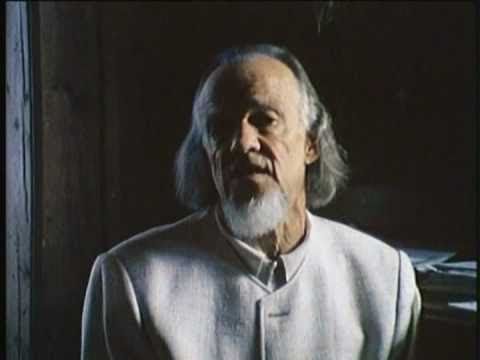



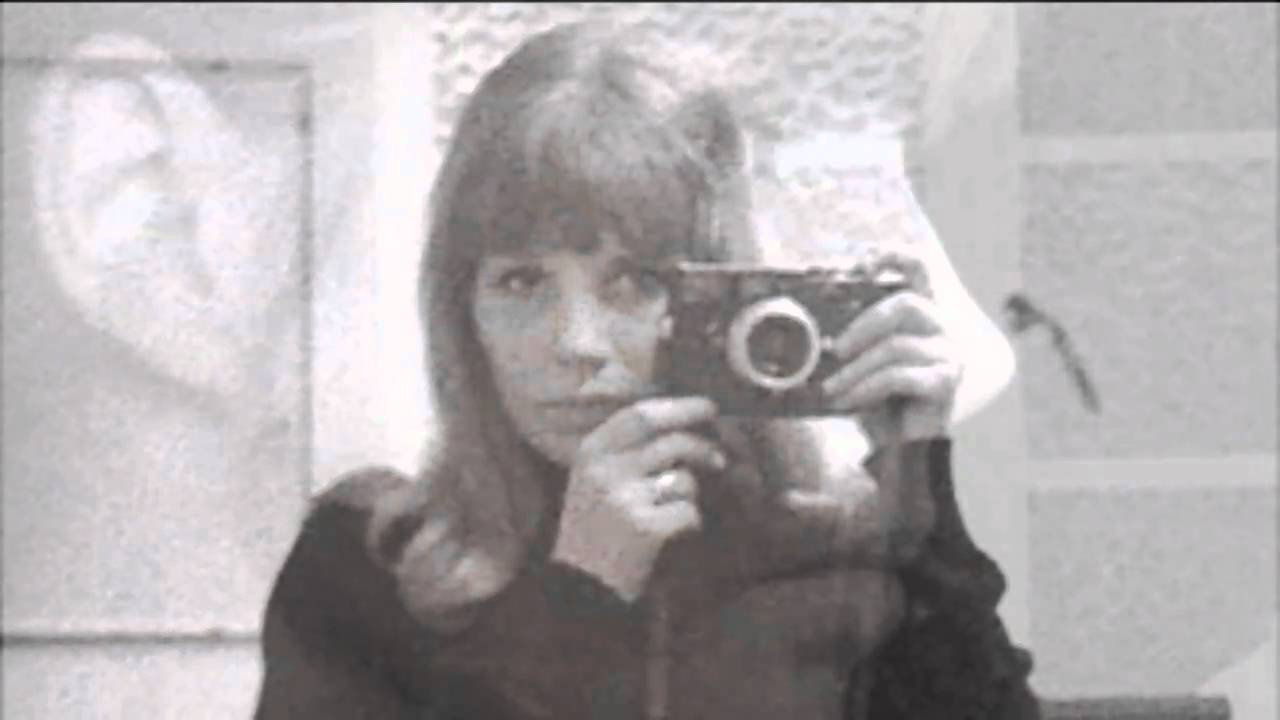




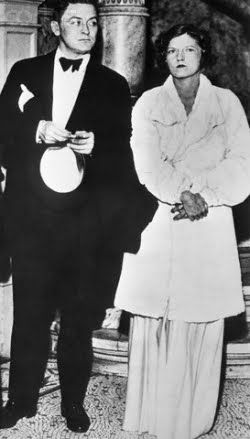


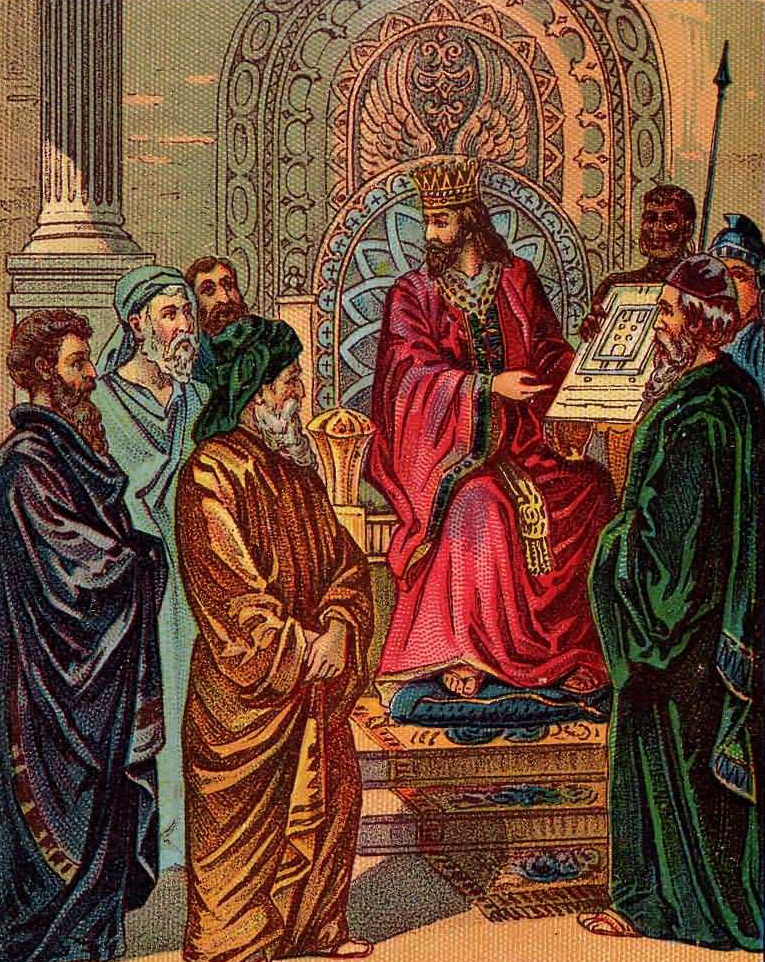


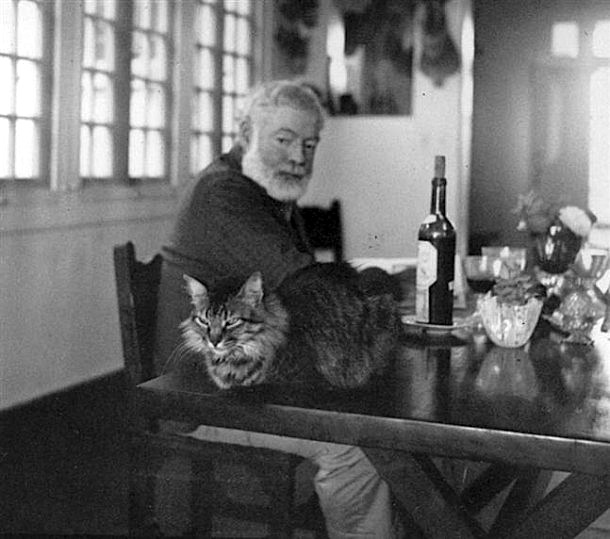
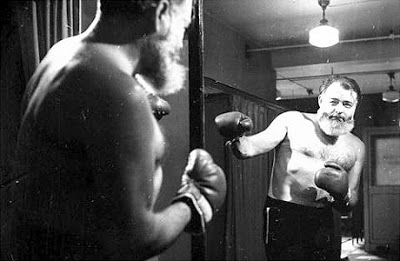


 The Daily Hatch