Tag Archives: David Friend

RESPONDING TO HARRY KROTO’S BRILLIANT RENOWNED ACADEMICS!! Bruce C. Murray, geophysicist, Cal Tech, “What does God mean….it means a rather human like figure who takes a personal interest in the destiny of humans…I think most scientists find that as too simplistic view of reality”

__

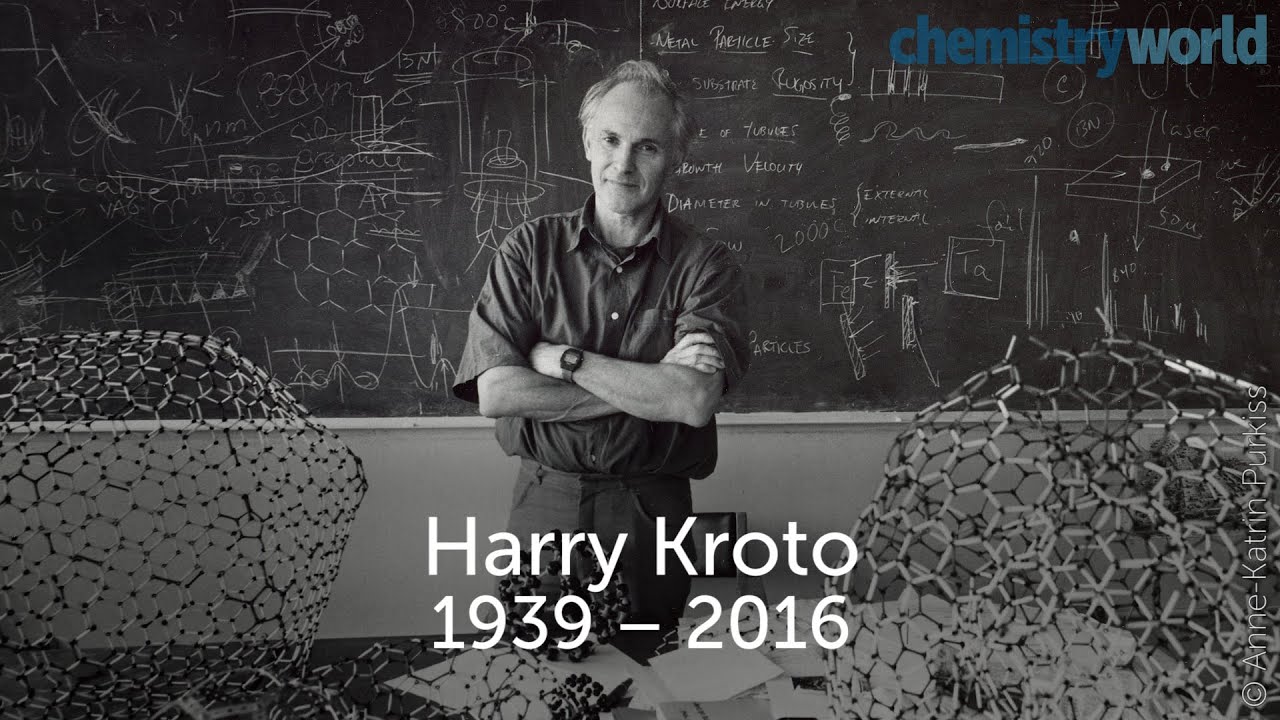
On November 21, 2014 I received a letter from Nobel Laureate Harry Kroto and it said:

…Please click on this URL http://vimeo.com/26991975

and you will hear what far smarter people than I have to say on this matter. I agree with them.

Harry Kroto

Image result for harry kroto

I have attempted to respond to all of Dr. Kroto’s friends arguments and I have posted my responses one per week for over a year now. Here are some of my earlier posts:

Arif AhmedHaroon Ahmed,  Jim Al-Khalili, Sir David AttenboroughMark Balaguer, Horace Barlow, Michael BateSir Patrick BatesonSimon Blackburn, Colin Blakemore, Ned BlockPascal BoyerPatricia ChurchlandAaron CiechanoverNoam Chomsky, Brian CoxPartha Dasgupta,  Alan Dershowitz, Frank DrakeHubert Dreyfus, John DunnBart Ehrman, Mark ElvinRichard Ernst, Stephan Feuchtwang, Robert FoleyDavid Friend,  Riccardo GiacconiIvar Giaever , Roy GlauberRebecca GoldsteinDavid J. Gross,  Brian Greene, Susan GreenfieldStephen F Gudeman,  Alan Guth, Jonathan HaidtTheodor W. Hänsch, Brian Harrison,  Stephen HawkingHermann Hauser, Robert HindeRoald Hoffmann,  Bruce HoodGerard ‘t HooftCaroline HumphreyNicholas Humphrey,  Herbert Huppert,  Gareth Stedman Jones, Steve JonesShelly KaganMichio Kaku,  Stuart KauffmanMasatoshi Koshiba,  Lawrence KraussHarry Kroto, George Lakoff,  Rodolfo LlinasElizabeth Loftus,  Alan MacfarlaneDan McKenzie,  Mahzarin BanajiPeter MillicanMarvin MinskyLeonard Mlodinow,  P.Z.Myers,   Yujin NagasawaAlva NoeDouglas Osheroff, David Parkin,  Jonathan Parry, Roger Penrose,  Saul PerlmutterHerman Philipse,  Carolyn PorcoRobert M. PriceVS RamachandranLisa RandallLord Martin ReesColin RenfrewAlison Richard,  C.J. van Rijsbergen,  Oliver Sacks, John SearleMarcus du SautoySimon SchafferJ. L. Schellenberg,   Lee Silver Peter Singer,  Walter Sinnott-ArmstrongRonald de Sousa, Victor StengerJohn SulstonBarry Supple,   Leonard Susskind, Raymond TallisMax TegmarkNeil deGrasse Tyson,  Martinus J. G. Veltman, Craig Venter.Alexander Vilenkin, Sir John Walker, James D. WatsonFrank WilczekSteven Weinberg, and  Lewis Wolpert,

XXXXXXXXXXXXXXX

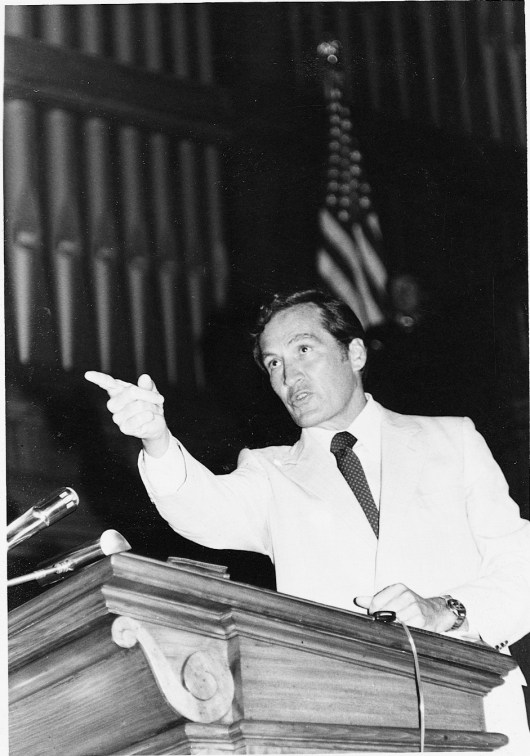
Bruce C. Murray

From Wikipedia, the free encyclopedia
Bruce C. Murray
Bruce Murray.jpg
Born November 30, 1931
New York City, New York, U.S.
Died August 29, 2013 (aged 81)
Oceanside, California, U.S.
Fields
Institutions
Alma mater MIT – Ph.D. geology (1955)
Notable awards
Spouse Joan O’Brien
(divorced; 3 children)
Suzanne Moss
(2 children)

Seated on left with other Planetary Society Founders and enthusiasts in the 1970s.

PIA17587-MarsCuriosityRover-MurrayButtes-20131113.jpg

Bruce Churchill Murray (November 30, 1931 – August 29, 2013) was an American planetary scientist. He was a director of the Jet Propulsion Laboratory (JPL) and co-founder of The Planetary Society.

Education and early life[edit]

Murray received his Ph.D. in geology from Massachusetts Institute of Technology (MIT) in 1955 and joined Standard Oil of California as a geologist. He served in the United States Air Force as a geophysicist[clarification needed], and the U.S. Civil Service[clarification needed] before joining California Institute of Technology (Caltech) in 1960.[2]

Main career[edit]

At Caltech, Murray became an associate professor in 1963, a full professor in 1969, and a professor emeritus in 2001. He would later become professor emeritus of planetary science and geology.

Murray began working at the Jet Propulsion Laboratory(managed by/affiliated with Caltech) in 1960, and served as its director from April 1, 1976 to June 30, 1982.[3][4] He was an important force in promoting the recruitment and hiring of female engineers at the lab, where more women are employed today than any other NASA facility.[5] Murray became JPL’s director at a time when space exploration budgets were shrinking; among other achievements, he saved the Galileo mission to Jupiter from the budget axe.[5]

Murray worked out the geologic history of Mars using photographs taken by Mariner 4 in 1965; he worked with Bob Leighton to accomplish this task. He applied similar photographic analysis when he served as chief scientist of Mariner 10. As he took over management of JPL, he expressed reservations about the Viking lander program, pointing out that the biological experiments included with the spacecraft were not sufficient to accomplish their stated goals.[6]

With Carl Sagan and Louis Friedman, Murray founded The Planetary Society. He also served a term as its chair.

Personal life and death[edit]

Murray was twice married. With his first wife, Joan O’Brien, he had three children. Murray and O’Brien divorced in 1970. In 1971, Murray married Suzanne Murray, with whom he had two children.[2]

Murray’s cousin is former Speaker of the House Tom Foley.

Murray died at his home in Oceanside, California on August 29, 2013, from complications of Alzheimer’s disease, aged 81.[5]

Awards and honors[edit]

Murray was the recipient of the 1997 Carl Sagan Memorial Award.

In 2004, Murray was awarded the Telluride Tech Festival Award of Technology in Telluride, Colorado.

Asteroid 4957 Brucemurray is named after him.

On November 13, 2013, NASA announced the names of two features on Mars important to two active Mars exploration rovers in honor of Murray: “Murray Ridge”, an uplifted crater that the Opportunity rover is exploring; and “Murray Buttes”, an entryway the Curiosity rover will traverse on its way to Mount Sharp.[1]

In  the second video below in the 53rd clip in this series are his words and  my response is below them. 

50 Renowned Academics Speaking About God (Part 1)

Another 50 Renowned Academics Speaking About God (Part 2

A Further 50 Renowned Academics Speaking About God (Part 3)


Bruce C. Murray QUOTE:

What does God mean and to some groups of people in the world it means a rather human like figure who takes a personal interest in the destiny of humans. Sometimes intervenes. In extreme cases wants human sacrifices and all the rest. I think most scientists find that as too simplistic view of reality. Plus we have seen how societies have grown into more sophisticated ones and they began to drop these kind of attitudes and have tried to develop ideas that dealt better with the realities we find now. So I think that is what influences scientific thinking.

Carl Sagan with the other founders of the Planetary Society (Bruce Murray pictured in blue shirt)

Related image


_-

Let me start off by making some comments on the life of Bruce’s good friend Carl Sagan who also had some of the same goals as Bruce.

Image result for carl sagan young

Second, I wanted to point out some scientific evidence that caused Antony Flew to switch from an atheist (as you are now) to a theist.

Image result for antony flew there is a god

Twenty years I had the opportunity to correspond with two individuals that were regarded as two of the most famous atheists of the 20th Century, Antony Flew and Carl Sagan. (I have enclosed some of those letters between us.) I had read the books and seen the films of the Christian philosopher Francis Schaeffer and he had discussed the works of both of these men. I sent both of these gentlemen philosophical arguments from Schaeffer in these letters and in the first letter I sent a cassette tape of my pastor’s sermon IS THE BIBLE TRUE? (Message on You Tube is called HOW YOU CAN BE CERTAIN THE BIBLE IS TRUE.) You may have noticed in the news a few years ago that Antony Flew actually became a theist in 2004 and remained one until his death in 2010. Carl Sagan remained a skeptic until his dying day in 1996.

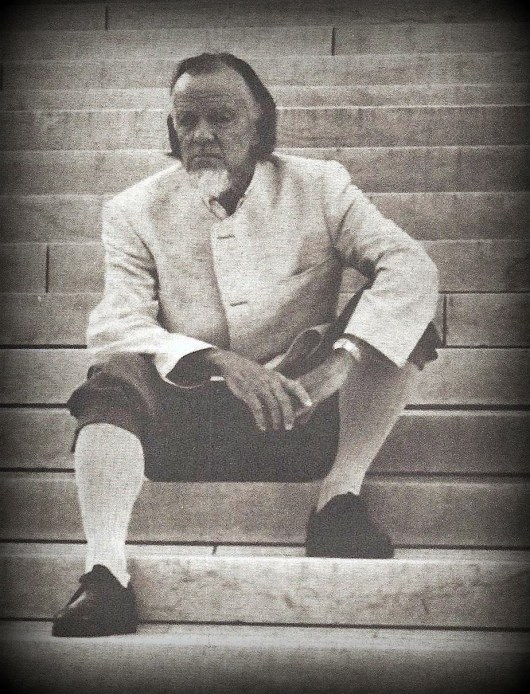
(Francis Schaeffer pictured below)

Image result for francis schaeffer

You will notice in the enclosed letter from June 1, 1994 that Dr. Flew commented, “Thank you for sending me the IS THE BIBLE TRUE? tape to which I have just listened with great interest and, I trust, profit.” It would be a great honor for me if you would take time and drop me a note and let me know what your reaction is to this same message.

On December 5, 1995, I got a letter back from Carl Sagan and I was very impressed that he took time to answer several of my questions and to respond to some of the points that I had made in my previous letters. I had been reading lots of his books and watching him on TV since 1980 and my writing today is a result of that correspondence. It is my conclusion that Carl Sagan died an unfulfilled man on December 20, 1996 with many of the big questions he had going unanswered.
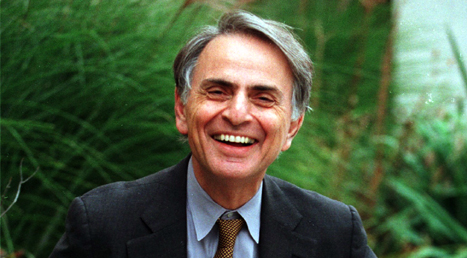
Image result for carl sagan

Much of Carl Sagan’s aspirations and thoughts were revealed to a mass audience of movie goers just a few months after his death. The movie “CONTACT” with Jodie Foster and Matthew McConaughey  is a fictional story written by Sagan  about the SEARCH FOR EXTRATERRESTRIAL INTELLIGENCE (SETI). Sagan visited the set while it was filming and it was released on July 11, 1997 after his unfortunate death.

The movie CONTACT got me thinking about Sagan’s life long hope to find a higher life form out in the universe and I was reminded of Dr. Donald E. Tarter of NASA who wrote me  in a letter a year or so earlier and stated, “I am not a theist. I simply and honestly do not know the answer to the great questions…This brings me to why I am interested in the SEARCH FOR EXTRATERRESTRIAL INTELLIGENCE (SETI)…Let me assure you, one of the first questions I would want to ask another intelligence if one were discovered is, DO YOU BELIEVE IN OR HAVE EVIDENCE OF A SUPREME INTELLIGENCE?”

Jim Fagan (Dr. Donald Tarter Video Interview)

Image result for carl sagan contact movie

Was Sagan ever satisfied with the answers he came up with in his life? It is my view that  true peace and satisfaction can come from a personal relationship with Christ and only in the Bible can we find absolute answers that touch this world we live in. The Apostle Paul was totally content when he wrote the book of Philippians from a jail in Rome right before he was beheaded (according to tradition). Paul observed, “Not that I am speaking of being in need, for I have learned in whatever situation I am to be content.  I know how to be brought low, and I know how to abound. In any and every circumstance, I have learned the secret of facing plenty and hunger, abundance and need.  I can do all things through him (Christ) who strengthens me” (Philippians 4:11-13). On March 11, 2012 my pastor Brandon Bernard at Fellowship Church Little Rock read that scripture and then commented:

Image result for Brandon Bernard at Fellowship Church Little Rock

Paul is reminding us that in every circumstance and in everything he has gone through that his satisfaction is found deeply in Christ. You think about this guy who is writing from prison. He is in this prison cell and it is a hardship in his life, but him of all people is saying that “I am writing to you but I am content and I am satisfied.” That is a statement you don’t hear from a lot of people these days… A lot of people are discontent and dissatisfied… Think about the poets from your generation or the generation before us. How about the deep theologians called “The Rolling Stones.” Remember them. They wrote this song “I can’t get no satisfaction.” And you know what they say after that phrase? “And I try and I try and I try.” I am not sure how deep most of their lyrics are, but they voice the cry of many people. “I can’t get no satisfaction and I try and I am trying and I am trying.”

Image result for rolling stones i can't get no satisfaction

What about one of those other poets by the name of Bono who wrote a song called, “I still haven’t found what I am looking for.” It is interesting. “I still haven’t found what I am looking for.” It has a nice melody to it but there is probably a reason why it is so popular because there is a lot of people deep down in their soul feel like they haven’t found what they are looking for. It is true. What is so funny to me is that what is so desired is so elusive. 

(Bono with his band U 2 pictured below)
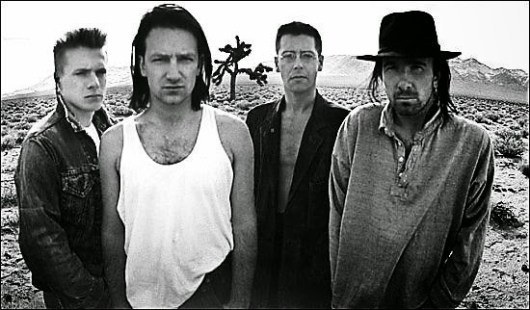
Image result for u 2 - i still haven't found what i'm looking for

Rice Broocks in his book GOD’S NOT DEAD noted:

Image result for Rice Broocks in his book GOD'S NOT DEAD

Astronomer Carl Sagan was a prolific writer and trustee of the SETI Institute (Search for Extraterrestrial Intelligence) founded in 1984 to scan the universe for any signs of life beyond earth. Sagan’s best-selling work COSMOS also became an award-winning television series explaining the wonders of the universe and exporting the belief not in an intelligent Creator but in potential intelligent aliens. He believed somehow that by knowing who they are, we would discover who we as humans really are. “The very thought of there being other beings different from all of us can have a very useful cohering role for the human species” (quoted from you tube clip “Carl Sagan appears on CBC to discuss the importance of SETI [Carl Sagan Archives]” at the 7 minute mark, Oct 1988 ). Sagan reasoning? If aliens could have contacted us, knowing how impossible it is for us to reach them, they would have the answers we seek to our ultimate questions. This thought process shows the desperate need we have as humans for answers to the great questions of our existence. Does life have any ultimate meaning and purpose? Do we as humans have any more value than the other animals? Is there a purpose to the universe, or more specifically, to our individual lives?
Image result for carl sagan cosmos

Carl Sagan had to live  in the world that God made with the conscience that God gave him. This created a tension. As you know the movie CONTACT was written by Carl Sagan and it was about Dr. Arroway’s SEARCH FOR EXTRATERRESTRIAL INTELLIGENCE (SETI) program and her desire to make contact with aliens and ask them questions. It is my view that Sagan should have examined more closely  the accuracy of the Bible and it’s fulfilled prophecies from the Old Testament in particular before chasing after aliens from other planets for answers. Sagan himself had written,”Plainly, there’s something within me that’s ready to believe in life after death…If some good evidence for life after death was announced, I’d be eager to examine it; but it would have to be real scientific data, not mere antedote”(pp 203-204, The Demon Haunted World, 1995).

Image result for carl sagan demon haunted world

Sagan said he had taken a look at Old Testament prophecy and it did not impress him because it was too vague. He had taken a look at Christ’s life in the gospels, but said it was unrealistic for God to send a man to communicate for God. Instead, Sagan suggested that God could have written a mathematical formula in the Bible or put a cross in the sky. However, what happens at the conclusion of the movie CONTACT?  This is Sagan’s last message to the world in the form of the movie that appeared shortly after his death. Dr Arroway (Jodie Foster) who is a young atheistic scientist who meets with an alien and this alien takes the form of Dr. Arroway’s father. The alien tells her that they thought this would make it easier for her. In fact, he meets her on a beach that resembles a beach that she grew up near so she would also be comfortable with the surroundings. Carl Sagan when writing this script chose to put the alien in human form so Dr. Arroway could relate to the alien. Christ chose to take our form and come into our world too and still many make up excuses for not believing.

Image result for contact dr. arroway father beach

(That evening she [future Dr. Arroway] makes contact with a truck driver in Pensacola, Florida over her CB radio and she asks her Dad how far her radio can reach)

Image result for contact dr. arroway father


__

Related image

Lastly, Carl Sagan could not rid himself of the “mannishness of man.” Those who have read Francis Schaeffer’s many books know exactly what I am talking about. We are made in God’s image and we are living in God’s world. Therefore, we can not totally suppress the objective truths of our unique humanity. In my letter of Jan 10, 1996 to Dr. Sagan, I really camped out on this point a long time because I had read Sagan’s  book SHADOWS OF FORGOTTON ANCESTORS  and in it  Sagan attempts to  totally debunk the idea that we are any way special.
Image result for carl sagan shadows of forgotten ancestors

However, what does Dr. Sagan have Dr. Arroway say at the end of the movie CONTACT when she is testifying before Congress about the alien that  communicated with her? See if you can pick out the one illogical word in her statement: “I was given a vision how tiny, insignificant, rare and precious we all are. We belong to something that is greater than ourselves and none of us are alone.”

Image result for contact dr. arroway testifying


Dr Sagan deep down knows that we are special so he could not avoid putting the word “precious” in there. Francis Schaeffer said unbelievers are put in a place of tension when they have to live in the world that God has made because deep down they know they are special because God has put that knowledge in their hearts.We are not the result of survival of the fittest and headed back to the dirt forevermore. This is what Schaeffer calls “taking the roof off” of the unbeliever’s worldview and showing the inconsistency that exists.

(Francis Schaeffer pictured below)
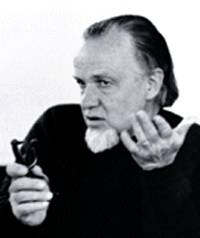
Image result for francis schaeffer

In several of my letters to Sagan I quoted this passage below:

Romans 1:17-22 (Amplified Bible)

17For in the Gospel a righteousness which God ascribes is revealed, both springing from faith and leading to faith [disclosed through the way of faith that arouses to more faith]. As it is written, The man who through faith is just and upright shall live and shall live by faith.18For God’s [holy] wrath and indignation are revealed from heaven against all ungodliness and unrighteousness of men, who in their wickedness repress and hinder the truth and make it inoperative. 19For that which is known about God is evident to them and made plain in their inner consciousness, because God [Himself] has shown it to them. 20For ever since the creation of the world His invisible nature and attributes, that is, His eternal power and divinity, have been made intelligible and clearly discernible in and through the things that have been made (His handiworks). So [men] are without excuse [altogether without any defense or justification],21Because when they knew and recognized Him as God, they did not honor and glorify Him as God or give Him thanks. But instead they became futile and [a]godless in their thinking [with vain imaginings, foolish reasoning, and stupid speculations] and their senseless minds were darkened. 22Claiming to be wise, they became fools [professing to be smart, they made simpletons of themselves].

Bruce C. Murray QUOTE:

What does God mean and to some groups of people in the world it means a rather human like figure who takes a personal interest in the destiny of humans. Sometimes intervenes. In extreme cases wants human sacrifices and all the rest. I think most scientists find that as too simplistic view of reality. Plus we have seen how societies have grown into more sophisticated ones and they began to drop these kind of attitudes and have tried to develop ideas that dealt better with the realities we find now. So I think that is what influences scientific thinking.

My additional responses to  Dr. Murray’s quote:


I would like to give 4 additional responses to the above assertion made by Dr. Murray.

FIRST, Romans 1 points that every person has a God-given conscience instead of them that tells them that God exists.

SECOND, Dr. Murray’s good friend  Carl Sagan was a member of an organization called Committee for the Scientific Investigation of Claims of the Paranormal (CSICOP),  and I presented them with an opportunity to examine the claim that that the claim of Romans 1 can be demonstrated by a lie-detector test. (As seen in the letter I wrote to Dr. Kroto a couple of years ago as seen below.) 

(Bruce Murray with Carl Sagan below)

Image result for carl sagan bruce murray

THIRD, if you are truly a scientist then you would want to look at the evidence  concerning the accuracy of the Bible. DOES THE BIBLE ERR IN THE AREA OF SCIENCE AND HISTORY? The Bible is true from cover to cover and can be trusted. Charles Darwin himself longed for evidence to come forward from the area of  Biblical Archaeology  but so much has  advanced  since Darwin wrote these words in the 19th century! Here are some of the posts I have done in the past on the subject and if you like you could just google these subjects: 1. The Babylonian Chronicleof Nebuchadnezzars Siege of Jerusalem, 2. Hezekiah’s Siloam Tunnel Inscription.13. The Pilate Inscription14. Caiaphas Ossuary14 B Pontius Pilate Part 214c. Three greatest American Archaeologists moved to accept Bible’s accuracy through archaeology.

FOURTH, Carl Sagan’s claim that OPTIMISTIC HUMANISM is the way to go was falsified 3000 years ago. Solomon showed very clearly in the Book of Ecclesiastes that without God in the picture when one looks at life UNDER THE SUN the only conclusions one can reach is that life is meaningless and there is no satisfaction anywhere. This also can be seen in the letter below to Dr. Kroto.

_________

Harry Kroto, Dept of Chemistry and Biochemistry, c/o Florida State

June 17, 2014

Dear Dr. Kroto,

I noticed that you are on the Committee for the Scientific Investigation of Claims of the Paranormal (CSICOP) and that prompted me to send this material to you today.

A couple of months ago I mailed you a letter that contained correspondence I had with Antony Flew and Carl Sagan and I also included some of the material I had sent them from Adrian Rogers and Francis Schaeffer. Did you have a chance to listen to the IS THE BIBLE TRUE? CD yet? I also wanted to let know some more about about Francis Schaeffer. Ronald Reagan said of Francis Schaeffer, “He will long be remembered as one of the great Christian thinkers of our century, with a childlike faith and a profound compassion toward others. It can rarely be said of an individual that his life touched many others and affected them for the better; it will be said of Francis Schaeffer that his life touched millions of souls and brought them to the truth of their creator.”

Thirty years ago the christian philosopher and author Francis Schaeffer (1912-1984) died and on the 10th anniversary of his passing in 1994 I wrote a number of the top evolutionists, humanists and atheistic scholars in the world and sent them a story about Francis Schaeffer in 1930 when he left agnosticism and embraced Christianity. I also sent them  a cassette tape with the title “Four intellectual bridges evolutionists can’t cross” by Adrian Rogers (1931-2005) and some of the top  scholars who corresponded with me since that time include Ernest Mayr (1904-2005), George Wald (1906-1997), Carl Sagan (1934-1996),  Robert Shapiro (1935-2011), Nicolaas Bloembergen (1920-),  Brian Charlesworth (1945-),  Francisco J. Ayala (1934-) Elliott Sober (1948-), Kevin Padian (1951-), Matt Cartmill (1943-) , Milton Fingerman (1928-), John J. Shea (1969-), , Michael A. Crawford (1938-), (Paul Kurtz (1925-2012), Sol Gordon (1923-2008), Albert Ellis (1913-2007), Barbara Marie Tabler (1915-1996), Renate Vambery (1916-2005), Archie J. Bahm (1907-1996), Aron S “Gil” Martin ( 1910-1997), Matthew I. Spetter (1921-2012), H. J. Eysenck (1916-1997), Robert L. Erdmann (1929-2006), Mary Morain (1911-1999), Lloyd Morain (1917-2010),  Warren Allen Smith (1921-), Bette Chambers (1930-),  Gordon Stein (1941-1996) , Milton Friedman (1912-2006), John Hospers (1918-2011), and Michael Martin (1932-).

Corliss Lamont and Herbert A. Tonne pictured above. 

The truth is that I am an evangelical Christian and I have enjoyed developing relationships with skeptics and humanists over the years. Back in 1996 I took my two sons who were 8  and 10 yrs old back then to New York, Washington, Philadelphia, Delaware, and New Jersey and we had dinner one night with Herbert A. Tonne, who was one of the signers of the Humanist Manifesto II. The Late Professor John George who has written books for Prometheus Press was my good friend during the last 10 years of his life. (I still miss him today.) We often ate together and were constantly talking on the phone and writing letters to one another.

It is a funny story how I met Dr. George. As an evangelical Christian and a member of the Christian Coalition, I felt obliged to expose a misquote of John Adams’ I found in an article entitled “America’s Unchristian Beginnings” by the self-avowed atheist Dr. Steven Morris. However, what happened next changed my focus to the use of misquotes, unconfirmed quotes, and misleading attributions by the religious right.

In the process of attempting to correct Morris, I was guilty of using several misquotes myself. Professor John George of the University of Central Oklahoma political science department and coauthor (with Paul Boller Jr.) of the book THEY NEVER SAID IT! set me straight. George pointed out that George Washington never said, “It is impossible to rightly govern the world without God and the Bible. I had cited page 18 of the 1927 edition of HALLEY’S BIBLE HANDBOOK. This quote was probably generated by a similar statement that appears in A LIFE OF WASHINGTON by James Paulding. Sadly, no one has been able to verify any of the quotes in Paulding’s book since no footnotes were offered.
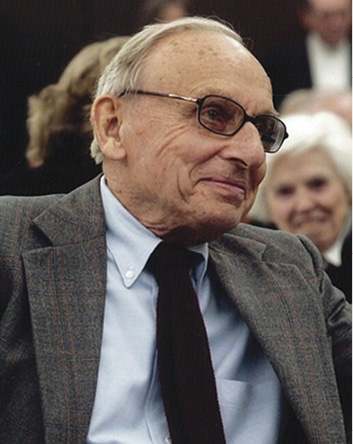
Paul F. Boller Jr.: 1916–2014

After reading THEY NEVER SAID IT! I had a better understanding of how widespread the problem of misquotes is. Furthermore, I discovered that many of these had been used by the leaders of the religious right. I decided to confront some individuals concerning their misquotes. WallBuilders, the publisher of David Barton’s THE MYTH OF SEPARATION, responded by providing me with their “unconfirmed  quote” list which contained a dozen quotes widely used by the religious right.

Sadly some of the top leaders of my own religious right have failed to take my encouragement to stop using these quotes and they have either claimed that their critics were biased skeptics who find the truth offensive or they defended their own method of research and claimed the secondary sources were adequate.

I have enclosed that same CD by Adrian Rogers that I sent 20 years ago although the second half does include a story about  Charles Darwin‘s journey from  the position of theistic evolution to agnosticism. Here are the four bridges that Adrian Rogers says evolutionists can’t cross in the CD  “Four Bridges that the Evolutionist Cannot Cross.” 1. The Origin of Life and the law of biogenesis. 2. The Fixity of the Species. 3.The Second Law of Thermodynamics. 4. The Non-Physical Properties Found in Creation.  

In the first 3 minutes of the CD is the hit song “Dust in the Wind.” In the letter 20 years ago I gave some of the key points Francis Schaeffer makes about the experiment that Solomon undertakes in the book of Ecclesiastes to find satisfaction by  looking into  learning (1:16-18), laughter, ladies, luxuries,  and liquor (2:1-3, 8, 10, 11), and labor (2:4-6, 18-20).

I later learned this book of Ecclesiastes was Richard Dawkins’ favorite book in the Bible. Schaeffer noted that Solomon took a look at the meaning of life on the basis of human life standing alone between birth and death “under the sun.” This phrase UNDER THE SUN appears over and over in Ecclesiastes. The Christian Scholar Ravi Zacharias noted, “The key to understanding the Book of Ecclesiastes is the term UNDER THE SUN — What that literally means is you lock God out of a closed system and you are left with only this world of Time plus Chance plus matter.” No wonder Ecclesiastes is Richard Dawkins’ favorite book of the Bible! 

Here the first 7 verses of Ecclesiastes followed by Schaeffer’s commentary on it:

The words of the Preacher, the son of David, king in Jerusalem. Vanity of vanities, says the Preacher, vanity of vanities! All is vanity. What does man gain by all the toil at which he toils under the sun? A generation goes, and a generation comes, but the earth remains forever. The sun rises, and the sun goes down, and hastens to the place where it rises. The wind blows to the south and goes around to the north; around and around goes the wind, and on its circuits the wind returns. All streams run to the sea, but the sea is not full; to the place where the streams flow, there they flow again.  

Solomon is showing a high degree of comprehension of evaporation and the results of it. (E.O.Wilson has marveled at Solomon’s scientific knowledge of ants that was only discovered in the 1800’s.) Seeing also in reality nothing changes. There is change but always in a set framework and that is cycle. You can relate this to the concepts of modern man. Ecclesiastes is the only pessimistic book in the Bible and that is because of the place where Solomon limits himself. He limits himself to the question of human life, life under the sun between birth and death and the answers this would give.

(Harvard’s E.O. Wilson below)

Image result for e.o.wilson

Solomon doesn’t place man outside of the cycle. Man doesn’t escape the cycle. Man is in the cycle. Birth and death and youth and old age.

(Francis Schaeffer pictured above)

There is no doubt in my mind that Solomon had the same experience in his life that I had as a younger man (at the age of 18 in 1930). I remember standing by the sea and the moon arose and it was copper and beauty. Then the moon did not look like a flat dish but a globe or a sphere since it was close to the horizon. One could feel the global shape of the earth too. Then it occurred to me that I could contemplate the interplay of the spheres and I was exalted because I thought I can look upon them with all their power, might, and size, but they could contempt nothing. Then came upon me a horror of great darkness because it suddenly occurred to me that although I could contemplate them and they could contemplate nothing yet they would continue to turn in ongoing cycles when I saw no more forever and I was crushed.

You are an atheist and you have a naturalistic materialistic worldview, and this short book of Ecclesiastes should interest you because the wisest man who ever lived in the position of King of Israel came to THREE CONCLUSIONS that will affect you.

FIRST, chance and time have determined the past, and they will determine the future.  (Ecclesiastes 9:11-13)

These two verses below  take the 3 elements mentioned in a naturalistic materialistic worldview (time, chance and matter) and so that is all the unbeliever can find “under the sun” without God in the picture. You will notice that these are the three elements that evolutionists point to also.

Ecclesiastes 9:11-12 is following: I have seen something else under the sun: The race is not to the swift or the battle to the strong, nor does food come to the wise or wealth to the brilliant or favor to the learned; but time and chance happen to them all. Moreover, no one knows when their hour will come: As fish are caught in a cruel net, or birds are taken in a snare, so people are trapped by evil times that fall unexpectedly upon them.

SECOND, Death is the great equalizer (Eccl 3:20, “All go to the same place; all come from dust, and to dust all return.”)

THIRD, Power reigns in this life, and the scales are not balanced(Eccl 4:1, 8:15)

Ecclesiastes 4:1-2: “Next I turned my attention to all the outrageous violence that takes place on this planet—the tears of the victims, no one to comfort them; the iron grip of oppressors, no one to rescue the victims from them.” Ecclesiastes 8:14; “ Here’s something that happens all the time and makes no sense at all: Good people get what’s coming to the wicked, and bad people get what’s coming to the good. I tell you, this makes no sense. It’s smoke.”

Solomon had all the resources in the world and he found himself searching for meaning in life and trying to come up with answers concerning the afterlife. However, it seems every door he tries to open is locked. Today men try to find satisfaction in learning, liquor, ladies, luxuries, laughter, and labor and that is exactly what Solomon tried to do too.  None of those were able to “fill the God-sized vacuum in his heart” (quote from famous mathematician and philosopher Blaise Pascal). You have to wait to the last chapter in Ecclesiastes to find what Solomon’s final conclusion is.

In 1978 I heard the song “Dust in the Wind” by Kansas when it rose to #6 on the charts. That song told me that Kerry Livgren the writer of that song and a member of Kansas had come to the same conclusion that Solomon had. I remember mentioning to my friends at church that we may soon see some members of Kansas become Christians because their search for the meaning of life had obviously come up empty even though they had risen from being an unknown band to the top of the music business and had all the wealth and fame that came with that. Furthermore, Solomon realized death comes to everyone and there must be something more.

Livgren wrote:

All we do, crumbles to the ground though we refuse to see, Dust in the Wind, All we are is dust in the wind, Don’t hang on, Nothing lasts forever but the Earth and Sky, It slips away, And all your money won’t another minute buy.”

Take a minute and compare Kerry Livgren‘s words to that of the late British humanist H.J. Blackham:

On humanist assumptions, life leads to nothing, and every pretense that it does not is a deceit. If there is a bridge over a gorge which spans only half the distance and ends in mid-air, and if the bridge is crowded with human beings pressing on, one after the other they fall into the abyss. The bridge leads nowhere, and those who are pressing forward to cross it are going nowhere….It does not matter where they think they are going, what preparations for the journey they may have made, how much they may be enjoying it all. The objection merely points out objectively that such a situation is a model of futility“( H. J. Blackham, et al., Objections to Humanism (Riverside, Connecticut: Greenwood Press, 1967).

Harold John Blackham (31 March 1903 – 23 January 2009)

_____________________________________

Both Kerry Livgren and the bass player DAVE HOPE of Kansas became Christians eventually. Kerry Livgren first tried Eastern Religions and DAVE HOPE had to come out of a heavy drug addiction. I was shocked and elated to see their personal testimony on The 700 Club in 1981 and that same  interview can be seen on youtube today. Livgren lives in Topeka, Kansas today where he teaches “Diggers,” a Sunday school class at Topeka Bible ChurchDAVE HOPE is the head of Worship, Evangelism and Outreach at Immanuel Anglican Church in Destin, Florida.

Solomon’s experiment was a search for meaning to life “under the sun.” Then in last few words in the Book of Ecclesiastes he looks above the sun and brings God back into the picture: “The conclusion, when all has been heard, is: Fear God and keep His commandments, because this applies to every person. For God will bring every act to judgment, everything which is hidden, whether it is good or evil.”

The answer to find meaning in life is found in putting your faith and trust in Jesus Christ. The Bible is true from cover to cover and can be trusted.

Now on to the other topic I wanted to discuss with you today. I wanted to write you today for one reason. IS THERE A GOOD CHANCE THAT DEEP DOWN IN YOUR CONSCIENCE  you have repressed the belief in your heart that God does exist and IS THERE A POSSIBILITY THIS DEEP BELIEF OF YOURS CAN BE SHOWN THROUGH A LIE-DETECTOR? (Back in the late 1990’s I had the opportunity to correspond with over a dozen members of CSICOP on just this very issue.)

I have a good friend who is a street preacher who preaches on the Santa Monica Promenade in California and during the Q/A sessions he does have lots of atheists that enjoy their time at the mic. When this happens he  always quotes Romans 1:18-19 (Amplified Bible) ” For God’s wrath and indignation are revealed from heaven against all ungodliness and unrighteousness of men, who in their wickedness REPRESS and HINDER the truth and make it inoperative. For that which is KNOWN about God is EVIDENT to them and MADE PLAIN IN THEIR INNER CONSCIOUSNESS, because God  has SHOWN IT TO THEM,”(emphasis mine). Then he  tells the atheist that the atheist already knows that God exists but he has been suppressing that knowledge in unrighteousness. This usually infuriates the atheist.

My friend draws some large crowds at times and was thinking about setting up a lie detector test and see if atheists actually secretly believe in God. He discussed this project with me since he knew that I had done a lot of research on the idea about 20 years ago.

Nelson Price in THE EMMANUEL FACTOR (1987) tells the story about Brown Trucking Company in Georgia who used to give polygraph tests to their job applicants. However, in part of the test the operator asked, “Do you believe in God?” In every instance when a professing atheist answered “No,” the test showed the person to be lying. My pastor Adrian Rogers used to tell this same story to illustrate Romans 1:19 and it was his conclusion that “there is no such thing anywhere on earth as a true atheist. If a man says he doesn’t believe in God, then he is lying. God has put his moral consciousness into every man’s heart, and a man has to try to kick his conscience to death to say he doesn’t believe in God.”

(Adrian Rogers at White House)

It is true that polygraph tests for use in hiring were banned by Congress in 1988.  Mr and Mrs Claude Brown on Aug 25, 1994  wrote me a letter confirming that over 15,000 applicants previous to 1988 had taken the polygraph test and EVERY-TIME SOMEONE SAID THEY DID NOT BELIEVE IN GOD, THE MACHINE SAID THEY WERE LYING.

It had been difficult to catch up to the Browns. I had heard about them from Dr. Rogers’ sermon but I did not have enough information to locate them. Dr. Rogers referred me to Dr. Nelson Price and Dr. Price’s office told me that Claude Brown lived in Atlanta. After writing letters to all 9 of the entries for Claude Brown in the Atlanta telephone book, I finally got in touch with the Browns.

Adrian Rogers also pointed out that the Bible does not recognize the theoretical atheist.  Psalms 14:1: The fool has said in his heart, “There is no God.”  Dr Rogers notes, “The fool is treating God like he would treat food he did not desire in a cafeteria line. ‘No broccoli for me!’ ” In other words, the fool just doesn’t want God in his life and is a practical atheist, but not a theoretical atheist. Charles Ryrie in the The Ryrie Study Bible came to the same conclusion on this verse.

Here are the conclusions of the experts I wrote in the secular world concerning the lie detector test and it’s ability to get at the truth:

Professor Frank Horvath of the School of Criminal Justice at Michigan State University has testified before Congress concerning the validity of the polygraph machine. He has stated on numerous occasions that “the evidence from those who have actually been affected by polygraph testing in the workplace is quite contrary to what has been expressed by critics. I give this evidence greater weight than I give to the most of the comments of critics” (letter to me dated October 6, 1994).

There was no better organization suited to investigate this claim concerning the lie detector test than the Committee for the Scientific Investigation of Claims of the Paranormal (CSICOP). This organization changed their name to the Committe for Skeptical Inquiry in 2006. This organization includes anyone who wants to help debunk the whole ever-expanding gamut of misleading, outlandish, and fraudulent claims made in the name of science. I AM WRITING YOU TODAY BECAUSE YOU ARE ASSOCIATED WITH CSICOP.

I read The Skeptical Review(publication of CSICOP) for several years during the 90’s and I would write letters to these scientists about taking this project on and putting it to the test.  Below are some of  their responses (15 to 20 years old now):

1st Observation: Religious culture of USA could have influenced polygraph test results.
ANTONY FLEW  (formerly of Reading University in England, now deceased, in a letter to me dated 8-11-96) noted, “For all the evidence so far available seems to be of people from a culture in which people are either directly brought up to believe in the existence of God or at least are strongly even if only unconsciously influenced by those who do. Even if everyone from such a culture revealed unconscious belief, it would not really begin to show that — as Descartes maintained— the idea of God is so to speak the Creator’s trademark, stamped on human souls by their Creator at their creation.”

2nd Observation: Polygraph Machines do not work. JOHN R. COLE, anthropologist, editor, National Center for Science Education, Dr. WOLF RODER, professor of Geography, University of Cincinnati, Dr. SUSAN BLACKMORE,Dept of Psychology, University of the West of England, Dr. CHRISTOPHER C. FRENCH, Psychology Dept, Goldsmith’s College, University of London, Dr.WALTER F. ROWE, The George Washington University, Dept of Forensic Sciences, Graduate School of Arts and Sciences.

3rd Observation: The sample size probably was not large enough to apply statistical inference. (These gentlemen made the following assertion before I received the letter back from Claude Brown that revealed that the sample size was over 15,000.) JOHN GEOHEGAN, Chairman of New Mexicans for Science and Reason, Dr. WOLF RODER, and Dr WALTER F. ROWE (in a letter dated July 12, 1994) stated, “The polygraph operator for Brown Trucking Company has probably examined only a few hundred or a few thousand job applicants. I would surmise that only a very small number of these were actually atheists. It seems a statistically insignificant (and distinctly nonrandom) sampling of the 5 billion human beings currently inhabiting the earth. Dr. Nelson Price also seems to be impugning the integrity of anyone who claims to be an atheist in a rather underhanded fashion.”

4th Observation: The question (Do you believe in God?)  was out of place and it surprised the applicants. THOMAS GILOVICH, psychologist, Cornell Univ., Dr. ZEN FAULKES, professor of Biology, University of Victoria (Canada), ROBERT CRAIG, Head of Indiana Skeptics Organization, Dr. WALTER ROWE, 
 
5th Observation: Proof that everyone believes in God’s existence does not prove that God does in fact exist. PAUL QUINCEY, Nathional Physical Laboratory,(England), Dr. CLAUDIO BENSKI, Schneider Electric, CFEPP, (France),
6th Observation: Both the courts and Congress recognize that lie-detectors don’t work and that is why they were banned in 1988.  (Governments and the military still use them.)
Dr WALTER ROWE, KATHLEEN M. DILLION, professor of Psychology, Western New England College.
7th Observation:This information concerning Claude Brown’s claim has been passed on to us via a tv preacher and eveybody knows that they are untrustworthy– look at their history. WOLF RODER.
______________
Solomon wisely noted in Ecclesiastes 3:11 “God has planted eternity in the heart of men…” (Living Bible). No wonder Bertrand Russell wrote in his autobiography, “It is odd, isn’t it? I feel passionately for this world and many things and people in it, and yet…what is it all? There must be something more important, one feels, though I don’t believe there is. I am haunted. Some ghosts, for some extra mundane regions, seem always trying to tell me something that I am to repeat to the world, but I cannot understand that message.” [From a letter dated August 11, 1918 to Miss Rinder when Russell was 46]
Gene Emery, science writer for Providence Journal-Bulletin is a past winner of the CSICOP “Responsibility in Journalism Award” and he had the best suggestion of all when he suggested, “Actually, if you want to make a good case about whether Romans 1:19 is true, arrange to have a polygraph operator (preferably an atheist or agnostic) brought to the next CSICOP meeting. (I’m not a member of CSICOP, by the way, so I can’t give you an official invitation or anything.) If none of the folks at that meeting can convince the machine that they truly believe in God, maybe there is, in fact, an innate willingness to believe in God.”

DO YOU HAVE ANY REACTIONS TO ADD TO THESE 7 OBSERVATIONS THAT I GOT 15 YEARS AGO? Thank you again for your time and I know how busy you are.

Everette Hatcher, everettehatcher@gmail.com, http://www.thedailyhatch.org, cell ph 501-920-5733, Box 23416, LittleRock, AR 72221


Related posts:

THE DEMON-HAUNTED WORLD: Science as a Candle in the Dark by Carl Sagan. New York: Random House, 1995. 457 pages, extensive references, index. Hardcover; $25.95. PSCF 48 (December 1996): 263.

_____________ THE DEMON-HAUNTED WORLD: Science as a Candle in the Dark by Carl Sagan. New York: Random House, 1995. 457 pages, extensive references, index. Hardcover; $25.95. PSCF 48 (December 1996): 263. Sagan is the David Duncan Professor of Astronomy and Space Sciences at Cornell University. He is author of many best sellers, including Cosmos, which […]

Carl Sagan’s search for the of meaning of life

________________ … Kansas – Dust In The Wind “Live” HD Rolling Stones: “Satisfaction!” U2 Still Haven’t Found (with lyrics) __________________________________________________ On December 5, 1995, I got a letter back from Carl Sagan and I was very impressed that he took time to answer several of my questions and to respond to some of the points that […]

Taking on Ark Times Bloggers on various issues Part F “Carl Sagan’s views on how God should try and contact us” includes film “The Basis for Human Dignity”

I have gone back and forth and back and forth with many liberals on the Arkansas Times Blog on many issues such as abortion, human rights, welfare, poverty, gun control  and issues dealing with popular culture. Here is another exchange I had with them a while back. My username at the Ark Times Blog is Saline […]

Carl Sagan v. Nancy Pearcey

On March 17, 2013 at our worship service at Fellowship Bible Church, Ben Parkinson who is one of our teaching pastors spoke on Genesis 1. He spoke about an issue that I was very interested in. Ben started the sermon by reading the following scripture: Genesis 1-2:3 English Standard Version (ESV) The Creation of the […]

Review of Carl Sagan book (Part 4 of series on Evolution)

Review of Carl Sagan book (Part 4 of series on Evolution) The Long War against God-Henry Morris, part 5 of 6 Uploaded by FLIPWORLDUPSIDEDOWN3 on Aug 30, 2010 http://www.icr.org/ http://store.icr.org/prodinfo.asp?number=BLOWA2http://store.icr.org/prodinfo.asp?number=BLOWASGhttp://www.fliptheworldupsidedown.com/blog _______________________ I got this from a blogger in April of 2008 concerning candidate Obama’s view on evolution: Q: York County was recently in the news […]

Review of Carl Sagan book (Part 3 of series on Evolution)

Review of Carl Sagan book (Part 3 of series on Evolution) The Long War against God-Henry Morris, part 4 of 6 Uploaded by FLIPWORLDUPSIDEDOWN3 on Aug 30, 2010 http://www.icr.org/ http://store.icr.org/prodinfo.asp?number=BLOWA2http://store.icr.org/prodinfo.asp?number=BLOWASGhttp://www.fliptheworldupsidedown.com/blog ______________________________________ I got this from a blogger in April of 2008 concerning candidate Obama’s view on evolution: Q: York County was recently in the news […]

Carl Sagan versus RC Sproul

At the end of this post is a message by RC Sproul in which he discusses Sagan. Over the years I have confronted many atheists. Here is one story below: I really believe Hebrews 4:12 when it asserts: For the word of God is living and active and sharper than any two-edged sword, and piercing as far as the […]

Review of Carl Sagan book (Part 4 of series on Evolution)jh68

Review of Carl Sagan book (Part 4 of series on Evolution) The Long War against God-Henry Morris, part 5 of 6 Uploaded by FLIPWORLDUPSIDEDOWN3 on Aug 30, 2010 http://www.icr.org/ http://store.icr.org/prodinfo.asp?number=BLOWA2http://store.icr.org/prodinfo.asp?number=BLOWASGhttp://www.fliptheworldupsidedown.com/blog _______________________ This is a review I did a few years ago. THE DEMON-HAUNTED WORLD: Science as a Candle in the Dark by Carl […]

Review of Carl Sagan book (Part 3 of series on Evolution)

Review of Carl Sagan book (Part 3 of series on Evolution) The Long War against God-Henry Morris, part 4 of 6 Uploaded by FLIPWORLDUPSIDEDOWN3 on Aug 30, 2010 http://www.icr.org/ http://store.icr.org/prodinfo.asp?number=BLOWA2http://store.icr.org/prodinfo.asp?number=BLOWASGhttp://www.fliptheworldupsidedown.com/blog ______________________________________ I was really enjoyed this review of Carl Sagan’s book “Pale Blue Dot.” Carl Sagan’s Pale Blue Dot by Larry Vardiman, Ph.D. […]

Taking on Ark Times Bloggers on various issues Part I “Old Testament Bible Prophecy” includes the film TRUTH AND HISTORY and article ” Jane Roe became pro-life”

I have gone back and forth and back and forth with many liberals on the Arkansas Times Blog on many issues such as abortion, human rights, welfare, poverty, gun control  and issues dealing with popular culture. Here is another exchange I had with them a while back. My username at the Ark Times Blog is Saline […]

John MacArthur on fulfilled prophecy from the Bible Part 2

I have posted many of the sermons by John MacArthur. He is a great bible teacher and this sermon below is another great message. His series on the Book of Proverbs was outstanding too.  I also have posted several of the visits MacArthur made to Larry King’s Show. One of two most popular posts I […]

John MacArthur on fulfilled prophecy from the Bible Part 1

I have posted many of the sermons by John MacArthur. He is a great bible teacher and this sermon below is another great message. His series on the Book of Proverbs was outstanding too.  I also have posted several of the visits MacArthur made to Larry King’s Show. One of two most popular posts I […]

John MacArthur: Fulfilled prophecy in the Bible? (Ezekiel 26-28 and the story of Tyre, video clips)

Prophecy–The Biblical Prophesy About Tyre.mp4 Uploaded by TruthIsLife7 on Dec 5, 2010 A short summary of the prophecy about Tyre and it’s precise fulfillment. Go to this link and watch the whole series for the amazing fulfillment from secular sources. http://www.youtube.com/watch?v=qvt4mDZUefo ________________ John MacArthur on the amazing fulfilled prophecy on Tyre and how it was fulfilled […]

John MacArthur on the Bible and Science (Part 2)

John MacArthur on the Bible and Science (Part 2) I have posted many of the sermons by John MacArthur. He is a great bible teacher and this sermon below is another great message. His series on the Book of Proverbs was outstanding too.  I also have posted several of the visits MacArthur made to Larry […]

John MacArthur on the Bible and Science (Part 1)

John MacArthur on the Bible and Science (Part 1) I have posted many of the sermons by John MacArthur. He is a great bible teacher and this sermon below is another great message. His series on the Book of Proverbs was outstanding too.  I also have posted several of the visits MacArthur made to Larry […]

Adrian Rogers: “Why I believe the Bible is true”

Adrian Rogers – How you can be certain the Bible is the word of God Great article by Adrian Rogers. What evidence is there that the Bible is in fact God’s Word? I want to give you five reasons to affirm the Bible is the Word of God. First, I believe the Bible is the […]

The Old Testament is Filled with Fulfilled Prophecy by Jim Wallace

Is there any evidence the Bible is true? Articles By PleaseConvinceMe Apologetics Radio The Old Testament is Filled with Fulfilled Prophecy Jim Wallace A Simple Litmus Test There are many ways to verify the reliability of scripture from both internal evidences of transmission and agreement, to external confirmation through archeology and science. But perhaps the […]

Taking on Ark Times Bloggers on various issues Part M “Old Testament prophecy fulfilled?”Part 3(includes film DEATH BY SOMEONE’S CHOICE)


Related posts:

FRANCIS SCHAEFFER ANALYZES ART AND CULTURE Part 52 THE BEATLES (Part D, There is evidence that the Beatles may have been exposed to Francis Schaeffer!!!) (Feature on artist Anna Margaret Rose Freeman )

______________   George Harrison Swears & Insults Paul and Yoko Lucy in the Sky with Diamonds- The Beatles The Beatles:   I have dedicated several posts to this series on the Beatles and I don’t know when this series will end because Francis Schaeffer spent a lot of time listening to the Beatles and talking […]

FRANCIS SCHAEFFER ANALYZES ART AND CULTURE Part 51 THE BEATLES (Part C, List of those on cover of Stg.Pepper’s ) (Feature on artist Raqib Shaw )

  The Beatles in a press conference after their Return from the USA Uploaded on Nov 29, 2010 The Beatles in a press conference after their Return from the USA. The Beatles:   I have dedicated several posts to this series on the Beatles and I don’t know when this series will end because Francis […]

FRANCIS SCHAEFFER ANALYZES ART AND CULTURE Part 50 THE BEATLES (Part B, The Psychedelic Music of the Beatles) (Feature on artist Peter Blake )

__________________   Beatles 1966 Last interview I have dedicated several posts to this series on the Beatles and I don’t know when this series will end because Francis Schaeffer spent a lot of time listening to the Beatles and talking and writing about them and their impact on the culture of the 1960’s. In this […]

FRANCIS SCHAEFFER ANALYZES ART AND CULTURE Part 49 THE BEATLES (Part A, The Meaning of Stg. Pepper’s Cover) (Feature on artist Mika Tajima)

_______________ The Beatles documentary || A Long and Winding Road || Episode 5 (This video discusses Stg. Pepper’s creation I have dedicated several posts to this series on the Beatles and I don’t know when this series will end because Francis Schaeffer spent a lot of time listening to the Beatles and talking and writing about […]

FRANCIS SCHAEFFER ANALYZES ART AND CULTURE PART 48 “BLOW UP” by Michelangelo Antonioni makes Philosophic Statement (Feature on artist Nancy Holt)

_______________ Francis Schaeffer pictured below: _____________________ I have included the 27 minute  episode THE AGE OF NONREASON by Francis Schaeffer. In that video Schaeffer noted,  ” Sergeant Pepper’s Lonely Hearts Club Band…for a time it became the rallying cry for young people throughout the world. It expressed the essence of their lives, thoughts and their feelings.” How Should […]

FRANCIS SCHAEFFER ANALYZES ART AND CULTURE Part 47 Woody Allen and Professor Levy and the death of “Optimistic Humanism” from the movie CRIMES AND MISDEMEANORS Plus Charles Darwin’s comments too!!! (Feature on artist Rodney Graham)

Crimes and Misdemeanors: A Discussion: Part 1 ___________________________________ Today I will answer the simple question: IS IT POSSIBLE TO BE AN OPTIMISTIC SECULAR HUMANIST THAT DOES NOT BELIEVE IN GOD OR AN AFTERLIFE? This question has been around for a long time and you can go back to the 19th century and read this same […]

FRANCIS SCHAEFFER ANALYZES ART AND CULTURE PART 46 Friedrich Nietzsche (Featured artist is Thomas Schütte)

____________________________________ Francis Schaeffer pictured below: __________ Francis Schaeffer has written extensively on art and culture spanning the last 2000years and here are some posts I have done on this subject before : Francis Schaeffer’s “How should we then live?” Video and outline of episode 10 “Final Choices” , episode 9 “The Age of Personal Peace and Affluence”, episode 8 […]

FRANCIS SCHAEFFER ANALYZES ART AND CULTURE Part 45 Woody Allen “Reason is Dead” (Feature on artists Allora & Calzadilla )

Love and Death [Woody Allen] – What if there is no God? [PL] ___________ _______________ How Should We then Live Episode 7 small (Age of Nonreason) #02 How Should We Then Live? (Promo Clip) Dr. Francis Schaeffer 10 Worldview and Truth Two Minute Warning: How Then Should We Live?: Francis Schaeffer at 100 Francis Schaeffer […]

FRANCIS SCHAEFFER ANALYZES ART AND CULTURE Part 44 The Book of Genesis (Featured artist is Trey McCarley )

___________________________________ Francis Schaeffer pictured below: ____________________________ Francis Schaeffer “BASIS FOR HUMAN DIGNITY” Whatever…HTTHR Dr. Francis schaeffer – The flow of Materialism(from Part 4 of Whatever happened to human race?) Dr. Francis Schaeffer – The Biblical flow of Truth & History (intro) Francis Schaeffer – The Biblical Flow of History & Truth (1) Dr. Francis Schaeffer […]

RESPONDING TO HARRY KROTO’S BRILLIANT RENOWNED ACADEMICS!! Gabriel Horn neuroscientist, Cambridge, “Although well knowing that I may die, I never thought I had to get myself converted…”

On November 21, 2014 I received a letter from Nobel Laureate Harry Kroto and it said:

…Please click on this URL http://vimeo.com/26991975

and you will hear what far smarter people than I have to say on this matter. I agree with them.

Harry Kroto

I have attempted to respond to all of Dr. Kroto’s friends arguments and I have posted my responses one per week for over a year now. Here are some of my earlier posts:

Arif AhmedHaroon Ahmed,  Jim Al-Khalili, Sir David AttenboroughMark Balaguer, Horace Barlow, Michael BateSir Patrick BatesonSimon Blackburn, Colin Blakemore, Ned BlockPascal BoyerPatricia ChurchlandAaron CiechanoverNoam Chomsky, Brian CoxPartha Dasgupta,  Alan Dershowitz, Frank DrakeHubert Dreyfus, John DunnBart Ehrman, Mark ElvinRichard Ernst, Stephan Feuchtwang, Robert FoleyDavid Friend,  Riccardo GiacconiIvar Giaever , Roy GlauberRebecca GoldsteinDavid J. Gross,  Brian Greene, Susan GreenfieldStephen F Gudeman,  Alan Guth, Jonathan HaidtTheodor W. Hänsch, Brian Harrison,  Stephen HawkingHermann Hauser, Robert HindeRoald Hoffmann,  Bruce HoodGerard ‘t HooftCaroline HumphreyNicholas Humphrey,  Herbert Huppert,  Gareth Stedman Jones, Steve JonesShelly KaganMichio Kaku,  Stuart KauffmanMasatoshi Koshiba,  Lawrence KraussHarry Kroto, George Lakoff,  Rodolfo LlinasElizabeth Loftus,  Alan MacfarlaneDan McKenzie,  Mahzarin BanajiPeter MillicanMarvin MinskyLeonard Mlodinow,  P.Z.Myers,   Yujin NagasawaAlva NoeDouglas Osheroff, David Parkin,  Jonathan Parry, Roger Penrose,  Saul PerlmutterHerman Philipse,  Carolyn PorcoRobert M. PriceVS RamachandranLisa RandallLord Martin ReesColin RenfrewAlison Richard,  C.J. van Rijsbergen,  Oliver Sacks, John SearleMarcus du SautoySimon SchafferJ. L. Schellenberg,   Lee Silver Peter Singer,  Walter Sinnott-ArmstrongRonald de Sousa, Victor StengerJohn SulstonBarry Supple,   Leonard Susskind, Raymond TallisMax TegmarkNeil deGrasse Tyson,  Martinus J. G. Veltman, Craig Venter.Alexander Vilenkin, Sir John Walker, James D. WatsonFrank WilczekSteven Weinberg, and  Lewis Wolpert,


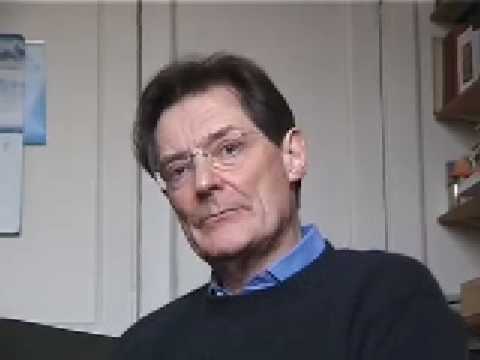
Gabriel Horn

From Wikipedia, the free encyclopedia
Gabriel Horn
Born 9 December 1927
Died 2 August 2012 (aged 84)[1]
Cambridge
Nationality United Kingdom
Fields Neuroscience
Institutions University of Bristol
University of Cambridge
Notable awards Royal Medal (2001)

Sir Gabriel Horn, MD, ScD, FRS,[2] FRCP (9 December 1927 – 2 August 2012) was a British neuroscientist and Professor in Natural Sciences (Zoology) at the University of Cambridge.[3] His research was into the neural mechanisms of learning and memory.

Early life[edit]

Horn was born on 9 December 1927. He attended Handsworth Technical School in Handsworth, Birmingham.[4] He left the school at 16 to work in his parents’ shop and studied part-time for a National Certificate in Mechanical Engineering, achieving distinction. He served in the Royal Air Force before studying for a Bachelor of Medicine, Bachelor of Surgery at the University of Birmingham.[5]

Academic career[edit]

Horn’s first academic position was in 1956 at the Department of Anatomy, University of Cambridge as a Demonstrator in Anatomy. He became a Lecturer and then a Reader, before leaving to become Professor of Anatomy at the University of Bristol in 1974.[5] In 1975, while at Bristol, he obtained his DSc degree.[5] In 1977, he returned to Cambridge to head the Department of Zoology. He retired in 1995 and was made Emeritus Professor. He was Master of Sidney Sussex College, Cambridge from 1992 to 1999 and Deputy Vice-Chancellor of the university from 1994 to 1997.[4][5] He remained a fellow of Sidney Sussex College after 1999 until his death; he had earlier been a fellow of King’s College, Cambridge, and was elected a life fellow there in 1999.[4]

Honours[edit]

He was elected a Fellow of the Royal Society in 1986,[2] receiving their Royal Medal in 2001.[5] He was given an Honorary Doctor of Science degree by the University of Birmingham in 1999 and by the University of Bristol in 2003.[5] He was knighted in the 2002 New Year Honours “for services to Neurobiology and to the Advancement of Scientific Research”.[6]

Succeeded by
Sandra Dawson

In  the third video below in the 121st clip in this series are his words and  my response is below them. 

50 Renowned Academics Speaking About God (Part 1)

Another 50 Renowned Academics Speaking About God (Part 2

A Further 50 Renowned Academics Speaking About God (Part 3)


Interview of biologist and zoologist Sir Gabriel Horn – part 1


 Interview of the biologist and zoologist Sir Gabriel Horn – part two

 Interview of Sir Gabriel Horn – part three

Uploaded on Jun 3, 2010

An interview of Sir Gabriel Horn by Sir Patrick Bateson on 16 January 2007, filmed by Alan Macfarlane.
For a higher quality, downloadable, version with summary, please see http://www.alanmacfarlane.com

Quote by Dr. Horn:

Yes, I did nearly die. On one occasion I was lucky to be alive after a  massive hemorrhage.  I can say one thing. I never took to religion. I was really true to myself. Although well knowing that I may die, I  never thought I had to get myself converted to Judaism properly. It actually never crossed my mind. I always thought that if on my deathbed I do something funny like that those there will understand it doesn’t mean anything at all.

 Interview of the biologist and zoologist Sir Gabriel Horn – part four

  My Response to Dr. Horn’s statement would have been this simple question:

Is Propositional Revelation Nonsense?

What I mean by that is  if God exists then would it be plausible that God would want to communicate  to us about his existence? There are those who actually believe that God has done that in the Bible. Dr. J. Gresham Machen said that he believed the Bible to be accurate in even the smallest details. The critic H.L.Mencken rightly noted, “Well, if you really want to be a Christian there is only one kind of Christian to be and that is the Machen kind.”

When Dr. Horn made his statement he acted as if he made a  deathbed conversion then his words  would meaning nothing.  I would admit that many people do say things  that they don’t mean but when  you are  on  your deathbed that would be a perfect time to  be totally honest. I salute those who are honest for their honesty, but it should be after they examine the evidence fully concerning God’s existence and that would include the historical accuracy of the Bible. I corresponded with Carl Sagan during the final year of his life and I was sad that he died as an agnostic. That was his choice. I  was appreciative that he took time to write me back and discuss these importance spiritual issues with me. Ironically,  I corresponded with Antony Flew several times, but when he died it seemed as although many secular people were very made at  the things he said in his final book There is a God: How the World’s Most Notorious Atheist Changed His Mind (2007) with Roy Abraham Varghese. 

Two of my biggest spiritual heroes were men who stood up the accuracy of the Bible.

____________


Francis Schaeffer

I remember like yesterday hearing my pastor Adrian Rogers in 1979 going through the amazing fulfilled prophecy of Ezekiel 26-28 and the story of the city of Tyre. In 1980 in my senior year (taught by Mark Brink) at Evangelical Christian High School, I watched the film series by Francis Schaeffer called WHATEVER HAPPENED TO THE HUMAN RACE? Later that same year I read the book by the same name and I was amazed at the historical accuracy of the Bible and the many examples from archaeology that Schaeffer gave and recently I have shared several of these in my current series on Schaeffer and the Beatles. The reason I did that was because many people in the 1960’s had taken non-rational leaps into such areas as communism, the occult, drugs, and eastern mysticism,  but sitting right there in front of them was the historical accurate Bible which contained sufficient evidence to warrant trust.

(Adrian Rogers met with Presidents Jimmy Carter and Ronald Reagan.)

____

(This was the average sanctuary crowd when I was growing up at Bellevue Baptist in Memphis)

______________________________________

Anyone who has read my blog for any length of time knows that politically Milton Friedman and Ronald Reagan were my heroes. Spiritually my heroes have been both Francis Schaeffer and Adrian Rogers. An interesting fact about both of these two men and that is they both believed the Bible is the inspired and inerrant word of God. Both men defended the historical accuracy of the Bible even though both of the religious denominations they belonged to started to shift to the liberal view that the Bible contains errors in it.

H. L. Mencken
H l mencken.jpg

J. Gresham Machen

J. Gresham Machen

Francis Schaeffer’s battle on this issue came in the 1930’s when he got to know Dr. J. Gresham Machen was involved in a battle with  the Presbyterian Church USA over their leftward shift in theology. Francis Schaeffer observed:

H.L. Mencken died when I was a young man and I read some of the stuff he wrote and he came at just the point of the total collapse of the American consensus back in the 1930’s or a little before. H.L.Mencken was very destructive to the American consensus and he was way out. It is he who said the famous thing about Dr. J. Gresham Machen. Dr. Machen was the man who was fighting the battle for historic Christianity against the liberals in the big denominations and expressly the Presbyterian denomination and the liberals were trying to laugh Machen out of court. But H.L. Mencken said a remarkable thing, “Well, if you really want to be a Christian there is only one kind of Christian to be and that is the Machen kind.” This is wonderful. This is exactly where the battlefield is. When you take Christianity and chip away at it like the liberals wanted to do then you don’t have anything left. This is no halfway war. If you are going to be a Christian you have to be a biblical Christian. Machen and Mencken understood this and this is my position too.  

Adrian Rogers also was that type of Christian too. Recently a relative told me that his Bible Study Teacher at the church he started attended recently started a series on Genesis and he said on the front end that evolution is true. I encouraged my relative to ask the simple question: DO YOU BELIEVE IN A LITERAL “ADAM AND EVE?” I sent him the sermon on Evolution by Adrian Rogers and here is a portion of it below:

H.G. Wells

H. G. Wells, the brilliant historian who wrote The Outlines of History, said this—and I quote: “If all animals and man evolved, then there were no first parents, and no Paradise, and no Fall. If there had been no Fall, then the entire historic fabric of Christianity, the story of the first sin, and the reason for the atonement, collapses like a house of cards.” H. G. Wells says—and, by the way, I don’t believe that he did believe in creation—but he said, “If there’s no creation, then you’ve ripped away the foundation of Christianity.”

Now, the Bible teaches that man was created by God and that he fell into sin. The evolutionist believes that he started in some primordial soup and has been coming up and up. And, these two ideas are diametrically opposed. What we call sin the evolutionist would just call a stumble up. And so, the evolutionist believes that all a man needs—he’s just going up and up, and better and better—he needs a boost from beneath. The Bible teaches he’s a sinner and needs a birth from above. And, these are both at heads, in collision.

What is evolution? Evolution is man’s way of hiding from God, because, if there’s no creation, there is no Creator. And, if you remove God from the equation, then sinful man has his biggest problem removed—and that is responsibility to a holy God. And, once you remove God from the equation, then man can think what he wants to think, do what he wants to do, be what he wants to be, and no holds barred, and he has no fear of future judgment.

Francis Schaeffer & the SBC

Actually Francis Schaeffer’s good friend Paige Patterson talked Adrian Rogers into running for President of the Southern Baptist Convention in 1979 and the liberal shift was halted. In the article “Francis Schaeffer ‘indispensable’ to SBC,” (Thursday, October 30, 2014,)  David Roach wrote:

The late Francis Schaeffer was known to pick up the phone during the early years of the Southern Baptist Convention’s conservative resurgence. Paige Patterson knew to expect a call from Schaeffer around Christmas with the question, “You’re not growing weary in well-doing are you?”

Patterson, a leader in the movement to return the SBC to a high view of Scripture, would reply, “No, Dr. Schaeffer. I’m under fire, but I’m doing fine. And I’m trusting the Lord and proceeding on.”

To some it may seem strange that an international Presbyterian apologist and analyst of pop culture would take such interest in a Baptist controversy over biblical inerrancy.

But to Schaeffer it made perfect sense.

He believed churches were acquiescing to the world, abandoning their belief that the Bible is without error in everything it said. A watered-down theology left the SBC with decreased power to battle cultural evils. To Schaeffer the convention was the last major American denomination with hope for reversing this “great evangelical disaster,” as he put it.

Thirty years after Schaeffer’s death, Baptist leaders still remember how he took time from his speaking, writing and filmmaking schedule to quietly encourage Patterson; Paul Pressler, a judge from Texas with whom Patterson worked closely during the conservative resurgence; Adrian Rogers, a Memphis pastor who served three terms SBC president; and others.

By the early 1990s, conservatives had elected an unbroken string of convention presidents and moved in position to shift the balance of power on all convention boards and committees from the theologically moderate establishment. But at the time of Schaeffer’s annual calls, the outcome of the controversy was still in doubt.

(Paige Patterson)

“I strongly suspect that he was afraid I would not hold strong,” Patterson, now president of Southwestern Baptist Theological Seminary in Texas, told Baptist Press. “He had seen so many people fold up under pressure that he assumed we probably would too. So he would call and ask for a report.”

Schaeffer’s interest in engaging culture made him particularly appealing to Southern Baptist conservatives. He helped provide them with a “battle plan” to fight cultural evils and what they perceived as theological drift in their denomination, Richard Land, president of Southern Evangelical Seminary, told BP.

Along with theologian Carl F.H. Henry, Schaeffer was the key intellectual influence on leaders of the conservative resurgence, Land said. When conservatives started to be elected as the executives of Baptist institutions, Henry spoke at Land’s inauguration at the Christian Life Commission (the ERLC’s precursor), R. Albert Mohler Jr.’s at Southern Baptist Theological Seminary in Kentucky and Timothy George’s at Beeson Divinity School in Alabama.

“If Schaeffer had still been alive, we would have had him come,” Land said. He noted that Schaeffer was “close” to Rogers and “admired” by Bailey Smith, two conservative SBC presidents. Edith Schaeffer and Patterson’s wife Dorothy were close friends and traveled together in the early 1980s speaking on the importance of the home.

Clark Pinnock, a former New Orleans Baptist Theological Seminary professor who mentored conservative resurgence leaders before taking a leftward theological turn in his own thinking, served on Schaeffer’s staff at L’Abri.

(ADRIAN ROGERS, chairman of the committee that drafted changes to the Baptist Faith & Message, joins Al Mohler, Chuck Kelley and Richard Land in a news conference shortly after the new statement of faith was adopted by messengers to the Southern Baptist Convention annual meeting in Orlando, Fla)

Mount Sinai is one of the most important sites of the entire Bible. It was here that the Hebrew people came shortly after their flight from Egypt. Here God spoke to them through Moses, giving them directions for their life as newly formed nation and making a covenant with them.

The thing to notice about this epochal moment for Israel is the emphasis on history which the Bible itself makes. Time and time again Moses reminds the people of what has happened on Mount Sinai:

Deuteronomy 4:11-12New International Version (NIV)

11 You came near and stood at the foot of the mountain while it blazed with fireto the very heavens, with black clouds and deep darkness. 12 Then the Lordspoke to you out of the fire. You heard the sound of words but saw no form;there was only a voice.

Moses emphasized that those alive at the time had actually heard God’s voice. They had received God’s direct communication  in words. They were eyewitnesses of what had occurred–they saw the cloud and the mountain burning with fire. They saw and they heard. Moses says, on the basis of what they themselves have seen and heard in their own lifetime, they are not to be afraid of their present or future enemies.

On the same basis too, Moses urges them to obey God: “Only be careful, and watch yourselves closely so that you do not forget the things your eyes have seen…” (Deuteronomy 4:9)

Thus the people’s confidence and trust in God and their obedience to Him are alike rooted in truth that is historical and open to observation…The relationship between God and His people was not based on an upward experience inside their own heads, but upon a reality which was seen and heard. They were called to obey God not because of a leap of faith, but because of God’s real acts in history. For God is the LIVING GOD….”Religious Truth” according to the Bible involves the same sort of truth which people operate on in their everyday lives. If something is true, then its opposite cannot also be true.

From the Bible’s viewpoint, all truth finally rests upon the fact that the infinite-personal God exists in contrast to His not existing. This means that God exists objectively. He exists whether or not people say He does. The Bible also teaches that God is personal.
Much of the Bible is in the sphere of normal existence and is observable. God communicated himself in language. This is not surprising for He  was the creator of people who use language in communicating with other people.
In the Hebrew (and biblical) view, truth is grounded ultimately in the existence and character of God and what has been given us by God in creation and revelation. Because people are finite, reality cannot be exhausted by human reason.
It is within this Judeo-Christian view of truth that, by its own insistence, we must understand the Bible. Moses could appeal to real historical events as the basis for Israel’s confidence and obedience into the future. He could even pass down to subsequent generations physical reminders of what God had done, so that the people could see them and remember.

________________

Dr. Francis Schaeffer – Faith, Seeing & Believing

John 21:1-14New International Version (NIV)

Jesus and the Miraculous Catch of Fish

21 Afterward Jesus appeared again to his disciples, by the Sea of Galilee.[a] It happened this way: Simon Peter, Thomas (also known as Didymus[b]), Nathanael from Cana in Galilee, the sons of Zebedee, and two other disciples were together. “I’m going out to fish,” Simon Peter told them, and they said, “We’ll go with you.” So they went out and got into the boat, but that night they caught nothing.

Early in the morning, Jesus stood on the shore, but the disciples did not realize that it was Jesus.

He called out to them, “Friends, haven’t you any fish?”

“No,” they answered.

He said, “Throw your net on the right side of the boat and you will find some.”When they did, they were unable to haul the net in because of the large number of fish.

Then the disciple whom Jesus loved said to Peter, “It is the Lord!” As soon as Simon Peter heard him say, “It is the Lord,” he wrapped his outer garment around him (for he had taken it off) and jumped into the water. The other disciples followed in the boat, towing the net full of fish, for they were not far from shore, about a hundred yards.[c] When they landed, they saw a fire of burning coals there with fish on it, and some bread.

10 Jesus said to them, “Bring some of the fish you have just caught.” 11 So Simon Peter climbed back into the boat and dragged the net ashore. It was full of large fish, 153, but even with so many the net was not torn. 12 Jesus said to them, “Come and have breakfast.” None of the disciples dared ask him, “Who are you?” They knew it was the Lord. 13 Jesus came, took the bread and gave it to them, and did the same with the fish. 14 This was now the third time Jesus appeared to his disciples after he was raised from the dead.

__________

The resurrected Christ stood there on the beach of the Sea of Galilee. Before the disciples reached the shore, He had already prepared a fire with fish cooking on it for them to eat. It was a fire that could be seen and felt; the fire cooked the fish, and the fish and bread could be eaten for breakfast.

When the fire died down, it left ashes on the beach; the disciples were well fed with bread and fish and Christ’s footprints would have been visible on the beach…

Thomas, Christ tells us,  should have believed the ample evidence given to him of the physical evidence of the resurrection by the other apostles. Christ rebuked him for not accepting this evidence.He at that time and we today have the same sufficient witness of those who have seen and heard and were able to touch the resurrected Christ and were able to observe what He had done.

Because Thomas insisted on seeing and touching we have a more sure witness than we otherwise would have  had. In the testimony of those who saw and heard we have a sure witness and this includes Thomas’ doubt and his personal verification which removed that doubt. WE SHOULD BOW BEFORE THE TOTAL WITNESS OF THE RECORD WHICH WE HAVE  IN THE BIBLE, OF THE TESTIMONY OF THE EXISTENCE OF THE UNIVERSE AND IT’S FORM AND THE UNIQUENESS OF MAN. IT IS ENOUGH! BELIEVE HE HAS RISEN.

John 20:24-29New International Version (NIV)

Jesus Appears to Thomas

24 Now Thomas (also known as Didymus[a]), one of the Twelve, was not with the disciples when Jesus came. 25 So the other disciples told him, “We have seen the Lord!”

But he said to them, “Unless I see the nail marks in his hands and put my finger where the nails were, and put my hand into his side, I will not believe.”

26 A week later his disciples were in the house again, and Thomas was with them. Though the doors were locked, Jesus came and stood among them and said, “Peace be with you!” 27 Then he said to Thomas, “Put your finger here; see my hands. Reach out your hand and put it into my side. Stop doubting and believe.”

28 Thomas said to him, “My Lord and my God!”

29 Then Jesus told him, “Because you have seen me, you have believed;blessed are those who have not seen and yet have believed.”

_______________

Is Propositional Revelation Nonsense?

Tim Brister —  July 26, 2006 — 6 Comments

In the appendix of his book, He Is There and He Is Not Silent, Francis Schaeffer wrote a little piece called “Is Propositional Revelation Nonsense?” Schaeffer explains that, “To modern man, and much modern theology, the concept of propositional revelation and the historic Christian view of infallibility is not so much mistaken as meaningless” (345). The 20th century came with many challenges to theological formulation, not the least of which was the assault on propositional truth and revelation. Such camps as existentialists and logical positivists attempted to remove religious truth from the reason and revelation while others sought to justify meaning, reality, and truth with other criterion of verification such as experience and perception. However, center to the Christian faith is the belief that God has spoken and revealed himself in the written Word of God. In this revelation, God used language as the medium to carry and convey biblical truths and realities. This is not to say that God has revealed himself exhaustively, but it does mean that he has revealed himself truly and definitively. Schaeffer makes two points which I would like to mention here:

  1. Even communication between one created person and another is not exhaustive; but that does not mean that for that reason it is not true.
  1. If the uncreated Personal really cared for the created personal, it could not be thought unthinkable for him to tell the created personal things of a propositional nature; otherwise, as a finite being, the created personal would have numerous things he could not know if he just began with himself as a limited, finite reference point.

Schaffer makes some salient points here that deserve to be brought up in the 21stcentury. While we do not disagree that revelation is also personal, we cannot flinch on the assault on propositional revelation. God has revealed himself to us, his nature and his acts, through propositional revelation (i.e. the Bible), and the implications of this truth is that we do not have the rights to reinvent or rename the God Who Is There. If we do not begin with God and his revelation, Schaeffer is correct to conclude that there are many things we could not know about God based on such a limited, finite reference point as ourselves. It is no coincidence that, at the time of Schaeffer’s publishing of this book (1972), John Hick was advancing his pluralistic hypothesis which argued for the ineffability of the “Real” which argued that one cannot know anything about God as he is (ding an sich).Adapting the Kantian model of the noumenal and phenomenal worlds, Hick argues that God (“Real”) has not and cannot reveal himself truly and definitely; furthermore, it is impossible to know anything at all about the Real (except that it is ineffable and that it exists which is something he claims to know). The result when God is not the beginning, the reference point, the apriori grounds of knowledge and revelation, then knowing and defining God is a free-for-all to anyone who wants to postulate their phenomenological interpretations as religious truth. Schaeffer concludes his little article with this important paragraph in which he said:

“The importance of all this is that most people today (including some who still call themselves evangelical) who have given up the historical and biblical concept of revelation and infallibility have not done so because of the consideration of detailed problems objectively approached, but because they have accepted, either in analyzed fashion or blindly, the other set of presuppositions. Often this has taken place by means of cultural injection, without their realizing what has happened to them” (349, emphasis added).

In the days ahead, I hope to share how propositional truth is foundational to personal truth and give a few examples of the redefinition of revelation in contemporary contexts.

Long ago, at many times and in many ways, God spoke to our fathers by the prophets, but in these last days he has spoken to us by his Son, whom he appointed the heir of all things, through whom also he created the world.
Hebrews 1:1-2

_____________

The Bible and Archaeology – Is the Bible from God? (Kyle Butt 42 min)

You want some evidence that indicates that the Bible is true? Here is a good place to start and that is taking a closer look at the archaeology of the Old Testament times. Is the Bible historically accurate? Here are some of the posts I have done in the past on the subject: 1. The Babylonian Chronicleof Nebuchadnezzars Siege of Jerusalem2. Hezekiah’s Siloam Tunnel Inscription. 3. Taylor Prism (Sennacherib Hexagonal Prism)4. Biblical Cities Attested Archaeologically. 5. The Discovery of the Hittites6.Shishak Smiting His Captives7. Moabite Stone8Black Obelisk of Shalmaneser III9A Verification of places in Gospel of John and Book of Acts., 9B Discovery of Ebla Tablets10. Cyrus Cylinder11. Puru “The lot of Yahali” 9th Century B.C.E.12. The Uzziah Tablet Inscription13. The Pilate Inscription14. Caiaphas Ossuary14 B Pontius Pilate Part 214c. Three greatest American Archaeologists moved to accept Bible’s accuracy through archaeology.

Related posts:

THE DEMON-HAUNTED WORLD: Science as a Candle in the Dark by Carl Sagan. New York: Random House, 1995. 457 pages, extensive references, index. Hardcover; $25.95. PSCF 48 (December 1996): 263.

_____________ THE DEMON-HAUNTED WORLD: Science as a Candle in the Dark by Carl Sagan. New York: Random House, 1995. 457 pages, extensive references, index. Hardcover; $25.95. PSCF 48 (December 1996): 263. Sagan is the David Duncan Professor of Astronomy and Space Sciences at Cornell University. He is author of many best sellers, including Cosmos, which […]

Carl Sagan’s search for the of meaning of life

________________ … Kansas – Dust In The Wind “Live” HD Rolling Stones: “Satisfaction!” U2 Still Haven’t Found (with lyrics) __________________________________________________ On December 5, 1995, I got a letter back from Carl Sagan and I was very impressed that he took time to answer several of my questions and to respond to some of the points that […]

Taking on Ark Times Bloggers on various issues Part F “Carl Sagan’s views on how God should try and contact us” includes film “The Basis for Human Dignity”

I have gone back and forth and back and forth with many liberals on the Arkansas Times Blog on many issues such as abortion, human rights, welfare, poverty, gun control  and issues dealing with popular culture. Here is another exchange I had with them a while back. My username at the Ark Times Blog is Saline […]

Carl Sagan v. Nancy Pearcey

On March 17, 2013 at our worship service at Fellowship Bible Church, Ben Parkinson who is one of our teaching pastors spoke on Genesis 1. He spoke about an issue that I was very interested in. Ben started the sermon by reading the following scripture: Genesis 1-2:3 English Standard Version (ESV) The Creation of the […]

Review of Carl Sagan book (Part 4 of series on Evolution)

Review of Carl Sagan book (Part 4 of series on Evolution) The Long War against God-Henry Morris, part 5 of 6 Uploaded by FLIPWORLDUPSIDEDOWN3 on Aug 30, 2010 http://www.icr.org/ http://store.icr.org/prodinfo.asp?number=BLOWA2http://store.icr.org/prodinfo.asp?number=BLOWASGhttp://www.fliptheworldupsidedown.com/blog _______________________ I got this from a blogger in April of 2008 concerning candidate Obama’s view on evolution: Q: York County was recently in the news […]

Review of Carl Sagan book (Part 3 of series on Evolution)

Review of Carl Sagan book (Part 3 of series on Evolution) The Long War against God-Henry Morris, part 4 of 6 Uploaded by FLIPWORLDUPSIDEDOWN3 on Aug 30, 2010 http://www.icr.org/ http://store.icr.org/prodinfo.asp?number=BLOWA2http://store.icr.org/prodinfo.asp?number=BLOWASGhttp://www.fliptheworldupsidedown.com/blog ______________________________________ I got this from a blogger in April of 2008 concerning candidate Obama’s view on evolution: Q: York County was recently in the news […]

Carl Sagan versus RC Sproul

At the end of this post is a message by RC Sproul in which he discusses Sagan. Over the years I have confronted many atheists. Here is one story below: I really believe Hebrews 4:12 when it asserts: For the word of God is living and active and sharper than any two-edged sword, and piercing as far as the […]

Review of Carl Sagan book (Part 4 of series on Evolution)jh68

Review of Carl Sagan book (Part 4 of series on Evolution) The Long War against God-Henry Morris, part 5 of 6 Uploaded by FLIPWORLDUPSIDEDOWN3 on Aug 30, 2010 http://www.icr.org/ http://store.icr.org/prodinfo.asp?number=BLOWA2http://store.icr.org/prodinfo.asp?number=BLOWASGhttp://www.fliptheworldupsidedown.com/blog _______________________ This is a review I did a few years ago. THE DEMON-HAUNTED WORLD: Science as a Candle in the Dark by Carl […]

Review of Carl Sagan book (Part 3 of series on Evolution)

Review of Carl Sagan book (Part 3 of series on Evolution) The Long War against God-Henry Morris, part 4 of 6 Uploaded by FLIPWORLDUPSIDEDOWN3 on Aug 30, 2010 http://www.icr.org/ http://store.icr.org/prodinfo.asp?number=BLOWA2http://store.icr.org/prodinfo.asp?number=BLOWASGhttp://www.fliptheworldupsidedown.com/blog ______________________________________ I was really enjoyed this review of Carl Sagan’s book “Pale Blue Dot.” Carl Sagan’s Pale Blue Dot by Larry Vardiman, Ph.D. […]

Taking on Ark Times Bloggers on various issues Part I “Old Testament Bible Prophecy” includes the film TRUTH AND HISTORY and article ” Jane Roe became pro-life”

I have gone back and forth and back and forth with many liberals on the Arkansas Times Blog on many issues such as abortion, human rights, welfare, poverty, gun control  and issues dealing with popular culture. Here is another exchange I had with them a while back. My username at the Ark Times Blog is Saline […]

John MacArthur on fulfilled prophecy from the Bible Part 2

I have posted many of the sermons by John MacArthur. He is a great bible teacher and this sermon below is another great message. His series on the Book of Proverbs was outstanding too.  I also have posted several of the visits MacArthur made to Larry King’s Show. One of two most popular posts I […]

John MacArthur on fulfilled prophecy from the Bible Part 1

I have posted many of the sermons by John MacArthur. He is a great bible teacher and this sermon below is another great message. His series on the Book of Proverbs was outstanding too.  I also have posted several of the visits MacArthur made to Larry King’s Show. One of two most popular posts I […]

John MacArthur: Fulfilled prophecy in the Bible? (Ezekiel 26-28 and the story of Tyre, video clips)

Prophecy–The Biblical Prophesy About Tyre.mp4 Uploaded by TruthIsLife7 on Dec 5, 2010 A short summary of the prophecy about Tyre and it’s precise fulfillment. Go to this link and watch the whole series for the amazing fulfillment from secular sources. http://www.youtube.com/watch?v=qvt4mDZUefo ________________ John MacArthur on the amazing fulfilled prophecy on Tyre and how it was fulfilled […]

John MacArthur on the Bible and Science (Part 2)

John MacArthur on the Bible and Science (Part 2) I have posted many of the sermons by John MacArthur. He is a great bible teacher and this sermon below is another great message. His series on the Book of Proverbs was outstanding too.  I also have posted several of the visits MacArthur made to Larry […]

John MacArthur on the Bible and Science (Part 1)

John MacArthur on the Bible and Science (Part 1) I have posted many of the sermons by John MacArthur. He is a great bible teacher and this sermon below is another great message. His series on the Book of Proverbs was outstanding too.  I also have posted several of the visits MacArthur made to Larry […]

Adrian Rogers: “Why I believe the Bible is true”

Adrian Rogers – How you can be certain the Bible is the word of God Great article by Adrian Rogers. What evidence is there that the Bible is in fact God’s Word? I want to give you five reasons to affirm the Bible is the Word of God. First, I believe the Bible is the […]

The Old Testament is Filled with Fulfilled Prophecy by Jim Wallace

Is there any evidence the Bible is true? Articles By PleaseConvinceMe Apologetics Radio The Old Testament is Filled with Fulfilled Prophecy Jim Wallace A Simple Litmus Test There are many ways to verify the reliability of scripture from both internal evidences of transmission and agreement, to external confirmation through archeology and science. But perhaps the […]

Taking on Ark Times Bloggers on various issues Part M “Old Testament prophecy fulfilled?”Part 3(includes film DEATH BY SOMEONE’S CHOICE)


Related posts:

FRANCIS SCHAEFFER ANALYZES ART AND CULTURE Part 52 THE BEATLES (Part D, There is evidence that the Beatles may have been exposed to Francis Schaeffer!!!) (Feature on artist Anna Margaret Rose Freeman )

______________   George Harrison Swears & Insults Paul and Yoko Lucy in the Sky with Diamonds- The Beatles The Beatles:   I have dedicated several posts to this series on the Beatles and I don’t know when this series will end because Francis Schaeffer spent a lot of time listening to the Beatles and talking […]

FRANCIS SCHAEFFER ANALYZES ART AND CULTURE Part 51 THE BEATLES (Part C, List of those on cover of Stg.Pepper’s ) (Feature on artist Raqib Shaw )

  The Beatles in a press conference after their Return from the USA Uploaded on Nov 29, 2010 The Beatles in a press conference after their Return from the USA. The Beatles:   I have dedicated several posts to this series on the Beatles and I don’t know when this series will end because Francis […]

FRANCIS SCHAEFFER ANALYZES ART AND CULTURE Part 50 THE BEATLES (Part B, The Psychedelic Music of the Beatles) (Feature on artist Peter Blake )

__________________   Beatles 1966 Last interview I have dedicated several posts to this series on the Beatles and I don’t know when this series will end because Francis Schaeffer spent a lot of time listening to the Beatles and talking and writing about them and their impact on the culture of the 1960’s. In this […]

FRANCIS SCHAEFFER ANALYZES ART AND CULTURE Part 49 THE BEATLES (Part A, The Meaning of Stg. Pepper’s Cover) (Feature on artist Mika Tajima)

_______________ The Beatles documentary || A Long and Winding Road || Episode 5 (This video discusses Stg. Pepper’s creation I have dedicated several posts to this series on the Beatles and I don’t know when this series will end because Francis Schaeffer spent a lot of time listening to the Beatles and talking and writing about […]

FRANCIS SCHAEFFER ANALYZES ART AND CULTURE PART 48 “BLOW UP” by Michelangelo Antonioni makes Philosophic Statement (Feature on artist Nancy Holt)

_______________ Francis Schaeffer pictured below: _____________________ I have included the 27 minute  episode THE AGE OF NONREASON by Francis Schaeffer. In that video Schaeffer noted,  ” Sergeant Pepper’s Lonely Hearts Club Band…for a time it became the rallying cry for young people throughout the world. It expressed the essence of their lives, thoughts and their feelings.” How Should […]

FRANCIS SCHAEFFER ANALYZES ART AND CULTURE Part 47 Woody Allen and Professor Levy and the death of “Optimistic Humanism” from the movie CRIMES AND MISDEMEANORS Plus Charles Darwin’s comments too!!! (Feature on artist Rodney Graham)

Crimes and Misdemeanors: A Discussion: Part 1 ___________________________________ Today I will answer the simple question: IS IT POSSIBLE TO BE AN OPTIMISTIC SECULAR HUMANIST THAT DOES NOT BELIEVE IN GOD OR AN AFTERLIFE? This question has been around for a long time and you can go back to the 19th century and read this same […]

FRANCIS SCHAEFFER ANALYZES ART AND CULTURE PART 46 Friedrich Nietzsche (Featured artist is Thomas Schütte)

____________________________________ Francis Schaeffer pictured below: __________ Francis Schaeffer has written extensively on art and culture spanning the last 2000years and here are some posts I have done on this subject before : Francis Schaeffer’s “How should we then live?” Video and outline of episode 10 “Final Choices” , episode 9 “The Age of Personal Peace and Affluence”, episode 8 […]

FRANCIS SCHAEFFER ANALYZES ART AND CULTURE Part 45 Woody Allen “Reason is Dead” (Feature on artists Allora & Calzadilla )

Love and Death [Woody Allen] – What if there is no God? [PL] ___________ _______________ How Should We then Live Episode 7 small (Age of Nonreason) #02 How Should We Then Live? (Promo Clip) Dr. Francis Schaeffer 10 Worldview and Truth Two Minute Warning: How Then Should We Live?: Francis Schaeffer at 100 Francis Schaeffer […]

FRANCIS SCHAEFFER ANALYZES ART AND CULTURE Part 44 The Book of Genesis (Featured artist is Trey McCarley )

___________________________________ Francis Schaeffer pictured below: ____________________________ Francis Schaeffer “BASIS FOR HUMAN DIGNITY” Whatever…HTTHR Dr. Francis schaeffer – The flow of Materialism(from Part 4 of Whatever happened to human race?) Dr. Francis Schaeffer – The Biblical flow of Truth & History (intro) Francis Schaeffer – The Biblical Flow of History & Truth (1) Dr. Francis Schaeffer […]

RESPONDING TO HARRY KROTO’S BRILLIANT RENOWNED ACADEMICS!! Geoffrey Hawthorn, Cambridge, Professor of Politics, “I recognize religious feeling when I see it, and I am drawn to it and I want to hear about it”

On November 21, 2014 I received a letter from Nobel Laureate Harry Kroto and it said:

…Please click on this URL http://vimeo.com/26991975

and you will hear what far smarter people than I have to say on this matter. I agree with them.

Harry Kroto

Image result for harry kroto

I have attempted to respond to all of Dr. Kroto’s friends arguments and I have posted my responses one per week for over a year now. Here are some of my earlier posts:

Arif AhmedHaroon Ahmed,  Jim Al-Khalili, Sir David AttenboroughMark Balaguer, Horace Barlow, Michael BateSir Patrick BatesonSimon Blackburn, Colin Blakemore, Ned BlockPascal BoyerPatricia ChurchlandAaron CiechanoverNoam Chomsky, Brian CoxPartha Dasgupta,  Alan Dershowitz, Frank DrakeHubert Dreyfus, John DunnBart Ehrman, Mark ElvinRichard Ernst, Stephan Feuchtwang, Robert FoleyDavid Friend,  Riccardo GiacconiIvar Giaever , Roy GlauberRebecca GoldsteinDavid J. Gross,  Brian Greene, Susan GreenfieldStephen F Gudeman,  Alan Guth, Jonathan HaidtTheodor W. Hänsch, Brian Harrison,  Stephen HawkingHermann Hauser, Robert HindeRoald Hoffmann,  Bruce HoodGerard ‘t HooftCaroline HumphreyNicholas Humphrey,  Herbert Huppert,  Gareth Stedman Jones, Steve JonesShelly KaganMichio Kaku,  Stuart KauffmanMasatoshi Koshiba,  Lawrence KraussHarry Kroto, George Lakoff,  Rodolfo LlinasElizabeth Loftus,  Alan MacfarlaneDan McKenzie,  Mahzarin BanajiPeter MillicanMarvin MinskyLeonard Mlodinow,  P.Z.Myers,   Yujin NagasawaAlva NoeDouglas Osheroff, David Parkin,  Jonathan Parry, Roger Penrose,  Saul PerlmutterHerman Philipse,  Carolyn PorcoRobert M. PriceVS RamachandranLisa RandallLord Martin ReesColin RenfrewAlison Richard,  C.J. van Rijsbergen,  Oliver Sacks, John SearleMarcus du SautoySimon SchafferJ. L. Schellenberg,   Lee Silver Peter Singer,  Walter Sinnott-ArmstrongRonald de Sousa, Victor StengerJohn SulstonBarry Supple,   Leonard Susskind, Raymond TallisMax TegmarkNeil deGrasse Tyson,  Martinus J. G. Veltman, Craig Venter.Alexander Vilenkin, Sir John Walker, James D. WatsonFrank WilczekSteven Weinberg, and  Lewis Wolpert,

XXXXXXXXXXXXXXX

Geoffrey Hawthorn

From Wikipedia, the free encyclopedia

Geoffrey Hawthorn (28 February 1941 – 31 December 2015) was a British Emeritus Professor on International Politics and Social and Political Theory at the University of Cambridge and a well known author.[1][2]

Education[edit]

Hawthorn studied at Jesus College, Oxford (BA) and the London School of Economics and Political Science (MA).

Academic career[edit]

Hawthorn was a lecturer in Sociology at the University of Essex, 1964–1970. In 1970 he began a longstanding academic association with the University of Cambridge: lecturer in Sociology, 1970–1985; reader in Sociology and Politics, 1985–1998; professor of International Politics, 1998–2007; fellow, Churchill College, 1970–1976; fellow, Clare Hall since 1982. Visiting Professor of Sociology at Harvard University between 1973 and 1974 and between 1989 and 1990; visiting member of the Institute for Advanced Study at Princeton, New Jersey, 1989–1990. As from 2007 he was an emeritus professor of International Politics and Social and Political Theory at the University of Cambridge. According to Stefan Collini in Hawthorn’s obituary at the The Guardian: “It is thanks to him more than to any other individual that Cambridge now boasts a flourishing Department of Politics and International Studies”. He was a member of the editorial board of the Cambridge Review of International Affairs.[3][4][5][6]

Publications[edit]

  • The Sociology of Fertility, London, Collier-Macmillan, 1970
  • Enlightenment and Despair, Cambridge, Cambridge University Press, 1976, 1987
  • Population and Development, Cambridge, Cambridge University Press, 1977
  • The Standard of Living, Cambridge, Cambridge University Press, 1987
  • Plausible Worlds: Possibility and Understanding in History and the Social Sciences, Cambridge, Cambridge University Press, 1991
  • The Future of Asia and the Pacific, Cambridge, Cambridge University Press, 1998
  • Thucydides on Politics, Cambridge, Cambridge University Press, 2014.

His ideas on contrafactual history are well known and have been highly influential. Hawthorn was also the author of numerous papers in learned journals and other periodicals.[4][7][8][9]

In  the third video below in the 138th clip in this series are his words and  my response is below them. 

50 Renowned Academics Speaking About God (Part 1)

Another 50 Renowned Academics Speaking About God (Part 2

A Further 50 Renowned Academics Speaking About God (Part 3)

An interview of Geoffrey Hawthorn – part 1

Uploaded on Nov 25, 2009

An interview about the life and work of the sociologist and political theorist, Geoffrey Hawthorn, filmed by Alan Macfarlane on 23 April 2009. For a higher quality, downloadable version with a detailed summary, please see http://www.alanmacfarlane.com

__________________________

An interview of Geoffrey Hawthorn – part 2

Geoffrey Hawthorn interviewed by Alan Macfarlane 23rd April 2009

Quote by Dr. Hawthorn:

I suppose that intellectually I am an atheist, but socially I hope I am a tolerant agnostic. I recognize religious feeling when I see it, and I am drawn to it and I want to hear about it.

My response to  Dr. Hawthorn’s quote:


I would like to give 3 responses to the above assertion made by Dr. Hawthorn.

FIRST, Romans 1 points that every person has a God-given conscience instead of them that tells them that God exists. I go into this further in a June 17, 2014 letter I wrote to Harry Kroto (which is below). The interesting factor is that this can be tested by a lie-detector. This tells us why DR. HAWTHORN WAS DRAWN TO HEAR ABOUT OTHER’S IDEAS  ABOUT GOD!!!!!!

SECOND, let me recommend a book  by Sean McDowell and Jonathan Marrow, called Is God Just a Human Invention? And Seventeen Other Questions Raised by the New Atheists. I have included a review of it later in this post.

THIRD, Solomon showed very clearly in the Book of Ecclesiastes that without God in the picture when one looks at life UNDER THE SUN the only conclusions one can reach is that life is meaningless and there is no satisfaction anywhere.  H.J.Blackham founded the BRITISH HUMANIST ASSOCIATION, and he  has eloquently stated:

On humanist assumptions, life leads to nothing, and every pretense that it does not is a deceit. If there is a bridge over a gorge which spans only half the distance and ends in mid-air, and if the bridge is crowded with human beings pressing on, one after the other they fall into the abyss. The bridge leads nowhere, and those who are pressing forward to cross it are going nowhere….It does not matter where they think they are going, what preparations for the journey they may have made, how much they may be enjoying it all. The objection merely points out objectively that such a situation is a model of futility“( H. J. Blackham, et al., Objections to Humanism (Riverside, Connecticut: Greenwood Press, 1967).

Harold John Blackham (31 March 1903 – 23 January 2009)

Image result for h.j. blackham british humanist

___

In fact, I sent Hawthorn a  sheet of quotes  that included that quote above from  H.J. Blackham but I never received a return letter from him.  Here is another section from that letter:

Let me show you some inescapable conclusions if you choose to live without God in the picture. Schaeffer noted that Solomon came to these same conclusions when he looked at life “under the sun.”

  1. Death is the great equalizer (Eccl 3:20, “All go to the same place; all come from dust, and to dust all return.”)
  2. Chance and time have determined the past, and they will determine the future.  (Ecclesiastes 9:11-13 “I have seen something else under the sun:  The race is not to the swift
    or the battle to the strong, nor does food come to the wise or wealth to the brilliant  or favor to the learned; but time and chance happen to them all.  Moreover, no one knows when their hour will come: As fish are caught in a cruel net, or birds are taken in a snare, so people are trapped by evil times  that fall unexpectedly upon them.”)
  3. Power reigns in this life, and the scales are not balanced(Eccl 4:1; “Again I looked and saw all the oppression that was taking place under the sun: I saw the tears of the oppressed—
    and they have no comforter; power was on the side of their oppressors—  and they have no comforter.” 7:15 “In this meaningless life of mine I have seen both of these: the righteous perishing in their righteousness,  and the wicked living long in their wickedness. ).
  4. Nothing in life gives true satisfaction without God including knowledge (1:16-18), ladies and liquor (2:1-3, 8, 10, 11), and great building projects (2:4-6, 18-20).
  5. There is no ultimate lasting meaning in life. (1:2)

By the way, the final chapter of Ecclesiastes finishes with Solomon emphasizing that serving God is the only proper response of man. Solomon looks above the sun and brings God back into the picture in the final chapter of the book in Ecclesiastes 12:13-14, “ Now all has been heard; here is the conclusion of the matter: Fear God and keep his commandments, for this is the whole duty of man.  For God will bring every deed into judgment, including every hidden thing, whether it is good or evil.”

______________________

Harry Kroto, Dept of Chemistry and Biochemistry, c/o Florida State

June 17, 2014

Dear Dr. Kroto,

I noticed that you are on the Committee for the Scientific Investigation of Claims of the Paranormal (CSICOP) and that prompted me to send this material to you today.

A couple of months ago I mailed you a letter that contained correspondence I had with Antony Flew and Carl Sagan and I also included some of the material I had sent them from Adrian Rogers and Francis Schaeffer. Did you have a chance to listen to the IS THE BIBLE TRUE? CD yet? I also wanted to let know some more about about Francis Schaeffer. Ronald Reagan said of Francis Schaeffer, “He will long be remembered as one of the great Christian thinkers of our century, with a childlike faith and a profound compassion toward others. It can rarely be said of an individual that his life touched many others and affected them for the better; it will be said of Francis Schaeffer that his life touched millions of souls and brought them to the truth of their creator.”

Thirty years ago the christian philosopher and author Francis Schaeffer (1912-1984) died and on the 10th anniversary of his passing in 1994 I wrote a number of the top evolutionists, humanists and atheistic scholars in the world and sent them a story about Francis Schaeffer in 1930 when he left agnosticism and embraced Christianity. I also sent them  a cassette tape with the title “Four intellectual bridges evolutionists can’t cross” by Adrian Rogers (1931-2005) and some of the top  scholars who corresponded with me since that time include Ernest Mayr (1904-2005), George Wald (1906-1997), Carl Sagan (1934-1996),  Robert Shapiro (1935-2011), Nicolaas Bloembergen (1920-),  Brian Charlesworth (1945-),  Francisco J. Ayala (1934-) Elliott Sober (1948-), Kevin Padian (1951-), Matt Cartmill (1943-) , Milton Fingerman (1928-), John J. Shea (1969-), , Michael A. Crawford (1938-), (Paul Kurtz (1925-2012), Sol Gordon (1923-2008), Albert Ellis (1913-2007), Barbara Marie Tabler (1915-1996), Renate Vambery (1916-2005), Archie J. Bahm (1907-1996), Aron S “Gil” Martin ( 1910-1997), Matthew I. Spetter (1921-2012), H. J. Eysenck (1916-1997), Robert L. Erdmann (1929-2006), Mary Morain (1911-1999), Lloyd Morain (1917-2010),  Warren Allen Smith (1921-), Bette Chambers (1930-),  Gordon Stein (1941-1996) , Milton Friedman (1912-2006), John Hospers (1918-2011), and Michael Martin (1932-).

Corliss Lamont and Herbert A. Tonne pictured above. 

The truth is that I am an evangelical Christian and I have enjoyed developing relationships with skeptics and humanists over the years. Back in 1996 I took my two sons who were 8  and 10 yrs old back then to New York, Washington, Philadelphia, Delaware, and New Jersey and we had dinner one night with Herbert A. Tonne, who was one of the signers of the Humanist Manifesto II. The Late Professor John George who has written books for Prometheus Press was my good friend during the last 10 years of his life. (I still miss him today.) We often ate together and were constantly talking on the phone and writing letters to one another.

It is a funny story how I met Dr. George. As an evangelical Christian and a member of the Christian Coalition, I felt obliged to expose a misquote of John Adams’ I found in an article entitled “America’s Unchristian Beginnings” by the self-avowed atheist Dr. Steven Morris. However, what happened next changed my focus to the use of misquotes, unconfirmed quotes, and misleading attributions by the religious right.

In the process of attempting to correct Morris, I was guilty of using several misquotes myself. Professor John George of the University of Central Oklahoma political science department and coauthor (with Paul Boller Jr.) of the book THEY NEVER SAID IT! set me straight. George pointed out that George Washington never said, “It is impossible to rightly govern the world without God and the Bible. I had cited page 18 of the 1927 edition of HALLEY’S BIBLE HANDBOOK. This quote was probably generated by a similar statement that appears in A LIFE OF WASHINGTON by James Paulding. Sadly, no one has been able to verify any of the quotes in Paulding’s book since no footnotes were offered.

Paul F. Boller Jr.: 1916–2014

After reading THEY NEVER SAID IT! I had a better understanding of how widespread the problem of misquotes is. Furthermore, I discovered that many of these had been used by the leaders of the religious right. I decided to confront some individuals concerning their misquotes. WallBuilders, the publisher of David Barton’s THE MYTH OF SEPARATION, responded by providing me with their “unconfirmed  quote” list which contained a dozen quotes widely used by the religious right.

Sadly some of the top leaders of my own religious right have failed to take my encouragement to stop using these quotes and they have either claimed that their critics were biased skeptics who find the truth offensive or they defended their own method of research and claimed the secondary sources were adequate.

I have enclosed that same CD by Adrian Rogers that I sent 20 years ago although the second half does include a story about  Charles Darwin‘s journey from  the position of theistic evolution to agnosticism. Here are the four bridges that Adrian Rogers says evolutionists can’t cross in the CD  “Four Bridges that the Evolutionist Cannot Cross.” 1. The Origin of Life and the law of biogenesis. 2. The Fixity of the Species. 3.The Second Law of Thermodynamics. 4. The Non-Physical Properties Found in Creation.  

In the first 3 minutes of the CD is the hit song “Dust in the Wind.” In the letter 20 years ago I gave some of the key points Francis Schaeffer makes about the experiment that Solomon undertakes in the book of Ecclesiastes to find satisfaction by  looking into  learning (1:16-18), laughter, ladies, luxuries,  and liquor (2:1-3, 8, 10, 11), and labor (2:4-6, 18-20).

I later learned this book of Ecclesiastes was Richard Dawkins’ favorite book in the Bible. Schaeffer noted that Solomon took a look at the meaning of life on the basis of human life standing alone between birth and death “under the sun.” This phrase UNDER THE SUN appears over and over in Ecclesiastes. The Christian Scholar Ravi Zacharias noted, “The key to understanding the Book of Ecclesiastes is the term UNDER THE SUN — What that literally means is you lock God out of a closed system and you are left with only this world of Time plus Chance plus matter.” No wonder Ecclesiastes is Richard Dawkins’ favorite book of the Bible! 

Here the first 7 verses of Ecclesiastes followed by Schaeffer’s commentary on it:

The words of the Preacher, the son of David, king in Jerusalem. Vanity of vanities, says the Preacher, vanity of vanities! All is vanity. What does man gain by all the toil at which he toils under the sun? A generation goes, and a generation comes, but the earth remains forever. The sun rises, and the sun goes down, and hastens to the place where it rises. The wind blows to the south and goes around to the north; around and around goes the wind, and on its circuits the wind returns. All streams run to the sea, but the sea is not full; to the place where the streams flow, there they flow again.  

Solomon is showing a high degree of comprehension of evaporation and the results of it. (E.O.Wilson has marveled at Solomon’s scientific knowledge of ants that was only discovered in the 1800’s.) Seeing also in reality nothing changes. There is change but always in a set framework and that is cycle. You can relate this to the concepts of modern man. Ecclesiastes is the only pessimistic book in the Bible and that is because of the place where Solomon limits himself. He limits himself to the question of human life, life under the sun between birth and death and the answers this would give.

(Harvard’s E.O. Wilson below)

Image result for e.o.wilson

Solomon doesn’t place man outside of the cycle. Man doesn’t escape the cycle. Man is in the cycle. Birth and death and youth and old age.

(Francis Schaeffer pictured above)

There is no doubt in my mind that Solomon had the same experience in his life that I had as a younger man (at the age of 18 in 1930). I remember standing by the sea and the moon arose and it was copper and beauty. Then the moon did not look like a flat dish but a globe or a sphere since it was close to the horizon. One could feel the global shape of the earth too. Then it occurred to me that I could contemplate the interplay of the spheres and I was exalted because I thought I can look upon them with all their power, might, and size, but they could contempt nothing. Then came upon me a horror of great darkness because it suddenly occurred to me that although I could contemplate them and they could contemplate nothing yet they would continue to turn in ongoing cycles when I saw no more forever and I was crushed.

You are an atheist and you have a naturalistic materialistic worldview, and this short book of Ecclesiastes should interest you because the wisest man who ever lived in the position of King of Israel came to THREE CONCLUSIONS that will affect you.

FIRST, chance and time have determined the past, and they will determine the future.  (Ecclesiastes 9:11-13)

These two verses below  take the 3 elements mentioned in a naturalistic materialistic worldview (time, chance and matter) and so that is all the unbeliever can find “under the sun” without God in the picture. You will notice that these are the three elements that evolutionists point to also.

Ecclesiastes 9:11-12 is following: I have seen something else under the sun: The race is not to the swift or the battle to the strong, nor does food come to the wise or wealth to the brilliant or favor to the learned; but time and chance happen to them all. Moreover, no one knows when their hour will come: As fish are caught in a cruel net, or birds are taken in a snare, so people are trapped by evil times that fall unexpectedly upon them.

SECOND, Death is the great equalizer (Eccl 3:20, “All go to the same place; all come from dust, and to dust all return.”)

THIRD, Power reigns in this life, and the scales are not balanced(Eccl 4:1, 8:15)

Ecclesiastes 4:1-2: “Next I turned my attention to all the outrageous violence that takes place on this planet—the tears of the victims, no one to comfort them; the iron grip of oppressors, no one to rescue the victims from them.” Ecclesiastes 8:14; “ Here’s something that happens all the time and makes no sense at all: Good people get what’s coming to the wicked, and bad people get what’s coming to the good. I tell you, this makes no sense. It’s smoke.”

Solomon had all the resources in the world and he found himself searching for meaning in life and trying to come up with answers concerning the afterlife. However, it seems every door he tries to open is locked. Today men try to find satisfaction in learning, liquor, ladies, luxuries, laughter, and labor and that is exactly what Solomon tried to do too.  None of those were able to “fill the God-sized vacuum in his heart” (quote from famous mathematician and philosopher Blaise Pascal). You have to wait to the last chapter in Ecclesiastes to find what Solomon’s final conclusion is.

In 1978 I heard the song “Dust in the Wind” by Kansas when it rose to #6 on the charts. That song told me that Kerry Livgren the writer of that song and a member of Kansas had come to the same conclusion that Solomon had. I remember mentioning to my friends at church that we may soon see some members of Kansas become Christians because their search for the meaning of life had obviously come up empty even though they had risen from being an unknown band to the top of the music business and had all the wealth and fame that came with that. Furthermore, Solomon realized death comes to everyone and there must be something more.

Livgren wrote:

All we do, crumbles to the ground though we refuse to see, Dust in the Wind, All we are is dust in the wind, Don’t hang on, Nothing lasts forever but the Earth and Sky, It slips away, And all your money won’t another minute buy.”

Take a minute and compare Kerry Livgren‘s words to that of the late British humanist H.J. Blackham:

On humanist assumptions, life leads to nothing, and every pretense that it does not is a deceit. If there is a bridge over a gorge which spans only half the distance and ends in mid-air, and if the bridge is crowded with human beings pressing on, one after the other they fall into the abyss. The bridge leads nowhere, and those who are pressing forward to cross it are going nowhere….It does not matter where they think they are going, what preparations for the journey they may have made, how much they may be enjoying it all. The objection merely points out objectively that such a situation is a model of futility“( H. J. Blackham, et al., Objections to Humanism (Riverside, Connecticut: Greenwood Press, 1967).

Harold John Blackham (31 March 1903 – 23 January 2009)

_____________________________________

Both Kerry Livgren and the bass player DAVE HOPE of Kansas became Christians eventually. Kerry Livgren first tried Eastern Religions and DAVE HOPE had to come out of a heavy drug addiction. I was shocked and elated to see their personal testimony on The 700 Club in 1981 and that same  interview can be seen on youtube today. Livgren lives in Topeka, Kansas today where he teaches “Diggers,” a Sunday school class at Topeka Bible ChurchDAVE HOPE is the head of Worship, Evangelism and Outreach at Immanuel Anglican Church in Destin, Florida.

Solomon’s experiment was a search for meaning to life “under the sun.” Then in last few words in the Book of Ecclesiastes he looks above the sun and brings God back into the picture: “The conclusion, when all has been heard, is: Fear God and keep His commandments, because this applies to every person. For God will bring every act to judgment, everything which is hidden, whether it is good or evil.”

The answer to find meaning in life is found in putting your faith and trust in Jesus Christ. The Bible is true from cover to cover and can be trusted.

Now on to the other topic I wanted to discuss with you today. I wanted to write you today for one reason. IS THERE A GOOD CHANCE THAT DEEP DOWN IN YOUR CONSCIENCE  you have repressed the belief in your heart that God does exist and IS THERE A POSSIBILITY THIS DEEP BELIEF OF YOURS CAN BE SHOWN THROUGH A LIE-DETECTOR? (Back in the late 1990’s I had the opportunity to correspond with over a dozen members of CSICOP on just this very issue.)

I have a good friend who is a street preacher who preaches on the Santa Monica Promenade in California and during the Q/A sessions he does have lots of atheists that enjoy their time at the mic. When this happens he  always quotes Romans 1:18-19 (Amplified Bible) ” For God’s wrath and indignation are revealed from heaven against all ungodliness and unrighteousness of men, who in their wickedness REPRESS and HINDER the truth and make it inoperative. For that which is KNOWN about God is EVIDENT to them and MADE PLAIN IN THEIR INNER CONSCIOUSNESS, because God  has SHOWN IT TO THEM,”(emphasis mine). Then he  tells the atheist that the atheist already knows that God exists but he has been suppressing that knowledge in unrighteousness. This usually infuriates the atheist.

My friend draws some large crowds at times and was thinking about setting up a lie detector test and see if atheists actually secretly believe in God. He discussed this project with me since he knew that I had done a lot of research on the idea about 20 years ago.

Nelson Price in THE EMMANUEL FACTOR (1987) tells the story about Brown Trucking Company in Georgia who used to give polygraph tests to their job applicants. However, in part of the test the operator asked, “Do you believe in God?” In every instance when a professing atheist answered “No,” the test showed the person to be lying. My pastor Adrian Rogers used to tell this same story to illustrate Romans 1:19 and it was his conclusion that “there is no such thing anywhere on earth as a true atheist. If a man says he doesn’t believe in God, then he is lying. God has put his moral consciousness into every man’s heart, and a man has to try to kick his conscience to death to say he doesn’t believe in God.”

(Adrian Rogers at White House)

It is true that polygraph tests for use in hiring were banned by Congress in 1988.  Mr and Mrs Claude Brown on Aug 25, 1994  wrote me a letter confirming that over 15,000 applicants previous to 1988 had taken the polygraph test and EVERY-TIME SOMEONE SAID THEY DID NOT BELIEVE IN GOD, THE MACHINE SAID THEY WERE LYING.

It had been difficult to catch up to the Browns. I had heard about them from Dr. Rogers’ sermon but I did not have enough information to locate them. Dr. Rogers referred me to Dr. Nelson Price and Dr. Price’s office told me that Claude Brown lived in Atlanta. After writing letters to all 9 of the entries for Claude Brown in the Atlanta telephone book, I finally got in touch with the Browns.

Adrian Rogers also pointed out that the Bible does not recognize the theoretical atheist.  Psalms 14:1: The fool has said in his heart, “There is no God.”  Dr Rogers notes, “The fool is treating God like he would treat food he did not desire in a cafeteria line. ‘No broccoli for me!’ ” In other words, the fool just doesn’t want God in his life and is a practical atheist, but not a theoretical atheist. Charles Ryrie in the The Ryrie Study Bible came to the same conclusion on this verse.

Here are the conclusions of the experts I wrote in the secular world concerning the lie detector test and it’s ability to get at the truth:

Professor Frank Horvath of the School of Criminal Justice at Michigan State University has testified before Congress concerning the validity of the polygraph machine. He has stated on numerous occasions that “the evidence from those who have actually been affected by polygraph testing in the workplace is quite contrary to what has been expressed by critics. I give this evidence greater weight than I give to the most of the comments of critics” (letter to me dated October 6, 1994).

There was no better organization suited to investigate this claim concerning the lie detector test than the Committee for the Scientific Investigation of Claims of the Paranormal (CSICOP). This organization changed their name to the Committe for Skeptical Inquiry in 2006. This organization includes anyone who wants to help debunk the whole ever-expanding gamut of misleading, outlandish, and fraudulent claims made in the name of science. I AM WRITING YOU TODAY BECAUSE YOU ARE ASSOCIATED WITH CSICOP.

I read The Skeptical Review(publication of CSICOP) for several years during the 90’s and I would write letters to these scientists about taking this project on and putting it to the test.  Below are some of  their responses (15 to 20 years old now):

1st Observation: Religious culture of USA could have influenced polygraph test results.
ANTONY FLEW  (formerly of Reading University in England, now deceased, in a letter to me dated 8-11-96) noted, “For all the evidence so far available seems to be of people from a culture in which people are either directly brought up to believe in the existence of God or at least are strongly even if only unconsciously influenced by those who do. Even if everyone from such a culture revealed unconscious belief, it would not really begin to show that — as Descartes maintained— the idea of God is so to speak the Creator’s trademark, stamped on human souls by their Creator at their creation.”

2nd Observation: Polygraph Machines do not work. JOHN R. COLE, anthropologist, editor, National Center for Science Education, Dr. WOLF RODER, professor of Geography, University of Cincinnati, Dr. SUSAN BLACKMORE,Dept of Psychology, University of the West of England, Dr. CHRISTOPHER C. FRENCH, Psychology Dept, Goldsmith’s College, University of London, Dr.WALTER F. ROWE, The George Washington University, Dept of Forensic Sciences, Graduate School of Arts and Sciences.

3rd Observation: The sample size probably was not large enough to apply statistical inference. (These gentlemen made the following assertion before I received the letter back from Claude Brown that revealed that the sample size was over 15,000.) JOHN GEOHEGAN, Chairman of New Mexicans for Science and Reason, Dr. WOLF RODER, and Dr WALTER F. ROWE (in a letter dated July 12, 1994) stated, “The polygraph operator for Brown Trucking Company has probably examined only a few hundred or a few thousand job applicants. I would surmise that only a very small number of these were actually atheists. It seems a statistically insignificant (and distinctly nonrandom) sampling of the 5 billion human beings currently inhabiting the earth. Dr. Nelson Price also seems to be impugning the integrity of anyone who claims to be an atheist in a rather underhanded fashion.”

4th Observation: The question (Do you believe in God?)  was out of place and it surprised the applicants. THOMAS GILOVICH, psychologist, Cornell Univ., Dr. ZEN FAULKES, professor of Biology, University of Victoria (Canada), ROBERT CRAIG, Head of Indiana Skeptics Organization, Dr. WALTER ROWE, 
 
5th Observation: Proof that everyone believes in God’s existence does not prove that God does in fact exist. PAUL QUINCEY, Nathional Physical Laboratory,(England), Dr. CLAUDIO BENSKI, Schneider Electric, CFEPP, (France),
6th Observation: Both the courts and Congress recognize that lie-detectors don’t work and that is why they were banned in 1988.  (Governments and the military still use them.)
Dr WALTER ROWE, KATHLEEN M. DILLION, professor of Psychology, Western New England College.
7th Observation:This information concerning Claude Brown’s claim has been passed on to us via a tv preacher and eveybody knows that they are untrustworthy– look at their history. WOLF RODER.
______________
Solomon wisely noted in Ecclesiastes 3:11 “God has planted eternity in the heart of men…” (Living Bible). No wonder Bertrand Russell wrote in his autobiography, “It is odd, isn’t it? I feel passionately for this world and many things and people in it, and yet…what is it all? There must be something more important, one feels, though I don’t believe there is. I am haunted. Some ghosts, for some extra mundane regions, seem always trying to tell me something that I am to repeat to the world, but I cannot understand that message.”
Gene Emery, science writer for Providence Journal-Bulletin is a past winner of the CSICOP “Responsibility in Journalism Award” and he had the best suggestion of all when he suggested, “Actually, if you want to make a good case about whether Romans 1:19 is true, arrange to have a polygraph operator (preferably an atheist or agnostic) brought to the next CSICOP meeting. (I’m not a member of CSICOP, by the way, so I can’t give you an official invitation or anything.) If none of the folks at that meeting can convince the machine that they truly believe in God, maybe there is, in fact, an innate willingness to believe in God.”

DO YOU HAVE ANY REACTIONS TO ADD TO THESE 7 OBSERVATIONS THAT I GOT 15 YEARS AGO? Thank you again for your time and I know how busy you are.

Everette Hatcher, everettehatcher@gmail.com, http://www.thedailyhatch.org, cell ph 501-920-5733, Box 23416, LittleRock, AR 72221


Related posts:

THE DEMON-HAUNTED WORLD: Science as a Candle in the Dark by Carl Sagan. New York: Random House, 1995. 457 pages, extensive references, index. Hardcover; $25.95. PSCF 48 (December 1996): 263.

_____________ THE DEMON-HAUNTED WORLD: Science as a Candle in the Dark by Carl Sagan. New York: Random House, 1995. 457 pages, extensive references, index. Hardcover; $25.95. PSCF 48 (December 1996): 263. Sagan is the David Duncan Professor of Astronomy and Space Sciences at Cornell University. He is author of many best sellers, including Cosmos, which […]

Carl Sagan’s search for the of meaning of life

________________ … Kansas – Dust In The Wind “Live” HD Rolling Stones: “Satisfaction!” U2 Still Haven’t Found (with lyrics) __________________________________________________ On December 5, 1995, I got a letter back from Carl Sagan and I was very impressed that he took time to answer several of my questions and to respond to some of the points that […]

Taking on Ark Times Bloggers on various issues Part F “Carl Sagan’s views on how God should try and contact us” includes film “The Basis for Human Dignity”

I have gone back and forth and back and forth with many liberals on the Arkansas Times Blog on many issues such as abortion, human rights, welfare, poverty, gun control  and issues dealing with popular culture. Here is another exchange I had with them a while back. My username at the Ark Times Blog is Saline […]

Carl Sagan v. Nancy Pearcey

On March 17, 2013 at our worship service at Fellowship Bible Church, Ben Parkinson who is one of our teaching pastors spoke on Genesis 1. He spoke about an issue that I was very interested in. Ben started the sermon by reading the following scripture: Genesis 1-2:3 English Standard Version (ESV) The Creation of the […]

Review of Carl Sagan book (Part 4 of series on Evolution)

Review of Carl Sagan book (Part 4 of series on Evolution) The Long War against God-Henry Morris, part 5 of 6 Uploaded by FLIPWORLDUPSIDEDOWN3 on Aug 30, 2010 http://www.icr.org/ http://store.icr.org/prodinfo.asp?number=BLOWA2http://store.icr.org/prodinfo.asp?number=BLOWASGhttp://www.fliptheworldupsidedown.com/blog _______________________ I got this from a blogger in April of 2008 concerning candidate Obama’s view on evolution: Q: York County was recently in the news […]

Review of Carl Sagan book (Part 3 of series on Evolution)

Review of Carl Sagan book (Part 3 of series on Evolution) The Long War against God-Henry Morris, part 4 of 6 Uploaded by FLIPWORLDUPSIDEDOWN3 on Aug 30, 2010 http://www.icr.org/ http://store.icr.org/prodinfo.asp?number=BLOWA2http://store.icr.org/prodinfo.asp?number=BLOWASGhttp://www.fliptheworldupsidedown.com/blog ______________________________________ I got this from a blogger in April of 2008 concerning candidate Obama’s view on evolution: Q: York County was recently in the news […]

Carl Sagan versus RC Sproul

At the end of this post is a message by RC Sproul in which he discusses Sagan. Over the years I have confronted many atheists. Here is one story below: I really believe Hebrews 4:12 when it asserts: For the word of God is living and active and sharper than any two-edged sword, and piercing as far as the […]

Review of Carl Sagan book (Part 4 of series on Evolution)jh68

Review of Carl Sagan book (Part 4 of series on Evolution) The Long War against God-Henry Morris, part 5 of 6 Uploaded by FLIPWORLDUPSIDEDOWN3 on Aug 30, 2010 http://www.icr.org/ http://store.icr.org/prodinfo.asp?number=BLOWA2http://store.icr.org/prodinfo.asp?number=BLOWASGhttp://www.fliptheworldupsidedown.com/blog _______________________ This is a review I did a few years ago. THE DEMON-HAUNTED WORLD: Science as a Candle in the Dark by Carl […]

Review of Carl Sagan book (Part 3 of series on Evolution)

Review of Carl Sagan book (Part 3 of series on Evolution) The Long War against God-Henry Morris, part 4 of 6 Uploaded by FLIPWORLDUPSIDEDOWN3 on Aug 30, 2010 http://www.icr.org/ http://store.icr.org/prodinfo.asp?number=BLOWA2http://store.icr.org/prodinfo.asp?number=BLOWASGhttp://www.fliptheworldupsidedown.com/blog ______________________________________ I was really enjoyed this review of Carl Sagan’s book “Pale Blue Dot.” Carl Sagan’s Pale Blue Dot by Larry Vardiman, Ph.D. […]

Taking on Ark Times Bloggers on various issues Part I “Old Testament Bible Prophecy” includes the film TRUTH AND HISTORY and article ” Jane Roe became pro-life”

I have gone back and forth and back and forth with many liberals on the Arkansas Times Blog on many issues such as abortion, human rights, welfare, poverty, gun control  and issues dealing with popular culture. Here is another exchange I had with them a while back. My username at the Ark Times Blog is Saline […]

John MacArthur on fulfilled prophecy from the Bible Part 2

I have posted many of the sermons by John MacArthur. He is a great bible teacher and this sermon below is another great message. His series on the Book of Proverbs was outstanding too.  I also have posted several of the visits MacArthur made to Larry King’s Show. One of two most popular posts I […]

John MacArthur on fulfilled prophecy from the Bible Part 1

I have posted many of the sermons by John MacArthur. He is a great bible teacher and this sermon below is another great message. His series on the Book of Proverbs was outstanding too.  I also have posted several of the visits MacArthur made to Larry King’s Show. One of two most popular posts I […]

John MacArthur: Fulfilled prophecy in the Bible? (Ezekiel 26-28 and the story of Tyre, video clips)

Prophecy–The Biblical Prophesy About Tyre.mp4 Uploaded by TruthIsLife7 on Dec 5, 2010 A short summary of the prophecy about Tyre and it’s precise fulfillment. Go to this link and watch the whole series for the amazing fulfillment from secular sources. http://www.youtube.com/watch?v=qvt4mDZUefo ________________ John MacArthur on the amazing fulfilled prophecy on Tyre and how it was fulfilled […]

John MacArthur on the Bible and Science (Part 2)

John MacArthur on the Bible and Science (Part 2) I have posted many of the sermons by John MacArthur. He is a great bible teacher and this sermon below is another great message. His series on the Book of Proverbs was outstanding too.  I also have posted several of the visits MacArthur made to Larry […]

John MacArthur on the Bible and Science (Part 1)

John MacArthur on the Bible and Science (Part 1) I have posted many of the sermons by John MacArthur. He is a great bible teacher and this sermon below is another great message. His series on the Book of Proverbs was outstanding too.  I also have posted several of the visits MacArthur made to Larry […]

Adrian Rogers: “Why I believe the Bible is true”

Adrian Rogers – How you can be certain the Bible is the word of God Great article by Adrian Rogers. What evidence is there that the Bible is in fact God’s Word? I want to give you five reasons to affirm the Bible is the Word of God. First, I believe the Bible is the […]

The Old Testament is Filled with Fulfilled Prophecy by Jim Wallace

Is there any evidence the Bible is true? Articles By PleaseConvinceMe Apologetics Radio The Old Testament is Filled with Fulfilled Prophecy Jim Wallace A Simple Litmus Test There are many ways to verify the reliability of scripture from both internal evidences of transmission and agreement, to external confirmation through archeology and science. But perhaps the […]

Taking on Ark Times Bloggers on various issues Part M “Old Testament prophecy fulfilled?”Part 3(includes film DEATH BY SOMEONE’S CHOICE)


Related posts:

FRANCIS SCHAEFFER ANALYZES ART AND CULTURE Part 52 THE BEATLES (Part D, There is evidence that the Beatles may have been exposed to Francis Schaeffer!!!) (Feature on artist Anna Margaret Rose Freeman )

______________   George Harrison Swears & Insults Paul and Yoko Lucy in the Sky with Diamonds- The Beatles The Beatles:   I have dedicated several posts to this series on the Beatles and I don’t know when this series will end because Francis Schaeffer spent a lot of time listening to the Beatles and talking […]

FRANCIS SCHAEFFER ANALYZES ART AND CULTURE Part 51 THE BEATLES (Part C, List of those on cover of Stg.Pepper’s ) (Feature on artist Raqib Shaw )

  The Beatles in a press conference after their Return from the USA Uploaded on Nov 29, 2010 The Beatles in a press conference after their Return from the USA. The Beatles:   I have dedicated several posts to this series on the Beatles and I don’t know when this series will end because Francis […]

FRANCIS SCHAEFFER ANALYZES ART AND CULTURE Part 50 THE BEATLES (Part B, The Psychedelic Music of the Beatles) (Feature on artist Peter Blake )

__________________   Beatles 1966 Last interview I have dedicated several posts to this series on the Beatles and I don’t know when this series will end because Francis Schaeffer spent a lot of time listening to the Beatles and talking and writing about them and their impact on the culture of the 1960’s. In this […]

FRANCIS SCHAEFFER ANALYZES ART AND CULTURE Part 49 THE BEATLES (Part A, The Meaning of Stg. Pepper’s Cover) (Feature on artist Mika Tajima)

_______________ The Beatles documentary || A Long and Winding Road || Episode 5 (This video discusses Stg. Pepper’s creation I have dedicated several posts to this series on the Beatles and I don’t know when this series will end because Francis Schaeffer spent a lot of time listening to the Beatles and talking and writing about […]

FRANCIS SCHAEFFER ANALYZES ART AND CULTURE PART 48 “BLOW UP” by Michelangelo Antonioni makes Philosophic Statement (Feature on artist Nancy Holt)

_______________ Francis Schaeffer pictured below: _____________________ I have included the 27 minute  episode THE AGE OF NONREASON by Francis Schaeffer. In that video Schaeffer noted,  ” Sergeant Pepper’s Lonely Hearts Club Band…for a time it became the rallying cry for young people throughout the world. It expressed the essence of their lives, thoughts and their feelings.” How Should […]

FRANCIS SCHAEFFER ANALYZES ART AND CULTURE Part 47 Woody Allen and Professor Levy and the death of “Optimistic Humanism” from the movie CRIMES AND MISDEMEANORS Plus Charles Darwin’s comments too!!! (Feature on artist Rodney Graham)

Crimes and Misdemeanors: A Discussion: Part 1 ___________________________________ Today I will answer the simple question: IS IT POSSIBLE TO BE AN OPTIMISTIC SECULAR HUMANIST THAT DOES NOT BELIEVE IN GOD OR AN AFTERLIFE? This question has been around for a long time and you can go back to the 19th century and read this same […]

FRANCIS SCHAEFFER ANALYZES ART AND CULTURE PART 46 Friedrich Nietzsche (Featured artist is Thomas Schütte)

____________________________________ Francis Schaeffer pictured below: __________ Francis Schaeffer has written extensively on art and culture spanning the last 2000years and here are some posts I have done on this subject before : Francis Schaeffer’s “How should we then live?” Video and outline of episode 10 “Final Choices” , episode 9 “The Age of Personal Peace and Affluence”, episode 8 […]

FRANCIS SCHAEFFER ANALYZES ART AND CULTURE Part 45 Woody Allen “Reason is Dead” (Feature on artists Allora & Calzadilla )

Love and Death [Woody Allen] – What if there is no God? [PL] ___________ _______________ How Should We then Live Episode 7 small (Age of Nonreason) #02 How Should We Then Live? (Promo Clip) Dr. Francis Schaeffer 10 Worldview and Truth Two Minute Warning: How Then Should We Live?: Francis Schaeffer at 100 Francis Schaeffer […]

FRANCIS SCHAEFFER ANALYZES ART AND CULTURE Part 44 The Book of Genesis (Featured artist is Trey McCarley )

___________________________________ Francis Schaeffer pictured below: ____________________________ Francis Schaeffer “BASIS FOR HUMAN DIGNITY” Whatever…HTTHR Dr. Francis schaeffer – The flow of Materialism(from Part 4 of Whatever happened to human race?) Dr. Francis Schaeffer – The Biblical flow of Truth & History (intro) Francis Schaeffer – The Biblical Flow of History & Truth (1) Dr. Francis Schaeffer […]

RESPONDING TO HARRY KROTO’S BRILLIANT RENOWNED ACADEMICS!! Part 132 Alan Dundes, folklorist, University of California, Berkeley, “There were all these books about apparent contradictions in the Bible… books and books of these things…and that gave me all the evidence I needed”

_______

On November 21, 2014 I received a letter from Nobel Laureate Harry Kroto and it said:

…Please click on this URL http://vimeo.com/26991975

and you will hear what far smarter people than I have to say on this matter. I agree with them.

Harry Kroto

I have attempted to respond to all of Dr. Kroto’s friends arguments and I have posted my responses one per week for over a year now. Here are some of my earlier posts:

Arif Ahmed, Sir David AttenboroughMark Balaguer, Horace Barlow, Michael BatePatricia ChurchlandAaron CiechanoverNoam Chomsky,Alan DershowitzHubert Dreyfus, Bart Ehrman, Stephan FeuchtwangDavid Friend,  Riccardo GiacconiIvar Giaever , Roy GlauberRebecca GoldsteinDavid J. Gross,  Brian Greene, Susan GreenfieldStephen F Gudeman,  Alan Guth, Jonathan HaidtTheodor W. Hänsch, Brian Harrison,  Hermann HauserRoald Hoffmann,  Bruce HoodHerbert Huppert,  Gareth Stedman Jones, Steve JonesShelly KaganMichio Kaku,  Stuart Kauffman,  Lawrence KraussHarry Kroto, George LakoffElizabeth Loftus,  Alan MacfarlanePeter MillicanMarvin MinskyLeonard Mlodinow,  Yujin NagasawaAlva NoeDouglas Osheroff,  Jonathan Parry,  Saul PerlmutterHerman Philipse,  Carolyn PorcoRobert M. PriceLisa RandallLord Martin Rees,  Oliver Sacks, John SearleMarcus du SautoySimon SchafferJ. L. Schellenberg,   Lee Silver Peter Singer,  Walter Sinnott-ArmstrongRonald de Sousa, Victor StengerBarry Supple,   Leonard Susskind, Raymond TallisNeil deGrasse Tyson,  .Alexander Vilenkin, Sir John WalkerFrank WilczekSteven Weinberg, and  Lewis Wolpert,

Alan Dundes

From Wikipedia, the free encyclopedia

Alan Dundes with a wooden Norwegian statue of a tale called “Squeezing the Stone”

Alan Dundes (September 8, 1934 – March 30, 2005)[1] was a folklorist at the University of California, Berkeley. His work was said to have been central to establishing the study of folklore as an academic discipline.[citation needed]He wrote 12 books, both academic and popular, and edited or co-wrote two dozen more.[2] One of his most notable articles was called “Seeing is Believing” in which he indicated that Americans value the sense of sight more than the other senses.

He introduced the concept “allomotif” (coined in an analogy with “allomorph“, to complement the concept of “motifeme” (cf. “morpheme“) introduced by Kenneth L. Pike) as concept to be used in the analysis of the structures of folktales in terms of motifs identified in them.[3][4]

Career[edit]

Dundes attended Yale University, where he studied English[1] and met his wife Carolyn. Sure that he would be drafted upon completion of his studies, Dundes joined the ROTC and trained to become a naval communications officer. When it turned out that the ship he was to be posted to, stationed in the Bay of Naples, already had a communications officer, Dundes asked what else that ship might need, not wanting to give up such a choice assignment. He then spent two years maintaining artillery guns on a ship in the Mediterranean. Upon completion of his service, Dundes attended Indiana University to pursue a Ph.D in folklore. At Indiana, he studied under the father of American Folklore, Richard Dorson.[1] He quickly established himself as a force to be reckoned with in the field of folkloristics. He completed his degree very quickly and went on to a teaching position at the University of Kansas where he stayed for only a year before being offered a position in the University of California, Berkeley anthropology department teaching folklore. Dundes held this position for 42 years, until his death in 2005.

Teaching methods[edit]

Alan Dundes was an engaging lecturer, his Introduction to Folklore course attracting many students. In this course, students were introduced to the many various forms of folklore, from myth, legend, and folktale to proverbs and riddles to jokes, games, and folkspeech (slang), to folk belief and foodways. The final project for this course required that each student collect, identify, and analyze 40 items of folklore. All of this material (about 500,000 items) is housed and cataloged in the Berkeley Folklore Archives. Dundes also taught undergraduate courses in American folklore, and psychoanalytic approaches to folklore (his favorite approach) in addition to graduate seminars on the history of folkloristics, from an international perspective, and the history and progression of folklore theory.

Dundes was also a great supporter of the New Student Orientation Program at UC Berkeley (CalSO). He frequently gave the opening address during summer orientation programs, whetting students’ appetites about the type of instruction they might receive at the University. These addresses were littered with jokes and stories which were a trademark of Dundes’ lectures in his popular anthropology class and were a favorite of both in-coming students and the orientation staff alike.[citation needed]

Controversy[edit]

Strongly opinionated, Dundes was not at all averse to the controversy that his theories often generated. He dealt frequently with folklore as an expression of unconscious desires and anxieties and was of the opinion that if people reacted strongly to what he had to say, he had probably hit a nerve and was probably on to something. Some of his more controversial work involved examining the New Testament and the Qur’an as folklore.[5] However, of all his articles, the one that earned him death threats was “Into the Endzone for a Touchdown”, an exploration of the homoerotic subtext inherent in the terminology and rituals surrounding American football.[6] In 1980, Dundes was invited to give the presidential address at the American Folklore Society annual meeting.[7] His presentation, later published as a monograph titled “Life is Like a Chicken Coop Ladder”, uses folkspeech, customs, material culture, and so forth seeking to demonstrate an anal-erotic fixation of German national character.[6] Reaction to this paper was incredibly strong[6] and because of it, Dundes declined to attend the AFS annual meeting for the next 20 years.[citation needed] When he finally did attend again, in 2004, he again gave a plenary address, this time taking his fellow folklorists to task for being weak on theory. In his opinion, the presentation of data, no matter how thorough, is useless without the development and application of theory to that data. It is not enough to simply collect, one must do something with what one has collected.[8] In 2012, linguist Anatol Stefanowitsch credited Dundes with having given rise to a still prevalent “stereotype about Germany as a culture enamored with excretion”, but called his monograph “unstructured, poorly argued and flimsily sourced” and “methodologically flawed because he only looked for evidence supporting his theory, and not – as even a folklorist should – for evidence against his theory”.[9]

Endowment of a professorship[edit]

Dundes fiercely defended the importance of the discipline of folkloristics throughout his career. Towards the end of his life, he received an envelope containing a check from a former student, which he asked his wife to open. She read the figure out as $1,000. In fact, the check was for $1,000,000. This money allowed Dundes to endow the university with a Distinguished Professorship in Folkloristics, thereby ensuring that upon his retirement folklore would not be abandoned in the department.[10]

The former student and benefactor wished to remain anonymous. Apparently he or she called the university prior to the donation to find out if Dundes was still teaching, or as Dundes told it, “to see if I was still alive.” The student mentioned that he or she intended to send a check, but Dundes said he was not sure the student would follow through.

The check was made out to the university, Dundes said, but with instructions that he could use it in any manner he saw fit.

“I could just take all my students to Fiji and have one hell of a party,” he said.

The professor instead decided to invest it in the study of folklore. The money funds a Distinguished Professorship of Folkloristics and helps fund the university’s folklore archives and provides grants for folklore students.[11]

Interview by Flemming[edit]

Shortly before his death, Dundes was interviewed by filmmaker Brian Flemming for his documentary, The God Who Wasn’t There. He prominently recounted Lord Raglan’s 22-point scale from his 1936 book The Hero, in which he ranks figures possessing similar divine attributions.[12] An extended interview[13] is on the DVD version of the documentary.


Published on Jan 8, 2014

http://www.amazon.com/The-God-Who-Was…
Video uploaded for educational purposes protected by S.107 of the U.S.C.

Former fundamentalist Christian Brian Flemming places the core concepts of his former religion under the microscope in a documentary that attempts to do for religion what Morgan Spurlock’s Super Size Me did for the fast-food industry. In his bold quest to seek answers to the difficult questions that few are willing to pose, Flemming is joined by Deconstructing Jesus author Robert M. Price, renowned historian Richard Carrier, and The End of Faith author Sam Harris.

From the ignorance of many contemporary Christians as to the origin of their religion to the striking similarities between Jesus Christ and the deities worshipped by ancient pagan cults and the Christian obsession with blood and violence, this faith-shaking documentary explores the many mysteries of the Christian faith as never before.

This documentary argues the “mythicist” case in the historical Jesus debate. This position says that Jesus of Nazareth wasn’t a real person but a fiction based on Jewish scriptures and mystery religions of the Roman Empire. It doesn’t make sense to talk about a “real” Jesus — there

________________

Death[edit]

Dundes collapsed and died while giving a graduate seminar.[2]

Influence[edit]

Before the term folkloristics can be fully understood, it is necessary to understand that the terms folk and lore are defined in many different ways. While some use the word folk to mean only peasants or remote cultures, the folklorist Alan Dundes (1934–2005) of the University of California at Berkeley calls this definition a “misguided and narrow concept of the folk as the illiterate in a literate society” (Devolutionary Premise, 13).

Dundes is often credited with the promotion of folkloristics as a term denoting a specific field of academic study and applies instead what he calls a “modern” flexible social definition for folk: two or more persons who have any trait in common and express their shared identity through traditions. Dundes explains this point best in his essay, The Devolutionary Premise in Folklore Theory (1969):

“A folk or peasant society is but one example of a ‘folk’ in the folkloristic sense. Any group of people sharing a common linking factor, e.g., an urban group such as a labor union, can and does have folklore. ‘Folk’ is a flexible concept which can refer to a nation as in American folklore or to a single family. The critical issue in defining ‘folk’ is: what groups in fact have traditions?” (emphasis in the original, see footnote 34, 13)

With this expanded social definition of folk, a wider view of the material considered to be folklore also emerged that includes, as William Wilson points out, “things people make with words (verbal lore), things they make with their hands (material lore), and things they make with their actions (customary lore)” (2006, 85).

Another implication of this broader defining of the term folk, according to Dundes, is that folkloristic work is interpretative and scientific rather than descriptive or devoted solely to folklore preservation. In the 1978 collection of his academic work, Essays in Folkloristics, Dundes declares in his preface, “Folkloristics is the scientific study of folklore just as linguistics is the scientific study of language. [. . .] It implies a rigorous intellectual discipline with some attempt to apply theory and method to the materials of folklore” (vii). In other words, Dundes advocates the use of folkloristics as the preferred term for the academic discipline devoted to the study of folklore.

According to Dundes, folkloristic work will probably continue to be important in the future. Dundes writes, “folklore is a universal: there has always been folklore and in all likelihood there will always be folklore. As long as humans interact and in the course of so doing employ traditional forms of communication, folklorists will continue to have golden opportunities to study folklore” (Devolutionary Premise, 19). According to folklorist William A. Wilson, “the study of folklore, therefore, is not just a pleasant pastime useful primarily for whiling away idle moments. Rather, it is centrally and crucially important in our attempts to understand our own behavior and that of our fellow human beings” (2006, 203).

Works[edit]

In  the second video below in the 56th clip in this series are his words and  my response is below them. 

50 Renowned Academics Speaking About God (Part 1)

Another 50 Renowned Academics Speaking About God (Part 2)

A Further 50 Renowned Academics Speaking About God (Part 3)

_________________________________

Alan Dundes comment in the You Tube film series Another 50 Renowned Academics Speaking About God (Part 2): 

“I found the best evidence for my own research was going to Christian bookstores. There were all these books about apparent contradictions in the Bible, seeming inconsistencies, books and books of these things…and that gave me all the evidence I needed….They were my research assistants, these people who were trying to reconcile…”

MY RESPONSE:

Alan Dundes was keen  on pointing out inconsistencies in the Bible as compared to actual history and the BOOK OF DANIEL has been a prime target. However, I have found that many of the critics have had to backtrack some on some key issues. Take a look below:


Farrell Till has asserted that reputable Bible scholars believe that the book of Daniel was not written by an individual named Daniel during the sixth century B.C. (TSR, Vol 4.3, p. 12). These scholars hold that the writer lived in the time of the Maccabees, and his “purpose was to give his countrymen reason to believe that centuries earlier a prophet of Yahweh had foreseen the rise of the Seleucid Empire and had predicted the triumph of the Maccabean struggle for independence against Antiochus Epiphanes” (TSR, Vol. 7.3, p. 3). William Sierichs, Jr. also takes this position in his article, “Daniel in the Historians’ Den” (TSR, Vol. 7.4, p.8). Sierichs comments, “Daniel can’t get Babylonian history straight, but he does pretty well by the Hellenistic era. Obviously, whoever wrote the book was a very solid citizen of the 2nd century B.C.E., whose `prophecies’ were wholly retroactive.”

Both Till and Sierichs have been influenced by biblical scholars who have embraced the higher critical views of the 1800’s. However, most people have overlooked the fact that these same scholars have made several admissions which are damaging to their Maccabean thesis.

The first admission concerns the conservative’s view that Rome is the fourth kingdom identified in Daniel’s prophecy. Till states the critic’s logic: “A flaw in this interpretation is the obvious fact that the writer of Daniel considered the median and Persian kingdoms to be separate empires, because he had the Neo-Babylonian empire falling to `Darius the Mede’ (5:30-31). This is historically inaccurate (just one of many historical inaccuracies in the book of Daniel), because reliable records of the time indicate that Cyrus the Great captured Babylon and ended the Neo-Babylonian kingdom. Nevertheless, the writer of Daniel told of a reign under “Darius the Mede: that preceded the reign of the Persian king, Cyrus the Great (6:28; 10:1). So if the writer believed that the Neo-Babylonian Empire fell to the Medes and then the Medes fell to the Persians, then the fourth kingdom in Daniel’s interpretation would have been Alexander’s Hellenistic empire” (TSR, Vol. 4.3, p. 12).

Notice that Till bases his conclusion on the “obvious fact that the writer of Daniel considered the Median and Persian kingdoms to be separate empires….” However, the famous Bible critic, Dr. Samuel Driver, admitted, “In the book of Daniel the `Medes and Persians’ are, it is true, sometimes represented as united (Daniel 5:28; 6:8, 12, 15, cf. 8:20)” (The Book of Daniel: Cambridge Bible for Schools and Colleges, Cambridge: University Press, 1900, p. 29). Conservative scholar Stephen Miller comments: “Such an admission seems fatal to Driver’s position, for if the author was aware at one point that the two nations were united into one empire, he certainly would not have construed them as separate both physically and chronologically elsewhere in the same book” (Daniel: The New American Commentary, Nashville, TN, Broadman and Holman Publishers, 1994, p. 95).

Moreover, in Daniel 5:28, the word peres has the same consonants (only the consonants were written in ancient Aramaic and Hebrew scripts) as the Aramaic term translated “Persians” and likely was a paronomasia (a word play) hinting that the division of the kingdom would be accomplished by the Persian armies. Bible critic Norman W. Porteous admits this hints at “the victory of Persia over Babylon” (Daniel, The Old Testament Library, Philadelphia: Westminster, 1965, p. 81). Furthermore, the Bible critic John A. Montgomery agrees (“A Critical and Exegetical Commentary on the Book of Daniel,” International Critical Commentary, T. and T. Clark, Edinburgh, 1979, p. 263).

Arthur Jeffrey claims the author assumed from his reading of Old Testament prophecies (Isaiah 13:17; 21:2, and Jeremiah 51:11, 28) that the Medes conquered Babylon before the Persians (Arthur Jeffrey, “The Book of Daniel,” Interpreter’s Bible, Nashville: Abingdon, 1956, p. 434). However, Isaiah 21:2 blows this theory out of the water, because it speaks of Elam and Media as the joint-conquerors of Babylon. The critic H. H. Rowley admits: “This was doubtless written after Cyrus, king of Anshan, in southwest Elam, had brought the rest of Elam under his sway, when to the Hebrew observer it appeared likely that these two powers might unite in the destruction of Babylon. And since Elam is mentioned first, it is possible that the passage dates from a time after the absorption of Media by Cyrus” (H. H. Rowley, Darius the Mede and the Four World Empires in the Book of Daniel, 1935; reprint, Cardiff: University of Wales, 1964, p. 58).

Till correctly notes that the writer of Daniel had “Darius the Mede” conquering Babylon, but nowhere does the writer state that Darius was “the king of the Medes” or the “king of Media.” Dr. Robert H. Pfeiffer of Harvard University admitted the author of Daniel was “a very learned man” and “a sage” (Robert H. Pfeiffer, Introduction to the Old Testament, New York: Harper and Brothers, 1948, p. 757), but Pfeiffer must have assumed that this “sage” had never read 2 Chronicles 36:20 where it is said that the Jews were servants to Nebuchadnezzar “and his sons until the reign of the kingdom of Persia.” Clearly this indicates that the Persian reign came immediately after the Babylonian reign.

The second admission concerns the madness of Nebuchadnezzar in Daniel chapter four. William Sierichs, Jr., states that “the story of Nebuchadnezzar’s insanity may be a reference to a bout of insanity or lengthy depression in Nabonidus, who apparently was very unpopular in Babylon…” (TSR, Vol. 7.4, p. 8). This is the position held by many modern critical scholars today. Conservatives prefer a different explanation. Stephen Miller comments: “Some scholars have deemed this chapter primarily a fictional account, likely derived from the same source as the so-called `prayer of Nabonidus’ (4QPrBab), an Aramaic fragment discovered at Qumran in 1952 (D. N. Freedman, “The Prayer of Nabonidus,” Bulletin of the American Schools of Oriental Research, Vol. 145, 1957, pp. 31-32). Though affinities exist between Daniel 4 and the “Prayer of Nabonidus,” they are far outweighed by the differences (e.g., name of the king, nature of the illness, and location). It seems reasonable to categorize the Nabonidus story as a distorted version or a later application of the biblical narrative” (p. 145).

Nevertheless, the critics insist there is no hint in the historical record that indicates it was Nebuchadnezzar with this strange case of madness that resulted in a seven-year absence. R. H. Pfeiffer called Daniel chapter four an “unhistorical tale,” and “a confused reminiscence of the years when Nabonidus spent at Tema in Arabia” (p. 758). Norman W. Porteous states, “indeed there is no record of Nebuchadnezzar’s having had leave of absence from his royal duties on account of insanity” (p. 70). However, later on the same page Porteous admits that fellow Bible critics Bevan, Montgomery, Bentzen, and Jeffrey have recorded such a story. Abydenus’s account is preserved by Eusebius (Praeparatio Evangelica, 9.41.1) and is reproduced by John A. Montgomery (p. 221).

Abydenus says that in the last days of Nebuchadnezzar, the king was “possessed by some god or other” while in his palace, and announced the coming of a Persian mule (i.e., Cyrus), who would bring the people into slavery. Then says Abydenus, “He, when he had uttered this prediction, immediately disappeared” (Praeparatio Evangelica, 9.41.1). Surely Porteous is wrong to admit the existence of this story by the historian Abydenus, and at the same time insist that “there is no record of Nebuchadnezzar’s having had leave of absence from his royal duties…”

The third and fourth admissions concern linguistic arguments. Farrell Till asserts: “Bible fundamentalists like to think that Daniel was written in the sixth century B. C., shortly after the events that the book closes with during the reign of Cyrus the Great, who had conquered Babylon in 539 B.C. Few reputable Bible scholars, however, would fix the date that early, because the book exhibits signs of a much later authorship. Scholars cite the writer’s obvious confusion about political events of the time that a contemporary would have surely been familiar with, the linguistic style (especially the section written in Aramaic), and other factors too numerous to discuss in detail as evidence that the book was written at the extreme end of the Old Testament period (no sooner than the second century)” (TSR, Vol. 4.3, p. 13).

Dr. Samuel Driver also made much of the Aramaic of the Book of Daniel. he stated, “The Aramaic of Daniel (which is all but identical with that of Ezra) is a Western Aramaic dialect, of the type spoken in and about Palestine” (p. 59 of the introduction of Driver’s commentary on Daniel), and he went on to suggest that archaeology had confirmed this. However, Jeffrey admits that the Aramaic in the Book of Daniel “cannot be pressed as evidence for a particular date, for it is that type of Aramaic which grew up for official use in the chancelleries and came to be widely used in the ancient Near East” (p. 349). Jeffrey cites more recent discoveries of fifth-century Aramaic texts that totally discredit Driver’s view (Franz Rosenthal, Die Aramaistische Forschung, [Leiden: E. J. Brill, 1939] pp. 66-71).

Till has highly recommended Jeffrey’s work on Daniel (TSR, Vol. 7.3, p. 3, and Vol 7.4, p. 8). According to Till, Jeffrey’s material “gives a detailed analysis of the Book of Daniel to show, first of all, that it was not written by its namesake who allegedly lived in Babylon during the captivity, but by an unknown author during the time of the Seleucid Empire, which arose from the partitioning of Alexander’s kingdom after his death” (TSR, Vol. 7.3, p. 3). Does Jeffrey’s work accomplish this feat? Let’s look at a couple of popular arguments that he uses.

The fourth admission by the critics concerns the term “Chaldeans.” Jeffrey argues: “The use of the word kasdim (Chaldeans), not in the proper ethnic sense which it has, for example, in Jeremiah, but to mean a caste of wise men, points to a time when the word was commonly used for a class of priestly astrologers, diviners, or magicians, a sense the word has in the pages of Strabo or Diodorus Siculus, who wrote in the first century B.C. (p. 349).

Dr. Driver agrees that the argument concerning the use of the term “Chaldeans” is very convincing. So much that he places it first in the list of his three strongest arguments that show that the book of Daniel was composed in Palestine “during the persecution of Antiochus Epiphanes” (pp. 47-56 of the Introduction).

How strong is this argument? On page 12 of Driver’s commentary, Driver himself takes exceptions to some of the assertions made by Jeffrey. Driver admits that in Daniel 5:30, and 9:1 the author of the book of Daniel did use the ethnic sense of the word “Chaldeans.” Then on the same page Driver admits this term “Chaldeans” is found “in Herodotus (Herodotus, Histories, 1.181-183, c. 440 B.C.), and is common afterwards in the classical writers” (p. 12). Furthermore, Driver also admits that evidence indicates that such a group of wise men as pictured in the book of Daniel did exist as a group as early as 2000 B.C. (p. 14).

Francis Schaeffer summarized Driver’s argument: “Remember this is his first strong argument. he is going to take the book of Daniel and throw away its historical date on the basis of these `so-called’ strong arguments. Now we have defined this question in regard to the term “Chaldeans.” The writer knew the ethnic sense. This group did exist from a long time before. About 90 years later everybody acknowledges that the word was used in this sense to the wise men. And so he is going to throw away the book of Daniel and its dating and all that it means on the basis that this specific group of wise men, who were well known from long before and afterwards, were not called this term in this 90-year span (530 B.C. to 440 B.C.). Now, once you word it this way, it doesn’t look so strong” (Francis Schaeffer’s five part series, Dr. Driver’s Criticism of the Book of Daniel, tape #2).

Is it any wonder that the bible critic J.J. Collins admits that the author’s use of the term “Chaldeans” cannot be used to date his material (Daniel, Hermeneia, Minneapolis: Fortress, 1994, pp. 137-138). In fact, Jeffrey makes a similar error in his commentary on Daniel 10:1. He states: “Cyrus is here called `king of Persia.’ This may be merely a statement of fact, for he was king of Persia, but if it is meant as an official title, it is an anachronism in the mouth of Daniel. The title ‘king of Persia’, was Hellenistic usage and not the usage of the Achaemenid kings at this time” (p. 500).

Jeffrey overlooked the fact that Robert Dick Wilson contradicted this view expressly with what he found in the tablets of the Persian period (Robert Dick Wilson, “The Title `King of Persia’ in the Scriptures,” The Princeton Theological Review, Vol. 15, 1917, pp. 90-145). Wilson commented: “It is evident therefore, that there are thirty-eight distinct extra-biblical instances of the use of this title from 545 to about 400 B.C.; and that these instances are found in twenty different works by nineteen different persons (p. 100).”

This argument of Jeffrey’s is completely put to flight concerning Daniel 10:1. It shows how much many of these scholars continue to repeat the same old arguments. No doubt, Jeffrey had read this argument in Driver’s commentary (p. 152), but he had failed to read the refutation provided by Wilson seventeen years later. I must admit that I have just repeated the arguments of others on occasion without taking a closer look at both sides of the argument…. there are two other issues in chapter 5 that I will press, and they both concern Belshazzar. In the article “Daniel in the Historians’ Den,” William Sierichs, Jr., states that Belshazzar was not the “son” of Nebuchadnezzar, and “Belshazzar was not the ruler as the Book of Daniel claims, and he was never king” (TSR, Vol. 7.4, p. 8).

These are two of the most common arguments used against the book of Daniel, but even the radical critic, Dr. Philip R. Davies has admitted that both are “weak arguments” (Philip R. Davies, Daniel, Sheffield: JSOT Press, 1985, p. 31). He stated: “Critical commentaries, especially around the turn of the century, made much of the fact that Belshazzar was neither a son of Nebuchadnezzar, nor king of Babylon. This is still sometimes repeated as a charge against the historicity of Daniel, and resisted by conservative scholars. But it has been clear since 1924 (J.A. Montgomery, Daniel, International Critical Commentary, Edinburgh: T. and T. Clark, New York: C. Scribner’s Sons, 1927, pp. 66-67) that although Nabonidus was the last king of the Neo-Babylonian dynasty, Belshazzar was effectively ruling Babylon. In this respect, then, Daniel is correct. The literal meaning of son should not be pressed” (pp. 30-31).

I call Davies a radical critic because he refuses to accept the archaeological evidence that indicates that king David existed (Philip R. Davies, “`House of David’ built on Sand,” Biblical Archaeology Review, July/August 1994, pp. 54-55), and more recently he suggested that Hezekiah’s tunnel was not dug by Hezekiah’s men when the Bible claims, but was constructed centuries later. However, several eminent archaeologists put this reinterpretation to rest (“Defusing Pseudo-Scholarship,” Biblical Archaeology Review, March/April 1997, pp. 41-50). For Davies to concede anything, it must really be self-evident. Therefore, I put forth his admissions as especially meaningful. Furthermore, Davies does not accept the same view that Till and Sierichs do concerning the date of the authorship of the first six chapters of Daniel.

In the 19th century the consensus among Bible critics was that all of the chapters of Daniel were written in Palestine during the 2nd century B.C. However, in the 20th century most of the critics admit the first six chapters could have been written as early as the 6th century B.C. in Babylon. Philip R. Davies comments, “According to nearly every modern commentator, the tales of chapter 1-6 are originally products of a Jewish community in a Gentile environment” (Philip R. Davies, “Eschatology in the Book of Daniel,” Journal for the Study of the Old Testament, Vol. 17, 1980, p. 33).

Could it be that the archaeological, linguistic, and historical evidence concerning Daniel will lead next century’s critics to consider the traditional theological view? This reminds me of an amazing quote from the astronomer Dr. Robert Jastrow: “For the scientist who has lived by his faith in the power of reason, the story ends like a bad dream. He has scaled the mountains of ignorance; he is about to conquer the highest peak; as he pulls himself over the final rock, he is greeted by a band of theologians who have been sitting there for centuries” (Robert Jastrow, God and the Astronomers, New York: Warner Books, 1978, p. 111).

(Everette Hatcher III, P. O. Box 23416, Little Rock, AR 72221)

 I have been amazed at the prophecies in the Bible that have been fulfilled in history. John MacArthur went through every detail of the prophecy concerning Tyre and how history shows the Bible prophecy was correct. There is evidence out there if anyone is interested in investigating!!!
The Bible and Archaeology – Is the Bible from God? (Kyle Butt)

Related posts:

FRANCIS SCHAEFFER ANALYZES ART AND CULTURE Part 53 THE BEATLES (Part E, Stg. Pepper’s and John Lennon’s search in 1967 for truth was through drugs, money, laughter, etc & similar to King Solomon’s, LOTS OF PICTURES OF JOHN AND CYNTHIA) (Feature on artist Yoko Ono)

The John Lennon and the Beatles really were on a long search for meaning and fulfillment in their lives  just like King Solomon did in the Book of Ecclesiastes. Solomon looked into learning (1:12-18, 2:12-17), laughter, ladies, luxuries, and liquor (2:1-2, 8, 10, 11), and labor (2:4-6, 18-20). He fount that without God in the picture all […]

FRANCIS SCHAEFFER ANALYZES ART AND CULTURE Part 52 THE BEATLES (Part D, There is evidence that the Beatles may have been exposed to Francis Schaeffer!!!) (Feature on artist Anna Margaret Rose Freeman )

______________   George Harrison Swears & Insults Paul and Yoko Lucy in the Sky with Diamonds- The Beatles The Beatles:   I have dedicated several posts to this series on the Beatles and I don’t know when this series will end because Francis Schaeffer spent a lot of time listening to the Beatles and talking […]

FRANCIS SCHAEFFER ANALYZES ART AND CULTURE Part 51 THE BEATLES (Part C, List of those on cover of Stg.Pepper’s ) (Feature on artist Raqib Shaw )

  The Beatles in a press conference after their Return from the USA Uploaded on Nov 29, 2010 The Beatles in a press conference after their Return from the USA. The Beatles:   I have dedicated several posts to this series on the Beatles and I don’t know when this series will end because Francis […]

FRANCIS SCHAEFFER ANALYZES ART AND CULTURE Part 50 THE BEATLES (Part B, The Psychedelic Music of the Beatles) (Feature on artist Peter Blake )

__________________   Beatles 1966 Last interview I have dedicated several posts to this series on the Beatles and I don’t know when this series will end because Francis Schaeffer spent a lot of time listening to the Beatles and talking and writing about them and their impact on the culture of the 1960’s. In this […]

FRANCIS SCHAEFFER ANALYZES ART AND CULTURE Part 49 THE BEATLES (Part A, The Meaning of Stg. Pepper’s Cover) (Feature on artist Mika Tajima)

_______________ The Beatles documentary || A Long and Winding Road || Episode 5 (This video discusses Stg. Pepper’s creation I have dedicated several posts to this series on the Beatles and I don’t know when this series will end because Francis Schaeffer spent a lot of time listening to the Beatles and talking and writing about […]

FRANCIS SCHAEFFER ANALYZES ART AND CULTURE PART 48 “BLOW UP” by Michelangelo Antonioni makes Philosophic Statement (Feature on artist Nancy Holt)

_______________ Francis Schaeffer pictured below: _____________________ I have included the 27 minute  episode THE AGE OF NONREASON by Francis Schaeffer. In that video Schaeffer noted,  ” Sergeant Pepper’s Lonely Hearts Club Band…for a time it became the rallying cry for young people throughout the world. It expressed the essence of their lives, thoughts and their feelings.” How Should […]

FRANCIS SCHAEFFER ANALYZES ART AND CULTURE Part 47 Woody Allen and Professor Levy and the death of “Optimistic Humanism” from the movie CRIMES AND MISDEMEANORS Plus Charles Darwin’s comments too!!! (Feature on artist Rodney Graham)

Crimes and Misdemeanors: A Discussion: Part 1 ___________________________________ Today I will answer the simple question: IS IT POSSIBLE TO BE AN OPTIMISTIC SECULAR HUMANIST THAT DOES NOT BELIEVE IN GOD OR AN AFTERLIFE? This question has been around for a long time and you can go back to the 19th century and read this same […]

FRANCIS SCHAEFFER ANALYZES ART AND CULTURE PART 46 Friedrich Nietzsche (Featured artist is Thomas Schütte)

____________________________________ Francis Schaeffer pictured below: __________ Francis Schaeffer has written extensively on art and culture spanning the last 2000years and here are some posts I have done on this subject before : Francis Schaeffer’s “How should we then live?” Video and outline of episode 10 “Final Choices” , episode 9 “The Age of Personal Peace and Affluence”, episode 8 […]

FRANCIS SCHAEFFER ANALYZES ART AND CULTURE Part 45 Woody Allen “Reason is Dead” (Feature on artists Allora & Calzadilla )

Love and Death [Woody Allen] – What if there is no God? [PL] ___________ _______________ How Should We then Live Episode 7 small (Age of Nonreason) #02 How Should We Then Live? (Promo Clip) Dr. Francis Schaeffer 10 Worldview and Truth Two Minute Warning: How Then Should We Live?: Francis Schaeffer at 100 Francis Schaeffer […]

FRANCIS SCHAEFFER ANALYZES ART AND CULTURE Part 44 The Book of Genesis (Featured artist is Trey McCarley )

___________________________________ Francis Schaeffer pictured below: ____________________________ Francis Schaeffer “BASIS FOR HUMAN DIGNITY” Whatever…HTTHR Dr. Francis schaeffer – The flow of Materialism(from Part 4 of Whatever happened to human race?) Dr. Francis Schaeffer – The Biblical flow of Truth & History (intro) Francis Schaeffer – The Biblical Flow of History & Truth (1) Dr. Francis Schaeffer […]

__

__

RESPONDING TO HARRY KROTO’S BRILLIANT RENOWNED ACADEMICS!! Peter Atkins, Professor of Chemistry, Oxford, “…why should the thing have a purpose?”

On November 21, 2014 I received a letter from Nobel Laureate Harry Kroto and it said:

…Please click on this URL http://vimeo.com/26991975

and you will hear what far smarter people than I have to say on this matter. I agree with them.

Harry Kroto

I have attempted to respond to all of Dr. Kroto’s friends arguments and I have posted my responses one per week for over a year now. Here are some of my earlier posts:

Arif AhmedHaroon Ahmed,  Jim Al-Khalili, Sir David AttenboroughMark Balaguer, Horace Barlow, Michael BateSir Patrick BatesonSimon Blackburn, Colin Blakemore, Ned BlockPascal BoyerPatricia ChurchlandAaron CiechanoverNoam Chomsky, Brian CoxPartha Dasgupta,  Alan Dershowitz, Frank DrakeHubert Dreyfus, John DunnBart Ehrman, Mark ElvinRichard Ernst, Stephan Feuchtwang, Robert FoleyDavid Friend,  Riccardo GiacconiIvar Giaever , Roy GlauberRebecca GoldsteinDavid J. Gross,  Brian Greene, Susan GreenfieldStephen F Gudeman,  Alan Guth, Jonathan HaidtTheodor W. Hänsch, Brian Harrison,  Stephen HawkingHermann Hauser, Robert HindeRoald Hoffmann,  Bruce HoodGerard ‘t HooftCaroline HumphreyNicholas Humphrey,  Herbert Huppert,  Gareth Stedman Jones, Steve JonesShelly KaganMichio Kaku,  Stuart KauffmanMasatoshi Koshiba,  Lawrence KraussHarry Kroto, George Lakoff,  Rodolfo LlinasElizabeth Loftus,  Alan MacfarlaneDan McKenzie,  Mahzarin BanajiPeter MillicanMarvin MinskyLeonard Mlodinow,  P.Z.Myers,   Yujin NagasawaAlva NoeDouglas Osheroff, David Parkin,  Jonathan Parry, Roger Penrose,  Saul PerlmutterHerman Philipse,  Carolyn PorcoRobert M. PriceVS RamachandranLisa RandallLord Martin ReesColin RenfrewAlison Richard,  C.J. van Rijsbergen,  Oliver Sacks, John SearleMarcus du SautoySimon SchafferJ. L. Schellenberg,   Lee Silver Peter Singer,  Walter Sinnott-ArmstrongRonald de Sousa, Victor StengerJohn SulstonBarry Supple,   Leonard Susskind, Raymond TallisMax TegmarkNeil deGrasse Tyson,  Martinus J. G. Veltman, Craig Venter.Alexander Vilenkin, Sir John Walker, James D. WatsonFrank WilczekSteven Weinberg, and  Lewis Wolpert,

Peter Atkins

From Wikipedia, the free encyclopedia
Peter William Atkins
Peter Atkins - EdSciFest 2014.jpg
Born 10 August 1940 (age 76)
Amersham, Buckinghamshire, England
Residence Oxford, England
Fields Physical chemistry
Institutions
Alma mater University of Leicester
Doctoral advisor MCR Symons
Doctoral students
Known for Academic level chemistry text books
Notable awards RSC Meldola Medal
Spouse
  • Judith Kearton (m. 1964; div. 1983)
  • Susan Greenfield (m. 1991; div. 2005)
  • Patricia-Jean Nobes (m. 2008)

Peter William Atkins FRSC (born 10 August 1940) is an English chemist and former Professor of Chemistry at the University of Oxford and a Fellow of Lincoln College. He is a prolific writer of popular chemistry textbooks, including Physical Chemistry, Inorganic Chemistry, and Molecular Quantum Mechanics. Atkins is also the author of a number of popular science books, including Atkins’ Molecules, Galileo’s Finger: The Ten Great Ideas of Science and On Being.

Career[edit]

Atkins left school (Dr Challoner’s Grammar School, Amersham) at fifteen and took a job at Monsanto as a laboratory assistant. He studied for A-levels by himself and gained a place, following a last-minute interview, at the University of Leicester.

Atkins studied chemistry there, obtaining a BSc degree in chemistry, and a PhD degree in 1964 for research into electron spin resonance spectroscopy, and other aspects of theoretical chemistry. Atkins then took a postdoctoral position at UCLA as a Harkness Fellow of the Commonwealth fund.[1] He returned to Britain in 1965 as a fellow and tutor of Lincoln College, Oxford, and lecturer in physical chemistry (later, professor of physical chemistry). In 1969, he won the Royal Society of Chemistry‘s Meldola Medal. He retired in 2007, and since then has been a full-time author.[2]

He has honorary doctorates from the University of Utrecht, the University of Leicester (where he sits on the university Court), Mendeleev University in Moscow, and Kazan State Technological University.

He was a member of the Council of the Royal Institution and the Royal Society of Chemistry. He was the founding chairman of IUPAC Committee on Chemistry Education, and is a trustee of a variety of charities.

Atkins has lectured in quantum mechanics, quantum chemistry, and thermodynamics courses (up to graduate level) at the University of Oxford. He is a patron of the Oxford University Scientific Society.

Views on religion[edit]

Atkins is a well-known atheist.[3] He has written and spoken on issues of humanism, atheism, and the incompatibility of science and religion. According to Atkins, whereas religion scorns the power of human comprehension, science respects it.[4]

He was the first Senior Member of the Oxford University Secular Society, a Distinguished Supporter of the British Humanist Association and an Honorary Associate of the National Secular Society. He is also a member of the Advisory Board of The Reason Project, a US-based charitable foundation devoted to spreading scientific knowledge and secular values in society. The organisation is led by fellow atheist and author Sam Harris. Atkins has regularly participated in debates with theists such as Alister McGrath, Stephen C. Meyer, William Lane Craig,[5][6] Rabbi Shmuley Boteach,[7] and Richard Swinburne.

In December 2006, Atkins was featured in a UK television documentary on atheism called The Trouble with Atheism, presented by Rod Liddle. In that documentary Liddle asked Atkins: “Give me your views on the existence, or otherwise, of god”. Atkins replied: “Well it’s fairly straightforward: there isn’t one. And there’s no evidence for one, no reason to believe that there is one, and so I don’t believe that there is one. And I think that it is rather foolish that people do think that there is one”.[8]

Atkins is known for his use of astringent language in criticising religion: he appeared in the 2008 documentary Expelled: No Intelligence Allowed, in which he told interviewer Ben Stein that religion was “a fantasy”, and “completely empty of any explanatory content. It is also evil”.[9] He appeared on a television panel about science and religion with Richard Dawkins and Richard Swinburne. When the latter tried to explain the Holocaust as God’s way of giving Jews the opportunity to be brave and noble, Atkins growled: “May you rot in hell”.[10]

In 2007, Atkins’s position on religion was described by Colin Tudge in an article in The Guardian as being non-scientific. In the same article, Atkins was also described as being ‘more hardline than Richard Dawkins’, and of deliberately choosing to ignore Peter Medawar‘s famous adage that “Science is the art of the soluble”.[11]

Private life[edit]

Atkins married Judith Kearton in 1964 and they had one daughter, Juliet (born 1970). They divorced in 1983. In 1991, he married fellow scientist Susan Greenfield (later Baroness Greenfield). They divorced in 2005. In 2008, he married Patricia-Jean Nobes (née Brand).

Categories:

Quote from Dr. Atkins and my reaction to it today:

“I think a lot of theology is grappling with phantoms. So theologians have invented this almost self-consistent subject which has no contact with physical reality at all. And they invent all sorts of questions which they then taunt humanity with . One of them is cosmic purpose. They say ‘there must be a purpose; you and your science can’t explain it.’ And typical of theologians, they don’t respect the power of the human intellect anyway. And they infer that no one will ever understand it; it is ineffable; God’s purpose cannot be discerned. And of course that’s – those are fine words, but utterly meaningless–why should the thing have a purpose?” –Peter Atkins, world-reknowned Oxford professor of chemistry


In  the first video below in the 10th clip in this series are his words and  my response is below them is in a letter that I wrote to him a couple of years ago. Today is May 28, 2017 and I want to make a few additional comments concerning his quote. 

I had a close friend and relative who passed away on April 7, 2017. My friend’s favorite sermon was called WHO IS JESUS? by Adrian Rogers and he gave hundreds of that CD copies away.  Let me share a little from that message but first let me give you some background information.

In 1979 I went  on a mission trip to Toronto and  then to Europe  with my good friend David Rogers. We were involved with the group  Operation Mobilization (OM). After the OM Mission Conference in Belgium,  David went to Austria and I went to England. In Manchester, England our group went to the homes of Muslims and Hindus and shared  the gospel.

Fast forward several years later, I  got involved in my family business, but David continued in  missions and  moved to Spain.

Image result for adrian rogers who is jesus?

Now the illustration from the sermon WHO IS JESUS? by Adrian Rogers:

The other day we called our son David in Madrid, Spain. Momma Bear is burning up our telephone and our bill is going to be big, talking to David and Kelly and little Jonathan. It is an amazing thing that in Memphis,  Tennessee when she picks up a phone  she eliminates everyone that doesn’t have a phone. And then when she dials the first digit that deals with the country Spain she eliminates all other countries. And then when she dials a couple more digits she eliminates all the other cities in Spain except Madrid. And then when she dials a couple more digits she eliminates a lot of people in a particular city in Spain. And then when she dials that last digit it eliminates every home except the very last home which belongs to our son David. 

That is amazing that there are billions of people in the world and  with a phone you can start closing the focus. My friend that is what the Old Testament does.

In Genesis 3, we read about the One who will bruise the head of the serpent. In Genesis 12, He is going to come from the seed of Abraham. In Genesis 22, we read about the sacrifice of Isaac on the very mountain where Jesus was later crucified! The entire book of Leviticus is filled with pictures of blood-atoning sacrifices for sin. You’ll read about the prophetic crucifixion of Jesus in Psalm 22. In Micah 5:2, it is told clearly that Jesus will be born in Bethlehem. There is only one person on the end of the line and his name is Jesus. 

No wonder my friend chose the song YOURS WILL BE to be sung at his funeral. It blessed me tremendously today when I heard it sung. Look it up on You Tube “Yours will Be (The Only Name)”  by Big Daddy Weave:

Big Daddy Weave- The only name (Yours will be)

Image result for big daddy weave

Yours will be
The only name that matters to me
The only one whose favor I seek
The only name that matters to me

Yours will be
The friendship and affection I need
To feel my Father smiling on me
The only name that matters to me

And Yours is the name, the name that has saved me
Mercy and grace, the power that forgave me and Your love
Is all I’ve ever needed

When I wake up in the Land of Glory
With the saints I will tell my story
There will be one name that I proclaim, Jesus, Jesus, Jesus, just that Name

The answer to find MEANING in life is found in putting your faith and trust in Jesus Christ. Just two days ago I attended a U2 concert in Dallas and I heard them sing the song I STILL HAVEN’T FOUND WHAT I’M LOOKING FOR. That  song was perplexing to me because in the song they claim to be believers in Christ, but they are still looking for satisfaction and meaning to their lives outside of Christ.

(Bono spent the day with George W. Bush at his ranch earlier in the day on May 26, 2017 before doing the concert for us that evening in Dallas)

Image result for u 2 concert dallas 2017 george bush

(Brandon Barnard pictured below)

Image result for brandon barnard fellowship

This morning in his sermon, Brandon Barnard, one of our teaching pastors at FELLOWSHIP BIBLE CHURCH noted concerning Hebrews 12:1-3:

We have to look to Jesus , the Founder and Perfecter of our faith. Jesus is the one who completes us. The problem is that many of us are looking to other things to give us joy, peace, hope, meaning and purpose in life. We are looking to relationships, leisure, hobbies and all these other places to fulfill us, but we should look to Jesus. 


U2 – I Still Haven’t Found What I’m Looking For (Dallas 05.26.17) HD

50 Renowned Academics Speaking About God (Part 1)

Another 50 Renowned Academics Speaking About God (Part 2

A Further 50 Renowned Academics Speaking About God (Part 3)


December 25, 2014

Professor Peter Atkins, University of Oxford,

Dear Dr. Atkins,

I saw your debate with William Lane Craig on you tube and I read the transcript too and felt like it was one of the most competitive debate of that sort that I have ever seen. I also recently ran across this quote from you:

“I think a lot of theology is grappling with phantoms. So theologians have invented this almost self-consistent subject which has no contact with physical reality at all. And they invent all sorts of questions which they then taunt humanity with . One of them is cosmic purpose. They say ‘there must be a purpose; you and your science can’t explain it.’ And typical of theologians, they don’t respect the power of the human intellect anyway. And they infer that no one will ever understand it; it is ineffable; God’s purpose cannot be discerned. And of course that’s – those are fine words, but utterly meaningless–why should the thing have a purpose?” –Peter Atkins, world-reknowned Oxford professor of chemistry

I wanted to reference later in this letter the Book of Ecclesiastes which has a lot to say about this subject.

I spent a whole summer in England in 1979 and it was a very interesting experience for several reasons. I was part of the organization OPERATION MOBILIZATION and we were an Christian Evangelical group that in that summer went to the homes of Muslims and Hindus and shared the gospel with them in the Manchester area. I also spent some time in  London and got to attend All Souls Church, Langham Place, and hear the famous John Stott preach and I got to meet Michael Baughen who was the pastor (or Rector as you would say in England) at the time.  Three noteworthy events during that time and one was attending a MANCHESTER UNITED soccer game. Secondly, I met several people who had recently visited with Cat Stevens and they told me he had recently converted to Islam and changed with name to Yusuf Islam. Cat Stevens had performed the song “Morning Has Broken” a few years earlier and it was one of my favorite songs. Thirdly, I got depressed in August because the sun only came out about 4 or 5 times that whole summer in England.

Billy Graham with John Stott:

Image result for John Stott

Cat Stevens pictured below:

Image result for Cat Stevens

SINCE YOU ARE INTO SOCCER (BRITISH FOOTBALL LIKE ALL BRITS ARE) THEN YOU MAY BE FAMILIAR WITH “EVERTON GOAL KEEPER TIM HOWARD?” He lives in Collierville, Tennessee in his off season time and my niece often sees him at the fitness club where they both belong. We are big fans of the sport. YOU NEED TO GET OUT AND SEE THAT MOVIE about Stephen Hawking called THE THEORY OF EVERYTHING because it was really good!!!

Image result for tim howard everton jersey

__

Image result for the theory of everything

A great movie

Image result for the theory of everything

On November 21, 2014 I received a letter from Nobel Laureate Harry Kroto  who I have been corresponding with and it said:

…Please click on this URL http://vimeo.com/26991975

and you will hear what far smarter people than I have to say on this matter. I agree with them.

Harry Kroto

__________________________

There are 3 videos in this series and they have statements by 150 academics and scientists and I saw that you were featured in this film series. I have been responding to some of the statements concerning God and I plan on responding to what you have said on this issue too.

I have taken a look at the lives of many atheists and I still find that they have this longing from inside to find God. Let me present you with some evidence that God exists and also discuss some of these atheists that am talking about.

I wanted to write you today for two reasons. First, I wanted to make some observations about the life of Carl Sagan and I would love to hear your thoughts on his life too.

Image result for carl sagan young

Second, I wanted to point out some scientific evidence that caused Antony Flew to switch from an atheist (as you are now) to a theist.

Image result for antony flew there is a god

Twenty years I had the opportunity to correspond with two individuals that were regarded as two of the most famous atheists of the 20th Century, Antony Flew and Carl Sagan. (I have enclosed some of those letters between us.) I had read the books and seen the films of the Christian philosopher Francis Schaeffer and he had discussed the works of both of these men. I sent both of these gentlemen philosophical arguments from Schaeffer in these letters and in the first letter I sent a cassette tape of my pastor’s sermon IS THE BIBLE TRUE? (CD is enclosed also.) You may have noticed in the news a few years ago that Antony Flew actually became a theist in 2004 and remained one until his death in 2010. Carl Sagan remained a skeptic until his dying day in 1996.

(Francis Schaeffer pictured below)

Image result for francis schaeffer

You will notice in the enclosed letter from June 1, 1994 that Dr. Flew commented, “Thank you for sending me the IS THE BIBLE TRUE? tape to which I have just listened with great interest and, I trust, profit.” It would be a great honor for me if you would take time and drop me a note and let me know what your reaction is to this same message.

On December 5, 1995, I got a letter back from Carl Sagan and I was very impressed that he took time to answer several of my questions and to respond to some of the points that I had made in my previous letters. I had been reading lots of his books and watching him on TV since 1980 and my writing today is a result of that correspondence. It is my conclusion that Carl Sagan died an unfulfilled man on December 20, 1996 with many of the big questions he had going unanswered.

Image result for carl sagan

Much of Carl Sagan’s aspirations and thoughts were revealed to a mass audience of movie goers just a few months after his death. The movie “CONTACT” with Jodie Foster and Matthew McConaughey  is a fictional story written by Sagan  about the SEARCH FOR EXTRATERRESTRIAL INTELLIGENCE (SETI). Sagan visited the set while it was filming and it was released on July 11, 1997 after his unfortunate death.

The movie CONTACT got me thinking about Sagan’s life long hope to find a higher life form out in the universe and I was reminded of Dr. Donald E. Tarter of NASA who wrote me  in a letter a year or so earlier and stated, “I am not a theist. I simply and honestly do not know the answer to the great questions…This brings me to why I am interested in the SEARCH FOR EXTRATERRESTRIAL INTELLIGENCE (SETI)…Let me assure you, one of the first questions I would want to ask another intelligence if one were discovered is, DO YOU BELIEVE IN OR HAVE EVIDENCE OF A SUPREME INTELLIGENCE?”

Jim Fagan (Dr. Donald Tarter Video Interview)

Image result for carl sagan contact movie

Was Sagan ever satisfied with the answers he came up with in his life? It is my view that  true peace and satisfaction can come from a personal relationship with Christ and only in the Bible can we find absolute answers that touch this world we live in. The Apostle Paul was totally content when he wrote the book of Philippians from a jail in Rome right before he was beheaded (according to tradition). Paul observed, “Not that I am speaking of being in need, for I have learned in whatever situation I am to be content.  I know how to be brought low, and I know how to abound. In any and every circumstance, I have learned the secret of facing plenty and hunger, abundance and need.  I can do all things through him (Christ) who strengthens me” (Philippians 4:11-13). On March 11, 2012 my pastor Brandon Bernard at Fellowship Church Little Rock read that scripture and then commented:

Image result for Brandon Bernard at Fellowship Church Little Rock

Paul is reminding us that in every circumstance and in everything he has gone through that his satisfaction is found deeply in Christ. You think about this guy who is writing from prison. He is in this prison cell and it is a hardship in his life, but him of all people is saying that “I am writing to you but I am content and I am satisfied.” That is a statement you don’t hear from a lot of people these days… A lot of people are discontent and dissatisfied… Think about the poets from your generation or the generation before us. How about the deep theologians called “The Rolling Stones.” Remember them. They wrote this song “I can’t get no satisfaction.” And you know what they say after that phrase? “And I try and I try and I try.” I am not sure how deep most of their lyrics are, but they voice the cry of many people. “I can’t get no satisfaction and I try and I am trying and I am trying.”

Image result for rolling stones i can't get no satisfaction

What about one of those other poets by the name of Bono who wrote a song called, “I still haven’t found what I am looking for.” It is interesting. “I still haven’t found what I am looking for.” It has a nice melody to it but there is probably a reason why it is so popular because there is a lot of people deep down in their soul feel like they haven’t found what they are looking for. It is true. What is so funny to me is that what is so desired is so elusive. 

(Bono with his band U 2 pictured below)

Image result for u 2 - i still haven't found what i'm looking for

Rice Broocks in his book GOD’S NOT DEAD noted:

Image result for Rice Broocks in his book GOD'S NOT DEAD

Astronomer Carl Sagan was a prolific writer and trustee of the SETI Institute (Search for Extraterrestrial Intelligence) founded in 1984 to scan the universe for any signs of life beyond earth. Sagan’s best-selling work COSMOS also became an award-winning television series explaining the wonders of the universe and exporting the belief not in an intelligent Creator but in potential intelligent aliens. He believed somehow that by knowing who they are, we would discover who we as humans really are. “The very thought of there being other beings different from all of us can have a very useful cohering role for the human species” (quoted from you tube clip “Carl Sagan appears on CBC to discuss the importance of SETI [Carl Sagan Archives]” at the 7 minute mark, Oct 1988 ). Sagan reasoning? If aliens could have contacted us, knowing how impossible it is for us to reach them, they would have the answers we seek to our ultimate questions. This thought process shows the desperate need we have as humans for answers to the great questions of our existence. Does life have any ultimate meaning and purpose? Do we as humans have any more value than the other animals? Is there a purpose to the universe, or more specifically, to our individual lives?

Image result for carl sagan cosmos

Carl Sagan had to live  in the world that God made with the conscience that God gave him. This created a tension. As you know the movie CONTACT was written by Carl Sagan and it was about Dr. Arroway’s SEARCH FOR EXTRATERRESTRIAL INTELLIGENCE (SETI) program and her desire to make contact with aliens and ask them questions. It is my view that Sagan should have examined more closely  the accuracy of the Bible and it’s fulfilled prophecies from the Old Testament in particular before chasing after aliens from other planets for answers. Sagan himself had written,”Plainly, there’s something within me that’s ready to believe in life after death…If some good evidence for life after death was announced, I’d be eager to examine it; but it would have to be real scientific data, not mere antedote”(pp 203-204, The Demon Haunted World, 1995).

Image result for carl sagan demon haunted world

Sagan said he had taken a look at Old Testament prophecy and it did not impress him because it was too vague. He had taken a look at Christ’s life in the gospels, but said it was unrealistic for God to send a man to communicate for God. Instead, Sagan suggested that God could have written a mathematical formula in the Bible or put a cross in the sky. However, what happens at the conclusion of the movie CONTACT?  This is Sagan’s last message to the world in the form of the movie that appeared shortly after his death. Dr Arroway (Jodie Foster) who is a young atheistic scientist who meets with an alien and this alien takes the form of Dr. Arroway’s father. The alien tells her that they thought this would make it easier for her. In fact, he meets her on a beach that resembles a beach that she grew up near so she would also be comfortable with the surroundings. Carl Sagan when writing this script chose to put the alien in human form so Dr. Arroway could relate to the alien. Christ chose to take our form and come into our world too and still many make up excuses for not believing.

Image result for contact dr. arroway father beach

(That evening she (future Dr. Arroway)  makes contact with a truck driver in Pensacola, Florida over her CB radio and she asks her Dad how far her radio can reach)

Image result for contact dr. arroway father


__

Related image

Lastly, Carl Sagan could not rid himself of the “mannishness of man.” Those who have read Francis Schaeffer’s many books know exactly what I am talking about. We are made in God’s image and we are living in God’s world. Therefore, we can not totally suppress the objective truths of our unique humanity. In my letter of Jan 10, 1996 to Dr. Sagan, I really camped out on this point a long time because I had read Sagan’s  book SHADOWS OF FORGOTTON ANCESTORS  and in it  Sagan attempts to  totally debunk the idea that we are any way special.

Image result for carl sagan shadows of forgotten ancestors

However, what does Dr. Sagan have Dr. Arroway say at the end of the movie CONTACT when she is testifying before Congress about the alien that  communicated with her? See if you can pick out the one illogical word in her statement: “I was given a vision how tiny, insignificant, rare and precious we all are. We belong to something that is greater than ourselves and none of us are alone.”

Image result for contact dr. arroway testifying


Dr Sagan deep down knows that we are special so he could not avoid putting the word “precious” in there. Francis Schaeffer said unbelievers are put in a place of tension when they have to live in the world that God has made because deep down they know they are special because God has put that knowledge in their hearts.We are not the result of survival of the fittest and headed back to the dirt forevermore. This is what Schaeffer calls “taking the roof off” of the unbeliever’s worldview and showing the inconsistency that exists.

(Francis Schaeffer pictured below)

Image result for francis schaeffer

In several of my letters to Sagan I quoted this passage below:

Romans 1:17-22 (Amplified Bible)

17For in the Gospel a righteousness which God ascribes is revealed, both springing from faith and leading to faith [disclosed through the way of faith that arouses to more faith]. As it is written, The man who through faith is just and upright shall live and shall live by faith.18For God’s [holy] wrath and indignation are revealed from heaven against all ungodliness and unrighteousness of men, who in their wickedness repress and hinder the truth and make it inoperative. 19For that which is known about God is evident to them and made plain in their inner consciousness, because God [Himself] has shown it to them. 20For ever since the creation of the world His invisible nature and attributes, that is, His eternal power and divinity, have been made intelligible and clearly discernible in and through the things that have been made (His handiworks). So [men] are without excuse [altogether without any defense or justification],21Because when they knew and recognized Him as God, they did not honor and glorify Him as God or give Him thanks. But instead they became futile and [a]godless in their thinking [with vain imaginings, foolish reasoning, and stupid speculations] and their senseless minds were darkened. 22Claiming to be wise, they became fools [professing to be smart, they made simpletons of themselves].

(Ravi Zacharias pictured below)

Image result for Ravi Zacharias

Can a man  or a woman find lasting meaning without God? Three thousand years ago, Solomon took a look at life “under the sun” in his book of Ecclesiastes. Christian scholar Ravi Zacharias has noted, “The key to understanding the Book of Ecclesiastes is the term ‘under the sun.’ What that literally means is you lock God out of a closed system, and you are left with only this world of time plus chance plus matter.”

Image result for king solomon

Let me show you some inescapable conclusions if you choose to live without God in the picture. Solomon came to these same conclusions when he looked at life “under the sun.”

  1. Death is the great equalizer (Eccl 3:20, “All go to the same place; all come from dust, and to dust all return.”)
  2. Chance and time have determined the past, and they will determine the future.  (Ecclesiastes 9:11-13 “I have seen something else under the sun:  The race is not to the swift
    or the battle to the strong, nor does food come to the wise or wealth to the brilliant  or favor to the learned; but time and chance happen to them all.  Moreover, no one knows when their hour will come: As fish are caught in a cruel net, or birds are taken in a snare, so people are trapped by evil times  that fall unexpectedly upon them.”)
  3. Power reigns in this life, and the scales are not balanced(Eccl 4:1; “Again I looked and saw all the oppression that was taking place under the sun: I saw the tears of the oppressed—
    and they have no comforter; power was on the side of their oppressors—  and they have no comforter.” 7:15 “In this meaningless life of mine I have seen both of these: the righteous perishing in their righteousness,  and the wicked living long in their wickedness. ).
  4. Nothing in life gives true satisfaction without God including knowledge (1:16-18), ladies and liquor (2:1-3, 8, 10, 11), and great building projects (2:4-6, 18-20).
  5. There is no ultimate lasting meaning in life. (1:2)

By the way, the final chapter of Ecclesiastes finishes with Solomon emphasizing that serving God is the only proper response of man. Solomon looks above the sun and brings God back into the picture in the final chapter of the book in Ecclesiastes 12:13-14, “ Now all has been heard; here is the conclusion of the matter: Fear God and keep his commandments, for this is the whole duty of man.  For God will bring every deed into judgment, including every hidden thing, whether it is good or evil.”

The answer to find meaning in life is found in putting your faith and trust in Jesus Christ. The Bible is true from cover to cover and can be trusted. In 1978 I heard the song “Dust in the Wind” by Kansas when it rose to #6 on the charts. That song told me that Kerry Livgren the writer of that song and a member of Kansas had come to the same conclusion that Solomon had and that “all was meaningless.” I remember mentioning to my friends at church that we may soon see some members of Kansas become Christians because their search for the meaning of life had obviously come up empty even though they had risen from being an unknown band to the top of the music business and had all the wealth and fame that came with that.

Livgren wrote, “All we do, crumbles to the ground though we refuse to see, Dust in the Wind, All we are is dust in the wind, Don’t hang on, Nothing lasts forever but the Earth and Sky, It slips away, And all your money won’t another minute buy.”

Both Kerry Livgren and Dave Hope of Kansas became Christians eventually. Kerry Livgren first tried Eastern Religions and Dave Hope had to come out of a heavy drug addiction. I was shocked and elated to see their personal testimony on The 700 Club in 1981 and that same  interview can be seen on youtube today. Livgren lives in Topeka, Kansas today where he teaches “Diggers,” a Sunday school class at Topeka Bible Church. Hope is the head of Worship, Evangelism and Outreach at Immanuel Anglican Church in Destin, Florida.

__

Thank you again for your time and I know how busy you are.

Everette Hatcher, everettehatcher@gmail.com, http://www.thedailyhatch.org, cell ph 501-920-5733, Box 23416, LittleRock, AR 72221

https://www.youtube.com/watch?v=01TcHB8xcjc

The Bible and Archaeology – Is the Bible from God? (Kyle Butt 42 min)

You want some evidence that indicates that the Bible is true? Here is a good place to start and that is taking a closer look at the archaeology of the Old Testament times. Is the Bible historically accurate? Here are some of the posts I have done in the past on the subject: 1. The Babylonian Chronicleof Nebuchadnezzars Siege of Jerusalem2. Hezekiah’s Siloam Tunnel Inscription. 3. Taylor Prism (Sennacherib Hexagonal Prism)4. Biblical Cities Attested Archaeologically. 5. The Discovery of the Hittites6.Shishak Smiting His Captives7. Moabite Stone8Black Obelisk of Shalmaneser III9A Verification of places in Gospel of John and Book of Acts., 9B Discovery of Ebla Tablets10. Cyrus Cylinder11. Puru “The lot of Yahali” 9th Century B.C.E.12. The Uzziah Tablet Inscription13. The Pilate Inscription14. Caiaphas Ossuary14 B Pontius Pilate Part 214c. Three greatest American Archaeologists moved to accept Bible’s accuracy through archaeology.

#85 Debate – Peter Atkins vs William Lane Craig – The Evidence For The Existence Of God – 1998

Related posts:

THE DEMON-HAUNTED WORLD: Science as a Candle in the Dark by Carl Sagan. New York: Random House, 1995. 457 pages, extensive references, index. Hardcover; $25.95. PSCF 48 (December 1996): 263.

_____________ THE DEMON-HAUNTED WORLD: Science as a Candle in the Dark by Carl Sagan. New York: Random House, 1995. 457 pages, extensive references, index. Hardcover; $25.95. PSCF 48 (December 1996): 263. Sagan is the David Duncan Professor of Astronomy and Space Sciences at Cornell University. He is author of many best sellers, including Cosmos, which […]

Carl Sagan’s search for the of meaning of life

________________ … Kansas – Dust In The Wind “Live” HD Rolling Stones: “Satisfaction!” U2 Still Haven’t Found (with lyrics) __________________________________________________ On December 5, 1995, I got a letter back from Carl Sagan and I was very impressed that he took time to answer several of my questions and to respond to some of the points that […]

Taking on Ark Times Bloggers on various issues Part F “Carl Sagan’s views on how God should try and contact us” includes film “The Basis for Human Dignity”

I have gone back and forth and back and forth with many liberals on the Arkansas Times Blog on many issues such as abortion, human rights, welfare, poverty, gun control  and issues dealing with popular culture. Here is another exchange I had with them a while back. My username at the Ark Times Blog is Saline […]

Carl Sagan v. Nancy Pearcey

On March 17, 2013 at our worship service at Fellowship Bible Church, Ben Parkinson who is one of our teaching pastors spoke on Genesis 1. He spoke about an issue that I was very interested in. Ben started the sermon by reading the following scripture: Genesis 1-2:3 English Standard Version (ESV) The Creation of the […]

Review of Carl Sagan book (Part 4 of series on Evolution)

Review of Carl Sagan book (Part 4 of series on Evolution) The Long War against God-Henry Morris, part 5 of 6 Uploaded by FLIPWORLDUPSIDEDOWN3 on Aug 30, 2010 http://www.icr.org/ http://store.icr.org/prodinfo.asp?number=BLOWA2http://store.icr.org/prodinfo.asp?number=BLOWASGhttp://www.fliptheworldupsidedown.com/blog _______________________ I got this from a blogger in April of 2008 concerning candidate Obama’s view on evolution: Q: York County was recently in the news […]

Review of Carl Sagan book (Part 3 of series on Evolution)

Review of Carl Sagan book (Part 3 of series on Evolution) The Long War against God-Henry Morris, part 4 of 6 Uploaded by FLIPWORLDUPSIDEDOWN3 on Aug 30, 2010 http://www.icr.org/ http://store.icr.org/prodinfo.asp?number=BLOWA2http://store.icr.org/prodinfo.asp?number=BLOWASGhttp://www.fliptheworldupsidedown.com/blog ______________________________________ I got this from a blogger in April of 2008 concerning candidate Obama’s view on evolution: Q: York County was recently in the news […]

Carl Sagan versus RC Sproul

At the end of this post is a message by RC Sproul in which he discusses Sagan. Over the years I have confronted many atheists. Here is one story below: I really believe Hebrews 4:12 when it asserts: For the word of God is living and active and sharper than any two-edged sword, and piercing as far as the […]

Review of Carl Sagan book (Part 4 of series on Evolution)jh68

Review of Carl Sagan book (Part 4 of series on Evolution) The Long War against God-Henry Morris, part 5 of 6 Uploaded by FLIPWORLDUPSIDEDOWN3 on Aug 30, 2010 http://www.icr.org/ http://store.icr.org/prodinfo.asp?number=BLOWA2http://store.icr.org/prodinfo.asp?number=BLOWASGhttp://www.fliptheworldupsidedown.com/blog _______________________ This is a review I did a few years ago. THE DEMON-HAUNTED WORLD: Science as a Candle in the Dark by Carl […]

Review of Carl Sagan book (Part 3 of series on Evolution)

Review of Carl Sagan book (Part 3 of series on Evolution) The Long War against God-Henry Morris, part 4 of 6 Uploaded by FLIPWORLDUPSIDEDOWN3 on Aug 30, 2010 http://www.icr.org/ http://store.icr.org/prodinfo.asp?number=BLOWA2http://store.icr.org/prodinfo.asp?number=BLOWASGhttp://www.fliptheworldupsidedown.com/blog ______________________________________ I was really enjoyed this review of Carl Sagan’s book “Pale Blue Dot.” Carl Sagan’s Pale Blue Dot by Larry Vardiman, Ph.D. […]

Taking on Ark Times Bloggers on various issues Part I “Old Testament Bible Prophecy” includes the film TRUTH AND HISTORY and article ” Jane Roe became pro-life”

I have gone back and forth and back and forth with many liberals on the Arkansas Times Blog on many issues such as abortion, human rights, welfare, poverty, gun control  and issues dealing with popular culture. Here is another exchange I had with them a while back. My username at the Ark Times Blog is Saline […]

John MacArthur on fulfilled prophecy from the Bible Part 2

I have posted many of the sermons by John MacArthur. He is a great bible teacher and this sermon below is another great message. His series on the Book of Proverbs was outstanding too.  I also have posted several of the visits MacArthur made to Larry King’s Show. One of two most popular posts I […]

John MacArthur on fulfilled prophecy from the Bible Part 1

I have posted many of the sermons by John MacArthur. He is a great bible teacher and this sermon below is another great message. His series on the Book of Proverbs was outstanding too.  I also have posted several of the visits MacArthur made to Larry King’s Show. One of two most popular posts I […]

John MacArthur: Fulfilled prophecy in the Bible? (Ezekiel 26-28 and the story of Tyre, video clips)

Prophecy–The Biblical Prophesy About Tyre.mp4 Uploaded by TruthIsLife7 on Dec 5, 2010 A short summary of the prophecy about Tyre and it’s precise fulfillment. Go to this link and watch the whole series for the amazing fulfillment from secular sources. http://www.youtube.com/watch?v=qvt4mDZUefo ________________ John MacArthur on the amazing fulfilled prophecy on Tyre and how it was fulfilled […]

John MacArthur on the Bible and Science (Part 2)

John MacArthur on the Bible and Science (Part 2) I have posted many of the sermons by John MacArthur. He is a great bible teacher and this sermon below is another great message. His series on the Book of Proverbs was outstanding too.  I also have posted several of the visits MacArthur made to Larry […]

John MacArthur on the Bible and Science (Part 1)

John MacArthur on the Bible and Science (Part 1) I have posted many of the sermons by John MacArthur. He is a great bible teacher and this sermon below is another great message. His series on the Book of Proverbs was outstanding too.  I also have posted several of the visits MacArthur made to Larry […]

Adrian Rogers: “Why I believe the Bible is true”

Adrian Rogers – How you can be certain the Bible is the word of God Great article by Adrian Rogers. What evidence is there that the Bible is in fact God’s Word? I want to give you five reasons to affirm the Bible is the Word of God. First, I believe the Bible is the […]

The Old Testament is Filled with Fulfilled Prophecy by Jim Wallace

Is there any evidence the Bible is true? Articles By PleaseConvinceMe Apologetics Radio The Old Testament is Filled with Fulfilled Prophecy Jim Wallace A Simple Litmus Test There are many ways to verify the reliability of scripture from both internal evidences of transmission and agreement, to external confirmation through archeology and science. But perhaps the […]

Taking on Ark Times Bloggers on various issues Part M “Old Testament prophecy fulfilled?”Part 3(includes film DEATH BY SOMEONE’S CHOICE)


Related posts:

FRANCIS SCHAEFFER ANALYZES ART AND CULTURE Part 52 THE BEATLES (Part D, There is evidence that the Beatles may have been exposed to Francis Schaeffer!!!) (Feature on artist Anna Margaret Rose Freeman )

______________   George Harrison Swears & Insults Paul and Yoko Lucy in the Sky with Diamonds- The Beatles The Beatles:   I have dedicated several posts to this series on the Beatles and I don’t know when this series will end because Francis Schaeffer spent a lot of time listening to the Beatles and talking […]

FRANCIS SCHAEFFER ANALYZES ART AND CULTURE Part 51 THE BEATLES (Part C, List of those on cover of Stg.Pepper’s ) (Feature on artist Raqib Shaw )

  The Beatles in a press conference after their Return from the USA Uploaded on Nov 29, 2010 The Beatles in a press conference after their Return from the USA. The Beatles:   I have dedicated several posts to this series on the Beatles and I don’t know when this series will end because Francis […]

FRANCIS SCHAEFFER ANALYZES ART AND CULTURE Part 50 THE BEATLES (Part B, The Psychedelic Music of the Beatles) (Feature on artist Peter Blake )

__________________   Beatles 1966 Last interview I have dedicated several posts to this series on the Beatles and I don’t know when this series will end because Francis Schaeffer spent a lot of time listening to the Beatles and talking and writing about them and their impact on the culture of the 1960’s. In this […]

FRANCIS SCHAEFFER ANALYZES ART AND CULTURE Part 49 THE BEATLES (Part A, The Meaning of Stg. Pepper’s Cover) (Feature on artist Mika Tajima)

_______________ The Beatles documentary || A Long and Winding Road || Episode 5 (This video discusses Stg. Pepper’s creation I have dedicated several posts to this series on the Beatles and I don’t know when this series will end because Francis Schaeffer spent a lot of time listening to the Beatles and talking and writing about […]

FRANCIS SCHAEFFER ANALYZES ART AND CULTURE PART 48 “BLOW UP” by Michelangelo Antonioni makes Philosophic Statement (Feature on artist Nancy Holt)

_______________ Francis Schaeffer pictured below: _____________________ I have included the 27 minute  episode THE AGE OF NONREASON by Francis Schaeffer. In that video Schaeffer noted,  ” Sergeant Pepper’s Lonely Hearts Club Band…for a time it became the rallying cry for young people throughout the world. It expressed the essence of their lives, thoughts and their feelings.” How Should […]

FRANCIS SCHAEFFER ANALYZES ART AND CULTURE Part 47 Woody Allen and Professor Levy and the death of “Optimistic Humanism” from the movie CRIMES AND MISDEMEANORS Plus Charles Darwin’s comments too!!! (Feature on artist Rodney Graham)

Crimes and Misdemeanors: A Discussion: Part 1 ___________________________________ Today I will answer the simple question: IS IT POSSIBLE TO BE AN OPTIMISTIC SECULAR HUMANIST THAT DOES NOT BELIEVE IN GOD OR AN AFTERLIFE? This question has been around for a long time and you can go back to the 19th century and read this same […]

FRANCIS SCHAEFFER ANALYZES ART AND CULTURE PART 46 Friedrich Nietzsche (Featured artist is Thomas Schütte)

____________________________________ Francis Schaeffer pictured below: __________ Francis Schaeffer has written extensively on art and culture spanning the last 2000years and here are some posts I have done on this subject before : Francis Schaeffer’s “How should we then live?” Video and outline of episode 10 “Final Choices” , episode 9 “The Age of Personal Peace and Affluence”, episode 8 […]

FRANCIS SCHAEFFER ANALYZES ART AND CULTURE Part 45 Woody Allen “Reason is Dead” (Feature on artists Allora & Calzadilla )

Love and Death [Woody Allen] – What if there is no God? [PL] ___________ _______________ How Should We then Live Episode 7 small (Age of Nonreason) #02 How Should We Then Live? (Promo Clip) Dr. Francis Schaeffer 10 Worldview and Truth Two Minute Warning: How Then Should We Live?: Francis Schaeffer at 100 Francis Schaeffer […]

FRANCIS SCHAEFFER ANALYZES ART AND CULTURE Part 44 The Book of Genesis (Featured artist is Trey McCarley )

___________________________________ Francis Schaeffer pictured below: ____________________________ Francis Schaeffer “BASIS FOR HUMAN DIGNITY” Whatever…HTTHR Dr. Francis schaeffer – The flow of Materialism(from Part 4 of Whatever happened to human race?) Dr. Francis Schaeffer – The Biblical flow of Truth & History (intro) Francis Schaeffer – The Biblical Flow of History & Truth (1) Dr. Francis Schaeffer […]

RESPONDING TO HARRY KROTO’S BRILLIANT RENOWNED ACADEMICS!! Part 131 Max Tegmark, MIT, cosmologist, “Mathematical objects are clearly not created, ever. The cube wasn’t created 14 billion years ago, right?”

On November 21, 2014 I received a letter from Nobel Laureate Harry Kroto and it said:

…Please click on this URL http://vimeo.com/26991975

and you will hear what far smarter people than I have to say on this matter. I agree with them.

Harry Kroto


I have attempted to respond to all of Dr. Kroto’s friends arguments and I have posted my responses one per week for over a year now. Here are some of my earlier posts:

Arif Ahmed, Sir David AttenboroughMark Balaguer, Horace Barlow, Michael BatePatricia ChurchlandAaron CiechanoverNoam Chomsky,Alan DershowitzHubert Dreyfus, Bart Ehrman, Stephan FeuchtwangDavid Friend,  Riccardo GiacconiIvar Giaever , Roy GlauberRebecca GoldsteinDavid J. Gross,  Brian Greene, Susan GreenfieldStephen F Gudeman,  Alan Guth, Jonathan HaidtTheodor W. Hänsch, Brian Harrison,  Hermann HauserRoald Hoffmann,  Bruce HoodHerbert Huppert,  Gareth Stedman Jones, Steve JonesShelly KaganMichio Kaku,  Stuart Kauffman,  Lawrence KraussHarry Kroto, George LakoffElizabeth Loftus,  Alan MacfarlanePeter MillicanMarvin MinskyLeonard Mlodinow,  Yujin NagasawaAlva NoeDouglas Osheroff,  Jonathan Parry,  Saul PerlmutterHerman Philipse,  Carolyn PorcoRobert M. PriceLisa RandallLord Martin Rees,  Oliver Sacks, John SearleMarcus du SautoySimon SchafferJ. L. Schellenberg,   Lee Silver Peter Singer,  Walter Sinnott-ArmstrongRonald de Sousa, Victor StengerBarry Supple,   Leonard Susskind, Raymond TallisNeil deGrasse Tyson,  .Alexander Vilenkin, Sir John WalkerFrank WilczekSteven Weinberg, and  Lewis Wolpert,

Wikipedia notes:

Max Tegmark

From Wikipedia, the free encyclopedia
Max Tegmark
Max Tegmark.jpg
Born May 5, 1967 (age 47)
Sweden
Nationality SwedishAmerican
Fields Cosmology Physics
Institutions MIT
Alma mater Royal Institute of Technology
Berkeley
Signature

Max Erik Tegmark[1] (born 5 May 1967) is a SwedishAmerican cosmologist. Tegmark is a professor at the Massachusetts Institute of Technology and is the scientific director of the Foundational Questions Institute. He is also a co-founder of the Future of Life Institute.

Early life[edit]

Tegmark was born in Sweden, son of Karin Tegmark and Harold S. Shapiro, graduated from the Stockholm School of Economics and the Royal Institute of Technology in Stockholm, and later received his Ph.D. from the University of California, Berkeley. After having worked at the University of Pennsylvania, he is now at the Massachusetts Institute of Technology. While still in high-school, Max wrote, and sold commercially, together with school buddy Magnus Bodin, a word processor written in pure machine code [2] for the Swedish eight-bit computer ABC 80, and the 3D Tetris-like game Frac.[3]

Career[edit]

His research has focused on cosmology, combining theoretical work with new measurements to place constraints on cosmological models and their free parameters, often in collaboration with experimentalists. He has over 200 publications, of which nine have been cited over 500 times.[4] He has developed data analysis tools based on information theory and applied them to Cosmic Microwave Background experiments such as COBE, QMAP, and WMAP, and to galaxy redshift surveys such as the Las Campanas Redshift Survey, the 2dF Survey and the Sloan Digital Sky Survey.

With Daniel Eisenstein and Wayne Hu, he introduced the idea of using Baryon Acoustic Oscillations as a Standard Ruler.[5][non-primary source needed] With Angelica de Oliveira-Costa and Andrew Hamilton, he discovered the anomalous multipole alignment in the WMAP data sometimes referred to as the “axis of evil”.[6][non-primary source needed] With Anthony Aguirre, he developed the Cosmological interpretation of quantum mechanics.

Tegmark has also formulated the “Ultimate ensemble theory of everything”, whose only postulate is that “all structures that exist mathematically exist also physically”. This simple theory, with no free parameters at all, suggests that in those structures complex enough to contain self-aware substructures (SASs), these SASs will subjectively perceive themselves as existing in a physically “real” world. This idea is formalized as the mathematical universe hypothesis,[7] described in his book Our Mathematical Universe.

Tegmark was elected Fellow of the American Physical Society in 2012 for, according to the citation, “his contributions to cosmology, including precision measurements from cosmic microwave background and galaxy clustering data, tests of inflation and gravitation theories, and the development of a new technology for low-frequency radio interferometry”.[8]

Personal life[edit]

He was married to astrophysicist Angelica de Oliveira-Costa in 1997, and divorced in 2009. They have two sons.[9] On August 5, 2012, Prof. Tegmark married Meia Chita.[10]

In  the second video below in the 73rd clip in this series are his words and  my response is below them. 

50 Renowned Academics Speaking About God (Part 1)

Another 50 Renowned Academics Speaking About God (Part 2)

A Further 50 Renowned Academics Speaking About God (Part 3)

_________________________________

April 7, 2015

Dr. Max Tegmark, Professor of Physics, Massachusetts Institute of Technology,

Dear Dr. Tegmark,

I really enjoyed watching your comments on the show CLOSER TO TRUTH and that got me started reading your material. Let me start off by saying that this is not the first time that I have written you. Earlier I shared several letters of correspondence I had with Carl Sagan, and Antony Flew. Both men were strong believers in evolution as you are today. Instead of talking to you about their views today I wanted to discuss the views of you and Charles Darwin. 

TWO THINGS MADE ME THINK OF YOU RECENTLY. On April 5, 2015 at the Fellowship Bible Church Easter morning service in Little Rock, Arkansas our pastor Mark Henry described DOUBTING THOMAS and that description made me think of you.  Moreover, your skeptical view towards  Christianity reminds me of CHARLES DARWIN’S growing doubts throughout his life on these same theological issues such as skepticism in reaction to the claims of the Bible!!!

I’m an evangelical Christian and you are a secularist but I am sure we can both agree with the apostle Paul when he said in First Corinthians 15 that if Christ did not rise from the dead then Christians are to be most pited!!!! I attended Easter services this week and this issue came up and Mark Henry asserted that there is plenty of evidence that indicates that the Bible is historically accurate. Did you know that CHARLES DARWIN thought about this very subject quite a lot?

I just finished reading the online addition of the book Darwin, Francis ed. 1892. Charles Darwin: his life told in an autobiographical chapter, and in a selected series of his published letters [abridged edition]. London: John Murray. There are several points that Charles Darwin makes in this book that were very wise, honest, logical, shocking and some that were not so wise. The Christian Philosopher Francis Schaeffer once said of Darwin’s writings, “Darwin in his autobiography and in his letters showed that all through his life he never really came to a quietness concerning the possibility that chance really explained the situation of the biological world. You will find there is much material on this [from Darwin] extended over many manufacturers years that constantly he was wrestling with this problem.”

Your QUOTE from the program CLOSER TO TRUTH:

 And mathematical objects, like the cube or dodecahedron or sphere or a vector space, “clearly exist outside of space and time,” he says. “Mathematical objects are clearly not created, ever. The cube wasn’t created 14 billion years ago, right? And yet you still feel that it exists in the sense that it’s not like we invented the cube. The whole idea that there could be a cube is very not arbitrary. What’s so beautiful about these mathematical objects is that they exist outside of space and time. There’s no time element, so they never needed to pop into existence.”
He continues: “Our entire physical universe can be thought of as a four-dimension space-time, with time as the fourth dimension, as Einstein pointed out. This means that we just have another four-dimensional shape here, which could then exist without ever being created outside of space and time. If this is true, it would mean that the universe really is a completely mathematical object.”

Quotes like this indicate to me that you are a DOUBTING THOMAS type. YOU MAY FIND IT INTERESTING THAT CHARLES DARWIN WAS ALSO INTERESTED IN THE HISTORICAL ASPECT OF THE BIBLE. When I read the book  Charles Darwin: his life told in an autobiographical chapter, and in a selected series of his published letters, I also read  a commentary on it by Francis Schaeffer and I wanted to both  quote some of Charles Darwin’s own words to you and then include the comments of Francis Schaeffer on those words. I have also enclosed a CD with two messages from Adrian Rogers and Bill Elliff concerning Darwinism.

Darwin, C. R. to Doedes, N. D.2 Apr 1873

“It is impossible to answer your question briefly; and I am not sure that I could do so, even if I wrote at some length. But I may say that the impossibility of conceiving that this grand and wondrous universe, with our conscious selves, arose through chance, seems to me the chief argument for the existence of God; but whether this is an argument of real value, I have never been able to decide…Nor can I overlook the difficulty from the immense amount of suffering through the world. I am aware that if we admit a First Cause, the mind still craves to know whence it came, and how it arose.”

Francis Schaeffer noted:

What he is saying is if you say there is a first cause, then the mind says, “Where did this come from?” I think this is a bit old fashioned, with some of the modern thinkers, this would not have carry as much weight today as it did when Darwin expressed it. Jean Paul Sartre said it as well as anyone could possibly say it. The philosophic problem is that something is there and not nothing being there. No one has the luxury of beginning with nothing. Nobody I have ever read has put forth that everything came from nothing. I have never met such a person in all my reading,or all my discussion. If you are going to begin with nothing being there, it has to be nothing nothing, and it can’t be something nothing. When someone says they believe nothing is there, in reality they have already built in something there. The only question is do you begin with an impersonal something or a personal something. All human thought is shut up to these two possibilities. Either you begin with an impersonal and then have Darwin’s own dilemma which impersonal plus chance, now he didn’t bring in the amount of time that modern man would though. Modern man has brought in huge amounts of time into the equation as though that would make a difference because I have said many times that time can’t make a qualitative difference but only a quantitative difference. The dilemma is it is either God or chance. Now you find this intriguing thing in Darwin’s own situation, he can’t understand how chance could have produced these two great factors of the universe and its form and the mannishness of man.

From Charles Darwin, Autobiography (1876), in The Life and Letters of Charles Darwin, ed. Francis Darwin, vol. 1 (London: John Murray, 1888), pp. 307 to 313.

“Another source of conviction in the existence of God, connected with the reason and not with the feelings, impresses me as having much more weight. This follows from the extreme difficulty or rather impossibility of conceiving this immense and wonderful universe, including man with his capacity of looking far backwards and far into futurity, as the result of blind chance or necessity. When thus reflecting, I feel compelled to look to a First Cause having an intelligent mind in some degree analogous to that of man; and I deserve to be called a Theist. This conclusion was strong in my mind about the time, as far as I can remember, when I wrote the Origin of Species, and it is since that time that it has very gradually, with many fluctuations, become weaker. But then arises the doubt…”

Francis Schaeffer commented:

On the basis of his reason he has to say there must be an intelligent mind, someone analogous to man. You couldn’t describe the God of the Bible better. That is man is made in God’s image  and therefore, you know a great deal about God when you know something about man. What he is really saying here is that everything in my experience tells me it must be so, and my mind demands it is so. Not just these feelings he talked about earlier but his MIND demands it is so, but now how does he counter this? How does he escape this? Here is how he does it!!!

Charles Darwin went on to observe:  —can the mind of man, which has, as I fully believe, been developed from a mind as low as that possessed by the lowest animals, be trusted when it draws such grand conclusions?”

Francis Schaeffer asserted:

So he says my mind can only come to one conclusion, and that is there is a mind behind it all. However, the doubt comes because his mind has come from the lowest form of earthworm, so how can I trust my mind. But this is a joker isn’t it?  Then how can you trust his mind to support such a theory as this? He proved too much. The fact that Darwin found it necessary to take such an escape shows the tremendous weight of Romans 1, that the only escape he can make is to say how can I trust my mind when I come from the lowest animal the earthworm? Obviously think of the grandeur of his concept, I don’t think it is true, but the grandeur of his concept, so what you find is that Darwin is presenting something here that is wrong I feel, but it is not nothing. It is a tremendously grand concept that he has put forward. So he is accepting the dictates of his mind to put forth a grand concept which he later can’t accept in this basic area with his reason, but he rejects what he could accept with his reason on this escape. It really doesn’t make sense. This is a tremendous demonstration of the weakness of his own position.

Darwin also noted, “I cannot pretend to throw the least light on such abstruse problems. The mystery of the beginning of all things is insoluble by us, and I for one must be content to remain an Agnostic.”

Francis Schaeffer remarked:

What a stupid reply and I didn’t say wicked. It just seems to me that here is 2 plus 2 equals 36 at this particular place.

Darwin, C. R. to Graham, William 3 July 1881

Nevertheless you have expressed my inward conviction, though far more vividly and clearly than I could have done, that the Universe is not the result of chance.* But then with me the horrid doubt always arises whether the convictions of man’s mind, which has been developed from the mind of the lower animals, are of any value or at all trustworthy. Would any one trust in the convictions of a monkey’s mind, if there are any convictions in such a mind?

Francis Schaeffer observed:

Can you feel this man? He is in real agony. You can feel the whole of modern man in this tension with Darwin. My mind can’t accept that ultimate of chance, that the universe is a result of chance. He has said 3 or 4 times now that he can’t accept that it all happened by chance and then he will write someone else and say something different. How does he say this (about the mind of a monkey) and then put forth this grand theory? Wrong theory I feel but great just the same. Grand in the same way as when I look at many of the paintings today and I differ with their message but you must say the mark of the mannishness of man are one those paintings titanic-ally even though the message is wrong and this is the same with Darwin.  But how can he say you can’t think, you come from a monkey’s mind, and you can’t trust a monkey’s mind, and you can’t trust a monkey’s conviction, so how can you trust me? Trust me here, but not there is what Darwin is saying. In other words it is very selective. 

Now we are down to the last year of Darwin’s life.

* The Duke of Argyll (Good Words, April 1885, p. 244) has recorded a few words on this subject, spoken by my father in the last year of his life. “. . . in the course of that conversation I said to Mr. Darwin, with reference to some of his own remarkable works on the Fertilisation of Orchids, and upon The Earthworms,and various other observations he made of the wonderful contrivances for certain purposes in nature—I said it was impossible to look at these without seeing that they were the effect and the expression of mind. I shall never forget Mr. Darwin’s answer. He looked at me very hard and said, ‘Well, that often comes over me with overwhelming force; but at other times,’ and he shook his head vaguely, adding, ‘it seems to go away.'”

Francis Schaeffer summarized :

And this is the great Darwin, and it makes you cry inside. This is the great Darwin and he ends as a man in total tension.

Francis Schaeffer noted that in Darwin’s 1876 Autobiography that Darwin he is going to set forth two arguments for God in this and again you will find when he comes to the end of this that he is in tremendous tension. Darwin wrote, 

At the present day the most usual argument for the existence of an intelligent God is drawn from the deep inward conviction and feelings which are experienced by most persons.Formerly I was led by feelings such as those just referred to (although I do not think that the religious sentiment was ever strongly developed in me), to the firm conviction of the existence of God and of the immortality of the soul. In my Journal I wrote that whilst standing in the midst of the grandeur of a Brazilian forest, ‘it is not possible to give an adequate idea of the higher feelings of wonder, admiration, and devotion which fill and elevate the mind.’ I well remember my conviction that there is more in man than the mere breath of his body; but now the grandest scenes would not cause any such convictions and feelings to rise in my mind. It may be truly said that I am like a man who has become colour-blind.

Francis Schaeffer remarked:

Now Darwin says when I look back and when I look at nature I came to the conclusion that man can not be just a fly! But now Darwin has moved from being a younger man to an older man and he has allowed his presuppositions to enter in to block his logic. These things at the end of his life he had no intellectual answer for. To block them out in favor of his theory. Remember the letter of his that said he had lost all aesthetic senses when he had got older and he had become a clod himself. Now interesting he says just the same thing, but not in relation to the arts, namely music, pictures, etc, but to nature itself. Darwin said, “But now the grandest scenes would not cause any such convictions  and feelings to rise in my mind. It may be truly said that I am like a man who has become colour-blind…” So now you see that Darwin’s presuppositions have not only robbed him of the beauty of man’s creation in art, but now the universe. He can’t look at it now and see the beauty. The reason he can’t see the beauty is for a very, very , very simple reason: THE BEAUTY DRIVES HIM TO DISTRACTION. THIS IS WHERE MODERN MAN IS AND IT IS HELL. The art is hell because it reminds him of man and how great man is, and where does it fit in his system? It doesn’t. When he looks at nature and it’s beauty he is driven to the same distraction and so consequently you find what has built up inside him is a real death, not  only the beauty of the artistic but the beauty of nature. He has no answer in his logic and he is left in tension.  He dies and has become less than human because these two great things (such as any kind of art and the beauty of  nature) that would make him human  stand against his theory.

________________________

DO THESE WORDS OF DARWIN APPLY TO YOU TODAY? “I am like a man who has become colour-blind.”  As a secularist you believe that it is sad indeed that millions of Christians are hoping for heaven but no heaven is waiting for them. Paul took a close look at this issue too. I Corinthians 15 asserts:

12 But if it is preached that Christ has been raised from the dead, how can some of you say that there is no resurrection of the dead? 13 If there is no resurrection of the dead, then not even Christ has been raised. 14 And if Christ has not been raised, our preaching is useless and so is your faith. 15 More than that, we are then found to be false witnesses about God, for we have testified about God that he raised Christ from the dead. But he did not raise him if in fact the dead are not raised. 16 For if the dead are not raised, then Christ has not been raised either. 17 And if Christ has not been raised, your faith is futile; you are still in your sins. 18 Then those also who have fallen asleep in Christ are lost. 19 If only for this life we have hope in Christ, we are of all people most to be pitied.

I sent you a CD that starts off with the song DUST IN THE WIND by Kerry Livgren of the group KANSAS which was a hit song in 1978 when it rose to #6 on the charts because so many people connected with the message of the song. It included these words, “All we do, crumbles to the ground though we refuse to see, Dust in the Wind, All we are is dust in the wind, Don’t hang on, Nothing lasts forever but the Earth and Sky, It slips away, And all your money won’t another minute buy.”

Kerry Livgren himself said that he wrote the song because he saw where man was without a personal God in the picture. Solomon pointed out in the Book of Ecclesiastes that those who believe that God doesn’t exist must accept three things. FIRST, death is the end and SECOND, chance and time are the only guiding forces in this life.  FINALLY, power reigns in this life and the scales are never balanced. The Christian can  face death and also confront the world knowing that it is not determined by chance and time alone and finally there is a judge who will balance the scales.

Both Kerry Livgren and the bass player Dave Hope of Kansas became Christians eventually. Kerry Livgren first tried Eastern Religions and Dave Hope had to come out of a heavy drug addiction. I was shocked and elated to see their personal testimony on The 700 Club in 1981 and that same  interview can be seen on You Tube today. Livgren lives in Topeka, Kansas today where he teaches “Diggers,” a Sunday school class at Topeka Bible ChurchDAVE HOPE is the head of Worship, Evangelism and Outreach at Immanuel Anglican Church in Destin, Florida.

The answer to find meaning in life is found in putting your faith and trust in Jesus Christ. The Bible is true from cover to cover and can be trusted.

Thank you again for your time and I know how busy you are.

Everette Hatcher, everettehatcher@gmail.com, http://www.thedailyhatch.org, cell ph 501-920-5733, Box 23416, LittleRock, AR 72221, United States

_______________________________________

Is the Bible historically accurate? Here are some of the posts I have done in the past on the subject: 1. The Babylonian Chronicleof Nebuchadnezzars Siege of Jerusalem2. Hezekiah’s Siloam Tunnel Inscription. 3. Taylor Prism (Sennacherib Hexagonal Prism)4. Biblical Cities Attested Archaeologically. 5. The Discovery of the Hittites6.Shishak Smiting His Captives7. Moabite Stone8Black Obelisk of Shalmaneser III9A Verification of places in Gospel of John and Book of Acts., 9B Discovery of Ebla Tablets10. Cyrus Cylinder11. Puru “The lot of Yahali” 9th Century B.C.E.12. The Uzziah Tablet Inscription13. The Pilate Inscription14. Caiaphas Ossuary14 B Pontius Pilate Part 214c. Three greatest American Archaeologists moved to accept Bible’s accuracy through archaeology.

You can hear DAVE HOPE and Kerry Livgren’s stories from this youtube link:

(part 1 ten minutes)

(part 2 ten minutes)

Kansas – Dust in the Wind (Official Video)

Uploaded on Nov 7, 2009

Pre-Order Miracles Out of Nowhere now at http://www.miraclesoutofnowhere.com

About the film:
In 1973, six guys in a local band from America’s heartland began a journey that surpassed even their own wildest expectations, by achieving worldwide superstardom… watch the story unfold as the incredible story of the band KANSAS is told for the first time in the DVD Miracles Out of Nowhere.

_____________________________

Adrian Rogers on Darwinism

XXXXXXXXXXXXXXXXXMax Tegmark – Why is the Quantum so Strange?

________

Related posts:

FRANCIS SCHAEFFER ANALYZES ART AND CULTURE Part 53 THE BEATLES (Part E, Stg. Pepper’s and John Lennon’s search in 1967 for truth was through drugs, money, laughter, etc & similar to King Solomon’s, LOTS OF PICTURES OF JOHN AND CYNTHIA) (Feature on artist Yoko Ono)

The John Lennon and the Beatles really were on a long search for meaning and fulfillment in their lives  just like King Solomon did in the Book of Ecclesiastes. Solomon looked into learning (1:12-18, 2:12-17), laughter, ladies, luxuries, and liquor (2:1-2, 8, 10, 11), and labor (2:4-6, 18-20). He fount that without God in the picture all […]

FRANCIS SCHAEFFER ANALYZES ART AND CULTURE Part 52 THE BEATLES (Part D, There is evidence that the Beatles may have been exposed to Francis Schaeffer!!!) (Feature on artist Anna Margaret Rose Freeman )

______________   George Harrison Swears & Insults Paul and Yoko Lucy in the Sky with Diamonds- The Beatles The Beatles:   I have dedicated several posts to this series on the Beatles and I don’t know when this series will end because Francis Schaeffer spent a lot of time listening to the Beatles and talking […]

FRANCIS SCHAEFFER ANALYZES ART AND CULTURE Part 51 THE BEATLES (Part C, List of those on cover of Stg.Pepper’s ) (Feature on artist Raqib Shaw )

  The Beatles in a press conference after their Return from the USA Uploaded on Nov 29, 2010 The Beatles in a press conference after their Return from the USA. The Beatles:   I have dedicated several posts to this series on the Beatles and I don’t know when this series will end because Francis […]

FRANCIS SCHAEFFER ANALYZES ART AND CULTURE Part 50 THE BEATLES (Part B, The Psychedelic Music of the Beatles) (Feature on artist Peter Blake )

__________________   Beatles 1966 Last interview I have dedicated several posts to this series on the Beatles and I don’t know when this series will end because Francis Schaeffer spent a lot of time listening to the Beatles and talking and writing about them and their impact on the culture of the 1960’s. In this […]

FRANCIS SCHAEFFER ANALYZES ART AND CULTURE Part 49 THE BEATLES (Part A, The Meaning of Stg. Pepper’s Cover) (Feature on artist Mika Tajima)

_______________ The Beatles documentary || A Long and Winding Road || Episode 5 (This video discusses Stg. Pepper’s creation I have dedicated several posts to this series on the Beatles and I don’t know when this series will end because Francis Schaeffer spent a lot of time listening to the Beatles and talking and writing about […]

FRANCIS SCHAEFFER ANALYZES ART AND CULTURE PART 48 “BLOW UP” by Michelangelo Antonioni makes Philosophic Statement (Feature on artist Nancy Holt)

_______________ Francis Schaeffer pictured below: _____________________ I have included the 27 minute  episode THE AGE OF NONREASON by Francis Schaeffer. In that video Schaeffer noted,  ” Sergeant Pepper’s Lonely Hearts Club Band…for a time it became the rallying cry for young people throughout the world. It expressed the essence of their lives, thoughts and their feelings.” How Should […]

FRANCIS SCHAEFFER ANALYZES ART AND CULTURE Part 47 Woody Allen and Professor Levy and the death of “Optimistic Humanism” from the movie CRIMES AND MISDEMEANORS Plus Charles Darwin’s comments too!!! (Feature on artist Rodney Graham)

Crimes and Misdemeanors: A Discussion: Part 1 ___________________________________ Today I will answer the simple question: IS IT POSSIBLE TO BE AN OPTIMISTIC SECULAR HUMANIST THAT DOES NOT BELIEVE IN GOD OR AN AFTERLIFE? This question has been around for a long time and you can go back to the 19th century and read this same […]

FRANCIS SCHAEFFER ANALYZES ART AND CULTURE PART 46 Friedrich Nietzsche (Featured artist is Thomas Schütte)

____________________________________ Francis Schaeffer pictured below: __________ Francis Schaeffer has written extensively on art and culture spanning the last 2000years and here are some posts I have done on this subject before : Francis Schaeffer’s “How should we then live?” Video and outline of episode 10 “Final Choices” , episode 9 “The Age of Personal Peace and Affluence”, episode 8 […]

FRANCIS SCHAEFFER ANALYZES ART AND CULTURE Part 45 Woody Allen “Reason is Dead” (Feature on artists Allora & Calzadilla )

Love and Death [Woody Allen] – What if there is no God? [PL] ___________ _______________ How Should We then Live Episode 7 small (Age of Nonreason) #02 How Should We Then Live? (Promo Clip) Dr. Francis Schaeffer 10 Worldview and Truth Two Minute Warning: How Then Should We Live?: Francis Schaeffer at 100 Francis Schaeffer […]

FRANCIS SCHAEFFER ANALYZES ART AND CULTURE Part 44 The Book of Genesis (Featured artist is Trey McCarley )

___________________________________ Francis Schaeffer pictured below: ____________________________ Francis Schaeffer “BASIS FOR HUMAN DIGNITY” Whatever…HTTHR Dr. Francis schaeffer – The flow of Materialism(from Part 4 of Whatever happened to human race?) Dr. Francis Schaeffer – The Biblical flow of Truth & History (intro) Francis Schaeffer – The Biblical Flow of History & Truth (1) Dr. Francis Schaeffer […]

__

RESPONDING TO HARRY KROTO’S BRILLIANT RENOWNED ACADEMICS!! Part 130 A.C.Grayling, Philosopher, “If you think that the reasons you have for believing in fairies are very poor reasons; that it is irrational to think that there are such things, then the belief in supernatural agencies in general is equally as irrational”


On November 21, 2014 I received a letter from Nobel Laureate Harry Kroto and it said:

…Please click on this URL http://vimeo.com/26991975

and you will hear what far smarter people than I have to say on this matter. I agree with them.

Harry Kroto


Wikipedia notes:

Anthony CliffordA. C.Grayling (/ˈɡrlɪŋ/; born 3 April 1949) is a British philosopher. In 2011 he founded and became the first Master of New College of the Humanities, an independent undergraduate college in London. Until June 2011, he was Professor of Philosophy at Birkbeck, University of London, where he taught from 1991. He is also a supernumerary fellow of St Anne’s College, Oxford.

Grayling is the author of about 30 books on philosophy, including The Refutation of Scepticism (1985), The Future of Moral Values (1997), The Meaning of Things (2001), The Good Book (2011), and The God Argument (2013). He is a Trustee of the London Library, a Fellow of the Royal Society of Literature and a Fellow of the Royal Society of Arts.[1]

He is a director and contributor at Prospect Magazine, as well as a Vice President of the British Humanist Association. His main academic interests lie inepistemology, metaphysics and philosophical logic.[1] He has described himself as “a man of the left” and is associated in Britain with the new atheismmovement,[2] and is sometimes described as the ‘Fifth Horseman of New Atheism’.[3] He appears in the British media discussing philosophy.

A. C. Grayling
AC Grayling.jpg

Master of the New College of the Humanities
Assumed office
2011
Personal details
Born Anthony Clifford Grayling
3 April 1949 (age 67)
Luanshya, Northern Rhodesia
Nationality British
Spouse(s) Katie Hickman
Children One son, two daughters
Residence London, England
Education BA (Sussex), BA (London), MA (Sussex), DPhil (Oxon)
Alma mater University of Sussex
University of London external programme
Magdalen College, Oxford
Occupation Philosopher
Signature
Website www.acgrayling.com

I have attempted to respond to all of Dr. Kroto’s friends arguments and I have posted my responses one per week for over a year now. Here are some of my earlier posts:

Arif Ahmed, Sir David AttenboroughMark Balaguer, Patricia ChurchlandAaron CiechanoverNoam Chomsky,Alan DershowitzHubert Dreyfus, Bart Ehrman, Stephan FeuchtwangDavid Friend,  Riccardo GiacconiIvar Giaever , Roy GlauberRebecca GoldsteinDavid J. Gross,  Brian Greene, Susan GreenfieldStephen F Gudeman,  Alan Guth, Jonathan HaidtHermann HauserRoald Hoffmann,  Bruce HoodHerbert Huppert,  Gareth Stedman JonesShelly KaganMichio Kaku,  Stuart Kauffman, George Lakoff,  Lawrence KraussHarry Kroto, Elizabeth Loftus,  Alan MacfarlanePeter MillicanMarvin MinskyLeonard Mlodinow,  Yujin NagasawaAlva NoeDouglas Osheroff,   Saul PerlmutterHerman Philipse,  Robert M. PriceLisa RandallLord Martin Rees,  Oliver Sacks, John SearleMarcus du SautoySimon SchafferJ. L. Schellenberg,   Lee Silver Peter Singer,  Walter Sinnott-ArmstrongRonald de Sousa, Victor StengerBarry Supple,   Leonard Susskind, Raymond TallisNeil deGrasse Tyson,  .Alexander Vilenkin, Sir John WalkerFrank WilczekSteven Weinberg, and  Lewis Wolpert,

In  the first video below in the 27th clip in this series are his words and  my response is below them. 

50 Renowned Academics Speaking About God (Part 1)

Another 50 Renowned Academics Speaking About God (Part 2)

A Further 50 Renowned Academics Speaking About God (Part 3)

_________________________________

Below is the letter I wrote to Dr. Grayling responding to his quote.

September 29, 2015

Dr. A.C.Grayling, New College of Humanities,  London, United Kingdom

Dear Dr. Grayling,

In the popular You Tube video “Renowned Academics Speaking About God” you made the following statement:

The question at stake here is one of rationality. The intellectual respectability of a claim there are gods, say the gods of Olympus or the gods of Hinduism, or one God, say the God of Christianity seem to me to be exactly on a par with the intellectual respectability that there are fairies in your garden. I am not being trite. The belief in fairies was very widespread and very well attested right up until the late nineteenth century. Indeed people believed that fairies were much more present in their lives than god was because when things went missing, like your shoe laces or a teaspoon, it was because the little imps had made off with them. So the comparison here is not a ridiculous one. And if you think that the reasons you have for believing in fairies are very poor reasons; that it is irrational to think that there are such things, then the belief in supernatural agencies in general is equally as irrational. So agnostics, who think there is much chance that there might be such entities as that there might not be such entities, fall foul of this stricture.

EVERY PERSON HAS TO JUDGE FOR THEMSELVES IF THERE IS GOOD AND SUFFICIENT REASONS FOR BELIEVING THE HISTORICAL CLAIMS IN THE BIBLE AND I HAVE SOME FOR YOU TO CONSIDER.  Let me further respond with the words of Francis Schaeffer from his book HE IS THERE AND HE IS NOT SILENT (the chapter is entitled, “Is Propositional Revelation Nonsense?”

Of course, if the infinite uncreated Personal communicated to the finite created personal, he would not exhaust himself in his communication; but two things are clear here:
 
1. Even communication between once created person and another is not exhaustive, but that does not mean that for that reason it is not true. 
 
2. If the uncreated Personal really cared for the created personal, it could not be thought unexpected for him to tell the created personal things of a propositional nature; otherwise as a finite being the created personal would have numerous things he could not know if he just began with himself as a limited, finite reference point. In such a case, there is no intrinsic reason why the uncreated Personal could communicate some vaguely true things, but could not communicate propositional truth concerning the world surrounding the created personal – for fun, let’s call that science. Or why he could not communicate propositional truth to the created personal concerning the sequence that followed the uncreated Personal making everything he made – let’s call that history. There is no reason we could think of why he could not tell these two types of propositional things truly. They would not be exhaustive; but could we think of any reason why they would not be true? The above is, of course, what the Bible claims for itself in regard to propositional revelation.
DOES THE BIBLE ERR IN THE AREA OF SCIENCE AND HISTORY? The Bible is true from cover to cover and can be trusted. Charles Darwin himself longed for evidence to come forward from the area of  Biblical Archaeology  but so much has  advanced  since Darwin wrote these words in the 19th century! Here are some of the posts I have done in the past on the subject and if you like you could just google these subjects: 1. The Babylonian Chronicleof Nebuchadnezzars Siege of Jerusalem, 2. Hezekiah’s Siloam Tunnel Inscription.13. The Pilate Inscription14. Caiaphas Ossuary14 B Pontius Pilate Part 214c. Three greatest American Archaeologists moved to accept Bible’s accuracy through archaeology.

Recently I had the opportunity to come across a very interesting article by Michael Polanyi, LIFE TRANSCENDING PHYSICS AND CHEMISTRY, in the magazine CHEMICAL AND ENGINEERING NEWS, August 21, 1967, and I also got hold of a 1968 talk by Francis Schaeffer based on this article. Polanyi’s son John actually won the 1986 Nobel Prize for Chemistry. This article by Michael Polanyi concerns Francis Crick and James Watson and their discovery of DNA in 1953. Polanyi noted:

Mechanisms, whether man-made or morphological, are boundary conditions harnessing the laws of in
animate nature, being themselves irreducible to those laws. The pattern of organic bases in DNA which functions as a genetic code is a boundary condition irreducible to physics and chemistry. Further controlling principles of life may be represented as a hierarchy of boundary conditions extending, in the case of man, to consciousness and responsibility.

I would like to send you a CD copy of this talk because I thought you may find it very interesting. It includes references to not only James D. Watson, and Francis Crick but also  Maurice Wilkins, Erwin Schrodinger, J.S. Haldane (his son was the famous J.B.S. Haldane), Peter Medawar, and Barry Commoner. I WONDER IF YOU EVER HAD THE OPPORTUNITY TO RUN ACROSS THESE MEN OR ANY OF THEIR FORMER STUDENTS?

Below is a portion of the transcript from the CD and Michael Polanyi’s words are in italics while Francis Schaeffer’s words are not:

During the past 15 years, I have worked on these questions, achieving gradually stages of the argument presented in this paper. These are:

  1. Machines are not formed by physical and chemical equilibration. 
  2. The functional terms needed for characterizing a machine cannot for defined in terms of physics and chemistry. 

Polanyi is talking about specific machines but I would include the great cause and effect machine of the external universe that functions on a cause and effect basis. So if this is true of the watch,  then you have to ask the same question about the total machine that Sartre points out that is there, and that is the cause and effect universe. Polanyi doesn’t touch on this and he doesn’t have an answer, and I know people who know him. Yet nevertheless he sees the situation exactly as it is. And I would point out what  Alfred North Whitehead (1861–1947) and J. Robert Oppenheimer (1904–1967) said and that it needed a Christian consensus to produce modern science because it was the Christian consensus that gave the concept that the world being created by a reasonable God and that it could be found out and discovered by reason. So the modern science when it began with Copernicus and Galileo and all these men conceived that the cause and effect system of the universe would be there on the basis that it was created by a reasonable God, and that is Einstein’s big dilemma and that is why he became a mystic at the end of life…What Polanyi says here can be extended to the watch, and the bridge and the automobile but also to the big cause and effect universe. You have to give some kind of answer to this too and I would say this to Michael Polanyi if I ever have a chance to talk to him. You need another explanation too Polanyi.

3. No physical chemical topography will tell us that we have a machine before us and what its functions are. 

In other words, if you only know the chemicals and the physics you don’t know if you have a machine. It may just be junk. So nobody in the world could tell if it was a machine from merely the “physical chemical-topography.” You have to look at the machineness of the machine to say it is a machine. You could take an automobile and smash it into a small piece of metal with a giant press and it would have the same properties of the automobile, but the automobile would have disappeared. The automobile-ness of the automobile is something else than the physical chemical-topography.

4. Such a topography can completely identify one particular specimen of a machine, but can tell us nothing about a class of machines. 

5. And if we are asked how the same solid system can be subject to control by two independent principles, the answer is: The boundary conditions of the system are free of control by physics and can be controlled therefore by nonphysical, purely technical, principles. 

In other words you have to explain the engineering by something other than merely physical principles and of course it is. You can’t explain the watchness of the watch merely by this. You can explain it on the basis of engineering principles in which the human mind conceives of a use for the machine and produces the machine. But notice where Polanyi is and that is in our argument of a need of personality in the universe though Polanyi doesn’t draw this final conclusion, though I thought that is the only explanation.

If you look at the watch a man has made it for the purpose of telling time. When you see the automobile a man has made it for the purpose of locomotion and the explanation of the difference is not in the chemical and physical properties but in the personality of a man to make these two different machines for two different purposes out of the same material. So what you are left here is the need of personality in the universe.

____

Thank you for your time. I know how busy you are and I want to thank you for taking the time to read this letter.

Sincerely,

Everette Hatcher,

P.O. Box 23416, Little Rock, AR 72221, United States, cell ph 501-920-5733, everettehatcher@gmail.com

________

Related posts:

FRANCIS SCHAEFFER ANALYZES ART AND CULTURE Part 53 THE BEATLES (Part E, Stg. Pepper’s and John Lennon’s search in 1967 for truth was through drugs, money, laughter, etc & similar to King Solomon’s, LOTS OF PICTURES OF JOHN AND CYNTHIA) (Feature on artist Yoko Ono)

The John Lennon and the Beatles really were on a long search for meaning and fulfillment in their lives  just like King Solomon did in the Book of Ecclesiastes. Solomon looked into learning (1:12-18, 2:12-17), laughter, ladies, luxuries, and liquor (2:1-2, 8, 10, 11), and labor (2:4-6, 18-20). He fount that without God in the picture all […]

FRANCIS SCHAEFFER ANALYZES ART AND CULTURE Part 52 THE BEATLES (Part D, There is evidence that the Beatles may have been exposed to Francis Schaeffer!!!) (Feature on artist Anna Margaret Rose Freeman )

______________   George Harrison Swears & Insults Paul and Yoko Lucy in the Sky with Diamonds- The Beatles The Beatles:   I have dedicated several posts to this series on the Beatles and I don’t know when this series will end because Francis Schaeffer spent a lot of time listening to the Beatles and talking […]

FRANCIS SCHAEFFER ANALYZES ART AND CULTURE Part 51 THE BEATLES (Part C, List of those on cover of Stg.Pepper’s ) (Feature on artist Raqib Shaw )

  The Beatles in a press conference after their Return from the USA Uploaded on Nov 29, 2010 The Beatles in a press conference after their Return from the USA. The Beatles:   I have dedicated several posts to this series on the Beatles and I don’t know when this series will end because Francis […]

FRANCIS SCHAEFFER ANALYZES ART AND CULTURE Part 50 THE BEATLES (Part B, The Psychedelic Music of the Beatles) (Feature on artist Peter Blake )

__________________   Beatles 1966 Last interview I have dedicated several posts to this series on the Beatles and I don’t know when this series will end because Francis Schaeffer spent a lot of time listening to the Beatles and talking and writing about them and their impact on the culture of the 1960’s. In this […]

FRANCIS SCHAEFFER ANALYZES ART AND CULTURE Part 49 THE BEATLES (Part A, The Meaning of Stg. Pepper’s Cover) (Feature on artist Mika Tajima)

_______________ The Beatles documentary || A Long and Winding Road || Episode 5 (This video discusses Stg. Pepper’s creation I have dedicated several posts to this series on the Beatles and I don’t know when this series will end because Francis Schaeffer spent a lot of time listening to the Beatles and talking and writing about […]

FRANCIS SCHAEFFER ANALYZES ART AND CULTURE PART 48 “BLOW UP” by Michelangelo Antonioni makes Philosophic Statement (Feature on artist Nancy Holt)

_______________ Francis Schaeffer pictured below: _____________________ I have included the 27 minute  episode THE AGE OF NONREASON by Francis Schaeffer. In that video Schaeffer noted,  ” Sergeant Pepper’s Lonely Hearts Club Band…for a time it became the rallying cry for young people throughout the world. It expressed the essence of their lives, thoughts and their feelings.” How Should […]

FRANCIS SCHAEFFER ANALYZES ART AND CULTURE Part 47 Woody Allen and Professor Levy and the death of “Optimistic Humanism” from the movie CRIMES AND MISDEMEANORS Plus Charles Darwin’s comments too!!! (Feature on artist Rodney Graham)

Crimes and Misdemeanors: A Discussion: Part 1 ___________________________________ Today I will answer the simple question: IS IT POSSIBLE TO BE AN OPTIMISTIC SECULAR HUMANIST THAT DOES NOT BELIEVE IN GOD OR AN AFTERLIFE? This question has been around for a long time and you can go back to the 19th century and read this same […]

FRANCIS SCHAEFFER ANALYZES ART AND CULTURE PART 46 Friedrich Nietzsche (Featured artist is Thomas Schütte)

____________________________________ Francis Schaeffer pictured below: __________ Francis Schaeffer has written extensively on art and culture spanning the last 2000years and here are some posts I have done on this subject before : Francis Schaeffer’s “How should we then live?” Video and outline of episode 10 “Final Choices” , episode 9 “The Age of Personal Peace and Affluence”, episode 8 […]

FRANCIS SCHAEFFER ANALYZES ART AND CULTURE Part 45 Woody Allen “Reason is Dead” (Feature on artists Allora & Calzadilla )

Love and Death [Woody Allen] – What if there is no God? [PL] ___________ _______________ How Should We then Live Episode 7 small (Age of Nonreason) #02 How Should We Then Live? (Promo Clip) Dr. Francis Schaeffer 10 Worldview and Truth Two Minute Warning: How Then Should We Live?: Francis Schaeffer at 100 Francis Schaeffer […]

FRANCIS SCHAEFFER ANALYZES ART AND CULTURE Part 44 The Book of Genesis (Featured artist is Trey McCarley )

___________________________________ Francis Schaeffer pictured below: ____________________________ Francis Schaeffer “BASIS FOR HUMAN DIGNITY” Whatever…HTTHR Dr. Francis schaeffer – The flow of Materialism(from Part 4 of Whatever happened to human race?) Dr. Francis Schaeffer – The Biblical flow of Truth & History (intro) Francis Schaeffer – The Biblical Flow of History & Truth (1) Dr. Francis Schaeffer […]

__


___

RESPONDING TO HARRY KROTO’S BRILLIANT RENOWNED ACADEMICS!! Part 129  Sir Andrew Fielding Huxley OM PRS (22 November 1917 – 30 May 2012) was a Nobel Prize-winning English physiologist and biophysicist and  the grandson of Thomas H. Huxley and half-brother of Julian and Aldous Huxley, “Richenda (his late wife) was an agnostic as I am, a word invented by my grandfather (Thomas H. Huxley)”

On November 21, 2014 I received a letter from Nobel Laureate Harry Kroto and it said:

…Please click on this URL http://vimeo.com/26991975

and you will hear what far smarter people than I have to say on this matter. I agree with them.

Harry Kroto

I have attempted to respond to all of Dr. Kroto’s friends’ arguments and I have posted my responses one per week for over a year now. Here are some of my earlier posts:

Arif AhmedHaroon Ahmed,  Jim Al-Khalili, Sir David AttenboroughMark Balaguer, Horace Barlow, Michael BateSir Patrick BatesonSimon Blackburn, Colin Blakemore, Ned BlockPascal BoyerPatricia ChurchlandAaron CiechanoverNoam Chomsky, Brian CoxPartha Dasgupta,  Alan Dershowitz, Frank DrakeHubert Dreyfus, John DunnBart Ehrman, Mark ElvinRichard Ernst, Stephan Feuchtwang, Robert FoleyDavid Friend,  Riccardo GiacconiIvar Giaever , Roy GlauberRebecca GoldsteinDavid J. Gross,  Brian Greene, Susan GreenfieldStephen F Gudeman,  Alan Guth, Jonathan HaidtTheodor W. Hänsch, Brian Harrison,  Stephen HawkingHermann Hauser, Robert HindeRoald Hoffmann,  Bruce HoodGerard ‘t HooftCaroline HumphreyNicholas Humphrey,  Herbert Huppert,  Gareth Stedman Jones, Steve JonesShelly KaganMichio Kaku,  Stuart KauffmanMasatoshi Koshiba,  Lawrence KraussHarry Kroto, George Lakoff,  Rodolfo LlinasElizabeth Loftus,  Alan MacfarlaneDan McKenzie,  Mahzarin BanajiPeter MillicanMarvin MinskyLeonard Mlodinow,  P.Z.Myers,   Yujin NagasawaAlva NoeDouglas Osheroff, David Parkin,  Jonathan Parry, Roger Penrose,  Saul PerlmutterHerman Philipse,  Carolyn PorcoRobert M. PriceVS RamachandranLisa RandallLord Martin ReesColin RenfrewAlison Richard,  C.J. van Rijsbergen,  Oliver Sacks, John SearleMarcus du SautoySimon SchafferJ. L. Schellenberg,   Lee Silver Peter Singer,  Walter Sinnott-ArmstrongRonald de Sousa, Victor StengerJohn SulstonBarry Supple,   Leonard Susskind, Raymond TallisMax TegmarkNeil deGrasse Tyson,  Martinus J. G. Veltman, Craig Venter.Alexander Vilenkin, Sir John Walker, James D. WatsonFrank WilczekSteven Weinberg, and  Lewis Wolpert,

Andrew Huxley

From Wikipedia, the free encyclopedia
For the physicist, see Andrew D. Huxley.
Sir Andrew Huxley
OM PRS
Andrew Fielding Huxley nobel.jpg

Huxley in 1963
Born Andrew Fielding Huxley
22 November 1917
Hampstead, London, England
Died 30 May 2012 (aged 94)
Cambridge, Cambridgeshire, England
Residence Grantchester, Cambridge, England
Citizenship British
Nationality English
Fields Physiology and biophysics
Institutions
Alma mater Trinity College, Cambridge
Known for Nerve action potentials, muscle contraction
Notable awards
Spouse J. Richenda G. Pease
(1947–2003)
Children 1 son and 5 daughters

Sir Andrew Fielding Huxley OM PRS (22 November 1917 – 30 May 2012) was a Nobel Prize-winning English physiologist and biophysicist.[1][2] He was born into the prominent Huxley family. After graduating from Westminster School in Central London, from where he won a scholarship to Trinity College, Cambridge, he joined Alan Lloyd Hodgkin to study nerve impulses. Their eventual discovery of the basis for propagation of nerve impulses (called an action potential) earned them the Nobel Prize in Physiology or Medicine in 1963. They made their discovery from the giant axon of the Atlantic squid. Soon after the outbreak of the Second World War, Huxley was recruited by the British Anti-Aircraft Command and later transferred to the Admiralty. After the war he resumed research at The University of Cambridge, where he developed interference microscopy that would be suitable for studying muscle fibres. In 1952 he was joined by a German physiologist Rolf Niedergerke. Together they discovered in 1954 the mechanism of muscle contraction, popularly called the “sliding filament theory“, which is the foundation of our modern understanding of muscle mechanics. In 1960 he became head of the Department of Physiology at University College London. He was elected a Fellow of theRoyal Society in 1955, and President in 1980. The Royal Society awarded him the Copley Medal in 1973 for his collective contributions to the understanding of nerve impulses and muscle contraction. He was conferred a Knight Bachelor by Queen Elizabeth II in 1974, and was appointed to the Order of Merit in 1983. He was a fellow of Trinity College, Cambridge, until his death.

Early life and education[edit]

See also: Huxley family

Huxley was born in Hampstead, London, England, on 22 November 1917. He was the youngest son of the writer and editor Leonard Huxley by Leonard Huxley’s second wife Rosalind Bruce, and hence half-brother of the writer Aldous Huxley and fellow biologist Julian Huxley, and grandson of the biologist T. H. Huxley.

When he was about 12, Andrew and his brother David were given a lathe by their parents. Andrew soon became proficient at designing, making and assembling mechanical objects of all kinds, from wooden candle sticks to a working internal combustion engine. He used these practical skills throughout his career, building much of the specialized equipment he needed for his research. It was also in his early teens that he formed his lifelong interest in microscopy.[3]

He was educated at University College School and Westminster School in Central London, where he was a King’s Scholar.[4] He graduated and won a scholarship to Trinity College, Cambridge, to read natural sciences. He had intended to become an engineer but switched to physiology after taking the subject to fulfill an elective.[5]

Career[edit]

Having entered Cambridge in 1935, Huxley graduated with a bachelor’s degree in 1938. In 1939, Alan Lloyd Hodgkin returned from the USA to take up a fellowship at Trinity College, and Huxley became one of his postgraduate students. Hodgkin was interested in the transmission of electrical signals along nerve fibres. Beginning in 1935 in Cambridge, he had made preliminary measurements on frog sciatic nerves suggesting that the accepted view of the nerve as a simple, elongated battery was flawed. Hodgkin invited Huxley to join him researching the problem. The work was experimentally challenging. One major problem was that the small size of most neurons made it extremely difficult to study them using the techniques of the time. They overcame this by working at the Marine Biological Association laboratory in Plymouth using the giant axon of the Atlantic squid (Loligo pealei), which have the largest neurons known. The experiments were still extremely challenging as the nerve impulses only last a fraction of a millisecond, during which time they needed to measure the changing electrical potential at different points along the nerve. Using equipment largely of their own construction and design, including one of the earliest applications of a technique of electrophysiology known as the voltage clamp, they were able to record ionic currents. In 1939, they jointly published a short paper in Nature reporting on the work done in Plymouth and announcing their achievement of recording action potentials from inside a nerve fibre.[6]

Then World War II broke out, and their research was abandoned. Huxley was recruited by the British Anti-Aircraft Command, where he worked on radar control of anti-aircraft guns. Later he was transferred to the Admiralty to do work on naval gunnery, and worked in a team led by Patrick Blackett. Hodgkin, meanwhile, was working on the development of radar at the Air Ministry. When he had a problem concerning a new type of gun sight, he contacted Huxley for advice. Huxley did a few sketches, borrowed a lathe and produced the necessary parts.

Huxley was elected to a research fellowship at Trinity College, Cambridge, in 1941. In 1946, with the war ended, he was able to take this up and to resume his collaboration with Hodgkin on understanding how nerves transmit signals. Continuing their work in Plymouth, they were, within six years, able to solve the problem using equipment they built themselves. The solution was that nerve impulses, or action potentials, do not travel down the core of the fiber, but rather along the outer membrane of the fiber as cascading waves of sodium ions diffusing inward on a rising pulse and potassium ions diffusing out on a falling edge of a pulse. In 1952, they published their theory of how action potentials are transmitted in a joint paper, in which they also describe one of the earliest computational models[7] in biochemistry. This model forms the basis of most of the models used in neurobiology during the following four decades.[8]

In 1952, having completed work on action potentials, Huxley was teaching physiology at Cambridge and became interested in another difficult, unsolved problem: how does muscle contract? To make progress on understanding the function of muscle, new ways of observing how the network of filaments behave during contraction were needed. Prior to the war, he had been working on a preliminary design for interference microscopy, which at the time he believed to be original, though it turned out to have been tried 50 years before and abandoned. He, however, was able to make interference microscopy work and to apply it to the problem of muscle contraction with great effect. He was able to view muscle contraction with greater precision than conventional microscopes, and to distinguish types of fiber more easily. By 1953, with the assistance of Rolf Niedergerke, he began to find the features of muscle movement. Around that time, Hugh Huxley and Jean Hanson came to a similar observation. Authored in pairs, their papers were simultaneously published in the 22 May 1954 issue of Nature.[9][10] Thus the four people introduced what is called the sliding filament theory of muscle contractions.[11] Huxley synthesized his findings, and the work of colleagues, into a detailed description of muscle structure and how muscle contraction occurs and generates force that he published in 1957.[12] In 1966 his team provided the proof of the theory, and has remained the basis of modern understanding of muscle physiology.[13]

In 1953, Huxley worked at Woods Hole, Massachusetts, as a Lalor Scholar. He gave the Herter Lectures at Johns Hopkins Medical School in 1959 and the Jesup Lectures at Columbia University in 1964. In 1961 he lectured onneurophysiology at Kiev University as part of an exchange scheme between British and Russian professors.

He was an editor of the Journal of Physiology from 1950 to 1957 and also of the Journal of Molecular Biology. In 1955, he was elected a Fellow of the Royal Society and served on the Council of the Royal Society from 1960 to 1962.

Huxley held college and university posts in Cambridge until 1960, when he became head of the Department of Physiology at University College London. In 1963, he was jointly awarded the Nobel Prize in Physiology or Medicine for his part in discoveries concerning the ionic mechanisms of the nerve cell.[14] In 1969 he was appointed to a Royal Society Research Professorship, which he holds in the Department of Physiology at University College London.

In 1980, Huxley was elected as President of the Royal Society, a post he held until 1985. In his Presidential Address in 1981, he chose to defend the Darwinian explanation of evolution, as his ancestor, T. H. Huxley had in 1860. Whereas T. H. Huxley was defying the bishops of his day, Sir Andrew was countering new theories of periods of accelerated change. In 1983, he defended the Society’s decision to elect Margaret Thatcher as a fellow on the ground of her support for science even after 44 fellows had signed a letter of protest.

In 1984, he was elected Master of Trinity, succeeding his longtime collaborator, Sir Alan Hodgkin. His appointment broke the tradition that the office of Master of Trinity alternates between a scientist and an arts man. He was Master until 1990 and was fond of reminding interviewers that Trinity College had more Nobel Prize winners than did the whole of France. He maintained up to his death his position as a fellow at Trinity College, Cambridge, teaching inphysiology, natural sciences and medicine.[15] He was also a fellow of Imperial College London in 1980.[16]

From his experimental work with Hodgkin, Huxley developed a set of differential equations that provided a mathematical explanation for nerve impulses—the “action potential”. This work provided the foundation for all of the current work on voltage-sensitive membrane channels, which are responsible for the functioning of animal nervous systems. Quite separately, he developed the mathematical equations for the operation of myosin “cross-bridges” that generate the sliding forces between actin and myosin filaments, which cause the contraction of skeletal muscles. These equations presented an entirely new paradigm for understanding muscle contraction, which has been extended to provide understanding of almost all of the movements produced by cells above the level of bacteria. Together with the Swiss physiologist Robert Stämpfli, he evidenced the existence of saltatory conduction in myelinated nerve fibres.

Awards[edit]

Huxley, Alan Hodgkin and John Eccles jointly won the 1963 Nobel Prize in Physiology or Medicine “for their discoveries concerning the ionic mechanisms involved in excitation and inhibition in the peripheral and central portions of the nerve cell membrane”. Huxley and Hodgkin won the prize for experimental and mathematical work on the process of nerve action potentials, the electrical impulses that enable the activity of an organism to be coordinated by a central nervous system.[17] Eccles had made important discoveries on synaptic transmission.

Huxley was elected a Fellow of the Royal Society (FRS) in 1955, and was awarded its Copley Medal in 1973 “in recognition of his outstanding studies on the mechanisms of the nerve impulse and of activation of muscular contraction.”[18] He was knighted by Queen Elizabeth II on 12 November 1974. He was appointed to the Order of Merit on 11 November 1983. In 1976–77, he was President of the British Science Association and from 1980 to 1985 he served as President of the Royal Society.

Huxley’s portrait by David Poole hangs in Trinity College’s collection.[19]

Personal life[edit]

In 1947, Huxley married Jocelyn “Richenda” Gammell (née Pease), the daughter of the geneticist Michael Pease (a son of Edward R. Pease) and his wife Helen Bowen Wedgwood, eldest daughter of the first Lord Wedgwood (see alsoDarwin-Wedgwood family). They had one son and five daughters – Janet Rachel Huxley (born 20 April 1948), Stewart Leonard Huxley (born 19 December 1949), Camilla Rosalind Huxley (born 12 March 1952), Eleanor Bruce Huxley (born 21 February 1959), Henrietta Catherine Huxley (born 25 December 1960), and Clare Marjory Pease Huxley (born 4 November 1962).

Death[edit]

Huxley died on 30 May 2012. He was survived by his six children, grandchildren, and great-grandchildren. His wife Richenda, Lady Huxley died in 2003, aged 78. A funeral service was held in Trinity College Chapel on 13 June 2012, followed by a private cremation.[20]

Interview with Sir Andrew Huxley – part one

Interview with Sir Andrew Huxley, second part

Uploaded on Jan 2, 2012

An interview on the life and work of Sir Andrew Huxley, grand-son of T.H. Huxley, sometime Master of Trinity and Nobel Prize Winner.
Filmed on 7 November 2007 in his home.

All revenues to World Oral Literature Project

In  the third video below in the 100th clip in this series are his words and  my response is below them. 

50 Renowned Academics Speaking About God (Part 1)

Another 50 Renowned Academics Speaking About God (Part 2

A Further 50 Renowned Academics Speaking About God (Part 3)

Andrew Huxley Quote:

Richenda (his late wife) was an agnostic as I am, a word invented by my grandfather (Thomas H. Huxley). 

__________

One of my favorite messages by Adrian Rogers is called  “WHO IS JESUS?”and he goes through the Old Testament and looks at the scriptures that describe the Messiah.  I want to encourage you to listen to this audio message which I will send to anyone anywhere anytime. I have given thousands of these CD’s away over the years that contain this message and they all contain the following story from Adrian Rogers.  Here is how the story goes:

Years ago Adrian Rogers counseled with a NASA scientist and his severely depressed wife. The wife pointed to her husband and said, “My problem is him.” She went on to explain that her husband was a drinker, a liar, and an adulterer. Dr. Rogers asked the man if he were a Christian. “No!” the man laughed. “I’m an atheist.”

“Really?” Dr. Rogers replied. “That means you’re someone who knows that God does not exist.”

“That’s right,” said the man.

“Would it be fair to say that you don’t know all there is to know in the universe?”

“Of course.”

“Would it be generous to say you know half of all there is to know?”

“Yes.”

“Wouldn’t it be possible that God’s existence might be in the half you don’t know?”

“Okay, but I don’t think He exists.”

“Well then, you’re not an atheist; you’re an agnostic. You’re a doubter.”

“Yes, and I’m a big one.”

“It doesn’t matter what size you are. I want to know what kind you are.”

“What kinds are there?”

“There are honest doubters and dishonest doubters. An honest doubter is willing to search out the truth and live by the results; a dishonest doubter doesn’t want to know the truth. He can’t find God for the same reason a thief can’t find a policeman.”

“I want to know the truth.”

“Would you like to prove that God exists?”

“It can’t be done.”

“It can be done. You’ve just been in the wrong laboratory. Jesus said, ‘If any man’s will is to do His will, he will know whether my teaching is from God or whether I am speaking on my own authority’ (John 7:17). I suggest you read one chapter of the book of John each day, but before you do, pray something like this, ‘God, I don’t know if You’re there, I don’t know if the Bible is true, I don’t know if Jesus is Your Son. But if You show me that You are there, that the Bible is true, and that Jesus is Your Son, then I will follow You. My will is to do your will.”

The man agreed. About three weeks later he returned to Dr. Rogers’s office and invited Jesus Christ to be his Savior and Lord.

Adrian Rogers is pictured below and Francis Schaeffer above.

Watching the film HOW SHOULD WE THEN LIVE? in 1979 impacted my life greatly

Francis Schaeffer in the film WHATEVER HAPPENED TO THE HUMAN RACE?

Francis and Edith Schaeffer


_______

On May 15, 1994 on the 10th anniversary of the passing of Francis Schaeffer I attempted to send a letter to almost every living Nobel Prize winner and I believe  Dr. Andrew Huxley was probably among that group and here is a portion of that letter below:

I have enclosed a cassette tape by Adrian Rogers and it includes  a story about  Charles Darwin‘s journey from  the position of theistic evolution to agnosticism. Here are the four bridges that Adrian Rogers says evolutionists can’t cross in the CD  “Four Bridges that the Evolutionist Cannot Cross.” 1. The Origin of Life and the law of biogenesis. 2. The Fixity of the Species. 3.The Second Law of Thermodynamics. 4. The Non-Physical Properties Found in Creation.  

Evolution Fact of Fiction Adrian Rogers (same message I put on cassette tape back in 1994)

Uploaded on Nov 13, 2011

The Theory of Evolution Destroyed!!

In the first 3 minutes of the cassette tape is the hit song “Dust in the Wind.” Below I have given you some key points  Francis Schaeffer makes about the experiment that Solomon undertakes in the book of Ecclesiastes to find satisfaction by  looking into  learning (1:16-18), laughter, ladies, luxuries,  and liquor (2:1-3, 8, 10, 11), and labor (2:4-6, 18-20).

Schaeffer noted that Solomon took a look at the meaning of life on the basis of human life standing alone between birth and death “under the sun.” This phrase UNDER THE SUN appears over and over in Ecclesiastes. The Christian Scholar Ravi Zacharias noted, “The key to understanding the Book of Ecclesiastes is the term UNDER THE SUN — What that literally means is you lock God out of a closed system and you are left with only this world of Time plus Chance plus matter.”

Here the first 7 verses of Ecclesiastes followed by Schaeffer’s commentary on it:

The words of the Preacher, the son of David, king in Jerusalem. Vanity of vanities, says the Preacher, vanity of vanities! All is vanity. What does man gain by all the toil at which he toils under the sun? A generation goes, and a generation comes, but the earth remains forever. The sun rises, and the sun goes down, and hastens to the place where it rises. The wind blows to the south and goes around to the north; around and around goes the wind, and on its circuits the wind returns. All streams run to the sea, but the sea is not full; to the place where the streams flow, there they flow again.  

Solomon is showing a high degree of comprehension of evaporation and the results of it.  Seeing also in reality nothing changes. There is change but always in a set framework and that is cycle. You can relate this to the concepts of modern man. Ecclesiastes is the only pessimistic book in the Bible and that is because of the place where Solomon limits himself. He limits himself to the question of human life, life under the sun between birth and death and the answers this would give.

Solomon doesn’t place man outside of the cycle. Man doesn’t escape the cycle. Man is in the cycle. Birth and death and youth and old age.

There is no doubt in my mind that Solomon had the same experience in his life that I had as a younger man (at the age of 18 in 1930). I remember standing by the sea and the moon arose and it was copper and beauty. Then the moon did not look like a flat dish but a globe or a sphere since it was close to the horizon. One could feel the global shape of the earth too. Then it occurred to me that I could contemplate the interplay of the spheres and I was exalted because I thought I can look upon them with all their power, might, and size, but they could contempt nothing. Then came upon me a horror of great darkness because it suddenly occurred to me that although I could contemplate them and they could contemplate nothing yet they would continue to turn in ongoing cycles when I saw no more forever and I was crushed.

Let me show you some inescapable conclusions if you choose to live without God in the picture. Schaeffer noted that Solomon came to these same conclusions when he looked at life “under the sun.”

  1. Death is the great equalizer (Eccl 3:20, “All go to the same place; all come from dust, and to dust all return.”)
  2. Chance and time have determined the past, and they will determine the future.  (Ecclesiastes 9:11-13 “I have seen something else under the sun:  The race is not to the swift
    or the battle to the strong, nor does food come to the wise or wealth to the brilliant  or favor to the learned; but time and chance happen to them all.  Moreover, no one knows when their hour will come: As fish are caught in a cruel net, or birds are taken in a snare, so people are trapped by evil times  that fall unexpectedly upon them.”)
  3. Power reigns in this life, and the scales are not balanced(Eccl 4:1; “Again I looked and saw all the oppression that was taking place under the sun: I saw the tears of the oppressed—
    and they have no comforter; power was on the side of their oppressors—  and they have no comforter.” 7:15 “In this meaningless life of mine I have seen both of these: the righteous perishing in their righteousness,  and the wicked living long in their wickedness. ).
  4. Nothing in life gives true satisfaction without God including knowledge (1:16-18), ladies and liquor (2:1-3, 8, 10, 11), and great building projects (2:4-6, 18-20).
  5. There is no ultimate lasting meaning in life. (1:2)

By the way, the final chapter of Ecclesiastes finishes with Solomon emphasizing that serving God is the only proper response of man. Solomon looks above the sun and brings God back into the picture in the final chapter of the book in Ecclesiastes 12:13-14, “ Now all has been heard; here is the conclusion of the matter: Fear God and keep his commandments, for this is the whole duty of man.  For God will bring every deed into judgment, including every hidden thing, whether it is good or evil.”

The answer to find meaning in life is found in putting your faith and trust in Jesus Christ. The Bible is true from cover to cover and can be trusted. In 1978 I heard the song “Dust in the Wind” by Kansas when it rose to #6 on the charts. That song told me that Kerry Livgren the writer of that song and a member of Kansas had come to the same conclusion that Solomon had and that “all was meaningless UNDER THE SUN,” and looking ABOVE THE SUN was the only option.  I remember mentioning to my friends at church that we may soon see some members of Kansas become Christians because their search for the meaning of life had obviously come up empty even though they had risen from being an unknown band to the top of the music business and had all the wealth and fame that came with that.

Livgren wrote, “All we do, crumbles to the ground though we refuse to see, Dust in the Wind, All we are is dust in the wind, Don’t hang on, Nothing lasts forever but the Earth and Sky, It slips away, And all your money won’t another minute buy.”

Both Kerry Livgren and Dave Hope of Kansas became Christians eventually. Kerry Livgren first tried Eastern Religions and Dave Hope had to come out of a heavy drug addiction. I was shocked and elated to see their personal testimony on The 700 Club in 1981.  Livgren lives in Topeka, Kansas today where he teaches “Diggers,” a Sunday school class at Topeka Bible Church. Hope is the head of Worship, Evangelism and Outreach at Immanuel Anglican Church in Destin, Florida.

Related posts:

FRANCIS SCHAEFFER ANALYZES ART AND CULTURE Part 52 THE BEATLES (Part D, There is evidence that the Beatles may have been exposed to Francis Schaeffer!!!) (Feature on artist Anna Margaret Rose Freeman )

______________   George Harrison Swears & Insults Paul and Yoko Lucy in the Sky with Diamonds- The Beatles The Beatles:   I have dedicated several posts to this series on the Beatles and I don’t know when this series will end because Francis Schaeffer spent a lot of time listening to the Beatles and talking […]

FRANCIS SCHAEFFER ANALYZES ART AND CULTURE Part 51 THE BEATLES (Part C, List of those on cover of Stg.Pepper’s ) (Feature on artist Raqib Shaw )

  The Beatles in a press conference after their Return from the USA Uploaded on Nov 29, 2010 The Beatles in a press conference after their Return from the USA. The Beatles:   I have dedicated several posts to this series on the Beatles and I don’t know when this series will end because Francis […]

FRANCIS SCHAEFFER ANALYZES ART AND CULTURE Part 50 THE BEATLES (Part B, The Psychedelic Music of the Beatles) (Feature on artist Peter Blake )

__________________   Beatles 1966 Last interview I have dedicated several posts to this series on the Beatles and I don’t know when this series will end because Francis Schaeffer spent a lot of time listening to the Beatles and talking and writing about them and their impact on the culture of the 1960’s. In this […]

FRANCIS SCHAEFFER ANALYZES ART AND CULTURE Part 49 THE BEATLES (Part A, The Meaning of Stg. Pepper’s Cover) (Feature on artist Mika Tajima)

_______________ The Beatles documentary || A Long and Winding Road || Episode 5 (This video discusses Stg. Pepper’s creation I have dedicated several posts to this series on the Beatles and I don’t know when this series will end because Francis Schaeffer spent a lot of time listening to the Beatles and talking and writing about […]

FRANCIS SCHAEFFER ANALYZES ART AND CULTURE PART 48 “BLOW UP” by Michelangelo Antonioni makes Philosophic Statement (Feature on artist Nancy Holt)

_______________ Francis Schaeffer pictured below: _____________________ I have included the 27 minute  episode THE AGE OF NONREASON by Francis Schaeffer. In that video Schaeffer noted,  ” Sergeant Pepper’s Lonely Hearts Club Band…for a time it became the rallying cry for young people throughout the world. It expressed the essence of their lives, thoughts and their feelings.” How Should […]

FRANCIS SCHAEFFER ANALYZES ART AND CULTURE Part 47 Woody Allen and Professor Levy and the death of “Optimistic Humanism” from the movie CRIMES AND MISDEMEANORS Plus Charles Darwin’s comments too!!! (Feature on artist Rodney Graham)

Crimes and Misdemeanors: A Discussion: Part 1 ___________________________________ Today I will answer the simple question: IS IT POSSIBLE TO BE AN OPTIMISTIC SECULAR HUMANIST THAT DOES NOT BELIEVE IN GOD OR AN AFTERLIFE? This question has been around for a long time and you can go back to the 19th century and read this same […]

FRANCIS SCHAEFFER ANALYZES ART AND CULTURE PART 46 Friedrich Nietzsche (Featured artist is Thomas Schütte)

____________________________________ Francis Schaeffer pictured below: __________ Francis Schaeffer has written extensively on art and culture spanning the last 2000years and here are some posts I have done on this subject before : Francis Schaeffer’s “How should we then live?” Video and outline of episode 10 “Final Choices” , episode 9 “The Age of Personal Peace and Affluence”, episode 8 […]

FRANCIS SCHAEFFER ANALYZES ART AND CULTURE Part 45 Woody Allen “Reason is Dead” (Feature on artists Allora & Calzadilla )

Love and Death [Woody Allen] – What if there is no God? [PL] ___________ _______________ How Should We then Live Episode 7 small (Age of Nonreason) #02 How Should We Then Live? (Promo Clip) Dr. Francis Schaeffer 10 Worldview and Truth Two Minute Warning: How Then Should We Live?: Francis Schaeffer at 100 Francis Schaeffer […]

FRANCIS SCHAEFFER ANALYZES ART AND CULTURE Part 44 The Book of Genesis (Featured artist is Trey McCarley )

___________________________________ Francis Schaeffer pictured below: ____________________________ Francis Schaeffer “BASIS FOR HUMAN DIGNITY” Whatever…HTTHR Dr. Francis schaeffer – The flow of Materialism(from Part 4 of Whatever happened to human race?) Dr. Francis Schaeffer – The Biblical flow of Truth & History (intro) Francis Schaeffer – The Biblical Flow of History & Truth (1) Dr. Francis Schaeffer […]

__

RESPONDING TO HARRY KROTO’S BRILLIANT RENOWNED ACADEMICS!! Part 128 Quentin Skinner, Professor of the Humanities at Queen Mary University of London and a historian, “I am an atheist; think that if we know anything it is that none of that could be true; of course we may not know anything, so atheist is a bold word”

On November 21, 2014 I received a letter from Nobel Laureate Harry Kroto and it said:

…Please click on this URL http://vimeo.com/26991975

and you will hear what far smarter people than I have to say on this matter. I agree with them.

Harry Kroto

I have attempted to respond to all of Dr. Kroto’s friends arguments and I have posted my responses one per week for over a year now. Here are some of my earlier posts:

Arif AhmedHaroon Ahmed,  Jim Al-Khalili, Sir David AttenboroughMark Balaguer, Horace Barlow, Michael BateSir Patrick BatesonSimon Blackburn, Colin Blakemore, Ned BlockPascal BoyerPatricia ChurchlandAaron CiechanoverNoam Chomsky, Brian CoxPartha Dasgupta,  Alan Dershowitz, Frank DrakeHubert Dreyfus, John DunnBart Ehrman, Mark ElvinRichard Ernst, Stephan Feuchtwang, Robert FoleyDavid Friend,  Riccardo GiacconiIvar Giaever , Roy GlauberRebecca GoldsteinDavid J. Gross,  Brian Greene, Susan GreenfieldStephen F Gudeman,  Alan Guth, Jonathan HaidtTheodor W. Hänsch, Brian Harrison,  Stephen HawkingHermann Hauser, Robert HindeRoald Hoffmann,  Bruce HoodGerard ‘t HooftCaroline HumphreyNicholas Humphrey,  Herbert Huppert,  Gareth Stedman Jones, Steve JonesShelly KaganMichio Kaku,  Stuart KauffmanMasatoshi Koshiba,  Lawrence KraussHarry Kroto, George Lakoff,  Rodolfo LlinasElizabeth Loftus,  Alan MacfarlaneDan McKenzie,  Mahzarin BanajiPeter MillicanMarvin MinskyLeonard Mlodinow,  P.Z.Myers,   Yujin NagasawaAlva NoeDouglas Osheroff, David Parkin,  Jonathan Parry, Roger Penrose,  Saul PerlmutterHerman Philipse,  Carolyn PorcoRobert M. PriceVS RamachandranLisa RandallLord Martin ReesColin RenfrewAlison Richard,  C.J. van Rijsbergen,  Oliver Sacks, John SearleMarcus du SautoySimon SchafferJ. L. Schellenberg,   Lee Silver Peter Singer,  Walter Sinnott-ArmstrongRonald de Sousa, Victor StengerJohn SulstonBarry Supple,   Leonard Susskind, Raymond TallisMax TegmarkNeil deGrasse Tyson,  Martinus J. G. Veltman, Craig Venter.Alexander Vilenkin, Sir John Walker, James D. WatsonFrank WilczekSteven Weinberg, and  Lewis Wolpert,

Quentin Skinner

From Wikipedia, the free encyclopedia

Quentin Robert Duthie Skinner (born 26 November 1940, Oldham, Lancashire)[1] is the Barber Beaumont Professor of the Humanities at Queen Mary University of London and an intellectual historian.


Quentin Skinner was born the second son of Alexander Skinner, CBE (died 1979), and Winifred Rose Margaret, née Duthie (died 1982). Educated at Bedford School and Gonville and Caius College, Cambridge, he was elected into a Fellowship there in 1962 upon obtaining a double-starred First in History, but immediately gained a teaching Fellowship at Christ’s College, Cambridge, where he remained until moving to the University of London in 2008. He is now an Honorary Fellow of both Christ’s College and Gonville and Caius College.Biography
[edit]

In the middle 1970s he spent four formative years at the Institute for Advanced Study in Princeton. It was there that he met Raymond Geuss, later a colleague at Cambridge. Together with John Dunn and J. G. A. Pocock, Skinner has been said to have founded the “Cambridge School” of the history of political thought. In 1978 he was appointed to the chair of Political Science at the University of Cambridge, and in 1996 he was appointed Regius Professor of History. He was pro-vice-chancellor of Cambridge in 1999. In 1979 he married Susan James, Professor of Philosophy at Birkbeck College London; they have a daughter and a son. He was previously married to Patricia Law Skinner, who was later married to Bernard Williams.

Skinner has delivered lectures at the Christian Gauss Seminars in Criticism at Princeton (1980), the Carlyle Lectures at Oxford (1980), the Messenger Lectures at Cornell (1983), the Tanner Lectures on Human Values at Harvard(1984), the T. S. Eliot Memorial Lectures at Kent (1995), the Ford Lectures at Oxford (2003), the Clarendon Lectures at Oxford (2011), the Clark Lectures at Cambridge (2012), the Academia Sinica Lectures in Taiwan (2013) and the Spinoza Lectures at University of Amsterdam (2014).

Skinner was Distinguished Visiting Professor at Queen Mary, University of London for the 2007–2008 academic year, and has been Barber Beaumont Professor of the Humanities at Queen Mary since October 2008.[2] In 2014 he held the Spinoza Chair of Philosophy at the University of Amsterdam[3]

Skinner is a fellow at the British Academy, the American Academy of Arts and Sciences, the Academia Europaea, the American Philosophical Society and the Accademia Nazionale dei Lincei. He has won the Wolfson History Prize(1979); the Sir Isaiah Berlin Prize of the British Political Studies Association (2006); the Benjamin Lippincott Award (2001) and the David Easton Award (2007) of the American Political Science Association; the Bielefelder Wissenschaftspreis (2008); and a Balzan Prize (2006). He holds honorary degrees from Aberdeen, Athens, Copenhagen, East Anglia, Chicago, Harvard, Helsinki, Leuven, Oslo, Oxford, Santiago and St Andrews. Since 2009 he has been a member of the Balzan Prize Committee.

In  the first video below in the 36th clip in this series are his words and  my response is below them. 

50 Renowned Academics Speaking About God (Part 1)

Another 50 Renowned Academics Speaking About God (Part 2

A Further 50 Renowned Academics Speaking About God (Part 3)

___

Interview of Professor Quentin Skinner – part 1

Uploaded on Jun 2, 2008

Interview with the Regius Professor of History at Cambridge University on his life and work in 2008. For a downloadable version and textual summary, please see http://www.alanmacfarlane.com

All revenues donated to World Oral Literature Project

Interview of Professor Quentin Skinner – part 2

__________

Below is a letter I sent to Dr. Skinner and in the letter I respond to his quote:

Bertrand Russell pictured below:

____

Francis Schaeffer (30 January 1912 – 15 May 1984[1])  and his wife Edith  (November 3, 1914 – March 30, 2013)

James Watson (1928-) and Francis Crick  (8 June 1916 – 28 July 2004)

Michael Polanyi, FRS[1] (11 March 1891 – 22 February 1976)

John Charles Polanyi,  (born 23 January 1929)

___

John Scott Haldane (2 May 1860 – 14/15 March 1936)

J. B. S. Haldane
J. B. S. Haldane.jpg

Haldane in 1914

(5 November 1892 – 1 December 1964)

Maurice Wilkins (15 December 1916 – 5 October 2004)

Erwin Schrödinger (12 August 1887 – 4 January 1961)

Sir Peter Medawar ( 28 February 1915 – 2 October 1987)

Barry Commoner (May 28, 1917 – September 30, 2012)

Enjoy the pictures of an amazing life

dadnmeinboat jpg

Harry Kroto with his father above

Marg and Steve and David

Margaret with David and Stephen

Image21 (2)
leaving Liverpool for Canada 1964

Kroto and his wife, Margaret.

Kroto and his wife, Margaret.

______________

July 16, 2016

Dr. Quentin Skinner, Professor of the Humanities, Queen Mary University of London,

Dear. Dr. Skinner,

I was very sad to learn of the passing of the great scientist Harry Kroto. Judging from comments of his close friends, Kroto was not only a great scientist but an even better man personally.

Tim Logan, chair of Chemistry and Biochemistry at Florida State“What always brought out the best in Harry was his wife, Margaret. Margaret and Harry were always together, until the end of Harry’s life. She served as his business manager, scheduling his many speaking engagements around the world, organizing the travel, and supporting him in many, many ways. What I found so remarkable is that even after 57 years together, they were so obviously in love. Harry would include photos and sketches he made of her in his lectures, and he always acknowledged her as his moral compass.” 

HAVE YOU EVER WONDERED WHY I WAS PROMPTED ORIGINALLY TO WRITE YOU? It was because Harry Kroto took the time in 2014 to correspond with me. After I wrote him in  the spring and summer of 2014 he emailed me twice and then sent me a letter in November of 2014. In that letter he referred me to a film series  Renowned Academics talk about God that featured your comments. 

I have always been fascinated by brilliant individuals and recently I had the opportunity to come across a very interesting article by Michael Polanyi, LIFE TRANSCENDING PHYSICS AND CHEMISTRY, in the magazine CHEMICAL AND ENGINEERING NEWS, August 21, 1967, and I also got hold of a 1968 talk by Francis Schaeffer based on this article. ISN’T IT AMAZING THAT JUST LIKE KROTO’S FAMILY POLANYI HAD TO FLEE EUROPE BECAUSE OF HITLER’S INSANE GRUDGE AGAINST THE JEWS!!!!I know you don’t believe in God or the Devil but if anyone was demon-possessed it had to be Hitler.

Polanyi’s son John actually won the 1986 Nobel Prize for Chemistry. This article by Michael Polanyi concerns Francis Crick and James Watson and their discovery of DNA in 1953. Polanyi noted:

Mechanisms, whether man-made or morphological, are boundary conditions harnessing the laws of in
animate nature, being themselves irreducible to those laws. The pattern of organic bases in DNA which functions as a genetic code is a boundary condition irreducible to physics and chemistry. Further controlling principles of life may be represented as a hierarchy of boundary conditions extending, in the case of man, to consciousness and responsibility.

I am sending you this two CD’s of this talk because I thought you may find it very interesting. It includes references to not only James D. Watson, and Francis Crick but also  Maurice Wilkins, Erwin Schrodinger, J.S. Haldane (his son was the famous J.B.S. Haldane), Peter Medawar, and Barry Commoner.

Adrian Rogers noted that Evolution has no answer for these three points:

1. The fossil record. Not only is the so-called missing link still missing, all of the transitional life forms so crucial to evolutionary theory are missing from the fossil record. There are thousands of missing links, not one!

2. The second law of thermodynamics. This law states that energy is winding down and that matter left to itself tends toward chaos and randomness, not greater organization and complexity. Evolution demands exactly the opposite process, which is observed nowhere in nature.

3. The origin of life. Evolution offers no answers to the origin of life. It simply pushes the question farther back in time, back to some primordial event in space or an act of spontaneous generation in which life simply sprang from nothing. 

Let me start off by saying that this is not the first time that I have written you. Earlier I shared several letters of correspondence I had with Carl Sagan, and Antony Flew. Both men were strong believers in evolution as you are today. Instead of talking to you about their views today I wanted to discuss the views of Bertrand Russell since you are a big fan of his writings.

Your QUOTE from your interview with Alan Macfarlane: 

Quote:

I am an atheist; think that if we know anything it is that none of that could be true; 
of course we may not know anything, so atheist is a bold word; 
I'm a Richard Dawkins kind of atheist; there are two kinds, 
the Marxists who think that though they are materialists
 what is interesting about religion in all forms is that it deformed very deep human yearnings
 and aspirations and that it is a very powerful route into trying to understand human psychology;
 another kind of atheist - David Hume or Bertrand Russell - 
who mostly can't understand what these people are claiming, but in so far that I do it is obviously false, 
and I am that kind of atheist, it just doesn't interest me at all;

On You Tube in the clip “Sir Harold Kroto – Beyond Belief 2008,” at the 14:35 mark  Harry Kroto said, “As Bertrand Russell and really of course anytime I read anything [of his] I think it is fantastic and he said this about INTELLECTUAL INTEGRITY:

I mean by intellectual integrity the habit of deciding vexed questions in accordance with the evidence, or of leaving them undecided where the evidence is inconclusive.
Bertrand Russell, “Can Religion Cure Our Troubles?” (1954)

While corresponding back and forth with Harry Kroto I did send this letter below that talked about Bertrand Russell and I wanted to share it with you:

To Harry Kroto, Dept of Chemistry and Biochemistry, c/o Florida State Univ,

6-26-14

Just the other day I sent you the CD called “Dust in the Wind, Darwin and Disbelief.” I know you may not have time to listen to the CD but on the first 2 1/2 minutes of that CD is the hit song “Dust in the Wind” by the rock group KANSAS and was written by Kerry Livgren in 1978. Would you be kind enough to read these words of that song given below and refute the idea that accepting naturalistic evolution with the exclusion of God must lead to the nihilistic message of the song! Or maybe you agree with Richard Dawkins and other scholars below?

DUST IN THE WIND:

I close my eyes only for a moment, and the moment’s gone

All my dreams pass before my eyes, a curiosity

Dust in the wind, all they are is dust in the wind

Same old song, just a drop of water in an endless sea

All we do crumbles to the ground, though we refuse to see

Dust in the wind, all we are is dust in the wind

Now, don’t hang on, nothing lasts forever but the earth and sky

It slips away, and all your money won’t another minute buy

_________________________________

Humans have always wondered about the meaning of life…life has no higher purpose than to perpetuate the survival of DNA…life has no design, no purpose, no evil and no good, nothing but blind pitiless indifference. —Richard Dawkins

______________

The vast majority of people believe there is a design or force in the universe; that it works outside the ordinary mechanics of cause and effect; that it is somehow responsible for both the visible and the moral order of the world. Modern biology has undermined this assumption…But beginning with Darwin, biology has undermined that tradition. Darwin in effect asserted that all living organisms had been created by a combination of chance and necessity–natural selection… First, God has no role in the physical world…Second, except for the laws of probability and cause and effect, there is no organizing principle in the world, and no purpose.  (William B. Provine, “The End of Ethics?” in HARD CHOICES ( a magazine companion to the television series HARD CHOICES, Seattle: KCTS-TV, channel 9, University of Washington, 1980, pp. 2-3).

That Man is the product of causes which had no prevision of the end they were achieving; that his origin, his growth, his hopes and fears, his loves and his beliefs, are but the outcome of accidental collocations of atoms; …that all the labors of the ages, all the devotion, all the inspiration, all the noonday brightness of human genius, are destined to extinction in the vast death of the solar system, and that the whole temple of Man’s achievement must inevitably be buried beneath the debris of a universe in ruins—all these things, if not quite beyond dispute, are yet so nearly certain, that no philosophy which rejects them can hope to stand. Bertrand Russell

The British humanist H. J. Blackham (1903-2009) put it very plainly: On humanist assumptions, life leads to nothing, and every pretense that it does not is a deceit. If there is a bridge over a gorge which spans only half the distance and ends in mid-air, and if the bridge is crowded with human beings pressing on, one after the other they fall into the abyss. The bridge leads nowhere, and those who are pressing forward to cross it are going nowhere….It does not matter where they think they are going, what preparations for the journey they may have made, how much they may be enjoying it all. The objection merely points out objectively that such a situation is a model of futility“( H. J. Blackham, et al., Objections to Humanism (Riverside, Connecticut: Greenwood Press, 1967).

In the 1986 debate on the John Ankerberg show between Paul Kurtz (1925-2012) and Norman Geisler, Kurtz reacted to the point Blackham was making by asserting:

I think you may be quoting Blackham out of context because I’ve heard Blackham speak, and read much of what he said, but Blackham has argued continuously that life is full of meaning; that there are points. The fact that one doesn’t believe in God does not deaden the appetite or the lust for living. On the contrary; great artists and scientists and poets and writers have affirmed the opposite.

I read the book FORBIDDEN FRUIT by Paul Kurtz and I had the opportunity to correspond with him but I still reject his view that optimistic humanism withstand the view of nihilism if one accepts there is no God. Christian philosopher R.C. Sproul put it best:

Nihilism has two traditional enemies–Theism and Naive Humanism. The theist contradicts the nihilist because the existence of God guarantees that ultimate meaning and significance of personal life and history. Naive Humanism is considered naive by the nihilist because it rhapsodizes–with no rational foundation–the dignity and significance of human life. The humanist declares that man is a cosmic accident whose origin was fortuitous and entrenched in meaningless insignificance. Yet in between the humanist mindlessly crusades for, defends, and celebrates the chimera of human dignity…Herein is the dilemma: Nihilism declares that nothing really matters ultimately…In my judgment, no philosophical treatise has ever surpassed or equaled the penetrating analysis of the ultimate question of meaning versus vanity that is found in the Book of Ecclesiastes. 

________________

Kerry Livgren is the writer of the song “Dust in the Wind” and he said concerning that song in 1981 and then in 2006:

 1981: “When I wrote “Dust in the Wind” I was  writing about a yearning emptiness that I felt which millions of people identified with because the song was very popular.” 2006:“Dust In the Wind” was certainly the most well-known song, and the message was out of Ecclesiastes. I never ceased to be amazed at how the message resonates with people, from the time it came out through now. The message is true and we have to deal with it, plus the melody is memorable and very powerful. It disturbs me that there’s only part of the [Christian] story told in that song. It’s about someone yearning for some solution, but if you look at the entire body of my work, there’s a solution to the dilemma.”

Ecclesiastes reasons that chance and time have determined the past and will determine the future (9:11-13), and power reigns in this life and the scales are not balanced(4:1). Is that how you see the world? Solomon’s experiment was a search for meaning to life “under the sun.” Then in last few words in Ecclesiastes he looks above the sun and brings God back into the picture: “The conclusion, when all has been heard, is: Fear God and keep His commandments, because this applies to every person. For God will bring every act to judgment.”

In 2006 in the publication CROSSWALK Livgren noted:

Dust In the Wind” was certainly the most well-known song, and the message was out of Ecclesiastes. I never ceased to be amazed at how the message resonates with people, from the time it came out through now. The message is true and we have to deal with it, plus the melody is memorable and very powerful. It disturbs me that there’s only part of the [Christian] story told in that song. It’s about someone yearning for some solution, but if you look at the entire body of my work, there’s a solution to the dilemma.

__________

On 9-18-16 Dr. Kroto emailed twice:

Dear Everette
Thank you for your letter
re your question
“How does our life have any ultimate meaning”
I have no idea how others deal with this question
and do not even know whether it “means” anything
to ask such a question…I do not ask it of myself

re “ultimate meaning”
I give my own life “personal meaning” by doing “what I do”
that is all that matters to me

David Hume whom I consider to be a great philosopher said
“The life of man is of no greater importance to the universe than that of an oyster.”
….other good quotes for you here:
http://www.goodreads.com/author/quotes/45726.David_Hume

The simple words of Dust in the wind…seems to makes sense to me
I do not need to analyse the words any more deeply

as I have said above…yes I agree with Myers re “my significance”

harry
PS  NB
Thank you for writing to me but note that
I really am sorry that I have nothing more to say on any of the matters
which seem to interest you…

____

SECOND EMAIL from Dr. Kroto

Thank you
great story

I think we may see the good things the same way
but I do not gloss over the bad aspects of religiosity
but …some of the bad…cf ISIS

“With or without religion, you would have good people doing good things and evil people doing evil things. But for good people to do evil things, that takes religion.”
― Steven Weinberg
“Religion is an insult to human dignity. Without it you would have good people doing good things and evil people doing evil things.
But for good people to do evil things, that takes religion.”
― Steven Weinberg

https://www.goodreads.com/author/quotes/86758.Steven_Weinberg

__________

DR. SKINNER:

The answer to find meaning in life is found in putting your faith and trust in Jesus Christ. The Bible is true from cover to cover and can be trusted.

Thank you again for your time and I know how busy you are.

Everette Hatcher, everettehatcher@gmail.com, http://www.thedailyhatch.org, cell ph 501-920-5733, Box 23416, LittleRock, AR 72221, United States

_______________________________________

Is the Bible historically accurate? Here are some of the posts I have done in the past on the subject: 1. The Babylonian Chronicleof Nebuchadnezzars Siege of Jerusalem2. Hezekiah’s Siloam Tunnel Inscription. 3. Taylor Prism (Sennacherib Hexagonal Prism)4. Biblical Cities Attested Archaeologically. 5. The Discovery of the Hittites6.Shishak Smiting His Captives7. Moabite Stone8Black Obelisk of Shalmaneser III9A Verification of places in Gospel of John and Book of Acts., 9B Discovery of Ebla Tablets10. Cyrus Cylinder11. Puru “The lot of Yahali” 9th Century B.C.E.12. The Uzziah Tablet Inscription13. The Pilate Inscription14. Caiaphas Ossuary14 B Pontius Pilate Part 214c. Three greatest American Archaeologists moved to accept Bible’s accuracy through archaeology.

Related posts:

FRANCIS SCHAEFFER ANALYZES ART AND CULTURE Part 52 THE BEATLES (Part D, There is evidence that the Beatles may have been exposed to Francis Schaeffer!!!) (Feature on artist Anna Margaret Rose Freeman )

______________   George Harrison Swears & Insults Paul and Yoko Lucy in the Sky with Diamonds- The Beatles The Beatles:   I have dedicated several posts to this series on the Beatles and I don’t know when this series will end because Francis Schaeffer spent a lot of time listening to the Beatles and talking […]

FRANCIS SCHAEFFER ANALYZES ART AND CULTURE Part 51 THE BEATLES (Part C, List of those on cover of Stg.Pepper’s ) (Feature on artist Raqib Shaw )

  The Beatles in a press conference after their Return from the USA Uploaded on Nov 29, 2010 The Beatles in a press conference after their Return from the USA. The Beatles:   I have dedicated several posts to this series on the Beatles and I don’t know when this series will end because Francis […]

FRANCIS SCHAEFFER ANALYZES ART AND CULTURE Part 50 THE BEATLES (Part B, The Psychedelic Music of the Beatles) (Feature on artist Peter Blake )

__________________   Beatles 1966 Last interview I have dedicated several posts to this series on the Beatles and I don’t know when this series will end because Francis Schaeffer spent a lot of time listening to the Beatles and talking and writing about them and their impact on the culture of the 1960’s. In this […]

FRANCIS SCHAEFFER ANALYZES ART AND CULTURE Part 49 THE BEATLES (Part A, The Meaning of Stg. Pepper’s Cover) (Feature on artist Mika Tajima)

_______________ The Beatles documentary || A Long and Winding Road || Episode 5 (This video discusses Stg. Pepper’s creation I have dedicated several posts to this series on the Beatles and I don’t know when this series will end because Francis Schaeffer spent a lot of time listening to the Beatles and talking and writing about […]

FRANCIS SCHAEFFER ANALYZES ART AND CULTURE PART 48 “BLOW UP” by Michelangelo Antonioni makes Philosophic Statement (Feature on artist Nancy Holt)

_______________ Francis Schaeffer pictured below: _____________________ I have included the 27 minute  episode THE AGE OF NONREASON by Francis Schaeffer. In that video Schaeffer noted,  ” Sergeant Pepper’s Lonely Hearts Club Band…for a time it became the rallying cry for young people throughout the world. It expressed the essence of their lives, thoughts and their feelings.” How Should […]

FRANCIS SCHAEFFER ANALYZES ART AND CULTURE Part 47 Woody Allen and Professor Levy and the death of “Optimistic Humanism” from the movie CRIMES AND MISDEMEANORS Plus Charles Darwin’s comments too!!! (Feature on artist Rodney Graham)

Crimes and Misdemeanors: A Discussion: Part 1 ___________________________________ Today I will answer the simple question: IS IT POSSIBLE TO BE AN OPTIMISTIC SECULAR HUMANIST THAT DOES NOT BELIEVE IN GOD OR AN AFTERLIFE? This question has been around for a long time and you can go back to the 19th century and read this same […]

FRANCIS SCHAEFFER ANALYZES ART AND CULTURE PART 46 Friedrich Nietzsche (Featured artist is Thomas Schütte)

____________________________________ Francis Schaeffer pictured below: __________ Francis Schaeffer has written extensively on art and culture spanning the last 2000years and here are some posts I have done on this subject before : Francis Schaeffer’s “How should we then live?” Video and outline of episode 10 “Final Choices” , episode 9 “The Age of Personal Peace and Affluence”, episode 8 […]

FRANCIS SCHAEFFER ANALYZES ART AND CULTURE Part 45 Woody Allen “Reason is Dead” (Feature on artists Allora & Calzadilla )

Love and Death [Woody Allen] – What if there is no God? [PL] ___________ _______________ How Should We then Live Episode 7 small (Age of Nonreason) #02 How Should We Then Live? (Promo Clip) Dr. Francis Schaeffer 10 Worldview and Truth Two Minute Warning: How Then Should We Live?: Francis Schaeffer at 100 Francis Schaeffer […]

FRANCIS SCHAEFFER ANALYZES ART AND CULTURE Part 44 The Book of Genesis (Featured artist is Trey McCarley )

___________________________________ Francis Schaeffer pictured below: ____________________________ Francis Schaeffer “BASIS FOR HUMAN DIGNITY” Whatever…HTTHR Dr. Francis schaeffer – The flow of Materialism(from Part 4 of Whatever happened to human race?) Dr. Francis Schaeffer – The Biblical flow of Truth & History (intro) Francis Schaeffer – The Biblical Flow of History & Truth (1) Dr. Francis Schaeffer […]

__

RESPONDING TO HARRY KROTO’S RENOWNED ACADEMICS!! Part 127 C.J. van Rijsbergen, Dept of Computing Science, University of Glasgow, “Martin Rees said, ‘I am a non-believing Christian.’ I thought yeah that is exactly quite close to what I am. In other words, I understand and I accept the culture that we have has come out of Christianity, but just because I accept it and go along with it and admire it actually, doesn’t mean to say that I have to also believe in God”  


On November 21, 2014 I received a letter from Nobel Laureate Harry Kroto and it said:

…Please click on this URL http://vimeo.com/26991975

and you will hear what far smarter people than I have to say on this matter. I agree with them.

Harry Kroto

I have attempted to respond to all of Dr. Kroto’s friends arguments and I have posted my responses one per week for over a year now. Here are some of my earlier posts:

Arif Ahmed, Sir David AttenboroughMark Balaguer, Horace Barlow, Michael BatePatricia ChurchlandAaron CiechanoverNoam Chomsky,Alan DershowitzHubert Dreyfus, Bart Ehrman, Stephan FeuchtwangDavid Friend,  Riccardo GiacconiIvar Giaever , Roy GlauberRebecca GoldsteinDavid J. Gross,  Brian Greene, Susan GreenfieldStephen F Gudeman,  Alan Guth, Jonathan HaidtTheodor W. Hänsch, Brian Harrison,  Hermann HauserRoald Hoffmann,  Bruce HoodHerbert Huppert,  Gareth Stedman Jones, Steve JonesShelly KaganMichio Kaku,  Stuart Kauffman,  Lawrence KraussHarry Kroto, George LakoffElizabeth Loftus,  Alan MacfarlanePeter MillicanMarvin MinskyLeonard Mlodinow,  Yujin NagasawaAlva NoeDouglas Osheroff,  Jonathan Parry,  Saul PerlmutterHerman Philipse,  Carolyn PorcoRobert M. PriceLisa RandallLord Martin Rees,  Oliver Sacks, John SearleMarcus du SautoySimon SchafferJ. L. Schellenberg,   Lee Silver Peter Singer,  Walter Sinnott-ArmstrongRonald de Sousa, Victor StengerBarry Supple,   Leonard Susskind, Raymond TallisNeil deGrasse Tyson,  .Alexander Vilenkin, Sir John WalkerFrank WilczekSteven Weinberg, and  Lewis Wolpert,

C. J. van Rijsbergen

From Wikipedia, the free encyclopedia
Cornelis Joost van Rijsbergen
C J van Rijsbergen.jpg

C. J. “Keith” van Rijsbergen
Born 1943
Rotterdam
Fields Information Retrieval
Institutions Monash University, University of Glasgow
Alma mater University of Western Australia,University of Cambridge

C. J. “Keith” van Rijsbergen FREng[1] (Cornelis Joost van Rijsbergen) (born 1943) is a professor of computer science and the leader of the Glasgow Information Retrieval Group based at the University of Glasgow. He is one of the founders of modern Information Retrieval and the author of the seminal monograph Information Retrieval and of the textbook The Geometry of Information Retrieval.

He was born in Rotterdam, and educated in the Netherlands, Indonesia, Namibia and Australia. His first degree is in mathematics from the University of Western Australia, and in 1972 he completed a PhD in computer science at the University of Cambridge. He spent three years lecturing in information retrieval and artificial intelligence at Monash University before returning to Cambridge to hold a Royal Society Information Research Fellowship. In 1980 he was appointed to the chair of computer science at University College Dublin; from there he moved in 1986 to Glasgow University. In 2003 he was inducted as a Fellow of the Association for Computing Machinery. In 2004 he was awarded the Tony Kent Strix award. In 2004 he was appointed a Fellow[2] of the Royal Academy of Engineering[3] In 2006, he was awarded the Gerard Salton Award for Quantum haystacks. Since 2007 he has been Chairman of the Scientific Board of the Information Retrieval Facility.

In  the third video below in the 110th clip in this series are his words and  my response is below them. 

50 Renowned Academics Speaking About God (Part 1)

Another 50 Renowned Academics Speaking About God (Part 2)

A Further 50 Renowned Academics Speaking About God (Part 3)

_________________________________

Interview of computer scientist Keith van Rijsbergen, pt. 1

Uploaded on Feb 9, 2010

An interview of the computer scientist Keith van Rijsbergen talking about his life and work; one of the pioneers of p

Interview of the computer scientist, Keith van Rijsbergen, pt. 2

Uploaded on Feb 9, 2010

An interview of the computer scientist Keith van Rijsbergen talking about his life and work; one of the pioneers of probabalistic searching. Interviewed by Alan Macfarlane in July 2009. For a higher quality, downlloadable version, with a summary, please see http://www.alanmacfarlane.com

Below is the letter to him and I respond to his quote:

March 13, 2015

Prof. C.J. van Rijsbergen, c/o Dept of Computing Science, University of Glasgow,

Dear Dr. C.J. van Rijsbergen,

I just finished reading the online addition of the book Darwin, Francis ed. 1892. Charles Darwin: his life told in an autobiographical chapter, and in a selected series of his published letters [abridged edition]. London: John Murray. There are several points that Charles Darwin makes in this book that were very wise, honest, logical, shocking and some that were not so wise. The Christian Philosopher Francis Schaeffer once said of Darwin’s writings, “Darwin in his autobiography and in his letters showed that all through his life he never really came to a quietness concerning the possibility that chance really explained the situation of the biological world. You will find there is much material on this [from Darwin] extended over many many years that constantly he was wrestling with this problem.”

I really enjoyed listening to your interview by Alan Macfarlane. Dr. Macfarlane has done so many wonderful in-depth interviews and yours with him was very good too. I noticed that you were educated under Fred Hoyle at Cambridge and that you also were interested in Dostoyevsky at one time.

I have written several times in the past about  Dostoyevsky and have many posts about his works. William Lane Craig in his article, “The Absurdity of Life without God,” wrote:

Another apologetic based on the human predicament may be found in the magnificent novels of the great nineteenth-century Russian writer Fyodor Dostoyevsky (1821–1881). (May I add that I think the obsession of contemporary evangelicals with the writings of authors like C. S. Lewis to the neglect of writers like Dostoyevsky is a great shame? Dostoyevsky is a far, far grander writer.) The problem that tortured Dostoyevsky was the problem of evil: how can a good and loving God exist when the world is filled with so much suffering and evil? Dostoyevsky presented this problem in his works so persuasively, so poignantly, that certain passages of his, notably “The Grand Inquisitor” section from his Brothers Karamazov, are often reprinted in anthologies as classic statements of the problem of evil. As a result, some people are under the impression that Dostoyevsky was himself an atheist and that the viewpoint of the Grand Inquisitor is his own.

Actually, he sought to carry through a two-pronged defense of theism in the face of the problem of evil. Positively, he argued that innocent suffering may perfect character and bring one into a closer relation with God. Negatively, he tried to show that if the existence of God is denied, then one is landed in complete moral relativism, so that no act, regardless how dreadful or heinous, can be condemned by the atheist. To live consistently with such a view of life is unthinkable and impossible. Hence, atheism is destructive of life and ends logically in suicide.

Dostoyevsky’s magnificent novels Crime and Punishment and The Brothers Karamazov powerfully illustrate these themes. In the former a young atheist, convinced of moral relativism, brutally murders an old woman. Though he knows that on his presuppositions he should not feel guilty, nevertheless he is consumed with guilt until he confesses his crime and gives his life to God. The latter novel is the story of four brothers, one of whom murders their father because his atheist brother Ivan had told him that moral absolutes do not exist. Unable to live with the consequences of his own philosophical system, Ivan suffers a mental collapse. The remaining two brothers, one of whom is unjustly accused of the parricide and the other a young Russian orthodox priest, find in what they suffer the perfection of their character and a nearness to God.

Dostoyevsky recognizes that his response to atheism constitutes no positive proof of Christianity. Indeed, he rejects that there could be such. Men demand of Christ that he furnish them “bread and circuses,” but he refuses to do so. The decision to follow Christ must be made in loneliness and anxiety. Each person must face for himself the anguish of a world without God and in the solitude of his own heart give himself to God in faith….Finally, let’s look at the problem of purpose in life. Unable to live in an impersonal universe in which everything is the product of blind chance, atheists sometimes begin to ascribe personality and motives to the physical processes themselves. It is a bizarre way of speaking and represents a leap from the lower to the upper story. For example, the brilliant Russian physicists Zeldovich and Novikov, in contemplating the properties of the universe, ask, why did “Nature” choose to create this sort of universe instead of another? “Nature” has obviously become a sort of God-substitute, filling the role and function of God. Francis Crick halfway through his book The Origin of the Genetic Code begins to spell nature with a capital N and elsewhere speaks of natural selection as being “clever” and as “thinking” of what it will do. Sir Fred Hoyle, the English astronomer, attributes to the universe itself the qualities of God. For Carl Sagan the “Cosmos,” which he always spelled with a capital letter, obviously fills the role of a God-substitute. Though these men profess not to believe in God, they smuggle in a God-substitute through the back door because they cannot bear to live in a universe in which everything is the chance result of impersonal forces…Modern man no longer has any right to that support, since he rejects God. But in order to live purposefully, he makes a leap of faith to affirm a reason for living. 

___________

Here are a couple of more quotes from  -Sir Fred Hoyle, atheist, and a prominent astrophysicist of the 20th century.

“If you stir up simple nonorganic molecules like water, ammonia, methane, carbon dioxide and hydrogen cyanide with almost any form of intense energy … some of the molecules reassemble themselves into amino acids … demonstrated … byStanley Miller and Harold Urey. The … building blocks of proteins can therefore be produced by natural means. But this is far from proving that life could have evolved in this way. No one has shown that the correct arrangements of amino acids, like the orderings in enzymes, can be produced by this method. …. A junkyard contains all the bits and pieces of a Boeing 747, dismembered and in disarray. A whirlwind happens to blow through the yard. What is the chance that after its passage a fully assembled 747, ready to fly, will be found standing there? So small as to be negligible, even if a tornado were to blow through enough junkyards to fill the whole Universe.” (Hoyle, F., “The Intelligent Universe,” Michael Joseph: London, 1983, pp.18-19).

“If one proceeds directly…in this matter, without being deflected by a fear of incurring the wrath of scientific opinion, one arrives at the conclusion that biomaterialists (life forms) with their amazing measure of order must be the outcome of intelligent design.”

Recently I noticed this comment by you:

Martin Rees said, “I am a non-believing Christian.” I thought yeah that is exactly quite close to what I am. In other words, I understand and I accept the culture that we have has come out of Christianity, but just because I accept it and go along with it and admire it actually, doesn’t mean to say that I have to also believe in God.  

Just like Charles Darwin you have come out this Christian culture and this exact quote made me think of you when I read the book Charles Darwin: his life told in an autobiographical chapter, and in a selected series of his published letters because of what Darwin said on this same issue of intelligent design. I am going to quote some of Charles Darwin’s own words and then include the comments of Francis Schaeffer on those words. I have also enclosed a CD with two messages from Adrian Rogers and Bill Elliff concerning Darwinism.

Darwin, C. R. to Doedes, N. D.2 Apr 1873

“It is impossible to answer your question briefly; and I am not sure that I could do so, even if I wrote at some length. But I may say that the impossibility of conceiving that this grand and wondrous universe, with our conscious selves, arose through chance, seems to me the chief argument for the existence of God; but whether this is an argument of real value, I have never been able to decide…Nor can I overlook the difficulty from the immense amount of suffering through the world. I am aware that if we admit a First Cause, the mind still craves to know whence it came, and how it arose.”

Francis Schaeffer noted:

What he is saying is if you say there is a first cause, then the mind says, “Where did this come from?” I think this is a bit old fashioned, with some of the modern thinkers, this would not have carry as much weight today as it did when Darwin expressed it. Jean Paul Sartre said it as well as anyone could possibly say it. The philosophic problem is that something is there and not nothing being there. No one has the luxury of beginning with nothing. Nobody I have ever read has put forth that everything came from nothing. I have never met such a person in all my reading,or all my discussion. If you are going to begin with nothing being there, it has to be nothing nothing, and it can’t be something nothing. When someone says they believe nothing is there, in reality they have already built in something there. The only question is do you begin with an impersonal something or a personal something. All human thought is shut up to these two possibilities. Either you begin with an impersonal and then have Darwin’s own dilemma which impersonal plus chance, now he didn’t bring in the amount of time that modern man would though. Modern man has brought in huge amounts of time into the equation as though that would make a difference because I have said many times that time can’t make a qualitative difference but only a quantitative difference. The dilemma is it is either God or chance. Now you find this intriguing thing in Darwin’s own situation, he can’t understand how chance could have produced these two great factors of the universe and its form and the mannishness of man.

From Charles Darwin, Autobiography (1876), in The Life and Letters of Charles Darwin, ed. Francis Darwin, vol. 1 (London: John Murray, 1888), pp. 307 to 313.

“Another source of conviction in the existence of God, connected with the reason and not with the feelings, impresses me as having much more weight. This follows from the extreme difficulty or rather impossibility of conceiving this immense and wonderful universe, including man with his capacity of looking far backwards and far into futurity, as the result of blind chance or necessity. When thus reflecting, I feel compelled to look to a First Cause having an intelligent mind in some degree analogous to that of man; and I deserve to be called a Theist. This conclusion was strong in my mind about the time, as far as I can remember, when I wrote the Origin of Species, and it is since that time that it has very gradually, with many fluctuations, become weaker. But then arises the doubt…”

Francis Schaeffer commented:

On the basis of his reason he has to say there must be an intelligent mind, someone analogous to man. You couldn’t describe the God of the Bible better. That is man is made in God’s image  and therefore, you know a great deal about God when you know something about man. What he is really saying here is that everything in my experience tells me it must be so, and my mind demands it is so. Not just these feelings he talked about earlier but his MIND demands it is so, but now how does he counter this? How does he escape this? Here is how he does it!!!

Charles Darwin went on to observe:  —can the mind of man, which has, as I fully believe, been developed from a mind as low as that possessed by the lowest animals, be trusted when it draws such grand conclusions?”

Francis Schaeffer asserted:

So he says my mind can only come to one conclusion, and that is there is a mind behind it all. However, the doubt comes because his mind has come from the lowest form of earthworm, so how can I trust my mind. But this is a joker isn’t it?  Then how can you trust his mind to support such a theory as this? He proved too much. The fact that Darwin found it necessary to take such an escape shows the tremendous weight of Romans 1, that the only escape he can make is to say how can I trust my mind when I come from the lowest animal the earthworm? Obviously think of the grandeur of his concept, I don’t think it is true, but the grandeur of his concept, so what you find is that Darwin is presenting something here that is wrong I feel, but it is not nothing. It is a tremendously grand concept that he has put forward. So he is accepting the dictates of his mind to put forth a grand concept which he later can’t accept in this basic area with his reason, but he rejects what he could accept with his reason on this escape. It really doesn’t make sense. This is a tremendous demonstration of the weakness of his own position.

Darwin also noted, “I cannot pretend to throw the least light on such abstruse problems. The mystery of the beginning of all things is insoluble by us, and I for one must be content to remain an Agnostic.”

Francis Schaeffer remarked:

What a stupid reply and I didn’t say wicked. It just seems to me that here is 2 plus 2 equals 36 at this particular place.

Darwin, C. R. to Graham, William 3 July 1881

Nevertheless you have expressed my inward conviction, though far more vividly and clearly than I could have done, that the Universe is not the result of chance.* But then with me the horrid doubt always arises whether the convictions of man’s mind, which has been developed from the mind of the lower animals, are of any value or at all trustworthy. Would any one trust in the convictions of a monkey’s mind, if there are any convictions in such a mind?

Francis Schaeffer observed:

Can you feel this man? He is in real agony. You can feel the whole of modern man in this tension with Darwin. My mind can’t accept that ultimate of chance, that the universe is a result of chance. He has said 3 or 4 times now that he can’t accept that it all happened by chance and then he will write someone else and say something different. How does he say this (about the mind of a monkey) and then put forth this grand theory? Wrong theory I feel but great just the same. Grand in the same way as when I look at many of the paintings today and I differ with their message but you must say the mark of the mannishness of man are one those paintings titanic-ally even though the message is wrong and this is the same with Darwin.  But how can he say you can’t think, you come from a monkey’s mind, and you can’t trust a monkey’s mind, and you can’t trust a monkey’s conviction, so how can you trust me? Trust me here, but not there is what Darwin is saying. In other words it is very selective. 

Now we are down to the last year of Darwin’s life.

* The Duke of Argyll (Good Words, April 1885, p. 244) has recorded a few words on this subject, spoken by my father in the last year of his life. “. . . in the course of that conversation I said to Mr. Darwin, with reference to some of his own remarkable works on the Fertilisation of Orchids, and upon The Earthworms,and various other observations he made of the wonderful contrivances for certain purposes in nature—I said it was impossible to look at these without seeing that they were the effect and the expression of mind. I shall never forget Mr. Darwin’s answer. He looked at me very hard and said, ‘Well, that often comes over me with overwhelming force; but at other times,’ and he shook his head vaguely, adding, ‘it seems to go away.'”

Francis Schaeffer summarized :

And this is the great Darwin, and it makes you cry inside. This is the great Darwin and he ends as a man in total tension.

Francis Schaeffer noted that in Darwin’s 1876 Autobiography that Darwin he is going to set forth two arguments for God in this and again you will find when he comes to the end of this that he is in tremendous tension. Darwin wrote, 

At the present day the most usual argument for the existence of an intelligent God is drawn from the deep inward conviction and feelings which are experienced by most persons.Formerly I was led by feelings such as those just referred to (although I do not think that the religious sentiment was ever strongly developed in me), to the firm conviction of the existence of God and of the immortality of the soul. In my Journal I wrote that whilst standing in the midst of the grandeur of a Brazilian forest, ‘it is not possible to give an adequate idea of the higher feelings of wonder, admiration, and devotion which fill and elevate the mind.’ I well remember my conviction that there is more in man than the mere breath of his body; but now the grandest scenes would not cause any such convictions and feelings to rise in my mind. It may be truly said that I am like a man who has become colour-blind.

Francis Schaeffer remarked:

Now Darwin says when I look back and when I look at nature I came to the conclusion that man can not be just a fly! But now Darwin has moved from being a younger man to an older man and he has allowed his presuppositions to enter in to block his logic. These things at the end of his life he had no intellectual answer for. To block them out in favor of his theory. Remember the letter of his that said he had lost all aesthetic senses when he had got older and he had become a clod himself. Now interesting he says just the same thing, but not in relation to the arts, namely music, pictures, etc, but to nature itself. Darwin said, “But now the grandest scenes would not cause any such convictions  and feelings to rise in my mind. It may be truly said that I am like a man who has become colour-blind…” So now you see that Darwin’s presuppositions have not only robbed him of the beauty of man’s creation in art, but now the universe. He can’t look at it now and see the beauty. The reason he can’t see the beauty is for a very, very , very simple reason: THE BEAUTY DRIVES HIM TO DISTRACTION. THIS IS WHERE MODERN MAN IS AND IT IS HELL. The art is hell because it reminds him of man and how great man is, and where does it fit in his system? It doesn’t. When he looks at nature and it’s beauty he is driven to the same distraction and so consequently you find what has built up inside him is a real death, not  only the beauty of the artistic but the beauty of nature. He has no answer in his logic and he is left in tension.  He dies and has become less than human because these two great things (such as any kind of art and the beauty of  nature) that would make him human  stand against his theory.

________________________

DO THESE WORDS OF DARWIN APPLY TO YOU TODAY? “I am like a man who has become colour-blind.”

ADRIAN ROGERS NOTED IN HIS SERMON “The Cradle that Rocked the World“:

Sir Fred Hoyle, at the British Academy of Science—a leading mathematician, a leading astronomer—shook up a lot of people in the scientific community, when he said this—listen: “We must now admit to ourselves that the probability of life arising by chance, by evolution, is the same probability as throwing six on a die 5 million consecutive times.” Now, get a die, and begin to throw it; and, if you can throw six, it’ll land on six 5 million times in a row—that’s the probability that life could arise by spontaneous generation. He went on to say—this is Sir Fred Hoyle: “Let us be scientifically honest with ourselves. The probability of having life arise to greater and greater complexity in organization by chance is the same probability of having a tornado tear through a junkyard and form a 747 on the other end.” What is this great scientist saying? That random and impersonal chance does not create complexity in design— that’s what he’s saying.

IF WE ARE LEFT WITH JUST THE MACHINE THEN WHAT IS THE FINAL CONCLUSION IF THERE WAS NO PERSONAL GOD THAT CREATED US? I sent you a CD that starts off with the song DUST IN THE WIND by Kerry Livgren of the group KANSAS which was a hit song in 1978 when it rose to #6 on the charts because so many people connected with the message of the song. It included these words, “All we do, crumbles to the ground though we refuse to see, Dust in the Wind, All we are is dust in the wind, Don’t hang on, Nothing lasts forever but the Earth and Sky, It slips away, And all your money won’t another minute buy.”

Kerry Livgren himself said that he wrote the song because he saw where man was without a personal God in the picture. Solomon pointed out in the Book of Ecclesiastes that those who believe that God doesn’t exist must accept three things. FIRST, death is the end and SECOND, chance and time are the only guiding forces in this life.  FINALLY, power reigns in this life and the scales are never balanced. The Christian can  face death and also confront the world knowing that it is not determined by chance and time alone and finally there is a judge who will balance the scales.

Both Kerry Livgren and the bass player Dave Hope of Kansas became Christians eventually. Kerry Livgren first tried Eastern Religions and Dave Hope had to come out of a heavy drug addiction. I was shocked and elated to see their personal testimony on The 700 Club in 1981 and that same  interview can be seen on You Tube today. Livgren lives in Topeka, Kansas today where he teaches “Diggers,” a Sunday school class at Topeka Bible ChurchDAVE HOPE is the head of Worship, Evangelism and Outreach at Immanuel Anglican Church in Destin, Florida.

The answer to find meaning in life is found in putting your faith and trust in Jesus Christ. The Bible is true from cover to cover and can be trusted.

Thank you again for your time and I know how busy you are.

Everette Hatcher, everettehatcher@gmail.com, http://www.thedailyhatch.org, cell ph 501-920-5733, Box 23416, LittleRock, AR 72221, United States

Is the Bible historically accurate? Here are some of the posts I have done in the past on the subject: 1. The Babylonian Chronicleof Nebuchadnezzars Siege of Jerusalem2. Hezekiah’s Siloam Tunnel Inscription. 3. Taylor Prism (Sennacherib Hexagonal Prism)4. Biblical Cities Attested Archaeologically. 5. The Discovery of the Hittites6.Shishak Smiting His Captives7. Moabite Stone8Black Obelisk of Shalmaneser III9A Verification of places in Gospel of John and Book of Acts., 9B Discovery of Ebla Tablets10. Cyrus Cylinder11. Puru “The lot of Yahali” 9th Century B.C.E.12. The Uzziah Tablet Inscription13. The Pilate Inscription14. Caiaphas Ossuary14 B Pontius Pilate Part 214c. Three greatest American Archaeologists moved to accept Bible’s accuracy through archaeology.

You can hear DAVE HOPE and Kerry Livgren’s stories from this youtube link:

(part 1 ten minutes)

(part 2 ten minutes)

Kansas – Dust in the Wind (Official Video)

Uploaded on Nov 7, 2009

Pre-Order Miracles Out of Nowhere now at http://www.miraclesoutofnowhere.com

About the film:
In 1973, six guys in a local band from America’s heartland began a journey that surpassed even their own wildest expectations, by achieving worldwide superstardom… watch the story unfold as the incredible story of the band KANSAS is told for the first time in the DVD Miracles Out of Nowhere.

_____________________________

Adrian Rogers on Darwinism

________

Related posts:

FRANCIS SCHAEFFER ANALYZES ART AND CULTURE Part 53 THE BEATLES (Part E, Stg. Pepper’s and John Lennon’s search in 1967 for truth was through drugs, money, laughter, etc & similar to King Solomon’s, LOTS OF PICTURES OF JOHN AND CYNTHIA) (Feature on artist Yoko Ono)

The John Lennon and the Beatles really were on a long search for meaning and fulfillment in their lives  just like King Solomon did in the Book of Ecclesiastes. Solomon looked into learning (1:12-18, 2:12-17), laughter, ladies, luxuries, and liquor (2:1-2, 8, 10, 11), and labor (2:4-6, 18-20). He fount that without God in the picture all […]

FRANCIS SCHAEFFER ANALYZES ART AND CULTURE Part 52 THE BEATLES (Part D, There is evidence that the Beatles may have been exposed to Francis Schaeffer!!!) (Feature on artist Anna Margaret Rose Freeman )

______________   George Harrison Swears & Insults Paul and Yoko Lucy in the Sky with Diamonds- The Beatles The Beatles:   I have dedicated several posts to this series on the Beatles and I don’t know when this series will end because Francis Schaeffer spent a lot of time listening to the Beatles and talking […]

FRANCIS SCHAEFFER ANALYZES ART AND CULTURE Part 51 THE BEATLES (Part C, List of those on cover of Stg.Pepper’s ) (Feature on artist Raqib Shaw )

  The Beatles in a press conference after their Return from the USA Uploaded on Nov 29, 2010 The Beatles in a press conference after their Return from the USA. The Beatles:   I have dedicated several posts to this series on the Beatles and I don’t know when this series will end because Francis […]

FRANCIS SCHAEFFER ANALYZES ART AND CULTURE Part 50 THE BEATLES (Part B, The Psychedelic Music of the Beatles) (Feature on artist Peter Blake )

__________________   Beatles 1966 Last interview I have dedicated several posts to this series on the Beatles and I don’t know when this series will end because Francis Schaeffer spent a lot of time listening to the Beatles and talking and writing about them and their impact on the culture of the 1960’s. In this […]

FRANCIS SCHAEFFER ANALYZES ART AND CULTURE Part 49 THE BEATLES (Part A, The Meaning of Stg. Pepper’s Cover) (Feature on artist Mika Tajima)

_______________ The Beatles documentary || A Long and Winding Road || Episode 5 (This video discusses Stg. Pepper’s creation I have dedicated several posts to this series on the Beatles and I don’t know when this series will end because Francis Schaeffer spent a lot of time listening to the Beatles and talking and writing about […]

FRANCIS SCHAEFFER ANALYZES ART AND CULTURE PART 48 “BLOW UP” by Michelangelo Antonioni makes Philosophic Statement (Feature on artist Nancy Holt)

_______________ Francis Schaeffer pictured below: _____________________ I have included the 27 minute  episode THE AGE OF NONREASON by Francis Schaeffer. In that video Schaeffer noted,  ” Sergeant Pepper’s Lonely Hearts Club Band…for a time it became the rallying cry for young people throughout the world. It expressed the essence of their lives, thoughts and their feelings.” How Should […]

FRANCIS SCHAEFFER ANALYZES ART AND CULTURE Part 47 Woody Allen and Professor Levy and the death of “Optimistic Humanism” from the movie CRIMES AND MISDEMEANORS Plus Charles Darwin’s comments too!!! (Feature on artist Rodney Graham)

Crimes and Misdemeanors: A Discussion: Part 1 ___________________________________ Today I will answer the simple question: IS IT POSSIBLE TO BE AN OPTIMISTIC SECULAR HUMANIST THAT DOES NOT BELIEVE IN GOD OR AN AFTERLIFE? This question has been around for a long time and you can go back to the 19th century and read this same […]

FRANCIS SCHAEFFER ANALYZES ART AND CULTURE PART 46 Friedrich Nietzsche (Featured artist is Thomas Schütte)

____________________________________ Francis Schaeffer pictured below: __________ Francis Schaeffer has written extensively on art and culture spanning the last 2000years and here are some posts I have done on this subject before : Francis Schaeffer’s “How should we then live?” Video and outline of episode 10 “Final Choices” , episode 9 “The Age of Personal Peace and Affluence”, episode 8 […]

FRANCIS SCHAEFFER ANALYZES ART AND CULTURE Part 45 Woody Allen “Reason is Dead” (Feature on artists Allora & Calzadilla )

Love and Death [Woody Allen] – What if there is no God? [PL] ___________ _______________ How Should We then Live Episode 7 small (Age of Nonreason) #02 How Should We Then Live? (Promo Clip) Dr. Francis Schaeffer 10 Worldview and Truth Two Minute Warning: How Then Should We Live?: Francis Schaeffer at 100 Francis Schaeffer […]

FRANCIS SCHAEFFER ANALYZES ART AND CULTURE Part 44 The Book of Genesis (Featured artist is Trey McCarley )

___________________________________ Francis Schaeffer pictured below: ____________________________ Francis Schaeffer “BASIS FOR HUMAN DIGNITY” Whatever…HTTHR Dr. Francis schaeffer – The flow of Materialism(from Part 4 of Whatever happened to human race?) Dr. Francis Schaeffer – The Biblical flow of Truth & History (intro) Francis Schaeffer – The Biblical Flow of History & Truth (1) Dr. Francis Schaeffer […]

__