Jay Barker mentioned his wife Sara Evans several times in his talk at Little Rock Touchdown Club so I have included some of her musical videos and more about their relationship below.
Country star Sara Evans married former University of Alabama quarterback Jay Barker Saturday evening in an outdoor ceremony at a Franklin, Tenn., farm near Evans’s home, PEOPLE reports exclusively.
Evans’s son Avery, 8, walked his mother down the aisle, preceded by her two daughters, Olivia, 5, and Audrey, 3. The couple’s seven children (Barker has four from his previous marriage) sat on quilts during the ceremony and were the only attendants. They collectively gave their parents away.
The short ceremony featured Nashville songwriter Marcus Hummon, a close friend of Evans’s, singing “God Bless the Broken Road,” the Rascal Flatts hit he cowrote – a song that the couple says has deep meaning for their relationship. Christian minister Joe Beam, who was responsible for introducing the couple last fall, performed the ceremony.
Evans, 37, wore an ivory silk taffeta Vera Wang gown with a halter neck and Barker, 35, wore a Dolce and Gabbana suit. The black-and-white affair (guests were requested to wear black) was accented with hints of yellow roses, and the sophisticated décor was given a down-home twist with a menu catered by Constant Craving featuring Southern fried chicken, country-style pole beans, biscuits and macaroni and cheese.
“It was really very elegant, but Sara wanted it to feel like you were at her house,” says friend and wedding planner Traci Phillips of The Perfect Party.
The bride and groom had their first dance to Chris Brown’s “With You” and the 145 guests – including Sheryl Crow – boogied beneath a canopy of strung lights to a collection of R&B and pop hits spun by a deejay.
Evans met Barker, the host of a morning sports radio show in Birmingham, Ala., through Beam when each had turned to the minister for support after their respective divorces last year.
“He was our own personal matchmaker,” laughs Evans, who says that Beam made both of them promise – before they even met one another – that they would let him officiate at their wedding. “I think God told Joe to get us together.”
They were engaged in March. “It was hard for me to believe he was real and that he loves me the way he loves me,” Evans tells PEOPLE. “I thank God many times a day for bringing me Jay.”
________ I really enjoyed listening to Charlie Weis on Tuesday. Nortre Dame’s Weis was one of the best speakers we have had at the Little Rock Touchdown Club!!! Little Rock Touchdown Club – September 8, 2015 Weis adapts to life away from football Share on facebookShare on twitterMore Sharing Services2 By Jeremy Muck This article […]
___ Little Rock Touchdown Club – August 31, 2015 Felix Jones, Peyton Hillis talk to LR Touchdown Club Share on facebookShare on twitterMore Sharing Services0 By Brandon Riddle This article was published today at 1:38 p.m. Two former Arkansas running backs spoke to the Little Rock Touchdown Club on Monday, telling stories of their […]
_________ Streamed live on Aug 24, 2015 Bret Bielema speaks to the Touchdown Club ____________ Bielema speaks to sold-out crowd at LR Touchdown Club Share on facebookShare on twitterMore Sharing Services3 By Brandon Riddle This article was published today at 12:53 p.m. Arkansas coach Bret Bielema addressed a sold-out meeting of the Little Rock Touchdown […]
_______________________ Bret Bielema is first speaker in 2015 George Schroeder — USA Today is the last speaker of the year In an earlier post I praised David Bazzel for the job he did putting together another great lineup of speakers for the Little Rock Touchdown Club in 2015 and today I want to take a look […]
________________ David Bazzel pictured below: I have written about my past visits to the Little Rock Touchdown Club many times and I have been amazed at the quality of the speakers. One of my favorite was Phillip Fulmer, but Frank Broyles was probably my favorite, and Paul Finebaum, Mike Slive, Willie Roaf,Randy White, Howard Schnellenberger, John Robinson, […]
Andrews supports athletes Share on facebook Share on twitter More Sharing Services0 By Jeff Halpern This article was published November 25, 2014 at 2:37 a.m. PHOTO BY JEFF HALPERN Former Arkansas offensive lineman Shawn Andrews was the guest at the Little Rock Touchdown Club on Nov. 24, 2014. Comments aAFont Size It’s been 11 years […]
_______ Little Rock Touchdown Club – November 3, 2014 I really enjoyed the stories that Rocket told about Lou Holtz. I noticed another big crowd today at the lunch when I looked around at the audience. Lou told Rocket to make the play Share on facebookShare on twitterMore Sharing Services0 By Jeremy Muck This article […]
________ SEC Network Analyst Dari Nowkah said at the Little Rock Touchdown Club that those outside the SEC say the conference is overrated but that obviously is not true!!!! With SEC teams winning seven consecutive national championships in 2006-2012 and having at least one team in each of the past eight BCS Championship Games, Nowkah […]
___________ Little Rock Touchdown Club – October 6 2014 This is what the Arkansas Democrat-Gazette had to say about Lee Roy: After last season, Alabama lost a three-year starter at quarterback, AJ McCarron, who led the Crimson Tide to national championships after the 2011 and 2012 seasons, and was a fifth-round draft pick of the […]
Harry Truman once complained he wanted to find a one-handed economist because he was tired of asking a direct question of those on his economic team, only to have them say, “On the one hand … but on the other hand.”
If there was one hand that noted economist Milton Friedman favored, it was the “invisible hand” of the free market.
Today marks the 102nd anniversary of Friedman’s birth. He died in 2006, but during his long career Friedman won over admirers and drove left-of-center critics crazy with his direct and eloquent defense of capitalism.
Friedman won the Nobel Prize in economics in 1976. But perhaps his greatest influence was nudging people who otherwise may have had little interest in the “dismal science” of economics to look at the world through a new set of eyes and question their assumptions.
Here’s a look at some of Friedman’s most notable quotes:
“The most important single central fact about a free market is that no exchange takes place unless both parties benefit.”
“Most economic fallacies derive from the tendency to assume that there is a fixed pie, that one party can gain only at the expense of another.”
“A society that puts equality before freedom will get neither. A society that puts freedom before equality will get a high degree of both.”
“When everybody owns something, nobody owns it, and nobody has a direct interest in maintaining or improving its condition. That is why buildings in the Soviet Union—like public housing in the United States—look decrepit within a year or two of their construction…”
“Concentrated power is not rendered harmless by the good intentions of those who create it.”
“One of the great mistakes is to judge policies and programs by their intentions rather than their results.”
“If you put the federal government in charge of the Sahara Desert, in five years there’d be a shortage of sand.”
Rob Nikolewski is a reporter for Watchdog.org, a national network of investigative reporters covering waste, fraud and abuse in government. Watchdog.org is a project of the nonprofit Franklin Center for Government & Public Integrity.
Milton Friedman’s Free to Choose (1980), episode 3 – Anatomy of a Crisis. part 1
TEMIN: We don’t think the big capital arose before the government did? VON HOFFMAN: Listen, what are we doing here? I mean __ defending big government is like defending death and taxes. When was the last time you met anybody that was in favor of big government? FRIEDMAN: Today, today I met Bob Lekachman, I […]
Milton Friedman: Free To Choose – The Failure Of Socialism With Ronald Reagan (Full) Published on Mar 19, 2012 by NoNationalityNeeded Milton Friedman’s writings affected me greatly when I first discovered them and I wanted to share with you. Abstract: Ronald Reagan introduces this program, and traces a line from Adam Smith’s “The Wealth of […]
Milton Friedman: Free To Choose – The Failure Of Socialism With Ronald Reagan (Full) Published on Mar 19, 2012 by NoNationalityNeeded Milton Friedman’s writings affected me greatly when I first discovered them and I wanted to share with you. Abstract: Ronald Reagan introduces this program, and traces a line from Adam Smith’s “The Wealth of […]
John Lennon was writing about a drug trip when he wrote the song LUCY IN THE SKY WITH DIAMONDS and Paul later confirmed that many years later. Francis Schaeffer correctly noted that the Beatles’ album Sgt. Pepper’s brought the message of drugs and Eastern Religion to the masses like no other means of communication could. Today we will take a closer look at the song LUCY IN THE SKY WITH DIAMONDS.
John Lennon Explaining Lucy in the Sky with Diamonds
John Lennon said that LUCY IN THE SKY WITH DIAMONDS had nothing to do with drugs. Seriously? Notice below the final conclusion of this article released a few months ago is that the song was about LSD.
PUBLISHED: 19:28 EST, 13 May 2015 | UPDATED: 02:40 EST, 14 May 2015
Teenagers will examine the Beatles song Lucy In The Sky with Diamonds as part of a new ‘spiced up’ syllabus for GCSE music.
The track, which is said to be based on an LSD drug trip, will be examined by 14 to 16-year-olds to see how it helped shape contemporary music.
Exam board AQA said two other Beatles tracks will form part of the syllabus – both from the 1967 album Sergeant Pepper’s Lonely Hearts Club Band.
Lucy In The Sky with Diamonds, along with two other tracks from the 1967 album Sergeant Pepper’s Lonely Hearts Club Band, will appear on the new GCSE music syllabus
This is the first time an exam board has introduced study of the Fab Four, and the songs With a Little Help from My Friends and Within You, Without You will also feature.
The board said pupils will be asked to look at ‘various aspects which make up the songs’, including ‘melody, harmony, structure, rhythm and the meaning behind the music and lyrics’.
SHARE THIS ARTICLE
Share
The new course will also allow pupils to DJ or sing songs by pop singers including Beyoncé as part of the performance section of the qualification.
Seb Ross, who leads AQA’s music department, said: ‘Pop music began in this country with The Beatles in the swinging sixties, so what better band to look to for the study of contemporary music than the Fab Four.
‘We’ve chosen The Beatles because John, Paul, Ringo and George helped to define popular music and the iconic Sergeant Pepper album has taken on a life of its own, so it’s an exciting addition to AQA’s music GCSE.’
+2
This is the first time an exam board has introduced study of the Fab Four, and the songs With a Little Help from My Friends and Within You, Without You will also feature
Pupils will be given more freedom to perform pieces they are most interested in – from modern pop music to Puccini’s Nessun Dorma.
Those performing DJ sets will be asked to demonstrate technical skills including ‘scratching’, which produces different sounds by moving a vinyl record back and forth on a turntable.
They can use vinyl, CDs or a laptop for their performance.
The GCSE revamp comes after a major overhaul of exams by the previous government which was designed to toughen up qualifications.
AQA’s music GCSE is split into three sections – understanding music, performing and composing.
Guitarist Carlos Santana’s Supernatural is also included in the course as well as works by composers Haydn and Copland.
LUCY IN THE SKY WITH DIAMONDS… AND THE LINK WITH LSD
When the psychedelic song was released on 1967 album Sgt. Pepper’s Lonely Hearts Club Band, listeners and the media speculated it was a thinly disguised paean to the drug LSD, based on the first letters of Lucy, sky and diamonds.
But Lennon always disputed that notion, even though he was known to experiment with drugs. Lennon said he did not realize until later the title contained those letters in sequence.
+2
A British woman named Lucy Vodden, (pictured) revealed in 2007 that she had been the source of the song
As Lennon and others have explained it, the inspiration came from his son, Julian, who was then a child and drew a picture of his classmate Lucy. Julian Lennon is said to have showed the painting to his father and told him, ‘That’s Lucy in the sky with diamonds.’
A British woman named Lucy Vodden, whose maiden name was O’Donnell, revealed in 2007 that she had been the source of the song. She died in 2009.
Despite the explanation of the song’s origins, the debate about its ties to LSD has persisted, in part due to the song’s swooning melody and strange lyrics.
AQA said it has submitted the qualification to exams regulator Ofqual for accreditation.
Sergeant Pepper’s Lonely Hearts Club Band took 129 days to record and was an immediate commercial and critical success.
‘Lucy in the Sky with Diamonds’, which describes a magical land ‘with tangerine trees and marmalade skies’, was written by John Lennon.
Lennon said his son, Julian, inspired the song with a nursery school drawing he called ‘Lucy — in the sky with diamonds’.
However, shortly after the song’s release, speculation arose that the first letter of each of the title’s nouns intentionally spelled LSD.
Lennon denied this, but the BBC banned the song and Paul McCartney later admitted that the song was about the hallucinogenic drug.
On the 21st of March 1967, a short way into the session for “Getting Better” off Sgt Pepper’s Lonely Hearts Club Band, John Lennon announced he was feeling ill and was taken onto the roof of Abbey Road Studios for some fresh air by George Martin.George Martin recalls,
“I was aware of them smoking pot, but I wasn’t aware that they did anything serious. In fact, I was so innocent that I actually took John up to the roof when he was having an LSD trip, not knowing what it was. If I’d known it was LSD, the roof would have been the last place I would have taken him. He was in the studio and I was in the control room, and he said he wasn’t feeling too good. So I said, ‘Come up here,’ and asked George and Paul to go on overdubbing the voice. ‘I’ll take John out for a breath of fresh air,’ I said, but of course I couldn’t take him out the front because there were 500 screaming kids who’d have torn him apart,. So the only place I could take him to get fresh air was the roof. It was a wonderful starry night, and John went to the edge, which was a parapet about 18 inches high, and looked up at the stars and said, ‘Aren’t they fantastic?’ Of course, to him I suppose they would have been especially fantastic. At the time they just looked like stars to me.”
In 1970 John Lennon recounted the incident:
“I never took [LSD] in the studio. Once I did, actually. I thought I was taking some uppers and I was not in the state of handling it. I took it and I suddenly got so scared on the mike. I said, ‘What is it? I feel ill.’ I thought I felt ill and I thought I was going cracked. I said I must go and get some air. They all took me upstairs on the roof, andGeorge Martin was looking at me funny, and then it dawned on me that I must have taken some acid. I said, ‘Well, I can’t go on. You’ll have to do it and I’ll just stay and watch.’ I got very nervous just watching them all , and I kept saying, ‘Is this all right?’ They had all been very kind and they said, ‘Yes, it’s all right.’ I said, ‘Are you sure it’s all right?’ They carried on making the record.
John Lennon
Rolling Stone, 1970
Beatles – “Lucy In the Sky With Diamonds” Lost Jeremy Verse
The Beatles – Lucy in the Sky with Diamonds (Lyrics)
Published on May 29, 2012
Despite the “rumored” drug references to this song, it’s still a classic song. Off their legendary 1967 album Sgt Peppers Lonely Hearts Club Band.
John Lennon (RIP 1940 – 1980) – piano, lead guitar, double-tracked lead vocal
Paul McCartney – lowrey organ, bass, harmony vocal
George Harrison (RIP 1943 – 2001) – acoustic guitar, tambura, sitar
Ringo Starr – drums, maracas
Lyrics:
Picture yourself in a boat on a river
With tangerine trees and marmalade skies
Somebody calls you, you answer quite slowly
A girl with kaleidoscope eyes
Cellophane flowers of yellow and green
Towering over your head
Look for the girl with the sun in her eyes
And she’s gone
Lucy in the sky with diamonds
Lucy in the sky with diamonds
Lucy in the sky with diamonds, ah
Follow her down to a bridge by a fountain
Where rocking horse people eat marshmallow pies
Everyone smiles as you drift past the flowers
That grow so incredibly high
Newspaper taxies appear on the shore
Waiting to take you away
Climb in the back with your head in the clouds
And you’re gone
Lucy in the sky with diamonds
Lucy in the sky with diamonds
Lucy in the sky with diamonds, ah
Picture yourself on a train in a station
With plasticine porters with looking glass ties
Suddenly someone is there at the turnstile
The girl with kaleidoscope eyes
Lucy in the sky with diamonds
Lucy in the sky with diamonds
Lucy in the sky with diamonds, ah
Lucy in the sky with diamonds
Lucy in the sky with diamonds
Lucy in the sky with diamonds, ah
Lucy in the sky with diamonds
Lucy in the sky with diamonds
Lucy in the sky with diamonds
This article is about The Beatles’ song. For the comic book character “Lucy in the Sky”, see Karolina Dean. For the Glee television episode, see Tina in the Sky with Diamonds.
“Lucy in the Sky with Diamonds”
The 1996 US jukebox single release of the song, backed with “When I’m 64“
Lennon’s son Julian inspired the song with a nursery school drawing he called “Lucy—in the sky with diamonds”. Shortly after the song’s release, speculation arose that the first letter of each of the title nouns intentionally spelled LSD.[3] Lennon consistently denied this,[3][4] insisting the song was inspired by Lewis Carroll’s Alice In Wonderland books,[3] a claim repeatedly confirmed by Paul McCartney.[5][6][7]
Despite persistent rumors, the song was never officially banned by the BBC,[8][9][10][11] and aired contemporaneously on BBC Radio at least once, on 20 May 1967.[12]
The song has the distinction of being the first Beatles recording to be referenced by the group themselves: the second verse of Lennon’s “I Am the Walrus“, released on Magical Mystery Tour at the end of 1967, contains the lyric “see how they fly, like Lucy in the sky, see how they run…”
Porcupine Tree‘s debut album On the Sunday of Life released in 1991 features the song “Footprints” directly referring to the song. Its chorus contains the lyrics: “tangerine trees and marmalade skies! And plasticine porters with looking-glass ties!”[citation needed]
A 3.2-million-year-old, 40% complete fossil skeleton of an Australopithecus afarensis specimen discovered in 1974 was named “Lucy” because the Beatles song was being played loudly and repeatedly on a tape recorder in the camp. The phrase “Lucy in the skies” became “Lucy in disguise” to the anthropologists, because they initially did not understand the impact of their discovery.[43]
The White dwarf star BPM 37093, which contains a core of crystallised carbon roughly 4000 km in diameter, is informally named “Lucy” as a tribute to the Beatles song.[44]
Jim Carrey‘s character in the film Mr. Popper’s Penguins uses the first two lines of the song as a sales pitch to describe the establishment that his company plans on building to take the place of an old restaurant.
In the 2001 film I Am Sam, Sam (Sean Penn) names his daughter (Dakota Fanning) “Lucy Diamond Dawson” after the song. Beatles song covers and references are prominent throughout the film.
In Angela Robinson‘s short movie D.E.B.S., one of the main characters is named Lucy in the Sky. In the feature film, D.E.B.S., based on the short, the character is named Lucy Diamond.
The song “La Fee Verte” by British rock band Kasabian contains the lyric “I see Lucy in the sky, Telling me I’m high.”
The Swedish rock band Royal Republic mentioned “Lucy in the sky” in their song “Full Steam Spacemachine”: “I love to lie with Lucy in the sky, no one can ever know”.
In Veronica Maggio‘s song “Jag kommer“, the second line of the song says “I’m Lucy in the Sky, I’m high above the clouds.”
The lyrics of the song often become a mondegreen; for example, the line “The girl with kaleidoscope eyes” becomes “A girl with colitis goes by.”[46][47]
The “Lucy” who inspired this song was Lucy O’Donnell (later Lucy Vodden), who was a classmate of John’s son Julian Lennon when he was enrolled at the private Heath House School, in Weybridge, Surrey. It was in a 1975 interview that Lennon said “Julian came in one day with a picture about a school friend of his named Lucy. He had sketched in some stars in the sky and called it Lucy In The Sky With Diamonds.”
The identity of the real Lucy was confirmed by Julian in 2009 when she died of complications from Lupus. Lennon re-connected with her after she appeared on a BBC broadcast where she stated: “I remember Julian and I both doing pictures on a double-sided easel, throwing paint at each other, much to the horror of the classroom attendant… Julian had painted a picture and on that particular day his father turned up with the chauffeur to pick him up from school.”
Confusion over who was the real Lucy was fueled by a June 15, 2005 Daily Mailarticle that claimed the “Lucy” was Lucy Richardson, who grew up to become a successful movie art director on films such as 2000’s Chocolat and 2004’s The Life And Death Of Peter Sellers. Richardson died in June 2005 at the age of 47 of breast cancer.
Many people thought this was about drugs, since the letters “LSD” are prominent in the title, and John Lennon, who wrote it, was known to drop acid. In 1971 Lennon told Rolling Stone that he swore that he had no idea that the song’s initials spelt L.S.D. He added: “I didn’t even see it on the label. I didn’t look at the initials. I don’t look – I mean I never play things backwards. I listened to it as I made it. It’s like there will be things on this one, if you fiddle about with it. I don’t know what they are. Every time after that though I would look at the titles to see what it said, and usually they never said anything.”
Paul McCartney would later say it was “pretty obvious” that this song was inspired by LSD.
The images Lennon used in the song were inspired by the imagery in the book Alice In Wonderland.
George Harrison played a tambura on this. It’s an Indian instrument similar to a sitar that makes a droning noise. He had been studying with Indian musician Ravi Shankar, who is the father of Norah Jones.
This was banned by the BBC (British Broadcasting Company) for what they thought were drug references.
In 1974, this was a #1 hit for Elton John. Lennon sang and played guitar on his version, but reportedly forgot some of the chords and needed Davey Johnston, Elton John’s guitarist, to help him out. Lennon made a surprise appearance in Elton’s Thanksgiving concert in New York and performed 3 songs, which proved to be his last public performance. (thanks, Ivan – Dallas, TX)
Actor William Shatner, who played Captain Kirk on Star Trek, covered this in his dramatic, spoken-word style. In at least one poll, this version was voted the worst Beatles cover of all time.
In 1974, Johanson and Gray named the 3-million-year-old Australopithecus fossil skeleton they discovered (the oldest ever found) Lucy, after this song because it was playing on the radio when Johanson and his team were celebrating the discovery back at camp. (thanks, Martuuuu – Capital Federal, Argentina)
Lennon said “The girl with kaleidoscope eyes” turned out to be Yoko.
During the media controversy over this song in June of 1967, Paul McCartney admitted to a reporter that the band did experiment with LSD. (thanks, Adrian – Wilmington, DE)
In 2004, McCartney addressed the issue of drugs in an interview with the Daily Mirror newspaper: “‘Day Tripper,’ that’s one about acid. ‘Lucy In The Sky,’ that’s pretty obvious. There are others that make subtle hints about drugs, but it’s easy to overestimate the influence of drugs on The Beatles’ music. Just about everyone was doing drugs in one form or another, and we were no different, but the writing was too important for us to mess it up by getting off our heads all the time.”
A group called John Fred and his Playboy Band had a #1 hit in 1968 with “Judy In Disguise (with Glasses),” a song that was a parody of this.
In the Anthology one of the Beatles referred to being on LSD as like seeing through a kaleidoscope. Although Lennon denied this is about drugs, it does refer to “The girl with kaleidoscope eyes.” (thanks, delirium trigger – new brunswick, NY)
This song is very distinctive musically. It’s in 3 different keys and uses 2 different beats. (thanks, Bertrand – Paris, France)
Lennon admitted to British journalist Ray Connolly in an interview around the time of the break-up of the Beatles that he didn’t think he sang this song very well. “I was so nervous I couldn’t sing,” he said, “but I like the lyrics.”
In 2004 the Harvard-Smithsonian Center for Astrophysics announced the discovery of the universe’s largest known diamond, white dwarf star BPM 37093. Astronomers gave the star the catchier name of “Lucy” from this song.
The Flaming Lips covered this as part of their track-for-track tribute to the Sgt. Pepper album, With a Little Help from My Fwends. Their version of this song features Miley Cyrus. Frontman Wayne Coyne told NME: “On my birthday, Miley Cyrus tweeted me ‘Happy Birthday.’ I texted back ‘Let’s do something together.’ So we swapped numbers and soon found ourselves in the same studio. I’ve been around people in the same position to her and they are not fun. She’s badass, and she does things with enthusiasm and love.”
In his book HOW SHOULD WE THEN LIVE? Francis Schaeffer noted:
This emphasis on hallucinogenic drugs brought with it many rock groups–for example, Cream, Jefferson Airplane, Grateful Dead, Incredible String Band, Pink Floyd, and Jimi Hendrix. Most of their work was from 1965-1958. The Beatles’Sergeant Pepper’s Lonely Hearts Club Band (1967) also fits here. This disc is a total unity, not just an isolated series of individual songs, and for a time it became the rallying cry for young people throughout the world. As a whole, this music was the vehicle to carry the drug culture and the mentality which went with it across frontiers which were almost impassible by other means of communication.
Together with the advent of the “drug Age” was the increased interest in the West in the religious experience of Hinduism and Buddhism. Schaeffer tells us that: “This grasping for a nonrational meaning to life and values is the central reason that these Eastern religions are so popular in the West today.” Drugs and Eastern religions came like a flood into the Western world. They became the way that people chose to find meaning and values in life. By themselves or together, drugs and Eastern religion became the way that people searched inside themselves for ultimate truth.
Along with drugs and Eastern religions there has been a remarkable increase “of the occult appearing as an upper-story hope.” As modern man searches for answers it “many moderns would rather have demons than be left with the idea that everything in the universe is only one big machine.” For many people having the “occult in the upper story of nonreason in the hope of having meaning” is better than leaving the upper story of nonreason empty. For them horror or the macabre are more acceptable than the idea that they are just a machine.
Francis Schaeffer has correctly argued:
The universe was created by an infinite personal God and He brought it into existence by spoken word and made man in His own image. When man tries to reduce [philosophically in a materialistic point of view] himself to less than this [less than being made in the image of God] he will always fail and he will always be willing to make these impossible leaps into the area of nonreason even though they don’t give an answer simply because that isn’t what he is. He himself testifies that this infinite personal God, the God of the Old and New Testament is there.
Instead of making a leap into the area of nonreason the better choice would be to investigate the claims that the Bible is a historically accurate book and that God created the universe and reached out to humankind with the Bible. Below is a piece of that evidence given by Francis Schaeffer concerning the accuracy of the Bible.
TRUTH AND HISTORY (chapter 5 of WHATEVER HAPPENED TO THE HUMAN RACE?, under footnotes #97 and #98)
A common assumption among liberal scholars is that because the Gospels are theologically motivated writings–which they are–they cannot also be historically accurate. In other words, because Luke, say (when he wrote the Book of Luke and the Book of Acts), was convinced of the deity of Christ, this influenced his work to the point where it ceased to be reliable as a historical account. The assumption that a writing cannot be both historical and theological is false.
The experience of the famous classical archaeologist Sir William Ramsay illustrates this well. When he began his pioneer work of exploration in Asia Minor, he accepted the view then current among the Tubingen scholars of his day that the Book of Acts was written long after the events in Paul’s life and was therefore historically inaccurate. However, his travels and discoveries increasingly forced upon his mind a totally different picture, and he became convinced that Acts was minutely accurate in many details which could be checked.
What is even more interesting is the way “liberal” modern scholars today deal with Ramsay’s discoveries and others like them. In the NEW TESTAMENT : THE HISTORY OF THE INVESTIGATION OF ITS PROBLEMS, the German scholar Werner G. Kummel made no reference at all to Ramsay. This provoked a protest from British and American scholars, whereupon in a subsequent edition Kummel responded. His response was revealing. He made it clear that it was his deliberate intention to leave Ramsay out of his work, since “Ramsay’s apologetic analysis of archaeology [in other words, relating it to the New Testament in a positive way] signified no methodologically essential advance for New Testament research.” This is a quite amazing assertion. Statements like these reveal the philosophic assumptions involved in much liberal scholarship.
A modern classical scholar, A.N.Sherwin-White, says about the Book of Acts: “For Acts the confirmation of historicity is overwhelming…Any attempt to reject its basic historicity, even in matters of detail, must not appear absurd. Roman historians have long taken this for granted.”
When we consider the pages of the New Testament, therefore, we must remember what it is we are looking at. The New Testament writers themselves make abundantly clear that they are giving an account of objectively true events.
(Under footnote #98)
Acts is a fairly full account of Paul’s journeys, starting in Pisidian Antioch and ending in Rome itself. The record is quite evidently that of an eyewitness of the events, in part at least. Throughout, however, it is the report of a meticulous historian. The narrative in the Book of Acts takes us back behind the missionary journeys to Paul’s famous conversion on the Damascus Road, and back further through the Day of Pentecost to the time when Jesus finally left His disciples and ascended to be with the Father.
But we must understand that the story begins earlier still, for Acts is quite explicitly the second part of a continuous narrative by the same author, Luke, which reaches back to the birth of Jesus.
Luke 2:1-7 New American Standard Bible (NASB)
2 Now in those days a decree went out from Caesar Augustus, that a census be taken of all [a]the inhabited earth.2 [b]This was the first census taken while[c]Quirinius was governor of Syria.3 And everyone was on his way to register for the census, each to his own city.4 Joseph also went up from Galilee, from the city of Nazareth, to Judea, to the city of David which is called Bethlehem, because he was of the house and family of David,5 in order to register along with Mary, who was engaged to him, and was with child.6 While they were there, the days were completed for her to give birth.7 And she gave birth to her firstborn son; and she wrapped Him in cloths, and laid Him in a [d]manger, because there was no room for them in the inn.
In the opening sentences of his Gospel, Luke states his reason for writing:
Luke 1:1-4 New American Standard Bible (NASB)
1 Inasmuch as many have undertaken to compile an account of the things[a]accomplished among us,2 just as they were handed down to us by those whofrom the beginning [b]were eyewitnesses and [c]servants of the [d]word,3 it seemed fitting for me as well, having [e]investigated everything carefully from the beginning, to write it out for you in consecutive order, most excellentTheophilus;4 so that you may know the exact truth about the things you have been[f]taught.
In Luke and Acts, therefore, we have something which purports to be an adequate history, something which Theophilus (or anyone) can rely on as its pages are read. This is not the language of “myths and fables,” and archaeological discoveries serve only to confirm this.
For example, it is now known that Luke’s references to the titles of officials encountered along the way are uniformly accurate. This was no mean achievement in those days, for they varied from place to place and from time to time in the same place. They were proconsuls in Corinth and Cyprus, asiarchs at Ephesus, politarchesat Thessalonica, and protosor “first man” in Malta. Back in Palestine, Luke was careful to give Herod Antipas the correct title of tetrarch of Galilee. And so one. The details are precise.
The mention of Pontius Pilate as Roman governor of Judea has been confirmed recently by an inscription discovered at Caesarea, which was the Roman capital of that part of the Roman Empire. Although Pilate’s existence has been well known for the past 2000 years by those who have read the Bible, now his governorship has been clearly attested outside the Bible.
This post is a continuation of our Top Ten Biblical Discoveries in Archaeology series. To see the complete series please click here.
Pilate’s Role
Who is Jesus? You and I are sitting down in the Credo House, enjoying a delicious Luther Latte. We’re talking about the important questions of life and I lean forward asking you that simple question, “Who is Jesus?” What do you think about him? Is He everything the Bible communicates? Did He actually live, die for the sins of humanity, and rise from the dead? Do you consider Him your Lord? Is He the ultimate King of the Jews? Is He the King of Kings? These are important questions for all of mankind to consider.
One man, according to the Bible, was uniquely called upon to wrestle with the identity of Jesus. His name: Pontius Pilate. Pilate was the Prefect (governor) of the Roman province of Judea from 26-36 AD. The Jewish high priests at the time were unable to legally sentence a man to death. Most of the leading Jews wanted Jesus killed. In order for Jesus to be killed the death sentence had to be carried out under Roman law. The Jewish leaders needed Pontius Pilate to condemn Jesus to death. Early one morning a mob drives Jesus to Pilate. Pilate becomes responsible for deciding the fate of Jesus.
John 18 describes the scene:
So Pilate entered his headquarters again and called Jesus and said to him, “Are you the King of the Jews?” Jesus answered, “Do you say this of your own accord, or did others say it to you about me?” Pilate answered, “Am I a Jew? Your own nation and the chief priests have delivered you over to me. What have you done?” Jesus answered, “My kingdom is not of this world. If my kingdom were of this world, my servants would have been fighting, that I might not be delivered over to the Jews. But my kingdom is not from the world.” Then Pilate said to him, “So you are a king?” Jesus answered, “You say that I am a king. For this purpose I was born and for this purpose I have come into the world – to bear witness to the truth. Everyone who is of the truth listens to my voice.” Pilate said to him, “What is truth?” (John 18:33-38)
Wow, what an amazing dialogue. Jesus forces Pilate to wrestle with his identity. Where does the conversation go from here? Pilate tells the crowd he believes Jesus to be innocent. The crowd finds a loop-hole in the system asking for a criminal, Barabbas, to be released from prison and for Jesus to be found guilty. Pilate appeases the crowd by sending Jesus away to be flogged. After experiencing the horror of flogging, the Bible tells us Jesus is sent back to Pilate. Pilate and Jesus have another conversation described in John 19:
He entered his headquarters again and said to Jesus, “Where are you from?” But Jesus gave him no answer. So Pilate said to him, “You will not speak to me? Do you not know that I have authority to release you and authority to crucify you?” Jesus answered him, “You would have no authority over me at all unless it had been given you from above. Therefore he who delivered me over to you has the greater sin.” (John 19:9-11)
Jesus speaks with determined clarity. Pilate continues to move in the direction of releasing Jesus. Those seeking the death of Jesus cry out to Pilate, “If you release this man, you are not Caesar’s friend. Everyone who makes himself a king opposes Caesar. (John 19:12)” Pilate eventually gives in and agrees to have Jesus crucified. Interestingly, the Bible explains, Pilate places on sign of the cross of Jesus which read, “Jesus of Nazareth, the King of the Jews.”
Pilate Outside the Bible
What we know about Pontius Pilate comes primarily from the Bible. Three men named Tacitus, Josephus and Philo all lived around the time of Jesus and mention Pilate in their writings.
Tacitus writes:
To dispel the rumor, Nero substituted as culprits, and treated with the most extreme punishments, some people, popularly known as Christians, whose disgraceful activities were notorious. The originator of that name, Christus, had been executed when Tiberius was emperor, by order of the procurator Pontius Pilatus. But the deadly cult, though checked for a time, was now breaking out again not only in Judea, the birthplace of this evil, but even throughout Rome, where all the nasty and disgusting ideas from all over the world pour in and find a ready following.
Josephus writes:
About this time there lived Jesus, a wise man, for he was a performer of wonderful deeds, a teacher of such men as are happy to accept the truth. He won over many of the Jews and many of the Gentiles. When Pilate, at the suggestion of the leading men among us, had condemned him to the cross, those who had loved him at the first did not forsake him; and the tribe of Christians, so named from him, are not extinct to this day.
Philo, more than the other men, speaks to the character of Pilate. He explains Pilate as, “a man of inflexible, stubborn and cruel disposition.” Philo explains several situations where Pilate provokes and is cruel to the Jewish people. The Bible and these three men speak plainly about Pilate, the world of Pontius Pilate, and the man from Nazareth whom He sentenced to be crucified. Pontius Pilate is seen by Tacitus, Philo and Josephus as the real governor of Judea and the real man who sentenced Jesus to be crucified.
Discovery
In 1961 the archaeological world was taken back to the first century Roman province of Judea. A group of archaeologists, led by Dr. Antonio Frova were excavating an ancient Roman theater near Caesarea Maritima. Caesarea was a leading city in the first century located on the Mediterranean Sea. A limestone block was found there with a surprising inscription. The inscription, on three lines, reads:
The inscription is believed to be part of a larger inscription dedicating a temple in Caesarea to the emperor Tiberius. The inscription clearly states, “Pontius Pilate, Prefect of Judea.” The inscription is significant on several levels.
Significance
It makes sense for Pilate to be dedicating a temple in Caesarea Maritima. The prefect usually lived in Caesarea and only went to Jerusalem for special purposes. An inscription of Pilate found in Caesarea fits with the first century world described in the Bible.
The dating of the inscription, in connection with its mention of Tiberius (42 BC-37AD) places the governor Pontius Pilate at the same place and time as the Bible’s information about Jesus.
As with the Caiaphas Ossuary mentioned in a previous post, the vast significance of the Pilate Inscription is attached to the significance of the crucifixion of Jesus. The inscription does not prove the conversations between Pilate and Jesus. The inscription does not prove Pilate condemned Jesus to be crucified. The inscription does not prove the forgiveness of mankind’s sin through the death of Christ. The inscription does, however, support the historical reliability of the cross, as with the Caiaphas Ossuary, by supporting the existence of one of its central characters.
What do you think? Do you find the Pilate Inscription to be a significant discovery in archaeology? Join the conversation by commenting on the post. In the next post we look again at crucifixion from a completely different perspective.
Sir William Ramsay, an atheist and the son of atheists, tried to disprove the Bible. He was a wealthy person who had graduated from the prestigious University of Oxford. Like Albright, Ramsay studied under the famous liberal German historical school in the mid-nineteenth century. Esteemed for its scholarship, this school also taught that the New Testament was not a historical document. As an anti-Semitic move, this would totally eradicate the Nation of Israel from history.
With this premise, Ramsay devoted his whole life to archaeology and determined that he would disprove the Bible.
He set out for the Holy Land and decided to disprove the book of Acts. After 25 or more years (he had released book after book during this time), he was incredibly impressed by the accuracy of Luke in his writings finally declaring that ‘Luke is a historian of the first rank; not merely are his statements of fact trustworthy’ . . . ‘this author should be placed along with the very greatest of historians’ . . . ‘Luke’s history is unsurpassed in respect of its trustworthiness.’
Luke’s accuracy is demonstrated by the fact that he names key historical figures in the correct time sequence as well as correct titles to government officials in various areas: Thessalonica, politarchs; Ephesus, temple wardens; Cyprus, proconsul; and Malta, the first man of the island. The two books, the Gospel of Luke and book of Acts, that Luke has authored remain accurate documents of history. Ramsay stated, “This author [Luke] should be placed along with the very greatest of historians.”
Finally, in one of his books Ramsay shocked the entire intellectual world by declaring himself to be a Christian. Numerous other archaeologists have had similar experiences. Having set out to show the Bible false, they themselves have been proven false and, as a consequence, have accepted Christ as Lord.
In an outstanding academic career, Ramsay was honored with doctorates from nine universities and eventually knighted for his contributions to modern scholarship. Several of his works on New Testament history are considered classics. When confronted with the evidence of years of travel and study, Sir William Ramsay learned what many others before him and since have been forced to acknowledge: When we objectively examine the evidence for the Bible’s accuracy and veracity, the only conclusion we can reach is that the Bible is true.
Later Archaeologists Confirm Ramsay
New Testament
Higher Criticism
Archaeology Verifies the Bible
Luke 3:1
In Luke’s announcement of Jesus’ public ministry (Luke 3:1), he mentions,“Lysanius tetrarch of Abilene.”
Scholars questioned Luke’s credibility since the only Lysanius known for centuries was a ruler of Chalcis who ruled from 40-36 B.C.
However, an inscription dating to be in the time of Tiberius, who ruled from 14-37 A.D., was found recording a temple dedication which namesLysanius as the “tetrarch of Abila” near Damascus. This matches well with Luke’s account.
Acts 18:12-17
In Acts 18:12-17, Paul was brought before Gallio, the proconsul of Achaea.
At Delphi an inscription of a letter from Emperor Claudius was discovered. In it he states, “Lucius Junios Gallio, my friend, and the proconsul of Achaia . . .”
Historians date the inscription to 52 A.D., which corresponds to the time of the apostle’s stay in 51.
Acts 19:22 and
Romans 16:23In Acts 19:22 and Romans 16:23, Erastus, a coworker of Paul, is named the Corinthian city treasurer.
Archaeologists excavating a Corinthian theatre in 1928 discovered an inscription. It reads,“Erastus in return for his aedilship laid the pavement at his own expense.”
The pavement was laid in 50 A.D. The designation of treasurer describes the work of a Corinthian aedile.
Acts 28:7
In Acts 28:7, Luke gives Plubius, the chief man on the island of Malta, the title, “first man of the island.”
Scholars questioned this strange title and deemed it unhistorical.
Inscriptions have recently been discovered on the island that indeed givesPlubius the title of “first man.”
In all, Luke names thirty-two countries, fifty-four cities, and nine islands without error.
My absolute favorite albums are Rubber Soul and Revolver. On both records you can hear references to other music — R&B, Dylan, psychedelia — but it’s not done in a way that is obvious or dates the records. When you picked up Revolver, you knew it was something different. Heck, they are wearing sunglasses indoors in the picture on the back of the cover and not even looking at the camera . . . and the music was so strange and yet so vivid. If I had to pick a favorite song from those albums, it would be “And Your Bird Can Sing” . . . no, “Girl” . . . no, “For No One” . . . and so on, and so on. . . .
Their breakup album, Let It Be, contains songs both gorgeous and jagged. I suppose ambition and human frailty creeps into every group, but they delivered some incredible performances. I remember going to Leicester Square and seeing the film of Let It Be in 1970. I left with a melancholy feeling.
55
‘Taxman’
Michael Ochs Archives/Getty Images
Writer: Harrison Recorded: April 20-22, 1966 Released: August 8, 1966 Not released as a single
McCartney played the screeching-raga guitar solo, and Lennon contributed to the lyrics. But in its pithy cynicism, “Taxman” was strictly Harrison’s, a contagious blast of angry guitar rock. His slap at Her Majesty’s Government landed the prized position on Revolver: Side One, Track One.
“‘Taxman’ was when I first realized that even though we had started earning money, we were actually giving most of it away in taxes,” Harrison later wrote. “The government’s taking over 90 percent of all our money,” Starr once complained. “We’re left with one-ninth of a pound.”
“Taxman” represents a crucial link between the guitar-driven clang of the Beatles’ 1963-65 sound and the emerging splendor of the group’s experiments in psychedelia. The song is skeleton funk — Harrison’s choppy fuzz-toned guitar chords moving against an R&B dance beat, but the extra hours he and engineer Geoff Emerick spent on guitar tone onRevolver foreshadowed Harrison’s intense plunge into Indian music and the sitar on later songs such as “Within You Without You” and “The Inner Light.”
Appears On:Revolver
Saul Steinberg is the featured artist today and Lennon’s drawings were similar to his!!
_____
Untitled, 1948.
Ink on paper, 14 1/4 x 11 1/4″.
Beinecke Rare Book and Manuscript Library, Yale University.
LIFE AND WORK
Saul Steinberg (1914-1999) was one of America’s most beloved artists, renowned for the covers and drawings that appeared in The New Yorker for nearly six decades and for the drawings, paintings, prints, collages, and sculptures exhibited internationally in galleries and museums. Steinberg’s art, equally at home on magazine pages and gallery walls, cannot be confined to a single category or movement. He was a modernist without portfolio, constantly crossing boundaries into uncharted visual territory. In View of the World from 9th Avenue,his famous 1976 New Yorker cover, a map delineates not real space but the mental geography of Manhattanites. In other Steinbergian transitions, fingerprints become mug shots or landscapes; graph or ledger paper doubles as the facade of an office building; words,numbers, and punctuation marks come to life as messengers of doubt, fear, or exuberance; sheet music lines glide into violin strings, record grooves, the grain of a wood table, and the smile of a cat.
Through such shifts of meaning from one passage to the next, Steinberg’s line comments on its own transformative nature. In a deceptively simple 1948 drawing, an artist (Steinberg himself) traces a large spiral. But as the spiral moves downward, it metamorphoses into a left foot, then a right foot, then the profile of a body, until finally reaching the hand holding the pen that draws the line.
This emblem of a draftsman in the act of generating himself and his line epitomizes a fundamental principle of Saul Steinberg’s work: his art is about the ways artists make art. Steinberg did not represent what he saw; rather, he depicted people, places, and even numbers or words in styles borrowed from other art, high and low, past and present. In his pictorial imagination, the very artifice of style, of images already processed through art, became the means to explore social and political systems, human foibles, geography, architecture, language and, of course, art itself.
Saul Steinberg was born in Romania in 1914. In 1933, after a year studying philosophy at the University of Bucharest, he enrolled in the Politecnico in Milan as an architecture student, graduating in 1940. The precision of architectural drafting taught him the potential of a spare two-dimensional line to describe a complex three-dimensional form. During the 1930s, Steinberg applied this lesson to the cartoons he began publishing in Milan for the twice-weekly humor newspaper Bertoldo. The incisive wit of these images would distinguish much of his art, long after he abandoned the strict cartoon format. By 1940, Steinberg’s drawings were appearing in Lifemagazine and Harper’s Bazaar. The following year, anti-Jewish racial laws in Fascist Italy forced him to flee. While in Santo Domingo in 1941 awaiting a US visa, he started publishing regularly in The New Yorker.
Steinberg’s association with The New Yorker continued for almost sixty years, resulting in nearly 90 covers and more than 1,200 drawings that elevate the language of popular graphics to the realm of fine art (many of these images are now available on www.newyorkerstore.com). His career in the art world kept pace with his work for The New Yorker and other magazines. Steinberg’s first one-artist exhibition was held in 1943 at the Wakefield Gallery, New York. Three years later, he was among the “Fourteen Americans” in a landmark show at The Museum of Modern Art, his works exhibited alongside those of Arshile Gorky, Isamu Noguchi, and Robert Motherwell. Three major New York galleries have represented Steinberg, beginning with Betty Parsons and Sidney Janis and, since 1982, The Pace Gallery (www.thepacegallery.com). To date, more than eighty solo shows of his art have been mounted in galleries and museums throughout America and Europe, including a retrospective at the Whitney Museum of American Art (1978) and another at IVAM, the Institute for Modern Art in Valencia, Spain (2002). In 2006, “Steinberg: Illuminations,” the first comprehensive look at his career, set off on an eight-stop tour of the US and Europe. A traveling ambassador for American postwar art, Steinberg created one section of the Children’s Labyrinth mural at the 1954 Milan Triennial and a panoramic collage entitled The Americans for the US Pavilion at the 1958 Brussels World’s Fair. At the Galerie Maeght in Paris in 1966, he collaged the walls with Le Masque.
The works in Le Masque evolved from Steinberg’s famous “masks”: brown-paper cut-outs or paper bags on which he drew all manner of faces to disguise himself and his friends, and then had the motley characters photographed by Inge Morath, alone or in groups, in a variety of interior and outdoor settings (www.ingemorath.org). The idea of disguise is central to Steinberg’s art. In the world as he saw it, everyone wears a mask, whether real or metaphorical. People invent personas through clothing, hairstyles, furniture, and posture; cities define themselves by their architecture, nations by their icons.
Steinberg likened these masquerades to the stylistic mannerisms of art. A style, after all, whether Cubism or Madison Avenue advertising, Pop Art or primitivism, converts reality into pictorial artifice. The use of style to lay bare cultural fictions pervades Steinberg’s work. Majestic Art Deco mountains loom behind the plain rendering of a small Wyoming town, revealing the grandiloquent self-image of the American West. InGeorgetown Cuisine, style sends an enigmatic message about the circumscribed concerns of suburban wives: on a magazine reproduction of five women opening boxes (probably an advertisement for kitchenware), Steinberg drew over the faces in a cartoon style and turned the object of their attention into a primitivistic sculpture. The battle of the sexes becomes a graphic stand-off between male-speak geometry and feminine Art Nouveau flourishes. Steinberg appropriated the bold letters of billboards in an untitled work of 1971, but misnamed the colors in the words “BLUE” and “RED,” “YELLOW” and “GREEN” to signal the duplicitous address of advertising promotions. Paris is reduced to the flowery curves of an Art Nouveau Métro station and triangular-plan buildings that mark out wishfully broadened and empty vistas. With no cars in sight and pedestrians confined to the sidewalks, Steinberg’s Paris emerges as an idealized city seen through its urban architectural styles. Style and content are coincident in Las Vegas, crayoned in a casino’s garish hues and frenetic barrage of forms. The gambling woman, nearly all head and pocketbook, hits the jackpot at a slot machine. Her prize, however, is not money or chips but geometric shapes, while the symbols on the machine are as juvenile as the dream of instant riches. The multiplicity of graphic styles can also carry meaning, as in Canal Street, where the congestion of one of New York’s busiest thoroughfares becomes a congestion of linear modes–scribbled cars and stick-figure crowds flanked by spiky, pseudo-Cubist architectural implosions; in the background, a pair of ominous, heavily cross-hatched skyscrapers close off the street.
In another work, a 1964 drawing of a living room populated by different graphic motifs, Steinberg himself described the expressive potential of found styles. The drawing depicts “a conversation between people….A very hard outside with a soft inside sits on a straight-backed chair talking to a fuzzy spiral. On the sofa there is a boring labyrinth speaking to a hysterical line, a giggling, jittery bit of calligraphy. Then there is a dialogue between concentric circles and a spiral. The concentric circles represent the frozen, prudent people, the porcupine and turtle people. The spiral can look like a series of concentric circles….But actually the essence of spirals is different from the essence of concentric circles.”
Steinberg worked in a wide range of media, often packing several into a single image. Traditional media abound–ink, pencil, charcoal, crayon, watercolor, oil, and gouache–as do novel devices. He designed rubber stamps of people, birds, horsemen, and crocodiles, imprinting his compositions with their reiterative forms as well as with official-looking but purposely unreadable rubber-stamp seals. In Steinberg’s art, handwriting takes on the character of a drawing medium: he invented an elegant, but again unreadable, calligraphy with which he manufactured “documents”–fake certificates, diplomas,passports, and licenses whose illegibility deprives officialdom of its self-proclaimed authority. Although he primarily drew on paper, Steinberg also turned photographs into drawing surfaces, inking wheels below a shot of a bread loaf and, above it, a horizon dotted with houses and a gas station: a baked car speeding down an American highway. In the early 1950s, he drew on objects or entire rooms and had a photographer document the results, as in the empty bathroom whose tub he filled with a lounging woman.
It is not surprising that Steinberg’s first forays into sculpture were three-dimensional comments on the draftsman’s work. The wood Drawing Tables of the 1970s comprise arrangements of hand-carved, eye-fooling simulations of pens, pencils, brushes, rulers, sketchbooks, and seals. And if drawing tables and their implements can be carved, they can also be drawn. The pristine ink and pencil abstraction of 1969 with an artist (right) seated at a drawing table is not about the Cubism it emulates. Cubism, Steinberg tells us, is just one of many styles in which you can draw–and through which you can think.
Steinberg defined drawing as “a way of reasoning on paper,” and he remained committed to the act of drawing in an era dominated by large-scale painting and sculpture. Throughout his long career, he used drawing to think about the semantics of art, reconfiguring stylistic signs into a new language suited to the fabricated temper of modern life. He was, as the title of one of his books has it, the “inspector,” seeing through every false front, every pretense. Sometimes with affection, sometimes with irony, but always with virtuoso mastery, Saul Steinberg peeled back the carefully wrought masks of 20th-century civilization.
I Do, I Have, I Am, 1971.
Ink, marker pens, ballpoint pen, crayon, gouache, watercolor, and collage on paper, 22 3/4 x 14″.
Cover drawing for The New Yorker, July 31, 1971.
The Art Institute of Chicago; Gift of The Saul Steinberg Foundation.
Mask, 1959-65.
Mixed media on brown paper bag, 14 1/2 x 7 3/4″.
The Art Institute of Chicago; Gift of The Saul Steinberg Foundation.
_____________
–
Francis Schaeffer’s favorite album was SGT. PEPPER”S and he said of the album “Sergeant Pepper’s Lonely Hearts Club Band…for a time it became the rallying cry for young people throughout the world. It expressed the essence of their lives, thoughts and their feelings.” (at the 14 minute point in episode 7 of HOW SHOULD WE THEN LIVE? )
How Should We Then Live – Episode Seven – 07 – Portuguese Subtitles
“Sergeant Pepper’s Lonely Hearts Club Band, became the rallying cry for young people throughout the world. It expressed the essence of their lives, thoughts and their feelings…” Francis Schaeffer (1912-1984). We take a look today at how the Beatles were featured in Schaeffer’s film. How Should We then Live Episode 7 small On You Tube […]
I have gone back and forth and back and forth with many liberals on the Arkansas Times Blog on many issues such as abortion, human rights, welfare, poverty, gun control and issues dealing with popular culture. Here is another exchange I had with them a while back. My username at the Ark Times Blog is Saline […]
I have posted many of the sermons by John MacArthur. He is a great bible teacher and this sermon below is another great message. His series on the Book of Proverbs was outstanding too. I also have posted several of the visits MacArthur made to Larry King’s Show. One of two most popular posts I […]
I have posted many of the sermons by John MacArthur. He is a great bible teacher and this sermon below is another great message. His series on the Book of Proverbs was outstanding too. I also have posted several of the visits MacArthur made to Larry King’s Show. One of two most popular posts I […]
Jay Barker said that coach Gene Stallings emphasized the THIRD WEEKEND IN OCTOBER series with the Vols when he was the coach at Bama and sure enough those 4 games that Barker started in came down to the wire. Bama tying in 93 and winning the other 3. In 91 Bama won over #8 Tennessee 24-19 in a come from behind win in Barker’s first time on the field when the starting QB got hurt, and in 1992 Bama won over #13 ranked Tennessee in Knoxville and in 1994 Bama got passed the Vols 17-13.
The Third Saturday in October, also known as the Alabama–Tennessee football rivalry, is an American college footballrivalry game played annually by the Alabama Crimson Tide football team of the University of Alabama and Tennessee Volunteers football team of the University of Tennessee, approximately 315 miles (507 km) apart. It is known as the Third Saturday in October because the game was traditionally played on it prior to the 1992 football season, when the Southeastern Conference split into its Eastern and Western divisions.[1] From 1995 to 2014, it has only been scheduled for that date six times.
Overall, Alabama leads the series with an official 51–38–7 record.
The first game between the two sides was played in 1901 in Birmingham, ending in a 6–6 tie. From 1902 to 1913, Alabama dominated the series, only losing once, and never allowing a touchdown by the Volunteers. Beginning in 1928, the rivalry was first played on its traditional date and began to be a challenge for the Tide as Robert Neyland began challenging Alabama for their perennial spot on top of the conference standings.[2]
Between 1971 and 1981, Alabama held an eleven-game winning streak over the Volunteers and between 1986 and 1994, a nine-game unbeaten streak. However, following Alabama’s streak, Tennessee responded with a seven-game winning streak from 1995 to 2001. Alabama won the most recent game 34-20 in 2014, and leads the series 51–38–7, 52-37-8 on the field.[3]
In the 1950s, Jim Goostree, the head trainer for Alabama, began another tradition as he began handing out cigars following a victory over the Volunteers.[4] Both teams continued the tradition for some time, though kept it secret due to NCAA rules concerning extra benefits and tobacco products. Alabama publicly restarted the tradition in 2005, though as a result, self-reported an NCAA violation.[5] Every year since 2005, the winning team knowingly violates the NCAA rule and reports the violation in honor of tradition.[6]
There have been several long winning streaks in the series. In the first major streak of the series, Bama won 5 straight over the Vols from 1907 to 1913 (the two teams did not play in 1910 and 1911), outscoring the Vols 112–0 in the process.
Alabama has the longest winning streak of the series, 11 games, from 1971 to 1981. It was broken in 1982 when Johnny Majors led the Vols to an upset victory over Bear Bryant and the Tide.
Alabama had a 9-game unbeaten streak from 1986 to 1994, including a tie in 1993 which was later forfeited due to NCAA sanctions. The streak was broken by Tennessee in 1995 when the Vols beat the Tide 41–14. Tennessee began their own 7 game win streak that night, which was broken when Alabama defeated the Vols 34–14 in 2002. To-date, no team (other than Tennessee) owns 7-consecutive victories over the Tide. Alabama currently enjoys an 8-game winning streak in the series from 2007 to 2014 with an average margin of victory during this stretch of nearly 21 points.
Alabama leads the all–time series 51–38–7 (with the 1993 tie forfeited to Tennessee by Bama due to NCAA penalties, and the 2005 Bama victory vacated due to NCAA penalty). Due to this technicality, Tennessee actually has one more “official” contest in the series (the 2005 loss, which is officially not removed by the NCAA ruling), giving the Vols 38 wins to 52 losses in the series. Alabama has no official result (Win or Loss) for 2005, giving the Tide 51 wins to 38 losses in the series.
The game has been played in 3 different cities. Alabama leads the series in all three venues: for games played in Birmingham, Alabama, by a record of 21–14–6 (21–13–7 “on the field”), for those contested in Knoxville, Tennessee, by a record of 23–20–1, and for games in the series played in Tuscaloosa, Alabama, by a record of 7–4 (8-4 “on the field”). Alabama won the last game, played on October 25, 2014, 34-20.
Tennessee and Alabama have both won 12 shutouts in the series.
Browning, Al (2001). Third Saturday in October: The Game-By-Game Story of the South’s Most Intense Football Rivalry. Cumberland House. ISBN978-1-58182-217-5.
Alabama quarterback Jay Barker and coach Gene Stallings celebrate with a cigar following a win against Tennessee.
File photo
By Cecil Hurt
Sports Editor
Published: Tuesday, July 27, 2010 at 3:30 a.m.
Last Modified: Monday, July 26, 2010 at 11:32 p.m.
There is a well-known warm and human side to former University of Alabama head football coach Gene Stallings. But for two years, Jay Barker was wondering where all the warmth went, since he was only catching the heat.
“The biggest thing when I got there was that Coach Stallings was so used to coaching pro football that he really expected all the quarterbacks — myself, Danny Woodson, Gary Hollingsworth — to be like the quarterbacks he was used to,” Barker said. “And a guy out of high school just isn’t going to be quite a precise as an NFL quarterback.”
The tough love eventually worked for Barker, who defined the Stallings era as much as any of a long list of great defensive players.
“We had a great relationship when he was recruiting me,” Barker said, “but on the practice field he was very, very tough on me and all the quarterbacks. People think of quarterbacks as prima donnas who get special treatment, but there was nothing like that from Coach Stallings. Fortunately, my high school coach (Jack Wood at Hewitt-Trussville) had been like that so I was a little prepared for it.
“But to Coach Stallings, the quarterback wasn’t just an extension of the coach on the field. He wanted the same character traits he had to show up off the field as well. He definitely wanted us to be leaders in that way.”
Barker took over in the middle of the 1991 season as a redshirt freshman and went on to compile a sterling 35-2-1 record as a starter.
“By the time I started playing in 1991, I was actually more at ease on the road than at home,” recalls Barker, now a radio personality in Birmingham. “I grew up as an Alabama fan. I didn’t want to mess up in front of other Alabama fans. And I really wanted to please Coach Stallings.”
Barker eventually reached the point where he could offer some input back to Stallings “in a father-son type of way.” And he admits he had a luxury early in his career because of Alabama’s defensive prowess.
“It gave me a chance to sort of grow into the role and be a game manager early in my career,” he said. “Then, when I was ready to take on more of the load offensively, along with a lot of other guys, then I was ready.”
________ I really enjoyed listening to Charlie Weis on Tuesday. Nortre Dame’s Weis was one of the best speakers we have had at the Little Rock Touchdown Club!!! Little Rock Touchdown Club – September 8, 2015 Weis adapts to life away from football Share on facebookShare on twitterMore Sharing Services2 By Jeremy Muck This article […]
___ Little Rock Touchdown Club – August 31, 2015 Felix Jones, Peyton Hillis talk to LR Touchdown Club Share on facebookShare on twitterMore Sharing Services0 By Brandon Riddle This article was published today at 1:38 p.m. Two former Arkansas running backs spoke to the Little Rock Touchdown Club on Monday, telling stories of their […]
_________ Streamed live on Aug 24, 2015 Bret Bielema speaks to the Touchdown Club ____________ Bielema speaks to sold-out crowd at LR Touchdown Club Share on facebookShare on twitterMore Sharing Services3 By Brandon Riddle This article was published today at 12:53 p.m. Arkansas coach Bret Bielema addressed a sold-out meeting of the Little Rock Touchdown […]
_______________________ Bret Bielema is first speaker in 2015 George Schroeder — USA Today is the last speaker of the year In an earlier post I praised David Bazzel for the job he did putting together another great lineup of speakers for the Little Rock Touchdown Club in 2015 and today I want to take a look […]
________________ David Bazzel pictured below: I have written about my past visits to the Little Rock Touchdown Club many times and I have been amazed at the quality of the speakers. One of my favorite was Phillip Fulmer, but Frank Broyles was probably my favorite, and Paul Finebaum, Mike Slive, Willie Roaf,Randy White, Howard Schnellenberger, John Robinson, […]
Andrews supports athletes Share on facebook Share on twitter More Sharing Services0 By Jeff Halpern This article was published November 25, 2014 at 2:37 a.m. PHOTO BY JEFF HALPERN Former Arkansas offensive lineman Shawn Andrews was the guest at the Little Rock Touchdown Club on Nov. 24, 2014. Comments aAFont Size It’s been 11 years […]
_______ Little Rock Touchdown Club – November 3, 2014 I really enjoyed the stories that Rocket told about Lou Holtz. I noticed another big crowd today at the lunch when I looked around at the audience. Lou told Rocket to make the play Share on facebookShare on twitterMore Sharing Services0 By Jeremy Muck This article […]
________ SEC Network Analyst Dari Nowkah said at the Little Rock Touchdown Club that those outside the SEC say the conference is overrated but that obviously is not true!!!! With SEC teams winning seven consecutive national championships in 2006-2012 and having at least one team in each of the past eight BCS Championship Games, Nowkah […]
___________ Little Rock Touchdown Club – October 6 2014 This is what the Arkansas Democrat-Gazette had to say about Lee Roy: After last season, Alabama lost a three-year starter at quarterback, AJ McCarron, who led the Crimson Tide to national championships after the 2011 and 2012 seasons, and was a fifth-round draft pick of the […]
If Milton Friedman were alive today — and there was never a time when he was more needed — he would be one hundred years old. He was born on July 31, 1912. But Professor Friedman’s death at age 94 deprived the nation of one of those rare thinkers who had both genius and common sense.
Most people would not be able to understand the complex economic analysis that won him a Nobel Prize, but people with no knowledge of economics had no trouble understanding his popular books like “Free to Choose” or the TV series of the same name.
In being able to express himself at both the highest level of his profession and also at a level that the average person could readily understand, Milton Friedman was like the economist whose theories and persona were most different from his own — John Maynard Keynes.
Like many, if not most, people who became prominent as opponents of the left, Professor Friedman began on the left. Decades later, looking back at a statement of his own from his early years, he said: “The most striking feature of this statement is how thoroughly Keynesian it is.”
No one converted Milton Friedman, either in economics or in his views on social policy. His own research, analysis and experience converted him.
As a professor, he did not attempt to convert students to his political views. I made no secret of the fact that I was a Marxist when I was a student in Professor Friedman’s course, but he made no effort to change my views. He once said that anybody who was easily converted was not worth converting.
I was still a Marxist after taking Professor Friedman’s class. Working as an economist in the government converted me.
What Milton Friedman is best known for as an economist was his opposition to Keynesian economics, which had largely swept the economics profession on both sides of the Atlantic, with the notable exception of the University of Chicago, where Friedman was both trained as a student and later taught.
In the heyday of Keynesian economics, many economists believed that inflationary government policies could reduce unemployment, and early empirical data seemed to support that view.
The inference was that the government could make careful trade-offs between inflation and unemployment, and thus “fine tune” the economy.
Milton Friedman challenged this view with both facts and analysis. He showed that the relationship between inflation and unemployment held only in the short run, when the inflation was unexpected. But, after everyone got used to inflation, unemployment could be just as high with high inflation as it had been with low inflation.
When both unemployment and inflation rose at the same time in the 1970s — “stagflation,” as it was called — the idea of the government “fine tuning” the economy faded away. There are still some die-hard Keynesians today who keep insisting that the government’s “stimulus” spending would have worked, if only it was bigger and lasted longer.
This is one of those heads-I-win-and-tails-you-lose arguments. Even if the government spends itself into bankruptcy and the economy still does not recover, Keynesians can always say that it would have worked if only the government had spent more.
Although Milton Friedman became someone regarded as a conservative icon, he considered himself a liberal in the original sense of the word — someone who believes in the liberty of the individual, free of government intrusions. Far from trying to conserve things as they are, he wrote a book titled “Tyranny of the Status Quo.”
Milton Friedman proposed radical changes in policies and institution ranging from the public schools to the Federal Reserve. It is liberals who want to conserve and expand the welfare state.
As a student of Professor Friedman back in 1960, I was struck by two things — his tough grading standards and the fact that he had a black secretary. This was years before affirmative action. People on the left exhibit blacks as mascots. But I never heard Milton Friedman say that he had a black secretary, though she was with him for decades. Both his grading standards and his refusal to try to be politically correct increased my respect for him.
Thomas Sowell is a senior fellow at the Hoover Institution, Stanford University, Stanford, CA 94305. His website is http://www.tsowell.com. To find out more about Thomas Sowell and read features by other Creators Syndicate columnists and cartoonists, visit the Creators Syndicate Web page at http://www.creators.com.
COPYRIGHT 2012 CREATORS.COM
Milton Friedman: There’s No Such Thing as a Free Lunch
______________
Milton Friedman on Hayek’s “Road to Serfdom” 1994 Interview 1 of 2
Milton Friedman on Hayek’s “Road to Serfdom” 1994 Interview 2 of 2
Milton Friedman The Power of the Market 2-5
____________
Milton Friedman on Self-Interest and the Profit Motive 1of2
Milton Friedman on Self-Interest and the Profit Motive 2of2
Milton Friedman The Power of the Market 1-5 How can we have personal freedom without economic freedom? That is why I don’t understand why socialists who value individual freedoms want to take away our economic freedoms. I wanted to share this info below with you from Milton Friedman who has influenced me greatly over the […]
Milton Friedman: Free To Choose – The Failure Of Socialism With Ronald Reagan (Full) Published on Mar 19, 2012 by NoNationalityNeeded Milton Friedman’s writings affected me greatly when I first discovered them and I wanted to share with you. We must not head down the path of socialism like Greece has done. Abstract: Ronald Reagan […]
Worse still, America’s depression was to become worldwide because of what lies behind these doors. This is the vault of the Federal Reserve Bank of New York. Inside is the largest horde of gold in the world. Because the world was on a gold standard in 1929, these vaults, where the U.S. gold was stored, […]
George Eccles: Well, then we called all our employees together. And we told them to be at the bank at their place at 8:00 a.m. and just act as if nothing was happening, just have a smile on their face, if they could, and me too. And we have four savings windows and we […]
Milton Friedman’s Free to Choose (1980), episode 3 – Anatomy of a Crisis. part 1 FREE TO CHOOSE: Anatomy of Crisis Friedman Delancy Street in New York’s lower east side, hardly one of the city’s best known sites, yet what happened in this street nearly 50 years ago continues to effect all of us today. […]
Friedman Friday” Free to Choose by Milton Friedman: Episode “What is wrong with our schools?” (Part 3 of transcript and video) Here is the video clip and transcript of the film series FREE TO CHOOSE episode “What is wrong with our schools?” Part 3 of 6. Volume 6 – What’s Wrong with our Schools Transcript: If it […]
Here is the video clip and transcript of the film series FREE TO CHOOSE episode “What is wrong with our schools?” Part 2 of 6. Volume 6 – What’s Wrong with our Schools Transcript: Groups of concerned parents and teachers decided to do something about it. They used private funds to take over empty stores and they […]
Here is the video clip and transcript of the film series FREE TO CHOOSE episode “What is wrong with our schools?” Part 1 of 6. Volume 6 – What’s Wrong with our Schools Transcript: Friedman: These youngsters are beginning another day at one of America’s public schools, Hyde Park High School in Boston. What happens when […]
Friedman Friday” Free to Choose by Milton Friedman: Episode “Created Equal” (Part 3 of transcript and video) Liberals like President Obama want to shoot for an equality of outcome. That system does not work. In fact, our free society allows for the closest gap between the wealthy and the poor. Unlike other countries where free enterprise and other […]
Free to Choose by Milton Friedman: Episode “Created Equal” (Part 2 of transcript and video) Liberals like President Obama want to shoot for an equality of outcome. That system does not work. In fact, our free society allows for the closest gap between the wealthy and the poor. Unlike other countries where free enterprise and other freedoms are […]
Milton Friedman and Ronald Reagan Liberals like President Obama (and John Brummett) want to shoot for an equality of outcome. That system does not work. In fact, our free society allows for the closest gap between the wealthy and the poor. Unlike other countries where free enterprise and other freedoms are not present. This is a seven part series. […]
I am currently going through his film series “Free to Choose” which is one the most powerful film series I have ever seen. PART 3 OF 7 Worse still, America’s depression was to become worldwide because of what lies behind these doors. This is the vault of the Federal Reserve Bank of New York. Inside […]
I am currently going through his film series “Free to Choose” which is one the most powerful film series I have ever seen. For the past 7 years Maureen Ramsey has had to buy food and clothes for her family out of a government handout. For the whole of that time, her husband, Steve, hasn’t […]
Friedman Friday:(“Free to Choose” episode 4 – From Cradle to Grave, Part 1 of 7) Volume 4 – From Cradle to Grave Abstract: Since the Depression years of the 1930s, there has been almost continuous expansion of governmental efforts to provide for people’s welfare. First, there was a tremendous expansion of public works. The Social Security Act […]
_________________________ Pt3 Nowadays there’s a considerable amount of traffic at this border. People cross a little more freely than they use to. Many people from Hong Kong trade in China and the market has helped bring the two countries closer together, but the barriers between them are still very real. On this side […]
Aside from its harbor, the only other important resource of Hong Kong is people __ over 4_ million of them. Like America a century ago, Hong Kong in the past few decades has been a haven for people who sought the freedom to make the most of their own abilities. Many of them are […]
“FREE TO CHOOSE” 1: The Power of the Market (Milton Friedman) Free to Choose ^ | 1980 | Milton Friedman Posted on Monday, July 17, 2006 4:20:46 PM by Choose Ye This Day FREE TO CHOOSE: The Power of the Market Friedman: Once all of this was a swamp, covered with forest. The Canarce Indians […]
Milton Friedman: Free To Choose – The Failure Of Socialism With Ronald Reagan (Full) Published on Mar 19, 2012 by NoNationalityNeeded Milton Friedman’s writings affected me greatly when I first discovered them and I wanted to share with you. We must not head down the path of socialism like Greece has done. Abstract: Ronald Reagan […]
Jay Barker explained at the Little Rock Touchdown Club what the word CHAMPIONS meant to him and it all started with being Christ-centered and that is the “C” in CHAMPIONS. Barker warned against being self-centered or morality-centered.
TRUSSVILLE — Former college football stars at Alabama and Auburn descended upon Clearbranch United Methodist Church in Trussville on Saturday to talk to men of all ages about the challenges of being leaders throughout their lives.
Throughout the day, speakers took to the stage to encourage the men, tell their own stories, and share the items of their faith that have allowed them to be successful not only on the field, but in the arena of life.
Former Auburn quarterback Ben Leard spoke of his playing career through his high school and college years and some of the events that made an impact on his life. He shared several verses from the Bible that have been key to his development as a believer.
He recapped his recruitment as a big-time high school football prospect, as colleges rolled out the red carpet for him, only “adding to his arrogance,” Leard said.
Another impactful moment from his high school years was having a “major come to Jesus meeting” with his head coach after inappropriately embarrassing a teammate in practice.
“He shared two verses with me that I will take with me and I will use them every time I talk (to a group of people),” Leard said.
His worst time at Auburn came following his team’s final meeting of his sophomore campaign. He was singled out by a teammate for not leading his team like he was supposed to as their quarterback.
“I finally ran into a teammate that would be a man and call me out,” Leard said.
Leard also recounted his team’s first meeting with new head coach Tommy Tuberville, who came onto the scene before Leard’s junior year and coached at Auburn from 1998-2008.
“Guys, I need 15 scholarships,” Leard recalls Tuberville saying. “I’m going to get every single one of them. I’m going to work you until you quit. But if you stay with me, you’ll be my team. If you survive what I put you through, you’ll be men.”
Leard concluded his time on stage by sharing a story from former Alabama head coach Gene Stallings, about the importance of a man’s life.
“In a cemetery, that headstone will have the year I was born and the year that I passed. In the middle there is a dash. It’s what you do with that dash. Make your dash full, meaningful and something that you leave a legacy on,” Leard said.
Mike Kolen spoke next, a former Auburn linebacker who also played on the 1972 Miami Dolphins. That team, coached by Don Shula, remains the only NFL team to escape an entire season unscathed, going 17-0 and winning Super Bowl VII. Stan White was slated to speak, but was replaced due to a family commitment.
Former Alabama running back Shaun Alexander kicked off the afternoon session by sharing details from his past and present, and how the lessons he learned can relate to the men in the audience.
He recalled one of his best games with the Crimson Tide, when they beat LSU 26-0. Alexander picked up 291 yards and four touchdowns on 20 carries, despite staying up until 3 a.m. the night before and not expecting to play much.
Going back to his childhood, he shared many stories of his home life and how his mother allowed him to have friends over Saturday night, under one condition: that they all got up on Sunday morning and went to church.
Alexander also spoke deeply of his faith in Jesus Christ, attributing all his life’s success on the foundation of his beliefs.
“I love the fact that I can’t take any credit for where I am,” he said.
The former star for Alabama and the NFL’s Seattle Seahawks lives at home with his wife Valerie, raising their eight children. He shared advice with the fellow fathers in the room and giving his definition of the word “love.”
“Love is a choice to have strong desires and strong devotion, wrapped in truth,” he said.
He concluded with an illustration from his life he believes represents his faith well. Paul Allen, the Seahawks owner, was approached by Alexander and a backup quarterback at a gathering one night. Allen instantly recognized Alexander and began speaking to him but didn’t know the man with him. He tied this together by saying that God loves all people, but that he will not have a relationship with those that don’t follow him.
“Both of you, he pays the bills for. But he knows you. He doesn’t know the other guy,” Alexander said.
Jay Barker, quarterback of the 1992 national championship Alabama team, concluded the day’s events with his message. Barker is married to country singer Sara Evans, and they have seven children.
Barker largely expounded upon the acronym CHAMPIONS, with each letter representing a different aspect of a man’s Christian journey.
Christ-centered is the “C” in CHAMPIONS. Barker warned against being self-centered or morality-centered, and also challenged the men in the audience.
“I think there are a lot of non-authentic people in the church today. We need more authenticity,” he said.
The “A” stands for accountability, as Barker encouraged each person to find a person that could hold them accountable in their lives. Next is to meditate on God’s word for the letter “M.”
Barker cited the Lord’s Prayer in the book of Matthew as an example of prayer, holding the spot for the letter “P.”
“Prayer is just talking to God,” he said. “It has nothing to do with how holy we are.”
Introduce others to Christ, obedience, never give up, and success versus significance rounded out the acronym to spell CHAMPIONS.
Barker concluded by challenging the men to make an impact and not rely on any church leader to do so.
“You can make a bigger impact on your community than the pastor ever could from a pulpit,” he said.
__________
Razorback fans were coming off big victory in Knoxville on Saturday.
________ I really enjoyed listening to Charlie Weis on Tuesday. Nortre Dame’s Weis was one of the best speakers we have had at the Little Rock Touchdown Club!!! Little Rock Touchdown Club – September 8, 2015 Weis adapts to life away from football Share on facebookShare on twitterMore Sharing Services2 By Jeremy Muck This article […]
___ Little Rock Touchdown Club – August 31, 2015 Felix Jones, Peyton Hillis talk to LR Touchdown Club Share on facebookShare on twitterMore Sharing Services0 By Brandon Riddle This article was published today at 1:38 p.m. Two former Arkansas running backs spoke to the Little Rock Touchdown Club on Monday, telling stories of their […]
_________ Streamed live on Aug 24, 2015 Bret Bielema speaks to the Touchdown Club ____________ Bielema speaks to sold-out crowd at LR Touchdown Club Share on facebookShare on twitterMore Sharing Services3 By Brandon Riddle This article was published today at 12:53 p.m. Arkansas coach Bret Bielema addressed a sold-out meeting of the Little Rock Touchdown […]
_______________________ Bret Bielema is first speaker in 2015 George Schroeder — USA Today is the last speaker of the year In an earlier post I praised David Bazzel for the job he did putting together another great lineup of speakers for the Little Rock Touchdown Club in 2015 and today I want to take a look […]
________________ David Bazzel pictured below: I have written about my past visits to the Little Rock Touchdown Club many times and I have been amazed at the quality of the speakers. One of my favorite was Phillip Fulmer, but Frank Broyles was probably my favorite, and Paul Finebaum, Mike Slive, Willie Roaf,Randy White, Howard Schnellenberger, John Robinson, […]
Andrews supports athletes Share on facebook Share on twitter More Sharing Services0 By Jeff Halpern This article was published November 25, 2014 at 2:37 a.m. PHOTO BY JEFF HALPERN Former Arkansas offensive lineman Shawn Andrews was the guest at the Little Rock Touchdown Club on Nov. 24, 2014. Comments aAFont Size It’s been 11 years […]
_______ Little Rock Touchdown Club – November 3, 2014 I really enjoyed the stories that Rocket told about Lou Holtz. I noticed another big crowd today at the lunch when I looked around at the audience. Lou told Rocket to make the play Share on facebookShare on twitterMore Sharing Services0 By Jeremy Muck This article […]
________ SEC Network Analyst Dari Nowkah said at the Little Rock Touchdown Club that those outside the SEC say the conference is overrated but that obviously is not true!!!! With SEC teams winning seven consecutive national championships in 2006-2012 and having at least one team in each of the past eight BCS Championship Games, Nowkah […]
___________ Little Rock Touchdown Club – October 6 2014 This is what the Arkansas Democrat-Gazette had to say about Lee Roy: After last season, Alabama lost a three-year starter at quarterback, AJ McCarron, who led the Crimson Tide to national championships after the 2011 and 2012 seasons, and was a fifth-round draft pick of the […]
In his new book, Money Mischief, economist Milton Friedman compares inflation to alcoholism; blames the rise of Chinese communism, in large part, on an inadequately controlled money supply; defines and describes MV=PT in four brief paragraphs; tells how three Scottish chemists ruined William Jennings Bryan’s political career through their pioneering work with gold; and relates many other anecdotes befitting the book’s subtitle, Episodes in Monetary History.
As the above examples illustrate, the Nobel prize winner is one of those rare academic scholars who is also able to convey his message beyond the academy. His publishing career includes many books that have been popularly successful, including Free to Choose, which also spawned an extended television run and is now available in video.
Of all his contributions, one of Friedman’s most important is his part in deepening the understanding of the role of money in determining the course of events.
Region: Six Nobel laureates and 94 other economists recently called for increased federal spending to spur economic growth, even though it would add to the budget deficit. Among them are Arrow, Sharpe, Klein, Solow and Modigliani. Does this collective recommendation of world-class economists make sense?
Friedman: I do not agree with the view of the 100 economists calling for increased spending to spur economic growth. My disagreement is partly based on political considerations, partly on economic considerations. From the political point of view, increased spending may initially be designed to be temporary but few things become more permanent than temporary spending. Hence, the economists are in fact calling for a still higher level of government spending yet, in my view, reducing the scope of government is our most important single objective.
On a technical level, I believe that there is no persuasive evidence that, given the course of monetary policy and monetary aggregates, federal government deficits have any stimulative effect. They have a stimulative effect only insofar as they are financed by a more rapid increase in the quantity of money than would otherwise occur.
However, even if I shared the view of the economists who signed this statement that an increase in budget deficits would be stimulative, it would be consistent with their technical view to recommend a reduction in taxes as a way to achieve an increased budget deficit. From their point of view, a reduction in taxes would have the same stimulative effect as an increase in spending, yet it would avoid the long-term adverse effect of increasing the role of government in the economy.
Region: In a Region interview with your friend and former colleague George Stigler, we posed a question about the quality of the Fed’s economic research efforts. Stigler said, “I don’t feel very confident commenting about that. I’ve been told by Milton Friedman that one of the perversities of history is that when the quality of the Washington staff is high, policy is pretty poor, and in the years when policy has been very good, the staff has been low quality. Now if you want to explore that, you’ll have to interview him.” Did George Stigler understand you correctly?
Friedman: I probably said some such thing in my discussions with George, but I’ve not made a systematic study. I believe that it was based on one major phenomenon that stuck in my mind. In my special field of interest of money, there is no doubt that a large fraction of all of the economists who work more or less full time on monetary research are employed by the Federal Reserve. Many of them have made important contributions to monetary analysis and theory going back to the 1920s, when Winfield Reiffler, Walter Stewart and Emmanuel Goldenweiser were all contributing to understanding monetary institutions. I have no doubt that the Federal Reserve has made a positive contribution to monetary research, which I suppose I ought to set off on the account as a credit against a terribly poor policy performance. If I were to make up a balance sheet for the Federal Reserve, I could name many credit items on the research side, very few on the policy side.
The interesting thing to me has always been that the most important contributions to understanding of monetary theory and monetary institutions have not come from Washington during the decades in which I’ve been active. The Federal Reserve Bank of St. Louis in the 1950s, ’60s and ’70s was by far and away the pre-eminent producer of significant monetary research within the System. More recently, several other regional banks, including your own, have joined them and have made important contributions. Certainly the Minneapolis bank, with the contribution of its personnel to the development of rational expectations, has been an important contributor to monetary theory. All of the regional banks publish bulletins–required by law I guess. Some hardly ever publish material of general interest to students of monetary theory and policy, but most do, even if only occasionally. It would be invidious for me to mention names without a more careful study–though offhand, I can recollect such articles in the bulletins of four regional banks other than St. Louis and Minneapolis.
Region: In your early writings, you argued that deposit insurance was a worthwhile development. Here at the Minneapolis Federal Reserve we’ve taken the position that deposit insurance, now at virtually 100 percent, has a perverse effect and should be reformed in a way that would bring more market discipline. Where do you stand on the question of deposit insurance?
Friedman: Circumstances alter cases and I believe that both views are correct. Anna Schwartz and I in our Monetary History were discussing the situation after the financial collapse of the 1930s. We said then and believed then, and I still do, that the Federal Reserve had failed to do what it was originally set up to do. It had permitted a collapse of the monetary system, it had permitted perfectly sound banks to fail by the thousands because of liquidity problems, although it had been set up in 1913 with the objective of preventing that kind of a situation. And we argued in the book that since the Fed had failed and showed no sign that it was not going to continue to fail in pursuing its function, something else was needed to perform the function for which it had originally been established and that the Federal Deposit Insurance Corporation would serve that function. Interestingly enough, it did for some 40 years. From 1934 to the early ’70s, there were very few bank failures. And there were essentially no runs on banks because of liquidity problems. So it did serve a useful function for 40 years.
In my opinion, what destroyed the usefulness of deposit insurance was the inflation of the 1970s for which the Federal Reserve has to bear major responsibility. That inflation had the effect of destroying the net worth of financial enterprises, particularly the savings and loan institutions, which were borrowing short and lending long. They had mortgages and the like outstanding at fixed relatively low rates of interest. When the cumulative inflation of the 1970s inevitably led to a rise in the interest rates they had to pay, the result was to wipe out the net worth of the proprietors of those enterprises. Once the net worth of the enterprises was destroyed, deposit insurance did have a very perverse influence. In order for deposit insurance to work, there has to be some private personal incentive for safe banking. That incentive was provided by the net worth of the proprietors of financial institutions. Eliminate that net worth and deposit insurance created a win-win position for proprietors of those enterprises to engage in risky activities.
Region: In your new book, Money Mischief, you discuss monetary union. What are your thoughts on Europe’s plan for one currency?
Friedman: I believe it will not come to an achievement in my lifetime. It may in yours, but I’m not sure that’s true either.
Region: Why is that?
Friedman: Because I do not believe that at the moment, a single European currency is either feasible or desirable. Let me restate that. It would be highly desirable if Europe could have a common money, a single unified money, just as it’s desirable for the United States that we have a single unified currency. But in order for that to be possible or desirable, you have to have a unified currency over an area in which people and goods move relatively freely, and in which there is enough homogeneity of interest so that severe political strains are not raised by divergent developments in different parts of the area.
Let me illustrate. In the United States, right now you have much more severe economic problems in New England, in the Northeast in general, than you have elsewhere. If the Northeast were a separate country with a different language from the rest of the country, with a supposedly national government, it would be very tempted to resort to devaluation. What prevents it from doing that now is that we are a nation with one language, one political structure, a recognition that one region or another may have difficulties relative to other regions. Some years ago it was the South that had this problem.
Now come to Europe. Will there be as much tolerance for that kind of an adjustment as between France, on the one hand let’s say, Germany, Italy, Spain, Sweden, and so forth? I’m very dubious that those preconditions for a successful unified currency exist on the European continent. That’s looking at the ultimate.
Now consider the process you have to go through to get to a unified currency. In order to have a truly unified currency, not a collection of separate national currencies joined by temporarily fixed exchange rates like the European Monetary System or the International Monetary Fund was in its earlier days – in order to have a truly unified currency, you either need to have no central bank, as with a commodity currency like a gold standard for example, or you need to have at most one true central bank: one authority that can issue money. In the United States that authority is the Federal Open Market Committee of the Federal Reserve System. It’s one. The Federal Reserve Bank of Minneapolis issues currency notes on which the bank’s name appears, but you can’t decide how much to issue. That decision is made in Washington by the Federal Open Market Committee.
In order to have a comparable situation in Europe, you have to eliminate the Bank of France, the Bank of Italy, the Deutsche Bundesbank, the Bank of England and so forth. You have to have one true central bank with full authority. The plans that are being made call for such a central bank, but it’s a long cry from calling for it and having it. After all, the Treaty of Rome, which I believe was signed in 1957, called for eliminating all customs and tariff barriers among the Common Market nations. They still have not all been eliminated some 35 years later. So to call for something is one thing, to do it is a very different thing. And even the central bank that’s called for is going to be run by essentially a committee of representatives from France, from Germany, from England, and so on. I cannot see that kind of institution as having the same ability to withstand political pressures internally in these various areas that the Federal Reserve’s Federal Open Market Committee has.
Region: The New School of Classical Economics (among others, Sargent, Wallace, Prescott, Lucas) argues that the best way to study economics is within the general equilibrium models. They stress the importance of the institution’s arrangements: the rules of the game. What is your view on this approach?
Friedman: I believe that the approach has much to offer us, but I also believe that its proponents, like all proponents of fresh approaches, tend to carry a good thing too far. I would say it has had too much influence up to date. It has made a real contribution, but it is by no means the only, or necessarily even the most useful, approach.
Region: If you were advising the Federal Reserve, what would you say are the unsolved economic problems of the day?
Friedman: One unsolved economic problem of the day is how to get rid of the Federal Reserve. The most unresolved problem of the day is precisely the problem that concerned the founders of this nation: how to limit the scope and power of government. Tyranny, restrictions on human freedom, come primarily from governmental institutions that we ourselves set up.
Abraham Lincoln talked about a government of the people, by the people, for the people. Today, we have a government of the people, by the bureaucrats, for the bureaucrats, including in the bureaucrats the elected members of Congress because that has become a bureaucracy too.
And so undoubtedly the most urgent problem today is how to find some mechanism for restructuring our political system so as to limit the extent to which it can control our individual lives. You know, people have the image, have the idea, that somehow “we the people” are speaking through the government. That is nonsense. You cannot tell me that the consumers of the United States would have approved a policy which in fact led to everyone paying about $2,000 or more a year per automobile purchased. Yet that was the effect of the policy of imposing so-called voluntary import quotas on Japanese cars.
Nobody will tell me that the people of this country really favor paying two or three times the world price for sugar. Nobody will tell me that the people of this country believe it is desirable to spend money to provide water to farmers at less than cost in order to enable them to produce crops which the government buys up in part at more than the world price and then has to dispose as surpluses. You cannot explain those activities of government, and there are hundreds more, as reflecting the will of “we the people.” They reflect a system in which concentrated vested interests have been able to obtain great power and impose costs on a diffused consumer interest.
Region: On a recent McNeil/Lehrer interview, you made the point that ironically we urge emerging eastern European countries to privatize, yet here in the United States we tend to move in the opposite direction: toward a more socialized state, and you gave health care as an example.
Friedman: Direct government spending in the United States amounts to about 42 percent of the national income. I’m putting it a little elliptically. Government spending equals a sum which equals 42 percent of the national income. In addition, there is much spending, which is classified as private spending, effectively mandated by the government. It would make no difference whatsoever in your life if the antipollution equipment you have on your car were provided to you without charge by the government but you had to pay a tax equal to the amount that you spent on those. You wouldn’t know the difference. And yet if that were done, it would be counted as government spending.
Numerous other private expenditures are mandated by the government in a host of different ways. The cost of farm subsidies is included in the 42 percent, but the higher prices you pay for agricultural products because of the farm policy are not included in recorded government expenditures. Yet they are in effect mandated by the government and represent command over resources subject to government control and direction. Similarly, building codes impose costs that you might not privately want to engage in, wage and hour laws–and on and on. So I believe that easily more than 50 percent of the productive resources available in the nation are allocated by governments–federal, state and local. How those productive resources are used is determined not by the private interests of the individuals who dispose of them but by governmental mandates.
Of course, some of that is desirable. I’m not in favor of no government. You do need a government. But by doing so many things that the government has no business doing, it cannot do those things which it alone can do well. There’s no other institution in my opinion that can provide us with protection of our life and liberty. However, the government performs that basic function poorly today, precisely because it is devoting too much of its efforts and spending too much of our income on things which are harmful. So I have no doubt that that’s the major single problem we face.
Region: In Minnesota, the state government handed a massive support package to an airline to encourage it to build a facility in the state and promise not to leave. What are your thoughts on such state development packages?
Friedman: I believe they’re terrible. If you read the Constitution, it specifies that there shall be no tariffs or restrictions or hindrances to trade among the states. Just as we speak of non-tariff restrictions on international trade, I regard the kind of thing you’re talking about as non-tariff restrictions on internal trade. I’m not a lawyer, but I would like to believe that a strict interpretation of the Constitution would render such actions by individual states illegal.
Region: Going back to your new book, Money Mischief, you predict in the epilogue that “the world will see more episodes both of high inflation and full-fledged hyperinflation within the next decade.” What leads you to that conclusion?
Friedman: What leads me to that conclusion is the enormous changes that have occurred in the economic structures of countries around the world. Obviously, part of it was inspired by the Eastern European countries in which I doubt very much that all of them will get through without going through episodes of hyperinflation. They seem to be on the verge of it in Russia right now. Similarly, Latin America has been a great breeder of such episodes, and while some countries in Latin America, like Mexico and Chile and maybe Argentina, at the moment are following better economic policies, that’s by no means true of all of them.
Region: As a founding member of the Mont Pelerin Society, what would you say was the organization’s original purpose and how has it evolved over the last four decades? (The Mont Pelerin Society is an international organization of free-market economists and scholars from colleges, universities and businesses; formed in 1947 by–among others–Friedrich Hayek, George Stigler and Friedman.)
Friedman: There’s no doubt what its original purpose was. Its original purpose was to promote a classical, liberal philosophy, that is, a free economy, a free society, socially, civilly and in human rights.
I believe that it has made an important contribution to that purpose. It has made that contribution not by propaganda but by offering a place where people of like mind could get together, discuss their problems, and resolve difficulties they had about both philosophy and policy.
It is hard at this distance to recall what the intellectual climate of opinion was immediately after World War II, in the 1940s and throughout the ’50s. It was a climate in which those of us who believed in free markets and in a socially and politically free society were a tiny, very much beleaguered minority. Collectivism–economic, social, political–was very much in the ascendancy. During World War II, governments everywhere had largely assumed control of the economy. And it was simply almost taken for granted that they would have to continue to do so in the postwar period. The origin of the meeting really goes back to Friedrich Hayek’s book The Road to Serfdom, which was regarded at the time as a strange, minority point of view. In that kind of an intellectual environment, the opportunity to meet a group of people year after year–able people, intellectuals for the most part, though also people who were involved in the political, social, financial business world–on an occasion where you didn’t have to be looking to see if somebody was trying to stab you in the back, in which you could feel free to express your doubts and disillusionments and the like made a very real contribution.
Region: And the Mont Pelerin Society of the 1990s, has it been…
Friedman: The world has changed, the intellectual climate has changed. The ideas of a very small beleaguered minority in the ’50s have become much more widely accepted, although they’re still far from being fully embedded in actual public policy. But at the moment the Mont Pelerin Society has a renewed function: to provide a similar opportunity for education, discussion, illumination to people from the former Communist world.
Region: I attended a Mont Pelerin Society meeting in Montana last year and they were expressing concern about radical environmentalism and the role of government and were proposing some thoughts along the line of free market environmentalism.
Friedman: That is a continuation of its traditional function. But you should also note that last year there was a regional meeting held at Prague which was pursuing what I’ve now described as its new role.
As an amusing footnote, one of the major benefits that I personally derived from the first meeting of the Mont Pelerin Society in 1947 was meeting Karl Popper and having an opportunity for some long discussions with him, not on economic policy at all, but on methodology in the social sciences and in the physical sciences. That conversation played a not negligible role in a later essay of mine, “The Methodology of Positive Economics,” which has probably led to more pages of subsequent print by others than anything else I’ve written. It just shows how nature and science works in wondrous ways.
Region: We understand that most often you sport an Adam Smith necktie. What is the origin of that fine tradition?
Friedman: As I understand it the first Adam Smith necktie was produced at the suggestion of Ralph Harris when he was teaching at St. Andrews University in Scotland near Adam Smith’s birthplace. It then caught on and Adam Smith neckties were produced by various groups in Britain, including the Institute of Economic Affairs which Ralph Harris later joined and of which he became director, now retired. In the United States, Don Lipsett started producing and distributing Adam Smith neckties. More recently, the Fraser Institute in Canada has also done so. So much for production.
I cannot say how the practice grew of wearing the tie, except that somehow or other it became a mark of political ideology. To tell an amusing incident, when I did our TV program “Free to Choose,” I wore an Adam Smith necktie whenever I wore a necktie. The summer after it had been shown on TV, I received a letter from representatives of a group of teachers who had been using the program in their summer course. They sent me a necktie, saying they had discovered in watching the program that I apparently had only one necktie and they thought I ought to have another.
Region: Thank you Mr. Friedman.
— by David Levy, Vice President of The Federsal Reserve Bank of Minneapolis
Milton Friedman – A Conversation On Minimum Wage
Milton Friedman on Donahue – 1979
Uploaded on Aug 26, 2009
Dr. Milton Friedman, Nobel Laureate, promoting “Free to Choose” on the show Donahue.
Milton Friedman: There’s No Such Thing as a Free Lunch
______________
Milton Friedman on Hayek’s “Road to Serfdom” 1994 Interview 1 of 2
Milton Friedman on Hayek’s “Road to Serfdom” 1994 Interview 2 of 2
Milton Friedman The Power of the Market 2-5
____________
Milton Friedman on Self-Interest and the Profit Motive 1of2
Milton Friedman on Self-Interest and the Profit Motive 2of2
Milton Friedman The Power of the Market 1-5 How can we have personal freedom without economic freedom? That is why I don’t understand why socialists who value individual freedoms want to take away our economic freedoms. I wanted to share this info below with you from Milton Friedman who has influenced me greatly over the […]
Milton Friedman: Free To Choose – The Failure Of Socialism With Ronald Reagan (Full) Published on Mar 19, 2012 by NoNationalityNeeded Milton Friedman’s writings affected me greatly when I first discovered them and I wanted to share with you. We must not head down the path of socialism like Greece has done. Abstract: Ronald Reagan […]
Worse still, America’s depression was to become worldwide because of what lies behind these doors. This is the vault of the Federal Reserve Bank of New York. Inside is the largest horde of gold in the world. Because the world was on a gold standard in 1929, these vaults, where the U.S. gold was stored, […]
George Eccles: Well, then we called all our employees together. And we told them to be at the bank at their place at 8:00 a.m. and just act as if nothing was happening, just have a smile on their face, if they could, and me too. And we have four savings windows and we […]
Milton Friedman’s Free to Choose (1980), episode 3 – Anatomy of a Crisis. part 1 FREE TO CHOOSE: Anatomy of Crisis Friedman Delancy Street in New York’s lower east side, hardly one of the city’s best known sites, yet what happened in this street nearly 50 years ago continues to effect all of us today. […]
Friedman Friday” Free to Choose by Milton Friedman: Episode “What is wrong with our schools?” (Part 3 of transcript and video) Here is the video clip and transcript of the film series FREE TO CHOOSE episode “What is wrong with our schools?” Part 3 of 6. Volume 6 – What’s Wrong with our Schools Transcript: If it […]
Here is the video clip and transcript of the film series FREE TO CHOOSE episode “What is wrong with our schools?” Part 2 of 6. Volume 6 – What’s Wrong with our Schools Transcript: Groups of concerned parents and teachers decided to do something about it. They used private funds to take over empty stores and they […]
Here is the video clip and transcript of the film series FREE TO CHOOSE episode “What is wrong with our schools?” Part 1 of 6. Volume 6 – What’s Wrong with our Schools Transcript: Friedman: These youngsters are beginning another day at one of America’s public schools, Hyde Park High School in Boston. What happens when […]
Friedman Friday” Free to Choose by Milton Friedman: Episode “Created Equal” (Part 3 of transcript and video) Liberals like President Obama want to shoot for an equality of outcome. That system does not work. In fact, our free society allows for the closest gap between the wealthy and the poor. Unlike other countries where free enterprise and other […]
Free to Choose by Milton Friedman: Episode “Created Equal” (Part 2 of transcript and video) Liberals like President Obama want to shoot for an equality of outcome. That system does not work. In fact, our free society allows for the closest gap between the wealthy and the poor. Unlike other countries where free enterprise and other freedoms are […]
Milton Friedman and Ronald Reagan Liberals like President Obama (and John Brummett) want to shoot for an equality of outcome. That system does not work. In fact, our free society allows for the closest gap between the wealthy and the poor. Unlike other countries where free enterprise and other freedoms are not present. This is a seven part series. […]
I am currently going through his film series “Free to Choose” which is one the most powerful film series I have ever seen. PART 3 OF 7 Worse still, America’s depression was to become worldwide because of what lies behind these doors. This is the vault of the Federal Reserve Bank of New York. Inside […]
I am currently going through his film series “Free to Choose” which is one the most powerful film series I have ever seen. For the past 7 years Maureen Ramsey has had to buy food and clothes for her family out of a government handout. For the whole of that time, her husband, Steve, hasn’t […]
Friedman Friday:(“Free to Choose” episode 4 – From Cradle to Grave, Part 1 of 7) Volume 4 – From Cradle to Grave Abstract: Since the Depression years of the 1930s, there has been almost continuous expansion of governmental efforts to provide for people’s welfare. First, there was a tremendous expansion of public works. The Social Security Act […]
_________________________ Pt3 Nowadays there’s a considerable amount of traffic at this border. People cross a little more freely than they use to. Many people from Hong Kong trade in China and the market has helped bring the two countries closer together, but the barriers between them are still very real. On this side […]
Aside from its harbor, the only other important resource of Hong Kong is people __ over 4_ million of them. Like America a century ago, Hong Kong in the past few decades has been a haven for people who sought the freedom to make the most of their own abilities. Many of them are […]
“FREE TO CHOOSE” 1: The Power of the Market (Milton Friedman) Free to Choose ^ | 1980 | Milton Friedman Posted on Monday, July 17, 2006 4:20:46 PM by Choose Ye This Day FREE TO CHOOSE: The Power of the Market Friedman: Once all of this was a swamp, covered with forest. The Canarce Indians […]
Milton Friedman: Free To Choose – The Failure Of Socialism With Ronald Reagan (Full) Published on Mar 19, 2012 by NoNationalityNeeded Milton Friedman’s writings affected me greatly when I first discovered them and I wanted to share with you. We must not head down the path of socialism like Greece has done. Abstract: Ronald Reagan […]
I was chagrined, but not entirely surprised, when I read Woody Allen’s recent ruminations on ultimate things. To state it bluntly, Woody could not be any bleaker in regard to the issue of meaning in the universe. We live, he said, in a godless and purposeless world. The earth came into existence through mere chance and one day it, along with every work of art and cultural accomplishment, will be incinerated. The universe as a whole will expand and cool until there is nothing left but the void. Every hundred years or so, he continued, a coterie of human beings will be “flushed away” and another will replace it until it is similarly eliminated. So why does he bother making films — roughly one every year? Well, he explained, in order to distract us from the awful truth about the meaninglessness of everything, we need diversions, and this is the service that artists provide. In some ways, low-level entertainers are probably more socially useful than high-brow artistes, since the former manage to distract more people than the latter. After delivering himself of this sunny appraisal, he quipped, “I hope everyone has a nice afternoon!” Woody Allen’s perspective represents a limit case of what philosopher Charles Taylor calls “the buffered self,” which is to say, an identity totally cut off from any connection to the transcendent. On this reading, this world is all we’ve got, and any window to another, more permanent mode of existence remains tightly shut. Prior to the modern period, Taylor observes, the contrary idea of the “porous self” was in the ascendency. This means a self that is, in various ways and under various circumstances, open to a dimension of existence that goes beyond ordinary experience. If you consult the philosophers of antiquity and the Middle Ages, you will find a very frank acknowledgment that what Woody Allen observed about the physical world is largely true. Plato, Aristotle, and Thomas Aquinas all knew that material objects come and go, that human beings inevitably pass away, that all of our great works of art will eventually cease to exist. But those great thinkers wouldn’t have succumbed to Allen’s desperate nihilism. Why? Because they also believed that there were real links to a higher world available within ordinary experience, that certain clues within the world tip us off to the truth that there is more to reality than meets the eye. One of these routes of access to the transcendent is beauty. In Plato’s Symposium, we can read an exquisite speech by a woman named Diotima. She describes the experience of seeing something truly beautiful — an object, a work of art, a lovely person, etc. — and she remarks that this experience carries with it a kind of aura, for it lifts the observer to a consideration of the Beautiful itself, the source of all particular beauty. If you want to see a more modern version of Diotima’s speech, take a look at the evocative section of James Joyce’s Portrait of the Artist as a Young Man, wherein the narrator relates his encounter with a beautiful girl standing in the surf off the Dublin strand and concludes with the exclamation, “Oh heavenly God.” John Paul II was standing in this same tradition when, in his wonderful letter to artists, he spoke of the artist’s vocation as mediating God through beauty. To characterize artistic beauty as a mere distraction from the psychological oppression of nihilism is a tragic reductionism. A second classical avenue to transcendence is morality — more precisely, the unconditioned demand of the good. On purely nihilist grounds, it is exceptionally difficult to say why anyone should be morally upright. If there are starving children in Africa, if there are people dying of AIDS in this country, if Christians are being systematically persecuted around the world . . . well, who cares? Every hundred years or so, a coterie of human beings is flushed away and the cold universe looks on with utter indifference. So why not just eat, drink, and be merry and dull our sensitivities to innocent suffering and injustice as best we can? In point of fact, the press of moral obligation itself links us to the transcendent, for it places us in the presence of a properly eternal value. The violation of one person cries out, quite literally, to heaven for vengeance; and the performance of one truly noble moral act is a participation in the Good itself, the source of all particular goodness. Indeed, even some of those who claim to be atheists and nihilists implicitly acknowledge this truth by the very passion of their moral commitments, a very clear case in point being Christopher Hitchens. One can find a disturbing verification of Woody Allen’s rejection of this principle in two of his better films, Crimes and Misdemeanors, from the 1980s, and Match Point, from the 2000s. In both movies, men commit horrendous crimes, but, after a relatively brief period of regret, they move on with their pampered lives. No judgment comes, and all returns to normal. So it goes in a flattened out world in which the moral link to transcendence has been severed. Perhaps this conviction is born of my affection for many of Woody Allen’s films, but I’m convinced that the great auteur doesn’t finally believe his own philosophy. There are simply too many hints of beauty, truth, and goodness in his movies, and, protest all he wants, these will speak of a reality that transcends this fleeting world. — Father Robert Barron is the founder of the global ministry Word on Fire and the rector and president of Mundelein Seminary. He is the creator of the award-winning documentary series Catholicism and Catholicism: The New Evangelization. Versions of this post appear at Word on Fire and Catholic World Report.
Irrational Man Official Trailer #1 (2015) – Emma Stone, Joaquin Phoenix Movie HD Woody Allen, Emma Stone and the cast of Irrational Man in Cannes Cannes Update: The Lobster, Irrational Man ‘Irrational Man’ Review ‘Irrational Man’ Review: Woody Allen & Joaquin Phoenix Make Perfect Pair by Pete Hammond May 19, 2015 6:29pm I am here at […]
Review of Woody Allen’s latest movie IRRATIONAL MAN Part 6 Irrational Man Official Trailer #1 (2015) – Emma Stone, Joaquin Phoenix Movie HD Woody Allen, Emma Stone and the cast of Irrational Man in Cannes Cannes Update: The Lobster, Irrational Man Cannes review: Woody Allen’s ‘Irrational Man’ taps into a main vein BY JORDAN HOFFMANMay […]
Irrational Man Official Trailer #1 (2015) – Emma Stone, Joaquin Phoenix Movie HD Cannes 2015 – IRRATIONAL MAN by Woody ALLEN (Press conference) Irrational Man: Woody Allen’s Tale of Existentialism and Perfect Murder June 29, 2015 by EmanuelLevy Leave a Comment In his 45th feature, Woody Allen joins a long list of distinguished filmmakers, headed […]
Irrational Man Official Trailer #1 (2015) – Emma Stone, Joaquin Phoenix Movie HD Woody Allen, Emma Stone and the cast of Irrational Man in Cannes ‘Irrational Man’ Review Cannes Review: Woody Allen’s ‘Irrational Man’ Will Keep Fans Happy By Eric Kohn | IndiewireMay 15, 2015 at 7:15AM Joaquin Phoenix and Emma Stone star in Allen’s […]
Irrational Man Official Trailer #1 (2015) – Emma Stone, Joaquin Phoenix Movie HD Woody Allen, Emma Stone and the cast of Irrational Man in Cannes CANNES FILM FESTIVAL MAY 15, 2015 1:13 PM Emma Stone Shines in Woody Allen’s Surprising Irrational Man Courtesy of the Cannes Film Festival It’s not the icky professor-student romantic comedy […]
Irrational Man Official Trailer #1 (2015) – Emma Stone, Joaquin Phoenix Movie HD Irrational Man: Is It Any Good? (Cannes 2015) The Existential Classic Behind Woody Allen’s “Irrational Man” by Matthew Becklo Filed under Movies 42 Comments Irrational Man, the 45th film from the prolific Woody Allen, starts Joaquin Phoenix as Abe Lucas, a philosophy […]
Irrational Man Official Trailer #1 (2015) – Emma Stone, Joaquin Phoenix Movie HD Cannes 2015 – IRRATIONAL MAN by Woody ALLEN (Press conference) Cannes presents: Woody Allen’s ‘Irrational Man’ (Red Carpet) Cannes Review: An Irrational Man MAY 15TH, 2015 SASHA STONE BEST DIRECTOR, BEST PICTURE, CANNES FILM FESTIVAL, FEATURED, REVIEWS Woody Allen in Familiar Territory […]
Irrational Man Official Trailer #1 (2015) – Emma Stone, Joaquin Phoenix Movie HD Cannes 2015 – IRRATIONAL MAN by Woody ALLEN (Press conference) Irrational Man: Woody Allen’s Tale of Existentialism and Perfect Murder June 29, 2015 by EmanuelLevy Leave a Comment In his 45th feature, Woody Allen joins a long list of distinguished filmmakers, headed […]
Woody Allen Stand Up Comic 1964 1968 12 European Trip A Conversation with Woody Allen Expert Robert Weide Mike Ragogna: So what is this fascination you’ve got with comedians? Robert Weide: I remember being a kid and seeing the last couple of years of The Ed Sullivan Show, the Johnny Carson era of The […]
Woody Allen Stand Up Comic 1964 1968 24 Down South Woody Allen’s Stand-Up Memories New album is most complete anthology yet of the comedian’s nightclub performances ENLARGE Woody Allen in the 1965 Variety show ‘The Woody Allen Show,’ above. The new album, right. REX FEATURES/ASSOCIATED PRESS By DON STEINBERG Jan. 8, 2015 3:10 p.m. […]
Jay Barker said Sabin will motivate Bama players by saying, “Hogs went into Knoxville and knocked off Vols and now they believe they can come in here and knock us off too!!!!”
Former University of Alabama quarterback Jay Barker is shown in this file photo.
When Arkansas played its first SEC game inside the state , Jay Barker was the opposing quarterback.
Barker was the starting quarterback for Alabama in 1992, when the Crimson Tide beat the Razorbacks 38-11 at War Memorial Stadium in Little Rock.
During his speech at the Little Rock Touchdown Club on Monday afternoon at the Embassy Suites in Little Rock, Barker recalled seeing at the game then-Arkansas Gov. Bill Clinton, who was in the middle of his presidential campaign in 1992 as he ran against President George H. Bush. Clinton wanted to talk to the Crimson Tide players after the game and was surrounded by Secret Service members, but Alabama Coach Gene Stallings wouldn’t let him in the locker room.
“He’s a huge Bush guy,” Barker said of Stallings.
Barker helped lead the Crimson Tide to its first national championship since 1979 less than four months later, upsetting No. 1 Miami 34-13 in the Sugar Bowl. In three seasons as Alabama’s starter, Barker was 35-2-1 on the field. (Alabama was later forced to forfeit games during the 1993 season because of NCAA violations, dropping the Crimson Tide’s official record during Barker’s career to 27-11.)
Clinton defeated Bush in the 1992 election and was in the White House in the spring of 1993 when Alabama’s football team paid a visit. However, Clinton was a half-hour late to the ceremony and Stallings was not happy, Barker said.
“He said, ‘Where have you been?’ ” Barker said, recalling Stallings’ conversation with Clinton. “Clinton said, ‘Solving the world’s problems.’ ”
Playing for Stallings was a special thing for Barker, 43, who grew up in Trussville, Ala., rooting for the Crimson Tide. Barker said he wanted to play for Paul “Bear” Bryant, but Bryant died in 1983 of a heart attack, but Stallings was the next best thing, he said.
“We had a father-son relationship,” Barker said. “We had a lot of respect for each other. He was so hard on me, but in a good way.”
Arkansas’ 24-20 victory at Tennessee could be a confidence-builder for Coach Bret Bielema and the Razorbacks, Barker said, going into their game Saturday night at Alabama.
“I’m sure Coach Bielema is like, ‘We did it there [Tennessee], we can do it in Tuscaloosa,’ ” Barker said. “They’ll try to build off of it as much as they can.
“Any time you play an SEC game, you have to execute at a high level. But over time, if Alabama plays mistake-free, they have more athletes than Arkansas has. Over time, they’ll win in the fourth quarter and will wear you down.”
Barker said he is also a fan of Arkansas senior quarterback Brandon Allen, who has been criticized by some fans during his career at the school.
“You need to love him,” Barker said. “I think he’s an outstanding quarterback. Even if a mistake happens, he’s not the guy who blames other people. He owns it.”
Two decades after playing in the SEC, Barker said he’s glad he isn’t playing now, considering the 24-7 news cycle and social media platforms.
“They’re playing in the toughest era of scrutiny, criticism and negative stuff going on,” Barker said.
Other highlights from Barker’s speech to the Touchdown Club:
• On his marriage to country music singer Sara Evans: “As good as I’ve ever recruited in my life.”
• On what his band’s name would be, in regards to joining Evans on the touring circuit: “Lost Dog. My poster would be all over the city, all over the state. It would be free promotion.”
• On being a sports talk radio host (Barker hosts a morning talk show with former Auburn and NFL kicker Al Del Greco on WJOX-AM in Birmingham, Ala.): “The hits are still there. They’re just mental and emotional hits.”
Sports on 10/06/2015
Print Headline: Little Rock trip not first for Barker
________ I really enjoyed listening to Charlie Weis on Tuesday. Nortre Dame’s Weis was one of the best speakers we have had at the Little Rock Touchdown Club!!! Little Rock Touchdown Club – September 8, 2015 Weis adapts to life away from football Share on facebookShare on twitterMore Sharing Services2 By Jeremy Muck This article […]
___ Little Rock Touchdown Club – August 31, 2015 Felix Jones, Peyton Hillis talk to LR Touchdown Club Share on facebookShare on twitterMore Sharing Services0 By Brandon Riddle This article was published today at 1:38 p.m. Two former Arkansas running backs spoke to the Little Rock Touchdown Club on Monday, telling stories of their […]
_________ Streamed live on Aug 24, 2015 Bret Bielema speaks to the Touchdown Club ____________ Bielema speaks to sold-out crowd at LR Touchdown Club Share on facebookShare on twitterMore Sharing Services3 By Brandon Riddle This article was published today at 12:53 p.m. Arkansas coach Bret Bielema addressed a sold-out meeting of the Little Rock Touchdown […]
_______________________ Bret Bielema is first speaker in 2015 George Schroeder — USA Today is the last speaker of the year In an earlier post I praised David Bazzel for the job he did putting together another great lineup of speakers for the Little Rock Touchdown Club in 2015 and today I want to take a look […]
________________ David Bazzel pictured below: I have written about my past visits to the Little Rock Touchdown Club many times and I have been amazed at the quality of the speakers. One of my favorite was Phillip Fulmer, but Frank Broyles was probably my favorite, and Paul Finebaum, Mike Slive, Willie Roaf,Randy White, Howard Schnellenberger, John Robinson, […]
Andrews supports athletes Share on facebook Share on twitter More Sharing Services0 By Jeff Halpern This article was published November 25, 2014 at 2:37 a.m. PHOTO BY JEFF HALPERN Former Arkansas offensive lineman Shawn Andrews was the guest at the Little Rock Touchdown Club on Nov. 24, 2014. Comments aAFont Size It’s been 11 years […]
_______ Little Rock Touchdown Club – November 3, 2014 I really enjoyed the stories that Rocket told about Lou Holtz. I noticed another big crowd today at the lunch when I looked around at the audience. Lou told Rocket to make the play Share on facebookShare on twitterMore Sharing Services0 By Jeremy Muck This article […]
________ SEC Network Analyst Dari Nowkah said at the Little Rock Touchdown Club that those outside the SEC say the conference is overrated but that obviously is not true!!!! With SEC teams winning seven consecutive national championships in 2006-2012 and having at least one team in each of the past eight BCS Championship Games, Nowkah […]
___________ Little Rock Touchdown Club – October 6 2014 This is what the Arkansas Democrat-Gazette had to say about Lee Roy: After last season, Alabama lost a three-year starter at quarterback, AJ McCarron, who led the Crimson Tide to national championships after the 2011 and 2012 seasons, and was a fifth-round draft pick of the […]
To have conviction is very different than having faith because conviction is a kind of belief that can be sensitive to evidence and argument. the whole point of faith and the virtue of faith which is praised by Christians is precisely the strength to continue to believe something in the face of reason and evidence.
What you are describing is “blind faith” that is not based on any evidence at all and I do reject that!!! I am glad that Ronald de Sousa and I can agree on that. By the way Ronald de Sousa does have a sort of faith and that is in his faith in the view of the uniformity of natural causes in a closed system!!!! I expand more on that in this letter below:
March 12, 2015
Professor Ronald de Sousa, University of Toronto, Philosophy,
I just finished reading the online addition of the book Darwin, Francis ed. 1892. Charles Darwin: his life told in an autobiographical chapter, and in a selected series of his published letters [abridged edition]. London: John Murray. There are several points that Charles Darwin makes in this book that were very wise, honest, logical, shocking and some that were not so wise. The Christian Philosopher Francis Schaeffer once said of Darwin’s writings, “Darwin in his autobiography and in his letters showed that all through his life he never really came to a quietness concerning the possibility that chance really explained the situation of the biological world. You will find there is much material on this [from Darwin] extended over many many years that constantly he was wrestling with this problem.”
Here is a quote I ran across recently from you:
To have conviction is very different than having faith because conviction is a kind of belief that can be sensitive to evidence and argument. the whole point of faith and the virtue of faith which is praised by Christians is precisely the strength to continue to believe something in the face of reason and evidence.
——-
What you are describing is “blind faith” that is not based on any evidence at all and I do reject that as you do too!!!! I am glad we can agree on that. I will revisit this issue later in this letter. By the way did you know that you too have a sort of faith and that is in your faith in the view of the uniformity of natural causes in a closed system!!!!
Many secularists have claimed that Christians do not even have the right to have a place at the table. However, the vast majority of great scientists of the last 500 years did hold the view that we live in an open system and they did not hold the view of the uniformity of natural causes in a closed system. Recently I read the article ANSWERING THE NEW ATHEISTS, by KerbyAnderson, Sunday, January 30 th, 2011, and that article notes:
Are science and Christianity at odds with one another? Certainly there have been times in the past when that has been the case. But to only focus on those conflicts is to miss the larger point that modern science grew out of a Christian world view. In a previous radio program based upon the book Origin Science by Dr. Norman Geisler and me, I explain Christianity’s contribution to the rise of modern science.{27}
Alister McGrath challenges this idea that science and religion are in conflict with one another. He says, “Once upon a time, back in the second half of the nineteenth century, it was certainly possible to believe that science and religion were permanently at war. . . . This is now seen as a hopelessly outmoded historical stereotype that scholarship has totally discredited.”{28}
….Do religious people have a blind faith? Certainly some religious people exercise blind faith. But is this true of all religions, including Christianity? Of course not. The enormous number of Christian books on topics ranging from apologetics to theology demonstrate that the Christian faith is based upon evidence.
But we might turn the question around on the New Atheists. You say that religious faith is not based upon evidence. What is your evidence for that broad, sweeping statement? Where is the evidence for your belief that faith is blind?
Orthodox Christianity has always emphasized that faith and reason go together. Biblical faith is based upon historical evidence. It is not belief in spite of the evidence, but it is belief because of the evidence.
The Bible, for example, says that Jesus appeared to the disciples and provided “many convincing proofs, appearing to them over a period of forty days and speaking of the things concerning the kingdom of God” (Acts 1:3).
Peter appealed to evidence and to eyewitnesses when he preached about Jesus as “a man attested to you by God with mighty works and wonders and signs that God did through him in your midst, as you yourselves know” (Acts 2:22).
The Christian faith is not a blind faith. It is a faith based upon evidence. In fact, some authors contend that it takes more faith to be an atheist than to believe in God.{7}
Suppose we are climbing in the Alps and are very high on the bare rock, and suddenly the fog rolls in. The guide turns to us and says that the ice is forming and that there is no hope; before morning we will all freeze to death here on the shoulder of the mountain. Simply to keep warm the guide keeps us moving in the dense fog further out on the shoulder until none of us have any idea where we are. After an hour or so, someone says to the guide, “Suppose I dropped and hit a ledge ten feet down in the fog. What would happen then?” The guide would say that you might make it until the morning and thus live. So, with absolutely no knowledge or any reason to support his action, one of the group hangs and drops into the fog. This would be one kind of faith, a leap of faith.
Suppose, however, after we have worked out on the shoulder in the midst of the fog and the growing ice on the rock, we had stopped and we heard a voice which said, “You cannot see me, but I know exactly where you are from your voices. I am on another ridge. I have lived in these mountains, man and boy, for over sixty years and I know every foot of them. I assure you that ten feet below you there is a ledge. If you hang and drop, you can make it through the night and I will get you in the morning.
I would not hang and drop at once, but would ask questions to try to ascertain if the man knew what he was talking about and it he was not my enemy. In the Alps, for example, I would ask him his name. If the name he gave me was the name of a family from that part of the mountains, it would count a great deal to me. In the Swiss Alps there are certain family names that indicate mountain families of that area. In my desperate situation, even though time would be running out, I would ask him what to me would be the adequate and sufficient questions, and when I became convinced by his answers, then I would hang and drop.
___________
What kind of evidence is today that would convince you that God exists and the Bible is true? I submit to you that Biblical Archaeology is a field that has advanced tremendously in the last few decades and I propose you look in that area. Did you know that Charles Darwin was looking for evidence that confirmed the Bible’s accuracy back in the 19th century and this is one of the exact areas that he mentioned.
“But I was very unwilling to give up my belief; I feel sure of this, for I can well remember often and often inventing day-dreams of old letters between distinguished Romans, and manuscripts being discovered at Pompeii or elsewhere, which confirmed in the most striking manner all that was written in the Gospels.
Francis Schaeffer commented:
This is very sad. He lies on his bunk and the Beagle tosses and turns and he makes daydreams, and his dreams and hopes are that someone would find in Pompeii or some place like this, an old manuscript by a distinguished Roman that would put his stamp of authority on it, which would be able to show that Christ existed. This is undoubtedly what he is talking about. Darwin gave up this hope with great difficulty. I think he didn’t want to come to the position where his accepted presuppositions were driving him. He didn’t want to give it up, just as an older man he understood where it would lead and “man can do his duty.” Instinctively this of brains understood where this whole thing was going to eventually go…
SINCE CHARLES DARWIN’S DEATH WE NOW HAVE LOTS OF HISTORICAL RECORDS AND MUCH EVIDENCE FROM THE FIELD OF ARCHAEOLOGY THAT SHOW THE BIBLE IS HISTORICALLY ACCURATE.
AFTER ADEQUATE AND SUFFICIENT QUESTIONS OF YOURS BEING ANSWERED THEN YOU CAN BECOME CONVINCED AS SCHAEFFER’S STORY POINTS OUT.
This might interest you that my good friend in Little Rock Craig Carney has an uncle named Warren Carney who lives in Dayton, Tennessee, and Warren was born in 1917 and he is last living witness of the Scopes Monkey trial. His father took him to the trial every day since they lived in Dayton and it was the biggest happening in the town’s history. Also I attended the funeral of Dr. Robert G. Lee (1886-1978) at Bellevue Baptist in Memphis and he is the minister who presided over William Jennings Bryan’s funeral in 1925. Of course, William Jennings Bryan took on Clarence Darrow at that famous trial. Below is an excerpt from the CD I sent you from Adrian Rogers on DARWINISM and it mentions some evidence presented by evolutionists in favor of Evolution. DOES THIS EVIDENCE FROM EVOLUTIONISTS EVEN COMPARE TO THAT I HAVE PUT FORTH CONCERNING THE ACCURACY OF THE BIBLE?
ADRIAN ROGERS FROM HIS MESSAGE ON “DARWINISM”:
The evolutionist can’t explain the steadfastness, the fixity, of the species. Now, what does the Bible say about the species? Well, Genesis 1, verses 11–12: “And God said, Let the earth bring forth grass, the herb yielding seed, and the fruit tree yielding fruit”—now, listen to this phrase—“after his kind, whose seed is in itself, upon the earth: and it was so. And the earth brought forth grass, and herb yielding seed after his kind, and the tree yielding fruit, whose seed was in itself, after his kind: and God saw that it was good” (Genesis 1:11–12). You continue this passage. Ten times God uses this phrase, “after his kind”—“after his kind,” “after his kind”—because like produces like.
Now, the evolutionist must believe that reproduction does not always come kind after kind. There has to be a mutation—or a transmutation, rather—between species—that you can become a protozoa; and then you can become an un-segmented worm; and then you may become a fish; and then you may become a reptile, and move from one species to another. Now, all of us know there is such a thing as mutation. If you have roses, you can get various varieties of roses. If you have dogs—canines—you can have everything from a poodle to a Great Dane, but they’re still canines; they’re still dogs. The scientists have bombarded fruit flies with gamma rays or some kind of rays to cause mutations, and they get all kinds of strange fruit flies. But, they never get June bugs; they’re still fruit flies. You see, there are variations and adaptations that God has built, but you never have one species turning to another species. You never have a cat turn into a dog that turns to a cow that turns to a horse. You just don’t have that.
Now, men have tried to do that. I heard, one time, about a marine biologist who tried to take one of these beautiful shell creatures called an abalone and cross it with a crocodile. What he got was a crock of baloney. And, anytime anybody tries this, that’s exactly what they come up with. Now, you say, “Pastor Rogers, why are you so certain about the fixity of the species, the steadfastness of the species?” Number one: because the Bible teaches it, and that’s enough for me. But, let’s move beyond that. We’re not talking about theological reasons now; we’re talking about logical reasons. Friend, if this is true, you would expect to find transitional forms in the fossils. There are billions of fossils; there are trillions of fossils— multiplied fossils. In not one instance—are you listening?—in not one instance do we find a transitional form. None—there are none.
Now, there are some people who will attempt to show you a proof of these, but I can tell you that eminent scientists have proven that these are not true. You would think that if man has evolved for millions and billions of years, and that life has evolved from one-celled life, some amoeba, to what we have today, that, in the fossils in the earth, we would find these transitional forms. But, they’re not there. The people talking about finding the missing link… Friend, the whole chain is missing—the whole chain is missing. Now, you ask them to prove it—that that is not true; and, they cannot come up with evidence. Well, you say, “But Pastor, they seem to have the proof. What about these ape-men? What about these people who lived in caves—these cave dwellers?” We have cave dwellers today. People have lived in caves through the years. “But, what about these things that we see in the museum? What about these creatures in this Time-Life advertisement?” Those are the products of imagination, and artistry, and plaster of Paris.
Some years ago—in 1925, I believe it was—in Tennessee—Dayton, Tennessee— we had something called The Monkey Trial. Clarence Darrow and William Jennings Bryan were in a court case. A teacher had taught evolution in school, and there were people who sued that evolution should not be taught in school. Now it is reversed— you’re sued if you don’t teach evolution in school. But, there was a great debate, and Clarence Darrow, who was a very brilliant lawyer, was presenting evidence for evolution. Part of the evidence that Clarence Darrow presented was Nebraska Man, and he had all of these pictures.
Now, what had happened is there was a man named Harold Cook. And, Harold Cook had found a piece of evidence, and out of that piece of evidence the artist had created this half-man, half-ape—this Nebraska Man. Well, what was it that Clarence Darrow used as evidence that Harold Cook had discovered? It was a tooth. I didn’t say, “teeth”; I said, “tooth.” He had a tooth; and, with that tooth, he had devised a race—male and female.
I was interested in reading, in my research for this message, where a creationist went to the University of Nebraska, where they have the campus museum. And, since he’s named Nebraska Man, they have the replica of Nebraska Man there, in the museum. So, this creationist went in there and said, “I want to see Nebraska Man.” So, they took him in there, and in a case were the skull and the skeleton of Nebraska Man. And, the creationist said, “Are these the actual bones of Nebraska Man?” “Oh,” he said, “no, they’re not the actual bones.” “Well,” the man said, “where could I see the actual bones?” “Oh,” he said, “well, we don’t have the bones. These are plaster of Paris casts of Nebraska Man.” “Well, you must have had the bones to make the cast.” The man in charge seemed embarrassed. “We don’t have any bones. All we have is a tooth.” That’s Nebraska Man. And, what they had done was to take a tooth, take some imagination, take an artist, take plaster of Paris, take some paste and some hair, and glue it on him—make a male, make a female, make a civilization called Nebraska Man out of one—one—tooth.
And, Dr. Austin H. Clark, noted biologist of the Smithsonian Institute, said this—listen to this, this is Smithsonian: “There is no evidence which would show man developing step-by-step from lower forms of life. There is nothing to show that man was in any way connected with monkeys. He appeared suddenly and in substantially the same form as he is today. There are no such things as missing links. So far as concerns the major groups of animals, the creationists appear to have the best argument. There is not the slightest evidence that any one of the major groups arose from any other.” Folks, again—not that I’m embarrassed at being a Baptist preacher—but that’s not a Baptist preacher speaking; that’s a biologist at the Smithsonian.
There’s a man today who’s going about speaking on college campuses. His name is Dr. Philip E. Johnson. He’s a Harvard gradate and also a graduate of the University of Chicago. He’s an attorney—and no mean attorney. He has served as a law clerk for the Chief Justice of the United State Supreme Court. I want you… And, by the way, Mr. Johnson, whose books are in our library and in our bookstore, I believe, is a true believer and does not believe in evolution. He’s brilliant. And, he tells the following story of a lecture given by Colin Patterson at the American Museum of Natural History in 1981. Let me tell you who Patterson is. Patterson is a senior paleontologist—that means, just simply, “someone who studies ancient events, and creatures, and so forth”—he is a senior paleontologist at the British Natural History Museum. And, I’ve been to that museum. As you walk in, the first thing you see is the head of Darwin there—the bust of Darwin. He is—Colin Patterson is—the senior paleontologist at the British Natural History Museum, and he is the author of that museum’s general text on evolution. So, this guy’s no “6” or “7.” When it comes to science, he’s a “9” or “10.”
Now, Philip Johnson, who is this lawyer from Harvard, quotes Colin Patterson, and he says this happened: He says—Patterson is lecturing now, and Philip Johnson is talking about it; and, here’s what Philip Johnson says: “First, Patterson asked his audience of experts a question which reflected his own doubts about much of what has been thought to be secured knowledge about evolution.” Now, here’s this man; he’s asking his colleagues this question: “Can you tell me anything you know about evolution—any one thing—that is true?” A good question: “Can you tell me…”—now listen; it’s kind of funny—“Can you tell me anything—any one thing—you know is true?” Now, here are these learned men sitting out there. And, let me tell you what happened: He said, “I tried that question on the geology staff at the Field Museum of Natural History, and the only answer I got was silence. I tried it on the members of the Evolutionary Morphology Seminar in the University of Chicago”—morphology means, “to change from one form to another”—I tried it on the members of the Evolutionary Morphology Seminar in the University of Chicago, a very prestigious body of evolutionists, and all I got there was silence for a long time. Eventually, one person said, ‘I do know one thing: It ought not to be taught in high school.’” Now, get the setting: Here is a man, a brilliant scientist from the British Museum, who has written a book on the thing. And, he gets these high muckety-mucks out there—these intellectual top waters—and he said, “
Can you tell me one thing that you know to be true—that you know to be true?” Silence. Only thing one of them said: “I know that it ought not to be taught in high school.”
You see, folks, there are some bridges that they cannot cross. One bridge is the origin of life. George Wald said, “That’s impossible, but I believe it—spontaneous generation—because I don’t want to believe in God.” The other is the fixity of the species. We don’t have any evolutionary fossilized remains, missing links.
Is your faith in the evidence that supports the theory of evolution comparable to the faith I have in the Word of God being true and God creating the world? Recently I ran across the term “Implicit Faith” and I thought of your view that evolution must be true and we have to be living in a closed system. When I read the book Charles Darwin: his life told in an autobiographical chapter, and in a selected series of his published letters, I also read a commentary on it by Francis Schaeffer. I wanted to both quote some of Charles Darwin’s own words to you and then include the comments of Francis Schaeffer on those words. I have also enclosed a CD with two messages from Adrian Rogers and Bill Elliff concerning Darwinism.
“By further reflecting that the clearest evidence would be requisite to make any sane man believe in the miracles by which Christianity is supported,—and that the more we know of the fixed laws of nature the more incredible do miracles become,—that the men at that time were ignorant and credulous to a degree almost incomprehensible by us,”
Francis Schaeffer commented:
He now says who can accept the miracles? But notice again this is an argument from presuppositions, because what this means is that he has accepted the uniformity of natural causes in a closed system which I say is the basic presupposition of modern man. So therefore since he has accepted a closed system he assumes there is no miracle, but that doesn’t mean he has any evidence that there were no miracles. It doesn’t mean he is at ease as a man because he has ruled these things out. Darwin is a man in tension. Does the uniformity of natural causes in a closed system explain the wonder of the universe and secondly the mannishness of man? He himself feels caught on these two great hooks of the real world. In others I would say, “DARWIN your presuppositions don’t even satisfy you. You rule miracles on the basis of your presuppositions but your belief of the uniformity of natural causes in a closed system does not even satisfy you.” Darwin went to his death unsatisfied and yet he was forced to give up his own presuppositions but he never gave them up. It seems to me you have the old man Darwin perspiring in his tension that you can only think of Paul’s conclusion in Romans 1, that when men deliberately turn away from the truth that is there, the external universe and the mannishness of man, God gives them up to an unsound mind. If there even was anybody that ever demonstrated this it was Darwin himself at the end of his life. It is a position that Darwin holds with implicit faith. You must understand what the term IMPLICIT FAITH means. In the old Roman Catholic Church when someone who became a Roman Catholic they had to promise implicit faith. That meant that you not only had to believe everything that Roman Catholic Church taught then but also everything it would teach in the future. It seems to me this is the kind of faith that these people have in the uniformity of natural causes in a closed system and they have accepted it no matter what it leads them into.
There was an amazing man by the name of H.J.Blackham (1903-2009) and he was the former president of the BRITISH HUMANIST ASSOCIATION. Francis Schaeffer and Dr. C. Everett Koop quoted him in their book WHATEVER HAPPENED TO THE HUMAN RACE?
The humanist H. J. Blackham has expressed this with a dramatic illustration:
On humanist assumptions, life leads to nothing, and every pretense that it does not is a deceit.79
One does not have to be highly educated to understand this. It follows directly from the starting point of the humanists’ position, namely, that everything is just matter. That is, that which has existed forever and ever is only some form of matter or energy, and everything in our world now is this and only this in a more or less complex form.
_______________
To sum up Schaeffer is saying, “If man has been kicked up out of that which is only impersonal by chance , then those things that make him man-hope of purpose and significance, love, motions of morality and rationality, beauty and verbal communication-are ultimately unfulfillable and thus meaningless.” (Francis Schaeffer in THE GOD WHO IS THERE)
IF WE ARE LEFT WITH JUST THE MACHINE THEN WHAT IS THE FINAL CONCLUSION IF THERE WAS NO PERSONAL GOD THAT CREATED US? I sent you a CD that starts off with the song DUST IN THE WIND by Kerry Livgren of the group KANSAS which was a hit song in 1978 when it rose to #6 on the charts because so many people connected with the message of the song. It included these words, “All we do, crumbles to the ground though we refuse to see, Dust in the Wind, All we are is dust in the wind, Don’t hang on, Nothing lasts forever but the Earth and Sky, It slips away, And all your money won’t another minute buy.”
Kerry Livgren himself said that he wrote the song because he saw where man was without a personal God in the picture. Solomon pointed out in the Book of Ecclesiastes that those who believe that God doesn’t exist must accept three things. FIRST, death is the end and SECOND, chance and time are the only guiding forces in this life. FINALLY, power reigns in this life and the scales are never balanced. The Christian can face death and also confront the world knowing that it is not determined by chance and time alone and finally there is a judge who will balance the scales.
Both Kerry Livgren and the bass player Dave Hope of Kansas became Christians eventually. Kerry Livgren first tried Eastern Religions and Dave Hope had to come out of a heavy drug addiction. I was shocked and elated to see their personal testimony on The 700 Club in 1981 and that same interview can be seen on You Tube today. Livgren lives in Topeka, Kansas today where he teaches “Diggers,” a Sunday school class at Topeka Bible Church. DAVE HOPE is the head of Worship, Evangelism and Outreach at Immanuel Anglican Church in Destin, Florida.
About the film:
In 1973, six guys in a local band from America’s heartland began a journey that surpassed even their own wildest expectations, by achieving worldwide superstardom… watch the story unfold as the incredible story of the band KANSAS is told for the first time in the DVD Miracles Out of Nowhere.
ADRIAN ROGERS ON DARWINISM
The Bible and Archaeology – Is the Bible from God? (Kyle Butt 42 min)
The John Lennon and the Beatles really were on a long search for meaning and fulfillment in their lives just like King Solomon did in the Book of Ecclesiastes. Solomon looked into learning (1:12-18, 2:12-17), laughter, ladies, luxuries, and liquor (2:1-2, 8, 10, 11), and labor (2:4-6, 18-20). He fount that without God in the picture all […]
______________ George Harrison Swears & Insults Paul and Yoko Lucy in the Sky with Diamonds- The Beatles The Beatles: I have dedicated several posts to this series on the Beatles and I don’t know when this series will end because Francis Schaeffer spent a lot of time listening to the Beatles and talking […]
The Beatles in a press conference after their Return from the USA Uploaded on Nov 29, 2010 The Beatles in a press conference after their Return from the USA. The Beatles: I have dedicated several posts to this series on the Beatles and I don’t know when this series will end because Francis […]
__________________ Beatles 1966 Last interview I have dedicated several posts to this series on the Beatles and I don’t know when this series will end because Francis Schaeffer spent a lot of time listening to the Beatles and talking and writing about them and their impact on the culture of the 1960’s. In this […]
_______________ The Beatles documentary || A Long and Winding Road || Episode 5 (This video discusses Stg. Pepper’s creation I have dedicated several posts to this series on the Beatles and I don’t know when this series will end because Francis Schaeffer spent a lot of time listening to the Beatles and talking and writing about […]
_______________ Francis Schaeffer pictured below: _____________________ I have included the 27 minute episode THE AGE OF NONREASON by Francis Schaeffer. In that video Schaeffer noted, ” Sergeant Pepper’s Lonely Hearts Club Band…for a time it became the rallying cry for young people throughout the world. It expressed the essence of their lives, thoughts and their feelings.” How Should […]
Crimes and Misdemeanors: A Discussion: Part 1 ___________________________________ Today I will answer the simple question: IS IT POSSIBLE TO BE AN OPTIMISTIC SECULAR HUMANIST THAT DOES NOT BELIEVE IN GOD OR AN AFTERLIFE? This question has been around for a long time and you can go back to the 19th century and read this same […]
____________________________________ Francis Schaeffer pictured below: __________ Francis Schaeffer has written extensively on art and culture spanning the last 2000years and here are some posts I have done on this subject before : Francis Schaeffer’s “How should we then live?” Video and outline of episode 10 “Final Choices” , episode 9 “The Age of Personal Peace and Affluence”, episode 8 […]
Love and Death [Woody Allen] – What if there is no God? [PL] ___________ _______________ How Should We then Live Episode 7 small (Age of Nonreason) #02 How Should We Then Live? (Promo Clip) Dr. Francis Schaeffer 10 Worldview and Truth Two Minute Warning: How Then Should We Live?: Francis Schaeffer at 100 Francis Schaeffer […]
___________________________________ Francis Schaeffer pictured below: ____________________________ Francis Schaeffer “BASIS FOR HUMAN DIGNITY” Whatever…HTTHR Dr. Francis schaeffer – The flow of Materialism(from Part 4 of Whatever happened to human race?) Dr. Francis Schaeffer – The Biblical flow of Truth & History (intro) Francis Schaeffer – The Biblical Flow of History & Truth (1) Dr. Francis Schaeffer […]


 Who is Jesus? You and I are sitting down in the Credo House, enjoying a delicious Luther Latte. We’re talking about the important questions of life and I lean forward asking you that simple question, “Who is Jesus?” What do you think about him? Is He everything the Bible communicates? Did He actually live, die for the sins of humanity, and rise from the dead? Do you consider Him your Lord? Is He the ultimate King of the Jews? Is He the King of Kings? These are important questions for all of mankind to consider.
 Wow, what an amazing dialogue. Jesus forces Pilate to wrestle with his identity. Where does the conversation go from here? Pilate tells the crowd he believes Jesus to be innocent. The crowd finds a loop-hole in the system asking for a criminal, Barabbas, to be released from prison and for Jesus to be found guilty. Pilate appeases the crowd by sending Jesus away to be flogged. After experiencing the horror of flogging, the Bible tells us Jesus is sent back to Pilate. Pilate and Jesus have another conversation described in John 19:
 In 1961 the archaeological world was taken back to the first century Roman province of Judea. A group of archaeologists, led by Dr. Antonio Frova were excavating an ancient Roman theater near Caesarea Maritima. Caesarea was a leading city in the first century located on the Mediterranean Sea. A limestone block was found there with a surprising inscription. The inscription, on three lines, reads:


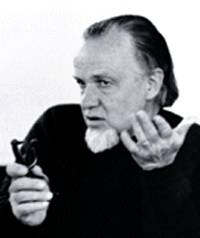









 The Daily Hatch