Woody Allen’s next film will hit theaters this December, Variety has learned.
“Wonder Wheel,” a drama set in Coney Island during the 1950s, will debut in limited release on Dec. 1, 2017. That pits it against “The Disaster Artist,” a comedy with James Franco about the making of the cult film “The Room.” It’s actually a pretty open period on the release calendar. Disney will launch “Coco,” an animated movie, on the weekend before “Wonder Wheel” opens. The weekend after “Wonder Wheel” lands will see the release of Guillermo Del Toro’s fantasy drama “The Shape of Water,” but many films seem to be steering clear of December. That likely has a lot to do with “Star Wars: The Last Jedi,” which hits theaters on Dec. 15.
Amazon Studios is distributing “Wonder Wheel,” having previously worked with Allen on last year’s “Cafe Society.” That comedic drama went on to make $43.8 million globally. “Wonder Wheel’s” cast includes Jim Belushi, Juno Temple, Justin Timberlake, and Kate Winslet. A logline for the film says that it will contain “larger-than-life characters, lovers, infidelity, and gangsters.” It’s Winslet’s first time working with Allen. She was previously tapped for 2005’s “Match Point,” but had to drop out for family reasons.
The December release will allow “Wonder Wheel” to qualify for this year’s Academy Awards. Allen is a favorite with Oscar voters, having racked up statues for the likes of “Hannah and Her Sisters,” “Annie Hall,” and “Midnight in Paris.”
Amazon has only been producing original films for two years, but it has already established itself as a major presence. It released “Manchester by the Sea,” which won Oscars for Casey Affleck and writer-director Kenneth Lonergan, and picked up another Academy Award for “The Salesman,” which won best foreign language film. Upcoming Amazon releases include “The Big Sick,” a romantic comedy from “Silicon Valley’s” Kumail Nanjiani, and “Wonderstruck,” an off-beat drama from Todd Haynes.
Woody Allen – Concerto Parigi 1996 – Wild Man Blues Woody Allen & The Eddy Davis New Orleans Jazz Band I have spent alot of time talking about Woody Allen films on this blog and looking at his worldview. He has a hopeless, meaningless, nihilistic worldview that believes we are going to turn to dust and there […]
______________ Gauguin’s 3 Questions Paul Gauguin, now regarded as a French Post-Impressionist artist, was not received well by his old painter friends while living. And having abandoned his wife and children he had no options or resources for getting by. He never found artistic success, either critically or financially in his lifetime. However, there is […]
______________ Woody Allen CRISIS IN SIX SCENES Crisis in Six Scenes S01E01 CZ titulky Something about television brings out the nostalgist in Woody Allen (well, y’know, even more than usual), and understandably – it’s a medium inextricably tied to his own early days. He got his start as a staff writer for The Colgate Comedy […]
First Look at Woody Allen’s Next Movie ‘Wonder Wheel’ Posted on Tuesday, February 21st, 2017 by Jack Giroux Another period piece is coming our way from writer-director Woody Allen. We know little about his latest movie, titled Wonder Wheel, which is typical of Allen’s movies. Rarely are character and plot details shared early on. But we […]
_ Woody Allen Bob Hope Tonight Show 1971 Woody Allen Actor Director Writer Date Title (click to view) Studio Lifetime Gross / Theaters Opening / Theaters Rank 7/15/16 Cafe Society LGF $11,103,205 631 $359,289 5 18 7/17/15 Irrational Man SPC $4,030,360 925 $175,312 7 36 7/25/14 Magic in the Moonlight SPC $10,539,326 964 $412,095 17 […]
__ The Woody Allen Special [1969] (Guests: Candice Bergen, Billy Graham and the 5th Dimension) Published on Sep 8, 2016 For all the Woody Allen/television fans, here is the rare 1969 CBS special! Featuring the flawless stand-up of Woody, and skits such as: Woody and Candice having to rehearse nude for an artistic play. A […]
__ Woody Allen The Dean Martin Show Happy Birthday Woody Allen: 15 Quotes By The Maverick Filmmaker News18.com First published: December 1, 2016, 3:30 PM IST | Updated: December 1, 2016 One of the most celebrated filmmakers of Hollywood, Woody Allen turns 81 today. Born and raised in Brooklyn as Allen Konigsberg he is arguably […]
___________ Justin Timberlake Talks ‘Trolls,’ Family Life and His New Album With Pharrell Williams Andrew Barker Senior Features Writer@barkerrant TOM MUNRO FOR VARIETY NOVEMBER 1, 2016 | 10:00AM PT Settling into a hotel bar in Soho after a long day shooting a film for Woody Allen in the Bronx, Justin Timberlake wastes no time ordering […]
_ Woody Allen – standup – ’65 – RARE! Happy 81st Birthday, Woody Allen December 2, 2016 1 Comment Woody Allen turns 81 today. And he shows no signs of slowing down. Allen spent his 80th year being remarkably prolific, even by his own standards. The end of 2015 saw that year’s film, Irrational Man, […]
_ Everything We Know About Woody Allen’s 2017 Film With Kate Winslet And Justin Timberlake October 16, 2016 3 Comments Woody Allen has, it seems, wrapped production on his 2017 Film. The new film stars Kate Winlset and Justin Timberlake. And despite some very public days of shooting, We still don’t know that much […]
and you will hear what far smarter people than I have to say on this matter. I agree with them.
Harry Kroto
I have attempted to respond to all of Dr. Kroto’s friends arguments and I have posted my responses one per week for over a year now. Here are some of my earlier posts:
Paul Churchland (born October 21, 1942) is a Canadian philosopher noted for his studies in neurophilosophy and the philosophy of mind.[1] He is Professor Emeritus at the University of California, San Diego, where he held the Valtz Chair of Philosophy[2] and a joint appointment with the Cognitive Science Faculty and the Institute for Neural Computation.[3] He earned his Ph.D. from the University of Pittsburgh in 1969 under the direction of Wilfrid Sellars.[4] Churchland is the husband of philosopher Patricia Churchland, and it has been noted that, “Their work is so similar that they are sometimes discussed, in journals and books, as one person.”[5] He is also the father of two children, Mark and Anne Churchland, both of whom are neuroscientists.[6][7][8]
Professional career
Churchland began his professional career as an instructor at the University of Pittsburgh in 1969;[9] he also lectured at the University of Toronto from 1967-69.[10] In 1969, Churchland took a position at the University of Manitoba, where he would teach for fifteen years: as an assistant professor (1969–74) and associate professor (1974–79), and then as a full professor from 1979-1984.[11] Professor Churchland joined the Institute for Advanced Study in Princeton in 1982, staying as a member until 1983.[12] He joined the faculty at the University of California, San Diego in 1983, serving as Department Chair from 1986-1990.[13] He is a member of the Board of Trustees Moscow Center for Consciousness Studies of Philosophy Department, Moscow State University.[14]
Philosophical views
Along with his wife, Churchland is a major proponent of eliminative materialism, the belief that everyday mental concepts such as beliefs, feelings, and desires are part of a “folk psychology” of theoretical constructs without coherent definition, destined to simply be obviated by a thoroughly scientific understanding of human nature.
Just as modern science has discarded such notions as legends or witchcraft, Churchland maintains that a future, fully matured neuroscience is likely to have no need for “beliefs” (see propositional attitudes). In other words, he holds that beliefs are not ontologically real. Such concepts will not merely be reduced to more finely grained explanation and retained as useful proximate levels of description, but will be strictly eliminated as wholly lacking in correspondence to precise objective phenomena, such as activation patterns across neural networks. He points out that the history of science has seen many posits once considered real entities, such as phlogiston, caloric, the luminiferous ether, and vital forces, thus eliminated. In The Engine of Reason, The Seat of the Soul Churchland hypothesizes that consciousness might be explained in terms of a recurrent neural network with its hub in the intralaminar nucleus of the thalamus and feedback connections to all parts of the cortex. He says his proposal is probably mistaken in the neurological details, but on the right track in its use of recurrent neural networks to account for consciousness. This is notably a reductionist rather than eliminativist account of consciousness.
In the third video below in the 143rd clip in this series are his words and my response is below them.
50 Renowned Academics Speaking About God (Part 1)
Another 50 Renowned Academics Speaking About God (Part 2
A Further 50 Renowned Academics Speaking About God (Part 3)
Below is both a letter I wrote to Dr. Churchland back in 1994 and one I wrote him on July 9, 2016 and I respond to his quote in the second letter.
Adrian Rogers is pictured below and Francis Schaeffer above.
Watching the film HOW SHOULD WE THEN LIVE? in 1979 impacted my life greatly
Francis Schaeffer in the film WHATEVER HAPPENED TO THE HUMAN RACE?
Francis and Edith Schaeffer
_______
July 9, 2016
Dr. Paul Churchland, University of California San Diego,
Dear Dr. Churchland,
I would to do two things today.
FIRST, I wanted to respond to your quote from the You Tube series “Renowned Academics Speaking About God.”
SECOND, I would like to send you a portion of the letter I sent to you back in 1994.
YOUR QUOTE
If you think you already have the answer of truth whether scientific or moral and it is given to you from God, then you have a problem. You can no longer learn. Absolute truth is immutable and that is the most tragic thing of all. In order to buy needed authority [religions] have bought too much and it is self defeating. If you laws are infallible, if your laws are already perfect then you can’t possibly anything more from experience. Any creature that stops learning dies.
My first response is to challenge you to watch the WOODY ALLEN movie CRIMES AND MISDEMEANORS and just simply answer the question HOW CAN AN ATHEIST CONVINCE JUDAH NOT TO MURDER HIS TROUBLESOME MISTRESS?
Second let me just put before this short article that deals with the idea of an INFINITE REFERENCE POINT.
The beautiful Portland Head Lighthouse on the Maine coast.
It was the flash from this lighthouse I could see from the
balcony of my hotel in Ogunquit, far to the south.
No finite point has meaning without an infinite reference point.
Jean-Paul Sartre
I am the light of the world.
Jesus Christ (Matthew 5:14)
I stood outside on the deck of my hotel listening to the surf quietly lap the beach. It was a beautiful Maine evening, with stars blazing overhead and a gentle breeze blowing warm for early October. Out in the darkness my eyes traced a dim line of lights running along the shore of the peninsula that jutted far out to sea. Where the lights ended, I assumed, was lands end and where the open sea began. I was curious then, when I saw a light flash much farther out to sea. It didn’t take long to realize that the flash was from a lighthouse, which marked the true end of land. It was plain to me then how a lighthouse could make the difference between life and death to a ship sailing off the coast.
My friends and I had to laugh when
we saw this sign in Beijing, China,
north of the Forbidden City. It reminded
us all about the perilous journey of life.
A Point of Reference
As I thought about a ship sailing along the coast in rough waters without a reference point to warn it where it could run aground, it occurred to me how similar this is to navigating through life. Who could argue that life is not perilous? And how many lives have been shattered on the rocks of despair, meaninglessness, alcohol and drug addiction, bitterness, anxiety, etc.
How helpful it would be to have a point of reference to warn us of the dangers in life.
Even John-Paul Sartre (quoted above), a famous atheist existentialist, recognized that we finite human beings need an infinite reference point in order to have meaning. However, because Sartre didn’t believe there was an infinite reference point (God), he concluded that life is meaningless. “Man is absurd”, he said, “but he must grimly act as if he were not”. Sartre had worked through the implications of life without God, and his conclusion perfectly illustrates the hopelessness of the atheistic and secularist worldview.
The flash of the lighthouse interrupted my thoughts. Each time I saw it, I was amazed at how far out the shore really ran.
Worldview
All of us have worldviews that, consciously or unconsciously, guide us through life and affect our daily decisions…decisions that could move us closer to or farther away from dangers that could destroy our lives. Francis Schaeffer noted that our worldviews are based on “presuppositions” (1). For example, the presupposition that is championed at the secular university (and widely in our culture) today is the “uniformity of natural causes in a closed system”. Because, it is believed, the system is closed, then there can be nothing outside the system (i.e., God) and therefore, intervention from the outside (miracles or revelation from God) is impossible. With this presupposition, as Oxford mathematician John Lennox so eloquently stated, “we can’t even answer the simple questions of a child: Why am I here? What’s the meaning of life? And so on” (2). This is why Sartre, who believed in the closed system model, concluded that man is absurd.
If, on the other hand, you believe in the “uniformity of natural causes in an open system”, into which God can act, then revelation and miracles are entirely possible. We can receive answers to the simple questions of a child because there is a God who can speak into our system (such as through the Bible). He is our lighthouse.Then the statement by Jesus Christ that he is the light of the world (quoted above) makes sense.
View from my hotel balcony on the coast of Ogunquit, Maine.
At night I could see the Portland Head Lighthouse flashing in
the distance at the far right.
A North Star Francis Schaeffer went on to say that the Bible gives us an adequate reference point, a North Star for our lives in the infinite-personal God. God is infinite (and thus, provides us a needed infinite reference point), and at the same time personal. How was he personal? The apostle John wrote that God came into the world as a human, a person, whose name was Jesus Christ (3). Jesus reached out and touched the lepers (4), which everyone else was afraid to do because they didn’t want to catch leprosy! He restored the lame (5) and even brought the dead back to life (6). Its hard to imagine getting more personal than that. In fact, read the New Testament and you will learn of many broken lives that, when touched by him, were healed and restored. Truly his mission had profound implications for those whose lives had been shattered on the jagged rocks of life.
Amazingly, the good news for us is that Jesus is still at work, healing and restoring life to all who accept him! (7)
The lighthouse flashed again. Its no accident that Jesus described himself as the light of the world, or that John called him “the true light that gives light to everyone” (8).
It was getting late and I was growing tired. But I went back into my hotel room with a supernatural assurance that God was with me. As John wrote about Jesus: “The light shines in the darkness, and the darkness has not overcome it.” (9)
Footnotes:
(1) He is There He is not Silent, by Francis Schaeffer
(2) An interview with John Lennox, Professor Lennox discusses Christianity, atheism, and science
(3) John 1:1,14,17.
(4) Matthew 8:1-3.
(5) Mark 3:1-6.
(6) Mark 5:21-43; John 11:1-44.
(7) Romans 8:10-11.
(8) John 1:9.
(9) John 1:5.
You will notice in the above article that Francis Schaeffer is referenced. On May 15, 1994 on the 10th anniversary of the passing of Francis Schaeffer I sent a letter to you and here is a portion of that letter below:
I have enclosed a cassette tape by Adrian Rogers and it includes a story about Charles Darwin‘s journey from the position of theistic evolution to agnosticism. Here are the four bridges that Adrian Rogers says evolutionists can’t cross in the CD “Four Bridges that the Evolutionist Cannot Cross.” 1. The Origin of Life and the law of biogenesis. 2. The Fixity of the Species. 3.The Second Law of Thermodynamics. 4. The Non-Physical Properties Found in Creation.
In the first 3 minutes of the cassette tape is the hit song “Dust in the Wind.” Below I have given you some key points Francis Schaeffer makes about the experiment that Solomon undertakes in the book of Ecclesiastes to find satisfaction by looking into learning (1:16-18), laughter, ladies, luxuries, and liquor (2:1-3, 8, 10, 11), and labor (2:4-6, 18-20).
Schaeffer noted that Solomon took a look at the meaning of life on the basis of human life standing alone between birth and death “under the sun.” This phrase UNDER THE SUN appears over and over in Ecclesiastes. The Christian Scholar Ravi Zacharias noted, “The key to understanding the Book of Ecclesiastes is the term UNDER THE SUN — What that literally means is you lock God out of a closed system and you are left with only this world of Time plus Chance plus matter.”
Here the first 7 verses of Ecclesiastes followed by Schaeffer’s commentary on it:
The words of the Preacher, the son of David, king in Jerusalem. Vanity of vanities, says the Preacher, vanity of vanities! All is vanity. What does man gain by all the toil at which he toils under the sun? A generation goes, and a generation comes, but the earth remains forever. The sun rises, and the sun goes down, and hastens to the place where it rises. The wind blows to the south and goes around to the north; around and around goes the wind, and on its circuits the wind returns. All streams run to the sea, but the sea is not full; to the place where the streams flow, there they flow again.
Solomon is showing a high degree of comprehension of evaporation and the results of it. Seeing also in reality nothing changes. There is change but always in a set framework and that is cycle. You can relate this to the concepts of modern man. Ecclesiastes is the only pessimistic book in the Bible and that is because of the place where Solomon limits himself. He limits himself to the question of human life, life under the sun between birth and death and the answers this would give.
Solomon doesn’t place man outside of the cycle. Man doesn’t escape the cycle. Man is in the cycle. Birth and death and youth and old age.
There is no doubt in my mind that Solomon had the same experience in his life that I had as a younger man (at the age of 18 in 1930). I remember standing by the sea and the moon arose and it was copper and beauty. Then the moon did not look like a flat dish but a globe or a sphere since it was close to the horizon. One could feel the global shape of the earth too. Then it occurred to me that I could contemplate the interplay of the spheres and I was exalted because I thought I can look upon them with all their power, might, and size, but they could contempt nothing. Then came upon me a horror of great darkness because it suddenly occurred to me that although I could contemplate them and they could contemplate nothing yet they would continue to turn in ongoing cycles when I saw no more forever and I was crushed.
Let me show you some inescapable conclusions if you choose to live without God in the picture. Schaeffer noted that Solomon came to these same conclusions when he looked at life “under the sun.”
Death is the great equalizer (Eccl 3:20, “All go to the same place; all come from dust, and to dust all return.”)
Chance and time have determined the past, and they will determine the future. (Ecclesiastes 9:11-13 “I have seen something else under the sun: The race is not to the swift
or the battle to the strong, nor does food come to the wise or wealth to the brilliant or favor to the learned; but time and chance happen to them all. Moreover, no one knows when their hour will come: As fish are caught in a cruel net, or birds are taken in a snare, so people are trapped by evil times that fall unexpectedly upon them.”)
Power reigns in this life, and the scales are not balanced(Eccl 4:1; “Again I looked and saw all the oppression that was taking place under the sun: I saw the tears of the oppressed—
and they have no comforter; power was on the side of their oppressors— and they have no comforter.” 7:15 “In this meaningless life of mine I have seen both of these: the righteous perishing in their righteousness, and the wicked living long in their wickedness. ).
Nothing in life gives true satisfaction without God including knowledge (1:16-18), ladies and liquor (2:1-3, 8, 10, 11), and great building projects (2:4-6, 18-20).
There is no ultimate lasting meaning in life. (1:2)
By the way, the final chapter of Ecclesiastes finishes with Solomon emphasizing that serving God is the only proper response of man. Solomon looks above the sun and brings God back into the picture in the final chapter of the book in Ecclesiastes 12:13-14, “ Now all has been heard; here is the conclusion of the matter: Fear God and keep his commandments, for this is the whole duty of man. For God will bring every deed into judgment, including every hidden thing, whether it is good or evil.”
The answer to find meaning in life is found in putting your faith and trust in Jesus Christ. The Bible is true from cover to cover and can be trusted. In 1978 I heard the song “Dust in the Wind” by Kansas when it rose to #6 on the charts. That song told me that Kerry Livgren the writer of that song and a member of Kansas had come to the same conclusion that Solomon had and that “all was meaningless UNDER THE SUN,” and looking ABOVE THE SUN was the only option. I remember mentioning to my friends at church that we may soon see some members of Kansas become Christians because their search for the meaning of life had obviously come up empty even though they had risen from being an unknown band to the top of the music business and had all the wealth and fame that came with that.
Livgren wrote, “All we do, crumbles to the ground though we refuse to see, Dust in the Wind, All we are is dust in the wind, Don’t hang on, Nothing lasts forever but the Earth and Sky, It slips away, And all your money won’t another minute buy.”
Both Kerry Livgren and Dave Hope of Kansas became Christians eventually. Kerry Livgren first tried Eastern Religions and Dave Hope had to come out of a heavy drug addiction. I was shocked and elated to see their personal testimony on The 700 Club in 1981. Livgren lives in Topeka, Kansas today where he teaches “Diggers,” a Sunday school class at Topeka Bible Church. Hope is the head of Worship, Evangelism and Outreach at Immanuel Anglican Church in Destin, Florida.
Thank you Dr. Churchland for taking time to read this letter.
______________ George Harrison Swears & Insults Paul and Yoko Lucy in the Sky with Diamonds- The Beatles The Beatles: I have dedicated several posts to this series on the Beatles and I don’t know when this series will end because Francis Schaeffer spent a lot of time listening to the Beatles and talking […]
The Beatles in a press conference after their Return from the USA Uploaded on Nov 29, 2010 The Beatles in a press conference after their Return from the USA. The Beatles: I have dedicated several posts to this series on the Beatles and I don’t know when this series will end because Francis […]
__________________ Beatles 1966 Last interview I have dedicated several posts to this series on the Beatles and I don’t know when this series will end because Francis Schaeffer spent a lot of time listening to the Beatles and talking and writing about them and their impact on the culture of the 1960’s. In this […]
_______________ The Beatles documentary || A Long and Winding Road || Episode 5 (This video discusses Stg. Pepper’s creation I have dedicated several posts to this series on the Beatles and I don’t know when this series will end because Francis Schaeffer spent a lot of time listening to the Beatles and talking and writing about […]
_______________ Francis Schaeffer pictured below: _____________________ I have included the 27 minute episode THE AGE OF NONREASON by Francis Schaeffer. In that video Schaeffer noted, ” Sergeant Pepper’s Lonely Hearts Club Band…for a time it became the rallying cry for young people throughout the world. It expressed the essence of their lives, thoughts and their feelings.” How Should […]
Crimes and Misdemeanors: A Discussion: Part 1 ___________________________________ Today I will answer the simple question: IS IT POSSIBLE TO BE AN OPTIMISTIC SECULAR HUMANIST THAT DOES NOT BELIEVE IN GOD OR AN AFTERLIFE? This question has been around for a long time and you can go back to the 19th century and read this same […]
____________________________________ Francis Schaeffer pictured below: __________ Francis Schaeffer has written extensively on art and culture spanning the last 2000years and here are some posts I have done on this subject before : Francis Schaeffer’s “How should we then live?” Video and outline of episode 10 “Final Choices” , episode 9 “The Age of Personal Peace and Affluence”, episode 8 […]
Love and Death [Woody Allen] – What if there is no God? [PL] ___________ _______________ How Should We then Live Episode 7 small (Age of Nonreason) #02 How Should We Then Live? (Promo Clip) Dr. Francis Schaeffer 10 Worldview and Truth Two Minute Warning: How Then Should We Live?: Francis Schaeffer at 100 Francis Schaeffer […]
___________________________________ Francis Schaeffer pictured below: ____________________________ Francis Schaeffer “BASIS FOR HUMAN DIGNITY” Whatever…HTTHR Dr. Francis schaeffer – The flow of Materialism(from Part 4 of Whatever happened to human race?) Dr. Francis Schaeffer – The Biblical flow of Truth & History (intro) Francis Schaeffer – The Biblical Flow of History & Truth (1) Dr. Francis Schaeffer […]
George Harrison is the only member of the Beatles who stuck with Hinduism while the other three abandoned it shortly after their one trip to India. Francis Schaeffer noted, ” The younger people and the older ones tried drug taking but then turned to the eastern religions. Both drugs and the eastern religions seek truth inside one’s own head, a negation of reason. The central reason of the popularity of eastern religions in the west is a hope for a nonrational meaning to life and values. The reason the young people turn to eastern religion is simply the fact as we have said and that is that man having moved into the area of nonreason could put anything up there and the heart of the eastern religions is a denial of reason just exactly as the idealistic drug taking was.”
In the article below from Wikipedia it is noted:
For the last 30 or more years of his life, George Harrison repeatedly identified his first experience of taking the hallucinogenic drug LSD, with John Lennon and their wives, as being responsible for his interest in spirituality and Hinduism.[2][3][4][5] The “trip” occurred by accident in February 1965,[6][7][8] and he later recalled a thought coming to his mind during the experience: “‘Yogis of the Himalayas.’ I don’t know why … It was like somebody was whispering to me: ‘Yogis of the Himalayas.'”[5]
“Art of Dying” is a song by English musician George Harrison, released on his 1970 triple album All Things Must Pass. It was written in 1966–67 when Harrison first became immersed in Hindu spirituality, and its subject matter is reincarnation – the “art” in question being the need to avoid rebirth, by limiting actions and thoughts whose consequences lead to one’s soul returning in another, earthbound life form. The song was co-produced by Phil Spector and features a hard-charging rock arrangement that has been described as “proto-disco“.[1] The backing musicians include Eric Clapton and the rest of the latter’s short-lived band Derek and the Dominos, as well as Gary Wright, Billy Preston and a teenage Phil Collins.
Since Harrison’s death in November 2001, the lyrics of “Art of Dying” have been much quoted as a comment on the nature of human existence.
For the last 30 or more years of his life, George Harrison repeatedly identified his first experience of taking the hallucinogenic drug LSD, with John Lennon and their wives, as being responsible for his interest in spirituality and Hinduism.[2][3][4][5] The “trip” occurred by accident in February 1965,[6][7][8] and he later recalled a thought coming to his mind during the experience: “‘Yogis of the Himalayas.’ I don’t know why … It was like somebody was whispering to me: ‘Yogis of the Himalayas.'”[5] A visit in August 1967 to the epicentre of hippie conterculturalism, San Francisco’s Haight-Ashbury district, then persuaded him to abandon LSD and pursue a spiritual path through meditation.[9][10] By that point, Harrison had already immersed himself in Indian music, which is irrevocably tied to spirituality,[11][12] and dealt with what author Ian MacDonald terms “the spiritual aridity of modern life”[13] in his song “Within You Without You” (on the Beatles‘ Sgt. Pepper’s Lonely Hearts Club Band).[14][15] He had also begun writing a song dedicated to the Hindu concept of reincarnation and the inevitability of death, “Art of Dying”.[16]
There’ll come a time when all of us must leave here
There’s nothing Sister Mary can do, will keep me here with you
As nothing in this life that I’ve been trying
Can equal or surpass the Art of Dying.
The mention of “Sister Mary” refers to the Catholic faith in which Harrison had been brought up as a child.[17] Speaking to author Peter Doggett, Harrison’s sister Louise qualified his embracing of Hinduism with regard to his upbringing: “Our family were Catholics, but we always had a global outlook. We were spiritual, not religious as such. George didn’t change as a person after he went to India [in 1966] …”[18]
Rather than Sister Mary, Harrison’s original lyric named “Mr Epstein” – the Beatles’ manager, Brian Epstein.[19][20] Given this reference to Epstein, author Bruce Spizer has speculated that Harrison was “contemplating life after the Beatles” as early as mid 1966, since “most of the song’s original verses recognise that even Mr. Epstein won’t be able to keep the group together or help out when it’s over …”[21]
As Harrison explains in his autobiography, I, Me, Mine, in most cases one’s soul does not in fact “leave here” after death, due to the karmic debt, or “load”, accrued through actions and thoughts carried out in one’s lifetime.[22] This point is illustrated in the third verse of “Art of Dying”:[23]
There’ll come a time when most of us return here
Brought back by our desire to be a perfect entity
Living through a million years of crying
Until you realize the Art of Dying.
The mention of “a million years of crying” is a reference to the endless cycle of rebirth associated with reincarnation, where the soul repeatedly fails to leave the material world and attain nirvana,[24] otherwise known as moksha.[25]
Written in a period shortly before “karma”, “mantra“, “guru” and “māyā” all became key words in his vocabulary,[26] Harrison shows an acknowledgment of possible confusion on the part of his listeners, and a degree of humour,[16] with the pointed questions that appear at the end of the verses, “Are you still with me?” and “Do you believe me?“[23] The subject of rebirth was one he would return to frequently throughout his solo career,[27] notably on “Give Me Love (Give Me Peace on Earth)“, with its pleas “Keep me free from birth” and “Help me cope with this heavy load“.[28][29]
On 26 May 1970, a month after the Beatles’ break-up, “Art of Dying” was one of many songs performed by Harrison for Phil Spector‘s benefit at Abbey Road Studios,[30] with a view to narrowing down the material under consideration for All Things Must Pass.[31]Harrison strummed the song on acoustic guitar, but as with “Isn’t It a Pity“, “Run of the Mill“, “Let It Down” and other selections, its arrangement would be transformed significantly as the album sessions progressed;[21] in this instance, Spector’s production on the official release provided a “[big] ‘kitchen sink’ job”, as authors Chip Madinger and Mark Easter put it.[20] A widely bootlegged version known as “Art of Dying (take 9)”, comprising a band performance dominated by acoustic rhythm guitars and piano, with Ringo Starr on drums, sees the song somewhere midway between the solo run-through and the All Things Must Pass arrangement.[20] This take 9, played in the key of B♭ minor, a semitone up from that of the official version of the song, was still in contention for release during the album’s mixing phase.[20]
In a chapter discussing All Things Must Pass in his 2010 autobiography, American musician Bobby Whitlock writes of recording the song: “It was awesome when we were doing ‘The Art of Dying,’ Eric [Clapton] on that wah-wah and it was all cooking, Derek and the Dominos with George Harrison.”[32] The sessions led to the formation of Derek and the Dominos,[33][34] whose four members – Clapton, Whitlock, Carl Radle and Jim Gordon – all played on the track.[35]
Kicked off by what author Elliot Huntley terms Clapton’s “firecracking” lead guitar,[27] and propelled by Gordon’s drumming and Radle’s urgent bass, the released version of “Art of Dying” is in the hard rock style.[16]Jim Price‘s horn arrangement provided a countermelody behind the various A minor voicings in the song’s instrumental passages[36] through to its “galloping” ending.[21] Testifying to the ferocity of the performance, Phil Collins later recalled that his hands were so badly blistered during the run-throughs of the song, he was unable to play his congas with any force once they came to actually record it, hence the apparent absence of congas in the final mix.[37] Another percussion part – maracas – does feature prominently, and may have been played by Mal Evans, Starr, members of Badfinger or Maurice Gibb, all of whom attended the session also, according to Collins.[37]
Apple Records released All Things Must Pass in November 1970,[38] with “Art of Dying” sequenced as the second track on side four, in the triple album’s original, LP format.[39] While describing the acclaim afforded the album on release, author Robert Rodriguez includes the song as an illustration of how Harrison’s talent had been “hidden in plain sight” behind Lennon and Paul McCartney during the Beatles’ career.[40] Rodriguez writes: “That the Quiet Beatle was capable of such range – from the joyful “What Is Life” to the meditative “Isn’t It a Pity” to the steamrolling “Art of Dying” to the playful “I Dig Love” – was revelatory.”[40]
In his review for Rolling Stone magazine, Ben Gerson similarly wrote of the wide range of styles found on All Things Must Pass and recognised “Art of Dying” as “a song of reincarnation” with a melody supposedly “borrowed” from the Rolling Stones‘ “Paint It, Black“.[41]Village Voice contributor Nicholas Schaffner and others have described it as an “essay” on the subject of reincarnation.[16][42] Writing in 1001 Albums You Must Hear Before You Die, Andrew Gilbert highlights “Art of Dying” as an example of the “finely crafted, spiritually charged songs” that ensure that All Things Must Pass “only sounds better with time”.[43] While reviewing the 30th anniversary edition of the album, James Hunter enthused in Rolling Stone: “Imagine a rock orchestra recorded with sensitivity and teeth and faraway mikes: bluesy and intricate on Harrison and Dylan‘s ‘I’d Have You Anytime,’ fizzy on ‘Apple Scruffs,’ grooving on ‘Let It Down,’ and spookily proto-disco on ‘Art of Dying.'”[1]
Among Harrison’s biographers, Elliot Huntley describes the song as “certainly the most dramatic” track on the album and “one of the most scintillating rock songs in the Harrison canon”.[27] Ian Inglis writes that “Art of Dying” displays “all the features” of Harrison’s “post-Beatles confidence” and notes the Middle Eastern “musical antecedents” despite the obvious Hindu concepts within the lyrics.[44] In his book While My Guitar Gently Weeps, Simon Leng views “Art of Dying” as picking up “where ‘Tomorrow Never Knows‘ and ‘Within You Without You’ paused”, and adds: “If ever a song challenged the one-eyed nature of the rock world, this is it. Nothing could be further from superficial pop culture.”[16]
Harrison never performed “Art of Dying” live,[45] although he included it on his proposed setlist for the Concert for Bangladesh in 1971.[46] It was rehearsed for the two shows at Madison Square Garden, judging by Jim Horn‘s horn chart for the song, reproduced at the end of I, Me, Mine.[47] The acoustic demo of “Art of Dying” from May 1970 has been available unofficially since the 1990s, on bootlegs such as Beware of ABKCO![48][49]
Jazz guitarist Joel Harrison covered “Art of Dying” for his album Harrison on Harrison: Jazz Explanations of George Harrison,[50] released in October 2005.[51] Three years later, Suburban Skies recorded the song for their Harrison tribute album George.[52]
Jump up^Madinger and Easter write that the various in-progress mixes of “Art of Dying” reveal the presence of tubular bells on the recording but make no mention of a piano part,[20] for which Leng credits Whitlock as playing.[36] In his autobiography, Whitlock states that his contribution was the tubular bells, which he played with a leather hammer.[53]
Dale C. Allison Jr., The Love There That’s Sleeping: The Art and Spirituality of George Harrison, Continuum (New York, NY, 2006; ISBN 978-0-8264-1917-0).
Keith Badman, The Beatles Diary Volume 2: After the Break-Up 1970–2001, Omnibus Press (London, 2001; ISBN 0-7119-8307-0).
The Beatles, Anthology, Chronicle Books (San Francisco, CA, 2000; ISBN 0-8118-2684-8).
Harry Castleman & Walter J. Podrazik, All Together Now: The First Complete Beatles Discography 1961–1975, Ballantine Books (New York, NY, 1976; ISBN 0-345-25680-8).
Alan Clayson, George Harrison, Sanctuary (London, 2003; ISBN 1-86074-489-3).
Peter Doggett, You Never Give Me Your Money: The Beatles After the Breakup, It Books (New York, NY, 2011; ISBN 978-0-06-177418-8).
The Editors of Rolling Stone, Harrison, Rolling Stone Press/Simon & Schuster (New York, NY, 2002; ISBN 0-7432-3581-9).
George Harrison, I Me Mine, Chronicle Books (San Francisco, CA, 2002; ISBN 0-8118-3793-9).
Olivia Harrison, George Harrison: Living in the Material World, Abrams (New York, NY, 2011; ISBN 978-1-4197-0220-4).
Elliot J. Huntley, Mystical One: George Harrison – After the Break-up of the Beatles, Guernica Editions (Toronto, ON, 2006; ISBN 1-55071-197-0).
Ian Inglis, The Words and Music of George Harrison, Praeger (Santa Barbara, CA, 2010; ISBN 978-0-313-37532-3).
Simon Leng, While My Guitar Gently Weeps: The Music of George Harrison, Hal Leonard (Milwaukee, WI, 2006; ISBN 1-4234-0609-5).
Cynthia Lennon, John, Hodder & Stoughton (London, 2006; ISBN 0-340-89512-8).
Ian MacDonald, Revolution in the Head: The Beatles’ Records and the Sixties, Pimlico (London, 1998; ISBN 0-7126-6697-4).
Chip Madinger & Mark Easter, Eight Arms to Hold You: The Solo Beatles Compendium, 44.1 Productions (Chesterfield, MO, 2000; ISBN 0-615-11724-4).
Chris O’Dell (with Katherine Ketcham), Miss O’Dell: My Hard Days and Long Nights with The Beatles, The Stones, Bob Dylan, Eric Clapton, and the Women They Loved, Touchstone (New York, NY, 2009; ISBN 978-1-4165-9093-4).
Robert Rodriguez, Fab Four FAQ 2.0: The Beatles’ Solo Years, 1970–1980, Backbeat Books (Milwaukee, WI, 2010; ISBN 978-1-4165-9093-4).
Nicholas Schaffner, The Beatles Forever, McGraw-Hill (New York, NY, 1978; ISBN 0-07-055087-5).
Bruce Spizer, The Beatles Solo on Apple Records, 498 Productions (New Orleans, LA, 2005; ISBN 0-9662649-5-9).
Gary Tillery, Working Class Mystic: A Spiritual Biography of George Harrison, Quest Books (Wheaton, IL, 2011; ISBN 978-0-8356-0900-5).
If there has been a predominant figure in pop culture so far this year, it might just be Jesus Christ. The most obvious example is The Passion Of The Christ, but while the film has been a focal point of debate over religion’s current influence in mainstream Western society, Mel Gibson is only the most familiar of many other artists whose individual visions are making a new generation aware of Christianity, in all its mystery and inherent complexity. This year, God TV has had its hits (Joan of Arcadia) and misses (Wonderfalls); Madonna is devoting time on her current tour to preaching about Kabbalah; and recent Johnny Cash reissues are acknowledging the Man In Black’s devotion to the gospels. The Polyphonic Spree conduct hippie-tinged sermons like a pot-addled Mormon Tabernacle Choir, while the Hidden Cameras’ gay folk music invites new devotees to sing along, part of an increasingly important generation of believers – like Robert Randolf, Danielson and Royal City – who are pushing faith to the fore.
For most fans, the separation of Church and Rock is just as, let’s say, sacred as the separation of Church and State. After all, what was originally conceived as “the Devil’s music” should remain so, right? But rock’n’roll has never shied away from the spiritual realm, dating back to when Elvis Presley calmed fears of his evil powers with a solemn rendition of “Peace In The Valley,” accompanied by the Blackwood Brothers gospel quartet as part of his first Ed Sullivan Show appearance.
Today, matters of faith are increasingly prevalent, not only in Christian-based music’s own self-sufficient industry, but in the voices of young artists who are drawing upon the gospel tradition, for both musical inspiration and personal enlightenment.
The Gospel Impulse
Perhaps the biggest question raised by the overwhelming response to The Passion is, why now? America in particular has long been a predominantly evangelical Christian nation – latest surveys show that 43 percent of its citizens consider themselves “born again” – to the point where the Republican Party, with its “born again” president George W. Bush, has concluded that it need only appeal to this demographic in order to remain in power.
One thing that is certain, the use of religious imagery today in popular music has grown much more complicated in comparison to its earliest appearances in song. As Craig Werner writes in his thorough study, A Change Is Gonna Come: Music, Race & The Soul Of America, “Without question the spiritual explorations of the younger generation shocked some of their elders. But many appreciated the impulse behind the explorations; and almost everyone understood that almost any spiritual vision was preferable to the nihilism that threatened to destroy so many communities.”
Werner’s list of crucial gospel-informed hits includes Bob Marley’s “Redemption Song,” Stevie Wonder’s “Higher Ground,” and many others that have undeniably had an impact far beyond other songs of their respective eras. The suggestion Werner makes is that artists who successfully utilise the “gospel impulse,” do so out of a desire to build community, rather than out of pure self-expression.
He writes, “At its best, the gospel impulse helps people experience themselves in relation to rather than on their own. Gospel makes the feeling of human separateness, which is what the blues are all about, bearable. It’s why DJs and the dancers they shape into momentary communities are telling the truth when they describe dance as a religious experience.”
Rock Of Ages
The notion of using music as a vehicle to connect with a larger community, or higher power, directly reflects the fact that most early stars of blues, country and rock’n’roll came from small, rural areas where the church was a social pillar. For many, it was simply a natural progression to interpret music learned in church in their own personal ways.
As one of his final wishes, Johnny Cash recorded My Mother’s Hymn Book, a collection of songs he had known since his childhood. There could be no better final statement from a man who balanced sin and salvation, and who was unparalleled at communicating the realities of each. While it is easy to sentimentalise Cash’s gospel work as an outgrowth of his personal struggles over the years, the fact is that at when he first sang of shooting a man in Reno just to watch him die, he was also asking, ‘Were you there when they crucified my Lord?’ In fact, Cash intended his first album for Columbia Records, following his move from Sun, to be a gospel album, something the label wouldn’t approve until there were a few hits under his belt.
As Sylvie Simmons writes in the liner note to Hymn Book, “If [Cash’s mother] Carrie had not taught him these hymn book songs, encouraged him to sing them and told him that his talent was a ‘gift from God’ and he should not toss it away, he would likely not be here today.”
While Cash never made what might have been a natural transition into a full-fledged preacher, history suggests that most artists who come from a strong religious upbringing invariably introduce those beliefs into their music.
Al Green is a prime example. Originally a deep soul belter, Green undertook a personal battle between the sacred and profane in the early ’70s, just as his popularity was amplifying the isolation he had always felt, and subsequently eased with drugs and sex. It was in a hotel room at Disneyland in 1973 that Green found the Lord. “I had producers, promoters, record companies, booking agents, all these people saying, ‘Al is doing what? Religion? Eighteen million dollars invested in this boy and he’s got religion? We’ve got a career going here, we need to sell some records,” he recently told Mojo’s Andrea Lisle. “Everyone around me was saying, ‘We don’t need God right now – tell him to come back later.’ But I had to reconcile what was going on with me, because this was the only thing that was gonna save me.”
Unlike Little Richard’s flirtation with the ministry in the late ’50s, which essentially stalled his career at its height, Green wholly embraced his calling, and deftly incorporated religion into such landmark recordings as 1977’s The Belle Album. At the same time, Green preached every Sunday at his own church in Memphis, still today a guaranteed cure for Saturday night excesses. Yet, after establishing himself as undoubtedly the most popular gospel artist in America, Reverend Al’s excellent new album, I Can’t Stop, returns to the sultry themes and grooves that first brought him fame. For Green, the gap between physical love and spiritual love was bridged long ago. “Even the Pope is a human being,” he says. “And that is what this album is about. When people come home from the church house and start dealing with the children, their job, the mortgage and the insurance, they’re gonna deal with this album. It’s about life.”
From The Altar To The Stage
While mainstream rock fans have often turned to Green’s work for an accessible gospel fix, more recently they have been introduced to the music through several unlikely sources. One of these is the sacred steel movement, first “discovered” by blues enthusiast Chris Strachwitz of Arhoolie Records in the early 1990s. Until then, sacred steel was an obscure fixture of black Baptist church services, mostly in Florida, where the choir was accompanied not by an organ, but by pedal steel guitarists. As unlikely as that seems, players like Sonny Treadway, Aubrey Ghent, and the Campbell Brothers, managed to create both joyful and heart-wrenching sounds that perfectly complemented the hymns. With its popularity grown following such acclaimed releases as None But The Righteous and The Word (featuring John Medeski of Medeski, Martin & Wood), sacred steel had its first mainstream crossover success last year with Robert Randolph, the young phenom whose urban chic has brought him those all-important young white followers.
Randolph, who grew up near Newark, New Jersey, admits that staying close to his churchgoing relatives saved him from a life of drugs and crime, and ultimately got him playing steel guitar. A family connection to sacred steel legend Ted Beard firmly set him on his path at the age of 17. “I said to Ted, ‘I want to play like you,’ but he taught me that you can never be like someone else, and if you keep that in mind and stay humble, then nobody will be able to do what you’re doing. A couple of months after that, I was back home playing steel guitar at our church services.” Since then, Randolph’s major label debut, Unclassified, and his band’s incendiary live shows have drawn comparisons to guitar heroes like Jimi Hendrix and Stevie Ray Vaughan. But at its core, Randolph’s music is pure gospel, and judging by his statements, will remain so.
Although Randolph and others have helped to modernise the established tenets of gospel music, the enduring appeal of what have come to be known among collectors as “true vine” recordings from the 1920s and ’30s is undiminished. Proof is in the brisk sales of last year’s six-disc set Goodbye Babylon, a labour of love for Atlanta music archivist Lance Ledbetter, who released it on his own Dust-To-Digital label. Although a substantial purchase for even the most ardent fan – the set comes with the requisite book in a wood box lined with freshly picked cotton – it rivals Harry Smith’s Anthology of American Folk Music in both quality and historical significance.
Ledbetter says his motivation was simply to fill a void in documenting important early gospel artists like Thomas A. Dorsey and Sister Rosetta Tharpe. In doing so, he ingeniously placed them alongside little-known gospel sides from their better-known peers like Blind Lemon Jefferson and the Monroe Brothers, along with an entire disc of sermons. “I was doing a radio show of old-timey music at Georgia State University and I just noticed a void in gospel music reissues,” he explained in an online chat. “That led me to write a letter to a collector about whom I’d read on the internet [Joe Bussard]. He lived in Maryland and owned over 25,000 78 rpm records. Over time we developed a nice relationship, and for the next year-and-a-half I listened to all of his religious records. He would make me cassettes of the songs for $.50 a track and I’d get them and listen to them every night on headphones and would have the hair on the back of my neck raised. It was an incredible time!”
The force of this old time religion can be heard elsewhere, from the White Stripes’ now trademark renditions of Son House’s “John The Revelator,” to former 16 Horsepower front-man David Eugene Edwards’ latest haunting project, Woven Hand. But for anyone familiar with roots music of the past 20 years, the revival of that spirit can be credited to only one man: T-Bone Burnett.
The High Priest
“I’ve made it a policy not to talk about Bob Dylan,” T-Bone Burnett has repeatedly said. “But I will say this, his career has been about Bob Dylan’s search for God.” Burnett, a devout born-again Christian from Texas, first made his name after Dylan enlisted him in 1975 for the Rolling Thunder Revue. Less than three years later, Dylan himself was taking Bible study classes and damning non-believers both in his songs and on-stage harangues.
While Burnett’s influence on Dylan’s conversion was probably minimal, his influence on reconnecting America with its gospel music tradition has been immeasurable. Although he never found his footing as a solo artist, his work as a producer has invariably put them in touch with the rich heritage of American song that Burnett seems to be able to summon at will. His greatest recent accomplishment has been as the architect of the O Brother Where Art Thou? phenomenon. The multi-million selling soundtrack proved far more lasting than its film, spawning a further documentary of live performances (Down From The Mountain), a tour, and unprecedented new followings for many of its artists.
Audiences have been treated to many remarkable moments, such as Ralph Stanley singing the gospel standard “O Death” at the 2002 Grammy Awards, a night when O Brother swept every category it was in. When speaking to No Depression, Burnett admitted that O Brother’s success could at least partly be credited to America’s state of mind following 9/11, a time when “people wanted to connect to who we are. Elvis [Costello] said that ‘O Death’ was the truest response to the bombing that had come from the arts. That’s true, even though it was actually done before 9/11. It was an unconscious thing.”
In fact, what makes Burnett’s work so special is that the spirituality he injects most often is unconscious, making it an inclusive listening experience in a pure gospel sense. When asked by Radix Magazine in the early ’90s about changes in the cultural perception of Christianity that resulted from Dylan’s conversion, Burnett was eerily prophetic in how the hardliners were beginning to take over America. “It was exciting for a while to see all this stuff going on, but a lot of things never led anywhere. It’s funny to see how some of the people who were part of that have now turned into incredibly right-wing dupes. They’re falling right into line with nationalist-type power needs. What I believe now is that maybe they were fearful at the time. Maybe what they were about at the time was all fear. There’s a tremendous amount of fear in the evangelical church.”
Of course, that fear has only been heightened by current world events, but the hope provided by artists like Burnett and others in tune with gospel messages will always be the antidote. They are present in every genre of music, whether the artists are conscious of it or not.
The New Disciples
“I don’t plan things out,” Daniel Smith says. “I try to be obedient to what the Lord is showing me and telling me to write and play. It’s like putting a puzzle together in the dark and trying to stay out of the way as much as possible. I have very little idea of what I am doing.”
When Smith first appeared with his siblings in 1994 as the Danielson Famile, reactions were a mix of awe at the odd-yet-uplifting music they made, and confusion over what precisely their intention was in bringing a strong Christian-based philosophy to indie rock. Speaking with the conviction of a true preacher, Smith says he found God a year prior to the band’s first album, A Prayer For Every Hour, as he finished his final year of art college. The band has since gone on to release five more uniquely rough-edged albums and spawn many offshoots, released through Smith’s label Sounds Familyre. His latest outing is as Br. Danielson, a solo album entitled Brother Is To Son, which ventures into confessional singer-songwriter territory. It is some of Smith’s most heartfelt work to date, with his faith being the cornerstone in exploring other subjects, like his job as a carpenter.
When asked to describe his music, Smith states with typical aplomb, “Rock’n’roll came out of the invisible Church, so musically and spiritually I feel connected to those roots. My relationship with Christ in the details of the everyday is my source and my inspiration. I have no faith in politics or pop culture, they all fade away over and over again. I do think many people everywhere are starving for something deeper than themselves.”
What makes Smith unusual among spiritually-informed artists is that he actually professes no allegiance to any organised religion. He says, “I think the Bible portrays Jesus perfectly. The Lord created everything and uses whatever He wants for whatever He wants.”
Although Smith, and peers like Sufjan Stevens and Pedro The Lion, clearly have no problems espousing their religious conviction with their fans, the challenge of other young, spiritually-informed artists to avoid their work being branded with a “Christian” tag is certainly unfortunate considering how the religion has always been integral to the blues and folk tradition.
One tactic has been to boldly delve into that rich musical heritage and see what comes of it. That’s been the basic formula for success so far for New York’s Ollabelle, whose self-titled debut is a document of their euphoric initial foray into traditional gospel. The six-piece collective, which includes vocalist Amy Helm, daughter of the Band’s Levon Helm, has appropriated a genre they were not born into, but like the Band’s elemental mishmash, Ollabelle’s approach to gospel standards like “Soul Of A Man,” and “Jesus On The Mainline” adds a refreshing musical sophistication to the inherent power of the songs themselves.
Keyboardist Glenn Patscha (a New York resident originally from Winnipeg) says the band formed in late 2001 out of a weekly jam session at an East Village bar. “We did a couple of gospel tunes one night, and the owner of the bar asked us to do a full gospel night every Sunday,” he explains. “People really caught on to it, because it just felt so honest and good, and out of that we started getting this real communal feeling playing together. You can’t help but feel that way when you play this music, and I think part of the fun was that we all sort of discovered that feeling for the first time when we played these songs.”
Although an established musician prior to forming Ollabelle, Patscha says that no one expected the band to catch on this quickly; they are now part of T-Bone Burnett’s DMZ Records roster and are touring with legends like Ralph Stanley. “The most amazing part of what we’ve done has been that this music has afforded us so many opportunities to become better musicians, and better people,” he says. “We’re all on our own spiritual paths from these different places we’ve come from, but we’ve found common ground in this music. I think that’s the appeal of it, that it doesn’t matter what your beliefs are. I think anybody can listen to these songs and be inspired.”
Royal City’s collective approach has likewise drawn comparisons to the Band, but for main songwriter Aaron Riches, his beliefs have always manifested themselves in much more complex ways than traditional gospel songs normally offer. In fact, talking about religion with the Guelph, ON native (currently in Virginia completing his PhD in theology) is both an intimidating and eye-opening experience. The band has just released its third album, Little Heart’s Ease, and while the lyrics once again have a ring of Old Testament starkness that would make Leonard Cohen proud, Riches says that most people miss the point when discussing his spiritual influences.
“Initially, my interest stemmed from English literature, which contains all the stories and metaphors our society is based on,” he says. “And if you go to any university English department and ask what the greatest work in the English language is, most people will say the King James Bible. What made it exciting to me was learning that part of the motivation in translating it into English was to try to create a common language for the first time, and that this language was imbued with a spirit beyond what the words themselves represented. These were some of the greatest poets who ever lived.”
Rather than taking any specific religious stance in his music, as a student of the folk tradition Riches understands its origins in the mysteries of the natural world. However, he admits that this remains a Judeo-Christian tradition simply because of the language used to articulate it. “I just keep going back in time,” he says. “I guess what started with a love of that old, weird American folk music has led me to explore more of where that kind of mystical language came from. So, on this new album there’s probably less of a gospel influence as opposed to maybe the writings of St. Augustine, but to me that’s still a continuation.”
Of course, not everyone is able to grasp such an approach, at least right away. Word had it that Royal City’s British label, Rough Trade, was considering marketing the band specifically to a Christian audience. Riches’ response to that prospect is unexpectedly terse: “No, we’re not a Christian band.”
Still Bigger Than Jesus?
No matter what trends prevail, music, like all art, will always retain a semblance of spirituality, since most accept that the creation of art is a spiritual experience. Of course, this experience is not limited to Christians. The influence of Islam, Rastafarianism, Buddhism, Krishna, Kabbalah – not to mention consciousness-expanding drugs – are separate stories unto themselves. But it seems that music remains one of the few realms where all their shared principles of peace, love, and understanding can be expressed (on the whole) in a non-judgmental way.
In his 1988 book Hungry For Heaven, British music journalist Steve Turner came to that conclusion, stating at the time of its revised edition in 1995, “I’m pretty sure that religious issues will always be fairly prominent in music. It amazes me that secular journalists don’t seem to see how much of rock, and how many of the leading musicians, have had this dalliance with religion. It’s a perpetual issue.”
But whatever beliefs an artist is espousing, they will undoubtedly always go hand-in-hand with a belief that music itself can be considered a spiritually binding force. As Craig Werner quoted Erykah Badu in A Change Is Gonna Come, “I think the Creator loves that we understand to get a foundation and then to build from there. I don’t stifle my creativity or my will to learn. My religion, if I have one, is probably the arts.”
God Was Their Co-Pilot Rock’s Essential Religious Recordings
Elvis Presley – Peace In The Valley (RCA, 2000)
This three-disc set is intended to be the last word on the King’s treasured gospel side. With 87 tracks, there’s no denying that this was a major aspect of his art, one that made it acceptable for other rockers to venture into the sacred. Songs range from favourites like “His Hand In Mine” to the previously unreleased “Why Me Lord?”
The Electric Prunes – Mass In F Minor (Reprise, 1968)
More a construct of uber-hip producer/arranger David Axelrod, this acid rock landmark remains mind-boggling in both its audacity and power. Some will recognise “Kyrie Eleison” from the Easy Rider soundtrack, while others will note the album’s influence on Spinal Tap’s “Rock ‘N Roll Creation.”
Van Morrison – Astral Weeks (Warner Bros., 1968)
While not a religious album per se, Morrison’s unbridled performance certainly sees him at times approaching a state of nirvana few others glimpsed before or since. As his first proper solo album it set the standard for the spiritual journey he would undertake for the rest of his career, although he never recaptured the magic of this mystical document.
George Harrison – All Things Must Pass (Apple, 1970)
As the “spiritual” Beatle, Harrison’s beliefs brought the world to India, but on this solo debut, he manages to successfully weave them into a powerful wide-screen rock sound, with the help of Phil Spector and Eric Clapton. Despite its subject matter, “My Sweet Lord” was an undeniable hit, while the title track and “Art Of Dying” reveal a wisdom far beyond his years.
Bob Dylan – Slow Train Coming (Columbia, 1979)
At the time a shocking move for the born-again Jewish kid, Slow Train Coming remains one of his most well-crafted (and well-produced) albums. Twenty-five years on, the sheer beauty of “I Believe In You” and pure gospel zeal of “Gotta Serve Somebody” is undiminished. Also see 1980’s Saved and 1981’s Shot Of Love.
Sam Phillips – Zero Zero Zero (Virgin, 1999)
The wife of T-Bone Burnett, Phillips started in the Christian music industry, but eventually crossed over as her richly diverse songs began dealing with more earthly matters. This compilation of her personal favourites is a good introduction to her unique talent, and features contributions from Elvis Costello, Peter Buck, Van Dyke Parks and others.
MUSIC MONDAY Rolling Stones New Album Part 8 Rolling Stones – Hoo Doo Blues Blue & Lonesome is the album any Rolling Stones fan would have wished for – review 9 Comments Evergreen: The Rolling Stones perform in Cuba earlier this year CREDIT: REX FEATURES Neil McCormick, music critic 22 NOVEMBER 2016 • 12:19PM The Rolling […]
MUSIC MONDAY Rolling Stones New Album Part 7 Rolling Stones – Everybody Knows About My Good Thing The Rolling Stones Alexis Petridis’s album of the week The Rolling Stones: Blue & Lonesome review – more alive than they’ve sounded for years 4/5stars Mick Jagger’s voice and harmonica drive an album of blues covers that returns […]
MUSIC MONDAY Rolling Stones New Album Part 6 Rolling Stones – Just Like I Treat You Music Review: ‘Blue & Lonesome’ by the Rolling Stones By Gregory Katz | AP November 29 The Rolling Stones, “Blue & Lonesome” (Interscope) It shouldn’t be a surprise, really, but still it’s a bit startling to hear just how well […]
MUSIC MONDAY Rolling Stones New Album Part 5 Rolling Stones – Everybody Knows About My Good Thing Review: The Rolling Stones make blues magic on ‘Blue & Lonesome’ Maeve McDermott , USATODAY6:07 p.m. EST November 30, 2016 (Photo: Frazer Harrison, Getty Images) Before the Rolling Stones were rock icons, before its members turned into sex […]
MUSIC MONDAY Rolling Stones New Album Part 4 Rolling Stones – Little Rain Rolling Stones, ‘Blue & Lonesome’: Album Review By Michael Gallucci November 30, 2016 1:34 PM Read More: Rolling Stones, ‘Blue & Lonesome’: Album Review | http://ultimateclassicrock.com/rolling-stones-blue-lonesome-review/?trackback=tsmclip The Rolling Stones were never really a thinking band. A shrewd one, for sure, […]
MUSIC MONDAY Rolling Stones New Album Part 3 The Rolling Stones Mick Jagger chats about new album “Blue & Lonesome” on BBC Breakfast 02 Dec 2016 Rolling Stones – I Gotta Go Rolling Stones – ‘Blue & Lonesome’ Review Barry Nicolson 12:52 pm – Dec 2, 2016 57shares The Stones sound their youngest […]
_____________ Carpenters Close To You Karen Carpenter’s tragic story Karen Carpenter’s velvet voice charmed millions in the 70s… but behind the wholesome image she was in turmoil. Desperate to look slim on stage – and above all desperate to please the domineering mother who preferred her brother – she became the first celebrity victim of […]
carpenters -We’ve Only Just Begun The Carpenters – Yesterday Once More (INCLUDES LYRICS) The Carpenters – There’s a kind of hush The Carpenters – Greatest Hits Related posts: MUSIC MONDAY Paul McCartney Mull Of Kintyre November 13, 2016 – 10:29 am Paul McCartney Mull Of Kintyre-Original Video-HQ Uploaded on Nov 25, 2011 Paul McCartney Mull Of […]
Charlie Rose interview of Milton Friedman My favorite economist: Milton Friedman : A Great Champion of Liberty by V. Sundaram Milton Friedman, the Nobel Prize-winning economist who advocated an unfettered free market and had the ear of three US Presidents – Nixon, Ford and Reagan – died last Thursday (16 November, 2006 ) in San Francisco […]
Stearns Speaks on House Floor in Support of Balanced Budget Amendment Uploaded by RepCliffStearns on Nov 18, 2011 Speaking on House floor in support of Balanced Budget Resolution, 11/18/2011 ___________ Below are some of the main proposals of Milton Friedman. I highly respected his work. David J. Theroux said this about Milton Friedman’s view concerning […]
Milton Friedman: Free To Choose – The Failure Of Socialism With Ronald Reagan (Full) Published on Mar 19, 2012 by NoNationalityNeeded Milton Friedman’s writings affected me greatly when I first discovered them and I wanted to share with you. We must not head down the path of socialism like Greece has done. Abstract: Ronald Reagan […]
What a great defense of Milton Friedman!!!! Defaming Milton Friedman by Johan Norberg This article appeared in Reason Online on September 26, 2008 PRINT PAGE CITE THIS Sans Serif Serif Share with your friends: ShareThis In the future, if you tell a student or a journalist that you favor free markets and limited government, there is […]
Milton Friedman on Hayek’s “Road to Serfdom” 1994 Interview 2 of 2 Uploaded by PenguinProseMedia on Oct 26, 2011 2nd half of 1994 interview. ________________ I have a lot of respect for the Friedmans.Two Lucky People by Milton and Rose Friedman reviewed by David Frum — October 1998. However, I liked this review below better. It […]
Milton Friedman on Hayek’s “Road to Serfdom” 1994 Interview 1 of 2 Uploaded by PenguinProseMedia on Oct 25, 2011 Says Federal Reserve should be abolished, criticizes Keynes. One of Friedman’s best interviews, discussion spans Friedman’s career and his view of numerous political figures and public policy issues. ___________________ Here is a review of “Two Lucky People.” […]
Charlie Rose interview of Milton Friedman My favorite economist: Milton Friedman : A Great Champion of Liberty by V. Sundaram Milton Friedman, the Nobel Prize-winning economist who advocated an unfettered free market and had the ear of three US Presidents – Nixon, Ford and Reagan – died last Thursday (16 November, 2006 ) in San Francisco […]
Milton Friedman: Free To Choose – The Failure Of Socialism With Ronald Reagan (Full) Published on Mar 19, 2012 by NoNationalityNeeded Milton Friedman’s writings affected me greatly when I first discovered them and I wanted to share with you. We must not head down the path of socialism like Greece has done. Abstract: Ronald Reagan […]
Foxy
Foxy
You know you’re a cute little heartbreaker
Foxy
You know you’re a sweet little lovemaker
Foxy
I wanna take you home
I won’t do you no harm, no
You’ve got to be all mine, all mine
Ooh, foxy lady
I see you, heh, on down on the scene
Foxy
You make me wanna get up and uh scream
Foxy
Ah, baby listen now
I’ve made up my mind yeah
I’m tired of wasting all my precious time
You’ve got to be all mine, all mine
Foxy lady
The Jimi Hendrix Experience performing Foxey Lady (Miami Pop 1968). (C) 2013 Experience Hendrix L.L.C., under exclusive license to Sony Music Entertainment
Jimi Hendrix ‘Voodoo Child’ (Slight Return)
Published on May 21, 2014
“Voodoo Child (Slight Return)” on the Electric Ladyland, album.the third and final album by the Jimi Hendrix Experience. The song is known for its wah-wah-heavy guitar work. It is #101 on Rolling Stone’s list of 500 greatest songs of all time.[1]
The Jimi Hendrix Experience – All Along The Watchtower (Official Audio)
All along the watchtower
Princes kept the view
While all the women came and went
Barefoot servants too
Outside in the cold distance
A wildcat did growl
Two riders were approaching
And the wind began to howl, hey
All along the watchtower
All along the watchtower
Music video by The Jimi Hendrix Experience performing All Along The Watchtower. (C) 2009 Experience Hendrix L.L.C., underexclusive license to Sony Music Entertainment
Forty years ago this week, more than 400,000 concertgoers gathered on the muddy grounds of a 600-acre dairy farm in upstate New York to celebrate what was billed as “three days of peace and music.” The Woodstock Music & Art Fair transformed the way we think about popular music and youth culture. In fact, it became an emblem of the counterculture movement of the 1960s.
The past week has been filled with observances of the music festival’s anniversary, an “acid trip” down memory lane for many baby boomers. And next week the celebration continues with the release of Ang Lee’s Taking Woodstock, a cinematic tribute to that legendary gathering.
In a turbulent era that found the nation reeling from its involvement in the Vietnam War — a period that was just a year removed from the shocking assassinations of Martin Luther King Jr. and Bobby Kennedy — Woodstock represented the power of unbridled hope, freedom, and youthful exuberance. Of course, it also represented that great American trinity of “sex, drugs, and rock ‘n’ roll” — with newly embraced freedom also came the collateral damage of hedonistic living.
Out of all the acts that performed during Woodstock — artists like Janis Joplin, The Who, Santana, and Joan Baez — arguably none has become more identified with the event than Jimi Hendrix, whose two-hour set actually took place on August 18, after the music festival was officially over. Rain and technical snafus had pushed his performance to early that Monday morning. With only an estimated 80,000 people remaining to witness it, Hendrix delivered one of his most stirring performances.
If anyone could make his guitar weep, it was Jimi Hendrix. He made it sing — in ecstasy and sadness. He made sounds that had never been heard before. It’s no wonder that, in 2003, Rolling Stone ranked him as number one on its list of “The 100 Greatest Guitarists of All Time.”
Hendrix, who was a lefty, taught himself to play a Fender Stratocaster upside down, so that his right-handed guitar could be played left-handed. He experimented tirelessly with amplified feedback and unorthodox chord structures, while incorporating blues, jazz, funk, and his own electrified brand of psychedelic rock into a sound that has influenced virtually every rock guitarist since (not to mention urban funk and pop artists such as George Clinton and Prince).
Hendrix achieved worldwide fame following his performance at the Monterey Pop Festival in 1967. Two years later, he headlined Woodstock, where he played his enduring version of “The Star-Spangled Banner.” Through his blistering, sonic barrage, you could actually hear “the bombs bursting in air” and see “the rockets red glare.” And, with it being the era of Vietnam, he even threw in a few notes of “Taps” to keep things interesting.
The Jimi Hendrix Experience – Purple Haze (Music Video)
Uploaded on Dec 2, 2011
Music video of Purple Haze by Jimi Hendrix (The Jimi Hendrix Experience)
Jimi hendrix – Sgt Peppers
Paul McCartney tells the story about Jimi Hendrix Toronto, August 9, 2010 Unique Video
By Michael Dalton If anyone could make his guitar weep, it was Jimi Hendrix. He gave voice to it, making it sing�in ecstasy and in sadness. He wrung it for never heard before sounds. It�s no wonder that in 2003, Rolling Stone named Hendrix as number one on the list: The 100 Greatest Guitarists of All Time.
He was self-taught and played a Fender Stratocaster guitar turned upside down (so that the right-handed guitar could be played left-handed). He used it to pioneer a sound that incorporated amplified feedback.
He inspired many imitators. Robin Trower is the closest thing that I have heard to him, but he could not match the nuance of Jimi�s touch. This was graphically depicted in the U2 video �Window in the Skies,� when it shows electricity emanating from Hendrix�s guitar�such was the magic of his sound.
Hendrix achieved worldwide fame following his performance at the Monterey Pop Festival in 1967. Two years later, he headlined Woodstock, which included a version of the �Star Spangled Banner.� You could hear �the bombs bursting in air� and see �the rockets red glare.� Sadly, he died in 1970 at age 27 from an apparent overdose of sleeping pills and alcohol.
One of my favorite songs is �Night Bird Flying� from The Cry of Love. Released on March 6, 1971, this was the second recording released after his death. The first song on the album is fittingly called �Freedom.� Hendrix yearned to be free. All the wealth and pleasures that his fame brought were not enough to satisfy his soul. He was crying out for love and freedom.
This heart-cry comes through songs like �Night Bird Flying� that have a touch of melancholy. It�s as if guitar, voice, words and music unite in longing for that inexpressible something more.
She�s just a night bird flyin� through the night Fly on She�s just a night bird making a midnight, midnight flight Sail on, sail on
A bird flying through the skies is a beautiful picture of freedom. In this instance Hendrix may be using the imagery to express a one-night love affair. All they have is �one precious night.� He longs for her to carry him home. He wants to fully know her. You can hear the longing.
It�s as if Jimi wants this night bird to rescue him. There�s a real temptation to look to a romantic relationship to do that for us. That�s not to discount the real comfort of intimacy with another person. It�s just that we were also designed for a relationship with God, which is far more enduring and satisfying. Being in a relationship with God has the added advantage of creating the potential for more meaningful and rewarding interactions with others.
When we are not rightly related to God, or not as close to Him as we should be, longing and a sense of alienation become more intense. That�s when we are most likely to search for someone or something to fill the void. As Augustine has said it, �Thou hast made us for thyself and our hearts are restless until they rest in thee.�
This song gave voice to my own sense of alienation and longing when it first came out. I remember flying back with my family from a trip that we had taken in Hawaii. Just before we left I had a falling-out of some kind with a younger brother. It grieved me. As I sat in that plane by myself, flying back through the dark of night, I thought of �Night Bird Flying.� How I yearned for a better day? Would it ever come? Few things are as troubling as the feeling that you are at odds with someone. I was increasingly become estranged from the rest of my family, and it was my choice.
I still remembering the telling photograph that was taken on one of the Hawaiian Islands. My whole family was arrayed in Hawaiian shirts while I leaned away from them in my T-shirt that displayed cannabis and a water pipe on the back and boldly proclaimed �Smoke It.� In contrast to the scowl on my face, my siblings smiled in a way that showed they still had an innocence that would be lost when they eventually followed me into using drugs.
Though getting high brought temporary relief, I was a troubled soul. It was no less so as I sat on the plane and felt the loneliness of separation. Listening to the Hendrix song in my mind made me want to soar like some mythical Night Bird. In the midst of trouble, the Psalmist David longed for wings that he might take flight and find relief in some place of refuge. �Oh, that I had wings like a dove! I would fly away and be at rest; yes, I would wander far away; I would lodge in the wilderness; I would hurry to find a shelter from the raging wind and tempest� (Psalm 55:6-8 ESV).
To have Max Lucado explain it, I was hearing the song of a nocturnal bird that is more often heard than seen. This night bird sings in the dark.
�There dwells inside you, deep within, a tiny whippoorwill. Listen. You will hear him sing. His aria mourns the dusk. His solo signals the dawn.
�It is the song of the whippoorwill.
�He will not be silent until the sun is seen. We forget he is there, so easy is he to ignore. Other animals of the heart are larger, noisier, more demanding, more imposing. But none is so constant.
�Other creatures of the soul are more quickly fed. More simply satisfied. We feed the lion who growls for power. We stroke the tiger who demands affection. We bridle the stallion who bucks control.
�But what do we do with the whippoorwill who yearns for eternity?
�For that is his song. That is his task. Out of the gray he sings a golden song. Perched in time he chirps a timeless verse. Peering through pain�s shroud, he sees a painless place. Of that place he sings.
�And though we try to ignore him, we cannot. He is us, and his song is ours. Our heart song won�t be silenced until we see the dawn.
� �God has planted eternity in the hearts of men� (Ecclesiastes 3:10 TLB), says the wise man. But it doesn�t take a wise person to know that people long for more than earth. When we see pain, we yearn. When we see hunger, we question why. Senseless deaths. Endless tears, needless loss. Where do they come from? Where will they lead? Isn�t there more to life than death?
�And so sings the whippoorwill.�
Jimi heard its song. He yearned so strongly that his own instrument became an expression of his desire. The sorrow of not finding the freedom that he sought seeps into his music.
After speaking of God�s judgement that would come upon the nation of Moab�an enemy of Israel�Isaiah, one of Israel�s prophets, writes, �Therefore my heart intones like a harp for Moab and my inward feelings for Kir-hareseth� (Isaiah 16:11 NASB). Isaiah mourned the destruction of Moab because he had the heart of God towards its people.
God desires that all people would live according to his ways, but when people consistently rebel against Him and refuse to change their ways, judgement becomes his necessary work. Rather than rejoicing over their destruction, Isaiah was filled with grief. His heart mirrored that of Jesus when the latter wept over the waywardness of the people of Jerusalem. Isaiah cried for those who didn�t know God.
In the April 2007 issue of Christianity Today,John Fisher states that author and philosopher Francis Schaeffer�s most crucial legacy was tears. He writes, �Schaeffer never meant for Christians to take a combative stance in society without first experiencing empathy for the human predicament that brought us to this place.� Schaeffer advocated understanding and empathizing with non-Christians instead of taking issue with them. He believed that �instead of shaking our heads at a depressing, dark, abstract work of art, the true Christian reaction should to weep over the lost person who created it.� Fisher concludes his article by saying, �The same things that made Francis Schaeffer cry is his day should make us cry in ours.�
In his book, A Sacred Sorrow, Michael Card reminds us that the Bible is full of lament�people, including Jesus, giving voice to the sorrow and anguish that fills their hearts. It�s a means of staying connected to God when the world is not as it should be. It�s the mourning that Jesus commends.
This is my lament for Jimi.
You were among the greatest of your generation. You achieved heights that few know. Through your guitar, You sang and wept, You laughed and mourned, You danced and lamented. You kissed the sky in song, but your wings were broken�you could not fly. Oh, how the mighty have fallen. My soul aches for Jimi. It weeps as for a brother and friend.
In his book HOW SHOULD WE THEN LIVE? Francis Schaeffer noted:
This emphasis on hallucinogenic drugs brought with it many rock groups–for example, Cream, Jefferson Airplane, Grateful Dead, Incredible String Band, Pink Floyd, and Jimi Hendrix. Most of their work was from 1965-1958. The Beatles’Sergeant Pepper’s Lonely Hearts Club Band (1967) also fits here. This disc is a total unity, not just an isolated series of individual songs, and for a time it became the rallying cry for young people throughout the world. As a whole, this music was the vehicle to carry the drug culture and the mentality which went with it across frontiers which were almost impassible by other means of communication.
Together with the advent of the “drug Age” was the increased interest in the West in the religious experience of Hinduism and Buddhism. Schaeffer tells us that: “This grasping for a nonrational meaning to life and values is the central reason that these Eastern religions are so popular in the West today.” Drugs and Eastern religions came like a flood into the Western world. They became the way that people chose to find meaning and values in life. By themselves or together, drugs and Eastern religion became the way that people searched inside themselves for ultimate truth.
Along with drugs and Eastern religions there has been a remarkable increase “of the occult appearing as an upper-story hope.” As modern man searches for answers it “many moderns would rather have demons than be left with the idea that everything in the universe is only one big machine.” For many people having the “occult in the upper story of nonreason in the hope of having meaning” is better than leaving the upper story of nonreason empty. For them horror or the macabre are more acceptable than the idea that they are just a machine.
Francis Schaeffer has correctly argued:
The universe was created by an infinite personal God and He brought it into existence by spoken word and made man in His own image. When man tries to reduce [philosophically in a materialistic point of view] himself to less than this [less than being made in the image of God] he will always fail and he will always be willing to make these impossible leaps into the area of nonreason even though they don’t give an answer simply because that isn’t what he is. He himself testifies that this infinite personal God, the God of the Old and New Testament is there.
Instead of making a leap into the area of nonreason the better choice would be to investigate the claims that the Bible is a historically accurate book and that God created the universe and reached out to humankind with the Bible. Below is a piece of that evidence given by Francis Schaeffer concerning the accuracy of the Bible.
TRUTH AND HISTORY (chapter 5 of WHATEVER HAPPENED TO THE HUMAN RACE?, under footnotes #97 and #98)
A common assumption among liberal scholars is that because the Gospels are theologically motivated writings–which they are–they cannot also be historically accurate. In other words, because Luke, say (when he wrote the Book of Luke and the Book of Acts), was convinced of the deity of Christ, this influenced his work to the point where it ceased to be reliable as a historical account. The assumption that a writing cannot be both historical and theological is false.
The experience of the famous classical archaeologist Sir William Ramsay illustrates this well. When he began his pioneer work of exploration in Asia Minor, he accepted the view then current among the Tubingen scholars of his day that the Book of Acts was written long after the events in Paul’s life and was therefore historically inaccurate. However, his travels and discoveries increasingly forced upon his mind a totally different picture, and he became convinced that Acts was minutely accurate in many details which could be checked.
What is even more interesting is the way “liberal” modern scholars today deal with Ramsay’s discoveries and others like them. In the NEW TESTAMENT : THE HISTORY OF THE INVESTIGATION OF ITS PROBLEMS, the German scholar Werner G. Kummel made no reference at all to Ramsay. This provoked a protest from British and American scholars, whereupon in a subsequent edition Kummel responded. His response was revealing. He made it clear that it was his deliberate intention to leave Ramsay out of his work, since “Ramsay’s apologetic analysis of archaeology [in other words, relating it to the New Testament in a positive way] signified no methodologically essential advance for New Testament research.” This is a quite amazing assertion. Statements like these reveal the philosophic assumptions involved in much liberal scholarship.
A modern classical scholar, A.N.Sherwin-White, says about the Book of Acts: “For Acts the confirmation of historicity is overwhelming…Any attempt to reject its basic historicity, even in matters of detail, must not appear absurd. Roman historians have long taken this for granted.”
When we consider the pages of the New Testament, therefore, we must remember what it is we are looking at. The New Testament writers themselves make abundantly clear that they are giving an account of objectively true events.
(Under footnote #98)
Acts is a fairly full account of Paul’s journeys, starting in Pisidian Antioch and ending in Rome itself. The record is quite evidently that of an eyewitness of the events, in part at least. Throughout, however, it is the report of a meticulous historian. The narrative in the Book of Acts takes us back behind the missionary journeys to Paul’s famous conversion on the Damascus Road, and back further through the Day of Pentecost to the time when Jesus finally left His disciples and ascended to be with the Father.
But we must understand that the story begins earlier still, for Acts is quite explicitly the second part of a continuous narrative by the same author, Luke, which reaches back to the birth of Jesus.
Luke 2:1-7 New American Standard Bible (NASB)
2 Now in those days a decree went out from Caesar Augustus, that a census be taken of all [a]the inhabited earth.2 [b]This was the first census taken while[c]Quirinius was governor of Syria.3 And everyone was on his way to register for the census, each to his own city.4 Joseph also went up from Galilee, from the city of Nazareth, to Judea, to the city of David which is called Bethlehem, because he was of the house and family of David,5 in order to register along with Mary, who was engaged to him, and was with child.6 While they were there, the days were completed for her to give birth.7 And she gave birth to her firstborn son; and she wrapped Him in cloths, and laid Him in a [d]manger, because there was no room for them in the inn.
In the opening sentences of his Gospel, Luke states his reason for writing:
Luke 1:1-4 New American Standard Bible (NASB)
1 Inasmuch as many have undertaken to compile an account of the things[a]accomplished among us,2 just as they were handed down to us by those whofrom the beginning [b]were eyewitnesses and [c]servants of the [d]word,3 it seemed fitting for me as well, having [e]investigated everything carefully from the beginning, to write it out for you in consecutive order, most excellentTheophilus;4 so that you may know the exact truth about the things you have been[f]taught.
In Luke and Acts, therefore, we have something which purports to be an adequate history, something which Theophilus (or anyone) can rely on as its pages are read. This is not the language of “myths and fables,” and archaeological discoveries serve only to confirm this.
For example, it is now known that Luke’s references to the titles of officials encountered along the way are uniformly accurate. This was no mean achievement in those days, for they varied from place to place and from time to time in the same place. They were proconsuls in Corinth and Cyprus, asiarchs at Ephesus, politarchesat Thessalonica, and protosor “first man” in Malta. Back in Palestine, Luke was careful to give Herod Antipas the correct title of tetrarch of Galilee. And so one. The details are precise.
The mention of Pontius Pilate as Roman governor of Judea has been confirmed recently by an inscription discovered at Caesarea, which was the Roman capital of that part of the Roman Empire. Although Pilate’s existence has been well known for the past 2000 years by those who have read the Bible, now his governorship has been clearly attested outside the Bible.
This post is a continuation of our Top Ten Biblical Discoveries in Archaeology series. To see the complete series please click here.
Pilate’s Role
Who is Jesus? You and I are sitting down in the Credo House, enjoying a delicious Luther Latte. We’re talking about the important questions of life and I lean forward asking you that simple question, “Who is Jesus?” What do you think about him? Is He everything the Bible communicates? Did He actually live, die for the sins of humanity, and rise from the dead? Do you consider Him your Lord? Is He the ultimate King of the Jews? Is He the King of Kings? These are important questions for all of mankind to consider.
One man, according to the Bible, was uniquely called upon to wrestle with the identity of Jesus. His name: Pontius Pilate. Pilate was the Prefect (governor) of the Roman province of Judea from 26-36 AD. The Jewish high priests at the time were unable to legally sentence a man to death. Most of the leading Jews wanted Jesus killed. In order for Jesus to be killed the death sentence had to be carried out under Roman law. The Jewish leaders needed Pontius Pilate to condemn Jesus to death. Early one morning a mob drives Jesus to Pilate. Pilate becomes responsible for deciding the fate of Jesus.
John 18 describes the scene:
So Pilate entered his headquarters again and called Jesus and said to him, “Are you the King of the Jews?” Jesus answered, “Do you say this of your own accord, or did others say it to you about me?” Pilate answered, “Am I a Jew? Your own nation and the chief priests have delivered you over to me. What have you done?” Jesus answered, “My kingdom is not of this world. If my kingdom were of this world, my servants would have been fighting, that I might not be delivered over to the Jews. But my kingdom is not from the world.” Then Pilate said to him, “So you are a king?” Jesus answered, “You say that I am a king. For this purpose I was born and for this purpose I have come into the world – to bear witness to the truth. Everyone who is of the truth listens to my voice.” Pilate said to him, “What is truth?” (John 18:33-38)
Wow, what an amazing dialogue. Jesus forces Pilate to wrestle with his identity. Where does the conversation go from here? Pilate tells the crowd he believes Jesus to be innocent. The crowd finds a loop-hole in the system asking for a criminal, Barabbas, to be released from prison and for Jesus to be found guilty. Pilate appeases the crowd by sending Jesus away to be flogged. After experiencing the horror of flogging, the Bible tells us Jesus is sent back to Pilate. Pilate and Jesus have another conversation described in John 19:
He entered his headquarters again and said to Jesus, “Where are you from?” But Jesus gave him no answer. So Pilate said to him, “You will not speak to me? Do you not know that I have authority to release you and authority to crucify you?” Jesus answered him, “You would have no authority over me at all unless it had been given you from above. Therefore he who delivered me over to you has the greater sin.” (John 19:9-11)
Jesus speaks with determined clarity. Pilate continues to move in the direction of releasing Jesus. Those seeking the death of Jesus cry out to Pilate, “If you release this man, you are not Caesar’s friend. Everyone who makes himself a king opposes Caesar. (John 19:12)” Pilate eventually gives in and agrees to have Jesus crucified. Interestingly, the Bible explains, Pilate places on sign of the cross of Jesus which read, “Jesus of Nazareth, the King of the Jews.”
Pilate Outside the Bible
What we know about Pontius Pilate comes primarily from the Bible. Three men named Tacitus, Josephus and Philo all lived around the time of Jesus and mention Pilate in their writings.
Tacitus writes:
To dispel the rumor, Nero substituted as culprits, and treated with the most extreme punishments, some people, popularly known as Christians, whose disgraceful activities were notorious. The originator of that name, Christus, had been executed when Tiberius was emperor, by order of the procurator Pontius Pilatus. But the deadly cult, though checked for a time, was now breaking out again not only in Judea, the birthplace of this evil, but even throughout Rome, where all the nasty and disgusting ideas from all over the world pour in and find a ready following.
Josephus writes:
About this time there lived Jesus, a wise man, for he was a performer of wonderful deeds, a teacher of such men as are happy to accept the truth. He won over many of the Jews and many of the Gentiles. When Pilate, at the suggestion of the leading men among us, had condemned him to the cross, those who had loved him at the first did not forsake him; and the tribe of Christians, so named from him, are not extinct to this day.
Philo, more than the other men, speaks to the character of Pilate. He explains Pilate as, “a man of inflexible, stubborn and cruel disposition.” Philo explains several situations where Pilate provokes and is cruel to the Jewish people. The Bible and these three men speak plainly about Pilate, the world of Pontius Pilate, and the man from Nazareth whom He sentenced to be crucified. Pontius Pilate is seen by Tacitus, Philo and Josephus as the real governor of Judea and the real man who sentenced Jesus to be crucified.
Discovery
In 1961 the archaeological world was taken back to the first century Roman province of Judea. A group of archaeologists, led by Dr. Antonio Frova were excavating an ancient Roman theater near Caesarea Maritima. Caesarea was a leading city in the first century located on the Mediterranean Sea. A limestone block was found there with a surprising inscription. The inscription, on three lines, reads:
The inscription is believed to be part of a larger inscription dedicating a temple in Caesarea to the emperor Tiberius. The inscription clearly states, “Pontius Pilate, Prefect of Judea.” The inscription is significant on several levels.
Significance
It makes sense for Pilate to be dedicating a temple in Caesarea Maritima. The prefect usually lived in Caesarea and only went to Jerusalem for special purposes. An inscription of Pilate found in Caesarea fits with the first century world described in the Bible.
The dating of the inscription, in connection with its mention of Tiberius (42 BC-37AD) places the governor Pontius Pilate at the same place and time as the Bible’s information about Jesus.
As with the Caiaphas Ossuary mentioned in a previous post, the vast significance of the Pilate Inscription is attached to the significance of the crucifixion of Jesus. The inscription does not prove the conversations between Pilate and Jesus. The inscription does not prove Pilate condemned Jesus to be crucified. The inscription does not prove the forgiveness of mankind’s sin through the death of Christ. The inscription does, however, support the historical reliability of the cross, as with the Caiaphas Ossuary, by supporting the existence of one of its central characters.
What do you think? Do you find the Pilate Inscription to be a significant discovery in archaeology? Join the conversation by commenting on the post. In the next post we look again at crucifixion from a completely different perspective.
Sir William Ramsay, an atheist and the son of atheists, tried to disprove the Bible. He was a wealthy person who had graduated from the prestigious University of Oxford. Like Albright, Ramsay studied under the famous liberal German historical school in the mid-nineteenth century. Esteemed for its scholarship, this school also taught that the New Testament was not a historical document. As an anti-Semitic move, this would totally eradicate the Nation of Israel from history.
With this premise, Ramsay devoted his whole life to archaeology and determined that he would disprove the Bible.
He set out for the Holy Land and decided to disprove the book of Acts. After 25 or more years (he had released book after book during this time), he was incredibly impressed by the accuracy of Luke in his writings finally declaring that ‘Luke is a historian of the first rank; not merely are his statements of fact trustworthy’ . . . ‘this author should be placed along with the very greatest of historians’ . . . ‘Luke’s history is unsurpassed in respect of its trustworthiness.’
Luke’s accuracy is demonstrated by the fact that he names key historical figures in the correct time sequence as well as correct titles to government officials in various areas: Thessalonica, politarchs; Ephesus, temple wardens; Cyprus, proconsul; and Malta, the first man of the island. The two books, the Gospel of Luke and book of Acts, that Luke has authored remain accurate documents of history. Ramsay stated, “This author [Luke] should be placed along with the very greatest of historians.”
Finally, in one of his books Ramsay shocked the entire intellectual world by declaring himself to be a Christian. Numerous other archaeologists have had similar experiences. Having set out to show the Bible false, they themselves have been proven false and, as a consequence, have accepted Christ as Lord.
In an outstanding academic career, Ramsay was honored with doctorates from nine universities and eventually knighted for his contributions to modern scholarship. Several of his works on New Testament history are considered classics. When confronted with the evidence of years of travel and study, Sir William Ramsay learned what many others before him and since have been forced to acknowledge: When we objectively examine the evidence for the Bible’s accuracy and veracity, the only conclusion we can reach is that the Bible is true.
Later Archaeologists Confirm Ramsay
New Testament
Higher Criticism
Archaeology Verifies the Bible
Luke 3:1
In Luke’s announcement of Jesus’ public ministry (Luke 3:1), he mentions,“Lysanius tetrarch of Abilene.”
Scholars questioned Luke’s credibility since the only Lysanius known for centuries was a ruler of Chalcis who ruled from 40-36 B.C.
However, an inscription dating to be in the time of Tiberius, who ruled from 14-37 A.D., was found recording a temple dedication which namesLysanius as the “tetrarch of Abila” near Damascus. This matches well with Luke’s account.
Acts 18:12-17
In Acts 18:12-17, Paul was brought before Gallio, the proconsul of Achaea.
At Delphi an inscription of a letter from Emperor Claudius was discovered. In it he states, “Lucius Junios Gallio, my friend, and the proconsul of Achaia . . .”
Historians date the inscription to 52 A.D., which corresponds to the time of the apostle’s stay in 51.
Acts 19:22 and
Romans 16:23In Acts 19:22 and Romans 16:23, Erastus, a coworker of Paul, is named the Corinthian city treasurer.
Archaeologists excavating a Corinthian theatre in 1928 discovered an inscription. It reads,“Erastus in return for his aedilship laid the pavement at his own expense.”
The pavement was laid in 50 A.D. The designation of treasurer describes the work of a Corinthian aedile.
Acts 28:7
In Acts 28:7, Luke gives Plubius, the chief man on the island of Malta, the title, “first man of the island.”
Scholars questioned this strange title and deemed it unhistorical.
Inscriptions have recently been discovered on the island that indeed givesPlubius the title of “first man.”
In all, Luke names thirty-two countries, fifty-four cities, and nine islands without error.
Ed Ruscha: Buildings and Words is a short-length documentary, commissioned by MOCA, about Ruscha’s extraordinary body of work. The film is written and directed by Felipe Lima and narrated by Owen Wilson.
Director and Writer: Felipe Lima
Produced by: Ways & Means
Executive Producers: Lana Kim, Jett Steiger
Producer: Rachel Nederveld
Narrated by: Owen Wilson
Interviews:
Ed Begley, Jr.
Larry Bell
Billy Al Bengston
Irving Blum
Larry Gagosian
Jim Ganzer
Joe Goode
Kim Gordon
Ed Moses
Ruscha was born into a Roman Catholic family in Omaha, Nebraska, with an older sister, Shelby, and a younger brother, Paul. Edward Ruscha, Sr. was an auditor for Hartford Insurance Company. Ruscha’s mother was supportive of her son’s early signs of artistic skill and interests. Young Ruscha was attracted to cartooning and would sustain this interest throughout his adolescent years. Though born in Nebraska, Ruscha lived some 15 years in Oklahoma City before moving to Los Angeles in 1956 where he studied at the Chouinard Art Institute (now known as the California Institute of the Arts) under Robert Irwin and Emerson Woelffer from 1956 through 1960. While at Chouinard, Ruscha edited and produced the journal “Orb” (1959–60) together with Joe Goode, Emerson Woelffer, Stephan von Huene, Jerry McMillan, and others.[2] Ruscha spent much of the summer of 1961 traveling through Europe. After graduation, Ruscha took a job as a layout artist for the Carson-Roberts Advertising Agency in Los Angeles.
By the early 1960s he was well known for his paintings, collages, and photographs, and for his association with the Ferus Gallery group, which also included artists Robert Irwin, John Altoon, John McCracken, Larry Bell, Ken Price, and Edward Kienholz. He worked as layout designer for Artforum magazine under the pseudonym “Eddie Russia” from 1965 to 1969 and taught at UCLA as a visiting professor for printing and drawing in 1969. He is also a lifelong friend of guitarist Mason Williams.
Ruscha achieved recognition for paintings incorporating words and phrases and for his many photographic books, all influenced by the deadpan irreverence of the Pop Art movement. His textual, flat paintings have been linked with both the Pop Art movement and the beat generation.[3]
While in school in 1957, Ruscha chanced upon then unknown Jasper Johns’ Target with Four Faces in the magazine Print and was greatly moved. Ruscha has credited these artists’ work as sources of inspiration for his change of interest from graphic arts to painting. He was also impacted by John McLaughlin‘s paintings, the work of H.C. Westermann, Arthur Dove’s 1925 painting Goin’ Fishin’, Alvin Lustig‘s cover illustrations for New Directions Press, and much of Marcel Duchamp’s work. In a 1961 tour of Europe, Ruscha came upon more works by Johns and Robert Rauschenberg, R. A. Bertelli’s Head of Mussolini, and Ophelia by Sir John Everett Millais. Some critics are quick to see the influence of Edward Hopper‘s Gas (1940) in Ruscha’s 1963 oil painting, Standard Station, Amarillo, Texas.[4] In any case, “Art has to be something that makes you scratch your head,” Ruscha said.
Although Ruscha denies this in interviews, the vernacular of Los Angeles and Southern California landscapes contributes to the themes and styles central to much of Ruscha’s paintings, drawings, and books. Examples of this include the publication Every Building on the Sunset Strip (1966), a book of continuous photographs of a two and one half mile stretch of the 24 mile boulevard.[5] In 1973, following the model of Every Building on the Sunset Strip, he photographed the entire length of Hollywood Boulevard with a motorized camera.[6] Also, paintings like Standard Station (1966), Large Trademark (1962), and Hollywood (1982) exemplify Ruscha’s kinship with the Southern California visual language. Two of these paintings, Standard and Large Trademark were emulated out of car parts in 2008 by Brazilian photographer Vik Muniz as a commentary on Los Angeles and its car culture.
His work is also strongly influenced by the Hollywood film industry: the mountain in his Mountain Series is a play on the Paramount Pictures logo; Large Trademark with Eight Spotlights (1962) depicts the 20th Century Fox logo, while the dimensions of this work are reminiscent of a movie screen; in his painting The End (1991) these two words, which comprised the final shot in all black-and-white films, are surrounded by scratches and streaks reminiscent of damaged celluloid. Also, the proportions of the Hollywood print seems to mimic the Cinemascope screen (however, to make the word “Hollywood”, Ruscha transposed the letters of the sign from their actual location on the slope of the Santa Monica Mountains to the crest of the ridge).
Ruscha completed Large Trademark with Eight Spotlights in 1961, one year after graduating from college. Among his first paintings (SU (1958–1960), Sweetwater (1959)) this is the most widely known, and exemplifies Ruscha’s interests in popular culture, word depictions, and commercial graphics that would continue to inform his work throughout his career. Large Trademark was quickly followed by Standard Station (1963) and Wonder Bread (1962). In Norm’s, La Cienega, on Fire (1964), Burning Gas Station (1965–66), and Los Angeles County Museum of Art on Fire (1965–68), Ruscha brought flames into play.[7] In 1966, Ruscha reproduced Standard Station in a silkscreen print using a split-fountain printing technique, introducing a gradation of tone in the background of the print, with variations following in 1969 (Mocha Standard, Cheese Mold Standard with Olive, and Double Standard).[8]
In 1985, Ruscha begins a series of “City Lights” paintings, where grids of bright spots on dark grounds suggest aerial views of the city at night.[9] More recently, his “Metro Plots” series chart the various routes that transverse the city of Los Angeles by rendering schematized street maps and blow-ups of its neighborhood sections, such as in Alvarado to Doheny (1998).[10] The paintings are grey and vary in their degrees of light and dark, therefore appearing as they were done by pencil in the stippling technique.[11] A 2003 portfolio of prints called Los Francisco San Angeles shows street intersections from San Francisco and LA juxtaposed one over the other.[12]
As with Andy Warhol and Roy Lichtenstein, his East Coast counterparts, Ed Ruscha’s artistic training was rooted in commercial art. His interest in words and typography ultimately provided the primary subject of his paintings, prints and photographs.[13] The very first of Ruscha’s word paintings were created as oil paintings on paper in Paris in 1961.[14] Since 1964, Ruscha has been experimenting regularly with painting and drawing words and phrases, often oddly comic and satirical sayings alluding to popular culture and life in LA. When asked where he got his inspiration for his paintings, Ruscha responded, “Well, they just occur to me; sometimes people say them and I write down and then I paint them. Sometimes I use a dictionary.” From 1966 to 1969, Ruscha painted his “liquid word” paintings: Words such as Adios (1967), Steel (1967–9) and Desire (1969) were written as if with liquid spilled, dribbled or sprayed over a flat monochromatic surface. His gunpowder and graphite drawings (made during a period of self-imposed exile from painting from 1967 to 1970)[15] feature single words depicted in a trompe l’oeil technique, as if the words are formed from ribbons of curling paper. Experimenting with humorous sounds and rhyming word plays, Ruscha made a portfolio of seven mixed-media lithographs with the rhyming words, News, Mews, Pews, Brews, Stews, Dues, News (1970).[16]
In the 1970s, Ruscha, with Barbara Kruger and Jenny Holzer, among others, began using entire phrases in their works, thereby making it a distinctive characteristic of the post-Pop Art generation.[17] During the mid-1970s, he made a series of drawings in pastel using pithy phrases against a field of colour.[18] In the early 1980s he produced a series of paintings of words over sunsets, night skies and wheat fields. In the photo-realist painting Brave Men Run In My Family (1988), part of the artist’s “Dysfuntional Family” series, Ruscha runs the text over the silhouetted image of a great, listing tall ship; the piece was a collaboration with fellow Los Angeles artist Nancy Reese (she did the painting, he the lettering).[19] In a series of insidious small abstract paintings from 1994–95, words forming threats are rendered as blank widths of contrasting color like Morse code.[20] Later, words appeared on a photorealist mountain-range series which Ruscha started producing in 1998.[21] For these acrylic-on-canvas works, Ruscha pulled his mountain images either from photographs, commercial logos, or from his imagination.[22]
From 1980, Ruscha started using an all-caps typeface of his own invention named ”Boy Scout Utility Modern” in which curved letter forms are squared-off (as in the Hollywood Sign)[23] This simple font which is radically different from the style he used in works such as Honk (1962).[24] Beginning in the mid-1980s, in many of his paintings black or white ‘blanks’ or ‘censor strips’ are included, to suggest where the ‘missing’ words would have been placed. The ‘blanks’ would also feature in his series of Silhouette, Cityscapes or ‘censored’ word works, often made in bleach on canvas, rayon or linen.[25]
Paintings like Angry Because It’s Plaster, Not Milk (1965) and Strange Catch for a Fresh Water Fish (1965) are exemplary works from Ruscha’s group of paintings from the mid-1960s that take the strict idea of literal representation into the realm of the absurd. This body of work is characterized by what the artist termed “bouncing objects, floating things,” such as a radically oversized red bird and glass hovering in front of a simple background in the work and have a strong affinity to Surrealism, a recurring theme in the artist’s career.[26] The fish plays a prominent role throughout the series and appears in nearly half of the paintings.[27] Another frequent element is Ruscha’s continuous depiction of a graphite pencil – broken, splintered, melted, transformed.
In his drawings, prints, and paintings throughout the 1970s, Ruscha experimented with a range of materials including gunpowder, vinyl, blood, red wine, fruit and vegetable juices, axle grease, chocolate syrup, tomato paste, bolognese sauce, cherry pie, coffee, caviar, daffodils, tulips, raw eggs and grass stains.[28]Stains, an editioned portfolio of 75 stained sheets of paper produced and published by Ruscha in 1969, bears the traces of a variety of materials and fluids. In the portfolio of screenprints News, Mews, Pews, Brews, Stews, Dues (1970), produced at Editions Alecto, London, rhyming words appear in Gothic typeface, printed in edible substances such as pie fillings, bolognese sauce, caviar, and chocolate syrup.[29] Ruscha has also produced his word paintings with food products on moiré and silks, since they were more stain-absorbent; paintings like A Blvd. Called Sunset (1975) were executed in blackberry juice on moiré. However, these most vibrant and varied organic colourings usually dried to a range of muted greys, mustards and browns.[30] His portfolio Insects (1972) consists of six screen prints – three on paper, three on paper-backed wood veneer, each showing a lifelike swarm of a different meticulously detailed species. For the April 1972 cover of ARTnews, he composed an Arcimboldo-like photograph that spelled out the magazine’s title in a salad of squashed foods. Ruscha’s Fruit Metrecal Hollywood (1971) is an example of the artist’s use of unusual materials, this silkscreen of the “Hollywood” sign is rendered in apricot and grape jam and the diet drink Metrecal on paper.[31]
Notably different from many of Ruscha’s works of the same period, most obviously in its exclusion of text, his series of Miracle pastel drawings from in the mid-1970s show bright beams of light burst forth from skies with dark clouds. An overall glow is created by the black pastel not being completely opaque, allowing the paper to shine through.[32] In the 1980s, a more subtle motif began to appear, again in a series of drawings, some incorporating dried vegetable pigments: a mysterious patch of light cast by an unseen window that serves as background for phrases such as WONDER SICKNESS (1984) and 99% DEVIL, 1% ANGEL (1983). By the 1990s, Ruscha was creating larger paintings of light projected into empty rooms, some with ironic titles such as An Exhibition of Gasoline Powered Engines (1993).
Ruscha’s first major public commissions include a monumental mural at the Museum of Contemporary Art, San Diego (1966) and a seventy-panel, 360-degree work for the Great Hall of Denver Public Library in Colorado (1995). Created as part of a public-art commission, The Back of Hollywood (1976–77) was made from a large sheet of sateen on a billboard and situated opposite the Los Angeles County Museum of Art, designed to be read in the rear-view mirror of a moving car.[33] In 1985 Ruscha was commissioned to design a series of fifty murals, WORDS WITHOUT THOUGHTS NEVER TO HEAVEN GO (a quotation from Hamlet), for the rotunda of Miami–Dade Public Library (now the Miami Art Museum) in Florida, designed by architects Philip Johnson and John Burgee.[34]
In 1998, Ruscha was commissioned to produce a nearly thirty-foot high vertical painting entitled PICTURE WITHOUT WORDS, for the lobby of the Harold M. Williams Auditorium of the Getty Center.[35] He produced another site-specific piece, three 13-by-23-foot panels proclaiming Words In Their Best Order, for the offices of Gannett Company publishers in Tysons Corner, Virginia, in 2002. The artist was later asked by the M. H. de Young Memorial Museum to create two large-scale paintings that flank his A Particular Kind of Heaven (1983), which is in the museum’s collection, to form a spectacular, monumental triptych.[36] For his first public commission in New York in 2014, Ruscha created the hand-painted mural Honey, I Twisted Through More Damn Traffic Today for a temporary installation at the High Line.[37]
In 2008, Ruscha was among four text-based artists that were invited by the Whitechapel Gallery to write scripts to be performed by leading actors; Ruscha’s contribution was Public Notice (2007). To celebrate the San Francisco Museum of Modern Art (SFMOMA)’s 75th anniversary, Ruscha was one of the artists invited to collaborate with the museum on a limited-edition of artist-designed T-shirts.[38] Ruscha is regularly commissioned with works for private persons, among them James Frey (Public Stoning, 2007),[39]Lauren Hutton (Boy Meets Girl , 1987),[40] and Stella McCartney (Stella, 2001).[41] In 1987, collector Frederick Weisman had Ruscha paint the exterior of his private plane, a Lockheed JetStar. The summer 2012 campaign of L.A.-based fashion label Band of Outsiders featured Polaroid shots of Ruscha.[42]
Ed Ruscha and Photography, 2004 (with Sylvia Wolf)
OH / NO, 2008
Dirty Baby, 2010 (with Nels Cline and David Breskin)
In 1968, Ruscha created the cover design for the catalogue accompanying a Billy Al Bengston exhibition at the Los Angeles County Museum of Art. For the “Documenta 5” catalogue in 1972, he designed an orange vinyl cover, featuring a “5” made up of scurrying black ants.[43] In 1978, he designed the catalogue “Stella Since 1970” for the Modern Art Museum of Fort Worth. Leave Any Information at the Signal, a volume of Ruscha’s writings, was published by MIT Press in 2002. In 2010, Gagosian Gallery and Steidl published Ruscha’s version of Jack Kerouac‘s novel On the Road in an edition of 350.[44]
Ruscha’s artist books have proved to be deeply influential, beginning with Bruce Nauman’s Burning Small Fires (1968), for which Nauman burned Ruscha’s Various Small Fires and Milk (1964) and photographed the process. More than forty years later, photographer Charles Johnstone relocated Ruscha’s Twentysix Gasoline Stations in Cuba, producing the portfolio Twentysix Havana Gasoline Stations (2008). A recent homage is One Swimming Pool (2013) by Dutch artist Elisabeth Tonnard, who re-photographed one of the photographs from Ruscha’s Nine Swimming Pools and a Broken Glass (1968) and enlarged it to the size of a small swimming pool, consisting of 3164 pages the same size as the pages in Ruscha’s original book. The pages of this ‘pool on a shelf’ can be detached to create the life-size installation.[45]
Photography has played a crucial role throughout Ruscha’s career, beginning with images he made during a trip to Europe with his mother and brother in 1961, and most memorably as the imagery for more than a dozen books that present precisely what their titles describe. His photographs are straightforward, even deadpan,[46] in their depiction of subjects that are not generally thought of as having aesthetic qualities. His “Products” pictures, for example, feature boxes of Sunmaid raisins and Oxydol detergent and a can of Sherwin Williams turpentine in relatively formal still lifes.[47] Mostly devoid of human presence, these photographs emphasize the essential form of the structure and its placement within the built environment.[48] Ruscha’s photographic editions are most often based on his conceptual art-books of same or similar name. Ruscha re-worked the negatives of six of the images from his book Every Building on Sunset Strip. The artist then cut and painted directly on the negatives, resulting in photographs that have the appearance of a faded black-and-white film.[49] The Tropical Fish series (1974–75) represents the first instance where the photographic image has been directly used in his graphic work, where Ruscha had Gemini G.E.L.‘s house photographer Malcolm Lubliner make photographs of a range of common domestic objects.[50]
In the 1970s, Ruscha also made a series of largely unknown short movies, such as Premium (1971) and Miracle (1975).[51] With the assistance of a Guggenheim Foundation Fellowship, Ruscha arranged in Premium a scenario which he first projected in his photo-book Crackers from 1969 and subsequently transformed into a film which features Larry Bell, Leon Bing, Rudi Gernreich, and Tommy Smothers. Miracle contains the essence of the artist’s same-named painting, inasmuch as the story is told of a strange day in the life of an auto mechanic, who is magically transformed as he rebuilds the carburetor on a 1965 Ford Mustang.[52] The movie features Jim Ganzer and Michelle Phillips. In 1984, he accepted a small role in the film Choose Me directed by his friend Alan Rudolph, and in 2010, he starred in Doug Aitken‘s film Sleepwalkers.[53]
Ruscha was featured in Michael Blackwood‘s film documentary American Art in the Sixties. He appeared in L.A. Suggested by the Art of Edward Ruscha, a 1981 documentary by Gary Conklin shot at the artist’s studio and desert home.[54] Interviews with Ruscha are included in the documentaries Dennis Hopper: The Decisive Moments (2002), Sketches of Frank Gehry (2005), The Cool School (2008), Iconoclasts (2008), and How to Make a Book with Steidl (2010), among others.[55]
Ruscha had his first solo exhibition in 1963 at the Ferus Gallery in Los Angeles. In 1966, Ruscha was included in “Los Angeles Now” at the Robert Fraser Gallery in London, his first European exhibition. In 1968, he had his first European solo show in Cologne, Germany, at Galerie Rudolf Zwirner. Ruscha joined the Leo Castelli Gallery in 1970 and had his first solo exhibition there in 1973.[56]
In 1970 Ruscha represented the United States at the Venice Biennale as part of a survey of American printmaking with an on-site workshop. He constructed Chocolate Room, a visual and sensory experience where the visitor saw 360 pieces of paper permeated with chocolate and hung like shingles on the gallery walls. The pavilion in Venice smelled like a chocolate factory.[57] For the Venice Biennale in 1976, Ruscha created an installation entitled Vanishing Cream, consisting of letters written in Vaseline petroleum jelly on a black wall. Ruscha was the United States representative at the 51st Venice Biennale in 2005, showing the site- and occasion-specific a painting cycle Course of Empire.[58]
In 1999, the Walker Art Center mounted Edward Ruscha: Editions 1959-1999, a major retrospective of the artist’s prints, books, and graphic works, which number well over 300.[59] The show travelled to the LACMA in 2000.[60] Ruscha coauthored the catalogue raisonné with Walker curator Siri Engberg.[61] In July 2012, Reading Ed Ruscha opened at the Kunsthaus Bregenz in Austria.
In October 2009, London’s Hayward Gallery featured the first retrospective to focus exclusively on Ruscha’s canvases. Entitled “Ed Ruscha: Fifty Years of Painting,” the exhibition sheds light on his influences, such as comics, graphic design, and hitchhiking.[62] The exhibition travelled to Haus der Kunst, Munich, and the Moderna Museet, Stockholm. “Ed Ruscha: Road Tested,” opened at the Modern Art Museum of Fort Worth, Texas in January 2011. The Hammer Museum in Los Angeles prepared an exhibition with Ruscha inspired by Jack Kerouac’s On the Road, which opened in mid-2011 (traveled to Denver Art Museum, Colorado in December 2011 and Museum of Contemporary Art, North Miami, Florida in May 2012).
In 2016, there was a large 99 piece exhibit of Ruscha’s paintings and prints in San Francisco’s M. H. de Young Memorial Museum. The exhibit, “Ed Ruscha and the Great American West,”[63] focuses primarily on how the artist drew inspiration from the American West. In 1956, Ruscha drove from his home in Oklahoma to Los Angeles where he hoped to attend art school. While driving in a 1950 Ford sedan, the 18 year old artist drew inspiration from dilapidated gas stations, billboards, and telephone poles cross the great expanse of the land. This inspiration from the American West across Route 66 stuck with Ruscha his whole life. The artists paintings of the West reflect both symbolic and ironic renditions of how we imagine the West.
In 2003, Ed Ruscha curated “Emerson Woelffer: A Solo Flight”, a survey of the work of the late Los Angeles-based Abstract Expressionist, for the inaugural exhibition of the Gallery at REDCAT (Roy and Edna Disney/CalArts Theater).[64] In 2012, Ruscha was invited to curate “The Ancients Stole All Our Great Ideas” at the Kunsthistorisches Museum in Vienna, the first exhibition in a series for which internationally renowned artists were invited to work with the national art and natural history collections.[65]
In 2000, the Achenbach Foundation for Graphic Arts, a branch of Fine Arts Museums of San Francisco, acquired Ruscha’s complete graphic archive of 325 prints and 800 working proofs. The museum bought the archive and negotiated for impressions of future prints for $10 million,[66] with funds provided by San Francisco philanthropist Phyllis Wattis.[67] Another major collection of Ruscha’s prints was compiled by the Los Angeles County Museum of Art.[68] In 2003, the Museum of Contemporary Art in Los Angeles acquired the Chocolate Room, then worth about $1.5 million.[69] In 2004, the Whitney Museum acquired more than 300 photographs through a purchase and gift from the artist, making it the principal repository of Ruscha’s photographic oevre. The gift, purchased from Larry Gagosian, includes vintage photographs that Ruscha took on a seven-month European tour in 1961.[70] In 2005, Leonard A. Lauder purchased The Old Tool & Die Building (2004) and The Old Trade School Building (2005) for the Whitney, both of which were part of “The Course of Empire: Paintings by Ed Ruscha” at the Venice Biennale.[71] Ruscha is represented by 33 of his works in the permanent collection of the Museum of Contemporary Art, Los Angeles;[72] the San Francisco Museum of Modern Art owns 25 important Ruscha paintings, works on paper, and photographs;[73] and the Hirshhorn Museum and Sculpture Garden has 21 Ruschas in its permanent collection.[74] Private collections holding substantial numbers of Ruscha’s work include the Broad Collection housed at the The Broad,[75] and the UBS Art Collection. Ruscha also has a small collection of books and lithographs in the Utah Museum of Fine Arts in Salt Lake City, Utah.[76] These works are currently not under exhibit, however, the museum regularly changes their exhibits by displaying art from archives.
2001: Elected to the American Academy of Arts and Letters as a member of the Department of Art, after having previously received its Hassam, Speicher, Betts, and Symons Purchase Fund Award in 1992′.[77]
Fellow artist Louise Lawler included Ruscha in her piece Birdcalls (1972/2008), an audio artwork that transforms the names of famous male artists into a bird song, parroting names such as Artschwager, Beuys, and Warhol in a mockery of conditions of privilege and recognition given to male artists at that time.[85] The muralist Kent Twitchell painted an 11,000-square-foot mural in Downtown Los Angeles to honor Ruscha entitled the Ed Ruscha Monument between 1978 and 1987. The mural was preserved until 2006 when it was illegally painted over. The band Talking Heads Ruscha’s eponymous 1974 painting for their “Sand in the Vaseline” compilation album. The band Various Cruelties, based around Liam O’Donnell, was named after Ruscha’s painting of the same name of 1974.
Between 2006 and 2012, Ruscha served on the board of trustees of the Museum of Contemporary Art (MoCA) in Los Angeles where he had previously been included in eight special exhibits.[86] In 2012, he was the honoree of the Los Angeles County Museum of Art’s Art + Film gala; in a speech, the museums’s director Michal Govan paid tribute to the artist, quoting the novelist J. G. Ballard: “Ed Ruscha has the coolest gaze in American art.”[87] Ruscha was elected to a three-year term on the board of trustees of the San Francisco Museum of Modern Art in 2013.[88]
In 2009, Ruscha’s I Think I’ll… (1983) from the collection of the National Gallery was installed at the White House.[89] In 2010, during British prime minister David Cameron‘s first visit to Washington, President Barack Obama presented him with a signed two-colour lithograph by Ruscha, Column With Speed Lines (2003), chosen for its red, white and blue colours.[90] Obama gave Australian Prime Minister Tony Abbott a similar lithograph during his visit to the White House in 2014.[91]
As early as 2002, the oil on canvas word painting Talk About Space (1963), a takeoff on the American billboard in which a single word is the subject, was expected to sell for $1.5 million to $2 million from a private European collection. It was eventually sold for $3.5 million at Christie’s in New York, a record for the artist.[92] In 2008, Eli Broad acquired Ruscha’s “liquid word” painting Desire (1969) for $2.4 million[93] at Sotheby’s, which back then was 40 percent under the $4 million low estimate.[94] A navy blue canvas with the word Smash in yellow, which Ruscha painted in 1963, was purchased by Larry Gagosian for $30.4 million at a 2014 Christie’s auction in New York.[95]
Angry Because It’s Plaster, Not Milk from 1965, which had been shown at Ferus Gallery that year, was later sold by Halsey Minor to Gagosian Gallery[96] for $3.2 million[97] at Phillips de Pury & Company, New York, in 2010. From the same series, Strange Catch for a Fresh Water Fish (1965) made $4.1 million at Christie’s New York in 2011.[98]
Ruscha’s classic prints, published as multiples, command up to $40,000 apiece.[99]
Hamilton Press came into being in 1990, as a result of a collaboration between Ed Ruscha and printer Ed Hamilton. It makes lithographs with artists like George Condo, Greg Colson and Raymond Pettibon.[citation needed]
Ruscha was married to Danna Ruscha (née Knego[100]) from 1967 to 1972. They remarried in 1987. He has two children, Edward “Eddie” Ruscha Jr. and Sonny Bjornson, a daughter. In the late seventies, Ruscha bought land about ten miles from Pioneertown, California; he later built a house there.[101]
In 2011, the J. Paul Getty Museum and the Getty Research Institute acquired over seventy photographs by Ruscha as well as his “Streets of Los Angeles” archive, including thousands of negatives, hundreds of photographic contact sheets, and related documents and ephemera. A portion of the material will go to the Getty as a promised gift from the artist. The “Streets of Los Angeles” archive acquired by the Getty Research Institute begins with the photographic and production material for Ruscha’s landmark 1966 book Every Building on the Sunset Strip, and includes the original camera-ready three-panel maquette used for the publication. This ongoing project subsequently evolved into a vast photographic archive that spans over four decades and documents many major Los Angeles thoroughfares, including Santa Monica Boulevard, Melrose Avenue, and Pacific Coast Highway, shot in 1974 and 1975, and more than 25 other Los Angeles streets that Ruscha photographed since 2007. In total, the archive comprises thousands of negatives, hundreds of photographic contact sheets, and related documents and ephemera.[103]
In 2013, the Harry Ransom Center acquired a Ruscha archive comprising five personal journals filled with preliminary sketches and notes; materials related to the making of his artist’s book On The Road (2010); notes, photographs, correspondence and contact sheets relating to the creation and publication of his many other artist’s books; and materials relating to his short films Miracle (1975) and Premium (1971); his portfolios; and several art commissions. Ruscha himself donated a substantial portion of the archive to the Ransom Center.[104]
Ed Ruscha – The Tension of Words and Images | TateShots
Published on May 23, 2013
Ed Ruscha began his career as a layout artist at a Los Angeles advertising agency in the late 1950s. He has continued to draw on this background, producing works that demonstrate an ongoing interest in typography, signage and the West Coast of the United States.
His creates paintings in which text is superimposed over landscapes and traditional American vistas, where the bold lettering is in complete opposition to the idyllic, idealised and somewhat kitsch representations of the images. Through this playful and characteristically enigmatic conflation of image and text, Ruscha explores the viewer’s interpretation of language and transforms the words into subjects in themselves.
“All my artistic response comes from American things, and I guess I’ve always had a weakness for heroic imagery.”
Synopsis
For over 50 years, Ed Ruscha has delivered wryly detached portraits of the ephemera of our lives, found deeply embedded within various subcultures, most notably that of Southern California. Through his lens, familiar imagery such as specific architectural gems, common motifs within consumer culture, or font-specific words elevated as objects are bestowed an iconic status. His fodder is often garnered from the environments in which he lives and works, pulling in a mixed bag of visuals from the film and advertising industries as well as a thriving vortex of trends and memes stemming from an area often noted for being the birthplace of “cool.” Ed Ruscha is the quintessential Los Angeles artist whose work catapulted Pop art from a form that merely highlighted the universal ordinary into a form in which the ordinary could now be viewed in relation to its geographically intrinsic cultural contexts. In his hands Pop becomes personal.
Key Ideas
Rather than simply painting a word, Ruscha considered the particular font that might add an elevated emotion to the meaning much like the way a poet considers a phrase. By painting a word as a visual, he felt he was marking it as official, glorifying it as an object rather than a mere piece of text.
Ruscha’s skewing of everyday objects with a twist spurs the viewer to look at something ordinary in a new light. This can be seen in his trompe l’oeil word paintings in which oil paint resembles common viscous fluids or, with a touch of humor, in his paintings of LACMA and Norm’s – two Los Angeles institutions, both of which he depicts licked with flames.
The ever-present influence of Hollywood and media machines can be seen in the way Ruscha paints his solitary subjects upon the overall space of the canvas plane. Bold, large words or images floating on vast singular backgrounds mimic the opening screens of movies or fleeting glimpses of roadside billboards that must catch an audience’s attention in one compelling instant.
Ruscha’s homage to the ordinary monuments of our lives, seen all around us but typically relegated to background noise, extends beyond the canvas. As seen with his book Twenty Six Gasoline Stations and others, he offers a deadpan look at the common and humble elements that float on our periphery, presented as a form of simple documentation rather than pristine art subject. This furthers the idea of Pop art as a vehicle for pulling out the mundane from its obscurity within our collective consciousness.
Most Important Art
Boss (1961)
Ruscha claims that Boss was his first mature painting. It was the first of a long series of word paintings where Ruscha created single-canvas works each featuring a word with strong connotations and a powerful visual impact. Later versions included Honk, Smash, Noise, and Oof. Ruscha later stated that the word “boss” “was a powerful word to me, and it meant various things – an employer, and a term for something cool. Also, a brand of work clothes.” Ruscha uses this multiplicity of meaning to encourage the viewer to consider all the subconscious connotations of the word. This could be expanded to an exploration of the subconscious meanings hidden in all forms of language. Art historian Margit Rowell argues that looking at Boss is similar to looking at a billboard from a car window, which is not dissimilar from watching the opening screens of a movie.
Ruscha used thick layers of oil paint to create Boss. His use of impasto and dark-brown and black paint gives the word a heavy visual weight as an image-object as well as a linguistic signifier. It also has what Ruscha has called “a certain comedic value,” since there is an element of the surreal or the absurd about placing so much emphasis on a commonplace, mundane word. The painting doesn’t take itself too seriously, and is playful as well as thought provoking. Ruscha later said of his work, “I’m dead serious about being nonsensical.”
Ed Ruscha was born in Omaha, Nebraska to a Roman Catholic family that included his father Edward, mother Dorothy and siblings Paul and Shelby. His father worked as an auditor for an insurance company and his job took the family to Oklahoma City, where they lived for 15 years. Although Edward was very religious and strict, Dorothy was a lover of music, literature, and art, and introduced her children to these features of high culture.
Ruscha’s artistic talents developed at a young age. He particularly enjoyed drawing cartoons, an interest he maintained for many years. Although his mother supported his decision to apply to art school, Ed’s father was unhappy about the idea. Though, when his son gained a place at Chouinard Art Institute in California, he changed his mind because he had read that Walt Disney often offered well-paid jobs to its graduates.
Early Training
When Ruscha moved to Los Angeles in 1956 to attend Chouinard, (now known as the prestigious California Institute of Arts), he was instantly attracted to the Los Angeles lifestyle. He later recalled, “They had a hot-rod culture here, they had palm trees, they had blonde beach bunnies in the sand. There was progressive jazz happening at the same time. All of that added up to a possibly attractive future.” He dove into the lifestyle and got involved in editing and producing “Orb”, an art and design journal.
While he was studying in LA, his father died. His mother Dorothy decided that she needed to expand her horizons so after Ruscha graduated, he went on a trip to Europe in the summer of 1961 with his mother and brother. They traveled for four months, buying a small car in Paris and using it to visit countries all over Europe. Ruscha visited museums, but found he wasn’t gripped by the art of previous centuries. Instead, when he returned to Paris at the end of the trip, he spent time walking through the streets and painting local signage, such as those above the Metro stations.
Ed Ruscha is now seen as a Made in L.A. artist, with his borrowing from popular culture and his evocation of the landscapes of the city and its surroundings. Working as part of the Pop art movement, his work was to influence a younger generation of artists, particularly Neo-Pop artists such as Jeff Koons. Furthermore, Ruscha’s creation of canvases featuring single words were to influence other artists such as Martin Creed, whose text-based projects have a similar impact. His work also has a lot in common with conceptual text-based practices developed in the 1960s by artists such as Lawrence Wiener and Joseph Kosuth.
Ruscha’s artist books, such as his Twentysix Gasoline Stations (1962), have also been highly influential. Artists have responded to his books on an international scale over the last 60 years, including Bruce Nauman, whose Burning Small Fires (1968) consisted of a series of photographs of the artist burning a copy of Ed Ruscha’s artist book Various Small Fires and Milk (1964).
Nearly everything about Los Angeles appealed to Ruscha. He wanted to live there, and he knew that the only thing he could be was an artist. “I could see I was just born for the job, born to watch paint dry,” he said.Photograph by Sofia Sanchez & Mauro Mongiello
If you need cheering up, go to the Museum of Modern Art and look at a painting called “Oof,” by Edward Ruscha. The title and the subject are identical, just those three block letters, each one bigger than your head, in cadmium yellow on a background of cobalt blue. The six-foot-square canvas currently hangs in Gallery 19, on the fourth floor, along with Roy Lichtenstein’s “Girl with Ball,” Andy Warhol’s “Gold Marilyn Monroe” and “Orange Car Crash Fourteen Times,” and other Pop Art trailblazers of the early nineteen-sixties. “Oof” outdoes them all in its immediate, antic impact. This is not the kind of picture that reveals hidden depths on subsequent viewings. Everything is right there, every time, and it never fails to make me feel good.
Ruscha (pronounced Ru-shay) was twenty-six when he painted it, in 1963, three years out of art school, living in Los Angeles, and already hitting his stride. He had vetoed the spontaneous, loose-elbow, Abstract Expressionist style that still prevailed at the Chouinard Art Institute, where he studied in the late nineteen-fifties, shortly before it became the California Institute of the Arts (CalArts). “They would say, Face the canvas and let it happen, follow your own gestures, let the painting create itself,” he later recalled in an interview, but that didn’t pan out for him. Ruscha had seen, reproduced in the magazine Print, a Jasper Johns collage painting called “Target with Four Faces,” and it had opened up a new range of possibilities. He decided that whatever he was going to do in art would have to be “completely premeditated.”
He made a few Johns-influenced paintings. One showed a can of Spam rocketing through space; in another, a real box of Sun-Maid raisins was flattened on a canvas, above the partly painted-over place name “Vicksburg.” Very soon, he zeroed in on the Johnsian notion of painting words. “It was so simple, and something I could commit to,” he said last winter, when I visited him in Los Angeles. Ruscha, at seventy-five, is lean and fit, and his natural reserve is offset by an easygoing friendliness. We were sitting in the library and office space of his immense, warehouse-like studio in Culver City, which he moved into two years ago. Los Angeles was having a cold snap, the heat wasn’t working, and Ruscha had lent me a heavy-duty parka to wear. “I would settle on a word like ‘boss,’ “ he said. “That was a powerful word to me, and it meant various things—an employer, and a term for something cool. Also, a brand of work clothes.” “Boss” appeared in 1961, black letters on a dark-brown background, and was followed, during the next three years, by “Honk,” “Smash,” “Noise,” “Oof,” “Won’t,” and other word paintings. He chose commonplace, one-syllable words that had what he described as “a certain comedic value.” “Oof” was different—onomatopoeic, for one thing, and funnier. “It had one foot in the world of cartooning,” he explained, speaking slowly and lingering over a word now and then, as though to savor its quiddity. “You get punched in the stomach, and that’s ‘Oof.’ It was so obvious, and so much a part of my growing up in the U.S.A. I felt like it was almost a patriotic word.” Ruscha, who was born in Omaha in 1937, and spent his childhood in Oklahoma City, may be the only living American who can discern patriotism in a grunt. Our conversation was interrupted at this point by Woody, a large, thirteen-year-old mixed-breed and somewhat arthritic dog, who was making plaintive noises; Ruscha got up and helped him out the back door.
“Oof” had an adventurous early life. Ruscha lent it to his childhood friend Mason Williams, and a few years later, when Williams was working as the head comedy writer for the Smothers Brothers, he let Tommy Smothers borrow it. The picture fell off a wall in Smothers’s house and landed face down on a chessboard, whose sharp-tipped metal pieces punctured the canvas in several places. Ruscha took it back, got it repaired, did some repainting, and kept it until 1988, when a group of very wealthy donors bought it for the Museum of Modern Art.
Language has often invaded the visual arts during the past century, but no other artist uses it the way Ruscha does. His early paintings are not pictures of words but words treated as visual constructs. “I like the idea of a word becoming a picture, almost leaving its body, then coming back and becoming a word again,” he once said. “I see myself working with two things that don’t even ask to understand each other.”
Los Angeles was largely oblivious of the visual arts in the early nineteen-sixties. Unlike San Francisco, which considered itself the cultural capital of the West, L.A. had no significant art museum, few galleries, and only a handful of people who would even think of buying contemporary art. It did have a crop of obstreperous young artists, though, and in 1962 Walter Hopps, a former U.C.L.A. student who had just been named curator of the quaint, unassuming Pasadena Art Museum, put several of them in a group exhibition there called “New Painting of Common Objects.” It was the first American museum show of what would soon be known as Pop Art, and it included, along with works by Roy Lichtenstein, Andy Warhol, and Jim Dine, three recent paintings by Ed Ruscha.
A year later, Ruscha had his first one-man show at the Ferus Gallery, which Hopps and the artist Edward Keinholz had started in 1957, in the back room of an antique shop on North La Cienega Boulevard. In addition to his single-word images, the 1963 Ferus show included the more ambitious “Large Trademark with Eight Spotlights,” an eleven-foot-wide view of the Twentieth Century Fox logo as a three-dimensional monolith, and “Noise, Pencil, Broken Pencil, Cheap Western,” in which the word and the three objects, meticulously reproduced in their actual sizes, seemed to be trying to escape from the picture. The paintings were priced between a hundred and fifty and four hundred dollars, and six of them were sold—a remarkable début. That same year, Ruscha finished “Standard Station, Amarillo, Texas,” the first of his many paintings, drawings, and prints of gas stations, whose dramatic, raked perspective came from an effect he had observed in old black-and-white films. “You know those movies where a train starts out in the lower-right corner and gradually fills the screen?” he asked. “The gas station is on a diagonal like that, from lower right to upper left. It also had something to do with teachings I picked up in art school, about dividing the picture plane. I didn’t really know what I was up to then, or what direction to take. I was just following these little urges. It was pure joy, to be able to do something like that.”
“I liked it better before summoning the omnipotent demon Lord of Darkness became an app.”
In 1965, the opening of the Los Angeles County Museum of Art in its Wilshire Boulevard location signalled a new era in the city’s cultural development. Ruscha observed the event with another eleven-foot-wide painting that showed the museum complex in all its boxy, corporate-modern banality, but with smoke and flames shooting out of the Ahmanson Building, and not a single human being in sight. “Los Angeles County Museum of Art on Fire” and several other Ruscha paintings of burning buildings are sometimes cited as evidence of a “dark side” in his art, but they don’t seem dark to me. My guess is that he really liked painting orange flames. The lacma picture does give rise to thoughts about the city’s expanding cultural pretensions, though, and I asked Ruscha whether this had been part of his intention. Not really, he said. “I went on a helicopter ride over L.A., and took some Polaroid pictures of the museum from the air, and it just sort of went on from there.” But the fire? “Well, there’s always a little room for questioning authorities.” Joseph Hirshhorn, the uranium millionaire, bought the painting in 1968, and eventually gave it to the Hirshhorn Museum, in Washington, D.C. This is a source of undying regret to Michael Govan, the current director of the Los Angeles County Museum, who considers it a quintessential Los Angeles picture.
The engine of Los Angeles culture is Hollywood, but until quite recently there were few connections between the movie crowd and the Los Angeles art community. Film stars who collect art have been extremely rare, and lacma and the other art institutions that have emerged since 1965 have had amazingly bad luck attracting the financial support of Hollywood moguls. One of the few people with ties to both camps is Ruscha. He has dated starlets, models (Lauren Hutton, Léon Bing), and at least one bona-fide movie star, Samantha Eggar, with whom he lived for several years during the nineteen-eighties. Ruscha made two short, 16-mm. films in the nineteen-seventies, applying traditional Hollywood methods to weird plots. In “Premium,” a man takes a young woman (Bing) to a seedy room, has her strip and lie down on a bed covered with freshly tossed salad, then goes to an expensive hotel room, alone, and eats Premium crackers. “Miracle,” the second film, follows the lead actor’s unexplained transformation, while repairing a carburetor, from a greasy auto mechanic to an immaculate lab technician.
Hollywood films and cinematic perspectives have influenced many of Ruscha’s paintings, but the underlying subject of his work has always been Los Angeles itself. He saw the place for the first time when he was fourteen, on a car trip with his parents, and when he came back in 1956 to go to art school, driving from Oklahoma City with Mason Williams, there were no disappointments. Nearly everything about the city appealed to him—the endless sprawl, the two-story apartment houses with outdoor stairways, the hot rods, the jazz clubs, the billboards, the sunrises and sunsets, the boulevards that led to the ocean.
He roomed in a succession of boarding houses and cheap apartments in the Hollywood area, and took restaurant jobs to stay afloat. His parents were paying his tuition at Chouinard. Ruscha’s father, a strict Catholic and a rigid disciplinarian whose parents came from Germany (where the family name was Rusiska), worked for thirty years as an auditor with the Hartford Insurance Company in Oklahoma City. He had been unhappy about his son’s decision to go to art school, but he changed his mind after reading, in The Saturday Evening Post, that Chouinard was supported largely by Walt Disney, and that many of its students became well-paid animators for the Disney studio. During his second year at Chouinard, Ruscha lived with his former schoolmate Joe Goode and three other Oklahoma-born art students in a ramshackle house in East Hollywood, where the combined rent was sixty dollars a month. Several of them, including Ruscha, had live-in girlfriends. Ever since high school, girls had doted on Ruscha—they found him shy and laconic, but wickedly handsome, and cooler than Cary Grant.
After graduating from Chouinard, in 1960, Ruscha took a full-time job with the Carson/Roberts advertising agency. Although he (and his father) had assumed that he would become a commercial artist, he hated the work and quit after a few months. In 1961, he went to Europe, with his mother and his younger brother, Paul. Their father had died two years earlier, and their older sister, Shelby, had married a Venezuelan engineer and was living in Caracas. Dorothy Ruscha, whose zest for music and books and art had helped to make life in Oklahoma City more bearable for the three children, decided it was time that she, too, saw more of the world. They started in Paris, where Dorothy bought a blue Citroën 2CV, and during the next four months they drove through France, Spain, Portugal, Italy, Greece, Yugoslavia, Austria, Germany, and then Ireland (where her people came from), Scotland, and England. Paul left the tour early, to attend his high-school sweetheart’s graduation. Dorothy flew home from London, and Ruscha, on his own, returned to Paris for a month. Although he made dutiful visits to museums, older art didn’t interest him. He spent most of his time walking the streets and painting small pictures, with oil on paper, of signs (the Art Nouveau entrance to the Metro) and other local insignia.
Stopping off in New York City on his way back, he paid a call on Leo Castelli, whose gallery showed Jasper Johns, Robert Rauschenberg, and Frank Stella. No introduction, no calling beforehand—he just walked in with the Paris paintings under his arm. Castelli, all European charm and suavity, said that Ruscha’s work looked interesting, and told him to stay in touch. Ruscha stayed in touch for twelve years, visiting the gallery on his occasional trips to New York, and in 1973 Castelli became his New York dealer. Ruscha never seriously considered moving East. “That was too big a decision, and too big a jump,” he told me. “It just didn’t feel like it was meant to be.” He wanted to live in Los Angeles, and by the time he returned from Europe he knew that the only thing he could possibly be was an artist. “I could see I was just born for the job, born to watch paint dry,” he said.
Steve Martin and his wife, Anne Stringfield, live near the top of a steep drive in Beverly Hills. Martin is one of the renegade Hollywood stars who love and collect art—early modern and contemporary, although nothing as yet by Ruscha. I had dinner there one night, along with Ruscha and his wife, Danna, a vivacious woman with blond hair and a warm smile. Danna and Ed met in 1965, when Danna was working as an animator for the Hanna-Barbera studio, and they were married in 1967. Their son, Edward Joseph Ruscha, called Eddie, was born a year later. The marriage broke up in 1972, and Ruscha had a number of relationships with other women. His daughter, Sonny Bjornson, who is now in her twenties, works for the Gagosian Gallery in Los Angeles, and is about to be married. Eddie Ruscha, a CalArts graduate who paints and composes music, helps out in his father’s studio every Monday, filling in the backgrounds of some of the large-scale paintings. He and his wife, the artist Francesca Gabbiani, have two children. Ruscha is close to his children and grandchildren, and he has stayed friendly with many of his former girlfriends. He and Danna got together again in the nineteen-eighties, and they remarried in 1988, in Las Vegas, at the same chapel they used the first time.
After dinner, we all drove partway down the hill and stopped at the Ruschas’ house. Its previous owner was the Hollywood agent Swifty Lazar, and nearly every room offered sweeping views of the city. There were paintings by modern and contemporary artists on the walls, but only one, near the kitchen, was by Ruscha. Impressed by the twelve Kandinsky prints in the master bathroom, Martin asked whether we could watch Ed take a shower. A lot of barking came from the other end of the house, where Danna had put Woody and six other dogs she has adopted from rescue shelters. (She has found homes for around two hundred and fifty others.)
“Hollywood” (1968). For twenty years, Ruscha kept a studio in East Hollywood. “If I could see the Hollywood sign, I’d know the weather wasn’t too smoggy,” he said.Ed Ruscha, “Hollywood” (1968)
Oscar Wilde said that George Bernard Shaw had no enemies but his friends didn’t like him. Ruscha seems to have no enemies and his friends like him, but even old friends, like the artist John Baldessari, sometimes feel that they don’t know him very well. “You have to get through that veil,” Baldessari told me. Many observers have pointed out that human beings almost never appear in Ruscha’s work. During dinner, apropos of nothing, Martin had said, “I’ve known Ed for forty years, but I’ve only known him really well for the last fifteen minutes.”
By the mid-nineteen-sixties, Los Angeles had supplanted San Francisco as the West Coast center for contemporary art. Its art schools drew ambitious students from around the country, and many of them, lulled by the climate and by the availability of inexpensive studio spaces, elected to stay there. Although the Los Angeles County Museum of Art paid scant attention to anything done after 1950, a few more contemporary galleries had opened, and a California school of art and artists had emerged, with two main branches: Ferus artists such as Billy Al Bengston, Ed Moses, John Altoon, and Edward Kienholz, who applied Abstract Expressionist paint handling or Rauschenberg-inspired collage to their often scathing interpretations of popular culture; and the so-called “finish fetish” artists, including Larry Bell, Craig Kauffman, and Robert Irwin, whose pristine, obsessively worked forms became California’s version of minimalism. Irving Blum, a boundlessly optimistic young entrepreneur who had moved from New York to Los Angeles with the idea of starting an art gallery there, bought out Ed Kienholz’s share in the Ferus Gallery in 1958, and changed its focus, dropping many of the locals (but taking on Ruscha) and bringing in some of New York’s emerging Pop artists. He gave Andy Warhol his first one-man show anywhere, at the Ferus in 1962. A year later, Walter Hopps filled the rapidly modernizing Pasadena Art Museum with works by Marcel Duchamp—his first retrospective. Ruscha saw the show and met Duchamp, whose readymades—common manufactured objects elevated to the status of art by his act of choosing them—had made a big impression on him when he was in art school.
Leo Castelli used to say, in the late sixties, that Los Angeles was poised to rival and maybe surpass New York as the new art mecca, but that didn’t happen. The handful of West Coast collectors whom Hopps, Blum, Nicholas Wilder, and a few other dealers had worked so hard to develop were happy to look at contemporary art in L.A., but they preferred to buy it in New York. Blum had infuriated the Ferus group by showing New York artists at what they considered “their” gallery; he did this to keep the gallery afloat, and because he loved the work, but he could never sell enough of it. The Ferus closed in 1967. Artforum, the authoritative journal that had moved from San Francisco to Los Angeles in 1965, pulled up stakes and moved to New York. Later, so did Blum. Hopps left to work for the Corcoran Gallery, in Washington, D.C. Norton Simon, the California food-services billionaire, took over the financially shaky Pasadena Museum in 1975, deëmphasized its contemporary holdings, and filled the premises with his collection of Impressionists and Old Masters. In torching the Los Angeles County Museum of Art, Ruscha was a more accurate prophet than Castelli. The fizzling of expectations, though, left many Los Angeles artists with a lingering resentment of New York and New York artists.
Some of the original Ferus people had doubts about Ruscha, who was never really part of their macho, highly contentious fraternity. (Mary Dean, who has been his assistant and studio manager since 1998, told me that she has never seen him lose his temper.) “They thought he was too Pop-oriented,” Blum said. “But then the big paintings started appearing—‘Standard Station,’ and the Twentieth Century Fox one—and they came around.” There were certainly Pop elements in Ruscha’s paintings, along with echoes of Surrealism and Dada, but his work had more in common with the conceptual word games being played by Lawrence Weiner, Joseph Kosuth, and other language-based artists in New York. Ruscha’s style and subject matter, however, and the deadpan humor with which he deployed them, set him apart from anyone else on either coast. Reviewers had trouble dealing with Ruscha because his work fell into none of the useful categories. It still doesn’t, and this makes him something of a hero to younger artists who use video, film, live performance, photography, social interactions, and any other means at hand—including paint—to expand the definition of art. “Ed never seems to be speaking to grownups,” Adam McEwen, the British-born, New York-based conceptualist, told me recently. “He’s so unpretentious, so un-condescending. He actually does deal with great themes, but in an irreverent way.”
In 1966, Ruscha did a painting called “Annie, Poured from Maple Syrup,” which looked as though he had done exactly that, poured maple syrup on canvas to spell the word “Annie.” It led to a three-year series of immensely skillful trompe-l’oeil word pictures, in which he made oil paint resemble any number of viscous fluids. He also did paintings of bowling balls, olives, marbles, amphetamine pills, and other unrelated items that seemed to hover just above the canvas, and drawings in which three-dimensional words appeared to rise up from the surface like paper cutouts. Some of the drawings were done in graphite and others in gunpowder, a medium that he found easier to control than graphite. “I was just making up these things after frustrations with other ways of painting words,” he said. The frustrations, whatever they were, brought on what seems to have been the only crisis in Ruscha’s professional career. “I can’t bring myself to put paint on canvas,” he told the critic David Bourdon in 1972. “I find no message there anymore.” When I asked Ruscha about this statement, he said, “Well, I don’t have any deep recollections of what I was thinking when I said that. It wasn’t any kind of life factor.” Ruscha, as his mother sometimes pointed out, has always been “a master of evasion.”
He didn’t paint at all in 1970, but he continued to make drawings and prints. He also showed his work in New York for the first time, at the Alexandre Iolas Gallery, and he created a “Chocolate Room” at the 1970 Venice Biennale. Most of the other American artists invited to participate that year decided to boycott the Biennale in protest against the Vietnam War. “I was against the war, but I didn’t see any purpose in the boycott,” Ruscha told me. “I was never an activist in that respect.” A month earlier, in London, he had made a set of prints using “organic substances” (syrup, axle grease, raw egg, beet juice) instead of ink—an experiment that he carried over into many of the paintings he did after his brief falling-out with oil paint. In Venice, he silkscreened Nestlé’s chocolate paste on three hundred and sixty sheets of paper, and used them, shingle style, to cover all four walls of a room. To find the U.S. Pavilion, you could follow your nose.
The Getty Museum, in Los Angeles, does not show modern paintings. It shows photographs, though, and the museum currently has on view a sampling of archival prints from the sixteen photography books that Ruscha published between 1963 and 1972, and film strips from his “Streets of Los Angeles” project, which documents fifty years of what the Getty calls a “deep engagement with Los Angeles’s vernacular architecture and the urban landscape.” This is a lofty description of something that began, somewhat whimsically, with a forty-eight-page, paperbound booklet called “Twentysix Gasoline Stations.”
“I had the title of the book in mind before I even took the photographs,” Ruscha told me, on another chilly day in his Culver City studio. He used to drive back to Oklahoma City five or six times a year, to visit his parents, and the gas stations along Route 66 became, he said, “like a musical rhythm to me—cultural belches in the landscape.” He started photographing them in 1962, with a Yashica twin-lens reflex camera that he had used in his photography classes at Chouinard. He would stop the car, stand beside it, and shoot the filling station from across the road, deliberately avoiding any sort of composition or artful lighting. His snapshot non-style has been compared to the work of Robert Frank, the Swiss photographer whose seminal book, “The Americans,” came out in 1959. Although Ruscha has said that Frank’s work “hit me with a sledgehammer,” he added that it had no direct influence on his gas-station pictures. Ruscha didn’t believe in photography as an art form. He was just getting information and bringing it back, he said, to use in a book. “I just knew I had to make a book of some kind.”
A book of some kind. Not a livre d’artiste, one of those high-quality collaborations between an artist and a fine-art printer, and certainly not a coffee-table buster. What he had in mind was a small, cheap, mass-produced publication that looked like an instruction manual, but with no text. He photographed many more than twenty-six gas stations during his trips to Oklahoma and back, and edited them down to twenty-six. (One became the model for his painting of the Standard Station in Amarillo.) “I like the word ‘gasoline,’ and I like the specific quality of ‘twenty-six,’ “ he explained. Ruscha had spent six months working for a printing firm while he was at Chouinard; he had learned how to set type and to use the photo-offset process, and he published the book himself, in an edition of four hundred copies, priced at three dollars apiece. A few years after the book came out, he realized that it had the “inexplicable thing” that he tries for in a lot of his work—“a kind of ‘huh?’ “ effect. “People would look at it and say, ‘Are you kidding or what? Why are you doing this?’ That’s what I was after—the head-scratching.” In 1970, he brought out a second edition of three thousand copies. The Library of Congress returned the copy Ruscha had sent, with a note saying that it did not wish to add the book to its collections. “Twentysix Gasoline Stations” has become a collector’s item, and a well-preserved, signed first edition can bring as much as twenty-five thousand dollars.
Next up was “Various Small Fires and Milk”—snapshots of people smoking, a Zippo lighter in action, a trash fire, and other mundane conflagrations—and, at the end, a cooling glass of milk. During the next nine years, fourteen more books appeared, among them “Some Los Angeles Apartments,” “Every Building on the Sunset Strip,” “Nine Swimming Pools and a Broken Glass,” “Real Estate Opportunities” (vacant lots), and “Royal Road Test”—a photographic record of what happened to Ruscha’s Royal Standard typewriter when Mason Williams threw it out the window of a car that was travelling ninety miles an hour, with Ruscha driving. Compared with his paintings, he said, “The books were easy for me. I didn’t have to struggle, and I felt like I was operating on blind faith more than on any kind of decisions. It was as though somebody else was designing them.” Ruscha’s books can be seen as a triumph of the “huh?” factor. “Wow, all the buildings on Sunset fucking Strip,” John Altoon, the Ferus artist, marvelled. The books’ appeal to other artists has been cumulative and worldwide. A recent exhibition that Bob Monk put together at the Gagosian Gallery featured self-published books in response to Ruscha by more than a hundred artists in the United States, Europe, Russia, and Japan, some done as recently as last year. Among the titles were “None of the Buildings on the Sunset Strip,” “Fiftytwo Shopping Trolleys,” “Every coffee I drank in January 2010,” “Eminent Erections,” “Vingt-Six Stations Service,” and “73 Häuser von Sinemoretz.”
As a boy in Oklahoma City, delivering newspapers on his bike every morning, Ruscha had thought about making a detailed model that showed all the houses along his route, something he “could study like an architect standing over a table and plotting a city.” He never did it, but the memory led to his Sunset Strip book. To photograph the approximately two-mile strip of Sunset Boulevard, Ruscha stood in the back of a pickup truck while a friend drove. They did it early in the morning, when there were no pedestrians and almost no traffic. Ruscha shot both sides of the street, and in the book the pages are joined to form an accordion-pleated panorama that unfolds to twenty-seven feet. In 1965, he photographed the entire twenty-two miles of Sunset Boulevard, which runs from downtown L.A., through Hollywood and Bel Air and Beverly Hills, to the Pacific Ocean.
“My intention was not to have a goal in mind, but just to record a street in a very faithful way,” he said. “Sometimes there are no storefronts and it’s just land, and I photograph that, too.” Ruscha was speaking in the present tense because he and his team, which includes Gary Regester, a professional photographer who is based in Colorado, and Paul Ruscha, re-photograph Sunset Boulevard every three years or so. Paul, who has worked for his brother since 1973, photographs and documents every piece of art Ruscha makes. After their father died, in 1959, he told me, “Ed became my dad, and he still is.” In addition to Sunset, they have photographed Sepulveda, which is more than forty miles long, Melrose, Hollywood Boulevard, La Cienega, and a number of other arteries, including the Pacific Coast Highway. Until the current Getty exhibition, Ruscha had never shown any of this material. Two years ago, the entire backlog—hundreds of reels of still photographs, plus a few experiments with film and video—was acquired by the Getty Research Center, which has the facilities to archive and preserve it, including the updates he keeps sending. Nobody seems to know whether the vast project is an art work or a form of urban documentation, but the general feeling is that it is both.
Ruscha and I spent a day driving around Los Angeles. The weather had turned warm again, and before we set off he showed me his garden, behind the studio. It is more like a small orchard. “Blood oranges and grapefruits right here, and some mandarin tangerines, and three avocados over there,” he said. “Lemon, kumquat, pomegranate, figs, cauliflower, lettuce, peppers, and looks like I also have a gopher.” He pointed to a hole, and then to a withered stalk a few feet away. “That was the world’s hottest pepper, called bhut jolokia, but it died.” When one of the plants dies, he scratches its name and dates on a metal disk and adds it to others on a wood plank that he keeps in the studio. Near the garden is an outdoor painting studio, and a parking space for his 2000 black Lexus and a couple of antique cars he’s reconditioned—a 1939 Ford and a 1933 Ford pickup. We got into the Lexus, and turned left onto Jefferson Boulevard.
“After we read every e–mail ever written, I’m gonna start on that new Dan Brown novel.”
Ruscha drives smoothly, both hands on the wheel, window open. We passed several boxlike warehouse buildings that looked like the ones in the “Course of Empire” paintings that he did in 2005. A little farther, he motioned toward a building on the left, and said he used to do freelance work there in the nineteen-sixties, for an outfit called Sunset House. He was becoming known as an artist by then, but he wasn’t earning much money, so for two weeks before Christmas he would hand-letter names on porcelain frogs and other gift items, including a receptacle for dentures called Ma and Pa Chopper Hopper. When we got to Western Avenue, in East Hollywood, he pointed out a low building where he’d had his studio for more than twenty years. “I would look out my window there, and if I could see the Hollywood sign I’d know the weather wasn’t too smoggy,” he said. The sign first appeared in Ruscha’s work in 1968, in an eight-color screen print. He painted it in 1977, from behind, so that the letters are reversed, and silhouetted against one of the lurid sunsets that L.A. used to have, in the years when the smog was especially bad. Ruscha had returned to oil paint by this time, but he soon shifted to acrylics for the long, narrow landscapes-with-words that he was doing then. The format made you think of CinemaScope.
The words on his new paintings were phrases and sentences, which rarely had a discernible connection to the image: “Thermometers Should Last Forever”; “That Was Then This Is Now”; “Honey . . . I Twisted Through More Damn Traffic to Get Here.” Some of the landscapes were more than thirteen feet long—he called them “grand horizontals,” the French term for top-of-the-line courtesans, and the words on several of these do suggest male-female relationships. Although Ruscha doesn’t paint people, they make their presence felt through language. He uses things that he’s overheard people say, or that he’s picked up from popular songs, the radio, or the movies. “Brave Men Run in My Family,” which appears as both image and title in several pictures, was a Bob Hope line in “The Paleface.”
We drove through other neighborhoods where he had lived or once had studios—Echo Park, Laurel Canyon, Silver Lake. “It was a different city then,” he said. “Slower. The most important changes I see are these old neighborhoods that are gradually crumbling. Every time they tear down a bungalow-style house, they replace it with a three-story box for twelve families. They’re like instant slums. Nevertheless, I like everything here. In some ways, the attraction is invisible. You can’t think of one thing to explain it.” In 1966, he had said to an interviewer, “Being in Los Angeles has had little or no effect on my work. I could have done it anywhere,” but he doesn’t say that anymore.
After driving for four hours, with a pause for lunch at Lucy’s El Adobe Café, and a detour to see the house where the Black Dahlia murderer was supposed to have lived, and a longer detour to search for and find a hilltop property once owned by George Herriman, whose “Krazy Kat” comics Ruscha had loved when he was growing up, we went back to Culver City and looked at photographs of the small, concrete-block house that Ruscha has owned for forty years in the California High Desert, near Joshua Tree National Monument. He designed it himself, with blueprints provided by his friend Frank Gehry in 1976. “Danna doesn’t go anymore,” he said. “It’s pretty remote—a three-hour drive, and the only other house out there is a mile away.” The property has an outdoor painting studio, a wind-powered generator, solar panels for heating, and plenty of wildlife, including rattlesnakes. Ruscha tries to go there every week, alone, for two or three days; he paints, takes long walks, watches baseball on TV (the Dodgers or the Red Sox), does maintenance work on the house, and reads. When I was in L.A., he was halfway through “Moby-Dick,” but he also reads a lot of nonfiction, mainly history and science. “I have periods when I feel frustrated living in Los Angeles, when the traffic bothers me and I hate the place,” he said. “But then I feel differently and I want to come back.”
Ruscha had his first retrospective in 1982, at the San Francisco Museum of Modern Art. On the cover of the exhibition catalogue was his 1979 word drawing “I Don’t Want No Retro Spective.” He was forty-five years old, and critics still couldn’t define what he did. In the catalogue, the writer Dave Hickey complained about the difficulty of summing up “a body of critical opinion which no one had been so bold as to venture.” The exhibition travelled to four other museums, including the Whitney and lacma, and the reviews were generally favorable but noncommittal. Writing in the Village Voice, Roberta Smith found the show “an inspiring example of what it means for an artist to be original in a very specific, even limited way, and to be so true to his originality that he is able to try something of everything.” At that time, Ruscha was the only Los Angeles artist represented by Leo Castelli, the most powerful name in contemporary art, but even there his status was unclear. He lived in California, and his work could make you laugh, and for some New York artists and critics that meant you didn’t take it seriously. “I had no illusions about my position in the art world or at the Castelli gallery,” Ruscha told me. “I didn’t feel like one of his leading artists, but that didn’t bother me, because I could actually make a living from the stipend he was giving me.”
Castelli priced Ruscha’s paintings between three and four thousand dollars, a lot less than Jasper Johns was getting, but considerably more than Ruscha had earned before joining the gallery. After the retrospective, his prices went up, and his work gradually found a larger audience. In 1985, he was commissioned to do a series of murals for the Miami-Dade Public Library, in Florida. He needed more space, so he moved from Western Avenue to a bigger studio on Electric Avenue, in Venice, and began working on a larger scale. He did a series of “City Lights” pictures, which looked like nocturnal views of Los Angeles from above, with words overlaid in white paint. In many Ruscha pictures, you are looking down on something—an oblique viewpoint he has favored ever since he saw, on his first trip abroad, John Everett Millais’s painting of the drowned Ophelia at the Tate, in London. Paul Ruscha gave him a reproduction of this picture, and it rests on an easel in the studio—a talisman of Victorian sentiment, and one of the few examples of older art that Ruscha cites, without irony, as an influence. For his next series, of very large, dark “silhouette” paintings in black-and-white, he used an airbrush to depict blurry images that echoed earlier times—a bison, a wagon train, a four-masted galleon. In the late nineteen-eighties, his work caught on with the new Japanese collectors whose avidity for contemporary Western art was driving auction prices to record highs. “That’s me, the twenty-five-year overnight sensation,” Ruscha joked. The worldwide recession in 1990 scared off the Japanese, and put an end to the eighties art boom. Ruscha’s prices slumped, and stayed down for the next dozen years.
Only in the past decade has he come to be looked upon, in New York and everywhere else, as a major artist. Since 1997, when Castelli retired, Ruscha has shown with Larry Gagosian, whose international network of thirteen galleries has apparently become an art empire too big to fail. Gagosian is Rome to Castelli’s Greece, and his most successful artists have proved impervious to the economic recession. Ruscha’s 1965-66 “Burning Gas Station” sold at Christie’s, in 2007, for just under seven million dollars, and the immense and startlingly kitsch “mountain paintings” that he has been doing since 1997 bring considerably more than a million dollars on the primary market. He borrows his snowcapped mountain landscapes from magazine illustrations or photographs, and uses them as “anonymous backdrops for words.” As he explained to me, “I’m not really painting mountains, but an idea of mountains. Maybe I faltered and started thinking it was acceptable to do a postcard-pretty picture.” We can assume that at some level he is also sending up the nineteenth-century tradition of nature as the American Sublime. His mountains are scenarios for word frolics, like “Tulsa Slut,” “Uh Oh,” and “Pay Nothing Until April.”
The ten large paintings in Ruscha’s “Course of Empire” suite, which premièred at the Venice Biennale in 2005 and came to the Whitney Museum a few months later, introduced a new and surprising element in his work, which looks suspiciously like social commentary. They were inspired by Thomas Cole’s allegorical cycle (1833-36) showing the birth, flowering, decline, and destruction of an imaginary city. Ruscha’s cool, minimalist treatment of the theme is quieter but more devastating. He took five of the black-and-white “Blue Collar” paintings of industrial sites that he had done in 1992—factories, a trade school, an isolated outdoor telephone booth—and painted five new ones of the same sites, in color, altered by time, circumstance, and his imagination. The trade school is shuttered, the telephone booth is gone, the “Tool and Die” insignia on a factory has given way to lettering in an indecipherable Asian language. A message is being delivered, and it’s hard not to think that it has to do with American decline. Donna De Salvo, the Whitney’s chief curator, cautioned me against specific readings. “I would never say Ed’s work is ‘about’ something,” she said. “The genius of it is that he takes something incredibly familiar and gives it this level of ambiguity.” Ruscha was gently dismissive when I brought up the subject of national decline. He said, “From the beginning, I’ve felt like America is the place where all this throbbing stuff is happening. I don’t see the American life style or American influence waning at all.” Ambiguity, De Salvo suggests, is his default mode. The (wordless) “Psycho-Spaghetti Western” paintings he showed at Gagosian in 2011 are gorgeous scenarios of waste and destruction—pileups of old mattresses, used lumber, shredded truck tires, and other debris, on desolate landscapes that run uphill on the familiar Ruscha diagonal.
Ruscha’s ascent to the upper echelons of art-world esteem has coincided with recurring assurances that Los Angeles is, once again, on the verge of becoming a major art center. Some people believe this has already happened. A great many internationally known artists now live in Los Angeles, including Charles Ray, Paul McCarthy, Chris Burden, Laura Owens, and Ryan Trecartin, and more and more artists are finding that L.A.’s relatively low rents, proliferating galleries, and unstressed openness to new ideas make it a viable alternative to New York. Three museums engage actively in contemporary art: lacma, the Hammer Museum, and the Museum of Contemporary Art, or moca, which opened in 1983 and mobilized big-time support from artists (who gave important works) and billionaire collectors, such as Eli Broad and the late Marcia Weisman, Norton Simon’s sister. moca eventually built a collection of post-1940 art that comes close to rivalling that of the Museum of Modern Art, and some of its thematic exhibitions have been bolder and more illuminating than anything being done in New York.
Support for contemporary art here is neither wide nor deep, however, as moca’s recent near-death experience makes clear. Having depleted its endowment from nearly forty million dollars in 2000 to five million in 2008, the museum’s board of trustees set off a tsunami of criticism last summer by parting company with their longtime chief curator, Paul Schimmel. All four of the artist-trustees, including Ruscha and Baldessari, quit the board in protest. “A lot of artists felt, man, moca is dead,” Ruscha told me. “The artists were not shaping its future anymore.” Proposals were floated for moca to merge or form a partnership with lacma or the University of Southern California, but the threat of such dire measures quickly receded. Jeffrey Deitch, the former New York gallery owner who became moca’s director in 2010, has doubled attendance with several highly popular shows (“Art in the Streets,” “Naked Hollywood: Weegee in Los Angeles”), and he and the board have solicited commitments for a large chunk of the hundred million dollars needed to rebuild the endowment. Schimmel, meanwhile, has become a partner in the internationally powerful Swiss gallery Hauser & Wirth, which will open a Los Angeles branch—called Hauser, Wirth & Schimmel—in 2015.
Like most successful artists, Ruscha would love to have a career-capping museum exhibition in New York. He has had discussions with the Metropolitan Museum (which did a Baldessari retrospective in 2010), and both the Museum of Modern Art and the Whitney are said to be interested. Never much of a self-promoter, Ruscha is content to wait, and to continue doing whatever interests him. Last year, he was asked to put together an exhibition composed of works in the Kunsthistorisches Museum, in Vienna, whose collection stops at circa 1800. He got permission to bring in some material from the natural-history museum across the street, and when I was in his studio he showed me photographs of his finds—kidney stones (called “bezoars”) from ancient animals, a multipurpose knife made in 1610, a slab of bright-blue argonite—to go with the paintings and the drawings he selected by Brueghel, Bosch, Rubens, Arcimboldo, and other Old Masters.
“Bosch and Brueghel were ahead of their time,” he said. “They were fighting against enormous odds to make statements that might be seen as sinful. Looking at their pictures, I see these brown and red tones that seem to evoke history and madness at the same time, and I want to commend them for taking this plunge into madness. I think every artist wants to make a picture that opens the gates to Heaven.” Ruscha’s title for the Vienna show comes from a line in Mark Twain’s autobiography: “The Ancients Stole All Our Great Ideas.” ♦
I have gone back and forth and back and forth with many liberals on the Arkansas Times Blog on many issues such as abortion, human rights, welfare, poverty, gun control and issues dealing with popular culture. Here is another exchange I had with them a while back. My username at the Ark Times Blog is Saline […]
I have posted many of the sermons by John MacArthur. He is a great bible teacher and this sermon below is another great message. His series on the Book of Proverbs was outstanding too. I also have posted several of the visits MacArthur made to Larry King’s Show. One of two most popular posts I […]
I have posted many of the sermons by John MacArthur. He is a great bible teacher and this sermon below is another great message. His series on the Book of Proverbs was outstanding too. I also have posted several of the visits MacArthur made to Larry King’s Show. One of two most popular posts I […]
Woody Allen – Concerto Parigi 1996 – Wild Man Blues Woody Allen & The Eddy Davis New Orleans Jazz Band I have spent alot of time talking about Woody Allen films on this blog and looking at his worldview. He has a hopeless, meaningless, nihilistic worldview that believes we are going to turn to dust and there […]
______________ Gauguin’s 3 Questions Paul Gauguin, now regarded as a French Post-Impressionist artist, was not received well by his old painter friends while living. And having abandoned his wife and children he had no options or resources for getting by. He never found artistic success, either critically or financially in his lifetime. However, there is […]
______________ Woody Allen CRISIS IN SIX SCENES Crisis in Six Scenes S01E01 CZ titulky Something about television brings out the nostalgist in Woody Allen (well, y’know, even more than usual), and understandably – it’s a medium inextricably tied to his own early days. He got his start as a staff writer for The Colgate Comedy […]
First Look at Woody Allen’s Next Movie ‘Wonder Wheel’ Posted on Tuesday, February 21st, 2017 by Jack Giroux Another period piece is coming our way from writer-director Woody Allen. We know little about his latest movie, titled Wonder Wheel, which is typical of Allen’s movies. Rarely are character and plot details shared early on. But we […]
_ Woody Allen Bob Hope Tonight Show 1971 Woody Allen Actor Director Writer Date Title (click to view) Studio Lifetime Gross / Theaters Opening / Theaters Rank 7/15/16 Cafe Society LGF $11,103,205 631 $359,289 5 18 7/17/15 Irrational Man SPC $4,030,360 925 $175,312 7 36 7/25/14 Magic in the Moonlight SPC $10,539,326 964 $412,095 17 […]
__ The Woody Allen Special [1969] (Guests: Candice Bergen, Billy Graham and the 5th Dimension) Published on Sep 8, 2016 For all the Woody Allen/television fans, here is the rare 1969 CBS special! Featuring the flawless stand-up of Woody, and skits such as: Woody and Candice having to rehearse nude for an artistic play. A […]
__ Woody Allen The Dean Martin Show Happy Birthday Woody Allen: 15 Quotes By The Maverick Filmmaker News18.com First published: December 1, 2016, 3:30 PM IST | Updated: December 1, 2016 One of the most celebrated filmmakers of Hollywood, Woody Allen turns 81 today. Born and raised in Brooklyn as Allen Konigsberg he is arguably […]
___________ Justin Timberlake Talks ‘Trolls,’ Family Life and His New Album With Pharrell Williams Andrew Barker Senior Features Writer@barkerrant TOM MUNRO FOR VARIETY NOVEMBER 1, 2016 | 10:00AM PT Settling into a hotel bar in Soho after a long day shooting a film for Woody Allen in the Bronx, Justin Timberlake wastes no time ordering […]
_ Woody Allen – standup – ’65 – RARE! Happy 81st Birthday, Woody Allen December 2, 2016 1 Comment Woody Allen turns 81 today. And he shows no signs of slowing down. Allen spent his 80th year being remarkably prolific, even by his own standards. The end of 2015 saw that year’s film, Irrational Man, […]
_ Everything We Know About Woody Allen’s 2017 Film With Kate Winslet And Justin Timberlake October 16, 2016 3 Comments Woody Allen has, it seems, wrapped production on his 2017 Film. The new film stars Kate Winlset and Justin Timberlake. And despite some very public days of shooting, We still don’t know that much […]
and you will hear what far smarter people than I have to say on this matter. I agree with them.
Harry Kroto
I have attempted to respond to all of Dr. Kroto’s friends arguments and I have posted my responses one per week for over a year now. Here are some of my earlier posts:
Feynman developed a widely used pictorial representation scheme for the mathematical expressions governing the behavior of subatomic particles, which later became known as Feynman diagrams. During his lifetime, Feynman became one of the best-known scientists in the world. In a 1999 poll of 130 leading physicists worldwide by the British journal Physics World he was ranked as one of the ten greatest physicists of all time.[1]
Richard Phillips Feynman was born on May 11, 1918, in Queens, New York City,[2] to Lucille née Phillips, a homemaker, and Melville Arthur Feynman, a sales manager,[3] originally from Minsk in Belarus,[4] in those days part of the Russian Empire; both were Ashkenazi Jews.[5] They were not religious, and by his youth, Feynman described himself as an “avowed atheist“.[6] He also stated “To select, for approbation the peculiar elements that come from some supposedly Jewish heredity is to open the door to all kinds of nonsense on racial theory”, and adding, “at thirteen I was not only converted to other religious views, but I also stopped believing that the Jewish people are in any way ‘the chosen people‘.”[7] Later in his life, during a visit to the Jewish Theological Seminary, he encountered the Talmud for the first time and remarked that it contained a medieval kind of reasoning and was a wonderful book.[8]
Like Albert Einstein and Edward Teller, Feynman was a late talker, and by his third birthday had yet to utter a single word. He retained a Brooklyn accent as an adult.[9][10] That accent was thick enough to be perceived as an affectation or exaggeration[11][12] – so much so that his good friends Wolfgang Pauli and Hans Bethe once commented that Feynman spoke like a “bum”.[11] The young Feynman was heavily influenced by his father, who encouraged him to ask questions to challenge orthodox thinking, and who was always ready to teach Feynman something new. From his mother, he gained the sense of humor that he had throughout his life. As a child, he had a talent for engineering, maintained an experimental laboratory in his home, and delighted in repairing radios. When he was in grade school, he created a home burglar alarm system while his parents were out for the day running errands.[13]
When Richard was five years old, his mother gave birth to a younger brother, Henry Philips, who died at four weeks of age on February 25, 1924.[14] Four years later, Richard’s sister Joan was born, and the family moved to Far Rockaway, Queens.[3] Though separated by nine years, Joan and Richard were close, as they both shared a natural curiosity about the world. Their mother thought that women did not have the cranial capacity to comprehend such things. Despite their mother’s disapproval of Joan’s desire to study astronomy, Richard encouraged his sister to explore the universe. Joan eventually became an astrophysicist specializing in interactions between the Earth and the solar wind.[15]
In 1941, with World War II raging in Europe but the United States not yet at war, Feynman spent the summer working on ballistics problems at the Frankford Arsenal in Pennsylvania.[43][44] After the attack on Pearl Harbor had brought the United States into the war, Feynman was recruited by Robert R. Wilson, who was working on means to produce enriched uranium for use in an atomic bomb, as part of what would become the Manhattan Project.[45][46] Wilson’s team at Princeton was working on a device called an isotron, which would electromagnetically separate uranium-235 from uranium-238. This was done in a quite different manner from that used by the calutron that was under development by a team under Wilson’s former mentor, Ernest O. Lawrence, at the Radiation Laboratory at the University of California. On paper, the isotron was many times as efficient as the calutron, but Feynman and Paul Olum struggled to determine whether or not it was practical. Ultimately, on Lawrence’s recommendation, the isotron project was abandoned.[47]
At this juncture, in early 1943, Robert Oppenheimer was establishing the Los Alamos Laboratory, a secret laboratory on a remote mesa in New Mexico where atomic bombs would be designed and built. An offer was made to the Princeton team to be redeployed there. “Like a bunch of professional soldiers,” Wilson later recalled, “we signed up, en masse, to go to Los Alamos.”[48] Like many other young physicists, Feynman soon fell under the spell of the charismatic Oppenheimer, who telephoned Feynman long distance from Chicago to inform him that he had found a sanatorium in Albuquerque, New Mexico, for Arline. They were among the first to depart for New Mexico, leaving on a train on March 28, 1943. The railroad supplied Arline with a wheelchair, and Feynman paid extra for a private room for her.[49]
At Los Alamos, Feynman was assigned to Hans Bethe’s Theoretical (T) Division,[50] and impressed Bethe enough to be made a group leader.[51] He and Bethe developed the Bethe–Feynman formula for calculating the yield of a fission bomb, which built upon previous work by Robert Serber.[52] As a junior physicist, he was not central to the project. He administered the computation group of human computers in the theoretical division. With Stanley Frankel and Nicholas Metropolis, he assisted in establishing a system for using IBMpunched cards for computation.[53] He invented a new method of computing logarithms that he later used on the Connection Machine.[54][55]Other work at Los Alamos included calculating neutron equations for the Los Alamos “Water Boiler”, a small nuclear reactor, to measure how close an assembly of fissile material was to criticality.[56]
On completing this work, Feynman was sent to the Clinton Engineer Works in Oak Ridge, Tennessee, where the Manhattan Project had its uranium enrichment facilities. He aided the engineers there in devising safety procedures for material storage so that criticality accidents could be avoided, especially when enriched uranium came into contact with water, which acted as a neutron moderator. He insisted on giving the rank and file a lecture on nuclear physics so that they would realize the dangers.[57] He explained that while any amount of unenriched uranium could be safely stored, the enriched uranium had to be carefully handled. He developed a series of safety recommendations for the various grades of enrichments.[58] He was told that if the people at Oak Ridge gave him any difficulty with his proposals, he was to inform them that Los Alamos “could not be responsible for their safety otherwise”.[59]
At the 1946 colloquium on the Super at the Los Alamos Laboratory. Feynman is in the second row, fourth from the left, next to Robert Oppenheimer
Returning to Los Alamos, Feynman was put in charge of the group responsible for the theoretical work and calculations on the proposed uranium hydride bomb, which ultimately proved to be infeasible.[51][60] He was sought out by physicist Niels Bohr for one-on-one discussions. He later discovered the reason: most of the other physicists were too much in awe of Bohr to argue with him. Feynman had no such inhibitions, vigorously pointing out anything he considered to be flawed in Bohr’s thinking. He said he felt as much respect for Bohr as anyone else, but once anyone got him talking about physics, he would become so focused he forgot about social niceties. Perhaps because of this, Bohr never warmed to Feynman.[61][62]
Due to the top secret nature of the work, the Los Alamos Laboratory was isolated. Feynman indulged his curiosity by discovering the combination locks on cabinets and desks used to secure papers. He found that people tended to leave their safes unlocked, or leave them on the factory settings, or write the combinations down, or use easily guessable combinations like dates.[63] Feynman played jokes on colleagues. In one case he found the combination to a locked filing cabinet by trying the numbers he thought a physicist would use (it proved to be 27–18–28 after the base of natural logarithms, e = 2.71828…), and found that the three filing cabinets where a colleague kept a set of atomic bomb research notes all had the same combination. He left a series of notes in the cabinets as a prank, which initially spooked his colleague, Frederic de Hoffmann, into thinking a spy or saboteur had gained access to atomic bomb secrets.[64]
Feynman’s salary was $380 a month, about half what he needed to cover his modest living expenses and Arline’s medical bills. The rest came from her $3,300 in savings.[65] On weekends, Feynman drove to Albuquerque to see his ailing wife in a car borrowed from his good friend Klaus Fuchs.[66][67] Asked who at Los Alamos was most likely to be a spy, Fuchs speculated that Feynman, with his safe cracking and frequent trips to Albuquerque, was the most likely candidate.[66] When Fuchs confessed to being a spy for the Soviet Union in 1950, this would be seen in a different light.[68] The FBI would compile a bulky file on Feynman.[69]
Feynman was working in the computing room when he was informed that Arline was dying. He borrowed Fuchs’ car and drove to Albuquerque where he sat with her for hours until she died on June 16, 1945.[70] He immersed himself in work on the project and was present at the Trinity nuclear test. Feynman claimed to be the only person to see the explosion without the very dark glasses or welder’s lenses provided, reasoning that it was safe to look through a truck windshield, as it would screen out the harmful ultraviolet radiation. On witnessing the blast, Feynman ducked towards the floor of his truck because of the immense brightness of the explosion, where he saw a temporary “purple splotch” afterimage of the event.[71]
Feynman nominally held an appointment at the University of Wisconsin–Madison as an assistant professor of physics, but was on unpaid leave during his involvement in the Manhattan project.[72] In 1945, he received a letter from Dean Mark Ingraham of the College of Letters and Science requesting his return to the university to teach in the coming academic year. His appointment was not extended when he did not commit to returning. In a talk given there several years later, Feynman quipped, “It’s great to be back at the only university that ever had the good sense to fire me.”[73]
As early as 30 October 1943, Bethe had written to the chairman of the physics department of his university, Cornell, to recommend that Feynman be hired. On 28 February 1944, this was endorsed by Robert Bacher,[74] also from Cornell,[75] and one of the most senior scientists at Los Alamos.[76] This led to an offer being made in August 1944, which Feynman accepted. Oppenheimer had also hoped to recruit Feynman to the University of California, but the head of the physics department, Raymond T. Birge was reluctant. Eventually, he made Feynman an offer in May 1945, but Feynman turned it down. Cornell did, however, match its salary offer of $3,900 per annum.[74] Feynman became one of the first of the Los Alamos Laboratory’s group leader to depart, leaving for Ithaca, New York, in October 1945.[77]
Since Feynman was no longer working at the Los Alamos Laboratory, he was no longer exempt from the draft and was called up by the Army in the fall of 1946. He avoided this by faking mental illness, and the Army gave him a 4-F exemption on mental grounds.[78][79] This may not have been an incorrect assessment; his father died suddenly on 8 October 1946, and Feynman suffered from depression.[80] On October 17, 1946, he wrote a letter to Arline, expressing his deep love and heartbreak. This letter was sealed and only opened after his death. “Please excuse my not mailing this,” the letter concluded, “but I don’t know your new address.”[81]
Unable to focus on research problems, Feynman began tackling physics problems, not for utility, but for self-satisfaction.[80] One of these involved analyzing the physics of a twirling, nutating disk as it is moving through the air, inspired by an incident in the cafeteria at Cornell when someone tossed a dinner plate in the air.[82] He read the work of Sir William Rowan Hamilton on quaternions, and attempted unsuccessfully to use them to formulate a relativistic theory of electrons. His work during this period, which used equations of rotation to express various spinning speeds, ultimately proved important to his Nobel Prize–winning work, yet because he felt burned out and had turned his attention to less immediately practical problems, he was surprised by the offers of professorships from other renowned universities, including the Institute for Advanced Study, the University of California, Los Angeles, and the University of California, Berkeley.[80]
Feynman diagram of electron/positron annihilation
Feynman was not the only frustrated theoretical physicist in the early post-war years. Quantum electrodynamics suffered from infinite integrals in perturbation theory. These were clear mathematical flaws in the theory, which Feynman and Wheeler had unsuccessfully attempted to work around.[83] “Theoreticians”, noted Murray Gell-Mann, “were in disgrace.”[84] In June 1947, leading American physicists met at the Shelter Island Conference. For Feynman, it was his “first big conference with big men … I had never gone to one like this one in peacetime.”[85] The problems plaguing quantum electrodynamics were discussed, but the theoreticians were completely overshadowed by the achievements of the experimentalists, who reported the discovery of the Lamb shift, the measurement of the magnetic moment of the electron, and Robert Marshak‘s two-meson hypothesis.[86]
Bethe took the lead from the work of Hans Kramers, and derived a renormalized non-relativistic quantum equation for the Lamb shift. The next step was to create a relativistic version. Feynman thought that he could do this, but when he went back to Bethe with his solution, it did not converge.[87] Feynman carefully worked through the problem again, applying the path integral formulation that he had used in his thesis. Like Bethe, he made the integral finite by applying a cut-off term. The result corresponded to Bethe’s version.[88][89] Feynman presented his work to his peers at the Pocono Conference in 1948. It did not go well. Julian Schwinger gave a long presentation of his work in quantum electrodynamics, and Feynman then offered his version, titled “Alternative Formulation of Quantum Electrodynamics”. The unfamiliar Feynman diagrams, used for the first time, puzzled the audience. Feynman failed to get his point across, and Paul Dirac, Edward Teller and Niels Bohr all raised objections.[90][91]
To Freeman Dyson, one thing at least was clear: Sin’ichirō Tomonaga, Schwinger and Feynman understood what they were talking about even if no one else did, but had not published anything. Moreover, he was convinced that Feynman’s formulation was easier to understand, and ultimately managed to convince Oppenheimer that this was the case.[92] Dyson published a paper in 1949, which added new rules to Feynman’s that told how to implement renormalization.[93] Feynman was prompted to publish his ideas in the Physical Review in a series of papers over three years.[94] His 1948 papers on “A Relativistic Cut-Off for Classical Electrodynamics” attempted to explain what he had been unable to get across at Pocono.[95] His 1949 paper on “The Theory of Positrons” addressed the Schrödinger equation and Dirac Equation, and introduced what is now called the Feynman propagator.[96] Finally, in papers on the “Mathematical Formulation of the Quantum Theory of Electromagnetic Interaction” in 1950 and “An Operator Calculus Having Applications in Quantum Electrodynamics” in 1951, he developed the mathematical basis of his ideas, derived familiar formulae and advanced new ones.[97]
While papers by others initially cited Schwinger, papers citing Feynman and employing Feynman diagrams appeared in 1950, and soon became prevalent.[98] Students learned and used the powerful new tool that Feynman had created. Eventually, computer programs were written to compute Feynman diagrams, providing a tool of unprecedented power. It is possible to write such programs because the Feynman diagrams constitute a formal language with a formal grammar. Marc Kac provided the formal proofs of the summation under history, showing that the parabolic partial differential equation can be reexpressed as a sum under different histories (that is, an expectation operator), what is now known as the Feynman–Kac formula, the use of which extends beyond physics to many applications of stochastic processes.[99] To Schwinger, the Feynman diagram was “pedagogy, not physics”.[100]
By 1949, Feynman was becoming restless at Cornell. He never settled into a particular house or apartment, living in guest houses or student residences, or with married friends “until these arrangements became sexually volatile”.[101] He liked to date undergraduates, hire prostitutes, and sleep with the wives of friends.[102] He was not fond of Ithaca’s cold winter weather, and pined for a warmer climate.[103] Above all, at Cornell he was always in the shadow of Hans Bethe.[101] Feynman did, however, look back favorably on the Telluride House, where he resided for a large period of his Cornell career. In an interview he described the House as “a group of boys that [sic] have been specially selected because of their scholarship, because of their cleverness or whatever it is, to be given free board and lodging and so on, because of their brains”. He enjoyed the house’s convenience and said that “it’s there that I did the fundamental work” for which he won the Nobel Prize.[104][105]
Feynman spent several weeks in Rio de Janeiro in July 1949,[106] and brought back a woman called Clotilde from Copacabana who lived with him in Ithaca for a time. In addition to the cold weather, there was also the Cold War. The Soviet Union detonated its first atomic bomb in 1949, generating anti-communist hysteria.[107] Fuchs was arrested as a Soviet spy in 1950, and the FBI questioned Bethe about Feynman’s loyalty.[108] Physicist David Bohm was arrested on December 4, 1950,[109] and emigrated to Brazil in October 1951.[110] A girlfriend told Feynman that he should consider moving to South America.[107] He had a sabbatical coming for 1951–52,[111] and elected to spend it in Brazil, where he gave courses at the Centro Brasileiro de Pesquisas Físicas. In Brazil, Feynman was particularly impressed with the Samba music, and learned to play a metal percussion instrument, the frigideira.[112] He was an enthusiastic amateur player of bongo drums and often played them in the pit orchestra in musicals.[113] He spent time in Rio with his good friend Bohm, but Bohm could not convince Feynman to take up investigating Bohm’s ideas on physics.[114]
Feynman did not return to Cornell. Bacher, who had been instrumental in bringing Feynman to Cornell, had lured him to the California Institute of Technology (Caltech). Part of the deal was that he could spend his first year on sabbatical in Brazil.[115][101] He had become smitten by Mary Louise Bell, a platinum blonde from Neodesha, Kansas. They had met in a cafeteria in Cornell, where she had studied the history of Mexican art and textiles. She later followed him to Caltech, where he gave a lecture. While he was in Brazil, she had taught classes on the history of furniture and interiors at Michigan State University. He proposed to her by mail from Rio de Janeiro, and they married in Boise, Idaho, on June 28, 1952, shortly after he returned. They frequently quarrelled and she was frightened by his violent temper. Their politics were different; although he registered and voted as a Republican, she was more conservative, and her opinion on the 1954 Oppenheimer security hearing (“Where there’s smoke there’s fire”) offended him. They separated on May 20, 1956. An interlocutory decree of divorce was entered on June 19, 1956, on the grounds of “extreme cruelty”. The divorce became final on May 5, 1958.[116][117]
In the wake of the 1957 Sputnik crisis, the U.S. government’s interest in science rose for a time. Feynman was considered for a seat on the President’s Science Advisory Committee, but was not appointed. At this time the FBI interviewed a woman close to Feynman, possibly Mary Lou, who sent a written statement to J. Edgar Hoover on August 8, 1958:
I do not know—but I believe that Richard Feynman is either a Communist or very strongly pro-Communist—and as such as [sic] a very definite security risk. This man is, in my opinion, an extremely complex and dangerous person, a very dangerous person to have in a position of public trust … In matters of intrigue Richard Feynman is, I believe immensely clever—indeed a genius—and he is, I further believe, completely ruthless, unhampered by morals, ethics, or religion—and will stop at absolutely nothing to achieve his ends.[117]
The government did, however, send Feynman to Geneva for the September 1958 Atoms for Peace Conference. On the beach on Lake Geneva, he met Gweneth Howarth, who was from Ripponden, Yorkshire, and working in Switzerland as an au pair. Feynman’s love life had been turbulent since his divorce; his previous girlfriend had walked off with his Albert Einstein Award medal, and, on the advice of an earlier girlfriend, had feigned pregnancy and blackmailed him into paying for an abortion, then used the money to buy furniture. When Feynman found that Howarth was being paid only $25 a month, he offered her $20 a week to be his live-in maid. That this sort of behavior was illegal was not overlooked; Feynman had a friend, Matthew Sands, act as her sponsor. Howarth pointed out that she already had two boyfriends, but eventually decided to take Feynman up on his offer, and arrived in Altadena, California, in June 1959. She made a point of dating other men but Feynman proposed in the spring of 1960. They were married on September 24, 1960, at the Huntington Hotel in Pasadena. They had a son, Carl, in 1962, and adopted a daughter, Michelle, in 1968.[118][119] Besides their home in Altadena, they had a beach house in Baja California, purchased with the money from Feynman’s Nobel Prize.[120]
Feynman tried LSD during his professorship at Caltech.[121][122] He also tried marijuana and ketamine experiences at John Lilly‘s famed sensory deprivation tanks, as a way of studying consciousness.[121][123] He gave up alcohol when he began to show vague, early signs of alcoholism, as he did not want to do anything that could damage his brain.[122]
At Caltech, Feynman investigated the physics of the superfluidity of supercooled liquid helium, where helium seems to display a complete lack of viscosity when flowing. Feynman provided a quantum-mechanical explanation for the Soviet physicist Lev D. Landau’s theory of superfluidity.[124] Applying the Schrödinger equation to the question showed that the superfluid was displaying quantum mechanical behavior observable on a macroscopic scale. This helped with the problem of superconductivity, but the solution eluded Feynman.[125] It was solved with the BCS theory of superconductivity, proposed by John Bardeen, Leon Neil Cooper, and John Robert Schrieffer.[124]
With Murray Gell-Mann, Feynman developed a model of weak decay, which showed that the current coupling in the process is a combination of vector and axial currents (an example of weak decay is the decay of a neutron into an electron, a proton, and an antineutrino). Although E. C. George Sudarshan and Robert Marshak developed the theory nearly simultaneously, Feynman’s collaboration with Murray Gell-Mann was seen as seminal because the weak interaction was neatly described by the vector and axial currents. It thus combined the 1933 beta decay theory of Enrico Fermi with an explanation of parity violation.[126]
From his diagrams of a small number of particles interacting in spacetime, Feynman could then model all of physics in terms of the spins of those particles and the range of coupling of the fundamental forces. Feynman attempted an explanation of the strong interactions governing nucleons scattering called the parton model. The parton model emerged as a complement to the quark model developed by Gell-Mann. The relationship between the two models was murky; Gell-Mann referred to Feynman’s partons derisively as “put-ons”. In the mid-1960s, physicists believed that quarks were just a bookkeeping device for symmetry numbers, not real particles; the statistics of the Omega-minus particle, if it were interpreted as three identical strange quarks bound together, seemed impossible if quarks were real.[127][128]
The SLAC National Accelerator Laboratorydeep inelastic scattering experiments of the late 1960s showed that nucleons (protons and neutrons) contained point-like particles that scattered electrons. It was natural to identify these with quarks, but Feynman’s parton model attempted to interpret the experimental data in a way that did not introduce additional hypotheses. For example, the data showed that some 45% of the energy momentum was carried by electrically neutral particles in the nucleon. These electrically neutral particles are now seen to be the gluons that carry the forces between the quarks, and their three-valued color quantum number solves the Omega-minus problem. Feynman did not dispute the quark model; for example, when the fifth quark was discovered in 1977, Feynman immediately pointed out to his students that the discovery implied the existence of a sixth quark, which was discovered in the decade after his death.[127][129]
After the success of quantum electrodynamics, Feynman turned to quantum gravity. By analogy with the photon, which has spin 1, he investigated the consequences of a free massless spin 2 field, and derived the Einstein field equation of general relativity, but little more. The computational device that Feynman discovered then for gravity, “ghosts”, which are “particles” in the interior of his diagrams that have the “wrong” connection between spin and statistics, have proved invaluable in explaining the quantum particle behavior of the Yang–Mills theories, for example, quantum chromodynamics and the electro-weak theory.[130] He did work on all four of the forces of nature: electromagnetic, the weak force, the strong force and gravity. John and Mary Gribbin say in their book on Feynman: “Nobody else has made such influential contributions to the investigation of all four of the interactions”.[131]
Partly as a way to bring publicity to progress in physics, Feynman offered $1,000 prizes for two of his challenges in nanotechnology; one was claimed by William McLellan and the other by Tom Newman.[132] He was also one of the first scientists to conceive the possibility of quantum computers.[133][134] In 1984–86, he developed a variational method for the approximate calculation of path integrals, which has led to a powerful method of converting divergent perturbation expansions into convergent strong-coupling expansions (variational perturbation theory) and, as a consequence, to the most accurate determination[135] of critical exponents measured in satellite experiments.[136]
In the 1960s, Feynman began thinking of writing an autobiography, and he began granting interviews to historians. In the 1980s, working with Ralph Leighton (Robert Leighton’s son), he recorded chapters on audio tape that Robert transcribed. The book was published in 1985 as Surely You’re Joking, Mr. Feynman! and became a best-seller. The publication of the book brought a new wave of protest about Feynman’s attitude toward women. There had been protests over his alleged sexism in 1968, and again in 1972. It did not help that Jenijoy La Belle, who had been hired as Caltech’s first female professor in 1969, was refused tenure in 1974. She filed suit with the Equal Employment Opportunity Commission, which ruled against Caltech in 1977, adding that she had been paid less than male colleagues. La Belle finally received tenure in 1979. Many of Feynman’s colleagues were surprised that he took her side. He had gotten to know her, and both liked and admired her.[146][147]
Gell-Mann was upset by Feyman’s account in the book of the weak interaction work, and threatened to sue, resulting in a correction being inserted in later editions.[148] This incident was just the latest provocation in a decades-long bad feeling between the two scientists. Gell-Mann often expressed frustration at the attention Feynman received;[149] he remarked: “[Feynman] was a great scientist, but he spent a great deal of his effort generating anecdotes about himself.”[150] He noted that Feynman’s eccentricities included a refusal to brush his teeth, which he advised others not to do on national television, despite dentists showing him scientific studies that supported the practice.[150]
Feynman played an important role on the Presidential Rogers Commission, which investigated the Challenger disaster. During a televised hearing, Feynman demonstrated that the material used in the shuttle’s O-rings became less resilient in cold weather by compressing a sample of the material in a clamp and immersing it in ice-cold water.[151] The commission ultimately determined that the disaster was caused by the primary O-ring not properly sealing in unusually cold weather at Cape Canaveral.[152]
Feynman devoted the latter half of his book What Do You Care What Other People Think? to his experience on the Rogers Commission, straying from his usual convention of brief, light-hearted anecdotes to deliver an extended and sober narrative. Feynman’s account reveals a disconnect between NASA‘s engineers and executives that was far more striking than he expected. His interviews of NASA’s high-ranking managers revealed startling misunderstandings of elementary concepts. For instance, NASA managers claimed that there was a 1 in 100,000 chance of a catastrophic failure aboard the shuttle, but Feynman discovered that NASA’s own engineers estimated the chance of a catastrophe at closer to 1 in 200. He concluded that NASA management’s estimate of the reliability of the space shuttle was unrealistic, and he was particularly angered that NASA used it to recruit Christa McAuliffe into the Teacher-in-Space program. He warned in his appendix to the commission’s report (which was included only after he threatened not to sign the report), “For a successful technology, reality must take precedence over public relations, for nature cannot be fooled.”[153]
The first public recognition of Feynman’s work came in 1954, when Lewis Strauss, the chairman of the Atomic Energy Commission (AEC) notified him that he had won the Albert Einstein Award, which was worth $15,000 and came with a gold medal. Because of Strauss’ actions in stripping Oppenheimer of his security clearance, Feynman was reluctant to accept the award, but Isidor Isaac Rabi cautioned him: “You should never turn a man’s generosity as a sword against him. Any virtue that a man has, even if he has many vices, should not be used as a tool against him.”[154] This was followed by the AEC’s Ernest Orlando Lawrence Award in 1962.[155] In 1965, he shared the Nobel Prize in Physics with Schwinger and Tomonaga “for their fundamental work in quantum electrodynamics, with deep-ploughing consequences for the physics of elementary particles”.[156] He was elected a Foreign Member of the Royal Society in 1965,[2][157] and received the Oersted Medal in 1972,[158] and the National Medal of Science in 1979.[159] He was elected a member of the National Academy of Sciences, but ultimately resigned and is no longer listed by them.[160]
In 1978 Feynman sought medical treatment for abdominal pains, and was diagnosed with liposarcoma, a rare form of cancer. Surgeons removed a tumor the size of a football that had crushed his kidney and spleen. Further operations were performed in October 1986 and October 1987.[161] He was again hospitalized at the UCLA Medical Center on February3, 1988. A ruptured duodenal ulcer caused kidney failure, and he declined to undergo the dialysis that might have prolonged his life for a few months. Watched over by his wife Gweneth, sister Joan, and cousin Frances Lewine, he died on February15, 1988.[162]
When the end was near, Feynman asked Danny Hillis why he was so sad. He replied that he thought Feynman was going to die soon. Feynman said that that sometimes bothered him, too, adding, when you get to be as old as he was, and have told so many stories to so many people, even when he was dead he wouldn’t be completely gone.[163]
Near the end of his life, Feynman attempted to visit the Russian land of Tuva, a dream thwarted by Cold War bureaucratic issues – the letter from the Soviet government authorizing the trip was not received until the day after he died. His daughter Michelle later undertook the journey.[164] His burial was at Mountain View Cemetery and Mausoleum in Altadena.[165] His last words were: “I’d hate to die twice. It’s so boring.”[164]
Infinity, a movie both directed by and starring Matthew Broderick as Feynman, depicting his love affair with his first wife and ending with the Trinity test. 1996.
“The Quest for Tannu Tuva”, with Richard Feynman and Ralph Leighton. 1987, BBC Horizon and PBS Nova (entitled “Last Journey of a Genius”).
“No Ordinary Genius” A two-part documentary about Feynman’s life and work, with contributions from colleagues, friends and family. 1993, BBC Horizon and PBS Nova (a one-hour version, under the title “The Best Mind Since Einstein”) (2 × 50-minute films)
“I can’t believe the special stories that have been made up… because they seem to be be too simple, too local, too provincial.” I think this is a good objection, one to be taken seriously. I don’t, of course, think it is adequate to claim that the Jesus story has been “made up.” We need to bring in historical studies here. The Jesus-claim is that it is a story rooted in historical events. Historiographical research contains its own unique set of problems, especially as regards the matter of “evidence.”
Let me give 4 short responses.
FIRST, Romans 1 points that every person has a God-given conscience instead of them that tells them that God exists. The interesting factor is that this can be tested by a lie-detector and there was a proposition I made to the FELLOWS of CSICOPconcerning that in the 1990’s. I was very honored that many of the them replied (including Antony Flew and Carl Sagan).
FOURTH, sending someone to the world like Christ in the form of a human was too “provincial” according to Feynam, but let us examine Carl Sagan’s same criticism and compare it to his own book CONTACT:
Carl Sagan had to live in the world that God made with the conscience that God gave him. This created a tension. As you know the movie CONTACT was written by Carl Sagan and it was about Dr. Arroway’s SEARCH FOR EXTRATERRESTRIAL INTELLIGENCE (SETI) program and her desire to make contact with aliens and ask them questions. It is my view that Sagan should have examined more closely the accuracy of the Bible and it’s fulfilled prophecies from the Old Testament in particular before chasing after aliens from other planets for answers. Sagan himself had written,”Plainly, there’s something within me that’s ready to believe in life after death…If some good evidence for life after death was announced, I’d be eager to examine it; but it would have to be real scientific data, not mere antedote”(pp 203-204, The DemonHaunted World, 1995).
Sagan said he had taken a look at Old Testament prophecy and it did not impress him because it was too vague. He had taken a look at Christ’s life in the gospels, but said it was unrealistic for God to send a man to communicate for God. Instead, Sagan suggested that God could have written a mathematical formula in the Bible or put a cross in the sky. However, what happens at the conclusion of the movie CONTACT? This is Sagan’s last message to the world in the form of the movie that appeared shortly after his death. Dr Arroway (Jodie Foster) who is a young atheistic scientist who meets with an alien and this alien takes the form of Dr. Arroway’s father. The alien tells her that they thought this would make it easier for her. In fact, he meets her on a beach that resembles a beach that she grew up near so she would also be comfortable with the surroundings. Carl Sagan when writing this script chose to put the alien in human form so Dr. Arroway could relate to the alien.Christ chose to take our form and come into our world too and still many make up excuses for not believing.
Lastly, Carl Sagan could not rid himself of the “mannishness of man.” Those who have read Francis Schaeffer’s many books know exactly what I am talking about. We are made in God’s image and we are living in God’s world. Therefore, we can not totally suppress the objective truths of our unique humanity. In my letter of Jan 10, 1996 to Dr. Sagan, I really camped out on this point a long time because I had read Sagan’s book SHADOWS OF FORGOTTON ANCESTORS and in it Sagan attempts to totally debunk the idea that we are any way special. However, what does Dr. Sagan have Dr. Arroway say at the end of the movie CONTACT when she is testifying before Congress about the alien that communicated with her? See if you can pick out the one illogical word in her statement: “I was given a vision how tiny, insignificant, rare and precious we all are. We belong to something that is greater than ourselves and none of us are alone.”
Dr Sagan deep down knows that we are special so he could not avoid putting the word “precious” in there. Francis Schaeffer said unbelievers are put in a place of tension when they have to live in the world that God has made because deep down they know they are special because God has put that knowledge in their hearts.We are not the result of survival of the fittest and headed back to the dirt forevermore. This is what Schaeffer calls “taking the roof off” of the unbeliever’s worldview and showing the inconsistency that exists.
In several of my letters to Sagan I quoted this passage below:
Romans 1:17-22 (Amplified Bible)
17For in the Gospel a righteousness which God ascribes is revealed, both springing from faith and leading to faith [disclosed through the way of faith that arouses to more faith]. As it is written, The man who through faith is just and upright shall live and shall live by faith.(A)
18For God’s [holy] wrath and indignation are revealed from heaven against all ungodliness and unrighteousness of men, who in their wickedness repress and hinder the truth and make it inoperative.
19For that which is known about God is evident to them and made plain in their inner consciousness, because God [Himself] has shown it to them.
20For ever since the creation of the world His invisible nature and attributes, that is, His eternal power and divinity, have been made intelligible and clearly discernible in and through the things that have been made (His handiworks). So [men] are without excuse [altogether without any defense or justification],(B)
21Because when they knew and recognized Him as God, they did not honor and glorify Him as God or give Him thanks. But instead they became futile and [a]godless in their thinking [with vain imaginings, foolish reasoning, and stupid speculations] and their senseless minds were darkened.
22Claiming to be wise, they became fools [professing to be smart, they made simpletons of themselves].
__________________________________________
Can a man or a woman find lasting meaning without God? Three thousand years ago, Solomon took a look at life “under the sun” in his book of Ecclesiastes. Christian scholar Ravi Zacharias has noted, “The key to understanding the Book of Ecclesiastes is the term ‘under the sun.’ What that literally means is you lock God out of a closed system, and you are left with only this world of time plus chance plus matter.”
Let me show you some inescapable conclusions if you choose to live without God in the picture. Solomon came to these same conclusions when he looked at life “under the sun.”
Death is the great equalizer (Eccl 3:20, “All go to the same place; all come from dust, and to dust all return.”)
Chance and time have determined the past, and they will determine the future. (Ecclesiastes 9:11-13 “I have seen something else under the sun: The race is not to the swift
or the battle to the strong, nor does food come to the wise or wealth to the brilliant or favor to the learned; but time and chance happen to them all. Moreover, no one knows when their hour will come: As fish are caught in a cruel net, or birds are taken in a snare, so people are trapped by evil times that fall unexpectedly upon them.”)
Power reigns in this life, and the scales are not balanced(Eccl 4:1; “Again I looked and saw all the oppression that was taking place under the sun: I saw the tears of the oppressed—
and they have no comforter; power was on the side of their oppressors— and they have no comforter.” 7:15 “In this meaningless life of mine I have seen both of these: the righteous perishing in their righteousness, and the wicked living long in their wickedness. ).
Nothing in life gives true satisfaction without God including knowledge (1:16-18), ladies and liquor (2:1-3, 8, 10, 11), and great building projects (2:4-6, 18-20).
There is no ultimate lasting meaning in life. (1:2)
By the way, the final chapter of Ecclesiastes finishes with Solomon emphasizing that serving God is the only proper response of man. Solomon looks above the sun and brings God back into the picture in the final chapter of the book in Ecclesiastes 12:13-14:
13 Now all has been heard;
here is the conclusion of the matter:
Fear God and keep his commandments,
for this is the whole duty of man.
14 For God will bring every deed into judgment,
including every hidden thing,
whether it is good or evil
In 1978 I heard the song “Dust in the Wind” by Kansas when it rose to #6 on the charts. That song told me that Kerry Livgren the writer of that song and a member of Kansas had come to the same conclusion that Solomon had and that “all was meaningless.” I remember mentioning to my friends at church that we may soon see some members of Kansas become Christians because their search for the meaning of life had obviously come up empty even though they had risen from being an unknown band to the top of the music business and had all the wealth and fame that came with that.
Livgren wrote:
“All we do, crumbles to the ground though we refuse to see, Dust in the Wind, All we are is dust in the wind, Don’t hang on, Nothing lasts forever but the Earth and Sky, It slips away, And all your money won’t another minute buy.”
Both Kerry Livgren and Dave Hope of Kansas became Christians eventually. Kerry Livgren first tried Eastern Religions and Dave Hope had to come out of a heavy drug addiction. I was shocked and elated to see their personal testimony on The 700 Club in 1981 and that same interview can be seen on youtube today. Livgren lives in Topeka, Kansas today where he teaches “Diggers,” a Sunday school class at Topeka Bible Church. Hope is the head of Worship, Evangelism and Outreach at Immanuel Anglican Church in Destin, Florida.
You can hear Kerry Livgren’s story from this youtube link:
I have gone back and forth and back and forth with many liberals on the Arkansas Times Blog on many issues such as abortion, human rights, welfare, poverty, gun control and issues dealing with popular culture. Here is another exchange I had with them a while back. My username at the Ark Times Blog is Saline […]
On March 17, 2013 at our worship service at Fellowship Bible Church, Ben Parkinson who is one of our teaching pastors spoke on Genesis 1. He spoke about an issue that I was very interested in. Ben started the sermon by reading the following scripture: Genesis 1-2:3 English Standard Version (ESV) The Creation of the […]
At the end of this post is a message by RC Sproul in which he discusses Sagan. Over the years I have confronted many atheists. Here is one story below: I really believe Hebrews 4:12 when it asserts: For the word of God is living and active and sharper than any two-edged sword, and piercing as far as the […]
In today’s news you will read about Kirk Cameron taking on the atheist Stephen Hawking over some recent assertions he made concerning the existence of heaven. Back in December of 1995 I had the opportunity to correspond with Carl Sagan about a year before his untimely death. Sarah Anne Hughes in her article,”Kirk Cameron criticizes […]
In this post we are going to see that through the years humanist thought has encouraged artists like Michelangelo to think that the future was extremely bright versus the place today where many artist who hold the humanist and secular worldview are very pessimistic. In contrast to Michelangelo’s DAVID when humanist man thought he […]
_________ Antony Flew on God and Atheism Published on Feb 11, 2013 Lee Strobel interviews philosopher and scholar Antony Flew on his conversion from atheism to deism. Much of it has to do with intelligent design. Flew was considered one of the most influential and important thinker for atheism during his time before his death […]
“Beware of Darkness” is a ballad containing dense imagery.[2] The song marks a return to the spiritual concerns of Harrison’s songs with the Beatles such as “Within You Without You“.[3][4] The lyrics of “Beware of Darkness” reflect the philosophy of the Radha Krishna Temple, with which Harrison was involved, in which spiritual concerns must always override material things.[3] In the verses, the listener is warned against various influences that may corrupt him or her.[3] Among the potential corrupting influences are con men (“soft shoe shufflers”), politicians (“greedy leaders”) and pop idols of little substance (“falling swingers”).[2][3] In addition, the lyrics warn against negative thoughts (“thoughts that linger”), since these corrupting influences and negative thoughts can lead to maya, or illusion, which distracts people from the true purpose of life.[2][3][4][5] The middle eight delivers the message that this “can hurt you”, and that “that is not what you are here for.”[2]
Author Simon Leng describes the melody of “Beware of Darkness” as “complex and highly original”.[4] The melody of the verses incorporates a pedal point on the key of G major and moves to G sharp minor, a progression Leng claims “should not work in harmonic terms”, using as an analogy a count of “one, two, six”, but notes that somehow the melody manages to work.[4][6] Music professor Wilfrid Mellers explains the effectiveness of this key shift as dramatising the “beware” in the lyrics.[6] Similarly, Mellers claims that harmonic movement from the key of C sharp minor to D major to C major “creates the ‘aimless’ wandering of ‘each unconscious sufferer'” described in the lyrics.[6] The nearly chromatic melody of the verses contrasts with a more standard rock melody in the middle eight.[4] The musicians on the recording include Harrison, Eric Clapton and Dave Mason on guitar, Carl Radle on bass guitar, Bobby Whitlock on piano, Gary Wright on organ and Ringo Starr on drums.[3][4]
AllMusic critic Richie Unterberger views “Beware of Darkness” as one of the highlights of All Things Must Pass.[7] Ben Gerson of Rolling Stone claims that it may be the album’s best song, commenting on its “enigmatic” music and the combination of “warning” and “affirmation” in its lyrics.[8]Rolling Stone‘s Anthony DeCurtis terms the song “haunting”, noting that it reflects fears that Harrison hoped to calm with his religious beliefs.[9]
Chip Madinger and Mark Easter call the song “a stunning composition”, reflecting the considerable growth in Harrison’s songwriting abilities since his early Beatle days.[10] Writing for the music website Something Else!, Nick DeRiso includes “Beware of Darkness” among the highlights of Harrison’s solo career on Apple Records; DeRiso describes it as Harrison’s “best album’s very best song – one where he perfectly matches a lyrical meditation on overcoming life’s harder moments … with the sound, mysticism and fury of one of the early 1970s’ greatest amalgamations of sidemen”.[11] Writing for Mojo magazine in 2011, John Harris described the track as “simply jaw-dropping”.[12]
“Beware of Darkness” was one of the songs Harrison played at the Concert for Bangladesh at Madison Square Garden on 1 August 1971.[10] Harrison sang the lead vocals for the first two verses, and then Leon Russell took over the lead for the third verse.[3] It was played at both the afternoon and evening performances.[10] The evening performance of the song was included on the album Concert for Bangladesh as well as the film of the concert.[2][10][14][15]
An acoustic version of “Beware of Darkness”, which was recorded on 27 May 1970,[16] was included on the Harrison bootleg album Beware of ABKCO![2][17][18] This version was later released on the 2001 remaster of All Things Must Pass.[16]
Russell recorded his version of “Beware of Darkness” on his 1971 album Leon Russell and the Shelter People.[1][19][20] Australian critic Toby Creswell considered “Beware of Darkness” the highlight of the album, regarding this as the “definitive” version of the song, noting that Russell “brings chiaroscuro to this song about Eastern mysticism”.[20] The song was also included on several of Russell’s compilation albums, including Gimme Shelter!: The Best of Leon Russell and The Best of Leon Russell.[1]
Marianne Faithfull included the song on her album Rich Kid Blues, which – though recorded in 1971 – was released in 1984 and also on her 2000 compilation album It’s All Over Now Baby Blue.[1][21][22]
Eric Clapton performed “Beware of Darkness” at the George Harrison tribute concert Concert for George in 2002.[3][26] Author Ian Inglis stated that Clapton’s performance “captures the thoughtful intent of the original”.[3]
Joe Cocker covered “Beware of Darkness” for his Hymn for My Soul, 2007 album. In 2010 American singer Laura Martin recorded her version of this song on her “Songs for the Fall” album. The Hardin Burns, an American duo consisting of guitarist Andrew Hardin and ex-The Burns Sisters, Jeannie Burns, released a rendition of “Beware of Darkness” on their 2012 album “Lounge”.
New York (AFP) – George Harrison’s estate has denounced Donald Trump for playing The Beatles’ “Here Comes the Sun” at the Republican convention, joining a slew of artists angry at the candidate.
The classic ode to optimism and rebirth, written by Harrison for the Fab Four’s 1969 album “Abbey Road,” featured on the playlist at the Cleveland arena as the Republican Party nominated the populist tycoon as its presidential contender.
The use of the song at the convention “is offensive and against the wishes of the George Harrison estate,” it wrote on Twitter late Thursday.
“If it had been ‘Beware of Darkness,’ then we MAY have approved it! #TrumpYourself,” the estate tweeted.
It was referring to a 1970 solo track by Harrison who, influenced by Hindu spirituality, warned against material attachment and sang: “Beware of greedy leaders / They take you where you should not go.”
Trump, who has rose to prominence with strident denunciations of immigrant groups, has faced repeated protests from artists who oppose his playing of their songs at his rallies, which have repeatedly been marred by violence.
The Rolling Stones, Adele, Neil Young, R.E.M., Aerosmith and Queen are among acts that have lodged objections.
Late Italian opera legend Luciano Pavarotti’s family earlier Thursday also criticized Trump for playing the tenor’s recording of Puccini’s celebrated aria “Nessun Dorma.”
Pavarotti’s family said that the singer stood for “the values of brotherhood and solidarity” which are “entirely incompatible with the worldview expressed by the candidate Donald Trump.”
Separately, the organizers behind Woodstock — the iconic 1969 counter-cultural festival in upstate New York — questioned the logo of the Republican National Convention.
They said that the logo, featuring the Republicans’ elephant symbol scaling an electric guitar, was reminiscent of Woodstock’s image of a dove on an acoustic guitar.
“For almost 50 years, the Woodstock dove-and-guitar logo has symbolized, and resonated with, those who believe in equality, community, activism and environmental protection,” Joel Rosenman, the 1969 festival’s co-producer, said in a statement.
“These are universal values that we encourage the RNC, and all Americans, to adopt in today’s politically charged and chaotic times,” he said.
MUSIC MONDAY Rolling Stones New Album Part 8 Rolling Stones – Hoo Doo Blues Blue & Lonesome is the album any Rolling Stones fan would have wished for – review 9 Comments Evergreen: The Rolling Stones perform in Cuba earlier this year CREDIT: REX FEATURES Neil McCormick, music critic 22 NOVEMBER 2016 • 12:19PM The Rolling […]
MUSIC MONDAY Rolling Stones New Album Part 7 Rolling Stones – Everybody Knows About My Good Thing The Rolling Stones Alexis Petridis’s album of the week The Rolling Stones: Blue & Lonesome review – more alive than they’ve sounded for years 4/5stars Mick Jagger’s voice and harmonica drive an album of blues covers that returns […]
MUSIC MONDAY Rolling Stones New Album Part 6 Rolling Stones – Just Like I Treat You Music Review: ‘Blue & Lonesome’ by the Rolling Stones By Gregory Katz | AP November 29 The Rolling Stones, “Blue & Lonesome” (Interscope) It shouldn’t be a surprise, really, but still it’s a bit startling to hear just how well […]
MUSIC MONDAY Rolling Stones New Album Part 5 Rolling Stones – Everybody Knows About My Good Thing Review: The Rolling Stones make blues magic on ‘Blue & Lonesome’ Maeve McDermott , USATODAY6:07 p.m. EST November 30, 2016 (Photo: Frazer Harrison, Getty Images) Before the Rolling Stones were rock icons, before its members turned into sex […]
MUSIC MONDAY Rolling Stones New Album Part 4 Rolling Stones – Little Rain Rolling Stones, ‘Blue & Lonesome’: Album Review By Michael Gallucci November 30, 2016 1:34 PM Read More: Rolling Stones, ‘Blue & Lonesome’: Album Review | http://ultimateclassicrock.com/rolling-stones-blue-lonesome-review/?trackback=tsmclip The Rolling Stones were never really a thinking band. A shrewd one, for sure, […]
MUSIC MONDAY Rolling Stones New Album Part 3 The Rolling Stones Mick Jagger chats about new album “Blue & Lonesome” on BBC Breakfast 02 Dec 2016 Rolling Stones – I Gotta Go Rolling Stones – ‘Blue & Lonesome’ Review Barry Nicolson 12:52 pm – Dec 2, 2016 57shares The Stones sound their youngest […]
_____________ Carpenters Close To You Karen Carpenter’s tragic story Karen Carpenter’s velvet voice charmed millions in the 70s… but behind the wholesome image she was in turmoil. Desperate to look slim on stage – and above all desperate to please the domineering mother who preferred her brother – she became the first celebrity victim of […]
carpenters -We’ve Only Just Begun The Carpenters – Yesterday Once More (INCLUDES LYRICS) The Carpenters – There’s a kind of hush The Carpenters – Greatest Hits Related posts: MUSIC MONDAY Paul McCartney Mull Of Kintyre November 13, 2016 – 10:29 am Paul McCartney Mull Of Kintyre-Original Video-HQ Uploaded on Nov 25, 2011 Paul McCartney Mull Of […]
Charlie Rose interview of Milton Friedman My favorite economist: Milton Friedman : A Great Champion of Liberty by V. Sundaram Milton Friedman, the Nobel Prize-winning economist who advocated an unfettered free market and had the ear of three US Presidents – Nixon, Ford and Reagan – died last Thursday (16 November, 2006 ) in San Francisco […]
Stearns Speaks on House Floor in Support of Balanced Budget Amendment Uploaded by RepCliffStearns on Nov 18, 2011 Speaking on House floor in support of Balanced Budget Resolution, 11/18/2011 ___________ Below are some of the main proposals of Milton Friedman. I highly respected his work. David J. Theroux said this about Milton Friedman’s view concerning […]
Milton Friedman: Free To Choose – The Failure Of Socialism With Ronald Reagan (Full) Published on Mar 19, 2012 by NoNationalityNeeded Milton Friedman’s writings affected me greatly when I first discovered them and I wanted to share with you. We must not head down the path of socialism like Greece has done. Abstract: Ronald Reagan […]
What a great defense of Milton Friedman!!!! Defaming Milton Friedman by Johan Norberg This article appeared in Reason Online on September 26, 2008 PRINT PAGE CITE THIS Sans Serif Serif Share with your friends: ShareThis In the future, if you tell a student or a journalist that you favor free markets and limited government, there is […]
Milton Friedman on Hayek’s “Road to Serfdom” 1994 Interview 2 of 2 Uploaded by PenguinProseMedia on Oct 26, 2011 2nd half of 1994 interview. ________________ I have a lot of respect for the Friedmans.Two Lucky People by Milton and Rose Friedman reviewed by David Frum — October 1998. However, I liked this review below better. It […]
Milton Friedman on Hayek’s “Road to Serfdom” 1994 Interview 1 of 2 Uploaded by PenguinProseMedia on Oct 25, 2011 Says Federal Reserve should be abolished, criticizes Keynes. One of Friedman’s best interviews, discussion spans Friedman’s career and his view of numerous political figures and public policy issues. ___________________ Here is a review of “Two Lucky People.” […]
Charlie Rose interview of Milton Friedman My favorite economist: Milton Friedman : A Great Champion of Liberty by V. Sundaram Milton Friedman, the Nobel Prize-winning economist who advocated an unfettered free market and had the ear of three US Presidents – Nixon, Ford and Reagan – died last Thursday (16 November, 2006 ) in San Francisco […]
Milton Friedman: Free To Choose – The Failure Of Socialism With Ronald Reagan (Full) Published on Mar 19, 2012 by NoNationalityNeeded Milton Friedman’s writings affected me greatly when I first discovered them and I wanted to share with you. We must not head down the path of socialism like Greece has done. Abstract: Ronald Reagan […]
George Harrison’s song MY SWEET LORD and what the word GOD actually means according to Francis Schaeffer
George Harrison is the only member of the Beatles who stuck with Hinduism while the other three abandoned it shortly after their one trip to India. Francis Schaeffer noted, ” The younger people and the older ones tried drug taking but then turned to the eastern religions. Both drugs and the eastern religions seek truth inside one’s own head, a negation of reason. The central reason of the popularity of eastern religions in the west is a hope for a nonrational meaning to life and values. The reason the young people turn to eastern religion is simply the fact as we have said and that is that man having moved into the area of nonreason could put anything up there and the heart of the eastern religions is a denial of reason just exactly as the idealistic drug taking was.”
_
George Harrison My Sweet Lord
Francis Schaeffer in his book HOW SHOULD WE THEN LIVE? (page 191 Vol 5) asserted:
But this finally brings them to the place where the word GOD merely becomes the word GOD, and no certain content can be put into it. In this many of the established theologians are in the same position as George Harrison (1943-) (the former Beatles guitarist) when he wrote MY SWEET LORD (1970). Many people thought he had come to Christianity. But listen to the words in the background: “Krishna, Krishna, Krishna.” Krishna is one Hindu name for God. This song expressed no content, just a feeling of religious experience. To Harrison, the words were equal: Christ or Krishna. Actually, neither the word used nor its content was of importance.
“Mr. Darwin…considers that the theory of Evolution is quite compatible with the belief in a God; but that you must remember that different persons have different definitions of what they mean by God.”
Francis Schaeffer commented:
You find a great confusion in Darwin’s writings although there is a general structure in them. Here he says the word “God” is alright but you find later what he doesn’t take is a personal God. Of course, what you open is the whole modern linguistics concerning the word “God.” is God a pantheistic God? What kind of God is God? Darwin says there is nothing incompatible with the word “God.”
(Francis Schaeffer pictured below)
“My Sweet Lord”
I really want to know you Really want to go with you
Really want to show you lord
That it won’t take long, my lord (hallelujah)
Hm, my lord (hallelujah)
My, my, my lord (hare krishna)
My sweet lord (hare krishna)
My sweet lord (krishna krishna)
My lord (hare hare)
Hm, hm (Gurur Brahma)
Hm, hm (Gurur Vishnu)
Hm, hm (Gurur Devo)
Hm, hm (Maheshwara)
My sweet lord (Gurur Sakshaat)
My sweet lord (Parabrahma)
My, my, my lord (Tasmayi Shree)
My, my, my, my lord (Guruve Namah)
My sweet lord (Hare Rama)Look at the first two lines above, “I really want to know you, Really want to go with you.” Is this just a mumbo jumbo kind of talk or did krishna, Gurur Brahma, Vishnu, Devo, Maheshwara, Parabrahma, Tasmayi Shree, Namah and Rama all speak of a historical faith rooted in history that can be researched?
“Suppose we are climbing in the Alps and are very high on the bare rock, and suddenly the fog shuts down. The guide turns to us and says that the ice is forming and there is no hope; before morning we will all freeze to death here on the shoulder of the mountain. Simply to keep warm the guide keeps us moving in the dense fog further out on the shoulder until none of us have any idea where we are. After an hour or so, someone says to the guide, ‘Suppose I dropped and hit a ledge ten feet down in the fog. What would happen then?’ The guide would say that you might make it until the morning and thus live. So, with absolutely no knowledge or any reason to support his action, one of the group hangs and drops into the fog. This would be one kind of faith, a leap of faith.Suppose, however, after we have worked out on the shoulder in the midst of the fog and the growing ice on the rock, we had stopped and we heard a voice which said, ‘You cannot see me, but I know exactly where you are from your voices. I am on another ridge. I have lived in these mountains, man and boy, for over sixty years and I know every foot of them. I assure you that ten feet below you there is a ledge. If you hang and drop, you can make it through the night and I will get you in the morning.’I would not hang and drop at once, but would ask questions to try to ascertain if the man knew what he was talking about and if he was not my enemy. In the Alps, for example, I would ask him his name. If the name he gave me was the name of a family from that part of the mountains, it would count a great deal to me. In the Swiss Alps there are certain family names that indicate mountain families of that area. In my desperate situation, even though time would be running out, I would ask him what to me would be the adequate and sufficient questions, and when I became convinced by his answers, then I would hang and drop.This is faith, but obviously it has no relationship to the other use of the word. As a matter of fact, if one of these is called faith, the other should not be designated by the same word. The historic Christian faith is not a leap of faith in the post-Kierkegaardian sense because [God] is not silent, and I am invited to ask the adequate and sufficient questions, not only in regard to details, but also in regard to the existence of the universe and its complexity and in regard to the existence of man. I am invited to ask adequate and sufficient questions and then believe Him and bow before Him metaphysically in knowing that I exist because He made man, and bow before Him morally as needing His provision for me in the substitutionary, propitiatory death of Christ.” – Francis Schaeffer, Francis A. Schaeffer Trilogy: The God Who Is There, Escape From Reason, He Is There and He Is Not Silent__________________________In the 1960’s when so many young people from the USA jumped into eastern religions Francis Schaeffer called it a leap into non-reason and Schaeffer also asserted:The universe was created by an infinite personal God and He brought it into existence by spoken word and made man in His own image. When man tries to reduce [philosophically in a materialistic point of view] himself to less than this [less than being made in the image of God] he will always fail and he will always be willing to make these impossible leaps into the area of nonreason even though they don’t give an answer simply because that isn’t what he is. He himself testifies that this infinite personal God, the God of the Old and New Testament is there.Instead of making a leap into the area of non-reason the better choice would be to investigate the claims that the Bible is a historically accurate book and that God created the universe and reached out to humankind with the Bible. Below is a piece of that evidence given by Francis Schaeffer concerning the accuracy of the Bible.
TRUTH AND HISTORY (chapter 5 of WHATEVER HAPPENED TO THE HUMAN RACE?, under footnote #95)
Two things should be mentioned about the time of Moses in Old Testament history.
The form of the covenant made at Sinai has remarkable parallels with the covenant forms of other people at that time. (On covenants and parties to a treaty, the Louvre; and Treaty Tablet from Boghaz Koi (i.e., Hittite) in Turkey, Museum of Archaeology in Istanbul.) The covenant form at Sinai resembles just as the forms of letter writings of the first century after Christ (the types of introductions and greetings) are reflected in the letters of the apostles in the New Testament, it is not surprising to find the covenant form of the second millennium before Christ reflected in what occurred at Mount Sinai. God has always spoken to people within the culture of their time, which does not mean that God’s communication is limited by that culture. It is God’s communication but within the forms appropriate to the time.
The Pentateuch tells us that Moses led the Israelites up the east side of the Dead Sea after their long stay in the desert. There they encountered the hostile kingdom of Moab. We have firsthand evidence for the existence of this kingdom of Moab–contrary to what has been said by critical scholars who have denied the existence of Moab at this time. It can be found in a war scene from a temple at Luxor (Al Uqsor). This commemorates a victory by Ramses II over the Moabite nation at Batora (Luxor Temple, Egypt).
Also the definite presence of the Israelites in west Palestine (Canaan) no later than the end of the thirteenth century B.C. is attested by a victory stela of Pharaoh Merenptah (son and successor of Ramses II) to commemorate his victory over Libya (Israel Stela, Cairo Museum, no. 34025). In it he mentions his previous success in Canaan against Aschalon, Gize, Yenom, and Israel; hence there can be no doubt the nation of Israel was in existence at the latest by this time of approximately 1220 B.C. This is not to say it could not have been earlier, but it cannot be later than this date.
Merneptah Stele, Israel 1200 BC
____
___
Artist Profile: Bruce Herman
Published on Mar 29, 2012
Profile of Gloucester, MA artist Bruce Herman.
Featured artist Bruce Herman
A Conversation with Makoto Fujimura and Bruce Herman about “QU4RTETS”
Published on Jun 11, 2014
This spring, Cairn University hosted an exhibition of QU4RTETS, a collaborative response to T.S. Eliot’s “Four Quartets” in word, image, and music, by Jeremy Begbie, Makoto Fujimura, Bruce Herman, and Christopher Theofanidis.
On April 28, artists Fujimura and Herman visited campus to present a gallery talk about their paintings. Dr. Jonathan Master, Cairn University’s Dean of the School of Divinity and Director of the Center for University Studies, was able to sit down with the two artists for a conversation about the QU4RTETS project.
Editor’s Note: This is the first post in our new Artists in Residence series, a series intended to draw working artists like Bruce Herman, Alfonse Borysewicz and Makoto Fujimura into the theology/arts conversation here on Transpositions.
In his book Real Presences, George Steiner begins half-jokingly by imagining a country where no “secondary” art criticism is allowed; where the only critique of a painting is another painting, the only analysis of a symphony is another symphony. Of course the joke is that this country exists everywhere and always has, and the primary “criticism” of art-commenting-on-art has always been around–but the secondary form of criticism has overtaken it in the past hundred years or more. Analysis has nearly replaced making-as-commentary, verbal critique has eclipsed the traditional means of elaborating or evolving a style. In former centuries an artist or poet assumed that she or he must first master the tradition personally before “commenting” on it by producing a better or more complex or different and developed style or content or form. That tradition might be called the “long apprenticeship.” And a central part of that tradition was courtesy––the welcome and gracious admission of the younger artist by the master into the conversation of art.
In Real Presences Steiner spends a full third of his book elaborating this concept of courtesia, the intellectual welcome that is required of the artist as well as the beholder, writer as well as reader, composer as well as audience. Without this elemental trust and gracious welcome the apprentice never learns. Without this open door to enter the world of the novel or symphony the reader or audience member never experiences the beauty and mystery of the story or music. It is the nature of genuine courtesy to create a space of freedom and ease, a place of warm welcome where those lacking confidence and status can experience and participate. In one sense, all hospitality is like this: the stranger, the needy treated as the honored guest, just as in Jesus’ parable of the wedding feast. And art is meant to be a feast open to all.
In the past three years I’ve had the blessing of collaborating with two close friends on projects that model the reality of artistic courtesy. In the first instance, the co-authoring of a book, Through Your Eyes (Grand Rapids: Eerdmans), in the second, a touring exhibition entitled QU4RTETS(read the Transpositions review of the latter here). In both cases the whole became greater than the sum of the parts. The synergy created in the conversation, the constant dialogue required to produce these collaborative projects, was ennobling and stretching and helped to propel me into a creative space I hadn’t known on my own. In effect, the hospitality and courtesy required to collaborate is the very thing that generated the work of art.
My co-author, Walter Hansen, was the common link in both the book and the touring exhibit–and it was his literal hospitality that created the space for both of these successful projects. Walter invited Mako Fujimura and me to dinner and served us great food, great wine, and great conversation. It was that evening, during the meal that we discovered that the three of us shared a common influential text, T. S. Eliot’s Four Quartets. Eliot’s masterpiece became our touchstone. Since then, Yale composer Christopher Theofanidis has written an astonishing piece of music to accompany the touring show. At the Still Pointharmonizes the entire project and extends our artistic vocabulary.
The other project, Through Your Eyes, contains in its title the very heart of what I am laboring to express: it is through the eyes of the other, through their ears, imagination, intellect and heart that the work of art comes into being. The courtesy and risk of hospitality, the welcoming of the other across the threshold into one’s intimate place of being––this basic risk is what brings the work of art into the world. Without this kind of trust between artist and beholder, between artist and artist, the work of art remains dormant or dead. The hospitality of collaboration and the courtesy of welcoming the other into our deepest conversations are the hallmarks of great art. And the greatest artists are accessible to all audiences.
Why is this? Because accessibility is not mediocrity, but a sign of courtesy.
Bruce Herman is an artist and educator, serving as Lothlorien Distinguished Chair in Fine Arts at Gordon College (http://www.gordon.edu/). His art has been published and exhibited widely, both in the States and abroad in Italy, Japan, Israel, England, and Canada – and his work is housed in many public and private collections, including the Vatican Museums in Rome, the Armand Hammer Grunewald Collection in LA, the Cincinnati Museum of Art, the DeCordova Museum, and many others. For more information visit http://bruceherman.com.
Bruce Herman is living proof that not all visual artists have a hard time with words! As a teacher, gallery director, and leading figure in the organization Christians in the Visual Arts, Herman brings an invigorating intellectual energy and articulateness to all his projects. One of our finest painters of the human figure, Herman always places his figures in a larger context of meaning—involving a profound understanding of Western history, philosophy, and culture. His paintings can be taken in at a glance with pleasure but they also repay careful attention. We at Image are delighted to announce that Bruce will be heading up the visual arts course at the 2001 Glen Workshop. For more information on the Glen Workshop, click here.
Some of Herman’s work is featured in Image issue 7 and issue 62. Read a conversation with Herman here.
Biography
Bruce Herman is Professor of Art and Chair of the Visual Arts Department at Gordon College in Wenham, Massachusetts. He recieved his Master of Fine Arts degree at Boston University where he studied under Philip Guston and James Weeks. His paintings have been exibited in seven major cities (including Boston, Los Angeles, and NewYork) and four countries outside of the United States. His work is housed in many public and private collections including the Vatican Museum of Modern Religious Art in Rome, the DeCordova Museum in Lincoln, Massachusetts, and the Armand Hammer Museum at the University of California in Los Angeles.
Second Adam (Detail of Younger Virgin Mary). Oil on. Oil. 2005-2009.
To see more of Herman’s work, visit his website. Some of his most recent paintings are featured in the collection A Broken Beauty (available from Eerdmans), and will be exhibited in Laguna Art Museum this fall.
Memory & Origins. Oil and gold leaf on wood. 2005. 49 x 36 inches.
Current Projects November 2000
“I began a series of paintings entitled Building in Ruins about eight months after a devasting house fire (September 1997) that consumed some twenty years of my work as an artist. Of course, the phrase ‘building in ruins’ can be read both ways—using the term ‘building’ as a noun or as a verb. The neat correspondence between my personal disaster and the themes I was beginning to address in my work before the fire has helped me to focus on a fairly coherent series of new images. Let me explain.
“It’s my conviction that the whole enterprise of Western culture (or any culture for that matter) is based upon the notion of ‘building’—that is to say, making objects, making a mark in time, making meaning. The Psalmist says, ‘Unless the Lord builds the house/they labor in vain who build it.’ The fundamental human act is to build—yet the possibility of our work lasting, marking time and causing remembrance is predicated upon the idea that we mean something by what we do—and upon the genuine possibility of communicating that meaning to others. This ability to make meaning is underwritten by God—the Logos which speaks the Creation into being and undergirds all speech, all art, all building of meaning.”
“Another conviction I have come to in recent years is that the Tower of Babel story is emblematic of the human condition par excellence—i.e., that our attempts to build are fraught with all sorts of problems (and the deconstructionists have been helpful in pointing out some of those problems for us in recent decades). Simply stated, my recent work—Building in Ruins—addresses the problem of making visual meaning in a post-literate, post-GOD human universe.
“For example the painting entitled ‘Pieta’ shows a worker/building shouldering a large wooden beam which is draped with a hoisting rope that dangles somewhat limply off the end. He is quietly gazing at a partially effaced religious painting on a facing wall—(specifically a reference to Bougereaus’s ‘Pieta,’ but the fact that it is a Bougereau is less important than the fact that it is a pieta). The word ‘pieta’ is Italian for pity, or grief. The workman’s grief can be seen as both specifically religious—and in more general cultural terms a grieving over the failed enterprise of Western culture. This failure is not, to my way of thinking, a final or crippling failure—rather I see it as one of that species of failure that is related to the apparent failure of Jesus on the Cross (cf. 1 Corinthians 1:18 ff). The brokenness of the body is the fertile ground for hope—as opposed to the nostalgia that seems to show itself everywhere in our present-day culture.”
Bruce Herman (born 1953) is an artist who holds the Lothlórien Distinguished Chair in the art department of Gordon College. He achieved both a Bachelor of Fine Arts, and a Master of Fine Arts from the School for the Arts at Boston University, where he studied under Philip Guston, James Weeks, David Aronson, Reed Kay, and Arthur Polonsky.[1] He joined the faculty at Gordon College in 1984 and was awarded various chairs and positions until he was awarded the aforementioned position.[2] His work has been exhibited around the world, and has paintings housed in the Vatican Museum of Modern Religious Art, the Cincinnati Museum of Fine Arts, and the DeCordova Museum.[1] Between 1983 and 2011 he has been a part of more than 50 exhibitions, and has been invited to do nearly 50 lecture series.[3] He is working on a series of paintings for an artistic, literary, and theological tour in response to T.S. Eliot’s set of four poems known as the Four Quartets.[4]
MUSIC MONDAY Rolling Stones New Album Part 8 Rolling Stones – Hoo Doo Blues Blue & Lonesome is the album any Rolling Stones fan would have wished for – review 9 Comments Evergreen: The Rolling Stones perform in Cuba earlier this year CREDIT: REX FEATURES Neil McCormick, music critic 22 NOVEMBER 2016 • 12:19PM The Rolling […]
MUSIC MONDAY Rolling Stones New Album Part 7 Rolling Stones – Everybody Knows About My Good Thing The Rolling Stones Alexis Petridis’s album of the week The Rolling Stones: Blue & Lonesome review – more alive than they’ve sounded for years 4/5stars Mick Jagger’s voice and harmonica drive an album of blues covers that returns […]
MUSIC MONDAY Rolling Stones New Album Part 6 Rolling Stones – Just Like I Treat You Music Review: ‘Blue & Lonesome’ by the Rolling Stones By Gregory Katz | AP November 29 The Rolling Stones, “Blue & Lonesome” (Interscope) It shouldn’t be a surprise, really, but still it’s a bit startling to hear just how well […]
MUSIC MONDAY Rolling Stones New Album Part 5 Rolling Stones – Everybody Knows About My Good Thing Review: The Rolling Stones make blues magic on ‘Blue & Lonesome’ Maeve McDermott , USATODAY6:07 p.m. EST November 30, 2016 (Photo: Frazer Harrison, Getty Images) Before the Rolling Stones were rock icons, before its members turned into sex […]
MUSIC MONDAY Rolling Stones New Album Part 4 Rolling Stones – Little Rain Rolling Stones, ‘Blue & Lonesome’: Album Review By Michael Gallucci November 30, 2016 1:34 PM Read More: Rolling Stones, ‘Blue & Lonesome’: Album Review | http://ultimateclassicrock.com/rolling-stones-blue-lonesome-review/?trackback=tsmclip The Rolling Stones were never really a thinking band. A shrewd one, for sure, […]
MUSIC MONDAY Rolling Stones New Album Part 3 The Rolling Stones Mick Jagger chats about new album “Blue & Lonesome” on BBC Breakfast 02 Dec 2016 Rolling Stones – I Gotta Go Rolling Stones – ‘Blue & Lonesome’ Review Barry Nicolson 12:52 pm – Dec 2, 2016 57shares The Stones sound their youngest […]
_____________ Carpenters Close To You Karen Carpenter’s tragic story Karen Carpenter’s velvet voice charmed millions in the 70s… but behind the wholesome image she was in turmoil. Desperate to look slim on stage – and above all desperate to please the domineering mother who preferred her brother – she became the first celebrity victim of […]
carpenters -We’ve Only Just Begun The Carpenters – Yesterday Once More (INCLUDES LYRICS) The Carpenters – There’s a kind of hush The Carpenters – Greatest Hits Related posts: MUSIC MONDAY Paul McCartney Mull Of Kintyre November 13, 2016 – 10:29 am Paul McCartney Mull Of Kintyre-Original Video-HQ Uploaded on Nov 25, 2011 Paul McCartney Mull Of […]


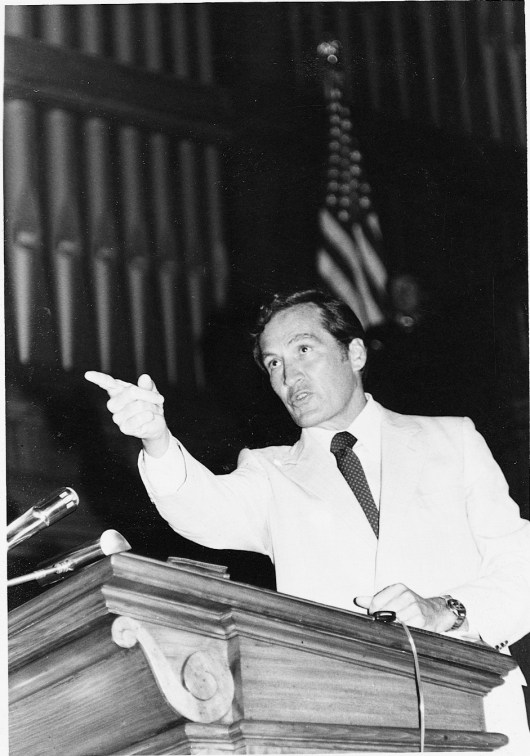

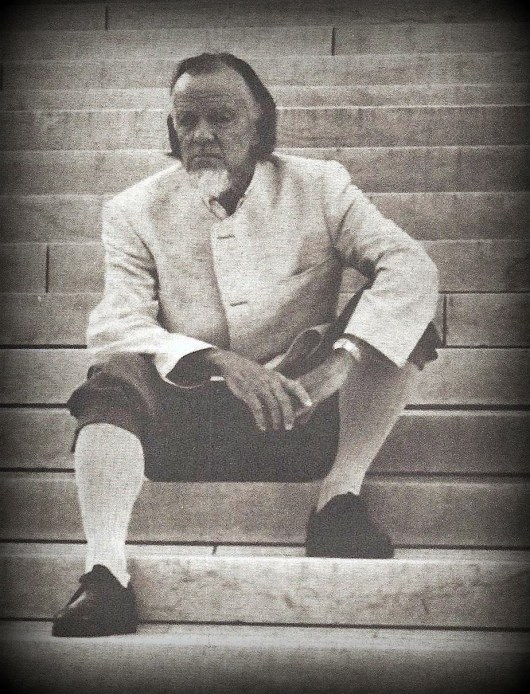


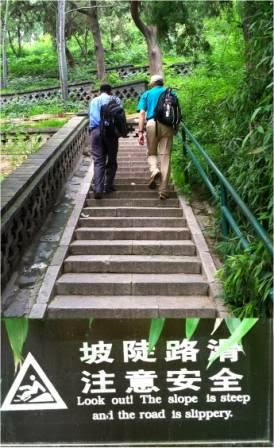



 Forty years ago this week, more than 400,000 concertgoers gathered on the muddy grounds of a 600-acre dairy farm in upstate New York to celebrate what was billed as “three days of peace and music.” The
  Who is Jesus? You and I are sitting down in the Credo House, enjoying a delicious Luther Latte. We’re talking about the important questions of life and I lean forward asking you that simple question, “Who is Jesus?” What do you think about him? Is He everything the Bible communicates? Did He actually live, die for the sins of humanity, and rise from the dead? Do you consider Him your Lord? Is He the ultimate King of the Jews? Is He the King of Kings? These are important questions for all of mankind to consider.
 Wow, what an amazing dialogue. Jesus forces Pilate to wrestle with his identity. Where does the conversation go from here? Pilate tells the crowd he believes Jesus to be innocent. The crowd finds a loop-hole in the system asking for a criminal, Barabbas, to be released from prison and for Jesus to be found guilty. Pilate appeases the crowd by sending Jesus away to be flogged. After experiencing the horror of flogging, the Bible tells us Jesus is sent back to Pilate. Pilate and Jesus have another conversation described in John 19:
 In 1961 the archaeological world was taken back to the first century Roman province of Judea. A group of archaeologists, led by Dr. Antonio Frova were excavating an ancient Roman theater near Caesarea Maritima. Caesarea was a leading city in the first century located on the Mediterranean Sea. A limestone block was found there with a surprising inscription. The inscription, on three lines, reads:



 “Suppose we are climbing in the Alps and are very high on the bare rock, and suddenly the fog shuts down. The guide turns to us and says that the ice is forming and there is no hope; before morning we will all freeze to death here on the shoulder of the mountain. Simply to keep warm the guide keeps us moving in the dense fog further out on the shoulder until none of us have any idea where we are. After an hour or so, someone says to the guide, ‘Suppose I dropped and hit a ledge ten feet down in the fog. What would happen then?’ The guide would say that you might make it until the morning and thus live. So, with absolutely no knowledge or any reason to support his action, one of the group hangs and drops into the fog. This would be one kind of faith, a leap of faith.Suppose, however, after we have worked out on the shoulder in the midst of the fog and the growing ice on the rock, we had stopped and we heard a voice which said, ‘You cannot see me, but I know exactly where you are from your voices. I am on another ridge. I have lived in these mountains, man and boy, for over sixty years and I know every foot of them. I assure you that ten feet below you there is a ledge. If you hang and drop, you can make it through the night and I will get you in the morning.’I would not hang and drop at once, but would ask questions to try to ascertain if the man knew what he was talking about and if he was not my enemy. In the Alps, for example, I would ask him his name. If the name he gave me was the name of a family from that part of the mountains, it would count a great deal to me. In the Swiss Alps there are certain family names that indicate mountain families of that area. In my desperate situation, even though time would be running out, I would ask him what to me would be the adequate and sufficient questions, and when I became convinced by his answers, then I would hang and drop.This is faith, but obviously it has no relationship to the other use of the word. As a matter of fact, if one of these is called faith, the other should not be designated by the same word. The historic Christian faith is not a leap of faith in the post-Kierkegaardian sense because [God] is not silent, and I am invited to ask the adequate and sufficient questions, not only in regard to details, but also in regard to the existence of the universe and its complexity and in regard to the existence of man. I am invited to ask adequate and sufficient questions and then believe Him and bow before Him metaphysically in knowing that I exist because He made man, and bow before Him morally as needing His provision for me in the substitutionary, propitiatory death of Christ.” – Francis Schaeffer, Francis A. Schaeffer Trilogy: The God Who Is There, Escape From Reason, He Is There and He Is Not Silent__________________________In the 1960’s when so many young people from the USA jumped into eastern religions Francis Schaeffer called it a leap into non-reason and Schaeffer also asserted:The universe was created by an infinite personal God and He brought it into existence by spoken word and made man in His own image. When man tries to reduce [philosophically in a materialistic point of view] himself to less than this [less than being made in the image of God] he will always fail and he will always be willing to make these impossible leaps into the area of nonreason even though they don’t give an answer simply because that isn’t what he is. He himself testifies that this infinite personal God, the God of the Old and New Testament is there. Instead of making a leap into the area of non-reason the better choice would be to investigate the claims that the Bible is a historically accurate book and that God created the universe and reached out to humankind with the Bible. Below is a piece of that evidence given by Francis Schaeffer concerning the accuracy of the Bible.