FRIEDMAN FRIDAY “For years, a lot of us subscribed to the notion that Milton Friedman warned us about,” that government would harm the economy if it didn’t take a light-touch approach to business, said former Connecticut Democratic Sen. Chris Dodd, a longtime Biden friend, referring to the economist who helped define the small-government neoliberal philosophy.

President Biden in the White House on March 18.

President Biden in the White House on March 18.ANDREW HARNIK/ASSOCIATED PRESS

Behind Biden’s Big Plans: Belief That Government Can Drive Growth

Multitrillion-dollar spending program would reverse Reagan-era tacit understanding that public sector is less efficient than the private in allocating resources

WASHINGTON—President Biden envisions long-term federal spending claiming its biggest share of the American economy in decades. He wants to pay for that program in part by charging the highest-earning Americans the biggest tax rates they’ve faced in years.

The Biden economic team’s ambitions go beyond size to scope. The centerpiece of their program—a multitrillion-dollar proposal to be rolled out starting Wednesday, less than a month after a $1.9 trillion stimulus—seeks to give Washington a new commercial role in matters ranging from charging stations for electric vehicles to child care, and more responsibility for underwriting education, incomes and higher-paying jobs.

The administration has also laid the groundwork for regulations aimed at empowering labor unions, restricting big businesses from dominating their markets and prodding banks to lend more to minorities and less for fossil-fuel projects. All while federal debt is currently at a level not seen since World War II.

It all marks a major turning point for economic policy. The gamble underlying the agenda is a belief that government can be a primary driver for growth. It’s an attempt to recalibrate assumptions that have shaped economic policy of both parties since the 1980s: that the public sector is inherently less efficient than the private, and bureaucrats should generally defer to markets.

The administration’s sweeping plans reflect a calculation that “the risk of doing too little outweighs the risk of doing too much,” said White House National Economic Council Director Brian Deese. “We’re going to be unapologetic about that,” he said. “Government must be a powerful force for good in the lives of Americans.”

The pandemic and lockdown measures that followed have become a Rorschach test for the new economic debate. Former President Donald Trumpargued that the booming economy of 2019 and early 2020 was proof his tax-cutting, deregulating agenda was the best for spurring broadly shared prosperity, and he portrayed the coronavirus and lockdowns as a temporary disruption. The Biden team sees the pandemic as exposing myriad flaws and fragilities that liberals had long identified in the economy, masked by prosperity.

Mr. Biden himself casts his program as a throwback to Lyndon B. Johnson’s 1960s Great Society and Franklin D. Roosevelt’s 1930s New Deal. “This is the first time we’ve been able to, since the Johnson administration and maybe even before that, to begin to change the paradigm,” he said at a White House event in mid-March. Mr. Biden recently spoke with a group of prominent American historians, and his aides have studied FDR’s presidency as they plan his economic agenda.

Mr. Biden’s big plans raise big questions, and big risks. He faces an uphill battle to win over a narrowly divided Congress, with solid Republican opposition plus hesitancy among Democratic moderates who blanch at higher taxes and more spending following nearly $5 trillion in coronavirus relief outlays over the past year.

Conservative-tilting courts, increasingly skeptical of executive authority, might block some of his initiatives. Already, a coalition of Republican state attorneys general has sued to challenge some provisions of the stimulus program and some of his executive orders.

Some economists consider the latest spending plan an overkill response to the temporary, albeit severe, hit from the pandemic and lockdowns. They call recent stirrings in the bond market a warning that the vast increase in government spending and borrowing might prompt a return to the high-inflation/high-interest-rate stagnation of the late 1970s and early 1980s—conditions that fed the long-lasting backlash to expansive FDR-LBJ policies in the first place.

“They’re creating too much demand when it’s not needed. When demand runs away from supply, you get inflation,” said Kevin Hassett, a former Trump chief economic adviser now at Stanford University’s Hoover Institution. “The laws of economics can’t be repealed,” he said.

The Biden agenda rests on the notion those laws have evolved. “There appear to have been a broad-based set of structural changes that have had a very significant effect on how the economy works,” Treasury Secretary Janet Yellen said. “There are a lot of ways in which I think our understanding of the economy has shifted.”

<img class=”i-amphtml-blurry-placeholder” src=”data:;base64,

She cited persistently low interest rates and low inflation, defying many conventional forecasts, as reasons to feel more relaxed than before about federal borrowing and low unemployment rates. Ms. Yellen says there’s little sign inflation is in danger of escalating, and is confident that if it does, the Federal Reserve has the tools to contain it.

The administration’s policies are rooted in economic research focused on perceived free-market flaws, much of it conducted and funded by young, left-leaning economists and activists now scattered throughout the administration. Much of the Biden economic agenda is built around the conclusion that climate change in particular is a private-sector breakdown requiring extensive government intervention.

Before joining the Biden Council of Economic Advisers, Heather Boushey ran the Washington Center for Equitable Growth, a think tank devoted to persuading economists and policy makers to take action reducing income inequality. To her and many of her colleagues, the pandemic validates their studies on market failures.

“We’ve talked about inequality—it seems like an abstract concept, but in 2020, this notion of the K-shaped economy became so real,” Ms. Boushey said. She was referring to a recovery where the fortunes of upper-income families—able to keep their jobs, work from home and enjoy gains in their stock portfolios—rose like the letter’s upward-sloping part, while lower-income families were unable to keep jobs in hard-hit service industries such as restaurants.

Plans for selling the administration proposals lean heavily on fears of losing out to China’s model of state-driven capitalism, a concern that resonates across the political spectrum. “China is out-investing us by a long shot, because their plan is to own that future,” Mr. Biden said recently in previewing his program.

In a Wednesday speech in Pittsburgh, the president is preparing to unveil the first part of an economic proposal that would cost $3 trillion or more over 10 years and might be split into multiple pieces of legislation, with more coming in April. The first measure will focus on infrastructure, climate change, domestic manufacturing and research and development. Mr. Biden will find ways to pay for the full cost of the first measure, the White House has said. The second measure will center on child care, healthcare and education.

‘There are a lot of ways in which I think our understanding of the economy has shifted,’ said Treasury Secretary Janet Yellen.

‘There are a lot of ways in which I think our understanding of the economy has shifted,’ said Treasury Secretary Janet Yellen.

PHOTO: DREW ANGERER/GETTY IMAGES

The multipart package would include higher taxes on corporations, upper-income households and investors. It will call for huge investments in infrastructure and climate programs and provide for universal prekindergarten and tuition-free community college, people familiar with the plan said.

Most Republicans are expected to oppose it, and the president’s advisers are already discussing options for continuing to move some of his proposals without GOP support, including through the process known as budget reconciliation.

Mike Donilon, one of Mr. Biden’s closest advisers, acknowledged the challenges but argued the public supports action. “I don’t think the country is in much mood for relentless obstructionism,” he said.

Critics of big-government projects have long argued that bureaucrats are less skilled than market forces in allocating resources. “What they’re trying to do is re-establish government as a major positive force in the economy, and I believe government is a massive negative force” in it, said Stephen Moore, a former Trump economic adviser. “There really is a micromanagement of the economy from the left.”

Presidents of both parties, hesitant to micromanage, have long steered away from anything smacking of an industrial policy that attempts to bolster specific industries. Biden aides are more willing to target and support certain industries such as the health and high-tech sectors. “We are committed to using the levers of government to encourage more domestic production,” Mr. Deese said.

President Biden held notes on infrastructure while speaking during a news conference in the East Room of the White House on March 25.

President Biden held notes on infrastructure while speaking during a news conference in the East Room of the White House on March 25.

PHOTO: OLIVER CONTRERAS/PRESS POOL

The president’s budget and regulatory proposals could disrupt major industries, boosting renewable-energy companies over fossil-fuel firms and expanding markets for emerging technologies. Business groups and Republicans warn that new regulations could stifle growth.

Mr. Biden’s stimulus bill added to federal debt that had already hit peacetime records under Mr. Trump. Mr. Biden has said his full agenda will ultimately be aimed at curbing government borrowing, through tax increases and savings in medical spending.

That will be a challenge. Federal debt, which reached 100% of gross domestic product last fiscal year for the first time since 1946, is expected to rise to a record 107% of economic output by 2031, according to the Congressional Budget Office, fueling concerns that future generations will get stuck with the bill. Fed Chairman Jerome Powell said in March that the federal government can manage its debt at current levels, but policy makers should seek to slow its growth once the economy is stronger.

The long-dominant paradigm Mr. Biden and aides want to change is one widely branded neoliberalism, framed by Ronald Reagan, who declared in his 1981 inaugural address that “government is not the solution to our problem; government is the problem.” He ushered in an era of tax cuts, deregulation and federal programs increasingly designed to work through market forces. That was followed by two of the longest expansions in American history, in the 1980s and the 1990s.

Ronald Reagan speaking at his inauguration on Jan. 20, 1981.

Ronald Reagan speaking at his inauguration on Jan. 20, 1981.

PHOTO: AGENCE FRANCE-PRESSE/GETTY IMAGES

While Democrats controlled the White House for nearly half the time since then, their policies often were constrained by the core Reagan principles, in the view of many progressives. Bill Clinton tried to juggle liberal goals with a focus on balancing the budget, expanding free trade, and deregulating the financial sector. Barack Obama created a new government health program, but to the chagrin of the left, worked through private insurers. His 2009 program to fight the recession was constrained by fears of big deficits.

“For decades now, people have talked about economics as running against government, ignoring how much we need government to be able to build out opportunities,” said Massachusetts Democratic Sen. Elizabeth Warren, who, as an Obama adviser, often tangled with his aides over how aggressively to rein in Wall Street and support homeowners slammed by the 2008-2009 financial crisis.

A confluence of forces since the turn of the century has shaken support for the market-oriented economic model. A sharp increase in income and wealth inequality, combined with longtime wage stagnation that ended just before the pandemic hit, raised questions about how broadly prosperity gets shared absent government intervention. The swift loss of manufacturing jobs undermined support for free trade. China’s success and Wall Street’s collapse in the financial crisis further sowed doubts about free markets.

Those trends animated critics on the left, fueling the 2016 presidential campaigns of self-proclaimed Democratic Socialist Sen. Bernie Sanders of Vermont and the rise to prominence of his allies such as New York Rep. Alexandria Ocasio-Cortez.

Republicans, too, have faced internal challenges to the party’s free-market orientation. Mr. Trump won the presidency in part by attacking bipartisan support for globalization. In office, he launched a trade war with China, regularly criticized big business and intervened to force domestic investments and pressure companies to relocate manufacturing to the U.S. and cut prices of drugs.

“Some establishment Republicans are too willing to do nothing at all with government. They see an all-natural, organic market having its way,” said Missouri GOP Sen. Josh Hawley. Mr. Hawley, a Trump supporter and possible presidential contender, has called for tougher antitrust laws to break up big tech companies and co-sponsored a bill last year with Mr. Sanders to give households $1,200 direct payments.

The first-term senator voted against the latest stimulus bill and opposes many of Mr. Biden’s policies, but he also says that “old-style conservatives have been too quick to wave away policies to strengthen American workers and promote competition rather than monopolies.”

Trends such as wealth disparities and wage stagnation animated the presidential candidacy of Sen. Bernie Sanders of Vermont, seen here speaking at a rally in Manchester, N.H., in August 2015.

Trends such as wealth disparities and wage stagnation animated the presidential candidacy of Sen. Bernie Sanders of Vermont, seen here speaking at a rally in Manchester, N.H., in August 2015.

PHOTO: RICK FRIEDMAN/CORBIS/GETTY IMAGES

While many of those urging an economic rethink are relatively new voices in the debate, some pillars of the establishment have evolved, including former senior economic aides in the Clinton and George W. Bush administrations. Another Washington veteran whose positions have changed: Joe Biden.

Elected to the Senate in 1972 at age 29, Mr. Biden ousted a Republican incumbent in part by casting himself as more attuned to the needs of the middle class, a theme that became a through-line of his career. He has long espoused the importance of unions, small businesses and a strong working class.

Mr. Biden juggled those causes with a belief in the need to curb government spending and cut taxes. He voted for Mr. Reagan’s historic 1981 tax cuts and backed spending ceilings for most agencies through the 1980s and a balanced-budget constitutional amendment in the 1990s. He regularly floated the idea of limiting Social Security and Medicare.

“For years, a lot of us subscribed to the notion that Milton Friedman warned us about,” that government would harm the economy if it didn’t take a light-touch approach to business, said former Connecticut Democratic Sen. Chris Dodd, a longtime Biden friend, referring to the economist who helped define the small-government neoliberal philosophy.

As Mr. Obama’s vice president during the financial crisis, Mr. Biden walked a tightrope between pushing for spending, especially on infrastructure, and taking the lead in negotiating with Republicans to limit the extent of government expansion. Toward the end of his term, the persistently slow recovery prompted the vice president and his aides to launch a study of wage stagnation, income inequality and ways the government could steer business to do more for workers. That work planted the seeds for his current program.

Joe Biden was first elected to the Senate from Delaware in 1972 after a campaign in which he cast himself as attuned to the needs of the working class.

Joe Biden was first elected to the Senate from Delaware in 1972 after a campaign in which he cast himself as attuned to the needs of the working class.

PHOTO: HENRY GRIFFIN/ASSOCIATED PRESS

Mr. Biden started his 2019 presidential bid determined to lay out more of a big-government agenda than recent Democrats had espoused. But much of the primary field had moved even farther left. He emerged once again as the fiscal scold warning of excessive spending.

The arrival of the pandemic and the killing of George Floyd marked a turning point for Mr. Biden, according to his advisers, bringing into focus what his aides describe as his longstanding desire to “go big.”

Mr. Biden tapped his longtime friend and successor as Delaware senator, Ted Kaufman, to run the transition, and in helping assemble the economic team, Mr. Kaufman said his team focused on people steeped in new economic thinking and steered away from business executives.

“I looked at people who had internalized what Joe Biden’s policy was about, and Joe Biden’s policy was not about taking care of Wall Street or people making over $400,000 a year,” Mr. Kaufman said.

The middle ranks of the administration are filled with academics and activists who have spent the past few years honing a framework for progressive economic policy-making. In March 2019, many of them gathered at a Washington conference called “Bold v. Old.” A panel on toughening antitrust enforcement was led by Jennifer Harris, an official with the Hewlett Foundation—a philanthropy created by one of the founders of Hewlett-PackardCo. —overseeing a program funding researchers seeking to replace the neoliberal paradigm. She was joined by Lina Khan, a young law professor known for laying out the case for breaking upAmazon.com Inc., and Sabeel Rahman, president of Demos, a progressive think tank.

Ms. Harris has joined the Biden National Economic Council. Ms. Khan has been nominated to the Federal Trade Commission. Mr. Rahman works at the Office of Management and Budget.

Few of those new-generation policy makers supported Mr. Biden in the primaries. One of Mr. Deese’s deputies, Bharat Ramamurti, who was Ms. Warren’s chief campaign policy adviser, says the party is now largely unified on economic policy.

President Biden at his first press conference as president on March 25.

President Biden at his first press conference as president on March 25.

PHOTO: OLIVER CONTRERAS/PRESS POOL

A change in the Biden approach to economics is a re-evaluation of the costs of government action, which his team says have receded or always been exaggerated. And on the other side of the equation: an assertion that the cost of inaction is greater than previously estimated.

Progressive economists have generated rafts of research, often contested by conservatives, challenging the links between higher tax rates and lower economic activity. “The evidence suggests that the impact of marginal tax rates on labor supply is not as big as we may have once feared,” said Cecilia Rouse, chair of the Council of Economic Advisers.

SHARE YOUR THOUGHTS

Does the government try to do too much or not enough? Join the conversation below.

Liberal academics have produced studies examining the costs to the economy’s productive capacity from inequality and long-term unemployment, work invoked by the Biden team to justify spending big and fast to try to return to full employment as soon as next year. Some critics, including former Clinton and Obama economic adviser Lawrence Summers, have said that spending too aggressively to drive down unemployment could backfire, possibly prompting the Fed to raise interest rates and trigger a recession.

This more relaxed view of previous economic limits has freed the Biden team to plan on a grand scale. They designed a two-step strategy that began with the $1.9 trillion coronavirus relief package, which provided $1,400 direct payments to many Americans, extended a $300 weekly jobless-aid supplement, expanded the child tax credit to provide periodic payments and dropped requirements that recipients work.

That was a symbolically significant shift from the Clinton-era move to tie welfare to work and a nod to the burgeoning progressive demands for a no-strings-attached guaranteed government income floor, at least for families with children.

Biden aides are also preparing an aggressive plan of new regulations and enforcement that can be implemented without Congress.

“The president campaigned on concerns about big tech, about labor market competition, about making sure small businesses can compete with the bigger guys,” Mr. Ramamurti said. “The president has a clear agenda there.”

Write to Jacob M. Schlesinger at jacob.schlesinger@wsj.com

It appears that only a fraction of the spending proposed in a new $3 trillion to $4 trillion bill would go toward an already too-expansive definition of infrastructure. Pictured: Engineers discuss the progress of an infrastructure construction project. (Photo: Sornranison Prakittrakoon/ Moment/Getty Images)

The media were flooded Monday with news that the Biden administration is working on a colossal new $3 trillion to $4 trillion spending plan.

While full details are not available yet, the plan appears to be another left-wing grab bag of big-government proposals. Rather than stimulating the economy, it would stimulate bigger government while funneling unprecedented amounts of power and money through the hands of politicians in Washington.

All this comes on the heels of President Joe Biden signing into law on March 11 a badly flawed $1.9 trillion legislative package that was originally marketed as a COVID-19 response, but which was more focused on left-wing pet causes, such as bailouts for union pension plans and unnecessary handouts for state governments.

Just a day later, House Speaker Nancy Pelosi, D-Calif., released a statement calling for bipartisan work on legislation that would focus on infrastructure. While there were good reasons to question how beneficial or “bipartisan” such legislation would be, there was at least a chance of finding some across-the-aisle support.

Want to keep up with the 24/7 news cycle? Want to know the most important stories of the day for conservatives? Need news you can trust? Subscribe to The Daily Signal’s email newsletter. Learn more >>

But the potential for bipartisanship was quickly scuttled by news of the latest multitrillion-dollar plan.

It would be bad enough if the latest plan was just a big-spending infrastructure package. However, it appears that only a fraction of the new spending would go toward an already too-expansive definition of infrastructure.

Instead, most of the new spending and tax subsidies would go toward expanding the welfare state, including “free” tuition for community colleges, “free” child care, and other handouts that lack right-of-center support.

This would likely be the largest expansion of the federal government since the “Great Society” of the 1960s, even eclipsing Obamacare in scope.

Reports indicate that Democrats might attempt to split the plan into two bills—one focused on social spending that passes narrowly along party lines, the other focused on actual infrastructure aimed at winning bipartisan support.

However, it’s clear that the $3 trillion-plus total price tag is already souring prospects for bipartisan infrastructure legislation.

House Republicans boycotted the annual Ways and Means Committee “Member’s Day” hearing on Tuesday in the wake of news reports on the plan, since they indicated that Democrats have already made up their minds to pursue as much spending as possible through the legislative procedure known as reconciliation.

Coincidentally, two respected nonpartisan groups released reports this week that show why Biden and Pelosi should pause their aggressive agenda.

First, the Congressional Budget Office published a paper demonstrating what would happen if a sustained increase in federal spending were coupled with big tax increases to pay for the spending.

While the analysis points to different long-term effects from different types of taxes, any tax-and-spend approach would lead to reductions in economic growth and personal income that are larger than the size of the tax hikes.

For example, the analysis found that having 10% more federal government would mean a 12% to 19% reduction in personal consumption.

And that’s a conservative estimate. Most estimates show tax hikes shrink the economy by two to three times more than the revenues they raise.

That doesn’t mean Congress could escape the consequences of a continued spending spree by simply adding to the national debt. The CBO paper cautions that that would not only impose significant costs and divert resources away from the private sector, but it also would be unsustainable and increase the risk of a devastating financial crisis.

Along the same lines, the Government Accountability Office released a sobering reporton the nation’s poor financial health.

Now that Congress has passed a combined total of $6 trillion in legislation in the aftermath of the COVID-19 pandemic (more than $48,000 per household), it must quickly address the unsustainable growth of major benefit programs, such as Social Security, Medicare, and Medicaid.

Even before the pandemic struck, these programs were on a path to bankruptcy. Addressing these shortfalls in a way that is fair to both current retirees and future generations who will have to foot the bill is one of the greatest policy challenges facing the nation.

Unfortunately, Washington is exacerbating the problem by adding excessively to the national debt and potentially stunting economic growth with higher taxes.

While the Biden administration has repeatedly claimed that it will only seek to raise taxes on the wealthy, a government of the size that it’s seeking would require amounts of money that can only be generated through steep across-the-board tax increases on middle-class Americans.

Regardless of whether those taxes are levied tomorrow or in a few years, they would be an inevitable part of expanding the size and scope of the federal government.

Rather than continuing down the path of centralized power and socialism, lawmakers should recognize the costs associated with endless federal spending and chart a course toward financial responsibility and prosperity.

If they don’t, it will be the public’s duty to hold them accountable.

Have an opinion about this article? To sound off, please email letters@DailySignal.com and we will consider publishing your remarks in our regular “We Hear You” feature.

March 31, 2021

President Biden  c/o The White House
1600 Pennsylvania Avenue NW
Washington, DC 20500

Dear Mr. President,

Please explain to me if you ever do plan to balance the budget while you are President? I have written these things below about you and I really do think that you don’t want to cut spending in order to balance the budget. It seems you ever are daring the Congress to stop you from spending more.

President Barack Obama speaks about the debt limit in the East Room of the White House in Washington. | AP Photo

“The credit of the United States ‘is not a bargaining chip,’ Obama said on 1-14-13. However, President Obama keeps getting our country’s credit rating downgraded as he raises the debt ceiling higher and higher!!!!

Washington Could Learn a Lot from a Drug Addict

Just spend more, don’t know how to cut!!! Really!!! That is not living in the real world is it?

Making more dependent on government is not the way to go!!

Why is our government in over 16 trillion dollars in debt? There are many reasons for this but the biggest reason is people say “Let’s spend someone else’s money to solve our problems.” Liberals like Max Brantley have talked this way for years. Brantley will say that conservatives are being harsh when they don’t want the government out encouraging people to be dependent on the government. The Obama adminstration has even promoted a plan for young people to follow like Julia the Moocher.  

David Ramsey demonstrates in his Arkansas Times Blog post of 1-14-13 that very point:

Arkansas Politics / Health Care Arkansas’s share of Medicaid expansion and the national debt

Posted by on Mon, Jan 14, 2013 at 1:02 PM

Baby carrot Arkansas Medicaid expansion image

Imagine standing a baby carrot up next to the 25-story Stephens building in Little Rock. That gives you a picture of the impact on the national debt that federal spending in Arkansas on Medicaid expansion would have, while here at home expansion would give coverage to more than 200,000 of our neediest citizens, create jobs, and save money for the state.

Here’s the thing: while more than a billion dollars a year in federal spending would represent a big-time stimulus for Arkansas, it’s not even a drop in the bucket when it comes to the national debt.

Currently, the national debt is around $16.4 trillion. In fiscal year 2015, the federal government would spend somewhere in the neighborhood of $1.2 billion to fund Medicaid expansion in Arkansas if we say yes. That’s about 1/13,700th of the debt.

It’s hard to get a handle on numbers that big, so to put that in perspective, let’s get back to the baby carrot. Imagine that the height of the Stephens building (365 feet) is the $16 trillion national debt. That $1.2 billion would be the length of a ladybug. Of course, we’re not just talking about one year if we expand. Between now and 2021, the federal government projects to contribute around $10 billion. The federal debt is projected to be around $25 trillion by then, so we’re talking about 1/2,500th of the debt. Compared to the Stephens building? That’s a baby carrot.

______________

Here is how it will all end if everyone feels they should be allowed to have their “baby carrot.”


How sad it is that liberals just don’t get this reality.

Here is what the Founding Fathers had to say about welfare. David Weinberger noted:

While living in Europe in the 1760s, Franklin observed: “in different countries … the more public provisions were made for the poor, the less they provided for themselves, and of course became poorer. And, on the contrary, the less was done for them, the more they did for themselves, and became richer.”

Alexander Fraser Tytler, Lord Woodhouselee (15 October 1747 – 5 January 1813) was a Scottish lawyer, writer, and professor. Tytler was also a historian, and he noted, “A democracy cannot exist as a permanent form of government. It can only exist until the majority discovers it can vote itself largess out of the public treasury. After that, the majority always votes for the candidate promising the most benefits with the result the democracy collapses because of the loose fiscal policy ensuing, always to be followed by a dictatorship, then a monarchy.”

Thomas Jefferson to Joseph Milligan

April 6, 1816

[Jefferson affirms that the main purpose of society is to enable human beings to keep the fruits of their labor. — TGW]

To take from one, because it is thought that his own industry and that of his fathers has acquired too much, in order to spare to others, who, or whose fathers have not exercised equal industry and skill, is to violate arbitrarily the first principle of association, “the guarantee to every one of a free exercise of his industry, and the fruits acquired by it.” If the overgrown wealth of an individual be deemed dangerous to the State, the best corrective is the law of equal inheritance to all in equal degree; and the better, as this enforces a law of nature, while extra taxation violates it.

[From Writings of Thomas Jefferson, ed. Albert E. Bergh (Washington: Thomas Jefferson Memorial Association, 1904), 14:466.]

_______

Jefferson pointed out that to take from the rich and give to the poor through government is just wrong. Franklin knew the poor would have a better path upward without government welfare coming their way. Milton Friedman’s negative income tax is the best method for doing that and by taking away all welfare programs and letting them go to the churches for charity.

_____________

_________

Thank you so much for your time. I know how valuable it is. I also appreciate the fine family that you have and your commitment as a father and a husband.

Sincerely,

Everette Hatcher III, 13900 Cottontail Lane, Alexander, AR 72002, ph 501-920-5733

Williams with Sowell – Minimum Wage
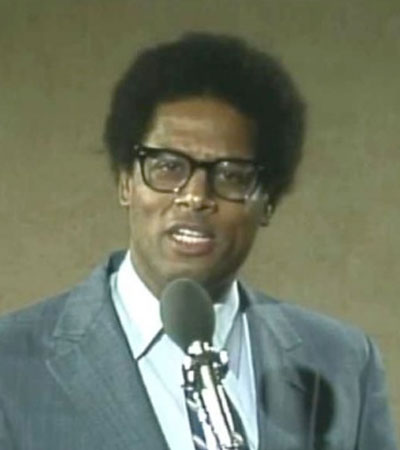
Thomas Sowell

Thomas Sowell – Reducing Black Unemployment

By WALTER WILLIAMS

—-

Ronald Reagan with Milton Friedman
Milton Friedman The Power of the Market 2-5

Related posts:

Welfare Spending Shattering All-Time Highs

  We got to act fast and get off this path of socialism. Morning Bell: Welfare Spending Shattering All-Time Highs Robert Rector and Amy Payne October 18, 2012 at 9:03 am It’s been a pretty big year for welfare—and a new report shows welfare is bigger than ever. The Obama Administration turned a giant spotlight […]

We need more brave souls that will vote against Washington welfare programs

We need to cut Food Stamp program and not extend it. However, it seems that people tell the taxpayers back home they are going to Washington and cut government spending but once they get up there they just fall in line with  everyone else that keeps spending our money. I am glad that at least […]

Welfare programs are not the answer for the poor

Government Must Cut Spending Uploaded by HeritageFoundation on Dec 2, 2010 The government can cut roughly $343 billion from the federal budget and they can do so immediately. __________ Liberals argue that the poor need more welfare programs, but I have always argued that these programs enslave the poor to the government. Food Stamps Growth […]

Private charities are best solution and not government welfare

Milton Friedman – The Negative Income Tax Published on May 11, 2012 by LibertyPen In this 1968 interview, Milton Friedman explained the negative income tax, a proposal that at minimum would save taxpayers the 72 percent of our current welfare budget spent on administration. http://www.LibertyPen.com Source: Firing Line with William F Buckley Jr. ________________ Milton […]

The book “After the Welfare State”

Dan Mitchell Commenting on Obama’s Failure to Propose a Fiscal Plan Published on Aug 16, 2012 by danmitchellcato No description available. ___________ After the Welfare State Posted by David Boaz Cato senior fellow Tom G. Palmer, who is lecturing about freedom in Slovenia and Tbilisi this week, asked me to post this announcement of his […]

President Obama responds to Heritage Foundation critics on welfare reform waivers

Is President Obama gutting the welfare reform that Bill Clinton signed into law? Morning Bell: Obama Denies Gutting Welfare Reform Amy Payne August 8, 2012 at 9:15 am The Obama Administration came out swinging against its critics on welfare reform yesterday, with Press Secretary Jay Carney saying the charge that the Administration gutted the successful […]

Welfare reform part 3

Thomas Sowell – Welfare Welfare reform was working so good. Why did we have to abandon it? Look at this article from 2003. The Continuing Good News About Welfare Reform By Robert Rector and Patrick Fagan, Ph.D. February 6, 2003 Six years ago, President Bill Clinton signed legislation overhauling part of the nation’s welfare system. […]

Welfare reform part 2

Uploaded by ForaTv on May 29, 2009 Complete video at: http://fora.tv/2009/05/18/James_Bartholomew_The_Welfare_State_Were_In Author James Bartholomew argues that welfare benefits actually increase government handouts by ‘ruining’ ambition. He compares welfare to a humane mousetrap. —– Welfare reform was working so good. Why did we have to abandon it? Look at this article from 2003. In the controversial […]

Why did Obama stop the Welfare Reform that Clinton put in?

Thomas Sowell If the welfare reform law was successful then why change it? Wasn’t Bill Clinton the president that signed into law? Obama Guts Welfare Reform Robert Rector and Kiki Bradley July 12, 2012 at 4:10 pm Today, the Obama Department of Health and Human Services (HHS) released an official policy directive rewriting the welfare […]

“Feedback Friday” Letter to White House generated form letter response July 10,2012 on welfare, etc (part 14)

I have been writing President Obama letters and have not received a personal response yet.  (He reads 10 letters a day personally and responds to each of them.) However, I did receive a form letter in the form of an email on July 10, 2012. I don’t know which letter of mine generated this response so I have […]

SCHAEFFER SUNDAY Francis Schaeffer predicted July 28, 2015 would come when the video “Human Capital – Episode 1: Planned Parenthood’s Black Market in Baby Parts ” would be released!!!!

Francis Schaeffer predicted July 28, 2015 would come when the video “Human Capital – Episode 1: Planned Parenthood’s Black Market in Baby Parts ” would be released!!!!

3rd video July 28, 2015

Human Capital – Episode 1: Planned Parenthood’s Black Market in Baby Parts

Published on Jul 28, 2015

Background track “Cylinder Four” by Chris Zabriskie (https://freemusicarchive.org/music/Ch…) used under Attribution License (http://creativecommons.org/licenses/b…). CMP claims no ownership of this track.
Fetus animation adapted from Nils Tavernier, “L’odyssee de la vie” (https://vimeo.com/4015435) under fair use. CMP claims no ownership of this artwork.

FOR IMMEDIATE RELEASE

#PPSellsBabyParts EX-CLINIC WORKER REVEALS PROFIT MOTIVE IN PLANNED PARENTHOOD BABY PARTS SALES, VP MEDICAL DIRECTOR PRICES BODY PARTS “PER ITEM”
“We Can See How Much We Can Get Out of It,” says Planned Parenthood Affiliate VP; Whistleblower Who Harvested Aborted Baby Parts Details Traumatic Job in Planned Parenthood Clinics in New Documentary Web Series

Contact: Peter Robbio, probbio@crcpublicrelations.com, 703.683.5004

LOS ANGELES, July 28–The first episode in a new documentary web series features a woman who once worked in Planned Parenthood clinics describing the profit motive involved in Planned Parenthood’s sale of aborted fetal body parts, and includes new admissions from top-level Planned Parenthood leadership about the illicit pricing structure.

The “Human Capital” documentary web series is produced by The Center for Medical Progress and integrates expert interviews, eyewitness accounts, and real-life undercover interactions to tell the story of Planned Parenthood’s commercial exploitation of aborted fetal tissue. Episode 1, “Planned Parenthood’s Black Market in Baby Parts,” launches today at: https://www.youtube.com/watch?v=Xw2xi…

Episode 1 introduces Holly O’Donnell, a licensed phlebotomist who unsuspectingly took a job as a “procurement technician” at the fetal tissue company and biotech start-up StemExpress in late 2012. “I thought I was going to be just drawing blood, not procuring tissue from aborted fetuses,” says O’Donnell, who fainted in shock on her first day of work in a Planned Parenthood clinic when suddenly asked to dissect a freshly-aborted fetus during her on-the-job training.

For 6 months, O’Donnell’s job was to identify pregnant women at Planned Parenthood who met criteria for fetal tissue orders and to harvest the fetal body parts after their abortions. O’Donnell describes the financial benefit Planned Parenthood received from StemExpress: “For whatever we could procure, they would get a certain percentage. The main nurse was always trying to make sure we got our specimens. No one else really cared, but the main nurse did because she knew that Planned Parenthood was getting compensated.”

Episode 1 also shows undercover video featuring the Vice President and Medical Director of Planned Parenthood of the Rocky Mountains (PPRM) in Denver, CO, Dr. Savita Ginde. PPRM is one of the largest and wealthiest Planned Parenthood affiliates and operates clinics in Colorado, New Mexico, Wyoming, and Nevada. Standing in the Planned Parenthood abortion clinic pathology laboratory, where fetuses are brought after abortions, Ginde concludes that payment per organ removed from a fetus will be the most beneficial to Planned Parenthood: “I think a per-item thing works a little better, just because we can see how much we can get out of it.”

The sale or purchase of human fetal tissue is a federal felony punishable by up to 10 years in prison or a fine of up to $500,000 (42 U.S.C. 289g-2).

Dr. Katherine Sheehan, Medical Director emerita of Planned Parenthood of the Pacific Southwest in San Diego, describes her affiliate’s long-time relationship with Advanced Bioscience Resources, a middleman company that has been providing aborted fetal organs since 1989: “We’ve been using them for over 10 years, really a long time, you know, just kind of renegotiated the contract. They’re doing the big government-level collections and things like that.”

“Planned Parenthood’s sale of aborted baby parts is an offensive and horrifying reality that is widespread enough for many people to be available to give first-person testimony about it,” notes David Daleiden, Project Lead for The Center for Medical Progress. “CMP’s investigative journalism work will continue to surface more compelling eyewitness accounts and primary source evidence of Planned Parenthood’s trafficking and selling baby parts for profit. There should be an immediate moratorium on Planned Parenthood’s taxpayer funding while Congress and the states determine the full extent of the organization’s lawbreaking.”

###

See the video at: https://www.youtube.com/watch?v=Xw2xi…

Tweet: #PPSellsBabyParts

For more information on the Human Capital project, visit centerformedicalprogress.org.
The Center for Medical Progress is a 501(c)3 non-profit dedicated to monitoring and reporting on medical ethics and advances.

___________________________________________________________

In 1979 I saw the film series “Whatever happened to the human race?” by Francis Schaeffer and Dr. C. Everett Koop. I was so impacted by that film series that I asked my high school teacher Mr. Mark Brink to allow me to return to see that series again while I was in college. He did allow me to do that and Mr. Brink would inform his high school students, “Here is Everette Hatcher who is in college now, but he has returned to see this film series again because he knows how important it is!!!”

Mr. Brink was right about Francis Schaeffer. His predictions about the direction of the culture and the use of socialogical law were correct. Below is just more evidence of that. This article by Dr. Herb Ireland demonstrates that I am not the only one that has recognized the truth of Schaeffer’s predictions.

Abortion to Euthanasia: A Slippery Slope

 Dr. Herb Ireland

 Pastor

 Sparks Nazarene Church

 January 17, 1999 at Sparks Nazarene

 A true prophet is one who has the capacity to look into the future and accurately predict what will occur. Twenty years ago I was introduced to a number of true prophets such as essayist Malcolm Muggeridge, theologian Francis Schaeffer and physician C. Everett Koop. I became acquainted with these prophets at a seminar entitled “Whatever Happened to the Human Race?” conducted in Seattle Washington.

At that time the United States Supreme Court decision to legalize abortion in all 50 states was only six years old. However, these prophets were already warning the public about the slippery slope from abortion to euthanasia. Personally, I had never really made the connection between abortion and putting to death a person suffering from an incurable and painful disease.

Today because of the actions of Jack Kevorkian we see the accuracy of these prophets’ predictions. This morning I want us to trace what happens to a society that embraces abortion and thereby devalues human life.

I. The Slippery Slope From Abortion To Euthanasia.

On January 23, 1973 the United States Supreme Court decided in Roe v. Wade to legalize abortion in all 50 states during all nine months of pregnancy, for any reason-medical, social, or otherwise.  This fateful decision pronounced that the fetus forming in the mother’s womb was not viable – capable of living, under normal conditions, outside the womb. This man-made ruling has had a devastating impact upon unborn children forming in the womb. Here are some of the consequences we face in 1999:

1. There is an abortion for every two live births.

2. This year thousands will hear boyfriends, school counselors, physicians, friends and even parents give advice that will lead to over 1,300,000 unborn children losing their lives.

3. Since 1973 Americans have aborted 36.5 million babies. This figure equals the population of Colorado, Idaho, Indiana, Kansas, Minnesota, Nevada, North Dakota, South Dakota, Utah, and Wyoming – 13 states in all.

Infanticide

Along with the terrible loss of life, there has been a devaluation of the sanctity of human life in American society. This devaluation of human life has given birth to increased infanticide-the killing of an infant.  For example, in the November 12th, 1973 issue of Newsweek Magazine, in the medicine section, there appeared an article titled “Shall this child die?” It was about the work of doctors Raymond Duff and A.G.M. Campbell at the Yale-New Haven Hospital of Yale University. The article reported that these doctors were permitting babies born with birth defects to die by deliberately withholding vital medical treatments: the doctors were convincing the parents of these children that they would be a financial burden; that they had “little or no hope of achieving meaningful “humanhood.” “The doctors recognized that they were breaking the law by doing away with these ‘vegetables’ as they chose to call these children, but they felt that the law should be changed to make it legal to let these children die.

Dr. C. Everett Koop, former Surgeon General of the United States documented the case of Baby Doe and Baby Jane Doe who had complex physical handicaps and were allowed to die even though he felt their lives could have been saved.  In his book, Koop-the Memoirs of America’s Family Doctor, he declares, “From the Baby Doe saga… I hope Americans learned about the pernicious practice of infanticide, which has been growing unnoticed in hospital nurseries across the country.”

Euthanasia

The next step in the slippery slope leads us to euthanasia. Listen to the prophetic words of Malcolm Muggeridge written in 1979.  ” Of course, it would be quite wrong to think that the offensive which is being mounted on our Christian way of life will stop at abortion, and already there are the rumblings of a new, strong push in the direction of euthanasia. I have absolutely no doubt that this will be the next great controversy that will arise. The fact is that because it’s so costly in money and personnel to keep alive people about whom the medical opinion is that their lives are worthless, the temptation to get rid of the burden by killing them off will be even greater, and this disposing of them will of course be dressed up in humanitarian terms as an act of humanity and compassion. Almost all of the things that have been done in the world in the last decades have been done in the name of justice, equality, compassion, etc.”

Physician Assisted Suicide. Do you know what PAS stands for? PAS is the title for physician-assisted suicide. Advocates of PAS have succeeded in only one state: Oregon. Already at least two assisted suicides have been performed there, but the explicit goal of PAS advocates is to go national, making the Oregon experiment the American way of Life.

Progressive euthanasia is on the horizon. It looks like this:

1. Dr. Jack Kevorkian has assisted 130 people who were suffering from incurable and painful diseases to commit suicide.

2. Dr. Jack Kevorkian killed a person suffering from a painful and incurable disease and recorded it on video to spark a national debate about the merits of “mercy killing.”

3. Those languishing in long tem commas are put to death.

4. Because the drastically handicapped have little or no hope of achieving meaningful ‘humanhood’ they are put to death.

5. The mentally ill are euthanized so the families don’t have to suffer any longer.

6. The old and senile are put to death in a humane way so limited money and resources can be used for others.

If you think this analysis is overblown, then you have not been reading the signs of the times! And it all started when we devaluated life before birth and now that devaluation of the sanctity of human life is seen from the preborn to the people suffering incurable diseases.

Is there an answer to this moral insanity? Yes there is and it is found in the Bible.

II Life Is Sacred Because God Created It.

Here are some of the passages that speak of the sanctity of human life.

Genesis 1:27 “So God created man in his own image, in the image of God he created him; male and female he created them.”

Psalms 139:13-18 “For you created my inmost being; you knit me together in my mother’s womb. “I praise you because I am fearfully and wonderfully made; your works are wonderful, I know that full well. My frame was not hidden from you when I was made in the secret place. When I was woven together in the depths of the earth, our eyes saw my unformed body.  All the days ordained for me were written in your book before one of them came to be. How precious to me are your thoughts, O God! How vast is the sum of them! Were I to count them, they would outnumber the grains of sand. When I awake, I am still with you.”

Isaiah 46:3 “Listen to me, O house of Jacob, all you who remain of the house of Israel, you whom I have upheld since you were conceived, and have carried since your birth. Even to your old age and gray hairs I am he, I am he who will sustain you. I have made you and I will carry you; I will sustain you and I will rescue you.”

Jeremiah 1:4 “The word of the LORD came to me, saying, ‘Before I formed you in the womb I knew you, before you were born I set you apart; I appointed you as a prophet to the nations.’”

Because God created human life, it is sacred and we must do everything we can to safeguard life.

Conclusion. The Irish statesman Edmund Burke once said, “all it takes for evil to prevail is for good men to do nothing.” I am afraid that many disciple of Jesus Christ are guilty of this indictment. But now that you know that the acceptance of abortion leads to active euthanasia, I pray you will stand to your feet and fight for the sanctity of human life from the unborn to the physically and mentally handicapped to the aged and infirm.

Let me illustrate how one “vegetable” fought back. Do you remember the Newsweek Magazine article that highlighted the two doctors who were permitting babies born with birth defects to die because they had no hope of achieving “meaningful humanhood?”

Here is a letter to the editor of Newsweek magazine by Sandra Diamond who suffers from cerebral palsy.

“I’ll wager my entire root system and as much fertilizer as it would take to fill Yale University that you have never received a letter from a vegetable before this one, but, much as I resent the term, I must confess that I fit the description of a ‘vegetable’ as defined in the article “Shall This Child Die?” (Medicine, Nov. 12)

“Due to severe brain damage incurred at birth, I am unable to dress myself, toilet myself, or write; my secretary is typing this letter. Many thousands of dollars had to be spent on my rehabilitation and education in order for me to reach my present professional status as a Counseling Psychologist. My parents were also told, 35 years ago, that there was “little or no hope of achieving meaningful ‘humanhood’” for their daughter. Have I reached ‘humanhood’? Compared with Doctors Duff and Campbell I believe I have surpassed it!

“Instead of changing the law to make it legal to week out us ‘vegetables,’ let us change the laws so that we may receive quality medical care, education, and freedom to live as full and productive lives as our potentials allow.”

I love the works of Francis Schaeffer and I have been on the internet reading several blogs that talk about Schaeffer’s work and the work below was really helpful. Schaeffer’s film series “How should we then live?  Wikipedia notes, “According to Schaeffer, How Should We Then Live traces Western history from Ancient Rome until the time of writing (1976) along three lines: the philosophic, scientific, and religious.[3] He also makes extensive references to art and architecture as a means of showing how these movements reflected changing patterns of thought through time. Schaeffer’s central premise is: when we base society on the Bible, on the infinite-personal God who is there and has spoken,[4] this provides an absolute by which we can conduct our lives and by which we can judge society.  Here are some posts I have done on this series: Francis Schaeffer’s “How should we then live?” Video and outline of episode 10 “Final Choices” , episode 9 “The Age of Personal Peace and Affluence”, episode 8 “The Age of Fragmentation”, episode 7 “The Age of Non-Reason” , episode 6 “The Scientific Age”  episode 5 “The Revolutionary Age” , episode 4 “The Reformation” episode 3 “The Renaissance”, episode 2 “The Middle Ages,”, and  episode 1 “The Roman Age,” .

In the film series “WHATEVER HAPPENED TO THE HUMAN RACE?” the arguments are presented  against abortion (Episode 1), infanticide (Episode 2),euthanasia (Episode 3), and then there is a discussion of the Christian versus Humanist worldview concerning the issue of “the basis for human dignity” in Episode 4 and then in the last episode a close look at the truth claims of the Bible.

_________________
Francis Schaeffer

__________________________

I truly believe that many of the problems we have today in the USA are due to the advancement of humanism in the last few decades in our society. Ronald Reagan appointed the evangelical Dr. C. Everett Koop to the position of Surgeon General in his administration. He partnered with Dr. Francis Schaeffer in making the video below. It is very valuable information for Christians to have.  Actually I have included a video below that includes comments from him on this subject.

Francis Schaeffer “BASIS FOR HUMAN DIGNITY” Whatever…HTTHR

Dr. Francis Schaeffer: Whatever Happened to the Human Race Episode 1 ABORTION

Dr. Francis schaeffer – The flow of Materialism(from Part 4 of Whatever happened to human race?)

Dr. Francis Schaeffer – The Biblical flow of Truth & History (intro)

Francis Schaeffer – The Biblical Flow of History & Truth (1)

Dr. Francis Schaeffer – The Biblical Flow of Truth & History (part 2)

__________

Dr. Francis Schaeffer: Whatever Happened to the Human Race Episode 1 ABORTION

Is the Bible historically accurate? Here are some of the posts I have done in the past on the subject: 1. The Babylonian Chronicleof Nebuchadnezzars Siege of Jerusalem2. Hezekiah’s Siloam Tunnel Inscription. 3. Taylor Prism (Sennacherib Hexagonal Prism)4. Biblical Cities Attested Archaeologically. 5. The Discovery of the Hittites6.Shishak Smiting His Captives7. Moabite Stone8Black Obelisk of Shalmaneser III9A Verification of places in Gospel of John and Book of Acts., 9B Discovery of Ebla Tablets10. Cyrus Cylinder11. Puru “The lot of Yahali” 9th Century B.C.E.12. The Uzziah Tablet Inscription13. The Pilate Inscription14. Caiaphas Ossuary14 B Pontius Pilate Part 214c. Three greatest American Archaeologists moved to accept Bible’s accuracy through archaeology.

The Bible and Archaeology – Is the Bible from God? (Kyle Butt 42 min)

Related posts:

Taking on Ark Times bloggers about abortion on the 40th anniversary date of Roe v. Wade (Part 7) “Poverty not good reason for abortion, why not give up for adoption?”

Dr Richard Land discusses abortion and slavery – 10/14/2004 – part 3 The best pro-life film I have ever seen below by Francis Schaeffer and Dr. C. Everett Koop “Whatever happened to the human race?” Over the years I have taken on the Ark Times liberal bloggers over and over and over concerning the issue […]

Taking on Ark Times bloggers about abortion on the 40th anniversary date of Roe v. Wade (Part 6) For many pro-abortionists ” …the problem is not determining when actual human life begins, but when the value of that life begins to out weigh other considerations”

The best pro-life film I have ever seen below by Francis Schaeffer and Dr. C. Everett Koop “Whatever happened to the human race?” Francis Schaeffer pictured above._________ The 45 minute video above is from the film series created from Francis Schaeffer’s book “Whatever Happened to the Human Race?” with Dr. C. Everett Koop. This book  really […]

Taking on Ark Times bloggers about abortion on the 40th anniversary date of Roe v. Wade (Part 5) “Slavery issue compared to rights of unborn child”

The best pro-life film I have ever seen below by Francis Schaeffer and Dr. C. Everett Koop “Whatever happened to the human race?” Over the years I have taken on the Ark Times liberal bloggers over and over and over concerning the issue of abortion. I asked over and over again for one liberal blogger […]

Taking on Ark Times bloggers about abortion on the 40th anniversary date of Roe v. Wade (Part 4) “How do pro-lifers react to the movie THE CIDER HOUSE RULES?”

Francis Schaeffer pictured above._________ The best pro-life film I have ever seen below by Francis Schaeffer and Dr. C. Everett Koop “Whatever happened to the human race?” Over the years I have taken on the Ark Times liberal bloggers over and over and over concerning the issue of abortion. I asked over and over again […]

Taking on Ark Times bloggers about abortion on the 40th anniversary date of Roe v. Wade (Part 3) “What should be the punishment for abortion doctors?”

The best pro-life film I have ever seen below by Francis Schaeffer and Dr. C. Everett Koop “Whatever happened to the human race?” On 1-24-13 I took on the child abuse argument put forth by Ark Times Blogger “Deathbyinches,” and the day before I pointed out that because the unborn baby has all the genetic code […]

Taking on Ark Times bloggers about abortion on the 40th anniversary date of Roe v. Wade (Part 2) “The pro-abortion child abuse argument destroyed here”

PHOTO BY STATON BREIDENTHAL from Pro-life march in Little Rock on 1-20-13. Tim Tebow on pro-life super bowl commercial. Over the years I have taken on the Ark Times liberal bloggers over and over and over concerning the issue of abortion. Here is another encounter below. On January 22, 2013 (on the 40th anniversary of the […]

Taking on Ark Times bloggers about abortion on the 40th anniversary date of Roe v. Wade (Part 1)

Dr Richard Land discusses abortion and slavery – 10/14/2004 – part 3 The best pro-life film I have ever seen below by Francis Schaeffer and Dr. C. Everett Koop “Whatever happened to the human race?” Over the years I have taken on the Ark Times liberal bloggers over and over and over concerning the issue […]

FRANCIS SCHAEFFER ANALYZES ART AND CULTURE Part 383 (Letter to Richard Dawkins about Adrian Rogers quote “It is logical to reason that if we have a creation, we must have a Creator since nothing comes out of nothing. Also logic tells us that if there is design in nature, there must be a Designer; and the more complex the design, the greater the designer”) Featured Artist is Picasso

_

Image result for richard dawkins outgrowing god

_

Image result for richard dawkins outgrowing god

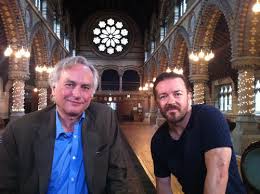
Richard Dawkins and Ricky Gervais

Image result for richard dawkins ricky gervais london

_

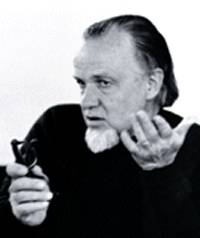
Francis Schaeffer below:

Image result for richard dawkins francis schaeffer

Richard Dawkins vs John Lennox | The God Delusion Debate

Ben Stein vs. Richard Dawkins Interview


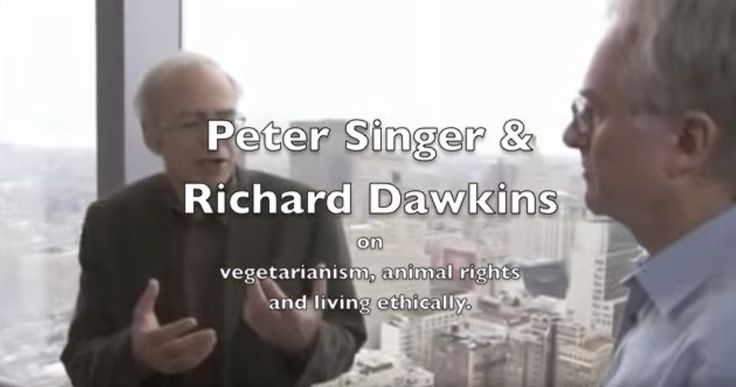
XXXX Peter Singer – The Genius of Darwin: The Uncut Interviews – Richard Dawkins

XXXXXXX

__

Image result for richard dawkins peter singer

__


XXXX

September 28, 2019

Richard Dawkins c/o Richard Dawkins Foundation, 
Washington, DC 20005

Dear Mr. Dawkins,

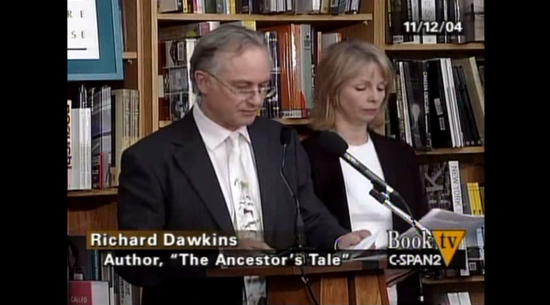
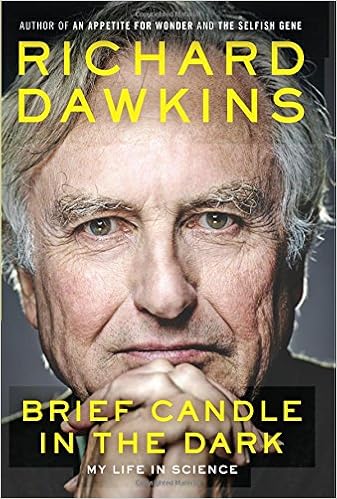
i have enjoyed reading about a dozen of your books and some of the most intriguing were The God DelusionAn Appetite for Wonder: The Making of a Scientist, and Brief Candle in the Dark: My Life in Science.

I am looking forward to reading Outgrowing God which is your latest book, and I have been reading several reviews of it. The best interviewer is Krishnan Guru-Murthy in my opinion. He did a great job of asking you some very insightful questions, and I thought your answers gave the audience a good feel for what is in the book.

You tweeted: 

It’s ten days until OUTGROWING GOD is out in the UK. Preorder a signed copy from Waterstones: bit.ly/OutgrowingGod

I responded by tweeting: 

Adrian Rogers “As a believer, you must understand what you believe and why we are Christians, and then be able to explain your beliefs humbly, thoughtfully, reasonably, and biblically” thedailyhatch.org/2019/09/10/

How To Answer A Skeptic
Sermon Summary by Bro. Adrian Rogers
We live in a day of accelerating skepticism, humanism and scientism. We as Christians
are going to be ridiculed and made to look ignorant and uneducated because we believe
in God. Do we have sound reason for believing what we believe? Are we not worthy of
real, honest thought? How do you respond to this skepticism in this day and age in
which we live?
The Bible tells us how to respond to skeptics in 1 Peter 3:10-17, especially verse 15
which states, “But sanctify the Lord God in your hearts, and be ready always to give an
answer to every man who ask you to give a reason of the hope that is in you, with
meekness and fear.” (As a believer, you must understand what you believe and why we
are Christians, and then be able to explain your beliefs humbly, thoughtfully,
reasonably, and biblically.)
Often we are told to keep the faith, but not only should we keep it but we need to give
it away. If you have no desire to give it away, you ought to give it up, because what you
have is not the real thing. Any man that has been born of the spirit of God, has an innate
desire to share his faith with others.
There are two things that must be true of you before you are ready to share your faith
with anybody. First, you must be Real. You are to have a full-hearted, burning,
compassionate, overflowing love for God. You are to be a zealot for the Lord Jesus.
Yours is to be a full faith, a fearless faith. Don’t let anybody intimidate you because you
are a Christian. They can hurt you but they cannot harm you, therefore don’t be afraid.
Second you must be Ready. When you live a Christian lifestyle, people will start asking
questions about you when they see something in you that cannot be explained. They
are going to want to know why you believe what you believe and why you act the way
you act. Do you know how to respond to a skeptic? There are four basic ideas to
remember as you respond to this skeptical age:
1) Forego the Folly of Fools – Some skeptics are fools, not all but some. In the Bible,
fool means someone who is morally depraved, not mentally deficient. Don’t
argue with someone who shows himself to be a fool. Give him the mind of God;
tell him what God says then go your way. In Proverbs 26:4 it says, “answer not a
fool according to his folly, less you be like unto him.” Don’t answer him; don’t get
in a debate with a fool. You won’t be able to do much with these type of people.
Also see what Jesus says about this in Mark 6:11.
2) Learn the Limits of Logic – Logic is a valuable tool but it can only carry you so far.
When you get to a chasm that logic can’t leap, then faith will have to fly. The logic
for God is found in creation and design and universal moral beliefs. It is logical to
reason that if we have a creation, we must have a Creator since nothing comes
out of nothing. Also logic tells us that if there is design in nature, there must be a
Designer; and the more complex the design, the greater the designer. The
creation found throughout the earth and universe is immensely complex and
organized. The logic of there being universally held beliefs in a moral law shared
throughout mankind also says there is a god. If anyone ever comes up to you and
says, “Prove there is a god.” Be Bold and say, “I can’t, but can you prove there is
no god?” He’ll say he can’t either. Then if he says “You just think there is a god
because it is just what you believe.” You can say, “I believe there is a god and you
believe there is no god. I have faith that there is, and you have faith that there
isn’t.” What we as Christians believe is reasonable, but it goes beyond reason.
3) Remember the Resource of Revelation –If we are to know a god, he is going to
have to reveal himself to us. The finite can never understand the infinite, unless
the infinite explains himself and reveals himself to the finite. 2 Peter 1:19-21
shows us three things about the word of God: 1) The Inspiration of the word of
God. The Bible is like no other book – it was inspired by the Holy Spirit. 2) The
Illumination of the word of God. It shines into our hearts – it enlightens us. It
reveals to us what we could not know without it. 3) The Confirmation of the
word of God. We believe not only because of what any other person has said, but
also because of what the Bible has said. The Bible is power whether you believe it
or not. It does not matter what we believe; what matters is what is true. Use the
Bible because you know it is true.
4) Fortify the Force of Faith – A Christian with a glowing testimony is worth a library
of arguments. Share what Jesus means to you and what God has done for you
and how He has changed your life. Let Jesus be real to you. Sanctify God in your
heart. Strengthen your faith by staying in contact with God through prayer,
reading and listening to His word, and sharing your faith with other believers as
well as non-believers. Your faith will be as much caught as it will be taught.
Remember 1 Peter 3:15, “But sanctify the Lord God in your hearts, and be ready
always to give an answer to everyone who ask you to give a reason of the hope
that is in you, with meekness and fear.”

Francis Schaeffer has correctly argued:

The universe was created by an infinite personal God and He brought it into existence by spoken word and made man in His own image. When man tries to reduce [philosophically in a materialistic point of view] himself to less than this [less than being made in the image of God] he will always fail and he will always be willing to make these impossible leaps into the area of nonreason even though they don’t give an answer simply because that isn’t what he is. He himself testifies that this infinite personal God, the God of the Old and New Testament is there. 

Instead of making a leap into the area of nonreason the better choice would be to investigate the claims that the Bible is a historically accurate book and that God created the universe and reached out to humankind with the Bible. Below is a piece of that evidence given by Francis Schaeffer concerning the accuracy of the Bible.

TRUTH AND HISTORY (chapter 5 of WHATEVER HAPPENED TO THE HUMAN RACE?)

In the previous chapter we saw that the Bible gives us the explanation for the existence of the universe and its form and for the mannishness of man. Or, to reverse this, we came to see that the universe and its form and the mannishness of man are a testimony to the truth of the Bible. In this chapter we will consider a third testimony: the Bible’s openness to verification by historical study.

Christianity involves history. To say only that is already to have said something remarkable, because it separates the Judeo-Christian world-view from almost all other religious thought. It is rooted in history.

The Bible tells us how God communicated with man in history. For example, God revealed Himself to Abraham at a point in time and at a particular geographical place. He did likewise with Moses, David, Isaiah, Daniel and so on. The implications of this are extremely important to us. Because the truth God communicated in the Bible is so tied up with the flow of human events, it is possible by historical study to confirm some of the historical details.

It is remarkable that this possibility exists. Compare the information we have from other continents of that period. We know comparatively little about what happened in Africa or South America or China or Russia or even Europe. We see beautiful remains of temples and burial places, cult figures, utensils, and so forth, but there is not much actual “history” that can be reconstructed, at least not much when compared to that which is possible in the Middle East.

When we look at the material which has been discovered from the Nile to the Euphrates that derives from the 2500-year span before Christ, we are in a completely different situation from that in regard to South America or Asia. The kings of Egypt and Assyria built thousands of monuments commemorating their victories and recounting their different exploits. Whole libraries have been discovered from places like Nuzu and Mari and most recently at Elba, which give hundreds of thousands of texts relating to the historical details of their time. It is within this geographical area that the Bible is set. So it is possible to find material which bears upon what the Bible tells us.

The Bible purports to give us information on history. Is the history accurate? The more we understand about the Middle East between 2500 B.C. and A.D. 100, the more confident we can be that the information in the Bible is reliable, even when it speaks about the simple things of time and place.

Part A

The site of the biblical city called Lachish is about thirty miles southwest of Jerusalem. This city is referred to on a number of occasions in the Old Testament. Imagine a busy city with high walls surrounding it, and a gate in front that is the only entrance to the city. We know so much about Lachish from archaeological studies that a reconstruction of the whole city has been made in detail. This can be seen at the British Museum in the Lachish Room in the Assyrian section.

There is also a picture made by artists in the eighth century before Christ, the Lachish Relief, which was discovered in the city of Nineveh in the ancient Assyria. In this picture we can see the Jewish inhabitants of Lachish surrendering to Sennacherib, the king of Assyria. The details in the picture and the Assyrian writing on it give the Assyrian side of what the Bible tells us in Second Kings:

2 Kings 18:13-16

New American Standard Bible (NASB)

13 Now in the fourteenth year of King Hezekiah, Sennacherib king of Assyria came up against all the fortified cities of Judah and seized them. 14 Then Hezekiah king of Judah sent to the king of Assyria at Lachish, saying, “I have done wrong. Withdraw from me; whatever you impose on me I will bear.” So the king of Assyria required of Hezekiah king of Judah three hundred talents of silver and thirty talents of gold. 15 Hezekiah gave him all the silver which was found in the house of the Lord, and in the treasuries of the king’s house. 16 At that time Hezekiah cut off the gold from the doors of the temple of the Lord, and from the doorposts which Hezekiah king of Judah had overlaid, and gave it to the king of Assyria.

________

We should notice two things about this. First, this is a real-life situation–a real siege of a real city with real people on both sides of the war–and it happened at a particular date in history, near the turn of the eighth century B.C. Second, the two accounts of this incident in 701 B.C. (the account from the Bible and the Assyrian account from Nineveh) do not contradict, but rather confirm each other. The history of Lachish itself is not so important for us, but some of its smaller historical details.

The answer to find meaning in life is found in putting your faith and trust in Jesus Christ. The Bible is true from cover to cover and can be trusted.

Thank you again for your time and I know how busy you are.

Everette Hatcher, everettehatcher@gmail.comhttp://www.thedailyhatch.org, cell ph 501-920-5733, Box 23416, LittleRock, AR 72221, United States

XXXXXXX

Science Confirms the Bible with Ken Ham

__

Image result for richard dawkins young

Schaeffer with his wife Edith in Switzerland.


Image result for john lennox and richard dawkins

Richard Dawkins and John Lennox

_

DawkinsWard

_

Francis and Edith Schaeffer seen below:

Image result for francis schaeffer

__

Image result for francis schaeffer c. everett koop whatever happened to human race?

_

Dawkins, Hitchens, Dennett, Harris 

Image result for four horsemen richard dawkins

Canary Islands 2014: Harold Kroto and Richard Dawkins

Image result for harry kroto richard dawkins

__

Francis Schaeffer pictured below:

Image result for francis schaeffer

The Basis of Human Dignity by Francis Schaeffer

Richard Dawkins, founder of the Richard Dawkins Foundation for Reason and Science. Credit: Don Arnold Getty Images

Francis Schaeffer in 1984

Christian Manifesto by Francis Schaeffer

Francis Schaeffer in 1982

—-

Whatever Happened to the Human Race? Episode 1

Image result for richard dawkins brief candle in the dark

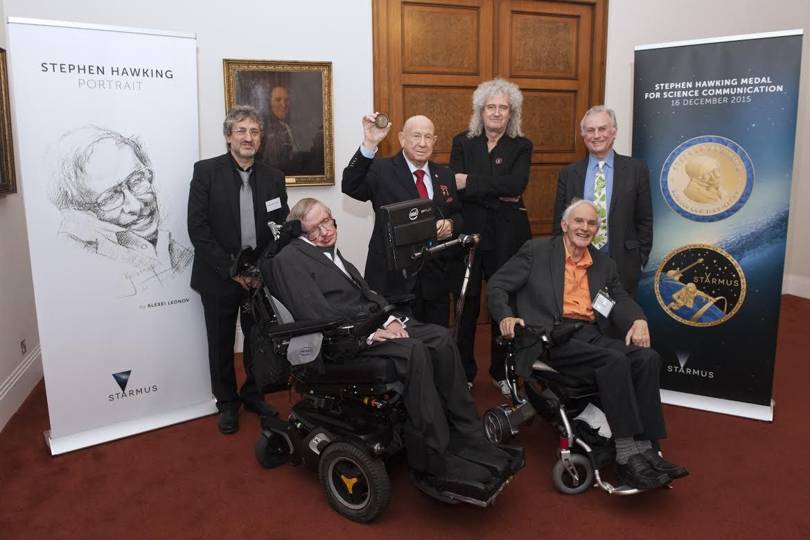
Garik Israelian, Stephen Hawking, Alexey Leonov, Brian May, Richard Dawkins and Harry Kroto

—-

—-

—-

Dark History of Evolution-Henry Morris, Ph.D.

—-

Featured artist is Picasso

Picasso, Pablo – by Nigel Halliday

Review of ‘Picasso: challenging the past’National Gallery, London, February-June 2009by Nigel Halliday    This exhibition makes an interesting contrast with ‘Rodchenko and Popova’ at Tate Modern. The latter showcases two artists in post-revolutionary Russia who sought to play their part in building a new world by wiping the artistic slate clean and starting again. Picasso, by contrast, brought up in Barcelona and painting in Paris, sees himself working within the long tradition of western art, going back to the Renaissance and beyond.   The exhibition highlights various examples of how Picasso addressed a traditional subject-matter in the language of modernism, as well as, later on, attempting to rework specific examples of some of the old masters. It is especially in the early work that we see Picasso’s most fruitful engagement with tradition. Critics disagree over what Cubism was ‘about’, but it was certainly, among other things, a continuation of the work of Cezanne, who himself was wanting to build on Impressionism. Cezanne sought to integrate the immediacy of experience of Monet with the intellectual constructiveness of Poussin. In continuing Cezanne’s approach, Cubism can be seen, at least from one angle, as an early form of post-modernism: it discards the naïve realism of Impressionism (‘reality is what I see’) in favour of a more complex, Kantian idea of knowledge, that we do not know reality directly, but the mind imposes its own order upon the perceptions that are received by the senses.   Thus we see Picasso seeking to continue and update the western artistic canon by taking traditional subjects, such as nudes and still-lifes, and addressing them, not as they have traditionally been seen, but as they are now understood by the mind. His figures, such as the beautiful and poignant Seated nude of 1909, are constructed out of multiple sense perceptions. But at the same time a gulf of unknowability is established between the viewer and the original objective reality of the subject.   I tried to approach this exhibition with an open mind, but in fact it only confirmed my view that – with the notable exception of Guernica – Picasso’s work after the 1920s was disappointingly vapid, broadly swept canvases that speak of little more than his own moods and insecurities.   The main room of the exhibition focuses on works from his later years, especially between 1954 and 1962, in which he attempted to rework in his own language some of the masterpieces of the past. It was a major effort on his part: 15 paintings based on Delacroix’s Women of Algiers, 27 on Manet’s Dejeuner sur l’herbe, and more than 50 relating to Velazquez’s Las Meninas. But were his paintings ‘inspired’ by the masters, or, as the catalogue says, ‘provoked’ by them? Was he now, an artist in his 70s, trying to learn from the masters or trying to outdo them? It is not apparent, looking at the works, what is added to these images by his reworking of them. What came across to me from them is the sense of fear and insecurity about his powers as an artist – the same fear that we also find in his repetitive paintings of predatory women, who threaten to deprive him of his other form of creativity.   Published in Third Way

www.nigelhalliday.org/picasso-at-ng-apr-2009/

—-

Related posts:

RESPONDING TO HARRY KROTO’S BRILLIANT RENOWNED ACADEMICS!! Part 48 Nobel Prize Winner and Global Warming Denier Ivar Giaever “I think religion is to blame for a lot of the ills in this world!”

October 20, 2015 – 5:20 am

  On November 21, 2014 I received a letter from Nobel Laureate Harry Kroto and it said: …Please click on this URL http://vimeo.com/26991975 and you will hear what far smarter people than I have to say on this matter. I agree with them. Harry Kroto _________________ Below you have picture of 1996 Chemistry Nobel Prize Winner […]

FRANCIS SCHAEFFER ANALYZES ART AND CULTURE PART 78 THE BEATLES (Breaking down the song TOMORROW NEVER KNOWS) Featured musical artist is Stuart Gerber

September 24, 2015 – 5:42 am

The Beatles were “inspired by the musique concrète of German composer and early electronic music pioneer Karlheinz Stockhausen…”  as SCOTT THILL has asserted. Francis Schaeffer noted that ideas of  “Non-resolution” and “Fragmentation” came down German and French streams with the influence of Beethoven’s last Quartets and then the influence of Debussy and later Schoenberg’s non-resolution which is in total contrast […]

RESPONDING TO HARRY KROTO’S BRILLIANT RENOWNED ACADEMICS!! Part 42 Peter Singer, Professor of Bioethics at Princeton University, THE PROBLEM OF EVIL

September 8, 2015 – 5:10 am

  _______ On November 21, 2014 I received a letter from Nobel Laureate Harry Kroto and it said: …Please click on this URL http://vimeo.com/26991975 and you will hear what far smarter people than I have to say on this matter. I agree with them. Harry Kroto _________________ Below you have picture of 1996 Chemistry Nobel Prize […]

RESPONDING TO HARRY KROTO’S BRILLIANT RENOWNED ACADEMICS!! Bart Ehrman “Why should one think that God performed the miracle of inspiring the words in the first place if He didn’t perform the miracle of preserving the words?”

September 2, 2015 – 8:42 am

On November 21, 2014 I received a letter from Nobel Laureate Harry Kroto and it said: …Please click on this URL http://vimeo.com/26991975 and you will hear what far smarter people than I have to say on this matter. I agree with them. Harry Kroto ____________________ Below you have picture of 1996 Chemistry Nobel Prize Winner Dr. […]

WOODY WEDNESDAY Open Letter to Woody Allen Part 20 Did God create us with a conscience that testifies to his existence as Romans 1 states?

Woody Allen On Bergman

Woody Allen On Bergman

Woody Allen Show

Essay on Woody Allen films

Match point Trailer

Match point

Crimes and misdemeanors

Part 2

November 10, 2019

Woody Allen c/o Samuel French, Inc.

235 Park Avenue South

5th Floor

New York, NY 10003 

Dear Woody,

God created everyone with a God-given conscience that knows right from wrong.

Let me challenge you to take a closer look at the Bible and it’s accuracy. 

Biblical Archaeology: Factual Evidence to Support the Historicity of the Bible

Article ID: DA111 | By: Paul L. Maier

This article first appeared in the Christian Research Journal, volume 27, number 2 (2004). For further information or to subscribe to the Christian Research Journal go to: http://www.equip.org


Archaeological finds that contradict the contentions of biblical minimalists and other revisionists have been listed above. There are many more, however, that corroborate biblical evidence, and the following list provides only the most significant discoveries:

The Existence of Hittites. Genesis 23 reports that Abraham buried Sarah in the Cave of Machpelah, which he purchased from Ephron the Hittite. Second Samuel 11 tells of David’s adultery with Bathsheba, the wife of Uriah the Hittite. A century ago the Hittites were unknown outside of the Old Testament, and critics claimed that they were a figment of biblical imagination. In 1906, however, archaeologists digging east of Ankara, Turkey, discovered the ruins of Hattusas, the ancient Hittite capital at what is today called Boghazkoy, as well as its vast collection of Hittite historical records, which showed an empire flourishing in the mid-second millennium BC. This critical challenge, among many others, was immediately proved worthless — a pattern that would often be repeated in the decades to come.

The Merneptah Stele. A seven-foot slab engraved with hieroglyphics, also called the Israel Stele, boasts of the Egyptian pharaoh’s conquest of Libyans and peoples in Palestine, including the Israelites: “Israel — his seed is not.” This is the earliest reference to Israel in nonbiblical sources and demonstrates that, as of c. 1230 BC, the Hebrews were already living in the Promised Land.

Biblical Cities Attested Archaeologically. In addition to Jericho, places such as Haran, Hazor, Dan, Megiddo, Shechem, Samaria, Shiloh, Gezer, Gibeah, Beth Shemesh, Beth Shean, Beersheba, Lachish, and many other urban sites have been excavated, quite apart from such larger and obvious locations as Jerusalem or Babylon. Such geographical markers are extremely significant in demonstrating that fact, not fantasy,is intended in the Old Testament historical narratives; otherwise, the specificity regarding these urban sites would have been replaced by “Once upon a time” narratives with only hazy geographical parameters, if any.

Israel’s enemies in the Hebrew Bible likewise are not contrived but solidly historical. Among the most dangerous of these were the Philistines, the people after whom Palestine itself would be named. Their earliest depiction is on the Temple of Rameses III at Thebes, c. 1150 BC, as “peoples of the sea” who invaded the Delta area and later the coastal plain of Canaan. The Pentapolis (five cities) they established — namely Ashkelon, Ashdod, Gaza, Gath, and Ekron — have all been excavated, at least in part, and some remain cities to this day. Such precise urban evidence measures favorably when compared with the geographical sites claimed in the holy books of other religious systems, which often have no basis whatever in reality.10

Woody Allen, Nihilist

By stDamon Linker

Not a believer.

Not a believer. (Pascal Le Segretain/Getty Images)February 4, 2014

I don’t know what did or did not happen between Woody Allen and Dylan Farrow more than 20 years ago, and neither does Nicholas Kristof. What I do know is that Allen is a moral nihilist. This should not be taken as evidence that he sexually molested Mia Farrow’s adopted daughter when she was 7 years old, or taken as a sign that he’d condone such behavior. But it does mean he espouses a philosophical outlook that renders him powerless to condemn it.

Let me be clear about two things right off the bat. First, I’m a great admirer of Allen’s filmmaking — and like Andrew Sullivan and Rod Dreher, I think the artistry of his films can and should be judged apart from his (perhaps substantial) moral failings. Second, I consider nihilism to be a viable, albeit false and ultimately chilling, philosophical and existential position. In describing Allen as a nihilist, I am not issuing an indictment — simply describing an outlook that he has elaborated in several films and interviews over the years.

Allen’s most thorough cinematic treatment of nihilism and its moral implications can be found in what may be his greatest film, Crimes and Misdemeanors (1989). The movie tells the story of an ophthalmologist named Judah Rosenthal (played by Martin Landau) who decides to kill off his lover Dolores (Angelica Houston) when she threatens to divulge their affair to Judah’s wife. (Allen’s Match Point (2005), an inferior film in almost every way, explores many similar themes.)

At first wracked with guilt over the murder, Judah eventually gets over his moral qualms. (As another character quips in the film, “comedy is tragedy plus time.”) In a shocking subversion of Hollywood-style happy endings as well as Dostoevsky’s Crime and Punishment — in which the character Raskolnikov is driven by unremitting guilt to confess a pair of murders to the authorities — the film ends with Judah seemingly at complete peace with himself and thriving in every way: Happy, wealthy, successful, adored by a beautiful wife and daughter, with the latter soon to be married.

The viewer is left to conclude that Judah got away with his crime scot-free — and that such an outcome is possible for anyone courageous enough to violate accepted moral customs and lucky or clever enough to avoid getting caught by the legal authorities.

The theme and its broader implications are reinforced throughout the film. In one of its most powerful scenes, Judah observes and interacts with a memory from his youth in which members of his family debate morality, God, and the Holocaust. Espousing the view endorsed by the film, Judah’s atheist aunt May (whom Judah’s religiously observant father dubs a “nihilist”) remarks that if National Socialist Germany had won World War II, then Hitler’s actions would have ended up being “right.” After all, in such a nightmarish, counterfactual world, the Nazis would be empowered to set and enforce the reigning moral standard — and there simply is no higher moral authority to appeal to against such a standard. In a nihilistic universe, the overarching moral truth is that might makes right.

Aunt May’s foil in the film is Ben (Sam Waterston), a pious rabbi who says that he couldn’t go on living “if I didn’t feel with all my heart a moral structure with real meaning and forgiveness and some kind of higher power. Otherwise there’s no basis to live…. Without the law, it’s all darkness.” Allen reveals his attitude toward the rabbi by subjecting him to a progressive loss of vision that ends in total blindness by the conclusion of the film — a blunt metaphor for the darkness induced by his own moral and religious faith.

Allen, 1970. | (Evening Standard/Getty Images)

We know that this was Allen’s intent because he’s said so. Ben, according to Allen, “doesn’t really understand the reality of life… and that’s why I wanted to make him blind. I feel that his faith is blind. It will work, but it requires closing your eyes to reality.” And what is reality? That “at best the universe is indifferent” to our lives and our various ways of construing right and wrong. This indifference is so awful that many of us feel driven to “create a fake world for ourselves, and we exist within that fake world.”

On a lesser level you see it in sports. They create a world of football, for example. You get lost in that world and you care about meaningless things…. People by the thousands watch it, thinking it’s very important who wins. But, in fact, if you step back for a second, it’s utterly unimportant who wins. It means nothing. In the same way we create for ourselves a world that, in fact, means nothing at all, when you step back. It’s meaningless.

As Allen explained in a more recent interview in Commonweal magazine, it was the desire to explore this sense of existential meaninglessness that inspired him to make Crimes and Misdemeanors: “Some people distort [the meaninglessness of the world] with religious things. Some people distort it with sports, with money, with love, with art… but nothing makes it meaningful…. [E]veryone goes to his grave in a meaningless way…. [O]ne can commit a crime, do unspeakable things, and get away with it, and some of them are plagued with all sorts of guilt for the rest of their lives and others aren’t. There is no justice…”

I agree that there are those who have done horrible deeds, but the Bible teaches in Romans 1 that everyone knows God exists!!!

 IS THERE A GOOD CHANCE THAT DEEP DOWN IN YOUR CONSCIENCE  you have repressed the belief in your heart that God does exist and IS THERE A POSSIBILITY THIS DEEP BELIEF OF YOURS CAN BE SHOWN THROUGH A LIE-DETECTOR? (Back in the late 1990’s I had the opportunity to correspond with over a dozen members of CSICOP on just this very issue.)

I have a good friend who is a street preacher who preaches on the Santa Monica Promenade in California and during the Q/A sessions he does have lots of atheists that enjoy their time at the mic. When this happens he  always quotes Romans 1:18-19 (Amplified Bible) ” For God’s wrath and indignation are revealed from heaven against all ungodliness and unrighteousness of men, who in their wickedness REPRESS and HINDER the truth and make it inoperative. For that which is KNOWN about God is EVIDENT to them and MADE PLAIN IN THEIR INNER CONSCIOUSNESS, because God  has SHOWN IT TO THEM,”(emphasis mine). Then he  tells the atheist that the atheist already knows that God exists but he has been suppressing that knowledge in unrighteousness. This usually infuriates the atheist.

My friend draws some large crowds at times and was thinking about setting up a lie detector test and see if atheists actually secretly believe in God. He discussed this project with me since he knew that I had done a lot of research on the idea about 20 years ago.

Nelson Price in THE EMMANUEL FACTOR (1987) tells the story about Brown Trucking Company in Georgia who used to give polygraph tests to their job applicants. However, in part of the test the operator asked, “Do you believe in God?” In every instance when a professing atheist answered “No,” the test showed the person to be lying. My pastor Adrian Rogers used to tell this same story to illustrate Romans 1:19 and it was his conclusion that “there is no such thing anywhere on earth as a true atheist. If a man says he doesn’t believe in God, then he is lying. God has put his moral consciousness into every man’s heart, and a man has to try to kick his conscience to death to say he doesn’t believe in God.”

(Adrian Rogers at White House)

It is true that polygraph tests for use in hiring were banned by Congress in 1988.  Mr and Mrs Claude Brown on Aug 25, 1994  wrote me a letter confirming that over 15,000 applicants previous to 1988 had taken the polygraph test and EVERY-TIME SOMEONE SAID THEY DID NOT BELIEVE IN GOD, THE MACHINE SAID THEY WERE LYING.

It had been difficult to catch up to the Browns. I had heard about them from Dr. Rogers’ sermon but I did not have enough information to locate them. Dr. Rogers referred me to Dr. Nelson Price and Dr. Price’s office told me that Claude Brown lived in Atlanta. After writing letters to all 9 of the entries for Claude Brown in the Atlanta telephone book, I finally got in touch with the Browns.

Adrian Rogers also pointed out that the Bible does not recognize the theoretical atheist.  Psalms 14:1: The fool has said in his heart, “There is no God.”  Dr Rogers notes, “The fool is treating God like he would treat food he did not desire in a cafeteria line. ‘No broccoli for me!’ ” In other words, the fool just doesn’t want God in his life and is a practical atheist, but not a theoretical atheist. Charles Ryrie in the The Ryrie Study Bible came to the same conclusion on this verse.

Here are the conclusions of the experts I wrote in the secular world concerning the lie detector test and it’s ability to get at the truth:

Professor Frank Horvath of the School of Criminal Justice at Michigan State University has testified before Congress concerning the validity of the polygraph machine. He has stated on numerous occasions that “the evidence from those who have actually been affected by polygraph testing in the workplace is quite contrary to what has been expressed by critics. I give this evidence greater weight than I give to the most of the comments of critics” (letter to me dated October 6, 1994).

There was no better organization suited to investigate this claim concerning the lie detector test than the Committee for the Scientific Investigation of Claims of the Paranormal (CSICOP). This organization changed their name to the Committe for Skeptical Inquiry in 2006. This organization includes anyone who wants to help debunk the whole ever-expanding gamut of misleading, outlandish, and fraudulent claims made in the name of science. I AM WRITING YOU TODAY BECAUSE YOU ARE ASSOCIATED WITH CSICOP.

I read The Skeptical Review(publication of CSICOP) for several years during the 90’s and I would write letters to these scientists about taking this project on and putting it to the test.  Below are some of  their responses (15 to 20 years old now):

1st Observation: Religious culture of USA could have influenced polygraph test results.
ANTONY FLEW  (formerly of Reading University in England, now deceased, in a letter to me dated 8-11-96) noted, “For all the evidence so far available seems to be of people from a culture in which people are either directly brought up to believe in the existence of God or at least are strongly even if only unconsciously influenced by those who do. Even if everyone from such a culture revealed unconscious belief, it would not really begin to show that — as Descartes maintained— the idea of God is so to speak the Creator’s trademark, stamped on human souls by their Creator at their creation.”

2nd Observation: Polygraph Machines do not work. JOHN R. COLE, anthropologist, editor, National Center for Science Education, Dr. WOLF RODER, professor of Geography, University of Cincinnati, Dr. SUSAN BLACKMORE,Dept of Psychology, University of the West of England, Dr. CHRISTOPHER C. FRENCH, Psychology Dept, Goldsmith’s College, University of London, Dr.WALTER F. ROWE, The George Washington University, Dept of Forensic Sciences, Graduate School of Arts and Sciences.

3rd Observation: The sample size probably was not large enough to apply statistical inference. (These gentlemen made the following assertion before I received the letter back from Claude Brown that revealed that the sample size was over 15,000.) JOHN GEOHEGAN, Chairman of New Mexicans for Science and Reason, Dr. WOLF RODER, and Dr WALTER F. ROWE (in a letter dated July 12, 1994) stated, “The polygraph operator for Brown Trucking Company has probably examined only a few hundred or a few thousand job applicants. I would surmise that only a very small number of these were actually atheists. It seems a statistically insignificant (and distinctly nonrandom) sampling of the 5 billion human beings currently inhabiting the earth. Dr. Nelson Price also seems to be impugning the integrity of anyone who claims to be an atheist in a rather underhanded fashion.”4th Observation: The question (Do you believe in God?)  was out of place and it surprised the applicants. THOMAS GILOVICH, psychologist, Cornell Univ., Dr. ZEN FAULKES, professor of Biology, University of Victoria (Canada), ROBERT CRAIG, Head of Indiana Skeptics Organization, Dr. WALTER ROWE, 5th Observation: Proof that everyone believes in God’s existence does not prove that God does in fact exist. PAUL QUINCEY, Nathional Physical Laboratory,(England), Dr. CLAUDIO BENSKI, Schneider Electric, CFEPP, (France),6th Observation: Both the courts and Congress recognize that lie-detectors don’t work and that is why they were banned in 1988.  (Governments and the military still use them.)Dr WALTER ROWE, KATHLEEN M. DILLION, professor of Psychology, Western New England College.7th Observation:This information concerning Claude Brown’s claim has been passed on to us via a tv preacher and eveybody knows that they are untrustworthy– look at their history. WOLF RODER.______________Solomon wisely noted in Ecclesiastes 3:11 “God has planted eternity in the heart of men…” (Living Bible). No wonder Bertrand Russell wrote in his autobiography, “It is odd, isn’t it? I feel passionately for this world and many things and people in it, and yet…what is it all? There must be something more important, one feels, though I don’t believe there is. I am haunted. Some ghosts, for some extra mundane regions, seem always trying to tell me something that I am to repeat to the world, but I cannot understand that message.”

Gene Emery, science writer for Providence Journal-Bulletin is a past winner of the CSICOP “Responsibility in Journalism Award” and he had the best suggestion of all when he suggested, “Actually, if you want to make a good case about whether Romans 1:19 is true, arrange to have a polygraph operator (preferably an atheist or agnostic) brought to the next CSICOP meeting. (I’m not a member of CSICOP, by the way, so I can’t give you an official invitation or anything.) If none of the folks at that meeting can convince the machine that they truly believe in God, maybe there is, in fact, an innate willingness to believe in God.”

DO YOU HAVE ANY REACTIONS TO ADD TO THESE 7 OBSERVATIONS THAT I GOT 15 YEARS AGO? Thank you again for your time and I know how busy you are.

Everette Hatcher, everettehatcher@gmail.comhttp://www.thedailyhatch.org, cell ph 501-920-5733, Box 23416, LittleRock, AR 72221

Part 3

Woody commenting on Midnight in Paris

Midnight in Paris trailer

The movie MIDNIGHT IN PARIS offers many of the same themes we see in Ecclesiastes. The second post looked at the question: WAS THERE EVER A GOLDEN AGE AND DID THE MOST TALENTED UNIVERSAL MEN OF THAT TIME FIND TRUE SATISFACTION DURING IT?

In the third post in this series we discover in Ecclesiastes that man UNDER THE SUN finds himself caught in the never ending cycle of birth and death. The SURREALISTS make a leap into the area of nonreason in order to get out of this cycle and that is why the scene in MIDNIGHT IN PARIS with Salvador Dali, Man Ray, and Luis Bunuel works so well!!!! These surrealists look to the area of their dreams to find a meaning for their lives and their break with reality is  only because they know that they can’t find a rational meaning in life without God in the picture.

The fourth post looks at the solution of WINE, WOMEN AND SONG and the fifth and sixth posts look at the solution T.S.Eliotfound in the Christian Faith and how he left his fragmented message of pessimism behind. In the seventh post the SURREALISTS say that time and chance is all we have but how can that explain love or art and the hunger for God? The eighth  post looks at the subject of DEATH both in Ecclesiastes and MIDNIGHT IN PARIS. In the ninth post we look at the nihilistic worldview of Woody Allen and why he keeps putting suicides into his films.

In the tenth post I show how Woody Allen pokes fun at the brilliant thinkers of this world and how King Solomon did the same thing 3000 years ago. In the eleventh post I point out how many of Woody Allen’s liberal political views come a lack of understanding of the sinful nature of man and where it originated. In the twelfth post I look at the mannishness of man and vacuum in his heart that can only be satisfied by a relationship with God.

In the thirteenth post we look at the life of Ernest Hemingway as pictured in MIDNIGHT AND PARIS and relate it to the change of outlook he had on life as the years passed. In the fourteenth post we look at Hemingway’s idea of Paris being a movable  feast. The fifteenth and sixteenth posts both compare Hemingway’s statement, “Happiness in intelligent people is the rarest thing I know…”  with Ecclesiastes 2:18 “For in much wisdom is much vexation, and he who increases knowledge increases sorrow.” The seventeenth post looks at these words Woody Allen put into Hemingway’s mouth,  “We fear death because we feel that we haven’t loved well enough or loved at all.”

In MIDNIGHT IN PARIS Hemingway and Gil Pender talk about their literary idol Mark Twain and the eighteenth post is summed up nicely by Kris Hemphill‘swords, “Both Twain and [King Solomon in the Book of Ecclesiastes] voice questions our souls long to have answered: Where does one find enduring meaning, life purpose, and sustainable joy, and why do so few seem to find it? The nineteenth post looks at the tension felt both in the life of Gil Pender (written by Woody Allen) in the movie MIDNIGHT IN PARIS and in Mark Twain’s life and that is when an atheist says he wants to scoff at the idea THAT WE WERE PUT HERE FOR A PURPOSE but he must stay face the reality of  Ecclesiastes 3:11 that says “God has planted eternity in the heart of men…” and  THAT CHANGES EVERYTHING! Therefore, the secular view that there is no such thing as love or purpose looks implausible. The twentieth post examines how Mark Twain discovered just like King Solomon in the Book of Ecclesiastes that there is no explanation  for the suffering and injustice that occurs in life UNDER THE SUN. Solomon actually brought God back into the picture in the last chapter and he looked  ABOVE THE SUN for the books to be balanced and for the tears to be wiped away.

The twenty-first post looks at the words of King Solomon, Woody Allen and Mark Twain that without God in the picture our lives UNDER THE SUN will accomplish nothing that lasts. Thetwenty-second post looks at King Solomon’s experiment 3000 years that proved that luxuries can’t bring satisfaction to one’s life but we have seen this proven over and over through the ages. Mark Twain lampooned the rich in his book “The Gilded Age” and he discussed  get rich quick fever, but Sam Clemens loved money and the comfort and luxuries it could buy. Likewise Scott Fitzgerald  was very successful in the 1920’s after his publication of THE GREAT GATSBY and lived a lavish lifestyle until his death in 1940 as a result of alcoholism.

In the twenty-third post we look at Mark Twain’s statement that people should either commit suicide or stay drunk if they are “demonstrably wise” and want to “keep their reasoning faculties.” We actually see this play out in the film MIDNIGHT IN PARIS with the character Zelda Fitzgerald. In the twenty-fourthtwenty-fifth and twenty-sixth posts I look at Mark Twain and the issue of racism. In MIDNIGHT IN PARIS we see the difference between the attitudes concerning race in 1925 Paris and the rest of the world.

The twenty-seventh and twenty-eighth posts are summing up Mark Twain. In the 29th post we ask did MIDNIGHT IN PARIS accurately portray Hemingway’s personality and outlook on life? and in the 30th post the life and views of Hemingway are summed up.

In the 31st post we will observe that just like Solomon Picasso slept with many women. Solomon actually slept with  over 1000 women ( Eccl 2:8, I Kings 11:3), and both men ended their lives bitter against all women and in the 32nd post we look at what happened to these former lovers of Picasso. In the 33rd post we see that Picasso  deliberately painted his secular  worldview of fragmentation on his canvas but he could not live with the loss of humanness and he reverted back at crucial points and painted those he loved with all his genius and with all their humanness!!! In the 34th post  we notice that both Solomon in Ecclesiastes and Picasso in his painting had an obsession with the issue of their impending death!!!

___________

Related posts:

“Woody Wednesday” ECCLESIASTES AND WOODY ALLEN’S FILMS: SOLOMON “WOULD GOT ALONG WELL WITH WOODY!” (Part 7 MIDNIGHT IN PARIS Part F, SURREALISTS AND THE IDEA OF ABSURDITY AND CHANCE)

December 23, 2015 – 4:15 am

Woody Allen believes that we live in a cold, violent and meaningless universe and it seems that his main character (Gil Pender, played by Owen Wilson) in the movie MIDNIGHT IN PARIS shares that view. Pender’s meeting with the Surrealists is by far the best scene in the movie because they are ones who can […]

“Woody Wednesday” ECCLESIASTES AND WOODY ALLEN’S FILMS: SOLOMON “WOULD GOT ALONG WELL WITH WOODY!” (Part 6 MIDNIGHT IN PARIS Part E, A FURTHER LOOK AT T.S. Eliot’s DESPAIR AND THEN HIS SOLUTION)

December 16, 2015 – 4:56 am

In the last post I pointed out how King Solomon in Ecclesiastes painted a dismal situation for modern man in life UNDER THE SUN  and that Bertrand Russell, and T.S. Eliot and  other modern writers had agreed with Solomon’s view. However, T.S. Eliot had found a solution to this problem and put his faith in […]

“Woody Wednesday” ECCLESIASTES AND WOODY ALLEN’S FILMS: SOLOMON “WOULD GOT ALONG WELL WITH WOODY!” (Part 5 MIDNIGHT IN PARIS Part D, A LOOK AT T.S. Eliot’s DESPAIR AND THEN HIS SOLUTION)

December 9, 2015 – 4:41 am

In MIDNIGHT IN PARIS Gil Pender ponders the advice he gets from his literary heroes from the 1920’s. King Solomon in Ecclesiastes painted a dismal situation for modern man in life UNDER THE SUN  and many modern artists, poets, and philosophers have agreed. In the 1920’s T.S.Eliot and his  house guest Bertrand Russell were two of […]

“Woody Wednesda

RESPONDING TO HARRY KROTO’S BRILLIANT RENOWNED ACADEMICS PART 161 Part E SUMMING UP MY CORRESPONDENCE from 2015-2020 with Darwin’s great grandson (Horace Barlow) about Francis Schaeffer’s 1968 critique of Darwinism! Part 5 (Darwin: “…Nor can I overlook the difficulty from the immense amount of suffering through the world”

—-

Horace Barlow at ECVP 2003 in Paris

15 AUG HORACE BARLOW (1921-2020)

Credit: Left: the Ratio Club in Cambridge, May 1952. Back row: Harold Shipton, John Bates, William Hick, John Pringle, Donald Sholl, John Westcott, Donald Mackay. Middle row: Giles Brindley, Turner McLardy, Ross Ashby, Tommy Gold, Albert Uttley. Front row: Alan Turing, Gurney Sutton, William Rushton, George Dawson, Horace Barlow. (Photo: Wellcome Collection, archive reference GC/179/B.25, used under CC BY / Cropped). Right: Horace Barlow at home in Cambridge, March 2016 (Photo: Ida Barlow).

In December of 2017, I received a two page typed letter from Dr. Barlow reacting to several of the points made in the previous letters and emails. From August of 2020 to June of 2021 I posted these 32 letters I wrote to Dr. Barlow from February 11, 2015 to April 18, 2020 and below is a list of those letters. Sadly Dr. Barlow passed away on July 5, 2020 at age 98. However, I want to summarize some the issues we discussed in a series of 10 posts. 

Francis Schaeffer discusses Darwin’s own words concerning moral motions in Schaeffer’s 1968 sermon at this link.

Here are the links to my letters to Dr. Barlow: 

first weeksecond week,

third week4th letterFifth Letter,

6th letter7th letter8th letter9th letter10th letter11th letter12th letter13th letter14th letter15th letter16th Letter17th letter18th letter19th letter

20th letter21st letter22nd letter

23rd postcard24th letter25th letter

26th letter27th letter28th letter29th letter, and 30th letter.

TRIBUTE TO HORACE BARLOW:

Arpan @DrArpan100

Horace Barlow FRS was an extraordinary neuroscientist. His supervisions were always inspirational and he had a gift of being able to infuse curiosity in his students. He has had a massive impact on the field of visual neuroscience. He never stopped questioning and thinking. RIP.

——

Horace seen below in 2017 

Below is a portion of a letter I wrote on 7-1-17 to Dr. Barlow which he responded to in the letter I received in December of 2017. Basically Darwin brings up several issues such as the difficulty of reconciling the existence of a loving God with evil and suffering in the world (this may stem from the loss of his beloved daughter Anne) and also he slips in this curious phrase “but Man can do his duty” which implies that he realizes without God in the picture we may be left with determinism or survival of the fittest as our moral guide which Darwin is disgusted by.

“My mother was very enthusiastic about her grandfather and in those days thought he was rather under-rated, though by the time she died she realized that public opinion had risen almost to the point of matching her own and she thought that [Charles Darwin] was perhaps overrated.”

Just like your mother, I too think that Darwin is not thought of highly enough by some people and he is too esteemed by others. I do respect him to laying his most inner thoughts out there for all to see in the letters he wrote to his friends. One thought he had was on the issue of DETERMINISM, and I read it in the book  Charles Darwin: his life told in an autobiographical chapter, and in a selected series of his published letters.  

In that book he made the statement that MAN MUST DO HIS DUTY, and it is in light of DETERMINISM that had reared its ugly head. 

In this letterI am going to quote some of Charles Darwin’s own words and then include the comments of Francis Schaeffer on those words.

Darwin, C. R. to Doedes, N. D., 2 Apr 1873

I am sure you will excuse my writing at length, when I tell you that I have long been much out of health, and am now staying away from my home for rest.It is impossible to answer your question briefly;and I am not sure that I could do so, even if I wrote at some length. But I may say that the impossibility of conceiving that this grand and wondrous universe, with our conscious selves, arose through chance, seems to me the chief argument for the existence of God; but whether this is an argument of real value, I have never been able to decide…….Nor can I overlook the difficulty from the immense amount of suffering through the world. I am, also, induced to defer to a certain extent to the judgment of the many able men who have fully believed in God; but here again I see how poor an argument this is. The safest conclusion seems to me that the whole subject is beyond the scope of man’s intellect;but man can do his duty.”

Francis Schaeffer commented:

What he is saying is that at this point I have no answer. You find Darwin already in a modern hell. On his own position ruling out an answer but yet not being able to live without an answer.  What he (Darwin) is saying is that at this point I have no answer, but the interesting thing is he puts a semicolon after that and then says, “but man can do his duty.” Darwin understands, he is a brilliant man,  what he has said undercuts all duty and all morals. So he adds as a faith sentence, “but man can do his duty.” It doesn’t fit really, but he adds it because he sees that he must say this because otherwise what happens to man? You can switch on further down the road and Darwin would be appalled to see where his own position has been taken, through Freud and Deterministic psychology. Modern Man has a dilemma because the word “duty” doesn’t have a meaning anymore. (Determinism: The doctrine that human action is not free, but results from such causes as psychological and chemical makeup which render free-will an illusion.)

You will remember the thing I have quoted to you about Richard Speck and the psychologists who would stand in the evolutionary stream of Freud. Let me read to you from Newsweek September 25, 1967, a review of the book by Marvin Ziporyn BORN TO RAISE HELL interestingly enough printed by Groth Press, which is this psychologist’s analysis of Richard Speck in Chicago who killed these nurses in Chicago. It runs like this:

Ziporyn who lost his post at Chicago for publishing his work with Speck, diagnosed his patient as a man unable to control himself as a result of his own medical and emotional past. You weren’t any more responsible for what you did than a man is responsible for sneezing. he said to Speck at one point.  That is Zoporyn’s biggest problem which is convincing Speck there is no difference in a sneeze and eight murders. Ziporyn admits he is a strict determinist and he is an adherent to Freud’s dictum that biology is destiny. He advocates rehabilitation. Determinists strive to change or regulate conditions rather than men but to avoid such tragedies as Richard Speck the scope of change it requires staggers the imagination.

The bigger dilemma is that man disappears. Who is hurt? The eight nurses are hurt, including their pain, terror and their sexual violation and it becomes nothing, zero in this type of analysis. Society has a terrible problem because there is no right and wrong in society, and that will deal with Darwin’s words “but man can do his duty” because those who take Darwin’s theory and extend it have eradicated the possibility of the word “duty.” …Darwin I think senses this but he doesn’t know how to handle it.

Richard Speck

Ladies Richard Speck murdered below:

__

In Chapter 7, “THE MAN WITHOUT THE BIBLE,” of the book DEATH IN THE CITY, Schaeffer writes concerning Richard Speck and “Determinism”: 

This view raises three serious questions. First of all, what about the nurses who were killed, some of them in a very violent fashion? These must then be written off. With this kind of explanation they become zero. Second, what about society? Society and the problems of ordering it also are written off. In such a situation, order in society is merely like a big machine dealing on a machine level with little machines. Third, what about Speck himself? The psychologist’s explanation does the most harm to him, for as a man he disappears. He simply becomes a flow of consciousness. He, too, becomes a zero.

In our generation there is a constant tendency to explain sin lightly and think that such an explanation is more humanitarian. But it is not. It decreases the importance and significance of man. Consequently, we can be glad for the sake of man that the Bible’s explanation is so emphatic.
Paul repeats it in verse 25: “They exchanged the truth about God for a lie and worshipped and served the creature [that which has been created] rather than the Creator.” This is the second of the three repetitions.

Paul was thinking of the gods of silver and stone and also the worship of the universe or any part of it. He says men have made such gods rather than worshipping the living God. Even on the basis of what they know themselves to be, they should have known better. Isaiah said 700 years before, ‘Aren’t you silly to make gods that are less than yourself. You must carry them; they don’t carry you. Now isn’t it silly to make an integration point that is less than you yourself are.’ Paul used precisely the same argument on Mars Hill. Men who refuse to bow before God take the facts concerning the universe and man, push these facts through their own presuppositional grid, fail to carry their thinking to a reasonable conclusion, and so are faced with an overwhelming lie. Idols of stone are obvious lies because they are less than man, but so are non-Christian presuppositions such as the idea of the total uniformity of natural cause and effect in a closed system, the final explanation of the impersonal plus time plus chance, which ultimately makes man only a machine.

__________________

Below is the larger biblical passage of scripture that Schaeffer was referring to in Chapter 7, “THE MAN WITHOUT THE BIBLE,” of the book DEATH IN THE CITY:

Romans 1:18-32New American Standard Bible (NASB)

Unbelief and Its Consequences

18 For the wrath of God is revealed from heaven against all ungodliness and unrighteousness of men who suppress the truth in unrighteousness, 19 becausethat which is known about God is evident within them; for God made it evident to them. 20 For since the creation of the world His invisible attributes, His eternal power and divine nature, have been clearly seen, being understood through what has been made, so that they are without excuse. 21 For even though they knew God, they did not honor Him as God or give thanks, but they became futile in their speculations, and their foolish heart was darkened.22 Professing to be wise, they became fools, 23 and exchanged the glory of the incorruptible God for an image in the form of corruptible man and of birds and four-footed animals and crawling creatures.

24 Therefore God gave them over in the lusts of their hearts to impurity, so that their bodies would be dishonored among them.25 For they exchanged the truth of God for a lie, and worshiped and served the creature rather than the Creator, who is blessed forever. Amen.

26 For this reason God gave them over to degrading passions; for their women exchanged the natural function for that which is unnatural, 27 and in the same way also the men abandoned the natural function of the woman and burned in their desire toward one another, men with men committing indecent acts and receiving in their own persons the due penalty of their error.

28 And just as they did not see fit to acknowledge God any longer, God gave them over to a depraved mind, to do those things which are not proper,29 being filled with all unrighteousness, wickedness, greed, evil; full of envy, murder, strife, deceit, malice; they aregossips, 30 slanderers, haters of God, insolent, arrogant, boastful, inventors of evil, disobedient to parents, 31 without understanding, untrustworthy, unloving, unmerciful; 32 and although they know the ordinance of God, that those who practice such things are worthy of death, they not only do the same, but also give hearty approval to those who practice them.

_____________________________________

Why is determinism dangerous? Francis Schaeffer in his book HOW SHOULD WE THEN LIVE? tells why it is dangerous:

Modern determinists have not presented only abstract theories.  Rather, there have been two practical results.  First, and most important, as their ideas about what people are have been increasingly accepted, people consciously or unconsciously have opened themselves to being treated as machines and treating other people as machines.  Second, each theory of determinism has carried with it a method of manipulation.  So even though many — even most — people may reject the concept that man is totally a product of psychological, sociological, or chemical conditioning, manipulation by these methods is still very much a live possibility.  In fact, these techniques are all at the disposal of of authoritation states, and they are in some degree already being used.

Paul Chopan has rightly noted:

Naturalism takes for granted the following tenets:

  • Nature is all there is.
  • All reality is comprised of or rooted in matter.
  • There is no supernatural—no Creator, no miracles, no souls,
    no angels, no life after death.
  • Science becomes the only (or best) means of knowledge.

__________________

What is the answer to the problem of DETERMINISM? It is found in the Biblical view that the Bible is true and there was a place named THE GARDEN OF EDEN and the fact that God did create this world and it was not created by impersonal chance plus time. 

Francis A. Schaeffer on Human Free WillTHE GOD WHO IS THERE, (DOWNERS GROVE, IL: INTERVARSITY PRESS, 1968), P 131.

(James D. Watson and Francis Crick below)

The historic Christian position is that man’s dilemma has a moral cause. God, being nondetermined, created man as a nondetermined person. This is a difficult idea for anyone thinking in twentieth-century terms because most twentieth-century thinking sees man as determined. He is determined either by chemical factors, as the Marquis de Sade held and Francis Crick is trying to prove,or by psychological factors, as Freud and others have suggested, or by sociological factors, such as B.F. Skinner holds. In these cases, or as a result of a fusion of them, man is considered to be programmed. If this is the case, then man is not the tremendous thing the Bible says he is, made in the image of God as a personality who can make a free first choice. Because God created a true universe outside of himself (or as an extension of his essence), there is a true history which exists, man as created in God’s image is therefore a significant man in a significant history, who can choose to obey the commandments of God and love him, or revolt against him.

(B.F. Skinner)

THE CRUX OF THE ISSUE IS DID MAN HAVE A CHOICE AND IS MAN RESPONSIBLE FOR HIS CHOICES?

Image result for francis schaeffer

Francis Schaeffer

XXXXXXXXXXXXX

Horace Barlow below

Morality has been undercut and that is why Darwin resorts to “Man can do his duty but Dr. Barlow has a different perspective when it comes to a secular morality in the letter I received in December of 2017:

Chance mutations increase the diversity present in the population under consideration, and evolutionists naturally think of this as a “good thing,” for without diversity there can be no evolution. This is not often true for religiously determined moral codes, for most Gods are jealous and demand conformity among their followers, often enforced by persecution and extreme cruelty. As an evolutionist, I regard diversity itself as a desirable asset, and I think this improves my judgment when I hear a proposal that I do not initially agree with.

:

_____________

Here is response from Dr. Barlow on the letter I received in December of 2017 concerning evil in the world and he blames religious people for their part:

On the other hand, if I am pressed to say whether I think belief in God helps people to make wise and beneficial decisions I am bound to say (and I fear this will cause you pain) No, it is often very disastrous, leading to violence, death and vile behaviour, as with the current quarrel with Muslim terrorists, and as has been shown by inter-sectal violence within the Christian Church itself. 

Let me first take on Darwin’s question of evil and suffering and take on Dr. Barlow’s objection to religion next:


(C.S. Lewis pictured above)

How can a good God allow evil and suffering? Here is an explanation from the Evangelism Explosion leader’s guide: Their thinking is that either God is not powerful enough to prevent evil or else God is not good. He is often blamed for tragedy. “Where was God when I went through this, or when that happened.”  God is blamed for natural disasters, Even my insurance company describes them as “acts of God.” How to handle this one-  (O.N.E.)a. Origin of evil— man’s choice- God created a perfect world…b. Nature of God—He forgives, I John 1:9—He uses tragedy to bring us to Himself, C.S. Lewis, “God whispers to us in our pleasures, speaks in our conscience, but shouts in our pains:  it is His megaphone to arouse a deaf world.”c. End of it all—Bible teaches that God will one day put an end to all evil, and pain and death. “God will wipe away every tear from their eyes; there shall be no more death, nor sorrow, nor crying.  There shall be no more pain, for the former things have passed away” (Rev. 21:4).As Christians we have this hope of Heaven and eternity. Share how it has made a tremendous difference in your life and that you know for sure that when you die you are going to spend eternity in Heaven. Ask the person, “May I ask you a question? Do you have this hope? Do you know for certain that when you die you are going to Heaven, or is that something you would say you’re still working on?”How could a loving God send people to Hell?(O.N.E.)a. Origin of hell—never intended for people. Created for Satan and his demons. Jesus said, “Depart from Me, you cursed, into everlasting fire prepared for the devil and his angels” (Matt 25:41). Man chooses to sin and ignore God. The penalty is death (eternal separation from God) and, yes, Hell. But God doesn’t send anyone to Hell, we choose it by refusing or ignoring God in attitude and action. b. Nature of God—“ God is not willing that any should perish, but that all should come to repentance” (2 Peter 3:9). He is so loving that He sent His own Son to die and pay the penalty for our sin so that we could avoid Hell and have the assurance of Heaven. No one in Hell will be able to blame God. He doesn’t send people there, it’s our own choice. We must choose to repent, to stop ignoring God in attitude and action, accepting His salvation and yielding to His leadership.c. End of it all—Bible teaches that God will one day put an end to all evil, pain, death, and penalty of Hell. “God will wipe away every tear from their eyes; there shall be no more death, nor sorrow, nor crying.  There shall be no more pain, for the former things have passed away” (Rev. 21:4).As Christians , we need not worry about Hell. The Bible says, “these things have been written . . . so that you may know you have eternal life” (1 John 5:13).  I have complete confidence that when I die, I’m going to Heaven.  May I ask you a question?___________________________-
(Horace Barlow below)

In response to Dr. Barlow’s letter was this letter below that I mailed to him on December 2, 2018:

Image result for nicolaas bloembergen

Dr. Nicolaas Bloembergen of Harvard

Image result for hitler

Hitler and Mussolini

Image result for hitler  MUSSOLINI

Ravi Zacharias

Image result for ravi zacharias havard

Francis Schaeffer

Image result for francis schaeffer

__

December2, 2018

December 2, 2018

Dr. Horace Barlow, Department of Physiology, Development and Neuroscience, University of Cambridge, Downing Street, Physiological Laboratory, United Kingdom,

Dear Dr. Barlow,

It was a year ago today that I first responded to your letter of November 22, 2017. Every month since then I have written to you on the second of every month. Almost every letter has dealt with the legacy of Charles Darwin your great-grandfather in one way or another.

Let me share with you a correspondence I had with Dr. Nicolaas Bloembergen of Harvard (where you earned your medical degree during WWII) and it is because he had some of the same reservations about Christianity that you have now.

He won the Nobel Prize in Physics in 1981 and was born in Dordrecht, the Netherlands on March 11, 1920. He spent the last two years of World War II hiding from the Nazis. I found his life story very interesting.

In his September 6, 1995 letter to me he wrote:

Less zealotry and more compassion for those who have different concepts of the world from yours would help make this world more livable.

I mention this to you because in your letter of November 22, 2017 you asserted something very similar:

If I am pressed to say whether I think belief in God helps people to make wise and beneficial decisions I am bound to say (and I fear this will cause you pain) “No, it is often very disastrous, leading to violence, death and vile behaviour…Muslim terrorists…violence within the Christian church itself” 

Back in 1995 when I responded to Dr. Bloembergen I quoted something I heard Ravi Zacharias say on an audio cassette tape and it went like this:

Atheists Charge: “What about the thousands who have been killed in the name of religion?”

The emotion-laden question is not nearly as troublesome to answer if the questioner first explains all the killing that has resulted from those who have lived without God, such as HITLER, STALIN, MUSSOLINI, et al. The antitheist is quick to excoriate all religious belief by generically laying the blame at the door of all who claim to be religious, without distinction. By the same measure, why is there not an equal enthusiasm to distribute blame for violence engendered by some of the irreligious?

But the rub goes even deeper than that. The attackers of religion have forgotten that these large-scale slaughters at the hands of antitheists were the logical outworking of their God-denying philosophy. Contrastingly, the violence spawned by those who killed in the name of Christ would never have been sanctioned by the Christ of the Scriptures. Those who killed in the name of God were clearly self-serving politicizers of religion, an amalgam Christ ever resisted in His life and teaching. Their means and their message were in contradiction to the gospel. Atheism, on the other hand, provides the logical basis for an autonomous, domineering will, expelling morality. CHARLES DARWIN himself predicted this slippery slope of violence if evolutionary theory were translated into a philosophy of life. Nietzsche talked of the enshrouding darkness that had fallen over mankind–he saw its ramifications. The Russian novelist Fyodor Dostoevski repeatedly wrote of the hell that is let loose when man comes adrift from his Creators moorings and himself becomes god–he understood the consequences.

On July 3, 2016, I got a call from 96-year-old Dr. Bloembergen who told me he hoped to make 100. You may wonder why the urgency on my part to discuss these matters with you? Dr. Bloembergen died on 9-5-17 at the age of 97.

When my son Wilson was 8 years old his great-grandfather, L.R. “Tom” Sawyer, died just three weeks shy of his 98th birthday. Wilson declared, “I will make it to 100!!” I told him that Mr. Sawyer was the oldest person who ever lived in our family and that it was HIGHLY UNLIKELY that Wilson would outlive Mr. Sawyer in terms of years. I am almost 57 years old myself and many people call that MIDDLE AGED, but who am I kidding because how many 114 year old people do you see walking around?

Let me close by sharing with you a portion of my LAST EMAIL to Dr. Bloembergen:

Dear Dr. Bloembergen,

It was such a privilege to get a telephone call from you on July 1, 2016 because I know your time is very valuable. Since you said writing letters and mailing them was difficult for you I have chosen to email you this time around….Christianity is different than every other religion for two reasons according to Francis Schaeffer:

In every other religion, we have to do something–everything from burning a joss stick to sacrificing our firstborn child to dropping a coin the collection plate–the whole spectrum. But with Christianity we do not do anything; God has done it all: He has created us and He has sent His Son; His Son died and because the Son is infinite, therefore He bears out total guilt. We do not need to bear our guilt, nor do we even have to merit the merit of Christ. He does it all. So in one way, it is the easiest religion in the world….

In the book WHATEVER HAPPENED TO THE HUMAN RACE?, and especially in the extensive notes of fifth chapter [shows] the way the Bible measures up to history. Once we say that, this is very exciting. It is very exciting because other religions are not founded in history, they are “out there” somewhere, or you can think of them as inside your own head–whichever way you are looking at it. On the other hand, the Bible claims to rooted in history. 

Taking a look at the holy books of Islam and Mormonism and you find many historical inaccuracies.  For instance, the Book of Mormon was wrong about horses, cows, steel, the wheel,  honey bees and barley existing in North America 2000 years ago. Furthermore, in 2012 during the Presidential Race Harry Kroto also asked why no one seemed to ask Mitt Romney if he actually believed that Christ visited North America 2000 years ago as the Book of Mormon claimed.

Blaise Pascal asserted, “There is a God-shaped vacuum in the heart of every man which cannot be filled by any created thing, but only by God the Creator, made known through Jesus Christ.”  In other words, the spiritual answers your heart is seeking can be found in putting your faith and trust in Jesus Christ. The Bible is true from cover to cover and can be trusted.

Let me close by talking to you about the ROMAN ROAD TO CHRIST.

  1. Rom. 3:10, “As it is written, ‘There is none righteous, not even one . . . “
  2. Rom. 3:23, “For all have sinned and fall short of the glory of God.”
  3. Rom. 5:12, “Therefore, just as through one man sin entered into the world, and death through sin, and so death spread to all men, because all sinned.”
  4. Rom. 6:23, “For the wages of sin is death, but the free gift of God is eternal life in Christ Jesus our Lord.”
  5. Rom. 5:8, “But God demonstrates His own love toward us, in that while we were yet sinners, Christ died for us.”
  6. Rom. 10:9-10, “if you confess with your mouth Jesus as Lord, and believe in your heart that God raised Him from the dead, you shall be saved; for with the heart man believes, resulting in righteousness, and with the mouth he confesses, resulting in salvation.”
  7. Rom. 10:13, “For whoever will call upon the name of the Lord will be saved.”

Thanks for your time. Again it was such an honor to get to talk to you. I hope you enjoy the CDs on Michael Polanyi. He was a very wise man and his son John is a very outstanding man too.

Sincerely,

Everette Hatcher, everettehatcher@gmail.comhttp://www.thedailyhatch.org, cell ph 501-920-5733, 13900 cottontail lane, Alexander, AR 72002

Nicolaas “Nico” Bloembergen (March 11, 1920 – September 5, 2017) was a Dutch-American physicist and Nobel laureate, recognized for his work in developing driving principles behind nonlinear optics for laser spectroscopy.[1] During his career, he was a professor at both Harvard University and later at the University of Arizona.

Debating from 2015-2020 Darwin’s great grandson (Horace Barlow) about Francis Schaeffer’s 1968 critique of Darwinism!

Image result for Emma Nora Barlow, Lady Barlow

The autobiography of Charles Darwin read by Francis Schaeffer in 1968 was not the same one originally released in 1892 because that one omitted the religious statements of Charles Darwin. 

pictured below with his eldest child William: 

Image result for Horace Barlow charles darwin

Notice this statement below from the Freedom from Religion Foundation: 

(Nora Barlow pictured below)

Charles Darwin wrote the Rev. J. Fordyce on July 7, 1879, that “an agnostic would be the most correct description of my state of mind.” Darwin penned his memoirs between the ages of 67 and 73, finishing the main text in 1876. These memoirs were published posthumously in 1887 by his family under the title Life and Letters of Charles Darwin, with his hardest-hitting views on religion excised. Only in 1958 did Darwin’s granddaughter Nora Barlow publish his Autobiography with original omissions restored  D. 1882.
——-

Charles Robert Darwin  (1809 – 1882) had 10 children and 7 of them survived to adulthood.

Sir Horace DarwinKBEFRS (13 May 1851 – 22 September 1928), the fifth son and ninth child of the British naturalist Charles Darwin and his wife Emma, the youngest of their seven children who survived to adulthood.

(Horace Darwin pictured below)

Horace Darwin.jpg

Emma Nora Barlow, Lady Barlow (née Darwin; 22 December 1885 – 29 May 1989) Nora, as she was known, was the daughter of the civil engineer Sir Horace Darwin and his wife The Hon. Lady Ida Darwin (née Farrer),

Horace Basil Barlow FRS (1921-) Barlow is the son of the civil servant Sir Alan Barlow and his wife Lady Nora (née Darwin). Barlow is the great-grandson of Charles Darwin

XXXXXXXXXXXXXXX

Horace Darwin married Emma Cecilia “Ida” Farrer (1854–1946) pictured below.

Image result for Ida Darwin hoRACE

—-

Image result for francis schaeffer

Francis Schaeffer

Horace Barlow was the son of Nora Barlow. From February 11, 2015 to July 1, 2017, I wrote 7 letters to Dr. Horace Barlow because I wanted to discuss primarily the views of his grandfather Charles Darwin and Francis Schaeffer’s 1968 critique of Darwinism!

Image result for charles darwin

Horace seen below in 2017 

Image result for francis schaeffer

Franicis Schaeffer

If you wish to hear Francis Schaeffer’s 1968 talk on Darwin’s autobiography then you can access part 1 at this link and part 2 at this link.

—-

—-

—-

Horace Barlow pictured below:

_____________

I found Dr. Barlow to be a true gentleman and he was very kind to take the time to answer the questions that I submitted to him. In the upcoming months I will take time once a week to pay tribute to his life and reveal our correspondence. In the first week I noted:

 Today I am posting my first letter to him in February of 2015 which discussed Charles Darwin lamenting his loss of aesthetic tastes which he blamed on Darwin’s own dedication to the study of evolution. In a later return letter, Dr. Barlow agreed that Darwin did in fact lose his aesthetic tastes at the end of his life.

In the second week I look at the views of Michael Polanyi and share the comments of Francis Schaeffer concerning Polanyi’s views.

In the third week, I look at the life of Brandon Burlsworth in the November 28, 2016 letter and the movie GREATER and the problem of evil which Charles Darwin definitely had a problem with once his daughter died.

On the 4th letter to Dr. Barlow looks at Darwin’s admission that he at times thinks that creation appears to look like the expression of a mind. Francis Schaeffer discusses Darwin’s own words in 1968 sermon at this link.

My Fifth Letter concerning Charles Darwin’s views on MORAL MOTIONS Which was mailed on March 1, 2017. Francis Schaeffer discusses Darwin’s own words concerning moral motions in Schaeffer’s 1968 sermon at this link.

6th letter on May 1, 2017 in which Charles Darwin’s hopes are that someone would find in Pompeii an old manuscript by a distinguished Roman that would show that Christ existed! Francis Schaeffer discusses Darwin’s own words concerning the possible manuscript finds in Schaeffer’s 1968 sermon at this link.

7th letter on Darwin discussing DETERMINISM  dated 7-1-17 . Francis Schaeffer discusses Darwin’s own words concerning determinism in Schaeffer’s 1968 sermon at this link.

Thanks 8th letter responds to Dr. Barlow’s letter to me concerning the Francis Schaeffer discusses Darwin’s own words concerning chance in Schaeffer’s 1968 sermon at this link.

Thanks 9th letter in response to 11-22-17 letter I received from Professor Horace Barlow was mailed on 1-2-18 and included Charles Darwin’s comments on William Paley. Francis Schaeffer discusses Darwin’s own words concerning William Paley in Schaeffer’s 1968 sermon at this link.

10th letter in response to 11-22-17 letter I received from Professor Horace Barlow was mailed on 2-2-18 and includes Darwin’s comments asking for archaeological evidence for the Bible! Francis Schaeffer discusses Darwin’s own words concerning His desire to see archaeological evidence supporting the Bible’s accuracy  in Schaeffer’s 1968 sermon at this link.

11th letter I mailed on 3-2-18  in response to 11-22-17 letter from Barlow that asserted: It is also sometimes asked whether chance, even together with selection, can define a “MORAL CODE,” which the religiously inclined say is defined by their God. I think the answer is “Yes, it certainly can…” Francis Schaeffer discusses Darwin’s own words concerning A MORAL CODE in Schaeffer’s 1968 sermon at this link.

12th letter on March 26, 2018 breaks down song DUST IN THE WIND “All we do, crumbles to the ground though we refuse to see, Dust in the Wind, All we are is dust in the wind, Don’t hang on, Nothing lasts forever but the Earth and Sky, It slips away, And all your money won’t another minute buy.”

In 13th letter I respond to Barlow’s November 22, 2017 letter and assertion “He {Darwin} clearly did not lose his sense of the VALUE of TRUTH, and of the importance of FOREVER SEARCHING it out.”

In 14th letter to Dr. Barlow on 10-2-18, I assert: “Let me demonstrate how the Bible’s view of the origin of life fits better with the evidence we have from archaeology than that of gradual evolution.”In 15th letter in November 2, 2018 to Dr. Barlow I quote his relative Randal Keynes Who in the Richard Dawkins special “The Genius of Darwin” makes this point concerning Darwin, “he was, at different times, enormously confident in it,and at other times, he was utterly uncertain.”In 16th Letter on 12-2-18 to Dr. Barlow I respond to his letter that stated, If I am pressed to say whether I think belief in God helps people to make wise and beneficial decisions I am bound to say (and I fear this will cause you pain) “No, it is often very disastrous, leading to violence, death and vile behaviour…Muslim terrorists…violence within the Christian church itself”17th letter sent on January 2, 2019 shows the great advantage we have over Charles Darwin when examining the archaeological record concerning the accuracy of the Bible!In the 18th letter I respond to the comment by Charles Darwin: “My mind seems to have become a kind of machine for grinding general laws out of large collections of facts, but why this should have caused the atrophy of that part of the brain alone, on which the higher tastes depend, I cannot conceive….The loss of these tastes is a loss of happiness.” Francis Schaeffer discusses Darwin’s own words on his loss of aesthetic tastes  in Schaeffer’s 1968 sermon at this link.In 19th letter on 2-2-19  I discuss Steven Weinberg’s words,  But if language is to be of any use to us, we ought to try to preserve the meanings of words, and “God” historically has not meant the laws of nature. It has meant an interested personality.

In the 20th letter on 3-2-19 I respond to Charles Darwin’s comment, “At the present day the most usual argument for the existence of an intelligent God is drawn from the deep [#1] inward conviction and feelings which are experienced by most persons...Formerly I was led by feelings such as those…to the firm conviction of the existence of God, and of the immortality of the soul. In my Journal I wrote that [#2] whilst standing in the midst of the grandeur of a Brazilian forest, ‘it is not possible to give an adequate idea of the higher feelings of wonder, admiration, and devotion which fill and elevate the mind.’ I well remember my conviction that there is more in man than the mere breath of his body. [#3] But now the grandest scenes would not cause any such convictions and feelings to rise in my mind. It may be truly said that I am like a man who has become colour-blind.” Francis Schaeffer discusses Darwin’s own words concerning his former belief in God in Schaeffer’s 1968 sermon at this link.

In the 21st letter on May 15, 2019 to Dr Barlow I discuss the writings of Francis Schaeffer who passed away the 35 years earlier on May 15, 1985. Francis Schaeffer discusses Darwin’s own words at length in Schaeffer’s 1968 sermon at this link.

In the 22nd letter I respond to Charles Darwin’s words, “I can indeed hardly see how anyone ought to wish Christianity to be true; for if so the plain language of the text seems to show that the men who do not believe…will be everlastingly punished. And this is a damnable doctrine.” Francis Schaeffer discusses Darwin’s own words about hell  in Schaeffer’s 1968 sermon at this link

In 23rd postcard sent on 7-2-19 I asked Dr Barlow if he was a humanist. Sir Julian Huxley, founder of the American Humanist Association noted, “I use the word ‘humanist’ to mean someone who believes that man is just as much a natural phenomenon as an animal or plant; that his body, mind and soul were not supernaturally created but are products of evolution, and that he is not under the control or guidance of any supernatural being.”

In my 24th letter on 8-2-19 I quote Jerry  Bergman who noted Jean Louis Agassiz (1807-1873) is regarded as one of the greatest scientists of the 19th century. A founding father of the modern American scientific establishment, Agassiz was also a lifelong opponent of Charles Darwin’s theory of evolution. Agassiz “ruled in professorial majesty at Harvard’s Museum of Comparative Zoology.”

In my 25th letter on 9-2-19 I respond to Charles Darwin’s assertion,  “This argument would be a valid one if all men of ALL RACES had the SAME INWARD CONVICTION of the existence of one God; but we know that this is very far from being the case.” Francis Schaeffer discusses Darwin’s own words concerning MORAL MOTIONS in Schaeffer’s 1968 sermon at this link.

In my 26th letter on 10-2-19 I quoted Bertrand Russell’s daughter’s statement, “I believe myself that his whole life was a search for God…. Indeed, he had first taken up philosophy in hope of finding proof of the evidence of the existence of God … Somewhere at the back of my father’s mind, at the bottom of his heart, in the depths of his soul  there was an empty space that had once been filled by God, and he never found anything else to put in it”

In my 27th letter on 11-2-19 I disproved Richard Dawkins’ assertion, “Genesis says Abraham owned camels, but archaeological evidence shows that the camel was not domesticated until many centuries after Abraham.” Furthermore, I gave more evidence indicating the Bible is historically accurate.

In my 28th letter on 12-2-19 I respond to Charles Darwin’s statement, “I am glad you were at the Messiah, it is the one thing that I should like to hear again, but I dare say I should find my soul too dried up to appreciate it as in old days; and then I should feel very flat, for it is a horrid bore to feel as I constantly do, that I am a withered leaf for every subject except Science. It sometimes makes me hate Science.” Francis Schaeffer discusses Darwin’s own words concerning MORAL MOTIONS in Schaeffer’s 1968 sermon at this link. 

In my 29th letter on 12-25-19 I responded to Charles Darwin’s statement, “I have said that in one respect my mind has changed during the last twenty or thirty years. Up to the age of thirty, or beyond it, poetry of many kinds…gave me great pleasure, and even as a schoolboy I took intense delight in Shakespeare, especially in the historical plays. I have also said that formerly pictures gave me considerable, and music very great delight. But now for many years I cannot endure to read a line of poetry: I have tried lately to read Shakespeare, and found it so intolerably dullthat it nauseated me…. My mind seems to have become a kind of machine for grinding general laws out of large collections of facts, but why this should have caused the atrophy of that part of the brain alone, on which the higher tastes depend, I cannot conceive… The loss of these tastes is a loss of happiness…” Francis Schaeffer discusses Darwin’s own words concerning his loss of aesthetic tastes in Schaeffer’s 1968 sermon at this link.

In my 30th letter on 2-2-20 I quote Dustin Shramek who asserted, “Without God the universe is the result of a cosmic accident, a chance explosion. There is no reason for which it exist. As for man, he is a freak of nature–a blind product of matter plus time plus chance. Man is just a lump of slime that evolved into rationality. There is no more purpose in life for the human race than for a species of insect; for both are the result of the blind interaction of chance and necessity.”

In my 31st letter on 3-18-20 I quote Francis Schaeffer who noted, “Darwin is saying that he gave up the New Testament because it was connected to the Old Testament. He gave up the Old Testament because it conflicted with his own theory. Did he have a real answer himself and the answer is no. At the end of his life we see that he is dehumanized by his position and on the other side we see that he never comes to the place of intellectual satisfaction for himself that his answers were sufficient.” Francis Schaeffer discusses Darwin’s own words concerning his loss of his Christian faith in Schaeffer’s 1968 sermon at this link.

In my 32nd letter on 4-18-20 quoted H.J. Blackham on where humanism leads On humanist assumptions, life leads to nothing, and every pretense that it does not is a deceit. If there is a bridge over a gorge which spans only half the distance and ends in mid-air, and if the bridge is crowded with human beings pressing on, one after the other they fall into the abyss. The bridge leads nowhere, and those who are pressing forward to cross it are going nowhere….It does not matter where they think they are going, what preparations for the journey they may have made, how much they may be enjoying it all. The objection merely points out objectively that such a situation is a model of futility

Related posts:

Taking on Ark Times Bloggers on various issues Part F “Carl Sagan’s views on how God should try and contact us” includes film “The Basis for Human Dignity”

April 8, 2013 – 7:07 am

I have gone back and forth and back and forth with many liberals on the Arkansas Times Blog on many issues such as abortion, human rights, welfare, poverty, gun control  and issues dealing with popular culture. Here is another exchange I had with them a while back. My username at the Ark Times Blog is Saline […]By Everette Hatcher III | Posted in Francis SchaefferProlife | Edit | Comments (0)

Carl Sagan v. Nancy Pearcey

March 18, 2013 – 9:11 am

On March 17, 2013 at our worship service at Fellowship Bible Church, Ben Parkinson who is one of our teaching pastors spoke on Genesis 1. He spoke about an issue that I was very interested in. Ben started the sermon by reading the following scripture: Genesis 1-2:3 English Standard Version (ESV) The Creation of the […]By Everette Hatcher III | Posted in Adrian RogersAtheists ConfrontedCurrent Events | TaggedBen ParkinsonCarl Sagan | Edit | Comments (0)

Review of Carl Sagan book (Part 4 of series on Evolution)

May 24, 2012 – 1:47 am

Review of Carl Sagan book (Part 4 of series on Evolution) The Long War against God-Henry Morris, part 5 of 6 Uploaded by FLIPWORLDUPSIDEDOWN3 on Aug 30, 2010 http://www.icr.org/ http://store.icr.org/prodinfo.asp?number=BLOWA2http://store.icr.org/prodinfo.asp?number=BLOWASGhttp://www.fliptheworldupsidedown.com/blog _______________________ I got this from a blogger in April of 2008 concerning candidate Obama’s view on evolution: Q: York County was recently in the news […]By Everette Hatcher III | Posted in Atheists ConfrontedCurrent EventsPresident Obama | EditComments (0)

Review of Carl Sagan book (Part 3 of series on Evolution)

May 23, 2012 – 1:43 am

Review of Carl Sagan book (Part 3 of series on Evolution) The Long War against God-Henry Morris, part 4 of 6 Uploaded by FLIPWORLDUPSIDEDOWN3 on Aug 30, 2010 http://www.icr.org/ http://store.icr.org/prodinfo.asp?number=BLOWA2http://store.icr.org/prodinfo.asp?number=BLOWASGhttp://www.fliptheworldupsidedown.com/blog______________________________________ I got this from a blogger in April of 2008 concerning candidate Obama’s view on evolution: Q: York County was recently in the news […]By Everette Hatcher III | Posted in Atheists ConfrontedCurrent EventsPresident Obama | EditComments (0)

Carl Sagan versus RC Sproul

January 9, 2012 – 2:44 pm

At the end of this post is a message by RC Sproul in which he discusses Sagan. Over the years I have confronted many atheists. Here is one story below: I really believe Hebrews 4:12 when it asserts: For the word of God is living and active and sharper than any two-edged sword, and piercing as far as the […]By Everette Hatcher III | Posted in Adrian RogersAtheists ConfrontedCurrent EventsFrancis Schaeffer | Tagged Bill ElliffCarl SaganJodie FosterRC Sproul | Edit | Comments (0)

Review of Carl Sagan book (Part 4 of series on Evolution)jh68

November 8, 2011 – 12:01 am

Review of Carl Sagan book (Part 4 of series on Evolution) The Long War against God-Henry Morris, part 5 of 6 Uploaded by FLIPWORLDUPSIDEDOWN3 on Aug 30, 2010 http://www.icr.org/ http://store.icr.org/prodinfo.asp?number=BLOWA2http://store.icr.org/prodinfo.asp?number=BLOWASGhttp://www.fliptheworldupsidedown.com/blog _______________________ This is a review I did a few years ago. THE DEMON-HAUNTED WORLD: Science as a Candle in the Dark by Carl […]By Everette Hatcher III | Posted in Atheists ConfrontedCurrent Events | Edit | Comments (0)

Review of Carl Sagan book (Part 3 of series on Evolution)

November 4, 2011 – 12:57 am

Review of Carl Sagan book (Part 3 of series on Evolution) The Long War against God-Henry Morris, part 4 of 6 Uploaded by FLIPWORLDUPSIDEDOWN3 on Aug 30, 2010 http://www.icr.org/ http://store.icr.org/prodinfo.asp?number=BLOWA2http://store.icr.org/prodinfo.asp?number=BLOWASGhttp://www.fliptheworldupsidedown.com/blog______________________________________ I was really enjoyed this review of Carl Sagan’s book “Pale Blue Dot.” Carl Sagan’s Pale Blue Dot by Larry Vardiman, Ph.D. […]By Everette Hatcher III | Posted in Atheists ConfrontedCurrent Events | Edit | Comments (0)

Atheists confronted: How I confronted Carl Sagan the year before he died jh47

May 19, 2011 – 10:30 am

In today’s news you will read about Kirk Cameron taking on the atheist Stephen Hawking over some recent assertions he made concerning the existence of heaven. Back in December of 1995 I had the opportunity to correspond with Carl Sagan about a year before his untimely death. Sarah Anne Hughes in her article,”Kirk Cameron criticizes […]By Everette Hatcher III | Posted in Atheists Confronted | Edit | Comments (2)

My correspondence with George Wald and Antony Flew!!!

May 12, 2014 – 1:14 am

FRANCIS SCHAEFFER ANALYZES ART AND CULTURE Part 41 Sarvepalli Radhakrishnan (Featured artist is Marina Abramović)

January 8, 2015 – 5:23 am

FRANCIS SCHAEFFER ANALYZES ART AND CULTURE Part 40 Timothy Leary (Featured artist is Margaret Keane)

January 1, 2015 – 4:14 am

FRANCIS SCHAEFFER ANALYZES ART AND CULTURE Part 39 Tom Wolfe (Featured artist is Richard Serra)

December 25, 2014 – 5:04 am

FRANCIS SCHAEFFER ANALYZES ART AND CULTURE Part 38 Woody Allen and Albert Camus “There is but one truly serious philosophical problem, and that is suicide” (Feature on artist Hamish Fulton Photographer )

December 18, 2014 – 4:30 am

FRANCIS SCHAEFFER ANALYZES ART AND CULTURE Part 37 Mahatma Gandhi and “Relieving the Tension in the East” (Feature on artist Luc Tuymans)

December 11, 2014 – 4:19 am

FRANCIS SCHAEFFER ANALYZES ART AND CULTURE Part 36 Julian Huxley:”God does not in fact exist, but act as if He does!” (Feature on artist Barry McGee)

December 4, 2014 – 4:10 am

FRANCIS SCHAEFFER ANALYZES ART AND CULTURE Part 35 Robert M. Pirsig (Feature on artist Kerry James Marshall)

November 27, 2014 – 4:43 am

FRANCIS SCHAEFFER ANALYZES ART AND CULTURE Part 34 Aleksandr Solzhenitsyn (Feature on artist Shahzia Sikander)

November 20, 2014 – 4:28 am

FRANCIS SCHAEFFER ANALYZES ART AND CULTURE Part 33 Aldous Huxley (Feature on artist Matthew Barney )

November 13, 2014 – 4:39 am

FRANCIS SCHAEFFER ANALYZES ART AND CULTURE Part 32 Steven Weinberg and Woody Allen and “The Meaningless of All Things” (Feature on photographer Martin Karplus )

November 6, 2014 – 4:42 am

FRANCIS SCHAEFFER ANALYZES ART AND CULTURE Part 31 David Hume and “How do we know we know?” (Feature on artist William Pope L. )

October 30, 2014 – 5:34 am

FRANCIS SCHAEFFER ANALYZES ART AND CULTURE Part 30 Rene Descartes and “How do we know we know?” (Feature on artist Olafur Eliasson)

October 23, 2014 – 5:01 am

FRANCIS SCHAEFFER ANALYZES ART AND CULTURE Part 29 W.H. Thorpe and “The Search for an Adequate World-View: A Question of Method” (Feature on artist Jeff Koons)

October 16, 2014 – 5:06 am

FRANCIS SCHAEFFER ANALYZES ART AND CULTURE Part 28 Woody Allen and “The Mannishness of Man” (Feature on artist Ryan Gander)

October 9, 2014 – 5:10 am

FRANCIS SCHAEFFER ANALYZES ART AND CULTURE Part 27 Jurgen Habermas (Featured artist is Hiroshi Sugimoto)

September 25, 2014 – 1:01 pm

FRANCIS SCHAEFFER ANALYZES ART AND CULTURE Part 26 Bettina Aptheker (Featured artist is Krzysztof Wodiczko)

September 25, 2014 – 4:00 am

FRANCIS SCHAEFFER ANALYZES ART AND CULTURE Part 25 BOB DYLAN (Part C) Francis Schaeffer comments on Bob Dylan’s song “Ballad of a Thin Man” and the disconnect between the young generation of the 60’s and their parents’ generation (Feature on artist Fred Wilson)

September 18, 2014 – 3:57 am

FRANCIS SCHAEFFER ANALYZES ART AND CULTURE Part 24 BOB DYLAN (Part B) Francis Schaeffer comments on Bob Dylan’s words from HIGHWAY 61 REVISITED!! (Feature on artist Susan Rothenberg)

September 11, 2014 – 4:18 am

FRANCIS SCHAEFFER ANALYZES ART AND CULTURE Part 23 BOB DYLAN (Part A) (Feature on artist Josiah McElheny)Francis Schaeffer on the proper place of rebellion with comments by Bob Dylan and Samuel Rutherford

September 2, 2014 – 8:42 am

FRANCIS SCHAEFFER ANALYZES ART AND CULTURE Part 22 “The School of Athens by Raphael” (Feature on the artist Sally Mann)

August 11, 2014 – 2:19 pm

FRANCIS SCHAEFFER ANALYZES ART AND CULTURE Part 21 William B. Provine (Feature on artist Andrea Zittel)

June 12, 2014 – 2:52 pm

FRANCIS SCHAEFFER ANALYZES ART AND CULTURE Part 20 Woody Allen and Materialistic Humanism: The World-View of Our Era (Feature on artist Ida Applebroog)

May 12, 2014 – 4:35 am

FRANCIS SCHAEFFER ANALYZES ART AND CULTURE Part 19 Movie Director Luis Bunuel (Feature on artist Oliver Herring)

May 1, 2014 – 11:53 am

FRANCIS SCHAEFFER ANALYZES ART AND CULTURE Part 18 “Michelangelo’s DAVID is the statement of what humanistic man saw himself as being tomorrow” (Feature on artist Paul McCarthy)

April 25, 2014 – 8:26 am

FRANCIS SCHAEFFER ANALYZES ART AND CULTURE Part 17 Francis Schaeffer discusses quotes of Andy Warhol from “The Observer June 12, 1966″ Part C (Feature on artist David Hockney plus many pictures of Warhol with famous friends)

April 18, 2014 – 7:37 am

FRANCIS SCHAEFFER ANALYZES ART AND CULTURE Part 16 Francis Schaeffer discusses quotes of Andy Warhol from “The Observer June 12, 1966″ Part B (Feature on artist James Rosenquist plus many pictures of Warhol with famous friends)

April 11, 2014 – 6:14 am

FRANCIS SCHAEFFER ANALYZES ART AND CULTURE Part 15 Francis Schaeffer discusses quotes of Andy Warhol from “The Observer June 12, 1966″ Part A (Feature on artist Robert Indiana plus many pictures of Warhol with famous friends)

April 4, 2014 – 5:58 am

FRANCIS SCHAEFFER ANALYZES ART AND CULTURE Part 14 David Friedrich Strauss (Feature on artist Roni Horn )

March 28, 2014 – 2:50 pm

FRANCIS SCHAEFFER ANALYZES ART AND CULTURE Part 13 Jacob Bronowski and Materialistic Humanism: The World-View of Our Era (Feature on artist Ellen Gallagher )

March 21, 2014 – 7:18 am

FRANCIS SCHAEFFER ANALYZES ART AND CULTURE Part 12 H.J.Blackham and Materialistic Humanism: The World-View of Our Era (Feature on artist Arturo Herrera)

March 14, 2014 – 9:07 am

FRANCIS SCHAEFFER ANALYZES ART AND CULTURE Part 11 Thomas Aquinas and his Effect on Art and HOW SHOULD WE THEN LIVE? Episode 2: THE MIDDLES AGES (Feature on artist Tony Oursler )

March 4, 2014 – 9:04 pm

FRANCIS SCHAEFFER ANALYZES ART AND CULTURE Part 10 David Douglas Duncan (Feature on artist Georges Rouault )

February 28, 2014 – 5:16 am

FRANCIS SCHAEFFER ANALYZES ART AND CULTURE Part 9 Jasper Johns (Feature on artist Cai Guo-Qiang )

February 21, 2014 – 6:51 am

FRANCIS SCHAEFFER ANALYZES ART AND CULTURE Part 8 “The Last Year at Marienbad” by Alain Resnais (Feature on artist Richard Tuttle and his return to the faith of his youth)

February 13, 2014 – 7:59 am

FRANCIS SCHAEFFER ANALYZES ART AND CULTURE Part 7 Jean Paul Sartre (Feature on artist David Hooker )

February 4, 2014 – 2:00 pm

FRANCIS SCHAEFFER ANALYZES ART AND CULTURE Part 6 The Adoration of the Lamb by Jan Van Eyck which was saved by MONUMENT MEN IN WW2 (Feature on artist Makoto Fujimura)

January 31, 2014 – 5:43 am

FRANCIS SCHAEFFER ANALYZES ART AND CULTURE Part 5 John Cage (Feature on artist Gerhard Richter)

January 21, 2014 – 8:07 am

FRANCIS SCHAEFFER ANALYZES ART AND CULTURE Part 4 ( Schaeffer and H.R. Rookmaaker worked together well!!! (Feature on artist Mike Kelley Part B )

January 14, 2014 – 8:52 am

FRANCIS SCHAEFFER ANALYZES ART AND CULTURE Part 3 PAUL GAUGUIN’S 3 QUESTIONS: “Where do we come from? What art we? Where are we going? and his conclusion was a suicide attempt” (Feature on artist Mike Kelley Part A)

January 7, 2014 – 11:06 pm

FRANCIS SCHAEFFER ANALYZES ART AND CULTURE Part 2 “A look at how modern art was born by discussing Monet, Renoir, Pissaro, Sisley, Degas,Cezanne, Van Gogh, Gauguin, Seurat, and Picasso” (Feature on artist Peter Howson)

January 1, 2014 – 4:27 am

FRANCIS SCHAEFFER ANALYZES ART AND CULTURE Part 1 HOW SHOULD WE THEN LIVE? “The Roman Age” (Feature on artist Tracey Emin)

December 10, 2013 – 2:38 pm

(In tribute to the memory of Steven Weinberg who was a great thinker I am reposting my 1st post on him) FRANCIS SCHAEFFER ANALYZES ART AND CULTURE Part 32 Steven Weinberg and Woody Allen and “The Meaningless of All Things” (Feature on photographer Martin Karplus )

I enjoyed reading Steven Weinberg’s books and my first was THE FIRST THREE MINUTES and my favorite was TO EXPLAIN THE WORLD. What a great supporter of Israel too!

Nobel Prize winner Steven Weinberg, celebrated scientific mind, dies, 88

Steven Weinberg at the 2010 Texas Book Festival, Austin, Texas, United States. (photo credit: Wikimedia Commons)
Steven Weinberg at the 2010 Texas Book Festival, Austin, Texas, United States.
(photo credit: Wikimedia Commons)

Born to Jewish immigrants, Weinberg’s scientific accomplishments fueled his activism as a proud liberal and outspoken defender of Israel.

Nobel Prize-winning physicist and astronomer Prof. Steven Weinberg passed away Friday at the age of 88, according to a statement from the University of Texas at Austin (UT Austin).

The cause of death has not yet been determined, though according to the Washington Post, he had been hospitalized for some time.

Born in 1933 in New York City to Jewish immigrants, Weinberg would go on to have a landmark career in academia. His most famous work was a paper he published in 1967 that discussed the interaction between electromagnetism and the weak nuclear force – two of the universe’s four fundamental forces, which work as part of a unified electroweak force.

Simply titled “A Model of Leptons,” the paper was barely even three pages long, published in the academic journal Physical Review Letters. However, the impact it has has on the field of physics is nothing short of immense, being one of the single most cited works ever in the field of high-energy physics.
The equation-filled article discussed and theorized concepts and properties that had never been observed before, but which played key roles in the progression of the field. His predictions were supported in later years, including by the discovery of the Higgs boson particle in 2012 at CERN’s Large Hadron Collider in Switzerland.
This work later saw him awarded the Nobel Prize in Physics in 1979 along with fellow scientists Sheldon Glashow and Abdus Salam.

Despite the complexity behind his work, however, Weinberg was also known for trying to make science more accessible. In his 1977 work The First Three Minutes: A Modern View Of The Origin Of The Universe, he walked readers through the first minutes of the existence of the universe – itself a very complex topic – in a way that was easy to understand, as noted by Live Science.

But Weinberg wasn’t just known for his scientific fame and accomplishments. Rather, he was also a noted activist, working as a spokesman for science. He had spoken to Congress, lectured on the history and philosophy of science and made waves for taking a stand against concealed carry guns in UT classrooms.
But Weinberg was also an outspoken advocate of the State of Israel. This was especially noted in his 1997 essay, “Zionism and Its Adversaries.”
He had also been an outspoken advocate against antisemitism, something he considered boycotting Israel to constitute.
Back in the early 2000s, Weinbeg had called off trips to universities in the UK due to UK boycotts against Israel. In a letter explaining his reason for withdrawing, the physicist said he perceived “a widespread anti-Israel and antisemitic current in British opinion.”
According to the UK daily The Guardian,Weinberg wrote that “I know that some will say that these boycotts are directed only against Israel, rather than generally against Jews.
“But given the history of the attacks on Israel and the oppressiveness and aggressiveness of other countries in the Middle East and elsewhere, boycotting Israel indicated a moral blindness for which it is hard to find any explanation other than antisemitism.”
Weinberg is survived by his wife, UT Austin Law Prof. Louise Weinberg, and their daughter, Elizabeth.


The Atheism Tapes – Steven Weinberg [2/6]

Published on Sep 25, 2012

Jonathan Miller in conversation with American physicist and Nobel laureate Steven Weinberg

___________________________

I have posted many times in the past about Steven Weinberg on my blog and I have always found his works very engaging. It is true that he is a secular humanist and is friends with many of the new atheists and many of the top scientists of today hold his same secular views. Many of these scholars have taken the time to respond back to me in the last 20 years and some of the names  included are  Ernest Mayr (1904-2005), George Wald (1906-1997), Carl Sagan (1934-1996),  Robert Shapiro (1935-2011), Nicolaas Bloembergen (1920-),  Brian Charlesworth (1945-),  Francisco J. Ayala (1934-) Elliott Sober (1948-), Kevin Padian (1951-), Matt Cartmill (1943-) , Milton Fingerman (1928-), John J. Shea (1969-), , Michael A. Crawford (1938-), (Paul Kurtz (1925-2012), Sol Gordon (1923-2008), Albert Ellis (1913-2007), Barbara Marie Tabler (1915-1996), Renate Vambery (1916-2005), Archie J. Bahm (1907-1996), Aron S “Gil” Martin ( 1910-1997), Matthew I. Spetter (1921-2012), H. J. Eysenck (1916-1997), Robert L. Erdmann (1929-2006), Mary Morain (1911-1999), Lloyd Morain (1917-2010),  Warren Allen Smith (1921-), Bette Chambers (1930-),  Gordon Stein (1941-1996) , Milton Friedman (1912-2006), John Hospers (1918-2011), and Michael Martin (1932-).

Many times in the past these secular humanists have suggested books for me to read and I have made it my practice to take them up on that and read the books they suggest and then I send my reviews back to them to consider.

One trend I have noticed among modern scholars and that have become more and more pessimistic. (No where is this demonstrated better than in the beginning of the episode THE AGE OF NONREASON shown below.  Also Francis Schaeffer in his book WHATEVER HAPPENED TO THE HUMAN RACE? points out that Steven Weinberg has discussed the issue of the meaningless and pointlessness of life.

How Should We then Live Episode 7 small (Age of Nonreason)

#02 How Should We Then Live? (Promo Clip) Dr. Francis Schaeffer

10 Worldview and Truth

Two Minute Warning: How Then Should We Live?: Francis Schaeffer at 100

Francis Schaeffer “BASIS FOR HUMAN DIGNITY” Whatever…HTTHR

Many modern artists are left in this point of desperation that Schaeffer points out and it reminds me of the despair that Solomon speaks of in Ecclesiastes.  Christian scholar Ravi Zacharias has noted, “The key to understanding the Book of Ecclesiastes is the term ‘under the sun.’ What that literally means is you lock God out of a closed system, and you are left with only this world of time plus chance plus matter.” THIS IS EXACT POINT SCHAEFFER SAYS SECULAR ARTISTS ARE PAINTING FROM TODAY BECAUSE THEY BELIEVED ARE A RESULT OF MINDLESS CHANCE.

___________

Francis Schaeffer noted:

The Meaningless of All Things

An  overwhelming number of modern thinkers agree that seeing the universe and man from a humanist base leads to meaninglessness, both for the universe and for man – not just mankind in general but for each of us as individuals. Professor Steven Weinberg of Harvard University and the Smithsonian Astrophysical Observatory has written a book entitled The First Three Minutes: A Modern View of the Origin of the Universe (1976). Here he explains, as clearly as probably anyone has ever done, the modern materialistic view of the universe and its origin.
But when his explanation is finished and he is looking down at the earth from an airplane, as Weinberg writes, “It is very hard to realize that this all is just a tiny part of an overwhelmingly hostile universe … [which] has evolved from an unspeakably unfamiliar early condition, and faces a future extinction of endless cold or intolerable heat. The more the universe seems comprehensible, the more it also seems pointless.”86
When Weinberg says that the universe seems more “comprehensible,” he is, of course, referring to our greater understanding of the physical universe through the advance of science. But it is an understanding, notice, within, a materialistic framework, which considers the universe solely in terms of physics and chemistry – simply machinery. Here lies the irony. It is comprehension of a sort, but it is like giving a blind person sight, only to remove anything seeable. As we heard Woody Allen saying earlier, such a view of reality is “absolutely stupefying in its terror, and it renders anyone’s accomplishments meaningless.”
So, to the person who wants to be left alone without explanations for the big questions, we must say very gently, “Look at what you are left alone with.” This is not merely rhetoric. As the decades of this century have slipped by, more and more have said the same thing as Steven Weinberg and Woody Allen. It has become an obvious thing to say. The tremendous optimism of the nineteenth century, which stemmed from the Enlightenment of the eighteenth century, has gradually ebbed away.
If everything “faces a future extinction of endless cold or intolerable heat,” all things are meaningless. This is the first problem, the first form of pollution. The second is just as bad.

____________________________________________

Rice Broocks in his book GOD’S NOT DEAD quoted the American philosopher and theologian William Lane Craig:

My claim is that if there is no God then meaning, value, and purpose are ultimately human illusions. They’re just in our heads. If atheism is true, then life is really objectively meaningless, valueless, and purposeless, despite our subjective beliefs to the contrary,” (William Lane Craig, ON GUARD: Defending Your Faith with Reason and Precision [Colorodo Springs: David C. Cook, 2010], 30).

________________________________________________

Francis Schaeffer below pictured on cover of World Magazine:

_________________________

Dr. Francis schaeffer – The flow of Materialism(from Part 4 of Whatever happened to human race?)

Back in September of 2014 I had a chance to correspond with Nobel Prize Harold Kroto and he  used this quote from his friend Steven Weinberg,“With or without religion, you would have good people doing good things and evil people doing evil things. But for good people to do evil things, that takes religion.” I DO AGREE WITH A PORTION OF THAT ASSERTION BUT IT SEEMS THAT MUSLIMS KILL A LOT MORE PEOPLE TODAY THAN CHRISTIANS. (SAM HARRIS EVEN POINTED THAT OUT RECENTLY ON BILL MAHER’S SHOW.)Then he gave me a link that gave more quotes from Steven Weinberg and here are some of those quotes and my initial reaction to some of them (From Nobel Lectures, Physics 1971-1980, Editor Stig Lundqvist, World Scientific Publishing Co., Singapore, 1992):

“One of the great achievements of science has been, if not to make it impossible for intelligent people to be religious, then at least to make it possible for them not to be religious. We should not retreat from this accomplishment.”  Steven Weinberg (Many of Weinberg and Kroto’s scientific heroes of the past were Bible believing Christians such as Isaac Newton and I pointed this out to Ernst Mayr during our correspondence in 1995.I have also pointed out that evolutionists must hope  like George Wald that   “Time is the Hero” because the law of bio-genesis seems to  disprove evolution altogether.)

“I don’t need to argue here that the evil in the world proves that the universe is not designed, but only that there are no signs of benevolence that might have shown the hand of a designer.” Steven Weinberg  (There are great problems for the agnostic on this subject too and my discussion with Lester Mondale in his home in Missouri in 1996 clearly shows the secular humanist’s glaring weakness.)

“I have a friend — or had a friend, now dead — Abdus Salam, a very devout Muslim, who was trying to bring science into the universities in the Gulf states and he told me that he had a terrible time because, although they were very receptive to technology, they felt that science would be a corrosive to religious belief, and they were worried about it… and damn it, I think they were right. It is corrosive of religious belief, and it’s a good thing too.”
Steven Weinberg
I would point out that many scientists of the past were Christians and many of them opposed Darwinism (Agassiz, Pasteur, Lord Kelvin, Maxwell, Dawson, Virchow, Fabre, Fleming, etc). The list of Bible believing scientists boogle the mind and they believed the inspiration of the scriptures and put their faith in Christ for their salvation. Here is just a short list of some of them, Newton, Pasteur, Linnaeus, Faraday, Pascal, Lord Kelvin, Maxwell, Kepler, etc. 

“If there is no point in the universe that we discover by the methods of science, there is a point that we can give the universe by the way we live, by loving each other, by discovering things about nature, by creating works of art. And that—in a way, although we are not the stars in a cosmic drama, if the only drama we’re starring in is one that we are making up as we go along, it is not entirely ignoble that faced with this unloving, impersonal universe we make a little island of warmth and love and science and art for ourselves. That’s not an entirely despicable role for us to play.” Steven Weinberg (I was privileged to have the opportunity to correspond with Carl Sagan during the last year of his life and in that correspondence I answered back his letter with the assertion that mankind was put on this earth by God with a special purpose. We are precious, but even though Jodie Foster makes that claim in the movie CONTACT which Sagan wrote, the secular worldview does not in anywhere support that conclusion.)

One of the great achievements of science has been, if not to make it impossible for intelligent people to be religious, then at least to make it possible for them not to be religious. We should not retreat from this accomplishment. Steven Weinberg (Although Charles Darwin did lead science that direction,  Dr. H. Fritz Schaefer confronted the assertion that a scientist cannot believe in God in an excellent article. )

https://www.goodreads.com/author/quotes/86758.Steven_Weinberg (This link led me to the following quotes.)

“All logical arguments can be defeated by the simple refusal to reason logically”
Steven Weinberg, Dreams of a Final Theory
“The effort to understand the universe is one of the very few things that lifts human life a little above the level of farce, and gives it some of the grace of tragedy. ”
Steven Weinberg
“It does not matter whether you win or lose, what matters is whether I win or lose!”
Steven Weinberg

The Nobel Prize in Physics 1979
Sheldon Glashow, Abdus Salam, Steven Weinberg

Steven Weinberg – Biographical

I was born in 1933 in New York City to Frederick and Eva Weinberg. My early inclination toward science received encouragement from my father, and by the time I was 15 or 16 my interests had focused on theoretical physics.

I received my undergraduate degree from Cornell in 1954, and then went for a year of graduate study to the Institute for Theoretical Physics in Copenhagen (now the Niels Bohr Institute). There, with the help of David Frisch and Gunnar Källén. I began to do research in physics. I then returned to the U.S. to complete my graduate studies at Princeton. My Ph.D thesis, with Sam Treiman as adviser, was on the application of renormalization theory to the effects of strong interactions in weak interaction processes.

After receiving my Ph.D. in 1957, I worked at Columbia and then from 1959 to 1966 at Berkeley. My research during this period was on a wide variety of topics – high energy behavior of Feynman graphs, second-class weak interaction currents, broken symmetries, scattering theory, muon physics, etc. – topics chosen in many cases because I was trying to teach myself some area of physics. My active interest in astrophysics dates from 1961-62; I wrote some papers on the cosmic population of neutrinos and then began to write a book, Gravitation and Cosmology, which was eventually completed in 1971. Late in 1965 I began my work on current algebra and the application to the strong interactions of the idea of spontaneous symmetry breaking.

From 1966 to 1969, on leave from Berkeley, I was Loeb Lecturer at Harvard and then visiting professor at M.I.T. In 1969 I accepted a professorship in the Physics Department at M.I.T., then chaired by Viki Weisskopf. It was while I was a visitor to M.I.T. in 1967 that my work on broken symmetries, current algebra, and renormalization theory turned in the direction of the unification of weak and electromagnetic interactions. In 1973, when Julian Schwinger left Harvard, I was offered and accepted his chair there as Higgins Professor of Physics, together with an appointment as Senior Scientist at the Smithsonian Astrophysical Observatory.

My work during the 1970’s has been mainly concerned with the implications of the unified theory of weak and electromagnetic interactions, with the development of the related theory of strong interactions known as quantum chromodynamics, and with steps toward the unification of all interactions.

In 1982 I moved to the physics and astronomy departments of the University of Texas at Austin, as Josey Regental Professor of Science. I met my wife Louise when we were undergraduates at Cornell, and we were married in 1954. She is now a professor of law. Our daughter Elizabeth was born in Berkeley in 1963.

Francis Schaeffer has written extensively on art and culture spanning the last 2000years and here are some posts I have done on this subject before : Francis Schaeffer’s “How should we then live?” Video and outline of episode 10 “Final Choices” episode 9 “The Age of Personal Peace and Affluence”episode 8 “The Age of Fragmentation”episode 7 “The Age of Non-Reason” episode 6 “The Scientific Age” , episode 5 “The Revolutionary Age” episode 4 “The Reformation” episode 3 “The Renaissance”episode 2 “The Middle Ages,”, and  episode 1 “The Roman Age,” . My favorite episodes are number 7 and 8 since they deal with modern art and culture primarily.(Joe Carter rightly noted,Schaefferwho always claimed to be an evangelist and not aphilosopher—was often criticized for the way his work oversimplifiedintellectual history and philosophy.” To those critics I say take a chill pillbecause Schaeffer was introducing millions into the fields of art andculture!!!! !!! More people need to read his works and blog about thembecause they show how people’s worldviews affect their lives!

J.I.PACKER WROTE OF SCHAEFFER, “His communicative style was not that of acautious academic who labors for exhaustive coverage and dispassionate objectivity. It was rather that of an impassioned thinker who paints his vision of eternal truth in bold strokes and stark contrasts.Yet it is a fact that MANY YOUNG THINKERS AND ARTISTS…HAVE FOUND SCHAEFFER’S ANALYSES A LIFELINE TO SANITY WITHOUT WHICH THEY COULD NOT HAVE GONE ON LIVING.”

Francis Schaeffer’s works  are the basis for a large portion of my blog posts andthey have stood the test of time. In fact, many people would say that many of the things he wrote in the 1960’s  were right on  in the sense he saw where ourwestern society was heading and he knew that abortion, infanticide and youthenthansia were  moral boundaries we would be crossing  in the coming decadesbecause of humanism and these are the discussions we are having now!)

There is evidence that points to the fact that the Bible is historically true asSchaeffer pointed out in episode 5 of WHATEVER HAPPENED TO THE HUMAN RACE? There is a basis then for faith in Christ alone for our eternal hope. This linkshows how to do that.

Francis Schaeffer in Art and the Bible noted, “Many modern artists, it seems to me, have forgotten the value that art has in itself. Much modern art is far too intellectual to be great art. Many modern artists seem not to see the distinction between man and non-man, and it is a part of the lostness of modern man that they no longer see value in the work of art as a work of art.” 

Steven Weinberg here in this video below does come down more critical on the violence brought on by Muslim radicals versus the political correct view that Islam is an religion of peace while Christianity has all the problems. At the end of this video he says “I don’t like God.”

Steven Weinberg on Atheism

Uploaded on Jul 31, 2011

According to atheist physicist Steven Weinburg, most scientists don’t think much about religion — they don’t think it’s worth thinking about. But Steven Weinburg does think about it and in a 2003 interview with BBC’s Jonathan Miller he gave his view on a number of things. Why are people religious, is the U.S. too religious, do Americans equate religion with patriotism, is truth important in religion, does our moral sense come from religion, is religion a good thing and does religion conflict with science? This video is edited from the original 29 minutes and does not have the annoying text over.

_____________________________________________________________________________________

APOLOGETICS: ETHICS

The Practical Impossibility of Atheism

By William Lane Craig
Guest Contributor

0 Comment(s)

CBN.com – Excerpted with permission from On Guard: Defending Your Faith with Reason and Precision

About the only solution the atheist can offer is that we face the absurdity of life and live bravely. The British philosopher Bertrand Russell, for example, believed that we have no choice but to build our lives upon “the firm foundation of unyielding despair.” Only by recognizing that the world really is a terrible place can we successfully come to terms with life. Camus said that we should honestly recognize life’s absurdity and then live in love for one another.

The fundamental problem with this solution, however, is that it’s impossible to live consistently and happily within the framework of such a worldview. If you live consistently, you will not be happy; if you live happily, it is only because you are not consistent.

Francis Schaeffer has explained this point well. Modern man, says Schaeffer, resides in a two-story universe. In the lower story is the finite world without God; here life is absurd, as we have seen. In the upper story are meaning, value, and purpose. Now modern man lives in the lower story because he believes there is no God. But he cannot live happily in such an absurd world; therefore, he continually makes leaps of faith into the upper story to affirm meaning, value, and purpose, even though he has no right to, since he does not believe in God.

Let’s look again, then, at each of the three areas in which we saw that life was absurd without God, to see how difficult it is to live consistently and happily with an atheistic worldview.

First, the area of meaning. We saw that without God, life has no meaning. Yet philosophers continue to live as though life does have meaning. For example, Sartre argued that one may create meaning for his life by freely choosing to follow a certain course of action. Sartre himself chose Marxism.

Now this is totally inconsistent. It is inconsistent to say life is objectively absurd and then to say you may create meaning for your life. If life is really absurd, then you’re trapped in the lower story. To try to create meaning in life represents a leap to the upper story. But Sartre has no basis for this leap. Sartre’s program is actually an exercise in self-delusion. For the universe doesn’t really acquire a meaning just because I happen to give it one. This is easy to see: Suppose I give the universe one meaning, and you give it another. Who’s right? The answer, of course, is neither one. For the universe without God remains objectively meaningless, no matter how we happen to regard it. Sartre is really saying, “Let’s pretend the universe has meaning.” And this is just fooling yourself.

The point is this: If God does not exist, then life is objectively meaningless; but man cannot live consistently and happily knowing that life is meaningless; so in order to be happy he pretends life has meaning. But this is, of course, entirely inconsistent—for without God, man and the universe are without any real significance.

Turn now to the problem of value. Here is where the most blatant inconsistencies occur. First of all, atheistic humanists are totally inconsistent in affirming the traditional values of love and brotherhood. Camus has been rightly criticized for inconsistently holding both to the absurdity of life and the ethics of human love and brotherhood. The view that there are no values is logically incompatible with affirming the values of love and brotherhood. Bertrand Russell, too, was inconsistent. For though he was an atheist, he was an outspoken social critic, denouncing war and restrictions on sexual freedom. Russell admitted that he could not live as though ethical values were simply a matter of personal taste, and that he therefore found his own views “incredible.” “I do not know the solution,” he confessed.6

The point is that if there is no God, then objective right and wrong do not exist. As Dostoyevsky said, “All things are permitted.” But man cannot live this way. So he makes a leap of faith and affirms values anyway. And when he does so, he reveals the inadequacy of a world without God.

The horror of a world devoid of value was brought home to me with new intensity several years ago as I watched a BBC television documentary called The Gathering. It concerned the reunion of survivors of the Holocaust in Jerusalem, where they rediscovered lost friendships and shared their experiences. One former prisoner, a nurse, told of how she was made the gynecologist at Auschwitz. She observed that pregnant women were grouped together by the soldiers under the direction of Dr. Josef Mengele and housed in the same barracks. Some time passed, and she noted that she no longer saw any of these women. She made inquiries. “Where are the pregnant women who were housed in that barracks?” “Haven’t you heard?” came the reply. “Dr. Mengele used them for vivisection.”

Another woman told of how Mengele had bound up her breasts so that she could not suckle her infant. The doctor wanted to learn how long an infant could survive without nourishment. Desperately this poor woman tried to keep her baby alive by giving it pieces of bread soaked in coffee, but to no avail. Each day the baby lost weight, a fact that was eagerly monitored by Dr. Mengele. A nurse then came secretly to this woman and told her, “I have arranged a way for you to get out of here, but you cannot take your baby with you. I have brought a morphine injection that you can give to your child to end its life.” When the woman protested, the nurse was insistent: “Look, your baby is going to die anyway. At least save yourself.” And so this mother felt compelled to take the life of her own baby. Dr. Mengele was furious when he learned of it because he had lost his experimental specimen, and he searched among the dead to find the baby’s discarded corpse so that he could have one last weighing.

My heart was torn by these stories. One rabbi who survived the camp summed it up well when he said that at Auschwitz it was as though there existed a world in which all the Ten Commandments were reversed. Mankind had never seen such a hell.

And yet, if God does not exist, then in a sense, our world is Auschwitz: There is no right and wrong; all things are permitted.

But no atheist, no agnostic, can live consistently with such a view. Nietzsche himself, who proclaimed the necessity of living beyond good and evil, broke with his mentor Richard Wagner precisely over the issue of the composer’s anti-Semitism and strident German nationalism. Similarly, Sartre, writing in the aftermath of the Second World War, condemned anti-Semitism, declaring that a doctrine that leads to mass extermination is not merely an opinion or matter of personal taste of equal value with its opposite. In his important essay “Existentialism Is a Humanism,” Sartre struggles vainly to elude the contradiction between his denial of divinely pre-established values and his urgent desire to affirm the value of human persons. Like Russell, he could not live with the implications of his own denial of ethical absolutes.

Neither can the so-called New Atheists like Richard Dawkins. For although he says that there is no evil, no good, nothing but pitiless indifference, he is an unabashed moralist. He vigorously condemns such actions as the harassment and abuse of homosexuals, religious indoctrination of children, the Incan practice of human sacrifice, and prizing cultural diversity over the interests of Amish children. He even goes so far as to offer his own amended Ten Commandments for guiding moral behavior, all the while marvelously oblivious to the contradiction with his ethical subjectivism.

Indeed, one will probably never find an atheist who lives consistently with his system. For a universe without moral accountability and devoid of value is unimaginably terrible.

Finally, let’s look at the problem of purpose in life. The only way most people who deny purpose in life live happily is either by making up some purpose—which amounts to self-delusion, as we saw with Sartre—or by not carrying their view to its logical conclusions. The temptation to invest one’s own petty plans and projects with objective significance and thereby to find some purpose to one’s life is almost irresistible.

For example, the outspoken atheist and Nobel Prize–winning physicist Steven Weinberg, at the close of his much-acclaimed book The First Three Minutes, writes,

It is almost irresistible for humans to believe that we have some special relation to the universe, that human life is not just a more-or-less farcical outcome of a chain of accidents reaching back to the first three minutes, but that somehow we were built in from the beginning.… It is very hard to realize that this all is just a tiny part of an overwhelmingly hostile universe. It is even harder to realize that this present universe has evolved from an unspeakably unfamiliar early condition, and faces a future extinction of endless cold or intolerable heat. The more the universe seems comprehensible, the more it also seems pointless.

But if there is no solace in the fruits of our research, there is at least some consolation in the research itself. Men and women are not content to comfort themselves with tales of gods and giants, or to confine their thoughts to the daily affairs of life; they also build telescopes and satellites and accelerators, and sit at their desks for endless hours working out the meaning of the data they gather. The effort to understand the universe is one of the very few things that lifts human life a little above the level of farce, and gives it some of the grace of tragedy.

There’s something strange about Weinberg’s moving description of the human predicament: Tragedy is not a neutral term. It expresses an evaluation of a situation. Weinberg evidently sees a life devoted to scientific pursuits as truly meaningful, and therefore it’s tragic that such a noble pursuit should be extinguished. But why, given atheism, should the pursuit of science be any different from slouching about doing nothing? Since there is no objective purpose to human life, none of our pursuits has any objective significance, however important and dear they may seem to us subjectively. They’re no more significant than shuffling deck chairs on the Titanic.

____________

Woody Allen’s view of life

_____________

What’s the Meaning of Life?

Jerry Solomon

The Questions Around Us

As I was driving to my office one day I heard a dramatic radio advertisement for a book. It began something like this: “Would you like to find meaning in life?” As I listened to the remainder of the ad I realized that the book’s author was focusing on New Age concepts of purpose and meaning. But the striking thing about what was said was that the advertisers obviously believed that they could get the attention of the radio audience by asking about meaning in life. Some may think it is advertising suicide to open an ad with such a question. Or perhaps the author and her publicists are on to something that “strikes a chord” with many people in our culture.

Questions of meaning and purpose are a part of the mental landscape as we enter a new millenium. Some contend this has not always been the case, but that such questions are an unprecedented legacy of the upheavals of the nineteenth and twentieth centuries.{3} Others assert that such questions are a result of man’s rejection of God.{4}

Even though most of us don’t make such issues a part of our normal conversations, the questions tend to lurk around us. They can be heard in songs, movies, books, magazines, and many other media that permeate our lives. For example, Jackson Browne, an exceptionally reflective songwriter of the ’60s and ’70s, wrote these haunting lyrics in a song entitled For a Dancer:

Into a dancer you have grown
From a seed somebody else has thrown
Go ahead and throw
Some seeds of your own
And somewhere between the time you arrive
And the time you go
May lie a reason you were alive….{5}

Russell Banks, the author of Affliction and The Sweet Hereafter, both of which became Oscar-nominated films, has this to say about his work: “I’m not a morbid man. In my writing, I’m just trying to describe the world as straightforwardly as I can. I think most lives are desperate and painful, despite surface appearances. If you consider anyone’s life for long, you find it’s without meaning.”{6}

Woody Allen, the film writer, director, and actor, has consistently populated his scripts with characters who exchange dialogue concerning meaning and purpose. In Hannah and Her Sisters a character named Mickey says, “Do you realize what a thread we’re all hanging by? Can you understand how meaningless everything is? Everything. I gotta get some answers.”{7}

Even television ads have focused on meaning, although in a flippant manner. A few years ago you could watch Michael Jordan running across hills and valleys in order to find a guru. When Jordan finds him he asks, “What is the meaning of life?” The guru answers with a maxim that leads to the product that is the real focus of Jordan’s quest.

Even though such illustrations can be ridiculous, maybe they serve to lead us beyond the surface of our subject. We often get nervous when we are encouraged to delve into subject matter that might stretch us. When we get involved in conversations that go beyond the more mundane things of everyday life we may tend to get tense and defensive. Actually, this can be a good thing. The Christian shouldn’t fear such conversations. Indeed, I’m confident that if we go beyond the surface, we can find peace and hope.

Beyond the Surface
Listen to the sober words of a famous writer of the twentieth century:

There is but one truly serious philosophical problem, and that is suicide. Judging whether life is worth living amounts to answering the fundamental question of philosophy…. I see many people die because they judge that life is not worth living. I see others paradoxically getting killed for the ideas or illusions that give them a reason for living (what is called a reason for living is an excellent reason for dying). I therefore conclude that the meaning of life is the most urgent of questions.{8}

These phrases indicate that Albert Camus, author of The Plague, The Stranger, and The Myth of Sisyphus, was not afraid to go beyond the surface. Camus was bold in exposing the thoughts many were having during his lifetime. In fact, his world view made it obligatory. He was struggling with questions of meaning in light of what some called the “death of God.” That is, if there is no God, can we find meaning? Many have concluded that the answer is a resounding “No!” If true, this means that one who believes there is no God is not living consistently with that belief.

William Lane Craig, one of the great Christian thinkers of our time, states that:

Man cannot live consistently and happily as though life were ultimately without meaning, value or purpose. If we try to live consistently within the atheistic world view, we shall find ourselves profoundly unhappy. If instead we manage to live happily, it is only by giving the lie to our world view.{9}

Francis Schaeffer agrees with Craig’s analysis, but makes even bolder assertions. He also maintains that the Christian can close the hopeless gap that is created in a person’s godless world view. Listen to what he wrote:

It is impossible for any non-Christian individual or group to be consistent to their system in logic or in practice. Thus, when you face twentieth-century man, whether he is brilliant or an ordinary man of the street, a man of the university or the docks, you are facing a man in tension; and it is this tension which works on your behalf as you speak to him.{10}

What happens when we go “beyond the surface” in order to find meaning? Can a Christian world view stand up to the challenge? I believe it can, but we must stop and think of whether we are willing to accept the challenge. David Henderson, a pastor and writer, gives us reason to pause and consider our response. He writes:

Our lives, like our Daytimers, are busy, busy, busy, full of things to do and places to go and people to see. Many of us, convinced that the opposite of an empty life is a full schedule, remain content to press on and ignore the deeper questions. Perhaps it is out of fear that we stuff our lives to the walls—fear that, were we to stop and ask the big questions, we would discover there are no satisfying answers after all.{11}

Let’s jettison any fear and continue our investigation. There are satisfying answers. It is not necessary to “stuff our lives to the walls” in order to escape questions of meaning and purpose. God has spoken to us. Let us begin to pursue His answers.

Eternity in Our Hearts

The book of Ecclesiastes contains numerous phrases that have entered our discourse. One of those phrases states that God “has made everything appropriate in its time. He has also set eternity in their heart. . .” (3:11). What a fascinating statement! Actually, the first part of the verse can be just as accurately translated “beautiful in its time.” Thus “a harmony of purpose and a beneficial supremacy of control pervade all issues of life to such an extent that they rightly challenge our admiration.”{12} The second part of the verse indicates that “man has a deep-seated ‘sense of eternity’, of purposes and destinies.”{13}But man can’t fathom the vastness of eternal things, even when he believes in the God of eternity. As a result, all people live with what some call a “God-shaped hole.” Stephen Evans believes this hole can be understood through “the desire for eternal life, the desire for eternal meaning, and the desire for eternal love:”{14}

The desire for eternal life is the most evident manifestation of the need for God. Deep in our hearts we feel death should not be, was not meant to be.

The second dimension of our craving for eternity is the desire for eternal meaning. We want lives that are eternally meaningful.

We crave eternity, and earthly loves resemble eternity enough to kindle our deepest love. Yet earthly loves are not eternal. Our sense that love is the clue to what it’s all about is right on target, but earthly love itself merely points us in the right direction.

What we want is an eternal love, a love that loves us unconditionally, accepts us as we are, while helping us to become all we can become.

In short, we want God, the God of Christian faith.{15}

We must trust God for what we cannot see and understand. Or, to put it another way, we continue to live knowing there is meaning, but we struggle to know exactly what it is at all times. We are striving for what the Bible refers to as our future glorification (Rom. 8:30). “There is something self-defeating about human desire, in that what is desired, when achieved, seems to leave the desire unsatisfied.”{16} For example, we attempt to find meaning while searching for what is beautiful. C.S. Lewis referred to this in a sermon entitled The Weight of Glory:

The books or the music in which we thought the beauty was located will betray us if we trust to them; it was not in them, it only came through them, and what came through them was longing. These things–the beauty, the memory of our own past–are good images of what we really desire; but if they are mistaken for the thing itself they turn into dumb idols, breaking the hearts of their worshippers. For they are not the thing itself; they are only the scent of a flower we have not found, the echo of a tune we have not heard, news from a country we have not visited.{17}

Lewis’ remarkable prose reminds us that meaning must be given to us. “Meaning is never intrinsic; it is always derivative. If my life itself is to have meaning (or a meaning), it thus must derive its meaning from some sort of purposive, intentional activity. It must be endowed with meaning.”{18} Thus we return to God, the giver of meaning.

Meaning: God’s Gift

Think of all the wonderful gifts that God has given you. No doubt you can come up with a lengthy record of God’s goodness. Does your list include meaning or purpose in life? Most people wouldn’t think of meaning as part of God’s goodness to us. But perhaps we should. This is because “only a being like God–a creator of all who could eventually, in the words of the New Testament, ‘work all things together for good’–only this sort of being could guarantee a completeness and permanency of meaning for human lives.”{19}So how did God accomplish this? The answer rests in His amazing love for us through His Son, Jesus Christ.

Consider the profound words of Carl F.H. Henry: “the eternal and self-revealed Logos, incarnate in Jesus Christ, is the foundation of all meaning.”{20} Bruce Lockerbie puts it like this: “The divine nature manifesting itself in the physical form of Jesus of Nazareth is, in fact, the integrating principle to which all life adheres, the focal point from which all being takes its meaning, the source of all coherence in the universe. Around him and him alone all else may be said to radiate. He is the Cosmic Center.”{21}

Picture a bicycle. When you ride one you are putting your weight on a multitude of spokes that radiate from a hub. All the spokes meet at the center and rotate around it. The bicycle moves based upon the center. Thus it is with Christ. He is the center around whom we move and find meaning. Our focus is on Him.

When the apostle Paul reflected on meaning and purpose in his life in Phillipians 3, he came to this conclusion (emphases added):

7…whatever things were gain to me, those things I have counted as loss for the sake of Christ.

8 More than that, I count all things to be loss in view of the surpassing value of knowing Christ Jesus my Lord, for whom I have suffered the loss of all things, and count them but rubbish in order that I may gain Christ,

9 and may be found in Him, not having a righteousness of my own derived from the Law, but that which is through faith in Christ, the righteousness which comes from God on the basis of faith,

10 that I may know Him, and the power of His resurrection and the fellowship of His sufferings, being conformed to His death;

11 in order that I may attain to the resurrection from the dead.

Did you notice how Christ was central to what Paul had to say about both his past and present? And did you notice that he used phrases such as “knowing Christ,” or “that I may gain Christ?” Such statements appear to be crucial to Paul’s sense of meaning and purpose. Paul wants “to know” Christ intimately, which means he wants to know by experience. “Paul wants to come to know the Lord Jesus in that fulness of experimental knowledge which is only wrought by being like Him.”{22}

Personally, Paul’s thoughts are important words of encouragement in my life. God through Christ gives meaning and purpose to me. And until I am glorified, I will strive to know Him and be like Him. Praise God for Jesus Christ, His gift of meaning!
Notes
1. James Dobson, Focus on the Family Newsletter (May 1996).
2. Ibid.
3. Gerhard Sauter, The Question of Meaning, trans. and ed. Geoffrey W. Bromiley (Grand Rapids, MI: Eerdmans, 1982).
4. Charles R. Swindoll, Living on the Ragged Edge (Waco, TX: Word, 1985).
5. Jackson Browne, “For a Dancer,” in James F. Harris, Philosophy at 33 1/3 rpm: Themes of Classic Rock Music (Chicago: Open Court, 1993), 68.
6. Russell Banks, in Jerome Weeks, “Continental Divide,” The Dallas Morning News (2 March 1999), 2C.
7. Woody Allen, Hannah and Her Sisters, in Thomas V. Morris, Making Sense of It All: Pascal and the Meaning of Life (Grand Rapids, MI: Eerdmans, 1992), 54.
8. Albert Camus, The Myth of Sisyphus, trans. Justin O’Brien (New York: Vintage, 1960), 3-4.
9. William Lane Craig, Reasonable Faith: Christian Truth and Apologetics (Wheaton, IL: Crossway Books, 1994), 71.
10. Francis A. Schaeffer, The God Who Is There (Downers Grove, IL: InterVarsity, 1968), 122.
11. David W. Henderson, Culture Shift: Communicating God’s Truth to Our Changing World (Grand Rapids, MI: Baker, 1998), 186.
12. H.C. Leupold, Exposition of Ecclesiastes (Grand Rapids, MI: Baker, 1952), 90.
13. Ibid., 91.
14. C. Stephen Evans, Why Believe? Reason and Mystery as Pointers to God, revised ed. (Grand Rapids, MI: Eerdmans, 1996), 58-60.
15. Ibid.
16. Alistair McGrath, A Cloud of Witnesses (Grand Rapids, MI: Zondervan, 1990), 127.
17. C.S. Lewis, in “The Weight of Glory,” quoted in Alistair McGrath, A Cloud of Witnesses, 127.
18. Morris, 57.
19. Ibid., 62.
20. Carl F.H. Henry, God Revelation and Authority, Vol. III (Waco, TX: Word, 1979), 195.
21. D. Bruce Lockerbie, The Cosmic Center: The Supremacy of Christ in a Secular Wasteland (Portland, OR: Multnomah, 1986),127-128.
22. Kenneth S. Wuest, Wuest’s Word Studies From the Greek New Testament, Volume Two (Grand Rapids, MI: Eerdmans, 1973), 93.
© 1999 Probe Ministries International

__________________________

Featured Photographer is Martin Karplus

Martin Karplus on his passions

Two passions are Photography and cooking in famous Paris restaurants.

_________________

THURSDAY SEP 25 – FRIDAY NOV 28, 2014

Presented by the
Austrian Cultural Forum New York

>> OPEN DAILY, 10 AM – 6 PM. FREE ADMISSION.

Martin Karplus is a chemist, Professor emeritus at Harvard University, and Nobel laureate who has spent the past fifty years consumed by a passion for documenting humanity in thousands of photographs. Sourced from Europe, Asia, and the Americas, his photographs capture societies at pivotal moments in their cultural and economic development in rich Kodachrome color.

In 1953, the Austrian-born, American Karplus received his uncle’s Leica camera as a gift from his parents and headed to Oxford University on a fellowship. In the following years he would spend months exploring the globe, documenting what he describes a “vision of a world, much of which no longer exists”.

Images from the Netherlands, Denmark, Greece, Italy, France, Yugoslavia, and Germany present the closure of a bygone lifestyle as societies modernized and rebuilt in the wake of World War 2 and the dawning of the Cold War. Further travels throughout the 1950s took him to the Americas, where he photographed the exuberance of suburban Californian prosperity alongside Native and Latin Americans living a way of life uninterrupted for centuries, yet largely unheard of today. A more recent series from 2008-09 presents a look at China and India as each nation’s unfurling economy brings rapid modernization, as well as to Japan, where it has firmly taken root.

[Image: Martin Karplus, Portrait Martin Karplus, Marineland of the Pacific, California, 1956, ©Martin Karplus Photography]

images

MARTIN KARPLUS

Schönbrunn, Austria, 1954
kodachrome
©Martin Karplus Photography

MARTIN KARPLUS

Rome, Italy, 1954
kodachrome
©Martin Karplus Photography

MARTIN KARPLUS

Ferry along the Moselle, Germany, 1954
kodachrome
©Martin Karplus Photography

MARTIN KARPLUS

Sarajevo, Bosnia, 1955
kodachrome
©Martin Karplus Photography

MARTIN KARPLUS

Near Biograd, Croatia, 1955
kodachrome
©Martin Karplus Photography

MARTIN KARPLUS

Copenhagen, Denmark, 1955
kodachrome
©Martin Karplus Photography

MARTIN KARPLUS

Waiting for the ferry to Denmark, 1955
kodachrome
©Martin Karplus Photography

MARTIN KARPLUS

Grand Canyon, Arizona, 1956
kodachrome
©Martin Karplus Photography

MARTIN KARPLUS

Gallup, New Mexico, 1956
kodachrome
©Martin Karplus Photography

MARTIN KARPLUS

Cuzco, Peru, 1960
kodachrome
©Martin Karplus Photography

MARTIN KARPLUS

Rio de Janeiro, Brazil, 1960
kodachrome
©Martin Karplus Photography

credits

Exhibition Coordinator Natascha Boojar
Exhibition Assistants Lisa-Joanna Csanyi, Sophie Gogl

With generous support from The Office of Science and Technology Austria (OSTA)

Supporting Institutions of the Austrian Cultural Forum New York Air BerlinEsterházy WineryStiegl

Special thanks to Franklin Castanien, Taylor Hawkins, Stefan Hoza, Geraldine Lau

Jewish Trio Win Nobel Prize for Chemistry: Michael Levitt, Martin Karplus and Arieh Warshel awarded

Published on Oct 11, 2013

A three man team of professors has won the Nobel Prize in Chemistry. And all three are Jewish, with two hailing from Israel. Michael Levitt, a British-US citizen of Stanford University; US-Austrian Martin Karplus of Strasbourg University and Harvard; and US-Israeli Arieh Warshel of the University of Southern California will share this year’s prize of around USD 1.25 million. Warshel said the work for which he and his colleagues received the prize is for developing a method that allowed them to understand how proteins work. The trio devised computer simulations to understand chemical processes. In so doing, they revolutionized research in areas ranging from pharmaceuticals to solar energy.

 __________________

Two Israeli scientists who emigrated to U.S. win Nobel Prize in Chemistry

Arieh Warshel, Michael Levitt, and Martin Karplus win prize for the development of multiscale models for complex chemical systems; all three scientists are Jewish, while Warshel and Levitt hold Israeli citizenship.

By and | Oct. 9, 2013 | 10:24 PM

Three Jewish scientists – two of them Israelis who had emigrated to the U.S. – won the Nobel Prize in Chemistry on Wednesday.

Arieh Warshel, Michael Levitt and Martin Karplus were awarded the top international prize for the development of multiscale models for complex chemical systems.

The Royal Swedish Academy of Sciences on Wednesday said, upon awarding the prize of 8 million crowns ($1.25 million), that their research in the 1970s has helped scientists develop programs that unveil chemical processes such as the purification of exhaust fumes or the photosynthesis in green leaves.

“The work of Karplus, Levitt and Warshel is ground-breaking in that they managed to make Newton’s classical physics work side-by-side with the fundamentally different quantum physics,” the academy said. “Previously, chemists had to choose to use either/or.”

All three winners are American citizens, but also hold dual citizenships. Warshel and Levitt are Israeli citizens, and both studied and worked at the Weizmann Institute in Israel, where Levitt also served as head of the Chemical Physics Department. Warshel was also educated at the Technion. Austrian-born Karplus had fled the Nazis to the U.S. as a child. The Nobel prize was awarded to them on the basis of their research at American universities.

Warshel is a U.S. and Israeli citizen affiliated with the University of Southern California in Los Angeles, Levitt is a U.S., Israeli and British citizen and a professor at the Stanford University School of Medicine, and Karplus is affiliated with the University of Strasbourg, France, and Harvard University.

Pretoria-born Levitt immigrated to Israel at the age of 35 in 1983. He married an Israeli, and worked a few years at the Weizmann Institute until he left for Stanford.

“I can’t say I moved there because the conditions in Israel were not satisfactory,” Levitt told Israel Army Radio. “In all honesty, to this day I can’t quite say why I left the country, my connection to it being very strong. […] My wife is Israeli, I have two sons living in Israel.”

When visiting Israel, Levitt resides in a Rehovot flat, but recently has been  considering a move to Tel Aviv, which he called “an amazing city.”

“I am being asked all the time what I plan to do with the winnings, but it isn’t enough to buy a flat in Tel Aviv with.”
‘I didn’t leave by choice’

Warshel completed his Bachelor’s degree in Chemistry at the Technion – Israel Institute of Technology in 1966.

The person who supervised Warshel in his final project, ‘his first scientific father,’ you could say, was Prof. Ruben Pauncz, who was the first in Israel who dealt with quantum chemistry and calculations of the molecular and atomic systems. Through him, Warshel entered the field of theoretical chemistry.

“I was very happy to hear of Arieh Warshel’s winning [the Nobel Prize]”, Pauncz, now 93 years old, told Haaretz. “There were very many students over the years and I remember him somewhat hazily. I remember at some point speaking with Prof. Shneior Lifson of the Weizmann Institute, who supervised his doctorate work, and I remember he was impressed by his intellectual abilities.”

From the Technion, Warshel continued on to the Weizmann Institute of Science, where, in 1970 he completed his Ph. D. degree after three years of work. He spent four years there as a researcher in the Molecular Biology Department, from 1972 to 1976, and then in the late 1970s left for the United States, after not being able to receive tenure at the Institute, according to Speiser.

“The primary reason I left [the Weitzmann Institute] was the difficulties I had in progressing [there],” said Warshel, interviewed Wednesday on Channel 2. “I didn’t leave by choice, so I am not a good example for the‘brain drain’ issue,” he added.

As to his relationship with Israel, Warshel said “I still define myself as an Israeli, but it isn’t a clear definition. I have two passports. I speak Hebrew, and sometimes pass to English.” But, he concluded his answer, “I act like an Israeli.”

“I was sleeping when I got the news,” he said. “My wife got a call, and after verifying a Swedish accent was on the other end I was very pleased.”

Warshel’s wife Tamar told Israel Radio on Wednesday that her husband “didn’t know how to sell himself well enough to Israeli academia,” when asked about his leaving Israel.

Benny Shalev, Warshel’s brother, spoke to  him after the announcement. “He was very excited – like someone who won the Nobel Prize. He may not have been completely surprised since he has been a candidate to receive the prize for a few years already, but it is still a very nice surprise,” Shalev told Haaretz.

Warshel visits Israel once a year and was last here three months ago, said his brother. “He came to lecture at Tel Aviv University and Weizmann Institute.” As to the reasons Warshel left Weizmann, Shalev said: “There are a lot of smart people in Israel and at the same time there was not a job – so he left.”

Warshel won the prize for his development of computer programs that describe the processes of complex chemical and biological systems using quantum mechanical and classical models, explained Prof. Alon Hoffman, the dean of the Schulich Faculty of Chemistry at the Technion.

“Today, in biological systems we are trying to understand how proteins work and how drugs work, for example, on proteins. With the aid of these [computer] programs we can predict the nature of the interaction between the protein and the drug, the responses of the active ingredients, etc. To predict the processes using computerized methods has great importance and it allows the development of new materials and drugs,” said Hoffman.

“In short, what we developed is a method which requires computers to look, to take the structure of the protein and then to eventually understand how exactly it does what it does,” Warshel said. When scientists wanted to simulate complex chemical processes on computers, they used to have to choose between software that was based on quantum physics, which applies on the scale of an atom, or classical Newtonian physics, which operates at larger scales. The academy said the three laureates developed computer models that “opened a gate between these two worlds.”

While quantum mechanics is more accurate, it is impossible to use on large molecules because the equations are too complex to solve. By using quantum mechanics only for key parts of molecules and classical physics for the rest, the blended approach delivers the accuracy of the quantum approach with manageable computations.

“They certainly deserve the prize. They are trailblazers and to a great extent they founded this field,” said Prof. Hanoch Senderowitz of the chemistry department at Bar-Ilan University, who also works in the area of computerized models of chemical and biological systems.

“The specific field which they specialize in is molecular dynamics and in their first simulation they ran on biological systems. To receive a Nobel Prize in Chemistry in a theoretical field is exceptional,” said Senderowitz.

“The great majority of Nobel Prize winners are experimentalists. I think that this is mostly because people have finally understood the importance of this field and the things it can bring. For people in this field, international recognition is important, because we are talking about a computing tool that always went hand in hand with the experimental work. When you develop a computer model you always validate it against experimental results, since only after you validate it a great number of times can you achieve results,” explained Senderowitz.

Chemistry was the third of this year’s Nobel prizes, medicine and physics were already awarded. The prizes for achievements in science, literature and peace were first awarded in 1901 in accordance with the will of businessman and dynamite inventor Alfred Nobel.

Israel’s history of Nobel Prizes

Israel has an impressive showing when it comes to Nobel winners, with 11 laureates in its 65-year history. Most recently, Israeli scientist Daniel Shechtman won the Nobel Prize in Chemistry in 2011, just two years afterAda Yonath won the same award in 2009. Other Israelis to have won the prestigious prize in Chemistry were Aaron Ciechanover and Avram Hershko in 2004. Three Israeli politicians have also won the Nobel Prize for peace – Menachem Begin in 1978, and Shimon Peres and Yitzhak Rabin in 1994.

The other Israeli Nobel laureates are Robert Aumann and Daniel Kahneman, who won the prize in economic sciences in 2005 and 2002 respectively, and Shmuel Yosef Agnon, who won the prize in literature in 1966.

____

Related posts:

Francis Schaeffer’s “How should we then live?” Video and outline of episode 10 “Final Choices” (Schaeffer Sundays)

E P I S O D E 1 0   Dr. Francis Schaeffer – Episode X – Final Choices 27 min FINAL CHOICES I. Authoritarianism the Only Humanistic Social Option One man or an elite giving authoritative arbitrary absolutes. A. Society is sole absolute in absence of other absolutes. B. But society has to be […]

Francis Schaeffer’s “How should we then live?” Video and outline of episode 9 “The Age of Personal Peace and Affluence” (Schaeffer Sundays)

E P I S O D E 9 Dr. Francis Schaeffer – Episode IX – The Age of Personal Peace and Affluence 27 min T h e Age of Personal Peace and Afflunce I. By the Early 1960s People Were Bombarded From Every Side by Modern Man’s Humanistic Thought II. Modern Form of Humanistic Thought Leads […]

Francis Schaeffer’s “How should we then live?” Video and outline of episode 8 “The Age of Fragmentation” (Schaeffer Sundays)

E P I S O D E 8 Dr. Francis Schaeffer – Episode VIII – The Age of Fragmentation 27 min I saw this film series in 1979 and it had a major impact on me. T h e Age of FRAGMENTATION I. Art As a Vehicle Of Modern Thought A. Impressionism (Monet, Renoir, Pissarro, Sisley, […]

Francis Schaeffer’s “How should we then live?” Video and outline of episode 7 “The Age of Non-Reason” (Schaeffer Sundays)

E P I S O D E 7 Dr. Francis Schaeffer – Episode VII – The Age of Non Reason I am thrilled to get this film series with you. I saw it first in 1979 and it had such a big impact on me. Today’s episode is where we see modern humanist man act […]

Francis Schaeffer’s “How should we then live?” Video and outline of episode 6 “The Scientific Age” (Schaeffer Sundays)

E P I S O D E 6 How Should We Then Live 6#1 Uploaded by NoMirrorHDDHrorriMoN on Oct 3, 2011 How Should We Then Live? Episode 6 of 12 ________ I am sharing with you a film series that I saw in 1979. In this film Francis Schaeffer asserted that was a shift in […]

Francis Schaeffer’s “How should we then live?” Video and outline of episode 5 “The Revolutionary Age” (Schaeffer Sundays)

E P I S O D E 5 How Should We Then Live? Episode 5: The Revolutionary Age I was impacted by this film series by Francis Schaeffer back in the 1970′s and I wanted to share it with you. Francis Schaeffer noted, “Reformation Did Not Bring Perfection. But gradually on basis of biblical teaching there […]

Francis Schaeffer’s “How should we then live?” Video and outline of episode 4 “The Reformation” (Schaeffer Sundays)

Dr. Francis Schaeffer – Episode IV – The Reformation 27 min I was impacted by this film series by Francis Schaeffer back in the 1970′s and I wanted to share it with you. Schaeffer makes three key points concerning the Reformation: “1. Erasmian Christian humanism rejected by Farel. 2. Bible gives needed answers not only as to […]

“Schaeffer Sundays” Francis Schaeffer’s “How should we then live?” Video and outline of episode 3 “The Renaissance”

Francis Schaeffer’s “How should we then live?” Video and outline of episode 3 “The Renaissance” Francis Schaeffer: “How Should We Then Live?” (Episode 3) THE RENAISSANCE I was impacted by this film series by Francis Schaeffer back in the 1970′s and I wanted to share it with you. Schaeffer really shows why we have so […]

Francis Schaeffer’s “How should we then live?” Video and outline of episode 2 “The Middle Ages” (Schaeffer Sundays)

  Francis Schaeffer: “How Should We Then Live?” (Episode 2) THE MIDDLE AGES I was impacted by this film series by Francis Schaeffer back in the 1970′s and I wanted to share it with you. Schaeffer points out that during this time period unfortunately we have the “Church’s deviation from early church’s teaching in regard […]

Francis Schaeffer’s “How should we then live?” Video and outline of episode 1 “The Roman Age” (Schaeffer Sundays)

Francis Schaeffer: “How Should We Then Live?” (Episode 1) THE ROMAN AGE   Today I am starting a series that really had a big impact on my life back in the 1970′s when I first saw it. There are ten parts and today is the first. Francis Schaeffer takes a look at Rome and why […]

By Everette Hatcher III | Posted in Francis Schaeffer | Edit | Comments (0)

_______________

MUSIC MONDAY John Lennon? Meh… Keith Green’s Revolution Was Far More Interesting

Keith Green passed away on July 28th, 1982 almost 39 years ago to the day!!! I want to remember him with a series of posts!!!

I am moving the MUSIC MONDAY to a monthly feature on http://www.thedailyhatch.org. My passion has been in the recent years to emphasize the works of Francis Schaeffer in my apologetic efforts and most of those posts are either on Tuesdays or Thursdays.

_

12/09/2010 03:32 am ET | Updated May 25, 2011

I know. I know. Baby-boomers are still in power so the rest of us have to endure an entire week of blathering about how great John Lennon was. Fortunately there’s TiVo. Certainly he deserves credit for, if nothing else, writing an amazing song likeWoman, but every time I hear an aging Boomer reminisce about world peace and anti-materialism I remember Paul’s words: “Somebody said to me, ‘But the Beatles were anti-materialistic.’ That’s a huge myth. John and I literally used to sit down and say, ‘Now, let’s write a swimming pool.’”

When I think of the life and premature death of a musician who really rejected materialism and was for all practical purposes the Godfather of the Napster Generation I fast-forward a year and a half to July 28, 1982 to the also untimely death of another musical genius named Keith Green.

2010-12-09-gfdlyyuo.jpg

At around the time Lennon was trading religious correspondence with Televangelist Oral Roberts and calling into Pat Robertson’s 700 Club hotline to talk to a prayer counselor, Green, a child prodigy who was the youngest ASCAP writer in history and who signed to Decca Records at the age of 11, was also finding God, but Green’s spiritual odyssey produced a far more interesting brand of counter-culturalism: Green and his wife and friends so embraced their newfound faith that they left L.A. for Texas, set up a commune-type lifestyle, begged out of his record deal and did the unthinkable: began giving away his records to his fans in exchange for whatever they could afford to pay. Green’s album “So You Wanna Go Back To Egypt,” which featured a harmonica solo by his pal Bob Dylan shipped 200,000 units, 61,000 of them for free.

Now there’s a revolution

Related posts:

MUSIC MONDAY 1st album of WASHED OUT

_ Washed Out – Within and Without (Full Album) Published on Aug 16, 2013 Within and Without is the 2011 debut album by the artist Washed Out. Track List: 1. “Eyes Be Closed” 00:00 2. “Echoes” 4:48 3. “Amor Fati” 8:56 4. “Soft” 13:23 5. “Far Away” 18:54 6. “Before” 22:55 7. “You and I (Ft. Caroline Polachek)” 27:41 8. “Within and […]

MUSIC MONDAY A look at WASHED OUT

Washed Out – It All Feels Right (Live on KEXP) Washed Out – Eyes Be Closed (Live on KEXP) Published on Feb 8, 2012 Washed Out performs “Eyes Be Closed” live in the KEXP studio. Recorded on 10/11/2011. Host: DJ El Toro Engineer: Kevin Suggs Cameras: Jim Beckmann, Shelly Corbett & Scott Holpainen Editing: Christopher […]

MUSIC MONDAY the song FEEL IT ALL AROUND by WASHED OUT

_ Feel It All Around by Washed Out – Portlandia Theme Published on Dec 24, 2011 This is the song Feel It All Around used in the opening for the TV Series on IFC called Portlandia. I claim no rights to the song or any rights to the show. All rights go to IFC, the […]

“Music Monday” The Thompson Twins and the song “If you were here” from the movie “16 Candles”

____________________ Sixteen Candles Final Scene Movie Ending Video if you were here i could deceive you and if you were here you would believe but would you suspect my emotion wandering, yeah do not want a part of this anymore The rain water drips through a crack in the ceiling and i’ll have to spend […]

MUSIC MONDAY Elvis Presley and Ann Margret in scenes from “Viva Las Vegas”

________ Elvis Presley – Scene from “Viva Las Vegas” (MGM 1964) Elvis & Ann Margret Elvis Presley, Ann Margret – The Lady Loves Me – Viva Las Vegas Come On Everybody – Elvis and Ann-Margret HD. Hollywood Legend Ann-Margret on Faith, Love and Recovery Julie Blim – 700 Club Producer Scott Ross Ann-Margret interview on […]

MUSIC MONDAY Barry McGuire Eve of Destruction [1965]

__ Barry McGuire – Eve Of Destruction Barry McGuire Eve of Destruction [1965] Eve of Destruction (song) From Wikipedia, the free encyclopedia This article needs additional citations for verification. Please help improve this article by adding citations to reliable sources. Unsourced material may be challenged and removed. (April 2010)(Learn how and when to remove this […]

MUSIC MONDAY Vietnam War Protest Songs

Barry McGuire – Eve Of Destruction   Machine Gun by Jimi Hendrix Marvin Gaye ” What’s Going On ” Live 1972     Bob Dylan – Knockin’ On Heaven’s Door “Blowin’ in the Wind” – Bob Dylan | Vietnam War Montage Edwin Starr – War (Original Video – 1969) Uploaded on Dec 6, 2007 Original […]

MUSIC MONDAY “Stay with Me” by THE FACES

__ Faces “Stay With Me” The Faces – Had Me A Real Good Time Stay with Me (Faces song) From Wikipedia, the free encyclopedia “Stay with Me” Single by Faces from the album A Nod Is As Good As a Wink… to a Blind Horse B-side “You’re So Rude” (US) “Debris” (Intl.) Released December 1971 […]

MUSIC MONDAY : Song IT IS ENOUGH by the band THE WAITING

__   It is Enough – The Waiting Published on Feb 26, 2014 John 3:16-17 King James Version (KJV) 16,For God so loved the world, that he gave his only begotten Son, that whosoever believeth in him should not perish, but have everlasting life. 17,For God sent not his Son into the world to condemn […]

MUSIC MONDAY Religious Songs That Secular People Can Love: Bob Dylan, The Byrds, Sam Cooke, Johnny Cash & Your Favorites in Music, Religion| December 15th, 2015

__ Religious Songs That Secular People Can Love: Bob Dylan, The Byrds, Sam Cooke, Johnny Cash & Your Favorites in Music, Religion| December 15th, 2015 7 Comments There are good reasons to find the onslaught of religious music this time of year objectionable. And yet—though I want to do my part in the War on […]

Dan Mitchell article Statism in Five Images


Statism in Five Images

It’s been almost three months since I shared some satiric images about government.

So let’s rectify that oversight with five new items.

We’ll start with some very wise words from Forest Gump (not the imposter).

The second item in today’s collection sort of reminds me of this “shovel” cartoon about Keynesian economics.

Both involve pointless gestures that will never produce results.

I don’t think I need to add any commentary to this next photo.

shared a cartoon many years ago suggesting that organized crime and government have a lot in common.

Here’s a different view.

Per tradition, I’ve saved my favorite example for the conclusion.

The lower-right frame may not be proof of a stroke, but it’s definitely evidence of brain damage of some kind.

Remember, you’ve asked a very strange question if government is the answer.

P.S. My full collection of amusing images (and cartoons) about government can be viewed here.

Communism Humor

I mostly mock socialism, but its authoritarian cousin also is a good target for satire.

So here are some additions to our collection of communism humor.

I’m among the small minority of people who have never watched Game of Thrones, so I don’t know the backstory on these characters, but this meme has a very appropriate message about the nuclear-level naivete needed to believe Marx’s nonsense.

Though maybe the first frame should say “Readers of Teen Vogue.”

Next, we have a contribution from Babylon Bee.

It’s bad news that we’re suffering from a coronavirus that has killed several million people globally, but there’s another virus that has butchered 100 million people.

This next image reminds me of the joke about communism and electricity.

Per my tradition, here’s my favorite item from today’s collection.

I’m always very impressed by the people who are clever enough to create these Venn diagrams, and this one is better than most.

Though I’m tempted to ask who is worse, the soulless Marxist who rambles and can’t be reasoned with, or the people who rationalizeglorify, and justify Marxism?

—-

November 24, 2020

Office of Barack and Michelle Obama
P.O. Box 91000
Washington, DC 20066

Dear President Obama,

I wrote you over 700 letters while you were President and I mailed them to the White House and also published them on my blog http://www.thedailyhatch.org .I received several letters back from your staff and I wanted to thank you for those letters. 

I have been reading your autobiography A PROMISED LAND and I have been enjoying it. 

Let me make a few comments on it, and here is the first quote of yours I want to comment on: Looking back, it’s embarrassing to recognize the degree to which my intellectual curiosity those first two years of college paralleled the interests of various women I was attempting to get to know: Marx and Marcuse so I had something to say to the long-legged socialist who lived in my dorm,”

I noticed you mentioned Herbert Marcuse, and I have read of his influence in Francis Schaeffer’s book How should we then live?:

At Berkeley the Free Speech Movement arose simultaneously with the hippie world of drugs. … but rather a call for the freedom to express any political views on Sproul Plaza. … followed the teaching of Herbert Marcuse (1898-). Marcuse was a German professor of philosophy related to the neo-Marxist.

Bettina Aptheker and Herbert Marcuse  pictured below:

Moral Support: “One Dimensional Man” author Herbert Marcuse accompanies Bettina Aptheker, center, and Angela Davis’ mother, Sallye Davis, to Angela Davis’ 1972 trial in San Jose. Associated Press

_

______________Francis Schaeffer is a hero of mine and I have posted many times in the past using his material. This post below is a result of his material..Communism catches the attention of the young at heart but it has always brought repression wherever it is tried. TrueCommunism has never been tried is something I was told just a few months ago by a well meaning young person who was impressed with the ideas of Karl Marx. I responded that there are only 5 communist countries in the world today and they lack political, economic and religious freedom.WHY DOES COMMUNISM FAIL?Communism has always failed because of its materialist base.  Francis Schaeffer does a great job of showing that in this clip below. Also Schaeffer shows that there were lots of similar things about the basis for both the French and Russia revolutions and he exposes the materialist and humanist basis of both revolutions.

Schaeffer compares communism with French Revolution and Napoleon.

1. Lenin took charge in Russia much as Napoleon took charge in France – when people get desperate enough, they’ll take a dictator.

Other examples: Hitler, Julius Caesar. It could happen again.

2. Communism is very repressive, stifling political and artistic freedom. Even allies have to be coerced. (Poland).

Communists say repression is temporary until utopia can be reached – yet there is no evidence of progress in that direction. Dictatorship appears to be permanent.

3. No ultimate basis for morality (right and wrong) – materialist base of communism is just as humanistic as French. Only have “arbitrary absolutes” no final basis for right and wrong.

How is Christianity different from both French Revolution and Communism?

Contrast N.T. Christianity – very positive government reform and great strides against injustice. (especially under Wesleyan revival).

Bible gives absolutes – standards of right and wrong. It shows the problems and why they exist (man’s fall and rebellion against God).

WHY DOES THE IDEA OF COMMUNISM CATCH THE ATTENTION OF SO MANY IDEALISTIC YOUNG PEOPLE? The reason is very simple. 

In HOW SHOULD WE THEN LIVE? The Rise and Decline of Western Thought and Culture, the late Francis A. Schaeffer wrote:

Materialism, the philosophic base for Marxist-Leninism, gives no basis for the dignity or rights of man.  Where Marxist-Leninism is not in power it attracts and converts by talking much of dignity and rights, but its materialistic base gives no basis for the dignity or rights of man.  Yet is attracts by its constant talk of idealism.

To understand this phenomenon we must understand that Marx reached over to that for which Christianity does give a base–the dignity of man–and took the words as words of his own.  The only understanding of idealistic sounding Marxist-Leninism is that it is (in this sense) a Christian heresy.  Not having the Christian base, until it comes to power it uses the words for which Christianity does give a base.  But wherever Marxist-Leninism has had power, it has at no place in history shown where it has not brought forth oppression.  As soon as they have had the power, the desire of the majority has become a concept without meaning.

Let me share with you the story of Paul Robeson and it demonstrates that he had to lie about how cruel communism was and the killing of his friend Itzik Feffer.

Paul Leroy Robeson (/ˈroʊbsən/ROHB-sən;[2][3] April 9, 1898 – January 23, 1976) was an American bass baritone concert artist and stage and film actor who became famous both for his cultural accomplishments and for his political activism  

Robeson traveled to Moscow in June, and tried to find Itzik Feffer. He let Soviet authorities know that he wanted to see him.[207] Reluctant to lose Robeson as a propagandist for the Soviet Union,[208] the Soviets brought Feffer from prison to him. Feffer told him that Mikhoels had been murdered, and he would be summarily executed.[209] To protect the Soviet Union’s reputation,[210] and to keep the right wing of the United States from gaining the moral high ground, Robeson denied that any persecution existed in the Soviet Union,[211] and kept the meeting secret for the rest of his life, except from his son.[210]

Itzik Feffer (10 September 1900 – 12 August 1952), also Fefer (Yiddish איציק פֿעפֿער, Russian Ицик Фефер, Исаàк Соломòнович Фèфер) was a SovietYiddish poet executed on the Night of the Murdered Poets during Joseph Stalin‘s purges
The American concert singer and actor Paul Robeson met Feffer on 8 July 1943, in New York during a Jewish Anti-Fascist Committee event chaired by Albert Einstein, one of the largest pro-Soviet rallies ever held in the United States. After the rally, Paul Robeson and his wife Eslanda Robeson, befriended Feffer and Mikhoels.  

Itzik Feffer (left), Albert Einstein and Solomon Mikhoels in the United States in 1943.
https://spectator.org/espn-paul-robeson-stalinist-monday-night-football/

DANIEL J. FLYNN tells a few details in this sad story: 
Why Did ESPN Showcase a Stalinist on Monday NightFootball?Stalin Peace Prize laureate Paul Robeson lauded on America’s No. 1 sports network.
 In 1949, Robeson again traveled to the Soviet Union, where he had sent his namesake to school during the 1930s. Robeson had met poet Itzik Feffer and actor Solomon Mikhoels at a Polo Grounds rally of 50,000 people — the largest pro-Soviet event in the history of the United States — that welcomed their Jewish Anti-Fascist Committee in 1943. But by 1949 Stalin wished to kill Jews rather than use them for propaganda purposes. He murdered Mikhoels and later Feffer — but not before Robeson could visit his old friend the poet one last time.  

David Horowitz describes this meeting in Radical Son:

In America, the question “What happened to Itzik Feffer?” entered the currency of political debate. There was talk in intellectual circles that Jews were being killed in a new Soviet purge and that Feffer was one of them. It was to quell such rumors that Robeson asked to see his old friend, but he was told by Soviet officials that he would have to wait. Eventually, he was informed that the poet was vacationing in the Crimea and would see him as soon as he returned. The reality was that Feffer had already been in prison for three years, and his Soviet captors did not want to bring him to Robeson immediately because he had become emaciated from lack of food. While Robeson waited in Moscow, Stalin’s police brought Feffer out of prison, put him the care of doctors, and began fattening him up for the interview. When he looked sufficiently healthy, he was brought to Moscow. The two men met in a room that was under secret surveillance. Feffer knew he could not speak freely. When Robeson asked how he was, he drew his finger nervously across his throat and motioned with his eyes and lips to his American comrade. “They’re going to kill us,” he said. “When you return to America you must speak out and save us.

Instead, Robeson, who later confessed what happened to his son, spoke out in praise of his friends’ murderer.

“Yes, through his deep humanity, by his wise understanding, he leaves us a rich and monumental heritage,” Robeson recalled of Stalin. “Most importantly — he has charted the direction of our present and future struggles. He has pointed the way to peace — to friendly co-existence — to the exchange of mutual scientific and cultural contributions — to the end of war and destruction. How consistently, how patiently, he labored for peace and ever increasing abundance, with what deep kindliness and wisdom. He leaves tens of millions all over the earth bowed in heart-aching grief.”

Sincerely,

Everette Hatcher III, 13900 Cottontail Lane, Alexander, AR 72002, ph 501-920-5733 everettehatcher@gmail.com

Related posts:

Open letter to President Obama (Part 293) (Founding Fathers’ view on Christianity, Elbridge Gerry of MA)

April 10, 2013 – 7:02 am

President Obama c/o The White House 1600 Pennsylvania Avenue NW Washington, DC 20500 Dear Mr. President, I know that you receive 20,000 letters a day and that you actually read 10 of them every day. I really do respect you for trying to get a pulse on what is going on out here. There have […]By Everette Hatcher III | Posted in David BartonFounding FathersPresident Obama | Edit |Comments (0)

The Founding Fathers views concerning Jesus, Christianity and the Bible (Part 5, John Hancock)

May 8, 2012 – 1:48 am

There have been many articles written by evangelicals like me who fear that our founding fathers would not recognize our country today because secular humanism has rid our nation of spiritual roots. I am deeply troubled by the secular agenda of those who are at war with religion in our public life. Lillian Kwon quoted somebody […]By Everette Hatcher III | Posted in David BartonFounding Fathers | Edit | Comments (0)

The Founding Fathers views concerning Jesus, Christianity and the Bible (Part 4, Elbridge Gerry)

May 7, 2012 – 1:46 am

There have been many articles written by evangelicals like me who fear that our founding fathers would not recognize our country today because secular humanism has rid our nation of spiritual roots. I am deeply troubled by the secular agenda of those who are at war with religion in our public life. Lillian Kwon quoted somebody […]By Everette Hatcher III | Posted in David BartonFounding Fathers | Edit | Comments (0)

The Founding Fathers views concerning Jesus, Christianity and the Bible (Part 3, Samuel Adams)

May 4, 2012 – 1:45 am

There have been many articles written by evangelicals like me who fear that our founding fathers would not recognize our country today because secular humanism has rid our nation of spiritual roots. I am deeply troubled by the secular agenda of those who are at war with religion in our public life. Lillian Kwon quoted somebody […]By Everette Hatcher III | Posted in David BartonFounding Fathers | Edit | Comments (0)

The Founding Fathers views concerning Jesus, Christianity and the Bible (Part 2, John Quincy Adams)

May 3, 2012 – 1:42 am

There have been many articles written by evangelicals like me who fear that our founding fathers would not recognize our country today because secular humanism has rid our nation of spiritual roots. I am deeply troubled by the secular agenda of those who are at war with religion in our public life. Lillian Kwon quoted somebody […]By Everette Hatcher III | Posted in David BartonFounding Fathers | Edit | Comments (0)

The Founding Fathers views concerning Jesus, Christianity and the Bible (Part 1, John Adams)

May 2, 2012 – 1:13 am

There have been many articles written by evangelicals like me who fear that our founding fathers would not recognize our country today because secular humanism has rid our nation of spiritual roots. I am deeply troubled by the secular agenda of those who are at war with religion in our public life. Lillian Kwon quoted somebody […]By Everette Hatcher III | Posted in Founding Fathers | Edit | Comments (0)

President Obama and the Founding Fathers

May 8, 2013 – 9:20 am

President Obama Speaks at The Ohio State University Commencement Ceremony Published on May 5, 2013 President Obama delivers the commencement address at The Ohio State University. May 5, 2013. You can learn a lot about what President Obama thinks the founding fathers were all about from his recent speech at Ohio State. May 7, 2013, […]By Everette Hatcher III | Posted in Founding FathersPresident Obama | Edit | Comments (0)

Francis Schaeffer’s own words concerning the founding fathers and their belief in inalienable rights

December 5, 2012 – 12:38 am

Dr. C. Everett Koop with Bill Graham. Francis Schaeffer: “Whatever Happened to the Human Race” (Episode 4) THE BASIS FOR HUMAN DIGNITY Published on Oct 7, 2012 by AdamMetropolis The 45 minute video above is from the film series created from Francis Schaeffer’s book “Whatever Happened to the Human Race?” with Dr. C. Everett Koop. This […]By Everette Hatcher III | Posted in Founding FathersFrancis SchaefferProlife | Edit |Comments (1)

David Barton: In their words, did the Founding Fathers put their faith in Christ? (Part 4)

May 30, 2012 – 1:35 am

America’s Founding Fathers Deist or Christian? – David Barton 4/6 There have been many articles written by evangelicals like me who fear that our founding fathers would not recognize our country today because secular humanism has rid our nation of spiritual roots. I am deeply troubled by the secular agenda of those who are at […]By Everette Hatcher III | Posted in David BartonFounding Fathers | Tagged governor of connecticutjohn witherspoonjonathan trumbull | Edit | Comments (1)

Were the founding fathers christian?

May 23, 2012 – 7:04 am

3 Of 5 / The Bible’s Influence In America / American Heritage Series / David Barton There were 55 gentlemen who put together the constitution and their church affliation is of public record. Greg Koukl notes: Members of the Constitutional Convention, the most influential group of men shaping the political foundations of our nation, were […]By Everette Hatcher III | Posted in Founding Fathers | Edit | Comments (0)

John Quincy Adams a founding father?

June 29, 2011 – 3:58 pm

I do  not think that John Quincy Adams was a founding father in the same sense that his  father was. However, I do think he was involved in the  early days of our government working with many of the founding fathers. Michele Bachmann got into another history-related tussle on ABC’s “Good  Morning America” today, standing […]By Everette Hatcher III | Posted in David BartonFounding Fathers | Edit | Comments (0)

“Sanctity of Life Saturday” Taking on Ark Times Bloggers on various issues Part E “Moral absolutes and abortion” Francis Schaeffer Quotes part 5(includes the film SLAUGHTER OF THE INNOCENTS) (editorial cartoon)

July 6, 2013 – 1:26 am

I have gone back and forth and back and forth with many liberals on the Arkansas Times Blog on many issues such as abortion, human rights, welfare, poverty, gun control  and issues dealing with popular culture. Here is another exchange I had with them a while back. My username at the Ark Times Blog is Saline […]By Everette Hatcher III | Posted in Arkansas TimesFrancis SchaefferProlife | Edit |Comments (0)

Article from Adrian Rogers, “Bring back the glory”

June 11, 2013 – 12:34 am

I truly believe that many of the problems we have today in the USA are due to the advancement of humanism in the last few decades in our society. Ronald Reagan appointed the evangelical Dr. C. Everett Koop to the position of Surgeon General in his administration. He partnered with Dr. Francis Schaeffer in making the […]By Everette Hatcher III | Posted in Adrian RogersFrancis Schaeffer | Edit | Comments (0)

“Schaeffer Sundays” Francis Schaeffer’s own words concerning the possibility that minorities may be mistreated under 51% rule

June 9, 2013 – 1:21 am

Francis Schaeffer: “Whatever Happened to the Human Race” (Episode 4) THE BASIS FOR HUMAN DIGNITY Published on Oct 7, 2012 by AdamMetropolis ____________ The 45 minute video above is from the film series created from Francis Schaeffer’s book “Whatever Happened to the Human Race?” with Dr. C. Everett Koop. This book  really helped develop my political […]By Everette Hatcher III | Posted in Francis Schaeffer | Edit | Comments (0)

—-

FRANCIS SCHAEFFER ANALYZES ART AND CULTURE Part 382 LETTER TO HUGH HEFNER “We do pick the girls on the basis of their attractiveness. Attractiveness does begin to change with age” Featured Artist is Eric Winkler

ailed on 7-17-16)

_____________________

___

___

____

________

__

____

____

__-

__

___

__

Mark Henry, teaching pastor Fellowship Bible Church, Little Rock, AR

Hugh and brother Keith with their parents

__

July 10, 2016

Hugh Hefner
Playboy Mansion  
10236 Charing Cross Road
Los Angeles, CA 90024-1815

Dear Mr. Hefner,

Today at FELLOWSHIP BIBLE CHURCH our teaching pastor Mark Henry taught on I Corinthians 13 which is known as the love chapter.

In your interview with R. Couri Hay which is on You Tube at the 10 min mark you asserted:

There is no correlation between age and being a bunny at all. There is however something called BUNNY IMAGE. We do pick the girls on the basis of their attractiveness. Attractiveness does begin to change with age.

Also in the last few years you asserted, “The best part of any relationship is the beginning.” You can see how I thought of you when I recently saw the movie UP on DVD. The beginning of the movie showed the 70 years that Carl and Ellie spent together in a 4 minute summary and it contrasted in my mind with your words. It is clear that their love GREW over the years and did not diminish. 

Then I thought of an article by Darryl Dash on Ecclesiastes called Living With Adversity (Ecclesiastes 6:10-7:14) March 06, 2011:

A couple of years ago I took my son to see the Pixar animated movie Up about the last adventure of a 78-year-old balloon salesman named Carl Fredricksen. I thought I was going to see a fun story. I wasn’t prepared for one poignant, four-minute scene.

The scene is wordless. The vignette starts with a brief glimpse of Carl and Ellie’s wedding day, and then moves to their first home and first jobs. The couple race up a grassy hill together, then look up at the sky and imagine pictures forming in the clouds. Then the clouds are all shaped like babies, and then Carl and Ellie are painting a nursery together. It’s an idyllic look at young love and marriage.

But this isn’t an idyllic life. The scene shifts to Carl and Ellie in a hospital room with pre-natal diagrams on the walls. A doctor is talking and gesturing. Ellie is weeping into her hands. Next, Carl comforts his wife by reminding her of an old dream they shared when they were children—traveling to a place called Paradise Falls together. Rejuvenated, Ellie creates a dream jar labeled “Paradise Falls,” and into the jar goes all of the young couple’s spare money.

Again, however, life happens. First their car pops a tire. Then Carl visits the hospital. Then a tree falls and damages the roof of their home. Each of these inconveniences necessitates the dream jar be smashed and the money spent. Soon, Carl and Ellie have gray in their hair. And in a flash they become elderly.

Near the end of the vignette, Carl remembers their dream of visiting Paradise Falls, and he purchases two tickets from a travel agency. But Ellie collapses on her way back up the grassy hill from their youth. We see her in a hospital bed, with Carl holding her hand and kissing her forehead. Then we see Carl sitting alone at the front of a church. He holds a solitary balloon in his hand. The vignette closes as Carl carries the balloon into his house, which has turned cold and gray. The balloon is a lone spot of color against the gloom, and then everything fades to black. In four minutes you see a lifetime come and go.

_________________

The main point that I wanted to make from the film UP is that Carl and Ellie’s love grew over the decades. I think you are really missing the point about love and what it means.

In his sermon LOVE IS GREATER Mark Henry used a married couple in our church as an example of true love. Lloyd Menning and his wife Dorothy have been married for 69 years. Dorothy had a stroke six years ago and Lloyd had to quit his job so he could take care of her, but she still comes to a weekly Bible Study at the church. Lloyd pushes her to the church every week and then he spends a couple of hours filling the vending machines in the church. Lloyd has demonstrated a love that “bears all things, hopes all things,  and endures all things.” A 4 minute video showing these events was shown at the close of the service today and in the background Lloyd was reading I Corinthians 13. (Lloyd actually reads the Bible to Dorothy everyday.) Below are the words:

1 Corinthians 13 English Standard Version (ESV)

The Way of Love

13 If I speak in the tongues of men and of angels, but have not love, I am a noisy gong or a clanging cymbal. And if I have prophetic powers, and understand all mysteries and all knowledge, and if I have all faith,so as to remove mountains, but have not love, I am nothing. If I give away all I have, and if I deliver up my body to be burned,[a] but have not love, I gain nothing.

Love is patient and kind; love does not envy or boast; it is not arrogantor rude. It does not insist on its own way; it is not irritable or resentful;[b] it does not rejoice at wrongdoing, but rejoices with the truth. Love bears all things, believes all things, hopes all things, endures all things.

Love never ends. As for prophecies, they will pass away; as for tongues, they will cease; as for knowledge, it will pass away. For we know in part and we prophesy in part, 10 but when the perfect comes, the partial will pass away. 11 When I was a child, I spoke like a child, I thought like a child, I reasoned like a child. When I became a man, I gave up childish ways. 12 For now we see in a mirror dimly, but then face to face. Now I know in part; then I shall know fully, even as I have been fully known.

13 So now faith, hope, and love abide, these three; but the greatest of these is love.

HUGH lets examine your words again:

There is no correlation between age and being a bunny at all. There is however something called BUNNY IMAGE. We do pick the girls on the basis of their attractiveness. Attractiveness does begin to change with age.

WHAT IS TRUE BEAUTY?  Proverbs shows what a beautiful wife looks like and it has nothing to do with the outward appearance and everything to do with the inward appearance of the heart!!!

Proverbs 31:10-31 English Standard Version (ESV)

The Woman Who Fears the Lord

10 [a] An excellent wife who can find?
    She is far more precious than jewels.
11 The heart of her husband trusts in her,
    and he will have no lack of gain.
12 She does him good, and not harm,
    all the days of her life.
13 She seeks wool and flax,
    and works with willing hands.
14 She is like the ships of the merchant;
    she brings her food from afar.
15 She rises while it is yet night
    and provides food for her household
    and portions for her maidens.
16 She considers a field and buys it;
    with the fruit of her hands she plants a vineyard.
17 She dresses herself[b] with strength
    and makes her arms strong.
18 She perceives that her merchandise is profitable.
    Her lamp does not go out at night.
19 She puts her hands to the distaff,
    and her hands hold the spindle.
20 She opens her hand to the poor
    and reaches out her hands to the needy.
21 She is not afraid of snow for her household,
    for all her household are clothed in scarlet.[c]
22 She makes bed coverings for herself;
    her clothing is fine linen and purple.
23 Her husband is known in the gates
    when he sits among the elders of the land.
24 She makes linen garments and sells them;
    she delivers sashes to the merchant.
25 Strength and dignity are her clothing,
    and she laughs at the time to come.
26 She opens her mouth with wisdom,
    and the teaching of kindness is on her tongue.
27 She looks well to the ways of her household
    and does not eat the bread of idleness.
28 Her children rise up and call her blessed;
    her husband also, and he praises her:
29 “Many women have done excellently,
    but you surpass them all.”
30 Charm is deceitful, and beauty is vain,
    but a woman who fears the Lord is to be praised.
31 Give her of the fruit of her hands,
    and let her works praise her in the gates.

HUGH, grace is always available to anyone who asks. Your mother’s name was Grace and if she was here right now she would be thrilled if you took the time to see what the Bible says about salvation and forgiveness. It can be summed up in FOUR SPIRITUAL LAWS.

The Four Spiritual Laws

by Matt Slick

They are:

  1. God loves you:
    1. “For God so loved the world, that He gave His only begotten Son, that whoever believes in Him should not perish, but have eternal life,” (John 3:16).
  2. Man is sinful and separated from God.
    1. “For all have sinned and fall short of the glory of God,” (Rom. 3:23). “For the wages of sin is death,” (Rom. 6:23). “But your iniquities have made a separation between you and your God,” (Isaiah 59:2).
  3. Jesus Christ is God’s only provision for man’s sin.
    1. “I am the way, and the truth, and the life; no one comes to the Father, but through Me,” (John 14:6). “But God demonstrates His own love toward us, in that while we were yet sinners, Christ died for us,” (Rom. 5:8).
  4. We must individually receive Jesus as Savior and Lord.
    1. “But as many as received Him, to them He gave the right to become children of God, even to those who believe in His name,” (John 1:12). “If you confess with your mouth Jesus as Lord, and believe in your heart that God raised Him from the dead, you shall be saved,” (Rom. 10:9). “For by grace you have been saved through faith; and that not of yourselves, it is the gift of God,” (Eph. 2:8).

 The spiritual answers your heart is seeking can be  found in putting your faith and trust in Jesus Christ. The Bible is true from cover to cover and can be trusted.

Thanks for your time.

Sincerely,

Everette Hatcher, everettehatcher@gmail.com, http://www.thedailyhatch.org, cell ph 501-920-5733, Box 23416, LittleRock, AR 72221

PS: This is the 42nd letter I have written to you and again I have taken an aspect of your life and responded with what the Bible has to say on that subject.

Francis Schaeffer has rightly noted concerning Hugh Hefner that Hefner’s goal  with the “playboy mentality is just to smash the puritanical ethnic.” I have made the comparison throughout this series of blog posts between Hefner and King Solomon (the author of the BOOK of ECCLESIASTES).  I have noticed that many preachers who have delivered sermons on Ecclesiastes have also mentioned Hefner as a modern day example of King Solomon especially because they both tried to find sexual satisfaction through the volume of women you could slept with in a lifetime.

Ecclesiastes 2:8-10 The Message (MSG)

I piled up silver and gold,
        loot from kings and kingdoms.
I gathered a chorus of singers to entertain me with song,
    and—most exquisite of all pleasures—
    voluptuous maidens for my bed.

9-10 Oh, how I prospered! I left all my predecessors in Jerusalem far behind, left them behind in the dust. What’s more, I kept a clear head through it all. Everything I wanted I took—I never said no to myself. I gave in to every impulse, held back nothing. I sucked the marrow of pleasure out of every task—my reward to myself for a hard day’s work!

1 Kings 11:1-3 English Standard Version (ESV)

11 Now King Solomon loved many foreign women, along with the daughter of Pharaoh: Moabite, Ammonite, Edomite, Sidonian, and Hittite women, from the nations concerning which the Lord had said to the people of Israel, “You shall not enter into marriage with them, neither shall they with you, for surely they will turn away your heart after their gods.” Solomon clung to these in love.He had 700 wives, who were princesses, and 300 concubines. And his wives turned away his heart.

Francis Schaeffer observed concerning Solomon, “You can not know woman by knowing 1000 women.”

Eric winkler

Featured artist is Eric Winkler

Eric Winkler was born in 1981 in Livingston, New Jersey, and lives and works in Brooklyn, New York. An illustrator and comic artist, Winkler often renders in drawings his friend and collaborator Bryan Zanisnik’s outlandish stories of the art world. Self-deprecating and playful, Winkler’s comics are hand-drawn in black ink and invite viewers to consider the sometimes bizarre nature of the real world.

Links:
Artist’s website
Artist on Facebook
@davidboring on Instagram
@IDreamofWinkler on Twitter

https://www.youtube.com/watch?v=joLa6aqu1Us

Related posts:

Ecclesiastes 2 — The Quest For Meaning and the failed examples of Howard Hughes and Hugh Hefner

June 27, 2013 – 12:49 am

Ecclesiastes 2-3 Published on Sep 19, 2012 Calvary Chapel Spring Valley | Sunday Evening | September 16, 2012 | Derek Neider _____________________________ I have written on the Book of Ecclesiastes and the subject of the meaning of our lives on several occasions on this blog. In this series on Ecclesiastes I hope to show how secular […] By Everette Hatcher III | Posted in Current Events | Edit | Comments (0)

FRANCIS SCHAEFFER ANALYZES ART AND CULTURE PART 162 A look at the BEATLES Breaking down the song ALL WE NEED IS LOVE Part C (Featured artist is Grace Slick)

May 4, 2017 – 1:40 am

 Is Love All You Need? Jesus v. Lennon Posted on January 19, 2011 by Jovan Payes 0 On June 25, 1967, the Beatles participated in the first worldwide TV special called “Our World”. During this special, the Beatles introduced “All You Need is Love”; one of their most famous and recognizable songs. In it, John Lennon […] By Everette Hatcher III | Posted in Francis Schaeffer | Edit | Comments (0)

FRANCIS SCHAEFFER ANALYZES ART AND CULTURE Part 158 THE BEATLES (breaking down the song WHY DON’T WE DO IT IN THE ROAD?) Photographer Bob Gomel featured today!

April 6, 2017 – 12:25 am

___________________ Something happened to the Beatles in their journey through the 1960’s and although they started off wanting only to hold their girlfriend’s hand it later evolved into wanting to smash all previous sexual standards. The Beatles: Why Don’t We Do It in the Road? _______ Beatle Ringo Starr, and his girlfriend, later his wife, […] By Everette Hatcher III | Posted in Current Events | Edit | Comments (0)

FRANCIS SCHAEFFER ANALYZES ART AND CULTURE PART 142 Marvin Minsky Part G (Featured artist is Red Grooms)

December 15, 2016 – 7:18 am

__________ Marvin Minsky __ I was sorry recently  to learn of the passing of one of the great scholars of our generation. I have written about Marvin Minsky several times before in this series and today I again look at a letter I wrote to him in the last couple of years. It is my […] By Everette Hatcher III | Posted in Adrian RogersFrancis Schaeffer | Edit | Comments (0)

FRANCIS SCHAEFFER ANALYZES ART AND CULTURE Part 118 THE BEATLES (Why was Tony Curtis on cover of SGT PEP?) (Feature on artist Jeffrey Gibson )

June 30, 2016 – 5:35 am

Why was Tony Curtis on the cover of SGT PEPPERS? I have no idea but if I had to hazard a guess I would say that probably it was because he was in the smash hit SOME LIKE IT HOT.  Above from the  movie SOME LIKE IT HOT __ __ Jojo was a man who […] By Everette Hatcher III | Posted in Current Events | Edit | Comments (0)

FRANCIS SCHAEFFER ANALYZES ART AND CULTURE Part 101 BEATLES,(MANY CHRISTIANS ATTACKED THE BEATLES WHILE FRANCIS SCHAEFFER STUDIED THEIR MUSIC! Part B) Artist featured today is Cartoonist Gahan Wilson

March 3, 2016 – 12:21 am

Dan Mitchell: “There’s no reason why taxpayers across the nation should be subsidizing the cost of railway, bus, and subway travel in a handful of cities”

There Should Be No Federal Funding for Mass Transit

As a matter of sensible public policy (and well as fealty to the Constitution), the federal government should not be involved in transportation.

But since I don’t expect the current crowd in Washington has any interest in getting rid of the Department of Transportation, perhaps we should have a more modest goal of eliminating subsidies for mass transit.

After all, there’s no reason why taxpayers across the nation should be subsidizing the cost of railway, bus, and subway travel in a handful of cities.

Getting rid of these handouts would save a decent chunk of money. Here’s a chart from Downsizing Government, which shows the history of pre-pandemic spending by the Federal Transit Administration.

But that chart is now out of date since politicians have used the pandemic as an excuse to dramatically increase the burden of federal spending. Including big handouts for mass transit.

And now they want to raid taxpayers for more transit money as part of a spending spree on infrastructure.

The Wall Street Journal editorialized about this topic a couple of days ago.

Democrats are accusing Republicans of holding up the Senate infrastructure deal over funding for mass transit. Here’s what’s really going on: Republicans have bowed to most Democratic demands. But now Democrats are also insisting that they acquiesce to spending ever more to rescue broken rail and bus systems in big liberal cities. Mass transit typically receives $13 billion in federal funds each year, and Congress provided an additional $70 billion for urban transit last year in the myriad pandemic spending bills. That’s more than six times the normal transit budget and more than the annual operating and capital spending of every transit agency in the U.S. combined. …But most mass transit systems face a larger structural budget problem that pre-dated the pandemic: Ballooning operating costs from generous labor contracts and pension payments, which are siphoning off money from system improvements and repairs. Many systems have also been losing riders due to lousy service… So Democrats want Republicans to bail out those cities and their public unions. Republicans have agreed to a $48.5 billion supplemental appropriation for mass transit in the deal. But in addition Democrats are demanding that 20% of transportation spending from the highway trust fund—financed by gas tax revenues—go toward transit.

This is throwing good money after bad.

In a column for the Foundation for Economic Education back in 2019, Hans Bader explained that mass transit in an inefficient money pit.

Mass transit is largely a failure and continues to decline despite growing subsidies to many mass transit systems. Light rail systems are white elephants. …South Korea is abolishing its celebrated high-speed rail line from its capital, Seoul, to a nearby major city because it can’t cover even the marginal costs of keeping the trains running. Most people who ride trains don’t need maximum possible speed,and most of those who do will still take the plane to reach distant destinations. …most Japanese don’t take the bullet train either; they take buses because the bullet train is too expensive. Bullet trains do interfere with freight lines, so Japanese freight lines carry much less cargo than in the United States, where railroads—rather than trucks—carry most freight, thereby reducing pollution… California’s so-called bullet train is vastly behind schedule and over budget, and will likely never come close to covering its operating costs once it is built. …Just the first leg of this $77 billion project will cost billions more than budgeted. And the project is already at least 11 years behind schedule.

Government is a big reason why transit is so inefficient and expensive.

Industry expert Randal O’Toole wrote about the harmful impact of socialized systems back in 2018.

Public ownership of transit has significantly increased the cost of transit, creating another disadvantage for the transit industry relative to other modes of travel. Before 1964, transit systems in most American cities were private and profitable, albeit declining. In 1964, Congress gave cities and states incentives to take over transit systems, and within a decade nearly all had been municipalized …followed by a staggering decline in transit productivity. In the decade before 1964, transit systems carried an average of about 59,000 riders per operating employee. This plunged after 1964 and today averages fewer than 27,000 riders per employee… It is doubtful that any American industry has suffered a 54 percent decline in worker productivity over 30 years unless it was another industry taken over by the government and inflicted with all the inefficiencies associated with government control and management.

We’ll close with this chart from O’Toole’s study, which shows total taxpayer subsidies over time.

The bottom line is that government transit systems are a lot like government schools. More and more money gets spent over time with worse and worse results.

Except maybe mass transit is even worse because of absurd cost overruns.

P.S. Click here and here to learn more about the boondoggle of government-funded rail.

P.P.S. Click here to learn more about the boondoggle of government-funded subways.

TRY BORROWING AT A BANK WITH A FINANCIAL CONDITION LIKE THE USA HAS:

The problem in Washington is not lack of revenue but our lack of spending restraint. This video below makes that point. WASHINGTON IS A SPENDING ADDICT!!!

I love reading this blog by Dan Mitchell. No two people agree on everything but I sure do agree with most everything Dan writes on this blog of his. However, I disagree silently with something he has written today. I think it is encouraging that the Republicans in the House have been able to accomplish some things in slowing down the growth in spending by Obama. I know Dan would agree that more needs to be done. For instance, why don’t they just vote no on the next increase to the debt ceiling limit. I have praised over and over and over the 66 House Republicans that voted no on that before. If they did not raise the debt ceiling then we would have a balanced budget instantly.  I agree that the Tea Party has made a difference and I have personally posted 49 posts on my blog on different Tea Party heroes of mine.

What would happen if the debt ceiling was not increased? Yes President Obama would probably cancel White House tours and he would try to stop mail service or something else to get on our nerves but that is what the Republicans need to do.

I have written hundreds of letters and emails to President Obama and I must say that I have been impressed that he has had the White House staff answer so many of my letters. However, his policies have not changed, and by the way the White House after answering over 50 of my letters before November of 2012 has not answered one since.  President Obama committed to cutting nothing from the budget that I can tell. Republicans must take the next step now and vote no on the debt ceiling increase!!!

In recent months, people have asked me why I’m acting all giddy and optimistic. Am I hooked on cocaine? Have I fallen in love? Did I inherit several million dollars?

These questions started after I said the fiscal cliff was a smaller loss than I expected. Then people wondered what was going on when I wrote that we should celebrate the sequester victory. The questions got more intense when I opined that the Tea Party had made a positive difference. And people were even more nonplussed when I wrote that we should enjoy a win over the IMF.

But I’m not the only person thinking that things may be heading in the right direction.

Conn Carroll explains his optimism in the Washington Examiner. He starts by noting how bad Congress was back in 2009 and 2010.

…its liberal predecessor passed a trillion-dollar stimulus, enacted a government takeover of health care and institutionalized the power of Wall Street’s Too Big To Fail banks by passing the Dodd-Frank financial regulation law.

Then he explains that the new Tea Party Congress has changed the fiscal outlook.

…if you look at the hard numbers — if you look at the tax-and-spending trajectory that the United States was on before the 112th Congress was sworn into office, and then look at the path the U.S. is on now — you’d see that Republicans in Congress have made tremendous progress in shrinking the size and scope of the federal government.

But is there any proof?

Conn points out that the CBO “baselines” from early 2011 showed government growing very rapidly.

…the nonpartisan Congressional Budget Office released its annual Budget and Economic Outlook for fiscal years 2011 through 2021. That document showed the federal government was on track to spend…a total of almost $50 trillion ($49.8 trillion to be exact) through 2021. At the same time, tax revenues were set to rise from just 14.8 percent of GDP in 2011 to 20.8 percent in 2021.

The same estimates from early this year, by contrast, show government growing at a slower pace.

The CBO’s Budget and Economic Outlook for fiscal years 2013 through 2023 shows just how much House Republicans have actually accomplished. The federal government is now on track to spend just $46.2 trillion through 2021. That is a $3.6 trillion spending cut. And instead of taxes eating up 21 percent of the U.S. economy in 2021, now the government is set to take in just 18.9 percent.

Here are the respective baselines from those CBO publications. Let’s start by looking at how spending is projected to grow at a slower pace for the rest of the decade.

2011-2013 Spending Projections

That’s $3.5 trillion of savings. Not genuine spending cuts, of course, but it’s real progress if government doesn’t grow as fast.

Here are the revenue numbers.

2011-2013 Revenue Projections

This data basically shows that the tax burden will be much smaller than projected because about 98 percent of the Bush tax cuts were made permanent as part of the fiscal cliff deal.

And if you believe in the Starve-the-Beast theory (and you should), this will make it harder for politicians to increase the burden of government spending in the future.

Conn also notes that the unemployment rate has fallen.

Despite all of this supposedly economy-killing “austerity,” unemployment has steadily fallen, too. When Republicans took control of the House in 2011, the nation’s unemployment rate was 9 percent. Today, it has fallen to 7.7 percent.

If this seems like a familiar point, it’s because I share his assessment. I wrote back in February of last year that gridlock was a positive thing for the economy since it reduced the likelihood of new bad policies.

What’s remarkable about these developments, as Conn notes, is that folks were expecting Obama to have momentum as his second term began.

Just three months ago, many in Washington were predicting Obama would steamroll Republicans into accepting higher taxes for millions of earners, undoing the sequester and maybe even passing new stimulus spending. Instead, Republicans have stayed unified, outfoxed Obama, preserved and made permanent most of last decade’s tax cuts (including permanent indexing of the Alternative Minimum Tax) and let the sequester cuts occur on schedule. As a result, Obama’s approval ratings have tumbled, and his entire second-term agenda is in jeopardy.

The final sentence in that excerpt explains why I’m feeling semi-optimistic. Obama’s agenda of more taxes and more spending is being thwarted.

To be sure, that doesn’t mean we’re seeing good policies of tax reform and fiscal restraint. And we still face a very dour fiscal future unless entitlements are reformed.

But we’re going in the wrong direction at a slower pace, and that beats the alternative.

__________

Related posts:

Sixty Six who resisted “Sugar-coated Satan Sandwich” Debt Deal (Part 49)

Sixty Six who resisted “Sugar-coated Satan Sandwich” Debt Deal (Part 49) This post today is a part of a series I am doing on the 66 Republican Tea Party favorites that resisted eating the “Sugar-coated Satan Sandwich” Debt Deal. Actually that name did not originate from a representative who agrees with the Tea Party, but […]

Sixty Six who resisted “Sugar-coated Satan Sandwich” Debt Deal (Part 48)

Sixty Six who resisted “Sugar-coated Satan Sandwich” Debt Deal (Part 48) This post today is a part of a series I am doing on the 66 Republican Tea Party favorites that resisted eating the “Sugar-coated Satan Sandwich” Debt Deal. Actually that name did not originate from a representative who agrees with the Tea Party, but […]

Sixty Six who resisted “Sugar-coated Satan Sandwich” Debt Deal (Part 47)

Sixty Six who resisted “Sugar-coated Satan Sandwich” Debt Deal (Part 47) This post today is a part of a series I am doing on the 66 Republican Tea Party favorites that resisted eating the “Sugar-coated Satan Sandwich” Debt Deal. Actually that name did not originate from a representative who agrees with the Tea Party, but […]

Sixty Six who resisted “Sugar-coated Satan Sandwich” Debt Deal (Part 46)

  Sixty Six who resisted “Sugar-coated Satan Sandwich” Debt Deal (Part 46) This post today is a part of a series I am doing on the 66 Republican Tea Party favorites that resisted eating the “Sugar-coated Satan Sandwich” Debt Deal. Actually that name did not originate from a representative who agrees with the Tea Party, […]

Sixty Six who resisted “Sugar-coated Satan Sandwich” Debt Deal (Part 45)

Sixty Six who resisted “Sugar-coated Satan Sandwich” Debt Deal (Part 45) This post today is a part of a series I am doing on the 66 Republican Tea Party favorites that resisted eating the “Sugar-coated Satan Sandwich” Debt Deal. Actually that name did not originate from a representative who agrees with the Tea Party, but […]

Sixty Six who resisted “Sugar-coated Satan Sandwich” Debt Deal (Part 44)

Sixty Six who resisted “Sugar-coated Satan Sandwich” Debt Deal (Part 44) This post today is a part of a series I am doing on the 66 Republican Tea Party favorites that resisted eating the “Sugar-coated Satan Sandwich” Debt Deal. Actually that name did not originate from a representative who agrees with the Tea Party, but […]

Sixty Six who resisted “Sugar-coated Satan Sandwich” Debt Deal (Part 43)

Sixty Six who resisted “Sugar-coated Satan Sandwich” Debt Deal (Part 43) This post today is a part of a series I am doing on the 66 Republican Tea Party favorites that resisted eating the “Sugar-coated Satan Sandwich” Debt Deal. Actually that name did not originate from a representative who agrees with the Tea Party, but […]

Sixty Six who resisted “Sugar-coated Satan Sandwich” Debt Deal (Part 42)

Sixty Six who resisted “Sugar-coated Satan Sandwich” Debt Deal (Part 42) This post today is a part of a series I am doing on the 66 Republican Tea Party favorites that resisted eating the “Sugar-coated Satan Sandwich” Debt Deal. Actually that name did not originate from a representative who agrees with the Tea Party, but […]

Sixty Six who resisted “Sugar-coated Satan Sandwich” Debt Deal (Part 41)

Sixty Six who resisted “Sugar-coated Satan Sandwich” Debt Deal (Part 41) This post today is a part of a series I am doing on the 66 Republican Tea Party favorites that resisted eating the “Sugar-coated Satan Sandwich” Debt Deal. Actually that name did not originate from a representative who agrees with the Tea Party, but […]

Sixty Six who resisted “Sugar-coated Satan Sandwich” Debt Deal (Part 40)

Sixty Six who resisted “Sugar-coated Satan Sandwich” Debt Deal (Part 40) This post today is a part of a series I am doing on the 66 Republican Tea Party favorites that resisted eating the “Sugar-coated Satan Sandwich” Debt Deal. Actually that name did not originate from a representative who agrees with the Tea Party, but […]

Sixty Six who resisted “Sugar-coated Satan Sandwich” Debt Deal (Part 39)

Sixty Six who resisted “Sugar-coated Satan Sandwich” Debt Deal (Part 39) This post today is a part of a series I am doing on the 66 Republican Tea Party favorites that resisted eating the “Sugar-coated Satan Sandwich” Debt Deal. Actually that name did not originate from a representative who agrees with the Tea Party, but […]

Sixty Six who resisted “Sugar-coated Satan Sandwich” Debt Deal (Part 38)

Sixty Six who resisted “Sugar-coated Satan Sandwich” Debt Deal (Part 38) This post today is a part of a series I am doing on the 66 Republican Tea Party favorites that resisted eating the “Sugar-coated Satan Sandwich” Debt Deal. Actually that name did not originate from a representative who agrees with the Tea Party, but […]

Sixty Six who resisted “Sugar-coated Satan Sandwich” Debt Deal (Part 37)

Sixty Six who resisted “Sugar-coated Satan Sandwich” Debt Deal (Part 37) This post today is a part of a series I am doing on the 66 Republican Tea Party favorites that resisted eating the “Sugar-coated Satan Sandwich” Debt Deal. Actually that name did not originate from a representative who agrees with the Tea Party, but […]

Sixty Six who resisted “Sugar-coated Satan Sandwich” Debt Deal (Part 36)

Sixty Six who resisted “Sugar-coated Satan Sandwich” Debt Deal (Part 36) This post today is a part of a series I am doing on the 66 Republican Tea Party favorites that resisted eating the “Sugar-coated Satan Sandwich” Debt Deal. Actually that name did not originate from a representative who agrees with the Tea Party, but […]

Sixty Six who resisted “Sugar-coated Satan Sandwich” Debt Deal (Part 35)

Sixty Six who resisted “Sugar-coated Satan Sandwich” Debt Deal (Part 35) This post today is a part of a series I am doing on the 66 Republican Tea Party favorites that resisted eating the “Sugar-coated Satan Sandwich” Debt Deal. Actually that name did not originate from a representative who agrees with the Tea Party, but […]

Sixty Six who resisted “Sugar-coated Satan Sandwich” Debt Deal (Part 34)

Sixty Six who resisted “Sugar-coated Satan Sandwich” Debt Deal (Part 34) This post today is a part of a series I am doing on the 66 Republican Tea Party favorites that resisted eating the “Sugar-coated Satan Sandwich” Debt Deal. Actually that name did not originate from a representative who agrees with the Tea Party, but […]

Sixty Six who resisted “Sugar-coated Satan Sandwich” Debt Deal (Part 33)

Sixty Six who resisted “Sugar-coated Satan Sandwich” Debt Deal (Part 33) This post today is a part of a series I am doing on the 66 Republican Tea Party favorites that resisted eating the “Sugar-coated Satan Sandwich” Debt Deal. Actually that name did not originate from a representative who agrees with the Tea Party, but […]

Sixty Six who resisted “Sugar-coated Satan Sandwich” Debt Deal (Part 32)

Sixty Six who resisted “Sugar-coated Satan Sandwich” Debt Deal (Part 32) This post today is a part of a series I am doing on the 66 Republican Tea Party favorites that resisted eating the “Sugar-coated Satan Sandwich” Debt Deal. Actually that name did not originate from a representative who agrees with the Tea Party, but […]

Sixty Six who resisted “Sugar-coated Satan Sandwich” Debt Deal (Part 31)

Congressmen Tim Huelskamp on the debt ceiling Sixty Six who resisted “Sugar-coated Satan Sandwich” Debt Deal (Part 31) This post today is a part of a series I am doing on the 66 Republican Tea Party favorites that resisted eating the “Sugar-coated Satan Sandwich” Debt Deal. Actually that name did not originate from a representative […]

Sixty Six who resisted “Sugar-coated Satan Sandwich” Debt Deal (Part 30)

Sixty Six who resisted “Sugar-coated Satan Sandwich” Debt Deal (Part 30) This post today is a part of a series I am doing on the 66 Republican Tea Party favorites that resisted eating the “Sugar-coated Satan Sandwich” Debt Deal. Actually that name did not originate from a representative who agrees with the Tea Party, but […]

The Sixty Six who resisted “Sugar-coated Satan Sandwich” Debt Deal (Part 29)

 Sixty Six who resisted “Sugar-coated Satan Sandwich” Debt Deal (Part 29) This post today is a part of a series I am doing on the 66 Republican Tea Party favorites that resisted eating the “Sugar-coated Satan Sandwich” Debt Deal. Actually that name did not originate from a representative who agrees with the Tea Party, but […]

The Sixty Six who resisted “Sugar-coated Satan Sandwich” Debt Deal (Part 28)

The Sixty Six who resisted “Sugar-coated Satan Sandwich” Debt Deal (Part 28) This post today is a part of a series I am doing on the 66 Republican Tea Party favorites that resisted eating the “Sugar-coated Satan Sandwich” Debt Deal. Actually that name did not originate from a representative who agrees with the Tea Party, […]
The Sixty Six who resisted “Sugar-coated Satan Sandwich” Debt Deal (Part 27)

The Sixty Six who resisted “Sugar-coated Satan Sandwich” Debt Deal (Part 27) This post today is a part of a series I am doing on the 66 Republican Tea Party favorites that resisted eating the “Sugar-coated Satan Sandwich” Debt Deal. Actually that name did not originate from a representative who agrees with the Tea Party, […]