Every time when I look in the mirror All these lines on my face getting clearer The past is gone It went by, like dusk to dawn You know the day destroys the night Night divides the day Tried to run Tried to hide Break on through to the other side Break on through to the other side Break on through to the other side, yeah
We chased our pleasures here Dug our treasures there But can you still recall The time we cried Break on through to the other side Break on through to the other side
Yeah! C’mon, yeah
Everybody loves my baby Everybody loves my baby She get(s high) She get(s high) She get(s high) She get(s high)
I found an island in your arms Country in your eyes Arms that chained us Eyes that lied Break on through to the other side Break on through to the other side Break on through, oww! Oh, yeah!
Made the scene Week to week Day to day Hour to hour The gate is straight Deep and wide Break on through to the other side Break on through to the other side Break on through Break on through Break on through Break on through Yeah, yeah, yeah, yeah Yeah, yeah, yeah, yeah, yeah
written by Jim Morrison
————
The doors – Break On Through ( To The Other Side )
———
630 × 400Images may be subject to copyright. Learn More
Johnny Cash had a long struggle with drugs and his story was told in an earlier post.
In his book HOW SHOULD WE THEN LIVE? Francis Schaeffer noted:
The man who followed on from that point was English–Aldous Huxley (1894-1963). He proposed drugs as a solution. We should, he said, give healthy people drugs and they can then find truth inside their own heads. All that was left for Aldous Huxley and those who followed him was truth inside a person’s own head. With Huxley’s idea, what began with the existential philosophers – man’s individual subjectivity attempting to give order as well as meaning, in contrast to order being shaped by what is objective or external to oneself – came to its logical conclusion. Truth is in one’s own head. The ideal of objective truth was gone.
This emphasis on hallucinogenic drugs brought with it many rock groups–for example, Cream, Jefferson Airplane, Grateful Dead, Incredible String Band, Pink Floyd, and Jimi Hendrix. Most of their work was from 1965-1958. The Beatles’Sergeant Pepper’s Lonely Hearts Club Band (1967) also fits here. This disc is a total unity, not just an isolated series of individual songs, and for a time it became the rallying cry for young people throughout the world. As a whole, this music was the vehicle to carry the drug culture and the mentality which went with it across frontiers which were almost impassible by other means of communication.
Together with the advent of the “drug Age” was the increased interest in the West in the religious experience of Hinduism and Buddhism. Schaeffer tells us that: “This grasping for a nonrational meaning to life and values is the central reason that these Eastern religions are so popular in the West today.” Drugs and Eastern religions came like a flood into the Western world. They became the way that people chose to find meaning and values in life. By themselves or together, drugs and Eastern religion became the way that people searched inside themselves for ultimate truth.
Along with drugs and Eastern religions there has been a remarkable increase “of the occult appearing as an upper-story hope.” As modern man searches for answers it “many moderns would rather have demons than be left with the idea that everything in the universe is only one big machine.” For many people having the “occult in the upper story of nonreason in the hope of having meaning” is better than leaving the upper story of nonreason empty. For them horror or the macabre are more acceptable than the idea that they are just a machine.
Francis Schaeffer has correctly argued:
The universe was created by an infinite personal God and He brought it into existence by spoken word and made man in His own image. When man tries to reduce [philosophically in a materialistic point of view] himself to less than this [less than being made in the image of God] he will always fail and he will always be willing to make these impossible leaps into the area of nonreason even though they don’t give an answer simply because that isn’t what he is. He himself testifies that this infinite personal God, the God of the Old and New Testament is there. —
The doors – Break On Through ( To The Other Side )
Recorded: Fall 1966 at Sunset Sound Recorders, Hollywood Released: January 1967
Players:
Jim Morrison — vocals Ray Manzarek — keyboards Robbie Krieger — guitar John Densmore — drums
Album:
The Doors (Elektra, 1967)
The Doors formed in 1965 in the Los Angeles area after Florida transplant Jim Morrison met keyboardist Ray Manzarek in the UCLA Theater Art Department. Manzarek recruited fellow studentJohn Densmore, whom he met at a Transcendental Meditation course, and Densmore brought in Robbie Krieger, who he’d played with in a band called the Psychedelic Rangers.
Morrison named the group The Doors, inspired by William Blake’s poem “The Doors: Open and Closed:” “There are things that are known and things that are unknown/In between are doors,” and the Aldous Huxley book, The Doors Of Perception.
The lyrics deal with the desire to “break on through to the other side” of perception and consciousness, a theme in sync with the late ’60s pop counter-culture.
“Break on Through” was the group’s first single; it received some airplay but did not chart.
Some radio and TV stations forced the group to edit the bridge portion of the song, where Morrison sings “She gets high.” In 1967, such references were shunned by mainstream media. On the edited version of the single, Morrison sings “She gets…”
Thanks to the chart-topping second single, “Light My Fire,” the Doors’ debut album was a smash, peaking at Number 2 on the Billboard Top 200 and selling more than two million copies.
The John Lennon and the Beatles really were on a long search for meaning and fulfillment in their lives just like King Solomon did in the Book of Ecclesiastes. Solomon looked into learning (1:12-18, 2:12-17), laughter, ladies, luxuries, and liquor (2:1-2, 8, 10, 11), and labor (2:4-6, 18-20). He fount that without God in the picture all […]
______________ George Harrison Swears & Insults Paul and Yoko Lucy in the Sky with Diamonds- The Beatles The Beatles: I have dedicated several posts to this series on the Beatles and I don’t know when this series will end because Francis Schaeffer spent a lot of time listening to the Beatles and talking […]
The Beatles in a press conference after their Return from the USA Uploaded on Nov 29, 2010 The Beatles in a press conference after their Return from the USA. The Beatles: I have dedicated several posts to this series on the Beatles and I don’t know when this series will end because Francis […]
__________________ Beatles 1966 Last interview I have dedicated several posts to this series on the Beatles and I don’t know when this series will end because Francis Schaeffer spent a lot of time listening to the Beatles and talking and writing about them and their impact on the culture of the 1960’s. In this […]
_______________ The Beatles documentary || A Long and Winding Road || Episode 5 (This video discusses Stg. Pepper’s creation I have dedicated several posts to this series on the Beatles and I don’t know when this series will end because Francis Schaeffer spent a lot of time listening to the Beatles and talking and writing about […]
_______________ Francis Schaeffer pictured below: _____________________ I have included the 27 minute episode THE AGE OF NONREASON by Francis Schaeffer. In that video Schaeffer noted, ” Sergeant Pepper’s Lonely Hearts Club Band…for a time it became the rallying cry for young people throughout the world. It expressed the essence of their lives, thoughts and their feelings.” How Should […]
Crimes and Misdemeanors: A Discussion: Part 1 ___________________________________ Today I will answer the simple question: IS IT POSSIBLE TO BE AN OPTIMISTIC SECULAR HUMANIST THAT DOES NOT BELIEVE IN GOD OR AN AFTERLIFE? This question has been around for a long time and you can go back to the 19th century and read this same […]
____________________________________ Francis Schaeffer pictured below: __________ Francis Schaeffer has written extensively on art and culture spanning the last 2000years and here are some posts I have done on this subject before : Francis Schaeffer’s “How should we then live?” Video and outline of episode 10 “Final Choices” , episode 9 “The Age of Personal Peace and Affluence”, episode 8 […]
Love and Death [Woody Allen] – What if there is no God? [PL] ___________ _______________ How Should We then Live Episode 7 small (Age of Nonreason) #02 How Should We Then Live? (Promo Clip) Dr. Francis Schaeffer 10 Worldview and Truth Two Minute Warning: How Then Should We Live?: Francis Schaeffer at 100 Francis Schaeffer […]
___________________________________ Francis Schaeffer pictured below: ____________________________ Francis Schaeffer “BASIS FOR HUMAN DIGNITY” Whatever…HTTHR Dr. Francis schaeffer – The flow of Materialism(from Part 4 of Whatever happened to human race?) Dr. Francis Schaeffer – The Biblical flow of Truth & History (intro) Francis Schaeffer – The Biblical Flow of History & Truth (1) Dr. Francis Schaeffer […]
So what’s all that mean? Well, when you start with awful policy, then take a few steps in the right direction, only to then move back in the wrong direction, you probably won’t be an economic powerhouse.
And that’s exactly what we see in the data.
Here’s a chart showing that there is a huge gap between per-capita economic output in the United States and China. And that gap exists whether we rely on data from either the IMF, Maddison,* the UN, or World Bank.
That chart is the bad news (and it may be even worse than shown in the above data).
The good news is that China is no longer a miserably poor nation, like it was during the fully communist years under Mao.
But it also looks like China will never become a rich nation.
Especially when the government penalizes success. Which has very negative effects, as reported by the Economist.
Regulatory crackdowns have devastated once-thriving sectors like private education. Officials rage against “money worship”… China’s wealthy…have been looking to leave. …in 2022 some 10,800 high-net-worth individuals, who have an average wealth of $6m, left the country, with the flow accelerating at the end of the year as covid controls eased. …Even more are expected to leave in 2023… In recent years, Singapore has been favoured. The city-state is the top destination for Chinese billionaires considering emigration… According to data from Singapore’s central bank, …it is likely that as many as 750 Chinese family offices were registered in Singapore.
That being said, the problems in China go well beyond class warfare.
The country has a major problem with cronyism (a.k.a., industrial policy).
But I’ve written many times about that issue, so let’s look at another example of China’s bad policy. Li Yuan has an article in The New York Times about wasteful spending and excessive debt in the nation’s cities.
As part of the ruling Communist Party’s all-in push for economic growth this year, local governments already in debt from borrowing to pay for massive infrastructure are taking on additional debt. They’re building more roads, railways and industrial parks even though the economic returns on that activity are increasingly meager. …China’s local governments..are in fiscal disarray. …According to official data, China’s 31 provincial governments owed around $5.1 trillion at the end of 2022, an increase of 66 percent from three years earlier. An International Monetary Fund report puts the number at $9.5 trillion, equivalent to half the country’s economy. …China is full of wasteful infrastructure that the government likes to brag about but that doesn’t serve the most urgent needs of the public. …The Chinese government likes to say the country has the longest and fastest high-speed railways in the world. But…most lines operate below capacity and at a great loss.
The bottom line is that China’s economy is both weak and fragile.
Which is unfortunate. A thriving China presumably is more likely to be a friendly China.
* The Maddison data is for 2018, and uses $2011 dollars rather than current dollars, which explains why it seems significantly different than the other sources.
The net result of these three periods is that China did enjoy some growth thanks to partial liberalization. The good news is that the wrenching destitution and suffering of the Mao years is now just an unpleasant memory.
But the bad news is that China is still not a rich nation.
Writing for National Review, Veronique de Rugy noted that Chinese officials are sabotaging the nation with industrial policy – and she warns against similar mistakes in the United States.
…some of us were always skeptical of the notion that China would achieve great economic success after having reversed its move toward market liberalization in 2012 and returned to central planning for its industrial policy. …The idea that a country can become rich through central planning is a myth. …malinvestment, economic distortion, and politically driven policies replete with special-interest-driven handouts, all of which are characteristic features of central planning, eventually inflict a sizeable economic toll that’s impossible to hide. When this happens, the economy slows, companies collapse. …we have a deep historical record that shows repeatedly that state direction of economic activity impoverishes rather than enriches. Many people in America today — on the left and right — still have faith that central planning can work economic marvels, and that we should therefore emulate China’s policies. …Too many politicians, economists, and pundits are invested in the illusion that — equipped with models that can ostensibly predict the future — they can design clever plans to organize the economy.
It’s no surprise that bad policy has bad economic consequences. But it also appears that bad policy has adverse psychological effects as well.
Here are some excerpts from a Washington Postcolumn by Nicholas Eberstadt of the American Enterprise Institute.
China is in the midst of a quiet but stunning nationwide collapse of birthrates. …China’s nosedive in childbearing is a silent alarm. It signals deep disaffection with the bleak future the regime is engineering for its subjects. In this land without democracy, the birth collapse can be read as a landslide vote of no confidence in President Xi Jinping’s rule. …Since 2013 — the year Xi completed his ascent to power — the rate of first marriages in China has fallen by well over half. Headlong flights from bothchildbearing and marriage are taking place in China today. …Birth shocks of this order almost never occur under stable modern governments during peacetime. …“the birth of a baby,” in the words of the government-run publication People’s Daily, remains “a state affair.” But now Beijing wants morebabies from its subjects. A dictatorship may use bayonets to depress birthrates — but it is much trickier to deploy police state tactics to force birthrates up. …The dictatorship has brought this demographic defiance upon itself.
Unhappy and pessimistic people don’t have children.
And some of them also will vote with their feet, as reported by Jason Douglas, Keith Zhai, and Stella Yifan Xie for the Wall Street Journal.
Well-heeled Chinese are leaving China for Singapore, attracted by the city-state’s low taxes and high-quality education, amid anxiety over China’s direction under leader Xi Jinping. …Around 10,800 wealthy Chinese left the country in 2022, according to estimates from New World Wealth, a research firmthat tracks the movements and spending habits of the world’s high-net-worth citizens.…Singapore…has particular attractions for Chinese citizens. It is relatively close to Hong Kong and the Chinese mainland, Mandarin is widely spoken alongside English, and the city boasts excellent schools and a financial sector heavily focused on wealth management. …permanent residency and a fast-track route to Singaporean citizenship are available for those willing to invest at least 2.5 million Singapore dollars ($1.9 million) in new or existing Singapore businesses. …another factor driving Chinese nationals to move abroad is unease over a darkening climate for accumulating wealth in China, as Mr. Xi talks up the need for greater redistribution in his drive for a more egalitarian society.
I’m not surprised that class warfare discourages entrepreneurs. That’s true everywhere in the world.
The exodus from China also was addressed by Li Yuan in an article for the New York Times.
They went to Singapore, Dubai, Malta, London, Tokyo and New York — anywhere but their home country of China, where they felt that their assets, and their personal safety, were increasingly at the mercy of the authoritarian government. …Many of them are still scarred by the last few years, during which China’s leadership went after the country’s biggest private enterprises, vilified its most celebrated entrepreneurs, decimated entire industries with arbitrary regulation… Singapore works because about three million of its citizens, or three-quarters, are ethnic Chinese, and many speak Mandarin. They also like that it is business-friendly and global-minded and, most of all, upholds the rule of law. …For decades, Hong Kong played the role of safe haven for mainland entrepreneurs because of its autonomy from China. That crumbled after Beijing introduced a national security law in the territory in 2020.
I’ll close by observing that China’s economic outlook may be even worse than we think because of dishonest data. And if China follows bad advice from the IMF and OECD, the outlook will become even gloomier.
Testing Milton Friedman: Free Markets – Full Video
Can you name, after all, another government in the world that brags about how little it spends on redistribution programs andhow few people are dependent on government?
And how many jurisdictions adopt private Social Security systems to help make sure the burden of government spending doesn’t climb above 20 percent of GDP?
Here is some additional evidence of Hong Kong’s sensible approach. Below is a slide from a presentation by Hong Kong government officials, quoting the current Financial Secretary and all his predecessors, covering both the period of Chinese sovereignty and British sovereignty. As you can see, the one constant theme is free markets and small government.
For additional background, let’s enjoy the insight of one of these men.
In a column for Reason, my Cato Institute colleague Marian Tupy reminisces on his meeting with John Cowperthwaite, one of the British-appointed economic advisers.
…a young Scottish civil servant named John Cowperthwaite arrived in the colony to oversee its economic development. Some 50 years later, I met Cowperthwaite in St Andrews, Scotland, where I was a student and he was enjoying his retirement. As he told me, “I came to Hong Kong and found the economy working just fine. So, I left it that way.” …Of all the policies that we discussed, one stands out in my mind. I asked him to name the one reform that he was most proud of. “I abolished the collection of statistics,” he replied. Cowperthwaite believed that statistics are dangerous, because they enable social engineers of all stripes to justify state intervention in the economy. At some point during our first conversation I managed to irk him by suggesting that he was chiefly known “for doing nothing.” In fact, he pointed out, keeping the British political busy-bodies from interfering in Hong Kong’s economic affairs took up a large portion of his time.
I especially like Cowperthwaite’s insight about the downside risk of letting governments collect a lot of data.
But let’s not get sidetracked. Economic freedom in Hong Kong is today’s topic. With that in mind, here’s a chart from Marian’s column. It shows that Hong Kong used to be much poorer than the United Kingdom. But after decades of faster growth (thanks to good policy), Hong Kong is now more prosperous than its former colonial master.
In other words, Hong Kong didn’t just converge with one of the world’s richest countries, which by itself would be a remarkable and unusual achievement. It actually became richer.
This is tremendous evidence on the benefits of good policy and the importance of strong, long-run growth.
Let’s close by looking at this issue of growth and development. Here’s a video from Marginal Revolution, narrated by Professor Alex Tabarrok of George Mason University. You should watch it from start to finish, but if you’re pressed for time, make sure to at least watch the first 2:10.
Puzzle of Growth: Rich Countries and Poor Countries
There are two things that are worth emphasizing from the video.
By the way, there are two sins of omission in the video. If you watch the whole thing, you’ll notice it mentions that strong economic performance is linked to therule of law, property rights, free trade, and sensible regulation.
But I’m nitpicking. Let’s close with another video from Marginal Revolution. You should once again watch the entire video, but for those in a rush, I adjusted the settings so it starts at the most important part.
Growth Rates Are Crucial
The video uses GDP data that is adjusted for both inflation and population, which is a very useful approach. But the key lesson, as Professor Tabarrok explained, is that even small sustained changes in growth have enormous implications for long-run prosperity.
Indeed, that’s why Hong Kong is now richer than the United Kingdom. And it’s also worth noting that Hong Kong (and Singapore) are passing the United States.
Milton Friedman’s FREE TO CHOOSE “The Tyranny of Control” Transcript and Video (60 Minutes) In 1980 I read the book FREE TO CHOOSE by Milton Friedman and it really enlightened me a tremendous amount. I suggest checking out these episodes and transcripts of Milton Friedman’s film series FREE TO CHOOSE: “The Failure of Socialism” and […]
In 1980 I read the book FREE TO CHOOSE by Milton Friedman and it really enlightened me a tremendous amount. I suggest checking out these episodes and transcripts of Milton Friedman’s film series FREE TO CHOOSE: “The Failure of Socialism” and “What is wrong with our schools?” and “Created Equal” and From Cradle to Grave, […]
In 1980 I read the book FREE TO CHOOSE by Milton Friedman and it really enlightened me a tremendous amount. I suggest checking out these episodes and transcripts of Milton Friedman’s film series FREE TO CHOOSE: “The Failure of Socialism” and “What is wrong with our schools?” and “Created Equal” and From Cradle to Grave, […]
In 1980 I read the book FREE TO CHOOSE by Milton Friedman and it really enlightened me a tremendous amount. I suggest checking out these episodes and transcripts of Milton Friedman’s film series FREE TO CHOOSE: “The Failure of Socialism” and “What is wrong with our schools?” and “Created Equal” and From Cradle to Grave, […]
In 1980 I read the book FREE TO CHOOSE by Milton Friedman and it really enlightened me a tremendous amount. I suggest checking out these episodes and transcripts of Milton Friedman’s film series FREE TO CHOOSE: “The Failure of Socialism” and “What is wrong with our schools?” and “Created Equal” and From Cradle to Grave, […]
In 1980 I read the book FREE TO CHOOSE by Milton Friedman and it really enlightened me a tremendous amount. I suggest checking out these episodes and transcripts of Milton Friedman’s film series FREE TO CHOOSE: “The Failure of Socialism” and “What is wrong with our schools?” and “Created Equal” and From Cradle to Grave, […]
In 1980 I read the book FREE TO CHOOSE by Milton Friedman and it really enlightened me a tremendous amount. I suggest checking out these episodes and transcripts of Milton Friedman’s film series FREE TO CHOOSE: “The Failure of Socialism” and “What is wrong with our schools?” and “Created Equal” and From Cradle to Grave, […]
In 1980 I read the book FREE TO CHOOSE by Milton Friedman and it really enlightened me a tremendous amount. I suggest checking out these episodes and transcripts of Milton Friedman’s film series FREE TO CHOOSE: “The Failure of Socialism” and “What is wrong with our schools?” and “Created Equal” and From Cradle to Grave, […]
Open letter to President Obama (Part 654) (Emailed to White House on July 22, 2013) President Obama c/o The White House 1600 Pennsylvania Avenue NW Washington, DC 20500 Dear Mr. President, I know that you receive 20,000 letters a day and that you actually read 10 of them every day. I really do respect you […]
Open letter to President Obama (Part 650) (Emailed to White House on July 22, 2013) President Obama c/o The White House 1600 Pennsylvania Avenue NW Washington, DC 20500 Dear Mr. President, I know that you receive 20,000 letters a day and that you actually read 10 of them every day. I really do respect you […]
and you will hear what far smarter people than I have to say on this matter. I agree with them.
Harry Kroto
I have attempted to respond to all of Dr. Kroto’s friends arguments and I have posted my responses one per week for over a year now. Here are some of my earlier posts:
Another 50 Renowned Academics Speaking About God (Part 2
A Further 50 Renowned Academics Speaking About God (Part 3)
–
CARL SAGAN interview with Charlie Rose:
“…faith is belief in the absence of evidence. To believe in the absence of evidence, in my opinion, is a mistake. The idea is to hold belief until there is compelling evidence. If the Universe does not comply with our previous propositions, then we have to change…Religion deals with history poetry, great literature, ethics, morals, compassion…where religion gets into trouble is when it pretends to know something about science,”
Carl Sagan asserted, “The issue had been decided years ago. The court had chosen the middle ground. You’d think the fight was over. Instead… Politicians check the latest polls to discover the dictates of their consciences.”
The fight was not over but it was just beginning in 1973 and the man who had more to do with energizing the evangelical church was the short preacher by the name of Francis Schaeffer!!!!
Half a century ago, an American pastor named Francis Schaeffer opened his home in Switzerland to anyone who was struggling with the basic questions of life. It was the beginning of L’Abri, a word meaning “shelter.” Over the years, student backpackers, troubled atheists, and thoughtful Christians found their way to this chalet in the Alps. Here they met biblical truth, explained not only with a sophistication that was then rare in evangelicalism-but lived out.
Many who trekked the Alpine hillsides to L’Abri became Christians and learned how to engage their cultures and to apply their faith to all of life. Two generations on, the influence of Francis and Edith Schaeffer and the ministry of L’Abri is evident among evangelical Christians everywhere in their approach not only to evangelism and the church but also to the sciences, arts, business, and politics.
Schaeffer died of cancer in 1984. But L’Abri continues with branches all over the world: in Australia, Germany, the Netherlands, Sweden, England, Korea, Canada, and two in the United States (in Southborough, Mass., and Rochester, Minn.). These centers for training in Christian philosophy are the legacy of a man who-according to long-time associate and founder of the Francis Schaeffer Institute Jerram Barrs-never considered himself a theologian or philosopher, but simply a pastor and an evangelist.
Schaeffer became a Christian when he was 17, after reading the Bible from beginning to end and finding that it gave answers to questions he struggled with. He studied at Faith Seminary and pastored churches in Delaware, Pennsylvania, and St. Louis.
In St. Louis, Schaeffer and his wife Edith started a ministry, Children for Christ. At the same time, conflicts and schisms in the Presbyterian Church forced him to defend a high view of Scripture against liberal theology. He started the International Council of Christian Churches to counter the World Council of Churches. This took him to Europe, where he settled in Switzerland in 1948.
But L’Abri had its genesis in a spiritual crisis that engulfed Schaeffer in 1950-1951. Depressed by church politics and power struggles, Schaeffer wrestled with the question: “How could people stand for truth and purity and God’s holiness without ugliness and harshness?” He became dissatisfied, too, with his own failures to live out the faith as the Bible describes it, according to Mr. Barrs.
Schaeffer felt these problems so deeply that he began to question whether Christianity, if it has so little effect, could be true. Once again, as he did when he was 17, he plunged into Bible reading in search of answers. He found them, becoming convinced that not only salvation but sanctification and the whole of the Christian’s life are by faith. “The sun came out again,” he said, and he found “a new song in my heart.”
Now, in addition to holding Bible studies in the Schaeffer home and working with children, the Schaeffers began discussion groups for their teenage daughters and friends to hear their questions and to tell about the Bible’s answers.
On June 5, 1955, the Schaeffers drew up a plan to turn their home into a place where people could come to work out their problems and to practice “true spirituality.” Without finances and with no assurance that they would be allowed to stay in Switzerland, the Schaeffers purchased property in Huemoz, a rural village high in the mountains with a spectacular view of the Alps.
Ranald Macaulay, a student at Cambridge who became involved with the Schaeffers in the early days (and later married their daughter Susan), said the founding of L’Abri was consistent with its organizing principle: to live in constant dependence on the grace of God. At a March 11-13 Jubilee for L’Abri Fellowship at the America’s Center in St. Louis, Mr. Macaulay said the Schaeffers resolved to do no advertising for workers, no marketing to attract newcomers, no fundraising, and no planning-principles in stark contrast to most other ministries.
The Schaeffers saw L’Abri as a unique experiment-they did not necessarily recommend this radical dependence on God’s providence as a pattern for other ministries-but the needs always were met. Concerned with reaching individuals, the Schaeffers were content with small numbers. Over time, however, the effect of their work multiplied. Over 1,000 L’Abri alumni attended the jubilee celebration, an event that was equal parts conference and family reunion.
Os Guinness, Harold O.J. Brown, and Chuck Colson-all major evangelical thinkers who were shaped by L’Abri-gave addresses. Screenwriter Brian Godawa, who wrote To End All Wars, gave a workshop on transforming Hollywood. Theologian and cultural critic Vishal Mangalwadi, from India, talked about his upcoming television documentary series on the impact of the Bible, The Book of the Millennium. Book tables overflowed with titles by L’Abri Alumni.
Workshops focused on the various facets of “The Central Themes of L’Abri,” “Transforming All of Life,” and “True Spirituality.” The evenings closed with classical music concerts.
But unlike most idea-packed conferences, the program also scheduled in time for fellowship: an hour and a half devoted to lunch; 30 minutes between sessions; free afternoons and early evenings so people had time to talk. People who had grown close in the Christian community of L’Abri but who had not seen each other for decades hugged and laughed and resumed their conversations. Family members recalled the early days. Mr. Macaulay said the Schaeffers cleared out the furniture, set up chairs, and made elaborate preparations in their chalet, while Schaeffer, wearing a black suit, preached a brilliant sermon-all for three people. Mr. Macaulay remembers thinking, “Oh, if everybody could hear this!” In those days, he said, it was exciting when 10 people showed up at L’Abri.
At first Schaeffer resisted taping the lectures, fearing it would spoil his spontaneity. But one day his daughter Susan surreptitiously hid in an ivy plant a microphone attached to her portable cassette player. The tapes circulated in student groups in England, creating a demand for more tapes and a steady supply of L’Abri pilgrims. Eventually, he turned some of his lectures into books.
More and more people-students, hippies, homosexual priests, drug addicts, and other wanderers trying to “find themselves”-sought out this “shelter” in the mountains. Some stayed for a few weeks, others for several months. By the 1970s, several hundred might be there at a time, staying in chalets built on the expanding property above a switchback mountain road.
Schaeffer exchanged his American preacher’s black suit for lederhosen and a walking stick. He engaged visitors in personal discussions fed also by the growing number of L’Abri workers who joined in the ministry. Visitors took part in the life of the community, eating meals together, doing physical labor, studying the Bible, prizing deep conversations, and walking in the mountains. This remains the pattern today in the L’Abri branches around the world, except that Schaeffer is heard only on tape.
In the course of 50 years, according to Larry Snyder, director of Rochester L’Abri, no one knows how many people went through L’Abri. No one kept records. What mattered then-and is evident now (see sidebar)-is that L’Abri was a life-changing experience.
Schaeffer persuaded nonbelievers to face up to the contradictions in their own worldviews by revealing their inability to account for what is most important in life (love, beauty, meaning). He would, as he described it, “take the roof off,” bringing the nonbeliever almost to the point of despair, to acknowledge his lost condition. Then he applied the gospel of Christ. While conversant in the theology of Kuyper, Dooyeweerd, and Van Til, Schaeffer was captive only to the worldview set forth in the Bible-God’s good creation, man’s fall into sin and its consequences, the redemption through Christ-which he said accords with reality in all of its dimensions. Nonbelievers cannot bring themselves to be completely consistent with their own presuppositions, an inconsistency that is a result of common grace. “Thus, illogically,” he wrote in 1948, “men have in their accepted worldviews various amounts of that which is ours. But, illogical though it may be, it is there and we can appeal to it.”
Even with hostile visitors, Mr. Barrs said, Schaeffer “had an acute sense of people’s brokenness and fallenness,” and “thus would treat them with compassion.”
Out of those encounters grew a body of written work: Escape from Reason (1968), True Spirituality (1971), and He Is There and He Is Not Silent (1972). Schaeffer developed extraordinarily fruitful concepts: how human beings need both “form and freedom”; how people today compartmentalize their lives into a meaningless objective “lower story” (the realm of science and fact) and a mystical, nonrational “upper story” of subjectivity and emotion (which becomes the realm of religion, aesthetics, and morality); how human beings are sinful and broken due to the Fall, yet how at the same time human beings have an intrinsic value and dignity, bearing the image of God.
Those concepts-fueled by practical discussions and communal living at L’Abri-quickly gathered public momentum. Before L’Abri, many conservative Protestants had no problem with legalizing abortion, considering it a Catholic issue and responding out of a knee-jerk anti-Catholicism. But the Schaeffers showed that abortion-along with the growing acceptance of euthanasia and the coming genetic engineering-constitutes a horrible assault on all that it means to be human. With the book and video series How Should We Then Live? (1976) and Whatever Happened to the Human Race? (1979), Schaeffer’s ideas spread to a broader audience. With A Christian Manifesto (1981), he called evangelicals to the fight against abortion and to political activism to reverse what he saw as the trend toward both moral anarchy and political tyranny.
Such an extended ministry was a partnership with Schaeffer’s wife. “If time allowed, a whole seminar could be devoted to the work of Edith Schaeffer,” author and L’Abri alum Os Guinness told the jubilee crowd. Health problems, including a deteriorating esophagus, prevented Schaeffer’s wife Edith, 92, from attending the St. Louis jubilee. Always an active part of L’Abri and an author herself, she is currently in a Swiss hospital. There, according to Udo Middleman, husband to Schaeffer daughter Debbie, the family is battling the very dangers Schaeffer described as family members insist on active treatment and care for Mrs. Schaeffer against a European medical establishment that is content to withhold treatment and to allow her simply to die.
Those struggles only emphasize that, in many ways, the culture of relativism, irrationalism, and self-centeredness that Schaeffer anticipated is here. “Postmodernists are so focused on I, me, myself that they have trouble focusing on any thing beyond themselves,” said L’Abri Australia leader Frank Stootman. And yet, he said, the Schaeffer method of taking people with their presuppositions to their logical conclusions and showing the superiority of a biblical worldview is still effective.
Per Staffan Johansson, of L’Abri in Sweden, told WORLD that seekers today are less philosophical than they were in the 1960s. Instead of wrestling with questions about the meaning of life and other objective truth, they are more preoccupied with problems of relationships and the meaning of their jobs and professions. “We do more in Sweden with vocation,” he said. “And yet, this is what L’Abri has always done,” relating faith to all of life.
Mr. Guinness said that “the genius of Schaeffer’s apologetics has yet to be fully unwrapped.” When asked about reaching the culture, Mr. Guinness said that one of Schaeffer’s great insights is that we have to reach not cultures but individuals. Each individual has his or her own questions, personal struggles, and moral brokenness. Schaeffer took them all seriously, addressing people one by one, while giving them-sometimes for the first time-a sense of belonging to a community.
Many approaches to evangelism and church growth today are impersonal, relying on manipulative formulas and the techniques of mass marketing and consumerism. L’Abri honors the dignity and the distinct spiritual needs of each individual. Many evangelicals think Christianity needs to be dumbed down and made easier to make it attractive to people today. L’Abri teaches that Christianity has substance and depth, that it has something to offer to thoughtful, educated people, and that-undiluted-biblical Christianity can change their lives.
Fifty years later, evangelicalism once again faces the problem of being negative or ineffectual, worldly, or out of touch. L’Abri remains
223 × 373Images may be subject to copyright. Learn More
Thanks for your recent letter about evolution and abortion. The correlation is hardly one to one; there are evolutionists who are anti-abortion and anti-evolutionists who are pro-abortion.You argue that God exists because otherwise we could not understand the world in our consciousness. But if you think God is necessary to understand the world, then why do you not ask the next question of where God came from? And if you say “God was always here,” why not say that the universe was always here? On abortion, my views are contained in the enclosed article (Sagan, Carl and Ann Druyan {1990}, “The Question of Abortion,” Parade Magazine, April 22.)
I mentioned earlier that I was blessed with the opportunity to correspond with Dr. Sagan. In his December 5, 1995 letter Dr. Sagan went on to tell me that he was enclosing his article “The Question of Abortion: A Search for Answers”by Carl Sagan and Ann Druyan. I am going to respond to several points made in that article. Here is a portion of Sagan’s article (here is a link to the whole article):
For the complete text, including illustrations, introductory quote, footnotes, and commentary on the reaction to the originally published article see Billions and Billions.
The issue had been decided years ago. The court had chosen the middle ground. You’d think the fight was over. Instead, there are mass rallies, bombings and intimidation, murders of workers at abortion clinics, arrests, intense lobbying, legislative drama, Congressional hearings, Supreme Court decisions, major political parties almost defining themselves on the issue, and clerics threatening politicians with perdition. Partisans fling accusations of hypocrisy and murder. The intent of the Constitution and the will of God are equally invoked. Doubtful arguments are trotted out as certitudes. The contending factions call on science to bolster their positions. Families are divided, husbands and wives agree not to discuss it, old friends are no longer speaking. Politicians check the latest polls to discover the dictates of their consciences. Amid all the shouting, it is hard for the adversaries to hear one another. Opinions are polarized. Minds are closed.
Is it wrong to abort a pregnancy? Always? Sometimes? Never? How do we decide? We wrote this article to understand better what the contending views are and to see if we ourselves could find a position that would satisfy us both. Is there no middle ground? We had to weigh the arguments of both sides for consistency and to pose test cases, some of which are purely hypothetical. If in some of these tests we seem to go too far, we ask the reader to be patient with us–we’re trying to stress the various positions to the breaking point to see their weaknesses and where they fail.
In contemplative moments, nearly everyone recognizes that the issue is not wholly one-sided. Many partisans of differing views, we find, feel some disquiet, some unease when confronting what’s behind the opposing arguments. (This is partly why such confrontations are avoided.) And the issue surely touches on deep questions: What are our responses to one another? Should we permit the state to intrude into the most intimate and personal aspects of our lives? Where are the boundaries of freedom? What does it mean to be human?
Of the many actual points of view, it is widely held–especially in the media, which rarely have the time or the inclination to make fine distinctions–that there are only two: “pro-choice” and “pro-life.” This is what the two principal warring camps like to call themselves, and that’s what we’ll call them here. In the simplest characterization, a pro-choicer would hold that the decision to abort a pregnancy is to be made only by the woman; the state has no right to interfere. And a pro-lifer would hold that, from the moment of conception, the embryo or fetus is alive; that this life imposes on us a moral obligation to preserve it; and that abortion is tantamount to murder. Both names–pro-choice and pro-life–were picked with an eye toward influencing those whose minds are not yet made up: Few people wish to be counted either as being against freedom of choice or as opposed to life. Indeed, freedom and life are two of our most cherished values, and here they seem to be in fundamental conflict.
Let’s consider these two absolutist positions in turn. A newborn baby is surely the same being it was just before birth. There ‘s good evidence that a late-term fetus responds to sound–including music, but especially its mother’s voice. It can suck its thumb or do a somersault. Occasionally, it generates adult brain-wave patterns. Some people claim to remember being born, or even the uterine environment. Perhaps there is thought in the womb. It’s hard to maintain that a transformation to full personhood happens abruptly at the moment of birth. Why, then, should it be murder to kill an infant the day after it was born but not the day before?
As a practical matter, this isn’t very important: Less than 1 percent of all tabulated abortions in the United States are listed in the last three months of pregnancy (and, on closer investigation, most such reports turn out to be due to miscarriage or miscalculation). But third-trimester abortions provide a test of the limits of the pro-choice point of view. Does a woman’s “innate right to control her own body” encompass the right to kill a near-term fetus who is, for all intents and purposes, identical to a newborn child?
We believe that many supporters of reproductive freedom are troubled at least occasionally by this question. But they are reluctant to raise it because it is the beginning of a slippery slope. If it is impermissible to abort a pregnancy in the ninth month, what about the eighth, seventh, sixth … ? Once we acknowledge that the state can interfere at any time in the pregnancy, doesn’t it follow that the state can interfere at all times?
Abortion and the slippery slope argument above
This conjures up the specter of predominantly male, predominantly affluent legislators telling poor women they must bear and raise alone children they cannot afford to bring up; forcing teenagers to bear children they are not emotionally prepared to deal with; saying to women who wish for a career that they must give up their dreams, stay home, and bring up babies; and, worst of all, condemning victims of rape and incest to carry and nurture the offspring of their assailants. Legislative prohibitions on abortion arouse the suspicion that their real intent is to control the independence and sexuality of women…
And yet, by consensus, all of us think it proper that there be prohibitions against, and penalties exacted for, murder. It would be a flimsy defense if the murderer pleads that this is just between him and his victim and none of the government’s business. If killing a fetus is truly killing a human being, is it not the duty of the state to prevent it? Indeed, one of the chief functions of government is to protect the weak from the strong.
If we do not oppose abortion at some stage of pregnancy, is there not a danger of dismissing an entire category of human beings as unworthy of our protection and respect? And isn’t that dismissal the hallmark of sexism, racism, nationalism, and religious fanaticism? Shouldn’t those dedicated to fighting such injustices be scrupulously careful not to embrace another?
Adrian Rogers’ sermon on animal rights refutes Sagan here
There is no right to life in any society on Earth today, nor has there been at any former time… : We raise farm animals for slaughter; destroy forests; pollute rivers and lakes until no fish can live there; kill deer and elk for sport, leopards for the pelts, and whales for fertilizer; entrap dolphins, gasping and writhing, in great tuna nets; club seal pups to death; and render a species extinct every day. All these beasts and vegetables are as alive as we. What is (allegedly) protected is not life, but human life.
Genesis 3 defines being human
And even with that protection, casual murder is an urban commonplace, and we wage “conventional” wars with tolls so terrible that we are, most of us, afraid to consider them very deeply… That protection, that right to life, eludes the 40,000 children under five who die on our planet each day from preventable starvation, dehydration, disease, and neglect.
Those who assert a “right to life” are for (at most) not just any kind of life, but for–particularly and uniquely—human life. So they too, like pro-choicers, must decide what distinguishes a human being from other animals and when, during gestation, the uniquely human qualities–whatever they are–emerge.
The Bible talks about the differences between humans and animals
Despite many claims to the contrary, life does not begin at conception: It is an unbroken chain that stretches back nearly to the origin of the Earth, 4.6 billion years ago. Nor does human life begin at conception: It is an unbroken chain dating back to the origin of our species, hundreds of thousands of years ago. Every human sperm and egg is, beyond the shadow of a doubt, alive. They are not human beings, of course. However, it could be argued that neither is a fertilized egg.
In some animals, an egg develops into a healthy adult without benefit of a sperm cell. But not, so far as we know, among humans. A sperm and an unfertilized egg jointly comprise the full genetic blueprint for a human being. Under certain circumstances, after fertilization, they can develop into a baby. But most fertilized eggs are spontaneously miscarried. Development into a baby is by no means guaranteed. Neither a sperm and egg separately, nor a fertilized egg, is more than a potential baby or a potential adult. So if a sperm and egg are as human as the fertilized egg produced by their union, and if it is murder to destroy a fertilized egg–despite the fact that it’s only potentially a baby–why isn’t it murder to destroy a sperm or an egg?
Hundreds of millions of sperm cells (top speed with tails lashing: five inches per hour) are produced in an average human ejaculation. A healthy young man can produce in a week or two enough spermatozoa to double the human population of the Earth. So is masturbation mass murder? How about nocturnal emissions or just plain sex? When the unfertilized egg is expelled each month, has someone died? Should we mourn all those spontaneous miscarriages? Many lower animals can be grown in a laboratory from a single body cell. Human cells can be cloned… In light of such cloning technology, would we be committing mass murder by destroying any potentially clonable cells? By shedding a drop of blood?
All human sperm and eggs are genetic halves of “potential” human beings. Should heroic efforts be made to save and preserve all of them, everywhere, because of this “potential”? Is failure to do so immoral or criminal? Of course, there’s a difference between taking a life and failing to save it. And there’s a big difference between the probability of survival of a sperm cell and that of a fertilized egg. But the absurdity of a corps of high-minded semen-preservers moves us to wonder whether a fertilized egg’s mere “potential” to become a baby really does make destroying it murder.
Opponents of abortion worry that, once abortion is permissible immediately after conception, no argument will restrict it at any later time in the pregnancy. Then, they fear, one day it will be permissible to murder a fetus that is unambiguously a human being. Both pro-choicers and pro-lifers (at least some of them) are pushed toward absolutist positions by parallel fears of the slippery slope.
Another slippery slope is reached by those pro-lifers who are willing to make an exception in the agonizing case of a pregnancy resulting from rape or incest. But why should the right to live depend on the circumstances of conception? If the same child were to result, can the state ordain life for the offspring of a lawful union but death for one conceived by force or coercion? How can this be just? And if exceptions are extended to such a fetus, why should they be withheld from any other fetus? This is part of the reason some pro-lifers adopt what many others consider the outrageous posture of opposing abortions under any and all circumstances–only excepting, perhaps, when the life of the mother is in danger.
By far the most common reason for abortion worldwide is birth control. So shouldn’t opponents of abortion be handing out contraceptives and teaching school children how to use them? That would be an effective way to reduce the number of abortions. Instead, the United States is far behind other nations in the development of safe and effective methods of birth control–and, in many cases, opposition to such research (and to sex education) has come from the same people who oppose abortions.continue on to Part 3
For the complete text, including illustrations, introductory quote, footnotes, and commentary on the reaction to the originally published article see Billions and Billions.
The attempt to find an ethically sound and unambiguous judgment on when, if ever, abortion is permissible has deep historical roots. Often, especially in Christian tradition, such attempts were connected with the question of when the soul enters the body–a matter not readily amenable to scientific investigation and an issue of controversy even among learned theologians. Ensoulment has been asserted to occur in the sperm before conception, at conception, at the time of “quickening” (when the mother is first able to feel the fetus stirring within her), and at birth. Or even later.
Different religions have different teachings. Among hunter-gatherers, there are usually no prohibitions against abortion, and it was common in ancient Greece and Rome. In contrast, the more severe Assyrians impaled women on stakes for attempting abortion. The Jewish Talmud teaches that the fetus is not a person and has no rights. The Old and New Testaments–rich in astonishingly detailed prohibitions on dress, diet, and permissible words–contain not a word specifically prohibiting abortion. The only passage that’s remotely relevant (Exodus 21:22) decrees that if there’s a fight and a woman bystander should accidentally be injured and made to miscarry, the assailant must pay a fine.
Neither St. Augustine nor St. Thomas Aquinas considered early-term abortion to be homicide (the latter on the grounds that the embryo doesn’t look human). This view was embraced by the Church in the Council of Vienne in 1312, and has never been repudiated. The Catholic Church’s first and long-standing collection of canon law (according to the leading historian of the Church’s teaching on abortion, John Connery, S.J.) held that abortion was homicide only after the fetus was already “formed”–roughly, the end of the first trimester.
But when sperm cells were examined in the seventeenth century by the first microscopes, they were thought to show a fully formed human being. An old idea of the homunculus was resuscitated–in which within each sperm cell was a fully formed tiny human, within whose testes were innumerable other homunculi, etc., ad infinitum. In part through this misinterpretation of scientific data, in 1869 abortion at any time for any reason became grounds for excommunication. It is surprising to most Catholics and others to discover that the date was not much earlier.
From colonial times to the nineteenth century, the choice in the United States was the woman’s until “quickening.” An abortion in the first or even second trimester was at worst a misdemeanor. Convictions were rarely sought and almost impossible to obtain, because they depended entirely on the woman’s own testimony of whether she had felt quickening, and because of the jury’s distaste for prosecuting a woman for exercising her right to choose. In 1800 there was not, so far as is known, a single statute in the United States concerning abortion. Advertisements for drugs to induce abortion could be found in virtually every newspaper and even in many church publications–although the language used was suitably euphemistic, if widely understood.
But by 1900, abortion had been banned at any time in pregnancy by every state in the Union, except when necessary to save the woman’s life. What happened to bring about so striking a reversal? Religion had little to do with it.Drastic economic and social conversions were turning this country from an agrarian to an urban-industrial society. America was in the process of changing from having one of the highest birthrates in the world to one of the lowest. Abortion certainly played a role and stimulated forces to suppress it.
One of the most significant of these forces was the medical profession. Up to the mid-nineteenth century, medicine was an uncertified, unsupervised business. Anyone could hang up a shingle and call himself (or herself) a doctor. With the rise of a new, university-educated medical elite, anxious to enhance the status and influence of physicians, the American Medical Association was formed. In its first decade, the AMA began lobbying against abortions performed by anyone except licensed physicians. New knowledge of embryology, the physicians said, had shown the fetus to be human even before quickening.
Their assault on abortion was motivated not by concern for the health of the woman but, they claimed, for the welfare of the fetus. You had to be a physician to know when abortion was morally justified, because the question depended on scientific and medical facts understood only by physicians. At the same time, women were effectively excluded from the medical schools, where such arcane knowledge could be acquired. So, as things worked out, women had almost nothing to say about terminating their own pregnancies. It was also up to the physician to decide if the pregnancy posed a threat to the woman, and it was entirely at his discretion to determine what was and was not a threat. For the rich woman, the threat might be a threat to her emotional tranquillity or even to her lifestyle. The poor woman was often forced to resort to the back alley or the coathanger.
This was the law until the 1960s, when a coalition of individuals and organizations, the AMA now among them, sought to overturn it and to reinstate the more traditional values that were to be embodied in Roe v. Wade.continue on to Part 4
If you deliberately kill a human being, it’s called murder. If you deliberately kill a chimpanzee–biologically, our closest relative, sharing 99.6 percent of our active genes–whatever else it is, it’s not murder. To date, murder uniquely applies to killing human beings. Therefore, the question of when personhood (or, if we like, ensoulment) arises is key to the abortion debate. When does the fetus become human? When do distinct and characteristic human qualities emerge?
Section 8 Sperm journey to becoming Human
We recognize that specifying a precise moment will overlook individual differences. Therefore, if we must draw a line, it ought to be drawn conservatively–that is, on the early side. There are people who object to having to set some numerical limit, and we share their disquiet; but if there is to be a law on this matter, and it is to effect some useful compromise between the two absolutist positions, it must specify, at least roughly, a time of transition to personhood.
Every one of us began from a dot. A fertilized egg is roughly the size of the period at the end of this sentence. The momentous meeting of sperm and egg generally occurs in one of the two fallopian tubes. One cell becomes two, two become four, and so on—an exponentiation of base-2 arithmetic. By the tenth day the fertilized egg has become a kind of hollow sphere wandering off to another realm: the womb. It destroys tissue in its path. It sucks blood from capillaries. It bathes itself in maternal blood, from which it extracts oxygen and nutrients. It establishes itself as a kind of parasite on the walls of the uterus.By the third week, around the time of the first missed menstrual period, the forming embryo is about 2 millimeters long and is developing various body parts. Only at this stage does it begin to be dependent on a rudimentary placenta. It looks a little like a segmented worm.By the end of the fourth week, it’s about 5 millimeters (about 1/5 inch) long. It’s recognizable now as a vertebrate, its tube-shaped heart is beginning to beat, something like the gill arches of a fish or an amphibian become conspicuous, and there is a pronounced tail. It looks rather like a newt or a tadpole. This is the end of the first month after conception.By the fifth week, the gross divisions of the brain can be distinguished. What will later develop into eyes are apparent, and little buds appear—on their way to becoming arms and legs.By the sixth week, the embryo is 13 millimeteres (about ½ inch) long. The eyes are still on the side of the head, as in most animals, and the reptilian face has connected slits where the mouth and nose eventually will be.By the end of the seventh week, the tail is almost gone, and sexual characteristics can be discerned (although both sexes look female). The face is mammalian but somewhat piglike.By the end of the eighth week, the face resembles that of a primate but is still not quite human. Most of the human body parts are present in their essentials. Some lower brain anatomy is well-developed. The fetus shows some reflex response to delicate stimulation.By the tenth week, the face has an unmistakably human cast. It is beginning to be possible to distinguish males from females. Nails and major bone structures are not apparent until the third month.By the fourth month, you can tell the face of one fetus from that of another. Quickening is most commonly felt in the fifth month. The bronchioles of the lungs do not begin developing until approximately the sixth month, the alveoli still later.
So, if only a person can be murdered, when does the fetus attain personhood? When its face becomes distinctly human, near the end of the first trimester? When the fetus becomes responsive to stimuli–again, at the end of the first trimester? When it becomes active enough to be felt as quickening, typically in the middle of the second trimester? When the lungs have reached a stage of development sufficient that the fetus might, just conceivably, be able to breathe on its own in the outside air?
The trouble with these particular developmental milestones is not just that they’re arbitrary. More troubling is the fact that none of them involves uniquely humancharacteristics–apart from the superficial matter of facial appearance. All animals respond to stimuli and move of their own volition. Large numbers are able to breathe. But that doesn’t stop us from slaughtering them by the billions. Reflexes and motion are not what make us human.
Sagan’s conclusion based on arbitrary choice of the presence of thought by unborn baby
Other animals have advantages over us–in speed, strength, endurance, climbing or burrowing skills, camouflage, sight or smell or hearing, mastery of the air or water. Our one great advantage, the secret of our success, is thought–characteristically human thought. We are able to think things through, imagine events yet to occur, figure things out. That’s how we invented agriculture and civilization. Thought is our blessing and our curse, and it makes us who we are.
Thinking occurs, of course, in the brain–principally in the top layers of the convoluted “gray matter” called the cerebral cortex. The roughly 100 billion neurons in the brain constitute the material basis of thought. The neurons are connected to each other, and their linkups play a major role in what we experience as thinking. But large-scale linking up of neurons doesn’t begin until the 24th to 27th week of pregnancy–the sixth month.
By placing harmless electrodes on a subject’s head, scientists can measure the electrical activity produced by the network of neurons inside the skull. Different kinds of mental activity show different kinds of brain waves. But brain waves with regular patterns typical of adult human brains do not appear in the fetus until about the 30th week of pregnancy–near the beginning of the third trimester. Fetuses younger than this–however alive and active they may be–lack the necessary brain architecture. They cannot yet think.
Acquiescing in the killing of any living creature, especially one that might later become a baby, is troublesome and painful. But we’ve rejected the extremes of “always” and “never,” and this puts us–like it or not–on the slippery slope. If we are forced to choose a developmental criterion, then this is where we draw the line: when the beginning of characteristically human thinking becomes barely possible.
It is, in fact, a very conservative definition: Regular brain waves are rarely found in fetuses. More research would help… If we wanted to make the criterion still more stringent, to allow for occasional precocious fetal brain development, we might draw the line at six months. This, it so happens, is where the Supreme Court drew it in 1973–although for completely different reasons.
Its decision in the case of Roe v. Wade changed American law on abortion. It permits abortion at the request of the woman without restriction in the first trimester and, with some restrictions intended to protect her health, in the second trimester. It allows states to forbid abortion in the third trimester, except when there’s a serious threat to the life or health of the woman. In the 1989 Webster decision, the Supreme Court declined explicitly to overturn Roe v. Wade but in effect invited the 50 state legislatures to decide for themselves.
What was the reasoning in Roe v. Wade? There was no legal weight given to what happens to the children once they are born, or to the family. Instead, a woman’s right to reproductive freedom is protected, the court ruled, by constitutional guarantees of privacy. But that right is not unqualified. The woman’s guarantee of privacy and the fetus’s right to life must be weighed–and when the court did the weighing’ priority was given to privacy in the first trimester and to life in the third. The transition was decided not from any of the considerations we have been dealing with so far…–not when “ensoulment” occurs, not when the fetus takes on sufficient human characteristics to be protected by laws against murder. Instead, the criterion adopted was whether the fetus could live outside the mother. This is called “viability” and depends in part on the ability to breathe. The lungs are simply not developed, and the fetus cannot breathe–no matter how advanced an artificial lung it might be placed in—until about the 24th week, near the start of the sixth month. This is why Roe v. Wade permits the states to prohibit abortions in the last trimester. It’s a very pragmatic criterion.
If the fetus at a certain stage of gestation would be viable outside the womb, the argument goes, then the right of the fetus to life overrides the right of the woman to privacy. But just what does “viable” mean? Even a full-term newborn is not viable without a great deal of care and love. There was a time before incubators, only a few decades ago, when babies in their seventh month were unlikely to be viable. Would aborting in the seventh month have been permissible then? After the invention of incubators, did aborting pregnancies in the seventh month suddenly become immoral? What happens if, in the future, a new technology develops so that an artificial womb can sustain a fetus even before the sixth month by delivering oxygen and nutrients through the blood–as the mother does through the placenta and into the fetal blood system? We grant that this technology is unlikely to be developed soon or become available to many. But if it were available, does it then become immoral to abort earlier than the sixth month, when previously it was moral? A morality that depends on, and changes with, technology is a fragile morality; for some, it is also an unacceptable morality.
And why, exactly, should breathing (or kidney function, or the ability to resist disease) justify legal protection? If a fetus can be shown to think and feel but not be able to breathe, would it be all right to kill it? Do we value breathing more than thinking and feeling? Viability arguments cannot, it seems to us, coherently determine when abortions are permissible. Some other criterion is needed. Again, we offer for consideration the earliest onset of human thinking as that criterion.
Since, on average, fetal thinking occurs even later than fetal lung development, we find Roe v. Wade to be a good and prudent decision addressing a complex and difficult issue. With prohibitions on abortion in the last trimester–except in cases of grave medical necessity–it strikes a fair balance between the conflicting claims of freedom and life.What do you think? What have others said about Carl Sagan’s thoughts on
END OF SAGAN’S ARTICLE
Carl Sagan with his wife Ann in the 1990’s
I grew up in Memphis as a member of Bellevue Baptist Church under our pastor Adrian Rogers and attended ECS High School where the books and films of Francis Schaeffer were taught. Both men dealt with current issues in the culture such as the film series COSMOS by Carl Sagan. I personally read several of Sagan’s books. (Francis and Edith Schaeffer pictured below in their home at L’ Abri in Switzerland where Francis taught students for 3 decades.
______________ George Harrison Swears & Insults Paul and Yoko Lucy in the Sky with Diamonds- The Beatles The Beatles: I have dedicated several posts to this series on the Beatles and I don’t know when this series will end because Francis Schaeffer spent a lot of time listening to the Beatles and talking […]
The Beatles in a press conference after their Return from the USA Uploaded on Nov 29, 2010 The Beatles in a press conference after their Return from the USA. The Beatles: I have dedicated several posts to this series on the Beatles and I don’t know when this series will end because Francis […]
__________________ Beatles 1966 Last interview I have dedicated several posts to this series on the Beatles and I don’t know when this series will end because Francis Schaeffer spent a lot of time listening to the Beatles and talking and writing about them and their impact on the culture of the 1960’s. In this […]
_______________ The Beatles documentary || A Long and Winding Road || Episode 5 (This video discusses Stg. Pepper’s creation I have dedicated several posts to this series on the Beatles and I don’t know when this series will end because Francis Schaeffer spent a lot of time listening to the Beatles and talking and writing about […]
_______________ Francis Schaeffer pictured below: _____________________ I have included the 27 minute episode THE AGE OF NONREASON by Francis Schaeffer. In that video Schaeffer noted, ” Sergeant Pepper’s Lonely Hearts Club Band…for a time it became the rallying cry for young people throughout the world. It expressed the essence of their lives, thoughts and their feelings.” How Should […]
Crimes and Misdemeanors: A Discussion: Part 1 ___________________________________ Today I will answer the simple question: IS IT POSSIBLE TO BE AN OPTIMISTIC SECULAR HUMANIST THAT DOES NOT BELIEVE IN GOD OR AN AFTERLIFE? This question has been around for a long time and you can go back to the 19th century and read this same […]
____________________________________ Francis Schaeffer pictured below: __________ Francis Schaeffer has written extensively on art and culture spanning the last 2000years and here are some posts I have done on this subject before : Francis Schaeffer’s “How should we then live?” Video and outline of episode 10 “Final Choices” , episode 9 “The Age of Personal Peace and Affluence”, episode 8 […]
Love and Death [Woody Allen] – What if there is no God? [PL] ___________ _______________ How Should We then Live Episode 7 small (Age of Nonreason) #02 How Should We Then Live? (Promo Clip) Dr. Francis Schaeffer 10 Worldview and Truth Two Minute Warning: How Then Should We Live?: Francis Schaeffer at 100 Francis Schaeffer […]
___________________________________ Francis Schaeffer pictured below: ____________________________ Francis Schaeffer “BASIS FOR HUMAN DIGNITY” Whatever…HTTHR Dr. Francis schaeffer – The flow of Materialism(from Part 4 of Whatever happened to human race?) Dr. Francis Schaeffer – The Biblical flow of Truth & History (intro) Francis Schaeffer – The Biblical Flow of History & Truth (1) Dr. Francis Schaeffer […]
A massive expansion of Florida’s school-choice programs that would make all students eligible for taxpayer-backed vouchers is headed to Gov. Ron DeSantis… DeSantis already has pledged to sign the proposal, which includes removing income-eligibility requirements that are part of current voucher programs. …Under the bill, students would be eligible to receive vouchers if they are “a resident of this state” and “eligible to enroll in kindergarten through grade 12” in a public school.
The Florida Senate gave final approval Thursday to a bill creating universal school vouchers… Republican state lawmakers, who hold a supermajority in the Legislature, want to open state voucher programsthat currently provide scholarships to more than 252,000 children with disabilities or from low-income families to all of the 2.9 million school-age children in Florida… The bill would give any parent the choice to receive a voucher for their child to be used for private school tuition or homeschooling services and supplies — as long as that student was not enrolled in public school. DeSantis has been a supporter of the programs.
Let’s conclude with some excerpts from a Wall Street Journaleditorial.
Florida has long been a leader on K-12 choice, vying with Arizona to offer the most expansive options in the nation. On Thursday Florida caught up with Arizona’s universal education savings account program by making its existing school choice offerings available to any student in the state.…The legislation…would remove income eligibility limits on the state’s current school voucher programs. It would also expand the eligible uses for the roughly $7,500 accounts to include tutoring, instructional materials and other education expenses, making these true ESAs rather than simply tuition vouchers. The bill prioritizes lower-income families and provides for home-schooled students to receive funds. Gov. Ron DeSantis, who has greatly advanced school choice in his state, is expected to sign.
By the way, the WSJ notes that Georgia may fall short in the battle to give families better educational options. As a rabid Georgia Bulldog who likes nothing better than stomping on the Florida Gators, it galls me that a handful of bad Republican legislators in the Peach State are standing in the proverbial schoolhouse door.
I’ll close by noting that there already are many reasons for Americans to migrate to Florida, such as no state income tax.
Assuming courts are doing their job, it doesn’t matterif 90 percent of voters support restrictions on free speech.
Assuming courts are doing their job, it doesn’t matter if 90 percent of voters support gun confiscation.
Assuming courts are doing their job, it doesn’t matter if 90 percent of voters support warrantless searches.
That being said, a constitutional republic is a democratic form of government. And if government is staying within proper boundaries, political decisions should be based on majority rule, as expressed through elections.
In some cases, that will lead to decisions I don’t like. For instance, the (tragic) 16th Amendment gives the federal government the authority to impose an income tax and voters repeatedly have elected politicians who have opted to exercise that authority.
Needless to say, I will continue my efforts to educate voters and lawmakers in hopes that eventually there will be majorities that choose a different approach. That’s how things should work in a properly functioning democracy.
But not everyone agrees.
A report in the New York Times, authored by Elizabeth Harris and Alexandra Alter, discusses the controversy over which books should be in the libraries of government schools.
The Keller Independent School District, just outside of Dallas, passed a new rule in November: It banned books from its libraries that include the concept of gender fluidity. …recently, the issue has been supercharged by a rapidly growing and increasingly influential constellation of conservative groups.The organizations frequently describe themselves as defending parental rights. …“This is not about banning books, it’s about protecting the innocence of our children,” said Keith Flaugh, one of the founders of Florida Citizens Alliance, a conservative group focused on education… The restrictions, said Emerson Sykes, a First Amendment litigator for the American Civil Liberties Union, infringe on students’ “right to access a broad range of material without political censorship.” …In Florida, parents who oppose book banning formed the Freedom to Read Project.
As indicated by the excerpt, some people are very sloppy with language.
If a school decides not to buy a certain book for its library, that is not a “book ban.” Censorship only exists when the government uses coercion to prevent people from buying books with their own money.
As I wrote earlier this year, “The fight is not over which books to ban. It’s about which books to buy.”
And this brings us back to the issue of democracy.
School libraries obviously don’t have the space or funds to stock every book ever published, so somebody has to make choices. And voters have the ultimate power to make those choices since they elect school boards.
I’ll close by noting that democracy does not please everyone. Left-leaning parents in Alabama probably don’t always like the decisions of their school boards,just like right-leaning parents in Vermont presumably don’t always like the decisions of their school boards.
And the same thing happens with other contentious issues, such as teaching critical race theory.
Which is why school choice is the best outcome. Then, regardless of ideology, parents can choose schools that have the curriculum (and books) that they think will be best for their children.
P.S. If you want to peruse a genuine example of censorship, click here.
In a study published by the National Bureau of Economic Research, Professors David N. Figlio, Cassandra M.D. Hart & Krzysztof Karbownikfound that school choice led to benefits even for kids who remained stuck in government schools.
They enjoyed better academic outcomes, which is somewhat surprising, but even I was pleasantly shocked to see improved behavioral outcomes as well.
School choice programs have been growing in the United States and worldwide over the past two decades, and thus there is considerable interest in how these policies affect students remaining in public schools. …the evidence on the effects of these programs as they scale up is virtually non-existent. Here, we investigate this question using data from the state of Florida where, over the course of our sample period, the voucher program participation increased nearly seven-fold.We find consistent evidence that as the program grows in size, students in public schools that faced higher competitive pressure levels see greater gains from the program expansion than do those in locations with less competitive pressure. Importantly, we find that these positive externalities extend to behavioral outcomes— absenteeism and suspensions—that have not been well-explored in prior literature on school choice from either voucher or charter programs. Our preferred competition measure, the Competitive Pressure Index, produces estimates implying that a 10 percent increase in the number of students participating in the voucher program increases test scores by 0.3 to 0.7 percent of a standard deviation and reduces behavioral problems by 0.6 to 0.9 percent. …Finally, we find that public school students who are most positively affected come from comparatively lower socioeconomic background, which is the set of students that schools should be most concerned about losing under the Florida Tax Credit Scholarship program.
It’s good news that competition from the private sector produces better results in government schools.
But it’s great news that those from disadvantaged backgrounds disproportionately benefit when there is more school choice.
Wonkier readers will enjoy Figure A2, which shows the benefits to regular kids on the right and disadvantaged kids on the left.
Since the study looked at results in Florida, I’ll close by observing that Florida is ranked #1 for education freedom and ranked #3 for school choice.
P.S. Here’s a video explaining the benefits of school choice.
P.P.S. There’s international evidence from Sweden, Chile, Canada, and the Netherlands, all of which shows superior results when competition replaces government education monopolies.
———-
Milton Friedman chose the emphasis on school choice and school vouchers as his greatest legacy and hopefully the Supreme Court will help that dream see a chance!
Monopoly government school systems cost a lot of moneyand do a bad job.The interests of the education bureaucracy rank higherthan the educational needs of kids. Poor families are especially disadvantaged.
But 2022 may be a good year as well. That’s because the Supreme Court is considering whether to strike down state laws that restrict choice by discriminating against religious schools.
Michael Bindas of the Institute for Justice and Walter Womack of the Southern Christian Leadership Conference make the case for a level playing field in a column for the New York Times.
In 2002, the Supreme Court held that the Constitution allows school choice programs to include schools that provide religious instruction, so long as the voucher program also offers secular options. The question now before the court is whether a state may nevertheless exclude schools that provide religious instruction. The case, Carson v. Makin, …concerns Maine’s tuition assistance program. In that large and sparsely populated state, over half of the school districts have no public high schools. If a student lives in such a district, and it does not contract with another high school to educate its students, then the district must pay tuition for the student to attend the school of her or his parents’ choice. …But one type of school is off limits: a school that provides religious instruction. That may seem unconstitutional, and we argue that it is. Only last year, the Supreme Court, citing the free exercise clause of the Constitution, held that states cannot bar students in a school choice program from selecting religious schools when it allows them to choose other private schools. …The outcome will be enormously consequential for families in public schools that are failing them and will go a long way toward determining whether the most disadvantaged families can exercise the same control over the education of their children as wealthier citizens.
The Wall Street Journaleditorialized on this issue earlier this week.
Maine has one of the country’s oldest educational choice systems, a tuition program for students who live in areas that don’t run schools of their own. Instead these families get to pick a school, and public funds go toward enrollment. Religious schools are excluded, however, and on Wednesday the Supreme Court will hear from parents who have closely read the First Amendment.…Maine argues it isn’t denying funds based on the religious “status” of any school… The state claims, rather, that it is merely refusing to allocate money for a “religious use,” specifically, “an education designed to proselytize and inculcate children with a particular faith.” In practice, this distinction between “status” and “use” falls apart. Think about it: Maine is happy to fund tuition at an evangelical school, as long as nothing evangelical is taught. Hmmm. …A state can’t subsidize tuition only for private schools with government-approved values, and trying to define the product as “secular education” gives away the game. …America’s Founders knew what they were doing when they wrote the First Amendment to protect religious “free exercise.”
What does the other side say?
Rachel Laser, head of Americans United for Separation of Church and State, doesn’t want religious schools to be treated equally under school choice programs.
…two sets of parents in Maine claim that the Constitution’s promise of religious freedom actually requires the state to fund religious education at private schools with taxpayer dollars — as a substitute for public education. This interpretation flips the meaning of religious freedom on its head and threatens both true religious freedom and public education.…The problem here is even bigger than public funds paying for praying, as wrong as that is. Unlike public schools, private religious schools often do not honor civil rights protections, especially for LGBTQ people, women, students with disabilities, religious minorities and the nonreligious. …If the court were to agree with the parents, it would also be rejecting the will of three-quarters of the states, which long ago enacted clauses in their state constitutions and passed statutes specifically prohibiting public funding of religious education. …It is up to parents and religious communities to educate their children in their faith. Publicly funded schools should never serve that purpose.
These arguments are not persuasive.
The fact that many state constitutions include so-called Blaine amendments actually undermines her argument since those provisions were motivated by a desire to discriminate against parochial schools that provided education to Catholic immigrants.
And it’s definitely not clear why school choice shouldn’t include religious schools that follow religious teachings, unless she also wants to argue that student grants and loans shouldn’t go to students at Notre Dame, Brigham Young, Liberty, and other religiously affiliated colleges.
The good news is that Ms. Laser’s arguments don’t seem to be winning. Based on this report from yesterday’s Washington Post, authored by Robert Barnes, there are reasons to believe the Justices will make the right decision.
Conservatives on the Supreme Court seemed…critical of a Maine tuition program that does not allow public funds to go to schools that promote religious instruction. The case involves an unusual program in a small state that affects only a few thousand students. But it could have greater implications… The oral argument went on for nearly two hours and featured an array of hypotheticals. …But the session ended as most suspected it would, with the three liberal justices expressing support for Maine and the six conservatives skeptical that it protected religious parents from unconstitutional discrimination.
I can’t resist sharing this additional excerpt about President Biden deciding to side with teacher unions instead of students.
The Justice Department switched its position in the case after President Biden was inaugurated and now supports Maine.
Instead, let’s close with some uplifting thoughts about what might happen if we get a good decision from the Supreme Court when decisions are announced next year.
Maybe I’m overly optimistic, but I think we’re getting close to a tipping point. As more and more states and communities shift to choice, we will have more and more evidence that it’s a win-win for both families and taxpayers.
Which will lead to more choice programs, which will produce more helpful data.
Libertarians and others are often torn about school choice. They may wish to see the government schooling monopoly weakened, but they may resist supporting choice mechanisms, like vouchers and education savings accounts, because they don’t go far enough. Indeed, most current choice programs continue to rely on taxpayer funding of education and don’t address the underlying compulsory nature of elementary and secondary schooling.
Skeptics may also have legitimate fears that taxpayer-funded education choice programs will lead to over-regulation of previously independent and parochial schooling options, making all schooling mirror compulsory mass schooling, with no substantive variation.
Friedman Challenged Compulsory Schooling Laws
Milton Friedman had these same concerns. The Nobel prize-winning economist is widely considered to be the one to popularize the idea of vouchers and school choice beginning with his 1955 paper, “The Role of Government in Education.” His vision continues to be realized through the important work of EdChoice, formerly the Friedman Foundation for Education Choice, that Friedman and his economist wife, Rose, founded in 1996.
July 31 is Milton Friedman’s birthday. He died in 2006 at the age of 94, but his ideas continue to have an impact, particularly in education policy.
Friedman saw vouchers and other choice programs as half-measures. He recognized the larger problems of taxpayer funding and compulsion, but saw vouchers as an important starting point in allowing parents to regain control of their children’s education. In their popular book, Free To Choose, first published in 1980, the Friedmans wrote:
We regard the voucher plan as a partial solution because it affects neither the financing of schooling nor the compulsory attendance laws. We favor going much farther. (p.161)
They continued:
The compulsory attendance laws are the justification for government control over the standards of private schools. But it is far from clear that there is any justification for the compulsory attendance laws themselves. (p. 162)
The Friedmans admitted that their “own views on this have changed over time,” as they realized that “compulsory attendance at schools is not necessary to achieve that minimum standard of literacy and knowledge,” and that “schooling was well-nigh universal in the United States before either compulsory attendance or government financing of schooling existed. Like most laws, compulsory attendance laws have costs as well as benefits. We no longer believe the benefits justify the costs.” (pp. 162-3)
Still, they felt that vouchers would be the essential starting point toward chipping away at monopoly mass schooling by putting parents back in charge. School choice, in other words, would be a necessary but not sufficient policy approach toward addressing the underlying issue of government control of education.
Vouchers as a First Step
In their book, the Friedmans presented the potential outcomes of their proposed voucher plan, which would give parents access to some or all of the average per-pupil expenditures of a child enrolled in public school. They believed that vouchers would help create a more competitive education market, encouraging education entrepreneurship. They felt that parents would be more empowered with greater control over their children’s education and have a stronger desire to contribute some of their own money toward education. They asserted that in many places “the public school has fostered residential stratification, by tying the kind and cost of schooling to residential location” and suggested that voucher programs would lead to increased integration and heterogeneity. (pp. 166-7)
To the critics who said, and still say, that school choice programs would destroy the public schools, the Friedmans replied that these critics fail to
explain why, if the public school system is doing such a splendid job, it needs to fear competition from nongovernmental, competitive schools or, if it isn’t, why anyone should object to its “destruction.” (p. 170)
What I appreciate most about the Friedmans discussion of vouchers and the promise of school choice is their unrelenting support of parents. They believed that parents, not government bureaucrats and intellectuals, know what is best for their children’s education and well-being and are fully capable of choosing wisely for their children—when they have the opportunity to do so.
They wrote:
Parents generally have both greater interest in their children’s schooling and more intimate knowledge of their capacities and needs than anyone else. Social reformers, and educational reformers in particular, often self-righteously take for granted that parents, especially those who are poor and have little education themselves, have little interest in their children’s education and no competence to choose for them. That is a gratuitous insult. Such parents have frequently had limited opportunity to choose. However, U.S. history has demonstrated that, given the opportunity, they have often been willing to sacrifice a great deal, and have done so wisely, for their children’s welfare. (p. 160).
Today, school voucher programs exist in 15 states plus the District of Columbia. These programs have consistently shown that when parents are given the choice to opt-out of an assigned district school, many will take advantage of the opportunity. In Washington, D.C., low-income parents who win a voucher lottery send their children to private schools.
The most recent three-year federal evaluationof voucher program participants found that while student academic achievement was comparable to achievement for non-voucher students remaining in public schools, there were statistically significant improvements in other important areas. For instance, voucher participants had lower rates of chronic absenteeism than the control groups, as well as higher student satisfaction scores. There were also tremendous cost-savings.
In Wisconsin, the Milwaukee Parental Choice Program has served over 28,000 low-income students attending 129 participating private schools.
According to Corey DeAngelis, Director of School Choice at the Reason Foundation and a prolific researcher on the topic, the recent analysis of the D.C. voucher program “reveals that private schools produce the same academic outcomes for only a third of the cost of the public schools. In other words, school choice is a great investment.”
In Wisconsin, the Milwaukee Parental Choice Program was created in 1990 and is the nation’s oldest voucher program. It currently serves over 28,000 low-income students attending 129 participating private schools. Like the D.C. voucher program, data on test scores of Milwaukee voucher students show similar results to public school students, but non-academic results are promising.
Increased Access and Decreased Crime
Recent research found voucher recipients had lower crime rates and lower incidences of unplanned pregnancies in young adulthood. On his birthday, let’s celebrate Milton Friedman’s vision of enabling parents, not government, to be in control of a child’s education.
According to Howard Fuller, an education professor at Marquette University, founder of the Black Alliance for Educational Options, and one of the developers of the Milwaukee voucher program, the key is parent empowerment—particularly for low-income minority families.
In an interview with NPR, Fuller said: “What I’m saying to you is that there are thousands of black children whose lives are much better today because of the Milwaukee parental choice program,” he says. “They were able to access better schools than they would have without a voucher.”
Putting parents back in charge of their child’s education through school choice measures was Milton Friedman’s goal. It was not his ultimate goal, as it would not fully address the funding and compulsion components of government schooling; but it was, and remains, an important first step. As the Friedmans wrote in Free To Choose:
The strong American tradition of voluntary action has provided many excellent examples that demonstrate what can be done when parents have greater choice. (p. 159).
On his birthday, let’s celebrate Milton Friedman’s vision of enabling parents, not government, to be in control of a child’s education.
Michael Harrington: If you don’t have the expertise, the knowledge technology today, you’re out of the debate. And I think that we have to democratize information and government as well as the economy and society. FRIEDMAN: I am sorry to say Michael Harrington’s solution is not a solution to it. He wants minority rule, I […]
By Everette Hatcher III | Posted in Current Events, Milton Friedman | Edit | Comments (0)
PETERSON: Well, let me ask you how you would cope with this problem, Dr. Friedman. The people decided that they wanted cool air, and there was tremendous need, and so we built a huge industry, the air conditioning industry, hundreds of thousands of jobs, tremendous earnings opportunities and nearly all of us now have air […]
By Everette Hatcher III | Posted in Current Events, Milton Friedman | Edit | Comments (0)
Part 5 Milton Friedman: I do not believe it’s proper to put the situation in terms of industrialist versus government. On the contrary, one of the reasons why I am in favor of less government is because when you have more government industrialists take it over, and the two together form a coalition against the ordinary […]
By Everette Hatcher III | Posted in Current Events, Milton Friedman | Edit | Comments (0)
The fundamental principal of the free society is voluntary cooperation. The economic market, buying and selling, is one example. But it’s only one example. Voluntary cooperation is far broader than that. To take an example that at first sight seems about as far away as you can get __ the language we speak; the words […]
By Everette Hatcher III | Posted in Current Events, Milton Friedman | Edit | Comments (0)
_________________________ Pt3 Nowadays there’s a considerable amount of traffic at this border. People cross a little more freely than they use to. Many people from Hong Kong trade in China and the market has helped bring the two countries closer together, but the barriers between them are still very real. On this side […]
By Everette Hatcher III | Posted in Current Events, Milton Friedman | Edit | Comments (0)
Aside from its harbor, the only other important resource of Hong Kong is people __ over 4_ million of them. Like America a century ago, Hong Kong in the past few decades has been a haven for people who sought the freedom to make the most of their own abilities. Many of them are […]
By Everette Hatcher III | Posted in Current Events, Milton Friedman | Edit | Comments (0)
“FREE TO CHOOSE” 1: The Power of the Market (Milton Friedman) Free to Choose ^ | 1980 | Milton Friedman Posted on Monday, July 17, 2006 4:20:46 PM by Choose Ye This Day FREE TO CHOOSE: The Power of the Market Friedman: Once all of this was a swamp, covered with forest. The Canarce Indians […]
If you would like to see the first three episodes on inflation in Milton Friedman’s film series “Free to Choose” then go to a previous post I did. Ep. 9 – How to Cure Inflation [4/7]. Milton Friedman’s Free to Choose (1980) Uploaded by investbligurucom on Jun 16, 2010 While many people have a fairly […]
Charlie Rose interview of Milton Friedman My favorite economist: Milton Friedman : A Great Champion of Liberty by V. Sundaram Milton Friedman, the Nobel Prize-winning economist who advocated an unfettered free market and had the ear of three US Presidents – Nixon, Ford and Reagan – died last Thursday (16 November, 2006 ) in San Francisco […]
By Everette Hatcher III | Posted in Milton Friedman | Edit | Comments (0)
Stearns Speaks on House Floor in Support of Balanced Budget Amendment Uploaded by RepCliffStearns on Nov 18, 2011 Speaking on House floor in support of Balanced Budget Resolution, 11/18/2011 ___________ Below are some of the main proposals of Milton Friedman. I highly respected his work. David J. Theroux said this about Milton Friedman’s view concerning […]
By Everette Hatcher III | Posted in Milton Friedman | Edit | Comments (0)
Milton Friedman: Free To Choose – The Failure Of Socialism With Ronald Reagan (Full) Published on Mar 19, 2012 by NoNationalityNeeded Milton Friedman’s writings affected me greatly when I first discovered them and I wanted to share with you. We must not head down the path of socialism like Greece has done. Abstract: Ronald Reagan […]
By Everette Hatcher III | Posted in Milton Friedman, President Obama | Edit | Comments (1)
What a great defense of Milton Friedman!!!! Defaming Milton Friedman by Johan Norberg This article appeared in Reason Online on September 26, 2008 PRINT PAGE CITE THIS Sans Serif Serif Share with your friends: ShareThis In the future, if you tell a student or a journalist that you favor free markets and limited government, there is […]
However, there are too few rich people to finance a European-sized welfare state.
The above video is a segment from a recent presentation to the Money Show, in which I explained that lower-income and middle-class taxpayers are going to get hit by massive future tax increases.
There are two inescapable reasons for this conclusion.
First, entitlement spending is exploding and, second, there are not enough rich people to pick up the tab. As such, you can’t finance a large welfare state without pillaging ordinary people.
And that’s why I shared the charts in the video. The numbers clearly show that taxes on the rich will not suffice.
There are not enough rich people to finance the current level of government spending.
There are not enough rich people to finance future levels of government spending.
There are not enough rich people to finance the new spending Biden is proposing.
Perhaps the strongest evidence is that even Bernie Sanders recognizes this reality. He favors every possible class-warfare tax increase, but it’s very revealing that he also proposed a massive 11.5 percent payroll tax on the wages of everyone to finance his plan for “free” government-run healthcare.
By the way, let me add one very important point that I didn’t make in the video. I’m sure folks on the left will go for class-warfare tax increases before going after the rest of us.
Today, we’re going to expand on this list with the “most laughable” tweet of 2022. But this tweet from the Republican National Committee is a case of accidental humor rather than deliberate humor.
As you might expect, the RNC did not bother trying to prove its statement.
That’s because the Republican party generally does a terrible job. Donald Trump expanded government. George W. Bush expanded government. And George H.W. Bush expanded government.
You have to go all the way back to Ronald Reagan to find a Republican who actually was on the side of taxpayers (and before him, you have to go all the way back to Coolidge).
And that’s not because of the defense budget. Even when looking at just domestic spending, Republicans (other than Reagan) have a worse track record.
I have to wonder whether the folks at the RNC were doing hallucinogenic drugs when they sent out that tweet? Or was it a naive intern who heard a few speeches and was tricked into thinking the GOP actually cared about shrinking government.
The latter possibility is a good excuse to share this cartoon.
But let’s also look at some serious analysis.
Here are some excerpts from a column in the Wall Street Journal by Kimberley Strassel. She was motivated by a pork-filled handout to the tech industry this past summer, but then proceeded to list many other sins.
The GOP that is assisting in this quarter-trillion-dollar spendathon is the same GOP that last year provided the votes for a $1 trillion infrastructure boondoggle. The same GOP that in 2020 signed on to not one, not two, three or four, but five Covid “relief” bills, to the tune of some $3.5 trillion. The same GOP that…blew through discretionary spending caps. The same GOP that has unofficially re-embraced earmarks. The party occasionally takes a breather—say to gripe about the Democrats’ $1.9 trillion Covid bill in 2021—but then it’s right back to the spending grindstone. When was the last time anyone heard a Republican talk about the need to reform Social Security or Medicare? That disappeared with the election of Donald Trump (opposed to both)… Instead, a growing faction of the party sees a future in buying the votes of working- and middle-class voters with costly new entitlement proposals of their own, such as expanded child tax credits.
I don’t know whether to laugh or cry.
But since laughing is more fun, here’s a cartoon about earmarks (which recently were endorsed by Republican lawmakers).
I’ll close with a tiny bit of optimism.
I’ve dealt with hundreds of politicians over the years, most of whom were Republicans.
By and large, they usually understand that big government is bad for prosperity. But there are two things that have an impact on their voting behavior.
They are afraid of being rejected by voters who want freebies (especially the ones they already are receiving).
But they might be willing to cast courageous votes if there is a real chance of a long-run change in policy.
To elaborate on the second point, there have been three periods of spending restraint in my lifetime: 1) the Reagan years, 2) the Clinton years, and 3) the Tea Party years.
In all three cases, there was a critical mass of lawmakers who were willing to do the right thing in spite of the usual incentives in Washington to do the wrong thing.
Is there a 4th period in our future? That depends on whether the GOP returns to Reaganism.
————
—
—
December 22, 2022
The Honorable t John Thune of Soth Dakota United States Senate Washington, D.C. 20510
We got to stop spending so much money and start paying off our national debt or the future of our children and grandchildren will be very sad indeed. Everyone knows that entitlement spending must be cut but it seems we are not brave enough to do it.
TRUE CONSERVATIVES are not the problem because they voted AGAINST THE OMNIBUS SPENDING BILL THAT DEMOCRATS AND RINO REPUBLICANS LIKE YOU IN THE SENATE HAVE VOTED FOR!!! Why did you betray your conservative supporters back home?
WASHINGTON – Sen. John Kennedy (R-La.) released the above statement after voting against the $1.7 trillion government appropriations package.
Key excerpts from the senator’s statement are below:
“Here’s the main reason I voted against the budget: Inflation. As I’ve said before, inflation is ravaging the American Dream. It’s a cancer on the American Dream, and we’re not going to get control of it until Congress stops spending so much money.”
“We’ve got to slow the rate of growth of spending and debt. Now, look, I’m not naive. There are many people here in Washington, not just on the Democratic side—there are many big-government Republicans as well—and their attitude is, ‘We can’t possibly spend enough money.’ If they ran out of money to spend and couldn’t borrow any more, they would think about taking out a reverse mortgage on Alaska to get the money. But there are enough Republicans on Capitol Hill for us to be able to slow the rate of growth and spending, and this bill didn’t do that.”
“The question becomes . . . What’s the best way to achieve the best budget? Do we sit down and do it now, or do we wait until we have a majority of Republicans in the House of Representatives? And I said all along, we should wait.”
“Here’s what it comes down to: Would you rather have Nancy Pelosi decide what the federal budget is going to be, or would you rather wait until he’s sworn in as Speaker of the House and have Kevin McCarthy? And that, to me, is a no brainer, and there was never any doubt in my mind that the prudent decision, in terms of controlling spending, was to wait for Kevin McCarthy [instead of] allowing Speaker Pelosi to make the decision.”
President Ronald Reagan once said, “I have only one thing to say to the tax increasers: Go ahead, make my day.” ____________ Here below is a list of those 66 brave Republicans that voted against the debt ceiling increase listed below in August of 2011. The ones in blue are the ones that I have […]
_________________ President Ronald Reagan wisely said: “The federal government has taken too much tax money from the people, too much authority from the states, and too much liberty with the Constitution.” You would think that the Republicans who talk so much of cutting spending would try to get a plan that cuts spending 3 […]
(Emailed to White House on 12-21-12.) President Obama c/o The White House 1600 Pennsylvania Avenue NW Washington, DC 20500 Dear Mr. President, I know that you receive 20,000 letters a day and that you actually read 10 of them every day. I really do respect you for trying to get a pulse on […]
(Emailed to White House on 12-21-12.) President Obama c/o The White House 1600 Pennsylvania Avenue NW Washington, DC 20500 Dear Mr. President, I know that you receive 20,000 letters a day and that you actually read 10 of them every day. I really do respect you for trying to get a pulse on what is […]
(Emailed to White House on 12-21-12) President Obama c/o The White House 1600 Pennsylvania Avenue NW Washington, DC 20500 Dear Mr. President, I know that you receive 20,000 letters a day and that you actually read 10 of them every day. I really do respect you for trying to get a pulse on what is […]
The federal government has a spending problem and Milton Friedman came up with the negative income tax to help poor people get out of the welfare trap. It seems that the government screws up about everything. Then why is President Obama wanting more taxes? _______________ Milton Friedman – The Negative Income Tax Published on […]
I was sad to read that the Speaker John Boehner has been involved in punishing tea party republicans. Actually I have written letters to several of these same tea party heroes telling them that I have emailed Boehner encouraging him to listen to them. Rep. David Schweikert (R-AZ),Justin Amash (R-MI), and Tim Huelskamp (R-KS). have been contacted […]
Michael Tanner of the Cato Institute in his article, “Hitting the Ceiling,” National Review Online, March 7, 2012 noted: After all, despite all the sturm und drang about spending cuts as part of last year’s debt-ceiling deal, federal spending not only increased from 2011 to 2012, it rose faster than inflation and population growth combined. […]
Michael Tanner of the Cato Institute in his article, “Hitting the Ceiling,” National Review Online, March 7, 2012 noted: After all, despite all the sturm und drang about spending cuts as part of last year’s debt-ceiling deal, federal spending not only increased from 2011 to 2012, it rose faster than inflation and population growth combined. […]
Some of the heroes are Mo Brooks, Martha Roby, Jeff Flake, Trent Franks, Duncan Hunter, Tom Mcclintock, Devin Nunes, Scott Tipton, Bill Posey, Steve Southerland and those others below in the following posts. THEY VOTED AGAINST THE DEBT CEILING INCREASE IN 2011 AND WE NEED THAT TYPE OF LEADERSHIP NOW SINCE PRESIDENT OBAMA HAS BEEN […]
I hated to see that Allen West may be on the way out. ABC News reported: Nov 7, 2012 7:20am What Happened to the Tea Party (and the Blue Dogs?) Some of the Republican Party‘s most controversial House members are clinging to narrow leads in races where only a few votes are left to count. […]
Rep Himes and Rep Schweikert Discuss the Debt and Budget Deal Michael Tanner of the Cato Institute in his article, “Hitting the Ceiling,” National Review Online, March 7, 2012 noted: After all, despite all the sturm und drang about spending cuts as part of last year’s debt-ceiling deal, federal spending not only increased from 2011 […]
Michael Tanner of the Cato Institute in his article, “Hitting the Ceiling,” National Review Online, March 7, 2012 noted: After all, despite all the sturm und drang about spending cuts as part of last year’s debt-ceiling deal, federal spending not only increased from 2011 to 2012, it rose faster than inflation and population growth combined. […]
Here is a study done on the votes of the 87 incoming freshman republicans frm the Club for Growth. Freshman Vote Study In the 2010 election, 87 freshmen House Republicans came to Washington pledging fealty to the Tea Party movement and the ideals of limited government and economic freedom. The mainstream media likes to say […]
Stimulating the economy comes from giving the private sector incentive to grow or in other words cutting taxes for job creators and not class warfare. Sadly we have had too many RINOS out there. The Tea Party is the answer for that. The liberal Arkansas Times blog runned by Max Brantley is upset that the Tea […]
Tea Party Conservative Senator Mike Lee interview Here is an excellent interview above with Senator Lee with a fine article below from the Heritage Foundation. Sen. Mike Lee (R-UT) came to Washington as the a tea-party conservative with the goal of fixing the economy, addressing the debt crisis and curbing the growth of the federal […]
I feel so strongly about the evil practice of running up our national debt. I was so proud of Rep. Todd Rokita who voted against the Budget Control Act of 2011 on August 11, 2011. He made this comment: For decades now, we have spent too much money on ourselves and have intentionally allowed our […]
Rep. Quayle on Fox News with Neil Cavuto __________________ We have to get people realize that the most important issue is the debt!!! Recently I read a comment by Congressman Ben Quayle (R-AZ) made after voting against the amended Budget Control Act on August 1, 2011. He said it was important to compel “Congressional Democrats and […]
What future does our country have if we never even attempt to balance our budget. I read some wise words by Congressman Jeff Landry (R, LA-03) regarding the debt ceiling deal that was passed on August 1, 2011:”Throughout this debate, the American people have demanded a real cure to America’s spending addiction – a Balanced Budget […]
I read some wise comments by Idaho First District Congressman Raúl R. Labrador concerning the passage of the Budget Control Act on August 1, 2011 and I wanted to point them out: “The legislation lacks a rock solid commitment to passage of a balanced budget amendment, which I believe is necessary to saving our nation.” I just […]
Gun control arguments just don’t make any sense, but President Obama still supports gun control. Laughing at Obama’s Belly Flop on Gun Control April 23, 2013 by Dan Mitchell I’ve shared serious articles on gun control, featuring scholars such as John Lott and David Kopel. I also posted testimonials from gun experts and an honest liberal. […]
Gun Control explained Merry Christmas from the 2nd Amendment Buy a Shotgun Joe Biden Lying AR-15 Make your own Gun Free Zone PRK Arms on CBS 47 news, Fresno Suzanna Gratia Hupp explains meaning of 2nd Amendment! Penn and Teller – Gun Control and Columbine Somebody Picked the Wrong Girl 5 Facts About Guns, Schools, […]
I’ll start with the caveat that tax policy does not necessarily overlap with 10-year periods. But we can learn by examining significant tax policy changes that occurred (or, in the case of the 1950s, did not occur) during various eras.
For the 1960s, the key change was the Revenue Act of 1964, generally known as the Kennedy tax cuts (proposed by President Kennedy in 1963 and then adopted in 1964 after his assassination).
Here’s what Kennedy proposed, as explained by the JFK library.
Declaring that the absence of recession is not tantamount to economic growth, the president proposed in 1963 to cut income taxes from a range of 20-91% to 14-65% He also proposed a cut in the corporate tax rate from 52% to 47%. …arguing that “a rising tide lifts all boats” and that strong economic growth would not continue without lower taxes.
And here’s what was enacted, as summarized by Wikipedia.
The act cut federal income taxes by approximately twenty percent across the board, and the top federal income tax rate fell from 91 percent to 70 percent. The act also reduced the corporate tax from 52 percent to 48 percent and created a minimum standard deduction.
The good news is that the Kennedy tax cuts were the right kind of tax cuts. Marginal tax rates were reduced on work, saving, investment, and entrepreneurship.
The bad news is that the top tax rate was still confiscatory, though 70 percent obviously was not as bad as 91 percent. And a 48 percent corporate rate was not much of an improvement compared to 52 percent.
That being said, moving in the right direction produced good outcomes.
People often talk about the booming economy in the 1960s. And there is some evidence to support that view since inflation-adjusted economic output grew rapidly as the tax cuts were implemented – by 6.5 percent in 1965 and 6.5 percent in 1966.
But I’m cautious about drawing sweeping conclusions from short-run data, especially since we know many other policies also have an impact on economic performance.
So let’s focus instead on some tax-related variables. Here’s a chart that I shared back in 2015, showing that upper-income taxpayers paid more when tax rates were reduced (the same thing happened in the 1980s).
And here’s another chart from the same publication. This one shows that lower tax rates were associated with rising revenues. Especially as the changes were being implemented.
By the way, this does not mean that the tax cut was self-financing.
The core lesson of the Laffer Curve is not that tax cuts “pay for themselves.” That only happens in rare circumstances.
Instead, the lesson is that lower tax rates encourage more productive behavior, which means more taxable income. It then becomes an empirical question of how much of the revenue lost from lower rates is offset by the revenue gained from more taxable income.
And, in the 1960s, we know there was a big Laffer Curve response from upper-income taxpayers. Why? Because they have considerable control over the timing, level, and composition of this income.
Simply stated, the folks who oppose fixing entitlements – including so-called national conservatives and politicians such as Donald Trump– are in favor of giant tax increases on lower-income and middle-class Americans.
This process already is underway in the United Kingdom.
The Conservative Party became recklessly profligateunder Boris Johnson, causing a big bump in the country’s (already excessive) spending trajectory.
And bad spending policy is now leading to bad tax policy (the British pound no longer is the world’s reserve currency, so there’s not as much ability to finance ever-expanding spending by endlessly issuing new debt).
As explained in a Wall Street Journaleditorial from last November, Prime Minister Rishi Sunak and his Chancellor of the Exchequer Jeremy Hunt have a tax agenda somewhat akin to Joe Biden’s.
The Chancellor and his boss, Prime Minister Rishi Sunak, are making a particular tax grab at highly mobile workers, especially in financial services, by reducing the threshold for the top 45% income-tax rate to £125,000 from £150,000. The Treasury pretends this will rake in an additional £3.8 billion in revenue over six years…Mr. Hunt is increasing the top corporate tax rate to 25% from 19% and imposing a global minimum tax not even the European Union has managed to implement. …Mr. Sunak’s Conservative Party ditched Ms. Truss’s supply-side tax and regulatory reforms in favor of this plan to tax and spend Britain to prosperity. One of those strategies boasts a proven track record of success and the other has a history of failure. The Tories can explain their choice to voters at the next election.
In a column for CapX, Conor Holohan made similar points, while also pointing out the corporate tax hike won’t raise nearly as much money and Sunak and Hunt are hoping to collect.
Hunt is right to want to balance the books and avoid passing on huge levels of debt to future generations. But to raise corporation tax on such a scale risks turning away those businesses which will be central to the growth and investment we need to generate the receipts that will pay the nation’s bills…. But that static approach doesn’t..reflect the fact that businesses are being discouraged from investing in Britain because of the planned increase in corporation tax. …The TaxPayers’ Alliance (TPA) dynamic tax model..suggests the planned corporation tax rise could cost £30.2bn of lost GDP after a decade. This slower growth would see almost two thirds of the expected revenue from the rise to be lost through lower receipts. …By raising corporation tax on this scale, the Government will be eroding that tax base, and we will see more companies like AstraZeneca deciding that there are more competitive places to be investing.
Steve Entin of the Tax Foundation also did some economic analysis and is not impressed with the Sunak-Hunt tax-and-spend agenda.
…the Sunak-Hunt tax plan will raise labor costs and reduce hours worked. It will increase tax hurdles for new corporate investment, discouraging capital formation. With less labor and capital, real output and employment will fall, increasing the economic pain… The system phases out the untaxed personal allowance for incomes between £100,000 and £125,140, at a rate of £1 for every £2 of income over £100,000.This results in a de facto 60 percent tax band in the middle of the 40 percent band. …The Sunak-Hunt plan…leaves the pending rise in the corporation tax in place. It raises the windfall profits tax on oil and gas producers and imposes a new tax on electricity generation, which will drive up the cost of energy, prompting the government to promise more spending on energy grants to consumers. …The Sunak-Hunt tax plan…estimates another 6 million workers will be pushed onto the tax roles due to the freezes. …History is clear. Lowering budget deficits via spending restraint frees resources for additional private output and jobs. …It is folly to think deficit reduction by means of a corporation tax increase would lower interest rates enough to spur investment despite the direct damage from the tax
Let’s close with a few passages from another Wall Street Journal editorial, this one published just yesterday.
U.K. Prime Minister Rishi Sunak promised economic expertise… British businesses think he needs a refresher. Witness the brewing revolt against the mammoth tax increases Mr. Sunak cooked up with Chancellor Jeremy Hunt. …they want to raise the top corporate tax rate to 25% from 19%; reduce the threshold for the top 45% personal income-tax rate to £125,140 from £150,000; and soak the middle class by freezing tax brackets…The ruling Conservatives have convinced themselves that only a balanced budget can induce businesses to invest in Britain. But…James Dyson of vacuum cleaner fame wrote in the Telegraph in January that the Tory policy of tax hikes and overregulation is “short-sighted” and “stupid.” …Pharma giant AstraZeneca last month said it will build a £320 million factory in low-tax Ireland instead of the U.K. “because the [U.K.] tax rate was discouraging.” Shell is reevaluating $25 billion in oil and gas investments after Mr. Hunt cranked up a windfall-profits tax on top of the regular corporate rate. …The business revolt is a warning that the taxes will be fiscal duds. …That may leave the Tories defending a record of slow growth, high taxes and more deficits and debt at the next election. A party of the right that loses its low-tax, pro-growth economic credibility is headed for defeat.
Some readers may not care about fiscal policy in the United Kingdom.
But today’s column is a warning sign about what will happen in the United States if Republicans surrenderon spending and entitlement programs are left on autopilot.
Today, we’re going to expand on this list with the “most laughable” tweet of 2022. But this tweet from the Republican National Committee is a case of accidental humor rather than deliberate humor.
As you might expect, the RNC did not bother trying to prove its statement.
That’s because the Republican party generally does a terrible job. Donald Trump expanded government. George W. Bush expanded government. And George H.W. Bush expanded government.
You have to go all the way back to Ronald Reagan to find a Republican who actually was on the side of taxpayers (and before him, you have to go all the way back to Coolidge).
And that’s not because of the defense budget. Even when looking at just domestic spending, Republicans (other than Reagan) have a worse track record.
I have to wonder whether the folks at the RNC were doing hallucinogenic drugs when they sent out that tweet? Or was it a naive intern who heard a few speeches and was tricked into thinking the GOP actually cared about shrinking government.
The latter possibility is a good excuse to share this cartoon.
But let’s also look at some serious analysis.
Here are some excerpts from a column in the Wall Street Journal by Kimberley Strassel. She was motivated by a pork-filled handout to the tech industry this past summer, but then proceeded to list many other sins.
The GOP that is assisting in this quarter-trillion-dollar spendathon is the same GOP that last year provided the votes for a $1 trillion infrastructure boondoggle. The same GOP that in 2020 signed on to not one, not two, three or four, but five Covid “relief” bills, to the tune of some $3.5 trillion. The same GOP that…blew through discretionary spending caps. The same GOP that has unofficially re-embraced earmarks. The party occasionally takes a breather—say to gripe about the Democrats’ $1.9 trillion Covid bill in 2021—but then it’s right back to the spending grindstone. When was the last time anyone heard a Republican talk about the need to reform Social Security or Medicare? That disappeared with the election of Donald Trump (opposed to both)… Instead, a growing faction of the party sees a future in buying the votes of working- and middle-class voters with costly new entitlement proposals of their own, such as expanded child tax credits.
I don’t know whether to laugh or cry.
But since laughing is more fun, here’s a cartoon about earmarks (which recently were endorsed by Republican lawmakers).
I’ll close with a tiny bit of optimism.
I’ve dealt with hundreds of politicians over the years, most of whom were Republicans.
By and large, they usually understand that big government is bad for prosperity. But there are two things that have an impact on their voting behavior.
They are afraid of being rejected by voters who want freebies (especially the ones they already are receiving).
But they might be willing to cast courageous votes if there is a real chance of a long-run change in policy.
To elaborate on the second point, there have been three periods of spending restraint in my lifetime: 1) the Reagan years, 2) the Clinton years, and 3) the Tea Party years.
In all three cases, there was a critical mass of lawmakers who were willing to do the right thing in spite of the usual incentives in Washington to do the wrong thing.
Is there a 4th period in our future? That depends on whether the GOP returns to Reaganism.
————
—
—
December 22, 2022
The Honorable t John Thune of Soth Dakota United States Senate Washington, D.C. 20510
We got to stop spending so much money and start paying off our national debt or the future of our children and grandchildren will be very sad indeed. Everyone knows that entitlement spending must be cut but it seems we are not brave enough to do it.
TRUE CONSERVATIVES are not the problem because they voted AGAINST THE OMNIBUS SPENDING BILL THAT DEMOCRATS AND RINO REPUBLICANS LIKE YOU IN THE SENATE HAVE VOTED FOR!!! Why did you betray your conservative supporters back home?
WASHINGTON – Sen. John Kennedy (R-La.) released the above statement after voting against the $1.7 trillion government appropriations package.
Key excerpts from the senator’s statement are below:
“Here’s the main reason I voted against the budget: Inflation. As I’ve said before, inflation is ravaging the American Dream. It’s a cancer on the American Dream, and we’re not going to get control of it until Congress stops spending so much money.”
“We’ve got to slow the rate of growth of spending and debt. Now, look, I’m not naive. There are many people here in Washington, not just on the Democratic side—there are many big-government Republicans as well—and their attitude is, ‘We can’t possibly spend enough money.’ If they ran out of money to spend and couldn’t borrow any more, they would think about taking out a reverse mortgage on Alaska to get the money. But there are enough Republicans on Capitol Hill for us to be able to slow the rate of growth and spending, and this bill didn’t do that.”
“The question becomes . . . What’s the best way to achieve the best budget? Do we sit down and do it now, or do we wait until we have a majority of Republicans in the House of Representatives? And I said all along, we should wait.”
“Here’s what it comes down to: Would you rather have Nancy Pelosi decide what the federal budget is going to be, or would you rather wait until he’s sworn in as Speaker of the House and have Kevin McCarthy? And that, to me, is a no brainer, and there was never any doubt in my mind that the prudent decision, in terms of controlling spending, was to wait for Kevin McCarthy [instead of] allowing Speaker Pelosi to make the decision.”
President Ronald Reagan once said, “I have only one thing to say to the tax increasers: Go ahead, make my day.” ____________ Here below is a list of those 66 brave Republicans that voted against the debt ceiling increase listed below in August of 2011. The ones in blue are the ones that I have […]
_________________ President Ronald Reagan wisely said: “The federal government has taken too much tax money from the people, too much authority from the states, and too much liberty with the Constitution.” You would think that the Republicans who talk so much of cutting spending would try to get a plan that cuts spending 3 […]
(Emailed to White House on 12-21-12.) President Obama c/o The White House 1600 Pennsylvania Avenue NW Washington, DC 20500 Dear Mr. President, I know that you receive 20,000 letters a day and that you actually read 10 of them every day. I really do respect you for trying to get a pulse on […]
(Emailed to White House on 12-21-12.) President Obama c/o The White House 1600 Pennsylvania Avenue NW Washington, DC 20500 Dear Mr. President, I know that you receive 20,000 letters a day and that you actually read 10 of them every day. I really do respect you for trying to get a pulse on what is […]
(Emailed to White House on 12-21-12) President Obama c/o The White House 1600 Pennsylvania Avenue NW Washington, DC 20500 Dear Mr. President, I know that you receive 20,000 letters a day and that you actually read 10 of them every day. I really do respect you for trying to get a pulse on what is […]
The federal government has a spending problem and Milton Friedman came up with the negative income tax to help poor people get out of the welfare trap. It seems that the government screws up about everything. Then why is President Obama wanting more taxes? _______________ Milton Friedman – The Negative Income Tax Published on […]
I was sad to read that the Speaker John Boehner has been involved in punishing tea party republicans. Actually I have written letters to several of these same tea party heroes telling them that I have emailed Boehner encouraging him to listen to them. Rep. David Schweikert (R-AZ),Justin Amash (R-MI), and Tim Huelskamp (R-KS). have been contacted […]
Michael Tanner of the Cato Institute in his article, “Hitting the Ceiling,” National Review Online, March 7, 2012 noted: After all, despite all the sturm und drang about spending cuts as part of last year’s debt-ceiling deal, federal spending not only increased from 2011 to 2012, it rose faster than inflation and population growth combined. […]
Michael Tanner of the Cato Institute in his article, “Hitting the Ceiling,” National Review Online, March 7, 2012 noted: After all, despite all the sturm und drang about spending cuts as part of last year’s debt-ceiling deal, federal spending not only increased from 2011 to 2012, it rose faster than inflation and population growth combined. […]
Some of the heroes are Mo Brooks, Martha Roby, Jeff Flake, Trent Franks, Duncan Hunter, Tom Mcclintock, Devin Nunes, Scott Tipton, Bill Posey, Steve Southerland and those others below in the following posts. THEY VOTED AGAINST THE DEBT CEILING INCREASE IN 2011 AND WE NEED THAT TYPE OF LEADERSHIP NOW SINCE PRESIDENT OBAMA HAS BEEN […]
I hated to see that Allen West may be on the way out. ABC News reported: Nov 7, 2012 7:20am What Happened to the Tea Party (and the Blue Dogs?) Some of the Republican Party‘s most controversial House members are clinging to narrow leads in races where only a few votes are left to count. […]
Rep Himes and Rep Schweikert Discuss the Debt and Budget Deal Michael Tanner of the Cato Institute in his article, “Hitting the Ceiling,” National Review Online, March 7, 2012 noted: After all, despite all the sturm und drang about spending cuts as part of last year’s debt-ceiling deal, federal spending not only increased from 2011 […]
Michael Tanner of the Cato Institute in his article, “Hitting the Ceiling,” National Review Online, March 7, 2012 noted: After all, despite all the sturm und drang about spending cuts as part of last year’s debt-ceiling deal, federal spending not only increased from 2011 to 2012, it rose faster than inflation and population growth combined. […]
Here is a study done on the votes of the 87 incoming freshman republicans frm the Club for Growth. Freshman Vote Study In the 2010 election, 87 freshmen House Republicans came to Washington pledging fealty to the Tea Party movement and the ideals of limited government and economic freedom. The mainstream media likes to say […]
Stimulating the economy comes from giving the private sector incentive to grow or in other words cutting taxes for job creators and not class warfare. Sadly we have had too many RINOS out there. The Tea Party is the answer for that. The liberal Arkansas Times blog runned by Max Brantley is upset that the Tea […]
Tea Party Conservative Senator Mike Lee interview Here is an excellent interview above with Senator Lee with a fine article below from the Heritage Foundation. Sen. Mike Lee (R-UT) came to Washington as the a tea-party conservative with the goal of fixing the economy, addressing the debt crisis and curbing the growth of the federal […]
I feel so strongly about the evil practice of running up our national debt. I was so proud of Rep. Todd Rokita who voted against the Budget Control Act of 2011 on August 11, 2011. He made this comment: For decades now, we have spent too much money on ourselves and have intentionally allowed our […]
Rep. Quayle on Fox News with Neil Cavuto __________________ We have to get people realize that the most important issue is the debt!!! Recently I read a comment by Congressman Ben Quayle (R-AZ) made after voting against the amended Budget Control Act on August 1, 2011. He said it was important to compel “Congressional Democrats and […]
What future does our country have if we never even attempt to balance our budget. I read some wise words by Congressman Jeff Landry (R, LA-03) regarding the debt ceiling deal that was passed on August 1, 2011:”Throughout this debate, the American people have demanded a real cure to America’s spending addiction – a Balanced Budget […]
I read some wise comments by Idaho First District Congressman Raúl R. Labrador concerning the passage of the Budget Control Act on August 1, 2011 and I wanted to point them out: “The legislation lacks a rock solid commitment to passage of a balanced budget amendment, which I believe is necessary to saving our nation.” I just […]
Gun control arguments just don’t make any sense, but President Obama still supports gun control. Laughing at Obama’s Belly Flop on Gun Control April 23, 2013 by Dan Mitchell I’ve shared serious articles on gun control, featuring scholars such as John Lott and David Kopel. I also posted testimonials from gun experts and an honest liberal. […]
Gun Control explained Merry Christmas from the 2nd Amendment Buy a Shotgun Joe Biden Lying AR-15 Make your own Gun Free Zone PRK Arms on CBS 47 news, Fresno Suzanna Gratia Hupp explains meaning of 2nd Amendment! Penn and Teller – Gun Control and Columbine Somebody Picked the Wrong Girl 5 Facts About Guns, Schools, […]
Today’s soaring federal deficits are a looming disaster and were sadly avoidable. If policymakers had held spending to the same level relative to gross domestic product (GDP) as under President Bill Clinton, this year’s budget would be balanced. Instead, presidents and congresses over the past two decades have failed to reform elderly entitlement programs, while also jacking up spending on many other activities.
The federal budget was balanced the last four years of the Clinton administration from 1998 to 2001, but it has not been balanced since. The imbalance has grown over time, and today’s policymakers seem to shrug off the huge irresponsibility of adding more than a trillion dollars to accumulated debt every year.
The figure shows that federal spending has risen from 17.7 percent of GDP in 2000 to 24.2 percent estimated for 2023. If policymakers had instead held spending to the 2000 level of 17.7 percent of GDP, then the budget would be balanced this year since revenues are expected to be at least that high. The OMB baseline has revenues at 17.7 percent this year, while the CBO baseline has them at 18.3 percent.
Put another way, if policymakers had restrained spending growth over 23 years to the annual average nominal GDP growth rate of 4.2 percent, then today’s budget would be balanced. Unfortunately, actual federal spending grew at an annual average rate of 5.7 percent between 2000 and 2023.
The figure also shows that all three components of federal spending—Health and Human Services (HHS), Social Security, and all other—have grown substantially since 2000. HHS spending includes Medicare, Medicaid, and other programs. People often say that health care and Social Security are breaking the budget, but other spending has grown rapidly as well.
The table further details spending growth since 2000. The rows are federal departments, except that IRS and net interest spending have been broken out from the Treasury Department. The rows are in order of increased spending over the period. Aside from HHS and Social Security, there have been substantial spending increases relative to GDP on veterans, education, the IRS, net interest, homeland security, agriculture, and defense. The rise in IRS spending mainly reflects the growth in refundable tax credits, and the rise in agriculture spending mainly reflects growth in food subsidy programs.
A long‐term perspective on federal spending is here, and proposals to cut spending are here and here.
Notes: Spending data for the figure and table are mainly from budget table 4.1 here. Spending is outlays, and data are for fiscal years.
Simply stated, the folks who oppose fixing entitlements – including so-called national conservatives and politicians such as Donald Trump– are in favor of giant tax increases on lower-income and middle-class Americans.
This process already is underway in the United Kingdom.
The Conservative Party became recklessly profligateunder Boris Johnson, causing a big bump in the country’s (already excessive) spending trajectory.
And bad spending policy is now leading to bad tax policy (the British pound no longer is the world’s reserve currency, so there’s not as much ability to finance ever-expanding spending by endlessly issuing new debt).
As explained in a Wall Street Journaleditorial from last November, Prime Minister Rishi Sunak and his Chancellor of the Exchequer Jeremy Hunt have a tax agenda somewhat akin to Joe Biden’s.
The Chancellor and his boss, Prime Minister Rishi Sunak, are making a particular tax grab at highly mobile workers, especially in financial services, by reducing the threshold for the top 45% income-tax rate to £125,000 from £150,000. The Treasury pretends this will rake in an additional £3.8 billion in revenue over six years…Mr. Hunt is increasing the top corporate tax rate to 25% from 19% and imposing a global minimum tax not even the European Union has managed to implement. …Mr. Sunak’s Conservative Party ditched Ms. Truss’s supply-side tax and regulatory reforms in favor of this plan to tax and spend Britain to prosperity. One of those strategies boasts a proven track record of success and the other has a history of failure. The Tories can explain their choice to voters at the next election.
In a column for CapX, Conor Holohan made similar points, while also pointing out the corporate tax hike won’t raise nearly as much money and Sunak and Hunt are hoping to collect.
Hunt is right to want to balance the books and avoid passing on huge levels of debt to future generations. But to raise corporation tax on such a scale risks turning away those businesses which will be central to the growth and investment we need to generate the receipts that will pay the nation’s bills…. But that static approach doesn’t..reflect the fact that businesses are being discouraged from investing in Britain because of the planned increase in corporation tax. …The TaxPayers’ Alliance (TPA) dynamic tax model..suggests the planned corporation tax rise could cost £30.2bn of lost GDP after a decade. This slower growth would see almost two thirds of the expected revenue from the rise to be lost through lower receipts. …By raising corporation tax on this scale, the Government will be eroding that tax base, and we will see more companies like AstraZeneca deciding that there are more competitive places to be investing.
Steve Entin of the Tax Foundation also did some economic analysis and is not impressed with the Sunak-Hunt tax-and-spend agenda.
…the Sunak-Hunt tax plan will raise labor costs and reduce hours worked. It will increase tax hurdles for new corporate investment, discouraging capital formation. With less labor and capital, real output and employment will fall, increasing the economic pain… The system phases out the untaxed personal allowance for incomes between £100,000 and £125,140, at a rate of £1 for every £2 of income over £100,000.This results in a de facto 60 percent tax band in the middle of the 40 percent band. …The Sunak-Hunt plan…leaves the pending rise in the corporation tax in place. It raises the windfall profits tax on oil and gas producers and imposes a new tax on electricity generation, which will drive up the cost of energy, prompting the government to promise more spending on energy grants to consumers. …The Sunak-Hunt tax plan…estimates another 6 million workers will be pushed onto the tax roles due to the freezes. …History is clear. Lowering budget deficits via spending restraint frees resources for additional private output and jobs. …It is folly to think deficit reduction by means of a corporation tax increase would lower interest rates enough to spur investment despite the direct damage from the tax
Let’s close with a few passages from another Wall Street Journal editorial, this one published just yesterday.
U.K. Prime Minister Rishi Sunak promised economic expertise… British businesses think he needs a refresher. Witness the brewing revolt against the mammoth tax increases Mr. Sunak cooked up with Chancellor Jeremy Hunt. …they want to raise the top corporate tax rate to 25% from 19%; reduce the threshold for the top 45% personal income-tax rate to £125,140 from £150,000; and soak the middle class by freezing tax brackets…The ruling Conservatives have convinced themselves that only a balanced budget can induce businesses to invest in Britain. But…James Dyson of vacuum cleaner fame wrote in the Telegraph in January that the Tory policy of tax hikes and overregulation is “short-sighted” and “stupid.” …Pharma giant AstraZeneca last month said it will build a £320 million factory in low-tax Ireland instead of the U.K. “because the [U.K.] tax rate was discouraging.” Shell is reevaluating $25 billion in oil and gas investments after Mr. Hunt cranked up a windfall-profits tax on top of the regular corporate rate. …The business revolt is a warning that the taxes will be fiscal duds. …That may leave the Tories defending a record of slow growth, high taxes and more deficits and debt at the next election. A party of the right that loses its low-tax, pro-growth economic credibility is headed for defeat.
Some readers may not care about fiscal policy in the United Kingdom.
But today’s column is a warning sign about what will happen in the United States if Republicans surrenderon spending and entitlement programs are left on autopilot.
Today, we’re going to expand on this list with the “most laughable” tweet of 2022. But this tweet from the Republican National Committee is a case of accidental humor rather than deliberate humor.
As you might expect, the RNC did not bother trying to prove its statement.
That’s because the Republican party generally does a terrible job. Donald Trump expanded government. George W. Bush expanded government. And George H.W. Bush expanded government.
You have to go all the way back to Ronald Reagan to find a Republican who actually was on the side of taxpayers (and before him, you have to go all the way back to Coolidge).
And that’s not because of the defense budget. Even when looking at just domestic spending, Republicans (other than Reagan) have a worse track record.
I have to wonder whether the folks at the RNC were doing hallucinogenic drugs when they sent out that tweet? Or was it a naive intern who heard a few speeches and was tricked into thinking the GOP actually cared about shrinking government.
The latter possibility is a good excuse to share this cartoon.
But let’s also look at some serious analysis.
Here are some excerpts from a column in the Wall Street Journal by Kimberley Strassel. She was motivated by a pork-filled handout to the tech industry this past summer, but then proceeded to list many other sins.
The GOP that is assisting in this quarter-trillion-dollar spendathon is the same GOP that last year provided the votes for a $1 trillion infrastructure boondoggle. The same GOP that in 2020 signed on to not one, not two, three or four, but five Covid “relief” bills, to the tune of some $3.5 trillion. The same GOP that…blew through discretionary spending caps. The same GOP that has unofficially re-embraced earmarks. The party occasionally takes a breather—say to gripe about the Democrats’ $1.9 trillion Covid bill in 2021—but then it’s right back to the spending grindstone. When was the last time anyone heard a Republican talk about the need to reform Social Security or Medicare? That disappeared with the election of Donald Trump (opposed to both)… Instead, a growing faction of the party sees a future in buying the votes of working- and middle-class voters with costly new entitlement proposals of their own, such as expanded child tax credits.
I don’t know whether to laugh or cry.
But since laughing is more fun, here’s a cartoon about earmarks (which recently were endorsed by Republican lawmakers).
I’ll close with a tiny bit of optimism.
I’ve dealt with hundreds of politicians over the years, most of whom were Republicans.
By and large, they usually understand that big government is bad for prosperity. But there are two things that have an impact on their voting behavior.
They are afraid of being rejected by voters who want freebies (especially the ones they already are receiving).
But they might be willing to cast courageous votes if there is a real chance of a long-run change in policy.
To elaborate on the second point, there have been three periods of spending restraint in my lifetime: 1) the Reagan years, 2) the Clinton years, and 3) the Tea Party years.
In all three cases, there was a critical mass of lawmakers who were willing to do the right thing in spite of the usual incentives in Washington to do the wrong thing.
Is there a 4th period in our future? That depends on whether the GOP returns to Reaganism.
————
—
—
December 22, 2022
The Honorable t John Thune of Soth Dakota United States Senate Washington, D.C. 20510
We got to stop spending so much money and start paying off our national debt or the future of our children and grandchildren will be very sad indeed. Everyone knows that entitlement spending must be cut but it seems we are not brave enough to do it.
TRUE CONSERVATIVES are not the problem because they voted AGAINST THE OMNIBUS SPENDING BILL THAT DEMOCRATS AND RINO REPUBLICANS LIKE YOU IN THE SENATE HAVE VOTED FOR!!! Why did you betray your conservative supporters back home?
WASHINGTON – Sen. John Kennedy (R-La.) released the above statement after voting against the $1.7 trillion government appropriations package.
Key excerpts from the senator’s statement are below:
“Here’s the main reason I voted against the budget: Inflation. As I’ve said before, inflation is ravaging the American Dream. It’s a cancer on the American Dream, and we’re not going to get control of it until Congress stops spending so much money.”
“We’ve got to slow the rate of growth of spending and debt. Now, look, I’m not naive. There are many people here in Washington, not just on the Democratic side—there are many big-government Republicans as well—and their attitude is, ‘We can’t possibly spend enough money.’ If they ran out of money to spend and couldn’t borrow any more, they would think about taking out a reverse mortgage on Alaska to get the money. But there are enough Republicans on Capitol Hill for us to be able to slow the rate of growth and spending, and this bill didn’t do that.”
“The question becomes . . . What’s the best way to achieve the best budget? Do we sit down and do it now, or do we wait until we have a majority of Republicans in the House of Representatives? And I said all along, we should wait.”
“Here’s what it comes down to: Would you rather have Nancy Pelosi decide what the federal budget is going to be, or would you rather wait until he’s sworn in as Speaker of the House and have Kevin McCarthy? And that, to me, is a no brainer, and there was never any doubt in my mind that the prudent decision, in terms of controlling spending, was to wait for Kevin McCarthy [instead of] allowing Speaker Pelosi to make the decision.”
President Ronald Reagan once said, “I have only one thing to say to the tax increasers: Go ahead, make my day.” ____________ Here below is a list of those 66 brave Republicans that voted against the debt ceiling increase listed below in August of 2011. The ones in blue are the ones that I have […]
_________________ President Ronald Reagan wisely said: “The federal government has taken too much tax money from the people, too much authority from the states, and too much liberty with the Constitution.” You would think that the Republicans who talk so much of cutting spending would try to get a plan that cuts spending 3 […]
(Emailed to White House on 12-21-12.) President Obama c/o The White House 1600 Pennsylvania Avenue NW Washington, DC 20500 Dear Mr. President, I know that you receive 20,000 letters a day and that you actually read 10 of them every day. I really do respect you for trying to get a pulse on […]
(Emailed to White House on 12-21-12.) President Obama c/o The White House 1600 Pennsylvania Avenue NW Washington, DC 20500 Dear Mr. President, I know that you receive 20,000 letters a day and that you actually read 10 of them every day. I really do respect you for trying to get a pulse on what is […]
(Emailed to White House on 12-21-12) President Obama c/o The White House 1600 Pennsylvania Avenue NW Washington, DC 20500 Dear Mr. President, I know that you receive 20,000 letters a day and that you actually read 10 of them every day. I really do respect you for trying to get a pulse on what is […]
The federal government has a spending problem and Milton Friedman came up with the negative income tax to help poor people get out of the welfare trap. It seems that the government screws up about everything. Then why is President Obama wanting more taxes? _______________ Milton Friedman – The Negative Income Tax Published on […]
I was sad to read that the Speaker John Boehner has been involved in punishing tea party republicans. Actually I have written letters to several of these same tea party heroes telling them that I have emailed Boehner encouraging him to listen to them. Rep. David Schweikert (R-AZ),Justin Amash (R-MI), and Tim Huelskamp (R-KS). have been contacted […]
Michael Tanner of the Cato Institute in his article, “Hitting the Ceiling,” National Review Online, March 7, 2012 noted: After all, despite all the sturm und drang about spending cuts as part of last year’s debt-ceiling deal, federal spending not only increased from 2011 to 2012, it rose faster than inflation and population growth combined. […]
Michael Tanner of the Cato Institute in his article, “Hitting the Ceiling,” National Review Online, March 7, 2012 noted: After all, despite all the sturm und drang about spending cuts as part of last year’s debt-ceiling deal, federal spending not only increased from 2011 to 2012, it rose faster than inflation and population growth combined. […]
Some of the heroes are Mo Brooks, Martha Roby, Jeff Flake, Trent Franks, Duncan Hunter, Tom Mcclintock, Devin Nunes, Scott Tipton, Bill Posey, Steve Southerland and those others below in the following posts. THEY VOTED AGAINST THE DEBT CEILING INCREASE IN 2011 AND WE NEED THAT TYPE OF LEADERSHIP NOW SINCE PRESIDENT OBAMA HAS BEEN […]
I hated to see that Allen West may be on the way out. ABC News reported: Nov 7, 2012 7:20am What Happened to the Tea Party (and the Blue Dogs?) Some of the Republican Party‘s most controversial House members are clinging to narrow leads in races where only a few votes are left to count. […]
Rep Himes and Rep Schweikert Discuss the Debt and Budget Deal Michael Tanner of the Cato Institute in his article, “Hitting the Ceiling,” National Review Online, March 7, 2012 noted: After all, despite all the sturm und drang about spending cuts as part of last year’s debt-ceiling deal, federal spending not only increased from 2011 […]
Michael Tanner of the Cato Institute in his article, “Hitting the Ceiling,” National Review Online, March 7, 2012 noted: After all, despite all the sturm und drang about spending cuts as part of last year’s debt-ceiling deal, federal spending not only increased from 2011 to 2012, it rose faster than inflation and population growth combined. […]
Here is a study done on the votes of the 87 incoming freshman republicans frm the Club for Growth. Freshman Vote Study In the 2010 election, 87 freshmen House Republicans came to Washington pledging fealty to the Tea Party movement and the ideals of limited government and economic freedom. The mainstream media likes to say […]
Stimulating the economy comes from giving the private sector incentive to grow or in other words cutting taxes for job creators and not class warfare. Sadly we have had too many RINOS out there. The Tea Party is the answer for that. The liberal Arkansas Times blog runned by Max Brantley is upset that the Tea […]
Tea Party Conservative Senator Mike Lee interview Here is an excellent interview above with Senator Lee with a fine article below from the Heritage Foundation. Sen. Mike Lee (R-UT) came to Washington as the a tea-party conservative with the goal of fixing the economy, addressing the debt crisis and curbing the growth of the federal […]
I feel so strongly about the evil practice of running up our national debt. I was so proud of Rep. Todd Rokita who voted against the Budget Control Act of 2011 on August 11, 2011. He made this comment: For decades now, we have spent too much money on ourselves and have intentionally allowed our […]
Rep. Quayle on Fox News with Neil Cavuto __________________ We have to get people realize that the most important issue is the debt!!! Recently I read a comment by Congressman Ben Quayle (R-AZ) made after voting against the amended Budget Control Act on August 1, 2011. He said it was important to compel “Congressional Democrats and […]
What future does our country have if we never even attempt to balance our budget. I read some wise words by Congressman Jeff Landry (R, LA-03) regarding the debt ceiling deal that was passed on August 1, 2011:”Throughout this debate, the American people have demanded a real cure to America’s spending addiction – a Balanced Budget […]
I read some wise comments by Idaho First District Congressman Raúl R. Labrador concerning the passage of the Budget Control Act on August 1, 2011 and I wanted to point them out: “The legislation lacks a rock solid commitment to passage of a balanced budget amendment, which I believe is necessary to saving our nation.” I just […]
Gun control arguments just don’t make any sense, but President Obama still supports gun control. Laughing at Obama’s Belly Flop on Gun Control April 23, 2013 by Dan Mitchell I’ve shared serious articles on gun control, featuring scholars such as John Lott and David Kopel. I also posted testimonials from gun experts and an honest liberal. […]
Gun Control explained Merry Christmas from the 2nd Amendment Buy a Shotgun Joe Biden Lying AR-15 Make your own Gun Free Zone PRK Arms on CBS 47 news, Fresno Suzanna Gratia Hupp explains meaning of 2nd Amendment! Penn and Teller – Gun Control and Columbine Somebody Picked the Wrong Girl 5 Facts About Guns, Schools, […]
I have read articles for years from Dan Barker, but recently I just finished the book Barker wrote entitled LIFE DRIVEN PURPOSE which was prompted by Rick Warren’s book PURPOSE DRIVEN LIFE which I also read several years ago.
Dan Barker is the Co-President of the Freedom From Religion Foundation, And co-host of Freethought Radio and co-founder of The Clergy Project.
On March 19, 2022, I got an email back from Dan Barker that said:
Thanks for the insights.
Have you read my book Life Driven Purpose? To say there is no purpose OF life is not to say there is no purpose IN life. Life is immensely meaningful when you stop looking for external purpose.
Ukraine … we’ll, we can no longer blame Russian aggression on “godless communism.” The Russian church, as far as I know, has not denounced the war.
db
—
In the next few weeks I will be discussing the book LIFE DRIVEN PURPOSE which I did enjoy reading. Here is an assertion that Barker makes that I want to discuss:
Think about sexuality. The bible says that “God created mankind in his own image, in the image of God he created them; male and female he created them” (Genesis 1:27). It is assumed that Adam and Eve were heterosexual, because they were commanded to “replenish the earth.” Jesus made the same assumption: “Have you not read that He who created them from the beginning made them male and female, and said ‘for this reason a man shall leave his father and mother and be joined to his wife, and the two shall become one flesh’?” (This is also sexist, from the male point of view.)
Sexiest? Sounds like you are modern day woke and you will end up turning on your buddy Richard Dawkins?
TRANSGENDERISM SEEN BELOW
——
After Life 2 – Man identifies as an 8 year old girl
During a recent interview with British journalist Piers Morgan, famed atheist and biologist Richard Dawkinsdeclared, “there are two sexes, and that’s all there is to it.”
He added that LGBTQ activists looking to discredit the reality of two biological sexes are pushing “utter nonsense.”
Dawkins further noted that those going after Harry Potter author J.K. Rowling for her commitment to the reality of two sexes are “bullies.”
Famed atheist and biologist Richard Dawkins strongly defends the reality of biological sex during an interview with Piers Morgan.(Screenshot/Piers Morgan Uncensored)
The famous critic of religion spoke with Morgan during a recent episode of “Piers Morgan Uncensored.” The host prompted Hawkins by mentioning how “extraordinary” it is that LGBTQ activists and woke ideologues “want to what they call, de-gender and neutralize language.”
Piers was referring to a recent list of problematic words put out by the “EBB Language Project,” a collection of academics looking to police words that could potentially be found to be politically incorrect. The proposed list contained gendered words, such as “male, female, man, woman, mother, father,” U.K. outlet The Telegraph reported.
Dawkins had commented on the project last month, telling the paper, “The only possible response is contemptuous ridicule. I shall continue to use every one of the prohibited words. I am a professional user of the English language. It is my native language.”
During their interview, Morgan trashed such language policing and the idea there aren’t two sexes, He declared, “I mean, it’s incontrovertible. There’s no scientific doubt about this.” He also noted that a “small group of people have been quite successful actually in reshaping vast swathes of the way society talks and is allowed to talk.”
Dawkins immediately discredited the entire movement, saying, “It’s bullying.” Mentioning famous people who have been demonized for going against these activists, the renowned researcher added, “And we’ve seen the way J.K. Rowling has been bullied, Kathleen Stock has been bullied. They’ve stood up to it. But it’s very upsetting the way this tiny minority of people has managed to capture the discourse and really talk errant nonsense.”
Richard Dawkins rose to fame for his books on religion and biology, but he has locked horns with woke orthodoxy over issues such as gender ideology. (Mark Renders/Getty Images)
Upon Morgan asking Dawkins how to combat the “nonsense,” Dawkins simply replied, “Science.”
He then said, “There are two sexes. You can talk about gender if you wish, and that’s subjective.” Morgan asked him about people who claim there are “a hundred genders,” though Dawkins claimed, “I’m not interested in that.”
He said bluntly, “As a biologist, there are two sexes, and that’s all there is to it.”
Subsequently, the host mentioned how Dawkins has had his career and reputation dinged for simply asking questions about inconsistencies in the left’s dogmas on gender and identity.
Morgan said, “You had a humanist award stripped in 2021 because of your comments about of this kind of thing.” He cited the tweet that cost him, which stated, “In 2015, Rachel Dolezal, a white chapter president of the NAACP, was vilified for identifying as Black. Some men choose to identify as women, and some women choose to identify as men. You will be vilified if you deny that they literally are what they identify as. Discuss.”
Morgan mentioned, “You had your award stripped because you were effectively doing what J.K. Rowling and others have said – you were just espousing a biological fact.”
Dawkins shot back, “I wasn’t even doing that. I was asking people to discuss. Discuss! That’s what I’ve done all my life in universities.”
Demonstrators protest in support of rights for transgender youth. (Fox News )
Morgan asked Dawkins why society has “lost that ability to actually have an open and frank debate.”
The scientist replied, “There are people for whom the word discuss doesn’t mean discuss, it means you’ve taken a position, which I hadn’t… I thought it was a reasonable thing to discuss.”
Gabriel Hays is an associate editor for Fox News Digital.
——-
I was referred this fine article by Robyn E. Blumner in defense of her boss at the RICHARD DAWKINS FOUNDATION by a tweet by Daniel Dennett.
As an evangelical I have had the opportunity to correspond with more more secular humanists that have signed the Humanist Manifestos than any other evangelical alive (at least that has been one of my goals since reading Francis Schaeffer’s books and watching his films since 1979). Actually I just attended the retirement party held for my high school Bible teacher Mark Brink of EVANGELICAL CHRISTIAN SCHOOL of Cordova, Tennessee on May 19th and he introduced me to the works of Francis Schaeffer and it was Schaeffer’s works that eventually help topple ROE v WADE!!! Ironically Mr Brink had a 49 year career that spanned 1973 to 2022 which was the same period that ROE v WADE survived!!!
Let me make a few points about this fine article below by the humanist Robyn E. Blumner.
Robyn is trying to use common sense on people that “GOD GAVE THEM OVER to a depraved mind.” Romans 1 states:
28 And just as they did not see fit to acknowledge God any longer, GOD GAVE THEM OVER to a depraved mind, to do those things which are not proper, 29 being filled with all unrighteousness, wickedness, greed, evil; full of envy, murder, strife, deceit, malice; they are…inventors of evil,
Identitarian:A person or ideology that espouses that group identity is the most important thing about a person, and that justice and power must be viewed primarily on the basis of group identity rather than individual merit.(Source: Urban Dictionary)
“The Affirmations of Humanism”:We attempt to transcend divisive parochial loyalties based on race, religion, gender, nationality, creed, class, sexual orientation, or ethnicity and strive to work together for the common good of humanity.(Paul Kurtz,Free Inquiry, Spring 1987)
The humanist project is at a dangerous crossroads. I fear that our cohesion as fellow humanists is being torn apart by a strain of identitarianism that is making enemies of long-standing friends and opponents of natural allies.
Just at a time when it is essential for all of us to come together to work arm-in-arm against Christian Nationalism and the rise of religious privilege in law, humanism is facing a schism within its own movement. It is heartbreaking to watch and even more disheartening to know that the continued breach seems destined to grow.
The division has to do with a fundamental precept of humanism, that enriching human individuality and celebrating the individual is the basis upon which humanism is built. Humanism valorizes the individual—and with good reason; we are each the hero of our own story. Not only is one’s individual sovereignty more essential to the humanist project than one’s group affiliation, but fighting for individual freedom—which includes freedom of conscience, speech, and inquiry—is part of the writ-large agenda of humanism. It unleashes creativity and grants us the breathing space to be agents in our own lives.
Or at least that idea used to be at the core of humanism.
Today, there is a subpart of humanists, identitarians, who are suspicious of individuals and their freedoms. They do not want a free society if it means some people will use their freedom to express ideas with which they disagree. They see everything through a narrow affiliative lens of race, gender, ethnicity, or other demographic category and seek to shield groups that they see as marginalized by ostensible psychic harms inflicted by the speech of others.
This has given rise to a corrosive cultural environment awash in controversial speakers being shouted down on college campuses; even liberal professors and newspaper editors losing their jobs for tiny, one-off slights; the cancellation of great historical figures for being men of their time; and a range of outlandish claims of microaggressions, cultural appropriation, and other crimes against current orthodoxy.
It has pitted humanists who stand for foundational civil liberties principles such as free speech and equal protection under the law against others on the political Left who think individual freedoms should give way when they fail to serve the interests of select identity groups. The most important feature of the symbol of justice is not her sword or scales; it is her blindfold. Identitarians would pull it off so she could benefit certain groups over others.
Good people with humanist hearts have been pilloried if they don’t subscribe to every jot and tittle of the identitarian gospel. A prime example is the decision last year by the American Humanist Association (AHA) to retract its 1996 award to Richard Dawkins as Humanist of the Year. The man who has done more than anyone alive to advance evolutionary biology and the public’s understanding of that science, who has brought the light of atheism to millions of people, and whose vociferous opposition to Donald Trump and Brexit certainly must have burnished his liberal cred became radioactive because of one tweet on transgender issues that the AHA didn’t like.
Apparently decades of past good works are erased by 280 characters. Just poof. No wonder a New York Times poll1 recently found that 84 percent of adults say it is a “very serious” or “somewhat serious” problem that some Americans do not speak freely because of fear of retaliation or harsh criticism.
This is what identitarians have wrought. Rather than lifting up individuals and imbuing them with autonomy and all the extraordinary uniqueness that flows from it, identitarians would divide us all into racial, ethnic, and gender-based groups and make that group affiliation our defining characteristic. This has the distorting effect of obliterating personal agency, rewarding group victimhood, and incentivizing competition to be seen as the most oppressed.
In addition to being inherently divisive, this is self-reinforcing defeatism. It results in extreme examples, such as a draft plan in California to deemphasize calculus as a response to persistent racial gaps in math achievement.2 Suddenly a subject as racially neutral as math has become a flashpoint for identitarians set on ensuring equality of outcomes for certain groups rather than the far-more just standard of equality of opportunity. In this freighted environment, reducing the need for rigor and eliminating challenging standards becomes a feasible solution. The notion of individual merit or recognition that some students are better at math than others becomes racially tinged and suspect.
Not only does the truth suffer under this assault on common sense, but we start to live in a Harrison Bergeron world where one’s natural skills are necessarily sacrificed on the altar of equality or, in today’s parlance, equity.
Of course, the identitarians’ focus is not just on racial issues. Gender divisions also play out on center stage. I was at a secular conference recently when a humanist leader expressed the view that if you don’t have a uterus, you have no business speaking about abortion.
Really? Only people with female reproductive organs should be heard on one of the most consequential issues of the day? Such a call, itself, is a form of lamentable sexism. And it seems purposely to ignore the fact that plenty of people with a uterus are actively opposed to the right to choose, while plenty of people without a uterus are among our greatest allies for abortion rights. Why should those of us who care about reproductive freedom cut fully half of all humanity from our roster of potential vocal supporters and activists?
As has been said by others perplexed and disturbed by such a narrow-minded view, you don’t have to be poor to have a valid opinion on ways to alleviate poverty. You don’t have to be a police officer to have a valid opinion on policing. And, similarly, you don’t have to be a woman to have a valid opinion on abortion rights.
If the Affirmation quoted at the beginning of this article that rejects “divisive parochial loyalties” based on facile group affiliations isn’t a rejection of identitarianism, I don’t know what is. In his 1968 essay “Humanism and the Freedom of the Individual,” Kurtz stated bluntly:
Any humanism that does not cherish the individual, I am prepared to argue, is neither humanistic nor humanitarian. … Any humanism worthy of the name should be concerned with the preservation of the individual personality with all of its unique idiosyncrasies and peculiarities. We need a society in which the full and free development of every individual is the ruling principle. The existence of individual freedom thus is an essential condition for the social good and a necessary end of humanitarianism.
The individual is the most important unit in humanism. When our individuality is stripped away so we can be fitted into prescribed identity groups instead, something essential to the humanist project is lost. Those pushing for this conception of society are misconstruing humanism, diminishing human potential and self-actualization, and driving a wedge between good people everywhere.
Robyn E. Blumner is the CEO of the Center for Inquiry and the executive director of the Richard Dawkins Foundation for Reason &, Science. She was a nationally syndicated columnist and editorial writer for the Tampa Bay Times (formerly the St. Petersburg Times) for sixteen years.
FRANCIS SCHAEFFER LGBTQ+ SCHISM
—-
Francis Schaeffer later in this blog post discusses what the unbelievers in Romans 1 were rejecting, but first John MacArthur discusses what the unbelievers in the Democratic Party today are affirming and how these same activities were condemned 2000 years ago in Romans 1.
Christians Cannot And MUST Not Vote Democrat – John MacArthur
–
A Democrat witness testifying before the HouseJudiciary Committee on abortion rights Thursday declared that men can get pregnant and have abortions. This reminds of Romans chapter 1 and also John MacArthur’s commentary on the 2022 Agenda of the Democratic Party:
25 For they exchanged the truth of God for a lie and worshiped and served the creature rather than the Creator…26 For this reason (M)GOD GAVE THEM OVER to degrading passions; for their women exchanged the natural function for that which is unnatural, 27 and in the same way also the men abandoned the natural function of the woman and burned in their desire toward one another, men with men committing indecent acts and receiving in their own persons the due penalty of their error.28 And just as they did not see fit to acknowledge God any longer, GOD GAVE THEM OVER to a depraved mind, to do those things which are not proper, 29 being filled with all unrighteousness, wickedness, greed, evil; full of envy, murder, strife, deceit, malice; they are…inventors of evil, disobedient to parents, 31 without understanding, untrustworthy, unloving, unmerciful; 32 but also give hearty approval to those who practice them.
Now, all of a sudden, not only is this characteristic of our nation, but we now promote it. One of the parties, the Democratic Party, has now made Romans 1, the sins of Romans 1, their agenda. What God condemns, they affirm.
I know from last week’s message that there was some response from people who said, “Why are you getting political?”
Romans 1 is not politics. This has to do with speaking the Word of God through the culture in which we live….it’s about iniquity and judgment. And why do we say this? Because this must be recognized for what it is–sin, serious sin, damning sin, destructive sin.
Dem witness tells House committee men can get pregnant, have abortions
‘I believe that everyone can identify for themselves,’ Aimee Arrambide tells House Judiciary Committee
A Democrat witness testifying before the HouseJudiciary Committee on abortion rights Thursday declared that men can get pregnant and have abortions.
Aimee Arrambide, the executive director of the abortion rights nonprofit Avow Texas, was asked by Rep. Dan Bishop, R-N.C., to define what “a woman is,” to which she responded, “I believe that everyone can identify for themselves.”
“Do you believe that men can become pregnant and have abortions?” Bishop asked.
“Yes,” Arrambide replied.
The remarks from Arrambide followed a tense exchange between Bishop and Dr. Yashica Robinson, another Democrat witness, after he similarly asked her to define “woman.”
Aimee Arrambide testifies before the House Judiciary Committee on May 11, 2020. (YouTube screenshot) (Screenshot/ House Committee on the Judiciary)
“Dr. Robinson, I noticed in your written testimony you said that you use she/her pronouns. You’re a medical doctor – what is a woman?” Bishop asked Robinson, an OBGYN and board member with Physicians for Reproductive Health.
“I think it’s important that we educate people like you about why we’re doing the things that we do,” Robinson responded. “And so the reason that I use she and her pronouns is because I understand that there are people who become pregnant that may not identify that way. And I think it is discriminatory to speak to people or to call them in such a way as they desire not to be called.”
“Are you going to answer my question? Can you answer the question, what’s a woman?” Bishop asked.
Donna Howard and Aimee Arrambide speaks at Making Virtual Storytelling and Activism Personal during the 2022 SXSW Conference and Festivals at Austin Convention Center on March 14, 2022 in Austin, Texas. (Photo by Hubert Vestil/Getty Images for SXSW)
“I’m a woman, and I will ask you which pronouns do you use?” Robinson replied. “If you tell me that you use she and her pronouns … I’m going to respect you for how you want me to address you.”
“So you gave me an example of a woman, you say that you are a woman, can you tell me otherwise what a woman is?” Bishop asked.
“Yes, I’m telling you, I’m a woman,” Robinson responded.
“Is that as comprehensive a definition as you can give me?” Bishop asked.
“That’s as comprehensive a definition as I will give you today,” Robinson said. “Because I think that it’s important that we focus on what we’re here for, and it’s to talk about access to abortion.”
“So you’re not interested in answering the question that I asked unless it’s part of a message you want to deliver…” Bishop fired back.
Wednesday’s hearing, titled, “Revoking your Rights,” addressed the threat to abortion rights after the leaked Supreme Court draft opinion signaled the high court is poised to soon strike down Roe v. Wade. John MacArthur explains God’s Wrath on unrighteousness from Romans Chapt…
18 For (A)the wrath of God is revealed from heaven against all ungodliness and unrighteousness of men who (B)suppress the truth [a]in unrighteousness, 19 because (C)that which is known about God is evident [b]within them; for God made it evident to them. 20 For (D)since the creation of the world His invisible attributes, His eternal power and divine nature, have been clearly seen, (E)being understood through what has been made, so that they are without excuse. 21 For even though they knew God, they did not [c]honor Him as God or give thanks, but they became (F)futile in their speculations, and their foolish heart was darkened. 22 (G)Professing to be wise, they became fools, 23 and (H)exchanged the glory of the incorruptible God for an image in the form of corruptible man and of birds and four-footed animals and [d]crawling creatures.
24 Therefore (I)God gave them over in the lusts of their hearts to impurity, so that their bodies would be (J)dishonored among them. 25 For they exchanged the truth of God for [e]a (K)lie, and worshiped and served the creature rather than the Creator, (L)who is blessed [f]forever. Amen.
26 For this reason (M)God gave them over to (N)degrading passions; for their women exchanged the natural function for that which is [g]unnatural, 27 and in the same way also the men abandoned the natural function of the woman and burned in their desire toward one another, (O)men with men committing [h]indecent acts and receiving in [i]their own persons the due penalty of their error.
28 And just as they did not see fit [j]to acknowledge God any longer, (P)God gave them over to a depraved mind, to do those things which are not proper, 29 being filled with all unrighteousness, wickedness, greed, evil; full of envy, murder, strife, deceit, malice; they are(Q)gossips, 30 slanderers, [k](R)haters of God, insolent, arrogant, boastful, inventors of evil, (S)disobedient to parents, 31 without understanding, untrustworthy, (T)unloving, unmerciful; 32 and although they know the ordinance of God, that those who practice such things are worthy of (U)death, they not only do the same, but also (V)give hearty approval to those who practice them.
Now, all of a sudden, not only is this characteristic of our nation, but we now promote it. One of the parties, the Democratic Party, has now made Romans 1, the sins of Romans 1, their agenda. What God condemns, they affirm. What God punishes, they exalt. Shocking, really. The Democratic Party has become the anti-God party, the sin-promoting party. By the way, there are seventy-two million registered Democrats in this country who have identified themselves with that party and maybe they need to rethink that identification.
I know from last week’s message that there was some response from people who said, “Why are you getting political?”
Romans 1 is not politics. The Bible is not politics. This has nothing to do with politics. This has to do with speaking the Word of God through the culture in which we live. It has nothing to do with politics. It’s not about personalities; it’s about iniquity and judgment. And why do we say this? Because this must be recognized for what it is–sin, serious sin, damning sin, destructive sin.
WHAT HAS THE DEMOCRATIC PARTY REJECTED? THE ANSWER IS THE GOD WHO HAS REVEALED HIM SELF THROUGH THE BOOK OF NATURE AND THE BOOK OF SCRIPTURE!
God Is There And He Is Not Silent Psalm 19 Intro. 1) Francis Schaeffer lived from 1912-1984. He was one of the Christian intellectual giants of the 20th century. He taught us that you could be a Christian and not abandon the mind. One of the books he wrote was entitled He Is There And He Is Not Silent. In that work he makes a crucial and thought provoking statement, “The infinite- personal God is there, but also he is not silent; that changes the whole world…He is there and is not a silent, nor far-off God.” (Works of F.S., Vol 1, 276). 2) God is there and He is not silent. In fact He has revealed Himself to us in 2 books: the book of nature and the book of Scripture. Francis Bacon, a 15th century scientist who is credited by many with developing the scientific method said it this way: “There are 2 books laid before us to study, to prevent us from falling into error: first the volume to the Scriptures, which reveal the will of God; then the volume of the creation, which expresses His power.” 3) Psalm 19 addresses both of God’s books, the book of nature in vs 1-6 and the book of Scripture in vs. 7-14. Described as a wisdom Psalm, its beauty, poetry and splendor led C.S. Lewis to say, “I take this to be the greatest poem in the Psalter and one of the greatest lyrics in the world” (Reflections on the Psalms, 63). Trans. God is there and He is not silent. How should we hear and listen to the God who talks? I. Listen To God Speak Through Nature 19:1-6 God has revealed himself to ever rational human on the earth in two ways: 1) nature and 2) conscience. We call this natural or general revelation. In vs. 1-6 David addresses the wonder of nature and creation
Helen Pashgian on Georges de La Tour | Artists on Art
FEATURED ARTIST IS DE LA TOUR
GEORGES DE LA TOUR (1593-1652)
The influence of Caravaggio is evident in De la Tour, whose use of light and shadows is unique among the painters of the Baroque era.
—
Francis Schaeffer
How Should We Then Live | Season 1 | Episode 7 | The Age of Non-Reason
How Should We Then Live | Season 1 | Episode 8 | The Age of Fragmentation
Whatever Happened To The Human Race? | Episode 1 | Abortion of the Human…
Whatever Happened To The Human Race? | Episode 4 | The Basis for Human D…
1984 SOUNDWORD LABRI CONFERENCE VIDEO – Q&A With Francis & Edith Schaefer
I have gone back and forth and back and forth with many liberals on the Arkansas Times Blog on many issues such as abortion, human rights, welfare, poverty, gun control and issues dealing with popular culture. Here is another exchange I had with them a while back. My username at the Ark Times Blog is Saline […]
On March 17, 2013 at our worship service at Fellowship Bible Church, Ben Parkinson who is one of our teaching pastors spoke on Genesis 1. He spoke about an issue that I was very interested in. Ben started the sermon by reading the following scripture: Genesis 1-2:3 English Standard Version (ESV) The Creation of the […]
At the end of this post is a message by RC Sproul in which he discusses Sagan. Over the years I have confronted many atheists. Here is one story below: I really believe Hebrews 4:12 when it asserts: For the word of God is living and active and sharper than any two-edged sword, and piercing as far as the […]
In today’s news you will read about Kirk Cameron taking on the atheist Stephen Hawking over some recent assertions he made concerning the existence of heaven. Back in December of 1995 I had the opportunity to correspond with Carl Sagan about a year before his untimely death. Sarah Anne Hughes in her article,”Kirk Cameron criticizes […]
In this post we are going to see that through the years humanist thought has encouraged artists like Michelangelo to think that the future was extremely bright versus the place today where many artist who hold the humanist and secular worldview are very pessimistic. In contrast to Michelangelo’s DAVID when humanist man thought he […]
_________ Antony Flew on God and Atheism Published on Feb 11, 2013 Lee Strobel interviews philosopher and scholar Antony Flew on his conversion from atheism to deism. Much of it has to do with intelligent design. Flew was considered one of the most influential and important thinker for atheism during his time before his death […]
and you will hear what far smarter people than I have to say on this matter. I agree with them.
Harry Kroto
I have attempted to respond to all of Dr. Kroto’s friends arguments and I have posted my responses one per week for over a year now. Here are some of my earlier posts:
In the 1st video below in the 45th clip in this series are his words and my response is below them.
50 Renowned Academics Speaking About God (Part 1)
Another 50 Renowned Academics Speaking About God (Part 2
A Further 50 Renowned Academics Speaking About God (Part 3)
–
CARL SAGAN interview with Charlie Rose:
“…faith is belief in the absence of evidence. To believe in the absence of evidence, in my opinion, is a mistake. The idea is to hold belief until there is compelling evidence. If the Universe does not comply with our previous propositions, then we have to change…Religion deals with history poetry, great literature, ethics, morals, compassion…where religion gets into trouble is when it pretends to know something about science,”
Carl Sagan famously said “we are all star stuff” in his 1980s TV series Cosmos. The stuff theme stuck. Lawrence Krauss wrote in New Scientist for February’s Darwin Bicentennial that we should all “celebrate evolution as only star children can.” He said, “Since the days of Galileo, astronomy has established a fundamental connection between humans and the cosmos. We have learned that ‘star stuff’ and ‘earth stuff’ have the same elemental composition. The very atoms in our bodies come from the stars.”1
Logically, the statement is reversible. One could say that stars are made of human stuff. But evolutionists don’t want the statement to be commutative. They want to teach a one-way progression from Big Bang to stars to man to mind. Why not teach it the other way? Mind first, then a plan, then the creation of a diverse array of living and nonliving phenomena, all sharing the same basic atomic structure.
The star stuff metaphor commits the fallacy of reductionism. It is like saying the Constitution is earth stuff. Reductionism distracts attention from the most important properties of an object. We think of the Constitution for its political philosophy, not its atoms of ink on paper. The outstanding features of human nature are not the carbon, hydrogen, oxygen, and other elements that make up our physical bodies, but rationality, morality, aesthetics, and spirit. God breathed the breath of life into Adam to make him a living soul. A soul is not star stuff.
Krauss could not sustain his reductionist doctrine. In the New Scientist article, he launched into a crusade:
[T]he intimate connections between humanity and the entire cosmos, as illustrated by both evolution and astronomy, suggest that the only sensible perspective of humanity is a global one. The need for a global perspective is of vital importance now, as we are the first generation in history that must seriously confront global limits to our future on Earth, from energy to climate change.1
Star stuff suggests no such thing. Krauss just appealed to morals. Here is another logical fallacy, a non sequitur (Latin, “it does not follow”). How did “sensible perspective” and “vital importance” emerge from atoms? Krauss followed this statement by saying that “science raises the human spirit.” Now he smuggled in spirituality and science (knowledge).
If anything is “suggested” by the linkage of our bodies to star stuff, it is the fundamental ability of intelligence to organize materials, and the inadequacy of atoms alone to describe the mind. Stars have a simple structure defined by physical laws. We, however, can order and direct our material bodies by our minds.
When someone says you are star stuff, ask if a computer is star stuff, too, or a car, or a book. Yes, we have stuff, but we are not mere stuff. “For he knoweth our frame; he remembereth that we are dust” (Psalm 103:14)–yet He took on human form and died to save us. The dry bones in Ezekiel’s vision were just stuff until God organized them into an army (Ezekiel 37:3). Even then, they were merely organized stuff until God’s Spirit breathed life into them.
Christians can choose to order their “stuff” toward a star-like goal: “And they that be wise shall shine as the brightness of the firmament; and they that turn many to righteousness as the stars for ever and ever” (Daniel 12:3).
* David Coppedge works in the Cassini Program at the Jet Propulsion Laboratory. The views expressed are his own.
Cite this article: Coppedge, D. 2009. More Than Star Stuff. Acts & Facts. 38 (6): 18.
—
I disagree that being star stuff is a great thing versus being created by the God of the Bi le for a purpose.
On May 15, 1994 on the 10th anniversary of the passing of Francis Schaeffer I mailed the following letter to Stephen Jay Gould and Carl Sagan and about 250 other skeptics.
Could you take 3 minutes and attempt to refute the nihilistic message of the song (DUST IN THE WIND) which appears at the beginning of the enclosed audio tape followed by Adrian Rogers sermon FOUR BRIDGES THE EVOLUTIONIST CAN NOT CROSS.
Back in 1980 I watched the series COSMOS and on May 5, 1994 I again sat down to watch it again. In this letter today I will tell you of 3 GENTLEMEN who contemplated the world around them. The first one is an evolutionist by the name of Carl Sagan. Mr. Sagan is what I would call a humanist full of optimism.
The second man also sought to contemplate the world around him and this man was King Solomon of Israel. In the Book of Ecclesiastes, Solomon limits himself to the question of human life lived “under the sun” between birth and death and what answers this would give (that is exactly what Mr. Sagan has done in COSMOS).It is this belief that life is only between birth and death that eventually causes Solomon to embrace nihilism. In the first few words of Ecclesiastes he observes the continual cycles of the earth and makes some very interesting conclusions”…to search for understanding about everything in the universe.”
The third man I want to mention is Francis Schaeffer who I believe was the greatest Christian philosopher of the 20th century. However, when he was a young agnostic many years ago he also had an experience similar to King Solomon’s when he contemplated the world and universe around him.contemplated the world and the universe around him.CARLSAGAN:”Our contemplations of the Cosmos stir us. There is a tingling in the spine, a catch in the voice, a faint sensation as if a distant memory of falling from a great height. We know we are approaching the grandest of mysteries.”KING SOLOMON: Ecclesiastes 1:2-11;3:18-19 (Living Bible): 2 In my opinion, nothing is worthwhile; everything is futile. 3-7 For what does a man get for all his hard work?Generations come and go, but it makes no difference.[b] The sun rises and sets and hurries around to rise again. The wind blows south and north, here and there, twisting back and forth, getting nowhere.* The rivers run into the sea, but the sea is never full, and the water returns again to the rivers and flows again to the sea . .everything is unutterably weary and tiresome. No matter how much we see, we are never satisfied; no matter how much we hear, we are not content. History merely repeats itself…For men and animals both breathe the same air, and both die. So mankind has no real advantage over the beasts; what an absurdity!—-What Solomon said ties into this following statement by evolutionist Douglas Futuyma – “Whether people are explicitly religious or not they tend to imagine that humans are in some sense the center of the universe. And what evolution does is to remove humans from the center of the universe. We are just one product of a very long historical process that has given rise to an enormous amount of organisms, and we are just one of them. So in one sense there is nothing special about us.”
———-FRANCIS SCHAEFFER: There is no doubt in my mind that Solomon had the same experience in his life that I had as a younger man (at the age of 18 in 1930). I remember standing by the sea and the moon arose and it was copper and beauty. Then the moon did not look like a flat dish but a globe or a sphere since it was close to the horizon. One could feel the global shape of the earth too. Then it occurred to me that I could contemplate the interplay of the spheres and I was exalted because I thought I can look upon them with all their power, might, and size, but they could contempt nothing. Then came upon me a horror of great darkness because it suddenly occurred to me that although I could contemplate them and they could contemplate nothing yet they would continue to turn in ongoing cycles when I saw no more forever and I was crushed.
__________________PAGE 1 B
Solomon died 3000 years ago and Francis Schaeffer passed away on May 15, 1984 exactly 10 years ago.I firmly believe Solomon was correct when he said in Ecclesiastes 7:2 “It is better to spend your time at funerals than at festivals. For you are going to die, and it is a good thing to think about it while there is time.”Suppose that you to learn that you only had just one year to live—the number of your days would be 365. What would you do with the precious few days that remained to you? With death stalking you, you would have little interest in trivial subjects and would instead be concerned with essentials. I know that is what I did when I was bed ridden in a hospital in Memphis at age 15. I was told that I may not live. My thoughts turned to spiritual things. Thank you for your time.Sincerely,Everette Hatcher III, 13900 Cottontail lane, ALEXANDER, AR 72002, TIME MAGAZINE May 28, 1984
______________ George Harrison Swears & Insults Paul and Yoko Lucy in the Sky with Diamonds- The Beatles The Beatles: I have dedicated several posts to this series on the Beatles and I don’t know when this series will end because Francis Schaeffer spent a lot of time listening to the Beatles and talking […]
The Beatles in a press conference after their Return from the USA Uploaded on Nov 29, 2010 The Beatles in a press conference after their Return from the USA. The Beatles: I have dedicated several posts to this series on the Beatles and I don’t know when this series will end because Francis […]
__________________ Beatles 1966 Last interview I have dedicated several posts to this series on the Beatles and I don’t know when this series will end because Francis Schaeffer spent a lot of time listening to the Beatles and talking and writing about them and their impact on the culture of the 1960’s. In this […]
_______________ The Beatles documentary || A Long and Winding Road || Episode 5 (This video discusses Stg. Pepper’s creation I have dedicated several posts to this series on the Beatles and I don’t know when this series will end because Francis Schaeffer spent a lot of time listening to the Beatles and talking and writing about […]
_______________ Francis Schaeffer pictured below: _____________________ I have included the 27 minute episode THE AGE OF NONREASON by Francis Schaeffer. In that video Schaeffer noted, ” Sergeant Pepper’s Lonely Hearts Club Band…for a time it became the rallying cry for young people throughout the world. It expressed the essence of their lives, thoughts and their feelings.” How Should […]
Crimes and Misdemeanors: A Discussion: Part 1 ___________________________________ Today I will answer the simple question: IS IT POSSIBLE TO BE AN OPTIMISTIC SECULAR HUMANIST THAT DOES NOT BELIEVE IN GOD OR AN AFTERLIFE? This question has been around for a long time and you can go back to the 19th century and read this same […]
____________________________________ Francis Schaeffer pictured below: __________ Francis Schaeffer has written extensively on art and culture spanning the last 2000years and here are some posts I have done on this subject before : Francis Schaeffer’s “How should we then live?” Video and outline of episode 10 “Final Choices” , episode 9 “The Age of Personal Peace and Affluence”, episode 8 […]
Love and Death [Woody Allen] – What if there is no God? [PL] ___________ _______________ How Should We then Live Episode 7 small (Age of Nonreason) #02 How Should We Then Live? (Promo Clip) Dr. Francis Schaeffer 10 Worldview and Truth Two Minute Warning: How Then Should We Live?: Francis Schaeffer at 100 Francis Schaeffer […]
___________________________________ Francis Schaeffer pictured below: ____________________________ Francis Schaeffer “BASIS FOR HUMAN DIGNITY” Whatever…HTTHR Dr. Francis schaeffer – The flow of Materialism(from Part 4 of Whatever happened to human race?) Dr. Francis Schaeffer – The Biblical flow of Truth & History (intro) Francis Schaeffer – The Biblical Flow of History & Truth (1) Dr. Francis Schaeffer […]
It’s hard to judge whether “Time To Pretend” was the riskiest opening salvo in the history of bands or if MGMT were pulling all of our legs. By predicting a fame and fortune scenario in the song that they hadn’t yet experienced, they were opening themselves up for ridicule if it flopped. But perhaps they realized that they possessed the goods, as the song is one of the most lauded to be released in this century to date.
MGMT is comprised of Ben Goldwasser and Andrew VanWyngarden, and they wrote “Time To Pretend” as college students before including it as the leadoff track on their 2008 debut album Oracular Spectacular. As VanWyngarden told Rolling Stone, there was always a little bit of misdirection involved in the song. “Some think we’re druggies,” he said. “Others see the tongue-in-cheek element. That’s what I hope for as a lyricist: confusion!”
What wasn’t at all confusing was the catchiness of the music, highlighted by a mischievous synth riff and skyscraping chorus. The lyrics come out swinging with braggadocio: “I’m feeling rough, I’m feeling raw/ I’m in the prime of my life.” But the goals mentioned in the next line might not strike some people as the most noble: “Let’s make some music, make some money/ Find some models for wives.” At that point, you’ve either bailed out on the song as obnoxious boasting or you’re in for the long haul with VanWyngarden’s sly humor.
Heroin, cocaine, islands, and “elegant cars” soon follow, exaggerating the dream to comic proportions. “This is our decision, to live fast and die young,” goes the chorus. The alternative: “Get jobs in offices and wake up for the morning commute.” Personal relationships have to suffer, of course: “Forget about our mothers and our friends.”
Yet it’s too limiting to read this as just a parody of a hedonistic, rock-star lifestyle. In the second verse, the narrator begins to wax nostalgic for the life he’s leaving behind, full of relatives, pets, worm-digging, freedom, and alone time. But sacrifices have to be made: “Love must be forgotten/Life can always start up anew.”
The humor then resurfaces for MGMT’s take on the circle of life: “The models will have children, we’ll get a divorce/ We’ll find some more models, everything must run its course.” And then, the inevitable, unavoidable climax once you’ve started down that path: “We’ll choke on our vomit and that will be the end/ We were fated to pretend.”
MGMT followed up the success of Oracular Spectacular, which contained several other earworm singles, with music that was more complex and less pop-oriented, as if they were worried that too many sure shots like the ones on that album could lead them to fulfilling their prophecy. Their catalog since has been challenging but rewarding for those who want to make the leap. But first there was “Time To Pretend,” the song where they imagined a debauched victory lap for a race they hadn’t yet run.
________
630 × 400Images may be subject to copyright. Learn More
In his book HOW SHOULD WE THEN LIVE? Francis Schaeffer noted:
The man who followed on from that point was English–Aldous Huxley (1894-1963). He proposed drugs as a solution. We should, he said, give healthy people drugs and they can then find truth inside their own heads. All that was left for Aldous Huxley and those who followed him was truth inside a person’s own head. With Huxley’s idea, what began with the existential philosophers – man’s individual subjectivity attempting to give order as well as meaning, in contrast to order being shaped by what is objective or external to oneself – came to its logical conclusion. Truth is in one’s own head. The ideal of objective truth was gone.
This emphasis on hallucinogenic drugs brought with it many rock groups–for example, Cream, Jefferson Airplane, Grateful Dead, Incredible String Band, Pink Floyd, and Jimi Hendrix. Most of their work was from 1965-1958. The Beatles’Sergeant Pepper’s Lonely Hearts Club Band (1967) also fits here. This disc is a total unity, not just an isolated series of individual songs, and for a time it became the rallying cry for young people throughout the world. As a whole, this music was the vehicle to carry the drug culture and the mentality which went with it across frontiers which were almost impassible by other means of communication.
Together with the advent of the “drug Age” was the increased interest in the West in the religious experience of Hinduism and Buddhism. Schaeffer tells us that: “This grasping for a nonrational meaning to life and values is the central reason that these Eastern religions are so popular in the West today.” Drugs and Eastern religions came like a flood into the Western world. They became the way that people chose to find meaning and values in life. By themselves or together, drugs and Eastern religion became the way that people searched inside themselves for ultimate truth.
Along with drugs and Eastern religions there has been a remarkable increase “of the occult appearing as an upper-story hope.” As modern man searches for answers it “many moderns would rather have demons than be left with the idea that everything in the universe is only one big machine.” For many people having the “occult in the upper story of nonreason in the hope of having meaning” is better than leaving the upper story of nonreason empty. For them horror or the macabre are more acceptable than the idea that they are just a machine.
Francis Schaeffer has correctly argued:
The universe was created by an infinite personal God and He brought it into existence by spoken word and made man in His own image. When man tries to reduce [philosophically in a materialistic point of view] himself to less than this [less than being made in the image of God] he will always fail and he will always be willing to make these impossible leaps into the area of nonreason even though they don’t give an answer simply because that isn’t what he is. He himself testifies that this infinite personal God, the God of the Old and New Testament is there. —
Johnny Cash had a long struggle with drugs and his story was told in an earlier post.
The John Lennon and the Beatles really were on a long search for meaning and fulfillment in their lives just like King Solomon did in the Book of Ecclesiastes. Solomon looked into learning (1:12-18, 2:12-17), laughter, ladies, luxuries, and liquor (2:1-2, 8, 10, 11), and labor (2:4-6, 18-20). He fount that without God in the picture all […]
______________ George Harrison Swears & Insults Paul and Yoko Lucy in the Sky with Diamonds- The Beatles The Beatles: I have dedicated several posts to this series on the Beatles and I don’t know when this series will end because Francis Schaeffer spent a lot of time listening to the Beatles and talking […]
The Beatles in a press conference after their Return from the USA Uploaded on Nov 29, 2010 The Beatles in a press conference after their Return from the USA. The Beatles: I have dedicated several posts to this series on the Beatles and I don’t know when this series will end because Francis […]
__________________ Beatles 1966 Last interview I have dedicated several posts to this series on the Beatles and I don’t know when this series will end because Francis Schaeffer spent a lot of time listening to the Beatles and talking and writing about them and their impact on the culture of the 1960’s. In this […]
_______________ The Beatles documentary || A Long and Winding Road || Episode 5 (This video discusses Stg. Pepper’s creation I have dedicated several posts to this series on the Beatles and I don’t know when this series will end because Francis Schaeffer spent a lot of time listening to the Beatles and talking and writing about […]
_______________ Francis Schaeffer pictured below: _____________________ I have included the 27 minute episode THE AGE OF NONREASON by Francis Schaeffer. In that video Schaeffer noted, ” Sergeant Pepper’s Lonely Hearts Club Band…for a time it became the rallying cry for young people throughout the world. It expressed the essence of their lives, thoughts and their feelings.” How Should […]
Crimes and Misdemeanors: A Discussion: Part 1 ___________________________________ Today I will answer the simple question: IS IT POSSIBLE TO BE AN OPTIMISTIC SECULAR HUMANIST THAT DOES NOT BELIEVE IN GOD OR AN AFTERLIFE? This question has been around for a long time and you can go back to the 19th century and read this same […]
____________________________________ Francis Schaeffer pictured below: __________ Francis Schaeffer has written extensively on art and culture spanning the last 2000years and here are some posts I have done on this subject before : Francis Schaeffer’s “How should we then live?” Video and outline of episode 10 “Final Choices” , episode 9 “The Age of Personal Peace and Affluence”, episode 8 […]
Love and Death [Woody Allen] – What if there is no God? [PL] ___________ _______________ How Should We then Live Episode 7 small (Age of Nonreason) #02 How Should We Then Live? (Promo Clip) Dr. Francis Schaeffer 10 Worldview and Truth Two Minute Warning: How Then Should We Live?: Francis Schaeffer at 100 Francis Schaeffer […]
___________________________________ Francis Schaeffer pictured below: ____________________________ Francis Schaeffer “BASIS FOR HUMAN DIGNITY” Whatever…HTTHR Dr. Francis schaeffer – The flow of Materialism(from Part 4 of Whatever happened to human race?) Dr. Francis Schaeffer – The Biblical flow of Truth & History (intro) Francis Schaeffer – The Biblical Flow of History & Truth (1) Dr. Francis Schaeffer […]




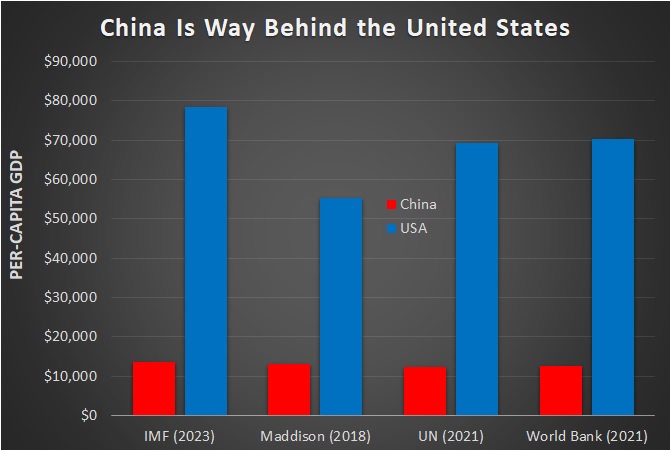








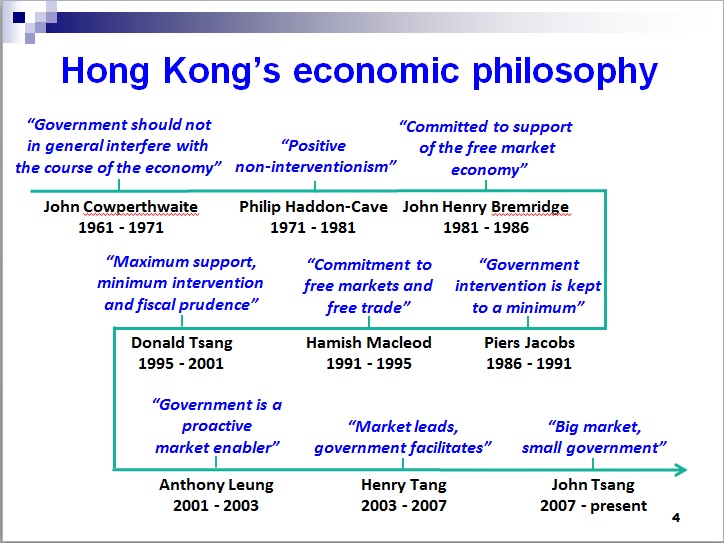


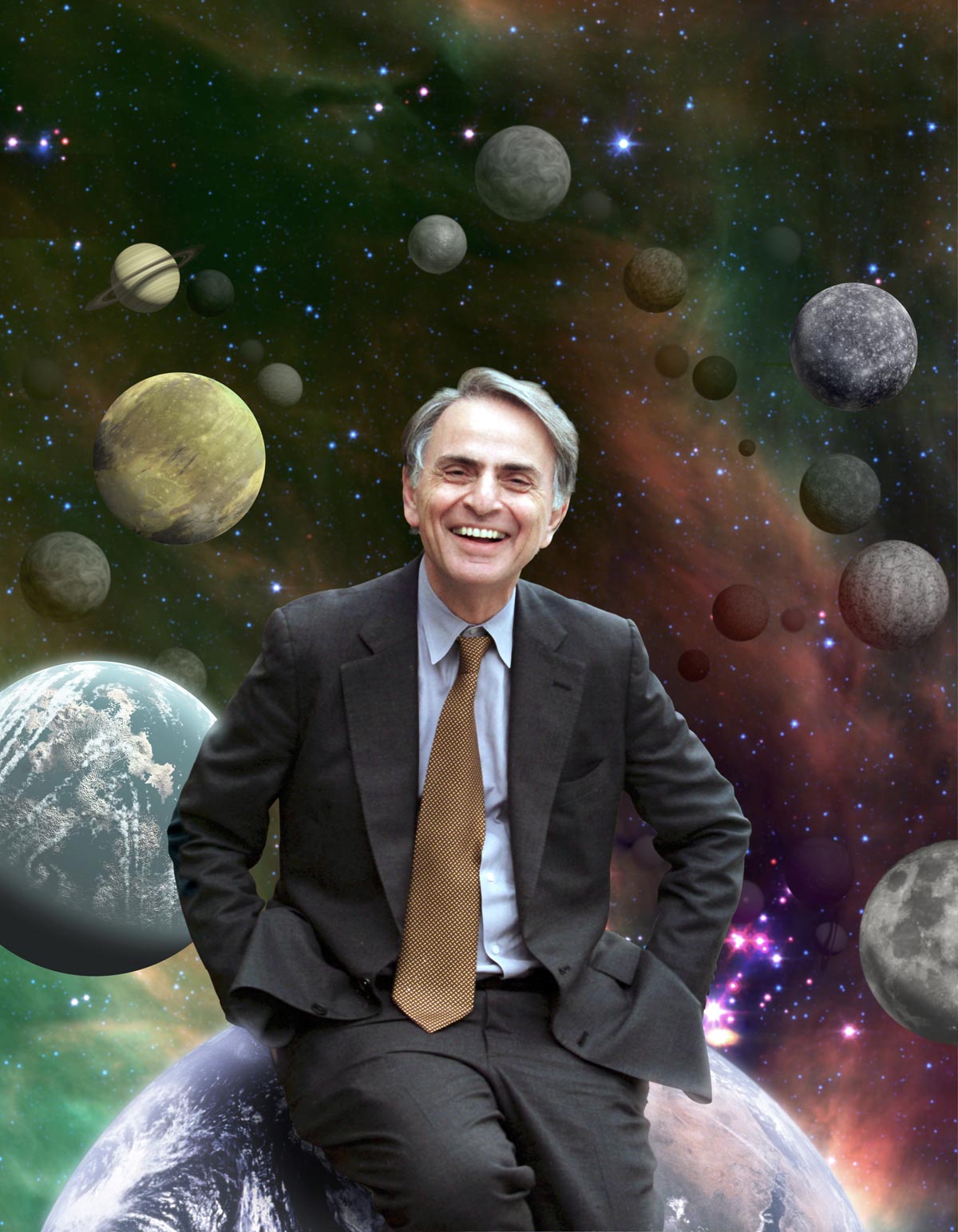 Carl Sagan. Credit: NASA












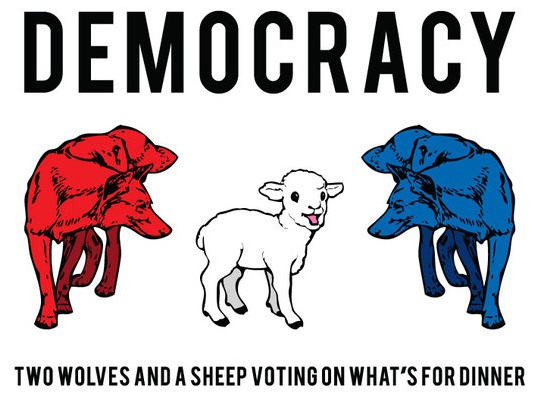









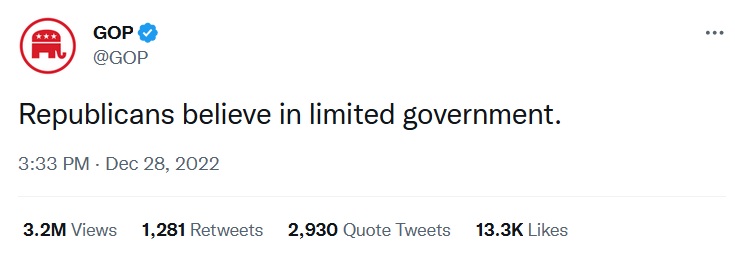

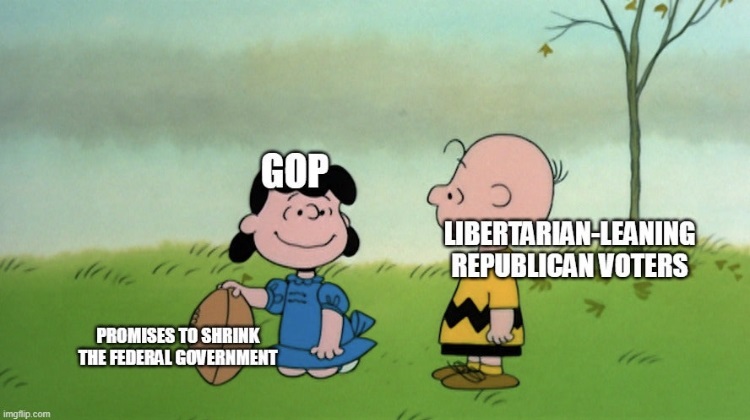
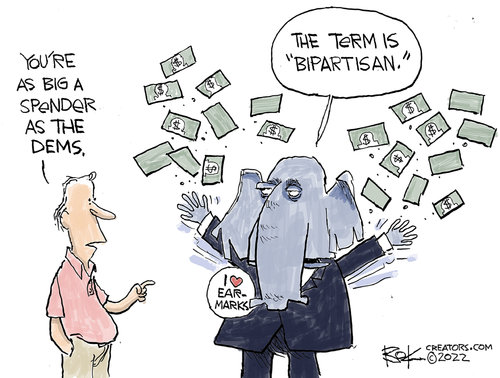


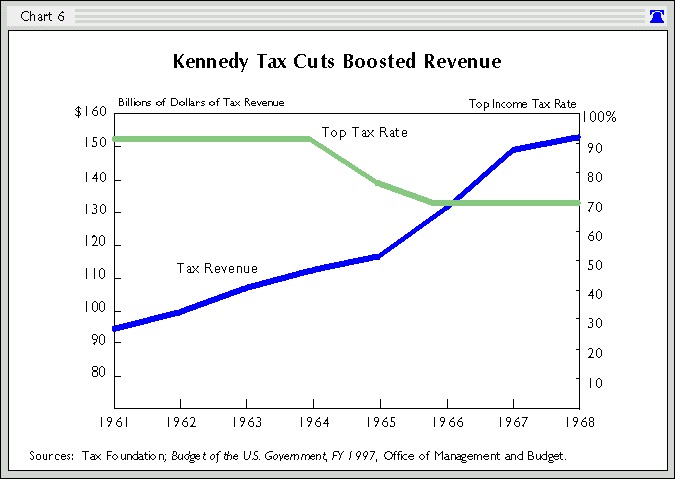
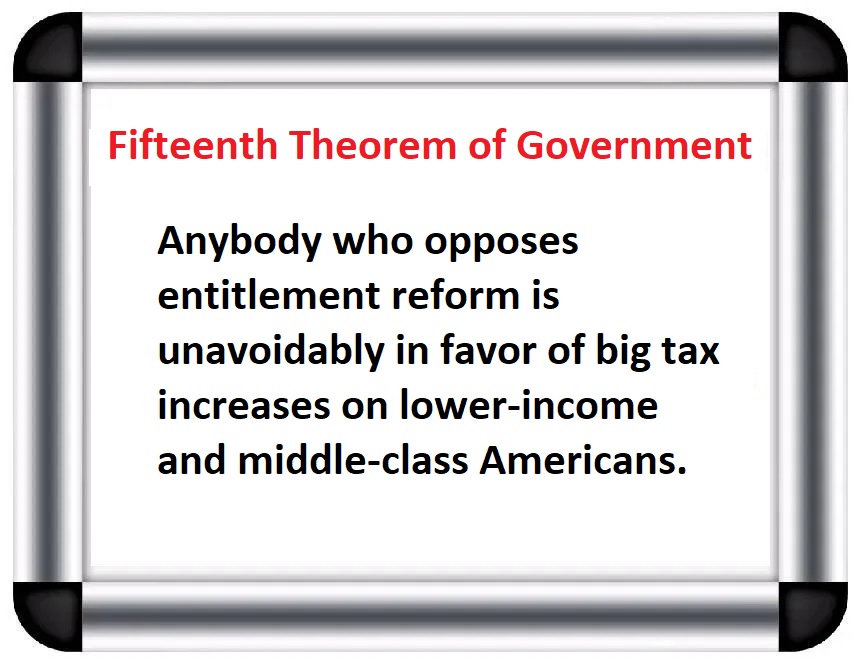



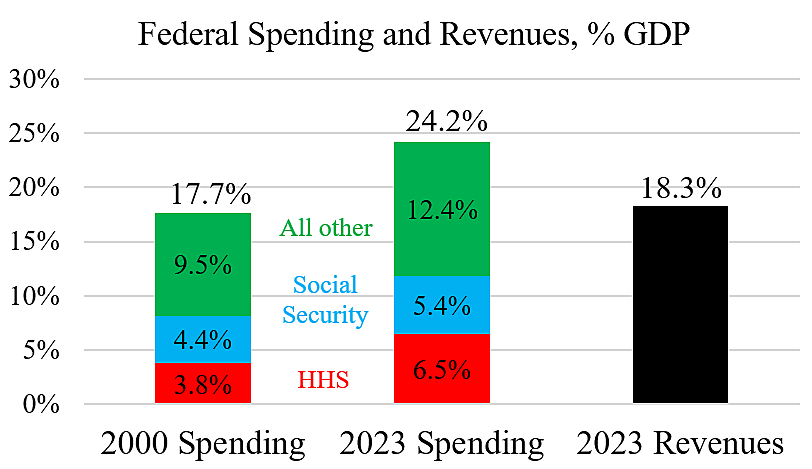
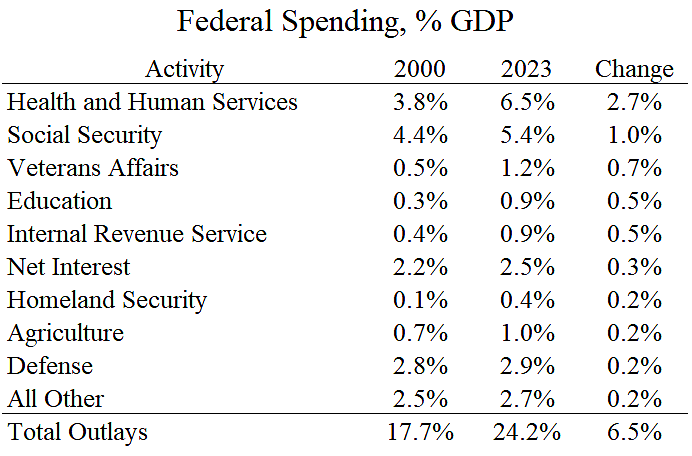




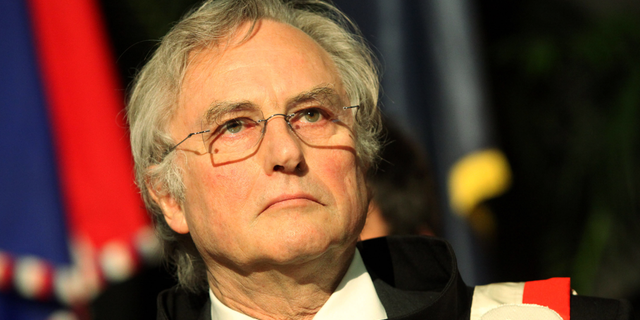



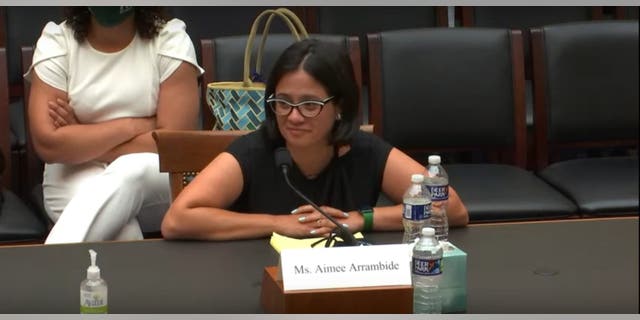





 The Daily Hatch
