Category Archives: Atheists Confronted

RESPONDING TO HARRY KROTO’S BRILLIANT RENOWNED ACADEMICS!! Part 92 Colin Blakemore, neurobiologist, University of London, “I believe that I am the sum total of all the causal influences on me at the moment”

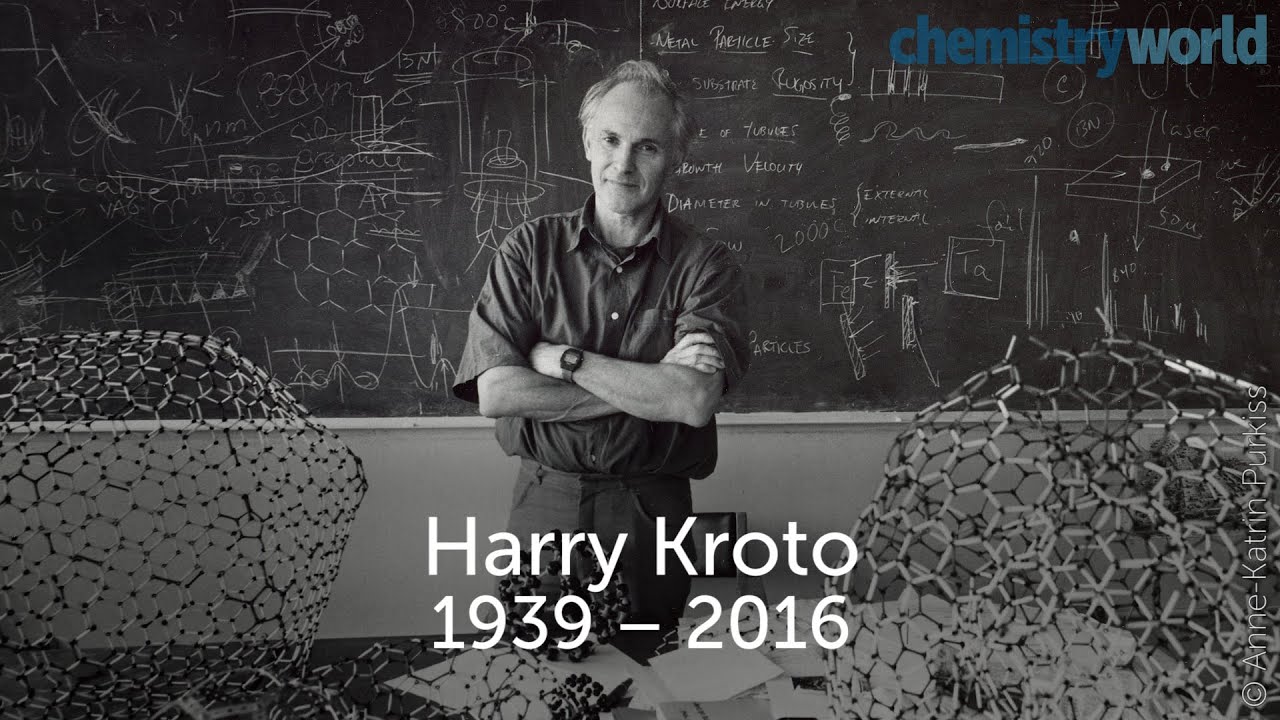
On November 21, 2014 I received a letter from Nobel Laureate Harry Kroto and it said:

…Please click on this URL http://vimeo.com/26991975

and you will hear what far smarter people than I have to say on this matter. I agree with them.

Harry Kroto

I have attempted to respond to all of Dr. Kroto’s friends arguments and I have posted my responses one per week for over a year now. Here are some of my earlier posts:

Arif Ahmed, Sir David AttenboroughMark Balaguer, Horace Barlow, Michael BatePatricia ChurchlandAaron CiechanoverNoam Chomsky,Alan DershowitzHubert Dreyfus, Bart Ehrman, Stephan FeuchtwangDavid Friend,  Riccardo GiacconiIvar Giaever , Roy GlauberRebecca GoldsteinDavid J. Gross,  Brian Greene, Susan GreenfieldStephen F Gudeman,  Alan Guth, Jonathan HaidtTheodor W. Hänsch, Brian Harrison,  Hermann HauserRoald Hoffmann,  Bruce HoodHerbert Huppert,  Gareth Stedman Jones, Steve JonesShelly KaganMichio Kaku,  Stuart Kauffman,  Lawrence KraussHarry Kroto, George LakoffElizabeth Loftus,  Alan MacfarlanePeter MillicanMarvin MinskyLeonard Mlodinow,  Yujin NagasawaAlva NoeDouglas Osheroff,  Jonathan Parry,  Saul PerlmutterHerman Philipse,  Carolyn PorcoRobert M. PriceLisa RandallLord Martin Rees,  Oliver Sacks, John SearleMarcus du SautoySimon SchafferJ. L. Schellenberg,   Lee Silver Peter Singer,  Walter Sinnott-ArmstrongRonald de Sousa, Victor StengerBarry Supple,   Leonard Susskind, Raymond TallisNeil deGrasse Tyson,  .Alexander Vilenkin, Sir John WalkerFrank WilczekSteven Weinberg, and  Lewis Wolpert,

Colin Blakemore

From Wikipedia, the free encyclopedia
Sir Colin Blakemore
FRS FMedSci
Blakemore.jpg

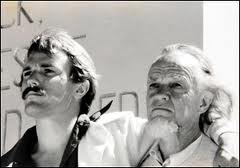
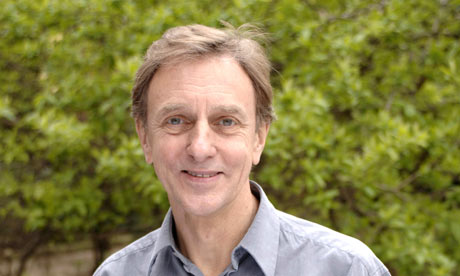
Blakemore photographed in London in 2012
Born 1 June 1944 (age 70)
Stratford-upon-Avon,Warwickshire, England
Fields Neurobiology, Ophthalmology
Institutions University of Cambridge
University of Oxford
University of Warwick
Duke University and National University of Singapore Graduate Medical School
School of Advanced Study,University of London
Alma mater Corpus Christi College,University of Cambridge
University of California, Berkeley
Notable awards Robert Bing Prize (Swiss Academy of Medical Sciences), Prix du Docteur Robert Netter (Académie Nationale de Médecine, France), Cairns Memorial Medal, Michael Faraday Prize (Royal Society), Osler Medal (University of Oxford), Ellison-Cliffe Medal, Alcon Research Institute Award, Charter Award (Society of Biology, Baly Gold Medal (Royal College of Physicians), Edinburgh Medal, Science Educator Award (Society for Neuroscience), Harveian Oration(Royal College of Physicians),Ferrier Award (Royal Society),Friendship Award (People’s Republic of China), Ralph W. Gerard Award (Society for Neuroscience)

Sir Colin Brian Blakemore, FRSFMedSci (born 1 June 1944[1]), is a British neurobiologist, specialising in vision and the development of the brain, who is Professor of Neuroscience and Philosophy in theSchool of Advanced Study, University of London and Emeritus Professor of Neuroscience at the University of Oxford. He was formerly Chief Executive of the British Medical Research Council (MRC).[2][3][4] He is best known to the public as a communicator of science but also as the target of a long-running animal rights campaign. According to The Observer, he has been both “one of the most powerful scientists in theUK” and “a hate figure for the animal rights movement”.[5]

In  the first video below in the 5th clip in this series are his words and  my response is below them. 

50 Renowned Academics Speaking About God (Part 1)

Another 50 Renowned Academics Speaking About God (Part 2)

A Further 50 Renowned Academics Speaking About God (Part 3)

________

Below is my response to Dr. Blakemore’s quote:

April 13, 2016

Professor Colin Blakemore, Institute of Philosophy, University of London,

Dear Professor Blakemore,

In the You Tube video “A Further 50 Renowned Academics Speaking About God (Part 1),” you asserted::

I believe that I am the sum total of all the causal influences on me at the moment and that is not a trivial issue. If it [weren’t] true we would have to abandon everything that we believe about the causal universe, about one event causing another, by all events having antecedent causes. And say that human beings are set aside from the rest of the physical world and yet we know we’re made up of the bits and stuff that the rest of the world is made up of. All the molecules in you were once upon a time were in a star somewhere and they’ve ended up in you by chance. So why not believe that we could also give an account of how those molecules working inside them produce their actions and produce this curious impression that we have of the sense of self and choice as if there’s this kind of helmsmen inside there really deciding absolutely what they’re going to do irrespective of what the world tells them.

You are a humanist and a proponent of determinism.    First, does your view of secular humanism and science have a way to come up with optimism and values while embracing the materialistic naturalistic view? Second, you are a defender of DETERMINISM in your statement above.

Let me start with your views on humanism.  I know that you are active in the  BRITISH HUMANIST ASSOCIATION. H. J. Blackham was the founder of the BRITISH HUMANIST ASSOCIATION and he asserted:

On humanist assumptions, life leads to nothing, and every pretense that it does not is a deceit. If there is a bridge over a gorge which spans only half the distance and ends in mid-air, and if the bridge is crowded with human beings pressing on, one after the other they fall into the abyss. The bridge leads nowhere, and those who are pressing forward to cross it are going nowhere….It does not matter where they think they are going, what preparations for the journey they may have made, how much they may be enjoying it all. The objection merely points out objectively that such a situation is a model of futility“( H. J. Blackham, et al., Objections to Humanism (Riverside, Connecticut: Greenwood Press, 1967).

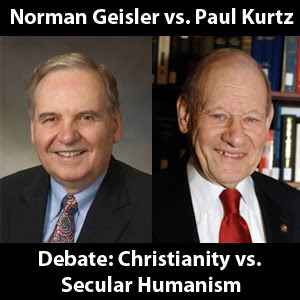
On John Ankerberg’s show in 1986 there was a debate between  Dr. Paul Kurtz, and Dr. Norman Geisler and when part of the above quote was read, Dr. Kurtz responded:

I think you may be quoting Blackham out of context because I’ve heard Blackham speak, and read much of what he said, but Blackham has argued continuously that life is full of meaning;

XXXXXXXXXXXXXXXXX
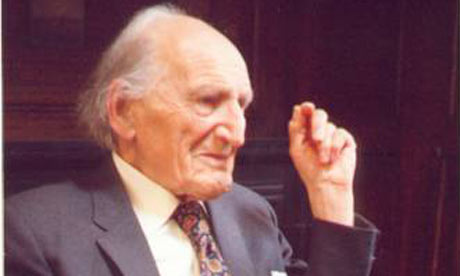
Harold J. Blackham (1903-2009)
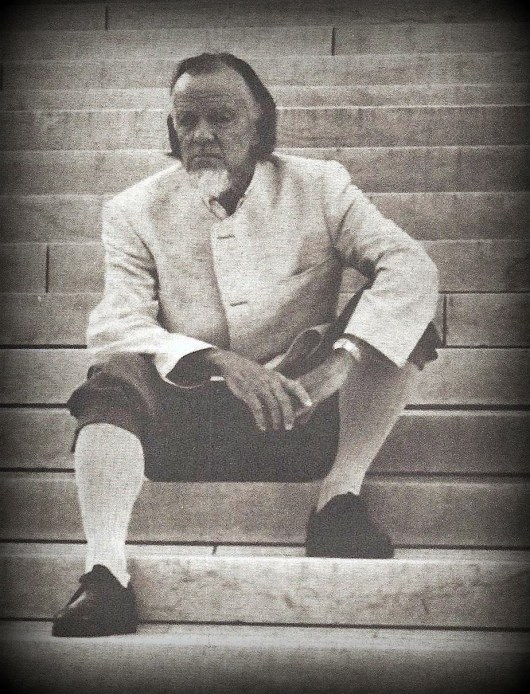
Francis Schaeffer (1912-1984)


With that in mind I wanted to ask you what  does the BRITISH HUMANIST ASSOCIATION have to offer in the area of meaning and values? Francis Schaeffer two months before he died said if he was talking to a gentleman he was sitting next to on an airplane about Christ he wouldn’t start off quoting Bible verses. Schaeffer asserted:

I would go back rather to their dilemma if they hold the modern worldview of the final reality only being energy, etc., I would start with that. I would begin as I stress in the book THE GOD WHO IS THERE about their own [humanist] prophets who really show where their view goes. For instance, Jacques Monod, Nobel Prize winner from France, in his book NECESSITY AND CHANCE said there is no way to tell the OUGHT from the IS. In other words, you live in a totally silent universe. 

The men like Monod and Sartre or whoever the man might know that is his [humanist] prophet and they point out quite properly and conclusively what life is like, not just that there is no meaningfulness in life but everyone according to modern man is just living out some kind of game plan. It may be knocking 1/10th of a second off a downhill ski run or making one more million dollars. But all you are doing is making a game plan within the mix of a meaningless situation. WOODY ALLEN exploits this very strongly in his films. He really lives it. I feel for that man, and he has expressed it so thoroughly in ANNIE HALL and MANHATTAN and so on.

According to the Humanist worldview Jacques Monod the universe is silent about values and therefore his good friend Woody Allendemonstrated this very fact so well in his 1989 movie CRIMES AND MISDEMEANORS. In other words, if we can’t get our values from the Bible then  the answer is MIGHT MAKES RIGHT!!!!

I CHALLENGE YOU TO TAKE 90 MINUTES AND WATCH THE MOVIE “CRIMES AND MISDEMEANORS” AND THEN ANSWER THE QUESTION: “What reason is there that Judah should not have his mistress eliminated if there is no God and afterlife of judgment and rewards?”

King Solomon closed the Book of Ecclesiastes (Richard Dawkins’ favorite Book of the Bible) with these words, “The end of the matter; all has been heard. Fear God and keep his commandments, for this is the whole duty of man. For God will bring every deed into judgment, with[d] every secret thing, whether good or evil.” With that in mind I have enclosed a short booklet called THIS WAS YOUR LIFE!

Now to the second point concerning DETERMINISM. I just finished reading the online addition of the book Darwin, Francis ed. 1892. Charles Darwin: his life told in an autobiographical chapter, and in a selected series of his published letters [abridged edition]. London: John Murray. There are several points that Charles Darwin makes in this book that were very wise, honest, logical, shocking and some that were not so wise. The Christian Philosopher Francis Schaeffer once said of Darwin’s writings, “Darwin in his autobiography and in his letters showed that all through his life he never really came to a quietness concerning the possibility that chance really explained the situation of the biological world. You will find there is much material on this [from Darwin] extended over many many years that constantly he was wrestling with this problem.”

This quote at the beginning of this letter from you made me think of you when I read the book Charles Darwin: his life told in an autobiographical chapter, and in a selected series of his published letters because of what Darwin said the phrase MAN MUST DO HIS DUTY. I am going to quote some of Charles Darwin’s own words and then include the comments of Francis Schaeffer on those words. I have also enclosed a CD with two messages from Adrian Rogers and Bill Elliff concerning Darwinism.

Darwin, C. R. to Doedes, N. D.2 Apr 1873

I am sure you will excuse my writing at length, when I tell you that I have long been much out of health, and am now staying away from my home for rest.It is impossible to answer your question briefly; and I am not sure that I could do so, even if I wrote at some length. But I may say that the impossibility of conceiving that this grand and wondrous universe, with our conscious selves, arose through chance, seems to me the chief argument for the existence of God; but whether this is an argument of real value, I have never been able to decide…….Nor can I overlook the difficulty from the immense amount of suffering through the world. I am, also, induced to defer to a certain extent to the judgment of the many able men who have fully believed in God; but here again I see how poor an argument this is. The safest conclusion seems to me that the whole subject is beyond the scope of man’s intellect;but man can do his duty.”

Francis Schaeffer commented:

What he is saying is that at this point I have no answer. You find Darwin already in a modern hell. On his own position ruling out an answer but yet not being able to live without an answer.  What he (Darwin) is saying is that at this point I have no answer, but the interesting thing is he puts a semicolon after that and then says, “but man can do his duty.” Darwin understands, he is a brilliant man,  what he has said undercuts all duty and all morals. So he adds as a faith sentence, “but man can do his duty.” It doesn’t fit really, but he adds it because he sees that he must say this because otherwise what happens to man? You can switch on further down the road and Darwin would be appalled to see where his own position has been taken, through Freud and Deterministic psychology. Modern Man has a dilemma because the word “duty” doesn’t have a meaning anymore. (Determinism: The doctrine that human action is not free, but results from such causes as psychological and chemical makeup which render free-will an illusion.)

You will remember the thing I have quoted to you about Richard Speck and the psychologists who would stand in the evolutionary stream of Freud. Let me read to you from Newsweek September 25, 1967, a review of the book by Marvin Ziporyn BORN TO RAISE HELL interestingly enough printed by Groth Press, which is this psychologist’s analysis of Richard Speck in Chicago who killed these nurses in Chicago. It runs like this:

Ziporyn who lost his post at Chicago for publishing his work with Speck, diagnosed his patient as a man unable to control himself as a result of his own medical and emotional past. You weren’t any more responsible for what you did than a man is responsible for sneezing. he said to Speck at one point.  That is Zoporyn’s biggest problem which is convincing Speck there is no difference in a sneeze and eight murders. Ziporyn admits he is a strict determinist and he is an adherent to Freud’s dictum that biology is destiny. He advocates rehabilitation. Determinists strive to change or regulate conditions rather than men but to avoid such tragedies as Richard Speck the scope of change it requires staggers the imagination.

The bigger dilemma is that man disappears. Who is hurt? The eight nurses are hurt, including their pain, terror and their sexual violation and it becomes nothing, zero in this type of analysis. Society has a terrible problem because there is no right and wrong in society, and that will deal with Darwin’s words “but man can do his duty” because those who take Darwin’s theory and extend it have eradicated the possibility of the word “duty.” …Darwin I think senses this but he doesn’t know how to handle it.

In Chapter 7, “THE MAN WITHOUT THE BIBLE,” of the book DEATH IN THE CITY, Schaeffer writes concerning Richard Speck and “Determinism”: 

This view raises three serious questions. First of all, what about the nurses who were killed, some of them in a very violent fashion? These must then be written off. With this kind of explanation they become zero. Second, what about society? Society and the problems of ordering it also are written off. In such a situation, order in society is merely like a big machine dealing on a machine level with little machines. Third, what about Speck himself? The psychologist’s explanation does the most harm to him, for as a man he disappears. He simply becomes a flow of consciousness. He, too, becomes a zero.

In our generation there is a constant tendency to explain sin lightly and think that such an explanation is more humanitarian. But it is not. It decreases the importance and significance of man. Consequently, we can be glad for the sake of man that the Bible’s explanation is so emphatic.
Paul repeats it in verse 25: “They exchanged the truth about God for a lie and worshipped and served the creature [that which has been created] rather than the Creator.” This is the second of the three repetitions.

Paul was thinking of the gods of silver and stone and also the worship of the universe or any part of it. He says men have made such gods rather than worshipping the living God. Even on the basis of what they know themselves to be, they should have known better. Isaiah said 700 years before, ‘Aren’t you silly to make gods that are less than yourself. You must carry them; they don’t carry you. Now isn’t it silly to make an integration point that is less than you yourself are.’ Paul used precisely the same argument on Mars Hill. Men who refuse to bow before God take the facts concerning the universe and man, push these facts through their own presuppositional grid, fail to carry their thinking to a reasonable conclusion, and so are faced with an overwhelming lie. Idols of stone are obvious lies because they are less than man, but so are non-Christian presuppositions such as the idea of the total uniformity of natural cause and effect in a closed system, the final explanation of the impersonal plus time plus chance, which ultimately makes man only a machine.

__________________

Below is the larger biblical passage of scripture that Schaeffer was referring to in Chapter 7, “THE MAN WITHOUT THE BIBLE,” of the book DEATH IN THE CITY:

Romans 1:18-32New American Standard Bible (NASB)

Unbelief and Its Consequences

18 For the wrath of God is revealed from heaven against all ungodliness and unrighteousness of men who suppress the truth in unrighteousness, 19 becausethat which is known about God is evident within them; for God made it evident to them. 20 For since the creation of the world His invisible attributes, His eternal power and divine nature, have been clearly seen, being understood through what has been made, so that they are without excuse. 21 For even though they knew God, they did not honor Him as God or give thanks, but they became futile in their speculations, and their foolish heart was darkened.22 Professing to be wise, they became fools, 23 and exchanged the glory of the incorruptible God for an image in the form of corruptible man and of birds and four-footed animals and crawling creatures.

24 Therefore God gave them over in the lusts of their hearts to impurity, so that their bodies would be dishonored among them. 25 For they exchanged the truth of God for a lie, and worshiped and served the creature rather than the Creator, who is blessed forever. Amen.

26 For this reason God gave them over to degrading passions; for their women exchanged the natural function for that which is unnatural, 27 and in the same way also the men abandoned the natural function of the woman and burned in their desire toward one another, men with men committing indecent acts and receiving in their own persons the due penalty of their error.

28 And just as they did not see fit to acknowledge God any longer, God gave them over to a depraved mind, to do those things which are not proper,29 being filled with all unrighteousness, wickedness, greed, evil; full of envy, murder, strife, deceit, malice; they are gossips, 30 slanderers, haters of God, insolent, arrogant, boastful, inventors of evil, disobedient to parents, 31 without understanding, untrustworthy, unloving, unmerciful; 32 and although they know the ordinance of God, that those who practice such things are worthy of death, they not only do the same, but also give hearty approval to those who practice them.

_____________________________________

Why is determinism dangerous? Francis Schaeffer in his book HOW SHOULD WE THEN LIVE? tells why it is dangerous:

Modern determinists have not presented only abstract theories.  Rather, there have been two practical results.  First, and most important, as their ideas about what people are have been increasingly accepted, people consciously or unconsciously have opened themselves to being treated as machines and treating other people as machines.  Second, each theory of determinism has carried with it a method of manipulation.  So even though many — even most — people may reject the concept that man is totally a product of psychological, sociological, or chemical conditioning, manipulation by these methods is still very much a live possibility.  In fact, these techniques are all at the disposal of of authoritation states, and they are in some degree already being used.

Paul Chopan has rightly noted:

Naturalism takes for granted the following tenets:

  • Nature is all there is.
  • All reality is comprised of or rooted in matter.
  • There is no supernatural—no Creator, no miracles, no souls,
    no angels, no life after death.
  • Science becomes the only (or best) means of knowledge.

__________________

What is the answer to the problem of DETERMINISM? It is found in the Biblical view that the Bible is true and there was a place named THE GARDEN OF EDEN and the fact that God did create this world and it was not created by impersonal chance plus time. 

Francis A. Schaeffer on Human Free WillTHE GOD WHO IS THERE, (DOWNERS GROVE, IL: INTERVARSITY PRESS, 1968), P 131.

The historic Christian position is that man’s dilemma has a moral cause. God, being nondetermined, created man as a nondetermined person. This is a difficult idea for anyone thinking in twentieth-century terms because most twentieth-century thinking sees man as determined. He is determined either by chemical factors, as the Marquis de Sade held and Francis Crick is trying to prove, or by psychological factors, as Freud and others have suggested, or by sociological factors, such as B.F. Skinner holds. In these cases, or as a result of a fusion of them, man is considered to be programmed. If this is the case, then man is not the tremendous thing the Bible says he is, made in the image of God as a personality who can make a free first choice. Because God created a true universe outside of himself (or as an extension of his essence), there is a true history which exists, man as created in God’s image is therefore a significant man in a significant history, who can choose to obey the commandments of God and love him, or revolt against him.

THE CRUX OF THE ISSUE IS DID MAN HAVE A CHOICE AND IS MAN RESPONSIBLE FOR HIS CHOICES?

REMEMBER THAT GREAT PASSAGE FROM ROMANS CHAPTER ONE THAT I QUOTED EARLIER IN THIS LETTER AND DARWIN’S WORDS IN THE APRIL 2, 1873 LETTER TO  Doedes, N. D.?

Darwin noted, It is impossible to answer your question briefly; and I am not sure that I could do so, even if I wrote at some length. But I may say that the impossibility of conceiving that this grand and wondrous universe, with our conscious selves, arose through chance, seems to me the chief argument for the existence of God; but whether this is an argument of real value, I have never been able to decide……”

Franicis Schaeffer observed: 

So he sees here exactly the same that I would labor and what Paul gives in Romans chapter one, and that is first this tremendous universe [and it’s form] and the second thing, the mannishness of man and the concept of this arising from chance is very difficult for him to come to accept… You will notice that he divides it into the same exact two points that Paul does in Romans chapter one into and that Carl Gustav Jung (1875-1961) will in the problem of existence, the external universe, and man and his consciousness. Paul points out there are these two steps that man is confronted with, what I would call two things in the real world. The universe and it’s form and I usually quote Jean Paul Sartre here, and Sartre says the basic philosophic problem is that something is there rather than nothing is there and I then I add at the point the very thing that Darwin feels and that is it isn’t a bare universe that is out there, it is an universe in a specific form. I always bring in Einstein and the uniformity of the form of the universe and that it is constructed as a well formulated word puzzle or you have Carl Gustav Jung who says two things cut across a man’s will that he can not truly be autonomous, the external world and what Carl Gustav Jung would call his “collected unconsciousness.” It is the thing that churns up out of man, the mannishness of man. Darwin understood way back here this is a real problem. So he says “the impossibility of conceiving that this grand and wondrous  universe,” part one, the real world, the external universe, and part two “with our conscious selves arose through chance” and then he goes on and says this is not “an argument of real value.” 

Francis Schaeffer noted that in Darwin’s 1876 Autobiography that Darwin he is going to set forth two arguments for God in this and again you will find when he comes to the end of this that he is in tremendous tension. Darwin wrote, 

At the present day the most usual argument for the existence of an intelligent God is drawn from the deep inward conviction and feelings which are experienced by most persons.Formerly I was led by feelings such as those just referred to (although I do not think that the religious sentiment was ever strongly developed in me), to the firm conviction of the existence of God and of the immortality of the soul. In my Journal I wrote that whilst standing in the midst of the grandeur of a Brazilian forest, ‘it is not possible to give an adequate idea of the higher feelings of wonder, admiration, and devotion which fill and elevate the mind.’ I well remember my conviction that there is more in man than the mere breath of his body; but now the grandest scenes would not cause any such convictions and feelings to rise in my mind. It may be truly said that I am like a man who has become colour-blind.

Francis Schaeffer remarked:

Now Darwin says when I look back and when I look at nature I came to the conclusion that man can not be just a fly! But now Darwin has moved from being a younger man to an older man and he has allowed his presuppositions to enter in to block his logic. These things at the end of his life he had no intellectual answer for. To block them out in favor of his theory. Remember the letter of his that said he had lost all aesthetic senses when he had got older and he had become a clod himself. Now interesting he says just the same thing, but not in relation to the arts, namely music, pictures, etc, but to nature itself. Darwin said, “But now the grandest scenes would not cause any such convictions  and feelings to rise in my mind. It may be truly said that I am like a man who has become colour-blind…” So now you see that Darwin’s presuppositions have not only robbed him of the beauty of man’s creation in art, but now the universe. He can’t look at it now and see the beauty. The reason he can’t see the beauty is for a very, very , very simple reason: THE BEAUTY DRIVES HIM TO DISTRACTION. THIS IS WHERE MODERN MAN IS AND IT IS HELL. The art is hell because it reminds him of man and how great man is, and where does it fit in his system? It doesn’t. When he looks at nature and it’s beauty he is driven to the same distraction and so consequently you find what has built up inside him is a real death, not  only the beauty of the artistic but the beauty of nature. He has no answer in his logic and he is left in tension.  He dies and has become less than human because these two great things (such as any kind of art and the beauty of  nature) that would make him human  stand against his theory.

________________________

Can you still look at God’s beautiful creation and say that it just appears to be the work of an intellect? If so then you like Darwin  can say, “I am like a man who has become colour-blind.”

_______________________________________

IF WE ARE LEFT WITH JUST THE MACHINE THEN WHAT IS THE FINAL CONCLUSION IF THERE WAS NO PERSONAL GOD THAT CREATED US? I sent you a CD that starts off with the song DUST IN THE WIND by Kerry Livgren of the group KANSAS which was a hit song in 1978 when it rose to #6 on the charts because so many people connected with the message of the song. It included these words, “All we do, crumbles to the ground though we refuse to see, Dust in the Wind, All we are is dust in the wind, Don’t hang on, Nothing lasts forever but the Earth and Sky, It slips away, And all your money won’t another minute buy.”

Kerry Livgren himself said that he wrote the song because he saw where man was without a personal God in the picture. Solomon pointed out in the Book of Ecclesiastes that those who believe that God doesn’t exist must accept three things. FIRST, death is the end and SECOND, chance and time are the only guiding forces in this life.  FINALLY, power reigns in this life and the scales are never balanced. The Christian can  face death and also confront the world knowing that it is not determined by chance and time alone and finally there is a judge who will balance the scales.

Both Kerry Livgren and the bass player Dave Hope of Kansas became Christians eventually. Kerry Livgren first tried Eastern Religions and Dave Hope had to come out of a heavy drug addiction. I was shocked and elated to see their personal testimony on The 700 Club in 1981 and that same  interview can be seen on You Tube today. Livgren lives in Topeka, Kansas today where he teaches “Diggers,” a Sunday school class at Topeka Bible ChurchDAVE HOPE is the head of Worship, Evangelism and Outreach at Immanuel Anglican Church in Destin, Florida.

The answer to find meaning in life is found in putting your faith and trust in Jesus Christ. The Bible is true from cover to cover and can be trusted.

Thank you again for your time and I know how busy you are.

Everette Hatcher, everettehatcher@gmail.com, http://www.thedailyhatch.org, cell ph 501-920-5733, Box 23416, LittleRock, AR 72221, United States

Is the Bible historically accurate? Here are some of the posts I have done in the past on the subject: 1. The Babylonian Chronicleof Nebuchadnezzars Siege of Jerusalem2. Hezekiah’s Siloam Tunnel Inscription. 3. Taylor Prism (Sennacherib Hexagonal Prism)4. Biblical Cities Attested Archaeologically. 5. The Discovery of the Hittites6.Shishak Smiting His Captives7. Moabite Stone8Black Obelisk of Shalmaneser III9A Verification of places in Gospel of John and Book of Acts., 9B Discovery of Ebla Tablets10. Cyrus Cylinder11. Puru “The lot of Yahali” 9th Century B.C.E.12. The Uzziah Tablet Inscription13. The Pilate Inscription14. Caiaphas Ossuary14 B Pontius Pilate Part 214c. Three greatest American Archaeologists moved to accept Bible’s accuracy through archaeology.

Jacques Monod (1910-1976), Nobel Prize in Physiology or Medicine (1965)

CRIMES AND MISDEMEANORS was written and directed by Woody Allen

Judah has his mistress eliminated through his brother’s underworld connections

Anjelica Huston

Colin Blakemore pictured below:
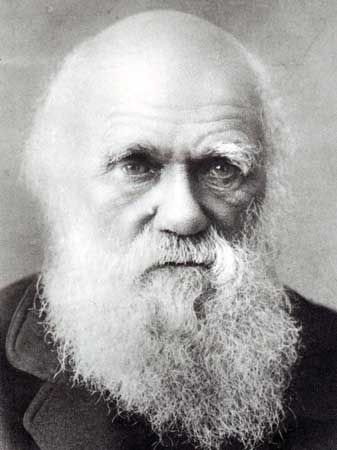
Charles Darwin pictured below:

 :

Richard Speck

Ladies Richard Speck murdered below:

Kerry Livgren, author of the song DUST IN THE WIND seen below:

The group KANSAS BELOW:

_

You can hear DAVE HOPE and Kerry Livgren’s stories from this youtube link:

(part 1 ten minutes)

(part 2 ten minutes)

Kansas – Dust in the Wind (Official Video)

Uploaded on Nov 7, 2009

Pre-Order Miracles Out of Nowhere now at http://www.miraclesoutofnowhere.com

About the film:
In 1973, six guys in a local band from America’s heartland began a journey that surpassed even their own wildest expectations, by achieving worldwide superstardom… watch the story unfold as the incredible story of the band KANSAS is told for the first time in the DVD Miracles Out of Nowhere.

_____________________________

Adrian Rogers on Darwinism

Related posts:

FRANCIS SCHAEFFER ANALYZES ART AND CULTURE Part 53 THE BEATLES (Part E, Stg. Pepper’s and John Lennon’s search in 1967 for truth was through drugs, money, laughter, etc & similar to King Solomon’s, LOTS OF PICTURES OF JOHN AND CYNTHIA) (Feature on artist Yoko Ono)

The John Lennon and the Beatles really were on a long search for meaning and fulfillment in their lives  just like King Solomon did in the Book of Ecclesiastes. Solomon looked into learning (1:12-18, 2:12-17), laughter, ladies, luxuries, and liquor (2:1-2, 8, 10, 11), and labor (2:4-6, 18-20). He fount that without God in the picture all […]

FRANCIS SCHAEFFER ANALYZES ART AND CULTURE Part 52 THE BEATLES (Part D, There is evidence that the Beatles may have been exposed to Francis Schaeffer!!!) (Feature on artist Anna Margaret Rose Freeman )

______________   George Harrison Swears & Insults Paul and Yoko Lucy in the Sky with Diamonds- The Beatles The Beatles:   I have dedicated several posts to this series on the Beatles and I don’t know when this series will end because Francis Schaeffer spent a lot of time listening to the Beatles and talking […]

FRANCIS SCHAEFFER ANALYZES ART AND CULTURE Part 51 THE BEATLES (Part C, List of those on cover of Stg.Pepper’s ) (Feature on artist Raqib Shaw )

  The Beatles in a press conference after their Return from the USA Uploaded on Nov 29, 2010 The Beatles in a press conference after their Return from the USA. The Beatles:   I have dedicated several posts to this series on the Beatles and I don’t know when this series will end because Francis […]

FRANCIS SCHAEFFER ANALYZES ART AND CULTURE Part 50 THE BEATLES (Part B, The Psychedelic Music of the Beatles) (Feature on artist Peter Blake )

__________________   Beatles 1966 Last interview I have dedicated several posts to this series on the Beatles and I don’t know when this series will end because Francis Schaeffer spent a lot of time listening to the Beatles and talking and writing about them and their impact on the culture of the 1960’s. In this […]

FRANCIS SCHAEFFER ANALYZES ART AND CULTURE Part 49 THE BEATLES (Part A, The Meaning of Stg. Pepper’s Cover) (Feature on artist Mika Tajima)

_______________ The Beatles documentary || A Long and Winding Road || Episode 5 (This video discusses Stg. Pepper’s creation I have dedicated several posts to this series on the Beatles and I don’t know when this series will end because Francis Schaeffer spent a lot of time listening to the Beatles and talking and writing about […]

FRANCIS SCHAEFFER ANALYZES ART AND CULTURE PART 48 “BLOW UP” by Michelangelo Antonioni makes Philosophic Statement (Feature on artist Nancy Holt)

_______________ Francis Schaeffer pictured below: _____________________ I have included the 27 minute  episode THE AGE OF NONREASON by Francis Schaeffer. In that video Schaeffer noted,  ” Sergeant Pepper’s Lonely Hearts Club Band…for a time it became the rallying cry for young people throughout the world. It expressed the essence of their lives, thoughts and their feelings.” How Should […]

FRANCIS SCHAEFFER ANALYZES ART AND CULTURE Part 47 Woody Allen and Professor Levy and the death of “Optimistic Humanism” from the movie CRIMES AND MISDEMEANORS Plus Charles Darwin’s comments too!!! (Feature on artist Rodney Graham)

Crimes and Misdemeanors: A Discussion: Part 1 ___________________________________ Today I will answer the simple question: IS IT POSSIBLE TO BE AN OPTIMISTIC SECULAR HUMANIST THAT DOES NOT BELIEVE IN GOD OR AN AFTERLIFE? This question has been around for a long time and you can go back to the 19th century and read this same […]

FRANCIS SCHAEFFER ANALYZES ART AND CULTURE PART 46 Friedrich Nietzsche (Featured artist is Thomas Schütte)

____________________________________ Francis Schaeffer pictured below: __________ Francis Schaeffer has written extensively on art and culture spanning the last 2000years and here are some posts I have done on this subject before : Francis Schaeffer’s “How should we then live?” Video and outline of episode 10 “Final Choices” , episode 9 “The Age of Personal Peace and Affluence”, episode 8 […]

FRANCIS SCHAEFFER ANALYZES ART AND CULTURE Part 45 Woody Allen “Reason is Dead” (Feature on artists Allora & Calzadilla )

Love and Death [Woody Allen] – What if there is no God? [PL] ___________ _______________ How Should We then Live Episode 7 small (Age of Nonreason) #02 How Should We Then Live? (Promo Clip) Dr. Francis Schaeffer 10 Worldview and Truth Two Minute Warning: How Then Should We Live?: Francis Schaeffer at 100 Francis Schaeffer […]

FRANCIS SCHAEFFER ANALYZES ART AND CULTURE Part 44 The Book of Genesis (Featured artist is Trey McCarley )

___________________________________ Francis Schaeffer pictured below: ____________________________ Francis Schaeffer “BASIS FOR HUMAN DIGNITY” Whatever…HTTHR Dr. Francis schaeffer – The flow of Materialism(from Part 4 of Whatever happened to human race?) Dr. Francis Schaeffer – The Biblical flow of Truth & History (intro) Francis Schaeffer – The Biblical Flow of History & Truth (1) Dr. Francis Schaeffer […]

FRANCIS SCHAEFFER ANALYZES ART AND CULTURE PART 125 Will Provine, Killer of the myth of Optimistic Humanism Part C (Featured artist is Gabby Zapata )

I actually tried to contact Dr. Provine twice and I sent him a link to a post I had done about him. Sadly he passed away last year. Will Provine did not believe in free will and he still believed it was possible to find a meaning for our short lives but ultimately there is no lasting meaning for anyone. That is why I wrote him and  emailed him because I wanted to encourage him to return to the faith of his parents  and of his youth. Below an evangelical named Denyse O’Leary comments on his friend Will Provine’s life and he states some of Provine’s nihilistic views. Below that I take it a step further and discuss why so many people turn to drugs when they come to the same conclusions that Provine did.

On the bottom of this post you will find two excellent articles on the outstanding artist Gabby Zapata who I featuring this  week.

William Provine, RIP: Noble in His Honesty

Evolution News & Views September 3, 2015 2:17 PM | 

William_B._Provine,_HSS_2008.jpg

William B. Provine, the Charles A. Alexander Professor of Biological Sciences at Cornell University, has died of cancer at the age of 73. Notwithstanding obvious and profound differences of opinion with us about science and what the evidence suggests about the origins and meaning of life, Dr. Provine was a courageous and clear-sighted interlocutor.

We admired him because, first, he was an interlocutor, with the daring to stand up and debate leading proponents of the theory of intelligent design including Phillip Johnson and Stephen Meyer. That is a measure of character and it is unfortunately rare among defenders of orthodox evolutionary theory.

Second and no less important, unlike many evolutionary spokesmen, he was willing to forthrightly articulate the philosophical implications of Darwinian theory. He said that “belief in modern evolution makes atheists of people” and “one can have a religious view that is compatible with evolution only if the religious view is indistinguishable from atheism.”

If life really did arise through a brute, purposeless, undirected, unplanned, and purely material process, a series of accidents, that lends support to a nihilistic worldview. In Provine’s perspective, it positively demands it.

Yet there was a kind of jauntiness to his despair. He said in a 1994 debate with Phil Johnson at Stanford University:

When you die, you’re not going to be surprised, because you’re going to be completely dead. Now if I find myself aware after I’m dead, I’m going to be really surprised! But at least I’m going to go to hell, where I won’t have all of those grinning preachers from Sunday morning listening.

Let me summarize my views on what modern evolutionary biology tells us loud and clear — and these are basically Darwin’s views. There are no gods, no purposes, and no goal-directed forces of any kind. There is no life after death. When I die, I am absolutely certain that I am going to be dead. That’s the end of me. There is no ultimate foundation for ethics, no ultimate meaning in life, and no free will for humans, either. What an unintelligible idea.

Christian humanism has a great deal going for it. It’s warm and kindly in many ways. That’s the good part. The bad part is that you have to suspend your rational mind. That part is really nasty. Atheistic humanism has the advantage of fitting natural minds trying to understand the world, but the disadvantage of very little cultural heritage — and that’s a real problem.

So the question is, can atheistic humanism offer us very much? Sure. It can give you intellectual satisfaction. I’m a heck of a lot more intellectually satisfied now that I don’t have to cling to the fairy tale that I believed when I was a kid. Life may have no ultimate meaning, but I sure think it can have lots of proximate meaning. Free will is not hard to give up, because it’s a horribly destructive idea to our society. Free will is what we use as an excuse to treat people like pieces of crap when they do something wrong in our society. We say to the person, “you did something wrong out of your free will, and therefore we have the justification for revenge all over your behind.” We put people in prison, turning them into lousier individuals than they ever were. This horrible system is based upon this idea of free will.

Since we know that we are not going to live after we die, there is no reward for suffering in this world. You live and you die. I’ve seen bumper stickers (very sexist ones, actually) that say “Life’s a bitch, and then you die.” Well, whatever life is, you’re going to die. So if you’re going to make things better for yourself or for those you care about, you had better become an activist while you’re still alive.

Finally, there is no reason whatsoever that ethics can’t be robust, even if there is no ultimate foundations for ethics. If you’re an atheist and know you’re going to die, what really counts is friendship — and that’s why I value Phil’s friendship so much.

No God, no free will, no real foundation for ethics. That about nails it. Such truth-telling is a nightmare for apologists who sell evolution to the general populace by denying its ultimate significance for the picture of man and his place in the universe.

You can read many moving tributes at his Facebook page, including from his wife, Gail Provine, who evokes his sweetness and gentleness: “Will, my love, I cannot tell you how thankful I am for our little infinity. You gave me a forever within the numbered days, and for that I am eternally grateful.”

We respected Dr. Provine for his virtues. We too will miss him. We wish to convey our sympathies and condolences to Mrs. Provine, his friends, students, and colleagues.

H/t: Denyse O’Leary.

Image credit: Ragesoss (Own work) [CC BY-SA 3.0 or GFDL], via Wikimedia Commons.

_______________________________________________________________

Denyse O’Leary summed up Dr. Provine very well with these words, “No God, no free will, no real foundation for ethics. That about nails it. Such truth-telling is a nightmare for apologists who sell evolution to the general populace by denying its ultimate significance for the picture of man and his place in the universe.”

Have you ever wondered why so many people turn to drugs?

“Sergeant Pepper’s Lonely Hearts Club Band, became the rallying cry for young people throughout the world. It expressed the essence of their lives, thoughts and their feelings…” Francis Schaeffer (1912-1984). We take a look today at how the Beatles were featured in Schaeffer’s film.

How Should We then Live Episode 7 small

On You Tube you can plug in HOW SHOULD WE THEN LIVE EPISODE 7 SMALL and watch the film that runs 28:35: 

The history of the nonchristian Philosophers up until the 18th century went like this:
Here is a circle which stands for what the unified and true knowledge of the universe is. The next man would say “No,” and cross out the circle. He then would say “Here is the circle.” Then the next man would say “No,”and cross out that circle. Then he would make his circle and the next man would cross it out and make his circle. This continued through the centuries. They never found the circle, but they optimistically thought someone would beginning with man himself and on the basis of man’s reasoning alone.
Then the endless rows of circles through the and the crossing out were broken and a drastic shift came because the humanist ideal had failed. Humanist man gave up his optimism for pessimism. He gave up the hope of an unified answer and this makes modern man who he is….Humanist man beginning only from himself has concluded that he is only a machine. Humanist man has no place for a personal God, but there is also no place for man’s significance as man and no place for love, no place for freedom.

Man is only a machine, but the men who hold this position could not and can not live like machines. If they could then modern man would not have his tensions either in his intellectual position or in his life, but he can’t. So they must leap away from reason to try to find something that gives meaning to their lives, to life itself, even though to do so they deny their reason.

Once this is done any type of thing could be put there. Because in the area of nonreason, reason gives no basis for a choice. This is the hallmark of modern man. How did it happen? It happened because proud humanist man, though he was finite, insisted in beginning only from himself and only from what he could learn and not from other knowledge, he did not succeed. Perhaps the best known of existentialist philosophers was Jean Paul Sartre. He used to spend much of his time here in Paris at the Les Deux Magots.

Sartre’s position is in the area of reason everything is absurd, but one can authenticate himself, that is give validity to his existence by an act of the will. WithSartre’s position one could equally help an old woman across the street or run her down.

Reason was not involved, and there was nothing to show the direction this authentication by an act of the will should take. But Sartre himself could live consistently with his own position. At a certain point he signed the Algerian Manifesto which declared that the Algerian war was a dirty war. This action meant that man could use his reason to decide that some things were right and some things were wrong and so he destroyed his own system.

Karl Jaspers, German  existentialist, tended to have the greatest impact on the thought and life form which followed existential thought.  According to him we may have some huge experience which gives us the hope that perhaps there is a meaning to life even though our reason tells us that life is absurd. He calls this a final experience. Martin Heidegger, was another  existential philosopher who said the answer was in the area of nonreason. The German philosopher said there is something he called “Angst,” a general feeling of anxiety one feels in the universe, this feeling, this mood of anxiety revealed existence and this imposes on us a call for decision out of  this mood comes meaning to life and to choice even against one’s reason, meaning which rests on nothing more than this vague feeling of anxiety so nebulous it doesn’t have a specific object. As Martin Heidegger grew older this view became too weak for him so he changed his position.

Martin Heidegger (1889-1976)

Existentialism as a form of philosophy has all but disappeared but more and more people are thinking this way even if they don’t know the name Existentialism. To them reason leads to pessimism so they try to find an answer in something totally separated from reason.

Aldous Huxley the English philosopher and writer proposed drugs as a solution. We should, he said, give healthy people drugs and they can then find truth inside their own heads. All that was left for Aldous Huxley and those who followed him was truth inside a person’s own head. With Huxley’s idea, what began with the existential philosophers – man’s individual subjectivity attempting to give order as well as meaning, in contrast to order being shaped by what is objective or external to oneself – came to its logical conclusion. Truth is in one’s own head. The ideal of objective truth was gone.

Aldous Huxley featured on cover of Beatles’ album SGT PEPPER’S LONELY HEARTS CLUB BAND

The drug culture and the mentality that went with it had it’s own vehicle that crossed the frontiers of the world which were otherwise almost impassible by other means of communication. This record,  Sergeant Pepper’s Lonely Hearts Club Band, became the rallying cry for young people throughout the world. It expressed the essence of their lives, thoughts and their feelings. Later came psychedelic rock an attempt to find this experience without drugs. The younger people and the older ones tried drug taking but then turned to the eastern religions. Both drugs and the eastern religions seek truth inside one’s own head, a negation of reason. The central reason of the popularity of eastern religions in the west is a hope for a non-rational meaning to life and values. The reason the young people turn to eastern religions is simply the fact as we have said and that is that man having moved into the area of non-reason could put anything up there and the heart of the eastern religions  is a denial of reason just exactly as the idealistic drug taking was. So the turning to the eastern religions today fits exactly into the modern existential  methodology, the existential thinking of modern man, of trying to find some optimistic hope in the area of nonreason when he has given up hope on a humanistic basis of finding any kind of unifying answer to life, any meaning to life in the answer of reason.

Beatles in India

__

Gabby Zapata

What is your name and your current occupation?
Gabby Zapata, Production Artist at Disney Interactive in Glendale, California.
What are some of the crazier jobs you had before getting into animation? 
I was a chocolatier/ ice cream scooper at a local ice cream shop for 3.5 years during school!
What are some of your favorite projects you’re proud to have been a part of? 
Coming out of school, I went to Digital Domain to work on their first film in Animation. Digital Domain specialized in VFX and we were creating a 3D feature film called “The Legend of Tembo”.
Where are you from and how did you get into the animation business? 
I was born and raised mostly in California, but prior to that I lived in different parts of the states including Mexico due to my Dad’s job. After graduating high school, I moved to Florida to attend Ringling College of Art and Design for Computer Animation. I was picked up right before graduation at Digital Domain and then after a year and a half of working there, the company went under and we all got laid off (300+ of us) and a month later, I got picked up by Disney Interactive in California.
What’s a typical day like for you with regards to your job? 
A typical day consists of looking at your tasks, checking in with the supervisors, and most importantly enjoying what you do!
What part of your job do you like best? Why? 
Being able to express creative freedom because as an artist, it’s important to be able to share and contribute without feeling shy about it.
What part of your job do you like least? Why? 
I don’t have anything that I dislike. I’m living my childhood dream!What kind of technology do you work with on a daily basis, how has technology changed in the last few years in your field and how has that impacted you in your job?

Macs and Cintiqs. Ever since I used a Cintiq at work, it has improved my work tremendously simply because it takes the concept of drawing on paper to digital form.
 
What is the most difficult part for you about being in the business?  
Nothing really, but every now and then you get the jitters thinking if you’re doing okay, is your work up to par, or things like that. But communication is key to everything.
 
In your travels, have you had any brushes with animation greatness?
Being in the industry, it’s hard not to! At Digital Domain, I was grateful enough to be working with Aaron Blaise who was the director of the film and who was an animator for Lion King, Mulan, Pocahontas, Brother Bear just to mention a few. Aaron was taught under Glen Keane so it was a huge honor for me to work closely with Aaron. Most of the crew at Digital Domain came from Disney Florida so it was amazing to be able to work with them! There’s been many more and I cannot be more thankful for all the opportunities I’ve been getting.

Describe a tough situation you had in life. 

Last year 2012, was pretty tough. I went through a lot of personal things and then being laid off from Digital Domain topped it. A week prior to being laid off, my roommates and I had just recently moved into a new house. Packing, unpacking, and packing up again with the span of a month was really rough and emotionally draining. There are still many people that are struggling to find jobs and I am grateful that I was able to be picked up by Disney a month later it happened. But I am a strong believer in things happen for a reason and I take it as a new experience for what’s next to come in life.
 
Any side projects you’re working on that you’d like to share details of?
I have something in mind, but not set in stone yet as I am trying to get a new computer to get me started on what I want to achieve this year. What that is exactly, not sure yet 🙂
 
 
Any unusual talents or hobbies like tying a cherry stem with your tongue or metallurgy?
I was in a depressing state last year and I needed something to keep me distracted so, I picked up cooking and baking. I learned a lot from Food Network and now, I like to make fancy foods for that matter. My greatest accomplishment was a soufflé!
 
Is there any advice you can give for an aspiring animation student or artist trying to break into the business? 
Just keep swimming and keep moving forward. Both quotes taken from animation, but they are 100% true. There’s going to be hurdles along the way and you need to get a strong grip because it’s going to be one heck of a roller coaster. Don’t give up if you get turned down, there’s many studios out there and it’s a matter of being persistent about it and you’ll do great! 🙂

Gabby Zapata- “Bubbles”

MONDAY, JANUARY 30, 2012

Artist Profile #20: Gabby Zapata

Gabby Zapata is a wonderful illustrator from right here is San Francisco.

She recently graduated from Ringling and works for Digital Domain as a visual development artist.
I love how her illustrations and characters have such a delightful whimsy about them —
and her technique of making the background light absorb the scene
adds such a great sense of atmosphere.
So simple!

Related posts:

Taking on Ark Times Bloggers on various issues Part I “Old Testament Bible Prophecy” includes the film TRUTH AND HISTORY and article ” Jane Roe became pro-life”

I have gone back and forth and back and forth with many liberals on the Arkansas Times Blog on many issues such as abortion, human rights, welfare, poverty, gun control  and issues dealing with popular culture. Here is another exchange I had with them a while back. My username at the Ark Times Blog is Saline […]

John MacArthur on fulfilled prophecy from the Bible Part 2

I have posted many of the sermons by John MacArthur. He is a great bible teacher and this sermon below is another great message. His series on the Book of Proverbs was outstanding too.  I also have posted several of the visits MacArthur made to Larry King’s Show. One of two most popular posts I […]

John MacArthur on fulfilled prophecy from the Bible Part 1

I have posted many of the sermons by John MacArthur. He is a great bible teacher and this sermon below is another great message. His series on the Book of Proverbs was outstanding too.  I also have posted several of the visits MacArthur made to Larry King’s Show. One of two most popular posts I […]

John MacArthur: Fulfilled prophecy in the Bible? (Ezekiel 26-28 and the story of Tyre, video clips)

Prophecy–The Biblical Prophesy About Tyre.mp4 Uploaded by TruthIsLife7 on Dec 5, 2010 A short summary of the prophecy about Tyre and it’s precise fulfillment. Go to this link and watch the whole series for the amazing fulfillment from secular sources. http://www.youtube.com/watch?v=qvt4mDZUefo ________________ John MacArthur on the amazing fulfilled prophecy on Tyre and how it was fulfilled […]

John MacArthur on the Bible and Science (Part 2)

John MacArthur on the Bible and Science (Part 2) I have posted many of the sermons by John MacArthur. He is a great bible teacher and this sermon below is another great message. His series on the Book of Proverbs was outstanding too.  I also have posted several of the visits MacArthur made to Larry […]

John MacArthur on the Bible and Science (Part 1)

John MacArthur on the Bible and Science (Part 1) I have posted many of the sermons by John MacArthur. He is a great bible teacher and this sermon below is another great message. His series on the Book of Proverbs was outstanding too.  I also have posted several of the visits MacArthur made to Larry […]

Adrian Rogers: “Why I believe the Bible is true”

Adrian Rogers – How you can be certain the Bible is the word of God Great article by Adrian Rogers. What evidence is there that the Bible is in fact God’s Word? I want to give you five reasons to affirm the Bible is the Word of God. First, I believe the Bible is the […]

The Old Testament is Filled with Fulfilled Prophecy by Jim Wallace

Is there any evidence the Bible is true? Articles By PleaseConvinceMe Apologetics Radio The Old Testament is Filled with Fulfilled Prophecy Jim Wallace A Simple Litmus Test There are many ways to verify the reliability of scripture from both internal evidences of transmission and agreement, to external confirmation through archeology and science. But perhaps the […]

Taking on Ark Times Bloggers on various issues Part M “Old Testament prophecy fulfilled?”Part 3(includes film DEATH BY SOMEONE’S CHOICE)

  I have gone back and forth and back and forth with many liberals on the Arkansas Times Blog on many issues such as abortion, human rights, welfare, poverty, gun control  and issues dealing with popular culture. Here is another exchange I had with them a while back. My username at the Ark Times Blog is […]

Evidence for the Bible

Here is some very convincing evidence that points to the view that the Bible is historically accurate. Archaeological and External Evidence for the Bible Archeology consistently confirms the Bible! Archaeology and the Old Testament Ebla tablets—discovered in 1970s in Northern Syria. Documents written on clay tablets from around 2300 B.C. demonstrate that personal and place […]

___

__

RESPONDING TO HARRY KROTO’S BRILLIANT RENOWNED ACADEMICS!! Part 91 Masatoshi Koshiba, Nobel Prize Winning Physicist “SCIENCE DEALS WITH ONLY THOSE THINGS WHICH YOU CAN CONFIRM BY OBSERVATION OR EXPERIMENT. GOD DOES NOT COME INTO THAT”

On November 21, 2014 I received a letter from Nobel Laureate Harry Kroto and it said:

…Please click on this URL http://vimeo.com/26991975

and you will hear what far smarter people than I have to say on this matter. I agree with them.

Harry Kroto

Nick Gathergood, David-Birkett, Harry-Kroto

I have attempted to respond to all of Dr. Kroto’s friends arguments and I have posted my responses one per week for over a year now. Here are some of my earlier posts:

Arif Ahmed, Sir David AttenboroughMark Balaguer, Patricia ChurchlandAaron CiechanoverNoam Chomsky,Alan DershowitzHubert Dreyfus, Bart Ehrman, Stephan FeuchtwangDavid Friend,  Riccardo GiacconiIvar Giaever , Roy GlauberRebecca GoldsteinDavid J. Gross,  Brian Greene, Susan GreenfieldStephen F Gudeman,  Alan Guth, Jonathan HaidtHermann HauserRoald Hoffmann,  Bruce HoodHerbert Huppert,  Gareth Stedman JonesShelly KaganMichio Kaku,  Stuart Kauffman, George Lakoff,  Lawrence KraussHarry Kroto, Elizabeth Loftus,  Alan MacfarlanePeter MillicanMarvin MinskyLeonard Mlodinow,  Yujin NagasawaAlva NoeDouglas Osheroff,   Saul PerlmutterHerman Philipse,  Robert M. PriceLisa RandallLord Martin Rees,  Oliver Sacks, John SearleMarcus du SautoySimon SchafferJ. L. Schellenberg,   Lee Silver Peter Singer,  Walter Sinnott-ArmstrongRonald de Sousa, Victor StengerBarry Supple,   Leonard Susskind, Raymond TallisNeil deGrasse Tyson,  .Alexander Vilenkin, Sir John WalkerFrank WilczekSteven Weinberg, and  Lewis Wolpert,

Wikipedia notes:

Masatoshi Koshiba

From Wikipedia, the free encyclopedia
Jump to: navigation, search
Masatoshi Koshiba
Born (1926-09-19) September 19, 1926 (age 88)
Toyohashi, Aichi, Japan
Nationality Japan
Fields Physics
Institutions University of Chicago
University of Tokyo
Tokai University
Alma mater University of Tokyo
University of Rochester
Doctoral advisor Morton F. Kaplon
Other academic advisors Takahiko Yamanouchi
Doctoral students Yoji Totsuka
Known for Astrophysics, neutrinos
Notable awards Humboldt Prize (1997)
Wolf Prize in Physics (2000)
Nobel Prize in Physics (2002)

Masatoshi Koshiba (小柴 昌俊, Koshiba Masatoshi?, born on September 19, 1926 in Toyohashi, Aichi) is a Japanese physicist. He jointly won the Nobel Prize in Physics in 2002.

He graduated from the University of Tokyo in 1951 and received a Ph.D. in physics at the University of Rochester, New York, in 1955. From July 1955 to February 1958 he was Research Associate, Department of Physics, University of Chicago; from March 1958 to October 1963, he was Associate Professor, Institute of Nuclear Study, University of Tokyo, although from November 1959 to August 1962 he was on leave from the above as Senior Research Associate with the honorary rank of Associate Professor and as the Acting Director, Laboratory of High Energy Physics and Cosmic Radiation, Department of Physics, University of Chicago. At the University of Tokyo he became Associate Professor in March 1963 and then Professor in March 1970 in the Department of Physics, Faculty of Science, and Emeritus Professor there in 1987. From 1987 to 1997, Koshiba taught at Tokai University. In 2002, he jointly won the Nobel Prize in Physics “for pioneering contributions to astrophysics, in particular for the detection of cosmic neutrinos“. (The other shares of that year’s Prize were awarded to Raymond Davis Jr. & Riccardo Giacconi of the U.S.A.)[1]

He is now Senior Counselor of International Center for Elementary Particle Physics (ICEPP) and Emeritus Professor of University of Tokyo.

Koshiba’s award-winning work centred on neutrinos, subatomic particles that had long perplexed scientists. Since the 1920s it had been suspected that the Sun shines because of nuclear fusion reactions that transform hydrogen into helium and release energy. Later, theoretical calculations indicated that countless neutrinos must be released in these reactions and, consequently, that Earth must be exposed to a constant flood of solar neutrinos. Because neutrinos interact weakly with matter, however, only one in a trillion is stopped on its way to Earth. Neutrinos thus developed a reputation as being undetectable.

In the 1980s, Koshiba, drawing on the work done by Raymond Davis Jr, constructed an underground neutrino detector in a zinc mine in Japan. Called Kamiokande II, it was an enormous water tank surrounded by electronic detectors to sense flashes of light produced when neutrinos interacted with atomic nuclei in water molecules. Koshiba was able to confirm Davis’s results—that the Sun produces neutrinos and that fewer neutrinos were found than had been expected (a deficit that became known as the solar neutrino problem). In 1987 Kamiokande also detected neutrinos from a supernova explosion outside the Milky Way. After building a larger, more sensitive detector named Super-Kamiokande, which became operational in 1996, Koshiba found strong evidence for what scientists had already suspected—that neutrinos, of which three types are known, change from one type into another in flight; this resolves the solar neutrino problem, since early experiments could only detect one type, not all three.

In 2003, he was awarded the Benjamin Franklin Medal in Physics.

Koshiba is a member of the Board of Sponsors of The Bulletin of the Atomic Scientists.

He is a foreign fellow of Bangladesh Academy of Sciences [2]

In commemoration of the Nobel Prize-winning by Masatoshi Koshiba, Koshiba hall was established at the University of Tokyo.[3]

In  the third video below in the 123rd clip in this series are his words and  my response is below them. 

50 Renowned Academics Speaking About God (Part 1)

Another 50 Renowned Academics Speaking About God (Part 2)

A Further 50 Renowned Academics Speaking About God (Part 3)

_________________________________

Below is the quote from Dr. Masatoshi Koshiba  and below it are TWO letters I wrote to him to response to it:

Interviewer: Is it fair for me to ask you what you believe about the supernatural? Your response: IT MEANS GOD? Interviewer: Yes. Your response: I DON’T KNOW. SCIENCE DEALS WITH ONLY THOSE THINGS WHICH YOU CAN CONFIRM BY OBSERVATION OR EXPERIMENT. GOD DOES NOT COME INTO THAT.

In this first letter below the most powerful quote is from Robert Etheridge:

Robert Etheridge of the British Museum noted,  “In all this great museum there is not a particle of evidence of transmutation of species. Nine-tenths of the talk of evolutionists is sheer nonsense, not founded on observation and wholly unsupported by fact. This museum is full of proofs of the utter falsity of their views.”

March 12,  2015

Dr. Masatoshi Koshiba 

International Center for Elementary Particle Physics, The University of Tokyo, Japan
Dear Dr. Koshiba,

As you can tell from reading this letter I am an evangelical Christian and I have made it a hobby of mine to correspond with scientists or academics like yourself over the last 25 years. Some of those who corresponded back with me have been  Ernest Mayr (1904-2005), George Wald (1906-1997), Carl Sagan (1934-1996),  Robert Shapiro (1935-2011), Nicolaas Bloembergen (1920-),  Brian Charlesworth (1945-),  Francisco J. Ayala (1934-) Elliott Sober (1948-), Kevin Padian (1951-), Matt Cartmill (1943-) , Milton Fingerman (1928-), John J. Shea (1969-), , Michael A. Crawford (1938-), Paul Kurtz (1925-2012), Sol Gordon (1923-2008), Albert Ellis (1913-2007), Barbara Marie Tabler (1915-1996), Renate Vambery (1916-2005), Archie J. Bahm (1907-1996), Aron S “Gil” Martin ( 1910-1997), Matthew I. Spetter (1921-2012), H. J. Eysenck (1916-1997), Robert L. Erdmann (1929-2006), Mary Morain (1911-1999), Lloyd Morain (1917-2010),  Warren Allen Smith (1921-), Bette Chambers (1930-),  Gordon Stein (1941-1996) , Milton Friedman (1912-2006), John Hospers (1918-2011), Michael Martin (1932-), John R. Cole  (1942-),   Wolf Roder,  Susan Blackmore (1951-),  Christopher C. French (1956-)  Walter R. Rowe Thomas Gilovich (1954-), Paul QuinceyHarry Kroto (1939-), Marty E. Martin (1928-), Richard Rubenstein (1924-), James Terry McCollum (1936-), Edward O. WIlson (1929-), Lewis Wolpert (1929), Gerald Holton (1922-), Martin Rees (1942-), Alan Macfarlane (1941-),  Roald Hoffmann (1937-), Herbert Kroemer (1928-), Thomas H. Jukes (1906-1999), Glenn BranchGeoff Harcourt (1931-) and  Ray T. Cragun (1976-). I would consider it an honor to add you to this very distinguished list. 

I just finished reading the online addition of the book Darwin, Francis ed. 1892. Charles Darwin: his life told in an autobiographical chapter, and in a selected series of his published letters [abridged edition]. London: John Murray. There are several points that Charles Darwin makes in this book that were very wise, honest, logical, shocking and some that were not so wise. The Christian Philosopher Francis Schaeffer once said of Darwin’s writings, “Darwin in his autobiography and in his letters showed that all through his life he never really came to a quietness concerning the possibility that chance really explained the situation of the biological world. You will find there is much material on this [from Darwin] extended over many many years that constantly he was wrestling with this problem.”

Recently I noticed this comment by you:

Interviewer: Is it fair for me to ask you what you believe about the supernatural? Your response: IT MEANS GOD? Interviewer: Yes. Your response: I DON’T KNOW. SCIENCE DEALS WITH ONLY THOSE THINGS WHICH YOU CAN CONFIRM BY OBSERVATION OR EXPERIMENT. GOD DOES NOT COME INTO THAT.

This exact quote made me think of you when I read the book Charles Darwin: his life told in an autobiographical chapter, and in a selected series of his published letters because of what Darwin said on this same issue of intelligent design. I am going to quote some of Charles Darwin’s own words and then include the comments of Francis Schaeffer on those words. I have also enclosed a CD with two messages from Adrian Rogers and Bill Elliff concerning Darwinism.

Darwin, C. R. to Doedes, N. D.2 Apr 1873

“It is impossible to answer your question briefly; and I am not sure that I could do so, even if I wrote at some length. But I may say that the impossibility of conceiving that this grand and wondrous universe, with our conscious selves, arose through chance, seems to me the chief argument for the existence of God; but whether this is an argument of real value, I have never been able to decide…Nor can I overlook the difficulty from the immense amount of suffering through the world. I am aware that if we admit a First Cause, the mind still craves to know whence it came, and how it arose.”

Francis Schaeffer noted:

What he is saying is if you say there is a first cause, then the mind says, “Where did this come from?” I think this is a bit old fashioned, with some of the modern thinkers, this would not have carry as much weight today as it did when Darwin expressed it. Jean Paul Sartre said it as well as anyone could possibly say it. The philosophic problem is that something is there and not nothing being there. No one has the luxury of beginning with nothing. Nobody I have ever read has put forth that everything came from nothing. I have never met such a person in all my reading,or all my discussion. If you are going to begin with nothing being there, it has to be nothing nothing, and it can’t be something nothing. When someone says they believe nothing is there, in reality they have already built in something there. The only question is do you begin with an impersonal something or a personal something. All human thought is shut up to these two possibilities. Either you begin with an impersonal and then have Darwin’s own dilemma which impersonal plus chance, now he didn’t bring in the amount of time that modern man would though. Modern man has brought in huge amounts of time into the equation as though that would make a difference because I have said many times that time can’t make a qualitative difference but only a quantitative difference. The dilemma is it is either God or chance. Now you find this intriguing thing in Darwin’s own situation, he can’t understand how chance could have produced these two great factors of the universe and its form and the mannishness of man.

From Charles Darwin, Autobiography (1876), in The Life and Letters of Charles Darwin, ed. Francis Darwin, vol. 1 (London: John Murray, 1888), pp. 307 to 313.

“Another source of conviction in the existence of God, connected with the reason and not with the feelings, impresses me as having much more weight. This follows from the extreme difficulty or rather impossibility of conceiving this immense and wonderful universe, including man with his capacity of looking far backwards and far into futurity, as the result of blind chance or necessity. When thus reflecting, I feel compelled to look to a First Cause having an intelligent mind in some degree analogous to that of man; and I deserve to be called a Theist. This conclusion was strong in my mind about the time, as far as I can remember, when I wrote the Origin of Species, and it is since that time that it has very gradually, with many fluctuations, become weaker. But then arises the doubt…”

Francis Schaeffer commented:

On the basis of his reason he has to say there must be an intelligent mind, someone analogous to man. You couldn’t describe the God of the Bible better. That is man is made in God’s image  and therefore, you know a great deal about God when you know something about man. What he is really saying here is that everything in my experience tells me it must be so, and my mind demands it is so. Not just these feelings he talked about earlier but his MIND demands it is so, but now how does he counter this? How does he escape this? Here is how he does it!!!

Charles Darwin went on to observe:  —can the mind of man, which has, as I fully believe, been developed from a mind as low as that possessed by the lowest animals, be trusted when it draws such grand conclusions?”

Francis Schaeffer asserted:

So he says my mind can only come to one conclusion, and that is there is a mind behind it all. However, the doubt comes because his mind has come from the lowest form of earthworm, so how can I trust my mind. But this is a joker isn’t it?  Then how can you trust his mind to support such a theory as this? He proved too much. The fact that Darwin found it necessary to take such an escape shows the tremendous weight of Romans 1, that the only escape he can make is to say how can I trust my mind when I come from the lowest animal the earthworm? Obviously think of the grandeur of his concept, I don’t think it is true, but the grandeur of his concept, so what you find is that Darwin is presenting something here that is wrong I feel, but it is not nothing. It is a tremendously grand concept that he has put forward. So he is accepting the dictates of his mind to put forth a grand concept which he later can’t accept in this basic area with his reason, but he rejects what he could accept with his reason on this escape. It really doesn’t make sense. This is a tremendous demonstration of the weakness of his own position.

Darwin also noted, “I cannot pretend to throw the least light on such abstruse problems. The mystery of the beginning of all things is insoluble by us, and I for one must be content to remain an Agnostic.”

Francis Schaeffer remarked:

What a stupid reply and I didn’t say wicked. It just seems to me that here is 2 plus 2 equals 36 at this particular place.

Darwin, C. R. to Graham, William 3 July 1881

Nevertheless you have expressed my inward conviction, though far more vividly and clearly than I could have done, that the Universe is not the result of chance.* But then with me the horrid doubt always arises whether the convictions of man’s mind, which has been developed from the mind of the lower animals, are of any value or at all trustworthy. Would any one trust in the convictions of a monkey’s mind, if there are any convictions in such a mind?

Francis Schaeffer observed:

Can you feel this man? He is in real agony. You can feel the whole of modern man in this tension with Darwin. My mind can’t accept that ultimate of chance, that the universe is a result of chance. He has said 3 or 4 times now that he can’t accept that it all happened by chance and then he will write someone else and say something different. How does he say this (about the mind of a monkey) and then put forth this grand theory? Wrong theory I feel but great just the same. Grand in the same way as when I look at many of the paintings today and I differ with their message but you must say the mark of the mannishness of man are one those paintings titanic-ally even though the message is wrong and this is the same with Darwin.  But how can he say you can’t think, you come from a monkey’s mind, and you can’t trust a monkey’s mind, and you can’t trust a monkey’s conviction, so how can you trust me? Trust me here, but not there is what Darwin is saying. In other words it is very selective. 

Now we are down to the last year of Darwin’s life.

* The Duke of Argyll (Good Words, April 1885, p. 244) has recorded a few words on this subject, spoken by my father in the last year of his life. “. . . in the course of that conversation I said to Mr. Darwin, with reference to some of his own remarkable works on the Fertilisation of Orchids, and upon The Earthworms,and various other observations he made of the wonderful contrivances for certain purposes in nature—I said it was impossible to look at these without seeing that they were the effect and the expression of mind. I shall never forget Mr. Darwin’s answer. He looked at me very hard and said, ‘Well, that often comes over me with overwhelming force; but at other times,’ and he shook his head vaguely, adding, ‘it seems to go away.'”

Francis Schaeffer summarized :

And this is the great Darwin, and it makes you cry inside. This is the great Darwin and he ends as a man in total tension.

Francis Schaeffer noted that in Darwin’s 1876 Autobiography that Darwin he is going to set forth two arguments for God in this and again you will find when he comes to the end of this that he is in tremendous tension. Darwin wrote, 

At the present day the most usual argument for the existence of an intelligent God is drawn from the deep inward conviction and feelings which are experienced by most persons.Formerly I was led by feelings such as those just referred to (although I do not think that the religious sentiment was ever strongly developed in me), to the firm conviction of the existence of God and of the immortality of the soul. In my Journal I wrote that whilst standing in the midst of the grandeur of a Brazilian forest, ‘it is not possible to give an adequate idea of the higher feelings of wonder, admiration, and devotion which fill and elevate the mind.’ I well remember my conviction that there is more in man than the mere breath of his body; but now the grandest scenes would not cause any such convictions and feelings to rise in my mind. It may be truly said that I am like a man who has become colour-blind.

Francis Schaeffer remarked:

Now Darwin says when I look back and when I look at nature I came to the conclusion that man can not be just a fly! But now Darwin has moved from being a younger man to an older man and he has allowed his presuppositions to enter in to block his logic. These things at the end of his life he had no intellectual answer for. To block them out in favor of his theory. Remember the letter of his that said he had lost all aesthetic senses when he had got older and he had become a clod himself. Now interesting he says just the same thing, but not in relation to the arts, namely music, pictures, etc, but to nature itself. Darwin said, “But now the grandest scenes would not cause any such convictions  and feelings to rise in my mind. It may be truly said that I am like a man who has become colour-blind…” So now you see that Darwin’s presuppositions have not only robbed him of the beauty of man’s creation in art, but now the universe. He can’t look at it now and see the beauty. The reason he can’t see the beauty is for a very, very , very simple reason: THE BEAUTY DRIVES HIM TO DISTRACTION. THIS IS WHERE MODERN MAN IS AND IT IS HELL. The art is hell because it reminds him of man and how great man is, and where does it fit in his system? It doesn’t. When he looks at nature and it’s beauty he is driven to the same distraction and so consequently you find what has built up inside him is a real death, not  only the beauty of the artistic but the beauty of nature. He has no answer in his logic and he is left in tension.  He dies and has become less than human because these two great things (such as any kind of art and the beauty of  nature) that would make him human  stand against his theory.

________________________

DO THESE WORDS OF DARWIN APPLY TO YOU TODAY? “I am like a man who has become colour-blind.”

Adrian Rogers in his message on Darwinism on the CD I sent you noted:

Colossians chapter 1—before I tell you what I don’t believe, let me tell you what I do believe. I can give it to you in a few verses, with gratefulness. I want to join the Apostle Paul in saying, “Giving thanks unto the Father, which hath made us meet to be partakers of the inheritance of the saints in light: who hath delivered us from the power of darkness, and hath translated us into the kingdom of his dear Son: in whom we have redemption through his blood, even the forgiveness of sins: who”—this is Jesus—“is the image of the invisible God, the firstborn of every creature: for by him”—that is, “by Jesus”—“were all things created, that are in heaven, and that are in earth, visible and invisible, whether they be thrones, or dominions, or principalities, or powers: all things were created by him, and for him: and he is before all things, and by him all things consist” (Colossians 1:12–17). Can you say amen to that? Friend, that’s my faith. Without any stutter, stammer, apology, or fear of contradiction from above, that is what I believe.

The big question is this: Did God make man, or did man make God? That is, is man in the image of God, or is God in the imagination of man? Is man just an animal, just a clever creature? Did mankind come up here, somehow accidentally, and spontaneously? Did we all arrive from prehistoric slime? Well, if you go to public schools, that’s what you’re going to learn.

Time Magazine carried an ad for the Time-Life Book Series. Now, the Time-Life Book Series is called The Emergence of Man. I want to read that advertisement to you. And, by the way, this book, The Emergence of Man, is found in almost all public libraries, and it’s found in most of our public schools—elementary and junior high schools, that is. So, let me read from the ad that is common fare in the public libraries and public schools. Here’s the ad—and I quote: “Today, that creature who first began to raise himself above other animals no longer exists. He has become unique, set apart from the two million other species living on the planet by a thumb that makes your hand a precision tool, by a means that locks you into a comfortable upright position, and by your capacity for abstract thought and speech.” You see, that’s what they say differentiates you from an ape or some other creature. And then, they go on to say: “All of this and more has enabled your species to dominate the earth and let you share with every other creature that ever lived the same origin.”

Now, listen to this: “The same accident that led to the spontaneous generation of the first-celled slimy algae, 3½ billion years ago.” It’s always interesting to me how they know these dates—“3½ billion years ago.” Then, they ask, in this advertisement: “How did it all happen? What was the evolutionary process that led man and his conquest of a harsh and hostile environment? You will find the amazing story in Time-Life Books’ new series, The Emergence of Man. You will feel a sense of immediacy, invisible adventure, in incredible lifelike, pictorial, technical photo painting.”

Now, I want you to listen to that phrase, “You will feel a sense of immediacy, invisible adventure, in incredible lifelike, pictorial, technical photo painting.” I mean, you look at it; you say, “Wow, here are the pictures. Just look at that! They all have pictures. Here are the ape-men. We can see them progressing. And, there’s the lifelike, technical photo painting of these creatures.”
Well, just what is evolution, anyway? Darwin wrote his book, The Origin of the Species. And, he was a famous evolutionist—the father of evolution. And, he says this, on page 23—Darwin says this: “Analogy would lead me to the belief that all animals and plants are descended from some one prototype. All organisms start from a common origin. From some low and intermediate forms both animals and plants have been developed. All organic things which have ever lived on Earth may be descended from some one primordial form.”

Now, what is the primary tool of evolution? Well, the primary tools of the evolutionary process, according to Darwin, are two things: One is mutation—that things keep changing; and then, next, natural selection, which has led to the survival of the fittest. And so, over billions of years, we see man—who starts out as some primordial ooze, slime—and, he becomes primitive protozoa. Somehow—magically, accidentally, mysteriously—non-organic matter, nonliving matter, gains a spark of life; and, you get a one-celled organism, a protozoa. And, given a few billion years, that becomes an un¬segmented worm. You didn’t know you were once a worm? And then, that un¬segmented worm becomes a fish. And then, that fish becomes an amphibian. And then, that amphibian becomes a reptile. And then, that reptile becomes a bird. And then, that, bird becomes a mammal. And, somehow, that mammal turns into man.

Now, here’s what they were asked to believe, and here’s what, in public schools, you must be taught: that nothing plus time plus chance changes amoebas to astronauts, molecules to monkeys, and then to man. Now, friend, I submit to you—and I’m not really trying to be funny—that is a fairy tale for adults. They believe that time plus chance can turn frogs into princes. The late great Dr. W. A. Criswell used to quote a little poem: Once I was a tadpole beginning to begin.

Then I was a frog with my tail tucked in.
Then I was a monkey in a banyan tree.
And now I am a professor with a Ph.D. (author unknown) That’s what they believe.

Why I Reject Evolution

Now, I want to say again, that I wholeheartedly reject this monkey mythology. And, I don’t want to be convoluted; I want to be very simple. I want to give you three basic reasons why I reject evolution.

First of all, I reject evolution for logical reasons—I reject it for logical reasons. Now, don’t get the idea that you have to check your brain behind the door not to believe in evolution. Many intelligent and well-trained scientists—listen to me—are moving away from this theory, and it is not necessarily because they are Bible believers; it is because of the lack of evidence for evolution. And, many of our kids are only hearing one side of the story.

Let me tell you what some scientists,not Baptist preachers, are saying—but some well-known, respected scientists like Dr. Newton Tahmisian, a physiologist for the Atomic Energy Commission. Here’s what he stated—and I’m quoting him: “Scientists who go about teaching that evolution is a fact of life are great con-men, and the story they are telling may be the greatest hoax ever. In explaining evolution, we do not have one iota of fact”—“In explaining evolution, we do not have one iota of fact.” That’s an eminent scientist who says that.

Robert Etheridge of the British Museum noted,  “In all this great museum there is not a particle of evidence of transmutation of species. Nine-tenths of the talk of evolutionists is sheer nonsense, not founded on observation and wholly unsupported by fact. This museum is full of proofs of the utter falsity of their views.”

(In my effort to look up Robert Etheridge I found that according to Wikipedia Robert Etheridge Jr (23 May 1847 – 4 January 1920)  was educated at the Royal School of Mines, London, under Thomas Huxley, and was trained as a palaeontologist by his father.)

Let me quote you another. Sir Ambrose Fleming (1849-1949), president of the Philosophical Society of Great Britain, explained this—again, I quote: “The evolutional theory is purely the product of the imagination.” Now, this is a scientist—not an ordinary scientist, an extraordinary one—the president—the president—of the Philosophical Society of Great Britain.

_______________________________________

IF WE ARE LEFT WITH JUST THE MACHINE THEN WHAT IS THE FINAL CONCLUSION IF THERE WAS NO PERSONAL GOD THAT CREATED US? I sent you a CD that starts off with the song DUST IN THE WIND by Kerry Livgren of the group KANSAS which was a hit song in 1978 when it rose to #6 on the charts because so many people connected with the message of the song. It included these words, “All we do, crumbles to the ground though we refuse to see, Dust in the Wind, All we are is dust in the wind, Don’t hang on, Nothing lasts forever but the Earth and Sky, It slips away, And all your money won’t another minute buy.”

Kerry Livgren himself said that he wrote the song because he saw where man was without a personal God in the picture. Solomon pointed out in the Book of Ecclesiastes that those who believe that God doesn’t exist must accept three things. FIRST, death is the end and SECOND, chance and time are the only guiding forces in this life.  FINALLY, power reigns in this life and the scales are never balanced. The Christian can  face death and also confront the world knowing that it is not determined by chance and time alone and finally there is a judge who will balance the scales.

Both Kerry Livgren and the bass player Dave Hope of Kansas became Christians eventually. Kerry Livgren first tried Eastern Religions and Dave Hope had to come out of a heavy drug addiction. I was shocked and elated to see their personal testimony on The 700 Club in 1981 and that same  interview can be seen on You Tube today. Livgren lives in Topeka, Kansas today where he teaches “Diggers,” a Sunday school class at Topeka Bible ChurchDAVE HOPE is the head of Worship, Evangelism and Outreach at Immanuel Anglican Church in Destin, Florida.

The answer to find meaning in life is found in putting your faith and trust in Jesus Christ. The Bible is true from cover to cover and can be trusted.

Thank you again for your time and I know how busy you are.

Everette Hatcher, everettehatcher@gmail.com, http://www.thedailyhatch.org, cell ph 501-920-5733, Box 23416, LittleRock, AR 72221, United States

Is the Bible historically accurate? Here are some of the posts I have done in the past on the subject: 1. The Babylonian Chronicleof Nebuchadnezzars Siege of Jerusalem2. Hezekiah’s Siloam Tunnel Inscription. 3. Taylor Prism (Sennacherib Hexagonal Prism)4. Biblical Cities Attested Archaeologically. 5. The Discovery of the Hittites6.Shishak Smiting His Captives7. Moabite Stone8Black Obelisk of Shalmaneser III9A Verification of places in Gospel of John and Book of Acts., 9B Discovery of Ebla Tablets10. Cyrus Cylinder11. Puru “The lot of Yahali” 9th Century B.C.E.12. The Uzziah Tablet Inscription13. The Pilate Inscription14. Caiaphas Ossuary14 B Pontius Pilate Part 214c. Three greatest American Archaeologists moved to accept Bible’s accuracy through archaeology.

You can hear DAVE HOPE and Kerry Livgren’s stories from this youtube link:

(part 1 ten minutes)

(part 2 ten minutes)

Kansas – Dust in the Wind (Official Video)

Uploaded on Nov 7, 2009

Pre-Order Miracles Out of Nowhere now at http://www.miraclesoutofnowhere.com

About the film:
In 1973, six guys in a local band from America’s heartland began a journey that surpassed even their own wildest expectations, by achieving worldwide superstardom… watch the story unfold as the incredible story of the band KANSAS is told for the first time in the DVD Miracles Out of Nowhere.

_____________________________

Adrian Rogers on Darwinism

April 8, 2016

Dr. Masatoshi Koshiba 

Dear Dr. Koshiba,

In the popular You Tube video “Renowned Academics Speaking About God” you made the following statement:

Interviewer: Is it fair for me to ask you what you believe about the supernatural? Your response: IT MEANS GOD? Interviewer: Yes. Your response: I DON’T KNOW. SCIENCE DEALS WITH ONLY THOSE THINGS WHICH YOU CAN CONFIRM BY OBSERVATION OR EXPERIMENT. GOD DOES NOT COME INTO THAT.

Why is God excluded from a possible explanation of how the universe got here? Look at this quote below from  Alvin Plantinga  (b. 1932)  Professor of Philosophy at Notre Dame :

We aren’t just given that the Lord has arranged the universe for the comfort and convenience of the National Academy of Science. To think otherwise is to be like the drunk who insisted on looking for his lost car keys under the streetlight, on the grounds that the light was better there. (In fact it would go the drunk one better: it would be to insist that because the keys would be hard to find in the dark, they must be under the light.)     Warranted Christian Belief (2000) p. 406

I am sure you are familiar with the scientist Michael Ruse who agrees with you concerning God not coming into science.  Here below is a further explanation of his view:

Ruse here proposes three properties that he says are by definition characteristic of any bit of science: that bit deals with things that (a) are repeatable, (b) are merely natural, and (c) are governed by natural law. But take repeatability, and consider this passage from the article by Andrei Linde referred to in footnote 32 (see O & D 18:1, p. 27). Speaking of the Big Bang, he says, “One might think it very difficult to extract useful and reliable information from the unique experiment carried out about 10,000,000,000 years ago. According to Linde, the Big Bang is unique and therefore, presumably, unrepeatable — at any rate it might turn out to be unrepeatable. If so, would we be obliged to conclude that contemporary cosmological inquiries into the nature of the Big Bang and into the early development of the universe are not really part of science?     Methodological Naturalism? Part 2  Origins & Design  January  1998

It is hard to see how anything like a reasonably serious dispute about what is and isn’t science could be settled just by appealing to a definition. One thinks this would work only if the original query were really a verbal question — a question like: Is the English word ‘science’ properly applicable to a hypothesis that makes reference to God? But that wasn’t the question. The question is instead: Could a hypothesis that makes reference to God be part of science? That question can’t be answered just by citing a definition.     Methodological Naturalism? Part 2  January  1998 

But even if it were true by definition that a scientific hypothesis could involve no reference to God, nothing of much interest would follow. The Augustines and Kuypers of this world would then be obliged to concede that they had made a mistake: but the mistake would be no more than a verbal mistake. They would have to concede that they can’t properly use the term ‘science’ in stating their view or asking their question; they would have to use some other term, such as ‘sience’ (pronounced like ‘science’); the definition of ‘sience’ results from that of ‘science’ by deleting from the latter the clause proscribing hypotheses that include reference to God (i.e., by removing from the definition of ‘science’ Ruse seems to be endorsing, the clause according to which science deals only with what is natural). Their mistake would not be in what they proposed to say, but rather in how they proposed to say it.    Methodological Naturalism? Part 2  January  1998 

Of course the argument form 

If X were true, it would be inconvenient for science; therefore, X is false 

is at best moderately compelling. We aren’t just given that the Lord has arranged the universe for the comfort and convenience of the National Academy of Science. To think otherwise is to be like the drunk who insisted on looking for his lost car keys under the streetlight, on the grounds that the light was better there. (In fact it would go the drunk one better: it would be to insist that because the keys would be hard to find in the dark, they must be under the light.)     Warranted Christian Belief (2000) p. 406

If you exclude the supernatural from science, then if the world or some phenomena within it are supernaturally caused — as most of the world’s people believe — you won’t be able to reach that truth scientifically.

Observing methodological naturalism thus hamstrings science by precluding science from reaching what would be an enormously important truth about the world. It might be that, just as a result of this constraint, even the best science in the long run will wind up with false conclusions.    Whether ID is Science  Science and Theology News  March 7  2006

Here there is much to say, but I’ll say only a bit of it. First, suppose we land on an alien planet orbiting a distant star and discover machine-like objects that look and work just like tractors; our leader says “there must be intelligent beings on this planet who built those tractors.” A first-year philosophy student on our expedition objects: “Hey, hold on a minute! You have explained nothing at all! Any intelligent life that designed those tractors would have to be at least as complex as they are.” No doubt we’d tell him that a little learning is a dangerous thing and advise him to take the next rocket ship home and enroll in another philosophy course or two. For of course it is perfectly sensible, in that context, to explain the existence of those tractors in terms of intelligent life, even though (as we can concede for the moment) that intelligent life would have to be at least as complex as the tractors. The point is we aren’t trying to give an ultimate explanation of organized complexity, and we aren’t trying to explain organized complexity in general; we are only trying to explain one particular manifestation of it (those tractors). And (unless you are trying to give an ultimate explanation of organized complexity) it is perfectly proper to explain one manifestation of organized complexity in terms of another. Similarly, in invoking God as the original creator of life, we aren’t trying to explain organized complexity in general, but only a particular kind of it, i.e., terrestrial life. So even if (contrary to fact, as I see it) God himself displays organized complexity, we would be perfectly sensible in explaining the existence of terrestrial life in terms of divine activity.    The Dawkins Confusion  Christianity Today  March 2007

Explanations come to an end; for theism they come to an end in God. Of course the same goes for any other view; on any view explanations come to an end. The materialist or physicalist, for example, doesn’t have an explanation for the existence of elementary particles: they just are.     The Dawkins Confusion  Christianity Today  March 2007

____

Thank you for your time. I know how busy you are and I want to thank you for taking the time to read this letter.

Sincerely,

Everette Hatcher,

P.O. Box 23416, Little Rock, AR 72221, United States, cell ph 501-920-5733, everettehatcher@gmail.com

PS: I have enclosed the booklet THIS WAS YOUR LIFE. 

____

Page 2

Page 3

Page 4

Page 5

Page 6

Page 7

Page 8

Page 9

Page 10

Page 11

Page 12

Page 13

Page 14

Page 15

Page 16

Page 17

Page 18

Page 19

Page 20

Page 21

Page 22

Page 23

_________

________

Related posts:

FRANCIS SCHAEFFER ANALYZES ART AND CULTURE Part 53 THE BEATLES (Part E, Stg. Pepper’s and John Lennon’s search in 1967 for truth was through drugs, money, laughter, etc & similar to King Solomon’s, LOTS OF PICTURES OF JOHN AND CYNTHIA) (Feature on artist Yoko Ono)

The John Lennon and the Beatles really were on a long search for meaning and fulfillment in their lives  just like King Solomon did in the Book of Ecclesiastes. Solomon looked into learning (1:12-18, 2:12-17), laughter, ladies, luxuries, and liquor (2:1-2, 8, 10, 11), and labor (2:4-6, 18-20). He fount that without God in the picture all […]

FRANCIS SCHAEFFER ANALYZES ART AND CULTURE Part 52 THE BEATLES (Part D, There is evidence that the Beatles may have been exposed to Francis Schaeffer!!!) (Feature on artist Anna Margaret Rose Freeman )

______________   George Harrison Swears & Insults Paul and Yoko Lucy in the Sky with Diamonds- The Beatles The Beatles:   I have dedicated several posts to this series on the Beatles and I don’t know when this series will end because Francis Schaeffer spent a lot of time listening to the Beatles and talking […]

FRANCIS SCHAEFFER ANALYZES ART AND CULTURE Part 51 THE BEATLES (Part C, List of those on cover of Stg.Pepper’s ) (Feature on artist Raqib Shaw )

  The Beatles in a press conference after their Return from the USA Uploaded on Nov 29, 2010 The Beatles in a press conference after their Return from the USA. The Beatles:   I have dedicated several posts to this series on the Beatles and I don’t know when this series will end because Francis […]

FRANCIS SCHAEFFER ANALYZES ART AND CULTURE Part 50 THE BEATLES (Part B, The Psychedelic Music of the Beatles) (Feature on artist Peter Blake )

__________________   Beatles 1966 Last interview I have dedicated several posts to this series on the Beatles and I don’t know when this series will end because Francis Schaeffer spent a lot of time listening to the Beatles and talking and writing about them and their impact on the culture of the 1960’s. In this […]

FRANCIS SCHAEFFER ANALYZES ART AND CULTURE Part 49 THE BEATLES (Part A, The Meaning of Stg. Pepper’s Cover) (Feature on artist Mika Tajima)

_______________ The Beatles documentary || A Long and Winding Road || Episode 5 (This video discusses Stg. Pepper’s creation I have dedicated several posts to this series on the Beatles and I don’t know when this series will end because Francis Schaeffer spent a lot of time listening to the Beatles and talking and writing about […]

FRANCIS SCHAEFFER ANALYZES ART AND CULTURE PART 48 “BLOW UP” by Michelangelo Antonioni makes Philosophic Statement (Feature on artist Nancy Holt)

_______________ Francis Schaeffer pictured below: _____________________ I have included the 27 minute  episode THE AGE OF NONREASON by Francis Schaeffer. In that video Schaeffer noted,  ” Sergeant Pepper’s Lonely Hearts Club Band…for a time it became the rallying cry for young people throughout the world. It expressed the essence of their lives, thoughts and their feelings.” How Should […]

FRANCIS SCHAEFFER ANALYZES ART AND CULTURE Part 47 Woody Allen and Professor Levy and the death of “Optimistic Humanism” from the movie CRIMES AND MISDEMEANORS Plus Charles Darwin’s comments too!!! (Feature on artist Rodney Graham)

Crimes and Misdemeanors: A Discussion: Part 1 ___________________________________ Today I will answer the simple question: IS IT POSSIBLE TO BE AN OPTIMISTIC SECULAR HUMANIST THAT DOES NOT BELIEVE IN GOD OR AN AFTERLIFE? This question has been around for a long time and you can go back to the 19th century and read this same […]

FRANCIS SCHAEFFER ANALYZES ART AND CULTURE PART 46 Friedrich Nietzsche (Featured artist is Thomas Schütte)

____________________________________ Francis Schaeffer pictured below: __________ Francis Schaeffer has written extensively on art and culture spanning the last 2000years and here are some posts I have done on this subject before : Francis Schaeffer’s “How should we then live?” Video and outline of episode 10 “Final Choices” , episode 9 “The Age of Personal Peace and Affluence”, episode 8 […]

FRANCIS SCHAEFFER ANALYZES ART AND CULTURE Part 45 Woody Allen “Reason is Dead” (Feature on artists Allora & Calzadilla )

Love and Death [Woody Allen] – What if there is no God? [PL] ___________ _______________ How Should We then Live Episode 7 small (Age of Nonreason) #02 How Should We Then Live? (Promo Clip) Dr. Francis Schaeffer 10 Worldview and Truth Two Minute Warning: How Then Should We Live?: Francis Schaeffer at 100 Francis Schaeffer […]

FRANCIS SCHAEFFER ANALYZES ART AND CULTURE Part 44 The Book of Genesis (Featured artist is Trey McCarley )

___________________________________ Francis Schaeffer pictured below: ____________________________ Francis Schaeffer “BASIS FOR HUMAN DIGNITY” Whatever…HTTHR Dr. Francis schaeffer – The flow of Materialism(from Part 4 of Whatever happened to human race?) Dr. Francis Schaeffer – The Biblical flow of Truth & History (intro) Francis Schaeffer – The Biblical Flow of History & Truth (1) Dr. Francis Schaeffer […]

__

FRANCIS SCHAEFFER ANALYZES ART AND CULTURE PART 124 Will Provine, Killer of the myth of Optimistic Humanism Part B (Featured artist is JUDITH GODWIN )

Last week I started this series of posts dealing with Will Provine who Francis Schaeffer cited in his book WHATEVER HAPPENED TO THE HUMAN RACE? I noted:

I was sad to learn of Dr. Provine’s death. William Ball “Will” Provine (February 19, 1942 – September 1, 2015) He grew up an evangelical in Tennessee which is the state that I grew up in, but when confronted by evolution he gave up his former beliefs in the Bible and embraced his new secular worldview. I was introduced to his work by the book WHATEVER HAPPENED TO THE HUMAN RACE? by Francis Schaeffer and C. Everett Koop in 1979. I contacted Dr. Provine twice and one time I included a link to this post below that I did on him on June 12, 2014.

Dr Provine is a very honest believer in Darwinism. He rightly draws the right conclusions about the implications of Darwinism. I have attacked optimistic humanism many times in the past and it seems that he has confirmed all I have said about it.

__

This week I explore further the weakness of OPTIMISTIC HUMANISM!!!

Remembering William Provine (1942–2015)

William B. Provine, HSS 2008.jpg

William B. Provine, HSS 2008/Ragesoss

Further to the recent announcement of philosopher of biology Will Provine’spassinghere were many fields to which he contributed.

With a colleague, he did a most interesting study of evolutionary biologists, 78%of whom he described as pure naturalist atheists like himself.

Some of his many reflections on the true meaning of the Darwinism he espoused:

Let me summarize my views on what modern evolutionary biology tells us loud and clear — and these are basically Darwin’s views. There are no gods, no purposes, and no goal-directed forces of any kind. There is no life after death. When I die, I am absolutely certain that I am going to be dead. That’s the end of me. There is no ultimate foundation for ethics, no ultimate meaning in life, and no free will for humans, either. (Darwinism: Science or Naturalistic Philosophy April 30 1994)

Evolution is the greatest engine of atheism ever invented.

Naturalistic evolution has clear consequences that Charles Darwin understood perfectly. 1) No gods worth having exist; 2) no life after death exists; 3) no ultimate foundation for ethics exists; 4) no ultimate meaning in life exists; and 5) human free will is nonexistent. “Evolution: Free will and punishment and meaning in life” (1998 Darwin Day Keynote Address)

As the creationists claim, belief in modern evolution makes atheists of people. One can have a religious view that is compatible with evolution only if the religious view is indistinguishable from atheism. No Free Will (1999) p.123

In a world where many consider it their duty to lie for Jesus about Darwin, he was a refreshing voice for honesty. The ID theorists respected him for that. Though he didn’t believe in free will himself, he gave others the opportunity to make fact-based choices about what to believe about the world of life.

Some may remember his debates with Phillip E. Johnson in 1994:

Darwinism: Science or Naturalistic Philosophy (1 of 11)


Uploaded on May 23, 2008

A debate between William B. Provine and Phillip E. Johnson at Stanford University, April 30, 1994

Study Guide:
http://www.arn.org/docs/guides/stan_g…

Transcript:
http://www.arn.org/docs/orpages/or161…

Readers may wish to contribute their own memorabilia below.

(Visited 453 times, 1 visits today)
Christian-apologetics.org

Very sad. Of we didn’t agree with Provine, but at least he was honest and logical about Darwinism and its implications. I respected him a lot from the fragments that I understood of him.

___

Let me jump on this last comment above:  “Of we didn’t agree with Provine, but at least he was honest and logical about Darwinism and its implications.”

WHAT ARE THE IMPLICATIONS OF DARWINISM AND IS THERE SUCH A THING AS “OPTIMISTIC HUMANISM?” One such scholar who believes in OPTIMISTIC HUMANISM is Stuart Kauffman who I have correspond with before.


Wikipedia noted about Kauffman:

Stuart Alan Kauffman (born September 28, 1939) is an American theoretical biologist and complex systems researcher who studies the origin of life on Earth.

In 1971, Kauffman proposed the self-organized emergence of collectively autocatalytic sets of polymers, specifically peptides, for the origin of molecular reproduction.[1][2] Reproducing peptide, DNA, and RNA collectively autocatalytic sets have now been made experimentally.[3][4] He is best known for arguing that the complexity of biological systems and organisms might result as much from self-organization and far-from-equilibrium dynamics as from Darwinian natural selection, as well as for applying models of Boolean networks to simplified genetic circuits. His hypotheses stating that cell types are attractors of such networks, and that genetic regulatory networks are “critical”, have found experimental support.[5][6]

Kauffman graduated from Dartmouth in 1960, was awarded the BA (Hons) by Oxford University (where he was a Marshall Scholar) in 1963, and completed a medical degree (M.D.) at the University of California, San Francisco in 1968. After completing his residency in Emergency Medicine, he moved into developmental genetics of the fruitfly, holding appointments first at the University of Chicago, then at the University of Pennsylvania from 1975 to 1995, where he rose to Professor of Biochemistry and Biophysics. Kauffman held a MacArthur Fellowship, 1987–1992.

Kauffman rose to prominence through his association with the Santa Fe Institute (a non-profit research institute dedicated to the study of complex systems), where he was faculty in residence from 1986 to 1997, and through his work on models in various areas of biology. These included autocatalytic sets in origin of life research, gene regulatory networks in developmental biology, and fitness landscapes in evolutionary biology. Kauffman holds the founding broad biotechnology patents in combinatorial chemistry and applied molecular evolution.[7]

In today’s post I will be responding to the following quote by Dr. Kauffman:

“The response of this particular group to religious fundamentalism is to say “Look religion is really stupid!” I want to say it is too strong. I want to say we have to be careful. It can be too divisive. We need to be building bridges, not defending our own tribal turf. None of us believes in God, but we still have to create a spiritual space, a value space that can stretch across the globe and I hope we will reach out and try to do that.”

This is in my view what I call OPTIMISTIC HUMANISM  at work.Professor Kauffman says, “None of us believes in God, but we still have to create a spiritual space, a value space that can stretch across the globe…” Kauffman wants to try and put a positive spiritual spin on his secular humanist views.  Kaufffman like all others across the world still have a longing in their heart to have a relationship with God. Ecclesiastes 3:11 (Amplified Bible) puts it this way:

He has made everything beautiful in its time. He also has planted eternity in men’s hearts and minds [a divinely implanted sense of a purpose working through the ages which nothing under the sun but God alone can satisfy], yet so that men cannot find out what God has done from the beginning to the end.

Skeptics discount this but yet Kauffman realizes that many out there experience these feelings that tell them that God exists and that God wants to have a relationship with them. HOWEVER, THERE IS NO BASIS FOR HOPE FOR THE SECULAR HUMANIST THAT DOESN’T BELIEVE IN AN AFTERLIFE. NEVERTHELESS KAUFFMAN USES TERMS SUCH AS VALUES AND SPIRITUAL SPACE EVEN THOUGH HE HAS NO BASIS FOR THOSE THINGS IN A SECULAR WORLDVIEW.

____________

Charles Darwin also tried to put a positive spin on his evolutionary views.  Darwin wrote, “Believing as I do that man in the distant future will be a far more perfect creature than he now is…” 

Francis Schaeffer commented:

Now you have now the birth of Julian Huxley’s evolutionary optimistic humanism already stated by Darwin. Darwin now has a theory that man is going to be better. If you had lived at 1860 or 1890 and you said to Darwin, “By 1970 will man be better?” He certainly would have the hope that man would be better as Julian Huxley does today. Of course, I wonder what he would say if he lived in our day and saw what has been made of his own views in the direction of (the mass murder) Richard Speck (and deterministic thinking of today’s philosophers). I wonder what he would say. So you have the factor, already the dilemma in Darwin that I pointed out in Julian Huxley and that is evolutionary optimistic humanism rests always on tomorrow. You never have an argument from the present or the past for evolutionary optimistic humanism.

You can have evolutionary nihilism on the basis of the present and the past. Every time you have someone bringing in evolutionary optimistic humanism it is always based on what is going to be produced tomorrow. When is it coming? The years pass and is it coming? Arthur Koestler doesn’t think it is coming. He sees lots of problems here and puts forth for another solution.

Darwin wrote, “…it is an intolerable thought that he and all other sentient beings are doomed to complete annihilation after such long-continued slow progress. To those who fully admit the immortality of the human soul, the destruction of our world will not appear so dreadful…”

Francis Schaeffer commented:

Here you feel Marcel Proust and the dust of death is on everything today because the dust of death is on everything tomorrow. Here you have the dilemma of Nevil Shute’s ON THE BEACH. If it is true that all we have left is biological continuity and biological complexity, which is all we have left in Darwinism here, or in many of the modern philosophies, then you can’t stand Shute’s ON THE BEACH. Maybe tomorrow at noon human life may be wiped out. Darwin already feels the tension, because if human life is going to be wiped out tomorrow, what is it worth today? Darwin can’t stand the thought of death of all men. Charlie Chaplin when he heard there was no life on Mars said, “I’m lonely.”

You think of the Swedish Opera (ANIARA) that is pictured inside a spaceship. There was a group of men and women going into outer space and they had come to another planet and the singing inside the spaceship was normal opera music. Suddenly there was a big explosion and the world had blown up and these were the last people left, the only conscious people left, and the last scene is the spaceship is off course and it will never land, but will just sail out into outer space. They say when it was shown in Stockholm the first time, the tough Swedes with all their modern  mannishness, came out (after the opera was over) with hardly a word said, just complete silence.

Darwin already with his own position says he CAN’T STAND IT!! You can say, “Why can’t you stand it?” We would say to Darwin, “You were not made for this kind of thing. Man was made in the image of God. Your CAN’T- STAND- IT- NESS is screaming at you that your position is wrong. Why can’t you listen to yourself?”

You find all he is left here is biological continuity, and thus his feeling as well as his reason now is against his own theory, yet he holds it against the conclusions of his reason. Reason doesn’t make it hard to be a Christian. Darwin shows us the other way. He is holding his position against his reason.

___________

Dr. Kauffman reminds me of the humanist Professor Louis Levy from Woody Allen’s film CRIMES AND MISDEMEANORS. Levy tries to grasp how humans can get a hold of meaning and values without God in the picture but he keeps coming up empty in his searches. Basically the question is this: IS IT POSSIBLE TO BE AN OPTIMISTIC SECULAR HUMANIST THAT DOES NOT BELIEVE IN GOD OR AN AFTERLIFE? Professor Levy’s conclusion can be seen in a clip from the documentary footage in which Levy states:But we must always remember that when we are born we need a great deal of love to persuade us to stay in life. Once we get that love, it usually lasts us. But the universe is a pretty cold place. It’s we who invest it with our feelings. And under certain conditions, we feel that the thing isn’t worth it anymore.”

I just don’t see how any secular humanist can be optimistic and avoid Professor Levy’s nihilism. First, let me tell you what prompted me to do this post today.

On November 21, 2014 I received a letter from Nobel Laureate Harry Kroto and it said:

…Please click on this URL http://vimeo.com/26991975

and you will hear what far smarter people than I have to say on this matter. I agree with them.

Harry Kroto

__________________________

There are 3 videos in this series and they have statements by 150 academics and scientists and I hope to respond to all of them. In  this third video below the 134th  clip is of the Dr. Stuart Kauffman and it is there that I got the quote I highlighted above and  I respond to it.

50 Renowned Academics Speaking About God (Part 1)

Another 50 Renowned Academics Speaking About God (Part 2)

A Further 50 Renowned Academics Speaking About God (Part 3)

_______________

I grew up at Bellevue Baptist Church under the leadership of our pastor Adrian Rogers and I read many books by the Evangelical Philosopher Francis Schaeffer and have had the opportunity to contact many of the evolutionists or humanistic academics that they have mentioned in their works. Many of these scholars have taken the time to respond back to me in the last 20 years and some of the names  included are  Ernest Mayr (1904-2005), George Wald (1906-1997), Carl Sagan (1934-1996),  Robert Shapiro (1935-2011), Nicolaas Bloembergen (1920-),  Brian Charlesworth (1945-),  Francisco J. Ayala (1934-) Elliott Sober (1948-), Kevin Padian (1951-), Matt Cartmill (1943-) , Milton Fingerman (1928-), John J. Shea (1969-), , Michael A. Crawford (1938-), Paul Kurtz (1925-2012), Sol Gordon (1923-2008), Albert Ellis (1913-2007), Barbara Marie Tabler (1915-1996), Renate Vambery (1916-2005), Archie J. Bahm (1907-1996), Aron S “Gil” Martin ( 1910-1997), Matthew I. Spetter (1921-2012), H. J. Eysenck (1916-1997), Robert L. Erdmann (1929-2006), Mary Morain (1911-1999), Lloyd Morain (1917-2010),  Warren Allen Smith (1921-), Bette Chambers (1930-),  Gordon Stein (1941-1996) , Milton Friedman (1912-2006), John Hospers (1918-2011), Michael Martin (1932-).Harry Kroto (1939-), Marty E. Martin (1928-), Richard Rubenstein (1924-), James Terry McCollum (1936-), Edward O. WIlson (1929-), Lewis Wolpert (1929), Gerald Holton (1922-),  and  Ray T. Cragun (1976-).

_______________

Crimes and Misdemeanors: A Discussion: Part 1

___________________________________

Today I will answer the simple question: IS IT POSSIBLE TO BE AN OPTIMISTIC SECULAR HUMANIST THAT DOES NOT BELIEVE IN GOD OR AN AFTERLIFE?

Woody Allen’s Professor Levy represents the best of secular philosophy, but still is lacking in the end and Levy jumps out the window to end his life!!! Let’s look at some of his thought processes.

Professor Levy seen below:

Crimes e Pecados

Two worldviews are presented by Woody Allen in this film CRIMES AND MISDEMEANORS and the first one is my view and that is the view that God exists and created the world with a moral structure for a purpose and the other one is there is no reason why things happen and there will be is no God there and the Hitlers of the world will never be punished.

Below is a portion of a short review of CRIMES AND MISDEMEANORS. Notice below especially the contrast between the worldview of the secularist Judah Rosenthal and the Rabbi Ben:

CRIMES AND MISDEMEANORS (1989)

PHILOSOPHICAL ISSUES: Ethical objectism/relativism

CHARACTERS: Judah Rosenthal (ophthalmologist, adulterer), Jack Rosenthal (Judah’s mobster brother), Miriam Rosenthal (Judah’s wife), Dolores (Anjelica Huston, Judah’s mistress), Lester (Alan Alda, TV personality), Cliff Stern (Woody Allen, unsuccessful film director), Ben (Sam Waterston, Rabbi), Halley Reed (Mia Farrow, TV producer)

OTHER FILMS BY DIRECTOR WOODY ALLEN: Sleeper (1973), Annie Hall (1977), Hannah and her Sisters (1986), Bullets over Broadway (1994), Deconstructing Harry (1997), Sweet and Lowdown (1999)

SYNOPSIS: Woody Allen’s “Crimes and Misdemeanors” intertwines two stories. The first involves Judah, a wealthy ophthalmologist and family man, who has had a several-year affair with Dolores. Dolores threatens to go public regarding the affair and Judah’s shady financial dealings unless Judah leaves his wife. Judah calls on his mobster brother to kill Dolores, which he does. The second storyline involves Cliff, a nerdy and unsuccessful documentary filmmaker, who is in an unhappy marriage. While working on a documentary about a TV personality named Lester, Cliff falls in love with Halley, a network producer. Halley rebuffs Cliff because he is married. When Cliff finally gets divorced, Halley has become engaged to Lester. Throughout both storylines discussions arise about God’s role in establishing ethical values, and whether the world would be valueless if God didn’t exist. Judah and Cliff meet up at the end of the film, and Judah presents an anonymous version of the murder – as though it might be a plot for a movie. It becomes clear that Judah got away with the murder, and suffered no long-term guilt. The film was nominated for several Academy Awards, including best screenplay and best director…

According to the DVD commentary, Allen views his film as “revisiting the themes he examined 15 years earlier in the farce Love and Death, [and] ideas such as God, faith, and justice. ‘Existential subjects to me,’ says the filmmaker, ‘are still the only subjects worth dealing with.’”

Speaking to Judah, Rabbi Ben states the two key moral positions of the movie: “It’s a fundamental difference in the way we view the world. You see it as harsh and empty of values and pitiless. And I couldn’t go on living if I didn’t feel it with all my heart a moral structure, with real meaning, and forgiveness, and a higher power, otherwise there’s no basis to live.” [RABBI BEN HAS THE SAME WORLDVIEW THAT I DO]

Rabbi Ben tells Judah that “without the law it’s all darkness.” Judah retorts, “What good is the law if it prevents me from receiving justice? Is what she’s doing to me just? Is this what I deserve?” Judah’s situations is caused directly or indirectly by choices he’s made, even though he may not have understood at the time he made them their full implications for the future…

In Cliff’s documentary footage on Louis Levy, Levy states “Now the unique thing that happened to the early Israelites was that they conceived a God that cares. He cares, but at the same time he also demands that you behave morally. But here comes the paradox. What’s one of the first things that that God asks: that God asks Abraham to sacrifice his only son, his beloved son to him. In other words, in spite of millennia of efforts we have not succeeded to create a really and entirely loving image of God. This was beyond our capacity to imagine.”

In the documentary footage, Levy comments on the nature of love. “You will notice that what we are aiming at when we fall in love is a very strange paradox. The paradox consists of the fact that when we fall in love we are seeking to re-find all or some of the people to whom we were attached as children. On the other hand we ask of our beloved to correct all of the wrongs that these early parents or siblings inflicted on us. So that love contains in it a contradiction, the attempt to return to the past and the attempt to undo the past.”

Visiting his childhood house, Judah imagines his family celebrating the Passover dinner. He asks what happens if a man kills. The image of his father answers, “then one way or another he’ll be punished.” “If he’s caught, Saul,” interjects an uncle. The father continues, “If he’s not caught that which originates from a black deed will blossom in a foul manner.” His aunt “And I say if he can do it and get away with it, and he chooses not to be bothered by the ethics, then he’s home free. Remember, history is written by the winners. And if the Nazis had won, future generations would understand the story of World War II quite differently.”

AFTER LEVY COMMITTED SUICIDE, Cliff reviewed a clip from the documentary footage in which Levy states:But we must always remember that when we are born we need a great deal of love to persuade us to stay in life. Once we get that love, it usually lasts us. But the universe is a pretty cold place. It’s we who invest it with our feelings. And under certain conditions, we feel that the thing isn’t worth it anymore.”

Hearing the news of Levy’s death, Halley says, “No matter how elaborate a philosophical system you work out, in the end it’s got to be incomplete.”

Near the end of the film Judah explains his murder story as though it might be a plot to a movie. Cliff responds, “I would have him turn himself in. Then your movie assumes tragic proportions, because in the absence of a God he is forced to assume that responsibility himself. Then you have tragedy.”At the close of the movie, Levy has the final word in a voice over narration: “It is only we, with out capacity to love, that give meaning to an indifferent universe. And yet, most human beings seem to have the ability to keep trying and find joy from simple things – from their family, their work, and from the hope that future generations might understand more.”

________________

IS THERE SUCH A THING AS OPTIMISTIC HUMANISM? Halley sums it best up with these words from her secular point of view,“No matter how elaborate a philosophical system you work out, in the end it’s got to be incomplete.”  She doesn’t have a satisfactory answer because she does not believe in God or an afterlife. Francis Schaeffer points out in the beginning of the episode “Age of Non-reason.”

___

Francis Schaeffer “BASIS FOR HUMAN DIGNITY” Whatever…HTTHR

Dr. Francis schaeffer – The flow of Materialism(from Part 4 of Whatever happened to human race?)

Francis Schaeffer has written extensively on art and culture spanning the last 2000years and here are some posts I have done on this subject before : Francis Schaeffer’s “How should we then live?” Video and outline of episode 10 “Final Choices” episode 9 “The Age of Personal Peace and Affluence”episode 8 “The Age of Fragmentation”episode 7 “The Age of Non-Reason” episode 6 “The Scientific Age” , episode 5 “The Revolutionary Age” episode 4 “The Reformation” episode 3 “The Renaissance”episode 2 “The Middle Ages,”, and  episode 1 “The Roman Age,” . My favorite episodes are number 7 and 8 since they deal with modern art and culture primarily.(Joe Carter rightly noted,Schaefferwho always claimed to be an evangelist and not aphilosopher—was often criticized for the way his work oversimplifiedintellectual history and philosophy.” To those critics I say take a chill pillbecause Schaeffer was introducing millions into the fields of art andculture!!!! !!! More people need to read his works and blog about thembecause they show how people’s worldviews affect their lives!

J.I.PACKER WROTE OF SCHAEFFER, “His communicative style was not that of acautious academic who labors for exhaustive coverage and dispassionate objectivity. It was rather that of an impassioned thinker who paints his vision of eternal truth in bold strokes and stark contrasts.Yet it is a fact that MANY YOUNG THINKERS AND ARTISTS…HAVE FOUND SCHAEFFER’S ANALYSES A LIFELINE TO SANITY WITHOUT WHICH THEY COULD NOT HAVE GONE ON LIVING.”

Francis Schaeffer’s works  are the basis for a large portion of my blog posts andthey have stood the test of time. In fact, many people would say that many of the things he wrote in the 1960’s  were right on  in the sense he saw where ourwestern society was heading and he knew that abortion, infanticide and youthenthansia were  moral boundaries we would be crossing  in the coming decadesbecause of humanism and these are the discussions we are having now!)

There is evidence that points to the fact that the Bible is historically true asSchaeffer pointed out in episode 5 of WHATEVER HAPPENED TO THE HUMAN RACE? There is a basis then for faith in Christ alone for our eternal hope. This linkshows how to do that.

Francis Schaeffer in Art and the Bible noted, “Many modern artists, it seems to me, have forgotten the value that art has in itself. Much modern art is far too intellectual to be great art. Many modern artists seem not to see the distinction between man and non-man, and it is a part of the lostness of modern man that they no longer see value in the work of art as a work of art.” 

Many modern artists are left in this point of desperation that Schaeffer points out and it reminds me of the despair that Solomon speaks of in Ecclesiastes.  Christian scholar Ravi Zacharias has noted, “The key to understanding the Book of Ecclesiastes is the term ‘under the sun.’ What that literally means is you lock God out of a closed system, and you are left with only this world of time plus chanceplus matter.” THIS IS EXACT POINT SCHAEFFER SAYS SECULAR ARTISTSARE PAINTING FROM TODAY BECAUSE THEY BELIEVED ARE A RESULTOF MINDLESS CHANCE.

Woody Allen directing the movie CRIMES AND MISDEMEANORS seen below:

Scene from CRIMES AND MISDEMEANORS below:

_____________________________________________________

crimes & misdemeanors

Crimes and Misdemeanors: A Discussion: Part 2

______________________

Crimes and Misdemeanors: A Discussion: Part 3

Uploaded on Sep 23, 2007

Part 3 of 3: ‘Is Woody Allen A Romantic Or A Realist?’
A discussion of Woody Allen’s 1989 movie, Crimes and Misdemeanors, perhaps his finest.
By Anton Scamvougeras.

http://camdiscussion.blogspot.com/
antons@mail.ubc.ca

woody allen on life

Woody Allen about meaning and truth of life on Earth

_______________

Is a optimistic humanism possible?

Here below is the song DUST IN THE WIND performed by the rock group KANSAS and was written by Kerry Ligren in 1978. I challenge anyone to  read these words of that song given below and refute the idea that accepting naturalistic evolution with the exclusion of God must lead to the nihilistic message of the song!

DUST IN THE WIND:

I close my eyes only for a moment, and the moment’s gone

All my dreams pass before my eyes, a curiosity

Dust in the wind, all they are is dust in the wind

Same old song, just a drop of water in an endless sea

All we do crumbles to the ground, though we refuse to see

Dust in the wind, all we are is dust in the wind

Now, don’t hang on, nothing lasts forever but the earth and sky

It slips away, and all your money won’t another minute buy

_________________________________

Kansas – Dust In The Wind

Uploaded on Nov 7, 2009

Music video by Kansas performing Dust In The Wind. (c) 2004 Sony Music Entertainment Inc.

_________________________________

Humans have always wondered about the meaning of life…life has no higher purpose than to perpetuate the survival of DNA…life has no design, no purpose, no evil and no good, nothing but blind pitiless indifference. —Richard Dawkins

______________

Francis Schaeffer noted::

The vast majority of people believe there is a design or force in the universe; that it works outside the ordinary mechanics of cause and effect; that it is somehow responsible for both the visible and the moral order of the world. Modern biology has undermined this assumption…But beginning with Darwin, biology has undermined that tradition. Darwin in effect asserted that all living organisms had been created by a combination of chance and necessity–natural selection… First, God has no role in the physical world…Second, except for the laws of probability and cause and effect, there is no organizing principle in the world, and no purpose.  (William B. Provine, “The End of Ethics?” in HARD CHOICES ( a magazine companion to the television series HARD CHOICES, Seattle: KCTS-TV, channel 9, University of Washington, 1980, pp. 2-3).

_______________________________

Take a look at this quote:

That Man is the product of causes which had no prevision of the end they were achieving; that his origin, his growth, his hopes and fears, his loves and his beliefs, are but the outcome of accidental collocations of atoms; …that all the labors of the ages, all the devotion, all the inspiration, all the noonday brightness of human genius, are destined to extinction in the vast death of the solar system, and that the whole temple of Man’s achievement must inevitably be buried beneath the debris of a universe in ruins—all these things, if not quite beyond dispute, are yet so nearly certain, that no philosophy which rejects them can hope to stand. Bertrand Russell

The British humanist H. J. Blackham (1903-2009) put it very plainly: On humanist assumptions, life leads to nothing, and every pretense that it does not is a deceit. If there is a bridge over a gorge which spans only half the distance and ends in mid-air, and if the bridge is crowded with human beings pressing on, one after the other they fall into the abyss. The bridge leads nowhere, and those who are pressing forward to cross it are going nowhere….It does not matter where they think they are going, what preparations for the journey they may have made, how much they may be enjoying it all. The objection merely points out objectively that such a situation is a model of futility“( H. J. Blackham, et al., Objections to Humanism (Riverside, Connecticut: Greenwood Press, 1967).

In the 1986 debate on the John Ankerberg show between Paul Kurtz (1925-2012) and Norman Geisler, Kurtz reacted to the point Blackham was making by asserting:

I think you may be quoting Blackham out of context because I’ve heard Blackham speak, and read much of what he said, but Blackham has argued continuously that life is full of meaning; that there are points. The fact that one doesn’t believe in God does not deaden the appetite or the lust for living. On the contrary; great artists and scientists and poets and writers have affirmed the opposite.

I read the book FORBIDDEN FRUIT by Paul Kurtz and I had the opportunity to correspond with him but I still reject his view that optimistic humanism can withstand the view of nihilism if one accepts there is no God. Christian philosopher R.C. Sproul put it best:

Nihilism has two traditional enemies–Theism and Naive Humanism. The theist contradicts the nihilist because the existence of God guarantees that ultimate meaning and significance of personal life and history. Naive Humanism is considered naive by the nihilist because it rhapsodizes–with no rational foundation–the dignity and significance of human life. The humanist declares that man is a cosmic accident whose origin was fortuitous and entrenched in meaningless insignificance. Yet in between the humanist mindlessly crusades for, defends, and celebrates the chimera of human dignity…Herein is the dilemma: Nihilism declares that nothing really matters ultimately…In my judgment, no philosophical treatise has ever surpassed or equaled the penetrating analysis of the ultimate question of meaning versus vanity that is found in the Book of Ecclesiastes. 

________________

Francis Schaeffer noted that Solomon took a look in Ecclesiastes at the meaning of life on the basis of human life standing alone between birth and death “under the sun.” This phrase UNDER THE SUN appears over and over in Ecclesiastes. The Christian Scholar Ravi Zacharias noted, “The key to understanding the Book of Ecclesiastes is the term UNDER THE SUN — What that literally means is you lock God out of a closed system and you are left with only this world of Time plus Chance plus matter.” 

Kerry Livgren is the writer of the song “Dust in the Wind” and he said concerning that song in 1981 and then in 2006:

 1981: “When I wrote “Dust in the Wind” I was  writing about a yearning emptiness that I felt which millions of people identified with because the song was very popular.” 2006:“Dust In the Wind” was certainly the most well-known song, and the message was out of Ecclesiastes. I never ceased to be amazed at how the message resonates with people, from the time it came out through now. The message is true and we have to deal with it, plus the melody is memorable and very powerful. It disturbs me that there’s only part of the [Christian] story told in that song. It’s about someone yearning for some solution, but if you look at the entire body of my work, there’s a solution to the dilemma.”

Ecclesiastes reasons that chance and time have determined the past and will determine the future (9:11-13), and power reigns in this life and the scales are not balanced(4:1). Is that how you see the world? Solomon’s experiment was a search for meaning to life “under the sun.” Then in last few words in Ecclesiastes he looks above the sun and brings God back into the picture: “The conclusion, when all has been heard, is: Fear God and keep His commandments, because this applies to every person. For God will bring every act to judgment.”

You can hear DAVE HOPE and Kerry Livgren’s stories from this youtube link:

(part 1 ten minutes)

(part 2 ten minutes)

There is evidence that points to the fact that the Bible is historically true as Schaeffer pointed out in episode 5 of WHATEVER HAPPENED TO THE HUMAN RACEThere is a basis then for faith in Christ alone for our eternal hope. This link shows how to do that.

Featured artist is JUDITH GODWIN: NOW WE’RE READY

by Walter Robinson


Some critics think that some curators need to put more women in the mix when they do their big modernist shows, especially for the earlier decades of the century prior to the feminist movement. Museums don’t like to be held to a quota, of course, and besides, they glance around and claim not to see the talent. Or so it seems. And nothing changes.

Well, if the critics or curators visit Spanierman Modern on East 58th Street, they can take a look at Judith Godwin’sEchoes, No. 2 (1954), a smallish and dense abstraction of bold red and blue strokes whose movements could well echo those of Martha Graham, a friend and mentor to the artist since their meeting in New York in the 1950s. The slow-moving museum, perhaps less avid to fill the lacunae in its collection than one might wish, would be too late in any case, however, since the picture is already sold.

Godwin does not have a painting in the collection of the Museum of Modern Art, but perhaps she has other paintings from this period in her Greenwich Village studio.

A Virginia blueblood, Godwin has been living and working in the Village since 1953, when her parents dropped her off at the Barbizon Hotel, a genteel residence for young ladies, from which she promptly absented herself in favor of the bohemian life downtown. She was part of it all, studying with Hans Hofmann, sharing a studio with Franz Kline, showing with the Stable Gallery and Betty Parsons. Period photographs (in the Spanierman catalogue) show a tough, handsome lady — Godwin is gay — who could be the real-life version of beatnik characters played by Audrey or Katherine Hepburn.

It’s been years since she last showed in New York, though in 2009 she did have an exhibition of her abstractions from the 1950s and ‘60s at the McNay Art Museum in San Antonio. The pictures at Spanierman carry the spirit of the New York School through to the present. They have the muscularity of Kline and Hofmann, as well as the color wingspan of Helen Frankenthaler, the jagged-edged voids ofClyfford Still and the stately architectonics of Robert Motherwell.

Godwin’s canvases have a quality of rupture and brutality, too, that seems very contemporary. They shed the chains of what Hedda Sterne called the “logo” style, and resist that Ab-Ex period Zen design that has now turned into kitsch. It breaks apart, and it holds together. It’s the whole of an artist’s life, a world of the studio that is easily seen but only rarely lived.

Judith Godwin, “Paintings 1954-2002,” Nov. 30-Dec. 30, 2010, at Spanierman Modern, 53 East 58th Street, New York, N.Y. 10022. The paintings are selling fast; prices range from $12,000 to $70,000.

WALTER ROBINSON is editor of Artnet Magazine.

A Tribute to Artist Judith Godwin

Judith Godwin (C’52) is one of Mary Baldwin College’s most prominent alumnae. After studying at Mary Baldwin for two years, she transferred to VCU where she completed her degree in 1952. She then moved to New York City in 1953 where, as a painter, she became associated with the Abstract Expressionist movement. Since then she has established herself and been recognized as a significant contemporary painter. Her work is in many prominent public and private collections, including The Museum of Modern Art (New York City), The Art Institute of Chicago, The Hirshhorn Museum (Washington, D.C.), and the Metropolitan Museum of Art (New York City), among many others.

Visit Judith Godwin’s web site for more information and images of her work:www.judithgodwin.info

READING THE PAINTINGS OF JUDITH GODWIN

by Paul Ryan

(This article originally appeared in the Fall 1998 issue of The Mary Baldwin College Magazine.)

The creative artist must work and always work — on himself and on his craft — that he may develop to the point where he can say what he has to say, and that he says this in his own language. This language is of course not always at once understood. It makes people furious when you speak your own language.
–Hans Hofmann (from his lecture of February 16, 1941 at the Riverside Museum, New York)

Judith GodwinInstalled prominently in the entrance hall of the Deming Fine Arts Building at Mary Baldwin College is a large-scale, abstract painting by New York artist and MBC alumna Judith Godwin (’52). Titled “Oriental Circus,” it was given as a gift by the artist to the college’s Department of Art and Art History in 1992, following its exhibition in Hunt Gallery as part of a group show of work by alumnae that same year. Measuring 50 inches in height and 126 inches wide, the oil painting is a triptych consisting of three equal-sized panels of stretched canvas. Its overall composition is a structured flurry of shapes, textures, and lines which are organized in such a way that the viewer’s eye is pulled from the left side of the painting to the right.

Articulated by certain forms that suggest the paraphernalia of jugglers and acrobats, this sense of energy and directed movement evokes the pleasure, anticipation, and constant flow of activity characteristic of a circus — although, this is not to say that the painting exists as a mere signifier for a particular event. Its pictorial identity is too complex to function at this level: it contains a space that is expansive yet enclosed, and a sense of form that simultaneously suggests restriction by and freedom from the influence of gravity — all operating within a field of lyrical, Matisse-like playfulness. Like much abstract painting which is based on direct and specific experience, Godwin’s “Oriental Circus” is a synthesis of personal impressions given permanent form through the raw materials of paint and canvas, and the creative processes of formal analysis and intuition. As such, it conjoins common perceptions of the viewer and artist, yet it exists simultaneously as an object of mystery evading any absolute or definitive translation.

As all serious abstraction in the modernist tradition has emerged out of particular movements and ideas in art history and/or the culture of the artist’s own time, Godwin’s work and style as a painter is grounded in Abstract Expressionism — an epoch in the visual arts which many critics and artists regard as the last great movement in Western painting. Embodying both the serious desire for stylistic advancement in the context of modernism’s linear progression, and a heroic approach to painting that embraced the philosophical notion of the “inward turn,” the originators of Abstract Expressionism constituted the avant-garde of the 1940s and 50s. Most of the significant work of this period reflected two points of view. The first was formalist theory which emphasized the importance of the physical materials and elements of art – the use of shape, scale, space, color, value, texture, etc. The leading critic of this approach was the formalist theorist Clement Greenberg who promoted the idea of a progressive historical narrative in culture which would culminate in works of art that were complete in their formal purity. The second important influence was a more emotionally charged artistic response to the dilemmas of the nuclear era immediately following World War II. This also had its roots in existentialism and what another prominent critic, Harold Rosenberg, referred to as “crisis content.” The result was a surge of new painting and sculpture in America that was staggering in its originality and sense of urgency.

Judith Godwin, Oriental Circus, 1986, 50�x126�, oil on canvas
Judith Godwin, Oriental Circus, 1986, 50″x126″, oil on canvas

A noteworthy aspect of Godwin’s connection to Abstract Expressionism, or the New York School (a more generalized description that some prefer to use because of the actual aesthetic diversity within this group of artists), is the personal association she had with several of its prominent practitioners, particularly Hans Hofmann and Franz Kline (whose Greenwich Village townhouse she acquired in 1963 and resided in until 2005). Having moved from Virginia to New York City in 1953 to study painting, Godwin was able to experience first-hand the excitement ushered in by the work and presence of the first generation of Abstract Expressionists, a wave of aesthetic innovation that helped to establish New York as the international art center, thereby shifting the creative and intellectual focus from Paris to Manhattan. Simultaneously, as a student and young artist she participated in the second generation’s task of building on and sometimes transforming the aesthetic practices of the New York School that had relatively quickly become canonized by the art world.

Prior to her move to New York, Godwin, a native of Suffolk, Virginia, attended Mary Baldwin College for two years. She studied art with Elizabeth Nottingham Day and Horace Day, who shared their interest in contemporary art and developments in New York with their students. Godwin left the college in 1950, and in 1951 enrolled at Richmond Professional Institute of the College of William and Mary (now Virginia Commonwealth University) where she was influenced by artists Theresa Pollak and Jewett Campbell. Pollak, who founded the School of the Arts at VCU, practiced and taught an aesthetic that was anchored in 20th century European modernism and the formalist theory and sense of pictorial integrity that guided American painting during the 1940s and ’50s. Campbell had studied with the Abstract Expressionist painter and influential teacher Hans Hofmann (Pollak, too, would eventually do so) and he encouraged serious students to do the same – hence, Godwin’s transition to New York.

Judith Godwin, Oriental Circus, 1986, 50"x126", oil on canvas
Judith Godwin, Red Flurry, 1994, 36”x24”, oil on canvas

After a brief period of study at the Art Students’ League in New York in 1953, Godwin enrolled in Hofmann’s school in Provincetown, Massachusetts that summer. She continued to study with him at his New York school in the fall, and did so again in 1954. The impact of Hofmann on Godwin’s development as a painter perhaps cannot be emphasized enough. As a teacher, Hofmann was legendary for his ability to drive students to stretch their potential, but also for remaining as an authoritative influence in their work. For example, in discussing Hofmann’s teaching with me a number of years ago, Theresa Pollak, who studied with him in 1958 (the year he closed his school after 43 consecutive years of teaching), mentioned that it took her several years to emerge from his strong presence and opinionated voice. Yet, she, like Judith Godwin, adhered to some of his tenets throughout her painting career.

Strong-minded and vigorous in spirit, Hofmann believed in the profundity of the creative life. Indeed, he regarded painting as a metaphor for the forces at work in the universe and the existential struggles that spring from the human experience. Born in Germany in 1880 and later emigrating to the United States in 1931, Hofmann’s early years in Europe afforded a clear understanding of the important issues generated in the early 20th century by Fauvism (with its innovations in color) and Cubism (with its fracturing and distortion of space and form). His articulation of these matters provided a strong theoretical and practical foundation for the artistic development of his American students.

In an essay that accompanied a major retrospective exhibition of Hofmann’s work in 1990, organized by the Whitney Museum of American Art, the prominent art historian and critic Irving Sandler states that Hofmann “was the greatest art teacher of the twentieth century, that is, if a teacher’s stature is measured by the number of students who achieve national and international renown in their own right.” Sandler goes on to say that Hofmann “had the strongest influence on two generations of advanced American artists, the geometric abstractionists of the 1930s and the younger painters of the New York School who matured in the 1950s.”

Recognizing Godwin’s significant, though quiet, role in American art since 1950, in the fall of 1997 the Art Museum of Western Virginia (located in Roanoke) mounted a retrospective exhibition that spanned Godwin’s life as a painter. Co-curated by Mark Scala, then chief curator at the Museum, and Ann Gibson, associate professor of art at Stony Brook University in New York, the retrospective not only reflected a renewed interest by art historians in the artists of Godwin’s generation working in New York during the 1950s, but, it is also an acknowledgment of the depth of intellect and feeling contained in her work. Consisting of 24 paintings, the show included representative work from different phases of her career. The early paintings from the years she studied with Hofmann display an intense physicality that shortly would dissolve into forms and spaces of a more ephemeral nature. Work from 1955 through the mid-sixties reveals the achievement of a distinct language by Godwin marked by the dialectical elements of openness/spontaneity and structure/definition — a language which also demonstrates the dependence of genuine innovation upon tradition. Finally, several paintings from the mid-seventies through 1995 sometimes reflect slight stylistic shifts (especially regarding her palette), but never succumb to fashionableness and always assert the relevance of sincerity and meaning in an era of increasing cynicism and doubt.

In his article “Talking at Pomona,” the poet and critic David Antin discusses how the importance of a work of art is determined. He asserts that, assuming aesthetic integrity is a given, importance is mostly a matter of the quality of ideas, or of an idea, that the work embraces. That is to say, that the critical value of a work of art is in proportion to “…the degree that it is a modification [or advance] of the preceding [important] work…” For example, briefly put, one of the reasons Jackson Pollock is considered an important painter resides in the fact that his all-over poured paintings of the 1940s and ‘50s played a major role in removing Modernist painting from the constraints of Cubist space. Pollock’s work is considered an “advance” in the lineage of Modernist painting, and has become an icon for American-type painting of the 20th century. In the context of this type of art historical and critical criteria for determining importance as it relates to the work of Judith Godwin, it can be said that her significance largely, though not completely, lies in her success in moving beyond what had become conventions of Abstract Expressionist painting. In the catalog essay, “Judith Godwin: Style and Grace,” Ann Gibson outlines Godwin’s path in this achievement, describing how the artist “mined [Abstract Expressionism] as a language whose rich potential had only begun to be tapped — if only one could avoid its clichés and renovate the presuppositions entwined with its conventions.”

To build on what has come before, yet to avoid the clichés, has always been a major task and goal for the artist. And at mid-century in New York City the notion of originality was an ideal – an integral component of the avant-garde in its self-established mission to keep culture moving forward. The first generation of Abstract Expressionists had succeeded in moving beyond European modernism; Godwin’s teacher, Hans Hofmann, in an original language of expressionistic urgency and jubilance had combined the color theories of Cezanne and the Fauves with Cubist drawing (eventually escaping the grips of Cubist space); and Godwin, as represented by her paintings from 1955-1960, began to speak relatively early in her own voice. A synthesis of multiple aesthetic and personal influences, her paintings stylistically embrace a sense of pictorial structure achieved by Franz Kline, Hofmann’s theories regarding pictorial epth and the inherent flatness of the medium, and the Zen-like approach to space and form of the painter Kenzo Okada. Following the dictum of Hofmann that the artist say what she has to say in her own language, Judith Godwin has distinguished herself within the tradition of the New York School.

Paul Ryan is a painter and Professor of Art at Mary Baldwin College, Staunton, Virginia. He is also an art critic and contributing editor for Art PapersMagazine .

Works Cited:
David Antin, “Talking at Pomona,” Art Forum
(9/73).

Ann Gibson, “Judith Godwin: Style and Grace,” Judith Godwin: Style and Grace (catalog for the exhibition; The Art Museum of Western Virginia, Roanoke, Virginia, 1997).

Irving Sandler, “Hans Hofmann: The Dialectical Master,” Hans Hofmann (catalog for the exhibition, Hans Hofmann; The Whitney Museum of American Art, New York, 1990).

Mark Scala, “Judith Godwin and the New York School,” Judith Godwin: Style and Grace

Judith Godwin

From Wikipedia, the free encyclopedia

Judith Godwin (born 1930 Suffolk, Virginia) is an American abstract painter, associated with the Expressionist movement.

Life[edit]

Judith Godwin attended Mary Baldwin College for two year before transferring to Richmond Professional Institute, now Virginia Commonwealth University, where she completed her degree in 1952. She moved to New York City in 1953, where she attended the Art Students League. She also studied with Hans Hofmann and Will Barnet. She shared a studio with Franz Kline.[1] Godwin is considered a second-generation abstract expressionist. Her work is influenced by gardening, modern dance, and Zen.

She lives in Greenwich Village, Manhattan, but as a native Virginian, remains a member of the Jamestowne Society. Her papers are held at the Archives of American Art.[2]

Collections[edit]

Exhibitions[edit]

  • 2003 Holtzman Art Gallery, Towson University[5]
  • 2009 Tobin Theatre Arts Gallery[6]
  • 2010 Spanierman Gallery[7][8]
  • 2011 Spanierman Gallery[9]
  • 2012 Virginia Museum of Fine Arts and the Anderson Gallery of Virginia Commonwealth University

Further reading[edit]

  • Scala, Mark (ed.), Judith Godwin: Style and Grace. University of Washington Press, 1998. ISBN 0-295-97686-1
  • Lowery Stokes Sims and David Ebony, Judith Godwin: Early Abstractions. San Antonio, TX: McNay Art Museum, 2008. ISBN 0-916677-52-4

References[edit]

  1. Jump up^ “Walter Robinson on Judith Godwin – artnet Magazine”. Artnet.com. Retrieved 2013-02-01.
  2. Jump up^ Archives of American Art. “Summary of the Judith Godwin printed material, 1992-1996 | Archives of American Art, Smithsonian Institution”. Aaa.si.edu. Retrieved 2013-02-01.
  3. Jump up^ “The Collection | Judith Godwin (American, born 1930)”. MoMA. Retrieved 2013-02-01.
  4. Jump up^ “A Tribute to Judith Godwin – Studio Art”. Mbc.edu. 1941-02-16. Retrieved 2013-02-01.
  5. Jump up^ “Judith Godwin: Paintings | Baltimore City Paper”. citypaper.com. Retrieved 2013-02-01.
  6. Jump up^ “Judith Godwin Early Abstractions”. The Blind Swimmer. Retrieved 2013-02-01.
  7. Jump up^ Spanierman Gallery. “Judith Godwin Biography – Abstract Expressionist Painter”. Spanierman Modern. Retrieved 2013-02-01.
  8. Jump up^ “Judith Godwin | City Arts | City Arts”. Cityarts.info. 2010-12-15. Retrieved 2013-02-01.
  9. Jump up^ McCarthy, Gerard (2012-09-05). “Judith Godwin – Reviews – Art in America”. Artinamericamagazine.com. Retrieved 2013-02-01.

External links[edit]

__

_________

Related posts:

Taking on Ark Times Bloggers on various issues Part I “Old Testament Bible Prophecy” includes the film TRUTH AND HISTORY and article ” Jane Roe became pro-life”

I have gone back and forth and back and forth with many liberals on the Arkansas Times Blog on many issues such as abortion, human rights, welfare, poverty, gun control  and issues dealing with popular culture. Here is another exchange I had with them a while back. My username at the Ark Times Blog is Saline […]

John MacArthur on fulfilled prophecy from the Bible Part 2

I have posted many of the sermons by John MacArthur. He is a great bible teacher and this sermon below is another great message. His series on the Book of Proverbs was outstanding too.  I also have posted several of the visits MacArthur made to Larry King’s Show. One of two most popular posts I […]

John MacArthur on fulfilled prophecy from the Bible Part 1

I have posted many of the sermons by John MacArthur. He is a great bible teacher and this sermon below is another great message. His series on the Book of Proverbs was outstanding too.  I also have posted several of the visits MacArthur made to Larry King’s Show. One of two most popular posts I […]

John MacArthur: Fulfilled prophecy in the Bible? (Ezekiel 26-28 and the story of Tyre, video clips)

Prophecy–The Biblical Prophesy About Tyre.mp4 Uploaded by TruthIsLife7 on Dec 5, 2010 A short summary of the prophecy about Tyre and it’s precise fulfillment. Go to this link and watch the whole series for the amazing fulfillment from secular sources. http://www.youtube.com/watch?v=qvt4mDZUefo ________________ John MacArthur on the amazing fulfilled prophecy on Tyre and how it was fulfilled […]

John MacArthur on the Bible and Science (Part 2)

John MacArthur on the Bible and Science (Part 2) I have posted many of the sermons by John MacArthur. He is a great bible teacher and this sermon below is another great message. His series on the Book of Proverbs was outstanding too.  I also have posted several of the visits MacArthur made to Larry […]

John MacArthur on the Bible and Science (Part 1)

John MacArthur on the Bible and Science (Part 1) I have posted many of the sermons by John MacArthur. He is a great bible teacher and this sermon below is another great message. His series on the Book of Proverbs was outstanding too.  I also have posted several of the visits MacArthur made to Larry […]

Adrian Rogers: “Why I believe the Bible is true”

Adrian Rogers – How you can be certain the Bible is the word of God Great article by Adrian Rogers. What evidence is there that the Bible is in fact God’s Word? I want to give you five reasons to affirm the Bible is the Word of God. First, I believe the Bible is the […]

The Old Testament is Filled with Fulfilled Prophecy by Jim Wallace

Is there any evidence the Bible is true? Articles By PleaseConvinceMe Apologetics Radio The Old Testament is Filled with Fulfilled Prophecy Jim Wallace A Simple Litmus Test There are many ways to verify the reliability of scripture from both internal evidences of transmission and agreement, to external confirmation through archeology and science. But perhaps the […]

Taking on Ark Times Bloggers on various issues Part M “Old Testament prophecy fulfilled?”Part 3(includes film DEATH BY SOMEONE’S CHOICE)

  I have gone back and forth and back and forth with many liberals on the Arkansas Times Blog on many issues such as abortion, human rights, welfare, poverty, gun control  and issues dealing with popular culture. Here is another exchange I had with them a while back. My username at the Ark Times Blog is […]

Evidence for the Bible

Here is some very convincing evidence that points to the view that the Bible is historically accurate. Archaeological and External Evidence for the Bible Archeology consistently confirms the Bible! Archaeology and the Old Testament Ebla tablets—discovered in 1970s in Northern Syria. Documents written on clay tablets from around 2300 B.C. demonstrate that personal and place […]


___

RESPONDING TO HARRY KROTO’S BRILLIANT RENOWNED ACADEMICS!! Part 90 P.Z.Myers, associate professor of biology at the University of Minnesota Morris, ‘Until somebody defines what they mean by “God” and what they mean by “exist” then the question “Does God exist?” is nonsensical’


On November 21, 2014 I received a letter from Nobel Laureate Harry Kroto and it said:

…Please click on this URL http://vimeo.com/26991975

and you will hear what far smarter people than I have to say on this matter. I agree with them.

Harry Kroto

I have attempted to respond to all of Dr. Kroto’s friends arguments and I have posted my responses one per week for over a year now. Here are some of my earlier posts:

Arif Ahmed, Sir David AttenboroughMark Balaguer, Horace Barlow, Michael BatePatricia ChurchlandAaron CiechanoverNoam Chomsky,Alan DershowitzHubert Dreyfus, Bart Ehrman, Stephan FeuchtwangDavid Friend,  Riccardo GiacconiIvar Giaever , Roy GlauberRebecca GoldsteinDavid J. Gross,  Brian Greene, Susan GreenfieldStephen F Gudeman,  Alan Guth, Jonathan HaidtTheodor W. Hänsch, Brian Harrison,  Hermann HauserRoald Hoffmann,  Bruce HoodHerbert Huppert,  Gareth Stedman Jones, Steve JonesShelly KaganMichio Kaku,  Stuart Kauffman,  Lawrence KraussHarry Kroto, George LakoffElizabeth Loftus,  Alan MacfarlanePeter MillicanMarvin MinskyLeonard Mlodinow,  Yujin NagasawaAlva NoeDouglas Osheroff,  Jonathan Parry,  Saul PerlmutterHerman Philipse,  Carolyn PorcoRobert M. PriceLisa RandallLord Martin Rees,  Oliver Sacks, John SearleMarcus du SautoySimon SchafferJ. L. Schellenberg,   Lee Silver Peter Singer,  Walter Sinnott-ArmstrongRonald de Sousa, Victor StengerBarry Supple,   Leonard Susskind, Raymond TallisNeil deGrasse Tyson,  .Alexander Vilenkin, Sir John WalkerFrank WilczekSteven Weinberg, and  Lewis Wolpert,

PZ Myers

From Wikipedia, the free encyclopedia
Jump to: navigation, search
PZ Myers
Pzm london lg.jpg

PZ Myers in London in 2006
Born Paul Zachary Myers
(1957-03-09) March 9, 1957 (age 57)
Residence United States
Fields Evolutionary developmental biology
Institutions University of Minnesota Morris
Alma mater University of Washington
University of Oregon
Known for Pharyngula (blog)

Paul Zachary “PZ” Myers (born March 9, 1957) is an American scientist and associate professor of biology at the University of Minnesota Morris (UMM).[1] He is founder and co-author of the Pharyngula science blog, hosted on both the Science Blogs and Freethought Blogs networks. He currently works with zebrafish in the field of evolutionary developmental biology and cultivates an interest in cephalopods.

He is an outspoken critic of intelligent design (ID) and the creationist movement, and is active in the American creation–evolution controversy. He is widely regarded as a confrontationalist.[2]

In 2006, the journal Nature listed his Pharyngula as the top-ranked blog by a scientist.[3]

Myers received the American Humanist Association‘s 2009 Humanist of the Year award and International Humanist Award in 2011. Asteroid 153298 Paulmyers is named in his honor.[4]

In  the second video below in the 83rd clip in this series are his words and  my response is below them. 

50 Renowned Academics Speaking About God (Part 1)

Another 50 Renowned Academics Speaking About God (Part 2)

A Further 50 Renowned Academics Speaking About God (Part 3)

_________________________________

Dr. Fuz Rana and Dr. PZ Myers Debate

Below is a letter where I respond to the quote by Dr. Myers:

September 29, 2015

Dr. P. Z. Myers, c/o University of Minnesota, Morris, Minnesota

Dear Dr. Myers,

In the popular You Tube video “Renowned Academics Speaking About God” you made the following statement:

Until somebody defines what they mean by “God” and what they mean by “exist” then the question “Does God exist?” is nonsensical. It gets you nowhere but I have to also agree with T.J.on the absence of evidence question. If you have something that is invisible, then it is indistinguishable from something that is nonexistent. Why should we accept that? In addition to being able to do experiments and observe and measure another thing a good scientist has to do is clearly state where he got his information from and if you are just daydreaming it out into existence that doesn’t count. That is not a good reason to believe in something. Maybe wishful thinking is a reason to believe in it but it is not a good or skeptical reason.

I WILL BE VERY CLEAR WHERE THE EVIDENCE I AM ABOUT TO PRESENT COMES FROM AND IT COMES FROM THE HISTORICAL RECORDS OF OUR ANCIENT MIDDLE EASTERN COUNTRIES AND THEY CONFIRM THAT THE BIBLE CAN BE TRUSTED TO BE ACCURATE. Let me further respond with the words of Francis Schaeffer from his book HE IS THERE AND HE IS NOT SILENT (the chapter is entitled, “Is Propositional Revelation Nonsense?”

Of course, if the infinite uncreated Personal communicated to the finite created personal, he would not exhaust himself in his communication; but two things are clear here:
 
1. Even communication between once created person and another is not exhaustive, but that does not mean that for that reason it is not true. 
 
2. If the uncreated Personal really cared for the created personal, it could not be thought unexpected for him to tell the created personal things of a propositional nature; otherwise as a finite being the created personal would have numerous things he could not know if he just began with himself as a limited, finite reference point. In such a case, there is no intrinsic reason why the uncreated Personal could communicate some vaguely true things, but could not communicate propositional truth concerning the world surrounding the created personal – for fun, let’s call that science. Or why he could not communicate propositional truth to the created personal concerning the sequence that followed the uncreated Personal making everything he made – let’s call that history. There is no reason we could think of why he could not tell these two types of propositional things truly. They would not be exhaustive; but could we think of any reason why they would not be true? The above is, of course, what the Bible claims for itself in regard to propositional revelation.
DOES THE BIBLE ERR IN THE AREA OF SCIENCE AND HISTORY? The Bible is true from cover to cover and can be trusted. Charles Darwin himself longed for evidence to come forward from the area of  Biblical Archaeology  but so much has  advanced  since Darwin wrote these words in the 19th century! Here are some of the posts I have done in the past on the subject and if you like you could just google these subjects: 1. The Babylonian Chronicleof Nebuchadnezzars Siege of Jerusalem, 2. Hezekiah’s Siloam Tunnel Inscription.13. The Pilate Inscription14. Caiaphas Ossuary14 B Pontius Pilate Part 214c. Three greatest American Archaeologists moved to accept Bible’s accuracy through archaeology.

Recently I had the opportunity to come across a very interesting article by Michael Polanyi, LIFE TRANSCENDING PHYSICS AND CHEMISTRY, in the magazine CHEMICAL AND ENGINEERING NEWS, August 21, 1967, and I also got hold of a 1968 talk by Francis Schaeffer based on this article. Polanyi’s son John actually won the 1986 Nobel Prize for Chemistry. This article by Michael Polanyi concerns Francis Crick and James Watson and their discovery of DNA in 1953. Polanyi noted:

Mechanisms, whether man-made or morphological, are boundary conditions harnessing the laws of in
animate nature, being themselves irreducible to those laws. The pattern of organic bases in DNA which functions as a genetic code is a boundary condition irreducible to physics and chemistry. Further controlling principles of life may be represented as a hierarchy of boundary conditions extending, in the case of man, to consciousness and responsibility.

I would like to send you a CD copy of this talk because I thought you may find it very interesting. It includes references to not only James D. Watson, and Francis Crick but also  Maurice Wilkins, Erwin Schrodinger, J.S. Haldane (his son was the famous J.B.S. Haldane), Peter Medawar, and Barry Commoner. I WONDER IF YOU EVER HAD THE OPPORTUNITY TO RUN ACROSS THESE MEN OR ANY OF THEIR FORMER STUDENTS?

Below is a portion of the transcript from the CD and Michael Polanyi’s words are in italics while Francis Schaeffer’s words are not:

During the past 15 years, I have worked on these questions, achieving gradually stages of the argument presented in this paper. These are:

  1. Machines are not formed by physical and chemical equilibration. 
  2. The functional terms needed for characterizing a machine cannot for defined in terms of physics and chemistry. 

Polanyi is talking about specific machines but I would include the great cause and effect machine of the external universe that functions on a cause and effect basis. So if this is true of the watch,  then you have to ask the same question about the total machine that Sartre points out that is there, and that is the cause and effect universe. Polanyi doesn’t touch on this and he doesn’t have an answer, and I know people who know him. Yet nevertheless he sees the situation exactly as it is. And I would point out what  Alfred North Whitehead (1861–1947) and J. Robert Oppenheimer (1904–1967) said and that it needed a Christian consensus to produce modern science because it was the Christian consensus that gave the concept that the world being created by a reasonable God and that it could be found out and discovered by reason. So the modern science when it began with Copernicus and Galileo and all these men conceived that the cause and effect system of the universe would be there on the basis that it was created by a reasonable God, and that is Einstein’s big dilemma and that is why he became a mystic at the end of life…What Polanyi says here can be extended to the watch, and the bridge and the automobile but also to the big cause and effect universe. You have to give some kind of answer to this too and I would say this to Michael Polanyi if I ever have a chance to talk to him. You need another explanation too Polanyi.

3. No physical chemical topography will tell us that we have a machine before us and what its functions are. 

In other words, if you only know the chemicals and the physics you don’t know if you have a machine. It may just be junk. So nobody in the world could tell if it was a machine from merely the “physical chemical-topography.” You have to look at the machineness of the machine to say it is a machine. You could take an automobile and smash it into a small piece of metal with a giant press and it would have the same properties of the automobile, but the automobile would have disappeared. The automobile-ness of the automobile is something else than the physical chemical-topography.

4. Such a topography can completely identify one particular specimen of a machine, but can tell us nothing about a class of machines. 

5. And if we are asked how the same solid system can be subject to control by two independent principles, the answer is: The boundary conditions of the system are free of control by physics and can be controlled therefore by nonphysical, purely technical, principles. 

In other words you have to explain the engineering by something other than merely physical principles and of course it is. You can’t explain the watchness of the watch merely by this. You can explain it on the basis of engineering principles in which the human mind conceives of a use for the machine and produces the machine. But notice where Polanyi is and that is in our argument of a need of personality in the universe though Polanyi doesn’t draw this final conclusion, though I thought that is the only explanation.

If you look at the watch a man has made it for the purpose of telling time. When you see the automobile a man has made it for the purpose of locomotion and the explanation of the difference is not in the chemical and physical properties but in the personality of a man to make these two different machines for two different purposes out of the same material. So what you are left here is the need of personality in the universe.

____

Thank you for your time. I know how busy you are and I want to thank you for taking the time to read this letter.

Sincerely,

Everette Hatcher,

P.O. Box 23416, Little Rock, AR 72221, United States, cell ph 501-920-5733, everettehatcher@gmail.com

________

Related posts:

FRANCIS SCHAEFFER ANALYZES ART AND CULTURE Part 53 THE BEATLES (Part E, Stg. Pepper’s and John Lennon’s search in 1967 for truth was through drugs, money, laughter, etc & similar to King Solomon’s, LOTS OF PICTURES OF JOHN AND CYNTHIA) (Feature on artist Yoko Ono)

The John Lennon and the Beatles really were on a long search for meaning and fulfillment in their lives  just like King Solomon did in the Book of Ecclesiastes. Solomon looked into learning (1:12-18, 2:12-17), laughter, ladies, luxuries, and liquor (2:1-2, 8, 10, 11), and labor (2:4-6, 18-20). He fount that without God in the picture all […]

FRANCIS SCHAEFFER ANALYZES ART AND CULTURE Part 52 THE BEATLES (Part D, There is evidence that the Beatles may have been exposed to Francis Schaeffer!!!) (Feature on artist Anna Margaret Rose Freeman )

______________   George Harrison Swears & Insults Paul and Yoko Lucy in the Sky with Diamonds- The Beatles The Beatles:   I have dedicated several posts to this series on the Beatles and I don’t know when this series will end because Francis Schaeffer spent a lot of time listening to the Beatles and talking […]

FRANCIS SCHAEFFER ANALYZES ART AND CULTURE Part 51 THE BEATLES (Part C, List of those on cover of Stg.Pepper’s ) (Feature on artist Raqib Shaw )

  The Beatles in a press conference after their Return from the USA Uploaded on Nov 29, 2010 The Beatles in a press conference after their Return from the USA. The Beatles:   I have dedicated several posts to this series on the Beatles and I don’t know when this series will end because Francis […]

FRANCIS SCHAEFFER ANALYZES ART AND CULTURE Part 50 THE BEATLES (Part B, The Psychedelic Music of the Beatles) (Feature on artist Peter Blake )

__________________   Beatles 1966 Last interview I have dedicated several posts to this series on the Beatles and I don’t know when this series will end because Francis Schaeffer spent a lot of time listening to the Beatles and talking and writing about them and their impact on the culture of the 1960’s. In this […]

FRANCIS SCHAEFFER ANALYZES ART AND CULTURE Part 49 THE BEATLES (Part A, The Meaning of Stg. Pepper’s Cover) (Feature on artist Mika Tajima)

_______________ The Beatles documentary || A Long and Winding Road || Episode 5 (This video discusses Stg. Pepper’s creation I have dedicated several posts to this series on the Beatles and I don’t know when this series will end because Francis Schaeffer spent a lot of time listening to the Beatles and talking and writing about […]

FRANCIS SCHAEFFER ANALYZES ART AND CULTURE PART 48 “BLOW UP” by Michelangelo Antonioni makes Philosophic Statement (Feature on artist Nancy Holt)

_______________ Francis Schaeffer pictured below: _____________________ I have included the 27 minute  episode THE AGE OF NONREASON by Francis Schaeffer. In that video Schaeffer noted,  ” Sergeant Pepper’s Lonely Hearts Club Band…for a time it became the rallying cry for young people throughout the world. It expressed the essence of their lives, thoughts and their feelings.” How Should […]

FRANCIS SCHAEFFER ANALYZES ART AND CULTURE Part 47 Woody Allen and Professor Levy and the death of “Optimistic Humanism” from the movie CRIMES AND MISDEMEANORS Plus Charles Darwin’s comments too!!! (Feature on artist Rodney Graham)

Crimes and Misdemeanors: A Discussion: Part 1 ___________________________________ Today I will answer the simple question: IS IT POSSIBLE TO BE AN OPTIMISTIC SECULAR HUMANIST THAT DOES NOT BELIEVE IN GOD OR AN AFTERLIFE? This question has been around for a long time and you can go back to the 19th century and read this same […]

FRANCIS SCHAEFFER ANALYZES ART AND CULTURE PART 46 Friedrich Nietzsche (Featured artist is Thomas Schütte)

____________________________________ Francis Schaeffer pictured below: __________ Francis Schaeffer has written extensively on art and culture spanning the last 2000years and here are some posts I have done on this subject before : Francis Schaeffer’s “How should we then live?” Video and outline of episode 10 “Final Choices” , episode 9 “The Age of Personal Peace and Affluence”, episode 8 […]

FRANCIS SCHAEFFER ANALYZES ART AND CULTURE Part 45 Woody Allen “Reason is Dead” (Feature on artists Allora & Calzadilla )

Love and Death [Woody Allen] – What if there is no God? [PL] ___________ _______________ How Should We then Live Episode 7 small (Age of Nonreason) #02 How Should We Then Live? (Promo Clip) Dr. Francis Schaeffer 10 Worldview and Truth Two Minute Warning: How Then Should We Live?: Francis Schaeffer at 100 Francis Schaeffer […]

FRANCIS SCHAEFFER ANALYZES ART AND CULTURE Part 44 The Book of Genesis (Featured artist is Trey McCarley )

___________________________________ Francis Schaeffer pictured below: ____________________________ Francis Schaeffer “BASIS FOR HUMAN DIGNITY” Whatever…HTTHR Dr. Francis schaeffer – The flow of Materialism(from Part 4 of Whatever happened to human race?) Dr. Francis Schaeffer – The Biblical flow of Truth & History (intro) Francis Schaeffer – The Biblical Flow of History & Truth (1) Dr. Francis Schaeffer […]
__

FRANCIS SCHAEFFER ANALYZES ART AND CULTURE PART 123 Will Provine, Evolution defender and debater Part A (Featured artist is Desmond Morris )

I was sad to learn of Dr. Provine’s death. William Ball “Will” Provine (February 19, 1942 – September 1, 2015) He grew up an evangelical in Tennessee which is the state that I grew up in, but when confronted by evolution he gave up his former beliefs in the Bible and embraced his new secular worldview. I was introduced to his work by the book WHATEVER HAPPENED TO THE HUMAN RACE? by Francis Schaeffer and C. Everett Koop in 1979. I contacted Dr. Provine twice and one time I included a link to this post below that I did on him on June 12, 2014.

Dr Provine is a very honest believer in Darwinism. He rightly draws the right conclusions about the implications of Darwinism. I have attacked optimistic humanism many times in the past and it seems that he has confirmed all I have said about it. Notice the film clip below and the quote that Francis Schaeffer comments on below too.

Atheist William B Provine from the movie Expelled

Dr. Francis Schaeffer: Whatever Happened to the Human Race Episode 1 ABORTION

Published on Jan 10, 2015

Whatever Happened to the Human Race?
Abortion
Dr. Francis Schaeffer

Francis Schaeffer with his son Franky pictured below. Francis and Edith (who passed away in 2013) opened L’ Abri in 1955 in Switzerland.

In the book WHATEVER HAPPENED TO THE HUMAN RACE? written by Francis Schaeffer and Dr. C. Everett Koop, Schaeffer asserts:

The media today is humanistic and relativistic…A good example of this lack of objectivity is public television. One of the public television program directors we approached in Washington, D.C., refused to watch the film WHATEVER HAPPENED TO THE HUMAN RACE?, or even to consider it. As soon as she heard of the position it took concerning abortion, she made the excuse, “We can’t program anything that presents only one point of view.”

At the same time public television was running HARD CHOICES, a program totally slanted in favor of abortion. The study guide which accompanied the series HARD CHOICES speaks clearly for the total view of a materialistic final reality:

The vast majority of people believe there is a design or force in the universe; that it works outside the ordinary mechanics of cause and effect; that it is somehow responsible for both the visible and the moral order of the world. Modern biology has undermined this assumption. Even though it is often asserted that science is fully compatible with our Judeo-Christian tradition, in fact it is not… To be sure, even in antiquity, the mechanistic view of life–that chance was responsible for the shape of the world– had a few adherents. But belief in overarching order was dominant; it can be seen as easily in such scientists as Newton, Harvey, and Einstein as in the theologians Augustine, Luther, and Tillich. But beginning with Darwin, biology has undermined that tradition. Darwin in effect asserted that all living organisms had been created by a combination of chance and necessity–natural selection.

In the twentieth century, this view of life has been reinforced by a whole series of discoveries…

Mind is the only remaining frontier, but it would be shortsighted to doubt that it can, one day, be duplicated in the form of thinking robots or analyzed in terms of the chemistry and electricity of the brain. 

The extreme mechanic view of life, which every new discovery in biology tends to confirm, has certain implications. First, God has no role in the physical world…

Second, except for the laws of probability and cause and effect, there is no organizing principle in the world, and no purpose. Thus, there are no moral or ethical laws that belong to the nature of things, no absolute guiding principles for human society…

The mechanistic view of life has perhaps only one tangible implication for ethics: we should feel freer to adapt our morality to new social situations. But we are already fairly adept at that…As a result, ethical choices are likely to become more difficult, not because people are less moral but because they will be unable to justify their choices with fairy tales. (William B. Provine, “The End of Ethics?” in HARD CHOICES ( a magazine companion to the television series HARD CHOICES, Seattle: KCTS-TV, channel 9, University of Washington, 1980, pp. 2-3).

Here is public tax money being used not only in favor of abortion but to teach the whole view of a materialistic, mechanistic universe, shaped only by chance, with no final purpose and with morals  (and law) purely a matter of social choice. The Judeo-Christian view is pushed into the catagory of “fairy tales.”

Francis Schaeffer “BASIS FOR HUMAN DIGNITY” Whatever…HTTHR

Will Provine

From Wikipedia, the free encyclopedia
William Ball Provine
William B. Provine, HSS 2008.jpg

William B. Provine in 2008
Born February 19, 1942
Nashville, Tennessee, U.S.
Died September 1, 2015 (aged 73)
Horseheads, New York, U.S.

William BallWillProvine (February 19, 1942 – September 1, 2015) was an American historian of science and of evolutionary biology and population genetics. He was the Andrew H. and James S. Tisch Distinguished University Professor at Cornell University and was a professor in the Departments of History, Science and Technology Studies, and Ecology and Evolutionary Biology.

Biography[edit]

Provine was born in Tennessee. He held a B.S. in Mathematics (1962), and an M.A. (1965) and Ph.D (1970) in History of Science from the University of Chicago.[1] He joined the Cornell faculty in 1969. He suffered seizures in 1995 due to a brain tumour.[2] Provine died on September 1, 2015, due to complications from the tumor.[3]

History of theoretical population genetics[edit]

Provine’s Ph.D. thesis, later published as a book,[4] documented the early origins of theoretical population genetics in the conflicts between the biostatistics and Mendelianschools of thought. He documented later developments in theoretical population genetics in his biography of Sewall Wright,[5] who was still alive and available for interviews. In this book, Provine criticizes Wright for confounding three different concepts of adaptive landscape: genotype to fitness landscapes, allele frequency to fitness landscapes, and phenotype to fitness landscapes. Provine later grew critical of Wright’s views on genetic drift, instead attributing observed effects to the consequences of inbreeding and consequent selection at linked sites. John H. Gillespie credits Provine with stimulating his interest in the topic of hitchhiking or “genetic draft” as an alternative to genetic drift.[6] Provine later published his critique of genetic drift in a book.[7] Provine defended the importance of mathematics’ contribution to the modern evolutionary synthesis.[8]

Education reform[edit]

In 1970, Provine was instrumental in the founding of Cornell’s Risley Residential College. He was the first faculty member in residence.

Philosophy[edit]

Provine was a philosopher, atheist, and critic of intelligent design. He engaged in prominent debates with theist philosophers and scientists about the existence of God and the viability of intelligent design. He debated the founder of the intelligent design movement, Phillip E. Johnson, and the two had a friendly relationship. Provine said that his course on evolutionary biology began by having his students read Johnson’s book, Darwin on Trial.[9]

Provine was a determinist in biology, but not a determinist in physics or chemistry; he rejected the idea that humans exercise free will.[2][10] Provine believed that there is no evidence for the existence of God, is no life after death, no absolute foundation for moral right and wrong, and no ultimate meaning or purpose for life.[11]

In popular culture[edit]

Professor Provine appeared in Ben Stein‘s movie Expelled: No Intelligence Allowed. Provine supervised the thesis written by Bad Religion member Greg Graffin. Graffin was a student of paleobiology at Cornell. Provine also supervised the sociology thesis of Steve Leveen in 1982.

Selected bibliography[edit]

  • The Origins of Theoretical Population Genetics, 1971, ISBN 0-226-68465-2
  • Mayr, E., and W. B. Provine, eds., The Evolutionary Synthesis: Perspectives on the Unification of Biology, 1980, ISBN 0-674-27225-0
  • Sewall Wright and Evolutionary Biology, 1986, ISBN 0-226-68473-3
  • Provine, W. B., ed., Evolution: Selected Papers by Sewall Wright, 1986, ISBN 0-226-91053-9
  • “Geneticists and Race”, American Zoologist, 1986, 26:857–87.
  • “Progress in Evolution and Meaning in Life”, in M. Nitecki, ed., Evolutionary Progress, 1989, ISBN 0-226-58692-8
  • Cain, A. J., and W. B. Provine, “Genes and Ecology in History”, in Berry, R. J., et al., eds., Genes in Ecology: 33rd Symposium of the British Ecological Society, 1992, ISBN 0-521-54936-1
  • The “Random Genetic Drift” Fallacy, 2014, ISBN 9781500924126

References[edit]

  1. Jump up^ “Provine, William Ball”. VIVO.
  2. ^ Jump up to:a b Provine, Will (1999). “No Free Will”. Isis. University of Chicago Press, History of Science Society. 90: S117–32. doi:10.1086/384611. ISSN 0021-1753. JSTOR 238010.
  3. Jump up^ Ramanujan, Krishna (September 9, 2015). “William Provine, History of Science Scholar, Dies at 73”. Cornell Chronicle.
  4. Jump up^ Provine, William B. (1971). The Origins of Theoretical Population Genetics. University of Chicago Press. ISBN 0-226-68465-2.
  5. Jump up^ Provine, William B. (1989). Sewall Wright and Evolutionary Biology (Pbk. ed.). University of Chicago Press. ISBN 0-226-68473-3.
  6. Jump up^ Gillespie, J. H. (11 November 2001). “Is the Population Size of a Species Relevant to its Evolution?”. Evolution: International Journal of Organic Evolution. 55 (11): 2161–69. doi:10.1554/0014-3820(2001)055[2161:itpsoa]2.0.co;2.PMID 11794777.
  7. Jump up^ Provine, William B. (2014). The “Random Genetic Drift” Fallacy. CreateSpace. ISBN 9781500924126.
  8. Jump up^ Provine, William B. (1978). “The Role of Mathematical Population Geneticists in the Evolutionary Synthesis of the 1930s and 1940s”. Studies in the History of Biology. 2: 167–92.
  9. Jump up^ Reynolds, John Mark (June 2, 1995). “Que Res Vitas?: Phil Johnson Takes His Case to the East”. Origins Research. Access Research Network. 16 (1).
  10. Jump up^ Provine, William (February 12, 1998). “Evolution: Free Will and Punishment and Meaning in Life”. Second Annual Darwin Day Celebration. University of Tennessee, Knoxville. Archived from the original on August 29, 2007. RetrievedOctober 30, 2015.
  11. Jump up^ Provine, William B.; Johnson, Phillip E. (June 2, 1995). “Darwinism: Science or Naturalistic Philosophy?, A Debate Between William B. Provine and Phillip E. Johnson at Stanford University, April 30, 1994”. Origins Research. Access Research Network. 16 (1). Video at https://www.youtube.com/watch?v=m7dG9U1vQ_U.

External links[edit]

Desmond Morris is featured artist today

The Sentinel

Date: 1976
Style: Surrealism
Genre: figurative

The Sentinel - Desmond Morris

My haven: Anthropologist, artist and TV presenter, Desmond Morris, 83, in the studio at his Oxfordshire home

Read more: http://www.dailymail.co.uk/femail/article-2092039/Desmond-Morris-83-studio-Oxfordshire-home.html#ixzz4G68IFNvf
Follow us: @MailOnline on Twitter | DailyMail on Facebook

Desmond Morris at his house in Oxford surrounded by some of his favourite things including his great-grandfather's brass microscope and a painting he completed a few months ago

Desmond Morris at his house in Oxford surrounded by some of his favourite things including his great-grandfather’s brass microscope and a painting he completed a few months ago

1 MY INSPIRATION

Desmond Morris at his house in Oxford surrounded by some of his favourite things including his great-grandfather's brass microscope

The most precious object I own is my great-grandfather’s brass microscope. I found it in the attic when I was a child, and using it led to the two pursuits that have dominated my entire life – zoology and art. I began drawing the organisms I saw under the lens and exhibited my first collection of work in 1948. Although I use modern microscopes today, I would never part with this one.

2 CAVE CUBES

Desmond Morris

When my wife Ramona and I visited a mineral fair a few years ago I fell in love with this amazing object, so she secretly bought it for me. It’s a piece of cave wall dotted with dozens of pyrite cubes with such precise edges and smooth faces it’s hard to believe they’re natural. My old friend David Attenborough came to see it and said, ‘You may have more cubes than I have, but mine are bigger!’

3 HEAVY, MAN!

Desmond Morris at his house in Oxford surrounded by some of his favourite things including his great-grandfather's brass microscope

Seven years ago my son Jason bought this huge fossil from a gallery in Ireland for my birthday. It’s so heavy I can hardly lift it. It’s called Cladocyclus and I discovered that 110 million years ago itwas a very fast and ferocious marine predator. I value it highly, partly because it’s a relief to find something older than me, but even more so because my son went to so much trouble to get it to my studio.

4 I’VE BEEN FRAMED

Desmond Morris at his house in Oxford surrounded by some of his favourite things including his great-grandfather's brass microscope

This is a favourite painting of mine, completed only a few months ago. It’s number 2365 out of the 2392 I’ve done since I began in 1944. I have no idea what drives me on, but it certainly makes my haven a place of work as well as a place of rest. I’m fascinated by the totem poles of American Indians and allowed my Biomorphs, the strange beings that have inhabited my work since the 40s, to grow out of the tops of them.

5 100 NOT OUT!

Desmond Morris

It was a schoolboy ambition of mine to visit 100 countries before I die and I did it in February 2010 when I set foot on Christmas Island in the Pacific. The islanders are a delightful people who live in small villages, three of which are quaintly called Banana, London and Poland. The women make these ornaments out of cowrie shells and this is very special to me because it symbolises my lifetime of travel.

6 DUMMY RUN

Desmond Morris at his house in Oxford surrounded by some of his favourite things including his great-grandfather's brass microscope

Many years ago I found this tailor’s dummy in a junk shop and I’ve added bits to it from faraway lands so it’s developed its own bizarre character. There’s an antique scythe I found in Cyprus and a doctor’s birdmask from Croatia (the long beak kept the doctor at a distance from infectious patients). On its head I placed a wig I found on Pier 39 in San Francisco and a coolie hat from Java.

Recent paintings by Desmond Morris are on show at the Taurus Gallery, North Parade, Oxford, tel: 01865 514870.

Read more: http://www.dailymail.co.uk/femail/article-2092039/Desmond-Morris-83-studio-Oxfordshire-home.html#ixzz4G68Cz6f8
Follow us: @MailOnline on Twitter | DailyMail on Facebook

Desmond Morris

From Wikipedia, the free encyclopedia
For the Australian rugby league footballer, coach and administrator, see Des Morris.
Desmond Morris
Desmond Morris (1969).jpg

Desmond Morris (1969)
Born Desmond John Morris
24 January 1928 (age 88)
Purton, Wiltshire, England
Occupation Zoologist and ethologist
Known for The Naked Ape (1967)

Desmond John Morris (born 24 January 1928) is an English zoologist, ethologist and surrealist painter, as well as a popular author in human sociobiology.

Early life[edit]

Born on 24 January 1928 in Purton, Wiltshire, Desmond John Morris is the son of Marjorie (née Hunt) and the children’s fiction author Harry Morris. In 1933, the Morrises moved to the nearby town of Swindon, which remained his primary home until 1951. During this time in Swindon, Morris began to develop a strong interest in both natural history and writing. In 1941 Morris attended Dauntsey’s School, a co-educational boarding school for 11- to 18-year-olds on the northern edge of Salisbury Plain in Wiltshire. It was during this time away at school that Morris’s passion for both zoology and the modern visual arts began to intensify and come to the surface.[1]

In 1946, Morris was conscripted into the army for two years of national service. During this time, he became a lecturer in fine arts at the Chiseldon Army College, and also began to take painting seriously. In 1948 he was demobilised from the army, and that same year held his first one-man show of his own paintings at the Swindon Arts Centre. Pursuing his interests immediately, that autumn he enrolled as an undergraduate in the Zoology Department of the University of Birmingham. Morris graduated with a First Class Honours Degree in zoology. He moved on in 1951 to the Oxford University Zoology Department to begin his research into animal behaviour for his doctorate degree, mainly basing his studies on reproductive communication systems.[1] In 1954 he earned a Doctor of Philosophy for his research and works leading to his doctoral thesis regarding reproductive behaviour of the ten-spined stickleback.

Sociobiology[edit]

After receiving his doctoral degree from Oxford University, Morris continued at the university, conducting research on the reproductive behaviour of birds. After some time elapsed, including Morris’s move to London in 1956, he thence began a research project into the picture-making abilities of apes.[1] The following year of 1957 he organised an exhibition at the Institute of Contemporary Arts in London, all of paintings and drawings composed by chimpanzees. Later, in 1958 he co-organised an exhibition which compared pictures made by the likes of infants, human adults, and apes. The event was called The Lost Image and was held at the Royal Festival Hall in London. After assuming the position of Curator in 1959, Morris’ upcoming years begin to fill with strings and strings of books to be released on the topics of animal behaviour, art, many centring on the topic of human behaviour, as well as comparisons to primates, viewing humanity as revolutionised from the hunter-gatherer to the city dweller.[1] Morris also published books covering infant behaviour watching, as well as man watching, and watchings of various types of animals such as cats and dogs.[2]

Morris’ works have been published worldwide. His first book that concerned human behaviour was The Naked Ape: A Zoologist’s Study of the Human Animal,[3] published in 1967. The book gained much popularity. Following its success, in 1968 Morris moved to the Mediterranean island of Malta in order to focus on preparing a sequel as well as freely painting and other activities. Shortly thereafter, with books still continuously being published, in 1971 he opened his research headquarters in Malta, in order to conduct research towards producing an encyclopedia of all human actions, more specifically, to classify all human action-patterns. However, in 1973 Morris left Malta to work for the Nobel Prize winner Niko Tinbergen in his research group studying animal behaviour, with the Department of Zoology at Oxford University.[4]

In 1982 Morris began to study archaeological research for a new, slightly different book, The Art of Ancient Cyprus. The following year Morris published Book of Ages, a year-by-year account of human life from birth to death. Morris finished writing The Art of Ancient Cyprus the next year, 1984, and published it in 1985. His next research project, conducted in 1988, focused on the colors used in decorating human homes.[1] The findings and data were brought together that same year within a report called Nestbuilders. Throughout his entire career Desmond Morris has produced a steady stream of books on the observations of life, humans, animals and even paintings as well as children’s books on the matters. Despite all of his other interests, the majority of his books took place under the category of sociobiology.[2]

Art[edit]

In 1948 Morris had his first one-man showing of his paintings, at Swindon Art Centre. Two years later, he emerged into the surrealist art scene at the London Gallery. For the first time at an event held by the Belgiansurrealist Edouard Mesen’s.[clarification needed] The event was held with Joan Miró. The following year (1951), Morris travelled to Belgium to exhibit his paintings at an international art festival. His next art showing wasn’t until 1957 when he organised a chimpanzee paintings and drawings exhibition at the Institute of Contemporary Arts, London (a result of his research study into the drawing abilities of apes). In the spring of 1967, upon release of Morris’s first human behavioural book, he resigned from his post of Curator held at the London Zoo, and thence became executive director of the London Institute of Contemporary Arts for only a year, until 1968 with the release of The Naked Ape, thus sending Morris on an absence from the arts world of over twenty years, while his sociobiology career took the front seat.[1]

In 1974, shortly after returning from his time painting, studying and writing in Malta, Morris held his first exhibition of his surrealist paintings since before the takeoff of his career in other areas. The showing was held at the Stooshnoff Fine Art Gallery in London. Two years Morris held four more exhibitions of paintings, including an exhibition holding 61 works of his from over thirty years – held at the Public Art Gallery in his former home of Swindon. In 1987 Morris combined his two passions of writing and art, to create and publish his first book about his surrealist paintings called The Secret Surrealist, with introduction by Phillip Oakes.[1] His first showing of paintings after the book’s release was held the following year in New York at the Shippee Gallery. Morris continues his showings to this day, with his works being documented and recognised officially by his biographer Silvano Levy in Desmond Morris: 50 Years of Surrealism in 1997. Morris has since travelled showing his art exhibits around the world, from his home in Britain branching throughout Europe. In 2005 a solo exhibit, Ape Artists of the 1950s, of paintings by apes from his earlier studies in the 1950s, was held at the Mayor Gallery in London.

Solo art showings
Swindon Art Centre Swindon 1948
London Gallery London 1950
Ashmolean Museum Oxford 1952
Stooshnoff Fine Art London 1974
Quasrangle Gallery Oxford 1976
Wolfson College Oxford 1976
Lasson Gallery London 1976
Public Art Gallery Swindon 1977
Galerie d’Eendt Amsterdam 1978
Mayor Gallery London 1987
Shipee Gallery New York 1988
Keats Gallery Knokkle-le-Zoute 1988
Mayor Gallery London 1989
Mayor Gallery London 1991
Galerie Michele Heyraud Paris 1991
Public Art Galley Swindon 1993
Mayor Gallery London 1994
Public art galleries Stoke and Nottingham 1996
Mayor Gallery London 1997
Charleston Gallery Sussex 1997
Public Art Gallery Buxton 1997
Clayton Gallery Newcastle 1998
Keitelman Gallery Brussels 1998
Rossaert Gallery Antwerp 1998
Witteveen Gallery Amsterdam 1999

Television and film[edit]

In 1950 Desmond Morris made his entrance into film and television,[1] writing and directing two surrealist films entitled Time Flower and The Butterfly and the Pin. In 1956 he moved to London in order to assume the position at the Zoological Society of London as Head of the Granada TV and Film Unit. Morris’s job thus included creating programmes for both film and television on the topic of animal behaviour and other various zoology-orientated topics. His job remained as a host for Granada TV’s weekly Zoo Time programme for the following three years up until 1959. During his time in this position, a total of eight years, Morris scripted and hosted a total of 500 Zoo Time programmes, along with 100 episodes of the show Life in the Animal World for BBC2.[1] During this time he also dabbled in radio for the BBC on topics of natural history. However, he left the Film & TV unit at the London Zoo in order to become the Zoological Society’s Curator of Mammals (1959).[1]

After a long break from the world of television, Morris re-entered the game in 1979, undertaking a new television series for Thames TV. The series was called The Human Race, focusing on human behaviour. The show’s filming ran on schedule and was presented on television in 1982. Later the series was shown in many other countries as well. That same year, Morris travelled to Japan for another television expedition to make a production titled Man Watching in Japan, which was shown on Japan Television in that autumn of 1982. In 1986 Morris started working on a new TV series (co-presented by British TV Broadcaster Sarah Kennedy) which was called The Animals Road Show. The show totalled 40 programmes over the next three years, as well as a book published on the series within that time frame.[1] After the show’s second year airing, Morris began filming another TV series that was called The Animal Contract. The show aired for Australian television, wrapping up in 1989. Although The Animal Road Show ended in 1989 also, Morris and Kennedy reunited in 1992 to show a second series of exactly fourteen half-hour episodes. This was followed by a third series the following year in 1993, with thirteen half-hour programmes. This was followed by a fourth series in 1994, and finally a fifth in 1995, all with Sarah Kennedy. In 1994, Morris also wrote then presented a series of six one-hour TV episodes for BBC1, called The Human Animal. This series went on to win the Cable Ace Award in Los Angeles for best documentary series in 1995. The following year Morris began to work on The Human Sexes, a new TV sequel to The Human Animal, which was completed in 1997.

Filmography[edit]

  • Zootime (Weekly, 1956–67)
  • Life (1965–67)
  • The Human Race (1982)
  • The Animals Roadshow (1987–89)
  • The Animal Contract (1989)
  • Animal Country (1991–96)
  • The Human Animal (1994)
  • The Human Sexes (1997)

Lectures[edit]

In 1964 he was invited to deliver the Royal Institution Christmas Lecture on Animal Behaviour.

Bibliography[edit]

  • The Biology of Art (1963) – a look at the paintings of primates and their relation to human art
  • The Big Cats (1965) – part of The Bodley Head Natural Science Picture Books, looking at the habits of the five Big Cats, the lion, tiger, leopard, jaguar, snow leopard, and the cheetah.[5]
  • The Mammals: A Guide to the Living Species (1965) — a comprehensive and compelling listing of all mammal genera, all non-rodent non-bat species, and additional information on select species.
  • The Naked Ape (1967) — an unabashed look at the human species. The book is notable for its focus on humanity’s animalistic qualities and our similarity with other apes. Reprinted many times and in many languages, it continues to be a best-seller.
  • The Human Zoo (1969) — a continuation of the previous book, analysing human behaviour in big modern societies and their resemblance to animal behaviour in captivity.
  • Intimate Behaviour (1971) — In “Intimate Behaviour” Morris studies the human side of intimate behaviour from clapping to cutting hair, from the embrace to copulation. Morris examines how natural selection shaped human physical contact in and how intimate behaviours are expressed and/or repressed in modern culture. Morris explains the origins of complex and mundane human signaling and body contact relating much of it to the pre-natal condition in the womb and the experience of the protection and attention that children receive when young and helpless. Morris infers that most intimate contact is a variation or repetition of such comforting and secure contact which is expressed in thinly disguised forms from pats on the back to massage “therapy”. Morris describes an increasingly rigid modern society empty of typical physical interaction in public and how people compensate by enacting intimate behaviour in other forms in private or through deviant behaviour in public.
  • Manwatching: A Field Guide to Human Behaviour (1978)
  • Gestures: Their Origin and Distribution (1979)
  • Animal Days (1979) — Autobiographical
  • The Soccer Tribe (1981)
  • Pocket Guide to Manwatching (1982)
  • Inrock (1983)
  • Bodywatching – A Field Guide to the Human Species (1985) — Hundreds of photos analyzing the human body from hair down to the feet.
  • Catwatching: & Cat Lore (1986) — a study of one of the most popular of household pets across the centuries.
  • Dogwatching (1986) — an in-depth study of “man’s best friend”.
  • Horsewatching (1989) — subtitled “Why does a horse whinny and everything else you ever wanted to know”
  • Animalwatching (1990)
  • Babywatching (1991)
  • Bodytalk (1994)
  • The Human Animal (1994) — book and BBC documentary TV series
  • The Human Sexes (1997) — Discovery/BBC documentary TV series
  • Cat World: A Feline Encyclopedia (1997)
  • The Naked Eye (2001)
  • Dogs: The Ultimate Dictionary of over 1,000 Dog Breeds (2001)
  • Peoplewatching: The Desmond Morris Guide to Body Language (2002)
  • The Naked Woman: A Study of the Female Body (2004)
  • Linguaggio muto (Dumb language) (2004)
  • The Nature of Happiness (2004)
  • Watching (2006)
  • The Naked Man: A Study of the Male Body (2008)
  • Baby: A Portrait of the First Two Years of Life (2008)
  • Planet Ape (2009)
  • Owl (2009) – Part of the Reaktion Books Animal series, Desmond Morris covers the natural history, conservation and place in human culture, history, art and pop culture, of the owl.
  • Monkey (20013) – Part of the Reaktion Books Animal series, Desmond Morris covers the natural history, conservation and place in human culture, history, art and pop culture, of the monkey.
  • Leopard (2014) – Part of the Reaktion Books Animal series, Desmond Morris covers the natural history, conservation and place in human culture, history, art and pop culture, of the leopard.
  • Bison (2015) – Part of the Reaktion Books Animal series, Desmond Morris covers the natural history, conservation and place in human culture, history, art and pop culture, of the bison.

Major events[edit]

  • In 1951 upon moving his studies to Oxford University, Desmond studied under Dr. Nikolaas Tinbergen, a Dutch ethologist and ornithologist, who in 1973 shared the Nobel Prize in Physiology or Medicine with two other scientists for their discoveries.
  • Holds one man art show at the world’s first university museum (Ashmolean Museum of Art and Archaeology) in 1952, in Oxford.
  • In 1952 the journal Behavior, published Morris’s first scientific paper on animal behavior. He produced 47 more over the next fifteen years.[1][6]
  • Awarded Doctor of Philosophy (D.Phil) in 1954 by Oxford University, his thesis on the “Reproductive Behaviour of the Ten-spined Stickleback“.
  • First scientific book published in 1958: The Reproductive Behaviour of the Ten-spined Stickleback as well as a children’s book titled The Story of Congo.
  • In 1983, Desmond published his first fiction novel, called Inrock (science fiction, fantasy), reflective of the surrealist world he created within his paintings. Said to be primarily aimed towards children, but not entirely.
  • In 1992 Desmond held his first one-man showing of his paintings in Paris.
  • In 1996 an exhibition titled “Desmond Morris 50 Years of Surrealism” was held at both Stoke Gallery, and then second Nottingham Public Gallery. Followed by a solo exhibit at Mayor Gallery in 1997 to coincide with Desmond’s official biographer Silvano Levy’s book entitled Desmond Morris: 50 Years of Surrealism.
  • In 1998 Desmond Morris is awarded the honour of becoming a Doctor of Science by the University of Reading in Reading, Berkshire.

Personal life[edit]

When Morris was 14, his father was killed whilst serving in the armed forces. In a 2008 interview Morris said, “it was the beginning of a life-long hatred of the establishment. The church, the government and the military were all on my hate list and have remained there ever since.”[7] As said in another interview, Morris’s reasoning behind drifting towards the surrealist subculture is rather profound. In a time living as a child in the Second World War and then losing his father to the repercussions of that violence, an inner urge for rebellion against authority struck Morris.

Surrealism started in the 1920s as a rebellion against the horrendous natures of the Great War, these ideas fitted Desmond’s current mindset quite perfectly. Enabling him to create his own world for himself within his paintings. Painting he proclaims is his own personal pleasure, not business. So his rebellion ended up coming forth in other ways, more positive ways, not just within his paintings but within his desire to share knowledge throughout over 79 publications with the world. Not wanting to cause grief for anyone in other aspects (due to his prior grief), he decided to aim his energies in these more positive directions such as writing evolutionarily beneficial works. And so he did, as seen through his life accomplishments, or entire lists of works. Desmond’s grandfather William Morris, a very enthusiastic Victorian naturalist is noted to have played a great influence on Desmond during his time living in Swindon. Interesting to note, William Morris founded the Swindon local newspaper.[1]

In July 1952, Morris married Ramona Baulch, a history graduate from Oxford. The two conceived their only son Jason in Malta. This occurred in 1968 following the success of The Naked Ape.[1] In 1978 Desmond was elected Vice-Chairman of Oxford United F.C..

Desmond reflected in an interview[8] with the following quote : “I also carried my message – about how fascinating animal behaviour and human behaviour can be – to an even wider audience by making television programmes, and presented a total of about 700 programmes over a period of half a century. I have now stopped that work and I am devoting my final years to the three things I enjoy most; writing books, painting pictures and travelling the world. I have so far managed to visit 95 countries and I have a schoolboy ambition to make that 100 countries before I die.”

See also[edit]

References[edit]

  1. ^ Jump up to:a b c d e f g h i j k l m n Williams, D. “Desmond Morris Biography”. Desmond-morris.com. Retrieved 2012-11-28.
  2. ^ Jump up to:a b Williams, D. “Desmond Morris – Bibliography”. Desmond-morris.com. Retrieved 2012-11-28.
  3. Jump up^ Morris, D. (1967). The Naked Ape: A Zoologist’s Study of the Human Animal (1st American ed.). New York: McGraw-Hill.
  4. Jump up^ Harré, R. (2006). “Chapter 5: The Biopsychologists”. Key Thinkers in Psychology, pp. 125-132. London: Sage.
  5. Jump up^ “The Big Cats … Illustrated by Barry Driscoll.”. http://explore.bl.uk. The British Library Board. Retrieved 23 May 2015. External link in |website= (help)
  6. Jump up^ Williams, D. “Desmond Morris – Research”. Desmond-morris.com. Retrieved 2012-11-28.
  7. Jump up^ Douglas, Alice (1 November 2008). “My family values: Desmond Morris interview”. London: The Guardian. Retrieved 2012-11-28.
  8. Jump up^ [1]

External links[edit]

___

__

RESPONDING TO HARRY KROTO’S BRILLIANT RENOWNED ACADEMICS!! Part 89 Colin Renfrew British archaeologist, Cambridge, “I have never really found that the concept of the divinity helped answer any of those questions”


On November 21, 2014 I received a letter from Nobel Laureate Harry Kroto and it said:

…Please click on this URL http://vimeo.com/26991975

and you will hear what far smarter people than I have to say on this matter. I agree with them.

Harry Kroto

Nick Gathergood, David-Birkett, Harry-Kroto

I have attempted to respond to all of Dr. Kroto’s friends arguments and I have posted my responses one per week for over a year now. Here are some of my earlier posts:

Arif Ahmed, Sir David AttenboroughMark Balaguer, Horace Barlow, Michael BatePatricia ChurchlandAaron CiechanoverNoam Chomsky,Alan DershowitzHubert Dreyfus, Bart Ehrman, Stephan FeuchtwangDavid Friend,  Riccardo GiacconiIvar Giaever , Roy GlauberRebecca GoldsteinDavid J. Gross,  Brian Greene, Susan GreenfieldStephen F Gudeman,  Alan Guth, Jonathan HaidtTheodor W. Hänsch, Brian Harrison,  Hermann HauserRoald Hoffmann,  Bruce HoodHerbert Huppert,  Gareth Stedman Jones, Steve JonesShelly KaganMichio Kaku,  Stuart Kauffman,  Lawrence KraussHarry Kroto, George LakoffElizabeth Loftus,  Alan MacfarlanePeter MillicanMarvin MinskyLeonard Mlodinow,  Yujin NagasawaAlva NoeDouglas Osheroff,  Jonathan Parry,  Saul PerlmutterHerman Philipse,  Carolyn PorcoRobert M. PriceLisa RandallLord Martin Rees,  Oliver Sacks, John SearleMarcus du SautoySimon SchafferJ. L. Schellenberg,   Lee Silver Peter Singer,  Walter Sinnott-ArmstrongRonald de Sousa, Victor StengerBarry Supple,   Leonard Susskind, Raymond TallisNeil deGrasse Tyson,  .Alexander Vilenkin, Sir John WalkerFrank WilczekSteven Weinberg, and  Lewis Wolpert,

Colin Renfrew, Baron Renfrew of Kaimsthorn

From Wikipedia, the free encyclopedia

Andrew Colin Renfrew, Baron Renfrew of Kaimsthorn, FBA, FSA, Hon FSA Scot (born 25 July 1937 in Stockton-on-Tees) is a British archaeologist, paleolinguist and Conservative peer noted for his work on radiocarbon dating, theprehistory of languages, archaeogenetics, and the prevention of looting at archaeological sites. He developed the Anatolian hypothesis, which argues that Proto-Indo-European, the reconstructed ancestor of the Indo-European languages, originated approximately 9,000 years ago in Anatolia and moved with the spread of farming throughout the Mediterranean and into Central and Northern Europe. This hypothesis contradicted Marija Gimbutas‘s Kurgan hypothesis, which states that Proto-Indo-European was spread by a migration of peoples from the Pontic-Caspian steppe approximately 6,000 years ago.

Renfrew was formerly the Disney Professor of Archaeology at the University of Cambridge and Director of the McDonald Institute for Archaeological Research and is now a Senior Fellow of the McDonald Institute for Archaeological Research.

He is a fellow of the British Academy and a foreign member of the National Academy of Sciences.

Renfrew was educated at St Albans School, Hertfordshire (where one of the houses is named after him) and from 1956 to 1958 did National Service in the Royal Air Force. He then went up to St John’s College, Cambridge where he read Natural Sciences then Archaeology and Anthropology, graduating in 1962. In 1965 he completed his PhD thesis Neolithic and Bronze Age cultures of the Cyclades and their external relations” and in the same year married Jane M. Ewbank.

In 1965 he was appointed to the post of lecturer in the Department of Prehistory and Archaeology at the University of Sheffield. Between 1968 and 1970, Renfrew directed excavations at Sitagroi, Greece. In 1968 he unsuccessfully contested the Sheffield Brightside parliamentary constituency on behalf of the Conservative Party. In that year he was elected a Fellow of the Society of Antiquaries, in 1970 was elected Fellow of the Society of Antiquaries of Scotland and in 2000 elected an Honorary Fellow of the Society of Antiquaries of Scotland.

In 1972 Renfrew became Professor of Archaeology at the University of Southampton succeeding Barry Cunliffe. During his time at Southampton he directed excavations at Quanterness in Orkney and Phylakopi on the island of Milos,Greece. In 1973 Renfrew published Before Civilisation: The Radiocarbon Revolution and Prehistoric Europe in which he challenged the assumption that prehistoric cultural innovation originated in the Near East and then spread to Europe. He also excavated with Marija Gimbutas at Sitagroi in Greece.

In 1980 Renfrew was elected a Fellow of the British Academy. In 1981 he was elected to the Disney Professorship of Archaeology in the University of Cambridge, a post he held until his retirement. In 1990 Renfrew was appointed as the founding Director of the McDonald Institute for Archaeological Research. In 1987, he published Archaeology and Language: The Puzzle of the Indo-European Origins, a book on the Proto-Indo-Europeans. His “Anatolian hypothesis” posited that this group lived 2,000 years before the Kurgans, in Anatolia, later diffusing to Greece, then Italy, Sicily, Corsica, the Mediterranean coast of France, Spain, and Portugal. Another branch migrated along the fertile river valleys of the Danube and Rhine into Central and North Europe. From 1987–1991 he co-directed excavations at Markiani on Amorgos and at Dhaskalio Kavos, Keros, Greece.

Renfrew served as Master of Jesus College from 1986 until 1997. In 2004 he retired from the Disney Professorship and is now a Senior Fellow at the McDonald Institute. From 2006–2008 he directed new excavations on the Cycladic Island of Keros and is currently co-director of the Keros Island Survey.

In  the first video below in the 44th clip in this series are his words and  my response is below them. 

50 Renowned Academics Speaking About God (Part 1)

Another 50 Renowned Academics Speaking About God (Part 2)

A Further 50 Renowned Academics Speaking About God (Part 3)

_________________________________

Interview of Colin Renfrew, part one

Uploaded on Apr 3, 2009

Interview of Colin Renfrew, part two

Uploaded on Apr 3, 2009

Interview of the archaeologist and sometime Master of Jesus College, Cambridge, Colin Renfrew, interviewed by alan Macfarlane on 23 October 2008. For a full, downloadable, version with a summary, please see http://www.alanmacfarlane.com

All revenues donated to World Oral Literature Project

Below is my letter that responds to Dr. Renfrew’s comment on You Tube:

June 6, 2016

Dear Dr. Renfrew,

I have seen several of your interviews on You Tube  and that prompted me to write you today. Let me start off by saying that this is not the first time that I have written you. Earlier I shared several letters of correspondence I had with Carl Sagan, and Antony Flew. Both men were strong believers in evolution as you are today. Instead of talking to you about their views today I wanted to discuss the views of you and Charles Darwin. 

Charles Robert Darwin, (12 February 1809 – 19 April 1882)

TWO THINGS MADE ME THINK OF YOU. On April 5, 2015 at the Fellowship Bible Church Easter morning service in Little Rock, Arkansas our pastor Mark Henry described DOUBTING THOMAS and that description made me think of you.  Moreover, your skeptical view towards  Christianity reminds me of CHARLES DARWIN’S growing doubts throughout his life on these same theological issues such as skepticism in reaction to the claims of the Bible!!!

I’m an evangelical Christian and you are a secularist but I am sure we can both agree with the apostle Paul when he said in First Corinthians 15 that if Christ did not rise from the dead then Christians are to be most pited!!!! I attended Easter services this week and this issue came up and Mark Henry asserted that there is plenty of evidence that indicates that the Bible is historically accurate. Did you know that CHARLES DARWIN thought about this very subject quite a lot?

I just finished reading the online addition of the book Darwin, Francis ed. 1892. Charles Darwin: his life told in an autobiographical chapter, and in a selected series of his published letters [abridged edition]. London: John Murray. There are several points that Charles Darwin makes in this book that were very wise, honest, logical, shocking and some that were not so wise. The Christian Philosopher Francis Schaeffer once said of Darwin’s writings, “Darwin in his autobiography and in his letters showed that all through his life he never really came to a quietness concerning the possibility that chance really explained the situation of the biological world. You will find there is much material on this [from Darwin] extended over many manufacturers years that constantly he was wrestling with this problem.”

Your quote from the You Tube series RENOWNED ACADEMICS SPEAKING ABOUT GOD:

Stephen Hawking was also there, but younger than me; an exact contemporary is Joe Cann, a distinguished geologist, also Ansel Dunham, another geologist; I was baptised into the Church of England but never confirmed; I never felt the urge and nobody particularly encouraged me in the school; neither of my parents was inclined towards divinity; I remember being interested and asking questions as a child; I had an uncle, George, who was a Catholic and quite clear about being one; I used to ask him questions but was never very satisfied by the answers; I have always had a sceptical streak about anything, which developed while I was at school, so I have never found it possible to be a profound believer in the Trinity, or the Christian concept of God and Christ; it is a fascinating story and I find many beautiful things in the church service; I have not got provoked into the position of some to excoriate all religious thinking and activity, but not the central concept that this explains things; my approach has always been to try to understand how things work and I went up to university to do natural sciences; I have never really found that the concept of the divinity helped answer any of those questions; as Master of Jesus I did not find any difficulties; perhaps if I had taken a more rigorous analysis I would have found some inconsistencies; I think there is an inconsistency in pronouncing the ‘Apostles Creed’ when I can’t say that I utter those words with a full and devout heart;

You can see why I compare you to DOUBTING THOMAS  when considering the accuracy of the Bible. YOU MAY FIND IT INTERESTING THAT CHARLES DARWIN WAS ALSO INTERESTED IN THE HISTORICAL ASPECT OF THE BIBLE. When I read the book  Charles Darwin: his life told in an autobiographical chapter, and in a selected series of his published letters, I also read  a commentary on it by Francis Schaeffer and I wanted to both  quote some of Charles Darwin’s own words to you and then include the comments of Francis Schaeffer on those words. I have also enclosed a CD with two messages from Adrian Rogers and Bill Elliff concerning Darwinism.

Charles Darwin observed:

“But I was very unwilling to give up my belief; I feel sure of this, for I can well remember often and often inventing day-dreams of old letters between distinguished Romans, and manuscripts being discovered at Pompeii or elsewhere, which confirmed in the most striking manner all that was written in the Gospels.

Francis Schaeffer (30 January 1912 – 15 May 1984)

Francis Schaeffer commented:

This is very sad. He lies on his bunk and the Beagle tosses and turns and he makes daydreams, and his dreams and hopes are that someone would find in Pompeii or some place like this, an old manuscript by a distinguished Roman that would put his stamp of authority on it, which would be able to show that Christ existed. This is undoubtedly what he is talking about. Darwin gave up this hope with great difficulty. I think he didn’t want to come to the position where his accepted presuppositions were driving him. He didn’t want to give it up, just as an older man he understood where it would lead and “man can do his duty.” Instinctively this of brains understood where this whole thing was going to eventually go…

SINCE CHARLES DARWIN’S DEATH WE NOW HAVE LOTS OF HISTORICAL RECORDS AND MUCH EVIDENCE FROM THE FIELD OF ARCHAEOLOGY THAT SHOW THE BIBLE IS HISTORICALLY ACCURATE.

**************TAKE TIME TO CONSIDER THIS EVIDENCE BELOW********************

I  have been amazed at the prophecies in the Bible that have been fulfilled in history, and also many of the historical details in the Bible have been confirmed by archaeology too. One of the most amazing is the prediction that the Jews would be brought back and settle in Jerusalem again. Another prophecy in Psalms 22 describes the Messiah dying on a cross  almost 1000 years before the Romans came up with this type of punishment.

Many times it has been alleged that the author of the Book of Daniel was from a later period but how did a later author know these 5 HISTORICAL FACTS? How did he know [1] that Belshazzar was ruling during the last few years of the Babylonian Empire when the name “Belshazzar” was lost to history until 1853 when it was uncovered in the monuments? [2] The author also knew that the Babylonians executed individuals by casting them into fire, and that the Persians threw the condemned to the lions. [3] He knew  the practice in the 6th Century was to mention first the Medes, then the Persians and not the other way around. [4] Plus he knew the laws made by Persian kings could not be revoked and [5] he knew that in the sixth century B.C., Susa was in the province of Elam (Dan. 8:2). Of course, the Book of Daniel (2:37-42) clearly predicted the rise of the 4 world empires in the correct order of Babylon, Medo-Persia, Greece, and Rome.

One of the top 10 posts on my blog on this next subject concerning Tyre.   John MacArthur went through every detail of the prophecy concerning Tyre and how history shows the Bible prophecy was correct.  Sagan said he had taken a look at Old Testament prophecy and it did not impress him because it was too vague.

HOW CAN ANYONE SAY THAT THIS FOLLOWING PROPHECY CONCERNING TYRE IS “TOO VAGUE?”

Below is an outline from a sermon from Dr. John MacArthur

Photo of John MacArthur

________________

John MacArthur on the amazing fulfilled prophecy on Tyre and how it was fulfilled by historical events.

LESSON

I. BIBLICAL PROPHECY CONCERNING TYRE (Ezekiel 26:1–28:19)

A. The Forecast

1. The specifics

a) That King Nebuchadnezzar of Babylon would destroy the mainland city of Tyre (26:7-8).

b) That many nations would rise up against Tyre. These nations would come like waves of the sea, one after another (26:3- 4).

c) That Tyre will be made like a flat rock (26:4, 14).

d) That fisherman will dry their nets there (26:5, 14).

e) That the rubble of the city would be cast into the sea (26:12).

f) That Tyre would never be rebuilt (26:14).

2. The setting

Tyre was a great city. It was one of the largest and most powerful cities of Phoenicia, which is modern day Lebanon.

It was well fortified. A great wall protected the city from land attacks while their world-renowned fleet protected them from attack by sea.

Tyre was a flourishing city during the time when Joshua led Israel into the Promised Land. King Hiram, who began his reign during the rule of David, offered David cedars from Tyre to build his palace. He also loaned David his artisans to craft parts of the great palace (1 Chron. 14:1). Hiram also helped Solomon build the Temple by floating cedars down the shoreline to be picked up and hauled to Jerusalem (2 Chron. 2:16). So Tyre was a great city, and both David and Solomon looked to it for aid.

B. The Fulfillment

1. The prophetic call

a) To Nebuchadnezzar

Not long after the prophecy given by Ezekiel, Nebuchadnezzar did exactly what had been predicted–he laid siege against the city in 585 B.C. For thirteen years Nebuchadnezzar cut off the flow of supplies into the city. In 537 B.C. he finally succeeded in breaking the gates down, but found the city almost empty.

During the thirteen-year siege, the people of Tyre moved all their possessions by ship to an island one-half mile offshore. So Nebuchadnezzar gained no plunder (Ezek. 29:17- 20). Although he destroyed the mainland city (Ezek. 26:8), the new city offshore continued to flourish for 250 years. The prophecy of Ezekiel 26:12–“they shall lay thy stones and thy timber and thy dust in the midst of the water”–remained unfulfilled.

b) To Alexander the Great

At age twenty-two, Alexander the Great came east conquering the known world with an army of between thirty and forty thousand men. Having defeated the Persians under Darius III, Alexander was on the march toward Egypt.

(1) The dilemma

Alexander arrived in the Phoenician territory and demanded that the cities open their gates to him. The citizens of Tyre refused, feeling they were secure on their island with their superior fleet.

(2) The decision

Realizing he did not have a fleet that could match Tyre’s, Alexander decided to build a causeway to the island using the ruins from the mainland city. It was about two hundred feet wide. The prophet said that the city would be thrown into the water, and that’s exactly what happened.

(3) The details

Arrian, a Greek historian, wrote about the overthrow of Tyre and how it was accomplished (The Campaigns of Alexander [New York: Penquin, 1958], pp. 132-43). The fortification of Tyre resembled Alcatraz. The city sat offshore like a rock with walls that came down to the edge of the water. Alexander set out to build the only means to approach the city–a land peninsula. Soldiers started pitching rubble into the water, leveling it off as they went so they could march on it. The water got deeper as they approached the island, and to make their task even more difficult, the people of Tyre bombarded them with missiles.

Werner Keller in The Bible as History tells us that to safeguard the operation, Alexander built mobile shields called “tortoises” (New York: Bantam, 1956], p. 361). Knowing that when they reached the city they would have to scale the walls, Alexander built “Hele-poleis,” which were mobile siege towers 160 foot high. The idea was to roll these structures across the causeway and push them up against the walls. A drawbridge on the front of the towers enabled the soldiers to march across the top of the walls and into the city.

Alexander’s men were under constant attack from people within the city and from the Tyrian navy. Realizing that he needed ships to defend his flanks, Alexander returned to the cities he had conquered and demanded their assistance. That fulfilled the prophecy that God “will cause many nations to come up against thee, as the sea causeth its waves to come up” (Ezek. 26:3).

(4) The destruction

Alexander’s plan succeeded. Eight thousand people were slain and thirty thousand were sold into slavery. It took Alexander seven months to conquer Tyre. The causeway he built can be seen to this day.

2. The prophetic result

How did Ezekiel know all those things would happen? The only explanation is he expressed the mind of God. Historian Philip Myers said, “Alexander the Great reduced it [Tyre] to ruins (332 B.C.). She recovered in a measure from this blow, but never regained the place she had previously held in the world. The larger part of the site … is now as bare as the top of a rock–a place where the fishermen that still frequent the spot spread their nets to dry” (General History for Colleges and High Schools [Boston: Ginn and Co., 1889], p. 55). That fulfills the prophecies of Ezekiel 26:4-5, 14. The island city was repopulated, later to be destroyed by the Moslems in A.D. 1281. However, God said the mainland city would never be rebuilt–and it never has. Jerusalem has been rebuilt many times but Tyre will never be rebuilt because a prophet in Babylon said twenty-five centuries ago, “Thou shalt be built no more” (Ezek. 26:14).

___________________

ANY HISTORIAN CAN HAVE ACCESS TO ALL OF THESE RECORDS. WHY NOT TAKE A FEW MOMENTS AND CHECK OUT THESE FACTS YOURSELF? As a secularist you believe that it is sad indeed that millions of Christians are hoping for heaven but no heaven is waiting for them. Paul took a close look at this issue too:

I Corinthians 15 asserts:

12 But if it is preached that Christ has been raised from the dead, how can some of you say that there is no resurrection of the dead? 13 If there is no resurrection of the dead, then not even Christ has been raised. 14 And if Christ has not been raised, our preaching is useless and so is your faith. 15 More than that, we are then found to be false witnesses about God, for we have testified about God that he raised Christ from the dead. But he did not raise him if in fact the dead are not raised. 16 For if the dead are not raised, then Christ has not been raised either. 17 And if Christ has not been raised, your faith is futile; you are still in your sins. 18 Then those also who have fallen asleep in Christ are lost. 19 If only for this life we have hope in Christ, we are of all people most to be pitied.

I sent you a CD that starts off with the song DUST IN THE WIND by Kerry Livgren of the group KANSAS which was a hit song in 1978 when it rose to #6 on the charts because so many people connected with the message of the song. It included these words, “All we do, crumbles to the ground though we refuse to see, Dust in the Wind, All we are is dust in the wind, Don’t hang on, Nothing lasts forever but the Earth and Sky, It slips away, And all your money won’t another minute buy.”

Kerry Livgren himself said that he wrote the song because he saw where man was without a personal God in the picture. Solomon pointed out in the Book of Ecclesiastes that those who believe that God doesn’t exist must accept three things. FIRST, death is the end and SECOND, chance and time are the only guiding forces in this life.  FINALLY, power reigns in this life and the scales are never balanced. The Christian can  face death and also confront the world knowing that it is not determined by chance and time alone and finally there is a judge who will balance the scales.

Both Kerry Livgren and the bass player Dave Hope of Kansas became Christians eventually. Kerry Livgren first tried Eastern Religions and Dave Hope had to come out of a heavy drug addiction. I was shocked and elated to see their personal testimony on The 700 Club in 1981 and that same  interview can be seen on You Tube today. Livgren lives in Topeka, Kansas today where he teaches “Diggers,” a Sunday school class at Topeka Bible ChurchDAVE HOPE is the head of Worship, Evangelism and Outreach at Immanuel Anglican Church in Destin, Florida.

The answer to find meaning in life is found in putting your faith and trust in Jesus Christ. The Bible is true from cover to cover and can be trusted.

Thank you again for your time and I know how busy you are.

Everette Hatcher, everettehatcher@gmail.com, http://www.thedailyhatch.org, cell ph 501-920-5733, Box 23416, LittleRock, AR 72221, United States

________

Related posts:

FRANCIS SCHAEFFER ANALYZES ART AND CULTURE Part 53 THE BEATLES (Part E, Stg. Pepper’s and John Lennon’s search in 1967 for truth was through drugs, money, laughter, etc & similar to King Solomon’s, LOTS OF PICTURES OF JOHN AND CYNTHIA) (Feature on artist Yoko Ono)

The John Lennon and the Beatles really were on a long search for meaning and fulfillment in their lives  just like King Solomon did in the Book of Ecclesiastes. Solomon looked into learning (1:12-18, 2:12-17), laughter, ladies, luxuries, and liquor (2:1-2, 8, 10, 11), and labor (2:4-6, 18-20). He fount that without God in the picture all […]

FRANCIS SCHAEFFER ANALYZES ART AND CULTURE Part 52 THE BEATLES (Part D, There is evidence that the Beatles may have been exposed to Francis Schaeffer!!!) (Feature on artist Anna Margaret Rose Freeman )

______________   George Harrison Swears & Insults Paul and Yoko Lucy in the Sky with Diamonds- The Beatles The Beatles:   I have dedicated several posts to this series on the Beatles and I don’t know when this series will end because Francis Schaeffer spent a lot of time listening to the Beatles and talking […]

FRANCIS SCHAEFFER ANALYZES ART AND CULTURE Part 51 THE BEATLES (Part C, List of those on cover of Stg.Pepper’s ) (Feature on artist Raqib Shaw )

  The Beatles in a press conference after their Return from the USA Uploaded on Nov 29, 2010 The Beatles in a press conference after their Return from the USA. The Beatles:   I have dedicated several posts to this series on the Beatles and I don’t know when this series will end because Francis […]

FRANCIS SCHAEFFER ANALYZES ART AND CULTURE Part 50 THE BEATLES (Part B, The Psychedelic Music of the Beatles) (Feature on artist Peter Blake )

__________________   Beatles 1966 Last interview I have dedicated several posts to this series on the Beatles and I don’t know when this series will end because Francis Schaeffer spent a lot of time listening to the Beatles and talking and writing about them and their impact on the culture of the 1960’s. In this […]

FRANCIS SCHAEFFER ANALYZES ART AND CULTURE Part 49 THE BEATLES (Part A, The Meaning of Stg. Pepper’s Cover) (Feature on artist Mika Tajima)

_______________ The Beatles documentary || A Long and Winding Road || Episode 5 (This video discusses Stg. Pepper’s creation I have dedicated several posts to this series on the Beatles and I don’t know when this series will end because Francis Schaeffer spent a lot of time listening to the Beatles and talking and writing about […]

FRANCIS SCHAEFFER ANALYZES ART AND CULTURE PART 48 “BLOW UP” by Michelangelo Antonioni makes Philosophic Statement (Feature on artist Nancy Holt)

_______________ Francis Schaeffer pictured below: _____________________ I have included the 27 minute  episode THE AGE OF NONREASON by Francis Schaeffer. In that video Schaeffer noted,  ” Sergeant Pepper’s Lonely Hearts Club Band…for a time it became the rallying cry for young people throughout the world. It expressed the essence of their lives, thoughts and their feelings.” How Should […]

FRANCIS SCHAEFFER ANALYZES ART AND CULTURE Part 47 Woody Allen and Professor Levy and the death of “Optimistic Humanism” from the movie CRIMES AND MISDEMEANORS Plus Charles Darwin’s comments too!!! (Feature on artist Rodney Graham)

Crimes and Misdemeanors: A Discussion: Part 1 ___________________________________ Today I will answer the simple question: IS IT POSSIBLE TO BE AN OPTIMISTIC SECULAR HUMANIST THAT DOES NOT BELIEVE IN GOD OR AN AFTERLIFE? This question has been around for a long time and you can go back to the 19th century and read this same […]

FRANCIS SCHAEFFER ANALYZES ART AND CULTURE PART 46 Friedrich Nietzsche (Featured artist is Thomas Schütte)

____________________________________ Francis Schaeffer pictured below: __________ Francis Schaeffer has written extensively on art and culture spanning the last 2000years and here are some posts I have done on this subject before : Francis Schaeffer’s “How should we then live?” Video and outline of episode 10 “Final Choices” , episode 9 “The Age of Personal Peace and Affluence”, episode 8 […]

FRANCIS SCHAEFFER ANALYZES ART AND CULTURE Part 45 Woody Allen “Reason is Dead” (Feature on artists Allora & Calzadilla )

Love and Death [Woody Allen] – What if there is no God? [PL] ___________ _______________ How Should We then Live Episode 7 small (Age of Nonreason) #02 How Should We Then Live? (Promo Clip) Dr. Francis Schaeffer 10 Worldview and Truth Two Minute Warning: How Then Should We Live?: Francis Schaeffer at 100 Francis Schaeffer […]

FRANCIS SCHAEFFER ANALYZES ART AND CULTURE Part 44 The Book of Genesis (Featured artist is Trey McCarley )

___________________________________ Francis Schaeffer pictured below: ____________________________ Francis Schaeffer “BASIS FOR HUMAN DIGNITY” Whatever…HTTHR Dr. Francis schaeffer – The flow of Materialism(from Part 4 of Whatever happened to human race?) Dr. Francis Schaeffer – The Biblical flow of Truth & History (intro) Francis Schaeffer – The Biblical Flow of History & Truth (1) Dr. Francis Schaeffer […]

__

RESPONDING TO HARRY KROTO’S BRILLIANT RENOWNED ACADEMICS!! Pausing to take a look at the life of HARRY KROTO Part K (In Harry Kroto’s 9-18-14 email to me he wrote, “Regarding ULTIMATE MEANINGI give my own life PERSONAL MEANING by doing WHAT I DO that is all that matters to me”

It is with sadness that I write this post having learned of the death of Sir Harold Kroto on April 30, 2016 at the age of 76. He was a scientist of remarkable abilities and a man of great humor too. In this series  I posted the Memorial by Richard Dawkins for Dr. Kroto and a letter I wrote him about Israel and I also looked at Kroto’s membership in CSICOP and his admiration for Bertrand Russell and his 2 emails he sent to me on 9-18-14.  Peter Coles, Head of the School of Mathematical and Physical Sciences at the University of Sussex gave an excellent tribute Dr. Kroto which I posted and also I inclued  a February 16, 2009 post from the blogger Rob from the blog THINKING MATTERS about Dr. Kroto.

Next in part F of PAUSING TO LOOK AT THE LIFE OF HARRY KROTO, I take a closer look at one of Dr. Kroto’s favorite books:  THE DEMON-HAUNTED WORLD: Science as a Candle in the Dark by Carl Sagan. New York: Random House, 1995. 457 pages, extensive references, index. Hardcover; $25.95. PSCF 48 (December 1996): 263. In part G, I look at Sam Harris on the Bill Maher Show stating that there is no comparison to Islam and Christianity today concerning killing in the name of religion and then I look at some of Dr. Kroto’s comments on that and then my response.

In part H of PAUSING TO LOOK AT THE LIFE OF HARRY KROTO, I respond to his statement, “How anyone can believe that an ALL-POWERFUL ENTITY, with even an iota of humanitarian sensitivity, could have created a living system that is so blatantly, intrinsically CANNIBALISTIC is beyond my belief.” In part I, in an hour long video Dr. Kroto discusses the work of  Fred Hoyle and I include some comments from others on Fred Hoyle.

I did not know Harry Kroto personally but I did have the opportunity to correspond with him in 2014. I sent him a letter in the spring and two in the summer and he responded with an email on 9-18-16 and I thanked him for responding in an email and then he emailed me again and even sent me a letter on 11-21-14. In that 11-21-14 letter he referred me to the You Tube film series Renowned Academics Speaking About God which has over 300,000 views on You Tube and that prompted me on 11-29-14 to start my blog series RESPONDING TO HARRY KROTO’S BRILLIANT RENOWNED ACADEMICS!! Below are the links to the posts I have already done on previous Tuesdays in this series:

Arif AhmedHaroon Ahmed,Sir David AttenboroughMark Balaguer, Horace Barlow, Michael BateSir Patrick Bateson,Patricia ChurchlandAaron CiechanoverNoam Chomsky,Alan DershowitzHubert Dreyfus, Bart Ehrman, Stephan FeuchtwangDavid Friend,  Riccardo GiacconiIvar Giaever , Roy GlauberRebecca GoldsteinDavid J. Gross,  Brian Greene, Susan GreenfieldStephen F Gudeman,  Alan Guth, Jonathan HaidtTheodor W. Hänsch, Brian Harrison,  Hermann HauserRoald Hoffmann,  Bruce HoodHerbert Huppert,  Gareth Stedman Jones, Steve JonesShelly KaganMichio Kaku,  Stuart Kauffman,  Lawrence KraussHarry Kroto, George LakoffElizabeth Loftus,  Alan MacfarlanePeter MillicanMarvin MinskyLeonard Mlodinow,  Yujin NagasawaAlva NoeDouglas Osheroff,  Jonathan Parry,  Saul PerlmutterHerman Philipse,  Carolyn PorcoRobert M. PriceLisa RandallLord Martin ReesAlison Richard,  Oliver Sacks, John SearleMarcus du SautoySimon SchafferJ. L. Schellenberg,   Lee Silver Peter Singer,  Walter Sinnott-ArmstrongRonald de Sousa, Victor StengerJohn SulstonBarry Supple,   Leonard Susskind, Raymond TallisNeil deGrasse Tyson,  C.J. van RijsbergenAlexander Vilenkin, Sir John WalkerFrank WilczekSteven Weinberg, and  Lewis Wolpert,

First RESPONSE BY KROTO an email ON 9-18-14 on ultimate meaning

Dear Everette
Thank you for your letter
re your question
“How does our life have any ultimate meaning”
I have no idea how others deal with this question
and do not even know whether it “means” anything
to ask such a question…I do not ask it of myself

re “ultimate meaning”
I give my own life “personal meaning” by doing “what I do”
that is all that matters to me

David Hume whom I consider to be a great philosopher said
“The life of man is of no greater importance to the universe than that of an oyster.”
….other good quotes for you here:
http://www.goodreads.com/author/quotes/45726.David_Hume

The simple words of Dust in the wind…seems to makes sense to me
I do not need to analyse the words any more deeply

as I have said above…yes I agree with Myers re “my significance”

harry
PS  NB
Thank you for writing to me but note that
I really am sorry that I have nothing more to say on any of the matters
which seem to interest you…

_____________________

I grew up at Bellevue Baptist Church in Memphis, Tennessee and recently I got to listen to a CD with the sermon entitled WHY AM I HERE? by Steve Gaines the current pastor of Bellevue Baptist. This sermon really does describe those who like TONY CURTIS who are looking for life’s meaning in liquor, luxuries or lust. Here is an excerpt:

Today we are going to do a very quick overview of the Book of Ecclesiastes. If you want to describe Ecclesiastes then you could describe it with these words BEEN THERE DONE THAT, NOW WHAT?

Ecclesiastes was written by a frustrated old man who had wasted his life on this earth. Solomon wrote three books. He wrote THE SONG OF SOLOMON when he was a young man in love and he was in love with a precious wife and would to God that he would have stayed in that vein. Then as an older man he wrote Book of Proverbs and he showed that he was indeed a very wise man at the moment he wrote those words inspired by the Holy Spirit. But at the end of his life when he had turned his heart from the Lord and he had married all these women from many different religions and he had all these different concubines and he had tried everything in life then he sat down and wrote his opus call Ecclesiastes. It is a book of frustration written by a man who had wasted his life.

Let’s look first at why we are not here.

FIRST, we are not here primarily for scholarship or learning.

Ecclesiastes 1:12-13 New American Standard Bible (NASB)

12 I, the Preacher, have been king over Israel in Jerusalem. 13 And I set my [a]mind to seek and explore by wisdom concerning all that has been done under heaven.It is [b]a grievous task which God has given to the sons of men to be afflicted with.14 I have seen all the works which have been done under the sun, and behold, all is[c]vanity and striving after wind.

SECONDLY, we are not here primarily for possessions and pleasure.

Ecclesiastes 2:3-11 New American Standard Bible (NASB)

 I explored with my [c]mind how to stimulate my body with wine while my [d]mind was guiding me wisely, and how to take hold of folly, until I could see what good there is for the sons of men [e]to do under heaven the few [f]years of their lives. 4 I enlarged my works: I built houses for myself, I planted vineyards for myself;I made gardens and parks for myself and I planted in them all kinds of fruit trees; I made ponds of water for myself from which to irrigate a forest of growing trees. I bought male and female slaves and I had [g]homeborn slaves. Also I possessed flocks and herds larger than all who preceded me in Jerusalem.Also, I collected for myself silver and gold and the treasure of kings and provinces. I provided for myself male and female singers and the pleasures of men—many concubines.

Then I became great and increased more than all who preceded me in Jerusalem. My wisdom also stood by me. 10 All that my eyes desired I did not refuse them. I did not withhold my heart from any pleasure, for my heart was pleased because of all my labor and this was my reward for all my labor. 11 Thus I considered all my activities which my hands had done and the labor which I had[h]exerted, and behold all was [i]vanity and striving after wind and there was no profit under the sun.

(Verse 8 is put this way by THE MESSAGE, “I gathered a chorus of singers to entertain me with song,     and—most exquisite of all pleasures— voluptuous maidens for my bed.”)

THIRDLY, we are not here primarily for work.

Ecclesiastes 2:22-23 New American Standard Bible (NASB)

 22 For what does a man get in all his labor and in [d]his striving with which he labors under the sun?23 Because all his days his task is painful and grievous; even at night his[e]mind does not rest. This too is vanity.

FOURTHLY, we are not here primarily for money.

Ecclesiastes 5:10-12 New American Standard Bible (NASB)

10 He who loves money will not be satisfied with money, nor he who loves abundance with its income. This too is [a]vanity. 11 When good things increase, those who consume them increase. So what is the advantage to their owners except to [b]look on? 12 The sleep of the working man is pleasant, whether he eats little or much; but the [c]full stomach of the rich man does not allow him to sleep.

If we are not here primarily for scholarship, possessions, pleasures, work or money then what are we here for?

We are here primarily for God.

Ecclesiastes 12:1, 13-14 New American Standard Bible (NASB)

12 Remember also your Creator in the days of your youth, before the evil days come and the years draw near when you will say, “I have no delight in them”;

13 The conclusion, when all has been heard, is: fear God and keep His commandments, because this applies to every person. 14 For God will bring every act to judgment, everything which is hidden, whether it is good or evil.

You see Solomon is the one who wrote in Proverbs:

Proverbs 9:10 Amplified Bible (AMP)

10 The [reverent] fear of the Lord [that is, worshiping Him and regarding Him as truly awesome] is the beginning and the preeminent part of wisdom [its starting point and its essence],
And the knowledge of the Holy One is understanding and spiritual insight.

But then Solomon wasted his life. He didn’t fear and revere  and serve the living God, and then he comes back full circle and says he was right when he first wrote Proverbs 9:10.

Jesus said we are here to focus on the king and his kingdom.  “But seek first the kingdom of God and his righteousness, and all these things will be added to you.” (Matt 6:33). Jesus when he was praying to the Father said, “And this is eternal life, that they know you the only true God, and Jesus Christ whom you have sent,”(John 17:3).

WHAT IS OUR PURPOSE?

My life is supposed to be about Jesus.

Matthew 22:35-38 English Standard Version (ESV)

35 And one of them, a lawyer, asked him a question to test him.36 “Teacher, which is the great commandment in the Law?” 37 And he said to him, “You shall love the Lord your God with all your heart and with all your soul and with all your mind.38 This is the great and first commandment.

We are here everyday to enjoy God and to have fellowship with God. To get to know God, to worship God, to serve God and to prepare to meet our God and who we are going to stand before and give account of the life he has given us. That is why we are here. Not primarily for scholarship, possessions, money and career.

(END OF SERMON)

__________________

Saul Perlmutter: “There are so many places we could go with that same information that I am not sure it nails the case of is there a purpose that is written in the universe.” 

Saul Perlmutter
Professor of Physics, UC Berkeley
Senior Scientist, LBNL

Without God in the picture there is no lasting meaning to our lives and no lasting purpose either. Words like HOPE disappear in a purely materialistic point of view such as Saul Perlmutter and his atheist friends believe.  The comic Doug Stanhope’s life demonstrates in a logical way the conclusions that atheists should have according their own views concerning the issue of purpose and hope in the world and that conclusion is NIHILISM.

Doug Stanhope on John Stossel

Uploaded on Oct 1, 2011

No description available.

______________________

I have so much respect for the hard work that goes into stand up comedy because I have a son named Hunter who has been involved with a local comedy club and even presented several full length shows himself. He is always using  just original material from his own life and that involves the constant study of life itself. The absurdities inside life are always being carefully examined. Today I am writing because I want to take a close look at the comedy of an atheist comic and breakdown his nihilistic views on life.

Since I have lived and worked in Little Rock many years, I used to run into Bill Clinton quite a lot in downtown Little Rock. It was quite remarkable to me when he chose to emphasize that the small town of  Hope was his home town even though he had only lived there 3 or 4 years. Of course, he did so because of the power of the word “HOPE.”  I wanted to talk to you about three men and the subject of nihilism: Comedian DOUG STANHOPE, Bass player DAVE HOPE of the 1970’s rock band Kansas and King Solomon of Israel who wrote Richard Dawkins’ favorite book of the Bible which is Ecclesiastes. There is a thread of nihilism that can be compared in these three men’s stories, and nihilism is the opposite of HOPE.

Ten Sacred Cows Destroyed By Doug Stanhope

dougstanhope

From sex to religion, nothing’s off-topic for the fearless comedian. Posted December 12th, 2012, 1:12 PM by

Last year, on Louis C.K.’s breakout hit series “Louie,” Doug Stanhope played Eddie, an old friend and peer of Louie’s who hadn’t found any success in comedy, nor any happiness in life. Sharing Louie’s low tolerance for bull$#!@, Eddie confided in him that he was just passing through town on his way to Boston, where he would do his final show before killing himself. Every argument Louie tries to muster to convince him otherwise is quickly and brutally shot down, and eventually, he has to just acquiesce to Eddie’s intentions and bid him farewell. With a strong performance from both men, they destroyed the common wisdom that suicide should never be a viable option.

The more viscerally affecting part of that episode is that Eddie doesn’t seem all that far removed from Stanhope himself, aside from the quality of his comedy. Stanhope’s stage persona is a nihilistic man who has to blind himself on alcohol and drugs to enjoy any small part of the bleak, unending hellscape of existence, but as he often says, he’s funnier when he’s drunk, which means he’s not blinding himself at all.

________________________________________________

Obviously the atheist comedian DOUG STANHOPE  has already arrived at the nihilistic conclusion that many other atheists have reached in the past.
The late Christian philosopher Francis Schaeffer sums up where the secular worldview has brought modern man:

So some humanists act as if they have a great advantage over Christians. They act as if the advance of science and technology and a better understanding of history (through such concepts as the evolutionary theory) have all made the idea of God and Creation quite ridiculous.
This superior attitude, however, is strange because one of the most striking developments in the last half-century is the growth of a profound pessimism among both the well-educated and less-educated people. The thinkers in our society have been admitting for a long time that they have no final answers at all.
Take Woody Allen, for example. Most people know his as a comedian, but he has thought through where mankind stands after the “religious answers” have been abandoned. In an article in Esquire (May 1977), he says that man is left with:
… alienation, loneliness [and] emptiness verging on madness…. The fundamental thing behind all motivation and all activity is the constant struggle against annihilation and against death. It’s absolutely stupefying in its terror, and it renders anyone’s accomplishments meaningless. As Camus wrote, it’s not only that he (the individual) dies, or that man (as a whole) dies, but that you struggle to do a work of art that will last and then you realize that the universe itself is not going to exist after a period of time. Until those issues are resolved within each person – religiously or psychologically or existentially – the social and political issues will never be resolved, except in a slapdash way.
Allen sums up his view in his film Annie Hall with these words: “Life is divided into the horrible and the miserable.”
Many would like to dismiss this sort of statement as coming from one who is merely a pessimist by temperament, one who sees life without the benefit of a sense of humor. Woody Allen does not allow us that luxury. He speaks as a human being who has simply looked life in the face and has the courage to say what he sees. If there is no personal God, nothing beyond what our eyes can see and our hands can touch, then Woody Allen is right: life is both meaningless and terrifying. As the famous artist Paul Gauguin wrote on his last painting shortly before he tried to commit suicide: “Whence come we? What are we? Whither do we go?” The answers are nowhere, nothing, and nowhere. The humanist H. J. Blackham has expressed this with a dramatic illustration:

On humanist assumptions, life leads to nothing, and every pretense that it does not is a deceit.79

One does not have to be highly educated to understand this. It follows directly from the starting point of the humanists’ position, namely, that everything is just matter. That is, that which has existed forever and ever is only some form of matter or energy, and everything in our world now is this and only this in a more or less complex form.

__________________
To sum up Schaeffer is saying, “If man has been kicked up out of that which is only impersonal by chance , then those things that make him man-hope of purpose and significance, love, motions of morality and rationality, beauty and verbal communication-are ultimately unfulfillable and thus meaningless.” (Francis Schaeffer in THE GOD WHO IS THERE)
HAS COMEDY PROVIDED DOUG STANHOPE ANY ANSWERS? 3000 years ago Solomon pursued five “L” words in his search for the meaning of life and probing the area of LAUGHTER was one of his first places to start. In Ecclesiastes 2:2 he starts this quest but he concludes it is not productive to be laughing the whole time and not considering the serious issues of life. Then Solomon also asserted the nihilistic statement in Ecclesiastes 2:17: “So I hated life, because the work that is done under the sun was grievous to me. All of it is meaningless, a chasing after the wind.”

In the Book of Ecclesiastes what are all of the 6 “L” words that Solomon looked into? He looked into  learning (1:16-18), laughter, ladies, luxuries,  and liquor (2:1-3, 8, 10, 11), and labor (2:4-6, 18-20). IRONICALLY, DOUG STANHOPE HAS MADE ALL FIVE OF THESE BUTTS OF HIS NIHILISTIC JOKES!!!

Schaeffer noted that Solomon took a look at the meaning of life on the basis of human life standing alone between birth and death “under the sun.” This phrase UNDER THE SUN appears over and over in Ecclesiastes. The Christian Scholar Ravi Zacharias noted, “The key to understanding the Book of Ecclesiastes is the term UNDER THE SUN — What that literally means is you lock God out of a closed system and you are left with only this world of Time plus Chance plus matter.” This puts him in the same place that DOUG STANHOPE finds himself. 

If you are an atheist then you have a naturalistic materialistic worldview, and this short book of Ecclesiastes should interest you because the wisest man who ever lived in the position of King of Israel came to THREE CONCLUSIONS that will affect you.

FIRST, chance and time have determined the past, and they will determine the future.  (Ecclesiastes 9:11-13)

These two verses below  take the 3 elements mentioned in a naturalistic materialistic worldview (time, chance and matter) and so that is all the unbeliever can find “under the sun” without God in the picture. You will notice that these are the three elements that evolutionists point to also.

Ecclesiastes 9:11-12 is following: I have seen something else under the sun: The race is not to the swift or the battle to the strong, nor does food come to the wise or wealth to the brilliant or favor to the learned; but time and chance happen to them all. Moreover, no one knows when their hour will come: As fish are caught in a cruel net, or birds are taken in a snare, so people are trapped by evil times that fall unexpectedly upon them.

SECOND, Death is the great equalizer (Eccl 3:20, “All go to the same place; all come from dust, and to dust all return.”)

THIRD, Power reigns in this life, and the scales are not balanced(Eccl 4:1, 8:15)

Ecclesiastes 4:1-2: “Next I turned my attention to all the outrageous violence that takes place on this planet—the tears of the victims, no one to comfort them; the iron grip of oppressors, no one to rescue the victims from them.” Ecclesiastes 8:14; “ Here’s something that happens all the time and makes no sense at all: Good people get what’s coming to the wicked, and bad people get what’s coming to the good. I tell you, this makes no sense. It’s smoke.”

Solomon had all the resources in the world and he found himself searching for meaning in life and trying to come up with answers concerning the afterlife. However, it seems every door he tries to open is locked. Today men try to find satisfaction in learning, liquor, ladies, luxuries, laughter, and labor and that is exactly what Solomon tried to do too.  None of those were able to “fill the God-sized vacuum in his heart” (quote from famous mathematician and philosopher Blaise Pascal). You have to wait to the last chapter in Ecclesiastes to find what Solomon’s final conclusion is.

In 1978 I heard the song “Dust in the Wind” by Kansas when it rose to #6 on the charts. That song told me that Kerry Livgren the writer of that song and a member of Kansas had come to the same conclusion that Solomon had. I remember mentioning to my friends at church that we may soon see some members of Kansas become Christians because their search for the meaning of life had obviously come up empty even though they had risen from being an unknown band to the top of the music business and had all the wealth and fame that came with that. Furthermore, Solomon realized death comes to everyone and there must be something more.

Livgren wrote:

All we do, crumbles to the ground though we refuse to see, Dust in the Wind, All we are is dust in the wind, Don’t hang on, Nothing lasts forever but the Earth and Sky, It slips away, And all your money won’t another minute buy.”

Take a minute and compare Kerry Livgren’s words to that of the late British humanist H.J. Blackham:

On humanist assumptions, life leads to nothing, and every pretense that it does not is a deceit. If there is a bridge over a gorge which spans only half the distance and ends in mid-air, and if the bridge is crowded with human beings pressing on, one after the other they fall into the abyss. The bridge leads nowhere, and those who are pressing forward to cross it are going nowhere….It does not matter where they think they are going, what preparations for the journey they may have made, how much they may be enjoying it all. The objection merely points out objectively that such a situation is a model of futility“( H. J. Blackham, et al., Objections to Humanism (Riverside, Connecticut: Greenwood Press, 1967).

_____________________________________

Both Kerry Livgren and the bass player DAVE HOPE of Kansas became Christians eventually. Kerry Livgren first tried Eastern Religions and DAVE HOPE had to come out of a heavy drug addiction. I was shocked and elated to see their personal testimony on The 700 Club in 1981 and that same  interview can be seen on youtube today. Livgren lives in Topeka, Kansas today where he teaches “Diggers,” a Sunday school class at Topeka Bible Church. DAVE HOPE is the head of Worship, Evangelism and Outreach at Immanuel Anglican Church in Destin, Florida. IT IS TRULY IRONIC THAT TWO MEN WITH THE WORD “HOPE” IN THEIR NAMES HAVE SUCH DIFFERENT APPROACHES TO THE 3 PROBLEMS THAT MAN MUST FACE IN ECCLESIASTES.

DOUG STANHOPE believes  three things. FIRST, death is the end and SECOND, chance and time are the only guiding forces in this life.  FINALLY, power reigns in this life and the scales are never balanced. In contrast, DAVE HOPE believes death is not the end and the Christian can  face death and also confront the world knowing that it is not determined by chance and time alone and finally there is a judge who will balance the scales.

Solomon’s experiment was a search for meaning to life “under the sun.” Then in last few words in the Book of Ecclesiastes he looks above the sun and brings God back into the picture: “The conclusion, when all has been heard, is: Fear God and keep His commandments, because this applies to every person. For God will bring every act to judgment, everything which is hidden, whether it is good or evil.”

The answer to find meaning in life is found in putting your faith and trust in Jesus Christ. The Bible is true from cover to cover and can be trusted.

Today I have demonstrated that atheists should agree with the comics Doug Stanhope and Woody Allen that nihilism should be embraced by atheists or they should consider the fact that God does exist and that will change everything!!!!

_______________________________________________________

Is the Bible historically accurate? Here are some of the posts I have done in the past on the subject: 1. The Babylonian Chronicleof Nebuchadnezzars Siege of Jerusalem2. Hezekiah’s Siloam Tunnel Inscription. 3. Taylor Prism (Sennacherib Hexagonal Prism)4. Biblical Cities Attested Archaeologically. 5. The Discovery of the Hittites6.Shishak Smiting His Captives7. Moabite Stone8Black Obelisk of Shalmaneser III9A Verification of places in Gospel of John and Book of Acts., 9B Discovery of Ebla Tablets10. Cyrus Cylinder11. Puru “The lot of Yahali” 9th Century B.C.E.12. The Uzziah Tablet Inscription13. The Pilate Inscription14. Caiaphas Ossuary14 B Pontius Pilate Part 214c. Three greatest American Archaeologists moved to accept Bible’s accuracy through archaeology.

You can hear DAVE HOPE and Kerry Livgren’s stories from this youtube link:

(part 1 ten minutes)

(part 2 ten minutes)

Kansas – Dust In The Wind

Uploaded on Nov 7, 2009

Music video by Kansas performing Dust In The Wind. (c) 2004 Sony Music Entertainment Inc.

Message from Harold Kroto

Friday, February 29, 2008

E2.0: Sir Harold Kroto: Issues on Science vs. Religion

This is the 20th in a new series of weekend posts taken from the presentations at the Salk Institute’s “Beyond Belief: Enlightenment 2.0.”. I have placed an index of essays in this series in an introductory post, Enlightenment 2.0: Introduction.

Sir Harold Kroto, Chairman of the Board of the Vega Science Trust, gave a presentation that was very similar to his presentation last year. It concerned a project of using the internet to pread a love of science and math that, ultimately, is the best way of defeating religious dogma. Noting that there is a positive correlation between academic achievement and believing that there is no God, Kroto draws the conclusion that educating people on how the universe really works (in math and science) is our best defense against religious dogma.

Teaching

One of the claims that Kroto made in giving this presentation is that we should not wait until we have better science and math teachers. Instead, we should devote ourselves to improving the math and science teachers we already have. So, his project includes a task of creating collections of math and science teaching materials that teachers can find on the internet and download for free.

Of course, this has one obvious drawback – that it requires that there be teachers who are interested in learning how to teach math and science. Many high school math and science teachers – and particularly biology teachers – do not see their position as being one of teaching biology. They have entered into the profession specifically for the purpose of making sure that the students learn about creationism – and learn only as much (or as little) about evolution as is necessary to pass the tests. Even here, creationists are constantly struggling to change the standards so that they can teach creationism in science class – turning high school biology class into a bible study group.

These types of teachers are too common, and will almost certainly not look towards Kroto’s web site for information on how to teach biology to tenth graders. Instead, they are going to be looking to the Discovery Institute and similar organizations for ways of sneaking creationism into the science class.

The first line of attack is to make sure that the high school curriculum requires that students learn biology in biology class (and not religion in biology class), and to make sure that students appreciate their obligation to teach according to those standards. This, then, will provide teachers with an incentive to go out and find materials that will better allow them to do the job assigned, and to keep teachers who inclined to abuse their positions as science teachers from entering into that profession.

In addition to his own project’s work, Kroto advertised other things that are happening on the Internet that are useful in fighting religion. For example, he mentioned Pat Condell’s videos. Condell used to be a stand-up comedian who recently started to produce podcasts that serious blast religious beliefs. In his video casts, he shows no respect for those who hold dangerous religious ideas, and no respect for atheists who are against speaking disrespectfully towards those people and their dangerous ideas.

Blaming Religion

Kroto is like Condell. He has nothing good to say about religion. The first part of his presentation was substantially a rant about all of the bad things that can be associated with religion.

Listening to his presentation made me want to make clear a very subtle distinction that I have used in my writings that I think a lot of people miss. One of the views that many atheists take towards religion is to make an inference like, “9/11 was caused by people who were acting on religious belief; therefore, all religion is bad.” I argue against this implication precisely because it is invalid and it does not demonstrate the devotion to logical and critical analysis that many atheists say should be a part of our culture.

(Those atheists are right, by the way People generally do have good reason to promote a love of reason and an aversion to sophistry and rhetoric. Sophistry and rhetoric keeps us away from the truths that could, in some cases, easily save our life, health, and well-being. Whereas superstitious and foolish thinking is likely to lead us into error – causing us to devote resources to activities that are not in our interests.)

I want to distinguish this inference to the conclusion that “X is a bad thing that comes from religion, period.” Saying that the first inference is invalid is not the same as saying that there are good religions. An individual could agree with the position that each religion should be evaluated on its own merits, yet also find that each and every religion has something it it that justifies significant demerits.

This is true in the same way that a person can hold that a group of 10 people should each be judged by their individual actions, yet discover that every one of those 10 people are guilty of a serious crime. The fact we have rejected the proposition, ‘P1 is a bad person, so all ten people are evil” does not imply that we must reject the conclusion, “all ten people are evil.”

Harold Kroto has a lot of bad things to say about many of the more common forms of religion. Though he does not provide enough evidence to show that all religion is evil, he does show that several subsets of religion are evil. This is comparable to showing that 7 out of 10 people in our groop are evil. It is substantially the same thing that Richard Dawkins and Sam Harris had done in their books.

However, even in showing that 7 out of the 10 people in our group had committed a crime, we are not yet justified in condemning the remaining 3. Each person has a right to be judged on his or her own merits. Justice requires this type of individual assessment. Any time people speak of whole groups being guilty of some wrongdoing, merely because a subset are guilty, they are treating the others unjustly, and proving that they have their own moral flaws in the process.

The Templeton Foundation

An item of debate in this presentation was the work done by the Templeton Foundation. Kroto portrayed the organization as one that is using its vast stores of wealth to blur the line between religion and science and of confusing public thinking on matters of science. Ultimately, he called for a boycott of anything having to do with the Templeton Foundation, or at least praised those who would not accept their money.

He criticized a Templeton Foundation advertisement concerning the question of whether the universe had a purpose. The Foundation’s advertisement had comments by about a dozen scientists, of which about half believed in a definite purpose, and a few others argued for some purpose.

Kroto portrayed the advertisement as deceptive. If one takes the opinions of the members of the National Academies of Sc9ience, one would find that over 90% of these people (and over 95% of those thoat are biologists) do not believe in God. An advertisement that accurately represented the thinking of the scientific community would have been one where 11 out of 12 respondents answered “no” – not one in which a single respondent answered ‘no.’. to Kroto, this is an example of deceptive advertising – an attempt to manipulate people into adopting a view of science that is not true.

Michael Shermer challenged Kroto on the fact that the Templeton Foundation funded a study that showed the effects of prayer on medical care. The study showed that prayer had no effect unless the patient knew that he was being prayed for – in which case it made the patient’s condition worse than that of a control group. It is as if those who knew tht they were being prayed for suffered from some type of additional stress or anxiety which adversely affected their health.

The fact that the Templeton Foundation was willing to do this shows that they do objective research.

There is actually no dispute here. The fact of the matter is that the advertisement that Kroto talked about was poorly done, and showed an intent to convince others of a view that was false. In addition, the Templeton Foundation provided at least one example of an objective study.

There is nothing at all inconsistent in complaining that the Templeton Foundation’s behavior was deceptive and manipulative in the first case, and objective in the second. There is nothing inconsistent with saying, “Here, you did as you should; but, over there, your behavior was intellectually and morally worthy of contempt.” It’s just another example of the same policy of judging each case (as one judges each person) on its own merits.

HARRY KROTO’S LEGACY INTERVIEW

To be a scientist, you have to be resilient like a punching ball

When Euroscientist met with Nobel Laureate Harold Kroto in June 2015 at the Lindau Nobel Laureate Meeting, he was sitting in a wheel chair, next to his wife Margaret. Kroto suffered from Lou Gehrig’s disease; the same condition which affects Stephen Hawking, as Kroto light-heartedly used to say in his last months. Complications of this disease led to his death on 30th April 2016. He was 76.

The British scientist shared the 1996 Chemistry Nobel Prize with Robert Curl and Richard Smalley for their discovery of the football-shaped molecules called fullerenes, because of an art-magazine right in front of him at the time of discovery, as he explains in this exclusive interview. Few weeks before, he had left the United States to go back to his native England, where he was born in 1939 to two German refugees.

Taking about his youth, he recalls being a brilliant and very versatile student, “The reports said I was tireless,” he told EuroScientist. His interests spanned from Geography, to Math and English writing. “people tell me I write well, with a sense of humour,” he confesses – drawing, music, and also sports, especially tennis. He jokingly admits, “I wanted to be a Wimbledon champion but I kept being beaten.”

He has a rather unconventional suggestion for young students: “I think it’s important for students to keep your options open, not to be focussed.”

And for chemistry, he said he did not have a passion, but rather a “ration”, a rational passion. “It was part of my life, and I never felt I was anything special,” he said humbly.

He, however, admits that, “In order to be a scientist, you have to be resilient like a punching ball, that comes back and hits you.” But his curiosity is what kept him trying even though “four out of five things I did, did not work.”

And he concludes with a monition that can be considered his legacy: “The universe is so beautiful – it’s just a pity that people are prepared to make weapons out of scientific discoveries1.”

Luca Tancredi Barone

Luca is an Italian science journalist based in Barcelona, Spain. He has extensive experience working for magazines, newspapers and radio. He also currently works in the communication team of the Institute for Research in BIomedicine. He writes for different media in English, Spanish and Italian.


_____

dadnmeinboat jpg

Related posts:

RESPONDING TO HARRY KROTO’S BRILLIANT RENOWNED ACADEMICS!! John Dunn, political theorist, Cambridge, “I am interested in how religious belief works and what it has meant but it is not [my] belief”

On November 21, 2014 I received a letter from Nobel Laureate Harry Kroto and it said: …Please click on this URL http://vimeo.com/26991975 and you will hear what far smarter people than I have to say on this matter. I agree with them. Harry Kroto I have attempted to respond to all of Dr. Kroto’s friends arguments […]

RESPONDING TO HARRY KROTO’S BRILLIANT RENOWNED ACADEMICS!! Pausing to take a look at the life of HARRY KROTO Part A

Communication at the The Royal Society Featuring: Professor Sir Harry Kroto, Alexei Leonov, Dr Richard Dawkins, Dr Brian May, Professor Stephen Hawking   It is with sadness that I write this post having learned of the death of Sir Harold Kroto on April 30, 2016 at the age of 76. He was a scientist of […]

RESPONDING TO HARRY KROTO’S BRILLIANT RENOWNED ACADEMICS!! Haroon Ahmed, Physics Dept, Cambridge “I decided then as a thinking child that religion was not good for one”

On November 21, 2014 I received a letter from Nobel Laureate Harry Kroto and it said: …Please click on this URL http://vimeo.com/26991975 and you will hear what far smarter people than I have to say on this matter. I agree with them. Harry Kroto Nick Gathergood, David-Birkett, Harry-Kroto I have attempted to respond to all of […]

(The Nobel chemistry laureates Harold Kroto, Robert Curl and Richard Smalley)

RESPONDING TO HARRY KROTO’S RENOWNED ACADEMICS!! C.J. van Rijsbergen, Dept of Computing Science, University of Glasgow, “Martin Rees said, ‘I am a non-believing Christian.’ I thought yeah that is exactly quite close to what I am. In other words, I understand and I accept the culture that we have has come out of Christianity, but just because I accept it and go along with it and admire it actually, doesn’t mean to say that I have to also believe in God”  

On November 21, 2014 I received a letter from Nobel Laureate Harry Kroto and it said: …Please click on this URL http://vimeo.com/26991975 and you will hear what far smarter people than I have to say on this matter. I agree with them. Harry Kroto I have attempted to respond to all of Dr. Kroto’s friends arguments […]

RESPONDING TO HARRY KROTO’S BRILLIANT RENOWNED ACADEMICS!! Part 80 Alison Richard, Yale University, Professor of Anthropology, “I would classify myself as an agnostic. You can not  know enough to know that there is nothing you don’t understand…To sign up to a fully elaborated religious system of beliefs is something I can’t do.” 

On November 21, 2014 I received a letter from Nobel Laureate Harry Kroto and it said: …Please click on this URL http://vimeo.com/26991975 and you will hear what far smarter people than I have to say on this matter. I agree with them. Harry Kroto I have attempted to respond to all of Dr. Kroto’s friends arguments […]

(Kroto and his wife, Margaret)

RESPONDING TO HARRY KROTO’S BRILLIANT RENOWNED ACADEMICS!! Part 79 Sir Patrick Bateson, biologist and science writer, emeritus professor of ethology at Cambridge “Darwin’s response when he was asked whether he was an atheist was …I think agnostic, I’m actually an atheist when all is said and done, I really don’t believe in a God!”

On November 21, 2014 I received a letter from Nobel Laureate Harry Kroto and it said: …Please click on this URL http://vimeo.com/26991975 and you will hear what far smarter people than I have to say on this matter. I agree with them. Harry Kroto Nick Gathergood, David-Birkett, Harry-Kroto I have attempted to respond to all of […]

RESPONDING TO HARRY KROTO’S BRILLIANT RENOWNED ACADEMICS!! Part 78 John Sulston, University of Manchester, “All the religions are in conflict with each other”

On November 21, 2014 I received a letter from Nobel Laureate Harry Kroto and it said: …Please click on this URL http://vimeo.com/26991975 and you will hear what far smarter people than I have to say on this matter. I agree with them. Harry Kroto I have attempted to respond to all of Dr. Kroto’s friends arguments […]

(Margaret and Harry Kroto with students at Lindau 2005)

RESPONDING TO HARRY KROTO’S BRILLIANT RENOWNED ACADEMICS!! Part 77 Gareth Stedman Jones, Centre for History and Economics, Magdalene College, “I quite like the rituals of the Church of England, but I don’t believe in God and all that; my position was reinforced by reading Hegel, at school I did read Bertrand Russell’s explanation of why he was not a Christian”

On November 21, 2014 I received a letter from Nobel Laureate Harry Kroto and it said: …Please click on this URL http://vimeo.com/26991975 and you will hear what far smarter people than I have to say on this matter. I agree with them. Harry Kroto Nick Gathergood, David-Birkett, Harry-Kroto I have attempted to respond to all of […]

RESPONDING TO HARRY KROTO’S BRILLIANT RENOWNED ACADEMICS!! Part 76 Lisa Jardine, Historian, University of London, “I received no religious training of any sort from my family… we are a secular family…”

On November 21, 2014 I received a letter from Nobel Laureate Harry Kroto and it said: …Please click on this URL http://vimeo.com/26991975 and you will hear what far smarter people than I have to say on this matter. I agree with them. Harry Kroto Nick Gathergood, David-Birkett, Harry-Kroto I have attempted to respond to all of […]

RESPONDING TO HARRY KROTO’S BRILLIANT RENOWNED ACADEMICS!! Part 75 Roger Penrose, Oxford University, mathematical physicist, “I tend to call myself an atheist versus agnostic but that doesn’t mean that I don’t have doubts…[though I don’t think religions are correct]…particularly the Christian religion”

On November 21, 2014 I received a letter from Nobel Laureate Harry Kroto and it said: …Please click on this URL http://vimeo.com/26991975 and you will hear what far smarter people than I have to say on this matter. I agree with them. Harry Kroto I have attempted to respond to all of Dr. Kroto’s friends arguments […]

RESPONDING TO HARRY KROTO’S BRILLIANT RENOWNED ACADEMICS!! Steven Pinker, Professor of Psychology, Harvard, and proponent of DETERMINISM, “THE MIND IS THE PRODUCT OF THE BRAIN, THE BRAIN IS THE PRODUCT OF EVOLUTION, THERE IS NO NEED TO INVOKE AN IMMATERIAL SOUL in understanding how the mind works”

On November 21, 2014 I received a letter from Nobel Laureate Harry Kroto and it said: …Please click on this URL http://vimeo.com/26991975 and you will hear what far smarter people than I have to say on this matter. I agree with them. Harry Kroto I have attempted to respond to all of Dr. Kroto’s friends arguments […]

(With his son Stephen in Joshua Tree)

DSC00653

RESPONDING TO HARRY KROTO’S BRILLIANT RENOWNED ACADEMICS!! John Sulston, University of Manchester, “All the religions are in conflict with each other”

__ On November 21, 2014 I received a letter from Nobel Laureate Harry Kroto and it said: …Please click on this URL http://vimeo.com/26991975 and you will hear what far smarter people than I have to say on this matter. I agree with them. Harry Kroto I have attempted to respond to all of Dr. Kroto’s friends […]

RESPONDING TO HARRY KROTO’S BRILLIANT RENOWNED ACADEMICS!! Part 74 VS Ramachandran, neuroscientist UC San Diego, “Things like creativity may go up to a certain point in explaining (the brain) or you have to start saying the divine sparkle or something that we scientists don’t believe in, eventually the answer is yes, we are going to explain many different aspects by brain function”

  On November 21, 2014 I received a letter from Nobel Laureate Harry Kroto and it said: …Please click on this URL http://vimeo.com/26991975 and you will hear what far smarter people than I have to say on this matter. I agree with them. Harry Kroto Sir Harry Kroto, FSU’s Francis Eppes Professor of Chemistry   I […]

(Marg Kroto with two sons Stephen and David)

Marg and Steve and David

RESPONDING TO HARRY KROTO’S BRILLIANT RENOWNED ACADEMICS!! Roger Penrose, Oxford University, mathematical physicist, “I tend to call myself an atheist versus agnostic but that doesn’t mean that I don’t have doubts…[though I don’t think religions are correct]…particularly the Christian religion”

On November 21, 2014 I received a letter from Nobel Laureate Harry Kroto and it said: …Please click on this URL http://vimeo.com/26991975 and you will hear what far smarter people than I have to say on this matter. I agree with them. Harry Kroto I have attempted to respond to all of Dr. Kroto’s friends arguments […]

RESPONDING TO HARRY KROTO’S BRILLIANT RENOWNED ACADEMICS!! Part 73 Mahzarin Banaji, Harvard, “I was born into a Zoroastrian family, and I stopped believing roughly around the age of 8!”

On November 21, 2014 I received a letter from Nobel Laureate Harry Kroto and it said: …Please click on this URL http://vimeo.com/26991975 and you will hear what far smarter people than I have to say on this matter. I agree with them. Harry Kroto Wikipedia notes: Mahzarin Banaji From Wikipedia, the free encyclopedia [hide]This article has […]

(With Marg in 1964)

Image21 (2)

RESPONDING TO HARRY KROTO’S BRILLIANT RENOWNED ACADEMICS!! A.C.Grayling, Philosopher, “If you think that the reasons you have for believing in fairies are very poor reasons; that it is irrational to think that there are such things, then the belief in supernatural agencies in general is equally as irrational”

On November 21, 2014 I received a letter from Nobel Laureate Harry Kroto and it said: …Please click on this URL http://vimeo.com/26991975 and you will hear what far smarter people than I have to say on this matter. I agree with them. Harry Kroto Wikipedia notes: Anthony Clifford “A. C.” Grayling (/ˈɡreɪlɪŋ/; born 3 April 1949) […]

RESPONDING TO HARRY KROTO’S BRILLIANT RENOWNED ACADEMICS!! Part 72 Riccardo Giacconi, Nobel Prize-winning astrophysicist, Johns Hopkins University. ” Irrational thinking of any kind is very dangerous”

On November 21, 2014 I received a letter from Nobel Laureate Harry Kroto and it said: …Please click on this URL http://vimeo.com/26991975 and you will hear what far smarter people than I have to say on this matter. I agree with them. Harry Kroto _________________ Below you have picture of Dr. Harry Kroto: ______________ I have […]

RESPONDING TO HARRY KROTO’S BRILLIANT RENOWNED ACADEMICS!! Part 71 David Friend, Physics Dept, Cambridge, “If you believe that the truth lies in strange scrolls dug up from somewhere or another written by someone then there is no logical counter to that”

  On November 21, 2014 I received a letter from Nobel Laureate Harry Kroto and it said: …Please click on this URL http://vimeo.com/26991975 and you will hear what far smarter people than I have to say on this matter. I agree with them. Harry Kroto _________________ Below you have picture of Dr. Harry Kroto: ______________ I […]

RESPONDING TO HARRY KROTO’S BRILLIANT RENOWNED ACADEMICS!! Part 70 John Searle, Phil Dept, Berkeley, “I think religion is here to stay because it does satisfy [our] needs, but intellectually I don’t think you can justify it!”

  On November 21, 2014 I received a letter from Nobel Laureate Harry Kroto and it said: …Please click on this URL http://vimeo.com/26991975 and you will hear what far smarter people than I have to say on this matter. I agree with them. Harry Kroto _________________ Below you have picture of Dr. Harry Kroto: ______________ I […]

RESPONDING TO HARRY KROTO’S BRILLIANT RENOWNED ACADEMICS!! Part 69 George Lakoff, Cognitive Linguist, Berkeley, “So the soul doesn’t see, doesn’t think, doesn’t hear, doesn’t have emotions, or a personality. Okay, whose soul is it and what good is it?”

_____ RESPONDING TO HARRY KROTO’S BRILLIANT RENOWNED ACADEMICS!! Part 69 On November 21, 2014 I received a letter from Nobel Laureate Harry Kroto and it said: …Please click on this URLhttp://vimeo.com/26991975 and you will hear what far smarter people than I have to say on this matter. I agree with them. Harry Kroto _________________ Below […]

RESPONDING TO HARRY KROTO’S BRILLIANT RENOWNED ACADEMICS!! Part 68 Stephen F Gudeman, Anthropologist, MN “I say I am an agnostic…I don’t know how the universe started period!”

_____ RESPONDING TO HARRY KROTO’S BRILLIANT RENOWNED ACADEMICS!! Part 68 On November 21, 2014 I received a letter from Nobel Laureate Harry Kroto and it said: …Please click on this URLhttp://vimeo.com/26991975 and you will hear what far smarter people than I have to say on this matter. I agree with them. Harry Kroto _________________ Below […]

RESPONDING TO HARRY KROTO’S BRILLIANT RENOWNED ACADEMICS!! Part 67 Michio Kaku, Physics Dept, City College of New York, “Remarkable claims require remarkable proof”

___ On November 21, 2014 I received a letter from Nobel Laureate Harry Kroto and it said: …Please click on this URL http://vimeo.com/26991975 and you will hear what far smarter people than I have to say on this matter. I agree with them. Harry Kroto _________________ Below you have picture of Dr. Harry Kroto: ______________ I […]

RESPONDING TO HARRY KROTO’S BRILLIANT RENOWNED ACADEMICS!! Part 66 Stephan Feuchtwang, London School of Economics, “I am deeply respectful, as well as utterly sceptical, of what people say they have as their spiritual experience including what they say about God”

_______ On November 21, 2014 I received a letter from Nobel Laureate Harry Kroto and it said: …Please click on this URL http://vimeo.com/26991975 and you will hear what far smarter people than I have to say on this matter. I agree with them. Harry Kroto _________________ Below you have picture of Dr. Harry Kroto: Professor Stephan […]

RESPONDING TO HARRY KROTO’S BRILLIANT RENOWNED ACADEMICS!! Part 65 Alva Noe, Phil Dept, Berkeley, “It is certainly true that there is nothing that science is teaching us about how we are that supports different religious fables”

___ On November 21, 2014 I received a letter from Nobel Laureate Harry Kroto and it said: …Please click on this URL http://vimeo.com/26991975 and you will hear what far smarter people than I have to say on this matter. I agree with them. Harry Kroto _________________ Below you have picture of Dr. Harry Kroto: ______________ I […]

RESPONDING TO HARRY KROTO’S BRILLIANT RENOWNED ACADEMICS!! Part 64 Arif Ahmed Cambridge, “There are other examples in life where committing oneself means staking your life like flying on a plane to France tomorrow…These are precisely not cases where you should make a leap in the absence of evidence!”

__ On November 21, 2014 I received a letter from Nobel Laureate Harry Kroto and it said: …Please click on this URL http://vimeo.com/26991975 and you will hear what far smarter people than I have to say on this matter. I agree with them. Harry Kroto _________________ Below you have picture of Dr. Harry Kroto: I have […]

RESPONDING TO HARRY KROTO’S BRILLIANT RENOWNED ACADEMICS!! Part 63 Robert M. Price “The burden of proof is on the person who says that there was [a historical Jesus]”

  On November 21, 2014 I received a letter from Nobel Laureate Harry Kroto and it said: …Please click on this URL http://vimeo.com/26991975 and you will hear what far smarter people than I have to say on this matter. I agree with them. Harry Kroto _________________ Below you have picture of Dr. Harry Kroto: ______________ I […]

RESPONDING TO HARRY KROTO’S BRILLIANT RENOWNED ACADEMICS!! Part 62 Dr.Yujin Nagasawa of Birmingham “…why we don’t live in this kind of environment where we are not tempted to perform morally wrong?”

  On November 21, 2014 I received a letter from Nobel Laureate Harry Kroto and it said: …Please click on this URL http://vimeo.com/26991975 and you will hear what far smarter people than I have to say on this matter. I agree with them. Harry Kroto _________________ Below you have picture of Dr. Harry Kroto: ______________ Yujin […]

RESPONDING TO HARRY KROTO’S BRILLIANT RENOWNED ACADEMICS!! Riccardo Giacconi, Nobel Prize-winning astrophysicist, Johns Hopkins University. ” Irrational thinking of any kind is very dangerous”

On November 21, 2014 I received a letter from Nobel Laureate Harry Kroto and it said: …Please click on this URL http://vimeo.com/26991975 and you will hear what far smarter people than I have to say on this matter. I agree with them. Harry Kroto _________________ Below you have picture of Dr. Harry Kroto: ______________ I have […]

RESPONDING TO HARRY KROTO’S BRILLIANT RENOWNED ACADEMICS!! David Friend, Physics Dept, Cambridge, “If you believe that the truth lies in strange scrolls dug up from somewhere or another written by someone then there is no logical counter to that”

On November 21, 2014 I received a letter from Nobel Laureate Harry Kroto and it said: …Please click on this URL http://vimeo.com/26991975 and you will hear what far smarter people than I have to say on this matter. I agree with them. Harry Kroto _________________ Below you have picture of Dr. Harry Kroto: ______________ I have […]

RESPONDING TO HARRY KROTO’S BRILLIANT RENOWNED ACADEMICS!! John Searle, Phil Dept, Berkeley, “I think religion is here to stay because it does satisfy [our] needs, but intellectually I don’t think you can justify it!”

On November 21, 2014 I received a letter from Nobel Laureate Harry Kroto and it said: …Please click on this URL http://vimeo.com/26991975 and you will hear what far smarter people than I have to say on this matter. I agree with them. Harry Kroto _________________ Below you have picture of Dr. Harry Kroto: ______________ I have […]

__________


RESPONDING TO HARRY KROTO’S BRILLIANT RENOWNED ACADEMICS!! Pausing to take a look at the life of HARRY KROTO Part J “Harry discusses Templeton Foundation”

It is with sadness that I write this post having learned of the death of Sir Harold Kroto on April 30, 2016 at the age of 76. He was a scientist of remarkable abilities and a man of great humor too. In this series  I posted the Memorial by Richard Dawkins for Dr. Kroto and a letter I wrote him about Israel and I also looked at Kroto’s membership in CSICOP and his admiration for Bertrand Russell and his 2 emails he sent to me on 9-18-14.  Peter Coles, Head of the School of Mathematical and Physical Sciences at the University of Sussex gave an excellent tribute Dr. Kroto which I posted and also I inclued  a February 16, 2009 post from the blogger Rob from the blog THINKING MATTERS about Dr. Kroto.

Next in part F of PAUSING TO LOOK AT THE LIFE OF HARRY KROTO, I take a closer look at one of Dr. Kroto’s favorite books:  THE DEMON-HAUNTED WORLD: Science as a Candle in the Dark by Carl Sagan. New York: Random House, 1995. 457 pages, extensive references, index. Hardcover; $25.95. PSCF 48 (December 1996): 263. In part G, I look at Sam Harris on the Bill Maher Show stating that there is no comparison to Islam and Christianity today concerning killing in the name of religion and then I look at some of Dr. Kroto’s comments on that and then my response.

In part H of PAUSING TO LOOK AT THE LIFE OF HARRY KROTO, I respond to his statement, “How anyone can believe that an ALL-POWERFUL ENTITY, with even an iota of humanitarian sensitivity, could have created a living system that is so blatantly, intrinsically CANNIBALISTIC is beyond my belief.” In part I, in an hour long video Dr. Kroto discusses the work of  Fred Hoyle and I include some comments from others on Fred Hoyle.

I did not know Harry Kroto personally but I did have the opportunity to correspond with him in 2014. I sent him a letter in the spring and two in the summer and he responded with an email on 9-18-16 and I thanked him for responding in an email and then he emailed me again and even sent me a letter on 11-21-14. In that 11-21-14 letter he referred me to the You Tube film series Renowned Academics Speaking About God which has over 300,000 views on You Tube and that prompted me on 11-29-14 to start my blog series RESPONDING TO HARRY KROTO’S BRILLIANT RENOWNED ACADEMICS!! Below are the links to the posts I have already done on previous Tuesdays in this series:

Arif AhmedHaroon Ahmed,Sir David AttenboroughMark Balaguer, Horace Barlow, Michael BateSir Patrick Bateson,Patricia ChurchlandAaron CiechanoverNoam Chomsky,Alan DershowitzHubert Dreyfus, Bart Ehrman, Stephan FeuchtwangDavid Friend,  Riccardo GiacconiIvar Giaever , Roy GlauberRebecca GoldsteinDavid J. Gross,  Brian Greene, Susan GreenfieldStephen F Gudeman,  Alan Guth, Jonathan HaidtTheodor W. Hänsch, Brian Harrison,  Hermann HauserRoald Hoffmann,  Bruce HoodHerbert Huppert,  Gareth Stedman Jones, Steve JonesShelly KaganMichio Kaku,  Stuart Kauffman,  Lawrence KraussHarry Kroto, George LakoffElizabeth Loftus,  Alan MacfarlanePeter MillicanMarvin MinskyLeonard Mlodinow,  Yujin NagasawaAlva NoeDouglas Osheroff,  Jonathan Parry,  Saul PerlmutterHerman Philipse,  Carolyn PorcoRobert M. PriceLisa RandallLord Martin ReesAlison Richard,  Oliver Sacks, John SearleMarcus du SautoySimon SchafferJ. L. Schellenberg,   Lee Silver Peter Singer,  Walter Sinnott-ArmstrongRonald de Sousa, Victor StengerJohn SulstonBarry Supple,   Leonard Susskind, Raymond TallisNeil deGrasse Tyson,  C.J. van RijsbergenAlexander Vilenkin, Sir John WalkerFrank WilczekSteven Weinberg, and  Lewis Wolpert,

Harry Kroto on Templeton Foundation


Harry Kroto (1939-2016): A salesman of science in the best sense of the term

Harry Kroto who sadly passed away yesterday at 76 co-discovered fullerenes and was a passionate communicator of science. After he got the Nobel Prize, he devoted all his time to spreading the excitement of science in developing countries. Among other things he started the Vega Science Trust website which features interviews with and lectures by many famous scientists, from Feynman to Sanger. 

I had a nice chat with Kroto at the Lindau Nobel Laureate meeting in Germany in 2009. At Lindau he gave a sparkling multimedia presentation that was less science and more of a paean for science. After his talk I wrote a post comparing his presentation to savoring a rich parade of treats, and I think this attitude to science characterized his entire post-Nobel career. Below I reprint the post. Harry’s zest for science will be missed

When I visit my favorite restaurant for lunch or dinner, I usually order a legitimate food item from the main course. But once in a while, just to indulge, I order a sample platter of appetizers. The appetizers don’t always provide the deep satisfaction that I get from eating a proper, expensive food item. But they provide me with a different kind of unique satisfaction; they give me a glimpse of what’s new, what’s possible. They provide a view of the diversity that can emerge in a plate of bite-sized chunks. And through their frequent novelty, they give me hope that there are new possibilities on the horizon. These appetizers constitute occasional but necessary fodder. Sir Harold Kroto’s talk was one of the most satisfying platter of appetizers I have sampled, and I had not even ordered it.

Harry Kroto exemplifies the British intellectual tradition at its best. He has three passions; science, education and humanism. And in a wonderfully entertaining talk filled with animation, quotes, videos and wit, he exemplified all three qualities. And of course no talk is ever really interesting without being a little provocative, so there was plenty of that too.
Kroto shared the Nobel Prize in 1996 for discovering a chemical structure that has become a cornerstone of our scientific imagination in the same way that DNA has. The fullerenes that he, Robert Curl and Richard Smalley discovered have symbolized scientific discovery. The myriad odd structures emerging from these structures including carbon nanotubes give us the hope of novel technologies in engineering and medicine. Since his discovery of buckyballs in 1985, Kroto has turned toward other endeavors. He has strived to make his beloved science accessible to those who would most benefit from it, namely children around the world. To do this he travels all over the world and organizes local groups in developing and developed countries who teach children about science.
Kroto believes that science should always be presented in an attractive way for it to become truly appealing. To this end his talk reflected this style. Each of the slides was highly pictorial, filled with rapid animation, videos and quotes, exactly the dose of inspiration and fun that a roomful of 500 excited science students and young researchers needed. The talk began with an exposition of “chemistry in 30 seconds”. It must have been a module that Kroto and his team designed for students; starting from simple numbers and figures Kroto derived the periodic table on the screen. The next few slides explored molecular flexibility, an important consideration which is paramount in the biological activity of drugs for instance. Kroto’s own speciality- microwave spectroscopy- examines this phenomenon and was key in the discovery of fullerenes. Kroto’s story is the quintessential story of serendipitous scientific discovery.
His real interest was the study of molecules found in outer space. One day during this exploration he and his team accidentally discovered a peak in their spectrum, something that they were not looking for. Today a PhD. advisor may severely reprimand a graduate student if he tries to assign a chemical structure to a single signal in a complex spectrum. But Kroto and independently Smalley and Curl investigated this anomaly. As they say, the trick in science consists of seeing what everyone sees, and thinking of what nobody thinks. The rest is history, although Donald Huffman and Wolfgang Krätschmer had to synthesize fullerene in measurable quantities to meticulously characterize it.
After encapsulating chemistry in 30 seconds, Kroto moved on to the topic of science education. Some of the brightest children in the world are the most pressed for access to scientific knowledge. As I write this and look at the young scientists and bloggers around me, I ask myself, “What if we had been born in Somalia, or the DRC, or El Salvador, or a tiny village in China or India?”. We each have to realize that most of us are privileged in doing what we do not just because of our own intrinsic capabilities of learning but because of fortunate circumstances, educated parents and plain old good luck. We should continue to remember that there are kids brighter than us, kids who potentially could make Nobel Prize winning contributions, who don’t have the tiniest chance to climb the ladder of education. We owe it to ourselves to make sure if we can, to invest a tiny amount of effort in our own way to educate those who have not been fortunate to educate themselves.
To achieve this, Kroto has started the Vega Science Trust which seeks to communicate the value of science and common sense thinking to children in poor countries. In this respect Kroto is not a general who dictates from the sidelines. He is a foot soldier who is out there in the field. Photographic evidence of this fact came from several photos of Kroto teaching science to children in Mexico, Florida, China and Africa. The children were wearing t-shirts that were proudly emblazoned with fullerenes. The teaching of science extended to the spiritual; “fullerene meditation” in which children balance fullerenes on their heads while adopting a state of quiet contemplation. Kroto also emphasized the importance of the three bastions of modern information access, Google, Wikipedia and Youtube. All three constitute important forms of information access for millions of people in the future. Especially Wikipedia is a tremendous example of the remarkable wealth of high-quality knowledge and intense interest that individuals have in contributing to it.
The Vega Science Trust also has a really great website which has free access to interviews with Nobel Prize winners and other scientists, lectures by famous scientists (including a fantastic set of four one-hour lectures by Richard Feynman) and many other science resources. I have listened to several of the interviews and talks on this site and they do an admirable job of inspiring young people to study science.
However, educating children is not just educating them about science, because science itself is not simply about facts but about a process of constant questioning and revision. Sir Harold’s third passion, humanism, firmly rests on the pillars of open criticism and inquiry that exemplify science. Humanism is not necessarily a rejection of religion, but it is an active and relentless emphasis on critical thinking, equality and skeptical thought.
Here is where the talk became provocative because when you start talking about impediments to learning you inevitably have to mention religion. The science-religion controversy is so widespread that you think that everything possible that one can say about it has been said. However Kroto focused on some key aspects. He was categorically clear that children should not be indoctrinated with their parents’ religion and taught that that is the only “right” one. Kroto has spent more than a decade teaching children to be inquisitive, critical and open-minded. Religious indoctrination of children will undo much of what he has been trying to do. But for Kroto the issue goes much further. Religious indoctrination is part of many different environments that the child inhabits. To make his point Kroto showed pictures from the odious creation “museum” in Kentucky, with saddled dinosaurs and with children shown the “evolution” of the earth over the past 6000 years. Even religious moderates should find this spectacle ridiculous. Richard Dawkins has called parents bringing up their children in their own religious tradition as engaging in “child abuse”. While one might debate the merits of such a strong statement, there is no doubt that parents of all stripes must teach their children the value of open exchange and critical thinking.
But why? Why constantly stress the value of scientific thinking? Because otherwise our future generation would not be able to make the contributions that scientists at Lindau have made, and they would not be able to reap the benefits of these discoveries. The current flood of students at Lindau might well dwindle down to a trickle. We depend so intimately on continuous scientific discovery that we largely take it for granted. Too much of the science-religion debate ignores the simple fact that science has led to an enormous reduction in the amount of suffering in our world. As just two examples, Kroto quoted the discovery of anesthetics and penicillin, two discoveries which were watersheds in the amelioration of human disease and suffering. Whatever the positive and negative qualities of religion, the positive qualities of science should be apparent to any person. And it is only through the constant application of critical thinking and healthy skepticism that we have bequeathed the fruits of scientific wisdom.
Thinking about critical thinking and a balanced outlook takes us to the last point that Kroto discussed, and that was the absolutely crucial need for sustainable development. The same rational thinking that has led us away from superstition should also lead us to realize the grave danger that our activities pose to our planet, and the urgent need for prompt and cogent action. If we don’t take care of our planet, we would not be able to take care of ourselves and nothing would matter then; not fullerenes, not education and not the science-religion debate. All that would matter would be the throes of a helpless species which could not prevent its own destruction. For a species which has sequenced its own language of life, sent men to the moon, plumbed the depths of its planet and defied nature by extending its own survival and life-span by leaps and bounds, we owe ourselves more than that.
Albert Einstein once said that “all of science measured against reality is primitive and childlike- and yet it is the most precious thing we have”. This is another profound realization that is frequently lost in the science-religion debate; that science makes no claim to ultimate truths (notwithstanding the utmost self-confidence that some of its practitioners may exhibit) but it has been supremely useful in gradually helping us know and get rid of our biases; as Niels Bohr said, the rather unpretentious goal of science is the gradual removal of our prejudices. To this extent science should be the epitome of modesty. We should be humbled and reminded of our own tiny little space in the universe whenever our eyes stretch across the vast milky way or whenever we view the sheer diversity of the species that populate a rain forest and recognize the deep and intimate relationship we share with these creatures.
At the same time we should feel supremely privileged that science, with the simplest of lessons, has allowed us to transcend our dreams in ways that have been possible for no other species on our planet. Science is not perfect, but the values of open-mindedness and skepticism that it has taught us have not only allowed us to make the world a better place through practical discoveries, but have also engendered the most basic elements of humanity, including a respect for free and open minds that is independent of nationality, gender, race and language. The Lindau meeting proves that science transcends every kind of barrier like no other endeavor. This rare realization, this most unifying of paradigms, is indeed a thing of limitless value. The most precious thing that we have.

_____

dadnmeinboat jpg

Related posts:

RESPONDING TO HARRY KROTO’S BRILLIANT RENOWNED ACADEMICS!! John Dunn, political theorist, Cambridge, “I am interested in how religious belief works and what it has meant but it is not [my] belief”

On November 21, 2014 I received a letter from Nobel Laureate Harry Kroto and it said: …Please click on this URL http://vimeo.com/26991975 and you will hear what far smarter people than I have to say on this matter. I agree with them. Harry Kroto I have attempted to respond to all of Dr. Kroto’s friends arguments […]

RESPONDING TO HARRY KROTO’S BRILLIANT RENOWNED ACADEMICS!! Pausing to take a look at the life of HARRY KROTO Part A

Communication at the The Royal Society Featuring: Professor Sir Harry Kroto, Alexei Leonov, Dr Richard Dawkins, Dr Brian May, Professor Stephen Hawking   It is with sadness that I write this post having learned of the death of Sir Harold Kroto on April 30, 2016 at the age of 76. He was a scientist of […]

RESPONDING TO HARRY KROTO’S BRILLIANT RENOWNED ACADEMICS!! Haroon Ahmed, Physics Dept, Cambridge “I decided then as a thinking child that religion was not good for one”

On November 21, 2014 I received a letter from Nobel Laureate Harry Kroto and it said: …Please click on this URL http://vimeo.com/26991975 and you will hear what far smarter people than I have to say on this matter. I agree with them. Harry Kroto Nick Gathergood, David-Birkett, Harry-Kroto I have attempted to respond to all of […]

(The Nobel chemistry laureates Harold Kroto, Robert Curl and Richard Smalley)

RESPONDING TO HARRY KROTO’S RENOWNED ACADEMICS!! C.J. van Rijsbergen, Dept of Computing Science, University of Glasgow, “Martin Rees said, ‘I am a non-believing Christian.’ I thought yeah that is exactly quite close to what I am. In other words, I understand and I accept the culture that we have has come out of Christianity, but just because I accept it and go along with it and admire it actually, doesn’t mean to say that I have to also believe in God”  

On November 21, 2014 I received a letter from Nobel Laureate Harry Kroto and it said: …Please click on this URL http://vimeo.com/26991975 and you will hear what far smarter people than I have to say on this matter. I agree with them. Harry Kroto I have attempted to respond to all of Dr. Kroto’s friends arguments […]

RESPONDING TO HARRY KROTO’S BRILLIANT RENOWNED ACADEMICS!! Part 80 Alison Richard, Yale University, Professor of Anthropology, “I would classify myself as an agnostic. You can not  know enough to know that there is nothing you don’t understand…To sign up to a fully elaborated religious system of beliefs is something I can’t do.” 

On November 21, 2014 I received a letter from Nobel Laureate Harry Kroto and it said: …Please click on this URL http://vimeo.com/26991975 and you will hear what far smarter people than I have to say on this matter. I agree with them. Harry Kroto I have attempted to respond to all of Dr. Kroto’s friends arguments […]

(Kroto and his wife, Margaret)

RESPONDING TO HARRY KROTO’S BRILLIANT RENOWNED ACADEMICS!! Part 79 Sir Patrick Bateson, biologist and science writer, emeritus professor of ethology at Cambridge “Darwin’s response when he was asked whether he was an atheist was …I think agnostic, I’m actually an atheist when all is said and done, I really don’t believe in a God!”

On November 21, 2014 I received a letter from Nobel Laureate Harry Kroto and it said: …Please click on this URL http://vimeo.com/26991975 and you will hear what far smarter people than I have to say on this matter. I agree with them. Harry Kroto Nick Gathergood, David-Birkett, Harry-Kroto I have attempted to respond to all of […]

RESPONDING TO HARRY KROTO’S BRILLIANT RENOWNED ACADEMICS!! Part 78 John Sulston, University of Manchester, “All the religions are in conflict with each other”

On November 21, 2014 I received a letter from Nobel Laureate Harry Kroto and it said: …Please click on this URL http://vimeo.com/26991975 and you will hear what far smarter people than I have to say on this matter. I agree with them. Harry Kroto I have attempted to respond to all of Dr. Kroto’s friends arguments […]

(Margaret and Harry Kroto with students at Lindau 2005)

RESPONDING TO HARRY KROTO’S BRILLIANT RENOWNED ACADEMICS!! Part 77 Gareth Stedman Jones, Centre for History and Economics, Magdalene College, “I quite like the rituals of the Church of England, but I don’t believe in God and all that; my position was reinforced by reading Hegel, at school I did read Bertrand Russell’s explanation of why he was not a Christian”

On November 21, 2014 I received a letter from Nobel Laureate Harry Kroto and it said: …Please click on this URL http://vimeo.com/26991975 and you will hear what far smarter people than I have to say on this matter. I agree with them. Harry Kroto Nick Gathergood, David-Birkett, Harry-Kroto I have attempted to respond to all of […]

RESPONDING TO HARRY KROTO’S BRILLIANT RENOWNED ACADEMICS!! Part 76 Lisa Jardine, Historian, University of London, “I received no religious training of any sort from my family… we are a secular family…”

On November 21, 2014 I received a letter from Nobel Laureate Harry Kroto and it said: …Please click on this URL http://vimeo.com/26991975 and you will hear what far smarter people than I have to say on this matter. I agree with them. Harry Kroto Nick Gathergood, David-Birkett, Harry-Kroto I have attempted to respond to all of […]

RESPONDING TO HARRY KROTO’S BRILLIANT RENOWNED ACADEMICS!! Part 75 Roger Penrose, Oxford University, mathematical physicist, “I tend to call myself an atheist versus agnostic but that doesn’t mean that I don’t have doubts…[though I don’t think religions are correct]…particularly the Christian religion”

On November 21, 2014 I received a letter from Nobel Laureate Harry Kroto and it said: …Please click on this URL http://vimeo.com/26991975 and you will hear what far smarter people than I have to say on this matter. I agree with them. Harry Kroto I have attempted to respond to all of Dr. Kroto’s friends arguments […]

RESPONDING TO HARRY KROTO’S BRILLIANT RENOWNED ACADEMICS!! Steven Pinker, Professor of Psychology, Harvard, and proponent of DETERMINISM, “THE MIND IS THE PRODUCT OF THE BRAIN, THE BRAIN IS THE PRODUCT OF EVOLUTION, THERE IS NO NEED TO INVOKE AN IMMATERIAL SOUL in understanding how the mind works”

On November 21, 2014 I received a letter from Nobel Laureate Harry Kroto and it said: …Please click on this URL http://vimeo.com/26991975 and you will hear what far smarter people than I have to say on this matter. I agree with them. Harry Kroto I have attempted to respond to all of Dr. Kroto’s friends arguments […]

(With his son Stephen in Joshua Tree)

DSC00653

RESPONDING TO HARRY KROTO’S BRILLIANT RENOWNED ACADEMICS!! John Sulston, University of Manchester, “All the religions are in conflict with each other”

__ On November 21, 2014 I received a letter from Nobel Laureate Harry Kroto and it said: …Please click on this URL http://vimeo.com/26991975 and you will hear what far smarter people than I have to say on this matter. I agree with them. Harry Kroto I have attempted to respond to all of Dr. Kroto’s friends […]

RESPONDING TO HARRY KROTO’S BRILLIANT RENOWNED ACADEMICS!! Part 74 VS Ramachandran, neuroscientist UC San Diego, “Things like creativity may go up to a certain point in explaining (the brain) or you have to start saying the divine sparkle or something that we scientists don’t believe in, eventually the answer is yes, we are going to explain many different aspects by brain function”

  On November 21, 2014 I received a letter from Nobel Laureate Harry Kroto and it said: …Please click on this URL http://vimeo.com/26991975 and you will hear what far smarter people than I have to say on this matter. I agree with them. Harry Kroto Sir Harry Kroto, FSU’s Francis Eppes Professor of Chemistry   I […]

(Marg Kroto with two sons Stephen and David)

Marg and Steve and David

RESPONDING TO HARRY KROTO’S BRILLIANT RENOWNED ACADEMICS!! Roger Penrose, Oxford University, mathematical physicist, “I tend to call myself an atheist versus agnostic but that doesn’t mean that I don’t have doubts…[though I don’t think religions are correct]…particularly the Christian religion”

On November 21, 2014 I received a letter from Nobel Laureate Harry Kroto and it said: …Please click on this URL http://vimeo.com/26991975 and you will hear what far smarter people than I have to say on this matter. I agree with them. Harry Kroto I have attempted to respond to all of Dr. Kroto’s friends arguments […]

RESPONDING TO HARRY KROTO’S BRILLIANT RENOWNED ACADEMICS!! Part 73 Mahzarin Banaji, Harvard, “I was born into a Zoroastrian family, and I stopped believing roughly around the age of 8!”

On November 21, 2014 I received a letter from Nobel Laureate Harry Kroto and it said: …Please click on this URL http://vimeo.com/26991975 and you will hear what far smarter people than I have to say on this matter. I agree with them. Harry Kroto Wikipedia notes: Mahzarin Banaji From Wikipedia, the free encyclopedia [hide]This article has […]

(With Marg in 1964)

Image21 (2)

RESPONDING TO HARRY KROTO’S BRILLIANT RENOWNED ACADEMICS!! A.C.Grayling, Philosopher, “If you think that the reasons you have for believing in fairies are very poor reasons; that it is irrational to think that there are such things, then the belief in supernatural agencies in general is equally as irrational”

On November 21, 2014 I received a letter from Nobel Laureate Harry Kroto and it said: …Please click on this URL http://vimeo.com/26991975 and you will hear what far smarter people than I have to say on this matter. I agree with them. Harry Kroto Wikipedia notes: Anthony Clifford “A. C.” Grayling (/ˈɡreɪlɪŋ/; born 3 April 1949) […]

RESPONDING TO HARRY KROTO’S BRILLIANT RENOWNED ACADEMICS!! Part 72 Riccardo Giacconi, Nobel Prize-winning astrophysicist, Johns Hopkins University. ” Irrational thinking of any kind is very dangerous”

On November 21, 2014 I received a letter from Nobel Laureate Harry Kroto and it said: …Please click on this URL http://vimeo.com/26991975 and you will hear what far smarter people than I have to say on this matter. I agree with them. Harry Kroto _________________ Below you have picture of Dr. Harry Kroto: ______________ I have […]

RESPONDING TO HARRY KROTO’S BRILLIANT RENOWNED ACADEMICS!! Part 71 David Friend, Physics Dept, Cambridge, “If you believe that the truth lies in strange scrolls dug up from somewhere or another written by someone then there is no logical counter to that”

  On November 21, 2014 I received a letter from Nobel Laureate Harry Kroto and it said: …Please click on this URL http://vimeo.com/26991975 and you will hear what far smarter people than I have to say on this matter. I agree with them. Harry Kroto _________________ Below you have picture of Dr. Harry Kroto: ______________ I […]

RESPONDING TO HARRY KROTO’S BRILLIANT RENOWNED ACADEMICS!! Part 70 John Searle, Phil Dept, Berkeley, “I think religion is here to stay because it does satisfy [our] needs, but intellectually I don’t think you can justify it!”

  On November 21, 2014 I received a letter from Nobel Laureate Harry Kroto and it said: …Please click on this URL http://vimeo.com/26991975 and you will hear what far smarter people than I have to say on this matter. I agree with them. Harry Kroto _________________ Below you have picture of Dr. Harry Kroto: ______________ I […]

RESPONDING TO HARRY KROTO’S BRILLIANT RENOWNED ACADEMICS!! Part 69 George Lakoff, Cognitive Linguist, Berkeley, “So the soul doesn’t see, doesn’t think, doesn’t hear, doesn’t have emotions, or a personality. Okay, whose soul is it and what good is it?”

_____ RESPONDING TO HARRY KROTO’S BRILLIANT RENOWNED ACADEMICS!! Part 69 On November 21, 2014 I received a letter from Nobel Laureate Harry Kroto and it said: …Please click on this URLhttp://vimeo.com/26991975 and you will hear what far smarter people than I have to say on this matter. I agree with them. Harry Kroto _________________ Below […]

RESPONDING TO HARRY KROTO’S BRILLIANT RENOWNED ACADEMICS!! Part 68 Stephen F Gudeman, Anthropologist, MN “I say I am an agnostic…I don’t know how the universe started period!”

_____ RESPONDING TO HARRY KROTO’S BRILLIANT RENOWNED ACADEMICS!! Part 68 On November 21, 2014 I received a letter from Nobel Laureate Harry Kroto and it said: …Please click on this URLhttp://vimeo.com/26991975 and you will hear what far smarter people than I have to say on this matter. I agree with them. Harry Kroto _________________ Below […]

RESPONDING TO HARRY KROTO’S BRILLIANT RENOWNED ACADEMICS!! Part 67 Michio Kaku, Physics Dept, City College of New York, “Remarkable claims require remarkable proof”

___ On November 21, 2014 I received a letter from Nobel Laureate Harry Kroto and it said: …Please click on this URL http://vimeo.com/26991975 and you will hear what far smarter people than I have to say on this matter. I agree with them. Harry Kroto _________________ Below you have picture of Dr. Harry Kroto: ______________ I […]

RESPONDING TO HARRY KROTO’S BRILLIANT RENOWNED ACADEMICS!! Part 66 Stephan Feuchtwang, London School of Economics, “I am deeply respectful, as well as utterly sceptical, of what people say they have as their spiritual experience including what they say about God”

_______ On November 21, 2014 I received a letter from Nobel Laureate Harry Kroto and it said: …Please click on this URL http://vimeo.com/26991975 and you will hear what far smarter people than I have to say on this matter. I agree with them. Harry Kroto _________________ Below you have picture of Dr. Harry Kroto: Professor Stephan […]

RESPONDING TO HARRY KROTO’S BRILLIANT RENOWNED ACADEMICS!! Part 65 Alva Noe, Phil Dept, Berkeley, “It is certainly true that there is nothing that science is teaching us about how we are that supports different religious fables”

___ On November 21, 2014 I received a letter from Nobel Laureate Harry Kroto and it said: …Please click on this URL http://vimeo.com/26991975 and you will hear what far smarter people than I have to say on this matter. I agree with them. Harry Kroto _________________ Below you have picture of Dr. Harry Kroto: ______________ I […]

RESPONDING TO HARRY KROTO’S BRILLIANT RENOWNED ACADEMICS!! Part 64 Arif Ahmed Cambridge, “There are other examples in life where committing oneself means staking your life like flying on a plane to France tomorrow…These are precisely not cases where you should make a leap in the absence of evidence!”

__ On November 21, 2014 I received a letter from Nobel Laureate Harry Kroto and it said: …Please click on this URL http://vimeo.com/26991975 and you will hear what far smarter people than I have to say on this matter. I agree with them. Harry Kroto _________________ Below you have picture of Dr. Harry Kroto: I have […]

RESPONDING TO HARRY KROTO’S BRILLIANT RENOWNED ACADEMICS!! Part 63 Robert M. Price “The burden of proof is on the person who says that there was [a historical Jesus]”

  On November 21, 2014 I received a letter from Nobel Laureate Harry Kroto and it said: …Please click on this URL http://vimeo.com/26991975 and you will hear what far smarter people than I have to say on this matter. I agree with them. Harry Kroto _________________ Below you have picture of Dr. Harry Kroto: ______________ I […]

RESPONDING TO HARRY KROTO’S BRILLIANT RENOWNED ACADEMICS!! Part 62 Dr.Yujin Nagasawa of Birmingham “…why we don’t live in this kind of environment where we are not tempted to perform morally wrong?”

  On November 21, 2014 I received a letter from Nobel Laureate Harry Kroto and it said: …Please click on this URL http://vimeo.com/26991975 and you will hear what far smarter people than I have to say on this matter. I agree with them. Harry Kroto _________________ Below you have picture of Dr. Harry Kroto: ______________ Yujin […]

RESPONDING TO HARRY KROTO’S BRILLIANT RENOWNED ACADEMICS!! Riccardo Giacconi, Nobel Prize-winning astrophysicist, Johns Hopkins University. ” Irrational thinking of any kind is very dangerous”

On November 21, 2014 I received a letter from Nobel Laureate Harry Kroto and it said: …Please click on this URL http://vimeo.com/26991975 and you will hear what far smarter people than I have to say on this matter. I agree with them. Harry Kroto _________________ Below you have picture of Dr. Harry Kroto: ______________ I have […]

RESPONDING TO HARRY KROTO’S BRILLIANT RENOWNED ACADEMICS!! David Friend, Physics Dept, Cambridge, “If you believe that the truth lies in strange scrolls dug up from somewhere or another written by someone then there is no logical counter to that”

On November 21, 2014 I received a letter from Nobel Laureate Harry Kroto and it said: …Please click on this URL http://vimeo.com/26991975 and you will hear what far smarter people than I have to say on this matter. I agree with them. Harry Kroto _________________ Below you have picture of Dr. Harry Kroto: ______________ I have […]

RESPONDING TO HARRY KROTO’S BRILLIANT RENOWNED ACADEMICS!! John Searle, Phil Dept, Berkeley, “I think religion is here to stay because it does satisfy [our] needs, but intellectually I don’t think you can justify it!”

On November 21, 2014 I received a letter from Nobel Laureate Harry Kroto and it said: …Please click on this URL http://vimeo.com/26991975 and you will hear what far smarter people than I have to say on this matter. I agree with them. Harry Kroto _________________ Below you have picture of Dr. Harry Kroto: ______________ I have […]

__________

RESPONDING TO HARRY KROTO’S BRILLIANT RENOWNED ACADEMICS!! Sir Andrew Fielding Huxley OM PRS (22 November 1917 – 30 May 2012) was a Nobel Prize-winning English physiologist and biophysicist and the grandson of Thomas H. Huxley and half-brother of Julian and Aldous Huxley, “Richenda (his late wife) was an agnostic as I am, a word invented by my grandfather (Thomas H. Huxley)”

On November 21, 2014 I received a letter from Nobel Laureate Harry Kroto and it said:

…Please click on this URL http://vimeo.com/26991975

and you will hear what far smarter people than I have to say on this matter. I agree with them.

Harry Kroto

I have attempted to respond to all of Dr. Kroto’s friends arguments and I have posted my responses one per week for over a year now. Here are some of my earlier posts:

Arif AhmedHaroon Ahmed,  Jim Al-Khalili, Sir David AttenboroughMark Balaguer, Horace Barlow, Michael BateSir Patrick BatesonSimon Blackburn, Colin Blakemore, Ned BlockPascal BoyerPatricia ChurchlandAaron CiechanoverNoam Chomsky, Brian CoxPartha Dasgupta,  Alan Dershowitz, Frank DrakeHubert Dreyfus, John DunnBart Ehrman, Mark ElvinRichard Ernst, Stephan Feuchtwang, Robert FoleyDavid Friend,  Riccardo GiacconiIvar Giaever , Roy GlauberRebecca GoldsteinDavid J. Gross,  Brian Greene, Susan GreenfieldStephen F Gudeman,  Alan Guth, Jonathan HaidtTheodor W. Hänsch, Brian Harrison,  Stephen HawkingHermann Hauser, Robert HindeRoald Hoffmann,  Bruce HoodGerard ‘t HooftCaroline HumphreyNicholas Humphrey,  Herbert Huppert,  Gareth Stedman Jones, Steve JonesShelly KaganMichio Kaku,  Stuart KauffmanMasatoshi Koshiba,  Lawrence KraussHarry Kroto, George Lakoff,  Rodolfo LlinasElizabeth Loftus,  Alan MacfarlaneDan McKenzie,  Mahzarin BanajiPeter MillicanMarvin MinskyLeonard Mlodinow,  P.Z.Myers,   Yujin NagasawaAlva NoeDouglas Osheroff, David Parkin,  Jonathan Parry, Roger Penrose,  Saul PerlmutterHerman Philipse,  Carolyn PorcoRobert M. PriceVS RamachandranLisa RandallLord Martin ReesColin RenfrewAlison Richard,  C.J. van Rijsbergen,  Oliver Sacks, John SearleMarcus du SautoySimon SchafferJ. L. Schellenberg,   Lee Silver Peter Singer,  Walter Sinnott-ArmstrongRonald de Sousa, Victor StengerJohn SulstonBarry Supple,   Leonard Susskind, Raymond TallisMax TegmarkNeil deGrasse Tyson,  Martinus J. G. Veltman, Craig Venter.Alexander Vilenkin, Sir John Walker, James D. WatsonFrank WilczekSteven Weinberg, and  Lewis Wolpert,

Andrew Huxley

From Wikipedia, the free encyclopedia
For the physicist, see Andrew D. Huxley.
Sir Andrew Huxley
OM PRS
Andrew Fielding Huxley nobel.jpg

Huxley in 1963
Born Andrew Fielding Huxley
22 November 1917
Hampstead, London, England
Died 30 May 2012 (aged 94)
Cambridge, Cambridgeshire, England
Residence Grantchester, Cambridge, England
Citizenship British
Nationality English
Fields Physiology and biophysics
Institutions
Alma mater Trinity College, Cambridge
Known for Nerve action potentials, muscle contraction
Notable awards
Spouse J. Richenda G. Pease
(1947–2003)
Children 1 son and 5 daughters

Sir Andrew Fielding Huxley OM PRS (22 November 1917 – 30 May 2012) was a Nobel Prize-winning English physiologist and biophysicist.[1][2] He was born into the prominent Huxley family. After graduating from Westminster School in Central London, from where he won a scholarship to Trinity College, Cambridge, he joined Alan Lloyd Hodgkin to study nerve impulses. Their eventual discovery of the basis for propagation of nerve impulses (called an action potential) earned them the Nobel Prize in Physiology or Medicine in 1963. They made their discovery from the giant axon of the Atlantic squid. Soon after the outbreak of the Second World War, Huxley was recruited by the British Anti-Aircraft Command and later transferred to the Admiralty. After the war he resumed research at The University of Cambridge, where he developed interference microscopy that would be suitable for studying muscle fibres. In 1952 he was joined by a German physiologist Rolf Niedergerke. Together they discovered in 1954 the mechanism of muscle contraction, popularly called the “sliding filament theory“, which is the foundation of our modern understanding of muscle mechanics. In 1960 he became head of the Department of Physiology at University College London. He was elected a Fellow of theRoyal Society in 1955, and President in 1980. The Royal Society awarded him the Copley Medal in 1973 for his collective contributions to the understanding of nerve impulses and muscle contraction. He was conferred a Knight Bachelor by Queen Elizabeth II in 1974, and was appointed to the Order of Merit in 1983. He was a fellow of Trinity College, Cambridge, until his death.

Early life and education[edit]

See also: Huxley family

Huxley was born in Hampstead, London, England, on 22 November 1917. He was the youngest son of the writer and editor Leonard Huxley by Leonard Huxley’s second wife Rosalind Bruce, and hence half-brother of the writer Aldous Huxley and fellow biologist Julian Huxley, and grandson of the biologist T. H. Huxley.

When he was about 12, Andrew and his brother David were given a lathe by their parents. Andrew soon became proficient at designing, making and assembling mechanical objects of all kinds, from wooden candle sticks to a working internal combustion engine. He used these practical skills throughout his career, building much of the specialized equipment he needed for his research. It was also in his early teens that he formed his lifelong interest in microscopy.[3]

He was educated at University College School and Westminster School in Central London, where he was a King’s Scholar.[4] He graduated and won a scholarship to Trinity College, Cambridge, to read natural sciences. He had intended to become an engineer but switched to physiology after taking the subject to fulfill an elective.[5]

Career[edit]

Having entered Cambridge in 1935, Huxley graduated with a bachelor’s degree in 1938. In 1939, Alan Lloyd Hodgkin returned from the USA to take up a fellowship at Trinity College, and Huxley became one of his postgraduate students. Hodgkin was interested in the transmission of electrical signals along nerve fibres. Beginning in 1935 in Cambridge, he had made preliminary measurements on frog sciatic nerves suggesting that the accepted view of the nerve as a simple, elongated battery was flawed. Hodgkin invited Huxley to join him researching the problem. The work was experimentally challenging. One major problem was that the small size of most neurons made it extremely difficult to study them using the techniques of the time. They overcame this by working at the Marine Biological Association laboratory in Plymouth using the giant axon of the Atlantic squid (Loligo pealei), which have the largest neurons known. The experiments were still extremely challenging as the nerve impulses only last a fraction of a millisecond, during which time they needed to measure the changing electrical potential at different points along the nerve. Using equipment largely of their own construction and design, including one of the earliest applications of a technique of electrophysiology known as the voltage clamp, they were able to record ionic currents. In 1939, they jointly published a short paper in Nature reporting on the work done in Plymouth and announcing their achievement of recording action potentials from inside a nerve fibre.[6]

Then World War II broke out, and their research was abandoned. Huxley was recruited by the British Anti-Aircraft Command, where he worked on radar control of anti-aircraft guns. Later he was transferred to the Admiralty to do work on naval gunnery, and worked in a team led by Patrick Blackett. Hodgkin, meanwhile, was working on the development of radar at the Air Ministry. When he had a problem concerning a new type of gun sight, he contacted Huxley for advice. Huxley did a few sketches, borrowed a lathe and produced the necessary parts.

Huxley was elected to a research fellowship at Trinity College, Cambridge, in 1941. In 1946, with the war ended, he was able to take this up and to resume his collaboration with Hodgkin on understanding how nerves transmit signals. Continuing their work in Plymouth, they were, within six years, able to solve the problem using equipment they built themselves. The solution was that nerve impulses, or action potentials, do not travel down the core of the fiber, but rather along the outer membrane of the fiber as cascading waves of sodium ions diffusing inward on a rising pulse and potassium ions diffusing out on a falling edge of a pulse. In 1952, they published their theory of how action potentials are transmitted in a joint paper, in which they also describe one of the earliest computational models[7] in biochemistry. This model forms the basis of most of the models used in neurobiology during the following four decades.[8]

In 1952, having completed work on action potentials, Huxley was teaching physiology at Cambridge and became interested in another difficult, unsolved problem: how does muscle contract? To make progress on understanding the function of muscle, new ways of observing how the network of filaments behave during contraction were needed. Prior to the war, he had been working on a preliminary design for interference microscopy, which at the time he believed to be original, though it turned out to have been tried 50 years before and abandoned. He, however, was able to make interference microscopy work and to apply it to the problem of muscle contraction with great effect. He was able to view muscle contraction with greater precision than conventional microscopes, and to distinguish types of fiber more easily. By 1953, with the assistance of Rolf Niedergerke, he began to find the features of muscle movement. Around that time, Hugh Huxley and Jean Hanson came to a similar observation. Authored in pairs, their papers were simultaneously published in the 22 May 1954 issue of Nature.[9][10] Thus the four people introduced what is called the sliding filament theory of muscle contractions.[11] Huxley synthesized his findings, and the work of colleagues, into a detailed description of muscle structure and how muscle contraction occurs and generates force that he published in 1957.[12] In 1966 his team provided the proof of the theory, and has remained the basis of modern understanding of muscle physiology.[13]

In 1953, Huxley worked at Woods Hole, Massachusetts, as a Lalor Scholar. He gave the Herter Lectures at Johns Hopkins Medical School in 1959 and the Jesup Lectures at Columbia University in 1964. In 1961 he lectured onneurophysiology at Kiev University as part of an exchange scheme between British and Russian professors.

He was an editor of the Journal of Physiology from 1950 to 1957 and also of the Journal of Molecular Biology. In 1955, he was elected a Fellow of the Royal Society and served on the Council of the Royal Society from 1960 to 1962.

Huxley held college and university posts in Cambridge until 1960, when he became head of the Department of Physiology at University College London. In 1963, he was jointly awarded the Nobel Prize in Physiology or Medicine for his part in discoveries concerning the ionic mechanisms of the nerve cell.[14] In 1969 he was appointed to a Royal Society Research Professorship, which he holds in the Department of Physiology at University College London.

In 1980, Huxley was elected as President of the Royal Society, a post he held until 1985. In his Presidential Address in 1981, he chose to defend the Darwinian explanation of evolution, as his ancestor, T. H. Huxley had in 1860. Whereas T. H. Huxley was defying the bishops of his day, Sir Andrew was countering new theories of periods of accelerated change. In 1983, he defended the Society’s decision to elect Margaret Thatcher as a fellow on the ground of her support for science even after 44 fellows had signed a letter of protest.

In 1984, he was elected Master of Trinity, succeeding his longtime collaborator, Sir Alan Hodgkin. His appointment broke the tradition that the office of Master of Trinity alternates between a scientist and an arts man. He was Master until 1990 and was fond of reminding interviewers that Trinity College had more Nobel Prize winners than did the whole of France. He maintained up to his death his position as a fellow at Trinity College, Cambridge, teaching inphysiology, natural sciences and medicine.[15] He was also a fellow of Imperial College London in 1980.[16]

From his experimental work with Hodgkin, Huxley developed a set of differential equations that provided a mathematical explanation for nerve impulses—the “action potential”. This work provided the foundation for all of the current work on voltage-sensitive membrane channels, which are responsible for the functioning of animal nervous systems. Quite separately, he developed the mathematical equations for the operation of myosin “cross-bridges” that generate the sliding forces between actin and myosin filaments, which cause the contraction of skeletal muscles. These equations presented an entirely new paradigm for understanding muscle contraction, which has been extended to provide understanding of almost all of the movements produced by cells above the level of bacteria. Together with the Swiss physiologist Robert Stämpfli, he evidenced the existence of saltatory conduction in myelinated nerve fibres.

Awards[edit]

Huxley, Alan Hodgkin and John Eccles jointly won the 1963 Nobel Prize in Physiology or Medicine “for their discoveries concerning the ionic mechanisms involved in excitation and inhibition in the peripheral and central portions of the nerve cell membrane”. Huxley and Hodgkin won the prize for experimental and mathematical work on the process of nerve action potentials, the electrical impulses that enable the activity of an organism to be coordinated by a central nervous system.[17] Eccles had made important discoveries on synaptic transmission.

Huxley was elected a Fellow of the Royal Society (FRS) in 1955, and was awarded its Copley Medal in 1973 “in recognition of his outstanding studies on the mechanisms of the nerve impulse and of activation of muscular contraction.”[18] He was knighted by Queen Elizabeth II on 12 November 1974. He was appointed to the Order of Merit on 11 November 1983. In 1976–77, he was President of the British Science Association and from 1980 to 1985 he served as President of the Royal Society.

Huxley’s portrait by David Poole hangs in Trinity College’s collection.[19]

Personal life[edit]

In 1947, Huxley married Jocelyn “Richenda” Gammell (née Pease), the daughter of the geneticist Michael Pease (a son of Edward R. Pease) and his wife Helen Bowen Wedgwood, eldest daughter of the first Lord Wedgwood (see alsoDarwin-Wedgwood family). They had one son and five daughters – Janet Rachel Huxley (born 20 April 1948), Stewart Leonard Huxley (born 19 December 1949), Camilla Rosalind Huxley (born 12 March 1952), Eleanor Bruce Huxley (born 21 February 1959), Henrietta Catherine Huxley (born 25 December 1960), and Clare Marjory Pease Huxley (born 4 November 1962).

Death[edit]

Huxley died on 30 May 2012. He was survived by his six children, grandchildren, and great-grandchildren. His wife Richenda, Lady Huxley died in 2003, aged 78. A funeral service was held in Trinity College Chapel on 13 June 2012, followed by a private cremation.[20]

Interview with Sir Andrew Huxley – part one

Interview with Sir Andrew Huxley, second part

Uploaded on Jan 2, 2012

An interview on the life and work of Sir Andrew Huxley, grand-son of T.H. Huxley, sometime Master of Trinity and Nobel Prize Winner.
Filmed on 7 November 2007 in his home.

All revenues to World Oral Literature Project

In  the third video below in the 100th clip in this series are his words and  my response is below them. 

50 Renowned Academics Speaking About God (Part 1)

Another 50 Renowned Academics Speaking About God (Part 2

A Further 50 Renowned Academics Speaking About God (Part 3)

Andrew Huxley Quote:

Richenda (his late wife) was an agnostic as I am, a word invented by my grandfather (Thomas H. Huxley). 

__________

One of my favorite messages by Adrian Rogers is called  “WHO IS JESUS?”and he goes through the Old Testament and looks at the scriptures that describe the Messiah.  I want to encourage you to listen to this audio message which I will send to anyone anywhere anytime. I have given thousands of these CD’s away over the years that contain this message and they all contain the following story from Adrian Rogers.  Here is how the story goes:

Years ago Adrian Rogers counseled with a NASA scientist and his severely depressed wife. The wife pointed to her husband and said, “My problem is him.” She went on to explain that her husband was a drinker, a liar, and an adulterer. Dr. Rogers asked the man if he were a Christian. “No!” the man laughed. “I’m an atheist.”

“Really?” Dr. Rogers replied. “That means you’re someone who knows that God does not exist.”

“That’s right,” said the man.

“Would it be fair to say that you don’t know all there is to know in the universe?”

“Of course.”

“Would it be generous to say you know half of all there is to know?”

“Yes.”

“Wouldn’t it be possible that God’s existence might be in the half you don’t know?”

“Okay, but I don’t think He exists.”

“Well then, you’re not an atheist; you’re an agnostic. You’re a doubter.”

“Yes, and I’m a big one.”

“It doesn’t matter what size you are. I want to know what kind you are.”

“What kinds are there?”

“There are honest doubters and dishonest doubters. An honest doubter is willing to search out the truth and live by the results; a dishonest doubter doesn’t want to know the truth. He can’t find God for the same reason a thief can’t find a policeman.”

“I want to know the truth.”

“Would you like to prove that God exists?”

“It can’t be done.”

“It can be done. You’ve just been in the wrong laboratory. Jesus said, ‘If any man’s will is to do His will, he will know whether my teaching is from God or whether I am speaking on my own authority’ (John 7:17). I suggest you read one chapter of the book of John each day, but before you do, pray something like this, ‘God, I don’t know if You’re there, I don’t know if the Bible is true, I don’t know if Jesus is Your Son. But if You show me that You are there, that the Bible is true, and that Jesus is Your Son, then I will follow You. My will is to do your will.”

The man agreed. About three weeks later he returned to Dr. Rogers’s office and invited Jesus Christ to be his Savior and Lord.

Adrian Rogers is pictured below and Francis Schaeffer above.

Watching the film HOW SHOULD WE THEN LIVE? in 1979 impacted my life greatly

Francis Schaeffer in the film WHATEVER HAPPENED TO THE HUMAN RACE?

Francis and Edith Schaeffer


_______

On May 15, 1994 on the 10th anniversary of the passing of Francis Schaeffer I attempted to send a letter to almost every living Nobel Prize winner and I believe  Dr. Andrew Huxley was probably among that group and here is a portion of that letter below:

I have enclosed a cassette tape by Adrian Rogers and it includes  a story about  Charles Darwin‘s journey from  the position of theistic evolution to agnosticism. Here are the four bridges that Adrian Rogers says evolutionists can’t cross in the CD  “Four Bridges that the Evolutionist Cannot Cross.” 1. The Origin of Life and the law of biogenesis. 2. The Fixity of the Species. 3.The Second Law of Thermodynamics. 4. The Non-Physical Properties Found in Creation.  

In the first 3 minutes of the cassette tape is the hit song “Dust in the Wind.” Below I have given you some key points  Francis Schaeffer makes about the experiment that Solomon undertakes in the book of Ecclesiastes to find satisfaction by  looking into  learning (1:16-18), laughter, ladies, luxuries,  and liquor (2:1-3, 8, 10, 11), and labor (2:4-6, 18-20).

Schaeffer noted that Solomon took a look at the meaning of life on the basis of human life standing alone between birth and death “under the sun.” This phrase UNDER THE SUN appears over and over in Ecclesiastes. The Christian Scholar Ravi Zacharias noted, “The key to understanding the Book of Ecclesiastes is the term UNDER THE SUN — What that literally means is you lock God out of a closed system and you are left with only this world of Time plus Chance plus matter.”

Here the first 7 verses of Ecclesiastes followed by Schaeffer’s commentary on it:

The words of the Preacher, the son of David, king in Jerusalem. Vanity of vanities, says the Preacher, vanity of vanities! All is vanity. What does man gain by all the toil at which he toils under the sun? A generation goes, and a generation comes, but the earth remains forever. The sun rises, and the sun goes down, and hastens to the place where it rises. The wind blows to the south and goes around to the north; around and around goes the wind, and on its circuits the wind returns. All streams run to the sea, but the sea is not full; to the place where the streams flow, there they flow again.  

Solomon is showing a high degree of comprehension of evaporation and the results of it.  Seeing also in reality nothing changes. There is change but always in a set framework and that is cycle. You can relate this to the concepts of modern man. Ecclesiastes is the only pessimistic book in the Bible and that is because of the place where Solomon limits himself. He limits himself to the question of human life, life under the sun between birth and death and the answers this would give.

Solomon doesn’t place man outside of the cycle. Man doesn’t escape the cycle. Man is in the cycle. Birth and death and youth and old age.

There is no doubt in my mind that Solomon had the same experience in his life that I had as a younger man (at the age of 18 in 1930). I remember standing by the sea and the moon arose and it was copper and beauty. Then the moon did not look like a flat dish but a globe or a sphere since it was close to the horizon. One could feel the global shape of the earth too. Then it occurred to me that I could contemplate the interplay of the spheres and I was exalted because I thought I can look upon them with all their power, might, and size, but they could contempt nothing. Then came upon me a horror of great darkness because it suddenly occurred to me that although I could contemplate them and they could contemplate nothing yet they would continue to turn in ongoing cycles when I saw no more forever and I was crushed.

Let me show you some inescapable conclusions if you choose to live without God in the picture. Schaeffer noted that Solomon came to these same conclusions when he looked at life “under the sun.”

  1. Death is the great equalizer (Eccl 3:20, “All go to the same place; all come from dust, and to dust all return.”)
  2. Chance and time have determined the past, and they will determine the future.  (Ecclesiastes 9:11-13 “I have seen something else under the sun:  The race is not to the swift
    or the battle to the strong, nor does food come to the wise or wealth to the brilliant  or favor to the learned; but time and chance happen to them all.  Moreover, no one knows when their hour will come: As fish are caught in a cruel net, or birds are taken in a snare, so people are trapped by evil times  that fall unexpectedly upon them.”)
  3. Power reigns in this life, and the scales are not balanced(Eccl 4:1; “Again I looked and saw all the oppression that was taking place under the sun: I saw the tears of the oppressed—
    and they have no comforter; power was on the side of their oppressors—  and they have no comforter.” 7:15 “In this meaningless life of mine I have seen both of these: the righteous perishing in their righteousness,  and the wicked living long in their wickedness. ).
  4. Nothing in life gives true satisfaction without God including knowledge (1:16-18), ladies and liquor (2:1-3, 8, 10, 11), and great building projects (2:4-6, 18-20).
  5. There is no ultimate lasting meaning in life. (1:2)

By the way, the final chapter of Ecclesiastes finishes with Solomon emphasizing that serving God is the only proper response of man. Solomon looks above the sun and brings God back into the picture in the final chapter of the book in Ecclesiastes 12:13-14, “ Now all has been heard; here is the conclusion of the matter: Fear God and keep his commandments, for this is the whole duty of man.  For God will bring every deed into judgment, including every hidden thing, whether it is good or evil.”

The answer to find meaning in life is found in putting your faith and trust in Jesus Christ. The Bible is true from cover to cover and can be trusted. In 1978 I heard the song “Dust in the Wind” by Kansas when it rose to #6 on the charts. That song told me that Kerry Livgren the writer of that song and a member of Kansas had come to the same conclusion that Solomon had and that “all was meaningless UNDER THE SUN,” and looking ABOVE THE SUN was the only option.  I remember mentioning to my friends at church that we may soon see some members of Kansas become Christians because their search for the meaning of life had obviously come up empty even though they had risen from being an unknown band to the top of the music business and had all the wealth and fame that came with that.

Livgren wrote, “All we do, crumbles to the ground though we refuse to see, Dust in the Wind, All we are is dust in the wind, Don’t hang on, Nothing lasts forever but the Earth and Sky, It slips away, And all your money won’t another minute buy.”

Both Kerry Livgren and Dave Hope of Kansas became Christians eventually. Kerry Livgren first tried Eastern Religions and Dave Hope had to come out of a heavy drug addiction. I was shocked and elated to see their personal testimony on The 700 Club in 1981.  Livgren lives in Topeka, Kansas today where he teaches “Diggers,” a Sunday school class at Topeka Bible Church. Hope is the head of Worship, Evangelism and Outreach at Immanuel Anglican Church in Destin, Florida.

Related posts:

FRANCIS SCHAEFFER ANALYZES ART AND CULTURE Part 52 THE BEATLES (Part D, There is evidence that the Beatles may have been exposed to Francis Schaeffer!!!) (Feature on artist Anna Margaret Rose Freeman )

______________   George Harrison Swears & Insults Paul and Yoko Lucy in the Sky with Diamonds- The Beatles The Beatles:   I have dedicated several posts to this series on the Beatles and I don’t know when this series will end because Francis Schaeffer spent a lot of time listening to the Beatles and talking […]

FRANCIS SCHAEFFER ANALYZES ART AND CULTURE Part 51 THE BEATLES (Part C, List of those on cover of Stg.Pepper’s ) (Feature on artist Raqib Shaw )

  The Beatles in a press conference after their Return from the USA Uploaded on Nov 29, 2010 The Beatles in a press conference after their Return from the USA. The Beatles:   I have dedicated several posts to this series on the Beatles and I don’t know when this series will end because Francis […]

FRANCIS SCHAEFFER ANALYZES ART AND CULTURE Part 50 THE BEATLES (Part B, The Psychedelic Music of the Beatles) (Feature on artist Peter Blake )

__________________   Beatles 1966 Last interview I have dedicated several posts to this series on the Beatles and I don’t know when this series will end because Francis Schaeffer spent a lot of time listening to the Beatles and talking and writing about them and their impact on the culture of the 1960’s. In this […]

FRANCIS SCHAEFFER ANALYZES ART AND CULTURE Part 49 THE BEATLES (Part A, The Meaning of Stg. Pepper’s Cover) (Feature on artist Mika Tajima)

_______________ The Beatles documentary || A Long and Winding Road || Episode 5 (This video discusses Stg. Pepper’s creation I have dedicated several posts to this series on the Beatles and I don’t know when this series will end because Francis Schaeffer spent a lot of time listening to the Beatles and talking and writing about […]

FRANCIS SCHAEFFER ANALYZES ART AND CULTURE PART 48 “BLOW UP” by Michelangelo Antonioni makes Philosophic Statement (Feature on artist Nancy Holt)

_______________ Francis Schaeffer pictured below: _____________________ I have included the 27 minute  episode THE AGE OF NONREASON by Francis Schaeffer. In that video Schaeffer noted,  ” Sergeant Pepper’s Lonely Hearts Club Band…for a time it became the rallying cry for young people throughout the world. It expressed the essence of their lives, thoughts and their feelings.” How Should […]

FRANCIS SCHAEFFER ANALYZES ART AND CULTURE Part 47 Woody Allen and Professor Levy and the death of “Optimistic Humanism” from the movie CRIMES AND MISDEMEANORS Plus Charles Darwin’s comments too!!! (Feature on artist Rodney Graham)

Crimes and Misdemeanors: A Discussion: Part 1 ___________________________________ Today I will answer the simple question: IS IT POSSIBLE TO BE AN OPTIMISTIC SECULAR HUMANIST THAT DOES NOT BELIEVE IN GOD OR AN AFTERLIFE? This question has been around for a long time and you can go back to the 19th century and read this same […]

FRANCIS SCHAEFFER ANALYZES ART AND CULTURE PART 46 Friedrich Nietzsche (Featured artist is Thomas Schütte)

____________________________________ Francis Schaeffer pictured below: __________ Francis Schaeffer has written extensively on art and culture spanning the last 2000years and here are some posts I have done on this subject before : Francis Schaeffer’s “How should we then live?” Video and outline of episode 10 “Final Choices” , episode 9 “The Age of Personal Peace and Affluence”, episode 8 […]

FRANCIS SCHAEFFER ANALYZES ART AND CULTURE Part 45 Woody Allen “Reason is Dead” (Feature on artists Allora & Calzadilla )

Love and Death [Woody Allen] – What if there is no God? [PL] ___________ _______________ How Should We then Live Episode 7 small (Age of Nonreason) #02 How Should We Then Live? (Promo Clip) Dr. Francis Schaeffer 10 Worldview and Truth Two Minute Warning: How Then Should We Live?: Francis Schaeffer at 100 Francis Schaeffer […]

FRANCIS SCHAEFFER ANALYZES ART AND CULTURE Part 44 The Book of Genesis (Featured artist is Trey McCarley )

___________________________________ Francis Schaeffer pictured below: ____________________________ Francis Schaeffer “BASIS FOR HUMAN DIGNITY” Whatever…HTTHR Dr. Francis schaeffer – The flow of Materialism(from Part 4 of Whatever happened to human race?) Dr. Francis Schaeffer – The Biblical flow of Truth & History (intro) Francis Schaeffer – The Biblical Flow of History & Truth (1) Dr. Francis Schaeffer […]
__