Category Archives: Atheists Confronted

The last 3 letters I wrote to Hugh Hefner compared him to King Solomon in Ecclesiastes and his search for the meaning of it all!!! (Part 3)

|I saw this on the internet on  

_

Playboy’s Hugh Hefner on board a boat with Barbi Benton and friends sporting a striped navy shirt and a pipe in mouth and a real catch in hand during the 70s.

____________________________________

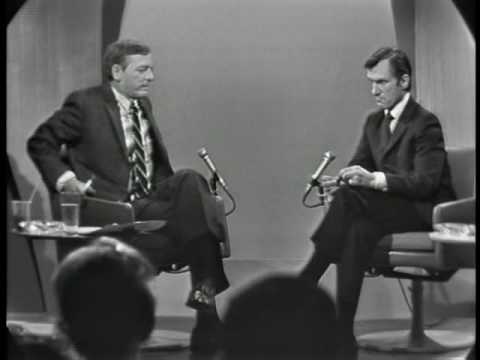
Below is the last letter I ever wrote to Hugh Hefner. I started writing him in 2015 and wrote him 79 letters total plus several postcards from places like Las Vegas and New Orleans. I was very sad to read about the passing of Mr. Hefner two days ago. He was certainty successful at bringing acceptability to the playboy lifestyle. I found his discussions with  William F. Buckley and Lee Strobel very intriguing and I mentioned them to Hefner in this letter below.

Image result for hugh hefner william f buckley

William F. Buckley pictured with Hugh Hefner above and Ronald Reagan below.

Image result for hugh hefner william f buckley

During the 1990′s I actually made it a practice to write famous atheists and scientists that were mentioned by Adrian Rogers and Francis Schaeffer and challenge them with the evidence for the Bible’s historicity and the claims of the gospel. Usually I would send them a cassette tape of Adrian Rogers’ messages “6 reasons I know the Bible is True,” “The Final Judgement,” “Who is Jesus?” and the message by Bill Elliff, “How to get a pure heart.”  I would also send them printed material from the works of Francis Schaeffer and a personal apologetic letter from me addressing some of the issues in their work. My second cassette tape that I sent to philosophers such as  Antony Flew and scientists such as George Wald of HARVARD  was Adrian Rogers’ sermon on EVOLUTION.  Both men listened to the messages then wrote me back twice each. Then about 6 years ago I started this blog and shortly after that I started writing letters again to famous agnostics and atheists. Hugh Hefner was one of those agnostics that I wrote. He had been mentioned both by Adrian Rogers and Francis Schaeffer as someone who wanted to smash the puritan ethic.

Image result for hugh hefner

August 30, 2017

Hugh Hefner
Playboy Mansion
Dear Hugh,
Last month I wrote you about Milton Friedman and asked you if you ever met him. Today I want to return to the subject of Milton Friedman.
Again I am quoting from an interview your magazine did with Milton Friedman in 1973.
PLAYBOY: Even if a consensus of right and left could be achieved on a modified version of your flat-rate tax proposal, there are many critics—particularly among the young—of what they feel are your basic assumptions. How would you answer those who claim that capitalism cannot foster a just and orderly society, since it’s based on the emotion of greed?
FRIEDMAN: What kind of society isn’t structured on greed? As a friend of mine says, the one thing you can absolutely depend on every other person to do is to put his interests ahead of yours. Now, his interests may not be greedy in a narrow, selfish sense. Some people’s self-interest is to save the world. Some people’s self-interest is to do good for others. Florence Nightingale pursued her own self-interest through charitable activities. Rockefeller pursued his self-interest in setting up the Rockefeller Foundation. But for most people, most of the time, self-interest is greed.
So the problem of social organization is how to set up an arrangement under which greed will do the least harm. It seems to me that the great virtue of capitalism is that it’s that kind of system. Because under capitalism, the power of any one individual over his fellow man is relatively small. You take the richest capitalist in the world; his power over you and me is trivial compared with the power that a Brezhnev or a Kosygin has in Russia. Or even compared in the United States with the power that an official of the Internal Revenue Service has over you. An official of the IRS can put you in jail. I doubt that there is a person in the United States who couldn’t be convicted of technical violation of some aspect of the personal income tax.
One of the great dangers I see in the American situation is that there is a strong temptation in government to use the income tax for other purposes. It’s been done. When gangsters couldn’t be convicted under the laws they had really violated, they were gotten on income-tax evasion. When John F. Kennedy threatened steel executives in 1962 to get them to drive down their prices, there was the implicit threat that all their taxes would be looked at. Now, that is a much more serious threat—the power an official has in the pursuit of his self-interest—than anything Howard Hughes is capable of. We want the kind of world in which greedy people can do the least harm to their fellow men. That’s the kind of world in which power is widely dispersed and each of us has as many alternatives as possible.
_________
Looking back on your life it seems to me that you can see the evils of the power of a big government.

____

_
Image result for milton friedman family
__
John Lofton noted: “DR. FRIEDMAN an evolutionist with ‘values’ of unknown origin but he said they were not ‘accidental.’ “
_____________

_

On October 19, 2015, I wrote my first letter to you and in it I wrote these words:

I have read up on you and watched a lot of your interviews on YOU TUBE and I am very impressed that you have been open about talking about the big questions of life and also your willingness to be interviewed by people such as William F. Buckley and Lee Strobel. It is my view that is because of your attempt to reconcile the Biblical teaching you got from Grace Hefner when you grew up to your beliefs now.

______________________

Hugh Hefner in High School

__________

Hefner family below:

Here is an excerpt of your interview that I found very interesting:

LEE STROBEL: If you could ask God any one question, and you knew
He’d give you an answer, what would you ask?

HUGH HEFNER: Oh I think the one question I’d really like to know is
uh the question related to an after life. And the other question is
the meaning of it all.

Image result for lee strobel hugh hefner

___________

In my last letter on July 30, 2017 I tried to point out that without God in the picture there can be no lasting meaning to our lives. I pointed out that Milton Friedman embraced evolution  but he did not want to admit that his values just came about accidentally. We can see this too in the life of Carl Sagan. Just like YOU,  HUGH,  CARL SAGAN WANTED TO GET DOWN TO THE MEANING OF IT ALL and to the answers to ULTIMATE QUESTIONS.

Rice Broocks in his book GOD’S NOT DEAD noted:

Astronomer Carl Sagan was a prolific writer and trustee of the SETI Institute (Search for Extraterrestrial Intelligence) founded in 1984 to scan the universe for any signs of life beyond earth. Sagan’s best-selling work COSMOS also became an award-winning television series explaining the wonders of the universe and exporting the belief not in an intelligent Creator but in potential intelligent aliens. He believed somehow that by knowing who they are, we would discover who we as humans really are. “The very thought of there being other beings different from all of us can have a very useful cohering role for the human species” (quoted from you tube clip “Carl Sagan appears on CBC to discuss the importance of SETI [Carl Sagan Archives]” at the 7 minute mark, Oct 1988 ). Sagan reasoning? If aliens could have contacted us, knowing how impossible it is for us to reach them, they would have the answers we seek to our ULTIMATE QUESTIONS. This thought process shows the desperate need we have as humans for answers to the great questions of our existence. Does life have any ultimate meaning and purpose? Do we as humans have any more value than the other animals? Is there a purpose to the universe, or more specifically, to our individual lives?

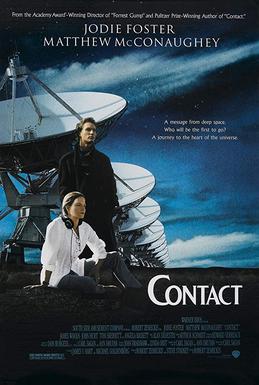
Carl Sagan had to live  in the world that God made with the conscience that God gave him. This created a tension. As you know the movie CONTACT was written by Carl Sagan and it was about Dr. Arroway’s SEARCH FOR EXTRATERRESTRIAL INTELLIGENCE (SETI) program and her desire to make contact with aliens and ask them questions. It is my view that Sagan should have examined more closely  the accuracy of the Bible and it’s fulfilled prophecies from the Old Testament in particular before chasing after aliens from other planets for answers. Sagan himself had written,”Plainly, there’s something within me that’s ready to believe in life after death…If some good evidence for life after death was announced, I’d be eager to examine it; but it would have to be real scientific data, not mere antedote”(pp 203-204, The DemonHaunted World, 1995).

Sagan said he had taken a look at Old Testament prophecy and it did not impress him because it was too vague. He had taken a look at Christ’s life in the gospels, but said it was unrealistic for God to send a man to communicate for God. Instead, Sagan suggested that God could have written a mathematical formula in the Bible or put a cross in the sky. However, what happens at the conclusion of the movie CONTACT?  This is Sagan’s last message to the world in the form of the movie that appeared shortly after his death. Dr Arroway (Jodie Foster) who is a young atheistic scientist who meets with an alien and this alien takes the form of Dr. Arroway’s father. The alien tells her that they thought this would make it easier for her. In fact, he meets her on a beach that resembles a beach that she grew up near so she would also be comfortable with the surroundings. Carl Sagan when writing this script chose to put the alien in human form so Dr. Arroway could relate to the alien. Christ chose to take our form and come into our world too and still many make up excuses for not believing.

_

Image result for carl sagan movie contact

Lastly, Carl Sagan could not rid himself of the “mannishness of man.” Those who have read Francis Schaeffer’s many books know exactly what I am talking about. We are made in God’s image and we are living in God’s world. Therefore, we can not totally suppress the objective truths of our unique humanity. In my letter of Jan 10, 1996 to Dr. Sagan, I really camped out on this point a long time because I had read Sagan’s  book SHADOWS OF FORGOTTON ANCESTORS  and in it  Sagan attempts to  totally debunk the idea that we are any way special. However, what does Dr. Sagan have Dr. Arroway say at the end of the movie CONTACT when she is testifying before Congress about the alien that  communicated with her? See if you can pick out the one illogical word in her statement: “I was given a vision how tiny, insignificant, rare and precious we all are. We belong to something that is greater than ourselves and none of us are alone.”

Image result for carl sagan shadows of forgotten ancestors

_

Contact (movie) Jodie Foster Speech at Final Hearing

Dr Sagan deep down knows that we are special so he could not avoid putting the word “precious” in there. Francis Schaeffer said unbelievers are put in a place of tension when they have to live in the world that God has made because deep down they know they are special because God has put that knowledge in their hearts.We are not the result of survival of the fittest and headed back to the dirt forevermore. This is what Schaeffer calls “taking the roof off” of the unbeliever’s worldview and showing the inconsistency that exists.

Image result for carl sagan movie contact

__

In several of my letters to Sagan I quoted this passage below:

Romans 1:17-22 (Amplified Bible)

17For in the Gospel a righteousness which God ascribes is revealed, both springing from faith and leading to faith [disclosed through the way of faith that arouses to more faith]. As it is written, The man who through faith is just and upright shall live and shall live by faith.(A)

18For God’s [holy] wrath and indignation are revealed from heaven against all ungodliness and unrighteousness of men, who in their wickedness repress and hinder the truth and make it inoperative.

19For that which is known about God is evident to them and made plain in their inner consciousness, because God [Himself] has shown it to them.

20For ever since the creation of the world His invisible nature and attributes, that is, His eternal power and divinity, have been made intelligible and clearly discernible in and through the things that have been made (His handiworks). So [men] are without excuse [altogether without any defense or justification],(B)

21Because when they knew and recognized Him as God, they did not honor and glorify Him as God or give Him thanks. But instead they became futile and [a]godless in their thinking [with vain imaginings, foolish reasoning, and stupid speculations] and their senseless minds were darkened.

22Claiming to be wise, they became fools [professing to be smart, they made simpletons of themselves].

__________________________________________

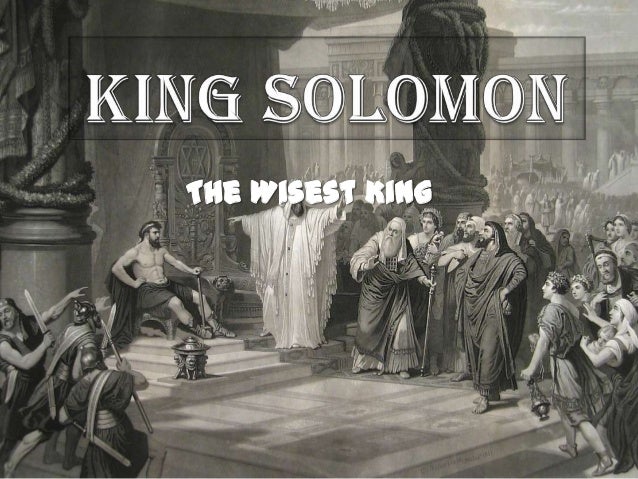
Can a man  or a woman find lasting meaning without God? Three thousand years ago, Solomon took a look at life “under the sun” in his book of Ecclesiastes. Christian scholar Ravi Zacharias has noted, “The key to understanding the Book of Ecclesiastes is the term ‘under the sun.’ What that literally means is you lock God out of a closed system, and you are left with only this world of time plus chance plus matter.”

Image result for king solomon

Let me show you some inescapable conclusions if you choose to live without God in the picture. Solomon came to these same conclusions when he looked at life “under the sun.”

  1. Death is the great equalizer (Eccl 3:20, “All go to the same place; all come from dust, and to dust all return.”)
  2. Chance and time have determined the past, and they will determine the future.  (Ecclesiastes 9:11-13 “I have seen something else under the sun:  The race is not to the swift
    or the battle to the strong, nor does food come to the wise or wealth to the brilliant  or favor to the learned; but time and chance happen to them all.  Moreover, no one knows when their hour will come: As fish are caught in a cruel net, or birds are taken in a snare, so people are trapped by evil times  that fall unexpectedly upon them.”)
  3. Power reigns in this life, and the scales are not balanced(Eccl 4:1; “Again I looked and saw all the oppression that was taking place under the sun: I saw the tears of the oppressed—
    and they have no comforter; power was on the side of their oppressors—  and they have no comforter.” 7:15 “In this meaningless life of mine I have seen both of these: the righteous perishing in their righteousness,  and the wicked living long in their wickedness. ).
  4. Nothing in life gives true satisfaction without God including knowledge (1:16-18), ladies and liquor (2:1-3, 8, 10, 11), and great building projects (2:4-6, 18-20).
  5. There is no ultimate lasting meaning in life. (1:2)

By the way, the final chapter of Ecclesiastes finishes with Solomon emphasizing that serving God is the only proper response of man. Solomon looks above the sun and brings God back into the picture in the final chapter of the book in Ecclesiastes 12:13-14:

13 Now all has been heard;
here is the conclusion of the matter:
Fear God and keep his commandments,
for this is the whole duty of man.

14 For God will bring every deed into judgment,
including every hidden thing,
whether it is good or evil

__

The answer to find meaning in life is found in putting your faith and trust in Jesus Christ. The Bible is true from cover to cover and can be trusted.

Thanks for your time.

Sincerely,

Everette Hatcher, everettehatcher@gmail.com, http://www.thedailyhatch.org, cell ph 501-920-5733, Box 23416, LittleRock, AR 72221

The Evidence for Jesus’ Resurrection/Program 3

By: The John Ankerberg Show (from 2007)
Lee Strobel:
Yeah. I had a chance to go to the Playboy Mansion, interview Hugh Hefner for a TV program that I was doing. And I asked him about the resurrection. And he seemed confused. And I said, “What about the evidence for the resurrection?” and he said, “What are you talking about?” And I said, “What do you do with the historical data that support the return of Jesus from the dead?” And he said, “I have never heard this before.” And I gave him a copy of my book The Case for Christ. And he was looking through the Table of Contents and said, “This is fascinating. Nobody has ever told me this before.”
And then he said something very interesting. He said, “If this is true, this trips a whole bunch of dominoes that have a wonderful effect.” He said, “I am getting to be an old man. I wish it were true that there were eternal life.” And I said, “You know what, look into the evidence yourself. Come to your own verdict. But I am telling you there is convincing, there is powerful, persuasive, compelling evidence that Jesus did return from the dead. And when He tells His followers they will spend eternity with Him, we can believe Him as a result.”

Image result for hugh hefner adrian rogers

Adrian Rogers: The Playboy’s Payday [#1001] (Audio)

Published on Jan 19, 2017

Adrian Rogers looks at the important issue of immorality and how much God wants to protect His creation from harm. The world’s view of sex is quite different from God’s. God isn’t against love and romance–He’s not trying to keep sex from us. He’s trying to keep sex for us. It’s a wonderful gift from God.

Scripture References: Proverbs 5
Series: These Issues We Face
This Message: https://www.lwf.org/products/1001CD
This Series: https://www.lwf.org/products/CDA108
Playlist Link: https://www.youtube.com/playlist?list…
1. The Playboy’s Payday [#1001]
2. Guard Your Thought Life [#1003]
3. The Misery of the Bottle [#1015]
4. The Battle of the Bottle [#1016]
5. Freedom Is Not Free [#1025]
6. Innocent Blood [#1004]

If you would like more information please visit these following websites:
Official Website: http://www.lwf.org/
Audio Messages: http://www.oneplace.com/ministries/lo…
Video Messages: http://www.lightsource.com/ministry/l…
Follow on Twitter: https://twitter.com/lwfministries
Follow on Instagram: https://www.instagram.com/lwfministries/
Like on Facebook: https://www.facebook.com/Love-Worth-F…
Youtube Channel: https://www.youtube.com/user/lwfminis…

If you would like to contact LWF Ministries
Write to: PO Box 38300, Memphis, Tennessee 38183
Call: (901) 382-7900

_

______

Related posts:

Ecclesiastes 2 — The Quest For Meaning and the failed examples of Howard Hughes and Hugh Hefner

Ecclesiastes 2-3 Published on Sep 19, 2012 Calvary Chapel Spring Valley | Sunday Evening | September 16, 2012 | Derek Neider _____________________________ I have written on the Book of Ecclesiastes and the subject of the meaning of our lives on several occasions on this blog. In this series on Ecclesiastes I hope to show how secular […]

FRANCIS SCHAEFFER ANALYZES ART AND CULTURE PART 162 A look at the BEATLES Breaking down the song ALL WE NEED IS LOVE Part C (Featured artist is Grace Slick)

 Is Love All You Need? Jesus v. Lennon Posted on January 19, 2011 by Jovan Payes 0 On June 25, 1967, the Beatles participated in the first worldwide TV special called “Our World”. During this special, the Beatles introduced “All You Need is Love”; one of their most famous and recognizable songs. In it, John Lennon […]

FRANCIS SCHAEFFER ANALYZES ART AND CULTURE Part 158 THE BEATLES (breaking down the song WHY DON’T WE DO IT IN THE ROAD?) Photographer Bob Gomel featured today!

___________________ Something happened to the Beatles in their journey through the 1960’s and although they started off wanting only to hold their girlfriend’s hand it later evolved into wanting to smash all previous sexual standards. The Beatles: Why Don’t We Do It in the Road? _______ Beatle Ringo Starr, and his girlfriend, later his wife, […]

FRANCIS SCHAEFFER ANALYZES ART AND CULTURE PART 142 Marvin Minsky Part G (Featured artist is Red Grooms)

__________ Marvin Minsky __ I was sorry recently  to learn of the passing of one of the great scholars of our generation. I have written about Marvin Minsky several times before in this series and today I again look at a letter I wrote to him in the last couple of years. It is my […]

FRANCIS SCHAEFFER ANALYZES ART AND CULTURE Part 118 THE BEATLES (Why was Tony Curtis on cover of SGT PEP?) (Feature on artist Jeffrey Gibson )

Why was Tony Curtis on the cover of SGT PEPPERS? I have no idea but if I had to hazard a guess I would say that probably it was because he was in the smash hit SOME LIKE IT HOT.  Above from the  movie SOME LIKE IT HOT __ __ Jojo was a man who […]

FRANCIS SCHAEFFER ANALYZES ART AND CULTURE Part 101 BEATLES,(MANY CHRISTIANS ATTACKED THE BEATLES WHILE FRANCIS SCHAEFFER STUDIED THEIR MUSIC! Part B) Artist featured today is Cartoonist Gahan Wilson

__ Francis Schaeffer did not shy away from appreciating the Beatles. In fact, SERGEANT PEPPER’S LONELY HEARTS CLUB BAND album was his favorite and he listened to it over and over. I am a big fan of Francis Schaeffer but there are detractors that attack him because he did not have all the degrees that they […]

10 YEARS AGO ADRIAN ROGERS WENT TO GLORY BUT HIS SERMONS ARE STILL SHARING CHRIST LOVE TODAY!!!

On 11-15-05 Adrian Rogers passed over to glory and since it is the 10th anniversary of that day I wanted to celebrate his life in two ways. First, I wanted to pass on some of the material from Adrian Rogers’ sermons I have sent to prominent atheists over the last 20 years. Second, I wanted […]

FRANCIS SCHAEFFER ANALYZES ART AND CULTURE Part 65 THE BEATLES ( The 1960’s SEXUAL REVOLUTION was on the cover of Sgt. Pepper’s!) (Featured artist is Pauline Boty)

Looking back on his life as a Beatle Paul  said at a  certain age you start to think “Wow, I have to get serious. I can’t just be a playboy all of my life.” It is true that the Beatles wrote a lot about girls!!!!!! The Beatles – I Want To Hold your Hand [HD] Although […]

Image result for adrian rogers jesus

__

_

Image result for king solomon

____

Francis Schaeffer pictured above

The last 3 letters I wrote to Hugh Hefner compared him to King Solomon in Ecclesiastes and his search for the meaning of it all!!! (Part 2)

I learned yesterday that Hugh Hefner had passed away. Just last year I visited Chicago and drove by his Chicago Playboy Mansion pictured below.

Image result for hugh hefner chicago

___

Image result for hugh hefner chicago


Playboy after dark filmed in Chicago Playboy Mansion

Image result for hugh hefner chicago


During the 1990′s I actually made it a practice to write famous atheists and scientists that were mentioned by Adrian Rogers and Francis Schaeffer and challenge them with the evidence for the Bible’s historicity and the claims of the gospel. Usually I would send them a cassette tape of Adrian Rogers’ messages “6 reasons I know the Bible is True,” “The Final Judgement,” “Who is Jesus?” and the message by Bill Elliff, “How to get a pure heart.”  I would also send them printed material from the works of Francis Schaeffer and a personal apologetic letter from me addressing some of the issues in their work. My second cassette tape that I sent to philosophers such as  Antony Flew and scientists such as George Wald of HARVARD  was Adrian Rogers’ sermon on EVOLUTION.  Both men listened to the messages then wrote me back twice each. Then about 6 years ago I started this blog and shortly after that I started writing letters again to famous agnostics and atheists. Hugh Hefner was one of those agnostics that I wrote. He had been mentioned both by Adrian Rogers and Francis Schaeffer as someone who wanted to smash the puritan ethic.


Image result for hugh hefner chicago

____

I centered in primarily on the life of Solomon and especially his search for meaning UNDER THE SUN (without God in the picture) in the Book of Ecclesiastes. Overall, I wrote 79 letters to Hef during the years and I am sure that he had an opportunity to look at least at some of the postcards I sent him from places like New Orleans and Las Vegas.

July 30, 2017

Hugh Hefner
Playboy Mansion
Dear Hugh,
I know that you are from Chicago and it just so happens that I originally started my blog for the main purpose of promoting the ideas of Milton Friedman who taught in Economics at the University of Chicago from 1946 to 1977. Since you were a prominent figure also in Chicago during that time I was curious if you ever had a chance to meet Friedman?
I have to admit that many of the articles that have been attributed to PLAYBOY MAGAZINE have very good. I found this interview from 1973 on a blog and it was evidently carried originally by PLAYBOY. I wanted to give you just a portion that deals with schools. Then I wanted to share with you my thoughts on Milton Friedman’s religious views.

A 1973 INTERVIEW WITH MILTON FRIEDMAN – PLAYBOY MAGAZINE

PLAYBOY: Schools?
FRIEDMAN: Is there any doubt that they’re more discriminated against in schooling? Is there any doubt, if you’re a parent in a black ghetto, that the thing you will find hardest to acquire is decent schooling for your child? Is it an accident that the schooling is provided by the government? A black in a ghetto who has the money can buy any car he wants. But even if he has the money, he can’t get the schooling he wants, or at least he’ll have to pay an enormously higher price for it than a white person will. A white person with that income can move into a nice suburb and get the schooling he wants. A black person will have great difficulty doing it.
Let’s suppose, on the other hand, that you didn’t have government schooling. Let’s suppose you had the kind of system that I’m in favor of, which is a system under which the government, instead of providing schooling, would give every parent a voucher for a sum of money equal to what it’s now spending per child and the parent could spend that at any school he wanted to. Then you’d have private-enterprise schools developed and blacks could buy much better schooling for their children than they can get under the government.
Under free enterprise, a person who has a prejudice has to pay for that prejudice. Suppose I’m going to go into business producing widgets and that I’m a terrible racist and will hire only whites. You’re going into business producing widgets, too, but you don’t give a damn about race, so you’re going to hire the person who’s most productive for the lowest wage. Which of us is going to be able to win out in the competitive race?

PLAYBOY: That depends on the unions.
FRIEDMAN: You’re departing from competition. One of the major sources of black discrimination has been the unions, but the unions are an anti-competitive element; they’re a private monopoly; they’re against the rules of free enterprise.

PLAYBOY: You blame the government for discrimination against blacks in the school system because the government controls the schools. But isn’t this discrimination really based on residential real-estate patterns that are the result of individual choice?
FRIEDMAN: Yes, to some extent it is. But those residential patterns don’t necessarily imply segregation of schooling. They don’t imply segregation of the kinds of automobiles people have. They don’t imply segregation of the kind of movies people go to. If you had a free-enterprise school system, you’d have a much wider variety of schools available to blacks—schools of a higher quality. Moreover, residential segregation itself is partly stimulated by the fact that government provides schooling.
Let me illustrate. You’re a well-to-do fellow and you want to send your child to a good school. You don’t send him to a private school, because you’re already paying taxes for schools and any additional money you’d pay for tuition wouldn’t be deductible. So, instead, you get together with some of your friends and establish a nice high-income suburb and set up a so-called public school that’s really a private school. Now you won’t have to pay twice and the extra amount you pay will be in the form of taxes—not tuition, which will be permitted as a deduction in computing your personal income tax. The effect of this will be that your children’s education will be partly subsidized by the poor taxpayers in the ghetto. The fact that schooling is generally provided by the state, paid for through taxes that are deductible in computing the Federal income tax, promotes a great deal of residential segregation.
The crucial point is this: In a political system, 51 percent of the people can control it. That’s an overstatement, of course, since no government that’s supported by only 51 percent of the people will do the same things that one supported by 90 percent of the people will do. But in a political system, everything tends to be a yes-or-no decision: if 51 percent vote yes, it’s yes. A political system finds it very difficult to satisfy the needs of minority groups. It’s very hard to set up a political arrangement under which, if 51 percent of the people vote one way and 49 percent vote the other way, the 51 percent will get what they want and the 49 percent will get what they want. Rather, the 49 percent will also get what the 51 percent want.
In a market system, if 51 percent of the people vote, say, to buy American cars and 49 percent of the people vote to buy foreign cars and the government lets their votes be effective and doesn’t impose tariffs, 51 percent will get American cars and 49 percent will get foreign cars. In a market system, if 40 percent of the people vote that they want to send their children to integrated schools and 60 percent vote that they want to send them to segregated schools, 40 percent will be able to do what they want and 60 percent will be able to do what they want. It’s precisely because the market is a system of proportional representation that it protects the interests of minorities. It’s for this reason that minorities like the blacks, like the Jews, like the Amish, like SDS, ought to be the strongest supporters of free-enterprise capitalism.

_

Image result for milton friedman family

1947: Economists representing the emerging Chicago School: Milton Friedman, George Stigler, and Aaron Director,

Image result for milton friedman family

If anyone takes time to read my blog for any length of time they can not question my respect for the life long work of Milton Friedman. He has advanced the cause of freedom more than any other person I know of in the last 100 years except for Ronald Reagan who I give credit to for the collapse of the Berlin Wall.

I only had once chance to correspond with Milton Friedman and he quickly answered my letter. It was a question concerning my favorite christian philosopher Francis Schaeffer. I had read  in the 1981 printing of The Tapestry: the Life and Times of Francis and Edith Schaeffer on page 644 that Edith mentioned “that the KUP SHOW  in Chicago, a talk show Francis was on twice, once with the economist Milton Friedman, whith whom he still has a good correspondence.”  I asked in a letter in the late 1990’s  if Friedman remembered the content of any of that correspondence and he said he did not.

_________________

I was hoping the answer would have been yes because I also wanted to talk to Friedman about some religious subjects. I knew that Friedman had rejected religion at an early age. James A. Nuechterlein noted in 2007, “Milton Friedman grew up in Rahway, New Jersey, the son of Hungarian Jewish immigrants. (His parents were moderately observant, but Friedman, after an intense burst of childhood piety, rejected religion altogether.)

It is my understanding that Friedman did express more interest in religious subjects later in his life.  Here is a portion of an article from Human Events that led me to believe that:

Milton’s mind was bright and alert to the end, although he suffered from pain in his legs and he had a hard time walking. He also had gone through two open-heart surgeries in the 1980s. This year, when he turned 94, I asked him, “Do you think you will live to be 100?” His reply: “I hope not!” But Milton was almost always upbeat about life, even to the end. He was not a particularly religious man, but he expressed interest in religious topics near the end of his life.

John Lofton, editor of www.theamericanview.com noted in “An Exchange: My Correspondence With Milton Friedman About God, Economics, Evolution And “Values”:

One of the saddest things to see is a truly brilliant individual, with a keen intellect, but who does not believe in God, in Jesus Christ, in the Bible. A case in point: Dr. Milton Friedman, the Nobel Prize-winning, libertarian, free market economist. In a letter-to-the-editor to the “Wall Street Journal” (10/30/92), Dr. Friedman made the point that he is a “radical,” get-to-the-root-of-the-problem kind of guy. So, although I knew, generally, what his answer would be, but not exactly, I wrote Dr. Friedman, at the Hoover Institute at Stanford University, and asked him:

Do you believe in God? And what, if anything, does God have to do with economics? He replied, in a handwritten note on my original letter:

“I am an agnostic. I do not ‘believe in’ God, but I am not an atheist, because I believe the statement, ‘There is a god’ does not admit of being either confirmed or rejected. I do not believe God has anything to do with economics. But values do.”

Okay. So, I write Dr. Friedman again, thank him for his prompt response, and ask: What is the distinction you make between ‘agnosticism’ and ‘atheism?” And where do these ‘values’ you say you believe in come from? Again, Dr. Friedman writes back, quickly:

“(1) Agnosticism ‘I do not know.’ (2) Atheism ‘I know that there is no god.’ (3) I do not know where my values come from, but that does not mean (a) I don’t have them, (b) I don’t hold them as strongly as you hold your belief in God. (c) They turn out — not accidentally, I believe — to be very much like these held by most other people whether Christian, Jewish, Muslim, atheist, agnostic, or abstract. (d) Which leads me to believe that they are a product of the same evolutionary process that accounts for the rest of our customs as well as physical characterizations.”

Image result for carl sagan

John Lofton rightly notes that “Dr. Friedman was an evolutionist with ‘values’ of unknown origin but he said they were not ‘accidental.’ I encountered the same approach from Carl Sagan. He wanted to say their was no afterlife and we were all products of chance but then he wanted to jump back and grab words like “precious” to describe us as if we could attain lasting meaning to our lives without God in the picture.

Milton Friedman had no valid basis for his morality. He was borrowing from a Judeo-Christian basis.

I will give agnostics credit when they realize that without God in the picture everything is left to chance. I posted earlier. Neo-Darwinist Richard Dawkins recognized the purposelessness of such a system:

In a universe of blind physical forces and genetic replication some people are going to get hurt, other people are going to get lucky, and you won’t find any rhyme or reason in it, nor any justice. The universe we observe has precisely the properties we should expect if there is, at bottom, no design, no purpose, no evil and no good, nothing but blind, pitiless indifference.22

Without God in the picture life is meaningless ultimately.  Also without God providing punishment in the afterlife for evil then there is no reason to do good without an enforcement factor.

H.J.Blackham below

Image result for H. J. Blackham

I would love to hear from any atheist that would present a case for lasting meaning in life apart from God. It seems to me that H. J. Blackham was right in his accessment of the predictament that atheists face:

On humanist assumptions [the assumption that there is no God and life has evolved by time and chance alone], life leads to nothing, and every pretense that it does not is a deceit. If there is a bridge over a gorge which spans only half the distance and ends in mid-air, and if the bridge is crowded with human beings pressing on, one after another they fall into the abyss. The bridge leads to nowhere, and those who are pressing forward to cross it are going nowhere. . . It does not matter where they think they are going, what preparations for the journey they may have made, how much they may be enjoying it all . . . such a situation is a model of futility (H. J. Blackham et al., Objections to Humanism (Riverside, Connecticut: Greenwood Press, 1967).)

I do not accept evolution at all. Adrian Rogers noted three problems with evolution:

1. The fossil record. Not only is the so-called missing link still missing, all of the transitional life forms so crucial to evolutionary theory are missing from the fossil record. There are thousands of missing links, not one!
2. The second law of thermodynamics. This law states that energy is winding down and that matter left to itself tends toward chaos and randomness, not greater organization and complexity. Evolution demands exactly the opposite process, which is observed nowhere in nature.
3. The origin of life. Evolution offers no answers to the origin of life. It simply pushes the question farther back in time, back to some primordial event in space or an act of spontaneous generation in which life simply sprang from nothing.

_____

The answer to find meaning in life is found in putting your faith and trust in Jesus Christ. The Bible is true from cover to cover and can be trusted.

Solomon is said to be the wisest man who ever lived.Solomon went to the extreme in his searching in the Book of Ecclesiastes for this something more,  but he did not find any satisfaction in pleasure (2:1), education (2:3), work (2:4), wealth (2:8) or fame (2:9). All of his accomplishments would not be remembered (1:11) and who is to say that they had not already been done before by others (1:10)?   Also Solomon’s upcoming death depressed him because both people and animals alike “go to the same place — they came from dust and they return to dust” (3:20).

In 1978 I heard the song “Dust in the Wind” by Kansas when it rose to #6 on the charts. That song told me thatKerry Livgren the writer of that song and a member of Kansas had come to the same conclusion that Solomon had. I remember mentioning to my friends at church that we may soon see some members of Kansas become Christians because their search for the meaning of life had obviously come up empty even though they had risen from being an unknown band to the top of the music business and had all the wealth and fame that came with that. Furthermore, Solomon realized death comes to everyone and there must be something more.

Livgren wrote:

“All we do, crumbles to the ground though we refuse to see, Dust in the Wind, All we are is dust in the wind, Don’t hang on, Nothing lasts forever but the Earth and Sky, It slips away, And all your money won’t another minute buy.”

Both Kerry Livgren and Dave Hope of Kansas became Christians eventually. Kerry Livgren first tried Eastern Religions and Dave Hope had to come out of a heavy drug addiction. I was shocked and elated to see their personal testimony on The 700 Club in 1981 and that same  interview can be seen on youtube today. Livgren lives in Topeka, Kansas today where he teaches “Diggers,” a Sunday school class at Topeka Bible Church. Hope is the head of Worship, Evangelism and Outreach at Immanuel Anglican Church in Destin, Florida.

Solomon’s experiment was a search for meaning to life “under the sun.” Then in last few words in the Book of Ecclesiastes he looks above the sun and brings God back into the picture: “The conclusion, when all has been heard, is: Fear God and keep His commandments, because this applies to every person. For God will bring every act to judgment, everything which is hidden, whether it is good or evil.”

You can hear Kerry Livgren’s story from You Tube.

Thanks for your time.

Sincerely,

Everette Hatcher, everettehatcher@gmail.com, http://www.thedailyhatch.org, cell ph 501-920-5733, Box 23416, LittleRock, AR 72221

(part 1 ten minutes)

(part 2 ten minutes)

Milton Friedman receives Nobel Prize in Economics in 1976

__

______

Related posts:


Ecclesiastes 2 — The Quest For Meaning and the failed examples of Howard Hughes and Hugh Hefner

Ecclesiastes 2-3 Published on Sep 19, 2012 Calvary Chapel Spring Valley | Sunday Evening | September 16, 2012 | Derek Neider _____________________________ I have written on the Book of Ecclesiastes and the subject of the meaning of our lives on several occasions on this blog. In this series on Ecclesiastes I hope to show how secular […]

FRANCIS SCHAEFFER ANALYZES ART AND CULTURE PART 162 A look at the BEATLES Breaking down the song ALL WE NEED IS LOVE Part C (Featured artist is Grace Slick)

 Is Love All You Need? Jesus v. Lennon Posted on January 19, 2011 by Jovan Payes 0 On June 25, 1967, the Beatles participated in the first worldwide TV special called “Our World”. During this special, the Beatles introduced “All You Need is Love”; one of their most famous and recognizable songs. In it, John Lennon […]

FRANCIS SCHAEFFER ANALYZES ART AND CULTURE Part 158 THE BEATLES (breaking down the song WHY DON’T WE DO IT IN THE ROAD?) Photographer Bob Gomel featured today!

___________________ Something happened to the Beatles in their journey through the 1960’s and although they started off wanting only to hold their girlfriend’s hand it later evolved into wanting to smash all previous sexual standards. The Beatles: Why Don’t We Do It in the Road? _______ Beatle Ringo Starr, and his girlfriend, later his wife, […]

FRANCIS SCHAEFFER ANALYZES ART AND CULTURE PART 142 Marvin Minsky Part G (Featured artist is Red Grooms)

__________ Marvin Minsky __ I was sorry recently  to learn of the passing of one of the great scholars of our generation. I have written about Marvin Minsky several times before in this series and today I again look at a letter I wrote to him in the last couple of years. It is my […]

FRANCIS SCHAEFFER ANALYZES ART AND CULTURE Part 118 THE BEATLES (Why was Tony Curtis on cover of SGT PEP?) (Feature on artist Jeffrey Gibson )

Why was Tony Curtis on the cover of SGT PEPPERS? I have no idea but if I had to hazard a guess I would say that probably it was because he was in the smash hit SOME LIKE IT HOT.  Above from the  movie SOME LIKE IT HOT __ __ Jojo was a man who […]

FRANCIS SCHAEFFER ANALYZES ART AND CULTURE Part 101 BEATLES,(MANY CHRISTIANS ATTACKED THE BEATLES WHILE FRANCIS SCHAEFFER STUDIED THEIR MUSIC! Part B) Artist featured today is Cartoonist Gahan Wilson

__ Francis Schaeffer did not shy away from appreciating the Beatles. In fact, SERGEANT PEPPER’S LONELY HEARTS CLUB BAND album was his favorite and he listened to it over and over. I am a big fan of Francis Schaeffer but there are detractors that attack him because he did not have all the degrees that they […]

10 YEARS AGO ADRIAN ROGERS WENT TO GLORY BUT HIS SERMONS ARE STILL SHARING CHRIST LOVE TODAY!!!

On 11-15-05 Adrian Rogers passed over to glory and since it is the 10th anniversary of that day I wanted to celebrate his life in two ways. First, I wanted to pass on some of the material from Adrian Rogers’ sermons I have sent to prominent atheists over the last 20 years. Second, I wanted […]

FRANCIS SCHAEFFER ANALYZES ART AND CULTURE Part 65 THE BEATLES ( The 1960’s SEXUAL REVOLUTION was on the cover of Sgt. Pepper’s!) (Featured artist is Pauline Boty)

Looking back on his life as a Beatle Paul  said at a  certain age you start to think “Wow, I have to get serious. I can’t just be a playboy all of my life.” It is true that the Beatles wrote a lot about girls!!!!!! The Beatles – I Want To Hold your Hand [HD] Although […]


Image result for adrian rogers jesus

__

_

Image result for king solomon

____


Francis Schaeffer pictured above


_______


__

The last 3 letters I wrote to Hugh Hefner compared him to King Solomon in Ecclesiastes and his search for the meaning of it all!!! (Part 1)

_—
Francis Schaeffer noted

let us think of the sex relationship. What is man’s attitude towards  the girl? It is possible, and common in the  modern setting, to have a “playboy” attitude, or  rather a “plaything” attitude, where the “play-  mate” becomes the “plaything.” Here, the girl is  no more than a sex object.

But what is the Christian view? Somebody  may offer at this point the rather romantic no-  tion, “You shouldn’t look for any pleasure for  yourself; you should just look for the other per-  son’s pleasure.” But that is not what the Bible  says. We are to love our neighbor as ourselves.  We have a right to pleasure, too. But what we  do not have a right to do is to forget that the  girl is a person and not an animal, or a plant, or  a machine. We have the right to have our plea-  sure in a sexual relationship, but we have no  right whatsoever to exploit a partner as a sex  object.

There should be a conscious limitation upon  our pleasure. We impose a limit—a self-imposed  limit—in order to treat the wife fairly as a per-  son. So although a husband could do more, he  does not do everything he could do, because he  must treat her also as a person and not just as  a thing with no value. And if he does so treat  her, eventually he loses, because love is gone,  and all that is left is just a mechanical, chemical  sexuality; humanity is lost as he treats her as  less than human. Eventually not only her  humanity is diminished, but his as well. In con-  trast, if he does less than he could do, even-  tually he has more, for he has a human rela-  tionship; he has love and not just a physical  act. It is like the principle of the boomerang—it  can come full circle and destroy the destroyer.

—-
 Image result for hugh hefner solomon
 I was sad to hear last night of Hugh Hefner’s passing. Google the words HUGH HEFNER BOOK OF ECCLESIASTES and see how many times people have compared Hefner to Solomon’s quest in Ecclesiastes to find the meaning in life by pursuing an abundance of sexual conquests!!! I hope we can all learn from Solomon’s life. Solomon was searching for meaning in life in what I call the 6 big L words in the Book of Ecclesiastes. He looked into learning (1:12-18, 2:12-17), laughter, ladies, luxuries, and liquor (2:1-2, 8, 10, 11), and labor (2:4-6, 18-20).
Image result for king solomon
 Hef gave up his family life for the Playboy lifestyle twice
Image result for hugh hefner family kimberly
_
Image result for hugh hefner girlfriends 2014
_
Image result for christie hefner young
_
Image result for hugh hefner young
June 30, 2017
Hugh Hefner
Playboy Mansion
16236 Charing Cross Road
Los Angeles, CA 90024
Dear Hugh,
I started these series of letters on the meaning of it all on April 7, 2017 when  my good friend Larry Speaks died. Larry’s favorite sermon was WHO  IS JESUS? by Adrian Rogers and he gave hundreds of CD copies of that sermon away. I actually ran the copies off  for him and since the sermon was only 37 minutes long and the CD went 60 minutes, I also put on there another sermon by Bill Elliff too called WHAT WILL HAPPEN AT THE END OF TIME? Later in this letter I want to share a portion of that message with you.
All of these letters I have written you have dealt with what Solomon had to say concerning the search for satisfaction in life UNDER THE SUN (without God in the picture.) Probably his most disappointing discovery was that being a ladies man left him unsatisfied.

Ecclesiastes 2:8-10The Message (MSG)

I piled up silver and gold,
loot from kings and kingdoms.
I gathered a chorus of singers to entertain me with song,
and—most exquisite of all pleasures—
voluptuous maidens for my bed.

9-10 Oh, how I prospered! I left all my predecessors in Jerusalem far behind, left them behind in the dust. What’s more, I kept a clear head through it all. Everything I wanted I took—I never said no to myself. I gave in to every impulse, held back nothing. I sucked the marrow of pleasure out of every task—my reward to myself for a hard day’s work!

1 Kings 11:1-3 English Standard Version (ESV)

11 Now King Solomon loved many foreign women, along with the daughter of Pharaoh: Moabite, Ammonite, Edomite, Sidonian, and Hittite women, from the nations concerning which the Lord had said to the people of Israel, “You shall not enter into marriage with them, neither shall they with you, for surely they will turn away your heart after their gods.” Solomon clung to these in love. He had 700 wives, who were princesses, and 300 concubines. And his wives turned away his heart.

Francis Schaeffer observed concerning Solomon, “You can not know woman by knowing 1000 women.”

King Solomon in Ecclesiastes 2:11 sums up his search for meaning in the area of the Sexual Revolution with these words, “…behold, all was vanity and a striving after wind, and there was nothing to be gained under the sun.”

__

In fact, the Book of Ecclesiastes shows that Solomon came to the conclusion that NOTHING in life gives true satisfaction without God including knowledge (1:16-18), LADIES and liquor (2:1-3, 8, 10, 11), and great building projects (2:4-6, 18-20). You can only find a lasting meaning to your life by looking above the sun and bring God back into the picture.

Solomon’s experiment was a search for meaning to life “under the sun.” Then in last few words in the Book of Ecclesiastes he looks above the sun and brings God back into the picture: “The conclusion, when all has been heard, is: Fear God and keep His commandments, because this applies to every person. For God will bring every act to judgment, everything which is hidden, whether it is good or evil.”

Keith Hefner and Hugh Hefner

According to the Bible God will bring every act to judgment!!! Below is a portion of Bill Elliff’s message that deals with this:

WHAT WILL HAPPEN AT THE END OF TIME? I want to look at this picture of what will happen to everyone of us at the end of time. Let’s read our scripture passage.

Luke 12:1-10 English Standard Version (ESV)

Beware of the Leaven of the Pharisees

12 In the meantime, when so many thousands of the people had gathered together that they were trampling one another, he began to say to his disciples first, “Beware of the leaven of the Pharisees, which is hypocrisy. Nothing is covered up that will not be revealed, or hidden that will not be known. Therefore whatever you have said in the dark shall be heard in the light, and what you have whispered in private rooms shall be proclaimed on the housetops.

Have No Fear

“I tell you, my friends, do not fear those who kill the body, and after that have nothing more that they can do. But I will warn you whom to fear: fear him who, after he has killed, has authority to cast into hell. Yes, I tell you, fear him! Are not five sparrows sold for two pennies?[b]And not one of them is forgotten before God. Why, even the hairs of your head are all numbered. Fear not; you are of more value than many sparrows.

Acknowledge Christ Before Men

“And I tell you, everyone who acknowledges me before men, the Son of Man also will acknowledge before the angels of God, but the one who denies me before men will be denied before the angels of God. 10 And everyone who speaks a word against the Son of Man will be forgiven, but the one who blasphemes against the Holy Spirit will not be forgiven.

___________

What will happen at the end of time?

FIRST OF ALL, Jesus says it will be a time of the revelation of the secrets of your life.

A great time of revealing and uncovering, when unknown things to some become known to all. There is coming a day when what you really are will be revealed.

There is something inside us that thinks we can hide things from each other and hide things from God. Have you ever played HIDE AND SEEK with a group of young children? They will hide in plain view but in their mind they are hidden. My smallest children will put their hands over their eyes and they think that since they can’t see me that they are hidden from my sight. But the truth of the matter is that I can see them so clearly and sometimes we think that because we can’t see God that He can’t see us. Last week we read Hebrews 4:13 that says, “And not a creature exists that is concealed from His sight, but all things are open and exposed, and revealed to the eyes of Him with whom we have to give account.” One day the secrets of our heart will be revealed. In the brief days of our life, 20, 30, 40, 50, 60, 70 years that God may give you, or maybe a few years beyond that, we may do a good job of hiding those secrets, but one day the secrets of our lives will be revealed before God.

NEXT after the revelation of the secrets of your life there will be a great revelation of God’s authority.

Do you know what a sovereign is? A sovereign is one who has complete authority. He has the authority and he has the authority to carry it out.

There are 3 kinds of authority. First, voluntary authority such as you choosing to work for an employer. Second, seized authority like a murderer. Third, God is an absolute authority and He is the sovereign and He is over everything. It is right for Him to be over everything because He made everything. He is a God of perfect love,  a God of perfect mercy, a God of perfect grace, a God of perfect compassion, but He is a God of perfect righteousness.  If He was any less than that then He wouldn’t be God. He is a God of perfect holiness and authority. He has wooed us and called us and given us every opportunity to come, but He is a God who one day who will reveal. He has absolute authority over your life.

Look again at verses 4 and 5:

“I tell you, my friends, do not fear those who kill the body, and after that have nothing more that they can do. But I will warn you whom to fear: fear him who, after he has killed, has authority to cast into hell. Yes, I tell you, fear him!

God has the authority to do that. There is coming a day when there will be a great separation and a great dividing. It is all over the scriptures. God has given us the moment of grace to come and trust in Him and give our lives to Him, but one day the door will be closed and then the division will come. He will say to some come into my kingdom that I have prepared for you and he will say to others you are headed to an eternity separated. You have chosen your fate for all eternity. There will permanent separation from God in hell.

FINALLY, it will be a day of the revelation of the substance of your relationship to God.

Look at verses 8 and 9:“And I tell you, everyone who acknowledges me before men, the Son of Man also will acknowledge before the angels of God, but the one who denies me before men will be denied before the angels of God.

The Pharisees said they had a relationship with God but they were hypocrites and there was no substance to their relationship. Jesus is saying that when the secrets of your heart are revealed God will determine the substance of your relationship to God and whether it is real or not.

The answer to find meaning in life is found in putting your faith and trust in Jesus Christ. The Bible is true from cover to cover and can be trusted. Below is a piece of that evidence given by Francis Schaeffer concerning the accuracy of the Bible.

Thanks for your time.

Sincerely,

Everette Hatcher, everettehatcher@gmail.com, http://www.thedailyhatch.org, cell ph 501-920-5733, Box 23416, LittleRock, AR 72221

TRUTH AND HISTORY (chapter 5 of WHATEVER HAPPENED TO THE HUMAN RACE?)

In the previous chapter we saw that the Bible gives us the explanation for the existence of the universe and its form and for the mannishness of man. Or, to reverse this, we came to see that the universe and its form and the mannishness of man are a testimony to the truth of the Bible. In this chapter we will consider a third testimony: the Bible’s openness to verification by historical study.

Christianity involves history. To say only that is already to have said something remarkable, because it separates the Judeo-Christian world-view from almost all other religious thought. It is rooted in history.

The Bible tells us how God communicated with man in history. For example, God revealed Himself to Abraham at a point in time and at a particular geographical place. He did likewise with Moses, David, Isaiah, Daniel and so on. The implications of this are extremely important to us. Because the truth God communicated in the Bible is so tied up with the flow of human events, it is possible by historical study to confirm some of the historical details.

It is remarkable that this possibility exists. Compare the information we have from other continents of that period. We know comparatively little about what happened in Africa or South America or China or Russia or even Europe. We see beautiful remains of temples and burial places, cult figures, utensils, and so forth, but there is not much actual “history” that can be reconstructed, at least not much when compared to that which is possible in the Middle East.

When we look at the material which has been discovered from the Nile to the Euphrates that derives from the 2500-year span before Christ, we are in a completely different situation from that in regard to South America or Asia. The kings of Egypt and Assyria built thousands of monuments commemorating their victories and recounting their different exploits. Whole libraries have been discovered from places like Nuzu and Mari and most recently at Elba, which give hundreds of thousands of texts relating to the historical details of their time. It is within this geographical area that the Bible is set. So it is possible to find material which bears upon what the Bible tells us.

The Bible purports to give us information on history. Is the history accurate? The more we understand about the Middle East between 2500 B.C. and A.D. 100, the more confident we can be that the information in the Bible is reliable, even when it speaks about the simple things of time and place.

The site of the biblical city called Lachish is about thirty miles southwest of Jerusalem. This city is referred to on a number of occasions in the Old Testament. Imagine a busy city with high walls surrounding it, and a gate in front that is the only entrance to the city. We know so much about Lachish from archaeological studies that a reconstruction of the whole city has been made in detail. This can be seen at the British Museum in the Lachish Room in the Assyrian section.

There is also a picture made by artists in the eighth century before Christ, the Lachish Relief, which was discovered in the city of Nineveh in the ancient Assyria. In this picture we can see the Jewish inhabitants of Lachish surrendering to Sennacherib, the king of Assyria. The details in the picture and the Assyrian writing on it give the Assyrian side of what the Bible tells us in Second Kings:

2 Kings 18:13-16

New American Standard Bible (NASB)

13 Now in the fourteenth year of King Hezekiah, Sennacherib king of Assyria came up against all the fortified cities of Judah and seized them. 14 Then Hezekiah king of Judah sent to the king of Assyria at Lachish, saying, “I have done wrong. Withdraw from me; whatever you impose on me I will bear.” So the king of Assyria required of Hezekiah king of Judah three hundred talents of silver and thirty talents of gold. 15 Hezekiah gave him all the silver which was found in the house of the Lord, and in the treasuries of the king’s house. 16 At that time Hezekiah cut off the gold from the doors of the temple of the Lord, and from the doorposts which Hezekiah king of Judah had overlaid, and gave it to the king of Assyria.

________

We should notice two things about this. First, this is a real-life situation–a real siege of a real city with real people on both sides of the war–and it happened at a particular date in history, near the turn of the eighth century B.C. Second, the two accounts of this incident in 701 B.C. (the account from the Bible and the Assyrian account from Nineveh) do not contradict, but rather confirm each other. The history of Lachish itself is not so important for us, but some of its smaller historical details.

Image result for the Lachish Relief

________________

Related posts:

Ecclesiastes 2 — The Quest For Meaning and the failed examples of Howard Hughes and Hugh Hefner

Ecclesiastes 2-3 Published on Sep 19, 2012 Calvary Chapel Spring Valley | Sunday Evening | September 16, 2012 | Derek Neider _____________________________ I have written on the Book of Ecclesiastes and the subject of the meaning of our lives on several occasions on this blog. In this series on Ecclesiastes I hope to show how secular […]

FRANCIS SCHAEFFER ANALYZES ART AND CULTURE PART 162 A look at the BEATLES Breaking down the song ALL WE NEED IS LOVE Part C (Featured artist is Grace Slick)

 Is Love All You Need? Jesus v. Lennon Posted on January 19, 2011 by Jovan Payes 0 On June 25, 1967, the Beatles participated in the first worldwide TV special called “Our World”. During this special, the Beatles introduced “All You Need is Love”; one of their most famous and recognizable songs. In it, John Lennon […]

FRANCIS SCHAEFFER ANALYZES ART AND CULTURE Part 158 THE BEATLES (breaking down the song WHY DON’T WE DO IT IN THE ROAD?) Photographer Bob Gomel featured today!

___________________ Something happened to the Beatles in their journey through the 1960’s and although they started off wanting only to hold their girlfriend’s hand it later evolved into wanting to smash all previous sexual standards. The Beatles: Why Don’t We Do It in the Road? _______ Beatle Ringo Starr, and his girlfriend, later his wife, […]

FRANCIS SCHAEFFER ANALYZES ART AND CULTURE PART 142 Marvin Minsky Part G (Featured artist is Red Grooms)

__________ Marvin Minsky __ I was sorry recently  to learn of the passing of one of the great scholars of our generation. I have written about Marvin Minsky several times before in this series and today I again look at a letter I wrote to him in the last couple of years. It is my […]

FRANCIS SCHAEFFER ANALYZES ART AND CULTURE Part 118 THE BEATLES (Why was Tony Curtis on cover of SGT PEP?) (Feature on artist Jeffrey Gibson )

Why was Tony Curtis on the cover of SGT PEPPERS? I have no idea but if I had to hazard a guess I would say that probably it was because he was in the smash hit SOME LIKE IT HOT.  Above from the  movie SOME LIKE IT HOT __ __ Jojo was a man who […]

FRANCIS SCHAEFFER ANALYZES ART AND CULTURE Part 101 BEATLES,(MANY CHRISTIANS ATTACKED THE BEATLES WHILE FRANCIS SCHAEFFER STUDIED THEIR MUSIC! Part B) Artist featured today is Cartoonist Gahan Wilson

__ Francis Schaeffer did not shy away from appreciating the Beatles. In fact, SERGEANT PEPPER’S LONELY HEARTS CLUB BAND album was his favorite and he listened to it over and over. I am a big fan of Francis Schaeffer but there are detractors that attack him because he did not have all the degrees that they […]

10 YEARS AGO ADRIAN ROGERS WENT TO GLORY BUT HIS SERMONS ARE STILL SHARING CHRIST LOVE TODAY!!!

On 11-15-05 Adrian Rogers passed over to glory and since it is the 10th anniversary of that day I wanted to celebrate his life in two ways. First, I wanted to pass on some of the material from Adrian Rogers’ sermons I have sent to prominent atheists over the last 20 years. Second, I wanted […]

FRANCIS SCHAEFFER ANALYZES ART AND CULTURE Part 65 THE BEATLES ( The 1960’s SEXUAL REVOLUTION was on the cover of Sgt. Pepper’s!) (Featured artist is Pauline Boty)

Looking back on his life as a Beatle Paul  said at a  certain age you start to think “Wow, I have to get serious. I can’t just be a playboy all of my life.” It is true that the Beatles wrote a lot about girls!!!!!! The Beatles – I Want To Hold your Hand [HD] Although […]

During the 1990′s I actually made it a practice to write famous atheists and scientists that were mentioned by Adrian Rogers and Francis Schaeffer and challenge them with the evidence for the Bible’s historicity and the claims of the gospel. Usually I would send them a cassette tape of Adrian Rogers’ messages “6 reasons I know the Bible is True,” “The Final Judgement,” “Who is Jesus?” and the message by Bill Elliff, “How to get a pure heart.”  I would also send them printed material from the works of Francis Schaeffer and a personal apologetic letter from me addressing some of the issues in their work. My second cassette tape that I sent to philosophers such as  Antony Flew and scientists such as George Wald of HARVARD  was Adrian Rogers’ sermon on EVOLUTION.  Both men listened to the messages then wrote me back twice each. Then about 6 years ago I started this blog and shortly after that I started writing letters again to famous agnostics and atheists. Hugh Hefner was one of those agnostics that I wrote. He had been mentioned both by Adrian Rogers and Francis Schaeffer as someone who wanted to smash the puritan ethic.

I centered in primarily on the life of Solomon and especially his search for meaning UNDER THE SUN (without God in the picture) in the Book of Ecclesiastes. Overall, I wrote 79 letters to Hef during the years and I am sure that he had an opportunity to look at least at some of the postcards I sent him from places like New Orleans and Las Vegas.

Image result for adrian rogers jesus

__

___

Larry Joe Speaks  (August 20, 1947 to April 7, 2017)

__

Bill Elliff pictured below

Image result for bill elliff

________

Image result for king solomon

____

Francis Schaeffer pictured above

_______

__

RESPONDING TO HARRY KROTO’S BRILLIANT RENOWNED ACADEMICS!! Part 148 B, PAUSING to look at the life of Nicolaas “Nico” Bloembergen, Physicist, Harvard, 3-11-20 to 9-5-17 “I was brought up with some religious background and I have abandoned it.”

I was saddened to learn of the passing of Dr. Nicolaas Bloembergen. Today I will be looking back at some of my interaction with him  and I will continue this in a few more posts in future weeks.

Image result for nicolaas bloembergen

__________

On November 21, 2014 I received a letter from Nobel Laureate Harry Kroto and it said:

…Please click on this URL http://vimeo.com/26991975

and you will hear what far smarter people than I have to say on this matter. I agree with them. Harry Kroto

Image result for harry kroto

I have attempted to respond to all of Dr. Kroto’s friends arguments and I have posted my responses one per week for over a year now. Here are some of my earlier posts:

Arif Ahmed, Sir David AttenboroughMark Balaguer, Horace Barlow, Michael BatePatricia ChurchlandAaron CiechanoverNoam Chomsky,Alan DershowitzHubert Dreyfus, Bart Ehrman, Stephan FeuchtwangDavid Friend,  Riccardo GiacconiIvar Giaever , Roy GlauberRebecca GoldsteinDavid J. Gross,  Brian Greene, Susan GreenfieldStephen F Gudeman,  Alan Guth, Jonathan HaidtTheodor W. Hänsch, Brian Harrison,  Hermann HauserRoald Hoffmann,  Bruce HoodHerbert Huppert,  Gareth Stedman Jones, Steve JonesShelly KaganMichio Kaku,  Stuart Kauffman,  Lawrence KraussHarry Kroto, George LakoffElizabeth Loftus,  Alan MacfarlanePeter MillicanMarvin MinskyLeonard Mlodinow,  Yujin NagasawaAlva NoeDouglas Osheroff,  Jonathan Parry,  Saul PerlmutterHerman Philipse,  Carolyn PorcoRobert M. PriceLisa RandallLord Martin Rees,  Oliver Sacks, John SearleMarcus du SautoySimon SchafferJ. L. Schellenberg,   Lee Silver Peter Singer,  Walter Sinnott-ArmstrongRonald de Sousa, Victor StengerBarry Supple,   Leonard Susskind, Raymond TallisNeil deGrasse Tyson,  .Alexander Vilenkin, Sir John WalkerFrank WilczekSteven Weinberg, and  Lewis Wolpert,

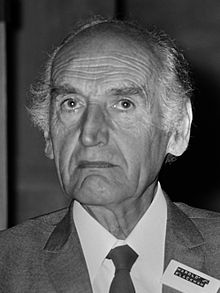
Nicolaas “Nico” Bloembergen (March 11, 1920 – September 5, 2017) was a DutchAmerican physicist and Nobel laureate, recognized for his work in developing driving principles behind nonlinear optics for laser spectroscopy.[1] During his career, he was a professor at both Harvard University and later at the University of Arizona.

In  the first video below in the 9th clip in this series are his words and will be responding to them in the next few weeks.

50 Renowned Academics Speaking About God (Part 1)

Another 50 Renowned Academics Speaking About God (Part 2)

A Further 50 Renowned Academics Speaking About God (Part 3)

_

Died at 97 Dutch American physicist Nicolaas Bloembergen

Published on Sep 8, 2017

Nicolaas “Nico” Bloembergen was born on March 11, 1920 and died on September 5, 2017. He was a Dutch-American physicist and Nobel laureate, recognized for his work in developing driving principles behind nonlinear optics for laser spectroscopy.During his career, he was a professor at both Harvard University and later at the University of Arizona.


An excerpt from phone call I received   from Dr. Nicolaas Bloembergen on July 1, 2016 went something like this: 

I told Dr. B. that the reason I had written him was because he appeared on the You Tube Series RENOWNED ACADEMICS SPEAK ABOUT GOD which Harry Kroto had recommended to me and on that video he had said that he [Dr. Bloembergen] had been raised religious but he had abandoned it. I pointed out that Charles Darwin himself had one point planned to possibly be a preacher and he fell away from his earlier Christianity later when he came up with Evolution. In fact, I just got finished reading Darwin’s Autobiography and in it he talks about going down to see the “grandeur of a Brazilian forest” and how the wonder filled his mind and that “man is more than the mere breath in his body, but later those grand scenes would no longer cause any of those feelings anymore to happen.” That is my view now that this wonderful world screams out to us that there is a designer.   Dr. B responded, “I am familiar with Darwin’s former life and what happened to him.”


What happened to Darwin actually happened to many scientists over the years and that is when they accept the idea of natural selection by chance then many times they leave their former religious beliefs behind.

QUOTE from Nicolaas Bloembergen in You Tube Series “50 Renowned Academics Speaking About God”:

Are you religious?

“No!”

Are you sure of that?

“I am sure of that because I was brought up with some religious background and I have abandoned it.”

Below is my response:

I just finished reading the online addition of the book Darwin, Francis ed. 1892. Charles Darwin: his life told in an autobiographical chapter, and in a selected series of his published letters [abridged edition]. London: John Murray. There are several points that Charles Darwin makes in this book that were very wise, honest, logical, shocking and some that were not so wise. The Christian Philosopher Francis Schaeffer once said of Darwin’s writings, “Darwin in his autobiography and in his letters showed that all through his life he never really came to a quietness concerning the possibility that chance really explained the situation of the biological world. You will find there is much material on this [from Darwin] extended over many many years that constantly he was wrestling with this problem.”


Many other scientists have lost their faith because of evolution.

I am going to quote some of Charles Darwin’s own words and then include the comments of Francis Schaeffer on those words.

 CHARLES DARWIN’S AUTOBIOGRAPHY. Addendum. Written May 1st, 1881 [the year before his death].

“I have said that in one respect my mind has changed during the last twenty or thirty years. Up to the age of thirty, or beyond it, poetry of many kinds, such as the works of Milton, Gray, Byron, Wordsworth, Coleridge, and Shelley, gave me great pleasure, and even as a schoolboy I took intense delight in Shakespeare, especially in the historical plays. I have also said that formerly pictures gave me considerable, and music very great delight. But now for many years I cannot endure to read a line of poetry: I have tried lately to read Shakespeare, and found it so intolerably dull that it nauseated me. I have also almost lost my taste for pictures or music. Music generally sets me thinking too energetically on what I have been at work on, instead of giving me pleasure. I retain some taste for fine scenery, but it does not cause me the exquisite delight which it formerly did….My mind seems to have become a kind of machine for grinding general laws out of large collections of facts, but why this should have caused the atrophy of that part of the brain alone, on which the higher tastes depend, I cannot conceive….The loss of these tastes is a loss of happiness, and may possibly be injurious to the intellect, and more probably to the moral character, by enfeebling the emotional part of our nature.”

Francis Schaeffer commented:

This is the old man Darwin writing at the end of his life. What he is saying here is the further he has gone on with his studies the more he has seen himself reduced to a machine as far as aesthetic things are concerned. I think this is crucial because as we go through this we find that his struggles and my sincere conviction is that he never came to the logical conclusion of his own position, but he nevertheless in the death of the higher qualities as he calls them, art, music, poetry, and so on, what he had happen to him was his own theory was producing this in his own self just as his theories a hundred years later have produced this in our culture. 

Darwin, C. R. to Fordyce, John7 May 1879

“I may state that my judgment often fluctuates . . . In my most extreme fluctuations I have never been an Atheist in the sense of denying the existence of a God. I think that generally (and more and more as I grow older), but not always, that an Agnostic would be the more correct description of my state of mind.”

Francis Schaeffer asserted:

What we find now is that he comes to the place in being agnostic, but as we read through this section on religion what we find is in reality his reason leads him against this position, which is interesting but his theory makes him accept the  position of agnosticism….. I think what you have in Darwin is a magnificent example, although a sad one of what I lecture on in apologetics,  and that is if a man takes a set of nonchristian presuppositions he is forced eventually to be in a place of tension. The more consistent he is with his own nonchristian presuppositions the more he is away from the real world. When he is closer to the real world then he is more illogical to his own presuppositions.

Darwin, C. R. to Doedes, N. D.2 Apr 1873

“But I  may say that the impossibility of conceiving that this grand and wondrous universe, with our conscious selves, arose through chance, seems to me the chief argument for the existence of God; but whether this is an argument of real value, I have NEVER been able to decide.”

Francis Schaeffer observed:

So he sees here exactly the same that I would labor and what Paul gives in Romans chapter one, and that is first this tremendous universe [and it’s form] and the second thing, the mannishness of man and the concept of this arising from chance is very difficult for him to come to accept and he is forced to leap into this, his own kind of Kierkegaardian leap, but he is forced to leap into this because of his presuppositions but when in reality the real world troubles him. He sees there is no third alternative. If you do not have the existence of God then you only have chance. In my own lectures I am constantly pointing out there are only two possibilities, either a personal God or this concept of the impersonal plus time plus chance and Darwin understood this . You will notice that he divides it into the same exact two points that Paul does in Romans chapter one into and that Carl Gustav Jung (1875-1961) will in the problem of existence, the external universe, and man and his consciousness. Paul points out there are these two steps that man is confronted with…

______________

Here below is the Romans passage that Schaeffer is referring to and verse 19 refers to what Schaeffer calls “the mannishness of man” and verse 20 refers to Schaeffer’s other point which is  “the universe and it’s form.”Romans 1:18-22Amplified Bible (AMP) 18 For God’s [holy] wrath and indignation are revealed from heaven against all ungodliness and unrighteousness of men, who in their wickedness repress and hinder the truth and make it inoperative. 19 For that which is known about God is evident to them and made plain in their inner consciousness, because God [Himself] has shown it to them. 20 For ever since the creation of the world His invisible nature and attributes, that is, His eternal power and divinity, have been made intelligible and clearly discernible in and through the things that have been made (His handiworks). So [men] are without excuse [altogether without any defense or justification], 21 Because when they knew and recognized Him as God, they did not honor andglorify Him as God or give Him thanks. But instead they became futile andgodless in their thinking [with vain imaginings, foolish reasoning, and stupid speculations] and their senseless minds were darkened. 22 Claiming to be wise, they became fools [professing to be smart, they made simpletons of themselves]

In 1879 Charles Darwin was applied to by a German student, in a similar manner. The letter was answered by a member of my father’s family, who wrote:–

“Mr. Darwin…considers that the theory of Evolution is quite compatible with the belief in a God; but that you must remember that different persons have different definitions of what they mean by God.” 

Francis Schaeffer commented:

You find a great confusion in his writings although there is a general structure in them. Here he says the word “God” is alright but you find later what he doesn’t take is a personal God. Of course, what you open is the whole modern linguistics concerning the word “God.” is God a pantheistic God? What kind of God is God? Darwin says there is nothing incompatible with the word “God.”

This, however, did not satisfy the German youth, who again wrote to my father, and received from him the following reply:—

” Science has nothing to do with Christ, except in so far as the habit of scientific research makes a man cautious in admitting evidence. For myself, I do not believe that there ever has been any revelation.”

Francis Schaeffer observed:

So he has come to the place as an old man that he doesn’t believe there has been any revelation. In his younger years he held a different position.

The passages which here follow are extracts, somewhat abbreviated, from a part of the Autobiography, written in 1876, in which my father gives the history of his religious views:—“During these two years* (ft note *October 1836 to January 1839.) I was led to think much about religion. Whilst on board the Beagle I was quite orthodox, and I remember being heartily laughed at by several of the officers (though themselves orthodox) for quoting the Bible as an unanswerable authority on some point of morality.

Francis Schaeffer noted:

So you find that as a younger man he did accept the Bible. As an older man he has given up revelation but he is not satisfied with his own answers. He is caught in the tension that modern man is caught in. He is a prefiguration  of the modern man and he himself contributed to. Then Darwin goes on and tells us why he gave up the Bible.

Darwin went on to write:

I suppose it was the novelty of the argument that amused them. But I had gradually come by this time, i.e. 1836 to 1836, to see that the Old Testament was no more to be trusted than the sacred books of the Hindoos. The question then continually rose before my mind and would not be banished,—is it credible that if God were now to make a revelation to the Hindoos, he would permit it to be connected with the belief in Vishnu, Siva, &c., as Christianity is connected with the Old Testament? This appeared to me utterly incredible.

Francis Schaeffer asserted:

Darwin is saying that he gave up the New Testament because it was connected to the Old Testament. He gave up the Old Testament because it conflicted with his own theory. Did he have a real answer himself and the answer is no. At the end of his life we see that he is dehumanized by his position and on the other side we see that he never comes to the place of intellectual satisfaction for himself that his answers were sufficient.

Darwin continued:

“BUT I WAS VERY UNWILLING  TO GIVE UP MY BELIEF; I feel sure of this, for I can well remember often and often inventing day-dreams of old letters between distinguished Romans, and manuscripts being discovered at Pompeii or elsewhere, which confirmed in the most striking manner all that was written in the Gospels.

Francis Schaeffer commented:

This is very sad. He lies on his bunk and the Beagle tosses and turns and he makes daydreams, and his dreams and hopes are that someone would find in Pompeii or some place like this, an old manuscript by a distinguished Roman that would put his stamp of authority on it, which would be able to show that Christ existed. This is undoubtedly what he is talking about. Darwin gave up this hope with great difficulty. I think he didn’t want to come to the position where his accepted presuppositions were driving him. He didn’t want to give it up, just as an older man he understood where it would lead…

———–

The area of Biblical Archaeology has advanced so much since Darwin wrote these words in the 19th century!!!!! ASK YOURSELF THIS SIMPLE QUESTION BEFORE YOU PUT YOUR FAITH IN THE ACCURACY OF THE SCRIPTURES: Is the Bible historically accurate and have I taken the time to examine the evidence? Here are some of the posts I have done in the past on the subject and if you like you could just google these subjects: 1. The Babylonian Chronicleof Nebuchadnezzars Siege of Jerusalem2. Hezekiah’s Siloam Tunnel Inscription. 3. Taylor Prism (Sennacherib Hexagonal Prism)4. Biblical Cities Attested Archaeologically. 5. The Discovery of the Hittites6.Shishak Smiting His Captives7. Moabite Stone8Black Obelisk of Shalmaneser III9A Verification of places in Gospel of John and Book of Acts., 9B Discovery of Ebla Tablets10. Cyrus Cylinder11. Puru “The lot of Yahali” 9th Century B.C.E.12. The Uzziah Tablet Inscription13. The Pilate Inscription14. Caiaphas Ossuary14 B Pontius Pilate Part 214c. Three greatest American Archaeologists moved to accept Bible’s accuracy through archaeology.,

_______________

Darwin also noted:

“But I found it more and more difficult, with free scope given to my imagination, to invent evidence which would suffice to convince me. Thus disbelief crept over me at a very slow rate, but was at last complete. THE RATE WAS SLOW that I felt no distress. Although I did not think much about the existence of a personal God until a considerably later period of my life,”

Francis Schaeffer commented:

So there is something deficient in his position from the beginning. The word of God if it is going to mean something, must mean a personal God. The word “God” is without much meaning otherwise.

_________________

Francis Schaeffer noted that in Darwin’s 1876 Autobiography that Darwin he is going to set forth two arguments for God in this and again you will find when he comes to the end of this that he is in tremendous tension. Darwin wrote, 

“At the present day the most usual argument for the existence of an intelligent God is drawn from the deep inward conviction and feelings which are experienced by most persons.Formerly I was led by feelings such as those just referred to (although I do not think that the religious sentiment was ever strongly developed in me), to the firm conviction of the existence of God and of the immortality of the soul. In my Journal I wrote that whilst standing in the midst of the grandeur of a Brazilian forest, ‘it is not possible to give an adequate idea of the higher feelings of wonder, admiration, and devotion which fill and elevate the mind.’ I well remember my conviction that there is more in man than the mere breath of his body; but now the grandest scenes would not cause any such convictions and feelings to rise in my mind. It may be truly said that I am like a man who has become COLOUR-BLIND.”

Francis Schaeffer remarked:

Now Darwin says when I look back and when I look at nature I came to the conclusion that man can not be just a fly! But now Darwin has moved from being a younger man to an older man and he has allowed his presuppositions to enter in to block his logic, these things at the end of his life he had no intellectual answer for. To block them out in favor of his theory. Remember the letter of his that said he had lost all aesthetic senses when he had got older and he had become a clod himself. Now interesting he says just the same thing, but not in relation to the arts, namely music, pictures, etc, but to nature itself. Darwin said, “But now the grandest scenes would not cause any such convictions  and feelings to rise in my mind. It may be truly said that I am like a man who has become colour-blind…” So now you see that Darwin’s presuppositions have not only robbed him of the beauty of man’s creation in art, but now the universe. He can’t look at it now and see the beauty. The reason he can’t see the beauty is for a very, very , very simple reason: THE BEAUTY DRIVES HIM TO DISTRACTION. THIS IS WHERE MODERN MAN IS AND IT IS HELL. The art is hell because it reminds him of man and how great man is, and where does it fit in his system? It doesn’t. When he looks at nature and it’s beauty he is driven to the same distraction and so consequently you find what has built up inside him is a real death, not  only the beauty of the artistic but the beauty of nature. He has no answer in his logic and he is left in tension.  He dies and has become less than human because these two great things (such as any kind of art and the beauty of  nature) that would make him human  stand against his theory.

________________

Darwin  was consistent with his view of the UNIFORMITY OF  NATURAL CAUSES in a closed system and it cost him the love of music, art and the beauty of nature. TWO OTHER ALSO HELD THIS SAME view  of uniformity of natural causes in a closed system in 1978 when their hit song DUST IN THE WIND rose to the top 10 in the music charts.

_______________________________________

IF WE ARE LEFT WITH JUST THE MACHINE THEN WHAT IS THE FINAL CONCLUSION IF THERE WAS NO PERSONAL GOD THAT CREATED US? Examine the  song DUST IN THE WIND by Kerry Livgren of the group KANSAS which was a hit song in 1978 when it rose to #6 on the charts because so many people connected with the message of the song. It included these words, “All we do, crumbles to the ground though we refuse to see, Dust in the Wind, All we are is dust in the wind, Don’t hang on, Nothing lasts forever but the Earth and Sky, It slips away, And all your money won’t another minute buy.”

Kerry Livgren himself said that he wrote the song because he saw where man was without a personal God in the picture. Solomon pointed out in the Book of Ecclesiastes that those who believe that God doesn’t exist must accept three things. FIRST, death is the end and SECOND, chance and time are the only guiding forces in this life.  FINALLY, power reigns in this life and the scales are never balanced. The Christian can  face death and also confront the world knowing that it is not determined by chance and time alone and finally there is a judge who will balance the scales.

Both Kerry Livgren and the bass player Dave Hope of Kansas became Christians eventually. Kerry Livgren first tried Eastern Religions and Dave Hope had to come out of a heavy drug addiction. I was shocked and elated to see their personal testimony on The 700 Club in 1981 and that same  interview can be seen on You Tube today. Livgren lives in Topeka, Kansas today where he teaches “Diggers,” a Sunday school class at Topeka Bible ChurchDAVE HOPE is the head of Worship, Evangelism and Outreach at Immanuel Anglican Church in Destin, Florida.

The answer to find meaning in life is found in putting your faith and trust in Jesus Christ. The Bible is true from cover to cover and can be trusted.

Thank you again for your time and I know how busy you are.

Everette Hatcher, everettehatcher@gmail.com, http://www.thedailyhatch.org, cell ph 501-920-5733, Box 23416, LittleRock, AR 72221, United States

You can hear DAVE HOPE and Kerry Livgren’s stories from this youtube link:

(part 1 ten minutes)

(part 2 ten minutes)

Kansas – Dust in the Wind (Official Video)

Uploaded on Nov 7, 2009

Pre-Order Miracles Out of Nowhere now at http://www.miraclesoutofnowhere.com

About the film:
In 1973, six guys in a local band from America’s heartland began a journey that surpassed even their own wildest expectations, by achieving worldwide superstardom… watch the story unfold as the incredible story of the band KANSAS is told for the first time in the DVD Miracles Out of Nowhere.

_____________________________

Adrian Rogers on Darwinism

_

Related posts:

FRANCIS SCHAEFFER ANALYZES ART AND CULTURE Part 53 THE BEATLES (Part E, Stg. Pepper’s and John Lennon’s search in 1967 for truth was through drugs, money, laughter, etc & similar to King Solomon’s, LOTS OF PICTURES OF JOHN AND CYNTHIA) (Feature on artist Yoko Ono)

The John Lennon and the Beatles really were on a long search for meaning and fulfillment in their lives  just like King Solomon did in the Book of Ecclesiastes. Solomon looked into learning (1:12-18, 2:12-17), laughter, ladies, luxuries, and liquor (2:1-2, 8, 10, 11), and labor (2:4-6, 18-20). He fount that without God in the picture all […]

FRANCIS SCHAEFFER ANALYZES ART AND CULTURE Part 52 THE BEATLES (Part D, There is evidence that the Beatles may have been exposed to Francis Schaeffer!!!) (Feature on artist Anna Margaret Rose Freeman )

______________   George Harrison Swears & Insults Paul and Yoko Lucy in the Sky with Diamonds- The Beatles The Beatles:   I have dedicated several posts to this series on the Beatles and I don’t know when this series will end because Francis Schaeffer spent a lot of time listening to the Beatles and talking […]

FRANCIS SCHAEFFER ANALYZES ART AND CULTURE Part 51 THE BEATLES (Part C, List of those on cover of Stg.Pepper’s ) (Feature on artist Raqib Shaw )

  The Beatles in a press conference after their Return from the USA Uploaded on Nov 29, 2010 The Beatles in a press conference after their Return from the USA. The Beatles:   I have dedicated several posts to this series on the Beatles and I don’t know when this series will end because Francis […]

FRANCIS SCHAEFFER ANALYZES ART AND CULTURE Part 50 THE BEATLES (Part B, The Psychedelic Music of the Beatles) (Feature on artist Peter Blake )

__________________   Beatles 1966 Last interview I have dedicated several posts to this series on the Beatles and I don’t know when this series will end because Francis Schaeffer spent a lot of time listening to the Beatles and talking and writing about them and their impact on the culture of the 1960’s. In this […]

FRANCIS SCHAEFFER ANALYZES ART AND CULTURE Part 49 THE BEATLES (Part A, The Meaning of Stg. Pepper’s Cover) (Feature on artist Mika Tajima)

_______________ The Beatles documentary || A Long and Winding Road || Episode 5 (This video discusses Stg. Pepper’s creation I have dedicated several posts to this series on the Beatles and I don’t know when this series will end because Francis Schaeffer spent a lot of time listening to the Beatles and talking and writing about […]

FRANCIS SCHAEFFER ANALYZES ART AND CULTURE PART 48 “BLOW UP” by Michelangelo Antonioni makes Philosophic Statement (Feature on artist Nancy Holt)

_______________ Francis Schaeffer pictured below: _____________________ I have included the 27 minute  episode THE AGE OF NONREASON by Francis Schaeffer. In that video Schaeffer noted,  ” Sergeant Pepper’s Lonely Hearts Club Band…for a time it became the rallying cry for young people throughout the world. It expressed the essence of their lives, thoughts and their feelings.” How Should […]

FRANCIS SCHAEFFER ANALYZES ART AND CULTURE Part 47 Woody Allen and Professor Levy and the death of “Optimistic Humanism” from the movie CRIMES AND MISDEMEANORS Plus Charles Darwin’s comments too!!! (Feature on artist Rodney Graham)

Crimes and Misdemeanors: A Discussion: Part 1 ___________________________________ Today I will answer the simple question: IS IT POSSIBLE TO BE AN OPTIMISTIC SECULAR HUMANIST THAT DOES NOT BELIEVE IN GOD OR AN AFTERLIFE? This question has been around for a long time and you can go back to the 19th century and read this same […]

FRANCIS SCHAEFFER ANALYZES ART AND CULTURE PART 46 Friedrich Nietzsche (Featured artist is Thomas Schütte)

____________________________________ Francis Schaeffer pictured below: __________ Francis Schaeffer has written extensively on art and culture spanning the last 2000years and here are some posts I have done on this subject before : Francis Schaeffer’s “How should we then live?” Video and outline of episode 10 “Final Choices” , episode 9 “The Age of Personal Peace and Affluence”, episode 8 […]

FRANCIS SCHAEFFER ANALYZES ART AND CULTURE Part 45 Woody Allen “Reason is Dead” (Feature on artists Allora & Calzadilla )

Love and Death [Woody Allen] – What if there is no God? [PL] ___________ _______________ How Should We then Live Episode 7 small (Age of Nonreason) #02 How Should We Then Live? (Promo Clip) Dr. Francis Schaeffer 10 Worldview and Truth Two Minute Warning: How Then Should We Live?: Francis Schaeffer at 100 Francis Schaeffer […]

FRANCIS SCHAEFFER ANALYZES ART AND CULTURE Part 44 The Book of Genesis (Featured artist is Trey McCarley )

___________________________________ Francis Schaeffer pictured below: ____________________________ Francis Schaeffer “BASIS FOR HUMAN DIGNITY” Whatever…HTTHR Dr. Francis schaeffer – The flow of Materialism(from Part 4 of Whatever happened to human race?) Dr. Francis Schaeffer – The Biblical flow of Truth & History (intro) Francis Schaeffer – The Biblical Flow of History & Truth (1) Dr. Francis Schaeffer […]

____________

RESPONDING TO HARRY KROTO’S BRILLIANT RENOWNED ACADEMICS!! Part 147 Massimo Pigliucci, Philosophy, CUNY-City College, “[Reason] is opposed of course to FAITH”


Harry Kroto pictured below:

_________________

On November 21, 2014 I received a letter from Nobel Laureate Harry Kroto and it said:

…Please click on this URL http://vimeo.com/26991975

and you will hear what far smarter people than I have to say on this matter. I agree with them.

Harry Kroto

_____________

Massimo Pigliucci

From Wikipedia, the free encyclopedia
Massimo Pigliucci
Massimo Pigliucci.jpg
Born January 16, 1964 (age 53)
MonroviaLiberia
Alma mater
School Scientific skepticismsecular humanismStoicism
Main interests
Philosophy of science
Philosophy of pseudoscience
Relationship between science and religion
Demarcation problem

Massimo Pigliucci (Italian pronunciation: [ˈmassimo piʎˈʎuttʃi]; born January 16, 1964)[1] is Professor of Philosophy at CUNYCity College,[2] formerly co-host of the Rationally Speaking Podcast,[3] and formerly the editor in chief for the online magazine Scientia Salon.[4] He is an outspoken critic of pseudoscience[5][6] and creationism,[7] and an advocate for secularism[8], science education[9] and modern Stoicism.

Biography[edit]

Pigliucci was born in Monrovia, Liberia and raised in Rome, Italy.[1] He has a doctorate in genetics from the University of FerraraItaly, a PhD in biology from the University of Connecticut, and a PhD in philosophy of science from the University of Tennessee.[10] He is a fellow of the American Association for the Advancement of Science and of the Committee for Skeptical Inquiry.[1]

Pigliucci was formerly a professor of ecology and evolution at Stony Brook University. He explored phenotypic plasticitygenotype-environment interactions, natural selection, and the constraints imposed on natural selection by the genetic and developmental makeup of organisms.[11] In 1997, while working at the University of Tennessee, Pigliucci received the Theodosius Dobzhansky Prize,[12] awarded annually by the Society for the Study of Evolution[1] to recognize the accomplishments and future promise of an outstanding young evolutionary biologist. As a philosopher, Pigliucci is interested in the structure and foundations of evolutionary theory, the relationship between science and philosophy, and the relationship between science and religion.[10] He is a proponent of the extended evolutionary synthesis.[13]

Pigliucci writes regularly for Skeptical Inquirer on topics such as climate change denialintelligent designpseudoscience, and philosophy.[14] He has also written for Philosophy Now and maintains a blog called “Rationally Speaking”.[15] He has debated “deniers of evolution” (young-earth creationists and intelligent design proponents), including young earth creationists Duane Gish and Kent Hovind and intelligent design proponents William Dembski and Jonathan Wells, on many occasions.[16][17][18][19]

Michael ShermerJulia Galef and Massimo Pigliucci record live at NECSS 2013

Critical thinking and scepticism[edit]

While Pigliucci is an atheist himself,[20] he does not believe that science necessarily demands atheism because of two distinctions: the distinction between methodological naturalism and philosophical naturalism, and the distinction between value judgements and matters of fact. He believes that many scientists and science educators fail to appreciate these differences.[9] Pigliucci has criticized New Atheist writers for embracing what he considers to be scientism (although he largely excludes philosopher Daniel Dennett from this charge).[21] In a discussion of his book Answers for Aristotle: How Science and Philosophy Can Lead Us to a More Meaningful Life, Pigliucci told Skepticality podcast host Derek Colanduno, “Aristotle was the first ancient thinker to really take seriously the idea that you need both empirical facts, you need an evidence-based approach to the world and you need to be able to reflect on the meaning of those facts… If you want answers to moral questions then you don’t ask the neurobiologist, you don’t ask the evolutionary biologist, you ask the philosopher.”[22]

Pigliucci describes the mission of skeptics, referencing Carl Sagan‘s Demon Haunted World: Science as a Candle in the Dark saying “What skeptics are about is to keep that candle lit and spread it as much as possible”.[23] Pigliucci serves on the board of NYC Skeptics and on the advisory board of the Secular Coalition for America.[8]

In 2001, he debated William Lane Craig over the existence of God.[24]

Massimo Pigliucci criticised the newspaper article by Pope Francis entitled, “An open dialogue with non-believers”. Pigliucci viewed the article as a monologue rather than a dialogue and, in a response personally addressed to Pope Francis, wrote that the Pope only offered non-believers “a reaffirmation of entirely unsubstantiated fantasies about God and his Son…followed by a confusion between the concept of love and truth, the whole peppered by a significant amount of historical revisionism and downright denial of the ugliest facets of your Church (and you will notice that I haven’t even brought up the pedophilia stuff!).”[25]

Rationally Speaking[edit]

In August 2000 Massimo started with a monthly internet column called Rationally Speaking. In August 2005, the column became a blog,[26] where he wrote posts until March 2014.[27] Since 1 February 2010, he co-hosted the bi-weekly Rationally Speaking podcast together with Julia Galef, whom he first met at the Northeast Conference on Science and Skepticism, held in September 2009.[28] The podcast is produced by the New York City Skeptics. He left the podcast in 2015 to pursue other interests.[29] In 2010, Neil DeGrasse Tyson explained on the show his justification for spending large amounts of government money on space programs. He eventually printed the transcript of his performance as a guest on the show in his book Space Chronicles as a full chapter covering eight pages.[30] Another episode in which Tyson explained his position on the label “atheism” received attention on NPR.[31]

His comments can be found on the 2nd  video and the 57th clip in this series. Below the videos you will find his words.

50 Renowned Academics Speaking About God (Part 1)

Another 50 Renowned Academics Speaking About God (Part 2)

A Further 50 Renowned Academics Speaking About God (Part 3)

________

From Everette Hatcher, http://www.thedailyhatch.org, P.O. Box 23416, Little Rock , AR 72221

Dear  Professor MASSIMO PIGLICUCCI,

I have really enjoyed watching your debate with William Lane Craig on You Tube  and your discussion with Daniel Dennett on the limits of science. I have had the pleasure of both corresponding with Professor Dennett and reading his book DARWIN’S DANGEROUS IDEA earlier this year.

I noticed that you graduated from the University of Tennessee at Knoxville. Although I have never personally been a Tennessee fan, I was told by my grandfather that a cousin of his was a kicker for the Vols. My grandfather grew up in Franklin, Tennessee with his brothers and sister. They used to get up at 2 am on Saturdays and travel to Knoxville by 1pm for the kickoff. My grandfather attended the University of Tennessee in 1921-23 until his money ran out. My grandfather told me he was relatives with Buck Hatcher who was a star player for the Vols.

Sure enough Buck Hatcher did play for the Vols and he kicked a 53 yard field goal on Nov 13, 1920 to set a record.  Later my grandfather’s brother Mack had the “Mack Hatcher Memorial Highway” named after him. He was a Gideon and often helped those who needed help in his Williamson County. (A Gideon is one who gives out Bibles). He stood six foot eleven and his sister Sara Lou was six foot four.

In the You Tube series RENOWNED ACADEMICS SPEAKING ABOUT GOD I found the following quote from you:

Reason of course can be defined in a variety of ways, but these are pretty good approximations. Cause is a explanation or justification for an event. You have a reason to believe. There was a reason I got up from my and went to the refrigerator and got a beer because I was THIRSTY. That is a REASON.  

The Power of the mind to think, understand and form judgments by the course of logic is what we are talking about in this context. This is opposed of course to FAITH, which is the COMPLETE trust or confidence in someone or something. Notice the emphasis on COMPLETE for some belief in God or doctrine of religion based on SPIRITUAL APPREHENSION rather than truth. That is the interesting premise here. SPIRITUAL APPREHENSION, what the heck is SPIRITUAL APPREHENSION? How do people spiritually apprehend things? I can talk about how people LOGICALLY or RATIONALLY think about things, but it is hard to get my mind wrapped around the idea of spiritual apprehension. I suspect because there is no such thing as spiritual apprehension.

__


Let me respond with to your assertion that faith is totally opposed to logic with these writings below by Francis Schaeffer:

Image result for francis schaeffer

What is Faith?

Posted on July 29, 2012by 

What is faith?  Faith is often characterized as blind belief just because we want it to be true.  It’s sometimes thought to be belief in spite of evidence to the contrary.  But is that really what Biblical faith is like or is it a strawman argument that’s easily knocked down to make a point errantly?

Francis Schaeffer presents this story about faith:

Suppose we are climbing in the Alps and are very high on the bare rock, and suddenly the fog rolls in. The guide turns to us and says that the ice is forming and that there is no hope; before morning we will all freeze to death here on the shoulder of the mountain. Simply to keep warm the guide keeps us moving in the dense fog further out on the shoulder until none of us have any idea where we are. After an hour or so, someone says to the guide, “Suppose I dropped and hit a ledge ten feet down in the fog. What would happen then?” The guide would say that you might make it until the morning and thus live. So, with absolutely no knowledge or any reason tosupport his action, one of the group hangs and drops into the fog. This would be one kind of faith, a leap of faith.

Suppose, however, after we have worked out on the shoulder in the midst of the fog and the growing ice on the rock, we had stopped and we heard a voice which said, “You cannot see me, but I know exactly where you are from your voices.  I am on another ridge. I have lived in these mountains, man and boy, for over sixty years and I know every foot of them. I assure you that ten feet below you there is a ledge. If you hang and drop, you can make it through the night and I will get you in the morning.

I would not hang and drop at once, but would ask questions to try to ascertain if the man knew what he was talking about and it he was not my enemy. In the Alps, for example, I would ask him his name. If the name he gave me was the name of a family from that part of the mountains, it would count a great deal to me. In the Swiss Alps there are certain family names that indicate mountain families of that area. In my desperate situation, even though time would be running out, I would ask him what to me would be the adequate and sufficient questions, and when I became convinced by his answers, then I would hang and drop.

Schaeffer’s story captures the idea that faith is not blind.  It is based on reason, logic, information, but lives in a situation where a gap exists.  Faith bridges the gap by trusting in someone or something in a better position than yourself.  In this story, faith was put in the knowledge of the man who grew up in the Alps.  It was a rational, tested faith based on questioning the man’s knowledge, but it was still faith because the ledge below couldn’t be seen, touched or definitively known.  This idea that faith is well informed and not irrational is the first point to keep in mind.

The second point is about the object of faith.  When you walk across ice, your trust is put in the ice to hold your weight.  Ice is the object of your faith.  If your trust is misplaced, you’ll quickly be wet, cold and in significant danger.  It wouldn’t have mattered whether you have a little faith in the ice or trust it fully.  The strength of the object of faith is what counts.  It the story it was the knowledge of the guide in the fog.

Christian faith captures both of these ideas.  First, God provides evidence of Himself in creation, in prophecy, in archeology, in Scripture’s consistency across 40+ authors and in the life of Jesus.  He doesn’t leave us without witness or guidance.  Second, He then requires us to make Jesus the object of our faith.  Jesus’ sinless life, substitutionary death and bodily resurrection are what matter.  As Paul said, if Jesus didn’t rise from the dead our faith is in vain (1 Corinthians 15:17). Putting trust in the Creator of the universe rather than our own feeble attempts to be good doesn’t seem like much of a stretch when you look at the history of mankind’s failures an our own individual struggles.  We have all sinned and fall short of the glory of God and must put our faith in Jesus’ work to wash our sin away so we can enter God’s presence.

__________

The answer to finding out more about God is found in putting your faith and trust in Jesus Christ. The Bible is true from cover to cover and can be trusted. Please consider taking time to read Isaiah chapter 53 and if you have any interest then watch the You Tube clip “The Biography of the King” by Adrian Rogers which discusses that chapter in depth.

Is the Bible historically accurate? Here are some of the posts I have done in the past on the subject: 1. The Babylonian Chronicleof Nebuchadnezzars Siege of Jerusalem2. Hezekiah’s Siloam Tunnel Inscription. 3. Taylor Prism (Sennacherib Hexagonal Prism)4. Biblical Cities Attested Archaeologically. 5. The Discovery of the Hittites6.Shishak Smiting His Captives7. Moabite Stone8Black Obelisk of Shalmaneser III9A Verification of places in Gospel of John and Book of Acts., 9B Discovery of Ebla Tablets10. Cyrus Cylinder11. Puru “The lot of Yahali” 9th Century B.C.E.12. The Uzziah Tablet Inscription13. The Pilate Inscription14. Caiaphas Ossuary14 B Pontius Pilate Part 214c. Three greatest American Archaeologists moved to accept Bible’s accuracy through archaeology.

Below is a piece of that evidence given by Francis Schaeffer concerning the accuracy of the Bible.

Image result for francis schaeffer

TRUTH AND HISTORY (chapter 5 of WHATEVER HAPPENED TO THE HUMAN RACE?)

In the previous chapter we saw that the Bible gives us the explanation for the existence of the universe and its form and for the mannishness of man. Or, to reverse this, we came to see that the universe and its form and the mannishness of man are a testimony to the truth of the Bible. In this chapter we will consider a third testimony: the Bible’s openness to verification by historical study.

Christianity involves history. To say only that is already to have said something remarkable, because it separates the Judeo-Christian world-view from almost all other religious thought. It is rooted in history.

The Bible tells us how God communicated with man in history. For example, God revealed Himself to Abraham at a point in time and at a particular geographical place. He did likewise with Moses, David, Isaiah, Daniel and so on. The implications of this are extremely important to us. Because the truth God communicated in the Bible is so tied up with the flow of human events, it is possible by historical study to confirm some of the historical details.

It is remarkable that this possibility exists. Compare the information we have from other continents of that period. We know comparatively little about what happened in Africa or South America or China or Russia or even Europe. We see beautiful remains of temples and burial places, cult figures, utensils, and so forth, but there is not much actual “history” that can be reconstructed, at least not much when compared to that which is possible in the Middle East.

When we look at the material which has been discovered from the Nile to the Euphrates that derives from the 2500-year span before Christ, we are in a completely different situation from that in regard to South America or Asia. The kings of Egypt and Assyria built thousands of monuments commemorating their victories and recounting their different exploits. Whole libraries have been discovered from places like Nuzu and Mari and most recently at Elba, which give hundreds of thousands of texts relating to the historical details of their time. It is within this geographical area that the Bible is set. So it is possible to find material which bears upon what the Bible tells us.

The Bible purports to give us information on history. Is the history accurate? The more we understand about the Middle East between 2500 B.C. and A.D. 100, the more confident we can be that the information in the Bible is reliable, even when it speaks about the simple things of time and place.

(This material below is under footnote #94)

The site of the biblical city called Lachish is about thirty miles southwest of Jerusalem. This city is referred to on a number of occasions in the Old Testament. Imagine a busy city with high walls surrounding it, and a gate in front that is the only entrance to the city. We know so much about Lachish from archaeological studies that a reconstruction of the whole city has been made in detail. This can be seen at the British Museum in the Lachish Room in the Assyrian section.

There is also a picture made by artists in the eighth century before Christ, the Lachish Relief, which was discovered in the city of Nineveh in the ancient Assyria. In this picture we can see the Jewish inhabitants of Lachish surrendering to Sennacherib, the king of Assyria. The details in the picture and the Assyrian writing on it give the Assyrian side of what the Bible tells us in Second Kings:

2 Kings 18:13-16

New American Standard Bible (NASB)

13 Now in the fourteenth year of King Hezekiah, Sennacherib king of Assyria came up against all the fortified cities of Judah and seized them. 14 Then Hezekiah king of Judah sent to the king of Assyria at Lachish, saying, “I have done wrong. Withdraw from me; whatever you impose on me I will bear.” So the king of Assyria required of Hezekiah king of Judah three hundred talents of silver and thirty talents of gold. 15 Hezekiah gave him all the silver which was found in the house of the Lord, and in the treasuries of the king’s house. 16 At that time Hezekiah cut off the gold from the doors of the temple of the Lord, and from the doorposts which Hezekiah king of Judah had overlaid, and gave it to the king of Assyria.

________


We should notice two things about this. First, this is a real-life situation–a real siege of a real city with real people on both sides of the war–and it happened at a particular date in history, near the turn of the eighth century B.C. Second, the two accounts of this incident in 701 B.C. (the account from the Bible and the Assyrian account from Nineveh) do not contradict, but rather confirm each other. The history of Lachish itself is not so important for us, but some of its smaller historical details.


Image result for British Museum in the Lachish Room

_____________


_

The Assyrian king Sennacherib sits on his luxurious chair on a low mound. There is a tent behind him. His commander-in-chief stands before him (in a very close proximity) and greets him after conquering the city of Lachish. Assyrian soldiers (the king’s bodyguards) wear their exquisite military uniform and carry their weapons. Prisoners from Lachish are being reviewed and presented to the king. One prostrates and another two kneel; they seem to ask for mercy. Most likely, they were later beheaded. The king obviously had been watching the battle and its victorious aftermath. Neo-Assyrian Period, 700-692 BCE. From Nineveh (modern-day Mosul Governorate, Iraq), panels 11-13, Room XXXVI of the southwest palace; the heartland of the Assyrian Empire.The British Museum, London. Photo © Osama S. M. Amin.

The finale scene! The Assyrian King Sennacherib sits on his luxurious chair. His commander-in-chief stands before the King (in a very close proximity) and greets him after conquering the city of Lachish. Four high "soldiers" stand behind their leader; they wear their exquisite military uniform and carry their weapons. Prisoners from Lachish are being reviewed and presented to the King. One prostrates, another two kneel; they seem to ask for mercy to save their lives. Most likely, they were beheaded later on. The British Museum, London. Photo © Osama S. M. Amin.

Related posts:

FRANCIS SCHAEFFER ANALYZES ART AND CULTURE Part 41 Sarvepalli Radhakrishnan (Featured artist is Marina Abramović)

FRANCIS SCHAEFFER ANALYZES ART AND CULTURE Part 40 Timothy Leary (Featured artist is Margaret Keane)

FRANCIS SCHAEFFER ANALYZES ART AND CULTURE Part 39 Tom Wolfe (Featured artist is Richard Serra)

FRANCIS SCHAEFFER ANALYZES ART AND CULTURE Part 38 Woody Allen and Albert Camus “There is but one truly serious philosophical problem, and that is suicide” (Feature on artist Hamish Fulton Photographer )

FRANCIS SCHAEFFER ANALYZES ART AND CULTURE Part 37 Mahatma Gandhi and “Relieving the Tension in the East” (Feature on artist Luc Tuymans)

FRANCIS SCHAEFFER ANALYZES ART AND CULTURE Part 36 Julian Huxley:”God does not in fact exist, but act as if He does!” (Feature on artist Barry McGee)

FRANCIS SCHAEFFER ANALYZES ART AND CULTURE Part 35 Robert M. Pirsig (Feature on artist Kerry James Marshall)

FRANCIS SCHAEFFER ANALYZES ART AND CULTURE Part 34 Aleksandr Solzhenitsyn (Feature on artist Shahzia Sikander)

FRANCIS SCHAEFFER ANALYZES ART AND CULTURE Part 33 Aldous Huxley (Feature on artist Matthew Barney )

FRANCIS SCHAEFFER ANALYZES ART AND CULTURE Part 32 Steven Weinberg and Woody Allen and “The Meaningless of All Things” (Feature on photographer Martin Karplus )

FRANCIS SCHAEFFER ANALYZES ART AND CULTURE Part 31 David Hume and “How do we know we know?” (Feature on artist William Pope L. )

FRANCIS SCHAEFFER ANALYZES ART AND CULTURE Part 30 Rene Descartes and “How do we know we know?” (Feature on artist Olafur Eliasson)

FRANCIS SCHAEFFER ANALYZES ART AND CULTURE Part 29 W.H. Thorpe and “The Search for an Adequate World-View: A Question of Method” (Feature on artist Jeff Koons)

FRANCIS SCHAEFFER ANALYZES ART AND CULTURE Part 28 Woody Allen and “The Mannishness of Man” (Feature on artist Ryan Gander)

FRANCIS SCHAEFFER ANALYZES ART AND CULTURE Part 27 Jurgen Habermas (Featured artist is Hiroshi Sugimoto)

FRANCIS SCHAEFFER ANALYZES ART AND CULTURE Part 26 Bettina Aptheker (Featured artist is Krzysztof Wodiczko)

FRANCIS SCHAEFFER ANALYZES ART AND CULTURE Part 25 BOB DYLAN (Part C) Francis Schaeffer comments on Bob Dylan’s song “Ballad of a Thin Man” and the disconnect between the young generation of the 60’s and their parents’ generation (Feature on artist Fred Wilson)

FRANCIS SCHAEFFER ANALYZES ART AND CULTURE Part 24 BOB DYLAN (Part B) Francis Schaeffer comments on Bob Dylan’s words from HIGHWAY 61 REVISITED!! (Feature on artist Susan Rothenberg)

FRANCIS SCHAEFFER ANALYZES ART AND CULTURE Part 23 BOB DYLAN (Part A) (Feature on artist Josiah McElheny)Francis Schaeffer on the proper place of rebellion with comments by Bob Dylan and Samuel Rutherford

FRANCIS SCHAEFFER ANALYZES ART AND CULTURE Part 22 “The School of Athens by Raphael” (Feature on the artist Sally Mann)

FRANCIS SCHAEFFER ANALYZES ART AND CULTURE Part 21 William B. Provine (Feature on artist Andrea Zittel)

FRANCIS SCHAEFFER ANALYZES ART AND CULTURE Part 20 Woody Allen and Materialistic Humanism: The World-View of Our Era (Feature on artist Ida Applebroog)

FRANCIS SCHAEFFER ANALYZES ART AND CULTURE Part 19 Movie Director Luis Bunuel (Feature on artist Oliver Herring)

FRANCIS SCHAEFFER ANALYZES ART AND CULTURE Part 18 “Michelangelo’s DAVID is the statement of what humanistic man saw himself as being tomorrow” (Feature on artist Paul McCarthy)

FRANCIS SCHAEFFER ANALYZES ART AND CULTURE Part 17 Francis Schaeffer discusses quotes of Andy Warhol from “The Observer June 12, 1966″ Part C (Feature on artist David Hockney plus many pictures of Warhol with famous friends)

FRANCIS SCHAEFFER ANALYZES ART AND CULTURE Part 16 Francis Schaeffer discusses quotes of Andy Warhol from “The Observer June 12, 1966″ Part B (Feature on artist James Rosenquist plus many pictures of Warhol with famous friends)

FRANCIS SCHAEFFER ANALYZES ART AND CULTURE Part 15 Francis Schaeffer discusses quotes of Andy Warhol from “The Observer June 12, 1966″ Part A (Feature on artist Robert Indiana plus many pictures of Warhol with famous friends)

FRANCIS SCHAEFFER ANALYZES ART AND CULTURE Part 14 David Friedrich Strauss (Feature on artist Roni Horn )

FRANCIS SCHAEFFER ANALYZES ART AND CULTURE Part 13 Jacob Bronowski and Materialistic Humanism: The World-View of Our Era (Feature on artist Ellen Gallagher )

FRANCIS SCHAEFFER ANALYZES ART AND CULTURE Part 12 H.J.Blackham and Materialistic Humanism: The World-View of Our Era (Feature on artist Arturo Herrera)

FRANCIS SCHAEFFER ANALYZES ART AND CULTURE Part 11 Thomas Aquinas and his Effect on Art and HOW SHOULD WE THEN LIVE? Episode 2: THE MIDDLES AGES (Feature on artist Tony Oursler )

FRANCIS SCHAEFFER ANALYZES ART AND CULTURE Part 10 David Douglas Duncan (Feature on artist Georges Rouault )

FRANCIS SCHAEFFER ANALYZES ART AND CULTURE Part 9 Jasper Johns (Feature on artist Cai Guo-Qiang )

FRANCIS SCHAEFFER ANALYZES ART AND CULTURE Part 8 “The Last Year at Marienbad” by Alain Resnais (Feature on artist Richard Tuttle and his return to the faith of his youth)

FRANCIS SCHAEFFER ANALYZES ART AND CULTURE Part 7 Jean Paul Sartre (Feature on artist David Hooker )

FRANCIS SCHAEFFER ANALYZES ART AND CULTURE Part 6 The Adoration of the Lamb by Jan Van Eyck which was saved by MONUMENT MEN IN WW2 (Feature on artist Makoto Fujimura)

FRANCIS SCHAEFFER ANALYZES ART AND CULTURE Part 5 John Cage (Feature on artist Gerhard Richter)

FRANCIS SCHAEFFER ANALYZES ART AND CULTURE Part 4 ( Schaeffer and H.R. Rookmaaker worked together well!!! (Feature on artist Mike Kelley Part B )

FRANCIS SCHAEFFER ANALYZES ART AND CULTURE Part 3 PAUL GAUGUIN’S 3 QUESTIONS: “Where do we come from? What art we? Where are we going? and his conclusion was a suicide attempt” (Feature on artist Mike Kelley Part A)

FRANCIS SCHAEFFER ANALYZES ART AND CULTURE Part 2 “A look at how modern art was born by discussing Monet, Renoir, Pissaro, Sisley, Degas,Cezanne, Van Gogh, Gauguin, Seurat, and Picasso” (Feature on artist Peter Howson)

FRANCIS SCHAEFFER ANALYZES ART AND CULTURE Part 1 HOW SHOULD WE THEN LIVE? “The Roman Age” (Feature on artist Tracey Emin)


_______

FRANCIS SCHAEFFER ANALYZES ART AND CULTURE PART 180 Nat Hentoff, historian,atheist, pro-life advocate, novelist, jazz and country music critic, and syndicated columnist (Featured artist is Kiki Smith )

__

Nat Hentoff like and Milton Friedman and John Hospers was a hero to Libertarians. Over the years I had the opportunity to correspond with some prominent Libertarians such as Friedman and Hospers. Friedman was very gracious, but Hospers was not. I sent a cassette tape of Adrian Rogers on Evolution to John Hospers in May of 1994 which was the 10th anniversary of Francis Schaeffer’s passing and I promptly received a typed two page response from Dr. John Hospers. Dr. Hospers had both read my letter and all the inserts plus listened to the whole sermon and had some very angry responses. If you would like to hear the sermon from Adrian Rogers and read the transcript then refer to my earlier post at this link.  Earlier I posted the comments made by Hospers in his letter to me and you can access those posts by clicking on the links in the first few sentences of this post or you can just google “JOHN HOSPERS FRANCIS SCHAEFFER” or “JOHN HOSPERS ADRIAN ROGERS.”

Image result for john hospers francis schaeffer

__

Image result for nat hentoff milton friedman

Likewise I read a lot of material from Nat Hentoff and I wrote him several letters. Unfortunately I never got a letter in response. I did admire many things about his life and one of the things was his position on racial equality and that is what this post is about today.

Nat Hentoff on abortion

Published on Nov 5, 2016

__

This the last on my series on Nat Hentoff. He was a spokesman for racial equality at an early time. I grew up in Memphis and was a resident when MLK Jr. was unfortunately assassinated. Both Nat Hentoff and Francis Schaeffer  spoke out strongly against racial segregation. In today’s post I want to look at what they both stood for in this area of racial equality.

Francis Schaeffer: The Man and His Message
Jerram Barrs 

Professor of Christian Studies and Contemporary Culture and
Resident Scholar of the Francis A. Schaeffer Institute 

Introduction 

Francis Schaeffer never presented himself as an academic apologist, as a philosopher, as a theologian, or as a scholar. Instead, he spoke of himself as an evangelist and a pastor, and this truly is how he thought about the ministry that God had graciously given him.

Racial Equality 

This sense of the unique dignity of all human persons also filled Schaeffer with a deep passion for racial equality and reconciliation, both in his own personal life and in his teaching. We can readily see this in examples from his college days when, as a very young believer, he would walk across the fields from the college to teach a class of African-American children each Sunday afternoon; and when he regularly visited the African-American janitor from the college when he became ill—Schaeffer would go to the man’s home to read the Scriptures and to pray with him.

This valuing of all men and women showed too in the way people of all races were welcomed to the Schaeffers’ home at L’Abri in Switzerland. He was happy to take the wedding service of Interracial couples, despite, in the case of two special friends of ours, the anger of the white parents (a minister in Britain and his wife) at Schaeffer’s “aiding and abetting marriage between blacks and whites.” I well remember how disturbed some white Christians were by his words in Whatever Happened to the Human Race?—at his speaking with such passion about the injustice and wickedness of slavery and the slave trade. These views on race may have seemed, particularly at that time, unusual for someone of Schaeffer’s strongly conservative views about the Bible and about moral and social issues. But he never felt constrained by a “system,” whether it was some particular detail of a theological system that seemed imposed on Scripture rather than drawn from it,15 or a political system of thought that had undermined evangelical concern for those who were discriminated against or downtrodden.

Human Life 

This approach of always going back to biblical foundations enabled Schaeffer to have the freedom to think about subjects that were not normally matters of discussion or concern among evangelical Christians. This is true with regard to human life issues. He began to address the problems of abortion, infanticide, and euthanasia long before most other evangelicals. The reason for this was his deep sense that human persons are made in the image of God and are therefore to be treasured by us.

Just two years before his death, Schaeffer said in a lecture entitled “Priorities”: “We must understand that human life stands at a unique place. Human life stands at a crucial place because there is an unbreakable link between the existence of the infinite personal God and the unique dignity, intrinsic dignity of people. If God does not exist and he has not made people in his own image, there is no basis for an intrinsic, unique dignity of human life.”13 For Schaeffer, his conviction that Scripture teaches that we are God’s image-bearers continually fed his passion to help alienated young people see that they had dignity and value, and also challenged him to speak up for the unborn, for the newborn, for the handicapped, and for the elderly.

© 2006 Jerram Barrs. This article originally appeared in the November 2006 edition of Reformation 21: The Online Magazine of the Alliance of Confessing Evangelicals. It is used by permission. For more information or permission to reprint, contact covenantseminary@covenantseminary.edu. 

The Seminary of the Presbyterian Church in America 

12330 Conway Road, Saint Louis, MO 63141 

THE SCHAEFFER LEGACY PROJECT – INTERVEW WITH SYLVESTER JACOBS

L’Abri 1974 (England) – Sylvester & Simone Jacobs


Nat Hentoff Interview by Monk Rowe – 1/12/2007 – NYC

(This article originally had some offensive racial language [which Hentoff was quoting from other people] in it and I have attempted to replace all the objectionable words.)

Through the Racial Looking Glass

By Nat Hentoff

A Perceptive Report on the American Negro and His New Militancy for Uncompromising Equality

During a British concert last fall, Dizzy Gillespie dedicated a number to “Mother Africa”. Looking at the audience with a characteristically mocking smile, he added, “We’re going to take over the world, so you had better get used to it.”

The listeners chuckled, secure in their own freedom from prejudice and convinced that Dizzy was just clowning again. A few nights later, a group of British jazzmen held a private party in honor of Gillespie. Toward dawn, Dizzy burst into an impromptu lecture:

“You people had better just lie down and die. You’ve lost Africa and Asia, and now they are cutting out from white power everywhere. You’d better give up or learn how it fells being a minority.”

Dizzy was still laughing, but he wasn’t clowning. Gillespie is no racist in the sense of the bitter, separatist sects such as Elijah Muhammad’s Temples of Islam. He has led several integrated bands and has many nontoken white friends; but Dizzy’s irrressible race pride does symbolize partly the accelerating change in American Negroes’ attitudes towards whites-including white liberals-and toward themselves.

They are generating those “winds of social revolution” which labor leader A. Philip Randolph has warned the A.F.L. C.I.O., “are blowing on every institution on the country.” Some of the winds are reverse and destructive and represent ugly reverse racism-Crow Jim. Others are inchoate and so far are powered more by smoldering emotions than by specific programs. The strongest are those forces for immediate and final integration which are directed by varying techniques by such groups as the N.A.A.C.P., and the Congress of Racial Equality, and Martin Luther King’s Southern Christian Leadership Conference.

The one organic change which now applies to nearly all Negro adults—including the vast majority of the unorganized—has been underlined by James Baldwin: “The American Negro can no longer be, and will never be again, controlled by white America’s image of him.” The intensity and extent of the self-emancipation are revealed in comedian Dick Gregory’s explosion during a candid interview with Paul Krassner in The Realist:

“I’m so @#$%@ sick and tired of a white man telling us about us-he can’t. He tells us, `Wait, take your time.’ You can’t tell me to wait. You’re not black 24 hours a day… This is the right that the white man has been assuming for years-that he can assume to know more about us than we know about ourselves. And this is wrong. Because he don’t. He knows about us what we want him to know. He never follows us home… We are better qualified to write about the white man in this country than he’s damn-near qualified to write about us. Because he do things around us because he don’t count us that his best friends know anything about.”

The Negro maid has certainly observed more about her employers than they have realized. The employer, playwright Lorraine Hansberry adds, “doesn’t go to the maid’s house. You see, people get this all confused. They think the alienation is equal on both sides. It isn’t. We have been washing everybody’s underwear for 300 years. We know when yours is not clean.”

Beyond this sense of having a superior knowlege of the battleground, there is also the overwhelming realization among Negroes that even though they have intimately known white weaknesses, they have nonetheless allowed their own self-image to be imposed on them by the majority culture. There is an awakening insight that they need no longer be perpetually and pervasively on the defensive.

When Joe Louis first came to New York from Detroit, he stubbornly refused photographers’ requests that he pose eating watermelon. He was very fond of the fruit, but he told them he hated watermelon rather than help reinforce a national caricature. Noe Floyd Patterson can say to the press: “I used to think Jesus was a white man, but I can no longer accept that. He is either a Jesus of no color, or a Jesus with a skin of all colors.

On all fronts in the Negro revolution there is an angry wonder at the extent to which Negroes can be molded by whites. As a Nashville intellectual told Dr. C. Eric Lincoln was the latter was researching his book, The Black Muslims In America; “Negro children grow up, and they don’t know who in the hell they are. They aren’t white, and the whites reject them. But white is all they know about. And you talk about adjustment. It’s a wonder any of us survive.”

Many have survived by becoming hardened agsinst the white world and against themselves. Alison Burroughs-Cuney taught for a while in the Day Care Center in New York and a large majority of her pupils consisted of members of minority groups. In Freedomways: A Quarterly Review of the Negro Freedom Movement, she wrote:

“Most of these children sooner or later grow tough, as a matter of self-preservation; you expected it. But I was especially dismayed to note that Negro children often grew tougher… The other children were, in many cases, just as poor, and aggressive enough, but not with the bitterness of hopelessness and desperate impudence of the Negro children… (The Negro child) may display a boldness he doesn’t feel. He is just `loud,’ he will be heard, he will exist. His sensibilities are blunted, he cares for no one-not even himself-but he will survive by any means that he can. He swallows the false values of white society; he is brutalized and all too often he becomes delinquent.”

On occasion, a teacher is able to break through the fortifications, but a poignant index of the damage that has already been done is this conversation reported in a Life story on a slum school in New York. A white teacher has reached a small child. “`I love Miss Lemon,’ the little boy said. Another child taunted him. `She white, man, she white.’ Weeping, kicking, the boy said, `She’s no white lady, she colored, just like me… colored.”

At home too, there there has been a measure of whiteness. James Baldwin remembers, “One’s hair was always being attacked with hair brushes and combs and Vaseline; it was shameful to have `nappy’ hair. One’s legs and arms and face were were always being greased so that one would not look `ashy’ in the wintertime. One was always being mercilessly scrubbed and polished, as in the hope that a stain could thus be washed away. I hazard that the Negro children, of my generation, anyway, had an earlier more painful acquaintance with soap than any children anywhere.”

Whites have largely been ignorant about how many Negroes felt about themselves, nor have they been aware of the color caste system that has existed so long within the American Negro community. In Negro Digest, Dr. Lincoln has pointed out that “self-hatred and the rejection of the hated stereotype often exist sides by side.” In Atlanta, for example, where the Negro community has a long history of forthright struggle against descrimination, “in one prominent family of light-skinned Negroes, the mother sought to discourage an unacceptably dark-skinned college girl from calling on her near-blond daughter by playing “Deep Purple” on the piano whenever she put in an appearance. Sarah Vaughan recalls of her childhood: “I often wished I was of medium-brown skin color. I imagined people of that color were regarded more highly than I. To most persons who know me, I thought, I was just another little black girl for whom the future was just as dark as it was for thousands of others like me.”

The word of the new pride in being black has not yet reached most Negro children, but one illustration of the rapidly altering self-image among adults is the rebellion among Negro women against hair straighteners as more of them wear their hair in the close-cropped, “natural” African style. Writer Margaret Burroughs has complemented James Baldwin’s description of Negro boyhood: “The girl-child’s hair is washed, pressed curled or waved. At an early age, one is made aware of this temporary quality of transformation. One learns to guard against moisture of any type, perspiration or rain, for fear that the hair will go back. One develops a mind set against swimming, unless it’s just before one goes to the beauty parlor. I wonder how many Negro swimming champions have been lost to us because of this consideration. Perhaps now you understand the reason for my revolution and the reason why I am wearing my hair as God made it… We women who now wear our hair natural are being our own true selves. We have ceased to look for the key to unlock the spiral in our hair.

Singer Abbey Lincoln, another woman who has gone natural goes beyond Miss Burroughs and adds a different chauvinistic criterion for attractiveness: “I think that the black woman is the most beautiful and perfectly wonderful woman in the world.”

Similarly, there are Negro jass musicians who are now stating publicly what many-not all Negro jazzmen-have telling each other for decades. The bluntest is pianist Cecil Taylor: “The greatness of jazz occurs because it includes all the mores and folkways of Negros during the last 50 years. No, don’t tell me that living in the same environment is enough. You don’t have the same cultural difficulties I do. Even the best white players can only simulate a feeling of the American Negro.

The same dissonance is being sounded in Negro fiction. A character based on Charlie Parker says sharply in John Williams’ novel, NightSong: “Tell us about jazz and American art and how us Nword did it. Shooooot. This is my business. This is all I know,Man. Ain’t no spado critics. All the spade deejays they playin rock `n’ roll. Ain’t but a few spade joints that can pay my way…You white, it’s your world. You won’t let me make it in it and you can’t. Now ain’t that a bitch?”

One chronically enraged, nonfictional Negro jazz musician actaully began to plan a public assault on Al Hirt to dramatize what he meant by white “exploitation” of our music. A friend reminded him that Miles Davis and Errol Garner weren’t exactly starving, and that the kamikaze project was dropped. The musician is now conducting a private census of the booking offices and jazz-record companies to determine how many Negro executives and secretaries they employ. “You can’t call this crazy behavior,” he told his friend defiantly, and his friend admitted that indeed he could not.

Another musician has decided he will employ no more whites in his band and is totally resistant to the argument that he is thereby bigoted as he accuses most whites to be. His fixed position is an example of the distortion of values that has occasionally accompanied this surge of defiant self-appreciation among some Negroes. Another illustration was an editorial by James Hicks, editor of the New York Amsterdam News, one of the country’s leading Negro weeklies. When India invaded Goa and violated both the United Nations’ charter and Nehru’s own frequently proclaimed precepts of moral behavior among nations, Hicks could only see the event in terms of color: “For the first time in my more than 40 years of existence I have seen a black nation take something away from a white nation by force. And I’m glad.” The Amsterdam News, however, has been silent concerning a black leader, Nkrumah of Ghana, suppressing black opposition by force.

A major impetus to the spiraling pride of race among Negroes has, of course, been the swift emergenge into power of the independent African nations, and Hicks is far from alone in being uncritical of their admittedly complex transitional periods as they try to establish internal order. The fact, however, that those states do exist has had a profound effect on nearly all Negroes who recall their shame in childhood at seeing American movies about Africa.

Today the African political leader is a source of satifaction as well as of irony. A few months ago, Dizzy Gillespie went to a Northern Airport to meet a Nigerian diplomat. “You should see,” he told a friend, “the dignity and respect these Africans get-and they’re the same as me. In the crowd with them I was in the clique, and for the first time in my life I felt free. A lot of white people thought I was African, and man, they were “Tomming” me.

Among a small but vociferous group of American Negro militants, Africa has their primary allegiance. Insisting that Negroes will never be accorded full equality here, they have established such Afro-oriented political organizations as the New Alajo Party in New York’s Harlem. Its leader Ofuntola Oserjeman proclaims: “Our liberation must be complete. Every technique of slavery must be wiped out. We must begin with our so-called leaders. Support Africanizaton. Note to men: cut the brims off your hats, you will look like you should, and less like an imitation…Our names, our clothes, our clubs, our churches, our religion, our businesses, manners and customs-all must change.

Thes Negro Zionists however are fragmentized into splinter groups. Much more significant are the equally separatist but much larger and tightly organized Black Muslims who have grown into a number of 100,000 with at least 70 temples and missions in 27 states. Their numbers are drawn mostly from Negro poor and their credo has distilled the long dormant pain and hatred of these underground men. The muslims advocate strict social separation of the races; economic autonomy for the American Negro through his own businesses and banks, a separate educational system comcontrating on Negro history and Negro superiority; and eventually a political enclave of their own that will consist of several states to be paid to the Negro as an indemnity for slavery. In reacting against white stereotypes of the Negro, the Black Muslims create and savor their own caricatures of white men who, according to Elijah Muhammad are by nature “murderers and liars.”

Although the Muslims have made progress in setting up their own businesses and schools, the wild unreality of their ultimate political solution is bound to limit their membership, unless the whole American racial system becomes so irrational that the hundreds of thousands of American Negroes who now sympathize but do not join the Muslims finally feel that there is no longer any realistic hope for their ascent within the larger sociaety and choose Muhammad’s demonology in desperation.

“The Muslin movement,” James Baldwin warned, “has all the evidence on its side; unless one supposes that the ideal of black supremacy has virtues denied the idea of white supremacy, one cannot accect the conclusion that the Muslims draw from this evidence. On the other hand, it is quite impossible to argue with a Muslim concerning the actual state of the Negroes in this country; the truth, after all, is the truth.” Baldwin wrote in the New York Times magazine which is an indication that he sees raw truth, as he sees it, at least being disseminated among those who can add ne evidence before the Muslims grow appreciably more stronger.

One of the newer manifestations of Negro militancy is a string of committees, generally lead by young Negro intellectuals, and called such urgent names as “Freedom Now” or “On Guard for Freedom”. One in Atlanta is simply called the “Now-Nows”. They are based in most of the larger cities and while they have not yet fused into a nationally coordinated movement, they keep in contact. These actionists work as pressure groups to spur established Negro leaders into stronger positions and ocasionally they organize their own demenstrations against descrimination. They admit no whites because their goal is direction of the Negro masses and they contend they could not gain the respect and trust of the most frustrated Negroes if they themselves were integrated. A few have white wives and are finding this a problem. At one New York meeting of various Nationalist groups, Malcom X, the shrewd chief strategist for Elijah Muhammad, pointed at two leaders of the “On Guard for Freedom Committee” who are wedded to white girls and thundered, “No one involved in a mixed marriage can speak for Afro-Americans.”

These committees consider the Muslim movement politically ingenuous and regard the N.A.A.C.P. and the Urban League as too “assimilationist” and too slow. They disdain the philosphy of nonviolence that activates C.O.R.E. and and Martin Luther King’s legions. Their hero is Robert Williams, former N.A.A.C.P. chapter head in Monroe, North Carolina, who was removed from his position by that organization for arming Negroes in his city against white marauders. Williams is a bristling symbol to these young Negroes who feel as one has said, “We have no other cheeks to turn. We Afro-Americans will be heard by any means you make it necessary for us to use.”

Calvin Hicks, chairman of the board of the On Guard for Freedom Comittee in New York, laid it on the line before a mixed metting of liberals last fall. “We are,” he said, engaged in a rebellion against the black Uncle Toms and also against the white liberals and radicals for whom the Negro has existed as a social illustration not a person. And you,” he looked in earnest at the young members of the Young Peoples Socialist League, “will have to suffer because we cannot trust you any longer.”

For those American whites who would like to try to imagine themselves being Negro. columnist P.L. Prattis of the Negro Pittsburgh Courier has started the game for his side with a blunt message to the Negro: If we were to take our freedom as seriously as our white fellows take theirs, or the freedom of the West Berliners, wouldn’t all of us small-fry Negroes be able to tell the big ones like Martin Luther King and Roy Wilkins… We want our freedom now, or we’re going to make it mighty rough for somebody with those home-mades short range bombs we have stuck away in our cellars.

Prattis does not mean that there is actually a large, secret arsenal ready for a racial Armageddon. He is, however, verbalizing a fantasy that has occured to many Negroes and that might well occur to whites in a game of role reversal.

A major concern, therefore, of Negro leaders who want these wounds to heal and not to fester is that this bitterness, however thereputic, and cause new and deeper chasms. For this reason and for the sake of simple justice, even previouslyiously “moderate” Negroes are agreed that unless progress toward full equality is markedly accelerated, the Black Muslims and similar products of despair will continue to grow in strength.

Also potentially dangerous are these still unqualified, and unaffiliated and chronically unemployed Negroes who have become distrustful of all organized power groups, racist or integrationist. These pockets of hopeless rage are nor unaffected by change, and individuals among them can finally explode into violence. A few months ago, a white man was stabbed on the steps of a Brooklyn church. The murderer, a 29 year old Negro laborer told the police, “I killed him because I felt like it. I killed him because he was white. I don’t know why I did it. I want to save my race.”

The immediate cause of this man’s frustration-and that of millions of Negroes-is economic discrimination. Most whites do not fully realize the height of economic barriers. As of the 1960 cencus, the Negro population has grown to 18,871,831. In the past 20 years, it has increased 46.7 percent. Now 10.5 percent of the population. Negroes earn less than 5 percent of the nation’s income. Furthermore, the last decade has shown that that unemployment has never dropped below a 10 percent average as contrasted with an average of 5 percent for the total population.

The majority of Negro workers, prevented by the local employer predjudice and discriminatory Union rules from entering skilled vocations, perform not only the most menial, lowest paying work with the least seniority; but they are involved in precisely the type of job which is disappearing becasuse of automation. The result as labor write Michael Harringtom has observed in “Commonweal”, is that more and more Negroes over 40 “will cetainly never find another job as good, and will be condemned to job instability for the rest of their lives.”

The young Negro entering the labor market also finds the same obstacles—very often union made—toward learning a craft. Throughout the country, Negroes make up less than 2 percent of the apprentices an the various trade-union training programs for skilled jobs. “It’s almost easier,” says Gus Edwards of the Urban League,” for a colored kid to become a nuclear physicist than it is forhim to become a plumber.” The Ngro worker, in short, is caught in a circle of inadequacies. Prevented by union and employer predjudice from acquiring skills, he is indeed les qualified on the average for advanced employment opportunities when they do occur.

Realizing that rootless Negro youth and despariring older Negro workers make easy prey for the racist demagogues on street corners, Negro labor and civic leaders have hardened their stands and all agree that this is going to be a decade of unremitting, organized pressure for basic change. On New Year’s Day 1962, A. Philip Randolph who founded the Negro American Labor Council in1959 because the A.F.L. C.I.O. was not moving fast enough to democratize its affiliates, told a church audience in Harlem that that the Negro must organize for power because “there are no reserved seats.” The same audience was told by an executive member of the N.A.A.C.P. that political power must be accumulated along with economic force. “You may look free,” he told the New York Negroes, “but you are just as subordinated as we are in the South.”

This past January, President Kennedy sent a message to executive secretary Roy Wilkins of the N.A.A.C.P. to congratulate Wilkins on the occasion of a dinner held in the latter’s honor. Wilkins brushed off the President’s praise, telling Kennedy that the N.A.A.C.P. regarded his first year’s record on civil rights “Dissapointing” because Kennedy had made the basic error of approacing the problem by executive action alone instead of pressing for legislative redress. The Amsterdam News was esstatic in approval. “Show me,” wrote editor James Hicks, “the Negro leader who will stand up and give the President hell just 24 hours after the President has got through saying, `this is my kind of colored boy.’ ”

Representatives of the Kennedy Administration have tried to reason with the N.A.A.C.P., pointed out, among other things, the increase in Negro attorneys in the Justice Department in the past year from 10 to 50. One answer, impatient and sounding not too dissimilar from what a Black Muslim might say, came from Clarence Mitchell, director of the N.A.A.C.P.’s Washington Bureau: “The Republicans and the democrats don’t want to give us civil rights, but the big difference is that the democrats have more Negroes who can explain why we don’t need such rights.

The day of accomodating Negro leaders, men who are willing to accept partial gains for a promise of more to come, is nearly over. Among those tolling their end in the Reverend Ralph Abernathy, a Montgomery, Alabama minister and a close associate of Martin Luther King in the Southern Christian Leadership Conference. “For too long,” Abernathy told a Nashville Rally of nonviolent demonstraters, “we have been invited downtown, the big Baptist preacher, the Methodist bischop, the Negro undertaker and one or two other Negroes. In a hotel, the Chamber of Commerce serves us tea and cookies and the Negroes have eaten all the cookies and drunk up all the tea and the white man said, `We wouldn’t mind giving you this integration if all Negroes were like you. But you are different from the rest. They leave the meeting with their chests stuck out, saying to themselves, `You know we are different from the rest of those Negroes.’ I get so sick and tired or traveling across the country and Negroes coming up to me and saying: `I am the only Negro on the City Council.’ You don’t have anything to boast about until you get five or six Negroes on the City Council. Then let me hear you boast. Here we don’t have but four Negro Congressman in the United States-and we boast about the only kind of this and the only other.”

The kind of Negro described by Abernathy is one on the defensive in Negro Communitities everywhere. His main bastion used to be in the south, but as an aftermath of the sit-ins and freedom-rides by Negroes of a new generation. The older gradualists are now changing. After hundreds of Negroes were imprisioned in Albany, Georgia, last winter during a demonstration, a wealthy Negro real estate man in that city told a Wall Street Journal reporter,

“This jailing was a wonderful thing. Before it happened, I guess we professional people were inclined to go along with the whites. We wanted to keep the masses pacified. We didn’t come in contact with the day-to-day segregation. The white people we meet were usually interested in selling us something, and we don’t use the buses or feel any economic pressure. It was easy to forget the lives most Negroes have to live.”

In Jackson, Mississippi, a Negro attorney added:

“When the freedom riders kept coming into Jackson, I thought that this was not the right method. But since the overall picture has developed, C.O.R.E. and the other young people have done more to advance the cause of civil rights in the state than anything in the last 25 years. Event the 1954 Supreme Court decision, great as it was, did not arouse the Negro community like this did.”

The prognosis for the immediate future is a diversity of uncompromising tactics. As one strategist in Tennessee puts it:

Racism will be eliminated when Afro-Americans make life inconvenient for anyone in our way. And I mean racism on both sides. If we-who want to be a fully participating part of American life-win, the Muslims and the disaffiliated intellectuals will be isolated. If we do not succeed quickly we’re all in for trouble.

One weapon which will be increasingly employed is the boycott. In the past 25 years, it has been used only intermittently in the North, but during the sitins, “selective buying campaigns” in the South startled both Negroes and whites by the extent of their effectiveness. In Savannah, one such boycott caused retail sales in some large stores to drop as much as 50 percent. Last year, some 400 Negro ministers in Philadelphia convinced at least one third of that cities 700,000 Negroes to join in a “selective patronage” program which forced a baking company, a major soft drink concern, and an oil and gas colossus to upgrade employment opportunities for Negroes.

So sensitive, in fact, is the Negroe community becoming to descriminations that a New York branch of the N.A.A.C.P. recently got into trouble with its membership for having a Cadillac as a door-prize for a fund raising campaign. Negro salesmen for other auto concerns complained that Cadillac’s employment policy excluded them. Other members-as in the case of Joe Louis and the watermelon- objected because, as one said, “Negroes have too long been identified with yearning for a Cadillac as a status symbol.” It was too late to send the car back, but the head of the chapter promised that the incident would not be repeated.

Concerted political action is also increasing. The Negro press is not letting the president forget that he received 80 percent of Negro votes cast in 1960. In city after city, candidates are being measured by more and more Negro voters in terms of their positions on immediate projects to expand Negro opportunities. Much credit for the narrow win of New Jersey Governor Richard J. Hughes over former Secretary of Labor James Mitchell is given to Phil Weightman, an insistent integrationist who organized a huge registation program for Hughes among New Jersey’s Negroes.

In the deep South, fears still keep many Negroes from registering, and apathy born of hopelessness holds down the number of voters in the North. Nonetheless, the percentage of Negro voters everywhere, who are being persuaded to vote by the N.A.A.C.P., the Southern Christian Leadership Conference and the Student Nonviolent Coordinating Committee is inexorably rising. White politicians are increasingly conscious that Negroes can push them off the public payroll. In New York City, the local Republican organization was sorely distressed last summer at the lead paragraph in The Amsterdam News‘ report of a campaign dinner for a Republican candidate for Mayor: “If Governor Nelson Rockefeller State Attorney Louis Lefkowitz and other state and city Republican leaders expect to win this election they had better improve race relations… Not only did the GOP State Committee not have a single Negro on the program, but there wasn’t even a token Negro among 61 persons seated on the dais at dinner.

Nonsepartist Negro leaders are as intransigent in fighting for equal rights in education as they are in making their political weight felt. They are disturbed at the fact that after eight years of the Supreme Court ruling, only 7 percent of Negro pupils in the South are in mixed classes. While the border states are omitted, the figure drops to only 1 percent. They are equally angered by the less publicized phenomenon of “resegregation,” As whites move to the suburbs and leave neighborhodds into which Negroes are finally being admitted, newly desegregated schools quickly become nearly all-Negro in such cities as Washington, Baltimore, St. Louis, Oklahoma City and Miami. There is now more segregation in the Baltimore and St. Louis area than before the Supreme Court decision in 1954.

As a result, there will be mounting campaigns for Federal open-housing laws and executive orders to that effect. The core of prejudice everywhere is lack of neighborhodd, day-to-day contact between races. Meanwhile, there is an increasingly fierce struggle against the extension of segregation-by-neighborhood to the schools and this fight is beginning to awaken many Northern whites to Negroes’ impatience with gradualism. The school board of New Rochelle of New York State has not yet fully recovered from the shock of a federal judge telling it that it had been operated a segregated school system through venerable “neighborhood policy” of allocating children to schools.

Court action has been started to abolish neighborhood boundary policies in the Chicago and Detroit areas and other cities are on the list. Leading many of these actions is New York attorney Paul Zuber who asserts: “The North must realize that the `New Negro’ that they have read about in the South is becoming everpresent in the North.” Zuber, too, is making use of the game of role reversal in his speeches. “If white people,” Zuber has stated “were compelled to live in a society where new legislation would determine whether or not their historical rights were going to be protected, new legislation would be first in order of every state.”

In view of this mood it is no surprise when Negro leaders united to condemn Dr. James Conant’s resistance to bursting through neighborhood boundary lines in schooling. Conant feels that it is more important to improve slum schools than to “effect token integration by transporting pupils across attendance lines.” The essence of the counterargument was given by Samuel Pierce, a Negro member of the New York City Board of Education: “If a Negro never gets an opportunity to associate or compet mentally with whites in the classroom when he is young, he may well grow up feeling inadequate, insecure and inferior, when he has to compete with whites later on in his life. The result will be that he will not, because of a psychological factor, be able to compete successfully. The obvious consequence will be a limitation on Negro progress and a retardation of the integration process.”

Another drive just starting is an insistence that textbooks be radically changed to omit distortions about the Negro and to cover more fully the richness and complexity of Afro-American achievments and of the pre-colonial civilization in Africa itself. In a Cleaveland high school that is 95 percent Negro, a pupil finally asked her history teacher last fall, “Sir, why do all these history books show us picking cotton, why I’ve never picked cotton in all my life.”

The inescapable point is that even if they wanted to-and they do not- Negro leaders cannot let up on the pressures they are applying in any of these areas because they in turn are being pushed. No Negro leader is immune to the charges of softness. A. Philip Randolph has singlehandedly forced George Meany to invite the once outlaw Negro American Labor Council to work with the A.F.L. C.I.O. in ending discrimination. Randolphe continues to dramatize the gulf between labor’s promises and results and will not let big labor rest. Yet a Negro Nationalist paper, The African News and Views, referred scornfully last November to the fact that Randolph’s Pullman Porters Union employs a white lawyer, a white auditor, and a white economist., and that it leases space from a white landlord in Harlem.

Nor is Martin Luther King safe from criticism from his own followers. In the past year, although King remains a very meaningful symbol to many college students in the “movement”, there have been sounds of dissatisfaction. King has been charged with lack of administrative ability and, more seriously, with a lack of fire. He concedes there is some truth to both accusations. A shy man, he would prefer a much more contemplative life than he is forced to lead, and he is more skilled in theology than in the tactics of social dislocation. “One of my weaknesses as a leader,” King has said, “is that I am too courteous and I’m not candid enough.”

In any case, King has no intention of withdrawing from the battle. His Southern Christian Leadership Conference is intensifying its projects to get Negroes registered in the South. C.O.R.E. is also expanding its activities, and there will be more waves of freedom rides. A newer force, the Student Nonviolent Coordinating Committee represents the toughest cadre of nonviolent commandos in the South. Most of its basic staff of 16 are Negroes in college who have pledged to stay out of school for a year at least. They work in the rural vastness of Alabama Mississippi and Louisiana.

“Snick” as the committee is called, insists that its workers live among Negroes who are trying to register. “The people we deal with,” says one organizer, “are so afraid of retaliation that at first, many will not even talk about voting. The only way we can make progress with them-and we have-is to stay long enough, eat what they eat, live where they live, and thereby gain their confidence. Also, by being there, we act as a buffer and take upon ourselves much of the white anger which would otherwise fall on them.”

In addition to their role as the most militant Negroes in the South (except for the Muslims and other separtist groups) the egalitarians of the Student Nonviolent Coordinating Committee in yet another way. Unlike many middle-class Nofro students who have participated in sit-ins and freedom rides, Snick’s actionists are not certain they will be content when full integration is finally achieved. They join with the young Negro intellectuals in the North in questioning the essential value structure of American society.

Also looking beyond integration is James Bevel, who is in charge of a nonviolent group in Jackson. Mississippi. “If a nonviolent group will work in Missippi,” he says, “it will work anywhere. If it can eradicate segregation, it can eradicate any evil. I can see the possibility of a nonviolent movement uniting the students in India and in Russia, or China. I can even see a nonviolent group on a battle-field.”

Other Negroes, not nearly so sanguine as Bevel, about the practical potential of nonviolent action, nonetheless do agree that their own function will be to continue to question the foundations of American society. “The question is openly being raised,” says Lorraine Hansberry, “among all Negro intellectuals, among all politically conscious Negroes; Is it necessary to integrate oneself into a burning house?”

So far there has been minute recognition of this result of Negroes’ engagement in the struggle for their rights. Some young Negroes are evolving into a new role-a social critic not only of discrimination but of the total context of life in America. It is of this Negro that Professor Kenneth Clark speaks: “He cannot be content to demand integration and personal acceptance in a decaying moral structure. He cannot help his country gird itself for the arduous struggle before it by awillingness to share equality in a tottering social structure of moral hypocrisy, social insensitivity, personal despair and desperation. He must demand that the substance and strenght inherent in the democratic process be fulfilled rather than cynically abused and disparaged.”

The weight of evidence now indicates meanwhile that integration itself may be fully achieved in time to prevent the Black Muslims and other separatist groups from being more than a historical footnote to the period of catharsis among Negroes that preceded the final abolition of racial barriers in this country. The pressures are working.

The labor unions may also be forced to desegregate much sooner than most are willing to, as a result of unrelenting pressure from A. Philip Randolph and other critics within, and outside the labor force. Many employers have already shown a remarkably quick reaction to multiple pressures. In January, for one example the country’s 50 leading producers of defense weapons and heavy equipment-with a labor force of over 3,500,000-agreed not only to end discrimination on Government projects but in every area of work and in all units, subsidiaries and divisions of their corporations. Negro leaders complain that this agreement has so far been mainly on paper, but for those companies who lag, there will be increased economic pressure in the form of boycotts as well as inevitable legislation on local and national levels. In similar ways, the schools will be redesegregated by increasing abandonment of the policy whereby children attend only schools in their own neighborhood.

More and more Negroes are working through their distrust of whites to agreement with Martin Luther King, who said, “Black supremacy is as dangerous as white supremacy.” Jazz trumpeter Donald Byrd for one, has dissassociated himself from those of his colleagues who are using jazz as a racist expression. He wrote to Down Beat: “I would like to speak solely from the standpoint of a human being-for once not from the standpoint of race-because you must remember that jazz was based on European harmony and melodic concepts…I think that, contrary to the views of other musicians, classical and otherwise, it is time we joined with all musicians to create music purely for the joy of creating it…”

Even the image of Santa Clause is beginning to change in so previously unlikely a place as Atlanta. Jet Magazine reported last Christmas, a Negro Santa Clause was hired for a white-owned record shop. “Although he is the forst Negro Santa Clause to appear anywhere in Atlanta, he registered surprise that white kids expressed neither shock nor resentment while Negro kids kept rubbing their eyes in disbelief.

There are many abrasions, awakenings and more serious wounds to come before the white man ceases to regard himself as Santa Clause and the Negro stops thinking of white as the Devil’s color. For many generations, pockets of hatred will remain among both whites and Negroes, but the strong likelihood is that major issues between the races in America will be resolved in some 10 to 20 years. Thereafter, the next stage of dissent in this country may well lead to some integrated minority demonstrating against all the rest of us, Negro and white, in an attempt to broaden and deepen social revolution.

Judging from the composition of many burgeoning peace groups, this stage has already begun. A Negro “freedom fighter” recently clipped an Associated Negro Press Bulletin which began: “The Defense Department made clear that it is against segregation in fallout shelters.” He grimaced, and said to a friend, “That’s where we go from here. I’ll be damned if I want to be integrated into oblivion.”

Article Reprinted from Playboy Magazine
Copyright ©Playboy 1962 by HMH Publishing Co., Inc.

__________


Image result for kiki smith artist

Featured artist is Kiki Smith

Kiki Smith: Printmaking | ART21 “Exclusive”

Published on Jul 26, 2013

Episode #184: Filmed in 2002 at the printmaking workshop Harlan & Weaver, artist Kiki Smith discusses the challenges and pleasures of printmaking. Shown working on a portrait titled “Two” (2002), Smith and the workshop’s master printers make numerous proofs and revisions until she is pleased with the image. Using ink on paper, Smith combines traditional and self-taught etching techniques in her attempts to represent the subtleties of human flesh.

Kiki Smith’s work explores the body as a receptacle for knowledge, belief, and storytelling. Her sculptures, drawings, and prints are often meditations on mortality, incorporating animals, domestic objects, and narrative tropes from classical mythology and folk tales.

Learn more about the artist at:
http://www.art21.org/artists/kiki-smith

CREDITS: Producer: Ian Forster. Consulting Producer: Wesley Miller & Nick Ravich. Interview: Eve Moros Ortega. Camera: Mead Hunt. Sound: Bill Wander. Editor: Morgan Riles. Artwork Courtesy: Kiki Smith & Harlan & Weaver, New York. Theme Music: Peter Foley.

Image result for kiki smith artist

Kiki Smith

From Wikipedia, the free encyclopedia
Kiki Smith
Kiki Smith 8229.jpg

Kiki Smith in 2013
Born January 18, 1954 (age 63)
Nuremberg, West Germany
Nationality American
Known for Printmaking, sculpture, drawing

‘My Blue Lake’, photogravure with lithograph by Kiki Smith, 1995, Wake Forest University Art Collections

Kiki Smith (born January 18, 1954) is a West German-born American artist[1] whose work has addressed the themes of sex, birth and regeneration. Her figurative work of the late 1980s and early 1990s confronted subjects such as AIDS, gender and race, while recent works have depicted the human condition in relationship to nature. Smith lives and works in the Lower East Side neighborhood of New York City.[2]

Early life and education[edit]

Smith’s father was artist Tony Smith and her mother was actress and opera singer Jane Lawrence.[3] Although Kiki’s work takes a very different form than that of her parents, early exposure to her father’s process of making geometric sculptures allowed her to experience formal craftsmanship firsthand. Her childhood experience in the Catholic Church, combined with a fascination of the human body, shaped her work conceptually.[4]

Smith moved from Germany to South Orange, New Jersey as an infant in 1955. She subsequently attended Columbia High School.[1] Later, she was enrolled at Hartford Art School in Connecticut for eighteen months from 1974-75. She then moved to New York City in 1976 and joined Collaborative Projects (Colab), an artist collective. The influence of this radical group’s use of unconventional materials can be in seen in her work.[5] For a short time in 1984, she studied to be an emergency medical technician and sculpted body parts, and by 1990, she began to craft human figures.[1]

Work[edit]

Themes[edit]

Prompted by her father’s death in 1980 and by the AIDS death of her sister, the underground actress, Beatrice “Bebe” Smith in 1988, Smith began an ambitious investigation of mortality and the physicality of the human body. She has gone on to create works that explore a wide range of human organs; including sculptures of hearts, lungs, stomach, liver and spleen. Related to this was her work exploring bodily fluids, which also had social significance as responses to the Aids crisis (blood) and women’s rights (urine, menstrual blood, feces)[6]

Printmaking[edit]

Smith has experimented with a wide range of printmaking processes. Some of her earliest print works were screen-printed dresses, scarves and shirts, often with images of body parts. In association with Colab, Smith printed an array of posters in the early 1980s containing political statements or announcing Colab events. In 1988 she created “All Souls”,[7] a fifteen-foot screen-print work featuring repetitive images of a fetus, an image Smith found in a Japanese anatomy book. Smith printed the image in black ink on 36 attached sheets of handmade Thai paper.

MOMA and the Whitney Museum both have extensive collections of Smith’s prints. In the “Blue Prints” series, 1999, Kiki Smith experimented with the aquatint process. The “Virgin with Dove”[8] was achieved with an airbrushed aquatint, an acid resist that protects the copper plate. When printed, this technique results in a halo around the Virgin Mary and Holy Spirit.

Sculpture[edit]

“Mary Magdelene” (1994), a sculpture made of silicon bronze and forged steel, is an example of Smith’s non-traditional use of the female nude. The figure is without skin everywhere but her face, breasts and the area surrounding her navel. She wears a chain around her ankle; her face is relatively undetailed and is turned upwards. Smith has said that when making Mary Magdalene she was inspired by depictions of Mary Magdalene in Southern German sculpture, where she was depicted as a “wild woman”. Smith’s sculpture “Standing” (1998), featuring a female figure standing atop the trunk of a Eucalyptus tree, is a part of the Stuart Collection of public art on the campus of the University of California, San Diego.

In 2005, Smith’s installation, Homespun Tales won acclaim at the 51st Venice Biennale. “Lodestar”, Smith’s 2010 installation at the Pace Gallery, was an exhibition of free-standing stained glass works painted with life-size figures. In 2012, Smith showed a series of three 9 x 6 ft. Jacquard tapestries, published by Magnolia Editions, at the Neuberger Museum of Art.[9]

Kiki SmithRapture2001Bronze67-1/4 in. x 62 in. x 26-1/4 in.

Commissions[edit]

After five years of development, Smith’s first permanent outdoor sculpture was installed in 1998 on the campus of the University of California, San Diego.[10]

In 2010, the Museum at Eldridge Street commissioned Smith and architect Deborah Gans to create a new monumental east window for the 1887 Eldridge Street Synagogue, a National Historic Landmark located on New York’s Lower East Side.[11] This permanent commission marked the final significant component of the Museum’s 20-year restoration.[12]

For the Claire Tow Theater above the Vivian Beaumont Theater, Smith conceived Overture (2012), a little mobile made of cross-hatched planks and cast-bronze birds.[13]

Artist Books[edit]

She has created unique books, including: Fountainhead (1991); The Vitreous Body (2001); and Untitled (Book of Hours) (1986).

Collaborations[edit]

Smith collaborated with poet Mei-mei Berssenbrugge to produce Endocrinology (1997), and Concordance (2006), and with author Lynne Tillman to create Madame Realism (1984).[14] She has worked with poet Anne Waldman on If I Could Say This With My Body, Would I. I Would.[15] Smith also collaborated on a performance featuring choreographer Douglas Dunn and Dancers, musicians Ha-Yang Kim, Daniel Carter, Ambrose Bye, and Devin Brahja Waldman, performed by and set to Anne Waldman’s poem Jaguar Harmonics.[16]

Exhibitions[edit]

In 1982, Smith received her first solo exhibition, “Life Wants to Live”, at The Kitchen.[17] Since then, her work has been exhibited in nearly 150 solo exhibitions at museums and galleries worldwide and has been featured in hundreds of significant group exhibitions, including the Whitney Biennial, New York (1991, 1993, 2002); La Biennale di Firenze, Florence, Italy (1996-1997; 1998); and the Venice Biennale (1993, 1999, 2005, 2009).[12]

Past solo exhibitions have been held at the Montreal Museum of Fine Arts and the Modern Art Museum, Fort Worth (1996–97); Museum of Contemporary Art, Los Angeles (1996–97); Irish Museum of Modern Art, Dublin (1997–98); Hirshhorn Museum and Sculpture Garden, Washington, DC (1998); Carnegie Museum of Art, Pittsburgh (1998); Center for Curatorial Studies and Art in Contemporary Culture, Bard College, Annandale-on-Hudson (1999); St. Louis Art Museum (1999-2000); and the International Center for Photography (2001).[17]

In 1996, Smith exhibited in a group show at SITE Santa Fe, along with Kara Walker.[18]

In 2005, “the artist’s first full-scale American museum survey” titled Kiki Smith: A Gathering, 1980-2005 debuted at the San Francisco Museum of Modern Art.[19] Then an expansion came to the Walker Art Center in Minneapolis where the show originated. At the Walker, Smith coauthored the catalogue raisonné with curator Siri Engberg.[20]

The exhibition traveled to the Contemporary Arts Museum Houston, to the Whitney Museum of American Art in New York,[21] and finally to La Coleccion Jumex in Ecatepec de Morelos outside Mexico City. In 2008, Smith gave Selections from Animal Skulls (1995) to the Walker in honor of Engberg.[22]

Smith will be participating in the 2017 Venice Biennale, Viva Arte Viva, May 13 – November 16, 2017.[23]

Collections[edit]

Smith’s work can be found in more than 30 public collections around the world, including the Art Institute of Chicago; the Bonner Kunstverein (Bonn, Germany); the Cleveland Museum of Art; the Corcoran Gallery of Art (Washington, DC); the Fogg Art Museum, Harvard University (Cambridge, MA); the High Museum of Art (Atlanta, GA); the Irish Museum of Modern Art (Dublin, Ireland); the Israel Museum (Jerusalem, Israel); the Speed Art Museum (Louisville, KY); the Los Angeles County Museum of Art; the Louisiana Museum of Modern Art (Humlebæk, Denmark); the McNay Art Museum (San Antonio, TX); the Milwaukee Art Museum (Milwaukee, Wisconsin); the Metropolitan Museum of Art (New York, NY); the Moderna Museet (Stockholm, Sweden); the Museum of Fine Arts, Boston; The Museum of Fine Arts, Houston; the Museum of Modern Art (New York, NY); the New York Public Library; the San Francisco Museum of Modern Art; the Tate Gallery (London, England); the Victoria and Albert Museum (London, England); the Virginia Museum of Fine Arts; the Wadsworth Atheneum (Hartford, CT); the Whitney Museum of American Art (New York, NY); and the Yale University Art Gallery (New Haven, CT).[17]

Recognition[edit]

Smith’s many accolades also include the Nelson A. Rockefeller Award from Purchase College School of the Arts (2010),[24] Women in the Arts Award from the Brooklyn Museum (2009),[25] the 50th Edward MacDowell Medal (2009), the Medal Award from the School of the Museum of Fine Arts, Boston (2006), the Athena Award for Excellence in Printmaking from the Rhode Island School of Design (2006), the Skowhegan Medal for Sculpture from the Skowhegan School of Painting and Sculpture, Maine (2000), and Time Magazine’s “Time 100: The People Who Shape Our World” (2006). Smith was elected a member of the American Academy of Arts and Letters, New York, in 2005.[12]

In 2012, she received the U.S. State Department Medal of Arts from Hillary Clinton. Pieces by Smith adorn consulates in Istanbul and Mumbai.[26] After being chosen speaker for the annual Patsy R. and Raymond D. Nasher Lecture Series in Contemporary Sculpture and Criticism in 2013, Smith became the artist-in-residence for the University of North Texas Institute for the Advancement of the Arts in the 2013-14 academic year.[27]

In 2016, Smith was awarded the International Sculpture Center‘s Lifetime Achievement in Contemporary Sculpture Award.

References[edit]

  • Adams, Laurie Schneider, Ed. A History of Western Art” Third Edition. New York: McGraw-Hill Higher Education, 2001.
  • Alan W. Moore and Marc Miller, eds., ABC No Rio Dinero: The Story of a Lower East Side Art Gallery (Collaborative Projects (Colab), NY, 1985).
  • Berland, Rosa JH. “Kiki Smith: A Gathering, 1980-2005.” C Magazine: International Contemporary Art, 2007.

Footnotes[edit]

  1. ^ Jump up to:a b c “Kiki Smith | American artist”. Encyclopædia Britannica. Retrieved 2016-03-05.
  2. Jump up^ Danielle Stein (October 2007), “The Glass Menagerie”, W; accessed April 1, 2015.
  3. Jump up^ Roberta Smith. “Jane Lawrence Smith, 90, Actress Associated With 1950’s Art Scene, Dies”, nytimes.com; accessed April 1, 2015.
  4. Jump up^ “Kiki Smith | Art21 | PBS”. http://www.pbs.org. Retrieved 2016-03-05.
  5. Jump up^ “Kiki Smith Prints at Universal Limited Art Editions (ULAE)”. ulae.com. Retrieved 2016-03-05.
  6. Jump up^ “Queen of Arts”. The New Yorker. Retrieved 2017-03-31.
  7. Jump up^ Wendy Weitman; Kiki Smith; Museum of Modern Art (New York, N.Y.) (2003). Kiki Smith: Prints, Books & Things. The Museum of Modern Art. pp. 15–. ISBN 978-0-87070-583-0.
  8. Jump up^ Wendy Weitman; Kiki Smith; Museum of Modern Art (New York, N.Y.) (2003). Kiki Smith: Prints, Books & Things. The Museum of Modern Art. pp. 35–. ISBN 978-0-87070-583-0.
  9. Jump up^ “Visionary Sugar: Works by Kiki Smith at the Neuberger Museum.” artnet.com. Retrieved 2013-02-13.
  10. Jump up^ Leah Ollman (November 1, 1998), She Stands Expectation on Its Head Los Angeles Times; accessed April 1, 2015.
  11. Jump up^ Robin Pogrebin (November 23, 2009), Kiki Smith and Deborah Gans to Design Window for Eldridge Street Synagogue, New York Times; accessed April 1, 2015.
  12. ^ Jump up to:a b c Kiki Smith: Lodestar, April 30–June 19, 2010, PaceGallery.com; accessed April 1, 2015.
  13. Jump up^ Michael Kimmelman (July 15, 2012), “A Glass Box That Nests Snugly on the Roof”, nytimes.com; accessed April 1, 2015.
  14. Jump up^ http://flavorwire.com/447649/2014-will-be-the-year-of-lynne-tillman/
  15. Jump up^ http://www.brooklynrail.org/2010/04/poetry/if-i-could-say-this-with-my-body-would-i-i-would
  16. Jump up^ http://www.annewaldman.org/jaguar-harmonics-a-collaborative-performance-douglas-dunn-salon-new-york-ny-2/
  17. ^ Jump up to:a b c Kiki Smith: Realms, March 14–April 27, 2002, PaceGallery.com; accessed April 1, 2015.
  18. Jump up^ http://anagr.am, Anagram, LLC -. “Conceal/Reveal – SITE Santa Fe”. SITE Santa Fe. Retrieved 2016-03-05.
  19. Jump up^ “Whitney To Present Kiki Smith Retrospective, Traversing The Artist’s 25-Year Career” (PDF) (Press release). Whitney Museum of American Art. July 2006. Retrieved May 5, 2013.
  20. Jump up^ “Siri Engberg”. Barnes & Noble. Retrieved May 3, 2013.
  21. Jump up^ Mark Stevens (November 25, 2007), “The Way of All Flesh”, nytimes.com; accessed April 1, 2015.
  22. Jump up^ “Annual Report” (PDF). Walker Art Center. 2008. p. 55. Retrieved May 4, 2013.
  23. Jump up^ “La Biennale di Venezia – Artists”. http://www.labiennale.org. Retrieved 2017-02-22.
  24. Jump up^ Kiki Smith Pace Gallery, New York.
  25. Jump up^ *“Kiki Smith wins Brooklyn Museum’s Women in the Arts Award”; accessed April 1, 2015.
  26. Jump up^ Mike Boehm (November 30, 2012), “Hillary Clinton will give five artists medals for embassy art”, Los Angeles Times; accessed April 1, 2015.
  27. Jump up^ Internationally renowned artist Kiki Smith to serve as IAA artist-in-residence at UNT for 2013-14 University of North Texas, September 27, 2013.

External links[edit]


Related posts:

FRANCIS SCHAEFFER ANALYZES ART AND CULTURE PART 135 H. J. Blackham Part C Featured artist is Richard Anuszkiewicz

________     H. J. Blackham H. J. Blackham, (31 March 1903 – 23 January 2009), was a leading and widely respected British humanist for most of his life. As a young man he worked in farming and as a teacher. He found his niche as a leader in the Ethical Union, which he steadfastly […]

FRANCIS SCHAEFFER ANALYZES ART AND CULTURE PART 134 H.J.Blackham Part B (Featured artist is Richard M. Loving)

H.J.Blackham pictured below: I had to pleasure of corresponding with Paul Kurtz in the 1990’s and he like H. J. Blackham firmly believed that religion was needed to have a basis for morals. At H. J. Blackham’s funeral in 2009 these words were read from Paul Kurtz: Paul Kurtz Founder and Chair, Prometheus Books and the […]

FRANCIS SCHAEFFER ANALYZES ART AND CULTURE PART 133 A Portion of my 1994 letter to H. J. Blackham on the 10th Anniversary of Francis Schaeffer’s passing (Featured artist is Billy Al Bengston )

H. J. Blackham pictured below:   On May 15, 1994 on the 10th anniversary of the passing of Francis Schaeffer I sent a letter to H.J. Blackham and here is a portion of that letter below: I have enclosed a cassette tape by Adrian Rogers and it includes  a story about  Charles Darwin‘s journey from […]

FRANCIS SCHAEFFER ANALYZES ART AND CULTURE PART 132 Part D Ellsworth Kelly (Featured artist is Ronald Davis )

  I featured the artwork of Ellsworth Kelly on my blog both on November 23, 2015 and December 17, 2015. Also I mailed him a letter on November 23, 2015, but I never heard back from him.  Unfortunately he died on December 27, 2015 at the age of 92. Who were the artists who influenced […]

FRANCIS SCHAEFFER ANALYZES ART AND CULTURE PART 131 Part C Ellsworth Kelly (Featured artist is Janet Fish )

__ I featured the artwork of Ellsworth Kelly on my blog both on November 23, 2015 and December 17, 2015. Also I mailed him a letter on November 23, 2015, but I never heard back from him.  Unfortunately he died on December 27, 2015 at the age of 92.       Who were the […]

FRANCIS SCHAEFFER ANALYZES ART AND CULTURE PART 130 Part B Ellsworth Kelly (Featured artist is Art Green )

Andy, Ellsworth Kelly, Richard Koshalek and unidentified guest, 1980s I featured the artwork of Ellsworth Kelly on my blog both on November 23, 2015 and December 17, 2015. Also I mailed him a letter on November 23, 2015, but I never heard back from him.  Unfortunately he died on December 27, 2015 at the age […]

FRANCIS SCHAEFFER ANALYZES ART AND CULTURE PART 129 Part A Ellsworth Kelly (Featured artist is Sherrie Levine )

How Should We Then Live – Episode 8 – The Age of Fragmentation   I featured the artwork of Ellsworth Kelly on my blog both on November 23, 2015 and December 17, 2015. Also I mailed him a letter on November 23, 2015, but I never heard back from him.  Unfortunately he died on December […]

FRANCIS SCHAEFFER ANALYZES ART AND CULTURE PART 128 Will Provine, Determinism, Part F (Featured artist is Pierre Soulages )

Today I am bringing this series on William Provine to an end.  Will Provine’s work was cited by  Francis Schaeffer  in his book WHATEVER HAPPENED TO THE HUMAN RACE? I noted: I was sad to learn of Dr. Provine’s death. William Ball “Will” Provine (February 19, 1942 – September 1, 2015) He grew up an […]

FRANCIS SCHAEFFER ANALYZES ART AND CULTURE PART 127 Will Provine, Killer of the myth of Optimistic Humanism Part E (Featured artist is Jim Dine )

___ Setting the record straight was Will Provine’s widow Gail when she stated, “[Will] did not believe in an ULTIMATE meaning in life (i.e. God’s plan), but he did believe in proximate meaning (i.e. relationships with people — friendship and especially LOVE🙂 ). So one’s existence is ultimately senseless and useless, but certainly not to those […]

FRANCIS SCHAEFFER ANALYZES ART AND CULTURE PART 126 Will Provine, Killer of the myth of Optimistic Humanism Part D (Featured artists are Elena and Olivia Ceballos )

I was sad when I learned of Will Provine’s death. He was a very engaging speaker on the subject of Darwinism and I think he correctly realized what the full ramifications are when accepting evolution. This is the fourth post I have done on Dr. Provine and the previous ones are these links, 1st, 2nd […]

Hitchens v D’Souza Debate at University of Notre Dame – April 7th, 2010

__

#238 Debate – Christopher Hitchens vs Dinesh D’Souza – Is Religion the Problem – 2010

Published on Aug 27, 2016

University of Notre Dame – April 7th, 2010

Saturday, October 30, 2010

Hitchens vs. D’Souza, Notre Dame University

  • Christopher Hitchens vs. Dinesh D’Souza: Is Religion the Problem?
  • April 7, 2010, University of Notre Dame, South Bend, Indiana, United States

    [Introduction by moderator and Notre Dame Professor of Philosophy Michael Rea]
    HITCHENS: Thank you professor, very generous introduction. Thank you ladies and gentlemen. My first duty, which is also a pleasure, is to thank the University of Notre Dame for inviting me onto its terrain. And Mr. O’Duffey, in particular, in an institution that’s also identified, I believe, with the great history and people of Ireland, for taking the revenge of arranging for English weather to greet me. Now, I could—I’ve been given fifteen minutes, which isn’t that much, but I could do it, in a way, in two, like this, as a proposition: When Getrude Stein was dying—some of you will know this story—she asked, as her last hour approached: “Well, what is the answer?” And when no one around her bed spoke she rephrased and said, “Well in that case, what is the question?” And I’m speaking tonight—we are speaking tonight—we’ve met tonight at an institution of higher learning, and the greatest obligation that you have is to keep an open mind and to realize that, in our present state, human society, we’re more and more overborn by how little we know, and how little we know about more and more, or, if you like, how much more we know, but how much less we know as we find out how much more and more there is to know. In these circumstances, which I believe to be undeniable, the only respectable intellectual position is one of doubt, skepticism, reservation and free—and I’d stress free and unfettered inquiry, in that lies, as it has always lain, our only hope. So you should beware always of those who say that these questions have already been decided. In particular, to those who’ll tell you that they’ve been decided by reservation—excuse me, by revelation, that there are a handed-down commandments and precepts that predate, in a sense, ourselves and that the answers are already available if only we could see them and that the obligation upon ourselves to debate ethical and moral and historical and other questions is thereby dissolved. It seems to me that is the one position—it’s what I call the faith position—that has to be discarded first. So, thank you for your attention and I’m done, except that it seems that I have a reputation for demagogy to live up to. When I come to a place like this I read the local paper (the Campus Observer, in this case) and I was sorry to see that Dinesh and I are not considered up to the standards of Father Richard McBrien, whose exacting standards, I dare say, are out of our reach. And I was also sorry to see myself and others represented in other papers, and in particular by a distinguished cleric in St. Peters on Good Friday, who made a speech through which His Holiness the Pope sat in silence, Father Cantalamessa, saying that people like myself are part of a pogrom, a persecution comparable only to that of the Jews with the church in mind. This is the first I’ve ever been accused of being part of a pogrom or a persecution, but as long as it’s going on I’ll also add that it’s the only pogrom that I’ve ever heard of that’s led by small, deaf and dumb children whose cries for justice have been ignored and while that is the definition of the pogrom I’ll continue to support it because I think it demonstrates very clearly the moral superiority of the secular concept of justice and law over Canon Law and religious law, with its sickly emphasis on self-exculpation in the guise of forgiveness and redemption. That’s not the only reason why religion is a problem: it’s a problem principally because it is man-made. Because, to an extent, it is true as the church used to preach when it had more confidence, that we are, in some sense, originally sinful and guilty. If you want to prove that, you only have to look at the many religions that people have constructed to see that they are indeed the product of an imperfectly-evolved primate species, about half a chromosome away from a chimpanzee, with a prefrontal lobe that’s too small, an adrenaline gland that’s too big and various other evolutionary deformities about which we’re finding out ever more; a species that is predatory, a man is a wolf to man, Homo-homini lupus, as has well been said, a species that’s very fearful of itself and others and of the natural order and, above all, very, very willing, despite its protestations of religious modesty, to be convinced that the operations of the cosmos and the universe are all operating with us in mind. Make up your mind whether you want to be modest or not, but don’t say that you were made out of dust, or if you’re a woman out of a bit of rib, or if you’re a Muslim out of a clot of blood and you’re an abject sinner, born into guilt but add, “Nonetheless, let’s cheer up: the whole universe it still designed with you in mind.” This is not modesty or humility, it’s a man-made false consolation, in my judgment, and it does great moral damage. It warps—it begins by warping what we might call our moral sense of proportion. I wish that was all that could be said, though I think that’s the most important thing. I ought to say why I think it ought to be credited and I ought to add that my colleagues Richard Dawkins and Daniel Dennett have been very generous in this respect. This debate would be uninteresting if religion was one-dimensional. Religion was our first attempt to make sense of our surroundings. It was our first attempt and cosmology, for example, to make sense of what goes on in the heavens. It was our first attempt and what I care about the most, the study of literature and literary criticism. It gave us texts to deliberate and even to debate about even if some of those texts were held to be the word of God and beyond review and beyond criticism, nonetheless the idea is introduced and it had never been introduced before. It’s our first attempt at health care, in one way. If you go to the shaman or the witchdoctor or you make the right propitiations, the right sacrifices and you really believe in it you do have a better chance of recovery. Everybody knows it’s a medical fact: morale is an ingredient in health and it was our first attempt at that, too. It was our first very bad attempt at human solidarity because it was tribe-based but nonetheless it taught that there were virtues in sticking together. And it was our first attempt, I would say, also—this is not an exhaustive list—at psychiatric care and dealing with the terrible loneliness of the human condition, at what happens when the individual spirit looks out, shivering, into the enormous void of the cosmos and contemplates its own extinction and deals with the awful fear of death. This was the first attempt to apply any balm to that awful question. But, as Charles Darwin says of our own evident kinship with lower mammals and lower forms of life, “We bear,” as he puts it in the Origins of Species, “We bear always the ineffaceable stamp of our lowly origin.” I’ll repeat it, “the ineffaceable stamp of our lowly origin.” Religion does the same thing. It quite clearly shows that it’s the first, the most primitive, the most crude, and the most deluded attempt to make sense. It is the worst attempt, but partly because it was the first. So the credit can be divided in that way. And the worst thing it did for us was to offer us certainty, to say, “These are truths that are unalterable; they’re handed down from on high; we only have to learn God’s will and how to obey it in order to free ourselves from these dilemmas.” That’s probably the worst advice of all. Heinrich Heine says that if you’re in a dark wood on a dark night and you don’t know where you are and that you’ve never been through this territory before you may be well advised to hire as a guide the local mad, blind old man who can feel his way through the forest because he can do something you can’t. But when the dawn breaks and the light comes, you would be silly if you continued to operate with this guide, this blind, mad old man, who was doing his best with the first attempt. To give you just two very contemporary examples: to have a germ theory of disease relieves you of the idea that plagues are punishments. That’s what the church used to preach, that plagues come because the Jews have poisoned the wells, as the church very often preached, or that the Jews even exist and are themselves a plague, as the church used to preach when it felt strong enough and also was morally weak enough and had such little evidence. You can free yourself from the idea that diseases are punishments or visitations. If you study plate tectonics you won’t do what the Archbishop of Haiti did the other day speaking to his sorrowing people after his predecessor had been buried in the ruins of the cathedral at Port-au-Prince along with a quarter of a million other unfortunate Haitians whose lives were miserable enough as it was, and to say, with the Cardinal Archbishop of New York standing right next to him that God had something to say to Haiti and this is the way he chose to say it. If you study plate tectonics and a few other things you will free yourself of this appalling burden from our superstitious, fearful, primate past. And I suggest, again, to an institution of higher learning, that’s a responsibility we all have to take on. If we reflect—some people say the great Stephen Jay Gould, who I admired very much, from whom we all learned a great deal about evolutionary biology, used to say, rather leniently I think, that, “Well, these are non-overlapping magisteria, the material world, the scientific world and the faith world.” I think “non-overlapping” is too soft. I think it’s more a question, increasingly, of it being a matter of incompatibility, or perhaps better to say, irreconcilability. Just if you reflect on a few things I’ll have time, I hope, to mention. My timer, by the way, isn’t running so I’m under your discipline, Professor. You’ll give me…

    MODERATOR: Four and a half minutes.

    HITCHENS: Very good. When we reflect that the rate of the expansion of our universe is increasing—it was thought until Hubble that we knew it was expanding but that surely Newton would teach us that the rate would diminish. No, the rate is increasing, the Big Bang is speeding up. We can see the end of it coming increasingly clearly. And while we wait for that we can see the galaxy of Andromeda moving nearer towards the collision that’s coming with us, you can see it in the night sky. This is the object of a design, you think? What kind of designer, in that case? To say that this must have an origin and now we know how it’s going to end, why ask why there’s something rather than nothing when you can see the nothingness coming only replaces the question. Faith is of no use in deciding it. And that’s on the macro level. From the macro to the micro: 99.8% of all species ever created, if you insist, on the face of this planet have already become extinct, leaving no descendants. I might add that of that number, three of four branches of our own family, Homo sapiens—branches of it, the Cromagnans, the Neanderthals, who were living with us until about 50,000 years ago, who had tools, who made art, who decorated graves, who clearly had a religion, who must have had a god, who must have abandoned them, who must have let them go, they’re no longer with us, we don’t know what their last cries were like. And our own species was down to about 10,000 in Africa before we finally got out of there, unforsaken this time or so far. To move from the macro, in other words, to the micro: our own solar system is only half way through it allotted span before it blows up and as Sir Martin Ryle, the great Astronomer Royal and Professor of Cosmology at Cambridge, and incidentally a believing Anglican says, “By the time there are creatures on the earth who look as the sun expires they will not be human. It will not be humans who see this happen if our planet lives that long. The creatures that watch it happen will be as far different from us as we are from amoebae and bacteria.” Faced with these amazing, overarching, titanic, I would say awe-inspiring facts—like the fact that ever since the Big Bang every single second a star the size of ours has blown up. While I’ve been talking, once every second a star the size of our sun has gone out—faced with these amazing, indisputable facts, can you be brought to believe that the main events in human history, the crucial ones, happened 3,000 to 2,000 years ago in illiterate, desert Arabia and Palestine? And that it was at that moment only that the heavens decided it was time to intervene and that by those interventions we can ask for salvation? Can you be brought to believe this? I stand before as someone who quite simply cannot and who refuses, furthermore, to be told that if I don’t believe it that I wouldn’t have any source for ethics or morality. Please don’t pile the insulting onto the irrational and tell me that if I don’t accept these sacrifices in the desert, I have no reason to tell right from wrong.

    MODERATOR: One minute.

    HITCHENS: One minute, good. Then I’ll have to prune and you’ll be the losers, but I’ll have a—there’s a rebuttal coming. Alright, look at the contemporary religious scene. I return to religion as well as faith and belief: Israeli settlers are stealing other people’s land in the hope of bringing on the Messiah and a terrible war. On the alternative side, as it thinks of itself, the Islamic jihadists are preparing a war without end, a faith-based war based on the repulsive tactic of suicide murder and all of these people that they have a divine warrant, a holy book, and the direct word of God on there side. We used to worry when I was young, what will happen when a maniac gets hold of a nuclear weapon? We’re about to discover what happens when that happens: the Islamic republic of Iran is about to get a nuclear weapon and by illegal means that flout every possible international law and treaty. Meanwhile in Russia, the authoritarian, chauvinistic, expansionist regime of Vladimir Putin is increasingly decked in clerical garb by the Russian orthodox church, with its traditional allegiance to czarism, serfdom and the rest of it and Dinesh would have to argue—I’ll close on this—Dinesh would have to argue that surely that’s better than there be a mass outbreak of secularism in Russia and Iran and Israel and Saudi Arabia and I would call that a reductio ad absurdum and I’ll leave you with it and I’ll be back. Thanks.

    REA: And now Dinesh D’Souza.
    D’SOUZA: Thank you very much. I’m delighted to be here. It’s—wow, this is a beautiful auditorium, quite an event. I understand that tickets were very—I almost didn’t get in myself. I have been listening with some interest to Christopher Hitchens. Listening to him I feel a little bit like Winston Churchill during the Boer War. He said, “It is always exhilarating to be shot at without result.” And I say this because even if everything that Christopher Hitchens says is true, he has hardly demonstrated religion to be a very serious problem at all. He seems to say religion is built into human nature; it’s an evolutionary development; that man has been searching for explanations since he has set foot on the planet; religion supplied functional explanations; now, perhaps, we have better ones. Even if all this were true—I’m going to dispute and show it’s not true—but even if it were true, this would hardly be a damning indictment of religion. Science itself has developed in the same way: it’s been an explanation, it’s gotten better over time. But what I want to do is meet Christopher on his own ground. He says we should be doubters, and I’m going to be a doubter. He says we should be skeptics and I endorse that completely. In this debate at no time will I make any arguments that appeal to Revelation, Scripture, or Authority. I’ll make arguments based on reason alone. And I want to engage the argument on Hitchens’ own ground by—not by making the easy argument for the utility of religion (it’s good for us, it makes practical sense, it’s consoling, that’s all true) I’m going to actually make an argument for the truth of religion. And the argument I’m going to make—well, I call it the presuppositional argument but it’s an argument that requires a little bit of explanation. Imagine if you’re a detective and you approach a crime scene and all the evidence points to a suspect but it turns out he couldn’t have done it. Why? Because the body was dumped in one location and he was in a completely different location. And then it hits you as a detective, “Wait a minute, perhaps the guy had an accomplice.” Now, you don’t know that he did. But the assumption that he did suddenly makes sense of all the other facts that were previously mysterious. Suddenly you see how the crime was committed to its very detail. If this seems like a little bit of an unusual way to argue, I want to emphasize that this is precisely the way in which scientists argue when faced with new phenomena. For example, scientists looking at galaxies out there have noticed that the galaxies hang together and yet when you measure the amount of matter in them there’s not enough gravity to hold the galaxies together, they should be flying apart. And so scientists presuppose that there is some other form of matter (they call it dark matter) that must be there exercising a gravitational force so even though we can’t see the dark matter (it’s detectable by no instrument) it explains what we do see. The presupposition of dark matter clarifies the matter that is in front of us. Now what I’m going to try to do is adduce some puzzling facts about life and then ask whether the presupposition of God explains those facts—explains those facts better than any rival explanation. Christopher Hitchens has spent a lot of time telling us about evolution, and evolution as an effort to explain the presence of life on the planet. But of course evolution does not explain the presence of life on the planet. Darwin knew that. Evolution merely explains the transition between one life form and another. That’s very different from accounting for life itself. Consider, for example, the primordial cell. If you read Franklin Harold’s book The Way of the Cell (this is a biologist at University of Colorado in Boulder) he describes the cell as a kind of supercomputer. It is of a level of complexity—even Richard Dawkins, in his work, describes the cell as a kind of digital computer. Now the cell can’t have evolved because evolution presupposes the cell. Evolution requires a cell that already has the built-in capacity to reproduce itself. So how did we get a cell? The very idea that random molecules in a warm pond through a bolt of lightning assembled a cell would be akin to saying a bolt of lightning in a warm pond could assemble an automobile or a skyscraper. It’s preposterous. Richard Dawkins knows it’s preposterous and, therefore, when asked, “How did we get life originally?” he said, “Well, maybe Aliens brought it from another planet.” It’s ridiculous, but it’s, in a way, the best explanation he could come up with other than Intelligent Design. So there we go, we have the mystery of the cell. But evolution raises further puzzles because evolution depends upon a universe structured in a certain way. Evolution depends on a sun that’s eight light-minutes away. Evolution depends on the constants of nature. If I were to pick up a pen and drop it, it would fall at a known acceleration to the ground, gravity. The universe has a whole bunch of these constants, hundreds of them. Scientists have asked what if these constants, on which evolution depends, what if these constants were changed just a little bit? What if the speed of light were a little slower or a little faster? This question is addressed by Stephen Hawking in his book A Brief History of Time. He says that if you change these constants of nature at all (and he’s talking about the rate of expansion of the universe) he says if you change that, not 10% or 1%, but one part in a hundred thousandth millionth million, we would have no universe, we would have no life, not just Homo sapiens, no complex life would have evolved anywhere. In other words our very existence here is dependent upon the fine-tuning of a set of constants in nature. We’re not talking about just on earth, but the entire universe. This argument, that is sometimes called the anthropic principle of the fine-tuned universe, this has put modern atheism completely on the defensive. Why should the universe be structured in precisely this way and no other way? What is the best explanation? Is there an atheist explanation? I’d like to hear it. Let’s move on in thinking about evolution because evolution cannot explain the depth of human evil. What I mean by this is simply this: evolution presumes cruelty, evolution presumes harshness but it is a harshness tempered by necessity. Think of a lion: it wants to eat the antelope because it’s hungry. But have you ever heard of a lion that wants to wipe every antelope off of the face of the earth? No. So how do you explain this human evil that far outruns necessity and reaches depths that seem almost unfathomable. Evolution cannot account for rationality because evolution says we are programmed in the world to survive and reproduce. Our minds are organs of survival. They are not organs of truth. So if we believe in rationality we require something outside of evolution to account for that. Evolution can’t even account for morality. And this requires a little bit of explanation. So think of a couple of morals facts. And I’m not talking about heroic deeds of greatness, think of simple things: getting up to give your seat to an old lady in a bus; donating blood; there’s a famine in Haiti, you volunteer your time or you write a check. Now, if we are evolved primates who are programmed to survive and reproduce, why would we do these things? There’s a whole literature on this and basically, it comes down to this: the advocates of evolution say, “Well, evolution is a form of extended selfishness. If a mother jumps into a burning car to save her two children, that’s because she and her children have the same genes.” So what seems like an altruistic and noble deed is actually merely a cunning strategy on the part of the mom to make sure her genes make it into the next generation. (We’re not talking about her Levi’s, we’re talking about her genetic inheritance.) Or, evolution appeals to what can be called reciprocal advantage. You scratch my back and I’ll scratch yours. A business man may be nice to a customer, not because he thinks he’s a great guy, but because he wants him to come into the store again. But these two common evolutionary strategies to explain morality don’t explain the three examples I gave at all. I’m in a bus, the old lady hobbles in. She’s not a relative, she isn’t grandma, so genetic kinship doesn’t come into it and neither does reciprocal advantage. I don’t say, “Well, you know, I think I’ll give her my seat because next week I want her seat.” No, you give up your seat because you’re a nice guy. You give up blood because you want to do a good thing. You donate your time to help strangers who are genetically unrelated to you and can’t reciprocate your favors. These are the simple facts of morality in the world and what is the evolutionary explanation for them? There is none, or if there is one, I would like to hear it. So in debating these issues very often it’s very easy to knock the burden of proof onto the theist and say, “You explain everything.” But no, in the world we’re not in a position where there’s only one explanation contending, there are rival explanations. There is a theist explanation (the God explanation) and there is a non-theist, or atheist explanation. We have to weigh the two against each other. My contention is that the atheist explanation flounders when confronted with all these facts: the complexity of the cell, the fine-tuning of the universe, the fact of morality, the depth of human evil, the reality of morality in the world. What about the God explanation? Seems obvious to me it does one heck of a lot better. Why do we have a cell that shows the structure of complexity? Because the cell has been intelligently design perhaps by an intelligent designer. Why does the universe show complexity and rationality? Well, those are the characteristics of the creator who made it that way. Why are there depths of human evil? Because our lives are a cosmic drama in which good and evil are in constant struggle (the Christian story). Why is there morality in the world? Why do we all feel, even when it works against our advantage, a moral law within us? Well that’s because there is a moral lawgiver who gave it to us. So when we put it all together, the presupposition of God—God is invisible, I concede that, we can’t see Him. But if we posit Him, all these mysterious facts—suddenly the lights come on. It provides an explanation—now, again, with any presuppositional argument there may be a better alternative explanation and so I put the ball into Christopher Hitchens’ court to say if you can explain these facts better than I can, I will happily, as a skeptic, concede to your point of view. GIve me a better explanation for these facts. I leave you with this thought: ultimately, we know that belief is good for us. If it was a primitive explanation of 3,000 years ago, why would it be the case that religion hasn’t disappeared 3,000 years ago? Why is it the case that we’re actually seeing religious revivals around the world? Why is the fact of religious experience—it’s almost as if you go to a village and 95% of those people in the village say, “We know this guy named Bill. Why? Because we interact with him, we relate to him, we have experience of him.” Five guys say, “We’ve never met Bill,” and three of them say, “There is no Bill. The other 95% are making him up.” Now, which is more likely? Is it likely that the 3% are right and the 95% are lying or hallucinating? Or, is it more likely that the 95% are right and the other 3% just don’t know the guy. When you look at the fact of religious experience in the world today, to simply write it off as a primitive explanation of why ancient man couldn’t explain the thunder seems idiotically unrelated to the fact that religion serves current needs and current wants. So religion is not the problem. God is not the problem. God is, in fact, the answer to the problem. Thank you.

    HITCHENS: I never hear Dinesh doing that without thinking what a wonderful Muslim he would make. You try telling a hundred people in Saudi Arabia that you don’t think the Prophet Mohammed really heard those voices. You’re going to be really outvoted. And yes, Dinesh, I have noticed there are religious revivals going on, pay a lot of attention to them. I don’t find them as welcome, perhaps, as you do. And on your detective hypothesis, don’t you think there’s something to be said for considering unfalsifiability when constructing a hypothesis? For example, Albert Einstein staked his reputation. He said, “If I’m wrong about this, then there will not be an eclipse at a certain time of day and month and year off the west coast of Africa and I will look a fool. But if I’m right there will be one,” and people [inaudible] gathered thinking, “He can’t be that smart,” and he was. Professor J. B. S. Haldane used to be asked, “Well, what would shake your faith in evolution?” This was when it was much more controversial than it is now and I’m impressed to find that Dinesh believes in Intelligent Design which really does require, I would think, a leap of faith, but there it is. Haldane said, “Well, show me rabbits’ bone in the Jurassic layer and I’ll give up.” Now can you think of any religious spokesman you’ve ever heard who would tell you in advance what would disprove their hypothesis? Of course you can’t, because it’s unfalsifiable. And we were all taught, weren’t we, by Professor Karl Popper, that unfalsifiability in a theory is a test not of its strength, but of its weakness. You can’t beat it. The Church used to say, “No, God didn’t allow evolution. Instead He hid the bones in the rocks to test our faith.” That didn’t work out too well. So now they say, “Ah, now they know about it, it proves how incredibly clever He was all along.” It’s an infinitely elastic airbag. And there’s no argument that I can bring or that anyone can bring against it, and that’s what should make you suspicious. Then a question for Dinesh (I know I’m supposed to be answering them as well as asking them, but it does intrigue me when I debate with religious people) he announced, I have his words, he was going to talk without reference to Revelation, Scripture, or Scriptural Authority. Now, why ask yourselves then—I’ll ask you, why is that? Why do I never come up against someone who says, “I’ll tell you why I’m religious: because I think that Jesus of Nazareth is the way, the truth, and the life and no one comes to the Father except by Him and if you’ll believe on this you’ll be given eternal life.” I’d be impressed if people would sometimes say that. Why do the religious people so often feel they must say, “No we don’t—well that’s all sort of metaphorical.” In what sense are they then religious? You’ll notice that Dinesh talked about the operations of the divine and the creator only in the observable natural order. That’s what used to be called the deist position. It was the position held by skeptics like Thomas Paine and Thomas Jefferson by the end of the eighteenth century. It was as far as anyone could see before Darwin and before Einstein. There appeared to be evidence of design in the universe. But there was no evidence of divine intervention in it, very important point. The deist may say, and I would have to say, it cannot be disproved that there was a first cause and it was godly. That cannot be disproved, it can only be argued that there’s no evidence for it. But the deist, having established that position, if they have, has all their work still ahead of them to show there is a god who cares about us, even knows we exist, takes sides in our little tribal wars, cares who we sleep with and in what position, cares what we eat and on what day of the week, arbitrates matters of this kind. That’s the conceited, that’s the endless human wish to believe that we have parents who want to look out for us and help us not to grow up or get out of the way. And so it surprises me that there are no professions of real religious faith ever made on these occasions. Now, I suppose I should then say what my own method in this is, since I was challenged on that point. Take the two figures of Jesus of Nazareth and Socrates. I believe Jesus of Nazareth operates on the fringe of mythology and prehistory. I don’t think it’s absolutely certainly established there is such a person or that He made those pronouncements or that He was the son of God or the son of a virgin or any of these things. And I would likewise have to concede that we only know of the work of Socrates through secondhand sources, in the same way, second or thirdhand. Quite impressive ones in some cases, from Plato’s Apology, but it can’t be demonstrated to me that Socrates ever walked the streets of Athens.

    REA: That’s five minutes.

    HITCHENS: How many?

    REA. That’s five minutes.

    HITCHENS: That’s five. Just quickly then: if it could shown to a believing Christian the grave of Jesus opened and the body of him found and the resurrection disproved—if that could be archaeologically done for the sake of argument—it would presumably be a disaster for you. You’d have to think, “Then we’re alone. Then how are we going to know right from wrong? What can we do?” I maintain with Socrates that on the contrary, the moral problems and ethical problems and other dilemmas that we have would be exactly the same as they are: what are our duties to each other? How can we build the just city? How should we think? How can we face the possibility of our loneliness? How can we do right? These questions would remain exactly as they are and as they do. And so all that is necessary is to transcend the superstitious, transcend the mythical, and accept the responsibility, take it on ourselves that no one can do this for us. And I would hope that in a great university, that thought might carry the day. Thank you.

    D’SOUZA: Somewhat like the mosquito in the nudist colony I’m trying to decide where to begin. I might begin by noting that in my opening statement I offered a bit of a challenge to Christopher Hitchens. I mentioned anomalous features of the world as it is and of the evolutionary explanation and offered to him the chance to offer a rival theories that might do better than the God explanation. I just want to note that he has offered none. Instead, what he has offered is the idea that science is based on verifiability but religion not. This I think is, in fact, not true and he said no one’s ever given him an example of it and I’m about to give him two: the ancient Hebrews asserted (uniquely by the way, of all religions) that God made the universe out of nothing. Now, incidentally, the idea that God or gods made the universe is a very old idea, but in every other religion God or gods fashioned the universe out of some other stuff. God is a kind of carpenter, he took the stuff of the universe and He made life and He made man. But the Hebrews said, “No, there was nothing and then there was a universe.” And I want to suggest that modern science has proved this to be 100% correct. If you go to an introductory physics class at Notre Dame you will learn that, as a direct consequence of the Big Bang, not only did the universe have a beginning, not only did all the matter have a beginning, but space and time also has a beginning. In other words, first there was nothing, no space, no time, and then there was a universe with space and time. Suddenly the Christian concept of eternity, of a god being outside of space and time, which for centuries was scientifically unintelligible is now not only coherent, but riding along side the most cutting-edge discoveries in modern physics and modern astronomy. The ancient Hebrews in the Old Testament predicts the people of Israel, after being dispersed, would return; there would be, if you will, a reuniting of the state of Israel. Until the 1940s this was a possibility historically so preposterous that if someone had actually suggested it, they would meet with derisive laughter. And yet it has, in fact, happened, just as the Bible said it would. Now, these are not scientific theories. If you talk to the ancient Hebrews and say, “How do you know that there was nothing and there was a universe?” They didn’t do any scientific experiments. They basically said, “God told me.” But I’m saying that if you look at that as a prophecy or as a factual claim about the world, we now know 2,000 years later that it is, in its essence, correct. The reason that I can’t go on like this is because religion addresses different types of question than scientific questions. Here are three. Here we are, flung into the world. One question we have is, “What’s the purpose of our life?” or “Why are we here?” or “Where are we going? What happens to us after we die?” Here are the scientific answers to those three questions: “Don’t have a clue,” “Don’t have a clue,” and “Don’t have a clue.” We are no closer to answering those questions scientifically than we were since the time of the Babylonians. So what is wrong in looking to religion to supply explanations in a domain where science is utterly inert, inarticulate, and, in fact, mute? You can’t just say that if you understand the ballistics of plate tectonics, you understand purpose. It would be as if my dad took me on his knee and gave me a spanking and Christopher Hitchens goes, “Don’t think he’s angry with you only if you understood the ballistics of the cane, you would have a full explanation of what’s going on.” Or on the other hand if I put of pot of tea on the kettle and began to boil it, Hitchens can’t say that, “Well if I tell you about the”—if you say, “What’s going on here?” Well, the scientific explanation is that water, when heated, the molecules expand, the temperature rises. But there’s another explanation: Dinesh wants to have a cup of tea. So explanations work at more than one level. And finally Christopher asks, “Why argue this way?” Well we know about presenting the case the other way. In fact, you get it in church or you get it in synagogue or you get it every Sunday, the argument from the Bible, the argument from authority. I know it’s a useless argument to use in a secular setting especially when debating with an atheist. If I say I believe in Jesus because the Book of Matthew says this or the Gospel of Luke says that, he’s going to say, “Well, who cares what the Gospel of Luke says? I don’t accept the authority of the Bible to adjudicate the matter.” So we are at a state of culture….

    REA: That’s five minutes.

    D’SOUZA: …in which we have to use rational arguments if we are trying to communicate in secular venues. So here we are at a university. What could be more appropriate than to address these arguments in the vocabulary of reason? Christopher wants me to fling the Bible at him so that he can then claim the high ground of science and reason. What flummoxes him is when I use science and reason itself to torpedo his arguments. That’s when you get him going down on his knees and praying for some more quotations from Scripture. Thank you very much.

    REA [After explaining how they will take audience questions and after warning the audience to keep their questions pithy]: As I understand it, the basic argument that Christopher Hitchens is giving—I haven’t seen the text—but as I understand it the argument can be summed up roughly like this: religion gives explanations, science gives better explanations, our job is to go with the best explanations, so we ought to go in for science all the time and set religion aside as superstition. D’ Souza wants to address this on Hitchens’ turf, so I’m going to start by asking a question of D’Souza. It looked like your goal was to show that theistic explanations are in fact better than scientific explanations. As I saw it, what you in fact said showed that scientific explanations are often problematic, incomplete, and gappy, but I don’t think you showed that theistic explanations are better and just to pick a couple of examples: so, for example, you talked about the fine tuning argument, so here’s a case where maybe belief in God explains certain features of the universe better than atheistic theories would but of course one wonders if the world is superintended by a perfectly good god, whence the Holocaust, whence all manner of horrendous evil and suffering so all of the sudden it looks like the appeal to God to explain features of the universe, it’s not clear that theism’s winning. Take morality too, right? On the one hand, sure we maybe can understand where moral laws come from if there’s a divine lawgiver. On the other hand, Christianity has a doctrine of original sin, Christianity has other things that confound our moral intuitions, right? So, again, it’s not clear that theism wins.

    D’SOUZA: Wow, that’s a lot to chew on. Look, the standards that I’m appealing to are, in a way, very intuitive. We have currently a major scientific project to look for life on other planets. Now, truth of it is, if we were to get information that on, let’s say, the moon Europa, we found hieroglyphics, some interesting architectural structures, some apparent roving vehicles, this would settle the argument. Right away we would conclude (as long as we didn’t put them there) that there must be some other forms of life that have done that. If someone came along and said, “Molecules of sand assembled themselves into all this,” this would be an explanation, but a stupid one compared to the inference to intelligent design. So, in fact, the scientists say that even if we get radio signals in Morse Code that they would be adequate to predict intelligent life elsewhere. So, my point is let’s supply the reasonable standard. If we see a fine-tuned universe, what’s more likely, someone fine-tuned it, or it fine-tuned itself? Could the universe have created itself out of nothing? Is there some alternative explanation for the data at hand? No. So I’m simply saying let’s go with the best explanation. By the way my argument isn’t eternal. If twenty years from now you had a scientific explanation that was better, that said, “Hey, we figured it all out,” I would go with that. I would have to drop this argument. I’m saying that in the current mode of knowledge and thinking this is a successful explanation. You can’t change the subject and say, “Well, now explain the Holocaust.” That requires a different set of rebuttals. I would say the Holocaust is the product of free will. God didn’t do the Holocaust, Hitler did, the Nazis did. To try to deflect blame to God for human action voluntarily undertaken is to minimize the human capacity for evil. But whether or not that argument works, it has nothing to do with the design argument. And, finally, morality, very briefly: again, if evolution could adequately account for morality—let’s remember that the atheist premise is that we are evolved creatures in the world and that’s it. So evolution has to do a lot of work. It has to explain the human desire to give blood to strangers. If it can’t do that, then it fails as an adequate explanation for a very important form of human behavior, morality, that is seen in every culture known to man. It requires explanation. I have an alternative explanation: that in human beings there are two parts. We are evolutionary creatures in the world (that explains why we desire sex and we desire food to survive, to reproduce) but then I have this other thing inside of me, what Adam Smith calls the impartial spectator, and that’s another voice. And it’s in me but it’s not of me. In fact, it’s often stopping me from doing what I want to do. It’s blocking my self-interest. Where does that come from? How does evolution account for that? So I’m saying that the God hypothesis casts more light on that subject, the hypothesis of a moral lawgiver. In fact, even the hypothesis of a life to come, you may say a final court, in which our moral deeds will be adjudicated, explains why we act the way we do now. Otherwise, our own behavior is incomprehensible to us. That’s the strength of the presuppositional argument.

    REA: Do you want to comment on this or just take my question for you?

    HITCHENS: I think—well, both. I’ll stand up for your question and see if I can do both. But I know people are impatient to get to the next segment. Bring it on.

    REA: My question for you is very quick. Your argument seems to rest on the idea that religion is an explanatory enterprise and that the warrant for believing the doctrines of a particular religion comes from their explanatory value. Why would you think that?

    HITCHENS: Well, because of religion’s own very large claims. And because—something I didn’t have time to go into—because not all these religions can be simultaneously true. I mean, there are enormous numbers of competing religions, it’s another reason that it’s obvious to me that they’re man-made. It’s what you would expect if it was man-made: there’d be lots of religions with incompatible claims and theologies and that this would lead to further quarrelling. Either one of them is completely true, as the Roman Church used to say, it was the one true church, some of its members still do, or all of them are false, or all of them are true, which, of course, can’t be true. Now to Dinesh and the matter of anomalies and the question of ex nihilo: half the time when I debate it’s people saying nothing can come from nothing, you can’t get something from nothing, so since there is something, someone must have wanted there to be something (not I think a very impressive syllogism). I can’t do it all this evening, but it’s very easy for anyone to go and see Professor Lawrence Krauss deliver his brilliant lecture online called “A Whole Universe From Nothing” which explains to you how indeed you can get very large numbers of things from nothing with the proper understanding of quantum theory and then tonight Dinesh says, “Really there was nothing and the Hebrews were so clever that they knew that and therefore they must have been right about God as well.” This is ridiculous. The ancient Hebrews also thought that God made man and women out of nothing, or out of dust and clay, whereas we have an exact knowledge, or an increasingly exact knowledge of precisely the genetic materials in common with other creatures from which we were assembled. And then not content with that, he says biblical prophecy is true in respect to Palestine. This is an extraordinary thing and you were right to mention the Holocaust. If it’s true that God wanted the Jews to get back to Palestine, then it must have been true that he wanted their exile to be ended (the Galut as it’s known to Zionism, the exile, the wandering) and we know how that wandering was ended: by Christian Europe throwing living Jewish babies into furnaces. Well that must be part of the plan then, musn’t it? And some rabbis used to claim that, by the way. They used to claim that the Holocaust was punishment for exile. And then people started to desert the synagogue, so they shut up about it until the ’67 war. And then when the Israeli army got the Wailing Wall back they said, “Ah, we shouldn’t have spoken so quickly. Actually, this was what God always had in mind: the conquest by Jews of Palestinians.” Well you see how brilliantly that’s worked out. I don’t think it’s wise or moral or decent to try and detect the finger of God in human quarrels. I think the enterprise is futile and it incidentally shows the absurdity of all arguments from design. Thank you.

    AUDIENCE MEMBER 1: Thank you both for coming tonight. I’m wondering if either or both of you can acknowledge—or rather I’d like to hear your feelings on the possibility of your thoughts and your theories on religion, or lack of a god being simply a product of your environment. Or to phrase another way: if you were born to a different family, in a different place, perhaps with a different skin color, Christopher, would you still be an atheist and Dinesh, would you still be (I’m assuming) Christian, a believer in religion, or could the roles be completely reversed and are your theories and thoughts based strictly on your upbringing?

    HITCHENS: Well, was it to me first? Well in that case I can start with a compliment to Dinesh because in one of his books he tells the story of asking his father in India, “Daddy, everyone around here seems to be Hindu, with quite a few Muslims. Why are we Christians?” And his father said, “Because, Dinesh, my lad, the Portuguese inquisition got to this part of India first,” which is, in fact, the full and complete explanation for that.

    D’SOUZA: Actually…

    HITCHENS: So, you can tell Dinesh is well brought up in this respect and he’s made the most of it. Obviously in my case, this does not apply because—I mean, obviously if you ask someone in Buffalo, “Why’d you go to the Roman Catholic church?” he’ll say, “Because my parents were from [Posnac].” It’s the overwhelmingly probable explanation. “Why’d you go to a Greek Orthodox church?” “My parents were born in Thessaloniki.” Of course this is true. But there are a lot of people who convert. In fact, quite a large number of Muslims on their way out of Islam embrace Christianity, which is a very risky thing to do. It must be something they care a lot about and I think one should take seriously. And there was relatively easy for me, being born in England and emigrating to America, to leave the Church of England behind. That, believe me, is no sweat. Our great religious poet—our great Christian poet George Herbert refers to the “sweet mediocrity of our native church.“ What do you get if you cross an Anglican with a Jehovah’s Witness? Someone who comes to door and bothers you for no particular reason. So, enough from me.

    D’SOUZA: Well, I think we have an environmental explanation for Christopher’s skepticism: he was raised in a religion that was based on the family values of Henry VIII. Enough said.

    HITCHENS: That’s right.

    D’SOUZA: Now, with regard to the Indian explanation, his explanation is true but incomplete. And here’s the point: my grandfather did say that to me and I began to read Indian history, and I realized that a handful of Portuguese missionaries, inquisitorial or not, would have a pretty hard time converting hundreds of thousands of people. And Indian historians who look at it have a better explanation: it’s called the caste system. See, if you were born into the Hindu caste system, and you were one of the guys on the lower rungs of the ladder, to put it somewhat bluntly, you were screwed. It didn’t matter what merit you had, you couldn’t rise up and neither could your children. So along come these greedy missionaries and maybe they had swords, but the truth of it is a lot of Indians were very eager to get out of the caste system. They didn’t need the swords. They rushed into the arms of the missionaries because they promised something that the Hindus couldn’t: universal brotherhood. It wasn’t always practiced, but even the idea of it, the principle of it was hugely appealing and that’s why there were mass conversions, not only to Christianity, but also to Islam, which makes a similar promise. So this is the historical landscape. A final point about this is that we’re committing here what could be called a genetic fallacy. We do it with religion, we can always can see the fallacy if we apply it to any other area. For example, it is very probable there are more people who believe in Darwin’s theory of evolution who come from Oxford, England than who come from Oxford, Mississippi. It’s probably equally true that there are more people who believe in Einstein’s theory of relativity who come from New York than who come from New Guinea. What does this say about whether Einstein’s theory is correct or no? Nothing. The origins of your ideas have no bearing on whether they’re true or not. So, wherever Christopher and I got our ideologies or our religious convictions, you should weigh our arguments on the merits. Thank you.

    AUDIENCE MEMBER 2: Mr. D’Souza, you mentioned that you would only speak basically in secular terms, in terms of defending your faith without appealing to Revelation or anything of that sort. Do you feel that there is an advantage for the world population at large for religious people to be required to defend their faith in such a venue or do you feel that we would be better off if you had the luxury of only defending your faith within congregations of the faithful and without counterpart skeptics to demand that sort of intellectual line?

    D’SOUZA: I’ve argued that I think Christians need to learn to be bilingual. And by that I mean to speak, perhaps, two languages: a Christian language at home, or in church, and a more secular language in the public square. Not because we want to wear two faces, but because we want to make our arguments accessible to people who may not share our assumptions. And so, a lot of times if someone says, you know, “What do you think about gay marriage?” the Christian opens up to the Book of Leviticus not recognizing that the person he’s talking to does not recognize the authority of Leviticus to decide the matter. So it becomes a futile enterprise, two ships in the night. The only way to have debate is to meet on some common ground and in that sense, I think, in a democratic society the common ground of reason is a perfectly appropriate language for democratic discourse. So what we’re doing here is a secular, intellectual enterprise. If was speaking, as I sometimes do, in a megachurch or at a Catholic event, I might speak in a little different language but that’s because I’m speaking to an audience with different assumptions.

    AUDIENCE MEMBER 3: I’m Ian…

    REA: [Cutting off the next audience member to offer Hitchens a chance to respond] I’m sorry…

    HITCHENS: No, no, it was for Dinesh.

    AUDIENCE MEMBER 3: I’m Ian from the Michiana Skeptics. My question is for Dinesh. (Christopher, you kind of addressed this already.) It’s on the issue of spontaneous generation. Dinesh, you used the analogy with the jet being spontaneously put together by a thunderstorm, you know, in a junkyard of sorts. I was wondering how you defend the argument that it’s more likely a creator did this when even though it’s unlikely that, say, you know, something would’ve randomly created a cell or a molecule over time. But still in the infinite expanse of things, in the vast amount of time that the universe has existed some miniscule probability that this could’ve all come about versus this blatant argument that it must have been this because it’s improbably and there is no real backing for the reverse argument. How do you, you know, how do you counteract this? And also, if you had have anything to add to this, Christopher?

    D’SOUZA: It is true that one can always, by rerigging the assumptions, create new probabilities. So for example, there are many physicists who have computed that if you look at all the particles of matter in the entire universe, the chance of them randomly assembling to a produce a cell is essentially zero. However, you can increase that probability by adding universes and there are many cosmologists who say, “Well, what if there are a thousand universes? Or an infinity of universes? Then, in the infinity of time”—that’s a problematic statement in itself—”but with an infinity of universes, an infinity of transactions, even improbable events do occur.” The problem with that is, you can call it not only a scandalous violation of Ockham’s razor, it’s essentially syllogistic promiscuity. Because what is the evidence that there is even one other universe other than our own? Empirically, none. You’re essentially making up universes to account for the anomalies of the universe we have. So, which is more likely? It’s almost as if the atheist who’s tried to abolish one invisible god has to fabricate an infinity of invisible universes. I mean, I’d like to believe that but frankly I don’t have that much faith.

    HITCHENS: The person violating the principle of William of Ockham here, I think though, Dinesh, is you. I mean, everyone remembers what Laplace said to Napoleon when he produced his—he was the greatest scientist of his day—his orrery, the solar system as viewed from the outside, never been done before in model form and the Emperor said, “Well, there doesn’t seem to be any God in this apparatus,” and Laplace said, “Well, Your Majesty, it happens to operate perfectly well without that assumption.” So it does. Dinesh asked earlier and I should have taken him up on it, isn’t it the case that the three questions where are we from? where are we going? and why are we here? there are three “nopes” from our side. That’s not true at all. It was incredible that he alleged it. To the question of where are we from, both in the macro and the micro term, where did we come from, the cosmological, the Big Bang and the micro, the unraveling of the human string of DNA and our kinship with other animals and indeed other forms of non-animal life. We are enormously to a greater extent well-informed about our origins and what we don’t know we don’t claim to know—very important. My admitting that I don’t know exactly how it began is not at all the same as Dinesh’s admission that he doesn’t know either because he feels he has to know, because if it’s not a matter of faith and not a matter of God he can’t say he believes in it a little bit, it must be a real belief to be genuine, and it must have some explanatory value. And he doesn’t hold it very strongly and it doesn’t explain anything for which we have better explanations. Likewise about where we’re going: we have a very good idea now of the time and the place, if you like—the time anyway when our universe and sun and indeed the cosmos will come to an end. Dinesh might say, “Well then if you look at the Bible it proves right all those who said the end of the world is at hand. There’s biblical authority, it just proves me right all along.” Yes, except that they said that by repenting you could prevent this outcome, which you cannot, ladies and gentlemen, ok? As to why are we here, good question, to which there’s so far no good answer and I suggest you keep the argument about that open and sharpen the questions and consider the infinite possible variety of answers and train your mind that way. Don’t say you already know why you’re here, that someone wants you to be here, that you’re fathered, that you’re protected, that it’s all part of a divine plan. You can’t know that and you shouldn’t say it. There.

    AUDIENCE MEMBER 4: I want to get back to the basics of this debate and Professor D’Souza, you touched on this a little bit using the free will argument. I want to know ho you can reconcile your statement that belief is a good thing when so many lives have been lost due to the differing opinions of religious views.

    D’SOUZA: That is a—that is true, although historically greatly overstated. The Inquisition: when I was a student at Dartmouth, if you had asked me how many people were killed in the Inquisition, I would’ve said hundreds of thousands, maybe millions; horrible blot on Western history. Truth of it is, these things are carefully studied. Henry Kamen has a multi-volume study of the Inquisition. The Spanish Inquisition was the worst and over 350 years the number of people killed in the Inquisition was fewer than 2,000. Now, 2,000 people, 350 years, it works out to about five guys a year, not normally considered a world historical crime. Now, is that 2,000 too many? Yes. But my point is that while the atheists are often crying crocodile tears over the crimes of religion—crimes that, by the way, often occurred 500 or 1,000 years ago—what about the vastly greater crimes of atheist regimes committed in our own lifetime in the last century and they’re still going on. If you take Hitler, Stalin, and Mao alone, the three of them, collectively in the space of a few decades killed close to 100 million people. And that’s the tip of the iceberg. What about Ceausescu, Kim Jong Il, Fidel Castro, Pol Pot? Pol Pot, he’s a junior-league atheist. Normally you don’t even name the guy, but his Khmer Rouge regime in Indochina following the Vietnam War kills about two million in about three years. Two million. Even Bin Laden in his wildest dreams doesn’t even come close. So I’m all for looking at the historical record, but let’s look at it fairly and not blame religion for crimes when there are vastly greater and more recent crimes committed by atheist regimes. Let’s look at all sides of the ledger.

    HITCHENS: There’s a factual and a theoretical comment to be made on that. First, I think you’re flat our wrong on the Inquisition, not that the numbers game is crucial, but the Inquisition in the Americas caused Father Bartolomeo de las Casas to convene a great meeting at the University of Salamanca to consider whether the Christian world should ever have gone as conquistadors because the genocidal price paid by the people of old Columbia, pre-Columbia, was so high. Slavery, burning, torture—no one knows the numbers are but they’re horrifying. Second, the Thirty Years War has to be considered a war of religion and we don’t know how many were killed there either but the retarding of civilization was absolutely gigantic as well as the appalling harvest of innocent population. Third, at the beginning of the First World War (a clash of empires) all the leaders were, in a sense, theocrats. The Ottoman Empire was a theocracy by definition; Kaiser Wilhelm II was the head of the Protestant Church in Germany; the czar of Russia was the head of the Russian Orthodox Church in Russia; the King Emperor of Britain, George V, was the head of the Church of England, as you say, rightly founded on the family values of Henry VIII. Civilization has not recovered from the retarding process of that war either. In fact, we never will get over what happened in that war, and those are wars of religion. Just to stay with the point of fact and on the secular, the allegation that the other killers are secular: of the first one you mentioned, Adolph Hitler, it has to be said that—I can almost give you the page reference of Mein Kampf, where he says that his desire to slaughter the Jews is because of his fealty to the work of the Lord. He regards it as a holy cause, that’s in Mein Kampf. Maybe he doesn’t have the authority to say that, but you can’t call him secular. On the belt buckle of every Nazi soldier it read, “Gott mit Uns”. Every single one of them, “God on our side” just as the confederacy had Deo Vindice as its official motto in the Civil War for slavery. It’s been calculated by the Catholic historian Paul Johnson that up to one-third of the SS were confessing Catholics. If you change the word “fascism” —if you take it out of the history of the 1930s, just remove it, pretend it doesn’t exist, call it a propaganda word, insert instead “extreme Christian right wing”, you don’t have to alter a thing about the spread of fascism from Portugal through Spain across to Croatia, to Slovakia where the head of the Nazi puppet regime was a priest in Holy Orders, Father Tiso. Vishy, Austria, you know the story, or if you don’t you should or anyone here who considers themselves a Catholic should know that. This is not, I’m sorry to say ladies and gentlemen, secularism. Of the others, I would actually say Pol Pot had a very extreme idea of the restoration of the old Buddhist authority known as the Angkor, but let me not quarrel too much. What was wrong with these heroic mass murderers? That they all thought they could bring about an ultimate history. They all thought that, with them, history would be consummated; history would, in fact, come to an end. They were Messianic. The whole problem to begin with is the idea that human beings can be perfected by force or by faith, or by conquest, or by inquisition. That can take an explicitly religious form or just another messianic form but it reinforces the point I began with: take nothing for certain, don’t believe in any absolutism, don’t believe in any totalitarianism, don’t ask for any supreme leader in the sky, or on earth for that way lies madness and torture and murder and always will.

    D’SOUZA: May I answer briefly, just given the nature of the topic? Let me say very briefly, first of all, las Casas was not protesting the work of the Inquisition, he was protesting the work of the conquistadors. There’s a big difference between the Spaniards who came for greed and gold and to take slaves and the church, which sent missionaries. The missionaries were on the side of the Indians and convened the debate at Salamanca at which the Pope decided that the Indians have souls and that the conquest should be stopped. Never in human history, by the way, has a ruler ordered a conquest stopped for moral reasons and it was the missionaries who made that argument. So, factually it is not true that the deaths of the Indians, most of which, by the way, were through malaria and other diseases to which they had no immunities, but it had nothing to do with the missionaries. It was driven by the greed of the conquistadors. The Thirty Years War: look at the history of the Thirty Years War and you’ll see—look at the alliances: if they broke down neatly in Catholic versus Protestant, you could say that it was a religious war, but they didn’t. Catholic France began to ally with the Protestants the moment that the Protestants began to lose. Right away you see the territorial wars over power and land are now being presented as wars of religion. Was World War I a religious war? That would make every war a religious war. World War II was a religious war. In other words, just because France is Catholic and England is Protestant doesn’t make it a religious war if they’re fighting over territory. Hitler: now here we have to be a little careful because in Mein Kampf

    HITCHENS: Yes, we do.

    D’SOUZA: …Hitler has a long section on propaganda in which he say do not be afraid to lie to make your case. There is a book edited by the distinguished historian Hugh Trevor-Roper called Hitler’s Table Talk. It gives detailed accounts assembled by Martin Bormann himself of Hitler’s views on a wide range of subjects. Hitler hated Christianity. He was not a religious believer. He might have been some sort of a teutonic pagan. He might have believed a weird form of ancient polytheism, but no recognizable form of monotheism and he detested Christianity.

    HITCHENS: Not so.

    D’SOUZA: And “doing the Lord’s work” was tactical: he wanted the support of the Bavarian Catholics and the Lutheran Protestants and so he invented what he called the Aryan Christ, the Christ who comes back to avenge himself on the Jews. The churches didn’t go for it, so this is a complex history, I’ve written about it myself. The bottom line of it is, my point isn’t that Hitler was an atheist…

    HITCHENS: Good.

    D’SOUZA: …but that the twentieth century saw secular regimes which tried to get rid of traditional religion and morality and establish a new man and a new utopia, the secular paradise and look what it brought us: an ocean of blood, a mountain of bodies. So for this reason I’m concluding that it is this effort to enforce secular utopia, and not religion, that is responsible for the mass murders of history.

    REA [To Hitchens]: You can reply quickly if you like and then we’ll go back to.

    HITCHENS: I’ll be very quick.

    REA: I’m going to let the questions go about eight minutes over time…

    HITCHENS: Oh good.

    REA: …because we started late and then we’ll wrap up.

    HITCHENS: No, I should be quick. In that case, Dinesh, you gracefully withdraw the allegation that National Socialism and fascism were secular or atheistic and I’m grateful for your generosity. Second, that people change sides in religious wars for opportunist reasons doesn’t particularly surprise me. You can spend a lot of time telling a Protestant in Northern Ireland, who has a picture of King William painted on the side of his house, that when King William fought the Battle of the Boyne, his ally was the Pope. The Protestant sort of knows this—the Ulster Protestant—but he doesn’t really believe it’s true; happens to be true. Of course it’s opportunistic. Why is it opportunistic? Because religion is man-made, as I began by saying. It’s what you would expect if religion was the creation of aggressive, fearful primates. It’s exactly what you would expect and the same would be true of its non-religious attempts to create paradise. Because it’s asking too much of people and it leads to fanaticism and torture and murder and war, so all you’ve succeeded in doing is replacing the question. No, there’s no teleology; no, there’s no eschatology; no, there’s no ultimate history; no, there’s no redemption; no, there are no supreme leaders here or anywhere else. Thank you.

    AUDIENCE MEMBER 5: Thank you both for the though-provoking ideas you’ve presented. I have questions about the scientific things that you mentioned. One was sort of raised earlier. You mentioned the cell as this complex thing as if it is theorized that it arose spontaneously, and I may be out-of-date, but I remember reading theories at some points about more chemical molecules that began reproducing much before any actual cells and wouldn’t that be an explanation of earlier life? And the second one has to do with the perfectly tuned universe and whether the logic of saying that life exists that fits this perfectly tuned universe is an indication of that somehow divinely created fits with the idea that there’s evolution and that if the universe is tuned in a certain way that the only possibility of life with that tuning is life as it exists now and perhaps it would be presumptuous of us to say that if it were tuned differently there wouldn’t be some other way that different forms of life would have arisen.

    D’SOUZA: Let me address those points in sequence. With regard to the cell, Darwin speculated that it might have come about in a warm pond. In the 1950s there were some experiments that generated some amino acids and there was a lot of excitement thinking that there might be a way to recreate in the laboratory the ingredients of life. Those experiments haven’t gone anywhere but more importantly that in the real world wasn’t a laboratory. If you could recreate the ingredients in a laboratory using all the laboratory apparatus it doesn’t mean it happened. You have to show that it happened that way in nature. So, the point I’m simply saying is that based on current knowledge—and all arguments have to be based on what we know now. We’re all open to new ideas in the future. There is currently no good explanation. And all I’m saying is that in any other sphere of life—if I was walking down and I looked in an alley and I see a head rolling around, I conclude that somebody committed suicide or somebody killed someone. It’s a reasonable inference from the data. You could say, “Well, that’s a rather presumptuous conclusion. There might have been natural ways in which the head detached itself from&mdash there could be, but what’s the most plausible under the circumstances? Normally, when we see intelligent activity&mdash what is science but an effort to excavate intelligence out of nature? The reason we need Newton and Einstein is because intelligence is hidden in nature. E=mc2 doesn’t jump out at you. You got to test nature and pull it out. So if nature is an embodiment, a network of intelligent systems, isn’t the most reasonable explanation that intelligence put it there? If we need intelligence to get it out, how’d it get there in the first place? This seems to me nothing more than to be a direct inference from the facts. Now, I want to then say a word about Larry Krauss, who was mentioned earlier (the physicist, the universe coming out of nothing). There’s a lot of verbal jugglery that’s going into all of this. Imagine if I were to try to show the following: money comes out of nothing. Proof? All assets will be counted as “plus”; all liabilities will be counted as “minus”; the pluses and minus cancel out. We have money, but there’s a zero on the balance sheet. Money comes out of nothing. You would say this is a little bit slight-of-hand. Basically what’s going on today is what physicists like Krauss do is they identify all energy as positive but all gravitational energy as negative. They presume that the total amount of positive and negative energy cancels out and therefore the universe came out of nothing. It didn’t really come out of nothing, there’s a whole lot of energy there, but by defining one kind of energy as plus and another kind of energy as minus, presto, they cancel out and you’ve got&mdash so what I’m getting at here is that I want to show the acrobatics to which modern atheism has to go. This, by the way, is not science. Krauss is trying to make an atheist argument in an atheist venue drawing on science. But I’m saying look at the lengths to which the guy has to go to try to defy the normal operations of reason to tell us not only a molecule but an entire universe&mdash wow&mdash popped out of absolutely nothing. You can believe if it you want to, but it sure does take a lot of credulity.

    HITCHENS: I’ll try and be terse but&mdash First, I earnestly entreat you, ladies and gentlemen, to watch Professor Krauss’ lecture for yourself and not accept that [perdoded] version of it. On the nothing question as it touches on ourselves: as it happens, it’s rather more marvelous than almost anything in any holy book. All the elements from which we and our surroundings are made are from exploded stars, from the stars that blow up and die at the rate of one every second and have been doing that since the Big Bang. Isn’t it rather magical to think we’re all made out of stardust. “Never mind,” as Professor Krauss said, “never mind the martyrs, stars had to die so that we could live.” This is a very essential reflection to be having and it dwarfs the religious explanations. You didn’t notice Dinesh that the gentlemen asked at the end, “Couldn’t it have turned out another way?” which I think was possibly the crux of his question. I’d recommend another study to you. Professor Stephen Jay Gould, who I mentioned flaterringly earlier, despite my disagreement with him about the non-overlapping magisteria, did a marvelous paleontological book called The Burgess Shale. This is a half of mountain that has fallen away in the Canadian Rockies, revealing the whole interior core of a great mountain. So you—and you can read of, as if on a screen the—it’s more like a bush, actually, than a tree—all the little tendrils of evolution of reptiles, birds, plants and so on, as they sprout up, branch up, and so on. And many of stop, nothing happened to them. They were quite promising but they went nowhere. And it doesn’t go up like a tree, it goes all over the place like a bush. “Well,” says Professor Gould, “it’s one of the most unsettling vertiginous thoughts I’ve ever heard from a paleontologist. Suppose that we could—which, in a way we can, rewind this, as if onto a tape—get the Burgess Shale, get the outlines, rewind it, play it again. There’s absolutely no certainty it would come out the same way, that all those branches would go off and diverge and die out or flourish in the way in the way that they do—as they did. It’s completely governed by uncertainty.

    REA: Christopher, we…

    HITCHENS: Any number of conceivable outcomes up with which evolution could have come, it’s another version of our selfishness, our self-regard, I might say, our solipsism, that we cannot uneasily convince ourselves that all of this happened so that the Pope could condemn masturbation, say.

    D’SOUZA: A brief—if I could a very brief rebuttal: we’re now plumbing into the depths here a little bit. I do want to point out that Gould’s thesis (rewind the tape of life and it would come out differently) which is by now a few decades old, is challenged by the world’s leading expert on the Burgess Shale, Simon Conway Morris, a paleontologist in England and also by Christian de Duve, a Nobel Laureate in chemistry, and their argument is no, thath essentially Gould had it wrong. Gould was guessing that every evolutionary pathway would cut very differently but the latest evidence is that that’s not so. Consider the evolution of the eye. For a long time, in a sense, 6,000-year creationists would say, “How could the eye evolve?” Turns out that the eye has evolved multiple times and it’s evolved in similar ways. That is telling us that evolution is not this random thicket, it tends to converge to solutions that are similar, even when faced with different kinds of organisms and different kinds of problems. So, I recommend to you not only Conway Morris and de Duve, but also a book called Rare Earth by a paleontologist Brownlee which basically looks at why we haven’t found life on other planets, Rare Earth. And the conclusion is that conditions for life to exist are so particular that it’s actually reasonable to expect that life exists only here, only on this planet. It seems almost incredible, but when you think about it it actually makes sense. Consider this: our life is completely dependent on the sun. The sun is eight…

    REA: This is more than brief.

    D’SOUZA: Oh, you’re right. I’m being carried away. So I’ll stop here and we’ll go to the next question.

    REA [to Hitchens]: Do you have a very brief reply?

    HITCHENS: It’s so nice that—and how much we’ve progressed. No one now argues against the evolution of the eye. Now the argument of the evolution of the eye is completely conceded, and then it’s used against Stephen Jay Gould. The thing to read there is Richard Dawkins’ chapter on the multiple evolutions of the eye including the fish who have four is to be found in Climbing to Mount Improbable to which I also recommend you. As for—I agree that it’s overwhelmingly likely that our planet is the only one that supports life. Certainly we know in our own little suburb of the solar system that all the other planets don’t support life. They’re either much too hot or much too cold as are large tracks of our planet and we have every reason to know now that we live on a climatic knife edge and in the meantime, our sun is preparing to blow up and become a red dwarf. I ask you, whose design is that?

    REA: We will take one more question. I’m going to ask each of our speakers to let their reply to this question also double as their closing remarks.

    AUDIENCE MEMBER 6: Now I feel bad, it better be a good one.

    HITCHENS: Choose well.

    AUDIENCE MEMBER 6: Ok…

    HITCHENS: Tread softly for you tread on our dreams.

    AUDIENCE MEMBER 6: My question is for Mr. Dinesh: You talked before about the improbability of a lot of things and given the improbability, the necessary meaning of certain things, so because it’s so—because of the improbability of life in some circumstances, because of the uniqueness of life here that this implies something. How would you respond to the thought that maybe there doesn’t have to be any meaning, that, say, as existentialists would say, there’s no inherent meaning, but we can create our own meaning, so, I guess my question is why must some inherent purpose or some trajectory? Why can’t things have just happened, albeit it very improbably?

    D’SOUZA: I think that you misunderstand my argument if it is an inference to meaning. I’m not saying, “We have improbable events, we’ve got to figure out some kind of meaning.” No, I’m making inference to a cause. David Hume, the great skeptic, said, “There is no event that occurs without a cause.” Now true, in the weird world of the quantum we can find exceptions to that rule but quantum effects cancel out when you come to macroscopic objects and whenever you hear someone say, “Consciousness? I really don’t know what that is but perhaps it’s a quantum thing,” he’s basically saying he doesn’t know. The quantum is invoked to explain things that are unexplained. Here’s my point, here’s the argument tightened up: everything that has a beginning, all material objects that have a beginning have a cause. The universe is a material object that has a beginning. The universe has a cause. The cause could be natural or supernatural. The cause cannot be natural, because nature can’t cause itself (unless Professor Krauss is right). Since the cause can’t be natural, it’s more believable that a supernatural being and moreover a supernatural being with a lot of power and a lot of knowledge, and a lot of concern for us because life is the outcome of this process. These are reasonable inferences to a cause. I mentioned earlier the three big questions. Christopher said science had provided answers and he restated all my three questions, so none of them were my original questions. So for example, when I said, “Where are we going?” my point was, what happens after we die? Is there life after death? We don’t know. The atheist doesn’t know, the believer doesn’t know. The atheist who says there isn’t, just like the believer who says there is, is making a leap of faith. Christopher avoided the question by changing it to “Will the universe come to an end? Will the sun blow up?” That wasn’t my point. My point is what comes—what happens to us after we die? That is unknown. Science has no insight on that question. And here’s a final thought: very often we use evolution as a catch-all explanation, but we don’t subject evolution to the critical scrutiny that we subject religion. For example, Christopher invoked earlier, and it’s been repeatedly invoked, Freud’s idea that we invent the afterlife because we want to live forever. We’re upset with life, we have suffering, we have death, we imagine another world that’s better, no suffering, no death: heaven. Now, the only problem with this is, first of all, is that religions not only posit heaven, they also posit hell. And if you’re going to make up another world to compensate for the difficulties of this one it’s very odd you would make up hell. Hell’s a lot worse than diabetes, or even death, because death is just turning off the computer. But there’s an evolutionary argument against this that has now discredited the Freudian explanation and what is that? Evolution says that we are creatures programmed to survive and reproduce. It is very costly for us to invent schemes that are not true and to invest costly resources, especially for primitive man, to give money to priests to build cathedrals and pyramids, to invest in the next life. Evolution ruthlessly punishes that kind of extravagance. And that’s why this Freudian theory, which was very fashionable 60 years ago has fallen into disrepute among scholars. It makes no evolutionary sense. So the bottom line I’m getting at here is, in a debate like this—I’ve been very pleased with this debate, I think it has been actually at a higher level than a lot of debates on this kind of a topic and even some of our debates. I think we’ve been able to raise it to another level. Ultimately I think I want to show that the believer’s position, no less than the atheist’s, is an attempt to grapple with the facts, to make sense of the data, to illuminate rationally the world that we live in. Faith is not a substitute for reason. Faith only kicks in when reason comes to an end. When there are explanations and they stop. I date my wife for three years, I then want to decide if I should propose. I put in reason, I try to see where it goes. But then I say, “What is life going to be with her for the next 50 years?” And there’s no way to know. I can say, “Well, I’m going to be an agnostic. I’m going to wait for the data to come in.” Well, if I do that, she’ll marry someone else so we’ll both be dead. The data will never be in. At some point, rational knowledge has to give way to practical action and faith is the bridge between limited, always limited human knowledge, and the inevitability and necessity of human action. That, ultimately, is something that knowledge can teach us. Thank you very much.

    HITCHENS: Well, if I’m not mistaken that was a “meaning of life” question though, wasn’t it? Whence forth meaning? Good, a good way of winding up, if you like.

    AUDIENCE MEMBER [From the back of the hall]: Forty-two!

    REA: The Hitchhiker’s Guide to the Galaxy.

    HITCHENS: I missed something there. It went passed my bat. And slightly put me off my stroke as well, just a second. Where was I? Yes, meaning. But before I go to that, just a two things on Dinesh in his last remarks. I don’t think it can fairly be said in front of an audience like this that the refusal to take a faith-based position which has no evidence—in other words, a belief that there is an afterlife or a belief that there is a supreme being—if I say, “I don’t believe it because there’s no evidence for it,” it isn’t even casuistry to say that that is, on my part, a faith-based statement. It’s instead a refusal of faith and a refusal to use it as a method of reasoning. So, it’s not comparing like with like at all. Second, not just completely to defend Sigmund Freud, Dinesh is right in criticizing Freud’s Future of an Illusion to the extent that when people are subject to wish thinking, we might expect them to be purely hedonistic, only to want the best, to say, “Let’s imagine a comforting future while we are about it, is something that will cheer us all up.” As a matter of fact we’re not as nice as all that. We don’t want everyone going to hell—excuse me, we don’t want everyone going to heaven. As the old English sect used to say, “We are the pure and chosen few and all the rest are damned. There’s room enough in hell for you, we don’t want heaven crammed.” And the great existentialist Jean-Paul Sartre said that hell is other people, but actually what many people mean is hell is for other people and they have just a strong a wish thought that other people suffer eternally as they have the thought and the wish for themselves that they should be in paradise. You can see it very explicitly when you see other versions of the paradise myth like the Muslim one, or early Christian versions where part of the pleasure of being in heaven was knowing that other people were burning forever. And that’s what you’d expect from a predatory, fearful, partly-evolved, primate species that was making up a religious story about itself. It sounds exactly as you would expect it to do. Alright, well believing in none of that, in fact thinking it’s an evil and futile belief, people have the nerve to ask me, “Well, if you don’t believe in heaven or hell, what gives you life meaning?” Do you not detect a slight insult as well as a slight irrationality to that question? You mean I’d have much more meaning in my life if I thought that I would die and I’d be given one chance, or would have been given, while I was alive, one chance, that if I’d make a mistake, I’d be condemned eternally, that that was the kind of judge I’d be facing. And in the mean time, it would advisable to live my life in propitiation of this supernatural dictator. That would lend more meaning to my life, than my view counter to Pascal, contre Pascal, that if there’s any such church, I’ll be able to say, “At least I never faked belief in you in order to win your approbation, sir,” (or ma’am, as the case may be) and if you are as reported, you have detected my thoughts, and at least I wasn’t a hypocrite. Pascal says, “No, at least pretend you believe, it’s win-win.” This is corrupt reasoning. It’s the reasoning of the huckster and it lends no meaning to life at all. Still, why do I care? For example, why do I care? Why do I care about Rwanda? Why do care about my Iranian friends fighting theocracy? Why do I give up my own time to them? Well I’ll tell you why, and I say it, I suppose, at the risk of embarrassment: it gives me great pleasure to do so. I like to that I’m—since we only have one life to live that I can help people make it free as best I can and assist them in their real struggle for liberty, which in its most essential form is the struggle against theocracy, which is the original form that dictatorship and violation of human rights actually takes. I enjoy doing it and I enjoy the sort of people it makes me come in contact with. And I like giving blood. (Passively, I mean.) I don’t like spilling it but I don’t mind having it run off me in a pint because, strangely enough, it’s a pleasurable sensation. And you know that someone else is getting a pint of blood and you aren’t losing one because with a strong cup of tea or bloody Mary, you’ll get it back—or both, you’ll get it back. So it used to appeal to me in my old socialist days, it’s the perfect model for human solidarity. It’s in your interest to do it. Someone else benefits, you don’t lose and if like me you have a rare blood group, you hope that other people do the same thing so there’s enough blood when your own turn comes. And it’s an all-around agreeable experience and it’s not like being fearful of judgment. It’s much more meaningful than that. I think it’s often believed of people like myself there’s something joyless in our view. Where is the role in the atheist world, the unbelieving world, for the numinous or the ecstatic or the transcendent? Well, come on, those of us who can appreciate poetry and music and love and friendship and solidarity are not to be treated as if we have no imagination, as if we have no moral or emotional pulse, as if we don’t feel things at nightfall when music plays and friends are around, as if we don’t get great pleasure. When we meet, we don’t meet to repeat incantations we’ve had dinned into us since childhood. We don’t feel so insecure that we must incant and recite and go through routine and ritual. We meet to discuss our differences and to discuss the challenges to our world view…

    REA: Coming to a close.

    HITCHENS: …from people like Dinesh. We try and use the method of the Socratic dialogue even when its conclusions are unwelcome to ourselves and though, therefore I can’t recommend atheism as morally superior, I can say that at least it faces the consequences of its belief with a certain stoicism. We might wish for eternal life but we’re not going to award it to ourselves as a prize for work we haven’t yet done. So my closing recommendation is: why not try the stoical and Socratic life for yourself? Why not examine more close the tradition, the great tradition that we have, from Lucretius and Democritus that goes through Galileo, Spinoza, Voltaire, Einstein, Russell, and many others. A tradition, I think, much greater than the fearful and the propitiatory and the ritualistic. I’ve been enormously grateful for your kindness for having me here. I want to thank you again. Good night.

    REA: Thank you all for coming.


__

RESPONDING TO HARRY KROTO’S BRILLIANT RENOWNED ACADEMICS!! Sir John Bertrand Gurdon, biologist, 2012 Nobel Prize for Physiology or Medicine “I am actually agnostic on the grounds of I don’t know; there is no scientific proof either way”

_

On November 21, 2014 I received a letter from Nobel Laureate Harry Kroto and it said:

…Please click on this URL http://vimeo.com/26991975

and you will hear what far smarter people than I have to say on this matter. I agree with them.

Harry Kroto

Nick Gathergood, David-Birkett, Harry-Kroto

I have attempted to respond to all of Dr. Kroto’s friends arguments and I have posted my responses one per week for over a year now. Here are some of my earlier posts:

Arif Ahmed, Sir David AttenboroughMark Balaguer, Horace Barlow, Michael BatePatricia ChurchlandAaron CiechanoverNoam Chomsky,Alan DershowitzHubert Dreyfus, Bart Ehrman, Stephan FeuchtwangDavid Friend,  Riccardo GiacconiIvar Giaever , Roy GlauberRebecca GoldsteinDavid J. Gross,  Brian Greene, Susan GreenfieldStephen F Gudeman,  Alan Guth, Jonathan HaidtTheodor W. Hänsch, Brian Harrison,  Hermann HauserRoald Hoffmann,  Bruce HoodHerbert Huppert,  Gareth Stedman Jones, Steve JonesShelly KaganMichio Kaku,  Stuart Kauffman,  Lawrence KraussHarry Kroto, George LakoffElizabeth Loftus,  Alan MacfarlanePeter MillicanMarvin MinskyLeonard Mlodinow,  Yujin NagasawaAlva NoeDouglas Osheroff,  Jonathan Parry,  Saul PerlmutterHerman Philipse,  Carolyn PorcoRobert M. PriceLisa RandallLord Martin Rees,  Oliver Sacks, John SearleMarcus du SautoySimon SchafferJ. L. Schellenberg,   Lee Silver Peter Singer,  Walter Sinnott-ArmstrongRonald de Sousa, Victor StengerBarry Supple,   Leonard Susskind, Raymond TallisNeil deGrasse Tyson,  .Alexander Vilenkin, Sir John WalkerFrank WilczekSteven Weinberg, and  Lewis Wolpert,

John Gurdon

From Wikipedia, the free encyclopedia
Sir
John Gurdon
FRS FMedSci
John Gurdon Cambridge 2012.JPG
Born John Bertrand Gurdon
2 October 1933 (age 83)
Dippenhall, Surrey, England
Citizenship British
Nationality English
Fields Biology and Developmental Biology
Institutions University of Oxford
University of Cambridge
California Institute of Technology
Alma mater Christ Church, Oxford
Thesis Nuclear transplantation in Xenopus (1960)
Doctoral advisor Michael Fischberg[1]
Doctoral students Douglas A. Melton
Vincent Pasque
Known for Nuclear transfercloning
Notable awards William Bate Hardy Prize (1984)
Royal Medal (1985)
International Prize for Biology(1987)
Wolf Prize in Medicine (1989)
Edwin Grant Conklin Medal (2001)
Albert Lasker Basic Medical Research Award (2009)
Nobel Prize in Physiology or Medicine (2012)
Website
www.zoo.cam.ac.uk/zoostaff/gurdon.htm

Sir John Bertrand Gurdon FRS FMedSci (born 2 October 1933), is an English developmental biologist. He is best known for his pioneering research in nuclear transplantation[2][3][4] and cloning.[1][5][6][7] He was awarded the Lasker Award in 2009. In 2012, he and Shinya Yamanaka were awarded the Nobel Prize for Physiology or Medicine for the discovery that mature cells can be converted to stem cells.[8]

Early days[edit]

Gurdon attended Edgeborough and then Eton College, where he ranked last out of the 250 boys in his year group at biology, and was in the bottom set in every other science subject. A schoolmaster wrote a report stating “I believe he has ideas about becoming a scientist; on his present showing this is quite ridiculous.”[9][10][11] Gurdon explains it is the only document he ever framed; Gurdon also told a reporter “When you have problems like an experiment doesn’t work, which often happens, it’s nice to remind yourself that perhaps after all you are not so good at this job and the schoolmaster may have been right.”[12]

Gurdon went to Christ Church, Oxford, to study classics but switched to zoology. For his DPhil degree he studied nuclear transplantation in a frog species of the genus Xenopus[13][14] with Michael Fischberg at Oxford. Following postdoctoral work at Caltech,[15] he returned to England and his early posts were at the Department of Zoology of the University of Oxford (1962–71).

Gurdon has spent much of his research career at the University of Cambridge, first at the MRC Laboratory of Molecular Biology (1971–83) and then at the Department of Zoology (1983–present). In 1989, he was a founding member of the Wellcome/CRC Institute for Cell Biology and Cancer (later Wellcome/CR UK) in Cambridge, and was its Chair until 2001. He was a member of the Nuffield Council on Bioethics 1991–1995, and Master of Magdalene College, Cambridge, from 1995 to 2002.

Research[edit]

File:Xenopus-Nucleocytoplasmic-Hybrid.ogv

A video from an open-access article co-authored by Gurdon:[16] Animalview of different embryos developing in Xenopus laevis eggs: a diploidlaevis x laevis is shown on the top, cleaving and entering gastrulationabout 50 min earlier than haploid [laevis] x laevis(middle) and [laevis] x tropicalis cybrid (bottom) embryos.

Nuclear transfer[edit]

In 1958, Gurdon, then at the University of Oxford, successfully cloned a frog using intact nuclei from the somatic cells of a Xenopus tadpole.[17][18] This work was an important extension of work of Briggs and King in 1952 on transplanting nuclei from embryonic blastula cells[19] and the successful induction of polyploidy in the sticklebackGasterosteus aculatus, in 1956 by Har Swarup reported in Nature.[20] At that time he could not conclusively show that the transplanted nuclei derived from a fully differentiated cell. This was finally shown in 1975 by a group working at the Basel Institute for Immunology in Switzerland.[21] They transplanted a nucleus from an antibody-producing lymphocyte (proof that it was fully differentiated) into an enucleated egg and obtained living tadpoles.

Gurdon’s experiments captured the attention of the scientific community and the tools and techniques he developed for nuclear transfer are still used today. The term clone[22] (from the ancient Greek word κλών (klōn, “twig”)) had already been in use since the beginning of the 20th century in reference to plants. In 1963 the British biologist J. B. S. Haldane, in describing Gurdon’s results, became one of the first to use the word “clone” in reference to animals.

Messenger RNA expression[edit]

Gurdon and colleagues also pioneered the use of Xenopus (genus of highly aquatic frog) eggs and oocytes to translate microinjected messenger RNA molecules,[23] a technique which has been widely used to identify the proteins encoded and to study their function.

Recent research[edit]

Gurdon’s recent research has focused on analysing intercellular signalling factors involved in cell differentiation, and on elucidating the mechanisms involved in reprogramming the nucleus in transplantation experiments, including the role of histone variants,[24][25] and demethylation of the transplanted DNA.[26]

Politics and religion[edit]

Gurdon has stated that he is politically “middle of the road”, and religiously agnostic because “there is no scientific proof either way”. During his tenure as Master of Magdalene College, Gurdon created some controversy when he suggested that fellows should occasionally be allowed to deliver “an address on anything they would like to talk about” in college chapel services.[27] In an interview with EWTN.com, Gurdon reports that “I’m what you might call liberal minded. I’m not a Roman Catholic. I’m a Christian, of the Church of England.” [28]

Honours and awards[edit]

Gurdon was made a Fellow of the Royal Society (FRS) in 1971, and was knighted in 1995. In 2004, the Wellcome Trust/Cancer Research UK Institute for Cell Biology and Cancer was renamed the Gurdon Institute[29] in his honour. He has also received numerous awards, medals and honorary degrees.[15] In 2005, he was elected as an Honorary Member of the American Association of Anatomists. He was awarded the 2009 Albert Lasker Basic Medical Research award and in 2014 delivered the Harveian Oration at the Royal College of Physicians.[30]

Nobel Prize[edit]

In 2012 Gurdon was awarded, jointly with Shinya Yamanaka, the Nobel Prize for Physiology or Medicine “for the discovery that mature cells can be reprogrammed to become pluripotent.[31] His Nobel Lecture was called “The Egg and the Nucleus: A Battle for Supremacy”.

In  the first video below in the 13th clip in this series are his words and  my response is below them. 

50 Renowned Academics Speaking About God (Part 1)

Another 50 Renowned Academics Speaking About God (Part 2)

A Further 50 Renowned Academics Speaking About God (Part 3)

______

Interview of Sir John Gurdon, part 1

Interview of Sir John Gurdon, part 2

Uploaded on Dec 15, 2008

In the You Tube video “A Further 50 Renowned Academics Speaking About God (Part 1),” you asserted:

in terms of religious views I would say I am actually agnostic on the grounds of I don’t know; there is no scientific proof either way

Here is the fuller QUOTE taken from your interview with Alan MacFarlane:

I have respect for people who put a lot into life and contribute; on religion, my father took us to church every Sunday morning; I support the church; in terms of religious views I would say I am agnostic on the grounds of I don’t know; there is no scientific proof either way; I support the ethics of the Church of England; I am anti-Roman Catholic as I think they should  let people decide for themselves on contraception; I find myself giving lectures to theology students from time to time; this happened because when Master of Magdalene College I thought the sermons were boring; I suggested to the Chaplain at Magdalene that he occasionally asked Fellows to give an address on anything they would like to talk about; the letter was not responded to but the Bishop of Coventry, Simon Barrington-Ward, came back to Magdalene and I mentioned the idea to him; he thought it a good idea and I was asked to give an address; I chose to  take as a theme that you should not be prevented from trying to relieve human suffering by your religious views; rather controversial, and the Chaplain didn’t like it at all,  (by this time I was Master of the College), he got preferment at Windsor and decided  that it was interesting and invited me to give it to the theology students in Windsor Castle; I did so and he was very supportive; we disagree on a number of things but I continue do it; these are priests in service who come for revision classes, sent by their Bishop; after the talk I get them to vote; the first time they voted against the line I was taking; the Chaplain suggested that the next time we have a secret vote and then it came out in favour; I like talking on to what extent religion should interfere in the relief of suffering; a classic case is cystic fibrosis and should you get rid of embryos that are going to have it by in vitro-fertilization, and avoid enormous suffering; as Master of Magdalene never found any difficulty in presiding in Chapel; I don’t think an agnostic position is inappropriate; I support what the church does very strongly, but the fact that I can’t prove what we believe is a good reason to be called agnostic; Richard Dawkins’ views are rather too aggressive but make him good as a television presenter; he was a graduate student shortly after me and worked underTinbergen; he does interest people in science and that is good though I wouldn’t agree with his views on religion (he knew Richard Dawkins as a graduate student) 

One of my favorite messages by Adrian Rogers is called  “WHO IS JESUS?”and he goes through the Old Testament and looks at the scriptures that describe the Messiah.  I want to encourage you to listen to this audio message which I will send to anyone anywhere anytime. I have given thousands of these CD’s away over the years that contain this message and they all contain the following story from Adrian Rogers.  Here is how the story goes:

Years ago Adrian Rogers counseled with a NASA scientist and his severely depressed wife. The wife pointed to her husband and said, “My problem is him.” She went on to explain that her husband was a drinker, a liar, and an adulterer. Dr. Rogers asked the man if he were a Christian. “No!” the man laughed. “I’m an atheist.”

“Really?” Dr. Rogers replied. “That means you’re someone who knows that God does not exist.”

“That’s right,” said the man.

“Would it be fair to say that you don’t know all there is to know in the universe?”

“Of course.”

“Would it be generous to say you know half of all there is to know?”

“Yes.”

“Wouldn’t it be possible that God’s existence might be in the half you don’t know?”

“Okay, but I don’t think He exists.”

“Well then, you’re not an atheist; you’re an agnostic. You’re a doubter.”

“Yes, and I’m a big one.”

“It doesn’t matter what size you are. I want to know what kind you are.”

“What kinds are there?”

“There are honest doubters and dishonest doubters. An honest doubter is willing to search out the truth and live by the results; a dishonest doubter doesn’t want to know the truth. He can’t find God for the same reason a thief can’t find a policeman.”

“I want to know the truth.”

“Would you like to prove that God exists?”

“It can’t be done.”

“It can be done. You’ve just been in the wrong laboratory. Jesus said, ‘If any man’s will is to do His will, he will know whether my teaching is from God or whether I am speaking on my own authority’ (John 7:17). I suggest you read one chapter of the book of John each day, but before you do, pray something like this, ‘God, I don’t know if You’re there, I don’t know if the Bible is true, I don’t know if Jesus is Your Son. But if You show me that You are there, that the Bible is true, and that Jesus is Your Son, then I will follow You. My will is to do your will.”

The man agreed. About three weeks later he returned to Dr. Rogers’s office and invited Jesus Christ to be his Savior and Lord.

__

By your own statement you are an agnostic. The only question left is if you really want to know or not. A while back on  Easter we had a special service at our church, Fellowship Bible Church or Little Rock, Arkansas. On that day I heard a song that I wanted to discuss with you.  It is  called MAN OF SORROWS and it can be found on You Tube Man Of Sorrows – Hillsong Live (2013 Album Glorious Ruins) Worship Song with Lyrics and here are the lyrics:

“Man Of Sorrows”

Man of sorrows Lamb of God
By His own betrayed
The sin of man and wrath of God
Has been on Jesus laid

Silent as He stood accused
Beaten mocked and scorned
Bowing to the Father’s will
He took a crown of thorns

Oh that rugged cross
My salvation
Where Your love poured out over me
Now my soul cries out
Hallelujah
Praise and honour unto Thee

Sent of heaven God’s own Son
To purchase and redeem
And reconcile the very ones
Who nailed Him to that tree

Now my debt is paid
It is paid in full
By the precious blood
That my Jesus spilled

Now the curse of sin
Has no hold on me
Whom the Son sets free
Oh is free indeed

See the stone is rolled away
Behold the empty tomb
Hallelujah God be praised
He’s risen from the grave

We sang that song at our Easter service.

On Easter morning March 27, 2016 at FELLOWSHIP BIBLE CHURCH our teaching pastor Brandon Barnard delivered the message THIS CHANGES EVERYTHING based on I Corinthians chapter 15 and I wanted to share a portion of that sermon with you today.

This day is the day that changes everything. The resurrection changes everything and that is why we are gathered here today to celebrate the resurrection of our Lord Jesus Christ because it changes everything.

Some of you are going to be blown away by the opportunity before you this Easter morning because the resurrection of Jesus Christ stands at the very heart of Christianity. If what we we are gathered here to celebrate did not happen then people need to pity us as believers.  They need to feel sorry for you and me more than anyone on earth because we have set our hopes firmly on a lie.

But if the resurrection really did happen, then we need to repent and we need to believe in Jesus and we need to rejoice that we have hope in this life and the life to come. 

Paul wrote this to the believers in Corinth.

1 Corinthians 15:3-6, 13-21 English Standard Version (ESV)

For I delivered to you as of first importance what I also received: that Christ died for our sins in accordance with the Scriptures, that he was buried, that he was raised on the third day in accordance with the Scriptures, and that he appeared to Cephas, then to the twelve. Then he appeared to more than five hundred brothers at one time, most of whom are still alive, though some have fallen asleep.

13 But if there is no resurrection of the dead, then not even Christ has been raised. 14 And if Christ has not been raised, then our preaching is in vain and your faith is in vain. 15 We are even found to be misrepresenting God, because we testified about God that he raised Christ, whom he did not raise if it is true that the dead are not raised.16 For if the dead are not raised, not even Christ has been raised. 17 And if Christ has not been raised, your faith is futile and you are still in your sins. 18 Then those also who have fallen asleep in Christ have perished.19 If in Christ we have hope[a] in this life only, we are of all people most to be pitied.

20 But in fact Christ has been raised from the dead, the firstfruits of those who have fallen asleep. 21 For as by a man came death, by a man has come also the resurrection of the dead.

_____

If Christ hasn’t been raised then these facts are true:

  1. PREACHING AND FAITH ARE IN VAIN.
  2. WE ARE FALSE WITNESSES
  3. WE ARE STILL IN OUR SINS.
  4. THOSE WHO DIED IN FAITH ARE STILL DEAD
  5. WE ARE TO BE PITIED MORE THAN ANYONE ELSE IN THE WORLD.

Verse 20 says, “but Christ has been raised!!! Therefore, these things are true:

  1. Our faith is significant, valuable and eternal.
  2. we are truth tellers!!
  3. we are forgiven of our sins.
  4. death is not our final stop.
  5. don’t pity us but join us in believing in Jesus Christ.

You said above that you are an agnostic. However, would you agree that if the Bible is correct in regards to history then Jesus did rise from the grave? Let’s take a closer look at evidence concerning the accuracy of the Bible.

I know that you highly respected Surgeon General C. Everett Koop and he co-authored with Francis Schaeffer the book WHATEVER HAPPENED TO THE HUMAN RACE? Below is a piece of evidence from that book.

Francis Schaeffer (30 January 1912 – 15 May 1984[1])  and his wife Edith  (November 3, 1914 – March 30, 2013)

C. Everett Koop, MD (October 14, 1916 – February 25, 2013) 13th Surgeon General of the United States


__

Two things should be mentioned about the time of Moses in Old Testament history.

First, consider the archaeological evidence that relates to the period. True, it is not of the same explicitness that we have found, say, in relation to the existence of Ahab or Jehu or Jehoiakim. We have no inscription from Egypt which refers to Moses being taken out of the bulrushes and removed from the waterproof basket his mother had made him. But this does not mean that the Book of Exodus is a fictitious account, as some critics has suggested. Some say it is simply an idealized reading-back into history by the Jews under the later monarchy. There is not a reason why these “books of Moses,” as they are called, should not be treated as history, just as we have been forced to treat the Books of Kings and Chronicles dating 500 years later.

There is ample evidence about the building projects of the Egyptian kings, and the evidence we have fits well with Exodus. There are scenes of brick-making (for example, Theban Tomb 100 of Rekhmire). Contemporary parchments and papyri tell of production targets which had to be met. One speaks of a satisfied official report of his men as “making their quota of bricks daily” (Papyrus Anastasi III vso, p.3, in the British Museum. Also Louvre Leather Roll in the Louvre, Paris, col ii, mentions quotes of bricks and “taskmasters”). Actual bricks found show signs of straw which had to be mixed in with the clay, just as Exodus says. This matter of bricks and straw is further affirmed by the record that one despairing official complained, “There are no men to make bricks nor straw in my area.”

We know from contemporary discoveries that Semites were found at all levels of Egypt’s cosmopolitan society. (Brooklyn Museum, New York, no. 35, 1446. Papyrus Brooklyn). There is nothing strange therefore about Joseph’s becoming so important in the pharaoh’s court.

The store cities of Pithom and Raamses (Rameses) mentioned in Exodus 1:11 are well known in Egyptian inscriptions. Raamses was actually in the east-Delta capital, Pi-Ramses (near Goshen), where the Israelites would have had ample experience of agriculture. Thus, the references to agriculture found in the law of Moses would not have been strange to the Israelites even though they were in the desert at the time the law was given. Certainly there is no reason to say, as some critics do, that these sections on agriculture were an indication of a reading-back from a latter period when the Jews were settled in Canaan.

The form of the covenant made at Sinai has remarkable parallels with the covenant forms of other people at that time. (On covenants and parties to a treaty, the Louvre; and Treaty Tablet from Boghaz Koi (i.e., Hittite) in Turkey, Museum of Archaeology in Istanbul.) The covenant form at Sinai resembles just as the forms of letter writings of the first century after Christ (the types of introductions and greetings) are reflected in the letters of the apostles in the New Testament, it is not surprising to find the covenant form of the second millennium before Christ reflected in what occurred at Mount Sinai. God has always spoken to people within the culture of their time, which does not mean that God’s communication is limited by that culture. It is God’s communication but within the forms appropriate to the time.

The Pentateuch tells us that Moses led the Israelites up the east side of the Dead Sea after their long stay in the desert. There they encountered the hostile kingdom of Moab. We have firsthand evidence for the existence of this kingdom of Moab–contrary to what has been said by critical scholars who have denied the existence of Moab at this time. It can be found in a war scene from a temple at Luxor (Al Uqsor). This commemorates a victory by Ramses II over the Moabite nation at Batora (Luxor Temple, Egypt).

Also the definite presence of the Israelites in west Palestine (Canaan) no later than the end of the thirteenth century B.C. is attested by a victory stela of Pharaoh Merenptah (son and successor of Ramses II) to commemorate his victory over Libya (Israel Stela, Cairo Museum, no. 34025). In it he mentions his previous success in Canaan against Aschalon, Gize, Yenom, and Israel; hence there can be no doubt the nation of Israel was in existence at the latest by this time of approximately 1220 B.C. This is not to say it could not have been earlier, but it cannot be later than this date.

Christ came and laid his life down to die for our sins and there is evidence that indicates the Bible is true!!!!! Some 400 years before crucifixion was invented, both Israel’s King David and the prophet Zechariah described the Messiah’s death in words that perfectly depict that mode of execution. Further, they said that the body would be pierced and that none of the bones would be broken, contrary to customary procedure in cases of crucifixion (Psalm 22 and 34:20; Zechariah 12:10). Again, historians and New Testament writers confirm the fulfillment: Jesus of Nazareth died on a Roman cross, and his extraordinarily quick death eliminated the need for the usual breaking of bones. A spear was thrust into his side to verify that he was, indeed, dead.

Psalm 22 New American Standard Bible (NASB)

A Cry of Anguish and a Song of Praise.

For the choir director; upon [a]Aijeleth Hashshahar. A Psalm of David.

22 My God, my God, why have You forsaken me?
[b]Far from my deliverance are the words of my [c]groaning.

O my God, I cry by day, but You do not answer;
And by night, but [d]I have no rest.
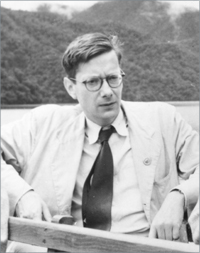
But I am a worm and not a man,

A reproach of men and despised by the people.
7 All who see me [g]sneer at me;
They [h]separate with the lip, they wag the head, saying,
[i]Commit yourself to the Lord; let Him deliver him;
Let Him rescue him, because He delights in him.”

12 Many bulls have surrounded me;
Strong bulls of Bashan have encircled me.
13 They open wide their mouth at me,
As a ravening and a roaring lion.
14 I am poured out like water,
And all my bones are out of joint;
My heart is like wax;
It is melted within [l]me.
15 My strength is dried up like a potsherd,
And my tongue cleaves to my jaws;
And You lay me [m]in the dust of death.
16 For dogs have surrounded me;
[n]A band of evildoers has encompassed me;
[o]They pierced my hands and my feet.
17 I can count all my bones.
They look, they stare at me;
18 They divide my garments among them,
And for my clothing they cast lots.

Francis Schaeffer ended HOW SHOULD WE THEN LIVE? Episode 7 with these words:

When we think of Christ of course we think of his substitutionary death upon the cross when he who claimed to be God died in a substitutionary way and as such his death had infinite value and as we accept  that gift raising the empty hands of faith with no humanistic elements we have that which is real life and that is being in relationship to the infinite personal God who is there and being in a personal relationship to Him. But Christ brings life in another way that is not as often clearly thought about perhaps. He connects himself with what the Bible teaches in his teaching and as such he is a prophet as well as a savior. It is upon the basis of what he taught  and the Bible teaches because he himself wraps these together that we have life instead of death in the sense of having some knowledge that is more than men can have from himself, beginning from himself alone. Both of these elements are the place where Christ gives us life.  

The answer to find meaning in life is found in putting your faith and trust in Jesus Christ. The Bible is true from cover to cover and can be trusted.

Thanks for your time.

Sincerely,

Everette Hatcher, everettehatcher@gmail.com, http://www.thedailyhatch.org, cell ph 501-920-5733, Box 23416, LittleRock, AR 72221

____________

Related posts:

FRANCIS SCHAEFFER ANALYZES ART AND CULTURE Part 53 THE BEATLES (Part E, Stg. Pepper’s and John Lennon’s search in 1967 for truth was through drugs, money, laughter, etc & similar to King Solomon’s, LOTS OF PICTURES OF JOHN AND CYNTHIA) (Feature on artist Yoko Ono)

The John Lennon and the Beatles really were on a long search for meaning and fulfillment in their lives  just like King Solomon did in the Book of Ecclesiastes. Solomon looked into learning (1:12-18, 2:12-17), laughter, ladies, luxuries, and liquor (2:1-2, 8, 10, 11), and labor (2:4-6, 18-20). He fount that without God in the picture all […]

FRANCIS SCHAEFFER ANALYZES ART AND CULTURE Part 52 THE BEATLES (Part D, There is evidence that the Beatles may have been exposed to Francis Schaeffer!!!) (Feature on artist Anna Margaret Rose Freeman )

______________   George Harrison Swears & Insults Paul and Yoko Lucy in the Sky with Diamonds- The Beatles The Beatles:   I have dedicated several posts to this series on the Beatles and I don’t know when this series will end because Francis Schaeffer spent a lot of time listening to the Beatles and talking […]

FRANCIS SCHAEFFER ANALYZES ART AND CULTURE Part 51 THE BEATLES (Part C, List of those on cover of Stg.Pepper’s ) (Feature on artist Raqib Shaw )

  The Beatles in a press conference after their Return from the USA Uploaded on Nov 29, 2010 The Beatles in a press conference after their Return from the USA. The Beatles:   I have dedicated several posts to this series on the Beatles and I don’t know when this series will end because Francis […]

FRANCIS SCHAEFFER ANALYZES ART AND CULTURE Part 50 THE BEATLES (Part B, The Psychedelic Music of the Beatles) (Feature on artist Peter Blake )

__________________   Beatles 1966 Last interview I have dedicated several posts to this series on the Beatles and I don’t know when this series will end because Francis Schaeffer spent a lot of time listening to the Beatles and talking and writing about them and their impact on the culture of the 1960’s. In this […]

FRANCIS SCHAEFFER ANALYZES ART AND CULTURE Part 49 THE BEATLES (Part A, The Meaning of Stg. Pepper’s Cover) (Feature on artist Mika Tajima)

_______________ The Beatles documentary || A Long and Winding Road || Episode 5 (This video discusses Stg. Pepper’s creation I have dedicated several posts to this series on the Beatles and I don’t know when this series will end because Francis Schaeffer spent a lot of time listening to the Beatles and talking and writing about […]

FRANCIS SCHAEFFER ANALYZES ART AND CULTURE PART 48 “BLOW UP” by Michelangelo Antonioni makes Philosophic Statement (Feature on artist Nancy Holt)

_______________ Francis Schaeffer pictured below: _____________________ I have included the 27 minute  episode THE AGE OF NONREASON by Francis Schaeffer. In that video Schaeffer noted,  ” Sergeant Pepper’s Lonely Hearts Club Band…for a time it became the rallying cry for young people throughout the world. It expressed the essence of their lives, thoughts and their feelings.” How Should […]

FRANCIS SCHAEFFER ANALYZES ART AND CULTURE Part 47 Woody Allen and Professor Levy and the death of “Optimistic Humanism” from the movie CRIMES AND MISDEMEANORS Plus Charles Darwin’s comments too!!! (Feature on artist Rodney Graham)

Crimes and Misdemeanors: A Discussion: Part 1 ___________________________________ Today I will answer the simple question: IS IT POSSIBLE TO BE AN OPTIMISTIC SECULAR HUMANIST THAT DOES NOT BELIEVE IN GOD OR AN AFTERLIFE? This question has been around for a long time and you can go back to the 19th century and read this same […]

FRANCIS SCHAEFFER ANALYZES ART AND CULTURE PART 46 Friedrich Nietzsche (Featured artist is Thomas Schütte)

____________________________________ Francis Schaeffer pictured below: __________ Francis Schaeffer has written extensively on art and culture spanning the last 2000years and here are some posts I have done on this subject before : Francis Schaeffer’s “How should we then live?” Video and outline of episode 10 “Final Choices” , episode 9 “The Age of Personal Peace and Affluence”, episode 8 […]

FRANCIS SCHAEFFER ANALYZES ART AND CULTURE Part 45 Woody Allen “Reason is Dead” (Feature on artists Allora & Calzadilla )

Love and Death [Woody Allen] – What if there is no God? [PL] ___________ _______________ How Should We then Live Episode 7 small (Age of Nonreason) #02 How Should We Then Live? (Promo Clip) Dr. Francis Schaeffer 10 Worldview and Truth Two Minute Warning: How Then Should We Live?: Francis Schaeffer at 100 Francis Schaeffer […]

FRANCIS SCHAEFFER ANALYZES ART AND CULTURE Part 44 The Book of Genesis (Featured artist is Trey McCarley )

___________________________________ Francis Schaeffer pictured below: ____________________________ Francis Schaeffer “BASIS FOR HUMAN DIGNITY” Whatever…HTTHR Dr. Francis schaeffer – The flow of Materialism(from Part 4 of Whatever happened to human race?) Dr. Francis Schaeffer – The Biblical flow of Truth & History (intro) Francis Schaeffer – The Biblical Flow of History & Truth (1) Dr. Francis Schaeffer […]

_______________

_


_

RESPONDING TO HARRY KROTO’S BRILLIANT RENOWNED ACADEMICS!! Massimo Pigliucci, Philosophy, CUNY-City College, “[Reason] is opposed of course to FAITH”

_


Harry Kroto pictured below:

_________________

On November 21, 2014 I received a letter from Nobel Laureate Harry Kroto and it said:

…Please click on this URL http://vimeo.com/26991975

and you will hear what far smarter people than I have to say on this matter. I agree with them.

Harry Kroto

_____________

Massimo Pigliucci

From Wikipedia, the free encyclopedia
Massimo Pigliucci
Massimo Pigliucci.jpg
Born January 16, 1964 (age 53)
MonroviaLiberia
Alma mater
School Scientific skepticismsecular humanismStoicism
Main interests
Philosophy of science
Philosophy of pseudoscience
Relationship between science and religion
Demarcation problem

Massimo Pigliucci (Italian pronunciation: [ˈmassimo piʎˈʎuttʃi]; born January 16, 1964)[1] is Professor of Philosophy at CUNYCity College,[2] formerly co-host of the Rationally Speaking Podcast,[3] and formerly the editor in chief for the online magazine Scientia Salon.[4] He is an outspoken critic of pseudoscience[5][6] and creationism,[7] and an advocate for secularism[8], science education[9] and modern Stoicism.

Biography[edit]

Pigliucci was born in Monrovia, Liberia and raised in Rome, Italy.[1] He has a doctorate in genetics from the University of FerraraItaly, a PhD in biology from the University of Connecticut, and a PhD in philosophy of science from the University of Tennessee.[10] He is a fellow of the American Association for the Advancement of Science and of the Committee for Skeptical Inquiry.[1]

Pigliucci was formerly a professor of ecology and evolution at Stony Brook University. He explored phenotypic plasticitygenotype-environment interactions, natural selection, and the constraints imposed on natural selection by the genetic and developmental makeup of organisms.[11] In 1997, while working at the University of Tennessee, Pigliucci received the Theodosius Dobzhansky Prize,[12] awarded annually by the Society for the Study of Evolution[1] to recognize the accomplishments and future promise of an outstanding young evolutionary biologist. As a philosopher, Pigliucci is interested in the structure and foundations of evolutionary theory, the relationship between science and philosophy, and the relationship between science and religion.[10] He is a proponent of the extended evolutionary synthesis.[13]

Pigliucci writes regularly for Skeptical Inquirer on topics such as climate change denialintelligent designpseudoscience, and philosophy.[14] He has also written for Philosophy Now and maintains a blog called “Rationally Speaking”.[15] He has debated “deniers of evolution” (young-earth creationists and intelligent design proponents), including young earth creationists Duane Gish and Kent Hovind and intelligent design proponents William Dembski and Jonathan Wells, on many occasions.[16][17][18][19]

Michael ShermerJulia Galef and Massimo Pigliucci record live at NECSS 2013

Critical thinking and scepticism[edit]

While Pigliucci is an atheist himself,[20] he does not believe that science necessarily demands atheism because of two distinctions: the distinction between methodological naturalism and philosophical naturalism, and the distinction between value judgements and matters of fact. He believes that many scientists and science educators fail to appreciate these differences.[9] Pigliucci has criticized New Atheist writers for embracing what he considers to be scientism (although he largely excludes philosopher Daniel Dennett from this charge).[21] In a discussion of his book Answers for Aristotle: How Science and Philosophy Can Lead Us to a More Meaningful Life, Pigliucci told Skepticality podcast host Derek Colanduno, “Aristotle was the first ancient thinker to really take seriously the idea that you need both empirical facts, you need an evidence-based approach to the world and you need to be able to reflect on the meaning of those facts… If you want answers to moral questions then you don’t ask the neurobiologist, you don’t ask the evolutionary biologist, you ask the philosopher.”[22]

Pigliucci describes the mission of skeptics, referencing Carl Sagan‘s Demon Haunted World: Science as a Candle in the Dark saying “What skeptics are about is to keep that candle lit and spread it as much as possible”.[23] Pigliucci serves on the board of NYC Skeptics and on the advisory board of the Secular Coalition for America.[8]

In 2001, he debated William Lane Craig over the existence of God.[24]

Massimo Pigliucci criticised the newspaper article by Pope Francis entitled, “An open dialogue with non-believers”. Pigliucci viewed the article as a monologue rather than a dialogue and, in a response personally addressed to Pope Francis, wrote that the Pope only offered non-believers “a reaffirmation of entirely unsubstantiated fantasies about God and his Son…followed by a confusion between the concept of love and truth, the whole peppered by a significant amount of historical revisionism and downright denial of the ugliest facets of your Church (and you will notice that I haven’t even brought up the pedophilia stuff!).”[25]

Rationally Speaking[edit]

In August 2000 Massimo started with a monthly internet column called Rationally Speaking. In August 2005, the column became a blog,[26] where he wrote posts until March 2014.[27] Since 1 February 2010, he co-hosted the bi-weekly Rationally Speaking podcast together with Julia Galef, whom he first met at the Northeast Conference on Science and Skepticism, held in September 2009.[28] The podcast is produced by the New York City Skeptics. He left the podcast in 2015 to pursue other interests.[29] In 2010, Neil DeGrasse Tyson explained on the show his justification for spending large amounts of government money on space programs. He eventually printed the transcript of his performance as a guest on the show in his book Space Chronicles as a full chapter covering eight pages.[30] Another episode in which Tyson explained his position on the label “atheism” received attention on NPR.[31]

His comments can be found on the 2nd  video and the 57th clip in this series. Below the videos you will find his words.

50 Renowned Academics Speaking About God (Part 1)

Another 50 Renowned Academics Speaking About God (Part 2)

A Further 50 Renowned Academics Speaking About God (Part 3)

________

From Everette Hatcher, http://www.thedailyhatch.org, P.O. Box 23416, Little Rock , AR 72221

Dear  Professor MASSIMO PIGLICUCCI,

I have really enjoyed watching your debate with William Lane Craig on You Tube  and your discussion with Daniel Dennett on the limits of science. I have had the pleasure of both corresponding with Professor Dennett and reading his book DARWIN’S DANGEROUS IDEA earlier this year.

I noticed that you graduated from the University of Tennessee at Knoxville. Although I have never personally been a Tennessee fan, I was told by my grandfather that a cousin of his was a kicker for the Vols. My grandfather grew up in Franklin, Tennessee with his brothers and sister. They used to get up at 2 am on Saturdays and travel to Knoxville by 1pm for the kickoff. My grandfather attended the University of Tennessee in 1921-23 until his money ran out. My grandfather told me he was relatives with Buck Hatcher who was a star player for the Vols.

Sure enough Buck Hatcher did play for the Vols and he kicked a 53 yard field goal on Nov 13, 1920 to set a record.  Later my grandfather’s brother Mack had the “Mack Hatcher Memorial Highway” named after him. He was a Gideon and often helped those who needed help in his Williamson County. (A Gideon is one who gives out Bibles). He stood six foot eleven and his sister Sara Lou was six foot four.

In the You Tube series RENOWNED ACADEMICS SPEAKING ABOUT GOD I found the following quote from you:

Reason of course can be defined in a variety of ways, but these are pretty good approximations. Cause is a explanation or justification for an event. You have a reason to believe. There was a reason I got up from my and went to the refrigerator and got a beer because I was THIRSTY. That is a REASON.  

The Power of the mind to think, understand and form judgments by the course of logic is what we are talking about in this context. This is opposed of course to FAITH, which is the COMPLETE trust or confidence in someone or something. Notice the emphasis on COMPLETE for some belief in God or doctrine of religion based on SPIRITUAL APPREHENSION rather than truth. That is the interesting premise here. SPIRITUAL APPREHENSION, what the heck is SPIRITUAL APPREHENSION? How do people spiritually apprehend things? I can talk about how people LOGICALLY or RATIONALLY think about things, but it is hard to get my mind wrapped around the idea of spiritual apprehension. I suspect because there is no such thing as spiritual apprehension.

__


Let me respond with to your assertion that faith is totally opposed to logic with these writings below by Francis Schaeffer:

Image result for francis schaeffer

What is Faith?

Posted on July 29, 2012by 

What is faith?  Faith is often characterized as blind belief just because we want it to be true.  It’s sometimes thought to be belief in spite of evidence to the contrary.  But is that really what Biblical faith is like or is it a strawman argument that’s easily knocked down to make a point errantly?

Francis Schaeffer presents this story about faith:

Suppose we are climbing in the Alps and are very high on the bare rock, and suddenly the fog rolls in. The guide turns to us and says that the ice is forming and that there is no hope; before morning we will all freeze to death here on the shoulder of the mountain. Simply to keep warm the guide keeps us moving in the dense fog further out on the shoulder until none of us have any idea where we are. After an hour or so, someone says to the guide, “Suppose I dropped and hit a ledge ten feet down in the fog. What would happen then?” The guide would say that you might make it until the morning and thus live. So, with absolutely no knowledge or any reason tosupport his action, one of the group hangs and drops into the fog. This would be one kind of faith, a leap of faith.

Suppose, however, after we have worked out on the shoulder in the midst of the fog and the growing ice on the rock, we had stopped and we heard a voice which said, “You cannot see me, but I know exactly where you are from your voices.  I am on another ridge. I have lived in these mountains, man and boy, for over sixty years and I know every foot of them. I assure you that ten feet below you there is a ledge. If you hang and drop, you can make it through the night and I will get you in the morning.

I would not hang and drop at once, but would ask questions to try to ascertain if the man knew what he was talking about and it he was not my enemy. In the Alps, for example, I would ask him his name. If the name he gave me was the name of a family from that part of the mountains, it would count a great deal to me. In the Swiss Alps there are certain family names that indicate mountain families of that area. In my desperate situation, even though time would be running out, I would ask him what to me would be the adequate and sufficient questions, and when I became convinced by his answers, then I would hang and drop.

Schaeffer’s story captures the idea that faith is not blind.  It is based on reason, logic, information, but lives in a situation where a gap exists.  Faith bridges the gap by trusting in someone or something in a better position than yourself.  In this story, faith was put in the knowledge of the man who grew up in the Alps.  It was a rational, tested faith based on questioning the man’s knowledge, but it was still faith because the ledge below couldn’t be seen, touched or definitively known.  This idea that faith is well informed and not irrational is the first point to keep in mind.

The second point is about the object of faith.  When you walk across ice, your trust is put in the ice to hold your weight.  Ice is the object of your faith.  If your trust is misplaced, you’ll quickly be wet, cold and in significant danger.  It wouldn’t have mattered whether you have a little faith in the ice or trust it fully.  The strength of the object of faith is what counts.  It the story it was the knowledge of the guide in the fog.

Christian faith captures both of these ideas.  First, God provides evidence of Himself in creation, in prophecy, in archeology, in Scripture’s consistency across 40+ authors and in the life of Jesus.  He doesn’t leave us without witness or guidance.  Second, He then requires us to make Jesus the object of our faith.  Jesus’ sinless life, substitutionary death and bodily resurrection are what matter.  As Paul said, if Jesus didn’t rise from the dead our faith is in vain (1 Corinthians 15:17). Putting trust in the Creator of the universe rather than our own feeble attempts to be good doesn’t seem like much of a stretch when you look at the history of mankind’s failures an our own individual struggles.  We have all sinned and fall short of the glory of God and must put our faith in Jesus’ work to wash our sin away so we can enter God’s presence.

__________

The answer to finding out more about God is found in putting your faith and trust in Jesus Christ. The Bible is true from cover to cover and can be trusted. Please consider taking time to read Isaiah chapter 53 and if you have any interest then watch the You Tube clip “The Biography of the King” by Adrian Rogers which discusses that chapter in depth.

Is the Bible historically accurate? Here are some of the posts I have done in the past on the subject: 1. The Babylonian Chronicleof Nebuchadnezzars Siege of Jerusalem2. Hezekiah’s Siloam Tunnel Inscription. 3. Taylor Prism (Sennacherib Hexagonal Prism)4. Biblical Cities Attested Archaeologically. 5. The Discovery of the Hittites6.Shishak Smiting His Captives7. Moabite Stone8Black Obelisk of Shalmaneser III9A Verification of places in Gospel of John and Book of Acts., 9B Discovery of Ebla Tablets10. Cyrus Cylinder11. Puru “The lot of Yahali” 9th Century B.C.E.12. The Uzziah Tablet Inscription13. The Pilate Inscription14. Caiaphas Ossuary14 B Pontius Pilate Part 214c. Three greatest American Archaeologists moved to accept Bible’s accuracy through archaeology.

Below is a piece of that evidence given by Francis Schaeffer concerning the accuracy of the Bible.

Image result for francis schaeffer

TRUTH AND HISTORY (chapter 5 of WHATEVER HAPPENED TO THE HUMAN RACE?)

In the previous chapter we saw that the Bible gives us the explanation for the existence of the universe and its form and for the mannishness of man. Or, to reverse this, we came to see that the universe and its form and the mannishness of man are a testimony to the truth of the Bible. In this chapter we will consider a third testimony: the Bible’s openness to verification by historical study.

Christianity involves history. To say only that is already to have said something remarkable, because it separates the Judeo-Christian world-view from almost all other religious thought. It is rooted in history.

The Bible tells us how God communicated with man in history. For example, God revealed Himself to Abraham at a point in time and at a particular geographical place. He did likewise with Moses, David, Isaiah, Daniel and so on. The implications of this are extremely important to us. Because the truth God communicated in the Bible is so tied up with the flow of human events, it is possible by historical study to confirm some of the historical details.

It is remarkable that this possibility exists. Compare the information we have from other continents of that period. We know comparatively little about what happened in Africa or South America or China or Russia or even Europe. We see beautiful remains of temples and burial places, cult figures, utensils, and so forth, but there is not much actual “history” that can be reconstructed, at least not much when compared to that which is possible in the Middle East.

When we look at the material which has been discovered from the Nile to the Euphrates that derives from the 2500-year span before Christ, we are in a completely different situation from that in regard to South America or Asia. The kings of Egypt and Assyria built thousands of monuments commemorating their victories and recounting their different exploits. Whole libraries have been discovered from places like Nuzu and Mari and most recently at Elba, which give hundreds of thousands of texts relating to the historical details of their time. It is within this geographical area that the Bible is set. So it is possible to find material which bears upon what the Bible tells us.

The Bible purports to give us information on history. Is the history accurate? The more we understand about the Middle East between 2500 B.C. and A.D. 100, the more confident we can be that the information in the Bible is reliable, even when it speaks about the simple things of time and place.

(This material below is under footnote #94)

The site of the biblical city called Lachish is about thirty miles southwest of Jerusalem. This city is referred to on a number of occasions in the Old Testament. Imagine a busy city with high walls surrounding it, and a gate in front that is the only entrance to the city. We know so much about Lachish from archaeological studies that a reconstruction of the whole city has been made in detail. This can be seen at the British Museum in the Lachish Room in the Assyrian section.

There is also a picture made by artists in the eighth century before Christ, the Lachish Relief, which was discovered in the city of Nineveh in the ancient Assyria. In this picture we can see the Jewish inhabitants of Lachish surrendering to Sennacherib, the king of Assyria. The details in the picture and the Assyrian writing on it give the Assyrian side of what the Bible tells us in Second Kings:

2 Kings 18:13-16

New American Standard Bible (NASB)

13 Now in the fourteenth year of King Hezekiah, Sennacherib king of Assyria came up against all the fortified cities of Judah and seized them. 14 Then Hezekiah king of Judah sent to the king of Assyria at Lachish, saying, “I have done wrong. Withdraw from me; whatever you impose on me I will bear.” So the king of Assyria required of Hezekiah king of Judah three hundred talents of silver and thirty talents of gold. 15 Hezekiah gave him all the silver which was found in the house of the Lord, and in the treasuries of the king’s house. 16 At that time Hezekiah cut off the gold from the doors of the temple of the Lord, and from the doorposts which Hezekiah king of Judah had overlaid, and gave it to the king of Assyria.

________


We should notice two things about this. First, this is a real-life situation–a real siege of a real city with real people on both sides of the war–and it happened at a particular date in history, near the turn of the eighth century B.C. Second, the two accounts of this incident in 701 B.C. (the account from the Bible and the Assyrian account from Nineveh) do not contradict, but rather confirm each other. The history of Lachish itself is not so important for us, but some of its smaller historical details.


Image result for British Museum in the Lachish Room

_____________


_

The Assyrian king Sennacherib sits on his luxurious chair on a low mound. There is a tent behind him. His commander-in-chief stands before him (in a very close proximity) and greets him after conquering the city of Lachish. Assyrian soldiers (the king’s bodyguards) wear their exquisite military uniform and carry their weapons. Prisoners from Lachish are being reviewed and presented to the king. One prostrates and another two kneel; they seem to ask for mercy. Most likely, they were later beheaded. The king obviously had been watching the battle and its victorious aftermath. Neo-Assyrian Period, 700-692 BCE. From Nineveh (modern-day Mosul Governorate, Iraq), panels 11-13, Room XXXVI of the southwest palace; the heartland of the Assyrian Empire.The British Museum, London. Photo © Osama S. M. Amin.

The finale scene! The Assyrian King Sennacherib sits on his luxurious chair. His commander-in-chief stands before the King (in a very close proximity) and greets him after conquering the city of Lachish. Four high "soldiers" stand behind their leader; they wear their exquisite military uniform and carry their weapons. Prisoners from Lachish are being reviewed and presented to the King. One prostrates, another two kneel; they seem to ask for mercy to save their lives. Most likely, they were beheaded later on. The British Museum, London. Photo © Osama S. M. Amin.

Related posts:

FRANCIS SCHAEFFER ANALYZES ART AND CULTURE Part 41 Sarvepalli Radhakrishnan (Featured artist is Marina Abramović)

FRANCIS SCHAEFFER ANALYZES ART AND CULTURE Part 40 Timothy Leary (Featured artist is Margaret Keane)

FRANCIS SCHAEFFER ANALYZES ART AND CULTURE Part 39 Tom Wolfe (Featured artist is Richard Serra)

FRANCIS SCHAEFFER ANALYZES ART AND CULTURE Part 38 Woody Allen and Albert Camus “There is but one truly serious philosophical problem, and that is suicide” (Feature on artist Hamish Fulton Photographer )

FRANCIS SCHAEFFER ANALYZES ART AND CULTURE Part 37 Mahatma Gandhi and “Relieving the Tension in the East” (Feature on artist Luc Tuymans)

FRANCIS SCHAEFFER ANALYZES ART AND CULTURE Part 36 Julian Huxley:”God does not in fact exist, but act as if He does!” (Feature on artist Barry McGee)

FRANCIS SCHAEFFER ANALYZES ART AND CULTURE Part 35 Robert M. Pirsig (Feature on artist Kerry James Marshall)

FRANCIS SCHAEFFER ANALYZES ART AND CULTURE Part 34 Aleksandr Solzhenitsyn (Feature on artist Shahzia Sikander)

FRANCIS SCHAEFFER ANALYZES ART AND CULTURE Part 33 Aldous Huxley (Feature on artist Matthew Barney )

FRANCIS SCHAEFFER ANALYZES ART AND CULTURE Part 32 Steven Weinberg and Woody Allen and “The Meaningless of All Things” (Feature on photographer Martin Karplus )

FRANCIS SCHAEFFER ANALYZES ART AND CULTURE Part 31 David Hume and “How do we know we know?” (Feature on artist William Pope L. )

FRANCIS SCHAEFFER ANALYZES ART AND CULTURE Part 30 Rene Descartes and “How do we know we know?” (Feature on artist Olafur Eliasson)

FRANCIS SCHAEFFER ANALYZES ART AND CULTURE Part 29 W.H. Thorpe and “The Search for an Adequate World-View: A Question of Method” (Feature on artist Jeff Koons)

FRANCIS SCHAEFFER ANALYZES ART AND CULTURE Part 28 Woody Allen and “The Mannishness of Man” (Feature on artist Ryan Gander)

FRANCIS SCHAEFFER ANALYZES ART AND CULTURE Part 27 Jurgen Habermas (Featured artist is Hiroshi Sugimoto)

FRANCIS SCHAEFFER ANALYZES ART AND CULTURE Part 26 Bettina Aptheker (Featured artist is Krzysztof Wodiczko)

FRANCIS SCHAEFFER ANALYZES ART AND CULTURE Part 25 BOB DYLAN (Part C) Francis Schaeffer comments on Bob Dylan’s song “Ballad of a Thin Man” and the disconnect between the young generation of the 60’s and their parents’ generation (Feature on artist Fred Wilson)

FRANCIS SCHAEFFER ANALYZES ART AND CULTURE Part 24 BOB DYLAN (Part B) Francis Schaeffer comments on Bob Dylan’s words from HIGHWAY 61 REVISITED!! (Feature on artist Susan Rothenberg)

FRANCIS SCHAEFFER ANALYZES ART AND CULTURE Part 23 BOB DYLAN (Part A) (Feature on artist Josiah McElheny)Francis Schaeffer on the proper place of rebellion with comments by Bob Dylan and Samuel Rutherford

FRANCIS SCHAEFFER ANALYZES ART AND CULTURE Part 22 “The School of Athens by Raphael” (Feature on the artist Sally Mann)

FRANCIS SCHAEFFER ANALYZES ART AND CULTURE Part 21 William B. Provine (Feature on artist Andrea Zittel)

FRANCIS SCHAEFFER ANALYZES ART AND CULTURE Part 20 Woody Allen and Materialistic Humanism: The World-View of Our Era (Feature on artist Ida Applebroog)

FRANCIS SCHAEFFER ANALYZES ART AND CULTURE Part 19 Movie Director Luis Bunuel (Feature on artist Oliver Herring)

FRANCIS SCHAEFFER ANALYZES ART AND CULTURE Part 18 “Michelangelo’s DAVID is the statement of what humanistic man saw himself as being tomorrow” (Feature on artist Paul McCarthy)

FRANCIS SCHAEFFER ANALYZES ART AND CULTURE Part 17 Francis Schaeffer discusses quotes of Andy Warhol from “The Observer June 12, 1966″ Part C (Feature on artist David Hockney plus many pictures of Warhol with famous friends)

FRANCIS SCHAEFFER ANALYZES ART AND CULTURE Part 16 Francis Schaeffer discusses quotes of Andy Warhol from “The Observer June 12, 1966″ Part B (Feature on artist James Rosenquist plus many pictures of Warhol with famous friends)

FRANCIS SCHAEFFER ANALYZES ART AND CULTURE Part 15 Francis Schaeffer discusses quotes of Andy Warhol from “The Observer June 12, 1966″ Part A (Feature on artist Robert Indiana plus many pictures of Warhol with famous friends)

FRANCIS SCHAEFFER ANALYZES ART AND CULTURE Part 14 David Friedrich Strauss (Feature on artist Roni Horn )

FRANCIS SCHAEFFER ANALYZES ART AND CULTURE Part 13 Jacob Bronowski and Materialistic Humanism: The World-View of Our Era (Feature on artist Ellen Gallagher )

FRANCIS SCHAEFFER ANALYZES ART AND CULTURE Part 12 H.J.Blackham and Materialistic Humanism: The World-View of Our Era (Feature on artist Arturo Herrera)

FRANCIS SCHAEFFER ANALYZES ART AND CULTURE Part 11 Thomas Aquinas and his Effect on Art and HOW SHOULD WE THEN LIVE? Episode 2: THE MIDDLES AGES (Feature on artist Tony Oursler )

FRANCIS SCHAEFFER ANALYZES ART AND CULTURE Part 10 David Douglas Duncan (Feature on artist Georges Rouault )

FRANCIS SCHAEFFER ANALYZES ART AND CULTURE Part 9 Jasper Johns (Feature on artist Cai Guo-Qiang )

FRANCIS SCHAEFFER ANALYZES ART AND CULTURE Part 8 “The Last Year at Marienbad” by Alain Resnais (Feature on artist Richard Tuttle and his return to the faith of his youth)

FRANCIS SCHAEFFER ANALYZES ART AND CULTURE Part 7 Jean Paul Sartre (Feature on artist David Hooker )

FRANCIS SCHAEFFER ANALYZES ART AND CULTURE Part 6 The Adoration of the Lamb by Jan Van Eyck which was saved by MONUMENT MEN IN WW2 (Feature on artist Makoto Fujimura)

FRANCIS SCHAEFFER ANALYZES ART AND CULTURE Part 5 John Cage (Feature on artist Gerhard Richter)

FRANCIS SCHAEFFER ANALYZES ART AND CULTURE Part 4 ( Schaeffer and H.R. Rookmaaker worked together well!!! (Feature on artist Mike Kelley Part B )

FRANCIS SCHAEFFER ANALYZES ART AND CULTURE Part 3 PAUL GAUGUIN’S 3 QUESTIONS: “Where do we come from? What art we? Where are we going? and his conclusion was a suicide attempt” (Feature on artist Mike Kelley Part A)

FRANCIS SCHAEFFER ANALYZES ART AND CULTURE Part 2 “A look at how modern art was born by discussing Monet, Renoir, Pissaro, Sisley, Degas,Cezanne, Van Gogh, Gauguin, Seurat, and Picasso” (Feature on artist Peter Howson)

FRANCIS SCHAEFFER ANALYZES ART AND CULTURE Part 1 HOW SHOULD WE THEN LIVE? “The Roman Age” (Feature on artist Tracey Emin)


_______


_

FRANCIS SCHAEFFER ANALYZES ART AND CULTURE PART 179 Nat Hentoff, historian,atheist, pro-life advocate, novelist, jazz and country music critic, and syndicated columnist (Featured artist is  Julie Mehretu )

__

_________

Photo

Nat Hentoff in 2009. CreditMarilynn K. Yee/The New York Times

Nat Hentoff, an author, journalist, jazz critic and civil libertarian who called himself a troublemaker and proved it with a shelf of books and a mountain of essays on free speech, wayward politics, elegant riffs and the sweet harmonies of the Constitution, died on Saturday at his home in Manhattan. He was 91.

His son Nicholas said he was surrounded by family members and listening to Billie Holiday when he died.

Mr. Hentoff wrote for The Village Voice for 50 years and also contributed to The New Yorker, The Washington Post, Down Beat magazine and dozens of other publications. He wrote more than 35 books — novels, volumes for young adults and nonfiction works on civil liberties, education and other subjects.

The Hentoff bibliotheca reads almost like an anthology: works by a jazz aficionado, a mystery writer, an eyewitness to history, an educational reformer, a political agitator, a foe of censors, a social critic. He was — like the jazz he loved — given to improvisations and permutations, a composer-performer who lived comfortably with his contradictions, although adversaries called him shallow and unscrupulous and even his admirers sometimes found him infuriating, unrealistic and stubborn.

In the 1950s, Mr. Hentoff was a jazz critic in Manhattan, frequenting crowded, smoky nightclubs where musicians played for low pay and audiences ran hot and cold and dreamy. “I knew their flaws as well as their strengths,” he recalled, referring to the jazz artists whose music he loved, many of whom he befriended, “but I continued to admire the honesty and courage of their art.”

In the 1960s and ’70s, he wrote books for young adults, nonfiction works on education, magazine profiles of political and religious leaders and essays on racial conflicts and the Vietnam War. He became an activist, too, befriending Malcolm X and joining peace protests and marches for racial equality.

In the 1980s and ’90s, he produced commentaries and books on censorship and other constitutional issues; murder mysteries; portraits of educators and judges; and an avalanche of articles on abortion, civil liberties and other issues. He also wrote a volume of memoirs, “Speaking Freely” (1997).

His writing was often passionate, even inspirational. Much of it was based on personal observations, and some critics said it was not deeply researched or analytic. His nonfiction took in the sweep of an era of war and social upheaval, while many of his novels caught the turbulence, if not the character, of politically astute young adults.

While his sympathies were usually libertarian, he often infuriated leftist friends with his opposition to abortion, his attacks on political correctness and his criticisms of gay groups, feminists, blacks and others he accused of trying to censor opponents. He relished the role of provocateur, defending the right of people to say and write whatever they wanted, even if it involved racial slurs, apartheid and pornography.

Photo

Mr. Hentoff with the clarinetist Edmond Hall in 1948 at the Savoy, a club in Boston. Creditvia Bob Parent/First Run Features

He had a firebrand’s face: wreathed in a gray beard and a shock of unruly hair, with dark, uncompromising eyes. Once, a student asked what made him tick. “Rage,” he replied. But he said it softly, and friends recalled that his invective, in print or in person, usually came wrapped in gentle good humor and respectful tones.

Nathan Irving Hentoff was born in Boston on June 10, 1925, the son of Simon and Lena Katzenberg Hentoff. His parents were Jewish immigrants from Russia, and he grew up in the tough Roxbury section in a vortex of political debate among Socialists, anarchists, Communists, Trotskyites and other revolutionaries. He learned early how to rebel.

In 1937, on Yom Kippur, the Jewish day of atonement and fasting, the 12-year-old Nat sat on his porch on a street leading to a synagogue and slowly ate a salami sandwich. It made him sick, and the action outraged his father. He had not done it to scandalize passing Jews who glared at him, he said in a memoir, “Boston Boy” (1986). “I wanted to know how it felt to be an outcast,” he wrote. “Except for my father’s reaction and for getting sick, it turned out to be quite enjoyable.”

He attended Boston Latin, the oldest public school in America, and read voraciously. He discovered Artie Shaw and fell passionately for Louis Armstrong, Bessie Smith, Duke Ellington, Fats Waller and other jazz legends. As more modern styles of jazz emerged, Mr. Hentoff also embraced musicians like Thelonious Monk, Charlie Parker, Charles Mingus and, later, Ornette Coleman and Cecil Taylor.

At Northeastern University, he became editor of a student newspaper and turned it into a muckraker. When it dug up a story about trustees backing anti-Semitic publications, the university shut it down. Mr. Hentoff and members of his staff resigned, but he graduated in 1946 with high honors and a lasting devotion to the First Amendment.

After several years with a Boston radio station, he moved to New York in 1953 and covered jazz for Down Beat until 1957.

He was one of the most prolific jazz writers of the 1950s and ’60s, providing liner notes for countless albums as well as writing or editing several books on jazz, including “Hear Me Talkin’ to Ya: The Story of Jazz as Told by the Men Who Made It” (1955), which he edited with Nat Shapiro. It was a seminal work of oral history.

In 1958, he was a founding editor of The Jazz Review, an influential publication that lasted until 1961. In 1960, he began a notable, if brief, career as a record producer, supervising sessions by Mingus, Max Roach and others for the Candid label.

Around the same time, he began a freelance career that took him into the pages of Esquire, Harper’s, Commonweal, The Reporter, Playboy and The New York Herald Tribune.

In 1958, he began writing for The Village Voice, the counterculture weekly. It became a 50-year gig, despite changes of ownership and editorial direction. Veering from jazz, he wrote weekly columns on civil liberties, politics, education, capital punishment and other topics, all widely syndicated to newspapers.

Photo

Mr. Hentoff in his office in Greenwich Village in 2010, as seen in “The Pleasures of Being Out of Step,” a 2013 documentary about him directed by David L. Lewis. CreditDavid L. Lewis/First Run Features

In January 2009, he was laid off by The Voice, but he said he would continue to bang away on the electric typewriter in his cluttered Greenwich Village apartment, producing articles for United Features and Jewish World Review and reflections on jazz and other music for The Wall Street Journal.

Citing the journalists George Seldes and I. F. Stone as his muses, he promised in a farewell Voice column to keep “putting on my skunk suit at other garden parties.”

He wrote for The New Yorker from 1960 to 1986 and for The Washington Post from 1984 to 2000. He also wrote for The Washington Times and other publications. For years, he lectured at schools and colleges, and he was on the faculties of New York University and the New School.

Mr. Hentoff’s first book, “The Jazz Life” (1961), examined social and psychological aspects of jazz. Later came “Peace Agitator: The Story of A. J. Muste” (1963), a biography of the pacifist, and “The New Equality” (1964), on the role of white guilt in racial reforms.

“Jazz Country” (1965) was the first of a series of novels for young adults. It explored the struggles of a young white musician breaking into the black jazz scene. Others included “This School Is Driving Me Crazy” (1976), “Does This School Have Capital Punishment?” (1981) and “The Day They Came to Arrest the Book” (1982). They addressed subjects like the military draft, censorship and the generation gap, but some critics called them polemics in the mouths of characters.

Many of Mr. Hentoff’s later books dealt with the Constitution and those who interpreted and acted on it. In “Living the Bill of Rights” (1998), he profiled Justice William O. Douglas of the Supreme Court, the educator Kenneth Clark and others as he explored capital punishment, prayer in schools, funding for education, race relations and other issues.

In “Free Speech for Me — but Not for Thee: How the American Left and Right Relentlessly Censor Each Other” (1992), he attacked not only school boards that banned books but also feminists who tried to silence abortion foes or close pornographic bookstores; gay rights groups that boycotted Florida orange juice because its spokeswoman, Anita Bryant, crusaded against gay people; and New York officials who tried to bar South Africa’s rugby team because it represented the land of apartheid.

In 1995, Mr. Hentoff received the National Press Foundation’s award for lifetime achievement in contributions to journalism, and in 2004, he was named one of six Jazz Masters by the National Endowment for the Arts, the first nonmusician to win the honor.

Mr. Hentoff was the subject of an award-winning 2013 biographical film, “The Pleasures of Being Out of Step,” produced and directed by the journalist David L. Lewis, which played in theaters across the country.

Mr. Hentoff’s first two marriages, to Miriam Sargent in 1950 and to Trudi Bernstein in 1954, ended in divorce. His third wife, the former Margot Goodman, whom he married in 1959, is a columnist and an author of essays, reviews and short stories.

Besides his wife and his son Nicholas, he is survived by two daughters, Jessica and Miranda; a son, Thomas; a stepdaughter, Mara Wolynski Nierman; a sister, Janet Krauss; and 10 grandchildren.

 ______________

Nat Hentoff like and Milton Friedman and John Hospers was a hero to Libertarians. Over the years I had the opportunity to correspond with some prominent Libertarians such as Friedman and Hospers. Friedman was very gracious, but Hospers was not. I sent a cassette tape of Adrian Rogers on Evolution to John Hospers in May of 1994 which was the 10th anniversary of Francis Schaeffer’s passing and I promptly received a typed two page response from Dr. John Hospers. Dr. Hospers had both read my letter and all the inserts plus listened to the whole sermon and had some very angry responses. If you would like to hear the sermon from Adrian Rogers and read the transcript then refer to my earlier post at this link.  Earlier I posted the comments made by Hospers in his letter to me and you can access those posts by clicking on the links in the first few sentences of this post or you can just google “JOHN HOSPERS FRANCIS SCHAEFFER” or “JOHN HOSPERS ADRIAN ROGERS.”

Image result for john hospers francis schaeffer

__

Image result for nat hentoff milton friedman

Likewise I read a lot of material from Nat Hentoff and I wrote him several letters. In the post I will include one of those letters.

Nat Hentoff on abortion

Published on Nov 5, 2016

__

Nat Hentoff c/o Cato Institute

June 6, 2014 (70 years after D Day)

Dear Mr. Hentoff,

I have reading lots of your prolife articles and posting them on my blog for some time now and I am proud to say that if someone does a google search with the words “Nat Hentoff Prolife” then several of my past posts on your material will come up in the first ten results. One of my favorite articles that you did was called, “Civil Rights And Anti- Abortion Protests,” by Nat Hentoff, The Washington Post, February 6, 1989, and on June 7, 201o John Whitehead wrote this article about you, “Nat Hentoff: A Civil Libertarian Takes on Obama and the World.” I agreed with every word he said about you!!!! Keep up the good work.

A couple of months ago I mailed you a letter that contained correspondence I had with Antony Flew and Carl Sagan and I also included some of the material I had sent them from Adrian Rogers and Francis Schaeffer. Did you have a chance to listen to the IS THE BIBLE TRUE? CD yet? I also wanted to let know some more about about Francis Schaeffer. Ronald Reagan said of Francis Schaeffer, “He will long be remembered as one of the great Christian thinkers of our century, with a childlike faith and a profound compassion toward others. It can rarely be said of an individual that his life touched many others and affected them for the better; it will be said of Francis Schaeffer that his life touched millions of souls and brought them to the truth of their creator.”

Thirty years ago the christian philosopher and author Francis Schaeffer (1912-1984) died and on the 10th anniversary of his passing in 1994 I wrote a number of the top evolutionists, humanists and atheistic scholars in the world and sent them a story about Francis Schaeffer in 1930 when he left agnosticism and embraced Christianity. I also sent them  a cassette tape with the title “Four intellectual bridges evolutionists can’t cross” by Adrian Rogers (1931-2005) and some of the top  scholars who corresponded with me since that time include Ernest Mayr (1904-2005), George Wald (1906-1997), Carl Sagan (1934-1996),  Robert Shapiro (1935-2011), Nicolaas Bloembergen (1920-),  Brian Charlesworth (1945-),  Francisco J. Ayala (1934-) Elliott Sober (1948-), Kevin Padian (1951-), Matt Cartmill (1943-) , Milton Fingerman (1928-), John J. Shea (1969-), , Michael A. Crawford (1938-), (Paul Kurtz (1925-2012), Sol Gordon (1923-2008), Albert Ellis (1913-2007), Barbara Marie Tabler (1915-1996), Renate Vambery (1916-2005), Archie J. Bahm (1907-1996), Aron S “Gil” Martin ( 1910-1997), Matthew I. Spetter (1921-2012), H. J. Eysenck (1916-1997), Robert L. Erdmann (1929-2006), Mary Morain (1911-1999), Lloyd Morain (1917-2010),  Warren Allen Smith (1921-), Bette Chambers (1930-),  Gordon Stein (1941-1996) , Milton Friedman (1912-2006), John Hospers (1918-2011), and Michael Martin (1932-).

The truth is that I am an evangelical Christian and I have enjoyed developing relationships with skeptics and humanists over the years. Back in 1996 I took my two sons who were 8  and 10 yrs old back then to New York, Washington, Philadelphia, Delaware, and New Jersey and we had dinner one night with Herbert A. Tonne, who was one of the signers of the Humanist Manifesto II. The Late Professor John George who has written books for Prometheus Press was my good friend during the last 10 years of his life. (I still miss him today.) We often ate together and were constantly talking on the phone and writing letters to one another.

It is a funny story how I met Dr. George. As an evangelical Christian and a member of the Christian Coalition, I felt obliged to expose a misquote of John Adams’ I found in an article entitled “America’s Unchristian Beginnings” by the self-avowed atheist Dr. Steven Morris. However, what happened next changed my focus to the use of misquotes, unconfirmed quotes, and misleading attributions by the religious right.

In the process of attempting to correct Morris, I was guilty of using several misquotes myself. Professor John George of the University of Central Oklahoma political science department and coauthor (with Paul Boller Jr.) of the book THEY NEVER SAID IT! set me straight. George pointed out that George Washington never said, “It is impossible to rightly govern the world without God and the Bible. I had cited page 18 of the 1927 edition of HALLEY’S BIBLE HANDBOOK. This quote was probably generated by a similar statement that appears in A LIFE OF WASHINGTON by James Paulding. Sadly, no one has been able to verify any of the quotes in Paulding’s book since no footnotes were offered.

After reading THEY NEVER SAID IT! I had a better understanding of how widespread the problem of misquotes is. Furthermore, I discovered that many of these had been used by the leaders of the religious right. I decided to confront some individuals concerning their misquotes. WallBuilders, the publisher of David Barton’s THE MYTH OF SEPARATION, responded by providing me with their “unconfirmed  quote” list which contained a dozen quotes widely used by the religious right.

Sadly some of the top leaders of my own religious right have failed to take my encouragement to stop using these quotes and they have either claimed that their critics were biased skeptics who find the truth offensive or they defended their own method of research and claimed the secondary sources were adequate.

I have enclosed that same CD by Adrian Rogers that I sent 20 years ago although the second half does include a story about  Charles Darwin‘s journey from  the position of theistic evolution to agnosticism. Here are the four bridges that Adrian Rogers says evolutionists can’t cross in the CD  “Four Bridges that the Evolutionist Cannot Cross.” 1. The Origin of Life and the law of biogenesis. 2. The Fixity of the Species. 3.The Second Law of Thermodynamics. 4. The Non-Physical Properties Found in Creation.  

In the first 3 minutes of the CD is the hit song “Dust in the Wind.” In the letter 20 years ago I gave some of the key points Francis Schaeffer makes about the experiment that Solomon undertakes in the book of Ecclesiastes to find satisfaction by  looking into  learning (1:16-18), laughter, ladies, luxuries,  and liquor (2:1-3, 8, 10, 11), and labor (2:4-6, 18-20).

I later learned this book of Ecclesiastes was Richard Dawkins’ favorite book in the Bible. Schaeffer noted that Solomon took a look at the meaning of life on the basis of human life standing alone between birth and death “under the sun.” This phrase UNDER THE SUN appears over and over in Ecclesiastes. The Christian Scholar Ravi Zacharias noted, “The key to understanding the Book of Ecclesiastes is the term UNDER THE SUN — What that literally means is you lock God out of a closed system and you are left with only this world of Time plus Chance plus matter.” No wonder Ecclesiastes is Richard Dawkins’ favorite book of the Bible! 

Here the first 7 verses of Ecclesiastes followed by Schaeffer’s commentary on it:

The words of the Preacher, the son of David, king in Jerusalem. Vanity of vanities, says the Preacher, vanity of vanities! All is vanity. What does man gain by all the toil at which he toils under the sun? A generation goes, and a generation comes, but the earth remains forever. The sun rises, and the sun goes down, and hastens to the place where it rises. The wind blows to the south and goes around to the north; around and around goes the wind, and on its circuits the wind returns. All streams run to the sea, but the sea is not full; to the place where the streams flow, there they flow again.  

Solomon is showing a high degree of comprehension of evaporation and the results of it. (E.O.Wilson has marveled at Solomon’s scientific knowledge of ants that was only discovered in the 1800’s.) Seeing also in reality nothing changes. There is change but always in a set framework and that is cycle. You can relate this to the concepts of modern man. Ecclesiastes is the only pessimistic book in the Bible and that is because of the place where Solomon limits himself. He limits himself to the question of human life, life under the sun between birth and death and the answers this would give.

Solomon doesn’t place man outside of the cycle. Man doesn’t escape the cycle. Man is in the cycle. Birth and death and youth and old age.

There is no doubt in my mind that Solomon had the same experience in his life that I had as a younger man (at the age of 18 in 1930). I remember standing by the sea and the moon arose and it was copper and beauty. Then the moon did not look like a flat dish but a globe or a sphere since it was close to the horizon. One could feel the global shape of the earth too. Then it occurred to me that I could contemplate the interplay of the spheres and I was exalted because I thought I can look upon them with all their power, might, and size, but they could contempt nothing. Then came upon me a horror of great darkness because it suddenly occurred to me that although I could contemplate them and they could contemplate nothing yet they would continue to turn in ongoing cycles when I saw no more forever and I was crushed.

_______________

You are an atheist and you have a naturalistic materialistic worldview, and this short book of Ecclesiastes should interest you because the wisest man who ever lived in the position of King of Israel came to THREE CONCLUSIONS that will affect you.

FIRST, chance and time have determined the past, and they will determine the future.  (Ecclesiastes 9:11-13)

These two verses below  take the 3 elements mentioned in a naturalistic materialistic worldview (time, chance and matter) and so that is all the unbeliever can find “under the sun” without God in the picture. You will notice that these are the three elements that evolutionists point to also.

Ecclesiastes 9:11-12 is following: I have seen something else under the sun: The race is not to the swift or the battle to the strong, nor does food come to the wise or wealth to the brilliant or favor to the learned; but time and chance happen to them all. Moreover, no one knows when their hour will come: As fish are caught in a cruel net, or birds are taken in a snare, so people are trapped by evil times that fall unexpectedly upon them.

SECOND, Death is the great equalizer (Eccl 3:20, “All go to the same place; all come from dust, and to dust all return.”)

THIRD, Power reigns in this life, and the scales are not balanced(Eccl 4:1, 8:15)

Ecclesiastes 4:1-2: “Next I turned my attention to all the outrageous violence that takes place on this planet—the tears of the victims, no one to comfort them; the iron grip of oppressors, no one to rescue the victims from them.” Ecclesiastes 8:14; “ Here’s something that happens all the time and makes no sense at all: Good people get what’s coming to the wicked, and bad people get what’s coming to the good. I tell you, this makes no sense. It’s smoke.”

Solomon had all the resources in the world and he found himself searching for meaning in life and trying to come up with answers concerning the afterlife. However, it seems every door he tries to open is locked. Today men try to find satisfaction in learning, liquor, ladies, luxuries, laughter, and labor and that is exactly what Solomon tried to do too.  None of those were able to “fill the God-sized vacuum in his heart” (quote from famous mathematician and philosopher Blaise Pascal). You have to wait to the last chapter in Ecclesiastes to find what Solomon’s final conclusion is.

In 1978 I heard the song “Dust in the Wind” by Kansas when it rose to #6 on the charts. That song told me that Kerry Livgren the writer of that song and a member of Kansas had come to the same conclusion that Solomon had. I remember mentioning to my friends at church that we may soon see some members of Kansas become Christians because their search for the meaning of life had obviously come up empty even though they had risen from being an unknown band to the top of the music business and had all the wealth and fame that came with that. Furthermore, Solomon realized death comes to everyone and there must be something more.

Livgren wrote:

All we do, crumbles to the ground though we refuse to see, Dust in the Wind, All we are is dust in the wind, Don’t hang on, Nothing lasts forever but the Earth and Sky, It slips away, And all your money won’t another minute buy.”

Take a minute and compare Kerry Livgren‘s words to that of the late British humanist H.J. Blackham:

On humanist assumptions, life leads to nothing, and every pretense that it does not is a deceit. If there is a bridge over a gorge which spans only half the distance and ends in mid-air, and if the bridge is crowded with human beings pressing on, one after the other they fall into the abyss. The bridge leads nowhere, and those who are pressing forward to cross it are going nowhere….It does not matter where they think they are going, what preparations for the journey they may have made, how much they may be enjoying it all. The objection merely points out objectively that such a situation is a model of futility“( H. J. Blackham, et al., Objections to Humanism (Riverside, Connecticut: Greenwood Press, 1967).

_____________________________________

Both Kerry Livgren and the bass player DAVE HOPE of Kansas became Christians eventually. Kerry Livgren first tried Eastern Religions and DAVE HOPE had to come out of a heavy drug addiction. I was shocked and elated to see their personal testimony on The 700 Club in 1981 and that same  interview can be seen on youtube today. Livgren lives in Topeka, Kansas today where he teaches “Diggers,” a Sunday school class at Topeka Bible ChurchDAVE HOPE is the head of Worship, Evangelism and Outreach at Immanuel Anglican Church in Destin, Florida.

Solomon’s experiment was a search for meaning to life “under the sun.” Then in last few words in the Book of Ecclesiastes he looks above the sun and brings God back into the picture: “The conclusion, when all has been heard, is: Fear God and keep His commandments, because this applies to every person. For God will bring every act to judgment, everything which is hidden, whether it is good or evil.”

The answer to find meaning in life is found in putting your faith and trust in Jesus Christ. The Bible is true from cover to cover and can be trusted.

have done a lot of blog posts in the past about War heroes from Arkansas. Now there seems to be an opportunity to write again on this subject. Last night on the news I saw a story about one of those who fought on D Day 70 years on June 6, 1944 and it was 92-year-old Denman Wolfe who is a Fayetteville, Arkansas resident who landed on Omaha beach as an army ranger. Wolfe says he jumped from the boat into rough water that was over his head. Wolfe said,”Cross the beach as best as you could, you couldn’t stop to think about nothing, you had to move on through…The Germans were up on the hill, mowing us down with machine guns and their 88 artillery. So, people just falling all around you.”

“I’m proud to have been a ranger, yes I really am,” expressed Wolfe. He says the real heroes are the soldiers that lost their lives on D-day.

Albert Camus asserted,”A man without ethics is a wild beast loosed upon the world.” Sounds like a good description of Hitler. Denman Wolfe and his friends were sent to bring Hitler and his friends to justice, and about a year later the Nuremberg Trials were held. Both Hitler and Himmler noted that Christianity’s notion of charity should be “replaced by the ethic of strength over weakness.” If God doesn’t exist then on what basis could we say that Hitler was wrong and why did Wolfe risk his life for others when there was no afterlife to reward good and punish evil? Agnostic Professor Arthur Allen Leff (1935–1981) of Yale Law School put it this way, “As things stand now, everything is up for grabs. Nevertheless, Napalming babies is bad, and starving the poor is wicked. Buying and selling each other is depraved and there is in the world such a thing as evil. [All together now:] Sez who? God help us.” Likewise,  Fyodor Dostoyevsky (1821–1881) observed in his novel THE BROTHERS KARAMAZOV, “if there is no God, all things are permissible.”

Judge Roy Moore noted:

Both the British and American prosecutors were expressing something well understood in the law at that time – the law of man and nations is subject to the laws of God and the laws of nature. Sir William Blackstone in his “Commentaries on the Laws of England” in 1765 explained the law of nature in this way, “This law of nature, being co-eval [co-existent] with mankind and dictated by God himself, is of course superior in obligation to any other. It is binding over all the globe, in all countries, and at all times: no human laws are of any validity, if contrary to this. …”

Norman Geisler in a debate with Paul Kurtz in 1986 on the JOHN ANKERBERG SHOW asserted:

This great country began with these great words: “We hold these truths to be self-evident, that all men are created equal. They are endowed by their Creator with certain inalienable rights,… among these are life, liberty and the pursuit of happiness.” There are at least three great principles in there: a Creator, man was created, and certain moral absolutes.

I wanted to write you today for one reason and that is that I wanted to demonstrate to you how weak a philosophy humanism is through an illustration given in a Woody Allen movie.

Carl Sagan said that he missed his parents terribly and he wished he could believe in the afterlife but he was not convinced because of the lack of proof. I had the opportunity to correspond back and forth with Carl Sagan.  I presented him evidence that the Bible was true and there was an afterlife,  but he would not accept the evidence.

Today I want to take another approach to the issue of the afterlife and that is the pure and simple fact that without an enforcement factor people can do what they want in this life and get away with it. This is a big glaring weakness in the Humanist Manifestos that have been published so far. All three of them do not recognize the existence of God who is our final judge. (I am not claiming that this is evidence that points to an afterlife, but this post will demonstrate that atheists many times have not thought through the full ramifications of their philosophy of life.)

I had the unique opportunity to discuss this very issue with Robert Lester Mondale and his wife Rosemary  on April 14, 1996 at his cabin in Fredricktown, Missouri , and my visit was very enjoyable and informative. Mr. Mondale had the distinction of being the only person to sign all three of the Humanist Manifestos in 1933, 1973 and 2003. I asked him which signers of Humanist Manifesto Number One did he know well and he said that Raymond B. Bragg, and Edwin H. Wilson  and him were known as “the three young radicals of the group.”  Harold P. Marley used to have a cabin near his and they used to take long walks together, but Marley’s wife got a job in Hot Springs, Arkansas and they moved down there.

Roy Wood Sellars was a popular professor of philosophy that he knew. I asked if he knew John Dewey and he said he did not, but Dewey did contact him one time to ask him some questions about an article he had written, but Mondale could not recall anything else about that. 

Mondale told me some stories about his neighbors and we got to talking about some of his church members when he was an Unitarian pastor. Once during the 1930’s he was told by one of his wealthier Jewish members that he shouldn’t continue to be critical of the Nazis. This member had just come back from Germany and according to him Hitler had done a great job of getting the economy moving and things were good.

Of course, just a few years later after World War II was over Mondale discovered on a second hand basis what exactly had happened over there when he visited with a Lutheran pastor friend who had just returned from Germany. This Lutheran preacher was one of the first to be allowed in after the liberation of the concentration camps in 1945, and he told Mondale what level of devastation and destruction of  innocent lives went on inside these camps. As Mondale listened to his friend he could feel his own face turning pale.

I asked, “If those Nazis escaped to Brazil or Argentina and lived out their lives in peace would they face judgment after they died?”

Mondale responded, “I don’t think there is anything after death.”

I told Mr. Mondale that there is sense in me that says  justice will be given eventually and God will judge those Nazis even if they evade punishment here on earth. I did point out that in Ecclesiastes 4:1 Solomon did note that without God in the picture  the scales may not be balanced in this life and power could reign, but at the same time the Bible teaches that all  must face the ultimate Judge.

Then I asked him if he got to watch the O.J. Simpson trial and he said that he did and he thought that the prosecution had plenty of evidence too. Again I asked Mr. Mondale the same question concerning O.J. and he responded, “I don’t think there is a God that will intervene and I don’t believe in the afterlife.”

Dan Guinn posted on his blog at http://www.francisschaefferstudies.org concerning the Nazis and evolution: As Schaeffer points out, “…these ideas helped produce an even more far-reaching yet logical conclusion: the Nazi movement in Germany. Heinrich Himmler (1900-1945), leader of the Gestapo, stated that the law of nature must take its course in the survival of the fittest. The result was the gas chambers. Hitler stated numerous times that Christianity and its notion of charity should be “replaced by the ethic of strength over weakness.” Surely many factors were involved in the rise of National Socialism in Germany. For example, the Christian consensus had largely been lost by the undermining from a rationalistic philosophy and a romantic pantheism on the secular side, and a liberal theology (which was an adoption of rationalism in theological terminology) in the universities and many of the churches. Thus biblical Christianity was no longer giving the consensus for German society. After World War I came political and economic chaos and a flood of moral permissiveness in Germany. Thus, many factors created the situation. But in that setting the theory of the survival of the fittest sanctioned what occurred. ” 

Francis Schaeffer notes that this idea ties into today when we are actually talking about making infanticide legal in some academic settings. Look at what these three humanist scholars have written:

  • Peter Singer, who recently was seated in an endowed chair at Princeton’s Center for Human Values, said, “Killing a disabled infant is not morally equivalent to killing a person. Very often it is not wrong at all.”
  • In May 1973, James D. Watson, the Nobel Prize laureate who discovered the double helix of DNA, granted an interview to Prism magazine, then a publication of the American Medical Association. Time later reported the interview to the general public, quoting Watson as having said, “If a child were not declared alive until three days after birth, then all parents could be allowed the choice only a few are given under the present system. The doctor could allow the child to die if the parents so choose and save a lot of misery and suffering. I believe this view is the only rational, compassionate attitude to have.”
  • In January 1978, Francis Crick, also a Nobel laureate, was quoted in the Pacific News Service as saying “… no newborn infant should be declared human until it has passed certain tests regarding its genetic endowment and that if it fails these tests it forfeits the right to live.”

Woody Allen’s 1989 movie, CRIMES AND MISDEMEANORS , was on this very subject of the Nazis that Lester Mondale and I discussed on that day in 1996 at Mondale’s cabin in Missouri.  In this film, Allen attacks his own atheistic view of morality. Martin Landau plays a Jewish eye doctor named Judah Rosenthal raised by a religious father who always told him, “The eyes of God are always upon you.” However, Judah later concludes that God doesn’t exist. He has his mistress (played in the film by Anjelica Huston) murdered because she continually threatened to blow the whistle on his past questionable, probably illegal, business activities. She also attempted to break up Judah’s respectable marriage by going public with their two-year affair. Judah struggles with his conscience throughout the remainder of the movie and continues to be haunted by his father’s words: “The eyes of God are always upon you.” This is a very scary phrase to a young boy, Judah observes. He often wondered how penetrating God’s eyes are.

Later in the film, Judah reflects on the conversation his religious father had with Judah ‘s unbelieving Aunt May at the dinner table many years ago:

“Come on Sol, open your eyes. Six million Jews burned to death by the Nazis, and they got away with it because might makes right,” says aunt May

Sol replies, “May, how did they get away with it?”

Judah asks, “If a man kills, then what?”

Sol responds to his son, “Then in one way or another he will be punished.”

Aunt May comments, “I say if he can do it and get away with it and he chooses not to be bothered by the ethics, then he is home free.”

Judah ‘s final conclusion was that might did make right. He observed that one day, because of this conclusion, he woke up and the cloud of guilt was gone. He was, as his aunt said, “home free.”

Woody Allen has exposed a weakness in his own humanistic view that God is not necessary as a basis for good ethics. There must be an enforcement factor in order to convince Judah not to resort to murder. Otherwise, it is fully to Judah ‘s advantage to remove this troublesome woman from his life. CAN A MATERIALIST OR A HUMANIST THAT DOES NOT BELIEVE IN AN AFTERLIFE GIVE JUDAH ONE REASON WHY HE SHOULDN’T HAVE HIS MISTRESS KILLED?

The Bible tells us, “{God} has also set eternity in the hearts of men…” (Ecclesiastes 3:11 NIV). The secularist calls this an illusion, but the Bible tells us that the idea that we will survive the grave was planted in everyone’s heart by God Himself. Romans 1:19-21 tells us that God has instilled a conscience in everyone that points each of them to Him and tells them what is right and wrong (also Romans 2:14 -15).

It’s no wonder, then, that one of Allen’s fellow humanists would comment, “Certain moral truths — such as do not kill, do not steal, and do not lie — do have a special status of being not just ‘mere opinion’ but bulwarks of humanitarian action. I have no intention of saying, ‘I think Hitler was wrong.’ Hitler WAS wrong.” (Gloria Leitner, “A Perspective on Belief,” THE HUMANIST, May/June 1997, pp. 38-39)

Here Leitner is reasoning from her God-given conscience and not from humanist philosophy. It wasn’t long before she received criticism. Humanist Abigail Ann Martin responded, “Neither am I an advocate of Hitler; however, by whose criteria is he evil?” (THE HUMANIST, September/October 1997, p. 2)

On the April 13, 2014 episode of THE GOOD WIFE called “The Materialist,” Alicia in a custody case asks the father Professor Mercer some questions about his own academic publications. She reads from his book that he is a “materialist and he believes that “free-will is just an illusion,” and we are all just products of the physical world and that includes our thoughts and emotions and there is no basis for calling anything right or wrong. Sounds like to me the good professor would agree wholeheartedly with the humanist Abigail Ann Martin’s assertion concerning Hitler’s morality too! Jean-Paul Sartre noted, “No finite point has meaning without an infinite reference point.”

Christians agree with Judah ‘s father that “The eyes of God are always upon us.” Proverbs 5:21 asserts, “For the ways of man are before the eyes of the Lord, and He ponders all his paths.” Revelation 20:12 states, “…And the dead were judged (sentenced) by what they had done (their whole way of feeling and acting, their aims and endeavors) in accordance with what was recorded in the books” (Amplified Version). The Bible is revealed truth from God. It is the basis for our morality. Judah inherited the Jewish ethical values of the Ten Commandments from his father, but, through years of life as a skeptic, his standards had been lowered. Finally, we discover that Judah ‘s secular version of morality does not resemble his father’s biblically-based morality.

Woody Allen’s CRIMES AND MISDEMEANORS forces unbelievers to grapple with the logical conclusions of a purely secular morality, and  the secularist has no basis for asserting that Judah is wrong.

Larry King actually mentioned on his show, LARRY KING LIVE, that Chuck Colson had discussed the movie CRIMES AND MISDEMEANORS with him. Colson asked King if life was just a Darwinian struggle where the ruthless come out on top. Colson continued, “When we do wrong, is that our only choice? Either live tormented by guilt, or else kill our conscience and live like beasts?” (BREAKPOINT COMMENTARY, “Finding Common Ground,” September 14, 1993)

Josef Mengele tortured and murdered many Jews and then lived the rest of his long life out in South America in peace. Will he ever face judgment for his actions?

The ironic thing is that at the end of our visit I that pointed out to Mr. Mondale that Paul Kurtz had said  in light of the horrible events in World War II that Kurtz witnessed himself in the death camps (Kurtz entered a death camp as an U.S. Soldier to liberate it) that it was obvious that Humanist Manifesto I was way too optimistic and it was necessary to come up with another one.  I thought that might encourage  Mr. Mondale to comment further on our earlier conversion concerning evil deeds, but he just said, “That doesn’t surprise me that Kurtz would say something like that.”

I noticed in Wikipedia:

The second Humanist Manifesto was written in 1973 by Paul Kurtz and Edwin H. Wilson, and was intended to update the previous one. It begins with a statement that the excesses of Nazism and world war had made the first seem “far too optimistic”, and indicated a more hardheaded and realistic approach in its seventeen-point statement, which was much longer and more elaborate than the previous version. Nevertheless, much of the unbridled optimism of the first remained, with hopes stated that war would become obsolete and poverty would be eliminated.

_________________

This is Lester Mondale’s obituary from the American Humanist Association:

R. Lester Mondale of Fredricktown, Missouri died on August 19, 2003, he was ninety-nine years old. Mondale was the last living signer of Humanist Manifesto I (he was the youngest to sign in 1933). He was also the only person to sign all three manifestos.

An AHA member perhaps since the organization’s founding, he received the AHA’s Humanist Pioneer award in 1973 and the Humanist Founder award in 2001. Mondale became a Unitarian minister after being raised a Methodist.

He was very active with the American Humanist Association, the American Ethical Union and served as president of the Fellowship of Religious Humanists in the 60’s and 70’s. Humanists Vice President Sarah Oelberg says that Mondale’s death marks “truly the end of an era” and AHA Director of Planned Giving Bette Chambers calls him “a great man, a great Humanist.”

Lester is survived by his wife, Rosemary, and four daughters: Karen Mondale of St. Louis, Missouri; Julia Jensen of St. Cloud, Minnesota; Tarrie Swenstad of Odin, Minnesota; and Ellen Mondale of Bethesda, Maryland. Also surviving him are his three brothers: Walter Mondale, former vice president of the United States, Pete Mondale, and Morton Mondale. Lester Mondale was also a proud grandparent of seven and a great-grandparent.

___

Thank you again for your time and I know how busy you are.

Everette Hatcher, everettehatcher@gmail.com, http://www.thedailyhatch.org, cell ph 501-920-5733, Box 23416, LittleRock, AR 72221

XXXXXXX Featured artist is Julie Mehretu

__

Image result for Julie Mehretu

Julie Mehretu: Workday | Art21 “Exclusive”

Uploaded on Feb 5, 2010

Episode #092: Filmed in her Berlin studio, Julie Mehretu discusses the ups and downs of her daily studio practice. Mehretu is shown working on the painting “Middle Grey” (2007-2009), one work in a suite of seven paintings commissioned by the Deutsche Guggenheim as part of the exhibition “Julie Mehretu: Grey Area.”

Mehretu’s paintings and drawings refer to elements of mapping and architecture, achieving a calligraphic complexity that resembles turbulent atmospheres and dense social networks. Architectural renderings and aerial views of urban grids enter the work as fragments, losing their real-world specificity and challenging narrow geographic and cultural readings. The paintings’ wax-like surfaces—built up over weeks and months in thin translucent layers—have a luminous warmth and spatial depth, with formal qualities of light and space made all the more complex by Mehretu’s delicate depictions of fire, explosions, and perspectives in both two and three dimensions. Her works engage the history of nonobjective art—from Constructivism to Futurism—posing contemporary questions about the relationship between utopian impulses and abstraction.

Learn more about Julie Mehretu: http://www.art21.org/artists/julie-me…

VIDEO | Producer: Wesley Miller & Nick Ravich. Interview: Susan Sollins. Camera: Ian Serfontein. Sound: Paul Stadden. Editor: Lizzie Donahue & Paulo Padilha. Artwork Courtesy: Julie Mehretu.

Thanks to the following volunteers for providing subtitles:

ENGLISH
Frenchie4ever
http://www.amara.org/en/profiles/prof…

Mary Keramida
http://www.amara.org/en/profiles/prof…

FRENCH
Frenchie4ever
http://www.amara.org/en/profiles/prof…

GREEK
Mary Keramida
http://www.amara.org/en/profiles/prof…

ITALIAN
Giulia Tramonti
http://www.amara.org/en/profiles/prof…

Franziska
http://www.amara.org/en/profiles/prof…

SPANISH
Carolina Tamara
http://www.amara.org/en/profiles/prof…

TURKISH
adeptgunes
http://www.amara.org/en/profiles/prof…

Become a volunteer translator by joining the Art21 Translation Project team:
http://www.amara.org/en/teams/art21/

Image result for Julie Mehretu

Julie Mehretu

From Wikipedia, the free encyclopedia
Julie Mehretu
Secretary Kerry Awards the Medal of Arts Lifetime Achievement Award to Julie Mehretu.jpg

Secretary Kerry Awards the Medal of Arts Lifetime Achievement Award to Julie Mehertu
Born 1970
Addis Ababa, Ethiopia
Nationality American
Education East Lansing High School
Alma mater Kalamazoo College,
Rhode Island School of Design
Occupation painter
Awards MacArthur Fellow

Julie Mehretu (born 1970 in Addis Ababa, Ethiopia) is an artist, best known for her densely layered abstract paintings and prints. She lives and works in New York City. Mehretu shares her New York studio with her partner, the artist Jessica Rankin.[1]

Life and work[edit]

Mehretu was born in Ethiopia, in 1970, the first child of an Ethiopian college professor and an American teacher. They fled the country in 1977 and moved to East Lansing, Michigan, for her father’s teaching position at Michigan State University.[2][3] A graduate of East Lansing High School, Mehretu received a Bachelor of Arts degree from Kalamazoo College in Kalamazoo, Michigan, and did a junior year abroad at Cheikh Anta Diop University (UCAD) in Dakar, Senegal, then attended the Rhode Island School of Design in Providence, Rhode Island, where she earned a Master of Fine Arts degree in 1997.[4][5] She moved to New York in 1999.[5]Mehretu’s mother-in-law is Australian author and poet Lily Brett.

Mehretu is known for her large-scale paintings and drawings and her technique of layering different elements and media.[6] Her paintings are built up through layers of acrylic paint on canvas overlaid with mark-making using pencil, pen, ink and thick streams of paint. Her canvases overlay different architectural features such as columns, façades and porticoes with different geographical schema such as charts, building plans and city maps and architectural renderings for stadiums, international airports, and other public gathering hubs,[7] seen from different perspectives, at once aerial, cross-section and isometric.[8] Her drawings are preparatory to her large paintings, and sometimes interim between paintings.[9]

I think of my abstract mark-making as a type of sign lexicon, signifier, or language for characters that hold identity and have social agency. The characters in my maps plotted, journeyed, evolved, and built civilizations. I charted, analyzed, and mapped their experience and development: their cities, their suburbs, their conflicts, and their wars. The paintings occurred in an intangible no-place: a blank terrain, an abstracted map space. As I continued to work I needed a context for the marks, the characters. By combining many types of architectural plans and drawings I tried to create a metaphoric, tectonic view of structural history. I wanted to bring my drawing into time and place.[10]

Mogamma: A Painting in Four Parts (2012), the collective name for four monumental canvases that were included in documenta 13, relates to ‘Al-Mogamma’, the name of the all purpose government building in Tahrir Square, Cairo which was both instrumental in the 2011 revolution and architecturally symptomatic of Egypt’s post-colonial past. The word ‘Mogamma’, however, means ‘collective’ in Arabic and historically, has been used to refer to a place that shares a mosque, a synagogue and a church and is a place of multi faith.[11] A later work, The Round City, Hatshepsut (2013) contains architectural traces of Baghdad, Afghanistan itself – its title referring to the historical name given to the city in ancient maps. Another painting, Insile (2013) built up from a photo image of Believers’ Palace amid civilian buildings, activates its surface with painterly ink gestures, blurring and effacing the ruins beneath.[12]

While best known for large-scale abstract paintings, Mehretu has experimented with prints since graduate school at the Rhode Island School of Design, where she was enrolled in the painting and printmaking program in the mid-1990s. Her exploration of printmaking began with etching. She has completed collaborative projects at professional printmaking studios across America, among them Highpoint Editions in Minneapolis, Crown Point Press in San Francisco, Gemini G.E.L. in Los Angeles, and Derrière L’Etoile Studios and Burnet Editions in New York City.[13]

Mehretu was a resident of the CORE Program, Glassell School of Art, Museum of Fine Arts, Houston (1997–98) and the Artist-in-Residence Program at the Studio Museum in Harlem (2001).[14] In 2003, the artist worked with thirty high school girls from East Africa in 2003 during a residency at the Walker Art Center in Minneapolis. In 2007, she led a monthlong residency program with 40 art students from Detroit public high schools.[2] In the spring of 2007 she was the Guna S. Mundheim Visual Arts Fellow at the American Academy in Berlin.[6]

Exhibitions[edit]

In 2001, Mehretu participated in the exhibition Painting at the Edge of the World at the Walker Art Center. She later was one of 38 artists whose work was exhibited in the 2004-5 Carnegie International: A Final Look.[15] She has participated in numerous group exhibitions, including one at the Center for Curatorial Studies, Bard College, Annandale-on-Hudson (2000). Her work has appeared in Free Style at the Studio Museum in Harlem (2001); The Americans at the Barbican Gallery in London (2001); White Cube gallery in London (2002),[16] the Busan Biennale in Korea (2002); the 8th Baltic Triennial in Vilnius, Lithuania (2002); and Drawing Now: Eight Propositions (2002) at the Museum of Modern Art in New York. Mehretu’s work was also included in the “In Praise of Doubt” exhibition at the Palazzo Grassi in Venice in the summer of 2011 as well as dOCUMENTA (13) in Kassel in 2012. In 2014, she participated in ‘The Divine Comedy. Heaven, Purgatory and Hell Revisited by Contemporary African Artists’ curated by Simon Njami,

Collections[edit]

Mehretu’s works are held in the collections of the Minneapolis Institute of Art[17] Museum of Modern Art,[18] Brooklyn Museum,[19] Carnegie Museum of Art,[20] Walker Art Center,[21] Studio Museum in Harlem,[22] and the San Diego Museum of Art.[23]

Although located in a private office building lobby, her 23′ x 80′ mural commissioned for the new Goldman Sachs tower in New York City (2010) is viewable from the sidewalk windows.[24]

Recognition[edit]

In 2000, Mehretu was awarded a grant from the Foundation for Contemporary Arts Grants to Artists Award. She was the recipient of the 2001 Penny McCall Award.[25] On September 20, 2005, she was named as one of the 2005 recipients of the MacArthur Fellowship, often referred to as the “genius grant.”[26]

In 2007, while completing a residency at the American Academy in Berlin, Julie Mehretu received the 15th commission of the Deutsche Bank and Solomon R. Guggenheim Foundation. The body of work she created, Grey Area, was composed of six large-scale paintings, completed between 2007 and 2009 in a studio in Berlin.[27]

In 2013, Mehretu was awarded the Barnett and Annalee Newman Award and in 2015 Mehretu received the US Department of State Medal of Arts from Secretary of State John Kerry.[28]

Art market[edit]

Mehretu’s painting Untitled 1 sold for $1.02 million at Sotheby’s in September 2010.[29] Its estimated value had been $600–$800,000.[30] At Art Basel in 2014, White Cube sold Mehretu’s Mumbo Jumbo (2008) for $5 million.[31]

Mehretu is represented by Marian Goodman Gallery in New York and by White Cube in London[32] as well as by carlier | gebauer in Berlin.[33]

In 2010, Mehretu’s work was the object of the Lehmann v. The Project Worldwide case before the New York Supreme Court.[1] The case involved legal issues over her work and the right of first refusal contracts between her then-gallery and a collector.[34] In return for a $75,000 loan by the collector Jean-Pierre Lehmann to the Project Gallery, made in February 2001, the gallery was to give Lehmann a right of first refusal on any work by any artist the gallery represented, and at a 30 per cent discount until the loan was repaid. According to Lehmann, the loan was primarily designed to buy access to works by Mehretu. However, the agreement between Lehmann and The Project expressly provided that four other individuals also have the right of first choice to any work by any artist represented by the gallery. The gallery sold 40 works by Mehretu during the period of the contract, and only one was offered first to Lehmann. Lehmann suspected that his agreement was not being honoured after seeing several large paintings by Mehretu belonging to other collectors in an exhibition at the Walker Art Center and sued for breach of contract.[35] The case, eventually won by the collector, revealed to a wider public precisely what prices and discounts galleries offer various collectors and galleries on paintings by Mehretu – information normally concealed by the art world. It also was the first case to try to enforce the right to buy contemporary art.[according to whom?]

Selected solo exhibitions[edit]

  • 2016
    • Julie Mehretu : Hoodnyx, Voodoo and Stelae, Marian Goodman Gallery, New York, USA[36]
    • Julie Mehretu: The Addis Show, Gebre Kristos Desta Center Modern Art Museum, Addis Ababa, Ethiopia.
    • Julie Mehretu | Epigraph, Damascus, Niels Borch Jensen Gallery & Editions, Berlin, Germany
  • 2014
    • Julie Mehretu: Half A Shadow, carlier | gebauer, Berlin, Germany
    • Julie Mehretu, Myriads Only By Dark, Gemini G.E.L, at Joni Moisant Weyl, New York
  • 2013
    • Excavations: The Prints of Julie Mehretu, Ohio University Art Gallery, Athens OH, USA
    • Julie Mehretu: Liminal Squared, Marian Goodman Gallery, New York, USA
    • Julie Mehretu: Liminal Squared, White Cube, London, UK
    • Julie Mehretu: Mind Breath and Beat Drawings, Marian Goodman Gallery, Paris, France
  • 2012
    • Excavations: The Prints of Julie Mehretu, The Frances Lehman Loeb Art Center, Vassar College, New York, USA
  • 2011
    • Excavations: The Prints of Julie Mehretu, Davison Art Center, Middletown, USA
  • 2010
    • Julie Mehretu: Notations After the Ring, Metropolitan Opera House, NY, USA
    • Julie Mehretu: Grey Area, Solomon R. Guggenheim Museum, New York, NY
  • 2009
    • Julie Mehretu: Grey Area, Deutsche Guggenheim, Berlin, DE
  • 2008
    • Julie Mehretu: City Sitings, North Carolina Museum of Art, Raleigh, NC
    • Julie Mehretu: City Sitings, Williams College Museum of Art, Williamstown, MA
  • 2007
    • Julie Mehretu: Black City, Kunstverein Hannover, Hanover
    • Julie Mehretu: Black City, Louisiana Museum, Humlebaek
    • Julie Mehretu: City Sitings (traveling through 2008), The Detroit Institute of Arts, Detroit
  • 2006
    • Black City, MUSAC – Museo de Arte Contemporáneo de Castilla y Léon, Léon
    • Julie Mehretu – Heavy Weather, Crown Point Press, San Francisco, CA
    • The Unhomely: Phantom Scenes in Global Society, 2nd International Biennial of Contemporary Art in Seville, Spain
  • 2005
    • Drawings, The Project, New York, NY
    • Currents, St Louis Art Museum, St Louis, estono vale naada no me ayuda con mis deberes

ing into Painting, REDCAT, Los Angeles, CA

    • Julie Mehretu: Drawing into Painting, Albright-Knox Art Gallery, Buffalo, NY
    • Déjà-vu, carlier │gebauer, Berlin, Germany
    • Landscape Allegories, Thomas Dane, London, UK
  • 2003
    • Julie Mehretu: Drawing into Painting, Palm Beach Institute of Contemporary Art
    • Julie Mehretu: Drawing into Painting, Walker Art Center, Minneapolis (travelling)
  • 2002
    • Julie Mehretu: Renegade Delirium, White Cube, London, UK
  • 2001
    • The Project, New York, NY
    • Art Pace, San Antonio, TX
  • 1999
    • Module, Project Row Houses, Houston, TX
  • 1998
    • Barbara Davis Gallery, Houston, TX
  • 1996
    • Paintings, Sol Kofler Gallery, Providence, RI
  • 1995
    • Ancestral Reflections, Archive Gallery. New York, NY
    • Ancestral Reflections, Hampshire College Gallery, Amherst, MA

External links[edit]


Related posts:

FRANCIS SCHAEFFER ANALYZES ART AND CULTURE PART 135 H. J. Blackham Part C Featured artist is Richard Anuszkiewicz

________     H. J. Blackham H. J. Blackham, (31 March 1903 – 23 January 2009), was a leading and widely respected British humanist for most of his life. As a young man he worked in farming and as a teacher. He found his niche as a leader in the Ethical Union, which he steadfastly […]

FRANCIS SCHAEFFER ANALYZES ART AND CULTURE PART 134 H.J.Blackham Part B (Featured artist is Richard M. Loving)

H.J.Blackham pictured below: I had to pleasure of corresponding with Paul Kurtz in the 1990’s and he like H. J. Blackham firmly believed that religion was needed to have a basis for morals. At H. J. Blackham’s funeral in 2009 these words were read from Paul Kurtz: Paul Kurtz Founder and Chair, Prometheus Books and the […]

FRANCIS SCHAEFFER ANALYZES ART AND CULTURE PART 133 A Portion of my 1994 letter to H. J. Blackham on the 10th Anniversary of Francis Schaeffer’s passing (Featured artist is Billy Al Bengston )

H. J. Blackham pictured below:   On May 15, 1994 on the 10th anniversary of the passing of Francis Schaeffer I sent a letter to H.J. Blackham and here is a portion of that letter below: I have enclosed a cassette tape by Adrian Rogers and it includes  a story about  Charles Darwin‘s journey from […]

FRANCIS SCHAEFFER ANALYZES ART AND CULTURE PART 132 Part D Ellsworth Kelly (Featured artist is Ronald Davis )

  I featured the artwork of Ellsworth Kelly on my blog both on November 23, 2015 and December 17, 2015. Also I mailed him a letter on November 23, 2015, but I never heard back from him.  Unfortunately he died on December 27, 2015 at the age of 92. Who were the artists who influenced […]

FRANCIS SCHAEFFER ANALYZES ART AND CULTURE PART 131 Part C Ellsworth Kelly (Featured artist is Janet Fish )

__ I featured the artwork of Ellsworth Kelly on my blog both on November 23, 2015 and December 17, 2015. Also I mailed him a letter on November 23, 2015, but I never heard back from him.  Unfortunately he died on December 27, 2015 at the age of 92.       Who were the […]

FRANCIS SCHAEFFER ANALYZES ART AND CULTURE PART 130 Part B Ellsworth Kelly (Featured artist is Art Green )

Andy, Ellsworth Kelly, Richard Koshalek and unidentified guest, 1980s I featured the artwork of Ellsworth Kelly on my blog both on November 23, 2015 and December 17, 2015. Also I mailed him a letter on November 23, 2015, but I never heard back from him.  Unfortunately he died on December 27, 2015 at the age […]

FRANCIS SCHAEFFER ANALYZES ART AND CULTURE PART 129 Part A Ellsworth Kelly (Featured artist is Sherrie Levine )

How Should We Then Live – Episode 8 – The Age of Fragmentation   I featured the artwork of Ellsworth Kelly on my blog both on November 23, 2015 and December 17, 2015. Also I mailed him a letter on November 23, 2015, but I never heard back from him.  Unfortunately he died on December […]

FRANCIS SCHAEFFER ANALYZES ART AND CULTURE PART 128 Will Provine, Determinism, Part F (Featured artist is Pierre Soulages )

Today I am bringing this series on William Provine to an end.  Will Provine’s work was cited by  Francis Schaeffer  in his book WHATEVER HAPPENED TO THE HUMAN RACE? I noted: I was sad to learn of Dr. Provine’s death. William Ball “Will” Provine (February 19, 1942 – September 1, 2015) He grew up an […]

FRANCIS SCHAEFFER ANALYZES ART AND CULTURE PART 127 Will Provine, Killer of the myth of Optimistic Humanism Part E (Featured artist is Jim Dine )

___ Setting the record straight was Will Provine’s widow Gail when she stated, “[Will] did not believe in an ULTIMATE meaning in life (i.e. God’s plan), but he did believe in proximate meaning (i.e. relationships with people — friendship and especially LOVE🙂 ). So one’s existence is ultimately senseless and useless, but certainly not to those […]

FRANCIS SCHAEFFER ANALYZES ART AND CULTURE PART 126 Will Provine, Killer of the myth of Optimistic Humanism Part D (Featured artists are Elena and Olivia Ceballos )

I was sad when I learned of Will Provine’s death. He was a very engaging speaker on the subject of Darwinism and I think he correctly realized what the full ramifications are when accepting evolution. This is the fourth post I have done on Dr. Provine and the previous ones are these links, 1st, 2nd […]

___


__